CMP Journal 2026-11-26
Statistics
Nature Materials: 1
Nature Reviews Materials: 1
Science: 14
Physical Review Letters: 21
Physical Review X: 2
arXiv: 86
Research Square: 3
Nature Materials
Tunable diffusive memristor arrays for neuromorphic temporal computing
Original Paper | Electronic devices | 2026-11-25 19:00 EST
Yunzhi Ling, Zheshun Xiong, Yi Huang, Alireza Jaberi Rad, Jiacheng Wang, Wuyu Zhao, Koushik Kumar, Zhizheng Wang, Jieun Park, Stephen S. Nonnenmann, Peng Bai, Lichun Zhang, Haiyan Tan, Qiangfei Xia
The dynamic behaviour of diffusive memristors enables bio-realistic emulation of artificial neurons and synapses, yet scaling from individual devices to neuromorphic systems remains challenging. Stochasticity in ionic motion and filament evolution limits both the uniformity and tunability of these devices, hindering reliable system-level implementation. Here we present a framework for tailoring the relaxation dynamics of diffusive memristors via intrinsic and extrinsic tuning. Percolation in a thin platinum interfacial layer and grain boundaries in a polycrystalline hafnium oxide matrix spatially confine active metal-ion migration; this guided transport substantially improves device uniformity. Purpose-designed programming protocols enable tuning of relaxation time over two orders of magnitude. A prototype hardware system integrating a 28 × 14 array of tailored diffusive memristors and a memristive system-on-chip implements the hierarchy-of-time-surfaces algorithm, achieving 91.14% recognition accuracy on a downsampled neuromorphic-MNIST dataset. These results demonstrate a scalable approach towards robust and energy-efficient neuromorphic hardware for next-generation artificial intelligence.
Electronic devices, Electrical and electronic engineering
Nature Reviews Materials
Chemical defects in semiconducting polymers and their impact on reproducibility and device performance
Review Paper | Design, synthesis and processing | 2026-11-25 19:00 EST
Jochen Vanderspikken, David Beljonne, Michael Sommer, Wouter Maes, Christian Müller
Conjugated polymers are central to the field of organic electronics. The continuous drive to develop high-performance materials and explore alternative synthetic routes has led to unprecedented chemical versatility, allowing researchers to finely tune semiconducting polymer properties for specific applications. However, non-optimal polymerization conditions and/or limited differentiation between reacting monomers may facilitate side reactions, leading to the covalent incorporation of structural defects. Depending on their nature, these defects can perturb the electronic structure of conjugated polymers, causing varying degrees of deviation from the envisioned structure. As a result, structure-property relationships depend not only on molar mass, molar mass distribution and end groups but also on defect level. In this Perspective, we discuss these structural discrepancies and encourage researchers to critically evaluate the polymers they synthesize and study, recognizing structural variability as a potential driver of batch-to-batch inconsistency. We illustrate the origins of structural defects, outline strategies to limit or avoid them, and assess commonly used characterization techniques. Furthermore, we showcase the influence of structural irregularities on physicochemical and optoelectronic material properties, as well as device performance. Finally, we explore how structural defects can present opportunities, potentially offering new perspectives for materials design.
Design, synthesis and processing, Electronic materials, Polymer characterization, Conjugated polymers, Electronic devices
Science
Priming of AGO2 by type I interferons balances inflammation and antiviral immunity
Research Article | Antiviral immunity | 2026-11-26 03:00 EST
Yujie Ren, Xiao-Xu Zhu, Yaxin Wang, An Wang, Bowen Zhang, Jing Lou, Cheng Zhu, Dawei Jiang, Xiaobei Xiong, Xi Zhou
Argonaute-2 (AGO2)-mediated RNA silencing contributes to antiviral defenses in plants and insects and may contribute to mammalian immunity, too. However, it is unknown whether AGO2 is modified upon infection or inflammation in mammals. We identified that the ubiquitin ligase RING-finger protein 126 (RNF126) interacts with and ubiquitinates AGO2 to enhance its small interfering RNA or microRNA loading. Using data from cells in vitro and mouse tissues, we propose that RNF126 is induced by type I interferon (IFN-I) signaling and promotes the ability of AGO2 to silence proinflammatory genes and inhibit viral replication. Lipid nanoparticle delivery of RNF126 mRNA to mice inhibited inflammation and viral replication. These findings identify cross-talk of IFN-based immune signaling and AGO2-mediated RNA silencing and suggest that the RNF126-AGO2 axis helps to balance inflammatory and antiviral immune protection.
Mitochondrial profiling links tumor genotype to metabolic and immune vulnerabilities in liver cancer
Research Article | Cancer | 2026-11-26 03:00 EST
Gokhan Unlu, Alon Millet, Khando Wangdu, Romain Donné, Ranya Erdal, Nicole L. DelGaudio, Beste Uygur, Vyom Shah, Kevin Cho, Antonia Fecke, Feyza Cansiz, Zeynep Cagla Tarcan, Michael Isay-Del Viscio, Ece Kilic, Isabel Kurth, Alexander R. Terry, Paul B. Romesser, Henrik Molina, Albert Sickmann, Olca Basturk, Gary J. Patti, Semir Beyaz, Karl W. Smith, Amaia Lujambio, Alpaslan Tasdogan, Sohail F. Tavazoie, Kıvanç Birsoy
Although oncogenic alterations influence tumor metabolism, how they impose distinct metabolic programs within a shared tissue remains poorly defined. We developed mitochondrial profiling platforms comparing metabolites and proteins in primary liver cancer (PLC) models. Analysis of six PLCs revealed that mitochondrial metabolism is dictated by oncogene identity. Kras-driven tumors required creatine metabolism to buffer energy, whereas c-MYC-driven tumors relied on oxidative phosphorylation. Among c-MYC-driven PLCs, Pten-deficient tumors accumulated mitochondrial phosphoethanolamine, a precursor of phosphatidylethanolamine (PE). Inhibition of PE synthesis selectively impaired Pten-deficient tumor growth and extended survival, partly through CD8+ T cell infiltration and sensitization to tumor necrosis factor (TNF)-α-mediated cytotoxicity. Mechanistically, PE depletion increased the level of surface TNF receptors, promoting proinflammatory responses. These findings uncover genotype-specific metabolic liabilities and establish PE synthesis as a mechanism of immune evasion in PLC.
Binding kinetics enable tumor-selective MAPK and growth suppression by a Type 1 RAF inhibitor
Research Article | 2026-11-26 03:00 EST
Mathieu Desaunay, Tara L. Peters, Evangelia Matenoglou, Beau Baars, Bijaya Gaire, Ana Orive-Ramos, Li Ren, Joseph P. Lyssikatos, Michael R. Burkard, Dalton Dacus, Matthew J. Sale, Stuart A. Aaronson, Frank McCormick, Evripidis Gavathiotis, Stefan D. Gross, Poulikos I. Poulikakos
Targeting the RAS/MAPK pathway has long been constrained by dose-limiting toxicity in normal tissues at doses required for durable tumor control. Although Type 1.5 RAF inhibitors improved selectivity in BRAF(V600X)-monomer tumors, a comparable strategy for RAF dimer-driven cancers, including those with RAS mutations, has been lacking. We describe ELV-3111, a potent Type 1 RAF inhibitor that inhibits RAF dimers and exploits binding kinetics for tumor selectivity. ELV-3111 primes RAF in normal tissues, and its rapid dissociation during drug clearance generates drug-free RAF dimers that paradoxically activate MAPK signaling. RAS-mutant tumors are spared, where RAF is already primed. Combined with a MEK inhibitor, ELV-3111 restored normal tissue signaling while deepening tumor pathway inhibition, producing regressions across RAS- and BRAF-mutant experimental models. Thus, inhibitor dissociation kinetics provide a generalizable source of therapeutic index.
Shared patterns of human milk composition link mammary gland function to infant growth
Research Article | Global health | 2026-11-26 03:00 EST
April Jauhal, Bianca Cordazzo-Vargas, Daniel Sunko, Pratima Niroula, Lishi Deng, Laeticia Celine Toe, Ameer Muhammad, Aneela Pasha, Yasir Shafiq, Naveed Iqbal, Waqasuddin Khan, Andrew Mertens, Kelsey Fehr, Joann M. McDermid, Melissa B. Manus, Chi-Hung Shu, Daniela Hampel, Setareh Shahab-Ferdows, Megan R. Beggs, Kim A. Lagerborg, Mohit Jain, Carl Lachat, Mark D. DeBoer, Jennifer Van Eyk, Natalie Rodriguez, Theo J. Moraes, Padmaja Subbarao, Alan Hubbard, Muhammad Imran Nisar, Lars Bode, Lindsay Allen, Donna Geddes, Michelle Kay McGuire, Nima Aghaeepour, Trenton Dailey-Chwalibóg, Fyezah Jehan, Meghan B. Azad, Liat Shenhav
The mammary gland produces nutrient-rich human milk (HM), yet how mammary functional state shapes HM composition and infant outcomes remains poorly understood. We used HM multiomics, including metabolomics, proteomics, micronutrients, macronutrients, and HM oligosaccharides, across 1543 samples from three cohorts, including two randomized trials, as a noninvasive readout of mammary functional state. Trajectory modeling and multiomic integration showed that maternal supplementation improved recovery from early growth faltering and revealed a shared HM compositional axis linking maternal nutrition to infant growth. Machine learning, with Human Protein Atlas-informed proteomics, identified seven HM biomarkers reflecting variation across key mammary domains, indexing milk synthesis, barrier integrity, and immune-repair activity. Elevated valerylcarnitine and low pantothenic acid emerged as metabolic signals linking mammary functional state to infant growth.
Nutritional interventions’ impacts on human milk: Three trials in low-resource settings
Research Article | Global health | 2026-11-26 03:00 EST
Trenton Dailey-Chwalibóg, Andrew Mertens, Kelsey Fehr, Chi-Hung Shu, April Jauhal, Melissa B. Manus, Lishi Deng, Laeticia Celine Toe, Ameer Muhammad, Aneela Pasha, Yasir Shafiq, Naveed Iqbal, Waqasuddin Khan, Muhammad Imran Nisar, Jo-Anna B. Baxter, Megan R. Beggs, Niveda Sundararaman, Jennifer E. Van Eyk, Lars Bode, Alan Hubbard, Kim A. Lagerborg, Mohit Jain, Daniela Hampel, Setareh Shahab-Ferdows, Lindsay H. Allen, Carl Lachat, Mark D. DeBoer, Fyezah Jehan, Nima Aghaeepour, Liat Shenhav, Joann M. McDermid, Meghan B. Azad
Human milk (HM) composition is variable to support changing infant needs and is influenced by maternal diet and health. We harmonized HM data from three randomized trials in Burkina Faso (MISAME-III), Pakistan (Mumta-LW), and Tanzania (ELICIT) within the International Milk Composition (IMiC) Consortium to test how maternal nutrition affects HM composition. Balanced energy-protein (BEP) supplements or nicotinamide given to lactating mothers increased milk B vitamins, whereas macronutrients, oligosaccharides, bioactive proteins, and microbiome composition were physiologically buffered. Metabolomic and proteomic analyses revealed shifts in vitamin-related metabolites, triglyceride profiles, and intracellular protein representation. In a MISAME-III subset, maternal and infant blood showed concordant changes. Postnatal BEP improved infant growth only in the more undernourished cohort. Improved milk micronutrient quality across settings supports extending maternal supplementation into lactation.
Counter-ion confinement reverses ion selectivity in subnanometer channels
Research Article | Membranes | 2026-11-26 03:00 EST
Fangmeng Sheng, Liang Ge, Bin Wu, Xingya Li, Tongwen Xu
Ion transport in nano- and subnanometer channels is central to processes such as ion separation, energy conversion and storage, and nanofluidics. Conventionally, positively charged nanochannels favor anion transport and vice versa. We report that cationic covalent organic framework membranes with sub-one-nanometer channels exhibit selective cation transport. This reversal in selectivity arises from a counter-ion confinement effect, which inverts the electrostatic environment inside the channel wall and creates a secondary confinement region. The counter-ion confinement mechanism concomitantly suppresses coexisting ion competition in mixed-salt systems, enabling membranes to retain high selectivity under practical separation conditions. Our findings provide a design strategy for creating adaptive and highly selective membranes for precise ion transport and separation.
Rough fracture zone as a gateway to the 2025 Mw 8.8 Kamchatka earthquake
Research Article | Earthquakes | 2026-11-26 03:00 EST
Haipeng Luo, Fengzhou Tan, Zhangfeng Ma, Kejie Chen, Jian Zhang, Xin Wang, Shiqing Xu, Matías Carvajal, Hang Xu, Sang-Ho Yun, Ling Chen
Rough fault segments typically terminate giant earthquakes but are rarely reported to foster them. However, rupture characteristics of the 2025 moment magnitude (Mw) 8.8 Kamchatka megathrust earthquake are consistent with initiation in a rough zone. Its early rupture was sluggish, lasting ~50 seconds with limited slip but strong, scattered high-frequency radiation. Rupture then propagated southward into a smoother segment, producing >20 meters slip with less intense high-frequency radiation. Using also the rupture characteristics of four Mw 7+ foreshocks and aftershocks, we reveal variably sized seismic patches within the rough zone. We interpret these behaviors as manifestations of stress or frictional heterogeneities on the rough segment that favor localized failures yet can foster a giant rupture when spatially connected to a smooth, locked neighboring segment, a scenario previously underrecognized and meriting consideration in seismic hazard assessments.
Atomic functional site scaffolding in biopolymers with RFdiffusion3
Research Article | Macromolecule design | 2026-11-26 03:00 EST
Jasper Butcher, Rohith Krishna, Raktim Mitra, Seth M. Woodbury, Donghyo Kim, Rafael I. Brent, Yanjing Li, Nathaniel Corley, Andrew Favor, Anqi Chen, Paul T. Kim, Jonathan Funk, Gabriela Bastidas Reinoso, Kejia Wu, Aiko Muraishi, Helen E. Eisenach, Saman Salike, Simon Mathis, Tuscan Rock Thompson, Antonia Ruder, Enisha Sehgal, Andrew Kubaney, Jie Chen, Yuliya Politanska, Brian Coventry, Odin Zhang, Florence J. Hardy, Bo Qiang, Kieran Didi, Maxwell Kazman, Lars L. Schaaf, Frank DiMaio, David Baker
The catalytic and other sophisticated functions of biomolecules arise from the placement of many atoms in three-dimensional space. We describe a generative artificial intelligence method for biopolymers, RFdiffusion3 (RFD3), which uses free-atom diffusion to satisfy complex sets of atomic constraints more rapidly and accurately than previous methods across several challenges, from enzyme design to RNA structure design. We demonstrate experimentally the power of the RFD3 pipeline for enzyme design by designing de novo phosphotriesterases with a complex active-site architecture that incorporates a carbamylated lysine coordinating two metal ions and zinc proteases specific for the transthyretin protein involved in amyloid diseases; in both cases, we obtained active catalysts in zero-shot 96 construct design campaigns.
Millisecond-scale imaging of fragmented earthquake rupture by near-source fiber-optic sensing
Research Article | Earthquakes | 2026-11-26 03:00 EST
Sangwoo Han, YoungHee Kim, Jaewoo Kim, Avinash Nayak, Fu Yin, Jonathan Ajo-Franklin
Small earthquakes [i.e., those of magnitude (M) <3] are commonly modeled as simple circular ruptures, leaving the fine-scale spatial attributes of rupture dynamics unresolved. We used near-source distributed acoustic sensing to image the millisecond-scale rupture of an M 2 earthquake within a swarm sequence in California’s Brawley Seismic Zone. Inverting fiber-derived apparent source time functions revealed two distinct rupture episodes separated by 42 milliseconds, reflecting rupture arrest followed by dynamic renucleation. Analysis of a 3-hour sequence showed adjacent, largely nonoverlapping fault patches activated in succession, forming complementary slip partitioning. These fragmented failure patterns within the M 2 rupture and its sequence limited rupture growth, consistent with the absence of a dominant mainshock. Microearthquakes, which are now accessible by fiber-optic sensing, provide direct constraints on fault mechanics across scales bridging laboratory experiments and large earthquakes.
Abrupt surface water decline during 2023-2024 record warming
Research Article | Water availability | 2026-11-26 03:00 EST
Yongqiang Zhang张永强, Xian Wang王显, Jun Xia夏军, Congcong Li李聪聪, Xiaojie Li李晓婕, Zhenwu Xu许振武, Jing Tian田静, Gang Zhao赵罡, Yuxuan Xie謝宇轩, Xuanze Zhang张選泽, Ning Ma馬宁, Haoshan Wei魏豪杉, Qi Huang黄琦, Longhao Wang王龙浩, Pedro L. B. Chaffe, Georgia Destouni, Francis H. S. Chiew, Alexandra M. Murray, Xing Yuan袁星, Edwin H. Sutanudjaja, James McPhee, Sulagna Mishra, Murugesu Sivapalan, Günter Blöschl
Global warming is expected to accelerate the hydrological cycle, yet its impact on terrestrial water availability is uncertain. Using assimilated streamflow observations from 150 major basins and satellite data for over 1.2 million water bodies, we show a global-scale synchronized decline of streamflow and surface water storage during the 2023-2024 record-warm period, the largest reduction since 1991. South America accounted for 70.4 ± 4.2% of the global streamflow decline. This abrupt depletion was driven by compound ocean-atmosphere forcing, in which concurrent El Niño and tropical North Atlantic warming triggered large-scale atmospheric subsidence, moisture divergence, and amplified drought. These findings reveal that extreme warming can induce abrupt water losses even in humid regions, underscoring a critical vulnerability of global hydrology and water security.
An engineered cohesion system reduces errors in aged mammalian eggs
Research Article | Cell biology | 2026-11-26 03:00 EST
Alexandre Webster, Halima Yusuf, Nina Schweizer, Chloe Charalambous, Eike Urs Mönnich, Heike Eckel, Rüdiger Moltrecht, Martyn Blayney, Kay Elder, Claus Sibold, Andreas Tandler-Schneider, Melina Schuh
In humans, female fertility declines rapidly from approximately 35 years onward owing to a steep increase in eggs in which chromosomes have split prematurely or that harbor an incorrect number of chromosomes (aneuploid eggs). A leading cause of age-related aneuploidy in eggs is the premature separation of sister chromatids (PSSC), which is caused by a loss of cohesin from chromosomes. In this study, we created an artificial cohesion system that reduces PSSC in aged mouse eggs. We further engineered a separase-cleavable sequence into the system, allowing for its scheduled deactivation during anaphase. We demonstrated that the artificial cohesion system could be adapted to tether human chromosomes, providing a proof of principle for the future development of approaches to reduce PSSC in eggs from women of advanced reproductive age.
AI-based digital pathology defines spatial border ecosystems in triple-negative breast cancer
Research Article | 2026-11-26 03:00 EST
Hang Zhang, Fan Yang, Pu Tian, Han Wang, Ying Xu, Xiao-Hui Zhu, Xue-Pei Li, Shen Zhao, Yi-Zhou Jiang, Yi Xiao, Zhi-Ming Shao
The invasive tumor border in triple-negative breast cancer (TNBC) is currently poorly understood. We integrated digital pathology and spatial multi-omics to define border ecosystems in TNBC. AI-based digital pathology identified five border ecosystems, three associated with prognosis. Spatial multi-omics analyses further resolved the spatial niche, molecular mechanisms and clinical relevance of these ecosystems. Immune-infiltrated borders contain a triadic immune niche associated with favorable prognosis and immunotherapy sensitivity. Tumor-stroma borders harbor a MIF+ fibroblast exclusion niche that blocks immune infiltration and suppresses T cells function, predicting poor prognosis. Tumor-adipose borders, featured an FLT1+ endothelial niche, promote hypoxia, vascular leakage, and tumor dissemination. Targeting this niche inhibits tumor progression. Collectively, these findings establish a spatial resource that might enable border-directed therapeutic strategies in TNBC.
A tryptophan cation radical determines radical transfer kinetics and catalytic rate in a ribonucleotide reductase
Research Article | Biochemistry | 2026-11-26 03:00 EST
Nejc Nagelj, Chang Cui, Kenichi Yokoyama, JoAnne Stubbe, Daniel G. Nocera
Ribonucleotide reductase (RNR) is the sole enzyme responsible for de novo deoxynucleotide synthesis for DNA replication and repair. In the Escherichia coli class Ia RNR, a radical must traverse 32 angstroms along a pathway composed of amino acids spanning β and α subunits to complete each turnover. By incorporating unnatural amino acids to alter reduction potentials of pathway tyrosine residues, we (i) perturb the rates of radical transfer and show that they match the rates of deoxynucleotide production and (ii) directly observe a tryptophan cation radical (W48+•) as a kinetically competent pathway intermediate. Together, these results establish that radical transfer through W48 in α2β2 is the rate-limiting process, which controls the enzymatic activity of E. coli RNR.
Mechanisms of nucleosome disruption shape epigenetic inheritance pathway choice
Research Article | 2026-11-26 03:00 EST
Oliver Willhoft, Milos A. Cvetkovic, Fernando R. Rosas Bringas, Dolores Jurado-Santiago, Robert Ciaran Mackenzie Frater, Kimberly Quililan, Thomas Pühringer, Daniel Ramirez Montero, Zhuo Angel Chen, Juri Rappsilber, Frank Uhlmann, Anja Groth, John F. X. Diffley, Rodrigo Bermejo, Alessandro Costa
Maintaining cell identity requires duplicating the genome and epigenome during S phase. As DNA is copied, histones extracted from parental nucleosomes are transferred to nascent strands, which preserves the position of epigenetic marks. How the replisome coordinates these processes is unclear. Using reconstitution with purified yeast proteins, kinetic measurements, structural biology, mass spectrometry and genomics, we examined nucleosome-replisome encounter and histone transfer. Parental nucleosomes can be unwrapped ahead of the fork by the MCM helicase, aided by FACT and Ctf4, or by Tof1. Nucleosomal DNA unwrapping by MCM creates a FACT binding site, helping strip histones off DNA. Ctf4 enhances FACT-stimulated histone extraction, retains parental histones and hands them to Tof1, en route to lagging-strand redeposition. Thus, extraction via Ctf4 commits histones to lagging-strand transfer.
Physical Review Letters
Efficient Integrated Quantum Memory Based on a Waveguide Cavity
Article | Quantum Information, Science, and Technology | 2026-11-25 05:00 EST
Pei-Xi Liu, Yi-Xin Xiao, Tian-Xiang Zhu, Zhe-Kai You, Zong-Quan Zhou, Chuan-Feng Li, and Guang-Can Guo
A new solid-state quantum memory combines multiple innovations to more efficiently store and retrieve photons.

Phys. Rev. Lett. 137, 220801 (2026)
Quantum Information, Science, and Technology
Conservative Binary Dynamics to Third Post-Minkowskian Order beyond General Relativity
Article | Particles and Fields | 2026-11-25 05:00 EST
Gabriel Luz Almeida, Yuchen Du, Zhengwen Liu, and Hongbin Wang
We present the conservative dynamics of compact binaries to third order in the post-Minkowskian approximation in a theory that extends general relativity by a massless scalar field coupled to the Gauss-Bonnet invariant. We employ the effective field theory approach to construct the effective action …
Phys. Rev. Lett. 137, 221602 (2026)
Particles and Fields
Extremely High-Energy Bremsstrahlung in Matter
Article | Particles and Fields | 2026-11-25 05:00 EST
Peter Arnold, Joshua Bautista, Omar Elgedawy, and Shahin Iqbal
The theory of bremsstrahlung by extremely high energy electrons passing through ordinary matter has been qualitatively incomplete. We revisit the suppression of bremsstrahlung by the Landau-Pomeranchuk-Migdal effect, here accounting for quantum disruption of that effect from pair production. Ou…
Phys. Rev. Lett. 137, 221603 (2026)
Particles and Fields
First Measurement of the ${D}{s}^{+}→{K}^{*}(892{)}^{0}{μ}^{+}{ν}{μ}$ Decay, Study of Dynamics and Test of Lepton Universality with ${D}{s}^{+}→{K}^{*}(892{)}^{0}{ℓ}^{+}{ν}{ℓ}$ Decays
Article | Particles and Fields | 2026-11-25 05:00 EST
M. Ablikim et al. (BESIII Collaboration)
We report the first measurement of the semileptonic decay and an improved measurement of the decay using a sample of of annihilation data collected at center-of-mass energies between 4.128 and 4.226 GeV with the BESIII detector at the Beijing Electro…
Phys. Rev. Lett. 137, 221801 (2026)
Particles and Fields
Unexpected Large Relative Strong Phase and Search for Isospin Breaking and $CP$ Asymmetries in $J/ψ→{K}^{*}(892)\overline{K}$
Article | Particles and Fields | 2026-11-25 05:00 EST
M. Ablikim et al. (BESIII Collaboration)
Using a direct scan of 26 energy points near the resonance, we perform the first measurement of the relative phase between the strong and electromagnetic amplitudes in and Unexpectedly, the phase in the neutral channel is found to be , deviatin…
Phys. Rev. Lett. 137, 221901 (2026)
Particles and Fields
Precision Positronium Spectroscopy as a Test of the Helium Ionization Energy Anomaly
Article | Atomic, Molecular, and Optical Physics | 2026-11-25 05:00 EST
J. Pérez-Ríos and D. B. Cassidy
Precise measurements of the metastable helium ionization energy have revealed a discrepancy with QED theory that persists in isotopic measurements, suggesting a leptophilic bosonic interaction as a possible explanation. A subsequent investigation has suggested that only a scalar boso…
Phys. Rev. Lett. 137, 223002 (2026)
Atomic, Molecular, and Optical Physics
Laser-Intensity-Spike-Dominated Hot Electron Generation from Two-Plasmon Decay Instability Driven by Moderate-Bandwidth Pulses
Article | Plasma and Solar Physics, Accelerators and Beams | 2026-11-25 05:00 EST
C. Yao et al.
Hot electron preheat is a major obstacle on the way to achieving higher gain in inertial confinement fusion. Broadband laser drivers are pursued to suppress laser plasma instabilities and resulting hot electrons, yet recent moderate-bandwidth experiments have instead found enhanced hot electron prod…
Phys. Rev. Lett. 137, 225102 (2026)
Plasma and Solar Physics, Accelerators and Beams
Kinetic Pathway for Electron Energization during Strong Guide-Field Magnetic Reconnection
Article | Plasma and Solar Physics, Accelerators and Beams | 2026-11-25 05:00 EST
Sonu Yadav, Thomas Rood, Earl Scime, Peiyun Shi, Jongsoo Yoo, and Gregory G. Howes
A new experiment decodes the small-scale physical processes responsible for large-scale, cosmic manifestations of magnetic reconnection.
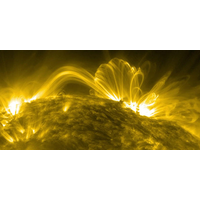
Phys. Rev. Lett. 137, 225103 (2026)
Plasma and Solar Physics, Accelerators and Beams
Enhanced Coherence in the Periodically Driven Two-Dimensional XY Model
Article | Condensed Matter and Materials | 2026-11-25 05:00 EST
Duilio De Santis, Marios H. Michael, Sambuddha Chattopadhyay, Andrea Cavalleri, Gil Refael, Patrick A. Lee, and Eugene A. Demler
Strong optical drives have been shown to induce transient superconductinglike response in materials above their equilibrium . Many of these materials already exhibit short-range superconducting correlations in equilibrium. This motivates the question: Can external driving enhance coherence in syst…
Phys. Rev. Lett. 137, 226002 (2026)
Condensed Matter and Materials
Co-optimization of Spin Coherence and Valley Splitting in Si/SiGe Heterostructures
Article | Condensed Matter and Materials | 2026-11-25 05:00 EST
Peihong Zhang, Xuedong Hu, Saif Ullah, and Jason R. Petta
Single electron spins can be used to encode and process information in semiconductor quantum devices. Progress has been hindered by materials challenges, such as the small energy splitting between low-lying valley states and hyperfine coupling to nuclear spins. Here, we use density functional theory…
Phys. Rev. Lett. 137, 226201 (2026)
Condensed Matter and Materials
Spin Excitons Modulated by Magnetic Orders in a Magnetic Weyl Semimetal NdAlSi
Article | Condensed Matter and Materials | 2026-11-25 05:00 EST
Bo Zhang, Junbo Liao, Lihao Xia, Zhentao Huang, Yanyan Shangguan, Shufan Cheng, Hao Xu, Zihang Song, Shuai Dong, Maofeng Wu, Wei Wang, Ryoichi Kajimoto, Mitsutaka Nakamura, Song Bao, Zhao-Yang Dong, Shun-Li Yu, Jian-Xin Li, and Jinsheng Wen
We report the observation of dispersive spin excitons in the rare-earth magnetic Weyl semimetal NdAlSi through comprehensive thermodynamic and inelastic neutron scattering measurements. Notably, the behavior of spin excitons is strongly modulated by magnetic order: they remain dispersive in the para…
Phys. Rev. Lett. 137, 226502 (2026)
Condensed Matter and Materials
Microscopic Theory of Spin Polarons in Chern Ferromagnets
Article | Condensed Matter and Materials | 2026-11-25 05:00 EST
Qiang Gao and Eslam Khalaf
Charged excitations in Chern ferromagnets play a central role in determining the nature of doped phases in moiré heterostructures. We develop a microscopic theory of charged excitations in an SU(2) Chern ferromagnet and obtain closed-form wave functions for a hierarchy of charge- spin polaron state…
Phys. Rev. Lett. 137, 226503 (2026)
Condensed Matter and Materials
Colossal Terahertz Magnetoresistance from Magnetic Polarons in ${\text{EuZn}}{2}{\mathrm{P}}{2}$
Article | Condensed Matter and Materials | 2026-11-25 05:00 EST
E. Marulanda, M. Dutra, N. M. Kawahala, E. D. Stefanato, G. G. Vasques, J. Munevar, M. A. Avila, and F. G. G. Hernandez
Magnetic polarons can generate colossal magnetoresistance in magnetic semiconductors, yet their terahertz electrodynamics remain largely unexplored. Here we report magnetoterahertz spectroscopy of the Eu-based Zintl antiferromagnet . The low-frequency conductivity shows pronounced non-Drude b…
Phys. Rev. Lett. 137, 226504 (2026)
Condensed Matter and Materials
Emergence of Topological Bound States in the Continuum via Stacking Trivial Bulks with Double Mirror Symmetry
Article | Condensed Matter and Materials | 2026-11-25 05:00 EST
Chaohua Wu, Zhenxing Cui, Xuewei Zhang, Zuohong Wang, Mou Yan, and Gang Chen
A surprisingly simple, symmetry-based trick perfectly traps waves without any energy leakage by cleverly stacking ordinary acoustic materials.
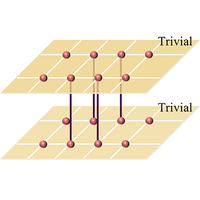
Phys. Rev. Lett. 137, 226601 (2026)
Condensed Matter and Materials
Facilitated Relaxation Overrides Energetic Pathways in a Multiphase Square-Kagome Artificial Spin Ice
Article | Condensed Matter and Materials | 2026-11-25 05:00 EST
Wen-Cheng Yue, Zixiong Yuan, Peiyuan Huang, Ziao Wang, Hangyu Liu, Tianyu Li, Nuo-Zhou Yang, Jingyue Gao, Chen Ku, Shuo Song, Jiyao Shang, Yang-Yang Lyu, Yihuang Xiong, Xuecou Tu, Liang He, Xun Cao, Ying Dong, Huabing Wang, Peiheng Wu, Cristiano Nisoli, and Yong-Lei Wang
Relaxation in interacting many-body systems is typically assumed to follow energy minimization, yet local dynamical rules can determine which microscopic pathways are accessible. In facilitated relaxation, these pathways are enabled or blocked by neighboring configurations. However, isolating such r…
Phys. Rev. Lett. 137, 226701 (2026)
Condensed Matter and Materials
Kineoelasticity and Nonreciprocal Phonons by Rashba-Induced Interfacial Spin-Lattice Coupling
Article | Condensed Matter and Materials | 2026-11-25 05:00 EST
Gyungchoon Go and Se Kwon Kim
We identify a previously unrecognized spin-lattice coupling allowed by broken inversion symmetry that can be viewed as a lattice analog of electronic Rashba spin-orbit coupling. In the low-frequency regime, where magnons are integrated out, its interplay with the conventional magnetoelastic coupling…
Phys. Rev. Lett. 137, 226702 (2026)
Condensed Matter and Materials
Quantum Correlations and Dissipative Blockade of Polaritons in a Tunable Fiber Cavity
Article | Condensed Matter and Materials | 2026-11-25 05:00 EST
Gian-Marco Schnüriger, Martin Kroner, Emre Togan, Patrick Knüppel, Aymeric Delteil, Stefan Fält, Werner Wegscheider, and Ataç Imamoğlu
Cavity-exciton polaritons are quasiparticles that form when quantum well excitons hybridize with a cavity mode. Here, we carry out photon correlation measurements under continuous wave resonant laser excitation to demonstrate quantum correlations between cavity polaritons. Our experiments reveal an …
Phys. Rev. Lett. 137, 226901 (2026)
Condensed Matter and Materials
Machine Learning Model for the Chemistry of a Solvated Electron
Article | Polymers, Chemical Physics, Soft Matter, and Biological Physics | 2026-11-25 05:00 EST
Ruiqi Gao, Pinchen Xie, and Roberto Car
In molecular simulations, machine learning force fields can achieve ab initio accuracy at a lower cost but remain limited in the explicit modeling of electrons. In this Letter, we develop an electron-aware machine learning force field in which an excess electron of interest is modeled quantum mechan…
Phys. Rev. Lett. 137, 228001 (2026)
Polymers, Chemical Physics, Soft Matter, and Biological Physics
Geometric Confinement Enhances Bacterial Transport by Accelerating Surface-Bulk Exchange
Article | Polymers, Chemical Physics, Soft Matter, and Biological Physics | 2026-11-25 05:00 EST
Rui He, Yaocai Liu, Rongjing Zhang, and Junhua Yuan
Motile bacteria near solid surfaces are hydrodynamically trapped in circular orbits that suppress lateral transport. However, in natural habitats, bacteria navigate confined spaces bounded by multiple surfaces. Here, we investigate the transport dynamics of Escherichia coli in microfluidic channels …
Phys. Rev. Lett. 137, 228301 (2026)
Polymers, Chemical Physics, Soft Matter, and Biological Physics
Comment on “Quantum Limits to Incoherent Imaging Are Achieved by Linear Interferometry”
Article | | 2026-11-25 05:00 EST
George Brumpton, Aiman Khan, Helia Hooshmand, Samanta Piano, and Gerardo Adesso
Phys. Rev. Lett. 137, 228901 (2026)
Erratum: Ab Initio Free-Energy Surfaces for Coupled Ion-Electron Transfer [Phys. Rev. Lett. 137, 018001 (2026)]
Article | | 2026-11-25 05:00 EST
Ethan Abraham, Martin Z. Bazant, and Troy Van Voorhis
Phys. Rev. Lett. 137, 229901 (2026)
Physical Review X
Propelling Catalytic Structures Using Active Biomolecular Condensates
Article | | 2026-11-25 05:00 EST
Benjamin Sorkin and Ned S. Wingreen
Active biomolecular condensates are shown to enable the self-propulsion of micron-sized objects in otherwise homogeneous, isotropic, and autonomous environments, offering a complementary, motor-free route to biological transport.
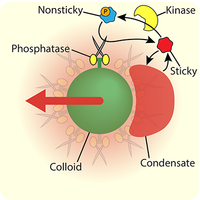
Phys. Rev. X 16, 041056 (2026)
Local Imperfect Feedback Control in Nonequilibrium Biophysical Systems Enabled by Response Constraints
Article | | 2026-11-25 05:00 EST
Carlos Floyd, Aaron R. Dinner, and Suriyanarayanan Vaikuntanathan
New theoretical constraints on nonequilibrium responses reveal how simple, local feedback can ensure globally stable control and adaptation in complex biochemical networks without fine-tuning or global information.

Phys. Rev. X 16, 041057 (2026)
arXiv
Theory of Anomalous Diffusion and Superdiffusion in Integrable Spin Chains
New Submission | Statistical Mechanics (cond-mat.stat-mech) | 2026-11-26 20:00 EST
Jitendra Kethepalli, Andrew Urilyon, Jacopo De Nardis
Integrable systems can exhibit diffusive or Kardar–Parisi–Zhang (KPZ) scaling in two-point correlations even when their current full counting statistics (FCS) differ from those usually associated with these universality classes. We explain this separation using a multispecies particle gas that preserves the scattering structure of integrable spin chains. For anisotropy $ \Delta>1$ , large particles are advected by a mobile bath. The resulting FCS has a Gaussian-mixture form and approaches the M-Wright distribution at late times, with finite-time rounding due to mobile species. At the isotropic point $ \Delta=1$ , all particles are mobile, and the charge transfer by large particles is discrete. A self-consistent Poisson distribution describes the FCS, with a nearly Gaussian bulk and model-dependent, non-Gaussian tails. By contrast, two-point correlations follow from the statistics of a large tracer particle. For $ \Delta>1$ , it undergoes Brownian motion, yielding Gaussian spreading. At $ \Delta=1$ , we provide evidence from fluctuating hydrodynamics for the emergence of the KPZ Prähofer–Spohn scaling function in dynamical correlations and trace it to the finite coupling of the largest particles to a continuum of slower ones, with long-ranged velocity fluctuations. Our framework shows how universal dynamical two-point correlations coexist with distinct model-dependent current statistics.
Statistical Mechanics (cond-mat.stat-mech), Quantum Gases (cond-mat.quant-gas), Quantum Physics (quant-ph)
Pairing from anti-Hund’s coupling under infinite Hubbard repulsion
New Submission | Strongly Correlated Electrons (cond-mat.str-el) | 2026-11-26 20:00 EST
Electron-phonon coupling is a natural source of superconductivity, but in strongly correlated materials the phonon-mediated interaction is often much weaker than the on-site Hubbard repulsion $ U$ . Whether, and how, it can still produce pairing when $ U$ dominates is a basic open question. We address this question by studying a minimal model with an anti-Hund’s coupling $ J_A$ : an on-site spin exchange between two orbitals or two valleys, mediated by optical phonons, that favors a local inter-orbital spin singlet. In the limit $ U=+\infty$ , the two-orbital Hubbard model on the triangular lattice, doped away from the insulator at $ n=2$ electrons per site, reduces to a four-flavor $ t$ -$ J_A$ model. Density-matrix renormalization group calculations find robust pairing throughout $ 1\le J_A/|t|\le10$ , with the largest pairing gap at $ J_A\sim|t|$ . The Cooper pairs reside on bonds and do not come from a direct attraction provided by $ J_A$ , since infinite $ U$ excludes on-site pairs from the Hilbert space. For $ J_A\gg|t|$ , the normal state is a second Fermi liquid whose small Fermi surface violates the perturbative Luttinger theorem, and a strong-coupling expansion in $ t/J_A$ provides a controlled effective theory of superconductivity from this unconventional metal. Our results provide strong evidence for a strongly coupled superconductor beyond BCS theory, driven by the interplay of the kinetic energy, the phonon-mediated anti-Hund’s coupling, and the strong Hubbard $ U$ . Finally, we discuss possible applications to magic-angle twisted bilayer graphene.
Strongly Correlated Electrons (cond-mat.str-el), Superconductivity (cond-mat.supr-con)
7+12 pages, 3+5 figures
Spontaneous Time-Reversal-Symmetry-Breaking State in Proximity-Induced Superconductivity
New Submission | Superconductivity (cond-mat.supr-con) | 2026-11-26 20:00 EST
Jonathan Schirmer, Wei Pan, Javad Shabani, Enrico Rossi
Recent experiments on superconducting heterostructures formed by an $ s$ -wave superconductor and a Dirac semimetal suggest that in these systems the superconducting state can break time-reversal symmetry even though no magnetic order or unconventional pairing is present in any of the structure’s components. We present a minimal mechanism for a time-reversal-symmetry-breaking superconducting state in multiband systems proximity-coupled to a conventional $ s$ -wave superconductor. We derive the conditions for this state, find that it is the ground state wherever it exists, and obtain the phase diagrams. We find that in some situations the phase diagrams describe reentrant behavior: by continuously varying a parameter the system can undergo multiple transitions between a time-reversal-symmetric state and a state that spontaneously breaks time-reversal symmetry. The results help identify heterostructures that can be engineered to obtain nonreciprocal superconducting transport effects even when no magnetic field or magnetization is present.
Superconductivity (cond-mat.supr-con), Mesoscale and Nanoscale Physics (cond-mat.mes-hall)
5 pages, 5 figures
Can the chemical potential and the many-body correlated phases of a two-dimensional dipolar fluid be approximated analytically? A Quantum Monte-Carlo study of a universal behavior of dipolar excitons
New Submission | Quantum Gases (cond-mat.quant-gas) | 2026-11-26 20:00 EST
Yotam Mazuz-Harpaz, Michal Zimmerman, Snir Gazit, Ronen Rapaport
A central challenge in quantum many-body physics is to connect microscopic interactions to experimentally accessible macroscopic states of matter, where correlations extend across multiple length scales. Using quantum Monte Carlo (QMC) simulations of two-dimensional repulsive dipolar bosons, recently realized across various experimental platforms, we show that correlations within the dipolar fluid lead to an unexpected simplification. Specifically, we find that these correlations induce a pronounced depletion region around each particle that suppresses short-range physics and yields an emergent universality, where the fluid is governed by dipolar interactions rather than material-specific details. Exploiting this universality, we establish a unified, quantitatively validated analytical framework for the dipolar fluid, taking indirect (interlayer) excitons as a model system. We show that analytical interaction energies derived in an earlier study agree with exact QMC results across three correlation regimes: a classical gas, a quantum gas, and a high-density liquid. In contrast, the widely used uncorrelated plate capacitor formula severely overestimates the numerical values. Building on these expressions, we show that the chemical potential is accurately captured by a three-component decomposition: an ideal Bose-gas kinetic term, a regime-dependent dipolar interaction term, and a high-density quantum confinement term. Finally, we address a key experimental challenge: extracting exciton densities from measured energy shifts. Our QMC-benchmarked calibration curves for typical gallium arsenide (GaAs) and transition metal dichalcogenide (TMD) heterostructures offer a reliable tool for experimentalists to determine both the fluid’s density and collective state. This universal framework extends to other two-dimensional systems, including ultracold dipolar atoms and polar molecules.
Quantum Gases (cond-mat.quant-gas), Mesoscale and Nanoscale Physics (cond-mat.mes-hall)
16 pages, 11 figures
Spin superfluid transport of magnons in altermagnetic insulators
New Submission | Mesoscale and Nanoscale Physics (cond-mat.mes-hall) | 2026-11-26 20:00 EST
Dele Li, Meng-Han Zhang, Dao-Xin Yao
We study the spin superfluidity for Lieb and inverse Lieb lattices in altermagnets, which enables coherent transport of spin angular momentum carried by the phase of an easy-plane Néel order. The easy-plane anisotropy supplies the $ U(1)$ platform, while the nonrelativistic spin splitting generates sublattice-alternating exchange imbalance with $ B_{1g}$ symmetry. Via a continuum theory and Landau-Lifshitz-Gilbert simulations, we find that the Goldstone mode becomes quadratic at the critical stability boundary. An axial phase gradient transfers phase-channel spectral weight to the gapped mode, whereas a diagonal flow leaves these signatures absent. The spin superfluid exhibits momentum-space anisotropy due to the chiral-splitting magnon dispersion, while strong fields or elevated temperatures suppress phase coherence. Accounting for the contribution of thermal magnons at the interface, we present that the critical spin flow varies with the injection angle under the altermagnetic crystal-field effects. The spin-superfluid decay length scales with the interfacial spin-mixing conductance, which can be measured by the spin Hall magnetoresistance and spin Seebeck effect. Our findings establish altermagnetic insulators, particularly $ \mathrm{La_2O_3FeMnSe_2}$ , as promising platforms for low-dissipation spin transport.
Mesoscale and Nanoscale Physics (cond-mat.mes-hall)
Spin-Wave Excitations in $\mathrm{La_3Ni_2O_7}$: A Dynamical Mean-Field Theory and Bethe-Salpeter Equation Study
New Submission | Strongly Correlated Electrons (cond-mat.str-el) | 2026-11-26 20:00 EST
Zhihui Luo, Zhong-Yi Xie, Cui-Qun Chen, Wéi Wú, Dao-Xin Yao
We perform a dynamical mean-field theory (DMFT) + Bethe-Salpeter equation (BSE) study of collective spin excitations in $ \mathrm{La_3Ni_2O_7}$ , using a bilayer two-orbital Kanamori-Hubbard model derived from density functional theory. Our DMFT calculations reveal a double spin-stripe ground state. On this basis, we apply the BSE to compute the lattice transverse spin susceptibility, which exhibits a damped spin-wave spectrum with a bandwidth of $ \sim$ 0.1 eV and a wave vector of ($ \pi$ /2, $ \pi$ /2), in good agreement with resonant inelastic x-ray scattering and inelastic neutron scattering data. We inspect the orbital-resolved bare susceptibility that provides insight into the momentum dependence of the spin-wave line shape. Further analysis of the irreducible vertex reveals notable frequency dependence in the $ d_{z^2}$ orbital. Finally, we investigate the evolution of the spectrum with varying Hund’s coupling and electron fillings. Our study bridges the localized and itinerant descriptions of spin excitations in $ \mathrm{La_3Ni_2O_7}$ .
Strongly Correlated Electrons (cond-mat.str-el), Superconductivity (cond-mat.supr-con)
9 pages, 4 figures
Bosonic Magic Resources at Quantum Criticality
New Submission | Quantum Gases (cond-mat.quant-gas) | 2026-11-26 20:00 EST
Paolo Stornati, Piotr Sierant, Emanuele Tirrito
Non-Gaussianity is a resource for bosonic quantum information processing, providing a necessary ingredient for universal quantum computation in continuous-variable systems. Here we quantify non-Gaussianity in the ground state of the one-dimensional extended Bose-Hubbard model using quantum relative entropy (QRE), a measure determined solely by one-body correlations. The scaling of the QRE with system size reveals quantum phase transitions involving hidden and conventional order. We connect QRE scaling in the weakly interacting superfluid phase to Luttinger-liquid correlations and identify distinct critical signatures in its extensive and subleading contributions. At the Mott-Haldane transition, subtracting the extensive background reveals a pronounced peak in the subleading contribution, providing a clear signature of the onset of hidden string order. At the Haldane-density-wave transition, the extensive contribution to the QRE instead exhibits scaling consistent with Ising criticality. These results establish non-Gaussianity as a probe of many-body criticality, linking bosonic quantum resources to strongly correlated matter.
Quantum Gases (cond-mat.quant-gas), Statistical Mechanics (cond-mat.stat-mech), Quantum Physics (quant-ph)
On the binding and stability of CeO2 molecules on low-index Au surfaces
New Submission | Materials Science (cond-mat.mtrl-sci) | 2026-11-26 20:00 EST
Ying-Cheng Chen, Ahmad Ahmad, Anter El-Azab
Many multi-phase thin films grown by self-assembly involve co-deposition of both metallic and oxide phases that grow into the same film. Under such conditions, the oxide species may be present in stoichiometric molecular form on the surface of the metallic phase. Quantifying the stability, binding, and diffusion of such molecular oxide states on metallic surfaces is critical for understanding self-assembly. In this work, we investigate the binding and stability of CeO2 molecules on Au surfaces using spin-polarized density functional theory calculations. Specifically, we examine how the configuration of the CeO2 molecule, its binding energy and binding free energy, structural stability, effective charge, and projected electronic density of states vary among various binding sites on Au(001), Au(110), and Au(111) surfaces. Molecular CeO2 was found to be more favorable on all Au surfaces than its atomic constituents. It was also found that the bent CeO2 molecule configuration is more stable than the linear counterpart, with the Ce atom on the hollow site and the O atoms on the top sites. In addition, the configurations of the CeO2 molecule on Au surfaces with a binding energy around or weaker than -1 eV were found to have a low probability of existence above room temperature. Furthermore, the charge transfer was found to occur in such a way that the CeO2 molecule becomes polarized on all surfaces, but the polarization is stronger only for the strongly bonded states on Au(001) and Au(110) surfaces. Finally, three different cases of how the CeO2 molecule binds to Au(001), Au(110), and Au(111) were identified: case 1: chemisorption with symmetric bonds, case 2: chemisorption with asymmetric bonds, and case 3: physisorption with symmetric bonds. These three cases of CeO2 binding are present on Au(001) and Au(110), but only cases 2 and 3 occur on Au(111).
Materials Science (cond-mat.mtrl-sci), Chemical Physics (physics.chem-ph)
The file is 80 pages, main manuscript and supplementary information
Magnetically Guided Sequential Multi-Filler Alignment Enables Anisotropic Heat Pathways in Stretchable Composites for Soft Electronics
New Submission | Materials Science (cond-mat.mtrl-sci) | 2026-11-26 20:00 EST
Altynay Kaidarova, Viktor Naenen, Isidro Florenciano, Ruben Windey, Xiaoyan Qing, Laurens Snels, Juhyung Park, Tom Van der Donck, Jeroen Soete, David Seveno, Francisco Molina-Lopez
Stretchable, skin-conformal electronics demand thermal interface materials that combine high through-plane heat transport with mechanical softness and lateral electrical insulation. In particle-filled composites, these requirements are typically antagonistic. Heat transport is governed not only by the intrinsic thermal conductivity of the fillers but, more critically, by thermal resistance at the interparticle interface. As the interparticle distance is reduced by increasing the particle content, mechanical reinforcement and in-plane electrical conductivity become unavoidable. The existing particle alignment processing strategies result in inefficient uncoupling of multifunctionality. Here, we present a hierarchical two-step process strategy to induce strong conductivity anisotropy in a soft composite. First, an align-before-blend process forms a scaffold of magnetically aligned nickel (Ni) microparticles in air before polymer infiltration. The absence of the viscous elastomer matrix during the particle alignment facilitates handling large amounts of particles, which assemble into highly ordered and densely packed vertical heat-conduction pathways. Second, a liquid metal (LM)/Ni mixture is infiltrated into the aligned scaffold to bridge interparticle gaps, minimizing interparticle thermal resistance. The composite reaches 7.5 W/(m K) through-plane thermal conductivity with lateral electrical conductivity below $ 10^{-12}$ S/m and ultrasoft mechanical compliance (approximately 160 kPa), enabling coupling layers in thermoelectric generators and finger-mounted heat-spreading pads for wearable technologies.
Materials Science (cond-mat.mtrl-sci)
77 pages, 6 main figures, including Supporting Information
Unveiling ferroelectricity in wafer-scale beta-phase In$_2$Se$_3$
New Submission | Materials Science (cond-mat.mtrl-sci) | 2026-11-26 20:00 EST
Kyungmin Yang, Hyunmin Cho, Jihwan Jeon, Tae Hyeon Park, Seojeong Ro, Hye Jung Kim, Jung-Hoon Lee, Jaewon Wang, Hyeon Suk Shin, Young-Min Kim, Chang Woo Myung, Roy H. Olsson III, Seunguk Song, Deep Jariwala
Pushing ferroelectricity to the ultimate thickness limit is a central challenge for memory hardware, because conventional three-dimensional ferroelectrics degrade through depolarization and interfacial effects when thinned. Here we identify $ \beta$ -In$ _2$ Se$ _3$ , a van der Waals semiconductor regarded as centrosymmetric, as a host of bistable polar order arising from a picometre-scale distortion within each quintuple layer. The polar state has out-of-plane and in-plane components, is switched by a vertical electric field, and persists to the bilayer limit (~1.9 nm) with an estimated coercive field of 0.9 MV/cm and an apparent remanent polarization of 11.0 $ \mu$ C/cm$ ^2$ . Films grown by metal-organic chemical vapor deposition on 2-inch wafers yield capacitor arrays with a switching-voltage spread below 5% across 100 devices, an endurance of $ 10^7$ cycles and a projected ten-year retention. Because the polar state coexists with a semiconducting gap, one film serves as both the switching layer of a capacitor and the channel of a ferroelectric semiconductor transistor.
Materials Science (cond-mat.mtrl-sci)
Large-deformation constitutive modeling of viscoelastic foams: Application to an open-cell foam material
New Submission | Soft Condensed Matter (cond-mat.soft) | 2026-11-26 20:00 EST
Jialiang Tao (1), Alexander K. Landauer (1 and 2 and 3 and 4), Zicheng Yan (2), Xiuqi Li (2), Christian Franck (1), David L Henann (2) ((1) Department of Mechanical Engineering University of Wisconsin-Madison Madison WI, (2) School of Engineering Brown University Providence RI, (3) Material Measurement Laboratory National Institute of Standards and Technology Gaithersburg MD, (4) Department of Chemistry & Biochemistry University of Maryland College Park College Park MD)
Open-cell elastomeric foams are widely utilized for impact protection and cushioning applications. These foams can demonstrate remarkable elastic compressibility and rate sensitivity over a wide range of force and acceleration protection levels. They often exhibit volumetric-distortional coupling in their mechanical response and potentially compaction banding when subjected to dynamic loads. Here, a phenomenological modeling framework, adopted previously for closed-cell foams, is specified using an experimental characterization-based approach for calibrating and validating the large-deformation, viscoelastic material model. Homogeneous simple compression and tension experiments were performed on isotropic, open-cell viscoelastic foam materials, and stress-strain and lateral-axial strain data were used for model calibration. Data were collected at decadal strain rates to inform the rate-sensitive aspects of the model. The modeling approach involved decomposing the total material response into an equilibrium hyperelastic contribution and several nonlinear, Maxwell-like contributions and utilized invariants of the logarithmic strain to account for large deformations and the strong volumetric-distortional coupling effect. A new strain localization detection algorithm was developed and used to check for the formation of compaction bands, which would invalidate modeling assumptions for the calibration experiments. To validate the predictive capability of the constitutive model, experiments were conducted that involved intentionally inhomogeneous deformations over a spectrum of strain rates and deformation types. The consistency between the measured responses from the validation experiments and the model predictions obtained from finite-element-based numerical simulations was largely within the experimental uncertainty bounds, demonstrating the predictive capability of the model.
Soft Condensed Matter (cond-mat.soft), Materials Science (cond-mat.mtrl-sci)
Spectroscopic Signatures of Polaronic Density Wave Fluctuations in Superconducting Bismuthates
New Submission | Superconductivity (cond-mat.supr-con) | 2026-11-26 20:00 EST
Wojciech R. Pudełko (1 and 2), Muntaser Naamneh (3), Philip M. Dee (4), Hang Li (1), Eduardo B. Guedes (1), Dariusz J. Gawryluk (5), Anna Krztoń-Maziopa (6), Vahid Sazgari (5), Yona Soh (7), Ming Shi (8, 9 and 10), Milan Radović (1), Johan Chang (2), Steven Johnston (11 and 12), Nicholas C. Plumb (1) ((1) PSI Center for Photon Science, Paul Scherrer Institute, Villigen PSI, Switzerland, (2) Physik-Institut, Universität Zürich, Zürich, Switzerland, (3) Department of Physics, Ben-Gurion University of the Negev, Beer-Sheva, Israel, (4) Computational Sciences and Engineering Division, Oak Ridge National Laboratory, Oak Ridge, Tennessee, USA, (5) PSI Center for Neutron and Muon Sciences, Paul Scherrer Institute, Villigen PSI, Switzerland, (6) Warsaw University of Technology, Faculty of Chemistry, Warsaw, Poland, (7) Paul Scherrer Institute, Villigen PSI, Switzerland, (8) Center for Correlated Matter, Zhejiang University, Hangzhou, China, (9) School of Physics, Zhejiang University, Hangzhou, China, (10) Institute for Advanced Study in Physics, Zhejiang University, Hangzhou, China, (11) Department of Physics and Astronomy, The University of Tennessee, Knoxville, TN, USA, (12) Institute for Advanced Materials and Manufacturing, The University of Tennessee, Knoxville, TN, USA)
The bismuthate high-temperature superconductors have been identified as potential bipolaron systems, where hole pairs are bound to local breathing distortions of the BiO$ _6$ octahedra in their metallic phase. However, obtaining definitive evidence for these quasiparticles and their excitations remains challenging. Here, we report on periodic modulations of the spectral intensities and scattering rates of quasiparticles on the Fermi surfaces of doped bismuthates Ba$ _{1-x}$ K$ _x$ BiO$ _3$ and BaPb$ _{1-y}$ Bi$ _y$ O$ _3$ , which are reminiscent of ``hot spot’’ patterns that have been observed in cuprate superconductors. We show that these features can be well described by a model where electrons couple to fluctuating density wave modulations with short-range coherence along a $ (\pi,\pi,\pi)$ -oriented wavevector. The results are consistent with the existence of a two-component fluid where unpaired electrons interact with a fluctuating density wave created by residual bipolarons and their breathing distortions of the BiO$ _6$ octahedra.
Superconductivity (cond-mat.supr-con), Strongly Correlated Electrons (cond-mat.str-el)
9 pages, 4 figures
Dancing dervishes, spinning skirts and whirling waves
New Submission | Soft Condensed Matter (cond-mat.soft) | 2026-11-26 20:00 EST
Paul R. Kaneelil, Sifan Yin, L. Mahadevan
Inspired by the patterns seen in the tunic of a whirling dervish or the long skirt of a Kathak dancer, we study the dynamics of a \emph{soft} heavy circular sheet spinning steadily around its axis. Using experiments, we show that the initially draped sheet can pass through three archetypal states as it rotates: a gravity-dominated draped rotation state, a flat state, and finally a whirling state marked by retrograde rotation of wavy patterns relative to the rotating frame. We map out these various configurations in a three-dimensional phase diagram, analyze the transitions using a minimal model, and derive scaling laws to describe the phase boundaries which we confirm using experiments.
Soft Condensed Matter (cond-mat.soft)
Exact high-order spectral moments and moment-based reconstruction of polaron spectra at finite temperature for arbitrary linear electron-phonon coupling
New Submission | Strongly Correlated Electrons (cond-mat.str-el) | 2026-11-26 20:00 EST
We present a family of exact and efficient recurrence relations for the frequency moments of the single-electron addition spectral function of a generic single-band electron-phonon Hamiltonian with linear coupling to harmonic phonons. Working in the limit of zero carrier density, the formulation applies at zero and finite temperature and generalizes to arbitrary dimensions and lattice geometry. Using the Holstein and Peierls models coupled to Einstein and dispersive phonons as examples, we obtain closed-form expressions for moments of far higher order than those available in the literature, at modest computational cost. Beyond providing stringent benchmarks for numerical methods and experimental spectra, the high-order moments serve as input to approximate reconstructions of polaron spectra at weak-to-intermediate coupling and low temperature. The resulting spectral functions are exact in the weak-coupling and atomic limits, and respect rigorous bounds on the polaron energy and weight that we show the self-consistent Born approximation violates throughout the coupling-adiabaticity plane. The approach therefore offers an inexpensive yet accurate approximation, especially for unexplored or numerically intractable models, before computationally demanding exact methods are applied.
Strongly Correlated Electrons (cond-mat.str-el)
19 pages, 8 figures (moment data files attached within the submission)
Extrinsic thermodynamic geometry, symmetry, and the cost of constraint
New Submission | Statistical Mechanics (cond-mat.stat-mech) | 2026-11-26 20:00 EST
Jordan R. Sawchuk, David A. Sivak
Driving a stochastic system in finite time costs excess work; exactly how much depends on which system parameters, and hence which paths in distribution space, a controller can access. In the friction-tensor formalism for slow driving, the space of equilibrium distributions is a Riemannian manifold and constraints on a controller define submanifolds. Whether a constrained controller is forced onto suboptimal paths is a question of the extrinsic thermodynamic geometry of the submanifold, which we develop for discrete systems. We show that submanifolds with zero extrinsic curvature can be identified from symmetries of the transition network, before any optimization. A minimum-work protocol on such a submanifold is therefore stationary in the excess work even when the constraints are lifted. The stationarity of symmetric optima holds exactly, beyond slow driving. In the slow-driving regime, we show that the ambient curvature transverse to a symmetric submanifold determines whether nearby symmetry-broken protocols have lower excess work. This curvature, which separates into independent contributions from each pattern of symmetry breaking, thus acquires an operational meaning as a measure of the thermodynamic incentive to break a given symmetry. A thermodynamic comparison theorem provides an inexpensive test of local minimality that weighs the extremal curvatures along the symmetric protocol against its excess work. There is no need for such tests under certain convexity conditions on the transition rates and control parameters, which guarantee that a symmetric optimum is a global optimum. These results certify the global optimality of a five-parameter protocol previously observed to match 15-parameter full control of a four-spin Ising system, and explain why partial symmetry breaking is optimal for the same system under local-field control.
Statistical Mechanics (cond-mat.stat-mech)
15 pages, 7 figures, 5 appendices
Electron–phonon interactions in a pseudo–atomic orbital basis: superconductivity, transport, spectroscopy and thermal emission from one interpolated vertex
New Submission | Materials Science (cond-mat.mtrl-sci) | 2026-11-26 20:00 EST
Electron–phonon interactions govern superconductivity, electrical resistivity, optical absorption and electronic excitation lifetimes in solids. First–principles calculations require interpolating this coupling onto dense Brillouin–zone grids, traditionally using maximally localized Wannier functions that demand material–specific tuning. Here we show that a fixed basis of pseudo–atomic orbitals–automatically generated from pseudopotentials and implemented in the open–source code PAOFLOW captures the electron–phonon vertex with equivalent accuracy and no manual tuning. Computed from density–functional perturbation theory or displaced supercells, and incorporating long–range fields and spin–orbit coupling, the vertex matches established codes on identical inputs. We validate the method on lead, reproducing its phonon dispersion, superconducting gap, critical temperature, resistivity, photoemission kink and cyclotron masses, and on silicon, capturing phonon–assisted optical absorption, wafer emissivity and carrier mobilities. This parameter–free framework enables high–throughput, automated electron–phonon calculations across large materials databases.
Materials Science (cond-mat.mtrl-sci), Superconductivity (cond-mat.supr-con)
19 pages, 7 figures
Low-barrier-height Hf$\text{1-x}$Zr$\text{x}$O$_2$ ferroelectric tunnel junctions with large ON-state currents
New Submission | Materials Science (cond-mat.mtrl-sci) | 2026-11-26 20:00 EST
Shaoqing Ding, Jinyuan Yao, Eknath Sarkar, Emmanuel Quezada, Thomas N. Jackson, Susan Trolier-McKinstry, Suman Datta, Ying Liu
Ferroelectric tunnel junctions (FTJs) hold great promise for nonvolatile memory, neuromorphic computing, and other applications. Hf$ _\text{1-x}$ Zr$ _\text{x}$ O$ _2$ (HZO) has become a leading candidate for the tunnel barrier due primarily to its compatibility with CMOS technology. Recent advances on HZO based FTJs have highlighted the importance of understanding the electrical transport through a ferroelectric tunnel barrier for fulfilling the technological promises of FTJs. In this paper we report investigation of HZO FTJs featuring a barrier of ultrathin HZO ($ \leq$ 5nm) measured down to a temperature of 2 K. Direct quantum tunneling was found to dominate at low temperatures, along with contributions from trap-assisted tunneling. As the temperature increases, conduction by thermal activation takes over. We developed a minimal model that accounts for all experimental observations, revealing a barrier height significantly lower than that of the band alignment picture, an unexpected finding attributable to the emergence of a shallow trap band. This finding reveals a previously unexplored pathway toward simultaneously achieving large ON-state currents, high tunnel electroresistance and improved temperature stability for the high-speed memory applications of FTJs.
Materials Science (cond-mat.mtrl-sci)
Soft Matter, Hard Rules: Emulsions Follow the Laws of Granular Suspension Rheology
New Submission | Soft Condensed Matter (cond-mat.soft) | 2026-11-26 20:00 EST
Wenjun Chen, Eric De Giuli, Matthieu Wyart, Yoël Forterre, Jasna Brujić, Bloen Metzger
The flow of dense emulsions underlies applications from food and pharmaceutical processing to bioengineering, yet their rheology remains difficult to interpret under conventional volume-imposed conditions. Here, we change the control variable to osmotic-pressure using a recently developed instrument – the Capillarytron. This approach reveals a unified rheological structure where the osmotic pressure $ \Pi$ , by controlling droplet deformation, sets a pressure-dependent jamming volume fraction. When expressed in terms of the distance to this jamming point, all rheological data – spanning both $ \Pi$ - and $ \phi$ -imposed measurements – collapse onto a single power-law divergence, akin to granular suspensions. The resulting constitutive relations provide a predictive, parameter-free description of emulsion rheology across Newtonian, yielding, and shear-thinning regimes. Together with recent results on soft spheres, our findings point to a unifying paradigm: Soft amorphous materials – from soft spheres to emulsions and likely foams – obey the same hard rules as granular suspensions, with softness entering through a pressure-dependent jamming point. This framework rationalizes Herschel-Bulkley rheology, assigns its parameters microscopic meaning, and opens perspectives on rigidity transitions in soft, deformable systems, including biological tissues.
Soft Condensed Matter (cond-mat.soft)
19 pages, 4 figures, plus Supporting Information (6 figures). Published in PNAS
Proc. Natl. Acad. Sci. U.S.A. 123 (34), e2611013123 (2026)
ILMlip: fast and universal machine-learning interatomic potentials
New Submission | Materials Science (cond-mat.mtrl-sci) | 2026-11-26 20:00 EST
Jonas Hänseroth, Christian Dreßler
Large-scale pretrained machine-learned interatomic potentials keep growing more accurate as new models appear at a rapid pace, and more expensive: the current leader of Matbench Discovery as of November 2026 (F1 score 0.935) has $ 9.9\times10^7$ parameters and took 3.6 thousand GPU-hours to train. The ILMlip potentials presented here are optimised for speed as well as zero-shot accuracy. They are equivariant, conservative message-passing potentials in which every component is arranged for throughput: little work per pair of atoms and as much as needed per atom. Through ASE on one GPU, they run molecular dynamics up to about $ 10^3$ times faster than state-of-the-art message-passing potentials such as MACE (medium) and up to five times faster than NEP89 and DPA-4.1C. At the same time, six sizes with $ 1.4\times10^5$ to $ 2.8\times10^7$ parameters, pretrained on materials, molecules and solid acids, reach F1 scores of 0.75 to 0.91 on Matbench Discovery, placing the largest within 0.03 of the current leader. They therefore suit high-throughput, large or long simulations, and, being transferable, they are strong starting points for fine-tuning. Fine-tuned to six materials, the model of size S comes close to the ab initio force errors of a fine-tuned MACE, so it reaches reference-level accuracy at about 50 ns per atom and step (Cu fcc). Their components can be adopted separately, as a starting point for architectures with even better ratios of speed to accuracy. The ILMlip implementation is available at this https URL
Materials Science (cond-mat.mtrl-sci)
Effects of Yttrium doping on Proton Conductivity in Ba(Fe, Co, Zr, Y)O$_{3-δ}$ Cathode Materials for Proton Ceramic Fuel Cells
New Submission | Materials Science (cond-mat.mtrl-sci) | 2026-11-26 20:00 EST
Chiyoung Kim, Ryan Jacobs, Jun Meng, Jack H. Duffy, Kyle S. Brinkman, Yueh-Lin Lee, Harry W. Abernathy, Dane Morgan
Protonic ceramic fuel cells (PCFCs) offer efficient energy conversion at intermediate temperatures, but their performance is often constrained by sluggish oxygen reduction kinetics at the cathode. Triple conducting perovskite materials such as BaCo$ _x$ Fe$ _y$ Zr$ _z$ Y$ _{1-x-y-z}$ O$ _{3-\delta}$ (BCFZY) have shown promise as air electrodes. In this study, we investigated the impact of Y doping on proton conductivity by decoupling the effects on proton diffusivity and proton concentration. Using ab initio molecular dynamics (AIMD) simulations, we assessed proton tracer diffusivity across three compositions: BaCo$ _{0.4}$ Fe$ _{0.4}$ Zr$ _{0.2}$ O$ _{3-\delta}$ (BCFZ), BaCo$ _{0.4}$ Fe$ _{0.4}$ Zr$ _{0.1}$ Y$ _{0.1}$ O$ _{3-\delta}$ (BCFZY0.1) and BaCo$ _{0.4}$ Fe$ _{0.4}$ Y$ _{0.2}$ O$ _{3-\delta}$ (BCFY). Thermodynamic defect models incorporating hydration, oxidation, and hydride formation reactions are employed to estimate temperature-dependent proton concentrations. Our results suggest that increasing the Y content from BCFZ to BCFY increases proton diffusivity by 1.7% at 500 $ ^\circ$ C. Under PCFC operating gas conditions, proton concentration and proton conductivity are predicted to increase by 3.8% and 5.3%, respectively, at 500 $ ^\circ$ C. These increases are modest compared with the larger enhancements reported experimentally under reducing conditions, highlighting the importance of gas conditions in evaluating the effects of Y doping. Under low oxygen partial pressure conditions, we predict that the dominant proton transport mechanism shifts from hydroxyl groups (OH$ _O^{\bullet}$ ) to hydride species (H$ _O^{\bullet}$ ). This work provides mechanistic insight into proton transport in BCFZY cathodes and offers design principles for optimizing proton-conducting air electrodes in next-generation PCFCs.
Materials Science (cond-mat.mtrl-sci)
Machine-Learning Spin-Fermion Models for Strongly Disordered Magnets: Sb-Doped MnTe
New Submission | Materials Science (cond-mat.mtrl-sci) | 2026-11-26 20:00 EST
Do Hoon Kiem, Parul R. Raghuvanshi, David S. Parker, Lucas Lindsay, Valentino R. Cooper, Tom Berlijn
Metallic altermagnets are promising for spintronics, but most altermagnets are insulating. Doping can induce metallicity, but introduces chemical and magnetic disorder that is challenging to model from first principles. Here, we introduce a machine-learning approach that renormalizes first-principles calculations onto disordered spin-fermion models. The learned models accurately reproduce first-principles magnetic and electronic properties and enable predictions of millions of inequivalent long-range exchange couplings in large disordered supercells. Applied to Sb-doped MnTe, the approach shows that altermagnetism persists up to about 25% Sb, and reveals disorder broadening as a new factor controlling spin selectivity. More broadly, our work opens a route to combining renormalization with machine-learned Hamiltonians for strongly disordered materials.
Materials Science (cond-mat.mtrl-sci), Disordered Systems and Neural Networks (cond-mat.dis-nn), Strongly Correlated Electrons (cond-mat.str-el)
10 pages, 8 figures
The Phases of Hierarchy
New Submission | Statistical Mechanics (cond-mat.stat-mech) | 2026-11-26 20:00 EST
We develop a dynamical phase theory of hierarchy, in which depth decides whether a population of size $ N$ that revises its own environment can correct it without overcorrecting. The statistics that let a large majority detect a small bias - the basis of the Condorcet jury theorem - also make its response grow as $ \sqrt{N}$ . Fed back into the environment it is judging, this sharpening destabilises the matched state through a flip bifurcation at a critical loop gain, which we obtain analytically for a class of models we term adaptive normal forms. We show that this instability can be attenuated by hierarchical layering, requiring a depth scaling logarithmically with $ N$ . This recovers known logarithmic bounds in organisational economics directly from dynamic stability conditions. Hierarchical depth carries its own costs however, and by analysing the signal chain transmission up the hierarchy we show that beyond a finite depth no correction reaches the top before its deadline, and that below it the cost of arrival grows exponentially with depth. A hierarchy that is too flat therefore oscillates and one that is too deep cannot be steered in time, leaving a bounded window of depth between an unstable flat phase and a frozen inertial phase. We further show that these results can be generalised by treating each layer as a real-space renormalisation step, classifying aggregation rules by how they transmit bias. This establishes a connection between these dynamic results to attention in Transformers, where a residual update is diffusion on the token graph and depth plays the role of scale. Finally we show these phase boundaries are observable in finite sampling, and propose measurements which may characterise the proposed phases in real adaptive systems.
Statistical Mechanics (cond-mat.stat-mech), Systems and Control (eess.SY), Adaptation and Self-Organizing Systems (nlin.AO), Physics and Society (physics.soc-ph)
29 pages, 12 figures, ade with generative AI assistance. No clue what the right archive listing for it should be
Graphical Rules for Zero-energy Quantum-Interference Patterns in Bipartite Lattices
New Submission | Mesoscale and Nanoscale Physics (cond-mat.mes-hall) | 2026-11-26 20:00 EST
Xinhao Fan, Shunbo Hu, Jingzhe Chen
Quantum interference(QI) plays an important role in electron transport in molecules, where conductance is determined by the coherent superposition of different quantum-walk paths connecting the source and drain sites. In some systems, the pronounced even-odd conductance oscillation with the walk length can be observed; meanwhile destructive QI can lead to a dramatic suppression of conductance, resulting in a huge on/off ratio. In this paper, we extend the investigation from individual molecules to bipartite lattice systems, providing an abstract framework for exploring QI in a broad range of two-dimensional systems. We propose a simple graphical rule for predicting the QI pattern-the conductance map obtained by varying the drain site while keeping the source site fixed-in bipartite structures with arbitrary boundaries and holes. The analysis can be completed in three steps. First, a unit-cell-replicated bipartite subset is constructed by removing a subset of atoms from the input network, and its Green’s function map is efficiently obtained from a local recurrence relation. Second, the removed atoms and local structural modifications are coupled back as local degrees of freedom, generating zero-mode vectors through the same Green’s function map. Finally, the surviving zero-mode combinations are selected by an effective coupling matrix, whose projectors correct the reference map to yield the final QI pattern. This rule applies to finite flakes with arbitrary boundaries and holes and extends naturally to infinite lattices and vacancy defects.
Mesoscale and Nanoscale Physics (cond-mat.mes-hall), Computational Physics (physics.comp-ph)
12 pages, 9 figures
Electron exchange matters in electron spectroscopy
New Submission | Materials Science (cond-mat.mtrl-sci) | 2026-11-26 20:00 EST
Michael J. Landry, Chuhang Liu, Ashley S. Dale, L. Dagny Davis, Griffin M. Haisman, Lijun Wu, Ray F. Egerton, Yimei Zhu, Mingda Li
Electron energy-loss spectroscopy (EELS) conventionally considers classical Coulomb interactions between probe and material electrons, overlooking their fermionic exchange at relativistic energies. Here, we develop a relativistic theory of magnon EELS incorporating both magnetic dipole and electron exchange interactions. We show that the two channels leave distinguishable electron spin states, suppressing their interference in conventional EELS. However, spin-resolved detection erases this which-path information, revealing first-order interference despite the weak exchange amplitude. Remarkably, the same interference produces a left-right intensity asymmetry with a spin-polarized incident beam, without requiring outgoing-spin analysis. We demonstrate that this signal directly probes magnon angular momentum and distinguishes excitations of opposite handedness, opening a route to nanoscale measurements of chiral magnetic excitations.
Materials Science (cond-mat.mtrl-sci)
6 pages, 3 figures
Crystal-Symmetry-Dependent Field-Free Superconducting Diode Effect in CoPt/Nb Heterostructures
New Submission | Superconductivity (cond-mat.supr-con) | 2026-11-26 20:00 EST
He Yu, Jiaxin Chen, Yi Zhang, Gan Zhao, Yizhen Shao, Jiaxu Li, Yu He, Qiusha Wang, Yuanliang Zhu, Bin Han, Junda Qu, Haochang Lyu, Bowen Dong, Jie Qi, Dapeng Zhu, Daoqian Zhu, Yunchi Zhao, Liang Liu, Shouguo Wang, Weisheng Zhao, Guang Yang
Superconducting diodes convert nonreciprocal critical currents into current-polarity-selective switching between zero-resistance and resistive states. However, realizing the superconducting diode effect often requires complex device architectures and an external magnetic field to break spatial-inversion and time-reversal symmetry, substantially limiting its integration into cryogenic electronics and superconducting quantum circuits. Here, we demonstrate precise control of the field-free superconducting diode effect in epitaxial [111]-oriented A1-CoPt/Nb heterostructures. The critical-current asymmetry obeys the magnetic-point-group symmetry relation: it is finite along low-symmetry directions, suppressed along magnetic mirror axes, and reverses under either a 60° in-plane rotation or reversal of the CoPt magnetization. The same threefold symmetry dependence is observed in field-free current-induced magnetization switching in A1-CoPt films, indicating a common crystallographic origin for the superconducting and normal-state transport responses. Current- and temperature-dependent second-harmonic transport measurements are consistent with vortex-mediated nonreciprocity arising from an orientation-dependent interfacial edge landscape. We further exploit the magnetization-dependent diode polarity for proof-of-concept superconducting readout of electrically written magnetic states. These results establish crystallographic symmetry as an effective degree of freedom for engineering the superconducting diode effect, expanding the accessible materials space and providing a practical route toward field-free superconducting electronics.
Superconductivity (cond-mat.supr-con)
23 pages, 5 figures
Superconductivity from the Berry connection from many-electron wave functions: $U(1)$ gauge fluctuation, gauge invariance, and superconductivity
New Submission | Superconductivity (cond-mat.supr-con) | 2026-11-26 20:00 EST
The electromagnetic $ U(1)$ gauge invariance and superconductivity are examined by employing the Berry connection from many-electron wave functions and the fluctuations of it that give rise to the probabilistic random transitions among quantum states. The gauge invariance in the classical electrodynamics is regarded as the requirement that extracts unaffected parts by the gauge fluctuation. In quantum mechanics, dissipation-free states from the gauge fluctuation exist, and we identify them as superconducting states. We explain the reversible superconducting-normal phase transition in a magnetic field including the force balance. The present superconductivity theory lifts two fundamental disagreements between theory and experiment existing in the current standard theory with keeping the major results by the BCS theory. Thus, it may be considered as a superconductivity theory encompassing the current standard one.
Superconductivity (cond-mat.supr-con), Quantum Physics (quant-ph)
Solvent-Mediated Disintegration of a Vitrimer Network
New Submission | Materials Science (cond-mat.mtrl-sci) | 2026-11-26 20:00 EST
Vitrimers are dynamic polymer networks characterized by associative bond exchange, which enables topological rearrangement while preserving the overall network connectivity. However, how this dynamic connectivity evolves in the presence of a solvent, particularly as a function of temperature, remains poorly understood. Here, we employ hybrid molecular dynamics Monte Carlo simulations to elucidate the temperature-dependent restructuring and dissociation of vitrimer networks in solution. By constructing temperature composition phase diagrams, we demonstrate that the critical temperature for network dissolution increases nonlinearly with crosslink concentration. We find that the network disintegration begins well below the critical dissolution temperature, indicating that the loss of network connectivity can occur even before the onset of macroscopic dissolution. However, the network undergoes extensive restructuring around the critical temperature for a highly crosslinked system, resulting in the formation of numerous smaller, disconnected networks. Concurrently, the number of intrachain dynamic bonds increases with temperature. Interestingly, complete disintegration into individual polymer chains is not observed; instead, the solution comprises a broad distribution of smaller network fragments. These findings reveal the complex interplay between solvent-induced network disintegration and dynamic bond redistribution, providing molecular level insights into the dissolution of vitrimer networks and their potential for solvent assisted recycling.
Materials Science (cond-mat.mtrl-sci)
Exact subtraction of electron self-interaction from the Kohn-Sham equations
New Submission | Materials Science (cond-mat.mtrl-sci) | 2026-11-26 20:00 EST
J. E. Ingall (1), Alister J. Page (2) ((1) Discipline of Physics, The University of Newcastle, Australia, (2) Discipline of Chemistry, The University of Newcastle, Australia)
The self-interaction error (SIE) of Kohn-Sham density functional theory (KS-DFT) leads to a non-physical, non-linear dependence of an orbital’s energy on its own fractional occupation [Dabo et al., Phys. Rev. B, 82:115121, 2010]. The generalized Koopmans condition (GKC) ensures an atomic orbital’s eigenenergy is independent of its fractional occupation$ -$ and is free of self-interaction. The constrained search of the Levy spin-density-functional theory yields orbital densities and delivers the ground-state energy to generalize the Hohenberg-Kohn theorems. In this work, the electron density of the Kohn-Sham equations is constrained to be orbital-density dependent, with a total energy functional linear with respect to variation of its orbital densities. That is, the KS multiplicative effective potential $ v_{\text{s}}[{n}]$ for an orbital $ \varphi_i[{n}]$ is constrained to a functional $ v_{\text{eff}}[{n - n_i}]$ . The result complies with the generalized Koopmans condition (GKC). This approach improves LDA and GGA mean absolute errors (MAEs) in fundamental band gaps by $ \sim$ 1 eV, with respect to KS-DFT. Equations free of electron self-interaction provide the basis for improvements in the accuracy, efficiency, and simplicity of density functional theories.
Materials Science (cond-mat.mtrl-sci)
13 pages, 2 figures
Superconductivity from a Cooper surface instability in a nodal Bose metal
New Submission | Superconductivity (cond-mat.supr-con) | 2026-11-26 20:00 EST
In underdoped cuprates, the superconducting gap is largest where low-energy electron spectral weight is already depleted above the transition. How can a weak attraction drive superconductivity when the one-electron density of states vanishes? In a momentum-space (t)–(J) model, the exactly solvable normal state is a nodal Bose metal with four one-electron nodes. Along two contours called Cooper surfaces, adding or removing a spin-singlet pair of electrons with opposite momenta costs no energy. The resulting logarithmic divergence of the pair susceptibility allows an arbitrarily weak pair-transfer attraction to stabilize a correlated nodal (d)-wave superconductor. Spin-resolved coincidence photoemission could test this pairing mechanism by resolving two zero-energy pair-removal ridges above the transition and a third along the underlying Luttinger surface below it.
Superconductivity (cond-mat.supr-con)
13 pages main text, 124 pages supplementary materials
Controlling truncation errors in loop tensor network renormalization
New Submission | Strongly Correlated Electrons (cond-mat.str-el) | 2026-11-26 20:00 EST
Rikuto Fushio, Kokin Cho, Yuta Yamamoto, Akira Otsuki, Masahito Yamazaki
At finite bond dimension $ \chi$ , tensor network renormalization (TNR) of a critical model eventually becomes gapped. For LoopTNR with $ O(2)$ symmetry on the $ c=1$ critical line of the six-vertex model, parametrized by the Luttinger parameter $ K$ , we show that the correlation length $ \xi$ of the gapped phase is set by the seed of the dimerization injected by the truncation, and depends on $ \chi$ only through it. Read from a weak-coupling window early in the same run, the seed predicts $ \xi=10^3$ -$ 10^{16}$ via the sine-Gordon mass-coupling relation with no free parameter, to within a few percent for $ K\le1.5$ and about 10% at $ K=1.75$ ; since the seed fluctuates strongly with $ \chi$ , $ \xi$ is not monotonic in $ \chi$ . An alternation of the vertex weights shifts the seed; with its sign read from a $ \pi$ twist, one short calibration predicts a counterterm that delays the breakdown in 16 of the 17 compensated groups of a campaign fixed in advance. A correction of the coarse-grained tensors, repeated during the flow, keeps the runs at $ K=1$ and $ 1.5$ critical up to step 160, the last step computed, and exposes the marginal truncation error that remains. Our findings illustrate a systematic procedure for controlling the relevant truncation error, and thereby extending the critical window, in tensor network renormalization at finite bond dimension.
Strongly Correlated Electrons (cond-mat.str-el), Statistical Mechanics (cond-mat.stat-mech), High Energy Physics - Theory (hep-th)
29 pages, 15 figures
Spin-vibronic order in Ba$_2$MgReO$_6$
New Submission | Strongly Correlated Electrons (cond-mat.str-el) | 2026-11-26 20:00 EST
Zhishuo Huang, Takumi Gengo, Teruki Matsuzaki, Liviu F. Chibotaru, Naoya Iwahara
Strong spin-orbit coupling in $ 5d$ ions produces multipolar orders that conventional probes barely detect. In cubic $ 5d^1$ double perovskites, the spin-orbit quartet couples to Jahn-Teller vibrations, and resonant inelastic x-ray scattering (RIXS) has established the resulting spin-orbit-lattice entangled (vibronic) states [Phys. Rev. Lett. \textbf{133}, 036501 (2024)]. We proposed that these vibronic states order cooperatively and thereby explain the hidden quadrupole and canted magnetic phases of Ba$ _2$ MgReO$ _6$ [Phys. Rev. B \textbf{107}, L220404 (2023)], but that proposal rested on a simplified model. Here, we show that a spin-vibronic Hamiltonian derived from first principles, with a single scale factor for the elastic coupling, reproduces the ordered phases of Ba$ _2$ MgReO$ _6$ with the same vibronic states that describe its RIXS spectra. With this factor bringing the quadrupolar transition to 34.7 K, near the measured 33 K, the theory predicts the magnetic transition at 19.3 K, against the measured 18 K, and reproduces the antiferro distortion and the ferro elongation between the transitions. These results support spin-vibronic order in Ba$ _2$ MgReO$ _6$ and point to it as the origin of the hidden multipolar phases of $ 5d^1$ double perovskites.
Strongly Correlated Electrons (cond-mat.str-el)
9 pages, 2 figures
Self-Assembled Triangular Sc-rich Nanodomains: The Orign of Anomalous Alloy Scattering in ScAlN/GaN Heterostructures
New Submission | Materials Science (cond-mat.mtrl-sci) | 2026-11-26 20:00 EST
Wurtzite scandium aluminium nitride (ScAlN) alloys hold substantial potential for GaN heterostructure high-electron mobility transistors, owing to their large spontaneous polarization gradient and the ability to achieve precise lattice matching at heterointerface. Nevertheless, despite continuous advances in epitaxy and device fabrication, the two-dimensional electron gas (2DEG) mobility in ScAlN/GaN heterostructures remains persistently limited, and the underlying microscopic origin remains elusive. Here, we uncover an anomalous electron scattering mechanism from laterally correlated alloy disorder that spontaneously develops within the ScAlN barrier driven by strain-field undulations imposed by threading dislocations. Dislocation strain field partitions the growth front into nanoscale domains with distinct strain states, driving anisotropic diffusion of Sc adatoms and yielding crystallographically oriented triangular Sc-rich nanodomains. Reducing the threading dislocation density from 2.8E10 to 4.4E8 cm^-2 suppresses areal density of nanodomains by more than two orders of magnitude. As a result, low-temperature Hall mobility increases from 1800 to 11995 cm^2\astV^-1\asts^-1. These findings establish dislocation-mediated Sc-rich nanodomains as the dominant source of anomalously strong alloy scattering, resolving the mobility bottleneck for high-performance nitride electronics.
Materials Science (cond-mat.mtrl-sci)
24 pages, 7 figures
Structural Anisotropy in Bi$_2$Se$_3$/$λ$-(BETS)$_2$GaCl$_4$ Topological Insulator/Superconductor Bilayer
New Submission | Superconductivity (cond-mat.supr-con) | 2026-11-26 20:00 EST
Fathan M. Santana, Arifa D. Agustin, Aulia A. Firdaus, Malik A. Baqiya, Darminto Darminto, Muhammad K. Nuryadin, Takahiko Sasaki, Isao Watanabe, Takuya Kobayashi, Hiromi Taniguchi, Yasuyuki Ishii, Pasquale Marra, Paolo Mele, Dita P. Sari
We investigate the crystallographic-orientation dependence of the response of $ \lambda$ -(BETS)$ _2$ GaCl$ _4$ ($ \lambda$ -Ga) to Bi$ _2$ Se$ _3$ deposition. Cross-sectional focused-ion-beam (FIB) imaging confirms formation of a deposited Bi$ _2$ Se$ _3$ -containing layer and a distinct interface with $ \lambda$ -Ga. Single-crystal X-ray diffraction (SC-XRD) shows that the coated $ \lambda$ -Ga crystal remains structurally intact but exhibits a strongly orientation-dependent, non-monotonic response, with the largest modification for the $ ab$ -plane after 4 min of deposition, whereas the $ ac$ -plane remains comparatively unchanged. This condition corresponds to the intermediate-deposition regime previously identified at a Bi$ _2$ Se$ _3$ thickness of approximately 110 nm. First-principles calculations based on the refined structures show the largest orientation-dependent electronic modification under the same conditions. Complementary optical spectroscopy of Bi$ _2$ Se$ _3$ /SiO$ _2$ films shows deposition-time-dependent evolution of the film response. These results establish a pronounced crystallographic anisotropy in the structural and calculated electronic response of $ \lambda$ -Ga to Bi$ _2$ Se$ _3$ deposition.
Superconductivity (cond-mat.supr-con), Materials Science (cond-mat.mtrl-sci)
6 pages, 5 figures, 1 table. Accepted for publication in JPS Conference Proceedings (SCES2026)
Cascading LO-phonon-mediated resonant energy transfer from excitons to Eu3+ for ultrahigh color purity red luminescence in europium-doped GaN
New Submission | Materials Science (cond-mat.mtrl-sci) | 2026-11-26 20:00 EST
Shizhao Fan, Yue Xu, Yuhao Yin, Shitao Dong, Shaoqiang Chen, Xueyuan Chen, Zhan Su, Datao Tu, Qian Sun, Hui Yang
High-efficiency, wavelength-stable red micro-LEDs with ultrahigh color purity remain a critical bottleneck for monolithic III-nitride full-color displays. Europium-doped GaN (GaN:Eu) offers a compelling solution, yet the microscopic energy transfer mechanism from the GaN host to Eu3+ ions has remained unresolved for three decades, impeding rational performance optimization. Here we report polaron-mediated resonant energy transfer in high-crystalline-quality GaN:Eu epilayers grown by plasma-assisted molecular beam epitaxy. Eu3+ doping stabilizes a distinct bound exciton (BX3) state at 3.478 eV, which couples strongly with longitudinal optical (LO) phonons via the Frohlich interaction to form cascading polarons with up to seven phonon replicas at a uniform energy spacing of 92.0+/-0.7 meV. The BX3 polaron coupled with 5LO phonons matches precisely the 7F0–>5D3 intra-4f transition energy of Eu3+ at 3.019 eV. Temperature-dependent photoluminescence reveals non-equilibrium phonon emission, evidencing directional resonant energy transfer. After rapid nonradiative relaxation from the 5D3 excited state to the 5D0 metastable state, the hypersensitive 5D0–>7F2 transition yields sharp 622 nm red emission. Time-resolved spectroscopy confirms a single dominant Eu3+ luminescent site with reduced local symmetry, attributed to off-axis EuGa-VN complexes. This work identifies a key energy transfer channel and provides a clear framework for designing high-efficiency GaN:Eu red emitter.
Materials Science (cond-mat.mtrl-sci)
21 pages, 5 figures
Phono3GPU: GPU-Accelerated Linear Tetrahedron Integration for Phonon Thermal Transport
New Submission | Materials Science (cond-mat.mtrl-sci) | 2026-11-26 20:00 EST
Jinhyeong Jo, Sungwoo Kang, Byungju Lee, Jung-Hoon Lee, Seugchul Kim
Materials with high or low thermal conductivity are increasingly important for thermal management and energy technologies. Machine-learned interatomic potentials have accelerated anharmonic force-constant calculations, shifting the bottleneck toward phonon transport calculations for large materials datasets. Existing GPU solvers often rely on smearing, whose width can require material-dependent choices, while the linear tetrahedron method used in phono3py avoids this parameter but becomes costly for complex structures. Here we introduce Phono3GPU, which reformulates three-phonon scattering and linear tetrahedron integration for massively parallel GPU execution. Across benchmark crystals, Phono3GPU accelerates total calculations by up to 41 times relative to a CPU implementation, with larger gains for complex unit cells, and by 2 to 6 times relative to a recent GPU plug-in for phono3py. We further demonstrate atom-resolved scattering analysis in defective silicon supercells as an application enabled by the reduced computational cost. Phono3GPU thus lowers the cost of tetrahedron-based thermal-conductivity calculations and of detailed investigations of structure-dependent phonon transport.
Materials Science (cond-mat.mtrl-sci)
PerovAgent: Autonomous Ligand Design for Halide Perovskite Nanocrystals
New Submission | Materials Science (cond-mat.mtrl-sci) | 2026-11-26 20:00 EST
Seungjun Cha, Yoo Jae Jeong, Amanda Conde Del Moral, Juan-Pablo Correa-Baena, Seth R. Marder, David S. Ginger, Victor Fung, Guoxiang Hu
Designing surface-capping ligands for high-performance halide perovskite nanocrystals requires navigating a vast molecular space while discovering design rules that govern ligand-surface interactions. Here, we introduce PerovAgent, an autonomous multi-agent framework that combines large language model (LLM)-driven scientific reasoning with computational tools for atomistic model construction, machine-learned interatomic potential evaluation, and statistical validation. Across ten independent campaigns on CsPbBr3 surfaces, PerovAgent adaptively explored and refined diverse ligand chemistries while progressively improving the binding-energy objective. Beyond optimization, the framework converts recurring chemical observations into explicit design principles that can be statistically evaluated. Of 35 formulated principles, 19 were prospectively supported, of which seven also passed the confound audit, highlighting the need to systematically validate plausible LLM-generated hypotheses during autonomous discovery. A recurrent alkynyl-phosphonate principle was further examined using density functional theory, which reproduced the predicted energetic preference. These results demonstrate an autonomous discovery framework that not only searches molecular space and optimizes the scalar objective but also transforms its search trajectory into systematically testable design principles. The framework can also be extended to more complex ligands, including zwitterionic, multidentate, and polymerizable ligands, to explore a wider range of ligand-surface interactions and uncover new design principles for halide perovskite nanocrystals.
Materials Science (cond-mat.mtrl-sci)
Revisiting the Schottky-Mott Relation for Metal/ Transition Metal Dichalcogenide Interfaces: The Role of Interface Dipoles
New Submission | Materials Science (cond-mat.mtrl-sci) | 2026-11-26 20:00 EST
Chih-Piao Chuu, Shu-Jui Chang, Yu-Miin Sheu, Zih-Syuan Huang, Wei-Tung Liu, Po-Wei Chen, Sui-An Chou, Yu-Tung Lin, Chih-I Wu, Wen-Hao Chang, Chun-Liang Lin, H.-S. Philip Wong, Iuliana P. Radu
High contact resistance, predominantly stemming from Fermi-level pinning (FLP), becomes a critical bottleneck in the contact engineering of transition metal dichalcogenides (TMDs) based two-dimensional field-effect transistors (2DFETs). Our study re-examines the inherent nature of FLP in 2D semiconductors, particularly focusing on regimes where the material thickness is commensurate with the interface thickness. Through the synergistic application of first-principles calculations and experimental validation via ultraviolet photoelectron spectroscopy (UPS) and scanning tunneling spectroscopy (STS), we rigorously establish the metal effective work function (eWF) as the definitive figure of merit for substantiating the Schottky-Mott relation. Our findings indicate that FLP is intrinsically governed by both long-range dipole interactions and extended short-range Lennard-Jones potentials. This framework, in conjunction with the linear Schottky-Mott relation, improves predictive capabilities in contact engineering.
Materials Science (cond-mat.mtrl-sci)
40 pages, 14 figures
ACS Nano 20 (2026) 23189-23199
Universal Work Extraction from Individual Sequences by Finite–State Information Engines
New Submission | Statistical Mechanics (cond-mat.stat-mech) | 2026-11-26 20:00 EST
We consider information engines that interact with a heat bath at temperature $ T$ , a work reservoir, and a tape carrying an individual (deterministic) sequence $ x$ over a finite alphabet $ \X$ . An engine is a cascade of autonomous ratchets with fixed energy levels and detailed–balance dynamics, each processing segments of $ m$ tape cells and having finitely many internal states. We prove a converse bound on the extractable work in terms of the empirical block entropies of $ x$ ,and show that it is achievable \emph{universally}, by engines whose energy levels do not depend on $ x$ . The maximal work per symbol is $ kT[\ln|\X|-\bar H(x)]$ , where $ k$ is Boltzmann’s constant and $ \bar H(x)$ is the asymptotic normalized aligned block entropy of $ x$ , which equals its block Lempel–Ziv complexity, and the minimal work needed to erase $ x$ is $ kT\bar H(x)$ per symbol. Underlying these results is a two–way correspondence with universal coding: energy levels define a code, and a suitably operated cascade extracts $ kT$ times $ \ln|\X|$ per symbol minus the code length; conversely, a fluctuation identity shows that every engine fixed in advance defines a code. Hence, converses of universal coding apply verbatim to engines; e.g., the optimal redundancy of memoryless universal engines is given by the Shtarkov sum.
Statistical Mechanics (cond-mat.stat-mech), Information Theory (cs.IT)
27 pages, 1 figure, submitted for publication
Exploring Physical Mechanisms Underlying the Emergence of Collective Order
New Submission | Statistical Mechanics (cond-mat.stat-mech) | 2026-11-26 20:00 EST
Yitong Cai, Ruizhe Yan, Dongrun Jian, Jie Su, Jin Wang
Emergence of collective order from disordered constituents is a hallmark of active matter, and the Vicsek model (VM) serves as a paradigmatic system for its study. However, whether density-induced emergence in the VM differs between angular (intrinsic) and vectorial (extrinsic) noise, and what mechanisms govern the transitions, remain largely unexplored. Remarkably, we uncover that collective order emerges from a disordered state in a continuous-like manner under intrinsic noise but abruptly under extrinsic noise. Combining nonequilibrium landscape-flux theory with a coarse-grained mapping method, we show that the landscape evolves continuously from a single basin to two and back to one under intrinsic noise, but the two-basin landscape appears abruptly under extrinsic noise across the critical transition to flocking. The counterclockwise nonequilibrium flux sustains global circular motion, providing the driving force for reshaping the landscape. The mean flux and entropy production rate change steeply near the emergence threshold and exhibit pronounced peaks within the coexistence region, identifying them as the dynamical and thermodynamic origins of emergence. Our findings reveal a distinct abrupt emergence under extrinsic noise and offer deeper mechanistic insight, practical applications (e.g., locating phase boundaries and distinguishing transition types), and extensibility to other nonequilibrium collective systems.
Statistical Mechanics (cond-mat.stat-mech), Soft Condensed Matter (cond-mat.soft)
19 pages, 11 figures (7 pages, 4 figures for main text; 12 pages, 7 figures for Supplemental Material)
Rotation curves of dwarf galaxies and dark matter as a condensate of $q$-deformed bosons: reconstruction and fits of the deformation profile
New Submission | Statistical Mechanics (cond-mat.stat-mech) | 2026-11-26 20:00 EST
Mahnaz Maleki, Asef Kheirandish, Morteza Nattagh Najafi, Hosein Mohammadzadeh
Dark-matter-dominated dwarf galaxies are a sensitive testing ground for models in which dark matter is a self-interacting Bose-Einstein condensate (BEC). In the Thomas-Fermi limit the standard BEC halo has the density profile $ \rho\propto\sin(kr)/(kr)$ , so that the shape of its rotation curve is fixed up to two scale parameters. Here we consider a condensate of $ q$ -deformed bosons. We show that, in the Thomas-Fermi limit, the deformation enters the structure of the halo only through the chemical potential of the condensate; consequently, a spatially uniform deformation parameter leaves the standard BEC profile unchanged. In every galaxy $ \chi$ is depressed in the inner region, $ kr\lesssim1$ , relative to the outer halo, where it is approximately constant in most cases: the standard condensate describes the outer halo, while the core requires a weaker deformation, i.e., $ q$ closer to unity. The profiles share this qualitative shape, but neither the depth nor the width of the depression is universal. Modelling the depression by a Gaussian, with two additional parameters, we fit the rotation curves with rms residuals of $ 0.6$ –$ 2.6$ ~km,s$ ^{-1}$ , against $ 1.6$ –$ 8.5$ ~km,s$ ^{-1}$ for the standard condensate. According to the Bayesian information criterion, the deformed condensate is preferred over the standard condensate, the Navarro-Frenk-White profile, and the Burkert profile in four galaxies, is indistinguishable from the best of them in two, and is disfavoured in two. We discuss the limitations of these results, in particular the absence of error bars in the data, the neglect of baryons, and the phenomenological status of a position-dependent deformation.
Statistical Mechanics (cond-mat.stat-mech)
Wannier-Based Low-Energy Electronic Structure Analysis of $λ$-(STF)$_2$GaCl$_4$
New Submission | Materials Science (cond-mat.mtrl-sci) | 2026-11-26 20:00 EST
Arifa D. Agustin, Aulia A. Firdaus, Fathan M. Santana, Shuhei Fukuoka, Atsushi Kawamoto, Muhammad R. Ramadhan, Isao Watanabe, Dita P. Sari, Yasuyuki Ishii
The low-energy electronic structures of $ \lambda$ -(BETS)$ _2$ GaCl$ _4$ and $ \lambda$ -(STF)$ _2$ GaCl$ _4$ were investigated using density functional theory (DFT) and maximally localized Wannier functions (MLWFs). For $ \lambda$ -(STF)$ _2$ GaCl$ 4$ , DFT-selected and directly XRD-refined structural models were compared before and after fixed-lattice relaxation. Their initially different near-Fermi-level electronic structures become similar after relaxation. Relative to BETS, relaxed STF has a narrower frontier bandwidth while retaining a substantial dimerization energy scale. Two MLWFs were constructed for each selected unrelaxed structure to represent the upper frontier bands, with total spreads of 36.708 Å$ ^2$ for BETS and 37.578 Å$ ^2$ for STF. The Wannier-derived transfer integrals show a pronounced reduction of $ t{d1}$ from 51 meV in BETS to 6.5 meV in STF, indicating selective modification of the low-energy electronic connectivity.
Materials Science (cond-mat.mtrl-sci), Strongly Correlated Electrons (cond-mat.str-el), Superconductivity (cond-mat.supr-con)
6 pages, 4 figures, 3 tables. Accepted for publication in JPS Conference Proceedings (SCES2026)
Toward a quantum resistance standard above liquid nitrogen temperature
New Submission | Mesoscale and Nanoscale Physics (cond-mat.mes-hall) | 2026-11-26 20:00 EST
Kaining Yang, Changwei Zhai, Naijie Ren, Kai Zhao, Chengyuan Li, Changhao Zhao, Yunfeng Lu, Yaning Wang, Jianting Zhao, Zheng Vitto Han
Quantum Hall effect (QHE) – the pioneering demonstration of one-dimensional topologically-protected edge channels – manifest a transversal resistance quantized solely by two universal constants $ e$ and $ h$ (the elementary charge and the Planck constant, respectively), referred to as the von Klitzing constant $ R_\mathrm{K}=h/e^{2}$ . For decades, this has enabled a unique route for realizing quantum Hall resistance (QHR) standard in the Système international d’unitès (SI), yet high precision QHR under relaxed conditions, especially temperature higher than 30 K, has not been possible. Here, we show that interfacial charge-order coupling inbetween CrOCl and monolayer graphene offers enhanced Fermi velocity, creating a robust Landau cyclotron gap. Using a customized direct current comparator (DCC, mounted at room temperature), we obtain relative deviation of the Hall resistance from $ R_\mathrm{K}/2$ of (15 $ \pm$ 23),n$ \Omega$ $ \Omega$ ^{-1}$ (23 parts per billion of relative uncertainty) at 50 K, with an external magnetic field of 12 T and a dc current of 10 $ \mu$ A. At 100 K, the system exhibits QHR with 2 parts per million of relative uncertainty. Our results therefore suggest a platform toward a next-generation quantum resistance standard that may work at above liquid nitrogen temperature and free of conventional compressor refrigerators.
Mesoscale and Nanoscale Physics (cond-mat.mes-hall)
8 pages, 3 figures
Frustration in system with intercalated and bilayer smectic structure
New Submission | Soft Condensed Matter (cond-mat.soft) | 2026-11-26 20:00 EST
Calum J. Gibb, Claudio Flores Fernandez, Magdalena M. Majewska, John M. D. Storey, Corrie T. Imrie, Ewa Gorecka, Damian Pociecha
The dimeric mesogens exhibit an unusual variety of mesophases - nematic and smectic, with distinctly different packing schemes. The relation between molecular and mesophase structure was studied for homologue series of non-symmetric bent dimers this http URL, obtained by serial Pd- and Pt-catalyzed cross-coupling chemical reactions. The shorter homologues of the series form smectics with an intercalated structure, and longer homologues form bilayer smectics with broken up-down symmetry of molecular orientation within the layers, for intermediate homologues frustration leads to a nematic gap. The additional structure complexity arises from the tendency of bent dimers to form twisted structures, in which the azimuthal angle of tilted molecules forms both short- and long-pitch helices. Here we confirm, through resonant X-ray diffraction, that longer homologues form a helical four-layer structure of SmCTB-SH phase, along with a more complex one in which, in addition to the basic four-layer unit, an extra helix is superimposed, SmCTB-DH phase. This additional helix has a periodicity that is strongly temperature-dependent; upon cooling, it changes from 100 nm to 40 nm.
Soft Condensed Matter (cond-mat.soft)
Quantum Geometric Origin of Néel-Order-Driven Magneto-Optical Response in MnTe
New Submission | Materials Science (cond-mat.mtrl-sci) | 2026-11-26 20:00 EST
Suman Rooj, M. S. Mrudul, Daegeun Jo, Peter M. Oppeneer
Magneto-optical (MO) responses provide a direct probe of magnetic order, yet resolving compensated antiferromagnetic order remains challenging. Here, we demonstrate in altermagnetic MnTe that the symmetry of the Néel order is imprinted on the MO response through distinct quantum-geometric contributions. Combining first-principles calculations with a Landau symmetry framework, we demonstrate that the quantum metric gives rise to a twofold optical anisotropy, with its diagonal and symmetric off-diagonal components forming an $ E_{2g}$ doublet associated with the quadratic Néel-order invariants, providing a characteristic MO Voigt signature of the Néel-vector orientation. In contrast, the Berry curvature generates a complementary threefold Hall response governed by the cubic $ A_{2g}$ Néel-order invariant. Although the Hall conductivity and the out-of-plane weak-ferromagnetic moment share the same symmetry and angular dependence, constraining the latter to zero leaves the optical Hall response essentially unchanged demonstrating that the Hall response originates directly from the compensated Néel order rather than the net magnetization. Our results establish quantum geometry as a direct link between Néel order and MO response, revealing distinct twofold and threefold optical signatures of Néel order in altermagnetic MnTe.
Materials Science (cond-mat.mtrl-sci)
Tunable quantum metric driven nonlinear valley Hall effect in the PT-symmetric sliding antiferroelectric MoS$_2$
New Submission | Mesoscale and Nanoscale Physics (cond-mat.mes-hall) | 2026-11-26 20:00 EST
Wen-Xin Jiang, Zhen-Hao Gong, Zhigang Gui, M. Umar Farooq, Li Huang
The quantum metric, the real part of a quantum geometric tensor, plays an important role in fundamental transport and optical responses of quantum materials. While net quantum metric effects are typically realized by breaking both time-reversal (T) and inversion (P) symmetries, valley-contrast mechanisms enable the probing of quantum geometry in centrosymmetric, nonmagnetic systems, revealing physical signatures beyond Berry curvature. Here, we design a four-layer MoS$ 2$ platform that combines sliding antiferroelectric order with strain-induced $ C{3z}$ breaking to realize a quantum metric driven nonlinear valley Hall effect (NVHE) under preserved P and T symmetries. Reversible interlayer sliding (ABBA $ \leftrightarrow$ BAAB) provides nonvolatile electrical control of the valley response. First-principles calculations reveal an outer-layer-dominated NVHE with tunable sign and magnitude. This symmetry-preserving, sliding-tunable strategy activates hidden quantum geometric phenomena in realistic two-dimensional materials and opens a clean pathway for tunable valleytronics and quantum information devices.
Mesoscale and Nanoscale Physics (cond-mat.mes-hall), Materials Science (cond-mat.mtrl-sci)
Published in Physical Review B
Phys. Rev. B 113, 235116 (2026)
Quantum Metric Connects Bond Delocalization to Phonon Softening
New Submission | Materials Science (cond-mat.mtrl-sci) | 2026-11-26 20:00 EST
Delocalized bonding electrons have long been associated with soft bonds and low phonon frequencies. However, a quantitative connection between electron delocalization and phonon softening remains elusive. We identify such a connection through the momentum-space quantum metric, which measures the intrinsic delocalization of the occupied electronic states. We show that a quantum geometric contribution to phonon softening is proportional to the integrated quantum metric. First-principles calculations of more than a hundred compounds demonstrate that greater quantum metric generally accompanies softer phonons. Localized Wannier orbitals reveal the bonding environments associated with this delocalization. In ferroelectric GeTe, LiBeSb, and BaTiO$ _3$ , polar distortion localizes the bonding orbitals, reduces quantum metric, and stabilizes the soft mode of the nonpolar structure. In PbSe, pressure-induced band inversion is accompanied by an enhanced quantum metric and phonon softening without change in crystal symmetry and bonding. These results establish a common quantum geometric interpretation of bond delocalization and phonon softening across distinct bonding environments.
Materials Science (cond-mat.mtrl-sci), Computational Physics (physics.comp-ph)
7 pages, 4 figures in main text. 14 pages, 1 figure in supplemental material
Nontrivial criticality and weakly first-order transitions in the frustrated spin-1 chain with single-ion anisotropy
New Submission | Strongly Correlated Electrons (cond-mat.str-el) | 2026-11-26 20:00 EST
Qiang Luo, Shijie Hu, Jize Zhao, Sebastian Eggert, Xiaoqun Wang
Frustrated spin chains host exotic phases beyond the Landau paradigm, yet weak first-order transitions and unconventional criticalities remain elusive. Combining large-scale density-matrix renormalization group with bosonization methods, we map the phase diagram of a spin-1 chain with next-nearest-neighbor (NNN) coupling and single-ion anisotropy (SIA). We pinpoint two topological phase transitions: a weakly first-order transition between the Haldane and NNN-Haldane phases with a tiny gap and a continuous transition from the Haldane phase to the large-$ D$ phase located via level spectroscopy with Richardson extrapolation. For negative SIA, a spontaneous dimerized phase emerges between the Néel and NNN-Néel phases. Its transition into the Néel phase is a deconfined quantum critical point falling into the eight-vertex universality class, with central charge $ c = 1$ and critical exponents varying continuously along the phase boundary. For positive SIA, we identify two vector-spin-chirality orders—an ordinary chiral phase and a narrow Haldane-chiral phase—with a weakly first-order transition between them, evidenced by a soft jump in the string order parameter. Our results reveal that frustration and anisotropy generate emergent orders and non-Landau criticalities, providing a platform for deconfined and topological phase transitions.
Strongly Correlated Electrons (cond-mat.str-el)
13+6 pages, 12+4 figures. An early version of this work predates 2020; see Bull. Am. Phys. Soc. 65, R47.11 (2020), this https URL
Foundation interatomic potentials capture structural disorder in metallic glasses
New Submission | Materials Science (cond-mat.mtrl-sci) | 2026-11-26 20:00 EST
Dario Massa, Luca Leoni, Antoni Wadowski, Kacper Cybinski, Anshul D. S. Parmar, Carmine Autieri, Cesare Franchini, Jan Wrobel, Silvia Bonfanti, Piotr Sankowski
Foundation machine-learning interatomic potentials transfer well across chemical and structural space, yet their reliability for highly disordered metallic states is less established. Metallic glasses are a demanding benchmark: they have traditionally been modeled with Embedded Atom Method (EAM) potentials fitted to specific compositions, while ab initio molecular dynamics remains too expensive at the required sizes and timescales. Using the prototypical Cu-Zr-Al glass, we show that foundation potentials capture structural disorder, reproducing the structure, quenching dynamics, and elastic, mechanical and thermal properties of the amorphous state at near first-principles accuracy. We benchmark MACE foundation models against a classical EAM potential along molecular dynamics quenches, validating against density functional theory and experiment, first at Cu46Zr46Al8 and then across the good glass-forming region of the ternary. We further test two specialization routes: fine-tuning on glass structures generated with Lennard-Jones surrogate models, and on automatically generated small periodic cells (ASSYST). Models pre-trained on databases that include non-equilibrium liquid and amorphous configurations, such as OMAT, are accurate and transferable across composition out of the box, clearly outperforming the composition-specific EAM potential. Fine-tuning on target glass structures brings only modest gains, while specialization on small crystalline cells degrades the description of disorder. The readiness of foundation potentials for disordered metals is therefore set mainly by the diversity of their pre-training data rather than by system-specific fine-tuning, shifting the modeling effort from bespoke dataset generation to pre-training coverage and careful validation of the resulting dynamics.
Materials Science (cond-mat.mtrl-sci), Disordered Systems and Neural Networks (cond-mat.dis-nn)
XX pages, 12 figures in the main text; Supplementary Material included
Length-scales and fractal scaling in dairy gels: comparisons of the insights from ultra-small angle neutron scattering and rheology
New Submission | Soft Condensed Matter (cond-mat.soft) | 2026-11-26 20:00 EST
Koduvayur A. Ramya, Liliana de Campo, Markus Strobl, François Boué, Christopher J. Garvey
A key structural parameter that dictates the textural properties of a particulate gel is the fractal dimension (Df) of the network indicating self-similarity within the spatial range defined by the correlation length (xi). In this study dairy gels are formed from reconstituted skim milk at defined CM volume fractions via two different mechanisms: acidification, and enzymatic (rennet)-induction. Oscillatory rheology is performed to obtain the gelation times, the time-scale for the maturation of mechanical properties of the gel, and the viscoelastic properties of the gel. A direct probe of gel structure is ultra-small-angle neutron scattering (USANS) examining length-scales from approximately 60 nm up to 15 microns. Structural information is extracted from USANS of matured gels by comparing the measured differential scattering cross-section with that calculated from a model constrained by the sample composition. Time-scales for structural equilibration from USANS perspective were shorter than the rheological gelation time for both gels. Rheological scaling theories are utilized to relate the microstructure to their bulk mechanical properties. We show that the fractal scaling at low-q (scattering vectors), due to aggregation of CM, extracted from the USANS at the longest timescales is described by a power-law density-density correlation function, and that rheology relates - through Shih-Wu-Morbidelli models - the local elasticity both within and between the fractal flocs formed by these particles over different size ranges to the bulk moduli of the gels. There are similar values of fractal dimensions from both techniques but different sizes attributed to the complex fractal evolution during dairy gelation, which leaves space to refinements of the models.
Soft Condensed Matter (cond-mat.soft)
under review Journal of Rheology
Quantum-centric assessment of saturated ferromagnetism beyond the flat-band limit
New Submission | Strongly Correlated Electrons (cond-mat.str-el) | 2026-11-26 20:00 EST
Kosuke Nogaki, Tomonori Shirakawa, Seiji Yunoki, Ryotaro Arita
Saturated ferromagnetism has been proven for every on-site repulsion $ U > 0$ in Hubbard models with a flat lowest band, and the interaction required for it grows with the band width $ W$ when the band becomes dispersive. We study the dispersive case at quarter filling by quantum-selected configuration interaction and sample-based quantum diagonalization with IBM Quantum’s Heron processors, focusing on the quantized square of the total spin of the computed states. We treat a sawtooth chain of 16 unit cells on 64 qubits, whose full configuration space of $ 1.1\times 10^{14}$ determinants exceeds that of one of the largest full configuration interaction calculations, and obtain the stability diagram of saturated ferromagnetism on the decorated square lattice in the plane of $ U$ and $ W$ . For the chain, a subspace of only $ 3\times 10^{-5}$ of the full configuration space gives a state with more than $ 97%$ of its weight in the sector of maximal spin. For the decorated square lattice of $ 4\times 3$ unit cells on 48 qubits, the computed states in subspaces of less than $ 1%$ of the full configuration space switch from low-spin states to nearly fully polarized states at $ U \simeq 2W$ . The calculations also give a rigorous lower bound of $ 1.9W$ on the critical interaction of the $ 4\times 3$ lattice.
Strongly Correlated Electrons (cond-mat.str-el)
16 pages, 7 figures
Hidden f-wave TIVC and Quantum Phase Transitions in Metallic States of Twisted Bilayer Graphene
New Submission | Strongly Correlated Electrons (cond-mat.str-el) | 2026-11-26 20:00 EST
Arindam Pramanik (1 and 2), Unmesh Ghorai (1 and 3), Rajdeep Sensarma (1) ((1) Tata Institute of Fundamental Research, India, (2) Academic Centre for Materials and Nanotechnology, AGH University of Krakow, Poland, (3) School of Physics and Astronomy, Tel Aviv University, Israel)
We study the ground state phase diagram of twisted bilayer graphene at magic angle as function of carrier density and the Coulomb interaction. The carrier density is varied between the fillings $ \nu=-2$ and $ \nu=-3$ and the Coulomb interaction is tuned by changing the gate distance. Our results reveal that the well established Kramers intervalley coherent (KIVC) phase near $ \nu=-2$ , contains a hidden $ f$ -wave time-reversal symmetric intervalley coherent (TIVC) order, whose strength gradually increases within the metallic regime of the intervalley coherent (IVC) phase away from $ \nu=-2$ . This finding is interesting in the light of a recent experimental work [26], where the signatures of the TIVC phase has been reported in ultra-clean samples. We further show that the system goes through multiple phase transitions as the carrier density is tuned. Near the $ \nu=-2$ , the IVC phase is the ground state, which gives way to valley polarized phase through a second-order-like phase transition as the carrier density is lowered. Further tuning of density pushes the system into the quantum anomalous Hall phase through gradual development of the sublattice polarization. These phase transitions are accompanied by major reconstructions of the Fermi contours.
Strongly Correlated Electrons (cond-mat.str-el), Mesoscale and Nanoscale Physics (cond-mat.mes-hall)
15 pages, 7 figures
Patterns and correlations in time-reversal symmetry breaking
New Submission | Statistical Mechanics (cond-mat.stat-mech) | 2026-11-26 20:00 EST
Ido Patish, Mathias Casiulis, Dov Levine
Time-reversal symmetry (TRS) breaking is the hallmark of non-equilibrium statistical physics. This notwithstanding, in translationally invariant systems, it is almost always treated only as a global quantity. We propose to use the local entropy production rate as a spatio-temporal field to describe extended homogeneous non-equilibrium systems. We find that this field generically displays spatial correlations, with a typical length that grows as we approach some non-equilibrium phase transitions. We also show that the correlation length associated with the local entropy production rate follows heretofore unknown scaling laws involving control parameters as well as the observation time used for trajectories. Our work paves the way to the use of the local entropy production as a powerful observable to identify the scale and source of TRS breaking in non-equilibrium systems.
Statistical Mechanics (cond-mat.stat-mech)
Main document: 8 pages, 6 figures. SI: 33 pages, 14 figures
Fractional Chern Insulator in a Finite-Range One-Band Model
New Submission | Strongly Correlated Electrons (cond-mat.str-el) | 2026-11-26 20:00 EST
A common route for realizing fractional Chern insulators (FCIs) is to engineer bands that mimic the physics of Landau levels, which serve as the single-particle topological background for the emergence of strongly correlated fractional quantum Hall states. Here we show that FCIs can also arise in a one-band model devoid of any single-particle quantum geometry. Through a systematic trivialization of the single-particle quantum geometry in FCI models that go beyond the Landau-level paradigm, we construct a single-band, interaction-only model on the square lattice, with all terms confined to individual plaquettes. At one-third filling, exact diagonalization and density-matrix renormalization-group calculations reveal a three-state low-energy manifold, a Hall conductance of $ -2e^2/(3h)$ , and fractional charge pumping without translation-symmetry breaking. We trace this behavior to nontrivial topology in the repulsive two-particle sector, offering a microscopic perspective on the strongly correlated origin of fractional quantum Hall order.
Strongly Correlated Electrons (cond-mat.str-el)
17 pages, 11 figures
Anisotropic magnetic-field modulation of hysteretic sheet resistance in few-layer ferroelectric WTe2
New Submission | Materials Science (cond-mat.mtrl-sci) | 2026-11-26 20:00 EST
Arpan Manna, Soumik Mukhopadhyay
Ferroelectricity in few-layer WTe2, a polar semimetal, originates from interlayer sliding and can be probed through gate-dependent resistance hysteresis. Yet the role of magnetic fields in this transport signature remains largely unexplored. Here, we examine magnetic-field-induced changes in the hysteresis in exfoliated few-layer WTe2. Applying an out-of-plane magnetic field produces a pronounced hysteresis enhancement, while an in-plane field yields a negligible response. Analysis of the individual hysteresis branches reveals distinct magnetotransport responses of the two ferroelectric states, which increase their resistance separation under magnetic field. The enhancement exhibits a robust power-law field dependence and a temperature evolution closely resembling that of magnetoresistance. Our results reveal a close association between anisotropic magnetotransport and ferroelectric hysteresis, underscoring the interplay between magnetic response and ferroic order in a two-dimensional polar semimetal.
Materials Science (cond-mat.mtrl-sci)
Magnetization, susceptibility, and entanglement entropy in antiferromagnetic star-shaped homometallic tetranuclear and pentanuclear Cu(II) complexes
New Submission | Materials Science (cond-mat.mtrl-sci) | 2026-11-26 20:00 EST
Gor Mirzoyan, Vladimir V. Papoyan, Andrea Trombettoni, Nikita Titov, Lev Ananikyan, Nerses Ananikian
We present a theoretical investigation of the magnetization, magnetic susceptibility, and quantum entanglement entropy in antiferromagnetic star-shaped tetranuclear ($ Cu_4$ ) and pentanuclear ($ Cu_5$ ) Cu(II) clusters, motivated by experimentally realized molecular spin systems. In both cases, the study presents a discussion of the comparison between experimental data and theoretical analytical calculations of magnetic susceptibility as a function of temperature. The correlation between magnetization jumps and magnetic susceptibility peaks, along with the presence of entanglement entropy plateaus as a function of external magnetic fields, is analyzed in the low-temperature regime. Overall, the results demonstrate that the cluster size, geometry, and interaction anisotropy play a crucial role in shaping both the thermodynamic and the entanglement properties. In addition, the study is based on antiferromagnetic Heisenberg spin Hamiltonians, with the inclusion of the Dzyaloshinskii-Moriya interaction.
Materials Science (cond-mat.mtrl-sci), Statistical Mechanics (cond-mat.stat-mech)
13 pages, 12 figures
Collective relaxation dynamics and vitrification in hexatic smectic binary equimolar mixtures containing component with varying C$_3$F$_7$CH$_2$OC$m$H${2m}$- chain length
New Submission | Soft Condensed Matter (cond-mat.soft) | 2026-11-26 20:00 EST
Aleksandra Deptuch, Mateusz Pączek, Anna Drzewicz, Marcin Piwowarczyk, Magdalena Urbańska, Ewa Juszyńska-Gałązka
Differential scanning calorimetry, polarizing optical microscopy, and broadband dielectric spectroscopy are applied for investigation of phase transitions in equimolar binary mixtures consisting of the MHPOBC liquid crystal as one component and 3FmHPhH6 homologs as a second component with different C$ _3$ F$ _7$ CH$ _2$ OC$ _m$ H$ _{2m}$ - chain length (m = 2-7). The paraelectric smectic A\ast - ferroelectric smectic C\ast - antiferroelectric smectic C$ _A$ \ast - hexatic smectic X$ _A$ \ast - glassy smectic X$ _A$ \ast sequence is observed for all mixtures. The appearance of the bond-orientational order in smectic X$ _A$ \ast is accompanied by an additional relaxation process P$ _{hex}$ in dielectric spectra at the low-frequency side of the P$ _H$ phason, consistent with its assignment to bond-orientational fluctuations. The empirical exponential-power relationship is proposed for the ratio between the relaxation times of P$ _{hex}$ and P$ _H$ . The behavior of the structural $ \alpha$ -relaxation and secondary $ \beta$ -relaxation in smectic X$ _A$ \ast depends on the m parameter, changing from overlapping $ \alpha$ and $ \beta$ processes for m = 2 to well-separated for m = 6, 7. A double glass transition is observed by calorimetry on heating for m = 5-7. The calorimetric glass transition temperature shows a composition-dependent correspondence with temperatures at which either the P$ _H$ or $ \alpha$ -relaxation time reaches 100 s, suggesting that different relaxation processes may contribute to vitrification.
Soft Condensed Matter (cond-mat.soft)
Designing quantum dynamics in squeezed potentials
New Submission | Quantum Gases (cond-mat.quant-gas) | 2026-11-26 20:00 EST
Geometry offers a versatile platform to control quantum transport. We investigate the ground-state properties and out-of-equilibrium dynamics of interacting bosons in a two-dimensional channel with two localized squeezes. The squeezes generate effective barriers along the longitudinal direction. These geometry-induced barriers modify the ground-state density distribution and lead to the emergence of many-body fragmentation. The squeezed channel also provides control over the transport dynamics, including the degree of self-trapping and the oscillation period. At the many-body level, the transport develops dynamical fragmentation, leading to the collapse of the density oscillations. We further demonstrate that introducing the two squeezes from opposite transverse directions generates oscillatory angular momentum during transport. The modified geometry also exhibits distinct many-body collapse behaviors associated with different patterns of fragmentation. Together, these results establish engineered squeezed confinement as a powerful tool for designing the ground-state properties and controlling the quantum transport, including angular-momentum generation and rich many-body transport dynamics.
Quantum Gases (cond-mat.quant-gas), Atomic Physics (physics.atom-ph)
27 pages, 8 figures
Intrinsically nonlinear nanomechanical resonator toward the single-phonon Kerr regime
New Submission | Mesoscale and Nanoscale Physics (cond-mat.mes-hall) | 2026-11-26 20:00 EST
S. Klingel, T. Althuon, C. Wassmer, C. Sürgers, T. Cubaynes, W. Wernsdorfer
Manipulating a physical system at the single-quantum level typically requires an anharmonic energy spectrum. Nanomechanical resonators, however, are commonly admitted to be linear objects in the single-phonon regime, thus motivating most efforts to employ external sources of nonlinearity at the cost of added relaxation and decoherence channels. Here, we take a radically different approach by directly exploiting strong intrinsic mechanical nonlinearities. We quantify this nonlinearity using a novel method based on the coupling between bending modes. Using this technique, we establish an upper bound of 34.0 +/- 9.7 phonons for the onset of intrinsically mechanical bistability. In addition, we highlight a new tuning mechanism based on a mechanical polarization angle of an upward-buckled nanotube resonator allowing us to reach an optimal working point. Extrapolating this level of intrinsic nonlinearity to realistically shorter resonators shows that the single-phonon Kerr regime is within reach, allowing for the realization of purely mechanical Schrödinger-cat states and highly coherent mechanical qubits.
Mesoscale and Nanoscale Physics (cond-mat.mes-hall), Quantum Physics (quant-ph)
Electronic topological modes in hexagonal NbSi$_{2}$ with a double helix
New Submission | Materials Science (cond-mat.mtrl-sci) | 2026-11-26 20:00 EST
Chiral systems can host nontrivial topological states, including characteristic edge modes and Fermi arcs. Here, we investigate the electronic properties of hexagonal NbSi$ _2$ with chiral symmetry using first-principles calculations for both bulk and slab geometries. We find that spin–orbit coupling (SOC) is relatively weak. Notably, the topological edge state originates from structural chirality rather than the SOC. From the Berry curvature analysis, we confirm the existence of Weyl points, some of which carry a Chern number of $ \pm 2$ . Furthermore, we demonstrate the existence of chiral edge modes with extended Fermi arcs around high-symmetry points. Finally, we investigate the real-space localization using spatially resolved and site-dependent density of states (DOS). We demonstrate that the surface states can be exclusively associated with the chiral Si chains.
Materials Science (cond-mat.mtrl-sci)
13 pages, 10 figures
Spin-Orbit Coupling in Symmetry-Forbidden Reactions: A Selection Rule Tested on the Chalcogen Trimers
New Submission | Strongly Correlated Electrons (cond-mat.str-el) | 2026-11-26 20:00 EST
A reaction is forbidden by orbital symmetry when an occupied and an empty orbital of different symmetry change places along its path. With spin-orbit coupling orbitals become spinors, and those of two such orbitals can mix only if the orbitals differ by the symmetry of a rotation; the operator component of that symmetry couples ground state and diradical triplet. We test this rule on the ring opening of the chalcogen trimers O3 to Po3, where an in-plane and an out-of-plane orbital cross ($ C_{2v}$ surfaces; NEVPT2, spin-orbit configuration interaction), by letting the operator components act separately. In Se3 and Te3 the component named by the rule alone lowers the barrier by 2.2 and 5.1 kcal/mol (complete operator: 2.2 and 5.2), the other two by 0.2 and 1.3 kcal/mol; in Po3 they contribute in second order. The triplet crosses the ground state 6.5 to 9.0 kcal/mol below the forbidden saddle. Spin-orbit coupling makes this crossing passable in O3 and S3 and, from Se3 on, merges the two states into one surface whose saddle lies 2.6, 5.5, and 13.1 kcal/mol lower. Molecular rotation obeys the same rule but is 6 to $ 2.8\times 10^{3}$ times weaker, which bears on the lifetime predicted for cyclic ozone.
Strongly Correlated Electrons (cond-mat.str-el), Chemical Physics (physics.chem-ph)
25 pages, 9 figures, 1 table; Supporting Information (22 pages, PDF) as ancillary file; submitted to The Journal of Physical Chemistry A
A Thermodynamically Consistent Model of a Rechargeable Salt-in-Polyelectrolyte Battery
New Submission | Soft Condensed Matter (cond-mat.soft) | 2026-11-26 20:00 EST
Charlotte Beckford, Rajeev Kumar, Steven M. Wise
We present an isothermal, thermodynamically consistent model of a salt-in-polyelectrolyte battery with intercalation and deintercalation reactions of cations occurring at the electrode-electrolyte interfaces under galvanostatic conditions. For the electrolyte, we consider polyelectrolytes, which are polyanions, with neutralizing cations (i.e., counterions) such as lithium, along with a monovalent salt containing the same cations. Models of batteries containing either a dual-ion-conductor (DIC) electrolyte (i.e., uncharged polymers with added salt) or a single-ion-conductor (SIC) electrolyte (i.e., charged polymers without added salt) emerge as limiting cases of this thermodynamically consistent model. Once the model is presented in its most general context, we make specific choices so that it captures well-known mechanisms. In particular, the governing diffusion equations recover Fick’s law of diffusion, and the cation-transfer reaction rate is described by the Butler–Volmer equation. The DIC and SIC limiting cases provide a framework for comparing the corresponding batteries. One-dimensional DIC and SIC charge–discharge simulations at matched current and duration illustrate concentration redistribution, polarization, and electrode utilization. Numerical accuracy checks quantify sensitivity to discretization; distinct initial inventories qualify the comparison.
Soft Condensed Matter (cond-mat.soft)
Paper, 50 pages. Supplementary Information, 28 pages
Exact Lyapunov spectrum and localization length of the multichannel disordered Schrödinger equation
New Submission | Disordered Systems and Neural Networks (cond-mat.dis-nn) | 2026-11-26 20:00 EST
We consider the multichannel Schrödinger equation, describing the evolution of $ N$ transverse modes in a finite width wire, in the presence of a Gaussian white noise potential in the unitary symmetry class. For arbitrary energy $ E$ and disorder strength $ T$ , we compute exactly the set of Lyapunov exponents $ { \gamma_n(E,T) }_{1 \leq n \leq N}$ which define the decay rates of the wave functions. In the large energy regime, we recover that the Lyapunov exponents are equally spaced, as predicted by the so-called DMPK approach. However we show that this property breaks down at arbitrary energy, giving rise to a richer Lyapunov spectrum. We also uncover a direct relation between the localization length, given by the inverse of the smallest Lyapunov exponent, and the density of states. Our derivation relies on the analysis of matrix stochastic differential equation for a modified Riccati matrix.
Disordered Systems and Neural Networks (cond-mat.dis-nn), Statistical Mechanics (cond-mat.stat-mech), Mathematical Physics (math-ph)
7 pages + 10 pages of Supplemental Material
Signatures of multiorbital density waves in the electronic Raman response of bilayer nickelates
New Submission | Strongly Correlated Electrons (cond-mat.str-el) | 2026-11-26 20:00 EST
Lauro B. Braz, Ge He, Luis G. G. V. Dias da Silva, Ilya M. Eremin
Recent Raman scattering experiments on bilayer nickelates have revealed pronounced spectral features in the spin-density-wave state, whose microscopic origin remains controversial, with interpretations ranging from two-magnon excitations to electronic transitions across SDW-induced gaps. Here, we demonstrate that the multiorbital electronic structure of low-pressure bilayer nickelates naturally generates distinct orbital-selective Raman signatures in different symmetry channels. Using a two-orbital bilayer model incorporating the $ d_{3z^2-r^2}$ and $ d_{x^2-y^2}$ orbitals in the orthorhombic structure, we analyze the electronic Raman response of the multiorbital spin-spinless double stripe SDW state and show that the $ B_{2g}$ response exhibits a peak at the energy scale $ (M_{z^2}+M_{x^2})/2$ , associated with SDW gap openings in weakly hybridized bands. In contrast, the dominant peak in the $ B_{1g}$ channel emerges at the multiorbital energy scale $ (M_{z^2}^2+M_{x^2}^2)^{1/2}$ , reflecting the strongly hybridized character of the relevant electronic states. These distinct energy scales provide a unified interpretation of several Raman signatures observed in La$ _3$ Ni$ _2$ O$ _7$ and offer a means of disentangling the orbital contributions to the SDW order parameters. Our results highlight that in contrast to the superconducting state, Raman peak positions in the SDW state cannot generally be identified with a single SDW gap and establish symmetry-resolved electronic Raman scattering as a sensitive probe of multiorbital density-wave order.
Strongly Correlated Electrons (cond-mat.str-el)
8+10 pages, 3+4 figures
Seebeck and Hall effects in charge-neutral ballistic graphene as probes of electron-electron interactions
New Submission | Mesoscale and Nanoscale Physics (cond-mat.mes-hall) | 2026-11-26 20:00 EST
Z.Z. Alisultanov, A.V. Kavokin
Electron-hole asymmetry of the Coulomb velocity renormalization is responsible for finite Seebeck and Hall coefficients in charge-neutral graphene. In the ballistic regime the thermopower is small, $ 0.1$ –$ 1\mu$ V/K, because the chemical-potential shift required by $ n_e{=}n_h$ cancels its leading part. When the electron-electron scattering length falls below the sample length, the thermopower crosses over to a collision-dominated value of $ 4$ –$ 10\mu$ V/K, that is an order of magnitude larger. This crossover is a direct thermoelectric marker of the breakdown of ballistic transport and a baseline for identifying the Dirac fluid.
Mesoscale and Nanoscale Physics (cond-mat.mes-hall), Strongly Correlated Electrons (cond-mat.str-el)
Mode-resolved spin-wave spectroscopy by a single paramagnetic center
New Submission | Mesoscale and Nanoscale Physics (cond-mat.mes-hall) | 2026-11-26 20:00 EST
Clément Fourniols, Maki Umeda, Eric Clot, Eyub Yildiz, Isabelle Joumard, Benjamin Pigeau, Olivier Klein
We demonstrate mode-resolved ferromagnetic resonance (FMR) spectroscopy using optically detected magnetic resonance (ODMR) of a single nitrogen-vacancy (NV) center in (111)-oriented diamond. A two-tone drive couples the magnetization dynamics to the NV spin resonance via the magnon Kerr effect. We show that the NV can detect the static stray field produced by this effect down to precession cone angles $ \theta \approx \SI{1}{\degree}$ , providing a generic scheme to measure the linear FMR spectrum with the spatial resolution of an atomic-size probe. We validate the approach on a normally magnetized yttrium iron garnet (YIG) microdisk, resolving its intrinsic quantized spin-wave modes. Scanning the probe across the surface, we map the spatial profile of the modes and find quantitative agreement with analytical models.
Mesoscale and Nanoscale Physics (cond-mat.mes-hall)
LetzElPhC: an electron-phonon code for efficient exciton-phonon workflows
New Submission | Materials Science (cond-mat.mtrl-sci) | 2026-11-26 20:00 EST
Muralidhar Nalabothula, Ludger Wirtz
We present \texttt{LetzElPhC}, an open-source software package that computes electron-phonon matrix elements from the output of density functional perturbation theory calculations performed with the \texttt{Quantum ESPRESSO} code. By interfacing directly with the \texttt{Yambo} code and exploiting crystal symmetries, \texttt{LetzElPhC} enables a scalable workflow for evaluating exciton-phonon matrix elements while enforcing strict gauge consistency between one-electron Bloch states and Bethe-Salpeter excitonic wave functions across the full Brillouin zone. This symmetry-preserving approach avoids phase ambiguities and significantly reduces both computational costs and memory requirements. To support large-scale simulations on dense momentum grids, the package incorporates Fourier interpolation of dynamical matrices and perturbed Kohn-Sham potentials, accounting for long-range dipole and quadrupole interactions in both two- and three-dimensional materials, combined with multi-level parallelization and efficient parallel I/O. Together, these capabilities seamlessly complement the \texttt{Yambo} code to enable first-principles simulations of phonon-assisted optical spectroscopies, which we demonstrate through applications to resonant Raman scattering in monolayer $ \text{WSe}_2$ and phonon-assisted luminescence in cubic AgBr.
Materials Science (cond-mat.mtrl-sci), Mesoscale and Nanoscale Physics (cond-mat.mes-hall)
Supplementary information can be found at this https URL
AFM metrology for 3D high aspect ratio semiconductor structures
New Submission | Materials Science (cond-mat.mtrl-sci) | 2026-11-26 20:00 EST
Hokyun Chin, Shihwei Yu, Lucas Rencker, Omid Tajalizadehkhoob, Khalid El Maghawry Elsayed, Po-Cheng Wu, Duygu Akbulut, Niranjan Saikumar, Hamed Sadeghian
Transistors have long been the foundation of the semiconductor industry, with continuous architectural innovations enabling the scaling of integrated circuits while maintaining high performance. Advancements in deposition and lithographic techniques have further expanded design possibilities, while increasing structural complexity demands stricter process control. Atomic force microscopy (AFM) offers a rapid and reliable metrology solution, providing high-resolution measurements and robust statistical analysis of critical parameters. In this work, we present clearly resolved individual profiles of lines and spaces in high aspect ratio (HAR) gate all around FET (GAAFET)-type structures on both the nanosheet (NS) region and in the isolation region between the nanosheets and we present a comprehensive statistical evaluation of their critical dimensions.
Materials Science (cond-mat.mtrl-sci), Systems and Control (eess.SY)
Magnetic Reconfiguration Controls Spin Splitting and Spin-Orbit-Coupled Responses in Compensated Magnets
New Submission | Materials Science (cond-mat.mtrl-sci) | 2026-11-26 20:00 EST
Yongqian Zhu, Lu Liu, Xiaobing Chen, Tong Zou, Yuntian Liu, Zehao Ji, Qihang Liu
Compensated magnets provide a versatile platform for spin-dependent electronic and transport phenomena. Here, we show that magnetic reconfiguration, i.e., selective reversal of local moments without changing the underlying crystal structure, can profoundly transform the nonrelativistic spin splitting and spin-orbit-coupled responses of spin-degenerate antiferromagnets (AFMs), altermagnets (AMs), and compensated ferrimagnets (cFIMs). Strikingly, magnetic configurations with nearly degenerate energies can exhibit qualitatively different spin-split band structures and anomalous Hall responses, allowing a small magnetic-energy scale to produce large changes in physical properties. Combining tight-binding models, oriented spin space group analysis, and first-principles calculations, we demonstrate that converting an AM configuration into cFIM states activates staggered onsite-potential contributions to spin splitting, complementing the anisotropic-hopping mechanism of AMs and removing symmetry-enforced degeneracies. Moreover, cFIM symmetry permits an anomalous Hall response at first order in spin-orbit coupling, in contrast to the higher-order or orientation-constrained responses of corresponding AM states. We demonstrate this regime in Mn2Mo3O8, one of 12 cFIM candidates identified in the MAGNDATA database, and further demonstrate its generality by designing cFIMs from collinear AFMs, exemplified by MnGeO3 and Co2Mo3O8. Our results establish magnetic reconfiguration as a powerful symmetry-guided strategy for dramatically reshaping electronic and transport responses in compensated magnets.
Materials Science (cond-mat.mtrl-sci)
Diffusion Effects on a Stochastic Amplifier Driven by the Square of a Gaussian Field: Discontinuous Transition to Intermittency
New Submission | Statistical Mechanics (cond-mat.stat-mech) | 2026-11-26 20:00 EST
We study the effects of diffusion on the transition to intermittency in stochastic amplification driven by the square of a Gaussian field. The transition is characterized by an order parameter quantifying the spatial uniformity of the amplification. We consider a model in which the diffusion-amplification process is embedded in a random lattice of point absorbers in such a way that the Feynman-Kac formula is restricted to Brownian paths with a range not exceeding a finite cut-off. In this setting, with the Gaussian driving field in a wide class of physical interest, we show that diffusion-induced damping of the amplification is sufficiently strong to change the nature of the transition: from continuous in the absence of diffusion, to discontinuous in the presence of diffusion.
Statistical Mechanics (cond-mat.stat-mech)
28 pages, 3 figures, submitted to J. Phys. A: Math. Theor
High-Throughput Orientation Extraction via Symmetry-Adapted Filters
New Submission | Materials Science (cond-mat.mtrl-sci) | 2026-11-26 20:00 EST
Caden Myers, Yucong Chen, Nathan Chalus, Morten R. Eskildsen, Tess Smidt, Simon J. L. Billinge
An algorithm for finding the orientation of objects in an image that have a known rotational symmetry, the symmetry-adapted filter (SAF) algorithm, is presented. It is deterministic and training-free, which makes it fast and reproducible. A filter that encodes the known rotational symmetry and approximate peak width is centered on the symmetry center of the object of interest, masked to the region of interest, and rotated to maximize its inner product with the image. The approach is demonstrated on more than 20,000 small-angle neutron scattering images of a torque-driven skyrmion lattice. It is also demonstrated on atomically resolved real-space images, where mapping local atomic orientations enabled the identification of grains and grain boundaries and the quantification of lattice relaxation.
Materials Science (cond-mat.mtrl-sci)
29 pages, 13 figures
EGQCA Code: automated high-throughput thermodynamic modeling of solid solutions
New Submission | Materials Science (cond-mat.mtrl-sci) | 2026-11-26 20:00 EST
Dominik Spath, Luka Wibmer, Kieran Bozier, Ralf Meyer, Eva Kogler, Efisio Madeddu, Chris Pickard, Markus Aichhorn, Simone Di Cataldo, Luiz T. F. Eleno, Christoph Heil, Pedro N. Ferreira
Modeling disordered systems from first principles across the full composition range is a long-standing computational challenge. We present a code package implementing the extended generalized quasichemical approximation (EGQCA), which describes solid solutions through the statistics of a finite set of clusters and enables their thermodynamic modeling at arbitrary compositions and temperatures. The package automates the complete workflow and interfaces with both DFT codes and universal machine-learned interatomic potentials (uMLIPs). We show that replacing DFT with uMLIPs reduces the cost of the cluster calculations by up to five orders of magnitude while preserving the thermodynamic predictions. To make computationally demanding properties tractable, we additionally introduce a cluster-selection algorithm that identifies the most relevant configurations. Together, these developments establish EGQCA as a fast and accurate framework for the thermodynamic modeling of solid solutions and a practical route toward high-throughput screening of disordered materials.
Materials Science (cond-mat.mtrl-sci), Disordered Systems and Neural Networks (cond-mat.dis-nn)
Measuring the Roughness of Quasi-Circular Interfaces at Finite Resolution
New Submission | Statistical Mechanics (cond-mat.stat-mech) | 2026-11-26 20:00 EST
Ralph Bulanadi, Asraful Haque, Sumner B. Harris, Rama Vasudevan, Yongtao Liu
Interface roughness characterizes the boundary fluctuations across different length scales, which can reveal information about a material’’s pinning landscape and collective interfacial behaviour. Finite sampling and image resolution can bias the measured scaling properties, however. These effects can particularly complicate comparisons between circular domains of different sizes, where the number of resolved boundary points, and the relationship between angular and physical separations vary with the interface radius. Here, we benchmark the recovery of the roughness exponent and amplitude using synthetic self-affine interfaces generated by Fourier synthesis, mapped onto circular contours, and rasterized onto a pixel grid. We first compare displacement-correlation (B(r)) and structure-factor (S(q)) estimates for different interface lengths. To address non-uniform angular and radial spacing in a circular interface, we assess a reconstruction procedure that weights slope minimization against medial interface position. We find that while spectral estimates were most effective in the original interfaces, this advantage did not persist after circular mapping. Moderate smoothing was found to improve parameter recovery, but stronger smoothing can bias both the scaling exponent and roughness amplitude. These results, verified on both synthetic datasets, and an experimental ferroelectric system, identify limitations of circular-interface roughness measurements and provide a basis for further investigations into the evolution of circular domains under finite resolution experiments.
Statistical Mechanics (cond-mat.stat-mech), Materials Science (cond-mat.mtrl-sci)
Origin of the anomalous shape of the $γ$-loop in paramagnetic Fe1-xCrx alloys from coupled Atomistic Spin Dynamics and ab initio Molecular Dynamics
New Submission | Materials Science (cond-mat.mtrl-sci) | 2026-11-26 20:00 EST
Joakim Stenborg, Davide Gambino, Björn Alling
The region of fcc stability in Fe-rich Fe-Cr alloys, the $ \gamma$ -loop, has an anomalous shape: at low temperatures, Cr addition initially stabilizes fcc, but above 8 at.% Cr it stabilizes bcc. At high temperatures, Cr always stabilizes bcc. This behavior reflects a delicate balance between magnetic, vibrational and configurational free-energy contributions that is challenging to capture from first principles. We investigate phase stability in Fe1-xCrx (x = 0, 0.05, 0.10, 0.15) using coupled atomistic spin dynamics and ab initio molecular dynamics with thermodynamic integration. Gibbs free energy differences between fcc and bcc are calculated from 800 to 1800 K. Our calculations reproduce the experimental $ \gamma$ -loop and its compositional dependence, with near-quantitative accuracy for the $ \gamma$ -$ \delta$ transition. The $ \alpha$ -$ \gamma$ boundary, including its anomalous shape, is reproduced qualitatively, although transition temperatures are underestimated by approximately 200 K. Static calculations of magnetically ordered and disordered states provide an explanation: in ordered states, increasing Cr initially reduces the energetic preference for bcc over fcc, whereas in disordered states, Cr progressively stabilizes bcc at all compositions. Vibrational effects contribute to phase stability, while atomic short-range clustering at higher Cr content ($ x \geq 0.15$ ) may explain the observed closing of the $ \gamma$ -loop from below. The simulations reveal finite Cr moments in the paramagnetic state, whose magnitudes depend on their local magnetic environment. The results demonstrate that the anomalous $ \gamma$ -loop arises from the interplay of magnetic energetics, magnetic disorder, lattice vibrations and chemical clustering, which must be treated on equal footing to capture phase stability from first principle
Materials Science (cond-mat.mtrl-sci)
Data-enhanced self-learning projective quantum Monte Carlo with Rydberg-atom measurements
New Submission | Statistical Mechanics (cond-mat.stat-mech) | 2026-11-26 20:00 EST
Vichayuth Imchitr, Luca Brodoloni, Sebastiano Pilati, Estelle Maeva Inack
We introduce a data-enhanced self-learning projective quantum Monte Carlo (PQMC) method that incorporates projective measurements from programmable quantum simulators into the guiding wavefunction of a ground-state projection. We demonstrate the approach for a two-dimensional Rydberg-atom array using restricted Boltzmann machine (RBM) and recurrent neural network (RNN) guiding wavefunctions. Experimental pretraining reduces finite-population effects and accelerates self-learning convergence, allowing unbiased estimation of ground-state properties to be obtained with fewer walkers and fewer self-learning iterations. The improvement is particularly pronounced for the RBM, while the more accurate RNN guiding wavefunction exhibits a smaller, though still observable, benefit from pretraining. Simulations across different system sizes suggest that the relative advantage of experimental pretraining may increase with system size. Improvements are also observed for the checkerboard order parameter, despite deviations of the experimental measurements from the equilibrium numerical results. Finally, finite-size scaling with self-learning PQMC without experimental pretraining yields the critical point and critical exponents of the disordered-to-checkerboard transition in agreement with previous numerical studies. Our results show that limited and imperfect experimental measurements can provide an effective initialization for self-learning PQMC, while imaginary-time projection combined with subsequent unsupervised learning progressively refines the guiding wavefunction toward the ground state.
Statistical Mechanics (cond-mat.stat-mech), Quantum Gases (cond-mat.quant-gas), Quantum Physics (quant-ph)
16 pages, 12 figures
Frozen Phonons on Dense $\mathbf{q}$-Grids Using Set Covers
New Submission | Materials Science (cond-mat.mtrl-sci) | 2026-11-26 20:00 EST
Phonon dynamics determine a vast number of properties in the solid state, such as the heat capacity, thermal expansion, and thermal conductivity. Phonons are obtained through the dynamical matrix, which, in the frozen phonon approach, is calculated as a finite difference derivative of the analytical Hellmann-Feynman force. This approach unfortunately typically suffers from requiring very large supercells, even for modest $ \mathbf{q}$ -grids. The non-diagonal supercell method remedies this issue by determining the smallest supercell commensurate with a given $ \mathbf{q}$ -point, drastically reducing the supercell size, but in turn requiring a new supercell for each $ \mathbf{q}$ -point on the grid. This introduces redundancy, however, since a single non-diagonal supercell may be commensurate with several $ \mathbf{q}$ -points. In this work I present a method to determine a minimal set of supercells, such that every $ \mathbf{q}$ -point on the grid is commensurate with at least one supercell. I present an algorithm to solve the problem and prove that it yields the optimal solution, before summarizing the algorithm using pseudocode. The scaling of the number of supercells with the density of the grid is discussed. Numerical results on a variety of systems show the significant computational advantage of the method, which increases with the density of the grid.
Materials Science (cond-mat.mtrl-sci)
Transverse Shifts Driven by Geometric Orbital Torque in Altermagnets
New Submission | Materials Science (cond-mat.mtrl-sci) | 2026-11-26 20:00 EST
Runze Li, Yugui Yao, Zhi-Ming Yu
Anomalous transverse shifts in interface reflection are conventionally attributed to spin-orbit coupling or its pseudospin analogue. Here, we uncover a distinct geometric mechanism driven solely by an orbital torque arising from Fermi-surface anisotropy. During total reflection, an incident wave packet penetrates the anisotropic transmitted medium as an evanescent wave. There, the broken rotational symmetry about the interface normal exerts an orbital torque, and the accumulated angular impulse—the product of the torque and the dwell time—leads to a transverse spatial shift. Applying this mechanism to altermagnets without spin-orbit coupling, we show that the orbital torque is odd in spin. As a consequence, the two spin channels are deflected to opposite sides of the incident plane, giving an intrinsic spatial spin separation in altermagnets. The shift also inherits the angular symmetry of the altermagnetic spin splitting and is strongly enhanced near the onset of total reflection. Our work thus uncovers a new mechanism for transverse shifts, predicts a novel spin separation effect in altermagnets, and offers a direct probe of the altermagnetic order.
Materials Science (cond-mat.mtrl-sci)
6 pages,3 figures
From Spin Glass Theory to Optimization in High Dimensions and Modern Artificial Neural Networks
New Submission | Disordered Systems and Neural Networks (cond-mat.dis-nn) | 2026-11-26 20:00 EST
Riccardo Zecchina, Gianmarco Perrupato
This chapter pays tribute to Giorgio Parisi by reviewing the influence of his work on spin glasses and replica symmetry breaking (RSB) on combinatorial optimization and artificial neural networks. We first introduce replica and cavity methods through the matching and traveling salesman problems, before discussing random satisfiability and the development of survey propagation. We then examine applications to neural networks, emphasizing the connections between the geometry of solution spaces, computational hardness, and learning. Particular attention is given to rare regions of high local entropy and their role in algorithmic accessibility. Examples involving overparameterized models and asymmetric recurrent networks illustrate how these ideas connect constrained optimization and inference with concepts developed in spin-glass theory.
Disordered Systems and Neural Networks (cond-mat.dis-nn)
32 pages, 5 figures. Revised author version of a book chapter
In From Quantum Fields to Spin Glasses: Seminal Contributions of Giorgio Parisi to Theoretical Physics, edited by R. Aloisio et al. (Cambridge University Press, 2026), Chapter 13, pp. 273-302
Emergent Chern metal in strongly correlated moiré bilayers
New Submission | Strongly Correlated Electrons (cond-mat.str-el) | 2026-11-26 20:00 EST
Kaushal Kumar Kesharpu, Evgenii A. Kochetov
We investigate the topological properties of a strongly correlated moiré transition metal dichalcogenide (TMD) bilayer (such as twisted $ \mathrm{MoTe}_2$ or $ \mathrm{WSe}_2$ ) hosting a spin-charge separated state coupled to a layer-polarized helical spin texture. Analyzing an effective low-energy Hamiltonian for mobile spinless holons moving through this non-coplanar spinon background, we reveal pronounced asymmetric band warping. This warping closes the global indirect band gap across most of the parameter space, restricting true topological insulators to fine-tuned critical trajectories. However, a finite local direct gap persists, stabilizing broad regions of a topological Chern metal ($ C = \pm 1$ ). Computing the Chern number and density of states, we demonstrate that this phase naturally yields a sizable, non-quantized anomalous Hall response accompanied by finite longitudinal conduction, providing a purely electronic strong-coupling mechanism for dissipative anomalous Hall states in moiré systems.
Strongly Correlated Electrons (cond-mat.str-el), Mesoscale and Nanoscale Physics (cond-mat.mes-hall), Materials Science (cond-mat.mtrl-sci)
12 Pages 4 Figures; To be submitted to PRB; Comments are Welcome; If needed high resolution figures or data please contact
Localization of an Individual Charge Fluctuator in a Si/SiGe Spin Qubit Device
New Submission | Mesoscale and Nanoscale Physics (cond-mat.mes-hall) | 2026-11-26 20:00 EST
Leah Tom, John Nichol, Chris Anderson, Mark F. Gyure
Charge noise from two-level fluctuators (TLFs) limits gate fidelities in semiconductor spin qubits, yet locating individual fluctuators within a device remains challenging. Here, we demonstrate a spatial triangulation method that combines the gate dependence of a TLF’s detuning with the chemical potential shifts it induces in a sensing dot. Applying this method to previously reported measurements from a gated Si/SiGe quantum dot device, we use electrostatic simulations to jointly constrain the fluctuator’s three-dimensional position and the magnitude of its electric dipole moment. We localize the fluctuator to a region spanning 31 nm by 1 nm laterally and 4 nm vertically within the bulk of the atomic layer deposited aluminum oxide, identifying the material hosting this individual charge-noise source. The measurements are consistent with a vertically oriented TLF with a magnitude of 3 to 4 e$ \mathring{A}$ . This approach provides a route to determining which materials and interfaces host active charge fluctuators in semiconductor spin qubit devices.
Mesoscale and Nanoscale Physics (cond-mat.mes-hall)
9 pages, 8 figures
Measuring a buried Bi$_2$Te$_3$ epitaxial film through a protective Te cap: an exact three-layer terahertz analysis
New Submission | Materials Science (cond-mat.mtrl-sci) | 2026-11-26 20:00 EST
Guilherme R. Russo, Laura O. Dias, Eduardo D. Stefanato, Nicolas M. Kawahala, Sukarno O. Ferreira, Leonarde N. Rodrigues, Felix G. G. Hernandez
Air-sensitive chalcogenide films are routinely protected by a capping layer, which must then be removed, or contacted through, before electronic transport can be measured, destroying the surface the cap was meant to preserve. Terahertz time-domain spectroscopy requires neither, but using it quantitatively demands a transmission model in which cap, film and substrate are treated on an equal footing. We formulate the cap/film/substrate problem exactly using a transfer matrix with a time-gated substrate, and show that the intuitive construction in which each thin layer contributes an independent Fabry–Pérot factor fails for two adjacent thin films. In the thin-film limit we obtain a closed-form inversion together with a criterion for the error incurred by ignoring the cap. We apply the framework to Bi$ _2$ Te$ _3$ films grown by molecular beam epitaxy on GaAs at three thicknesses, each prepared with and without a 25 nm Te cap. A Te-on-GaAs witness shows the cap to be optically indistinguishable from bare substrate, transmitting 1.00(4) of the substrate amplitude between 0.2 and 1.5 THz, which limits the error from neglecting it to 3.6 % for the 90 nm film, although the same estimate reaches 48 % at 25 nm. In this matched set, the capped films form an ordered series, monotonic in thickness in both conductance magnitude and lineshape, whereas the uncapped films do not. The capping layer therefore presents no obstacle to terahertz characterization, and in this set it coincides with a more reproducible film response.
Materials Science (cond-mat.mtrl-sci)
Monotonic probes of asymmetry and robustness of the quantum Mpemba effect
New Submission | Statistical Mechanics (cond-mat.stat-mech) | 2026-11-26 20:00 EST
Riccardo Travaglino, Michele Mazzoni, Pasquale Calabrese
Entanglement asymmetry has emerged as a powerful probe of symmetry restoration and the quantum Mpemba effect. However, its conventional Rényi generalizations, defined as differences of Rényi entropies, are not monotones in the resource-theoretic sense. Here, we investigate an alternative family of asymmetry quantifiers based on sandwiched Rényi divergences, which satisfy monotonicity under symmetry-preserving quantum channels. Developing a two-parameter replica approach, we show how these quantities can be computed from charged moments and establish a remarkable correspondence with conventional Rényi asymmetries under the inversion of the Rényi index, $ \alpha\leftrightarrow 1/\alpha$ . This relation, exact for pure states, holds at leading order in the relevant scaling limits for homogeneous quantum quenches, including interacting integrable systems, and for Haar-random states. Applying these results to quenches from tilted ferromagnetic states, we demonstrate that the quantum Mpemba effect is remarkably robust, occurring throughout the entire family of sandwiched Rényi asymmetry monotones. We identify dynamical regimes in quenches from spatially inhomogeneous initial states where conventional Rényi asymmetries and genuine monotones exhibit qualitatively different behaviours. We also investigate a solvable toy model illustrating the possible dependence of Mpemba crossings on the Rényi index. Our findings establish a connection between conventional Rényi asymmetries and quantum resource theory, explaining their effectiveness in broad classes of nonequilibrium protocols while highlighting the additional information provided by genuine asymmetry monotones.
Statistical Mechanics (cond-mat.stat-mech), Quantum Physics (quant-ph)
Spin Loop Currents and Bulk-Edge Structure in Correlated Topological States of WSe$_2$/MoTe$_2$ Bilayers
New Submission | Strongly Correlated Electrons (cond-mat.str-el) | 2026-11-26 20:00 EST
Po-Jui Chen, Kevin P. Lucht, Andreas Gleis, Andrew J. Millis, J. H. Pixley, Daniele Guerci
Motivated by recent experiments, we theoretically investigate AB-stacked WSe$ _2$ /MoTe$ _2$ bilayers. Our theory incorporates valence fluctuations, local and extended (longer-range) Hubbard interactions, including non-local interactions between carriers on the MoTe$ _2$ layer. Within the parton mean-field framework, we show that the non-local interaction between MoTe$ _2$ carriers can drive a transition between a topological Kondo semimetal(TKSM) and a topological Kondo insulator(TKI) at the filling fraction $ \nu =2$ . We attribute this transition to an emergent spin-loop current arising from the interplay between Ising spin-orbit coupling and non-local electron correlations. In addition, we investigate how the emergent spin-loop current affects edge transport and show that the two-point conductance takes a quantized value at certain bias voltages.
Strongly Correlated Electrons (cond-mat.str-el)
27 pages, 19 figures
Brightening spin- and parity-forbidden interlayer excitons through rhombohedral stacking
New Submission | Mesoscale and Nanoscale Physics (cond-mat.mes-hall) | 2026-11-26 20:00 EST
Haodong Hu, Chih-En Hsu, Kenji Watanabe, Takashi Taniguchi, Hung-Chung Hsueh, Zhenglu Li, Ziliang Ye
Brightened symmetry-forbidden excitons can provide critical information about the electronic structure and many-body interactions in semiconductors. Recently, interlayer atomic registry has emerged as a new way to control atomically thin layered materials in both ground and excited states. Here we show that the rhombohedral stacking in a 3R-MoS_2 homobilayer can brighten two symmetry-forbidden interlayer excitons: one is a spin-unlike 1s exciton and the other is a parity-odd 2p exciton. The nature of these interlayer excitons is revealed by their gfactors as well as the hybridization patterns observed when they are tuned to resonate with intralayer excitons. Surprisingly, the hybridized 2p exciton exhibits a constructive quantum interference between the acquired transition dipoles, revealing a hidden gauge-invariant phase contrast between the constituent electronic states. Our results establish stacking control as a powerful approach for modulating quantum phases of excitons in 2D semiconductors.
Mesoscale and Nanoscale Physics (cond-mat.mes-hall), Materials Science (cond-mat.mtrl-sci)
13 pages, 4 figures
Moiré-induced self-trapping in a Bose-Einstein Condensate
New Submission | Quantum Gases (cond-mat.quant-gas) | 2026-11-26 20:00 EST
Keshav Badri, Kevin P. Lucht, Justin H. Wilson, Jedediah H. Pixley
The effect of moiré modulations on two-dimensional materials flattens their electronic energy bands, which enhances the effects of interactions and has been seen to give rise to several emergent electronic phases. We demonstrate this behavior with a moiré modulation extends to a quasiperiodic hopping model of interacting bosons on the honeycomb lattice. Without interactions, the velocity vanishes at a magic-angle transition, where a sharp onset of the zero-energy density of states and multifractal low-energy states appear. Including interactions, we study its interplay with quasiperiodicity by tuning the scale associated with self-trapping and diffusive wave packet dynamics. Near the magic-angle, we find that substantially weaker interactions lead to self-trapping and diffusive wavepacket dynamics, which we attribute to the vanishing moiré-induced minibandwidth. A new computational approach is presented that combines split-step time evolution with a truncated Chebyshev expansion as an efficient and general purpose approach to solving the Gross-Pitaevskii equation in the absence of translational symmetry. We discuss how our results can be explored in ultracold atom experiments using momentum space lattices or tweezer arrays.
Quantum Gases (cond-mat.quant-gas)
16 pages (1-5 main text, 7-8 end matter, 9-16 supplemental material) and 53 total figures (17 main text, 12 end matter, 24 supplemental material)
Magnons in solids with correlated atomic and nanoscale disorder
New Submission | Disordered Systems and Neural Networks (cond-mat.dis-nn) | 2026-11-26 20:00 EST
Alex Moorhouse, Joseph Barker, Michele Simoncelli
Atomic defects and disorder affect both the microscopic magnon excitations and the macroscopic physical properties of real-world magnetic materials. The rationalization of this relation has hitherto remained elusive, because of the intertwined challenges of simulating with quantum accuracy atomic- and nanoscale inhomogeneities and correlations, and their effect on the magnon spectral function determining observables such as spin stiffness. Here, we introduce a theoretical and computational framework to address these challenges. First, we develop the Coupled Optimization of SpIN Environment (COSINE) algorithm for efficiently relaxing the atomic structure and magnetic configuration of a solid with defects or disorder to a local energy minimum. Then, we discuss how to efficiently obtain exchange interactions accounting for local compositional, structural, and magnetic-moment inhomogeneities. Finally, we develop a paraunitary unfolding approach for Bogoliubov bosons, which allows us to predict the magnon spectral function in materials with any magnetic order, including systems with canting and full, partial, or no magnetic-moment compensation. We showcase our approach in a representative defective ferrimagnet for generality, and then combine it with state-of-the-art spin-informed machine-learning potentials to quantitatively predict how nonuniformities in the spatial distribution of vacancy defects control blurring of effective magnon bandstructures.
Disordered Systems and Neural Networks (cond-mat.dis-nn)
17 pages, 7 figures
A microscopic continuum model for moiré transition metal dichalcogenides
New Submission | Strongly Correlated Electrons (cond-mat.str-el) | 2026-11-26 20:00 EST
Julian Ingham, Harshitra Mahalingam, Raquel Queiroz
Twisted transition metal dichalcogenides (tTMDs) have emerged as a fascinating platform for many-body phases — displaying fractional Chern insulators and superconductivity as a function of doping. Here, we give a microscopic derivation of a continuum model which accurately describes their bandstructure across a range of twist angles with angle-independent parameters. This angle-independent description rests on retaining both the monolayer valence and conduction bands, which introduce tunnelling paths through AB-stacked regions; upon downfolding to the valence band, these paths supply a substantial twist-tunable contribution to the interlayer coupling. We show that the model is a perturbation of a chiral model with a magic angle, explaining the near-ideal quantum geometry of the moiré bands. The model further produces a strongly different orbital magnetic moment to the single-orbital theory — predicting an anomalous Landau level slope — and a redistribution of charge between the layers, modifying the moiré ferroelectric potential.
Strongly Correlated Electrons (cond-mat.str-el), Mesoscale and Nanoscale Physics (cond-mat.mes-hall)
11+20 pages, 8+2 figures
Research Square
Synthesizing antikekulene with global antiaromaticity and high stability
Physical Sciences - Article | Scanning probe microscopy | 2026-11-25 19:00 EST
Xiaopeng Li, Linyu Zhu, Manting Mu, Minjian Liao, Zihua Li, Longnan Yu, Xiaoxuan Su, Haojun Xu, Weijin Dai, Yating Zhang, Yulun Wu, Hang Li, Junfa Zhu, Heng Wang, Pavel Jelinek, Tao Wang
Antiaromaticity is conventionally associated with intrinsic instability, posing a fundamental challenge to the synthesis and isolation of globally antiaromatic hydrocarbons. Most known examples have been realized either in ionic states or through heteroatom incorporation to relieve antiaromatic destabilization. Antikekulene (antiK), proposed by Vollhardt in 1986, is an iconic globally antiaromatic hydrocarbon comprising alternating benzene and cyclobutadiene rings whose inner and outer circuits both satisfy the 4n criterion. Extensive solution-phase efforts toward its synthesis have failed presumably owing to antiaromatic destabilization and/or severe skeletal strain. Theoretical studies have also debated whether antiaromaticity is the principal obstacle, and whether antiK can exist as a stable species is unresolved. Here we report surface-assisted synthesis of antiK on Ag(111) via dechlorination and doubly [2+2] cyclization of σ-radical intermediates stabilized by the surface and otherwise inaccessible in solution. Scanning probe methods and theoretical calculations reveal chemical and electronic structures associated with global antiaromaticity. Remarkably, antiK remains intact upon air exposure and can be extracted into solution for mass-spectrometric validation. It shows negligible oxidation after one week in air, opening avenues for future scalable synthesis. These results demonstrate that global antiaromaticity does not necessarily preclude molecular stability and establish a surface route to globally antiaromatic hydrocarbons.
Research Square:rs-11598609 (2026)
Posted on Research Square
Physical sciences/Chemistry/Surface chemistry/Scanning probe microscopy, Physical sciences/Chemistry/Surface chemistry/Surface assembly, Physical sciences/Chemistry/Theoretical chemistry/Reaction mechanisms
Nonlinear symmetry-driven circular polarization purification for sub-femtosecond-scale hologram switching
Article | Silicon photonics | 2026-11-25 19:00 EST
Dmitry Pidgayko, Shiu Hei Lam, Benjamin Laudert, Maximilian Weissflog, Duk-Yong Choi, Falk Eilenberger, Thomas Pertsch, Isabelle Staude
We report sub-femtosecond-scale hologram switching enabled by a nonlinear, symmetry-protected circular polarization purification effect based on second-harmonic generation (SHG) in rhombohedral (3R) transition metal dichalcogenides. Two orthogonally polarized pump pulses with a tunable inter-pulse delay τD, aligned along the armchair and zigzag axes of a thick 3R-MoS2 crystal, generate a second-harmonic signal whose degree of circular polarization σ(2ω) is protected by the χ(2) tensor symmetry against small deviations from exact pump circularity. This yields stable plateaus of pure left- and right-handed SHG polarization within delay windows τLH and τRH, governed by a general transfer relation |σ(2ω)| ≥ |σ(ω)| that holds independently of the excitation scheme. Illuminating a Pancharatnam-Berry phase metasurface with this purified signal yields robust, high-contrast holographic switching: cross-correlation analysis reveals alternating plateaus (zero-normalized cross-correlation ≈ 0.9), with channel transitions confined to under one femtosecond, while high-fidelity switching persists over delays as large as 140 fs, comparable to the pump pulse duration.
Research Square:rs-11469627 (2026)
Posted on Research Square and Under Review at Nature Portfolio
Physical sciences/Optics and photonics/Optical materials and structures/Silicon photonics, Physical sciences/Physics/Optical physics/High-harmonic generation, Physical sciences/Materials science/Materials for optics/Ultrafast photonics
A 28.0%-efficiency THBC cell enabled by submicron scale bevel engineering
Physical Sciences - Article | Solar cells | 2026-11-25 19:00 EST
Zhigang Xie, Yunyun Hu, Jianpeng Zong, Cong Guo, Yang Jiang, Rui Lu, Lingbo Li, Xiujuan Pan, Xiaoshan Jiang, Qibi Wen, Guangtao Yang, Yifeng Chen, Jifan Gao
Hybrid back contact architectures uniquely integrate a genuine hole-selective emitter and a broad fabrication process window within a single device stack. Building on this platform, we introduce a submicrometre-scale bevel passivation strategy that further suppresses parasitic recombination at the tunnelling junction edge. Together with nanotexturing of the n-type polycrystalline silicon contact, we achieve a certified cell efficiency of 28.0% and a fill factor exceeding 88% on large-area rectangular wafers (105 mm by 182 mm). These advances are enabled by substantial progress toward Auger recombination dominance, alongside extreme optimization of contact resistivity. As a result, the product of the open-circuit voltage and fill factor for our device reaches 98.5% of the Shockley-Queisser limit. Leveraging these cell-level improvements, we demonstrate a large-area module with a third-party certified efficiency of 26.74%, a marked advance over the existing record for single-junction silicon photovoltaic modules, featuring a normalized VOC above 748 mV and an FF approaching 85%. This device is reconstructed from the silicon heterojunction and TOPCon passivated contact precursors and the module is immune from damp-heat degradation with a silver paste metallization. Remarkably, the implementation of a patented CSTL gap-protection layer renders the architecture fully compatible with copper-paste metallization, positioning it as a viable pathway toward terawatt-scale clean energy deployment while remaining within a striking distance of the 29.4% crystalline silicon efficiency limit.
Research Square:rs-11778785 (2026)
Posted on Research Square and Under Review at Nature Portfolio
Physical sciences/Energy science and technology/Renewable energy/Solar energy/Photovoltaics/Solar cells, Physical sciences/Materials science/Nanoscale materials/Structural properties, Physical sciences/Energy science and technology/Energy harvesting/Devices for energy harvesting, Physical sciences/Engineering/Electrical and electronic engineering