CMP Journal 2026-11-24
Statistics
Physical Review Letters: 13
Physical Review X: 2
arXiv: 143
Research Square: 2
Physical Review Letters
Diffusive Dynamics of Nonstabilizerness
Article | Quantum Information, Science, and Technology | 2026-11-23 05:00 EST
Zhenyu Xiao and Shinsei Ryu
Symmetries shape the quantum-information dynamics of many-body systems, but their effect on nonstabilizerness, the resource complementary to entanglement, is less understood. We compute the stabilizer Rényi entropy, a measure of nonstabilizerness, in U(1)-symmetric one-dimensional random circuits. T…
Phys. Rev. Lett. 137, 220401 (2026)
Quantum Information, Science, and Technology
Syndrome Resampling Enhances Quantum Error Correction Thresholds
Article | Quantum Information, Science, and Technology | 2026-11-23 05:00 EST
Luis Colmenarez, Áron Márton, and Markus Müller
Quantum error correction (QEC) enables fault-tolerant quantum computation but requires operating quantum hardware at physical error rates below code-dependent thresholds, which remains challenging for current devices. We introduce syndrome resampling, a general method that increases QEC thresholds o…
Phys. Rev. Lett. 137, 220601 (2026)
Quantum Information, Science, and Technology
Einstein’s Equation as a Geometric Encoding of Correlations with Quantum Reference Frames
Article | Cosmology, Astrophysics, and Gravitation | 2026-11-23 05:00 EST
Eduardo O. Dias
In general relativity, the metric field describes spacetime intervals between events relative to any ideal material reference frame as if the frame were not present; in this sense, the metric encodes these intervals. In quantum mechanics, by contrast, such events are naturally accompanied by correla…
Phys. Rev. Lett. 137, 221501 (2026)
Cosmology, Astrophysics, and Gravitation
Every 3D Conformal Field Theory Has an ${\mathcal{L}}{\mathrm{Λ}}{w}{1+∞}$ Symmetry
Article | Particles and Fields | 2026-11-23 05:00 EST
Andrew Strominger and Hongji Wei
A one-parameter family of deformed soft symmetry algebras acting on tree-level gravitational theories in has recently been discovered; it is denoted . Here, we show that all , including those dual to quantum gravity on , admit an action generated by the ANEC operato…
Phys. Rev. Lett. 137, 221601 (2026)
Particles and Fields
Bayesian Inference of the Landau Parameter ${G}_{0}^{‘}$ from Joint Gamow-Teller Measurements
Article | Nuclear Physics | 2026-11-23 05:00 EST
Zidu Lin, Gianluca Colò, Andrew W. Steiner, and Amber Stinson
is the leading-order Landau-Migdal parameter that characterizes the spin-isospin dependent nucleon-nucleon interaction. Consequently, the is closely related to the Gamow-Teller resonance (GTR), the beta and double-beta decay rates of finite nuclei, the response of hot and dense nucleonic mat…
Phys. Rev. Lett. 137, 222501 (2026)
Nuclear Physics
Simultaneous Determination of Multiple Nuclear Parameters of $^{229}\mathrm{Th}$ Using Highly Charged Ions
Article | Atomic, Molecular, and Optical Physics | 2026-11-23 05:00 EST
Hong-Yuan Zheng, Yan-Ling Xu, Xi-Chen Yu, Yong-Hui Zhang, Zong-Chao Yan, Li-Yan Tang, and Xiaojun Liu
Development of a nuclear optical clock requires precise and model-insensitive nuclear-structure parameters, which presently suffer from limited accuracy and poor consistency. We propose a joint spectroscopy scheme using two highly charged ions with electronic ground states, where t…
Phys. Rev. Lett. 137, 223001 (2026)
Atomic, Molecular, and Optical Physics
Precision Spectroscopy of a Trapped Ion Using a Bath of Ultracold Atoms
Article | Atomic, Molecular, and Optical Physics | 2026-11-23 05:00 EST
Egor Kovlakov and Rene Gerritsma
We perform laser spectroscopy of a trapped ion that is not directly laser cooled. An ultracold atomic bath continuously cools the internal degrees of freedom of the ion to its hyperfine ground state via spin-exchange collisions while a cotrapped ion sympathetically cools the external degrees …
Phys. Rev. Lett. 137, 223201 (2026)
Atomic, Molecular, and Optical Physics
Enhancing Superconductivity Using Thermal Bosons
Article | Atomic, Molecular, and Optical Physics | 2026-11-23 05:00 EST
Ekaterina Vlasiuk, Manfred Salmhofer, Eugene Demler, and Richard Schmidt
We investigate how the strong coupling of a superconductor to thermal bosons can enhance its superconducting critical temperature. To tackle this problem, we use a renormalization group approach that allows us to describe the density fluctuations-induced attraction between fermions, capturing the mu…
Phys. Rev. Lett. 137, 223401 (2026)
Atomic, Molecular, and Optical Physics
Statistical Signatures of Velocity-Space Turbulence in the Earth’s Magnetosheath
Article | Plasma and Solar Physics, Accelerators and Beams | 2026-11-23 05:00 EST
Tien Vo, Robert Ergun, Alexandros Chasapis, Oreste Pezzi, Andrea Larosa, Sergio Servidio, Luca Sorriso-Valvo, Le Viet Anh Doan, Paul Cassak, Trevor Bowen, and Yi Qi
In collisionless plasmas, the particle distributions are often far from local thermodynamic equilibrium, providing a significant source of free energy that leads to complex velocity-space dynamics. In turbulent plasmas, the possibility of a cascade of the free energy in velocity space, analogous to …
Phys. Rev. Lett. 137, 225201 (2026)
Plasma and Solar Physics, Accelerators and Beams
Imprinting Macroscopic Orbital Angular Momentum onto the Superconducting Higgs Mode Using a Terahertz Vortex Beam
Article | Condensed Matter and Materials | 2026-11-23 05:00 EST
Kotaro Tanaka, Daemo Kang, Naotaka Yoshikawa, Fumiya Sekiguchi, Hirotaka Terai, Takahiro Morimoto, and Ryo Shimano
A terahertz vortex beam imprints its orbital angular momentum onto the Higgs mode of a NbN superconductor to open a route to optically manipulate microscopic quantum states using electromagnetic fields.
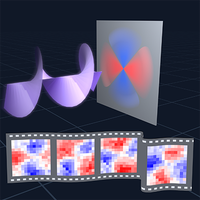
Phys. Rev. Lett. 137, 226001 (2026)
Condensed Matter and Materials
Chiral Skyrmionic Superconductivity from Doping a Chern Ferromagnet
Article | Condensed Matter and Materials | 2026-11-23 05:00 EST
Miguel Gonçalves, Kun Yang, and Shi-Zeng Lin
We show that chiral superconductivity can be stabilized by hole doping a Chern ferromagnet. Performing exact diagonalization and density-matrix-renormalization-group calculations on the repulsive Kane-Mele-Hubbard model at hole doping relative to filling electron per unit cell, we find that a Co…
Phys. Rev. Lett. 137, 226501 (2026)
Condensed Matter and Materials
Giant Room-Temperature Magnetoelectric Coupling Effect in Nanocomposite Thin Films via Strain-Sensitive Polarization
Article | Condensed Matter and Materials | 2026-11-23 05:00 EST
Hao Li, Yali Yang, Shiqing Deng, Yajun Qi, Peng Wang, He Qi, Huifen Yu, Yuan Zhang, Yu Chen, Jiaou Wang, Jianghua Chen, Jiangyu Li, Junling Wang, and Jun Chen
Magnetoelectric multiferroic composites, which combine ferroelectric and ferromagnetic phases, are pivotal for next-generation electronic devices. Conventional design strategies prioritize ferroelectric materials with large spontaneous polarization to achieve strong magnetoelectric coupling. Here, w…
Phys. Rev. Lett. 137, 226801 (2026)
Condensed Matter and Materials
Allee Effect in Compressible Flows
Article | Polymers, Chemical Physics, Soft Matter, and Biological Physics | 2026-11-23 05:00 EST
Jonathan Bauermann, Roberto Benzi, David R. Nelson, and Federico Toschi
Microbes in marine environments are often confined to thin near-surface layers while being advected by turbulent flows. Because such constrained advection generates an effectively compressible flow, reproduction and transport interact in a nontrivial way. Here, we focus on populations whose growth i…
Phys. Rev. Lett. 137, 228401 (2026)
Polymers, Chemical Physics, Soft Matter, and Biological Physics
Physical Review X
Systematic Magnetic Structure Generation Based on Oriented Spin Space Groups: Formulation, Applications, and High-Throughput First-Principles Calculations
Article | | 2026-11-23 05:00 EST
Takuya Nomoto, Kohei Shinohara, Hikaru Watanabe, and Ryotaro Arita
A structure-generation framework based on oriented spin space groups enforces uniform site moments and leverages spin-orbit coupling hierarchies to enable accurate, high-throughput prediction of magnetic ground states.
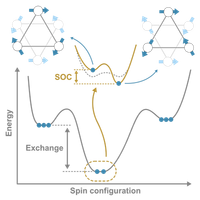
Phys. Rev. X 16, 041052 (2026)
Symmetry-Guided Prediction of Magnetic-Ordered Ground States
Article | | 2026-11-23 05:00 EST
Yuhui Li, Sike Zeng, Yutong Yu, Renzheng Xiong, Yu-Jun Zhao, Xiaobing Chen, and Qihang Liu
A symmetry-guided framework based on oriented spin space groups systematically generates reliable candidates of magnetic configurations via the online platform SPINGEN, enabling high-throughput theoretical prediction of magnetic ground states.
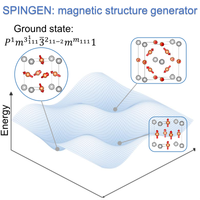
Phys. Rev. X 16, 041053 (2026)
arXiv
Strain-transfer at the Cu nanoparticle-Si(111) interface: static atomistic modelling and simulated Bragg CDI
New Submission | Materials Science (cond-mat.mtrl-sci) | 2026-11-24 20:00 EST
Substrate strain offers a route to control deformation in supported metallic nanoparticles, provided that interfacial coupling transmits the imposed loading into the particle. We assess this feasibility using five static Cu/Si(111) configurations spanning 0-2% biaxial tensile substrate strain. A 211,288-atom Cu particle is supported by a nominally 50 x 50 x 20 nm Si slab with its bottom 1 nm fixed, using the Jelinek modified embeddedatom potential. Relative to the relaxed supported 0% state, Cu-only local fits reveal heterogeneous, anisotropic deformation: particle-wide mean hydrostatic strain is negative at every nonzero loading, from -3.12 x 10⁻⁶ to -8.84 x 10⁻⁶, while the upper-particle mean varies nonmonotonically. Simulated Bragg CDI of Cu(111), obtained by inversion of known complex atomic scattering amplitudes, maps loading-dependent projected displacement and strain. The combined atomistic and Bragg CDI representations provide strong preliminary support for the feasibility of substrate-mediated strain transfer in this idealized system and identify spatial signatures for experimental investigation. Experiments remain indispensable to confirm transfer in real Cu/Si(111) nanoparticles and determine its magnitude.
Materials Science (cond-mat.mtrl-sci), Chemical Physics (physics.chem-ph)
10 pages, 7 figures
From raw magnetoresistance to reliable cyclotron masses: A practical guide to processing quantum oscillation data
New Submission | Strongly Correlated Electrons (cond-mat.str-el) | 2026-11-24 20:00 EST
Josh Leeman, Sudipta Chatterjee, Max Hirschberger, Leslie M. Schoop
Quantum oscillations are an essential probe of the Fermi surface in conductors, and cyclotron masses extracted using the Lifshitz-Kosevich (LK) formula are used to evaluate correlation strength and the assignment of topological states. These masses depend on choices in signal processing, including the field window, method of background subtraction, and spectral window applied before the Fourier transform. These choices are often guided by visual inspection, yet they can alter spectral features and bias the extracted masses. We show that (1) representing a finite field interval by a single effective field can underestimate the cyclotron mass; (2) polynomial background subtraction can attenuate and shift low-frequency peaks; and (3) spectral tapering can reduce mass bias from leakage between neighboring peaks, at the cost of frequency resolution. We demonstrate these effects using numerical calculations and Shubnikov-de Haas experiments on the rare-earth tritellurides RTe3 (R = Pr, Nd, Gd, Tb) with a dense low-frequency spectrum in the charge ordered state. The examples reveal masses shifting by tens of percent with the field window, apparent peak shifts produced only by the background fit, and a reported departure from LK behavior that resolves into two neighboring frequencies.
Strongly Correlated Electrons (cond-mat.str-el), Materials Science (cond-mat.mtrl-sci)
39 pages + 14 figures (main), 40 pages + 17 figures (SI), data available in Zenodo (https://doi.org/10.5281/zenodo.23702565)
Particle separation in a time-correlated Gaussian velocity field: a numerical study
New Submission | Statistical Mechanics (cond-mat.stat-mech) | 2026-11-24 20:00 EST
Mario Maurelli, Silvia Morlacchi
We numerically investigate the dispersion of passive tracer pairs in a two-dimensional, divergence-free, time-correlated Gaussian velocity field. The field is constructed from a sparse set of Fourier modes evolving as independent Ornstein–Uhlenbeck processes, with spatial regularity and scale-dependent temporal decorrelation comparable to those of a power-law Gaussian velocity ensemble. We show that, for spatial roughness exponent $ \alpha=0.2$ and temporal decorrelation exponent $ \beta=0.5$ , corresponding to the regime $ \alpha+\beta<1$ , the extrapolated mean-square distance is compatible with particle separation (in mean-square) at positive time: two particles reach a mean-square positive distance at a finite time, no matter how close they are initially.
Statistical Mechanics (cond-mat.stat-mech), Probability (math.PR)
Structural, optoelectronic, mechanical, thermodynamic and thermoelectric properties of kesterite Cu2ZnSnS4: A first-principles study
New Submission | Materials Science (cond-mat.mtrl-sci) | 2026-11-24 20:00 EST
Iskandar Raufzoda, Amondulloi Burhonzoda, Dilshod Nematov, Makhmadzoir Kayumov, Saidjafar Murodzoda, Anushervon Ashurov, Sakhidod Sattorzoda, Makhsud Barot Islomzoda, Kholmirzo Kholmurodov, Shuwei Tang
The structural, optoelectronic, mechanical, thermodynamic, and thermoelectric properties of kesterite Cu2ZnSnS4 were investigated using density functional theory. The mBJ and HSE06 approaches yield band gaps of 0.88 and 1.55 eV, respectively. Optical calculations reveal high absorption, with the onset in the 0.8-1.0 eV range. Hydrostatic compression from 0 to 30 kbar decreases the lattice parameters and increases the band gap. The elastic constants satisfy the Born stability criterion, and B/G $ >$ 1.75 indicates plastic behavior. Phonon calculations confirm dynamic stability. In the temperature range from 0 to 1000 K, the Helmholtz free energy decreases, the vibrational entropy increases, and the heat capacity approaches a plateau above 500 K. The thermoelectric properties were investigated in the temperature range from 100 to 1000 K. The Seebeck coefficient remains positive, peaking at approximately 310 $ \mu$ V/K at 250 K and decreasing to 239 $ \mu$ V/K at 1000 K. These results encourage the investigation of Cu2ZnSnS4 as a good candidate for thermoelectric power conversion.
Materials Science (cond-mat.mtrl-sci)
Physically Informed Data-Driven Modeling of Low-Pressure Carburizing (LPC): A Self-Calibrating Boundary Condition for Carbon Flux
New Submission | Materials Science (cond-mat.mtrl-sci) | 2026-11-24 20:00 EST
Alex V. Sagalovych, Tymofii Sagalovych, S.F.Dudnik, Vladislav Sagalovych
This paper formulates an extended framework for a hybrid physically informed data-driven model of low-pressure carburizing (LPC), in which diffusive carbon transport in austenite is described by a physical equation, whereas the effective carbon flux across the gas-metal interface is treated as an unknown boundary forcing to be identified from experimental and process data. The basis for this formulation is that, in LPC, the most uncertain part of the model is not bulk diffusion but the transient surface kinetics of carbon uptake by the metal. In contrast to direct empirical relationships of the ‘process regime-result’ type, the proposed scheme uses machine learning as a closure operator for the boundary condition in the diffusion problem. This operator is calibrated using carbon concentration profiles, integral mass gain, surface concentration, effective case depth, and additional process measurements. Theoretically, the model is positioned as an operator-learning problem in a system constrained by a partial differential equation, physical flux constraints, inverse-problem regularization, and uncertainty quantification. The relationships between the proposed approach and physics-informed neural networks, operator learning, dynamic-system identification, boundary-operator learning, and boundary-control problems are considered. The mathematical formulation, calibration functional, identifiability conditions, preliminary tuning algorithm, and online adaptation scheme are formulated. The proposed approach is considered as a computational basis for developing interpretable digital support for LPC processes.
Materials Science (cond-mat.mtrl-sci)
Mechanics and Advanced Technologies 10(3(110)):343-350 2026
Defect Engineering of the Water-Carbon Interface: Insights from First-Principles Calculations
New Submission | Materials Science (cond-mat.mtrl-sci) | 2026-11-24 20:00 EST
Peikun Zhang, Hongbo Zhang, Ying Xu, Zhuhua Zhang
Interactions at solid-liquid interfaces are fundamental to hydrovoltaic and catalytic technologies. While carbon nanomaterials have been extensively studied, the role of abundant defects in amorphous carbon remains poorly understood. Here, using first-principles calculations, we systematically investigate how various defects (topological, point, line, edge, and doping defects) modulate water-carbon interactions. We find that armchair-edge defects with dangling bonds reduce the energy barrier for water dissociation by up to 30 times compared with pristine carbon, while di-vacancies exhibit a near-zero Gibbs free energy for hydrogen evolution, enabling potential hydrogen evolution reaction activity on a purely carbon-based interface. Moreover, mono-vacancy defects, characterized by reduced electronic localization, enhance charge transfer to evaporating water molecules by up to 12.4 times, a key factor in evaporation-induced electricity generation. Crucially, we demonstrate that coupling distinct defects produces synergistic effects that outperform individual defects, revealing a promising strategy for designing multifunctional interfaces. These insights establish a defect-engineering framework for the rational design of high-efficiency hydrovoltaic and catalytic devices.
Materials Science (cond-mat.mtrl-sci)
15 pages, 6 figures
Multiorbital driving of quantum geometric nonlinear transport in oxide interfaces
New Submission | Mesoscale and Nanoscale Physics (cond-mat.mes-hall) | 2026-11-24 20:00 EST
Irene Gaiardoni, Mattia Trama, Roberta Citro, Annika Johansson
Quantum geometry plays a relevant role in determining the intrinsic non-linear transport properties of low-dimensional electron systems. Here, we theoretically investigate the quantum geometric contribution to the non-linear conductivity in $ \text{SrTiO}3$ -based two-dimensional electron gases, comparing the prototypical (001) and (111) crystallographic interface orientations. Using a multi-orbital tight-binding approach, we uncover the crucial role of the multiband electronic structure in determining the quantum-geometric contribution to nonlinear transport. In particular, we show how the hybridization of $ t{2g}$ orbitals near avoided band crossings shapes the momentum-space distribution of the band-normalized quantum metric and the resulting nonlinear conductivity. Furthermore, we reveal a strong dependence on crystal orientation: while the (001) interface exhibits sharp peak-and-dip features confined around Lifshitz transitions, the trigonal symmetry of the (111) interface promotes strong orbital mixing. Our results highlight how the interplay between orbital hybridization and crystallographic orientation gives rise to distinct quantum-geometric nonlinear transport responses in oxide interfaces.
Mesoscale and Nanoscale Physics (cond-mat.mes-hall), Materials Science (cond-mat.mtrl-sci)
14 pages, 5 figures
Nonequilibrium fluctuations could explain the hot mitochondria paradox
New Submission | Statistical Mechanics (cond-mat.stat-mech) | 2026-11-24 20:00 EST
Matthew P. Leighton, Benjamin B. Machta
Several different experiments have found apparent temperature differences of up to 10 K between the interior of mitochondria and the rest of the cellular environment. The physics of heat conduction, however, precludes the steady-state existence of a temperature difference greater than the microkelvin scale within the cell, absent a far greater energy budget. Nearly a decade after the first reported measurement, this apparent paradox remains unexplained. Here, we propose an explanation which allows the elevated temperature measurements to coexist with the theoretical impossibility of a true 10 K steady-state temperature difference. We suggest that nonequilibrium fluctuations within the cellular environment, combined with molecular temperature probes sensitive to specific ranges of frequencies, can lead to apparent 10 K temperature differences with a biologically attainable power budget.
Statistical Mechanics (cond-mat.stat-mech), Biological Physics (physics.bio-ph), Subcellular Processes (q-bio.SC)
4 pages, 2 figures. Any comments are very welcome!
Metal to Semiconductor Transition in Niobium Sulfoselenide Alloy Films by Compositional Control
New Submission | Materials Science (cond-mat.mtrl-sci) | 2026-11-24 20:00 EST
Tinsae Alem, Abir Hasan, Jordan A. Hachtel, Kory Burns, Nikhil Shukla, Stephen McDonnell
Transition metal dichalcogenides (TMDs) have garnered significant interest due to their tunable bandgaps, optical anisotropy, and mechanical flexibility. This study explores the relationship between stoichiometry, structural phase, and electronic transport in niobium sulfoselenide (NbSxSe2-x) thin films. In this study, low-dimensional TMD films were grown with molecular beam epitaxy (MBE) to investigate the effects of varying chalcogen (sulfur and selenium) content in NbSxSe2-x alloys. We focus on tuning electrical resistivity along with the transition from metallic-to-semiconducting behavior through compositional control. These MBE grown films were characterized using in-vacuo x-ray photoelectron spectroscopy (XPS) to analyze the chemical composition. Electrical resistivity of the films and their temperature coefficient of resistance (TCR) were extracted to determine their metallic and semiconducting behavior. Our results show that increasing sulfur content induces a transition from metallic to semiconducting behavior in NbSe2, accompanied by a rise in resistivity. This work highlights the potential for compositional tuning of TMDs for applications in tunable nanoelectronics.
Materials Science (cond-mat.mtrl-sci)
26 pages, 16 figures, 4 tables
Symmetry classes of hyperdeterminant wavefunctions: Application to phase transitions between a bosonic fractional Chern insulator and superfluids
New Submission | Strongly Correlated Electrons (cond-mat.str-el) | 2026-11-24 20:00 EST
Guan-Lin Lin, Xiaodong Hu, Di Xiao, Ying Ran
We study a phase transition between a superfluid phase and a fractional Chern insulator phase in a hard-core boson model on the honeycomb lattice using symmetric hyperdeterminant (Hdet) wavefunctions. Combining projective symmetry group analysis with variational Monte Carlo, we construct and optimize Hdet states in various symmetry classes. Based on the associated effective theories, we show that different symmetry classes, i.e., representations of the projective symmetry group, describe specific quantum phases. Compared with traditional fermionic parton construction, the symmetric Hdet wavefunctions are shown to improve microscopics significantly, allowing quantitative investigation of quantum phase diagrams. We argue that, in contrast with the common belief, this putative continuous phase transition is described by a fluctuating $ SU(2)_g$ gauge field coupling with four Dirac nodes forming two $ SU(2)_g$ doublets (i.e., $ N_f=2$ QCD).
Strongly Correlated Electrons (cond-mat.str-el), Quantum Gases (cond-mat.quant-gas)
18 pages, 13 figures
First-Principles Investigation of the {ScSe2} TMDs Monolayer: Structural Stability, Electronic and Optical Properties
New Submission | Materials Science (cond-mat.mtrl-sci) | 2026-11-24 20:00 EST
Takwa Ben Othman, Mohsen Jemaï, Said Ridene
We present an ab initio investigation of the {ScSe2} monolayer using density functional theory (DFT), as employed in the CP2K code, to assess its structural stability and electronic properties. The electronic behavior of both phases is governed by the local coordination environment of scandium and the associated lifting of degeneracy of its $ 3d$ orbitals. The valence bands (VBs) are dominated by {Se}$ -4p$ states in both phases, while the states near the Fermi level distinguish the metallic 1T phase from the semiconducting 2H phase. Optical response calculations reveal markedly different spectral signatures for the two polymorphs. Two findings emerge from this study: a polymorphism-driven metal-to-semiconductor transition without any change in chemical composition and distinct optical responses relevant to phase-selective optoelectronic devices.
Materials Science (cond-mat.mtrl-sci)
12 pages, 10 figures
Intrinsic volume fraction can decouple from hydrodynamic size in p(NIPAm-co-AA) microgels
New Submission | Soft Condensed Matter (cond-mat.soft) | 2026-11-24 20:00 EST
Peter Edimeh, Howard Chen, Jacinta C. Conrad
Quantifying the packing fraction of microgels is key to understanding their rheology and transport properties. Often, packing fractions are extrapolated from the hydrodynamic size and intrinsic volume fraction under the assumption that particle size and polymer volume change are proportional. Here, we test this assumption for p(N-isopropylacrylamide-co-acrylic acid) [p(NIPAm-co-AA)] microgels of two crosslinker concentrations (1 wt% and 7 wt% methylenebisacrylamide) using capillary viscometry and light scattering (static and dynamic) above and below the pKa of acrylic acid (AA). At pH 8, where AA is fully ionized, the microgels do not undergo a pronounced volume phase transition because electrostatic repulsion hinders thermal collapse, and both measures of hydrodynamic volume are equal. At pH 4, however, p(NIPAm-co-AA) microgels are weakly charged and exhibit a volume phase transition near the lower critical solution temperature of pNIPAm; the magnitude of the size change is greater for the less-crosslinked microgel. Above the volume phase transition temperature, the volume change from hydrodynamic radius decouples from that from viscosity. The ratio of the radius of gyration and hydrodynamic radius R_g/R_h of p(NIPAm-co-AA) microgels at high temperature exceeds the value theoretically predicted for homogeneous spheres and the deviation increases with the extent of crosslinking, suggesting that a non-uniform internal distribution of polymer gives rise to the anomalous decoupling at high temperatures. Our results indicate that care must be taken in extrapolating packing fractions for multi-responsive copolymer microgels, and suggest that copolymer composition and crosslink density may be used to tune bulk properties such as rheology through the internal microstructure.
Soft Condensed Matter (cond-mat.soft), Chemical Physics (physics.chem-ph)
10 pages, 6 figures
Oscillatory superconducting proximity effects in a buried Pt interlayer detected by FMR
New Submission | Superconductivity (cond-mat.supr-con) | 2026-11-24 20:00 EST
L. Peridon, T. Courtois, S.A Hussain, J.B. Tjernshaugen, J. Linder, S. ElMeligy, B. Újfalussy, K. Dumesnil, S. Mangin, S. Petit-Watelot, C. Ciccarelli, T. Hauet
We investigate superconducting proximity effects in NbN/Pt/Py and NbN/Cu/Py trilayers using broadband ferromagnetic resonance (FMR). The reduction of the spin-pumping contribution to the Py damping below the superconducting transition temperature (Tc) is used to probe the superconducting correlations and electronic density of state in the buried metallic interlayer. For a Cu interlayer, the damping reduction remains finite up to at least 20 nm, in agreement with the large coherence length above 100nm in Cu. In contrast, the damping reduction for a Pt interlayer exhibits a non-monotonic thickness dependence and is fully suppressed above 5 nm. Using the quasiclassical theory, we are able to explain the oscillation in damping reduction below Tc with the coexistence of superconducting and magnetic proximity effects in Pt, which generates oscillations of the superconducting order parameter and electronic density of state in the exchange-splitted Pt interlayer. Our results establish spin-pumping damping as a sensitive probe of superconducting proximity effects in buried metallic layers.
Superconductivity (cond-mat.supr-con)
Wireless readout and control of cavity magnon-polaritons via photonic modes delocalised across a gap
New Submission | Mesoscale and Nanoscale Physics (cond-mat.mes-hall) | 2026-11-24 20:00 EST
Alban Joseph, Ryan D McKenzie, Amy Eden, Morven Last, Shannon Howard, Alzbeta Oravcova, Mawgan A Smith, Robert L Stamps, Rair Macedo
In cavity magnonics, photon-magnon hybridisation is typically detected by measuring the cavity response (i.e. measuring cavity resonance shifts through its reflection or transmission spectra). While a large body of work in the field has focused on three-dimensional cavities, a variety of two-dimensional resonators have also been explored as hosts for photonic modes due to their compatibility with on-chip integration. Nevertheless, the readout approach remains largely unchanged. Here, we demonstrate remote excitation and readout of cavity magnon-polaritons using two spatially separated, wirelessly coupled ring resonators. Through inductive coupling, energy is transferred between the resonators, enabling the magnonic system to be excited by one resonator while its hybrid-mode spectrum is detected through measurements of the other. We demonstrate wireless readout of cavity magnon-polaritons at separations ranging from millimetres to centimetres, identifying their characteristic response in the remotely measured spectrum. This establishes wireless resonator coupling as a route to remote interrogation of hybrid photon-magnon systems.
Mesoscale and Nanoscale Physics (cond-mat.mes-hall), Quantum Physics (quant-ph)
Exploring new speciation patterns: architecture of genetic similarity networks
New Submission | Soft Condensed Matter (cond-mat.soft) | 2026-11-24 20:00 EST
David M. Schneider, Claudio Pastorino
We use an individual based model to identify signatures of speciation modes in genetic similarity networks. These networks group individuals based on their genetic similarity, defined through Hamming distances between binary strings representing their genomes. The results of our extensive simulations demonstrate that sympatric and parapatric speciation modes are clearly distinguishable and measurable through specific network metrics. In particular, structural properties – including clustering coefficient, mean degree, geodesic distance, and assortativity – show significant differences in both stationary values and transient phases, giving rise to a novel framework for distinguishing between speciation modes.
Soft Condensed Matter (cond-mat.soft)
36 pages, 21 figures, 3 tables. Includes Supplementary Material. Under review in Physica A
Intertwined Magneto-Structural Criticality Driving Heterogeneous Collective-Pseudospin Dynamics in Sr2IrO4
New Submission | Strongly Correlated Electrons (cond-mat.str-el) | 2026-11-24 20:00 EST
Arnab Singh, Junyoung Kwon, AM Milinda Abeykoon
Correlated quantum phenomena arising from spin-orbit-coupled degrees of freedom provide foundational paradigms in emerging quantum technologies and spin-based functionalities. Elucidating the cooperative behaviors of these systems requires a precise probing of their intertwined magnetic and structural configurations. Using complementary resonant X-ray diffraction and high-energy total scattering measurements on single crystals of Sr2IrO4, we observe that spontaneous structural distortions scale quadratically with the magnetic order parameter. Importantly, the lattice distortion inherits the characteristic 2D XY -like critical behavior of the underlying antiferromagnetic order. X-ray photon correlation spectroscopy (XPCS) reveals multiscale, temperature- and wave-vector-dependent magnetic dynamics characterized by compressed-exponential relaxation and signatures of critical slowing down near the magnetic transition. These findings suggest the role of spin-orbit coupling and local structural distortions as the possible mechanism orchestrating such unconventional dynamics.
Strongly Correlated Electrons (cond-mat.str-el), Materials Science (cond-mat.mtrl-sci)
11 pages, 4 figures
A Covalent Bonding Network Using p-Block Elements to Stabilize Lithium-Rich Cathode Materials
New Submission | Materials Science (cond-mat.mtrl-sci) | 2026-11-24 20:00 EST
Amelia Zhao, Edward Mu, Jessica Luu, John Vinson, Brian Moritz, Eder G. Lomeli, Thomas P. Devereaux
Li-rich battery cathodes (LixMyOz, where x > y) have sparked significant attention for their high energy densities, but their practical application is currently limited by structural instabilities associated with high-valent redox. Recent work has demonstrated reversible high-potential (de)lithiation with low voltage hysteresis in Li4FeSbO6 (LFSO), but the stabilization mechanism for this unique charging behavior is not fully understood, limiting our ability to apply insights from LFSO to more earth-abundant cathodes. In this paper, we present a covalent Sb-O bonding network in LFSO which is facilitated by the p-block orbital character of Sb. Using ab initio computational modeling, we identify this bonding state and indicate its contributions to crystal stability; we also identify a signature for this bonding network using theoretical and experimental element-specific X-ray spectroscopy. Substituting Sb with other p-block elements preserves this stabilizing bond, pointing to a family of new cathode chemistries beyond LFSO. This work establishes a design principle for development of sustainable energy-dense batteries: p-block elements like Sb possess specific orbital-mediated oxygen bonding which contributes to stability of high-valent layered oxide cathodes.
Materials Science (cond-mat.mtrl-sci)
Persistent Neutron Irradiation Effects and Partial Recovery in Thin-Film CdS/CdTe Solar Cells
New Submission | Materials Science (cond-mat.mtrl-sci) | 2026-11-24 20:00 EST
Ashraful Mamun, Andrew Allison, Meng-Jen (Vince)Wang, Etee Kawna Roy, Edward Cazalas, Glenn E. Sjoden, Matthew O. Reese, Joel N. Duenow, Heayoung P. Yoon
Thin-film CdTe solar cells are promising candidates for lightweight space power, but device-level studies of their response to neutron irradiation remain scarce. Here, we report the device performance of CdS/CdTe solar cells irradiated for 10 to 150 min in the thermal irradiator of a TRIGA reactor (90 kW), corresponding to nominal total neutron fluences of 3.3 x 10^14 to 5.0 x 10^15 n cm-2. The cells were characterized after 18 months of post-irradiation storage, once the residual activity has decayed to background levels. Co-irradiated FTO-coated glass reference substrates exhibit a wavelength-dependent transmission loss, with the transmittance at 500 nm decreasing from 80 % to 50 % after 60 min of irradiation. The irradiated cells retain rectifying behavior, but the reverse-bias dark current, photocurrent, and efficiency generally decrease with exposure time. Post-irradiation annealing at 70 °C under one-sun illumination initially improves Jsc and Voc, with the highest efficiency after 4 h. Prolonged annealing, however, causes substantial FF degradation despite continued photocurrent recovery. These trends suggest that irradiation-induced changes in the glass substrate, CdTe absorber, and contacts respond differently to annealing. Understanding underlying defect chemistry and correlating it with device behavior are necessary steps toward radiation-tolerant CdTe photovoltaics for space applications.
Materials Science (cond-mat.mtrl-sci)
Curling Superconducting Vortices by Nematic Fluxon-Skyrmion Interaction
New Submission | Superconductivity (cond-mat.supr-con) | 2026-11-24 20:00 EST
Xiaoqing Bao, Shiyuan Wang, Dekun Shen, Guibin Lan, Tianqi Wang, Yuelin Zhang, Guoqiang Yu, Ka Shen, Haiwen Liu, Jinxing Zhang
Superconducting vortex represents a topological entity in type-II superconductors, where the prototypical manifestation of such a macroscopic quantum state holds great promise for applications in future quantum technologies. Deterministic control of the vortex dynamics at the nanoscale is central to enhance superconductors’ critical thresholds and design next-generation superconducting quantum devices. However, it is still scientifically challenging due to the intrinsic nature of the vortex pinning landscapes in superconductors. Here, we observe an even-in-field Hall-like signal with about two order of magnitude enhancement in a type-II superconductor/chiral magnet heterostructure, which confines to the field-temperature window where the flux flow coexists with magnetic skyrmions. The polarity of such a giant even-in-field transverse response reverses between orthogonal current directions, suggesting an on-track vortex flow driven by a nematic fluxon-skyrmion interaction analyzed via the extended vortex-viscosity tensor. More critically, a deterministic manipulation of skyrmions at the nanoscale within the hybrid system enables selective and reversible controls over the dissipative behavior and therefore the reconfigurable fluxon transport, mimic the precise control of curling stone in winter Olympic, thereby opening a new avenue towards the exploration of programmable topological and superconducting quantum devices.
Superconductivity (cond-mat.supr-con)
20 pages, 4 figures
Interstitial Magnetoelectricity in Altermagnetic Electrides
New Submission | Materials Science (cond-mat.mtrl-sci) | 2026-11-24 20:00 EST
Yue Li, Shibo Fang, Jianhua Wang, Qiang Li, Weizhen Meng, Haiyu Meng, Xiong-Xiong Xue, Jianfeng Wang, Yi Du, Jing Lu, Yee Sin Ang
Electrides and altermagnets are two distinct yet intriguing classes of quantum materials, characterized by interstitial anionic electrons and nonrelativistic spin splitting, respectively. The recent prediction of Stoner-instability-driven altermagnetic electride provides a natural bridge between these two fields. Here, we investigate the magnetoelectric response and its related spin-polarized transport in the altermagnetic electride Zr$ _2$ N monolayer. Using the tight-binding Hubbard model and first-principles calculations, we find that the electric field can break the magnetic compensation between the two interstitial anionic electrons, inducing a finite net magnetization and giving rise to an interstitial electron mediated magnetoelectric response. The magnetoelectric response is further demonstrated through the electrical control of spin conductivity. Our results reveal a magnetoelectric effect in altermagnetic electrides, paving a way towards electride-based spintronic devices.
Materials Science (cond-mat.mtrl-sci), Computational Physics (physics.comp-ph)
Higher-Order Modulational Instability in Spin-Orbit-Coupled Bose-Einstein Condensates: Finite-Raman Effects and Branch-Resolved Spectral Redistribution
New Submission | Quantum Gases (cond-mat.quant-gas) | 2026-11-24 20:00 EST
Cui-Cui Ding, Boris A. Malomed, Qin Zhou
We investigate higher-order modulational instability and the nonlinear spectral redistribution in a spin-orbit-coupled (SOC) binary Bose–Einstein condensate with equal interactions. For finite Raman coupling, the system is nonintegrable and exhibits both nonoscillatory and oscillatory instability regimes. Raman coupling reshapes the instability bands and changes what harmonics can grow. Direct simulations show that this reorganization modifies the subsequent nonlinear sideband dynamics. In the zero-Raman limit, SOC shifts successive harmonics between instability bands and stability gaps at a fixed carrier wavenumber. It thereby controls higher-order instability, distinct breather branches, and frequency-hopping sequences. We derive exact algebraic coefficients for the carrier and arbitrary-order sidebands. This yields an exact geometric power spectrum for the complete infinite sideband sequence and a unified description of carrier depletion, directional imbalance, and sideband decay, including an exact relation between the instability gain and the minimum spectral decay rate. For two coexisting breather branches with the same background and modulation wavenumber, the higher-gain branch can have a smaller maximum carrier depletion, a slower high-order spectral decay, and a weaker directional imbalance. SOC can also restore a symmetric sideband spectrum when the SOC-induced momentum shift compensates the carrier wavenumber, even when both $ k$ and $ k_L$ are nonzero. These analytical and numerical results clarify how SOC and Raman couplings organize higher-order instability and nonlinear spectral redistribution, providing a unified framework for studying coherent nonlinear-wave dynamics in multicomponent condensates.
Quantum Gases (cond-mat.quant-gas), Pattern Formation and Solitons (nlin.PS)
15 pages, 11 figures; to be published in Phys. Rev. E
Ultrahigh Thermal Conductivity and Mirror-Parity Constraints in a Corrugated Two-Dimensional Oxide
New Submission | Materials Science (cond-mat.mtrl-sci) | 2026-11-24 20:00 EST
Babu Ram, Arun S. Nissimagoudar, Weichao Wang, Geunsik Lee
Contrary to the expectation of poor heat transport in oxides, first-principles calculations predict an ultrahigh lattice thermal conductivity of 756 $ \mathrm{W,m^{-1},K^{-1}}$ at 300 K in corrugated two-dimensional B$ _2$ O$ _2$ . Acoustic phonons dominate heat transport, with the flexural acoustic (ZA) branch contributing 40.62$ %$ . Triplet resolved analysis including acoustic and optical partners finds that mirror forbidden three phonon scattering is negligible within numerical precision for sampled ZA modes. These results highlight horizontal mirror symmetry as a constraint on phonon scattering in corrugated oxides.
Materials Science (cond-mat.mtrl-sci)
5 pages (main), 16 pages (SI), total 13 figures
Tritium speciation and transport in molten FLiBe: parameters, uncertainties and validation priorities
New Submission | Materials Science (cond-mat.mtrl-sci) | 2026-11-24 20:00 EST
Joe Lunn, Teresa Orr, Megan Leyland, Ayobami Daramola, Rémi Delaporte-Mathurin, James Dark, Graeme J. Ackland, Prashanth Srinivasan, Andrew P. Horsfield, Mikhail Yu. Lavrentiev, Duc Nguyen-Manh, Mark R. Gilbert, Matthew R. Ryder
Molten lithium fluoride-beryllium fluoride (FLiBe) is a candidate liquid breeder material for fusion applications, but predictive modelling of tritium retention, transport and extraction depends on chemical and interfacial assumptions that remain only partly resolved. Tritium produced in lithium-bearing fluoride salts may occur in oxidised or fluoride-associated states and can exchange into molecular hydrogen-isotope species such as HT. The relative populations and apparent transport behaviour depend on salt composition and condition, redox state, and interactions at gas-liquid and salt-wall boundaries. This review assesses the evidence for tritium speciation and transport in molten FLiBe, with emphasis on the solubility, effective diffusivity, permeability, exchange and boundary-transfer parameters required by continuum models. The available evidence motivates a two-pool continuum description with separate oxidised or fluoride-associated and molecular-hydrogen pools, without assigning a unique microscopic species. This description applies where states omitted from these pools do not materially affect tritium inventory or transport in the salt. We distinguish directly measured quantities from fitted or inferred effective parameters, recommend how source-specific transport data should be reported and compared, and identify the measurements required to constrain the remaining uncertainties in speciation, exchange, bulk transport and boundary transfer.
Materials Science (cond-mat.mtrl-sci)
Review article. 34 pages, 3 figures, 4 tables
Competing magnetic correlations in the square-lattice Hubbard model with spin-dependent nearest-neighbor and next-nearest-neighbor hopping
New Submission | Strongly Correlated Electrons (cond-mat.str-el) | 2026-11-24 20:00 EST
Rana Imran Mushtaq, Ji Liu, Yinlong Li, Wing Chi Yu, Xiaosen Yang, Ho-Kin Tang
Altermagnets have spin-split bands without net magnetization. The splitting can come from a spin-dependent nearest-neighbor (NN) hopping anisotropy $ t_A$ or from a spin-dependent next-nearest-neighbor (NNN) hopping $ t’$ . Both change sign under a $ 90^\circ$ rotation and are present together when the lattice has no mirror planes, yet they have so far been studied only separately. Here we study the two-dimensional square-lattice Hubbard model with both $ t_A$ and $ t’$ , using constrained-path quantum Monte Carlo at $ U=4t$ and scanning the electron filling $ n$ , $ t_A$ and $ t’$ . We find four types of magnetic correlations: Néel, stripe, diagonal, and spiral spin-density-wave. The phase diagram depends on both hoppings together. Diagonal correlations require finite $ t_A$ and are suppressed by $ t’$ . Stripe correlations appear only once $ t’$ is large enough to overcome the diagonal tendency set by $ t_A$ . Néel correlations survive at large $ t_A$ and large $ t’$ , where the NNN model alone gives stripe or spiral correlations. The noninteracting susceptibility matches the dominant wavevector at small $ t’$ , but not the Néel correlations at $ t’\geq0.3$ , which come from the interaction. Finite-size scaling with three lattice sizes is consistent with long-range order only near half filling; at the stripe, spiral and diagonal points we tested, the structure factor per site extrapolates to zero. The joint behavior persists up to $ U=6t$ .
Strongly Correlated Electrons (cond-mat.str-el)
19 pages, 15 figures. Published version: Phys. Rev. B 114, 274428 (2026)
Phys. Rev. B 114, 274428 (2026)
Hartree–Fock analysis of the bilayer Hubbard model
New Submission | Strongly Correlated Electrons (cond-mat.str-el) | 2026-11-24 20:00 EST
We study the half-filled Hubbard model on two parallel square lattices with on-site repulsion $ U>0$ and with nearest-neighbor hopping specified by a constant $ t>0$ within each plane and by another constant $ t_\perp \geq 0$ between the planes. Working in the Hartree–Fock approximation, we obtain asymptotic formulas for the Néel temperature and the antiferromagnetic gap ratio in the weak coupling limit. We also determine the behavior of the antiferromagnetic gap ratio near the critical curve separating the paramagnetic and antiferromagnetic regions in the phase diagram. Furthermore, we present numerical phase diagrams away from half-filling, and we make an analytical conjecture regarding their structure.
Strongly Correlated Electrons (cond-mat.str-el), Mathematical Physics (math-ph)
32 pages
A High-Frequency Flux-Driven DC-SQUID Threshold Detector at the Single-Microwave-Photon Energy Scale: A Numerical Feasibility Study
New Submission | Superconductivity (cond-mat.supr-con) | 2026-11-24 20:00 EST
M. Y. Wang, Y. Q. Chai, S. N. Wang, L. F. Wei
In our recent work (Phys. Rev. B \textbf{113}, 224503 (2026)), we showed numerically that rapidly sweeping the bias current of a current-biased Josephson junction threshold detector (CBJJ-JTD) drives it out of equilibrium. This substantially reduces the effect of thermal noise on microwave detection and may enable threshold detection near the energy of a single microwave photon. The scheme requires very low damping ($ \beta \leq 10^{-4}$ ) and a very fast bias-current sweep ($ v/\beta \geq 1$ ), both of which are difficult to achieve with available junctions and low-pass-filtered cryogenic measurement lines. Here we propose a more experimentally accessible nonequilibrium threshold detector based on a high-frequency flux-driven direct-current superconducting quantum interference device (DC-SQUID) and investigate it by numerically solving the resistively and capacitively shunted junction (RCSJ) equations. The applied flux drives a circulating supercurrent and sustains nonequilibrium phase dynamics throughout the bias-current sweep, removing the need for a fast sweep or for transient oscillations set by the initial phase. Using typical experimental device parameters, we calculate switching-current distributions (SCDs) with and without a microwave input for both driven and undriven SQUIDs. We quantify detection performance using receiver operating characteristic (ROC) curves and their area under the curve (AUC). The simulations show that high-frequency flux drive reduces the impact of thermal noise and enables statistical discrimination of weak microwave pulses at the single-photon energy scale. We also numerically estimate detector characteristics such as phase selectivity and dynamic range.
Superconductivity (cond-mat.supr-con), Quantum Physics (quant-ph)
10 pages, 10 figures
Spherical HgTe nanocrystal: a multi-band effective mass study
New Submission | Mesoscale and Nanoscale Physics (cond-mat.mes-hall) | 2026-11-24 20:00 EST
The size-quantized energies, eigenstates, and optical selection rules in a spherical HgTe nanocrystal are studied by solving the multi-band effective-mass equations analytically. The six-band Kane model, involving both the $ \Gamma_{6}$ and $ \Gamma_{8}$ bands within the spherical approximation, is employed in the derivation. The eigenstates can be classified by both the total angular momentum and the parity. As the nanocrystal radius varies, crossings occur not only between electron and hole energy levels but also among the hole levels themselves. The lowest two electron states (in each spin subspace) are surface states, one with even parity and the other with odd parity. The optical selection rules consist of two parts, namely, the parity selection and the angular momentum selection.
Mesoscale and Nanoscale Physics (cond-mat.mes-hall)
11 pages, 7 figures
Corrections to the IPR in the localized phase of the Anderson model on the Bethe lattice
New Submission | Disordered Systems and Neural Networks (cond-mat.dis-nn) | 2026-11-24 20:00 EST
Tommaso Rizzo, Marco Tarzia, Angelica Vecchiarelli
We show that finite-size effects in the localized phase of the Anderson model on the Bethe lattice are highly anomalous. On random regular graphs of $ N$ sites the inverse participation ratio (IPR) approaches its thermodynamic-limit value as $ I_2(N)-I_2^\infty\sim N^{-\kappa(W)}$ , with a disorder-dependent exponent $ 0<\kappa<1$ throughout the localized phase, and the same exponent governs the correction due to a finite imaginary regulator, $ I_2(\eta)-I_2^\infty\sim\eta^{\kappa(W)}$ . We derive $ \kappa = 2\beta-1$ , with $ \beta$ the power-law tail exponent of the local density of states distribution, in a solvable model sharing the criticality of the Anderson model on the Bethe lattice. We then show that the same mechanism operates in the Anderson model itself, and find quantitative agreement with the numerics. A self-consistent one-loop treatment of the loops of finite graphs independently reproduces the finite-size corrections. Physically, a spectral identity and an exact sum rule tie both corrections to rare Mott-like resonances hybridizing distant localized eigenstates: a finite graph lacks the resonant pairs whose centers would lie farther apart than its size allows. Our results identify the scaling variable needed to extrapolate IPR data to the thermodynamic limit.
Disordered Systems and Neural Networks (cond-mat.dis-nn), Statistical Mechanics (cond-mat.stat-mech)
10 pages, 4 figures (including End Matter). Companion to the longer paper “Anomalous corrections to the inverse participation ratio in the localized phase on the Bethe lattice: insights from a solvable ‘toy’ non-linear sigma-model”
Anomalous corrections to the inverse participation ratio in the localized phase on the Bethe lattice: insights from a solvable “toy” non-linear $σ$-model
New Submission | Disordered Systems and Neural Networks (cond-mat.dis-nn) | 2026-11-24 20:00 EST
Tommaso Rizzo, Marco Tarzia, Angelica Vecchiarelli
In the localized phase of the Anderson model on the Bethe lattice, the inverse participation ratio (IPR) approaches its asymptotic value as the imaginary regulator $ \eta \to 0$ with an anomalous power law, $ I_2(\eta) - I_2^\infty \propto \eta^{2\beta-1}$ , where $ \beta \in (1/2,1)$ is the tail exponent of the local density of states distribution. We derive it analytically in a “toy” non-linear $ \sigma$ -model on the hyperbolic superplane, which shares the exotic criticality of the Bethe-lattice Anderson transition. Matching the bulk solution of its cavity equation to a boundary layer set by the symmetry-breaking field $ H$ gives a correction $ \propto H^{2\beta-1}$ , controlled by the subdominant root $ 1-\beta$ of the linearized equation; at criticality it becomes $ \propto 1/|\ln H|$ . Under a few natural assumptions the same mechanism operates in the Anderson model, where the correction is a zero mode of the $ \eta=0$ cavity recursion, as we confirm numerically, also for finite-size corrections. Through a spectral identity and an exact sum rule, the same exponent fixes exactly the decay $ \omega^{-\mu}$ , with $ \mu = 2(1-\beta)$ , of the correlation function of two eigenstates at energy distance $ \omega$ , including its amplitude, as we confirm by exact diagonalization, population dynamics on the infinite lattice, and analytically in the toy model. A counting of Mott resonances between distant localized eigenstates explains this physically; on finite graphs, finite-size corrections reflect a deficit of doubly-peaked eigenstates. Finally, we derive the finite-size scaling of the IPR in the variable $ (2\beta-1)\ln N$ , which describes both finite-$ \eta$ and finite-$ N$ data. It yields a Kosterlitz-type renormalization-group flow of the running fractal dimension: finite fractal dimensions of localized states at accessible sizes are a logarithmic finite-size effect.
Disordered Systems and Neural Networks (cond-mat.dis-nn), Statistical Mechanics (cond-mat.stat-mech)
40 pages, 17 figures. Companion paper to the Letter “Corrections to the IPR in the localized phase of the Anderson model on the Bethe lattice”
Minimal Three-Band Model and $d$-Wave Superconductivity in La$_4$Ni$_3$O$_8$
New Submission | Superconductivity (cond-mat.supr-con) | 2026-11-24 20:00 EST
Ao Zhang, Chao Deng, Wenfeng Wu, Run Yang, Zhixiang Shi, Liang Si
Motivated by the recent observation of ambient-pressure superconductivity in Pr- and Y-substituted La$ 4$ Ni$ 3$ O$ 8$ , we combined density-functional theory (DFT), dynamical mean-field theory (DMFT), random phase approximation (RPA), and fluctuation exchange approximation (FLEX) methods to study its electronic structure and superconducting pairing symmetry. DFT band analysis indicates that the low-energy states are mainly dominated by three Ni-3$ d{x^2-y^2}$ orbitals with weak $ d$ -$ p$ hybridization. Multi-orbital DMFT calculations yield an average $ d{x^2-y^2}$ filling of about 0.87, close to the optimal value for infinite-layer nickelates. By comparing the DMFT results of $ d{x^2-y^2}$ only and full Ni-3$ d$ models, we find that their electronic properties are almost completely consistent, demonstrating the effectiveness of the simplified $ d_{x^2-y^2}$ model. RPA and FLEX calculations based on this model consistently indicate a dominant $ d_{x^2-y^2}$ -wave pairing instability. These results establish La$ _4$ Ni$ _3$ O$ _8$ as a system whose electronic structure closely resembles that of hole-doped cuprates, suggesting that the electronic pockets near the $ \Gamma$ - and $ A$ -points, which are characteristic of infinite-layer nickelates, may not be essential for superconductivity. The calculated superconducting transition temperature ($ T_C$ ) is approximately 10,K, in good agreement with experimental observations.
Superconductivity (cond-mat.supr-con), Materials Science (cond-mat.mtrl-sci), Strongly Correlated Electrons (cond-mat.str-el)
9 pages, 4 figures
Quantum Hall Effect in a 3D Cross-Dimensional Quantum Anomalous Hall System
New Submission | Mesoscale and Nanoscale Physics (cond-mat.mes-hall) | 2026-11-24 20:00 EST
Liang-Liang Cheng, Ao-Long Li, Zhi-Qiang Zhang, Hua Jiang
We systematically investigate cross-dimensional transport and the resulting quantum Hall effect in 3D quantum anomalous Hall effect systems, which are constructed by coupling two Weyl-semimetal Hamiltonians. Our study unveils that the system hosts highly anisotropic surface states and chiral modes, leading to rich quantum Hall responses. Crucially, we clarify how magnetic fields applied along three high-symmetry directions dictate the evolution of the Chern numbers, chiral modes, and Hall responses. We discover that chiral modes along different directions can originate from distinct mechanisms, giving rise to various magnetic modulation characteristics. Furthermore, we unveil the breakdown of the conventional Chern-number-based bulk-boundary correspondence under magnetic fields, where the Chern numbers alone fail to fully characterize the evolution of the chiral states. This anomalous behavior is attributed to the unique momentum-space distributions of surface bands. These insights are further validated numerically through multi-terminal Hall transport simulations. Our findings expand the understanding of magnetic-field-driven mechanisms in 3D topological systems and provide deeper insights into the interplay between quantized Hall effects and Chern numbers in 3D systems.
Mesoscale and Nanoscale Physics (cond-mat.mes-hall)
12 pages, 10 figures
Synthesis Method-dependent Resist-like Behavior of Liquid Crystalline Graphene Oxide Films Under Electron Beam Irradiation
New Submission | Materials Science (cond-mat.mtrl-sci) | 2026-11-24 20:00 EST
A. Sahakyan, Ghada E. Khedr, A. A. Hovhannisyan, G. Gevorgyan, K. Margaryan, G. Shakhatuni, M. Aleksanyan, Mohamed Aly Saad Aly, N. Nwaji, H. Gharagulyan
Here, the electron-beam-induced structural evolution and patterning behavior of chitosan-functionalized GO films, specifically those using chemically vs electrochemically exfoliated GO, are investigated. Experimental results (supported by DFT calculations) revealed that electron irradiation drives controllable microstructure formation in GO by selectively triggering ablation and densification pathways, which are dictated by the GOs synthesis route and initial oxidation state. Furthermore, a comprehensive characterization study was conducted to compare the optostructural properties of the present system prior and subsequent to electron-beam irradiation. Moreover, a systematic study of the films mechanical properties across both micro- and macroscopic scales was also performed to elucidate the underlying mechanisms responsible for the observed phenomena. The results demonstrate that the integration of mask-free electron-beam patterning, multiscale characterization, and DFT modeling establishes a previously unexplored synthesis-structure-irradiation relationship in GO films, providing fundamental insights into irradiation-induced microstructure evolution and opening new avenues for the design of GO-based micro- and nanostructured materials.
Materials Science (cond-mat.mtrl-sci)
Local Pressure Induced Quantum Dot to Ring Transition and Aharonov Bohm Effect in Reconfigurable MoTe2 Bilayers
New Submission | Mesoscale and Nanoscale Physics (cond-mat.mes-hall) | 2026-11-24 20:00 EST
Ibsal Assi, A. Belayadi, Hocine Bahlouli, Udo Schwingenschlögl, J. P. F. LeBlanc
We demonstrate that local pressure provides an effective means of engineering reconfigurable quantum confinement in MoTe2 homobilayers. By applying a smooth, spatially varying pressure profile, we show that the confinement geometry can be continuously tuned from a conventional quantum dot to a quantum ring, with the emergence of annular confinement being a distinctive feature of AB-stacked bilayers. This crossover originates from the pressure-induced spatial modulation in the electronic parameters, which produces an off-center minimum in the effective confinement potential, thereby redistributing the ground-state probability density away from the center and giving rise to an annular confinement geometry. In the quantum-ring regime, a perpendicular magnetic field gives rise to a flux-periodic energy spectrum and persistent currents, providing characteristic signatures of the Aharonov-Bohm effect. By coupling the pressure-induced quantum ring to source and drain leads, we further demonstrate pronounced Aharonov-Bohm conductance oscillations, accompanied by real-space current patterns exhibiting constructive and destructive interference at integer and half-integer magnetic flux quanta, respectively. These findings establish locally pressurized MoTe2 bilayers as a lithography-free platform for reconfigurable quantum confinement and realizing pressure-tunable Aharonov-Bohm interferometry in two dimensional materials.
Mesoscale and Nanoscale Physics (cond-mat.mes-hall)
Floquet-Induced Valley Polarization and Topological Phases in Twisted Bilayer Graphene Heterostructures
New Submission | Mesoscale and Nanoscale Physics (cond-mat.mes-hall) | 2026-11-24 20:00 EST
A. Belayadi, I. A. Assi, A. Johansson, C. I. Osuala, H. Bahlouli, Udo Schwingenschlögl, J. P. F. LeBlanc, A. Abbout
We theoretically investigate twisted bilayer graphene (tTBG) heterostructures subjected to circularly polarized light. Inversion symmetry is broken through the combined application of an out-of-plane electric field and the incorporation of insulating substrates, enabling precise control of the valley degrees of freedom and associated topological phases. We identify a regime in which the valley degeneracy is lifted: one valley retains a gapless, linear Dirac-like dispersion, whereas the other develops a finite band gap and becomes electronically inactive. The interplay between Floquet driving and inversion-symmetry breaking induces topological phase transitions characterized by Chern numbers C = -2, C = -1, and C = 0, together with the emergence of perfectly valley-polarized domain-wall channels. Furthermore, magnetic asymmetry arising from proximity to adjacent two-dimensional ferromagnetic contacts enables spin-valley filtering. These findings establish the potential of graphene-based heterostructures as highly tunable systems for controlling spin and valley degrees of freedom.
Mesoscale and Nanoscale Physics (cond-mat.mes-hall)
13 pages, 6 figures
Learning free energy across a differentiable temperature range by deep generative modeling
New Submission | Statistical Mechanics (cond-mat.stat-mech) | 2026-11-24 20:00 EST
Yaowen Zhang, Chen Chen, Wanyu Lin, Shuo-Hui Li, Ding Pan
Free energy governs the directionality, stability, and temperature sensitivity of physical, chemical, and biological transformations. Conventional free energy calculations, such as thermodynamic integration and free energy perturbation, often have to be performed at individual temperatures and are limited by the high cost of sampling an extensive set of thermodynamic states. Here, we introduce learned temperature-differentiable free energy perturbation (TD-FEP), a deep generative framework that learns a temperature-conditioned, invertible mapping between reference and target systems through data-free, energy-based optimization. TD-FEP thereby unifies one-shot state generation and free energy calculation across a continuous temperature range. We validated TD-FEP across a broad range of applications, including isolated molecules, periodic materials, and chemical reactions.
Statistical Mechanics (cond-mat.stat-mech), Machine Learning (cs.LG), Computational Physics (physics.comp-ph)
Large Deviations and Critical Scaling in the Finite-Population Granovetter Threshold Model
New Submission | Statistical Mechanics (cond-mat.stat-mech) | 2026-11-24 20:00 EST
We develop a systematic asymptotic analysis of the exact finite-population solution of Granovetter’s threshold model, in which a single initial instigator triggers a cascade among agents with independently distributed adoption thresholds. By expressing the propagation probability as an order-statistic boundary-crossing event, we formulate its macroscopic large-deviation rate as a constrained relative-entropy minimization problem. For Beta-distributed thresholds, we obtain explicit solutions for all shape parameters $ \alpha$ and $ \beta$ , identifying four possible optimal empirical threshold profiles: fully free, fully pinned, pinned–free, and free–pinned. These profiles determine both the exponential probability of macroscopic cascades and the threshold configurations responsible for their occurrence. Importance-sampling estimates confirm the analytical rate functions, while sequential Monte Carlo simulations independently reproduce the predicted optimal profiles. We also revisit the critical scaling near $ \alpha_c=1$ and confirm the principal finite-size scaling laws: the mean active fraction decays as $ N^{-1/2}$ for uniform thresholds and as $ N^{-1}$ for $ \alpha=1$ and $ 0<\beta<1$ . In the latter regime, we further derive an explicit scaling function for the logarithmic critical window from the microscopic branching-process limit. Our results provide a general framework for determining the probabilities and characteristic configurations of rare collective events in threshold-driven cascade processes
Statistical Mechanics (cond-mat.stat-mech), Physics and Society (physics.soc-ph)
Statistical mechanics of linear classification on hierarchical tree data
New Submission | Disordered Systems and Neural Networks (cond-mat.dis-nn) | 2026-11-24 20:00 EST
Jerome Garnier-Brun, Federica Kulka, Carlo Lucibello
Deep networks owe much of their success to their ability to exploit the structure in data, from the grammar of language to the multi-scale organization of images. Yet, many statistical mechanics approaches to structured data rely on Gaussian equivalence, whose assumptions can fail when a few latent variables influence all input coordinates. In this work, we take a step beyond this setting with a simple setup, in which a linear classifier is trained to infer the root of the classical broadcast process on a tree from its $ N$ leaves. Despite this simplicity, the data already display non-Gaussian statistics along the direction carrying the label, as well as strong finite-size effects. By retaining the exact law along this direction and approximating the transverse fluctuations as Gaussian, we obtain a finite-depth replica theory that accurately describes the measured learning curves. At large depth and sufficiently weak regularization, we uncover a double descent whose two stages are separated in scale. In a range of broadcast noise below the reconstruction threshold, the first descent occurs at a number of samples scaling as $ N^\omega$ , with $ 0<\omega<1$ set by the data statistics, whereas the overfitting peak occurs at order $ N$ samples. Beyond linear classifiers, this setup could serve as a controlled starting point to study deeper architectures and generative models on hierarchical data.
Disordered Systems and Neural Networks (cond-mat.dis-nn), Machine Learning (cs.LG)
13 pages, 6 figures
Thickness-Dependent Morphology and Electrical Transport in Ultrathin Amorphous MoSi Films
New Submission | Superconductivity (cond-mat.supr-con) | 2026-11-24 20:00 EST
O.O. Leha, O. V. Zraichenko, S. I. Kryvonohov, V.Yu. Lyakhno
We investigate the thickness-dependent surface morphology and electrical transport of ultrathin amorphous Mo50Si50 films deposited by magnetron co-sputtering. Atomic force microscopy of Si-capped heterostructures on Si/SiO2 reveals smooth surfaces throughout the investigated thickness range, with RMS roughness below 0.2 nm and a non-monotonic thickness dependence characterized by a minimum at 1.92 nm. Room-temperature sheet resistance follows an approximately inverse-thickness dependence for films with nominal thicknesses of about 1.9-5 nm, whereas a pronounced deviation from this scaling develops below approximately 1.5-2 nm. Temperature-dependent measurements further reveal a superconducting transition in the 30-nm film, while the 1.54-nm film shows a strong resistance increase upon cooling clearly indicates a superconductor-insulator transition. In the 2-20 K range, the sheet conductance of the 1.54-nm film exhibits a reproducible logarithmic temperature dependence, Gs(T)=G0+Bln(T/T0), consistent with quantum corrections to diffusive transport in a strongly disordered quasi-two-dimensional conductor. These results identify a thickness-sensitive transport regime in ultrathin MoSi while demonstrating that the corresponding heterostructures retain comparatively smooth surface morphology.
Superconductivity (cond-mat.supr-con), Materials Science (cond-mat.mtrl-sci)
Time-Reversed Task Events and Thermodynamic Bounds for Stochastic Thermal Machines
New Submission | Statistical Mechanics (cond-mat.stat-mech) | 2026-11-24 20:00 EST
Kaiyuan Cao, Bei Xiao, Jian Wang
We develop a task-based framework that relates finite-time performance to thermodynamic irreversibility in stochastic heat engines and refrigerators. For tasks defined by reaching an accumulated-work threshold within a prescribed time, we construct the reverse event through exact trajectory time reversal. The binary relative entropy between forward and reverse task probabilities provides a lower bound on mean entropy production. Combined with the first law and entropy balance, this bound constrains irreversible work loss in engines and excess input work in refrigerators. We illustrate the framework with a three-level stochastic system and test the bounds against its full dynamics. These results show how success-or-failure statistics alone can reveal irreversibility and constrain the energetic costs of finite-time thermal tasks. We also outline an experimental route to testing the framework using a monitored three-level system coupled to engineered thermal reservoirs and a work channel.
Statistical Mechanics (cond-mat.stat-mech)
6 pages, 5 figures
Charge-fluctuation hot lines and superconductivity in Ba$_{1-x}$K$_x$BiO$_3$
New Submission | Superconductivity (cond-mat.supr-con) | 2026-11-24 20:00 EST
Xiangang Wan, Sergey Y. Savrasov
The origin of superconductivity near 30K in Ba$ _{0.6}$ K$ _{0.4}$ BiO$ _3$ has remained a long-standing puzzle. Tunneling experiments give an electron–boson coupling $ \lambda\approx 0.7$ –1.2, whereas density-functional calculations give $ \lambda\approx 0.3$ , concentrated in the breathing mode near 50–70meV. We propose that the missing coupling of about 0.7 comes from dynamical charge fluctuations at Q=(pi,pi,pi)/a, the ordering vector of the charge-disproportionated parent compound, and introduce an overdamped boson model to describe them. Using a tight-binding fit to the conduction band found from density-functional calculations at $ x=0.4$ , we show that such a boson scatters electrons strongly only on hot lines of the Fermi surface, small loops around the $ \langle 111\rangle$ directions where k and k+Q are both at the Fermi level. We derive closed-form self-energies, quasiparticle residues and band reconstructions, including shadow bands and hot-line pseudogaps for long-range correlations, and show that a sum rule fixes the Fermi-surface-averaged coupling independently of the boson frequency and correlation length. Combining the LDA phonon with an overdamped mode of frequency $ \omega_m\approx 25$ meV and coupling $ \lambda\approx 0.7$ , anisotropic Eliashberg calculations reproduce $ T_c\approx 25$ –30K for correlation lengths of two to three lattice spacings and predict a gap enhanced by a factor of 3–4 on the hot loops. For longer correlation lengths an $ s$ -wave state competes closely with a sign-changing $ T_{2g}$ state confined to the hot loops. In the random-phase approximation for an extended Hubbard model, the boson emerges naturally near a charge instability at $ R$ , but purely electronic fluctuations are too weak and too long-ranged; coupling to the breathing-mode lattice distortion is one possible way to strengthen them.
Superconductivity (cond-mat.supr-con), Strongly Correlated Electrons (cond-mat.str-el)
17 pages, 11 figures, 5 tables
Tuning of superconducting and physical properties of Mo$_{1-x}$Si$_x$ thin films for Superconducting Nanowire Single-Photon Detector Applications
New Submission | Superconductivity (cond-mat.supr-con) | 2026-11-24 20:00 EST
Oleh V. Zraichenko, Oleksandr O. Leha, Sergei V. Bengus, Valerii Yu. Lyakhno
We investigate the normal-state electrical properties of ultrathin amorphous Mo$ _{1-x}$ Si$ _x$ films deposited by DC magnetron co-sputtering over a broad range of compositions and thicknesses. Films with Si contents of $ x = 0.14$ to $ 0.5$ were deposited on Si/SiO$ _2$ and Si/Si$ _3$ N$ _4$ substrates (monocrystalline Si with SiO$ _2$ and S$ _3$ N$ _4$ buffer layers respectfully); X-ray diffraction confirms an amorphous structure across the full composition range, while X-ray reflectometry is used to verify film thicknesses. The room-temperature sheet resistance ranges from 110 to 1990 $ \Omega/\square$ , corresponding to resistivities of 125-478 $ \mu\Omega\cdot$ cm. The sheet resistance generally increases with increasing Si content and decreasing film thickness, although the coupled variation of composition and thickness limits the quantitative separation of these effects. Additional measurements on thicker reference films show superconducting transition temperatures between 5.2 and 7.7 K, with $ T_c$ decreasing monotonically at higher Si contents. A comparison of films on different substrate types shows no systematic difference between Si/SiO$ _2$ and Si/Si$ _3$ N$ _4$ , while films on Al$ _2$ O$ _3$ exhibit elevated sheet resistance at the lower thicknesses. These results characterize the accessible parameter space of our deposition process and provide a basis for the selection of film stoichiometry for detector fabrication.
Superconductivity (cond-mat.supr-con), Materials Science (cond-mat.mtrl-sci)
Observation of nonadiabatic quantum tunneling in a driven correlated insulator
New Submission | Strongly Correlated Electrons (cond-mat.str-el) | 2026-11-24 20:00 EST
Mingyao Guo, Radu Andrei, Jaena Park, Je-Geun Park, Eugene Demler, David Hsieh
Many emerging solid-state platforms for Floquet engineering, nonlinear transport, and high harmonic generation operate near the Keldysh crossover, where optical fields are sufficiently strong and fast to reshape electronic states on sub-cycle timescales. Despite its importance, the microscopic pathways for photocarrier generation in this regime remain poorly understood, as neither perturbative multiphoton absorption nor adiabatic tunneling provides an adequate description. Here, we perform time-resolved optical spectroscopy on the correlated van der Waals insulator NiPS$ _3$ while systematically tuning the drive electric field and frequency over a wide range. In the crossover regime, we observe multiphoton-like resonances that are blue-shifted by ponderomotive effects within an otherwise tunneling-dominated absorption channel - a clear spectroscopic signature of adiabaticity breakdown. Hubbard-model simulations based on a time-dependent Gaussian variational approach qualitatively reproduce these features. Together, our results elucidate the microscopic mechanisms of charge excitation in the Keldysh crossover regime and identify a key ingredient for controlling strong-field nonlinear dynamics in correlated materials.
Strongly Correlated Electrons (cond-mat.str-el), Mesoscale and Nanoscale Physics (cond-mat.mes-hall), Optics (physics.optics)
9 pages main text, 4 figures, 33 pages supplementary information
Finite-size reversal of a multiparticle correction to local spin spectra in a flux-disordered Kitaev honeycomb model
New Submission | Strongly Correlated Electrons (cond-mat.str-el) | 2026-11-24 20:00 EST
A spin flip in the Kitaev honeycomb model changes the flux background and therefore the Hamiltonian seen by the matter fermions. Can a one-particle approximation with the correct total spin intensity nevertheless misestimate the depth of a depression in the local spin spectrum? We test this question in a frozen, flux-disordered ensemble by retaining the actual one-particle transition energies and relative spectral weights after the spin flip, then rescaling those weights to match the full intensity. We measure the depression by subtracting the central intensity from the average at two flanking frequencies. For spin-created states with odd final quasiparticle number and nonzero one-particle weight, restoring multiparticle weight shallows the depression on 24 sites and deepens it on both 1,536-site shapes and the 3,456- and 6,144-site tori, as judged by the median paired correction at each of two energy resolutions. For these states, the one-particle approximation overestimates the mean dip depth by about 16-18% on 24 sites and underestimates it by 33-56% in the 6,144-site sample. Extrapolating from 24 sites would therefore give the wrong sign for this correction on those four larger tori under the same disorder prescription.
Strongly Correlated Electrons (cond-mat.str-el)
9 pages, 4 figures, plus Supplemental Material (18 pages, 2 figures)
Interface invariants of rhombohedral graphene with layer-dependent potentials and couplings
New Submission | Mesoscale and Nanoscale Physics (cond-mat.mes-hall) | 2026-11-24 20:00 EST
Domain walls in the perpendicular bias of rhombohedral (ABC-stacked) graphene bind valley-resolved interface modes whose signed number is fixed by a bulk-difference invariant. We determine which values of this invariant are reachable when the layer potentials are arbitrary monotone profiles, as produced by screening, and when the interlayer couplings vary from bond to bond. Within the single-particle continuum model, the invariant of an $ m$ -layer stack equals the difference of occupied angular weights of the zero-momentum levels, which reduces the classification to the ordering of those levels. At equal coupling, nonlinear monotone potentials reproduce exactly the set of invariants of linear potentials, also under the requirement of a common energy gap: screening moves phase boundaries but creates no new invariant values. With bond-dependent coupling, we characterize all occupied configurations. The range of attainable invariants is unchanged, but the gaps inside it are filled, beginning at five layers. Reflection-symmetric stacks realize a large subfamily with a guaranteed common gap, and lower bounds on single-bulk gaps complete the set of invariants with a common global gap for five and six layers. Among the examples is an eight-layer domain wall defined purely by gates, whose number of co-propagating channels per valley switches from 8 to 16 as the gate strength increases. Exact transfer-matrix calculations of the interface spectrum reproduce every predicted signed crossing count. A norm bound gives the minimum spread of interlayer coupling compatible with a prescribed gap.
Mesoscale and Nanoscale Physics (cond-mat.mes-hall), Mathematical Physics (math-ph), Functional Analysis (math.FA)
A Fiber-Optic Platform for Cryogenic Laser-Pump Neutron-Probe Magneto-Optical Measurements
New Submission | Strongly Correlated Electrons (cond-mat.str-el) | 2026-11-24 20:00 EST
Lazar L. Kish, Andrei T. Savici, Tyler K. White, Vlad N. Sedov, Andrey A. Podlesnyak, Matthias D. Frontzek, Barry L. Winn, Igor A. Zaliznyak
We report a fiber-optic laser-pump neutron-probe method for momentum- and frequency-resolved magneto-optical measurements. The technique uses inelastic neutron scattering to measure time-dependent two-point magnetization correlations, S(Q,$ \omega$ ), after resonant photoexcitation at cryogenic temperatures. We demonstrate it by measuring nonequilibrium thermalization dynamics in Yb-based quantum magnets.
Strongly Correlated Electrons (cond-mat.str-el)
IPC 2026 IEEE Conference proceedings, 979-8-3315-4764-6/26; 2 pages, 2 figures
DeepDOSReasoner: Physics-Grounded Reasoning for Density-of-States Prediction and Materials Discovery
New Submission | Materials Science (cond-mat.mtrl-sci) | 2026-11-24 20:00 EST
Yingheng Wang, Francesco Ricci, Zhilong Wang, Tao Yu, Junwen Bai, Xiangyun Lei, Shufeng Kong, Fengqi You, John M. Gregoire, Carla P. Gomes
Predicting a material’s behavior from its atomic structure is a longstanding goal of the physical sciences. The electronic and phonon densities of states (eDOS and phDOS) govern key electronic, optical, vibrational, and thermodynamic properties, yet their calculation using density functional theory (DFT) is costly: about 60% of Materials Project entries lack eDOS and over 80% lack phDOS. Existing crystal-to-spectrum models rely on pooled structural representations and pointwise regression, which blur spectral features and violate total-state conservation. Here we introduce DeepDOSReasoner, a physics-grounded framework that decodes spectra through atom-to-energy source attention and refines the normalized DOS through learned continuity-equation transport, enforcing nonnegativity and total-state conservation by construction. DeepDOSReasoner achieves the highest prediction accuracy across all evaluated metrics for both eDOS and phDOS, recovers element-resolved contributions without supervision, and most reliably identifies rare valence-band (VB) gaps. In a prospective screen of 8,106 uncharted materials validated by new DFT calculations, its predictions remain the most accurate among the methods evaluated, with 25 of its top 50 candidates confirmed as VB-gap materials. Three case studies spanning substituted compounds, photovoltaic chalcogenides, and a high-entropy alloy demonstrate transfer across materials classes. Ablations confirm that both stages are necessary, while the model retains comparable accuracy when trained on only 25% of the data. Predicting spectra in milliseconds enables exhaustive screening; we release predictions filling the missing eDOS for 91,405 and phDOS for 127,768 Materials Project entries. DeepDOSReasoner provides a blueprint for integrating machine learning with physical reasoning toward high-throughput spectral screening and autonomous materials discovery.
Materials Science (cond-mat.mtrl-sci), Artificial Intelligence (cs.AI), Machine Learning (cs.LG)
Code and data are available on the project page: this https URL
An informational interpretation of the reverse nonequilibrium molecular dynamics
New Submission | Statistical Mechanics (cond-mat.stat-mech) | 2026-11-24 20:00 EST
Reverse nonequilibrium molecular dynamics (RNEMD) is an efficient simulation method for determining transport coefficients. In this method, a flux is imposed by a seemingly artificial nonlocal exchange operation and the corresponding thermodynamic gradient is induced as a result, apparently reversing the usual force-flux causality. Although this method is well studied as a simulation technique, developing an information-thermodynamic interpretation of its Maxwell-demon-type operation and the associated apparent reversal of force-flux causality would provide a solid physical foundation for algorithms of this type. Here, we develop an information-reservoir interpretation for a representative RNEMD scheme for determining self-diffusivity. We show that the statistical bias of the information reservoir defines an information affinity that sustains a concentration gradient and a diffusive flux in the steady state. We further derive the linear transport coefficient corresponding to the information affinity in the linear response regime. Using the large deviation functional for the steady-state densities and currents, we also establish a fluctuation theorem for entropy production and the thermodynamic uncertainty relation linking entropy production to the fluctuations of the particle current. Computer simulations are performed to corroborate our theoretical results.
Statistical Mechanics (cond-mat.stat-mech), Soft Condensed Matter (cond-mat.soft), Chemical Physics (physics.chem-ph)
CLFF: Automated Framework for Concurrent Learning Force Fields and Material Property Calculations
New Submission | Materials Science (cond-mat.mtrl-sci) | 2026-11-24 20:00 EST
Cao Thang Nguyen, Sung Youb Kim
Machine learning interatomic potentials (MLIPs) offer an efficient paradigm for large-scale atomistic simulations with near first-principles accuracy. However, developing and deploying these potentials often involves intricate procedures that require substantial manual effort and domain expertise. In this work, we present CLFF, an open-source Python framework designed to automate concurrent learning workflows for MLIPs. CLFF integrates model training, MLIP-driven sampling, uncertainty-based candidate selection, quantum-mechanical labeling, and dataset augmentation into a unified workflow. The framework currently supports several modern graph-based MLIP architectures and is compatible with widely used computational chemistry and materials science tools. A distinguishing feature of CLFF is its ability to asynchronously distribute computational tasks across multiple heterogeneous remote computing resources, enabling users to aggregate fragmented hardware infrastructure within a single controllable workflow. In addition to concurrent learning, CLFF provides automated workflows for initial data generation and material property calculations, including phonon dispersion and potential energy surface scans. By minimizing manual intervention and enhancing reproducibility, CLFF offers a flexible platform for developing and deploying MLIPs in computational materials research.
Materials Science (cond-mat.mtrl-sci), Computational Physics (physics.comp-ph)
AgenticMM: A Material-Centered Multi-Agent Architecture for Scalable First-Principles Materials Modeling
New Submission | Materials Science (cond-mat.mtrl-sci) | 2026-11-24 20:00 EST
Zhenkun Yuan, Geoffroy Hautier
Multi-agent frameworks are attracting increasing attention as a means of autonomously driving complex, long-running workflows in first-principles materials modeling. However, such frameworks commonly organize AI agents by computational task or scientific role. When scaled across many materials, this organization can require repeated transfers of material-specific context and complicate persistent execution and resource coordination. Here, we introduce AgenticMM, a material-centered multi-agent architecture in which each material has a persistent agent that owns its complete workflow and retains its scientific context, while a persistent coordinator allocates shared resources, mediates communication, and tracks campaign progress. AgenticMM is designed to incorporate reusable, prompt-based skills as modular definitions of these workflows. Using DefectSkills prompts, we demonstrate the feasibility of AgenticMM through a multistage point-defect campaign in which material-specific agents concurrently perform host electronic-structure, phase-stability, and intrinsic-defect calculations for five chemically diverse semiconductors.
Materials Science (cond-mat.mtrl-sci)
Quantum-Metric-Driven Hollow Wigner Crystals
New Submission | Strongly Correlated Electrons (cond-mat.str-el) | 2026-11-24 20:00 EST
Recent studies have revealed the profound influence of Berry curvature on electron crystallization, yet the independent role of the quantum metric remains unclear. Here, we introduce a minimal three-band continuum model with separately tunable quantum metric and Berry flux. Employing the Hartree-Fock approach, we find that a conventional s-wave Wigner crystal can develop a hollow charge distribution with depleted density at lattice sites, without a change in symmetry or topology. We show that this density reconstruction occurs even at vanishing Berry curvature and arises from strong quantum metric and the nontrivial angular structure of the form factor. In our model, the continuous crossover between hollow and conventional WCs is accompanied by anomalous direct exchange interactions, nearly vanishing at intermediate quantum metric but enhanced by over an order of magnitude in the strong-metric regime. These results reveal how quantum metric can reshape both the charge distribution and exchange interactions of electron crystals beyond simple wave-function delocalization.
Strongly Correlated Electrons (cond-mat.str-el)
Graph Neural Networks for Accurate Quasiparticle Energy Levels in Large Supercells of Transition Metal Dichalcogenides
New Submission | Materials Science (cond-mat.mtrl-sci) | 2026-11-24 20:00 EST
Rafael R. Del Grande, David A. Strubbe
The GW method is the one of the main workhorses of the materials science community to accurately calculate the electronic bandgap of materials, as it overcomes the gap underestimation problem from Density Functional Theory (DFT). Despite its accuracy, its computational cost becomes prohibitive when calculations have more than 10-100 atoms, which makes more difficult its use for defects, surfaces and moiré systems that demand large supercells. To overcome this problem, we developed a Graph Neural Network trained with smaller GW calculations which can make accurate predictions on large supercells at a small fraction of the computational cost.
Our model uses as features the projection of DFT wavefunctions into localized atomic orbitals, while graph nodes represent the atomic positions and edges represent atom to atom distances, which captures the system geometry. We explore how to do “small AI”, providing a workflow of how to create a personal and convenient dataset of GW calculations to train the model that can be applied to different materials so that the final user does not need to rely on massive datasets. We define what must be included in the training dataset to capture the physics of our objective simulation, and perform a Bayesian optimization of hyperparameters. In the case of monolayer MoS$ _2$ with a sulfur vacancy our GNN models achieve high accuracy (MAE ranging 10 to 50 meV) with a simplified workflow applicable to other materials, accelerating accurate large electronic structure calculations.
Materials Science (cond-mat.mtrl-sci)
Collineations of particles as a tool to study nucleation and crystallization processes in liquids
New Submission | Materials Science (cond-mat.mtrl-sci) | 2026-11-24 20:00 EST
We suggest several methods that can be used for identification of crystal nuclei in the studies of the nucleation and crystallization processes in multicomponent systems and in situations when the forming crystalline phase is different from the FCC, HCP or BCC lattices. We suggest several methods that can be used for identification of crystal nuclei in the studies of the nucleation and crystallization processes in multicomponent systems and in situations when the forming crystalline phase is different from the FCC, HCP or BCC lattices. The approaches are based on consideration of collineations of particles. They allow finding nuclei and separating them from each other. We demonstrate the methods by considering two systems. For a single-component system, we perform a comparison between the results derived from the collineations and those obtained using the coarse-grained bond-orientational order parameters. Further, we illustrate the methods by considering the crystallization process in a Wahnström binary $ BA_2$ system forming a rather complex crystal structure.
Materials Science (cond-mat.mtrl-sci)
20 pages, 5 figures
Renormalization-group analysis of two-dimensional long-range XY models with $p$-fold anisotropy: the $σ=2$ boundary
New Submission | Statistical Mechanics (cond-mat.stat-mech) | 2026-11-24 20:00 EST
Xianzhi Pan, Chengxiang Ding, Youjin Deng
The two-dimensional classical XY model with $ 1/r^{2+\sigma}$ interactions has recently been shown to undergo, at the marginal case $ \sigma=2$ , a continuous transition into a logarithmic quasi-long-range-ordered (log-QLRO) phase where the correlation decays as $ C(r) \sim (\ln r)^{-\eta_\ell}$ . We study how a $ p$ -fold field $ h_p\cos(p\theta)$ modifies this picture. Using the physical vortex and $ p$ -fold field fugacities, we construct a unified set of renormalization-group (RG) equations that interpolate between the short-range (SR) and long-range (LR) cases through an LR coupling parameter $ \kappa$ . For $ p<4$ , the small-$ h_p$ perturbative treatment breaks down and the critical behavior lies beyond the present RG treatment. For $ p>4$ , the field is irrelevant at the pure fixed point, but at low temperature the LR enhancement drives the stiffness upward: log-QLRO appears only as a finite-scale crossover, and the only transition is the continuous one from the disordered into the $ p$ -fold-ordered phase. For $ p=4$ , the fixed line shifts from the SR Ashkin-Teller form, and the transition into the fourfold-ordered phase has a nonuniversal correlation-length exponent depending on both $ \kappa$ and $ h_4$ . These results support the $ \sigma_\ast=2$ boundary, in contrast to Sak’s criterion.
Statistical Mechanics (cond-mat.stat-mech)
9 pages, 3 figures, 1 table
Auditing a superconducting database built by a large language model
New Submission | Superconductivity (cond-mat.supr-con) | 2026-11-24 20:00 EST
The data on superconducting materials are published as measurements and scattered across the literature, in prose, in tables and in figures, so that gathering them into one place means reading the papers themselves. Large language models (LLMs) can read those papers, and databases built that way are appearing. The difficulty is not the reading but the trust: a number lifted out of a sentence can belong to a neighbouring compound, a computed transition temperature can be recorded without saying that it is computed, and the paper itself may be wrong. This paper describes a pipeline that extracts superconducting materials from the published literature with an LLM, checks every value against its source, and asks how far that checking goes. The pipeline proposed 19,576 records; a cascade of gates rejected 659,252 field-level extractions, 644,438 of them for want of verbatim evidence, 13,121 because the text does not attach the value to the material, and 1,693 because the source sentence reads as a calculation. The database that survives holds 3,137 material records, each with the sentence its value came from. An audit of the survivors by two independent models, on 500 records drawn in proportion to the database, shows that the gates remove the errors that are mechanical: in 93.4% of the audited records the value is in the text and the text is about the compound the record names, and 91.8% of them are measurements rather than predictions.
Superconductivity (cond-mat.supr-con), Materials Science (cond-mat.mtrl-sci)
Fully solid-state all-2D micro-supercapacitors for on-chip energy storage
New Submission | Materials Science (cond-mat.mtrl-sci) | 2026-11-24 20:00 EST
Bar Favelukis, Andreas Furchner, Barak Ratzker, Yiftach Kushnir, Asaf Nitsan, Rebeca Miyar, Yugal Rathod, Alexander Upcher, Nitzan Maman, Pini Shekhter, Varun Natu, Maxim Sokol
Integrating energy storage directly into microelectronic platforms remains a major challenge. Although solid-state micro-supercapacitors (MSCs) have been previously demonstrated, most still rely on liquid or solvent-containing gel electrolytes, which require additional encapsulation and complicate device integration. Here, we demonstrate wafer-scale fabrication of all-2D, fully solid-state MSCs by combining conductive Ti3C2Tz MXene electrodes with a natural vermiculite (VMT) clay solid electrolyte. Both materials are solution-processable and can be independently patterned using microelectronics compatible fabrication techniques, allowing for their integration across 4-inch Si/SiO2 wafers. The resulting devices showcase an active stack of only 28 nm thick, with an areal capacitance of 205 uF/cm2 and volumetric energy density of ~15.5 mWh/cm3. Notably, this work introduces a patterned 2D clay as a solid electrolyte in an on-chip electrochemical energy-storage device, extending the role of layered materials beyond electrodes to ion-conducting components. To investigate device behavior and degradation, we employ non-destructive imaging ellipsometry to map individual layer thicknesses and extract the spatial distribution of MXene conductivity across the chip. This approach reveals localized changes in electrode properties following prolonged electrochemical cycling, providing insight into degradation processes that are difficult to capture using conventional spatially averaged measurements. Together, these results establish a route towards fully solid-state, all-2D energy-storage devices and highlight the potential of solution-processable layered materials for integration into microelectronic systems.
Materials Science (cond-mat.mtrl-sci)
Population of spin orbit-split-electron branches in semimetallic HgTe quantum wells
New Submission | Mesoscale and Nanoscale Physics (cond-mat.mes-hall) | 2026-11-24 20:00 EST
G.M. Minkov, O.E. Rut, A.A. Sherstobitov, A.V. Germanenko, S.A. Dvoretski, N.N. Mikhailov
We present the results of experimental studies on magnetoresistance, the Hall effect, and Shubnikov-de Haas oscillations performed in gated heterostructures with HgTe-based gapless semiconductor quantum wells. We show that in quantum wells with widths corresponding to a semimetallic charge carrier spectrum, electrons, in contrast to the idealized model, populate both spin-orbit-split branches of the spectrum. This occurs regardless of whether the Fermi level lies exclusively in the conduction band or within the conduction-valence band overlap region.
Mesoscale and Nanoscale Physics (cond-mat.mes-hall), Materials Science (cond-mat.mtrl-sci)
5 pages, 8 figures
Ground-State Manifold Curvature and Phase Transitions in the Kitaev Honeycomb Model
New Submission | Strongly Correlated Electrons (cond-mat.str-el) | 2026-11-24 20:00 EST
Omid Yahyayi Monem, Setare Bashari, Hosein Mohammadzadeh
The Kitaev honeycomb model is an exactly solvable spin model whose ground state realizes a quantum spin liquid with gapped Abelian phases and a gapless phase that becomes a non-Abelian phase in a magnetic field. Here we study its phase transitions through the geometry of the ground-state manifold, using the Ricci scalar of the quantum metric. In the three gapped phases we obtain closed-form expressions for the curvature, which is negative and diverges at the critical lines; the three phases are related to one another by an exact change of coordinates. In the gapless phase, the curvature of the infrared-regularized metric is positive and decays inversely with the logarithm of the system size, with a size-independent amplitude that diverges at the phase boundaries, with an exponent different from that of the gapped side. The change of sign and the divergences together reproduce the complete phase diagram. A magnetic field gaps out the gapless phase and plays the role of the infrared cutoff, so that away from the critical lines the curvature of the non-Abelian phase becomes finite and positive, while around the critical lines it opens a crossover region whose width scales quadratically with the field. Since divergences of geometric quantities are often regarded as signatures of phase transitions, the divergence of the Ricci scalar at the critical lines provides a geometric signature of these transitions.
Strongly Correlated Electrons (cond-mat.str-el), Quantum Physics (quant-ph)
15 pages, 5 figures
FlakeForge: automated lithography-ready device layout from optical images of exfoliated van der Waals flakes
New Submission | Mesoscale and Nanoscale Physics (cond-mat.mes-hall) | 2026-11-24 20:00 EST
Fabricating a device from an exfoliated van der Waals flake requires finding a suitable flake under a microscope and designing its lithography layout by hand. We present FlakeForge, an open-source pipeline from raw optical images of a marker-patterned chip to a lithography-ready, multilayer design file. It scores flakes for device usability, aligns and scales each image from its markers, fits the user’s device design to each selected flake’s contour and connects every contact to a bond pad by a trace routed around all earlier devices, so no two overlap. Demonstrated on Hall bars and Little-Parks rings, it processed four chips in about half an hour, work that took an expert days. It runs fully unattended or pauses for user review. Adapting it to a new material, marker design or device dimensions requires only configuration, with no training data; a new device type requires only its geometry definition.
Mesoscale and Nanoscale Physics (cond-mat.mes-hall)
Engineering strategies for high-performance self-powered zinc oxide (ZnO) ultraviolet photodetectors: a design-oriented review
New Submission | Materials Science (cond-mat.mtrl-sci) | 2026-11-24 20:00 EST
Eka Nurfani, Keysya C. A. Putri, Tarmizi Taher, Aditya Rianjanu, Muhamad F. Arif
Self-powered ultraviolet (UV) photodetectors generate a signal at zero applied bias, removing standby power and suppressing dark current, suiting battery-free Internet-of-Things sensing. Zinc oxide (ZnO) is the archetypal absorber for this task: UV-selective, earth-abundant, non-toxic, and processable at low temperature from solution. Operating it without bias, however, requires a built-in asymmetry that pristine ZnO rarely provides. Because the literature is organized by material or mechanism, the design logic remains obscured. Here we organize the field by engineering strategy, identifying five families of levers (junction and built-in-field engineering, doping and defect control, polarization coupling, interface/surface and photoelectrochemical engineering, and architecture and light management) and mapping each onto the metrics it serves and the trade-offs it imposes. A unifying lens is the zero-bias doping paradox: raising carrier density narrows the depletion region that zero-bias collection needs, so the self-powered optimum differs from the biased one. We flag the detectivity, speed, and active-area pitfalls that make zero-bias performance easy to overstate, and condense the synthesis into a decision tree linking target metric to strategy and growth route. The remaining bottlenecks (persistent photoconductivity, p-type ZnO, and reporting consistency) are problems of defect control and rigorous measurement, not of new materials.
Materials Science (cond-mat.mtrl-sci)
36 pages, 7 figures, 3 tables; review article
Exact superdiffusion exponents and hull exploration of chiral random walkers on critical percolation clusters
New Submission | Statistical Mechanics (cond-mat.stat-mech) | 2026-11-24 20:00 EST
Joshua Uhlig, Ralf Metzler, Erik Kalz
Generalizing de Gennes’ ant-in-the-labyrinth concept, we consider a chiral random walker on a percolation cluster at criticality. The fully chiral ant clings to obstacle boundaries and traces the fractal hulls of the cluster, spreading with the exact walk dimension $ 7/4$ until its orbit closes. Because the cluster contains holes on all scales, the ensemble spreads superdiffusively, $ \langle r^2\rangle\sim t^{89/84}$ , carried by a diminishing fraction of walkers whose orbits are still open. Both exponents follow from percolation geometry alone, and agree well with large-scale numerical simulations. When the walker turns chirally only with probability $ \chi<1$ , superdiffusion gives way to the subdiffusion of the ant at a crossover time set by both exponents, with a diffusion coefficient enhanced by $ (1-\chi)^{-2/d_w}$ . The relation between crossover time and diffusion coefficient does not depend on how chirality is realized, offering a direct test for chiral tracers in disordered media.
Statistical Mechanics (cond-mat.stat-mech), Soft Condensed Matter (cond-mat.soft), Biological Physics (physics.bio-ph)
AmorphGen: A Python package for amorphous structure generation with machine-learning and classical interatomic potentials
New Submission | Materials Science (cond-mat.mtrl-sci) | 2026-11-24 20:00 EST
Chaiyawat Kaewmeechai, Louie Slocombe, Alexis G. Manche, David O. Scanlon
AmorphGen is an open-source Python package for generating and analyzing amorphous structures from a composition or a crystal. Chemically informed rules estimate initial densities and assign separation and coordination constraints. Three routes are available: random placement followed by relaxation, melt-quench from a crystal, and a hybrid route that anneals and quenches random structures. ASE provides access to classical and machine-learning potentials, with GPU batching for selected backends. Analysis tools compute coordination numbers, bond angles, rings, and X-ray or neutron structure factors for comparison with measurements. An optional interface to the FEFF code computes extended X-ray absorption fine structure (EXAFS) spectra. For amorphous Ga2O3, TiO2 and InGaZnO4, the cation coordination numbers are close to reference models and measurements, and the X-ray structure factors reproduce the main measured peaks. The EXAFS spectra for Ga2O3 and InGaZnO4 also capture the dominant first-shell features observed experimentally. The hybrid route reduces bonding defects in SiO2 and As and builds the first sharp diffraction peak of SiO2. By simplifying ensemble generation and standardizing structural assessment, AmorphGen makes it practical to compare amorphous models across compositions, potentials, and preparation routes, and to screen new amorphous compositions.
Materials Science (cond-mat.mtrl-sci), Disordered Systems and Neural Networks (cond-mat.dis-nn), Computational Physics (physics.comp-ph)
26 pages, 5 figures; supplementary material (29 pages) included. Code: this https URL
Ballistic propagation-mediated super-resolution light-element imaging: in-situ tracking dynamic hydrogen migration
New Submission | Materials Science (cond-mat.mtrl-sci) | 2026-11-24 20:00 EST
Zhiyao Liang, Feng Liu, Linyuan Chen, Zhiwei Lv, Shiya Chen, Xinyu Liao, Yuzhou He, Yi Wang, Pengpeng Liu, Hua Bing Tao, Nianpeng Lu, Changlin Zheng, Yang Sun, Qinghua Zhang, Rafal E. Dunin-Borkowski, Xian-Kui Wei
Transmission electrons - with few-picometer wavelengths - can theoretically resolve all atoms in solids. However, constrained by factors such as lens aberrations, Z-contrast dependence and poor temporal resolution, the scanning transmission electron microscopy (STEM) fails to tackle the long-standing challenge of hydrogen dynamics on atomic scale. Here, our experiment-guided simulations reveal that unlike heavy-atom imaging - governed by wave-based imaging process - ballistic propagation of particle-like electrons in Cs-corrected TEM enables super-resolution imaging (SRI) of light atoms, achieving a resolution down to 14 pm and a robust hydrogen contrast of ~24%. Our in-situ SRI study not only uncovers polymetric hydrogen aggregation in TiHx and H-LaAlO3, but also inter-site migration, rotational displacement of hydrogen species and collective hydrogen tunneling-induced polarization surge in the oxide. By exploiting the novel electron-matter interactions, our findings offer an unparalleled approach to probe hydrogen dynamics and establish accurate structure-property relationships in diverse functional materials.
Materials Science (cond-mat.mtrl-sci), Chemical Physics (physics.chem-ph), Instrumentation and Detectors (physics.ins-det)
MagPot: A magnetoelastic potential generator for molecular dynamics simulations
New Submission | Materials Science (cond-mat.mtrl-sci) | 2026-11-24 20:00 EST
P. Nieves, I. Korniienko, S. Arapan, A. Fraile, R. Iglesias, D. Legut
Magnetoelastic phenomena originate from the coupling between atomic displacements and magnetic degrees of freedom, and their atomistic simulation requires interatomic models in which magnetic interactions depend explicitly on interatomic distance. This paper presents MagPot, a Python program that generates Bethe-Slater parameter sets for spin-lattice molecular dynamics simulations using the SPIN package of the Large-scale Atomic/Molecular Massively Parallel Simulator (LAMMPS). From a compact set of material properties, the program determines the radial functions describing Heisenberg exchange and the dipole and quadrupole contributions of the two-ion Néel interaction. Version 1.0 supports simple-cubic, body-centred-cubic and face-centred-cubic lattices with ferromagnetic and antiferromagnetic configurations. A central feature of MagPot is its modular architecture, which allows the magnetic contribution it generates to be combined additively with a broad range of compatible non-magnetic interatomic potentials. The parameterisation workflow is assessed through equation-of-state, Curie-temperature, volume-magnetostriction, pressure-dependent magnetocrystalline-anisotropy and anisotropic-magnetoelastic tests. By automating the construction of the magnetic contribution to the interatomic model, MagPot offers a straightforward and reproducible route from material properties to LAMMPS-ready magnetic interactions, facilitating large-scale atomistic simulations of magnetoelasticity and magnetostriction, as well as physical phenomena associated with magnon-phonon coupling.
Materials Science (cond-mat.mtrl-sci), Computational Physics (physics.comp-ph)
Kinetic inductance of two-dimensional viscous electron fluid
New Submission | Mesoscale and Nanoscale Physics (cond-mat.mes-hall) | 2026-11-24 20:00 EST
A. A. Grigorev, A. N. Afanasiev
Modern high-mobility two-dimensional electron systems are pure enough to manifest hydrodynamic regime of electron transport similar to dynamics of classical fluids. With the bulk scattering controlled by momentum-conserving electron-electron collisions, these novel hydrodynamic materials demonstrate systematic violation of conventional metallic behavior due to the Drude model in stationary electric transport. In this letter, we study the linear reactive AC response of 2D electron fluid in a narrow channel geometry and show that the essentially non-local viscous dissipation induces non-trivial size effect in it. In particular, kinetic inductance, which represents collective inertia of the entire electron fluid, is enhanced by non-uniform flow profile and, in contrast to diffusive transport, dominates the electrical impedance already in collisional regime by virtue of viscous skin effect. The onset of reactive behavior falls within the microwave frequency domain in the state-of-the-art 2D hydrodynamic conductors which makes them promising material system for applications in high-frequency electronics at elevated temperatures.
Mesoscale and Nanoscale Physics (cond-mat.mes-hall)
9 pages, 4 figures, to be published in JETP Letters
Geometry Reorganizes Nonequilibrium States that Gate Topological Switching in an Active Polymer
New Submission | Soft Condensed Matter (cond-mat.soft) | 2026-11-24 20:00 EST
Even under identical external conditions, a driven system can occupy distinct long-lived states with different susceptibilities to the same rare transition. We demonstrate this in a confined partially active polymer, where independent unknotted replicas occupy distinct mechanical states with different topological futures. Matched-control and event-resolved analyses reveal a susceptible reservoir and a short threading precursor. We test this state dependence prospectively by launching 2272 Langevin-noise branches from 71 preserved unknotted phase-space states using a classifier prespecified from independent data. Most strikingly, the same classifier strongly separates finite-time knotting at one pore radius, yet reverses its susceptibility ordering at a neighboring radius. Thus geometry does not merely shift an average knotting rate; it selects among long-lived nonequilibrium states and reorganizes the mapping between a pre-existing mechanical coordinate and future topological fate.
Soft Condensed Matter (cond-mat.soft), Statistical Mechanics (cond-mat.stat-mech)
7 pages, 4 figures; Supplemental Material included
Elastic crumple pair potentials
New Submission | Soft Condensed Matter (cond-mat.soft) | 2026-11-24 20:00 EST
D. Gimeno, E. Hamm, J. A. Hanna
Thin structures across scales and materials, from graphene sheets to clothing to aircraft skins, respond to forcing and confinement by crumpling, with deformation localized into zones of characteristic shape. Much attention has been paid to isolated crescent vertex and ridge shapes, but there has been almost no investigation into the dynamics, creation/destruction, and interactions between multiple vertices (``crumples’’) that are inherent in nearly all deformation processes. The next step beyond single crumples are pair interactions, mediated by background curvature. Of these, we focus on two common types, using a quasi-1D setup allowing controlled boundary motion and force measurement coupled with tracking of crumple positions. We provide experimental evidence for non-monotonic pair potentials, with short-range attraction, long-range repulsion, and an intermediate forbidden region. We construct a phenomenological energy that reproduces the bifurcations and the interrelations between observed quantities. These results provide a new insight and input towards understanding and building reduced descriptions of dynamic deformation and pattern formation and evolution in thin elastic plate and shell structures.
Soft Condensed Matter (cond-mat.soft)
Giant magnetic anisotropy in layered polar metal Sr$_3$Co$_2$O$_7$ from Charge-disproportionation orbital unquenching
New Submission | Materials Science (cond-mat.mtrl-sci) | 2026-11-24 20:00 EST
Houssam Sabri, Hong-Fei Huang, Jie-Xiang Yu, Jiadong Zang
Crystal-field quenching usually suppresses orbital angular momentum and limits magnetic anisotropy in transition-metal oxides. Here we identify charge disproportionation as a route to giant magnetocrystalline anisotropy in the layered polar metal Sr$ _3$ Co$ _2$ O$ _7$ . First-principles calculations reveal an energy preference of 234.0 meV per cell for in-plane [110] magnetization over [001]. Charge disproportionation and the associated polar displacement reconstruct the local cobalt crystal fields, creating inequivalent sites with distinct orbital hierarchies. This reconstruction enables a strongly directional orbital response, particularly at the displaced cobalt site, where orbital angular momentum is recovered for in-plane magnetization. Spin–orbit coupling converts this response into a large magnetic anisotropic energy. In the centrosymmetric reference, the orbital moments remain nearly quenched and the anisotropy is strongly reduced. A local Green-function and orbital-moment analysis connects the large energy scale to orbital unquenching, while the conventional second-order contribution is small within the adopted approximation. These results identify charge-disproportionation-driven orbital reconstruction as a design principle for large anisotropy and motivate layered perovskites and magnetic polar metals as platforms in the search for rare-earth-free permanent magnets.
Materials Science (cond-mat.mtrl-sci), Strongly Correlated Electrons (cond-mat.str-el)
Exact many-body scars of generic spin models from singlet covers
New Submission | Strongly Correlated Electrons (cond-mat.str-el) | 2026-11-24 20:00 EST
Camilla Polvara, William Witczak-Krempa
The square-lattice transverse-field Ising model has exact zero-energy eigenstates at any field: products of singlets on alternate plaquette diagonals. A longitudinal field isolates them from a symmetry-protected degeneracy. The mechanism is that a site coupled equally to both ends of a singlet annihilates it. The result thus holds for any spin $ s$ , anisotropic exchange, a large class of bond disorder and certain three-spin terms. This mechanism decides which lattices host such states: two of the 11 Archimedean lattices (four at $ s=1/2$ ), bcc and quasicrystals with spins on the edges. Singlet pumping cools any state into them.
Strongly Correlated Electrons (cond-mat.str-el), Statistical Mechanics (cond-mat.stat-mech), Quantum Physics (quant-ph)
5 pages, 2 figures; Supplemental Material: 7 pages, 1 figure
Principles of Material Memory
New Submission | Soft Condensed Matter (cond-mat.soft) | 2026-11-24 20:00 EST
Materials keep traces of how they were driven: a field leaves a magnetization behind, and a sequence of forces can leave a pattern that records the order in which they acted. It remains open what such a history records, which interactions create the record and which dynamics preserve it. This review relates the three. Forces applied in different orders can leave different states after the drive is removed, and in a spatial network the preferred local arrangements may not be reconcilable around a closed loop. Both effects compare two paths, one in time and one around a loop in space, and both are described by commutators, curvature and holonomy. Restoring forces and fluctuations then set how long the trace survives: a displacement relaxes, a phase diffuses, and barriers protect a pattern against rare thermal transitions. Near an instability, a weak writing bias is amplified while the coordinate that carries the state has no restoring force, and the barriers that retain the chosen state form only afterwards. The choice is therefore as accurate as the detection of the bias against the noise during the time for which the coordinate is free. Once a state is stored behind a barrier, a static bias replaces it through the same thermal channel by which it would be lost. The ratio of the mean retention time to the mean rewriting time is then bounded, up to a prefactor close to one, by the Boltzmann factor of an effective energy bias, whatever the height of the barrier. Calculations for capillary rotors and point-dipole arrays show how the geometry of the interactions constrains the patterns that a material can store. In a model of three coupled amplitudes, a weak bias makes two mirror-image patterns lose stability at slightly different coupling strengths, so that a coupling pulse between the two thresholds erases one pattern and preserves the other.
Soft Condensed Matter (cond-mat.soft)
A phenomenological decomposition of SRC-inspired occupation effects in imbalanced Fermi superfluids
New Submission | Quantum Gases (cond-mat.quant-gas) | 2026-11-24 20:00 EST
Imbalanced two-component Fermi superfluids are usually formulated with sharp Fermi-step occupations, although interacting systems exhibit depletion below the Fermi surface and a high-momentum tail. We introduce a sector-resolved phenomenological framework in which one prescribed short-range-correlation (SRC)-inspired momentum distribution modifies either the anomalous pairing contribution (model P), the imbalance-induced blocking term (model B), or both (model P+B). The four realizations—ideal, P, B, and P+B—are compared through the grand-potential landscape and through a fixed-density reconstruction of the paired/phase-separated to polarized-normal boundary in three and two dimensions. In both dimensionalities, the pairing-sector modification accounts for nearly all of the reduction in the critical polarization, whereas the blocking-sector correction remains subdominant. Consequently, the phase boundaries form two nearly degenerate pairs, ideal $ \simeq$ B and P $ \simeq$ P+B. These results quantify, within the stated phenomenological construction, how a prescribed SRC-inspired occupation propagates separately through the pairing and blocking sectors of an imbalanced superfluid.
Quantum Gases (cond-mat.quant-gas)
Inferring Experimental Objectives in Microscopy Experiments from Decision Traces
New Submission | Materials Science (cond-mat.mtrl-sci) | 2026-11-24 20:00 EST
Kamyar Barakati, Boris N. Slautin, Aditya Raghavan, Babita Babita, Surya Prakash Reddy, Jordan Marshall, Munireach Nannory, Stephen Puplampu, Alla Slautina, Faith M. Hines, Newsha Javanmardi, Sergei V. Kalinin
Modern microscopes can acquire, analyze and act on data far faster than human operators can decide what to measure next. Exploiting this speed in automated experiments requires the instrument to follow the scientific logic of the operator, and one way to encode that logic is through reward functions that become part of the operation process. Here we explore whether such reward functions can be learned from the decision histories of microscope operators. We propose multiple frameworks in which recorded choices among alternative measurement locations serve as comparative evidence about the operator’s preferences, and we compare several algorithms for reconstructing the reward including interpretable linear models built on physically meaningful image descriptors, nonlinear functions of the same descriptors, an unsupervised image representation followed by preference modeling, and a preference trained deep kernel inspired model. The result of this analysis is a spatial field of reward functions over the sample that can be used to run the instrument. We also propose a way to benchmark these approaches, based on withheld decisions and on decision histories generated with known objectives. We then examine the possibility that a decision history contains changing priorities throughout the experiment. A hidden Markov model assigns distinct rewards to recurring selection strategies, whereas a continuous-state model tracks smoothly varying preference weights. Controlled sequences generated over real microscopy candidate sets show that both concealed switches and gradual drift can be recovered. These reward functions, learned directly from recorded decisions, provide candidate objectives for future automated microscopy experiments.
Materials Science (cond-mat.mtrl-sci), Machine Learning (cs.LG)
38 pages, 8 figures
Mixed-State Magnetotransport Below $T_c$ in Type-II Superconducting NbN Thin Films
New Submission | Superconductivity (cond-mat.supr-con) | 2026-11-24 20:00 EST
Sai Vaishnavi Kanduri, Danilo Bürger, Zichao Li, Mario Ziegler, Detlef Born, Sahitya V. Vegesna, Heidemarie Krüger
The transport properties of type-II superconductors in the mixed state below the superconducting transition temperature, $ T_c$ , remain difficult to interpret because superconducting and dissipative processes coexist in the presence of a magnetic field. To investigate this regime in NbN thin films, we measured the field-dependent sheet resistance ($ R^M_{xx}$ ) and Hall resistance ($ R^M_{xy}$ ) below $ T_c$ in Van der Pauw geometry for 4-nm-thick NbN films on sapphire and silicon substrates at driving currents of 1 mA and 2 mA. By combining the longitudinal response with the antisymmetrized Hall signal, we use a phenomenological current-partition model to estimate the dissipative and superconducting current contributions. From this analysis, we estimate the field-dependent superconducting current together with the Hall-derived effective dissipative carrier density and mobility. We also observe an even-in-field transverse signal whose magnitude depends strongly on the driving current. We discuss this signal as a possible mixed-state response involving the magnetic and supercurrent texture of Abrikosov vortices, vortex dynamics, and Cooper-pair current redistribution. The present measurements do not uniquely distinguish vortex, condensate, or combined contributions. The model provides a practical way to compare the longitudinal and transverse mixed-state responses without implying a direct spatial separation of the two current channels.
Superconductivity (cond-mat.supr-con)
Sondheimer oscillations in Weyl semimetal films
New Submission | Mesoscale and Nanoscale Physics (cond-mat.mes-hall) | 2026-11-24 20:00 EST
Lucas Méchet, Louis-Thomas Gendron, Ion Garate
In conducting films subject to an out-of-plane magnetic field, electron motion between the surfaces gives rise to conductance oscillations periodic in magnetic field, known as Sondheimer oscillations. While this size effect has been investigated in conventional metals, its dependence on the Berry curvature of topological materials remains less explored. In this work, we extend the semiclassical Boltzmann description of Sondheimer oscillations to type-I Weyl semimetal films. We account for the Berry curvature, the orbital magnetic moment and the effect of the Zeeman coupling on the Fermi wavevector and the electronic group velocity. The Berry curvature and the orbital magnetic moment generate a beating pattern and chirping in the Sondheimer oscillations. In the thick-film and thin-film regimes, we provide analytical expressions for the longitudinal conductivity, which highlight the interplay between electronic band topology and boundary-scattering in magnetotransport.
Mesoscale and Nanoscale Physics (cond-mat.mes-hall), Materials Science (cond-mat.mtrl-sci)
8 pages, 3 figures
Unveiling the Complex high-pressure phases of Sodium at the Melting Curve Minimum via Data-Drive Crystal Structure Prediction
New Submission | Materials Science (cond-mat.mtrl-sci) | 2026-11-24 20:00 EST
Zhenyu Wang, Chengqian Zhang, Xiaoyang Wang, Haiyang Niu, Jian Lv, Han Wang
Sodium exhibits a remarkable concentration of complex crystalline phases near its melting-curve minimum, yet the atomic arrangements of several experimentally observed phases remain unresolved. Here, we combine CALYPSO crystal structure prediction with Deep Potential models developed through concurrent learning to explore this structural landscape. Searches over more than 1.6 million configurations recover the previously reported $ I4/m$ structure of $ tI50$ and identify candidate atomic arrangements for $ oC120$ and $ aP90$ , together with three additional low-enthalpy structures, $ tI52$ , $ oP72$ , and $ oP92$ . The proposed candidates reproduce key features of the experimentally indexed cell geometries. First-principles enthalpy calculations, Gibbs free-energy comparisons, and solid–liquid coexistence simulations reveal close competition among these structures and established sodium phases. Near the calculated reference melting minimum, $ tI50$ is favored over $ cI16$ and $ oP8$ , whereas $ oC120$ and $ aP90$ remain closely competitive, with their relative stability sensitive to model accuracy. These results provide testable structural models for unresolved experimental phases and reveal multiple closely competing low-enthalpy configurations near sodium’s melting minimum
Materials Science (cond-mat.mtrl-sci)
Pyroelectric Harvesting from Steady Heat Sources via Active Piezoelectric Thermal Switching
New Submission | Materials Science (cond-mat.mtrl-sci) | 2026-11-24 20:00 EST
Jun Usami, Yuki Okamoto, Shimpei Saito, Saeko Tachikawa, Soumei Baba, Takeshi Fujii, Sucheta Gorwadkar, Natsumi Makimoto, Takeshi Kobayashi
This study demonstrates pyroelectric energy harvesting from a steady heat source using active piezoelectric thermal switching in a PZT/Si bimorph cantilever. The same PZT layer serves as both the mechanical actuator and the pyroelectric energy-conversion element. Dual output electrodes enable separation of the pyroelectric and piezoelectric signals. Pyroelectric energy harvesting is experimentally demonstrated at frequencies up to 110 Hz and temperature differences as small as 5 K. Comparison with the response predicted from the independently measured pyroelectric coefficient, together with transient thermal simulations, identifies dynamic interfacial heat transfer as a key limitation to high-frequency operation. This work demonstrates a compact MEMS approach for higher-frequency pyroelectric energy harvesting from low-grade steady heat sources.
Materials Science (cond-mat.mtrl-sci), Applied Physics (physics.app-ph)
4 pages, 4 figures. Accepted for publication in the 2027 IEEE 40th International Conference on Micro Electro Mechanical Systems (MEMS 2027)
Nonmonotonic In-Plane Thermal Transport in Metal-Embedded Graphitic Carbon Nitride
New Submission | Materials Science (cond-mat.mtrl-sci) | 2026-11-24 20:00 EST
Wenwu Jiang, Hekai Bu, Wei Qiu, Yong Ni
Embedding metal atoms within the intrinsic cavities of graphitic carbon nitride (g-C3N4) modifies its local bonding and vibrational properties, yet its consequences for lattice thermal transport remain poorly understood. Here, we combine a machine-learned potential (MLP) with homogeneous nonequilibrium molecular dynamics (HNEMD) to investigate in-plane thermal transport in Cu-embedded g-C3N4 across the full range of cavity occupation. The thermal conductivity exhibits a pronounced nonmonotonic dependence on Cu occupation, decreasing at intermediate occupation and partially recovering as the cavities approach full occupation. Frequency-resolved analysis reveals that this behavior originates from the competition between two phonon contributions. The low-frequency vibrations introduced by Cu couple to the intrinsic modes of g-C3N4, reconstructing the phonon dispersion and suppressing thermal transport below 10 THz. With increasing Cu occupation, the collective mechanical response of the N atoms surrounding the cavities is enhanced, accompanied by increased phonon group velocities in the 20-30 THz range and a corresponding recovery of the high-frequency thermal contribution. The competition between the saturating low-frequency suppression and the increasing high-frequency contribution gives rise to the nonmonotonic thermal conductivity. A similar occupation dependence and spectral redistribution are observed for Ag-embedded g-C3N4. These results identify competing phonon contributions as the microscopic origin of nonmonotonic thermal transport in metal-embedded g-C3N4 and suggest that occupation of intrinsic cavities provides a route to redistributing phonon transport in porous crystalline materials.
Materials Science (cond-mat.mtrl-sci)
Geometric Polarization-Virial Theorems for Field-Induced Dipolar Interactions and Force Reversal
New Submission | Mesoscale and Nanoscale Physics (cond-mat.mes-hall) | 2026-11-24 20:00 EST
Electric fields can turn attraction into repulsion between far-separated atoms, yet the complete angular mechanical structure governing this reversal has remained unknown. Here, we uncover an entropy-like geometric structure: the cubically weighted interaction free energy, r^3 F(r), is nondecreasing under physical dilation. This structure unifies two exact polarization-virial theorems for arbitrary stable quasistatic dipole assemblies and fully retarded dipole pairs under stated conditions. Consequently, the free energy has at most one zero and energetic cancellation precedes mechanical cancellation. A force zero retains strictly positive energy, whereas an energy zero retains an attractive force. The resulting analytical angular fine structure is resolved by a quantum harmonic oscillator pair, yielding the complete arbitrary-angle interaction energy and radial force that recover quantum-perturbative results. The conventional dipolar magic angle splits into strictly ordered energy- and force-zero angles; the latter uniquely bounds the radially repulsive sector and carries a positive energy barrier. Derived scaling laws and finite-sphere calculations provide experimentally testable signatures from microscopic dipoles to macroscopic polarizable bodies.
Mesoscale and Nanoscale Physics (cond-mat.mes-hall), Soft Condensed Matter (cond-mat.soft), Quantum Physics (quant-ph)
Domain advantage in two-dimensional quantum-device design with multi-modal agentic harness
New Submission | Mesoscale and Nanoscale Physics (cond-mat.mes-hall) | 2026-11-24 20:00 EST
Shenhao Miao, Yizhou Li, Liqiao Xia, Ruihao Liu, Dingke Wang, Pablo Jarillo-Herrero, Eli Zeldov, Jiaqi Cai
High-quality two-dimensional quantum devices are commonly fabricated from mechanically exfoliated crystals, whose irregular shapes and placement require a lithographic layout tailored to each specimen. Drawing these layouts remains largely manual. We introduce qlaybench, a benchmark that tests whether language-model agents can turn microscope images and experimental requirements into device layouts that fit the specimen. Agents with conventional tools often construct devices when material outlines are supplied, but struggle to identify those outlines from images. Modelled on the human workflow, qlaybot, a multimodal agentic harness, connects image interpretation to the tools used to align images, draw device features and inspect the resulting layout. We evaluate each layout with checks drawn from practical design experience, asking whether it fits the specimen and connects its intended components. With greater computational effort, an agent using qlaybot passes 81.5% of the benchmark tasks, compared with 24.1% when it uses conventional tools. This domain advantage highlights the importance of connecting scientific interpretation of a specimen to geometric design and provides a route towards reducing manual effort in two-dimensional quantum-device fabrication.
Mesoscale and Nanoscale Physics (cond-mat.mes-hall), Software Engineering (cs.SE), Quantum Physics (quant-ph)
10 pages, 4 figures, including End Matter; Supplemental Material: 5 pages, 2 figures, 2 tables. Code: this https URL
Trajectory arclength reveals thermodynamic criticality
New Submission | Statistical Mechanics (cond-mat.stat-mech) | 2026-11-24 20:00 EST
Jiménez-López, Javier, García-Garrido, V.J
Thermodynamic criticality arises at continuous phase transitions, where collective interactions produce non-analytic behavior in equilibrium thermodynamic quantities in the thermodynamic limit. We show that this criticality also leaves an analytically predictable signature in the arclength of microscopic Hamiltonian trajectories. For the attractive Hamiltonian mean-field model, we derive the thermodynamic limit of the equilibrium-averaged arclength, formulated as a normalized Lagrangian descriptor, and demonstrate that it develops a kink precisely at the phase transition. We trace this non-analyticity to spontaneous magnetization and derive the leading critical finite-size correction, scaling as $ N^{-1/2}$ with an explicit analytical prefactor. Simulations with up to $ 10^5$ degrees of freedom confirm both predictions without adjustable parameters. Requiring neither tangent-space evolution nor prior specification of an order parameter for its computation, trajectory arclength provides a simple, quantitative link between microscopic Hamiltonian motion and collective thermodynamic criticality.
Statistical Mechanics (cond-mat.stat-mech), Dynamical Systems (math.DS), Chaotic Dynamics (nlin.CD)
Solids activated by multi-body nonreciprocity
New Submission | Soft Condensed Matter (cond-mat.soft) | 2026-11-24 20:00 EST
Brady Wu, Daniel S. Seara, Qinghao Mao, Vincenzo Vitelli, Heinrich M. Jaeger
Field-mediated forces between particles can be both nonreciprocal and irreducibly multi-body, giving rise to emergent activity in systems of individually passive particles. While prior work extensively studied how multi-body nonreciprocity can activate few-body systems, fuel intermittency, and drive liquid-like behavior, the effect on the solid state of large particle ensembles is less explored. Here we use two-dimensional, close-packed rafts of identical, athermal, acoustically levitated microspheres to show how multi-body nonreciprocity injects activity in solids. At the level of both individual particles and collective dynamics, crystalline rafts exhibit persistent circulations with no net handedness. The rafts also exhibit a phonon-like dispersion relation corresponding to a large Poisson ratio, indicating an induced softness to shear. Within the bulk, lattice symmetry masks microscopic nonreciprocity, although it can manifest in renormalized, reciprocal elastic coefficients. At dislocations and raft edges, where this symmetry is broken, multi-body nonreciprocal interactions act as local generators of activity. A coarse-grained microscopic model of multi-body nonreciprocity, calibrated on three-particle simulations, recovers the rafts’ experimentally observed dispersion relations and localized activity. Using these findings, we illustrate how to harness defect-induced activity for programmable movement by arranging microscopic dislocations to drive macroscopic propulsion and rotation of a whole raft.
Soft Condensed Matter (cond-mat.soft), Materials Science (cond-mat.mtrl-sci), Statistical Mechanics (cond-mat.stat-mech)
NEP-Spin: A spin-dependent neuroevolution potential for large-scale spin–lattice simulations
New Submission | Materials Science (cond-mat.mtrl-sci) | 2026-11-24 20:00 EST
Chengbing Chen, Zheyong Fan, Ben Xu
NEP-Spin is a \glsentrylong{nep} for coupled atomic motion and variable-length magnetic moments. Local bond and spin tensors give an energy invariant under independent spin and spatial rotations without \glsentrylong{soc} and under joint rotations with it. We benchmark energies, atomic forces, and magnetic forces on public datasets for collinear Fe–Al and noncollinear Fe. In multiferroic \glsentrylong{bfo}, the predicted zero-field cycloid period is 69.7nm, compared with 62–63nm from neutron scattering. An electric field of 20mV/Å opposite to the polarization lengthens the period to 93.2nm, while imposing the same polar displacement at zero field gives 85.1nm. In a uniform antiferromagnetic cell at fixed lattice vectors, 6T magnetic fields along orthogonal basal axes reorient the Fe moments and give opposite signs of the ionic polarization change $ \Delta P_y$ . First-principles ionic relaxations at the predicted moment vectors reproduce both signs. In a 2.79-million-atom ferroelectric twin, the cycloid rotation planes tilt by different amounts from their shared initial plane and remain distinct over 10ps at 100K. At 10~ps the propagation axes lie within about $ 7^\circ$ of their initial directions. With inertial spin dynamics, GPUMD advances a 5.93-million-atom BiFeO$ _3$ cell at 21.8 million atom-steps per second on four RTX 4090 GPUs.
Materials Science (cond-mat.mtrl-sci)
Valence band, electron correlation, and possible temperature dependent change in the electronic structure near $E_F$ of a candidate of ambient-pressure nickelate superconductors Sr$_3$Ni$_2$O$_5$Cl$_2$
New Submission | Superconductivity (cond-mat.supr-con) | 2026-11-24 20:00 EST
Ryota Goban, Daiki Ootsuki, Kenichi Ozawa, Akira Yasui, Masayuki Ochi, Kazuhiko Kuroki, Ryo Matsumoto, Kensei Terashima, Yoshihiko Takano, Yuji Muraoka, Takayoshi Yokoya
Photoemission spectroscopy (PES) studies of Sr$ _3$ Ni$ _2$ O$ 5$ Cl$ 2$ (Sr3252), a candidate ambient-pressure bilayer nickelate superconductor, have been performed to investigate the electronic structure. Valence band spectra, which are compared with DFT and DFT+U calculations, reveal dominant Ni 3$ d$ $ t{2g}$ -derived states located around 0.6 eV binding energy with a shoulder around 0.2 eV that can be attributed to states with a dominant Ni 3$ d{3z2-r2}$ character. The overall valence band shape is better reproduced by the simulated spectrum of DFT+U (= 3 eV), providing an experimental estimation of the strength of electron correlation. High-resolution PES near the Fermi level ($ E_F$ ) exhibits marked temperature dependence, which cannot be fully understood by a broadening due to coupling of a photo-hole to phonons alone and suggests change in electronic structure. The results provide fundamental electronic structure information of Sr3252, which is useful to further explore the superconductivity of Sr3252.
Superconductivity (cond-mat.supr-con), Strongly Correlated Electrons (cond-mat.str-el)
13 pages, 4 figures
Soliton Propagation of Zero Sound in Superfluid $^3$He-B
New Submission | Superconductivity (cond-mat.supr-con) | 2026-11-24 20:00 EST
Nonlinear equations for zero sound interacting with the B-phase collective modes are derived by treating $ ^3$ He-B as a medium of two-level ``molecules’’ (Cooper pairs), The nonlinear equations reduce to known results from kinetic theory in the linear response limit. Soliton solutions to the nonlinear equations are discussed in context with the experiments of Polturak et al.
Superconductivity (cond-mat.supr-con)
4 pages, 1 figure, includes correction to the typesetting error in Eq.7 of the published version
Published in Phys.Rev.Lett. 47, 7, 530 (1981), J. A. Sauls
Indentation-induced polar domain reconfiguration in the charge-density-wave semiconductor EuTe4
New Submission | Materials Science (cond-mat.mtrl-sci) | 2026-11-24 20:00 EST
Hidefumi Takahashi, Yuki Umewaka, Kiichiro Yoshida, Ritsuto Nakamura, Akitoshi Nakano, Takao Matsumura, Daiki Sekine, Masakazu Matsubara, Masayuki Ochi, Shintaro Ishiwata
Controlling polar domains in conducting materials by external fields could unlock polarization-based electronic functionalities, yet remains experimentally challenging. While mechanical actuation driven by local strain, stress, or strain gradients has been proposed as an external-voltage-free route, its experimental demonstration in relatively conducting polar materials remains limited. Here we demonstrate mechanically induced polar-domain reconfiguration in the charge-density-wave (CDW) semiconductor EuTe4 at room temperature, whose resistivity is on the order of 10 m$ \Omega$ cm. Polarized-light microscopy and second-harmonic-generation measurements reveal CDW-induced in-plane polarization domains with an approximately 90 $ ^\circ$ domain configuration. Local indentation with a $ \sim$ 1 $ \mu$ m-apex-radius needle reconfigures these domains, producing write/erase-like changes in wedge-shaped regions. These results establish local mechanical-field domain engineering in a relatively conducting CDW semiconductor, with possible contributions from both ferroelastic-like and flexoelectric mechanisms.
Materials Science (cond-mat.mtrl-sci)
19 pages, 6 figures
Communications materials 7, 314 (2026)
Projecting Fermions into Exact Scar Towers: Local Protection across Phase Transitions
New Submission | Strongly Correlated Electrons (cond-mat.str-el) | 2026-11-24 20:00 EST
Wenjie Wei, Kun Jiang, Hui-Ke Jin
We construct exact scar towers in $ SO(n)$ ($ n\ge3$ ) spin chains by Gutzwiller projection of $ n$ -flavor flat-band Kitaev chains. The projected roots have only singlet and antisymmetric components on each bond. These local constraints allow a staggered flavor flip to generate an equidistant tower. The root and its first descendant exhaust the two-site configurations that are visited by the tower, leaving an orthogonal bond subspace unvisited. Deformations within this subspace can break $ SO(n)$ symmetry and reshape the low-energy physics without altering the exact scar tower. A polarization-selective deformation drives an exact first-order transition from the symmetry-protected topological phase to a ferromagnetic phase. The tower retains its wave functions and absolute energies across the phase transition, including at the gapless point. Exact scars therefore need not inherit the symmetries, order parameters, or criticality of the ground state.
Strongly Correlated Electrons (cond-mat.str-el)
A Unified Energy-Density Framework for Moiré Interface Energetics and Mechanics
New Submission | Mesoscale and Nanoscale Physics (cond-mat.mes-hall) | 2026-11-24 20:00 EST
Zhangke Lei, Weidong Yan, Zhicheng Feng, Wengen Ouyang
The mechanical response of moiré interfaces depends on how atomic registry combines with contact size and boundary geometry. An analytical description must retain this discrete lattice information while connecting microscopic interactions to the energetics of finite contacts. Here, we develop a unified energy-density framework for rigid van der Waals interfaces by expressing registry-dependent pair potentials and atomic densities in reciprocal space. The resulting formulation accommodates different lattice bases and atomic species, linking single-atom and molecular adsorption to infinite bilayers and finite crystalline contacts. Explicit expressions for circular and regular polygonal flakes separate the area contribution from boundary-dependent terms and connect microscopic corrugation coefficients to energy barriers, rotational torques, and interlayer shear stiffnesses. The boundary analysis recovers the quarter-power area scaling of the barrier envelope for circular flakes and distinguishes bounded oscillations from square-root area scaling for polygonal contacts according to edge orientation. A dimensionless criterion characterizes the polygon-to-circle crossover in terms of moiré wavelength, flake size, and side number. Direct-summation benchmarks support the finite-domain expressions, while calculations for two-dimensional ice on graphene demonstrate the corresponding boundary-scaling trends in a molecular lattice. Applications to interlayer shear and graphite compression connect the same microscopic interaction description to tangential and normal mechanical responses. The framework establishes an analytical connection between microscopic registry, moiré periodicity, and finite-domain geometry, providing a basis for understanding and tailoring the energetics and mechanics of van der Waals contacts.
Mesoscale and Nanoscale Physics (cond-mat.mes-hall), Computational Physics (physics.comp-ph)
37 pages, 13 figures
Generation and non-thermal annealing of dislocations and atomic-scale roughness by nonlinear surface acoustic waves
New Submission | Materials Science (cond-mat.mtrl-sci) | 2026-11-24 20:00 EST
Yuan Xu, Maxim V. Shugaev, Leonid V. Zhigilei
Surface acoustic waves (SAWs) are widely used to probe near-surface material properties and microstructure, but their potential to drive permanent structural modification remains largely unexplored. Large-scale molecular dynamics simulations reveal the mechanisms of defect generation and evolution induced by nonlinear Rayleigh waves in Pt. Strong crystallographic dependence of the nonlinear evolution is observed. SAWs on Pt(111) undergo rapid nonlinear sharpening and shock formation, with localized elastic energy and increasing near-surface stresses, whereas much weaker sharpening on Pt(001) allows dissipation to compete effectively with shock formation. For sufficiently strong SAWs on Pt(111), Shockley partial dislocations are emitted from the surface when the resolved shear stress approaches the theoretical shear strength. The highly localized and rapidly changing stress field at the shock front activates multiple slip systems and promotes crossslip and reactions between Shockley partials, producing complex dislocation structures with sessile stair-rod segments. Subsequent SAW interactions activate dislocation sources on slip systems where the stress is insufficient for homogeneous nucleation, leading, in one case, to sequential emission of Shockley partials and formation of a subsurface twinned domain. Repeated SAW passages progressively reduce dislocation density, demonstrating SAW-driven nonthermal annealing. Dislocation interactions with the free surface generate atomic-scale steps, terraces, and other under-coordinated configurations, providing a microscopic pathway for permanent surface modification that may contribute to the acoustically enhanced catalytic activity observed on Pt surfaces. These results establish nonlinear SAWs as drivers of nonthermal defect generation, restructuring, and annealing, opening opportunities for acoustic processing of near-surface microstructure.
Materials Science (cond-mat.mtrl-sci)
57 pages, including supplementary material; 22 figures in the main text and 4 supplementary figures
Quantum Geometry Effects in Lattice Dynamics
New Submission | Mesoscale and Nanoscale Physics (cond-mat.mes-hall) | 2026-11-24 20:00 EST
Quantum geometric effects such as the Berry curvature and the quantum metric are well established in electronic transport, whereas in lattice dynamics the Berry curvature also plays a key role: adiabatically following the lattice, electrons generate a molecular Berry curvature that splits degenerate optical phonons into chiral partners. To determine how the quantum metric affects phonons, we go beyond adiabatic lattice dynamics, identifying Berry curvature and quantum metric contributions to the electronic response of the lattice. Using first-principles calculations in the magnetic topological semimetal EuB$ _6$ , we find that phonon modes with chiral splitting and those with nonchiral splitting coexist. Unlike the former, which originate from the Berry curvature, the latter arise from the pure quantum metric, while the Berry curvature contribution is forbidden by crystal symmetry.
Mesoscale and Nanoscale Physics (cond-mat.mes-hall), Materials Science (cond-mat.mtrl-sci)
6 pages, 3 figures
Dynamical evolution and rheological behavior of a sheared compound vesicle with a highly viscous core: a mesoscale particle-based study
New Submission | Soft Condensed Matter (cond-mat.soft) | 2026-11-24 20:00 EST
We study numerically the dynamics and the rheology of a two-dimensional compound vesicle in wall-bounded shear flow, as a minimal model of a nucleated cell. We consider the configuration in which the annular fluid is iso-viscous with the external one, while the inner core is more viscous. Increasing the core viscosity drives the external vesicle away from steady tank-treading at values $ \phi \geq 0.6$ . When an internal body is present, the annular fluid partially shields the outer membrane from the viscous core, so that at small filling fractions the external vesicle retains tank-treading with a higher inclination angle and the intrinsic viscosity stays comparatively low. The internal vesicle, by contrast, tumbles and migrates away from the center, and at high $ \phi$ this motion couples back to the host, producing intermittent shape excursions of the external membrane. The inner viscous body thus acts as an internal governor of the dynamical state.
Soft Condensed Matter (cond-mat.soft)
under review
Growing Knot Embeddings into Spherical Graphs
New Submission | Soft Condensed Matter (cond-mat.soft) | 2026-11-24 20:00 EST
Knotted structures occur throughout soft matter and biology, where topological constraints can shape relaxation and spatial organization. Here, we introduce a computational construction that maps a specific 3D knot embedding to a graph embedded on the sphere through growth and interfacial-energy relaxation. For standard 3D embeddings of prime knots with at most seven crossings, we obtain a family of growth-based graphs that generally differ from the corresponding Tait graphs. We further identify an empirical growth-graph reconstruction rule based on polygonal regions with alternating crossing structure in a knot diagram. Non-minimal diagrams demonstrate that these graphs are not knot invariants, while selected connected sums suggest that graph features associated with their prime factors can remain recognizable. Determining how these graphs transform under isotopy may reveal invariant features, which we leave for future study.
Soft Condensed Matter (cond-mat.soft), Biological Physics (physics.bio-ph), Computational Physics (physics.comp-ph)
11 pages, 10 figures; 15-page Supplementary Information available as an ancillary file
Apparent thermal conductivity governed by interface-injected phonon spectra
New Submission | Materials Science (cond-mat.mtrl-sci) | 2026-11-24 20:00 EST
D. G. Jeong, Terumasa Tadano, J. S. Lee
Thermoreflectance techniques such as time- and frequency-domain thermoreflectance (TDTR and FDTR) are widely used to measure the thermal conductivity of bulk materials, thin films, and interfaces. When phonon mean free paths $ \Lambda_\omega$ become comparable to the thermal penetration depth, a Fourier analysis yields an apparent thermal conductivity $ \kappa_{\rm app}$ that deviates from the bulk value $ \kappa_{\rm bulk}$ . Recent studies have highlighted the role of the phonon spectrum injected through the transducer interface, which is generally out of equilibrium owing to frequency-dependent transmission, and have shown that accounting for this nonequilibrium distribution can yield $ \kappa_{\rm app}>\kappa_{\rm bulk}$ , unlike conventional suppression-function analyses that predict only $ \kappa_{\rm app}\leq\kappa_{\rm bulk}$ . However, the spectral characteristics governing whether $ \kappa_{\rm app}$ is enhanced or reduced remain unclear. Here, we resolve the surface-temperature response of semi-infinite Si mode by mode and show that short-$ \Lambda_\omega$ -weighted injection raises the surface temperature, whereas long-$ \Lambda_\omega$ -weighted injection lowers it. This behavior is governed by how deep the injected phonons travel before thermalizing with the lattice, which is set by their mean free paths, and by how effectively the substrate conducts the injected energy away, which is limited by its long-mean-free-path phonons. For an Al (70 nm)/Si structure, Fourier fits of synthetic TDTR phase signals give $ \kappa_{\rm app}$ of Si from about 93 to 360 W/(m K) for different interfacial transmission spectra, and $ \kappa_{\rm app}$ correlates with the heat-flux-weighted $ \Lambda_\omega$ of the transmitted phonons. Thus, $ \kappa_{\rm app}$ from thermoreflectance reflects not only the substrate thermal properties but also the phonon spectrum injected across the transducer interface.
Materials Science (cond-mat.mtrl-sci), Mesoscale and Nanoscale Physics (cond-mat.mes-hall), Applied Physics (physics.app-ph)
28 pages (18 pages main text + 10 pages Supplemental Material), 4 figures
Anatomy of orbital and spin responses in GaAs and Si: Hall, inverse Faraday, and magneto-optical Kerr effects
New Submission | Mesoscale and Nanoscale Physics (cond-mat.mes-hall) | 2026-11-24 20:00 EST
Sanaz Alikhah, Daegeun Jo, Peter M. Oppeneer
Magneto-optical signals in nonmagnetic semiconductors entangle spin and orbital contributions, both in angular-momentum generation and magneto-optical detection. We calculate these contributions for electron-doped GaAs and Si using density-functional theory, linear-response theory, and a second-order density-matrix treatment of the inverse Faraday effect. At small electron doping, the intrinsic orbital Hall conductivity exceeds its spin counterpart in magnitude, while the orbital contribution to light-induced magnetization dominates over broad photon-energy ranges. We show that orbital- and spin-resolved optical Hall and polar Kerr coefficients exhibit stronger sensitivity to orbital moments than to equal spin moments. This contrast reflects direct electric-dipole coupling to orbital motion versus spin-orbit-mediated coupling to spin polarization. Consequently, Si maintains a substantial orbital magneto-optical response despite its weak spin-orbit interaction. At probe energies of 1.5 eV in GaAs and 3.0 eV in Si, the magnitude of the Kerr rotation per unit orbital moment is approximately 5 and 13 times larger than that per unit spin moment, respectively. Combining the calculated Hall conductivities and Kerr coefficients with a phenomenological drift-diffusion model yields predominantly orbital edge signals for the assumed diffusion constants and relaxation lengths. These results indicate that optical detection of induced magnetization in doped semiconductors such as GaAs and Si can be dominated by orbital signals, and therefore cannot be interpreted solely in terms of spin polarization.
Mesoscale and Nanoscale Physics (cond-mat.mes-hall)
12 pages, 6 figures, 1 table
Spin-controlled thermophase and noise-optimized thermometry in multiorbital quantum dots
New Submission | Superconductivity (cond-mat.supr-con) | 2026-11-24 20:00 EST
Markus Plautz, Jeroen Danon, Jacob Linder
Converting temperature differences into electrical signals underlies both thermoelectric energy conversion and thermometry, which is essential for managing heat in cryogenic quantum technologies. Superconducting circuits typically show a weak thermoelectric response, since their quasiparticle spectrum is nearly particle-hole symmetric. In a Josephson junction, a temperature difference can instead be converted into a superconducting phase difference in an open circuit. We investigate this thermophase effect in a setup where the junction consists of a two-orbital quantum dot with Rashba spin-orbit coupling (SOC) and Zeeman splitting. A second orbital near the superconducting coherence peaks supports quasiparticle transport over a broad gate range. Zeeman splitting can enhance the thermophase by suppressing pair transport, while spin-orbit hybridization shifts the orbital resonances and can reverse the sign of the response. We assess the junction as a phase-based thermometer using a noise budget that includes readout and current noise together with fluctuations of the orbital energies and the magnetic field. The optimal operating points do not maximize the thermophase but balance a large quasiparticle response against sensitivity to parameter fluctuations. Under experimentally motivated noise assumptions, we obtain projected noise-equivalent temperatures of order $ 10,\mu\mathrm{K}/\sqrt{\mathrm{Hz}}$ and determine the range over which a linear calibration remains accurate. Gate-tunable quantum-dot junctions thus offer a phase-based route to sensing temperature differences in superconducting circuits at sub-kelvin temperatures.
Superconductivity (cond-mat.supr-con), Mesoscale and Nanoscale Physics (cond-mat.mes-hall)
12+7 pages, 6 figures
Atomistic insight into defect-mediated boron redistribution and high-temperature strengthening in TiAl alloys
New Submission | Materials Science (cond-mat.mtrl-sci) | 2026-11-24 20:00 EST
Xiang Meng, Shuhei Shinzato, Zhiqiang Zhao, Linfeng Yu, Jian Guo, Liangli Chu, Kepeng Ouyang, Shigenobu Ogata, Zhuhua Zhang
Boron (B) microalloying can effectively refine microstructures of as-cast TiAl alloys and regulate their mechanical properties. Yet, how dilute B exists in TiAl and interacts with defects and how these interactions govern high-temperature deformation remain elusive. Here, we systematically elucidate defect-mediated B redistribution in TiAl alloys and its consequences for their deformation using hybrid grand-canonical Monte Carlo/molecular dynamics simulations augmented with a newly developed high-fidelity machine-learning potential. As a typical product of B microalloying, borides are markedly stiffer than the TiAl matrix and act as brittle reinforcing phases, while borides/matrix interfacial adhesion depends on surface termination and stacking sequence. In the bulk, interstitial B tends to be trapped at Ti-rich octahedral sites by high migration barriers but can kinetically evolve into substitutional dopants upon approaching Al vacancies. Increased tensile stress and vacancy concentration further promote B enrichment in the bulk. B is enriched at semi-coherent $ \gamma/\alpha_2$ boundaries and preferentially partitions into the $ \alpha_2$ phase. In polycrystalline TiAl, B accumulates primarily in disordered regions, raising the average flow stress by 9.4% at 1 at.% B and 900 K. This strengthening is accompanied by reduced shear strain accumulation. Simulated microstructural evolution and stacking-fault energetics indicate that B impedes dislocation glide via local pinning and suppresses deformation twinning, thereby increasing resistance to plastic deformation. By linking solute redistribution to defect interactions and deformation, these findings establish an atomistic framework for understanding and designing high-performance alloys based on interstitial solutes.
Materials Science (cond-mat.mtrl-sci), Computational Physics (physics.comp-ph)
Edge-asymmetric magnetism in semi-Dirac quantum dots
New Submission | Mesoscale and Nanoscale Physics (cond-mat.mes-hall) | 2026-11-24 20:00 EST
In this study, we investigated the electronic and magnetic properties of quantum dots (QDs) throughout the transition from the Dirac limit to the semi-Dirac limit and beyond. When non-interacting semi-Dirac fermions are confined in triangular QDs, the resulting electronic states near the Fermi level are localized asymmetrically among the three edges of these systems. In the presence of electron interactions, we show that these low-energy states favor the formation of edge-asymmetric magnetism in triangular QDs. In particular, the magnetic moments were localized only along a single edge of the zigzag triangular QDs, corresponding to an edge-asymmetric ferromagnetic ground state. For various system sizes, these zigzag triangular QDs exhibit a one-unit increase in the ground-state total spin ($ \Delta S_z = +1$ ) beyond the semi-Dirac limit, revealing a striking result of this transition. In contrast, the remaining two edges are antiferromagnetically coupled in the armchair triangular QDs, indicating an edge-asymmetric antiferromagnetic (AFM) ground state. We further identified the AFM ground states in hexagonal QDs, indicating that these types of asymmetric configurations are not unique to triangular QDs. Collectively, edge-asymmetric magnetism could create potential opportunities for future spintronics.
Mesoscale and Nanoscale Physics (cond-mat.mes-hall)
High-Throughput Screening of Phononic Bandgap in Experimentally Realized Materials
New Submission | Materials Science (cond-mat.mtrl-sci) | 2026-11-24 20:00 EST
Mohammad Bagheri, Kameyab Raza Abidi, Pekka Koskinen
Materials with a phonon band gap offer a unique mechanism to restrict phonon scattering, making them promising candidates for developing functional materials for targeted thermal applications. Unlocking this mechanism across broad material classes requires systematic exploration, but first-principles methods and experiments are too expensive. Here, we used the universal machine-learning interatomic potential to quantify phonons and thermodynamic properties. We validated the accuracy of machine-learning-calculated results by comparing them with density-functional theory. We screened 154,879 materials and performed phonon calculations for 42,347 thermodynamically stable and experimentally observed compounds. We then performed phonon band gap analysis for dynamically stable materials and identified 11,176 materials with a phononic gap, including 10,960 materials with optical-optical gaps and 270 with acoustic-optical gaps. We also analyzed the lattice thermal conductivity of materials with phonon band gaps to identify candidates with acoustic-optical gaps and low thermal conductivity. Finally, by solving the linearized phonon Boltzmann equation from first principles, we demonstrate low room-temperature lattice thermal conductivities in three Li-metal binaries.
Materials Science (cond-mat.mtrl-sci), Computational Physics (physics.comp-ph)
Strain-Induced Tetragonal-to-Cubic Transition in MAPbI$_3$ from Machine-Learned Molecular Dynamics
New Submission | Materials Science (cond-mat.mtrl-sci) | 2026-11-24 20:00 EST
Daan Holleman, Luuk Klein Nagelvoort, Monica Morales-Masis, Linn Leppert
Metal-halide perovskites are promising photovoltaic absorbers whose optoelectronic properties are highly tunable. Epitaxial strain offers a route to stabilize desirable phases, tune band gaps, and reduce energetic disorder, but rational strain engineering requires predictive models. Static, zero-temperature “strained-bulk” density functional theory (DFT) calculations, successful for oxide perovskites, neglect the dynamic disorder and anharmonicity that govern halide perovskites at ambient temperature. Here, we show that molecular dynamics (MD) based on machine-learned force fields trained on-the-fly on DFT reproduces the structural and optoelectronic response of methylammonium (MA) lead iodide (MAPbI$ _3$ ) to epitaxial strain at 300 K. We simulate bulk and free-standing slab models across experimentally accessible biaxial strains by locking the in-plane lattice vectors in nanosecond-long simulations. We predict a tetragonal-to-cubic transition at $ \sim$ 0.5% tensile strain, marked by $ c/a = 1$ and the loss of the $ a^0a^0c^-$ tilting pattern, in agreement with experiments on epitaxial MAPbI$ _3$ films on KCl. MA cations retain preferential orientations in the strain-induced cubic phase, unlike in its temperature-induced counterpart. Bulk and slab models yield consistent trends, with surface effects decaying within a few octahedral layers. Band gaps computed as ensemble averages over MD snapshots blue-shift under tensile strain, consistent with experiment, whereas static calculations on averaged structures predict a red shift. Our study positions MD with constrained lattice vectors as a method for predicting finite-temperature strain phase diagrams and guiding the epitaxial design of perovskite absorbers.
Materials Science (cond-mat.mtrl-sci)
Manipulation of Ferroelectric Polarization Under Near-Gap Light
New Submission | Materials Science (cond-mat.mtrl-sci) | 2026-11-24 20:00 EST
Noncontacting light control of ferroelectric (FE) order has been receiving extensive interest in condensed matter physics. In this work, we investigate near-resonant light irradiation that induces structure-dependent photoexcited carrier density along the transition pathway. We combine a minimal Rice-Mele model containing intersite density-density correlations with ab initio calculations for realistic materials such as GeTe and SnTe. If the photon energy is below-gap without carrier excitation, only off-resonant scattering occurs and the FE order tends to be diminished. Slightly increasing photon energy at the near-gap regime would lead to a centrosymmetric non-polar (NP) to FE phase transition, which is not thermally accessible in conventional pressure-temperature phase diagram. This is in contrast to the well-above-gap light situation that tends to suppress the FE order under a fixed amount of photoexcitation. We apply phenomenological Landau theory and show that they belong to the continuous and first-order phase transitions, respectively. The occupation constrained calculations suggest that these reversible NP-FE phase transitions could be triggered under moderate light fluence. Our mechanism provides a potential route to reversible light-stabilized polar phases with reduced lattice heating and marginal lattice damages.
Materials Science (cond-mat.mtrl-sci)
4 figures, in press
Critical Topology: A New Perspective for Phase Transitions
New Submission | Strongly Correlated Electrons (cond-mat.str-el) | 2026-11-24 20:00 EST
Critical topology has emerged as a form of quantum criticality beyond the Landau paradigm, challenging conventional approaches to classifying universality classes by introducing topological properties as an additional criterion. Despite substantial progress over the past five years, several fundamental questions remain open. Theoretically, can we establish a general criterion for the emergence of critical topology? Can a unified theoretical framework be extended beyond one-dimensional quantum many-body systems? What efficient numerical methods can be developed to investigate critical topological states in higher-dimensional strongly correlated systems? Experimentally, research has so far focused primarily on single-particle critical topology. An important next step is to realize and characterize many-body critical topology in quantum systems using platforms such as Rydberg atom arrays, superconducting quantum processors, and quantum materials.
Major advances in statistical physics often arise from re-examining fundamental concepts. The theory of critical phenomena developed by Landau, Ginzburg, and Wilson, together with the topological phase transitions pioneered by Kosterlitz and Thouless, has now inspired new discoveries in artificial acoustic metamaterials. These experimental observations mark a beginning rather than an endpoint for research on critical topology, and further advances in this direction are anticipated.
Strongly Correlated Electrons (cond-mat.str-el), Statistical Mechanics (cond-mat.stat-mech), Quantum Physics (quant-ph)
Invited perspective in Chinese Physics Letters. Any comments and suggestions are welcome !
Gyroidal Magnetic Order with Weyl Magnons
New Submission | Strongly Correlated Electrons (cond-mat.str-el) | 2026-11-24 20:00 EST
The gyroid, a triply periodic minimal surface found widely in nature and materials, has remained largely unexplored as a design principle for magnetic order. We introduce gyroidal magnetic order on the hyperoctagon lattice, the skeletal network of the gyroid, in which each magnetic moment points along the local $ C_3$ axis that coincides with the local normal to the gyroid surface. The resulting noncoplanar spin texture constitutes a direct magnetic imprint of the gyroid geometry. We show that this order can be stabilized by single-ion anisotropy, the Dzyaloshinskii-Moriya interaction, or the symmetric off-diagonal $ \Gamma$ interaction combined with the Kitaev interaction, and remains robust against quantum fluctuations. Its magnon spectrum hosts symmetry-enforced pseudospin-1 and pseudospin-1/2 Weyl points that, unlike their electronic counterparts, persist under symmetry-allowed perturbations. Our results establish the gyroid as a geometric platform for magnetic order and symmetry-enforced topological magnon excitations.
Strongly Correlated Electrons (cond-mat.str-el)
7+2 pages, 3+2 figures
Neutron Spin Resonance as Probe of Triplet Pair Density Waves in CeCoIn$_5$
New Submission | Superconductivity (cond-mat.supr-con) | 2026-11-24 20:00 EST
David W. Tam, Ilaria Maccari, Stéphane Raymond, Barry Winn, Paul Steffens, Arno Hiess, Jacques Ollivier, Dariusz Jakub Gawryluk, Ekaterina Pomjakushina, Aline Ramires, Michel Kenzelmann
Spin resonance modes are among the most characteristic collective excitations of unconventional superconductors, yet their microscopic origin remains unresolved. Although commonly interpreted as purely magnetic excitations, this picture does not explain the rich magnetic field evolution of these modes observed in heavy-fermion superconductors. Here we combine inelastic neutron scattering and symmetry analysis to investigate the evolution of the spin resonance modes in the heavy-fermion superconductor CeCoIn$ _5$ under an in-plane magnetic field. At high fields, approaching the upper critical field of the superconductor, we discover a third resonance mode with relatively high intensity. We demonstrate that the resonance branches observed experimentally can be interpreted as collective modes of the superconducting condensate involving transitions to excited superconducting states. This framework provides a unified interpretation of the field-induced splitting of the resonance, the newly observed mode at high fields, the relative neutron scattering intensities of each mode, and provides the first direct evidence that a spin resonance mode can be associated with a singlet-triplet excitation of a superconductor.
Superconductivity (cond-mat.supr-con), Strongly Correlated Electrons (cond-mat.str-el)
20 pages, 4 figures
Universal thermodynamics and BKT transition of the planar Bose gas from weak to strong interactions
New Submission | Quantum Gases (cond-mat.quant-gas) | 2026-11-24 20:00 EST
Yaniss Rabahi, Ivan Balog, Adam Rançon
We compute the universal thermodynamics of the dilute two-dimensional Bose gas at weak and strong coupling using the functional renormalization group (FRG). We employ an approximation that retains the full field dependence of the effective potential and spatial derivative terms, extending previous FRG calculations. We find that the equation of state is remarkably insensitive to the approximation scheme, with differences of only a few percent even at strong coupling. By contrast, the improved approximation substantially improves the description of the Berezinskii-Kosterlitz-Thouless (BKT) transition, reproducing the universal jump of the superfluid density and the critical anomalous dimension to within a few percent. At weak coupling, our results agree very well with classical-field Monte Carlo simulations, while at stronger coupling we observe deviations from classical-field scaling, valid at weak coupling. Our approach thus provides a quantitative description of the thermodynamics and superfluid density across the BKT transition, including in the strong-coupling regime where classical-field methods are no longer reliable.
Quantum Gases (cond-mat.quant-gas), Quantum Physics (quant-ph)
28 pages, 13 figures
Scanning nanowire quantum dot with radio-frequency read-out
New Submission | Mesoscale and Nanoscale Physics (cond-mat.mes-hall) | 2026-11-24 20:00 EST
Aurèle Kamber, Luca Forrer, Valentina Zannier, Fabio Beltram, Lucia Sorba, Martino Poggio, Floris Braakman
Scanning single-electron transistors (SETs) are highly sensitive local probes of charge and electric potential, but their integration with robust height control for scanning probe microscopy remains challenging. Furthermore, readout bandwidths are limited to tens of kHz, while characterizing faster charge dynamics is often of interest. Here, we present a scanning SET in the form of a nanowire (NW) quantum dot (QD) integrated at the apex of a non-contact atomic force microscopy (NC-AFM) cantilever. We demonstrate NC-AFM topographic imaging and local electrometry capability by mapping the electrostatic potential generated by a set of nanoscale voltage-biased gate electrodes. Comparison with electrostatic simulations shows agreement with the measured potential profiles. We demonstrate radio-frequency (rf) reflectometry read-out of the sensor, by embedding the QD in an LC-resonator. This platform establishes a route towards high-bandwidth scanning electrometry with simultaneous topographic contrast.
Mesoscale and Nanoscale Physics (cond-mat.mes-hall)
Exact solution of the long-range voter model in arbitrary dimensions: correlations and effective-dimensional scaling
New Submission | Statistical Mechanics (cond-mat.stat-mech) | 2026-11-24 20:00 EST
Fabrizio Rippa, Jacopo Alexander Garofalo, Giuseppe Petrillo, Eugenio Lippiello
Long-range interactions can profoundly alter collective ordering and critical behavior, yet exact ana- lytical results for non-equilibrium systems with such interactions remain scarce. We obtain an exact analytical solution for the spatial correlation function of the voter model with long-range interac- tions in arbitrary spatial dimension. Starting from the evolution equation for the Fourier modes, we identify the long-wavelength dispersion generated by the interaction kernel and derive the resulting coarsening and stationary scaling regimes. The solution yields the critical condition separating these regimes, the characteristic coarsening length, and the asymptotic decay of stationary correlations. These results establish an exact effective-dimensional correspondence: the long-range model in dimen- sion d, with interaction exponent \b{eta}, exhibits the same scaling exponents as a short-range voter model in the effective dimension deff = 2d/\b{eta}. The correspondence holds across the coarsening, marginal, and stationary regimes, while the associated scaling functions need not coincide
Statistical Mechanics (cond-mat.stat-mech)
Collective order from language models without communication, memory or shared context
New Submission | Statistical Mechanics (cond-mat.stat-mech) | 2026-11-24 20:00 EST
Physical matter orders without a centre: units interact only with neighbours, and fluctuations carry them over energy barriers from a locally stable arrangement to the ordered state. We ask whether language-model agents can do the same, treating each memoryless query as a particle that sees its neighbours but cannot communicate, has no identifier or shared context and receives the same question as all others. Such a particle behaves as if at zero temperature: told a rule or a temperature, it returns the most probable state, and a collective can freeze in a local minimum. We therefore give each particle only a goal and a die whose weights it sets itself, and test several models. Some of them use the die as a noise source even at a local optimum, with weights that fall with the energy cost of the move; on a lattice the energy of one of them climbs over barriers and reaches the ground state, where the noise stops by itself. Particles in three-lane counterflow also order, from mixed traffic into one-way lanes: a spontaneous symmetry breaking. Decentralized collective order can thus arise from disorder without communication, memory or shared context, with noise that the particles choose themselves.
Statistical Mechanics (cond-mat.stat-mech), Adaptation and Self-Organizing Systems (nlin.AO)
20 pages, 5 figures. Code: this https URL ; animations: this https URL
Nonequilibrium Dynamics of R-loop Formation in the CRISPR-Cas9 System
New Submission | Statistical Mechanics (cond-mat.stat-mech) | 2026-11-24 20:00 EST
The binding specificity of CRISPR-Cas9 is governed by the stepwise formation of an R-loop, in which the sgRNA displaces the nontarget DNA strand and hybridizes with the target strand in discrete base pair steps. Here we develop a nonequilibrium dynamics framework that models R-loop formation as a continuous-time Markov birth-death process over twenty base pairs. Each transition rate is derived from Eyring transition-state theory and the Bell model, and combines three physical contributions, i.e., the torsional strain generated by the B-form to A-form helical conversion at the unwinding front, a base stacking correction that couples neighboring base pairs, and the allosteric work supplied by Cas9 conformational changes. We further derive the entropy production of the process, which is decomposed into activation, stacking, torsional, and allosteric terms. The resulting prediction model uses no external thermodynamic database and reaches Spearman correlations of 0.84 and 0.82 in two independent libraries of dCas9-sgRNA mismatch variants measured in vivo. The mismatch-type dependence is carried by one twist deviation and one pairing weight per type. Our model recovers the seed region sensitivity, the PAM-proximal activity gradient, and the moderate cost of dDrG mismatches, while isolating the high-activity double mismatch tail as the regime in which the present free-energy mapping is inadequate. The framework gives quantitative predictions on how DNA supercoiling and sequence context modulate binding affinity, and provides a mechanistic basis for sgRNA design.
Statistical Mechanics (cond-mat.stat-mech), Soft Condensed Matter (cond-mat.soft)
Metal-Dielectric Bilayer Supported Nanoporous Silver Substrates for Ultrasensitive Surface-Enhanced Raman Scattering
New Submission | Materials Science (cond-mat.mtrl-sci) | 2026-11-24 20:00 EST
Maryam Naseer, Anastasiia Sapunova, Ali Douaki, Vincenzo Caligiuri, Silvia Dante, Denis Garoli, Roman Krahne
Resolving the chemical footprint of molecules in analytes is of fundamental interest in biosensing and biomedical applications. Surface-enhanced Raman Scattering (SERS) spectroscopy is a powerful tool for non-invasive molecule investigation, and there is a continuous effort to develop highly efficient SERS substrates that can be fabricated at low cost and tuned to the desired spectral range of investigation. Here, we show that the Raman signal of porous silver films can be significantly enhanced by integrating a thin dielectric layer and a metallic backreflector underneath the porous metal film. We call this architecture nanoporous metal on dielectric metal (NPMoDM) and show that it leads to much stronger near-field enhancement in the bulk of the film. Additionally, the spectral band of enhanced sensitivity can be tuned by the thickness of the dielectric layer within the visible spectral range. With rhodamine 6G and para-aminothiophenol as target analytes, we demonstrate SERS detection of substrates incubated with zeptomolar concentrations of the analyte, which corresponds to only few molecules present on a mm2 surface area. Our approach introduces a tunable and scalable (lithography-free) platform for ultrasensitive SERS applications, with a readily accessible surface for analyte functionalization.
Materials Science (cond-mat.mtrl-sci)
Correlated chemical and displacive disorder in a lithium-rich disordered rocksalt revealed by electron diffuse scattering
New Submission | Materials Science (cond-mat.mtrl-sci) | 2026-11-24 20:00 EST
Sam Y. Thompson (1), Kristoffer A. H. Støckler (1), Nikolaos Zacharakis (1), Rebekka Klemmt (1), Ella M. Schmidt (2), Sandro Wieser (3), Nico Unglert (3), Jørgen Skibsted (1), Espen D. Bøjesen (1), Georg K. H. Madsen (3), Bo B. Iversen (1), Dorthe B. Ravnsbæk (1) ((1) Center for Sustainable Energy Materials, Department of Chemistry, Aarhus University, Denmark, (2) Faculty of Geosciences, MARUM and MAPEX, University of Bremen, Germany, (3) Institute of Materials Chemistry, TU Wien, Austria)
Lithium transport in disordered rocksalt cathodes depends on local cation arrangements and atomic distortions that are hidden from average-structure analysis. Resolving both contributions experimentally remains challenging, particularly in powders where directional information is lost. Here, we use electron diffuse scattering and three-dimensional difference pair distribution function analysis (3D-{\Delta}PDF) to resolve occupational and displacive correlations in the model lithium-rich rocksalt Li{_2.5}TiO{_3}F{_0.5}. We identify an unusual combination of like-cation first-neighbour and unlike-cation second-neighbour preferences with correlated anion displacements towards Ti and accompanying cation displacements. A minimal pair-interaction model incorporating these displacements reproduces the principal diffuse-scattering and 3D-{\Delta}PDF features and improves agreement with powder-PDF measurements. The experimentally constrained cation configurations exhibit an above-random population of 0-TM lithium-migration environments. These results establish electron 3D-{\Delta}PDF as a route to constrain atomistic models incorporating chemical order and local relaxation, providing a foundation for assessing their combined influence on lithium migration in disordered rocksalt materials.
Materials Science (cond-mat.mtrl-sci), Disordered Systems and Neural Networks (cond-mat.dis-nn)
Femtosecond laser-controlled production of functional titanium niobate layers from TiO${2}$/Nb${2}$O$_{5}$ powders
New Submission | Materials Science (cond-mat.mtrl-sci) | 2026-11-24 20:00 EST
Gonzalo Gomez-Munoz, Aarón Calvo-Villoslada, Inmaculada Álvarez-Serrano, María Luisa López, Paloma Fernández, Javier Solis, Belén Sotillo
Conventional synthesis methods of titanium niobates (TNO) require prolongated high-temperature treatments. To overcome this limitation, in this work, we have developed a confined powder-bed femtosecond (fs) laser-based technique to sinter TNO films starting from a mixture of TiO$ _{2}$ and Nb$ _{2}$ O$ _{5}$ powders, avoiding furnace-based approaches. The influence of laser-processing conditions on film formation, phase composition, and microstructure is systematically investigated, demonstrating that different TNO phases and morphologies can be obtained by controlling the laser pulse energy. A comprehensive characterization of the processed films has been performed, providing insights into the mechanisms governing their formation, which appear to share key features with laser-induced backward transfer (LIBT) processes. Our findings establish the relationship between laser-processing conditions and TNO film formation, highlighting the potential of confined powder-bed fs-laser processing as an alternative route for manufacturing functional oxide layers. Tentative applications of these layers are finally discussed.
Materials Science (cond-mat.mtrl-sci), Optics (physics.optics)
27 pages, 21 figures
Asymmetrical transport distribution function: skewness as a key to enhance thermoelectric performance
New Submission | Materials Science (cond-mat.mtrl-sci) | 2026-11-24 20:00 EST
How to achieve high thermoelectric figure of merit is still a scientific challenge. By solving the Boltzmann transport equation, thermoelectric properties can be written as integrals of a single function, the transport distribution function (TDF). In this work, the shape effects of transport distribution function in various typical functional forms on thermoelectric properties of materials are systematically investigated. It is found that the asymmetry of TDF, characterized by skewness, can be used to describe universally the trend of thermoelectric properties. By defining symmetric and asymmetric TDF functions, a novel skewness is then constructed for thermoelectric applications. It is demonstrated, by comparison with ab initio calculations and experiments, that the proposed thermoelectric skewness not only perfectly captures the main feature of conventional skewness, but also is able to predict the thermoelectric power accurately. This comparison confirms the unique feature of our proposed thermoelectric skewness, as well as its special role of connection between the statistics of TDF and thermoelectric properties of materials. It is also found that the thermoelectric performance can be enhanced by increasing the asymmetry of TDF. Finally, it is also interesting to find that the thermoelectric transport properties based on typical quantum statistics (Fermi-Dirac distributions), can be well described by typical shape parameter (skewness) for classical statistics.
Materials Science (cond-mat.mtrl-sci), Statistical Mechanics (cond-mat.stat-mech), Data Analysis, Statistics and Probability (physics.data-an)
31 pages, 7 figures, SI included. Note: Equation (20) in this version incorporates the correction published in Research 2026, Article 1317 (DOI: https://doi.org/10.34133/research.1317)
J-C Zheng, Research, 2022: 9867639 (2022)
Electric Field Assisted Charge Transfer Mediated Electronic Coupling in Ferromagnetic/Multiferroic Hetero-structure
New Submission | Materials Science (cond-mat.mtrl-sci) | 2026-11-24 20:00 EST
Subho Saha, Sourav Chowdhury, Suryakanta Mondal, Kartick Biswas, Deepak Prajapat, Andrei Gloskovskii, Suresh Bharadwaj, Mukul Gupta, Pavan Nukala, Bhagwati Prasad, Ram Janay Choudhary
The strongly coupled ferromagnet-multiferroic material could be a better alternative to complementary metal-oxide semiconductor (CMOS) based data storage device or rather lone multiferroic oxide materials because it offers the electric field controlled conductivity and large magnetisation at the interfaces, but choosing a proper system is still very much challenging. In the present scenario, an interionic charge transfer from Co ion to Fe ion via oxygen is observed at the interfacial region of LaCoO3 (LCO)/BiFeO3 (BFO) grown on SrTiO3 substrate, leading to induce multivalency in Co, Fe ion and also induces exchange biasing in the system. The charge transferring between Co and Fe ions gets further enhanced by electric biasing across the bilayer in the low temperature region, which affects the polarisation behaviour of BFO layer. This confirms the electronic coupling between the ferromagnetic LCO and the multiferroic BFO layers, useful for the making of voltage-controlled magnetic anisotropy (VCMA) systems.
Materials Science (cond-mat.mtrl-sci)
Coupled Altermagnetic and Valley Physics in Monolayer VBiSe$_3$
New Submission | Materials Science (cond-mat.mtrl-sci) | 2026-11-24 20:00 EST
Divyanshi Tyagi, Saswata Bhattacharya
The interplay of compensated magnetism, spin–orbit coupling (SOC), and valley degrees of freedom provides a promising route toward spin–valley control without conventional ferromagnetism. Here, using first-principles calculations combined with Wannier-based analysis, we reveal coupled altermagnetic and valley physics in monolayer VBiSe$ 3$ . In the absence of SOC, the compensated Néel antiferromagnetic state, whose opposite-spin V sublattices are related only by mirror operations, exhibits momentum-dependent spin splitting with a characteristic $ i$ -wave altermagnetic texture. Upon inclusion of SOC, the conduction-band states develop anisotropic Rashba-like spin splitting together with a sizable $ K/K’$ valley splitting of about $ 112.2$ ~meV. Orbital analysis and an effective SOC Hamiltonian identify the hybridization between SOC-active Se-$ p{x,y}$ states and predominantly V-$ d_{z^2}$ conduction-band states as an important microscopic origin of the valley splitting. The two valleys carry Berry curvature of the same sign but different magnitude, unlike the opposite-sign pattern of conventional valley Hall systems, so the large valley splitting, rather than a valley Hall effect, offers a possible route to valley-selective carrier occupation by gating. Moreover, a modest $ -1%$ biaxial compressive strain drives the system into a quasi-half-valley-metallic state with valley-polarized electrons and non-valley-polarized holes. These results establish monolayer VBiSe$ _3$ as a promising platform for coupled altermagnetic, spin–orbit, and valley phenomena with strain-tunable electronic states.
Materials Science (cond-mat.mtrl-sci)
Strain-induced non-trivial band topology and large magnetoresistance in epitaxial SrTaO$_3$ thin films
New Submission | Strongly Correlated Electrons (cond-mat.str-el) | 2026-11-24 20:00 EST
Aditya Mehta, Soumyakanta Panda, Pratik Sahu, Amit Chauhan, Dibyajyoti Sahoo, Shwetha G Bhat, Rohit Soni, Goutam Tripathy, Niharika Mohapatra, B. R. K. Nanda, D. Samal
Epitaxial thin films of complex transition metal oxides constitute an ideal platform for realizing correlated topological phases through strain engineering of crystal symmetry and band topology. Here, we investigate the electronic transport properties and the band structure of the 5$ d^1$ paramagnetic metal SrTaO$ _3$ thin film under epitaxial compressive strain. The film exhibits a large non-saturating quasi-quadratic magnetoresistance (MR) and a nonlinear Hall effect characteristic of two-band transport, together with the field induced re-entrant metallic behavior. The violation of Kohler’s scaling further corroborates the scattering from multiple bands. Semiclassical two-band analysis yields carrier densities and mobilities of the order $ \sim 10^{21}\mathrm{cm^{-3}}$ and $ \sim 10^{4}\mathrm{cm^2 V^{-1} s^{-1}}$ , respectively. The observed large mobility and unsaturated MR, indicates the presence of a non-trivial band structure. Consistent with this, results from density functional theory calculations and tight binding model studies reveal that the stable structure has an octahedral rotation $ a^0a^0c^+$ , where the non-symmorphic symmetry ensures the presence of topological nodal lines yielding finite Berry curvature in the vicinity of the Fermi level. Besides the nodal line, trivial electron and hole pockets exist near the Fermi level, contributing to electron transport. These findings establish that epitaxial strain drives SrTaO$ _3$ into a nontrivial topological semimetal, a phase inaccessible in the bulk counterpart.
Strongly Correlated Electrons (cond-mat.str-el), Materials Science (cond-mat.mtrl-sci)
The effect of isotopically-enriched 70Ge on the Raman scattering in Cr2Ge2Te6
New Submission | Materials Science (cond-mat.mtrl-sci) | 2026-11-24 20:00 EST
Grzegorz Krasucki, Katarzyna Olkowska-Pucko, Tomasz Woźniak, Mihai I. Sturza, Holger Kohlmann, Adam Babiński, Maciej R. Molas
The highest-energy A5g Raman-active vibrational mode in chromium germanium telluride (Cr2Ge2Te6, CGT) exhibits a unique lineshape comprising a series of remarkably narrow peaks. While this multiplet was attributed to the natural isotope distribution of germanium affecting Ge-Ge pseudo-molecular vibrations, direct evidence has been lacking. Here, we present a Raman spectroscopy study of CGT isotopically enriched with 70Ge to validate this hypothesis. Upon isotopic enrichment, both the E5g and A5g modes exhibit a pronounced blue-shift. At room temperature, the A5g peak undergoes significant narrowing, while low-temperature measurements reveal a single, well-defined line instead of the previously observed multiplet. These observations align precisely with density functional theory calculations, confirming that the multi-line profile originates from Ge isotope distribution. Our findings demonstrate that similar isotope-induced Raman splitting may occur in other structurally analogous layered tellurides containing Ge or Si.
Materials Science (cond-mat.mtrl-sci)
5 pages, 3 figures
All-in-one Spintronic Sensory Neurons for Magnetic Edge Intelligence
New Submission | Mesoscale and Nanoscale Physics (cond-mat.mes-hall) | 2026-11-24 20:00 EST
Jiajia Jian, Bin Rong, Jiaxin Liu, Fangyi Zhao, Kai Li, Tao Huang, Xue Zhou, Xin Yue, Zeyu Ma, Xuefeng Zheng, Weidong Zhang, Jian Fu Zhang, Yumeng Yang, Zheng Chai
Magnetic fields enable non-contact sensing through nonmagnetic materials, offering opportunities for magnetic edge intelligence in autonomous recognition, navigation, and control. However, directly converting magnetic stimuli into neural spikes for local neuromorphic processing remains challenging. Here, we demonstrate an all-in-one spintronic sensory neuron (SSN) based on spin-transfer-torque magnetic tunnel junctions (STT-MTJs) fabricated using a 40-nm magnetoresistive random-access memory (MRAM) process. By exploiting magnetic-field-modulated stochastic switching, the SSN enables probability-based sensing with an electrically tunable sensitive field window, allowing adaptive operation across different magnetic-field ranges without structural modification. This tunability alleviates the fixed sensitivity-range constraint of conventional tunneling magnetoresistance sensing, providing an accessible sensing range of +/-40 mT with an average probability sensitivity of 2.91%/mT. Importantly, the same stochastic switching process directly transduces magnetic stimuli into binary spike trains, integrating magnetic sensing, nonlinear rate encoding, and spike generation within a single nanoscale device. The resulting sigmoidal spike-rate response enables magnetic-field encoding, experimentally validated using the Neural Engineering Framework. Using experimentally characterized device responses, a simulated 10 x 10 SSN array achieves 90.7% accuracy in contactless magnetic-trajectory recognition with optimized encoding, approaching the software baseline. These results establish a scalable, MRAM-compatible approach to unifying programmable magnetic sensing and neural encoding for sensor-native edge intelligence.
Mesoscale and Nanoscale Physics (cond-mat.mes-hall)
Two-dimensional Thyristor
New Submission | Mesoscale and Nanoscale Physics (cond-mat.mes-hall) | 2026-11-24 20:00 EST
Purbasha Ray, Rupali Verma, Biswajeet Nayak, Suman Kumar Chakraborty, Mayank Shrivastava, Prasana Kumar Sahoo
Two-dimensional (2D) semiconductors offer a viable platform for next-generation electronics beyond sub-3 nm nodes, yet essential nonlinear circuit elements, such as thyristors, remain unexplored on atomically thin platforms. Here, we report an atomically thin reconfigurable electro-optical thyristor based on a lateral WSe2-MoSe2-WSe2-MoSe2 PNPN heterostructure, directly grown via sequential edge epitaxy. Unlike single-junction 2D diodes, this multijunction architecture exhibits thyristor-like nonlinear switching, including forward blocking, abrupt snapback, bistability, and electrical latching. The device exhibits a forward-blocking voltage of 183 V, corresponding to a critical electric field of 1 MV/cm. Under open-gate conditions, avalanche-assisted carrier multiplication and regenerative feedback are associated with a sharp forward-voltage drop of 175 V, a pronounced current surge, and an ultralow holding voltage. Gate-pulse modulation and temperature-dependent measurements indicate avalanche-assisted thyristor operation and latching behavior. This 2D lateral heterostructure enables a new route to nonlinear and bistable switching, latching, ultralow standby power, and adaptive logic, opening the way for reconfigurable 2D electronics and photonic integrated circuits.
Mesoscale and Nanoscale Physics (cond-mat.mes-hall), Materials Science (cond-mat.mtrl-sci)
Aharonov-Bohm oscillations in transport through interacting quantum dots
New Submission | Mesoscale and Nanoscale Physics (cond-mat.mes-hall) | 2026-11-24 20:00 EST
Oliver Oing, Alexander Hahn, Jürgen König, Alfred Hucht
We investigate electronic transport through a two-terminal Aharonov-Bohm interferometer with two quantum dots in the presence of finite intra-dot Coulomb interactions. With the help of a diagrammatic technique, we derive, within linear perturbation theory in the tunnelling-coupling strength, analytic expressions for the occupations, current, and interferometric visibility in terms of a coherence measure that involves the sum of four off-diagonal elements of the reduced density matrix. The latter are calculated numerically from a master equation for arbitrary settings of the system parameters. For some symmetric setups, we obtain closed-form expressions for the linear conductance. We systematically analyse the impact of a finite Coulomb interaction on the interferometric visibility, and reveal a rapid suppression of destructive interference upon breaking of system symmetries. Our results are supported by alternative methods, including the TraSPI method.
Mesoscale and Nanoscale Physics (cond-mat.mes-hall), Strongly Correlated Electrons (cond-mat.str-el), Quantum Physics (quant-ph)
7 pages, 5 figures, submitted to EPL
Geometry-controlled clogging and transport mechanisms in confined Y-junctions
New Submission | Statistical Mechanics (cond-mat.stat-mech) | 2026-11-24 20:00 EST
Horacio Javier Diaz Carrera, Diego J. Pérez-Morelo, Sergio J. Manzi, Paulo M. Centres
We investigate transport and clogging of hard particles in a confined symmetric Y-junction using off-lattice Monte Carlo simulations. The geometry is controlled by the channel width w and a truncation parameter s that modifies the inner vertex. The flow probability exhibits a sharp sigmoidal crossover, defining a characteristic width wc that depends non-monotonically on s. This non-monotonic behavior persists under variations of the transverse Monte Carlo step, although the absolute values of wc change. Microscopic analysis reveals two distinct blocking mechanisms: single-particle obstruction at small truncations and collective arch-like structures at larger truncations. Residence-time statistics and particle-order inversions provide additional evidence of this change in transport dynamics. Our results demonstrate that local modifications of junction geometry can strongly affect clogging and particle transport, even in a minimal model with excluded-volume interactions only.
Statistical Mechanics (cond-mat.stat-mech)
22 pages, 9 figures, 1 table, 2 appendix figures
Janus Asymmetry Unlocks Rashba Spintronics and Chiral Phononics in Two-Dimensional Carbo-Chalcogenides
New Submission | Materials Science (cond-mat.mtrl-sci) | 2026-11-24 20:00 EST
Valentina Barreca, Giorgio Sangiovanni, Giovanni Cantele, Ludovica Zullo
Spintronics and chiral phononics offer complementary routes for nanoscale control, yet realizing both functionalities within a common two-dimensional platform remains challenging. Here, using extensive first-principles calculations, we show that Janus asymmetry simultaneously drives both effects in transition-metal carbo-chalcogenides (JTMCCs) along two chemically distinct routes, through either chalcogen or transition-metal substitution. Remarkably, both Janus routes yield giant Rashba responses, with $ \alpha_\mathrm{R}\approx2$ eV Å in Ta$ _2$ CSSe and NbTaCS$ _2$ , exceeding those reported for Mo/W-based Janus transition-metal dichalcogenides. Furthermore, Janus asymmetry lifts the degeneracy of opposite-chirality phonons, producing splittings as large as $ \approx28$ cm$ ^{-1}$ . More strikingly, asymmetry generates chiral carbon vibrations that were achiral in the centrosymmetric parent compounds, with splittings reaching $ \approx8$ cm$ ^{-1}$ . Finally, we show external electric fields tunability over Rashba strength and chiral-phonon splittings, providing a common control knob for electronic spin and lattice angular momentum. Our work offers a unified strategy for realizing spintronic and chiral phononic in two-dimensional materials.
Materials Science (cond-mat.mtrl-sci)
First version of the manuscript (before revisions)
Perfect Spin-to-Charge Signal Conversion via Inverse Spin Hall Effect in a Superconductor
New Submission | Superconductivity (cond-mat.supr-con) | 2026-11-24 20:00 EST
Rodrigo de las Heras, Ilya V. Tokatly, F. Sebastian Bergeret
Spin-to-charge conversion is central to spintronics, but conventional spin Hall mechanisms are intrinsically limited by the small spin Hall angle. Here we show that superconductivity can overcome this limitation and enable near-unity spin-to-charge signal conversion. We consider a nonlocal spin-valve geometry in which a spin accumulation is injected into a superconductor and converted into a transverse charge signal through the inverse spin Hall effect. In the superconducting state, the strongly suppressed quasiparticle conductance below the gap allows the resulting charge imbalance to generate a voltage comparable to the injected spin bias, despite a small spin Hall angle. We derive the full nonequilibrium response including finite spectral broadening and finite temperature, and propose temperature and spin-bias-dependent measurements of the detector voltage to test our predictions.
Superconductivity (cond-mat.supr-con), Mesoscale and Nanoscale Physics (cond-mat.mes-hall)
10 pages, 2 figures
Multipartite entanglement structure of crystal quenches
New Submission | Statistical Mechanics (cond-mat.stat-mech) | 2026-11-24 20:00 EST
Paul Gaudin, Clément Berthière
Understanding how entanglement emerges and spreads in out-of-equilibrium quantum many-body systems is a fundamental problem. In this paper, we investigate multipartite entanglement after quantum quenches. In particular, we study the entanglement structure and dynamics of quasiparticle multiplets generated by crystal quenches in the tight-binding chain. We identify zero-configurations for which a multiplet shared between three parties has no irreducible tripartite entanglement—these configurations consist entirely of pairwise distributed bipartite-entangled states. The existence of zero-configurations has important implications on the entanglement structure and dynamics of crystal quenches. For example, we show that it can further delay the production of tripartite entanglement. We build the quasiparticle picture for the Markov gap, and prove that it is a faithful witness of irreducible tripartite entanglement for crystal quenches. We discuss several key aspects of their tripartite entanglement dynamics through the lens of the Markov gap. We confront our results with exact lattice numerics and find perfect agreement in the hydrodynamic regime.
Statistical Mechanics (cond-mat.stat-mech), Strongly Correlated Electrons (cond-mat.str-el), High Energy Physics - Theory (hep-th), Quantum Physics (quant-ph)
15+16 pages, 9 figures
Gallium at germanium surfaces: links to superconducting films and correlated adatom lattices
New Submission | Materials Science (cond-mat.mtrl-sci) | 2026-11-24 20:00 EST
Epitaxial films grown on Ge(001) show that germanium hyperdoped with substitutional Ga is superconducting. In earlier implanted films, Ga-rich precipitates obscured the origin of the superconductivity. This review examines the sites Ga occupies on Ge(001) and Ge(111) and how it enters the growing film. The Ga fraction expected from the growth fluxes is 17.9%, yet the distribution of Ga among lattice sites is unknown. Comparisons include Ga on Si(001) and Si(111),In, Sn, Pb, Sb and P on Ge(001), and elemental and two-dimensional Ga. Where its surface coordination has been established, Ga has three bonds, whereas substitutional Ga in the films is fourfold coordinated and acts as an acceptor. Scanning tunnelling microscopy and X-ray standing waves have assigned Ga sites on Ge(111), but the dilute Ga site on Ge(001), where the films are grown, has yet to be measured. On Ge(111), Ga in the substrate may supply holes to the correlated Sn adatom lattice, as B supplies holes to the superconducting Sn lattice on Si(111). Whether Ga can supply holes depends on where it sits and whether it has three or four neighbours. On both surfaces, element-specific measurements and calculations comparing adsorption with substitution could settle the remaining site assignments.
Materials Science (cond-mat.mtrl-sci), Superconductivity (cond-mat.supr-con)
19 pages, 9 figures
Altermagnetism of MnSiN2 and MnGeN2 in a wurtzite-based crystal structure
New Submission | Materials Science (cond-mat.mtrl-sci) | 2026-11-24 20:00 EST
Ilteris K. Turan, Jonathan Agrinya, Walter R. L. Lambrecht
Based on symmetry analysis, the Pna2_1 wurtzite-based crystal structure with Mn as a magnetic group-II element, MnSiN2 and MnGeN2 belong to the class of altermagnets because spin-up and spin-down Mn in the unit cell are related by rotation or mirror plane type operations rather than inversion or translation. Spin polarized density functional theory calculations and quasiparticle self-consistent (QS) GW calculations support the symmetry analysis and identify the lowest-energy spin configuration as Pna’2_1’ in agreement with neutron diffraction data. The altermagnetic band splittings allowed for the three different antiferromagnetic ordering patterns are reported and symmetry analyzed. Additionally, spin wave dispersions, chiral magnon spltting, and Neel temperature estimates from the mean-field and random-phase approximations are provided, as well as calculations of the optical dielectric function using the Bethe-Salpeter Equation method. MnSiN2 exhibits both Wannier-type excitons with N-p to Si-s transition character and charge-transfer Frenkel-type excitons with hole on N-p and electron on Mn-d orbital character.
Materials Science (cond-mat.mtrl-sci), Other Condensed Matter (cond-mat.other)
Interaction-driven ordering of multiple pseudospins and anomalous Hall metals in Bernal-stacked graphene
New Submission | Mesoscale and Nanoscale Physics (cond-mat.mes-hall) | 2026-11-24 20:00 EST
Jeonghyeon Suh, Kyungjin Shin, Hongki Min
Recent observations of anomalous Hall states in Bernal-stacked tetralayer graphene raise a fundamental question: How do electron-electron interactions organize multiple low-energy pseudospin sectors within each spin-valley flavor? Within the Hartree-Fock approximation, we analyze interaction-driven pseudospin ordering and spin-valley polarization as functions of displacement field and carrier density. We find a rich phase diagram shaped by the interplay between the two pseudospin doublets, including mixed flavor orders at charge neutrality and anomalous Hall metals upon doping. In particular, we identify topological states with $ \sigma_{xy} \approx 6e^{2}/h$ , consistent with recent experimental observations. Our results highlight the central role of multiple pseudospin doublets in the interaction-driven phases of even-layer Bernal multilayers.
Mesoscale and Nanoscale Physics (cond-mat.mes-hall)
8 pages, 5 figures + Supplemental Material (4 pages, 1 figure)
Statistical mechanics of noisy collisions in active matter: Dyson-Landau theory
New Submission | Statistical Mechanics (cond-mat.stat-mech) | 2026-11-24 20:00 EST
Horst-Holger Boltz, Max-Robin Schultz, Thomas Ihle
Active systems and other coarse-grained descriptions are often modeled by generalized dynamics, effective equations of motion that are not bound by the constraints of genuinely microscopic physics. In particular, these equations are generally stochastic on the smallest resolved scale. This poses a challenge to first-principles statistical physics, which usually derives emergent noise on larger scales from deterministic interactions. Here, we show how to systematically incorporate microscopic noise into kinetic theory in the limit of weak noise, i.e., high activity. By means of a Dyson expansion of the noisy free propagator, we derive the leading correction to the Landau kinetic equation for weakly interacting systems. We find that the common practice of combining a deterministic collision integral with the diffusive terms of the Fokker–Planck equation is the correct leading order. For dry aligning active matter, however, the corrections are non-analytic in the noise strength, as nearly parallel particles interact for arbitrarily long times. For noise that acts only during interactions, a minimal model of stochastic interactions, noise and collisions do not decouple: the leading corrections are odd in the coupling strength, partly logarithmically enhanced, and amount to an orientation-dependent effective noise strength. Agent-based simulations confirm the predicted dependence on the sign of the coupling. Even in this minimal model, the effect of noise on collisions can thus not be inferred from symmetry alone.
Statistical Mechanics (cond-mat.stat-mech), Soft Condensed Matter (cond-mat.soft)
28 pages including appendix; 5 figures
Molecular Pawns on a Surface Chessboard: Computational Investigation of Nanographenes with Atomistic Methods
New Submission | Mesoscale and Nanoscale Physics (cond-mat.mes-hall) | 2026-11-24 20:00 EST
Antonio Lorenzo Mariano, Jacopo Lupi, Emilio Lorini, Matteo Briganti
Atomically precise nanographenes combine tunable electronic topology with localized, coherent spin states, making them candidate platforms for molecular quantum technologies. This review examines the multiscale theoretical framework governing these systems: the hierarchy of computational methods for describing magnetic properties, the substrate-molecule interface, on-surface synthetic kinetics, and supramolecular self-assembly. We highlight how density functional theory, automated reaction-path discovery, and spin-aware machine-learned interatomic potentials connect static electronic structure to mesoscale dynamics, and how magnetic exchange, optical excitations, and spin transport can be predicted before synthesis.
Mesoscale and Nanoscale Physics (cond-mat.mes-hall), Materials Science (cond-mat.mtrl-sci), Atomic and Molecular Clusters (physics.atm-clus)
Dirac-like bands and weak-field transverse transport in ABA trilayer graphene
New Submission | Mesoscale and Nanoscale Physics (cond-mat.mes-hall) | 2026-11-24 20:00 EST
Agustin Montemurro, Fujia Lu, Ellis R. Huntley, Vladimir Fal’ko
The low-energy electronic structure of ABA trilayer graphene is composed of light and heavy electron branches, which can be altered by an out-of-plane displacement field. Here, we show that, depending on the values of Slonczewski-Weiss-McClure parameters, a displacement field can inflict a band edge inversion, for which we identify the inversion conditions. This inversion is accompanied by a reversal of Berry curvature and giant topological magnetic moments at the band edges. In a weak perpendicular magnetic field, those topological magnetic moments produce valley splitting, giving rise to distinct anomalous transverse electrical and thermoelectric responses. These features offer a potential route to detecting the band inversion and constraining several of the least established tight-binding parameters, such as the on-site energy shift for the dimer pair of carbons $ \Delta^\prime$ and the next neighbour hopping parameters $ \gamma_2$ and $ \gamma_5$ .
Mesoscale and Nanoscale Physics (cond-mat.mes-hall)
10 pages, 7 figures, 1 table
Generalized dielectric-dependent hybrid functional combining Gaussian and Yukawa screening
New Submission | Materials Science (cond-mat.mtrl-sci) | 2026-11-24 20:00 EST
Alexey Tal, Fabien Tran, Wei Chen, Stefan Riemelmoser, Alfredo Pasquarello
We develop a generalized Coulomb-attenuated method (GCAM) for dielectric-dependent hybrid functionals that combines Gaussian and Yukawa-type screening functions to provide an accurate representation of the random-phase approximation (RPA) dielectric function. Through systematic fitting to RPA dielectric functions of semiconductors and insulators, and to the Lindhard dielectric function of the homogeneous electron gas, we demonstrate that GCAM significantly reduces errors in the model dielectric function across the full momentum range. However, despite this improved physical description of screening, band gap calculations reveal that GCAM yields larger errors compared to experiment than previous CAM approaches for wide-gap materials, but smaller errors for most narrow-gap materials. This counterintuitive result demonstrates that the success of CAM stems not purely from physical reasons, but also from a partial cancellation of errors. In contrast, for optical absorption spectra calculated within a model Bethe-Salpeter equation framework, GCAM systematically outperforms CAM, showing better agreement with the reference spectra obtained with the diagonal RPA screening in both peak positions and relative intensities. Our findings reveal the important role of error cancellation in dielectric-dependent hybrid functionals.
Materials Science (cond-mat.mtrl-sci)
Donnan Grand Canonical Monte Carlo Simulations with Fast Ewald Summation for Calculating Individual Ionic Chemical Potentials
New Submission | Statistical Mechanics (cond-mat.stat-mech) | 2026-11-24 20:00 EST
Alexandre P. dos Santos, Amin Bakhshandeh, Yan Levin
We present a Donnan Grand Canonical Monte Carlo (GCMC) simulation method using fast Ewald summation to accurately and efficiently calculate the individual ionic excess chemical potentials of $ \alpha_+:\alpha_-$ electrolyte solutions. By introducing a dynamic inner electrostatic potential that acts to penalize net charge fluctuations and maintain average charge neutrality ($ \langle Q_t \rangle = 0$ ), the method enables single-ion GCMC trial moves without sacrificing convergence speed or breaking thermodynamic consistency. Unlike the Widom particle insertion method—which suffers from severe phase-space sampling bottlenecks and requires separate virtual insertions for each ionic species—the Donnan GCMC protocol simultaneously yields the individual excess chemical potentials $ \mu_+^{\text{ex}}$ and $ \mu_-^{\text{ex}}$ corresponding to a resulting bulk concentration $ c_b$ with rapid numerical convergence. Varying the reference activity parameter $ c_r$ allows us to efficiently construct the complete $ \mu_\pm^{\text{ex}}(c_b)$ curves. Comparison with the Mean Spherical Approximation (MSA) demonstrates excellent agreement for size-symmetric electrolytes, while highlighting the failure of linear-response theories for size-asymmetric ions where electrostatic correlations and cavity effects become strongly coupled.
Statistical Mechanics (cond-mat.stat-mech), Soft Condensed Matter (cond-mat.soft), Chemical Physics (physics.chem-ph)
Magneto-ARPES as a direct probe of Berry Curvature and the Orbital Magnetic Moment
New Submission | Strongly Correlated Electrons (cond-mat.str-el) | 2026-11-24 20:00 EST
Seohyun Kong, Bernd Braunecker, Luke C. Rhodes
The Berry curvature and orbital magnetic moment are central to the understanding of electronic transport phenomena such as the anomalous Hall effect, yet measuring these quantities directly with momentum resolution remains experimentally challenging. Here we show that angle-resolved photoemission spectroscopy measurements in a weak magnetic field (magneto-ARPES) provide a direct route to both quantities. We develop an analytic theory of photoemission in a weak magnetic field and show that, for any material, the first-order change in photoemission intensity is directly proportional to both the Berry curvature and the orbital magnetic moment, even in the presence of self-energy effects. For linearly polarised light, the matrix elements are unchanged to first order in the field, so the intensity change directly reflects these quantities. Using monolayer WSe$ _2$ as an example, we show how both quantities can be extracted in a typical experiment. This finding thus points to magneto-ARPES as a general route for measuring the momentum-resolved Berry curvature and orbital magnetic moment in quantum materials.
Strongly Correlated Electrons (cond-mat.str-el), Other Condensed Matter (cond-mat.other)
Interface-Engineered Piezoelectricity and Electromechanical Coupling in Two-Dimensional van der Waals Heterostructures
New Submission | Materials Science (cond-mat.mtrl-sci) | 2026-11-24 20:00 EST
Shivanand Yadav, Raihan Ahammed, Umer Ali, B. S. Bhadoria, Yogesh S. Chauhan, Amit Agarwal, Somnath Bhowmick
Interfaces between dissimilar two-dimensional (2D) materials provide a route to engineer electromechanical responses that are not intrinsic to the individual constituent layers. Here, we use high-throughput density functional theory (DFT) calculations to investigate 461 van der Waals heterostructures constructed from 57 2D monolayers and establish a materials-design framework linking work-function mismatch, interfacial charge redistribution, dipole formation, and strain-dependent electromechanical response. We find that heterostructure formation generates out-of-plane interfacial dipoles via charge redistribution between the constituent layers, while biaxial in-plane strain systematically modulates them. The resulting heterostructures exhibit two distinct regimes: metallic interfaces with strain-tunable interfacial dipoles and semiconducting heterostructures with well-defined piezoelectric responses. For the latter, Berry-phase (BP) calculations independently validate the charge-density-difference (CDD) approach, which is generally applicable to all representative systems, with piezoelectric coefficients calculated via two methods agreeing to within 10%. Among 24 selected heterostructures, effective biaxial interfacial electromechanical coefficients reach 83.35 pCm-1 . These results demonstrate that the interface can serve as the active element governing electromechanical coupling and provide a computationally guided strategy for designing strain-tunable out-of-plane electromechanical responses in 2D van der Waals heterostructures.
Materials Science (cond-mat.mtrl-sci)
Terahertz detection of magnon chirality in polycrystalline CsCuCl$_3$
New Submission | Materials Science (cond-mat.mtrl-sci) | 2026-11-24 20:00 EST
Juan S. Rodríguez-Hernández, Gabriel F. Freitas, Nicolas M. Kawahala, Rafael S. Freitas, Felix G. G. Hernandez
In antiferromagnets, the handedness of magnon precession is usually measured on single crystals. In a pressed pellet of the chiral helimagnet CsCuCl$ _3$ , whose grains carry both structural handednesses and all orientations, we found that, from 5 to 7 T, the sub-terahertz magnon absorbs one circular polarization more than 20 times as strongly as the other, which rules out precession about each grain’s own axis. Spin-wave theory attributes this to the Zeeman frequency, here two to four times the exchange-enhanced gap, which locks the precession axis to the field in every grain. Magnon chirality in antiferromagnets is thus accessible without a single crystal.
Materials Science (cond-mat.mtrl-sci)
Self-consistent Floquet theory of steady-state ordering in driven open systems
New Submission | Strongly Correlated Electrons (cond-mat.str-el) | 2026-11-24 20:00 EST
Srinjoy Ghosh, Babak Seradjeh (IUB), Arijit Kundu
Periodically driven open systems have quasienergy bands whose steady-state occupations are set by the drive and reservoir. We formulate a self-consistent Floquet spectral theory of electronic ordering in the weak-reservoir-coupling limit, expressing the nonlinear mean-field equation and the particle-hole response in terms of quasienergies, steady-state occupations, and harmonic matrix elements that account for micromotion. We illustrate the theory in the square-lattice Hubbard model and show how the drive produces `dynamical nesting’ conditions and how Floquet resonances produce \textit{hysteretic} responses due to multiple self-consistent solutions. Interestingly, we find that the hysteresis branches exhibit distinct Floquet topologies. Away from half-filling, we find that the combination of drive-induced detuning of the van Hove saddle points and the micromotion leads to the onset of switching between competing incommensurate orders.
Strongly Correlated Electrons (cond-mat.str-el), Mesoscale and Nanoscale Physics (cond-mat.mes-hall)
Comments welcome
Fast-erasure energy-cost lower bound and its first-order correction under restricted control
New Submission | Statistical Mechanics (cond-mat.stat-mech) | 2026-11-24 20:00 EST
Yihang Cai (1), Yirong Jiang (1), Chenlong Huang (1), Yue Liu (2), Dahai He (1) ((1) Department of Physics and Shenzhen Research Institute, Xiamen University, Xiamen, China, (2) Center for Gravitational Physics and Quantum Information, Yukawa Institute for Theoretical Physics, Kyoto University, Kyoto, Japan)
Determining the minimum work required for information erasure is central to understanding the energetic limits of fast and reliable information processing. In the fast-erasure limit, we derive an explicit expression for this minimum work in a one-dimensional overdamped isothermal system with control restricted to linear and quadratic additions to a reference potential. For symmetric initial distributions at fixed mobility, the minimum work scales inversely with the erasure duration, with a prefactor determined solely by the second moment and a quantile associated with the target success probability. We further derive the leading finite-time correction at a prescribed success probability and verify both analytical predictions numerically. These results provide an analytical benchmark for fast erasure under restricted control, connecting a universal leading cost with finite-time corrections that account for the detailed form of the memory potential.
Statistical Mechanics (cond-mat.stat-mech)
12 pages, 3 figures. Yihang Cai and Yirong Jiang contributed equally to this work. Dahai He is the corresponding author
LeIFF: A localized-electron and ion force field for coupled nuclear and electronic dynamics
New Submission | Mesoscale and Nanoscale Physics (cond-mat.mes-hall) | 2026-11-24 20:00 EST
Anthony Mannino, Isidro Losada, Simon Divilov, Michelle Fritz, Younos Hashem, Ashraf Mrabet, Paula Mori Sánchez, Javier Junquera, Mariví Fernández-Serra, Jose M. Soler
Classical and machine-learned interatomic potentials enable large-scale simulations by replacing electronic structure with an effective energy surface for nuclear motion. This excludes electronic dynamics, electronic excitation and energy exchange between electrons and ions. First-principles electron dynamics can describe these processes, but its computational cost restricts system sizes and simulation times. Electron force fields offer an intermediate description by treating electrons as semiclassical dynamical particles interacting with ions. We introduce the localized-electron and ion force field (LeIFF), a compact physical model for both ground state bonding and excited electron dynamics. Valence electrons are represented by spin-labeled spherical charge distributions with dynamical centers and widths. The energy combines analytic electronic kinetic, Coulomb, and dispersion terms with spline-interpolated short-range interactions fitted to a large molecular data set. The resulting energy surface describes a variety of ground state properties across diverse bonding environments and charge states. It also provides a qualitative description of electronic behavior away from equilibrium. It shows improved robustness, accuracy, and transferability relative to earlier electron force-fields. Without any solid-state training, the same model describes dielectric screening and collective electronic response in silicon. LeIFF thus opens a route to large-scale simulations of nonadiabatic processes in molecules and solids, combining chemical bonding and nonequilibrium electronic motion within a common physical framework.
Mesoscale and Nanoscale Physics (cond-mat.mes-hall)
Main text: 21 pages (including references), 13 figures, 3 tables; Supplementary Information: 22 pages, 26 figures, 3 tables
Quantum and classical transport in the underscreened Kondo lattice
New Submission | Strongly Correlated Electrons (cond-mat.str-el) | 2026-11-24 20:00 EST
Leo Pintar, Don Rolih, Rok Žitko
We investigate quantum effects in high-spin Kondo-lattice transport as resistivity approaches the classical spin-disorder limit. Using dynamical mean-field theory and the numerical renormalization group, we calculate resistivity, the Seebeck coefficient, and optical conductivity for the paramagnetic single-channel Kondo lattice away from half filling. At intermediate temperatures, the resistivity for large local spin $ S$ approaches the double-exchange plateau. Thermopower retains a positive quantum excess even where resistivity is nearly classical. The excess arises from the transport kernel’s particle-hole asymmetry. Even the full Kelvin approximation, often accurate for incoherent correlated metals, captures only part of it. Incomplete Kondo screening leaves residual moments and leads to singular Fermi-liquid behavior at low temperatures. For $ S=1$ , the apparent power-law resistivity is consistent with a $ 1/\ln^2(T_\rho/T)$ asymptote. Above the Kondo scale $ T_K$ , weak-coupling resistivity follows $ 1/\ln^2(T/T_K)$ . Above the band and exchange scales, the charge susceptibility decreases as $ 1/T$ , while the effective diffusion constant becomes nearly temperature independent, resulting in linear resistivity. A many-body coherent-potential approximation accounts for the spin dependence of the linear coefficient without adjustable parameters.
Strongly Correlated Electrons (cond-mat.str-el)
22 pages, 10 figures
Lincege.jl: LINked Cluster Expansions on a GEneral GEometry
New Submission | Strongly Correlated Electrons (cond-mat.str-el) | 2026-11-24 20:00 EST
Pranav Seetharaman, Francisco Correia, Ehsan Khatami
The numerical linked-cluster expansion (NLCE) is a powerful tool for studying properties of quantum lattice models directly in the thermodynamic limit. Here, we introduce this http URL, a versatile, efficient, and easy-to-use package for generating the clusters needed to perform the NLCE on a general finite or infinite lattice. this http URL takes as input only the Bravais lattice vectors, the basis information, and the expansion unit and uses a depth-first search to efficiently generate clusters, their lattice constants, and the sub-cluster information. It outputs final coefficients of the series, expressed in terms of the extensive properties of the clusters, in different orders. The package also contains tools for visualizing the lattice and the generated clusters as well as a classical Ising model solver that can be used as a template for interfacing this http URL with solvers of other lattice models. This package can be installed using the Julia package manager and utilized with example scripts from our GitHub repository at this https URL. The online documentation, including examples, can be found at this https URL.
Strongly Correlated Electrons (cond-mat.str-el), Statistical Mechanics (cond-mat.stat-mech), Computational Physics (physics.comp-ph)
22 pages, 8 figures, and 10 tables. Comments are welcomed
Self-similar Inequality Dynamics in Biased Competition for a Conserved Resource
New Submission | Statistical Mechanics (cond-mat.stat-mech) | 2026-11-24 20:00 EST
Giacomo Bartolucci, Jonathan Bauermann
In many complex systems the redistribution of a conserved resource can generate strong inequality. Important examples are cities exchanging inhabitants, farms competing for farmland, or agents for wealth in saturated markets. Here we model such systems as agents competing for a fixed total resource, and show that coupling agent extinction to a bias favoring richer agents dynamically amplifies this inequality over time. Drawing on an analogy with emulsions, where droplets compete for a conserved quantity, we introduce a dynamical critical resource size that determines an agent’s fate. Crucially, this threshold grows in time, continuously raising the bar for survival and further reinforcing inequality. Increasing the bias strength, we find a transition from a continuous resource concentration towards a winner-takes-all outcome. Furthermore, the case of continuous resource concentration is characterized by a self-similar dynamics accompanied by a power-law or exponential increase in inequality, quantified by the Gini coefficient. We derive these results analytically in a mean-field model and compare them to agent-based simulations, showing excellent agreement.
Statistical Mechanics (cond-mat.stat-mech), Physics and Society (physics.soc-ph)
10 pages, 4 figures, 1 table
Anomalous Field-induced Coherence beyond Single-ion Kondo Physics
New Submission | Strongly Correlated Electrons (cond-mat.str-el) | 2026-11-24 20:00 EST
Arushi, Konstantin Semeniuk, Manuel Brando, Javier F. Landaeta, Elena Hassinger, Christoph Geibel
The emergence of coherent heavy quasiparticles in Kondo lattices is generally accompanied by a reduction in electrical resistivity at low temperatures. However, certain strongly correlated metals exhibit anomalously large resistivities that persist to very low temperatures, raising fundamental questions about the mechanisms governing charge transport. Here, we report an unusual magnetic field-induced evolution of electronic transport and thermodynamic properties in a Ce-based heavy fermion compound, Ce$ _{2}$ Rh$ _{3}$ Ga$ _{5}$ . At zero field, Ce$ _{2}$ Rh$ _{3}$ Ga$ _{5}$ undergoes a magnetic transition at $ T$ _{0}$ = 0.45 K and exhibits a strongly enhanced low temperature specific heat coefficient, reaching $ C$ /$ T$ = 2.2 J/mol$ _{Ce}$ -K$ ^{2}$ , but no discernible coherence in its electrical resistivity. Remarkably, applying a magnetic field produces a large negative magnetoresistance and restores coherent metallic behavior, characterized by low-temperature $ T$ ^2$ resistivity. Although the field dependence of the electronic specific heat coefficient can be described phenomenologically within a single-ion Kondo framework, the same description fails to account for the strong suppression of the residual resistivity and the overall magnetoresistance. These results point to an additional field-sensitive scattering contribution beyond conventional single-ion Kondo physics. The striking resemblance to the long-standing anomalous magnetotransport behavior of UBe$ _{13}$ , without the complications introduced by superconductivity, establishes Ce$ _{2}$ Rh$ _{3}$ Ga$ _{5}$ as a platform for investigating the microscopic origin of anomalous scattering and field-induced coherent transport in strongly correlated electron systems.
Strongly Correlated Electrons (cond-mat.str-el)
Protected Charge Readout Scheme Utilizing Nonlinear Resonators
New Submission | Mesoscale and Nanoscale Physics (cond-mat.mes-hall) | 2026-11-24 20:00 EST
Andrea Cicovic, Harald Havir, Pierre Glidic, Samuel Andersson, Sebastian Lehmann, Kimberly A. Dick, Claes Thelander, Ville F. Maisi
Charge detection of nanoscale quantum devices commonly relies on dissipative sensors, where signal absorption causes measurement backaction. Recently, nonlinear resonators showed a near-unity readout signal through an induced frequency shift. We show that this frequency shift protects the sensor, as it detunes the resonator from the measurement signal. The resonator excitation reduces while an enhanced readout signal is maintained. Our results, supported by numerical modeling, show that nonlinear resonators can combine strong readout contrast with reduced measurement-induced backaction.
Mesoscale and Nanoscale Physics (cond-mat.mes-hall), Quantum Physics (quant-ph)
Solute-Aware Stochastic Korhonen Model of Electromigration in Wide vs Near-Bamboo Al-Cu Lines
New Submission | Materials Science (cond-mat.mtrl-sci) | 2026-11-24 20:00 EST
Narahara Chari Dingari, David R. Heskett
We couple an evolving Cu field to the one-dimensional Korhonen stress equation on random grain maps for wide (10 $ \mu$ m), narrow (3 $ \mu$ m) and near-bamboo Al-Cu lines. Earlier random-microstructure simulations fixed the Cu effect, and most continuum solute models used prescribed structures with all Cu mobile; we join the two and let only dissolved Cu move, the excess staying as immobile precipitate. With $ 10^3$ maps per condition at 200 $ ^\circ$ C, we report nucleation times and sites, immortal fractions and Black’s-law parameters. In cathode-limited lines Cu depletion shortens the median nucleation time 1.15- to 1.20-fold relative to immobile Cu for the cited Cu diffusivity; treating all Cu as mobile overstates this a further 2.24- to 2.36-fold at 2 wt%; the exponent stays near 2. In wide lines with reservoir ends, Cu steps left by the immobile precipitate become the failure sites, removing their Cu-free immortality if a quarter or more of the precipitate blocks Al diffusion. With Cu above the solvus the lifetime is not Arrhenius, as the dissolved fraction rises with temperature: a Black’s-law fit at 250 to 300 $ ^\circ$ C overestimates the median nucleation time at 150 $ ^\circ$ C up to 2.33-fold at 2 wt% Cu with an exponent near 2. At the test durations the model qualitatively matches the cathode-side damage in narrow lines and the Cu build-up and mid-line peaks in wide lines but not the cathode-side Cu peaks or longer lives of narrow lines.
Materials Science (cond-mat.mtrl-sci), Applied Physics (physics.app-ph)
21 pages, 10 figures
A Fractional Chern Semimetal: Exact Wavefunction and Conformal Criticality
New Submission | Strongly Correlated Electrons (cond-mat.str-el) | 2026-11-24 20:00 EST
Fa-Jie Wang, Yang Qi, Zhi-Da Song
Unlike fractional quantum Hall states in uniform Landau levels, fractional Chern insulators can host dispersive anyon bands, raising the question of what happens when the anyon gap closes. We construct an exact finite-bond-dimension tensor-network state for a fractional Chern semimetal by Gutzwiller projecting a critical parton state. This state exhibits divergent correlation lengths in charged sectors but a fractionally quantized many-body Chern number of $ 1/3$ . Although it has one electron per unit cell, its modular $ S$ and $ T$ matrices and entanglement spectrum match those of the $ \nu=1/3$ Laughlin state. We identify a $ (1+1)$ –dimensional $ U(3)_1\times SU(3)_1$ conformal field theory (CFT) governing the wavefunction norm in the infrared, an unexpected result for a state with $ U(1)_3$ topology. The $ SU(3)_1$ sector is a nonlinear sigma model whose Wess–Zumino level and kinetic stiffness are determined by the parton Chern number and Fubini–Study metric, respectively. Under renormalization, it flows to the conformal fixed point, with an initial distance to this fixed point controlled by the idealness of parton quantum geometry. Favorable geometry enables precise agreement with CFT predictions even on narrow cylinders.
Strongly Correlated Electrons (cond-mat.str-el), Mesoscale and Nanoscale Physics (cond-mat.mes-hall)
34 pages, 12 figures, including Supplementary Materials
Quantum-geometry-tuned Mott transition and emergent heavy fermions in a topological flat band
New Submission | Strongly Correlated Electrons (cond-mat.str-el) | 2026-11-24 20:00 EST
A flat band with a nonzero Chern number has no localized Wannier orbitals, which raises the question of whether Mott physics is still possible. We place a Hubbard interaction $ U$ on coherent orbitals, which are localized but overcomplete, and develop a single-site dynamical mean-field theory (DMFT) for this model. Within the flat band alone, DMFT reproduces the experimentally observed cascade and inverse-compressibility sawtooth without invoking Dirac revival or remote-band electrons. At nonzero integer filling we find an insulator-to-metal transition tuned by $ s^2$ , the fraction of the Brillouin zone that carries the Berry curvature. For $ N_f=8$ flavors the Mott transition at $ \nu=-2$ occurs at $ s^2_c\approx0.025$ , where the top of the lower Hubbard band reaches the Fermi level and the local moments are Kondo screened, forming a heavy Fermi liquid (HFL). The HFL extends to the hole-doped side, $ \nu=-2-x$ , but above the small Kondo temperature $ T_K$ the state is an incoherent bad metal without a Fermi surface. At low temperature, an anti-Hund’s coupling $ J_A\sim0.1U$ replaces the HFL with a pseudogap metal that has a small Fermi surface and is dominated by spin-polaron excitations at small $ x$ . We propose this pseudogap metal as the parent state of superconductivity in TBG. The framework may also be applied to other topological bands, such as those of twisted WSe$ _2$ .
Strongly Correlated Electrons (cond-mat.str-el), Mesoscale and Nanoscale Physics (cond-mat.mes-hall), Superconductivity (cond-mat.supr-con)
32 pages, 21 figures
Research Square
Ambient-pressure superconductivity in bulk single crystals of La5Ni4O10
Physical Sciences - Article | Superconducting properties and materials | 2026-11-23 19:00 EST
Pascal Puphal, Runze Zhang, Pascal Reiss, Alexandra Krajewska, Masahiko Isobe, HIDENORI TAKAGI
Superconductivity in the Ruddlesden-Popper (RP) nickelates has so far been confined either to multilayer compounds under high pressure or to square-planar infinite-layer-type films stabilized by epitaxial strain. Here, we report the high-pressure high-temperature (HPHT) growth of bulk single crystals of the quadruple-layer RP nickelate La5Ni4O13 (n=4) and reproduce the quintuple-layer La6Ni5O16 (n = 5) synthesis, phases previously accessible only as thin films. Topotactic reduction of La5Ni4O13 single crystals with CaH2 yields the square-planar La5Ni4O10, which we show to be a bulk, ambient-pressure superconductor with Tonset c ≈ 18.7 K, a shielding fraction above 60%, and a specific-heat jump that confirms a bulk pairing transition. In transport, all crystals show an anomaly near 90 K reminiscent of a density-wave like transition, which may arise from a partially gapped Fermi surface or from the non-superconducting volume fraction. The upper critical field shows a small anisotropy, γ ≈ 2.4, which remains finite as T →Tc, indicating three-dimensional superconductivity with substantial coupling between the four-layer blocks. These results identify the square-planar nickelates Rn+1NinO2n+2 as a bulk platform in which the layer number alone tunes the nickel valence into the superconducting regime, without chemical substitution, pressure, or epitaxial constraint.
Research Square:rs-11815062 (2026)
Posted on Research Square and Under Review at Nature Portfolio
Physical sciences/Physics/Condensed-matter physics/Superconducting properties and materials, Physical sciences/Chemistry/Materials chemistry/Superconductors
3D Snapshot of Ultrafast Terahertz Electromagnetic Wave Packets
Article | Terahertz optics | 2026-11-23 19:00 EST
Zhengyan Li, Yaodan Hu, Yisen Zhang, Jiapeng Li, Fan Xia, Changda Peng, Kuanjun Fan, Ping Li
Optics and photonics study the sciences of electromagnetic waves, which were well formulated by Maxwell’s equations more than 160 years ago. However, surprisingly, the fundamental problem of experimentally measuring an electromagnetic wave with all necessary electric field information in one go is yet to be realized. Instead, only limited physical quantities describing an optical wave can be picked out and measured, such as intensity, phase, spectrum, polarization, and their spatial or/and temporal profile. Here we demonstrate a single-shot three-dimensional (3D) spatiotemporal visualization of an electromagnetic wave packet in the terahertz (THz) spectral regime, unveiling complete spatiotemporal properties of light, including the three complete electric field components Ex, Ey and Ez, and their carrier-envelope phases. To capture such a 3D snapshot, the THz wave packet information is imprinted in a whole on a chirped ultrafast near-infrared probe laser pulse through electro-optic sampling, and extracted from the optical probe via a proposed technique of single-shot full-Stokes compressive spatiospectral polarimetry. 3D snapshots of electromagnetic wave packets not only solve the fundamental problem of seeing the traveling wave solution to Maxwell’s equations, but also open the door to holistic optical wave sensing.
Research Square:rs-11013810 (2026)
Posted on Research Square and Under Review at Nature Portfolio
Physical sciences/Optics and photonics/Optical physics/Terahertz optics, Physical sciences/Optics and photonics/Lasers, LEDs and light sources/Ultrafast lasers, Physical sciences/Optics and photonics/Optical physics/Ultrafast photonics