CMP Journal 2026-10-02
Statistics
Nature Materials: 2
Nature Reviews Materials: 1
Physical Review Letters: 9
Physical Review X: 1
arXiv: 91
Nature Materials
Single-stripe magnetic order and bilayer spin dynamics in single-crystalline La3Ni2O7
Original Paper | Superconducting properties and materials | 2026-10-01 20:00 EDT
Lixing Chen, Enkang Zhang, Yiqing Hao, Yinghao Zhu, Bingkun Cui, Douglas L. Abernathy, Travis J. Williams, Yoichi Ikeda, Hao Zhang, Feiyang Liu, Wenbin Wang, Qisi Wang, Jun Zhao
High-temperature superconductivity in pressurized and thin-film nickelates has generated intense interest, yet magnetism in their ambient-pressure parent phases remains poorly understood, despite its potentially crucial role in pairing. Progress has been limited by the lack of large single crystals suitable for neutron spectroscopy. Here we overcome this limitation and map the spin order and excitations of single-crystalline La3Ni2O7. We find single-stripe magnetic order with a finite spin gap, anisotropic in-plane excitations and pronounced bilayer modulation revealing antiferromagnetic interlayer coupling. The dispersion is captured by a bilayer Heisenberg-type model with strong interlayer exchange and competing in-plane couplings. Absolute normalization reveals that, although the spin-wave bandwidth is only about 25% of that in cuprates, the local dynamic susceptibility at comparable energies is enhanced, yielding a comparable total fluctuating moment. These results highlight intense mid-energy spin excitations rooted in substantial electronic correlations, establishing a magnetic framework distinct from cuprates and relevant to superconductivity in nickelates.
Superconducting properties and materials, Magnetic properties and materials
Polarization vortices in a ferromagnetic metal via twistronics
Original Paper | Ferroelectrics and multiferroics | 2026-10-01 20:00 EDT
Yingzhuo Lun, Xinxin Hu, Qi Ren, Umair Saeed, Kapil Gupta, Bernat Mundet, Ivan Pinto-Huguet, José Santiso, Jessica Padilla-Pantoja, José Manuel Caicedo Roque, Martin Børstad Eriksen, Gonzalo Merino, Yunpeng Ma, Qian Li, Bonan Zhu, Gang Tang, David Pesquera, Xueyun Wang, Jiawang Hong, Jordi Arbiol, Gustau Catalan
Advances in moiré engineering have revealed new pathways for manipulating lattice distortions and electronic properties in low-dimensional materials via stacking two crystalline layers with a twist angle between them. Here we demonstrate that twisted bilayer stacking can induce dipolar vortices in metallic SrRuO3 membranes, despite the presence of free charge. These vortices are correlated with moiré-periodic flexoelectricity induced by shear strain gradients, and their magnitude depends on both the twist angle and proximity to the interface. In addition, below the ferromagnetic Curie temperature of the films, ferromagnetic order coexists–and appears to compete–with the dipolar order, showing opposite twist-angle dependencies of the respective magnitudes of the two multiferroic order parameters. Density functional theory calculations provide insight into the microscopic origin of these observations. These findings extend the scope of topological polarization design beyond dielectric materials and into metals.
Ferroelectrics and multiferroics, Electronic and spintronic devices, Two-dimensional materials
Nature Reviews Materials
Engineering magnetic soft materials for biomedical applications
Review Paper | Biomedical engineering | 2026-10-01 20:00 EDT
Xurui Liu, Neng Xia, Kai Fung Chan, Joseph Jao Yiu Sung, Philip Wai Yan Chiu, Liu Wang, Li Zhang
Magnetic soft materials (MSMs) have emerged as a versatile class of composites that seamlessly integrate magnetic responsiveness into flexible or soft matrices, offering several properties such as rapid actuation, shape-morphing capabilities and wireless control. These characteristics have driven the development of MSM-enabled biomedical devices, including wearable, ingestible, implantable and interventional systems. In this Review, we present a material-mechanism-application-translation framework that outlines the fundamental properties and design strategies of MSMs. We highlight their diverse biomedical applications, summarize recent advances towards clinical translation, and discuss key challenges and future directions for their medical deployment.
Biomedical engineering, Soft materials
Physical Review Letters
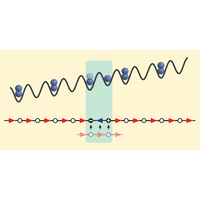
Probing False Vacuum Decay on a Cold-Atom Gauge-Theory Quantum Simulator
Article | Particles and Fields | 2026-10-01 06:00 EDT
Zi-Hang Zhu, Ying Liu, Gianluca Lagnese, Federica Maria Surace, Wei-Yong Zhang, Ming-Gen He, Jad C. Halimeh, Marcello Dalmonte, Siddhardh C. Morampudi, Frank Wilczek, Zhen-Sheng Yuan, and Jian-Wei Pan
Researchers observe atoms trapped in an optical lattice mimicking particles created in a strong electric field.
Phys. Rev. Lett. 137, 141601 (2026)
Particles and Fields
Measurement of the Ratio of Branching Fractions $\mathcal{B}({B}{c}^{+}→J/ψ{τ}^{+}{ν}{τ})/\mathcal{B}({B}{c}^{+}→J/ψ{μ}^{+}{ν}{μ})$
Article | Particles and Fields | 2026-10-01 06:00 EDT
R. Aaij et al. (LHCb Collaboration)
A measurement of the ratio of semileptonic branching fractions , defined as , is reported using a sample of proton-proton collision data corresponding to an integrated luminosity of recorded by the LHCb experiment in 2016-2018 at a center-of-mass e…
Phys. Rev. Lett. 137, 141801 (2026)
Particles and Fields
Optical Depth Dictates Universal Bounds on Many-Body Decay in Atomic Ensembles
Article | Atomic, Molecular, and Optical Physics | 2026-10-01 06:00 EDT
Cosimo C. Rusconi, Eric Sierra, Wai-Keong Mok, Avishi Poddar, Simon B. Jäger, and Ana Asenjo-Garcia
Cooperative emission is well understood for idealized symmetric systems, but its fundamental limits in spatially extended, free-space ensembles remain an open question. Here, we derive a universal law for the scaling of the maximum photon emission rate with system size that unifies both ordered arra…
Phys. Rev. Lett. 137, 143603 (2026)
Atomic, Molecular, and Optical Physics
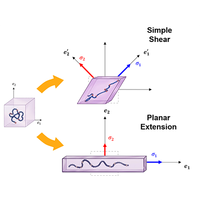
Kinematic and Rheological Equivalence of Steady Shearing and Planar Extensional Flows
Article | Physics of Fluids, Earth & Planetary Science, and Climate | 2026-10-01 06:00 EDT
Nicholas King and Gareth H. McKinley
Recovery of planar extensional viscosity from data obtained via steady shear measurements alone illustrates the equivalence between the two flows and offers a route to overcome experimental challenges associated with planar extensional flow measurements.
Phys. Rev. Lett. 137, 144003 (2026)
Physics of Fluids, Earth & Planetary Science, and Climate
Unconventional Superconductivity from Lattice Quantum Disorder
Article | Condensed Matter and Materials | 2026-10-01 06:00 EDT
Yu-Cheng Zhu, Jia-Xi Zeng, and Xin-Zheng Li
Unconventional superconductivity presents a defining challenge in physics. Prevailing theoretical frameworks have predominantly emphasized electrons, largely neglecting the rich physics inherent in the lattice. Conventional phonon theory omits quantum many-body effects of the nuclei, leading to misl…
Phys. Rev. Lett. 137, 146001 (2026)
Condensed Matter and Materials
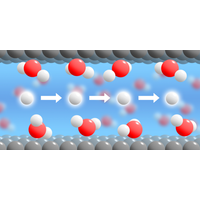
Giant Dielectric Anisotropy and Enhanced In-Plane Conductivity in Nanoconfined Water
Article | Condensed Matter and Materials | 2026-10-01 06:00 EDT
Mehdi Neek-Amal and Francois M. Peeters
Researchers have proposed that long-range molecular dipole correlations alter water's electrical properties when it's confined in a gap a few nanometers wide.
Phys. Rev. Lett. 137, 146201 (2026)
Condensed Matter and Materials
Gapped Topological Spin-Orbital Liquid on the Honeycomb Lattice
Article | Condensed Matter and Materials | 2026-10-01 06:00 EDT
Masahiko G. Yamada
We perform large-scale density matrix renormalization group simulations of the SU(4) Heisenberg model on the honeycomb lattice to address the long-standing question of its ground state in an unbiased and quantitatively controlled manner. We find reliable numerical evidence that the ground state is a…
Phys. Rev. Lett. 137, 146606 (2026)
Condensed Matter and Materials
Spin-Axis Dynamic Locking
Article | Condensed Matter and Materials | 2026-10-01 06:00 EDT
Zhiheng Lv, Jiangtao Cai, Dengpan Ma, Yan Xing, and Zhifeng Liu
The all-electrical realization of highly spin-polarized currents and their efficient conversion into pure spin currents remains a fundamental challenge in spintronics. Here, we report a spin-axis dynamic locking (SADL) effect in altermagnets that pins the high and dynamically robust spin polarizatio…
Phys. Rev. Lett. 137, 146701 (2026)
Condensed Matter and Materials
Ultrafast Modulation of Electron-Phonon Couplings and Phonon-Mediated Superconductivity
Article | Condensed Matter and Materials | 2026-10-01 06:00 EDT
Yang Yang, Da-Qiang Chen, Xuan-De Bu, Chao Lian, and Sheng Meng
Ultrafast modulation of electron-phonon couplings via laser excitation has been experimentally demonstrated, yet a clear microscopic understanding remains elusive. Here, we establish the first ab initio framework combining time-dependent density-functional theory, density-functional perturbation the…
Phys. Rev. Lett. 137, 146902 (2026)
Condensed Matter and Materials
Physical Review X
Spin Nematic Liquid Crystal and Scalar Spin Chirality in Tetragonal Lattice ${\mathrm{YbMnBi}}_{2}$
Article | | 2026-10-01 06:00 EDT
Yaofeng Xie, Sijie Xu, Yu Pan, Taekoo Oh, Tingjun Zhang, Masaaki Matsuda, Zhaoyu Liu, Zehao Wang, Yiheng Wang, Siyu Pan, Avishek Maity, Sylwia Pawledzio, Xiaoping Wang, Songxue Chi, Feng Ye, Yiqing Hao, Huibo Cao, Barry L. Winn, Melissa K. Graves-Brook, Shuai Wu, Fan Li, Xiaoyuan Zhou, Claudia Felser, Naoto Nagaosa, and Pengcheng Dai
Neutron scattering experiments on reveal that a dynamic spin nematic state coupled to magnetic fields generates scalar spin chirality, driving anomalous Hall and Nernst effects in the paramagnetic phase.

Phys. Rev. X 16, 041001 (2026)
arXiv
Transferable Graph Neural Network Surrogates for Molecular Dynamics Across Crystal Symmetries
New Submission | Materials Science (cond-mat.mtrl-sci) | 2026-10-02 20:00 EDT
Judah Immanuel, Avik Mahata, Aniruddha Maiti
We present a transferable graph neural network (GNN) surrogate framework for molecular dynamics (MD) that directly predicts atomic displacements and propagates atomistic configurations without explicit force evaluation or numerical time integration. The central objective of this work is to establish whether a common GNN formulation can represent atomic dynamics across materials with fundamentally different crystal symmetries and coordination environments. The same network architecture, feature representation, graph construction, and training protocol are applied without symmetry-specific modification to face-centered cubic (FCC) aluminum, body-centered cubic (BCC) iron, and hexagonal close-packed (HCP) magnesium. Across these distinct elemental and crystallographic systems, the framework achieves position-prediction errors on the order of 10^-4 Angstrom^2 and supports stable autoregressive propagation to nanosecond time scales. The predicted trajectories preserve thermodynamic stability, characteristic coordination-shell structure in the radial distribution functions, and temperature-dependent mean-squared-displacement behavior. In particular, the framework captures the closely spaced coordination shells of BCC iron and the anisotropic coordination environment of HCP magnesium without introducing lattice-specific representations. These results demonstrate that direct GNN-based atomic propagation can be formulated as a transferable framework across different elements, lattice symmetries, and coordination geometries, providing a pathway toward generalizable surrogate models for accelerated molecular dynamics.
Materials Science (cond-mat.mtrl-sci)
Emergence of electronic modes and triplet pairing from spin-1 antiferromagnetic insulators in the Kanamori-Hubbard model
New Submission | Strongly Correlated Electrons (cond-mat.str-el) | 2026-10-02 20:00 EDT
The electronic band structures of conventional band insulators generally remain unchanged under doping via chemical-potential shifts or increasing temperature. However, in Mott and Kondo insulators described by models such as the Hubbard and Kondo lattice models, distinct electronic modes with momentum-shifted magnetic dispersion relations have been shown to emerge from band edges into the gap. Here, by investigating the two-orbital Kanamori-Hubbard model, this study elucidates how and why the band structures of spin-1 antiferromagnetic insulators change with doping and temperature, revealing emergent spectral features characteristic of orbitally degenerate systems. The nature of the emergent electronic modes is clarified using weak-hopping effective theory, selection-rule analysis, and numerical calculations. In a typical parameter regime, the doping-induced modes in each orbital reflect distinct types of spin modes, while the temperature-induced modes primarily reflect the low-energy spin mode in both orbitals; in both cases, the emergent modes exhibit momentum-shifted spin-mode dispersion relations. The momentum regimes of these emergent modes can differ between orbitals if signs of the hopping parameters differ. For small inter-orbital repulsion, onsite spin-triplet pairs can form after doping, leading to a pair-breaking gap, while the temperature-induced electronic modes continue to reflect the low-energy spin mode without a pair-breaking gap. Moreover, the emergence and characteristics of electronic modes in nonequilibrium states by spin or charge perturbations are elucidated. These findings provide a comprehensive understanding of how the interplay among the spin, charge, and orbital degrees of freedom in large-spin antiferromagnetic insulators leads to emergent electronic modes, opening avenues for exploring unconventional quantum phenomena in strongly correlated systems.
Strongly Correlated Electrons (cond-mat.str-el), Statistical Mechanics (cond-mat.stat-mech), Superconductivity (cond-mat.supr-con)
26 pages, 11 figures, 1 table
Loading history and window geometry bound compact-state slip ranking during granular shear startup
New Submission | Soft Condensed Matter (cond-mat.soft) | 2026-10-02 20:00 EDT
Granular slip forecasting can conflate material state, loading progress, and the geometry of event-centered sampling. We separated these contributions in slowly sheared two-dimensional frictional disks using a compact neural score of stress, pressure, coordination, non-affine motion, and force-network observables. The model was developed on 36 trajectories and frozen efore testing on 18 new trajectories under two nested stress-drop definitions. Inspection of held-out results revealed post-event sampling asymmetry; recovery-aware analyses are therefore descriptive. With trajectories weighted equally, the compact score ranked near-slip windows above both prevalence and within-trajectory circular-phase controls under both definitions (representative average precision 0.310 versus prevalence 0.173; phase-null upper bound 0.257). Loading-history coordinates ranked more strongly, reaching 0.534 for causal elapsed strain. The recovery-aware rule retained 78.4% of activity-gated events and preferentially selected longer preceding intervals; ranking by time since the previous catalogued event remained compatible with a count-conditioned geometry null. Compact observables thus contain temporally aligned slip information, but stronger loading-history baselines and window-geometry sensitivity bound that evidence. These startup data do not isolate a state-specific short-horizon precursor beyond loading history or support a renewal interpretation of elapsed-strain ranking.
Soft Condensed Matter (cond-mat.soft), Statistical Mechanics (cond-mat.stat-mech), Machine Learning (cs.LG), Computational Physics (physics.comp-ph)
28 pages, 6 figures
Quasi-static loading of granular media as a linear complementarity problem
New Submission | Other Condensed Matter (cond-mat.other) | 2026-10-02 20:00 EDT
The discrete quasi-static response of rate-independent dissipative granular media is addressed. Granular systems are conventionally simulated with methods that are intrinsically dynamic, such as the discrete element (DEM) and discontinuous deformation (DDA) methods, with the particles’ accelerations and damping being essential aspects. In contrast, quasi-static methods derive from the static stiffness relationships among the particles. With frictional contacts, an assembly’s stiffness is incrementally non-linear and dependent on the direction of loading. The paper resolves this difficulty by casting the response as a linear complementarity problem (LCP). The approach benefits from a foundation of past research on existence, uniqueness, and stability of LCP solutions, which are expounded in a concise set of rules. The LCP of a granular system is derived, accounting for geometric effects that arise from curvatures of particles at their contacts, frictional contact stiffnesses, and displacement constraints on the particles. The paper describes eight aberrant conditions (pathologies) of granular systems, in the forms of various bifurcations and instabilities. When placed in the context of an LCP, the eight conditions are unambiguously defined. These pathologies include three types of bifurcation: discrete, continuous-bounded (not yet reported in the literature), and continuous-unbounded. Not yet reported in the literature is an abrupt discontinuous change in movements upon a continuous change of the data. Methods and results are illustrated with examples of granular systems. Results show that instability and bifurcation are pervasive conditions near failure; that failure and softening are sensitive to the geometric contours of the particles at contacts; and that quasi-static systems can encounter states that require a dynamic transition to resolve a lack of paths consistent with loading.
Other Condensed Matter (cond-mat.other)
Computer Methods in Applied Mechanics and Engineering, Vol. 444, 118117
Migration Flows: Population Scaling and Heavy Tails
New Submission | Statistical Mechanics (cond-mat.stat-mech) | 2026-10-02 20:00 EDT
Cook Hyun Kim, Sangjoon Park, Seoyoung Jin, Jaiyong Lee
We show how migration between counties in different cities can explain both the population scaling of mean intercity flows and heavy-tailed intercity net-flow distributions. Density-dependent departure and arrival activities determine how mean flows scale with the populations of the origin and destination cities. We assume Gaussian county-pair net flows with standard deviations proportional to their mean directional flows. At a fixed correlation between county-pair net flows, their sum is Gaussian. Averaging this conditional Gaussian density over the correlation distribution can produce an intermediate power law with a Gaussian cutoff. We also present a stochastic model that generates the variance distribution used in this mixture.
Statistical Mechanics (cond-mat.stat-mech)
9 pages; 1 figures;
Tunable flat bands and their signatures in electronic specific heat of an Aharonov-Bohm triangular quantum network
New Submission | Mesoscale and Nanoscale Physics (cond-mat.mes-hall) | 2026-10-02 20:00 EDT
Sanchita Nandi, Santanu K. Maiti
Quantum networks composed of loop-like structures provide a rich platform for exploring electronic transport phenomena and have been widely studied in various contexts. However, their thermal response remains relatively unexplored, motivating us to investigate it in the present work. We consider a tight-binding (TB) quantum network composed of a finite number of triangular plaquettes, where neighboring plaquettes are connected through single bonds and each triangular loop is threaded by an Aharonov-Bohm (AB) flux $ \phi$ . The interplay of nonuniform site coordination, hopping asymmetry, and quantum interference gives rise to both dispersive and completely flat energy levels. We derive an analytical condition involving the TB parameters under which one of the energy branches becomes independent of the electronic momentum. We further show that the AB flux $ \phi$ provides a direct means of tuning the position of the flat band. The characteristic features of the energy spectrum associated with this quantum geometry are reflected in the thermal response, which we investigate through the electronic specific heat (ESH). In particular, we demonstrate that the position of the flat band manifests itself as a distinct feature in the ESH, establishing a direct connection between the flat-band formation and the thermal response of the system. Thus, the ESH provides an alternative route for identifying the presence of a flat band, consistent with the analytical condition and the corresponding energy dispersion. Moreover, the AB flux allows the ESH to be selectively regulated through the tuning of the flat-band position. The proposed approach provides a simple complementary means of identifying momentum-independent energy levels and may be extended to other simple and complex quantum networks supporting flat bands.
Mesoscale and Nanoscale Physics (cond-mat.mes-hall)
12 pages, 12 figures. Comments are welcome
Causality violations in cluster GW+DMFT: Exact Lehmann moments and the necessity of non-local vertex corrections
New Submission | Strongly Correlated Electrons (cond-mat.str-el) | 2026-10-02 20:00 EDT
The $ GW$ approximation is known to violate causality, yielding self-energies with unphysical poles in the upper half of the complex frequency plane. The combined $ GW$ +DMFT approach attempts to cure this by injecting the exact local self-energy. Using exact diagonalization on minimal Hubbard clusters, we rigorously benchmark the analytic structure of the $ GW$ and $ GW$ +DMFT self-energies. We demonstrate a ``dimer anomaly’’: on the two-site dimer, inversion symmetry forces the non-local self-energy to be purely real, masking the causality violation. Moving to the non-bipartite three-site Hubbard ring, where hopping frustration yields a finite imaginary part in the non-local self-energy, we prove that both $ GW$ and $ GW$ +DMFT violate the Matsubara causality condition. By analytically evaluating the exact Lehmann moments, we derive a closed-form expression for the high-frequency tail of the self-energy, $ C = U^2,\mathrm{Var}(d),I$ , and show that standard methods fail to capture the exact equal-time two-particle correlators required to enforce it. The equal-time correlators that govern this tail are precisely those encoded in the high-frequency asymptotics of the fully irreducible vertex $ \Lambda$ ; nevertheless, our intermediate-frequency analysis demonstrates that the local-only truncation of $ \Lambda$ in $ GW$ +DMFT leaves non-local RPA resonances uncorrected. The two diagnostics are logically independent: $ GW$ +DMFT satisfies the necessary high-frequency condition $ C\succeq0$ yet still violates the Matsubara sign condition at finite frequencies. Taking the interpolation-free real-axis evaluation of the exact self-energy as the primary causality certificate, with rational continuation as supporting evidence, we establish a rigorous benchmark demonstrating that local self-energy corrections are insufficient to guarantee a causal analytic structure on frustrated clusters.
Strongly Correlated Electrons (cond-mat.str-el), Mesoscale and Nanoscale Physics (cond-mat.mes-hall), Materials Science (cond-mat.mtrl-sci)
6 papges, 2 figures, 1 table
Interior contacts in a narrow quantum Hall bar: a two-dimensional self-consistent screening calculation of the current distribution
New Submission | Mesoscale and Nanoscale Physics (cond-mat.mes-hall) | 2026-10-02 20:00 EDT
We present fully two-dimensional self-consistent calculations of the electron density, local filling factor and current distribution in a six-terminal GaAs/AlGaAs Hall bar of width W = 3 micrometers with two additional square contacts, A and B, placed on the channel axis and connected to the outside by air bridges, following the interior-contact experiment of Kendirlik et al. [Nat. Commun. 8, 14082 (2017)]. Within the screening theory of the integer quantized Hall effect, the Thomas-Fermi-Poisson equations are solved on the full device plane, including the probe arms and the depletion regions around the interior contacts, and the current is obtained from a local Ohm’s law with a filling-factor dependent conductivity tensor, for source-drain and interior-contact excitation separately. Across the nu = 2 plateau the interior contacts pass through three regimes as the field is lowered: galvanically connected to the current path in a compressible bulk, floating in the Hall potential of a fully incompressible bulk, and isolated from both the bulk and the edge strips by closed incompressible rings encircling each contact. In the floating and isolated regimes the two-terminal resistance between the interior contacts rises by orders of magnitude. The isolation interval lies within the Hall plateau and ends before its low-field edge; its high-field end is sharply set by the disappearance of the incompressible bulk, while its low-field end shrinks with temperature and Landau-level broadening. The resistance between an interior contact and a perimeter probe approaches one half of the quantized Hall resistance across the plateau. The topology of the incompressible regions and the boundaries of the isolation interval are insensitive to the regularization of the local conductivity, to the grid and to moderate disorder, whereas the magnitude of the isolation resistance is not.
Mesoscale and Nanoscale Physics (cond-mat.mes-hall)
11 Figures, floow up of NatComm. Paper
From Quantized Hall Plateaus to Topological Surfaces: Quantum Capacitance as a Unifying Probe
New Submission | Mesoscale and Nanoscale Physics (cond-mat.mes-hall) | 2026-10-02 20:00 EDT
The quantum Hall effect, topological insulators and quantum capacitance are usually treated as distinct topics, yet they share a common thread. Bulk topology determines a protected boundary state, and quantum capacitance is one of the few electrostatic methods able to detect the density of states. This paper examines that connection. The integer quantum Hall effect showed that quantised boundary transport has a topological origin given by the Chern number, later extended to zero field in Z2 topological insulators with helical edge and Dirac surface states. Quantum capacitance, developed for two-dimensional electron gases, has since become a key technique for mapping the Landau level density of states underlying the quantum Hall effect and the linear Dirac density of states of topological surface states. This picture is complicated by self-consistent screening theory, which shows that the quantum Hall bulk splits into compressible and incompressible regions that shift with field. Local quantum capacitance measurements confirm that the bulk is not uniformly insulating across a quantised plateau, even though the plateau stays quantised. The paper argues that quantum capacitance is not a secondary feature of these phenomena but one of the clearest windows into the boundary density of states that topology imposes, and that it reveals the local, field-dependent nature of the insulating bulk assumption underlying the analogy between the quantum Hall effect and topological insulators.
Mesoscale and Nanoscale Physics (cond-mat.mes-hall)
Thermodynamic origins of multimode spinodal decomposition in multicomponent alloys
New Submission | Materials Science (cond-mat.mtrl-sci) | 2026-10-02 20:00 EDT
In a binary alloy, spinodal decomposition has one composition direction in which the free energy can fall. A multicomponent alloy has more directions available, yet its elements usually separate together in a single, pseudobinary mode. Why does this happen, and what would allow two independent directions to become unstable? We examine these questions using binary interaction parameters and the composition-constrained curvature of the regular-solution free energy. Across equimolar BCC quaternaries, one unstable mode is the most common outcome at 500 K, while 15.2% have at least two. The tendency of unlike elements to mix helps explain the preference for one mode. We then show how particular arrangements of interactions, including a balanced repulsive triangle and an attractive-repulsive pair, guarantee two downhill directions. When those directions have similar strengths, simplified phase-field models produce a broad texture of locally different solid solutions rather than two chemical blocks. A phase-specific screen identifies five provisional alloys with nearly balanced modes, with Cu-In-Ir-Ti providing an example of this possibility. Thus, we establish a theoretical framework for engineering microstructures via spinodal decomposition derived from basic binary interaction tendencies.
Materials Science (cond-mat.mtrl-sci), Disordered Systems and Neural Networks (cond-mat.dis-nn)
22 pages, 5 figures, 4 supplementary sections
Active-Matter Battery
New Submission | Statistical Mechanics (cond-mat.stat-mech) | 2026-10-02 20:00 EDT
Yun-Qian Lin, Rui-Han Liu, Yu-Han Ma
Harnessing active matter to power functional devices has attracted growing interest. We propose a minimal battery model for storing energy extracted from active matter and derive its charging and discharging characteristics analytically. When the energetic cost of sustaining activity is included, the charging power-efficiency trade-off becomes loop-like and the efficiency attains a finite-time maximum, in sharp contrast to passive energy devices.
Statistical Mechanics (cond-mat.stat-mech), Soft Condensed Matter (cond-mat.soft), Biological Physics (physics.bio-ph)
4+2 pages, 3 figures, comments are welcome
Anyon Proliferation and Anyon Superconductivity in Higgsing Transitions via Conformal Embeddings
New Submission | Strongly Correlated Electrons (cond-mat.str-el) | 2026-10-02 20:00 EDT
Diego García-Sepúlveda, Da-Chuan Lu
We discuss (2+1)d Chern-Simons Higgsing transitions based on conformal embeddings and their relation to the proliferation of anyons. These transitions preserve or enlarge the intrinsic topological order despite reducing the gauge group. When the topological order is enlarged, the two phases differ by anyon condensation, and the transition takes an Abelian topological order to a non-Abelian one. In the $ SO(N){2} \hookrightarrow SU(N){1}$ family with $ N \geq 3$ , the two semiclassical regimes have equivalent intrinsic topological orders but distinct realizations of a global $ U(1)$ symmetry. For odd $ N$ , these are non-Abelian realizations of transitions from fermionic $ 1/N$ Laughlin states to charge-$ 2e$ anyon superconductivity coexisting with the same chiral $ \mathbb{Z}{N}$ topological order. The scalar representations are always non-integrable with respect to the UV Chern-Simons level and therefore do not directly label anyons of the un-Higgsed phase, despite defining Wilson lines in the UV. Using heuristic adjoint screening, we propose candidate anyons in the un-Higgsed phase, while branching under the Higgs subgroup reveals channels corresponding to condensable anyons of the Higgs phase. We further construct a $ \mathrm{Spin}(16){1} \to \mathrm{Spin}(9)_{2}$ transition admitting a condensable algebra that contains a non-Abelian anyon but not all of the allowed gaugable channels in its self-fusion.
Strongly Correlated Electrons (cond-mat.str-el), High Energy Physics - Theory (hep-th), Quantum Algebra (math.QA)
15 pages, including 2 pages of End Matter and 6 pages of Supplemental Material
Strongly coupled ultracompressed self-cavity plasmon polaritons at millikelvin temperatures
New Submission | Mesoscale and Nanoscale Physics (cond-mat.mes-hall) | 2026-10-02 20:00 EDT
Luojia Zhang, Andrew T. Pierce, Xuepeng Wang, Simon Reinhardt, Kenji Watanabe, Takashi Taniguchi, Kin Fai Mak, Jie Shan, Debanjan Chowdhury, Valla Fatemi
Van der Waals heterostructures exhibit self-cavity resonances from sub-terahertz to terahertz frequencies and thus offer an attractive route toward realizing cavity-modified phases of matter. Spectroscopy of such systems calls for high frequency resolution at millikelvin temperatures, which is extremely challenging with existing methods. Here we demonstrate a new platform for realizing and probing such systems. Superconducting layers define self-cavity structures with electromagnetic volume compression of order $ 10^7$ . With an integrated graphene layer, we observe underdamped cavity plasmon polaritons at frequencies as low as 0.04 THz and which exhibit avoided crossings with cavity modes. To measure such spectra, we deploy a millikelvin-compatible sub-THz spectrometer based on a superconducting circuit. This work paves the way for simultaneous spectroscopy and transport measurements of cavity-matter hybrid systems at millikelvin temperatures.
Mesoscale and Nanoscale Physics (cond-mat.mes-hall)
Algebraic Relaxation of Strong-to-Weak Symmetry-Breaking Order via Charge-Sector Broadening
New Submission | Mesoscale and Nanoscale Physics (cond-mat.mes-hall) | 2026-10-02 20:00 EDT
Strong-to-weak spontaneous symmetry breaking (SW-SSB) is a distinctive phenomenon of mixed quantum states, characterized by nonlinear long-range order associated with strong symmetry. In realistic open quantum systems, however, strong symmetry is macroscopically fragile and can be explicitly reduced to weak symmetry through local charge exchange with the environment. In this paper, we investigate how the SW-SSB order decays under such strong-symmetry-breaking Liouvillian dynamics. For discrete $ \mathbb{Z}_2$ symmetry, a local symmetry-breaking perturbation drives an exponential decay of the Rényi-1 long-range correlator, revealing the fragility of discrete SW-SSB order. By contrast, for continuous $ U(1)$ symmetry, local charge exchange broadens the distribution over symmetry-charge sectors and leads to parametrically slower algebraic relaxation. We establish a rigorous algebraic lower bound on the connected Rényi-1 long-range correlation, demonstrating the robustness of this slow relaxation. In the thermodynamic limit, we further uncover a two-stage dynamical scaling: $ \tilde{R}_1\sim t^{-1}$ at early times and $ \tilde{R}_1\sim t^{-1/z}$ at long times, with $ z$ set by the underlying hydrodynamic dynamics. As a numerical verification, we consider fermionic chains with $ z=2$ and $ z=4$ , which are excellent agreement with the theoretical predictions.
Mesoscale and Nanoscale Physics (cond-mat.mes-hall), Strongly Correlated Electrons (cond-mat.str-el), Quantum Physics (quant-ph)
22 pages, 5 figures
Stacking-Controlled Altermagnetism and Topological Magnons in Bilayer CrI$_3$
New Submission | Materials Science (cond-mat.mtrl-sci) | 2026-10-02 20:00 EDT
Lu Xiao, Meng-Han Zhang, Dao-Xin Yao
Stacked van der Waals magnets provide a tunable route to altermagnetism, a compensated magnetic order characterized by momentum-dependent spin splitting, and to the topological magnetic excitations that such order can host. In bilayer CrI$ _3$ , first-principles calculations and linear spin-wave theory reveal stacking-controlled altermagnetic order and associated magnon band topology. Combining band-representation analysis with calculations of the dynamic structure factor relevant to inelastic neutron scattering, we further characterize the chirally split topological magnons and quantify their energy corrections and lifetimes using a many-body Green’s-function approach. The interlayer magnetic ground state is highly sensitive to the stacking geometry, thereby controlling the magnon band topology and transport responses. We further show that magnon–magnon interactions renormalize the magnon dispersion and dynamic structure factor, with a particular focus on magnon decay. Using van der Waals bilayer CrI$ _3$ as a representative platform, our results establish stacking engineering as a structural route for tuning altermagnetism and associated topological magnon excitations, opening avenues toward stacking-controlled spintronic and magnonic devices.
Materials Science (cond-mat.mtrl-sci)
17 pages, 4 figures
Electronic structure and two-orbital model of the quadlayer La$_5$Ni$4$O${13}$
New Submission | Superconductivity (cond-mat.supr-con) | 2026-10-02 20:00 EDT
Jian-Xiang Sun, Haokan Xiao, Cui-Qun Chen, Dao-Xin Yao
The discovery of pressure-induced superconductivity in Ruddlesden–Popper (RP) nickelates has stimulated extensive interest in high-T$ _c$ superconductors. Here, we systematically study the electronic properties of the quadlayer RP nickelate La$ 5$ Ni$ 4$ O$ {13}$ under ambient pressure, 5% isotropic compressive strain, and 4% $ c$ -axis uniaxial strain using density functional theory (DFT) and random phase approximation (RPA) calculations. DFT calculations show that isotropic strain broadens the Ni-$ e_g$ bands and induces charge transfer from O-$ p$ to Ni-$ d$ orbitals, whereas $ c$ -axis uniaxial strain selectively shifts the $ d{z^2}$ -derived bonding1 band upward while leaving the $ d{x^2-y^2}$ dispersion nearly unchanged. From Wannier downfolding, we construct a quadlayer two-orbital model that reproduces the low-energy Ni-$ e_g$ bands. Our model reveals that under ambient pressure and 5% isotropic strain, the Fermi surface consists of two electron pockets ($ \alpha$ and $ \delta$ ) and three hole pockets ($ \beta$ , $ \beta^{\prime}$ , and $ \beta^{\prime \prime}$ ), while under uniaxial strain, a $ \gamma$ hole pocket with $ d{z^2}$ orbital character emerges. RPA calculations reveal that the leading spin response shifts from $ \mathbf{q}\approx(2\pi/3,2\pi/3)$ at ambient pressure to $ \mathbf{q}\approx(\pi,\pi)$ under both strain conditions and is enhanced under $ c$ -axis compression. These results suggest that $ c$ -axis compression may provide a favorable route to superconductivity in the quadlayer nickelate analogous to that in bilayer and trilayer nickelates.
Superconductivity (cond-mat.supr-con), Strongly Correlated Electrons (cond-mat.str-el)
Orbital angular momentum in crystalline solids: non-equilibrium theory
New Submission | Materials Science (cond-mat.mtrl-sci) | 2026-10-02 20:00 EDT
Sangeeta Sharma, Peter Elliott, Samuel Shallcross
We develop a general operator theory of orbital angular momentum (OAM) in periodic solids that applies equally to equilibrium and coherently driven states. Employing the crystal momentum representation of Adams and Blount, we construct a periodic-solid OAM operator exactly corresponding to the symmetrized $ \hat{\mathbf r}\times\hat{\mathbf v}$ observable, and show that it separates into local circulation (LC) and itinerant circulation (IC) sectors that are Hermitian and $ U(1)$ , and more generally $ U(N)$ , gauge covariant. In equilibrium, the LC and IC sectors reduce to the established modern theory of orbital magnetism; out of equilibrium, the same operator structure exposes new contributions generated by laser-written momentum-space textures and interband coherence. Applied to gapped graphene, we uncover a rich phenomenology of ultrafast non-equilibrium orbital angular momentum, including a quasi-stationary light-induced OAM. This latter finding, underpinned by a close connection between band-manifold phase texture and nonequilibrium OAM, points towards new possibilities for light control over OAM in solids as well as a potentially rich role for topological band structures in designed OAM materials.
Materials Science (cond-mat.mtrl-sci), Other Condensed Matter (cond-mat.other)
Temperature dependence of surface tension in aqueous sodium dodecyl sulfate solutions
New Submission | Soft Condensed Matter (cond-mat.soft) | 2026-10-02 20:00 EDT
We report measurements of the surface tension of aqueous sodium dodecyl sulfate solutions at sixteen concentrations from 0.17 to 43$ ,$ mM, spanning 0.02 to 5 times the room-temperature critical micelle concentration (cmc), and at temperatures from 26 to 83$ ,$ ^\circ{\rm C}$ , using the Wilhelmy plate method. At the lowest concentration the surface tension decreases with temperature, as it does for pure water. Above about 0.4$ ,$ mM, however, it increases: the temperature coefficient changes sign at a concentration of 0.3 to 0.8$ ,$ mM, roughly a tenth of the cmc, and reaches $ +0.53,\rm mN,m^{-1},K^{-1}$ near 3$ ,$ mM, three times the magnitude of that of pure water and of the opposite sign. Above the cmc the surface tension is nearly independent of temperature, saturating at $ 35.2\pm0.3,\rm mN,m^{-1}$ . The behavior cannot be attributed to the temperature dependence of the cmc, which is an order of magnitude too weak. It is instead consistent with a surfactant layer that thins as the temperature rises. The results imply that the sign and magnitude of thermocapillary stresses in SDS solutions can be selected through the concentration.
Soft Condensed Matter (cond-mat.soft), Fluid Dynamics (physics.flu-dyn)
15 pages, 7 figures
Near-infrared magnetic linear and non-reciprocal directional dichroism in the chiral antiferromagnet SmFe3(BO3)4
New Submission | Strongly Correlated Electrons (cond-mat.str-el) | 2026-10-02 20:00 EDT
B. Beke, B. Szász, I. A. Gudim, D. Szaller, S. Bordács
We investigated the influence of antiferromagnetic (AFM) order on the near-infrared optical re- sponse of SmFe3(BO3)4 by polarization-resolved, magneto-optical spectroscopy. Below the Néel temperature, we observed pronounced magnetic linear dichroism at the 4f -4f transitions of Sm3+. By rotating the order parameter of the easy-plane AFM ground state using magnetic fields, we demonstrated the magnetic field control of linear dichroism, and deduced polarization selection rules. In addition, we detected non-reciprocal directional dichroism for several 4f -4f transitions. The non-reciprocal absorption appears in the symmetry-allowed toroidal geometry when the in- plane magnetic field is normal to one of the two-fold rotation axes. These results indicate a strong interference between electric- and magnetic-dipole excitations for transitions showing non-reciprocal absorption. The observed optical anisotropies provide a promising path to detect the in-plane orien- tation of the AFM order, enabling imaging and time-resolved studies of the AFM order parameter in rare-earth ferroborates.
Strongly Correlated Electrons (cond-mat.str-el)
Generative Modeling of Stochastic Dynamics for Long-Time Evolution
New Submission | Statistical Mechanics (cond-mat.stat-mech) | 2026-10-02 20:00 EDT
Yang-yang Tan, Jinyang Li, Lingxiao Wang
Exact stochastic equations for non-equilibrium dynamics are rarely accessible. We show that the long-time evolution of stochastic dynamics can be predicted from configuration pairs at a fixed short time lag, without knowledge of the equation of motion. Generative diffusion models learn the finite-time transition kernel from these pairs, and iterating it propagates the dynamics far beyond the training lag. For two-dimensional Model B, the diffusive dynamics of a conserved order parameter, the learned kernels reproduce dynamic critical scaling and self-similar $ t^{1/3}$ coarsening. Agreement with direct simulations persists on lattices twice the largest training size and for initial ensembles absent from training. For driven colloids in a periodic optical potential, ten minutes of measured trajectories suffice to predict the particle current and mean passage time over the next twenty minutes within experimental uncertainty. Short-time observations thus contain the information needed to predict emergent non-equilibrium dynamics at much longer times.
Statistical Mechanics (cond-mat.stat-mech), Machine Learning (cs.LG), High Energy Physics - Lattice (hep-lat)
21 pages, 15 figures, comments are welcome!
Reference-free certification of machine-learning interatomic potentials
New Submission | Materials Science (cond-mat.mtrl-sci) | 2026-10-02 20:00 EDT
Jonas Hänseroth, Christian Dreßler
Universal machine-learning interatomic potentials now reach held-out energy and force errors so small that they no longer predict how a model behaves in simulation. Here we show that a potential can be graded without any reference calculation, against properties the exact Born-Oppenheimer surface satisfies by mathematical or physical necessity. We organise these properties into four families, symmetry and invariance, self-consistency and integrability, statistical-mechanical equilibrium and regularity, and turn them into fourteen inexpensive probes, each certifying against a target that is exact and independent of chemistry and reference method. Every probe therefore returns an absolute, architecture-comparable score from the energies, forces and stresses a potential already exposes, and reveals failures a fixed test set cannot. Applied to 64 pretrained potentials, the suite resolves two orders of magnitude of certified quality at comparable reported accuracy, and flags a fine-tuned potential whose reference errors improve while its surface degrades until molecular dynamics fails. An interactive leaderboard of all 64 models is available at this https URL.
Materials Science (cond-mat.mtrl-sci), Chemical Physics (physics.chem-ph)
The Ericson Transition in Time-Reversal Invariant Systems: Symplectically Invariant Hamiltonians
New Submission | Statistical Mechanics (cond-mat.stat-mech) | 2026-10-02 20:00 EDT
We investigate the distributions of off-diagonal scattering matrix elements and cross-sections in the Ericson regime for time-reversal invariant systems with odd spin. Within the universal Heidelberg approach we prove that Gaussian and exponential behavior is found as the leading-order term of an asymptotic expansion of the aforementioned distributions. Furthermore, the subleading-order term is derived and compared with numerical simulations.
Statistical Mechanics (cond-mat.stat-mech)
17 pages, 2 figures
Mechanism of Incommensurate Magnetic Order in $\mathrm{BaCo_2(AsO_4)_2}$: Interplay of Frustrated Further-Neighbor Exchanges and Bond-Directional Anisotropy
New Submission | Strongly Correlated Electrons (cond-mat.str-el) | 2026-10-02 20:00 EDT
Mohammad-Hossein Zare, Mehdi Biderang, Hamid Mosadeq
The microscopic mechanism governing the zero-field incommensurate magnetic order in the honeycomb cobaltate $ \mathrm{BaCo}_2(\mathrm{AsO}_4)_2$ remains a significant unresolved problem, particularly concerning the relative contributions of bond-directional Kitaev-type interactions and exchange frustration. This study investigates an extended $ J_1\text{–}K\text{–}\Gamma\text{–}\Gamma’\text{–}J_2\text{–}J_3$ model, which incorporates XXZ-type exchange anisotropies on the honeycomb lattice. Nearest-neighbor parameters are constrained by ab initio electronic structure calculations. By integrating the analytical Luttinger-Tisza approach with exact diagonalization calculations under twisted boundary conditions, we delineate the classical and quantum phase diagrams across the $ (J_2, J_3)$ parameter space. We demonstrate that the stabilization of the experimentally observed incommensurate spiral phase, propagating along the $ \Gamma\to M$ direction, does not necessitate an anomalously dominant Kitaev coupling. Instead, this phase arises naturally from the synergistic interplay between exchange frustration, driven by further-neighbor couplings ($ J_2, J_3$ ), and intermediate off-diagonal bond anisotropies ($ \Gamma, \Gamma’$ ). In the quantum regime, we elucidate the competition between this incommensurate manifold and an out-of-plane ferromagnetic ($ \mathrm{FM}_z$ ) phase, which is selectively stabilized via a quantum order-by-disorder mechanism. Our findings reconcile conflicting interpretations of the magnetic interactions in $ \mathrm{BaCo}_2(\mathrm{AsO}_4)_2$ and establish the microscopic origin and stability range of its incommensurate ground state.
Strongly Correlated Electrons (cond-mat.str-el)
11 pages, 5 figures
CTMRG as a tensor-network message-passing algorithm
New Submission | Statistical Mechanics (cond-mat.stat-mech) | 2026-10-02 20:00 EDT
We formulate the corner transfer matrix equations, and the corner transfer matrix renormalization group built on them, as a set of local equations on general planar graphs. These equations depend only on the local subgraphs of the planar graph and are glued together consistently to describe the whole graph. Solving them yields message tensors and corner matrices, which can be used to construct an MPS environment for any connected subgraph. We test the proposed equations on the ferromagnetic Ising model, on a variety of infinite lattices (including hyperbolic ones) and on finite graphs, and find systematic improvement over belief propagation.
Statistical Mechanics (cond-mat.stat-mech)
Comments welcome; 54 pages, 36 figures
Enhanced Long-Wavelength Fluctuations and Interaction-Stress Correlations in Active Crystals
New Submission | Soft Condensed Matter (cond-mat.soft) | 2026-10-02 20:00 EDT
Antik Bhattacharya, Smarajit Karmakar
Activity can enhance the long-wavelength density fluctuations of a solid beyond the equilibrium fluctuations predicted by the Mermin-Wagner-Hohenberg theorem, but the microscopic origin of this enhancement remains unclear. We study a two-dimensional active Brownian crystal whose longitudinal and transverse displacement covariances scale as $ C^u_\lambda(q)\sim q^{-3}$ as compared to the passive counterpart with $ q^{-2}$ law. This spectrum predicts an MSD-plateau divergence proportional to $ L$ in two dimensions, logarithmic in three dimensions, and finite in four dimensions, in close correspondence with recent results reported in Dey et al. [Nat. Commun. 16, 5498 (2025)]. Inverse of the Covariance gives $ H^{\mathrm{cov}}\lambda\sim |q|^3$ with the corresponding dispersion $ \omega{\mathrm{cov},\lambda}\sim q^{3/2}$ , whereas direct mechanical response gives $ K_{\mathrm{resp},\lambda}\sim q^2$ and acoustic modes with $ \omega_{0,\lambda}\sim q$ . The nonlinear dispersion is therefore covariance-defined rather than mechanical. The mobility and integrated active-force correlations remain non-singular, although a finite-persistence crossover cannot be ruled out completely with the existing data. Microscopically, the longitudinal and transverse Irving-Kirkwood interaction-stress spectra scale as $ q^{-1}$ . The transverse stress-stress correlation connects well with the anomalous displacement field, indicating that activity anomalously populates ordinary acoustic modes, while the conservative interaction network transmits the resulting fluctuations as long-ranged stress. A three-dimensional active FCC crystal exhibits the same paired low-$ q$ trends.
Soft Condensed Matter (cond-mat.soft), Disordered Systems and Neural Networks (cond-mat.dis-nn)
Fatigue failure in two-dimensional glasses under cyclic shear deformation
New Submission | Soft Condensed Matter (cond-mat.soft) | 2026-10-02 20:00 EDT
Himangsu Bhaumik, Srikanth Sastry
We investigate fatigue failure in two-dimensional (2D) model glasses under cyclic shear deformation using atomistic simulations. We find that the number of cycles to failure diverges as a power law as the strain amplitude approaches the fatigue limit, with an exponent close to $ -1$ , in contrast to the exponent of $ -2$ reported in three dimensions (3D). A failure exponent of $ -1$ has also recently been observed in a 2D elastoplastic model, suggesting an interesting dependence on spatial dimensionality that needs to be rationalized. Measures of accumulated plastic activity, including dissipated work and non-affine displacements, exhibit scaling with the failure time that is consistent with results in 3D, and indicate a robust connection between damage accumulation and failure. To probe the origins of the variability of failure times, we perform isoconfigurational {\it seeded} simulations in which a localized soft region is introduced. While such seeding constrains the spatial location of failure, the distribution of failure times remains broad. These findings extend recent results in 3D concerning fatigue failure times to 2D glasses, including their relation to accumulated plasticity and apparent stochasticity, while also revealing a key difference, namely the exponent describing the divergence of the failure times.
Soft Condensed Matter (cond-mat.soft), Disordered Systems and Neural Networks (cond-mat.dis-nn), Statistical Mechanics (cond-mat.stat-mech)
The half-filled optical Su-Schrieffer-Heeger-Hubbard model with uniaxial strain
New Submission | Strongly Correlated Electrons (cond-mat.str-el) | 2026-10-02 20:00 EDT
Jonah Huang, James Neuhaus, Benjamin Cohen-Stead, Steven Johnston, Richard Scalettar
Strain offers a direct route to control electronic phases by altering bond lengths, hopping amplitudes, and lattice symmetries. These aspects make electron-phonon (e-ph) coupled systems a natural setting to study strain-induced effects. The Su-Schrieffer-Heeger (SSH) Hamiltonian describes the coupling between itinerant electrons and lattice degrees of freedom that modulate hopping and is thus expected to be strongly affected by strain fields. At half-filling and on a bipartite lattice, the SSH interactions drive dominant bond-order-wave (BOW) correlations at low- temperature in which short bonds with high kinetic energy alternate with long bonds with low kinetic energy along four possible patterns. We model uniaxial strain through anisotropic hopping, which breaks the $ 90^\circ$ rotational symmetry and reduces the BOW phase degeneracy to two. We also include an on-site Hubbard U that promotes antiferromagnetic correlations that are also (weakly) driven by the SSH interaction itself. We map out the half-filled phase diagram in the plane of the e-ph and Hubbard couplings, and determine the critical temperature of BOW formation. Using analytic continuation, we also evaluate the spectral function and demonstrate directionally dependent gap formation in the BOW phase
Strongly Correlated Electrons (cond-mat.str-el), Statistical Mechanics (cond-mat.stat-mech)
11 pages, 10 figures
Krylov complexity of a tilted extended Bose-Hubbard chain with Rydberg-dressed interactions
New Submission | Quantum Gases (cond-mat.quant-gas) | 2026-10-02 20:00 EDT
Yifan Chen, Tianyi Yan, Lu Qin, Weibin Li
We investigate Krylov state complexity in a tilted extended Bose-Hubbard chain in which both the on-site interaction $ U$ and nearest-neighbor interaction $ V$ are present. The tilted extended Bose-Hubbard model can be realized with Rydberg-dressed interactions in optical lattices. Using exact diagonalization and Lanczos recursion from three physically motivated Fock states, we compute the time-dependent complexity, its long-time saturation value, and the fluctuations of the Lanczos coefficients for an open chain at unit filling. Crucially, we identify a pronounced quasi-chaotic diagonal regime near $ U\simeq V$ in which the Krylov complexity saturation exhibits a sharp ridge while the spectral level-spacing statistics remain partially chaotic. This dissociation arises from the competition between the on-site and nearest-neighbor interaction, which generates a dense manifold of near-resonant many-body configurations that is efficiently coupled by the state-dependent dynamics but retains residual spectral structure. Our results show that Krylov state complexity provides complementary, state-sensitive information about many-body chaos that is not captured by the spectral diagnostics alone, establishing Krylov complexity as a useful diagnostic for studying thermalization and information scrambling in experimentally accessible quantum simulators.
Quantum Gases (cond-mat.quant-gas), Optics (physics.optics)
10 pages, 5 figures
How Superradiance Survives Molecular Noise inside Virus Capsids
New Submission | Mesoscale and Nanoscale Physics (cond-mat.mes-hall) | 2026-10-02 20:00 EDT
Tianran Li, Irina Tsvetkova, Matthew Brauser, Amala Raj, Philip Shushkov, Bogdan Dragnea
Excited organic dyes chemically bound to an icosahedral virus shell can spontaneously synchronize and emit a superradiant burst of light. The mechanism that allows it to occur at room temperature, despite collisional dephasing and inhomogeneous broadening, is not understood. Few other known low-dimensional condensed matter systems exhibit room-temperature superradiance (SR). In the fluctuation-prone environment of molecular-based systems, electron–vibrational coupling has been proposed to play a central role. Here, we addressed experimentally the existence of underdamped virus capsid phonon-like modes and theoretically their involvement in the transition from uncorrelated to cooperative emission. We find that SR-active dye-labeled capsids exhibit underdamped low-frequency oscillations that modulate the dye excited-state response, and modeling shows how such capsid motion can promote the collective polarization required for superradiant emission.
Mesoscale and Nanoscale Physics (cond-mat.mes-hall), Quantum Physics (quant-ph)
Tunable Electron Quantum Optics in Graphene Slit Junctions
New Submission | Mesoscale and Nanoscale Physics (cond-mat.mes-hall) | 2026-10-02 20:00 EDT
Mohamed Amine Rhanbouri, Wojciech Julian Pasek, Abdelouahed El Fatimy
A graphene slit junction is investigated as a compact geometry for directional electron-beam formation, coherent interference, and symmetry-controlled spin filtering. Atomistic tight-binding calculations combined with the nonequilibrium Green’s function formalism show that trigonal warping in monolayer graphene produces strongly directional electron beams near E~2.7eV. Boundary reflections redirect these beams toward a common drain, where the transmission exhibits magnetic flux-dependent oscillations consistent with an h/e Aharonov-Bohm period, whose modulation is characterized by Fourier analysis and harmonic fitting. A local electrostatic gate provides additional control of the interference phase. In separate self-consistent mean-field Hubbard calculations, the pristine antiferromagnetic ground state is shown to have spin-degenerate transmission, whereas structural or electrostatic breaking of the left-right symmetry enables spin filtering. Complementary valley-resolved calculations using a four-band continuum model demonstrate analogous beam formation in bilayer graphene at E = 50meV. The results identify the slit junction as a common geometry for electron-optical and spin-dependent transport and motivate further investigation of low-energy bilayer implementations.
Mesoscale and Nanoscale Physics (cond-mat.mes-hall)
Long-Range Machine Learning Interatomic Potentials for Defect Energetics in SrTiO$_3$
New Submission | Materials Science (cond-mat.mtrl-sci) | 2026-10-02 20:00 EDT
Yee Chit Wong, Marcel F. Langer, Reinhard J. Maurer, Nicholas D. M. Hine
Machine learning interatomic potentials (MLIPs) have advanced rapidly in recent years, yet the majority of models remain semilocal in nature and neglect long-range electrostatic interactions. A growing number of long-range models have emerged to address this limitation, but systematic benchmarks comparing their performance on physically realistic systems remain scarce. In this work, we assess three long-range MLIPs – MACE-POLAR, MACE-LES, and LOREM, against a short-range baseline MACE model, on their ability to capture long-range Coulombic interactions, progressing from idealised synthetic point-charge systems to first-principles data on realistic crystal structures. This progression allows us to isolate model’s capability to learn electrostatic interactions from the many competing energy contributions, such as dielectric screening and exchange-correlation, that are present in DFT total energies. As a physically motivated benchmark system, we focus on strontium titanate SrTiO$ _3$ with Sr–O Schottky vacancy pairs, a material in which long-range charge interactions play a central role and which serves as a natural stepping stone towards the study of charged polarons and other electronic and optical properties. Building on this benchmark, we further examine oxygen vacancy migration in the presence of the Sr–O Schottky pair, using climbing-image nudged elastic band calculations and molecular dynamics to obtain activation barriers as a function of the vacancy pair separation, providing further extrapolation test of each model’s ability to capture the electrostatic effects that govern defect transport.
Materials Science (cond-mat.mtrl-sci)
20 pages, 13 figures
Local geometry of the Fermi surface and its effect on the electronic characteristics of normal metals
New Submission | Strongly Correlated Electrons (cond-mat.str-el) | 2026-10-02 20:00 EDT
Fine features in the Fermi surface geometry, such as nearly cylindrical or nearly paraboloidal strips or local flattenings, are examined as regards their effect on the electronic, mainly galvanomagnetic, properties of metals. It is shown that under certain conditions, these features may significantly change the way a conventional normal metal or a layered structure with metallic conductivity responds to high- frequency external disturbances. All of the effects considered appear to be very sensitive to the disturbance propagation direction and/or to that of the external magnetic field. Experimental possibilities of observing the described effects are discussed.
Strongly Correlated Electrons (cond-mat.str-el), Mesoscale and Nanoscale Physics (cond-mat.mes-hall)
30 pages, 18 figures,
Physics - Uspekhi Vol. 54 (8), 769-798, (2011)
Thermal entanglement transitions from strong $\textrm{SU}(2)$ symmetry
New Submission | Statistical Mechanics (cond-mat.stat-mech) | 2026-10-02 20:00 EDT
Siqi Mo, Ehud Altman, Samuel J. Garratt
We study mixed-state entanglement in Gibbs states with strong $ \mathrm{SU}(2)$ symmetry, focusing on locally interacting spin systems with ferromagnetic interactions. Our main result is to show that finite-temperature ordering transitions are associated with entanglement transitions, and therefore the steady state of strongly symmetric Lindbladians can exhibit entanglement transitions. While in the paramagnetic phase it is known that the distillable entanglement and logarithmic entanglement negativity between two halves of a large system grow logarithmically with the square root of the number of spins, we show that in ferromagnetic phases these quantities grow parametrically faster with system size. To arrive at this result we first establish relations between these mixed-state entanglement measures and spin correlations in states that are singlets under global $ \rm{SU}(2)$ symmetry transformations. We then introduce a semiclassical theory for $ \rm{SU}(2)$ singlet thermal states. While the global singlet constraint generally enters this theory as a complicated function of the full semiclassical spin configuration, we show that in large $ S$ limit it simplifies drastically to a Gaussian suppression of total magnetization in disordered phases as well as in ordered phases in the vicinity of continuous thermal phase transitions. This leads us to a field theory describing spin correlations in the singlet sector. Using this we determine the behavior of various probes of mixed-state entanglement at low and at high temperatures, supporting our analytical results using numerical Monte Carlo simulations of a three-dimensional lattice realization of our semiclassical theory. We also use exact numerics in one-dimensional spin-$ 1/2$ systems to confirm our predictions for the scaling of mixed-state entanglement with correlation length and system size in the paramagnetic phase.
Statistical Mechanics (cond-mat.stat-mech), Strongly Correlated Electrons (cond-mat.str-el), Quantum Physics (quant-ph)
24 pages, 8 figures
Study of quantum turbulence by vortex-antivortex dynamics in dipolar BECs
New Submission | Quantum Gases (cond-mat.quant-gas) | 2026-10-02 20:00 EDT
We investigate vortex nucleation and dynamics in a dipolar Bose-Einstein condensate stirred by a rotating Gaussian obstacle. Two stirring protocols are compared: continuous stirring with constant amplitude (Case 1), and obstacle removal at $ t = 15$ ms with linear amplitude ramp-down (Case 2). In both cases, a smooth angular velocity ramp ($ t_{\text{acc}} = 3$ ms) suppresses spurious phonon excitations. The first vortex pairs exit the obstacle at $ t \sim 3$ ms, and by $ t \sim 8$ - $ 10$ ms the individual vortices and antivortices are fully resolved in the phase maps. Case 1 yields a vortex population that grows up to $ t \sim 40$ ms and then roughly saturates, while Case 2 yields a population that peaks around $ t \sim 15$ - $ 25$ ms and then decreases. Remarkably, both protocols lead to local triangular-like ordering in selected regions of the condensate by $ t \sim 50$ ms, exhibiting clear dipolar signatures: elliptical distortion and elongated vortex cores along the polarization axis. The mixed vortex-antivortex population remains stable up to $ 100$ ms with no observable annihilation, indicating that dipolar interactions strongly suppress vortex decay. Kinetic energy decomposition confirms that incompressible (vortex) energy dominates at late times. These results establish a controlled platform for vortex studies in dipolar superfluids and provide benchmarks for future experiments on quantum turbulence with long-range anisotropic interactions.
Quantum Gases (cond-mat.quant-gas)
8 pages, 6 figures
Complex Magnetic Phases and Unconventional Skyrmion Thermodynamics in Magnetically Intercalated Cr$_{1+x}$Te$_2$Compounds
New Submission | Materials Science (cond-mat.mtrl-sci) | 2026-10-02 20:00 EDT
Clayton Conner, Santosh Karki Chhetri, Avinash Sah, Manoj Gadtoula, Dilan M. Gamachchi, Indeewari M. Karunarathne, Steven Kelley, Andrew C. Meng, Jacob Cook, Cheng Zhang, Jin Hu, Yue Li, Hoyeon Jeon, An-Ping Li, Zheng Gai, Guang Bian
Chemical intercalation provides a powerful route for tuning the electronic and magnetic properties of transition metal dichalcogenides (TMDs), enabling the emergence of magnetic phases and phenomena that are otherwise inaccessible in their pristine forms. Here, we investigate the structural, electronic, and magnetic properties of magnetically intercalated Cr$ _{1+x}$ Te$ _2$ through a combination of scanning tunneling microscopy, angle-resolved photoemission spectroscopy, magnetization, electrical transport, and Lorentz transmission electron microscopy measurements. We uncover a rich magnetic phase diagram comprising paramagnetic, in-plane spin-fluctuation, out-of-plane ferromagnetic, and field-induced Néel-type skyrmion phases. In particular, Lorentz transmission electron microscopy directly reveals the formation of Néel-type skyrmion textures slightly below the Curie temperature, with their configurations evolving strongly with temperature and magnetic field. The skyrmions exhibit pronounced thermal hysteresis and coexist with stripe domains, indicative of a complex magnetic energy landscape arising from the competition among disorder-induced local Dzyaloshinskii-Moriya interactions, perpendicular magnetic anisotropy, and dipolar interactions. Our results demonstrate that chemical intercalation can profoundly reshape the magnetic interactions and phase behavior of TMDs, establishing Cr$ _{1+x}$ Te$ _2$ as a versatile platform for exploring tunable magnetism, skyrmion physics, and unconventional thermodynamic phenomena in low-dimensional quantum materials.
Materials Science (cond-mat.mtrl-sci), Mesoscale and Nanoscale Physics (cond-mat.mes-hall)
4 figures
Polymer viscoelasticity from an orientational closure with implicit stretch
New Submission | Soft Condensed Matter (cond-mat.soft) | 2026-10-02 20:00 EDT
Souta Miyamoto, Takeshi Sato, Wanxiang Jin, Katsuaki Tanabe, John J. Molina, Takashi Taniguchi
We propose a deviatoric-stress constitutive equation derived from orientational kinetics, while implicitly retaining contributions from conformational stretch. Starting from the dumbbell model, we show that conformational stretch affects orientational dynamics through an effective stress scale and rotational diffusivity, which determine an effective relaxation time. The orientation-based equation is derived by assuming an approximate relation between orientational anisotropy and the stretch state. Within the proposed framework, constant effective coefficients yield steady-oscillatory shear correspondences closely related to the empirical Cox-Merz and Gleissle-Osaki relations. For model-specific effective coefficients, the upper-convected Maxwell model is characterized by a constant relaxation time and an increasing modulus under steady shear, whereas finite extensibility with Peterlin preaveraging shortens the relaxation time and suppresses the modulus increase. With coefficients determined from steady-shear states, the proposed equation successfully reproduces stress responses under transient shear, large-amplitude oscillatory shear, and uniaxial extension. These results show that the effects of conformational stretch on orientational kinetics can be retained implicitly, providing a constitutive description based on a deviatoric-stress state reconstructable from standard rheometry and a physical interpretation of how stretch enters polymer viscoelasticity.
Soft Condensed Matter (cond-mat.soft)
14 pages, 4 figures
Nucleation and phase transition of spherical crystals and quasicrystals
New Submission | Soft Condensed Matter (cond-mat.soft) | 2026-10-02 20:00 EDT
Tiejun Zhou, Aibei Xie, Gang Cui, Xianbo Huang, Li Peng, Kai Jiang
We investigated the nucleation, growth, and solid-to-solid phase transition processes of spherical six-fold symmetric crystals (C6) and ten-fold symmetric quasicrystals (DQC) using the Lifshitz-Petrich model. By combining the spherical-harmonic pseudospectral method with a nullspace-preserving saddle-point search technique, we resolved the critical nucleus structures and phase transition pathways. Although both transitions from the homogeneous state to the ordered state involve the formation of localized critical nuclei, their subsequent growth processes exhibit distinct modes of accommodating geometric mismatch: C6 forms branched domain structures and persistent line defects associated with orientation and phase mismatches, whereas DQC relaxes collision-induced defects through local coordination rearrangements. The resolved DQC-to-C6 pathway proceeds through a series of metastable intermediates that progressively connect these distinct modes of mismatch accommodation. Its multi-step character reflects the coupled adjustment of local coordination and compatibility between the emerging C6 domains. These results reveal the intrinsic link between the multi-step nature of the phase transition and the distinct structural requirements for accommodating geometric mismatch.
Soft Condensed Matter (cond-mat.soft)
Hydrogen plasma-assisted atomic layer epitaxy of superconducting titanium nitride
New Submission | Mesoscale and Nanoscale Physics (cond-mat.mes-hall) | 2026-10-02 20:00 EDT
Yi-Hsun Chen, Yin-Chun Huang, Zachary Degnan, David Sommers, Kaijian Xing, Manjith Bose, Eduardo Solano, David Cortie, Michael Fuhrer, Julian A. Steele, Peter Jacobson, Miin-Jang Chen, Arkady Fedorov
Atomic layer deposition (ALD) offers precise, conformal control of thin-film growth and is a workhorse for semiconductor manufacturing, but its use in superconducting quantum circuits is constrained by the need to simultaneously control crystallinity, stoichiometry and interfacial disorder at cryogenic temperatures. Here we develop hydrogen plasma assisted ALD to epitaxially grow superconducting titanium nitride (TiN) thin films, using a hydrogen plasma step to modify the surface chemistry to suppress precursor-derived impurities during each deposition cycle. Synchrotron X-ray scattering reveals semi-coherent epitaxy of TiN on c-plane sapphire, with discrete crystallographic domains and minimal long-range structural disorder. Complementary X-ray spectroscopy and neutron reflectometry show negligible oxygen-related disorder throughout the film and no substantial hydrogen incorporation. The resulting TiN films exhibit a superconducting transition at 2.2 K, a kinetic inductance of 15 pH/sq and a superconducting coherence length of 14.6 nm, comparable to the measured crystal coherence length. These results establish hydrogen plasma assisted ALD as a route to structurally ordered superconducting TiN thin film epitaxy and demonstrate that the nanoscale control of ALD can be extended to materials suitable for cryogenic quantum technologies.
Mesoscale and Nanoscale Physics (cond-mat.mes-hall)
Topological robustness of thermally disordered lattices: From average structures to ensemble electronic properties
New Submission | Materials Science (cond-mat.mtrl-sci) | 2026-10-02 20:00 EDT
Band topology is usually assigned to a single crystal structure, yet at finite temperature a crystal is an ensemble of thermally disordered configurations with a fluctuating band gap. We ask whether the thermally averaged structure is a faithful proxy for this ensemble, taking Bi$ _2$ Se$ _3$ as a representative topological insulator and classifying band ordering in each ab initio molecular dynamics snapshot by scaling the spin-orbit coupling. The averaged structure fails in two ways: it misses the Rashba-like spin splitting that instantaneous symmetry breaking produces in individual configurations, and it substantially underestimates the band-gap renormalization, whereas a small ensemble of harmonic Monte Carlo configurations reproduces both the mean and the spread of the gap. Using a band-inversion survival probability, we find that the band inversion of Bi$ _2$ Se$ _3$ holds in every sampled configuration up to 600 K, above which individual configurations cross into normal band ordering well before the average gap closes. Topological robustness at finite temperature is thus a property of the distribution over configurations rather than of any single structure.
Materials Science (cond-mat.mtrl-sci), Mesoscale and Nanoscale Physics (cond-mat.mes-hall)
23 pages, 7 figures. Data available at this https URL
Layer-by-layer growth of highly aligned MoS$_2$ nanoribbon arrays
New Submission | Materials Science (cond-mat.mtrl-sci) | 2026-10-02 20:00 EDT
Kaichi Yamamoto, Pablo Solís-Fernández, Haiming Sun, Yanlin Gao, Yeri Lee, Yushan Tseng, Aika Uchida, Masahiro Hara, Sunmin Ryu, Yung-Chang Lin, Susumu Okada, Kazu Suenaga, Hiroki Ago
One-dimensional transition metal dichalcogenides (TMD) nanoribbons (NRs) offer a promising route to aggressive channel-width scaling in nanoscale transistors. However, controlling their layer number, a key determinant of device performance, has remained elusive. Here, we demonstrate a chemical vapor deposition (CVD) approach for layer-by-layer growth of MoS$ _2$ NRs on a low-symmetry sapphire surface. This approach enables the oriented growth of single-crystalline bilayer NRs with a 2H stacking configuration, while maintaining widths below 20 nm. Increasing the MoO$ _3$ precursor supply was found to be crucial for promoting the growth of the second and subsequent layers. By controlling the growth time and precursor supply, the layer number of MoS$ _2$ NRs can be increased up to four layers. This method can also be extended to the growth of vertical MoS$ _2$ /WS$ _2$ hetero-NRs. The average carrier mobility and current density of bilayer NR field-effect transistors (FETs) are two- and three-times higher than those of monolayer counterparts, respectively, and a maximum mobility of 86.7 cm$ ^2$ V$ ^{-1}$ s$ ^{-1}$ was attained with a bilayer NR-FET. These results highlight layer number as a key parameter for optimizing NR device performance. Our thickness-controlled growth strategy provides a general route towards TMD NR-based transistors with enhanced scalability and performance.
Materials Science (cond-mat.mtrl-sci)
30 pages, 6 figures
HVPE Homoepitaxy of $β$-Ga$_2$O$_3$: High-Temperature Growth and Orientation-Dependent Surface Evolution
New Submission | Materials Science (cond-mat.mtrl-sci) | 2026-10-02 20:00 EDT
Sourav Sarker, Saleh Ahmed Khan, Ahmed Ibreljic, Pronoy Kanti Das, Anhar Bhuiyan
In this work, we systematically investigate homoepitaxial $ \beta$ -Ga$ _2$ O$ _3$ growth by halide vapor phase epitaxy (HVPE) on (010), (001), and ($ \bar{2}$ 01) native substrates over a broad growth parameter space, extending the growth temperature as high as 1150 $ ^\circ$ C. The growth kinetics exhibit strong dependence on precursor supply, temperature, reactor pressure, and Ga-source-to-substrate distance. Increasing the HCl flow from 80 to 300 sccm enhances the growth rate by up to seven-fold, while increasing the temperature from 1050 to 1150 $ ^\circ$ C nearly doubles the deposition rate. At 1150 $ ^\circ$ C, atmospheric-pressure growth yields rates more than 2.5 times higher than those at 100 Torr, while reducing the O$ _2$ flow to 5 sccm further increases the growth rate to 14.3 $ \mu$ m/h, producing films up to 42.9 $ \mu$ m thick in 3 h. Notably, phase-pure homoepitaxial layers with good crystalline quality are obtained across all three orientations, with low rocking-curve full width at half maximum (FWHM) values of 63.4, 66.6, and 42.8 arcsec for the (010), (001), and ($ \bar{2}$ 01) epilayers, respectively. The surface morphology exhibits a pronounced crystallographic dependence and evolves strongly with the HVPE growth conditions. In particular, the ($ \bar{2}$ 01) surface develops well-defined step-and-terrace morphology with local RMS roughness as low as 0.17 nm. These results extend $ \beta$ -Ga$ _2$ O$ _3$ HVPE homoepitaxy into a higher-temperature regime and demonstrate a broad process window for high-rate growth of thick, high-quality epilayers with strongly orientation-dependent surface evolution.
Materials Science (cond-mat.mtrl-sci), Applied Physics (physics.app-ph)
Highly anisotropic collective modes of altermagnetic superconductors with Bogoliubov Fermi surfaces
New Submission | Superconductivity (cond-mat.supr-con) | 2026-10-02 20:00 EDT
Huaisong Zhao, Peng Zou, Xia-Ji Liu, Hui Hu
We investigate collective modes in charge-neutral altermagnetic superconductors with $ d$ -wave spin-split bands, focusing on the impact of emergent Bogoliubov Fermi surfaces. In the absence of a magnetic field, the BCS state supports collective modes that inherit the underlying $ d$ -wave symmetry, resulting in pronounced momentum-space anisotropy. The broken time-reversal symmetry further couples these modes to spin-density fluctuations, allowing their signatures to emerge in the spin dynamical structure factor. Upon applying a magnetic field, Bogoliubov Fermi surfaces emerge and qualitatively reshape the collective-mode dynamics through gapless particle-hole excitations and strongly anisotropic Landau damping. The damping is strongest along the momentum-space diagonal, where it can suppress the low-energy phonon mode at small momenta. Remarkably, the suppressed phonon is accompanied by the emergence of an in-gap structure in the Higgs mode and an associated pronounced enhancement of the spin response. These results establish Bogoliubov Fermi surfaces as a mechanism for generating highly anisotropic collective-mode dynamics and identify spin response as a sensitive probe of in-gap Higgs excitations in altermagnetic superconductors.
Superconductivity (cond-mat.supr-con), Quantum Gases (cond-mat.quant-gas)
10 pages; 8 figures
Train for Accuracy, Execute at Scale: Architecture-Preserving Inference for Equivariant Atomistic Foundation Models
New Submission | Materials Science (cond-mat.mtrl-sci) | 2026-10-02 20:00 EDT
Lei Fu, Zihui Feng, Yongheng Li, Hongwei Du, Xin He, Junyi Wu, Kejie Bao, Yueyu Zhang, Zeyu Deng, Ziheng Lu, Bonan Zhu
Equivariant atomistic foundation models provide broadly transferable interatomic potentials trained against quantum-mechanical reference data, but their repeated execution at simulation scale remains computationally and memory intensive. We present Symmetrix-XL, an inference engine that scales pretrained MACE checkpoints without retraining, distillation, or modification of their learned weights. It combines streamed-edge execution to avoid graph-wide materialization of expanded edge intermediates, model-specialized code generation to compile checkpoint-specific operators, and tiled execution to reuse a bounded device-memory workspace. On complete LAMMPS-step benchmarks, Symmetrix-XL reduces inference time by 3.1-5.0 times relative to ML-IAP + cuEquivariance across tested A100 and RTX 5090 workloads. On a single A100 80 GB GPU, the tested MACE-OMAT-0 capacity boundary increases from 24,565 atoms to 11.24 million atoms. This substantially lowers the hardware threshold for simulations that would otherwise require spatial decomposition across many GPUs and compute nodes. The same backend weak-scales to 703 million atoms on 64 A800 GPUs at 93.8 percent efficiency. Energy, force, stress, molecular-dynamics stability, and Matbench Discovery evaluations reproduce reference MACE behavior within measured tolerances. Case studies spanning solid-state, interfacial, and reactive systems demonstrate the increased capacity in realistic workflows. These results establish post-training execution as a scaling axis complementary to model redesign, compression, and distributed scale-out, and show that the practical accuracy-cost frontier depends on both model architecture and inference execution.
Materials Science (cond-mat.mtrl-sci)
Anisotropic medium-range order uncovers dynamic crossovers in glass-forming liquids
New Submission | Soft Condensed Matter (cond-mat.soft) | 2026-10-02 20:00 EDT
Kamlesh Mishra, Rajesh Ganapathy, Walter Kob
On cooling liquids towards their glass-transition temperature, the dramatic increase of their relaxation times is accompanied by changes in particle dynamics at two distinct temperatures: A high-T crossover, where particles become temporarily caged by their neighbors, and a low-T crossover, where the cage escape mechanism changes. While there is some evidence that the former is associated with a change in local particle arrangement, no structural modification has so far been detected across the low-T crossover, fueling scepticism about the relevance of structure for glassy dynamics. Here, we introduce a novel four-point correlation function which allows to determine a structural length scale characterizing cage anisotropy. Extensive molecular dynamics simulations reveal that this scale, as well as the mean structural length scale of the glass-former, extends into the medium range, i.e., significantly exceeds the particle size. Strikingly, the difference between these two scales - a measure of the degree of cage anisotropy - peaks at both crossover temperatures. We discuss how the presence of these peaks enables understanding the nature of the change in the microscopic transport mechanism at the two temperatures, thereby linking both dynamical crossovers to a single structural observable, the anisotropic medium-range order. This fundamental insight demonstrates that structure, extending well-beyond the local cage, is an essential ingredient for understanding the relaxation dynamics of deeply supercooled liquids.
Soft Condensed Matter (cond-mat.soft), Disordered Systems and Neural Networks (cond-mat.dis-nn), Materials Science (cond-mat.mtrl-sci)
Landau-like formalism for the thermal-runaway and filamentation instabilities in switching Mott devices
New Submission | Materials Science (cond-mat.mtrl-sci) | 2026-10-02 20:00 EDT
Aniket Bajaj, Anudeep Tullibilli, Arup Basak, Pavan Nukala, Bhavtosh Bansal
Correlated oxides can switch to a low-resistance state when exposed to a voltage, making these insulator-to-metal transition materials promising candidates for memristor technology. Switching in materials such as VO2 occurs because of a thermal-runaway instability that leads to the abrupt formation of a hot current-carrying metallic filament within the insulator. We study, theoretically and experimentally, this bias-induced switching as a non-linear dynamics stability problem. We construct Landau free energy-like Lyapunov functions to show that both the on-state (“set”) and the off-state (“reset”) transitions can be described as separate saddle-node bifurcations. Starting from the reaction-diffusion equation for the heat transport, the abrupt snap-back (reset) to the insulating state is systematically formulated as a mean field Landau-like dynamics with the filament width playing the role of the order parameter. The formulation predicts an abrupt first-order phase transition with a break-off of a finite width filament across the current-controlled reset transition. The formulation is quantitatively compared against our electrical and optical microscopy experiments on VO2 thin film devices. Multi-cycle switching dynamics experiments further reveal the emergence of a stable stochastic regime following an initial electro-spatial forming phase. Beyond establishing a cross-disciplinary dynamical framework that may be readily compared to instabilities in various reaction-diffusion scenarios, the work also provides a predictive foundation for the rational design and optimization of Mott-transition-based technologies.
Materials Science (cond-mat.mtrl-sci), Statistical Mechanics (cond-mat.stat-mech)
22 Pages, 5 figures
Topo-Spectral Percolation Descriptors for Mechanistic Ion Transport Pathways from Static Crystal Structures
New Submission | Materials Science (cond-mat.mtrl-sci) | 2026-10-02 20:00 EDT
Diptendu Roy, Chiku Parida, Juan María García-Lastra, Arghya Bhowmik
Ion transport controls the macroscopic performance of solid electrolytes, battery electrodes, ion-selective membranes, electrolysis ceramics, mixed conductors, porous sorbents, and biological channels. In each case, ion transport is determined by structural characteristics, namely the available diffusion pathways and the specific bottleneck atoms that limit the ionic jumps. These are intrinsic properties of the crystalline framework, whereas temperature, carrier concentration, and correlated motion govern the transport rate. Ab initio molecular dynamics (AIMD) resolves the mechanism directly but is too costly for materials screening, and most surrogate models give only a single transport number. Here we present a calibration-free method for determining the mechanism, based on Topo-Spectral Percolation Descriptors (TSPD). TSPD obtains the transport mechanism from a single static structure in seconds. It constructs a periodic migration network whose edge barriers are computed from physics-based energetics. We then analyze the barrier-threshold topology of this network and the spectrum of its barrier-weighted graph Laplacian. To establish its validity for computational solid-state ionics, we test TSPD against AIMD ion densities and neutron diffraction data for eight materials, including cathodes and solid electrolytes, whose transport ranges from one- to three-dimensional. TSPD reproduces the established mechanism in every case and correctly identifies structures in which geometric openness does not imply viable ion percolation. The method is most informative for pathway-limited, direction-dependent transport, and it complements full dynamical simulations for strongly cooperative or nearly isotropic transport.
Materials Science (cond-mat.mtrl-sci), Applied Physics (physics.app-ph)
Charge and spin dynamics in spintronic THz emitters from Time-Dependent Density Functional Theory
New Submission | Mesoscale and Nanoscale Physics (cond-mat.mes-hall) | 2026-10-02 20:00 EDT
Spintronic terahertz (THz) emitters based on ferromagnet/heavy-metal heterostructures provide efficient broadband sources of THz radiation, yet the microscopic relation between ultrafast spin transport and charge redistribution remains incompletely understood. Here, we employ time-dependent density functional theory to resolve the coupled charge, spin, and magnetization dynamics of Co/Pt and Co/W bilayers in real time and space. Despite qualitatively similar interlayer spin-current dynamics, the two heterostructures exhibit markedly different interlayer charge transfer: Co/Pt shows a relatively small and partially reversed transfer from Pt to Co, whereas Co/W exhibits a larger and persistent transfer from Co to W. We trace these differences to the material-dependent ground-state electronic structure and the spin- and orbital-resolved phase space accessible to photoexcited carriers. Spin-resolved dynamics further reveal coexisting spin-orbit-mediated redistribution and optically induced intersite spin transfer, including a delayed minority-spin transfer from the heavy metal to Co common to both systems. While net electronic spin angular momentum is transferred between the layers, we find no corresponding net transfer of electronic orbital angular momentum. In Co/W, the persistent redistribution of electronic density from interstitial to atom-centered states additionally provides strong evidence for light-induced electronic localization. These results demonstrate that ultrafast spin transport does not uniquely determine charge or angular-momentum redistribution in spintronic THz emitters, which instead depends critically on the material-specific electronic phase space.
Mesoscale and Nanoscale Physics (cond-mat.mes-hall), Materials Science (cond-mat.mtrl-sci)
Effects of on-site Gaussian disorder in the ferromagnetic Blume Capel model
New Submission | Statistical Mechanics (cond-mat.stat-mech) | 2026-10-02 20:00 EDT
Kimberly J. Silverman, Daria Lhommedieu, Alykhan Rajan, Kathryn A. Cooper, Richard T. Scalettar, Eduardo Ibarra-García-Padilla
We conduct a numerical study of a generalization of the Blume-Capel model in which the crystal field $ D_i$ , which controls the local vacancy density, is site dependent rather than uniform. We employ Markov Chain Monte Carlo to compute the shifted phase transition line $ T_c$ as a function of the width $ \sigma$ of a gaussian distribution $ P(D_i) \sim \exp( -(D_i - \bar{D})^2/2 \sigma^2)$ at fixed $ \bar{D}$ . We characterize how the presence of this on-site Gaussian disorder reduces $ T_c$ across the second order transition line, and discuss how our results suggest that $ T_c$ remains finite even at large values of $ \sigma$ . We also determine the effects of disorder on the tricritical point of the conventional, uniform, Blume-Capel model, finding that it significantly suppresses the first-order phase transition, eliminating it entirely at large values of $ \sigma$ .
Statistical Mechanics (cond-mat.stat-mech), Disordered Systems and Neural Networks (cond-mat.dis-nn)
8 pages, 10 figures
Gate Dispersive Charge Detection in Ge/SiGe Quantum Dots
New Submission | Mesoscale and Nanoscale Physics (cond-mat.mes-hall) | 2026-10-02 20:00 EDT
M.R. Tanvir, E. Sajadi, M. Veldhorst, G. Scappucci, J. Salfi
Spin qubits are an attractive platform for scalable quantum information processing, and recently, laterally gated quantum dots (QDs) in Ge heterostructures have emerged as a leading implementation of spin qubits. To date, RF single-hole transistors (SHT) and integrated superconducting resonators have been used for spin and charge readout, but their size can pose challenges. Here we demonstrate compact RF gate-dispersive charge readout of a Ge double QD (DQD), and a single hole box (SHB)-DQD system. We resolve QD loading and interdot transitions with both techniques. We find that the SHB enhances the interdot signal-to-noise ratio (SNR) of our 540 MHz circuit by a factor of 20 for a DQD coupling $ t_c \approx 5$ GHz, providing a unity-SNR at 135 microseconds, c.f. for 2.7 miliseconds for the direct detection. Power- and temperature-dependent measurements verify that SNR is limited by dielectric loss which compromises impedance matching. These results establish a compact readout approach based on gate-dispersive detection for Ge/SiGe heterostructure QDs.
Mesoscale and Nanoscale Physics (cond-mat.mes-hall)
6 pages, 4 figures and additional appendix
Nutational Spin Pumping and Dissipation
New Submission | Mesoscale and Nanoscale Physics (cond-mat.mes-hall) | 2026-10-02 20:00 EDT
Hans Gløckner Giil, Arne Brataas
At terahertz drive frequencies, magnetization dynamics enter an inertial regime beyond the scope of standard Landau-Lifshitz-Gilbert (LLG) theory. We reveal a nutational damping torque comprising a bulk term and an interfacial contribution that describes spin emission into adjacent metals. The interfacial term generates nutational spin pumping: a dc spin current that scales quadratically with the drive frequency. Using a scattering approach, we relate this effect to microscopic material parameters and predict pronounced enhancements in ultrathin films and low-Fermi-energy conductors. Nutational spin pumping can be detected directly via the inverse spin Hall effect or indirectly via thickness-dependent renormalization of nutational damping.
Mesoscale and Nanoscale Physics (cond-mat.mes-hall)
Hans Gl{\o}ckner Giil and Arne Brataas, Nutational Spin Pumping and Dissipation, Phys. Rev. B 114, L140413 (2026)
Dynamical Critical Properties of the Random-Bond three-state Potts Model
New Submission | Statistical Mechanics (cond-mat.stat-mech) | 2026-10-02 20:00 EDT
Zeynep Demir Vatansever, Ulvi Kanbur, Mohammed Sadra Najafi, Muktish Acharyya, Erol Vatansever
We study the dynamic critical behavior of the two-dimensional random-bond three-state Potts model using large-scale Monte Carlo simulations with the Wolff and Swendsen–Wang cluster algorithms. At the disorder-dependent critical temperature, we compute integrated and exponential autocorrelation times and extract the dynamic critical exponent $ z$ via finite-size scaling. Critical slowing down is significantly weakened by bond randomness, with the dynamic exponent decreasing from $ z \approx 0.54$ in the pure system to $ z \approx 0.24$ at strong disorder. From the finite-size scaling of the Wolff cluster size, we obtain $ \gamma/\nu \approx 1.73$ , where $ \gamma$ and $ \nu$ are the susceptibility and correlation-length exponents, respectively, consistent with the universality class of the two-dimensional three-state Potts model. These results indicate that bond randomness strongly affects the critical dynamics but leaves the underlying static universality class unchanged. Furthermore, both static and dynamic observables, including the specific heat and the autocorrelation times, show a lack of self-averaging.
Statistical Mechanics (cond-mat.stat-mech)
17 pages, 6 figures
Physical Review E, 114, 034102 (2026)
Additive solid immersion lenses for enhanced collection efficiency of shallow NV centers by pulsed laser deposition and structurization of high-k amorphous oxides
New Submission | Materials Science (cond-mat.mtrl-sci) | 2026-10-02 20:00 EDT
Michael S. Bar, Nicole Raatz, Max Kneiss, Andreas Koenig, Marius Grundmann, Holger von Wenckstern
The negatively charged nitrogen-vacancy ($ \mathrm{NV}^-$ ) defect in diamond can be used for quantum information processing via the readout of the radiative decay of the excited state into the ground state. The large refractive index mismatch of diamond and air causes low photon extraction efficiency due to total internal reflection losses. Here, we investigate the photon extraction numerically and report additive solid immersion lenses (SILs) consisting of the high-k dielectric yttria-stabilized-zirconia (YSZ) for surface modification and enhanced light extraction of shallow implanted nitrogen-vacancy centers. We demonstrate an average increase of 63% in saturation intensity using a scalable bottum up room temperature pulsed laser deposition and photolithography structurization process. The average necessary laser intensity for saturation is reduced by 33% by the SILs.
Materials Science (cond-mat.mtrl-sci), Optics (physics.optics), Quantum Physics (quant-ph)
Synthesis of Metal-Semiconductor Heterojunctions in Single Graphene Nanoribbons
New Submission | Mesoscale and Nanoscale Physics (cond-mat.mes-hall) | 2026-10-02 20:00 EDT
Ziyi Wang, Kaitlin Slicker, Weichen Tang, Boyu Qie, Rafal Zuzak, Haowen Pang, Yudi Huang, Xinheng Li, Peter H. Jacobse, Steven G. Louie, Felix R. Fischer, Michael F. Crommie
Graphene nanoribbons (GNRs) are a highly tunable class of one-dimensional (1D) quantum materials that can be fabricated through bottom-up synthesis. Precise control over GNR band gaps and band-edge alignments has established them as a promising nanoelectronics platform, but forming high-quality electronic interfaces remains challenging. Here we combine sequential on-surface synthesis and scanning tunneling microscopy (STM)-induced dehydrogenation to directly write metallic 7-iGNR segments into otherwise semiconducting H$ 2$ -7-iGNRs without changing the GNR width or carbon backbone connectivity. The resulting metallic segments exhibit nonzero spectral weight at the Fermi level ($ E\mathrm{F}$ ) and spatially extended electronic states, consistent with two dispersive bands crossing $ E_\mathrm{F}$ . The new metallic states are well described by an extended Su–Schrieffer–Heeger zigzag-ladder Hamiltonian. Scanning tunnelling spectroscopy (STS) and first-principles calculations show that the valence band edge of adjacent, connected semiconducting GNR segments lies close to $ E_\mathrm{F}$ for the metallic segments. STS spectra recover bulk GNR properties within $ \sim$ 1 nm on either side of the metal-semiconductor GNR interface, with no discernible depletion region. The observed GNR band edge alignment is consistent with a small energy barrier for hole injection, thus suggesting a possible route towards atomically precise, low-barrier p-type contacts for future GNR-based electronic devices.
Mesoscale and Nanoscale Physics (cond-mat.mes-hall), Materials Science (cond-mat.mtrl-sci)
22 pages, 7 figures
Phonon interference induced by defect pairs
New Submission | Mesoscale and Nanoscale Physics (cond-mat.mes-hall) | 2026-10-02 20:00 EDT
Ran-Bo Yang, Ming-Hao Li, Chun-Yu Cai, Yue-Wen Wang, Zhi-Qing Li, Li-Xia Zhao, Zi-Wu Wang
The coherent dynamics of lattice waves is of significant importance for exploring the nonadiabatic phenomena of the electron-phonon coupling under nonequilibrium conditions. Here, we propose a theoretical model for phonon interference induced by a defect pair, in which lattice waves with the selective modes are launched independently by each of defects due to the strongly local electron-phonon coupling. We find that the intensities of phonon interference fringes could be directly evaluated by a measurable quantity in experiments–Huang-Rhys factor, and the geometry of interference patterns could be modified by the internal parameters of defect pair, including the charge states, spatial distance, energy-level depth and localization strength. In particular, several novel quantum states, such as the Dirac-like and nodal-line topological states are emerged for the appropriate internal parameters. Furthermore, using Huang-Rhys model, we simulate the ultrafast optical spectroscopy in the phonon interference duration when defect pairs are excited as the color centers, where interference fringes are perfectly matched by intensities of spectrum, similar to the $ \textit{lock-key}$ pattern. These results show that defect pair, serving as the driven force for the coherent dynamical processes for multidegrees of freedom, offers an ideal platform to explore fundamental quantum phenomena in nonequilibrium and ultrafast physics.
Mesoscale and Nanoscale Physics (cond-mat.mes-hall)
Composite fermions in ideal Chern bands
New Submission | Mesoscale and Nanoscale Physics (cond-mat.mes-hall) | 2026-10-02 20:00 EDT
Songyang Pu, Liangtao Peng, Shaffique Adam
The composite-fermion framework maps the strongly correlated fractional quantum Hall state onto a weakly interacting integer quantum Hall state in a reduced effective magnetic field. We ask how this framework is modified for fractional Chern insulators, where the role of a uniform magnetic field is replaced by the nonuniform Berry curvature of a Chern band. Specifically, we construct composite-fermion wave functions for Jain states and their quasiparticles and quasiholes in Aharonov-Casher bands, a widely used model for ideal Chern bands. We find that these states overlap closely with exact eigenstates over a broad range of field modulation. Using these wave functions, we demonstrate that the emergent composite-fermion band structure goes beyond the conventional picture of effective Landau levels, correctly capturing the quasiparticle dispersion. Remarkably, we find that an isolated quasiparticle band carries a total Berry flux that is different from a Landau level. These results establish a composite-fermion description for mobile fractional Chern insulator anyons and provide a framework to understand their stability.
Mesoscale and Nanoscale Physics (cond-mat.mes-hall), Strongly Correlated Electrons (cond-mat.str-el)
Work fluctuation speed limit in boundary conformal field theories
New Submission | Statistical Mechanics (cond-mat.stat-mech) | 2026-10-02 20:00 EDT
Shihao Xia, Ahsan Nazir, Harry J. D. Miller
We explore the fundamental limits on finite-time driving in quantum critical systems described by boundary conformal field theory. We show that stochastic work fluctuations arising from external driving are a resource for speedy control, and derive an exact, saturable fluctuation-based speed limit in weakly driven boundary conformal field theories at finite temperature. The bound and saturating protocol can be expressed entirely in terms of the universal scaling dimension, and the result interpolates between the Kibble–Zurek regime,where temporal correlations are strongly nonlocal, and an adiabatic regime where linear driving becomes optimal. For small scaling dimension, the enhanced temporal correlations produce pronounced departures from linear protocols and a larger optimization advantage. These results establish a universal work precision–time tradeoff for boundary-critical control, applicable to quantum impurity, fractional quantum Hall, and superconducting-circuit platforms.
Statistical Mechanics (cond-mat.stat-mech)
Inclined surfaces bias bacterial swarming expansion and edge organization
New Submission | Soft Condensed Matter (cond-mat.soft) | 2026-10-02 20:00 EDT
Pengxi Gu, Zixiang Lin, Hui Ren, Jin Zhu, Anqi Li, Omar Said, Weijie Chen, Zijie Qu
Bacterial swarming is the collective expansion of dense populations of motile cells across hydrated soft surfaces, yet gravity is usually treated as a fixed background condition in standard horizontal assays. We used surface inclination to examine how agar-surface orientation relative to gravity affects the expansion of Enterobacter sp. SM3 swarms. Colony expansion depended non-monotonically on inclination, with the strongest spreading at intermediate inclinations and weaker expansion under shallow or near-inverted conditions. Paired up-facing acute and down-facing obtuse configurations with the same tilt magnitude showed different expansion responses, suggesting that swarm expansion depended on both tilt magnitude and which side of the agar surface faced upward relative to gravity. Inclination also produced downhill-biased colony morphologies. PIV analysis showed generally lower mean activity under inclination than in the flat references, with a non-monotonic angular response and inward increases in speed and spatial velocity-correlation length. The downhill tip showed slower motion, shorter spatial correlations and smaller vortex cores than the upper region. To interpret the macroscopic trends, we extended a two-phase thin-film model by introducing an effective gravity coupling projected normal and tangential to the agar surface. Simulations suggest that the surface-tangential component mainly drives lateral redistribution, whereas the surface-normal component modifies film pressure and thereby pressure-dependent water replenishment, helping distinguish up-facing from down-facing configurations.
Soft Condensed Matter (cond-mat.soft), Biological Physics (physics.bio-ph)
main: 19 pages, 8 figures; SI: 16 pages, 7 figures
Ideal gas of active particles in a box
New Submission | Soft Condensed Matter (cond-mat.soft) | 2026-10-02 20:00 EDT
Siran Li, Ralf Eichhorn, Lennart Dabelow
Extending a fundamental concept of thermodynamics to the nonequilibrium realm of active matter, we derive an ideal gas law for a suspension of noninteracting active particles confined to a finite rectangular box. The law is exact for run-and-tumble particles (RTPs) in one dimension and established by a systematic analytical expansion of the steady-state probability density for active Ornstein-Uhlenbeck particles in any dimension. It also agrees well with numerical results for active Brownian particles and RTPs in higher dimensions and recovers previously known relations for the limit of large system sizes. Together, these results demonstrate the applicability of the ideal active gas law to the three most widely studied theoretical models of colloidal active matter. As an application, we analyze thermodynamic processes involving active matter on a macroscopic level, without recourse to microscopic particle trajectories or self-propulsion fluctuations.
Soft Condensed Matter (cond-mat.soft), Statistical Mechanics (cond-mat.stat-mech)
7 pages, 3 figures (+ suppl. 4 pages)
Pressure induced structural transitions, coordination crossover, and optoelectronic response in divalent metavanadate CaV$_2$O$_6$
New Submission | Materials Science (cond-mat.mtrl-sci) | 2026-10-02 20:00 EDT
Bhagyashri Giri, Asish Kumar Mishra, Bidisha Mukherjee, Debabrata Samanta, Nico Giordano, Goutam Dev Mukherjee
High-pressure synchrotron X-ray diffraction, Raman spectroscopy, photoluminescence (PL), and UV-Vis absorption measurements were carried out on the divalent metavanadate CaV$ _2$ O$ _6$ up to 31 GPa at room temperature. Ambient CaV$ _2$ O$ _6$ crystallizes in a centrosymmetric pseudo-brannerite monoclinic structure ($ C2/m$ ), where vanadium atoms reside in fivefold-coordinated VO$ _5$ trigonal bipyramids. Under hydrostatic compression, the system undergoes a structural phase transition starting at $ \sim$ 1 GPa to a lower-symmetry, non-centrosymmetric monoclinic phase ($ C2$ ), which becomes the single stable phase above 5.2 GPa. This transition involves an increase in vanadium coordination from VO$ _5$ bipyramids to edge-sharing distorted VO$ _6$ octahedra. High-pressure Raman scattering corroborates the structural phase boundaries, exhibiting mode softening ($ \gamma_3 = -0.42$ , $ \gamma_9 = -0.46$ ) within the mixed-phase regime (1.0 - 4.4 GPa) and sharp anomalies in mode frequencies and linewidths across 5.2 GPa. The optical measurements show complete PL quenching near 1 GPa due to non-radiative recombination pathways introduced by local polyhedral distortions, alongside a non-monotonic evolution of the indirect optical band gap. Above 20 GPa, an anomaly in polyhedral distortion and internal strain drives an isosymmetric structural modification within the $ C2$ phase, marked by an alteration in bulk compressibility and stabilization of the optical gap. Comparative high-pressure band-gap measurements on the sister compound MgV$ _2$ O$ _6$ validate the explicit coupling between cation coordination changes and optoelectronic response in divalent metavanadates.
Materials Science (cond-mat.mtrl-sci)
Robustness of the Verwey transition against remanent strain-induced defects in magnetite
New Submission | Strongly Correlated Electrons (cond-mat.str-el) | 2026-10-02 20:00 EDT
M. A. Gala, K. J. Grzywa, K. Komędera, R. Zalecki, A. Baczmański, Z. Kąkol, A. Pacanowska, C. M. N. Kumar, R. Rodriguez Lamas, C. Detlefs, C. Yildirim, C. Marin, J. Debray, G. Beutier, L. Ortega, A. Kozłowski, N. Barišić, J. E. Lorenzo, W. Tabiś
The Verwey transition in magnetite is a benchmark electronically driven phase transition that is highly sensitive to lattice imperfections and external perturbations. Doping, deviations from oxygen stoichiometry, and irradiation-induced point defects are known to lower the Verwey transition temperature, $ T_{\rm V}$ . By contrast, the role of remanent strain fields and extended defect structures generated by uniaxial stress has remained largely unexplored. Here we combine dark-field x-ray microscopy (DFXM) and ac magnetic susceptibility to determine how strain-induced defects affect the Verwey transition in stoichiometric single-crystalline magnetite after uniaxial compression and unloading. The DFXM measurements were performed on two samples compressed along the same $ [011]$ direction: loading to $ 200~\mathrm{MPa}$ generated stable line-like defects and remanent strain fields, whereas loading beyond the fracture threshold produced denser defect networks and mechanical fracture. To test the effect of a different loading geometry, we also measured the ac susceptibility of a sample fractured by compression along $ [001]$ . Real-space DFXM imaging, lattice-orientation mapping, and residual strain mapping show substantial remanent structural disorder after compression. Nevertheless, neither the transition temperature $ T_{\rm V}$ nor the sharpness of the transition changes measurably in any of the compressed or fractured samples. This behavior contrasts with the strong suppression of $ T_{\rm V}$ by point-like disorder. Our results show that extended line-like defects and remanent strain fields produced by plastic deformation do not measurably perturb the macroscopic electronic ordering responsible for the Verwey transition, thereby distinguishing the effects of point defects from those of extended slip-related defects in magnetite.
Strongly Correlated Electrons (cond-mat.str-el), Materials Science (cond-mat.mtrl-sci)
Inertial Dynamics of a Skymeron
New Submission | Mesoscale and Nanoscale Physics (cond-mat.mes-hall) | 2026-10-02 20:00 EDT
Mona Bhukta, Duc Minh Tran, Kilian Leutner, Takaaki Dohi, Nikolai S. Kiselev, Filipp N. Rybakov, Olle Eriksson, Fabian Kammerbauer, Sebastian Wintz, Markus Weigand, Hendrik Ohldag, Maria-Andromachi Syskaki, Robin Tietgen, Edoardo Mangini, Sabrina Kerber, Thibaud Denneulin, Joseph Vimal Vas, Rafal E. Dunin-Borkowski, Bastian Pfau, Oleg A. Tretiakov, Robert Frömter, Mathias Kläui
Topological spin textures in antiferromagnets inherit the compensated magnetic order of the host material, resulting for skyrmions in the suppression of the skyrmion Hall effect and enabling ultrafast dynamics that make them attractive for low-power spintronic devices. In intrinsic antiferromagnets, the two sublattices are identical, but synthetic antiferromagnets offer additional control mechanisms by enabling independent tuning of the properties of two ferromagnetic layers. Analogous to a ferrimagnet, the total magnetic moment can be adjusted by compensating the two-layer moments. Here, we demonstrate that tuning the effective magnetic anisotropy difference between the two layers drives a spin-flop transition where one layer reorients and thus stabilizes an orthogonal configuration with one layer oriented along the out-of-plane direction and the other in-plane. In this transition, an antiferromagnetic skyrmion undergoes a homotopic reconfiguration into a complex spin texture comprising a skyrmion coupled to an in-plane bimeron. Element-specific X-ray microscopy resolves this texture layer by layer: one hosts an out-of-plane skyrmion coupled to an in-plane bimeron in the other. We refer to this previously unexplored three-dimensional spin texture as a skymeron. By using time-resolved pump-probe X-ray microscopy, we discover unique polarity ,dependent dynamics during current pulses: a short post-pulse inertia-like continuation of the motion, and a slower return towards the pinned initial state. Micromagnetic simulations reveal that the inertia-like propagation originates from the finite-time relaxation of reorientation of the skymeron. Our results establish layer-selective anisotropy engineering as a route to uncharted composite spin textures with internal dynamical degrees of freedom, not possible in conventional antiferromagnets with identical sublattices.
Mesoscale and Nanoscale Physics (cond-mat.mes-hall), Applied Physics (physics.app-ph)
Domain-engineered ferroelectric BiFeO$_3$ thin films for efficient bias-free THz emission
New Submission | Materials Science (cond-mat.mtrl-sci) | 2026-10-02 20:00 EDT
Z. Abdul Hadi, N. Rezi, M. Monti, G. Vaudel, A. Abdelsamie, C. Carrétéro, D. Sando, M. Viret, V. Garcia, S. Fusil, M. C. Weber, P. Ruello, V. Juvé
Ultrashort light pulses can drive transient photocurrents in solids, the basis of modern terahertz (THz) emitters. Ferroelectrics have recently emerged in this context as sources that require neither the bias voltage of photoconductive antennas nor the magnetic field of spintronic emitters, yet the ultrafast photocurrent generating the emission has remained debated. Here, we resolve this question in epitaxial BiFeO$ _3$ thin films with engineered ferroelectric domain configurations, from single-domain to periodic stripe patterns. The stripe-domain film emits a THz field four times stronger than the single-domain configurations, reaching about half the output of a metallic spintronic reference emitter while remaining unsaturated at our highest excitation fluences. Resolving the emitted THz field in amplitude and phase as a function of the pump light polarization and the crystal orientation, we separate the coexisting photocurrents by their symmetry. This identifies the ultrafast screening of the ferroelectric polarization by photocarriers as the dominant emission mechanism in the in-plane-polarized films, enhanced in multidomain films by the strong built-in fields at the domain walls, while an out-of-plane polarization favors the bulk photovoltaic current. Our results establish the ferroelectric domain configuration as a design parameter setting both the strength and the microscopic origin of light-driven THz emission.
Materials Science (cond-mat.mtrl-sci)
Benchmarking average atom potentials derived from atomic cluster expansions
New Submission | Materials Science (cond-mat.mtrl-sci) | 2026-10-02 20:00 EDT
Deepak Somani, Lorenzo Piersante, Anirudh Raju Natarajan
Average atom (A-atom) potentials provide a mean-field description of a chemically disordered alloy and are used to predict the properties of solid solutions without short-range order. Such potentials are usually averaged from an existing interatomic potential and are therefore only as accurate as the parent model. Accurate interatomic potentials are themselves difficult to parameterize and can require large training datasets. Here we benchmark a recently developed formalism that computes an exact A-atom potential directly from a linear atomic cluster expansion (ACE). We first fit a linear ACE to Fe-W data generated with an embedded atom method (EAM) potential. The resulting A-atom potential reproduces the properties of the disordered phase computed from an explicit random supercell and from a conventional A-atom potential averaged from the same EAM potential. We then fit a linear ACE to energies and forces computed from electronic structure calculations for about 1500 small Mo-Nb structures with an average of 7 atoms per structure. The A-atom potential derived from this ACE reproduces the DFT elastic constants, lattice parameter, mixing enthalpy, and Bain path of special quasirandom structures. Of the three chemical site bases, only the occupation basis also reproduces the DFT surface energies of the alloy. For Mo-Nb, the A-atom potential also predicts that the ideal solution entropy outweighs the destabilizing vibrational contribution to the finite-temperature free energy of the disordered phase. These benchmarks show that the properties of disordered alloys can be recovered from small training datasets when the chemical site basis is chosen carefully.
Materials Science (cond-mat.mtrl-sci), Applied Physics (physics.app-ph)
Na$_2$Ir$^\text{IV}$Cl$_6$: The Missing Member of the Perfectly Cubic Vacancy Ordered $A_2$IrCl$6$ Family, Another Potential $J{eff}$ = $\frac{1}{2}$ Ground State Candidate
New Submission | Strongly Correlated Electrons (cond-mat.str-el) | 2026-10-02 20:00 EDT
Siddhartha Sankar Soren, Aditya Patra, Rounak Das, Ritwik Das, Tanmay Chanda, Jens Buck, Indra Dasgupta, Sugata Ray
Vacancy ordered double perovskites (VODPs) have been known for more than 100 years, but their exact crystal structures and magnetic ground state remained controversial till date. Anhydrous VODP iridates ($ A_2$ Ir$ X_6$ ; $ A$ = K$ ^+$ , (NH$ _4$ )$ ^+$ , Cs$ ^+$ , Rb$ ^+$ , and $ X$ = F$ ^-$ , Cl$ ^-$ , Br$ ^-$ ), having $ face-centered~cubic$ (fcc) antiferromagnetic ground state, offer a chemically well-defined platform to investigate the influence of on-site Coulomb repulsion, crystal field, spin-orbit coupling, and competing Heisenberg and Kitaev interactions. Interestingly, among these, the Na-based VODP iridates seem to possess an unusual hydration dependent structural and magnetic uncertainty. As a result, a cubic Na$ _2$ IrCl$ _6$ system having fcc antiferromagnetism could not be stabilized ever. Here, for the first time, we report the synthesis and comprehensive characterization of anhydrous Na$ _2$ IrCl$ _6$ single crystals having fcc structure with antiferromagnetic transition temperature of 1.91 K. Thermogravimetric analysis establishes the absence of lattice water and also demonstrates thermal stability of the crystals up to 453 K. The cubic phase reported here contrasts with previously described ‘anhydrous’ monoclinic Na$ _2$ IrCl$ 6$ and highlights the strong structural and physical property relationship in Na-based VODP iridates. This new material offers an exciting playing ground for exploring another potential perfect $ J{eff}$ = $ \frac{1}{2}$ octahedra and the consequent strong Kitaev interaction within the nearest-neighbor (nn) pairs of Ir ions.
Strongly Correlated Electrons (cond-mat.str-el), Materials Science (cond-mat.mtrl-sci)
Transport theory for a generic two-arm co-propagating Majorana interferometer with Majorana fermion and edge vortex tunneling
New Submission | Mesoscale and Nanoscale Physics (cond-mat.mes-hall) | 2026-10-02 20:00 EDT
Domenico Giuliano, Andrea Nava, Fabian Hassler, Reinhold Egger
Co-propagating chiral Majorana edge modes are predicted to exist in proximity-coupled quantum anomalous Hall systems. They combine the exciting prospects of edge vortices as flying non-Abelian Ising anyons, with their fully electrical detection through anyon fusion processes. In this setup, electrical transport arises from the interference of a pair of Majorana edge states. By bosonizing the model with an additional replica sector, we generalize previous treatments to fully asymmetric configurations. We analyze a Mach-Zehnder interferometer and show that while the DC conductance does not exhibit signatures of edge-vortex interference, at low frequencies, this interference manifests as an effective capacitance. This quantity is sensitive to the non-Abelian anyon statistics of edge vortices and, in particular, carries signatures of their topological spin and nontrivial conformal dimension. We demonstrate that the thermal length $ l_T = \hbar v/(\pi k_B T)$ is the relevant scale at low temperatures $ T$ , analogous to quasiparticle transport in conventional quantum Hall edge states with velocity $ v$ . As long as the interferometer arm lengths match within this length scale, transport signatures of the non-Abelian statistics of edge vortices remain visible.
Mesoscale and Nanoscale Physics (cond-mat.mes-hall), Quantum Physics (quant-ph)
12 pages, 5 figures
On thermalization in random free fermions: Statistical origins and energy-dependent ETH structure
New Submission | Statistical Mechanics (cond-mat.stat-mech) | 2026-10-02 20:00 EDT
We study the thermalization in the random free fermion model by a detailed random-matrix analysis. By computing the ensemble average and fluctuations of $ \operatorname{Tr}(A\rho(t))$ for a single-particle observable $ A$ , we derive the thermalization function $ g^2(t/\tau_\lambda)$ with $ \tau_\lambda = \hbar/(2\eta\sqrt{N})$ , prove its $ |t|^{-3}$ asymptotic decay, and show that the variance of the fluctuations vanishes as $ O(1/N)$ in the thermodynamic this http URL number conservation is also incorporated into the model, by which we further study the energy-shell eigenstate statistics and prove a factorization theorem of the eigenstate statistics. We further show that under a controlled eigenvector-eigenvalue correlation deformation, the diagonal energy-resolved slope and the off-diagonal eigenstate thermalization hypothesis spectral function acquire an energy this http URL, we compute the fluctuations of correlation functions and compare the fluctuation scales with those of a fully chaotic system, revealing quantitative differences rooted in the Gaussian nature of the this http URL work establishes the random free fermion model as an analytically solvable realization of weak eigenstate thermalization hypothesis type self-averaging, and as a controllable setting in which eigenbasis chaos can be separated from spectral chaos.
Statistical Mechanics (cond-mat.stat-mech)
30 pages, 3 figures
Sector-Resolved Winding Selection Rules for Structured-Light-Driven dc Currents
New Submission | Mesoscale and Nanoscale Physics (cond-mat.mes-hall) | 2026-10-02 20:00 EDT
Tomohiro Tamaya, Kenichi L. Ishikawa
Structured light can generate electronic dc currents with azimuthal winding, yet the rules governing their winding order $ m$ remain unclear. Here we identify sector-resolved winding selection rules using graphene as a clean two-dimensional platform. By decomposing the current response into local and gradient sectors at the current-operator level, we show that the winding order is determined not by the optical orbital angular momentum $ \ell$ alone, but by the angular structure of the corresponding current operators together with projection onto the azimuthal direction. For scalar Laguerre-Gaussian beams, linear polarization yields $ m=|\ell\pm1|$ in the local sector and $ m=|\ell|,|\ell\pm2|$ in the gradient sector, whereas circular polarization with helicity $ \sigma=\pm1$ selects $ m=|\ell-\sigma|$ in the local sector and $ m=|\ell+2\sigma|$ in the gradient sector. Numerical time-evolution calculations verify these rules and further show that helicity can select an $ m=0$ branch, producing an azimuthally uniform circulating current whose radial profile determines the axial magnetic field $ B_z(z)$ . Our results provide a sector-resolved organizing principle for classifying and controlling structured-light-driven dc currents with tailored winding structures.
Mesoscale and Nanoscale Physics (cond-mat.mes-hall), Optics (physics.optics)
43 pages, 11 figures (7-page main text plus 36-page Supplemental Material)
Learning ab initio phase-field models
New Submission | Statistical Mechanics (cond-mat.stat-mech) | 2026-10-02 20:00 EDT
Mengyi Chen, Peichen Zhong, Zihan Zhang, Qianxiao Li
Simulating microstructure evolution requires quantum-mechanical accuracy and mesoscopic reach in length and time scales, a combination that no current method achieves. Classical phase-field models provide this reach, but their accuracy is limited by phenomenological free energies and mobilities. Here we develop a framework for learning ab initio phase-field models, where the mesoscopic equation is not postulated but derived from a Mori-Zwanzig projection of molecular dynamics onto species-density fields under explicit assumptions. The nonlocal free energy and mobility left unspecified by this equation are parametrized by neural networks and learned from short molecular dynamics trajectories generated with machine-learning interatomic potentials of ab initio accuracy. We demonstrate the framework on an iron-boron melt and on hydrogen-helium mixtures under planetary conditions. For iron-boron, the model shows that the melt at the FeB$ _4$ composition is spinodally unstable at ambient pressure but stabilized at 10 GPa, offering a thermodynamic rationale for why FeB$ _4$ has been synthesized only under high pressure. For hydrogen-helium, the model predicts the immiscibility boundary and captures droplet nucleation and growth in helium-rain simulations of a column corresponding to 2.2 million atoms, far beyond the scale of atomistic modeling at comparable accuracy. Trained across compositions and conditions, such models could provide a mesoscopic counterpart to ab initio molecular dynamics.
Statistical Mechanics (cond-mat.stat-mech), Materials Science (cond-mat.mtrl-sci), Machine Learning (cs.LG)
Parafermions in fractional Chern insulator-superconductor heterostructures: the role of spin polarization
New Submission | Mesoscale and Nanoscale Physics (cond-mat.mes-hall) | 2026-10-02 20:00 EDT
Most proposals for $ Z_3$ parafermions in fractional quantum Hall-superconductor structures used the spin-unpolarized $ \nu = 2/3$ Halperin $ (1,1,2)$ state. The fractional quantum anomalous Hall (FQAH) states of twisted MoTe$ _2$ and rhombohedral graphene are believed to be spin- and valley-polarized Jain states, with the same topological order but a different spin structure. We analyze a trench between two polarized $ \nu = 2/3$ edges. Among the pairing and tunneling bilinears of the edge-mode electrons, exactly two of each have zero conformal spin. Pairing is compatible only with the neutral-mode superconductivity channel and tunneling only with neutral-mode backscattering, whereas in the unpolarized state singlet pairing and tunneling select the same channel. Since the two channels condense the same neutral anyon up to a local operator, the domain walls carry $ Z_3$ parafermions, with 3 protected states per pair, whether or not the neutral channel changes between regions; fixing the fermion parity does not enlarge this count. Before the neutral gap forms, pairing is at best marginal for repulsive inter-edge coupling unless an attractive neutral coupling favors its channel; once the gap has formed, both charge terms are relevant for an inter-edge Coulomb coupling below 7/25 of the intra-edge one. The superconductor must supply even-frequency, equal-spin, intravalley pairing, which an s-wave singlet superconductor with only Ising spin-orbit coupling does not provide at leading order, whereas chiral $ p+ip$ and $ f+if$ states do. The $ Z_3$ label is carried by a quasiparticle of the FQAH state, so no process confined to a junction whose tunneling segments are not FQAH can change it, and we expect a $ 6\pi$ -periodic Josephson current with or without fixed fermion parity.
Mesoscale and Nanoscale Physics (cond-mat.mes-hall)
Gate Control Improves Routing Efficiency for Periodic Traffic
New Submission | Statistical Mechanics (cond-mat.stat-mech) | 2026-10-02 20:00 EDT
Hyunwook Song, Hoyun Choi, B. Kahng
Traffic movement on highways and data packet transmission across the Internet serve as prototypical examples of collective dynamical behavior in complex systems. Although enhancing traffic flow in complex networks has been extensively investigated, most existing studies focus on single-queue models. In this paper, we introduce a simple yet effective two-queue scheme with gate control that regulates vehicle entry and integrates it with the routing protocol. When vehicles arrive at a on-ramp gate, they first join a waiting queue and are permitted to enter the main flowing queue once it has emptied. This two-queue strategy is especially advantageous when highway inflow varies periodically with large fluctuations, as is commonly observed in real traffic. Moreover, it modifies the system’s failure characteristics, replacing sudden, discontinuous jamming transitions with gradual, continuous ones. The approach is based on a simple rule using only local queue information, making it easy to implement and widely applicable. Beyond the specific setup studied here, it can be applied to other transportation networks under different conditions or extended to other queuing systems, such as Internet data packet routing.
Statistical Mechanics (cond-mat.stat-mech)
10 pages, 13 figures
Room-temperature Magnetoelastic Coupling in UIr$4$Al${15}$
New Submission | Strongly Correlated Electrons (cond-mat.str-el) | 2026-10-02 20:00 EDT
Mingyu Xu, Tomasz Klimczuk, M. Brian Maple, Weiwei Xie
The interplay between electronic and structural degrees of freedom underpins many emergent phenomena in quantum materials, yet magnetoelastic coupling in metallic systems is typically weak and confined to low temperatures or microscopic length scales. Here, we report giant magnetoelastic coupling slightly above room temperature in the uranium-based intermetallic compound UIr$ _4$ Al$ _{15}$ . Using temperature-dependent single-crystal X-ray diffraction together with anisotropic magnetic susceptibility measurements, we directly resolve subtle but reproducible structural distortions coupled to magnetic alignment. Despite the absence of crystallographic symmetry breaking, pronounced anomalies emerge in lattice parameters and selected chemical bond distances near the magnetic transition region, revealing an unusual sensitivity of the crystal structure to magnetic orientation. The coupling enables direct probing of how atomic distances and local chemical bonding govern the electronic and magnetic states in a bulk intermetallic material. Our results establish UIr$ _4$ Al$ _{15}$ as a rare platform in which magnetism and lattice distortions are strongly intertwined near room temperature, opening new opportunities for magnetically responsive quantum materials and functional magnetic sensing applications.
Strongly Correlated Electrons (cond-mat.str-el), Materials Science (cond-mat.mtrl-sci)
20 Pages, 5+3 figures
Single-Pulse Optical Switching combined with Current-Induced Motion of Skyrmionic Spin Textures
New Submission | Mesoscale and Nanoscale Physics (cond-mat.mes-hall) | 2026-10-02 20:00 EDT
Edoardo Mangini, Duc Minh Tran, Boonthum Kunyangyuen, Jun Xiao Lin, Raphael Gruber, Michel Hehn, Stéphane Mangin, Mathias Kläui
Magnetic skyrmions are promising nanoscale information carriers because their position can be manipulated by electrical currents. The additional ability of deterministic control of the spin structure would allow the use of magnetic skyrmions as multi-state bits, expanding the capabilities of skyrmion devices further. Such control could be realized by coupling all-optical helicity independent switching of magnetization (AO-HIS) to magnetic skyrmions. This is realized in a Pt/Ir/CoB/Gd/Pt multilayer that is engineered to stabilize magnetic skyrmions and, at the same time, enable AO-HIS by single ultrafast laser pulse. Laser excitation is used to write skyrmionic textures, whose polarity is selected by a small applied out-of-plane field. A single 30 fs laser pulse is then used to toggle the magnetization of an illuminated region containing skyrmionic textures, reversing their polarities without requiring any magnetic field or current pulses. This establishes deterministic optical switching of the skyrmion spin structure as a new manipulation channel, distinct from previously reported optical nucleation and annihilation. The material is then patterned into a wire, to combine the optical manipulation with current-induced skyrmion motion. These results establish a route toward opto-spintronic skyrmion devices in which light programs the internal state of a skyrmion and electrical currents control its position.
Mesoscale and Nanoscale Physics (cond-mat.mes-hall)
16 pages (main) + 5 pages (supporting information). 5 figures (main) + 4 figures (supporting information). Submitted to Advanced Materials
Characterization and Quantification of Immiscible Polymer Blend Compatibilization by Phyllosilicate Clays
New Submission | Soft Condensed Matter (cond-mat.soft) | 2026-10-02 20:00 EDT
Phyllosilicate clays are widely used in polymer nanocomposites owing to their high anisotropy and tunable surface polarity. Their distribution and interface localization in polymer blends can be used to tune the properties of polymer-clay nanocomposites (PCNCs). A coarse-grained (CG) force field for clays can aid molecular simulations in PCNC development. Here, we developed MARTINI-3 parameters, a CG force field with high chemical specificity, for phyllosilicate clays with diverse surface polarities. Initial interactions for the clay functional groups were determined from hydration free energies, obtained by applying the Lifshitz theory to experimental surface tension data. These were fine-tuned using the structural, thermodynamic, and dynamic properties of thermoplastic starch (TPS)-clay composites from all-atom (AA) molecular dynamics (MD) simulations. The radial distribution function and two-body excess entropy of TPS components, not used in CG parameterization, were accurately estimated, establishing the robustness of the parameters. We investigated the effect of clay surface polarity on polymer segmental dynamics and structure-property relationships. The CG parameters were then used to study the effect of dodecyltrimethylammonium (C12TAB)-modified montmorillonite (MMT), an organically-modified MMT, on TPS-polyethylene (PE) blend morphology using large time- and length-scale MD simulations. We observed compatibilization of the TPS-PE interphase by the amphiphilic clay particle, reducing the TPS-PE interfacial tension from 45 mN/m to 13.06 mN/m. We found good agreement between MARTINI-3 estimates for properties of model MMT-based PCNCs and those from AA simulations and experimental data, establishing grounds for the transferability of the parameters to other systems.
Soft Condensed Matter (cond-mat.soft)
Mass-asymmetry-controlled exciton dressing and dissociation in a quantum lattice model
New Submission | Strongly Correlated Electrons (cond-mat.str-el) | 2026-10-02 20:00 EDT
In a polar material, a neutral exciton couples to phonons through the sum of the electron and hole deformation potentials. Because the total source vanishes by charge neutrality, the elastic exciton-phonon vertex is regularized by electron-hole interference. Here we determine the non-perturbative fate of this interference by exact diagonalization of a Holstein-exciton model. By parameterizing the mass asymmetry to decouple it from the small-polaron atomic limit, we map a regime map comprising an internal dressing crossover and a dissociation boundary. We prove analytically and verify numerically that for equal masses, the symmetric exciton ground state is protected from phonon dressing by an exact exchange selection rule, provided the phonon source is odd under electron-hole exchange (the neutral case). As mass asymmetry increases, this selection rule is broken and the exciton acquires a strong local polaronic cloud. We show that the dissociation boundary, conversely, is set by a global energy balance between Coulomb binding and polaronic stabilization, and is nearly independent of the internal dressing. Paradoxically, the very symmetry that protects the exciton from dressing denies it polaronic stabilization, driving it toward dissociation at strong coupling. We discuss these results in the context of lattice exciton-polaron models and their implications for sharp versus broad excitonic lines in mass-symmetric versus mass-asymmetric polar semiconductors.
Strongly Correlated Electrons (cond-mat.str-el)
7 papges, 5 figures
Why polar excitons stay sharp: parity protection of the center-of-mass recoil channel in exciton-phonon scattering
New Submission | Strongly Correlated Electrons (cond-mat.str-el) | 2026-10-02 20:00 EDT
In polar semiconductors the Fröhlich interaction is the dominant electron–phonon coupling, yet excitonic resonances in materials such as halide perovskites remain anomalously sharp. We show that standard frozen-center-of-mass treatments of the exciton–phonon problem miss the decisive kinematic degree of freedom: restoring the exact center-of-mass (COM) recoil reveals a universally open, parameter-free $ 1s\to1s$ absorption channel at recoil momentum $ q_\ast=\sqrt{2M_{\rm ex}\hbar\omega_{\rm LO}}/\hbar$ , whose rate scales as $ N_{\rm LO}(T)$ . We prove that this recoil channel is controlled by destructive electron–hole interference: the recoil linewidth vanishes with the mass asymmetry as $ \gamma_{\rm LO}^{\rm recoil}\propto\mathcal{F}{1s,1s}(q\ast)^2$ , and the elastic dressing obeys the exact suppression law $ S_X/S_{\rm ind}=\eta^2(6-\eta^2)/5$ within the hydrogenic Fröhlich model. The theory establishes a hierarchy of scattering regimes. In mass-asymmetric materials (GaAs, $ \eta=-0.74$ ) the recoil channel is active ($ \gamma_{\rm LO}^{\rm recoil}=2.2$ ~meV); in mass-symmetric materials (FAPbI$ _3$ , $ \eta=0$ ; MAPbI$ 3$ , $ \eta=-0.11$ ) it is killed by interference (0.00 and 0.12 meV), showing that the observed 27–40 meV perovskite linewidths cannot be accounted for by COM recoil and therefore require internal-state-changing and other inelastic channels, of which the constructive, $ \eta$ -robust $ 1s\to np$ resonance is the leading candidate within the present model. The Fröhlich constant $ \alpha$ alone is therefore insufficient as a figure of merit: after projection onto the correlated exciton, the controlling parameters are $ \eta$ , $ q\asta_X$ , and the Rydberg detuning.
Strongly Correlated Electrons (cond-mat.str-el), Materials Science (cond-mat.mtrl-sci)
6 pages, 1 table, 5 figures
Learning to Classify Threading in Melts of Rings
New Submission | Soft Condensed Matter (cond-mat.soft) | 2026-10-02 20:00 EDT
Filippo Conforto, Roman Staňo, Jan Smrek, Davide Michieletto
Dense melts of nonconcatenated ring polymers exhibit anomalous dynamics and nonlinear rheology, in some cases linked to long-lived inter-ring threading entanglement. Detecting these geometric constraints remains computationally demanding, with different methods being based on different geometric features tuned to specific models. Here, we introduce a machine-learning framework that detects threading directly from the writhe of ring conformations and we demonstrate its broad generalisability. Trained on simulations of isolated, distance-constrained pairs of short rings, a one-dimensional convolutional neural network (CNN1D) operating on the writhe profile classifies threading states with over 98% accuracy on held-out ring pairs. Remarkably, this model generalises without retraining to equilibrium dense melts spanning a wide range of densities and chain lengths (N = 100 to 1600), maintaining true-positive rates above 91% with false-positive rates near zero. Misclassified conformations are limited to physically ambiguous, shallow threading events which are arguably not impacting the dynamics of the rings. Effectively, writhe captures the interaction between the two rings, allowing writhe-based classifiers to improve the topological analysis of large ring-polymer systems with a 3-fold speed-up over the state-of-the-art minimal-surface detection. These results establish the writhe-trained neural networks as an accurate, scalable tool for characterising entanglement in ring polymer melts.
Soft Condensed Matter (cond-mat.soft), Disordered Systems and Neural Networks (cond-mat.dis-nn)
Optimal sampling strategies in event-chain Monte Carlo
New Submission | Statistical Mechanics (cond-mat.stat-mech) | 2026-10-02 20:00 EDT
James Gulliford, Gareth O. Roberts, Michael F. Faulkner
Event-chain Monte Carlo (ECMC) has revolutionised computational sampling over recent years, providing a powerful alternative to the molecular-dynamics (MD) and Hamiltonian Monte Carlo (HMC) algorithms. Each method outperforms the ubiquitous random-walk Metropolis algorithm by advancing particles along deterministic trajectories, but ECMC achieves this without being constrained by Newtonian dynamics. Recent advances exploited this dynamical freedom to induce a collective particle dynamics that relax local density variations on fast timescales. In a foundational model of $ N$ pairwise-interacting particles on the 1D torus, this led to an $ O(N^{3/4})$ improvement on the industry-leading computational efficiency of MD and HMC - but with an impractically small prefactor at low/high mean particle density for general attractive/repulsive interactions. Here we present a universal framework that generalises this high-efficiency sampling strategy to all translationally symmetric pairwise models on the torus - creating the potential to surpass MD and HMC as the state of the art. We also numerically elucidate the collective particle dynamics and discuss broad impact across the physical sciences and computational statistics.
Statistical Mechanics (cond-mat.stat-mech), Computation (stat.CO)
17 pages, 8 figures
Scalar field theory for (chiral) active Brownian particles: bottom-up derivation revisited
New Submission | Statistical Mechanics (cond-mat.stat-mech) | 2026-10-02 20:00 EDT
The active Brownian particle (ABP) model is one of the most widely used particle-based models in studies of scalar active fluids. A collection of interacting ABPs is known to exhibit intriguing phenomena that are absent in equilibrium counterparts. A prominent example is spontaneous phase separation, known as motility-induced phase separation (MIPS), which occurs even in the absence of explicit attractive interactions. In parallel, the large-scale behavior of scalar active fluids is often modeled using continuum descriptions, namely, scalar field theories. Such scalar active field theories are usually formulated in a top-down manner, and establishing their connections to particle-based models remains challenging, with these connections not yet fully understood. To advance the microscopic derivation of scalar active field theories, we revisit the connection between ABPs interacting via a two-body potential in two dimensions and scalar field theories that include all possible terms up to fourth order in spatial gradients. Our approach is based on a pressure expansion and the renormalization group (RG) method in the context of singular perturbation theory. The RG method provides a systematic way to eliminate fast variables and identify the dynamics on the slow invariant manifold. Within this framework, scalar field theories can be obtained as RG flow equations. We also apply this method to a chiral variant of the ABP model, the chiral ABP (cABP) model, in which a constant torque biases particle rotation to the left or right. We show that the scalar field theory corresponding to the cABP model contains two ``odd’’ terms in addition to those present in the scalar field theory for ABPs. The method developed here may also be useful for deriving hydrodynamic descriptions of other types of active matter systems.
Statistical Mechanics (cond-mat.stat-mech), Soft Condensed Matter (cond-mat.soft)
41 pages, 3 figures
Complex magnetic phase diagrams in Tb$_2$IrAl$_4$Ge$_2$ and Er$_2$IrAl$_4$Ge$_2$
New Submission | Materials Science (cond-mat.mtrl-sci) | 2026-10-02 20:00 EDT
Karolina Gornicka, Matthew S. Cook, Brenden R. Ortiz, Andrew D. Christianson, Andrew F. May
We report the synthesis and comprehensive investigation of single-crystalline Tb$ _2$ IrAl$ _4$ Ge$ _2$ and Er$ _2$ IrAl$ _4$ Ge$ _2$ , the first Ir-based members of the $ Ln_2M$ Al$ _4$ Ge$ _2$ family. Both compounds crystallize in the tetragonal Tb$ _2$ NiAl$ _4$ Ge$ _2$ -type structure (space group $ I4/mmm$ ) and exhibit easy-axis magnetic anisotropy with the crystallographic $ c$ axis as the preferred magnetization direction. Tb$ _2$ IrAl$ _4$ Ge$ _2$ undergoes antiferromagnetic ordering below $ T_N = 25$ K and develops a sequence of field-induced metamagnetic transitions accompanied by pronounced magnetotransport anomalies, including a nonlinear Hall response. In contrast, Er$ _2$ IrAl$ _4$ Ge$ _2$ exhibits three successive zero-field magnetic transitions and a substantially richer low-temperature magnetic phase diagram comprising multiple competing field-induced phases confined to relatively modest magnetic fields. The differences between the Tb- and Er-based compounds demonstrate the wide range of magnetic behavior that can be realized within the \ce{Tb2NiAl4Ge2}-type structure. More broadly, the successful realization of Ir-based $ Ln_2M$ Al$ _4$ Ge$ _2$ compounds considerably expands the accessible chemical space of this family and opens a route toward the exploration of related $ 4d$ - and $ 5d$ -based aluminogermanides.
Materials Science (cond-mat.mtrl-sci), Strongly Correlated Electrons (cond-mat.str-el)
Phys. Rev. Materials 10, 104401 (2026)
Decoding Thermal Stability: In situ Insights into Phase Controlled Phosphine-free Colloidal Bi-Te Nanosheets
New Submission | Materials Science (cond-mat.mtrl-sci) | 2026-10-02 20:00 EDT
Fagui He, Kevin Oldenburg, Rostyslav Lesyuk, Christian Klinke
Bismuth telluride (Bi2Te3) is a prototypical V-VI semiconductor of interest for both thermoelectric and topological applications; however, phase-selective synthesis and thermal stability across the bismuth-telluride homologous series remain poorly understood. We report a facile and phosphine-free colloidal synthesis approach for a phase-selective synthesis of Bi2Te3, BiTe, and Bi4Te5 nanosheets with well-defined hexagonal morphology. By controlling precursor chemistry and reaction temperature, we achieved the selective formation of different phases within the (Bi2)m(Bi2Te3)n homologous series. Based on in situ heating studies, BiTe and Bi4Te5 nanosheets transform into Bi2Te3 at about 340 degree C, followed by preferential Te sublimation under vacuum or oxidation in air at higher temperatures. We discuss plausible mechanisms for these phase transformations. EDS analysis and FFT analysis of STEM images provide direct evidence for the temperature-dependent compositional and structural changes and highlight the close thermal relationship among these phases. These results not only advance fundamental understanding of phase stability and thermal behavior in bismuth-tellurides at the nanoscale but also establish a framework for understanding structural evolution in related homologous series, providing insights into their potential future applications in thermoelectric, spintronic, and topological systems.
Materials Science (cond-mat.mtrl-sci)
32 pages, 6 figures
ACS Nano 20 (2026) 20857
Theory of Chirality-Induced Spin Selectivity in Trefoil-knot Molecules
New Submission | Materials Science (cond-mat.mtrl-sci) | 2026-10-02 20:00 EDT
Xi Sun, Shu-Zheng Zhou, Kai-Yuan Zhang, Hua-Hua Fu
The origin of chirality-induced spin selectivity (CISS) remains elusive, and ultrahigh spin polarization (SP) in topologically knotted molecules is unexplained. We develop a discrete geometric spin-orbit coupling (SOC) framework for molecular junctions, resolving site-specific curvature and current-partition effects beyond continuous models. For trefoil-knot molecules, it quantifies site-resolved geometric SOC, reaching $ \sim$ 120 meV, nearly two orders of magnitude larger than intrinsic SOC of light atoms. The substrate-coupled benzene unit, carrying the largest current and remarkable geometric SOC, dominates the CISS effect. The framework quantitatively reproduces measured SP, temperature-dependent magnetoresistance (MR) and $ \Delta$ MR trends, establishing discrete geometric SOC as a predictive tool for CISS in topologically knotted molecules.
Materials Science (cond-mat.mtrl-sci)
7 pages, 4 figures
Structured-Light Control of Goniopolar Thermoelectricity in NaSn\texorpdfstring{$_2$}{2}As\texorpdfstring{$_2$}{2}
New Submission | Materials Science (cond-mat.mtrl-sci) | 2026-10-02 20:00 EDT
Atoumane Ndiaye, Edwin Fohtung
Goniopolar metals exhibit opposite thermoelectric polarities along different crystallographic directions, enabling zero-field transverse thermoelectricity but offering few means for external control. Here we show that a spatially structured Laguerre–Gaussian vector potential can programmably reconstruct the goniopolar phase space of NaSn$ 2$ As$ 2$ . First-principles-derived Wannier transport with bond-dependent Peierls coupling reveals two OAM-dependent spatial scaling laws: the radial response follows the Laguerre–Gaussian radius $ r{\max}\propto\sqrt{|\ell|}$ , while calculations for $ |\ell|=2$ –5 yield a dominant angular harmonic $ m{\mathrm{dom}}=2|\ell|$ , encoding the optical winding in a frequency-doubled thermoelectric response. Increasing $ |\ell|$ simultaneously reconstructs pre-existing goniopolar windows, enhancing a representative window by approximately 17% at $ |\ell|=5$ . By contrast, reversing $ \ell$ at fixed polarization produces only a small correction that approximately interchanges upon polarization reversal. Energy-resolved transport reveals that the structured field redistributes in-plane and cross-plane electronic velocities, shifting the directional Seebeck-zero boundaries that define the goniopolar state. These results establish vortex position and OAM magnitude as programmable control coordinates for goniopolar thermoelectricity.
Materials Science (cond-mat.mtrl-sci), Other Condensed Matter (cond-mat.other)
6 pages, 4 figures
Selective suppression of electronic orders via interlayer coupling in superconducting bilayer nickelate thin films
New Submission | Superconductivity (cond-mat.supr-con) | 2026-10-02 20:00 EDT
Ziao Han, Lifen Xiang, Tianren Wang, Congcong Le, Jun Zhan, Siyi Lei, Sonia Francoual, Qisi Wang, Jiangping Hu, Tao Xiang, Ronny Sutarto, Xianxin Wu, X. J. Zhou, Zhihai Zhu
The discovery of spin-density-wave (SDW) order in bilayer nickelates has intensified interest in its interplay with superconductivity. Unlike cuprates, where doping rapidly suppresses the Néel temperature, the SDW transition temperature ($ T_{\mathrm{SDW}}$ ) in bilayer nickelates is robust against oxygen annealing and even increases under pressure. Here, we combine oxygen annealing with isovalent rare-earth ($ A$ -site) substitution to effectively apply $ c$ -axis uniaxial pressure, realizing superconducting bilayer nickelate films with $ T_{\mathrm{SDW}}$ suppressed from 150 K to 70 K. Notably, while SDW order is weakened but remains, a second charge-like anisotropy order is completely eliminated in the superconducting state. Polarization-resolved O $ K$ -edge X-ray absorption and electronic structure calculations show that strengthened interlayer coupling reconstructs the Fermi surface and weakens the SDW. These findings, consistent with a spin-spinless stripe ground state, provide new insight into the mechanism of density wave formation and their interplay with superconductivity.
Superconductivity (cond-mat.supr-con)
Weak non-Landau-type contributions to the diamagnetism of graphite
New Submission | Materials Science (cond-mat.mtrl-sci) | 2026-10-02 20:00 EDT
A. V. Nikolaev, A. V. Bibikov, M. Ye. Zhuravlev, L. L. Tao
The exceptionally large diamagnetic susceptibility of a single-crystal graphite in the direction perpendicular to the graphene layers is caused by the Landau levels. However, there are also other contributions to the magnetic susceptibility. In particular, in metals the Pauli paramagnetism is leading, whereas in dielectrics the diamagnetic Langevin and paramagnetic Van Vleck terms are essential. These components of magnetic susceptibility are also present in graphite. In this work, we calculate the magnitudes of all these small contributions from first principles. It is found that the Pauli paramagnetism is negligible (2.3 x 10^{-9} emu/g), whereas the other diamagnetic contribution - arising from the Langevin and Van Vleck mechanisms - is comparable to the in-plane experimental diamagnetism of graphite and to the diamagnetic response of C60 and C70} fullerenes. This diamagnetic contribution proves to be slightly anisotropic (-2.93 x 10^{-7} emu/g along the x- or y-axes and -2.24 x 10^{-7} emu/g along the $ z-$ axis), with the averaged value -2.7 x 10^{-7} emu/g.
Materials Science (cond-mat.mtrl-sci)
Flux- and tunnel-parity-controlled Josephson nonreciprocity from singlet-triplet competition in a parallel double quantum dot
New Submission | Mesoscale and Nanoscale Physics (cond-mat.mes-hall) | 2026-10-02 20:00 EDT
Debika Debnath, Fernando Dominguez, Patrik Recher
Nonreciprocal supercurrents in interacting nanostructures can arise when the positive and negative critical currents probe inequivalent portions of a phase-dependent many-body spectrum. We study this mechanism in a parallel double-quantum-dot Josephson junction with strong intradot Coulomb repulsion, where local and non-local Cooper-pair transfer coexist. Using exact diagonalization of a zero-bandwidth Hamiltonian with explicit superconducting orbitals, we show that orbital flux and the gauge-invariant tunnel-sign parity control the interference between local Josephson processes and non-local exchange. For detuned dots, this produces flux-tunable singlet, triplet, and doublet ground-state spectral branches and two rectification regimes. Near the boundaries of the charge sector with singly occupied dots [(1,1) sector], doublet branches compete with singlet or triplet branches, yielding diode efficiencies approaching 40%. Within the triplet-dominated (1,1) sector, nearby singlet crossings asymmetrically reshape the ground-state envelope even when both critical-current extrema lie on the triplet-like branch, producing a broader response of order 10-15%. Finite temperature generally suppresses charge-crossover rectification, however, for intermediate temperatures we find an enhancement of both the normalized efficiency and the absolute critical-current asymmetry in the triplet regime. These results establish phase-dependent many-body branch competition as a gate-, flux-, and tunnel-parity-sensitive source of Josephson nonreciprocity.
Mesoscale and Nanoscale Physics (cond-mat.mes-hall)
19 pages, 16 figures, comments are welcome
Symmetry considerations in chirality-induced spin selectivity
New Submission | Mesoscale and Nanoscale Physics (cond-mat.mes-hall) | 2026-10-02 20:00 EDT
Dmitry Budker, Angela Wittmann
The chirality-induced spin selectivity (CISS) effect, the coupling between structural chirality and electron spin polarization, has been experimentally observed across many diverse systems. However, despite extensive theoretical effort, a unified mechanistic understanding remains elusive. In this perspective, we demonstrate how some of the basic properties of the fascinating effects of CISS can be understood based on straightforward symmetry considerations commonly employed in fundamental particle physics. In particular, we show that CISS does not violate any fundamental symmetries including parity and time-reversal. By anchoring CISS within the universal language of symmetry, we offer a robust conceptual foundation for interpreting experiments and guiding future theoretical and experimental designs.
Mesoscale and Nanoscale Physics (cond-mat.mes-hall), Chemical Physics (physics.chem-ph), Quantum Physics (quant-ph)
GEODE: Symmetry-Preserving Cartesian Diffusion for Crystal Generation
New Submission | Materials Science (cond-mat.mtrl-sci) | 2026-10-02 20:00 EDT
Most known inorganic crystals exhibit symmetric atomic arrangements, yet generative models often fail to reproduce them. Explicitly enforcing these symmetries has so far yielded fewer stable and novel structures than unconstrained generation. We introduce Generative Equivariant Orbit Diffusion Engine (GEODE), to our knowledge the first model to combine coordinate and lattice diffusion in Cartesian space. GEODE first samples symmetry templates, then jointly generates the lattice, atomic coordinates and atom types while preserving the specified symmetry with a novel Wyckoff-constrained loss. Cartesian diffusion gives coordinate noise a consistent physical scale that we empirically demonstrate improves performance. Unconditional generation achieves a metastable, unique and novel (mSUN) rate of 11.9%, compared with 7.7% for the next best symmetry-aware model. We also introduce sampling time template filtering, which increases mSUN by ~6% without retraining, making GEODE competitive with leading symmetry-agnostic models. Template selection also enables joint symmetry and property guidance, which we demonstrate through classifier-free guidance of permittivity.
Materials Science (cond-mat.mtrl-sci)
28 pages, 6 figures, 11 tables
Frustration-induced multiferroicity in hauerite MnS2
New Submission | Strongly Correlated Electrons (cond-mat.str-el) | 2026-10-02 20:00 EDT
Vilmos Kocsis, Harish K. Singh, Kranthi K. Bestha, Yaqian Guo, Maxim Mostovoy, Jeroen van den Brink, Oleg Janson
Pyrite-type mineral hauerite MnS$ _2$ is a magnetic insulator with localized $ S=\frac52$ moments. Below 48 K, it develops a collinear antiferromagnetic order, accompanied by unit-cell doubling and breaking the inversion symmetry. We demonstrate that the latter gives rise to a ferroelectric polarization of up to 360 $ \mu$ C/m$ ^2$ rendering MnS$ _2$ a type-II multiferroic. Microscopically, the electronic polarization originates from S$ _2$ dimers that acquire a dipole moment induced by the frustrated magnetic ordering of neighboring Mn sites. We show that time-reversal symmetry leaves ferroelectric domains intact, and that domain switching necessitates overcoming a high energy barrier set by the magnetic exchange energy scale.
Strongly Correlated Electrons (cond-mat.str-el), Materials Science (cond-mat.mtrl-sci)
5+2 pages, 5 figures
Microscopic origin of the chiral pressure in a two-dimensional fluid
New Submission | Soft Condensed Matter (cond-mat.soft) | 2026-10-02 20:00 EDT
We show that a two-dimensional chiral fluid supports an antisymmetric contribution to the pressure, and determine its microscopic expression. Its origin lies outside the standard kinetic and collisional channels of the normal pressure tensor, stemming instead from the average of a parity-breaking pseudo-scalar. This chiral pressure is set by the rotational (vortex) viscosity of micropolar hydrodynamics, whose kinetic value for rough disks we compute here, to Gaussian order. Crucially, both the chiral pressure and the rotational viscosity survive at zeroth order in the gradients, meaning they persist even in the fully homogeneous fluid – which we show is not only well defined but steady (the Quiescent Chiral State, QCS). Since this averaged pseudo-scalar does not vanish in a chiral fluid, any expansion of its distribution function must contain terms in this pseudo-scalar variable.
Soft Condensed Matter (cond-mat.soft), Statistical Mechanics (cond-mat.stat-mech), Fluid Dynamics (physics.flu-dyn)
6 pages, 3 figures; submitted to Phys. Rev. E as a Letter. Companion paper: arXiv:2607.24279
Magnetic Phase Diagrams and Spin Hamiltonian of Monoclinic $α$-RuCl$_3$ from Angle-Dependent Torque Studies
New Submission | Strongly Correlated Electrons (cond-mat.str-el) | 2026-10-02 20:00 EDT
Daniel Antoniou, Danrui Ni, John S. Pearce, Robert J. Cava, Amalia I. Coldea, Radu Coldea
The layered honeycomb $ \alpha$ -RuCl$ 3$ has been much explored as a candidate to display unconventional cooperative magnetism between spin-orbit entangled $ j{\rm eff}=1/2$ Ru$ ^{3+}$ magnetic moments stabilized by strongly-frustrated, Kitaev and other bond-dependent anisotropic interactions. Most studies so far have focused on relatively large single crystals that undergo a structural phase transition from monoclinic to rhombohedral upon cooling below 150 K and a magnetic transition to zigzag order around 7 K. Here we study the magnetism of high-quality, very small (sub 100 $ \mu$ m diameter) single crystals, which remain monoclinic upon cooling to low temperatures and display a sharp magnetic transition at 14 K. Using highly-sensitive piezo-cantilever magnetic torque measurements in fields up to 16 T, we report a comprehensive study of the magnetic phase diagrams for magnetic field rotated in three orthogonal crystallographic planes. Our extensive torque data collected upon varying almost continuously the angular orientation of the field as well as the field magnitude, allows clear detection of phase transitions via anomalies in the raw torque data and its higher order derivatives with respect to both angle and field magnitude. The obtained magnetic phase diagrams show many differences compared to rhombohedral samples, displaying reduced rotational symmetry, substantially higher fields required to suppress the spontaneous magnetic order, and distinct field-induced phases. We provide a direct comparison of the torque data with mean-field calculations for magnetic Hamiltonians appropriate for $ \alpha$ -RuCl$ _3$ allowing for the monoclinic lattice symmetry and propose minimal magnetic structure models for all explored regions of the magnetic phase diagrams.
Strongly Correlated Electrons (cond-mat.str-el)
21 pages, 20 figures
Hyperbolic lattices with mass disorder: Phases and phase transitions
New Submission | Disordered Systems and Neural Networks (cond-mat.dis-nn) | 2026-10-02 20:00 EDT
Sheersh Sen, Christopher A. Leong, Bitan Roy
Nearest-neighbor (NN) tight-binding models (TBMs) on plaquette-centered $ { 10,3}$ (Schläfli symbol), $ { 8,3}$ , and $ { 8,4}$ hyperbolic lattices on a Poincaré disk with open boundary conditions display a vanishing, a finite, and a diverging density of states (DOS) near zero energy (band center), respectively, yielding a Dirac liquid, a Fermi liquid, and a flat band. Emergent bipartite nature of these lattices within the framework of NN-TBMs, allows us to scrutinize the impact of mass disorder on the electronic states and DOS therein. From extensive numerical calculations of the average and typical DOS using the kernel polynomial method, we show that hyperbolic Dirac liquid remains stable against weak mass disorder, undergoing a semimetal-to-metal quantum phase transition at moderate disorder, followed by an Anderson metal-to-insulator transition at even stronger disorder. The remaining two systems display only the latter transition. Critical exponents near all these transitions are found to be close to the ones mediated by on-site potential disorder.
Disordered Systems and Neural Networks (cond-mat.dis-nn), Mesoscale and Nanoscale Physics (cond-mat.mes-hall), Statistical Mechanics (cond-mat.stat-mech)
6 Pages and 6 Figures (Supplemental Materials as Ancillary File)