CMP Journal 2026-09-04
Statistics
Physical Review Letters: 7
Physical Review X: 1
arXiv: 106
Research Square: 1
Physical Review Letters
Novel Kinetic Sunyaev-Zel’dovich Estimator for Electron-Electron Correlations
Article | Cosmology, Astrophysics, and Gravitation | 2026-09-03 06:00 EDT
Neha Anil Kumar, Mesut Çal𝚤şkan, Selim C. Hotinli, Kendrick Smith, and Marc Kamionkowski
Recent advancements in small-scale observations of the cosmic microwave background have provided a unique opportunity to characterize the distribution of baryons in the outskirts of galaxies via stacking-based analyses of the kinetic Sunyaev-Zel'dovich effect. Such measurements, mathematically equiv…
Phys. Rev. Lett. 137, 101001 (2026)
Cosmology, Astrophysics, and Gravitation
Giant Graviton Integrated Correlators at Finite Coupling and All Orders in $1/N$
Article | Particles and Fields | 2026-09-03 06:00 EDT
Augustus Brown, Daniele Dorigoni, and Congkao Wen
We study the giant graviton integrated correlator in super-Yang-Mills at finite complexified coupling . Despite the formidable complexity arising from the heavy nature of the operators considered, the large- expansion simplifies dramatically and exhibits manifest modular invariance. At e…
Phys. Rev. Lett. 137, 101601 (2026)
Particles and Fields
Search for Associated Production of a Higgs Boson and Two Vector Bosons via Vector-Boson Scattering at $\sqrt{s}=13\text{ }\text{ }\mathrm{TeV}$
Article | Particles and Fields | 2026-09-03 06:00 EDT
A. Hayrapetyan et al. (CMS Collaboration)
The first search for production of a Higgs boson along with a pair of vector bosons yields constraints on Higgs self-coupling constants.
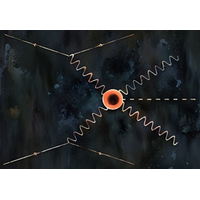
Phys. Rev. Lett. 137, 101806 (2026)
Particles and Fields
Generation of Fully Phase-Controlled Two-Photon Entangled States
Article | Atomic, Molecular, and Optical Physics | 2026-09-03 06:00 EDT
Ian Ford, Adrien Amour, and Matthias Keller
Control over the internal states of trapped ions makes them the ideal system to generate single and two-photon states. Coupling a single ion to an optical cavity enables efficient emission of single photons into a single spatial mode and grants control over their temporal shape, phase, and frequency…
Phys. Rev. Lett. 137, 103604 (2026)
Atomic, Molecular, and Optical Physics
High-Flux X-Ray Emission due to Injection into a Laser-Wakefield Accelerator beyond Its Depletion Length
Article | Plasma and Solar Physics, Accelerators and Beams | 2026-09-03 06:00 EDT
J. C. Wood, K. Põder, N. C. Lopes, J. M. Cole, S. Alatabi, A. J. Hughes, P. Foster, C. Kamperidis, O. Kononenko, S. P. D. Mangles, D. Neely, C. A. J. Palmer, D. R. Rusby, G. Sarri, M. J. V. Streeter, D. R. Symes, J. R. Warwick, and Z. Najmudin
Laser wakefield accelerators are bright, compact sources of synchrotronlike x-rays. By driving the wakefield using a 110 TW laser in a variable length gas cell, we are able to map the evolution of the electron beam and resulting x-ray emission. We find that using a laser pulse initially focused to l…
Phys. Rev. Lett. 137, 105001 (2026)
Plasma and Solar Physics, Accelerators and Beams
Phonon-Assisted Broadband Light Emission in Strain-Gradient-Modulated Diamond Nanoribbons
Article | Condensed Matter and Materials | 2026-09-03 06:00 EDT
Yuxuan Zhang, Shuo Qiao, Anliang Lu, Xiaohui Sun, Jun Lyu, Jinlong Du, Yang Lu, and Lin Yang
Strain-gradient engineering provides a doping-free route to modulate broadband optical emission in microfabricated diamond.
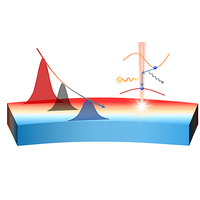
Phys. Rev. Lett. 137, 106201 (2026)
Condensed Matter and Materials
Europium Valence in Pressurized EuO
Article | Condensed Matter and Materials | 2026-09-03 06:00 EDT
Christoph J. Sahle, Alessandro Mirone, Robert P. C. Bauer, Harald Müller, Sylvain Petitgirard, Kari O. Ruotsalainen, Michael Hanfland, and John S. Tse
A direct spectroscopic probe of the 4 states across a pressure-induced phase transition in EuO reveals the absence of spectral changes, confirming the stability of the Eu valence in agreement with the DFT calculations.
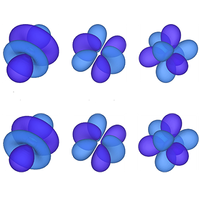
Phys. Rev. Lett. 137, 106401 (2026)
Condensed Matter and Materials
Physical Review X
Ultrastrong Unconventional Spin Current via Noncollinear Spin-Orbit Filtering
Article | 2026-09-03 06:00 EDT
Hongliang Chen, Zi-An Wang, Xingguo Gao, Hang Zhou, Jiaxin Chen, Chang Pan, Lizhu Ren, Qia Shen, Zhenyi Zheng, Dandan Guan, Xiaoxue Liu, Shiyong Wang, Yaoyi Li, Hao Zheng, Canhua Liu, Yumeng Yang, Xuepeng Qiu, Guowei Zhou, Jingsheng Chen, Jinfeng Jia, Ding-Fu Shao, and Liang Liu
An asymmetric platinum interface enables noncollinear spin-orbit filtering, breaking bulk symmetry constraints to generate out-of-plane spin currents for field-free magnetization switching.
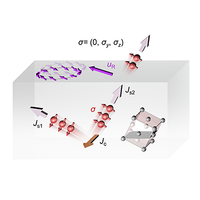
Phys. Rev. X 16, 031060 (2026)
arXiv
Graphene-enabled dynamic H-J switching of dipole-dipole coupling
New Submission | Mesoscale and Nanoscale Physics (cond-mat.mes-hall) | 2026-09-04 20:00 EDT
Michael McFadden, Robert Bennett
Environmental modification of dipole interactions has long been explored in energy transport. Here we consider the effects of a tunable graphene monolayer upon nearly H-type or J-type molecular aggregates, concentrating on the inversion of one type of coupling to the other. Modelling the graphene as being deposited on a metallic substrate, we find that as the surface conductivity of the graphene is varied, there is a corresponding change in the parameter region over which coupling inversion is predicted. This provides a route towards observing the predicted coupling inversion in a real system by dynamically changing the surface conductivity during a single run of an experiment.
Mesoscale and Nanoscale Physics (cond-mat.mes-hall), Quantum Physics (quant-ph)
7 pages, 7 figures
Classical dipolar Heisenberg models on the Archimedean and Laves lattices
New Submission | Statistical Mechanics (cond-mat.stat-mech) | 2026-09-04 20:00 EDT
We study classical Heisenberg spins interacting through the dipole–dipole interaction on the eleven Archimedean and eight Laves planar lattices at canonical geometry, which reduce to fifteen distinct vertex sets. For each lattice we compute the Fourier-space interaction matrix $ \Am(\bk)$ , extract the Luttinger–Tisza ordering wave vector $ \bk_{0}$ , determine the classical ground state by unconstrained minimization on the commensurate magnetic cell, and evaluate the linearized spin-wave dispersion $ \varepsilon_{i}(\bk)$ along the high-symmetry path of the (magnetic) Brillouin zone together with the Holstein–Primakoff moment reduction. The ground states fall into three classes: five are collinear, two are non-collinear at angles commensurate with the lattice symmetry, and eight cant at transcendental angles, which we determine to thirty digits. Across the family, failure of the Luttinger–Tisza strong condition coincides exactly with the appearance of incommensurate canting, with no exceptions in either direction. Truncating the interaction range shows that whether a lattice cants is fixed by the local coordination geometry, whereas the value of the canting angle is set by the long-range tail. The quantum corrections are governed by the magnon spectrum through the size of the magnetic basis and are uncorrelated with frustration, so that the frustration and fluctuation classifications are independent; the corner-sharing lattices host the narrowest low-energy branches. The results constitute a spectral atlas of dipolar Heisenberg systems on the full family of $ 1$ -uniform planar tilings and their duals, and provide predictions for inelastic neutron scattering in materials whose magnetic ions occupy Archimedean or Laves lattices, and for artificial arrays of dipolar-coupled nanomagnets.
Statistical Mechanics (cond-mat.stat-mech)
Dipolar order across Bravais lattice space: classification, spin waves, and a four-attractor phase diagram
New Submission | Statistical Mechanics (cond-mat.stat-mech) | 2026-09-04 20:00 EDT
Every crystal is a Bravais lattice decorated by a basis, so the dipolar ordering of the fourteen Bravais lattices is the natural starting point for any systematic theory of dipolar magnetism in three dimensions. We determine it here in a single common framework: the interaction tensor is Ewald-summed, the classical ground state is obtained by minimising the lowest Luttinger–Tisza band over the entire Brillouin zone, and the linear spin-wave spectrum with its zero-point corrections is computed for every lattice whose order is collinear. Three results emerge that are not properties of individual lattices but of the landscape. First, two structural principles — the exact tracelessness of the dipolar tensor in three dimensions, and its identical vanishing at $ \mathbf k=0$ for every cubic-symmetric lattice — explain the ordering type, the absence of first-order cubic anisotropy, and the systematics of the zero-point moment reduction. Second, exactly one lattice defeats the Luttinger–Tisza construction: for face-centred orthorhombic the optimal eigenvector is not circular, the single-$ \mathbf k$ state is a spin-density wave of non-constant length, and the tabulated energy is a strict lower bound; direct supercell minimisation gives the true ground state. Third, optimising each family over its free metric parameters collapses the whole of Bravais space onto only \emph{four} attractors, with body-centred tetragonal the global optimum and a single interior optimum at rhombohedral $ \alpha=62.42^\circ$ lying below face-centred cubic. Three independent published benchmarks are reproduced.
Statistical Mechanics (cond-mat.stat-mech)
A Unified Description of Dirac-Cone Anisotropies in Two Dimensions
New Submission | Mesoscale and Nanoscale Physics (cond-mat.mes-hall) | 2026-09-04 20:00 EDT
L. C. T. Brito, Cleverson Filgueiras, D. M. Lopes, A. G. Martins, Igor S. S. de Oliveira
Anisotropies in two-dimensional materials are responsible for a variety of effects that significantly modify their physical properties. In this paper, we present a covariant modification of the Dirac equation that incorporates anisotropies into the effective low-energy description around the Dirac point. The model is constructed by analogy with a Lorentz-violating extension of the Standard Model of elementary particles and yields a (2+1)-dimensional framework describing physical effects such as shifted, tilted, and distorted Dirac cones through its free parameters. The proposed model thus provides a general and unified framework in which distinct anisotropy-induced modifications of the Dirac spectrum and their combinations can be systematically characterized. We further apply the model to strained graphene and show that its effective parameters can be quantitatively extracted from first-principles electronic band structures while retaining a direct geometrical interpretation. These results establish a connection between the microscopic electronic structure and a material-independent effective description of anisotropic two-dimensional Dirac systems.
Mesoscale and Nanoscale Physics (cond-mat.mes-hall)
22 pages, 10 figures
FrOGS: Discrete Neural Sampler for Independent Alloy Configurations Across Chemical Conditions
New Submission | Materials Science (cond-mat.mtrl-sci) | 2026-09-04 20:00 EDT
Kyucheol Min, Elyssa Hofgard, Tess Smidt
Predicting the thermodynamic properties of an alloy requires sampling its configurations across many chemical conditions and recovering free energies on a common absolute scale. Markov chain Monte Carlo (MCMC) is the standard tool, but it requires separate simulations at different conditions, and auxiliary free-energy methods such as thermodynamic integration are used to place results on a common absolute scale. Modern discrete neural samplers typically use reverse KL divergence as the objective and can be mode-seeking or biased. We present Free energy Offering Generative Sampler (FrOGS), a hybrid discrete neural sampler that couples an autoregressive model to a continuous-time Markov chain (CTMC) to be trained jointly under a single shared loss. FrOGS draws i.i.d. configurations, returns an unbiased estimate of the partition function, and gives consistent estimates of thermodynamic observables. We train a single model across a wide range of chemical conditions to produce estimates on a common absolute free-energy scale. FrOGS matches exact finite-size results on the 2D Ising model and reference phase diagrams for AgPd and CuAu, without mode collapse. We additionally compare to SEGAL, a published autoregressive baseline, and find that only FrOGS recovers the stability range of the CuAu$ _3$ phase.
Materials Science (cond-mat.mtrl-sci), Statistical Mechanics (cond-mat.stat-mech), Machine Learning (cs.LG)
Submitted to the AI4Mat workshop at NeurIPS 2026
Decoherence-controlled collective criticality in a two-dimensional quantum Stag Hunt
New Submission | Statistical Mechanics (cond-mat.stat-mech) | 2026-09-04 20:00 EDT
Physical decoherence can preserve the microscopic strategic neutrality condition of a quantum game while changing the thermodynamic regime of the corresponding interacting population. We demonstrate this for an Eisert–Wilkens–Lewenstein (\textit{EWL}) Stag Hunt embedded as independent nearest neighbor encounters on a square lattice. For the restricted strategies $ \mathsf{Q}=i\mathbb{Z}$ and $ \mathsf{D}=i\mathbb{Y}$ , noisy two-player payoff matrices are determined for phase damping, depolarization, and amplitude damping and mapped exactly to channel dependent Ising parameters $ \mathfrak{J}(\Gamma,p)$ and $ \mathfrak{H}(\Gamma,p)$ . Phase damping and depolarization show the clearest contrast: they share the same microscopic neutrality branch $ \mathfrak{H}=0$ , while only depolarization suppresses the interaction as $ (1-p)^2$ . At $ \beta=1$ , this produces an exact depolarization-driven square-lattice critical point at $ p_{\ast}\approx 0.233460\ldots$ , whereas phase damping remains in the ordered coexistence regime along the same neutrality branch. Monte Carlo finite size scaling is consistent with two-dimensional Ising criticality and distinguishes field driven coexistence below $ p_{\ast}$ from a smooth crossover above it. Amplitude damping additionally reveals a strong dependence on channel placement: the post-strategy neutrality branch reaches $ \Gamma=0$ at $ p=1/3$ and then disappears. Resource negativity further shows that microscopic two-qubit entanglement and collective interaction strength are distinct quantities. The resulting extended lattice remains an ordinary classical Ising system.
Statistical Mechanics (cond-mat.stat-mech), Mathematical Physics (math-ph), Computational Physics (physics.comp-ph), Quantum Physics (quant-ph)
19 pages, 10 figures
Constituent-Tagged Transfer Linking Cluster Dynamics to Static Scaling
New Submission | Statistical Mechanics (cond-mat.stat-mech) | 2026-09-04 20:00 EDT
Clusters that merge and split have no unique genealogy. Tracking the host size of a conserved constituent defines $ q_\ast$ by $ \langle(S_{t+\tau}/S_t)^{q_\ast}\rangle=1$ , with $ q_\ast\ne0$ . Across coupled map networks, coagulation-fragmentation dynamics, and Vicsek systems, $ q_\ast\simeq\alpha-2$ without fitting, where $ c(s)\propto s^{-\alpha}$ on the same size window. Radius scans locate the known Vicsek interaction radius and recover an independently specified clustering scale in experimental active rods. Local scale covariance yields the relation, while a tent map counterexample shows when reducing the stationary balance at each parent size to one moment fails.
Statistical Mechanics (cond-mat.stat-mech), Adaptation and Self-Organizing Systems (nlin.AO), Chaotic Dynamics (nlin.CD)
5 pages, 3 figures; Supplemental Material: 6 pages, 1 figure, and 3 tables
Physics-Informed Neural Network Surrogate for Oxygen Vacancy Dynamics in epitaxial $\mathrm{SrTiO_3}$ on Si memristors via Dynamic Spectral Optimization
New Submission | Materials Science (cond-mat.mtrl-sci) | 2026-09-04 20:00 EDT
Rodion Podorozhny, Nikoleta Theodoropoulou, Jelena Tešić
Physics-informed neural networks (PINNs) offer a promising framework for modeling semiconductor devices, yet standard architectures struggle with severe numerical stiffness and multiscale spatial discrepancies inherent to oxide heterostructures. Here, we demonstrate a cascaded PINN architecture coupled with a custom second-order Chebyshev second kind polynomial spectral optimizer (DSO V2 Hybrid) to model ion-electronic drift-diffusion transport in Pt/SrTiO$ _3$ /Si memristive heterostructures across a 20 nm STO film on a 380 $ \mu$ m Si substrate. By isolating potential, carrier density, and vacancy transport into four sequentially trained sub-neural-networks, our model circumvents condition numbers exceeding $ 10^{16}$ without operator splitting. The trained surrogate reproduces experimental conductive-AFM current-voltage hysteresis ($ R^2 > 0.96$ ) while ensuring strict Poisson consistency across continuous space. Compared to conventional finite-element solvers (e.g., COMSOL), the PINN surrogate enables differentiable inverse parameter estimation and linear time inference.
Materials Science (cond-mat.mtrl-sci), Machine Learning (cs.LG)
Battery open-circuit voltage is not purely chemical
New Submission | Materials Science (cond-mat.mtrl-sci) | 2026-09-04 20:00 EDT
Andrea Giudici, Christoph Pohl, Alberto Salvadori, Colin Please, Manuel Landstorfer, Jon Chapman
Open-circuit-voltage (OCV) curves are commonly treated as intrinsic chemical properties of electrode materials. However, this view is incomplete. In ion-insertion batteries, OCV also depends on mechanical state and microstructure. Using finite-element simulations and asymptotic analysis, we show that particle swelling and external loads promote particle–particle contact that generates compressive stresses, shifting the inserted-ion chemical potential. The OCV correction is nonlinear, follows Hertzian contact scaling, and depends on particle arrangement. Identical materials can therefore exhibit different OCV curves in different electrode microstructures. Furthermore, in full cells, electrodes are mechanically coupled through the common stack stress. Thus, cell OCV is a chemo-mechanical property of the entire battery architecture, not chemistry alone.
Materials Science (cond-mat.mtrl-sci), Applied Physics (physics.app-ph)
Valley polarization dependence of candidate even-denominator fractional quantum Hall states in monolayer graphene
New Submission | Strongly Correlated Electrons (cond-mat.str-el) | 2026-09-04 20:00 EDT
Saswata Sahu, Amarendra Pr. Indra, Moumita Indra
We investigate even-denominator fractional quantum Hall (EDFQH) states in monolayer graphene, focusing on the experimentally observed filling fractions $ \nu = 1/2$ and $ \nu = 1/4$ . Owing to the approximate SU(4) symmetry arising from spin and valley degrees of freedom, graphene hosts a rich variety of multi-component fractional quantum Hall states with different polarization configurations. Using the Chern-Simons composite fermion framework for SU(4) systems, we construct candidate variational wave functions corresponding to distinct spin, valley, and mixed polarization states. The ground-state energies of these states are evaluated numerically using the Coulomb interaction in spherical geometry. By comparing energies across different polarization sectors, we identify the energetically favored configurations at $ \nu = 1/2$ and $ \nu = 1/4$ . Our variational energy comparison suggests that the energetically favored candidate states correspond to multi-component correlated quantum Hall liquids. Within the restricted family of trial states considered here, these states differ from a simple composite-fermion Fermi-sea description. These findings provide insight into the role of valley polarization and SU(4) symmetry in stabilizing even-denominator fractional quantum Hall states in graphene.
Strongly Correlated Electrons (cond-mat.str-el), Quantum Physics (quant-ph)
7 pages, 3 figures
IDMate: Window-resolved self-consistent-field proposal screening with finite-temperature response bounds
New Submission | Materials Science (cond-mat.mtrl-sci) | 2026-09-04 20:00 EDT
Peng Kang, Da Wan, Shulin Bai, Zhen Li, Yu Liu, Lei Zheng, Li-Dong Zhao, Huibin Xu
We introduce IDMate, a Kohn–Sham framework for screening approximate self-consistent-field (SCF) states with a finite-temperature response bound and deterministic reference-map recovery. A charge-neutral factorization separates electronic conditioning from mixer amplification, while fixed-point-preserving rank-one interventions test their roles in the linearized dynamics. For a fixed Hamiltonian, exact electron number, and temperature, strong convexity of the Mermin free-energy functional yields an a posteriori density-matrix bound in a selected spectral window. Across $ 3{,}586$ stress trials, $ 1{,}942$ proposals were accepted and none exceeded the window criterion. Under trial independence, the one-sided $ 95%$ zero-event upper bound is $ 8.4\times10^{-4}$ ; treating the 70 correlated ladders as independent units gives $ 4.2\times10^{-2}$ per ladder. In three reference configurations, the integrated screening rule replaced ten reference-map evaluations, reproduced the reference-scoring trajectories, and satisfied every terminal comparison criterion. Window and full-space deviations differ by six to eleven orders of magnitude; full-space distance classifies the window decisions with a descriptive pooled AUC of $ 0.694$ (row-bootstrap $ 95%$ interval $ [0.544,,0.831]$ ). A predefined cross-lineage work model does not meet its acceptance criterion, and serial proposal construction makes the production implementation $ 7.87$ times as costly under the predefined charged-cost accounting as its all-reference counterfactual. IDMate establishes a rigorous exact-trace window bound, a tested accept-or-recover rule, and explicit full-space and implementation targets for net acceleration.
Materials Science (cond-mat.mtrl-sci), Computational Physics (physics.comp-ph)
49 pages, 4 figures
Direct Validation of Superconductivity through Contact-Free Detection of Persistent Supercurrents Using Room-Temperature Quantum Magnetometry
New Submission | Superconductivity (cond-mat.supr-con) | 2026-09-04 20:00 EDT
Xinyi Zeng, Chengzhen Qin, Bowen Fan, Hammad Ahmed, Hui Fang, Stuart Long, Xiaonan Shan, Jiefu Chen, Shoujun Xu, Liangzi Deng, Ching W. Chu, Jiming Bao
The accelerated emergence of new materials is driving the search for high temperature superconductors, but rapid experimental validation remains a critical bottleneck, particularly for microscopic samples under high pressure. Here, we demonstrate one-step direct superconductivity validation through room-temperature, contact-free detection of remnant supercurrents. The technique utilizes a cryogen-free optically pumped atomic magnetometer to detect the temperature-dependent magnetic field produced by supercurrents of a superconductor. The superconducting transition is directly identified by the abrupt disappearance of magnetic field from the remnant supercurrent above the transition temperature and the reversal of the supercurrent direction upon reversing the applied magnetic field. Validated on YBCO microcrystals and REBCO tape, this technique detects pico-Tesla magnetic fields from supercurrents induced by the ambient Earth’s magnetic field in a millimeter-sized REBCO square disk, as well as from sub-100 micrometer YBCO microcrystals compatible with high-pressure diamond anvil cells. The use of a ferrite flux guide enables sensitive detection from centimeter-scale distances. Requiring no electrical contacts, magnetic coils, or integrated magnetic sensors, this non-invasive, room-temperature platform offers a scalable approach for high-throughput screening and validation of superconductivity.
Superconductivity (cond-mat.supr-con)
18 pages, 6 figures
Microscopically exact transport equation for the quantum Calogero model
New Submission | Statistical Mechanics (cond-mat.stat-mech) | 2026-09-04 20:00 EDT
Vir B. Bulchandani, Fabian H. L. Essler
We derive an exact transport equation for the quantum Calogero model, i.e. inverse-square interacting bosons on a line, from microscopic first principles.
Statistical Mechanics (cond-mat.stat-mech), Strongly Correlated Electrons (cond-mat.str-el), Mathematical Physics (math-ph), Quantum Physics (quant-ph)
5+2 pages
Tuning Andreev reflection and conductance in proximitized nanowires through the spin-orbit field direction
New Submission | Mesoscale and Nanoscale Physics (cond-mat.mes-hall) | 2026-09-04 20:00 EDT
Leonardo Musca, Fabrizio Dolcini
We investigate the Andreev reflection (AR) and the nonlinear conductance in a normal-superconductor junction realized with a proximitized semiconductor nanowire exposed to a magnetic field along its axis. We show that, while at zero energy the AR coefficient is determined by the topological phase of the superconducting side of the junction, at finite energy the AR is strongly affected by the directions of the Rashba spin-orbit field characterizing the normal and the proximitized sides. The tunability of the AR and the nonlinear conductance as a function of the spin-orbit misalignment angle is particularly pronounced when the proximitized side is in the topologically trivial phase. The spin-orbit field direction is revealed to be an efficient knob to control the electron transport through the hybrid junction, realizing an electrically widely tunable device. The implementation in realistic setups is discussed.
Mesoscale and Nanoscale Physics (cond-mat.mes-hall)
19 pages, 4 figures
Interplay between Isomerization and Spin Crossover in 1D Fe-Indigo Coordination Polymers on Ag substrates
New Submission | Materials Science (cond-mat.mtrl-sci) | 2026-09-04 20:00 EDT
Ritam Chakraborty, Hongxiang Xu, Biao Yang, Harshdeep Singh Chhabra, Joachim Reichert, Johannes V. Barth, Anthoula C. Papageorgiou, Shobhana Narasimhan
Spin-crossover (SCO) compounds offer a route to switchable molecular functionality in reduced dimensions. However, one-dimensional (1D) SCO chains, which offer the possibility to study ligand fields other than the paradigmatic octahedral field, remain comparatively little studied. Here, we use first-principles density functional theory (DFT+$ U$ ) to investigate Fe-indigo coordination-polymer chains synthesized experimentally on Ag(111) and Ag(100) substrates. These display a rich interplay between changes in ligand field (isomerization) and spin crossover. On-surface isomerization on Ag(111) interconverts (N,O)-chelated \textit{trans} configuration and (N,N)-/(O,O)-chelated \textit{cis} configurations at the Fe centers. The lowest-energy \textit{trans} and \textit{cis} solutions on Ag(111) have different spin configurations over the interval $ 0.66<U<3.00$ ~eV. At the reference value $ U=1$ ~eV, the preferred \textit{trans} solution is the mixed LS–LS–HS configuration, whereas the preferred \textit{cis} solution is LS–LS–LS. The experimentally observed preference for \textit{cis} chains on Ag(111) and \textit{trans} chains on Ag(100) is reproduced for the range $ 0.88<U<3.75$ ~eV. To interpret these results, toy models and spin-resolved Fe $ 3d$ projected densities of states are used, while freestanding-chain calculations reveal a strain-sensitive LS–HS competition. These results provide a microscopic explanation for isomerization-controlled spin-state switching in a 1D coordination polymer.
Materials Science (cond-mat.mtrl-sci)
Flux noise without flux tunability in superconducting qubits
New Submission | Mesoscale and Nanoscale Physics (cond-mat.mes-hall) | 2026-09-04 20:00 EDT
Daniel Kruti, Roman-Pascal Riwar
Flux noise is unanimously recognised as a leading dephasing mechanism for flux-tunable superconducting qubits. However, our microscopic understanding remains incomplete, and basic effects like Faraday’s law of induction have only very recently come into focus. Based on a quantum geometric description of the Faraday effect, we provide an in-depth derivation of the coupling of generic magnetic sources to thin film superconducting structures, under appropriate consideration of the device geometry. We apply the resulting framework to time-varying magnetic dipoles, describing surface or substrate spins, as well as current-carrying flux lines. We show that flux noise not only affects dephasing, but also provides a fundamental limit for the qubit quality factor - notably, even when the qubit contains no loops and is thus nominally not flux-tunable. Assuming surface spins as the origin for universal flux noise, we expect that this quality factor limit might be reached in the near term. For flux lines, we formulate a minimal safety distance to conserve the qubit performance, potentially constraining the scale-up of quantum hardware. This distance is boosted in the presence of large capacitor wings typical for transmons, due to a lensing of the electromotive field which is largely independent of Meissner screening.
Mesoscale and Nanoscale Physics (cond-mat.mes-hall), Superconductivity (cond-mat.supr-con)
Orbital current rectifier and linear magnon Edelstein effect in $p$-wave antialtermagnets
New Submission | Strongly Correlated Electrons (cond-mat.str-el) | 2026-09-04 20:00 EDT
Kristian Mæland, Björn Trauzettel
We show that $ p$ -wave magnets efficiently generate magnetization via a linear thermal Edelstein effect arising from the orbital magnetic moments of their magnons. Furthermore, they can generate perfectly nonreciprocal orbital currents through a purely even-order nonlinear response. This makes them promising candidates for orbital-current rectification. Because these transport phenomena originate from the orbital magnetic moment of magnons, they connect magnonics and orbitronics. More generally, we find that odd-parity-wave magnets with coplanar ground states host magnons with zero spin magnetic moment. Instead the magnons carry a collinear, out-of-plane orbital magnetic moment, realizing an orbital version of antialtermagnetism. We establish these general results using symmetry arguments and demonstrate them explicitly for a coplanar ground state with the minimal number of sublattices, inspired by the ground state of CeNiAsO. Our conclusions hold both in absence and presence of spin-orbit coupling.
Strongly Correlated Electrons (cond-mat.str-el), Statistical Mechanics (cond-mat.stat-mech)
12 pages, 5 figures
Deterministic nanofabrication for engineering nanowire quantum dot devices
New Submission | Mesoscale and Nanoscale Physics (cond-mat.mes-hall) | 2026-09-04 20:00 EDT
Tarun Patel, Matteo Pennacchietti, Greg Holloway, Stephen R. Harrigan, Sayan Gangopadhyay, Anthony Drouin, Megha Jain, Dan Dalacu, Philip J. Poole, Sasan Vosoogh-Grayli, Michael E. Reimer
Semiconductor quantum dots (QDs) are a leading platform for realising bright, wavelength-tunable sources of single and entangled photon pairs for photonic quantum technologies. Site-selected nanowire quantum dots (NWQDs) are a promising platform for fabricating such photonic devices in a scalable manner. However, implementing additional structures around the photonic nanowire while maintaining its vertical growth geometry has remained a challenge. In this work, we develop a deterministic pick-and-place technique to conduct a vertical-to-vertical transfer of NWQDs from the growth substrate to arbitrary templates. Using this transfer technique, we enhance the photon extraction efficiency to 75% by implementing a bottom gold mirror and tune the emission wavelength by 3.6 GHz via implementing electrostatic gates around the QD. Importantly, we measure low-multiphoton probability (g^(2)(0) = 0.002) and high indistinguishability (>80% for +/-100 ps) of the QD emission after the transfer process, yielding high-quality devices. These results demonstrate the repeatability and versatility of the developed transfer technique, which is an enabling step towards scalable single and entangled photon sources.
Mesoscale and Nanoscale Physics (cond-mat.mes-hall), Quantum Physics (quant-ph)
Main: 26 pages, 5 figures SI: 16 pages, 13 figures
Critical scaling and soft granular rheology of frictionless non-Brownian suspensions across jamming
New Submission | Soft Condensed Matter (cond-mat.soft) | 2026-09-04 20:00 EDT
Rohan Vernekar, Romain Mari, Bruno Chareyre, Hugues Bodiguel
We carry out 3D computer simulations to study suspension rheology across the jamming transition for deformable non-Brownian frictionless particles. The simulations are carried out at constant shear rates and suspension densities ($ \dot{\gamma} , \phi$ ), for polydisperse spherical particles. The suspension is probed at densities in the neighbourhood of the jamming point $ \phi_c$ , as well as across much wider density ranges. We carry out critical scaling analysis of our close-to-jamming data and confirm that shear-driven jamming is a second-order critical phenomenon requiring strong corrections on shear. We build maps of the local strain rate exponent to classify flow regimes and examine the effect of the corrections on the suspension rheology. Further, using the critical scaling jamming density, we carry out soft granular rheological scaling over the wider density range, demonstrating an excellent data collapse. The soft granular rheology relations are able to predict our data over almost the entire dynamical and density range.
Soft Condensed Matter (cond-mat.soft)
9 pages, 7 figures
Large deviations for linear regressions
New Submission | Statistical Mechanics (cond-mat.stat-mech) | 2026-09-04 20:00 EDT
Silvia Bartolucci, Fabio Caccioli, Francesco Caravelli, Pierpaolo Vivo
Linear regression is one of the simplest and most widely used tools to learn patterns from data: it fits a set of coefficients so that a linear combination of predictors best matches observed responses. The quality of the fit is measured by the residual sum of squares, the total squared mismatch between predictions and data, whose minimum defines the training loss. We consider Gaussian design and noise, with teacher coefficients independently drawn from a general distribution $ p(\beta)$ , and a general class of separable regularizers, including Ridge and Lasso. Using the zero-temperature replica method, we compute analytically the large-deviation statistics of the minimum training loss for large numbers $ P$ of predictors and $ N$ of observations, with $ r=P/N$ fixed. The rate function we compute governs rare sample-to-sample fluctuations of the optimal loss. Extensive numerical simulations are in excellent agreement with our theory and clearly show a pronounced deviation from the Gaussian regime of typical fluctuations in the tails.
Statistical Mechanics (cond-mat.stat-mech)
7 pages, 2 figs in main text. Supplemental material included
Death by mutants: unusual multicritical dynamics in a two-species model for absorbing state transitions
New Submission | Statistical Mechanics (cond-mat.stat-mech) | 2026-09-04 20:00 EDT
We explore the phases and active-to-absorbing state phase transitions (AAPT) in a two-species model, where the species A and its mutant B are {\em asymmetrically} or {\em nonreciprocally} coupled. We identify a multicritical point that connects the global absorbing state of both the species and its mutant, with a uniform active state. The critical dynamics at this multicritical point is studied within the lowest order perturbation theory. This asymmetric coupling between species A and mutant B leads to unequal and distinct upper critical dimensions $ d_c^A$ and $ d_c^B$ respectively for A and B dynamics. We show that the multicritical point in this model is characterised by an unusual breakdown of scale-invariance by fluctuation-induced logarithmic modulations with power law behaviour of the order parameter and correlation lengths of the species A at all dimensions $ d<d_c^A$ . Above $ d_c^A$ , conventional scale-invariance is restored. The dynamics of the mutant species B belongs to the DP universality class with an upper critical dimension of $ d_c^B=4$
Statistical Mechanics (cond-mat.stat-mech)
10 Pages, Preliminary report
Antiferromagnetism-altered plasmon dynamics
New Submission | Strongly Correlated Electrons (cond-mat.str-el) | 2026-09-04 20:00 EDT
Yifan Su, Suheng Xu, Rocco A. Vitalone, Ziyu Liu, Emil Viñas Boström, Na Wu, Chun-Ying Huang, Zhuquan Zhang, Jaehoon Jung, Daniel G. Chica, Vinícius da Silveira Lan Avelar, Yiping Wang, Takashi Taniguchi, Kenji Watanabe, James C. Hone, Xiaoyang Zhu, Cory R. Dean, Xavier Roy, Angel Rubio, D. N. Basov
The interaction between plasmons and magnons is a long-sought phenomenon with implications for fundamental physics and spintronics applications. In three-dimensional systems, this coupling is suppressed by the large mismatch in energy scales, but two-dimensional (2D) plasmons with gapless dispersion can overlap with magnons over a broad spectral range. Despite numerous theoretical predictions, experimental observation of magnon-plasmon interaction has remained elusive. In this work, we study a first-of-its-kind hybrid plasmon-magnon platform based on 2D materials. By deploying scattering-type scanning near-field optical microscopy (s-SNOM) with terahertz radiation, we image propagating plasmon wavepackets at a graphene/NiPS$ _3$ interface and track their dynamics across the antiferromagnetic transition of NiPS$ _3$ . We observe a clear renormalization of the plasmon-polariton dispersion concurrent with the onset of antiferromagnetic order. With complementary Raman scattering and nano-terahertz spectroscopy, we unveil spectral weight redistribution and dielectric screening changes, potentially associated with the multi-magnon continuum, as the underlying mechanism. These results provide solid evidence of coupling between plasmon and antiferromagnetic order, marking a cornerstone for a potential platform for hybrid magnon-plasmon interactions in 2D materials, opening avenues for coherent spin-plasmon devices and tunable terahertz spintronic components.
Strongly Correlated Electrons (cond-mat.str-el), Mesoscale and Nanoscale Physics (cond-mat.mes-hall), Materials Science (cond-mat.mtrl-sci)
12 pages, 5 figures
Topological Boundary States and the Edge Chain in Semi-Infinite Two-Dimensional Insulators
New Submission | Mesoscale and Nanoscale Physics (cond-mat.mes-hall) | 2026-09-04 20:00 EDT
Ilya Iakoub, Nicolas Levasseur, Richard MacKenzie
We show that it is possible to compute the adiabatically protected edge and corner states of semi-infinite, two-dimensional, topological insulators by considering the first layer of lattice sites, what we call the “edge chain,” independently from the bulk. We start by accepting this claim as an ansatz, then, using the Shemesh theorem, we show that the edge states one finds using our procedure are adiabatically protected, provided we restrict ourselves to adiabatic evolutions that do not break chiral symmetry. We show explicit examples of our method in a 2D extension of the SSH model, the SSH3 model, the Haldane model and the Breathing Kagome Lattice.
Mesoscale and Nanoscale Physics (cond-mat.mes-hall)
An Ultrathin Laterally Conductive Mesh Interphase Enables Spatially Extended Zinc Deposition for Aqueous Zinc Batteries
New Submission | Materials Science (cond-mat.mtrl-sci) | 2026-09-04 20:00 EDT
Yirong Zhao, Xingyuan Chu, Bing Wu, Pavel Khavlyuk, Johannes Kresse, Yue Dong, Jingwei Du, Xinmei Song, Songshan Bi, Vlastimil Mazanek, Xia Wang, Xiaodong Li, Shilei Liu, Shuangying Wei, Jan Luxa, Junming Zhang, Zdenek Sofer, Alexander Eychmuller
Zn metal anodes often suffer from nonuniform interfacial reactions during cycling, resulting in uneven deposition and dendrite growth. Existing artificial interphases can mitigate side reactions or regulate nucleation, but rarely achieve regulation of the interfacial electron/field distribution to sustain uniform deposition at the evolving Zn/electrolyte interface. Here, we develop an Au mesh interphase (AuMI), an ultrathin two-dimensional Au aerogel network that couples lateral electron redistribution with open pathways for ions. During Zn plating/stripping, the conductive AuMI distributes electron transport across the Zn surface, while its porous mesh preserves Zn$ ^{2+}$ access, enabling more uniform interfacial reactions. Experiments and simulations show that AuMI homogenizes the interfacial electric field and current distribution, promotes more uniform Zn plating/stripping, and limits dendrite growth. As a result, this regulated interfacial reaction mode enables AuMI Zn symmetric cells to operate stably for 3000 h at 1 mA cm$ ^{-2}$ /1 mAh cm$ ^{-2}$ and for 1100 h at 10 mA cm$ ^{-2}$ /10 mAh cm$ ^{-2}$ , while AuMI Zn||NVO (NaV$ _3$ O$ _8$ \cdot$ 1.5H$ _2$ O) full cells retain 80.8 % capacity after over 5000 cycles at 1 A g$ ^{-1}$ . These findings highlight the importance of combining ultrathin architecture, lateral electron transport, and open Zn2+ access in artificial interphases for stable aqueous Zn metal anodes.
Materials Science (cond-mat.mtrl-sci)
52 pages, 17 figures
Accelerating stochastic processes through nonequilibrium driving: Thermodynamic constraints on the maximum speed-up
New Submission | Statistical Mechanics (cond-mat.stat-mech) | 2026-09-04 20:00 EDT
Davide Santolin, Gianmaria Falasco
We derive a new set of bounds controlling the speed-up of the survival rate of trajectory-dependent observables induced by the application of a perturbation. Via the study of survival probabilities in two different contexts, continuous-time Markov jump processes and overdamped diffusions, we obtain different fashions of the bound on the achievable boost. These bounds, obtained by a nonlinear response theory of constrained path probabilities, are explicitly linked to thermodynamics. For arbitrary time-dependent survival rates, we find a linear bound that depends on both the perturbation strength and the entropy production rate prior to the perturbation. For rare processes characterized by a constant survival rate, the bound is exponential and is determined by the excess heat generated by the perturbation. We exemplify the inequalities on two prototypical model systems, namely, a unicyclic network and forced diffusion in a bistable potential.
Statistical Mechanics (cond-mat.stat-mech)
Generative Nested Sampling of Atomistic Thermodynamic Landscapes
New Submission | Statistical Mechanics (cond-mat.stat-mech) | 2026-09-04 20:00 EDT
Alessandro Coretti, Nico Unglert, Sebastian Falkner, Georg K. H. Madsen, Christoph Dellago
Nested sampling (NS) resolves the thermodynamics of an atomistic system from a single simulation, but its practical reach is limited by the Markov-chain updates needed to decorrelate walkers within each likelihood-constrained ensemble. Flow-based NS has removed this bottleneck for gravitational-wave (GW) inference, yet its transfer to atomistic systems is not merely a change of application. Comparing a GW150914-like binary-black-hole likelihood with an eight-particle two-dimensional Lennard-Jones (LJ) system of comparable dimensionality, we show that the two landscapes differ fundamentally: atomistic multimodality is discrete and combinatorial, generated by particle permutations separated by hard collision walls, and its coordinate coupling is dense and collective, whereas the GW posterior exhibits smooth degeneracies and localized parameter coupling. Guided by this diagnosis, we introduce NS-Flows: a single conditional normalizing flow, conditioned on the NS energy bound and trained on a sliding window of recent live sets, that replaces MCMC by direct parallel draws corrected by importance-weighted rejection resampling. Live sets supply data self-consistently, allowing flow training without structured priors or a pre-existing dataset. For LJ disks in PBC, the algorithm reduces energy evaluations by over two orders of magnitude and wall-clock time by roughly one third, an advantage that becomes increasingly favorable as the cost of the potential grows. The flow’s generation efficiency further acts as a physical diagnostic: it varies non-monotonically along the annealing trajectory, is lowest in the dense disordered regime, and is quantitatively captured by the constrained ensemble’s internal mode complexity together with target drift across the training window, identifying liquid-like ensembles, rather than prior-target separation, as the hard case for current flow architectures.
Statistical Mechanics (cond-mat.stat-mech), Machine Learning (cs.LG), Computational Physics (physics.comp-ph)
Thermal history controls the optoelectronic response of lead halide perovskites through structure and dynamics
New Submission | Materials Science (cond-mat.mtrl-sci) | 2026-09-04 20:00 EDT
Milos Dubajic, Xia Liang, Johan Klarbring, Yang Lu, Thomas A. Selby, Erik Fransson, Philippe Holzhey, Benjamin M Gallant, Qichun Gu, Ganbaatar Tumen-Ulzii, Khasim Saheb Bayikadi, Isaiah Gilley, Martin v. Zimmermann, Christian Orr, Chwenhaw Liao, Josh S. Moon, Jacek Jasieniak, Makhsud Saidaminov, Michael P. Nielsen, Tom Wu, Stephen P. Bremner, Anita Ho-Baillie, Julia Wiktor, Paul Erhart, Steve Albrecht, Mercouri Kanatzidis, Henry J Snaith, Aron Walsh, Samuel D. Stranks
Lead halide perovskites are promising optoelectronic materials for photovoltaics, light emission and detection. Their efficiencies in PV now approach the detailed-balance limit, leaving stability as the principal barrier. The intrinsic instabilities studied to date centre on ionic motion within a fixed, homogeneous lattice. Here we identify a further source of intrinsic structural instability, hidden in the lattice dynamics. Mapping caesium, methylammonium and formamidinium-based compositions with Cl, Br, I and mixed X-sites through all accessible phases, using single crystal X-ray and neutron diffuse scattering, machine-learning-assisted molecular dynamics, a phenomenological octahedral tilt model and hyperspectral photoluminescence, we find that nearly every composition hosts equilibrium local structural fluctuations: dynamic nanodomains of correlated octahedral tilts, a few nanometres in size, that locally break the crystallographic symmetry. Three complementary levers control them. The A-site cation sets their symmetry, shape and anisotropy, from sparse, isotropic and tetragonal in formamidinium-based compositions to dense, anisotropic and orthorhombic in nominally cubic caesium-based ones, the most locally disordered we studied. The halide controls the dynamic disorder and the phase-transition sequence. Thermal history is the third: different ramp rates drive nominally identical compositions into distinct crystallographic phases, each with its own hidden local order. In MAPbI3, the heating rate alone changes the photoluminescence quantum efficiency across the phase transition. Because these transitions lie within device operating ranges, from terrestrial thermal cycling to the extremes of space, thermal history may shape the local structure, and hence the optoelectronic response, throughout fabrication and operation, establishing it as a design variable alongside composition.
Materials Science (cond-mat.mtrl-sci)
23 pages, 4 figures
Optimal Control of Periodic Nonequilibrium Mechanochemical Systems via Automatic Differentiation
New Submission | Statistical Mechanics (cond-mat.stat-mech) | 2026-09-04 20:00 EDT
W. Callum Wareham, David A. Sivak
Biological molecular machines are mesoscopic systems that act repeatedly and periodically to perform important cellular tasks while contending with strong fluctuations and operating in an overdamped regime. Optimal control theory is a tool that can be used to understand the design principles behind efficient operation of these machines; however, most studies on optimal control of classical mesoscopic systems have focused on control problems that do not repeat periodically. Here, we automatically differentiate Fokker-Planck simulations to design efficient nonequilibrium control strategies for simple models of periodic molecular machines with and without explicit changes in the machine’s chemical state. The designed protocols and theoretical analysis provide insight into the design principles governing efficient driving in these nonequilibrium systems. Designed control protocols should seek to reduce mechanical heat by rotating the entire angular probability distribution at a constant speed without changing its shape, and should reduce chemical heat by reducing the proportion of chemical transitions with large heat.
Statistical Mechanics (cond-mat.stat-mech), Biological Physics (physics.bio-ph)
17 pages, 11 figures
A Strategy Toward Room Temperature Topological Hall Effect via Local Moment Magnetism
New Submission | Materials Science (cond-mat.mtrl-sci) | 2026-09-04 20:00 EDT
Karthik Rao, Kevin Allen, Yuxiang Gao, Arushi, Sanu Mishra, Birender Singh, Kenneth S. Burch, Liangzi Deng, Shanta R. Saha, Johnpierre Paglione, Minseong Lee, Vivien Zapf, Emilia Morosan
Topological spin textures in local moment systems hold great promise for technological applications due to their large magnetic moments, strong spin-orbit coupling (SOC), and high tunability. Finding new spin textures that are stable near room temperature is paramount to maximizing their potential for applications. Here, we provide a strategy for realizing topological spin textures at high temperatures by identifying rare earth ($ R$ ) magnets ordering at or near room temperature. We demonstrate the feasibility of this strategy in one of these magnets, hexagonal Gd$ _5$ Pb$ _3$ , which orders at $ T_C$ = 285 K. The indication for topological spin textures comes from topological Hall effect (THE), which, in Gd$ _5$ Pb$ _3$ , occurs between $ T$ = 100 - 200 K, an order of magnitude higher temperature than in other reported $ R$ -based systems. Our results present an opportunity to explore the role of SOC, anisotropic exchange, geometric frustration, and magnetic interactions in stabilizing topological spin textures, and provide a pathway toward realizing them near room temperature in $ R$ -based magnets.
Materials Science (cond-mat.mtrl-sci)
Moiré-induced altermagnetism from nonmagnetic constituents
New Submission | Strongly Correlated Electrons (cond-mat.str-el) | 2026-09-04 20:00 EDT
Jingtian Shi, Maxim Khodas, Ivar Martin
We propose a mechanism for nonmagnetic materials to develop altermagnetic order by moiré interference with nonmagnetic substrate, which is driven by structural relaxation and spontaneous twirls in moiré domain walls of lattice-mismatched moiré square lattices. When doped with one electron per moiré domain, a correlated insulating gap is opened by electron interaction. Depending on the location of the moiré potential minima, the moiré bands can show d-wave or g-wave altermagnetic splitting. The former can be enhanced by a finite twist angle; the latter is sensitive to strains that drive a transition to d-wave.
Strongly Correlated Electrons (cond-mat.str-el)
Resolving the Magnetic Ground-State Controversy in RuO2 through A Flat Magnetic Energy Landscape
New Submission | Strongly Correlated Electrons (cond-mat.str-el) | 2026-09-04 20:00 EDT
Tianxiao Liang, Fanhan Kong, Jijun Zhao, Xue Jiang
Rutile RuO2 is a prominent candidate for altermagnetism, yet its magnetic ground state remains highly controversial, with experiments reporting either a nonmagnetic state or altermagnetic order. Here, we develop a generalized environment-dependent spin-lattice framework that unifies localized Heisenberg exchange, itinerant Stoner magnetism via Landau spin fluctuations, and spin-orbit-coupling-mediated spin-lattice interactions. Parameterized from a high-throughput first-principles database using machine-learning and solved by large-scale Monte Carlo simulations, the framework reveals an exceptionally flat magnetic energy landscape in RuO2, where the nonmagnetic state lies nearly degenerate with multiple altermagnetic configurations. We find that material perturbations, exemplified by intrinsic defects, select distinct magnetic ground states primarily by modifying the localized Heisenberg exchange, with perturbation-induced itinerant Stoner polarization provides an essential secondary contribution. Spin-orbit coupling controls the orientation and stability of the Néel vector, but does not determine the emergence of long-range magnetic order. These results provide a unified explanation for the conflicting experimental observations and establish a general microscopic framework for understanding how material perturbations select competing magnetic ground states in systems with nearly flat magnetic energy landscapes.
Strongly Correlated Electrons (cond-mat.str-el)
14 pages, 4 figures
Symmetry-breaking line defects embedded to a 3D $O(N)$ critical bulk
New Submission | Strongly Correlated Electrons (cond-mat.str-el) | 2026-09-04 20:00 EDT
Shuai Yang, Liang-dong Hu, Yan Chen, W. Zhu
While spontaneous breaking of a discrete symmetry in one-dimensional classical systems with short-range interactions is absent, it is expected that a line defect embedded in a bulk criticality exhibits a stable discrete symmetry spontaneous breaking. Here, we investigate the behavior of a pinning-field line defect immersed in a 3D bulk that remains tuned to the $ O(N)$ Wilson-Fisher critical point. Employing the fuzzy sphere technique, we provide convincing evidence of the existence of stable defect conformal fixed points, and we demonstrate their renormalization group stability by showing no relevant operator and less effective degrees of freedom than that at bulk fixed point via $ g$ -function. Moreover, we investigate the defect domain wall operator for various $ N$ , and we identify that it becomes irrelevance for $ N\gtrsim 3$ but it is relevant for $ N<3$ .These evidence indicate that a one-dimensional defect coupled to a critical bulk cannot support a stable symmetry spontaneously broken defect fixed point due to domain wall proliferation for $ N<3$ Wilson-Fisher universality, while in the case of $ N \gtrsim 3$ a symmetry broken defect is possible.
Strongly Correlated Electrons (cond-mat.str-el), Statistical Mechanics (cond-mat.stat-mech), High Energy Physics - Theory (hep-th)
Grain boundary evolution in nanoparticles
New Submission | Materials Science (cond-mat.mtrl-sci) | 2026-09-04 20:00 EDT
Manoj Settem, Pranav Kumar, Ajeet K. Srivastav
Grain boundary evolution is a key dynamical process that enables structural rearrangements in nanoparticles and drives them towards low energy configurations. Grain boundaries can also enhance catalytic properties, making it important to understand the elementary processes underlying their evolution for grain boundary engineering in nanoparticles. Compared with bulk materials, nanoparticles have additional rotational and translational degrees of freedom, can accommodate structural changes through shape relaxation, and grain boundaries terminate at free surfaces. However, the atomic-scale mechanisms of GB evolution under these less constrained conditions remain comparatively less understood than in bulk materials. Here, using atomistic simulations, we focus on low energy $ \Sigma3$ (coherent twin boundary) and $ \Sigma11$ grain boundaries, which are among the persistent compact GB structures that emerge during nanoparticle structural evolution. We identify two fundamental atomic displacements, column shift (C) and screw shift (S), that recur during the evolution of these grain boundaries and their junctions. These displacements occur through different atomic pathways and combine in different ways to generate grain boundary migration, structural transformations, and junction evolution. In particular, the same initial and final grain boundary configurations can be connected through different atomic pathways, and a column shift can occur either as a full shift or through disconnection kinks. C and S remain identifiable even when the grain boundary character changes, for example during a $ \Sigma11$ to $ \Sigma3$ transformation. An understanding of these elementary GB processes can help identify strategies to control grain boundary evolution and thereby engineer GB structures in nanoparticles.
Materials Science (cond-mat.mtrl-sci)
Polaron Self-Trapping Rates from First Principles
New Submission | Materials Science (cond-mat.mtrl-sci) | 2026-09-04 20:00 EDT
Mark E. Turiansky, Joel B. Varley, Audrius Alkauskas, Chris G. Van de Walle
Polaron formation, also known as self-trapping, is a process akin to nonradiative carrier capture at point defects or impurities. In this work, we develop the formalism to determine how long it takes to form a small hole or electron polaron from first principles. We employ an accurate, fully first-principles approach based on a Koopmans compliant hybrid functional. The self-trapping rate is the product of two components: the nonradiative capture coefficient, which we evaluate using a one-dimensional approximation, and the maximum density of polaron sites, whose physics we elucidate based on finite-size interactions present in supercells. We apply our methodology to several technologically relevant materials known to host hole polarons, Ga$ _2$ O$ _3$ , Al$ _2$ O$ _3$ , BeO, KBr, MgO, NaCl, SiO$ _2$ , SnO$ _2$ , TiO$ _2$ , and ZnO, and to an electron polaron in rutile TiO$ _2$ . We also study an emerging semiconductor, rutile GeO$ _2$ , where we find that polaron formation could hamper $ p$ -type conductivity. The calculated self-trapping lifetimes span 7 orders of magnitude, from $ 10^{-1}$ to $ 10^6$ ~ps, in agreement with experiments where available, and providing detailed insight into the dynamics of carrier localization and relaxation in solids.
Materials Science (cond-mat.mtrl-sci)
Doping dependence of local moments in infinite layer nickelates
New Submission | Superconductivity (cond-mat.supr-con) | 2026-09-04 20:00 EDT
Martin Gonzalez, Andreas Suter, Michal Kiaba, Thomas Prokscha, Zaher Salman, Marc Gabay, Harold Y. Hwang, Jennifer Fowlie
The infinite layer nickelates are notable for their lack of long-range antiferromagnetic ordering, in contrast to the parent compounds of the superconducting cuprates. Instead, the nickelates show evidence of short-range glassy behavior in both the undoped and optimally-doped regimes, implying that local electronic moments exist independent of superconductivity. However, the systematic doping-dependent magnetic behavior is not yet fully resolved, and characterizing it could uncover the relationship between local moments and the superconducting dome. In this work, we use muon spin rotation ($ \mu$ SR) on a (La,Sr)NiO$ _2$ doping series from the undoped parent compound, through the superconducting dome, to the over-doped normal state (Sr substitution 0% $ \leq$ x $ \leq$ 25%) to probe the magnetic ground state and the temperature-dependent static and dynamic behavior. We find that local moments experience spin freezing into a glassy state at temperatures on the order of a few tens of kelvin regardless of the doping level. We also observe a subtle destabilization of the glassy state with increased hole doping. These observations suggest that magnetism and superconductivity are largely decoupled phenomena with indirect interactions described in a multi-orbital framework.
Superconductivity (cond-mat.supr-con)
20 pages, 5 figures, 82 references, 5 supplementary figures, 6 supplementary tables
Computing stable configurations of confined smectic liquid crystals with a deep variational framework
New Submission | Soft Condensed Matter (cond-mat.soft) | 2026-09-04 20:00 EDT
Yuchen Xie, Baoming Shi, Yucen Han, Lei Zhang
Smectic liquid crystals are layered liquid-crystalline phases characterized by orientational order and periodic density modulation. Although their structures can be modeled using continuum theories, computing stable configurations remains challenging in complex geometries, particularly when the high-frequency density modulations associated with smectic layering should be resolved. We propose a deep variational framework (DVF) for computing these configurations within the modified Landau–de Gennes model, in which the coupled orientational and positional order parameters are represented on a regular reference domain while physical confinement is incorporated through coordinate mappings. A warmup penalty mitigates the spectral bias of neural networks toward smooth, nonlayered fields, enabling robust recovery of oscillatory smectic states. Comparisons with a neural-network baseline and finite-difference relaxation demonstrate the essential role of this penalty and the numerical stability of the resulting layered states. The DVF reproduces experimentally established smectic-A defect structures and layer morphologies across diverse confinement geometries and further predicts a chevron-like smectic-C state in a tangent-anchored sphere. Together, these results demonstrate the applicability of the DVF to computing stable smectic configurations across experimentally relevant confinement geometries and anchoring conditions.
Soft Condensed Matter (cond-mat.soft), Machine Learning (cs.LG)
13 pages, 6 figures
Universal scaling of fluctuations and correlations across the superfluid transition
New Submission | Quantum Gases (cond-mat.quant-gas) | 2026-09-04 20:00 EDT
Paul Paquiez, Géraud Dupuy, Maxime Allemand, Henri Coquinot, Tommaso Roscilde, Nicolas Dupuis, Adam Rançon, Thomas Chalopin, David Clément
The critical behavior of a system near a continuous phase transition is commonly characterized by power laws and a set of universal critical exponents. Yet universality at phase transitions has even more fundamental manifestations. It dictates that all observables follow universal scaling functions, which may extend beyond simple power laws. Furthermore, microscopic details are captured entirely by only two system-specific scale factors, that rescale any measured quantity onto its universal form. In this work, we report the experimental validation of this prediction in ultracold lattice Bose gases undergoing the superfluid transition. We extract the scale factors by collapsing the order-parameter cumulants measured at varying entropies. We show that these factors specify scaling functions governing both the order-parameter distribution and two-point correlations. By measuring these scaling functions, we also determine three critical exponents $ \beta$ , $ \gamma$ and $ \nu$ . Our results provide an experimental demonstration that universal scaling is simultaneously obeyed by multiple observables in a quantum many-body system.
Quantum Gases (cond-mat.quant-gas), Statistical Mechanics (cond-mat.stat-mech), Atomic Physics (physics.atom-ph)
13 pages, 10 figures
Studying line defect at Deconfined Quantum Criticality via fuzzy sphere regularization
New Submission | Strongly Correlated Electrons (cond-mat.str-el) | 2026-09-04 20:00 EDT
Shutao Liu, Shuai Yang, Jie Lou, Yan Chen
The interplay between bulk critical fluctuations and nontrivial topology can enrich defect physics and give rise to novel defect universality classes. Understanding the fate of such defects therefore constitutes an important open problem. In this work, we studied a particularly simple setting: a (0+1)-dimensional pinning-field defect coupled to a (2+1)-dimensional deconfined quantum critical bulk. Using the fuzzy-sphere regularization, we numerically investigated the defect operator spectrum and extracted several universal quantities characterizing the defect conformal fixed point, including the scaling dimensions of defect-changing(creating) operators and the defect (g)-function. These results establish the first numerical characterization of line-defect conformal data at deconfined quantum criticality and may stimulate further investigations of defect critical phenomena in topological quantum critical matter.
Strongly Correlated Electrons (cond-mat.str-el)
12 pages,9 figures
Granular Rods Fall Faster in Denser Obstacle Fields
New Submission | Soft Condensed Matter (cond-mat.soft) | 2026-09-04 20:00 EDT
Fumiaki Nakai, Hiroaki Katsuragi
How particle shape affects transport through obstacle fields under external driving is a fundamental question in nonequilibrium physics. We simulate a dissipative rod falling under gravity through randomly placed fixed obstacles. As the obstacle density increases, the mean descent speed decreases, increases, and then decreases again before trapping. The rod can therefore fall faster in a denser obstacle field. Scaling arguments based on collision rates and rod geometry explain all three regimes, their crossovers, and the mean fall distance before trapping. These results reveal nonmonotonic driven transport arising from particle anisotropy.
Soft Condensed Matter (cond-mat.soft), Statistical Mechanics (cond-mat.stat-mech), Fluid Dynamics (physics.flu-dyn)
6 pages, 6 figures
Built-In Electric Field Modulation of Spontaneous Magnetism and Thermospin Transport in Boron-Nitrogen Doped Zigzag Graphene Nanoribbons
New Submission | Mesoscale and Nanoscale Physics (cond-mat.mes-hall) | 2026-09-04 20:00 EDT
Zigzag-edged graphene nanoribbons (ZGNRs) host large magnetic moments at two zigzag edges due to spontaneous magnetism, whose ground state is antiferromagnetically coupled spin-order edge state (AF state). In this paper, the spontaneous magnetism and thermoelectricity of ZGNRs with periodic substituted doping of boron and nitrogen atoms along the axial direction are investigated by first principle calculation. The doping induces an internal electric field, which modulates the magnetic moments at the two zigzag edges and the band structure with spin splitting. For varying doping configuration, the ground state could be AF state, ferromagnetically coupled spin-order edge state (FM state), or degenerated pair of AF and FM states. External transversal static electric field can further modulate the magnetic moments and the band structure. By designing the doping configuration and the external field, pure thermal spin current with the absence of thermal charge current can be generated at room temperature, which can be switched on and off by flipping the magnetic configuration between AF and FM states. Thus, the doped ZGNRs can be applied as prototype devices for spin-caloritronic.
Mesoscale and Nanoscale Physics (cond-mat.mes-hall)
6 figures
Such stuff as magic is made on: compact operator algebra, stabilizer polytope and the structure of reduced density matrices in a Kitaev spin liquid
New Submission | Strongly Correlated Electrons (cond-mat.str-el) | 2026-09-04 20:00 EDT
Snigdh Sabharwal, Nic Shannon, Paul Skrzypczyk
Quantum many-body systems exhibit rich and complex behaviour. Magic has recently emerged as a powerful new diagnostic for probing such systems, complementing other key features such as many-body entanglement. Here, starting from an investigation of the onset of magic within subsystems of a larger many-body quantum system, we show that intricate structures emerge which shed important light on the underlying many-body physics. Focusing on the Kitaev honeycomb model, we first identify the temperature below which local subsystems acquire magic. Remarkably, we find that the optimal magic witnesses active at the onset of magic reveal compact operator spaces that continue to capture the local thermal states throughout their subsequent evolution. For the six-site hexagonal marginal, this connection can be made stronger: the same operator space emerges independently from the symmetries of the local marginal and forms the symmetry-resolved plaquette algebra. When these symmetries are realized exactly, the local state lies entirely within this algebra and the reduced robustness of magic is equal to the full robustness of magic. The same reduced description can also be applied to other local quantum resources, which we illustrate using genuine multipartite entanglement. Furthermore, the operator spaces possess a rich algebraic structure in the form of finite-dimensional Euclidean Jordan algebras, with a natural interpretation in terms of bond and bond-cycle operators. Our general methodology therefore show how the onset of local magic can reveal a compact, physically meaningful operator structure underlying the finite-temperature Kitaev spin liquid, and opens up a new avenue towards reduced descriptions of quantum resources in many-body systems.
Strongly Correlated Electrons (cond-mat.str-el), Quantum Physics (quant-ph)
Exact Scaling Laws and Non-Hermitian Topological Phase Transitions of Active Continuum on Hyperbolic Manifolds
New Submission | Soft Condensed Matter (cond-mat.soft) | 2026-09-04 20:00 EDT
The macroscopic collective motion of active continuum on curved manifolds is conventionally addressed through perturbative dynamic renormalization or finite-element simulations, often obscuring the underlying geometric mechanisms. Here, an exact algebraic framework is established to reformulate the active phase transition on hyperbolic spaces $ \mathbb{H}^2$ . By rigorously expanding the covariant Navier-Stokes-like equations and applying the Weitzenböck identity, we derive the exact critical threshold $ \alpha_c = \frac{5}{4}D\kappa^2$ for macroscopic polarization, which is dictated by the geometric mass gap of the Hodge-de Rham Laplacian. We strictly define the parameter subspace $ \alpha = 2D\kappa^2$ where the topological free energy reaches the Bogomolny-Prasad-Sommerfield (BPS) limit. This enables the reduction of the complex velocity field to Blaschke products via Möbius gauge symmetry. The flat-space limit ($ \kappa \to 0$ ) exactly degenerates to the topological phase of the classical O(2) model, demonstrating that the constant negative curvature acts as an un-perturbative infrared regularization for non-linear amplitude saturation. Furthermore, mapping the non-variational active convective modes onto the defect translational zero-modes yields an intrinsically non-reciprocal interaction matrix. By analytically extending the singular integral operator of the dynamically condensed defect ring, we identify a macroscopic second-order exceptional point (EP2) characterized by a strictly algebraic dynamic scaling law $ \tau \sim |\Delta \nu|^{-1/2}$ . This closed-form theoretical paradigm provides exact solutions for geometric frustration and non-Hermitian topology in soft mechanics.
Soft Condensed Matter (cond-mat.soft), Mathematical Physics (math-ph)
5 pages and 3 figures
Interplay of B-Site Off-Centering and Molecular Orientations in the Mixed Hybrid Perovskite MAGe1xSnxI3
New Submission | Materials Science (cond-mat.mtrl-sci) | 2026-09-04 20:00 EDT
Erik Fransson, Apinya Ngoipala, Oskar Öjstedt, Maths Karlsson, Paul Erhart, Julia Wiktor
B-site mixing is a common strategy for tuning properties of halide perovskites. In the lead-free system MAGe1-xSn_xI3, it brings tilting and off-centering into competition. Using large-scale molecular dynamics driven by a machine-learned interatomic potential, we map the structural behavior across the full composition range. MAGeI3 exhibits strong polar B-site off-centering that remains nearly constant up to the cubic transition, together with methylammonium (MA) orientational order that weakens progressively on heating. By contrast, MASnI3 combines octahedral tilting with weaker, predominantly antipolar off-centering. Ge-like behavior persists upon alloying and gives way to Sn-like behavior only beyond roughly 65 % Sn. In the high-temperature phases, the B-site cations remain locally off-centered but directionally disordered. On the Ge-rich side, the distorted inorganic framework biases the soft MA orientational landscape toward a restricted set of preferred directions. This coupling shows how the composition of the inorganic sublattice can tune molecular ordering in lead-free hybrid perovskites.
Materials Science (cond-mat.mtrl-sci)
Competing lattice structures induced by Sn substitution in CsV$_3$Sb$_5$
New Submission | Strongly Correlated Electrons (cond-mat.str-el) | 2026-09-04 20:00 EDT
Anshu Kataria, Ilija K. Nikolov, Armando Consiglio, Giuseppe Allodi, Ginevra Corsale, Andrea Capa Salinas, Stephen D. Wilson, Domenico Di Sante, Vesna F. Mitrović, Samuele Sanna, Pietro Bonfà
Understanding the effect of chemical substitution on competing phases of kagome metals is crucial for disentangling the interplay between local structural distortions and electronic instabilities. In \cvs, Sn substitution strongly modifies the electronic phase diagram, yet the microscopic mechanism driving this remains unclear. Here, we combine $ ^{121}$ Sb nuclear quadrupole resonance (NQR) measurements and density functional theory calculations to investigate the atomic-scale effects of Sn substitution in CsV$ _3$ Sb$ _{5-x}$ Sn$ _x$ . At low Sn concentrations, the observed satellite NQR peaks exhibit signatures of local structural distortion induced by Sn substitution, qualitatively consistent with our computational analysis. These impurity-induced features persist across the entire experimentally investigated doping range, up to $ x$ = 0.65, and remain observable up to room temperature. For $ x=1$ , the fully doped idealized case, the estimated dynamical instabilities of the kagome lattice suggest the stabilization of two nearly energy-degenerate equilibrium structures characterized by V-trimers, distinguished by a zero- or $ \pi$ -phase shift between adjacent layers along the $ c$ -axis. Together, these results show that Sn substitution drives a complex interplay between local impurity-induced distortions and competing structural instabilities in vanadium-based kagome compounds.
Strongly Correlated Electrons (cond-mat.str-el), Materials Science (cond-mat.mtrl-sci)
Electron-phonon coupled hydrodynamics in semimetal TaAs_2
New Submission | Materials Science (cond-mat.mtrl-sci) | 2026-09-04 20:00 EDT
Shan Jiang, Wei Xie, Xiaokang Li, Kamran Behnia, Zengwei Zhu
Hydrodynamic corrections to diffusive transport can arise when momentum-conserving collisions between quasiparticles become prominent, and they have been documented for both electrons and phonons. An emerging frontier topic is coupled electron-phonon (e-ph) hydrodynamics. Here, through electrical and thermal transport measurements on TaAs2 crystals with different impurity levels, we document the emergence of an e-ph bifluid in the temperature window of 5 to 15 K. Within this range, the lattice thermal conductivity exhibits a faster-than-T^3 temperature dependence, as a consequence of non-monotonic and purity-dependent phonon mean free paths, a signature of phonon Poiseuille flow. However, strong e-ph coupling impedes the emergence of a ballistic regime. This is corroborated by the observation of quantum oscillations in the lattice thermal conductivity. Prominent phonon-mediated momentum exchange between electrons amplifies the violation of the Wiedemann-Franz law and yields a two-order-of-magnitude discrepancy between quantum and transport lifetimes, a signature of electron hydrodynamics in semimetals. Our results imply that in semimetals with optimized e-ph coupling, thanks to matching between the cryogenic phonon wave?length and the Fermi wavelength, momentum and energy flow between the electron and phonon reservoirs as frequently as within each reservoir.
Materials Science (cond-mat.mtrl-sci)
7 pages, 4 figures
Orbital-Free DFT-Assisted Machine-Learned Molecular Dynamics for Electric-Field-Driven Ionic Transport
New Submission | Materials Science (cond-mat.mtrl-sci) | 2026-09-04 20:00 EDT
Yusuke Nishiya, Hiroya Nakata, Yosuke Harada, Yu-ichiro Matsushita
We propose an orbital-free density functional theory (OFDFT)-assisted machine-learned molecular dynamics method in which field-independent interatomic forces are evaluated using a machine-learned potential and atomic charges that depend on the local environment are obtained from OFDFT calculations. The atomic charges obtained by Bader partitioning of the OFDFT electron density are multiplied by the electric-field vector and added to the forces from the machine-learned potential. This approach enables molecular dynamics simulations under an electric field at a lower computational cost than Kohn-Sham DFT (KSDFT)-based molecular dynamics.
As a proof of concept, the method was applied to beta-Li3PS4 bulk and an S8/Li3PS4 heterostructure under periodic boundary conditions. For Li3PS4 bulk, OFDFT yielded Li charges and a total charge of the PS4 unit consistent with those obtained using KSDFT. In the heterostructure, Li ions migrated from the Li3PS4 region into the S-rich region within a simulation time of approximately 170 ps. Accompanying this migration, the mean Bader charge of the S atoms that initially formed S8 rings changed from nearly neutral to negative. A comparison with KSDFT for a representative interfacial structure also confirmed that the negative charging of the S atoms upon the arrival of Li and the magnitude of the Li charges were qualitatively reproduced. These results demonstrate the possibility of treating field-driven ionic transport and changes in interfacial charge states using a universal machine-learned potential without training an additional material-specific charge-prediction model.
Materials Science (cond-mat.mtrl-sci)
Non-Resonant Impulsively Stimulated Raman Scattering by a Terahertz Field: a Case Study of 1T-TaS2
New Submission | Strongly Correlated Electrons (cond-mat.str-el) | 2026-09-04 20:00 EDT
Haotian Zhang, Yuheng Guo, Zidu Yu, Yongbo Lv, Yiting Wang, Liwen Feng, Jiaying Xu, Tianlong Xia, Xinbo Wang, Hao Chu
Time-domain ultrafast and nonlinear terahertz spectroscopy techniques are recently applied to many condensed matter systems for investigating their collective excitations. In centrosymmetric systems, these collective modes are typically Raman-active and therefore do not couple directly to the terahertz electric field. The mechanism by which light-matter interaction realizes in these studies has not been explicitly discussed in detail. In this work, we perform terahertz pump - optical probe and terahertz third harmonic generation investigations on 1T-TaS2, a material exhibiting a rich charge-density-wave (CDW) phase diagram including the commensurate, nearly-commensurate and incommensurate CDW phases. The transition between these distinct states leaves a clear signature on the dynamical Raman response. We investigate how the Raman-active phonons couple to a broadband monocycle terahertz field as well as a narrowband multicycle terahertz field. Our results indicate that a modified impulsively stimulated Raman scattering mechanism involving two-photon absorption, also known as non-resonant Raman scattering, underlies the coherent excitation and observation of the lattice modes. These results are relevant for future spectroscopy investigation and coherent control of collective modes using low-energy terahertz field as well as cavity electrodynamical dressing of solids.
Strongly Correlated Electrons (cond-mat.str-el), Materials Science (cond-mat.mtrl-sci)
Near-surface colloidal dynamics in jammed and slipping microgel suspensions
New Submission | Soft Condensed Matter (cond-mat.soft) | 2026-09-04 20:00 EDT
Masoodah Gunny (IPGG), Frédérick Caetano (iLM - L&amp;I), Matilde Bureau (iLM - L&amp;I), Alexandre Vilquin (IPGG), Marie Le Merrer (iLM - L&amp;I), Joshua D Mcgraw (IPGG), Catherine Barentin (iLM - L&amp;I)
Jammed suspensions of soft microgel particles may exhibit slippage along smooth boundaries. Owing to their expected sub-micrometric dimensions, direct observations of dynamics within the near-surface layers supposed to be responsible for this slippage have been difficult to achieve. Here, we use total internal reflection fluorescence microscopy (TIRFM) to observe nanoparticle dynamics near glass/microgel-suspension interfaces. Indicating near-wall dynamic heterogeneity, velocity profiles for suspensions are nonlinear. These profiles tend to a constant slippage velocity at submicrometric distances from the wall, consistent with macroscopic wall slip measurements. Furthermore, nanoscale particle altitude distributions are strongly dependent on the slip velocity, revealing a dynamically-mediated and nanoscale particle-organisation effect. The collected observations give support for the existence of near-wall heterogeneity as a dominant mechanism contributing to microgel wall slip. Our work also opens new perspectives for the study of particle dynamics and organisation in complex interfacial environments.
Soft Condensed Matter (cond-mat.soft)
Magnetic Couplings in Half-Filled Bipartite Graphs
New Submission | Other Condensed Matter (cond-mat.other) | 2026-09-04 20:00 EDT
We break from perturbative frameworks to establish a non-perturbative generalization of magnetic exchange rules in half-filled bipartite networks. While historical models remain strictly tied to the debatable perturbation approach in the dilute limit and require the absence of zero-energy modes, our universal mechanism governs exchange interactions across arbitrary bipartite graphs. By bypassing traditional expansion bottlenecks, this framework provides an analytical predictive tool for magnetism in complex lattices, offering key design principles to engineer stable, long-range order in next-generation 2D spintronic devices
Other Condensed Matter (cond-mat.other)
6 figures
Spectral Function Method and Janus Quantum Numbers in Quasiperiodic Systems
New Submission | Mesoscale and Nanoscale Physics (cond-mat.mes-hall) | 2026-09-04 20:00 EDT
Tian-Le Wu, Shi-Ping Ding, Miao Liang, Jing-Tao Lü, Jin-Hua Gao
The absence of translational symmetry in quasiperiodic systems invalidates conventional band theory, posing the central challenge in the field. Building upon the incommensurate energy band (IEB) concept, we establish a unified spectral theory for quasiperiodic systems by introducing two key advances. First, we develop an efficient spectral function method that calculates $ A(k,\omega)$ using a small truncated Hamiltonian matrix, bypassing full diagonalization. It converges via a distinctive successive locking of energy moments, yielding exact thermodynamic-limit results without finite-size scaling. Second, we introduce that quasiperiodic eigenstates possess Janus quantum numbers: a single eigenstate, continuously tracked across localization transitions, carries dual labels in momentum and real space, which naturally reduce to the familiar Bloch momentum and band index in the commensurate limit. Together with IEB, these advances constitute a ``band theory’’ for quasiperiodic systems, enabling us to define, compute, and label states with the same facility as in periodic ones.
Mesoscale and Nanoscale Physics (cond-mat.mes-hall)
Sample-specific rectification-like response in a boundary-driven exclusion process
New Submission | Statistical Mechanics (cond-mat.stat-mech) | 2026-09-04 20:00 EDT
We investigate the current response of a boundary-driven symmetric exclusion process with quenched site disorder. Hard-core particles hop symmetrically on a one-dimensional lattice with site-dependent rates and are injected and removed at the boundaries by two reservoirs of different densities. We approximate the steady-state density profile using a Galerkin projection at linear order and a mean-field closure at higher orders, and thereby obtain the current as a nonlinear function of the reservoir density difference. At linear order in the reservoir density difference, the current-response coefficient depends on the mean reservoir density $ \rho$ , in contrast to the homogeneous case. Through the linear-response relation, this dependence leads to an equilibrium current-fluctuation coefficient that is asymmetric under $ \rho\rightarrow 1-\rho$ . Beyond linear response, nonzero even-order current contributions break the antisymmetry of the current under reversal of the reservoir density difference, producing rectification-like behavior in individual disorder realizations. We further show that spatial-reflection symmetry of the equilibrium density profile rules out such behavior, so broken spatial-reflection symmetry of the profile is a necessary condition for rectification-like behavior. Within the present approximation, we further find that, for continuously distributed site disorder, rectification-like behavior occurs arbitrarily close to equilibrium for almost every disorder realization. At the ensemble level, however, the disorder-averaged current remains antisymmetric because the disorder ensemble is invariant under spatial reflection. These results provide a mechanism for rectification-like transport arising from sample-specific spatial heterogeneity rather than from an explicitly imposed directional asymmetry.
Statistical Mechanics (cond-mat.stat-mech), Disordered Systems and Neural Networks (cond-mat.dis-nn)
15 pages, 6 figures
Heterogeneous collapse in thermoresponsive copolymer microgels varying molar composition
New Submission | Soft Condensed Matter (cond-mat.soft) | 2026-09-04 20:00 EDT
Jacopo Vialetto, Francesco Brasili, Letizia Tavagnacco, Gavino Bassu, Elena Buratti, Stephen King, Emanuela Zaccarelli, Marco Laurati
Understanding the internal architecture of copolymer microgels is crucial for establishing how nanoscale polymer organization controls their stimuli-responsive behavior. Here we focus on thermoresponsive P(N-isopropylacrylamide-co-N-isopropyl-methacrylamide), P(NIPAM-co-NIPMAM), microgels with varying mole fraction of the components, synthesized via radical precipitation polymerization, and we demonstrate that changes in their volume phase transition and equilibrium swelling are governed by composition-dependent internal heterogeneity. Comparison between small-angle neutron scattering (SANS) with isotopic labeling and monomer-resolved simulations show a block-like monomer distribution of the two components. SANS analysis reveals a universal maximum in the polymer mesh correlation length near the transition, evidencing coexistence of collapsed NIPAM-rich and swollen domains. The correlation length increases with increasing NIPMAM content, with a maximum for 75 mol % NIPMAM, implying sparse collapsed regions within the network and thus a large degree of heterogeneity induced by the presence of an increasingly large fraction of intercalated, non-collapsing PNIPMAM. The maximum heterogeneity correlates with the equilibrium swelling ratio, indicating that collapsed microgels retain a structural memory of the transition and present a less-compliant structure in response to temperature variations. Overall, these insights highlight a complex effect of the block-like monomer distribution on the responsive properties of copolymer microgels with different compositions, thus providing a design rule for tailoring responsive colloids for functional soft materials.
Soft Condensed Matter (cond-mat.soft)
SALTED: a symmetry-adapted machine-learning program for predicting electron-densities in molecules and materials
New Submission | Materials Science (cond-mat.mtrl-sci) | 2026-09-04 20:00 EDT
Zekun Lou, Alan M. Lewis, Théophane Bernhard, Lukas Seifert, Agustin Salcedo, Florian Kleemiss, Mariana Rossi, Andrea Grisafi
SALTED provides an open-source Python package for machine learning the quantum-mechanical electron density, $ n(\mathbf{r})$ , in molecular and condensed-phase systems based on input atomic coordinates and species. The program adopts a linear atom-centered decomposition of the electron density, which makes it highly transferable across diverse atomistic configurations sharing similar chemical environments. Because of this representation choice, SALTED is naturally interfaced with state-of-the-art electronic-structure programs based on atomic orbitals, namely CP2K, FHI-aims, and PySCF, from which reference electron-density data can be generated and used to train a model. The learning algorithm is based on a symmetry-adapted extension of Gaussian process regression, making SALTED especially efficient in small-data regimes. Thanks to the implementation of vector-field kernel functions, SALTED can also learn the first-order response of the electron density to applied electric fields, $ \partial n(\mathbf{r})/\partial \mathbf{E}$ . The application of SALTED within computational workflows has already shown its utility in a wide variety of contexts, including the calculation of polarization vectors and polarizability tensors, the accurate evaluation of Coulomb forces in QM/MM molecular-dynamics simulations, and electronic-structure studies of large-scale 2D materials.
Materials Science (cond-mat.mtrl-sci)
7 pages, 1 figure
High-Throughput Computational Discovery of Inverted Resistive Switching in Two-Dimensional Materials
New Submission | Materials Science (cond-mat.mtrl-sci) | 2026-09-04 20:00 EDT
Sanchali Mitra, Arnab Kabiraj, Benjamin W. J. Chen, Han Zhang, Haiyu Meng, Shi-Jun Liang, C. S. Lau, Lei Shen, Lain-Jong Li, Kah-Wee Ang, Yee Sin Ang
Atomristors, non-volatile resistive switching devices based on two-dimensional (2D) monolayers, are promising building blocks for energy-efficient memory and neuromorphic computing. However, their design remains restricted to a few materials such as MoS2 and h-BN, limiting functional diversity and design flexibility. Here, a high-throughput computational framework combining density functional theory, machine-learning molecular dynamics, and quantum transport simulations screens about 2,900 exfoliable monolayers for vacancy-mediated resistive switching, identifying 17 thermally stable candidates in two mechanistically distinct classes. In Class 1 monolayers, such as GaS, Au adsorption at the native vacancy introduces conducting states, switching the insulating monolayer from a high- to a low-resistance state (HRS-to-LRS). Class 2 monolayers, comprising ionically bonded metal oxyhalides and nitrohalides such as BiOCl, exhibit previously unreported inverted switching. Vacancy-released electrons delocalize and push the Fermi level into the conduction band, placing the device natively in the LRS; Au adsorption re-localizes these carriers and returns the Fermi level to the gap, driving LRS-to-HRS switching. Quantum transport simulations confirm both mechanisms, while migration-barrier calculations identify the electrode-2D separation as a key parameter governing Au migration and the resistance window. These findings expand the atomristor landscape and establish complementary switching as a design paradigm for multifunctional memory and neuromorphic hardware.
Materials Science (cond-mat.mtrl-sci)
32 pages, 8 Figures
Charge Regulated conformational properties of polyelectrolyte near an oppositely charged nanoparticle
New Submission | Soft Condensed Matter (cond-mat.soft) | 2026-09-04 20:00 EDT
Kawaljeet Kaur, Rashmi Kandari, Sunita Kumari, Subhajit Paul
Customizing the surface characteristics and stimuli-responsive behavior of nanoparticles with polyelectrolytes ushers in a new era across many aspects of our lives, ranging from advanced diagnostics to practical applications. Here, using hybrid CR Monte Carlo/ molecular dynamics simulations, we investigate how charge regulation can play a crucial role in shaping the adsorption dynamics of polyelectrolyte (PE) on oppositely charged nanoparticle (NP). We systematically investigate the influence of salt density, and polymer chain length on the PE-NP interaction. To complement CR results, we also perform molecular simulations under constant charge conditions. At high salt concentrations, CR enhances the adsorption of PE onto the NP surface, leading to a rapid decrease in the radius of gyration of PE; conversely, CC promotes the extended conformation of PE. No clear effect of PE length is observed at either low or high salt concentrations, whereas in CC simulations, the PE relaxes faster on the NP in the case of short chains. Furthermore, By comparing these results, we demonstrate that the MSD of PE follows a more direct path during adsorption implying a ballistic motion, whereas in the CC case, it exhibits subdiffusive behavior and delayed adsorption in both low and high salt density. Our findings indicates that ‘tunable CR’ is a robust strategy for controlling nanoparticle stability and interaction within a complex biochemical cues.
Soft Condensed Matter (cond-mat.soft)
page 10,
Patterned Substrates Unlock Self-Electrophoretic Phenomenon in Active Janus Microswimmers
New Submission | Soft Condensed Matter (cond-mat.soft) | 2026-09-04 20:00 EDT
Jyoti Sharma, Yashpal Singh Brar, Omar Tricinci, Paola Parlanti, Mauro Gemmi, Stefano Palagi
Inert colloids half-coated with platinum (Pt) are a standard model of chemically powered active particles, yet the microscopic origins of their propulsion in hydrogen peroxide (H2O2) remain difficult to dissect experimentally. Whereas self-diffusiophoresis was the prevailing theory, self-electrophoresis has been more recently suggested as the main mechanism of propulsion. According to the latter mechanism, the pole-to-equator Pt-thickness gradient produced by directional metal deposition is sufficient to create anodic and cathodic regions on the metal cap and thereby generate an electric field sustained by H2O2 decomposition. Enhancing self-propulsion performance of such particles thus requires precise control over the Pt thickness distribution, which is currently not achievable with standard methods (e.g. evaporation or sputtering). Here, we propose a method to fabricate Janus active particles by assembling silica microspheres on patterned substrates containing spherical grooves whose depth and spacing set the degree of particle coating while simultaneously suppressing proximity-led defects (Pt bridges). The resulting particles exhibit a tunable platinum-thickness contrast, as verified by Focused-Ion-Beam cross-sections. In 2.5% H2O2, our results suggest that this control can significantly increase propulsion efficiency, while providing evidence indirectly supporting the hypothesis that self-electrophoresis is the dominant mechanism. These results demonstrate that our patterned-substrate route can enhance control over the catalyst deposition and enable novel Janus morphologies, allowing for more precise engineering of active colloids.
Soft Condensed Matter (cond-mat.soft)
Frenkel line of Yukawa fluids within the self-consistent relaxation theory
New Submission | Statistical Mechanics (cond-mat.stat-mech) | 2026-09-04 20:00 EDT
Ilnaz I. Fairushin, Anatolii V. Mokshin
For a simple model fluid, the Yukawa fluid, the condition for dynamic crossover, known as the Frenkel line, is defined. The condition is related to the fact that the roton minimum in the dispersion relation of longitudinal acoustic-like excitations exists only when the collective vibrational dynamics of particles dominates in the liquid. Based on the self-consistent relaxation theory for the Yukawa fluid, thermodynamic states are determined in which the roton minimum disappears. The obtained values of the state parameters for the Frenkel line are consistent with the results of studies in which the position of this line on the phase diagram of the Yukawa fluid was determined using molecular dynamics simulations. It is shown that the Frenkel line in this system can be determined directly from the structural characteristic – the static structure factor. A physical interpretation of the roton minimum frequency for the simple liquids near the Frenkel line is proposed.
Statistical Mechanics (cond-mat.stat-mech), Materials Science (cond-mat.mtrl-sci), Chemical Physics (physics.chem-ph), Computational Physics (physics.comp-ph), Plasma Physics (physics.plasm-ph)
9 pages, 4 figures
J. Phys.: Condens. Matter (2026)
Spectral properties of deterministic matrices multiplied by rotationally invariant random non-Hermitian ensembles
New Submission | Disordered Systems and Neural Networks (cond-mat.dis-nn) | 2026-09-04 20:00 EDT
Pierre Bousseyroux, Marc Potters
In this paper, we study spectral properties of multiplicative deformations of non-Hermitian random matrices. We consider matrices of the form $ \mathbf{A}\mathbf{B}$ , where $ \mathbf{A}$ is a deterministic $ N\times N$ matrix (not necessarily Hermitian) and $ \mathbf{B}$ is a rotationally invariant random matrix. We show that, as $ N\to\infty$ , the boundary of the complex eigenvalue distribution of $ \mathbf{A}\mathbf{B}$ is governed by simple equations involving the $ \mathcal{R}_1$ and $ \mathcal{R}_2$ transforms of $ \mathbf{B}$ .
Disordered Systems and Neural Networks (cond-mat.dis-nn), Mathematical Physics (math-ph), Probability (math.PR)
Pseudospectral Methods and Critical Phenomena
New Submission | Soft Condensed Matter (cond-mat.soft) | 2026-09-04 20:00 EDT
Jake Skelton, Joseph Brader, Salomée Tschopp, Benjamin Goddard
We employ pseudospectral methods to solve the homogeneous Ornstein-Zernike (OZ) equation for a model fluid in the vicinity of the critical point. Focusing on the Mean-Spherical Approximation (MSA) as a closure to the OZ equation, we obtain numerical estimates for the critical exponents $ \eta$ , $ \delta$ and $ \gamma$ for a system of hard-core Yukawa particles both in two and three dimensions. The three-dimensional MSA exponents are already well-known from an analytic solution and are recovered by our numerical methods. The two-dimensional exponents are a new output of this work. The pseudospectral method allows for rapid and highly accurate solution of liquid-state integral equation theories, and enables calculations on truely infinite domains, as needed for highly correlated states. In addition, we analyse the standard Picard iteration scheme and propose a variation of it which provides increased stability and speed of convergence.
Soft Condensed Matter (cond-mat.soft)
Low-Frequency Charge Noise in Bilayer Graphene Quantum Dots
New Submission | Mesoscale and Nanoscale Physics (cond-mat.mes-hall) | 2026-09-04 20:00 EDT
Jessica Richter, Max J. Ruckriegel, Jonas D. Gerber, Tijl Degroote, Christoph Adam, Markus Niese, Lara Ostertag, Clara Galante, Kenji Watanabe, Takashi Taniguchi, Petar Tomic, Artem O. Denisov, Hadrien Duprez, Klaus Ensslin, Thomas Ihn
Bilayer graphene (BLG) quantum dots (QDs) are a promising platform for semiconductor qubits. However, the low-frequency charge noise that may ultimately limit coherence has remained largely unexplored. Here, we systematically characterize charge noise in gate-defined BLG QDs using transport-based noise spectroscopy. We extract a median amplitude of $ S_\mu^{1/2} (1\text{Hz}) = 1.16\mu\text{eV}/\sqrt{\text{Hz}}$ , placing BLG well within the range reported for established semiconductor quantum-dot platforms. Across variations in charge occupation, confinement, source-drain bias, and charge-sensor operating conditions, neither the noise amplitude nor the spectral dependence shows a reproducible trend in electrostatic tuning, indicating that we extracted the intrinsic semiconductor noise. Consistent noise levels are further observed in double QDs and confirmed using an independent superconducting resonator-based dispersive readout. Extending the study to BLG devices incorporating transition metal dichalcogenide layers reveals no measurable charge noise increase in weakly proximitized QDs. These results validate BLG as a viable platform for coherent quantum information processing.
Mesoscale and Nanoscale Physics (cond-mat.mes-hall), Quantum Physics (quant-ph)
Finite-temperature mass gap and quench dynamics of mobile impurities in a Fermi gas
New Submission | Quantum Gases (cond-mat.quant-gas) | 2026-09-04 20:00 EDT
Recently, a mass-gap description of mobile impurities in a Fermi gas was introduced, which connects Anderson’s orthogonality catastrophe for static impurities to the quasiparticle picture of Fermi polarons through a recoil-induced energy gap in the fermionic dispersion. That description, however, was restricted to zero temperature and did not address dynamics. Here we generalize the mass-gap model to finite temperature by combining the Lee–Low–Pines transformation with a self-consistent Hartree–Fock decoupling of the recoil-induced interaction, and we study the quench dynamics within this framework using the functional-determinant approach. At finite temperature the effective mass gap obeys the self-consistency equation $ \Delta(T)=2U_F\tanh[\Delta(T)/4k_B T]$ , with $ U_F=k_F^2/2M$ and $ M$ the impurity mass. This equation admits a nonzero solution below the characteristic temperature $ T^\ast=U_F/(2k_B)$ and closes as $ (T^\ast-T)^{1/2}$ . We identify this closing as the mean-field signature of the thermal melting of the polaron and molecule quasiparticles. Computing the Ramsey response $ S(t)$ after a sudden quench of the impurity–fermion interaction, we find that its long-time oscillations—quantum beats between the bound and in-gap states—disappear precisely above $ T^\ast$ . Our work ties the thermodynamic and dynamical fingerprints of polaron formation to a single temperature-dependent mean-field parameter.
Quantum Gases (cond-mat.quant-gas)
Weak-coupling theory of half-metals and other fractional metallic phases in biased doped Bernal bilayer graphene
New Submission | Mesoscale and Nanoscale Physics (cond-mat.mes-hall) | 2026-09-04 20:00 EDT
D. V. Zhitov, A. V. Rozhkov, A. O. Sboychakov, A. L. Rakhmanov
The paper presents a theoretical study of many-body electronic phases in doped and electrically biased Bernal-stacked (AB) bilayer graphene. We develop a variational mean-field theory with no fitted parameters. For the electron-electron interaction, we employ a parameter-free random-phase approximation to model the short-range screened Coulomb repulsion. The remaining long-range Coulomb potential energy is dictated by the geometry of the sample, behaving as a parallel-plate capacitor. We formulate the theory directly in terms of the experimentally controlled displacement field $ \frak D$ rather than the interaction-renormalized interlayer potential difference. It makes our theory better suited for direct comparison with experiment. The resulting phase diagram is quite rich. It hosts several fractional-metal states connected by first- and second-order transitions. At higher bias and doping, three distinct fractional metallic states emerge. We classify these phases by the number of doped sectors and the symmetry of the order parameters. Our results - obtained without any parameter fitting - reproduce key qualitative and quantitative features of recent experiments. This includes the energy scale associated with the loss of fractional metallic order. At lower bias and doping, the model stabilizes a broad spectrum of fractional-metal phases with more exotic symmetry-breaking patterns. This suggests that further experimental exploration of the latter regime is warranted.
Mesoscale and Nanoscale Physics (cond-mat.mes-hall)
13 pages, 3 figures
Hidden Magnetic Octupolar Order driven by Spin-Orbit coupling in KFeF$_3$
New Submission | Strongly Correlated Electrons (cond-mat.str-el) | 2026-09-04 20:00 EDT
C. A. Crawford, C. I. Hiley, N. C. Bristowe, C. Stock, J. Gainza, C. Ritter, M. R. Lees, R. I. Walton, M. S. Senn
Phase transitions are typically driven by symmetry-breaking structural distortions that lift electronic degeneracies, yet in some cases, these transitions may be driven by a hidden order without conventional structural signatures. Here, we demonstrate that the 3$ d$ perovskite, KFeF$ _3$ , hosts such a hidden instability. Using a combination of high-resolution powder diffraction, magnetometry, symmetry-based analysis and first principles calculations, we reveal that while the 90 K cubic to rhombohedral transition arises from conventional magnetostriction accompanying antiferromagnetic order, a second transition at 40 K lowers the symmetry to monoclinic without any detectable Jahn-Teller distortion or translational symmetry-breaking. Symmetry-based Landau analysis supports a hidden zone centered magnetic octupole order parameter, whose improper coupling accounts for the weak ferromagnetism and pronounced symmetry-breaking strain. Density functional calculations show that spin-orbit coupling suppresses the competing Jahn-Teller instability, and thereby favors higher rank magnetic multipolar degrees of freedom. These findings establish KFeF$ _3$ as a model system in which the competing energy scales between spin-orbit coupling and orbital degeneracy result in the emergence of hidden, multipolar order. We show that the control of such magnetic, multipolar order could, in principle, provide a route to induce altermagnetism.
Strongly Correlated Electrons (cond-mat.str-el)
12 pages, 6 figures
Fermi-Point Topology Determines Emergent Conformal Criticality in Extended Quantum Spin Chains
New Submission | Strongly Correlated Electrons (cond-mat.str-el) | 2026-09-04 20:00 EDT
Mohammad Abbasi, Saeed Mahdavifar
Quantum criticality in one-dimensional quantum systems is characterized by emergent conformal field theories (CFTs), whose central charge counts independent gapless degrees of freedom. Establishing a microscopic connection between this universal conformal structure and the momentum-space topology of the underlying quasiparticle spectrum remains challenging. Here, we uncover a direct correspondence between Fermi-point topology, conformal criticality, and quantum entanglement in an extended quantum spin chain with competing cluster interactions, exchange anisotropy, and a transverse magnetic field. We show that interaction- and field-driven Lifshitz transitions generate conformal critical phases with effective central charges $ c_{\rm eff}=1/2$ , $ 1$ , $ 3/2$ , $ 2$ , and $ 3$ , including a multicritical point where Ising and Luttinger-liquid sectors coexist. Importantly, the central charge is not determined simply by the number of lattice gap closings or Fermi points, but by the number and conformal content of independent low-energy continuum sectors after accounting for lattice symmetries, reciprocal-lattice identifications, and mode equivalences. Thus, Lifshitz transitions may leave the conformal anomaly unchanged or modify the central charge depending on whether spectral reconstruction generates new independent continuum sectors. Real- and momentum-space entanglement spectra provide complementary microscopic signatures, revealing both the conformal content and momentum-space organization of critical modes. Our results establish a microscopic framework linking Fermi-point topology to emergent CFTs and show how interaction-driven spectral reconstruction can generate higher-central-charge criticality and unconventional multicritical behavior.
Strongly Correlated Electrons (cond-mat.str-el), Other Condensed Matter (cond-mat.other)
Gd-4f Exchange Splitting and Mo-4d Crystal-Field Redistribution in Gd/W Co-doped La2Mo2O9: A DFT+U Study
New Submission | Materials Science (cond-mat.mtrl-sci) | 2026-09-04 20:00 EDT
Amogh U. Lanjewar, Saurabh Shiwankar, Smita Acharya
La2Mo2O9 (LAMOX) is a promising oxide-ion conductor for intermediate-temperature solid oxide fuel cells, but its practical application is limited by a first-order monoclinic-to-cubic (alpha to beta) phase transition. Here, we investigate the electronic structure of pristine La2Mo2O9 and the Gd/W co-doped composition La1.6Gd0.4Mo1.7W0.3O9 using spin-polarized density functional theory with an on-site Hubbard correction for the localized Gd-4f states. The projected density of states reveals that pristine La2Mo2O9 is an O-2p/Mo-4d charge-transfer oxide in which La contributes negligibly near the band edges. Gd/W co-doping introduces a strongly exchange-split Gd-4f manifold with a majority-minority separation of approximately 1011 eV, substantially redistributes the Mo-4d electronic states through a threefold increase in crystal-field splitting, and reduces the O-2p contribution near the valence-band maximum from 78% to 66%. These electronic signatures are consistent with the experimentally observed lattice contraction, MoO Raman-mode softening, and the non-monotonic evolution of oxide-ion conductivity across the co-doped series. In particular, the pronounced crystal-field splitting and localized Gd magnetism at the highest doping level provide a microscopic electronic explanation for the observed suppression of ionic conductivity. The present results establish an atomistic electronic-structure framework for understanding dopant-induced phase stabilization and oxide- ion transport in Gd/W co-doped LAMOX electrolytes, providing design principles for improved solid oxide fuel cell materials.
Materials Science (cond-mat.mtrl-sci)
Conference: International Conference on Advanced Functional Materials and Devices (AFMD-2026)
Multimodal and Multiscale Interrogation of a Mechanically Tough Glass Forming Copper-Based Metal-Organic Framework
New Submission | Materials Science (cond-mat.mtrl-sci) | 2026-09-04 20:00 EDT
Mounir El Skafi, Guo-Qiang Li, Sophie R. Thomas, James D. Taylor, Mark Frogley, Gianfelice Cinque, Marc Pignitter, Michael Reithofer, Jia-Min Chin, Sebastian Henke, Jin-Chong Tan
A copper-based metal-organic framework, Cu(Im)2, was synthesized using a sol-gel process and subsequently melt-quenched into glass upon heating above 240 °C. In this paper, we present a multimodal, multiscale interrogation of the MOF nanocrystals and the resulting glasses. Structural characterization using X-ray diffraction, atomic force microscopy, and electron microscopy was performed to understand the morphology and size of the synthesized nanocrystals and glasses. Thermogravimetric analysis and differential scanning calorimetry were employed to understand the melting process of the crystals to form the glass. Synchrotron pair distribution function analysis was performed to verify that the framework structure is maintained upon melting, and nearfield infrared nanospectroscopy provided insight into the local chemical structure of the materials. The mechanical characterization via nanoindentation revealed that the resulting glasses exhibit an appreciably high elastic modulus (~10 GPa) and the highest fracture toughness (K_1c ~ 0.5 MPa m^1/2) yet reported for MOF glasses. This development is central to the emerging field of MOF-based materials processing and shaping, while upholding mechanical robustness and resistance to cracking.
Materials Science (cond-mat.mtrl-sci), Mesoscale and Nanoscale Physics (cond-mat.mes-hall), Soft Condensed Matter (cond-mat.soft)
26 pages, 6 figures, supporting information
Generalized s-d model for Wannier-Mott excitons in layered magnetic semiconductors
New Submission | Mesoscale and Nanoscale Physics (cond-mat.mes-hall) | 2026-09-04 20:00 EDT
Sonu Verma, Bashab Dey, Akashdeep Kamra
The recent discovery of excitons coupled to the magnetic order, and the consequent strong magneto-optic responses, in some van der Waals magnetic semiconductors has triggered intense activity at the interface of magnetism and semiconductor optics. Here, we present an analytically tractable minimal model that describes magnetic order, electrons, holes, and excitons within a unified framework, thereby capturing a wide range of phenomena. It treats the magnetic order and itinerant carriers to be comprised by distinct electronic orbitals that are mutually coupled via orbital-dependent onsite exchange, similar to the treatment of metallic magnets using an s-d model. Investigating CrSBr bilayer as a case study, we benchmark our model and its predictions against recent experimental and ab-initio results finding good agreement as well as new insights enabled by the model’s simplicity. Examining the optical selection rules, we find the conservation of a quantum number formed from a combination of spin and layer pseudospin to be a useful guiding principle, even in noncollinear magnetic configurations. Our analysis finds a series of bright and dark excitonic states in such layered A-type antiferromagnets. The presented framework should be valuable in achieving intuitive understanding of recently discovered excitonic phenomena and guiding the discovery of other excitonic states in layered magnetic semiconductors.
Mesoscale and Nanoscale Physics (cond-mat.mes-hall), Materials Science (cond-mat.mtrl-sci), Optics (physics.optics), Quantum Physics (quant-ph)
34 pages, 10 figures
Real-space Floquet topology written by the orbital angular momentum of light
New Submission | Mesoscale and Nanoscale Physics (cond-mat.mes-hall) | 2026-09-04 20:00 EDT
Mohammad Shafiei, Milorad V. Milošević
Floquet engineering usually treats light as a uniform control field that changes the topology of an entire driven material. Here we show that structured light carrying orbital angular momentum (OAM) enables a different regime, in which topology is written directly in real space. For ultrathin topological insulator films, circularly polarized Laguerre–Gaussian beams generate a radial Floquet mass whose sign changes define a topological annulus bounded by two concentric chiral ring modes. The transition is helicity selective: below a thickness-dependent critical frequency, left-circularly polarized light drives mass inversion, whereas right-circularly polarized light increases the gap and leaves the film trivial. Independently, the OAM quantum number shifts and reshapes the annulus without changing the frequency, intensity, or helicity. In the decoupled-surfaces limit, the same mechanism produces a purely Floquet-induced topological mass and a vortex-core zero mode. These results identify photon OAM as a control parameter for nonequilibrium topology and provide a route to programmable topological landscapes in quantum materials.
Mesoscale and Nanoscale Physics (cond-mat.mes-hall)
Ion-Engineered Insulator-to-Semiconductor Transition in Natural 2D Biotite
New Submission | Materials Science (cond-mat.mtrl-sci) | 2026-09-04 20:00 EDT
Dipanwita Mitra, Raphael B. de Oliveira, Guilherme S. L. Fabris, Debkanta Ghosh, AyonJyoti Karmakar, Raphael M. Tromer, Marcelo L. Pereira Junior, Douglas S. Galvão, Chandra Sekhar Tiwary, Prasanta Kumar Datta
Naturally occurring layered silicates offer an abundant yet unexplored class of 2D materials, but their insulating nature limits their functional utility. Here, we demonstrate a chemical strategy that transforms liquid-phase-exfoliated biotite nanosheets into a tunable 2D semiconductor through controlled NaOH treatment. The resulting insulator-to-semiconductor transition originates from Na incorporation, defect generation, and local structural reconstruction while largely preserving the layered framework. Structural and chemical analyses reveal lattice distortion, interlayer reorganization, hydroxylation, and partial Na+-K+ exchange, establishing the origin of the electronic restructuring. This transformation broadens the optical response, shifting the approximately 221 nm absorption toward approximately 280 and 975 nm, reducing the optical bandgap from approximately 5.2 to 3.2-3.5 eV, and introducing low-energy transitions at approximately 1.12-1.17 eV. Electrical measurements reveal nonlinear transport with currents reaching close to 10 microA, demonstrating activated carrier conduction. Ultrafast transient absorption reveals pronounced excited-state absorption, with carrier cooling (0.16-0.38 ps) followed by fast (35-60 ps) and long-lived (336-491 ps) relaxation associated with trap-mediated recombination. Fluence-dependent dynamics reveal a hot-phonon bottleneck at elevated carrier densities. Together with density functional theory calculations, these results establish chemical defect and ion engineering as a powerful route for converting naturally abundant layered minerals into electronically tunable 2D materials for emerging optoelectronic and ultrafast photonic technologies.
Materials Science (cond-mat.mtrl-sci)
Coherent interaction of WS$_2$ and quasi-2D perovskite excitons over micrometer distances via a cavity field
New Submission | Mesoscale and Nanoscale Physics (cond-mat.mes-hall) | 2026-09-04 20:00 EDT
Marti Struve, Hamid Pashaei Adl, Jamie M. Fitzgerald, Oliwia Janikowska, Maciej Śmiertka, Alessandro Surrente, Sven Stephan, Christoph Lienau, Falk Eilenberger, Zdeněk Sofer, Watcharaphol Paritmongkol, William A. Tisdale, Paulina Plochocka, Ermin Malic, Christian Schneider, Martin Esmann
The coherent coupling of cavity-confined photons and excitonic matter resonances leads to the formation of cavity polaritons, hybrid light-matter quasi-particles. If multiple exciton resonances couple to the same photonic mode, the resulting polariton constitutes a coherent interaction between matter resonances that can be spatially separated without any direct electronic coupling. In this work, we demonstrate the formation of such a coherent coupling at room temperature using an open optical cavity containing two distinct van der Waals materials - monolayer WS2 and layered quasi-2D halide perovskites (HaPs) - separated by $ 1.5 \mu\rm m$ . The system forms three polariton branches, with the middle branch possessing nearly equal fractions of both excitons and the photonic mode. White-light reflectivity and luminescence measurements are in good agreement with simulations using a coupled harmonic oscillator and a microscopic Wannier-Hopfield framework. Our results lay the foundation to combine highly complementary degrees of freedom in 2D materials in an in-situ tunable fashion to enable new polaritonic functionalities.
Mesoscale and Nanoscale Physics (cond-mat.mes-hall)
20 pages, 7 figures
Ground-State Phase Diagram, Higher-Winding Topology, and Lifshitz Criticality in an Anisotropic Four-Spin XX Chain
New Submission | Strongly Correlated Electrons (cond-mat.str-el) | 2026-09-04 20:00 EDT
Mohammad Abbasi, Faraz Valeh, Saeed Mahdavifar
We investigate the quantum critical and topological properties of a spin-$ 1/2$ XX chain with anisotropic four-spin cluster interactions in a transverse magnetic field. The interplay of exchange anisotropy, cluster interactions, and the external field produces a rich phase diagram with multiple gapped topological phases and distinct quantum critical boundaries. We identify several Lifshitz-type transitions arising from reconstructions of the low-energy Fermi-point structure, including an unconventional multicritical point where distinct critical branches intersect and the momentum-space topology undergoes a singular reorganization. In the isotropic limit, a conventional Lifshitz transition emerges through the merging and annihilation of Fermi points, revealing distinct mechanisms of Fermi-point reconstruction within the same model. The gapped phases are characterized by quantized winding numbers $ \nu=0,\pm1,-2,$ and $ \pm3$ , with the higher-winding phases induced by the extended cluster interactions. The $ \nu=\pm3$ phases exhibit a richer topological structure than conventional short-range Kitaev-type chains and are separated from other sectors by field- and interaction-driven gap closings. These topological distinctions are further reflected in characteristic degeneracy patterns of the lowest levels of the bulk entanglement spectrum. Our results demonstrate that anisotropic multispin interactions provide a versatile route to realizing higher-winding topological phases and unconventional multicriticality in one-dimensional quantum systems.
Strongly Correlated Electrons (cond-mat.str-el)
Heesch Nodal Lines in Inadmissible Achiral Antiferromagnets
New Submission | Materials Science (cond-mat.mtrl-sci) | 2026-09-04 20:00 EDT
Xing-Yao Guo, Chung-Yuen Chan, Zi-Ting Sun, Kam Tuen Law
Recently, a new class of Weyl semimetals in antiferromagnets named Heesch Weyl semimetals was discovered, which have inadmissible chiral magnetic point group symmetries (inadmissible magnetic point groups are incompatible with ferromagnetic order) and distinctive surface Fermi arcs. In Heesch Weyl semimetals, the Weyl points are pinned at high symmetry momenta with two-dimensional irreducible corepresentations in the Brillouin zone. As the Weyl points are pinned, the Weyl points with opposite topological charges cannot emerge or be brought together for creation and annihilation as in conventional Weyl semimetals. In this work, we show that when mirror or rotoinversion symmetries are restored so that the point group becomes achiral, long doubly degenerate lines connecting Weyl points with opposite topological charges emerge. We call these lines the Heesch nodal lines (HNLs) and their host materials the Heesch nodal line antiferromagnets. HNLs result in a large number of two-dimensional massless Dirac cones for planes intercepting the HNLs in the Brillouin zone. Moreover, a large subset of the HNL antiferromagnets has the special property that the lowest nonvanishing order of the nonlinear anomalous Hall effect starts with the third order. First-principles calculations on representative collinear and noncollinear antiferromagnets, such as MnTe, CrSb, and Mn$ _3$ GaN, confirm our predictions on the presence of HNLs. When the inadmissible symmetry is broken by strain, the double degeneracy of the HNLs is lifted and the associated massless Dirac cones are gapped out, providing a route to realizing sizable anomalous Hall effects in antiferromagnetic crystals. We conclude that all inadmissible antiferromagnets without parity-time symmetry are topological. They are either Heesch Weyl antiferromagnets or Heesch nodal line antiferromagnets.
Materials Science (cond-mat.mtrl-sci)
19 pages, 6 figures, and 4 tables, including Supplementary Information
Simultaneous measurements of enzyme propagation and biopolymer mobility elucidate the directional degradation of a dense biopolymer matrix
New Submission | Soft Condensed Matter (cond-mat.soft) | 2026-09-04 20:00 EDT
Vincenzo Ruzzi, Antoine Bouchoux, Carole Antoine-Assor, Donna-Joe Bigot, Salma Menzeh, Maike Petermann, Laurent Leclercq, Hervé Cottet, Cédric Montanier, Claire Dumon, Luca Cipelletti, Laurence Ramos
Enzymatic degradation of biopolymers underpins critical processes in biotechnological applications and natural processes, such as food digestion and cancer development, yet the interplay between enzyme propagation in a dense substrate and substrate degradation remains unresolved. It remains especially unclear whether degradation of a dense matrix facilitates or impedes enzyme propagation. We simultaneously track with spatiotemporal resolution unidirectional enzyme diffusion and biopolymer degradation in a model system. We demonstrate that enzyme diffusion is decoupled from catalytic activity, while the degradation front progression is dictated by enzyme diffusion, reaction kinetics and slow enzyme deactivation. These findings establish a quantitative framework to optimize enzymatic processes for applications in biomedicine, biomass valorization, and nanotechnology.
Soft Condensed Matter (cond-mat.soft), Biological Physics (physics.bio-ph)
Main paper: pages 1-29, 5 figures; Supplementary Information: pages 30-44, 12 figures
Exciton multipolarity controls coherent and squeezed phonons in van der Waals heterostructures
New Submission | Materials Science (cond-mat.mtrl-sci) | 2026-09-04 20:00 EDT
Indrajit Maity, Arash A. Mostofi, Johannes Lischner, Ángel Rubio
Photoexcitation-driven changes in the electronic distribution displace atoms, generating coherent phonons on ultrafast timescales. Two-dimensional (2D) materials and their heterostructures offer a powerful platform for engineering these phonons. Yet, despite the widespread observation of photoexcited coherent phonons, a design principle for controlling their character remains elusive. Here, using detailed atomistic simulations of multilayers of alternating MoSe$ _2$ and WSe$ _2$ , we reveal exciton multipolarity as a design principle for tuning photoinduced phonons from coherent to squeezed. These phonons are interlayer breathing modes, with dipolar excitons coupling linearly to generate coherent states and quadrupolar excitons coupling quadratically to produce squeezed states. Moreover, an out-of-plane electric field enables switch-like control, converting quadrupolar excitons into dipolar excitons and switching the phonon state from squeezed to coherent. For example, in trilayer WSe$ _2$ /MoSe$ _2$ /WSe$ _2$ , the photoexcited 1.04-THz breathing mode switches from a squeezed state at zero field to a coherent state under an applied vertical field. Experimentally, these phonon states can be directly probed by ultrafast X-ray or electron diffraction and indirectly through transient reflectivity. Our results open new avenues for ultrafast control of lattice and electronic dynamics on picosecond timescales, with implications for THz quantum phononics, nanophotonic technologies, and quantum-noise-limited sensing.
Materials Science (cond-mat.mtrl-sci)
Peeling threshold for removal of an adhered elastic sheet by a shear flow
New Submission | Soft Condensed Matter (cond-mat.soft) | 2026-09-04 20:00 EDT
Fluid shear can induce detachment of a thin elastic sheet adhered to a flat substrate. This peeling process is important in a variety of environmental and technological systems. The condition for peeling depends on: the shear rate $ \dot{\gamma}$ , the fluid viscosity $ \eta$ , the length of the detached portion of the sheet $ L$ , the bending rigidity $ B$ and the adhesion energy $ \Gamma$ . What are the laws governing the detachment? We address this question experimentally in the regime of intermediate adhesion, using macroscopic sheets bonded to a substrate and immersed in a shear cell containing a viscous fluid. The experiments indicate a critical shear rate for peeling of the order of $ \dot{\gamma} \sim B/(\eta L^3)$ . This threshold is, unexpectedly, independent of adhesion. We rationalise this result by applying Griffith’s fracture theory to optical measurement data of the shape of the sheet, under conditions of freely moving peeling front or clamped boundary. The results indicate that the large curvature of the sheet for $ \dot{\gamma} \sim B/(\eta L^3)$ yields a nearly diverging strain energy release rate at this threshold. This approximate divergence in turn yields a peeling threshold that depends at most weakly on $ \Gamma$ , confirming a theory that was proposed recently (Salussolia et al., J. Mech. Phys. Solids, 2020, 134). Among other applications, our work provides a quantitative formula that can aid the production at scale of 2D materials such as graphene.
Soft Condensed Matter (cond-mat.soft), Fluid Dynamics (physics.flu-dyn)
10 pages, 11 figures
Unravelling the Li-Haldane Conjecture with the Projected Ensemble
New Submission | Mesoscale and Nanoscale Physics (cond-mat.mes-hall) | 2026-09-04 20:00 EDT
Daniel Spasic-Mlacak, Qi Camm Huang, Wen Wei Ho, Nigel R. Cooper
The entanglement spectra of fractional quantum Hall states contain universal fingerprints of their underlying topological order, as posited by the Li-Haldane conjecture. In this work, we uncover a finer universal structure within the entanglement spectra unravelled by projective measurements. Concretely, we study the projected ensemble of fractional quantum Hall states, defined as the collection of quantum states on a subsystem conditioned on measurement outcomes of its complement. We find that this ensemble exhibits a hidden hierarchy inside the Li-Haldane edge manifold: by conditioning on measurement outcomes, the entanglement spectrum’s support is split into measurement-dependent sectors whose ranks we demonstrate are fixed by conformal field theory counting, an observation we dub the measurement-resolved Li-Haldane conjecture. For the non-Abelian Moore-Read state, this hierarchy is particularly rich: each parity-resolved edge manifold contains internal subspaces whose dimensions reproduce the conformal field theory counting of the opposite-parity sector. This structure persists even in realistic Coulomb-interacting ground states, establishing the projected ensemble as a sharp new probe of topological order beyond what the entanglement spectrum alone can detect.
Mesoscale and Nanoscale Physics (cond-mat.mes-hall)
13 pages, 7 figures
Tailoring Mechanical and Acoustic Properties of Liquid-Filled Elastomers as Reusable Ultrasound Couplants
New Submission | Soft Condensed Matter (cond-mat.soft) | 2026-09-04 20:00 EDT
Surojit Ranoo, Romain Fayolle, Jean Baudry, Nicolas Bremond
Couplants are indispensable for ultrasound-based applications to ensure seamless propagation of the acoustic waves between the transducer and targets. Existing hydro/oil-based gel couplants provide excellent acoustic coupling but are single-use and therefore not suitable for emerging applications such as wearable health monitoring, ultrasound-based biometric devices, and prolonged sonodynamic therapy. Alternatively, polymer-based solid couplants have been explored as reusable solutions but generally fail to simultaneously provide effective mechanical conformability and efficient acoustic transmission. Here, we propose an innovative composite material design based on a silicone elastomer matrix, in which mechanical and acoustic properties are tailored independently through the microencapsulation of diols and triols. An emulsion-based material formulation strategy is employed to produce a family of high-liquid droplet content elastomeric composites containing up to 75 volume fraction (%) of liquid. A robust material formulation strategy is established that enables independent parametric control over the resulting mechanical and acoustic properties. A specific composition containing 70 % glycerol has been identified and explored for biomedical applications, exhibiting mechanical softness comparable to that of skin and acoustic properties matching those of soft tissues. The material has been integrated into a functional ultrasound characterization device, demonstrating structural homogeneity and applicability of the proposed couplant. Furthermore, the composites exhibit mechanical conformability to stiff substrates with surface irregularities, making them also promising candidates for industrial applications.
Soft Condensed Matter (cond-mat.soft)
The Casimir free energy of peptide films on a silicon substrate: Impact of dielectric-to-metal transition in silicon and nanoparticles in peptide
New Submission | Mesoscale and Nanoscale Physics (cond-mat.mes-hall) | 2026-09-04 20:00 EDT
G. L. Klimchitskaya, V. M. Mostepanenko
Using the Lifshitz theory of the van der Waals and Casimir forces, we calculate the Casimir free energy of thin peptide films deposited on silicon substrates. The Casimir free energy is found as a function of film thickness for different fractions of water in the film, in the presence of either nonmagnetic or magnetic nanoparticles, and under the impact of irradiation of a silicon substrate with laser pulses or dopants resulting in the dielectric-to-metal phase transition. It is shown that for a dielectric silicon there is the borderline value of the film thickness, such that the Casimir free energy is negative and contributes to the film stability for thicker films, but is positive and makes the film less stable for thinner ones. According to our results, the borderline value of peptide film thickness decreases with increasing volume fractions of water and in the film. This decrease is more pronounced for the magnetic nanoparticles and becomes stronger with increasing their radius. The borderline value of peptide film thickness is found as a function of the fraction of water in the film. If the silicon substrate is in metallic state, the Casimir free energy of peptide coating is always positive, which makes it less stable. Possible applications of the obtained results in organic electronics and biomedicine are discussed.
Mesoscale and Nanoscale Physics (cond-mat.mes-hall), Quantum Physics (quant-ph)
10 pages, 6 figures
J. Chem. Phys. v.165, 094704 (2026)
Design Principles for Reproducible Networks
New Submission | Disordered Systems and Neural Networks (cond-mat.dis-nn) | 2026-09-04 20:00 EDT
Jasper van der Kolk, Cory Glover, Albert-Lásló Barabási
From protein complexes to electronic circuits, many natural and engineered systems function only if assembled in an exact, reproducible fashion. The structure of each of these systems can be understood as a network, yet network science lacks the mechanisms to consistently reproduce exact topologies, focusing instead on generating network ensembles. We introduce the framework of network design where we encode the local constraints obeyed by a system’s building blocks in a design set, and derive the Unigraphical Design Theorem, which determines when these constraints guarantee reproducible assembly into a unique structure, a process we call unigraphical assembly. For systems whose design sets do not specify a unique outcome, we identify guided assembly as a second route to reproducibility, in which temporal ordering decomposes construction into unigraphical steps. Applying these results to 3,618 reproducible systems, including protein complexes, molecules, and robots, we classify those that undergo unigraphical assembly and those that require guided assembly. We further identify a diversity-redundancy boundary that explains how systems trade component variety for structurally interchangeable parts while retaining unique assembly. Finally, we experimentally test the theory using 3D-printed components to re-engineer generative construction sets into systems that assemble unigraphically into prescribed topologies. Network design thus reframes reproducibility as a mathematically testable property of real networks, opening a route to the rational engineering of complex systems.
Disordered Systems and Neural Networks (cond-mat.dis-nn), Adaptation and Self-Organizing Systems (nlin.AO), Physics and Society (physics.soc-ph)
27 pages, 5 figures, 89 page supplement, 8 supplementary figures
Universal Driven Critical Dynamics of Entanglement Entropy
New Submission | Strongly Correlated Electrons (cond-mat.str-el) | 2026-09-04 20:00 EDT
Chang-Yu Shen, Shuai Yin, Zi-Xiang Li
The Kibble-Zurek mechanism (KZM) and finite-time scaling (FTS) provide a foundational framework for driven critical dynamics, yet their predictive power has been largely confined to local observables. Here, we establish a universal finite-time scaling theory for the nonequilibrium dynamics of quantum entanglement. Using unbiased quantum Monte Carlo simulations, we investigate the corner entanglement entropy of (2+1)-dimensional interacting Dirac fermions driven from ordered phases toward a quantum critical point. We find that the corner entanglement accurately obeys a universal driven scaling governed by the driving rate and system size, persisting whether the initial ordered state is fully gapped or hosts gapless Goldstone modes. Crucially, this dynamical entanglement exhibits a logarithmic dependence on the driving rate, from which the universal corner coefficient of the underlying conformal field theory can be robustly extracted far from equilibrium. These results generalize the KZM from local observables to the intrinsic nonlocal quantum information measures, offering a practical blueprint for characterizing quantum criticality and entanglement on programmable quantum simulators.
Strongly Correlated Electrons (cond-mat.str-el), Statistical Mechanics (cond-mat.stat-mech), Quantum Physics (quant-ph)
7+7 pages, 3+1 figures
Equivalence classes of finite-time transitions in optimal control and non-equilibrium relaxation
New Submission | Statistical Mechanics (cond-mat.stat-mech) | 2026-09-04 20:00 EDT
Jan Meibohm, Samuel Monter, Clemens Bechinger, Sarah A. M. Loos
We present a theory for the optimal control of stochastic systems in structured environments, represented by penalty terms in the cost functional. We show that such control problems generically feature sharp finite-time transitions associated with a qualitative change in the control strategy at a critical time. Starting from an overdamped Langevin equation and a quadratic cost functional, we show that all resulting problems fall into three canonical equivalence classes (parabolic, hyperbolic, and elliptic), distinguished by the sign of the determinant of the control Hamiltonian. For each class, we obtain the optimal protocol, the cost function, and the critical time in closed form, and show that the transition exhibits features of a continuous phase transition at mean-field level. We then establish a mapping between the optimal control cost and the large-deviation rate function governing non-equilibrium relaxation after a potential quench. The mapping covers the parabolic and hyperbolic classes, while the elliptic class has no simple relaxation counterpart. This correspondence implies that recently discovered finite-time dynamical phase transitions, which are exponentially costly to sample directly, are accessible through ordinary averages over optimally controlled trajectories. To validate our theoretical findings, we report three experiments with optically trapped colloidal particles: a control transition for the mean stochastic work, and the finite-time dynamical phase transitions in free diffusion and in harmonic relaxation.
Statistical Mechanics (cond-mat.stat-mech)
27 pages, 6 Figures
Tunable Chern superconductivity of PtBi$_2$ in slab geometry
New Submission | Superconductivity (cond-mat.supr-con) | 2026-09-04 20:00 EDT
Luca Ketmaier, Jeroen van den Brink, Ion Cosma Fulga
Recent experiments indicate that PtBi$ _2$ is a Weyl semimetal whose surfaces become topological superconductors with i-wave gap symmetry at low temperature. The bulk hosts 12 Weyl cones while in the superconducting state each of the two surfaces hosts in addition 6 Majorana cones. We study a simplified model in a slab geometry, where the finite thickness gaps out the bulk Weyl cones and leaves the surface Majorana cones as the low-energy degrees of freedom. We identify two competing mechanisms that gap these cones: inter-cone hybridization opens a trivial gap, whereas a Zeeman field opens a nontrivial one. In the nontrivial regime, chiral Majorana edge modes connect the gapped cones. We determine their wavefunction profile and relate it to the momentum-space distribution of the cones. Mapping out the phase diagram, we find both trivial and nontrivial regions in the quasi-two-dimensional limit.
Superconductivity (cond-mat.supr-con), Mesoscale and Nanoscale Physics (cond-mat.mes-hall)
7 pages, 6 figures
Performance of Nanoring-based Transparent Conductors: a Computational Investigation
New Submission | Materials Science (cond-mat.mtrl-sci) | 2026-09-04 20:00 EDT
Gijs Vanoppen, Jef Hooyberghs, Wim Deferme, Bart Cleuren
Metallic nanoring networks can serve as promising flexible transparent electrodes. These materials are crucial components in a wide range of applications, including solar cells, touchscreens and displays. In this work, a computational investigation considers in detail (i) the electrical conductance and optical performance of nanoring networks and (ii) the breakdown of these networks due to electrical damage. The electrical resistance of both the nanorings and the contacts between the rings (junctions) is taken into account. In part (i), the effects of 5 parameters on the electrical sheet resistance and optical transparency are presented. It is shown that several parameter combinations achieve better performance in comparison to indium tin oxide, currently the most widely used transparent electrode. In part (ii), due to electrical damage, the nanoring systems display the formation of a crack, running parallel to the vertical terminals, where a voltage difference is applied. The network degradation is measured by its sheet resistance, and a universal effect is observed: networks with varying filling factors exhibit the same degradation profile.
Materials Science (cond-mat.mtrl-sci), Statistical Mechanics (cond-mat.stat-mech), Computational Physics (physics.comp-ph)
13 pages, 11 figures
physica status solidi (a) applications and materials science 2026, 223, e70408
Experimentally constrained modeling of the Pockels response of KNbO3 and KTaNbO3
New Submission | Materials Science (cond-mat.mtrl-sci) | 2026-09-04 20:00 EDT
Virginie de Mestral, Lorenzo Bastonero, Petr Bednyakov, Fedir Borodavka, Simon Mellaerts, Tetyana Ostapchuk, Alex Pescaru, Jiri Hlinka, Mathieu Luisier
The soft-mode of electro-optic (EO) metal-oxide perovskites plays a critical role in determining their Pockels responses. This is the case of potassium tantalate niobate (KTN), which exhibits an intrinsic Pockels response 2.5 times larger than that of state-of-the-art barium titanate (BTO), highlighting its potential for high-performance EO applications. By combining ab initio calculations at the density-functional theory level and far-IR measurements, we reveal that the harmonic approximation combined with semi-local exchange-correlation functionals fails to accurately capture the soft transverse optical (TO) Slater mode of both potassium niobate and KTN, which dominates the technologically relevant r51 Pockels coefficient. Replacing the calculated mode frequency with its measured value provides an experimentally constrained approach that substantially improves the predicted Pockels response. For that purpose, the previously unreported TO Slater-mode frequency of KTN is extracted from far-IR reflectivity measurements. The results emphasize the potential of KTN-based EO modulators as an alternative to standard lithium niobate and BTO technologies, with a potentially lower energy consumption and device footprint.
Materials Science (cond-mat.mtrl-sci)
11 pages, 4 figures
Hierarchy of topological superconductivity generated via heterostructures of unconventional $p$-wave magnets
New Submission | Mesoscale and Nanoscale Physics (cond-mat.mes-hall) | 2026-09-04 20:00 EDT
A theoretical framework is proposed to engineer both first and second-order topological superconducting phases in a two-dimensional (2D) heterostructure, consisting of a quantum spin Hall insulator (QSHI) and an unconventional $ p$ -wave magnet in presence of proximity-induced $ s$ -wave superconducting pairing. Our analysis establishes that the transitions between the trivial and topological superconducting (TSC) phases can be regulated though the parameters of $ p$ -wave magnet. Presence of chiral symmetry leads to the characterization of both types of TSC phases by the respective invariants, one-dimensional winding number and quadrupolar winding number. These results are supplemented by an analytical effective low-energy edge theory that yields a deeper insight into the emergence of the different topological phases of the system. Bulk pairing analysis reveals the competition between the effective $ (p_x+p_y)$ and $ (p_x+ip_y)$ type pairings that are governed by the intrinsic spin-orbit coupling inherited to the QSHI and spin-split bands of the $ p$ -wave magnet, respectively.
Mesoscale and Nanoscale Physics (cond-mat.mes-hall)
6 Pages + 5 PDF Figures (Main Text) and 6 Pages (Supplementary Material); Comments are welcome
Electromechanical Domain Wall Propagation in Dielectric Elastomers: An Exact Geometric Resolution via Conformal Mapping
New Submission | Soft Condensed Matter (cond-mat.soft) | 2026-09-04 20:00 EDT
The localized electromechanical phase transition in dielectric elastomers involves complex moving boundaries and severe electrostatic fringe fields driven by high-curvature interfaces. Traditional phenomenological models fundamentally underestimate the configurational forces by completely ignoring the in-plane electric field components and geometric singularities. Here, we present a asymptotically exact geometric framework to resolve the domain wall propagation. By mapping the highly deformed current configuration to a regular parametric strip via conformal mapping, the field singularities are algebraically eliminated. An exact integration by parts directly translates the higher-order geometric metric into a rigorous topological mass term, projecting the global conformal electrostatics into a non-linear $ \sigma$ -model Lagrangian density. Incorporating the Gent strain-stiffening model, the continuous translation symmetry yields a Hamiltonian first integral. Eigenvalue analysis and Bogomol’nyi-Prasad-Sommerfield (BPS) bound calculations prove that the domain wall emerges strictly as an asymmetric heteroclinic orbit connecting two saddle points. This geometric resolution provides exact analytical scalings for the localized interface energy, domain wall thickness, and asymptotic decay lengths, eliminating all phenomenological parameters and offering a deterministic paradigm for geometric instabilities in active soft matter.
Soft Condensed Matter (cond-mat.soft), Mathematical Physics (math-ph)
5 pages, 2 figures
Three-observable measurement of the critical velocity in a paraxial superfluid of light flowing past a mobile impurity
New Submission | Quantum Gases (cond-mat.quant-gas) | 2026-09-04 20:00 EDT
T. Aladjidi, M. Baker-Rasooli, T. D. Ferreira, A. Bramati, M. Albert, Q. Glorieux, P.-É. Larré
We report the measurement of the critical velocity of a paraxial superfluid of light flowing past a mobile impurity, realized using a dual-wavelength optical scheme in a warm vapor of $ ^{87}\text{Rb}$ . The superflow is two-dimensional by nature, while the impurity features a highly repulsive potential, a large tunable radius, and a finite mass. The critical velocity is evaluated by simultaneously monitoring three complementary observables: the number of vortices nucleated in the wake of the impurity, the hydrodynamic force exerted on it, and its displacement velocity relative to the flow. These independent methods yield consistent values for the critical velocity, which remain systematically below the Landau criterion and decrease with the impurity radius, in qualitative agreement with theoretical expectations. Our results demonstrate the reliability of these combined diagnostics, establishing paraxial superfluids of light as a versatile platform for exploring the impurity problem in quantum hydrodynamics.
Quantum Gases (cond-mat.quant-gas), Pattern Formation and Solitons (nlin.PS), Optics (physics.optics)
15 pages, 4 figures, comments welcome
Strongly anisotropic non-Kramers electron spin as a quantum coherence probe of angular fluctuations
New Submission | Mesoscale and Nanoscale Physics (cond-mat.mes-hall) | 2026-09-04 20:00 EDT
Achuthan Manoj Kumar, Remy Dassonneville, Guillaume Gerbaud, Nolwenn Le Breton, Athanassios K. Boudalis, Patrice Bertet, Philippe Goldner, Sylvain Bertaina
Strongly anisotropic non-Kramers rare-earth ions combine giant longitudinal g-factors with a vanishing transverse component imposed by time-reversal symmetry, a combination that makes their spin transitions exquisitely sensitive to the orientation of the applied magnetic field. We show that this sensitivity carries a dual identity: it is simultaneously an overlooked decoherence channel and the basis for a spin-coherence-based angular probe. Using pulsed electron paramagnetic resonance at X-band, we report the first measurements of the quantum coherence of Tb$ ^{3+}$ in a native-doped CaWO$ _4$ crystal (15 ppb) and map the Hahn-echo coherence time $ T_2$ as a function of temperature (2 to 10 K) and resonant field ($ 10^3$ to $ 10^4$ G). A parameter-free model combining spin-lattice relaxation, instantaneous diffusion and spectral diffusion from all independently quantified impurities overestimates $ T_2$ by an order of magnitude at low temperature and wrongly predicts the field dependence of $ T_2$ , inconsistent with the observed monotonic decrease of $ T_2$ with $ B_r$ . A two-parameter extension, including dynamical angular fluctuations of the crystal axis, reproduces the full dataset across multiple setups and laboratories. Two controlled experiments nominally identical except for different mechanical configuration of the setup establish the mechanical origin of the dominant contribution. The two-parameter extension corresponds to an angular amplitude noise spectral density of overall order 36 n°/$ \sqrt{Hz}$ from global external vibrations (ranging from 10 to 66 n°/$ \sqrt{Hz}$ depending on the exact setup mechanical configuration) estimated at $ \sim$ 2.5 kHz plus a temperature-dependent contribution assumed to come from local phonon-driven angular jitter. It identifies and highlights a decoherence pathway of practical relevance to any anisotropic solid-state spin system.
Mesoscale and Nanoscale Physics (cond-mat.mes-hall), Quantum Physics (quant-ph)
Boundary- and Screening-Induced Bubbly Phases in Autophoretic Active Matter
New Submission | Soft Condensed Matter (cond-mat.soft) | 2026-09-04 20:00 EDT
Kingshuk Panja, Günther Turk, Rajesh Singh
Spatial confinement and chemical screening fundamentally reshape the non-equilibrium phase behavior of autophoretic active particles. Here, we present a systematic study mapping the collective dynamics of self-propelled particles governed by chemo-attractive translational forces ($ \mu_t < 0$ ) and chemo-repulsive rotational torques ($ \mu_r > 0$ ) across varying screening parameters $ \kappa$ , torque magnitudes $ \mu_r$ , and boundary condition coefficients $ \Lambda^c$ . Beyond standard chemotactic macro-phase separation and dynamic clustering, we report the emergence of novel boundary- and screening-induced bubbly phases, classified into boiling and bursting bubbles. Using a metric triad of steady-state cluster fraction $ \langle S \rangle$ , temporal fluctuation magnitude $ \sigma_S$ , and coordination number $ \langle Q \rangle$ , we draw phase diagrams to demarcate phases for no-flux boundaries ($ \Lambda^c = 1$ ) and chemically permeable interfaces ($ \Lambda^c = 0$ ) . Increasing chemical screening ($ \kappa$ ) systematically suppresses long-range attraction, driving sequential phase transitions from macro-scale collapse toward bubbly states, dynamic micro-clusters, and homogeneous gas phases, while simultaneously inducing aggregate shape anisotropy. These findings provide predictive design rules for controlling active assembly and transport in microfluidic environments.
Soft Condensed Matter (cond-mat.soft), Statistical Mechanics (cond-mat.stat-mech)
7 figures, 10 pages; supplemental movies at this https URL
Evolution of electron spin resonance through a metallic quantum critical phase diagram
New Submission | Strongly Correlated Electrons (cond-mat.str-el) | 2026-09-04 20:00 EDT
Marc Scheffler, Jörg Sichelschmidt, Conrad Clauss, Mojtaba Javaheri Rahim, Boris I. Kochelaev, Cornelius Krellner, Christoph Geibel, Frank Steglich, Martin Dressel
In the heavy-fermion metal YbRh2Si2, quantum criticality at a suppressed antiferromagnetic order is governed by the interplay of local magnetic moments and itinerant conduction electrons. We demonstrate how this can be investigated by a new experimental approach that enables the observation of electron spin resonance (ESR) across a broad range of frequencies and fields at very low temperatures. This allowed us to cover a large part of the phase diagram from the paramagnetic Fermi-liquid phase to the phase with antiferromagnetic order and including the quantum-critical regime. Both the ESR g-factor and the linewidth present distinct behaviors in these three regimes, providing further insight into the physics across a quantum critical point. Notably, when cooling down at a field directly towards the quantum critical point, both g-factor and linewidth continuously decrease. Furthermore, we observe a very good matching of the g-factor behavior upon field-tuning and temperature-tuning towards the quantum-critical point. We analyze and discuss the results in the context of present theories on ESR in strongly correlated electron systems.
Strongly Correlated Electrons (cond-mat.str-el)
accepted for Physical Review Letters, Editors Suggestion, 7 pages, 9 pages Supplementary Material, 4+7 figures
Designing corrugated surfaces to guide colloidal self-assembly
New Submission | Soft Condensed Matter (cond-mat.soft) | 2026-09-04 20:00 EDT
Dinesh Kumar Sahu, Jude Ann Vishnu, Lisa Shafroth, Martin Lenz, Olivia du Roure, Julien Heuvingh
The self-assembly of colloidal particles enables the creation of structured materials with programmable functionalities; however, controlling interaction specificity and aggregate morphology in a reversible and scalable manner remains a major challenge. Here, we investigate the selective depletion-induced self-assembly of 3D-printed flat polygonal colloids, where nanoscale surface topography is engineered through precise modeling in two-photon polymerization. By designing anisotropic lateral surfaces, we direct specific interactions that govern aggregate morphology, yielding dimers, chains, zigzag, and honeycomb structures depending on the surface configuration. The specificity of interaction is tuned by varying the length scale of the topographic surfaces, the depletant concentration and the ionic strength of the solution, revealing a transition from selective to non-selective aggregation regimes. The relative placement of lateral interacting surfaces on the colloids enables assembly into aggregates spanning a broad range of sizes, while tuning the interaction strength selectively stabilizes distinct structural motifs. We demonstrate this interplay between geometric arrangement and interaction energy experimentally and corroborate through both theory and simulations for specifically hexagonal shaped colloids. This study establishes a versatile framework for programming colloidal interactions via micro-architectural design, offering new routes for fabricating reconfigurable and functional soft materials.
Soft Condensed Matter (cond-mat.soft)
34 pages, 17 figures
Quenched complexity of marginal states in the Sherrington–Kirkpatrick spin glass
New Submission | Disordered Systems and Neural Networks (cond-mat.dis-nn) | 2026-09-04 20:00 EDT
Tiziana De Chirico, Luca Leuzzi
In the Sherrington-Kirkpatrick model the exponentially many metastable states are marginal, so counting them requires breaking the BRST supersymmetry or a two-group replica Ansatz. For four decades this complexity was known only in the annealed approximation, which is unstable at low free energy and predicts states below the Parisi equilibrium free energy. We compute it quenched, with one step of replica symmetry breaking. It leaves the annealed curve where it becomes unstable and vanishes next to the full-RSB equilibrium free energy: the lowest marginal states are thus plausibly the equilibrium states themselves.
Disordered Systems and Neural Networks (cond-mat.dis-nn), Statistical Mechanics (cond-mat.stat-mech)
18 pages, 5 figures
Hierarchical automation of scanning probe microscopy through agentic orchestration and algorithmic control
New Submission | Materials Science (cond-mat.mtrl-sci) | 2026-09-04 20:00 EDT
Boris N. Slautin, Sheryl L. Sanchez, Aidan Swanger, Yu Liu, Gerd Duscher, Vladimir V. Shvartsman, Mahshid Ahmadi, Sergei V. Kalinin
Rapid advances in agentic artificial intelligence enable scientific systems to interpret open-ended objectives, combine heterogeneous information, invoke specialized tools, and revise experimental strategies as evidence accumulates. However, physical experimentation also contains many tasks for which agentic reasoning provides little advantage and can reduce reliability. Quantitative analysis, optimization, spatial targeting, validation, and instrument execution are often better posed as deterministic or algorithmic operations with explicit objectives and verifiable outputs. Here, we introduce a hierarchical architecture for autonomous experimentation that separates these roles. Agentic components interpret scientific intent, construct task-dependent experimental representations, evaluate accumulated evidence, and select high-level actions, whereas deterministic algorithms perform numerical analysis, coordinate selection, validation, and physical execution. We implement this architecture in piezoresponse force microscopy. Starting from a broad scientific question concerning the relation between local domain structure and polarization switching, the system constructs spatial descriptors from multichannel imaging, selects and analyzes local hysteresis measurements, adapts the spectroscopy waveform, and terminates the experiment when additional measurements cease to provide new evidence. The autonomous trajectory also identifies a confounding relationship between polarization state and domain-wall proximity and recognizes that the requested contrast is not independently represented within the available field of view. These results demonstrate a route toward scientific autonomy in which agents determine what evidence is required while algorithms determine how that evidence is acquired reproducibly and within validated physical constraints.
Materials Science (cond-mat.mtrl-sci)
32 pages, 12 figures, 11 tables
Mechanistic Framework for Multicomponent Nanoparticle Assembly: Predicting RNA-lipid and PEI-DNA nanoparticle assembly
New Submission | Soft Condensed Matter (cond-mat.soft) | 2026-09-04 20:00 EDT
The assembly of multicomponent nanoparticles is often kinetically controlled and exhibits strong pathway dependence. Transport, solvent exchange, nucleation/growth, and collision-driven coalescence together determine not only ensemble-averaged properties but also particle-to-particle compositional heterogeneity. Here, we present a computational modeling framework for predicting nanoparticle property distributions by coupling processing conditions, early-stage self-assembly physics, and molecular chemical details with kinetic Monte Carlo (kMC) simulations. The framework combines (i) mixing conditions with solvent-exchange-mediated particle initialization and growth, and (ii) kMC simulations that resolve stochastic collision histories, electrostatics-controlled coalescence, and composition at the level of individual particles. Applied to mRNA lipid nanoparticles, the model predicts size-loading correlations and provides insight into how processing-dependent assembly pathways lead to heterogeneous payload distributions. The kMC simulations further provide merging lineage histories, which explain the emergence of log-normal volume and payload distributions through multiplicative particle-growth pathways. The same framework is also applied to PEI-DNA polyelectrolytic complexation, yielding single-particle-resolved DNA-PEI stoichiometry distributions. The framework and its open-source implementation, FormLNP, provide a process-aware route to predicting and controlling single-particle property distributions across a broad range of multicomponent nanoparticle systems.
Soft Condensed Matter (cond-mat.soft), Chemical Physics (physics.chem-ph)
14 pages, 7 figures
Topological Mixing and Braiding Universality in Polar Active Matter
New Submission | Soft Condensed Matter (cond-mat.soft) | 2026-09-04 20:00 EDT
Wei Feng, Tianyu Ren, Zhihan Ye, Jonas Berx, Guangyin Jing
Connecting the autonomous kinematics of active matter to its emergent macroscopic transport is constrained by the requirement for high-resolution Eulerian velocity fields. Here, we use confined bacterial suspensions as a model active fluid, mapping the sparse Lagrangian trajectories of fluorescent spy cells into (2+1)-dimensional geometric braids that directly encode the spatiotemporal entanglement of the flow. We use the finite-time braiding exponent (FTBE) as a proxy to quantify the topological entropy and chaotic mixing of confined bacterial suspensions. In moderately confined wet systems, we find that hydrodynamic coupling drives a structural transition from a dilute active gas to coherent vortices, and ultimately to active turbulence, revealing three distinct density-dependent regimes of topological mixing. Conversely, truncating the hydrodynamic screening length via extreme confinement drives the system toward a dry active matter limit. In this limit, dense in-plane steric collisions suppress irreducible entanglement and substantially reduce the FTBE at high particle densities. By evaluating the topological complexity generated per encounter, we reveal a transition from a discrete geometric encounter regime to an areal escape mechanism. Finally, we establish a square-root scaling between the FTBE and the effective diffusivity, placing the self-sustained mixing of active fluids into the pathline braiding universality class.
Soft Condensed Matter (cond-mat.soft), Biological Physics (physics.bio-ph)
7 pages, 4 figures + Supplementary Material
Synthesis and Characterization of Compositionally Complex (Gd/Ho/Er/Dy)2Zr2O7 Thin Film Combinatorial Library
New Submission | Materials Science (cond-mat.mtrl-sci) | 2026-09-04 20:00 EDT
Dalton A. Pearl, Jade Holliman Jr, Reece Emory, Joshua Safin, Aditya Raghavan, Kamyar Barakati, Andrew H. Jones, Ethan A. Scott, Jack C. Lasseter, Adam Corrao, Daniel Olds, Bruce Ravel, Sergei K. Kalinin, Patrick E. Hopkins, Katharine Page, Philip D. Rack
High-throughput synthesis and characterization of novel ceramic materials with improved thermomechanical properties and phase stability are needed to accelerate the discovery of next-generation thermal barrier materials. A combinatorial thin film material library of (GdDyHoEr)2Zr2O7 were created via combinatorial magnetron reactive sputtering with rare-earth/zirconium alloy targets. Structural, chemical, and thermal property characterization mapping across the four component composition space was performed and correlated with thermal transport measurements. Steady state thermoreflectance mapping identifies a pronounced minimum in thermal conductivity within the Dy/Gd-rich quadrant. This minimum does not coincide with either the equiatomic composition or the region predicted to exhibit maximum cation size disorder. Instead, it corresponds to the largest experimentally observed lattice parameter, despite deviating from Vegard-like chemical averaging, and is independent of grain size and whole-pattern microstrain. These observations suggest that the way the fluorite lattice accommodates compositional complexity, rather than cation size disorder alone, provides a more informative descriptor of thermal transport. Overall, this work establishes a high-throughput workflow for combinatorial thin-film synthesis and multimodal characterization, enabling the rapid identification of previously inaccessible structure-property relationships in compositionally complex ceramics.
Materials Science (cond-mat.mtrl-sci)
Effective Hamiltonian description on monitored Majorana chains: correlated power-law hoppings and unconventional entanglement scaling
New Submission | Statistical Mechanics (cond-mat.stat-mech) | 2026-09-04 20:00 EDT
Ken Mochizuki, Hisanori Oshima, Ryusuke Hamazaki, Yohei Fuji
We investigate the structures of effective Hamiltonians governing monitored dynamics of a one-dimensional Majorana chain through the Lyapunov spectral analysis. We focus on a gapless phase characterized by finite-size scalings different from those in conventional critical and/or frustration-free systems; the spectral gap closing faster than $ 1/L$ but slower than $ 1/L^2$ and the entanglement entropy growing as $ [\ln(L)]^2$ with $ L$ being the system size. We find that the corresponding effective Hamiltonians have random long-range power-law hoppings with nontrivial magnitude correlations, rather than being independently and identically distributed. To elucidate the role of these non-Gaussian correlations, we construct random power-law hopping models that capture the essential features of the effective Hamiltonians. The spectral gaps of the constructed models decay faster than $ 1/L$ but slower than $ 1/L^2$ . We find that, in the absence of hopping correlations, the ground-state entanglement exhibits $ \ln(L)$ scaling. In the presence of correlations, by contrast, the entanglement entropy is enhanced and its system-size dependence is consistent with $ [\ln(L)]^2$ scaling over the system sizes studied. These results suggest that correlations among long-range hopping magnitudes are responsible for the entanglement scaling that seldom appears in ground states of conventional isolated quantum systems.
Statistical Mechanics (cond-mat.stat-mech), Disordered Systems and Neural Networks (cond-mat.dis-nn), Quantum Physics (quant-ph)
12 pages, 9 figures
Extrinsic orbital Edelstein effect from asymmetric scattering
New Submission | Mesoscale and Nanoscale Physics (cond-mat.mes-hall) | 2026-09-04 20:00 EDT
Sankar Sarkar, Koushik Ghorai, Amit Agarwal
The generation and manipulation of orbital angular momentum (OAM) by an external electric field constitute one of the central themes of orbitronics. In particular, the electrically induced nonequilibrium OAM polarization, known as the orbital Edelstein effect (OEE), has attracted considerable attention in recent years. While the intrinsic band-geometric mechanism and the role of conventional symmetric impurity scattering in the OEE are well understood, the contribution from disorder-induced asymmetric scattering remains unclear. Here, we develop a semiclassical theory that separates the OEE into intrinsic, Drude, side-jump, and third- and fourth-order skew-scattering channels. Unlike the Drude channel, the intrinsic, side-jump, and skew-scattering responses survive only in systems with broken time-reversal symmetry. We find that in a magnetized Rashba two-dimensional electron gas (2DEG), these disorder-induced mechanisms can substantially exceed the intrinsic contribution. Remarkably, we find that for a system with Rashba coupling of $ 1$ $ eV Å$ , the orbital magnetization is about one order of magnitude larger than the spin magnetization for the chosen parameters, highlighting the crucial role of orbital degrees of freedom in the Edelstein effect.
Mesoscale and Nanoscale Physics (cond-mat.mes-hall)
19 pages, 4 figures. We invite comments and feedback
Hydrodynamics of two-dimensional electrons due to scattering by disorder
New Submission | Mesoscale and Nanoscale Physics (cond-mat.mes-hall) | 2026-09-04 20:00 EDT
D. R. Raskulov, K. A. Baryshnikov, P. S. Alekseev
The hydrodynamic regime of electron transport, induced by fast inter-electron collisions, was discovered in high-quality nanostructures in recent ten years. However, signs of hydrodynamic transport, primarily, the giant negative magnetoresistance, were observed even at very low temperatures, when electron-electron scattering is too weak to affect the transport. To address this puzzle, here we develop a theory of mixed, hydrodynamic and non-Markovian, magnetotransport of two-dimensional electrons at zero temperature in samples with weak but still important disorder. Namely, we account for both the memory effects at electron scattering by localized defects in magnetic field and an unconventional viscosity effect due to electron scattering by defects in bulk and by rough sample edges. Solution of the model yields a strong negative magnetoresistance, which exhibits at zero magnetic field a sharp maximum in narrower samples or a blunt maximum in wider samples. This and other our results explain various properties of the giant negative magnetoresistance observed on ultra-high-quality GaAs quantum wells, thereby we apparently reveal the nature of low-temperature magnetotransport in these systems.
Mesoscale and Nanoscale Physics (cond-mat.mes-hall)
17 pages, 7 figures
Strengthened Silicate Glasses by Residual Stress: Depth of Compression and Surface Flaws Stability Conditions
New Submission | Materials Science (cond-mat.mtrl-sci) | 2026-09-04 20:00 EDT
The application of silicate glasses in severe service environments requires a precise evaluation of structural strength under mechanical loads and surface tribological conditions. Because glass strength is governed by surface flaws and microcracks rather than being an intrinsic material property, residual surface compression fields, balanced by interior tensile zones, are widely implemented to inhibit flaw opening. Rather than relying on conventional allowable stress criteria to establish product acceptance, this study adopts a fracture mechanics framework based on the stress intensity factor KI and fundamental material limits: the critical stress intensity factor KIC for rapid fracture and the threshold stress intensity factor KIth for time-delayed static fatigue failure. Using the Weight Function Method (WFM), KI is evaluated across generic surface flaw depths for two-dimensional continuous (2D-Continuous) surface cracks subjected to non-uniform internal residual stress fields and external loads. Flaw stability criteria are established for both zero-risk and moderate-risk design methodologies. Finally, the interaction and superposition of externally applied mechanical and thermal stresses with internal residual stress fields are evaluated.
Materials Science (cond-mat.mtrl-sci)
35 pages, 15 figures, 6 tables, 27 equations, 1 appndix with 10 equations, 27 references
HyperDet Wavefunction: A Phase-Agnostic Ansatz for Strongly Correlated Systems
New Submission | Strongly Correlated Electrons (cond-mat.str-el) | 2026-09-04 20:00 EDT
Xiaodong Hu, Guan-Lin Lin, Ying Ran, Di Xiao
Describing competing phases of strongly correlated systems often requires trial wave functions built from phase-specific assumptions. We propose the \emph{hyperdeterminant (HyperDet) wavefunction} as a phase-agnostic ansatz for both bosonic and fermionic quantum many-body systems exhibiting spontaneous symmetry-breaking order, fractionalization, and/or topological order with anyonic excitations. The HyperDet structure emerges naturally by fusing auxiliary fermionic parton Slater determinants into physical orbitals through a fully learnable \emph{fusion tensor} $ \mathcal F$ . Optimized using variational Monte Carlo, a single HyperDet architecture can achieve exceptionally high overlaps $ \geq 99.9%$ with exact-diagonalization ground states throughout the entire fractional Chern insulator phase in both bosonic and fermionic models, and across their nearby competing phases. We introduce the singular-value spectrum of the \emph{bipartite fusion matrix} as a structural diagnostic of fusion tensor, and find that its redistribution tracks many-body phase transitions without computing phase-specific observables. The optimized fusion tensor also encodes the parton-level topological data: it reproduces the parton Chern numbers expected for the bosonic and fermionic FCI states, completing their field-theory descriptions and the resulting topological order. Its intrinsic gauge structure further determines whether physical symmetries admit virtual lifts and, when faithful lifts exist, extracts their projective class; for the bosonic FCI, this recovers the expected parton translation fractionalization. We thus anticipate the HyperDet wavefunction to be a promising variational platform for both accurate ground-state searches and phase-diagram explorations across strongly correlated phases, and for providing interpretable theoretical insights from parton-level microscopics to field-theory descriptions.
Strongly Correlated Electrons (cond-mat.str-el), Mesoscale and Nanoscale Physics (cond-mat.mes-hall)
Non-uniform quantum geometry stabilizes generalized Wigner crystals
New Submission | Strongly Correlated Electrons (cond-mat.str-el) | 2026-09-04 20:00 EDT
Nicolás Morales-Durán, Tobias M. R. Wolf, Jingtian Shi, Tomohiro Soejima, Andrew J. Millis, Jennifer Cano
Moiré materials host fractional Chern insulators and electron crystals in close proximity, but the mechanism selecting between them remains an open question. We address this competition in Chern bands with ideal but momentum-dependent quantum geometry – Aharonov-Casher bands. We present an ansatz wave function for generalized Wigner crystals and, by comparing its energy to that of the competing Laughlin-like state, map out the phase diagram at filling fraction $ \nu=1/m$ as a function of the degree of geometric non-uniformity. Our work identifies quantum geometry-controlled zero point fluctuations of the charge density of the generalized Wigner crystal as the mechanism controlling its relative stability, implying a kind of quantum Lindemann criterion for the crystal-liquid phase boundary.
Strongly Correlated Electrons (cond-mat.str-el)
16 pages, 7 figures
Thermodynamic Concentration Inequalities: Controlling Uncertainty in Finite-Time and Small-Sample Thermodynamic Inference
New Submission | Statistical Mechanics (cond-mat.stat-mech) | 2026-09-04 20:00 EDT
We derive nonasymptotic upper bounds on the probability that a generalized current of a geometrically ergodic diffusion observed for any amount of time, or its sample mean over any arbitrary sample size, deviates from the stationary mean by more than any given amount. The concentration-of-measure behavior of generalized currents is universally governed by the relaxation time of the underlying dynamics, the locally observed dissipation rate, and the intrinsic local fluctuations of the observable. We uncover stark qualitative and quantitative differences in fluctuations in and out of thermodynamic equilibrium. We further obtain refined inverse thermodynamic uncertainty relations, bounding the variance of generalized currents from above. We construct nonasymptotic confidence intervals for controlling uncertainty in thermodynamic inference from small data, i.e., from short trajectories and small samples, and provide the first quantitative answer to when a trajectory is sufficiently long and a sample is sufficiently large. As an illustration, we apply our results to currents observed on a two-dimensional Ornstein-Uhlenbeck process in and out of equilibrium and show how they can be used to rigorously detect broken detailed balance.
Statistical Mechanics (cond-mat.stat-mech), Soft Condensed Matter (cond-mat.soft), Probability (math.PR)
A Superconducting Peierls Instability
New Submission | Superconductivity (cond-mat.supr-con) | 2026-09-04 20:00 EDT
Pramodh Senarath Yapa, Joseph Maciejko, Frank Marsiglio, Annica M. Black-Schaffer
The Peierls instability is a foundational mechanism in condensed matter physics, showing how the electron–phonon interaction can transform a simple metal into an insulating state with a new lattice periodicity. In a one-dimensional (1D) metal the Peierls instability follows from the enhanced electronic response at wavevector $ Q=2k_F$ (connecting the Fermi points) producing a Kohn anomaly: a softening of the phonon mode at the same wavevector. Condensation of this mode then generates the tell-tale Peierls periodic lattice distortion and charge-density wave (CDW) that gaps the electronic spectrum. Here we show an analogous instability at the edge of a two-dimensional (2D) superconductor, where a dispersing Andreev bound state (ABS) hosts Bogoliubov Fermi points at $ \pm k_c$ . The enhanced quasiparticle response at the connecting wavevector $ Q=2k_c$ couples directly to pairing-fluctuations and produces a superconducting Kohn anomaly: a softening of a pairing mode at the same wavevector. Condensation of this mode then generates an edge pair-density wave (PDW) that gaps the ABS. We refer to this as a superconducting Peierls instability and identify the boundary quasiparticle structure that enables it. As a concrete realization, we consider a square-lattice extended Hubbard model whose mixed-symmetry $ s+d+ip$ state hosts a dispersing ABS with zero-energy crossings at finite edge momenta. Using self-consistent Bogoliubov–de Gennes (BdG) calculations we show that the order parameter develops an edge PDW, with the wavevector set by the superconducting Kohn anomaly, that gaps the ABS crossings. Our results identify a novel mechanism for spontaneous translation-symmetry breaking in a superconductor. As this superconducting Peierls mechanism does not require an extensive zero-energy flat band or topologically protected edge states, it may apply broadly to unconventional superconductors.
Superconductivity (cond-mat.supr-con), Strongly Correlated Electrons (cond-mat.str-el)
Main text: 11 pages, 5 figures; Methods: 7 pages, 1 figure; Supplementary Material: 12 pages, 5 figures
Reciprocity can halve what a mechanical network can learn
New Submission | Soft Condensed Matter (cond-mat.soft) | 2026-09-04 20:00 EDT
Thai-Son Vu, Hoang-Giang Nguyen, Quoc-Bao Nguyen, Sengaloun Keoalounxay, Bao-Viet Tran
Tunable mechanical networks are being developed as materials that learn in place. Capacity is estimated by counting tunable parameters against target constraints, ignoring Maxwell-Betti reciprocity, the symmetry every passive, linear elastic network obeys by construction. When p degrees of freedom are both driven and read out, every reachable response block lies in a subspace of codimension p(p-1)/2, whatever the size, topology and stiffnesses; at full overlap nearly half the target space is unreachable. The consequence for training is a number: any learning rule leaves an error at least the norm of the target’s antisymmetric part on the shared degrees of freedom, computable before training, and positive definiteness adds an orthogonal second term. A second-order optimiser with the exact Jacobian reaches that floor within 1% in 143 of 144 runs, a bond-local contrastive rule within 0.1% in 22 of 24, and odd couplings restore the lost directions at the price of an external torque source: the network becomes active. Prescribed-displacement drives obey a companion law we prove. The symmetry is classical; its consequence on a fixed graph with finitely many tunable stiffnesses at partial overlap is new. For a published robotic metamaterial it shows that no symmetric positive-definite stiffness matrix meets both targets in the linear model their deposited data integrate.
Soft Condensed Matter (cond-mat.soft), Disordered Systems and Neural Networks (cond-mat.dis-nn), Materials Science (cond-mat.mtrl-sci)
42 pages, 7 figures, 3 tables. Seventeen reproducible experiments, 370 machine-checkable certificates, and all result tables are included as ancillary files. Code and data: doi:https://doi.org/10.5281/zenodo.22284712
Wavefunctions for Anyon Superconductors
New Submission | Strongly Correlated Electrons (cond-mat.str-el) | 2026-09-04 20:00 EDT
Donghae Seo, Taegon Lee, Gil Young Cho
Anyon superconductivity arises from the condensation of mobile anyons rather than from a conventional Cooper instability, yet a systematic wavefunction description remains lacking. We develop a hierarchy-wavefunction construction for superconducting states derived from parent topological orders and identify their off-diagonal long-range order, condensate charge, chiral central charge, and residual topological order through the plasma analogy and topological field theories. We construct Abelian and non-Abelian examples descending from the semion state, a $ \nu=2/3$ hierarchy state, the $ \nu=1/3$ Laughlin state, $ \nu=1$ integer quantum Hall state, and Pfaffian state. Remarkably, for the semion case, the superconducting many-semion wavefunction is equivalent to a state of fermionized anyons filling two effective Landau levels, recovering Laughlin’s original construction of semion superconductor. Finally, we show that hierarchy wavefunctions emerge naturally in the dilute, long-distance limit of the anyon-Hilbert-space formulation, which applies to ideal Chern bands and moiré bands of twisted bilayer MoTe$ _2$ . Our results establish a unified wavefunction-level framework linking anyon condensation, superconducting order, and topological field theory.
Strongly Correlated Electrons (cond-mat.str-el), Mesoscale and Nanoscale Physics (cond-mat.mes-hall), Superconductivity (cond-mat.supr-con)
7+18 pages, 0+1 table
Research Square
Iterative tensor network transformations for element-wise evaluation of elementary and filtering functions
Article | Quantum information | 2026-09-03 20:00 EDT
Tomohiro Hashizume, Xiao Wang, Pia Siegl, Dieter Jaksch
Tensor networks are powerful formats for compressing large-scale data. However, their application to general data processing has been limited by the difficulty of performing nonlinear operations. Here, we introduce iterative tensor network transformations (ITNTs), a general algorithmic framework for the element-wise evaluation of elementary and nonlinear filtering functions on data encoded as tensor trains (TTs), a class of tensor networks. Our approach operates entirely in the compressed domain, enabling efficient computation on exponentially large datasets while maintaining a controlled computational cost. We demonstrate its power in two key areas: (I) evaluating highly nonlinear elementary and filtering functions on a 3D reactive flow field, enabling high-fidelity reaction rate computation and region filtering, and (II) finding extrema in complex optimization problems, such as solving Max-SAT instances on spaces up to 270 configurations. These results establish ITNT as a foundational tool that provides tensor network methods with the capability for general-purpose data science and large-scale optimization.
Research Square:rs-10750085 (2026)
Posted on Research Square and Under Review at Nature Portfolio
Physical sciences/Physics/Quantum physics/Quantum information, Physical sciences/Mathematics and computing/Computational science, Physical sciences/Physics/Information theory and computation, Physical sciences/Physics/Statistical physics, thermodynamics and nonlinear dynamics/Statistical physics