CMP Journal 2026-09-03
Statistics
Nature: 1
Nature Materials: 1
Nature Nanotechnology: 1
Nature Physics: 1
Science: 16
Physical Review Letters: 22
Physical Review X: 1
Review of Modern Physics: 1
arXiv: 79
Research Square: 1
Nature
Ketone homologation via palladium-catalysed decarboxylative rearrangement
Original Paper | Homogeneous catalysis | 2026-09-02 20:00 EDT
Jing Gong, Qian Wang, Jieping Zhu
The decarboxylative semi-pinacol rearrangement of β-hydroxy carboxylic acids under electrochemical oxidation conditions was first reported in 19601. However, its further development has remained limited owing to stepwise radical and carbocationic pathways that induce side reactions and result in the loss of stereochemical information at the α-carbon. Herein, we demonstrate that this transformation can instead be realized through a concerted mechanism under Pd(II)/Pd(IV) catalysis. The reaction proceeds via the formation of a six-membered Pd(IV) chelate, which undergoes fragmentation accompanied by β-to-α carbon migration and carbon dioxide extrusion, with Pd(IV) serving as the redox center. This closed-shell pathway enables precise stereochemical control: the migrating carbon retains its absolute configuration, while the α-stereocenter undergoes inversion. For unsymmetrical ketones, the reaction displays markedly higher migrating-group selectivity than the classical Tiffeneau-Demjanov2 and Büchner-Curtius-Schlotterbeck reactions3. Broadly applicable to cyclic and acyclic ketones and aldehydes, this method avoids hazardous diazo reagents. Its utility is illustrated by a concise total synthesis of (+)-rupestine D, where the rearrangement serves as a key carbon-skeleton-editing step.
Homogeneous catalysis, Synthetic chemistry methodology
Nature Materials
Octahedral connectivity reconfigures interfacial carrier-selective properties for efficient perovskite solar cells
Original Paper | Electronic devices | 2026-09-02 20:00 EDT
Yalan Zhang, Zheng Liang, Seong Chan Cho, Seong-Ho Cho, Guiming Fu, Xin Chen, Boyuan Liu, Sang-Uk Lee, Jae Hun Seol, Sanwan Liu, Hui Zhang, Kui Zhao, Sang Uck Lee, Xu Pan, Nam-Gyu Park
Regulation of electron- or hole-selective interfacial properties has traditionally relied on extrinsic chemical doping. Here we report a structurally driven strategy for modulating carrier-selective electronic characteristics through the organic-cation-induced reconfiguration of lead iodide octahedral connectivity. Two closely related imidazoline-based cations, which differ by only a single heteroatom, drive the formation of one-dimensional organic lead triiodide phases with distinct octahedral-sharing patterns. Single-crystal analysis combined with theoretical calculations reveals that the variation in connectivity reshapes orbital coupling, leading to pronounced changes in the work function and absolute band-edge positions that give rise to distinct carrier-selective interfacial behaviour without the introduction of extrinsic dopants. Leveraging this structural reconfiguration-induced electronic modulation, we realize complementary charge-selective contacts in perovskite solar cells, achieving a power conversion efficiency of 27.61% (certified steady-state 27.19%), together with excellent operational stability and scalability, including 22.26% efficiency in 655-cm2 modules.
Electronic devices, Solar cells, Structural properties
Nature Nanotechnology
Defect-bound states of exciton condensate as an analogue of the Yu-Shiba-Rusinov state
Original Paper | Bose-Einstein condensates | 2026-09-02 20:00 EDT
SeongJin Kwon, Kyung-Hwan Jin, Jong Eun Han, Siwon Lee, ChoongJae Won, Sang-Wook Cheong, Han Woong Yeom
Quantum condensed states in solids often reveal their fundamental nature via interactions with impurities, as epitomized by Yu-Shiba-Rusinov (YSR) bound states at magnetic impurities in superconductors. Although analogous bound states are predicted within quantum condensates of excitons, their existence has been elusive. Here we visualize in-gap electronic states bound to impurities inside an exciton condensate phase of a van der Waals crystal Ta2Pd3Te5 at 4.4 K, utilizing scanning tunnelling microscopy and spectroscopy. We find that the energies of in-gap states are correlated with the excitonic band gap, which is systematically tuned by local strain and carrier injection. Our theoretical analyses reveal that these in-gap states can be explained by charge dipoles associated with Pd atoms on Ta sites through a charge-exciton version of the YSR mechanism. Our findings introduce the analogue of YSR physics in exciton condensates and a microscopic tool to probe and control quantum properties in exciton condensates persisting up to room temperature.
Bose-Einstein condensates, Electronic properties and materials
Nature Physics
Relativistic position verification with coherent states
Original Paper | Information theory and computation | 2026-09-02 20:00 EDT
Guan-Jie Fan-Yuan, Yang-Guang Shan, Cong Zhang, Yu-Long Wang, Yu-Xuan Fan, Wei-Xin Xie, De-Yong He, Shuang Wang, Zhen-Qiang Yin, Wei Chen, Song-Nian Fu, Guang-Can Guo, Zheng-Fu Han
A secure approach to determining the position of an entity can enable schemes such as position-based authorization for transactions and tracking of high-value targets. However, classical methods are incapable of providing secure position verification in the untrusted-prover case, meaning that a prover can mislead verifiers about its actual position. Here we propose and experimentally realize a secure position verification protocol that combines quantum optics and relativity within an information-theoretic framework. Using phase-randomized weak coherent states, two verifiers separated by 2 km securely verify the prover’s position with an accuracy better than 75 m. These results establish secure position-based authentication as a practical possibility, paving the way for applications in financial transactions, disaster response and authenticated secure communications.
Information theory and computation, Quantum information, Quantum optics
Science
Spatially resolved single-cell atlas reveals the macroevolutionary trajectory of animal hearts
Research Article | Evolution | 2026-09-03 03:00 EDT
Shanshan Lian, Wei Wang, Yaoxin Liu, Meina Lu, Wentao Han, Jiaxin Luo, Xuejiao Zhang, Yue Pang, Yuru Li, Yufeng Li, Xin Dang, Peiyan Wang, Yating Qin, Ning Tan, Fang Zhang, Jin Zhang, Shuai Gao, Runyi Zhang, Lidong Guo, Lei Jiang, Pengchong Zhang, Yuehuan Zhang, Zhe Qu, Shanshan Pan, Yue Zhang, Naina Hu, Yadong Chen, Yun Cao, Wenbin Li, Xiaomei Chen, Junjie Shi, Shuaiqi Yang, Yiran Li, Qiuyun Song, Lisui Bao, Yuli Li, Xiawei Liu, Jing Wang, Lingling Zhang, Rui Li, Xin Yu, Tao Yang, Jing Chen, Ling Li, Mengqi Zhang, Lei Li, Ruihua Zhang, Hongyan Li, Ying Gu, Xun Xu, Huanming Yang, Zhenmin Bao, C. Geoffrey Burns, Caroline E. Burns, Robert G. Kelly, Jianxun Wang, Yang Zhao, Ying Su, Guangyi Fan, Qun Liu, Shi Wang, Ji-Feng Fei, Silin Pan, Long Zhao
Animal hearts display diverse anatomical structures during adaptive evolution. Here, we present a multiomics atlas of adult hearts from 27 species across chordates, arthropods, and mollusks. Joint analysis indicates that Bilateria hearts share a core gene repertoire, taking a stepwise “add-on” approach as a universal evolutionary strategy. The “proto-heart” is populated by key cell types, including cardiomyocytes, fibroblasts, endothelial cells, and neural cells, which maintained core signatures while evolving with shifts in living environments and corresponding adaptations in the cardiovascular system. Additionally, we reveal an evolutionarily conserved cardiomyocyte state dynamic potentially linked to cardiac development and stress responses. Finally, we identify a common molecular program underpinning chamber evolution from a ventricular foundation. This work establishes a resource for understanding the intrinsic mechanisms of heart evolution.
Uneven TCR chain pairing constraints govern epitope recognition
Research Article | Immunology | 2026-09-03 03:00 EDT
Anastasia A. Minervina, Mikhail V. Pogorelyy, Koshlan Mayer-Blackwell, Ricky Tirtakusuma, Stefan A. Schattgen, Andrew Fiore-Gartland, Aleksandra M. Walczak, Thierry Mora, Philip Bradley, Paul G. Thomas
Combinatorial pairing of independently recombined T cell receptor (TCR) α- and β-chains is central to diversifying the TCR repertoire. Although sequence motifs in one chain correlate with epitope recognition, the extent to which a single chain dictates specificity remains unclear. Here, we systematically tested TCR chain coupling constraints by enforcing the pairing of individual chains with hundreds of thousands of partners. Although most chains paired stably, the preservation of epitope specificity was rare and highly variable, with the frequency of compatible partners ranging from ~10 to <0.1%. This approach identified >70,000 epitope-specific TCRs across 10 epitopes. Our work illuminates the distinct contributions of TCR chains, highlights the limitations of single-chain data, and provides an experimental and analytical framework for refining TCR-peptide-major histocompatibility complex specificity inference.
Measurement of the Λ electric dipole moment with an entangled baryon-antibaryon system
Research Article | Particle physics | 2026-09-03 03:00 EDT
BESIII Collaboration†
The dominance of matter over antimatter in the Universe has consistently driven the pursuit of new physics beyond the Standard Model that violates charge-parity symmetry. Strange baryons (hyperons) remain a largely unexplored territory in which interactions between hyperons and particles from new physics could induce a nontrivial electric dipole moment (EDM). However, direct measurements of hyperon EDMs through spin precession are highly challenging owing to their short lifetimes. In this work, we introduce a method to extract the EDM of the lightest hyperon, Λ, using the entangled
Early-life colonization with Clostridioides difficile remodels the developing gut
Research Article | Microbiology | 2026-09-03 03:00 EDT
Alexa Semon, Haider S. Manzer, Orlaith Keenan, Tiffany H. Zhou, Connor Tiffany, Qianxuan She, Montana Knight, Ashley S. Weiss, Kassy Donohoe, Brendan T. Morrow, Rochelle C. Glover, Maria E. Kovalik, Ceylan Tanes, Kyle Bittinger, Babette S. Zemel, Gary D. Wu, Michael A. Silverman, Jeffrey S. Gerber, Rubén Cano Rodríguez, D. Borden Lacy, Tatiana A. Karakasheva, Mohamad-Gabriel Alameh, Drew Weissman, Stacey L. Schultz-Cherry, Jason W. Rosch, Paul J. Planet, Ahmed M. Moustafa, Emma E. Furth, Michael C. Abt, Judith R. Kelsen, Maire A. Conrad, Kathryn E. Hamilton, Joseph P. Zackular
Clostridioides difficile causes severe disease in adults but commonly colonizes infants asymptomatically. The consequences of early-life colonization on host development remain unknown. In a neonatal mouse model, C. difficile colonization drove proinflammatory and tissue repair responses in the intestinal epithelium, enriching injury-associated intestinal stem cell populations and skewing differentiation toward secretory lineages. Despite transient colonization, exposure to C. difficile early in life led to persistent changes into adulthood. Epithelial responses were toxin dependent, as colonization with nontoxigenic strains or maternal vaccination with a C. difficile-targeted messenger RNA-lipid nanoparticle vaccine protected neonates. Human infant intestinal epithelial cells were sensitive to C. difficile toxins, and biopsies from colonized infants exhibited altered intestinal stem cell behavior. This study redefines C. difficile as an underappreciated early-life pathogen with lasting effects on host development.
Thalamic NRXN1-mediated input to human cortical progenitors drives excitatory neurogenesis
Research Article | Neurodevelopment | 2026-09-03 03:00 EDT
Claudia V. Nguyen, Antoni Martija, Daniel C. Jaklic, Rista White, Marty G. Yang, Patricia R. Nano, Jose A. Soto, Jessenya Mil, Dakshesh Rana, Jacqueline M. Martin, Hunter E. Schweiger, Sebastian Hernandez, Elisa Fazzari, Yu Liu, Jack M. Parent, Mohammed A. Mostajo-Radji, Daniel H. Geschwind, Aparna Bhaduri
The human cerebral cortex develops through coordinated signals from within the cortex and from other brain regions, including the thalamus. However, how thalamic neuronal projections influence early human cortical development remains less well-understood. In this study, we fused cortical and thalamic organoids to investigate how thalamic input shapes the maturation of human cortical cells. Using single-nuclei RNA-sequencing and cellular imaging, we found that thalamic input increases the production of cortical excitatory neurons. We identify neurexin-1 (NRXN1) as a mediator of physical contact between thalamic axons and cortical outer radial glia. Genetic knockout of thalamic NRXN1 reduced these contacts and attenuated the production of upper-layer excitatory neurons. These findings reveal a mechanism by which thalamic input regulates human cortical progenitors and shapes excitatory neuron production during development.
Tumor-derived antioxidants suppress immunity by depriving T cells of reactive oxygen species
Research Article | Cancer immunology | 2026-09-03 03:00 EDT
Alexander J. Wesolowski, Ardon M. Pillay, Panagiota Vardaka, Rabab Nasrallah, Randy Greaves, Housaiyin Li, Iliana Loffreda, Chelsea Jenkin, Andrew M. James, Alica Nübling, Christopher J. Ward, Teresa von Linde, Alberto G. Conti, Sheue-Fen Tzeng, Layla Dahmani, Alexander C. Evans, Sarah K. Whiteside, Yumi Yamashita-Kanemaru, Charlotte J. Imianowski, Jie Yang, Ignacio Moraga Gonzalez, Jack Chapman, Aws Al-Deka, Klaus Okkenhaug, Michael P. Murphy, Bartlomiej Swiatczak, Geoffrey Guittard, Enrico Lugli, Lukas Flatz, Ping-Chih Ho, Robert L. Eil, Rahul Roychoudhuri
Reactive oxygen species (ROS) promote genomic instability and fuel oncogenic signaling in cancer, but antioxidant therapies have so far failed to improve, or worsen, cancer outcomes. Emerging data suggest that T cells depend on ROS for signal transduction. In this study, we show that tumors exploit this dependency, releasing antioxidant enzymes into the tumor environment to suppress T cell-mediated antitumor immunity. The interstitial fluid of tumors possesses potent antioxidant activity, associated with enrichment of the antioxidant enzyme peroxiredoxin 1 (PRDX1). Extracellular PRDX1 deprives T cells of ROS, preventing oxidative inactivation of phosphatases required for T cell receptor-driven kinase signaling and effector function. Prdx1 is up-regulated upon cancer immunoediting, and loss of PRDX1 within tumors enhances antitumor immunity and immunotherapy responses. These findings define a redox-dependent mechanism of tumor immunosuppression that is potentially amenable to therapeutic intervention.
Conformational asymmetry of replicated human chromosomes
Research Article | Molecular biology | 2026-09-03 03:00 EDT
Flavia Corsi, Thomas L. Steinacker, Sofia Kolesnikova, Zsuzsanna Takács, Paul Batty, Michael Mitter, Daniel W. Gerlich, Anton Goloborodko
DNA replication generates sister chromatids with identical sequence, yet its mechanism is fundamentally asymmetric: Chromatids inherit strands of opposite orientation, whereas forks synthesize new strands by distinct leading- and lagging-strand mechanisms. How this replication asymmetry affects chromosome organization is unknown. Using sister chromatid-sensitive conformation analysis, we found that human sister chromatids are consistently misaligned in the 5’→3’ direction of inherited DNA strands. This shift persisted without cohesin-mediated loop extrusion but was lost upon disruption of cohesion. Polymer modeling showed that modest directional misalignment of cohesive cohesins can explain the observed shift, and we propose two models for how such misalignment could originate from replication fork asymmetry. This register shift between sister chromatids has implications for homology search during DNA repair.
High-capacity associative memory in a quantum-optical spin glass
Research Article | 2026-09-03 03:00 EDT
Brendan P. Marsh, David Atri Schuller, Yunpeng Ji, Henry S. Hunt, Surya Ganguli, Sarang Gopalakrishnan, Jonathan Keeling, Benjamin L. Lev
The Hopfield neural network stores memories using all-to-all-coupled spins and recalls those memories through equilibrium dynamics. Storing too many hampers recall because frustration causes an exponential number of spurious patterns to arise as the network becomes a spin glass. Despite this, memory recall can be restored, and even enhanced, under quantum-optical nonequilibrium dynamics because spurious patterns can now serve as reliable memories. We experimentally observe associative memory with high storage capacity in a driven-dissipative spin glass made of atoms and photons. The capacity surpasses that of the Hopfield model under Hebbian learning by up to seven-fold in a sixteen-spin network. Atomic motion boosts capacity by dynamically modifying connectivity akin to short-term synaptic plasticity in neural networks, realizing a precursor to learning in a quantum-optical system.
Psilocybin prevents chemotherapy-induced peripheral neuropathy through mitochondrial trafficking preservation
Research Article | Pain | 2026-09-03 03:00 EDT
Mario Heles, Lilach Pasvolsky, Hinduja Sathishkumar, Shorook Naara, Yen Vu, Caitlyn L. Stewart, Tongxin Xie, Frederico O. Gleber-Netto, William McCarthy, Dan Yaniv, Shashank S. Kamal, Hajira Elahi, Pengyu Zhu, Megan L. Uhelski, Jordan Chatwin, Andrew Lara, Danielle L. Stolley, Michael R. Migden, Z-Hye Lee, Shiyanth Thevasagayampillai, Preethi H. Gunaratne, Kaoutar Ait-Ahmad, M. J. Kuykendall, Sebnem Ece Eksi, Lorenzo Cohen, Jeremy C. Borniger, Eyal Gottlieb, Gregory H. Jones, Patrick M. Dougherty, Moran Amit
Chemotherapy-induced peripheral neuropathy (CIPN) is a disabling, often irreversible toxicity that affects millions of patients, limits life-saving cancer therapy, and lacks proven treatment. In this work, we show that as little as two doses of psilocybin before chemotherapy durably prevented the onset of CIPN across platinum- and taxane-based models, including repeated chemotherapy cycles, without impairing antitumor efficacy. Peripherally, psilocybin maintained tactile sensitivity and intraepidermal nerve fiber endings through axonal mitochondrial trafficking and distribution preservation, through the TrkB-Akt-PAK5-MAP2-KIF5B pathway and remobilization of syntaphilin-anchored mitochondria. Centrally, it normalized medial prefrontal cortical synaptic activity and cortical alpha and beta electroencephalography power. This stabilization of peripheral axonal energy balance establishes psilocybin as a first-in-class prophylactic agent for CIPN while also preserving central neural function. Given psilocybin’s established safety, these discoveries support clinical evaluation as a strategy to prevent CIPN.
Rising plant extinction rates on European mountain summits
Research Article | Alpine ecology | 2026-09-03 03:00 EDT
Johannes Wessely, Kryštof Chytrý, Andreas Gattringer, Johannes Hausharter, Norbert Helm, Karl Hülber, Dietmar Moser, Otar Abdaladze, Christopher Andrews, Elena Barni, Debora Barolin, José-Luis Benito-Alonso, Raphael S. von Büren, Michele Carbognani, Pau Carnicero, Valter Di Cecco, Philippe Choler, Jan Dick, Rosa Fernández-Calzado, Pieter De Frenne, Mary Carolina García Lino, Dany Ghosn, Khatuna Gigauri, Bente J. Graae, Andreas Hilpold, Juan J. Jiménez, Katharina Kagerl, Róbert Kanka, Jozef Kollár, Andrea Lamprecht, Jonas Lembrechts, Jonathan Lenoir, Juan Lorite, Panagiotis Nyktas, Mihai Pușcaș, Christophe F. Randin, Christian Rixen, Graziano Rossi, Patrick Saccone, Tudor Mihai Ursu, Thomas Vanneste, Marco Varricchione, Pascal Vittoz, Manuela Winkler, Sonja Wipf, Harald Pauli, Stefan Dullinger
Climate change increases plant species richness in alpine ecosystems. However, to what extent this diversity enrichment masks extinction dynamics of resident species remains elusive. In this study, we used floristic resurvey data from 896 permanent vegetation plots across 62 European mountain summits to show that local extinctions have increased over the past 21 years. Extinction rates rose with the magnitude of warming, and species were more likely to go extinct toward their low-elevation range margins and in communities undergoing stronger thermophilization. Moreover, local extinctions were significantly related to preceding abundance declines, which can serve as an early warning signal. These findings suggest that despite increasing plant species richness, plant assemblages above the treeline face an accelerating but so far neglected loss of their most characteristic species.
Autothermal methane pyrolysis: Scalable heat integration for hydrogen and graphite production
Research Article | Catalysis | 2026-09-03 03:00 EDT
Henry Moise, Sebastian Moll, Shailesh Pathak, Joshua Martinez-Navarro, Sai Varanasi, Kun Xu, Eric McFarland, Arun Majumdar, Matteo Cargnello
Methane pyrolysis (MP) offers a compelling opportunity to meet low-carbon hydrogen demand using existing energy infrastructure. A key limitation in scaling MP is the efficient delivery of high-temperature heat into the reactor. We show that hydrogen-fueled autothermal operation overcomes this limitation, enabling an increase of several orders of magnitude in the reactor throughput for commercially relevant bed diameters. It also yields a carbon coproduct of 96.0% degrees of graphitization, meeting graphite precursor specifications and enabling domestic graphite production from natural gas using low-cost iron oxide catalysts. We further demonstrate a strategy to suppress the direct emissions inherent to autothermal operation, reducing them to near zero. A process-level life cycle assessment estimates that carbon intensities for autothermal methane pyrolysis can be as low as 1.9 to 4.5 kilograms (kg) of CO2,eq per kg H2.
An embryo-derived peptide signal directs endosperm polarity in Arabidopsis
Research Article | Plant development | 2026-09-03 03:00 EDT
Audrey Creff, Jack Rhodes, Camille Salaün, Julien Larive, Vincent Bayle, Maialen Garmendia-Calvo, Emma Turley, Tatsuya Nobori, Duarte D. Figueiredo, Benoit Landrein, Cyril Zipfel, Gwyneth Ingram
Angiosperm seed formation requires the coordinated development of the products of double fertilization–the embryo and the endosperm. The endosperm mediates efficient nutrient transfer from surrounding maternal tissues to the developing embryo. This function requires a polarized tissue organization, which manifests as early polar gene expression and polar cellularization dynamics. We show that the receptor kinase HAIKU2 (IKU2) acts in coordination with the transcription factor WRKY10/MINISEED3 (MINI3) to ensure robust endosperm polarity establishment through the activity of the homeodomain transcription factors WUSCHEL-RELATED HOMEOBOX 8 (WOX8) and WOX9. This process depends on egg cell fertilization and is mediated through the peptide PATHOGEN-INDUCED PEPTIDE-LIKE 7 (PIPL7), which acts as a potential IKU2 ligand. Our results reveal how a molecular paracrine dialog between the embryo and endosperm ensures optimal seed developmental coordination.
Longitudinal dynamics of gene expression and metabolomics in an aging population cohort
Research Article | Aging | 2026-09-03 03:00 EDT
Julia S. El-Sayed Moustafa, Anna Ramisch, Yasrab N. Raza, Gwenael G. R. Leday, Yunlong Jiao, Dongmeng Wang, Michael Stevens, Amy L. Roberts, Max Tomlinson, Xinyu Yan, Elizabeth Ing-Simmons, Samuel Wadge, Moustafa Abdalla, Mario Falchi, Christopher C. Holmes, Cristina Menni, George Nicholson, Mark I. McCarthy, Emmanouil T. Dermitzakis, Sylvia Richardson, Tim D. Spector, Kerrin S. Small
Multiomic profiling provides a comprehensive physiological overview at the molecular level, but understanding of its spatiotemporal dynamics remains limited in human populations. We profiled longitudinal whole-blood gene expression and metabolite levels in 335 females over 8 years. Levels of 5061 genes and 181 metabolites changed over time, with individual trajectories often diverging from population-level trends. Longitudinally variable genes showed cell type specificity and enrichment for aging-relevant pathways, including cardiometabolic and neurodegenerative disorders. Longitudinal trajectories were further shaped by genetics, circadian rhythm, seasonality, and environmental pollutant exposures. Integrative analyses revealed extensive static and time-variable cross-omic connectivity. Longitudinal profiling offers insight into the temporal evolution of age-related conditions at the molecular level, and understanding individual variation within these longitudinal patterns will be essential for future precision medicine approaches.
Monomer-biased manufacture of industrial-scale colloidal photonic films
Research Article | Photonic materials | 2026-09-03 03:00 EDT
Huateng Li, Junying Yang, Guowei Zhao, Hanwen Huang, Lulu Chen, Ruoqi Lan, Feng Tian, Weihua Li, Jade A. McCune, Oren A. Scherman, Changchun Wang
Complex functions in nature arise from the ordered assembly of simple building blocks. Transformation of colloidal aggregates into industrial-scale photonic crystals under rapid ambient conditions remains challenging owing to high energy barriers and limited assembly control. In this study, common monomers act as mediators that lower these barriers and bias ambient shear-induced ordering within seconds. This enables in situ processing compatible with roll-to-roll manufacturing of colloidal photonic crystal films with tunable mechanical properties. Robust 15-micrometer-thick films, incorporating a supramolecular matrix, can be produced up to 4000 meters long and 1.3 meters wide at a rate of 25 meters per minute. These combine vivid structural color and high transparency (>90%) with mechanical robustness and rapid self-healing, demonstrating a scalable route to high-quality colloidal photonic materials.
Programmable design of synthetic plant immune receptors for pathogen protein recognition
Research Article | Plant science | 2026-09-03 03:00 EDT
Haocheng Zhu, Dandan Jiang, Qiao Zhang, Kang Zhang, Kevin Tianmeng Zhao, Jin-Long Qiu, Caixia Gao
The limited diversity and recognition scope of natural plant immune receptors impede resistance breeding against rapidly evolving pathogens. Here, we report the programmable design of synthetic plant immune receptors (SPIRs). De novo-designed binding modules targeting pathogen proteins were grafted into the integrated decoy domain of a plant immune receptor. SPIRs recognized proteins derived from viral, bacterial, fungal, and oomycete pathogens. Their performance was improved by combining artificial intelligence-guided protein design with in planta-directed evolution, enhancing immune activation while reducing autoactivation. The SPIRs exhibited high target specificity and could be stacked for multiplexed recognition of pathogen proteins. Viral-targeting SPIRs responded to infectious clones of plant viruses, and transgenic plants expressing SPIRs conferred disease resistance. This work establishes a versatile platform for the efficient engineering of plant immunity.
Spontaneous polarization in chemical vapor-deposited polymer films creates large electric fields
Research Article | Polymer thin films | 2026-09-03 03:00 EDT
Stefan Schröder, Torge Hartig, Kai Uwe Clausen, Thomas Strunskus, Franz Faupel
Controlled surface potentials in permanently polarized polymer films are of increasing interest for electronics, sensing, and biomedical devices. Conventional polymer films require external electric fields or postdeposition treatments, limiting precision and scalability. Here, we report a spontaneous polarization in polymer thin films polymerized through initiated chemical vapor deposition (iCVD). Surface potentials emerge spontaneously during film growth, scale linearly with film thickness, and remain stable under ambient conditions. Their magnitude is tunable through deposition parameters, and polymerization initiator choice determines the polarity. The solvent-free, single-step iCVD process enables mechanically robust, uniform coatings on complex geometries and large areas. Our findings establish a simple, versatile route to intrinsically polarized polymer films without postprocessing, opening new opportunities for direct integration of electric fields into functional devices or surface-driven processes at the nanoscale.
Physical Review Letters
Analytically Continuing the Randomized Measurement Toolbox
Article | Quantum Information, Science, and Technology | 2026-09-02 06:00 EDT
Akash Vijay, Ayush Raj, Jonah Kudler-Flam, Benoît Vermersch, Andreas Elben, and Laimei Nie
We develop a framework for extracting nonpolynomial analytic functions of density matrices in randomized measurement experiments by a method of analytical continuation. A central advantage of this approach, dubbed stabilized analytic continuation (SAC), is its robustness to statistical noise arising…
Phys. Rev. Lett. 137, 100202 (2026)
Quantum Information, Science, and Technology
Symmetry-Driven Thermalization via Finite de Finetti Theorems
Article | Quantum Information, Science, and Technology | 2026-09-02 06:00 EDT
Uttam Singh and Nicolas J. Cerf
Thermal behavior in subsystems of closed quantum systems is commonly attributed to dynamical chaos, quantum ergodicity, canonical typicality, or the eigenstate thermalization hypothesis, suggesting a fundamentally statistical origin of thermalization. Here, we propose a potential alternative mechani…
Phys. Rev. Lett. 137, 100402 (2026)
Quantum Information, Science, and Technology
Two-Tooth Bosonic Quantum Comb for Temporal-Correlation Sensing
Article | Quantum Information, Science, and Technology | 2026-09-02 06:00 EDT
Shaojiang Zhu, Xinyuan You, Alexander Romanenko, and Anna Grassellino
We characterize the causal structure of coherence transport in open bosonic systems using a two-tooth quantum comb. We show that, by mapping sequential interactions between a structured bosonic absorber and a long-lived coherent probe onto a process-tensor description, the probe functions as a tempo…
Phys. Rev. Lett. 137, 100403 (2026)
Quantum Information, Science, and Technology
Qubit Syndrome Measurements with a High-Fidelity Rb-Cs Rydberg Gate
Article | Quantum Information, Science, and Technology | 2026-09-02 06:00 EDT
J. Miles, M. T. Lichtman, A. M. Scott, J. Scott, S. A. Norrell, M. J. Bedalov, D. A. Belknap, D. C. Cole, S. Y. Eubanks, M. Gillette, P. Gokhale, J. Goldwin, M. Iliev, R. A. Jones, K. W. Kuper, D. Mason, P. T. Mitchell, J. D. Murphree, N. A. Neff-Mallon, T. W. Noel, A. G. Radnaev, I. V. Vinogradov, and M. Saffman
We demonstrate an interspecies entangling Rydberg gate between rubidium (Rb) and cesium (Cs) atoms with fidelity . The two-species atom array enables in-place quantum nondemolition (QND) qubit measurements which are a key capability for quantum error correction. We demonstrate this func…
Phys. Rev. Lett. 137, 100601 (2026)
Quantum Information, Science, and Technology
Entanglement-Enhanced Quantum Metrology via Alternating In-Phase and Quadrature Modulation
Article | Quantum Information, Science, and Technology | 2026-09-02 06:00 EDT
Jihao Ma, Jiahao Huang, and Chaohong Lee
Quantum metrology harnesses quantum entanglement to improve measurement precision beyond the standard quantum limit. Although nonlinear interaction is essential for generating entanglement, during signal accumulation, it becomes detrimental and therefore must be suppressed. To address this challenge…
Phys. Rev. Lett. 137, 100801 (2026)
Quantum Information, Science, and Technology
Limiting the Parameter Space for Unstable eV-Scale Neutrinos Using IceCube Data
Article | Particles and Fields | 2026-09-02 06:00 EDT
R. Abbasi et al. (IceCube Collaboration)
This Letter extends a recent IceCube sterile neutrino search to include unstable sterile neutrinos within the context of a model termed , which expands upon the model by introducing sterile neutrino decay to invisible particles with coupling constant . The model is attractive since it…
Phys. Rev. Lett. 137, 101801 (2026)
Particles and Fields
Unconventional Materials for Light Dark Matter Detection
Article | Particles and Fields | 2026-09-02 06:00 EDT
Yonit Hochberg, Dino Novko, Rotem Ovadia, and Antonio Politano
We propose the use of several unconventional materials as detectors for dark matter with mass beneath the MeV scale. These include the transition-metal dichalcogenide hosting a low-energy plasmon in the charge-density-wave phase, containing a low-energy acoustic demon mode, and hole-do…
Phys. Rev. Lett. 137, 101802 (2026)
Particles and Fields
Search for New Physics via Low-Energy Electron Recoils with a 4.2 Tonne-Year Exposure from the LZ Experiment
Article | Particles and Fields | 2026-09-02 06:00 EDT
D. S. Akerib et al. (The LZ Collaboration)
We report results from searches for new physics models through electron recoils using data collected by the LUX-ZEPLIN experiment during its first two science runs, with a total exposure of . The observed data are consistent with a background-only hypothesis. Constraints are derived …
Phys. Rev. Lett. 137, 101803 (2026)
Particles and Fields
Fundamental Impossibility of a Superradiant Neutrino Laser
Article | Particles and Fields | 2026-09-02 06:00 EDT
Yu-Kun Lu, Hanzhen Lin (林翰桢), and Wolfgang Ketterle
Two studies find that fundamental quantum constraints rule out a previously proposed neutrino-laser scheme.
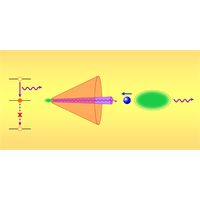
Phys. Rev. Lett. 137, 101804 (2026)
Particles and Fields
Can Bose-Einstein Condensates Enhance Radioactive Decay?
Article | Particles and Fields | 2026-09-02 06:00 EDT
Hanzhen Lin (林翰桢), Yu-Kun Lu, and Wolfgang Ketterle
Two studies find that fundamental quantum constraints rule out a previously proposed neutrino-laser scheme.
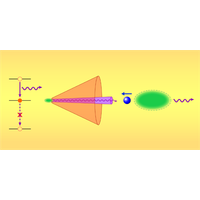
Phys. Rev. Lett. 137, 101805 (2026)
Particles and Fields
Infrared Singularities of Multileg Amplitudes with a Massive Particle at Three Loops
Article | Particles and Fields | 2026-09-02 06:00 EDT
Einan Gardi and Zehao Zhu
We determine the complete three-loop QCD soft anomalous dimension for multileg amplitudes involving a single massive colored particle and any number of massless ones. This is achieved by applying a novel strategy based on a light-cone expansion of correlators of semi-infinite Wilson lines using the …
Phys. Rev. Lett. 137, 101901 (2026)
Particles and Fields
Identification of $^{17}\mathrm{Na}$ Ground State and Mirror Symmetry Violation with $^{17}\mathrm{C}$
Article | Nuclear Physics | 2026-09-02 06:00 EDT
L. Ni et al.
The ground state of the three-proton emitter has been identified. Energy correlations between the protons and the residue indicate that its decay is sequential initiated by the emission of a single proton to the ground state of followed by simultaneous emission of two protons to the gr…
Phys. Rev. Lett. 137, 102501 (2026)
Nuclear Physics
Optimizing Optomechanical Detection by Spatially Mapping and Masking Measurement Inefficiency
Article | Atomic, Molecular, and Optical Physics | 2026-09-02 06:00 EDT
Youssef Tawfik, Shan Hao, and Thomas P. Purdy
Many optical measurement techniques, such as light scattering from wavelength-scale particles or detecting motion of a surface with an optical lever, encode information in a complex radiation pattern. Extracting all available information is essential for many quantum-enhanced sensing protocols but i…
Phys. Rev. Lett. 137, 103603 (2026)
Atomic, Molecular, and Optical Physics
Close Encounters between Periodic Light and Periodic Arrays of Quantum Emitters
Article | Atomic, Molecular, and Optical Physics | 2026-09-02 06:00 EDT
Frieder Lindel, Carlos J. Sánchez Martínez, Johannes Feist, and Francisco J. García-Vidal
We introduce crystal polaritons, hybrid excitations formed when the collective excitations of a periodic quantum-emitter array strongly couple to the resonant Bloch modes of a metasurface. This realizes a cavity-QED platform in which periodic light and periodic matter are treated on the same footing…
Phys. Rev. Lett. 137, 103802 (2026)
Atomic, Molecular, and Optical Physics
Quantized Transconductance Emerges from Nonsymmetric Quantum Fluctuations
Article | Condensed Matter and Materials | 2026-09-02 06:00 EDT
K. Mertiri and Yuli V. Nazarov
We show theoretically that weak quantum fluctuations induced by a nonsymmetric electromagnetic environment may lead to a quantized transconductance of a multiterminal quantum contact rather than to a blockade of transport in the contact. The result suggests the possibility to realize quantum Hall ph…
Phys. Rev. Lett. 137, 106301 (2026)
Condensed Matter and Materials
Light-Induced Transient Polarization Reversal in Rhombohedrally Stacked Bilayer Transition Metal Dichalcogenides via an Electronic Mechanism
Article | Condensed Matter and Materials | 2026-09-02 06:00 EDT
Xiangzhou Zhu, Stefano Mocatti, and Matteo Calandra
Light-induced sliding ferroelectricity in two-dimensional van der Waals materials enables polarization control via relative layer motion. However, polarization switching occurs on the timescale of shear modes (tens of picoseconds) and requires very large fluences, potentially damaging the samples. H…
Phys. Rev. Lett. 137, 106402 (2026)
Condensed Matter and Materials
Emergent Gauge Flux and Spin Ordering in Magnetized Triangular Spin Liquids: Applications to Hofstadter-Hubbard Model
Article | Condensed Matter and Materials | 2026-09-02 06:00 EDT
Jiahao Yang (杨家豪), Hao Tian, Si-Yu Pan, and Gang v. Chen
Motivated by recent progress in moiré superlattices and spin- triangular-lattice antiferromagnets, we study how orbital magnetic flux and Zeeman coupling compete or cooperate in generating internal U(1) gauge flux in a triangular spin liquid. We show that orbital flux favors a chiral spin liquid …
Phys. Rev. Lett. 137, 106502 (2026)
Condensed Matter and Materials
Electronic Tuning of the Soft-Phonon Transport Anomaly in ${\mathrm{Ta}}{2}\mathrm{Ni}({\mathrm{S}}{x}{\mathrm{Se}}{1-x}{)}{5}$
Article | Condensed Matter and Materials | 2026-09-02 06:00 EDT
Yuan-Shan Zhang, Masahiko Isobe, Hidenori Takagi, and Dennis Huang
Tuning the electronic structure of the excitonic insulator candidate TaNiSe via sulfur substitution reveals that its highly directional phonon transport anomaly is directly driven by electronic fluctuations, suggesting that electronic interactions and lattice effects cooperatively contribute to its phase transition.
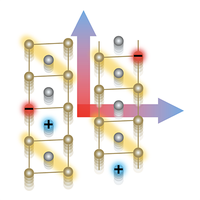
Phys. Rev. Lett. 137, 106503 (2026)
Condensed Matter and Materials
Chern-Simons-Matter Conformal Field Theory on the Fuzzy Sphere: Higgs Transition of the Kalmeyer-Laughlin Chiral Spin Liquid
Article | Condensed Matter and Materials | 2026-09-02 06:00 EDT
Zheng Zhou (周正), Chong Wang (王翀), and Yin-Chen He (何寅琛)
Exact diagonalization provides strong numerical evidence that the Higgs transition between a Kalmeyer-Laughlin chiral spin liquid and a trivially gapped phase is continuous and governed by a conformal field theory.
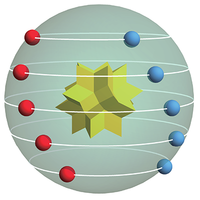
Phys. Rev. Lett. 137, 106504 (2026)
Condensed Matter and Materials
Terahertz Magneto-Photocurrents in the Topological Insulator ${\mathrm{Bi}}{2}{\mathrm{Se}}{3}$ Probe Its Topological Surface States
Article | Condensed Matter and Materials | 2026-09-02 06:00 EDT
Chihun In, Genaro Bierhance, Deepti Jain, Tom S. Seifert, Oliver Gueckstock, Roberto Mantovan, Seongshik Oh, and Tobias Kampfrath
We study ultrafast magneto-photocurrents in a three-dimensional topological insulator. For this purpose, we excite thin films with a femtosecond laser pulse in the presence of an external magnetic field up to parallel to the film plane. The resulting in-plane photocurrent …
Phys. Rev. Lett. 137, 106601 (2026)
Condensed Matter and Materials
Symmetry Classification of Nonrelativistic Hidden Spin Polarization in Noncollinear Magnets
Article | Condensed Matter and Materials | 2026-09-02 06:00 EDT
Yuzhong Hu, Pan Zhou, Baoru Pan, PengBo Lyu, and Lizhong Sun
Hidden spin polarization (HSP), in which spin-polarized states exist locally while the total spin polarization is hidden in momentum space, has been extensively studied in nonmagnetic and collinear magnetic systems but remains largely unexplored in noncollinear magnets. Here we establish a unified s…
Phys. Rev. Lett. 137, 106704 (2026)
Condensed Matter and Materials
Q-Factor Matching for Femtosecond Near-Field Enhancement in Hybrid Metal-Dielectric Metasurfaces
Article | Condensed Matter and Materials | 2026-09-02 06:00 EDT
Yaolong Li, Xu Shi, Yuxin Zhang, Lin Qiao, Hong Yang, Shufeng Wang, Guowei Lyu, Yasutaka Matsuo, Xiaoyong Hu, Qihuang Gong, and Hiroaki Misawa
Matching the cavity resonance lifetime to the driving laser pulse yields significantly greater near-field enhancement in ultrafast nanophotonics than maximizing the cavity quality factor alone.
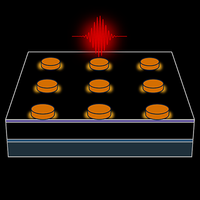
Phys. Rev. Lett. 137, 106902 (2026)
Condensed Matter and Materials
Physical Review X
Removing Nodal and Support-Mismatch Pathologies in Variational Monte Carlo via Blurred Sampling
Article | 2026-09-02 06:00 EDT
Zhou-Quan Wan, Roeland Wiersema, and Shiwei Zhang
A Monte Carlo postprocessing method called blurred sampling eliminates infinite variance and systematic bias in variational quantum many-body simulations.
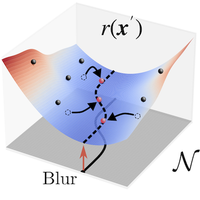
Phys. Rev. X 16, 031059 (2026)
Review of Modern Physics
Polarons in atomic gases and two-dimensional semiconductors
Article | Atomic, molecular, and optical physics | 2026-09-02 06:00 EDT
Pietro Massignan, Richard Schmidt, Grigori E. Astrakharchik, Ataç İmamoglu, Martin Zwierlein, Jan J. Arlt, and Georg M. Bruun
The polaron, a single impurity embedded in a quantum many-body environment, conceptually bridges few- and many-body physics. Its properties provide both a test bed for many-body theories and physical insight into the phase structure of more complicated many-body systems. This review discusses two pristine experimental platforms in which polarons have recently been realized: ultracold atomic gases and atomically thin transition-metal dichalcogenides. The authors discuss the theory of Bose and Fermi polarons, compare theory to experiment, and provide a perspective on how polarons may serve as precise sensors in complex environments.
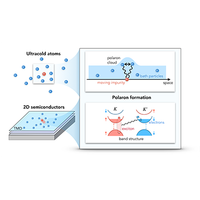
Rev. Mod. Phys. 98, 035002 (2026)
Atomic, molecular, and optical physics
arXiv
A Spatial Localizer for Constituent-Resolved Exciton Wannier Functions
New Submission | Materials Science (cond-mat.mtrl-sci) | 2026-09-03 20:00 EDT
Haylen Gerhard, Wladimir A. Benalcazar
The internal electron-hole structure of excitons influences optical and electric-field responses. Exciton Wannier functions have recently provided a local real-space representation of exciton bands. Because excitons are composite quasiparticles, these Wannier functions can be characterized by both their center-of-mass location and the internal electron-hole dipole. Resolving this internal structure in real space requires simultaneously locating the constituent electron and hole coordinates. However, the projected electron and hole position operators generally do not commute, so simultaneous diagonalization of these positions is impossible: their noncommutativity precludes a common eigenbasis and imposes a state-dependent lower bound on the joint spread. Existing approaches localize a single average coordinate or a specific constituent coordinate, but generally do not construct a common exciton Wannier basis that maximally localizes both constituent coordinates. Here, we construct an ``exciton spatial localizer’’: a single Hermitian operator that embeds the constituent position operators within a Clifford-algebra structure and returns exciton Wannier functions, maximally localized in their electron and hole coordinates simultaneously. Our formulation is ansatz-free, gauge-invariant, and applies to the generic multiband case. In an interacting bilayer model with an isolated group of exciton bands, we show that reflection and time-reversal symmetries, or other nonsymmorphic symmetries detailed herein, enforce a pointwise traceless but nonzero quantum geometric dipole matrix, which manifests in symmetry-related pairs of exciton Wannier functions with equal and opposite internal electron-hole dipoles.
Materials Science (cond-mat.mtrl-sci)
Phase synchronization of fish schools through spatial gaps
New Submission | Other Condensed Matter (cond-mat.other) | 2026-09-03 20:00 EDT
Elena G. de Lamo, Óscar Sánchez, M. Carmen Miguel, Romualdo Pastor-Satorras
We investigate how sensory coupling mediates phase coherence between spatially separated, confined active systems. Using two fish schools separated by a water-filled transparent gap, we isolate vision as the primary interaction channel. Under boundary confinement, each school’s center-of-mass heading exhibits noisy bistable dynamics, spontaneously switching between two antiparallel directions along the partition wall. Turning events in one school bias the orientation of the other, driving distance-dependent phase synchronization. We model this behavior using two coupled stochastic bistable oscillators whose exact solution quantitatively reproduces the empirical results. Our work establishes a precise connection between nonequilibrium active systems and coupled stochastic oscillators, offering insight into boundary-spanning information transfer in living collectives.
Other Condensed Matter (cond-mat.other)
12 pages, 9 figures
Piston-Like Information Engine II: Boundary-Controlled Optimum in Active Matter
New Submission | Statistical Mechanics (cond-mat.stat-mech) | 2026-09-03 20:00 EDT
Laura Hoek, Neta Ben Ari, Rémi Goerlich, Saar Rahav, Yael Roichman
Information engines convert information into extractable work through measurements and feedback. We realize an engine that employs information to compress a gas of self-propelled bristle bots. Its work per measurement, $ \bar{W}$ , is controlled by the size of the detection region $ \Delta x$ and the probability $ p_1$ that this region is vacant. In thermal systems, $ \bar{W}$ follows the universal form $ -p_1 \ln p_1$ , whereas the active engine shows a qualitatively modified relation. As particle density increases, the maximum of $ \bar{W}(\Delta x)$ switches between two distinct operating regimes. Notably, this transition is also found in the solutions that maximize power output for finite-time cycles with dynamics affected by dry friction. We attribute this nonequilibrium feature to the accumulation of active particles near the boundaries.
Statistical Mechanics (cond-mat.stat-mech), Soft Condensed Matter (cond-mat.soft)
11 pages and 8 figures
Evolution from Kitaev to XXZ spin chains via distortion: Application to BaCo$_2$V$_2$O$_8$
New Submission | Strongly Correlated Electrons (cond-mat.str-el) | 2026-09-03 20:00 EDT
Philip Richard, Mandev Bhullar, Hae-Young Kee
BaCo$ _2$ V$ _2$ O$ _8$ is a prototypical spin-orbit-coupled Ising-chain antiferromagnet that provides a unique platform for studying field-induced quantum magnetism. Under a transverse magnetic field, it exhibits unusual magnetic properties, including an anomalous staggered magnetization and a pronounced anisotropy of the critical field with respect to the in-plane field direction. While these phenomena have been attributed phenomenologically to a site-dependent anisotropic $ g$ -tensor, a recent microscopic theory has shown that spin-orbit coupling naturally generates bond-dependent Heisenberg, Kitaev, and $ \Gamma$ exchange interactions. Here, we unify these two pictures by extending the microscopic theory to incorporate distortions of the CoO$ _6$ octahedra. We show that the distortions not only generate the site-dependent anisotropic $ g$ -tensor but also renormalize the staggered exchange interactions through a distortion-induced contribution that partially compensates the Kitaev-derived staggered term. Using point-charge calculations to estimate the $ g$ -tensor of BaCo$ _2$ V$ _2$ O$ _8$ , we demonstrate that the strong anisotropy of the critical field originates from the combined effects of the modified exchange interactions and the anisotropic $ g$ -tensor. Our work provides a unified microscopic framework for understanding the magnetic anisotropy of spin-orbit-coupled Ising-chain materials.
Strongly Correlated Electrons (cond-mat.str-el)
9 pages, 4 figures
Tuning Boron-Vacancy Qubit Coherence through Layer Number in hBN
New Submission | Mesoscale and Nanoscale Physics (cond-mat.mes-hall) | 2026-09-03 20:00 EDT
Juan M. Florez, Eric Suárez Morell
The negatively charged boron vacancy ($ \VB$ ) in hexagonal boron nitride (\hBN{}) was the first optically addressable spin qubit identified inside a van der Waals crystal, allowing atomically defined placement relative to a target. Its coherence in bulk \hBN{} is limited by the boron nuclei of the layers flanking the defect plane, which a thin flake removes. Here, we use a generalized cluster-correlation expansion with an extended central-spin block to calculate the Hahn-echo coherence time of $ \VB$ in h$ ^{11}$ B$ ^{15}$ N as a function of layer number. Our results show that $ T_2$ rises from $ 199\ns$ in the bulk limit to $ 653\ns$ in a monolayer, a factor of $ 3.3$ that is already saturated at three layers and that a sublattice decomposition attributes entirely to boron. The enhancement is confined to low field, is insensitive to stacking registry and twist angle, and requires alignment to within about two degrees, an onset we reproduce with no free parameters. Under dynamical decoupling, a $ 1/e$ threshold returns $ 206\ns$ for every thickness, but this is a zero of the first-shell modulation rather than a decay: measured without a threshold, the layer contrast survives and reaches a factor of $ 170$ . Layer number thus emerges as a design parameter for $ \VB$ -based sensing.
Mesoscale and Nanoscale Physics (cond-mat.mes-hall), Quantum Physics (quant-ph)
Kelvin-Helmholtz instability in annular superfluids across the UFG-BCS crossover
New Submission | Quantum Gases (cond-mat.quant-gas) | 2026-09-03 20:00 EDT
Michał Śliwiński, Klejdja Xhani, Gabriel Wlazłowski
We investigate the Kelvin-Helmholtz instability of counter-rotating annular Fermi superfluids using time-dependent superfluid density functional theory. When the two initially separated superflows merge, a necklace of quantized vortices forms at their interface and subsequently becomes unstable. We extract mode-resolved instability growth rates and study their dependence on relative flow velocity, interaction strength, and temperature across the strongly interacting unitary regime and the weakly attractive BCS regime. In the unitary gas and moderate BCS regimes, the growth rates remain qualitatively consistent with the point-vortex model, though systematically at or above its predictions, with no significant dependence on interaction strength or temperature up to approximately $ 0.3 T_c$ . Deeper in the BCS regime, the dynamics change qualitatively: boundary-generated antivortices proliferate faster than the Kelvin-Helmholtz instability itself, destroying the initial vortex necklace before the instability can fully develop. These results provide a microscopic benchmark for Kelvin-Helmholtz dynamics in fermionic superfluids and help constrain possible explanations of the existing experiment-theory discrepancy.
Quantum Gases (cond-mat.quant-gas)
Symmetry-selective nonrelativistic spin splitting in antiferromagnets driven by coherent phonons
New Submission | Materials Science (cond-mat.mtrl-sci) | 2026-09-03 20:00 EDT
Sangeeta Rajpurohit, Mohsen Yarmohammadi, Sheikh Rubaiat Ul Haque, Tony F. Heinz, Aaron M. Lindenberg, Tadashi Ogitsu
Nonrelativistic spin splitting (NRSS) in antiferromagnets (AFMs) enables magnetization-free spin polarization for ultrafast spintronics. Here, we demonstrate that coherent phonons can dynamically induce and control NRSS in collinear AFMs. Excitation of $ \Gamma$ -point infrared-active phonons lifts the spin degeneracy of the ground state, while the residual sublattice-connecting symmetries determine the momentum-space form of the induced splitting. Because the relevant infrared modes couple to orthogonal in-plane light polarizations, distinct spin-split phases can be selectively activated by the polarization of the driving field. Using first-principles calculations for MnPS$ _3$ , we show that a mode that breaks all sublattice-connecting symmetries induces an $ s$ -wave spin-split state with $ \Delta(\Gamma)\neq0$ , whereas a symmetry-distinct mode that preserves a sublattice-connecting mirror symmetry generates a $ d$ -wave altermagnetic state with $ \Delta(\Gamma)=0$ . In both cases, the spin splitting grows linearly with the phonon amplitude and reverses the induced spin polarization when the displacement is reversed. Our results establish coherent lattice driving as a direct, polarization- and mode-selective route to dynamically induce distinct NRSS phases in AFMs.
Materials Science (cond-mat.mtrl-sci)
10 pages, 7 figures
Magnons in Metallic Altermagnetic $\text{KV}_2\text{Se}_2\text{O}$
New Submission | Mesoscale and Nanoscale Physics (cond-mat.mes-hall) | 2026-09-03 20:00 EDT
Daniel Lourenço R. Santos, António T. Costa
We investigate the spin excitation in altermagnetic vanadium oxyselenides, focusing on the metallic quasi-two-dimensional compound $ \text{KV}_2\text{Se}_2\text{O}$ . Using a fermionic Hamiltonian derived from ab initio calculations, we compute the transverse spin susceptibilities within the random phase approximation and extract the magnon dispersion relation. We show that the altermagnetic symmetry leads to characteristic degeneracies and directional splittings in both the electronic bands and the magnon spectra along high-symmetry paths of the Brillouin zone. The metallic $ \text{KV}_2\text{Se}_2\text{O}$ exhibits finite magnon linewidths arising from the coupling to the particle-hole continuum. Furthermore, by fixing the magnitude of the wave vector and varying its in-plane direction, we uncover a pronounced angular dependence of the magnon energies and lifetimes, with complementary damping behavior between the two magnon branches. Upon including spin-orbit coupling, the system exhibits an out-of-plane easy c-axis anisotropy, which opens a magnon gap of approximately 6 meV at the $ \Gamma$ -point, possibly rendering the magnetic order stable at room temperature. Our results demonstrate that altermagnetism controls not only the dispersion but also the anisotropic decay of spin excitations, highlighting altermagnetic metals as promising platforms for directionally selective magnon transport.
Mesoscale and Nanoscale Physics (cond-mat.mes-hall)
9 pages, 7 figures
Molecular spin qubits in a van der Waals bottle
New Submission | Materials Science (cond-mat.mtrl-sci) | 2026-09-03 20:00 EDT
Anna Champ, Eleanor Mackintosh, André Koch Liston, Sanghyo Lee, Eric D. Walter, Raphaël P. Hermann, George Yumnam, Eric Seewald, Xuehao Wu, Augustin Braun, Willa Mihalyi-Koch, Johan van Tol, Tomas Orlando, Mykhaylo Ozerov, Byeongjun Gil, Myung-Geun Han, Yimei Zhu, Miyoung Kim, Abhay N. Pasupathy, Milan Delor, Michael L. Steigerwald, Timothy C. Berkelbach, Colin Nuckolls, Xavier Roy, Arun Ramanathan
Advancing quantum information technologies requires qubits whose coherence can be precisely engineered. Among the qubit platforms in development, molecular spin qubits (MSQs) stand out for their atomic scale tunability and chemical specificity, making them powerful candidates for sensing, simulation, and information processing. However, integrating MSQs into solid-state architectures without degrading their coherence remains a central challenge. Here, we introduce van der Waals (vdW) confinement within two-dimensional materials as a strategy for stabilizing quantum states in MSQs by engineering their local electronic, vibrational, and symmetry environments. Using cobaltocene as a model system, we show that confinement within vdW SnS2 and CdPS3 single crystals reorganizes the single-ion energy landscape and slows spin-lattice relaxation by over two orders of magnitude relative to unconfined cobaltocene. The confined MSQs adopt deterministic orientations and self-assemble into ordered, atomically precise superlattices, establishing vdW confinement as a pathway for integrating MSQs into functional quantum devices.
Materials Science (cond-mat.mtrl-sci)
Morphology and Dynamics of Self-interstitial Clusters in Irradiated Nickel
New Submission | Materials Science (cond-mat.mtrl-sci) | 2026-09-03 20:00 EDT
Ajay Annamareddy, Ibrahim Momohjimoh, Hangyu Li, Kevin G. Field, Paul M. Voyles, Dane Morgan
Self-interstitial atom (SIA) clustering is a key early step in radiation damage evolution in face-centered cubic (FCC) metals, governing defect transport, recombination, and the long-term microstructural response of irradiated alloys. We combine molecular dynamics (MD) simulations and high-speed (>1000 frames/s) in situ transmission electron microscopy (TEM) to investigate the structure, energetics, and migration dynamics of SIA clusters in FCC Ni. MD simulations show that interstitials initially form disordered dumbbell clusters that evolve into either sessile Frank loops or glissile perfect (prismatic) loops; the latter progressively reorganize into compact ordered configurations with increasing mobility. Direct construction of both loop types over a wide size range, validated against MD-relaxed structures, shows that perfect loops are thermodynamically favored over Frank loops for cluster sizes N greater than or equal to 14, where N is the number of SIAs, with the energetic advantage increasing with cluster size. Nevertheless, substantial kinetic barriers allow Frank loops to persist as metastable defects. For perfect loops, diffusion coefficients computed over N = 16 to 400 reveal a nearly size-independent migration barrier of approximately 0.02 eV, while the diffusion prefactor decreases approximately as N^(-0.54). Trajectory analysis reveals a non-rigid, row-wise relay mechanism in which the number of participating atoms increases systematically with loop size, accounting for much of the observed prefactor scaling. Sub-millisecond in situ TEM observations reveal intermittent loop motion at velocities higher than previously observed but still several orders of magnitude below the intrinsic mobilities predicted by MD, indicating migration through a heterogeneous energy landscape of mobile and pinned states.
Materials Science (cond-mat.mtrl-sci)
Machine Learning Local Potentials for Accelerated Electron-Phonon Interactions Calculations within the Projector Augmented-Wave Framework
New Submission | Materials Science (cond-mat.mtrl-sci) | 2026-09-03 20:00 EDT
Electron-phonon interactions govern carrier dynamics, transport, and many optical and quantum phenomena in solids, but finite-displacement calculations within the projector augmented-wave (PAW) framework require up to 6N self-consistent supercell calculations for an N-atom system, making them costly for large, low-symmetry, and disordered materials. We introduce MLLocP, a machine learning strategy that learns the self-consistent local potential on real-space grids and supplies its displacement derivatives to the evaluation of all-electron PAW electron-phonon matrix elements. Analysis of the PAW decomposition identifies the local-potential contribution as a natural target for machine learning, while the remaining PAW quantities are retained within the established VASP/PHELEL framework. Using targeted grid-point sampling and feature-diversity selection for efficient model training, we validate MLLocP for elemental Cu, polar BAs, and chemically disordered Cu3Au. The learned potentials and their resulting displacement derivatives closely reproduce direct density functional theory calculations, yielding transport coefficients within approximately 3.5% for BAs mobility, 8% for Cu conductivity, and 11% for Cu3Au conductivity. For the 32-atom Cu3Au special quasirandom structure, using 40 sampled configurations reduces the number of self-consistent calculations by about fivefold relative to the 192 displaced structures required directly; using 20 or 10 configurations increases the acceleration to approximately 10- and 20-fold, with conductivity errors of 14.3% and 18.6%, respectively. MLLocP thus provides a scalable route to PAW electron-phonon calculations in complex materials while preserving the underlying all-electron formalism.
Materials Science (cond-mat.mtrl-sci)
Microscopic dynamics of contagion using active Brownian particles: universal scaling and propagation controlled by protection
New Submission | Statistical Mechanics (cond-mat.stat-mech) | 2026-09-03 20:00 EDT
Isela Sicarú Regalado-Alvarado, Francisco Alarcón
Understanding how individual protection and population density influence epidemic spreading remains a central challenge in epidemiology. While classical compartmental models successfully describe the temporal evolution of epidemics, they do not explicitly account for the microscopic motion and spatial organisation of individuals. Here, we investigate contagion dynamics using an agent-based model of Active Brownian Particles (ABPs), where self-propelled agents interact through local contact and a prescribed fraction of the population is protected. By systematically varying the protected-agent fraction and the population density, we identify two distinct contagion regimes separated by a crossover protection of approximately $ 30%$ . Below this threshold, the maximum contagion rate follows the universal scaling $ \nu_{\mathrm{max}}\propto\phi^{1/2}$ , indicating that disease transmission is governed primarily by frequency of encounters. Above the threshold, universal scaling is lost and protection becomes the dominant mechanism controlling epidemic spreading, with the strongest suppression occurring in low-density populations. These results demonstrate that microscopic active-matter models provide a powerful framework for investigating epidemic dynamics beyond the assumptions of well-mixed population models and reveal how spatial organisation and individual protection jointly determine contagion dynamics.
Statistical Mechanics (cond-mat.stat-mech), Soft Condensed Matter (cond-mat.soft)
Accepted for publication in Revista Mexicana de Física
Interaction effects on Andreev states from an electromagnetic environment
New Submission | Superconductivity (cond-mat.supr-con) | 2026-09-03 20:00 EDT
Erik S. Samuelsen, Yuli V. Nazarov
Here we present a detailed theoretical investigation of the environment-induced interaction correction to the ground states and addition energies in a short superconducting junction. We derive general formulas for these corrections linking them to the frequency-dependent admittance of the junction and the environment impedance. We specify two environmental models: that of an external impedance and the Mattis-Bardeen model. In both cases we assume $ G_Q Z \ll 1$ , where $ G_Q$ is the conductance quantum and $ Z$ the typical environmental resistance.
While an expectation is that the typical scale of the relative correction is of the order $ G_Q Z$ , we have found that in many cases the dimensionless scale $ L G_Q \Delta$ provides a better estimation, where $ \Delta$ is the superconducting energy gap and $ L$ an external inductance. We discuss the logarithmic renormalizations of the energies by low- and high-frequency phase fluctuations and single out a non-superconducting contribution related to the renormalization of transmission eigenvalues. We investigate in detail the peculiarities of the corrections at: i. small phases, where the interaction causes a current jump, ii. Andreev bound state energies close to the gap edge, iii. Andreev bound state energies close to Fermi level. In all these cases the correction may become comparable with the unperturbed energy, even for $ G_Q Z \ll 1$ , and we briefly sketch non-perturbative models relevant for the situations.
Superconductivity (cond-mat.supr-con)
18 + 18 pages, 12 + 4 figures
Non-Additivity of Microwave-Shielded Interactions between Dipolar Molecules
New Submission | Quantum Gases (cond-mat.quant-gas) | 2026-09-03 20:00 EDT
Fabian Prieschl, Andreas Schindewolf, Robert E. Zillich
Theoretical models of the effective interactions between microwave-shielded polar molecules typically rely on the assumption of pairwise additivity. In this work, we test the validity of this pairwise approximation by evaluating the exact many-body potential energy for configurations of three and four molecules. We demonstrate that this approximation fails for molecule configurations in the plane of the circularly polarized microwave field. In these planar geometries, many-body effects significantly increase the depth of the attractive potential well and shift the position of the repulsive barrier. Although out-of-plane interactions in three-dimensional arrangements weaken this non-additivity, the effective interactions between microwave-shielded dipoles are not a simple sum of pair interactions. In particular, their attractive well, crucial for self-bound clusters, can only be described by the full many-body potential energy.
Quantum Gases (cond-mat.quant-gas)
12 pages, 5 figures
Observation of g-wave altermagnetic multipole
New Submission | Strongly Correlated Electrons (cond-mat.str-el) | 2026-09-03 20:00 EDT
Ryo Misawa, Rikuto Oiwa, Shunsuke Kitou, Tatsuya Miki, Motohiko Ezawa, Weiyi Yun, Rinsuke Yamada, Chihaya Koyama, J. Alberto Rodríguez Velamazán, Kamil K. Kolincio, Navid Qureshi, Elina Zhakina, Yuiga Nakamura, Jan Masell, Ilya Belopolski, Taka-hisa Arima, Yusuke Nomura, Satoru Hayami, Max Hirschberger
Over the past few years, altermagnets have emerged as a new class of collinear magnets with broken time-reversal symmetry, offering novel opportunities for spintronics beyond conventional magnets. Rather than from net magnetization, as in ferromagnets, the unconventional time-reversal symmetry breaking of altermagnets originates from antiferroic magnetic dipoles locked to higher-order multipoles. Here we report the direct visualization of a $ g$ -wave altermagnetic multipole in the canonical altermagnet CrSb. Combining high-energy synchrotron X-ray diffraction with valence electron density (VED) analysis, we uncover a pronounced directional anisotropy of the VED distribution alternating between Cr sublattices. This evidences the antiferroic order of electric hexadecapoles predicted in $ g$ -wave altermagnets. Its coexistence with antiferroic magnetic dipoles induces ferroic magnetic multipoles, as probed by polarized neutron diffraction. We further identify a microscopic model of altermagnetism that directly relates the $ g$ -wave multipole and the $ g$ -wave spin splitting. Through direct observation and quantification of multipoles, this study provides a real-space fingerprint of altermagnetism and establishes a general probe of hidden multipole order in quantum materials.
Strongly Correlated Electrons (cond-mat.str-el)
Machine-learning screening and first-principles lattice dynamics resolve the most stable structure of NaCa(BH$_4$)$_3$ from a data-driven candidate search
New Submission | Materials Science (cond-mat.mtrl-sci) | 2026-09-03 20:00 EDT
Sanaa Ismail, Ricardo Amaral, Attia A. Gadallah, Hassan Mohamed El-Said Azzazy, Zi-Kui Liu
Equimolar NaCa(BH$ _4$ )$ _3$ offers a theoretical hydrogen capacity of 11.24 wt.% and a decomposition enthalpy expected to fall between those of NaBH$ _4$ and Ca(BH$ _4$ )$ _2$ , but it has never been prepared and no crystal structure has been reported. Predictions for it have so far been built within the perovskite family that its heavier homologues adopt. Here that assumption is removed. Six candidate frameworks were assembled from three independent sources — experimentally determined ABX$ _3$ borohydrides, a distorted perovskite from data-driven structure prediction, and an unbiased search over a structural database in which all 2238 generated candidates were relaxed with none excluded — and at fixed charge-neutral composition the cation arrangement of every framework was enumerated exhaustively, 420 decorations reducing to 118 symmetry-inequivalent configurations, screened with a machine-learning potential and settled from first principles. The most stable structure is not a perovskite. It is a monoclinic framework of space group Cm, reached only by the unrestricted search, at $ -$ 4.185640 eV/atom, 7.67 meV/atom below the best framework available beforehand; two chemically unrelated donor prototypes converge on it to 0.076 meV/atom, and its ordered cation arrangement is the ground state of its own series. Its phonon spectrum carries no imaginary mode at any wavevector the supercell resolves exactly and its relaxed-ion elastic tensor is positive definite, whereas the orthorhombic perovskite candidate is unstable to $ -$ 2.401 THz. That contrast supplies a physical reason for the reported failure to obtain this composition in perovskite form, and the simulated diffraction pattern reported here identifies the predicted framework by seven reflections that neither parent phase nor the competing framework produces.
Materials Science (cond-mat.mtrl-sci)
Symmetry-enforced third-order nonlinear thermal Hall effects in altermagnets
New Submission | Materials Science (cond-mat.mtrl-sci) | 2026-09-03 20:00 EDT
Yun-Mei Li, Jiacheng Yao, Hua Wang, Kai Chang
Thermal Hall effect (THE) is a powerful probe of material properties, even in insulators. Here we investigate the thermal response of altermagnets by developing a theory on Berry curvature driven nonlinear THE from both electrons and magnons. We identify symmetry conditions under which the third-order THE dominates while linear and second-order contributions vanish. Notably, d-wave and i-wave altermagnets with out-of-plane Neel order satisfy these conditions, whereas in-plane order yields a dominant linear THE. Using KV2Se2O (a d-wave altermagnetic metal) and MnF2 (an altermagnetic insulator) as concrete examples, we show nonzero third-order nonlinear THE from electrons and magnons, respectively, both exhibiting a pi-periodic dependence on the direction of temperature gradient. These symmetry-guaranteed Berry curvature phenomena provide a diagnostic for altermagnetism in candidate materials and enable determination of the Neel vector orientation.
Materials Science (cond-mat.mtrl-sci), Mesoscale and Nanoscale Physics (cond-mat.mes-hall)
6 pages, 3 figures
Bell inequality violation with momentum-entangled massive particles
New Submission | Quantum Gases (cond-mat.quant-gas) | 2026-09-03 20:00 EDT
Y. S. Athreya, S. Kannan, X. T. Yan, K. V. Kheruntsyan, A. G. Truscott, S. S. Hodgman
Bell’s theorem revealed the fundamental incompatibility between the predictions of quantum mechanics and local realism. Bell inequality violations have since demonstrated quantum nonlocality using photons and internal states of massive particles, but never using their motional states. Here we report the first Bell inequality violation in the motional states of massive particles. Using momentum-entangled pairs of metastable helium atoms manipulated by matter-wave interferometry, we measure a Clauser-Horne-Shimony-Holt (CHSH) Bell parameter of $ S = 2.52 \pm 0.17$ , violating the CHSH-Bell inequality ($ S \le 2$ ). Our work completes a long-standing objective in quantum atom optics by extending Bell tests from internal quantum variables to the external degrees of freedom of massive particles, opening a new regime for exploring quantum nonlocality in matter waves and for investigating the interplay between quantum mechanics and gravity.
Quantum Gases (cond-mat.quant-gas), Quantum Physics (quant-ph)
Complete Topological Classification with P and T Symmetries: Revealing a Topological Invariant Invisible to K-Theory
New Submission | Mesoscale and Nanoscale Physics (cond-mat.mes-hall) | 2026-09-03 20:00 EDT
The K-theoretic framework provides a complete topological classification of the tenfold symmetry classes and has been generalized to incorporate crystalline symmetries. Here, we show that this classification is incomplete even in the elementary case of spinless systems possessing both P and T symmetries. We obtain the complete classification through a first-principles analysis of the topological classes of P- and T-symmetric bands, namely, by classifying the corresponding symmetric clutching data. We identify a topological invariant that is invisible from the K-theoretic perspective when the occupied states at each inversion-invariant momentum have uniformly positive or uniformly negative parity. In special cases, such as when all inversion-invariant momenta have uniformly positive parity, this invariant can be interpreted as the second Stiefel–Whitney class or the Euler number defined over an inversion fundamental domain, namely, half of the Brillouin zone. Our work not only reveals a new topological invariant that cannot be determined from the parity spectra at inversion-invariant momenta under P and T symmetries, but also demonstrates the existence of crystalline topological phases that are absent from the K-theoretic classification.
Mesoscale and Nanoscale Physics (cond-mat.mes-hall)
7 pages,3 figures, submitted to prl
Persistence and emergence of quantum defects through pressure-induced phase changes
New Submission | Mesoscale and Nanoscale Physics (cond-mat.mes-hall) | 2026-09-03 20:00 EDT
Alexander J Healey, Alan Salek, Christopher T-K Lew, Zsolt Benedek, Brett C Johnson, Josiah E Hsi, Islay O Robertson, Kaijian Xing, Hiroshi Abe, Takeshi Ohshima, Kenji Watanabe, Takashi Taniguchi, Mehran Kianinina, Viktor Ivady, Igor Aharonovich, Dougal McCulloch, Jean-Philippe Tetienne, David A Broadway
Extreme pressures can transform materials and their properties, but probing these in-situ is made challenging by the small sample volumes and access requirements demanded by diamond anvil cells. Quantum defects offer a route to local measurements under such conditions, yet their sensing performance can be dictated by pressure-induced changes in their own host material. On the other hand, pressure may also be harnessed as a tool to engineer and stabilize new quantum defects with emergent functionalities. Here, we demonstrate both aspects within a unified platform based on optically active spin-pair defects in hexagonal boron nitride (hBN). As robust quantum sensors under pressure, these spin-1/2 systems retain pressure-independent spin resonances up to 20 GPa while maintaining or even enhancing their optical emission, in stark contrast to the spin-1 boron-vacancy centre in the same material. Simultaneously, we show that compression acts as a means of quantum defect engineering: the starting hBN undergoes an irreversible transformation into wurtzite boron nitride (wBN), during which the defect landscape is reconfigured. Spin-pair sensors are seen to persist across this structural transition, however, depending on the starting material we also observe new, highly fluorescent defects in the wBN phase. These results establish spin-pair defects in boron nitride as pressure-resilient quantum sensors while highlighting high pressure itself as a versatile pathway for creating and tuning quantum emitters.
Mesoscale and Nanoscale Physics (cond-mat.mes-hall)
EuIn2Sb2: epitaxially stabilized axion insulator candidate with strong spin-orbit coupling
New Submission | Materials Science (cond-mat.mtrl-sci) | 2026-09-03 20:00 EDT
Hsiang Lee, Shinichi Nishihaya, Markus Kriener, Ayano Nakamura, Tadashi Yoneda, Yuki Deguchi, Makuro Goto, Masaki Uchida
Eu triangular lattice layer compounds described by the general formula EuA2X2 have attracted growing attention due to a wide range of layered crystal structures and corresponding magnetic topological phases, arising from the coexistence of large Eu magnetic moments and energetically inverted A and X bands. Among the EuA2X2 family, EuIn2Sb2 has been predicted to host robust axion insulator and higher-order topological insulator states by stronger spin-orbit coupling but has not been experimentally realized, including the structural identification. Here we report the epitaxial stabilization of EuIn2Sb2 by adopting the molecular beam epitaxy technique. Structural characterization reveals that EuIn2Sb2 films are based on a unique In-on-In stacking, forming a new trilayer structure distinct from previously predicted structures in the EuA2X2 family. In addition to the in-plane antiferromagnetic ordering at TN=10.5K, the stronger spin-orbit coupling and enhanced In-In hybridization in EuIn2Sb2 make it an ideal candidate of axion insulator and higher-order topological insulator phases. These results establish EuIn2Sb2 as a new member of the EuA2X2 family and offer an advanced platform for exploring these magnetic topological phases.
Materials Science (cond-mat.mtrl-sci), Strongly Correlated Electrons (cond-mat.str-el)
19 pages, 4 figures
Charge-Transfer Electronic Structure of NiX$_2$ (X = S, Se)
New Submission | Materials Science (cond-mat.mtrl-sci) | 2026-09-03 20:00 EDT
Atsushi Hariki, Takaki Okauchi, Daisuke Takegami, Naoki Ito, Mizuki Furo, Ayako Yamamoto, Tomoya Higo, Satoru Nakatsuji, Masato Yoshimura, Takashi Mizokawa, Jan Kunes
We investigate the electronic structures of NiS$ _2$ and NiSe$ _2$ using density functional theory combined with dynamical mean-field theory (DFT+DMFT). A realistic electronic structure within DFT+DMFT was determined by optimizing the double-counting correction to reproduce experimental valence-band photoemission spectra. The validity of the present model is further confirmed by its successful description of the Ni 2$ p$ core-level photoemission and Ni $ L$ -edge x-ray absorption spectra of NiS$ _2$ . Our results reveal a smaller charge-transfer energy than previously assumed, resulting in substantial ligand-to-Ni charge transfer and a reduced Ni local moment. We clarify how the relative position and interaction between the Ni upper Hubbard band and the antibonding chalcogen-dimer states shape the evolution of the low-energy electronic structure across the NiS$ _{2-x}$ Se$ _x$ series.
Materials Science (cond-mat.mtrl-sci), Strongly Correlated Electrons (cond-mat.str-el)
The Locality Cost of Fully Flat Hopf Insulators
New Submission | Materials Science (cond-mat.mtrl-sci) | 2026-09-03 20:00 EDT
Feng Liu, Qifeng Liang, Wenlong Gao
Hopf topology permits a strictly finite-range Hamiltonian with one exactly flat topological band. We prove, however, that extending flatness to the complete two-band spectrum necessarily sacrifices strict locality or the gap: any gapped, Hermitian, translationally invariant two-band Hamiltonian with strictly finite-range hopping and two exactly flat bands has vanishing Hopf invariant. Equivalently, within this two-band setting, a Hopf band admits no compactly supported, translation-covariant, orthonormal Wannier generator. For factorized one-flat-band Hopf parents, the unavoidable partner dispersion equals the Gram symbol of translated compact localized states and encodes their nonorthogonality. Full flattening converts this dispersion into exponentially decaying but infinitely supported hopping. Model-independent bounds provide a sufficient criterion for finite-range approximants to retain the Hopf phase. An explicit model yields the axial decay length $ \xi_z/a=1/\ln 2$ , parameter-free hopping tails, and residual bandwidths testable in circuit and photonic lattices. Hopf topology therefore does not prohibit a flat band but forces the locality–flatness cost to appear as either partner-band dispersion or nonlocal hopping.
Materials Science (cond-mat.mtrl-sci)
4 pages, 3 figures; Supplemental Material included
Decoding Oxygen K-edge Fingerprints of NCM-811 Degradation via Ab Initio Many-Body Theory and High-Throughput Screening of Crystal Proxies
New Submission | Materials Science (cond-mat.mtrl-sci) | 2026-09-03 20:00 EDT
Daniel Duarte-Ruiz, Timo Reents, Elmar Kataev, Raul Garcia-Diez, Regan G. Wilks, Marcus Baer, Caterina Cocchi
The degradation of LiNi$ _{0.8}$ Co$ _{0.1}$ Mn$ _{0.1}$ O$ _2$ (NCM-811) in Li-ion batteries produces complex transition-metal oxides and binary phases that fundamentally limit cathode performance. While identifying these degradation products via X-ray absorption spectroscopy (XAS) is essential for mitigating electrochemical performance loss, interpretation remains challenging due to the structural complexity of real-world samples. In this work, we present an integrated theoretical-experimental framework combining high-resolution oxygen K-edge XAS with \textit{ab initio} simulations based on many-body perturbation theory and high-throughput screening from density functional theory. We first evaluate the spectroscopic fingerprints of eight layered, spinel, and nominal rock-salt reference oxides, identifying discrepancies between the idealized single-crystal bulk phase and experimental spectra. Using high-throughput screening to analyze the oxygen $ p$ -projected density of states of 38 distinct polymorphs of NiO, CoO, and MnO, we propose that the spectral differences can emerge, among other factors, from a structural ensemble of local variations represented here by simplified structural proxies. Our work establishes a viable and rigorous computational pathway to interpret the complex landscape of degraded battery materials.
Materials Science (cond-mat.mtrl-sci)
Linker Functionalization and pH Tuning Enhance Solar-Driven Catalytic CO$_2$ Reduction in MOF-5
New Submission | Materials Science (cond-mat.mtrl-sci) | 2026-09-03 20:00 EDT
Julia Santana-Andreo, Joshua Edzards, Surender Kumar, Caterina Cocchi
The wide band gap of metal-organic framework (MOF) 5 constrains its use in photocatalytic carbon dioxide (CO$ _2$ ) reduction despite its high porosity and favorable mass-transport properties. Adopting a state-of-the-art first-principles approach, we systematically investigate the effects of volumetric strain, metal-node substitution, linker functionalization, and pH control as knobs to improve the CO$ _2$ photocatalytic ability of MOF-5. Strain and metal-node substitution negligibly affect the gap, whereas linker functionalization narrows it into the visible range via in-gap states while preserving reduction-side alignment at pH = 0. The resulting reduction energetics are strongly sensitive to both linker functionalization and pH. Halogenated and hydroxylated frameworks provide access primarily to HCOOH, CO, and HCHO under alkaline conditions, principally with the Mg and Zn nodes, whereas COOH functionalization offers the broadest thermodynamic accessibility across the full CO$ _2$ reduction sequence. NH$ _2$ retains thermodynamic feasibility for all target reduction pathways but with larger overpotentials, while NO$ _2$ generally yields unfavorable reduction energetics. Crucially, within the COOH series, the choice of the metal node tunes the fundamental gap by over 1 eV with only minor changes in the reduction overpotentials, placing Sr- and Ba-based architectures as the most favorable ones for broad product selectivity with visible-light excitation. Linker functionalization substantially reduces the spatial overlap of the frontier states, promoting photoinduced charge separation. Taken together, these results establish linker functionalization and solution pH as complementary design levers for independently tuning light absorption and CO$ _2$ -reduction energetics in MOF-5, establishing a rational and viable route for designing efficient MOF-based photocatalysts.
Materials Science (cond-mat.mtrl-sci)
Vortex-core Majorana coupling to a chiral edge in a $p_x+ip_y$ superconductor: Nonmonotonic spectral reorganization and coherent fermion-parity dynamics
New Submission | Superconductivity (cond-mat.supr-con) | 2026-09-03 20:00 EDT
We study how vortex–edge coupling reorganizes the low-energy sector of a finite two-dimensional (p_x+ip_y) superconducting disk as a function of the vortex–boundary separation (d) and examine what this reorganization implies for the parity memory associated with a prescribed vortex-core Majorana wave packet, a resource relevant to Majorana-based quantum operations. Bogoliubov–de Gennes calculations reveal nonmonotonic core–edge reorganization of the lowest positive-energy finite-disk eigenstate, with particularly rapid variation near (d\simeq7\xi), where (\xi) is the coherence length. To separate this eigenstate reorganization from the spectral representation of a prescribed state, we rigidly translate a centered-vortex core-reference packet to each fixed vortex position, restrict it to the target disk, and project it, without intermediate normalization, onto the particle-hole-complete low-energy subspace. For (\Delta_0/E_F=0.36) and disk radius (R=30\xi), the resulting retained norm exceeds (0.98) at all six sampled separations, (4.25\leq d/\xi\leq8.25), while, depending on (d), the spectral measure is concentrated near zero energy, fragmented over several low-energy levels, or dominated by finite-energy weight. Correspondingly, the signed parity correlator displays slow temporal variation, rapid coherent dephasing, or sign-changing oscillations, with possible finite-size recurrences at later times. Thus a large retained norm does not by itself imply spectral concentration or persistent parity memory.
Superconductivity (cond-mat.supr-con), Mesoscale and Nanoscale Physics (cond-mat.mes-hall)
16 pages
Anomalous Superfluid Response in Altermagnetic Superconductors
New Submission | Superconductivity (cond-mat.supr-con) | 2026-09-03 20:00 EDT
Christian Wiedemann, Danilo Nikolić, Matthias Eschrig, Wolfgang Belzig
We report on the emergence of the anomalous (paramagnetic) superfluid response in altermagnetic superconductors at arbitrary impurity concentrations. Due to anisotropic gapless superconductivity, altermagnetic superconductors with an out-of-plane Zeeman field display an anisotropic paramagnetic Meissner effect. The effect is strongest for parallel altermagnetic and Zeeman exchange field vectors and in the clean sample. The presence of nonmagnetic impurities leads to isotropisation and, consequently, weakens the effect; however, the paramagnetic response sustains intermediate amounts of impurities in the system. As demonstrated in recent experiments, microwave superfluid stiffness measurements can serve as a sensitive probe of gapless superconductivity.
Superconductivity (cond-mat.supr-con)
7 pages, 4 figures; suggestions for overlooked references are welcome
Vitrification-Devitrification Enables Tunable Photonic and Gas Sorption Properties of Zeolitic Imidazolate Frameworks
New Submission | Materials Science (cond-mat.mtrl-sci) | 2026-09-03 20:00 EDT
Zhencai Li, Zihao Wang, Minhyuk Kim, Huotian Zhang, Bozhao Yin, Yong Li, Qi Zhang, Fengming Cao, Xuan Ge, Laurent Calvez, Daniel Irving, Guoping Dong, Feng Gao, Haomiao Zhu, Morten M. Smedskjaer, Hoi R. Moon, Yuanzheng Yue
Zeolitic imidazolate framework (ZIF) glasses represent an emerging family of melt-quenched glasses, which exhibit immense potential for applications in gas separation, energy storage, and optics. However, their intrinsic porosity remains elusive due to the inherent challenges in resolving their disordered atomistic structures. Here, we systematically investigate the porosity of ZIF-4 and ZIF-62 crystals and their corresponding glasses. CO2 sorption at 195 K enables quantitative assessment of microporosity in both crystalline and glassy states, allowing the accessible micropore volume of the ZIF glasses to be determined. Moreover, establishing a direct relationship between photonic properties and structural porosity in Zn-based ZIF glasses remains challenging. Here we demonstrate striking broadband blue-light emission from ZIF-4 glass annealed under optimized conditions. A pronounced red shift is observed when increasing the annealing temperature above the glass transition temperature. By correlating the evolution of photoluminescence with structural porosity, we reveal the interplay between the photonic and gas sorption properties of ZIF glasses. These findings provide new insights into the structure-property relationships of ZIF glasses and offer a pathway toward the rational design of multifunctional MOF glasses.
Materials Science (cond-mat.mtrl-sci)
17 pages, 4 figures
Quantum Structural Renormalization and Anharmonic Stabilization of Superconductivity in P4/mmm YScH8
New Submission | Superconductivity (cond-mat.supr-con) | 2026-09-03 20:00 EDT
Xiaorui Dong, Mi Pang, Wenjie Ma, Yao Ma, Pugeng Hou
The recent synthesis of P4/mmm-YScH$ {8}$ at 191.7 GPa with a superconducting critical temperature Tc of 113 K has attracted considerable interest in the study of ternary superhydrides. Here we systematically evaluate the effects of quantum and anharmonic motion of ions in P4/mmm-YScH$ {8}$ using the stochastic self-consistent harmonic approximation (SSCHA). We find that these effects renormalize the crystal structure and lower the dynamical stability threshold pressure from $ \sim$ 140 GPa to $ \sim$ 84 GPa, a reduction of about 40%. Furthermore, neglecting these effects causes a significant overestimation of the $ T{c}$ , for instance by $ \sim$ 20 K at 190 GPa. Our prediction of $ T{c}$ at 190 GPa is 113 K ($ \mu^{\ast}$ = 0.13), close to the experimental observation. Analysis of the phonon density of states and Eliashberg spectral function further reveals site-dependent contributions to superconductivity. These results establish that a consistent treatment of nuclear quantum motion and anharmonicity is essential for accurately predicting superconductivity in compressed ternary hydrides.
Superconductivity (cond-mat.supr-con)
17 pages, 6 figures
Ferroelastic domain switching by ultrafast photoinduced strain
New Submission | Materials Science (cond-mat.mtrl-sci) | 2026-09-03 20:00 EDT
Daniel G. Lourens, Maarten Kwaaitaal, Carl S. Davies, Andrei Kirilyuk
The crystal lattice underpins the fundamental properties of condensed matter, with ferroic order emerging sensitively from atomic coordination. Manipulating the lattic therefore promises a direct way to switch ferroics between their states. Infrared excitation provides an efficient pathway to drive lattice motion and generate transient crystal deformations and strains. Ferroelastics constitute a uniquely direct platform for such control, their order parameter being strain itself. However, whether ultrafast laser-induced lattice distortions can switch ferroelastic order remains unknown. Here we use ultrafast pump-probe microscopy to demonstrate that a single high-amplitude infrared pulse induces strain within the first nanosecond, followed by ferroelastic domain switching several nanoseconds later. The spatial distribution follows that expected from the photoinduced strain field, while their temporal evolution is closely coupled to the strain dynamics. Our observations identify transient strain as the driving field for ferroelastic switching and suggest a general lattice-mediated pathway for controlling ferroic order using infrared light.
Materials Science (cond-mat.mtrl-sci)
In silico design of magnonic lasing in constricted waveguides
New Submission | Mesoscale and Nanoscale Physics (cond-mat.mes-hall) | 2026-09-03 20:00 EDT
Jean F. Oliveira da Silva, Rai M. Menezes, Milorad V. Milosevic
Analogue black-hole systems have been proposed in various physical platforms, including magnetic materials, offering rich physics and promising applications such as wave lasing. However, their practical realization and characterization remain largely unexplored. Here, we present an in silico study of magnonic black-hole phenomena in constricted ferromagnetic waveguides driven by spin-polarized currents. Using micromagnetic simulations with a two-dimensional Poisson solver to obtain realistic current-density profiles, we demonstrate the formation of a double-hole cavity bounded by analogue event horizons, enabling resonant spin-wave amplification. We characterize the resonances as a function of magnetic and geometric parameters and identify the corresponding spin-wave modes. We further show that gradual tapers enhance transmission by suppressing spin-wave reflections, while interfacial Dzyaloshinskii-Moriya interaction can mimic the current-induced Doppler shift, substantially reducing the critical current density required for applications and, consequently, Joule heating. Finally, we demonstrate a spin-wave laser in which thermally excited spin waves undergo selective amplification and coherent emission at well-defined resonance frequencies. These results provide design principles for magnonic analogues of gravitational systems and point toward their potential for advanced spintronic applications.
Mesoscale and Nanoscale Physics (cond-mat.mes-hall)
14 pages, 12 figures
Room-temperature local strain control of moiré excitons in MoS$_2$/WSe$_2$ heterobilayers
New Submission | Mesoscale and Nanoscale Physics (cond-mat.mes-hall) | 2026-09-03 20:00 EDT
T. O. Oskolkova, Y. Koo, A. A. Shubnic, I. Yu. Chestnov, I. Choi, C. Cheng, D. Huang, T. Jiang, K.-D. Park, I. V. Iorsh, V. Kravtsov
Moiré superlattices in heterobilayers of atomically thin transition metal dichalcogenides provide a versatile platform for exploring quantum many-body physics as they can trap excitons, leading to the formation of quantized moiré exciton states. However, such moiré excitons have been predominantly studied at cryogenic temperatures, which severely limits their practical applications. Here, we demonstrate room-temperature activation and control of moiré excitons in MoS$ _2$ /WSe$ _2$ heterobilayers using local strain engineering. Applying mechanical strain with a modified atomic force microscopy tip, we observe a series of resonances attributed to interlayer exciton states confined in the moiré potential. Power-dependent photoluminescence measurements elucidate the population dynamics of the moiré exciton states, while controlled local strain enables continuous tuning of their emission wavelength to the center of the second telecom window. We provide a theoretical model that captures all experimentally observed features, including the unconventional spectral shape of the moiré exciton emission. Our findings establish local tip-induced strain as a powerful tool for the on-demand manipulation of moiré excitons, paving the way for room-temperature quantum excitonic devices.
Mesoscale and Nanoscale Physics (cond-mat.mes-hall)
Nonequilibrium corrections to conserved Ising criticality in scalar active matter: Ward identities, spectrum, and long crossovers
New Submission | Statistical Mechanics (cond-mat.stat-mech) | 2026-09-03 20:00 EDT
Active scalar field theories break detailed balance in two physically distinct ways: through a field-dependent noise-to-mobility ratio $ \Theta(\phi)=D(\phi)/M(\phi)$ , and through the gradient activity of Active ModelB+. We classify the resulting perturbations of the conserved Wilson-Fisher fixed point in three dimensions. Working from the Martin-Siggia-Rose-Janssen-DeDominicis (MSRJD) action, a functional renormalization-group (FRG) calculation shows that the transport sector has a block-triangular stability matrix whose leading odd mode has $ y_{\Theta_1}=-\Delta_\phi$ , while quotienting the gradient sector by its detailed-balance-preserving tangent leaves a chemical and a current-like mode. Two smooth regulators give $ y_{\Theta_1}\simeq-0.52$ , $ y_J\simeq-0.56$ and $ y_{\rm ch}\simeq-0.89$ . The translation Ward identity represents the current operator by a stress-tensor divergence modulo chemical gradients; conservation and causality then make the active stability matrix triangular to all loop orders, and an explicit two-loop calculation in $ d=4-\epsilon$ finds no additional contact counterterm. The two slowest modes are separated only by the Ising anomalous dimension, $ y_J-y_{\Theta_1}=-\eta$ . This relation is a dimension count that holds provided neither operator acquires a further contact anomaly, a condition we establish within the present truncation for $ \mathcal O_\Theta$ and verify through two loops for $ \mathcal O_J$ ; under it the $ d=3$ reference Ising value gives $ y_{\Theta_1}\simeq-0.5181$ and $ y_J\simeq-0.5544$ . We derive the parity-resolved finite-size scaling of this near degeneracy, identify block observables that separate the two modes, and show that when the current amplitude dominates the crossover scale lies far beyond any accessible system size.
Statistical Mechanics (cond-mat.stat-mech), Soft Condensed Matter (cond-mat.soft)
Effect of reactive targets on diffusive transport with intermittent restarts
New Submission | Statistical Mechanics (cond-mat.stat-mech) | 2026-09-03 20:00 EDT
Samali Ghosh, Suvam Pal, Dibakar Ghosh, P. S. Pal
We study search processes in a complex environment using the strategy of stochastic resetting. A common occurrence in these environments is targets with finite reactivity. Stochastic resetting has emerged as a powerful mechanism for optimizing search processes by curtailing long, unproductive excursions inherent to diffusive dynamics. Most theoretical studies, however, assume perfectly absorbing targets – an idealization that overlooks the finite reactivity commonly encountered in realistic chemical and biological systems. In this work, we investigate the interplay between stochastic resetting and finite-target reactivity in reaction - diffusion processes. Considering a one-dimensional system with multiple reactive targets, we demonstrated that the target reactivity modifies the optimization landscape. We uncover distinct regimes in which resetting enhances transport efficiency towards specific targets based on their chemical kinetics. As a consequence, the optimal resetting rate becomes intrinsically reactivity dependent. Our results identify target reactivity as a crucial control parameter governing stochastic transport and provide insights into reaction-diffusion processes in complex media.
Statistical Mechanics (cond-mat.stat-mech), Soft Condensed Matter (cond-mat.soft), Chemical Physics (physics.chem-ph)
12 pages, 6 figures
Collective Cell Fluidity Controls Active Prestress Transmission in Cell-Extracellular-Matrix Tissues
New Submission | Soft Condensed Matter (cond-mat.soft) | 2026-09-03 20:00 EDT
Liyang Wang, J. M. Schwarz, Tao Zhang
Tissues are active composites in which multicellular collectives and extracellular matrices mechanically reorganize one another. We develop a three-dimensional micromechanical model that couples deformable, rearranging cell clusters to a disordered network of semiflexible fibers through a dynamic, force-generating interface. Cell clusters are represented as solid-like or fluid-like vertex-model spheroids and coupled to the matrix by passive or contractile linkers renewed as the cluster boundary reorganizes. Matched intact, voided, and passive-linker controls separate cavity formation, interfacial tethering, and active loading. At small strain, passive tethering provides modest reinforcement, whereas active contraction prestresses and strongly stiffens the matrix. Solid-like clusters preserve coherent force transmission and exhibit an excess modulus scaling approximately as $ |\sigma|^{1.4}$ across changes in activity, cluster size, and cluster number. Fluid-like clusters undergo greater interfacial renewal, producing weaker and nonmonotonic coupling between prestress and stiffness. Increasing cluster number produces collective stiffening when prestressed regions become connected through sufficiently persistent interfaces. At large strain, both solid-like and fluid-like systems approach the corresponding voided-network response as the residual fiber backbone becomes mechanically dominant. Thus, cell-generated prestress controls macroscopic stiffness only together with the organization and persistence of its transmission across the cell-matrix interface.
Soft Condensed Matter (cond-mat.soft), Biological Physics (physics.bio-ph)
18 pages, 5 figures
Magneto-Structural Coupling Enables Cryogenic Cation Redistribution in a Spinel Oxide
New Submission | Materials Science (cond-mat.mtrl-sci) | 2026-09-03 20:00 EDT
Yifeng Han, Yixing Zhao, Yunbo Ou, Feiran Shen, Lunhua He, Ligang Xu, Mingxue Tang, Jared Matteucci, Seth Ariel Tongay, Zexiao Zhang, Xiaoli Ma, Xiaohui Yu, Zheng Deng, Man-Rong Li, Alexandra Navrotsky
Ionic transport in oxides is generally frozen at cryogenic temperatures, where thermal energy lies far below typical cation-migration barriers. Neutron powder diffraction reveals progressive Fe/Mg redistribution between tetrahedral (A) and octahedral (B) sites in the spinel Mg0.5Fe0.5TiFeO4 upon cooling from 200 K to 5 K. A-site Fe occupancy increases toward near completion at 5 K within Rietveld resolution, while Ti remains on the B site. This exchange coincides with complex magnetic correlations rather than a classical thermally activated window. Low-temperature magnetostrictive volume changes indicate strong spin-lattice coupling, but do not identify magnetostriction as the sole thermodynamic driver. Room-temperature high-pressure X-ray diffraction produces the opposite occupancy trend, showing that volume contraction alone cannot explain the cryogenic site exchange. These results point to magneto-structural free-energy minimization as a plausible mechanism for unlocking cryogenic cation mobility in a correlated spinel oxide.
Materials Science (cond-mat.mtrl-sci)
15 pages, 4 figures. Submitted to National Science Review
Molecular-dynamics-based modal analysis of heat transport in quasi-one-dimensional systems from a symmetry-adapted perspective
New Submission | Materials Science (cond-mat.mtrl-sci) | 2026-09-03 20:00 EDT
Yu-Jie Cen, Sandro Wieser, Georg K. H. Madsen, Jesús Carrete
Detailed analysis of thermal conductivity results obtained from molecular dynamics (MD) trajectories conventionally relies on knowledge of the harmonic vibrational modes of the system. Such is the case in methods like Green–Kubo modal analysis (GKMA) and homogeneous nonequilibrium modal analysis (HNEMA). This approach faces several shortcomings that become especially important when dealing with nanostructures. Chief among them is scalability, followed by the ambiguity associated to the degeneracy of the large vibrational subspaces defined by a common translational wave number k. We propose an alternative for quasi-one-dimensional (quasi-1D) systems: we construct the modal basis for the decomposition of the thermal conductivity from line-group projection operators, so that every projected component carries well-defined symmetry labels (including rotational information and parities) and the decomposition is unique at the level of irreducible representations (irreps). Applying the idea to a (10,0)-(20,0) WS2-MoS2 double-walled nanotube (DWNT) described by a neuroevolution potential (NEP), we find that at 300 K both HNEMA and GKMA yield statistically consistent total conductivities and allow the identification of several prominent symmetry-adapted conduction channels. The GKMA pair matrix shows that within-block and same-channel cross-k terms account for 75.6% of the total conductivity, while cross-channel correlations contribute 24.4%.
Materials Science (cond-mat.mtrl-sci)
Direct observation of flat bands in near-magic-angle twisted bilayer CVD graphene
New Submission | Mesoscale and Nanoscale Physics (cond-mat.mes-hall) | 2026-09-03 20:00 EDT
Gianluigi Baiardi, Alex Boschi, Giulia Piccinini, Vaidotas Mišeikis, Lorenzo Cavicchi, Aaron Bostwick, Chris Jozwiak, Eli Rotenberg, Kenji Watanabe, Takashi Taniguchi, Marco Polini, Fabio Beltram, Antonio Rossi, Stiven Forti, Sergio Pezzini, Camilla Coletti
Advances in chemical vapor deposition (CVD) growth have driven graphene crystal quality to unprecedented levels, yet it is still unknown whether this route can realize the fragile flat-band and correlated states of the magic-angle (MA) twisted bilayer graphene (TBG). Here, we report on the experimental observation by room-temperature nano-angle-resolved photoemission spectroscopy (nano-ARPES) of flat bands in a TBG sample close to the MA, assembled via a grow-and-stack protocol based on low-pressure CVD of graphene on copper. Our study indicates electronic bands fully comparable to those measured in exfoliation-based samples and determines the size of the largest near-MA domain to be compatible with electronic transport experiments, motivating further experiments on flat band physics in CVD-graphene.
Mesoscale and Nanoscale Physics (cond-mat.mes-hall)
Rank-Selective Optical Tomography of Higher-Wave Altermagnetism
New Submission | Mesoscale and Nanoscale Physics (cond-mat.mes-hall) | 2026-09-03 20:00 EDT
Meysam Bagheri Tagani, Carmine Autieri, Sahar Izadi Vishkayi
Identifying the spatial rank of higher-wave altermagnetic order optically is challenging because local electric-dipole response does not uniquely resolve distinct continuum harmonics. We show that finite photon momentum turns one-photon spin-resolved absorption into a rank-selective tomography. For the planar $ |m|=\ell$ sector of an even-parity $ \ell$ -wave component, a joint Fourier projection in polarization and momentum angle isolates $ \mathcal T_\ell\propto\eta_\ell q^{\ell-2}$ , yielding the hierarchy $ d:q^0$ , $ g:q^2$ , and $ i:q^4$ ; phase changes track rotations of the selected magnetic harmonic. A Ward-consistent finite-$ q$ microscopic calculation reproduces these powers without imposing them. Although discrete crystal symmetry can generate lower-order local aliases, they are orthogonal to the selected momentum harmonic and cannot contaminate it below $ q^{\ell-2}$ . In MnTe, whose nonrelativistic parent order is three-dimensional $ g$ wave while spin–orbit coupling lowers the exact relativistic spin-momentum-locking symmetry, first-principles calculations show that more than $ 99.9%$ of the Fourier power of the Néel-projected $ A$ -region spin-energy contrast remains in the parent $ g$ -wave-derived $ m=3$ harmonic. Structured near fields place the required momentum window within experimental reach.
Mesoscale and Nanoscale Physics (cond-mat.mes-hall), Materials Science (cond-mat.mtrl-sci)
6 pages, 3 figures
Chemical pressure and vacancies in crystals under nonhydrostatic stress
New Submission | Materials Science (cond-mat.mtrl-sci) | 2026-09-03 20:00 EDT
Inhomogeneous stress is a driving force for diffusion of vacancies in crystals. The other way around a non-uniform distribution of vacancies induces stress. The accepted theory of composition-stress coupling in crystals is Larché-Cahn (LC) theory. Composition is defined in terms of the population of lattice sites with a limit of one-particle per site. Coupling is modelled by adding a compositional strain term to the elastic strain in the constitutive relation for stress. An alternative mechanism, proposed here, is letting the site binding energy vary with spatial (deformed) density. This generates a chemical pressure adding to the elastic stress. The governing equations for this model are derived using non-equilibrium continuum thermodynamic methods. The gradient of the chemical pressure has a dual function acting both as the drift force for migration and as an effective internal one body force in the Cauchy equation for the elastic stress. The practical evaluation presented in the paper is restricted to equilibrium properties. We examine the effect of externally applied non-hydrostatic stress, either in the form of surface tractions or a one-body force density (gravitation). The model system is a one component crystal with a fixed number of lattice sites. The number of particles can be variable but is always smaller than the number of lattice sites. The linear elastic response is modelled by the standard Lamé stress tensor. The results for systems deformed by surface tractions are in qualitative agreement with LC theory allowing for differences in the expression for the elastic moduli. Deviations are more serious for the crystal deformed by gravitation.
Materials Science (cond-mat.mtrl-sci), Mesoscale and Nanoscale Physics (cond-mat.mes-hall)
25 pages
Thermodynamic Electric Toroidal Dipole and Intrinsic Longitudinal Spin Transport
New Submission | Strongly Correlated Electrons (cond-mat.str-el) | 2026-09-03 20:00 EDT
Taisei Yamanaka, Takumi Sato, Satoru Hayami
Electric toroidal dipoles (ETDs) characterize ferroaxial order, yet their bulk definition in periodic crystals has remained elusive because conventional multipole operators involve the ill-defined position operator. Here we formulate a thermodynamic ETD by coupling a spatially varying electric field to the relativistic spin-induced electric polarization. The resulting expression is gauge invariant and provides a bulk order parameter for ferroaxial phases. We further establish a direct relation between the chemical-potential derivative of the ETD and the intrinsic longitudinal spin conductivity in insulating systems. To demonstrate the formulation, we construct a minimal ferroaxial extension of the Kane–Mele model. The ETD becomes finite exclusively in the ferroaxial phase and is strongly enhanced near a small band gap, accompanied by a sizable longitudinal spin current. Our results establish a thermodynamic theory of ETDs in crystalline solids and identify the longitudinal spin conductivity as a direct transport manifestation of ferroaxial order.
Strongly Correlated Electrons (cond-mat.str-el)
9 pages, 5 figures
Impedance in Periodically Driven Stochastic Systems
New Submission | Statistical Mechanics (cond-mat.stat-mech) | 2026-09-03 20:00 EDT
Bart Wijns, Branko Meeus, Jef Hooyberghs, Bart Cleuren
We study the time-dependent currents arising in periodically driven stochastic systems. In the linear regime of small driving, a closed expression is obtained for the impedance/admittance associated with these currents. This expression leads directly to an interpretation in terms of an equivalent electrical circuit. For a stochastic system with $ N$ states, the electrical circuit consists of precisely $ N$ parallel branches, with each branch comprising a resistor and a capacitor in series. The low- and high-frequency limits of these currents are calculated, and the results are generalized to more general current expressions. We demonstrate our findings across several archetypal settings, illustrating the potential to detect specific broken symmetries or the graph topology associated with the stochastic process.
Statistical Mechanics (cond-mat.stat-mech)
10 pages, 4 figures
Prominent Dimensional Effects on High-order Harmonic Generation in Strongly Correlated Electron Systems
New Submission | Strongly Correlated Electrons (cond-mat.str-el) | 2026-09-03 20:00 EDT
Kento Uchida, Shintaro Takayoshi, Yuta Murakami, Dongjoon Song, Alannah M. Hallas, Masayuki Watanabe, Takashi Konishi, Aiko Nakano, Koichiro Tanaka
Dimensionality strongly affects elementary excitations in correlated quantum materials, yet its impact on extreme nonlinear optical responses remains largely unexplored. Here, we combine high-harmonic generation (HHG) experiments on quasi-one-dimensional SrCuO$ _2$ and quasi-two-dimensional Pr$ _2$ CuO$ _4$ with nonequilibrium simulations of Hubbard models. We find a pronounced dimensional contrast: SrCuO$ _2$ exhibits a robust plateau-like high-harmonic spectrum with weak temperature dependence, whereas Pr$ _2$ CuO$ _4$ shows a monotonic decrease in harmonic yield and strong thermal suppression, especially at higher harmonics. The simulations qualitatively reproduce these trends and identify dimensionality-dependent doublon–holon dephasing, governed by spin–charge coupling, as their microscopic origin. These results establish dimensionality and spin–charge coupling as key control parameters for extreme nonlinear optical responses in correlated insulators.
Strongly Correlated Electrons (cond-mat.str-el), Optics (physics.optics)
7 pages, 3 figures (+ 6 pages, 9 figures)
Spin wave freezing in Re/Co/Pt multilayers
New Submission | Materials Science (cond-mat.mtrl-sci) | 2026-09-03 20:00 EDT
Jan Kisielewski, Kilian Lenz, Pawel Gruszecki, Ryszard Gieniusz, Urszula Guzowska, Marek Kisielewski, Artem Lynnyk, Aleksiej Pietruczik, Andrzej Wawro, Andrzej Maziewski
The phenomenon of spin wave (SW) freezing occurs in the Damon-Eshbach mode in thin film magnetic systems, when SW phase and group velocities both go to zero, and the wave ceases to oscillate and move, preserving its shape as a domain structure pattern. This effect is related to the spin reorientation transition, where the magnetization configuration changes between the homogeneous in-plane state and domain structure with the out-of-plane magnetization component state. Here, we study the SW freezing effect in [Re/Co/Pt]$ _{20}$ magnetic multilayers, induced by varying the in-plane external magnetic field. The studies were performed on nanostructures with the quality factor $ Q$ (ratio of uniaxial anisotropy to demagnetization energies) greater and smaller than one. Domain structures with an out-of-plane magnetization component were observed in these multilayers. The critical field, visible as the saturation field $ H_s^{||}$ in the parallel static magnetization curve measured by superconducting quantum interference device (SQUID), is also manifested in the field-dependent vector-network-analyzer ferromagnetic resonance (VNA-FMR) experiment, which measures the homogeneous magnetization oscillations. Brillouin Light Scattering (BLS) spectra, recorded for several values of wave vectors and several field values, probed the field-evolution of the dispersion relation. Micromagnetic simulations allow one to obtain a full dispersion, in good agreement with VNA-FMR and BLS results. Around $ H_s^{||}$ the simulated dispersion relations approach the conditions for SW freezing. Below $ H_s^{||}$ low and high frequency VNA-FMR modes are related to magnetization oscillations inside domain walls and within domains, respectively. The experimental results of static and dynamic behavior, together with micromagnetic simulations, create an overall consistent picture of the investigated multilayers.
Materials Science (cond-mat.mtrl-sci)
Accepted for publication in Physical Review B
‘pySNOW’: a Python Suite for the NanO-World
New Submission | Materials Science (cond-mat.mtrl-sci) | 2026-09-03 20:00 EDT
Sofia Zinzani, Gilberto Nardi, Giacomo Becatti, Davide Alimonti, Letícia F. Basso, Kevin Rossi, Francesca Baletto
In computational materials science, numerical simulations are indispensable tools for revealing atomic-scale processes. For building blocks of the nanoworld, such as nanoparticles and nanoalloys, atomistic simulations provide detailed insight into their behaviour under diverse conditions. These simulations enable the study of formation and growth mechanisms, transport phenomena, chemophysical stability, and chemical reactions, including catalytic processes. To unravel the complex structure–property relationships that characterise nanoobjects, it is crucial to develop robust and insightful representations of their atomistic structure at global and local scales. Such descriptions enhance our understanding of nanoparticle behaviour and play a key role in guiding their rational design in silico for targeted applications.
Materials Science (cond-mat.mtrl-sci), Mesoscale and Nanoscale Physics (cond-mat.mes-hall)
6 pages, 1 figure
Disorder-driven competing magnetic interactions and glassy magnetic behavior in quaternary Heusler alloy FeRuMnGe
New Submission | Strongly Correlated Electrons (cond-mat.str-el) | 2026-09-03 20:00 EDT
Manikantha Panda, Prabuddha Kant Mishra, Sonali S. Pradhan, Aarti Gautam, Bhagyashree Pol, P D Babu, Ashok Kumar Ganguli, V. Kanchana, Tapas Paramanik
In this combined experimental and theoretical study, we investigate the role of disorder in governing the magnetic ground state of the quaternary Heusler alloy FeRuMnGe. In the FeRuMnZ (Z = Ga, Si) series, chemical substitution modifies atomic ordering and electronic structure, resulting in distinct magnetic ground states. Motivated by this, we extend the series to FeRuMnGe. X-ray diffraction reveals B2-type antisite disorder, where Fe–Ru and Mn–Ge intermix. Theoretical calculations show that such disorder modifies exchange interactions, leading to competing ferromagnetic and antiferromagnetic couplings, and drives the system from half-metallic to metallic. Magnetic measurements reveal competing interactions, giving rise to a cluster-glass state coexisting with long-range magnetic order. The absence of a thermodynamic signature at $ T_f$ , together with ac susceptibility and relaxation measurements, supports the presence of short-range magnetic interactions and a glassy magnetic state. The compound exhibits an enhanced magnetic response below $ \sim 161$ K and a maximum magnetization of $ \sim 1.64~\mu_B$ /f.u. at 5 T. Overall, this work establishes a direct correlation between antisite disorder, competing exchange interactions, and glassy magnetism in quaternary Heusler alloys. Combined experimental results and theoretical calculations reveal that disorder drives the system from an AFM-dominated state in FeRuMnSi to an FM-dominated state in FeRuMnGe, providing deeper insight into the role of the extent of disorder in governing the magnetic properties of QHAs.
Strongly Correlated Electrons (cond-mat.str-el)
21 pages, 13 figures, regular article
Branching stochastic mechanics. II. Relative localization and collective poles from Bohm/Fisher feedback
New Submission | Statistical Mechanics (cond-mat.stat-mech) | 2026-09-03 20:00 EDT
Benoit Bischoff, Eric Dumonteil
Paper I introduced branching stochastic mechanics (BSM) by lifting the Schrödinger-Nagasawa pair to reciprocal forward and backward branching fields. Their centered connected kernel $ C_{\rm FB}=\mathbb E_\omega[\psi_F\psi_B]$ carries the organized reciprocal sector, where $ \mathbb E_\omega$ denotes expectation over branching-noise realizations, with $ \rho_{\rm BSM}=-C_{\rm FB}(x,x)$ on the anticorrelated branch. Here we develop the stochastic field theory of the Bohm/Fisher feedback that acts on this connected sector. Starting from the multiplicative branching covariance of BSM, a Martin-Siggia-Rose-Janssen-de~Dominicis (MSRJD) formulation and a causal two-loop two-particle-irreducible (2PI) closure are used to determine response and correlation functions self-consistently. The free connected theory exhibits secular growth and ultraviolet accumulation, whereas the dressed theory develops a finite relative screening length. A reduced numerical evolution shows bounded formation of this localized sector, and a self-similar Fisher construction defines the saturated information velocity $ c_\star$ . A Born-Oppenheimer separation then distinguishes internal relative organization from collective propagation. Restoring the complete frequency structure gives two fixed-$ q$ pole families: a gapless difference branch and a gapped sum branch. The infrared velocity of the difference branch approaches $ c_\star$ at saturation. The common cone and the projected sum-sector gap are then formulated as additional fixed-point matching conditions for the collective theory.
Statistical Mechanics (cond-mat.stat-mech), Quantum Physics (quant-ph)
35 pages, 6 figures
A Wannier-first approach for extended chiral systems
New Submission | Materials Science (cond-mat.mtrl-sci) | 2026-09-03 20:00 EDT
Yashpal Singh, Juan E. Peralta, Koblar A. Jackson, Mark R. Pederson
We present a real-space formulation of DFT for extended systems in which localized Wannier-like functions are constructed directly from localized Gaussian basis functions without explicitly computing canonical Bloch-like states during the self-consistent cycle. Building on the formalism of Pederson and Lin [Phys. Rev. B \textbf{35}, 2273 (1987)], a variational set of Wannier-like functions is generated self-consistently within a finite Wannier domain and used to construct the charge density, electrostatic potential, and per cell total energy of the extended system. The occupied space can be determined entirely from the Wannier-like functions. Electronic band structures can be recovered in a post-processing step by solving the full Hamiltonian in a Bloch-like basis constructed from Gaussian orbitals. A key feature of the method is that it can incorporate combined translation–rotation, or screw, symmetries, enabling efficient simulations of chiral and helical systems with finite twist angles at essentially the same computational cost as systems described by pure translational symmetry. The approach is validated through calculations on linear and twisted $ \mathrm{ {-}C{\equiv}C{-}}$ and $ \mathrm{ {-}Li{-}F{-}}$ chains, as well as graphene, where total energies and band structures show excellent agreement with reference periodic calculations. To illustrate the ability of the method to treat three-dimensional systems, it is further applied to AA graphite, in which carbon atoms in adjacent graphene layers are aligned directly above one another, as well as helically stacked AA graphite structures. The Wannier-first framework provides a practical route for treating extended systems with nontrivial translational, rotational, and screw symmetries, and provides a natural foundation for the implementation of orbital-dependent functionals such as the Perdew–Zunger self-interaction correction.
Materials Science (cond-mat.mtrl-sci), Other Condensed Matter (cond-mat.other), Atomic and Molecular Clusters (physics.atm-clus), Chemical Physics (physics.chem-ph), Computational Physics (physics.comp-ph)
Accepted in APL Computational Physics
All-dry processing of 3C-SiC nanomechanical string resonators for extreme aspect ratios and high intrinsic quality factor
New Submission | Materials Science (cond-mat.mtrl-sci) | 2026-09-03 20:00 EDT
Felix David, Philipp Bredol, Yannick S. Klaß, Eva M. Weig
Conventional fabrication of suspended nanomechanical resonators typically relies on wet-chemical process steps and critical point drying, which can compromise sample yield and cleanliness. Here, we present an all-dry fabrication process for strongly stressed 3C-SiC nanomechanical string resonators that entirely avoids wet-chemical etching and cleaning. Using a negative-tone electron-beam resist as an etch mask and a three-step reactive-ion etching process for both structuring and release, we achieve high fabrication yield, clean suspended structures, and extreme aspect ratios of 8.500. We perform full mechanical characterization of the resulting doubly-clamped nanostring resonators, and establish a benchmark intrinsic quality factor for dissipation-diluted 3C-SiC of Qintr = 4.200.
Materials Science (cond-mat.mtrl-sci), Applied Physics (physics.app-ph)
Direct Observation of the Zigzag Edge States of a Supramolecular Diatomic Kagome Lattice
New Submission | Mesoscale and Nanoscale Physics (cond-mat.mes-hall) | 2026-09-03 20:00 EDT
Ryohei Nemoto, Xiangzhi Meng, Behzad Mortezapour, Alexander Weismann, Saya Nakano, Masahisa Tsuchiizu, Ryuichi Arafune, Noriaki Takagi, Sho Nakamura, Katsunori Wakabayashi, Rie Suizu, Richard Berndt, Takashi Uchihashi, Kunio Awaga
Lattice geometry plays a fundamental role in the behavior of Bloch electrons in a crystal. The diatomic Kagome lattice, an extension of the honeycomb and Kagome lattices, is predicted to give rise to emergent and topological phenomena, but its experimental investigation has been limited thus far. Here, we fabricate a diatomic Kagome lattice through self-assembly of a triptycene derivative with phenazine moieties (Trip-Phz)—a $ \mathrm{C_3}$ -symmetric, non-planar $ \pi$ -conjugated molecule. Our scanning tunneling microscopy (STM) observations show that Trip-Phz forms a highly ordered diatomic Kagome lattice terminated by zigzag-type edges on the Pb(111) surface. Combined STM measurements and tight-binding calculations provide direct evidence for the existence of the edge states that correspond to those of graphene. These states are topological edge states dictated by the quantization of the Zak phase and the bulk-edge this http URL work reveals an ideal platform for exploring quantum materials with unique lattice geometries using supramolecular technology.
Mesoscale and Nanoscale Physics (cond-mat.mes-hall), Materials Science (cond-mat.mtrl-sci)
22 pages, 4 figures, published online in Nano Lett., this https URL
Magnetic-Field-Calibration-Free Determination of the Hyperfine Constant $A$ in Ultracold Fermi gases of $^{40}$K
New Submission | Quantum Gases (cond-mat.quant-gas) | 2026-09-03 20:00 EDT
Yajing Yang, Biao Shan, Yuhang Zhao, Jiahui Shen, Zhuxiong Ye, Liangchao Chen, Zengming Meng, Pengjun Wang, Wei Han, Jing Zhang, Lianghui Huang
Hyperfine constant $ A$ is a key parameter of the hyperfine structure and underpins precision spectroscopy and metrology. In this Letter, we develop a magnetic-field-calibration-free method for determining the ground-state hyperfine constant $ A$ in an ultracold $ ^{40}$ K Fermi gas by utilizing a pair of magnetically insensitive (“clock”) transitions. This overcomes the stringent magnetic-field calibration requirements of conventional methods. We measure the transition frequency between these two magnetically insensitive transitions with Hz-level resolution over a range of magnetic fields, and obtain the ground-state hyperfine constant $ A = -h\times 285.730536(2),\mathrm{MHz}$ , corresponding to an absolute uncertainty of about $ 2,\mathrm{Hz}$ . Our value reduces the uncertainty by nearly three orders of magnitude compared with previous determinations, providing a substantially improved reference for high-precision spectroscopy and metrology with $ ^{40}$ K.
Quantum Gases (cond-mat.quant-gas), Atomic Physics (physics.atom-ph)
Memory-driven Topological Defects and Unconventional Long-Range Order
New Submission | Statistical Mechanics (cond-mat.stat-mech) | 2026-09-03 20:00 EDT
We investigate many-body systems with time-delayed self-interactions mediated by a memory-feedback mechanism. We show that such temporal interactions generate non-equilibrium orders and unique topological defects absent in equilibrium-specifically, helical vortices wherein opposite vorticities propagate in reverse directions along domain walls. In one dimension, memory feedback stabilizes true long-range order against weak noise, thereby circumventing the Mermin-Wagner theorem and resulting in an unconventional finite-temperature phase transition with a dynamical exponent $ z = 4$ . Physical realizations of these memory-driven non-equilibrium systems using active mechatronic metamaterials has also been proposed. These results demonstrate engineered temporal interactions as a powerful paradigm for non-equilibrium many-body physics.
Statistical Mechanics (cond-mat.stat-mech)
Multivariate hyperdensity functional theory for inhomogeneous equilibrium fluids: From first principles to simulation-based machine learning
New Submission | Soft Condensed Matter (cond-mat.soft) | 2026-09-03 20:00 EDT
Florian Sammüller, Matthias Schmidt
Hyperdensity functional theory facilitates the investigation of the equilibrium behavior of a general order parameter or statistical mechanical observable in spatially inhomogeneous classical many-body systems. The approach is based on applying the exact Mermin-Evans classical density functional mapping to an extended ensemble. Here we present the multivariate generalization for investigating simultaneously the properties and interrelations of several different hyperobservables of choice. The resulting framework gives rise to a systematic characterization and prediction scheme for general many-body phenomena. All pertinent equilibrium averages, variances, and covariances constitute universal density functionals, as we demonstrate explicitly. Associated one-body hyperfluctuation profiles quantify the degree of correlation of the local density with first- and second-order combinations of hyperobservables. These multivariate hyperfluctuation profiles are accessible in many-body simulations and they satisfy exact hyper-Ornstein-Zernike equations, which we derive from the minimization principle in the extended multivariate ensemble. The formal structure of the theory integrates naturally with supervised machine learning, which renders all hyperdensity functionals accessible in practice via training of neural networks on simulation data. We demonstrate all salient techniques using the illustrative case of clustering in confined hard rod fluids, thereby choosing the total number of particles and the largest cluster size as the representative hyperobservables of interest. Our numerical methodology enables the efficient and successful prediction of all statistical quantities induced by the chosen hyperobservables, which we verify via comparison to test data and which we attribute to the tight interplay of first-principles and machine-learning concepts that our general approach combines.
Soft Condensed Matter (cond-mat.soft), Statistical Mechanics (cond-mat.stat-mech)
20 pages, 4 figures
The Universal Role of Fragility on the Yielding Transition of Active Glass under Oscillatory Shear
New Submission | Soft Condensed Matter (cond-mat.soft) | 2026-09-03 20:00 EDT
Arnab Mandal, Roni Chatterjee, Smarajit Karmakar
The yielding transition marks the onset of irreversible plastic deformation in amorphous solids and plays a central role in determining the mechanical stability and failure of metallic glasses, colloidal suspensions, and biological assemblies. Despite extensive research, the microscopic factors governing the nature of yielding, particularly the transition between brittle and ductile mechanical responses, remain poorly understood. Recent studies have identified kinetic fragility as a key parameter governing yielding in passive glasses; whether this connection persists in active glasses remains open. Here, using molecular dynamics simulations of a Kob-Andersen glass former doped with Run-and-Tumble (RTP) active particles under oscillatory shear, we show that activity systematically reduces kinetic fragility and consequently alters the mechanical response. The common yield point $ \gamma_c$ decreases monotonically with activity and exhibits a power-law dependence on the Arrhenius activation barrier. Increasing activity suppresses the dependence of the yield strain on thermal history and transforms the response from brittle-like to increasingly ductile, with smoother stress relaxation and reduced stress discontinuities. The timescale to reach steady state near yielding retains a critical power-law divergence, indicating that activity does not alter the underlying critical character of the transition. Active glasses also develop broader, more diffuse shear bands. Our results establish kinetic fragility as a unifying parameter governing yielding in both passive and active glasses and demonstrate that activity offers a powerful route to tune the mechanical response of amorphous materials.
Soft Condensed Matter (cond-mat.soft), Disordered Systems and Neural Networks (cond-mat.dis-nn), Statistical Mechanics (cond-mat.stat-mech)
19 pages, 11 figures
Thermodynamic optimization of thermal landscapes and energy barriers in a Brownian heat engine
New Submission | Statistical Mechanics (cond-mat.stat-mech) | 2026-09-03 20:00 EDT
Spatial temperature fields in Brownian heat engines are commonly prescribed \emph{a priori}, and the resulting transport and thermodynamic properties are then calculated. Here we formulate the complementary inverse-design problem: determining the temperature profile and barrier height that optimize a chosen thermodynamic objective. We consider an overdamped Brownian particle in a symmetric triangular periodic potential under a constant opposing load and derive the exact stationary current and probability density for an arbitrary bounded temperature field, $ \Tc\le T(x)\le\Th$ . In the quasistatic limit, the efficiency becomes an exact functional of two inverse-temperature integrals over the uphill and downhill branches. Its rigorous global maximum under the pointwise temperature bounds is $ \eta_{\max}=1-\Tc/\Th$ , attained uniquely, up to sets of measure zero, by the hot-uphill/cold-downhill piecewise-constant profile. At finite current, however, the optimization changes qualitatively because the current is determined jointly by the cycle affinity and a nonlocal transport resistance. We derive the exact functional gradient and the corresponding box-constrained optimality conditions, showing that the current- or power-maximizing profile generally differs from the quasistatic efficiency optimum. For any prescribed temperature field, the current-maximizing barrier satisfies an exact balance between the marginal gain in thermal rectification and the marginal increase in transport resistance, with the characteristic estimate $ U_0^\ast\simeq T_{\rm act}$ , where $ T_{\rm act}^{-1}=(2/L)\int_0^{L/2}\dd x/T(x)$ .
Statistical Mechanics (cond-mat.stat-mech)
Pure FENE Bond Potential for Soft Matter and Biological Simulations: Theory, HOOMD-blue Implementation, and Applications to Polymer, Colloidal, and Membrane Systems
New Submission | Soft Condensed Matter (cond-mat.soft) | 2026-09-03 20:00 EDT
The finitely extensible nonlinear elastic (FENE) potential is widely used as a bonded interaction in coarse-grained simulations of polymers, soft matter, colloids, and biological systems. In the classical Kremer–Grest framework, FENE bonding is combined with a short-range Weeks–Chandler–Andersen (WCA) interaction to provide finite bond extensibility together with excluded-volume repulsion. Although this combination is highly successful, it intrinsically couples bonded elasticity to the nonbonded interaction, limiting the ability to independently control these two contributions. Here, we introduce a standalone FENE bond potential in HOOMD-blue in which finite bond extensibility is implemented independently of the choice of nonbonded interaction. This formulation allows the same FENE bond potential to be combined with WCA, Lennard–Jones, or other pair interactions without modifying the bonded interaction itself. We demonstrate the utility of the standalone formulation in coarse-grained polymer chains, colloidal networks, and mesh-based biological membrane models. Across these systems, Pure FENE bonding without short-range excluded-volume stabilization produces pronounced structural contraction, whereas the addition of WCA repulsion suppresses this collapse and preserves finite, spatially extended structures. These results demonstrate that separating finite bond extensibility from steric interactions provides independent control over local bond mechanics and collective structural organization. The standalone FENE formulation therefore provides a modular framework for coarse-grained simulations in which molecular connectivity and nonbonded interactions represent distinct physical mechanisms.
Soft Condensed Matter (cond-mat.soft), Biological Physics (physics.bio-ph)
Colossal reversible conductivity switching by room-temperature oxygen-vacancy ordering in Aurivillius oxide films
New Submission | Materials Science (cond-mat.mtrl-sci) | 2026-09-03 20:00 EDT
Song Zhou, Songge Zhang, Lanting Shi, Ping Zhang, Na Li, Jiawei Huang, Bolin Meng, Chuangye Song, Shaoxiang Sheng, Yang Chai, Lede Xian, Jinxing Zheng, Guangyu Zhang, Kehui Wu
Oxygen vacancies are central to the functionality of oxides, yet they typically exist as randomly distributed point defects, limiting the ability to precisely manipulate their collective behavior. Here, we report the room-temperature formation of a long-range-ordered oxygen-vacancy superstructure in single-crystalline Aurivillius-phase Bi2WO6 thin films via a mild nitrogen-plasma treatment. This structural transformation unlocks a colossal, reversible modulation of electrical conductivity by more than nine orders of magnitude, accompanied by a striking optical transition from transparent to black. Atomic-resolution imaging and spectroscopy reveal that the vacancies selectively order within the perovskite-like tungsten oxide layers, forming a coherent defect lattice that is absent in the pristine film. Oxygen-plasma treatment removes the vacancy superstructure and restores the initial state, whereas subsequent nitrogen-plasma treatment reconstructs it, enabling repeatable room-temperature switching between distinct structural, electronic and optical states. The phenomenon is also observed in another Aurivillius member, Bi2MoO6, suggesting its generality across the Aurivillius family. These findings establish a new paradigm for atomic-scale defect engineering - using gentle plasma chemistry to construct ordered defect lattices, opening avenues for reversible property modulation in complex oxides.
Materials Science (cond-mat.mtrl-sci)
Nonreciprocal Magnon Hanle Effect in Antiferromagnetic $α$-Fe$_2$O$_3$
New Submission | Mesoscale and Nanoscale Physics (cond-mat.mes-hall) | 2026-09-03 20:00 EDT
Janine Gückelhorn, Sebastián de-la-Peña, Monika Scheufele, Matthias Grammer, Matthias Opel, Stephan Geprägs, Juan Carlos Cuevas, Rudolf Gross, Hans Huebl, Akashdeep Kamra, Matthias Althammer
The precession of the magnon pseudospin about the equilibrium pseudofield, the latter capturing the nature of magnonic eigenexcitations in an antiferromagnet, gives rise to the magnon Hanle effect. Its realization via electrically injected and detected spin transport in an antiferromagnetic insulator demonstrates its high potential for devices and as a convenient probe for magnon eigenmodes and the underlying spin interactions in the antiferromagnet. Here, we observe a non-reciprocity in the Hanle signal measured in alpha-Fe2O3 using two spatially separated Pt electrodes as spin injector and detector. Interchanging their roles alters the detected magnon spin signal. The recorded difference depends on the applied magnetic field and reverses sign when the signal passes its nominal maximum at the so-called compensation field. Our findings unlock the high potential of antiferromagnetic magnonics towards the realization of electronics-inspired phenomena.
Mesoscale and Nanoscale Physics (cond-mat.mes-hall), Materials Science (cond-mat.mtrl-sci)
2 pages, 1 figure
2023 IEEE International Magnetic Conference - Short Papers INTERMAG Short Papers, 1-2 (2023)
Spin Hall Magnetoresistance in Antiferromagnetic Insulators
New Submission | Materials Science (cond-mat.mtrl-sci) | 2026-09-03 20:00 EDT
Stephan Geprägs, Matthias Opel, Johanna Fischer, Philipp Schwenke, Matthias Althammer, Hans Huebl, Rudolf Gross
Antiferromagnetic materials promise improved performance for spintronic applications, as they are robust against external magnetic field perturbations and allow for faster magnetization dynamics compared to ferromagnets. The direct observation of the antiferromagnetic state, however, is challenging due to the absence of a macroscopic magnetization. We show that the spin Hall magnetoresistance (SMR) is a versatile tool to probe the antiferromagnetic spin structure via simple electrical transport experiments by investigating the easy-plane antiferromagnetic insulators alpha-Fe2O3 (hematite) and NiO in bilayer heterostructures with a Pt heavy-metal top electrode. While rotating an external magnetic field in three orthogonal planes, we record the longitudinal and the transverse resistivities of Pt and observe characteristic resistivity modulations consistent with the SMR effect. We analyze both their amplitude and phase and compare the data to the results from a prototypical collinear ferrimagnetic Y3Fe5O12/Pt bilayer. The observed magnetic field dependence is explained in a comprehensive model, based on two magnetic sublattices and taking into account magnetic field-induced modifications of the domain structure. Our results show that the SMR effect allows to readout the spin configuration and to investigate magnetoelastic effects in antiferromagnetic multi-domain materials. We demonstrate that the SMR amplitude scales with the sum of the absolute sublattice magnetizations in ferrimagnetic and antiferromagnetic materials. In alpha-Fe2O3/Pt bilayers, we find an unexpectedly large SMR amplitude of 2.5E-3, twice as high as for prototype Y3Fe5O12/Pt bilayers, making the system particularly interesting for room-temperature antiferromagnetic spintronic applications.
Materials Science (cond-mat.mtrl-sci), Mesoscale and Nanoscale Physics (cond-mat.mes-hall)
2 pages, 2 figures
2023 IEEE International Magnetic Conference - Short Papers INTERMAG Short Papers, 1-2 (2023)
Dynamical stabilisation of a quantum fluid using a single topological defect
New Submission | Quantum Gases (cond-mat.quant-gas) | 2026-09-03 20:00 EDT
Deborah Capecchi, Paolo Comaron, Antonio Gianfrate, Milena De Giorgi, Dario Ballarini, Daniele Sanvitto, Franco Dalfovo, Dimitrios Trypogeorgos
The size and shape of a quantum fluid in equilibrium is strongly influenced by the inter-particle interactions. In the attractive interaction regime, atomic quantum fluids ultimately collapse in a violent process that expels most of the particles from the macroscopically occupied state. Here, we use a quantum fluid of light in propagating geometry as an analogue to a two-dimensional Bose-Einstein condensate (BEC) with large attractive interactions to show that non-trivial topology significantly alters the dynamical behaviour of the collapse, enhancing the BEC stability and delaying the collapse time by an order of magnitude. We measure direct experimental signatures of topology affecting quantum hydrodynamics, unveiling the inherent competition between attractive nonlinearities, that lead to the collapse, and the preservation of topological charge from a multi-charged vortex. We fully characterise the collapse process in coordinate space and the eventual `solitonification’ of the system and connect it to the mode structure of the excitation spectrum.
Quantum Gases (cond-mat.quant-gas), Optics (physics.optics)
XPCS-Echo and broad relaxation measurements using a bunch-mode data acquisition scheme
New Submission | Soft Condensed Matter (cond-mat.soft) | 2026-09-03 20:00 EDT
William Chèvremont, Thomas Gibaud, Yuriy Chushkin, Theyencheri Narayanan
Echoes observed in the intensity-intensity autocorrelation functions [$ g_2(q, \tau)$ ] is a powerful method for probing nonaffine deformations and yielding behavior of soft viscoelastic materials subjected to an oscillatory shear. Multispeckle X-ray photon correlation spectroscopy (XPCS) measurements of large number of echoes with high time resolution impose severe constraints in terms of the computational hardware and potential degradation of the sample. These issues are alleviated by implementing a bunch-mode data acquisition scheme in which the highest resolution frames or bunches centered at the echo peaks. In addition, by placing the bunches in an aperiodic Fibonacci sequence, $ g_2(q, \tau)$ over a long time span can be measured with orders of magnitude lesser number of frames. The performance of these XPCS acquisition schemes is demonstrated using slowly relaxing model colloidal suspensions. Furthermore, an analytical expression is provided for the quantitative description of full $ g_2(q, \tau)$ .
Soft Condensed Matter (cond-mat.soft)
Survival in a partially reactive wedge
New Submission | Statistical Mechanics (cond-mat.stat-mech) | 2026-09-03 20:00 EDT
We investigate the power-law decay of the survival probability of a Brownian particle diffusing in an infinite planar wedge whose two sides are partially reactive and described by Robin boundary conditions. We employ matched asymptotic analysis to relate the long-time asymptotics to a stationary harmonic Robin problem near the apex. This approach determines the persistence exponent for arbitrary opening angles and yields the prefactor explicitly for the family of wedges with $ \alpha=\pi/n$ ($ n=1,2,\ldots$ ). A simple extension of the apex prefactor to arbitrary angles is conjectured and supported numerically. This asymptotic behavior describes the crossover to the well-known result for perfectly absorbing wedges. As immediate applications, we also deduce the long-time behavior of the probability density function of the boundary local time on wedge sides, as well as the probability density function of the associated first-crossing time.
Statistical Mechanics (cond-mat.stat-mech), Mathematical Physics (math-ph), Probability (math.PR)
Liquid-liquid phase transitions in dipolar liquids. Insights into Supercooled Water
New Submission | Soft Condensed Matter (cond-mat.soft) | 2026-09-03 20:00 EDT
Dipolar liquids combine two coupled degrees of freedom, translational and dipolar. Intriguingly, these two sectors can reside in distinct thermodynamic states, with the state of one sector possibly favoring a specific state of the other. The onset of ferroelectric order in dipolar liquids is an example of this mutual stabilization. Since this coupling is often encoded in interaction potentials, projecting out one sector to derive an effective interaction for the other can uncover the microscopic mechanism underlying this phenomenon. A coarse-grained theory in which the distance between nearest-neighbor particles depends on their dipolar interaction through a density-dependent mechanical compliance shows that a ferroelectric transition can trigger a liquid-liquid transition. It also predicts a first-order liquid-liquid transition in the paraelectric phase that can in turn induce ferroelectric ordering. The anisotropic dipolar-dependent soft-core interaction is shown to lead to an effective Jagla-like isotropic two-length-scale interaction, known to support liquid-liquid phase transitions. Here, however, the two-length-scale pattern depends on density and dipolar configuration, becoming sensitive to dipolar order. Analysis of supercooled TIP4P/Ice water numerical simulations shows that first-coordination-shell features of pair correlation functions are sensitive to dipolar interaction, supporting the coarse-grained theory foundations. Comparison of low- and high-density liquid water reveals enhanced spatial anisotropy of the first coordination shell in the low-density liquid, with increased effective excluded volume, showing that the liquid-liquid transition involves structural changes within the first shell, beyond reorganization of the interstitial region and tetrahedral order. These findings point to a role for dipolar interactions in supercooled water liquid-liquid phase transition.
Soft Condensed Matter (cond-mat.soft), Chemical Physics (physics.chem-ph)
Electronic Structure and Superconductivity in La${1.55}$Sr${0.45}$CuO$_4$/La$_2$CuO$_4$ Artificial High-$T_c$ Superlattices Probed by Hard and Soft X-ray Spectroscopy
New Submission | Superconductivity (cond-mat.supr-con) | 2026-09-03 20:00 EDT
U. M. Jayathilake, S. Sheikh, T.-L. Lee, C. Klewe, G. Logvenov, G. Campi, A. Bianconi, A. X. Gray
In La$ _{1.55}$ Sr$ _{0.45}$ CuO$ _4$ /La$ _2$ CuO$ _4$ (LSCO/LCO) artificial high-$ T_c$ superlattices (AHTS), grown by quantum material design, the superconducting dome can be tuned by varying the geometric ratio $ L/d$ , where $ L$ is the LCO layer thickness and $ d$ is the superlattice nanoscale period. Here, we combine hard X-ray photoelectron spectroscopy (HAXPES) and polarization-dependent soft X-ray absorption spectroscopy (XAS) to probe how the electronic structure evolves across the $ L/d$ -tuned superconducting dome. We observe systematic chemical-potential evolution across the series, together with enhanced spectral weight near the Fermi level, enhanced local and non-local screening signatures, and increased in-plane orbital polarization near the top of the dome. Together, these spectroscopic signatures provide insight into the emergence of Fano-Feshbach resonant superconductivity in the LSCO/LCO AHTS series.
Superconductivity (cond-mat.supr-con), Materials Science (cond-mat.mtrl-sci), Strongly Correlated Electrons (cond-mat.str-el)
Topological Lithography via External Field: Creating Topological States Anywhere Beyond the Edge
New Submission | Other Condensed Matter (cond-mat.other) | 2026-09-03 20:00 EDT
Haoran Nie, Chaoran Jiang, Xiangying Shen, Lei Xu
Topological insulators (TIs), recognized for their robust boundary states and unconventional phase transitions, have emerged as one of the most impactful discoveries in recent decades, attracting considerable interest across diverse fields. However, conventional TIs require topological contrasts between adjacent bulk regions, typically achieved by distinct symmetries, which limits their flexibility and broader applicability. In this work, we introduce a “lithography” approach to inducing topological states by applying external fields in time-reversal-symmetric systems. These states transcend the conventional bulk topology design paradigm and offer exceptional tunability: they can exist at geometric edges, within the bulk, or even be induced remotely. Because the external field is highly controllable, the induced states are programmable, reconfigurable, and can be easily tailored into desirable patterns. Theoretically, we demonstrate that the external field modifies the Jackiw-Rebbi mechanism, inducing a real-space topological transition characterized by a local topological marker (LTM). We further establish an extended valley bulk-edge correspondence, which explains both the conventional scenario and our findings. Our results, validated across mechanical, electronic, and acoustic platforms, highlight the broad applicability of this approach to various systems. This work not only advances the theory of topology but also enhances the diversity, tunability, and practical implementation of topological states and materials.
Other Condensed Matter (cond-mat.other), Applied Physics (physics.app-ph)
Response of a Model Glass to Athermal Quasistatic Pinching
New Submission | Soft Condensed Matter (cond-mat.soft) | 2026-09-03 20:00 EDT
Takumi Nagasawa, Kirsten Martens, Jean-Louis Barrat, Misaki Ozawa
We numerically investigate the mechanical response of amorphous solids to localized force dipoles, referred to as pinching, using athermal quasistatic simulations of model glasses with varying degrees of stability. We employ a control parameter, the imposed extension, corresponding to the increase in rest length between the two pinched particles relative to their initial separation. Increasing this extension allows us to continuously tune the system from the elastic to the plastic regime. For small extensions, the response remains elastic. In this regime, the displacement field induced by pinching is well described by linear elasticity and exhibits a long-range power-law decay consistent with dipolar forcing. Averaged responses display anisotropic, quadrupolar-like patterns, with quantitative agreement between simulations and analytical predictions. This continuum description remains valid down to particle-scale distances. As the imposed extension increases, the response becomes plastic. Pinching can then trigger either localized or system-spanning rearrangements, depending on glass stability. Well-annealed glasses exhibit localized plastic events, whereas poorly annealed systems display delocalized cascades. We introduce a method to extract the principal axis of plastic deformation and analyze the associated displacement fields and plastic activity. Overall, our results demonstrate that pinching provides a minimal local probe of amorphous solids. The resulting response, governed by both glass stability and imposed extension, offers insight into the interplay between elasticity, elementary rearrangements, and the emergence of collective plasticity.
Soft Condensed Matter (cond-mat.soft), Disordered Systems and Neural Networks (cond-mat.dis-nn), Statistical Mechanics (cond-mat.stat-mech)
From Goldene to Noblene: exhaustive enumeration of the ordered Au-Ag-Cu monolayer alloys
New Submission | Materials Science (cond-mat.mtrl-sci) | 2026-09-03 20:00 EDT
Two-dimensional metals became a laboratory reality with the isolation of Goldene, a gold sheet one atom thick released by chemical exfoliation, which raises the question of what alloying can achieve on the same close-packed lattice. Here we combine an exhaustive enumeration of derivative superstructures with density functional theory to map the ordered Au-Ag-Cu monolayer alloys, relaxing every symmetry-inequivalent arrangement up to four atoms per cell and extending the set with larger cells selected by a fitted model. We find that the arrangement of the atoms, and not their proportion, controls the mixing energy, since the spread among the orderings of a single composition is several times the step between neighboring compositions, one composition spans more than 50~meV/atom between two arrangements of the same three atoms, and at two compositions the arrangement decides the sign. The energetics is carried by a competition between Au-Cu contacts, which bind, and Ag-Cu contacts, which do not, and bulk enthalpies computed under the same protocol show that this chemistry is not uniformly rescaled in two dimensions, since Au-Cu orders more strongly in the monolayer than in the crystal while the other two weaken. A pair model completed by an elastic size-mismatch term reproduces the computed energies to a few meV/atom and returns a composition landscape whose convex hull no balanced ternary composition reaches. One equimolar ordering, which we name Noblene, is the only structure in which every atom is surrounded exclusively by unlike species, and it is dynamically stable and metallic, and carries a Poisson’s ratio above one half, higher than that of any of the three pure monolayers. Since Noblene sits on the lattice that Goldene already realizes, the route that produced Goldene is a plausible starting point for its synthesis.
Materials Science (cond-mat.mtrl-sci), Mesoscale and Nanoscale Physics (cond-mat.mes-hall)
18 pages, 6 figures, 1 table
Optimal-work feedback on particles with activity — gliding on active fluctuations using positional information
New Submission | Statistical Mechanics (cond-mat.stat-mech) | 2026-09-03 20:00 EDT
Lars Torbjørn Stutzer, Sarah A. M. Loos
We study the minimum-work feedback control of particles subject to active fluctuations. Considering an active Ornstein-Uhlenbeck particle confined by a moving harmonic trap, we derive exact optimal protocols following an initial position measurement. Our results show that nonequilibrium correlations between position and active fluctuations allow work extraction from the activity based on positional information only, i.e., without directly measuring the active degree of freedom, which was the focus of earlier literature. We find that depending on the persistence time, activity can either facilitate or impede transport relative to passive systems. Surprisingly, unlike feedback schemes based on direct measurements of the active fluctuations, positional feedback remains energetically advantageous even in the limit of infinitely persistent activity. Our results provide design principles for information engines and optimal control strategies operating in active environments.
Statistical Mechanics (cond-mat.stat-mech)
12 pages, 2 figures
Twist as a Mechanical Switch for Reconfigurable Stacking in h-BN
New Submission | Mesoscale and Nanoscale Physics (cond-mat.mes-hall) | 2026-09-03 20:00 EDT
Gautham Vijayan, Zhaoheng Zhang, Kenji Watanabe, Takashi Taniguchi, Michael Urbakh, Oded Hod, Xiang Gao, Elad Koren
Twistronics of layered materials has emerged as a highly active field due to its profound implications for quantum electronics and materials engineering. However, the controllable manipulation of interlayer stacking remains a significant experimental challenge. Here, the homogeneous contact between hexagonal boron nitride layers is shown to be reproducibly switched between two distinct stable stacking configurations via an externally applied torque. Combining experiments and computational modelling, we identify the stacking order of these stable states as the commensurate AA and AB modes. These two states are associated with different rotational torque maxima, exhibiting an asymmetry ratio of 0.7, and distinct dynamics as a function of the twist angle. Moreover, the peak torque values scale linearly with contact area, highlighting the dominant role of edge elasticity in the twisting process. Given that the AA and AB stacking modes correspond to different out-of-plane electric polarization states, our findings offer a pathway for reconfigurable nano- and micro-electromechanical devices.
Mesoscale and Nanoscale Physics (cond-mat.mes-hall)
QArray+: A physics-informed GPU-accelerated simulator for quantum dot arrays
New Submission | Mesoscale and Nanoscale Physics (cond-mat.mes-hall) | 2026-09-03 20:00 EDT
Pranav Vaidhyanathan, Barnaby van Straaten, Alice Petrillo, Rahul Marchand, Edwin De Nicolo, Menno Veldhorst, Brucek Khailany, Taylor L. Patti, Natalia Ares
Semiconductor quantum-dot arrays are a compelling platform for scalable quantum technologies, yet their practical operation is hindered by the complexity of tuning large-scale devices. Existing automation tools rely on simplified physical models—such as constant-capacitance approximations and equilibrium Hubbard models—which assume instantaneous relaxation to a steady state. These frameworks fail in experimentally critical regimes where measurement rates exceed tunneling dynamics, necessitating more sophisticated non-equilibrium control strategies. To bridge this gap, we introduce QArray+, an extension of the QArray framework that incorporates gate-dependent tunnel coupling and a quantum open-system description of dissipative processes. This approach enables the unified simulation of coherent interdot charge-state hybridization and the non-equilibrium latching dynamics essential for training robust machine-learning models for automated device operation. Implemented in JAX with GPU acceleration, QArray+ scales across GPUs and multi-node systems. For example, a charge stability diagram for a 100X100 grid of gate voltages over 64 dots can be computed in $ \sim0.17,\mathrm{s}$ on multiple GPUs. Since interdot interactions are short-ranged and the corresponding tuning corrections are local, simulations at these scales capture the physics relevant to even larger devices. These capabilities support high-throughput dataset generation for automated device tuning.
Mesoscale and Nanoscale Physics (cond-mat.mes-hall), Distributed, Parallel, and Cluster Computing (cs.DC), Quantum Physics (quant-ph)
P.V and B.v.S contributed equally to this work. 19 pages, 13 figures
Understanding Graphene-Perovskite Interactions: From Flake Chemistry to Crystallisation and Solar Cell Performance
New Submission | Materials Science (cond-mat.mtrl-sci) | 2026-09-03 20:00 EDT
Oussama Er-Riyahi, Dorota Biernacka, Yating Guo, Mikel Ballarena Tellechea, Silver-Hamill Turren-Cruz, Dario Bercioux, Meng Li, Agnieszka Lekawa-Raus, Jorge Pascual, Karolina Z. Milowska
Graphene-derivatives are widely employed materials to improve bulk and interface properties of metal-halide perovskite devices. Yet the implications of their flake chemistry and interactions with the perovskite precursors remain unclear. Here, we show that pristine graphene flakes (GF) and more conventional graphene oxide flakes (GOF) are not interchangeable. Density functional theory calculations reveal that GOF interacts more strongly with the perovskite lattice but induces larger structural distortions, stronger interfacial polarisation, and localised gap states. In contrast, GF forms comparatively non-disruptive contacts, a response retained across a wide compositional range. Machine-learning atomistic simulations further show that GF contacts both Pb- and I-containing regions of solvated perovskite nanocrystals, with a strong solvent dependency. Solution spectroscopic characterization indicates that GF additives serve as scaffold for preorganised Pb/I-containing precursors, favouring film crystallisation. In this sense, GF enhances solar cell performance across perovskite compositions, but particularly those facing a more challenging crystallisation. In mixed Sn-Pb perovskite solar cells, GF raises the champion power-conversion efficiency from 21.5% to 23.7% with improved storage stability. These results establish pristine GF as a chemically defined additive and connect its atomic-scale interactions with precursor organisation, crystallisation, device performance, and stability.
Materials Science (cond-mat.mtrl-sci)
4 figures in main; 21 figures and 3 tables in the SI
Magnetoelectric Phase Transition and Axion Dynamics
New Submission | Other Condensed Matter (cond-mat.other) | 2026-09-03 20:00 EDT
Chen-Hui Xie, Runyu Lei, Jiayi Liu, Yihuai Chen, Jinxing Zhang, Yu Gao, Sichun Sun
Magnetoelectric phase transitions have been experimentally studied, but no macroscopic theory has been proposed to explain their dynamical origin. In this work, we assume that the axion quasiparticle with frequency undergoes a condensation like process. We show that these magnetoelectric phase transitions can be described within a Ginzbur Landau framework by introducing a coupled dynamic parameter, the axion angle, which is proportional to the magnetoelectric coeffcient. We derive relations between the static axion angle, the axion frequency, and the phase transition temperature for different magnetoelectric materials, respectively, and compare these calculations with existing experimental results. We also connect the artificially designed Dzyaloshinskii Moriya interaction with the axion condensate like process, so that the relation between the static axion angle and the experimentally measured frequency shift can be obtained.
Other Condensed Matter (cond-mat.other), High Energy Physics - Phenomenology (hep-ph)
21 pages, 5 figures, 2 tables
Relating solute interactions to interfacial properties
New Submission | Soft Condensed Matter (cond-mat.soft) | 2026-09-03 20:00 EDT
Varun Mandalaparthy, Benjamin M. Curlee, William G. Noid
Liquid interfaces are both ubiquitous and also critically important for many commercial products, modern technologies, biological processes, and environmental phenomena. The properties of these interfaces can depend quite sensitively upon the composition of the bulk liquid phase. In this work, we develop a dilute solution theory (DST) for the influence of dilute cosolutes upon the interface between coexisting liquid and vapor phases. We employ a grand canonical perturbation theory to rigorously relate the interfacial free energy to the concentration of the liquid solution. We leverage a corresponding Gibbs ensemble to treat liquid-vapor coexistence and to eliminate the contribution of the bulk phases from this free energy. We express the coefficients of the resulting expansion in terms of microscopic partition functions. By treating solute-solute interactions to lowest order, we distinguish between the intrinsic and effective interfacial preferences of solutes. While the former reflects only solute-solvent interactions, the latter depends upon the solution composition and reflects the influence of solute-solute interactions. We assess this DST with molecular dynamics simulations of binary and ternary mixtures of Lennard-Jones spheres. These simulations demonstrate that DST accurately models the interfacial properties of these systems up to relatively high concentrations. Moreover, the simulations illustrate the impact of attractive solute-solute interactions in converting weak intrinsic surfactants into weak effective depletants.
Soft Condensed Matter (cond-mat.soft), Chemical Physics (physics.chem-ph)
67 (41 + 26) pages, 6 figures
Systematic display of the spin splitting in band structures of representative altermagnetic crystals
New Submission | Materials Science (cond-mat.mtrl-sci) | 2026-09-03 20:00 EDT
Mesfin Eshete, Yujia Teng, Andrea Urru, Daniel Seleznev, Se Young Park, Sebastian E. Reyes-Lillo, Karin M. Rabe
In this work we demonstrate a novel approach to exhibit the unique spin splitting that is typical of collinear altermagnets. This approach is to plot band structures on Brillouin zone paths that sample general k-points to show a representative picture that corresponds to Brillouin zone averages. This is in contrast to conventional band structure plotting which plots band structures on the highest-symmetry points and lines, and thus in many cases can fail to show any altermagnetic spin splitting at all. Our investigation compares the new approach with the band structures of collinear altermagnets using conventional band structure plotting. We report the band structure and symmetry analysis for MnTe, CrSb, SmFeO3, ScCrO3, LaMnO3, TlCrO3, HoFeO3, InCrO3 and DyFeO3. This result clearly demonstrates the advantage of this novel method for displaying the spin splitting of collinear altermagnets.
Materials Science (cond-mat.mtrl-sci)
Emergence of the magnetic octupole Rashba-Edelstein effect from spin-orbit entanglement
New Submission | Mesoscale and Nanoscale Physics (cond-mat.mes-hall) | 2026-09-03 20:00 EDT
Magnetic multipoles have attracted growing interest as order parameters and dynamical degrees of freedom in unconventional magnets, yet it remains unclear how broadly they can emerge as active electronic degrees of freedom. Here, we show that spin-orbit-entangled multiorbital states can host magnetic octupole (MO) degrees of freedom. In Rashba systems, this gives rise to an MO Rashba texture accompanying the J-Rashba texture. Remarkably, spin-orbital entanglement can realize a pure-MO limit in which the spin and orbital-angular-momentum textures vanish while the MO texture remains finite. An applied electric field converts this texture into a nonequilibrium MO polarization through an MO Rashba-Edelstein effect. Around the pure-MO regime, the MO Edelstein response dominates over the conventional spin response, showing that multipolar responses need not be small corrections to dipolar spin physics. Our results establish an interface-based route for electrically generating nonequilibrium multipolar magnetic polarization in spin-orbit-coupled systems.
Mesoscale and Nanoscale Physics (cond-mat.mes-hall)
8 pages, 4 figures
AlterSeeK-Path: Systematic construction of generalized band-structure paths for displaying altermagnetic spin splitting
New Submission | Materials Science (cond-mat.mtrl-sci) | 2026-09-03 20:00 EDT
Yujia Teng, Mesfin Eshete, Andrea Urru, Daniel Seleznev, Se Young Park, Sebastian E. Reyes-Lillo, Karin M. Rabe
Altermagnetic materials exhibit spin splitting in their electronic band structures while maintaining zero net magnetization. However, conventional high-symmetry k-paths generally hide this splitting because they follow symmetry lines that in most cases enforce spin degeneracy. We present AlterSeeK-Path, an open-source Python tool that systematically constructs generalized band-structure paths for collinear altermagnets. The method selects the centroid of the conventional irreducible wedge used in routine band-structure calculations as the representative general k-point, maps it to a spin-flip-related partner, and inserts paired segments through these points into the standard high-symmetry path; these segments systematically sample the interior of the irreducible wedge. We demonstrate the construction for all 54 three-dimensional combinations of extended Bravais lattice type and spin Laue group across the six crystal systems that support collinear altermagnetism, and for the 12 two-dimensional cases spanning the four compatible two-dimensional Bravais lattices. Representative band structures are shown for the distinct lattice/path cases. With AlterSeeK-Path, these band structures can be constructed with essentially the same effort as conventional band structures.
Materials Science (cond-mat.mtrl-sci)
First Principle Analysis of the Magnetism and Electronic Structure of Fe2XSi (X=Ti, V)
New Submission | Materials Science (cond-mat.mtrl-sci) | 2026-09-03 20:00 EDT
Hanieh Kachooee, Cindy Kim, Jason Carbajal, K. Hettiarachchilage, N. Haldolaarachchige
The electronic, magnetic, and mechanical properties of Fe2XSi, where X is titanium (Ti) and vanadium (V), are investigated using computational methods. Volume optimization reveals that the ground state of Fe2TiSi is a nonmagnetic narrow-band gap semiconductor, and that of Fe2VSi is a ferrimagnetic metal. The negative formation energies of both materials confirm the stability of their crystal structures. Mechanical properties confirm the static stability of the crystal structure and suggest that the titanium compound is ductile; however, the vanadium material is brittle. Density of states and band structure studies confirm the nonmagnetic semiconducting nature with an indirect band gap at {\Gamma} and X for the titanium material and the ferrimagnetic-metallic nature of the vanadium material. Electronic and magnetic properties of the materials were investigated with applied tension (negative pressure) and compression (positive pressure) to the crystal structure. The pressure study on Fe2TiSi shows a tunable band gap and a possible semiconductor-metal transition, and Fe2VSi shows a tunable magnetic moment and a possible low-spin/high-spin magnetic transition.
Materials Science (cond-mat.mtrl-sci)
11 pages, 6 figures
Relaxation effects on Hartree-Fock ground states in twisted bilayer graphene at even integer fillings
New Submission | Mesoscale and Nanoscale Physics (cond-mat.mes-hall) | 2026-09-03 20:00 EDT
Tianyu Kong, Alexander B. Watson, Lin Lin, Mitchell Luskin, Kevin D. Stubbs
A standard approach for studying magic angle twisted bilayer graphene (MATBG)’s correlated electronic phase diagram is to project the Coulomb interaction down to effective models only involving electrons in single-particle flat bands and some nearby remote bands. We provide a novel systematic derivation of a single-particle continuum model of MATBG’s single-particle properties which incorporates structural relaxation while remaining in the Lagrangian frame. We project the Coulomb interactions down to electrons occupying the flat bands of this model and compute the Hartree-Fock many-body ground states at fillings $ \nu = \pm 2$ . We find that incorporating relaxation effects drives the model into a semi-metallic phase at $ - 2$ because of particle-hole asymmetry in the relaxed model’s single-particle dispersion and because the flat band wavefunctions become more concentrated leading to an enhanced Hartree potential. Our results corroborate recent ab initio density functional theory studies which also found semi-metallic phases at $ -2$ . We discuss potential explanations for why such phases have not been seen in experiments.
Mesoscale and Nanoscale Physics (cond-mat.mes-hall), Mathematical Physics (math-ph)
Repairing PBE-Spurious Metallicity for HSE06-Level Screening of 2D Photocatalysts for Green Hydrogen Production
New Submission | Materials Science (cond-mat.mtrl-sci) | 2026-09-03 20:00 EDT
Semilocal PBE calculations can remove viable photocatalysts before screening by labeling narrow-gap semiconductors as metals. We address this failure mode in the Computational 2D Materials Database (C2DB) by combining leakage-aware repair of PBE-spurious metallicity with HSE06–PBE $ \Delta$ -learning. StageI classifies HSE06-unknown PBE metals using structural, chemical, magnetic, and stability descriptors, while excluding HSE06/GW quantities and PBE electronic shortcuts. StageII learns $ E_g^{HSE} - E_g^{PBE}$ for the corrected insulating population. The curated XGBoost regressor reconstructs HSE06 gaps with a mean absolute error of 0.108eV ($ R^2=0.989$ ), compared with 1.036eV for raw PBE. The StageI classifier is used only for triage because the labeled true-metal class contains 29 materials; its best holdout performance gives 87.5% accuracy, 0.286 true-metal recall, and 0.643 balanced accuracy. The corrected pH0 electronic screen yields 10 strict and 29 initial relaxed green-hydrogen photocatalyst candidates. Four strict and 18 relaxed candidates would fail the same 1.6–2.8eV gap window at the PBE level. Targeted VASP HSE06 calculations for six ML-predicted compounds give material-level MAEs of 0.417, 0.182, and 0.110eV for the C2DB-native, Magpie+structural, and curated models, respectively; \feat{1AgBr-1} shifts above the upper gap cutoff, leaving 28 retained relaxed candidates. The workflow shows that high-fidelity correction must be evaluated by candidate membership, not only by global regression error.
Materials Science (cond-mat.mtrl-sci)
24 pages, 9 figures
Research Square
Climate warming accelerates plastic degradation and secondary microplastic formation
Article | Climate-change impacts | 2026-09-02 20:00 EDT
Xin-Feng Wei, Zhou Li, Xinjie Wang, Garance Lefevre, Maud Bescond, Rui-Ying Bao, Emmanuel Richaud, Matthew MacLeod
The durability, fragmentation, and pollutant release of plastic materials are governed by degradation that is sensitive to temperature. Yet their response to rising temperatures and heat extremes forecasted due to global warming remains unclear. Here, we assessed photodegradation, embrittlement, and microplastic formation of three widely used plastics, polypropylene (PP), polyethylene (PE), and polyethylene terephthalate (PET), under warming scenarios. Degradation of all three plastics exhibited Arrhenius-type temperature dependence, with PP showing the highest sensitivity, followed by PE and PET. A 1.5°C warming relative to the pre-industrial level accelerated degradation rates by 15.9%, 13.2%, and 8.0% for PP, PE, and PET, respectively, with substantially larger increases under transient heat extremes of 5 and 10°C. Global mapping revealed the highest absolute rates of degradation and microplastic formation in tropical and subtropical regions, but the strongest relative acceleration under climate change in rapidly warming high latitudes. This warming-driven acceleration of plastic degradation represents an overlooked threat of shortened material lifetimes and increasing secondary microplastic emissions.
Research Square:rs-10907129 (2026)
Posted on Research Square
Earth and environmental sciences/Climate sciences/Climate change/Climate-change impacts, Physical sciences/Chemistry/Polymer chemistry/Mechanical properties