CMP Journal 2026-08-28
Statistics
Nature Materials: 2
Nature Nanotechnology: 1
Nature Reviews Physics: 1
Physical Review Letters: 20
arXiv: 93
Nature Materials
Deep learning design of nanoscale polariton propagations in twisted van der Waals multilayers
Original Paper | Nanophotonics and plasmonics | 2026-08-27 20:00 EDT
Lucía F. Álvarez-Tomillo, José Álvarez-Cuervo, Pablo Calvo-Barlés, Sergio G. Rodrigo, Enrique Terán-García, Aitana Taragaza Martín-Luengo, Kirill V. Voronin, Alexey Y. Nikitin, Luis Martín-Moreno, Pablo Alonso-González
Nano-optics aims to understand and control the propagation of light at the nanoscale through the excitation of surface polaritons: hybrid light-matter quasiparticles. Recently, twisted van der Waals materials have enabled unprecedented phonon polariton propagations, such as canalization. However, nano-optics still presents an important limitation: obtaining polariton propagations on demand. Here we combine deep neural networks with twisted polaritonic multilayers to enable on-demand design of phonon polariton propagation. We demonstrate canalization, bicanalization and tricanalization in twisted α-MoO3 homostructures over previously unexplored frequencies (600-800 cm-1). We illustrate the practical potential of our method by achieving a desired polariton propagation in an existing α-MoO3 bilayer by adding an extra α-MoO3 layer. Finally, we extend our neural networks to a variety of other materials, allowing us to predict canalization from the visible to the terahertz regime. Our deep-learning-based approach offers considerable potential for advancing nanophotonic applications in areas such as sensing or thermal management.
Nanophotonics and plasmonics, Two-dimensional materials
Ultrahigh-ratio drawing during spinning achieves graphene fibres with high strength and thermal conductivity
Original Paper | Fluid dynamics | 2026-08-27 20:00 EDT
Senping Liu, Jinhe Wang, Yiwei Zhang, Bo Wang, Min Cao, Jiahao Lu, Jinxu Lin, Ya Wang, Yingjun Liu, Dan Chang, Peng Li, Dingyi Pan, Chao Gao, Zhen Xu
The demand for materials combining high strength with exceptional thermal conductivity is growing across aerospace, automotive, thermal management and energy applications. Graphene offers an ideal building block, but multiscale defects such as disordered stacking and voids prevent macroscopic assemblies from realizing its intrinsic properties. Here we show that ultrahigh-ratio draw spinning, enabled by the polymer-like viscoelasticity of two-dimensional sheets in viscous solvents, produces graphene fibres with a tensile strength of 5.9 GPa, a Young modulus of 963 GPa, a thermal conductivity of up to 1,720 W m-1 K-1 and an electrical conductivity of 1.3 MS m-1. A high-ratio draw spinning up to 11, combined with high-temperature annealing, efficiently removes defects and produces densely packed, highly ordered graphene fibres. These properties surpass most existing strong and thermally conductive fibres. This work provides a versatile route for assembling two-dimensional materials into high-performance macroscopic structures and expands opportunities for multifunctional materials.
Fluid dynamics, Mechanical and structural properties and devices
Nature Nanotechnology
A self-assembled peptide forms α-helical nanopores for ultrasensitive biomarker profiling
Original Paper | Biosensors | 2026-08-27 20:00 EDT
Varsha Shaji, Rajeev Jain, Neethu Puthumadathil, Kalyanashis Jana, Vedasmiritha T. S., Ulrich Kleinekathöfer, Krishnananda Chattopadhyay, Kozhinjampara R. Mahendran
α-Helical nanopores are attractive molecular sensors, yet their rational design and assembly remain challenging. Here we show that the single peptide pPorA, derived from porin PorACj, self-assembles into flexible α-helical nanopores, inserts in lipid membranes and exists in distinct small- and large-conductance states. By strategically incorporating unnatural amino acids, we engineered small- and large-diameter pores exhibiting single-channel conductances of 2.4 nS and 3.5 nS in 1 M KCl, respectively, while retaining a common octameric architecture. These nanopores enabled the detection of sugars, peptide enantiomers and intrinsically disordered disease proteins that form dynamic, heterogeneous assemblies. The large pores detected multiple α-synuclein (α-syn) variants, including a pathogenic Parkinson’s disease-associated C-terminal deletion mutant with nanomolar affinity (KD ≈ 20 nM). Selective electrostatic trapping of the α-syn N-terminus enabled charge-resolved identification of individual α-syn species within heterogeneous mixtures. The nanopores further resolved time-dependent and inhibitor-modulated α-syn aggregation pathways from monomers to toxic oligomers and fibrils. The small pores detected humanin and superoxide dismutase peptides associated with apoptosis and amyotrophic lateral sclerosis, demonstrating tunable sensing through pore-size control. These conformationally programmable α-helical nanopores provide a versatile platform for ultrasensitive profiling of disease biomarkers.
Biosensors, Nanopores, Nanostructures
Nature Reviews Physics
Four faces of information in natural systems
Review Paper | Information theory and computation | 2026-08-27 20:00 EDT
Fernando E. Rosas, Pedro A. M. Mediano, Andrea I. Luppi, Alexander B. Boyd, Mario Berta, Henrik J. Jensen, Michael Gastpar, Sean M. Carroll
The idea of ‘information’ has been instrumental to advances in multiple fields of physics and natural science more broadly. However, despite – or perhaps because of – its pervasiveness, this key notion is used in such a wide range of settings that it is unclear whether there is coherence underpinning all these applications. Instead of advocating for a monolithic perspective, we posit that information has come to bear a number of different technical interpretations, which are usually not sufficiently disambiguated. Following this idea, in this Perspective, we put forward a pluralistic approach towards information, wherein multiple technical interpretations coexist – each bringing its own affordances and restrictions. We outline four different technical senses in which information is currently used in scientific research, which we describe as the engineering, statistical, thermodynamic and ontological ‘faces’ of information. Disambiguating the domain and scope of these faces may help to avoid misinterpretations. We also highlight the complementarity of distinct, yet equally valid applications of an information lens for natural systems.
Information theory and computation, Scientific community
Physical Review Letters
Sign Problem Landscape of Dimer, Loop, and Ground-State Sectors of a $U(1)$ Quantum Link Model
Article | Quantum Information, Science, and Technology | 2026-08-27 06:00 EDT
Pallabi Dey, Debasish Banerjee, and Emilie Huffman
The fermion sign problem poses a formidable challenge to the use of Monte Carlo methods for lattice gauge theories with dynamical fermionic matter fields. A meron-cluster algorithm recently formulated for gauge fields represented as spin- quantum links coupled to a single flavor of staggered ferm…
Phys. Rev. Lett. 137, 090404 (2026)
Quantum Information, Science, and Technology
Diagnostic Consistency Tests of the Concordance Cosmology
Article | Cosmology, Astrophysics, and Gravitation | 2026-08-27 06:00 EDT
S. M. Koksbang and A. Heinesen
The cold dark matter cosmological model faces increasingly significant and robust tensions among independent cosmological probes, prompting renewed scrutiny of its foundational assumptions. While general relativity and the nature of darkenergy are now routinely tested with cosmological surveys, le…
Phys. Rev. Lett. 137, 091001 (2026)
Cosmology, Astrophysics, and Gravitation
Search for Gamma-Ray Spectral Lines from Dark Matter Annihilation with the H.E.S.S. Inner Galaxy Survey
Article | Cosmology, Astrophysics, and Gravitation | 2026-08-27 06:00 EDT
F. Aharonian et al. (H.E.S.S. Collaboration)
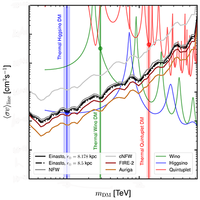
A 500-hour survey of the Galactic Center by the H.E.S.S. telescope array has set the most stringent limits to date on TeV dark matter line annihilation cross sections.
Phys. Rev. Lett. 137, 091002 (2026)
Cosmology, Astrophysics, and Gravitation
First Experimental Constraint on the Scalar Current in the ${D}^{0(+)}→\overline{K}{ℓ}^{+}{ν}_{ℓ}$ Transition
Article | Particles and Fields | 2026-08-27 06:00 EDT
M. Ablikim et al. (BESIII Collaboration)
Using of collision data taken at the center-of-mass energy of , we report the first experimental constraint on the scalar current in the transitions, based on a simultaneous fit to the first measured forward-backward asymmetries and precisely determined parti…
Phys. Rev. Lett. 137, 091803 (2026)
Particles and Fields
Evidence of $ZZγ$ Production with the ATLAS Detector
Article | Particles and Fields | 2026-08-27 06:00 EDT
G. Aad et al. (ATLAS Collaboration)
This Letter presents the first evidence of the simultaneous production of two bosons and one photon with the ATLAS detector at the Large Hadron Collider. The measurement is performed using the full Run-2 dataset, recorded from 2015 to 2018, of proton-proton collisions at a center-of-mass energy of…
Phys. Rev. Lett. 137, 091804 (2026)
Particles and Fields
Evidence of $ZZγ$ Production and Observation of $4ℓγ$ in Proton-Proton Collisions at $\sqrt{s}=13\text{ }\text{ }\mathrm{TeV}$
Article | Particles and Fields | 2026-08-27 06:00 EDT
A. Hayrapetyan et al. (CMS Collaboration)
Evidence of the production of two bosons and a photon in proton-proton collisions is reported for the first time in CMS. The analysis uses data collected by the CMS experiment between 2016 and 2018 at a center-of-mass energy of 13 TeV, corresponding to an integrated luminosity of . Eviden…
Phys. Rev. Lett. 137, 091805 (2026)
Particles and Fields
Monte Carlo Event Generation with Continuous Normalizing Flows
Article | Particles and Fields | 2026-08-27 06:00 EDT
E. Bothmann, T. Janßen, M. Knobbe, B. Schmitzer, and F. Sinz
We apply continuous normalizing flows trained with the flow matching method to the problem of phase-space sampling in Monte Carlo event generation for high-energy collider physics. Focusing on lepton-pair and top-quark pair production with multiple jets, the two computationally most expensive proces…
Phys. Rev. Lett. 137, 091902 (2026)
Particles and Fields
Probing Atoms by Periodically Modulated Electron Bunches
Article | Atomic, Molecular, and Optical Physics | 2026-08-27 06:00 EDT
A. B. Voitkiv, E. Schneidmiller, and T. Pfeifer
When passing through an undulator in a free electron laser, dense bunches of relativistic electrons split into microbunches, attaining a periodic space-time structure. We show that the field of such periodically modulated bunches is tremendously influenced by coherence effects, resulting in a novel …
Phys. Rev. Lett. 137, 093201 (2026)
Atomic, Molecular, and Optical Physics
Coherently Enhanced Radiation Friction in Laser-Plasma Collisions
Article | Plasma and Solar Physics, Accelerators and Beams | 2026-08-27 06:00 EDT
E. G. Gelfer, A. M. Fedotov, M. P. Malakhov, O. Klimo, and S. Weber
We reconsider the footprints of radiation friction in a head-on collision of a bunch of relativistic charged particles with a laser pulse by demonstrating that forward and backward radiation and radiation friction are coherently enhanced in a dense bunch. This opens an avenue to observe radiation fr…
Phys. Rev. Lett. 137, 095001 (2026)
Plasma and Solar Physics, Accelerators and Beams
Exponential $U(1)$ Symmetry-Breaking Phase as a Disorder-Free Quantum Glass
Article | Condensed Matter and Materials | 2026-08-27 06:00 EDT
Yu-Min Hu, Zhaoyu Han, and Biao Lian
We study the phase diagram of a one-dimensional spin quantum breakdown model, which has an exponential symmetry with charge unit decaying as with site position . By exact diagonalization and density matrix renormalization group, we show that the model with spin exhibits an exponential
Phys. Rev. Lett. 137, 096002 (2026)
Condensed Matter and Materials
Kagomelike Bands in $\mathrm{Graphene}/{\text{WSe}}_{2}$ Heterostructure Realized by Strong Interlayer Hybridization
Article | Condensed Matter and Materials | 2026-08-27 06:00 EDT
Ruo-Han Zhang, Jiang-Hui Pan, Ya-Ning Ren, Chen-Yue Hao, Jia-Qi He, Xiao-Ya Wang, Hao Sheng, Mo-Han Zhang, Xiao-Feng Zhou, Rui Dong, Ji Feng, and Lin He
In two-dimensional (2D) van der Waals (vdW) structures, the twist angle between adjacent layers has emerged as a pivotal parameter for engineering electronic band structures. This is vividly exemplified by the discovery of an extensive array of correlated and topological phases in 2D moiré systems. …
Phys. Rev. Lett. 137, 096201 (2026)
Condensed Matter and Materials
Non-Bloch Edge Dynamics of Non-Hermitian Systems
Article | Condensed Matter and Materials | 2026-08-27 06:00 EDT
Wen-Tan Xue, Yu-Min Hu, Fei Song, and Zhong Wang
The non-Hermitian skin effect dramatically alters both the spectrum and real-time dynamics of non-Hermitian systems. We investigate the edge dynamics of waves initialized in non-Hermitian lattices, where the non-Hermitian skin effect tends to localize states, leading to behavior beyond the Bloch pic…
Phys. Rev. Lett. 137, 096403 (2026)
Condensed Matter and Materials
Singular Three-Point Density Correlations in Two-Dimensional Fermi Liquids
Article | Condensed Matter and Materials | 2026-08-27 06:00 EDT
Pok Man Tam and Charles L. Kane
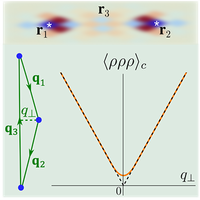
A singular density correlation that is generic to all two-dimensional Fermi liquids offers an independent method for measuring the Landau parameters that characterize the Fermi-liquid phase using quantum-gas microscopy.
Phys. Rev. Lett. 137, 096504 (2026)
Condensed Matter and Materials
Shining Light on Collective Modes in Moiré Fractional Chern Insulators
Article | Condensed Matter and Materials | 2026-08-27 06:00 EDT
Nisarga Paul, Ahmed Abouelkomsan, Aidan Reddy, and Liang Fu
We show that collective excitations and optical responses of moiré fractional Chern insulators (FCIs) drastically differ from those of standard fractional quantum Hall (FQH) states in a Landau level. By constructing a variational wave function that incorporates the moiré lattice effect, we capture t…
Phys. Rev. Lett. 137, 096505 (2026)
Condensed Matter and Materials
Anomalous Dynamical Scaling at Topological Quantum Criticality
Article | Condensed Matter and Materials | 2026-08-27 06:00 EDT
Menghua Deng, Sheng Yang, Chen Sun, Fuxiang Li, and Xue-Jia Yu
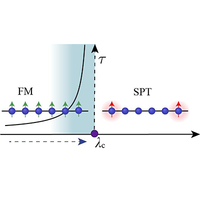
Driven dynamics at topologically nontrivial quantum critical points leads to anomalous boundary and edge scaling beyond the Kibble-Zurek prediction in several quantum spin chain models.
Phys. Rev. Lett. 137, 096605 (2026)
Condensed Matter and Materials
Spin Dynamics of the Spin-1 Triangular Lattice Heisenberg Antiferromagnet ${\mathrm{K}}{2}\mathrm{Ni}({\mathrm{SeO}}{3}{)}_{2}$
Article | Condensed Matter and Materials | 2026-08-27 06:00 EDT
Chaebin Kim, Sathvik Nallapati, E. A. Ghioldi, Long Chen, Alexander I. Kolesnikov, Haidong Zhou, Shang-Shun Zhang, Cristian D. Batista, and Martin Mourigal
Strong quantum fluctuations dominate the spin- triangular lattice Heisenberg antiferromagnet, but their survival at spin-1 remains an open question. We address it in , a nearly ideal spin-1 realization, using inelastic neutron scattering. Below the ordering temperature , coherent one…
Phys. Rev. Lett. 137, 096701 (2026)
Condensed Matter and Materials
Experimental Observation of Ballistic Correlations in Integrable Turbulence
Article | Statistical Physics; Classical, Nonlinear, and Complex Systems | 2026-08-27 06:00 EDT
Elias Charnay, Adrien Escoubet, François Copie, Stéphane Randoux, Thibault Bonnemain, Alvise Bastianello, and Pierre Suret
Unequal-time correlation functions fundamentally characterize emergent statistical properties in complex systems, yet their direct measurement in experiments is challenging. We report the experimental observation of two-time, ballistic correlations in a photonic platform governed by the focusing non…
Phys. Rev. Lett. 137, 097202 (2026)
Statistical Physics; Classical, Nonlinear, and Complex Systems
Noise-Induced Replicator Dynamics in Evolutionary Games
Article | Statistical Physics; Classical, Nonlinear, and Complex Systems | 2026-08-27 06:00 EDT
Guocheng Wang, Qi Su, Long Wang, and Joshua B. Plotkin
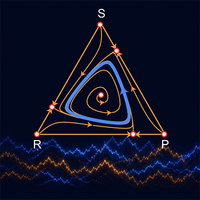
In evolutionary game theory, the interplay between strategic evolution and environmental stochasticity gives rise to new dynamical regimes, with implications in fluctuating social, ecological, and economic environments.
Phys. Rev. Lett. 137, 097401 (2026)
Statistical Physics; Classical, Nonlinear, and Complex Systems
General Theoretical Framework Linking Macroscopic Stress to Microscopic Strand Conformations in Unentangled Elastomers
Article | Polymers, Chemical Physics, Soft Matter, and Biological Physics | 2026-08-27 06:00 EDT
Jiaqi Li, Kai Zhang, Falin Tian, Jici Wen, Xianqi Lei, Xinghua Shi, and Jiuling Wang
Understanding the mechanical response of elastomers requires establishing a direct connection between macroscopic stress and the microscopic conformational statistics of network strands. In this Letter, we develop a unified theoretical framework that quantitatively links macroscopic stress to single…
Phys. Rev. Lett. 137, 098103 (2026)
Polymers, Chemical Physics, Soft Matter, and Biological Physics
Spin Waves without Spin Waves: A Case for Soliton Propagation in Starling Flocks
Article | Polymers, Chemical Physics, Soft Matter, and Biological Physics | 2026-08-27 06:00 EDT
Andrea Cavagna, Guido Cimino, Javier Cristín, Matteo Fiorini, Irene Giardina, Angelo Giustiniani, Tomás S. Grigera, Stefania Melillo, Roberto A. Palombella, Leonardo Parisi, Antonio Ponno, Mattia Scandolo, and Zachary S. Stamler
Collective turns in starling flocks propagate linearly with negligible attenuation, indicating the existence of an underdamped sector in the dispersion relation. According to linear response theory, beside granting linear propagation of the phase perturbations, the real part of the frequency should …
Phys. Rev. Lett. 137, 098301 (2026)
Polymers, Chemical Physics, Soft Matter, and Biological Physics
arXiv
When chemical potential continuity fails: kinetic interface models for hydrogen isotope transport
New Submission | Materials Science (cond-mat.mtrl-sci) | 2026-08-28 20:00 EDT
Remi Delaporte-Mathurin, James Dark
Macroscopic hydrogen transport codes model material interfaces with local thermodynamic equilibrium (LTE), imposing continuity of chemical potential as a per-species constraint. Three assumptions hide in that condition: fast interfacial equilibration, a single exchange pathway between the two sides, and a carrier species known in advance on each side. The literature scrutinises the first, but the other two are the more consequential failures, and neither survives at a metal/molten-salt interface. We replace the constraint with reversible reaction channels at the interface that obey mass action, with detailed balance fixing each ratio of rate constants from the thermodynamic data that already parameterise LTE, and we implement the framework in festim. LTE is recovered as the fast-kinetics limit of a single channel, in both its Sieverts/Sieverts and its Sieverts/Henry form, so the framework generalises LTE and does not compete with it. A Damköhler number delimits validity within a channel, a branching ratio between channels. In a representative nickel/FLiBe system, hydrogen partitions kinetically between molecular and fluoride carriers. The apparent interfacial law then drifts between Sieverts and Henry with loading and salt redox state, and an LTE condition underestimates the steady permeating flux. The measured pressure exponent is set by the branching ratio, not by any fixed property of the salt; a redox sweep at fixed temperature should continuously shift it between 0.5 and 1. With two isotopes, two metal-side species feed five salt-side carriers, and a per-species LTE condition is ill-posed.
Materials Science (cond-mat.mtrl-sci), Mathematical Physics (math-ph), Chemical Physics (physics.chem-ph), Computational Physics (physics.comp-ph)
Exact pair density wave in topological moire flat bands and universal superfluid stiffness
New Submission | Superconductivity (cond-mat.supr-con) | 2026-08-28 20:00 EDT
Zhengzhi Wu, Ming-rui Li, Hong Yao
Pair-density waves (PDWs) are unconventional superconducting states beyond the BCS paradigm, but identifying them unambiguously in microscopic lattice models is generally challenging due to various competing orders. In particular, an exact realization of PDW in interacting models with topological bands remains elusive. Here we construct an interacting model on a twisted bilayer checkerboard lattice (TBCB) featuring topological flat bands, and rigorously show that an exact PDW ground state can be induced by quantum geometric nesting (QGN), owing to its momentum-space nonsymmorphic symmetry. We further prove that the superfluid stiffness of any nondegenerate QGN superconductor (including the PDW studied here and uniform superconductor) obeys the universal relation $ D_s=2N_{\rm flat}\nu(1-\nu)m_{\rm pair}^{-1}$ , where $ N_{\rm flat}$ , $ \nu$ , and $ m_{\rm pair}$ are the number of flat bands, flat band filling, and the two-particle effective mass, respectively. Our results reveal a rich interplay among PDW order, quantum geometry, and band topology.
Superconductivity (cond-mat.supr-con), Strongly Correlated Electrons (cond-mat.str-el)
4 pages, 2 figures
Quantized Transport through a Supermoiré Chern Mosaic
New Submission | Mesoscale and Nanoscale Physics (cond-mat.mes-hall) | 2026-08-28 20:00 EDT
Li-Qiao Xia, Aviram Uri, Zachary W. Gomez, Molly P. Andersen, Julian May-Mann, Kenji Watanabe, Takashi Taniguchi, Trithep Devakul, Yves H. Kwan, Pablo Jarillo-Herrero, Aaron Sharpe
Magic-angle helical trilayer graphene—three graphene layers sequentially twisted in the same direction by $ \sim1.8^\circ$ —relaxes into a mosaic of domains that, at zero field, carry opposite valley-resolved Chern numbers, with boundaries hosting a network of gapless conducting modes. Charge transport through this network depends sensitively on how the modes connect and scatter, making well-quantized transport unlikely. Contrary to this expectation, we observe a field-induced Chern gap with Chern number $ C=-6$ emanating from charge neutrality; in this gap, the Hall resistance is quantized to within $ 2%$ of the expected value, $ -h/6e^2$ , at 4.6 K. We explain this behavior using both Hofstadter and orbital Zeeman calculations, which show that a moderate magnetic field drives a valley-selective topological transition. Above the transition, the total Chern number of the occupied states in each spin-valley flavor becomes identical across neighboring domains, and the domain-wall modes can become gapped. Though the central valence-band Chern numbers still differ between the two domain types, the observed quantized transport attests to a global gap.
Mesoscale and Nanoscale Physics (cond-mat.mes-hall)
10+22 pages, 4+27 figures
Hidden Frustration in Collinear Altermagnets: Pairing Vortices and Equilibrium Spin Current Loops
New Submission | Mesoscale and Nanoscale Physics (cond-mat.mes-hall) | 2026-08-28 20:00 EDT
Vincent P. Flynn, Benedetta Flebus
We show that a magnet can remain perfectly collinear while its quantum vacuum circulates. In a centrosymmetric altermagnet, a symmetry-allowed locally staggered Dzyaloshinskii-Moriya coupling imprints a gauge-irremovable vortex-antivortex pair into the anomalous magnon pair correlations at high-symmetry points in momentum space. In real space, these hidden vortices produce an antiferrochiral array of equilibrium spin currents circulating oppositely around neighboring plaquettes. Gauge-irremovable frustration therefore survives despite classical collinearity: it exists entirely in the quantum correlations. Our results show that complex pairing, gauge-invariant fluxes, and equilibrium loop currents - structures encountered across electronic flux phases, spin liquids, and frustrated quantum magnets - can be encoded in the squeezed vacuum of a collinear magnet.
Mesoscale and Nanoscale Physics (cond-mat.mes-hall)
5 pages, 3 figures
Statistics as a local phase: crystalline order and quench dynamics of emergent dimers in Ising gauge theories
New Submission | Strongly Correlated Electrons (cond-mat.str-el) | 2026-08-28 20:00 EDT
Umberto Borla, Riccardo Cioli, Jad C. Halimeh
How does the Bose or Fermi statistics of microscopic particles survive when confinement binds them into emergent bosonic composites? We address this question in the strong-coupling limit of a $ 2+1$ D $ \mathbb{Z}_2$ lattice gauge theory, where charges are confined into tightly bound pairs that can be described by an effective dimer model. We find that the statistics of the underlying matter is encoded entirely in a single local hopping phase $ \varphi$ -$ 0$ for bosons, $ \pi$ for fermions- while interactions remain statistics-independent. Treating $ \varphi$ as a continuous parameter that interpolates between the two, we map the ground-state phase diagram with the help of tensor-network methods. The angle $ \varphi$ itself drives a transition between a dimer-superfluid and dimer charge density wave state, while the magnetic coupling binds neighboring dimers into resonating pairs, in competition with the inter-dimer repulsion. We identify a novel gapped phase in which dimer pairs crystallize into an ordered pattern of resonating plaquettes. Finally, we propose a quench protocol under which identical dimer configurations evolve in markedly different ways depending on the statistics of their constituents. This provides a dynamical probe of the internal structure of dimers, and detects ordered phases through real time signatures, within reach of simulators that natively realize bosonic degrees of freedom.
Strongly Correlated Electrons (cond-mat.str-el), Quantum Gases (cond-mat.quant-gas)
Supercurrent detection and manipulation of topological phase transitions in Shiba-Majorana hybrid systems
New Submission | Superconductivity (cond-mat.supr-con) | 2026-08-28 20:00 EDT
Debika Debnath, Ioannis Ioannidis, Paramita Dutta, Mircea Trif, Thore Posske
The non-Abelian statistics of Majorana zero modes has inspired numerous proposals for their detection and manipulation in topological superconductors. Implementations based on magnetic adatoms deposited on superconductors draw particular attention due to their capabilities for precise atomic manipulation and the control over disorder. Here, we propose a scheme for detecting changes in the ground state parity of a topologically non-trivial adatom system by passing supercurrent through their low-energy modes. We unravel characteristic discontinuities in the critical current driven by zero-energy level crossings. We apply these findings to a setup where the Majorana coupling is mediated by a single control magnetic adatom hosting a Yu-Shiba-Rusinov state, and test the robustness of our results against finite temperatures and different tunneling regimes. Our findings introduce a non-invasive approach for reading out and controlling the ground state parity of Majorana states in Shiba-Majorana hybrid systems.
Superconductivity (cond-mat.supr-con), Mesoscale and Nanoscale Physics (cond-mat.mes-hall)
17 pages, 7 figures, Comments are welcome
How quantum is quantum geometry?
New Submission | Mesoscale and Nanoscale Physics (cond-mat.mes-hall) | 2026-08-28 20:00 EDT
The quantum geometric tensor - the Berry curvature together with the quantum metric - now underlies a long list of observables, from the anomalous Hall effect to the superfluid weight of a flat band. We ask which of these observables actually require quantum mechanics. To answer this question, we study a purely classical system: a point particle carrying a classical magnetic moment $ \boldsymbol{\ell}$ that precesses in a momentum-dependent magnetic field $ \mathbf{B}(\mathbf{p})$ . Within Hamiltonian classical mechanics, the component of $ \boldsymbol{\ell}$ along the field reproduces the Berry-curvature phenomena, while its precessing transverse component reproduces the quantum-metric phenomena. The particle acquires a position spread whose second moment is the metric, an orbital magnetic moment, and - most strikingly - an inertial mass generated by a position-dependent force, and with it a nonzero Drude weight in a system that is nominally dispersionless.
Mesoscale and Nanoscale Physics (cond-mat.mes-hall), Superconductivity (cond-mat.supr-con), Quantum Physics (quant-ph)
6 pages
Time and Momentum Resolved Tunneling Spectroscopy of Floquet dynamics
New Submission | Strongly Correlated Electrons (cond-mat.str-el) | 2026-08-28 20:00 EDT
Lucas Q. Silveira, Adrian E. Feiguin
Periodically driven quantum systems provide a powerful route to engineer novel states of matter by controlling their effective Hamiltonians through external fields. However, most treatments are usually simplified by considering the high-frequency limit, and do not account for the processes taking place in the transient regime during the onset of the drive. In this work, we introduce a time and momentum resolved tunneling spectroscopy protocol to probe the instantaneous energy spectrum of Floquet-driven systems beyond the high-frequency regime, capturing both emergent effects and non-adiabatic phenomena without requiring explicit reconstruction of the full time-dependent Green’s function. We benchmark the method on driven non-interacting fermionic models, and then generalize the approach to strongly correlated systems with the aid of time-dependent density matrix renormalization group techniques. We also provide a microscopic description to the emergence of in-gap states under resonant driving, and briefly explore its finite temperature analog.
Strongly Correlated Electrons (cond-mat.str-el)
11 pages, 7 figures
Critical Properties and Glass Transitions in Randomly Coupled Fields
New Submission | Statistical Mechanics (cond-mat.stat-mech) | 2026-08-28 20:00 EDT
We study an assembly of $ N$ scalar fields coupled via a quenched random interaction, equivalent to a spin glass whose spins are promoted to $ d$ -dimensional fields. When $ N$ is large, the random coupling matrix produces a family of Gaussian universality classes whose critical exponents are determined by the behavior of the eigenvalue density near the spectral edge. For a Wigner matrix, the correlation length diverges at criticality but the susceptibility remains finite, and one-loop replica analysis supports an upper critical dimension of unity. In an exactly solvable spherical variant, the heat capacity jumps at the transition in $ d>1$ , and correlations remain pinned to their critical form throughout the glass phase, giving generic scale invariance despite the absence of a Goldstone mode.
Statistical Mechanics (cond-mat.stat-mech), Disordered Systems and Neural Networks (cond-mat.dis-nn)
Main text: 5 pages. Supplemental Material: 20 pages
Milled to order: toward predictive mechanochemistry of halide perovskites
New Submission | Materials Science (cond-mat.mtrl-sci) | 2026-08-28 20:00 EDT
Susan A. Rigter, Loreta A. Muscarella
Mechanochemical milling is regarded as a scalable, solvent-free method that makes halide perovskites that solution processing cannot. Its deeper promise, though, is that mechanical force could become a new axis of synthetic control to turn milling from an empirical method into a predictive science. Halide perovskites are the ideal platform to establish this: their soft lattices and low formation energies make them intrinsically responsive to mechanical activation. Realising this requires settling what milling actually makes, and how: can a milled phase genuinely be trapped outside equilibrium, or is it just a convenient way to the equilibrium phase, and by what atomistic pathway does it work? These questions are mostly answered by assumption, while the in-situ and computational tools that resolved them for other material classes already exist. Closing this gap will unlock two design capabilities: mechanical energy used as a synthetic variable to tune phase selection, and metastability made programmable, producing trapped phases, specific intermediates, and compositions that have no possible solution route. Finally, two tests decide whether that control reaches practice: the state engineered during milling must survive into a working device, and the method must prove genuinely greener across the full device life cycle, rather than just solvent-free.
Materials Science (cond-mat.mtrl-sci), Soft Condensed Matter (cond-mat.soft)
23 pages, 3 figures
Information-theoretic formulation of the Traveling Salesman Problem
New Submission | Statistical Mechanics (cond-mat.stat-mech) | 2026-08-28 20:00 EDT
Enrico Maria Fenoaltea, Riccardo Piombo, Aurelio Patelli
The Traveling Salesman Problem (TSP) asks for the shortest route to visit a set of cities exactly once. It combines a simple local rule - each city must be visited once - with a hard, global constraint- all cities must be traversed within a single cycle. We cast the problem within a probabilistic, information-theoretic framework. The coexistence of local and global constraints is precisely what makes the problem difficult to address in this framework: the local rule can be enforced through vertex-level constraints, whereas the global constraint cannot be captured by independent edge probabilities. We show that this obstacle can be overcome by defining a maximum-entropy probability distribution over graphs, in which edge costs and degree constraints generate an assignment-like ensemble, and a global term, describing the hard constraint, tilts this ensemble toward Hamiltonian cycles. To make the construction tractable, we derive a mean-field approximation in terms of edge occupancies and implement a differentiable cycle penalty that suppresses sub-tours. This leads to a self-consistent numerical procedure whose output is not only a candidate tour but also a probability matrix encoding competing edges and degenerate solutions. We test the method on synthetic ensembles and on TSPLIB instances. The algorithm converges to connected tours in polynomial time, matching the best-known solution in the majority of instances and remaining within a small relative gap otherwise. Beyond its competitive performance, the proposed framework offers a general approach for handling hard constraints while reducing hard combinatorial optimization problems to simpler ones.
Statistical Mechanics (cond-mat.stat-mech), Optimization and Control (math.OC)
17 pages, 3 figures, 2 tables
Majorana signatures in an asymmetrically coupled quantum dot–topological superconducting nanowire junction
New Submission | Mesoscale and Nanoscale Physics (cond-mat.mes-hall) | 2026-08-28 20:00 EDT
Levente Máthé, Ioan Grosu, Liviu P. Zârbo, Ionel Ţifrea
We present a theoretical study of the quantum transport through a nanoscale system in which a central quantum dot (QD) is coupled asymmetrically to normal leads and to two Majorana bound states (MBSs) localized at the ends of a topological superconducting nanowire threaded by a tunable magnetic flux. The effects of the leads–QD coupling asymmetry parameter $ \alpha$ and the bias voltage asymmetry parameter $ q$ on the system’s linear conductance are considered for the case of unhybridized and hybridized MBSs. In the zero-temperature limit, for unhybridized MBSs the system’s linear conductance is finite only when the magnetic flux phase $ \phi = (2n+1)\pi$ ($ n\in\mathbb{Z}$ ) and it scales as $ \mathcal{G}=2q\alpha e^2/[h(\alpha+1)]$ , while for hybridized MBSs it presents a complicated dependence on the system’s parameters. At finite temperature, for unhybridized MBSs, the system’s linear conductance oscillates as a function of the magnetic flux phase $ \phi$ with a period of $ 2\pi$ , and the position of the linear conductance maxima can be shifted from $ \phi=2n\pi$ to $ \phi=(2n+1)\pi$ by simply varying the value of the bias voltage asymmetry parameter $ q$ . For hybridized MBSs, the conductance exhibits a similar behavior when the energy level of the central QD, $ \varepsilon_d$ , is tuned at the leads’ Fermi level ($ \varepsilon_d=\varepsilon_F$ ), although when $ \varepsilon_d\neq\varepsilon_F$ the oscillation period changes to $ 4\pi$ , and the position of the linear conductance maxima depends on the actual value of $ \varepsilon_d$ and other parameters in the system. Our results highlight the experimental importance of the leads-QD and bias voltage asymmetry parameters, which are often present in realistic experimental setups, and can strongly affect the identification and observation of MBSs transport signatures.
Mesoscale and Nanoscale Physics (cond-mat.mes-hall)
19 pages, 15 figures
Dynamical signatures of deconfined spinons in dimerized sawtooth chains
New Submission | Strongly Correlated Electrons (cond-mat.str-el) | 2026-08-28 20:00 EDT
Nishan Ranabhat, Brandon B. Le, Seung-Hun Lee, Gia-Wei Chern
We study the ground-state properties and dynamical response of the Heisenberg model on the sawtooth chain in and away from the exactly solvable valence-bond-solid (VBS) point. We employ U(1)-symmetric density-matrix renormalization group (DMRG) and time-dependent variational principle (TDVP) methods to compute equilibrium diagnostics and the zero-temperature dynamical structure factor (DSF) $ S^{zz}(q,\omega)$ across the dimerized phase, a valence-bond-ordered state in which the two symmetry-equivalent apex–base bonds of each triangle develop unequal spin correlations, probing the approach to the continuous lower phase boundary, the exact VBS point, and the approach to the first-order upper boundary. In every regime, the DSF is a broad continuum dominated by a bright band at its lower edge, with the intensity at the one-triplon energy $ \omega \simeq J_{AB}$ suppressed. We identify the spectrum as a deconfined two-spinon continuum of kink and antikink domain walls between the two degenerate singlet coverings. Closed-form spinon dispersions fix the continuum edges and track the dominant band across the zone in all three regimes, while an explicit finite-separation two-kink calculation in a constrained Hilbert space reproduces the measured intensity distribution. Our results provide a microscopic picture of fractionalized excitations in the dimerized sawtooth chain and are relevant to the recently discovered Ti$ ^{3+}$ kagome fluorides, where strongly anisotropic exchange interactions can generate sawtooth-chain building blocks.
Strongly Correlated Electrons (cond-mat.str-el)
18 pages, 9 figures
Laser-Induced Rashba Spin-Orbit Torques in Multiferroic Semiconductor (Ge,Mn)Te
New Submission | Materials Science (cond-mat.mtrl-sci) | 2026-08-28 20:00 EDT
Zeynab Sadeghi, Tomas Ostatnicky, Eva Schmoranzerova, Jozef Kimak, Dominik Kriegner, Helena Reichlova, Lukas Nadvornik, Gunther Sprinhgholtz, J. Hugo Dil, Juraj Krempasky, Petr Nemec
The multiferroic semiconductor GeMnTe exhibits ferroelectricity, strong Rashba spin-orbit coupling, and carrier-mediated magnetic order, making it a unique platform for exploring the interplay among electronic, structural, and magnetic degrees of freedom. In this study, we investigate the ultrafast magnetization dynamics of Ge0.85Mn0.15Te using time-resolved magneto-optical spectroscopy. By separating magnetic and nonmagnetic contributions in the transient response, we identify two distinct laser-induced magnetic phenomena, both resulting from photoinduced effective spin-orbit torque. Coherent magnetization precession arises from a laser-induced increase in hole concentration, which modifies the occupation of Rashba-split spin-locked valence band states and alters the magnetic easy axis. The transient change in magnetic ordering, observed as variations in the coercive field, is attributed to laser-induced modifications of the ferroelectric sublattice displacement, which affect the ferroelectric polarization and the associated Rashba spin-orbit interaction. While the first type of optical spin-orbit torque has already been observed in the diluted magnetic semiconductor (Ga,Mn)As, the second effect is unique to the multiferroic Rashba semiconductor (Ge,Mn)Te, opening new opportunities for all-optical manipulation of magnetic order and spin-orbit torque generation in spin-orbitronic devices.
Materials Science (cond-mat.mtrl-sci)
v1: preprint; licence: CC BY 4.0; Supplementary material is a part of this submission
Magnetic Communication with an Acoustically Actuated Magnetoelectric Resonator and a Quantum Diamond Magnetometer
New Submission | Mesoscale and Nanoscale Physics (cond-mat.mes-hall) | 2026-08-28 20:00 EDT
Christopher T.-K. Lew, Andrew D. M. Charles, Brant C. Gibson, Jean-Philippe Tetienne, David A. Broadway
Wireless communication via propagating magnetic fields is a communication modality that has recently garnered significant interest for short-to-medium range communication in conductive mediums, such as underwater and underground, where existing approaches utilizing electric fields are highly inefficient. Typical implementations of magnetic communication make use of loop antennas as both the transmitter and receiver, with the sensitivity and frequency response scaling with and inversely with the loop cross-sectional area, respectively. Here, we explore an alternative hybrid magnetic communication system consisting of an highly radiation efficient and compact acoustically actuated magnetoelectric resonator as the transmitter, and a highly sensitive micrometer scale quantum magnetometer based on nitrogen-vacancy centers in diamond as the receiver, with their core properties unconstrained by size. We demonstrate amplitude and phase-encoded transmission and reception of AC magnetic fields at $ f_{\mathrm{AC}}$ = 20 kHz, achieving a sensitivity of 50 pT/$ \sqrt{\mathrm{Hz}}$ and 1.2 mrad/$ \sqrt{\mathrm{Hz}}$ , respectively. This work establishes the use of hybrid magnetoelectric resonator and quantum diamond magnetometer communication system as a viable alternative to existing loop-based approaches.
Mesoscale and Nanoscale Physics (cond-mat.mes-hall)
Above Room-Temperature Phase Transition in Helicoidal 2D Halide Perovskite Enables Pyro-Phototronic Control
New Submission | Materials Science (cond-mat.mtrl-sci) | 2026-08-28 20:00 EDT
Zinnia Mallick, Rajashi Haldar, Sudip Naskar, Bapan Jana, Maheswaran Shanmugam, Shanker Ram, Dipankar Mandal
Bridging pyro-phototronic and ferroelectric properties in a single material not only gives rise to exotic physical phenomena but also provides strategy to build-up next-generation multi-functional energy harvesting devices. The layered halide perovskites are emerging class of synergetic 2D-materials of exceptional light-induced functionalities. Here, we report synthesis of a lead-free perovskite (3-fluorobenzylamine)2CuCl4 of partially fluorinated aromatic rings. Molecular chains are chiral in helicoids so to render flexibility, energy-transfer, and freedom to tailor tunable pyro-phototronics on light illumination. The fluorinated framework promotes ferroelectric-to-paraelectric transition point (TC), as high as \textasciitilde 412 K of wide range of workably. A giant pyro-photronic response is distinctly evident even upon UV-visible light-illuminations. A significantly high pyro-photronic current of 60 nA was achieved under an illumination of {\lambda}ex\textasciitilde 365 nm (27 mW) in a self-powered configuration. Consequently, an intricate coupling of the spontaneous polarization to the optical properties is visualized from the piezo response force microscopy (PFM) responses. In particular, the polar domains get diminished reversibly in on-off steps of the light irradiations. It indicates, the light provides another degree of the freedom to control the features for the applications of optoelectronic devices, optical memories, photo/thermo-chromic systems, and energy-harvesters.
Materials Science (cond-mat.mtrl-sci)
Magnetic permeability and zone-folded phonons in layered NiPS$_3$
New Submission | Materials Science (cond-mat.mtrl-sci) | 2026-08-28 20:00 EDT
André A. A. Silva, Eduardo D. Stefanato, Nicolas M. Kawahala, Flávio H. Feres, João Vítor T. P. Vital, Bernardo R. A. Neves, Jan Plutnar, Zdenek Sofer, Ana C. F. Brito, Felix G.G. Hernandez, Raul O. Freitas
Nickel phosphorus trisulfide (NiPS$ _3$ ) stands out as a Mott insulator exhibiting XY-type antiferromagnetic order. In this work, we investigate the electrodynamic response of single-crystalline NiPS$ _3$ using Terahertz Time-Domain Spectroscopy (THz-TDS) as a function of temperature. In cases where the magnetic permeability cannot be approximated to unity, conventional THz transmission analysis is often restricted to the complex refractive index, hindering the distinction between magnetic and dielectric contributions. To overcome this limitation, we demonstrate an extraction methodology capable of decoupling the magnetic permeability from the electric permittivity. Assuming that the dielectric contribution remains invariant below the N’eel temperature (TN), we used data from the paramagnetic phase to isolate the intrinsic magnetic component at 13 K. The angular and thermal dependence of the spectra revealed a magnon mode near 1 THz (for 0$ ^\circ$ orientation) and, distinctively, a zone-folded phonon activated by symmetry breaking (at 90$ ^\circ$ ). The isolated magnetic permeability was successfully modeled using Drude-Lorentz oscillators, enabling the extraction of fundamental spin dynamics parameters in this material.
Materials Science (cond-mat.mtrl-sci), Other Condensed Matter (cond-mat.other)
19 pages, 4 figures
Statistical Disorder in MBE-Grown AlGaAs/GaAs Superlattices for Quantum Bragg Mirrors using Synchrotron X-ray Diffraction
New Submission | Mesoscale and Nanoscale Physics (cond-mat.mes-hall) | 2026-08-28 20:00 EDT
Mateus T. Souza, Germano M. Penello, Guilherme A. Calligaris, Sergio L. Morelhao
AlGaAs/GaAs superlattices grown by Molecular Beam Epitaxy (MBE) are foundational for advanced optoelectronic devices, including Quantum Bragg Mirror (QBM) infrared detectors. The performance of these devices critically depends on achieving near-perfect periodicity and abrupt interfaces, however, intrinsic statistical fluctuations during MBE growth introduce nanoscale structural disorder that can degrade device efficiency. In this study, we present a comprehensive methodology for quantifying this disorder in a 203-layer QBM device. High-resolution structural characterization was performed using high-energy (25 keV) synchrotron X-ray diffraction. By coupling a recursive dynamical diffraction formalism with an ensemble simulated annealing refinement, we extracted statistically robust, layer-by-layer thickness profiles. Our analysis reveals highly systematic, material-specific deviations from the nominal design: all AlGaAs barrier layers were consistently thinner than nominal by 0.3-0.6 nm. Furthermore, the sequential thickness profile successfully identified a significant 35 nm deficit in the final macroscopic top contact layer and a 40 nm deficit in the first GaAs layer. Achieving a statistical precision of about 0.2 to 0.6 nm (approximately 1-2 atomic monolayers), this non-destructive diagnostic approach provides directly actionable feedback for MBE flux calibration protocols.
Mesoscale and Nanoscale Physics (cond-mat.mes-hall)
Comparing non-local granular fluid continuum models for silo discharge: Toward clogging prediction
New Submission | Soft Condensed Matter (cond-mat.soft) | 2026-08-28 20:00 EDT
Y. Zhou (1), Y. Wang (1), M. Li (1), P.-Y. Lagrée (2) ((1) Beijing Key Laboratory of Passive Safety Technology for Nuclear Energy, North China Electric Power University, Beijing, China, (2) Sorbonne Université, CNRS UMR 7190, Institut Jean le Rond d’Alembert, Paris, France)
Non-local constitutive theories have received increasing attention in continuum descriptions of granular flows. However, these models have not been systematically compared for silo discharge within a unified numerical framework. We address this gap with two-dimensional finite-volume method (FVM) simulations of silo discharge using the Basilisk platform. We first validate our FVM implementation of the dynamic non-local granular fluidity (NGF) model against the material point method results of Dunatunga & Kamrin (J. Fluid Mech., 2022, 940, A14), obtaining quantitative agreement. Second, we relate the discharge rate $ Q$ to the outlet-to-particle size ratio $ D/d$ and the non-local amplitude $ A$ . From the simulated $ Q$ , we then evaluate the clogging probability $ J(D/d, A)$ within the probabilistic framework of Janda et al. (Europhys. Lett. 84 (4), 44002). The predicted $ J$ decays exponentially with $ D/d$ , consistent with the experimental trend of Janda et al. (Europhys. Lett. 84 (4), 44002). Rather than directly predicting flow arrest, our approach captures the continuous probabilistic transition. Finally, within the same numerical framework and using identical values of $ A$ , we compare several non-local constitutive models, including several linearised variants that we derive. Almost all models predict a reduction in the discharge rate with increasing $ A$ , yet significant quantitative differences are observed among the models. The results are further classified into groups according to their predicted flow behaviour, revealing close correspondences among certain formulations. Notably, using the non-local amplitudes reported in the literature [Bouzid et al. (Phys. Rev. Lett. 111, 238301), Henann & Kamrin (Proc. Natl Acad. Sci. USA 110(17))] yields near-zero discharge rates. Ill-posed issues are discussed. The implementation of all models is open-sourced and computationally efficient.
Soft Condensed Matter (cond-mat.soft)
44 pages, 29 figures
Fluctuation–response relations from an emergent $\mathbb{Z}_2$ symmetry in the rotating stochastic Landau model
New Submission | Statistical Mechanics (cond-mat.stat-mech) | 2026-08-28 20:00 EDT
Dhruv Kush, Nicki Mullins, Mauricio Hippert, Jorge Noronha
In this work, we investigate the extent to which fluctuation–response relations emerge from coarse-grained stochastic dynamics alone, and which aspects instead depend on additional information about the system. To address this question, we study the rotating stochastic Landau model, an exactly solvable system describing an overdamped charged Brownian particle in a constant magnetic field, coupled dissipatively to a rotating environment, whose steady state supports circulating probability currents. Using the Martin–Siggia–Rose path integral, we show that there is an emergent $ \mathbb{Z}_2$ symmetry transformation that implements the time-reversed dynamics and changes the action by a boundary term. Comparison with the Crooks fluctuation theorem identifies this term with the entropy associated with transitions between steady-state configurations. After coupling the theory to external sources, the same symmetry yields Ward identities relating fluctuations and response. These identities follow entirely from the coarse-grained stochastic theory and do not fix the noise strength. Finally, upon imposing the Einstein relation, we show that they coincide with the high-temperature fluctuation–dissipation relations implied by the rotating Kubo–Martin–Schwinger condition for a microscopic Gibbs ensemble.
Statistical Mechanics (cond-mat.stat-mech), High Energy Physics - Theory (hep-th), Nuclear Theory (nucl-th)
Beyond Allen-Heine-Cardona: non-perturbative electron-phonon interactions in the linewidths and lineshifts of diamond
New Submission | Materials Science (cond-mat.mtrl-sci) | 2026-08-28 20:00 EDT
Jean Paul Nery, Samuel Longo, Matthieu J. Verstraete
The temperature-dependent band gap of solids is usually computed from the perturbative Allen-Heine-Cardona (AHC) electron-phonon self-energy evaluated on-shell. Extending AHC to arbitrary frequency $ \omega$ to determine the full spectral function via the Dyson equation is known to fail, misplacing satellites and yielding no broadening at band extrema, while non-perturbative supercell (SC) methods have focused on eigenvalue averages rather than lineshapes, and approaches based on special displacements cannot describe the full lineshape, or the lineshift at degenerate bands. Here we use a non-perturbative Green’s function method (NPG), stochastically sampling distorted SC configurations, from which the spectral function, including lineshift, linewidth, and asymmetry, follows directly, and we recover finite spectral weight at the renormalized band extrema. We prove that the perturbative self-energy, computed to any order with the bare propagator and introduced into the Dyson equation, has an imaginary part that vanishes within the bare gap, giving incorrect spectral functions: self-consistency of the propagator is essential to broaden the band edges. NPG satisfies this property by construction, and contains all non-bubble diagrams. We also give a simple explanation of why SC methods converge with much smaller SCs than the corresponding $ \mathbf{q}$ -grids required by perturbation theory. For the band gap shift itself, the NPG and on-shell AHC results are found to be comparable, demonstrating that higher-order terms do not significantly alter the resulting renormalization in diamond. When it comes to the spectral function though, our results show that going beyond bare perturbation theory is not merely more accurate, but necessary, and NPG provides a robust framework to capture spectral broadening and higher-order effects from first principles.
Materials Science (cond-mat.mtrl-sci), Computational Physics (physics.comp-ph)
20 pages, 10 figures, 1 table
Phase transitions and microphases in elastomers. II. Anisotropy-driven morphologies
New Submission | Soft Condensed Matter (cond-mat.soft) | 2026-08-28 20:00 EDT
Manu Mannattil, David Andelman, Haim Diamant
In swollen elastomers, elasticity can arrest macroscopic demixing between the polymer network and the solvent, producing stable domains of finite size. While previous theories have focused on isotropically swollen elastomers, anisotropy strongly influences the phase behavior of many related systems, such as gels and crosslinked polymer blends. Building on the approach developed in Part I of this two-part paper, we investigate the effects of two experimentally induced sources of anisotropy: uniaxial swelling and stiffness gradients. We show that uniaxial swelling can lead to the formation of stable lamellar microphases and modify phase behavior, while stiffness gradients can cause spatial variations in the characteristic microphase size.
Soft Condensed Matter (cond-mat.soft), Materials Science (cond-mat.mtrl-sci), Statistical Mechanics (cond-mat.stat-mech), Pattern Formation and Solitons (nlin.PS), Chemical Physics (physics.chem-ph)
13 pages, 5 figures
Optical spectroscopy of composite fermion edge states in the fractional quantum Hall effect
New Submission | Mesoscale and Nanoscale Physics (cond-mat.mes-hall) | 2026-08-28 20:00 EDT
Maria Sebastian, Ashutosh Singh, Alexey Belyanin
We show that edge states in fractional quantum Hall effect samples can be selectively probed and excited with sub-terahertz optical spectroscopy. Using the composite fermion (CF) mean-field framework, which maps the strongly correlated fractional quantum Hall problem onto an effective integer quantum Hall problem, we calculate the absorbance spectrum for the Jain sequence of filling fractions including both bulk and edge states. The CF edge-state absorption peaks appear in the millimeter-wave to sub-terahertz range, e.g., 60-500 GHz at B = 10 T in GaAs, i.e. they are blueshifted with respect to the bulk CF cyclotron frequency but are well below the integer quantum Hall cyclotron frequency scale at the same magnetic fields. The number of resolved peaks in each series of the absorption spectrum counts the filled Lambda-levels and fingerprints the fraction. Inversion symmetry breaking near the edge activates optical transitions forbidden in the bulk and enables second-order nonlinear processes in electric-dipole approximation. The absolute frequency scale of the spectrum is set by the CF effective mass, which is generated entirely by electron-electron interactions, so the absorption spectrum provides a direct optical probe of this interaction-induced mass.
Mesoscale and Nanoscale Physics (cond-mat.mes-hall)
6 pages, 3 figures
Competition between Geometrical Frustration and the Kondo Effect in CePdAl Revealed by High-Resolution Magnetization
New Submission | Strongly Correlated Electrons (cond-mat.str-el) | 2026-08-28 20:00 EDT
Yusei Shimizu, Shota Nakamura, Yoichi Ikeda, Yohei Kono, Shunichiro Kittaka, Toshiro Sakakibara, Yosikazu Isikawa
CePdAl is a heavy-fermion compound with a quasi-kagome structure, where geometrical frustration competes with the Kondo effect. Using a high-sensitivity magnetometer, we observe clear first-order metamagnetic transitions without magnetization plateaus in CePdAl at 80 mK, indicating a lifting of frustration through the suppression of the Kondo effect and spin flips of ordered moments under fields. An anomaly in the nonlinear magnetic susceptibility at 4.3 T suggests nondipolar correlations in the polarized paramagnetic state. Furthermore, we found no evidence of non-Fermi-liquid behavior in the high-field region, where the antiferromagnetic order is completely suppressed. These findings establish the essential thermodynamic constraints for understanding the field-induced spin-liquid state in CePdAl.
Strongly Correlated Electrons (cond-mat.str-el)
6 pages, accepted for Physical Review Letters
Field-amplified readouts of weak altermagnetic exchange in MnF$_2$
New Submission | Strongly Correlated Electrons (cond-mat.str-el) | 2026-08-28 20:00 EDT
Guowen Jiang, Feilong Wang, Yunhua Wang, Fawei Zheng, Bin Xi, Hong-Gang Luo, Jize Zhao
MnF$ _2$ , the textbook two-sublattice antiferromagnet, has reemerged as a prototypical altermagnet, yet the sublattice-odd exchange that defines this identity remains under active debate: it enters the magnon splitting only in quadrature with the dipole–dipole interaction, its magnitude suppressed and its sign erased. An overdetermined first-principles total-energy mapping resolves this scale as a seventh-neighbor imbalance $ \delta{J_7}\simeq+8~\mu$ eV. The resulting Hamiltonian, with the dipole–dipole interaction included explicitly, reproduces the low-energy gap and the visible finite-momentum splitting. A longitudinal field $ B\parallel c$ then acts as a linear amplifier of the hidden scale, opening two signed, field-linear readouts. The first is the compensation field $ B^\ast(\mathbf Q)$ , the position of minimum splitting, which is equal and opposite at the rotation-related partner momenta: a shift from zero field is itself evidence of a finite imbalance, its side gives the sign, and its magnitude, $ |B^\ast|\simeq0.34$ ~T here, gives the scale. The second is the fixed-field contrast of the partner splittings, $ \simeq0.14$ ~meV at $ 1$ ~T, six times the zero-field excess: a sign check from just two spectra. Both readouts survive a $ 0.12$ ~meV energy resolution, and the construction carries over to any easy-axis collinear altermagnet, bringing $ \mu$ eV altermagnetic exchange within present instrumental reach.
Strongly Correlated Electrons (cond-mat.str-el)
Dynamical phase selection controls compute scaling in looped transformers
New Submission | Disordered Systems and Neural Networks (cond-mat.dis-nn) | 2026-08-28 20:00 EDT
A looped transformer performs inference by iterating a weight-tied map, making its computation a dynamical process whose cost is set by the resulting inference dynamics. Here we show that networks with identical architecture and objective, trained to identical accuracy, nevertheless realize distinct dynamical phases depending strongly on initialization, and that the bifurcation defining each phase determines how test-time compute scales. The phases are distinguished by their bifurcation mechanisms, including a saddle-node fold and a Neimark-Sacker-type transition to bounded nonstationary motion. In the fold phase, a one-dimensional normal-form reduction predicts both the relaxation-time and spectral-gap amplitudes from local derivatives of the trained map, yielding the parameter-free relation $ \tau(\varepsilon)[1-\lambda_{\max}(-\varepsilon)]\to\pi$ . Composed with a regular distribution of problem difficulty, the same critical slowing down produces the workload-level tail $ P(\tau>N)\sim N^{-2}$ . In the Neimark–Sacker phase, the fold scaling law disappears rather than merely changing its prefactor. Thus, test-time compute is not determined by architecture alone. It is governed by the dynamical phase of the solution found by training.
Disordered Systems and Neural Networks (cond-mat.dis-nn), Statistical Mechanics (cond-mat.stat-mech), Machine Learning (cs.LG)
5 pages and 3 figures
Atomic investigations on the mechanical properties of CoCrNi medium-entropy alloy nanowires
New Submission | Materials Science (cond-mat.mtrl-sci) | 2026-08-28 20:00 EDT
This work investigated the mechanical properties of CoCrNi medium-entropy alloy (MEA) nanowires under uniaxial tensile loading along three crystallographic orientations [100], [110] and [111].The CoCrNi single crystal nanowires with face-centered cubic (FCC) structure exhibits a strong anisotropic this http URL dynamics simulations were employed to give atomic-level insight into the plastic this http URL surface effect causes dislocations emitted from the free surface and slip into the internal. The temperature effect was also considered. Under identical geometric configurations, crystal orientations and temperature, interatomic interactions dominate key mechanical properties such as Young’s modulus and yield this http URL results reveal a promounced linear correlation between the average atomic force and mechanical performance across eight representative FCC metallic nanowires (Al, Au, Ag, Cu, Ni, Al19Mg alloy, FeCoCrCuNi high-entropy alloy and CoCrNi MEA). This study delivers novel insights into the mechanical behavior of metallic nanowires, and offers guidance for the rational design of alloy nanowires.
Materials Science (cond-mat.mtrl-sci)
Thermally quenched metastability in metal-insulator transitions via elemental substitution
New Submission | Strongly Correlated Electrons (cond-mat.str-el) | 2026-08-28 20:00 EDT
Hiroshi Oike, Yasunori Takahashi, Keisuke Shibuya, Masaki Nakano, Tatsuki Hanada, Motoaki Hirayama, Hiroko Tokoro, Fumitaka Kagawa
Thermal quenching inhibits equilibration toward the thermodynamic ground state during phase transitions, revealing metastable phases such as structural glasses and quenched alloys. Whether such thermally quenched metastability can be realized in metal-insulator transitions has remained an open question because these transformations are governed by collective electronic reorganization rather than atomic diffusion. We demonstrate that rapid cooling exceeding 10$ ^9$ K s$ ^{-1}$ kinetically avoids the metal-insulator transition, stabilizing a long-lived metastable metallic phase in tungsten-substituted VO$ _2$ . Temperature-dependent relaxation reveals nucleation-dominated kinetics with a thermal activation barrier introduced by tungsten substitution. Our results establish elemental substitution as a route to thermally quenched metastability in metal-insulator transitions, expanding metastable phase control to electronic phases.
Strongly Correlated Electrons (cond-mat.str-el), Materials Science (cond-mat.mtrl-sci)
Influence of twist direction and large deformation on soft material torsional contact
New Submission | Soft Condensed Matter (cond-mat.soft) | 2026-08-28 20:00 EDT
Yucai Hu, Pengfei Li, Michele Ciavarella, Yue Wu, Yang Xu
Shear-induced contact area reduction is widely observed in soft contacts, yet recent torsional experiments have revealed a more complex non-monotonic evolution in which the contact area first increases and then decreases with twist angle. The mechanism responsible for this initial area increase and the role of large deformation in the overall area evolution remain unclear. In this study, we experimentally investigate the torsional contact response of soft Polydimethylsiloxane (PDMS) spheres by combining forward-backward twist tests with a systematic variation of the curing-agent-to-base ratio to tune material softness and deformation level. The loading-unloading tests show that the torsional interface is strongly irreversible: during unloading, the contact area follows a decrease-increase-decrease path rather than retracing the loading branch, and repeatable petal-like edges appear, indicating a wrinkle-induced surface instability. By decreasing the mixing ratio, we find that larger deformation strengthens the area-reduction contribution and eventually suppresses the initial area increase, leading to a monotonic area decrease during loading for sufficiently soft PDMS. Softer PDMS also exhibits lower shear strength, weaker torque oscillations, and improved repeatability. The results provide experimental evidence that large deformation can drive shear-induced contact area reduction, while the origin of the initial area increase remains unresolved. These findings narrow the possible mechanisms (e.g., triboelectrification) responsible for the initial area increase and provide a stringent benchmark for frictional contact models of soft interfaces.
Soft Condensed Matter (cond-mat.soft)
16 figures
When dissipative steady states admit thermodynamic occupation laws
New Submission | Statistical Mechanics (cond-mat.stat-mech) | 2026-08-28 20:00 EDT
Non-equilibrium steady states (NESSs) generally lack thermodynamic occupation laws because finite stationary circulation and a globally exact rate-ratio field cannot coexist for the same Markov generator. Here we construct a sector-separated geometry that overcomes this incompatibility without arresting dissipation. Entropy-production exposure-and-separation excludes the entropy-producing state~$ 0$ from the conditional occupation manifold while retaining it in the dissipative full graph; physical returns $ i\to0\to0^\ast$ become effectively Markovian in the strong-bias/rapid-reset (SR) limit. For a thermodynamically complete conditional manifold, autonomous redistribution (AR) eliminates residual futile circulation, making the rate-ratio one-form exact. Thermodynamic calibration gives $ X_i=\beta(\Delta\mu- \mathcal F_i^{\mathrm{cost}})$ and $ p_i=e^{X_i}/Z_\mathcal{C}$ , with $ Z_\mathcal{C}=1+\sum_i e^{X_i}$ . Full-graph probabilities factorize exactly as $ P_\alpha=(1-P_0)p_\alpha$ . In the SR limit, the kinetic factor tends to unity while $ p_\alpha\to e^{X_\alpha}/Z_\mathcal C$ , yielding $ P_\alpha\to p_\alpha$ while finite dissipation persists. Near AR, integrability is lost linearly in residual cycle current whereas dissipation begins quadratically. In the binary zero-cycle-rank limit, occupation redistributes autonomously under maintained $ \Delta\mu$ bias, yielding the inverted Fermi–Dirac law, which is applied to thermal smearing in quantum-dot lasers. The framework provides constructive acquisition conditions and failure diagnostics for thermodynamic occupation laws in dissipative NESSs.
Statistical Mechanics (cond-mat.stat-mech)
13 pages, 2 figures
Emptiness formation in the Lieb-Liniger gas: hydrodynamic instantons and a conjectured rate function
New Submission | Quantum Gases (cond-mat.quant-gas) | 2026-08-28 20:00 EDT
Boris A. Khanikati, Alexander G. Abanov
We study the emptiness formation probability (EFP) in the ground state of the repulsive one-dimensional Lieb-Liniger Bose gas. For a macroscopic empty interval of length $ 2R$ , its leading asymptotic behavior is described by a rate function $ f(\gamma_0)$ , defined by $ -\log P(R)\sim(\rho_0R)^2f(\gamma_0)$ , where $ \rho_0$ is the mean density and $ \gamma_0$ is the dimensionless interaction strength. We propose a parameter-free integral equation for $ f(\gamma_0)$ . Starting from the exact dual-field Fredholm-determinant representation of the EFP, we show how the conjectured kernel arises formally and identify the uniform asymptotic statement that remains to be proven for a rigorous derivation. The conjecture reproduces the Tonks-Girardeau and weak-coupling limits, as well as the first correction obtained independently in both limits. It also agrees at the few-percent level with numerical minimization of the Lieb-Liniger hydrodynamic action over more than four orders of magnitude in coupling. The numerical calculation yields the corresponding emptiness instantons and their astroid-like vacuum regions.
Quantum Gases (cond-mat.quant-gas), Statistical Mechanics (cond-mat.stat-mech), Mathematical Physics (math-ph)
33 pages, 5 figures
Strain-driven orbital-selective reconstruction and bicollinear-to-stripe evolution in FeTe
New Submission | Superconductivity (cond-mat.supr-con) | 2026-08-28 20:00 EDT
Zhenfeng Ouyang, Yin Chen, Yi-Heng Tian, Jia-Ming Wang, Rong-Qiang He, Kai Liu, Zhong-Yi Lu
FeTe, as a representative parent material among iron-based superconductors, provides an ideal platform for exploring the interplay among orbital-selective correlations, magnetism, and unconventional superconductivity. However, a unified picture of the correlated electronic structure and magnetism of FeTe under strain remains to be fully clarified. Here, combining density functional theory plus dynamical mean-field theory and Heisenberg model analysis, we uncover an orbital-selective reconstruction of the correlated electronic structure and reveal a strain-driven trajectory from bicollinear to stripe antiferromagnetism (AFM) via an intermediate competing staggered $ n$ -mer AFM regime in FeTe. Moderate strain gives rise to a regime where more coherent quasiparticles coexist with suppressed local moments. Further strain drives FeTe into an incoherent correlated regime with robust local moments and Fe-$ 3d_{z^2}$ -dominated low-energy states. These results establish a strain-driven trajectory across distinct magnetic and correlated electronic states in FeTe.
Superconductivity (cond-mat.supr-con), Materials Science (cond-mat.mtrl-sci), Strongly Correlated Electrons (cond-mat.str-el)
7 pages, 4 figures, 2 tables
A solid-solution approach for room-temperature bulk plasticity in KTa1-xNbxO3
New Submission | Materials Science (cond-mat.mtrl-sci) | 2026-08-28 20:00 EDT
Alexander Frisch, Jiawen Zhang, Martin Setvin, Xuping Wang, Wenjun Lu, Xufei Fang
Dislocations are being engineered into perovskite oxides to harvest versatile functional properties. One major bottleneck, however, persists: perovskite oxides that can be engineered with dislocations, particularly via mechanical deformation at room temperature in bulk scale, have so far been limited to only three materials: SrTiO3 (2001, Brunner et al.), KNbO3 (2016, Mark et al.), and KTaO3 (2024, Fang & Zhang et al.). Here, we propose a simple and effective approach by using solid solution to significantly extend the range of materials. We showcase KTa1-xNbxO3 (0<x<1) perovskite oxides for their bulk plasticity at room temperature by constructing a closed-loop validation workflow that includes crystal growth, Brinell indentation, bulk compression, and transmission electron microscopy characterization. Our findings are expected to unlock the materials toolbox for dislocation-tuned functionality of perovskite oxides.
Materials Science (cond-mat.mtrl-sci)
10 pages, 4 figures
Topologically protected perfect crossed Andreev reflection in flux-engineered quantum wire junctions
New Submission | Mesoscale and Nanoscale Physics (cond-mat.mes-hall) | 2026-08-28 20:00 EDT
Generating non-locally entangled electron pairs via Cooper-pair splitting is vital for solid-state quantum information processing. However, isolating the underlying crossed Andreev reflection (CAR) is challenging due to competing transport processes like electron tunneling (ET) and local Andreev reflection (AR). Here, we propose a flux-tunable four-terminal normal metal-superconductor junction that achieves deterministic, 100% efficient CAR. We demonstrate that at exactly half a magnetic flux quantum ($ \phi=\pi$ ), exact destructive Aharonov-Bohm and Peierls interferences structurally forbid ET and AR respectively. By tuning the central junction hopping, electron reflection is also suppressed to zero. Using the Cauchy argument principle, we prove that this suppression manifests as a quantized topological winding number, guaranteeing a topologically protected unit CAR probability. We establish that this regime is characterized by a strictly positive cross-correlation shot noise, providing an unambiguous experimental signature of Cooper-pair splitting. Furthermore, this perfect CAR is nearly broadband within the superconducting gap and remarkably robust against structural disorder, offering a highly resilient architecture for deterministic nonlocal entanglement generation.
Mesoscale and Nanoscale Physics (cond-mat.mes-hall), Superconductivity (cond-mat.supr-con), Quantum Physics (quant-ph)
5 pages, 5 figures. Comments are welcome
Non-Hermitian Skin Effect from Radiative Coupling in a Reciprocal Chiral Medium
New Submission | Other Condensed Matter (cond-mat.other) | 2026-08-28 20:00 EDT
Kin Hung Fung, Changhao Meng, Yixin Xiao, C. T. Chan
We find that long-range radiative coupling through a passive reciprocal chiral medium produces an unusual non-Hermitian skin effect in a chain of electric dipoles. Although the system is reciprocal, the chirality generates polarization-dependent phase accumulation and attenuation, leading to degenerate pairs of skin modes localized at opposite boundaries. We find that the skin mode profile consists of an exponential contribution from an isolated complex-$ \beta$ pole and a longer-range tail proportional to $ 1/[n(\ln n)^2]$ , where $ n$ is the distance from the occupied boundary measured in lattice sites. Finite-chain calculations show that part of the OBC spectrum contracts toward the Bloch spectrum, whereas the number of boundary-localized modes remains extensive.
Other Condensed Matter (cond-mat.other), Mesoscale and Nanoscale Physics (cond-mat.mes-hall)
6 pages, 5 figures
Instability of two-dimensional nonrelativistic altermagnets
New Submission | Materials Science (cond-mat.mtrl-sci) | 2026-08-28 20:00 EDT
Altermagnets (AMs) are collinear compensated magnets that exhibit momentum-dependent spin splitting without requiring a net magnetization. Since local magnetic moments and exchange-driven order do not rely on relativistic effects, altermagnetism can be naturally formulated in a nonrelativistic spin-group framework. This raises a basic question: can two-dimensional altermagnetic order be stabilized by purely exchange interactions in the absence of spin-orbit-induced anisotropy? We address this question by applying Bogoliubov’s inequality to a minimal $ d$ -wave altermagnetic spin model. We show that the anisotropic exchange pattern responsible for altermagnetism still contributes only a quadratic long-wavelength term to the Bogoliubov denominator. Consequently, short-ranged exchange interactions alone cannot stabilize long-range altermagnetic order in two dimensions when continuous spin-rotation symmetry is preserved. In contrast, the corresponding three-dimensional system has a finite small-momentum contribution and is not ruled out by the Mermin-Wagner argument.
Materials Science (cond-mat.mtrl-sci)
Interlayer-engineering of Charge Order Wave Vector in Kagome Metals
New Submission | Strongly Correlated Electrons (cond-mat.str-el) | 2026-08-28 20:00 EDT
Muntafa M. Mahi, Quazi D. M. Khosru, M. Zahid Hasan, Mahbub Alam, Md Shafayat Hossain
Charge orders in the kagome metals AV$ _3$ Sb$ _5$ sit at the center of a rich phase diagram that also includes superconductivity, nematicity, and signatures of time-reversal-symmetry breaking. Yet even the basic question of which charge ordering wave vectors are intrinsic, and which are selected by dimensionality and lattice coupling, remains unsettled. Importantly, the microscopic origin of different charge orders and, in particular, the relationship between the robust bulk $ 2 \times 2$ charge order and the controversial $ 4 \times 1$ modulation, which is primarily resolved by surface probes, remains unresolved. Here, we use first-principles calculations to study the role of interlayer coupling in CsV$ _3$ Sb$ _5$ by tuning the interlayer separation from the monolayer limit to the bulk limit. In the monolayer AV$ _3$ Sb$ _5$ (A = Rb, Cs), the phonon spectrum exhibits no instability at the M point; instead, the dominant lattice instability occurs at q = (1/4, 0, 0), consistent with a $ 4 \times 1$ modulation. As interlayer coupling increases in CsV$ _3$ Sb$ _5$ , an M-point phonon progressively softens and becomes unstable already near c = 12.24 Å, evolving into the strong $ 2 \times 2$ instability characteristic of the bulk. These results identify interlayer coupling as a control parameter at a fixed stoichiometry that links competing $ 4 \times 1$ and $ 2 \times 2$ tendencies, providing a unified framework for understanding why multiple charge-order wave vectors coexist and compete in kagome metals.
Strongly Correlated Electrons (cond-mat.str-el), Materials Science (cond-mat.mtrl-sci)
8 pages, 4 figures
Neural Renormalization Group Flow for Percolation
New Submission | Disordered Systems and Neural Networks (cond-mat.dis-nn) | 2026-08-28 20:00 EDT
Anaclara Alvez, Luca Camagna, Sergio Chibbaro, Cyril Furtlehner, François Landes, Gianluca Manzan, Lorenzo Mensi
Machine learning offers a possible route to data-driven real-space renormalization when the relevant observables are nonlocal and difficult to prescribe explicitly. We explore this idea for two-dimensional site percolation developping a supervised, scale-shared neural architecture. The model recursively applies the same learned coarse-graining rule across scales, producing a latent field from which the crossing probability is predicted, while a corresponding fine-graining decoder reconstructs the largest-cluster mask. Trained only on small lattices, the model extrapolates to substantially larger systems, recovers the spanning cluster with high fidelity, and produces observables obeying the expected finite-size scaling near the critical point. We observe that to get such performance it is key that the learned latent representation exhibits critical fluctuations and scale-dependent flows consistent with the renormalization-group structure of percolation.
Disordered Systems and Neural Networks (cond-mat.dis-nn), Machine Learning (cs.LG)
7 pages, 5 figures
Brownian yet non-Gaussian diffusion through equilibrium nonlinear friction
New Submission | Statistical Mechanics (cond-mat.stat-mech) | 2026-08-28 20:00 EDT
Jakob Mihatsch, Andreas M. Menzel
In Brownian yet non-Gaussian diffusion (BnGD) the mean squared displacement grows linearly in time. However, the displacement statistics do not follow a normal distribution throughout. Typically, they are non-Gaussian at intermediate times, before they cross over to Gaussian in the long-time regime. We demonstrate that nonlinear friction under correctly applied stochastic equilibrium conditions provides an explanation of this phenomenon also for homogeneous environments.
Statistical Mechanics (cond-mat.stat-mech)
Stabilization of Interband Phase Solitons in Two-Band Noncentrosymmetric Superconducting Rings
New Submission | Superconductivity (cond-mat.supr-con) | 2026-08-28 20:00 EDT
Yuriy Yerin, Boris Malomed, Stefan-Ludwig Drechsler, F. Sebastian Bergeret
Two-band superconductors maintain a relative interband phase which can carry winding soliton excitations in a superconducting ring, supported by independent winding numbers in the two bands. In rings of superconductors obeying the inversion symmetry the interband phase solitons are metastable states, separated from the uniform ground state by the energy of screening currents. In this work we find that, breaking the inversion symmetry strongly enough, one can make the soliton a true ground state. In that case, a magneto-electric coupling, absent in centrosymmetric materials, contributes critically above a certain threshold, a relevant, free-energy term, odd with respect to the winding number, which biases the energy balance in favor of a particular winding sign. Once the bias outweighs the energy cost that originally made the soliton metastable, a phase soliton with a finite winding number becomes the ground state, with chirality set by the applied field. In current–flux measurements performed in equilibrium states, the effect is demonstrated by field-odd soliton branches, that replace the metastable ones existing in mesoscopic rings, built by two-component superconductors, realizing a magneto-electric analog of the Little–Parks fluxoid-branch physics in the interband relative-phase sector.
Superconductivity (cond-mat.supr-con), Mesoscale and Nanoscale Physics (cond-mat.mes-hall), Pattern Formation and Solitons (nlin.PS)
6 pages of the main text with 4 figures and the supplemental material. Comments are welcome
A review of simulation, measurement techniques, and development in chip thermal design
New Submission | Materials Science (cond-mat.mtrl-sci) | 2026-08-28 20:00 EDT
Junnian Zhou, Feng Zhou, Shengying Yue
As integrated circuits advance toward higher power densities, three-dimensional integration, and heterogeneous packaging, chip thermal management has become a key bottleneck limiting device performance, reliability, and lifetime. This article systematically reviews numerical simulation methods and experimental measurement techniques for chip thermal design, with particular emphasis on the technical challenges associated with multiscale and multiphysics coupling, thermal boundary resistance measurement, and high-heat-flux cooling. We first introduce macro- and device-scale thermal simulation methods, including equivalent thermal-circuit models, the finite element method, and computational fluid dynamics, and discuss the application of phonon transport theory and molecular dynamics at microscopic scales. We then examine the advantages and limitations of infrared thermography, thermoreflectance, Raman thermometry, and embedded sensors. Current limitations include the enormous computational cost, inaccurate multiscale coupling, expensive experimental facilities, and the physical limits of conventional cooling technologies. Finally, we discuss emerging directions, including AI-accelerated thermal simulation, embedded microchannel liquid cooling, two-phase cooling, advanced high-thermal-conductivity materials, and multiphysics co-design, with the aim of advancing chip thermal management toward greater efficiency and intelligence.
Materials Science (cond-mat.mtrl-sci)
ZHOU Junnian, ZHOU Feng, YUE Shengying. A review of simulation, measurement techniques, and development in chip thermal design. Acta Physica Sinica, 2026, 75(7): 070806
Self-selective growth of GaAs1-xBix on GaAs zinc blende/wurtzite nanowire heterostructures
New Submission | Materials Science (cond-mat.mtrl-sci) | 2026-08-28 20:00 EDT
Rohit Yadav, Sebastian Lehmann, Vidar Flodgren, Evangelos Golias, Alexei Zakharov, Kimberly A. Dick, Anders Mikkelsen, Rainer Timm
Site-selective nanostructure growth and material incorporation at the atomic scale offer a promising pathway for engineering quantum materials and nanodevices. Here, GaAs nanowires (NWs) with an axial heterostructure of alternating zinc blende (Zb) and wurtzite (Wz) crystal phases are employed as templates for site-selective Ga and Bi overgrowth. Using X-ray photoemission electron microscopy (XPEEM) with nanoscale spatial resolution, we map elemental distribution and local chemical bonding to reveal the incorporation behavior of Bi atoms in {110} Zb and {11-20} Wz facets. Bi incorporation proceeds through an anion-exchange process, where Bi atoms replace As, forming local Ga-Bi bonds and producing a thin GaAs1-xBix shell. We observe crystal-phase-dependent Bi incorporation, with higher Bi concentration in the Zb segments than in the neighboring Wz segments within the same NW. Furthermore, the Zb segment with higher Bi content exhibits reduced susceptibility to oxidation compared with the Wz segment, resulting in increased Ga-oxide in the Wz surfaces. This study highlights GaAs NW Zb/Wz heterostructures as a template for controlled growth of GaBi and GaAs1-xBix nanostructures with tailored functionalities for quantum applications
Materials Science (cond-mat.mtrl-sci), Mesoscale and Nanoscale Physics (cond-mat.mes-hall)
Observation of dodecagonal replica bands in 30$^{\circ}$-twisted bilayer WSe$_2$
New Submission | Mesoscale and Nanoscale Physics (cond-mat.mes-hall) | 2026-08-28 20:00 EDT
Christian Valentiner-Branth Fokdal, Chakradhar Sahoo, Thomas S. Nielsen, Alfred J. H. Jones, Zhihao Jiang, Kenji Watanabe, Takashi Taniguchi, Marcin Mucha-Kruczyński, Søren Ulstrup
Twisted bilayers of two-dimensional (2D) transition metal dichalcogenides are promising systems for achieving tunable quasicrystalline orders with emergent properties. The underpinning electronic structure and scattering processes in 2D quasicrystals with multiorbital dodecagonal replica bands have so far not been determined. Here, we utilize angle-resolved photoemission spectroscopy (ARPES) with micrometer spatial resolution to directly observe replica bands in 30$ ^{\circ}$ -twisted bilayer WSe$ _2$ . The symmetry and intensity distribution of the observed replicas are explained by interlayer Umklapp scattering from bottom to top WSe$ _2$ layers. Our spectral function measurements are consistent with the presence of a van Hove singularity adjacent to the $ \mathrm{K}$ -valleys, which underlines the possibility of inducing electronic reconstructions in bilayers with a large interlayer twist angle.
Mesoscale and Nanoscale Physics (cond-mat.mes-hall), Materials Science (cond-mat.mtrl-sci)
10 pages, 8 figures including Supplementary Information
Switchable giant room-temperature nonlinear Hall effect in Bilayer Graphene
New Submission | Mesoscale and Nanoscale Physics (cond-mat.mes-hall) | 2026-08-28 20:00 EDT
Margherita Melegari, Ignacio Gutiérrez-Lezama, Justin C. W. Song, Alberto F. Morpurgo
Utilizing quantum second-order nonlinear transport for practical junction-free devices require materials with large and tunable nonlinearites at room temperature – a current materials platform challenge. Here, we report the nonlinear Hall effect (NLHE) in double-ionic gated bilayer graphene devices that enable unusually strong inversion breaking. We observe NLHE that are readily switchable (on, off, and sign reversed) with second order nonlinear susceptibilities $ \chi^{(2)}_{yxx}$ that reaches giant room-temperature values of $ 3,10^{-3},\mu\mathrm{m},\mathrm{S/V}$ , comparable to values commonly observed at low temperature in WTe$ _2$ or in graphene-based moiré superlattices, and three-to-four orders of magnitude larger than values reported in material systems recently employed in search of a room-temperature NLHE. Our devices produce corresponding THz voltage responsivities $ \simeq 4,10^{4},\mathrm{V/W}$ , comparable to commercially available Schottky diodes. These are orders of magnitude better than for previously reported room-temperature NLHE devices rendering double-ionic gated bilayer graphene a choice platform for junction-free nonlinear technology.
Mesoscale and Nanoscale Physics (cond-mat.mes-hall), Materials Science (cond-mat.mtrl-sci)
19 pages, 10 figure
Repeated Growth and Hot Delamination of Single-Crystal Graphene: A Two-Kilometer Process-Design Assessment with hBN as a Separate Case
New Submission | Materials Science (cond-mat.mtrl-sci) | 2026-08-28 20:00 EDT
Large single crystals of graphene and hexagonal boron nitride (hBN) remain difficult to manufacture because batch growth and transfer limit area, throughput, and quality. This Perspective asks whether an atomically thin film could instead be grown, hot-delaminated, and regrown repeatedly on a long, reusable single-crystal metal surface. No integrated process is demonstrated. Once rapid full-area growth is available, hot film removal is likely to become the rate-limiting step, whereas usable single-crystal growth area sets the material produced per cycle. Two experiments determine whether the concept merits further development: rapid, damage-free delamination at or near the growth temperature, and acceptable film growth through repeated complete growth-dwell-peel-regrowth cycles. The analysis then examines the crystalline growth surface, layer control, interface and gas chemistries, product capture, quality criteria, energy, and scale. These provisional analyses expose known requirements, define early stop criteria, and guide experiments; they cannot anticipate every coupled constraint or failure mode. Graphene is the quantitative baseline. hBN requires its own M(111), product thickness, apparatus, and scaling strategy. Pilot-scale development is justified only if the two central experiments succeed and the remaining gates can then be refined experimentally.
Materials Science (cond-mat.mtrl-sci)
36 pages, 7 figures, including Supporting Information. Invited Perspective submitted to Advanced Materials
The Effect of Geometry on Thermodynamic Response
New Submission | Materials Science (cond-mat.mtrl-sci) | 2026-08-28 20:00 EDT
Bojana Bokic, Sébastien R. Mouchet, Biljana Stankov, Sanja Ostojic, Nicolas Roy, Darko Vasiljevic, Yin Chang, Marija Radmilovic-Radjenovic, Branislav Radjenovic, Thierry Verbiest, Mohamed Hatifi, Branko Kolaric
At the nano- and microscale, various patterns influence and shape thermal and optical response, making them essential for the survival of various biological species. In addition, controlling thermal radiation is vital for a broad range of applications, such as thermal management, spectroscopy, optoelectronics, and energy conversion technologies. For this reason, there is strong pressure to elucidate the physics of thermal radiation at the nanoscale. In this article, we provide evidence that complex nanoscale geometries affect thermal management, leading to an unusual thermal response in heat-capacity measurements as a function of temperature. Beyond identifying the structural constraints associated with this unusual thermodynamic response, the current study introduces the possibility of shaping the apparent heat-capacity response through geometry without necessarily altering the system’s chemistry.
Materials Science (cond-mat.mtrl-sci), Mesoscale and Nanoscale Physics (cond-mat.mes-hall), Applied Physics (physics.app-ph), Optics (physics.optics)
Exceptional point induced by hyperbolicity in an electrostatic spherical shell
New Submission | Mesoscale and Nanoscale Physics (cond-mat.mes-hall) | 2026-08-28 20:00 EDT
Álvaro Buendía, Marcelo S. Barreiro, Nuno M.R. Peres
Exceptional points (EPs) are non–Hermitian degeneracies at which both eigenvalues and eigenvectors coalesce, usually engineered through balanced gain and loss or non–reciprocity. In this work, we show that the radial electrostatic problem of an anisotropic core–shell nanoparticle realizes an EP without any of the alluded conditons. Written in the logarithmic radial coordinate, the problem is a Cauchy–Euler equation that maps onto a damped oscillator and, equivalently, onto a two-site Hatano–Nelson Hamiltonian, so that the non-Hermiticity is emulated in space rather than in time and the sole control parameter is the degree of dielectric anisotropy, $ \varepsilon_t/\varepsilon_r$ . The shell is passive, reciprocal, and lossless, yet it hosts an EP and a non–Hermitian phase transition governed by hyperbolicity alone. Beyond a hyperbolicity threshold the electric field inside the shell turns from monotonic decay into spatial oscillation, producing hotspots at intermediate radii which can be exploited to tailor fluorescence, strong coupling, sensing, or cloaking. More broadly, this establishes hyperbolic media as a platform to simulate non–Hermitian physics without gain, loss, or non–reciprocity.
Mesoscale and Nanoscale Physics (cond-mat.mes-hall), Optics (physics.optics)
9 pages, 3 figures
A novel Grand-Potential Phase-Field Lattice-Boltzmann model for multi-phase solidification with convection
New Submission | Materials Science (cond-mat.mtrl-sci) | 2026-08-28 20:00 EDT
Chirantandip Mahanta, Sanjeev Kumar, Gandham Phanikumar, Abhik N. Choudhury
Melt convection plays a critical role in microstructure evolution during alloy solidification, yet accurately capturing its interaction with moving solid-liquid interfaces remains a significant computational challenge, particularly in multi-phase, multi-component systems. In this work, we develop a computational framework that couples a Grand-Potential phase-field model with the Lattice Boltzmann method (LBM) to simulate convection-driven solidification within a unified and thermodynamically consistent formulation. The proposed approach rigorously enforces no-slip conditions at evolving solid-liquid interfaces, while fluid transport is solved using the standard single-relaxation-time Bhatnagar-Gross-Krook collision operator. The framework provides an efficient and robust methodology for resolving the coupled evolution of interfaces, solute transport, and fluid flow.
The versatility of the proposed framework is demonstrated through simulations of dendritic and eutectic solidification under natural convection. The results show that convection significantly modifies solute segregation, destabilizes growth fronts, and induces oscillatory growth modes in both systems. These examples illustrate the capability of the proposed method to capture complex flow-induced morphological instabilities and provide new insights into the mechanisms governing convection-driven microstructure evolution in alloy solidification.
Materials Science (cond-mat.mtrl-sci)
Band offsets and electronic structure at $α$/$β$-Ga$_2$O$_3$ and $κ$/$β$-Ga$_2$O$_3$ phase heterojunctions
New Submission | Materials Science (cond-mat.mtrl-sci) | 2026-08-28 20:00 EDT
Ga$ _2$ O$ _3$ phase heterojunction materials are emerging as promising candidates for deep-ultraviolet optoelectronics. Here, the band offsets at the $ {\alpha}$ /$ {\beta}$ -Ga$ _2$ O$ _3$ and $ {\kappa}$ /$ {\beta}$ -Ga$ _2$ O$ _3$ phase heterojunctions are investigated through hybrid functional calculations. Explicit, realistic slab models that satisfy electron counting rules are constructed for the heterojunctions. Our calculations demonstrate that a type-II staggered band alignment forms at the $ {\alpha}$ /$ {\beta}$ -Ga$ _2$ O$ _3$ and $ {\kappa}$ /$ {\beta}$ -Ga$ _2$ O$ _3$ phase heterojunctions, where both the valence and conduction band edges of $ {\alpha}$ -Ga$ _2$ O$ _3$ and $ {\kappa}$ -Ga$ _2$ O$ _3$ are higher than those of $ {\beta}$ -Ga$ _2$ O$ _3$ . Strain effects on the band alignment are also discussed. Spatially resolved local density of states maps are presented, clearly revealing the interfacial electronic structures. These results provide valuable insights into the physical properties of Ga$ _2$ O$ _3$ phase heterojunctions, offering guidance for future device design efforts.
Materials Science (cond-mat.mtrl-sci)
Quenched activity induces nonuniversal scaling in nonreciprocal XY Models and surfaces
New Submission | Statistical Mechanics (cond-mat.stat-mech) | 2026-08-28 20:00 EDT
Active XY models and active surfaces are two paradigmatic nonequilibrium systems with distinct microscopic origins. We show that the hydrodynamic theories for a quenched-disordered nonreciprocal random bond two-dimensional XY model and an inversion-symmetric active surface tangentially advected by quenched velocities are identical. This theory predicts sub-logarithmic phase order in the XY model and sub- or super-logarithmic positional order in the surface for short-range disorder with nonuniversal exponents, which vary continuously with the degree of transversality of the disorder variance. We argue that the nonreciprocal random bond XY model can disorder through vortex proliferation.
Statistical Mechanics (cond-mat.stat-mech)
9 pages, 3 figures
Four-phonon scattering and coherent heat transport in ultrawide-bandgap SrSnO3
New Submission | Materials Science (cond-mat.mtrl-sci) | 2026-08-28 20:00 EDT
Xuejie Li, Xiaoying Wang, Shengying Yue, Turab Lookman, Xiangdong Ding, Jun Sun, Zhibin Gao
SrSnO3 is a promising ultrawide-bandgap perovskite oxide whose thermal transport is governed by structural distortions and anharmonic lattice dynamics. Here, we investigate the lattice thermal conductivity (kL) of orthorhombic and cubic SrSnO3 within a unified first-principles framework combining self-consistent phonon renormalization, three- and four-phonon scattering, and coherent heat transport. Bonding analysis reveals a rigid Sn-O octahedral framework embedded in a weakly bonded Sr sublattice, giving rise to low-frequency vibrational modes susceptible to strong anharmonic effects. Four-phonon scattering is identified as a key mechanism limiting particle-like heat conduction, reducing the Peierls thermal conductivity by 19.4% at 300 K in the orthorhombic phase and by 52.1% at 1300 K in the cubic phase, while the coherent contribution provides a finite channel that partially compensates this reduction. We further show that the apparent agreement between three-phonon calculations and experimental thermal conductivity at room temperature is not indicative of a complete physical description. Instead, it arises from a near cancellation between four-phonon suppression of the particle-like channel and the neglected coherent contribution. This cancellation breaks down when the full temperature dependence is considered, where only the combined treatment improves agreement with the experimentally observed scaling behavior. A physically consistent description of kL therefore requires phonon renormalization, four-phonon scattering, and coherent transport to be treated on equal footing rather than inferred from three-phonon agreement at a single temperature. These results provide microscopic insight into thermal transport in ultrawide-bandgap stannate perovskites and establish a benchmark for anharmonic transport in strongly distorted oxides.
Materials Science (cond-mat.mtrl-sci)
Low-temperature magnetism and spin dynamics in the disordered triangular-lattice Yb$^{3+}$ compound LiCaYb$_5$(BO$_3$)$_6$
New Submission | Disordered Systems and Neural Networks (cond-mat.dis-nn) | 2026-08-28 20:00 EDT
Monika Jawale, Saikat Nandi, Prashanta K. Mukharjee, Philipp Gegenwart, A.V. Mahajan
The interplay between geometric frustration, spin–orbit coupling, and structural disorder can give rise to unconventional magnetic ground states in rare-earth triangular-lattice magnets. We report low-temperature magnetic and $ ^7$ Li NMR investigations of the disordered triangular-lattice compound LiCaYb$ _5$ (BO$ 3$ )$ 6$ (LCYBO). Rietveld refinement confirms a hexagonal $ P6_522$ structure with partial Ca/Yb antisite disorder and fractional Li occupancy. Magnetic susceptibility and magnetization measurements indicate a well-isolated effective $ J{\mathrm{eff}}=1/2$ Kramers doublet with weak antiferromagnetic interactions ($ \theta{\mathrm{CW}} \approx -0.54$ ~K). The specific heat reveals a weak anomaly near 0.43 K, suggesting the development of short-range correlated magnetism rather than conventional long-range order. $ ^7$ Li NMR spectra broaden strongly upon cooling, consistent with increasingly inhomogeneous internal magnetic fields. The spin-lattice relaxation exhibits two relaxation components consistent with disorder-induced distributions of local magnetic environments arising from antisite disorder and competing exchange pathways. Our results establish LCYBO as a structurally disordered frustrated triangular-lattice magnet with correlated low-energy spin dynamics.
Disordered Systems and Neural Networks (cond-mat.dis-nn)
13 Pages, 10 figures
Decoupled domain-texture switching from magnetic easy axis in kagome ferromagnet EuTi3Bi4
New Submission | Materials Science (cond-mat.mtrl-sci) | 2026-08-28 20:00 EDT
Yunhao Wang, Shiyu Zhu, Guohao Xi, Runnong Zhou, Ruwen Wang, Jianfeng Guo, Jiali Liu, Zichao Chen, Kailin Xu, Cong Wang, Chengmin Shen, Jiang Xiao, Haitao Yang, Xiaoli Dong, Wei Ji, Hong-Jun Gao
Magnetic anisotropy defines the easy axis of a magnetic material and governs the spatial arrangement of its domains. To date, anisotropy engineering has focused on reorienting the easy axis or tuning the anisotropy energy, both of which demand substantial energy input. Here, we demonstrate that magnetic domain textures can be switched without reorienting the easy axis, as observed in a kagome ferromagnet EuTi3Bi4 crystal. Using low-temperature magnetic force microscopy, we observe that the preferred orientation of magnetic domains switches from the a-axis to the b-axis upon temperature variation, and that this switching can also be triggered by an out-of-plane magnetic-field reset. Magnetization measurements and density functional theory calculations confirm a robust c-axis easy magnetization, ruling out a conventional spin-reorientation transition. Instead, the texture switching is governed by the temperature dependence of the in-plane variation of the Magnetic anisotropy energy landscape, which arises from two competing interactions with different decay rates: single-ion anisotropy favors a-oriented spin components, while nearest-neighbor anisotropic exchange favors b-oriented ones. Furthermore, the critical switching temperature is substantially elevated in a mechanically exfoliated EuTi3Bi4 flake. Our findings establish that macroscopic magnetic textures can be effectively manipulated by tuning the competition between in-plane anisotropic interactions, without the energy cost of reorienting the easy axis.
Materials Science (cond-mat.mtrl-sci), Strongly Correlated Electrons (cond-mat.str-el)
Vortex lattices in coupled one-dimensional Bose-Einstein condensates with a synthetic magnetic field
New Submission | Quantum Gases (cond-mat.quant-gas) | 2026-08-28 20:00 EDT
Holly A. J. Middleton-Spencer, Rose Davies, David G. Reid, Anna Dalmasso, Theodore Kazanas, Hannah M. Price
We investigate the mean-field ground states of coupled one-dimensional Bose-Einstein condensates subject to a synthetic magnetic field. The resulting interacting coupled-wire model has one continuous and one discrete spatial direction, providing a controlled way to interpolate between the physics of few-leg ladders and extended vortex lattices. For two wires, we study the vortex-like, biased-density, and Meissner-like states, exploring how the finite longitudinal size of the system modifies the transitions between them. Increasing the number of wires, the ground state evolves towards an extended vortex lattice. We find numerically that periodic boundary conditions in the discrete direction can favour staggered arrays of like-signed vortices resembling an Abrikosov lattice, while open boundaries in small finite-size systems confine the vortices into rows near the centre of the synthetic direction. Our results explore how finite size effects and boundary conditions govern the emergence and spatial organisation of vortices in continuous-discrete quantum fluids, with relevance to future experiments in tunnel-coupled atomic wires or with synthetic dimensions.
Quantum Gases (cond-mat.quant-gas)
18 pages, 8 figures
Scalable conformal electronics based on roll-to-roll exfoliated van der Waals semiconductors
New Submission | Materials Science (cond-mat.mtrl-sci) | 2026-08-28 20:00 EDT
Yigit Sozen, Esteban Zamora-Amo, Juan J. Riquelme, Andres Castellanos-Gomez
Integrating electronic devices onto surfaces with complex topography such as skin, textiles, and biological tissues requires fabrication strategies that combine mechanical conformability with high electronic performance and scalable manufacturing. While two-dimensional (2D) semiconductors are promising materials for such applications, their integration into conformal electronic systems remains challenging because scalable liquid-phase processing typically yields films with limited electronic performance, whereas high-quality CVD materials require complex synthesis and transfer processes. Here we establish a scalable route toward conformal electronics based on semiconducting van der Waals materials by combining high-throughput roll-to-roll mechanical exfoliation with commercially available temporary tattoo and waterslide decal transfer substrates. This approach enables the fabrication of ultrathin MoS2-based electronic devices that can be transferred onto rough and curved surfaces such as skin, synthetic leather, and plant leaves. The resulting devices operate reliably after transfer and exhibit strong electronic and optoelectronic performance, including photodetectors with responsivities up to approximately 3.5 A W$ ^{-1}$ , thermistors with temperature coefficients of resistance from -2 to -3.5% per degree Celsius, and ionic-gel-gated field-effect transistors with mobilities reaching approximately 18 cm$ ^2$ V$ ^{-1}$ s$ ^{-1}$ .
Materials Science (cond-mat.mtrl-sci)
This is the authors’ version (post peer-review) of the manuscript
Y. Sozen, E. Zamora-Amo, J. J. Riquelme, A. Castellanos-Gomez ACS Nano 2026, 20 (24), 17584-17596
Electronic Structure and Band-Edge Character of Ga-Substituted $α$-Al$_2$O$_3$: A First-Principles Study
New Submission | Materials Science (cond-mat.mtrl-sci) | 2026-08-28 20:00 EDT
Z. S. Machavariani, R. Ya. Kezerashvili, T. Tchelidze
We present a first-principles density functional theory study of substitutional Ga incorporation in an $ \alpha$ -Al$ _2$ O$ _3$ -derived host, isolating chemical embedding effects without explicit geometric quantum confinement. Using a 30-atom $ \alpha$ -Al$ _2$ O$ _3$ supercell with two substituted Ga atoms, we examine three nonequivalent Ga-pair configurations and combine configuration-dependent energetics, local structural analysis, Ga-centered distortion metrics, and electronic-structure calculations.% to establish the relationship between local coordination distortion and band-edge modification. The energetically preferred configuration is governed not solely by Ga–O bond expansion but by the ability of the host lattice to accommodate bond-length and angular distortions around substituted Ga centers. Ga incorporation narrows the band gap relative to pristine $ \alpha$ -Al$ _2$ O$ _3$ without generating mid-gap states, primarily modifying the conduction-band manifold while preserving the oxygen-dominated valence edge. Band-edge charge densities and charge-density-difference maps show that the electronic response remains localized around the Ga-centered coordination environment. These results establish a chemically resolved baseline for understanding Ga incorporation in ultrawide-band-gap oxides and for future studies of confinement and interface effects in Ga-containing oxide nanostructures.
Materials Science (cond-mat.mtrl-sci)
11 pages, 8 figures
Hall effect in viscous flows of two-dimensional electrons in samples with edges of arbitrary roughness
New Submission | Mesoscale and Nanoscale Physics (cond-mat.mes-hall) | 2026-08-28 20:00 EDT
In ultra-clean conductors, fast inter-particle collisions can lead to the formation of a viscous electron fluid and realization of the hydrodynamic transport regime. Here we develop a theory of hydrodynamic magnetotransport of two-dimensional (2D) electrons in samples with low densities of defects and edges of arbitrary roughness. Within our model the roughness is described by a single parameter with the dimension of speed in the boundary conditions on sample edges. The electron-fluid flow profiles in long samples, as well as the corresponding longitudinal and Hall resistances, are calculated. The contribution to the Hall resistance associated with the relaxation processes exhibits a saturation in the limit of high magnetic field and a minimum as a function of the magnetic field for sufficiently rough edges. The minimum disappears as the edge roughness decreases or the sample width and bulk scattering by defects increase. These properties of the Hall resistance can serve as the signs to identify the hydrodynamic regime of electron transport in experiments and can be used to determine its parameters, in particular, the degree of edge roughness.
Mesoscale and Nanoscale Physics (cond-mat.mes-hall), Materials Science (cond-mat.mtrl-sci)
8 pages, 3 figures
Spin preservation in screw-symmetric molecules
New Submission | Mesoscale and Nanoscale Physics (cond-mat.mes-hall) | 2026-08-28 20:00 EDT
Jonas Bloch, Fedor Baranov, Maxim Breitkreiz
In electronic transport through long molecules, spin is expected to be preserved only when the dwell time is much shorter than the characteristic spin-mixing timescale $ \hbar/\Delta$ , where $ \Delta$ is the magnitude of a spin-dependent potential, such as spin-orbit coupling. We show that, in molecules featuring discrete screw symmetry, spin preservation can be enhanced far beyond this timescale owing to strong spin separation in quasi-momentum. This spin fidelity in long molecules is consistent with chirality-induced spin selectivity (CISS), suggesting spin-dependent transport in long, chiral molecules with amplified spin-splitting mechanisms. We provide analytical derivation of the enhanced spin preservation and test it on tight-binding models, which confirm that the effect gradually weakens when the screw symmetry is broken or changes from discrete to continuous. Furthermore, we perform transport simulations to show that a strong magnetoresistance trace of symmetry-protected spin fidelity emerges in a spin-valve setup with two magnetic leads, which we propose as an experimentally accessible signature.
Mesoscale and Nanoscale Physics (cond-mat.mes-hall)
10 pages, 5 figures
Topology-Controlled Phonon Dielectric Response Beyond Density Scaling in Metal-Organic Frameworks
New Submission | Materials Science (cond-mat.mtrl-sci) | 2026-08-28 20:00 EDT
Debayan Mondal, Jiahao Ye, Lorenzo Donà, Jin-Chong Tan
Effective-medium theory treats material porosity as passive dilution. Using ab initio density functional theory and high-resolution synchrotron terahertz (THz) spectroscopy on isochemical zeolitic-imidazolate frameworks, we show that while the electronic permittivity obeys Clausius-Mossotti density scaling, the phonon contribution violates the conventional density scaling rules. Identical Born charges rule out the role of local chemistry. Instead, the framework connectivity localizes the THz response, where the coherency of phonon eigenvectors determines the mode-effective charges. Long-range architecture of framework topology ubiquitous in metal-organic frameworks is therefore a dielectric degree of freedom beyond the density scaling of conventional solids.
Materials Science (cond-mat.mtrl-sci), Soft Condensed Matter (cond-mat.soft), Computational Physics (physics.comp-ph)
13 pages, 4 Figures, Supplementary Materials
Magnon-induced phononic Chern insulator
New Submission | Mesoscale and Nanoscale Physics (cond-mat.mes-hall) | 2026-08-28 20:00 EDT
Rui-Chang Shen, Yihao Yang, Haoran Xue
High-frequency artificial phononic crystals offer a low-loss platform compatible with on-chip integration, yet realizing Chern phononic phases at GHz frequencies remains challenging. Here, we propose a magnon-induced phononic Chern insulator in a honeycomb phononic crystal hybridized with ferromagnetic islands at the hexagon centers. A circularly polarized Kittel mode couples to the surrounding phonons with a phase winding, which breaks time-reversal symmetry and opens a full Chern gap. In the large-detuning regime, this mechanism leads to an effective Haldane-type phononic model with magnon-induced complex hopping. By tuning the magnon-phonon interaction, the full hybrid system accesses Chern phases with tunable Chern numbers |C|=1 and |C|=2. The predicted gaps can exceed realistic phonon and magnon linewidths, enabling their observation in GHz acoustic devices. Our work establishes chiral magnon–phonon hybridization as a route to magnetically reconfigurable topological phononics.
Mesoscale and Nanoscale Physics (cond-mat.mes-hall), Artificial Intelligence (cs.AI), Applied Physics (physics.app-ph)
7 pages, 3 figures
Atomic-scale composition of the ternary III-V semiconductor (Al,Ga)Sb visualized by cross-sectional scanning tunneling microscopy
New Submission | Materials Science (cond-mat.mtrl-sci) | 2026-08-28 20:00 EDT
Hitesh Kumar, Vladimir Kaganer, Zijin Lei, Rüdiger Schott, Werner Wegscheider, Stefan Fölsch
Cross-sectional scanning tunneling microscopy at 5 K is used to investigate cation mixing in (Al,Ga)Sb layers grown by molecular beam epitaxy, via direct atom counting at the (1-10) and (110) cleavage planes. Electronic contrast between Al and Ga surface cations enables statistical analysis of the metal sublattice along the non-equivalent <110> directions within the zincblende (001) surface and along the [001] growth direction. The cation distribution is found to be random both along the growth direction and within the growth plane, with no evidence of long-range order or anisotropic growth kinetics; notably, the mean numbers of consecutive cations of the same type along the two in-plane directions are equal, possibly due to statistical averaging over randomly distributed subsurface cations. The results are compatible with either strain-mediated interactions during cation incorporation at the growth front or ideal, uncorrelated cation mixing. Overall, the examined (Al,Ga)Sb alloy shows an exceptionally high degree of atomic-level homogeneity.
Materials Science (cond-mat.mtrl-sci), Mesoscale and Nanoscale Physics (cond-mat.mes-hall)
17 pages including 7 figures embedded in the text
Intrinsic anomalous Hall response in the bilayer kagome ferromagnet Co$_3$Sn
New Submission | Materials Science (cond-mat.mtrl-sci) | 2026-08-28 20:00 EDT
Yuqi Qin, Soumya Sankar, Xingkai Cheng, Yifan Jiang, Shiming Lei, Junwei Liu, Berthold Jäck
Transition-metal kagome magnets provide a rich platform for investigating the interplay between layer stacking, magnetic order, and band topology. Here, we report the molecular beam epitaxy and experimental investigation of high-quality thin films of the kagome metal Co$ _3$ Sn, which has not been synthesized in bulk form yet. Structural and chemical analyses confirm a hexagonal lattice structure ($ P6_3/mmc$ ) composed of direct A-B stacked Co$ 3$ Sn kagome bilayers. Magnetometry reveals robust easy-plane ferromagnetism with a Curie temperature exceeding $ 300,\text{K}$ . Magneto-transport measurements demonstrate metallic behavior (carrier density $ n\approx5.01\times10^{22},\text{cm}^{-3}$ ) alongside a temperature-independent anomalous Hall conductivity of $ \sigma{\rm AHE}\approx90,\Omega^{-1}\cdot{\rm cm}^{-1}$ , extending from $ 2,\text{K}$ up to room temperature. Results from first-principles density functional theory calculations attribute this anomalous Hall response to intrinsic Berry curvature hotspots near the Fermi level in the spin-split band structure. Our results establish Co$ _3$ Sn as a room-temperature kagome ferromagnet and highlight the impact of the layer stacking sequence on the material properties of kagome metals from the CoSn family.
Materials Science (cond-mat.mtrl-sci), Mesoscale and Nanoscale Physics (cond-mat.mes-hall)
Crossing the Rotational Sound Barrier in a Quantum Solvent
New Submission | Quantum Gases (cond-mat.quant-gas) | 2026-08-28 20:00 EDT
Baptiste Coquinot, Giacomo Bighin, Mikhail Lemeshko, Ragheed Alhyder
Molecules embedded in superfluids provide an experimentally controllable platform for investigating impurity physics. Here, we investigate a driven molecule rotating in a superfluid environment, including helium and Bose–Einstein condensates, at rotation frequencies similar to the bath dynamics. Within the experimentally relevant platform of an optical centrifuge, we show that the rotor remains localized up to a characteristic harmonic frequency that can realistically exceed the excitation energies of the bath, enabling access to ultrafast rotating impurities. In the co-rotating frame, the bath excitations experience a rotational Doppler shift, generating angular-momentum-resolved resonances absent in equilibrium angulon theory. We identify a dissipative rotational sound barrier at which the molecule resonantly emits bath excitations and undergoes strong angular momentum exchange with the surrounding medium. Overall, we establish the dynamical phase diagram of the driven rotor in a quantum solvent and introduce a generic platform for investigating fast driven rotating impurities in quantum many-body systems.
Quantum Gases (cond-mat.quant-gas), Mesoscale and Nanoscale Physics (cond-mat.mes-hall), Superconductivity (cond-mat.supr-con), Quantum Physics (quant-ph)
THz-induced phonomagnetism in diamagnetic quantum paraelectric KTaO$_3$
New Submission | Materials Science (cond-mat.mtrl-sci) | 2026-08-28 20:00 EDT
C. Kadlec (1), F. Kadlec (1), D. Repček (1), P. Kužel (1), M. Basini (2,3), J.-C. Deinert (4), S. Kovalev (4,5), T. Tadano (6), M. Udina (7,8), I. Ilyakov (4), T.V.A.G. de Oliveira (4), A. Ponomaryov (4), A. Arshad (4), A. Maia (1), S. Bonetti (2,9), S. Kamba (1) ((1) Institute of Physics, Czech Academy of Sciences, Prague, Czech Republic, (2) Department of Physics, Stockholm University, Stockholm, Sweden, (3) Department of Physics, ETH Zurich, Zurich, Switzerland (4) Institute of Radiation Physics, Helmholtz-Zentrum Dresden - Rossendorf (HZDR), Dresden, Germany, (5) Department of Physics, TU Dortmund University, Dortmund, Germany, (6) National Institute for Materials Science, Tsukuba, Ibaraki, Japan, (7) CESQ-ISIS (UMR 7006), Universite de Strasbourg and CNRS, (8) Universite Paris Cite, CNRS, Laboratoire Materiaux et Phenomenes Quantiques, Paris, France Strasbourg, France, (9) Department of Molecular Sciences and Nanosystems, Ca Foscari University of Venice, Venice, Italy)
The current efforts striving to develop new ways of data manipulation are aimed at ultrafast control of magnetization in magnetic materials, as well as at inducing magnetic moments in diamagnetics. We demonstrate that in the diamagnetic quantum paraelectric KTaO$ _3$ , the electric field of circularly polarized THz pulses with an amplitude of $ \sim 300,$ kV/cm induces a transient magnetic-like response by resonantly exciting its degenerate soft polar phonon. This phonon-mediated response was measured using the THz pump—optical probe technique via the time-resolved magneto-optic Faraday effect. Our detection scheme was set up to cancel out the major part of the electro-optic Kerr effect which also usually significantly contributes to the transient response. The Kerr-effect-related signal was further suppressed by subtracting the experimental data related to oppositely circularly polarized THz radiation. Thus, we were able to unambiguously identify a temperature-dependent magnetic-like behavior of the KTaO$ _3$ crystal manifested by the extracted Faraday rotation. We developed a theoretical model describing well quantitatively the measured curves of the transient Faraday effect signal. However, their amplitudes exhibit an unexpected temperature dependence, which might be a key to a deeper understanding of the observed phonomagnetic effect.
Materials Science (cond-mat.mtrl-sci)
8 pages, 5 figures
Giant bulk photovoltaic effect driven by interfacial symmetry breaking in MoS2/Ta2NiSe5 heterostructures
New Submission | Mesoscale and Nanoscale Physics (cond-mat.mes-hall) | 2026-08-28 20:00 EDT
Jianwen Ma, Pengliang Leng, Lei Peng, Congming Hao, Xianghao Meng, Jiaqi Liu, Yang Gan, Min Luo, Zifan Zhang, Jiaming Gu, Qinghang Liu, Lidan Duan, Du Xiang, Wu Shi, Peng Wang, Weibin Chu, Xiang Yuan, Weida Hu, Cheng Zhang
Van der Waals (vdW) heterostructures offer a versatile platform for engineering unconventional bulk photovoltaic (BPV) effect through interfacial symmetry breaking. However, the coexistence of multiple photophysical mechanisms, driven by structural complexity, spontaneous charge transfer, and strong interlayer coupling, often obscures the microscopic origin of the BPV response and hinders its rational optimization. Here, we demonstrate a pronounced BPV effect localized at the overlap region of a cross-bar MoS2/Ta2NiSe5 vdW heterostructure, where symmetry breaking induced by vertical stacking lifts the inversion center of MoS2. The orthogonal device geometry enables the independent probing of intralayer and interfacial photoresponse pathways, facilitating clear separation of competing mechanisms. Spontaneous interfacial charge transfer between MoS2 and Ta2NiSe5 further establishes a strong interlayer electronic coupling. By modulating the interlayer potential landscape through gate voltage and vertical electric fields, we achieve an optimized zero-bias photocurrent density of 247 A/cm2 and a BPV coefficient of 0.99 V-1. Supported by theoretical modelling, our results illustrate how minimalist device geometry can transform complex heterostructures into experimentally tractable platforms. This strategy paves the way for analyzing and optimizing interface-driven BPV effect, with implications for self-powered optoelectronics, broadband photodetection, and energy-harvesting nanodevices.
Mesoscale and Nanoscale Physics (cond-mat.mes-hall)
18 pages, 5 figures
Nature Communications (2026)
Laser induced ultrafast Co 3d and Ho 4f spin dynamics in CoHo ferrimagnetic alloys
New Submission | Materials Science (cond-mat.mtrl-sci) | 2026-08-28 20:00 EDT
Deeksha Gupta, Boonthum Kunyangyuen, Matthias Riepp, Karsten Holldack, Radu-Marius Abrudan, Torsten Kachel, Niko Pontius, Christian Schüßler-Langeheine, Mircea Vomir, Michel Hehn, Nicolas Bergeard
The transition metal (TM) / rare-earth (RE) alloys have received renewed interest lately as model systems to decipher the origin of all-optical helicity-independent switching (AO-HIS) by femtosecond laser pulses. Recently, a distinct single-pulse magnetization reversal mechanism, based on domain-wall motion and coalescence, has been reported in CoDy and CoHo alloys, as well as in Co/Gd ultrathin bilayers. It has been claimed that this specific toggle switching is achieved when the Co sublattice is fully demagnetized and the characteristic demagnetization times {\tau}RE of the RE (Gd, Dy or Ho) sublattices is longer than that of the Co and the angular momentum transferred to Co is reduced. Element- and time-resolved X-ray spectroscopy studies of CoDy alloys have reported characteristic demagnetization times of {\tau}Co = 0.2 ps and {\tau}Dy = 0.6 ps at room temperature. Similarly, Ho is expected to exhibit a slower response, but its ultrafast 4f spin dynamics remain experimentally unexplored. Here, we report on element- and time-resolved investigations of femtosecond laser induced ultrafast dynamics of the Co 3d and Ho 4f spins in ferrimagnetic Co_{80}Ho_{20} alloys to verify this prediction. We observed characteristic demagnetization times {\tau}Co = 0.22 +/- 0.01 ps and {\tau}Ho = 0.87 +/- 0.15 ps at room temperature. These results show that Ho demagnetizes substantially more slowly than Co in Co_{80}Ho_{20}, supporting the proposed condition for domain-wall-mediated all-optical toggle switching
Materials Science (cond-mat.mtrl-sci)
11 pages, 3 figures, regular article
Localization Delocalization Transition in Diffusion with Adaptive Resetting
New Submission | Statistical Mechanics (cond-mat.stat-mech) | 2026-08-28 20:00 EDT
Tommer D. Keidar, Shlomi Reuveni
Stochastic resetting can localize diffusion and generate nonequilibrium steady states, but the conditions under which spatially dependent resetting produces localization remain unclear. Here, we establish a general classification for diffusion under adaptive resetting, where the resetting rate $ r(x)$ depends on position. For rates with the asymptotic scaling $ r(x)\sim |x|^\lambda$ , we identify a sharp threshold at $ \lambda=-2$ . For $ \lambda>-2$ , the steady state is localized and exhibits stretched-exponential tails, whereas for $ \lambda<-2$ , resetting is asymptotically too weak to localize the particle. Precisely at the marginal scaling $ r(x)\sim |x|^{-2}$ , a qualitatively new regime emerges: the steady state develops power-law tails with a temperature-dependent exponent and exhibits a finite-temperature delocalization transition. Thus, inverse-square resetting plays the role of the logarithmic potential in equilibrium, establishing a nonequilibrium counterpart of the temperature-driven delocalization seen there.
Statistical Mechanics (cond-mat.stat-mech)
Emergent Skyrmion Hall Effect in $d$-wave Altermagnets at Finite Temperature
New Submission | Materials Science (cond-mat.mtrl-sci) | 2026-08-28 20:00 EDT
Tingting Liu, Bingyu Sun, Fengyue Zhu, Zhihui Zhang, Peiyu Zhang, Yang Liu, Minghui Qin
Altermagnets combine compensated magnetic order with unconventional symmetry-dependent responses, offering a promising platform for spintronic applications. Here, we show that a voltage-controlled magnetic-anisotropy gradient drives altermagnetic (ATM) skyrmions in a nearly rectilinear, Hall-free manner in the absence of thermal fluctuations, owing to their strongly compensated gyrotropic response. Thermal magnons qualitatively modify this behavior by increasing the longitudinal drag through magnon–skyrmion scattering and generating a transverse reaction force through handedness-dependent skew scattering. Owing to the anisotropic altermagnetic magnon band structure, the relative transport weights of the two magnon handednesses are interchanged between propagation along the $ x$ and $ y$ directions, resulting in transverse skyrmion drifts of opposite sign. By contrast, along the high-symmetry direction, the two magnon handednesses remain degenerate and their transverse contributions cancel, preserving Hall-free motion even at finite temperature. We thus uncover a thermally emergent anisotropic skyrmion Hall effect whose direction-dependent magnitude and sign originate from the intrinsic symmetry-dependent magnon spectrum, making it a generic finite-temperature dynamical feature of ATM skyrmions. Our results establish a low-power route toward electrically controlled and thermally tunable ATM skyrmion transport.
Materials Science (cond-mat.mtrl-sci)
3D- (H-theta-phi) magnetic phase diagram of antiferromagnetic metal GdB6 with electron and lattice instability
New Submission | Strongly Correlated Electrons (cond-mat.str-el) | 2026-08-28 20:00 EDT
A. N. Azarevich, A. V. Bogach, T. F. Garipova, V. V. Voronov, M. Rajnak, S. Gabani, K. Flachbart, N. B. Bolotina, O. N. Khrykina, V. M. Gridchina, A. Yu. Tsvetkov, S. Yu. Gavrilkin, N. E. Sluchanko
The origin of charge transport and magnetization anisotropy was studied in GdB6, an antiferromagnetic (AF) metal (Néel temperature TN ~ 15.5 K) with cubic lattice and Gd S-type magnetic ions. Both small static Jahn-Teller distortions and nanoscale electronic instabilities (dynamic charge stripes) were found in precise low temperature X-ray diffraction measurements. The detailed magnetic field (H) vs temperature (T) phase diagrams were constructed with two main magnetic phases AF(I) and AF(II). Using the angular phi-dependences of magnetoresistance and magnetization, impeller-type patterns of the H-phi magnetic phase diagrams in the (110) and (111) planes were found at helium temperatures, which included the AF phases I and II separated from each other by radial and circular boundaries. The results argue in favor of the important role of the spin density wave 5d- component in the magnetic structure of AF(II) state. Charge fluctuations in stripes are proposed to be responsible for the suppression of the Ruderman-Kittel-Kasuya-Yoshida (RKKY) indirect exchange between the first and second neighboring Gd3+ ions located along the <100> and <110> directions. These dynamic charge stripes and vibrationally coupled Gd-Gd pairs produce unusual anisotropy of charge scattering and the impeller-type diagrams in GdB6 with S-type magnetic ion.
Strongly Correlated Electrons (cond-mat.str-el)
31 pages, 25 figures, 2 tables
Data-efficient crack quantification in lithium-ion cathodes using foundation model transfer
New Submission | Materials Science (cond-mat.mtrl-sci) | 2026-08-28 20:00 EDT
Thorsten Tegetmeyer-Kleine, Thomas Schmitt, Phillip Aquino, Christiane Rahe, Dirk Uwe Sauer, Weihan Li
Battery lifetime is central to sustainable electrification, yet the particle cracking that drives lithium-ion cathode aging is hard to measure: quantitative microscopy of this degradation is bottlenecked by annotation, because each destructive electron-microscopy cross-section spans hundreds of megapixels and pixel-level expert labelling requires hours per image. We show that a frozen self-supervised vision-transformer encoder, combined with a lightweight trainable decoder and iterative model-assisted annotation, turns this sparse labelling budget into population-scale degradation measurements. Applied to three 120-megapixel NMC cathode cross-sections representing initial, cycled-aged and calendar-aged states, the framework distinguishes intragranular cracks from early- and late-stage intergranular cracks and yields per-particle distributions of crack width, tortuosity and area fraction. Late intergranular crack coverage reaches 4.6% in the cycled sample versus 0.5% in the initial and calendar-aged samples, forming more tortuous, higher-coverage networks, consistent with degradation from repeated electrochemical cycling rather than elevated-temperature storage alone. A single destructive image yields the population-level statistics needed for lifetime-extending design, aging assessment and second-life decisions.
Materials Science (cond-mat.mtrl-sci), Computer Vision and Pattern Recognition (cs.CV), Machine Learning (cs.LG)
38 pages, 15 figures, 2 tables. Supplementary Information included as Appendix B. Under review at Energy Storage Materials
Terahertz anomalous Hall effect in magnetic Weyl semimetal Co$_3$Sn$_2$S$_2$
New Submission | Mesoscale and Nanoscale Physics (cond-mat.mes-hall) | 2026-08-28 20:00 EDT
Ashutosh Singh, Hongjing Xu, Xielin Wang, Kohei Fujiwara, Atsushi Tsukazaki, Shengxi Huang, Andrey Baydin, Junichiro Kono, Alexey Belyanin
Time-reversal-symmetry-broken Weyl semimetals are known to have at least two nodes in their electronic band structure, separated in momentum space and acting as sources and sinks of Berry curvature. This gives rise to a transverse Hall conductivity, known as the anomalous Hall effect (AHE), which, in the simplest two-node picture, is proportional to the momentum-space separation between the nodes in the zero frequency limit. In the recently discovered Weyl semimetal $ \mathrm{Co_3Sn_2S_2}$ , a giant AHE has been observed. However, experimental investigations in the low-energy regime, which directly probe quasiparticle excitations near the Weyl nodes, remain limited. Here, we present a systematic study of the intrinsic low-energy gyrotropic optical response of $ \mathrm{Co_3Sn_2S_2}$ using terahertz spectroscopy combined with semianalytical calculations based on a physically intuitive effective model. Our results provide a robust and transparent explanation of the observed magnetooptical phenomena in terms of intrinsic gyrotropy arising from momentum-space separation of the Weyl nodes. Furthermore, quantitative comparison between experiment and theory places stringent constraints on the material parameters.
Mesoscale and Nanoscale Physics (cond-mat.mes-hall), Materials Science (cond-mat.mtrl-sci)
8 pages, 7 figures
Multi-orbital physics in inverse Lieb lattice altermagnets
New Submission | Strongly Correlated Electrons (cond-mat.str-el) | 2026-08-28 20:00 EDT
Mercè Roig, Jannik Gondolf, Andreas Kreisel, Brian M. Andersen, Daniel F. Agterberg
The inverse Lieb lattice has recently emerged as a promising platform for altermagnetism, with several materials with this structure proposed as $ d$ -wave altermagnetic candidates. Here, we develop a symmetry-based microscopic Hamiltonian for these materials that includes both sublattice and orbital degrees of freedom, going beyond the sublattice-only minimal models that have been extensively used to study such altermagnets. We apply these models to examine multi-orbital electron correlation physics in the vanadium oxychalcogenide family altermagnets, which contain dominant $ xy$ and $ xz/yz$ orbitals character at the Fermi level in the altermagnetic state. We demonstrate that $ xy$ orbitals are crucial to stabilize the altermagnetic state observed within a single V$ _2$ O layer, and altermagnetic order in the $ xz/yz$ orbitals is induced through Hund’s coupling. Additionally, we show that these multi-orbital models reveal topological regimes in which topological edge states are naturally orbital selective.
Strongly Correlated Electrons (cond-mat.str-el), Materials Science (cond-mat.mtrl-sci)
8 pages, 5 figures
Occupation-Driven Josephson Diode in a Symmetric Junction
New Submission | Mesoscale and Nanoscale Physics (cond-mat.mes-hall) | 2026-08-28 20:00 EDT
Jianxiong Zhai, Zelei Zhang, Jiawei Yan
We propose a Josephson diode mechanism in which nonreciprocity arises not from a conventional asymmetric Andreev spectrum but from nonequilibrium occupation of the current-carrying states engineered by attached reservoirs. We realize this mechanism in a double-quantum-dot junction, where a phase-textured nonlocal reservoir acts as a quantum Zeno selector: rapid dissipation freezes out the bright state directly coupled to the jump operator $ L$ , while preserving an orthogonal dark Andreev channel whose supercurrent remains comparable to that of the lossless junction. In the infinite-gap limit, the steady-state current factorizes as $ I_{\rm ss}=I_A P_\gamma$ , so that even when the Andreev current $ I_A$ is strictly reciprocal, the phase asymmetry of $ P_\gamma$ alone can produce a Josephson diode effect through reservoir engineering. We further show that local Coulomb repulsion can drive the system toward a nearly ideal diode regime via a dark-pair resonance. Using Keldysh-Lindblad calculations, we demonstrate that our results remain robust for realistic junctions with a finite superconducting gap and dissipation.
Mesoscale and Nanoscale Physics (cond-mat.mes-hall), Superconductivity (cond-mat.supr-con)
26 pages, 7 figures
Long-time Dynamics of Many-body Open Quantum Systems using Quantum Generating Functions
New Submission | Statistical Mechanics (cond-mat.stat-mech) | 2026-08-28 20:00 EDT
Katha Ganguly, Dario Poletti, Bijay Kumar Agarwalla
The interplay between coherent unitary evolution and environment-induced dissipation can give rise to a wide range of non-equilibrium dynamics in open quantum systems, ranging from interesting transport phenomena to dynamical phase transitions. However, accessing such long-time dynamics remains challenging for the existing methods developed for the simulation of many-body open quantum systems. We address this problem by developing a quantum generating function (QGF) formalism for open many-body systems for both ensemble-averaged dynamics governed by a Markovian quantum master equation and trajectory-resolved dynamics described by the quantum trajectory formalism, including quantum jumps, and quantum state diffusion. Our approach computes the dynamics of higher-order moments and fluctuation statistics without explicitly evolving the quantum state, thereby providing an efficient and scalable approach for investigating many-body open quantum systems. We demonstrate the versatility of the formalism by applying it to both the integrable open XXZ chain and the nonintegrable open next-nearest-neighbor XXZ spin chain, where it uncovers distinct initial state dependent long-time transport regimes. Our work establishes quantum generating functions as an efficient and scalable framework for investigating long-time dynamics in open quantum many-body systems.
Statistical Mechanics (cond-mat.stat-mech), Mesoscale and Nanoscale Physics (cond-mat.mes-hall), Quantum Physics (quant-ph)
11 pages, 5 figures (including Supplementary Material)
Asymmetric Ions in Solution are Similar to Active Brownian Particles
New Submission | Soft Condensed Matter (cond-mat.soft) | 2026-08-28 20:00 EDT
Setare Mostajabi Sarhangi, Dmitry V. Matyushov
Molecular dynamics simulations of electrolyte ions with charge shifted by the distance $ d$ from the ion geometrical center have shown that mechanical equilibrium in the ion’s body frame is not established beyond a critical shift distance $ d^\ast$ . A sharp crossover to a non-zero body-frame force occurs due to frustration of water molecules failing to compensate the electrostatic pull with a local density augmentation. A solution ion with asymmetric charge experiences a net body-frame force similar to self-propelled motion of active-matter Brownian particles. Thermal equilibrium and zero laboratory-frame force are still maintained, but the diffusion constant drops significantly ($ \sim 400$ times) when the charge displacement crosses the threshold value $ d^\ast$ . Alternative routes to the diffusion constant become inequivalent and the diffusion constant from the mean-squared displacement is much higher than those from velocity and force correlation functions.
Soft Condensed Matter (cond-mat.soft)
Crystal Structure Prototype Identification via Element-Mapped Rotation-Invariant Descriptors
New Submission | Materials Science (cond-mat.mtrl-sci) | 2026-08-28 20:00 EDT
We present a method for identifying crystal structure prototypes from local atomic environments. A center atom and its neighbors within a distance-normalized cutoff are mapped to anonymous element types (A/B/C/D) by proximity, and a NEP-style descriptor-radial Chebyshev moments plus contracted spherical-harmonic (S-vector) invariants-is computed per type block. The descriptor is rotation-invariant by construction (MLFF-style contraction with analytic normalization constants), so no rotation augmentation is needed. A trainable block-diagonal projection compresses the 316-dimensional raw basis into a 168-dimensional learned descriptor fed to a three-layer MLP. The model classifies each atom into one of 271 AFLOW crystal structure prototypes or the amorphous class (272 classes), reaching 99.38% accuracy on 538,190 per-atom samples. The full pipeline (descriptor extraction + inference) runs on a single CPU core at 3.9 s per 10,000 atoms, making it suitable for website deployment.
Materials Science (cond-mat.mtrl-sci)
11 pages
Grain-Boundary Premelting in High-Entropy Transition Metal Carbides
New Submission | Materials Science (cond-mat.mtrl-sci) | 2026-08-28 20:00 EDT
Marium M. Mou, Caleb Schenck, Samuel E. Daigle, William G. Fahrenholtz, Bharat Gwalani, Stefano Curtarolo, Donald W. Brenner
Grain-boundary segregation and thermally induced interfacial disordering were investigated in four high-entropy transition metal carbides using Monte Carlo (MC) sampling and molecular dynamics (MD) with the universal MACE-OMAT-0 machine-learning interatomic potential. MC sampling segregated the group-VI element (Cr, Mo, or W) and Zr to grain boundaries, where the group-VI content reached approximately 45 at.%, consistent with STEM-EDS observations. During MD heating, the grain-boundary Lindemann index, a normalized measure of interatomic distance fluctuations, reached the liquid-like threshold of $ \delta=0.15$ near $ 1390^{\circ}\mathrm{C}$ for the Cr-containing carbides, $ 1660^{\circ}\mathrm{C}$ for Mo, and $ 1890^{\circ}\mathrm{C}$ for W, while the grain interiors remained below the threshold. A chemically random (Cr,Hf,Ta,Ti,Zr)C reference crossed about $ 60^{\circ}\mathrm{C}$ later and showed less boundary-localized disorder, highlighting the role of interfacial chemistry in premelting. Species-resolved displacements showed enhanced grain-boundary mobility, particularly for carbon. Overall, Cr-rich interfaces showed the earliest and most extensive premelting-like response, followed by Mo- and W-containing boundaries.
Materials Science (cond-mat.mtrl-sci)
12 pages, 6 figures
Benchmarking of Fast and Interpretable UF Machine Learning Potentials
New Submission | Materials Science (cond-mat.mtrl-sci) | 2026-08-28 20:00 EDT
Pawan Prakash, Sam Dong, Richard G. Hennig
Machine learning interatomic potentials (MLIPs) have emerged as a powerful alternative to density functional theory (DFT) for molecular dynamics simulations, offering near-DFT accuracy at a fraction of the computational cost. However, many state-of-the-art MLIPs remain computationally demanding and act as black boxes, limiting physical interpretability. In this work, we evaluate the ultra-fast force field (UF$ ^3$ ) potential, which employs linear regression with cubic B-spline basis to represent effective two- and three-body interactions. We show that UF$ ^3$ displays accuracy comparable to established models such as GAP, MTP, NNP (Behler Parrinello), and qSNAP MLIPs. We further investigate the transferability of UF$ ^3$ by computing melting points for six elemental systems with potentials fitted without any solid-liquid interface configurations or explicit thermodynamic information about melting. The model reproduces experimental melting points within $ \sim$ 6% for simple metals (Ni, Cu, Li), but substantially underestimates them for Mo and Si and fails to yield a stable potential for Ge, reflecting the limitations of a fixed expansion truncated at the three-body term for systems with strong angular or covalent bonding. We further illustrate how UF$ ^3$ ‘s spline-based formulation allows direct visualization of the learned interactions, enabling identification of unphysical behavior that black-box approaches often obscure.
Materials Science (cond-mat.mtrl-sci), Computational Physics (physics.comp-ph)
22 pages, 6 figures
3D Cloud Component Analysis of Atomic Structures
New Submission | Materials Science (cond-mat.mtrl-sci) | 2026-08-28 20:00 EDT
We present a method for decomposing atomic structures into physically meaningful components by converting discrete atomic coordinates into continuous three-dimensional density fields. Each element is represented by a Gaussian-smeared density map with values ranging from 0 to 1, computed efficiently through a bin-then-blur approach with periodic boundary conditions. The sum of all element densities, truncated at unity, defines the material region; its complement defines the vacuum. Every voxel is first assigned a chemical formula from the set of elements present above a threshold; the resulting formula map is then cleaned so that only regions with a genuine bulk interior-measured by the Euclidean distance to their own boundary-survive as components. Thin surface terminations (e.g., a Ga monolayer on GaAs) and one-to-two-voxel boundary layers between two crystals are absorbed by the neighboring stable region, so the decomposition contains exactly the bulk-like chemical-formula components and the vacuum, with no surface or interface components. For each component we determine the crystal phase with a neural prototype classifier: one phase if the trusted interior atoms vote unanimously, two phases (e.g., crystalline and amorphous Si) if they split into two confident groups, in which case the component is divided into two. Interfaces and surfaces are then derived as boundaries-material-material and material-vacuum-and every atom is labeled bulk, surface, interface, or vertex, with vertex reserved for geometric corners of a component. Inside crystalline components, inner defects are detected from coordination-number and local-density deviations. We demonstrate the approach on Si/GaAs and Si/SiO2 heterojunctions, crystalline/amorphous silicon junctions, vacancy-containing crystals, and bulk crystals.
Materials Science (cond-mat.mtrl-sci)
21 pages
Grain Boundary Phase Transitions Enable Diffusionless Climb of Disconnections
New Submission | Materials Science (cond-mat.mtrl-sci) | 2026-08-28 20:00 EDT
Md Sharier Nazim, Giacomo Po, Nikhil Chandra Admal
Dislocation-grain boundary (GB) interactions govern the mechanical response of polycrystalline materials by controlling dislocation absorption, transmission, and interfacial plasticity. While disconnection climb is conventionally understood to require the absorption or emission of point defects supplied through long range bulk diffusion, GBs possess intrinsic configurational degrees of freedom associated with their atomic structure, or microstate, that may provide an alternative mechanism. Here, using bicrystallography and molecular dynamics simulations, we investigate the interaction of shear dislocation loops with the [1 1 0](-5 5 14) symmetric tilt grain boundary in Al. We show that dislocation absorption generates a mobile extrinsic disconnection with a nonzero climb component that propagates conservatively along the interface without long-range bulk point-defect transport. Its motion is accompanied by a localized GB phase transformation mediated by cooperative atomic rearrangements within the GB core, producing successive metastable GB microstates. These findings establish a direct coupling between lattice dislocations and GB phase evolution and reveal a conservative mechanism for disconnection climb fundamentally distinct from conventional vacancy-mediated climb.
Materials Science (cond-mat.mtrl-sci)
The heavy Fermi polaron I: the Lithium-Cesium experiment
New Submission | Quantum Gases (cond-mat.quant-gas) | 2026-08-28 20:00 EDT
Michael Rautenberg, Tobias Krom, Eleonora Lippi, Lauriane Chomaz, Matthias Weidemüller
We present details of an experimental platform for studying Fermi polarons in a quantum-gas mixture. The system consists of about a thousand bosonic $ ^{133}$ Cs impurities immersed in a deeply degenerate Fermi gas ($ T/T_F \sim 0.2$ ) of approximately $ 2\times 10^5$ $ ^6$ Li atoms in a single hyperfine state, with interspecies interactions tunable via a Feshbach resonance. Using optical Raman spectroscopy without relative momentum transfer, we perform injection spectroscopy and thereby create the Fermi polaron. Owing to the large mass imbalance between the two species, the setup provides access to previously unexplored regimes of Fermi polarons.
Quantum Gases (cond-mat.quant-gas), Atomic Physics (physics.atom-ph), Quantum Physics (quant-ph)
Coupled anisotropic weak topological states and Floquet mixed-parity altermagnetism in two-dimensional Su-Schrieffer-Heeger models
New Submission | Materials Science (cond-mat.mtrl-sci) | 2026-08-28 20:00 EDT
Kunyuan Feng, Xibin Liu, Chenchen Liu, Siyuan Liu, Lixiu Guan, Xiaobiao Liu, François M. Peeters, Linyang Li
Su-Schrieffer-Heeger (SSH) topological systems and altermagnetic (AM) states are two important research areas in condensed matter physics. Realizing the coupled states between the SSH lattices and AM phanse in a single syetem remains challenging. However, the Floquet engineering change it. Our work constructs five two-dimensional-(2D-) SSH models to describe the coupled phases of SSH weak topological state and AM order by tight-binding (TB) method. The evolution of band structures, spin-splitting, and topological phase transitions under the circularly polarized light (CPL) and relative atomic displacement (RAD) in 2D SSH lattices were systematically investigated. The results reveal that the inequality of hopping parameters (t1 and t2) serves as the fundamental origin of SSH topological states and AM order. For the 2D nonmagnetic state, anisotropic weak topological states with Zak phase governed edge states are realized by unit cell selection, similar to the conventional 1D SSH model. The collinear antiferromagnetic state preserves the spin-degenerate band structure and intrinsic weak topological properties. Furthermore, the Floquet engineering introduces the AM phase of odd-parity p-wave while the RAD introduces the AM phase of even-parity d-wave. By combining the two effects, the mixed-parity (non-odd/non-even parity) AM phase could be realized, achieving the simultaneous control of the light field of spin-splitting and topological edge states. The physical mechanisms of Floquet engineering and RAD for the 2D rectangular SSH lattice are also from the inequality of t1 and t2, which can be not only fully understand by the TB methods, but also in good agreement with the first-principle calculations of 2D carbon-based materials. This work establishes an effective theoretical platform for coupling anisotropic SSH weak topological states and AM orders with multi-parities in 2D systems.
Materials Science (cond-mat.mtrl-sci)
High-Temperature Superconductivity of the Fe-Se-H compound
New Submission | Superconductivity (cond-mat.supr-con) | 2026-08-28 20:00 EDT
S.I. Bondarenko, A.A. Prokhorov, N.N. Galtsov, V.P. Timofeev, V.P. Koverya, I.S. Bondarenko, A.V. Krevsun
Using an EPR spectrometer, the dependences of microwave power absorption on magnetic field up to 6000 Oe were measured at temperatures of 3.6-25 K and 295 K in a powdered compound Fe-Se-H, obtained by thermal diffusion of hydrogen into a FeSe single crystal with a critical temperature of 8 K. The shape of the dependences and the analysis of the measurement results confirm the superconductivity of the Fe-Se-H compound at normal pressure, both at temperatures of 3.6-25 K and at 295 K, i.e., at room temperature.
Superconductivity (cond-mat.supr-con)
8 pages, 10 figures
Nonparametric multiscale modeling of boundary lubrication: hexadecane in highly pressurized gold asperity contacts
New Submission | Soft Condensed Matter (cond-mat.soft) | 2026-08-28 20:00 EDT
Hannes Holey, Michael Moseler, Peter Gumbsch, Lars Pastewka
Boundary lubrication is governed by molecular processes at the sliding interface that are inaccessible to classical continuum descriptions. While molecular dynamics (MD) simulations can resolve these processes in atomistic detail, incorporating their output into engineering-scale models through semi-empirical constitutive laws becomes increasingly difficult as confinement approaches the molecular scale. Here, we apply a nonparametric multiscale framework based on Gaussian process (GP) regression to model boundary lubrication of hexadecane confined between gold surfaces under pressures up to 1 GPa and gap heights down to 1.4 nm. The GP surrogates are trained on nonequilibrium MD simulations of the confined fluid and directly provide stress predictions to a continuum thin-film solver, circumventing the need for fixed-form constitutive laws. The framework naturally captures molecular phenomena such as density layering, viscosity changes, and the strongly nonlinear wall slip that dominates the frictional response at high pressures and small gap heights. Our results reproduce the atomistic benchmark data of Codrignani et al., demonstrating that nonparametric surrogate models offer a flexible and physically transparent route toward predictive continuum modeling of boundary lubrication.
Soft Condensed Matter (cond-mat.soft)
Temperature dependence of the charge density from first principles: application to the (222) forbidden reflection in silicon
New Submission | Materials Science (cond-mat.mtrl-sci) | 2026-08-28 20:00 EDT
Jean Paul Nery, Raveena Gupta, Olle Hellman, Philip B. Allen, Matthieu J. Verstraete
Forbidden reflections (FRs) in X-ray diffraction have inherently weak intensity and have long been studied, in particular in semiconductors like silicon. They serve as sensitive probes of symmetry breaking, local strain, impurities, and weak charge redistribution. Despite extensive experimental work, the theory of their temperature dependence has typically relied on simplified models. While atomic Debye-Waller factors work well on allowed reflections, their applicability to the valence charge between atoms, which determines the intensity of FRs such as Si (222), is questionable, and previous agreement between theory and experiment relied on ad-hoc Debye-Waller corrections. We compute the temperature-dependent valence charge density $ \rho(\mathbf{r},T)$ of silicon from first principles, using two methods: (i) perturbation theory, and (ii) averaging over thermally distorted supercells in a non-perturbative approach. The perturbative expression for the charge density is far more demanding than that for electronic energies, since it depends on the wavefunctions themselves and requires an explicit sum over unoccupied bands. We use an acoustic sum rule to express the second derivatives of the potential in terms of first derivatives, making the expression tractable within existing frameworks. The (222) FR then follows directly from the Fourier transform of $ \rho(\mathbf{r},T)$ , with no ad-hoc factors. Both methods give similar results, in reasonable agreement with experiment, with thermal expansion noticeably affecting the temperature dependence. The charge density answers a question the measured intensities could not settle: how the valence charge actually redistributes with temperature. Relative to the rigid model, we find more charge in the bonds and less in the core regions, a redistribution that shows up in the intensity as a somewhat weaker temperature dependence of the (222) FR.
Materials Science (cond-mat.mtrl-sci), Computational Physics (physics.comp-ph)
13 pages, 3 figures
Mobility Enhancement in Si/SiGe Quantum Well Enabled by a Buried Si Layer Trapping Oxygen Impurities
New Submission | Mesoscale and Nanoscale Physics (cond-mat.mes-hall) | 2026-08-28 20:00 EDT
Felix Reichmann, Alberto Mistroni, Fabian Fidorra, Giovanni Capellini, Yuji Yamamoto, Marco Lisker, Marvin H. Zoellner
Reducing disorder in undoped Si/SiGe field-effect heterostructures remains an important materials challenge for scalable quantum devices, particularly electron spin qubits. Background impurities such as oxygen have been identified as mobility-limiting, yet practical heterostructure-design strategies for suppressing their incorporation remain underexplored, and their influence across different transport regimes is not fully established. Here, we demonstrate a simple route to oxygen reduction and mobility enhancement in Si/SiGe quantum-well heterostructures grown by reduced-pressure chemical vapor deposition (RP-CVD) on 200 mm Si(100) substrates through the introduction of a thin, electrically passive buried Si layer within the lower SiGe barrier. Secondary-ion mass spectrometry shows that the buried Si layer reproducibly reduces the oxygen background in the subsequently grown SiGe by approximately a factor of five, without modifying the active quantum-well region. Density- and temperature-dependent magnetotransport measurements further show that this reduction increases the electron mobility, while leaving the percolation density and density-dependent mobility scaling largely unchanged. Upon cooling to 0.3 K, both high- and low-oxygen devices exhibit similar density-dependent fractional mobility enhancements, indicating that the reduced oxygen background improves momentum relaxation without substantially altering the dominant low-density disorder landscape. These results establish the buried Si layer as a straightforward and process-compatible heterostructure-design element for reducing oxygen incorporation and improving transport in 200 mm CVD-grown Si/SiGe quantum-device materials.
Mesoscale and Nanoscale Physics (cond-mat.mes-hall)
Main 10 pages, Main 3 figures, Supporting 5 pages, Supporting 4 Figures
Scalable, Simple, and Versatile Encapsulation of 2D Materials and Devices
New Submission | Mesoscale and Nanoscale Physics (cond-mat.mes-hall) | 2026-08-28 20:00 EDT
Gabriel Natale, Uma Chirkova, Flávio Henriques Feres, Ran Jing, Michael Geiwitz, Wenyao Liu, Emma Low, Josh Leeman, Kyung-Mo Kim, Leslie M. Schoop, Mohamed Shehabeldin, Qiong Ma, Michael A. Susner, Pijush Bhattacharya, Genda Gu, Katherine Lee, James Hone, Mengkun Liu, Kenneth S. Burch
Air-sensitive 2D materials present a fundamental challenge for device integration. Encapsulation is often required to preserve intrinsic properties, yet conventional protection strategies often fail for thicker layers and complicate fabrication. Here, we demonstrate that electron-beam (e-beam) evaporated aluminum oxide ($ \mathrm{AlO}_x$ ) serves as both an effective encapsulation layer and a platform for direct device fabrication. Unlike transfer-based approaches, this scalable method is compatible with thicker flakes and full device or wafer coverage. It requires no stacking procedures and enables contacts without post-encapsulation etching. Using rare-earth tritellurides ($ \mathrm{RTe}_3$ , R = La, Er), semimetallic $ \mathrm{WTe}_2$ , and superconducting $ \mathrm{FeTe}x\mathrm{Se}{1-x}$ , we show that $ \mathrm{AlO}_x$ suppresses oxidation and preserves intrinsic optical and electronic properties. We establish substrate-dependent optimization of encapsulation across a range of flake thicknesses, demonstrate that ultrathin $ \mathrm{AlO}_x$ preserves $ \mathrm{WTe}_2$ ‘s plasmonic response and maintains superconducting performance in $ \mathrm{FeTe}x\mathrm{Se}{1-x}$ . Thus we overcome the longstanding tradeoff between encapsulation and straightforward device fabrication in fragile quantum materials.
Mesoscale and Nanoscale Physics (cond-mat.mes-hall), Materials Science (cond-mat.mtrl-sci), Superconductivity (cond-mat.supr-con)
A continuous confinement-deconfinement transition in a triangular quantum magnet
New Submission | Strongly Correlated Electrons (cond-mat.str-el) | 2026-08-28 20:00 EDT
Suguru Hosoi, Sejun Park, Michihiro Hirata, Minseong Lee, Adam P Dioguardi, Joe D Thompson, Filip Ronning, Allen O Scheie, Kumpei Imamura, Kenichiro Hashimoto, Takasada Shibauchi, Bishnu P Belbase, Arjun Unnikrishnan, Johannes Knolle, Arnab Banerjee, Yuji Matsuda
A continuous transition between phases hosting distinct excitations—bosonic magnons versus fermionic spinons—is a long-sought phenomenon in quantum magnetism, analogous to the confinement–deconfinement transition in quantum chromodynamics. We report evidence for such a transition in the triangular-lattice antiferromagnet TlYbS$ 2$ . Antiferromagnetic order develops below $ T\mathrm{N} \approx 0.53,\mathrm{K}$ . A $ c$ -axis field suppresses this order, driving the system into a gapless quantum spin liquid with a spinon Fermi surface above $ \mu_0 H_\mathrm{c} \approx 3,\mathrm{T}$ , evidenced by a finite residual linear term in thermal conductivity, a Pauli-like susceptibility, and a temperature-independent NMR Knight shift. Approaching $ H_\mathrm{c}$ from above, the scattering rate of itinerant excitations is strongly enhanced while their density of states shows no critical enhancement, atypical of conventional magnetic quantum criticality. These results point to a continuous confinement–deconfinement transition governed by fractionalized excitations beyond the Ginzburg–Landau paradigm.
Strongly Correlated Electrons (cond-mat.str-el)
10 pages, 4 figues
Trapping $e/4$ quasiparticles in bilayer graphene
New Submission | Mesoscale and Nanoscale Physics (cond-mat.mes-hall) | 2026-08-28 20:00 EDT
Mario Di Luca, Emily Hajigeorgiou, Ning Ma, Alexandra Waldherr, Kenji Watanabe, Takashi Taniguchi, Mitali Banerjee
Measuring the charge of the quasiparticles hosted by even-denominator fractional quantum Hall (FQH) states is essential to identify the topology of their ground state. Here, we use a gate-defined antidot in bilayer graphene, with an additional gate to control only the antidot potential, to measure the charge of the quasiparticles trapped around it in even-denominator FQH states. We observe a localized charge of $ e/4$ at $ \nu=-5/2$ , $ -1/2$ , and $ 3/2$ , consistent with the minimal excitation expected for leading candidate even-denominator ground states, and $ e/3$ at the hole-conjugate state $ \nu=2/3$ . We further show that increasing the coupling between the antidot-bound states and extended edge states drives a crossover between two regimes, characterized by the minimal-excitation gate-voltage period and approximately twice that period, respectively. We discuss two possible explanations for this crossover: quasiparticle bunching and a crossover between distinct antidot transport regimes. Our results, together with previous observations of the daughter states, show that the even-denominator FQH states in bilayer graphene are compatible with a non-Abelian ground state, and that their quasiparticles can be localized around a quantum Hall antidot, a necessary ingredient for topological quantum computation.
Mesoscale and Nanoscale Physics (cond-mat.mes-hall)
Band’s Geometry Origin of Quantum Spin Transport Phenomena
New Submission | Mesoscale and Nanoscale Physics (cond-mat.mes-hall) | 2026-08-28 20:00 EDT
We develop a geometric description of spin-dependent transport based on the local geometric structure of electronic bands and the Fermi surfaces. For quasi-two-dimensional systems, we show that hyperbolic regions of constant-energy surfaces generate a geometrical contribution to the Fermi velocity that couples naturally to electron spin and produces a spin-current response. We further show that, in the presence of time-reversal symmetry, the algebra of spin operators can be related to the exterior algebra of the band’s tangent space, providing an additional geometric interpretation of spin in momentum space. This framework motivates a symplectic description of spin-separated transport on Fermi surfaces and its extension to three-dimensional band manifolds through contact geometry. Our results establish a direct connection between Fermi-surface geometry and intrinsic spin transport.
Mesoscale and Nanoscale Physics (cond-mat.mes-hall), Materials Science (cond-mat.mtrl-sci), Other Condensed Matter (cond-mat.other), Strongly Correlated Electrons (cond-mat.str-el)
Exact Stiffness and Dynamical Responses from Fock-Space Fragmentation
New Submission | Strongly Correlated Electrons (cond-mat.str-el) | 2026-08-28 20:00 EDT
Jonah Herzog-Arbeitman, Eslam Khalaf, Zhaoyu Han
Exactly solvable quantum many-body models are rare, and even when their spectra are algebraically organized, dynamical responses generally remain difficult to obtain because they probe an extensive number of excited states. Here we show that quantum geometric nesting (QGN) models admit an unusually strong form of solvability rooted in \emph{Fock-space fragmentation}: excitations on top of the exact frustration-free ground states decouple into Krylov subspaces with a fixed number of particle and hole operators, and hence remain dynamically invariant. Exploiting this structure, we prove that the stiffness of the spontaneously broken continuous symmetry in QGN models is exactly equal to its variational value in the Gaussian manifold, confirming a conjecture from quantum many-body bootstrap~\cite{GaoHanKhalaf2026}. The proof shows that an infinitesimal phase twist couples the ground state only to the one-particle, one-hole fragment, which coincides with the tangent space of the ground state within the variational manifold, thereby making the variational curvature exact. More generally, perturbations whose action remains within a fixed Fock-space fragment have response functions determined exactly by the corresponding few-body sector, enabling exact access to quantities including static susceptibility, optical conductivity, dynamical structure factors, and single-particle Green’s functions.
Strongly Correlated Electrons (cond-mat.str-el), Quantum Physics (quant-ph)
Distinguishing Quantum Capacitance Signatures of a Topological Majorana Wire from a Normal Wire Segment
New Submission | Mesoscale and Nanoscale Physics (cond-mat.mes-hall) | 2026-08-28 20:00 EDT
Binayyak Bhusan Roy, Jay Deep Sau, Sumanta Tewari
Majorana zero modes (MZMs) are spatially separated, near-zero-energy excitations expected at the ends of a topological superconducting (TS) wire. A quantum-dot interferometer can be used to probe the quantum capacitance of the TS wire, and the location and magnitude of the capacitance resonances provide information about the MZMs, while their magnetic flux dependence probes coherent coupling to the two Majorana modes. It has been recently shown that, a gapless (i.e., $ \Delta=0$ ) wire segment can also exhibit flux-dependent quantum capacitance oscillations through Aharonov-Bohm interference and, with suitable tuning, can reproduce a Majorana-like response. Here we show that the two mechanisms can be distinguished experimentally. In the gapless normal wire segment, the two parity-dependent signals originate from separate energy resonances corresponding to the lack of generic zero-energy states. By contrast, in the topological wire, the pair of low energy levels with even and odd parity are nearly degenerate in energy, and therefore, the two parity branches remain within the same broader resonance region in the quantum-dot potential, and persist under independent variations of the dot potential and wire chemical potential. Our results show that the experimentally observed quantum capacitance response is distinguished not by a particular flux trace at one optimized point in parameter space, but by its persistence over a finite range of independently controlled parameters, including the quantum-dot potential. This parameter space stability provides a direct means of ruling out the gapless normal wire segment as the origin of the observed Majorana-like response.
Mesoscale and Nanoscale Physics (cond-mat.mes-hall)
Metallogenic quantum criticality: Fermi surface nucleation at transitions between gapped phases
New Submission | Strongly Correlated Electrons (cond-mat.str-el) | 2026-08-28 20:00 EDT
Continuous quantum phase transitions in interacting many-body systems exhibit universal phenomena that are largely independent of microscopic details. An organizing principle distilled from canonical examples such as the magnetic transition in Ising models is that the low-energy physics of transitions between gapped phases is governed by scale-invariant quantum field theories with gapless degrees of freedom at isolated points in momentum space. In this paper, we show that this principle can fail in a radical way: an entire gapless Fermi surface can emerge at a quantum critical point separating two fully gapped insulators. These exotic phase transitions are dubbed \textit{metallogenic quantum critical points} (MGQCP). We construct a controlled family of effective field theories for MGQCPs between distinct fractional Chern insulators and propose a periodically modulated quantum Hall bilayer as a minimal microscopic setting. The critical theory exhibits an unusual mixture of physical signatures: while transport and compressibility follow scaling laws compatible with a conformal field theory, the electron spectral function develops a power-law non-analyticity at the Fermi momentum, characteristic of non-Fermi-liquid metals. We discuss how the concept of MGQCP may shed new light on critical phenomena in moire materials with tunable Chern bands. More generally, our results point to a broader class of quantum critical phenomena in which extended manifolds of gapless excitations emerge in momentum space despite being absent in both neighboring phases.
Strongly Correlated Electrons (cond-mat.str-el), Statistical Mechanics (cond-mat.stat-mech), High Energy Physics - Theory (hep-th)
8 pages, 3 figures, 13 pages of appendices