CMP Journal 2026-08-14
Statistics
Nature Materials: 2
Nature Nanotechnology: 2
Nature Physics: 1
Physical Review Letters: 15
Physical Review X: 2
arXiv: 61
Nature Materials
Layer-engineered quantum anomalous Hall effect in twisted rhombohedral graphene
Original Paper | Electronic and spintronic devices | 2026-08-13 20:00 EDT
Zhangyuan Chen, Naitian Liu, Jiannan Hua, Hanxiao Xiang, Wenqiang Zhou, Jing Ding, Xinjie Fang, Linfeng Wu, Le Zhang, Qianmei Chen, Xuanyu Chen, Kenji Watanabe, Takashi Taniguchi, Na Xin, Wei Zhu, Shuigang Xu
Realizing programmable topological states in quantum anomalous Hall (QAH) insulators requires tuning their topological invariant, the Chern number C. Here we report a QAH platform based on twisted rhombohedral graphene, in which C becomes a programmable and electrically tunable degree of freedom. In twisted monolayer-multilayer (1 + N) rhombohedral graphene, we find QAH states with C = N, where the layer number N = 3, 4, 5 directly sets the Chern number. We further demonstrate in situ electrical control. In a twisted monolayer-trilayer device, the sign of C is switched by electrostatic doping or displacement field. In addition, in twisted Bernal bilayer-rhombohedral tetralayer graphene, we drive a displacement-field-induced topological phase transition between two distinct QAH states with C = 3 and C = 4. Our work establishes a layer-engineered and electrically tunable platform that could lead to the on-demand engineering of correlated topological states.
Electronic and spintronic devices, Electronic devices, Electronic properties and devices, Quantum Hall, Two-dimensional materials
Degradation-assisted doping of organic semiconductors enabled by Lewis acids
Original Paper | Electron transfer | 2026-08-13 20:00 EDT
Melissa Berteau-Rainville, Taylor P. L. Cosby, Shubham Bhagat, Amy E. Laturski, Myles Creran, Zuchong Yang, Emanuele Orgiu, Thomas Baumgartner, Christopher B. Caputo, Ingo Salzmann
The chemical doping of organic semiconductors with molecular dopants is crucial for high-performance organic electronic devices. Chemically stable dopants are commonly used, enabling electron transfer until a thermodynamic equilibrium is reached, which then terminates the doping process. Here we demonstrate that using p-dopants that chemically degrade after electron transfer via their radical anion can increase the hole densities in the semiconductor host by up to two orders of magnitude. In this degradation-assisted doping mechanism, the electron affinity of the doping agent only enables a limited amount of charge transfer. Subsequent dopant degradation effectively removes its products from co-defining the thermodynamic equilibrium and, thus, allows the doping reaction to persist. We demonstrate that the prototypical Lewis acid tris(pentafluorophenyl)borane (B(C6F5)3) exemplifies degradation-assisted doping, and provide the theoretical framework for this doping strategy offering new avenues for optimizing charge carrier densities in organic semiconductors.
Electron transfer, Electronic devices
Nature Nanotechnology
Bioresorbable and optically readable triboelectric implants enabled by nanoscale iridophosphors
Original Paper | Bionanoelectronics | 2026-08-13 20:00 EDT
Xiangchun Meng
(孟祥春), Yong Hyun Kwon
(권용현), Bojun Wang
(王柏君), Xiao Xiao
(肖枭), Jie Chen
(陈杰), Hyeon Mo
(모현), Yoojin Park
(박유진), Sera Jeon
(전세라), Eunbi Cho
(조은비), Byung-Ok Choi
(최병옥), Peng Tao
(陶鵬), Wai-Yeung Wong
(黃維揚), Sang-Woo Kim
(김상우)
Implantable bioelectronics are typically inaccessible once implanted, and therefore structural damage, degradation and functional loss often go undetected until complications arise. Reliance on batteries further exacerbates these risks by imposing limited lifetimes, leakage hazards and non-resorbable components that may require surgical removal. Here we report a battery-free, bioresorbable triboelectric implant that enables externally readable, on-demand visualization of device status while generating electrical output. A data-driven materials-to-device workflow combines machine-learning-assisted photophysical screening with molecular-dipole-moment-based selection to identify nanoscale iridium(III) complexes optimized for both optical reporting and triboelectric charge generation. The resulting devices integrate a transcutaneous phosphorescent readout with ultrasound-driven energy harvesting, producing outlines visible to the unaided eye under handheld illumination and generating up to 3.6 Vpp at 0.5 W cm-2 of ultrasound power. In vivo studies in mice demonstrate that optical readouts track implant position, morphology and damage, correlate structural defects with loss of electrical output, and monitor integrity and bioresorption over 38 weeks. This work establishes a transient in vivo power platform whose morphology reports on structural integrity and energy-harvesting function, offering a route to observable bioelectronic implants and supporting timely intervention.
Bionanoelectronics, Devices for energy harvesting, Electronic properties and materials, Synthesis and processing
Point-like photovoltaic junction in 2D semiconductor homobilayer
Original Paper | Electronic devices | 2026-08-13 20:00 EDT
Nam Thanh Trung Vu, Mingjun Chen, Yi Wei Ho, Qingyun Wu, Cheng Quan Wong, Yuan Chen, Adam K. Budniak, Leyi Loh, Ivan Verzhbitskiy, Kenji Watanabe, Takashi Taniguchi, Michel Bosman, Lay Kee Ang, Maxim Trushin, Goki Eda
Atomically thin semiconductor junctions offer a platform for probing optoelectronic processes beyond the continuum limit, where reduced screening and strong exciton binding make local fields especially important for charge separation. Yet it remains unclear how individual dopants contribute to the photovoltaic response when the junction thickness becomes comparable with the atomic length scales and smaller than conventional depletion or diffusion lengths. Here we demonstrate this concept by probing the microscopic photoresponse of a van der Waals semiconductor homobilayer containing ionizing acceptors. Using photoconductive atomic force microscopy on vanadium-doped WSe2 (V:WSe2) bilayers, we directly visualize nanometre-scale photocurrent hotspots centred on single dopants, which have opposite current polarities for dopants in the top and bottom layers. Vertical WSe2/V:WSe2 homobilayer devices show that the macroscopic photocurrent scales linearly with dopant concentration and exhibits a compensation voltage that is independent of illumination power and dopant density, in contrast to bulk homojunction devices. Photocurrent spectroscopy and quasi-classical modelling indicate that charged dopants locally convert tightly bound intralayer excitons into charge-separated interlayer states, thereby enabling efficient exciton dissociation within a region of about 1 nm. These results establish dopant-defined point-like junctions as the elementary photovoltaic units in atomically thin homobilayers.
Electronic devices, Electronics, photonics and device physics, Two-dimensional materials
Nature Physics
Quantum Hall antidot as a fractional coulombmeter
Original Paper | Electronic properties and materials | 2026-08-13 20:00 EDT
Mario Di Luca, Emily Hajigeorgiou, Zekang Zhou, Tevž Lotrič, Tengyan Feng, Kenji Watanabe, Takashi Taniguchi, Steven H. Simon, Mitali Banerjee
The ability to detect the fractionally charged quasiparticles that arise in the fractional quantum Hall regime is of fundamental importance for probing their quantum properties. Although electronic interferometers have successfully probed their statistical properties, interpreting the results is often complicated by bulk-edge interactions. Antidots–tunable hills in the potential landscape in the device–are particularly valuable in this context, as they overcome the geometric limitations of conventional interferometer designs and act as controlled impurities. Here we demonstrate a method for extracting the charge of quasiparticles as they tunnel through an antidot. To accomplish this, we employ a gate-defined bilayer-graphene antidot operating in the Coulomb-dominated regime to study quasiparticle tunnelling in both integer and fractional quantum Hall states and we report direct measurements of fractional charge. Our derived theoretical model indicates that the differences in the measured charges may be attributed to variations in edge re-equilibration arising from a different parity of downstream integer edge modes. The simplicity and tunability of this design open a pathway to extending antidot-based charge measurements to other van der Waals materials and establishing antidots as a broadly applicable platform for studying topological materials.
Electronic properties and materials, Quantum Hall
Physical Review Letters
Taming Trotter Errors with Quantum Resources
Article | Quantum Information, Science, and Technology | 2026-08-13 06:00 EDT
Xiangran Zhang, Jue Xu, Qi Zhao, and You Zhou
Quantum simulation is a cornerstone application of quantum computing, yet how fundamental quantum resources--entanglement and nonstabilizerness--shape simulation fidelity remains an open question. In this Letter, we establish a rigorous connection between these resources and the statistical behavior o…
Phys. Rev. Lett. 137, 070202 (2026)
Quantum Information, Science, and Technology
Robust Symmetry Breaking in Gapless Quantum Magnets
Article | Quantum Information, Science, and Technology | 2026-08-13 06:00 EDT
Chao Yin and Andrew Lucas
Using the two-dimensional random-bond Ising model as a concrete example, certain gapless ground states under quantum perturbations are shown to have a universal structure exhibiting spontaneous symmetry breaking, generalizing the classical Peierls argument for stability against thermal fluctuations.
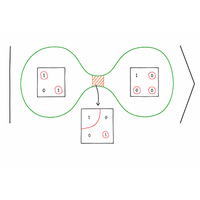
Phys. Rev. Lett. 137, 070405 (2026)
Quantum Information, Science, and Technology
No Cosmological Constraints on Dark Photon Dark Matter from Resonant Conversion: Impact of Nonlinear Plasma Dynamics
Article | Cosmology, Astrophysics, and Gravitation | 2026-08-13 06:00 EDT
Anson Hook, Junwu Huang, and Mohamad Shalaby
We revisit and invalidate all dark photon dark matter constraints from resonant conversion of dark photons into photons (plasmons) in the early universe. These constraints rely on the resonant transfer of a substantial portion of the dark photon energy density into the SM plasma, heating the plasma …
Phys. Rev. Lett. 137, 071004 (2026)
Cosmology, Astrophysics, and Gravitation
GW240925 and GW250207: Astrophysical Calibration of Gravitational Wave Detectors
Article | Cosmology, Astrophysics, and Gravitation | 2026-08-13 06:00 EDT
A. G. Abac et al. (LIGO Scientific Collaboration, Virgo Collaboration, and KAGRA Collaboration)
GW240925 and GW250207 are two loud gravitational-wave signals from binary black hole coalescences observed with network signal-to-noise ratios and , respectively, by the LIGO Hanford-LIGO Livingston-Virgo network. Gravitational-wave signals from coalescing binaries have characteristic phase a…
Phys. Rev. Lett. 137, 071401 (2026)
Cosmology, Astrophysics, and Gravitation
Running of the Electroweak Gauge Couplings from First Principles
Article | Particles and Fields | 2026-08-13 06:00 EDT
Alessandro Conigli, Dalibor Djukanovic, Georg von Hippel, Simon Kuberski, Harvey B. Meyer, Kohtaroh Miura, Konstantin Ottnad, Andreas Risch, and Hartmut Wittig
A lattice QCD determination of the hadronic contribution to the running electromagnetic coupling at the -pole achieves 1.7% uncertainty, more than doubling phenomenological precision and meeting the FCC-ee target.
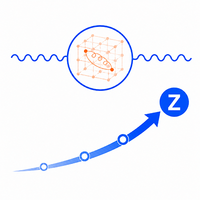
Phys. Rev. Lett. 137, 071901 (2026)
Particles and Fields
Observation of the Jet Diffusion Wake Using Dijets in Heavy-Ion Collisions
Article | Particles and Fields | 2026-08-13 06:00 EDT
A. Hayrapetyan et al. (CMS Collaboration)
Back-to-back jets produced during heavy-ion collisions reveal a plasma property predicted by quantum chromodynamics.
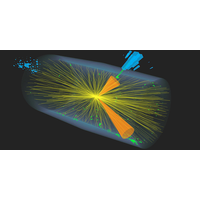
Phys. Rev. Lett. 137, 071902 (2026)
Particles and Fields
Dynamics of Density Fluctuations in Atomic Nuclei
Article | Nuclear Physics | 2026-08-13 06:00 EDT
Francesca Bonaiti, Gaute Hagen, and Thomas Papenbrock
We study the spatiotemporal patterns of density fluctuations in and using nuclear interactions from chiral effective field theory and the time-dependent coupled-cluster method. We find that two-particle-two-hole excitations generate small-amplitude fluctuations that are fast, short-range…
Phys. Rev. Lett. 137, 072502 (2026)
Nuclear Physics
Anisotropic and Nonadditive Interactions of a Rydberg Impurity in a Quantum Bath
Article | Atomic, Molecular, and Optical Physics | 2026-08-13 06:00 EDT
Aileen A. T. Durst, Seth T. Rittenhouse, H. R. Sadeghpour, and Matthew T. Eiles
We present a framework for treating mesoscopic anisotropic and nonadditive impurity-bath interactions, ubiquitous in realistic quantum impurity problems, which are often neglected in conventional approaches relying on additive, spherically symmetric pseudopotentials. To illustrate this general appro…
Phys. Rev. Lett. 137, 073401 (2026)
Atomic, Molecular, and Optical Physics
Zero-Spacing Photonic Channels via Perturbation Engineering
Article | Atomic, Molecular, and Optical Physics | 2026-08-13 06:00 EDT
Wenjie Ji, Xiaoxi Zhou, Tongtong Song, Jie Luo, Ruwen Peng, Mu Wang, and Yun Lai
Optical waveguides conventionally rely on wavelength-scale low-index spacing or cladding to isolate neighboring channels, fundamentally limiting photonic integration density. Here, we show that such spatial separation is not a prerequisite for independent waveguiding. By introducing deep-subwaveleng…
Phys. Rev. Lett. 137, 073802 (2026)
Atomic, Molecular, and Optical Physics
Pressure-Induced Magnetic-Field-Free Superconducting Diode Effect in ${\mathrm{NbSe}}_{2}$ Flake
Article | Condensed Matter and Materials | 2026-08-13 06:00 EDT
Shihao Zhu, Tian Le, Cuiying Pei, Changhua Li, Yi Liao, Yi Zhao, Lingxiao Zhao, Qi Wang, Juefei Wu, Qilian Zhang, Yueshen Wu, Tonghuan Fu, Xujie Lü, Wenge Yang, Jie Shen, Jun Li, Yulin Chen, Xiao Lin, Wen-Yu He, and Yanpeng Qi
The superconducting diode effect (SDE) is a fascinating nonreciprocal phenomenon where the critical current is different for opposite current directions. It is widely believed that realizing SDE requires breaking both inversion symmetry and time-reversal symmetry (TRS), which are usually achieved vi…
Phys. Rev. Lett. 137, 076003 (2026)
Condensed Matter and Materials
Landau-Zener Tunneling and Quantum Interference of Andreev States
Article | Condensed Matter and Materials | 2026-08-13 06:00 EDT
Mikhail S. Kalenkov and Andrei D. Zaikin
With the aid of a microscopic theory we derive an effective Hamiltonian that controls quantum dynamics of Andreev states in superconducting nanojunctions out of equilibrium. Resolving the corresponding Schrödinger-like equation we obtain the "wave functions" for Andreev levels and evaluate electric …
Phys. Rev. Lett. 137, 076004 (2026)
Condensed Matter and Materials
Highly Anisotropic Charge Dynamics and Spectral Weight Redistribution in the Trilayer Nickelate ${\mathrm{La}}{4}{\text{Ni}}{3}{\mathrm{O}}_{10}$
Article | Condensed Matter and Materials | 2026-08-13 06:00 EDT
Zhe Liu, Jie Li, Deyuan Hu, Bingke Ji, Haoran Zhang, Jiahao Hao, Yaomin Dai, Qing Li, Mengjun Ou, Bing Xu, Yi Lu, Meng Wang, and Hai-Hu Wen
We study the -plane and -axis charge dynamics of using optical spectroscopy. While a pronounced Drude profile, i.e., metallic response, is observed in the -plane optical conductivity , the -axis optical spectra exhibit semiconducting behavior. The zero-frequency extrapo…
Phys. Rev. Lett. 137, 076005 (2026)
Condensed Matter and Materials
Universal Valley Filtering via Uniform Dissipation and Velocity Contrast
Article | Condensed Matter and Materials | 2026-08-13 06:00 EDT
Sijie Yue, Wentao Xie, Kai Shao, Hong-yu Zou, Bingbing Wang, Hong-xiang Sun, Y. X. Zhao, Wei Chen, and Haoran Xue
Valley, as a ubiquitous degree of freedom in lattices, has found wide applications in both electronic and classical-wave devices in recent years. However, achieving valley-polarized states, a prerequisite for valley-based operations, still remains challenging. Here, we propose and experimentally dem…
Phys. Rev. Lett. 137, 076302 (2026)
Condensed Matter and Materials
Microscopic Model of Exciton Polarons in 2D Wigner Crystals
Article | Condensed Matter and Materials | 2026-08-13 06:00 EDT
Haydn S. Adlong, Eugen Dizer, Richard Schmidt, Ataç İmamoğlu, and Arthur Christianen
Monolayer transition-metal dichalcogenides (TMDs) provide a platform for realizing Wigner crystals and enable their detection via exciton spectroscopy. We develop a microscopic theoretical model for excitons interacting with the localized electrons of the Wigner crystal, including their vibrational …
Phys. Rev. Lett. 137, 076503 (2026)
Condensed Matter and Materials
Deformation-Potential-Driven Photostriction in Layered Ferroelectrics
Article | Condensed Matter and Materials | 2026-08-13 06:00 EDT
S. Puri, R. Rodriguez, C. Dansou, L. Bouric, A. Sheibani, C. Paillard, L. Bellaiche, and H. Nakamura
The coupling between electronic excitations and lattice deformation in van der Waals ferroelectrics is governed by a competition between the electron deformation potential and the inverse piezoelectric effect. While theory predicts that piezoelectric screening should drive a polar-axis contraction i…
Phys. Rev. Lett. 137, 076904 (2026)
Condensed Matter and Materials
Physical Review X
Bounded-Error Quantum Simulation via Hamiltonian and Lindbladian Learning
Article | 2026-08-13 06:00 EDT
Tristan Kraft, Manoj K. Joshi, William T. Lam, Tobias Olsacher, Florian Kranzl, Johannes Franke, Lata Kh Joshi, Rainer Blatt, Augusto Smerzi, Daniel Stilck França, Benoît Vermersch, Barbara Kraus, Christian F. Roos, and Peter Zoller
Researchers introduce a framework that infers quantum dynamics and error bounds from experimental data to validate large-scale quantum simulations.
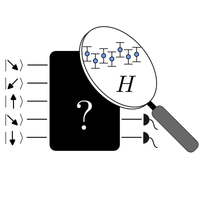
Phys. Rev. X 16, 031037 (2026)
Unified Symmetry Classification of Magnetic Orders via Spin Space Groups: Prediction of Coplanar Even-Wave Phases
Article | 2026-08-13 06:00 EDT
Ziyin Song, Ziyue Qi, Chen Fang, Zhong Fang, and Hongming Weng
A unified classification framework based on spin space group symmetry predicts a coplanar even-wave magnetic phase where electronic band spin polarization varies continuously and can vanish without band degeneracy.
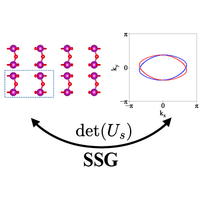
Phys. Rev. X 16, 031038 (2026)
arXiv
Quantum-Geometric Bound on Dynamical Instability in Bosonic Systems
New Submission | Mesoscale and Nanoscale Physics (cond-mat.mes-hall) | 2026-08-14 20:00 EDT
Quantum-geometric speed and dynamical instability are two natural rates for a driven quantum system, and their relation is unsettled even for exactly solvable dynamics. Here we show that for any multimode quadratic bosonic system referred to the bare-mode vacuum the Fubini-Study speed v_FS is the Frobenius norm of the symmetric, stretching part of the flow. This yields a sharp bound, lambda_max <= sqrt(2) v_FS, saturated by a resonant pure squeezer. The bound is not invertible: in a detuned parametric amplifier we hold either rate fixed while varying the other.
Mesoscale and Nanoscale Physics (cond-mat.mes-hall), Quantum Physics (quant-ph)
16 pages 1 fig
Intermediate scattering function of Brownian particles in a tilted cosine potential
New Submission | Statistical Mechanics (cond-mat.stat-mech) | 2026-08-14 20:00 EDT
We solve the Fokker-Planck equation for a Brownian particle in a tilted cosine potential and derive the intermediate scattering function (ISF), which captures the full spatio-temporal dynamics of the system. The model consists of a single overdamped Brownian particle in one dimension. We derive a generalized ISF comprising two wave vectors to describe correlations in the periodic potential. Exploiting the periodicity via Bloch’s theorem, we formulate the problem within a spectral-theoretical framework and numerically compute the corresponding eigenfunctions and eigenvalues, from which we obtain the ISF and the probability density. Using time-dependent perturbation theory, we expand the ISF and derive low-order moments, including the mean-square displacement, time-dependent diffusivity, skewness, and the non-Gaussian parameter. Our analytical results are validated by Brownian-dynamics simulations and analyzed focussing on different regimes of the tilting force. The results are compared to a harmonic approximation and the deterministic limit.
Statistical Mechanics (cond-mat.stat-mech), Soft Condensed Matter (cond-mat.soft)
Phys. Rev. E 114, 014127 - 2026
Is the Aharonov-Casher phase geometrical or dynamical?
New Submission | Mesoscale and Nanoscale Physics (cond-mat.mes-hall) | 2026-08-14 20:00 EDT
Igor Kuzmenko, Y. B. Band, Yshai Avishai
We consider two two-dimensional (2D) electronic systems in the presence of a perpendicular homogeneous electric field that generates a Rashba spin-orbit interaction (RSOI): a system of non-interacting electrons in a 2D conductor, modeled using the 2D Schrödinger equation (SE), and a single-layer graphene system, modeled using a 2D Dirac equation (DE) for massless fermions. In both cases the RSOI is expressed via an $ SU(2)$ Rashba vector potential $ {\bf A}{R}$ . We demonstrate that $ {\bf A}{R}$ cannot be eliminated from either the 2D SE or the 2D DE via a gauge transformation. Nevertheless, for a plane wave solution, an $ SU(2)$ matrix exists that eliminates $ {\bf A}{R}$ from the resulting 1D SE. This unitary matrix is an Aharonov-Casher (AC) phase factor, and facilitates the calculation of the AC phase in the Schrödinger scheme. The plane wave solution for the DE contains two components of $ {\bf A}{R}$ : $ A_{R, k}$ in the direction of the wave vector $ {\bf k}$ , and $ A_{R, n}$ normal to $ {\bf k}$ . The latter generates an effective electron mass that cannot be eliminated from the DE. The former generates an AC phase that can be eliminated by a time-dependent unitary transformation. Thus, the Dirac AC phase is time-dependent, i.e., it is a dynamical phase. This is in contradistinction to the Schrödinger AC phase which is geometrical.
Mesoscale and Nanoscale Physics (cond-mat.mes-hall), Quantum Gases (cond-mat.quant-gas), Quantum Physics (quant-ph)
5 pages, 2 eps figures
Mechanisms of Nanoscroll Formation and Particle Encapsulation in Janus MXenes
New Submission | Materials Science (cond-mat.mtrl-sci) | 2026-08-14 20:00 EDT
Sasan Rezaee, Fatemeh Mohammad Dezashibi, Ould el Moctar, Hossein Darban
Morphology transfer of 2D Janus MXenes into nanoscrolls unlocks unusual properties. Although a scalable synthesis route has been experimentally verified, the atomistic mechanism underlying nanoscroll formation remains poorly understood. We use large-scale reactive molecular dynamics simulations, validated against density functional theory (DFT) and experimental structural and elastic properties, to investigate stability and quantify the driving forces and geometry governing nanoscroll formation in three Janus MXenes, (Tx)Ti2C(Ty), where (Tx) and (Ty) denote the bottom and top surface terminations among bare (-b), -O, and -OH. Both square and infinitely wide flakes with lengths ranging from 10 to over 120 nm are simulated. We find that 1-7% lattice-induced strain generates a bending moment in these structures. The sheet scrolls, curves, or forms a nanotube depending on the resulting curvature and initial sheet size. For MXenes with an initial length of 120 nm, multiwalled nanoscrolls form with interlayer distances of around 0.7 nm and inner diameters of about 7 nm for (O)Ti2C(OH) and (b)Ti2C(OH), whereas (b)Ti2C(O) instead produces a much larger interlayer distance of around 1.7 nm and an inner diameter exceeding 20 nm. We show that spontaneous scrolling of a Janus MXene in the presence of an anchored nanoparticle produces a core@shell composite, in which the particle locally deforms the nanoscroll and widens the interlayer channels. This locally tunable, enlarged interlayer spacing offers a promising design route for MXene-based energy-storage electrodes. However, our simulations reveal H2 gas release during encapsulation, which promotes nanobubble formation that can reduce battery life.
Materials Science (cond-mat.mtrl-sci), Atomic Physics (physics.atom-ph), Computational Physics (physics.comp-ph)
This is a preprint submitted to a journal for publication
The “Moiré Capacitor Effect” and Stabilization of Fractional Chern Insulators in Rhombohedral Graphene Superlattices
New Submission | Strongly Correlated Electrons (cond-mat.str-el) | 2026-08-14 20:00 EDT
Nicolas Regnault, Heqiu Li, Yves H. Kwan, B. Andrei Bernevig, Jonah Herzog-Arbeitman
While the necessity of a moiré potential for fractional Chern insulators (FCIs) in rhombohedral graphene-hBN superlattices, first predicted in Ref. 1, is now grounded in experiments, a theory of its origin and importance remains at large. We present a mechanism—the moiré capacitor effect—that enhances the moiré potential by electrostatically imprinting the valence charge density onto the conduction bands. We derive the analytical form of this term and reveal its crucial role in stabilizing a parent state with Chern number $ C=1$ at filling $ \nu=1$ . We propose a parent state theory which posits that stability of the Chern insulator and flatness of its hole excitations are necessary for obtaining FCIs upon doping. We then perform multi-band exact diagonalization calculations to confirm the emergence of FCIs at $ \nu = 2/3$ in the presence of the moiré capacitor effect. Our FCI state is stabilized by inter-band fluctuations, unlike in the moire-free case which collapses with band-mixing. We provide the first consistent theory for this state in aligned samples and explain its absence in unaligned ones.
Strongly Correlated Electrons (cond-mat.str-el), Mesoscale and Nanoscale Physics (cond-mat.mes-hall)
6 + 55 pages
Boundary phases and thermodynamics of the Kondo spin-$s$ chain: from overscreened Kondo to boundary-bound states
New Submission | Strongly Correlated Electrons (cond-mat.str-el) | 2026-08-14 20:00 EDT
Abay Zhakenov, Pradip Kattel, Andreas Gleis, Natan Andrei
We study a spin-$ \frac12$ impurity coupled to the boundary of a strongly correlated spin-$ s$ Takhtajan–Babujian chain, an integrable model whose low-energy physics is described by a perturbed $ SU(2)_{2s}$ Wess–Zumino–Witten conformal field theory. While boundary conformal field theory determines the low-energy universality class of the weak-coupling regime, exact Bethe Ansatz methods reveal a sequence of boundary quantum phase transitions in which impurity-bound states emerge and reorganize the Hilbert space into multiple excitation towers built on distinct boundary configurations. This tower restructuring provides the organizing principle for a rich boundary phase diagram extending beyond the conventional Kondo regime. Weak antiferromagnetic coupling realizes the overscreened $ 2s$ -channel Kondo universality class, whereas stronger couplings generate localized boundary modes and qualitatively new screening mechanisms. To describe the resulting thermodynamics, we develop a generalized thermodynamic Bethe Ansatz framework that captures the multi-tower structure across all regimes. The impurity entropy reproduces the boundary conformal field theory prediction in the overscreened Kondo regime but develops pronounced nonmonotonic temperature dependence once boundary-bound states appear, in quantitative agreement with large-scale finite-temperature matrix-product-operator simulations. Complementary dynamical calculations reveal sharp threshold features in the impurity spectral function that directly track the underlying tower structure. Together, boundary conformal field theory, exact Bethe Ansatz, generalized thermodynamic Bethe Ansatz, and tensor-network simulations provide a unified description of impurity screening, boundary-bound-state formation, and excitation-tower reconstruction in a correlated spin-$ s$ chain.
Strongly Correlated Electrons (cond-mat.str-el), Statistical Mechanics (cond-mat.stat-mech), High Energy Physics - Theory (hep-th), Mathematical Physics (math-ph), Quantum Physics (quant-ph)
36 pages, 10 figures
Floquet Quasiparticle Poisoning of Frozonium
New Submission | Superconductivity (cond-mat.supr-con) | 2026-08-14 20:00 EDT
Periodic driving can suppress the Josephson nonlinearity of a fluxonium superconducting circuit, producing a nearly harmonic Floquet spectrum at isolated freezing points [K. Lewellen et al., Newton 2, 100434 (2026)]. Here we show that this dynamically frozen behavior does not generically suppress quasiparticle-induced dissipation in the resulting frozonium circuit. We formulate quasiparticle processes in the frozonium using a Floquet framework and analyze both drive-assisted Cooper-pair breaking and tunneling of pre-existing quasiparticles. Pair generation is controlled by gap-breaking thresholds at high drive frequencies, while multiphoton resonances produce pronounced rate enhancements at lower frequencies. Quasiparticle tunneling exhibits connected resonance structures organized by the harmonic Floquet-Magnus spectrum near the freezing point, with resonant hybridization generating characteristic avoided crossings. Our results show that suitable operating regimes must balance dynamical freezing against quasiparticle loss and provide a framework for identifying experimental drive parameters away from harmful resonances.
Superconductivity (cond-mat.supr-con), Mesoscale and Nanoscale Physics (cond-mat.mes-hall), Quantum Physics (quant-ph)
Main text: 10 pages, 4 figures. Supplementary material: 4 pages
Fermionic Anomalies of Finite Symmetries on Lattices
New Submission | Strongly Correlated Electrons (cond-mat.str-el) | 2026-08-14 20:00 EDT
Ameya Chavda, Ryohei Kobayashi
We develop a lattice characterization of fermionic ‘t Hooft anomalies of finite internal symmetries in (1+1)D and (2+1)D, formulated in terms of obstructions to symmetric short-range-entangled (SRE) states. We consider lattice systems formed by tensor product of onsite fermionic and bosonic Hilbert spaces, and finite internal symmetry given by a central extension $ \mathbb Z_2^F\to G_f\to G_b$ . We extract a hierarchy of fermionic anomaly indices for a given symmetry operator. In (1+1)D, an exact lattice symmetry is characterized by a pair of cohomological data $ (n_2,\nu_3)$ . For $ G_f=G_b\times\mathbb Z_2^F$ , we show that a symmetry with trivial anomaly indices $ (n_2,\nu_3)$ is onsiteable and hence admits a symmetric SRE state, establishing that these indices faithfully detect the lattice anomaly. Comparing with continuum QFT, we find that exact lattice symmetries do not realize the additional $ H^1(BG_b,\mathbb Z_2)$ anomaly layer in continuum QFT. In particular, for $ G_b=\mathbb Z_2$ , exact lattice symmetries realize only the even $ \mathbb Z_4$ subgroup of the continuum $ \mathbb Z_8$ classification. In (2+1)D, we identify three successive anomaly layers of cohomological data $ (n_2,n_3,\nu_4)$ . We show that a nontrivial value of any layer obstructs symmetric SRE. For $ G_f=G_b\times\mathbb Z_2^F$ , it also forbids a symmetric invertible state. When the bosonic group $ G_b$ is non-trivially extended by fermion parity, the lattice obstruction to SRE states does not generally coincide with the continuum ‘t Hooft anomaly. We explicitly construct a $ \mathbb Z_4^F$ lattice symmetry in (2+1)D with nontrivial lattice anomaly index that forbids symmetric SRE states, even though its continuum anomaly is trivial. Our results highlight a mismatch between lattice and continuum anomalies and motivate a systematic study of which continuum anomalies admit exact microscopic lattice realizations.
Strongly Correlated Electrons (cond-mat.str-el), High Energy Physics - Theory (hep-th), Quantum Physics (quant-ph)
20 pages, 2 figures
Revisiting magnon bound states: ferro-antiferromagnetic $J_1!-!J_2$ square-lattice model
New Submission | Strongly Correlated Electrons (cond-mat.str-el) | 2026-08-14 20:00 EDT
Cesar A. Gallegos, A. L. Chernyshev
A comprehensive analysis of pairing and bound states of magnons in the Heisenberg $ S!=!1/2$ square-lattice $ J_1!-!J_2$ ferro-antiferromagnetic model is presented. We highlight the similarities and differences between the bound states of spin flips on a lattice and those of particles in the continuum. Magnon bound states at finite pair momentum are studied throughout the Brillouin zone and a convenient lattice partial-wave nomenclature is advocated. The mechanisms of enhanced stability or fragility of these bound states for the high-symmetry pair momenta are identified and quantified as relating to the effective dimensional reduction or enhancement, respectively. These effects are also shown to control the evolution of the bound states with the model parameters, providing a transparent framework for understanding magnon pairing in a more general setting. A method to determine the bound state phase boundaries is presented.
Strongly Correlated Electrons (cond-mat.str-el)
37 pages, 17 figures. Supplementary Material (SM) available under “Ancillary files”
Finite-momentum coupling of Higgs and Bardasis–Schrieffer modes in superconductors with competing pairing channels
New Submission | Superconductivity (cond-mat.supr-con) | 2026-08-14 20:00 EDT
Samuel Awelewa, Yafis Barlas, Maxim Dzero
In superconductors with competing pairing channels, two well defined excitations exist below the pair-breaking edge: the Higgs mode of the condensed $ s$ -wave channel and the Bardasis–Schrieffer (BS) exciton of the subdominant $ d$ -wave channel. Their mixing is doubly forbidden — by point-group symmetry at zero momentum and because the two reside in the amplitude and phase sectors of the order parameter respectively, by particle–hole symmetry at every momentum. Working in a Nambu–Keldysh quasiclassical framework extended to leading $ 1/\varepsilon_F$ corrections and including the self-consistently screened Coulomb potential, we show that finite momentum combined with particle–hole asymmetry generates a direct coupling which we obtain in closed form. Whether this coupling produces an avoided crossing is decided, however, not by its magnitude but by kinematics. In the clean limit the Higgs is not a sub-gap pole but a resonance pinned to the pair-breaking edge, which disperses with coefficient unity in $ (v_Fq)^2$ , while the bound BS mode disperses more slowly: the two branches therefore separate rather than converge and never become degenerate. The obstruction is specific to the clean limit: exact dirty-limit results show that disorder detaches the amplitude resonance from the edge and reverses its dispersion, which can result in an avoided crossing with the BS mode at intermediate scattering. In that regime, the coupling computed here would set the splitting between the hybridized branches. We discuss the experimental implications of these results.
Superconductivity (cond-mat.supr-con)
16 pages, 5 figures
Superconductivity in the $t$-$t’$ Hubbard Model from Symmetry-Preserving Neural-Network Quantum States
New Submission | Strongly Correlated Electrons (cond-mat.str-el) | 2026-08-14 20:00 EDT
Riccardo Rende, Luciano Loris Viteritti, Antoine Georges
Despite its fundamental importance in the theory of strongly correlated electrons, the nature of the ground state of the two-dimensional doped Hubbard model remains intensely debated. Variational approaches provide a powerful route to this problem, but their conclusions can depend sensitively on the chosen wave-function parameterization, the mean-field initialization, or the pinning fields used to guide the optimization, as well as on boundary conditions. This can favor one type of symmetry breaking over another, making it difficult to distinguish the genuine interplay of intertwined or competing orders from biases induced by the variational parameterization. Here, we introduce the Symmetry-Preserving Backflow Pairing (SBP) ansatz, a neural-network wave function that respects translational symmetry by construction and thereby avoids these broken-symmetry minima. The SBP ansatz reaches state-of-the-art variational energies for the $ t$ -$ t’$ Hubbard model on lattices up to $ 24\times24$ with $ 504$ electrons, below those of competing pure stripe solutions. By extrapolating to the thermodynamic limit, we find robust evidence for $ d$ -wave superconducting order, resolving a long-standing question about the $ 1/8$ -doped model at $ t’/t=-0.2$ and $ U/t=8.0$ . Built on general principles of symmetry and locality, the SBP wave function provides a broadly applicable variational representation for challenging interacting fermionic systems.
Strongly Correlated Electrons (cond-mat.str-el), Disordered Systems and Neural Networks (cond-mat.dis-nn), Superconductivity (cond-mat.supr-con), Quantum Physics (quant-ph)
8 pages, 7 figures, 1 table
Exceptional activated mode theory for generalized real-complex transitions
New Submission | Mesoscale and Nanoscale Physics (cond-mat.mes-hall) | 2026-08-14 20:00 EDT
Mengjie Yang, Alexander N. Poddubny, Ching Hua Lee
Real-to-complex spectral transitions mark the onset of amplification in non-Hermitian systems, but their thresholds are often treated as model-specific quantities. Here we develop a general, non-perturbative activated-mode principle that governs the real-to-complex threshold across broad classes of non-Hermitian systems. A central insight is that only a small Hilbert subspace is activated" at the transition onset, which can be variationally determined through the competition between spectral detuning and mode-level projected non-Hermitian couplings. The result is a closed-form exceptional-activation condition for arbitrarily large disturbances”, rather than a perturbative estimate. We apply our framework to three contrasting illustrative problems, establishing (i) a closed-form threshold for critical non-Hermitian skin amplification at \emph{all} system sizes; (ii) a new link between impurity tunneling threshold and exceptional point switching; and (iii) activation channel switching without underlying topological phase transition. Overall, our findings recast real-to-complex transitions as generic mode-selection problems independent of any specific symmetry.
Mesoscale and Nanoscale Physics (cond-mat.mes-hall), Disordered Systems and Neural Networks (cond-mat.dis-nn), Other Condensed Matter (cond-mat.other), Mathematical Physics (math-ph), Quantum Physics (quant-ph)
Any comments are welcome
Emergent trans-moiré orbitals and topology in rhombohedral graphene
New Submission | Mesoscale and Nanoscale Physics (cond-mat.mes-hall) | 2026-08-14 20:00 EDT
Yuqin Wang, Jian Xie, Yi-Jie Wang, Jiajun Zhang, Yiting Gao, Zaizhe Zhang, Da Yi, Yan Xie, Jingjing Shi, Guanqin Zhao, Chengyu Xiong, Kenji Watanabe, Takashi Taniguchi, Zhi-Da Song, Xiaobo Lu, Yi Chen
The fractional quantum anomalous Hall effect (FQAHE) exhibited in fractional Chern insulators has recently been demonstrated in twisted MoTe2 and rhombohedral graphene/hBN moiré superlattices, promising new routes toward topological quantum computation. Central to realizing this promise is the understanding of the underlying microscopic mechanism. This, however, remains elusive in the case of rhombohedral graphene, with the crux being its two seemingly paradoxical conditions: a pronounced small-twist-angle ({\theta}) moiré interface, yet only when electrons are kept distant from it. Here, by scanning tunnelling microscopic imaging with both conditions fulfilled, we capture dramatic electronic structure reshaping in rhombohedral hexalayer graphene by unforeseen ‘trans-moiré orbitals’, which emerge on the other, distant side of the moiré interface but nevertheless enforce the moiré periodicity at all measured fillings. We visualize a hierarchy of spatially and energetically distinct trans-moiré orbitals which doped electrons must sequentially occupy–the lowest-energy orbital, expectedly responsible for the FQAHE at small fillings, carries a hollow-cage-like shape. Remarkably, these trans-moiré orbitals vanish at {\theta} {\gtrsim} 1°, and so do QAHE plateaus in similar devices. Simulations reveal an interaction-driven charge-redistribution mechanism which shapes the trans-moiré orbitals and corresponding Chern minibands. With our findings providing the missing microscopic link, the paradoxical conditions find a natural explanation: electrons are not simply kept distant from a small-{\theta} moiré interface; they are forced into topological trans-moiré orbitals, forged precisely under such conditions. Our microscopic diagnostics unlocks a wide range of possible ‘synthetic’ FQAHE platforms.
Mesoscale and Nanoscale Physics (cond-mat.mes-hall)
Dual Gauge Theory for Two Dimensional Superfluid Turbulence
New Submission | Quantum Gases (cond-mat.quant-gas) | 2026-08-14 20:00 EDT
Tobias Helbig, Sayak Bhattacharjee, Srinivas Raghu
We describe turbulent hydrodynamics of superfluids in two spatial dimensions via the dynamics of point-like vortices coupled to an emergent 2+1 dimensional $ U(1)$ gauge field. The cascade of superfluid kinetic energy is equivalently described by a cascade of dual electric field energies. We study superfluid turbulence using the equations of motion of the dual gauge theory in the presence of a drive and dissipation. In the limit that the vortices are point-like, the dual equations of motion directly yield the hydrodynamical equations of the superfluid. We obtain a turbulent cascade consistent with Kolmogorov’s scaling law for two dimensional fluid turbulence. We observe clustering of like-signed vortices and compute the kinetic energy flux to show that the turbulent regime exhibits an inverse energy cascade.
Quantum Gases (cond-mat.quant-gas), Fluid Dynamics (physics.flu-dyn), Quantum Physics (quant-ph)
7 pages, 4 figures, plus supplemental material
Defect-induced optical magnons and local magnetic correlations in MnSb2Te4
New Submission | Strongly Correlated Electrons (cond-mat.str-el) | 2026-08-14 20:00 EDT
Dhurba R. Jaishi, Bing Li, Tianxiong Han, S. X. M. Riberolles, D. M. Pajerowski, Jiaqiang Yan, R. J. McQueeney
Magnetic defect engineering offers a route to manipulate and control magnetic and electronic states in quantum materials. In the Mn(Bi,Sb)2Te4 family of topological magnetic insulators, Sb substitution facilitates site mixing between Mn and Sb atoms that affects magnetic order and band topology. Here we directly probe these defect-induced magnetic interactions using inelastic neutron scattering on single crystals of MnSb2Te4. We find that antisite mixing generates inequivalent and disordered magnetic sublattices where strong defect-induced antiferromagnetic coupling produces an optical magnon with a large gap. Semi-classical spin-dynamics simulations accurately capture magnetic excitations in the ordered and paramagnetic states and identify that linear Mn-Te-Mn bonds mediate coupling to antisite magnetic defects.
Strongly Correlated Electrons (cond-mat.str-el), Materials Science (cond-mat.mtrl-sci)
The nature of the “pseudogap” in the insulating phase of highly disordered superconductors
New Submission | Superconductivity (cond-mat.supr-con) | 2026-08-14 20:00 EDT
Mark Nikolaevsky, Abhisek Samanta, Nandini Trivedi, Aviad Frydman
Disordered thin films undergoing a superconductor-insulator transition provide a controlled setting for studying pseudogap physics in the absence of competing electronic orders. Although theory predicts that local Cooper pairing can survive deep into the insulating phase, direct spectroscopic confirmation has remained experimentally inaccessible because tunneling measurements in highly insulating films require ultra-high-resistance junctions and picoampere current sensitivity. Here we combine ultra-high-resistance planar tunneling spectroscopy on amorphous indium oxide films with quantum Monte Carlo simulations of the attractive Hubbard model to probe the single-particle excitation spectrum deep in the insulating regime. We find striking agreement between experiment and theory: the single-particle gap not only survives across the superconductor-insulator transition, but increases substantially with disorder, reaching values more than twice those observed on the superconducting side. With increasing temperature, the gap fills rather than closes, while coherence peaks are suppressed and spectral weight redistributes to energies far exceeding the gap scale. Our results provide direct quantitative experimental confirmation of the theoretically predicted Cooper-pair insulating state with localized Cooper pairs and establish a unified connection between the pseudogap above $ T_c$ and the insulating gap as manifestations of pairing without global phase coherence.
Superconductivity (cond-mat.supr-con), Disordered Systems and Neural Networks (cond-mat.dis-nn), Strongly Correlated Electrons (cond-mat.str-el)
Resonant Far-Infrared Spectroscopy of Flat-Band Fermions in Magic Angle Graphene
New Submission | Mesoscale and Nanoscale Physics (cond-mat.mes-hall) | 2026-08-14 20:00 EDT
Ayelet J. Uzan-Narovlansky, Ipsita Das, Juan F. Mendez Valderrama, Yue Tang, Jonah Herzog-Arbeitman, Haoyu Hu, Pengjie Wang, Zhaoyi Joy Zheng, Haosen Guan, Kenji Watanabe, Takashi Taniguchi, B. Andrei Bernevig, Sanfeng Wu
Moiré engineering in twisted two-dimensional (2D) materials radically alters low-energy bands, interactions and topological quantum states. Despite extensive studies, optical spectroscopy of interacting moiré bands in the characteristic far-infrared (FIR) regime has remained largely unexplored due to extreme experimental challenges. Using a newly developed millikelvin FIR platform, we report the observation of the long-sought-after characteristic FIR resonances of flat-band electrons in magic-angle twisted bilayer graphene (MATBG). We observe highly tunable spectroscopic signatures of interacting light and heavy fermions that constitute the flat bands in MATBG. Using the topological heavy-fermion model (THF), we show that itinerant topological electrons act as an “antenna” that couples strongly to the optical field, with resonant frequencies renormalized by the hybridization with localized heavy electrons. We establish optical selection rules of MATBG which uncovers the key symmetry governing light-heavy fermion hybridization. At charge neutrality, we observe pronounced resonances at energies below the on-site Coulomb energy, implying the emergence of new many-body modes. Our experiments and modeling provide a fundamental understanding of light-matter interactions in MATBG and enable resonant optical spectroscopy of moiré bands down to millikelvin temperatures.
Mesoscale and Nanoscale Physics (cond-mat.mes-hall), Materials Science (cond-mat.mtrl-sci), Strongly Correlated Electrons (cond-mat.str-el)
52 pages in total, incluidng 25 pages on main text, figures and extended figures + tables, and 30 pages on theory supplementary information
Natural van der Waals silicates as hosts for telecom quantum emitters: the case of erbium-doped talc
New Submission | Materials Science (cond-mat.mtrl-sci) | 2026-08-14 20:00 EDT
Gellért Dolecsek, Zsolt Benedek, Nguyen Tien Son, Viktor Ivády
Erbium ion is among the most promising solid-state single photon emitters and spin-photon interfaces for quantum networks, emitting directly in the telecom C-band in many host semiconductors. Recently, the search for scalable, low-noise host materials turned toward atomically thin and van der Waals materials that enable efficient integration with nanophotonic architectures. Here, we identify talc, a naturally occurring layered magnesium silicate, as a promising host for telecom-active erbium centers. Using first-principles density functional theory combined with multireference wavefunction calculations, we investigate the thermodynamic stability, electronic structure, crystal-field splitting, and optical transitions of erbium-related defects in talc. We find that substitutional incorporation of Er at Mg sites is energetically favourable over a wide range of Fermi-levels, leading predominantly to telecom C band emitting Er$ ^{3+}$ configuration. The characteristic $ {^4}I_{13/2} \rightarrow {^4}I_{15/2}$ transition of Er$ ^{3+}$ is preserved in the talc environment and remains centred near 1.55 $ \mu$ m, while crystal-field interactions produce a Stark manifold suitable for spectrally selective optical addressing. The combination of thermodynamic stability, wide band gap, low background emission, and compatibility with van der Waals heterostructures suggests that erbium-doped talc constitutes a promising platform for integrated photonics in the C-band.
Materials Science (cond-mat.mtrl-sci)
Spin Vector Control for Heisenberg-Inspired Probabilistic Computing
New Submission | Mesoscale and Nanoscale Physics (cond-mat.mes-hall) | 2026-08-14 20:00 EDT
Yuanqiu Tan, Rahul Tripathi, Saleh Bunaiyan, Ryan Wagner, Neil Dilley, Kerem Camsari, Joerg Appenzeller, Zhihong Chen
Probabilistic bits (p-bits) have emerged as a cornerstone of probabilistic computing, enabling energy-efficient hardware implementation for probabilistic inference and combinatorial optimization. A critical challenge in advancing this field beyond binary p-bits lies in realizing and manipulating vector spin information, essential for mapping complex energy-based models such as the Heisenberg this http URL, we demonstrate a spintronic platform capable of real-space vector summation by using dual ferromagnetic spin injections into a monolayer graphene channel. By electrically tuning the spin polarization through independently controlled injection currents, we achieve continuous control over the magnitude and direction of the resulting spin accumulation vector. Experimental observations, supported by theoretical vector summation models and spin-circuit simulations, reveal coherent vector interactions and angular tunability of the spin state. This approach enables direct implementation of vector-based spin logic and lays the groundwork for mapping classical Heisenberg models using stochastic low-barrier magnets. Our results establish a scalable pathway for realizing probabilistic spin circuits based on two-dimensional materials, offering new opportunities for low-power, non-Boolean computing architectures.
Mesoscale and Nanoscale Physics (cond-mat.mes-hall), Emerging Technologies (cs.ET)
37 pages, 11 figures, 1 table
Memory-dependent electronic friction for nonadiabatic dynamics at metal surfaces
New Submission | Materials Science (cond-mat.mtrl-sci) | 2026-08-14 20:00 EDT
Xuexun Lu, Connor L. Box, Nils Hertl, Reinhard J. Maurer
Electronic excitation induced by nuclear motion is a key energy dissipation channel in chemical dynamics at metal surfaces. Here, nonadiabatic effects can be treated via molecular dynamics with electronic friction, where they act as frictional drag and fluctuation force contributions. Commonly, the Markov approximation is imposed, so memory effects are ignored. A theoretical formalism is presented to evaluate tensorial and configuration-dependent electronic friction memory kernels from first principles. We evaluate friction kernels for Newns–Anderson Hamiltonian models as well as within Kohn–Sham density functional theory and analyse their mathematical properties and configuration dependence. For hyperthermal atomic and diatomic scattering, memory effects arising from frequency and configuration dependence of electronic friction affect energy exchange between adsorbate and metal electrons. Memory effects lead to an increase of vibrational and a reduction of translational energy loss in the case of nitric oxide scattering on Au(111), leading to an increase of directional anisotropy of friction. Importantly, memory-dependent evaluation of electronic friction removes the need to define a single effective Markovian friction coefficient from the structured frequency-dependent electronic response.
Materials Science (cond-mat.mtrl-sci), Chemical Physics (physics.chem-ph)
22 pages, 7 figures
Thermal Hall tomography of chiral superconductivity in rhombohedral graphene
New Submission | Mesoscale and Nanoscale Physics (cond-mat.mes-hall) | 2026-08-14 20:00 EDT
A chiral superconductor carries chiral Majorana modes along its edges, and a single integer, the Bogoliubov–de Gennes Chern number, counts them. Thirty years of candidate materials have not yielded a measurement of that integer, because the magnetic signatures usually invoked are not topologically protected. Rhombohedral graphene makes the question both urgent and answerable: magnetic imaging resolves rewritable time-reversal-breaking domains inside the superconducting phase, while quantum oscillations reveal a normal state too intricate to reconstruct pocket by pocket. We show that the low-temperature thermal Hall conductance returns the integer directly, with no such reconstruction. For band-projected pairing it equals the pairing-vortex winding enclosed by the occupied regions of momentum space. Splitting the intravalley Hamiltonian into symmetric and antisymmetric parts isolates the trigonal warping and finite Cooper pair momentum of the real material: the antisymmetric part is topologically inert, direct Chern calculations across $ 525$ parameter points show the invariant preserved, and one inequality marks where a Bogoliubov Fermi surface removes quantization. The plateau $ \kappa_{xy}/T=(\pi^2k_B^2/6h),C_{\rm BdG}$ then reads out the integer, its sign reverses with the imaged domain, a written domain wall should carry $ 2|C_{\rm BdG}|$ Majorana channels, and the thermometry required already resolves single thermal quanta in encapsulated graphene at millikelvin temperatures.
Mesoscale and Nanoscale Physics (cond-mat.mes-hall), Strongly Correlated Electrons (cond-mat.str-el), Superconductivity (cond-mat.supr-con)
27 pages, 8 figures
Dipolar-driven mean-field criticality in the ferrimagnet Eu$_2$MnSi$_2$O$_7$
New Submission | Strongly Correlated Electrons (cond-mat.str-el) | 2026-08-14 20:00 EDT
Masahiro Kawamata, Maxim Avdeev, Yusuke Nambu
We report mean-field critical behavior in Eu$ _2$ MnSi$ _2$ O$ _7$ , a melilite-type ferrimagnet with spin-only Eu$ ^{2+}$ and Mn$ ^{2+}$ moments and negligible orbital contributions. Magnetization measurements combined with neutron powder diffraction reveal critical exponents close to the mean-field values, indicating that long-range dipolar interactions govern the asymptotic critical behavior in this insulating ferrimagnet. The refined magnetic structure, described by the magnetic space group $ P2_12_1^\prime2^\prime$ , exhibits a tilted ferrimagnetic configuration driven by the Dzyaloshinskii-Moriya interaction, reflecting the noncentrosymmetric nature of the lattice. These results extend the applicability of mean-field theory to complex insulating magnets and establish Eu$ _2$ MnSi$ _2$ O$ _7$ as a platform for exploring ferrimagnetism and long-range interactions. To our knowledge, this is the first insulating ferrimagnet in which dipolar interactions drive mean-field criticality.
Strongly Correlated Electrons (cond-mat.str-el), Materials Science (cond-mat.mtrl-sci)
8 pages, 4 figures
Physical Review Letters 137, 076703 (2026)
Gate Control of g-factor in Germanium Quantum Dots: A Strain-Based Explanation
New Submission | Mesoscale and Nanoscale Physics (cond-mat.mes-hall) | 2026-08-14 20:00 EDT
Mu Niu, Adrian Culver, Johnathan Bryan, Chris Anderson, Mark Gyure, HongWen Jiang
The g-factor is a key parameter governing the behavior of semiconductor spin qubits, as it directly determines the qubit frequency and its sensitivity to electrical and magnetic noise. Recent experiments in germanium quantum dots have revealed large g-factor variations under small gate voltage changes, indicating a strong coupling between electrostatics and spin properties. Here, we present a quantitative explanation based on strain-induced g-tensor modulation. By combining finite-element simulations of inhomogeneous strain with quantum calculations of hole wavefunctions, we show that device-induced strain produces spatially varying g-tensors. Gate voltages shift the quantum dot within this landscape, leading to substantial changes in the effective g-factor. Our results may account for the experimentally observed tunability and highlight the importance of in-plane g-tensor variations. This work establishes a direct link between strain, electrostatic control, and qubit performance in germanium spin qubits.
Mesoscale and Nanoscale Physics (cond-mat.mes-hall)
15 pages, 11 figures
Quantum Divergence and Topological Edge Diagnostics via Levitov Full Counting Statistics
New Submission | Mesoscale and Nanoscale Physics (cond-mat.mes-hall) | 2026-08-14 20:00 EDT
Maolin Bo, Xiang Chen, Siyu Liu, Han Lu, Yunhu Zhu, Zhongkai Huang, Chuang Yao
We propose a differential full counting statistics protocol for mesoscopic transport. Additionally, we compare terminal Fano factors and noise cumulants between gate configurations at matched k1, instead of inferring a bulk divergence sensor from a single absolute F. it is illustrated analytically for a two channel factorization via a zero temperature geometry scan. Secondary benchmarks show that a two dimensional lattice non equilibrium Greens function calculation yields sub Poissonian Fano factors, whereas Kumars low temperature quantum point contact calibration validates the numerical implementation.
Mesoscale and Nanoscale Physics (cond-mat.mes-hall), Materials Science (cond-mat.mtrl-sci)
A Unified Description of Electron-Phonon Coupling and Ion Migration in Metal Halide Perovskites
New Submission | Materials Science (cond-mat.mtrl-sci) | 2026-08-14 20:00 EDT
Bo Cai, Yan Yang, Yoshiki Sugai, Maddison Wiles, Dongxu He, Yang Yang, Junmin Xia, Shufen Chen, Carla Verdi, Siyu Chen, Nan Zhang, Ming-Gang Ju, Chao Liang, Julian A. Steele
The remarkable optoelectronic properties of metal halide perovskites are closely linked to their unusually soft and polar chemical bonds that enable both strong electron-phonon interactions and ion migration. Yet these two defining characteristics have largely been treated as independent consequences of the same underlying chemical bonding. Here we show that they originate from a common electronic-structure framework by developing a general description linking lattice dynamics, electron-phonon coupling, and halide ion migration across representative Pb-based, Sn-based, and double perovskites. Spectrally resolved phonon-mode contributions demonstrate that the low-frequency shearing modes dominate halide migration, whereas high-frequency stretching modes govern carrier scattering through the Fröhlich interaction in all three compositions. We introduce an orbital hybridization descriptor to unify these findings, which connects metal-halide bonding characteristics with the migration barrier energies and Fröhlich coupling strengths, indicating a cooperative evolution of these two properties. These findings provide a generalized microscopic mechanism for simultaneously optimizing charge and ionic transport in soft semiconductors.
Materials Science (cond-mat.mtrl-sci), Mesoscale and Nanoscale Physics (cond-mat.mes-hall)
48 pages
Correlation versus Causation in Quantum Criticality
New Submission | Strongly Correlated Electrons (cond-mat.str-el) | 2026-08-14 20:00 EDT
Conrad Wichmann, Ryan Thorngren, Ruben Verresen
Correlation functions $ \langle O_1(x) O_2(0) \rangle$ reveal scaling dimensions through spatial decay. We instead consider static susceptibility, the change in $ \langle O_1(x) \rangle$ from perturbing the Hamiltonian by $ O_2(0)$ , which we term causation for short. In a conformal field theory (CFT), dimensional analysis predicts decay of $ |x|^{-2\Delta}$ for correlation and $ |x|^{-2\Delta+1}$ for causation. Yet we find causation can decay up to fifteen additional orders in $ x$ through a general mechanism, which we trace to time-derivative fields being unable to contribute to static response. In higher-dimensional CFTs, this mechanism ensures leading causation arises from primaries, even when descendants dominate correlation, which we leverage with DMRG to identify a previously unresolved corner primary of $ \Delta \approx 8.8$ and a heavy magnetic line defect primary of $ \Delta \approx 4.6$ in the $ (2+1)$ D critical Ising model. Moreover, the same mechanism governs edge-mode localization in $ (1+1)$ D gapless symmetry-protected topological phases, explaining previously observed anomalously small edge-mode splittings and guiding our construction of spin chains with splittings as small as $ 1/L^{18}$ and $ 1/L^{25}$ .
Strongly Correlated Electrons (cond-mat.str-el), Statistical Mechanics (cond-mat.stat-mech), Quantum Physics (quant-ph)
main text: 5 pages, 3 figures; end matter: 2 pages
Finite-Temperature Thermodynamics of Cu(100) Oxidation: Missing-Row Reconstruction, Defect States, and Order-Disorder Transition from Nested Sampling
New Submission | Materials Science (cond-mat.mtrl-sci) | 2026-08-14 20:00 EDT
Felix Riccius, Karsten Reuter, Hendrik H. Heenen, Jutta Rogal
Metal surfaces undergo structural, compositional, and morphological changes in response to their chemical environment. Tuning the surfaces’ function and stability for a given application correspondingly necessitates an understanding of how this surface evolution couples to external conditions. Here, we demonstrate the feasibility of nested sampling simulations to obtain this coupling at first-principles predictive quality. By exploring the full configuration space, nested sampling estimates the partition function and gives direct access to desired thermodynamic ensemble averages at any temperature without prior knowledge. Computational feasibility is achieved through machine-learned interatomic potentials, an efficient GPU implementation of the sampling algorithm and bespoke sampling moves. Applied to the early oxidation of Cu(100), the approach successfully predicts the experimentally observed, complex $ (2\sqrt{2}\times\sqrt{2})$ R45$ ^\circ$ -O missing-row reconstruction. The full access to the partition function enables a detailed characterization of the temperature-dependent surface evolution, mapping the emergence of defect states and the order-disorder transition of the reconstructed surface.
Materials Science (cond-mat.mtrl-sci), Chemical Physics (physics.chem-ph), Computational Physics (physics.comp-ph)
Thermodynamics of Learning: A Typed Four-Component Accounting of Memory, Fit, and Value
New Submission | Statistical Mechanics (cond-mat.stat-mech) | 2026-08-14 20:00 EDT
What a finite learning device has recorded and what will hold value for it on future tasks are not the same quantity. We develop a typed accounting for finite-state learning devices that separates four components: a training-side fit functional $ \Phi_{\mathrm{fit}}$ , the record-correlation stock $ J_{D}=I(M;D)$ , an update-side search ledger $ \sigma_{M}$ , and an operational capital value $ V(M;T,b)$ . This value is the work gap between an informed protocol class and a blind class obtained by deleting the memory-read port and re-optimizing from scratch. (I) Separation: for every $ n$ , there is a device family on which record correlation and world correlation grow by $ n\ln 2$ while the capital gain is exactly zero. In the $ \mathrm{flat}^{\ast}$ regime, data-free updates never increase $ V$ . (II) Capitalization ledger: an exact $ \mathrm{flat}^{\ast}$ extraction identity and a universal ledger identity give, for (F5$ ‘$ )-stable $ M$ -local updates under a no-discarded-record-correlation condition (f), the bound $ \eta_{\mathrm{cap}}\le 1$ for the capitalization efficiency $ \eta_{\mathrm{cap}}=\Delta V/(k T,\sigma_{M})$ , together with necessary and sufficient conditions for equality. (III) Value retention: for the retention gap $ L_{\mathrm{gen}}$ and retention ratio $ \rho_{\mathrm{gen}}$ (the former carries no sign constraint; the latter is defined for positive training-side value and is not confined to $ [0,1]$ ) we give a two-layer alignment domain: an exact exchange rate between value and the side-information-adjusted record fit $ I(M’;D\mid Y)$ without any record-side-information independence assumption, and a raw record-stock exchange rate under a joint side-information neutrality condition $ (M,D)\perp Y$ , whose boundary is marked by an explicit one-time-pad witness. These are statements about finite-device value retention under task-distribution shift, not a theory of statistical generalization.
Statistical Mechanics (cond-mat.stat-mech), Information Theory (cs.IT), Machine Learning (cs.LG)
36 pages, 3 figures, 5 tables
Steady states and oscillation modes of two driven dissipative oscillators with non-Hermitian coupling
New Submission | Other Condensed Matter (cond-mat.other) | 2026-08-14 20:00 EDT
Sahel Ashhab, Aakanksha Sud, Shunsuke Fukami
We analyze the dynamics of two harmonic oscillators with nonlinear, non-Hermitian coupling between them. Specifically, we consider a synthetic antiferromagnet composed of two ferromagnetic layers with antiferromagnetic interactions between the two layers, leading to the emergence of two oscillation modes of the combined system. We analyze the response of this system to external driving fields. We determine the allowed steady states under various driving conditions. We then analyze the dynamics of small deviations away from the different steady states, which reveals the normal modes that can be probed using spectroscopic techniques in experiment. As expected, the nonlinear system exhibits multistability, in which multiple steady states can exist for the same driving conditions. We find that the dynamical response can be drastically different depending on which one of the two modes is driven and on the strength of the driving. Specifically, we can obtain level-repulsion or level-attraction patterns in the spectrum. In addition to the rich variety of spectra, we find that some steady states exhibit normal modes that contain multiple frequencies. Our results explain recent experiments on synthetic antiferromagnets and provide guidance for designing experiments that can explore previously unseen phenomena in these systems.
Other Condensed Matter (cond-mat.other), Mathematical Physics (math-ph)
31 pages (preprint), 6 figures
First-Principles Investigation of 2D Copper Boride as a High-Performance Anode for Lithium-Ion Batteries
New Submission | Materials Science (cond-mat.mtrl-sci) | 2026-08-14 20:00 EDT
Subhasis Sarkar, Rajnendra Singh, Brahmananda Chakraborty, Sridhar Sahu
In this study, we investigate the two-dimensional copper boride, Cu$ _8$ B$ _{14}$ , as a possible anode material for lithium-ion batteries using first-principles calculations. We found that the structural integrity of the monolayer was preserved even at elevated temperatures, while electronic calculations confirm the metallic character of the pristine and Li-loaded systems. On systematic lithiation on Cu$ _8$ B$ _{14}$ a specific capacity of 430mAhg$ ^{-1}$ was obtained. A Li diffusion barrier of 0.32eV for the most favourable path, along with a diffusivity of approximately $ 2.26 \times 10^{-5}$ cm$ ^2$ s$ ^{-1}$ was obtained. The open-circuit voltage of 0.53 V falls within the optimal anode range of 0.1–1.0 V. These combined characteristics point to Cu$ _8$ B$ _{14}$ as a compelling candidate for advanced battery anodes. Furthermore, to understand the defect and its effect on different parameters, we investigated an experimentally identified line-defect configuration of copper boride. The line defect monolayer retains a theoretical capacity of about 385mAhg$ ^{-1}$ , while the introduced line defect further reduces the Li migration barrier to 0.21eV, yielding an enhanced macroscopic diffusivity of $ \sim$ 5.6$ \times$ 10$ ^{-4}$ cm$ ^{2}$ s$ ^{-1}$ and confirming that structural defects accelerate Li-ion transport kinetics in this material.
Materials Science (cond-mat.mtrl-sci)
One-sided stripe supersolidity from engineered non-axisymmetric dipolar interactions
New Submission | Quantum Gases (cond-mat.quant-gas) | 2026-08-14 20:00 EDT
A supersolid combines density order with phase coherence, and doped lattice solids ask whether added defects can become coherent without melting the ordered background. We study a soft-core Bose-Hubbard model with isotropic hopping and an engineered non-axisymmetric dipolar interaction, (V_{ij}=V_2(x_{ij}^2-y_{ij}^2)/r_{ij}^5+W_6/r_{ij}^6), where the sign-changing (d_{x^2-y^2}) component selects a fixed ((q,0)) stripe channel and the (W_6/r^6) core stabilizes the short-distance attractive branch. Using sign-problem-free quantum Monte Carlo method with worm algorithm, we find that the half-filled stripe parent responds asymmetrically to doping: the hole side forms locked commensurate stripe solids with vanishing superfluid stiffness, whereas the particle side forms a stripe supersolid with finite compressibility (\kappa>0), finite superfluid stiffness (\rho_s>0), and enhanced double occupancy (D). Keeping the same off-site kernel while increasing (U/t) toward the hard-core limit shows that the particle-side supersolid disappears once doublon-like defects are projected out. Thus the engineered dipolar kernel selects the fixed ((q,0)) stripe channel, while onsite softness selects the phase-coherent defect sector.
Quantum Gases (cond-mat.quant-gas), Quantum Physics (quant-ph)
main 7 pages+supplemental
Magnetic reconstruction of the altermagnet α-MnTe(0001) surface driven by ligand holes
New Submission | Materials Science (cond-mat.mtrl-sci) | 2026-08-14 20:00 EDT
Tomonori Tanaka, Yoshihiro Gohda
We show from first principles that the altermagnet {\alpha}-MnTe reconstructs its magnetic order at the (0001) surface, into a stacking with a ferromagnetic outermost Mn bilayer that is lower in energy than the bulk-continued one. The clean termination leaves a ligand hole in the Te dangling bonds. What drives the reversal is the part of the hole reaching the Te that mediates the exchange within that Mn bilayer. The computed constant-energy contours are consistent with photoemission maps. Transport and spectroscopy on films are therefore sensitive to a surface magnetic order that is not the bulk one.
Materials Science (cond-mat.mtrl-sci), Mesoscale and Nanoscale Physics (cond-mat.mes-hall)
Observation of Time-Domain Braiding of Non-Abelian Anyons at $ν= 5/2$ State
New Submission | Mesoscale and Nanoscale Physics (cond-mat.mes-hall) | 2026-08-14 20:00 EDT
Tomer Alkalay, Jinhong Park, Minseong Oh, Changki Hong, Jun-Young M. Lee, Priya Tiwari, Tapas Senapati, Vladimir Umansky, Moty Heiblum, H.-S. Sim
Unlike elementary particles, which obey either bosonic or fermionic exchange statistics, certain quasiparticles, known as anyons, are predicted to exhibit Abelian or non-Abelian braiding statistics. While braiding Abelian anyons modifies the wavefunction by a ‘statistical phase’, braiding non-Abelian anyons implements a unitary transformation of the state within a degenerate subspace of states. Experimental evidence of non-Abelian braiding has thus far remained elusive. Here, we report a ‘time-domain braiding’ signature of non-Abelian anyons in the $ \nu = 5/2$ fractional quantum Hall state, by extending our previously demonstrated approach with Abelian anyons at $ \nu = 1/3$ . Our approach is based on measurements of the current fluctuations arising from weak partitioning of a highly dilute one-dimensional edge mode. We independently probe the partition noise of the downstream charged mode and also that of the upstream neutral mode. These independent measurements agree with our theoretical predictions for ‘time-domain braiding’ of the downstream Abelian and the upstream non-Abelian anyons, respectively, in the ‘particle-hole Pfaffian’ topological order. Together, these results provide evidence for the presence of non-Abelian anyons.
Mesoscale and Nanoscale Physics (cond-mat.mes-hall), Strongly Correlated Electrons (cond-mat.str-el)
15 pages, 3 figures
Local molecular motions encode time-resolved infrared spectra of proteins
New Submission | Soft Condensed Matter (cond-mat.soft) | 2026-08-14 20:00 EDT
Emanuel Dorbath, Peter Hamm, Gerhard Stock
Time-resolved infrared spectroscopy probes protein dynamics over timescales spanning more than ten orders of magnitude, yet the molecular motions underlying the observed kinetic signatures have remained elusive. Here we combine transient infrared spectroscopy with nonequilibrium molecular dynamics simulations to establish a direct connection between experimental relaxation times and local structural motions. Studying single-domain allosteric proteins, we find that inter-residue contact distances provide the structural representation that most faithfully reproduces the experimental dynamics. Correlation analysis identifies localized networks of coordinated contacts that mediate communication between secondary-structure elements. The characteristic timescales of these contact networks quantitatively match the experimentally observed relaxation processes, enabling each kinetic step to be assigned to a specific molecular motion. Applied to allosteric signal propagation in PDZ3 and photoinduced ligand unbinding in PDZ2, this framework provides an atomistic picture of hierarchical protein relaxation and establishes a general framework for connecting transient infrared spectroscopy with the molecular mechanisms of protein dynamics.
Soft Condensed Matter (cond-mat.soft), Biological Physics (physics.bio-ph), Chemical Physics (physics.chem-ph)
Submitted to Nature Chemistry (NCHEM), 8 pages, 5 figures
Elastic properties of cubic silicon carbide with Si vacancies
New Submission | Materials Science (cond-mat.mtrl-sci) | 2026-08-14 20:00 EDT
Carlos P. Herrero, Eduardo R. Hernandez, Gabriela Herrero-Saboya
We investigate how silicon vacancies modify the elastic response and mechanical stability of cubic 3C-SiC. Our approach employs path-integral molecular dynamics simulations, including the classical-nuclei limit, based on an efficient tight-binding Hamiltonian, whose accuracy is validated against density-functional-theory calculations. This framework enables a quantitative assessment of nuclear quantum effects arising from zero-point motion. Across a broad range of temperatures and hydrostatic pressures, spanning both tensile and compressive regimes, silicon vacancies are found to substantially renormalize the elastic constants $ C_{11}$ , $ C_{12}$ , and $ C_{44}$ , as well as the bulk modulus, relative to the defect-free crystal. Inclusion of nuclear quantum motion produces an additional softening of these elastic properties, particularly at low temperatures, demonstrating that quantum fluctuations make a measurable contribution to the mechanical response of defective SiC. Vacancies also affect the mechanical stability domain of 3C-SiC, lowering the maximum sustainable tensile pressure by approximately 4 GPa for a defect concentration of 0.016 per lattice site. These results reveal an interplay between point defects and quantum lattice fluctuations in determining the elastic behavior of SiC, providing microscopic insight relevant for both extreme-environment structural applications and defect-based quantum technologies.
Materials Science (cond-mat.mtrl-sci)
19 pages, 12 figures
Phys. Rev.B 114, 014109 (2026)
Dissipationless Photovoltaic Spin Hall Effect from Spin-current Vorticity
New Submission | Materials Science (cond-mat.mtrl-sci) | 2026-08-14 20:00 EDT
Spin-current vorticity (SCV) can generate the linear magnetic spin Hall effect [\href{this https URL}{Nature \textbf{565}, 627 (2019)}], yet its role in nonlinear spin Hall transport has been much less explored. Here, we show that, under a dc electric field, SCV can deflect optically excited electrons to drive a dissipationless photovoltaic spin Hall effect (PSHE), in which optical excitation by circularly and linearly polarized light is governed by the Berry curvature and quantum metric, respectively. Because the Berry curvature is $ \mathcal{T}$ -odd whereas the quantum metric is $ \mathcal{T}$ -even, their respective combinations with the $ \mathcal{T}$ -odd SCV give rise to $ \mathcal{T}$ -even and $ \mathcal{T}$ -odd PSHEs, where $ \mathcal{T}$ denotes time-reversal symmetry. Remarkably, we find that the spin current of the $ \mathcal{T}$ -even PSHE can be reversed by switching the light helicity, as illustrated in monolayer WTe$ _2$ . By contrast, the $ \mathcal{T}$ -odd PSHE in altermagnets changes sign upon Néel-vector reversal, as demonstrated in a $ d$ -wave altermagnetic model. Beyond the PSHE, we show that the SCV dipole governs both the Drude and intrinsic nonlinear spin Hall effects proposed recently. Our results reveal two switchable spin Hall mechanisms and establish SCV as a unifying concept for understanding dissipationless nonlinear spin Hall transport.
Materials Science (cond-mat.mtrl-sci)
Three figures
From Molecular Design to Optical Anisotropy: Orientation Control in BODIPY Langmuir-Blodgett Films
New Submission | Materials Science (cond-mat.mtrl-sci) | 2026-08-14 20:00 EDT
Lilia Huynh, Jason Bessonnet (ILV), Lucas Fr{é}d{é}ric (PPSM), C{é}line Fiorini-Debuisschert (LEPO, SPEC - UMR3680), Simon Vassant (SPEC - UMR3680, LEPO), H{é}l{è}ne Fensterbank (ILV), Emmanuel Allard (ILV), David Kreher (ILV, IPCM, UPMC), Fabrice Charra (LEPO, SPEC - UMR3680, SPCSI, SRSIM, CEA, CEA-LETI), Nicolas Fabre (LEPO, SPEC - UMR3680)
Molecular orientation within ultrathin films is a critical factor in controlling their optical and electronic properties for surface-based photonics and optoelectronics. In this study, we examine two amphiphilic boron-dipyrromethene (BODIPY) derivatives, distinguished by the number of hydrophobic alkyl chains, and investigate their organization and optical response using Langmuir–Blodgett deposition. The spatial and orientational distribution of molecules at the nanoscale is determined by combining hyperspectral imaging, photoluminescence radiation pattern analysis, and incidence-angle-resolved absorption spectroscopy. We evidence, both experimentally and based on a new and original theoretical model, the formation of organized monolayers exhibiting either in-plane or perpendicular transition dipole alignment, depending on the molecular symmetry. These results underscore the deep impact of molecular engineering on supramolecular order and anisotropic optical properties at interfaces, providing a robust strategy for the design of functional thin films down to the monolayer level for advanced optical devices.
Materials Science (cond-mat.mtrl-sci)
Advanced Optical Materials, 2026
Blinking membrane patterns induced by protein binding/unbinding
New Submission | Soft Condensed Matter (cond-mat.soft) | 2026-08-14 20:00 EDT
Nonequilibrium membrane pattern formation is studied using meshless membrane simulation. Bound proteins are considered to have two states that generate different membrane spontaneous curvatures. Protein binding and unbinding occur cyclically owing to chemical potential differences, as an off-lattice active Potts model. It is found that this cyclic binding/unbinding can induce blinking domains, with oscillating size: convex domains of the proteins with a higher spontaneous curvature grow, and subsequently, the proteins change to the other state with a lower spontaneous curvature, resulting in domain shrinkage. These processes repeat. In thermal equilibrium, hexagonal convex domains are formed by the competition between bending and surface tension energies, so that they are stably formed only under positive surface tension. However, blinking domains can form even in tensionless membranes.
Soft Condensed Matter (cond-mat.soft), Pattern Formation and Solitons (nlin.PS), Biological Physics (physics.bio-ph)
8 pages, 10 figures
Machine-learned interatomic potential for sputtering of tungsten-boron surfaces
New Submission | Materials Science (cond-mat.mtrl-sci) | 2026-08-14 20:00 EDT
Alexandre Bergero, Jesper Byggmästar, Fredric Granberg
Boronization, where boron is deposited onto tungsten surfaces, is a key technique to reduce plasma contamination, such as oxygen in Tokamak fusion reactors. The exact interaction between the boron atoms and the tungsten surface, and the effect of the harsh environment on these surfaces are however not fully understood, partially due to the lack of accurate atomistic simulations and interatomic potentials. Here, we develop a machine-learned interatomic potential for sputtering studies of W-B structures and deposition of boron onto tungsten surfaces. The machine-learned potential is trained to density functional theory data and allows accurate large-scale molecular dynamics simulations. Our aim is to understand how boron behaves when deposited on tungsten and how tungsten and boron are sputtered under irradiation. We observe that both the surface configuration/orientation and the surface composition affect the sputtering, and that depositing boron onto tungsten surfaces produces a dense boron layer. The developed potential shows good accuracy for both surface and bulk properties and can be used for simulations of mixed W and B systems.
Materials Science (cond-mat.mtrl-sci)
Engineering Chirality in Halide Perovskites
New Submission | Materials Science (cond-mat.mtrl-sci) | 2026-08-14 20:00 EDT
Juan Delgado-Alvarez, Javier Castillo-Seoane, Jorge Budagosky, Lidia Contreras-Bernal, Maria Alcaire, Xabier Garcia-Casas, Jose Feria, Vanda Godinho, Ana Borras, Angel Barranco, Juan R. Sanchez-Valencia
The ability to control chirality in halide perovskites offers new opportunities for circularly polarized photonics, spin-selective electronics, and quantum information technologies. Chirality in halide perovskites is commonly achieved through chiral molecular building blocks or externally imposed photonic architectures. Although both approaches can generate strong chiroptical responses, many spin-dependent functionalities require structural symmetry breaking embedded within the material itself. Here we show that chirality can emerge directly during crystal growth. By combining glancing angle deposition with controlled substrate rotation, we generate highly textured PbI2 nanostructures with growth-controlled crystallographic torsion. X-ray texture analysis reveals that substrate rotation progressively rotates the crystal orientation during growth while preserving the c-axis orientation, resulting in a twisted texture with giant and tuneable chiroptical responses, including ellipticities of 19° and absorption dissymmetry factors approaching 0.6. The chirality programmed during growth is transferred through vapour-phase conversion into multiple halide perovskite compositions, resulting in circularly polarized luminescence with glum values up to 0.23. These findings establish growth-controlled crystallographic torsion as a previously unexplored origin of chirality in halide perovskites.
Materials Science (cond-mat.mtrl-sci)
23-page main manuscript with 3 figures, plus 16 pages of supplementary information containing 11 supporting sections with additional experimental details, data analysis, and figures
Acoustic Tweezers for Magnetic Skyrmions
New Submission | Mesoscale and Nanoscale Physics (cond-mat.mes-hall) | 2026-08-14 20:00 EDT
Current methods for driving magnetic skyrmions predominantly translate ensembles as a whole, lacking single-particle selectivity. Here, we propose an “acoustic tweezer” that deterministically traps and routes individual skyrmions using spatially extended acoustic beams. We reveal that spatially confined longitudinal waves carry nontrivial phonon spin, inducing a magnetoelastic field whose chirality is locked to the acoustic spin texture. This generates polarity-selective radiation forces, distinct from conservative gradient forces, that attract skyrmions to local phonon spin maxima. Intersecting orthogonal beams create reconfigurable attractive points for adiabatic, deterministic manipulation. Our global-field-local-interaction paradigm establishes a non-destructive, on-chip route for high-precision topological spintronics.
Mesoscale and Nanoscale Physics (cond-mat.mes-hall)
3 figures
Emergence of moiré magnetic chaos in twisted bilayer CrI3
New Submission | Mesoscale and Nanoscale Physics (cond-mat.mes-hall) | 2026-08-14 20:00 EDT
Gyuyoung Park, OukJae Lee, Kyoung-Min Kim
The study of magnetic chaos has traditionally focused on macroscopic variables under external driving. Here we demonstrate a new type of magnetic chaos, termed moiré magnetic chaos, associated with mesoscopic magnetic domain variables in twisted bilayer CrI3 without external driving. The domains are stabilized by a characteristic interlayer exchange frustration, which supplies the multiple dynamical degrees of freedom required for autonomous chaos. Through micromagnetic simulations, we show that relaxation toward moiré magnetic textures is extremely sensitive to minute local perturbations of the initial state, characterized by substantial finite-time Lyapunov exponents and a final-state sensitivity that persists over five decades of perturbation amplitude. Statistical analysis further reveals that the resulting domain configurations are stochastic and pairwise uncorrelated. Our results identify a form of microscopic, undriven chaos in twisted magnets that extends nonlinear magnetism beyond the conventional driven regime.
Mesoscale and Nanoscale Physics (cond-mat.mes-hall), Chaotic Dynamics (nlin.CD), Computational Physics (physics.comp-ph)
Topology and Quantum-Spin-Classical-Spin Crossover of the Gapped Kondo Effect
New Submission | Strongly Correlated Electrons (cond-mat.str-el) | 2026-08-14 20:00 EDT
David Krüger, Michael Potthoff
The gapped Kondo effect describes the screening of an $ S=\frac12$ impurity spin locally coupled via an antiferromagnetic exchange interaction to a conduction-electron system exhibiting a finite hard gap. Using a combination of a Lanczos transformation and a self-consistent configuration-interaction scheme, we numerically investigate the local phase diagram. Furthermore, we show that the different phases can be characterized by several topological invariants: the conventional momentum-space Chern number of the underlying two-dimensional host system, corresponding to a Chern insulator; the B-space Chern number, defined by coupling the impurity spin to a fictitious local magnetic field $ \boldsymbol B$ , in the limit $ B \to 0$ ; and the S-space Chern number, defined for a classical impurity spin, i.e., a vector of fixed length. The classical-spin limit is obtained for $ B \to \infty$ . By varying the field strength, we can therefore continuously interpolate between quantum-impurity-spin and classical-impurity-spin Hamiltonians and investigate whether the corresponding phase diagrams are likewise continuously connected. The gapped underscreened Kondo effect is studied for an impurity spin $ S>\frac12$ as well as in the classical-spin limit approached via $ B \to \infty$ or $ S \to \infty$ . Different variants of scattering theory are employed to interpret the resulting phases. Finally, the gapped two-channel overscreened Kondo effect, realized by coupling a quantum impurity spin equally to the local electron spins of both orbitals within a unit cell, is shown to be characterized by spontaneous particle-hole symmetry breaking. This leads to a highly nontrivial quantum-classical phase diagram.
Strongly Correlated Electrons (cond-mat.str-el), Mesoscale and Nanoscale Physics (cond-mat.mes-hall)
19 pages, 14 figures
Adiabatic perturbation theory of energy transfer and charge transport in condensed matter
New Submission | Other Condensed Matter (cond-mat.other) | 2026-08-14 20:00 EDT
Energy and charge transfer in condensed matter systems are often described in terms of quasiparticles. The order of accuracy of the results in terms of the electron-to-nucleus mass ratio $ \epsilon$ , an adiabatic small parameter, is usually not known. To quantify energy transfer with controlled accuracy in $ \epsilon$ , we use adiabatic perturbation theory to derive a formula for the rate of change of the nuclear kinetic energy. Applying a sequence of near-identity unitary transformations decouples the electronic and nuclear degrees of freedom to higher and higher order and produces an effective Hamiltonian. In the special case that the nuclei are treated classically, the energy transfer formula reduces to the usual formula for the rate of work done on a classical particle but the mass of the particle is enhanced by the factor $ M_0^{-1}(M_0+\epsilon M_1)$ , where $ M_1$ is a nonadiabatic correction to the bare nuclear mass tensor $ M_0$ . Additional quantum geometric corrections appear at higher orders. Adiabatic perturbation theory is further used to incorporate, order-by-order in $ \epsilon$ , nonadiabatic transitions into linear response calculations. The nonadiabatic frequency-dependent conductivity and Drude weight of an electron-ion system are calculated.
Other Condensed Matter (cond-mat.other), Chemical Physics (physics.chem-ph)
Local and quasilocal conservation laws of three-state IRF cellular automata and their quantum deformations
New Submission | Statistical Mechanics (cond-mat.stat-mech) | 2026-08-14 20:00 EDT
Using patch-matrix-product methods, we study two reversible three-state interaction-round-a-face cellular automata introduced by Klobas and Prosen [J. Phys. A 55, 094003 (2022)] - the species-preserving and species-flipping rules - and a coherent quantum deformation interpolating between them. Within an explicit translationally invariant ansatz, the two classical rules share a one-parameter family of quasi-local conservation laws with an auxiliary-dimension-three realization. Every regular member is also the first centered logarithmic derivative of an analytic auxiliary-dimension-two family passing through the identity observable. On the closed span of this family and the three elementary local charges, the only nonzero Euler velocities are $ \pm\sqrt{3/23}$ . Consequently, $ \sqrt{3/23}$ is a rigorous lower bound on the maximal Euler speed in any larger conserved sector. For the species-flipping rule, this value agrees with the reported extrapolated value $ 0.361$ of Klobas and Prosen, strongly supporting completeness of the known sound-active charges. The species-preserving rule admits, in addition, a staggered generating family whose logarithmic derivatives form an infinite tower of strictly local charges. In the quantum deformation, the same algebraic structures yield exact low-bond-dimension invariant states (scar candidates), exponentially long-lived quasi-local quasimodes, and diagonal quasi-local charges that produce a nonzero Mazur bound after projection away from the three elementary local charges.
Statistical Mechanics (cond-mat.stat-mech), Mathematical Physics (math-ph), Cellular Automata and Lattice Gases (nlin.CG), Quantum Physics (quant-ph)
41 pages, 4 figures; Research in this work has been assisted by generative AI
Giant exciton effects and magneto-excitonic coupling in V4S9X4 2D magnetic semiconductors
New Submission | Materials Science (cond-mat.mtrl-sci) | 2026-08-14 20:00 EDT
Yingjie Wei, Fan Zhang, Ying Zhao, Lixin Zhou, Yan Su, Yu Guo, Jijun Zhao
Room-temperature spin-optoelectronic devices require a combination of robust ferromagnetism and giant exciton binding, a pairing mutually exclusive in conventional semiconductors due to magnetic localization that screens excitons. Cluster-assembled V4S9X4 (X = F, Cl, Br and I) monolayers overcome this bottleneck via a hierarchical design, that is, intra-cluster localized states host both local magnetic moments and strong electron-hole interactions, while inter-cluster coupling mediates long-range ferromagnetism. Remarkably, these two-dimensional semiconductors exhibit intrinsic ferromagnetism with Curie temperature up to 507.6 K. As a prototype, V4S9Br4 monolayer possesses a giant exciton binding energy of 1.85 eV. Its lowest exciton is a dark state (DI) with a radiative lifetime of 1.20 ns, whereas the first bright exciton (BI) exhibits an ultrafast radiative decay of 86.87 ps. This stark lifetime contrast enables simultaneous ultrafast optical response and long-lived spin information storage. Most notably, switching between ferromagnetic and antiferromagnetic order allows for wide-range tuning of exciton lifetime, with the giant binding energy remaining nearly intact. Our findings establish cluster assembly as a powerful paradigm for designing next-generation spin-photonic and quantum information devices operating at room temperature.
Materials Science (cond-mat.mtrl-sci), Computational Physics (physics.comp-ph)
Graph-theoretic design of lasing networks for physical vision
New Submission | Disordered Systems and Neural Networks (cond-mat.dis-nn) | 2026-08-14 20:00 EDT
Paul Obernolte, Jakub Dranczewski, Yixiu Yin, Tobias Farchy, Wai Kit Ng, Tobias Simonsen, Elias Großhauser, Alexis Arnaudon, Robert L. Peach, Mauricio Barahona, Riccardo Sapienza, Jack C. Gartside, T. V. Raziman
Physical neural networks perform learning through the intrinsic nonlinear dynamics of matter. Optimising their design presents a considerable challenge: complex many-body physics can provide powerful computation, but are expensive to simulate and large experimental optimisation runs are impractical to fabricate. Hence, the high-dimensional space of possible network topologies cannot be effectively directly searched. Here, we show that this search can be efficiently performed in an abstract graph space that is vastly cheaper to explore. Using random lasing networks – composed of interconnected nanoscale waveguides and hosting strongly coupled lasing modes – as an exemplar physical vision system, we establish a quantitative three-layer link: simple graph-theoretic metrics predict the nonlinear lasing physics, which in turn predicts vision performance. After validating this relationship using physical simulations, we exploit it to drive an evolutionary algorithm using graph metrics, producing network topologies that outperform random designs at a fraction of the computational cost (3000$ \times$ speed-up compared to physical simulation). On simulated image-classification tasks, graph-optimised networks substantially improve classification accuracy. As our framework operates on network topology rather than substrate-specific physics, we anticipate it can transfer to other network-based physical learning systems, providing an efficient route for the directed design and optimisation of complex, strongly-interacting physical neural networks.
Disordered Systems and Neural Networks (cond-mat.dis-nn), Combinatorics (math.CO), Optics (physics.optics)
Magnetism in antiperovskite (Li$_2$\textit{M})\textit{Ch}O (\textit{M} = Fe, Mn, Co; \textit{Ch} = S, Se) diluted magnets with fixed 1/3 filling: the key role of magnetic anisotropy
New Submission | Strongly Correlated Electrons (cond-mat.str-el) | 2026-08-14 20:00 EDT
Jieyuan Zheng, Frederik L. Carstens, Lennart Singer, Mohammed A.A. Mohamed, Luca Bischof, Alexey Alfonsov, Jan Arneth, Silke Hampel, Nico Gräßler, Rüdiger Klingeler
We report the magnetic properties of a series of lithium-rich antiperovskites (Li$ _2M$ )$ Ch$ O ($ M$ = Fe, Co, Mn and $ Ch$ = Se, S) where transition metal and lithium ions are randomly distributed on the X-sites of the X$ 3$ BA structure, thereby forming a strongly diluted magnetic sublattice. Our study hence enables us to investigate the evolution of magnetic order at fixed 1/3-filling – which is in the vicinity but slightly above the percolation threshold – upon variation of the spin size, the magnetic anisotropy, and the orbital configuration. The data imply the absence of a distinct Curie-Weiss behavior up to 350~K but show rather large and weakly temperature-dependent magnetic susceptibility. We observe clear signatures of long-range antiferromagnetic order evolving in the 1/3-filled and strongly diluted magnetic X-site lattice with increasing Néel temperatures from $ T{\rm{N}}\simeq 30$ ~K in (Li$ 2$ Mn)$ Ch$ O to $ \simeq 50$ ~K in (Li$ 2$ Fe)$ Ch$ O and $ 70-90$ ~K in (Li$ 2$ Co)$ Ch$ O. Except for $ M$ = Co, the chalcogenide has no sizable effect on $ T{\rm N}$ . We conclude significant magnetic coupling and short-range magnetic correlations at well above $ T{\rm N}$ which is in line with the observation of a broad electron spin resonance signal at room temperature. The actual ordering temperatures are strongly diminished by magnetic dilution. While structural parameters such as the tolerance factor and bonding angles do not strongly affect $ T{\rm N}$ , a key parameter is the magnetic anisotropy of the transition metals.
Strongly Correlated Electrons (cond-mat.str-el), Disordered Systems and Neural Networks (cond-mat.dis-nn), Materials Science (cond-mat.mtrl-sci)
Accelerating a Strong-Coupling Non-Equilibrium Steady-State Impurity Solver using (Quantics) Tensor Trains
New Submission | Strongly Correlated Electrons (cond-mat.str-el) | 2026-08-14 20:00 EDT
Bastian Schindler, Martin Eckstein
Including higher order diagrammatic corrections to the strong-coupling expansion is mainly limited by the evaluation of high-dimensional, time-ordered integrals. In this work we present and compare four different parametrizations of the integrands in order to obtain a low-rank (quantics) tensor-train representation using tensor cross interpolation. Particular emphasis is placed on a quantics time-difference formulation in which the required retarded convolutions are performed directly in quantics tensor-train form. Using controlled Gaussian benchmarks, we analyze the accuracy, bond dimensions, and computational scaling of the different approaches. We then validate the most promising formulations in self-consistent equilibrium and nonequilibrium DMFT calculations and demonstrate calculations up to the third order in the strong-coupling expansion. Finally, we extend the solver to impurity models with retarded density-density interactions and apply it within nonequilibrium extended DMFT. Our results show that tensor cross interpolation substantially reduces the cost of evaluating higher-order diagrams and provides a controlled, systematically improvable framework for nonequilibrium quantum impurity calculations.
Strongly Correlated Electrons (cond-mat.str-el), Computational Physics (physics.comp-ph)
21 pages, 21 figures, and 2 tables. Submitted to Physical Review B
Substrate-Directed Wetting Layers in Bicontinuous Particle-Stabilised Emulsions
New Submission | Soft Condensed Matter (cond-mat.soft) | 2026-08-14 20:00 EDT
Jesse M. Steenhoff, Martin F. Haase
Bicontinuous interfacially jammed emulsion gels (bijels) facilitate efficient mass transport across multiple length scales due to their interwoven structure of particle-stabilised liquid channels. This unique morphology imparts considerable potential for applications in separation and catalysis, particularly when fabricated \textit{via} solvent-transfer-induced phase separation (STrIPS). STrIPS enables the continuous, large-scale production of nanostructured bijel films on solid substrates, yet the influence of the substrate properties on the formation dynamics and final morphology remains insufficiently understood. In this study, this relationship is elucidated by preparing STrIPS bijel films on silane-functionalised glass substrates with selectively controlled wettability and analysing the resulting structure with confocal microscopy. The results showed the presence of notable wetting layers at the bijel-substrate interface, whose thicknesses could be tuned through the nanoparticle weight fraction. In line with numerical simulations, increasing the substrate hydrophobicity drove a transition from a laminar, water-rich surface layer to a patch-like, progressively oil-rich structure. These findings provide crucial insight into the structure-directing role of substrates in supported bijel films, which aids their application as functional materials.
Soft Condensed Matter (cond-mat.soft)
13 pages, 7 figures
Emergent Symmetry-Protected Topological Phases via Polyakov Confinement in Quantum Spin Systems
New Submission | Strongly Correlated Electrons (cond-mat.str-el) | 2026-08-14 20:00 EDT
Li-Wei He, Shun-Li Yu, Jian-Xin Li
A main theme in modern condensed matter physics is the emergence of fractionalized excitations and gauge structures from quantum spin systems. However, understanding how these exotic degrees of freedom reconfine into new phases of matter remains a fundamental challenge. In this work, we demonstrate that Polyakov’s confinement mechanism-a foundation of compact gauge theory-can serve as a dynamical engine to transform a Dirac spin liquid into a symmetry-protected topological (SPT) state. Starting with a Dirac spin liquid with spin-dependent gauge fluxes, we show that the single-occupancy constraint inherent to the physical Hilbert space triggers monopole condensation, dynamically confining bulk spinons while preserving gapless edge modes-realizing a spinon analog of the quantum spin Hall effect. Using a large-scale variational Monte Carlo simulation on a triangular antiferromagnet with an additional Dzyaloshinskii-Moriya interaction, we provide microscopic evidence for this confined SPT phase, including a characteristic area law for the Wilson loop and vanishing topological entanglement entropy. Furthermore, we identify a measurable spin-pump response under magnetic fields, which directly encodes the Berry curvature of the parent Dirac cones. Our results reveal a previously unexplored pathway to SPT physics, bridging the fields of gauge theory, quantum magnetism, and topological matter.
Strongly Correlated Electrons (cond-mat.str-el)
Rep. Prog. Phys. 89 (2026) 080503
Topological Superconductors in Doubly-Coupled Nanowires with Altermagnetism
New Submission | Mesoscale and Nanoscale Physics (cond-mat.mes-hall) | 2026-08-14 20:00 EDT
Hongfa Pan, Haoyang Wang, Wenguang Zhu, Zhenhua Qiao
We theoretically investigate the possibility of engineering topological superconductivity in doubly coupled nanowires integrating proximity-induced superconductivity and altermagnetism. By tuning experimentally accessible parameters, we find four distinct topological superconducting phases: class D, class BDI, and two phases hosting two Majorana zero modes per end, protected respectively by spin-group and magnetic point-group symmetries. Beyond inheriting the advantages of alternating?magnetism induced topological superconductivity, our system provides multiple tuning knobs (e.g., superconducting phase difference and inter-wire coupling) to control topological properties.
Mesoscale and Nanoscale Physics (cond-mat.mes-hall)
Thermal transport in crystals: from the quantum Dyson equation to mesoscopic phonon hydrodynamics
New Submission | Materials Science (cond-mat.mtrl-sci) | 2026-08-14 20:00 EDT
Enrico Di Lucente, Michele Simoncelli, Nicola Marzari
Thermal transport in dielectric, non-magnetic crystals is mediated by quantized lattice vibrations, which drift and interact when driven out of equilibrium by a temperature gradient. This phenomenon can be described at multiple theoretical levels, ranging from fully quantum descriptions to semiclassical and mesoscopic continuum approaches. This review rigorously discusses the theoretical steps and approximations connecting these levels, bridging quantum phonon Dyson and Kadanoff-Baym equations and semiclassical Boltzmann transport formalism, and discussing the coarse-graining procedures that yield mesoscopic viscous heat equations for non-diffusive, hydrodynamic heat transport in devices. We show how the Guyer-Krumhansl and dual-phase-lag equations emerge as special linear-isotropic-band and inviscid limits of the viscous heat equations, respectively; most importantly, we demonstrate that these equations predict not only Poiseuille flow and second sound, but also more exotic effects such as negative thermal resistance, steady-state thermal backflow and vortices. We highlight how combining these frameworks with first-principles simulations connects microscopic phonon physics to observable non-diffusive heat-transport phenomena and guides their detection, amplification, and control. We recast the viscous heat equations in terms of Helmholtz and biharmonic equations solved analytically, and use this to discuss similarities and differences between the macroscopic behavior of the phonon fluid and other hydrodynamic systems, such as classical and electron fluids, focusing on compressibility, vorticity, and their influence on phonon hydrodynamics. We conclude with a roadmap to generalize the tools used to describe phonon hydrodynamics to other quasiparticles, motivating future advances in collective quantum transport phenomena in solids.
Materials Science (cond-mat.mtrl-sci), Other Condensed Matter (cond-mat.other), Applied Physics (physics.app-ph), Computational Physics (physics.comp-ph), Fluid Dynamics (physics.flu-dyn)
165 pages, 34 figures, 3 tables
Di Lucente, E., Simoncelli, M., & Marzari, N. (2026). Thermal transport in crystals: from the quantum Dyson equation to mesoscopic phonon hydrodynamics. Advances in Physics, 1-140
Capillary self-folding chains
New Submission | Soft Condensed Matter (cond-mat.soft) | 2026-08-14 20:00 EDT
Megan Delens, Axel Franckart, Martin Poty, Nicolas Vandewalle
Mesoscale self-assembly provides a route toward the design of programmable microsystems. Here, we construct flexible chains of floating monomers whose curved branches impose upward or downward deformations of the liquid interface, corresponding to effective positive or negative capillary charges. These geometrically encoded deformations generate local attractive or repulsive interactions along the chain. By tuning the capillary sequence, we obtain distinct folded configurations, including straight lines, zigzag patterns, and loops. For short chains, folding is largely governed by nearest-neighbor interactions and leads to well-defined structures. As the chain length increases and non-neighboring segments come into proximity and interact, however, the folding landscape becomes increasingly complex, with multiple metastable states whose number grows exponentially with chain length. We map these landscapes numerically and demonstrate experimentally that mechanical agitation allows the chains to transition between metastable configurations. Beyond encoding a target geometry, the capillary sequence therefore controls the complexity of the folding landscape as well as the degeneracy and mutational robustness of folded structures. These results establish capillary chains as a controllable mesoscale platform for investigating how local interaction rules give rise to collective folding and complex sequence-to-structure relationships reminiscent of those encountered in biomolecular systems.
Soft Condensed Matter (cond-mat.soft), Statistical Mechanics (cond-mat.stat-mech)
The principle of stationary action and Lagrangian for dissipative dynamics with velocity-proportional frictional force
New Submission | Mesoscale and Nanoscale Physics (cond-mat.mes-hall) | 2026-08-14 20:00 EDT
Georgii Koniukov, Dmitry Nerukh
It has been known for a long time that the equation of motion for dissipative linear dynamical systems with constant coefficients cannot be derived from the classical principle of stationary action because the term proportional to velocity in the equation of motion leads to the time derivative of order one half in the Lagrangian. Thus, approaches utilising fractional calculus have been used; however, they suffer from deficiencies both from mathematical and physical points of view. We here present our version of such fractional calculus based approach that provides correct Euler-Lagrange and, ultimately, the Hamilton equations, energy change of the moving body, and an attempt for a geometric interpretation of how energy dissipates.
Mesoscale and Nanoscale Physics (cond-mat.mes-hall), Mathematical Physics (math-ph), Classical Physics (physics.class-ph)
Comparison of mechanical properties of Ag/W1-xTixB2.5 and pure silver coatings deposited by PLD/HIPIMS method
New Submission | Materials Science (cond-mat.mtrl-sci) | 2026-08-14 20:00 EDT
Katarzyna Zielińska, Mateusz Włoczewski, Rafał Psiuk, Jacek Hoffman, Ewa Wojtiuk, Piotr Bazarnik, Tomasz Mościcki
Transition metal borides are attracting increasing interest due to their unique properties. They are not only characterised by very high hardness, but also considerable chemical and thermal stability. Silver, on the other hand, is a good material for increasing electrical and thermal conductivity, wear resistance and has antibacterial properties due to its biological characteristics. Combining these two materials can provide superhard bilayers with increased functional properties. In this study, it was decided to synthesise Ag/WB2.5, Ag/W0.76Ti0.24B2.5 coatings and compare their properties to the individual components. The silver coating was produced by pulsed laser deposition (PLD), while the WB2.5 and W0.76Ti0.24B2.5 coatings were formed by high-power pulsed magnetron sputtering (HiPIMS). To determine the mechanical properties, nanoindentation tests, adhesion of the coatings by scratch -test and wear resistance by abrasion in reciprocating motion were tested. In all cases, the silver film contributed to an increase in the wear resistance of the materials without major changes in the hardness results of the materials. In addition, the Ag/W0.76Ti0.24B2.5 film showed very good adhesion to the substrate. Human hand wiping simulator was also carried out using - Tribotouch. After 36 000 cycles Ag/W0.76Ti0.24B2.5 coating was slightly deformed, which was not visible macroscopically. This result is more than three times greater than for the pure silver film. It was also decided to carry out corrosion tests in an environment of 0.9% NaCl. The Ag/W0.76Ti0.24B2.5 bilayer has very good corrosion resistance, similar to pure silver.
Materials Science (cond-mat.mtrl-sci)
Imaginary-time correlations in time-sliced stochastic series expansion
New Submission | Strongly Correlated Electrons (cond-mat.str-el) | 2026-08-14 20:00 EDT
Ryan Flynn, Adam Iaizzi, Sibin Yang, Ying-Jer Kao, Anders W. Sandvik
Combined with numerical analytic continuation techniques, quantum Monte Carlo (QMC) methods enable the extraction of real-frequency dynamical properties from imaginary-time correlation functions. However, the efficient computation of imaginary-time correlation functions by QMC simulations can (depending on the particular model used) be challenging, particularly for operators that are off-diagonal in the computational basis. In this work, we present an efficient and general algorithm within the stochastic series expansion (SSE) framework for evaluating imaginary-time correlation functions of both diagonal and off-diagonal operators. The algorithm builds on a discrete imaginary-time slicing of the SSE operator string, which provides correlation functions on a grid of well-defined imaginary-time points with no discretization error. For off-diagonal operators, we derive estimators that integrate directly into the existing SSE directed-loop or cluster updating schemes, introducing only minimal computational overhead. We benchmark the method on the one-dimensional transverse-field Ising model (sampling with cluster updates) and XXZ spin chain (using directed-loop sampling), demonstrating excellent agreement (with only statistical errors) with exact diagonalization of small systems. We also study larger systems to demonstrate efficiency.
Strongly Correlated Electrons (cond-mat.str-el)
19 pages, 10 figures
Landau theory and exchange instabilities in Mn$_5$Si$_3$: A case against altermagnetism
New Submission | Materials Science (cond-mat.mtrl-sci) | 2026-08-14 20:00 EDT
Thin-film Mn$ 5$ Si$ 3$ is one of the most studied altermagnetic candidates thanks to its metallicity, demonstrated anomalous transport properties, and assumed $ d$ -wave exchange splitting pattern enabling spin-polarized transport and various spintronic applications. Its postulated altermagnetic structure has zero propagation vector, in contrast to the collinear antiferromagnetic bulk phase (AFM2) which orders at the $ M$ star. In this work, the two phases are analyzed using Landau theories, first-principles calculations of the paramagnetic instabilities, and Monte Carlo simulations. AFM2 appears in a Landau theory as a symmetry-protected inversion-even, permutation-odd mode at a single arm of the $ M$ star. At $ \Gamma$ , the same intracell ordering pattern belongs to the collinear branch of an $ E{2g}$ order parameter. In both cases, higher-order terms are required for the phase selection. First-principles calculations for the paramagnetic, disordered-local-moment state correctly identify the leading exchange instability at the $ M$ star, and the resulting classical Heisenberg model orders at a reasonable temperature into the orthogonal $ 3M$ phase favored by single-site entropy. The $ \Gamma$ -point $ E{2g}$ mode, whose Landau theory contains the altermagnetic sector, is substantially weaker and further suppressed by epitaxial strain representative of Mn$ _5$ Si$ _3$ films exhibiting anomalous transport. The same strain reduces the leading magnetic exchange scale. These results provide a natural explanation for the bulk $ M$ -point instability but strongly disfavor the postulated relocation of the propagation vector from $ M$ to $ \Gamma$ in a moderately strained bulklike Mn$ _5$ Si$ _3$ film, suggesting that the corresponding altermagnetic phase is unlikely to be stabilized without additional physics.
Materials Science (cond-mat.mtrl-sci)
11 pages, 5 figures
Equivariant learning of a transferable three-dimensional classical density functional
New Submission | Statistical Mechanics (cond-mat.stat-mech) | 2026-08-14 20:00 EDT
Liquids exhibit collective behavior that depends sensitively on thermodynamic conditions, interfaces and confinement, yet predicting each new state commonly requires a separate atomistic simulation. Classical density functional theory offers a reusable variational description, but its central excess free-energy functional is generally unknown, and learned approximations have largely remained restricted to planar or lower-dimensional settings. Here we show that this functional can be learned directly from fully three-dimensional equilibrium density fields while preserving spatial symmetry and variational consistency, without free-energy or chemical-potential labels. A single learned functional transfers across temperatures, system sizes and statistical ensembles, and recovers structure factors, the equation of state, liquid–vapor coexistence and interfacial broadening, none of which are used as training targets. Applied to complex three-dimensional geometries, it predicts the non-monotonic force associated with formation and rupture of a solvent-depleted bridge between colloids and adsorption in an interconnected gyroid pore. These results demonstrate that equilibrium density data can be converted into a transferable thermodynamic generator connecting microscopic liquid structure to response, phase behavior and collective phenomena.
Statistical Mechanics (cond-mat.stat-mech), Soft Condensed Matter (cond-mat.soft), Machine Learning (cs.LG), Chemical Physics (physics.chem-ph), Computational Physics (physics.comp-ph)
Inductively-protected Andreev (IPA) spin qubit
New Submission | Mesoscale and Nanoscale Physics (cond-mat.mes-hall) | 2026-08-14 20:00 EDT
J. L. del Olmo N., F. J. Matute-Cañadas, A. Levy Yeyati, R. Seoane Souto, R. Aguado
The spin of a quasiparticle trapped in a quantum dot Josephson junction forms the basis of an Andreev spin qubit (ASQ): a semiconductor-superconductor device where the interplay between a localized spin degree of freedom and superconductivity leads to a spin-resolved Josephson potential. In this work, we show that shunting an ASQ with a linear inductor enhances its relaxation time by separating the spin-qubit states into distinct potential wells in phase space, nearly eliminating wavefunction overlap. The resulting inductively protected Andreev (IPA) spin qubit is equivalent to two fluxoniums in the heavy regime, one for each spin. Thus, the IPA qubit combines the long coherence times, low-frequency ground-state manifold, and large anharmonicity of a protected superconducting qubit with the operational advantages of a spin degree of freedom.
Mesoscale and Nanoscale Physics (cond-mat.mes-hall), Superconductivity (cond-mat.supr-con), Quantum Physics (quant-ph)
13 + 3 pages; 9 + 2 figures
Insight into SRF cavity performance from simulations of Nb’s surface oxide dissolution and diffusion
New Submission | Superconductivity (cond-mat.supr-con) | 2026-08-14 20:00 EDT
Ryan M. L. McFadden, Rowan Becker, Tobias Junginger
We report simulations of the dissolution and diffusion of Nb’s surface oxide layer in vacuum. While this chemical doping process is important for the surface preparation of Nb superconducting radio frequency (SRF) cavities - common components of particle accelerators - quantitatively linking the resulting oxygen distributions to superconducting performance remains challenging. In this work, we simulate the reaction-diffusion process numerically for treatment temperatures $ T = 50^{\circ}$ C to $ 200^{\circ}$ C and times $ t = 0.5$ h to $ 120$ h, and calculate the effect of the spatially inhomogeneous oxygen doping on Nb’s superconducting properties. We find that oxygen doping redistributes the Meissner screening current, reducing its value at the surface and shifting its maximum several nanometres into the material. These results provide a microscopic link between oxygen diffusion profiles and the electromagnetic response of Nb relevant for SRF cavity operation. This work provides a quantitative framework linking oxygen diffusion profiles to superconducting performance and establishes a foundation for future studies involving time-dependent and multi-step heat treatment protocols.
Superconductivity (cond-mat.supr-con), Materials Science (cond-mat.mtrl-sci), Accelerator Physics (physics.acc-ph)
17 pages, 9 figures, 2 tables