CMP Journal 2026-08-07
Statistics
Nature Physics: 3
Physical Review Letters: 14
Physical Review X: 1
arXiv: 62
Nature Physics
Time-domain identification of distinct mechanisms for competing charge density waves in a rare-earth tritelluride
Original Paper | Electronic properties and materials | 2026-08-06 20:00 EDT
Yifan Su, B. Q. Lv, Alfred Zong, Aaron Müller, Sambuddha Chattopadhyay, Pavel E. Dolgirev, Anisha G. Singh, Joshua A. W. Straquadine, Dongsung Choi, Doron Azoury, Masataka Mogi, Ian R. Fisher, Eugene Demler, Nuh Gedik
Understanding the origin of phase transitions and the interactions between distinct phases remains a central task in condensed-matter physics. Charge-density-wave (CDW) systems provide a useful setting to investigate these questions. Although the dominant CDW phases in many materials can be explained through electron-phonon interactions, certain CDW phase transitions remain poorly understood, challenging conventional paradigms. One example is the rare-earth tritelluride ErTe3, which hosts two competing CDW orders. Although electron-phonon coupling accounts for the dominant order, the mechanism behind the subdominant order remains unclear. In this study, we combine time- and angle-resolved photoemission spectroscopy and time-dependent Ginzburg-Landau theory to establish a time-domain approach for probing phase transitions in solid-state systems. By analysing the distinct recovery dynamics of the two CDW orders in ErTe3 following light excitation, we reveal a novel nucleation and growth mechanism that probably drives the secondary CDW phase transition. More broadly, this work provides a time-domain framework for studying phase transitions and phase competition in quantum materials.
Electronic properties and materials, Phase transitions and critical phenomena, Structure of solids and liquids
Perfect particle transmission through duality defects
Original Paper | Theoretical physics | 2026-08-06 20:00 EDT
Atsushi Ueda, Vic Vander Linden, Boris De Vos, Laurens Lootens, Jutho Haegeman, Paul Fendley, Frank Verstraete
The theory of generalized symmetries has recently clarified how twisted sectors resolve the Callan-Rubakov paradox, where scattering of a charged particle by a magnetic monopole appeared to violate conservation laws. Here we study a more general setting of wavepackets that propagate across topological interfaces in quantum spin systems exhibiting non-invertible symmetries and across duality defects coupling dual theories. In these scenarios, we find that the transmission is always perfect and a particle traversing the interface is converted into a non-local string-like excitation. We give a systematic way of constructing such a defect by identifying its Hilbert space with the virtual bond dimension of the matrix product operator representing defect lines. Our work provides a precise characterization of topological interfaces in perfect transmission phenomena and yields a lattice analogue of the solution to the monopole paradox in quantum field theory.
Theoretical physics, Topological defects
Large intra-chromosome heterogeneity leads to emergent nonlinear mechanics
Original Paper | Biological fluorescence | 2026-08-06 20:00 EDT
Constantijn van der Smagt, Janni Harju, Tianlong Man, Andreas S. Biebricher, Tinka V. M. Clement, Iddo Heller, Chase P. Broedersz, Gijs J. L. Wuite, Erwin J. G. Peterman
Faithful chromosome segregation during mitosis relies on the formation of compact, individualized chromosomes that withstand drag and spindle-generated forces. Structural failure of mitotic chromosomes under force can disrupt the distribution of genetic material to daughter cells, causing aneuploidy or cancer. The overall mechanical properties of mitotic chromosomes have been suggested to arise from their structural heterogeneity. The magnitude and scale of this heterogeneity have not been measured, leaving its impact on chromosome mechanics unresolved. Here we show that chromosomes are highly mechanically heterogeneous: within one chromosome, the local stiffness can vary by up to two orders of magnitude. This extreme mechanical heterogeneity is exemplified by the centromere, which is an order of magnitude softer than the whole chromosome. These results demonstrate how the mechanical complexity of mitotic chromosomes gives rise to their emergent nonlinear mechanical behaviour, distinct from the polymer properties of their constituents. More broadly, we discuss how structural heterogeneity can shape the nonlinear responses of composite materials, with implications for both understanding biological assemblies and designing new synthetic materials.
Biological fluorescence, Biological physics, Optical manipulation and tweezers, Single-molecule biophysics, Super-resolution microscopy
Physical Review Letters
Origin of Exponential Operator Growth in Hilbert Space
Article | Quantum Information, Science, and Technology | 2026-08-06 06:00 EDT
Vijay Ganesh Sadhasivam, Jan M. Rost, and Stuart C. Althorpe
The question of thermalization in quantum many-body systems has long been studied through the properties of matrix elements of operators corresponding to local observables. More recently, the focus has shifted to the dynamics of operators, which lead to seminal works proposing universal bounds on th…
Phys. Rev. Lett. 137, 060404 (2026)
Quantum Information, Science, and Technology
Cosmic Variance in Anisotropy Searches at Pulsar Timing Arrays
Article | Cosmology, Astrophysics, and Gravitation | 2026-08-06 06:00 EDT
Valerie Domcke, Gabriele Franciolini, and Mauro Pieroni
Recent pulsar timing array (PTA) analyses show evidence for a gravitational wave background (GWB) with angular correlations consistent with the Hellings-Downs curve. Anisotropies are a key discriminator of the origin of this GWB, as they are expected to be at 1%-20% for astrophysical sources, but su…
Phys. Rev. Lett. 137, 061003 (2026)
Cosmology, Astrophysics, and Gravitation
Small Progenitors, Large Couplings: Type Ic Supernova Constraints on Radiatively Decaying Particles
Article | Cosmology, Astrophysics, and Gravitation | 2026-08-06 06:00 EDT
Francisco R. Candón, Damiano F. G. Fiorillo, Hans-Thomas Janka, Bart F. A. van Baal, and Edoardo Vitagliano
Supernova (SN) 1987A provides classic bounds on gamma-ray flashes from the radiative decay of sub-GeV particles, but the latter may decay so rapidly as to be shielded by the stellar envelope. Using axionlike particles with photon coupling as a benchmark, we show that Type Ic core-collapse supernovae…
Phys. Rev. Lett. 137, 061004 (2026)
Cosmology, Astrophysics, and Gravitation
Does Hot QCD Have a Conformal Manifold in the Chiral Limit?
Article | Particles and Fields | 2026-08-06 06:00 EDT
Shi Chen, Aleksey Cherman, and Robert D. Pisarski
Recent lattice evidence may suggest the chiral phase transition in QCD is second order for massless flavors. We constrain conformal field theory (CFT) descriptions of a critical line in temperature and imaginary baryon chemical potential . An 't Hooft anomaly at general constrains …
Phys. Rev. Lett. 137, 061903 (2026)
Particles and Fields
Exploring the Fluid Behavior in $\mathrm{p}+\mathrm{p}$ Collisions at $\sqrt{s}=13\text{ }\text{ }\mathrm{TeV}$ with Viscous Anisotropic Hydrodynamics
Article | Nuclear Physics | 2026-08-06 06:00 EDT
Shujun Zhao, Yiyang Peng, Ulrich Heinz, and Huichao Song
The applicability of hydrodynamics in small collision systems remains controversial due to the small size and short lifetime of the system. In this Letter, we employ viscous anisotropic hydrodynamics (VAH), which incorporates large pressure anisotropies, to study the collectivity in collisions a…
Phys. Rev. Lett. 137, 062301 (2026)
Nuclear Physics
Mass Measurements of Exotic $^{48-50}\mathrm{Ar}$ Isotopes: Probing Proton-Neutron Interaction of the Doubly Magic $^{52}\mathrm{Ca}$ and the Robustness of $N=32$ Subshell
Article | Nuclear Physics | 2026-08-06 06:00 EDT
C. Y. Fu et al.
High-precision multireflection time-of-flight mass spectrometry has been applied at BigRIPS-SLOWRI of the Radioactive Isotope Beam Factory (RIBF). The atomic mass of was measured for the first time, and the mass value of was determined to be 674 keV lower than the one from a previous T…
Phys. Rev. Lett. 137, 062502 (2026)
Nuclear Physics
Direct Observation of the Optical Magnus Effect with a Trapped Ion
Article | Atomic, Molecular, and Optical Physics | 2026-08-06 06:00 EDT
Philip Leindecker, Louis P. H. Gallagher, Edgar Brucke, Dominique Zehnder, Luka Milanovic, Matteo Marinelli, Rene Gerritsma, Robert J. C. Spreeuw, Jonathan Home, and Cornelius Hempel
We directly observe and spatially map an optical analog of the Magnus effect, where intrinsic spin-orbit-like coupling of light generates a spin-dependent transverse displacement of the atom-light interaction profile for a ion. Probed on a quadrupole transition using a tightly focused beam, we…
Phys. Rev. Lett. 137, 063202 (2026)
Atomic, Molecular, and Optical Physics
Electronic State-Dependent Conformational Changes in a Rydberg Ion Crystal
Article | Atomic, Molecular, and Optical Physics | 2026-08-06 06:00 EDT
Marion Mallweger, Natalia Kuk, Vinay Shankar, Robin Thomm, Harry Parke, Ivo Straka, Weibin Li, Igor Lesanovsky, and Markus Hennrich
State-dependent conformational changes play a central role in molecular dynamics, yet they are often difficult to observe or simulate due to their complexity and ultrafast nature. One alternative approach is to emulate such phenomena using quantum simulations with cold, trapped ions. In their electr…
Phys. Rev. Lett. 137, 063602 (2026)
Atomic, Molecular, and Optical Physics
Direct Measurement of Diffusion Coefficients: Evidence for Diffusive Stochastic Heating in Collisionless Plasmas
Article | Plasma and Solar Physics, Accelerators and Beams | 2026-08-06 06:00 EDT
Tamar Ervin, Trevor A. Bowen, Alfred Mallet, Philip A. Isenberg, Kristopher G. Klein, Stuart D. Bale, Benjamin D. G. Chandran, Roberto Livi, Ali Rahmati, and Davin E. Larson
Open questions in collisionless plasma dissipation can be addressed using space-based observations in different astrophysical environments, with implications for both astrophysical and laboratory plasma systems. We study a low-, highly imbalanced, sub-Alfvénic stream observed by Parker Solar Probe …
Phys. Rev. Lett. 137, 065201 (2026)
Plasma and Solar Physics, Accelerators and Beams
Emergent Electronic Insulating States in a One-Dimensional Moiré Superlattice
Article | Condensed Matter and Materials | 2026-08-06 06:00 EDT
Jianfeng Bi, Masaki Minamikawa, Ruige Dong, DongJun Kang, Zihan Weng, Shaoqi Sun, Shuo Jing, Kenji Watanabe, Takashi Taniguchi, Ryosuke Okumura, Huizhen Wu, Naoto Nakatsuji, SeokJae Yoo, Mikito Koshino, and Sihan Zhao
Two-dimensional van der Waals (vdW) moiré superlattices have provided a powerful knob to engineer a plethora of new quantum states. However, extending such moiré engineering to one-dimensional (1D) vdW systems has remained challenging. Here, we report the creation of moiré-engineered electronic insu…
Phys. Rev. Lett. 137, 066201 (2026)
Condensed Matter and Materials
Defect-Induced Displacement of Topological Surface State in Quantum Magnet ${\mathrm{MnBi}}{2}{\mathrm{Te}}{4}$
Article | Condensed Matter and Materials | 2026-08-06 06:00 EDT
Felix Lüpke, Marek Kolmer, Hengxin Tan, Hao Chang, Adam Kaminski, Binghai Yan, Jiaqiang Yan, Wonhee Ko, and An-Ping Li
The topological magnet (MBT), with gapped topological surface state, is an attractive platform for realizing quantum anomalous Hall and axion insulator states. However, the experimentally observed surface state gaps fail to meet theoretical predictions, although the exact mechanism behind t…
Phys. Rev. Lett. 137, 066603 (2026)
Condensed Matter and Materials
Chiral Charge Density Waves in Transition Metal Dichalcogenide
Article | Condensed Matter and Materials | 2026-08-06 06:00 EDT
Ettore Carpene
The emergence of chirality in the charge density wave (CDW) phase of has recently attracted significant attention, yet its microscopic origin remains debated. The prevailing interpretation attributes chirality to a relative phase shift between the charge density components. Here, using dens…
Phys. Rev. Lett. 137, 066902 (2026)
Condensed Matter and Materials
Boundary Criticality at the Nishimori Multicritical Point
Article | Statistical Physics; Classical, Nonlinear, and Complex Systems | 2026-08-06 06:00 EDT
Sheng Yang, Xinyu Sun, and Shao-Kai Jian
We study boundary criticality at the Nishimori multicritical point of the two-dimensional (2D) random-bond Ising model. Using tensor-network methods, we construct a family of microscopic boundary conditions that incorporates both boundary-spin rotation and boundary disorder. We identify three confor…
Phys. Rev. Lett. 137, 067101 (2026)
Statistical Physics; Classical, Nonlinear, and Complex Systems
Arrested Coarsening in Active Colloidal Suspensions Driven by Nonreciprocal Electrohydrodynamic Interactions
Article | Polymers, Chemical Physics, Soft Matter, and Biological Physics | 2026-08-06 06:00 EDT
Shoma Hara, Masazumi Okada, Keisuke Kittaka, Sho Tanami, Yuichi Iwasaki, Hiroaki Ishikawa, Kiwamu Yoshii, and Yutaka Sumino
Nonreciprocal interactions have recently attracted growing interest in nonequilibrium physics. In particular, breaking action-reaction symmetry has been proposed as a mechanism for collective motion, yet controlled experimental realizations remain scarce. Here, we show that bidisperse colloidal susp…
Phys. Rev. Lett. 137, 068302 (2026)
Polymers, Chemical Physics, Soft Matter, and Biological Physics
Physical Review X
Mechanochemical Nano-Writing of an Atomically Thin Metal
Article | 2026-08-06 06:00 EDT
Shuai Zhang, Yanyu Jia, Atanu Samanta, Yutian Bao, Haosen Guan, Zhaoyi Joy Zheng, Guangming Cheng, Ting Liu, Cangyu Qu, Kenji Watanabe, Takashi Taniguchi, Nan Yao, Ashlie Martini, Leslie Schoop, Andrew M. Rappe, Sanfeng Wu, and Robert W. Carpick
A large stress generated by a small tip drives a reaction between two materials in an 2D encapsulated space to produce a new material with interesting electronic properties that can be written into patterns as small as 50 nm.
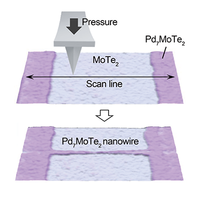
Phys. Rev. X 16, 031029 (2026)
arXiv
Electrically Tunable Valley-Based Qubits in Moiré Quantum Dots
New Submission | Mesoscale and Nanoscale Physics (cond-mat.mes-hall) | 2026-08-07 20:00 EDT
Yasser Saleem, Pawel Potasz, Ewelina M. Hankiewicz
The search for scalable, electrically controlled qubits remains a central challenge in quantum technology. We introduce gate-defined moiré quantum dots as a promising platform for valley-based qubits. Moiré engineering resolves the central conflict of valley physics: momentum-space separation protects the states, while the enlarged moiré length scale allows smooth gates to mix them controllably. Dot geometry and confinement strength program valley hybridization, while a displacement field controls detuning, providing two noncommuting electrostatic axes for qubit control.
Mesoscale and Nanoscale Physics (cond-mat.mes-hall)
6 pages, 4 figures; includes 4-page Supplemental Material with 1 figure
Observing the emergence of a velocity hierarchy in matter waves
New Submission | Quantum Gases (cond-mat.quant-gas) | 2026-08-07 20:00 EDT
Xudong Yu, Wenhan Chen, Igor Zhuravlev, Yi Zeng, Sudipta Dhar, Milena Horvath, Thierry Giamarchi, Laurent Sanchez-Palencia, Manuele Landini, Hanns-Christoph Nägerl, Yanliang Guo
Classical waves in dispersive media naturally exhibit distinct phase and group velocities. Whether an analogous separation of velocities can emerge in matter waves under strong many-body interactions has remained experimentally unexplored. Here, we demonstrate the emergence of a velocity hierarchy in a strongly interacting lattice gas. Using quench spectroscopy together with time-resolved correlation measurements, we independently determine the sound, group, and phase velocities across the superfluid-to-Mott-insulator transition. These velocities are nearly degenerate close to the transition, but progressively separate as the Mott gap opens and the quasiparticle dispersion acquires a massive relativistic-like form. Strikingly, phase-coherence fronts propagate faster than the Lieb-Robinson velocity scale while remaining fully consistent with locality. The measured velocities satisfy a relativistic-like invariance relation in the insulating regime. Our results establish propagation-velocity hierarchies as emergent signatures of strongly correlated quantum dynamics.
Quantum Gases (cond-mat.quant-gas), Quantum Physics (quant-ph)
11 pages, 6 figures
Nucleation beyond Equilibrium: Fronts Control Invasion in Bistable Ecosystems
New Submission | Statistical Mechanics (cond-mat.stat-mech) | 2026-08-07 20:00 EDT
Victor Lequin, Giulio Biroli, Camille Scalliet
Bistability, the existence of two alternative stable states with distinct basins of attraction, is common across ecology and many other biological, chemical, and physical systems. In spatially extended systems, the invasion of one state by the other proceeds through nucleation, the fluctuation-driven growth of a droplet beyond a critical size. Classical Nucleation Theory (CNT) quantifies this process using the energy landscape, but this description relies on detailed balance, the condition of microscopic reversibility that holds at equilibrium. Ecological dynamics generally violate detailed balance and are described not by a single scalar field but by several coupled, non-conserved abundances–a vector order parameter–for which no general nucleation theory exists. Here we derive such a theory for reaction-diffusion systems with a non-conserved vector order parameter, valid both close to the binodal, where invasion proceeds through propagating fronts, and close to the spinodal, where the metastable state loses stability. Extensive numerical computations of the quasipotential confirm the theory in both regimes. We show that the mathematical structure of CNT survives out of equilibrium, once energetic quantities are replaced by dynamical properties of fronts: the front speed plays the role of the bulk free-energy difference between phases, and the diffusivity that of the surface tension. Applied to the two-species Lotka-Volterra model, an archetypal system of bistable ecological antagonism, our theory shows that strong interspecific competition generates a pronounced depletion region within fronts, where the total abundance falls well below carrying capacity. This vectorial structure, invisible to a scalar description based on species frequency alone, makes invasion exponentially harder as competition strengthens at fixed competitive advantage–a prediction testable in microbial systems.
Statistical Mechanics (cond-mat.stat-mech), Biological Physics (physics.bio-ph)
34 pages, 20 figures, 2 supplementary videos
Superconducting and charge-ordered phases from Dirac quantum spin liquids on the triangular lattice
New Submission | Strongly Correlated Electrons (cond-mat.str-el) | 2026-08-07 20:00 EDT
Andreas Feuerpfeil, Ronny Thomale, Subir Sachdev, Pietro M. Bonetti
Triangular-lattice quantum spin-liquid insulators are observed to undergo transitions to superconductivity under pressure or doping, and exhibit enhanced terahertz conductivity when driven by mid-infrared light. We present a general theoretical framework for the emergence of superconducting and charge-ordered phases from a U(1) Dirac spin liquid with fermionic spinons, as well as from its gapped $ \mathbb{Z}_2$ and chiral descendants. Numerical studies have provided substantial evidence for these spin-liquid states.
The spin-liquid phase hosts fractionalized Dirac spinons coupled to an emergent gauge field, whereas the superconducting and charge-ordered phases are conventional, with neither fractionalized excitations nor emergent gauge dynamics. The transition between these phases is driven by the Higgs condensation of spinless charge-$ e$ bosonic chargons (doublons'' and holons’’). We show that the projective symmetry group of the Dirac spinons uniquely determines the symmetry and dispersion of the chargons, allowing us to construct an effective low-energy theory near the chargon band minima. Gauge-invariant composites of the chargon Higgs fields provide the order parameters characterizing the phases. The resulting phase diagram contains a rich variety of ordered states, including $ d+id$ superconductivity, charge-density waves, bond-density waves, and pair-density waves.
Strongly Correlated Electrons (cond-mat.str-el), Superconductivity (cond-mat.supr-con)
36 pages, 15 figures
Theory of Measurement-Altered Criticality
New Submission | Statistical Mechanics (cond-mat.stat-mech) | 2026-08-07 20:00 EDT
Kabir Khanna, Sara Murciano, Romain Vasseur
Local measurements can alter long-range correlations in gapless quantum matter. We propose a theory of weakly-monitored Tomonaga-Luttinger liquids, a broad class of quantum critical states in one dimension. In order to address the intrinsic randomness of the measurement record, we develop a replica instanton calculation to study Born-averaged observables. We find that when measurements are relevant, average correlators of density and phase fluctuations decay at long distances as universal power laws with logarithmic corrections, a feature we argue is peculiar to measurement-induced randomness. We characterize the full multifractal spectrum of moments of correlations functions, revealing broad, strongly non-gaussian fluctuations across the ensemble of post-measurement states. We support these analytic results with matrix-product-state calculations, and provide a general picture of measurement-altered criticality for ground states described by 1+1d conformal field theories. Our results establish that physical measurements alter critical quantum states in a manner that lies beyond both forced measurements and conventional critical scaling.
Statistical Mechanics (cond-mat.stat-mech), Strongly Correlated Electrons (cond-mat.str-el), High Energy Physics - Theory (hep-th), Quantum Physics (quant-ph)
24 pages, 6 figures
Exact statistical transmutation of quantum mixtures on a ring
New Submission | Quantum Gases (cond-mat.quant-gas) | 2026-08-07 20:00 EDT
Wayne J. Chetcuti, Nathan Goldman, Patrizia Vignolo, Anna Minguzzi
One-dimensional strongly repulsive quantum mixtures exhibit non-trivial exchange statistics arising from the interplay between orbital and spin degrees of freedom. Using an exact solution, we demonstrate that in the single-impurity limit the wavefunction of Fermi-Fermi and Bose-Bose mixtures on a ring threaded by an artificial gauge field display exact anyonic statistics under exchange of the impurity with the majority particles. The resulting fractional exchange phase is fixed by the angular momentum sector selected through the applied flux. We find that the impurity momentum distribution coincide exactly with the anyonic one, independently of the bosonic or fermionic nature of the mixture, with the large-momentum tails encoding a direct signature of the anyonic statistical angle. Finally, we devise a quench protocol for reversible dynamical anyonization. Our results provide a path for realizing and manipulating anyonized states with ultracold atoms.
Quantum Gases (cond-mat.quant-gas)
30 pages, 19 figures
Entangling power of neural networks
New Submission | Disordered Systems and Neural Networks (cond-mat.dis-nn) | 2026-08-07 20:00 EDT
Taige Wang, Nisarga Paul, Liang Fu
Characterizing the complexity of correlations between subsystems is a fundamental task across information theory, machine learning, and science. In quantum physics, neural networks have found increasing application in learning wavefunctions. Here we introduce the entangling power of an encoder-decoder neural network, which quantifies its ability to generate entanglement between subsystems, dependent on a latent space dimension $ K$ and the complexity class of the decoder. We exactly calculate this quantity for polynomial decoders of degree $ p$ acting on a $ K$ -dimensional latent space. Our results establish the exponential entangling power of neural networks with modest resources. More broadly, our work provides a framework for analyzing correlations in machine learning that generalizes the notion of the Schmidt rank in entanglement theory.
Disordered Systems and Neural Networks (cond-mat.dis-nn), Quantum Physics (quant-ph)
5+2 pages
Self-dual $S_3$ gauge theory in 2+1d: lattice model and topological phase transitions
New Submission | Strongly Correlated Electrons (cond-mat.str-el) | 2026-08-07 20:00 EDT
Da-Chuan Lu, Chong Wang, Ashvin Vishwanath
Electric-magnetic self-duality of the $ \mathbb{Z}_2$ gauge theory, realized microscopically as a half-lattice-translation exchanging electric charge and magnetic flux, has been an influential example of a duality symmetry with an exact lattice realization. We construct the first non-Abelian generalization of this construction: a lattice model of the $ S_3$ quantum double $ \mathcal{D}(S_3)$ on a tensor product Hilbert space in which the $ \mathbb{Z}^{\mathrm{em}}_2$ anyon-permutation symmetry, exchanging the non-Abelian chargeon $ C$ and fluxon $ F$ , is realized via lattice translation. Consequently we find that the zigzag boundary termination of the model realizes, without fine-tuning, a gapless critical edge state described by the tetracritical Ising CFT. The bulk admits three independent $ \mathbb{Z}2^{\mathrm{em}}$ -preserving bosonic perturbations, driving $ \mathcal{D}(S_3)$ into distinct gapped phases. We analyze these transitions by three independent methods: category-theoretic anyon condensation, microscopic lattice Hamiltonians, and Chern-Simons-Higgs theory, which all agree, yielding a unified picture. These examples motivate a minimal-condensation principle: proliferating a bosonic anyon generically drives condensation of a minimal condensable algebra containing it, with symmetry-related condensates appearing as degenerate vacua that spontaneously break the anyon-permutation symmetry. Our model construction extends to an infinite family of self-dual dihedral quantum doubles $ \mathcal{D}(D{2n})$ . Notably, each model is sign-problem-free, opening the door to large-scale numerical exploration of the phases of non-Abelian Chern-Simons-Higgs theories.
Strongly Correlated Electrons (cond-mat.str-el), High Energy Physics - Theory (hep-th), Quantum Physics (quant-ph)
10 pages, 2 figures, 18 pages of supplementary materials
Cooperative adsorption and diffusion trapping induced by AlF3 intercalation in graphite
New Submission | Materials Science (cond-mat.mtrl-sci) | 2026-08-07 20:00 EDT
H. Betancourt-Infante, G. Ruano, F. Bonetto, S. J. Rodríguez-Sotelo
Graphite’s structural and electronic response to molecular intercalation is central to its performance as a carbon-based electrode material, yet the microscopic coupling between subsurface intercalation and surface adsorption remains poorly understood. We present a first-principles investigation of AlF3 adsorption and intercalation in graphite to explain the microscopic origin of a recently observed two-step self-limiting sorption mechanism. Using density functional theory (DFT-D3), we show that a single intercalated AlF3 molecule locally transforms the structure, electronic properties, and diffusion behavior of graphite through a blister-like surface deformation. Comparing pristine graphite with a graphite surface containing a subsurface intercalated molecule, coverage-dependent adsorption energetics reveal a crossover from repulsive lateral interactions to cooperative binding above the blister, driven by local curvature and intercalation-induced charge redistribution. Diffusion-barrier calculations show that the blister simultaneously acts as a kinetic trap, raising diffusion barriers and transitioning surface mobility from a quasi-barrierless to a thermally activated regime. Charge-density difference and Mulliken population analyses identify the intercalant as a stable electronic reservoir that deepens the surface potential landscape, kinetically immobilizing adsorbed species. Together, these results establish a structure-property relationship for intercalation-induced deformation in graphite, offering a quantitative framework for controlling intercalation efficiency in carbon-based energy storage and conversion systems.
Materials Science (cond-mat.mtrl-sci)
14 pages, 7 Figures and SI
Kinetic Lifshitz invariants and dynamics of nonreciprocal fluctuations in superconductors
New Submission | Superconductivity (cond-mat.supr-con) | 2026-08-07 20:00 EDT
Tony Liu, Joaquim Telles de Miranda, Daniel Shaffer, Alex Levchenko
We derive the generalized time-dependent Ginzburg-Landau theory of a disordered noncentrosymmetric superconductor from the Keldysh nonlinear sigma model, using a two-dimensional electron gas with Rashba spin-orbit coupling and an in-plane Zeeman field as a minimal model. On the thermodynamic side we construct the Lifshitz invariants of the free energy, the linear and cubic gradient terms and the momentum-odd part of the quartic vertex, and trace their dependence on disorder. These couplings are governed by a single closed-form kernel controlled by the ratio of the Dyakonov-Perel spin-relaxation rate to temperature, interpolating between the weak-relaxation regime, where the invariants are suppressed, and the relaxation-dominated regime, where the helical modulation of the order parameter saturates at a universal, disorder-independent value. This crossover reconciles conflicting results for the magnetoelectric couplings of dirty Rashba superconductors. Because the theory is formulated on the Keldysh contour, it also determines the dissipative dynamics: the relaxation rate of a fluctuation with pair momentum $ \mathbf{q}$ , and hence, by the fluctuation-dissipation theorem, the Langevin noise power, acquires a term odd in $ \mathbf{q}$ and odd in the magnetic field. The structure of this kinetic Lifshitz invariant is dictated by Onsager reciprocity: friction and noise renormalize in lockstep, so equal-time fluctuations remain Gibbsian while the dynamics are nonreciprocal. As applications we compute the superconducting diode efficiency near $ T_c$ , where the cubic invariant competes with the quartic vertex and with even higher-gradient terms rendered odd by the helical shift, reversing the sign of the diode coefficient, and the fluctuation-induced magnetochiral anisotropy above $ T_c$ , where the current-resolved nonreciprocal resistance forms a plateau across the Gaussian regime.
Superconductivity (cond-mat.supr-con)
33 pages, 2 figures
Topological Charge-Transfer Excitons
New Submission | Mesoscale and Nanoscale Physics (cond-mat.mes-hall) | 2026-08-07 20:00 EDT
Huiyuan Zheng, Kaijie Yang, Ting Cao, Di Xiao
Excitons possess internal structure absent from single-particle Bloch particles, allowing their band topology to emerge from the bound-state structure rather than being inherited from their constituents. This raises the question of how the internal structure of a bound state can provide a microscopic origin of exciton topology. Here we show that the real-space embedding of charge-transfer excitons can generate an intrinsic manifold of symmetry-related off-site composite orbitals whose coupling supports topological exciton bands. Lateral electron-hole separation embeds the localized exciton on the bond connecting its constituent sites rather than on either site. We demonstrate this mechanism in a honeycomb lattice, where three bond-centered charge-transfer exciton orbitals form a Kagome lattice. By solving the Bethe-Salpeter equation, we show that this emergent multi-orbital manifold supports a topological exciton flat band upon time-reversal symmetry breaking, even when the electron and hole bands are topologically trivial. The resulting band exhibits nearly uniformly distributed quantum geometry, favorable for interaction-driven bosonic states. Our results establish a general route toward topological bands of localized composite bound states and unconventional strongly correlated bosonic phases.
Mesoscale and Nanoscale Physics (cond-mat.mes-hall)
19 pages, 5 figures
Nitrogen Vacancy Centers in Hexagonal Diamond Exhibit Long Coherence Times
New Submission | Materials Science (cond-mat.mtrl-sci) | 2026-08-07 20:00 EDT
Gabriel Kumar, Siyuan Chen, Victor Wen-zhe Yu, Giulia Galli
We show that negatively charged nitrogen-vacancy (NV) centers in the hexagonal diamond polymorph lonsdaleite offer a route to spin qubits with enhanced coherence relative to their cubic-diamond counterparts. Using first-principles calculations, we examine two distinct defect configurations, AA, with the same symmetry as in cubic diamond and AB, with reduced symmetry. We find that the AB configuration of the NV center exhibits a finite transverse zero-field splitting, giving rise to an approximate fourfold enhancement of the Hahn-echo coherence time $ T_2$ at zero magnetic field. The AA configuration, by contrast, closely reproduces the electronic structure and coherence properties of the cubic NV center. We further characterize the many-body electronic structure, vertical excitation energies, and photoluminescence spectra of both configurations, providing spectral fingerprints for their experimental identification. Our results establish symmetry-broken NV centers in lonsdaleite as promising candidates for quantum sensing and information science applications.
Materials Science (cond-mat.mtrl-sci), Computational Physics (physics.comp-ph), Quantum Physics (quant-ph)
6 pages, 4 figures, data and codes uploaded on QRESP after final peer review complete
Superfluid helium
New Submission | Statistical Mechanics (cond-mat.stat-mech) | 2026-08-07 20:00 EDT
We are interested in modelling superfluid helium-4, the common isotope of helium, of atomic number 4. We present a mathematically solvable toy model of the phase transition between the normal liquid and superfluid phases and use it to show how an order parameter might be obtained for the superfluid.
Statistical Mechanics (cond-mat.stat-mech), Mathematical Physics (math-ph)
12 pages, 7 figures
Fine-Tuning Small Language Models for Reliable VASP INCAR Generation
New Submission | Materials Science (cond-mat.mtrl-sci) | 2026-08-07 20:00 EDT
Xinyue Zhang, Jixiang Li, Bin Shao, Baishun Yang, Zhiyang Liu, Weichao Wang
Language models can prepare VASP INCAR files from natural-language requests, but so far only large proprietary cloud models come close to handling the tightly coupled, physics-sensitive settings reliably, a dependence that fits poorly with local, high-throughput materials workflows where privacy, cost, and offline deployment matter. We show that a small language model (SLM) can close this gap. The SLM is fine-tuned on reference VASP calculations and paired with VASPGuard, a deterministic post-processor that checks syntax, workflow, and material-dependent constraints; we call the combined model INCAR-SLM. On INCARBench, a benchmark for VASP INCAR generation, INCAR-SLM built on Qwen3-4B outperforms every general-purpose LLM evaluated, exceeding GPT-5.4 by 15.55 points on the 100-point INCAR Score. Most of this gain comes from fine-tuning, with VASPGuard correcting the errors that remain. We further find that model size matters less than expected: once fine-tuning and post-processing are applied, performance saturates at a few billion parameters, and Qwen3-4B outperforms larger models in the same family.
Materials Science (cond-mat.mtrl-sci)
Low-resistivity nitrogen-doped p-type Cu2O thin films enabled by millisecond flash lamp annealing
New Submission | Materials Science (cond-mat.mtrl-sci) | 2026-08-07 20:00 EDT
Jan Koloros, Pavel Baroch, Thomas Preußner, Matthias Fahland, Michaela Červená, Jiří Rezek
Flash lamp annealing (FLA) provides millisecond-scale thermal processing, but its effects on p-type Cu2O and nitrogen-related defects remain poorly understood. Reactively sputtered Cu2O:N films with different nitrogen content were deposited using reactive high-power impulse magnetron sputtering and exposed to a single 1.9 ms FLA pulse at 4.9 - 11.7 J cm-2. Their compositional,morphological, structural, vibrational, electrical, and optical responses were evaluated. WDS showed no statistically significant change in total elemental composition, and XRD confirmed retention of cubic Cu2O. Nitrogen-containing films exhibited surface coarsening, shifts of the Cu2O reflections, and non-monotonic changes in the Raman band assigned to molecular N2. Nitrogen incorporation substantially reduced the as-deposited resistivity. The very low value of 0.045 {\Omega}cm was obtained after FLA at 4.9 J cm-2, whereas higher energy densities markedly increased resistivity. Hall measurements showed increasing mobility but decreasing hole concentration. At high energy densities, the optical band gap of nitrogen-rich films widened. The results define a narrow low-energy processing window with a positive effect on electrical properties, whereas high-energy FLA modifies the structure and optical absorption edge but degrades electrical conductivity.
Materials Science (cond-mat.mtrl-sci)
Antiferromagnetic Phases in Zr-Fe-Ge Kagome Systems
New Submission | Materials Science (cond-mat.mtrl-sci) | 2026-08-07 20:00 EDT
Peter Minch, Shiya Chen, Weiyi Xia, Wei-Shen Tee, Yang Sun, Cai-Zhuang Wang, Vladimir Antropov
A wide variety of chemical substitutions in ferromagnetic Kagome systems can lead to diverse magnetic phases with electronic structures suitable for topological or quantum material properties. Here, we study the electronic structure and magnetic orderings using first-principles calculations for the magnetic Kagome compounds ZrFe6Ge6, ZrFe6Ge4, and ZrFe6Ge5. For ZrFe6Ge6, the obtained ground-state magnetic structure is A-type antiferromagnetic (AFM), in agreement with existing experiments. We predicted that the magnetic ground states of ZrFe6Ge4 and ZrFe6Ge5 are collinear A-type bilayer AFM structures with long-period ordering that involves a mix of FM and AFM interlayer orientations. The formation of such long-range magnetic structures appears to be a general feature and is not tied to specific substitutions. The magnetic moments in these systems are largely local and only weakly dependent on the magnetic configuration, with magnitudes in good agreement with available experimental estimates. Neutron scattering experiments, which could provide direct verification of these predictions, are therefore of particular importance.
Materials Science (cond-mat.mtrl-sci)
Morphology of frozen labyrinths from irreversible threshold dynamics
New Submission | Statistical Mechanics (cond-mat.stat-mech) | 2026-08-07 20:00 EDT
Daniel Richard Levy (Princeton University)
Majority threshold dynamics, in which each agent adopts the dominant state in a weighted neighborhood, relaxes a binary field toward consensus or stripes. We study what happens when this rule is made irreversible: each agent, interacting through a Gaussian kernel on a lattice, may flip out of its local weighted minority at most once. The reversible form is threshold dynamics of Merriman-Bence-Osher type, an exactly solvable calibration in which interfaces move by mean curvature with closed-form lattice pinning and mobility. Irreversibility changes the outcome. From random initial conditions, the one-flip rule freezes balanced non-consensus labyrinths that reversible relaxation drives away. The patterned regime is a window of initial spin compositions around equal balance, narrowing as the interaction range grows, controlled by a standardized bias whose onset is independent of scale over a fourfold range. The frozen morphology is arrested coarsening: bicontinuous at balance, with a feature width that grows sublinearly and falls below the interaction range at large scales. We determine the mechanism by intervention. Fixing the initial condition while varying the update order shows that the coarse domain layout is deterministic, while the update order enters only in a secondary first-passage race that fine-tunes the wall positions the deterministic dynamics has already set. Those walls are marked by frustration: agents frozen against their own local field. This signature is identically absent from any reversible relaxation, is overwhelmingly interfacial, and carries almost none of the pattern’s large-scale shape.
Statistical Mechanics (cond-mat.stat-mech)
13 pages, 7 figures
A floor and a ceiling for the advancing contact angle
New Submission | Soft Condensed Matter (cond-mat.soft) | 2026-08-07 20:00 EDT
Reported maxima of the advancing contact angle scatter from $ 87^\circ$ to $ 147^\circ$ in a single systematic study, and liquids on surfaces with static angles as low as $ 5^\circ$ reach dynamic maxima near $ 90^\circ$ . We show that both observations follow from the hinged motion of the free surface near a moving contact line. The local Stokes solution for a wedge rotating about its contact line has two singular angles of opposite character: at $ 90^\circ$ the hinged motion generates no wall shear and the rotation is free, and at $ \theta_h = 128.73^\circ$ , where $ \tan 2\alpha = 2\alpha$ , a resonance with the $ r^2$ eigensolution arrests the rotation through an $ r^2 \ln r$ term. Between the two angles lies a band that a transient advancing angle cannot leave while the interface near the contact line remains a quasi-steady wedge. A compilation of 68 liquid-solid systems from nine sources and five configurations confirms the band and its two exits: systems not limited by the apparatus, with $ \theta_s \le 40^\circ$ , reach $ 87^\circ$ to $ 119^\circ$ regardless of chemistry, and every exceedance of $ \theta_h$ occurs either where chemistry places the static angle above the band or where the flow leaves the quasi-steady regime. The record of a waterline on a vertical wall exhibits the band within a single unsteady experiment, together with a distinct quieting of the local contact angle at the crossing of $ 90^\circ$ .
Soft Condensed Matter (cond-mat.soft), Fluid Dynamics (physics.flu-dyn)
7 pages, 3 figures, 1 table
Intra-unit-cell resolved intertwining of multi-$Q$ charge and spin textures in an itinerant skyrmion magnet
New Submission | Materials Science (cond-mat.mtrl-sci) | 2026-08-07 20:00 EDT
Christopher J. Butler, Katsuki Nihongi, Haruto Yoshimochi, Nguyen Duy Khanh, Rina Takagi, Tetsuo Hanaguri, Shinichiro Seki
The mechanisms stabilizing non-collinear magnetism in centrosymmetric crystals remain unclear, but likely involve spin-spin interactions mediated by itinerant electrons, such as the RKKY interaction. Finite-$ Q$ magnetic order may then be accompanied by electronic modulations that are observable using a scanning tunneling microscope. In five successive magnetic phases of GdRu$ _{2}$ Ge$ _{2}$ , including two nano-scale skyrmion crystal phases, we show that multi-$ Q$ magnetism among Gd 4$ f$ spins entails a corresponding multi-$ Q$ texture among the Ru 4$ d$ orbitals that contribute itinerant electron bands. With atomically-resolved images of each electronic texture’s motif, and a simple numerical modeling scheme drawing on the underlying spin structures, we infer their key relationship: The alignment between nearest-neighbor Gd spins tightly correlates with the local density-of-states of the Ru 4$ d$ orbitals on the two bond-centered sublattices of the Gd square net. These analyses offer a microscopic view of the atomic-scale intertwining of charge and spin degrees-of-freedom in non-collinear itinerant magnets.
Materials Science (cond-mat.mtrl-sci), Mesoscale and Nanoscale Physics (cond-mat.mes-hall)
10 pages, 6 figures (plus 12 pages, 9 figures)
Emergent Surface Altermagnetism
New Submission | Materials Science (cond-mat.mtrl-sci) | 2026-08-07 20:00 EDT
Yuzhong Hu, Pan Zhou, Baoru Pan, Songmin Liu, Binchang Zhou, Lizhong Sun
Research on altermagnetism has thus far primarily focused on spin-polarized bulk electronic states in magnetic materials. In this work, we advance the field by introducing the concept of surface altermagnetism (SAM), wherein altermagnetic spin polarization emerges at the surfaces of collinear antiferromagnets (AFMs) or altermagnets (AMs). To lay the theoretical groundwork for this phenomenon, we construct a thorough symmetry-based framework that systematically connects bulk spin groups to surface spin groups for both types of systems. Through symmetry analysis, we identify all symmetry-breaking surfaces capable of supporting SAM, identifying 35 for $ PT$ -symmetric AFMs and 61 distinct cases for bulk AMs. Moreover, we show that 203 collinear spin space groups—including 100 without and 103 with the $ [C_2 \Vert P]$ operation—permit the appearance of SAM on the surface of $ tT$ -symmetric AFMs via the breaking of fractional translational symmetries. The proposed framework is verified using tight-binding models and first-principles calculations, with practical material implementations shown in representative compounds like NaMnP, LiMnAs, and CrSb. Our results establish SAM as a robust, symmetry-protected magnetic state, extending altermagnetic phenomena to material surfaces and paving the way for advanced, field-free spin manipulation in next-generation spintronic technologies.
Materials Science (cond-mat.mtrl-sci)
Phys. Rev. Lett. (2026)
Strongly Enhanced Charge-Density Waves and Correlated Insulating State in Atomically Thin 1$T$-TaS$_2$
New Submission | Strongly Correlated Electrons (cond-mat.str-el) | 2026-08-07 20:00 EDT
Gan Liu, Yulu Liu, Qiling Luo, Zhentao Huang, Kenji Watanabe, Takashi Taniguchi, Meiyu Wang, Jinsheng Wen, Yi Lu, Xiaoxiang Xi
We investigate thickness-dependent charge-density-wave (CDW) transitions in 1$ T$ -TaS$ _2$ using temperature-dependent Raman spectroscopy and electrical transport. Raman measurements show that the incommensurate, nearly commensurate, and commensurate CDW phases persist down to the monolayer limit. As the thickness is reduced, the transition temperatures increase, accompanied by an orders-of-magnitude rise in sheet resistance and a sharp reduction in the carrier localization length. The first-order hysteretic CCDW-NCCDW transition is uniquely absent in the monolayer. Calculations suggest that the enhanced CDW in thin layers originates from strengthened Coulomb interactions due to reduced out-of-plane screening, particularly in the nonlocal component. These findings highlight the cooperative roles of electron correlation, electron-phonon interaction, and interlayer coupling in shaping the ground state and transition dynamics of atomically thin 1$ T$ -TaS$ _2$ , opening pathways for engineering correlated phases in two-dimensional CDW systems.
Strongly Correlated Electrons (cond-mat.str-el), Mesoscale and Nanoscale Physics (cond-mat.mes-hall), Materials Science (cond-mat.mtrl-sci)
Phys. Rev. Lett. 137, 066502 (2026)
Local Spin Excitations Mediate Quasiparticle Breakdown in the Orbital-Selective Mott Phase
New Submission | Strongly Correlated Electrons (cond-mat.str-el) | 2026-08-07 20:00 EDT
Yuekun Niu, Yu Ni, Jia-Ming Wang, Zhong-Yi Lu, Yun Song, Shiping Feng
The orbital-selective Mott phase (OSMP) is commonly described as a coexistence of localized and itinerant electrons within effectively decoupled orbitals, but emerging evidence for quasiparticle breakdown points to physics beyond this picture, whose microscopic origin remains unknown. Using dynamical mean-field theory for the two-band Hubbard model, we show that the spin-flip and Ising-type components of Hund’s coupling generate local spin excitations (LSEs). These LSEs couple electrons between different orbitals, renormalize quasiparticle lifetimes and binding energies, and thereby destroy well-defined quasiparticles in the OSMP. Removing these two components of Hund’s coupling restores coherent quasiparticle behavior and fully decouples the charge dynamics of the two bands. Our results therefore identify electronic coupling to LSEs as the fundamental mechanism driving quasiparticle breakdown within the OSMP.
Strongly Correlated Electrons (cond-mat.str-el)
6 pages, 3 figures
Interface Engineering of Helium Confinement in Argon-Preplated MCM-41 Nanopores
New Submission | Materials Science (cond-mat.mtrl-sci) | 2026-08-07 20:00 EDT
Rahul Soni, Nathan S. Nichols, Sutirtha Paul, Garfield Warren, Paul Sokol, Adrian Del Maestro
Atomic-scale modification of mesopore interfaces provides a route to tune the confinement experienced by adsorbed fluids, but how a specific interface preparation translates into the resulting microscopic confinement potential remains unclear. Here, we show that preplating MCM-41 with an argon monolayer modifies the effective pore interface by occupying strongly attractive regions of the heterogeneous silica surface and screening its atomic-scale corrugation. Grand-canonical Monte Carlo simulations of argon adsorption, low-temperature molecular dynamics, and helium test-particle insertion are combined with adsorption isotherms and neutron-scattering measurements to characterize the preplated pore at the atomic scale. Helium test-particle insertion calculations show that the modified interface shifts the helium adsorption minimum to an annular region inside the pore and produces a confinement landscape dominated by a smooth radial component. The resulting radial confinement potential can be described by a continuum cylindrical model, providing microscopic support for the effective potential used in earlier quantum Monte Carlo studies. Residual corrugation persists over multiple spatial scales and is accurately captured by a Gaussian process surrogate. These results demonstrate how atomic preplating can tailor nanopore confinement and provide an experimentally constrained microscopic potential for predictive studies of confined quantum fluids.
Materials Science (cond-mat.mtrl-sci), Mesoscale and Nanoscale Physics (cond-mat.mes-hall)
13 pages, 14 figures
Magnetic susceptibility of diluted magnetic semiconductors at low carrier densities
New Submission | Materials Science (cond-mat.mtrl-sci) | 2026-08-07 20:00 EDT
We calculate the static longitudinal and the transverse dynamic magnetic susceptibilities of (III,Mn)V diluted magnetic semiconductors, using the random phase approximation, for a simple impurity band model appropriate for the low charge carrier concentration regime. The magnetic susceptibilities are shown to depend sensitively on the amount of positional disorder of the Mn impurities. The results we obtain are consistent with previous studies of the spin wave spectrum and of the spatially inhomogeneous ferromagnetic state of these materials.
Materials Science (cond-mat.mtrl-sci)
Published in Phys. Rev. B 71, 125203 (2005)
Phys. Rev. B 71, 125203 (2005)
Impact of spin-orbit coupling on electron correlation corrections to the density of states in anisotropic conductors
New Submission | Mesoscale and Nanoscale Physics (cond-mat.mes-hall) | 2026-08-07 20:00 EDT
We study Altshuler-Aronov-type interaction corrections to the single-particle density of states (DOS) in a strongly anisotropic 2D conductor with an open Fermi surface (FS) and weak disorder, in the presence of coexisting Rashba and Dresselhaus spin-orbit couplings (SOCs) constrained to the longitudinal direction. The low-energy band consists of two warped sheets weakly tunnel-coupled transversely; SOC splits the sheets into helicity branches with a fixed spin axis. Working in a Matsubara space, we compute the exchange contribution in the diffusion channel with dynamically screened Coulomb interaction and an impurity ladder. The resulting DOS anomaly exhibits a dimensional crossover governed by the transverse coupling scale $ \varepsilon_c$ . Close to the Fermi level ($ |\varepsilon-\varepsilon_F|<\varepsilon_c$ ), the system behaves two-dimensionally, featuring a logarithmic DOS dip whose magnitude is enhanced by intrinsic SOCs. Further from the Fermi level ($ |\varepsilon-\varepsilon_F|!>!\varepsilon_c$ ), the system behaves quasi-one-dimensionally, featuring a sharper square-root singularity whose amplitude is remarkably enhanced by the SOCs. Notably, we identify a critical SOC strength at which these spin-orbit effects exactly cancel the electron-correlation correction, perfectly restoring the unperturbed density of states. Furthermore, increasing the SOC beyond this critical point inverts the sign of the anomaly entirely, yielding a positive DOS correction. This sign reversal fundamentally alters the energy dependence, such that at energies beyond $ \varepsilon_F + \varepsilon_c$ , the positive correction decays to smaller values as energy increases, opposite to the standard negative correction. This contrasting trend provides a distinct spectroscopic signature of SOC-modulated correlation effects.
Mesoscale and Nanoscale Physics (cond-mat.mes-hall)
Annular Majorana mode in a superconducting topological insulator
New Submission | Superconductivity (cond-mat.supr-con) | 2026-08-07 20:00 EDT
Shengshan Qin, Chi Wu, Lun-hui Hu, Tiantian Zhang, Jiangping Hu
When the surface states of a topological insulator becomes superconducting, topological superconductivity can be obtained, and each vortex on the surface can host one single Majorana zero-energy mode which is usually a wave packet decaying exponentially off the vortex core. Here, we predict stable Majorana zero-energy mode whose wave function is ring-shape, dubbed as annular Majorana mode, in the superconducting vortex in topological insulators respecting $ 3$ -fold or $ 6$ -fold rotational symmetry. Such topological insulators are featured with a single nonlinear Dirac cone located at $ \bar{\Gamma}$ or three linear Dirac cones at $ \bar{\text{M}}$ in the surface Brillouin zone. The annular Majorana mode originates from the effective chiral $ f$ -wave superconductivity on the nonlinear Dirac cone in the former case and the interference of the effective chiral $ p$ -wave superconductivity on the three linear Dirac cones in the latter. In both cases, the annular Majorana mode is stabilized by the rotational symmetry and the winding number $ 3$ carried by the surface states. Candidate materials supporting the annular Majorana mode are predicted. Our work provides new insights into the topological superconductivity in superconducting topological insulators.
Superconductivity (cond-mat.supr-con)
Helical-to-Fan Transitions under Magnetic Fields in the Noncentrosymmetric Tetragonal Magnet EuRhGe$_3$
New Submission | Strongly Correlated Electrons (cond-mat.str-el) | 2026-08-07 20:00 EDT
Takeshi Matsumura, Hiroto Nitta, Hironori Nakao, Masashi Kakihana, Masato Hedo, Takao Nakama, Yoshichika Ōnuki
The magnetic structure of EuRhGe$ 3$ , a noncentrosymmetric body-centered tetragonal magnet with the space group $ I4mm$ , has been investigated by resonant X-ray diffraction. Below $ T{\text{N}}=12$ K, EuRhGe$ _3$ undergoes a helical magnetic ordering with an incommensurate propagation vector $ q=(0, 0, 0.809)$ , in which the magnetic moments lie in the $ ab$ plane and rotate by a constant turn angle of $ 145.8^{\circ}$ between adjacent layers. When a magnetic field is applied along the $ a$ axis at 2 K, a second-harmonic $ 2q$ peak develops, indicating that the circular helix is gradually distorted into a helimagnetic soliton-lattice state, which eventually undergoes a lock-in transition to the commensurate structure with $ q=0.8$ at 3.8 T. Above the subsequent phase boundary at 5 T, the helicity is lost, and a spin-flop $ xyz$ -fan (elliptic conical) state is realized, in which the moments oscillate predominantly along the $ b$ axis but are accompanied by a small $ c$ -axis component. At higher fields, the system enters a conventional planar $ xy$ -fan phase without a $ c$ -axis component. EuRhGe$ _3$ provides a prototypical example of a helimagnet that exhibits a full sequence of field-induced structures, evolving from a circular helix to a spin-flop $ xyz$ -fan (elliptic conical), and finally to a planar $ xy$ -fan structure, which has been theoretically predicted.
Strongly Correlated Electrons (cond-mat.str-el), Materials Science (cond-mat.mtrl-sci)
10 pages, 10 figures, accepted for publication in J. Phys. Soc. Jpn
Entanglement Scaling and Full Counting Statistics in Excited States of Two-Dimensional Rotating Fermions
New Submission | Statistical Mechanics (cond-mat.stat-mech) | 2026-08-07 20:00 EDT
Priyangshu Goswami, Abhishek Dhar, Satya N. Majumdar, Anupam Kundu
We investigate the entanglement entropy of a class of $ N$ -particle excited state of fermions confined in a two-dimensional harmonic trap rotating at an angular frequency $ \Omega$ . The excited state is constructed by filling a particular set of $ N$ single-particle energy levels. We analytically compute the Rényi entropies of order $ q$ in a disc of radius $ r$ around the centre of the trap, and the cumulants corresponding to number fluctuations of fermions within the disc. We found that the area law scaling of entanglement entropy holds even for a class of excited states. We also verified the well-known series expansion of entanglement entropy in terms of the particle number cumulants for non-interacting fermions. We further derive the centered cumulant generating function, demonstrating that the associated probability distribution function in the disc has identical scaling properties, up to a variable shift, to the known ground-state result. Finally, we extend our result to an annular region, showing that both the Rényi entropy and particle number cumulants of the annulus decompose into sums of the corresponding quantities of the two bounding discs. These additive relations hold as long as the width of the annulus is sufficiently large.
Statistical Mechanics (cond-mat.stat-mech), Quantum Gases (cond-mat.quant-gas), Quantum Physics (quant-ph)
16 pages, 8 figures
Near-field Hydrodynamics Disentangles Angular Correlations in Confined Active Suspensions
New Submission | Soft Condensed Matter (cond-mat.soft) | 2026-08-07 20:00 EDT
Changle Liao, Haruki Hayano, Yuto Uesugi, Akira Furukawa, Daiki Nishiguchi, Kazumasa A. Takeuchi
Spatial confinement profoundly impacts the transport and self-organization of active matter across diverse biological systems. While the collective orders in confined active matter have been extensively characterized, how geometric constraints reshape near-field flows and the resulting inter-particle correlations remains largely unexplored. In this study, we combine experiments and hydrodynamic simulations to investigate inter-particle correlations within quasi-two-dimensional Chlamydomonas reinhardtii suspensions. We reveal two disentangled modes characterizing cell pairs: a dipolar mode and an entrainment mode, which exhibit a density- and distance-dependent competition. Combining single-cell flow field analysis, hydrodynamic simulations, and active-passive mixtures, we link these two modes to singular hydrodynamics and lubrication-induced entrainment. Our results demonstrate that spatiotemporal correlations in confined active matter are fundamentally rooted in the interplay of these two hydrodynamic mechanisms.
Soft Condensed Matter (cond-mat.soft), Biological Physics (physics.bio-ph), Fluid Dynamics (physics.flu-dyn)
6+8 pages, 4+7 figures, 0+1 table
Anatomy of Spin–Orbit Torques in Monolayer Fe$_3$GeTe$_2$ and Fe$_3$GaTe$_2$: Insights from atomistic and momentum-space decompositions
New Submission | Materials Science (cond-mat.mtrl-sci) | 2026-08-07 20:00 EDT
Gusthavo M. S. Brizolla, Stepan S. Tsirkin, Yaroslav Zhumagulov, Jaroslav Fabian
We present a systematic first-principles study of the spin-orbit torques in the ferromagnetic monolayers Fe$ _3$ GeTe$ _2$ (FGT) and Fe$ _3$ GaTe$ 2$ (FGaT). Despite sharing the same crystal structure (point group $ D{3h}$ ) and predominantly Fe~$ 3d$ spin-polarized bands, the two materials exhibit markedly different current-induced torques. We reveal these differences by computing the full angular dependence of the torkance—the torque per unit applied electric field—using linear-response theory with symmetry-adapted spin–orbit-coupled Wannier functions. FGaT may be viewed as a hole-doped analogue of FGT, since Ga contributes one valence electron fewer than Ge. Although the work functions differ by only about $ 28$ ~meV, the band filling near $ K$ and $ K’$ changes substantially: the density of states at $ \varepsilon_F$ is reduced by a factor of three and its spin polarization reverses from majority in FGT to minority in FGaT. These electronic changes are reflected in the torques resolved by time-reversal parity, sublattice, and momentum. In particular, we identify pronounced hidden torques in FGaT and relate the suppression of its fourth-harmonic Fermi-sea component to the evolution of momentum-space pockets. Finally, we discuss the emergence of such self-torques, which are not captured by the conventional picture of current-induced spin accumulation, within a symmetry-based phenomenological framework. Our results provide microscopic insight into current-induced torques in two-dimensional ferromagnets and offer guidance for defect and van der Waals engineering of layered magnetic materials.
Materials Science (cond-mat.mtrl-sci)
Large Spin-Wave Fluctuations Suppress Activity in Malthusian Flocks
New Submission | Soft Condensed Matter (cond-mat.soft) | 2026-08-07 20:00 EDT
Novel phases, beyond long-range order in two dimensions, have continued to be discovered within flocking models, establishing flocking as one of the pivotal paradigms in active matter. However, much of the discussion around ``Malthusian’’ (constant density) flocks, an analytically more tractable alternative to the Vicsek model, has centred around the scaling exponents governing the intermediate regime prior to the proliferation of asters, leaving open the question of what other phases the model might display. Here, we study the two-dimensional dynamics of Malthusian flocks and identify a previously unnoticed phase, where the dynamics is that of the equilibrium XY Model. By identifying the symmetries of the model, we derive the effective equations of motion for the Goldstone modes and analyse the spin-wave fluctuations. We identify a novel critical point separating two distinct phases and, using a perturbative RG procedure, determine the RG flows in its vicinity. This allows us to calculate the universal scaling behaviour at the critical point, along with its logarithmic corrections. The novel phase transition here is due to the interaction of activity and spin-waves, unlike the equilibrium counterpart, which undergoes a phase transition in effective degrees of freedom, namely vortices. Nevertheless, the RG flows are similar to those of the Berezinskii-Kosterlitz-Thouless transition, and we show that for sufficiently strong noise, the activity becomes irrelevant and the system crosses over to the equilibrium XY universality class.
Soft Condensed Matter (cond-mat.soft), Statistical Mechanics (cond-mat.stat-mech)
Computing Shear Viscosities from Molecular Dynamics Simulation: Comparing the OrthoBoXY Approach with the Green-Kubo Method
New Submission | Statistical Mechanics (cond-mat.stat-mech) | 2026-08-07 20:00 EDT
Marcel Brandt, Ralf Ludwig, Dietmar Paschek
We calculated shear viscosities of 15 neat molecular liquids from equilibrium molecular dynamics (MD) simulations using the OrthoBoXY approach and compare them to viscosities calculated via the Green-Kubo method. Data from both methods agree very well. Here, we show how to avoid pitfalls while computing the OrthoBoXY-data to obtain optimal results. From simulations of multiple system sizes, we could verify that the viscosity of molecular liquids is not influenced by finite size effects down to systems as small as 250 molecules. Moreover, we demonstrate that also the standard error of the viscosity is nearly independent of the system size. This is shown to be a consequence of a compensation effect of an increasing accuracy of the self-diffusion coefficients with increasing systems-size and the system-size dependent weighting according to the OrthoBoXY-equation. As a consequence, we suggest that it is preferable to run simulations of smaller systems with longer simulation times rather than larger systems with shorter simulation runs. In addition, we discuss a refinement of the recently introduced “recipe” for OrthoBoXY simulations block-lengths $ \tau_\mathrm{block}$ . Based on data from simulations with varying run-lengths, we suggest the following modification: for highly viscous systems, the value of $ \tau_\mathrm{block}$ might safely be scaled by a factor of $ 1/8$ , significantly reducing the computational resources needed. For less viscous systems, the value of $ \tau_\mathrm{block}$ might safely be scaled by a factor of $ 1/4$ . For systems with high fluidity, the value of $ \tau_\mathrm{block}$ should not be scaled down in order to achieve reliable results. When using a smaller system size of 250 molecules, these refinements are leading up to a 24-fold reduction in computational cost compared to the previous recommended set-up without sacrificing numerical accuracy.
Statistical Mechanics (cond-mat.stat-mech), Chemical Physics (physics.chem-ph)
8 pages, 5 figures
True and Quasi Long-Range Order in Malthusian Flocks
New Submission | Soft Condensed Matter (cond-mat.soft) | 2026-08-07 20:00 EDT
Patrick Jentsch, Anna Erzberger
Living matter undergoes continuous turnover. The hydrodynamic theory of Malthusian flocks describes polar active matter with turnover, but its phase diagram and nonlinear scaling behavior is not well understood. Using a nonperturbative renormalization group approach, rotationally invariant to second order in derivatives, and without defects, we explicitly obtain the strong-coupling fixed point governing true long-range order, uncover a quasi long-range ordered phase, and identify a critical point similar to, but distinct from the Berezinskii-Kosterlitz-Thouless universality class at the transition.
Soft Condensed Matter (cond-mat.soft)
6 pages, 1 figure, 13 pages of supplemental material
Correlated topological-polarization surface states in the narrow-gap insulator FeSb2
New Submission | Strongly Correlated Electrons (cond-mat.str-el) | 2026-08-07 20:00 EDT
Takahiro Iwagaki, Hideki Matsuoka, Ginta Hoshino, Kanata Watanabe, Shungo Aoyagi, Shunsuke Kitou, Yuiga Nakamura, Motoaki Hirayama, Takashi Koretsune, Naoya Kanazawa
Strong electron correlations and band topology each generate rich quantum phases, but conflicting elemental requirements have largely kept them apart. Topological polarization offers a route to unite them, producing polar surface states from bonding charge without spin-orbit coupling and thereby extending band topology to correlated 3d transition-metal compounds. Here we demonstrate that epitaxial thin films of the narrow-gap insulator FeSb2 host metallic polar surface states of topological-polarization origin, governed by the strong correlations of the bulk. Nonreciprocal surface transport emerges only below the onset temperature of a correlation-driven reconstruction of the bulk Fe 3d orbital occupation, providing direct evidence of bulk-edge correspondence in a correlated topological system. Moreover, electrostatic gating drives this correlated surface across a quantum phase transition into a ferromagnetic or possibly altermagnetic state. Our results establish topological polarization as a design principle for correlated topological phases in a broad range of materials.
Strongly Correlated Electrons (cond-mat.str-el), Materials Science (cond-mat.mtrl-sci)
19 pages, 4 figures
Tuning the Optoelectronics of Mixed-Semiconductors through the interplay of Quantum confinement and Stoichiometry Engineering
New Submission | Materials Science (cond-mat.mtrl-sci) | 2026-08-07 20:00 EDT
Kanha Ram Khator, Anupam Manna, Amlandeep Nayak, Pravat Nayek, Prasenjit Mal, Satyaprasad P Senanayak
All-inorganic cesium lead bromide (CsPbBr3) nanocrystals (NCs) have established themselves as an emerging semiconductor for next-generation optoelectronic technologies due to their unique combination of properties, such as near unity photoluminescence quantum yields, narrow color pure emission, and exceptional defect tolerance. Although size-dependent optical signatures of these NCs are well reported, the complexity of mixed ionic-electronic transport remains largely unexplored. In this study, we provide a comprehensive analysis of size-dependent charge transport by decoupling ionic and electronic transport dynamics through carefully designed transient current and space charge limited current measurements. By employing NCs of different sizes ranging from 5.6 nm to 11.3 nm in thin films, we provide a comprehensive understanding of quantum confinement effects and related synthetic chemistry. Contrary to popular beliefs of quantum confinement and band gap broadening, our results demonstrate that the smallest NCs exhibit the most efficient transport characteristics, evidenced by the lowest activation energy (hole activation energy = 78 meV) for hole transport and the highest barrier for vacancy-mediated ion migration (ion activation energy = 370 meV). This work paves a way forward for perovskite-based efficient quantum devices, by demonstrating that moving into a strong quantum confinement regime, a superior charge transport can be facilitated, when supported by carefully tailored stoichiometry.
Materials Science (cond-mat.mtrl-sci), Mesoscale and Nanoscale Physics (cond-mat.mes-hall)
Original Research Paper
One-dimensional Dirac modes in the core of a pentagonal topological crystalline insulator nanowire
New Submission | Mesoscale and Nanoscale Physics (cond-mat.mes-hall) | 2026-08-07 20:00 EDT
Saeed Samadi, Rafał Rechciński, Marta A. Chabowska, Ryszard Buczko
We investigate the electronic band topology of recently fabricated pentagonal IV-VI semiconductor nanowires, which contain five radial $ {111}$ twin planes meeting at the nanowire axis. Tight-binding calculations show that, when the bulk band structure is inverted and the twin planes in the nanowire are cationic, the spectrum contains two spatially separated helical Dirac crossings near $ \overline{\Gamma}$ : one localized at the core and the other at the outer surface. When the twin planes are anionic, the corresponding spectra remain gapped. The crossings originate from the hybridization of five helical channels associated with the twin-plane edges, whose odd number leaves one Kramers pair near the nanowire axis and the other at the outer boundary. Realistic multiorbital calculations for $ \mathrm{Pb}{0.4}\mathrm{Sn}{0.6}\mathrm{Te}$ predict well-developed core and surface modes at nanowire thicknesses of approximately 50~nm and above. These results establish pentagonal SnTe-class nanowires as an experimentally accessible realization of spatially separated helical channels bound to the axial defect and the outer boundary.
Mesoscale and Nanoscale Physics (cond-mat.mes-hall)
25 pages, 18 figures
Jsymm: A Python package for symmetry analysis of exchange tensors in magnetic Hamiltonians
New Submission | Materials Science (cond-mat.mtrl-sci) | 2026-08-07 20:00 EDT
Symmetries of a crystal often restrict its physical properties. In particular, they determine possible forms of the tensors that describe interatomic exchange interaction, which governs a wide range of magnetic phenomena. Computationally demanding first-principles calculations of the exchange tensors can be greatly simplified by taking the symmetry constraints into account. Here, we present Jsymm, a Python package that derives the most general symmetry-compatible form of the exchange tensors directly from the crystallographic data. For any bond formed by magnetic ions, Jsymm produces the tensors of the Dzyaloshinskii-Moriya and anisotropic Heisenberg exchange interaction in symbolic form, as well as the tensors for all other bonds related to it by symmetry. This reduces the number of independent model parameters, dramatically lowering the computational cost of the ab initio calculations and preventing unphysical results arising from symmetry violations. The package accepts standard CIF files and provides a web interface in addition to an interactive text mode and a Python library. We demonstrate its utility on La$ _2$ CuO$ _4$ and $ \alpha$ -Fe$ _2$ O$ _3$ , reproducing known symmetry constraints and revealing additional relations between components of the exchange tensors of different bonds.
Materials Science (cond-mat.mtrl-sci), Computational Physics (physics.comp-ph)
29 pages, 1 figure
Landscape of incompressible crystals of hard-core bosons on the square-kagome lattice
New Submission | Strongly Correlated Electrons (cond-mat.str-el) | 2026-08-07 20:00 EDT
We investigate a hard-core boson model on the square-kagome lattice using hierarchical mean-field theory beyond the conventional unit-cell description. We show that the conventional description of the square-kagome lattice based on its smallest unit cell does not fully capture the hierarchy of incompressible states supported by the lattice, but only captures the two compact-localized-state-based phases at densities $ 5/6$ and $ 2/3$ . Within our approach, we reproduce these previously established phases and uncover additional incompressible states enabled by enlarging the variational cluster. Among these, the $ \rho=3/4$ phase is found to be particularly robust, which, through the Matsubara-Matsuda mapping, corresponds to a half-magnetization plateau in the spin-$ 1/2$ XXZ model. We further apply our approach to two experimentally relevant square-kagome compounds using exchange parameters obtained from first-principles calculations. The calculated magnetization processes are in good agreement with available experimental results and predict additional plateau structures in these materials.
Strongly Correlated Electrons (cond-mat.str-el)
9 pages, 5 figures
Dynamic scaling behavior in the presence of a periodic magnetic driving across Ising continuous transitions
New Submission | Statistical Mechanics (cond-mat.stat-mech) | 2026-08-07 20:00 EDT
Andrea Pelissetto, Ettore Vicari
We study the critical dynamics arising from a time-dependent periodic homogenous source coupled to the order-parameter field, which drives a classical ferromagnetic system across a continuous transition. For this purpose, we consider the paradigmatic two-dimensional (2D) Ising model in the presence of a periodic magnetic field $ h(t)=-A, \cos (2\pi t/P)$ , evolving under a purely relaxational dynamics at the critical temperature. We show that the periodic driving gives rise to a peculiar dynamic scaling behavior in the thermodynamic limit, arising from a nontrivial interplay among the time $ t$ , the amplitude $ A$ and period $ P$ of $ h(t)$ . The relevant scaling variables are $ \tau=t/P$ and $ \sigma=A P^\kappa$ , with $ \kappa = y_h/z$ , where $ y_h=(d+2-\eta)/2$ is the critical dimension of the magnetic field, and $ z$ is dynamic exponent for the critical relaxational dynamics ($ \kappa\approx 0.865$ for the 2D Ising model). The dynamic scaling behaviors of the magnetization and bond-energy density show an oscillatory behavior around a smooth curve which approaches a large-$ \tau$ stationary behavior. We also briefly discuss the dynamic behavior of an Ising system driven across the critical point by a periodic time-varying temperature at zero magnetic field.
Statistical Mechanics (cond-mat.stat-mech), High Energy Physics - Lattice (hep-lat)
13 pages
ASE2SPRKKR: a unified Python framework integrating the Spin-Polarized Relativistic Korringa-Kohn-Rostoker method into the Atomic Simulation Environment
New Submission | Materials Science (cond-mat.mtrl-sci) | 2026-08-07 20:00 EDT
Ridha Eddhib, Matyáš Novák, Hubert Ebert, Aki Pulkkinen, Ján Minár
The Spin-Polarized Relativistic Korringa-Kohn-Rostoker (SPR-KKR) is an all-electron ab-initio multiple-scattering code that provides unique capabilities for treating chemical disorder, finite-temperature magnetism, relativistic effects, and spectroscopic properties of various types of solids through its fundamental formulation in terms of the single-particle Green’s function rather than eigenstates. We present ASE2SPRKKR, a comprehensive Python interface that integrates SPR-KKR into the Atomic Simulation Environment (ASE), making SPR-KKR more accessible, streamlined, and uniform. Our implementation extends the ASE’s Atoms object to handle fractional site occupations for coherent-potential-approximation calculations while maintaining full compatibility with ASE’s extensive ecosystem of structure builders, optimizers, and analysis tools. Automated input generation with validation, comprehensive output parsing, and direct MPI support enable seamless integration into high-throughput and multi-method workflows. We demonstrate the interface through representative applications: semi-infinite surface calculations reproducing Rashba-split Au(111) surface states; one-step photoemission modeling capturing matrix-element effects; exchange-parameter extraction for atomistic spin dynamics; and X-ray absorption spectroscopy including magnetic circular dichroism. Beyond these demonstrations, ASE2SPRKKR is designed with transferability as a first-class concern. By grounding its architecture in FAIR principles of Findability, Accessibility, Interoperability, and Reusability, it establishes a replicable blueprint for bringing other specialized Green’s function and first-principles codes into the collaborative, reproducible workflows that modern materials discovery requires.
Materials Science (cond-mat.mtrl-sci)
Dissipation-induced bulk and boundary criticality in the Haldane chain
New Submission | Strongly Correlated Electrons (cond-mat.str-el) | 2026-08-07 20:00 EDT
We study the Haldane chain coupled to a dissipative ohmic bath. Using large-scale quantum Monte Carlo simulations, we identify a second-order quantum phase transition into an antiferromagnetic state with spontaneously broken SO(3) symmetry that is governed by an interacting fixed point with dynamical exponent $ z\approx 2$ . We derive a generalized string order parameter which indicates that the symmetry-protected topological ground state of the Haldane chain is stable for weak dissipation and develops a nontrivial scaling dimension at criticality. In particular, its topological edge modes display nontrivial boundary criticality that is distinct from an equivalent transition out of a trivial state; for the latter, we perform an accurate $ \epsilon$ expansion of a dissipative $ \phi^4$ theory with ordinary boundary conditions. Our setup realizes a spin impurity in a critical yet nonconformal antiferromagnet and paves the way for continuously tunable boundary criticality controlled by dissipation.
Strongly Correlated Electrons (cond-mat.str-el)
Resilient strange metal at an unconventional quantum critical point in $d=2$
New Submission | Strongly Correlated Electrons (cond-mat.str-el) | 2026-08-07 20:00 EDT
Jérôme Leblanc, A.-M. S. Tremblay
Properties of the two-dimensional Hubbard model with nearest-neighbor hopping are under scrutiny in cold-atom experiments and diagrammatic quantum Monte Carlo. Given the controlled nature of these approaches, it is timely to make predictions about strange-metal behavior and its relation to quantum-critical properties. Even for interaction strengths below the Mott transition, several peculiarities occur at the quantum critical point separating Fermi liquid and incommensurate spin-density wave order. Here, we predict, using the non-perturbative improved two-particle self-consistent approach, that for correlation lengths ranging from about one to one hundred lattice spacings, Kohn anomalies on the underlying Fermi surface lead to unconventional critical exponents. The temperature dependence of the single-particle self-energy acquires strong momentum dependence along the Fermi surface with no clear evidence of Landau quasiparticles. Nevertheless, we observe strange-metal behavior, namely, resistivity that scales linearly with temperature as $ T\rightarrow{0}$ . Our work shows that a linear temperature dependence of resistivity arises without a linear-in-temperature self-energy along the Fermi surface, as is often assumed.
Strongly Correlated Electrons (cond-mat.str-el)
9 pages, 5 figures
Measurement-induced entanglement Hamiltonian
New Submission | Statistical Mechanics (cond-mat.stat-mech) | 2026-08-07 20:00 EDT
We study the entanglement Hamiltonian of an infinite hopping chain in its ground state, after partial projective measurements in the occupation basis. For a segment separated by two measurement regions from the rest of the chain, we show that the reduced density matrix can be related to a grand-canonical state via a conformal mapping and a gauge transformation in the underlying field-theory description. The entanglement Hamiltonian is then described by a local inverse temperature that vanishes as a square root around the endpoints and is independent of the particular measurement outcome. In sharp contrast, the local chemical potential is shown to be related to the induced charge density in the segment. Hence the entanglement Hamiltonian of a post-selected state contains much more information on the measurement outcome than the respective entropy.
Statistical Mechanics (cond-mat.stat-mech), High Energy Physics - Theory (hep-th), Quantum Physics (quant-ph)
9 pages, 5 figures
Thermodynamic statistics of given names in USA and France
New Submission | Statistical Mechanics (cond-mat.stat-mech) | 2026-08-07 20:00 EDT
Klaus M. Frahm, Dima L. Shepelyansky
Using official government data sets of USA and France we analyze the occurrence/frequency/popularity distributions of given names on a time scale of more than 100 years. These distributions are characterized through the Lorenz and Pareto curves broadly used in the analysis of wealth inequality in the world. These curves remain stable during the considered time period with the Gini coefficient remaining in the narrow range 0.85-0.95. As for the case of wealth inequality, we show that the distributions of names are well described by the Rayleigh-Jeans (RJ) thermalization and condensation phenomenon well studied in various physical systems. The RJ thermalization results from two integrals of motion being analogous to energy and probability norm conservation in physical systems with energy states corresponding to popularity levels of names. Time correlations between names are also determined showing their stability until the middle of the twentieth century and a significant change after that.
Statistical Mechanics (cond-mat.stat-mech), Chaotic Dynamics (nlin.CD), Physics and Society (physics.soc-ph), Statistical Finance (q-fin.ST)
11 pages, 17 figures, links to arXiv:2512.06420, arXiv:2506.17720, arXiv:2606.17965, arXiv:2607.07315, arXiv:2607.15119
Criteria for Feasible Monte Carlo Stochastic Simulations of Bosonic Markovian Open Quantum Dynamics
New Submission | Quantum Gases (cond-mat.quant-gas) | 2026-08-07 20:00 EDT
Toma Yoneya, Kazuya Fujimoto, Yuki Kawaguchi
The Monte Carlo sampling of the stochastic differential equations (SDEs) based on the quasiprobability distribution function, such as the Glauber–Sudarshan P, Wigner, and Husimi Q functions provides a powerful framework for investigating bosonic open quantum many-body dynamics described by the Gorini–Kossakowski–Sudarshan–Lindblad (GKSL) equation, while considering the effects of quantum fluctuations beyond the mean-field approximation. However, the stochastic Monte Carlo simulation is possible only when the corresponding Fokker–Planck equation has a positive-semidefinite diffusion matrix, and the general conditions for the diffusion matrix to be positive semidefinite have remained unclear. In this work, starting from the path integral formulation, we first derive the sufficient conditions under which the diffusion matrix is positive semidefinite for an arbitrary Hamiltonian, jump operators, and choice of quasiprobability distribution functions. We also analytically derive the corresponding SDEs to be solved. We then investigate the dynamics of the GKSL equation in the thermodynamic limit and show that, depending on the form of the jump operators, the mean-field approximation may fail to describe the dynamics accurately, making stochastic Monte Carlo simulations indispensable. Furthermore, we derive the sufficient conditions under which the higher-order quantum fluctuation terms beyond the Fokker–Planck description vanish identically, even when the jump operators contain quadratic terms. Under these conditions, whenever the corresponding SDEs can be derived, the stochastic Monte Carlo simulation reproduces the exact dynamics. These results clarify the conditions under which the stochastic Monte Carlo simulations are both feasible and necessary for accurately describing the dynamics governed by the GKSL equation in phase space.
Quantum Gases (cond-mat.quant-gas), Statistical Mechanics (cond-mat.stat-mech), Quantum Physics (quant-ph)
37pages, 6figures, 7tables
Collective search-and-capture under competing assignment policies
New Submission | Statistical Mechanics (cond-mat.stat-mech) | 2026-08-07 20:00 EDT
We study a minimal lattice model of active search-and-capture in which persistent random walkers locate and irreversibly capture immobile targets through a finite-range, mutually exclusive assignment rule. We measure the collective completion time $ T_c$ as a function of the walkers’ reorientation rate $ \alpha$ and the search radius $ R$ . The dependence $ T_c(\alpha)$ is non-monotonic, with a minimum at intermediate persistence whose depth decreases as $ R$ grows. Capture kinetics show that $ T_c$ is not a typical capture time but is governed by the extreme, late-time tail of the capture process, while the bulk of targets are captured much earlier; this tail is controlled mainly by the free-exploration phase rather than by the final directed approach. We then compare the baseline single-round assignment rule with cascading reassignment and with maximum-cardinality matching on a candidate graph. The two greedy policies (single-round and cascading) agree at very small $ R$ , whereas maximum-cardinality matching already produces a strong speedup at moderate $ R$ : improved matching reduces $ T_c$ by factors of several at large $ R$ , and by more than an order of magnitude at moderate $ R$ . Thus, in this collective, depletion-coupled search problem, the assignment policy can control the capture time more strongly than the walkers’ persistence.
Statistical Mechanics (cond-mat.stat-mech)
5 pages, 3 figures
An Effective String Theory Toolbox for Quantum Hall Interfaces I: Worldsheet Kinematics and Constraint Structure
New Submission | Mesoscale and Nanoscale Physics (cond-mat.mes-hall) | 2026-08-07 20:00 EDT
A freely moving quantum Hall interface is fundamentally different from an ordinary edge fixed by an external confining potential. Since a normal displacement changes the areas occupied by the adjacent incompressible phases, the interface geometry and charge dynamics cannot be treated as independent degrees of freedom. We formulate this problem for interfaces between Abelian quantum Hall phases using a spatially reparametrization-invariant worldsheet description, in which tangential motion is a relabeling of the interface while normal motion is physical. Starting from the two-sided Chern–Simons response, we derive the relation between normal charge transport and interface motion. We then introduce a relative-area construction, defined with respect to a material reference curve, that converts this velocity relation into an equal-time constraint linking the charged boundary sector to the interface shape. Combined with the folded $ K$ -matrix current algebra, this identifies the universal Hall kinematics of the moving interface while leaving its geometric energy and neutral dynamics dependent on microscopic interface physics. The resulting framework provides a systematic basis for effective theories of dynamical quantum Hall interfaces.
Mesoscale and Nanoscale Physics (cond-mat.mes-hall), Strongly Correlated Electrons (cond-mat.str-el), High Energy Physics - Theory (hep-th), Quantum Physics (quant-ph)
19 pages, 3 figures
An Effective String Theory Toolbox for Quantum Hall Interfaces II: Majorana Fermions on Fluctuating Moore-Read Worldsheets
New Submission | Mesoscale and Nanoscale Physics (cond-mat.mes-hall) | 2026-08-07 20:00 EDT
A Moore–Read interface carries a chiral Majorana mode on a boundary whose geometry may itself fluctuate. Fixed-edge theory does not determine how this neutral mode should be transported when the interface bends and moves, or how its dynamics couples to the fluctuating shape. Here we construct a spatially reparametrization-invariant Majorana theory on the nonrelativistic worldsheet of a freely moving interface. The changing line element fixes a universal half-density transport law, while additional curvature- and velocity-dependent couplings remain controlled by microscopic interface physics. The resulting framework identifies the Majorana stress tensor as the mediator between neutral and geometric dynamics and provides the neutral sector needed for effective theories of dynamical non-Abelian quantum Hall interfaces.
Mesoscale and Nanoscale Physics (cond-mat.mes-hall), Strongly Correlated Electrons (cond-mat.str-el), High Energy Physics - Theory (hep-th), Quantum Physics (quant-ph)
12 pages, no figures
An Effective String Theory Toolbox for Quantum Hall Interfaces III: Open Worldsheets, Endpoint Conditions, and Branes
New Submission | Mesoscale and Nanoscale Physics (cond-mat.mes-hall) | 2026-08-07 20:00 EDT
A freely moving quantum Hall (QH) interface may end on a physical edge or topological boundary, but fixed-edge theory cannot determine what endpoint data make such a termination consistent. Here we formulate an open-worldsheet junction framework in which the embedding, material charge, anomaly flow, and topological boundary condition are organized together. The endpoint is specified by a geometric support and variational boundary data, together with condensable topological sectors and any outgoing channels required to absorb or continue the worldsheet flux. This construction extends the charge–shape relation to an interval and shows why a lone chiral Majorana cannot terminate on a finite-dimensional endpoint degree of freedom. It gives an operational definition of a QH brane and a systematic basis for endpoint and network theories of dynamical QH interfaces.
Mesoscale and Nanoscale Physics (cond-mat.mes-hall), Strongly Correlated Electrons (cond-mat.str-el), High Energy Physics - Theory (hep-th), Quantum Physics (quant-ph)
11 pages, 1 figure
Calculations of the Krypton Phase Diagram and Novel Plasticity
New Submission | Materials Science (cond-mat.mtrl-sci) | 2026-08-07 20:00 EDT
Marcin Kirsz, Asuka Iwasaki, Graeme John Ackland
The phase diagram for Kr, as represented by the Tadah! two-body potential is shown to have face-centred cubic (fcc), hexahonal close packed (hcp), and body centred cubic (bcc) regions. It has been assembled by combining several methods: direct liquid–solid coexistence for the melt lines, Gibbs–Helmholtz integration and Clapeyron slopes for the bcc–fcc line, slab coexistence for the liquid–gas line, static zero-temperature relaxations for the crystals, and the quasiharmonic approximation for the low-temperature fcc–hcp windows. The bcc phase contains highly mobile ``greedy snake” defects, which suggests a reinterpretation of the melt-curve data: the anomaly observed may be due to the speckle method detecting the bcc-fcc boundary, not the melt curve. While pair potentials have limitations, comparison with a foundation MACE model shows that a more flexible machine-learned model does not necessarily improve matters if inappropriately trained.
Materials Science (cond-mat.mtrl-sci)
Transport coefficients in hard-sphere fluids: thermodynamic versus kinetic descriptions
New Submission | Statistical Mechanics (cond-mat.stat-mech) | 2026-08-07 20:00 EDT
A thermodynamic theory for transport coefficients in hard-sphere fluids is developed from a general expression for the Onsager matrix. The theory predicts the ratio $ \sigma/\sigma_{\rm id}$ , where $ \sigma$ is a transport coefficient and $ \sigma_{\rm id}$ denotes its dilute-gas value. This ratio depends exclusively on equilibrium thermodynamic properties and can therefore be computed directly from the equation of state. Compact expressions are obtained for the thermal conductivity, viscosity, and self-diffusion coefficient. These expressions quantitatively reproduce simulation data over almost the entire fluid range and, in the case of self-diffusion, significantly improve upon the predictions of Enskog kinetic theory. The results demonstrate that transport coefficients can be accurately described within a purely thermodynamic framework.
Statistical Mechanics (cond-mat.stat-mech)
Neural Flux Attachment: From Bose Condensates to Chiral Topological Matter
New Submission | Strongly Correlated Electrons (cond-mat.str-el) | 2026-08-07 20:00 EDT
Rudik Badalyan, Khachatur G. Nazaryan, Tigran A. Sedrakyan
Can one neural wave function describe both a Bose condensate and a chiral topological liquid? We introduce ChernFormer, which combines a fermionic transformer with a fixed Chern-Simons phase that attaches one statistical vortex to every particle pair. Each factor changes sign under exchange, so their product is exactly bosonic. The fixed phase changes statistics but not probability, making every bosonic learning problem equivalent to a fermionic one with the same approximation error and overlap. With enough capacity, ChernFormer can approximate any normalizable bosonic wave function on the plane at fixed particle number. A finite, smooth network still vanishes when particles meet, yet this contact hole can shrink while the wave function and condensate fraction approach those of a nodeless condensate. Following the needle-in-a-haystack target-reconstruction benchmark introduced in \cite{NazaryanGaggioliTengFu2025}, we test ChernFormer on the Kalmeyer–Laughlin ground state and its first two chiral edge states. The overlap curves stay close to unity through their largest sampled sizes, while independent amplitude and phase maps at $ N=20$ for all three states recover both local Laughlin vortices and the collective edge vortex. By contrast, a continuous, nonzero product of identical particle-wise factors misses these elementary edge sectors. ChernFormer therefore provides one variational language for conventional bosonic order and chiral topological matter.
Strongly Correlated Electrons (cond-mat.str-el), Disordered Systems and Neural Networks (cond-mat.dis-nn), Quantum Physics (quant-ph)
12 pages, 4 figures
Quantum transport in a non-Hermitian 1D synthetic lattice: from quantum Zeno reflection to near-perfect absorption
New Submission | Quantum Gases (cond-mat.quant-gas) | 2026-08-07 20:00 EDT
Emmanuel. D. Mercado-Gutiérrez, W. Xu, E. Gvozdiovas, A. M. Piñeiro, Javier Argüello-Luengo, W. D. Phillips, Q. Zhou, I. B. Spielman
We experimentally explore the absorption of a propagating wavepacket impinging upon a dissipative region in an engineered quantum system. We employ a 1D non-Hermitian synthetic lattice with an abrupt interface between dissipative and non-dissipative subchains, using the states of the electronic ground-state hyperfine manifold in a $ ^{87}$ Rb Bose-Einstein condensate as sites. By tuning the dissipation rate, we observe a progression from ballistic propagation, to near-perfect absorption, to quantum Zeno reflection. Guided by numerical simulations, we identify that optimal absorption occurs when tunneling and dissipation are properly matched, and find qualitative agreement with an idealized semi-infinite model across all dissipation regimes. Our results establish synthetic lattices as a versatile Quantum simulation platform for dissipation-engineered quantum transport and highlight controlled dissipation as a resource for tailoring quantum dynamics.
Quantum Gases (cond-mat.quant-gas), Atomic Physics (physics.atom-ph)
6 pages, 4 figures
Beyond Electrons: Radiative Thermal Computing and Neural Networks at the Near-Field Limit
New Submission | Mesoscale and Nanoscale Physics (cond-mat.mes-hall) | 2026-08-07 20:00 EDT
Hexiang Zhang, Mauro Antezza, Yi Zheng
We propose and analyze a programmable near-field radiative thermal network that emulates convolutional and recurrent operations through heat exchange. By integrating radiative thermal diodes and transistors composed of phase-change materials such as VO2 and GST, we construct two fundamental architectures: the Thermal Convolutional Neural Network (T-CNN) and the Thermal Recurrent Neural Network (T-RNN). The T-CNN executes spatial pattern recognition via temperature-dependent emissivity modulation, where each gate acts as a tunable radiative filter that amplifies or suppresses localized heat flux. The system is externally programmable via gate temperature distributions in VO2/GST, enabling weighted summation and nonlinear activation; hysteretic transitions provide state dependent responses that can be harnessed for memory. The T-RNN extends this functionality temporally, embedding radiative feedback and hysteretic phase transitions to realize memory and sequential inference. Together, these systems exhibit tri-state logic behavior, radiative gain, and non-volatile thermal storage, key attributes of physical learning. Each logical node operates without charge carriers or electrical circuits, relying solely on near-field photon tunneling between nanoscale surfaces. The resulting framework enables direct implementation of convolution, memory retention, and feedback learning within a contactless, energy-conserving platform. This study establishes the first radiative realization of thermal deep learning, revealing a new computing paradigm where temperature fields function as carriers of intelligence, uniting heat transfer, memory, and adaptive inference in a single non-electronic system.
Mesoscale and Nanoscale Physics (cond-mat.mes-hall), Disordered Systems and Neural Networks (cond-mat.dis-nn)
33 pages, 7 figures
Unconventional Scaling of Electric Hall Effect in Magnetic Weyl Semimetals
New Submission | Mesoscale and Nanoscale Physics (cond-mat.mes-hall) | 2026-08-07 20:00 EDT
Chaoxi Cui, Yilin Han, Run-Wu Zhang, Zhi-Ming Yu, Yugui Yao
Electric Hall Effect (EHE), a unique phenomenon in two-dimensional (2D) magnetic systems, refers to the generation of Hall current by an out-of-plane electric field $ \Ez$ . Here, we demonstrate that for 2D magnetic Weyl semimetals that host doubly degenerate nodal points, the EHE features multiple unconventional scaling laws. At zero temperature, the EHE exhibits a topological $ E_F^{-1}$ Fermi-energy scaling. Remarkably, the prefactor of the scaling is determined by the global topological charge of the point without any dependence on the local parameters of the system, leading to a universal and significant enhancement of Hall response in any species of Weyl points as the Fermi energy approaches the Weyl point. This significant response enables a weak electric field to be directly converted into a measurable Hall signal. Surprisingly, this enhanced Hall response is not diminished by temperature, but evolves into an unconventional logarithmically corrected scaling at finite temperature $ \sigma_{xy}\propto\Ez\ln(1/|\Ez|)$ for weak $ \Ez$ , still yielding a divergent electric-field susceptibility. Thus, our work not only unveils intriguing scaling laws resulting from the interaction between magnetism and topology, but also suggests a novel scaling-enhanced and temperature-robust mechanism that may enable weak electric-field sensing through a practical and all-electric route.
Mesoscale and Nanoscale Physics (cond-mat.mes-hall), Materials Science (cond-mat.mtrl-sci)
6 pages, 4 figures
Geometric closure of classical nucleation theory for magnetic-field-controlled nanoparticle size across magnetic classes
New Submission | Mesoscale and Nanoscale Physics (cond-mat.mes-hall) | 2026-08-07 20:00 EDT
Yazeed Tawalbeh, Mauro Fernandes Pereira
Controlling nanoparticle size during synthesis remains a central challenge in nanoscience, particularly in systems where external magnetic fields are used as continuous control parameters. Existing descriptions of magnetic-field-assisted nucleation are typically material-specific or rely on computationally intensive atomistic methods. Here, we reformulate classical nucleation theory as a geometrically closed thermodynamic framework by introducing a sphere-packing representation of atomic assembly. This construction establishes a direct link between discrete atomic structure and continuum free-energy contributions under applied magnetic fields, yielding a field-driven evolution equation for the critical nucleus size. The resulting theory provides a unified description of nanoparticle nucleation across superparamagnetic, paramagnetic, and diamagnetic systems within a single formalism. It quantitatively reproduces previously unresolved experimental observations for magnetite and nickel nanoparticles, namely the systematic reduction of mean particle size and narrowing of size distributions with increasing magnetic field. In the diamagnetic limit, the framework recovers our earlier analytical susceptibility-based description of silver nanoparticles, in which the field-dependent critical radius is governed by the induced-magnetization contribution to the nucleation free energy. Beyond modeling the reduction of mean particle size with increasing magnetic field, the framework reveals that the narrowing of size distributions emerges naturally from the curvature of the field-modified free-energy landscape. These results establish magnetic-field-assisted nucleation as a geometrically constrained thermodynamic process, providing a computationally efficient route for controlling nanoparticle size across distinct magnetic material classes.
Mesoscale and Nanoscale Physics (cond-mat.mes-hall)
Anyon-Impurity Bound States in Quantum-Engineered Fractional Chern Insulators
New Submission | Mesoscale and Nanoscale Physics (cond-mat.mes-hall) | 2026-08-07 20:00 EDT
Botao Wang, Amit Vashisht, Felix A. Palm, Fabian Grusdt, Laurens Vanderstraeten, Nathan Goldman
Mobile impurities provide a powerful means of probing correlated and topological quantum matter, through their dressing by the surrounding medium and the practical probes granting access to the resulting composite object. Motivated by the recent observation of anyon-impurity composites in the solid state, as well as recent realizations of Laughlin-type states in engineered lattice systems, we investigate the formation of a bound state between a mobile impurity and a single pinned quasihole in the interacting Harper-Hofstadter model deep in the fractional Chern insulator regime. Combining analytical arguments with large-scale numerical simulations, we characterize the structure, energetics, and stability of hybrid anyon-impurity bound states, and show that their binding energy provides direct access to the fractional charge of the quasihole under conditions that we identify. We further demonstrate that the composite object can be coherently transported by externally steering the quasihole pinning potential. Our results establish a realistic pathway for controlled anyon-impurity manipulation in quantum-engineered platforms, enabling experimentally feasible protocols for braiding.
Mesoscale and Nanoscale Physics (cond-mat.mes-hall), Quantum Gases (cond-mat.quant-gas), Strongly Correlated Electrons (cond-mat.str-el), Quantum Physics (quant-ph)
5.5+4 pages, 4+5 figures, comments are welcome!
Metal-Coordination Effects on the Stability and ORR/OER Activity of Layered Organometallic Single-Atom Catalysts: A Theoretical Study
New Submission | Materials Science (cond-mat.mtrl-sci) | 2026-08-07 20:00 EDT
Pedro H. Souza, Victor Hoyos-Sinchi, Walter Orellana
Organometallic layered materials have emerged as promising single-atom catalysts for oxygen reduction and evolution reactions, but their practical use has been limited by insufficient electrochemical stability. Here, we present a density functional theory study clarifying the relationship between catalytic activity and stability in organometallic single-atom catalysts with metal-N$ _4$ (MN$ _4$ ) and metal-O$ _4$ (MO$ _4$ ) coordination. We compare graphene-embedded MN$ _4$ motif and phthalocyanine-like frameworks with MO$ _4$ -coordination frameworks, including M$ _4$ (OHPTP)$ _2$ and M$ _3$ (HHTP)$ _2$ (M = Mn, Fe, Co, Ni, Cu, Zn). Stability is assessed by surface Pourbaix analysis, while activity is evaluated using the computational hydrogen electrode method. MN$ _4$ systems show competitive overpotentials but suffer strong pH-dependent instability. In contrast, MO$ _4$ frameworks exhibit enhanced robustness across wide pH ranges while maintaining good catalytic performance. A proposed stability descriptor enables direct comparison across systems, identifying MO$ _4$ coordination structures, particularly M$ _4$ (OHPTP)$ _2$ (M = Zn, Co) as optimal for balancing activity and stability in practical electrocatalysis.
Materials Science (cond-mat.mtrl-sci)
Multi-State Geometry of Density Matrices and Rectification Sum Rules
New Submission | Mesoscale and Nanoscale Physics (cond-mat.mes-hall) | 2026-08-07 20:00 EDT
The geometry of quantum states has emerged as a key ingredient in understanding the linear and nonlinear responses of quantum materials. To date, however, the connection between geometry and nonlinear response is best understood for clean, noninteracting systems at zero temperature. In this work, we develop a theory of multi-state geometry for density matrices and use it to derive sum rules for second-order rectification, making no assumptions about the strength of disorder or interactions. We first show that perturbation theory for thermal density matrices gives rise to two dual information-theoretic connections and an almost complex structure. We introduce a complex, quantum generalization of the Amari-Chentsov tensor of classical information theory, the cQAC tensor, which captures the multi-state geometry of the perturbed density matrix. We derive a zero-temperature sum rule for the frequency-integrated DC rectification response of an insulator as a difference between a ground state third cumulant and the complex distortion tensor, a multi-state geometric quantity built from the cQAC tensor. This generalizes known single-particle sum rules for the shift and nonlinear Hall currents to many-body systems and general perturbations. Specializing to the shift current, we resolve the geometric contribution for multiband insulators into particle-like and hole-like terms. We verify the sum rule numerically in a generalized Kane-Mele model, finding that the geometric contribution can dominate the integrated response. Finally, we show that although the splitting of the sum rule into cumulant and geometric contributions does not survive at nonzero temperature, the measured sum rule for insulators differs from its zero-temperature form by corrections exponentially small in the gap, allowing low-temperature rectification measurements to probe the multi-state geometry of insulators.
Mesoscale and Nanoscale Physics (cond-mat.mes-hall), Strongly Correlated Electrons (cond-mat.str-el), Quantum Physics (quant-ph)
29 pages, 3 figures
Vector Edge Solitons and Domain Walls in a Nonlinear Mechanical Topological Insulator
New Submission | Mesoscale and Nanoscale Physics (cond-mat.mes-hall) | 2026-08-07 20:00 EDT
David D. J. M. Snee, Yi-Ping Ma
We report nonlinear edge waves in a 2D mechanical topological insulator. A bulk lattice consists of pendulums with on-site cubic nonlinearity connected by linear springs realizing quantum spin Hall effect. We show that the nonlinear interaction between two edge modes with equal group velocities (EGV) is described by a 1D two-component coupled nonlinear Schrödinger (CNLS) equation. On the interface separating two bulk lattices with opposite spin Chern numbers, we construct linear springs such that the dispersion relation exhibits EGV points with favorable CNLS coefficients. Thus, we realize nonlinear edge waves propagating along the interface, including bright-bright (BB) edge solitons for focusing CNLS coefficients, and dark-dark edge solitons, edge domain walls, and dark-bright edge solitons for defocusing CNLS coefficients. In terms of the site amplitudes, these solutions resemble bright and dark breathers. These solutions should be topologically protected when both carrier frequencies lie within a band gap, which we explicitly show by passing BB edge solitons through compact defects on the interface. We also show energy transfer in BB edge soliton collisions with potential application to collision-based computing. Generally, vector edge solitons exhibit a large parameter space for soliton collisions, which endows mechanical devices with greater potential for information processing and other functionalities.
Mesoscale and Nanoscale Physics (cond-mat.mes-hall), Pattern Formation and Solitons (nlin.PS)
18 pages, 10 figures
Phonon spectral functions of low-density polaron metals
New Submission | Strongly Correlated Electrons (cond-mat.str-el) | 2026-08-07 20:00 EDT
Luis Walther, Alberto Nocera, Mona Berciu
We use the density matrix renormalization group (DMRG) to compute the phonon spectral function of a one-dimensional spinless Holstein model doped with a low but finite carrier concentration, $ x \leq 0.15$ , as a function of the electron-phonon coupling $ \lambda$ . To the best of our knowledge, these are the first such results in this regime, complementing extensive prior work at the single-polaron level ($ x\to 0$ ). We find that significant phonon spectral weight is transferred both below, all the way down to $ \omega=0$ , and above the bare phonon energy $ \Omega$ , in stark contrast with the Kohn-anomaly phenomenology expected in the Migdal limit, where weight remains centered near $ \Omega$ with a kink at $ q=2k_F$ . No signature of this $ 2k_F$ kink appears in our results. This behavior is captured qualitatively by the Random Phase Approximation (RPA), and semi-quantitatively, at negligible extra computational cost, by a ``dressed RPA’’ scheme in which the electron addition propagator is renormalized using the Momentum Average (MA) approximation for the low-density electron-polaron. By contrast, adding the lowest-order vertex correction to this dressed scheme produces unphysical negative spectral weight, signaling that vertex and propagator dressings must be treated consistently once the propagators are dressed nonperturbatively. Our results provide an efficient approximation for the phonon spectral functions of low-density polaron metals, a regime relevant to weakly doped insulators.
Strongly Correlated Electrons (cond-mat.str-el)
10 pages, 3 figures
A Universal Control Budget for First-Passage Kinetics
New Submission | Statistical Mechanics (cond-mat.stat-mech) | 2026-08-07 20:00 EDT
The first-passage time is the natural observable of reaction completion, yet how its mean responds to a rate change has lacked a general constraint. We show that the logarithmic sensitivity of the mean first-passage time of any finite Markov chain to any rate is bounded by one in magnitude, and that these sensitivities sum to -1. Together the two laws form a conserved control budget: speeding completion through some transitions must be paid for by others, and a coordinated change shifts the completion time only as far as the budget allows. Raising an activation barrier or shifting the depth of a well moves many rates at once, yet neither can shift the completion time further than a single rate could. The budget caps kinetic-proofreading discrimination at the checkpoint count, and prices it in sensitivity to substrate concentration.
Statistical Mechanics (cond-mat.stat-mech), Biological Physics (physics.bio-ph)