CMP Journal 2026-08-05
Statistics
Nature: 24
Nature Nanotechnology: 1
Physical Review Letters: 13
Physical Review X: 1
arXiv: 86
Nature
Thermally evaporated perovskite/silicon tandems via formamidinium eutectic
Original Paper | Energy | 2026-08-04 20:00 EDT
Chao Luo, Rui He, Luo Ran, Jingcong Hu, Yuduan Wang, Yu Shi, Yi Mo, Cheng Yan, Yuxin Yao, Zihao Zhu, Chenxia Kan, Xinyi Du, Ling Kai Lee, Qilin Zhou, Nengxu Li, Xiuxiu Niu, Fengtao Pei, Ming Lin, Xi Wang, Jinxi Chen, Zhenrong Jia, Tao Wang, Zijing Dong, Xiao Guo, Meng Xin, Xinyu Zhang, Yuhui Jiang, Peng Gao, Keli Wang, Yabin Ma, Zhen Guan, Jing Wei, Sai Bai, Yu Chen, Wan-Jian Yin, Qing Zhao, Zhigang Xie, Xueling Zhang, Yifeng Chen, Jifan Gao, Yi Hou
Solution processing remains the dominant route to high-performance perovskite/silicon tandems, but it remains challenging to simultaneously achieve industrial scalability and long-term reliability.1-3 Thermal evaporation is more industrially viable, yet it has not been successfully demonstrated for large-area perovskite/Si tandems, largely due to the thermal degradation of formamidinium iodide (FAI) during high-temperature evaporation. Here, we synthesize a formamidinium-based eutectic (Eu) that lowers the effective evaporation temperature of FAI by an average of 36 °C - below its degradation threshold - thereby enabling stable FAI evaporation without thermal degradation. As a result, the evaporated perovskite films exhibit enhanced crystallinity and atomic-scale compositional homogeneity. Sequentially evaporated perovskite/Si tandems achieve a steady-state efficiency of 31.5% (1 cm2). Benefiting from the uniformity of evaporation, we further demonstrate the first thermally evaporated large-area perovskite/Si tandem on a commercial half-cut G12 wafer, delivering a steady-state efficiency of 30.0% (200 cm2). Scaling the device area from 1 to 200 cm2 incurs only a 3.99% relative efficiency loss, representing the lowest reported efficiency penalty for area scaling in perovskite-based tandems. The Eu-based tandem retains 95% of its initial efficiency after 2000 hours of damp-heat aging (85 °C/85% RH) and exhibits negligible power loss after two months of real-world outdoor operation.
Energy, Solar cells
An expanded codebook of human transcription factor DNA-binding specificity
Original Paper | Gene regulation | 2026-08-04 20:00 EDT
Arttu Jolma, Kaitlin U. Laverty, Ali Fathi, Ally W. H. Yang, Isaac Yellan, Ilya E. Vorontsov, Antoni J. Gralak, Judith F. Kribelbauer-Swietek, Sachi Inukai, Rozita Razavi, Mihai Albu, Alexander Brechalov, Zain M. Patel, Vladimir Nozdrin, Georgy Meshcheryakov, Andrey Buyan, Ivan Kozin, Sergey Abramov, Alexandr Boytsov, Quaid Morris, Matthew T. Weirauch, Oriol Fornes, Vsevolod J. Makeev, Jan Grau, Ivo Grosse, Philipp Bucher, Bart Deplancke, Ivan V. Kulakovskiy, Timothy R. Hughes
Gene expression is regulated by transcription factors (TFs), which recognize specific DNA sequence motifs. Several hundred putative human TFs, identified mainly by an apparent DNA-binding domain, lack known binding motifs1. Furthermore, even for well-characterized TFs, it remains controversial the degree to which motifs accurately reflect binding sites in living cells2. Here we describe a systematic effort (‘Codebook’) to determine the sequence specificity of 332 putative and poorly characterized human TFs. More than 4,000 independent experiments, encompassing multiple in vitro and in vivo assays, produced motifs for just over half (177; 53%) of the TFs, of which most are associated with only a single protein. These results extend the vocabulary of sequence recognition encoded by human TFs by around 130 distinct motifs. Moreover, binding motifs identified in vitro are strongly enriched in cellular binding sites. Collectively, the data reveal tens of thousands of previously unknown, conserved and direct TF-binding sites across the human genome. These sites are concentrated in promoter regions and are predictive of gene expression. In summary, this new codebook provides an important step forward in decoding the human genome.
Gene regulation, Transcriptional regulatory elements, Transcriptomics
Ubiquitous Kelvin-Helmholtz instabilities driving plasma mixing on the Sun
Original Paper | Computational astrophysics | 2026-08-04 20:00 EDT
David Kuridze, Friedrich Wöger, Michiel van Noort, Matthias Rempel, Robert Cameron, Thomas Rimmele, Sami K. Solanki, Sarah A. Jaeggli, Alexandra Tritschler, Han Uitenbroek, Damien Przybylski, David A. Boboltz
The interaction between the magnetic field and turbulent convection in the Sun’s photosphere drives the dynamics, evolution and structuring of its magnetized atmosphere. This interaction often takes place at or below the spatial resolution of modern-day observations. Here we report on high-spatial-resolution observations of the solar photosphere acquired using the world’s first 4-m class solar telescope, the US National Science Foundation’s Daniel K. Inouye Solar Telescope. Time sequence images reveal a far more complex and dynamic solar scene than previously observed. We identify ubiquitous magnetized Kelvin-Helmholtz instabilities at the edges of magnetic flux concentrations and provide experimental confirmation of a long-standing theoretical prediction1,2. The discovery of small-scale magnetized Kelvin-Helmholtz instabilities in the solar photosphere, which can be reproduced by high-resolution numerical simulations, has far-reaching implications for our understanding of the creation and dissipation of magnetic fields exhibiting vortex motion, which can lead to flux braiding. Our results support the picture of disjoint magnetic field concentrations in layers below the visible solar surface that connect to monolithic flux regions visible as facular concentrations and pores in the solar photosphere. Kelvin-Helmholtz instabilities are an efficient mechanism for transporting mass, energy, momentum and magnetic flux in magnetohydrodynamic systems, and they offer transformative insights into processes in magnetically active regions such as the one observed here.
Computational astrophysics, Solar physics, Stars
ZFP36L2 orchestrates stress-adaptive plasticity in regeneration and cancer
Original Paper | Cancer stem cells | 2026-08-04 20:00 EDT
Qingwen Jiang, Manisha S. Raghavan, Aileen M. Rodriguez, Morgan Lallo, Cyrus L. Tam, Saskia Hartner, Britney Forsyth, Ahmed Mahmoud, Fabian Zincke, Huiyong Zhao, Andrew Moorman, Sasha Balkaran, Kathleen Luckett, Jura Pintar, Yevgeniy Romin, Eric Chan, Anthony Santella, Bernadette Mödl, Farheen Shah, Ilyes Baali, Michael G. Kharas, Elisa de Stanchina, Nil Urganci, Jinru Shia, Dana Pe’er, Francisco Sanchez-Vega, Richard Koche, Quaid Morris, Joseph M. Chan, Karuna Ganesh
Phenotypic plasticity is a hallmark of cancer1; however the molecular switches required for cell-fate reprogramming are poorly understood. During intestinal wound-healing and colorectal cancer (CRC) metastasis, differentiated cells can dynamically dedifferentiate into an intestinal stem cell (ISC) state to drive epithelial regeneration and metastatic outgrowth2,3,4,5,6,7,8,9,10. Here we show that the RNA-binding protein ZFP36L2, which is mutated in 5-10% of CRC11,12,13,14,15, is a pivotal stress-responsive orchestrator of dynamic dedifferentiation. In mouse colon regeneration models, ZFP36L2 ablation inhibits dedifferentiation, ISC gene expression and function and impairs intestinal regeneration. In human CRC, loss of ZFP36L2 function abrogates metastatic seeding and the outgrowth of LGR5+ canonical metastases while promoting lineage plasticity and non-canonical differentiation into heterogeneous cell states. Mechanistically, ZFP36L2 binds to stress-associated mRNAs that contain AU-rich 3’ untranslated regions, which induces the formation of dynamic biomolecular condensates associated with mRNA degradation and termination of the stress response. Together, these data show that ZFP36L2 acts as an important molecular switch that couples stress sensing with phenotypic plasticity. This in turn drives cellular dedifferentiation essential for re-establishing the ISC state during wound healing and metastasis. In ZFP36L2-deficient CRC, the inability to re-enter the LGR5+ state during metastatic outgrowth promotes non-canonical lineage plasticity, which is associated with poor clinical outcomes.
Cancer stem cells, Intestinal stem cells, Metastasis, Regeneration, Stem-cell differentiation
In situ particle-to-fibre transformation of hydrogels for 3D printing
Original Paper | Biomedical engineering | 2026-08-04 20:00 EDT
Dezhi Zhou
(周德志), Bohan Dou
(窦博瀚), Shiyuan Fan
(范世缘), Hon Son Ooi
(黃鸿森), Kai Han
(韩凯), Yilong He
(何亦龙), Xuening Zhang
(张雪凝), Chuqian Wang
(王楚芊), Yuzhi Guo
(郭禹志), Liping Chen
(陈丽萍), Heng Liu
(刘恒), Jie Na
(那洁), Qiang He
(何强), Haitao Wu
(吴海涛), Qi Gu
(顾奇), Liliang Ouyang
(欧阳礼亮)
Structural anisotropy is ubiquitous in nature and governs orientation-dependent properties and functions1,2. Recreating biomimetic anisotropy in hydrogels–water-rich soft materials widely used in biomedicine–has proven challenging3. Here we report a phenomenon termed shear-extensional in situ particle-to-fibre transformation (SHIFT) and demonstrate the SHIFT printing of highly aligned hydrogel microfibres (5-30 μm in diameter). In SHIFT, particle-embedded hydrogel is extruded in a controlled manner, in which the discrete particles and surrounding matrix experience opposite phase transitions, concurrently transforming particles into well-aligned subvoxel microfibres. SHIFT establishes a methodology for creating anisotropy from droplets, which is dominated by extensional flow of sol-gel two-phase systems. It constitutes a versatile upstream manufacturing approach that can be readily adapted into three-dimensional printing and microfibre spinning scenarios in a highly accessible manner. The pronounced structural anisotropy enables the formation of exceptionally long myotubes in vitro and accelerates regeneration in volumetric muscle loss. By implementing an in situ subvoxel manufacturing process within flow, SHIFT expands the ability to process soft materials.
Biomedical engineering, Soft materials
Amygdala astrocyte primary cilium mechanisms contribute to stress behaviours
Original Paper | Astrocyte | 2026-08-04 20:00 EDT
Sara G. Pelaz, Katsukuni Mitsui, Natalia Kolosowska, Haley Fritch, Chiranjivi Neupane, Vanessa H. Casha, Marta Alonso-Gardón, Vijaya Pandey, Lizheng Wang, Riki Kawaguchi, James A. Wohlschlegel, Jiami Guo, Steven A. McCarroll, Sabina Berretta, Baljit S. Khakh
Understanding how adverse life events trigger stress-related behavioural changes remains an unresolved challenge. The amygdala is integral to emotion and stress responses1 and comprises astrocytes, neurons and other cells. Here we show that amygdala astrocytes contribute to stress-related behaviours through signalling mechanisms related to their primary cilia2. Amygdala astrocytes are altered during stress at the protein and gene expression level, display reduced expression of molecules related to primary cilia3,4 and have morphologically short primary cilia5,6. G protein-coupled receptors (GPCRs) are central to astrocyte7 and primary cilia2,8,9 function. Therefore, we speculated that GPCR signalling activation might be beneficial in stress-related behavioural disorders. We identified amygdala astrocyte GPCRs as regulators of responses following stress. Chemogenetics and targeting of native sphingosine-1-phosphate receptor 1 (S1PR1) GPCRs led to the restoration of astrocyte primary cilia length, corrected molecular alterations and improved stress-related behaviours. Cilium-related genes were abundantly expressed in human amygdala astrocytes, with many displaying disrupted expression in stress-related brain disorders. S1PR1 was also highly expressed in amygdala astrocytes from human tissue. Selective genetic disruption of amygdala astrocyte primary cilia in mice altered some stress-related behaviours and gene expression of astrocytes and parenchymal cells. These data confirm that astrocytic cilia have important roles in this brain nucleus. In summary, amygdala astrocytes and their primary cilia are disrupted during stress, and their restoration is accompanied by stress-related molecular and behavioural improvements. Astrocyte primary cilia-related mechanisms may therefore provide new treatment strategies for stress-related and other brain disorders.
Astrocyte, Cellular neuroscience, Depression, Molecular neuroscience
A dependency map enhanced with next-generation 3D cancer models
Original Paper | Cancer genomics | 2026-08-04 20:00 EDT
James V. Neiswender, Samuel Maffa, Lisa Brenan, Dina ElHarouni, Yejie Yun, Isabella Boyle, Kirsty Wienand, Haider Inam, Tate Bertea, Ashley Anderson, Megan Wong, Matias Enriquez, Evan Lenz, Beatriz Villafranca, Nora Shanks, Mary Hager, Nia Lloyd, Hannah Shadmany, Sarah J. Wie, Harry Liang, Konnor Yunghans, Xiaomeng Zhang, Lauren Golden, Hannah Harris, Serena Day, Philip Montgomery, Samantha Stokes, Ross M. Giglio, Cynthia Hajal, James R. Whittle, Guadalupe Garcia, Caitlin E. Mills, Mehdi Touat, Kristine Pelton, Hongyu Li, Prem Sai Prabhakar, Sonja Herter, Zoe Hoffmann Kamrat, Dan Gui, Julien Dilly, Chen Khuan Wong, Jimmy A. Guo, Sangita Pal, Yossef Baidi, Ryan Johnston, Daniel D. Brown, Sonam Bhatia, Peter S. Winter, Srivatsan Raghavan, Rameen Beroukhim, Eva Colas, David L. Spector, Adam J. Bass, Peter K. Sorger, Yu Chen, Sarah J. Hill, Steffi Oesterreich, Adrian V. Lee, Himisha Beltran, Jesse S. Boehm, Yuen-Yi Tseng, David E. Root, William C. Hahn, Andrew J. Aguirre, Catarina D. Campbell, Keith L. Ligon, Joshua M. Dempster, Tsukasa Shibue, Francisca Vazquez
Despite advances in precision oncology, effective personalized treatments are still lacking for most patients with cancer1. The Cancer Dependency Map (DepMap) accelerates this field by systematically identifying cancer vulnerabilities in diverse preclinical models. Data from over 1,300 cell lines have led to the discovery of new therapeutic strategies across multiple tumour types2. However, mapping cancer vulnerabilities using traditional cell lines has limitations, including insufficient cancer subtype representation and the impact of culture conditions on perturbation responses. Here we perform 147 genome-scale CRISPR screens and multi-omic characterizations of next-generation (NextGen) cancer models (organoids and spheroids) across 10 cancer types. This strategy enables the expansion of DepMap to cover new genomic and molecular subtypes and to identify new biomarker-associated vulnerabilities. These new models also preserve transcriptional programs that are silenced in traditional cell lines and facilitate the discovery of specific gene dependencies associated with these programs. Comparisons of traditional and NextGen cancer models enable further identification of distinct effects of growth format and culture medium on gene essentiality. The integrated dataset combines data from both model types to offer a valuable, expansive resource for exploring cancer vulnerabilities and is accessible via the DepMap portal.
Cancer genomics, Cancer models
Upcycling of polyvinyl chloride into polyalphaolefin lubricants
Original Paper | Chemical engineering | 2026-08-04 20:00 EDT
Eric Munyaneza Nuwayo, Connor Thompson, Abby Civiello, Adrian DiMarco, Jingtao Zhang, Seungjoo Lee, Gugyeong Sung, Tridip Das, Yue Zhang, Clark Vu, Shelby Koshak, John B. Matson, Ali Erdemir, William A. Goddard III, Xi Chen, Guoliang Liu
Polyvinyl chloride (PVC) is a thermoplastic used ubiquitously in households and industry owing to its light weight, mechanical strength, durability, low cost and ultraviolet and fire resistance1,2. With a production volume of about 60 million tonnes annually2, post-consumer and post-industrial PVC waste pose marked environmental challenges, such as leaching chlorohydrocarbons and additives, which contaminate groundwater and soil1,2,3,4. To address the formidable challenge of recycling PVC and achieving carbon circularity, valorization into high-value products is essential to mitigate the associated costs and offer high financial incentives for reusing plastic waste5,6,7,8,9,10,11,12,13,14. Here we report a method for upcycling PVC into high-value lubricants with controllable viscosities. Using AlCl3 at a mild temperature of 70 °C, PVC undergoes dechlorination, alkylation and chain scission, producing vinyl-derived polyalphaolefins (vPAO). PVC serves as an effective template for the alkylation of α-olefins of various chain lengths, producing vPAO with limited short branches in the backbone without the need for metallocene catalysts essential to current PAO technology. The PVC-derived lubricants exhibit tunable molar masses, kinematic viscosities at 100 °C (KV100 ≈ 14.9-26.3 centistokes), a low coefficient of friction (COF ≈ 0.08-0.15) and a high viscosity index (VI up to 130). This work highlights an economical approach to using PVC as a low-cost feedstock to synthesize high-value lubricants with superior tribological properties, meeting the demand for sustainability in both the plastic and lubricant industries.
Chemical engineering, Polymers
An entangling gate for dual-rail erasure qubits
Original Paper | Quantum information | 2026-08-04 20:00 EDT
Quantum error correction (QEC) will likely be required to realize the full potential of quantum computing, but comes with daunting hardware overheads and demands low gate errors on the physical qubits1,2,3,4. These requirements can be eased by engineering qubits with a strong error hierarchy, in which the most common noise channels are also the easiest to correct. Erasure qubits can achieve this when detectable leakage errors out of the computational subspace dominate over the residual Pauli errors5,6,7,8,9,10,11, resulting in higher thresholds and improved scaling with code distance5,12,13. In practice, these advantages come to fruition only if the error hierarchy is preserved as much as possible throughout all gates and operations. Here we design and realize a two-qubit entangling gate for dual-rail cavity qubits, a type of erasure qubit encoded in a pair of superconducting microwave cavities7. Our experimental demonstration confirms that the error hierarchy is largely preserved during the gate. The gate is fast (about 500 ns duration) and shows low erasure rates of approximately 0.5% per gate, remaining Pauli errors below 0.1%, and a strong bias towards dephasing errors, in which bit-flips are practically non-existent at the 10-6 level. These results enable a faster path to error-corrected systems that rapidly suppress errors as they scale; a claim we support with our detailed surface code simulations.
Quantum information, Qubits
Encapsulation epitaxy of air-stable 2D superconductors for quantum circuits
Original Paper | Qubits | 2026-08-04 20:00 EDT
Xudong Zheng, Sameia Zaman, Kenan Zhang, Connor A. Occhialini, Haowei Xu, Zhien Wang, Xinyan Li, Fangyuan Liu, Luiz Gustavo Pimenta Martins, Sejoon Lim, Tianyi Zhang, Tilo H. Yang, Jiangtao Wang, Yunyue Zhu, Zachariah Hennighausen, Sein Park, Steven Vitale, Kevin Tibbetts, Stephen Margiotta, Phillip Kim, Cong Su, Yimo Han, Ju Li, Riccardo Comin, William D. Oliver, Joel Î-j. Wang, Jing Kong
Two-dimensional (2D) superconductors are emerging platforms supporting both strongly correlated physics and quantum information science1,2. Their reduced dimensionality, atomically flat interfaces and high crystallinity are particularly attractive for realizing compact lumped-element devices in superconducting circuits3,4,5. However, large-scale synthesis of monolayer 2D superconductors remains challenging as they are easily oxidized in air6. Here we report an ‘encapsulation epitaxy’ mechanism that enables the growth of large-area (more than 1 inch), air-stable, monolayer niobium diselenide (NbSe2) films (1L-NbSe2) and explore their potential for superconducting quantum circuits. This work represents a distinct growth phenomenon in which a 2D encapsulation layer, such as graphene or hexagonal boron nitride, pre-deposited on a 3D substrate (for example, SiO2 or Si3N4) simultaneously serves as a template for the epitaxial growth of 1L-NbSe2 underneath it at the encapsulation-substrate interface and as a protective capping layer against ambient degradation. The as-grown 1L-graphene/NbSe2 heterostructures exhibit robust superconductivity (superconducting transition temperature Tc ≈ 1 K) and enhanced charge density waves (CDWs; CDW transition temperature TCDW ≈ 177 K). We further demonstrate the integration of 1L-NbSe2 into superconducting circuits by developing oxidation-free transfer and superconducting edge-contact techniques. The 1L-NbSe2 in these circuits feature a measured kinetic inductance LK ≈ 0.7 nH □-1, making it suitable for quantum circuits requiring elements with high kinetic inductance. This encapsulation-epitaxy methodology enables the production of air-stable 2D superconductors and van der Waals heterostructures, holding promise for wafer-scale, monolithic fabrication of superconducting quantum circuitry.
Qubits, Two-dimensional materials
Stimulation modulates gene-linked cell assemblies in the human brain
Original Paper | Genetics of the nervous system | 2026-08-04 20:00 EDT
Haley Moore, Mantre Dehnad, Anne Freelin, Bryan Granger, Suganya Subramanian, Tjitse van der Molen, Ashwinikumar Kulkarni, Stefano Berto, Bradley C. Lega, Genevieve Konopka
Reshaping cortical circuits through stimulation represents an emerging therapy for the restoration of cognitive function1,2,3,4,5, yet the biological mechanisms that underlie its effects remain largely unexplored in humans. Here, to directly investigate the mechanisms of neuromodulation elicited by human brain stimulation, we developed an ex vivo platform that integrates microelectrode array stimulation with simultaneous recording and single-nucleus genomics from resected temporal cortex obtained from patients undergoing neurosurgery. We found that stimulation strengthens cell assemblies and then linked this effect to cell-type-specific gene regulatory networks. We further demonstrated the generalizability of these findings by identifying common cell-type-specific gene expression signatures in the human cortex following in vivo stimulation. Together, our results establish a foundation for identifying targetable genetic signatures linked with physiology that may be harnessed for therapeutic benefit via neuromodulation strategies.
Genetics of the nervous system, Short-term memory
A compendium of next-generation patient-derived models for diverse cancers
Original Paper | Cancer genomics | 2026-08-04 20:00 EDT
Dina ElHarouni, Mushriq Al-Jazrawe, Seongmin Choi, Merve Dede, Toshinori Hinoue, Sean A. Misek, Heeju Noh, Luca Zanella, Yuen-Yi Tseng, Hayley E. Francies, Dennis Plenker, Cindy W. Kyi, Julyann Perez-Mayoral, Megan J. Stine, Eva Tonsing-Carter, Rachana Agarwal, Jean Claude Zenklusen, James M. Clinton, Jennifer M. Shelton, Timothy R. Chu, William F. Hooper, Xavi Loinaz, Paula Keskula, Jordan Tagle, Peyton C. Kuhlers, Bahar Tercan, Sylvia F. Boj, Alessandro Vasciaveo, Lorenzo Tomassoni, James M. Crawford, Shawna Walsh, Claire Sinai, Sonam Bhatia, Priya Sridevi, Hardik Patel, Maria Antonietta Cerone, Kyle Ellrott, Calvin J. Kuo, Olivier Elemento, Semir Beyaz, Vincenzo Corbo, David L. Spector, Rameen Beroukhim, Martin L. Ferguson, Andrew D. Cherniack, Peter W. Laird, Nicolas Robine, Andrew McPherson, Katherine A. Hoadley, Mathew J. Garnett, David A. Tuveson, Andrea Califano, Paul T. Spellman, Keith L. Ligon, Daniela S. Gerhard, Louis M. Staudt, Jesse S. Boehm
The development of new therapeutics and the validation of pathogenetic cancer mechanisms require representative laboratory models1,2. However, existing collections represent only a fraction of the diversity observed in human cancer2,3,4. Recent technologies have enabled efficient in vitro model derivation (for example, tumour organoids)5. However, whether these maintain essential properties of patient tumours during long-term expansion has not been systematically investigated. Here we present results of a large-scale international programme–the Human Cancer Models Initiative–which involved the generation of a resource of 665 next-generation models from 2,780 donors with 25 cancer types and integrated tumour-model whole genome, exome, methylome and transcriptome analyses. The resource provides 522 models with comprehensive clinical data, 153 models of rare cancers and 71 models from participants with non-European ancestry. Analyses of 421 matched tumour-model pairs reveal high genetic (97.8%) and epigenetic (95%) concordance and define correlates of model discordance. Single-nucleus RNA sequencing of tumour-model pairs reveals subsets of models in which culture conditions significantly influence cell states. Finally, we characterize model preservation of extrachromosomal DNA and post-treatment mutational signatures to provide opportunities to study therapeutic resistance. This model repository is being made available to the community–including multimodal molecular profiling, clinical information and integrative software tools–thus providing a valuable resource for preclinical investigation of cancer pathogenesis and treatment response.
Cancer genomics, Cancer models
Antigen presentation by CD40+MHC-II+ astrocytes promotes CNS autoimmunity
Original Paper | Multiple sclerosis | 2026-08-04 20:00 EDT
Joon-Hyuk Lee, Zhaorong Li, Joselyn S. Soto, Ah-Ram Kim, Tomer Illouz, Carolina M. Polonio, Michael Kilian, Jessica E. Kenison, Anton M. Schüle, Camilo Faust Akl, Hong-Gyun Lee, Brian M. Andersen, Jessica J. Ye, Joseph M. Rone, Gavin Piester, Lena Srun, Jazmin Martinez, Austin Danko, Jinsu Lee, Tae Hyun Heo, Elizabeth N. Chung, Landon K. Oetjen, Pere Duart-Abadia, Nakyung Koo, Norbert Perrimon, Michael A. Wheeler, Baljit S. Khakh, Stephanie E. J. Zandee, Alexandre Prat, Francisco J. Quintana
Astrocytes contribute to the pathology of multiple neurological disorders, including the T cell-driven autoimmune disease of the central nervous system (CNS) multiple sclerosis and its mouse model, experimental autoimmune encephalomyelitis1. However, little is known about functional interactions between astrocytes and CD4+ T cells. Here using rabies barcode interaction detection followed by sequencing2, in combination with single-cell RNA sequencing, in vitro co-culture systems and cell-specific in vivo CRISPR-Cas9-based genetic perturbation studies, we established that astrocytes expressing CD40 and MHC-II promote CNS T cell autoimmunity. We harnessed universal labelling immune partnerships by SorTagging intercellular contacts3 to analyse astrocyte-interacting CD4+ T cells, finding that direct astrocyte-CD4+ T cell interactions enhance pathogenic T helper 17 cell responses in experimental autoimmune encephalomyelitis. In addition, we studied the effect of these interactions on astrocytes. Using in vivo subproteomic approaches4 and AlphaFold-Multimer predictions5, we established that CD40 activation in astrocytes by CD40L expressed by CD4+ T cells induces the accumulation of PLIN4-positive lipid droplets, which provide acetyl-CoA to promote p65 acetylation-dependent NF-κB activation and antigen presentation. Finally, we detected CD40+MHC-II+LD+ astrocytes in multiple sclerosis samples by single-nucleus RNA sequencing and immunohistochemistry. In summary, these studies define a previously unrecognized mechanism by which astrocytes promote CNS autoimmunity.
Multiple sclerosis, Neuroimmunology
The Virtual Tissues foundation model resolves spatial proteomics across scales
Original Paper | Cancer imaging | 2026-08-04 20:00 EDT
Johann Wenckstern, Eeshaan Jain, Benedikt von Querfurth, Yexiang Cheng, Kiril Vasilev, Matteo Pariset, Phil F. Cheng, Petros Liakopoulos, Olivier Michielin, Andreas Wicki, Gabriele Gut, Charlotte Bunne
Spatial proteomics technologies have transformed our understanding of complex tissue architecture in cancer but present unique challenges for computational analysis1. Each study uses a different marker panel and protocol, and most methods are tailored to single cohorts, which limits knowledge transfer and robust biomarker discovery. Here we present Virtual Tissues (VirTues), a general-purpose foundation model for spatial proteomics that learns marker-aware, multi-scale representations of proteins, cells, niches and tissues directly from multiplex imaging data. From a single pretrained backbone, VirTues supports marker reconstruction, cell segmentation and typing, niche annotation, spatial biomarker discovery and patient stratification, including zero-shot annotation across heterogeneous panels and datasets. In triple-negative breast cancer, VirTues-derived biomarkers predict anti-PD-L1 chemo-immunotherapy response2 and stratify disease-free survival in an independent cohort3, outperforming state-of-the-art biomarkers derived from the same datasets and current clinical stratification schemes.
Cancer imaging, Machine learning, Predictive markers
Virus reactivation in acute and long COVID-19
Original Paper | Infection | 2026-08-04 20:00 EDT
Cole Maguire, Jing Chen, Nadine Rouphael, Brinkley A. Morse, Annmarie Hoch, Harry Pickering, Hoang Van Phan, Abigail Glascock, Victoria Chu, Ravi Dandekar, David Corry, Farrah Kheradmand, Lindsey R. Baden, Rafick-Pierre Sekaly, Grace A. McComsey, Elias K. Haddad, Charles B. Cairns, Bali Pulendran, Ana Fernandez-Sesma, Viviana Simon, Jordan P. Metcalf, Nelson I. Agudelo Higuita, William B. Messer, Mark M. Davis, Kari C. Nadeau, Monica Kraft, Chris Bime, Joanna Schaenman, David Erle, Carolyn S. Calfee, Mark A. Atkinson, Scott C. Brakenridge, Lauren I. R. Ehrlich, Ruth R. Montgomery, Albert Shaw, Catherine L. Hough, David Hafler, Alison D. Augustine, Patrice M. Becker, Bjoern Peters, Al Ozonoff, Seunghee Kim-Schulze, Florian Krammer, Steven E. Bosinger, Walter Eckalbar, Matthew C. Altman, Michael Wilson, Leying Guan, Steven H. Kleinstein, Kinga K. Smolen, Elaine F. Reed, Ofer Levy, Holden Maecker, Peter Hunt, Hanno Steen, Joann Diray-Arce, Charles R. Langelier, Esther Melamed
Chronic viral infections are ubiquitous in humans, with individuals carrying multiple viruses that can reactivate during physiological stress, including severe illness1. Notably, SARS-CoV-2 infection has been shown to reactivate chronic viruses such as Epstein-Barr virus and cytomegalovirus, yet the full extent, temporal dynamics and immunological impact of viral reactivation in COVID-19 remain incompletely understood2,3,4,5,6,7. Here, leveraging multi-omic longitudinal data from 1,154 hospitalized patients with COVID-19 from the Immunophenotyping Assessment in a COVID-19 Cohort (IMPACC) study, we reveal significant reactivation of Herpesviridae and Anelloviridae during acute COVID-19, with distinct temporal dynamics for different viruses, and demonstrate that reactivation correlates with disease severity, host immune effects and clinical outcomes. Although our results do not establish causation between virus reactivation and clinical outcomes, we highlight the prevalence of chronic viral reactivation during acute COVID-19 and long COVID. Our findings challenge the prevailing view that chronic viral reactivation is primarily a consequence of immunosuppression, demonstrating that reactivations occur frequently in immunocompetent individuals during severe illness and in association with increased systemic inflammation. Additionally, we demonstrate persistence of viral reactivation in convalescence, and report an association of Anelloviridae with long COVID. This study provides immune, transcriptomic and metabolomic signatures of viral reactivation that could inform future strategies to prognosticate and treat acute COVID-19 and long COVID.
Infection, Translational immunology, Viral infection
Uncovering the mechanism of female restitution in sugarcane hybrids
Original Paper | Agricultural genetics | 2026-08-04 20:00 EDT
Sihui Zhu, Haibao Tang, Tyler Jones, Nathan Fumia, Jing Zhou, Lingmin Cai, Wen Wang, Yanhong Zhou, Haoming Mao, Liping Zuo, Yutong Zheng, Yixing Zhang, Zhaoqian Ji, Huanhuan Tao, Jianling Pan, Yating Xu, Huiru Chen, Chifumi Nagai, Ray Ming
Variations of meiosis, which normally halve genetic complements prior to fertilization, can have profound consequences. For example, whole-genome duplications (polyploidy) have shaped the evolution and diversification of most angiosperm lineages. The century-long success of sugarcane interspecific hybrids has been attributed to unusual female restitution–an unreduced maternal gamete fusing with a normal haploid paternal gamete1,2. Here we generated haplotype-resolved genomes of octoploid Saccharum officinarum LA Purple and decaploid Saccharum spontaneum US56-14-4. Eight F1 hybrids between these species exhibited 2:1 maternal to paternal genomic ratios, with 2 assemblies revealing canonical haploid sets of approximately 40 paternal and approximately 80 maternal chromosomes. The maternal chromosomes comprise 40 pairs of duplicated, partially recombined sister chromatids that retain around 62.5% of maternal genetic diversity, characteristic of second division restitution. Using single-molecule long-read sequencing and a novel algorithm that is broadly applicable to polyploid genomes, we identified two classes of recombination breakpoints, including a previously unrecognized configuration supported by both recombinant and non-recombinant reads, across all hybrids and diagnostic of second division restitution. These findings resolve a century-old cytological debate, add new insights into meiotic variations, and offer a genomic approach to accelerate genetic gain in this globally critical sugar and bioenergy crop.
Agricultural genetics, Cytogenetics, Genetic variation, Genome duplication, Meiosis
Pseudogap in a Fermi-Hubbard quantum simulator
Original Paper | Quantum fluids and solids | 2026-08-04 20:00 EDT
Lev Haldar Kendrick, Anant Kale, Youqi Gang, Alexander Dennisovich Deters, Martin Lebrat, Aaron W. Young, Markus Greiner
Understanding doped Mott insulators is a fundamental goal in condensed matter physics, relevant to cuprate superconductors and other quantum materials1,2,3. The Hubbard model minimally describes such systems and has explicated some of their complex behaviour4,5. However, many open questions remain concerning the anomalous metallic states that emerge at low temperatures and intermediate doping and which, in cuprates, give rise to high-temperature superconductivity on cooling2,6,7. Here we observe a crossover between a normal metal and a pseudogapped metal in the Hubbard model using thermodynamic and spectroscopic measurements in a cold-atom quantum simulator, leveraging a recent several-fold reduction in achievable temperatures8. On cooling, the compressibility develops a maximum at intermediate doping, signalling an inflection point in the equation of state. We track this maximum versus interaction strength, revealing a line of thermodynamic anomalies in the phase diagram separating an underdoped from an overdoped metal at large interactions. Lattice modulation spectra in the underdoped regime show a loss of low-energy response, especially pronounced in the antinodal regions of the Brillouin zone, indicating a pseudogap. We use this signal to construct a pseudogap phase diagram versus interactions and doping. Our results experimentally establish and characterize the pseudogap metal in the Hubbard model, and suggest connections to charge order that can be studied in future work. Furthermore, this work demonstrates the utility of quantum simulation in addressing frontier problems in correlated electron physics.
Quantum fluids and solids, Quantum simulation
Membranolytic peptide programs immunogenic cell death for cancer therapy
Original Paper | Biomedical materials | 2026-08-04 20:00 EDT
Yueling Yuan, Lifang Liang, Jie Li, Chengrun Li, Fuxiang Wang, Kai Yan, Chanjuan Su, Jingxian Chen, Fan Lan, Zining Wu, Rupei Du, Yaofeng Zhou, Xiongwei Xiang, Jueqiong Xu, Huosheng Zhou, Long Zou, Zhouming Zhang, Yuhao Zhang, Songyin Huang, Yajing Zhang, Penghui Zhou, Tianmeng Sun, Kaiting Yang, Zhibin Zhao, Zhexiong Lian, Shiyan Xiao, Jianjun Cheng, Yan Bao, Menghua Xiong
A rational design for facilitating innovative cell death modes can substantially aid advances in antitumour therapy1,2. Here we design and implement a unique mode of immunogenic membranolytic cell death (mLCD) in tumour cells, characterized by time-lagged rupture from the lysosomal to plasma membranes; this approach was found to robustly potentiate immune checkpoint blockade therapy. This mode of mLCD was induced by the synthetic-acid-responsive membranolytic peptide (aMP) aMPC16-CA50, which exhibits hierarchical responsiveness to the decreasing pH associated with the tumour extracellular environment and lysosomes. aMPC16-CA50 activated an inflammatory transcriptional program in tumour cells, potentiating their ability to induce antigen presentation on class I major histocompatibility complex molecules on dendritic cells and the subsequent activation of T cells. The pH-responsive kinetics and membranolytic activity of the membranolytic peptides had a critical role in enhancing the immunogenicity of lytic tumour cells through the spatiotemporal regulation of the membrane-rupture processes. Furthermore, aMPC16-CA50 exhibited a considerable advantage in enhancing the antitumour efficacy of immune checkpoint blockade therapy through the promotion of antitumour immune response. Moreover, its systemic administration was well tolerated in mice. Overall, we successfully programmed a unique mode of immunogenic mLCD in tumour cells through the spatiotemporal regulation of membrane-rupture processes using a synthetic pH-responsive membranolytic peptide amenable to manipulation.
Biomedical materials
A tumour-derived organoid biobank maps cancer gene dependencies
Original Paper | Cancer genomics | 2026-08-04 20:00 EDT
C. Herranz-Ors, S. G. Bhosle, A. E. Beck, J. G. R. Gilbert, G. Picco, J. Espejo Valle-Inclan, F. Muyas, S. Valentini, A. E. Andres, R. Ansari, S. Barthorpe, G. Battarbee, C. M. Beaver, S. Brocklesby, J. Cantwell, C. A. Collins, J. Davis, H. G. Dimitrova, J. Doran, E. Efendi, K. Evans, M. Fekry, T. A. Fowler, M. Garcia-Casado, J. A. T. Griffiths, C. Hall, R. Hamer, C. Hardy, Z. Hewitson, E. Hitch, L. Holland, D. A. Jackson, N. Joshi, A. Kavasakali, L. Letchford, H. B. Lightfoot, H. Lingala, I. Mali, K. May, T. Mironenko, J. Morris, C. Pacini, S. Price, G. Robert-Tissot, H. A. Rogers, J. V. Smith, K. Smith, E. Souster, W. J. Spence, F. Thomas, S. F. Vieira, S. Walker, G. Alfonsin, H. Bermingham, H. Coles, D. P. Ennis, A. Freeman, G. Giannone, N. Grehan, E. A. Griffiths, J. Hall, S. L. Lee, E. Y. L. Leung, C. Loreno, C. Millington, A. Mirnezami, B. Nutzinger, K. Orzechowska, C. M. A. Pinna, A. M. Redmond, K. Roberts, S. Roy, D. A. Sanders, P. Taniere, M. Vias, K. Wanigasooriya, M. R. Stratton, L. M. Staudt, U. McDermott, J. D. Brenton, I. A. McNeish, A. Biankin, O. J. Sansom, I. Cortes-Ciriano, T. J. Underwood, R. C. Fitzgerald, A. D. Beggs, H. E. Francies, M. J. Garnett
Cancer cell lines remain foundational for research and drug discovery, yet they incompletely capture tumour diversity, lack linked patient context, and have undergone adaptation to culture. Tumour organoids are three-dimensional cultures derived from patient tissue that offer a powerful complement to cell lines1. Here we derived and characterized 256 clinically annotated tumour organoids directly from colorectal, oesophageal, ovarian, pancreatic and gastric cancers as renewable, genetically stable models. Extensive characterization of each model and matched patient tumour samples included whole-genome and transcriptome sequencing, and genome-wide CRISPR-Cas9 screens across 162 organoids mapped gene dependencies. Integrative analyses revealed genomic and clinical markers of dependency across common and rare subtypes, identified organoid-specific essential genes, and revealed targetable vulnerabilities following tumour evolution in paired pre- and post-treatment samples. In colorectal cancer, functional and pharmacological interrogation of the EGFR-RAS-MAPK axis uncovered differential effects of KRAS variant alleles. This open, publicly available resource provides a systematic map of gene dependencies in patient-derived organoids, expanding the model diversity and mechanistic insight needed to advance precision oncology.
Cancer genomics, Cancer models, High-throughput screening
DCAF11-dependent molecular glue degrader activated by glutathionylation
Original Paper | Cryoelectron microscopy | 2026-08-04 20:00 EDT
Hojong Yoon, Franziska Wachter, Katharine A. Barrett, Cyrus Jin, Anna Rodríguez-Pöhnlein, Justine C. Rutter, Ryan J. Lumpkin, Rebecca J. Metivier, Katherine A. Donovan, Kheewoong Baek, Yongying Jiang, Minwoo Lee, Robert W. Kalis, Jianwei Che, Yuan Xiong, Eric S. Fischer, Benjamin L. Ebert
Targeted protein degradation is a powerful pharmacological strategy that harnesses the ubiquitin proteasome system to eliminate disease-relevant proteins, including otherwise undruggable proteins1. Here we report an unbiased and broadly applicable platform for the systematic discovery of molecular glues across diverse E3 ligases. Using multiplexed mass spectrometry-based chemical screening, we identified M12, a molecular glue that reprogrammes the E3 ligase DCAF11 to degrade DDX18. Mechanistically, M12 functions as a prodrug that is activated through glutathione S-transferase-mediated glutathionylation. The glutathione moiety binds to an evolutionary conserved glutathione-binding site on DCAF11, and the exposed M12 moiety facilitates neo-substrate recruitment. We demonstrate that this glutathione-dependent mechanism readily enables targeted degradation of a range of proteins. Collectively, these findings establish that metabolically activated compounds can redirect E3 ligase function, thereby expanding the scope of targeted protein degradation and chemically induced proximity.
Cryoelectron microscopy, Enzyme mechanisms, Mechanism of action, Small molecules
A cholinergic hub in the nucleus accumbens gates opioid-reward learning
Original Paper | Mechanism of action | 2026-08-04 20:00 EDT
S. Aryana Yousefzadeh, Haidun Yan, Seung-Hwa Kwak, Yunju Oh, Pyeonghwa Jeong, Vladimir Pogorelov, J. Russell Ravenel, Shaun S. X. Lim, James M. Roach, Brenda C. Shields, Ramona M. Rodriguiz, William C. Wetsel, Jiyong Hong, Michael R. Tadross
Beneficial and maladaptive opioid effects are difficult to dissociate1,2,3, partly because dopamine signalling contributes to both these effect types4,5,6,7,8,9,10,11,12,13. Here we show that associative opioid-reward learning can be blocked even under conditions that elevate dopamine in the nucleus accumbens. We developed naloxoneDART, a cell-type-specific analogue of the clinical opioid receptor antagonist naloxone14,15, and delivered it to genetically defined accumbal cholinergic interneurons, selectively rendering these cells morphine-insensitive. Acquisition of morphine conditioned place preference was abolished in a target-engagement-dependent manner, without evidence of contextual or locomotor impairment: saline habituation was enhanced between sessions and unchanged within sessions, whereas morphine-evoked hyperlocomotion, sensitization and acute analgesia remained intact. Microdialysis revealed that cholinergic interneuron-specific naloxoneDART prevented morphine-induced acetylcholine reductions without detectably altering dopamine increases in the accumbens. These findings identify a cholinergic gate for associative opioid-reward learning, support an emerging dopamine-acetylcholine plasticity theory16,17, and motivate exploration of opioid-cholinergic strategies that may preserve acute analgesia while limiting early associative reward learning18,19,20,21,22,23,24,25.
Mechanism of action, Neural circuits
Vacuum birefringence and the polarized X-ray emission from a radio magnetar
Original Paper | Compact astrophysical objects | 2026-08-04 20:00 EDT
Rachael E. Stewart, Hoa Dinh Thi, George Younes, Marcus E. Lower, Matthew G. Baring, Michela Negro, Fernando Camilo, Joel B. Coley, Teruaki Enoto, Alice K. Harding, Wynn C. G. Ho, Chin-Ping Hu, Philip Kaaret, Paul Scholz, Alex Van Kooten, Zorawar Wadiasingh
Magnetars are isolated neutron stars with exceptionally strong surface fields exceeding 1014 G (ref. 1). Their bright X-ray emission probes physical regimes in which quantum electrodynamics (QED) influences radiation propagation2,3,4. Strong magnetic fields induce polarization-dependent refractive indices in the vacuum5,6; such vacuum birefringence remains a long-standing but unconfirmed prediction of QED. Here we report phase- and energy-resolved polarization measurements of the radio-emitting magnetar 1E 1547.0-5408 obtained by coordinating X-ray and radio observations from the Imaging X-ray Polarimetry Explorer, the Neutron Star Interior Composition Explorer and the Parkes/Murriyang Observatory. We detect large polarization degrees (PDs) in the thermally dominant soft X-ray band, reaching phase-averaged values of 65% at 2 keV before substantially decreasing between 2 keV and 4 keV. At certain rotational phases, the 2-3 keV PD rises to nearly 80% while remaining high (≳40%) throughout the radio beam crossing. The phase-dependent X-ray and radio polarization angles are both consistent with the rotating vector model, suggesting that the emission geometries track the large-scale magnetic field of the star. Collectively, these characteristics challenge standard surface emission models using non-refractive propagation of light to infinity. Vacuum-birefringence-governed magnetospheric propagation can naturally explain the X-ray polarization signals. Our results represent a marked advance in probing this hallmark prediction of QED, opening a new cosmic window into superstrong-field quantum physics, thereby motivating further observational and theoretical studies concentrating on this domain.
Compact astrophysical objects, High-energy astrophysics, Quantum physics
An ancient mitochondrial program tunes translation to haem availability
Original Paper | Metabolism | 2026-08-04 20:00 EDT
Xiang Zhang, Max-Hinderk Schuler, Gonca Çetin, Eva-Maria Eckl, Lara Rheinemann, Julia Mergner, Barbara Steigenberger, Andreas Pichlmair, Lucas T. Jae
Anaemia is a major global health burden that affects one-quarter of the human population and annually accounts for over 50 million years of healthy life lost1. It arises from nutritional iron deficiency, hereditary disorders (including thalassaemia and sickle cell disease) and malaria, and is characterized by haemoglobin imbalances2. Haem–the active component of haemoglobin–is both essential and potentially toxic, which necessitates tight control of levels. However, the molecular circuitry that monitors haem levels remains obscure. The cytosolic eIF2α kinase HRI counteracts anaemia amid iron deficiency or thalassaemia3,4 by acting as a gatekeeper of translation during erythroid differentiation, which has been attributed to its haem-binding ability5. Here we uncover that haem scarcity is sensed inside mitochondria through an OMA1-DELE1 axis. Mechanistically, haem deficiency triggers OMA1-dependent mitochondrial release of DELE1. In the cytosol, DELE1 releases inhibitory haem from HRI, which enables modifications in a crucial disordered segment of the kinase. We demonstrate that this sensor-actuator operates across human tissues, including erythroid progenitors, and is evolutionarily conserved down to bloodless invertebrates, thus predating the emergence of haemoglobin-based oxygen transport. Notably, pharmacological manipulation of this system enhances fetal globin expression–a central therapeutic objective in haemoglobinopathies. Together, these results reveal a primordial sentinel system that safeguards against haem-related toxicity from the single-cell to the organismic scale.
Metabolism, Mitochondria, Mutagenesis, Proteins, Stress signalling
FNIP1 variants are associated with favourable metabolism in 1 million humans
Original Paper | Fat metabolism | 2026-08-04 20:00 EDT
George Hindy, Rene C. Adam, Olukayode Sosina, Dwaine Pryce, David Blair, Joseph Herman, Joseph Lee, Peter Dornbos, Ernst Mayerhofer, Arthur Gilly, Charleen Hunt, Benjamin Geraghty, Karl Landheer, Liron Ganel, Antoine Baldassari, Chuanyi Zhang, Ivory Mintah, Daphne Sun, Angel Coppola, Kyle Brown, Tram Nguyen, Xin Xia, Daniel J. Rader, Olle Melander, Christopher D. Still, Jaime Berumen, Pablo Kuri-Morales, Jesus Alegre-Díaz, Jason M. Torres, Jonathan R. Emberson, Rory Collins, Roberto Tapia-Conyer, Suganthi Balasubramanian, Marcus B. Jones, Michelle G. LeBlanc, Andrew J. Murphy, Christos A. Kyratsous, John D. Overton, Jeffrey G. Reid, Goncalo R. Abecasis, Jonathan Marchini, Cristen Willer, George D. Yancopoulos, Mark W. Sleeman, Jonas Bovijn, Adam Locke, Aris Baras, Niek Verweij, Viktoria Gusarova, Luca A. Lotta
Altered energy metabolism is a shared driver across cardiometabolic diseases–the leading cause of death globally1. Energy metabolism varies between individuals and is partly heritable2,3,4,5,6,7,8,9. Here, to investigate the genetic basis of energy metabolism, we perform an exome-sequencing analysis of 1,032,116 people from America, Europe and Asia, and estimate associations between rare protein-coding variants and the ratio of triglyceride to high-density-lipoprotein cholesterol (TG:HDL)–an energy-state biomarker that we associate with diverse cardiometabolic risk factors and diseases. We identify 59 independent genes (P < 1.04 × 10⁻⁷) that are enriched for liver- and adipose-expressed master regulators of energy balance, storage and metabolism; 23 (39%) of these genes encode approved or clinical-stage drug targets. Ultra-rare protein-truncating variants in FNIP1 (allele frequency, 0.01%), which encodes a suppressor of energy expenditure and mitochondrial metabolism, are associated with a lower TG:HDL ratio, lower liver fat, lower glycaemia, favourable fat distribution and around 60% lower odds of cardiometabolic disease. FNIP1 knockdown in primary human hepatocytes induces lipid breakdown and lysosomal gene expression, while combined hepatic knockdown of Fnip1 with its paralogue Fnip2 or knockdown of its interactor Flcn protect against weight gain, reduce liver fat and enhance insulin sensitivity in mice fed a high-fat diet. Our study implicates the FNIP1 pathway in human energy metabolism and highlights its inhibition as a potential therapeutic strategy in cardiometabolic disease.
Fat metabolism, Functional genomics, Genome-wide association studies, Metabolic syndrome, Target identification
Nature Nanotechnology
Electrostatic quantum nanocorral for composite charged excitons
Original Paper | Nanopores | 2026-08-04 20:00 EDT
Zhe Sun, Mohamed Shehabeldin, Jian Tang, Mingyang Guo, Zumeng Huang, Tianxing Tang, Tiema Qian, Vsevolod Belosevich, Thomas Siyuan Ding, Jingdi Tang, Yangchen He, Ivona Košić, Michael Geiwitz, Kenji Watanabe, Takashi Taniguchi, Kenneth Stephen Burch, Efrén Navarro-Moratalla, Daniel Rhodes, Chun Hung Lui, Ni Ni, Su-Yang Xu, Qiong Ma
A tunable interface between flying photons and stationary quantum states is important for quantum networks. Quantum-confined charged excitons are attractive in this context because they combine single-photon emission with localized charge states. However, realizing nanoscale electrostatic confinement that is reversible, robust and spectroscopically resolvable remains challenging. Here we show luminous, quantum-confined charged excitons in monolayer WSe2 using an electrostatic quantum nanocorral. A quantum corral was first realized using scanning tunnelling microscopy, where individual adatoms are arranged in a ring on a metal surface to confine electronic standing waves. In our approach, monolayer WSe2 is gated through a nanoporous metallic monolayer less than 1-nm thick, which acts as an electric-field mask and defines confinement on ~10-nm length scales. This geometry creates distinct excitonic quasiparticle states inside and outside the nanopore, with ultrabright charged excitons confined by surrounding higher-energy neutral-exciton states. The resulting confinement produces pronounced energy splittings and clear spectroscopic signatures of discrete centre-of-mass modes. The electrostatic barrier is dynamically reconfigurable, allowing a crossover between zero- and two-dimensional excitonic states, while polarization-resolved measurements reveal signatures of fine-structure splitting. These results establish an electrically tunable route to controlling charged excitons for quantum light sources with adjustable brightness, energy and photon statistics.
Nanopores, Single photons and quantum effects, Two-dimensional materials
Physical Review Letters
Updated Constraints on the Primordial Power Spectrum at sub-Mpc Scales
Article | Cosmology, Astrophysics, and Gravitation | 2026-08-04 06:00 EDT
Torsten Bringmann, Djuna Croon, and Sergio Sevillano Muñoz
The primordial power spectrum of matter density perturbations contains highly valuable information about new fundamental physics, in particular cosmological inflation, but is only very weakly constrained observationally for small cosmological scales . We derive novel constraints,
Phys. Rev. Lett. 137, 061002 (2026)
Cosmology, Astrophysics, and Gravitation
Search for the Lepton-Flavor Violating Decays ${B}^{+}→{π}^{+}{μ}^{±}{e}^{∓}$
Article | Particles and Fields | 2026-08-04 06:00 EDT
R. Aaij et al. (LHCb Collaboration)
The first search for the lepton-flavor violating decays in proton-proton collisions is presented, using data collected by the LHCb experiment between 2011 and 2018, corresponding to an integrated luminosity of . No significant signal is observed and an upper limit on the branching f…
Phys. Rev. Lett. 137, 061802 (2026)
Particles and Fields
First Measurement of Neutrino Emissions from Spent Nuclear Fuel by the Double Chooz Experiment
Article | Particles and Fields | 2026-08-04 06:00 EDT
T. Abrahão et al. (Double Chooz Collaboration)
Spent nuclear fuel and shutdown nuclear reactors emit antineutrinos, which nuclear watchdogs could use for real-time monitoring of plants.

Phys. Rev. Lett. 137, 061803 (2026)
Particles and Fields
Fusion Suppression in Super Heavy Element $^{263}Bh$ Formation via $^{54}\mathrm{Cr}+^{209}\mathrm{Bi}$
Article | Nuclear Physics | 2026-08-04 06:00 EDT
Tathagata Banerjee, Emanuele Vardaci, Antonio Di Nitto, Pia A. Setaro, Giuseppe Alifano, Davide Panico, Simona Di Costanzo, Antonio Vanzanella, D. Kumar, W. H. Trzaska, C. Petrone, S. Calinescu, and C. Borcea
The precise quantification of fusion suppression in heavy-projectile induced reactions is obscured by dominant noncompound processes, limited data, and uncertain models. Mass-total kinetic energy (MTKE) distributions for the reaction were measured at three beam energies, , 271, a…
Phys. Rev. Lett. 137, 062501 (2026)
Nuclear Physics
High-Efficiency Loading of 2400 Ytterbium Atoms in Optical Tweezer Arrays
Article | Atomic, Molecular, and Optical Physics | 2026-08-04 06:00 EDT
Jiawen Zhu, Changfeng Chen, Li Zhou, Xiangru Xie, Chenyang Jiang, Zhuoli Ding, Fan Wu, Fan Yang, Guoqing Wang, Qihuang Gong, Peng Zhang, Sheng Zhang, and Pai Peng
Using a technique applicable to other atomic species, the stable loading of 2400 neutral Ytterbium-174 atoms in an optical tweezer array represents the largest alkaline-earth-like atom array to date.

Phys. Rev. Lett. 137, 063201 (2026)
Atomic, Molecular, and Optical Physics
Lagrangian Dispersion in Experimental Stratified Turbulence
Article | Physics of Fluids, Earth & Planetary Science, and Climate | 2026-08-04 06:00 EDT
Maëlys Magnier, Costanza Rodda, Clément Savaro, Pierre Augier, Nathanaël Machicoane, Thomas Valran, Samuel Viboud, and Nicolas Mordant
Lagrangian measurements of tracer particle dispersion in stratified turbulence are presented from a large-scale experiment achieving both high buoyancy Reynolds numbers and low Froude numbers--a regime characteristic of oceanic conditions. Stratification has a pronounced effect on the vertical partic…
Phys. Rev. Lett. 137, 064101 (2026)
Physics of Fluids, Earth & Planetary Science, and Climate
Bilayer Borophenes Establish a New Upper Limit for Elemental Superconducting Transition Temperatures
Article | Condensed Matter and Materials | 2026-08-04 06:00 EDT
Meng-hui Wang, Yuewen Mu, Guang-ren Na, Hao-lin Song, and Zhong-hua Cui
Elemental superconductors serve as essential model systems because their compositional simplicity enables fundamental mechanisms to be probed with minimal extrinsic complexity. Their superconducting transition temperatures (), however, are generally low, with the notable exception of scandium, whi…
Phys. Rev. Lett. 137, 066001 (2026)
Condensed Matter and Materials
Demonstration of Self-Balance Mechanism with Bloch Oscillations in Momentum Bandgap Engineering
Article | Condensed Matter and Materials | 2026-08-04 06:00 EDT
Danni Chen, Changying Li, Jinze He, Huaiqiang Wang, and Yiming Pan
We investigate Bloch oscillations in a lattice system featuring a momentum gap ( gap), where in-gap modes exhibit exponential growth or decay. We demonstrate that the interplay of -gap amplification, attenuation, and interband interference gives rise to a critical regime, where the wave packet alt…
Phys. Rev. Lett. 137, 066303 (2026)
Condensed Matter and Materials
Quantum Coulomb Liquids of Different Rank in the Breathing Pyrochlore Antiferromagnet
Article | Condensed Matter and Materials | 2026-08-04 06:00 EDT
Lasse Gresista, Daniel Lozano-Gómez, Matthias Vojta, Simon Trebst, and Yasir Iqbal
A minimal, materials-relevant spin-1/2 model on the breathing pyrochlore lattice, tuned solely by symmetry-allowed Dzyaloshinskii-Moriya interactions, gives robust quantum realizations of both rank-1 and rank-2 U(1) Coulomb liquids.
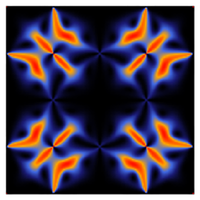
Phys. Rev. Lett. 137, 066504 (2026)
Condensed Matter and Materials
Coexistence and Tunability of Orbital and Spin Hall Effects in ${\mathrm{RuO}}_{2}$
Article | Condensed Matter and Materials | 2026-08-04 06:00 EDT
Lishu Zhang, Mahmoud Zeer, Dongwook Go, Theodoros Adamantopoulos, Peter Schmitz, Stefan Blügel, Chengwang Niu, Yuriy Mokrousov, Shishen Yan, Hyunsoo Yang, and Lei Shen (沈雷)
Altermagnetic materials, especially , have recently attracted considerable attention for their unique magnetic properties and energy-efficient spintronic applications. However, recent experimental studies have reported highly conflicting signatures regarding altermagnetic spin splitting and char…
Phys. Rev. Lett. 137, 066701 (2026)
Condensed Matter and Materials
Odd-Parity Altermagnetism through Sublattice Currents: From Haldane-Hubbard Model to General Bipartite Lattices
Article | Condensed Matter and Materials | 2026-08-04 06:00 EDT
Yu-Ping Lin and Marc Vila
Sublattice currents are a feasible route to odd-parity altermagnetism, where nonrelativistic collinear spin splitting occurs in the bands as an odd function of momentum.
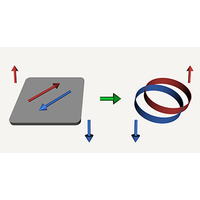
Phys. Rev. Lett. 137, 066702 (2026)
Condensed Matter and Materials
Breaking the Confinement-Loss Limit in Metals via Optical Antiskin Effect
Article | Condensed Matter and Materials | 2026-08-04 06:00 EDT
Haomin Zeng and Chao Chang
Guiding electromagnetic waves far below the diffraction limit usually produce severe propagation loss because the field is forced into dissipative material boundaries. We discover that a metal-Epsilon-near-zero (ENZ) interface can support an optical antiskin effect, significantly reducing propagatio…
Phys. Rev. Lett. 137, 066901 (2026)
Condensed Matter and Materials
Dynamic Heterogeneity and Stretched Exponential Distributions in Cargo Transport within Living Cells
Article | Polymers, Chemical Physics, Soft Matter, and Biological Physics | 2026-08-04 06:00 EDT
Yusheng Shen, Yan Wen, Qirui Zhao, Pingbo Huang, Pik-Yin Lai, and Penger Tong
Stretched exponential distributions of nonequilibrium steady-state fluctuations are ubiquitous in living and nonliving systems alike, yet their microscopic origins have remained elusive. In this Letter, we track the motion of three types of vesicles across different cell types and find that their tr…
Phys. Rev. Lett. 137, 068401 (2026)
Polymers, Chemical Physics, Soft Matter, and Biological Physics
Physical Review X
Riemannian Geometric Classification and Emergent Phenomena of Magnetic Textures
Article | 2026-08-04 06:00 EDT
Koki Shinada and Naoto Nagaosa
A classification framework based on differential geometry introduces geodesic and torsional scalar spin chiralities, revealing a quantum geometric effect that modifies electron equations of motion in complex magnetic textures.
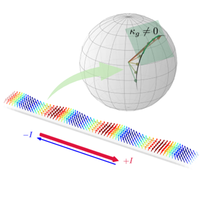
Phys. Rev. X 16, 031026 (2026)
arXiv
Investigation of GeSn aspect ratio trapping growth up to 8% Sn
New Submission | Materials Science (cond-mat.mtrl-sci) | 2026-08-05 20:00 EDT
Hryhorii Stanchu, Quang Minh Thai, Fernando M. de Oliveira, Mourad Benamara, Stephen Margiotta, Matthew Cook, Xiaoxin Wang, Jifeng Liu, Perry C. Grant, Baohua Li, Wei Du, Gregory Salamo, Shui-Qing Yu
Aspect ratio trapping (ART) growth of germanium-tin (GeSn) is a promising approach to target important objectives on the quest towards commercialization of complementary metal-oxide-semiconductor (CMOS)-compatible GeSn optoelectronics devices. Its local growth on patterned substrate allows for versatile device integration into photonics integrated circuit or for stand-alone structure like focal plane array imager. Additionally, high aspect ratio from nano-sized window can terminate early threading dislocation propagation on the oxide sidewalls, leaving subsequent growth defect-free and potentially improving the device performance. Knowledge remains missing regarding GeSn ART growth kinetics, morphology and how they evolve from thin film growth, with successful growth itself yet to be demonstrated. In this work, we report GeSn ART growth up to 8% Sn. Two configurations – self-induced Ge core/GeSn shell for Sn content between 6% and 8%, and bulk GeSn ART for Sn content below 1% – are observed. We present a comprehensive study on GeSn ART growth kinetics through different growth rounds and designs, showing a link between pyramid shape of ART island and successful Sn incorporation, as well as the role of growth selectivity and local heating.
Materials Science (cond-mat.mtrl-sci), Applied Physics (physics.app-ph)
Universal crossovers in weakly-monitored quantum critical states
New Submission | Statistical Mechanics (cond-mat.stat-mech) | 2026-08-05 20:00 EDT
Abhishek Kumar, Rushikesh A. Patil, Andreas W. W. Ludwig, Romain Vasseur
We study post-measurement ensembles of ground states of tricritical and critical 1D quantum Ising Hamiltonians subjected, respectively, to weak energy and spin measurements without post-selection. These measurements act as relevant perturbations about the unmeasured critical ground states. Using finite-size renormalization group (RG) crossover analyses, we characterize their universal properties through the entanglement effective central charge, effective Affleck-Ludwig boundary entropy, and signatures of multifractality from moments of measurement-averaged correlation functions. In both cases, we find evidence for “measurement-dominated” or “measurement-altered” fixed points governed by the underlying Born-rule randomness. For critical Ising, we find a direct RG flow to a projective-measurement fixed point with area-law entanglement, whereas for the tricritical Ising model, we find evidence for a weak-measurement fixed point with logarithmic entanglement. These results clarify the RG-flow structure of weakly measured multicritical Ising ground states and show how intrinsic measurement-induced randomness can generate complex and rich universal long-distance scaling behavior in the post-measurement ensembles, accessible to controlled analytical RG and numerical finite-size RG crossover analyses.
Statistical Mechanics (cond-mat.stat-mech)
16 pages, 8 figures, 2 tables
1+1d Lattice Dirac Fermions from Non-Onsite Vector and Axial Symmetries
New Submission | Strongly Correlated Electrons (cond-mat.str-el) | 2026-08-05 20:00 EDT
Tabin Dharanikota, Lukasz Fidkowski
We construct an exactly solvable Hamiltonian lattice model realizing a 1+1d Dirac fermion, with exact microscopic vector and axial vector $ U(1)$ symmetries. The mixed anomaly between these is accommodated by the not-on-site action of the symmetries. Our Hilbert space is a $ Z_2$ -graded tensor product of local $ Z_2$ -graded Hilbert spaces which include infinite dimensional rotor degrees of freedom. The Hamiltonian becomes manifestly exactly solvable after a locality-preserving unitary mapping to an equivalent fermionic Villain Hilbert space. Our construction also allows an exactly solvable realization of interacting fermionic Luttinger liquids. At the free Dirac fixed point, our Hamiltonian contains irrelevant interactions, which we compute to leading order.
Strongly Correlated Electrons (cond-mat.str-el)
1 figure
Spin-charge separation in the triangular-lattice Hofstadter-Hubbard model
New Submission | Strongly Correlated Electrons (cond-mat.str-el) | 2026-08-05 20:00 EDT
Yuntian Gu, Hui Yang, Zhehao Dai, Yantao Wu
Recent experiments in moiré materials have enabled the realization of a variety of exotic quantum phases. In this context, the Hofstadter-Hubbard model has been proposed as a possible setting for hosting chiral spin liquid. Concurrently, significant progress has been recently made in the computational methods for two-dimensional many-body fermion systems, which makes numerically studying this challenging model a real possibility in genuine 2D geometry. Motivated by these advances, we investigate the putative chiral spin liquid phase in the triangular-lattice Hofstadter-Hubbard model using variational Monte Carlo with neural quantum states (NQS) and projected entangled pair states (PEPS). We observe spin-charge separation directly in real space through numerical spin-pumping simulation and real-time spin and charge motion. In addition, in the context of anyonic superconductivity conjectured in this model, we find a positive two-electron binding energy on small systems, but it decreases below our numerical resolution as the system size increases. Our work demonstrates NQS and PEPS as powerful tools, capable of cross-checking each other, for diagnosing topological order and fractionalized excitations in strongly correlated electronic systems.
Strongly Correlated Electrons (cond-mat.str-el), Mesoscale and Nanoscale Physics (cond-mat.mes-hall), Quantum Gases (cond-mat.quant-gas), Superconductivity (cond-mat.supr-con)
6 pages, 5 figures. 1 supplement
Particle-Vortex Duality of Hydrodynamics
New Submission | Strongly Correlated Electrons (cond-mat.str-el) | 2026-08-05 20:00 EDT
Cenke Xu, Matthew P. A. Fisher
Equipped with the recently recognized symmetry structure of mixed states of matter and “strong-weak spontaneous symmetry breaking” (SW-SSB), we develop a quantum particle-vortex duality of emergent model-F and model-A hydrodynamics of 2d boson/rotor systems. This duality relation demonstrates that classical hydrodynamics of 2d bosons can be described in terms of the charge symmetry $ U(1)_c$ , but also equivalently in terms of the dual (emergent) 1-form symmetry $ U(1)^{(1)}_e$ , as well as $ U(1)_v$ associated with the conservation of vortices. This duality provides a bridge between the hydrodynamics of matter and magnetohydrodynamics.
Strongly Correlated Electrons (cond-mat.str-el), Quantum Physics (quant-ph)
17 pages 1 figure
Fractal deconfinement and confinement in Sierpinski ice
New Submission | Statistical Mechanics (cond-mat.stat-mech) | 2026-08-05 20:00 EDT
James Walkling, Roderich Moessner
We study the six-vertex model on the Sierpinski gasket, a four-coordinated hierarchical fractal with Hausdorff dimension $ d_f=\log_23$ . Given the importance of dimensionality for the long-wavelength behavior of such models, we specifically consider correlations and confinement as a function of the vertex weights, with the equal-weight point corresponding to the ice model. We calculate the partition function and correlators recursively to obtain a rich phase diagram hosting many different regimes. While the ice model shows entropic charge confinement, a particular four-vertex limit exhibits fractal deconfinement, with the string joining the deconfined charges itself a statistical fractal with fractal dimension $ d_l=\log_2(5/2)\approx 1.3$ . Finally, we propose a setup as an artificial spin ice to enable experimental study of the rich phenomenology of Sierpinski ice and its generalisations.
Statistical Mechanics (cond-mat.stat-mech)
8+10 pages, 5+8 figures
Two-Parameter Ansatz for the Violation of Eigenstate Thermalization
New Submission | Statistical Mechanics (cond-mat.stat-mech) | 2026-08-05 20:00 EDT
The eigenstate thermalization hypothesis (ETH) provides the prevailing framework for understanding quantum thermalization and ergodicity in isolated many-body systems. Yet, no general theory describes the continuous onset of ETH violation between the conventional ETH and its complete breakdown. Here, we introduce a two-parameter ansatz for the ETH violation that unifies and distinguishes two mechanisms: fading ergodicity and trapped ergodicity. While fading ergodicity captures the established route to ergodicity breaking, trapped ergodicity describes a distinct scenario in which ETH is violated in finite systems but restored in the thermodynamic limit. We test this framework in the spin-1/2 $ J_1$ -$ J_2$ chains with on-site disorder and linear potential. In both cases, we find that the observed ETH violation is consistent with trapped ergodicity.
Statistical Mechanics (cond-mat.stat-mech), Disordered Systems and Neural Networks (cond-mat.dis-nn), Quantum Physics (quant-ph)
Nonlocality-induced critical-length hierarchy from non-Hermitian competition
New Submission | Mesoscale and Nanoscale Physics (cond-mat.mes-hall) | 2026-08-05 20:00 EDT
Mengjie Yang, Alexander N. Poddubny, Ching Hua Lee
Spectral transitions in non-Hermitian lattices often arise from the competition between non-reciprocal skin accumulation and inter-component hybridization. In short-range systems formed by two coupled chains, this competition conventionally leads to the logarithmic critical-length law $ N_c\sim\ln D$ , where $ D$ is the transverse separation between the chains. Here we show that long-range hoppings fundamentally reorganizes this critical behavior, producing a hierarchy of distinct scaling laws. When only the hybridization couplings are power-law decaying with exponent $ \alpha$ , the onset becomes algebraic, $ N_c\sim D^{\alpha/3}$ . When the hoppings within each chain are themselves also power-law decaying, in addition to the hybridization couplings, the system enters a scale-covariant regime for $ \alpha<2$ , in which the criticality threshold equation depends only on the system aspect ratio $ N_c/D$ . At $ \alpha=2$ and beyond, this regime is followed by a marginal logarithmically corrected and algebraically corrected regimes, respectively. We identify two new non-local mechanisms that enable this unconventional critical hierarchy: a nonanalytic band-edge dispersion from long-range intra-chain hoppings, and parity-mixing hybridization induced by non-reciprocity. Our results show that nonlocality systematically removes the physical length scales i.e. skin depth underlying conventional critical non-Hermitian skin behavior, offering a platform-independent framework testable in programmable topoelectrical circuits, photonic lattices and digital quantum simulators.
Mesoscale and Nanoscale Physics (cond-mat.mes-hall), Disordered Systems and Neural Networks (cond-mat.dis-nn), Other Condensed Matter (cond-mat.other), Mathematical Physics (math-ph), Quantum Physics (quant-ph)
Any comments are welcome
Large scale neural quantum states reveal the interplay between superconductivity and quantum criticality in the Hofstadter-Hubbard model
New Submission | Strongly Correlated Electrons (cond-mat.str-el) | 2026-08-05 20:00 EDT
Christopher Roth, Andrew Millis, Tomohiro Soejima
Understanding how a parent insulating state shapes the superconductivity that emerges upon doping is a long-standing problem dating back to Anderson’s resonating-valence-bond proposal. The triangular-lattice Hofstadter-Hubbard model with $ \pi/2$ flux per plaquette offers an ideal setting for this question: at half filling it hosts two distinct parent states—an integer quantum Hall insulator at weak coupling and a chiral spin liquid at intermediate coupling—separated by a topological phase transition. Using neural quantum states on tori of up to $ 432$ sites, we present strong evidence that the transition is continuous, with a vanishing $ 2e$ charge gap and critical charge fluctuations. Upon doping, we find a topological superconductor with off-diagonal long-range order consistent with $ d+id$ pairing on either side of the transition. The two ingredients of superconductivity, pair formation and phase coherence, respond to the parent state in sharply different ways: while the pairing order parameter remains nearly unchanged across the transition, the superfluid stiffness is strongly enhanced near the critical point. The energy scale of the superconductor is therefore set not by which parent state is doped, but by proximity to the transition between them. Our results establish neural quantum states as a powerful tool for understanding the delicate interplay between long-ranged electronic correlations and superconductivity.
Strongly Correlated Electrons (cond-mat.str-el), Disordered Systems and Neural Networks (cond-mat.dis-nn), Superconductivity (cond-mat.supr-con)
14 pages, 11 figures
Broken site symmetry of Fe adatoms on Bi$_2$Te$_3$
New Submission | Mesoscale and Nanoscale Physics (cond-mat.mes-hall) | 2026-08-05 20:00 EDT
Duy Nguyen, Hari Paudyal, Joseph R. Sink, Michael E. Flatte, Jay A. Gupta
We report a combined scanning tunneling microscopy and atomistic theoretical study of Fe adatoms on the Bi$ 2$ Te$ 3$ (111) surface. Topographic imaging at $ 4.5$ ~K shows Fe adatoms in fcc and hcp hollow sites exhibit a threefold-symmetric contrast, consistent with the $ C{3v}$ symmetry of the adsorption site. However, simultaneously acquired differential conductance ($ dI/dV$ ) maps reveal a pronounced reduction in symmetry, evidenced by differential contrast observed at nearest-neighbor Te sites. Density functional theory calculations show that the Fe/Bi$ 2$ Te$ 3$ system undergoes a static Jahn–Teller distortion, reducing the adsorption symmetry from $ C{3v}$ to $ C{1v}$ , with the distorted configuration favored by $ 72.5$ ~meV. Orbital-projected density of states calculations show that the occupied states near the Fermi level are dominated by $ d{xz}$ and $ d_{yz}$ orbitals, whereas the unoccupied states are primarily of $ d_{z^2}$ , $ d_{x^2-y^2}$ and $ d_{xy}$ character. The local density of states from these orbitals is in good qualitative agreement with experimental $ dI/dV$ spectra. Furthermore, simulated local-density-of-states maps using a tight-binding Green’s function approach are in good agreement with experimental $ dI/dV$ maps, confirming that the reduced symmetry originates from the $ C_{1v}$ structural distortion.
Mesoscale and Nanoscale Physics (cond-mat.mes-hall)
7 pages, 5 figures
Magneto-oscillations, nonlinearity, and nonreciprocity of Coulomb drag in quantum circuits
New Submission | Mesoscale and Nanoscale Physics (cond-mat.mes-hall) | 2026-08-05 20:00 EDT
Alex Levchenko, Mingyang Zheng, Dominique Laroche
We consider the problem of Coulomb drag in interactively coupled quantum circuits built of adiabatic constrictions: quantum point contacts and short quantum-wire channels. The interplay of spatial confinement and magnetic field leads to a rich oscillatory response of the drag current as a function of gate voltage and magnetic field: drag peaks track the depopulation of magnetoelectric subbands, are asymptotically periodic in inverse field, and their visibility is controlled by the competition of temperature with the field-sharpened tunneling width of the constriction. We derive a closed expression for the linear drag conductance whose interaction kernel simplifies dramatically in the experimentally relevant limit of a long thermal length compared with the range of the interwire coupling, investigate the drag in the nonlinear regime, where the drag current measures the transconductance of the drive channel at any field, and discuss physically motivated models of dissipation-induced nonreciprocity of the drag signal. Extensions accounting for Zeeman splitting, interaction renormalization of the barrier transmission, backscattering at high field, and the frequency structure of the circuit coupling delineate how each mechanism imprints itself on the temperature dependence and lineshapes of the drag oscillations.
Mesoscale and Nanoscale Physics (cond-mat.mes-hall), Quantum Physics (quant-ph)
14 pages, 10 figures
Tunable Skyrmions in a Topological Wigner Crystal
New Submission | Strongly Correlated Electrons (cond-mat.str-el) | 2026-08-05 20:00 EDT
David A. Dahlbom, Daniel Kaplan, Premala Chandra, Cristian D. Batista
In low density systems with strong interactions electrons are expected to crystallize into a Wigner solid. Recently, advances in two-dimensional systems where electrons carry Berry curvature have added a topological dimension to Wigner crystallization. Using a model for pseudospin interactions in a topological Wigner crystal, here we show that the competition between ferromagnetic Heisenberg exchange $ J$ and the chiral interaction $ \gamma$ on the triangular lattice stabilizes a zero-field skyrmion crystal whose density is continuously tunable through the ratio $ \gamma/J$ . The chiral interaction originates from finite Berry curvature in an underlying time-reversal broken Wigner crystal. In the continuum limit, the chiral interaction acts as a chemical potential for skyrmions, while higher-order gradient terms beyond the nonlinear sigma model select the skyrmion density. At large chiral coupling, we uncover a 24-site tetra-skyrmion crystal carrying four units of topological charge per magnetic unit cell, which becomes degenerate with four-sublattice tetrahedral order as $ J \to 0$ . We characterize the magnon structure for these phases and discuss the transition between the tunable skyrmion crystal to these states at large $ \gamma/J$ . Our results establish the phase diagram of ferromagnetic topological Wigner crystals.
Strongly Correlated Electrons (cond-mat.str-el), Mesoscale and Nanoscale Physics (cond-mat.mes-hall)
15 pages. Comments appreciated
Physics-Informed and Knowledge-Driven Generative AI for Autonomous Discovery of Porous Oxide Energy Materials: Opportunities and Challenges
New Submission | Materials Science (cond-mat.mtrl-sci) | 2026-08-05 20:00 EDT
The discovery of next-generation energy-storage materials is increasingly limited by the complexity of the underlying design problem rather than by computational capability alone. Porous transition-metal oxides represent a particularly challenging class of battery materials because their performance emerges from coupled interactions among crystal chemistry, pore architecture, ion transport, electrochemistry, electro-chemo-mechanics, synthesis, manufacturing, and battery-system operation. Recent advances in generative artificial intelligence (AI) have demonstrated remarkable capabilities for generating chemically plausible crystal structures. However, current approaches remain largely focused on crystallographic validity and thermodynamic stability. This perspective presents a roadmap for advancing generative AI beyond crystal generation toward physics-informed, application-aware, and synthesis-aware inverse design. Using porous oxide electrodes as a representative materials platform, we propose a seven-tier physics-informed inverse-design framework integrating chemistry, thermodynamics, transport, electrochemistry, durability, cell compatibility, and manufacturability. We further identify the “Missing Data Problem” as a fundamental bottleneck limiting application-aware AI and introduce an autonomous knowledge-generation framework supported by a Porous Oxide Energy Materials Ontology and a continuously evolving “Knowledge Base”. Together, these concepts establish the foundation for Synthesis-Aware, Closed-Loop Autonomous Discovery, providing a general framework for AI-enabled autonomous materials discovery across energy-storage materials and other functional materials.
Materials Science (cond-mat.mtrl-sci)
36 pages, 11 figures
Lifshitz transitions and isospin polarization in twist-decoupled monolayer-bilayer graphene
New Submission | Mesoscale and Nanoscale Physics (cond-mat.mes-hall) | 2026-08-05 20:00 EDT
Alex Boschi, Leonardo Sabattini, Sergey Slizovskiy, Vaidotas Mišeikis, Zewdu M. Gebeyehu, Stiven Forti, Antonio Rossi, Kenji Watanabe, Takashi Taniguchi, Fabio Beltram, Vladimir I. Fal’ko, Camilla Coletti, Sergio Pezzini
Bernal-stacked bilayer graphene (BLG) hosts correlated electronic phases tied to low-energy Lifshitz transitions at saddle points in its valence band. To access this regime, ultralow charge disorder and control over a vertical electric field are simultaneously required. Here, we employ a twist-decoupled monolayer (MLG) to bias a proximal BLG in the absence of an external displacement field (D). We thereby reveal three-fold degenerate quantum Hall states at D = 0, with multiple transitions driven by doping, magnetic and electric field. Spontaneous broken symmetry in the vicinity of the valence band edge is signaled by the emergence of quantum oscillations with anomalous frequencies and large quasiparticle mass. These results indicate that electronic interactions in BLG are preserved in presence of an atomically close MLG, while showcasing the potential of CVD-grown graphene multilayers for the exploration of correlated phases of matter.
Mesoscale and Nanoscale Physics (cond-mat.mes-hall)
Physical Review B 114, L111402 (2026)
Two dimensional inhomogeneous classical systems at criticality
New Submission | Statistical Mechanics (cond-mat.stat-mech) | 2026-08-05 20:00 EDT
We study simple inhomogeneous deformations of known two-dimensional classical lattice models described by conformal field theory (CFT) at large distances. The deformations are chosen to vary slowly at lattice scales, while preserving critical behavior. Globally, we find that such systems are described by a CFT in curved space, and identify the underlying space metric. Our two examples are the Ising model and the six vertex model with domain wall boundary conditions. In the latter boundaries are also inhomogeneous, which complicates the analysis. We nevertheless solve the free case using hydrodynamics. In the presence of interactions we determine the arctic curve which separates a critical fluctuating region from an ordered (frozen) phase.
Statistical Mechanics (cond-mat.stat-mech), Mathematical Physics (math-ph)
38 pages, 14 figures
Chaos and Diffusion in Twisted Bilayer Graphene
New Submission | Mesoscale and Nanoscale Physics (cond-mat.mes-hall) | 2026-08-05 20:00 EDT
Olga Arroyo-Gascón, Manuel Pino
We numerically analyze chaos and diffusion in experimentally-relevant models of twisted bilayer graphene. Our results indicate that finite systems at both commensurate and incommensurate rotation angles exhibit chaos. We compute the Thouless energy of the system at intermediate twist angles to further understand the diffusive processes associated with the chaotic nature of the spectrum. We find that the mean free path of the non-interacting electrons scales with the system size, which is consistent with diffusive processes caused by border-induced scattering. In summary, our results show the role of borders as a experimentally relevant single-particle scattering mechanism, which is much stronger than in single-layer graphene and induces chaos and diffusion regardless of the rotation angle and the lattice commensurability.
Mesoscale and Nanoscale Physics (cond-mat.mes-hall), Disordered Systems and Neural Networks (cond-mat.dis-nn)
Symmetry-Guided Computational Screening of Two-Dimensional Altermagnets with ab initio Hubbard Corrections
New Submission | Materials Science (cond-mat.mtrl-sci) | 2026-08-05 20:00 EDT
Anumita Bose, Nataliia Manko, Marco Gibertini, Antimo Marrazzo
Altermagnets combine compensated antiferromagnetic order with momentum-dependent spin splitting, offering a promising platform for spintronic applications without macroscopic magnetization or stray magnetic fields. Although a wide range of three-dimensional (3D) materials have been identified as altermagnets, two-dimensional (2D) altermagnets remain comparatively limited. In this work, we perform a high-throughput computational search for altermagnetism across 2710 materials in the Materials Cloud 2D Crystals (MC2D) database. Our approach combines symmetry-based screening with first-principles density functional theory calculations, including self-consistent Hubbard-$ U$ corrections, to reliably capture magnetic ground states. Through a systematic exploration of magnetic configurations and their energetic stability, we identify 42 materials exhibiting altermagnetic ground states for at least one value of $ U$ , of which 24 remain robust upon determination of the Hubbard-$ U$ parameters from first principles–including 4 materials previously reported in the literature and 20 newly predicted candidates. These comprise promising monolayers such as metallic Fe$ _2$ Si$ _2$ SbO$ _9$ , and insulating CoBrO, with spin splittings about 294 meV and 330 meV, respectively. Our results significantly expand the pool of potential 2D altermagnet candidates with favorable exfoliation energetics and provide valuable guidance for experimental efforts. In addition, this work establishes a high-throughput computational framework for reproducible discovery and characterization of altermagnetic materials.
Materials Science (cond-mat.mtrl-sci)
12 pages, 5 figures
Phase-locking of hybrid oscillators
New Submission | Soft Condensed Matter (cond-mat.soft) | 2026-08-05 20:00 EDT
Joshua H.K. Saldi, Alexandre Morin
The synchronization and phase-locking behavior of oscillators with smooth dynamics is well captured by continuous phase-models à la Kuramoto. However, these models do not apply seamlessly for hybrid oscillators, where discrete events occur along their otherwise smooth dynamics. Consequently, the synchronization and phase-locking mechanisms of hybrid oscillators remain overlooked. Here, we combine experiments, theory, and simulations, to investigate and rationalize the coherent motion of pairs of hybrid oscillator. Using contact-charge electrophoretic (CCEP) oscillators as an experimental realization, we show that in-phase oscillations can occur, despite oscillators repelling each other. We rationalize this behavior by introducing a discrete-time framework that explicitly accounts for discrete events and elucidates the origin of phase-locking. Our model highlights the roles played by inertia and the decay of interaction strength along the oscillation cycle in promoting phase-locking of CCEP oscillators. More generally, it provides a phase-locking criterion that holds for a broader class of coupled hybrid oscillators, and reveals that various mechanisms can lead to their coherence.
Soft Condensed Matter (cond-mat.soft)
9 pages, 5 figures
Optical properties of Ag, Au, and Cu from first principles
New Submission | Materials Science (cond-mat.mtrl-sci) | 2026-08-05 20:00 EDT
Xiao Zhang, Emmanouil Kioupakis
We present a comprehensive framework for investigating the optical response of metals from first principles that combines density functional theory, many-body perturbation theory, and efficient interpolation techniques based on maximally localized Wannier functions, and apply it to analyze the optical properties of silver (Ag), gold (Au), and copper (Cu). We evaluate the optical properties of these metallic materials considering both single-particle direct and phonon-assisted excitations, as well as the resistive Drude contribution. We find an overall excellent agreement with experimental optical measurements for these materials, and show that both single-particle and collective excitations are important in capturing their optical response in the infrared. Our methodology provides fundamental understanding of the optical response of metals and is generally applicable to investigate the optoelectronic properties of emerging metallic materials.
Materials Science (cond-mat.mtrl-sci)
6 main figures, 5 supplemental figures
Electrostatic Superlattices beyond 1:1 Stoichiometry
New Submission | Materials Science (cond-mat.mtrl-sci) | 2026-08-05 20:00 EDT
Binay P. Nayak, Prapti Kakkar, Wesley P. Korba, Honghu Zhang, Wenjie Wang, Surya K. Mallapragada, Alex Travesset, David Vaknin
Exotic nanoparticle superstructures can be accessed by harnessing nanoparticle softness and charge regulation, features often viewed as obstacles to structural control. Here, we show that regulated charge mismatch in polymer-grafted nanoparticles enables the assembly of high-stoichiometry cubic superlattices. By co-tuning grafting density, particle size, and bulk composition, we realize ionic-lattice analogues such as CaF2 and Th3P4, as well as single-component A3 and A7 superlattices without atomic counterparts. The A3 lattice has recently been identified theoretically as a photonic band-gap lattice. These phases emerge from a 1:1 “parent” lattice when local charge neutrality cannot be satisfied, driving either progressive interstitial filling or reorganization into a larger basis. For instance, the systematic occupation of ZnS tetrahedral sites yields CaF2, while ligand-swapping symmetry breaking converts CsCl into Th3P4. Upon heating, the assemblies exhibit reversible lattice contraction and pronounced negative thermal expansion. Furthermore, the energetic penalty for defects increases with nanoparticle size, facilitating the scalable production of high-quality, open superlattices for photonic applications.
Materials Science (cond-mat.mtrl-sci), Mesoscale and Nanoscale Physics (cond-mat.mes-hall), Soft Condensed Matter (cond-mat.soft)
18 pages, 6 figures, 1 table. The Supporting Information file is uploaded as ancillary file
Adv. Func. Mat., XX(XX), 2026
Scale-covariant liquid in nonlocal high Tc strange metals
New Submission | Strongly Correlated Electrons (cond-mat.str-el) | 2026-08-05 20:00 EDT
Experiments in recent years on high $ T_c$ superconductors find a puzzling nodal scale-covariant self-energy with an exponent varying continuously with doping. We propose a mechanism: nonlocality induced by poorly screened effective repulsions $ V_{\alpha}(r) \sim 1/r^\alpha$ , where a continuously doping-dependent exponent $ 1 \le \alpha \le 3$ naturally interpolates between the Mott insulating and Fermi liquid limits. We develop a phenomenology of hydrodynamic screening, finding a scale-covariant quasiparticle decay rate $ \Gamma(\omega,T) \propto T^{\gamma} \Phi(\omega/T)$ in energy $ \omega$ and temperature $ T$ , with $ \gamma = 2-\frac{1}{\alpha}$ for nonlocal $ 1 < \alpha < 2$ . Our results naturally capture the optimally doped to overdoped regimes, whereas the underdoped regime is qualitatively distinct. In our theory, spectroscopy-fitted exponents directly probe the charged fluid’s effective spatial nonlocality. Nonlocality shows that quantum criticality is not necessary to explain scale-covariant phenomena.
Strongly Correlated Electrons (cond-mat.str-el)
7 pages, 2 figures
Exotic superconductivity in the doped Kitaev quantum spin liquid
New Submission | Strongly Correlated Electrons (cond-mat.str-el) | 2026-08-05 20:00 EDT
We investigate superconductivity in a doped Kitaev quantum spin liquid by applying the many-variable variational Monte Carlo method to the hole-doped $ t$ -$ J$ -type Kitaev model. Using a projected pair-product wave function that can exactly represent the Kitaev quantum spin liquid, we examine the stability of superconducting phases on isotropic two-dimensional clusters. For the ferromagnetic Kitaev interaction, robust triplet $ p$ -wave superconductivity coexists with ferromagnetism in the low-to-intermediate doping regime but is suppressed as the system approaches the fully polarized ferromagnetic phase. For the antiferromagnetic Kitaev interaction, superconductivity exhibits a change in the dominant pairing symmetry from spin-dependent triplet $ p$ -wave at low doping to singlet $ d+id$ at intermediate doping. By varying the strength of the ferromagnetic Kitaev interaction at fixed doping, we show that the triplet superconductivity increases together with the ferromagnetic moment and becomes strongest slightly below full polarization. Our results provide a theoretical basis for experimental searches for unconventional superconductivity, such as triplet superconductivity coexisting with ferromagnetism, in carrier-doped Kitaev candidate materials.
Strongly Correlated Electrons (cond-mat.str-el), Superconductivity (cond-mat.supr-con)
14 pages, 7 figures, 1 table
Hidden Quantum Geometry in Bilayer Exciton Condensates
New Submission | Mesoscale and Nanoscale Physics (cond-mat.mes-hall) | 2026-08-05 20:00 EDT
When an electron-doped layer is stacked with a hole-doped layer with approximately equal carrier density, inter-layer Coulomb interaction turns the bilayer system into an exciton condensate (EC). In this Letter, we reveal a fundamental property of bilayer ECs: the excitonic order gives rise to nontrivial hidden quantum geometric effects in the correlated electron-hole bands, even when the non-interacting bands are trivial. Such peculiar EC-driven quantum geometry manifests itself in a characteristic out-of-plane polarization response upon applying an in-plane AC electric field to the bilayer EC system. In particular, the second-order response exhibits a characteristic inverse square scaling with the bilayer EC order parameter. Our finding reveals a fundamental hidden Berry phase effect driven by electron-hole correlations, and establishes bilayer EC as a promising platform for rich nonlinear physics.
Mesoscale and Nanoscale Physics (cond-mat.mes-hall)
Maintext: 6 pages, 2 figures; Supplemental material: 5 pages
Pressure-induced Superconductivity in Thermoelectric Semiconductor Mg3Sb2
New Submission | Superconductivity (cond-mat.supr-con) | 2026-08-05 20:00 EDT
Cuiying Pei, Yasong Wu, Airan Li, Juefei Wu, Qi Wang, Yifan Zhu, Yi Zhao, Lingling Gao, Changhua Li, Weizheng Cao, Shihao Zhu, Mingxin Zhang, Yulin Chen, Chenguang Fu, Tiejun Zhu, Jiong Yang, Yanpeng Qi
The intrinsic electronic structures of narrow bandgap thermoelectric (TE) materials serve as a platform for the investigation of coupling effects of quasi-particles under high pressure, enabling the exploration of emerging electronic and phonon transport, superconductivity, and topological transition. Here, we report the discovery of pressure-induced superconductivity in the TE semiconductor Mg3Sb2. Upon the increased pressure, the metallization occurs at 8.7 GPa, followed by a superconducting transition concomitant with a carrier-type crossover from p- to n-type. This phenomenon arises from a pressure-induced structural phase transition from the semiconducting P-3m1 to the metallic C2/m-I phase. The superconducting critical temperature (Tc) exhibits a dome-shaped pressure dependence, peaking at 3.3 K at 12.6 GPa. Combined theoretical calculations, high-pressure Raman spectroscopy, and X-ray diffraction (XRD) measurements reveal an additional structural transition above 20 GPa, yielding a distinct C2/m-II phase. Our findings establish the high-pressure phase diagram of Mg3Sb2, elucidate its pressure-dependent electronic properties, and provide valuable insights for future investigations of TE materials under high pressure.
Superconductivity (cond-mat.supr-con), Materials Science (cond-mat.mtrl-sci)
18 pages,6 figures
Journal American Chemical Society (2026) 148 (25): 26481-26488
Pressure induced magnetic-field-free superconducting diode effect in NbSe2 flake
New Submission | Superconductivity (cond-mat.supr-con) | 2026-08-05 20:00 EDT
Shihao Zhu, Tian Le, Cuiying Pei, Changhua Li, Yi Liao, Yi Zhao, Lingxiao Zhao, Qi Wang, Juefei Wu, Qilian Zhang, Yueshen Wu, Tonghuan Fu, Xujie Lü, Wenge Yang, Jie Shen, Jun Li, Yulin Chen, Xiao Lin, Wen-Yu He, Yanpeng Qi
The superconducting diode effect (SDE) is a fascinating nonreciprocal phenomenon where the critical current is different for opposite current directions. It is widely believed that realizing SDE requires breaking both inversion symmetry (IS) and time-reversal symmetry (TRS), which are usually achieved via heterostructure engineering and applying external magnetic fields. Here, we report a pressure-induced magnetic-field-free SDE in NbSe2 flakes without any heterostructures. We show that pressure alone breaks the IS, as confirmed by the second harmonic generation. Crucially, upon applying an out-of-plane magnetic field (B), the SDE exhibits even-in-B behavior, implying the absence of explicit TRS breaking. This finding challenges the prevailing theoretical paradigm and demonstrates that a magnetic-field-free SDE can emerge without explicitly breaking TRS. Thereby, our work establishes pressure engineering as a powerful tool for inducing nonreciprocal superconductivity and designing versatile, magnetic-field-free superconducting devices.
Superconductivity (cond-mat.supr-con), Materials Science (cond-mat.mtrl-sci)
10 pages,4 figues
Phys. Rev. Lett. 2026
Apparent Dresselhaus coefficient in (001) GaAs quantum wells: Correlation-time renormalization in D’yakonov-Perel’ spin relaxation
New Submission | Materials Science (cond-mat.mtrl-sci) | 2026-08-05 20:00 EDT
Yuzo Ohno, Jun Ishihara, Satoshi Iba
We study the Dresselhaus coefficient inferred from D’yakonov-Perel’ spin relaxation in bulk GaAs and (001) GaAs quantum wells using nonballistic Monte Carlo simulations. In bulk GaAs, inelastic LO-phonon simulations reproduce the spin relaxation with a cubic Dresselhaus coefficient \gamma_{3D}\simeq12.4 eVÅ^3 and a cubic-field correlation time \tau_3^{3D}\simeq150 fs. In a projected two-dimensional quantum-well model, however, k_z^2 is replaced by the static expectation value \langle k_z^2 \rangle, converting the dominant Dresselhaus field into a term linear in the in-plane wave vector. We show that this projection changes the D’yakonov-Perel’ correlation kernel from K_3^{2D} to a first- and third-order hybridized kernel K_{1+3}^{2D}, for which the correlation time \tau_{1+3}^{2D} approaches 235 fs in the strict two-dimensional limit, in contrast to the third-order correlation time \tau_3^{2D} of 130 fs. Consequently, the coefficient entering the projected two-dimensional model is not the intrinsic cubic coefficient itself but an apparent coefficient, \gamma_{2D}^{app}=\gamma_{3D} \sqrt{\tau_3^{2D}/\tau_{1+3}^{2D}}. Since \tau_{1+3}^{2D}\simeq1.8\tau_3^{2D} under LO-phonon-dominated scattering, \gamma_{2D}^{app}\simeq9.2 eVÅ^3, consistent with spin relaxation in (001) GaAs quantum wells. This correlation-time renormalization clarifies why Dresselhaus coefficients extracted from two-dimensional spin relaxation can differ from the cubic bulk coefficient and provides a useful framework for interpreting linear and cubic Dresselhaus parameters in quantum wells.
Materials Science (cond-mat.mtrl-sci)
25 pgaes, 3 figures
Quaternion-Kahler geometry of time reversal symmetric crystals
New Submission | Mesoscale and Nanoscale Physics (cond-mat.mes-hall) | 2026-08-05 20:00 EDT
Hyeongmuk Lim, Junseo Jung, Yuting Qian, Bohm-Jung Yang
Quantum geometry reveals how the shape of Bloch wave functions governs correlated quantum phenomena. Its standard formulation describes isolated complex bands, where Berry curvature is Abelian and ideal geometry is Kahler. However, time reversal symmetric crystals with spin require a different language since Kramers degeneracy pairs Bloch states and turns Berry curvature into a non-Abelian SU(2) field. Here we show that Kramers pair band geometry is quaternionic. A minimal Kramers pair defines a map into quaternion projective space, and its quaternionic quantum geometric tensor unifies the quantum metric with the three SU(2) Berry curvature components. The non-negativity of this tensor imposes local metric-curvature inequalities, whose saturation defines the non-Abelian counterpart of ideal Chern bands. In four dimensions, the ideal limit further yields an algebraic structure related to the four-dimensional quantum Hall effect. Our results promote ideal quantum geometry from the Abelian geometry of Chern bands to the quaternionic, non-Abelian geometry of time reversal symmetric quantum matter.
Mesoscale and Nanoscale Physics (cond-mat.mes-hall)
38 pages, 4 figures
Exact Resonances Are Not Sufficient for Phonon Energy Diffusion
New Submission | Statistical Mechanics (cond-mat.stat-mech) | 2026-08-05 20:00 EDT
Wei Lin, Yong Zhang, Hong Zhao
Multi-phonon resonance conditions underpin kinetic theories of phonon transport and lattice thermalization. We show that exact resonance matching, nonzero interaction coefficients, and network connectivity do not guarantee persistent energy diffusion. Symmetry-enforced balance relations drive exact-resonant collision currents to nonthermal zero-flux states, producing kinetic arrest from individual resonant sets to connected networks. Complete energy spreading is sustained by quasi-resonances. The thermodynamic and weak-nonlinearity limits do not commute: the leading kinetic behavior is recovered in the former, whereas at fixed finite size the thermalization time diverges through higher-order crossovers as the nonlinearity vanishes. Exact-resonance existence and connectivity are therefore kinematic, not sufficient dynamical, criteria for phonon energy diffusion.
Statistical Mechanics (cond-mat.stat-mech), Mathematical Physics (math-ph), Classical Physics (physics.class-ph), Quantum Physics (quant-ph)
8 pages, 5 figures
Contrasting anisotropic electron-phonon-spin coupling in Fe${3}$GeTe${2}$ and Fe${5}$GeTe${2}$: A helicity-resolved Raman study
New Submission | Strongly Correlated Electrons (cond-mat.str-el) | 2026-08-05 20:00 EDT
Smrutiranjan Mekap, Jyoti Saini, Andrzej Ptok, Pawan Kumar Srivastava, Changgu Lee, Subhasis Ghosh, Anushree Roy
Two-dimensional van der Waals ferromagnets Fe$ _3$ GeTe$ _2$ (F3GT) and Fe$ _5$ GeTe$ _2$ (F5GT) exhibit pronounced magneto-optical responses, which open promising platforms for investigating the interplay among lattice, electronic, and magnetic degrees of freedom. Here, we present a comparative study of optical resonance-induced anisotropic electron-phonon coupling and its association with magnetic ordering in these systems using wavelength- and temperature-dependent helicity-resolved Raman spectroscopy. By resolving the doubly degenerate E modes under left- and right-circularly polarized excitations, we demonstrate that the temperature evolution of the chiral mode splitting ($ \Delta f$ ) does not track the magnetization behavior, indicating that the helicity-dependent Raman response arises not solely from time-reversal symmetry breaking due to magnetic order, but also from spin-orbit-coupled electronic interactions. Notably, in F3GT, the out-of-plane magnetization indirectly governs the in-plane anisotropic electron-phonon coupling under optical resonance, whereas F5GT exhibits static anisotropic interactions. The Fano asymmetry parameter $ 1/q$ reveals mode- and temperature-dependent coupling strengths between phonons and the electronic continuum, with pronounced angular anisotropy in F3GT but isotropic behavior in F5GT— a consequence of its multiple Fe sites and enhanced interlayer hybridization in the latter. Our results demonstrate the role of crystal structure and magnetic anisotropy in shaping the anisotropically coupled electron-phonon-spin dynamics in these layered metallic ferromagnets, and highlight Fe$ _x$ GeTe$ _2$ as a versatile platform for microscopic insight into chiral light-matter interactions in layered metallic ferromagnets.
Strongly Correlated Electrons (cond-mat.str-el)
Main text: 15 pages, 8 figures + Supplemental Material: 6 pages, 5 figures
Fluctuations of topological charges in two-dimensional classical Heisenberg model through high-temperature and low-temperature expansions
New Submission | Strongly Correlated Electrons (cond-mat.str-el) | 2026-08-05 20:00 EDT
It is well known that KT transition in 2d XY model is driven by the binding and unbinding of topological defects, which can be characterized by the fluctuation of topological charges inside a region. We extend the idea into the 2d Heisenberg model and calculate the fluctuation through high-temperature and low-temperature expansion respectively. It is found that the fluctuation of topological charges is proportional to the area of the region at high temperatures while obeys the perimeter law at low temperatures.
Strongly Correlated Electrons (cond-mat.str-el), Materials Science (cond-mat.mtrl-sci)
16 pages, 8 figures
Topological properties and phase diagram of the triangular Hofstadter model with staggered flux
New Submission | Other Condensed Matter (cond-mat.other) | 2026-08-05 20:00 EDT
We study the topological properties and phase diagram of the triangular Hofstadter model with staggered flux in adjacent triangles in this work. This lattice can be used to describe the low energy physics of the twisted bilayer transition metal dichalcogenides (TMD) in a certain range of the electric displacement field between the two layers. We show that the Hofstadter spectrum of this model is generally asymmetric except at specific staggered flux $ 3\phi= \pi/2 \mod {\pi}$ due to an additional P symmetry at such $ \phi$ . Breaking the translation symmetry by dimerization lifts the P symmetry and results in rich topological phases in the system. The dimerized model with different rational external magnetic flux $ {\Phi}_B = 2\pi p/q$ has phase diagram with the following common features. For even q, the dimerized model generally has three gapped regimes. The one with small dimerization has finite Chern number and the other two have zero Chern number. For odd q, the model is gapped with zero Chern number at any finite dimerization. For both q even and odd, the two regimes with zero Chern number can be further characterized by the inversion symmetry of the parametrized one-dimensional chains of the system at \phi = 0 \mod \pi/3$ , and one regime is topologically non-trivial and the other is trivial. Our results may be tested in twisted bilayer TMD with weak interaction or cold atom systems in optical lattice or photonic crystals achieved in recent experiments.
Other Condensed Matter (cond-mat.other)
AccelNet: Exact backward-compatible acceleration of polynomial angular descriptors through Cartesian moment factorization
New Submission | Materials Science (cond-mat.mtrl-sci) | 2026-08-05 20:00 EDT
We present AccelNet, an exact, backward-compatible method for accelerating existing trained aenet and n2p2 neural-network potentials without retraining. For angular terms with separable one-neighbor weights and a finite polynomial dependence on $ \cos \theta$ , the method exploits their hidden finite-rank structure to replace explicit neighbor-pair loops by one-neighbor Cartesian moments. AccelNet reads models trained with either package and reproduces their descriptors, energies, and analytic forces to floating-point roundoff. We verified this equivalence for H$ _2$ O and TiO$ _2$ models and tested the resulting potentials in LAMMPS molecular-dynamics simulations. The implementation, model-conversion tools, and LAMMPS interfaces are released as open-source software.
Materials Science (cond-mat.mtrl-sci), Computational Physics (physics.comp-ph)
28 pages, 2 figures, 4 tables
Bias Tunable Transport Modulation and Gas Selectivity in Layered BiOI: A DFT NEGF Study
New Submission | Materials Science (cond-mat.mtrl-sci) | 2026-08-05 20:00 EDT
Jemal Yimer Damte, Jiří Houška, Pavel Baroch, Xue Yong
Understanding the interplay between adsorption energetics and charge-transport modulation is essential for the rational design of low-power and bias-tunable gas sensors. Here, we present a comprehensive first-principles study of gas selectivity in layered bismuth oxyiodide (BiOI) by integrating density functional theory with nonequilibrium Green’s function transport calculations. The adsorption and bias-dependent transport responses toward NO2, NH3, CO2, and representative volatile organic compounds are systematically examined. While NH3 and NO2 exhibit strong chemisorption and localized electronic perturbations, CO2 interacts through weak physisorption, demonstrating that adsorption strength alone does not determine sensing performance. Instead, the evolution of transmission channels near the Fermi level governs the sensing response. Bias-dependent calculations reveal an electrically tunable sensitivity hierarchy, in which weakly adsorbed CO2 preserves conductive pathways and exhibits pronounced low-bias sensitivity despite minimal charge transfer. Recovery-time analysis further highlights the trade-off between transport modulation and reversibility for strongly adsorbed species. These results establish a transport-centered selectivity framework for layered BiOI and provide mechanistic insight into electric-field-controlled gas sensing under ambient conditions.
Materials Science (cond-mat.mtrl-sci)
23 pages, 7 Figures
Hydrodynamic description of proliferating active matter
New Submission | Soft Condensed Matter (cond-mat.soft) | 2026-08-05 20:00 EDT
Nathan Silvano, Emilio Hernandez-Garcia, Cristóbal López
We develop a continuum theory for proliferating active matter starting from a microscopic stochastic model of self-propelled particles undergoing birth, death, and nonlocal competition. Beginning from the master equation, we derive mean-field evolution equations for the particle density and polarization fields and close the resulting hierarchy through a von Mises ansatz, providing a coupled hydrodynamic description applicable to a broad class of proliferating active systems. As an application, we study the recently introduced Active Brownian Bug model, in which the form of flocking emerges despite the absence of explicit alignment interactions. Linear stability analysis predicts both Turing and Hopf instabilities, whose analytical thresholds agree with numerical simulations. The continuum model reproduces the principal dynamical regimes of the underlying particle system, including homogeneous states, stationary periodic clusters, and coherently propagating flocking states. These results establish a general continuum framework for proliferating active matter and provide a physical interpretation of collective motion driven by the interplay between activity and population dynamics.
Soft Condensed Matter (cond-mat.soft), Statistical Mechanics (cond-mat.stat-mech)
22 pages, 10 figures, 7 videos
Picometre-scale real-time drift correction in TEM and STEM by dynamic control of the specimen stage for atomic-resolution imaging
New Submission | Materials Science (cond-mat.mtrl-sci) | 2026-08-05 20:00 EDT
Christophe Gatel, Julien Dupuy, Teresa Hungria, Martin J. Hytch
In this work, we show how the specimen drift can be actively compensated by controlling the stage with precision down to the picometre scale. We do this by dynamic control, a generic real-time feedback framework designed to actively stabilize electron microscopy experiments by continuously monitoring an experimental variable from the detector data stream and compensating its evolution during acquisition. The framework, applicable to a broad range of controllable experimental instabilities, includes automated calibration procedures, operates in parallel with image acquisition and is implemented as a software plugin without requiring any hardware modification of the microscope. Results for live drift correction are shown for a selection of TEM and STEM instruments using conventional mechanical stages as well as piezoelectric stages. Experimental results are presented for medium resolution TEM, high-resolution TEM, HR-STEM and in situ observations. With piezoelectric stages, specimen stabilization down to the picometre scale was achieved allowing drift-corrected atomic-resolution imaging. Specimen stage-based stabilization significantly improves long-exposure imaging and in situ experiments by increasing the effective exposure time, preserving the field of view, maintaining identical optical conditions and eliminating the need for numerical alignment of large datasets. Beyond the specific application presented here, dynamic control provides a versatile framework for real-time regulation of electron microscopy experiments and opens new perspectives for quantitative imaging, automated in situ studies and multimodal acquisitions.
Materials Science (cond-mat.mtrl-sci), Applied Physics (physics.app-ph), Instrumentation and Detectors (physics.ins-det)
27 pages, 9 figures. Submitted to Ultramicroscopy Christophe Gatel: Writing original draft, Software, Methodology, Investigation, Data treatment, Conceptualization, Resources, Funding acquisition. Julien Dupuis: Software, Conceptualization, Methodology. Teresa Hungria: STEM experiment, Review & editing. Martin Hytch: Review & editing, Data treatment, Resources, Funding acquisition
Alloy engineering of excitonic properties in TMD monolayers
New Submission | Materials Science (cond-mat.mtrl-sci) | 2026-08-05 20:00 EDT
Eirini Katsipoulaki, Adlen Smiri, Panagiotis Spiliotakis, Konstantinos Mourzidis, Danae Katrisioti, Takashi Taniguchi, Kenji Watanabe, Georgios Kopidakis, Zdenek Sofer, Gang Wang, Emmanuel Stratakis, George Kioseoglou, Iann C. Gerber, Xavier Marie, Ioannis Paradisanos
We investigate monolayer MoS$ _{2x}$ Se$ _{2(1-x)}$ alloys across the full composition range using optical spectroscopy. We demonstrate continuous tuning of the optical gap over $ \sim$ 0.35 eV, accompanied by a systematic reduction of the B–A exciton splitting, in agreement with density functional theory calculations. Temperature-dependent measurements reveal a progressive increase of the average phonon energy from Se-rich to S-rich alloys that follows a simple reduced-mass scaling model. Polarization-resolved spectroscopy further shows a monotonic increase of the circular polarization from nearly zero in MoSe$ _2$ to $ \sim$ 15% in MoS$ _2$ at 78 K. The observed evolution of the polarization is attributed to alloy-induced modifications of the electronic structure that modify bright–dark exciton mixing and the associated valley depolarization. These findings establish alloy engineering as an effective strategy for controlling excitonic properties in TMD monolayers.
Materials Science (cond-mat.mtrl-sci)
11 pages, 4 figures
Discrepancy between the H-Function and Entropy: Insights into the rigorously established Boltzmann equation for hard-sphere gases
New Submission | Statistical Mechanics (cond-mat.stat-mech) | 2026-08-05 20:00 EDT
By investigating the origin of the evolutionary discrepancy between the H-function and entropy, we elucidate that the H-function fails to serve as a valid arrow-of-time criterion in the rigorously derived Boltzmann equation for the hard-sphere gas model under the Boltzmann-Grad limit.
Statistical Mechanics (cond-mat.stat-mech), Classical Physics (physics.class-ph)
3 pages
Magnetic and crystal electric field excitations in a spin-orbit coupled frustrated hyperkagome magnet Nd$_3$Li$_3$W$2$O${12}$
New Submission | Materials Science (cond-mat.mtrl-sci) | 2026-08-05 20:00 EDT
R. Kolay, S. Guchhait, Indrajeet S. Rathore, S. Nandi, M. D. Le, N. B. Christensen, R. Nath
Rare-earth based garnets provide a viable platform for studying the frustrated driven magnetic properties of the hyperkagome lattices. Herein, we report a comprehensive study of the magnetic properties and crystal electric field (CEF) scheme of a new Nd$ ^{3+}$ based hyperkagome antiferromagnet, Nd$ _3$ Li$ _3$ W$ 2$ O$ {12}$ belonging to the garnet family via magnetization, heat capacity, and inelastic neutron scattering (INS) measurements. Magnetization measurement reveals a dominant antiferromagnetic interaction with a low temperature Curie-Weiss temperature $ \theta{\rm CW}^{\rm LT} \simeq -0.2$ K. Two broad maxima are observed in the magnetic heat capacity data under magnetic fields, implying multilevel Schottky anomalies due to the effect of CEF and display a two-step magnetic entropy release. No magnetic long-range order is observed down to 0.1 K. The CEF excitations of the Nd$ ^{3+}$ ($ J=9/2$ ) ion with $ D_2$ point group symmetry, probed via INS experiments, show non-dispersive excitations characterizing the transitions among the CEF energy levels. The simultaneous fit of the INS spectra at different temperatures enabled the mapping of the CEF Hamiltonian and the energy eigenvalues of the Kramers’ doublets. The simulation using the obtained CEF parameters reproduces the experimental magnetic susceptibility, magnetic isotherms, and magnetic heat capacity data. The thermodynamic properties and INS-derived crystal-field scheme confirm a Kramers’ doublet ground state with an effective spin $ J{\rm eff} = 1/2$ at low temperatures.
Materials Science (cond-mat.mtrl-sci)
13 pages, 7 figures, 56 references
Helicity in monoaxial chiral magnets
New Submission | Mesoscale and Nanoscale Physics (cond-mat.mes-hall) | 2026-08-05 20:00 EDT
Victor Laliena, Diego Gironés-Magaña, Javier Campo
The equilibrium state of a monoaxial chiral magnet surrounded by a non-magnetic medium (such as air or vacuum) is a helical texture characterized by a single, well-defined wave vector. No metastable states have ever been observed in such systems. Recently, however, it was demonstrated that when a chiral magnet is in close contact with two uniaxial ferromagnets, a large number of metastable helical states emerge in addition to the equilibrium state [Phys. Rev. B 109, 214424]. These helical states are distinguished by their wave number (helicity). In the present work, we elucidate the topological origin of the stabilization of these states –a mechanism we term dynamical topological protection– and investigate their static and dynamic properties. We find that, as a consequence of this dynamical topological protection, the winding number of the helical states remains constant under the application of sufficiently weak magnetic fields and polarized electric currents. Furthermore, when a polarized current is applied to a metastable helical state, a static configuration is reached. This state retains the original winding number, but its winding number density becomes non-homogeneously distributed, concentrating near the interface with one of the ferromagnets. The dynamic response to sufficiently large magnetic fields and currents provides mechanisms to switch between different helical states. Since the magnetic properties depend on helicity, these metastable helical states are highly promising for applications in spintronics and magnonics.
Mesoscale and Nanoscale Physics (cond-mat.mes-hall), Strongly Correlated Electrons (cond-mat.str-el)
14 pages
Active wetting/de-wetting of focal adhesions on viscoelastic substrates
New Submission | Soft Condensed Matter (cond-mat.soft) | 2026-08-05 20:00 EDT
Ivana Pajic-Lijakovic, Milan Milivojevic, Boris Martinac, Massimo Vassalli, Peter VE McClintock
Cell adhesion to viscoelastic substrates is mediated by focal adhesions (FAs), which dynamically couple actomyosin contractility to the extracellular matrix. Although substrate stress relaxation is known to regulate adhesion stability and cell migration, a predictive physical framework linking viscoelasticity to force transmission and adhesion dynamics remains lacking. Here we review briefly what is known about the active wetting and de-wetting of FAs on viscoelastic substrates and synthesize existing experimental and theoretical work into a two-timescale physical framework to describe the phenomena reported. At short timescales, oscillatory actomyosin-driven displacements are transmitted through molecular clutches, leading to frequency-dependent energy transfer to the substrate. We show that this transfer is maximized at an optimal frequency set by a balance between elastic energy storage and viscous dissipation, establishing a resonance-like mechanism that selects both the effective FA stiffness and traction force amplitude. At longer timescales, this mechanically optimal state couples to adhesion remodelling through an effective surface tension, enabling FA growth and disassembly to be interpreted as active wetting and de-wetting processes. The model predicts that adhesion stability and steady-state size are controlled by substrate stiffness and viscoelastic timescales, as well as mechanosensitive feedback mediated by Piezo1-dependent calcium signalling.
Soft Condensed Matter (cond-mat.soft), Subcellular Processes (q-bio.SC)
25 pages, 3 figures, 1 table
Advances in Colloid and Interface Sciences, 357: 104006
The intermediate scattering function of an interacting adlayer as a characteristic function: a closed-form theory of Ising lattice-gas surface diffusion
New Submission | Statistical Mechanics (cond-mat.stat-mech) | 2026-08-05 20:00 EDT
The intermediate scattering function (ISF) measured by helium spin-echo is a characteristic function (CF): the Fourier transform of the distribution of adsorbate displacements, whose value at zero time is the static structure factor. We use this double role to bring lateral interactions of Ising lattice-gas type into surface diffusion. The ISF then follows in closed form in momentum transfer, time, coverage and temperature, and with it the whole linear-response hierarchy. A single correlation parameter fixes both the equilibrium structure and the interaction-renormalized hop rate; it is exact along a one-dimensional channel, and is carried onto the surface as the nearest-neighbour correlation of a pair approximation, the momentum dependence of the structure factor then coming from a collective (random-phase) treatment. The closed form is not postulated. Projecting the master equation onto the density gives an exact equation of motion whose amplitude is an identity and whose initial rate obeys a sum rule, so that the quasi-elastic weight is the layer’s own structure factor and de Gennes narrowing becomes a theorem rather than an analogy; the closed form is what remains when the memory kernel of that equation is dropped. Kinetic Monte Carlo (KMC) on the same Hamiltonian reproduces the dressed hop rate to better than about one per cent and the initial collective rate to $ 1$ –$ 2%$ . Four correlated, non-critical fingerprints of the interaction follow — in the quasi-elastic amplitude, its linewidth, the Arrhenius slope, and the dependence of the fitted linewidth on the range of times over which the decay is fitted. They invert in closed form for the attempt frequency, the static barrier and the interaction. Applications to Na/Cu(111) and H/Pt(111) are analysed and discussed.
Statistical Mechanics (cond-mat.stat-mech)
34 pages; 9 figures, 2 tables
Magnetoresistance in Magnetic Weyl semimetal Mn$_{3}$ZnC
New Submission | Strongly Correlated Electrons (cond-mat.str-el) | 2026-08-05 20:00 EDT
The magnetoresistance (MR) in magnetic materials reveal an intriguing spin-dependent electron scattering, highlighting the role of spin polarization on the electronic transport properties. This becomes even more interesting for the topological magnetic materials where a finite Berry curvature leads to an intrinsic scattering channel also. In this report, we investigate MR of Mn$ _{3}$ ZnC, an antiperovskite magnetic nodal line semimetal. Mn$ _{3}$ ZnC shows a ferromagnetic (FM) transition at $ \sim$ 420 K, followed by an ferrimagnetic (FIM) transition at $ \sim$ 195 K. We focus on the interpretation of MR data and highlight the relation between MR and its magnetization. The signature of magnetization induced MR shows correlation at low magnetic fields and displays distinct behaviors in the FIM and FM states. Similar to the isothermal magnetization M(H) curve of FM and FIM state, the MR curves exhibit a sharp increase, followed by a linear behavior at higher fields. As the magnetic field varies, the cusp-like anomaly becomes more pronounced, and vanishes at the magnetic phase transition, which then reappears as the temperature increases. The sign change in the MR curves in the FIM state is attributed to a drastic change in the carrier mobility. Interestingly, this system shows a positive MR in FM state at very low field, which is quite unusual.
Strongly Correlated Electrons (cond-mat.str-el)
7 pages, 4 figures
Fibonacci number systems and the localization criterion in the many-body Aubry-André model
New Submission | Statistical Mechanics (cond-mat.stat-mech) | 2026-08-05 20:00 EDT
We introduce an extension of the Fibonacci number system, we call the fractional Fibonacci number system, which interpolates between the Fibonacci number system (used for natural numbers) and the irrational base-$ \phi$ number system, which can be used to represent real numbers. The number system finds its use in interpreting the localization phase diagram of the many-body non-interacting Aubry-André model. For finite system sizes a localization criterion can be obtained if the particle density is written in the fractional Fibonacci number system. In the thermodynamic limit, the criterion remains, but in this case the particle density is expressed in base-$ \phi$ . The nature of the thermodynamic limit is also discussed.
Statistical Mechanics (cond-mat.stat-mech), Disordered Systems and Neural Networks (cond-mat.dis-nn), Mesoscale and Nanoscale Physics (cond-mat.mes-hall), Mathematical Physics (math-ph)
Anisotropic Phonon Heat Flow and Thermoelectric Response in Tetragonal GeS$_2$ and GeSe$_2$
New Submission | Materials Science (cond-mat.mtrl-sci) | 2026-08-05 20:00 EDT
Neeraj Kulhari, Krishna Swaroop Sharma, K. C. Bhamu
The electronic structure, lattice dynamics, bonding, elastic response, and anisotropic thermoelectric transport properties of tetragonal GeS$ _2$ and GeSe$ _2$ were investigated using density functional theory, density functional perturbation theory, Wannier interpolation, and scattering-aware Boltzmann transport. The relaxed structures are mechanically and dynamically stable within the calculated harmonic description. The HSE03/Wannier band gaps are 2.48 eV for GeS$ _2$ and 1.23 eV for GeSe$ _2$ , while substitution of S by Se lowers the upper phonon frequency from approximately 13.6 to 10.3 THz.
The phonon Boltzmann transport calculations reveal pronounced lattice-transport anisotropy. Within the relaxation-time approximation, the 300 K in-plane and cross-plane lattice thermal conductivities are 26.86 and 1.19 W m$ ^{-1}$ K$ ^{-1}$ for GeS$ _2$ , and 18.74 and 1.52 W m$ ^{-1}$ K$ ^{-1}$ for GeSe$ _2$ , respectively. At 800 K, these values decrease to 10.22 and 0.46 W m$ ^{-1}$ K$ ^{-1}$ for GeS$ _2$ , and 7.25 and 0.58 W m$ ^{-1}$ K$ ^{-1}$ for GeSe$ _2$ . Frequency-resolved analysis shows that low-frequency phonons carry most of the heat, whereas the small cross-plane values reflect restricted out-of-plane phonon transport.
Combining the ShengBTE RTA lattice tensors with AMSET electronic coefficients gives $ zT=0.257$ for n-type cross-plane GeS$ _2$ at 800 K and $ 10^{19}$ cm$ ^{-3}$ . The corresponding PBE-AMSET estimate for GeSe$ _2$ is $ zT=0.066$ for p-type cross-plane transport at 800 K and $ 3\times10^{20}$ cm$ ^{-3}$ . LOBSTER analysis identifies mixed covalent–ionic Ge–X bonding, with Ge–S bonds having a larger stabilizing ICOHP magnitude than Ge–Se bonds ($ -5.27$ versus $ -4.74$ eV per bond). These results identify tetragonal GeX$ _2$ compounds as strongly anisotropic thermoelectrics with moderate calculated $ zT$ values whose cross-plane response benefits from suppressed lattice heat transport.
Materials Science (cond-mat.mtrl-sci), Other Condensed Matter (cond-mat.other)
31 pages, 25 figures, and 6 tables. Includes supplementary information
Spin-Chirality-Driven Bulk Photovoltaic Effect in van der Waals Magnet CrSBr
New Submission | Materials Science (cond-mat.mtrl-sci) | 2026-08-05 20:00 EDT
Dezhao Wu, Yong Xu, Meng Ye, Wenhui Duan
The bulk photovoltaic effect (BPVE) can be greatly enriched in magnetic materials. Here, we establish vector spin chirality as a tunable knob for generating an unconventional time-reversal-even magnetic BPVE, comprising the chiral shift current (CSC) and chiral injection current (CIC). Using bilayer antiferromagnetic (AFM) CrSBr as a prototype, we theoretically demonstrate the emergence of CSC and CIC. Compared with conventional photovoltaic currents arising from noncentrosymmetric crystal structures or collinear magnetic orderings, CSC and CIC not only possess comparable magnitudes but also exhibit exceptional tunability. Specifically, they can be switched on and off by magnetic-field-induced spin canting, reversed in direction upon canting-direction reversal, and continuously modulated in intensity via canting-angle variation. Furthermore, we reveal an unusual optical transition channel governing both currents in CrSBr. Our work establishes an unconventional magnetic BPVE with remarkable controllability, paving the way for applications in optoelectronics and magnetic sensing in noncollinear magnets.
Materials Science (cond-mat.mtrl-sci)
10 pages, 5 figures
Vector-field control and emergent basal-plane anisotropy of magnetic textures in noncentrosymmetric (Fe${0.63}$Ni${0.3}$Pd$_{0.07}$)$_3$P
New Submission | Mesoscale and Nanoscale Physics (cond-mat.mes-hall) | 2026-08-05 20:00 EDT
Victor Ukleev, Oleg I. Utesov, Lorenzo Ubilla, Chen Luo, Radu-Marius Abrudan, Peter Wild, Holger Kropf, Moritz Winter, Sebastian Schneider, Alexander Tahn, Bernd Rellinghaus, Tim A. Butcher, Simone Finizio, Sebastian Wintz, Markus Weigand, Max T. Birch, Yoshinori Tokura, Yasujiro Taguchi, Kosuke Karube, Florin Radu
(Fe$ _{0.63}$ Ni$ _{0.3}$ Pd$ _{0.07}$ )$ _3$ P is a room-temperature magnet with $ S_4$ symmetry that hosts a rich variety of topological spin textures. Here, we report a combined resonant small-angle x-ray scattering and ptychography study of (Fe$ _{0.63}$ Ni$ _{0.3}$ Pd$ _{0.07}$ )$ _3$ P in vector magnetic fields over a broad temperature range. We demonstrate deterministic vector-field control of magnetic stripe domains, where in-plane fields continuously rotate their orientation via a transition from a chiral stripe to an achiral fan configuration. Furthermore, at 50 K and below, the stripe orientation becomes metastably pinned and retains its field-trained direction. While the magnitude of the wavevector is nearly isotropic within the basal plane at room temperature, a pronounced temperature evolution of anisotropic interactions emerges upon cooling. In particular, non-trivial anisotropy axes develop at 20-50 K reflecting the combined effects of magnetocrystalline anisotropy, anisotropic exchange, and Dzyaloshinskii-Moriya interaction (DMI), whose effective orientation is found to rotate with temperature. These results establish (Fe$ _{0.63}$ Ni$ _{0.3}$ Pd$ _{0.07}$ )$ _3$ P as a model system for vector-field control of chiral spin textures and reveal a previously unrecognized temperature-driven evolution of the effective DMI landscape in a noncentrosymmetric magnet.
Mesoscale and Nanoscale Physics (cond-mat.mes-hall), Materials Science (cond-mat.mtrl-sci), Strongly Correlated Electrons (cond-mat.str-el)
The New High-entropy Compound RhMnFeCoGe4 with Cubic Non-centrosymmetric B20 Structure
New Submission | Materials Science (cond-mat.mtrl-sci) | 2026-08-05 20:00 EDT
V. A. Sidorov, V. N. Krasnorussky, A. V. Bokov, Z. N. Volkova, A. P. Gerashchenko, N. M. Chtchelkatchev, M. V. Magnitskaya, D. A. Salamatin, A. V. Semeno, V. V. Brazhkin, A. V. Tsvyashchenko
A novel high-entropy compound, RhMnFeCoGe$ _4$ , with a cubic non-centrosymmetric B20 struc- ture, has been synthesized under conditions of high pressure and temperature. The electrical transport and magnetic properties of the obtained compound at both ambient and elevated pres- sures have been investigated. In addition, nuclear magnetic resonance (NMR) spectra were obtained at 4.2 K and ab initio calculations were performed. The new material exhibits ferromag- netic behavior with a critical temperature of $ T_C$ = 146 K and a spontaneous moment of 2.5 $ \mu_B$ per formula unit. The magnetization data obtained at the critical region yielded the critical temperature and exponents, which were found to be $ T_C$ = 146(1) K, $ \beta$ = 0.337(1), $ \gamma$ = 1.121(1), and $ \delta$ = 4.326(1). The magnetic moments of Mn and Co were determined from NMR spectra to be 2.2 $ \mu_B$ and 0.5 $ \mu_B$ , respectively. Ab initio calculations yielded reasonable values for the lattice parameter and the magnetic moments of all constituents. The density of states and band structure are determined for both paramagnetic and ferromagnetic states. Lattice compression results in the increase in the $ T_C$ .
Materials Science (cond-mat.mtrl-sci), Strongly Correlated Electrons (cond-mat.str-el)
Manipulation of localized excitons in CrPS$_4$ by temperature and magnetic field
New Submission | Strongly Correlated Electrons (cond-mat.str-el) | 2026-08-05 20:00 EDT
Dipankar Jana, Swagata Acharya, Amit Pawbake, Dmitrii Litvinov, Aljoscha Soll, Zdenek Sofer, Clement Faugeras, Dimitar Pashov, Mark van Schilfgaarde, Kostya S. Novoselov, Marek Potemski, Maciej Koperski
Layered van der Waals magnetic semiconductors provide a versatile platform for exploring excitonic phenomena intertwined with spin and lattice degrees of freedom, enabling excitons to act as sensitive probes of magnetic order. CrPS$ _4$ is a layered antiferromagnetic semiconductor that hosts rich excitonic features whose microscopic origin and connection to magnetic ordering remain incompletely understood. Here, we investigate the electronic and excitonic properties of bulk CrPS$ _4$ using a combination of many-body perturbation theory, dynamical mean-field theory, and photoluminescence-based experiments. Our calculations establish CrPS$ _4$ as a direct-gap semiconductor with a bandgap of 2.48~eV in the antiferromagnetic phase. Several sub-bandgap excitonic transitions are predicted by theory, comprising multiple spin-allowed excitons and an additional spin-flip excitation, predominantly localized on the Cr$ ^{3+}$ ions. Temperature- and magnetic-field-dependent optical measurements reveal thermally driven exciton redistribution among localized states and identify characteristic energy shifts that provide clear optical signatures of magnetic phase transitions in CrPS$ _4$ . These results provide new insights into the excitonic transitions of antiferromagnets and suggest potential routes for all-optical sensing and light-driven control of their magnetic order.
Strongly Correlated Electrons (cond-mat.str-el), Materials Science (cond-mat.mtrl-sci)
12 pages, 5 figures
Emergence and Detection of Surface altermagnetism in KV$_2$Se$_2$O
New Submission | Strongly Correlated Electrons (cond-mat.str-el) | 2026-08-05 20:00 EDT
Rodrigo Jaeschke-Ubiergo, Xanthe H. Verbeek, Colin Lange, Sergio Rodriguez, Atasi Chakraborty, Alexander Mook, Jairo Sinov
We demonstrate the recent concept of emergent surface altermagnetism through its unique signatures in \KVSO. We show that for bulk antiferromagnetically ordered \KVSO, the (001) surface exhibits $ d$ -wave altermagnetism. Our results fully explain the recent seemingly contradicgting experimental evidence, independently showing both an antiferromagnetically ordered bulk from neutron diffraction, and $ d$ -wave spin splitting from photoemission spectroscopy. To fully verify this conecept, we predict, as a key experimental signature, a large nonlinear Edelstein response, which is localized at the surface, and follows the $ d$ -wave altermagnetic symmetry. These results are not only relevant for the metallic and room-temperature magnet \KVSO, but also for several other Lieb lattice systems. Our work expands the pool of techniques that can be used to detect altermagnetism emerging at the surfaces of antiferromagnets.
Strongly Correlated Electrons (cond-mat.str-el), Materials Science (cond-mat.mtrl-sci)
12 pages, 6 figures
Faraday pattern formation in dipolar superfluid and supersolid quantum gases
New Submission | Quantum Gases (cond-mat.quant-gas) | 2026-08-05 20:00 EDT
Sumit Semwal, Shawan K. Jha, G. A. Bougas, S. I. Mistakidis, Pankaj Kumar Mishra
We investigate Faraday instabilities in three-dimensional parametrically driven trapped dipolar quantum gases within the framework of the extended Gross-Pitaevskii equation. In the superfluid regime, periodic modulation of the short-range interactions induces the resonant excitation of discrete polygonal surface modes displaying sub-harmonic response. The resonance frequencies and the parametric windows of instability are accurately captured by an appropriate Mathieu equation, further corroborating our simulations. It is also shown that dipolar interactions in superfluids shift the resonance frequencies to lower values compared to their non-dipolar counterparts. Near the superfluid-to-supersolid transition, intrinsic density undulations associated with the softened roton mode accelerate pattern formation, yielding hybrid surface and bulk excitations. The bulk patterns prevail deeper in the supersolid regime, emerging from droplet collisions with the superfluid background. Our results reveal a crossover from surface collective modes to hybrid surface-bulk excitations and demonstrate how parametric driving dictates pattern formation in long-range interacting quantum fluids.
Quantum Gases (cond-mat.quant-gas)
16pages, 8 figures
Control of collective activity to crystallize an oscillator gas
New Submission | Soft Condensed Matter (cond-mat.soft) | 2026-08-05 20:00 EDT
Marine Le Blay, Joshua H.K. Saldi, Alexandre Morin
Motility-induced phase separation occurs in assemblies of self-propelled units when activity is coupled negatively to density. In contrast, the consequences of a positive coupling between density and activity on the collective behaviour of active matter remain unexplored. Here, we show that collective activity can emerge from such a positive coupling among non-motile building blocks. We perform experiments with self-sustained oscillators powered by contact-charge electrophoresis. Although the oscillators are non-motile by design, they spontaneously form an active gas when confined together. The super-elastic nature of collisions constitutes a positive density-activity coupling and underlies the active gas properties. Elucidating the origin of binary collisions allows us to precisely control the structure of the active gas and its eventual crystallization. Beyond considering the overlooked positive coupling between density and activity, our work suggests that rich collective properties can emerge not only from the symmetry of interactions between active building blocks, but also from their adaptable and responsive behaviour.
Soft Condensed Matter (cond-mat.soft)
Nature Physics 21, 1412-1419 (2025)
Strain Tuning of Orbital-Driven Giant Magnetoresistance in van der Waals ferrimagnet Mn$_3$Si$_2$Te$_6$
New Submission | Materials Science (cond-mat.mtrl-sci) | 2026-08-05 20:00 EDT
Abdul Ahad, Miuko Tanaka, Shunta Aoki, Darius-Alexandru Deaconu, Varun Shah, Tenta Kitamura, Hao Ou, Mohammad Saeed Bahramy, Jiang Pu, Toshiya Ideue
Strain engineering of magnetotransport offers a powerful strategy for uncovering emergent electronic and domain phenomena in quantum magnetic materials, while providing a promising pathway toward next-generation mechanically programmable spintronic technologies. Van der Waals magnets are particularly attractive in this context because their high crystallinity and mechanical flexibility allow exceptionally large, precisely controllable strain, enabling access to strain-induced functionalities unattainable in conventional solids. Here, we report systematic strain control of the van der Waals magnet Mn$ _3$ Si$ _2$ Te$ _6$ , which exhibits an unconventional colossal magnetoresistance whose microscopic origin remains under debate. We demonstrate in situ large-strain modulation of the electrical resistance in bulk crystals and show that the effect can be consistently explained by strain-tunable chiral orbital-current domains. Furthermore, measurements on exfoliated flake devices containing a single chiral domain reveal direct strain control of the electronic structure affected by orbital magnetic moment, establishing a unified microscopic mechanism for the unconventional colossal magnetoresistance. These results identify strain as an exceptionally effective control parameter for tailoring electronic and magnetic states in van der Waals magnets and provide a conceptual framework for realizing spin-straintronic functionalities based on orbital degrees of freedom.
Materials Science (cond-mat.mtrl-sci), Mesoscale and Nanoscale Physics (cond-mat.mes-hall)
Theory of Handedness Selection in Helices of Chiral Polymers and Biopolymers
New Submission | Soft Condensed Matter (cond-mat.soft) | 2026-08-05 20:00 EDT
Helices are among the most common ordered structures in biological and synthetic polymers, but their formation involves more than local conformational preference. A finite helix must nucleate, grow, resist breaking, and maintain a selected handedness against thermal fluctuations. We develop a three-state Ising-like transfer-matrix theory in which each segment is coil-like, right-handed helical, or left-handed helical. This formulation separates ordinary helix–coil cooperativity from the persistence of handedness. The right–left symmetric problem decomposes into symmetric and antisymmetric sectors, giving two characteristic lengths: the helical correlation length $ \xi_H$ and the chiral persistence length $ \xi_\chi$ . In the strongly helical rare-wall limit, $ \xi_\chi\simeq (1/2)\exp[\beta(K+J)]$ . A local chiral bias, motivated by the Ramachandran landscape, is then amplified over finite helical domains.
Soft Condensed Matter (cond-mat.soft)
58 pages, 2 figures. The paper develops a novel statistical mechanical theory of the selection of handedness in helical polymers. It employs a 3-state Ising model, and makes several quantitative predictions
Toward two dimensional MoS2 electrets
New Submission | Materials Science (cond-mat.mtrl-sci) | 2026-08-05 20:00 EDT
Eugenio Lunedei, Andrea Liscio, Francesco Borgatti, Edoardo Chini, Pasquale DAngelo, Fiorenza Esposito, Niccolo Borghi, Matteo Mannini, Denis Gentili, Luca Seravalli, Massimiliano Cavallini
Here, we show that controlled sulfur vacancy engineering converts monolayer MoS2 into an electret, imparting the ability to store quasi-permanent electrostatic charge within a single atomic layer. Sulfur vacancies are generated with submicrometer spatial control by stamp-assisted electrode-free electrochemical nanolithography, yielding programmable defect densities from 10 10 to 10 13 1 cm-2. The resulting vacancy domains act as deep electron traps and produce surface charge densities up to 1 uCcm-2, with charge retention in the order of hundreds days under ambient conditions. Kelvin probe and electric force microscopies directly reveal stable electrostatic patterns that replicate the lithographic motif. The same vacancy landscape simultaneously defines exciton-quenching regions, generating co-localized optical and electrostatic contrast and reducing the apparent exciton lifetime from 15 ns to 180 ps through enhanced nonradiative recombination. The persistence of the optical response over one year identifies sulfur vacancies, rather than transient charge states, as the origin of the patterned functionality. These results establish defect-engineered MoS2 as the first two-dimensional electret and demonstrate that atomic vacancies can be exploited as functional elements for encoding electrostatic and excitonic behavior in a single atomic layer.
Materials Science (cond-mat.mtrl-sci)
27 pages, including Supporting Informations, 9 Figures (4 in the text 5 in Supprting Materials)
Lower bounds on entropy production from dynamical correlation functions
New Submission | Statistical Mechanics (cond-mat.stat-mech) | 2026-08-05 20:00 EDT
Paul Raux, Alexander M. Maier, Udo Seifert
Entropy production is a key property in stochastic thermodynamics. For partially observed and coarse-grained systems, its inference is challenging and typically rests on proven lower bounds. We derive two versions of such bounds based on the asymmetry of experimentally accessible two-time correlation functions of coarse-grained state observables. For non-equilibrium steady states, the bound is valid for arbitrary correlation lag. For time-dependent processes, it requires the limit of vanishing lag. These bounds hold true for any system that follows either a Markovian dynamics or a coupled set of overdamped Langevin equations on some underlying, unobservable level of description. We illustrate the bounds for both types of dynamics and discuss their optimization and potential tightness.
Statistical Mechanics (cond-mat.stat-mech)
Enhancement of far-field thermal emission via polaritonic cavity modes
New Submission | Mesoscale and Nanoscale Physics (cond-mat.mes-hall) | 2026-08-05 20:00 EDT
Maelie Coral, Jose Ordonez-Miranda, Georges Hamaoui, Roman Anufriev, Laurent Jalabert, Masahiro Nomura, Yannick De Wilde, Sebastian Volz
Controlling thermal emission is crucial for applications involving thermophotovoltaics, thermal sensing, imaging, and camouflage. While prior studies focused on the emission of thermally excited guided modes (TEGMs) inside cavities, their contribution to the far-field radiation outside cavities has remained unexplored. Here, we demonstrate a tunable far-field thermal channel enabled by TEGMs arising from the coupling of surface phonon-polaritons and cavity resonances. By combining infrared emissivity experiments with fluctuational electrodynamics simulations, we identify distinct spectral features marking the conversion of two-dimensionally confined polaritonic modes into three-dimensional radiative channels. We find that silicon cavities covered with SiO2 enhance the emissivity by up to 200% near the polaritonic spectral resonance, whereas bare silicon cavities yield only broadband enhancement. These findings provide experimental evidence of TEGMs and establish a simple cavity architecture as an effective and scalable platform for tailoring thermal radiation without complex nanofabrication.
Mesoscale and Nanoscale Physics (cond-mat.mes-hall)
Epitaxial SiGeSn alloys for CMOS-compatible thermoelectric devices
New Submission | Materials Science (cond-mat.mtrl-sci) | 2026-08-05 20:00 EDT
Patrizio Graziosi, Damiano Marian, Andrea Tomadin, Stefano Roddaro, Omar Concepción, Johnny Tiscareño-Ramírez, Agnieszka Anna Corley-Wiciak, Dan Buca, Giovanni Capellini, Michele Virgilio
The integration of thermoelectric devices into mainstream microelectronic technological platform could be a major breakthrough in various fields within the \emph{so-called} Green-IT realm. In this article, the thermoelectric properties of heteroepitaxial SiGeSn alloys, a novel CMOS compatible material system, are evaluated to assess their possible application in thermoelectric devices. To this purpose, starting from the experimentally low lattice thermal conductivity of SiGeSn/Ge/Si layers of about $ \sim$ 1-2 W/m$ \cdot$ K assessed by means of 3-$ \omega$ measurements, the figure of merits are calculated through the use of Boltzmann transport equation, taking into account the relevant inter-valley scattering processes, peculiar of this multi-valley material system. Values for the figure of merit $ ZT$ exceeding $ 1$ have been obtained for both p- and n- type material at operating temperatures within the 300—400 K range, i.e. at a typical On-Chip temperatures. In this interval, the predicted power factor also features very competitive values of the order of 20 $ \rm{\mu W/cm\cdot K^2}$ . Our finding indicates that this new class of Si-based materials has extremely good prospects for real-world applications, and can further stimulate scientific investigation in this ambit.
Materials Science (cond-mat.mtrl-sci), Computational Physics (physics.comp-ph)
5 figures
ACS Appl. Energy Mater. (2025) 8 (13): 9075-9082
Quantum Impurities as Probes of Finite-Temperature Fluctuations in Two-Dimensional Bose Gases
New Submission | Quantum Gases (cond-mat.quant-gas) | 2026-08-05 20:00 EDT
Victor Velasco, Gabriele Spada, Giovanni Midei, Andrea Perali, Luis A. Peña Ardila
Two-dimensional quantum gases provide a distinctive setting in which enhanced thermal fluctuations, finite-size effects, and two-body bound-state formation are intrinsically intertwined. In this work, we study a single attractive impurity immersed in a finite, weakly interacting two-dimensional Bose gas, where finite size stabilizes a nonzero condensate fraction by introducing an infrared momentum scale, thereby enabling a Bogoliubov description of the bath. Using a hybrid approach that combines finite-temperature many-body scattering theory with input from path-integral Monte Carlo, we analyze the impurity quasiparticle energy across the condensate and normal regimes. The infrared scale generates a phonon-activation temperature below which the impurity energy remains nearly temperature independent. Once the resolved phonon modes become thermally populated, their contribution competes with condensate depletion, producing a nonmonotonic temperature dependence of the polaron energy. These results suggest that attractive Bose polarons may serve as sensitive probes of finite-size thermal fluctuations, phonon dressing, and bound-state physics in low-dimensional Bose gases.
Quantum Gases (cond-mat.quant-gas), Mesoscale and Nanoscale Physics (cond-mat.mes-hall), Quantum Physics (quant-ph)
14 pages, 7 figures
Microscopic Origin of Random Singlet Behavior in B-site Disordered Spin-1/2 Perovskite BaCu_1/3Nb_2/3O_3 Revealed by EXAFS and Thermodynamics
New Submission | Strongly Correlated Electrons (cond-mat.str-el) | 2026-08-05 20:00 EDT
Sagar Mahapatra, Francesco De Angelis, Martin Etter, Edmund Welter, M. P. Saravanan, Rajeev Rawat, Carlo Meneghini, Surjeet Singh
We report a combined structural and thermodynamic study of the ABO$ _3$ -type disordered perovskite BaCu$ _{1/3}$ Nb$ _{2/3}$ O$ 3$ (BCNO), whose B site is jointly occupied by Cu and Nb in the $ 1:2$ ratio. Using synchrotron powder x-ray diffraction (XRD) and x-ray absorption fine structure (XAFS) spectroscopy, we investigate the microscopic nature of Cu$ ^{2+}$ /Nb$ ^{5+}$ disorder on the pseudo-cubic B-sublattice and its relation to the emergent random-singlet (RS) behavior evidenced at low temperatures. While XRD reveals no long-range Cu/Nb ordering and average site occupancy consistent with stoichiometry, XAFS reveals a peculiar local chemical order characterized by preferential heteroatomic Cu$ :$ Nb correlations. This local arrangement strongly suppresses direct Cu$ :$ Cu linkages, despite the Cu concentration being close to the percolation threshold of a cubic lattice. The resulting exchange network explains the absence of spin-glass freezing or long-range magnetic order in the presence of substantial antiferromagnetic interactions, as indicated by a Curie-Weiss temperature $ \Theta{CW}\approx -50$ K. Instead, the magnetic susceptibility $ \chi(T)$ and specific heat $ c_p(T)$ exhibit power-law behavior and characteristic single-parameter $ T/H$ scaling over broad temperature and magnetic-field ranges, consistent with random-singlet phenomenology. Notably, at very low temperatures, the specific heat behavior transitions from $ T^{1-\gamma}$ ($ \gamma \approx 0.6$ from the $ T/H$ scaling) in zero-field to a T-linear dependence under high field, indicating a crossover to a distinct low-energy regime whose microscopic origin remains to be established.
Strongly Correlated Electrons (cond-mat.str-el), Materials Science (cond-mat.mtrl-sci)
Under review
Machine Learning Bandgap Prediction of Nanoporous Graphenes with Water
New Submission | Mesoscale and Nanoscale Physics (cond-mat.mes-hall) | 2026-08-05 20:00 EDT
Sneha Mittal, Alan E. Anaya Morales, Victor Rosendal, Mads Brandbyge
The structure and dynamical behavior of water confined at or within nanostructures is a topic central to many fields, from biology to emerging electronics such as carbon nanostructures. Nanoporous graphene (NPG) containing periodic nanoscale pores with specific topologies has emerged as a promising material in carbon-based nanoelectronics; however, its interaction with ambient water remains poorly understood. Here, we combine density functional theory (DFT), ab initio molecular dynamics (AIMD), and interpretable machine learning (ML) to reveal how water controls quantum transport in NPGs. Depending on the local hydration structure, the bandgap varies by more than a factor of two across NPG and nitrogen-doped hybrid (h-NPG) systems. To uncover the underlying mechanism, we develop Smooth Overlap of Atomic Positions (SOAP)-based black-box and physics-informed grey-box ML models. The Gaussian process regression model achieves near-DFT accuracy while enabling physical interpretation. Analysis identifies water dipole orientation, water-substrate distance, water center-of-geometry, and ribbon-resolved dipole moments as the dominant factors controlling bandgap modulation across NPG and h-NPG systems.
Mesoscale and Nanoscale Physics (cond-mat.mes-hall)
Machine Learning-Guided Screening of Advantageous Solvents for Solid Polymer Electrolytes in Lithium Metal Batteries
New Submission | Materials Science (cond-mat.mtrl-sci) | 2026-08-05 20:00 EDT
Jiadong Shen, Junjie Chen, Xiaosa Xu, Jin Li, Zhenyu Wang, Pengzhu Lin, Zixiao Guo, Yu Wang, Jing Sun, Baoling Huang, Tianshou Zhao
Trace residual solvents in solid polymer electrolytes (SPEs) significantly affect electrolyte and interface properties, where optimal selection enhances ionic conductivity and transference numbers. However, solvent complexity hinders general screening methods. We establish a universal criterion linking electronic (HOMO, LUMO) and macroscopic properties (dielectric constant, dipole moment, polarizability) via machine learning on an approximately 10,000-solvent dataset from high-throughput DFT. Two solvents, N-methoxy-N-methyl-2,2,2-trifluoroacetamide and 2,2,2-trifluoro-N,N-dimethylacetamide, were identified. Experimental incorporation of trace N-methoxy-N-methyl-2,2,2-trifluoroacetamide into a poly(vinylidene fluoride-co-hexafluoropropylene) matrix achieves a 4.5 V window, 5.5x10^-4 S cm^-1 conductivity (30 C), and 0.78 Li+ transference number. The cell retains 86.7% capacity over 500 cycles (LiFePO4) and 98.7% after 200 cycles at 2C (LiNi0.9Co0.05Mn0.05O2), outperforming 2,2,2-trifluoro-N,N-dimethylacetamide, dimethylformamide, N-methyl-2-pyrrolidone, and dimethyl sulfoxide. This synergy enables balanced ion transport, wide stability, and cycling durability, advancing safer, high-energy lithium metal batteries. Our integrated approach establishes a solvent screening paradigm for rational SPE design, accelerating next-generation battery development.
Materials Science (cond-mat.mtrl-sci)
Nano Lett. 2025 May 2;25(19):7801-7809
Cavity control of quantum phase transitions in a two-dimensional kondo lattice
New Submission | Strongly Correlated Electrons (cond-mat.str-el) | 2026-08-05 20:00 EDT
Jun Mochida, Atac Imamoglu, Yuto Ashida
Cavity quantum electrodynamics offers a route to control quantum phases by using vacuum fluctuations of confined electromagnetic fields. In particular, planar cavities based on polar van der Waals materials can generate strongly confined modes and are promising for controlling two-dimensional correlated materials. Recently, moiré materials have become central platforms for studying two-dimensional heavy-fermion systems and their quantum phase transitions. Kondo lattices provide a prototypical model for studying quantum phase boundaries, driven by competition between Kondo screening and the ordering of local magnetic moments. We show that a cavity-induced interaction can shift the quantum phase transitions between a heavy-fermion phase and an antiferromagnetic phase in a two-dimensional Kondo lattice through a momentum-dependent self-energy of the conduction bands. For the longitudinal projected field motivated by h-BN hyperbolic phonon polaritons, the self-energy favors Kondo hybridization and expands the heavy-fermion region. Transverse and circular in-plane model structures give distinct effects, with the transverse case relatively favoring the magnetically ordered phase and the circular case lying between the longitudinal and transverse cases. These results indicate that electromagnetic vacuum fluctuations can effectively modify the control parameters of strongly correlated two-dimensional Kondo materials.
Strongly Correlated Electrons (cond-mat.str-el), Mesoscale and Nanoscale Physics (cond-mat.mes-hall), Quantum Physics (quant-ph)
20 pages, 13 figures
Synthetic paracrine signaling of colloids drives self-assembly limit cycles
New Submission | Soft Condensed Matter (cond-mat.soft) | 2026-08-05 20:00 EDT
Tim E. Veenstra, René van Roij, Pepijn G. Moerman, Marjolein Dijkstra
Developing synthetic materials that exhibit life-like behavior, such as internally driven cycles, remains a central challenge in active matter. Here, we introduce a minimal colloidal model of chemical signaling in which particles produce diffusing signaling molecules that selectively promote or inhibit attractive interactions among neighboring particles. This bio-inspired, paracrine-like signaling mechanism generates context- and history-dependent many-body interactions that break time-reversal symmetry and drive the system far from equilibrium, leading to the spontaneous emergence of autonomous, internally sustained limit cycles in the composition of particle clusters. Using computer simulations, we map the resulting nonequilibrium phase behavior and identify distinct dynamical regimes controlled by the rates of signal production and degradation, together with the diffusion range of the signaling molecules. Among these, we find a robust oscillatory state in which particle clusters autonomously assemble in a cyclic fashion, driven entirely by internal feedback loops. Our results establish paracrine-signaling colloids as a minimal, physically realizable platform for programmable nonequilibrium materials with life-like functionality and provide a general route toward synthetic active matter with self-regulated collective dynamics.
Soft Condensed Matter (cond-mat.soft)
A Spectral Route to Directed-Polymer Glasses
New Submission | Disordered Systems and Neural Networks (cond-mat.dis-nn) | 2026-08-05 20:00 EDT
Sen Mu, Abbas Ali Saberi, Mehran Kardar
A finite density of mutually avoiding directed polymers in a quenched random medium is a minimal model of glassy line matter. The dilute theory, solved by replica Bethe ansatz, predicts an interaction free energy proportional to $ \rho^2$ and disorder cumulants with distinct power-law dependences on the density $ \rho$ , but direct numerical tests have been hindered by the combinatorially large many-polymer transfer matrix. We recast the problem as filling logarithmic eigenvalues of a single-polymer transfer-matrix product, obtaining the quenched free energy, its cumulants, and a disorder-induced linear spectral edge consistent with the replica prediction.
Disordered Systems and Neural Networks (cond-mat.dis-nn), Soft Condensed Matter (cond-mat.soft), Statistical Mechanics (cond-mat.stat-mech), Mathematical Physics (math-ph)
7 pages, 5 figures
Guided Synthesis of EMT Zeolites by Machine Learning
New Submission | Materials Science (cond-mat.mtrl-sci) | 2026-08-05 20:00 EDT
Emmanuel A. Olanrewaju, Santosh Adhikari, Zhiyin Niu, Michael Nikolaou, Jeremy C. Palmer, Jeffrey D. Rimer, Mingjian Wen
Zeolites are microporous crystalline materials with diverse frameworks, widely used in industrial applications such as petroleum refining and molecular separation. Unlike most zeolites, EMT can be synthesized under mild conditions (at low temperatures and without the use of organic structure-directing agents), making it attractive for cost-effective and environmentally sustainable production. However, the specific synthesis conditions that selectively produce EMT rather than similar frameworks like FAU are not yet well established. In this work, we develop machine learning (ML) models to guide the discovery of synthesis conditions for EMT zeolites. Our dataset comprises 174 experimental synthesis attempts, recording reaction time, temperature, silica and alumina sources, Si/Al stoichiometric ratio, and other synthesis parameters. We apply both classical ML methods and pretrained foundation models to predict zeolite framework outcomes from these synthesis parameters. Feature importance analysis identifies critical parameters for EMT formation, validating known synthesis principles. Leveraging the ML models, we explore the synthesis space and identify six promising new conditions for EMT formation. Experimental validation confirms EMT crystallization in five cases, including two with Si/Al stoichiometric ratios outside the training dataset’s range. Evaluation on independent literature-reported synthesis conditions further demonstrates the generalizability of the model. This work demonstrates a data-driven approach to accelerating zeolite synthesis, closing the loop between ML prediction and experimental validation.
Materials Science (cond-mat.mtrl-sci)
Phys. Rev. Materials 10, 083801, 2026
Analytical results of Typical Medium Theory for the Bethe lattice with Cauchy disorder
New Submission | Disordered Systems and Neural Networks (cond-mat.dis-nn) | 2026-08-05 20:00 EDT
A. Östlin, I. Titvinidze, M. Kollar, D. Jones, L. Chioncel
We present a combined numerical and analytically tractable realization of the typical medium theory (TMT) for Anderson localization on the infinite-connectivity Bethe lattice with Cauchy-distributed on-site disorder. Exploiting the special properties of the Cauchy distribution and the Bethe lattice, we derive an analytical expression for the typical density of states (TDOS) and obtain a simplified TMT self-consistency scheme. We show that the TDOS at the band center decreases linearly with disorder strength and vanishes at the critical disorder $ W_c=D/2$ . The resulting $ \omega$ –$ W$ phase diagram reveals the continuous collapse of the mobility edge and the disappearance of extended states.
Disordered Systems and Neural Networks (cond-mat.dis-nn)
12 pages, 7 figures
Antisymmetric Dynamical Spin Correlations: Spin-Space-Group Constraints and Frequency-Moment Sum Rules
New Submission | Strongly Correlated Electrons (cond-mat.str-el) | 2026-08-05 20:00 EDT
Polarized inelastic neutron scattering probes the handedness of magnetic excitations through the spin-component-antisymmetric part of the dynamical spin-structure-factor tensor. We derive its symmetry constraints under unitary and antiunitary residual operations of magnetic space groups and spin-space groups. These constraints determine the allowed tensor components, their parity under momentum reversal, and symmetry-enforced nodes. We then introduce the corresponding antisymmetric commutator spectral function and derive exact zero-temperature sum rules for its frequency moments. The zeroth moment is fixed by the uniform magnetization. For Heisenberg or XXZ exchange Hamiltonians, the first moment of the $ xy$ component is fixed by a momentum-weighted static vector chirality. For compensated collinear antiferromagnets, the antisymmetric dynamical structure factor is forbidden when inversion or a translation relates the opposite-spin sublattices. In rotation-related altermagnets, however, an $ xy$ component that is even under momentum reversal is allowed at generic wave vectors. Finite antisymmetric spectral weight can therefore coexist with vanishing zeroth and first moments of the commutator spectral function. In a planar helix, by contrast, a residual antiunitary spin-space-group symmetry makes the allowed $ xy$ component odd under momentum reversal. Its first moment is generally nonzero and is fixed by a momentum-weighted static vector chirality through the first-moment sum rule. Linear spin-wave calculations for representative altermagnetic and helical models explicitly realize these symmetry and sum-rule constraints.
Strongly Correlated Electrons (cond-mat.str-el)
13 pages, 1 figure
Geometry-Controlled Motility of Microswimmers in elementary microfluidic confinements
New Submission | Soft Condensed Matter (cond-mat.soft) | 2026-08-05 20:00 EDT
Marvin Brun-Cosme-Bruny, Philippe Peyla, Salima Rafai
The motility of microswimmers in confined environments is a fundamental problem in active matter physics, with direct implications for microfluidic applications and the understanding of microorganism behavior in complex natural habitats. Although the run-and-tumble dynamics of flagellated microalgae such as Chlamydomonas Reinhardtii (CR) are well characterized in bulk suspension, the extent to which elementary geometric confinements alter their swimming remains insufficiently understood, particularly regarding the relative contributions of steric contact versus hydrodynamic interactions. Here, we experimentally investigate the trajectories of individual CR cells in a diversity of PDMS microfluidic geometries of growing complexity using single-particle tracking and statistical analysis. We show that cells in straight channels accumulate near walls and align along the channel axis, a behavior qualitatively reproduced by steric Active Brownian Particle simulations, yet showing a confinement-dependent velocity enhancement consistent with hydrodynamic wall coupling. In circular cavities with diameter below the persistence length L_0 ~350 microns, cells transition from bulk active Brownian exploration to quasi-circular wall-following trajectories. In dumbbell geometries, inter-compartment dwell length reflect purely geometric predictions, evidencing no measurable hydrodynamic contributions even for strong confinements. Together, these results demonstrate that environmental geometry can selectively amplify or suppress motility modes in active biological suspensions, opening avenues for the passive control of microswimmer transport in engineered microfluidic networks.
Soft Condensed Matter (cond-mat.soft)
From phase transformation to amorphization: damage accumulation in Yb-implanted \b{eta}-Ga2O3
New Submission | Materials Science (cond-mat.mtrl-sci) | 2026-08-05 20:00 EDT
Joanna Matulewicz, Renata Ratajczak, Ewa Grzanka, Maciej Oskar Liedke, Damian Kalita, Eric Hirschmann, Andreas Wagner, Mikolaj Grabowski, Michal A. Stróżyk, Cyprian Mieszczyński, Przemyslaw Jóźwik, Ulrich Kentsch, Rene Heller, Frederico Garrido
This study provides a comprehensive analysis of the radiation response and structural evolution of differently oriented $ \beta$ -Ga$ _{2}$ O$ _{3}$ single crystals subjected to Yb ion implantation over a wide fluence range from $ 5 \times 10^{12}$ to $ 1 \times 10^{16}$ ~cm$ ^{-2}$ ($ 0.04$ –$ 74$ ~dpa). A multi-technique approach (RBS/c, PAS, HRTEM, and HRXRD) was employed to investigate the mechanisms of damage accumulation. The results reveal a multi-stage process of defect evolution. At a critical threshold of around $ 0.4$ ~dpa, the accumulation of lattice strain triggers a phase transformation from monoclinic $ \beta$ -Ga$ _{2}$ O$ _{3}$ to a defective spinel structure of $ \gamma$ -Ga$ _{2}$ O$ _{3}$ . Notably, the formation of this new phase is accompanied by strain relaxation. With further irradiation, defects develop within the crystal structure of $ \gamma$ -Ga$ _{2}$ O$ _{3}$ . The associated atomic reorganization at this stage is reflected by a distinct dip in the damage accumulation curve and the appearance of stacking faults in the subsurface region of the implanted layer. In contrast to previous reports suggesting high radiation stability of this phase, the present study clearly demonstrates that continuous defect accumulation results in a significant increase in both displaced atoms and vacancy-type defects, with a strong depth dependence in their type and density. Ultimately, at an irradiation level of approximately $ 7$ ~dpa, the surface layer amorphizes. With further irradiation, the amorphous layer expands, gradually replacing the transient $ \gamma$ -Ga$ _{2}$ O$ _{3}$ phase. These findings reveal that the radiation tolerance of gallium oxide is highly sensitive to ion-specific interactions and strain-induced instabilities, thereby challenging the previously assumed robustness of this material under high-fluence ion irradiation.
Materials Science (cond-mat.mtrl-sci)
Physics-Informed Machine Learning for Refractory Alloy Design
New Submission | Materials Science (cond-mat.mtrl-sci) | 2026-08-05 20:00 EDT
Blaise Awola Ayirizia, Bimal K C, Jorge A. Munoz San Martin
Refractory complex concentrated alloys (CCAs) exhibit exceptional mechanical properties at elevated temperatures, but their vast compositional space (approximately 10^15 possible combinations) poses significant challenges for experimental exploration. We develop a physics-informed machine learning framework combining quantile gradient boosting with Born stability constraints to predict eight mechanical properties (bulk modulus B, shear modulus G, Vickers hardness Hv, elastic constants C11, C12, C44, Young’s modulus E, and Poisson’s ratio nu) of refractory CCAs. Using 393 density functional theory (DFT)-computed alloys from a 10-element design space (Cr, Hf, Mo, Nb, Re, Ta, Ti, V, W, Zr), we achieve coefficient of determination (R^2) values of 0.89 to 0.97 with mean absolute errors of 0.85 to 14.74 GPa across six properties on a held-out test set (n = 59). Remarkably, all test predictions satisfy the Born stability criteria (100% compliance), demonstrating the efficacy of physics-informed constraints. Compositional screening in valence electron concentration (VEC)-atomic size mismatch (delta) space identifies high-performance candidates, with MoReW exhibiting the highest predicted shear rigidity (C44 = 139 GPa). Elemental analysis reveals that rhenium appears in 100% of the top-performing alloys, molybdenum in 90%, and chromium in 80%, establishing quantitative design rules: VEC = 6.0 to 6.4, delta < 10%, and Re-Mo-Cr ternary systems maximize shear resistance. This physics-informed screening framework enables accelerated discovery of mechanically stable, high-performance refractory alloys from the trillion-scale compositional space.
Materials Science (cond-mat.mtrl-sci)
27 Pages, 4 figures
Generalized Space Groups from Internal Configuration Spaces
New Submission | Materials Science (cond-mat.mtrl-sci) | 2026-08-05 20:00 EDT
Zeying Zhang, Zhenye Li, Zhi-Ming Yu, Gui-Bin Liu, Yugui Yao
We develop a unified construction of generalized space groups for crystals with unconventional internal degrees of freedom. Starting from the full group $ G_P$ of allowed internal transformations and the stabilizer $ P$ of a reference object, we determine the pointwise and setwise symmetries, $ J$ and $ K$ , of the allowed configuration set. Goursat’s lemma then couples the internal quotient $ K/J$ to a spatial quotient. The framework includes ordinary, magnetic, spin, and color space groups as special cases. As an example, we consider a dodecahedral object with $ P=I\simeq A_5$ , for which we obtain the nontrivial pair $ T\triangleleft O$ with $ O/T\simeq\mathbb Z_2$ . The resulting generalized space group hosts a point node with topological charge $ |C|=12$ .
Materials Science (cond-mat.mtrl-sci)
6 pages, 2 figures
Controllable interaction between photons and distant spins via vacuum Rabi oscillations
New Submission | Mesoscale and Nanoscale Physics (cond-mat.mes-hall) | 2026-08-05 20:00 EDT
Xiao Xue, Jurgen Dijkema, Tobias Bonsen, Patrick Harvey-Collard, Maximilian Rimbach-Russ, Sander L. de Snoo, Guoji Zheng, Amir Sammak, Giordano Scappucci, Lieven M. K. Vandersypen
Vacuum Rabi oscillations between a single photon and a single spin demonstrate the capability of harnessing light-matter interaction at the level of a single quantum of energy. Since the observation of strong spin-photon coupling in gate-defined quantum dots, probing this interaction in the time-domain has been a major objective. Here, we carefully engineer a device composed of two spatially separated double quantum dots hosting single electron spin qubits and a superconducting cavity to accommodate microwave photons. We observe multiple vacuum Rabi oscillations between each spin qubit and the cavity. By concatenating vacuum Rabi oscillations involving the two spins, an energy excitation in one qubit can be emitted as a photon and then transferred to the other qubit. When a single photon is emitted, the cavity is prepared in a Fock state, leading to an accelerated vacuum Rabi frequency. These results serve as building blocks not only in exploring light-matter interactions, but also in interfacing semiconductor spin qubits to photonic links.
Mesoscale and Nanoscale Physics (cond-mat.mes-hall), Quantum Physics (quant-ph)
Two-phonon pairing and superconductivity in $SrTiO_3$
New Submission | Superconductivity (cond-mat.supr-con) | 2026-08-05 20:00 EDT
Antonio Santacesaria, Cristiano Muzzi, Maria Eleonora Temperini, Paolo Barone, Maria N. Gastiasoro, José Lorenzana
We explore the possibility that the two-phonon pairing mechanism proposed by Ngai can explain superconductivity in doped strontium titanate (STO). The two-phonon deformation potential is evaluated using two distinct theoretical estimates based on first-principles calculations and two empirical estimates based on experimental data, yielding very large values of the same order of magnitude. We derive the effective electron-electron interaction mediated by two-phonon exchange. Crucial to our computations is the strong dispersion of the involved soft phonons. Because the scale of the two-phonon interaction is much larger than the Fermi energy, the Migdal theorem does not apply. We obtain a one-loop Eliashberg equation that can be solved in the weak-coupling limit. We find that despite the significant electron-phonon matrix element, phase space considerations considerably reduce the effective coupling. A two-phonon mechanism can not be excluded based on the $ T_c$ magnitude, but its value is dominated by the high-energy-frequency physics and is weakly affected by the soft-phonon behavior. The theory predicts a $ T_c$ that monotonously increases with doping, which is not in accordance with the experiment. We identify the conditions for a two-phonon mechanism to be effective in other materials and discuss possible candidates.
Superconductivity (cond-mat.supr-con)
Wavelength-Selective control of Atomic Scale Au Contacts
New Submission | Mesoscale and Nanoscale Physics (cond-mat.mes-hall) | 2026-08-05 20:00 EDT
Werner Brämer-Escamilla, Floralba Lopez, Laila Procel, David Llerena, Carlos Sabater, Ernesto Medina
We demonstrate wavelength-selective control of atomic motion in a mechanically controllable Au break junction. Excitation at $ \lambda_{\mathrm{form}}\simeq 530{\rm nm}$ drives gap closure and metallic bridge formation, whereas excitation at $ \lambda_{\mathrm{rup}}\simeq 407{\rm nm}$ drives neck thinning, bridge rupture, and subsequent gap opening. Unlike conventional optical switching in metallic contacts, where illumination primarily acts via thermal expansion, the present experiment reveals oppositely directed atomic drift at different wavelengths. Time-resolved conductance traces allow us to distinguish two dynamical regimes. In the tunneling regime, exponential conductance transients measure the drift velocity of the gap coordinate for both gap closure and gap opening. In the metallic regime, the Sharvin relation converts linear $ \sqrt{G/G_0}$ transients into radial neck-growth and neck-thinning velocities of comparable magnitude. These results establish optically selected atomic drift as a mechanism for reversible control of metallic nanocontacts and provide a quantitative route to follow plasmon-assisted atomic rearrangements in real time.
Mesoscale and Nanoscale Physics (cond-mat.mes-hall), Materials Science (cond-mat.mtrl-sci)
10 pages, 8 figures
Local magnetic order in vacancy-disrupted spin ice Ho2TiO5
New Submission | Strongly Correlated Electrons (cond-mat.str-el) | 2026-08-05 20:00 EDT
Raju Baral, Haidong Zhou, Qiang Zhang, Benjamin A. Frandsen, Stuart Calder
We investigate how local magnetic correlations evolve when the classical pyrochlore spin-ice Ho2Ti2O7 is transformed into the partially disordered stuffed compound Ho2TiO5. Neutron scattering measurements were analyzed using real-space magnetic pair distribution function, reciprocal-space reverse Monte Carlo, and half-polarized neutron powder diffraction methods to connect the average crystal structure with local magnetic correlations. Both compounds retain long-range $ Fd-3m symmetry, but in Ho2TiO5 this average structure distorts locally through Ho-O, Ti-O and O-O bond-length disorder associated with partial Ho/Ti occupancy. Despite this disorder, half-polarized neutron powder diffraction shows that the Ho moments retain local <111> rangle Ising anisotropy and form spin-in/spin-out configurations on the tetrahedral network. In Ho2Ti2O7, real- and reciprocal-space analyses reveal a nearly ideal two-in/two-out spin-ice state at 0.3K, with 95% of tetrahedra satisfying the ice rule, followed by progressive thermal disordering on warming. In Ho2TiO5, most tetrahedra are magnetically incomplete because some tetrahedral vertices are occupied by nonmagnetic Ti rather than Ho; nevertheless, the dominant incomplete configurations are 2-in/1-out and 1-in/2-out, which are locally compatible with the ice rule if the missing Ho spin is restored. The single-ion <111> Ising anisotropy is therefore retained throughout, while the collective ice ordering is strongly disrupted: Ho2TiO5 is a vacancy-disrupted spin ice in which a local ice-rule tendency persists on a topologically incomplete magnetic network.
Strongly Correlated Electrons (cond-mat.str-el), Materials Science (cond-mat.mtrl-sci)
Magnetic-field control of Fermi polaron fine structure and polarization in strained monolayer semiconductors
New Submission | Mesoscale and Nanoscale Physics (cond-mat.mes-hall) | 2026-08-05 20:00 EDT
The theory of attractive Fermi polaron energy spectrum fine structure and polarization in doped two-dimensional semiconductors in external magnetic field is developed. Fermi polaron $ g$ factor renormalization due to correlations with the valley-polarized Fermi sea of resident charge carriers is calculated. We study the competition between Zeeman and strain-induced splittings in monolayers under uniaxial strain. The control of strain, magnetic field and electron density allows continuous tuning of energy splitting and eigenstate polarization. Linearly polarized strain-induced split doublet exhibits quadratic Zeeman shift changing to linear Zeeman splitting with elliptical polarization with the increase of magnetic field. We identify a critical magnetic field above which resident charge carriers become fully valley polarized and only one circularly polarized Fermi polaron state remains. Within the Green’s function approach we calculate energy levels and Stokes parameters of attractive Fermi polaron states and introduce a simplified effective two-level model allowing us to study analytically the interplay of Zeeman and pseudo-Zeeman splitting. We calculate absorption and reflection spectra, including circular and linear dichroism in the trion spectral range. These results show that real and strain-induced pseudomagnetic fields provide complementary tools for controlling the optical response of many-body excitonic quasiparticles in two-dimensional semiconductors.
Mesoscale and Nanoscale Physics (cond-mat.mes-hall)
Surface-Selective Probe of Spin-Triplet Superconductivity in Rhombohedral Graphene
New Submission | Mesoscale and Nanoscale Physics (cond-mat.mes-hall) | 2026-08-05 20:00 EDT
Kilian Krötzsch, Zekang Zhou, Kryštof Kolář, Yonggen Li, Kenji Watanabe, Takashi Taniguchi, Moty Heiblum, Cyprian Lewandowski, Mitali Banerjee
Superconductivity in rhombohedral graphene has been observed across many layer numbers, with mounting evidence pointing toward spin-triplet pairing, yet complementary probes of the superconducting spin structure remain needed. Here we use one-sided WS$ _2$ proximity in rhombohedral pentalayer graphene (R5G) as a surface-selective spin-orbit probe. The induced Ising spin-orbit coupling is strongest for carriers localized near the WS$ _2$ interface, allowing the displacement field to tune the overlap between superconducting carriers and the spin-orbit perturbation. We observe a strongly asymmetric superconducting landscape: two robust pockets, SC1 and SC2, survive only on mutually opposite signs of displacement field, while a third pocket, SC3, is substantially weaker. Gate-tracking features, quantum oscillations, and self-consistent band-structure calculations identify the layer polarization and Fermi-surface character of the relevant carriers. The robust superconducting states are absent or strongly weakened when the active high-DOS carriers are polarized toward the WS$ _2$ interface. Since Ising spin-orbit coupling is compatible with time-reversed spin-singlet pairing but competes with same-spin intervalley triplet pairing by canting or pinning the parent spin texture, this surface-selective suppression provides additional evidence for spin-triplet superconductivity involving both hole-like and electron-like carriers. Our results establish one-sided TMD proximity as a displacement-field-tunable probe of superconducting spin structure in rhombohedral graphene.
Mesoscale and Nanoscale Physics (cond-mat.mes-hall), Strongly Correlated Electrons (cond-mat.str-el), Superconductivity (cond-mat.supr-con)
Accelerated quantum Monte Carlo simulations of the attractive Hubbard model on the kagome lattice
New Submission | Strongly Correlated Electrons (cond-mat.str-el) | 2026-08-05 20:00 EDT
The recent discovery of several families of kagome materials and experimental realization of optical kagome lattices have stimulated growing numerical studies of interaction-driven correlated states on the kagome lattice. Among the available numerical approaches, determinant quantum Monte Carlo (DQMC) is a powerful method for investigating such strongly correlated states. However, the accessible system sizes of existing DQMC simulations remain limited, preventing reliable finite-size scaling analyses. Here we develop a general acceleration scheme based on fast Fourier transform (FFT) for propagator multiplications on composite lattices and combine it with the delay-update algorithm, enabling simulations on system sizes twice as large as those of previous DQMC studies, allowing reliable finite-size scaling analyses of the attractive kagome-lattice Hubbard model. Our large-scale simulations reveal the interaction-driven zero-temperature superfluid quantum criticality at the Dirac filling and provide reliable estimates of the associated critical exponents. Besides, we find no evidence that the previously proposed triangle-rule charge-density-wave order survives in the thermodynamic limit, suggesting that it is likely a finite-size effect. Moreover, for system sizes accessible in current two-dimensional optical lattice experiments, the combined FFT and delay-update scheme exhibits an effective computational cost scaling as $ N^{2.49}$ , substantially below the $ \mathcal{O}(N^3)$ computational cost of conventional DQMC simulations.
Strongly Correlated Electrons (cond-mat.str-el)
8 pages, 6 figures
Optical centers in cubic boron nitride and diamond: remarkable similarities
New Submission | Materials Science (cond-mat.mtrl-sci) | 2026-08-05 20:00 EDT
Konstantin Iakoubovskiia, Andrey Katrusha, Weihua Peng, Jianguo Peng
We present a comparative study of optical absorption and luminescence from cubic boron nitride (cBN) and diamond grown by the high-pressure high-temperature technique in the same cubic press. We note remarkable similarities in spectral and spatial dependences for these two materials. Using the previous identification of defects in diamond, we tentatively assign the optical center responsible for yellow color in some cBN crystals to substitutional oxygen at the nitrogen site, the RC1 and RC3 centers to a defect comprising substitutional oxygen and a boron vacancy in the neutral and negative charge states, respectively, the GC1 center to a nickel-related defect, the 1.816 eV (683 nm) luminescence peak to a Si-vacancy complex, and the BN1 center to an interstitial-related defect.
Materials Science (cond-mat.mtrl-sci)
Phonon-based determination of elastic coefficients in the Weyl semimetal TaAs
New Submission | Materials Science (cond-mat.mtrl-sci) | 2026-08-05 20:00 EDT
Fabián Jofré-Parra, Debankita Ghosh, Enrique Muñoz
Reliable determination of elastic properties in topological semimetals is essential for understanding strain-related effects, but is often hindered by methodological and computational limitations. In this work, we combine first-principles phonon calculations with an elastic continuum model to determine the elastic properties of Weyl semimetal TaAs. The sound velocities extracted from the acoustic phonon branches are used to obtain the full set of elastic moduli, which show good agreement with previously reported values in the literature. From these results, we derive standard elastic parameters such as bulk, shear, and Young’s moduli, and the Poisson ratio. This approach highlights a computationally efficient alternative to conventional strain-based methods, avoiding the need for large supercells when shear is applied, and thus possible strain-induced inconsistencies in the electronic basis, while providing a possibility to connect with experimental characterizations (e.g. Raman or Brillouin-Mandelstam scattering) of the lattice dynamics in Weyl semimetals.
Materials Science (cond-mat.mtrl-sci)
Reaction Delays Boost, Rectify, and Reverse Motility in Activity Landscapes
New Submission | Soft Condensed Matter (cond-mat.soft) | 2026-08-05 20:00 EDT
Constantin Rein, Klaus Kroy, Viktor Holubec
Local detailed balance restricts transport by self-propulsion in static activity landscapes. We show that a delayed speed adaptation (``delayed motility/kinesis’’) generically breaks this symme try, inducing directed transport in asymmetric periodic motility profiles and enhancing diffusion in symmetric ones. Both effects occur for run-and-tumble, active Brownian, and inertial active particles, without requiring potential interactions, walls, imposed gradients, higher dimensions, or translational diffusion. Their magnitudes, and even current reversals, are conveniently tuned via the delay time, which establishes delayed motility as a versatile generic and experimentally accessible mechanism for autonomous self-steering and transport control in motile-active-matter circuity.
Soft Condensed Matter (cond-mat.soft), Biological Physics (physics.bio-ph)
5 pages, 2 figures
Thermodynamic phase transition, pairing symmetry and Fermi surface topology in Ruddlesden-Popper nickelate films
New Submission | Superconductivity (cond-mat.supr-con) | 2026-08-05 20:00 EDT
Yu Miao, Zhiwei Wang, Hongxu Sun, Jianchang Shen, Runqing Luan, Zhipeng Ou, Xinru Yong, Zhenyu Wang, Tao Wu, Haoyu Hu, Junfeng He, Xianhui Chen
Ruddlesden-Popper (RP) nickelates provide an uncharted territory to explore high-transition-temperature (high-$ T_C$ ) superconductivity and superconducting mechanism. Here, we investigate the electronic structure of a new type of high-$ T_C$ superconducting RP nickelate heterostructure $ \mathrm{La_2PrNi_2O_7/NdAlO_3}$ by angle-resolved photoemission spectroscopy. A superconducting state is observed without a pseudogap state, enabling a direct measurement of the superconducting order parameter and a microscopic extraction of the electronic specific heat. The observed superconducting gap opens at $ T_C$ with prominent coherence peaks, illustrating the emergence of nonzero order parameter upon entering the superconducting state. An electronic specific heat jump appears at $ T_C$ , further demonstrating a thermodynamic phase transition. The magnitude of the superconducting order parameter is quantified by the observed superconducting coherence peaks, and a nodeless behavior is unambiguously established in the absence of pseudogap. The underlying Fermi surface consists of $ \alpha$ , $ \beta$ and $ \gamma$ pockets, exhibiting a multi-orbital nature. Strain dependent measurements further reveal the $ \gamma$ pocket in all superconducting and non-superconducting films with different epitaxial strain. Our results establish the missing thermodynamic evidence for superconducting phase transition in nickelates. They also provide direct evidence for the symmetry of the superconducting order parameter and illustrate the relationship between Fermi surface topology and the emergence of superconductivity in RP nickelate films.
Superconductivity (cond-mat.supr-con), Strongly Correlated Electrons (cond-mat.str-el)
16 pages, 4 figures
Understanding and Designing Phase Change Materials: Insights from Atom Probe Tomography
New Submission | Materials Science (cond-mat.mtrl-sci) | 2026-08-05 20:00 EDT
Jan Köttgen, Nils von den Driesch, Alexander Pawlis, Matthias Wuttig
Phase Change Materials (PCMs) can be rapidly and reversibly switched between their amorphous and crystalline state; a transition which is accompanied by a pronounced change of optoelectronic properties. Here progress is reviewed to explain these property changes, focusing on advances by atom probe tomography (APT). This technique classifies bonding by providing two crucial bonding descriptors. Most important is the Probability of Multiple Events (PME), which is related to the likelihood that more than one ion is dislodged per successful laser pulse in laser assisted field evaporation. Crystalline PCMs are characterized by a PME above 55%, not found for metals or iono-covalent solids. This confirms that crystalline PCMs employ a unique bonding mechanism coined metavalent bonding (MVB). While crystalline PCMs employ MVB, amorphous PCMs behave as covalent solids characterized by a much lower PME. PCMs thus change their bonding upon crystallization, consistent with quantum-chemical calculations of bonding. Crystalline solids with a high PME lie in a narrow conductivity range between metals and iono-covalent solids, indicative for a competition between electron localization and delocalization. A map quantifying chemical bonding locates metavalent solids in a region where approximately one electron is shared between adjacent atoms and bonding is not too ionic. This quantum chemical bonding map is now used to find and explain property trends relevant for PCMs in various application domains.
Materials Science (cond-mat.mtrl-sci)
Emergence of Chiral Helimagnetic Order in Chromium-intercalated Tantalum Disulfide CrTa$_3$S$_6$ Powders with Controlled Intercalation
New Submission | Materials Science (cond-mat.mtrl-sci) | 2026-08-05 20:00 EDT
Ayaka Toshima, Keigo Mizutani, Yusuke Kousaka, Kazuki Ohishi, Hiroaki Shishido, Yoshihiko Togawa
We report a highly sensitive change in magnetic properties of a chiral Cr-intercalated transition-metal dichalcogenide Cr$ _{x}$ Ta$ _{3}$ S$ _{6}$ . Magnetization curves and small-angle neutron scattering data revealed that the powder samples exhibit chiral helimagnetism with a Cr intercalation quantity $ x$ below 0.996, while they show ferromagnetism above 1.000. The emergence and temperature-dependent evolution of the helimagnetic period are argued in terms of sample dimensions of powders and microfabricated crystals.
Materials Science (cond-mat.mtrl-sci)
2 pages, 2 figures, JPSJ Short Note
J. Phys. Soc. Jpn. 95, 085003 (2026)
Kappa distributions as asymptotic marginals of exponential family ensembles
New Submission | Statistical Mechanics (cond-mat.stat-mech) | 2026-08-05 20:00 EDT
Recently (Physica A 660 130370, 2025), emergence of superstatistical behavior in driven classical systems has been shown for systems with constant microcanonical heat capacity. As an application of this result, in this work we show that a system of $ N$ particles with inverse gamma distribution of total kinetic energies must have kappa-distributed single-particle velocities in the limit $ N \rightarrow \infty$ . Our results provide insight into the nature of kappa distributions outside the theory of nonextensive statistical mechanics, while also bringing forward a practical method for the generation of kappa velocities via Monte Carlo Metropolis simulation in the inverse gamma ensemble.
Statistical Mechanics (cond-mat.stat-mech)
Localizing polymers promotes the centre-mode elastic instability
New Submission | Soft Condensed Matter (cond-mat.soft) | 2026-08-05 20:00 EDT
Shailendra Kumar Yadav, Jason R. Picardo
The centre-mode elastic instability, prevalent in rectilinear flows of dilute polymer solutions, allows dynamic states to emerge even in the absence of inertia. Here, we show that this instability can be significantly enhanced when the base flow has a nonuniform spatial-distribution of polymers. Specifically, we consider a polymer-laden stream sandwiched between streams of pure solvent. In such a flow, the polymeric stress not only depends on the conformation tensor (determined here by the Oldroyd-B equation) but also varies proportionally with the polymer concentration field, which satisfies a scalar transport equation. We consider the Stokes limit and first focus on the simple setting of periodic Kolmogorov flow. A linear stability analysis shows that the centre-mode instability is strongly promoted when the base flow has polymers localized near the maximum of the base-velocity profile; concentrating polymers near the maximum shear suppresses the instability. As the polymer loading is increased, the neutral stability curve of the nonuniform system develops a double-lobe form, which results in a sudden decrease in the critical Weissenberg number (product of the elastic relaxation time and the typical strain-rate). An energy analysis attributes this destabilization to elastic feedback forces arising from gradients in the polymer concentration. We end by demonstrating the relevance of these findings to channel flow, where localizing polymers about the centreline is shown to strongly promote the centre-mode instability.
Soft Condensed Matter (cond-mat.soft), Fluid Dynamics (physics.flu-dyn)
21 pages, 12 figures