CMP Journal 2026-07-08
Statistics
Nature: 20
Nature Materials: 1
Nature Reviews Materials: 1
Physical Review Letters: 37
Physical Review X: 1
arXiv: 78
Nature
Observation of Floquet rotational super-radiance
Original Paper | Electrical and electronic engineering | 2026-07-07 20:00 EDT
Hadiseh Nasari, Hady Moussa, Yoshiaki Kasahara, Arno Thielens, Andrea Alù
Time-driven systems provide a framework for controlling waves through spatio-temporal modulation, which enables the synthesis of effective motion without mechanical displacement1,2,3,4,5,6,7. Within this framework, travelling-wave modulations can emulate moving media and give rise to phenomena such as Doppler-induced non-reciprocity8,9,10. A related effect is the extraction of energy from rotating media, which has been theoretically predicted to occur when waves experience sufficiently large rotational Doppler shifts11,12,13,14,15,16,17. Experimental access to this regime has remained limited due to the extreme rotation speeds required in mechanically rotating systems18,19,20,21. Here we show that Floquet-induced rotation enables access to such ultrafast rotational regimes using purely spatio-temporal modulation. When spinning at effective superluminal speeds, angular-momentum bandgaps emerge in the band structure of the underlying space-time crystal. These gaps host parametric processes that efficiently extract energy from the Floquet-rotating medium, resulting in angular-momentum-selective amplification of orbital waves within a dissipation-shaped spectral bandwidth. We realize this effect experimentally in a ring network of time-modulated resonators, where we observe a Floquet regime of rotational super-radiance mediated by non-Hermitian and parametric dynamics in space-time structured media. These results demonstrate a controllable platform for studying rotational energy transfer and angular-momentum-dependent wave amplification in space-time-modulated media.
Electrical and electronic engineering, Optical physics
In vivo feasibility study of humanoid robots in surgery
Original Paper | Colorectal surgery | 2026-07-07 20:00 EDT
Zekai Liang, Nikita Thareja, Peihan Zhang, Calvin Joyce, Soofiyan Atar, Florian Richter, Garth Jacobsen, Shanglei Liu, Ryan Broderick, Michael Yip
Recent advances in actuation, control and learning have rapidly pushed humanoid robots from a distant vision towards near-term real-world deployment1,2,3,4,5,6,7,8,9,10,11,12,13,14,15,16,17,18. Healthcare is a particularly pressing domain, in which staffing shortages and increasing care demand are widening the gap between clinical workload and available skilled labour19,20,21. Although current automation has largely focused on digital and logistical tasks22, much hospital work remains embodied, requiring mobility, manipulation and safe interaction in human-designed environments. Humanoid form factors offer unique potential, particularly for assisting with surgical tasks. Traditionally, robotic systems for surgery are purpose-built platforms such as Intuitive Surgical’s da Vinci Surgical System23,24, and it remains unclear how close current humanoid systems are to meeting the precision, control and safety requirements of minimally invasive surgery. Here we present a systematic evaluation of contemporary humanoid technology for laparoscopic surgical tasks. We develop a humanoid-based laparoscopic teleoperation framework using general-purpose instruments and assess its abilities through benchtop characterization, dry-laboratory user studies spanning diverse surgical experience levels and in vivo porcine studies. Across these evaluations, we quantify technical feasibility, task performance and clinical readiness relative to established surgical platforms. Together, our study provides an evidence-based assessment of current humanoid abilities and limitations for surgical applications, highlighting both their promise and key technical challenges that must be addressed before clinical deployment.
Colorectal surgery, Health services
Single-phase gradient-solvation-electrolyte-stabilized Li metal batteries
Original Paper | Batteries | 2026-07-07 20:00 EDT
Wujie Yang
(杨伍桀), Jianfeng Cai
(蔡键锋), Aoyuan Chen
(陈奥渊), Xiang Li
(李翔), Ping He
(何平), Haoshen Zhou
(周豪慎)
Ether-based electrolytes have shown great success for lithium metal electrodes1,2,3,4,5. However, during the charging process of high-voltage full cells, the desolvation of solvents and anions to accommodate Li ions released from the positive electrode exacerbates oxidative decomposition of the electrolyte6. In addition, the continuous consumption of components over extended cycling substantially alters the solvation structure, resulting in deteriorating redox stability. Here we incorporate a targeted ligand anti-solvent (TLAS) into an anion-rich ether-based electrolyte. The TLAS barely participates in the solvation of Li+ owing to its relatively weaker association ability in a static state. Under the strong electric field of high-voltage full cells, the orientation and distribution of the TLAS undergo substantial transformation, with coordination ability activated on the positive electrode surface. The TLAS-mediated dynamic solvation behaviour bypasses the inherent decoordination and recoordination of solvents and anions on the positive electrode in conventional electrolyte systems, thus minimizing electrolyte reconstruction and interphase deterioration. Leveraging this gradient solvation electrolyte, we develop a 450 Wh kg-1 lithium metal pouch cell that achieves a long cycle life exceeding 750 cycles (80% capacity retention). Furthermore, we validated a lithium metal pouch cell with a high energy density of 605 Wh kg-1, which achieves 150 cycles with 96% capacity retention. This gradient solvation strategy provides a feasible pathway of electrolyte engineering for metal-ion batteries.
Batteries
Non-genotoxic transplantation and in vivo selection through epitope editing
Original Paper | Bone marrow transplantation | 2026-07-07 20:00 EDT
Gabriele Casirati, Andrea Cosentino, Marta Freschi, Jing Zeng, Adele Mucci, Sébastien Levesque, Nola Neri, Enrico Drago, Viola Carzaniga, Francesco Romano, Varun Katta, Azusa Matsubara, Yichao Li, Mohammed S. Mahmoud, Moisés Chávez-Navarro, Christian Brendel, John P. Manis, Shengdar Tsai, Danilo Pellin, Daniel Bauer, Pietro Genovese
The short-term and long-term effects of genotoxic pre-transplant conditioning remain barriers to the broader application of haematopoietic stem/progenitor cell (HSPC) transplantation and gene therapies1,2,3,4. Although monoclonal antibodies targeting KIT have been proposed as alternatives to chemotherapy or radiotherapy5,6,7, their pharmacokinetics hinder clinical applications owing to the risk of depleting transplanted HSPCs. Here, to address this issue, we identified amino acid changes in the extracellular domain of KIT that disrupt the binding of two therapeutic monoclonal antibodies8,9, which impair stem cell factor (SCF)-mediated signalling without affecting KIT expression or functionality. We exploited adenine base editing10 or prime editing11 to efficiently introduce these mutations in HSPCs and combined them with the disruption of the BCL11A erythroid enhancer to promote expression of fetal haemoglobin (HbF)12,13, a therapeutic approach for several haemoglobinopathies. This strategy enables in vivo co-selection of gene-engineered cells to reach the threshold required to provide therapeutic benefit in patients affected by sickle cell disease and β-thalassaemia. We show progressive enrichment of KIT plus BCL11A multiplex-edited haematopoiesis under selective pressure with KIT monoclonal antibody, in vitro and in vivo. We report that extended treatment with anti-KIT regimens leads to superior in vivo enrichment while avoiding clonal selection, as assessed by a lentiviral barcoded library. Finally, by overcoming the limitations of monoclonal antibody pharmacokinetics, epitope editing enables novel haematopoietic replacement regimens that are not limited by on-target graft elimination, allowing prolonged immune-based conditioning that maximizes haematopoietic niche clearance without chemo-radiotherapy or monoclonal antibody wash-out.
Bone marrow transplantation, Gene therapy, Genetic engineering, Haematopoietic stem cells, Immunotherapy
Architecture of the 8 MDa Hdr-Vhu-Fwd super-assembly in class I methanogens
Original Paper | Archaeal biology | 2026-07-07 20:00 EDT
Sophia Paul, Tomas C. Pascoa, Max A. Klamke, Stefan Bohn, Frank Abendroth, Darja Deobald, Olalla Vázquez, Sven T. Stripp, Jan M. Schuller
Methanogens are central to global carbon cycling and among the largest biological sources of methane, a potent greenhouse gas1. At the heart of their energy metabolism lies the Hdr-Vhu-Fwd super-assembly, which couples H2 oxidation with CO2 reduction through flavin-based electron bifurcation. Here we present the cryogenic electron microscopy structure of the Hdr-Vhu-Fwd super-assembly from Methanococcus maripaludis, revealing an 8 MDa complex comprising 252 polypeptide chains and over 600 redox cofactors. Cryo-electron tomography further support that this super-assembly forms an intact structure within the cytoplasm of intact cells. This architecture comprises two hexameric HdrABC-Vhu rings linked by a tetrameric FwdF core, forming a continuous, circular electron chain. In this unique arrangement, 12 polyferredoxin subunits (VhuB) connect the Vhu-Hdr and Fwd complexes, thereby coupling electron bifurcation with CO2 reduction and directly linking the last and the first step of methanogenesis. Moreover, we identify a modular variant of the complex in which the [NiFe]-hydrogenase Vhu is substituted by tungsten-containing formate dehydrogenase (FdhAB), indicating flexible integration of electron-input modules facilitating metabolic adaptation under diverse environmental conditions2. Analysis of the taxonomic distribution reveals that this architecture is specific to class I methanogens and is distinct from the smaller Hdr-Fmd complex of class II3. Together, our study reveals that the the Hdr-Vhu-Fwd super-assembly has a modular and adaptable bioenergetic assembly, suggesting a lineage-specific architecture to adapt to diverse anaerobic niches.
Archaeal biology, Bioenergetics, Cryoelectron microscopy
Reinforcement learning control of quantum error correction
Original Paper | Information theory and computation | 2026-07-07 20:00 EDT
Volodymyr Sivak, Alexis Morvan, Michael Broughton, Rodrigo G. Cortiñas, Johannes Bausch, Andrew W. Senior, Matthew Neeley, Alec Eickbusch, Noah Shutty, Laleh Aghababaie Beni, James S. Spencer, Francisco J. Heras, Thomas Edlich, Dmitry Abanin, Amira Abbas, Rajeev Acharya, Georg Aigeldinger, Ross Alcaraz, Sayra Alcaraz, Trond I. Andersen, Markus Ansmann, Frank Arute, Kunal Arya, Walt Askew, Nikita Astrakhantsev, Juan Atalaya, Brian Ballard, Joseph C. Bardin, Hector Bates, Andreas Bengtsson, Majid Bigdeli Karimi, Alexander Bilmes, Simon Bilodeau, Felix Borjans, Alexandre Bourassa, Jenna Bovaird, Dylan Bowers, Leon Brill, Peter Brooks, David A. Browne, Brett Buchea, Bob B. Buckley, Tim Burger, Brian Burkett, Nicholas Bushnell, Jamal Busnaina, Anthony Cabrera, Juan Campero, Hung-Shen Chang, Silas Chen, Ben Chiaro, Liang-Ying Chih, Agnetta Y. Cleland, Bryan Cochrane, Matt Cockrell, Josh Cogan, Roberto Collins, Paul Conner, Harold Cook, William Courtney, Alexander L. Crook, Ben Curtin, Martin Damyanov, Sayan Das, Dripto M. Debroy, Sean Demura, Paul Donohoe, Ilya Drozdov, Andrew Dunsworth, Valerie Ehimhen, Aviv Moshe Elbag, Lior Ella, Mahmoud Elzouka, David Enriquez, Catherine Erickson, Vinicius S. Ferreira, Marcos Flores, Leslie Flores Burgos, Ebrahim Forati, Jeremiah Ford, Austin G. Fowler, Brooks Foxen, Masaya Fukami, Alan Wing Lun Fung, Lenny Fuste, Suhas Ganjam, Gonzalo Garcia, Christopher Garrick, Robert Gasca, Helge Gehring, Robert Geiger, Élie Genois, William Giang, Dar Gilboa, James E. Goeders, Edward C. Gonzales, Raja Gosula, Stijn J. de Graaf, Alejandro Grajales Dau, Dietrich Graumann, Joel Grebel, Alex Greene, Jonathan A. Gross, Jose Guerrero, Loïck Le Guevel, Tan Ha, Steve Habegger, Tanner Hadick, Ali Hadjikhani, Michael C. Hamilton, Matthew P. Harrigan, Sean D. Harrington, Jeanne Hartshorn, Stephen Heslin, Paula Heu, Oscar Higgott, Reno Hiltermann, Hsin-Yuan Huang, Mike Hucka, Christopher Hudspeth, Ashley Huff, William J. Huggins, Evan Jeffrey, Shaun Jevons, Zhang Jiang, Xiaoxuan Jin, Chaitali Joshi, Pavol Juhas, Andreas Kabel, Dvir Kafri, Hui Kang, Kiseo Kang, Amir H. Karamlou, Ryan Kaufman, Kostyantyn Kechedzhi, Tanuj Khattar, Mostafa Khezri, Seon Kim, Can M. Knaut, Bryce Kobrin, Fedor Kostritsa, John Mark Kreikebaum, Ryuho Kudo, Ben Kueffler, Arun Kumar, Vladislav D. Kurilovich, Vitali Kutsko, Nathan Lacroix, David Landhuis, Tiano Lange-Dei, Brandon W. Langley, Pavel Laptev, Kim-Ming Lau, Justin Ledford, Joy Lee, Kenny Lee, Brian J. Lester, Wendy Leung, Lily Li, Wing Yan Li, Ming Li, Alexander T. Lill, William P. Livingston, Matthew T. Lloyd, Aditya Locharla, Laura De Lorenzo, Daniel Lundahl, Aaron Lunt, Sid Madhuk, Aniket Maiti, Ashley Maloney, Salvatore Mandrá, Leigh S. Martin, Orion Martin, Eric Mascot, Paul Masih Das, Dmitri Maslov, Melvin Mathews, Cameron Maxfield, Jarrod R. McClean, Matt McEwen, Seneca Meeks, Kevin C. Miao, Zlatko K. Minev, Reza Molavi, Sebastian Molina, Shirin Montazeri, Charles Neill, Michael Newman, Anthony Nguyen, Murray Nguyen, Chia-Hung Ni, Murphy Yuezhen Niu, Logan Oas, Raymond Orosco, Kristoffer Ottosson, Alice Pagano, Agustin Di Paolo, Sherman Peek, David Peterson, Alex Pizzuto, Elias Portoles, Rebecca Potter, Orion Pritchard, Michael Qian, Chris Quintana, Arpit Ranadive, Matthew J. Reagor, Rachel Resnick, David M. Rhodes, Daniel Riley, Gabrielle Roberts, Roberto Rodriguez, Emma Ropes, Lucia B. De Rose, Eliott Rosenberg, Emma Rosenfeld, Dario Rosenstock, Elizabeth Rossi, Pedram Roushan, David A. Rower, Robert Salazar, Kannan Sankaragomathi, Murat Can Sarihan, Kevin J. Satzinger, Max Schaefer, Sebastian Schroeder, Henry F. Schurkus, Aria Shahingohar, Michael J. Shearn, Aaron Shorter, Vladimir Shvarts, Spencer Small, W. Clarke Smith, David A. Sobel, Barrett Spells, Sofia Springer, George Sterling, Jordan Suchard, Aaron Szasz, Alexander Sztein, Madeline Taylor, Jothi Priyanka Thiruraman, Douglas Thor, Dogan Timucin, Eifu Tomita, Alfredo Torres, M. Mert Torunbalci, Hao Tran, Abeer Vaishnav, Justin Vargas, Sergey Vdovichev, Guifre Vidal, Catherine Vollgraff Heidweiller, Meghan Voorhees, Steven Waltman, Jonathan Waltz, Shannon X. Wang, Brayden Ware, James D. Watson, Yonghua Wei, Travis Weidel, Theodore White, Kristi Wong, Bryan W. K. Woo, Christopher J. Wood, Maddy Woodson, Cheng Xing, Z. Jamie Yao, Ping Yeh, Bicheng Ying, Juhwan Yoo, Noureldin Yosri, Elliot Young, Grayson Young, Adam Zalcman, Ran Zhang, Yaxing Zhang, Ningfeng Zhu, Nicholas Zobrist, Zhenjie Zou, Ryan Babbush, Dave Bacon, Sergio Boixo, Yu Chen, Zijun Chen, Michel Devoret, Monica Hansen, Jeremy Hilton, Cody Jones, Julian Kelly, Alexander N. Korotkov, Erik Lucero, Anthony Megrant, Hartmut Neven, William D. Oliver, Ganesh Ramachandran, Vadim Smelyanskiy, Paul V. Klimov
Quantum error correction (QEC) is the primary strategy for protecting a quantum computer from the environment1,2. The prerequisite of QEC is that errors must remain sufficiently rare, which requires perpetually adapting the control parameters of the computer to the drifting environmental conditions. The current solution to this problem is to terminate the entire quantum computation for recalibration, but it is incompatible with the long runtimes of future quantum algorithms3,4. Here we address this challenge by unifying calibration with computation. We grant the QEC process5,6,7,8,9,10,11 a dual role: its error-detection events are not only used to correct the logical quantum state but are also repurposed as a learning signal, teaching a reinforcement learning agent12,13,14,15,16 to continuously steer the control parameters and stabilize the quantum system during computation. We experimentally demonstrate this framework on a Willow superconducting processor, improving the logical stability of the surface code 3.5-fold against injected drift. By synthesizing our full suite of technological advances, we achieve record performance of the surface and colour codes, with average logical error per cycle of 7.72(9) × 10-4 and 8.19(14) × 10-3, respectively. Numerical simulations of large codes with tens of thousands of control parameters confirm the scalability of our RL framework, revealing an optimization speed that is independent of system size. This work thus enables a new paradigm: a quantum computer that learns from its errors and never stops computing.
Information theory and computation, Quantum information, Quantum physics
Large language models can predict the results of social science experiments
Original Paper | Human behaviour | 2026-07-07 20:00 EDT
Ashwini Ashokkumar, Luke Hewitt, Isaias Ghezae, Robb Willer
There is growing interest in how large language models (LLMs) can advance social and behavioural science1,2,3,4,5. Previous work has assessed LLMs’ ability to predict survey responses6,7,8,9, but less is known about whether they can predict the outcomes of social science experiments10, particularly those absent from training data. Here we built an archive of 70 preregistered, nationally representative survey experiments in the USA involving 469 experimental effects and 119,330 participants. We prompted an LLM to simulate how representative samples from American individuals would respond to experimental stimuli, and then we inferred treatment effects by comparing simulated responses across conditions. Predictions derived from GPT-4, whose training-data cutoff predated the publication of many studies in our archive, were strongly correlated with actual treatment effects, achieving accuracy similar to pooled human forecasts. Correlations remained high for studies not published or publicly posted by the model’s training-data cutoff date and for predictions from prominent open-weight models. Despite high correlations, predictions systematically overestimated effect sizes. In a secondary archive of 15 megastudies featuring 606 effects, correlations were lower but comparable to those of pooled expert forecasters. To assess implications for scientific practice, we surveyed 460 social scientists about probable uses and perceived risks and used our archives to assess several applications (pilot testing, intervention selection, identifying effects needing replication) and risks (bias, misuse). Together, these results indicate that LLMs can augment experimental methods in science and practice while raising important considerations for responsible use.
Human behaviour, Psychology
Ancient feeding-related neuropeptides regulate alloparenting in ants
Original Paper | Social behaviour | 2026-07-07 20:00 EDT
Alexander Paul, Tomas Kay, Ivan Lacroix, Vikram Chandra, Asaf Gal, Patrick K. Piekarski, Stephany Valdés-Rodríguez, Amelia L. Ritger, Katelyn S. Lee, Kip D. Lacy, Daniel J. C. Kronauer
Alloparental care and division of labour are hallmarks of insect societies1. Social insect workers typically care for brood within the nest when they are young and transition to foraging outside the nest as they age2,3,4,5. This provides a powerful paradigm to study the neural basis of parenting and age-related behavioural change. Although previous work has interrogated aspects of these dynamics6,7,8,9,10,11,12,13,14, the underlying neural and molecular mechanisms remain poorly understood. Here, using an unbiased pharmacological screen of neuropeptides, we show that two ancestral regulators of feeding, neuropeptide F (NPF) and allatostatin A (AstA), modulate brood-care behaviour in the clonal raider ant. Through functional manipulations, we show that NPF increases brood-care behaviour, whereas AstA has the opposite effect. Furthermore, we find that the levels of NPF and AstA in the brain change naturally as ants age, suggesting that these changes underlie the age-related changes in brood-care behaviour. Finally, we show that, as in solitary species15,16, NPF and AstA remain sensitive to nutritional state, and nutritional state affects brood-care behaviour accordingly. Our results reveal that evolution has co-opted molecular mechanisms that regulated feeding ancestrally to enable cooperative brood care and age-associated division of labour.
Social behaviour, Social evolution
Anatomy of a seafloor spreading event captured by in situ seismogeodesy
Original Paper | Geodynamics | 2026-07-07 20:00 EDT
Jean-Yves Royer, Jean-Arthur Olive, Sara Bazin, Valérie Ballu, Anne Briais, Lise Retailleau, Pierre-Yves Raumer, Edgar Lenhof
Over geological time, the growth of the ocean floor involves magmatic and tectonic extension1 at mid-ocean ridges (MORs). Because seismogeodetic monitoring of these submarine plate boundaries remains challenging2,3,4,5,6,7, little is known about how these systems operate on yearly timescales. Here we report the first, to our knowledge, in situ observation of a rifting event at a MOR segment that combines hydroacoustic, direct-path ranging and bottom-pressure measurements, with repeated seafloor mapping. This event started on 26 April 2024 at the axis of the Southeast Indian Ridge (SEIR) near 37° S, two months after instruments had been deployed across the ridge axis and nearby Amsterdam transform fault (TF). The event began as a rapidly migrating swarm of extensional seismicity along the axial valley. It caused 4 m of subsidence of the valley floor and more than a metre of horizontal extension across the valley. We interpret this as the deflation of a sill-like reservoir feeding propagating dykes along the ridge axis. The dykes eventually led to the outpouring of about 160 million m3 of lava at the seafloor in about 16 days, while inducing both seismic and aseismic slip on valley-bounding normal faults and finally triggering seismic activity on the abutting TFs. Large-scale aseismic slip induced by magmatic processes could therefore be the primary mechanism by which MOR normal faults accrue their displacement, which would account for their well-documented seismic deficit8,9.
Geodynamics, Geophysics, Tectonics
Reconfigurable mmWave microchips co-integrating hBN switches on GaN
Original Paper | Electrical and electronic engineering | 2026-07-07 20:00 EDT
Sebastian Pazos, Andrés Fontana, Yaqing Shen, Yue Yuan, Yiyang Yu, Atif Shamim, Dimitra Psychogiou, Mario Lanza
Monolithic microwave integrated circuits (MMICs) are an emerging technology that is expected to substantially improve telecommunications in the next few years1,2. MMICs use application-specific semiconductors to meet the performance needs of 5G standards and beyond; however, integrating high-frequency switches into these platforms is very demanding in terms of area and cost and doing so is also a bottleneck for performance3. Memristive radio-frequency switches are an appealing alternative due to their easy fabrication and high device-level electrical performance, but their use in circuit implementations of MMICs has never been realized4. Here we demonstrate programmable millimetre-wave (mmWave) gallium nitride (GaN) MMICs fabricated with memristive radio-frequency switches made from two-dimensional layered hexagonal boron nitride (hBN) integrated directly on the back-end-of-line. We fabricated back-end-of-line wideband switches operating up to 100 GHz with insertion losses as low as 0.3 dB and isolation better than 15 dB. The switches delivered long-term state retention (2 weeks), stable on-state resistance at 175 °C, linear power handling within 0.28 dB measured up to 18 dBm, and an extrapolated 1-dB compression point mean of 30.52 dBm. We use one-transistor, one-memristor cell integration for the switch drivers, achieving 3,250 cycles of endurance, an improvement for two-dimensional-material-based memristive radio-frequency switches. Finally, we demonstrate the implementation of memristive-configurable attenuators, power dividers and programmable resonators on the GaN MMIC platform.
Electrical and electronic engineering, Electronic devices
Air-permeable hydrogels through viscoelastic phase separation of aerogels
Original Paper | Biomedical engineering | 2026-07-07 20:00 EDT
Xiao-Yun Yan, Shucong Li, Won Jun Song, Runze Li, Aarosh Dahal, Bastien F. G. Aymon, Haodong Hu, Deep K. Malu, Gabriella E. Carreira, Jingjing Wu, Gengxi Lu, Bolei Deng, Jiayi Liu, Siqin Yu, Shu Wang, Eric Lu, Hyunhee Lee, Hui Xu, Anqi Chen, Yuxing Yao, James H. Zhang, Chen Gong, Yiyuan Sun, Jeong-Yun Sun, David A. Weitz, Casey O’Brien, Yuhang Hu, Zachary P. Smith, Aditya Kumar, Xuanhe Zhao
Hydrogels are widely used in biomedical interfaces, in which effective gas exchange (for example, O2, CO2) within a water-rich environment is essential. However, hydrogels show intrinsically limited air exchange efficiency, owing to the low solubility (C) and diffusivity (D) of non-polar gases in the polar water medium1. This limitation poses a substantial bottleneck in long-term applications, such as wearable health monitors2,3,4,5,6,7 and tissue engineering8,9,10,11,12. Existing methods13,14,15,16 to enhance air permeability suffer from poor robustness and/or an inherent trade-off between permeability and water content (for example, <50 vol%). Here we introduce a viscoelastic phase separation17 (VPS)-enabled strategy to create a non-collapsible, air-rich network in high-water-content hydrogels, achieving a record-high oxygen permeability of 185 barrer with 70 vol% water–a tenfold increase compared with pristine hydrogels. VPS, a ubiquitous phenomenon in soft matter, is used to drive hydrophobic, dry gas particles within a hydrophilic, wet medium into a thin, stable three-dimensional network. This approach allows the facile and scalable fabrication of air-permeable hydrogels across diverse chemistries and form factors. Physiological tests over a 10-day continuous wear condition confirmed their effectiveness in preventing fluid accumulation and maintaining skin health. This strategy paves the way for hydrogels in long-term biomedical applications in which efficient and sustained air exchange becomes critical.
Biomedical engineering, Gels and hydrogels
Verification of the Outer Space Treaty with cosmic protons
Original Paper | Experimental nuclear physics | 2026-07-07 20:00 EDT
Areg Danagoulian
The Outer Space Treaty (OST) was opened to signatures in 1967 and, since then, 117 countries, including China, the USA and Russia, have become part of it1. Among other stipulations, the treaty bans the placement of nuclear weapons in outer space. Recently, the US government has raised worries that Russia is testing nuclear-armed anti-satellite weapon (ASAT) components, with the possibility that it will place a nuclear weapon in space. Such a device, if detonated, would destroy most of the satellites in the low Earth orbit. This danger is compounded by the lack of a verification mechanism for the OST. No methodologies of verification have been proposed in the open peer-reviewed literature. Here a concept and feasibility study is presented for verifying a satellite’s compliance to the OST by observing the neutrons induced by spallation from the approximately GeV protons in the inner Van Allen radiation belts2. The calculations show that a 9U-CubeSat-sized detection platform can identify a thermonuclear weapon from a distance of 4 km in approximately one week of observation. This conceptual study will stimulate and inform future research and development of verification platforms for the OST.
Experimental nuclear physics, Particle astrophysics, Physics
Aneuploidy selects for the acquisition of driver genes in breast cancer
Original Paper | Cancer genetics | 2026-07-07 20:00 EDT
Khalid N. Al-Zahrani, Ellen R. Langille, Jocelyn Nurtanto, Andreea Obersterescu, Katie Teng, Christopher Lowden, Julien Dessapt, Cynthia H. Chiu, Lauren V. Caldwell, David P. Cook, Miguel A. Pérez-Castro, Jacob M. Berman, Ricky Tsai, Alexander T. Bahcheli, Geraldine Mbamalu, Shifei Wu, Masahiro Narimatsu, Adele G. Lopes, Iosifina Fotiadou, Kin Chan, Linkang Zhang, K. W. Annie Bang, Michael J. Parsons, Larissa Mourao, E. Idil Temel, Liddy McCulla, Palavalasa Sravya, Li Zhang, Peter Sajjakulnukit, Costas A. Lyssiotis, Alexander D. Borowsky, Colinda L. G. J. Scheele, Daniel R. Wahl, Hartland W. Jackson, Katherine S. Stewart, Elaine Fuchs, Sean E. Egan, Miguel Angel Pujana, Jüri Reimand, Jeffrey L. Wrana, Daniel Schramek
Chromosome instability is highly prevalent in cancer and drives large-scale chromosomal imbalances, known as aneuploidies1,2,3,4. How aneuploidy contributes to tumorigenesis remains difficult to study due to the vast numbers of genes affected. Here we established a CRISPR knockout- and activation-linked assay (CRISPR-KOALA), enabling high-throughput bidirectional genetic screens in immunocompetent mouse models of cancer. We developed a compendium of the ten most frequent human chromosome-arm-level alterations in basal-like breast cancer (BLBC), a disease type that is driven by large copy-number alterations (CNAs)5,6,7,8. Using CRISPR-KOALA, we screened the mouse orthologues of 3,752 genes on these arms and identified 90 cancer driver genes, the function of the vast majority of which is unknown. These genes drive distinct signalling pathways including MAPK, HIPPO and WNT, reflecting the high degree of BLBC heterogeneity. Manipulating the identified cancer driver genes overcomes the need for CNAs in Trp53-mutant BLBC mouse models. Mechanistically, we identify that PLGRKT is a potent oncogene that lies on chromosome 9p and show that its tumour-promoting activity is associated with highly stress-resistant mitochondria and an increased ability to detoxify reactive oxygen species. Together, our findings reveal that arm-level CNAs can function to select specific driver genes to promote heterogeneous biological processes.
Cancer genetics, Functional genomics
Universal cell embedding provides a foundation model for cell biology
Original Paper | Cellular microbiology | 2026-07-07 20:00 EDT
Yanay Rosen, Yusuf Roohani, Ayush Agrawal, Leon Samotorčan, Stephen R. Quake, Jure Leskovec
Developing a universal representation space for cells that encompasses the tremendous molecular diversity of cell types across species would be transformative for cell biology. Recent work using single-cell transcriptomic approaches to create molecular definitions of cell types in the form of cell atlases has provided the necessary data for such an endeavour1,2,3. Here we present the universal cell embedding (UCE) foundation model. UCE was trained on a large corpus of cell data using self-supervision, creating a unified biological latent space that can represent cells across diverse tissues and species. This latent space captures important biological variation despite the presence of experimental noise. UCE’s universality means that new cells can be embedded with no data labelling, model training or fine-tuning. We used UCE to create the Integrated Mega-scale Atlas, embedding 36 million cells, with more than 1,000 uniquely named cell types, from hundreds of experiments, dozens of tissues and eight species. We gain insights into the organization of cell types and tissues within the space. UCE’s embedding space exhibits emergent behaviour, identifying biology that it was never trained for, such as identifying developmental lineages and embedding data from species that were not included in the training set. Overall, by enabling a universal representation for every cell state and type, UCE is a valuable tool for analysis, annotation and hypothesis generation over single-cell data.
Cellular microbiology, Computer science, Machine learning
LARES-2 satellite measures frame-dragging effect around the Earth
Original Paper | Computational astrophysics | 2026-07-07 20:00 EDT
Ignazio Ciufolini, Antonio Paolozzi, Erricos C. Pavlis, John C. Ries, Claudio Paris, Emiliano Ortore, Richard Matzner, Magdalena Kuzmicz-Cieslak, Darpanjeet Deka, Despina E. Pavlis, Patrick Schreiner, Wei-Tou Ni, Roger Penrose, Vahe Gurzadyan
Laser-ranging provides some of the most precise tests of gravity in the weak-field regime, enabling experimental probes of Einstein’s general theory of relativity using the Earth as a laboratory1. A central test of general relativity is the amplitude of frame-dragging, that is, the dragging of spacetime by a rotating mass2,3,4,5. Owing to its optimized orbit, a very low surface-to-mass ratio and a highly uniform retroreflector distribution, we show that the recently launched Laser Relativity Satellite 2 (LARES-2)6–together with its predecessor LAGEOS and the GRACE satellites–enables a measurement of terrestrial frame-dragging with a relative uncertainty at the one-part-in-a-thousand level, representing an order-of-magnitude improvement over previous Solar System determinations. This result provides a stringent confirmation of general relativity in the near-Earth environment and places strong constraints on alternative gravitational models that predict deviations specifically in frame-dragging, including scalar-tensor extensions such as Chern-Simons gravity7,8. Beyond tests of fundamental physics, the combined analysis of LARES-2 and LAGEOS also improves the determination of Earth’s lunisolar tides, illustrating the broader geophysical impact of high-precision relativistic satellite experiments.
Computational astrophysics
Chromatin landscape and epigenetic heterogeneity of acute myeloid leukaemia
Original Paper | Acute myeloid leukaemia | 2026-07-07 20:00 EDT
Yotaro Ochi, Markus Liew-Littorin, Yasuhito Nannya, Sofia Bengtzen, Benedicte Piauger, Stefan Deneberg, Martin Jädersten, Vladimir Lazarevic, Jörg Cammenga, Anna Robelius, Lovisa Wennström, Emma Ölander, Senji Kasahara, Nobuhiro Hiramoto, Nobuhiro Kanemura, Nobuo Sezaki, Maki Sakurada, Makoto Iwasaki, Junya Kanda, Yasunori Ueda, Satoshi Yoshihara, Tom Erkers, Nona Struyf, Yu Watanabe, Masanori Motomura, Masahiro M. Nakagawa, Ryunosuke Saiki, Hidehito Fukushima, Koji Okazaki, Suguru Morimoto, Akinori Yoda, Rurika Okuda, Shintaro Komatsu, Guoxiang Xie, Albin Österroos, Ayana Kon, Lanying Zhao, Yuichi Shiraishi, Takayuki Ishikawa, Satoru Miyano, Kotoe Katayama, Seiya Imoto, Shuichi Matsuda, Akifumi Takaori-Kondo, Hiroyuki Aburatani, Hiroshi I. Suzuki, Olli Kallioniemi, Gunnar Juliusson, Martin Höglund, Sören Lehmann, Seishi Ogawa
Acute myeloid leukaemia (AML) is an aggressive blood cancer characterized by the unregulated proliferation of immature myeloblasts. Gene mutations have been shown to have a large effect on pathogenesis, inter-tumour heterogeneity and clinical outcomes in AML1,2,3,4,5,6,7,8; however, the role of epigenetic alterations in these respects has been investigated less extensively. Here we use ATAC-seq (assay for transposase-accessible chromatin with sequencing) in a cohort of 1,563 individuals with a recent diagnosis of AML (the ‘eCHROMA’ cohort) to show that AML can be classified into 16 subgroups on the basis of chromatin accessibility profiles. Multiomics analyses of gene mutations, the transcriptome, DNA methylation and histone marks show that these ATAC subgroups exhibit distinct driver mutations, differentiation states, gene expression, DNA methylation and super-enhancer profiles, and are also associated with clinical outcomes. These findings were validated in independent cohorts. Single-cell ATAC sequencing reveals that all leukaemic cells in each subgroup share a common chromatin accessibility profile, which suggests that subgroup-specific epigenomic fingerprints underlie the ATAC-based classification. Mechanistically, the subgroups have distinct gene-regulatory networks that are driven by the activities of key transcription factors in haematopoiesis, and in which subgroup-specific super-enhancers have a pivotal role. Multiomics single-cell analysis further reveals deregulated trajectories of differentiation coupled with chromatin accessibility and gene expression. Notably, ATAC subgroups have an independent prognostic effect, compared with genomic classification, and are associated with particular drug sensitivities. In summary, ATAC-based chromatin profiling, combined with multiomics data, provides insights into AML pathogenesis beyond genomics and constitutes a valuable resource for AML research.
Acute myeloid leukaemia, Cancer epigenetics, Classification and taxonomy, Epigenomics
Diet-microbiome synergy underlies obesity-associated immunotherapy efficacy
Original Paper | Cancer microenvironment | 2026-07-07 20:00 EDT
Lysanne Desharnais, Anikka Swaby, Meriem Messaoudene, Samuel Doré, Miranda W. Yu, Benoit Fiset, Valérie Breton, Mayra Ponce, Yongjia Hu, Liam Wilson, Mark Sorin, Ye Wang, Ken Dewar, Michael Pollak, Arielle Elkrief, Bertrand Routy, Logan A. Walsh, Daniela F. Quail
Physiological host factors, such as the gut microbiome and obesity, independently influence anti-tumour immunity and responses to immune checkpoint inhibitors (ICIs)1, with high body mass index (BMI) having an unexpected link with greater ICI efficacy2,3,4,5,6. However, how these factors interact across diverse dietary contexts remains unclear. Here, using 12 mouse diet models that reflect a spectrum of obesity biology, we characterize diet-driven metabolic, immune and gut microbiota features associated with ICI sensitivity. We find that obesity-associated ICI responses are poorly correlated with metabolic dysfunction and are instead dependent on the diet-gut axis. Obesogenic diets promote a robust and persistent gut microbial ecosystem that is capable of restoring ICI sensitivity following a short-term diet switch or fecal microbiota transplants (FMTs) from non-responder models. Monocolonization of germ-free mice with favourable bacteria such as Lactobacillus johnsonii, together with an obesogenic diet, synergistically promotes tumour regression through an enrichment of microbiota-derived aromatic amino acid metabolites. Moreover, human-to-mouse FMT from donors with a high BMI enhanced ICI efficacy compared with donors with a normal BMI, and an obesogenic diet restored sensitivity following FMT from a non-responder patient. Our study provides insight on epidemiological associations between BMI and ICI efficacy, and suggests that immunomodulatory synergy between diet and the gut microbiota could be leveraged to improve ICI outcomes and FMT interventions.
Cancer microenvironment, Immunotherapy
Intergenerational mobility fosters innovation in Europe
Original Paper | Databases | 2026-07-07 20:00 EDT
Sarah McNamara, Guido Neidhöfer, Patrick Lehnert
The circumstances into which individuals are born can place fundamental constraints on their future economic opportunities1,2,3,4,5, leading to a mismatch between talent, education and occupation. One major determinant of this inequality of opportunity is the absence of intergenerational educational mobility2. Here we extend existing knowledge on intergenerational mobility by presenting The European Atlas of Spatially Disaggregated Intergenerational Mobility (EUROPE-IGM-ATLAS), a panel database comprising indicators of intergenerational mobility for European subnational regions. In doing so, we make two contributions. First, we extend existing knowledge on the development of intergenerational mobility in European regions. The EUROPE-IGM-ATLAS reveals several spatiotemporal trends that characterize the changing geography of opportunity in Europe. For example, we show that observed increases in intergenerational mobility primarily stem from improvements in educational achievements among individuals from families at the lower end of the educational distribution, with fewer changes in rank across the educational spectrum. However, these increases are not uniformly distributed. Regions with a high degree of educational inequality also exhibit lower levels of intergenerational mobility, implying the co-existence of inequality both within and between generations. Second, we use this database to provide evidence on the relationship between intergenerational mobility and innovation. We provide large-scale time-series evidence that European regions with higher intergenerational mobility achieve higher innovation outcomes, one important driver of economic growth. Subsets of results further indicate that this relationship is nonlinear and that distinct mechanisms operate in major innovation hubs.
Databases, Economics, Education
An intrinsic cytoskeletal oscillator establishes neuronal polarity
Original Paper | Cell polarity | 2026-07-07 20:00 EDT
Tien-chen Lin
(林天正), Charlotte H. Coles, Eissa Alfadil, Florian Fäßler, Andreas Husch, Sebastian Dupraz, Thorben Pietralla, Akihiro Narita, Max Schelski, Kevin C. Flynn, Sina Stern, Christoph Möhl, Brett J. Hilton, Franz Vauti, Hans-Henning Arnold, Florian K. M. Schur, Frank Bradke
Neurons acquire polarity by specifying one neurite as the axon, whereas the others become dendrites. But how this fundamental asymmetry is established remains unclear1. Neuronal polarization has been thought to rely primarily on growth cones that sense external cues2. Here we show that growth cones alone do not direct this process and that the soma acts as a central organizer of neuronal polarization. Using live imaging and genetic loss-of-function approaches in vivo, combined with optogenetic control and local cytoskeletal perturbations in cultured neurons, we uncover a soma-initiated oscillatory program that primes axon selection. Periodic actin branching that depends on the actin-related protein 2/3 (ARP2/3) complex at the soma remodels a global actomyosin network, thereby generating an actin wave that retracts neurites before propagating into a single neurite tip. Exposure to this wave relaxes local actomyosin contractility, which drives a transient microtubule-based protrusion and biases this neurite towards axon fate. As the cell exits this oscillatory stage, this neurite can overcome global inhibition and extend independently of ARP2/3, whereas actomyosin activity suppresses axon formation in the remaining neurites so that they subsequently become dendrites. This soma-driven mechanism ensures the emergence of a single axon independent of environmental cues and underpins the unidirectional information flow in neuronal circuits.
Cell polarity, Neuronal development
The forest of knowledge under global change
Original Paper | Climate-change ecology | 2026-07-07 20:00 EDT
Rodrigo Cámara-Leret, Patrick R. Roehrdanz, Jordi Bascompte
Amazonia harbours more than 10% of the terrestrial biodiversity of the Earth1 and more than 400 Indigenous groups2. So far, however, no study has assessed how climate change and the loss of Indigenous languages may simultaneously impact its biological and cultural heritage. Here, to bridge this gap, we first assembled a database of 90,536 reports from 700 references to understand the societal benefits that native plants provide across all countries of the Amazon basin. We found that humans utilize 5,796 native plant species, which amounts to one-third of the known Amazon vascular seed plant flora. Next, analysing 8,429 species distribution models across three future climate scenarios (SSP1-2.6, SSP3-7.0 and SSP5-8.5), we show that climate change will produce a greater reduction in the ranges of utilized than of non-utilized species by 2060-2080. Locally, Indigenous cultures may lose an average of 28-34% of their utilized plant species and 18-23% of their associated services from climate change. Regionally, the loss of threatened Indigenous languages may result in a 26% reduction in the Amazonian knowledge pool. Overall, our results point to the strong climate and language vulnerability of Amazonian biocultural heritage. At the same time, these results–together with our publicly available dataset–may serve to guide biocultural restoration and reverse the growing global change effects on ecosystems and cultural traditions.
Climate-change ecology, Ecosystem services, Environmental health, Tropical ecology
Nature Materials
Wafer-scale growth of highly stable p-type semiconducting monolayer MoSi2N4 single crystals
Original Paper | Synthesis and processing | 2026-07-07 20:00 EDT
Su Sun, Chuan Xu, Keqiang Ji, Yuexing Xia, Bo Tong, Jinmeng Tong, Chen Chen, Wenqin Zhao, Duanliang Zhou, Qinghe Wang, Lixin Yang, Qiang Wang, Miaomiao Li, Biyuan Zheng, Lai-Peng Ma, Xinfeng Liu, Zhibo Liu, Mengjian Zhu, Kaihui Liu, Peng Liu, Kaili Jiang, Hui-Ming Cheng, Wencai Ren
Single-crystal wafers of p-type two-dimensional (2D) semiconductors are highly desired for next-generation electronics. However, p-type 2D semiconductors remain scarce, and achieving wafer-scale monolayer single crystals of such materials is even more challenging. Here we report the wafer-scale growth of p-type semiconducting monolayer MoSi2N4 single crystals on Cu (111) foils with prestored Mo and Si atoms. The <110> steps on Cu (111) guide the nucleation and unidirectional orientation of monolayer MoSi2N4 domains, enabling their seamless stitching into a continuous single-crystal film. The resulting MoSi2N4 exhibits exceptional quality, with an intrinsic mobility of 154 cm2 V-1 s-1. Field-effect transistor arrays fabricated from this material deliver excellent electrical performance, including an on/off ratio of ~3.8 ± 1.4 × 10⁶ and an on-state current density up to ~17.96 μA μm-1 (1 μm channel length), along with superior stability compared with monolayer WSe2-based counterparts. Furthermore, this versatile growth strategy also enables the fabrication of wafer-scale monolayer WSi2N4 single crystals. This work establishes a promising p-type 2D semiconductor platform for future integrated circuits.
Synthesis and processing, Two-dimensional materials
Nature Reviews Materials
Understanding and engineering electrocatalyst durability
Review Paper | Electrocatalysis | 2026-07-07 20:00 EDT
Enbo Zhu
(朱恩博), Yang Liu
(刘洋), Ao Zhang
(张翱), Yibo Wang
(王奕博), Yuxiao He
(贺宇骁), Xiangfeng Duan
(段镶锋), Yu Huang
(黄昱)
Electrochemical devices such as fuel cells and electrolysers are pivotal to a sustainable energy future, but their commercial viability depends on electrocatalyst stability – a challenge as critical as achieving high catalytic activity. Materials scientists, chemists and engineers need strategies to design catalysts that maintain high performance under demanding real-world conditions. This Review addresses that need by bridging the latest fundamental understanding of nanostructured catalysts with practical application guidelines, offering timely insights into the chemical and structural principles governing catalyst stability – factors that ultimately dictate reliability, longevity and cost effectiveness. We begin by examining how chemical potential drives stability, exploring intrinsic engineering tactics – spanning composition, crystallinity and morphology – as well as extrinsic strategies such as encapsulation, adhesion and microenvironment optimization that protect electrocatalysts under harsh operating conditions. Building on this foundation, we highlight the need for advanced in situ or operando tools that can capture electrocatalyst behaviour in action, thereby enabling further understanding and guiding the engineering of catalyst stability. We conclude with a forward-looking perspective on emerging directions, from stability descriptors to machine learning, that promise to elevate electrocatalyst activity and stability even further. By placing stability at the forefront, this Review hopes to provide a comprehensive perspective for academia and industry, accelerating the development and deployment of robust, economically viable electrocatalysts to facilitate broader adoption of clean energy.
Electrocatalysis, Nanoscale materials
Physical Review Letters
Nonparametric Learning Non-Gaussian Quantum States of Continuous Variable Systems
Article | Quantum Information, Science, and Technology | 2026-07-07 06:00 EDT
Liubov Markovich, Xiaoyu Liu, and Jordi Tura
Continuous-variable quantum systems are foundational to quantum computation, communication, and sensing. While traditional representations using wave functions or density matrices are often impractical, the tomographic picture of quantum mechanics provides an accessible alternative by associating qu…
Phys. Rev. Lett. 137, 020201 (2026)
Quantum Information, Science, and Technology
Spontaneous Quantum Turbulence in a Newborn Bose-Einstein Condensate via the Kibble-Zurek Mechanism
Article | Quantum Information, Science, and Technology | 2026-07-07 06:00 EDT
Seong-Ho Shinn, Matteo Massaro, Mithun Thudiyangal, and Adolfo del Campo
The Kibble-Zurek mechanism (KZM) predicts the spontaneous formation of topological defects in a continuous phase transition driven at a finite rate. We propose the generation of spontaneous quantum turbulence (SQT) via the KZM during Bose-Einstein condensation induced by a thermal quench. Using nume…
Phys. Rev. Lett. 137, 020402 (2026)
Quantum Information, Science, and Technology
Emergence of Universality in Transport of Noisy Free Fermions
Article | Quantum Information, Science, and Technology | 2026-07-07 06:00 EDT
João Costa, Pedro Ribeiro, and Andrea De Luca
We analyze the effects of various forms of noise on one-dimensional systems of noninteracting fermions. In the strong noise limit, we demonstrate, under mild assumptions, that the statistics of the fermionic correlation matrix in the thermodynamic limit follow a universal form described by the recen…
Phys. Rev. Lett. 137, 020403 (2026)
Quantum Information, Science, and Technology
Entanglement Growth from Entangled States: A Unified Perspective on Entanglement Generation and Transport
Article | Quantum Information, Science, and Technology | 2026-07-07 06:00 EDT
Chun-Yue Zhang, Zi-Xiang Li, and Shi-Xin Zhang
Studies of entanglement dynamics in quantum many-body systems have focused largely on initial product states. Here, we investigate the far richer dynamics from initial entangled states, uncovering universal patterns across diverse systems ranging from many-body localization (MBL) to random quantum c…
Phys. Rev. Lett. 137, 020404 (2026)
Quantum Information, Science, and Technology
Skeleton of Isometric Tensor Network States for Abelian String-Net Models
Article | Quantum Information, Science, and Technology | 2026-07-07 06:00 EDT
Julian Boesl, Yu-Jie Liu, Frank Pollmann, and Michael Knap
We construct parametrized isometric tensor network states--referred to as "skeletons"--that allow us to explore phases of Abelian topological order and can be efficiently implemented on quantum processors. We obtain stable finite correlation length deformations of string-net fixed points, which are co…
Phys. Rev. Lett. 137, 020405 (2026)
Quantum Information, Science, and Technology
High-Temperature Fermionic Gibbs States are Mixtures of Gaussian States
Article | Quantum Information, Science, and Technology | 2026-07-07 06:00 EDT
Akshar Ramkumar, Yiyi Cai, Yu Tong, and Jiaqing Jiang
Efficient simulation of a quantum system generally relies on structural properties of the quantum state. Motivated by the recent results by Bakshi et al. on the sudden death of entanglement in high-temperature Gibbs states of quantum spin systems, we study the high-temperature Gibbs states of bounde…
Phys. Rev. Lett. 137, 020601 (2026)
Quantum Information, Science, and Technology
Noise-Resilient Heisenberg-Limited Quantum Sensing via Indefinite-Causal-Order Error Correction
Article | Quantum Information, Science, and Technology | 2026-07-07 06:00 EDT
Hang Xu, Xiaoyang Deng, Ze Zheng, Tailong Xiao, and Guihua Zeng
Quantum resources can, in principle, enable Heisenberg-limited sensing, yet no-go theorems imply that Heisenberg-limited scaling is generically unattainable in realistic noisy devices. While quantum error correction (QEC) can suppress noise, its use in quantum sensing is constrained by stringent req…
Phys. Rev. Lett. 137, 020801 (2026)
Quantum Information, Science, and Technology
Environment-Assisted Generation of Non-Gaussian Wave-Packet Quantum States
Article | Quantum Information, Science, and Technology | 2026-07-07 06:00 EDT
Maryam Khanahmadi and Klaus Mølmer
Generating non-Gaussian states and converting them into traveling wave packets is crucial yet challenging for scalable, fault-tolerant quantum computing. We present a hardware-efficient approach that simultaneously achieves both tasks by combining an engineered nonlinear dissipation with a linear tr…
Phys. Rev. Lett. 137, 020802 (2026)
Quantum Information, Science, and Technology
Temporally Multimode Ion-Ion Entanglement over 1.2 Kilometer Fibers
Article | Quantum Information, Science, and Technology | 2026-07-07 06:00 EDT
Z.-B. Cui, Z.-Q. Wang, P.-Y. Liu, Y. Wang, P.-C. Lai, J.-X. Shi, Y.-D. Sun, Z.-C. Tian, H.-S. Sun, Y.-B. Liang, B.-X. Qi, Y.-Y. Huang, Z.-C. Zhou, Y.-K. Wu, Y. Xu, Y.-F. Pu, and L.-M. Duan
Quantum networks and quantum repeaters represent the promising avenues for building large-scale quantum information systems, serving as foundational infrastructure for distributed quantum computing, long-distance quantum communication, and networked quantum sensing. A critical step in realizing a fu…
Phys. Rev. Lett. 137, 020803 (2026)
Quantum Information, Science, and Technology
When Vacuum Breaks: A Self-Consistency Test for Astrophysical Environments in Extreme Mass Ratio Inspirals
Article | Cosmology, Astrophysics, and Gravitation | 2026-07-07 06:00 EDT
Lorenzo Copparoni, Rohit S. Chandramouli, and Enrico Barausse
Gravitational-wave signals are typically interpreted under the vacuum hypothesis, i.e., assuming negligible influence from the astrophysical environment. This assumption is expected to break down for low-frequency sources such as extreme mass ratio inspirals (EMRIs), which are prime targets for the …
Phys. Rev. Lett. 137, 021405 (2026)
Cosmology, Astrophysics, and Gravitation
Maximum Entropy Conjecture for Black Hole Mergers
Article | Cosmology, Astrophysics, and Gravitation | 2026-07-07 06:00 EDT
Monica Rincon-Ramirez, Nathan K. Johnson-McDaniel, Eugenio Bianchi, Ish Gupta, Vaishak Prasad, and B. S. Sathyaprakash
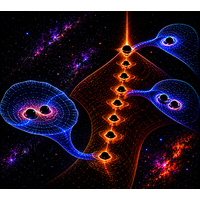
The remnant properties of black hole mergers may be governed by a maximum entropy bound suggesting that once the black holes become sufficiently close together, the throat around both black holes resembles that of an individual Kerr black hole to a far-away observer, and thus the Kerr entropy computation becomes valid.
Phys. Rev. Lett. 137, 021406 (2026)
Cosmology, Astrophysics, and Gravitation
Aligned Hierarchical Black Hole Mergers in Active-Galactic-Nuclei Disks Revealed by GWTC-4
Article | Cosmology, Astrophysics, and Gravitation | 2026-07-07 06:00 EDT
Yin-Jie Li, Yuan-Zhu Wang, Shao-Peng Tang, and Yi-Zhong Fan
The active galactic nucleus (AGN) accretion disks are ideal sites for hierarchical black hole (BH) mergers. To robustly probe such a possibility, we analyze binary black hole mergers in the GWTC-4 with a flexible mixture population model for component masses, spin magnitudes, and spin tilt angles, a…
Phys. Rev. Lett. 137, 021407 (2026)
Cosmology, Astrophysics, and Gravitation
Worldsheet for Generalized Veneziano Amplitudes
Article | Particles and Fields | 2026-07-07 06:00 EDT
Shota Komatsu and Pronobesh Maity
We present a worldsheet action that reproduces a class of dual resonance amplitudes discussed in the literature, which generalize the Veneziano amplitude for open strings. Our proposal builds on the chiral composite linear dilaton introduced recently. We further compute higher-point extensions and c…
Phys. Rev. Lett. 137, 021601 (2026)
Particles and Fields
Black Hole States in Quantum Spin Chains
Article | Particles and Fields | 2026-07-07 06:00 EDT
Charlotte Kristjansen and Konstantin Zarembo
We define a black hole state in a spin chain by studying thermal correlators in holography. Focusing on the Heisenberg model we investigate the thermal and complexity properties of the black hole state by evaluating its entanglement entropy, emptiness formation probability, and Krylov complexity. Th…
Phys. Rev. Lett. 137, 021602 (2026)
Particles and Fields
How Lorentz Boosts Reshape Relaxation Spectra
Article | Nuclear Physics | 2026-07-07 06:00 EDT
L. Gavassino
In relativity, relaxation processes are often assumed to undergo time dilation under Lorentz boosts. We show that this intuition fails generically. Because of relativity of simultaneity, Lorentz boosts can split a single relaxation mode into a continuum of excitations, with a width set by the maxima…
Phys. Rev. Lett. 137, 022301 (2026)
Nuclear Physics
Symmetry-Controlled Thermal Activation in Pyramidal Coulomb Clusters: Testing Kramers-Langer Theory
Article | Atomic, Molecular, and Optical Physics | 2026-07-07 06:00 EDT
Akhil Ayyadevara, Anand Prakash, Shovan Dutta, Arun Paramekanti, and S. A. Rangwala
Laser-cooled ions confined in electromagnetic traps provide a unique, tunable mesoscopic system where the interplay of the trapping potential, nonlinear Coulomb interactions, and laser-ion scattering generates rich, collective dynamics. In this work, we engineer thermally activated switching between…
Phys. Rev. Lett. 137, 023002 (2026)
Atomic, Molecular, and Optical Physics
Metacavity Quantum Electrodynamics
Article | Atomic, Molecular, and Optical Physics | 2026-07-07 06:00 EDT
Xueshi Li (李学诗), Ziwei Wang (王子维), Yan Chen (陈岩), Dong Liu ((刘栋), Kaili Xiong (熊凯莉), Guangfeng Wang (王光丰), Jiantao Ma (马剑涛), Ying Yu (喻颖), Jiawei Wang (王嘉威), Zhanling Wang (王占领), Xiao Li (李霄), Xianfeng Chen (陈险峰), Erez Hasman, Bo Wang (王波), Jin Liu (刘进), and Tian Jiang (江天)
Cavity quantum electrodynamics (cQED) harnesses light-matter interactions to produce nonclassical light states. However, a fundamental challenge lies in simultaneously achieving Purcell enhancement and tailored wave front control within a single cavity, due to conflicting resonator requirements. Her…
Phys. Rev. Lett. 137, 023601 (2026)
Atomic, Molecular, and Optical Physics
Realization of Floquet-Engineered Topological Complex-Energy Band Braids in Single-Photon Interferometry
Article | Atomic, Molecular, and Optical Physics | 2026-07-07 06:00 EDT
Rui Tian, Yuanbang Wei, Yue Zhang, Hongyan Shi, Qihang Ying, Tianhao Wu, Shuai Li, Hong Gao, Fuli Li, Maksims Arzamasovs, and Bo Liu
Floquet engineering, customizing a system using periodic driving, offers a powerful tool to operate topological states of matter and even to create exotic nonequilibrium topological phenomena beyond static scenarios. Here, utilizing the idea of Floquet engineering, we theoretically predict and exper…
Phys. Rev. Lett. 137, 023602 (2026)
Atomic, Molecular, and Optical Physics
Microwave Vortex Beam Lasing via Photonic Time Crystals
Article | Atomic, Molecular, and Optical Physics | 2026-07-07 06:00 EDT
Lei Huang, Weixuan Zhang, Deyuan Zou, Jiacheng Bao, Fengxiao Di, Haoyu Qin, Long Qian, Houjun Sun, and Xiangdong Zhang
Microwave lasing carrying orbital angular momentum (OAM) holds significant potential for advanced applications in fields such as high-capacity communications, precision sensing, and radar imaging. However, conventional approaches to masers fail to produce emission with embedded OAM. The recent emerg…
Phys. Rev. Lett. 137, 023801 (2026)
Atomic, Molecular, and Optical Physics
Spectrally Uniform Continuous-Variable Quantum Microcombs
Article | Atomic, Molecular, and Optical Physics | 2026-07-07 06:00 EDT
Kangkang Li, Yue Wang, Ze Wang, Xin Zhou, Jincheng Li, Yinke Cheng, Binyan Wu, Qihuang Gong, Bei-Bei Li, and Qi-Fan Yang
Continuous-variable (CV) quantum microcombs generated in high- microresonators provide compact, frequency-multiplexed sources of entangled modes for integrated quantum information processing. Although deterministic Kerr-induced two-mode squeezing has been demonstrated on chip, achieving uniform squ…
Phys. Rev. Lett. 137, 023802 (2026)
Atomic, Molecular, and Optical Physics
Experimental Observation of the Area Rule and Bifractality of Circulation in Three Dimensional Newtonian and Polymeric Turbulence
Article | Physics of Fluids, Earth & Planetary Science, and Climate | 2026-07-07 06:00 EDT
Xi-Ran Liu, Xin Chen, Sheng-Hong Peng, Yi-Bao Zhang, and Heng-Dong Xi
Velocity circulation around closed loops is a fundamental quantity of central interest in the study of the energy cascade in turbulent flows. Recent theoretical and numerical studies have identified circulation as a geometric observable that captures intermittency through the area rule and a distinc…
Phys. Rev. Lett. 137, 024001 (2026)
Physics of Fluids, Earth & Planetary Science, and Climate
Experimental Demonstration of Directional and Collimated Electron Acceleration with Hollow Laguerre-Gaussian Lasers
Article | Plasma and Solar Physics, Accelerators and Beams | 2026-07-07 06:00 EDT
Wenpeng Wang, Zhengxing lv, Fengyu Sun, Zhiyong Shi, Xiaoming Lu, Yi Xu, Jinfeng Li, Rongjie Xu, Zongxin Zhang, Jiayi Qian, Jiacheng Zhu, Xiaoyan Liang, Yuxin Leng, Ruxin Li, and Zhizhan Xu
We report the first experimental demonstration of directional and collimated electron acceleration in the direct laser acceleration regime using a relativistic hollow Laguerre-Gaussian (LG) laser. Electrons are confined within the hollow field distribution along the reflected laser direction, produc…
Phys. Rev. Lett. 137, 025001 (2026)
Plasma and Solar Physics, Accelerators and Beams
Superconductivity from Phonon-Mediated Retardation in a Single-Flavor Metal
Article | Condensed Matter and Materials | 2026-07-07 06:00 EDT
Yang-Zhi Chou, Jihang Zhu, Jay D. Sau, and Sankar Das Sarma
We study phonon-mediated pairings in a single-flavor metal with a tunable Berry curvature. In the absence of Berry curvature, we discover an unexpected possibility: -wave superconductivity emerging purely from the retardation effect, while the static Bardeen-Cooper-Schrieffer (BCS) approximation fa…
Phys. Rev. Lett. 137, 026001 (2026)
Condensed Matter and Materials
Thermodynamic Evidence for Pressure-Driven Evolution towards Weak-Coupling Superconductivity in Pb
Article | Condensed Matter and Materials | 2026-07-07 06:00 EDT
Rustem Khasanov
The thermodynamic critical field provides direct access to the superconducting condensation energy, yet its pressure dependence has been studied much less extensively than that of the transition temperature. Here, muon-spin-rotation relaxation measurements of the thermodynamic critical field o…
Phys. Rev. Lett. 137, 026002 (2026)
Condensed Matter and Materials
Hierarchical Structures of Quantum Geometric Spectrum in Quasicrystals: A Renormalization-Group Study
Article | Condensed Matter and Materials | 2026-07-07 06:00 EDT
Jundi Wang, Yuxiao Chen, and Huaqing Huang
Quantum geometry, characterized by the quantum metric and Berry curvature, is a powerful framework for understanding diverse physical phenomena in quantum materials, but its behavior in nonperiodic systems remains largely uncharted. Here, we uncover a universal mechanism for the divergent enhancemen…
Phys. Rev. Lett. 137, 026401 (2026)
Condensed Matter and Materials
Emergence of 3D Superconformal Ising Criticality on the Fuzzy Sphere
Article | Condensed Matter and Materials | 2026-07-07 06:00 EDT
Yin Tang, Cristian Voinea, Liangdong Hu, Zlatko Papić, and W. Zhu
Supersymmetric conformal field theories form a unique subset of quantum field theories that provide powerful insights into strongly coupled critical phenomena. Here, we present a microscopic and nonperturbative realization of the three-dimensional superconformal Ising critical point based on a Y…
Phys. Rev. Lett. 137, 026502 (2026)
Condensed Matter and Materials
Quantum Spin Models of Commensurate $p$-Wave Magnets
Article | Condensed Matter and Materials | 2026-07-07 06:00 EDT
GiBaik Sim and Stephan Rachel
The -wave magnet has emerged as a new type of magnetism exhibiting odd-parity, time-reversal-symmetric spin splitting in momentum space, and has attracted considerable interest as a promising platform for spintronic applications. However, the theoretical understanding of the fundamental mechanism r…
Phys. Rev. Lett. 137, 026503 (2026)
Condensed Matter and Materials
Chemical Symmetry Breaking Enables Interconversion between Altermagnetic and Compensated Ferrimagnetic States
Article | Condensed Matter and Materials | 2026-07-07 06:00 EDT
Bo Zhao, Qinxi Liu, Qiuping Yang, Jianpei Xing, Jijun Zhao, Feng Liu, and Xue Jiang
Altermagnetism and fully compensated ferrimagnetism are distinct classes of zero-net-magnetization order that combine antiferromagnetic compensation with ferromagneticlike spin splitting. In altermagnets, spin splitting arises from crystal symmetry and alternates in momentum space, whereas in compen…
Phys. Rev. Lett. 137, 026702 (2026)
Condensed Matter and Materials
Dynamically Re-entrant Skyrmion Phase in Oscillating Magnetic Fields
Article | Condensed Matter and Materials | 2026-07-07 06:00 EDT
Z. Demir Vatansever, E. Vatansever, A. Vasilopoulos, N. G. Fytas, and A. Berger
We address a central open question in driven topological matter by investigating the nonequilibrium response of a two-dimensional magnet with Dzyaloshinskii-Moriya interactions subjected to a periodically oscillating magnetic field. Using extensive Monte Carlo simulations, we uncover a dynamically r…
Phys. Rev. Lett. 137, 026703 (2026)
Condensed Matter and Materials
Geometric Spin Rotation in Triangular Antiferromagnets
Article | Condensed Matter and Materials | 2026-07-07 06:00 EDT
Grigor Adamyan, Bastián Pradenas, Boris Ivanov, and Oleg Tchernyshyov
We describe a geometric phenomenon in which a traveling wave made of degenerate Goldstone modes leaves behind a transformed ground state. In a triangular Heisenberg antiferromagnet, a pulse of circularly polarized spin waves rotates the spins within their plane. An exact solution of the nonlinear eq…
Phys. Rev. Lett. 137, 026704 (2026)
Condensed Matter and Materials
Multiferroicity in the Two-Dimensional Limit in Hexagonal ${\mathrm{LuFeO}}_{3}$ Films
Article | Condensed Matter and Materials | 2026-07-07 06:00 EDT
Huilin Lai, Junyu Tan, Jinfeng Zhai, Yang Shi, Lili Feng, Huanyu Zhang, Chuanrui Huo, Chuhang Liu, Lijun Wu, Lifeng Yin, Hangwen Guo, Jun Chen, Xiaoshan Xu, Jun Zhao, Yimei Zhu, Shiqing Deng, Wenbin Wang, and Jian Shen
Multiferroic oxides, which host coexisting ferroelectric and magnetic orders, are central to understanding correlated quantum phenomena. Yet, as thickness approaches the two-dimensional (2D) limit, both ferroelectricity and magnetism are generally expected to be strongly suppressed by depolarization…
Phys. Rev. Lett. 137, 026801 (2026)
Condensed Matter and Materials
Three-Dimensional Wide-Bandwidth Quantum Energy Truncation Terahertz Coherence Tomography
Article | Condensed Matter and Materials | 2026-07-07 06:00 EDT
Pengfei Zhu, Hai Zhang, Stefano Sfarra, Fabrizio Sarasini, Xavier Maldague, and Andreas Mandelis
We report a quantum energy truncation terahertz coherence tomography technique that enables highly localized extraction of molecular-species-specific THz responses. The method exploits resonant photon loss when the emitter THz energy matches molecular vibration quanta. Reflected THz radiation is rec…
Phys. Rev. Lett. 137, 026901 (2026)
Condensed Matter and Materials
Mixed Phases in Feedback Ising Models
Article | Statistical Physics; Classical, Nonlinear, and Complex Systems | 2026-07-07 06:00 EDT
Yi-Ping Ma, Ivan Sudakow, and P. L. Krapivsky
We study mean-field Ising models in which the coupling depends on the magnetization via a feedback function. We identify mixed phases (MPs) and show that they can be stable at zero temperature for sufficiently strong feedback. Moreover, stable MPs are always superstable, meaning that perturbations d…
Phys. Rev. Lett. 137, 027101 (2026)
Statistical Physics; Classical, Nonlinear, and Complex Systems
Supercritical-Subcritical Correspondence, Asymmetric Effects, and Antisymmetric Corrections Near a Critical Point
Article | Statistical Physics; Classical, Nonlinear, and Complex Systems | 2026-07-07 06:00 EDT
Xinyang Li and Yuliang Jin
The second-order phase transitions in the Ising model and liquid-gas systems share a universality class and critical exponents, despite the absence of symmetry in the liquid-gas Hamiltonian. This discrepancy highlights a central puzzle in critical phenomena: what is the influence of asymmetry on …
Phys. Rev. Lett. 137, 027102 (2026)
Statistical Physics; Classical, Nonlinear, and Complex Systems
Enhancing Infrared-Laser Dissociation of Molecules with the Electromagnetic Vacuum
Article | Polymers, Chemical Physics, Soft Matter, and Biological Physics | 2026-07-07 06:00 EDT
Johan F. Triana and Felipe Herrera
Controlling bond breaking is a long-standing goal in molecular physics. Infrared nanocavities are currently being developed for reaching exotic coupling regimes of cavity QED with a few molecules, but it is not well understood how chemical reactions would proceed in such systems. We study infrared l…
Phys. Rev. Lett. 137, 028001 (2026)
Polymers, Chemical Physics, Soft Matter, and Biological Physics
Ensemble Time-Dependent Density Functional Theory
Article | Polymers, Chemical Physics, Soft Matter, and Biological Physics | 2026-07-07 06:00 EDT
Kimberly J. Daas, Steven Crisostomo, and Kieron Burke
Time-dependent density functional theory (TDDFT) is a standard approach for calculating optical excitations of molecules and solids, while ensemble DFT (EDFT) is a promising alternative under development. We introduce ensemble TDDFT (ETDDFT), a practical theory that combines the two, generalizing bo…
Phys. Rev. Lett. 137, 028002 (2026)
Polymers, Chemical Physics, Soft Matter, and Biological Physics
Aging of Elastic Bodies
Article | Polymers, Chemical Physics, Soft Matter, and Biological Physics | 2026-07-07 06:00 EDT
Ori Lev, Sagy Lachmann, and Shmuel M. Rubinstein
Crumpled Mylar sheets exhibit logarithmic relaxation under both force and displacement-controlled conditions. We perform cyclic relaxation experiments and reveal a continuous family of force-displacement curves that evolve toward equilibrium, bounded by instantaneous and fully relaxed limits. By gen…
Phys. Rev. Lett. 137, 028201 (2026)
Polymers, Chemical Physics, Soft Matter, and Biological Physics
Physical Review X
Universal Fault-Tolerant Quantum Computation in 2D without Getting Tied in Knots
Article | 2026-07-07 06:00 EDT
Margarita Davydova, Andreas Bauer, Julio C. Magdalena de la Fuente, Mark Webster, Dominic J. Williamson, and Benjamin J. Brown
Researchers have designed a way to perform complex logic gates in two-dimensional quantum computers by temporarily moving data into an exotic non-Abelian phase. This method provides a path toward large-scale, fault-tolerant quantum computation.

Phys. Rev. X 16, 031001 (2026)
arXiv
Non Hermitian Tight Binding Bands in Graphene from Tan Bo Model: Strain Effects and Bernal Bilayer Extensions
New Submission | Materials Science (cond-mat.mtrl-sci) | 2026-07-08 20:00 EDT
Maolin Bo, Yaorui Tan, Sunxin Fan, Xiang Chen, Yunhu Zhu, Zhongkai Huang, Chuang Yao
Within the tight binding framework of graphenes {\pi} electron nearest neighbors, the Tan Bo model parametrizes transition energies t(dr) based on bond lengths and angles via the Mobius transformation combined with exponential decay. Comparisons between isotropic , geometrically anisotropic , and Slater Koster scales reveal that B = 0 is equivalent to the SK scheme, with L(B) reaching its optimum at Bopt = 0. The Hermitian assembly maintains the Dirac cone at the K this http URL Tan Bo geometry dependent transition model and non Hermitian TB assembly scheme developed in this study provide a reproducible single particle benchmark and parameterization reference for future non Hermitian chemical calculations incorporating electron correlation effects in graphene systems.
Materials Science (cond-mat.mtrl-sci)
Anomalous suppression of quantum chaos between two integrable limits
New Submission | Statistical Mechanics (cond-mat.stat-mech) | 2026-07-08 20:00 EDT
Roopayan Ghosh, Henry Davenport, Frank Schindler
Level statistics in non-integrable quantum many-body systems with time reversal symmetry are expected to follow the Gaussian Orthogonal Ensemble (GOE), a hallmark of quantum chaos. However, we show that the interacting Su-Schrieffer-Heeger model exhibits a clear suppression of the mean level-spacing ratio $ \langle r\rangle$ from the GOE value $ \approx 0.535$ , persisting deep in the nonintegrable regime. This challenges the conventional association between non-integrability and fully chaotic spectral statistics. Using exact diagonalization supported by semi-analytical arguments, we trace this anomaly to incomplete hybridization of many-body band states inherited from the noninteracting band structure. The resulting restructuring of the spectrum weakens level repulsion without restoring integrability. We show the robustness of this mechanism in extensions of the model which break chiral and inversion symmetry.
Statistical Mechanics (cond-mat.stat-mech), Strongly Correlated Electrons (cond-mat.str-el), Quantum Physics (quant-ph)
5 pages, 2 figures, and Supplemental Material
Magnetotransport of tomographic electrons in a Corbino disk
New Submission | Mesoscale and Nanoscale Physics (cond-mat.mes-hall) | 2026-07-08 20:00 EDT
Nitay Ben-Shachar, Johannes Hofmann
In clean electron gases at low-to-moderate temperatures, odd-parity modes of the Fermi surface are anomalously long-lived due to Pauli blocking, giving rise to ``tomographic transport’’ that is not captured by a hydrodynamic model. Here we show that tomographic flow in a Corbino disk induces an extended boundary layer near electrodes with superballistic transport and enhanced slip velocity, which leads to a parametric enhancement of the quadratic magnetoresistance coefficient. The enhancement depends explicitly on the electrode curvature, allowing its strength to be controlled by the device geometry. The magnetoresistance coefficient reveals three distinct regimes as a function of magnetic field: a tomographic regime at weak fields; a hydrodynamic regime at intermediate fields, reached when the cyclotron radius becomes comparable to a large odd-mode mean free path; and a conventional Ohmic regime at large fields, reached when the cyclotron radius becomes comparable to the short even-mode mean free path. The tomographic regime is characterized by an anomalous dependence of the magnetoresistance on temperature and density, which may account for recent experimentally observed anomalous scaling of the electron viscosity.
Mesoscale and Nanoscale Physics (cond-mat.mes-hall), Quantum Gases (cond-mat.quant-gas), Statistical Mechanics (cond-mat.stat-mech)
Effect of pressure on the magnetic properties of (Co${0.5}$Fe${0.5}$)$_5$GeTe$_2$
New Submission | Mesoscale and Nanoscale Physics (cond-mat.mes-hall) | 2026-07-08 20:00 EDT
Tamás Prok, Zoltán Kovács-Krausz, Harvey Stanfield, Bing Zhao, Michael Leonárd Morgan, Bálint Fülöp, Marcos H. D. Guimarães, Ivan J. Vera-Marun, Saroj Prasad Dash, Szabolcs Csonka, Péter Makk, Endre Tóvári
Cobalt-doped Fe$ _5$ GeTe$ _2$ possesses a rich magnetic phase diagram as a function of Co concentration. The nature of magnetic order in (Co$ _{0.5}$ Fe$ _{0.5}$ )$ _5$ GeTe$ _2$ is especially interesting, as it has been shown to exhibit ferromagnetic order, A-type antiferromagnetic (AFM) order, or potentially both at the same time. Here we present magnetoresistance measurements on antiferromagnetic (Co$ _{0.5}$ Fe$ _{0.5}$ )$ _5$ GeTe$ _2$ at a series of pressures and extract the anisotropy and interlayer exchange fields using the two-sublattice model. We show a 50 % increase of the interlayer exchange at 2 GPa, highlighting the sensitivity of magnetic properties to interlayer distance. In addition, we find that the sharp hysteretic transitions observed within the AFM state can be qualitatively described by a linear chain model, which suggests an even-odd effect as a function of layer number instead of a coexisting ferromagnetic phase.
Mesoscale and Nanoscale Physics (cond-mat.mes-hall)
Raman spectroscopy of the van der Waals altermagnet Co$_{1/4}$NbSe$_2$
New Submission | Materials Science (cond-mat.mtrl-sci) | 2026-07-08 20:00 EDT
Dushyanthini Balasundaram, Bishal Thapa, Resham Regmi, Nirmal J. Ghimire, Igor I. Mazin, Patrick M. Vora
We investigate the influence of Co intercalation and altermagnetic order on the lattice dynamics of the layered compound Co$ _{1/4}$ NbSe$ _2$ . Polarization-resolved Raman spectroscopy, supported by density-functional theory, enables identification of six Raman-active phonons. Co intercalation drives a substantial reconstruction of the vibrational spectrum through zone folding of NbSe$ _2$ phonons, producing hybridized modes with mixed zone-center and zone-boundary character. Despite this, Co atoms do not participate in any Raman-active modes by symmetry, which is in marked contrast to related 1/3 compounds where intercalant modes do contribute to the Raman spectrum. Temperature-dependent Raman measurements across the altermagnetic transition show no discontinuities, which is consistent with short-range spin correlations in the quasi-one-dimensional Co chains. However, we find evidence for spin-phonon coupling in A$ _{1g}$ symmetry modes owing to their out-of-plane Se displacements. Our work demonstrates the substantial impact of intercalation on the vibrational properties of transition metal dichalcogenides and the presence of spin-phonon interactions in a newly discovered altermagnetic material.
Materials Science (cond-mat.mtrl-sci), Mesoscale and Nanoscale Physics (cond-mat.mes-hall)
Main text 7 pages. Supplementary text 9 pages
Domain-Growth Kinetics and Scaling Laws Governing Pulse-Driven Accumulative Polarization Switching in HZO
New Submission | Materials Science (cond-mat.mtrl-sci) | 2026-07-08 20:00 EDT
Accumulative polarization switching driven by sequential sub-coercive electric-field pulses offers a promising route toward low-power ferroelectric memories and neuromorphic devices. However, the kinetic regimes governing this nonequilibrium process remain poorly understood. Here, we employ a phase-field model based on the time-dependent Landau-Ginzburg formalism to investigate pulse-driven accumulative switching in ferroelectric HZO. By systematically varying the initial domain configuration, pulse amplitude, pulse-on time, and pulse-off time, we establish a quantitative link between microscopic domain-wall dynamics and macroscopic polarization accumulation. We show that the effective switched-domain radius follows distinct scaling regimes characterized by the local kinetic exponent. Initially, a local exponent greater than 1 indicates superlinear domain growth driven by enhanced irreversible domain-wall propagation under successive pulses. As switching progresses, a local exponent close to unity marks steady self-similar growth, whereas a local exponent less than 1 signifies decelerating dynamics caused by geometric confinement, depletion of switchable polarization, and relaxation-induced back switching. The transition between these regimes is governed by the competition between field-driven excitation during the pulse-on interval and spontaneous relaxation during the pulse-off interval. The initial domain geometry further influences this transition. Increasing the pulse amplitude or pulse-on duration extends the superlinear regime, whereas longer pulse-off times promote relaxation and suppress accumulation. These findings establish a unified scaling framework for pulse-driven accumulative switching, providing quantitative insight into nonequilibrium ferroelectric domain evolution and design guidelines for HZO-based memory and neuromorphic devices.
Materials Science (cond-mat.mtrl-sci)
Electric Field Induced Multi-Space Topological Phase Transitions in Janus Monolayer MnBi2Se2Te2
New Submission | Materials Science (cond-mat.mtrl-sci) | 2026-07-08 20:00 EDT
Kefan Zhang, Jian Wu, Weiyi Pan
Manipulating coexisting multi-space topological states within a single material is a critical frontier for low-power spintronic applications, for which perpendicular electric-field gating offers a highly precise tuning mechanism. Using first-principles calculations and atomistic spin simulations, it is demonstrated that Janus monolayer MnBi2Se2Te2 can exhibit simultaneous momentum-space and real-space topological phase transitions under an external electric field. Specifically, the electric field drives momentum-space transitions across a topologically trivial state (C = 0), a low-Chern-number quantum anomalous Hall state (C = -1), and a high-Chern-number state (C = 2). Concurrently, by actively tuning the competition between the Dzyaloshinskii-Moriya interaction and magnetic anisotropy, the electric field induces real-space magnetic transitions from a uniform ferromagnetic state to an isolated skyrmion state, and ultimately to a skyrmion-spiral domain coexistence phase. Electric-field-induced variations in both the QAHE and magnetic textures may give rise to multiple topological phase transitions, involving distinct topological regimes: a purely k-space topology, RK-joint skyrmions, and pure real-space skyrmions. These findings establish a powerful material platform and efficient route for the synergistic control of coexisting topological orders, making it highly promising for next generation multi-functional spintronic devices.
Materials Science (cond-mat.mtrl-sci)
Complete local expansion of the availability function in random sequential adsorption of aligned squares at low density: Termination at fourth order
New Submission | Statistical Mechanics (cond-mat.stat-mech) | 2026-07-08 20:00 EDT
We consider random sequential adsorption (RSA) of aligned squares and derive the low-coverage expansion of the availability function alpha(q), the fraction of positions accessible to an additional square, up to fourth order in the coverage q. At low coverage, the reduction of available space can be understood in terms of geometric overlap between exclusion regions created by previously deposited squares. A single square blocks a finite area; pairs of squares may have overlapping exclusion zones, reducing the total blocked area; similarly, three and four squares can share a common overlap region, leading to higher-order corrections. These contributions can be systematically accounted for through an inclusion-exclusion expansion based on the geometry of overlapping exclusion regions, with alternating signs dictated by inclusion-exclusion. The expansion terminates exactly at fourth order, since no more than four deposited squares can simultaneously overlap the exclusion region of a trial insertion. The coefficients are obtained by explicit enumeration of all such geometrically admissible configurations and are further confirmed by numerical simulations on a discrete lattice, showing agreement within statistical uncertainty.
Statistical Mechanics (cond-mat.stat-mech), Other Condensed Matter (cond-mat.other)
20 pages, 4 figs
Phys. Rev. E 114, 014110 (2026)
Modern view of activated rate processes: unidirectional fluxes at equilibrium, correlation functions, and splitting probabilities
New Submission | Statistical Mechanics (cond-mat.stat-mech) | 2026-07-08 20:00 EDT
Alexander M. Berezhkovskii, Kevin Song, Dmitrii E. Makarov
More than 80 years ago Kramers published a paper calculating how fast a Brownian particle escapes from a potential well over an activation barrier. Since then Kramers’ model has been widely adopted by nuclear physics, biophysics and chemical physics communities as a description of activated barrier crossing. From a chemical kinetics perspective, Kramers’ theory provides a mapping from continuous dynamics to discrete-state chemical kinetics. Motivated by recent developments, this Perspective provides a rigorous way of performing such a mapping, explaining why and how Kramers’ theory works from several points of view. Specifically, we consider transitions of a Brownian particle between two potential wells corresponding to the reactant'' and the product’’ of a chemical reaction. A central unifying idea is to divide the equilibrium ensemble of possible states of the system into two sub-ensembles corresponding to the reactant and product states and then to consider fluxes between these sub-ensembles. Importantly, naive separation based on the location measured relative to the barrier top does not result in a mapping that is physically tenable, and instead the past of the trajectory should be considered. Thus constructed reactant and product ensembles provide an internally consistent description of the problem when also viewed from two different perspectives: one based on the definition of the rate as a conditional transition probability per unit time and the other based on the relaxation modes of the time-evolution operator governing the dynamics.
Statistical Mechanics (cond-mat.stat-mech), Biological Physics (physics.bio-ph), Chemical Physics (physics.chem-ph)
Ultrahigh-Entropy Compositionally Complex Ceramics: Fluorite-Pyrochlore Phase Stability and Order-Disorder Transitions
New Submission | Materials Science (cond-mat.mtrl-sci) | 2026-07-08 20:00 EDT
Three groups of 32 ultrahigh-entropy compositionally complex ceramics (CCCs) containing 16-19 components were synthesized and characterized. The first group of 15 CCCs forms single ultrahigh-entropy fluorite or pyrochlore phases in 12 compositions, while two compositions exhibit fluorite-fluorite dual phases, observed for the first time. Compared with ternary A2B2O7 pyrochlore, these ultrahigh-entropy CCCs are more prone to ordering (pyrochlore formation), surprisingly even more at higher size disorder (more lattice distortion), with suppressed dual-phase formation relative to five-component high-entropy ceramics. Two new 19-component series, denoted as “19CCC-P|Fy” and “19CCC-P|Fz”, form single ultrahigh-entropy fluorite or pyrochlore phases. The 19CCC-P|Fy series, maintaining a 2:2 ratio of 3+ and 4+ cations, exhibits a pyrochlore-to-fluorite order-disorder transition (ODT) at y ~ 0.84, consistent with the linear projection of the pyrochlore superstructure peak intensity as an order parameter. In contrast, the 19CCC-P|Fz series with non-2:2 ratios of 3+ and 4+ cations show an abrupt ODT at z ~ 0.41-0.44, despite a projected transition at z ~ 0.64 from the order parameter.
Materials Science (cond-mat.mtrl-sci)
Equivalence between the Axion Invariant and the $S_4$ Symmetry Indicator
New Submission | Mesoscale and Nanoscale Physics (cond-mat.mes-hall) | 2026-07-08 20:00 EDT
The equivalence between the axion invariant and the $ S_4$ symmetry indicator is established for three-dimensional $ S_4$ -symmetric axion insulators with vanishing three-dimensional Chern numbers. Starting from the Chern-Simons expression for the magnetoelectric polarizability, $ 2P_3=\theta/\pi$ is rewritten in terms of the $ S_4$ sewing matrix. After stable reduction to determinant-one two-band blocks, the invariant is expressed as the degree of a map from the Brillouin zone to $ SU(2)$ . The degree modulo two is then evaluated from the $ S_4$ eigenvalues at the four $ S_4$ -invariant momenta and is shown to coincide with the symmetry indicator $ z_2$ . A minimal tight-binding model verifies the correspondence between $ 2P_3$ and $ z_2$ . The result closes a gap between the topological-field-theory description of the axion response and the topological-band-theory classification by symmetry indicators. It also extends the known response-indicator equivalence from antiunitary settings such as $ C_nT$ symmetry to the unitary, orientation-reversing rotoinversion symmetry $ S_4$ .
Mesoscale and Nanoscale Physics (cond-mat.mes-hall)
Three-point density correlations in a weakly interacting 2D Fermi liquid
New Submission | Strongly Correlated Electrons (cond-mat.str-el) | 2026-07-08 20:00 EDT
We study the three-point equal-time correlations of the density in a weakly interacting spin 1/2 Fermi gas and present two new results. First, we compute the three-point correlation for the total density $ \rho = \rho_\uparrow + \rho_\downarrow$ exactly as a function of momentum to first order in a dimensionless interaction parameter $ {\cal I}$ . This generalizes a previous result that related the three-point function to the Landau Fermi liquid parameters $ F_0^s$ and $ F_0^a$ and applied in a certain long-wavelength collinear limit. Second, we compute the leading order $ {\cal O}({\cal I}^3)$ interaction correction to the same-spin three-point correlation function in the long-wavelength collinear limit. These results are directly relevant to current experiments on atomic Fermi gases using quantum gas microscopy.
Strongly Correlated Electrons (cond-mat.str-el), Mesoscale and Nanoscale Physics (cond-mat.mes-hall), Quantum Gases (cond-mat.quant-gas)
13 pages, 7 figures
Magnon-Mediated Superconductivity in a 2D Itinerant Ferromagnet with Weak Easy-plane Magnetic Anisotropy
New Submission | Superconductivity (cond-mat.supr-con) | 2026-07-08 20:00 EDT
Vladimir Calvera, Heqiu Li, Yijie Wang, B. Andrei Bernevig, Andrey V. Chubukov
Motivated by recent observations of superconductivity in a quarter-metal state of spin- and valley- polarized graphene multilayers, we investigate pairing within a ferromagnetic phase of a single-valley model of itinerant two-dimensional (2D) electrons with Hubbard-type interaction and no artificial high-energy cutoff. In 2D, the Stoner transition is first-order into a fully-polarized state wherein the only gapless collective excitations are transverse magnons. We find that in a spin-SU(2) symmetric model, this magnon-mediated pairing interaction between equal-spin fermions vanishes at $ T=0$ . We show that a small easy-plane magnetic anisotropy $ \Omega_0 \ll E_F$ , where $ E_F$ is the Fermi energy, breaks the SU(2) symmetry and generates an attractive interaction for equal-spin $ p-$ wave pairing. We explicitly derive the corresponding coupling constant $ \lambda_p$ as the scaling function of both the relative strength of the easy-plane anisotropy, $ \Omega_0/E_F$ , and the proximity to the ferromagnetic transition. While $ \lambda_p$ is parametrically small in $ \Omega_0/E_F$ deep inside the ferromagnetic phase, it becomes enhanced near the ferromagnetic transition, reaching order unity regardless of how small $ \Omega_0/E_F$ is. This mechanism yields a sizable $ T_c$ , peaked near the onset of ferromagnetism.
Superconductivity (cond-mat.supr-con), Strongly Correlated Electrons (cond-mat.str-el)
10+5 pages, 6 figures
From Closed-Loop Optimization to Open Decision Making: Coupled Digital Twins for Predictive and Autonomous Microscopy
New Submission | Materials Science (cond-mat.mtrl-sci) | 2026-07-08 20:00 EDT
Yu Liu, Boris Slautin, Ian Mercer, Jon-Paul Maria, Sergei V. Kalinin
Automated experimentation is moving from closed-loop optimization toward open decision-making, where human or AI planners must forecast the consequences of candidate actions before executing them. Such forecasts require a model of both sides of the experiment: how the sample is likely to respond and what the instrument is likely to detect. We therefore introduce a coupled digital-twin framework that separates these roles and then links them. In this framework, the sample twin encodes material state inferred from prior knowledge and measurements till the moment. The instrument twin captures signal formation, feedback dynamics, and operating constraints based on prior knowledge. When coupled, the two twins estimate expected outcomes, uncertainty, and risk for candidate microscope operations. For amplitude-modulation scanning probe microscopy, we realize this framework with a physics-informed encoder of force-distance curves, a deterministic scanner model of cantilever and feedback dynamics, and sparse learned residual corrections. The encoder first recovers scanner-driving descriptors with sub-nanometer accuracy. The calibrated scanner then reproduces typical traces within a few nanometers and identifies operating-point noise amplification as the main source of mismatch. Supplementary phase analysis localizes residual error to the phase channel, which clarifies where added physics is needed. Together, these results establish coupled sample and instrument twins as a practical foundation for predictive microscope operation and autonomous experimental planning.
Materials Science (cond-mat.mtrl-sci), Machine Learning (cs.LG)
Engineering nonlinear magnon scattering in artificial spin ice via vertex dipolar control
New Submission | Mesoscale and Nanoscale Physics (cond-mat.mes-hall) | 2026-07-08 20:00 EDT
Artificial spin ice (ASI), composed of geometrically frustrated arrays of interacting nanoislands, provides a versatile platform for reprogrammable magnonic functionality. However, the commonly used geometric control parameters such as island length, width, and aspect ratio simultaneously modify the island footprint, inter island dipolar spacing, and shape anisotropy, making it difficult to tune the nonlinear response independently of the linear spectrum and lattice density. Using micromagnetic simulations of kagome ASI under strong microwave drive, we identify edge curvature as a geometric degree of freedom that separates nonlinear magnon scattering from the island footprint. Sharp tipped islands predominantly generate integer harmonics, whereas dumbbell shaped tips produce a transition toward subharmonic rich spectra by concentrating demagnetizing and exchange fields near the island ends without changing the overall island volume or lattice spacing. By mapping the curvature and drive parameter space, we identify a continuous threshold for subharmonic onset controlled by tip curvature. We further show that the angular dependence of the second harmonic amplitude reverses between sharp and dumbbell geometries, providing an experimentally accessible signature of curvature localized nonlinearity. Width and leg length asymmetry can also modify harmonic amplitudes, but they do not remove the intrinsic trade off between footprint and coupling. These results establish tip curvature as a footprint preserving design parameter for engineering nonlinear magnon scattering in ASI, with implications for reconfigurable magnonic devices.
Mesoscale and Nanoscale Physics (cond-mat.mes-hall)
Dynamical crossover from motor-dominated to drag-dominated transport in a minimal active transport network
New Submission | Soft Condensed Matter (cond-mat.soft) | 2026-07-08 20:00 EDT
Motor-driven intracellular transport is often described in terms of motor activity, but macroscopic transport also depends on how effectively motor-generated force is converted into coherent motion. Motivated by cytoplasmic streaming, a minimal active transport network is examined in which motor-driven transport competes with an effective slip-related dissipative resistance. The model is not intended as a quantitative reconstruction of Nitella cytoplasmic streaming, but as a minimal system for isolating the relation between motor activity, resistance, and transport output.
A controlled scan over $ \gamma_{\mathrm{Slip}}$ and $ \alpha_m$ , with three independent seeds per condition, shows that increasing $ \gamma_{\mathrm{Slip}}$ strongly suppresses mean transport speed while leaving the motor-bound fraction nearly unchanged. The mean load and motor force remain finite in the high-$ \gamma_{\mathrm{Slip}}$ regime, indicating that motors remain mechanically active even when transport is suppressed. The dependence of transport speed on $ \alpha_m$ progressively disappears with increasing $ \gamma_{\mathrm{Slip}}$ : the motor dominance ratio decreases from $ R\approx1.69$ to $ R\approx1.01$ , and the corresponding velocity difference decreases from $ \sim1.9\mu\mathrm{m/s}$ to $ \sim0.003\mu\mathrm{m/s}$ .
These results indicate a dynamical crossover from motor-dominated to drag-dominated transport. The minimal model provides a compact physical scenario in which active force generation persists while its contribution to net transport is suppressed by increased effective dissipative resistance.
Soft Condensed Matter (cond-mat.soft)
7 pages, 3 figures. Submitted to Physical Review E
Efficient Bethe-Salpeter Equation Calculations Based on Numerical Atomic Orbitals and Norm-Conserving Pseudopotentials: Dual-${\boldsymbol k}$-Mesh Strategy
New Submission | Materials Science (cond-mat.mtrl-sci) | 2026-07-08 20:00 EDT
Ziqing Guan, Yu Cao, Min-Ye Zhang, Peize Lin, Ruiyi Zhou, Xinguo Ren
We present an efficient implementation of the Bethe–Salpeter equation (BSE) based on numerical atomic orbitals (NAOs) and norm-conserving pseudopotentials within the ABACUS+LibRPA framework. By exploiting the localized resolution-of-identity (LRI) technique, the screened Coulomb interaction is cast into a real-space, unit-cell-indexed form $ W_{\mu\nu}(\boldsymbol R)$ that is inherently short-ranged and well localized. This spatial locality enables an efficient Fourier interpolation of the BSE kernel from the coarse $ \boldsymbol k$ -mesh used in the preceding $ GW$ calculation to an arbitrarily dense $ \boldsymbol k$ -mesh on which the BSE Hamiltonian is assembled and diagonalized, thereby giving rise naturally to a dual-$ \boldsymbol k$ -mesh workflow. Building on this scheme, we systematically examine the convergence of the absorption spectra with respect to the NAO basis set, the auxiliary basis set, and the $ \boldsymbol k$ -point sampling. Benchmark calculations for both molecular and periodic systems collectively validate the accuracy of the present implementation and establish the dual-$ \boldsymbol k$ -mesh strategy as a practical and reliable approach for $ GW$ +BSE calculations.
Materials Science (cond-mat.mtrl-sci), Chemical Physics (physics.chem-ph), Computational Physics (physics.comp-ph)
Anomalous Piezoelectricity from Polarization-Dependent Electrostriction in Wurtzites
New Submission | Materials Science (cond-mat.mtrl-sci) | 2026-07-08 20:00 EDT
Guo-Dong Zhao, Aiden Ross, Yueze Tan, Yujie Zhu, Jia-Mian Hu, Long-Qing Chen
The piezoelectric coefficient is a third-rank tensor connecting the strain or stress with the electric field or polarization, whereas the electrostriction coefficient is a fourth-rank tensor relating the strain to the square of electric polarization. The electrostriction tensor components in the current literature are often treated as constants independent of polarization, resulting in piezoelectric tensor components that are linearly proportional to polarization and the dielectric susceptibility tensor. Here, we study the electrostriction and piezoelectricity in strongly polar wurtzites, including AlN, Al$ _{1-x}$ Sc$ _x$ N, Al$ _{1-x}$ B$ _x$ N, GaN, and ZnO. We discover that electrostriction and the elastic modulus in wurtzites are both strongly polarization-dependent, and the piezoelectric coefficient is highly nonlinear with respect to polarization, including the anomalous possibility that decreasing polarization increases the electromechanical strain response. These unusual dependencies of electrostriction and piezoelectric effects on polarization arise from the evolution of a layered reference nonpolar structure toward a tetrahedrally coordinated wurtzite network structure as the polarization increases. The findings have important implications in understanding the thermodynamics of the general class of wurtzite ferroelectrics and in manipulating their piezoelectric and ferroelectric behaviors.
Materials Science (cond-mat.mtrl-sci)
6-page main text, 10-page Supplementary Material, 10 figures
Floquet polaritons in optically driven materials
New Submission | Mesoscale and Nanoscale Physics (cond-mat.mes-hall) | 2026-07-08 20:00 EDT
Tsan Huang, Teng Xiao, Jiahua Duan, Haoliang Qian, Zhiyuan Sun
Polaritons are coupled collective modes of light and matter in quantum materials. In modern pump-probe experiments, a pump light pulse may dramatically alter the properties of the polaritons, rendering them Floquet polaritons that can be detected by a probe pulse. We present a practical framework to describe Floquet polaritons in terms of the linear and nonlinear optical properties of the material. The central quantity that yields the spectra of Floquet polaritons is an effective linear optical susceptibility contributed by the pump through nonlinear optical susceptibilities. We apply this method to graphene and show that via its third-order optical nonlinearity, infrared pump leads to Floquet plasmon bands. Notably, near plasmonic band crossings, parametric instability leads to flat bands with unstable modes and exceptional points that closely resemble those of non-Hermitian systems. As a second example, we show that in hexagonal boron nitride pumped by mid-infrared laser, the pump induces Floquet phonon polariton bands via phononic nonlinearity, which can be detected with either far-field or near-field optical technique. Finally, in layered superconductors pumped by THz light polarized along the out-of-plane direction, the Josephson-type optical nonlinearity leads to Floquet Josephson plasmons, which manifest as new peaks in the THz reflectivity of a probe pulse.
Mesoscale and Nanoscale Physics (cond-mat.mes-hall)
12+6 pages, 5+3 figures
Local moment magnon spectrum in conduction electron tunnelling
New Submission | Strongly Correlated Electrons (cond-mat.str-el) | 2026-07-08 20:00 EDT
Peter Thalmeier, Alireza Akbari
The surface tunnelling spectrum of a dual system consisting of localised moments with antiferromagnetic order coupled to conduction electrons by on-site exchange interaction is investigated. In the static approximation of the local moment order it is known that magnetic band reconstruction leads to an anomalous tunnelling spectrum at the magnetic ordering vector of local moments although the latter cannot contribute directly. In this work we consider dynamic effects by including the scattering of conduction electrons from the local moment magnon excitations. They lead to self energies and renormalisation of conduction states which in turn appreciably modify the tunnelling spectrum beyond the influence of static order, interpreted as the appearance of magnon sidebands.
Strongly Correlated Electrons (cond-mat.str-el), Materials Science (cond-mat.mtrl-sci)
10 pages, 8 figures
Autoencoder-Based Unsupervised Identification of Nonequilibrium Phases in Sheared Binary Colloids
New Submission | Disordered Systems and Neural Networks (cond-mat.dis-nn) | 2026-07-08 20:00 EDT
Yoshitaka Miyahara, Taiki Haga
Identifying nonequilibrium phases in particle systems remains a major challenge because they often exhibit complex and spatially heterogeneous structures without long-range order. Here, we develop an unsupervised machine-learning framework for classifying such nonequilibrium phases by integrating Fourier-based preprocessing, an autoencoder, and a Gaussian mixture model (GMM). Specifically, we transform global spatial configurations into Fourier space and use the amplitudes of Fourier coefficients as inputs to the autoencoder. This preprocessing suppresses spatial noise while preserving phase-specific structural features and physical interpretability. We demonstrate the effectiveness of this framework using a binary charged colloidal system under steady shear flow, where the competition between Coulomb interactions and shear gives rise to three nonequilibrium phases characterized by distinct local structures. The encoded latent space reveals well-separated clusters that are robustly identified by the GMM, enabling the construction of a nonequilibrium phase diagram based on cluster membership probabilities. The resulting phase boundaries are consistent with those independently obtained from radial distribution function analysis and unsupervised anomaly detection. These results demonstrate that autoencoder-based unsupervised learning provides an effective framework for identifying nonequilibrium phases in complex particle systems.
Disordered Systems and Neural Networks (cond-mat.dis-nn)
Spatially heterogeneous noise restructures flocking into geometry-locked and vortex states
New Submission | Soft Condensed Matter (cond-mat.soft) | 2026-07-08 20:00 EDT
Ankush Semwal, Mahak Poonia, Pintu Patra
Spatially heterogeneous environments continually challenge the ability of active matter to sustain coherent collective motion. Understanding how collective motion remains robust under changing environments is central to both the functioning of biological systems and the design of smart active matter. Here, we extend the Vicsek model to include a circular non-noisy region surrounded by a noisy environment - a configuration in which the noise difference sets up a contrast in local directional order between the two regions. We find that, as the surrounding noise is increased, the system passes through three distinct dynamical regimes: (i) conventional global flocking at low noise; (ii) geometry-locked motion, aligned with simulation boundaries, at intermediate noise; and (iii) vortical motion within the non-noisy region at high noise. Extending the environment to multiple non-noisy regions, we find that the geometry-locked regime can develop a directional coupling, while the vortex mode leads to antiferromagnetic order between the regions. Taken together, our results demonstrate that the spatial modulation of order and disorder offers a powerful and generic strategy for steering active matter, aligning with recent experimental observations of active particles in patterned landscapes.
Soft Condensed Matter (cond-mat.soft), Biological Physics (physics.bio-ph)
Chiral-Structured Superconductors TrX4 (Tr = Rh, Ir; X = Ge, Si): A Platform for Mixed-Parity Pairing and Topological States
New Submission | Superconductivity (cond-mat.supr-con) | 2026-07-08 20:00 EDT
Zhenhai Yu, Yunguan Ye, Yuwei Zhou, Chaoyang Chu, Congcong Le, Lin Wu, Jian Yuan, Tong Shi, Qingxin Dong, Jinggeng Zhao, Wei Xia, Xiangqi Liu, Xia Wang, Bosen Wang, Jinguang Cheng, Yanhang Ma, Xianxin Wu, Xiangang Wan, Huiqiu Yuan, Yanfeng Guo
Chiral-structured superconductors, with simultaneous broken mirror and inversion symmetries, promote unconventional superconductivity through parity-mixing mechanisms. Yet a few bulk chiral-structured superconductors are known, partly due to the difficulty in directly determining their atomic-scale chirality. Here we report three chiral-structured superconductors, , RhGe4, IrGe4, and IrSi4, synthesized under high pressure, with Tc values of about 1.6 K, 1.1 K, and 2.5 K, this http URL atomic resolution Cs-corrected scanning transmission electron microscopy (STEM) combined with X-ray diffraction characterizations, we directly confirm their chiral structure (space group P3121). This real space imaging approach overcomes ambiguities in traditional diffraction based methods. These materials exhibit type-II superconductivity, and the enhancement of spin-orbit coupling (SOC) leads to the emergence of mixed parity pairing. Calculations also reveal symmetry protected Weyl points near the Fermi level, which is robust against the SOC. Our work not only expands the family of chiral-structured superconductors but also demonstrates the indispensable role of STEM in directly determining chiral crystal structures. These materials thus offer a clean platform to explore the interplay among structural chirality, SOC, mixed parity superconductivity, and topological quantum phenomena.
Superconductivity (cond-mat.supr-con)
Main Text 28 pages with 5 figures and 1 table; SI 14 pages with 5 figures and 7 tables
Microscopic theory of the lower critical field in superconducting thin-film strips
New Submission | Superconductivity (cond-mat.supr-con) | 2026-07-08 20:00 EDT
The lower critical field (B_{c1}) of a narrow superconducting thin-film strip sets the thermodynamic scale for vortex-free operation in a perpendicular magnetic field. The standard Pearl–London estimate requires a phenomenological vortex-core cutoff, because the London theory does not resolve the core. We formulate a microscopic theory for a dirty strip by solving the two-dimensional Usadel equations in the film plane, with the applied field included directly in the gauge-invariant momentum. Self-consistent vortex and Meissner solutions are computed at fixed field, and (B_{c1}) is obtained from their Gibbs-energy difference. The calculation resolves the vortex core and its finite-width deformation without introducing a cutoff. The resulting vortex self-energy is larger than the naive Pearl–London estimate and cannot, in general, be represented by a London logarithm with a single width-independent cutoff. The formulation applies at any (T<T_c) and provides a microscopic basis for predicting (B_{c1}) in superconducting nanostrips and related thin-film devices.
Superconductivity (cond-mat.supr-con)
4 pages, 2 figures
Machine learning prediction of the convergence criterion for a topological invariant of finite non-Hermitian chains
New Submission | Mesoscale and Nanoscale Physics (cond-mat.mes-hall) | 2026-07-08 20:00 EDT
Raghav Chaturvedi, Viktor Könye, Ewelina M. Hankiewicz
A topological invariant based on polar-decomposition of matrices correctly captures the topology of finite non-Hermitian chains exhibiting the non-Hermitian skin effect, provided that an appropriate crop-length parameter is chosen. This parameter, which sets the cutoff used in the calculation of the invariant, is usually chosen empirically and becomes especially important near topological phase transitions, where finite-size effects are strongest. Here we show that the required crop-length is controlled by physical decay (localization) lengths. For nearest-neighbor and pure longer-range hopping Hatano-Nelson-type chains, the crop-length is set mainly by a single localization length and is well approximated by a scalar multiple of that length. For more general longer-range hopping models, it is governed instead by a multichannel root structure of the characteristic polynomial. Random-forest regression captures finite-size and near-boundary corrections while preserving this decay-length interpretation. Trained on one set of Hamiltonians, the predictor accurately generalizes to unseen Hamiltonians and complex base energies, reproducing crop-lengths across full phase diagrams. We further show that the predictions learned from clean nearest-neighbor hopping chains remain stable under moderate hopping disorder. These results provide a practical and physically interpretable way to choose the crop-length, which in turn determines when the real-space invariant can reliably capture the topology of finite non-Hermitian chains.
Mesoscale and Nanoscale Physics (cond-mat.mes-hall), Quantum Physics (quant-ph)
14 pages, 12 Figures
Interfacial Noncollinear Filtering of Spin Hall Currents
New Submission | Mesoscale and Nanoscale Physics (cond-mat.mes-hall) | 2026-07-08 20:00 EDT
Dan-Yang Han, Zi-An Wang, Hong-Liang Chen, Bo Li, Wen-Jian Lu, Yu-Ping Sun, Liang Liu, Shu-Hui Zhang, Ding-Fu Shao
Spin Hall currents generated in nonmagnetic materials are conventionally regarded as bulk responses whose polarization is fixed by crystal symmetry. This view has motivated the search for intrinsically low-symmetry spin sources when unconventional spin polarizations are required. Here we point out that, in realistic heterostructures, the device-relevant quantity is not the fully symmetry-averaged bulk spin Hall current, but the emitted spin current transmitted across the interface. We therefore establish emitted spin currents as bulk-interface hybrid responses and propose interfacial noncollinear filtering as a mechanism to bypass the bulk-symmetry constraint. A low-symmetry interfacial spin-orbit field, generally noncollinear with the momentum-resolved spin polarization of the incident spin Hall current, imposes spin-dependent transmission and converts hidden momentum-resolved spin-polarization components into an observable unconventional emitted spin current. Using both a rotationally symmetric minimal model and a realistic high-symmetry Dirac-semimetal model, we show that conventional spin Hall sources can emit sizable out-of-plane spin currents when their hidden bulk spin Hall textures are selectively transmitted by the interfacial spin-orbit field. Our results reveal that spin-current polarization emerges from the cooperative action of bulk and interfacial responses, providing a strategy for reprogramming spin-current polarization in high-efficiency, CMOS-compatible spin Hall materials without relying on intrinsically low-symmetry bulk crystals or external symmetry-breaking schemes.
Mesoscale and Nanoscale Physics (cond-mat.mes-hall), Materials Science (cond-mat.mtrl-sci)
Orientation-resolved ultrafast spin reorientation dynamics in ferrimagnetic DyCo$_5$
New Submission | Materials Science (cond-mat.mtrl-sci) | 2026-07-08 20:00 EDT
Johanna Richter, Martin Hennecke, Martin Schmidbauer, Ilie Radu, Clemens von Korff Schmising, Stefan Eisebitt
Under quasi-static conditions, ferrimagnetic DyCo$ _5$ thin films exhibit a thermally induced spin-reorientation transition, in which the equilibrium magnetization changes from an out-of-plane to an in-plane orientation, mostly as a result of the competing magnetic anisotropy contributions of the Dy $ 4f$ rare-earth and Co $ 3d$ transition-metal sublattices. While this equilibrium transition has been studied, it remains an open question whether such a reorientation can be triggered on ultrafast timescales using femtosecond laser excitation. In this work, we investigate the ultrafast spin-reorientation dynamics in DyCo$ _5$ . The time-dependent orientation of the magnetization vector following femtosecond laser excitation is quantified by combining polar with transverse magneto-optical Kerr effect (MOKE) measurements in the extreme ultraviolet spectral range, which are sensitive to the out-of-plane and in-plane magnetization component, respectively. Both techniques are implemented at the Co M$ _{3,2}$ resonance and are complemented by visible-light MOKE measurements. This combined approach allows us to resolve the canting of the magnetization from an out-of-plane toward an in-plane orientation and to determine the characteristic timescales of the transient spin-reorientation process.
Materials Science (cond-mat.mtrl-sci)
10 pages, 8 figures, 1 table
Modelling the mean inner potential of alloyed and strained materials
New Submission | Materials Science (cond-mat.mtrl-sci) | 2026-07-08 20:00 EDT
Marco Schowalter, Peer Kruse, Andreas Rosenauer
In this publication, we study the influence of strain and alloying on the mean inner potential (MIP) using density functional theory (DFT) within an augmented plane waves plus local orbitals basis set. Two major effects have been identified allowing to model the influence of strain and alloying on the mean inner potential with a reasonable accuracy. First, alloying for constant volume results in a linear relationship between the MIP and the concentration. Second, the MIP scales with changes in volume as we already pointed out in an earlier publication (M. Schowalter, D. Lamoen, A. Rosenauer, P. Kruse, and D. Gerthsen, Appl. Phys. Lett. 85, 4938-4940 (2004)). Specifically, a linear relationship between MIP and concentration x was found for AlGaAs (nearly no change in lattice parameter), whereas InGaP and GeSi (volume changes with concentration x) exhibits a clear bowing. The bowing can be modeled by taking the rescaling of the MIP with the varying volume additionally into account. The rescaling could be also used to model the dependence of the MIP on strained binary cells and the density dependence of e.g. amorphous materials.
Materials Science (cond-mat.mtrl-sci)
CE-antiferromagnetic electronic structure in LaSr$_2$Mn$_2$O$_7$ revealed by micro-focused angle-resolved photoemission spectroscopy and tight-binding models
New Submission | Strongly Correlated Electrons (cond-mat.str-el) | 2026-07-08 20:00 EDT
Yasutaka Sawata, Yudai Hirai, Rintaro Miyabayashi, Goro Shibata, Hideki Kuwahara, Miho Kitamura, Koji Horiba, Kenichi Ozawa, Noriaki Hamada, Tomohiko Saitoh
We have investigated the electronic structure of LaSr$ _2$ Mn$ _2$ O$ _7$ in the CE-type antiferromagnetic (CE-AFM) state below the Néel temperature using micro-focused angle-resolved photoemission spectroscopy ($ \mu$ -ARPES) and tight-binding models. In agreement with the tight-binding calculations, we found a dispersive intensity around the X point in the $ \mu$ -ARPES spectra, where the A-type antiferromagnetic (A-AFM) phase has no bands experimentally and theoretically, demonstrating that we have successfully captured the signatures of the CE-AFM band structure for the first time. Many observed features can be explained by the CE-AFM tight-binding bands, although some of them and the overall near-Fermi level intensity mapping can be explained by the A-AFM band structure. This indicates that the CE-AFM domain size would be no larger than the beam footprint size of a $ \sim!20$ ~{\textmu}m scale.
Strongly Correlated Electrons (cond-mat.str-el)
8 pages, 6 figures
Journal of the Physical Society of Japan 95, 084703 (2026)
Electron-Phonon Dephasing in Ultrathin Disordered Films: From Power Laws to Diagnostic Maps
New Submission | Disordered Systems and Neural Networks (cond-mat.dis-nn) | 2026-07-08 20:00 EDT
Electron-phonon dephasing in ultrathin disordered metallic films is often summarized by a power law, $ \tau_{e-ph}^{-1}=AT^p$ . However, thin metals, alloys, and superconducting films exhibit effective exponents close to 2, 3, and 4, as well as intermediate nonuniversal values. We argue that in ultrathin supported films, the exponent should be treated not as a universal material constant, but as a crossover observable. Its interpretation requires several coordinates: the clean-to-dirty parameter $ q_T l$ , phonon confinement and film-substrate acoustic coupling, and the microscopic character of disorder.
The diagnostic picture is illustrated using Ar-ion-irradiated Au films as a controlled-disorder series. In these films, the fitted electron-phonon exponent remains near $ p\simeq 2$ for low values of the pure-dirty crossover temperature $ T_{tr}\simeq \hbar s/(k_B l)$ and increases toward $ p\simeq 2.8$ as disorder increases. At the same time, the prefactor trend indicates suppression of electron-phonon scattering with decreasing mean free path, consistent with dirty-limit weakening rather than static-disorder enhancement. The persistence of $ p<4$ points to the role of thin-film or film-substrate phonon effects. The resulting diagnostic map provides a compact framework for comparing electron-phonon dephasing data in ultrathin disordered films.
Disordered Systems and Neural Networks (cond-mat.dis-nn)
9 pages, 3 fugures
The Ramsey community number as a renormalization-group crossing
New Submission | Statistical Mechanics (cond-mat.stat-mech) | 2026-07-08 20:00 EDT
The Ramsey community number $ r_k$ is the smallest size at which a network is better described by communities than by none, under a Bayesian detection rule. On the diamond hierarchical lattice we show that $ r_k$ is an exact renormalization-group crossing: the block-model sufficient statistics obey a linear map with eigenvalues $ {bs,b}$ , the degree-corrected evidence density flows to $ \ln K$ at a community fixed point, and $ r_k$ is the generation at which the running evidence clears the detection threshold. Degree correction advances detection by two generations. We derive $ r_k(b,s;q)$ in closed form for the whole family. Finally, placing on the lattice the Reichardt–Bornholdt community Hamiltonian – whose ground state is the partition itself – we find an exact community-ordered phase: below the ferromagnetic critical temperature the two hubs lock into opposite communities for any resolution $ \gamma>0$ , a staggered order that persists as $ n\to\infty$ . Allowing each nested sub-community its own label, the optimal partition is a hierarchy of $ q_{\rm opt}\sim\sqrt{n}$ communities, so the number of Potts states that best describes the network grows with the network. This hierarchy orders thermally level by level, through a cascade of first-order transitions whose temperatures fall as $ 1/\ln q$ , so every stable level persists as $ n\to\infty$ : the emergent partition is detectable, optimal, and thermodynamically ordered.
Statistical Mechanics (cond-mat.stat-mech), Combinatorics (math.CO), Physics and Society (physics.soc-ph)
20 pages, 6 figures
High temperature ferromagnetism in epitaxial monolayers of Co-doped Fe5GeTe2
New Submission | Materials Science (cond-mat.mtrl-sci) | 2026-07-08 20:00 EDT
Jules Courtin (SPINTEC), Fatima Ibrahim (SPINTEC), Davide Benettin (SPINTEC), Djordje Dosenovic (MEM), Roberto Sant (ESRF), Pâmella Vasconcelos Borges Pinho (ESRF), Vincent Polewczyk (SPINTEC), Alain Marty (SPINTEC), Isabelle G de Moraes (SPINTEC), Matthieu Jamet (SPINTEC), Denis Jalabert (DRF (CEA), CEA), Fadi Choueikani (SSOLEIL), Philippe Ohresser (SSOLEIL), N. B. Brookes (ESRF), Hanako Okuno (MEM), Mairbek Chshiev (SPINTEC, IUF), Frédéric Bonell (SPINTEC)
Magnetic van der Waals materials have mainly been investigated in their bulk form or as few-layers flakes. Due to the challenges in producing atomically thin films, only a few have been isolated as monolayers, which typically exhibit long-range magnetic order below 150 K. In this work, we use molecular beam epitaxy to synthesize Co-doped Fe5GeTe2, achieving precise control over both thickness and composition. We demonstrate ferromagnetism well above room temperature in multilayer samples and present clear evidence of ferromagnetic ordering in monolayers up to $ \sim$ 200 K. The changes in Curie temperature and magnetic anisotropy with composition exhibit similar trends in both monolayers and thicker films, indicating that the magnetic properties are primarily governed by intralayer magnetic interactions. Through element-specific X-ray magnetic circular dichroism and density functional theory, we identify the substitution site of Co dopants and reveal the mechanism behind the Curie temperature enhancement induced by Co doping. Our findings suggest that, despite their weak magnetic moment, Co dopants strengthen the magnetic moments on neighboring Fe atoms and enhance the intralayer ferromagnetic exchange interactions.
Materials Science (cond-mat.mtrl-sci)
Physical Review Letters, In press
Bose Einstein Condensation of Magnons in BaCuSi${2}$O${6}$: An experimental perspective
New Submission | Strongly Correlated Electrons (cond-mat.str-el) | 2026-07-08 20:00 EDT
Marcelo Jaime, Franziska Weickert
Han Purple, a pigment first obtained in ancient China, is one of the earliest known synthetic pigments. Also naturally occurring, as a mineral, it is known as colinowensite (Cwn). Its chemical formula is BaCuSi$ _{2}$ O$ _{6}$ , and its structure is a layered cyclosilicate in which magnetic Cu$ ^{2+}$ ions (S = 1/2) form dimers arranged on a square lattice, making it also the first known synthetic metal dimer compound. Most interesting magnetic properties arise from a strong intradimer spin coupling, accompanied by weaker interdimer interactions within and between Cu-dimer layers. In zero or small magnetic fields, BaCuSi$ _{2}$ O$ _{6}$ remains a quantum paramagnet. However, under high magnetic fields between 23 and 49 Tesla – about a million times stronger than Earth’s magnetic field – it undergoes magnetic ordering at subliquid Helium temperatures into an almost ideal easy-plane (XY) antiferromagnetic state regarded as a realization of a Bose-Einstein condensate of magnons. Within this experimentally accessible field range, BaCuSi$ _{2}$ O$ _{6}$ serves as an extraordinary playground for testing predictions of quantum many-body physics.
Strongly Correlated Electrons (cond-mat.str-el), Materials Science (cond-mat.mtrl-sci)
29 pages, 14 figures, to be published as Chapter 5 in the Springer book “Dimerized Quantum Magnets -Quantum Phase Transitions and Elementary Excitations-“ edited by H. Tanaka and M. Matsumoto
Identifying Non-Ideal Reaction-Diffusion Systems Unable to Maintain Diffusion Out-of-Equilibrium
New Submission | Statistical Mechanics (cond-mat.stat-mech) | 2026-07-08 20:00 EDT
Francesco Avanzini, Timur Aslyamov, Massimiliano Esposito
We develop a general method, based on the construction of a kinetic potential acting as a Lyapunov function, to establish when diffusion necessarily equilibrates in non-ideal reaction-diffusion systems, under arbitrary driving by autonomous homogeneous chemostats. Using this method, we generalize the results of J. Chem. Phys. 161, 174108 (2024) by relaxing some of the underlying assumptions. Specifically, we show that diffusion equilibrates in reaction-diffusion systems whose chemical reaction network is either pseudo-detailed balanced, with reaction fluxes controlled by the stoichiometry of reactants and products, or complex balanced, with reaction fluxes controlled only by the stoichiometry of the reactants. The different constraints on the reaction fluxes are shown to originate from the distinct stoichiometric properties of the two classes of networks.
Statistical Mechanics (cond-mat.stat-mech)
From Active to Odd to Smart Matter
New Submission | Soft Condensed Matter (cond-mat.soft) | 2026-07-08 20:00 EDT
The study of active matter has reshaped our understanding of collective states of matter far from equilibrium by proving that energy pumped into the microscopic scale leads to order on the macroscopic scale, collective motion, and anomalous mechanical responses. More recently, the discovery of odd elasticity and nonreciprocal mechanical couplings has extended these ideas to solid-like active systems, revealing materials with nonconservative elastic response. Simultaneously, innovative developments in swarm robotics , programmable metamaterials , and learning algorithms have led to the emergence of a new frontier in which collective behavior and mechanical response are no longer fixed by design, but adapted, optimized, and learned toward functional goals. This Perspective proposes a unifying trajectory, from active to odd to smart matter, organized along two intertwined axes: the traditional gas–liquid–solid progression of condensed matter, and the more recentparadigm shift from spontaneous collective dynamics to task-driven functionality. We try to highlight emerging principles, conceptual shifts, and open challenges that come along this trajectory, and argue that learning may play the role of a specific form of emergence, which could advantageously replace the more traditional view of control, at least in the realm of physics.
Soft Condensed Matter (cond-mat.soft)
9 pages, 4 figures
Deep-learning Hamiltonian reveals twist-tunable flat bands and nonlinear photocurrents in SrTiO3 moire bilayers
New Submission | Materials Science (cond-mat.mtrl-sci) | 2026-07-08 20:00 EDT
Meiyang Yu, Chen Shen, Ruiwen Xie, Jingwei Tao, Lijun Zhang, Hongbin Zhang
The extension of moire physics to complex oxides offers new ways to manipulate electronic states, but the large oxide moire supercells make systematic first-principles calculations demanding. Here, we combine density functional theory with the E(3)-equivariant deep-learning Hamiltonian framework DeepH-E3 to investigate the twist-angle-dependent electronic structure and optical responses of twisted bilayer SrTiO3. The model is trained on untwisted bilayers with different interlayer-sliding configurations and then applied to commensurate twisted bilayers with twist angles from 8.80 degrees to 53.13 degrees. Compared with the untwisted bilayer, decreasing twist angle systematically flattens the valence bands and leads to nearly dispersionless bands at the smallest angles studied. Based on the predicted Hamiltonians, we evaluate the dielectric response, second-harmonic generation (SHG), shift current, and spin Hall conductivity. The dielectric response and spin Hall conductivity remain close to those of the untwisted bilayer, whereas the nonlinear optical responses are more strongly affected by twisting. SHG is strongly enhanced relative to the weak untwisted response, and the shift current shows a clear twist-angle dependence within the response-calculation range (53.13 degrees-22.62 degrees). These results show that twist engineering can control electronic and optoelectronic responses in oxide moire systems.
Materials Science (cond-mat.mtrl-sci)
9 pages, 6 figures
Stabilization of Stone-Wales Defects in Metal-supported Graphene
New Submission | Materials Science (cond-mat.mtrl-sci) | 2026-07-08 20:00 EDT
Rob H. Mason, Manuka M. S. Sinharage, Hansika I. Sirikumara, Sabrina Nilufar, Thushari Jayasekera
The characteristics of graphene-metal interfaces play a decisive role in their electronic, optoelectronic, and mechanical applications. Properties such as charge transfer across the interface become particularly significant in the presence of topological defects. The stability of Stone Wales (SW) defects in graphene is governed by the balance between three energy descriptors, the activation energy, formation energy, and restoration energy. By comparing the energy parameters obtained from first-principles density functional theory calculations, we show that SW defect formation is energetically more favorable on metal-supported graphene. Our calculations for SW defects in graphene/Cu(111) and graphene/Al(111) systems indicate only a little dependence of energy profile on the type of metal. The presence of the metal substrate leads to a $ \sim$ 12% increase in the formation energy and a $ \sim$ 20% reduction in the activation energy, which together favor the formation of Stone Wales defects. Although the restoration energy decreases by about $ \sim$ 35% in metal-supported graphene, it remains significantly higher to prevent self-healing. As a result, once formed, the Stone Wales defects are likely to remain stable, suggesting the possibility of terminal SW defect formation in metal-supported graphene.
Materials Science (cond-mat.mtrl-sci)
6 pages, 6 figures
Universal self-similar evolution of two-dimensional Bose-Einstein condensates in the acoustic regime
New Submission | Quantum Gases (cond-mat.quant-gas) | 2026-07-08 20:00 EDT
Guillaume Costa, Sergey Nazarenko, Giorgio Krstulovic
When driven out of equilibrium, a Bose-Einstein condensate develops nonlinearly interacting density waves that trigger a turbulent cascade, transferring energy toward small scales. In this article, we investigate the nonstationary evolution of solutions to the two-dimensional Gross-Pitaevskii equation. Through numerical simulations of both the GPE and the corresponding Wave Kinetic Equation, we identify self-similar solutions relevant to atomic and polariton Bose-Einstein Condensates. These solutions exhibit characteristics of both first and second kind self-similarity. In particular, we show that the dynamics of the propagating front is universal, governed by a dimensionless universal constant $ \beta$ , which we determine numerically.
Quantum Gases (cond-mat.quant-gas), Chaotic Dynamics (nlin.CD)
Weak-coupling altermagnetism and chiral magnetic excitations in a checkerboard lattice
New Submission | Strongly Correlated Electrons (cond-mat.str-el) | 2026-07-08 20:00 EDT
Abhigya Rangari, Manna Paul, Sayandip Ghosh
Altermagnets, characterized by spin-split electronic bands with compensated magnetic moments, have emerged as a new class of magnetic materials garnering attention in recent years. Here, using a minimal one-band Hubbard model, we show that the checkerboard lattice serves as a natural platform for altermagnetism for electrons. The instability towards altermagnetic order is denoted by diverging altermagnetic susceptibility at weak-coupling. Carrying out mean-field treatment of the Hubbard repulsion, we show phase transitions from the nonmagnetic to altermagnetic semimetal and then to altermagnetic insulating phase, allowing clear identification of spin-split states. We then examine magnetic excitations in the altermagnetic phases using a random-phase approximation treatment of the dynamical spin susceptibility. The altermagnetic order is found to be stable against spin-fluctuations with the excitation spectra showing well-defined magnon excitations, which decay into single-particle excitations with decreasing interaction strength. Remarkably, the magnetic excitations exhibit strong dependence on both chirality and direction, showing an alternating chirality splitting, similar to the alternating spin splitting of the electronic bands, which serves as a salient feature of altermagnetism.
Strongly Correlated Electrons (cond-mat.str-el), Mesoscale and Nanoscale Physics (cond-mat.mes-hall)
12 pages, 7 figures
Conditional Residence Times and Sequential Transition Dynamics of an Overdamped Dimere
New Submission | Statistical Mechanics (cond-mat.stat-mech) | 2026-07-08 20:00 EDT
We investigate the completion dynamics of an overdamped dimer moving in a bistable potential under thermal fluctuations and a weak periodic force. Both monomers start in one of the two wells separated by a barrier. The transition is initiated when the monomer closer to the barrier makes a jump across it. The completion dynamics refers to the next part of the dynamics where the second monomer has to wait for some time before it can follow up. We use the Conditional Residence Time (CRT) to study the delay between the successive barrier crossing of the two monomers. The CRT distributions highlight qualitatively different regimes formed by the competition between the escape times of the lagging monomer and the time period of the external drive. The effect is strongest in the weak coupling regime where the delayed completion is spread across multiple forcing cycles. By partitioning this process into three windows, i.e. the immediate, first cycle and later cycles, we show that the probability that the lagging monomer will make a transition in the said cycle is redistributed among these pathways as we change the frequency of the drive. This leads to a non-monotonic dependence of the mean CRT on the frequency of the drive. Our results demonstrate that transition initiation and completion in a coupled system are two separate processes and establish CRT as a useful measure to quantify the sequential barrier crossing dynamics in coupled stochastic systems.
Statistical Mechanics (cond-mat.stat-mech)
Multiscale modelling of diffusion and retention of hydrogen in multi-occupancy traps in irradiated bcc metals
New Submission | Materials Science (cond-mat.mtrl-sci) | 2026-07-08 20:00 EDT
Daniel Mason, Sanjeet Kaur, Samanyu Tirumala, Prashanth Srinivasan, Ville Jantunen, Max Boleininger
We use molecular dynamics simulations to directly compute the effective diffusivity of hydrogen gas atoms in homogeneous distributions of monovacancies in tungsten and vanadium, and voids in tungsten. Rather than fitting the results to an Arrhenius law, we compare to an analytic approximation for the effective diffusivity recently derived for multi-occupancy traps [Kaur et al (2025), Phys. Rev. Mater. 9:125404]. We find good agreement between full atomistic simulation and our theory, validating the analytic model for diffusivity for materials containing nanoscale defects characteristic of radiation damage. There are no parameters fitted, only physically motivated quantities that can be computed with static density functional or atomistic potential calculations. In this study we prove rapid convergence of hydrogen trap occupation to the steady state using lattice kinetic Monte Carlo, the spontaneous emergence of voids in tungsten using atomistic simulation with empirical potentials, and molecular hydrogen formation in voids using molecular dynamics. We conclude with a prediction for diffusion and retention of hydrogen in voids in tungsten starting from first principles. This work shows that not only is the analytic form for diffusivity and retention in multi-occupancy traps a practical scheme for making predictive simulations of hydrogen isotope diffusion and retention in irradiated microstructures, derived and parameterized from first principles, it is superior to existing single-occupancy trap formalisms.
Materials Science (cond-mat.mtrl-sci)
Self-Bound Droplets of Ultracold Dipolar Molecules under Tunable Double Microwave Shielding
New Submission | Quantum Gases (cond-mat.quant-gas) | 2026-07-08 20:00 EDT
Roger Melero, Jordi Boronat, Ferran Mazzanti
We use the Ground-State Path Integral Monte Carlo method to study a Bose-Einstein condensate of strongly interacting NaCs polar molecules under the action of a fully anisotropic double microwave shielding potential characterized by a linear and an elliptical polarization field. In particular, we analyze the ground state of the system and its structure as a function of the ellipticity angle $ \xi$ . While for the circularly polarized case ($ \xi=0$ ) a gas phase is realized, one or more self-bound droplets are observed for small $ |\xi|$ ‘s above a threshold value near $ 3^\circ$ . With increasing $ \xi$ , the observed droplets rapidly become tightly bound and are estimated to form a superfluid array. Our results compare favorably to the experimental observations in [Zhang et al., Nature \textbf{651}, 601 (2026)] for positive $ \xi$ , while moderate differences show up for $ \xi<0$ where our simulations conform to the expected symmetries of the intermolecular potential.
Quantum Gases (cond-mat.quant-gas)
Hidden Entropy Production at Mechanical Stall: Exact Reconstruction in a Reciprocal Brownian Motor
New Submission | Statistical Mechanics (cond-mat.stat-mech) | 2026-07-08 20:00 EDT
We show that in a reciprocal Brownian motor the entropy production hidden behind a mechanically stalled coordinate can be reconstructed exactly from measurements of that coordinate alone. We introduce a minimal, analytically solvable Langevin motor in which an observed translational coordinate is coupled reciprocally to a hidden internal rotor: a single periodic potential $ V(x-\ell\theta)$ generates both the force on the observed coordinate and the reaction torque on the hidden one, so that $ \tau_{\rm int}=-\ell F_x$ holds identically. Force–torque reciprocity together with translational symmetry produces a local current identity that closes the hidden thermodynamic bookkeeping. From it we prove that the Harada–Sasa heat measured through the observed coordinate equals the positive current-square dissipation of that coordinate, with the information-flow correction vanishing identically. eciprocal class. ries in that it requires no separation of time scales.
Statistical Mechanics (cond-mat.stat-mech)
15 pages
Inverse heterodyne effect in bimodal Kelvin probe force microscopy
New Submission | Materials Science (cond-mat.mtrl-sci) | 2026-07-08 20:00 EDT
Hugo Valloire, Sylvain Clair, Christian Loppacher, Laurent Nony, Benjamin Grévin
Heterodyne Kelvin probe force microscopy (He-KPFM) enables high-sensitivity electrostatic measurements by converting a bias-modulated interaction into a resonant response at a higher cantilever eigenmode. While the “direct” heterodyne actuation of the second eigenmode is well established, the dynamical back-action of this heterodyne-driven motion on the fundamental eigenmode has remained largely unexplored, particularly in open-loop operation where the second mode is excited to a finite amplitude. Here, we demonstrate an inverse heterodyne effect: a force component generated by heterodyne frequency conversion acts back on the first eigenmode and produces measurable inter-mode energy exchange. The analysis combines a bimodal virial and power-balance framework with a non-truncated description of the tip-surface capacitance-gradient dynamics developed and validated in a companion manuscript submitted concurrently to the same journal. On this basis, we derive closed-form expressions linking inverse heterodyne coupling to the experimentally accessible observables of non-contact AFM open-loop amplitude-modulated He-KPFM. The theory predicts that inverse heterodyne coupling appears predominantly in the dissipation channel, with a sharply resonant dependence on the demodulation frequency near the second-eigenmode resonance, while its conservative contribution to the frequency shift remains comparatively weaker under typical conditions. Ultrahigh-vacuum experiments validate these predictions and isolate the inverse heterodyne signature through frequency- and voltage-dependent measurements. Beyond KPFM, this work connects heterodyne force microscopy to a broader class of driven multimode systems in which nonlinear coupling and frequency conversion produce inter-mode energy transfer, back-action, and dissipation-based observables.
Materials Science (cond-mat.mtrl-sci)
59 pages, 7 figures, 57 references. A supplementary information file is provided
Quantum Density of States and Integer Partitions: A Semiclassical Approach
New Submission | Statistical Mechanics (cond-mat.stat-mech) | 2026-07-08 20:00 EDT
In this review we discuss semi-classical methods that are traditionally used to describe many-body systems in physics, but may also be used to describe partitions of integers in analytic number theory. Specifically, we explore the connection between the methods of statistical mechanics and number partitions. Though the two fields appear very different, their fundamental issues bear a close resemblance. In the former case it is the distribution of a given amount of energy among the particles in an ensemble at a given temperature with well defined properties, while in the latter case it is the way an integer is partitioned into other integers, with or without restrictions. We begin with a discussion of the single-particle quantum density of states, also called the level density, in which we illustrate the connection between the density of states and the classical periodic orbits through the semiclassical trace formula. This is then extended to many particle systems. We show that the asymptotic number partition is reproduced by the average (smooth) part of the level density at discrete integer values of the argument. In the especially interesting case of distinct square partitions, pronounced oscillations are well reproduced by the periodic orbit theory in terms of a few orbits characterised by Pythagorean number triples. We speculate on the connection to Fermat’s theorem as to why such regular oscillations (though vanishing asymptotically) exist only in this special case. Finally, we discuss some new results for integer partitions of primes, both unrestricted and distinct.
Statistical Mechanics (cond-mat.stat-mech), Mathematical Physics (math-ph)
52 pages, 21 figures
Layer-selective chirality switch in bilayer graphene intercalated by Janus monolayers
New Submission | Mesoscale and Nanoscale Physics (cond-mat.mes-hall) | 2026-07-08 20:00 EDT
We predict that intercalating bilayer graphene with nonmagnetic WSSe or magnetic MnSSe Janus monolayers induces a layer-selective switch of the in-plane Rashba spin texture, resulting in opposite spin current directions in the top and bottom graphene layers. First-principles calculations reveal that both Janus monolayers decouple the two graphene layers while simultaneously inducing opposite signs of the proximity-induced Rashba spin-orbit coupling in each. Tight-binding modeling of the proximitized layers, combined with Rashba-Edelstein charge-to-spin conversion calculations, confirms that the spin current direction can be independently controlled by gating the top or bottom graphene layer. Bilayer graphene intercalated by Janus monolayers thus represents a promising platform for gate-tunable, layer-selective spintronic devices.
Mesoscale and Nanoscale Physics (cond-mat.mes-hall)
9 pages, 5 figures
On the capacitance gradient description in Heterodyne Kelvin Probe Force Microscopy
New Submission | Materials Science (cond-mat.mtrl-sci) | 2026-07-08 20:00 EDT
Hugo Valloire, Sylvain Clair, Christian Loppacher, Laurent Nony, Benjamin Grévin
Kelvin probe force microscopy (KPFM) probes local surface-potential variations through the electrostatic force between a conductive tip and a surface, which depends on the potential difference and the tip-surface capacitance gradient (CG). In heterodyne KPFM, the oscillating tip is usually treated by combining a bias-modulated electric field with a first-order truncated Taylor-series expansion of the CG. Although convenient, this treatment is limited to a poorly defined small-amplitude regime and leaves the convergence of the series unresolved. Here, we establish a rigorous spectral description of the CG dynamics and of the resulting electrostatic force beyond this approximation.
We formulate a non-truncated Taylor-series description of the CG and prove its convergence for a realistic Hudlet-based capacitance model in both monomodal and bimodal motion. In the monomodal case, we show the equivalence between Fourier-series and Taylor-series descriptions, derive explicit expressions for the dominant Fourier coefficients, and introduce order-truncation criteria that replace the usual qualitative notion of a small-amplitude regime. We then extend the formalism to bimodal motion and derive the effective CG coefficients governing the static, first-eigenmode, and second-eigenmode components of the electrostatic interaction.
Numerical simulations confirm the convergence of the Taylor-based coefficients toward the Fourier coefficients and support the truncation-regime hierarchy in both configurations. This work establishes the formal basis for describing electrostatic force components and AFM observables in open-loop heterodyne experiments and provides a general framework for CG dynamics in multimode force microscopy involving nonlinear electromechanical coupling and frequency conversion.
Materials Science (cond-mat.mtrl-sci)
59 pages, 10 figures, 23 references, a supplementary information file is provided
Uncertainty relations for arbitrary currents in coherent transport
New Submission | Mesoscale and Nanoscale Physics (cond-mat.mes-hall) | 2026-07-08 20:00 EDT
Ludovico Tesser, Janine Splettstoesser
We derive thermodynamic and kinetic uncertainty relations valid for arbitrary currents in coherent, strongly coupled, linear systems out of equilibrium. Exploiting properties of the transport statistics, in particular fluctuation theorems, we identify the relevant entropy production and activity that determine the cost of precision at the level of individual scattering events. The resulting bounds include higher-order fluctuations and remain valid far from equilibrium. We illustrate our results in normal and superconducting hybrid structures, and show that their predictiveness and validity range exceeds existing formulations.
Mesoscale and Nanoscale Physics (cond-mat.mes-hall), Statistical Mechanics (cond-mat.stat-mech)
7 pages, 2 figures
Robust Topologically Protected Edge Transport in Doubly Chiral Active Particles
New Submission | Soft Condensed Matter (cond-mat.soft) | 2026-07-08 20:00 EDT
Tristan Edwards, Maxim Nikolaev, Jaime Agudo-Canalejo
Using theory, simulation, and experiment, we introduce a new class of active particle which we term doubly chiral active Brownian particles (dcABPs), which show robust topologically protected transport along boundaries without backscattering at corners. Their double chirality stems from the coexistence of an intrinsic angular velocity, which can cause rotation independently of translation, and a translation-rotation coupling inducing cross-alignment to the instantaneous velocity, which causes rotation only concomitantly with translation. A mechanically detailed model shows that the latter effect can arise from an asymmetric friction distribution in the direction perpendicular to the self-propulsion direction. We show that topologically protected modes emerge when the two sources of chirality have opposite sign and the intrinsic rotation is weaker than the translation-rotation coupling. In the deterministic limit, we characterize the emergence of these modes not only along straight boundaries, but also along curved boundaries and during interparticle interactions. We provide a proof-of-principle experimental realization by building a doubly chiral vibrobot. While setting the work into context, we moreover show that the topologically protected boundary-induced transport of dcABPs stands in contrast to the edge currents observed for simple chiral ABPs, which we demonstrate are not associated with boundary-induced transport, as well as to those observed for chiral active rods or self-aligning chiral ABPs, which we show to be associated with boundary-induced transport but to backscatter at corners, implying lack of topological protection.
Soft Condensed Matter (cond-mat.soft), Statistical Mechanics (cond-mat.stat-mech)
Movies S1-S9 available as ancillary files
Thermodynamic phase transitions in lattice spin systems with severe kinetic constraints: Numerical simulation results
New Submission | Statistical Mechanics (cond-mat.stat-mech) | 2026-07-08 20:00 EDT
Ruifeng Liu, Jianwen Zhou, Yejia Chen, Jiahang Chen, Hai-Jun Zhou
The Fredrickson-Andersen model with hyperparameter $ K=1$ is a severely constrained kinetic lattice spin system, such that any site is temporarily blocked from changing its packing state (empty or occupied) if there is one or more occupied nearest neighbors. Starting from a completely random initial configuration with a fraction $ \rho$ of sites being occupied, some of the sites may be permanently frozen to their initial state under this severe kinetic constraint. The remaining sites can switch states at least occasionally, and they form the unfrozen subsystem associated with the given initial configuration. In the present work we investigate thermodynamic phase transitions in such unfrozen subsystems of the two-dimensional square lattice and the three-dimensional cubic lattice by extensive numerical simulations. We demonstrate that the giant connected component of the unfrozen subsystem collapses at certain critical value $ \rho_{c}$ of initial packing density, with $ \rho_c = 0.2475$ for the square lattice and $ \rho_c = 0.2809$ for the cubic lattice. This phase transition belongs to the same universality class of the conventional site percolation. We also observe that the ground states (densest packing configurations) experience a continuous crystal-to-glass phase transition at the critical value $ \rho^\ast = 0.1423$ of initial packing density for the cubic lattice. For the two-dimensional square lattice we argue that long-range crystalline order is destroyed in the ground states as long as the initial packing density $ \rho$ is positive.
Statistical Mechanics (cond-mat.stat-mech), Disordered Systems and Neural Networks (cond-mat.dis-nn), Computational Physics (physics.comp-ph)
38 pages, 10 figures, under review at Physical Review E
Piezoaxial coupling for strain-selected ferroaxial domain control
New Submission | Materials Science (cond-mat.mtrl-sci) | 2026-07-08 20:00 EDT
We formulate a symmetry-based hierarchy of strain-derived conjugate fields for ferroaxial order, and demonstrate strain-selected ferroaxial domain control using first-principles calculations. Since ferroaxial order is even under both spatial inversion and time reversal, ordinary electric and magnetic fields cannot serve as universal linear conjugate fields. Homogeneous strain, however, can generate symmetry-allowed piezoaxial fields whose leading order is determined by the parent point group and by the chosen ferroaxial-axis component. For basal-plane strain, the leading field is linear in orthorhombic systems, quadratic in tetragonal systems, and cubic in trigonal and hexagonal systems. Cubic parent groups further split into two classes: cubic-I groups, $ 23$ and $ m\bar{3}$ , allow linear full-strain fields for selected axes, whereas cubic-II groups, $ 432$ , $ \bar{4}3m$ , and $ m\bar{3}m$ , forbid linear fields and require quadratic or cubic strain combinations depending on the selected axis. In trigonal systems, the basal-plane deviatoric strain with signed amplitude $ \varepsilon_{\rm u}$ and principal-axis angle $ \theta$ gives the single-axis field $ h\propto\varepsilon_{\rm u}^3\sin6\theta$ . First-principles calculations for the trigonal ferroaxial compound Na$ _2$ BaMg(PO$ _4$ )$ _2$ verify both the predicted angular dependence and cubic strain scaling of the ferroaxial domain splitting, and fixed-strain atomic relaxations show strain-selected evolution from the para-axial structure. These results establish static homogeneous strain as a symmetry-allowed conjugate field for ferroaxial order and suggest a route to ferroaxial domain control through strain-field cooling.
Materials Science (cond-mat.mtrl-sci)
Classical Reversible Computation by Quantum Coherence
New Submission | Mesoscale and Nanoscale Physics (cond-mat.mes-hall) | 2026-07-08 20:00 EDT
Rising energy demand from data-centre and AI applications has renewed interest in reversible computation, where logic need not dissipate heat at every step if information is uncomputed. Implementations have so far been classical: adiabatic CMOS reduces dissipation by slowing charge motion but is still limited by the threshold physics of transistors. Here we propose classical reversible logic implemented by coherent spin dynamics in a spin quantum-dot array, with inputs and outputs in classical basis states and no algorithmic use of superposition. The same spin stores, transports, and computes, with unitary rotation replacing irreversible switching. The universal building block is an iToffoli gate driven by DC voltage pulses and anisotropic exchange in Ge/Si hole spins. Simulations with experimental parameters reproduce the Toffoli truth table and yield a testable error landscape. Because shuttling transports the bit without measurement, logic and data movement remain reversible until readout. Millivolt pulses on femtofarad gates yield a gate energy below the 4~K Landauer scale, about five (eight) orders of magnitude below a room-temperature CMOS Toffoli with (without) 4 K cooling overhead. The same semiconductor hardware is therefore dual-use, supporting quantum algorithms when superposition is used and classical reversible logic otherwise.
Mesoscale and Nanoscale Physics (cond-mat.mes-hall), Quantum Physics (quant-ph)
Local spin magnetization in itinerant non-collinear magnets: The local spin Berry curvature
New Submission | Mesoscale and Nanoscale Physics (cond-mat.mes-hall) | 2026-07-08 20:00 EDT
Doru Sticlet, Frédéric Piéchon
Conventionally, the local spin magnetization in itinerant magnets is determined from the equilibrium local spin density. Here, we propose a thermodynamic approach in which the local spin magnetization is defined from the response of the system to an infinitesimal external magnetic field. The predictions of the two theories are identical for collinear magnets, but differ qualitatively and quantitatively for non-collinear magnets. In the present thermodynamic approach, the spin coherences determine an alternative distribution of local spin magnetization due to the field-induced deformation of the energy eigenstates. This effect is captured by a Berry-curvature-like contribution reminiscent of orbital magnetization and has several distinct observable consequences. We explore the differences between the conventional and thermodynamic approaches in several test cases.
Mesoscale and Nanoscale Physics (cond-mat.mes-hall)
Uncovering Collective Modes Underlying the Giant Dielectric Response of Ferroelectric Nematic Liquid Crystals
New Submission | Soft Condensed Matter (cond-mat.soft) | 2026-07-08 20:00 EDT
Kazuma Nakajima, Hirokazu Kamifuji, Masanori Ozaki, Hirotsugu Kikuchi, Kenjiro Fukuda
Ferroelectric nematic liquid crystals (FNLCs) are polar fluids in which spontaneous polarization coexists with nematic orientational order, giving rise to unusual dielectric and electromechanical responses. However, the collective modes underlying their giant dielectric response remain unclear. Here, we show that this response originates from the superposition of two distinct relaxation modes rather than a single process. Dielectric spectroscopy reveals that the low-frequency mode exhibits soft-mode-like behavior associated with short-axis molecular rotation, whereas the high-frequency mode corresponds to a Goldstone-like phase displacement of an effective transverse polarization component rotating around the director. These assignments are supported by systematic analyses of temperature, electric-field, cell-thickness, and alignment-layer dependences. Our results demonstrate that the giant dielectric response of ferroelectric nematics reflects multiple collective polarization dynamics with different symmetries and restoring forces, providing a framework for interpreting dielectric spectra in polar nematic fluids.
Soft Condensed Matter (cond-mat.soft)
Chiral Graviton Modes in Non-Abelian lattice Fractional Quantum Hall states
New Submission | Quantum Gases (cond-mat.quant-gas) | 2026-07-08 20:00 EDT
Zeno Bacciconi, Min Long, Hernan Xavier, Hongyu Lu, Marcello Dalmonte, Zi Yang Meng
Synthetic quantum matter provides a highly tunable route to fractional quantum Hall physics beyond the constraints of conventional electronic materials. However, previous theoretical studies have mostly focused on their ground state properties. It remains unclear to what extent such platforms could reveal key excitation properties of fractional quantum Hall states. Here, we study charge-neutral collective excitations in a non-abelian lattice fractional quantum Hall state realized in the bosonic Harper-Hofstadter model at unity filling factior, realizing a Moore-Read ground state. Combining full exact diagonalization, band-projected exact diagonalization, and matrix-product-state simulations, we demonstrate the existence of a long-lived chiral graviton mode, probed by chiral 3-body correlators, for the first time on lattice non-Abelian states. The graviton signal is topological sector-independent and could be observed via geometric quenches in small open droplets directly relevant to current cold-atom experiments, while other neutral modes, such as the magnetoroton and neutral fermion, are less resolved at presently achievable volumes.
Quantum Gases (cond-mat.quant-gas), Mesoscale and Nanoscale Physics (cond-mat.mes-hall), Strongly Correlated Electrons (cond-mat.str-el), Quantum Physics (quant-ph)
8+7 pages, 3+11 figures in main+supplementary material. Comments are welcome
Bockstein Braiding Statistics Versus Three-Loop Braiding
New Submission | Strongly Correlated Electrons (cond-mat.str-el) | 2026-07-08 20:00 EDT
Braiding statistics of $ p$ - and $ q$ -dimensional topological excitations is conventionally defined in $ p+q+2$ spatial dimensions. We find a novel statistical process $ W_N(X,Y)=(Y^{-1}X^{-1})^N(YX)^N$ for two order-$ N$ excitations in $ p+q+1$ dimensions, detecting the Bockstein response $ A\smile \beta(B)$ . This new statistics and fermionic loop statistics exhaust all loop statistics in three dimensions whose fusion rules form an Abelian group $ G$ , classified by $ H^5(B^2G,U(1))$ . Surprisingly, conventional three-loop braiding goes beyond this classification, so it must have non-Abelian fusion rules. We suggest viewing three-loop braiding as particle-loop braiding together with exotic fusion rules between loops and point-like defects. We also try to clarify the relationship between statistics and symmetry anomaly.
Strongly Correlated Electrons (cond-mat.str-el), Quantum Physics (quant-ph)
20 pages, 2 figures
Composite-Fermion Study of Cavity-Modified Fractional Quantum Hall Excitation Gaps
New Submission | Mesoscale and Nanoscale Physics (cond-mat.mes-hall) | 2026-07-08 20:00 EDT
Dalin Boriçi, Nicolas Regnault, Cristiano Ciuti
We investigate how cavity-mediated attractive electron-electron interactions modify the excitation gaps of fractional quantum Hall states within the composite-fermion framework. We compute both the neutral magnetoroton excitation spectrum and the charged excitation gap relevant to transport experiments for the Laughlin $ \nu=1/3$ and $ \nu=1/5$ states. We consider a spin-polarized lowest-Landau-level model in which the interaction is mediated by a cavity mode with a spatially uniform vacuum-field gradient and a finite interaction range controlled by a long-distance cutoff. Finite-size scaling reveals that the transport gap is consistently enhanced by the cavity-induced interaction, with the gap enhancement scaling quadratically with the electron number and with the fourth power of the vacuum-field gradient. By contrast, the magnetoroton spectrum exhibits a richer dependence on the interaction range. The high-$ k$ magnetoroton gap is enhanced for all interaction ranges considered, consistent with its close connection to the charged excitation gap, even with the long-range character of the interaction.
Mesoscale and Nanoscale Physics (cond-mat.mes-hall), Other Condensed Matter (cond-mat.other), Quantum Physics (quant-ph)
21 pages, 11 figures
From Valley Filtering to Superconducting Diode Effect in Spin-Orbit Coupled Graphene Junctions
New Submission | Mesoscale and Nanoscale Physics (cond-mat.mes-hall) | 2026-07-08 20:00 EDT
F. Bonasera, G. A. Falci, E. Paladino, F.M.D. Pellegrino
We study the transport properties of proximitized graphene, which can acquire a spin-orbit coupling by the proximity effect with a substrate. We focus on the ballistic and zero temperature limits, making use of a tight-binding procedure based on the KWANT Python package. We first find key results on valley-filtering properties and asymmetric edge transport in spin-orbit coupled graphene single junctions, and then move to the analysis of the superconducting transport in a graphene Josephson junction, in the short junction limit. We study the relative contribution of edge modes for different edge terminations and some degree of edge disorder, and also analyze the magnetic interference pattern that arises when threading the junction with a perpendicular magnetic field. We find residual supercurrent at high magnetic fluxes, due to the localized nature of transport in the junction, and a strong non-reciprocal transport that leads to a significant Josephson diode effect.
Mesoscale and Nanoscale Physics (cond-mat.mes-hall), Superconductivity (cond-mat.supr-con)
20 pages, 14 figures
Decoupling Josephson Coupling and Supercurrent Nonreciprocity in Twisted NbSe2/NbSe2 van der Waals Junctions
New Submission | Superconductivity (cond-mat.supr-con) | 2026-07-08 20:00 EDT
Seung-Gi Lee, Kwon-Neong Jung, Jae-Kuen Kim, Jae-Chun Jeon, Jiho Yoon, Stuart S. P. Parkin, Kun-Rok Jeon
The microscopic origin of supercurrent nonreciprocity in van der Waals Josephson junctions remains under active debate, particularly regarding the role of twist-angle engineering in layered superconductors. Here, we investigate superconducting transport in twisted NbSe2/NbSe2 vertical Josephson junctions fabricated by dry transfer with controlled crystallographic alignment and chemically clean interfaces. High-resolution transmission electron microscopy is employed to directly determine the twist angle and assess interface quality. While the Josephson coupling strength exhibits a pronounced dependence on twist angle, with characteristic voltages maximized near crystallographically equivalent orientations and suppressed at intermediate angles, the supercurrent diode efficiency remains negligibly small and shows no systematic twist-angle dependence. In contrast, enhanced diode-like responses emerge only in weakly coupled junctions exhibiting interfacial disorder and reduced transparency. Deliberate interface degradation further amplifies the apparent nonreciprocity, yielding diode efficiencies approaching 30% together with an irregular magnetic-field-strength dependence. These results establish a clear decoupling between Josephson coupling and supercurrent nonreciprocity in twisted NbSe2/NbSe2 junctions. Our findings identify interface disorder, rather than twist-angle-controlled momentum matching, as the dominant origin of the observed diode response and provide a critical benchmark for interpreting nonreciprocal superconducting transport in van der Waals Josephson devices.
Superconductivity (cond-mat.supr-con)
28 pages, 6 figures
Robust q-negative Multifractal Detrended Cross-Correlation Coefficient
New Submission | Statistical Mechanics (cond-mat.stat-mech) | 2026-07-08 20:00 EDT
Thiago B. Murari, José Fernando F. Mendes, Hernane B. B. Pereira, Marcelo A. Moret
The multifractal detrended cross-correlation coefficient $ \rho_q(n)$ is widely used to investigate scale-dependent interactions, but its application to negative fluctuation orders is affected by numerical instabilities, unbounded values, and interpretational difficulties. We propose a Signed Multifractal Detrended Cross-Correlation Coefficient, $ \rho_{\mathrm{SMFDCCA}}(n,q)$ , an amplitude-conditioned correlation observable for multifractal detrended analysis, based on locally normalized detrended correlations and regularized fluctuation amplitudes. The proposed coefficient preserves the sign of local interactions, remains strictly bounded within $ [-1,1]$ for both positive and negative values of $ q$ , and eliminates the corrective procedures required by previous approaches. Validation using independent fractional Gaussian noise confirms the absence of spurious cross-correlations and the numerical stability of the method. Applications demonstrate that the proposed observable resolves how cross-correlations evolve jointly with temporal scale and fluctuation amplitude, revealing scale- and amplitude-dependent correlation structures, including stronger synchronization during large fluctuations in stock-market indices and heterogeneous coupling patterns in temperature records.
Statistical Mechanics (cond-mat.stat-mech), Data Analysis, Statistics and Probability (physics.data-an)
Anomalously high quasiparticle thermal conductivity in the underdoped cuprate superconductor HgBa${2}$CuO${4+δ}$
New Submission | Superconductivity (cond-mat.supr-con) | 2026-07-08 20:00 EDT
Jordan Baglo, Quentin Barthélemy, Étienne Lefrançois, Anne Forget, Dorothée Colson, Cyril Proust, Louis Taillefer
The single-layer cuprate superconductor HgBa$ _{2}$ CuO$ {4+\delta}$ (Hg1201) is an ideal candidate for investigating many properties of cuprates with minimal disorder and without the complication of multiple CuO$ 2$ layers. Here we measure the in-plane longitudinal thermal conductivity $ \kappa$ of underdoped Hg1201 ($ T_c$ = 76 K, $ p$ = 0.11) at dilution refrigerator temperatures to extract the nodal quasiparticle velocity ratio $ v_F/v\Delta$ . Assuming contributions from only a single line node per quadrant on the Fermi surface leads to a value of $ v_F/v\Delta$ = $ 23 \pm 3$ , anomalously large compared to other cuprates at similar dopings. In conjunction with the anomalously high quasiparticle specific heat of Hg1201 in the normal state reported previously at a similar doping, this points to more than one Fermi surface sheet crossing the nodal line, suggesting the presence of more than the single small electron pocket detected by quantum oscillations.
Superconductivity (cond-mat.supr-con), Strongly Correlated Electrons (cond-mat.str-el)
Radio frequency readout and control of Ge/SiGe hole spin qubits with a global accumulation gate
New Submission | Mesoscale and Nanoscale Physics (cond-mat.mes-hall) | 2026-07-08 20:00 EDT
Tien-Ho Chang, Chi-Wei Lee, Jian-Chang Zeng, Chia-Hao Wei, Ching-Shiang Wang, Fu-Yuan Gu, Guan-Yu Yang, Ruei-Syuan Chiang, Ho-Chun Wu, Ming-Hao Lee, Ming-Wen Chu, Guang Li Luo, Ta-Chun Cho, Shawn S. H. Hsu, Tzu-Kan Hsiao
Hole spin qubits in undoped Ge/SiGe quantum well structures have advanced rapidly in performance and scalability. However, stringent multi-layer patterning and overlay requirements of conventional overlapping-gate devices create a bottleneck for academic proof-of-concept experiments involving few-qubit devices. Here we present fabrication and measurements of Ge/SiGe spin qubit devices with a global accumulation gate and single-layer depletion fine gates, which substantially reduce fabrication complexity. With careful design of the gate-2DHG capacitance, we demonstrate RF-based single-shot spin readout and coherent control of two single-spin qubits. We also characterize the spin coherence times and exchange tunability, which are similar to those reported in recent overlapping-gate Ge/SiGe spin qubit devices. By simplifying fabrication without sacrificing performance, our approach offers a more accessible device design for spin-based quantum technology research.
Mesoscale and Nanoscale Physics (cond-mat.mes-hall), Quantum Physics (quant-ph)
Main text 6 pages, 4 figures
Dynamical Simulation of Membrane Bending by Flexible Protein Assemblies
New Submission | Soft Condensed Matter (cond-mat.soft) | 2026-07-08 20:00 EDT
Samuel L. Foley, Margaret E. Johnson
Membrane-deforming protein lattices play a key role in essential and pathogenic biological processes, including endocytosis and viral budding. Attaining the necessary length- and time-scales in simulation can be difficult for such large-scale membrane remodeling events. We present a model of a flexible protein lattice coupled to a Helfrich membrane propagated in Fourier space in the over-damped regime. We focus primarily on membrane-bound clathrin lattices, an essential part of the endocytic machinery. We quantify the material properties of our clathrin model lattices using buckling methods to measure the flexural rigidity as it varies with force constants of the coarse-grained potential energy function. By comparing this flexural rigidity to the effective rigidity observed when modeling the bending energy of a spherical clathrin coat using a Helfrich-like bending energy term, we show how the interpretation of the bending rigidity changes with the structure of the protein coat, resulting in an effective stiffening as the coat grows. This relatively common approximation thus must be applied with care, as it can over-estimate the stiffness of assembled lattices depending on the interpretation assumed. We validate our model by verifying that the tension of our simulated membrane results in changes to the geometry of the clathrin coat consistent with theoretical expectations. We conclude by demonstrating our newly available code for transferring structures assembled via rigid-body reaction-diffusion (using the NERDSS simulation package) into our flexible membrane-coupled dynamical framework, applying it to the membrane-bound HIV-1 immature Gag lattice.
Soft Condensed Matter (cond-mat.soft), Biological Physics (physics.bio-ph), Computational Physics (physics.comp-ph)
Manuscript: 12 pages, 7 figures. SI: 4 pages, 4 figures
Effect of charge-imbalance potential relaxation on the high-frequency vortex dynamics and kinetic inductance of superconducting circuits
New Submission | Superconductivity (cond-mat.supr-con) | 2026-07-08 20:00 EDT
R. I. Kinzibaev, V. S. Stolyarov, A. S. Mel’nikov
We show that relaxation of the charge-imbalance potential plays a key role in the retarded dynamics of Abrikosov vortices in a type-II superconducting sample carrying a microwave current. Starting from the time-dependent Ginzburg–Landau equations we derive the vortex equation of motion accounting both the dissipation and retardation effects. The retardation is governed by the dynamics of the charge-imbalance potential and reveals itself at characteristic timescales diverging near the superconducting critical temperature $ T_{c}$ . These retardation effects in vortex dynamics strongly affect the kinetic inductance of superconducting circuits being, thus, responsible for the magnetic field dependence of characteristics of different superconducting devices in the high frequency range.
Superconductivity (cond-mat.supr-con)
10 pages, 1 figure
Phys. Rev. B 113, 224507 (2026)
Spontaneous emission of light by non-equilibrium phonons
New Submission | Other Condensed Matter (cond-mat.other) | 2026-07-08 20:00 EDT
J. Plo, P. Valvin, M. Moret, T. Taliercio, J. Batista, T. Sohier, A. Vasanelli, C. Sirtori, B. Gil, W. Desrat, G. Cassabois
When a system is brought out of equilibrium by an external excitation, its relaxation to thermodynamic equilibrium generates phonons. These non-equilibrium phonons degrade via cascaded anharmonic decay processes, progressively leading to a thermal population of phonons following a Bose-Einstein distribution at the system temperature. Preceding heat dissipation by convection, conduction and incandescence, this early phase of the relaxation dynamics is commonly assumed to be exclusively non-radiative. Here, we demonstrate that the radiative emission by phonons can be an efficient relaxation pathway competing with the intrinsic anharmonic decay. Optical spectroscopy under femtosecond two-photon excitation in boron nitride unveils a photoluminescence signal in the mid-infrared spectral range, stemming from the spontaneous emission of light by non-equilibrium phonons. This observation of non-thermal radiation from phonons introduces a new paradigm for out-of-equilibrium physics, mid-infrared optics, and thermal management.
Other Condensed Matter (cond-mat.other)
Skyrmion Phase Control by Magnetic Dipole-Dipole Interaction and Electric Field in Centrosymmetric Materials
New Submission | Strongly Correlated Electrons (cond-mat.str-el) | 2026-07-08 20:00 EDT
Raz Rivlis, Alexander Petrović, Yuri Dahnovsky
Establishing precise control over the helicity and spatial configuration of magnetic skyrmions will be essential to realize their promise in classical, analog and quantum computation applications. In this work, we explore the role of magnetic dipole-dipole interactions, external electric fields, and magnetic fields in controlling these parameters within a triangular lattice centrosymmetric skyrmion host. We demonstrate that dipole-dipole interactions strongly favor Bloch helicity. Notably, a zero magnetic field skyrmion phase appears upon raising the dipole-dipole coupling strength, with substantial potential for cost-effective quantum device applications. We also report the emergence of a meron/antimeron lattice phase, in the absence of any Dzyaloshinskii-Moriya interaction. In contrast, applied electric fields stabilize high density Néel skyrmion crystals. The interplay between dipole-dipole interactions and external electric fields creates a continuous transition between the two skyrmion types, rather than an abrupt switch. Applied electric fields can therefore be used as a continuous tuning mechanism for skyrmion helicity, and hence a control handle for tuning two-level systems in skyrmion qubits.
Strongly Correlated Electrons (cond-mat.str-el), Mesoscale and Nanoscale Physics (cond-mat.mes-hall), Other Condensed Matter (cond-mat.other)
12 pages, 12 figures
Instabilities of Fermi Liquids with Arbitrary Forward Scattering: Exact Approach
New Submission | Strongly Correlated Electrons (cond-mat.str-el) | 2026-07-08 20:00 EDT
Dmitry Miserev, Joel Hutchinson, Herbert Schoeller, Jelena Klinovaja, Daniel Loss
In this work, we consider $ N$ -fold degenerate $ D$ -dimensional electron gas with spherical Fermi surface and arbitrary forward-scattering density-density interaction transferring small momentum compared to the Fermi momentum $ k_{\mathrm{F}}$ . The dimensional reduction that is mathematically equivalent to the Haldane patch construction and similar multidimensional bosonization techniques, provides a natural map of two-point $ D$ -dimensional correlation functions (fermion Green function, susceptibilities etc.) onto effective one-dimensional (1D) correlators with the same diagrammatic structure, which can be evaluated exactly within a 1D bosonizable (Gaussian) theory. We then apply this formalism to evaluate the fermion Green function, pair and charge/flavor susceptibilities, as well as the composite correlation functions for the case of a finite-range interaction, where the interaction range $ R_{\mathrm{s}} \gg 1/k_{\mathrm{F}}$ is large compared to the Fermi wavelength. First, we find that the single-particle spectral function remains Fermi-liquid-like which is fully consistent with the previous research. In contrast to the single-particle sector, the many-body channels are efficiently dressed by finite-range interactions, and this dressing is fully equivalent to the one-loop renormalization group (RG), which is also in line with previous multidimensional bosonization results. Within the forward-scattering model, stable long-range order is not possible, and relevant susceptibilities demonstrate singular power-law scaling with temperature $ T$ at $ T \to 0$ . The rest of the abstract is in the PDF.
Strongly Correlated Electrons (cond-mat.str-el), Superconductivity (cond-mat.supr-con)
20 pages, 1 figure
Dimensional Crossover of Thermal Transport in Nanoconfined Liquids Driven by the Interplay of Quasi-One-Dimensional Structure and Wall Dissipation
New Submission | Soft Condensed Matter (cond-mat.soft) | 2026-07-08 20:00 EDT
Kenta Hisamoto, Yusei Kobayashi, Takahiro Ikeda, Eiji Yamamoto, Masashi Yamakawa
Heat transport in nanoconfined liquids can deviate from ordinary Fourier behavior because confinement alters liquid structure and interfacial dissipation. Although such changes may lead to quasi-one-dimensional transport or overdamped sound relaxation, the conditions under which length-dependent transport persists remain unclear. Here we use molecular dynamics simulations of monatomic liquid argon confined in carbon nanotubes with systematically varied radii and lengths. We find a radius-controlled crossover: length-dependent axial thermal conductivity persists over long tube lengths in single-file and single-shell states, but is strongly truncated or nearly saturated once mixed-shell or multilayer packing develops. This crossover is accompanied by the loss of clear acoustic-like axial modes and enhanced wall–liquid friction. Thus, tube radius controls whether length-dependent heat transport persists or is truncated by coupling confined-liquid structure to wall-induced dissipation.
Soft Condensed Matter (cond-mat.soft)
11 pages, 9 figures
Correlation of maximum superconducting critical temperature with copper-oxygen energy distance and oxygen hole content in the Emery model
New Submission | Strongly Correlated Electrons (cond-mat.str-el) | 2026-07-08 20:00 EDT
Eleanor M. O’Callaghan, Nicolas Kowalski, A.-M. S. Tremblay, Giovanni Sordi
Identifying microscopic parameters that optimize the maximum superconducting critical temperature $ T_c^{\rm max}$ in the canonical model of the copper-oxygen plane of cuprates, the Emery model, remains challenging. Using cellular dynamical mean-field theory at finite temperature, we find that for a fixed charge gap size in the parent charge-transfer insulating state, $ T_c^{\rm max}$ unexpectedly increases with increasing the copper-oxygen energy distance, as this favors the transfer of electrons from oxygen to copper orbitals. We show that these findings emerge naturally in the Zaanen-Sawatzky-Allen scheme and capture observed trends in hole-doped cuprates. Overall, our study uncovers that $ T_c^{\rm max}$ is optimized in the Emery model under three conditions: upon doping a charge-transfer insulator, close to the charge-transfer insulator to metal boundary, and deep into the charge-transfer regime. This finding indicates new paths for optimizing $ T_c^{\rm max}$ .
Strongly Correlated Electrons (cond-mat.str-el), Quantum Gases (cond-mat.quant-gas), Superconductivity (cond-mat.supr-con)
6 pages, 3 figures
Charge-transfer gap size and oxygen hole content as two mechanisms controlling $T_c$ in the Emery model
New Submission | Strongly Correlated Electrons (cond-mat.str-el) | 2026-07-08 20:00 EDT
Eleanor M. O’Callaghan, Nicolas Kowalski, A.-M. S. Tremblay, Giovanni Sordi
Investigating the drivers of superconducting critical temperature trends in cuprates is crucial for uncovering the mechanism of high-temperature superconductivity. Here we study this problem in the canonical model of the copper-oxygen plane, the Emery model, with cellular dynamical mean-field theory. Using the Zaanen-Sawatzky-Allen diagram as a guiding framework, we systematically quantify how the maximum superconducting critical temperature $ T_c^{\rm max}$ depends on the copper-oxygen energy distance and on the local repulsion on the copper orbital. Unexpectedly, $ T_c^{\rm max}$ is optimized not only near the charge-transfer insulator to metal boundary, consistent with previous findings, but also deep in the charge-transfer regime, revealing an unexplored mechanism. Then we link model parameters to physical observables, identifying the charge-transfer gap size and the oxygen hole content as two mechanisms controlling $ T_c^{\rm max}$ . $ T_c^{\rm max}$ increases monotonically as the oxygen hole content increases and the charge gap size decreases. The oxygen hole content is the dominant variable in varying $ T_c^{\rm max}$ . Our work provides predictions for proposed realizations of the Emery model with ultracold atoms and a theoretical framework for understanding key experimental trends in hole-doped cuprates.
Strongly Correlated Electrons (cond-mat.str-el), Quantum Gases (cond-mat.quant-gas), Superconductivity (cond-mat.supr-con)
17 pages, 15 figures
Eclipsing Kitaev: off-diagonal exchange governs the correlated high-field phases of $β$-Li$_2$IrO$_3$
New Submission | Strongly Correlated Electrons (cond-mat.str-el) | 2026-07-08 20:00 EDT
Vikram Nagarajan, Ioannis Rousochatzakis, Yuanqi Lyu, Darian Hall, Augusto Ghiotto, Josue Rodriguez, Koh Yamakawa, James Analytis, John Singleton, Mun K. Chan, Natalia B. Perkins, K. A. Modic
We report a high-field thermodynamic study of the hyperhoneycomb Kitaev material $ \beta$ -Li$ _2$ IrO$ _3$ , using magnetotropic susceptibility to resolve its low-temperature field-angle phase diagram across the principal crystallographic planes in magnetic fields up to $ 60$ T. Rather than evolving directly from the low-field incommensurate state into a polarized regime, the system exhibits a strongly direction-dependent sequence of correlated phases. Most notably, for fields in the $ ac$ -plane, we identify an additional high-field phase that is absent in the other principal planes and exists only within a restricted region of field-angle space. This phase structure is naturally explained by the competition between magnetic field and bond-directional exchange interactions. Using a symmetry-based description supported by microscopic calculations within the $ J$ -$ K$ -$ \Gamma$ model, we show that off-diagonal $ \Gamma$ exchange couples the ferromagnetic and staggered magnetic orders and thereby stabilizes the observed correlated high-field phases. The measured angular dependence of the critical fields is quantitatively captured by this theory, identifying $ \Gamma$ exchange as the key interaction controlling the high-field response. These results clarify why the promise of a field-induced spin liquid – the notion that suppressing magnetic order might reveal the underlying Kitaev physics – remains unfulfilled in candidate materials: even when the Kitaev interaction is large, off-diagonal exchange stabilizes symmetry-constrained correlated phases that instead preempt the polarized state.
Strongly Correlated Electrons (cond-mat.str-el)
Phonon-Mediated Thermal Transport in Nanocrystalline Silicon Using Machine-Learning Interatomic Potentials
New Submission | Materials Science (cond-mat.mtrl-sci) | 2026-07-08 20:00 EDT
Houssem Rezgui, Catalina Coll Benejam, Miguel Pruneda, Clivia M. Sotomayor Torres
Understanding phonon-mediated heat transport in structurally complex materials remains a central challenge for next-generation electronic and nanomechanical devices, where grain boundaries and interfacial disorder strongly limit thermal dissipation. Although classical interatomic potentials enable large-scale simulations, their limited transferability can lead to inaccuracies in vibrational properties and interfacial phonon scattering. In this work, we develop a machine-learning based framework for modeling thermal transport in bulk and nanocrystalline silicon by combining Gaussian approximation potential (GAP) and multi-atomic cluster expansion (MACE) models with lattice-dynamical calculations and non-equilibrium molecular dynamics (NEMD). Harmonic and anharmonic force constants derived from machine-learning interatomic potentials (MLIPs) are used within a unified Phonopy/Phono3py workflow to compute phonon dispersions, lifetimes, and lattice thermal conductivity, providing an internally consistent description of vibrational properties. In nanocrystalline silicon, NEMD simulations directly quantify the thermal boundary resistance associated with grain boundaries and reveal its sensitivity to interfacial roughness and the underlying interatomic description. Compared with the Stillinger-Weber and Tersoff potentials, the MLIPs provide a more accurate and internally consistent description of bulk and interfacial phonon transport, enabling more predictive modeling of nanoscale thermal transport in low-dimensional materials.
Materials Science (cond-mat.mtrl-sci), Mesoscale and Nanoscale Physics (cond-mat.mes-hall)
Correlated Insulating States in Twisted Double Bilayer Graphene Enhanced by Interfacial Effect on CrOCl
New Submission | Mesoscale and Nanoscale Physics (cond-mat.mes-hall) | 2026-07-08 20:00 EDT
Ning Ma, Zekang Zhou, Chiara Cocchi, Maurice Bal, Maarten van Delft, Kenji Watanabe, Takashi Taniguchi, Steffen Wiedmann, Jian-Hao Chen, Mitali Banerjee
Interaction between different two dimensional materials can give rise to many exotic physical phenomena which are rarely observed in intrinsic materials. Recently, several theoretical and experimental works have revealed that magnetic proximity effect between pristine graphene and magnetic substrates can lead to the emergence of quantum anomalous Hall states and quantum spin Hall states. However, interplay between correlated states in graphene-based systems and magnetic materials has seldom been studied. Here we perform the transport measurement at ultrahigh magnetic field of twisted double bilayer graphene (TDBG) on CrOCl (COC) substrate, which is an antiferromagnetic material. Instead of a magnetic-exchange effect on graphene, we observe an enhanced correlated insulating state at half-filling factor of TDBG as a result of the charge-transfer process between TDBG and COC. The temperature and magnetic field dependence of this enhanced state are further studied. Our results demonstrate the influence of charge-related effect at the interface, and shed a light on a new route for manipulating the correlated states in graphene-based moiré systems using interfacial engineering.
Mesoscale and Nanoscale Physics (cond-mat.mes-hall)
6 pages, 6 figures
Sedimentation equilibrium and gravity dependent stiffness coefficients of colloidal hard-spheres
New Submission | Soft Condensed Matter (cond-mat.soft) | 2026-07-08 20:00 EDT
Luis G. MacDowell, Eva G. Noya
Spherical colloids with harsh repulsive forces have long been used as experimental analogs of the hard sphere model, with demonstrated good agreement with computer simulations for bulk and structural properties of the fluid, glass and crystal phases. However, an enigmatic discrepancy remains for the crystal-melt stiffness coefficient. Here we perform computer simulations of colloidal hard spheres under tunable buoyant mass and show that the long-standing discrepancy can be traced to a hitherto unrecognized gravity dependent contribution of the stiffness coefficient. This effect is one practical realization of a more general result for the external field dependence of stiffness coefficients of arbitrary interfaces.
Soft Condensed Matter (cond-mat.soft), Mesoscale and Nanoscale Physics (cond-mat.mes-hall), Chemical Physics (physics.chem-ph)
Original Manuscript
Static vacancies as parametrized conformal defects in the critical $J_1$–$J_2$ transverse-field Ising chain
New Submission | Statistical Mechanics (cond-mat.stat-mech) | 2026-07-08 20:00 EDT
R. L. Silva, R. C. Silva, R. J. C. Lopes, A. R. Pereira
We revisit the problem of two static nonmagnetic vacancies in the transverse-field Ising chain with first- and second-neighbor couplings $ J_1$ and $ J_2$ , now on the critical line, using density-matrix renormalization-group (DMRG) calculations in open chains of up to $ N=300$ sites. In contrast to the gapped regime studied previously, where the vacancy-vacancy interaction decays exponentially, along the entire quantum critical line the interaction becomes algebraic, $ |\Delta_b(r)|\sim r^{-\alpha}$ , with $ \alpha$ close to the universal Casimir value of unity and a weak but systematic dependence on the second-neighbor coupling, $ \alpha_\infty \simeq 1.070 + 0.091, J_2/J_1)$ across $ J_2/J_1\in[0.1,1.0]$ . The transmission ratio of the spin correlator across a vacancy approaches a $ J_2$ -dependent plateau $ T_\infty(J_2)$ that grows from $ 0.11$ to $ 0.33$ over the same range, and the Affleck-Ludwig boundary entropy is small and approximately constant, $ \log g_\infty \approx -0.073$ , well above the Ising fixed-BC value $ -\ln\sqrt{2}$ and close to the free-boundary value. The three observables vary smoothly and monotonically with $ J_2$ , consistent with a one-parameter family of partially transmissive conformal defects controlled by $ J_2$ . Throughout, the critical line is located using the bulk spin-correlator exponent $ \eta=1/4$ , the order-parameter exponent of the Ising universality class, which provides a robust criterion in this open geometry.
Statistical Mechanics (cond-mat.stat-mech)
8 pages, 6 figures
Multi-Knob Switchable Chiral Superconductivity Quartet in Rhombohedral Graphene
New Submission | Superconductivity (cond-mat.supr-con) | 2026-07-08 20:00 EDT
Zhenqi Hua, Shenyong Ye, Phatthanon Pattanakanvijit, Gang Shi, Tonghang Han, Emily Aitken, Jixiang Yang, Junseok Seo, Haoyang Liu, Ran Hao, Kaitai Xiao, Jiaxing Guo, Vo Tien Phong, Kenji Watanabe, Takashi Taniguchi, Chunli Huang, Cyprian Lewandowski, Long Ju, Peng Xiong, Zhengguang Lu
Chiral superconductors break orbital time-reversal symmetry and may host topological quasiparticles with non-Abelian statistics. In rhombohedral graphene, superconductivity develops from a spin-valley-polarized quarter-metal (QM) parent state and features unique magnetic hysteresis of resistance that indicates orbital time-reversal-symmetry-breaking. Exploring and controlling the full spin-valley flavors of such superconductivity could enable novel superconducting and topological devices, but have remained unexplored. Here we report transport measurements on rhombohedral hexalayer graphene (R6G), which reveal a new superconducting state (SCH) that is induced by an out-of-plane magnetic field, in addition to chiral superconductivity (CSC) similar to those observed in thinner layers. This SCH state emerges above 0.8 T, persists up to 1.6 T and can be switched on/off by magnetic field $ H_\perp$ , carrier density $ n$ , and gate displacement field $ D$ . Quantum oscillations and anomalous Hall measurements show that SCH stems from a field-induced quarter-metal (QM$ ‘$ ) parent phase, which carries orbital magnetization opposite to that of the zero-field QM. Across the full $ (n, D, H_\perp)$ parameter space, superconductivity can be realized from all four spin-valley isospin flavors, establishing a switchable chiral-superconductor quartet in R6G. We interpret the parent-state switching as arising from competition between a Kane-Mele-like spin-valley splitting and magnetic-field coupling to spin-valley-dependent magnetic moments. Our work establishes rhombohedral graphene as a multi-knob platform for different isospin-polarized superconductivities, which enables programmable superconducting networks with possible Majorana modes along domain walls.
Superconductivity (cond-mat.supr-con)
Half state at $ν_{tot}$ = -1/2 and its transition in Decoupled Twisted Double Bilayer Graphene
New Submission | Mesoscale and Nanoscale Physics (cond-mat.mes-hall) | 2026-07-08 20:00 EDT
Ning Ma, Kenji Watanabe, Takashi Taniguchi, Mitali Banerjee
The origin of the fractional state at $ \nu$ = 1/2 observed in double-layer quantum Hall systems has been under debate for decades. Because of the variation of bilayer charge distribution and interlayer tunneling strength, the half-filling state can be attributed to a two-component(2C) or a one-component(1C) origin, which corresponds to Halperin state and Pffafian state, respectively. Here we report the magnetotransport measurement in decoupled twisted double bilayer graphene(TDBG), which has been proved to be a promising platform for double quantum Hall system. Fractional quantum hall states in both odd and even denominator fillings are observed. We also found that the half-filling state occurs at zero displacement field at $ \nu_{tot}$ = -1/2, which is theoretically consistent with two-component Halperin-Laughlin ({\Psi}331) state. Moreover, we report the transition from two-component state at zero D field to one-component non-Abelian state by tunning displacement field. Our observation of the half filling state and its transition from 2C to 1C state provides the tunability of decoupled twisted double bilayer graphene and shed light on the understanding of the ground states at half-filling factor in the double quantum Hall system.
Mesoscale and Nanoscale Physics (cond-mat.mes-hall), Strongly Correlated Electrons (cond-mat.str-el)
6 pages, 5 figures
2D Transport in an in-plane magnetic field
New Submission | Mesoscale and Nanoscale Physics (cond-mat.mes-hall) | 2026-07-08 20:00 EDT
Aryaman Babbar, Sankar Das Sarma
A parallel in-plane magnetic field could, in principle, distinguish between two competing physical scenarios for the experimentally observed density-tuned 2D metal-insulator transition (where decreasing the carrier density leads to a crossover from an effective metal to an effective insulator): Wigner crystallization or Anderson localization. Since the main scattering mechanism in 2D doped semiconductors arises from screened random charged impurities and screening in turn depends on the electronic density of states, the in-plane magnetic field could distinguish between the two by decreasing screening through spin polarization and this enhances the effective critical density for Anderson localization compared with Wigner crystallization. We give the general theory and provide results for the quantitative magnitudes of the spin polarization effect on the transition density by focusing on two recent experiments [Z. Ge, et al, arXiv:2510.12009, T. Han, et al, arXiv:2604.00113], noting that the critical density may actually decrease if the dominant scattering is by short-ranged defects instead of long-ranged charged impurities. The difference between the two cases arises from whether spin polarization dominates screening (enhanced critical density) or the Fermi surface (suppressed critical density).
Mesoscale and Nanoscale Physics (cond-mat.mes-hall), Disordered Systems and Neural Networks (cond-mat.dis-nn), Materials Science (cond-mat.mtrl-sci), Strongly Correlated Electrons (cond-mat.str-el)
12 pages, 9 figures