CMP Journal 2026-07-07
Statistics
Nature Materials: 1
Nature Nanotechnology: 1
Nature Physics: 2
Physical Review Letters: 12
arXiv: 141
Nature Materials
Switching from insertion to conversion for multielectron aqueous vanadium batteries
Original Paper | Batteries | 2026-07-06 20:00 EDT
Hongrun Jin, Wanhai Zhou, Jinchi Li, Xinran Li, Zefang Yang, Chongran Wang, Yanyan Zhang, Ningyu Wu, Yutong Feng, Gaoyang Li, Zhihao Sun, Xiaoyu Yu, Junwei Zhang, Zhuo Yang, Tengsheng Zhang, Shixiang Ding, Xinxin Song, Lin Liu, Yifeng Wang, Chao Ye, Laiquan Li, Wei Li, Xin Liu, Dongyuan Zhao, Hong Jin Fan, Dongliang Chao
Conventional vanadium chemistries have been hindered by limited capacity inherent to the ion-insertion mechanism and modest redox potentials in near-neutral media, constraining their suitability for high-energy aqueous batteries. Here we demonstrate a conversion-type vanadium redox that delivers concomitant superiority in capacity and potential for aqueous batteries. OH--mediated chemical activation promotes V-O bond cleavage, thereby driving a transition from the single-electron insertion reaction to the four-electron conversion reaction. As confirmed by in situ synchrotron characterizations, a tailored mesoporous architecture enriches local OH-, facilitating the reversible conversion between V2O3 and Na3VO4. The conversion anode delivers a high specific capacity of 700 mAh g-1 with 98% vanadium utilization, a low redox potential of -0.95 V versus standard hydrogen electrode and reversible cycling over 3,000 cycles. An alkaline Ni-V battery is fabricated, with a projected whole-battery-level energy density of up to 110 Wh kg-1. This work paves the way to tuning the reaction pathway and offers insights into multielectron redox design for next-generation aqueous batteries.
Batteries
Nature Nanotechnology
Electrostatic regulation of solvation chemistry enables ampere-hour-scale high-energy lithium metal batteries
Original Paper | Batteries | 2026-07-06 20:00 EDT
Haikuo Zhang, Long Chen, Junyi Hua, Ruhong Li, Haotian Zhu, Baochen Ma, Shuoqing Zhang, Runjie Zhou, Yuntong Ma, Shoulei Hu, Wujun Zhang, Tao Zhou, Ling Lv, Linzhe Wu, Yuan Yu, Lixin Chen, Yong Li, Rui Guo, Feng Guo, Chao Le, Yanbin Shen, Tao Deng, Xiulin Fan
Achieving high specific energy in lithium metal batteries requires rational electrolyte design to promote effective interphase formation. State-of-the-art electrolyte design strategies fall short because they lack fundamental guidelines that connect solvent characteristics with electrolyte properties. Here we explain the influence of the medium environment on solvation states and anion reduction, and propose a mediator-enhanced electrolyte design strategy by quantitatively exploring various solvent classes using designed polarity indices. The solvent mediator approach generates, at the nanoscale, intermolecular electrostatic fields through separated solvent surface charges, enhancing interactions to better accommodate solvated lithium ions and decreasing the reduction energy barrier for anions. These tailored mediator-enhanced electrolyte solutions (MEEs) exhibit stable solvation states and adequate interphase formation, enabling robust interfacial chemistries and preventing side reactions. Using the MEE design in a 6-Ah Li ‖ LiNi0.8Co0.1Mn0.1O2 pouch cell results in an initial specific energy of 508 Wh kg-1 (based on the cell’s total mass) at 21 mA g-1 (based on the cell’s cathode mass), with 93% energy retention after 149 cycles at 42 mA g-1. In a 16-Ah zero-lithium-excess Cu ‖ LiNi0.90Mn0.05Co0.05O2 pouch cell, the MEE approach also enables an initial specific energy of about 550 Wh kg-1 (based on the cell’s total mass) at 23 mA g-1.
Batteries, Energy storage, Materials for energy and catalysis
Nature Physics
Visualization of the Zhang-Rice singlet, electronic molecules and Cooper pair formation in a cuprate superconductor
Original Paper | Superconducting properties and materials | 2026-07-06 20:00 EDT
Shusen Ye, Jianfa Zhao, Zhiheng Yao, Sixuan Chen, Runze Yu, Zehao Dong, Zhenqi Hao, Xintong Li, Luchuan Shi, Qingqing Liu, Changqing Jin, Yayu Wang
High-temperature superconductivity in cuprates can be realized by doping holes into an antiferromagnetic insulator. To understand the mechanism by which this happens, one must elucidate the electronic state of a single doped hole and the coupling between them that gradually leads to pairing. Experimental progress has been hindered by the technical challenges in probing the electronic properties of a small number of holes dispersed into an insulating oxide. Here we show that in Ca2CuO2Cl2 with dilute hole doping, an isolated dopant exhibits an in-gap electronic state with a spatial pattern consistent with a localized Zhang-Rice singlet. The dopant forms a bound state with a hole in a copper orbital. With increasing hole density, the overlap of Zhang-Rice singlets generates rod-shaped patterns. These electronic molecules spontaneously segregate into plaquettes with a lateral size of approximately four lattice constants. Our spectroscopic-imaging scanning tunnelling microscopy shows that the first indication of pairing is a U-shaped energy gap that emerges in the electronic molecules. It evolves smoothly into a sharp V-shaped gap characteristic of d-wave superconductivity in extended islands of electronic molecules. These results provide insights into the emergence of Cooper pairing in cuprates.
Superconducting properties and materials, Surfaces, interfaces and thin films
Non-contact friction in ultracoherent nanomechanical resonators near dielectric materials
Original Paper | Optomechanics | 2026-07-06 20:00 EDT
Amirali Arabmoheghi, Alessio Zicoschi, Guillermo Arregui, Mohammad J. Bereyhi, Yi Xia, Nils J. Engelsen, Tobias J. Kippenberg
Micro- and nanomechanical resonators are emerging as promising platforms for quantum technologies, precision sensors and fundamental science experiments. To utilize these devices for force sensing or quantum optomechanics, they must be brought in close proximity with other systems for functionalization or efficient readout. Improved understanding of the loss mechanisms in nanomechanical resonators, specifically the advent of dissipation dilution, has led to the development of ultracohorent devices with mechanical quality factors exceeding one billion at room temperature, setting their force sensitivities surpassing those of the state-of-the-art atomic force microscopes. Given this new regime of sensitivity, an intriguing question is whether the proximity of other materials hinders mechanical coherence. Here we report a dissipation mechanism that occurs in ultracoherent nanomechanical oscillators caused by the presence of nearby dielectrics. By studying the parameter scaling of the effect, we show that the mechanism is more severe for low-frequency mechanical modes. This is due to dielectric loss within the materials caused by the motion of a resonator carrying static charges. These observations are consistent with the non-contact friction observed in atomic force microscopes. Our findings provide insights into limitations on the integration of ultracoherent nanomechanical resonators and highlight the adverse effects of charged defects in these systems.
Optomechanics, Sensors
Physical Review Letters
Freeness Reined in by a Single Qubit
Article | Quantum Information, Science, and Technology | 2026-07-06 06:00 EDT
Alexander Altland, Francisco Divi, Tobias Micklitz, and Maedeh Rezaei
Free probability provides a framework for describing correlations between noncommuting observables in complex quantum systems whose Hilbert-space states follow maximum-entropy distributions. We examine the robustness of this framework under a minimal deviation from freeness: the coupling of a single…
Phys. Rev. Lett. 137, 020401 (2026)
Quantum Information, Science, and Technology
Gravitational Scattering of Solitonic Boson Stars: Analytics vs Numerics
Article | Cosmology, Astrophysics, and Gravitation | 2026-07-06 06:00 EDT
Thibault Damour, Tamanna Jain, and Ulrich Sperhake
We study the scattering of two boson stars by comparing four sequences (at fixed energy and varying impact parameter) of numerical relativity simulations to an effective-one-body analytic description, taking into account both gravitational effects (point-mass and tidal) and short-range scalar-field …
Phys. Rev. Lett. 137, 021401 (2026)
Cosmology, Astrophysics, and Gravitation
Scattering Amplitudes and Conservative Binary Dynamics at $\mathcal{O}({G}^{5})$ without Self-Force Truncation
Article | Cosmology, Astrophysics, and Gravitation | 2026-07-06 06:00 EDT
Zvi Bern, Enrico Herrmann, Radu Roiban, Michael S. Ruf, Alexander V. Smirnov, Sid Smith, and Mao Zeng
We compute the complete potential-graviton contributions to the conservative radial action and scattering angle for two nonspinning bodies in general relativity, accurate through fifth order in Newton's constant and including second-order self-force effects. The calculation is carried out in the sca…
Phys. Rev. Lett. 137, 021402 (2026)
Cosmology, Astrophysics, and Gravitation
Evidence for Three Subpopulations of Merging Binary Black Holes at Different Primary Masses
Article | Cosmology, Astrophysics, and Gravitation | 2026-07-06 06:00 EDT
Sharan Banagiri, Eric Thrane, and Paul D. Lasky
Different analyses of gravitational-wave observations are converging on evidence for a distinct population of massive black hole binaries produced through repeated mergers.
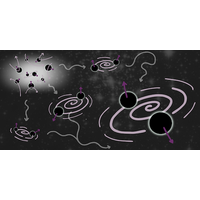
Phys. Rev. Lett. 137, 021403 (2026)
Cosmology, Astrophysics, and Gravitation
Signatures of a Subpopulation of Hierarchical Mergers in the GWTC-4 Gravitational-Wave Dataset
Article | Cosmology, Astrophysics, and Gravitation | 2026-07-06 06:00 EDT
Cailin Plunkett, Salvatore Vitale, Thomas Callister, and Michael Zevin (Society of Physicists Interested in Non-Aligned Spins (SPINS))
Different analyses of gravitational-wave observations are converging on evidence for a distinct population of massive black hole binaries produced through repeated mergers.
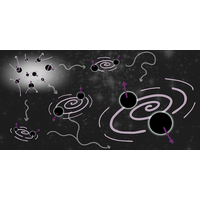
Phys. Rev. Lett. 137, 021404 (2026)
Cosmology, Astrophysics, and Gravitation
Combination of Measurements of $CP$ Properties of Higgs Boson Interactions with Vector Bosons Using Proton-Proton Collisions at $\sqrt{s}=13\text{ }\text{ }\mathrm{TeV}$ with the ATLAS Detector
Article | Particles and Fields | 2026-07-06 06:00 EDT
G. Aad et al. (ATLAS Collaboration)
A combination of measurements of the properties of Higgs boson interactions with electroweak gauge bosons is presented, using of proton-proton collisions at recorded by the ATLAS detector. Results from vector boson fusion , inclusive , and channels are…
Phys. Rev. Lett. 137, 021801 (2026)
Particles and Fields
Higher-Order QCD Corrections to Top-Quark Pair Production in Association with a Jet
Article | Particles and Fields | 2026-07-06 06:00 EDT
Simon Badger, Colomba Brancaccio, Matteo Becchetti, Michal Czakon, Heribertus Bayu Hartanto, Rene Poncelet, and Simone Zoia
The production of a top-quark pair, the heaviest known elementary particle, in association with a light jet is a key process for studying the properties of the standard model of particle physics. Due to its significance as a signal process with considerable sensitivity to the top-quark mass and as a…
Phys. Rev. Lett. 137, 021901 (2026)
Particles and Fields
Single-Nucleon Transfer on Unstable $^{59}\mathrm{Cu}$ Probes the NiCu Cycle in Astrophysical X-Ray Bursts
Article | Nuclear Physics | 2026-07-06 06:00 EDT
C. O’Shea et al.
Recent models of the rapid proton () capture process indicate that a competition between the and reactions may result in the formation of a nickel-copper (NiCu) cycle that traps the flux of material between and . Here, we report the identification of 15 proton-…
Phys. Rev. Lett. 137, 022701 (2026)
Nuclear Physics
Reference Quadrupole Moments of Transition Elements from Lamb Shifts in Muonic Atoms
Article | Atomic, Molecular, and Optical Physics | 2026-07-06 06:00 EDT
S. Rathi, K. von Schoeler, P. Indelicato, and B. Ohayon
We present a novel method for accurately measuring the absolute electric quadrupole moments of light transition elements . Our approach is based on performing precision muonic x-ray spectroscopy of the manifold, which is also referred to as the Lamb shift. These transitions are too we…
Phys. Rev. Lett. 137, 023001 (2026)
Atomic, Molecular, and Optical Physics
Self-Confinement of Relativistic Pair Beams in Magnetized Interstellar Plasmas: The Case of Pulsar X-Ray Filaments
Article | Plasma and Solar Physics, Accelerators and Beams | 2026-07-06 06:00 EDT
Luca Orusa and Lorenzo Sironi
The observation of filamentary x-ray structures near bow-shock pulsar wind nebulae (PWNe)--such as the Guitar, Lighthouse, and PSR nebulae--and of slow-diffusion regions around pulsars like Geminga, Monogem, and PSR , challenges the standard picture of cosmic-ray transport in the …
Phys. Rev. Lett. 137, 025201 (2026)
Plasma and Solar Physics, Accelerators and Beams
When Can Higher-Form Symmetries Be Made On Site
Article | Condensed Matter and Materials | 2026-07-06 06:00 EDT
Yitao Feng, Yu-An Chen, Po-Shen Hsin, and Ryohei Kobayashi
An internal symmetry in a lattice model is said to be onsiteable if it can be disentangled into an on-site action by introducing ancillas and conjugating with a finite-depth circuit. A standard lore holds that onsiteability is equivalent to being anomaly-free, which is indeed valid for finite 0-form…
Phys. Rev. Lett. 137, 026501 (2026)
Condensed Matter and Materials
$\mathcal{P}\mathcal{T}$-Symmetric Magnon Lasing and Antilasing
Article | Condensed Matter and Materials | 2026-07-06 06:00 EDT
Xi-guang Wang, Tian-xiang Lu, Guang-hua Guo, Jamal Berakdar, and Hui Jing
A mechanism for electrically tunable -symmetric magnonic lasing and antilasing is proposed along with a device consisting of a current-biased region in a magnetically ordered planar waveguide. Within the bias area, several heavy-metal wires carrying dc charge currents are periodically attached to …
Phys. Rev. Lett. 137, 026701 (2026)
Condensed Matter and Materials
arXiv
High-Entropy Nitride Photocatalysts for Visible-Light Antibiotic Degradation: Structural Stability, In Situ Interfacial Visualization, and Molecular-Level Mechanistic Insights
New Submission | Materials Science (cond-mat.mtrl-sci) | 2026-07-07 20:00 EDT
Zahoor Manzoor, Shamik Chowdhury, Raphael Benjamim de Oliveira, Marcelo Lopes Pereira Junior, Guilherme da Silva Lopes Fabris, Prikshat Dadhwal, Douglas S. Galvao, Chandra Sekhar Tiwary
High-entropy nitrides (HENs) have emerged as a promising class of advanced materials with tunable electronic structures, high stability, and abundant active sites. The incorporation of nitrogen enhances visible-light absorption, promotes efficient charge separation, and improves structural robustness, making these materials highly suitable for photocatalytic applications. In this study, (MnFeCoNiCu)N-based HEN nanoparticles (NPs) were synthesized as visible-light-assisted photocatalysts for the degradation of antibiotics, including sulfamethoxazole (SME) and tetracycline (TCL). The catalyst exhibited excellent performance, achieving 96% degradation of SME and 94% removal of TCL within 2 h of visible-light irradiation. The photocatalytic activity was systematically evaluated under varying operational parameters, including solution pH, catalyst dosage, pollutant concentration, and the presence of coexisting ions. Notably, the catalyst maintained high efficiency in real water matrices, demonstrating its practical applicability. The entropy-stabilized nitride framework exhibited negligible metal leaching, excellent thermal and structural stability as confirmed by temperature-dependent synchrotron angle-dispersive X-ray diffraction, and stable performance over multiple reuse cycles. Furthermore, in situ liquid-cell transmission electron microscopy provided real-time insight into catalyst-pollutant interactions, while complementary molecular simulations revealed the structural stability of the HEN NPs during molecular adsorption and the distinct interaction modes of the two antibiotics. Phytotoxicity tests using Vigna radiata confirmed the effective detoxification of treated solutions. Overall, this work establishes (MnFeCoNiCu)N HENs as efficient and durable visible-light-driven photocatalysts for the removal of antibiotics from complex aqueous environments.
Materials Science (cond-mat.mtrl-sci)
Non-equilibrium coupling to a diffusing density breaks Ising universality
New Submission | Statistical Mechanics (cond-mat.stat-mech) | 2026-07-07 20:00 EDT
Mattia Scandolo, Johannes Pausch, Michael E. Cates, Luca Di Carlo
The Ising universality class is remarkably robust to non-equilibrium perturbations, which generically flow to zero under renormalization. We show that this robustness fails when an order parameter is coupled nonreciprocally to a conserved diffusive density. Below $ d_c=4$ , the renormalization group flows to a fast-diffusion fixed point at which the density acts as a long-range multiplicative noise, producing a novel universality class. The non-equilibrium nature of the fixed point is manifest in the large-scale violation of the fluctuation-dissipation relations, reflected in a splitting of the scaling exponents of the two-point correlation and response functions–a measurable hallmark of non-equilibrium critical fluctuations. A two-loop calculation establishes the stability of this fixed point but yields a small correction-to-scaling exponent $ \omega\approx0.020$ in $ d=3$ , implying strong finite-size corrections. An all-orders modified Harris criterion $ \nu>2/(d+z-2)$ confirms that the BIM fixed point governs criticality in $ d=3$ , with Ising universality recovered only at $ d=2$ .
Statistical Mechanics (cond-mat.stat-mech), Soft Condensed Matter (cond-mat.soft)
6 pages, 2 figures
Non-equilibrium phase transition in the Brownian Ising Model: field theory, renormalization group, and exact results
New Submission | Statistical Mechanics (cond-mat.stat-mech) | 2026-07-07 20:00 EDT
Mattia Scandolo, Luca Di Carlo
We present a complete field-theoretical renormalization-group (RG) analysis of the Brownian Ising Model (BIM), in which a $ \mathbb{Z}_2$ order parameter is coupled to a passive conserved density, breaking detailed balance. Using the Martin-Siggia-Rose formalism and an $ \epsilon=4-d$ expansion, we show that this density-order parameter coupling is RG-relevant below four dimensions and drives the system to a new non-equilibrium fixed point, distinct from the Ising universality class. Critical exponents are computed at lowest nontrivial order, some of which require a dedicated two-loop analysis. At large scales, the density acts as an effective noise that is white in time but long-range in space, enhancing order-parameter fluctuations and producing a negative anomalous dimension $ \eta$ . A defining feature of the new class is that the correlation and response functions acquire different anomalous dimensions, $ \eta \neq 2 - \gamma / \nu$ - a direct, observable signature of fluctuation-dissipation-theorem violation at large scales that cannot occur in equilibrium. We also find a small correction-to-scaling exponent, implying large preasymptotic corrections that must be accounted for in numerical and experimental tests. We further derive a set of relations among renormalization factors that hold to all orders in perturbation theory, following from the linearity of the density dynamics and an emergent shift symmetry. These yield an exact scaling relation $ \nu = 2/(d+z-2)$ at the BIM fixed point and establish that the Ising universality class, as well as that of quenched diluted-Ising, is unstable in $ d=3$ . This establishes the BIM fixed point as the unique infrared attractor for any nonzero diffusion constant.
Statistical Mechanics (cond-mat.stat-mech), Soft Condensed Matter (cond-mat.soft)
20 pages, 4 figures
Correlation-Induced Topological Reconstruction in a Periodically Driven Kagome Mott Insulator
New Submission | Strongly Correlated Electrons (cond-mat.str-el) | 2026-07-07 20:00 EDT
Rahul Ghosh, Subhajyoti Pal, Ganesh C Paul
We study the interplay between electronic correlations and circularly polarized periodic driving in the Hubbard model on a Kagome lattice. Using Brillouin-Wigner perturbation theory, we derive an effective Floquet Hamiltonian in which the drive renormalizes the bare hopping and generates chiral nearest- and next-nearest-neighbor terms, producing repeated topological transitions and a flat band whose position is continuously tunable across the spectrum. Within slave-rotor mean-field theory, we show that the resulting Mott transition is strongly non-monotonic in the drive amplitude, yielding repeated metal-insulator transitions, and that the spinon excitations inside the Mott phase acquire a band topology distinct from that of the non-interacting Floquet bands. This correlation-driven topological reconstruction produces emergent flat-band spinon insulators inaccessible to either driving or interactions alone. Our results establish periodically driven Kagome systems as a platform for engineering correlated topological flat-band physics out of equilibrium, with proposed realizations in ultracold atomic lattices.
Strongly Correlated Electrons (cond-mat.str-el)
Anisotropic magnetoresistance of 2D Rashba films with in-plane Zeeman field and short-range disorder
New Submission | Mesoscale and Nanoscale Physics (cond-mat.mes-hall) | 2026-07-07 20:00 EDT
Igor Gornyi (1,2), Alexander Khaetskii (3) ((1) Institute for Quantum Materials and Technologies, Karlsruhe Institute of Technology, Karlsruhe, Germany, (2) Institut für Theorie der Kondensierten Materie, Karlsruhe Institute of Technology, Karlsruhe, Germany, (3) Department of Physics and Astronomy, Ohio University, Athens, OH, USA)
We study the dc conductivity of a continuum two-dimensional Rashba film with an in-plane Zeeman field and delta-correlated scalar disorder. Although the field deforms the two helicity Fermi contours and rotates the spin texture, it does not produce anisotropic magnetoresistance in the leading quasiclassical conductivity. The mechanism is geometric. A density Ward identity fixes the spin-vector part of the Born self-energy to the derivative of the total particle density with respect to the field. This derivative vanishes, because the total area enclosed by the two Rashba-Zeeman sheets is independent of the in-plane field. The Born self-energy is therefore scalar and field independent, and the quasiparticle lifetime stays isotropic. The same area invariance controls transport: once the leading impurity ladder reduces the current vertex to the parabolic velocity, the diagonal intraband Kubo conductivity collapses onto the two-sheet occupied area and is field independent as well. The result settles the short-range-disorder quasiclassical problem: point-like nonmagnetic impurities do not produce AMR in this model. A nonzero AMR requires physics beyond this quasiclassical short-range-disorder mechanism.
Mesoscale and Nanoscale Physics (cond-mat.mes-hall)
12 pages of main text, 8 pages of Supplementary information, 1 Figure
Magnetic ordering of a van der Waals material combining vastly different magnetic anisotropies
New Submission | Materials Science (cond-mat.mtrl-sci) | 2026-07-07 20:00 EDT
K. K. Pokhrel, S. Ray, N. Machavcova, A. Koliogiorgos, K. Carva
Among magnetic van der Waals materials, the vanadium trihalide family exhibits unique features. In particular, VI3 contains V atoms of two different types, as two energetically close electronic occupations can coexist in real samples. These types show strikingly different magnetic anisotropy, predicted to differ by more than an order of magnitude. The combination forms a distinctive magnetic system. VI3 also displays an unusual thickness dependence: the monolayer Curie temperature (TC) is higher than that of the bulk, contrary to the expectation that interlayer coupling reinforces magnetic order. Using atomistic spin-dynamics simulations informed by first-principles calculations, we investigate the critical temperature behavior from the combined perspective of single-ion anisotropy and exchange interactions. The strong anisotropy contrast significantly affects thermal stability: increasing the fraction of high-anisotropy sites raises the energy cost of transverse spin fluctuations and increases the ordering temperature. Furthermore, V-atom inhomogeneity makes the interlayer super-superexchange network spatially nonuniform, creating competing exchange pathways. This weakens coherent interlayer order while preserving robust intralayer ferromagnetic correlations, thus modifying the bulk-monolayer TC relation. Our model reproduces experimental TC values when the ratio of the two V types is close to 1:1, in agreement with two experimental methods. This supports the coexistence of two V configurations in VI3. The monolayer TC is reproduced with a slightly modified ratio, possibly linked to polaron concentration. The sensitivity of TC to this ratio suggests that the ordering temperature of VI3 can in principle be tuned over a broad range by controlling the relative occupation of the two vanadium configurations.
Materials Science (cond-mat.mtrl-sci)
Shear and crystallization in deformable granular packings: why don’t auxetics order?
New Submission | Soft Condensed Matter (cond-mat.soft) | 2026-07-07 20:00 EDT
Joel T. Clemmer, Nicholas W. Hackney, Gary S. Grest
Shear of three-dimensional, highly compressed granular packings is simulated using a bonded particle approach that explicitly resolves elastic deformation. Varying Poisson’s ratio $ \nu$ produces significant changes in rheology, packing structure, and grain morphology. During flow, conventional systems ($ \nu > 0$ ) readily crystallize while auxetics ($ \nu < 0$ ) resist ordering. This duality reflects the fact that conventional grains develop polyhedral-like facets but conserve volume while auxetics behave oppositely, demonstrating an unexpected interaction between elasticity, geometry, and crystallization.
Soft Condensed Matter (cond-mat.soft)
6 pages and 4 figures main text; 2 pages and 3 figures supplement
First principles study of chalcogen vacancy effect on the optoelectronic and photocatalytic properties of transition metal dichalcogenides monolayers
New Submission | Materials Science (cond-mat.mtrl-sci) | 2026-07-07 20:00 EDT
Tahir Wahab, Antonio Cammarata, Tomas Polcar
In working conditions, chalcogen vacancies spontaneously occur in two-dimensional transition metal dichalcogenides (TMDCs) monolayers, affecting their optoelectronic and photocatalytic properties. To study how chalcogen vacancies affect such properties, we use quantum mechanical calculations considering prototypical MX$ _2$ (M = Mo, W, X = S and Se) TMDCs monolayers. Structural optimisations show that M-X bond lengths about a vacancy are different compared to the bond lengths in the pristine structure. Band structure calculations reveal that the introduction of vacancies produce electronic states about the Fermi level, hence resulting in the reduction of the band gap. Work function and electrostatic potential calculations show that the introduction of vacancies induce an asymmetry in the electrostatic potential facilitating the charge separation; such feature is absent in a pristine monolayer. All the considered defective structures are capable of performing hydrogen evolution reaction, while co-catalyst is required to perform oxygen evolution reaction when used for water splitting. WS$ _2$ and WSe$ _2$ defective monolayers can serve as an efficient photocatalytic material for reducing CO$ _2$ into useful chemical products. The presented results show that vacancy-containing TMDCs monolayers own photocatalytic capabilities compared to the pristine counterparts, thus showing that defective TMD monolayers have prospective applications and should not be regarded as flawed products to be discarded. Finally, the results might constitute guidelines for the experimental synthesis of vacancy-engineered MX$ _2$ monolayers for optoelectronic devices and photocatalytic applications.
Materials Science (cond-mat.mtrl-sci)
Theoretical investigation of power absorbed by superconductors with Rashba spin-orbit coupling in the presence external time-dependent perturbation
New Submission | Superconductivity (cond-mat.supr-con) | 2026-07-07 20:00 EDT
Reza Afzali, Bahman Takrim, Amir Hossein Asghari
The absorbed power in superconductors driven by a time-dependent external perturbation is investigated through transitions between Bogoliubov quasiparticle states. The transition matrix element contains the superconducting coherence factor, which determines the role of the gap, excitation spectrum, and external frequency in the absorption process. The formulation is applied to a Hubbard-model superconductor including correlated hopping and Rashba spin-orbit coupling. In this model, numerical calculations are used to obtain the quasiparticle energies, density of states, chemical potential, and temperature-dependent superconducting gap. The normalized absorbed power is then evaluated for different values of temperature, interaction strength, correlated hopping parameter, and spin-orbit coupling strength. The results show that the absorption response is strongly affected by the superconducting gap and by changes in the quasiparticle spectrum. Rashba spin-orbit coupling changes the density of states and therefore modifies the absorption. These results show that hopping processes, interaction strength, and spin-orbit coupling play important roles in the ultrasonic and electromagnetic absorption of superconducting systems.
Superconductivity (cond-mat.supr-con)
18 pages
Twist-configured moire-moire reconstruction governs diverse commensurate double-moire phases in twisted bilayer graphene on h-BN
New Submission | Materials Science (cond-mat.mtrl-sci) | 2026-07-07 20:00 EDT
Yuta Seo, Naoto Nakatsuji, Jimpei Kawase, Naoto Hishida, Kenji Watanabe, Takashi Taniguchi, Takuto Kawakami, Mikito Koshino, Tomoki Machida
The coexistence of multiple moire lattices in van der Waals heterostructures raises a fundamental question: how do distinct moire patterns interact and reconstruct? Here, we investigate twisted bilayer graphene (tBG) on hexagonal boron nitride (h-BN), where tBG and graphene/h-BN moire structures coexist, using conductive atomic force microscopy combined with continuum-model simulations. We show that reconstruction between these moire lattices-moire-moire reconstruction-manifests across multiple length scales, giving rise to diverse commensurate double-moire phases. Locally, the stacking registry between the two moire lattices is uniquely selected by the global twist configuration (helical or alternate), mediated by rotational relaxation of the shared graphene layer. This registry, together with twist angle and strain, governs commensurate domains from C3z-symmetric to strained symmetry-modified structures. These results establish moire-moire reconstruction as a general framework for engineering structural and electronic order – including theoretically predicted topological flat bands below the magic angle – in multilayer moire materials.
Materials Science (cond-mat.mtrl-sci)
Main(26 pages, 5 figures), SI(20 pages, 8 figures, 3 tables)
Crystal structure and basic properties of dirhenate quantum materials
New Submission | Materials Science (cond-mat.mtrl-sci) | 2026-07-07 20:00 EDT
Danrui Ni, Xianghan Xu, Stephen Zhang, N.P. Ong, Sanfeng Wu, R. J. Cava
The anhydrous divalent 3d-metal dirhenate quantum materials, M(ReO$ _4$ )$ _2$ ,were synthesized using solid-state methods for M = Mn through Zn. Previously unreported Mg(ReO4)2 is also described. Their layered crystal structures, which feature an in-plane triangular lattice of M$ ^{2+}$ , were refined using single crystal X-ray diffraction, and their optical absorption and several other physical properties were characterized. Their magnetism and heat capacity reveal long-range magnetic order at low temperatures in many of the M(ReO$ _4$ )$ _2$ phases. Notably, many of these ordered states are sensitive to applied magnetic fields and can be readily suppressed by relatively small fields, suggesting competing magnetic interactions in a low-dimensional framework, which appear worthy of further study.
Materials Science (cond-mat.mtrl-sci)
Electrically tunable interfacial thermal conduction via electronic structure engineering in ${Au}$/$Bi_{1-x}$$Sb_{x}$ topological insulators
New Submission | Mesoscale and Nanoscale Physics (cond-mat.mes-hall) | 2026-07-07 20:00 EDT
Min Young Kim, Joon Sang Kang, Jangwoo Ha, Hyungyu Jin, Sandy A. Ekahana, Pratik Saud, Chris Jozwiak, Eli Rotenberg, Aaron Bostwick, Jyoti Katoch, Joseph P. Heremans
This work provides direct experimental evidence for the role of topological interface states in thermal conduction across a metal/topological insulator junction. It also shows that this conduction can be reversibly modulated by electrical current injection, offering a new approach toward active control of heat flow at solid-state interfaces. Specifically, the interfacial thermal conductance of $ {Au}$ /$ Bi_{89}$ Sb_{11}$ and $ {Au}$ /$ Bi_{87}$ Sb_{13}$ junctions demonstrates distinct temperature- and bias-dependent behavior. Both responses are attributed to carrier redistribution between topological interface and bulk band states, driven thermally by Fermi-Dirac broadening and electrically by quasi-Fermi-level shifts and WKB tunneling into nearby bulk bands. Control experiments using trivial semimetals and insulating interlayers further confirm the topological specificity of the effect. Such electrically tunable interfacial heat conduction positions interface electronic structure engineering as a promising route for active thermal management. In doing so, it lays the groundwork for a mechanically robust alternative to conventional structure-driven thermal control compatible with increasingly dense, high-power solid-state devices.
Mesoscale and Nanoscale Physics (cond-mat.mes-hall)
Thermophysical and mechanical properties of UFe$_2$ fabricated by spark plasma sintering
New Submission | Materials Science (cond-mat.mtrl-sci) | 2026-07-07 20:00 EDT
Yifan Sun, Hironobu Nakamura, Daisuke Okada, Hiroaki Muta, Yuji Ohishi, Ken Kurosaki
Following the accident at the Fukushima Daiichi Nuclear Power Plant in 2011, core meltdown produced fuel debris whose safe retrieval and management require reliable thermophysical and mechanical property data. Among the metallic phases identified in the debris, the U-Fe system is particularly important because of the abundant iron originating from in-vessel stainless steel structures. However, within this system, the high-temperature thermophysical properties of UFe$ _2$ have received relatively little attention, with most prior studies focusing on its magnetic and electronic properties. To fill this data gap in the literature, we fabricated dense, nearly single-phase polycrystalline UFe$ _2$ by arc melting followed by spark plasma sintering, and characterized its thermal and mechanical properties from room temperature to 1073 K. Results show that the thermal conductivity of UFe$ _2$ increased monotonically from 10 Wm$ ^{-1}$ K$ ^{-1}$ at 306 K to 25 Wm$ ^{-1}$ K$ ^{-1}$ at 1073 K, surpassing those of the iron intermetallics Fe$ _2$ Zr and Fe$ _2$ B at high temperatures. In addition, UFe$ 2$ is mechanically more compliant, displaying a Young’s modulus $ E$ of 69 GPa, a shear modulus $ G$ of 24 GPa, and a Vickers hardness $ H{\mathrm{V}}$ of 5.6 GPa, all well below those of both Fe intermetallics. Consequently, during decommissioning, thermal-management and structural evaluations should take into account the comparatively high-conductivity and mechanically compliant nature of UFe$ _2$ within the heterogeneous fuel debris.
Materials Science (cond-mat.mtrl-sci)
12 pages, 6 figures
Hall Shift Current and Nonlinear Anomalous Hall Effect in Gapped Dirac Fermion Systems
New Submission | Mesoscale and Nanoscale Physics (cond-mat.mes-hall) | 2026-07-07 20:00 EDT
We discuss a new mechanism for the nonlinear anomalous Hall effect in tilted two-dimensional gapped Dirac fermion systems. This mechanism originates from a side-jump displacement associated with Landau-Zener tunneling across the mass gap. In lightly doped tilted Dirac systems with a small gap, this interband mechanism can contribute to the nonlinear anomalous Hall effect in addition to the conventional intraband mechanism arising from the Berry curvature dipole. It provides a possible explanation for the nonlinear Hall effect accompanied by nonlinear longitudinal transport observed in the organic Dirac fermion system {\alpha}-(ET)2I3 with an extremely small gap.
Mesoscale and Nanoscale Physics (cond-mat.mes-hall)
15 pages, 3 figures
When Repulsion Creates Pairing: A New Perspective on Unconventional Superconductivity
New Submission | Superconductivity (cond-mat.supr-con) | 2026-07-07 20:00 EDT
Despite the repulsive Coulomb law and the Pauli statistics that do not favor bound states, attraction between electrons or holes is nevertheless possible in the context of many body interaction and of valley potential landscapes, reminiscent of exotic superconducting materials. In particular, in 1965, Kohn and Luttinger published a note revealing that the dynamical screening of the repulsive Coulomb interaction leads, under certain conditions, to an effective attraction necessary for the formation of Cooper pairs. We propose such a formalism adapted to the cuprates, where the screening arises from the superexchange dynamics of virtual holes in the oxygen orbitals of the $ Cu O_2$ plane. Inspired from the Bardeen-Copper-Schrieffer (BCS) theory, we can derive some predictions for the temperature-doping phase diagram (pseudo-gap, strange metal, antiferromagnetism, superconducting, and normal states) in semi-quantitative agreement with observations.
Superconductivity (cond-mat.supr-con)
5 pages, 4 figures
Entropy density functional universality: Correlation, response, and entropic Ornstein-Zernike structure
New Submission | Soft Condensed Matter (cond-mat.soft) | 2026-07-07 20:00 EDT
We give a comprehensive account of the recent entropy density functional theory for the equilibrium statistical mechanics of classical many-body systems (arXiv:2606.28240). The approach is formally exact and based on a joint grand potential minimization principle for the one-body density and the global pair distance distribution. These variational fields depend respectively on position and on scalar distance, which retains the low computational complexity of standard density functional theory. Correlations effects are contained in a unique excess entropy functional, which is universal across all systems with pairwise interparticle potentials. Functional differentiation yields entropic direct correlation functionals that generate entropic response and fluctuation correlation functions via coupled Ornstein-Zernike equations. Two alternative proofs are given for the existence and uniqueness of the underlying metadensity functional map, based on generalizations of either Levy’s constrained search method or Mermin-Evans proof by contradiction. Simple excess entropy approximations yield the standard mean-field and second-virial excess free energy density functionals. We describe exact entropic functional line integrals, make connections to the recent one-body fluctuation profiles, and generalize the entropy approach beyond pairwise interparticle potentials.
Soft Condensed Matter (cond-mat.soft), Statistical Mechanics (cond-mat.stat-mech)
17 pages, 121 equations, complementary to arXiv:2606.28240
Chiropiezoelectric Energy Harvesting from Lattice-Handedness-Controlled Selenium Nanowires
New Submission | Materials Science (cond-mat.mtrl-sci) | 2026-07-07 20:00 EDT
Oleksii Ohiienko, Wookjin Jung, Jihyeon Yeom
The growth of wearable electronics, soft robotics, and Internet-of-Things systems has intensified the demand for inorganic piezoelectric materials that harvest weak biomechanical energy. Advances through composition optimization, defect engineering, strain engineering, and orientation control have improved existing electromechanical responses, but have not introduced a new mechanism for enhancing piezoelectricity. Here we propose atomic chirality engineering as a design principle for inorganic piezoelectric nanomaterials. Unlike conventional strategies that modify composition or morphology, atomic chirality alters the handedness of the crystal lattice itself, adding a degree of freedom for controlling dipole alignment, electromechanical coupling, and potentially spin-dependent transport. Using atomically chiral trigonal selenium nanowires as a model system, we show that crystal handedness alone changes piezoelectric performance at identical chemical composition. Piezoresponse force microscopy resolved a consistent enantiomeric difference, with right-handed D-Se nanowires reaching a higher effective piezoelectric coefficient than their left-handed counterparts, and flexible nanogenerators and self-powered acoustic sensors built from the two enantiomers produced distinct outputs under identical deformation. This work establishes atomic chirality as a distinct route for designing piezoelectric materials, one that may extend across non-centrosymmetric inorganic semiconductors for sustainable energy harvesting and wearable sensing.
Materials Science (cond-mat.mtrl-sci)
Effects of Impurity Scattering on Orbital Hall Conductivity and Orbital Transport in Ru-based Alloys
New Submission | Mesoscale and Nanoscale Physics (cond-mat.mes-hall) | 2026-07-07 20:00 EDT
Yumin Yang, Yanxu Chen, Wenqi Xu, Dahai Wei
The role of impurity scattering in the generation and transport of orbital current remains less established than in conventional spin Hall systems. Here we investigate Ru-based nonmagnet/ferromagnet bilayers in which the impurity scattering is tuned by Cu or Ti alloying. According to SOT measurement and thickness-dependent drift-diffusion analysis, we extract the effective orbital Hall conductivity and the orbital diffusion length. We find that the orbital Hall effect in polycrystalline Ru is dominated by intrinsic mechanism that is moderately robust against weak disorder but suppressed by stronger alloy disorder. However, the orbital diffusion length remains nearly unchanged at approximately 14 nm over the investigated impurity range. This behavior indicates that orbital transport is not governed simply by an impurity scattering. Together with previous temperature-dependent measurements, our results show that static impurities and dynamic lattice disorder affect orbital transport through distinct microscopic channels. These results provide new insight into how disorder governs orbital generation and transport, and offer experimental guidance for developing high-efficient orbitronic materials.
Mesoscale and Nanoscale Physics (cond-mat.mes-hall)
Quantum magnetism of the spin-1 kagome-lattice antiferromagnet
New Submission | Strongly Correlated Electrons (cond-mat.str-el) | 2026-07-07 20:00 EDT
We investigate the spin-1 kagome-lattice Heisenberg antiferromagnet using large-scale Lanczos diagonalization and the finite-temperature Lanczos method. The zero-temperature magnetization process exhibits plateaus at $ m=0$ , $ 1/3$ , $ 7/9$ , and $ 8/9$ , where $ m$ is the normalized magnetization. The $ m=0$ plateau is identified as a trimer valence-bond-crystal state, while the high-field plateaus at $ m=7/9$ and $ 8/9$ are identified as magnon crystals. In particular, the $ m=8/9$ plateau corresponds to the exact localized-magnon crystal state. A smoothed zero-temperature magnetization curve constructed using the Gaussian-kernel smoothing method indicates magnetization jumps at the lower-field edge of the $ m=1/3$ plateau and at the upper-field edges of the $ m=7/9$ and $ 8/9$ plateaus. At finite temperatures, the specific heat exhibits a double-peak structure with peaks around $ T/J\simeq0.1$ and $ T/J\simeq1.1$ , and the low-temperature peak may be related to trimer valence-bond-crystal ordering. The finite-temperature magnetization curves show that the $ m=1/3$ plateau remains visible at low temperatures, whereas the high-field plateaus are rapidly smeared out by thermal effects. These results provide benchmark data for thermodynamic and high-field magnetization measurements in candidate spin-1 kagome-lattice materials.
Strongly Correlated Electrons (cond-mat.str-el), Materials Science (cond-mat.mtrl-sci)
Winding charge density wave: intertwining of structural chirality and phase topology of electronic order
New Submission | Strongly Correlated Electrons (cond-mat.str-el) | 2026-07-07 20:00 EDT
We propose a class of chiral charge density waves (CDWs), dubbed winding CDWs, that exhibit macroscopic chirality despite a single ordering wavevector. In screw-symmetric chiral crystals, chiral phonons drive a Peierls instability that selects a definite crystal angular momentum channel, thereby endowing the CDW with an integer azimuthal phase winding dictated by the selection rule governing electron-phonon coupling. We further extend this framework to achiral crystals with discrete rotational symmetry and demonstrate that spontaneous symmetry breaking stabilizes a winding CDW with either handedness, realizing an achiral-to-chiral phase transition. Our results reveal a fundamental link between the geometry of chiral structures and the phase topology of electronic orders.
Strongly Correlated Electrons (cond-mat.str-el)
9 pages, 4 figures and Supplementary Materials
Substrate-Mediated Persistent Photodoping in WSe2/hBN Field-Effect Transistors Enabled by Defect States in SiO2
New Submission | Mesoscale and Nanoscale Physics (cond-mat.mes-hall) | 2026-07-07 20:00 EDT
Sung-Ha Kim, Seong-Yeon Lee, Tae-Jeong Kim, Beomkyu Shin, Young-Jun Yu, Kenji Watanabe, Takashi Taniguchi, Soungmin Bae, Ki-Ju Yee
Photodoping plays an important role in determining the optoelectronic response of two-dimensional semiconductor devices; however, the origin of the responsible trap states remains unclear. In this work, we investigate UV-induced photodoping in multilayer WSe2 field-effect transistors (FETs) based on WSe2/hBN heterostructures on SiO2/p-Si substrates. Wavelength-dependent measurements reveal pronounced n-type photodoping under 405 nm illumination, whereas the effect is orders of magnitude weaker under 640 nm excitation and for p-type photodoping. Furthermore, when the SiO2 layer is removed, both n-type and p-type photodoping are strongly suppressed, demonstrating that the oxide layer is essential for persistent photodoping. Analysis of defect-state distributions in amorphous SiO2, together with first-principles calculations for hBN defects, shows that the experimental observations cannot be explained by defects in hBN. Instead, the results indicate that defect states in the SiO2 substrate act as charge reservoirs that facilitate charge transfer and long-term carrier trapping. These findings highlight the dominant role of substrate-related trap states in UV-induced photodoping and photogating behavior in WSe2 FET devices.
Mesoscale and Nanoscale Physics (cond-mat.mes-hall), Materials Science (cond-mat.mtrl-sci), Applied Physics (physics.app-ph)
Self-Driven Atomic Dispersion in Graphitic Layers
New Submission | Materials Science (cond-mat.mtrl-sci) | 2026-07-07 20:00 EDT
Zhaoxi Chen, Yulu He, Zhuoran Yao, Jian Liu, Jun Cai, Ziyi Fan, Wenjun Zhang, Lei Lei, Zupeng Chen, Bo Yang, Zhi Liu, Zhu-Jun Wang
Carbon-supported single-atom catalysts maximize metal utilization, but how metal nanoparticles transform into isolated atoms within carbon remains unclear. We show that metal nanoparticles can undergo a self-driven dispersion process under hydrocarbon oxidation conditions, transforming into single atoms that are confined in carbon matrix. Using Pt-catalysed hydrocarbon oxidation as a model, we combine operando electron microscopy, near-ambient-pressure X-ray photoelectron spectroscopy and mass spectrometry to track coupled structural and chemical evolution. Graphitic carbon grows at step edges of Pt nanoparticle, continuously reconstructing Pt surface and generating undercoordinated sites for atom release. In-situ generated CO accumulates at the metal-carbon interface, weakening bonding and facilitating self-amplified atom release and migration. Defective carbon overlayers then trap, stabilize and transport liberated atoms, while oxidative etching preserves interfacial access of reaction-gas. Similar behaviour across other metals suggests a general atomization pathway for single-atom catalyst synthesis, yielding products with electrocatalytic hydrogen production activity beyond standard commercial benchmarks.
Materials Science (cond-mat.mtrl-sci), Chemical Physics (physics.chem-ph)
30 pages, 5 figures
Comparative Evaluation of Encapsulation Methods for Endohedral Doping of Single-Wall Carbon Nanotubes
New Submission | Mesoscale and Nanoscale Physics (cond-mat.mes-hall) | 2026-07-07 20:00 EDT
Cristian M. Borja-Peña, Martin Magg, Hussein Slim, Yamaldi M. Bakary, Cedric Desroches, Denys Kurylo, Kazuhiro Yanagi, Benjamin S. Flavel, Salomé Forel, Wim Wenseleers, Sofie Cambré
Single wall carbon nanotubes (SWCNTs) are promising building blocks for nanoelectronic and optoelectronic devices, yet reliable and stable doping, particularly n type, remains challenging due to strong environmental sensitivity and competing extrinsic effects. Encapsulation of charge transfer molecules within the SWCNT cavity offers a promising route to stable doping while preserving the nanotubes outer surface for subsequent processing. Here, we systematically investigate the filling of arc discharge SWCNTs with the electron donor tetrathiafulvalene and electron acceptor tetracyanoquinodimethane, comparing different methods for filling, including melt filling, solution reflux, and vacuum phase sublimation. We follow the entire processing workflow from raw, unfilled powders to aqueous dispersions and employ density gradient ultracentrifugation to separate filled from empty nanotubes as well as metallic from semiconducting ones. Encapsulation efficiency and electronic modification are assessed using absorption spectroscopy, resonant Raman scattering, thermogravimetric analysis, and electron paramagnetic resonance. Finally, we introduce a complementary vacuum-phase method that removes externally adsorbed molecules without extensive solvent washing, enabling cleaner encapsulated systems.
Mesoscale and Nanoscale Physics (cond-mat.mes-hall), Materials Science (cond-mat.mtrl-sci)
53 pages, 19 figures
Finite-Time Thermodynamics of Battery Discharging: Power-Efficiency Trade-Off and Optimization
New Submission | Statistical Mechanics (cond-mat.stat-mech) | 2026-07-07 20:00 EDT
Rui-Han Liu, Yun-Qian Lin, Yu-Han Ma
Battery discharging is governed by a fundamental trade-off between output power and energy conversion efficiency due to internal dissipation. In this paper, we demonstrate that such a trade-off universally yields a parabolic envelope $ P\propto\eta(1-\eta)$ . The efficiency at maximum power is exactly one half, mirroring the well-known half-Carnot limit in finite-time thermodynamics. To extend this bound into practical operational rules, we formulate a multistage constant-current discharging (MSCD) schedule subject to simultaneous real-time load demands and a global discharging deadline. Analytical resolution via the Karush–Kuhn–Tucker conditions reveals a remarkably compact optimal policy: $ I_{i}^{\star}=\max(I_{i}^{-},I_{0})$ . Under this rule, stages limited by external demand run exactly at their minimum required currents, while all remaining stages are elevated to a uniform baseline $ I_{0}$ fixed by the deadline constraint. By tracing the dissipation–time Pareto front, we quantify how internal resistance shifts the operational boundaries and sharpens the trade-off corner. This analysis establishes a rigorous thermodynamic baseline for the scheduling layer of battery management systems, offering natural extensions to nonlinear models incorporating temperature and state-of-charge dependencies.
Statistical Mechanics (cond-mat.stat-mech), Classical Physics (physics.class-ph)
16 pages,6 figures
Martensitic Transformation in Crystal-Amorphous Superlattices of NiTi Shape Memory Alloy
New Submission | Materials Science (cond-mat.mtrl-sci) | 2026-07-07 20:00 EDT
Shape memory alloys (SMAs) exhibit unique thermo-mechanical properties arising from reversible martensitic transformation. Tailoring these properties through coherent second phases is effective but is often limited by the difficulty of identifying thermodynamically compatible phases. Crystal-amorphous superlattices (CAS), in which the second phase is derived from the base material itself, provide an attractive alternative. However, the influence of partial amorphization on martensitic transformation and thermo-mechanical behavior remains largely unexplored. Here, large-scale molecular dynamics simulations are used to investigate temperature- and stress-induced martensitic transformations in CAS-NiTi with different crystalline phase fractions. Partial amorphization fundamentally modifies the transformation pathway, introducing an initial continuous (second-order-like) transformation before the conventional first-order martensitic transformation. The amorphous phase also enhances transformation reversibility, reducing the thermal hysteresis from 275 K in fully crystalline NiTi to 95-110 K in CAS-NiTi. Simultaneously, the elastic modulus and the critical stress for stress-induced martensitic transformation increase by approximately 60-90 percent, depending on the crystalline fraction. These improvements originate from heterogeneous nucleation at crystal-amorphous interfaces, retained austenite that promotes the reverse transformation, and mechanical constraint imposed by the amorphous phase. These findings establish crystal-amorphous superlattices as a promising microstructural design strategy for tailoring the thermo-mechanical performance of shape memory alloys.
Materials Science (cond-mat.mtrl-sci)
Effective potentials for polar molecules under non-orthogonal dual microwave fields
New Submission | Quantum Gases (cond-mat.quant-gas) | 2026-07-07 20:00 EDT
Fulin Deng, Xinyuan Hu, Su Yi, Tao Shi
Dual-microwave shielding has emerged as a powerful tool for stabilizing ultracold polar molecules while tuning their intermolecular interactions. However, the two microwave fields are generally not perfectly orthogonal in experiments. Such misalignment introduces an in-plane component of the linearly polarized microwave, whose frequency differs from that of the elliptically polarized field. This component prevents complete cancellation of the dipole-dipole interaction and, more critically, renders the single-molecule dressed state intrinsically time-dependent, so that the conventional time-independent scattering framework is no longer available. Here we develop a Floquet theory that yields an analytic effective potential and enables accurate scattering calculations for polar molecules in non-orthogonal dual microwave fields. We find that, though misalignment weakens the shielding moderately, inelastic losses remain strongly suppressed under experimentally relevant conditions. Meanwhile, misalignment provides additional tunability of the interaction anisotropy and strength, which has been directly applied to recent experimental observations on the gas-to-droplet transition[Z. Shi \textit{et al}, arXiv:2508.20518 (2025)] and Fermi-surface deformation in microwave-shielded molecular gases[S. Biswas \textit{et al}, arXiv:2602.22447]. The framework is not restricted to dual-microwave shielding and can be generalized straightforwardly to arbitrary multi-frequency driving, providing a versatile tool for manipulating ultracold polar molecules under complex microwave configurations.
Quantum Gases (cond-mat.quant-gas)
9 pages, 6 figures
Data-driven multi-objective optimization for alloy recycling using factorization machines and quantum annealing
New Submission | Materials Science (cond-mat.mtrl-sci) | 2026-07-07 20:00 EDT
Thomas Plehn, Katrin Bugelnig, Silvana Tumminello, Daniel Barragan-Yani, David Melching
Quantum annealing has the potential to provide practical quantum advantage for complex optimization tasks. Here, we present a systematic assessment of an integrated factorization-machine and quantum-annealing workflow (FM+QA) for a technologically relevant application: multi-objective Pareto optimization in metal up-cycling through alloy design. To address the non-convex nature of the Pareto front, we employ the recently proposed data-driven Tchebycheff scalarization (DDTS) scheme. Our results show that FM+QA extends the applicability of QUBO-based optimization to data-driven materials discovery problems with multiple competing objectives. In particular, we analyze the scaling behavior of the approach and compare quantum annealing with classical simulated annealing using both regular binary encoding and one-hot encoding. Finally, we provide a critical perspective on the problem sizes and encoding strategies for which quantum-annealing-based optimization may become practically beneficial in the near future.
Materials Science (cond-mat.mtrl-sci), Quantum Physics (quant-ph)
NanoBTE: Fast Iterative Solution of the Phonon Boltzmann Transport Equation for Nanoscale Heat Transport
New Submission | Materials Science (cond-mat.mtrl-sci) | 2026-07-07 20:00 EDT
Hongjiang Chen, Hai-Xuan Lin, Xiaole Tian, Hongyu Chen, Juan Zhang, Shengyao Yan, Hezhu Shao, Yu Wu, Junjie Liu, Hao Zhang
Nanoscale heat dissipation has become a critical challenge in advanced semiconductor devices, where phonon transport can strongly deviate from the classical Fourier description owing to boundary scattering and ballistic effects. Here, we propose NanoBTE, a deterministic finite-volume solver for the non-gray phonon Boltzmann transport equation under the relaxation-time approximation. NanoBTE supports complex two- and three-dimensional geometries, band-resolved phonon properties, discrete-ordinates angular quadrature, volumetric heat generation, and multiple phonon boundary conditions, including thermalizing, diffuse, and specular reflections. To improve the efficiency of multiscale simulations, we implement both sequential and synthetic iterative schemes, with the latter coupling the microscopic phonon transport equation to a macroscopic diffusion-type temperature equation to accelerate convergence in near-diffusive regimes. Furthermore, NanoBTE adopts a band-direction task decomposition strategy, enabling efficient MPI-based CPU parallelization and GPU acceleration of the dominant sparse transport operations.
Materials Science (cond-mat.mtrl-sci)
27 pages, 9 figures
One-dimensional carbon nanostructures with periodic graphitic nitrogen substitution
New Submission | Mesoscale and Nanoscale Physics (cond-mat.mes-hall) | 2026-07-07 20:00 EDT
Nicolò Bassi, Shantanu Mishra, Zheng Zhang, Xiao-Ye Wang, Feifei Xiang, Nils Krane, Carlo A. Pignedoli, Klaus Müllen, Pascal Ruffieux, Akimitsu Narita, Roman Fasel
Heteroatom substitution is a powerful route to tune the chemical and electronic properties of carbon nanomaterials. In particular, replacement of an sp2 hybridized carbon atom in the graphene lattice with a nitrogen atom (denoted as graphitic nitrogen) induces substantial changes in the electronic properties. These include changes in the band structure that can influence electronic transport, and magnetism. A key requirement for applications is both the periodic and precise incorporation of the heteroatoms in extended carbon lattices. Here, we report the on-surface synthesis and characterization of two one dimensional carbon nanostructures, a polymer and a graphene nanoribbon, consisting of periodically incorporated graphitic nitrogen atoms. The on-surface reactions toward formation of the nanostructures were monitored by scanning tunneling microscopy. The bond-resolved chemical structures of the reaction intermediates and products were investigated by atomic force microscopy, which enabled atomic-scale visualization of the graphitic nitrogen sites. The electronic properties of the nanostructures were studied by scanning tunneling spectroscopy and density functional theory calculations. Our analyses revealed the presence of localized nitrogen-centered electronic states. In the gas phase where the nanostructures are in a neutral charge state, these states undergo spin polarization leading to an open-shell ground state. Upon adsorption on Au(111), the nanostructures exhibit electron transfer to the surface, which resulted in a closed-shell ground state. Our results demonstrate a straightforward and generally applicable route to synthesize graphitic nitrogen-substituted carbon nanomaterials with potential applications in spintronics, catalysis and energy storage.
Mesoscale and Nanoscale Physics (cond-mat.mes-hall), Materials Science (cond-mat.mtrl-sci)
Manuscript: 24 pages and 4 figures; Supporting Information: 19 pages and 18 figures
Enhanced hydrogen response of copper-doped TiO$_2$ synthesised by helium-assisted magnetron sputtering
New Submission | Materials Science (cond-mat.mtrl-sci) | 2026-07-07 20:00 EDT
Akash Kumar, Nirmal Kumar, David Kolenatý, Mina Farahani, Jiří Rezek, Tomáš Kozák, Stanislav Haviar
Cu-doped TiO$ _2$ thin films for hydrogen sensing were synthesised by reactive DC magnetron sputtering in Ar/O$ _2$ /He mixtures, with the He fraction used as a control parameter for film growth. By combining normal-angle deposition (NAD) and glancing-angle deposition (GLAD) with post-deposition annealing, the effects of He on microstructure formation and sensor performance were examined. X-ray diffraction and electron microscopy revealed that He promotes nanostructuring, lattice expansion in as-deposited NAD films, increased porosity after annealing, and a stronger anatase character in the final oxide layers. These structural changes, which enhance the reactive surface area, lead to improved hydrogen sensing at 300,$ ^\circ$ C in 1~vol.,% H$ _2$ . The response of NAD films increased from 1.4 to 6.0 simply by replacing part of the argon with helium, whereas GLAD films showed only a modest increase. The observed nanostructuring is discussed in terms of a simulation-supported growth scenario involving energetic backscattered He, a reduced hammering effect, and cooling-related suppression of adatom mobility, which together favour the formation of a more open sensing layer. Helium-assisted sputtering represents a useful physical route for tailoring oxide thin films for gas-sensing applications.
Materials Science (cond-mat.mtrl-sci), Applied Physics (physics.app-ph)
Revised version submitted to Applied Surface Science
Anomalous Structural Response of Quasi-One-Dimensional Antiferromagnetic Metal KMn6Bi5 under high pressure
New Submission | Materials Science (cond-mat.mtrl-sci) | 2026-07-07 20:00 EDT
Hanming Ma, Qingxin Dong, Tong Shi, Xiaoli Ma, Zhongjin Wu, Shaoheng Ruan, Pengtao Yang, Zhaoming Tian, Jianping Sun, Yoshiya Uwatoko, Genfu Chen, Xiaohui Yu, Bosen Wang, Jinguang Cheng
We report high-pressure single-crystal X-ray diffraction measurements on the quasi-one-dimensional (Q1D) antiferromagnetic metal KMn6Bi5 up to 12.5 GPa, revealing the detailed pressure evolution of its atomic coordination environment. We find that the lattice exhibits pronounced anisotropic compressibility-the relative changes in the a and b lattice parameters reach a/a0=0.91 and b/b0 = 0.94 at 12.5 GPa-and a distinct structural anomaly emerges near 11 GPa without any symmetry-breaking. Detailed structural analysis further uncovers an anomalous hardening of the Mn nanotubes between 5 and 11 GPa, followed by a configuration optimization of the Mn/Bi nanotubes around 11 GPa. These features correlate closely with the reported pressure-temperature phase diagram of KMn6Bi5 and compare favorably with the chemical pressure effects induced by substituting K with Na, Rb, or Cs. Our findings provide key microscopic insights into how coordination environment modulation governs the stability of electronic orders in low-dimensional systems.
Materials Science (cond-mat.mtrl-sci), Strongly Correlated Electrons (cond-mat.str-el), Superconductivity (cond-mat.supr-con)
18 pages, 4 figures
Many-body quantum chaos in excitonic spectra from first principles
New Submission | Mesoscale and Nanoscale Physics (cond-mat.mes-hall) | 2026-07-07 20:00 EDT
Daniel Hernangómez-Pérez, Rafael A. Molina
We demonstrate that realistic excitonic many-body Hamiltonians obtained from first-principles GW-Bethe-Salpeter equation calculations can exhibit quantum chaos governed by random-matrix universality. Considering a prototypical van der Waals heterostructure (WS$ _2$ -graphene), with and without lattice disorder, we analyze their energy-resolved spectral correlations and identify a disorder-driven crossover from regular to complete chaotic dynamics. We show that while pristine samples exhibit incomplete chaos (non-ergodicity) due to an approximate valley symmetry that restricts excitonic mixing, the presence of disorder-induced electronic flat bands act as a catalyst for valley mixing to drive the system into a fully developed chaotic (ergodic) regime with reduced symmetry. Crucially, fluctuations in many-body oscillator strengths are shown to follow universal Porter-Thomas statistics, directly linking the underlying quantum chaos and experimentally accessible optical observables. Finally, by examining long-range spectral correlations, we estimate the Thouless time associated to excitonic mixing across the entire many-body bandwidth. Our results establish excitons as a highly tunable platform for probing many-body ergodicity and its spectroscopic signatures in realistic interacting 2D materials.
Mesoscale and Nanoscale Physics (cond-mat.mes-hall), Disordered Systems and Neural Networks (cond-mat.dis-nn), Chaotic Dynamics (nlin.CD)
9 pages + 5 figures; Supplemental Material (10 pages + 5 figures)
Variance of the $SIS$ Epidemic on Networks: A Diffusion Approximation
New Submission | Statistical Mechanics (cond-mat.stat-mech) | 2026-07-07 20:00 EDT
Lucija Nora Farkaš, Sebastian Morel Balbi, Hrvoje Štefančić, István Zoltán Kiss, Vinko Zlatić
Functional laws of large numbers (FLLNs) describe the mean-field trajectory of epidemics on networks, but say nothing about the fluctuations around it. These fluctuations are governed by moments of the degree distribution not relevant at the level of the mean. A rigorous functional central limit theorem (FCLT) exists for the susceptible–infected ($ SI$ ) process on configuration-model graphs, but no analogue exists for $ SIS$ , where recovery reintroduces vertices into the susceptible pool with partially known neighborhoods, breaking the clean neighborhood distribution the $ SI$ derivation relies on. We develop a tractable variance approximation for Markovian $ SIS$ on configuration-model graphs, combining Gleeson’s approximate master equation (AME) framework with a van Kampen system-size expansion in the spirit of the $ SI$ FCLT. We derive a closed drift and diffusion matrix for a reduced susceptible/$ SI$ -edge/$ SS$ -edge count vector and obtain the time-dependent covariance via the associated Langevin/Lyapunov equation. Validation against Gillespie simulation across Poisson, regular, and power-law networks shows close agreement, with deviations near the epidemic threshold and in strongly heterogeneous networks.
Statistical Mechanics (cond-mat.stat-mech), Probability (math.PR), Physics and Society (physics.soc-ph), Quantitative Methods (q-bio.QM)
23 pages, 5 figures
Color Centers in Cubic Boron Nitride
New Submission | Materials Science (cond-mat.mtrl-sci) | 2026-07-07 20:00 EDT
William Stenlund, Joel Davidsson, Viktor Ivády, Rickard Armiento, Igor A. Abrikosov
Cubic boron nitride (c-BN) is a wide-bandgap semiconductor (WBGS) with potential applications in both power electronics and quantum technologies. Color centers in WBGS can be used as single photon emitters and quantum sensors. Several zero phonon lines have been measured in c-BN experiment but not yet identified. To systematically probe the combinatorially complex chemical space of defects, we generate a large-scale point defect data set for c-BN. We apply density functional theory calculation implemented in a high-throughput workflow Automatic Defect Analysis and Qualification (ADAQ) to broadly screen for point defect complexes containing s- or p-elements. More than 8000 defects have been calculated in different charge and spin states. The calculated properties are stored in defect database and are then filtered to find defects with properties similar to the NV-center in diamond. More accurate calculations using hybrid functionals are then performed on a selected set of promising defects to further assess their suitability for quantum technology. In particular, we reexamined the ONVB defect which likely explains the GC-2 line. The hybrid calculations also suggest other defect candidates with bright emission, such as two carbon defects and the NaB- defect.
Materials Science (cond-mat.mtrl-sci)
13 pages, 24 figures
What Makes Three-Dimensional Quantum Spin Liquids Possible?
New Submission | Strongly Correlated Electrons (cond-mat.str-el) | 2026-07-07 20:00 EDT
Quantum spin liquids are often introduced through a low-dimensional intuition: weak coordination and strong zero-point motion frustrate conventional magnetic order. This view has shaped much of the field, but it misses another route to quantum disorder. In many frustrated magnets, the more natural starting point is not a fluctuating version of an ordered state, but a locally constrained manifold of low-energy configurations. Within such a manifold, quantum dynamics can generate an emergent gauge theory, with fractionalized excitations and collective modes absent in ordinary magnets. Here we ask why such phases can be stable in three spatial dimensions. We argue that three-dimensional quantum spin liquids need not be regarded as fragile exceptions to the tendency of 3D magnets to order. They can arise when local constraints suppress premature order selection, coherent tunneling processes connect the constrained manifold, and the topology of gauge defects permits a deconfined regime. For compact gauge theories, three dimensions can even reverse the usual dimensional intuition: regimes that are unstable or fine-tuned in lower dimensions may become stable over finite regions of parameter space. We organize the discussion around constraint-driven Coulomb phases, weak harmonic order-by-disorder selection, and the role of spin-orbit or multipolar interactions in generating the required microscopic dynamics. We close with experimental diagnostics, candidate materials, and open theoretical questions for three-dimensional quantum spin liquids
Strongly Correlated Electrons (cond-mat.str-el), Materials Science (cond-mat.mtrl-sci)
30 pages, 5 figures. Comments welcome
Stability and equilibria of a compressible elastic membrane in Stokes flow
New Submission | Soft Condensed Matter (cond-mat.soft) | 2026-07-07 20:00 EDT
Sho Kawakami, Han Zhou, Po-Chun Kuo, Yoichiro Mori, Yuan-Nan Young
We formulate a continuum model for a compressible lipid-bilayer membrane immersed in Stokes flow, replacing exact local area inextensibility by conservation of an areal phospholipid density. The membrane free energy combines Helfrich bending, spontaneous curvature, and a finite area-compression penalty, so that membrane tension becomes a constitutive response to lipid-density variation rather than a Lagrange multiplier enforcing local area conservation. The resulting interfacial stress includes normal elastic forces and tangential Marangoni stresses generated by lipid redistribution; these stresses arise from membrane compressibility and can produce an effective negative tension when the local lipid density exceeds its preferred value. We further derive the linear stability of circular membranes in two dimensions and spherical membranes in three dimensions under full Stokes hydrodynamic coupling. In both cases, bending stabilizes the base shape, while excess lipid density destabilizes it by favoring increased membrane area. The first instability occurs in the lowest nontrivial shape mode, m = 2 in two dimensions and j = 2 in three dimensions. Energy expansions near onset show that the two-dimensional instability is a pitchfork bifurcation, whereas the three-dimensional instability is generically transcritical because prolate and oblate perturbations are geometrically distinct. These results provide a controlled compressible extension of classical vesicle mechanics and directly connect lipid-density variation, membrane tension, hydrodynamic coupling, and shape instability.
Soft Condensed Matter (cond-mat.soft), Biological Physics (physics.bio-ph), Fluid Dynamics (physics.flu-dyn)
39 pages in revtex preprint format, 4 figures
Pressure-Driven Structural Transitions without a Displacive Charge-Density Wave in La$_2$SmNi$_2$O$_7$
New Submission | Strongly Correlated Electrons (cond-mat.str-el) | 2026-07-07 20:00 EDT
J. Huang, Sitaram Ramakrishnan, P. Rodière, P. Toulemonde, Z. Rahmany, V. Balédent, B. Vignolle, Sourav Marik, P. Fertey, P. Foury-Leylekian
We investigated the structural properties of bilayer nickelate La$ _2$ SmNi$ _2$ O$ _7$ as a function of pressure and temperature. At ambient conditions, we show that the material crystallizes as a monoclinic superstructure distinct from the one previously reported and close to the pseudo-orthorhombic structure of pristine La$ _3$ Ni$ _2$ O$ _7$ . No signatures of satellite reflections associated with charge density wave (CDW) ordering are detected at low temperature. Upon compression, a sequence of pressure-induced structural transitions from monoclinic to orthorhombic 15 GPa and then tetragonal 21 GPa symmetry is observed. Within the superconducting dome, the quality of the X-ray diffraction data enables structural refinements enabling theoretical models to understand the emergence of superconductivity.
Strongly Correlated Electrons (cond-mat.str-el)
8 pages, 5 figures
Computational Determination of Optimal Growth Protocols for Metastable Polymorphs
New Submission | Materials Science (cond-mat.mtrl-sci) | 2026-07-07 20:00 EDT
Simon B. Hollweger, Anna Werkovits, Tadeas Lesovsky, Oliver T. Hofmann
The reliable growth of a desired target structure remains a central challenge for organic-inorganic interfaces. Specific interface structures can exhibit properties that are superior compared to those of other possible interface structures, but identifying growth conditions that selectively produce a given surface structure is difficult, particularly when the target structure is thermodynamically metastable. Here, we demonstrate how time-dependent temperature and pressure protocols can be optimized to promote the high-yield formation of a metastable surface polymorph. To this end, we combine kinetic Monte Carlo simulations with a parameterized nucleation-and-growth model and apply optimal control theory to predict growth recipes that maximize the yield of the desired target structure. Applying this approach to a prototypical model of an organic molecules adsorbed on a metal surface, we identify experimentally plausible protocols that guide the system through phase space while avoiding kinetic growth regimes in which formation of the thermodynamically stable structure is favored. Compared to a manually optimized three-step protocol, the optimized control trajectory increases the yield of the desired metastable phase from 73 % to 97 % for the same total protocol duration.
Materials Science (cond-mat.mtrl-sci)
Quantum Destabilization of Skyrmions in Centrosymmetric Frustrated Magnets
New Submission | Strongly Correlated Electrons (cond-mat.str-el) | 2026-07-07 20:00 EDT
We investigate the role of the spin quantum number $ s$ on the stability of skyrmions in a $ J_1-J_2-J_3$ centrosymmetric quantum Heisenberg model on a square lattice using the neural network quantum states method. Our results reveal that the skyrmion stability $ Q$ is severely degraded when transitioning from the semiclassical regime to the extreme quantum limit ($ s=1/2$ ), where it ultimately vanishes. We demonstrate that this destabilization is driven by quantum longitudinal fluctuations, with $ Q$ exhibiting a power-law decay as a function of the reciprocal spin moment $ 1/s$ . Notably, the extreme quantum limit ($ s=1/2$ ) deviates drastically from this scaling behavior, exhibiting distinct physics compared to larger spin moments. Furthermore, we reveal the microscopic origin of this decay by establishing a quantitative correspondence between skyrmion stability, entanglement, and local spin magnitude: as the local second Rényi entropy (an indicator of entanglement) increases and the local spin magnitude is suppressed, the skyrmion stability vanishes linearly. This regime marks a quantum state where the skyrmion number $ C$ remains as remanent geometric feature of the spin orientations, yet the skyrmion stability $ Q$ vanishes due to the longitudinal suppression of the local spin magnitude. Our findings suggest that classically robust skyrmion phases in frustrated lattices are fundamentally restricted to high-spin materials, indicating that a spin moment must of at least $ s = 3/2$ is required for the realization of stable, atomic-scale topological textures.
Strongly Correlated Electrons (cond-mat.str-el)
8 pages, 6 figures
Emergent $\mathbb{Z}$-type topology in a quasi-one-dimensional extended QWZ model
New Submission | Mesoscale and Nanoscale Physics (cond-mat.mes-hall) | 2026-07-07 20:00 EDT
Zebedeus F. Osseweijer, Lumen Eek, Cristiane Morais Smith
We investigate the emergence of zero-dimensional topological end states in nanoribbons described by the Qi-Wu-Zhang (QWZ) model and its extensions with longer-range couplings. While dimensional reduction from two to one dimension is often assumed to preserve the symmetry classification of the parent system, here an additional symmetry can emerge originating from the real-space geometry of the ribbon. This symmetry acts as a chiral symmetry, combining orbital and spatial transformations, and promotes the effective one-dimensional system from symmetry class D to class BDI. We demonstrate that the existence of such a symmetry depends both on the long and end termination of the ribbon and exhibits an even-odd effect with respect to ribbon width, revealing that the commonly studied rectangular ribbons constitute a special high-symmetry case. For the conventional QWZ model, we derive analytic expressions for the topological phase boundaries of finite-width nanoribbons and characterize the resulting hybridization-gap phases through ($ \mathbb{Z}_2 $ ) and winding-number invariants. We further show that extended QWZ models with longer-range couplings support phases with multiple topological end states and higher winding numbers. These phases arise through distinct mechanisms, including the hybridization of multiple edge modes inherited from higher-Chern-number bulk phases. Our results demonstrate that both long and end termination can fundamentally alter the topological classification of confined Chern insulators, highlighting the interplay between crystalline geometry, emergent symmetries, and dimensional reduction.
Mesoscale and Nanoscale Physics (cond-mat.mes-hall)
10 pages, 6 figures
Evidence of length scale effect in contact electrification in conducting thin film heterostructures
New Submission | Mesoscale and Nanoscale Physics (cond-mat.mes-hall) | 2026-07-07 20:00 EDT
Paul C. Lou, Ravindra G. Bhardwaj, Anand Katailiha, W.P. Beyermann, Sandeep Kumar
Contact electrification between two conducting materials is expected to exhibit length scale effect because the screening effect will diminish in conductors as a function of material dimensions. As a consequence, the interfacial charge accumulation will diffuse away from interface/surface to a critical penetration depth as a function of material dimension. This work experimentally demonstrates the length scale effect in a permalloy and degenerately doped p-Si heterostructure system due to the flexoelectricity mediated contact electrification. The contact electrification induced interlayer charge transfer is observed through the whole thickness in case of 400 nm thick p-Si samples. Whereas, the charge carrier diffuses to a depth of 51 nm from the interface in case of 2 um thick Si. The length scale effect also leads to metal-insulator transition in p-Si layers in both cases. These results present a new opportunity to tailor the physical properties in conducting materials using contact electrification.
Mesoscale and Nanoscale Physics (cond-mat.mes-hall), Materials Science (cond-mat.mtrl-sci)
Dyna-Mat: End-to-end benchmarking of foundation machine learning interatomic potentials in finite-temperature ensembles
New Submission | Materials Science (cond-mat.mtrl-sci) | 2026-07-07 20:00 EDT
Mikołaj J. Gawkowski, Nongnuch Artrith, Silvia Bonfanti, Abhijeet Sadashiv Gangan, Hendrik H. Heenen, Joseph Kioseoglou, Ivor Lončarić, Hemanadhan Myneni, Janosh Riebesell, Mariana Rossi, Matthias Rupp, Jonathan Schmidt, Shubham Sharma, Benjamin X. Shi, Antoni Wadowski, Lukas Hörmann, Venkat Kapil
Foundation machine learning interatomic potentials (MLIPs) are increasingly being used as drop-in replacements for first-principles calculations, enabling simulations of materials at length and time scales that were previously inaccessible. However, due to lack of ground truth data, their accuracy on structural and dynamical observables in finite thermodynamic ensembles is yet to be established. Here, we introduce Dyna-Mat-v1.0, a benchmark dataset of condensed-phase first-principles molecular dynamics trajectories designed to test foundation MLIPs at realistic finite-temperature conditions. Using this dataset, we evaluate 15 foundation MLIPs across four model tiers by comparing both single-point energy and force errors on first-principles configurations and observables generated from MLIP-driven trajectories. We find that “on average” models with lower single-point force errors also yield lower errors for structural and dynamical observables. However, there are individual systems for which low force errors lead to qualitative failures in the predicted structure. Pressure remains poorly described across most models, pointing to limitations in the density functional theory stress labels available in current large-scale training datasets. Finally, we construct an accuracy-cost Pareto frontier to identify the best trade-offs for molecular dynamics with foundation MLIPs, finding that the latest generation of cross-trained models is close to Pareto-optimal according to the accuracy metrics considered here. Overall, Dyna-Mat-v1.0 shows that end-to-end finite-temperature validation is essential for quantifying the predictive behaviour of foundation MLIPs, and provides a simple, scalable route for assessing them beyond static and harmonic benchmarks relevant to materials design.
Materials Science (cond-mat.mtrl-sci), Chemical Physics (physics.chem-ph)
40 pages, 16 figures, includes Supporting Information
From Stacking Disorder to Cubic Order: Ice Crystallization from Deeply Supercooled Water
New Submission | Materials Science (cond-mat.mtrl-sci) | 2026-07-07 20:00 EDT
Yulin Lin, Weimin Guo, Suvo Banik, Tao Zhou, Thomas E. Gage, Lei Yu, Maksim A. Sultanov, Martin Holt, Subramanian Sankaranarayanan, Peng Zhang, Ilke Arslan, Jianguo Wen
Crystallization far from equilibrium can generate morphologies that defy classical crystal habits, yet the microscopic mechanisms linking atomic-scale disorder to emergent macroscopic order remain elusive. Here we use in situ cryogenic transmission electron microscopy with a membrane-encapsulated microdroplet platform to directly visualize the freezing of deeply supercooled water at molecular resolution. We show that homogeneous nucleation produces stacking-disordered ice composed of mixed hexagonal and cubic sequences, in which cubic ice initially exists only as isolated monolayers. The gradual thickening of these cubic layers constitutes the key kinetic mechanism that governs the entire crystallization pathway. As thickening proceeds, nanoscale, defect-free cubic ice germs nucleate on the basal planes of the disordered lattice. These faceted cubic germs act as facet-registered kinetic seeds that enforce cubic twinning and sequentially multiply growth branches. This kinetic pathway reproducibly generates robust eight-branched dendrites with global cubic (octahedral) symmetry, even though each branch remains highly stacking-disordered. At later stages, latent heat release drives a crossover to the thermodynamically favored hexagonal phase; remarkably, the pre-established global cubic symmetry is retained. These results reveal how strong kinetic driving forces convert microscopic disorder into emergent macroscopic symmetry, providing a general framework for understanding and controlling rapid crystallization far from equilibrium.
Materials Science (cond-mat.mtrl-sci)
Graphene Electric Double-Layer Transistors for Enhanced-Sensitivity Label-Free Detection of Human Serum Albumin
New Submission | Mesoscale and Nanoscale Physics (cond-mat.mes-hall) | 2026-07-07 20:00 EDT
Arslan Liaquat, Ghassem Baridi, Federico Rapuzzi, Daniele Goldoni, Vito Clerico, El Hadj Abidi, Yahya Moubarak Meziani, Mario Amado, Enrique Diez, Naveen Kumar, Camilia Coletti, Beatrice Cipriani, Hender Lopez, Giorgia Brancolini, Leonardo Martini, Luigi Rovati, Francesco Rossella
Accurate detection of human serum albumin (HSA) is essential for the early diagnosis and monitoring of renal and hepatic disorders. We present a graphene-based electrolyte-gated field-effect transistor (EGFET) for label-free, real-time quantification of HSA under non-Faradaic operation. Devices exploit the high interfacial capacitance of the electric double layer (EDL) to transduce electrostatic perturbations induced by albumin adsorption into measurable conductance modulation. Negatively charged HSA molecules induce systematic modulation of the graphene channel, producing a concentration-dependent displacement of the Dirac voltage consistent with p-type doping. To establish a molecular-level interpretation of the sensing response, Brownian Dynamics simulations show that HSA adsorbs onto graphene through multiple adsorption orientations associated with heterogeneous interfacial charge distributions and variable dipole alignments relative to the surface. Adsorption is energetically stabilized by van der Waals interactions. Analysis of transfer characteristics across concentrations ranging from 0.01 to 30mgmL-1 reveals a correlation between surface charge density and carrier transport modulation within the electric double layer. Optimized devices exhibit a limit of detection of 0.0087 mg mL-1 and a linear dynamic range extending to 10 mg mL-1. The response remains non-Faradaic under sub-volt operation with reversible and reproducible behavior. The use of an inverse-mobility analytical metric highlights the role of disorder-enhanced carrier scattering in signal amplification, enabling sensitive electrostatic detection while preserving reversible device operation. These results establish liquid-gated graphene EGFETs as a promising platform for quantitative protein sensing and provide insight into disorder-mediated transport mechanisms in graphene bioelectronic devices.
Mesoscale and Nanoscale Physics (cond-mat.mes-hall), Applied Physics (physics.app-ph)
Robustness of quantized Hall resistivity under cavity coupling at zero temperature
New Submission | Mesoscale and Nanoscale Physics (cond-mat.mes-hall) | 2026-07-07 20:00 EDT
Juan Román-Roche, Jie Wang, Michael Ruggenthaler, Angel Rubio, Vasil Rokaj
Recent experiments have shown that strong light-matter coupling in electromagnetic cavities can modify transport properties of quantum Hall systems through the formation of Landau polaritons, prompting questions about the robustness of topological protection. While earlier theory demonstrated that the Hall conductivity can be modified at finite temperature and finite polariton lifetime (or finite broadening), experiments primarily probe the resistivity tensor. Our phenomenological model reveals an asymmetry between conductivity and resistivity in quantum Hall systems under strong light-matter interaction, showing that at zero temperature the Hall resistivity remains completely immune to cavity-induced modifications arising from polariton broadening, independent of the light-matter coupling strength. These results provide a deeper explanation for the absence of renormalization in the von Klitzing constant in experiments probing the even QH plateaus through the Hall resistivity at low temperature, and clarify the distinct roles of dissipation and strong light-matter coupling in hybrid light-matter systems.
Mesoscale and Nanoscale Physics (cond-mat.mes-hall)
Fixed-point tensor network for compactified boson conformal field theory
New Submission | Strongly Correlated Electrons (cond-mat.str-el) | 2026-07-07 20:00 EDT
Gong Cheng, Dong-Yu Bao, Zheng-Cheng Gu
Fixed-point (FP) tensor networks provide a discrete spacetime representation of conformal field theories (CFTs), offering a new route toward understanding holographic duality, generalized symmetries, and even quantum gravity. In this work, we construct FP tensors for the 2D compactified boson theory at a generic compactification radius, an archetypal irrational CFT, using boundary (open-string) data with conformal boundary conditions. We show that the resulting tensors reproduce the closed-string spectrum with high accuracy and generate stable renormalization-group (RG) flows under the tensor complex renormalization algorithm. Moreover, we identify a controllable exactly marginal deformation at the level of a single tensor, enabling flows that move continuously along the $ c=1$ moduli space. This framework establishes a concrete lattice-level route toward describing a broad class of 2D irrational CFTs.
Strongly Correlated Electrons (cond-mat.str-el), High Energy Physics - Theory (hep-th)
15 pages, 15 figures
Nonlocal Orbital-Angular-Momentum Dichroism of Vortex Light in Strained Crystals
New Submission | Mesoscale and Nanoscale Physics (cond-mat.mes-hall) | 2026-07-07 20:00 EDT
Vortex light carries orbital angular momentum (OAM) in its transverse phase, unlike spin, which is encoded in polarization. We show that this phase cannot produce OAM dichroism in any continuously translation-invariant system, even when optical nonlocality and multipole light–matter coupling are included. Nonuniform strain in a two-dimensional Dirac material bypasses this no-go condition by supplying transverse momentum transfer through a long-wavelength pseudo-gauge field, so that the OAM dichroism factorizes into a nonlocal elasto-optic tensor and the overlap of the vortex transverse phase current with the strain field. For a micron-scale Gaussian bubble, the resonant OAM-odd conductivity reaches (\sim10^{-3}e^2/\hbar), within reach of differential optical measurements.
Mesoscale and Nanoscale Physics (cond-mat.mes-hall)
7+11 pages, 2+1 figures, 1 table
Physics adapted generative AI for metal insulator transition materials under label scarcity
New Submission | Materials Science (cond-mat.mtrl-sci) | 2026-07-07 20:00 EDT
Gourab Datta, Sarah Sharif, Zhisheng Shi, Yaser Banad
Metal-insulator-transition (MIT) materials are promising candidates for switchable electronics, neuromorphic hardware, and reconfigurable photonics, yet experimentally verified examples remain limited and the underlying mechanisms are often complex. We argue that generative AI for MIT discovery should move beyond the search for stable crystal structures alone and instead prioritize mechanism-informed phase-transition hypotheses. A modular physics-adapted framework, combined with staged verification of phase competition, electronic contrast, transition-pathway plausibility, and control accessibility, can guide credible discovery under severe label scarcity.
Materials Science (cond-mat.mtrl-sci)
Beyond the Parasitic Limit: A Nanoprobing Framework for De-embedding Intrinsic Ferroelectric Properties at the Deep Sub-Micrometer Scale
New Submission | Materials Science (cond-mat.mtrl-sci) | 2026-07-07 20:00 EDT
Niklas Kyoushi, Georg Schönweger, Ole Gronenberg, Dirk Meyners, Adrian Petraru, Fabian Lofink, Simon Fichtner
The continued scaling of ferroelectric devices is critical for next-generation computing architectures, yet it is fundamentally challenged by a metrological bottleneck: at the deep sub-micrometer scale, intrinsic material properties are heavily masked by extrinsic parasitic impedances and geometric fringing fields. Here, we introduce a quantitative, in-situ nanoprobing framework capable of resolving the true electrical response of ferroelectric capacitors down to 165 nm in diameter without the need for lithographic bond pads. Using 20 nm thick AlScN as a model system, we establish a non-linear ‘Screened Power Law’ model to decouple attofarad-level device capacitances from massive near-field probe interactions. Furthermore, we demonstrate that the apparent degradation of dielectric loss at the nanoscale is a geometric dilution artifact, which we overcome through a conductance scaling analysis. Finally, we apply this framework to large-signal characterization, utilizing leakage-compensation and noise filtering protocols to extract pristine intrinsic hysteresis (C-V and J-E) loops in the discrete few-grain limit. These findings provide a universal analytical toolkit required to overcome the measurement limits of deep-submicron ferroelectrics.
Materials Science (cond-mat.mtrl-sci)
Hybrid-order nonlinear topological phases
New Submission | Mesoscale and Nanoscale Physics (cond-mat.mes-hall) | 2026-07-07 20:00 EDT
Yu-Peng Ma, Ming-Jian Gao, Jun-Hong An
The bulk-boundary correspondence (BBC), which relates topological invariants to boundary modes, is well understood for linear systems but remains an open question in the presence of nonlinearity, where multigap topologies make the BBC obscure and the topological description troublesome. We address this by developing an auxiliary-system formalism that enables topological classification of nonlinear-eigenvalue systems. In the two-dimension (2D) case, we show that two fixed eigenvalues can harbor first-order gapless boundary modes and second-order corner modes. Stacking this 2D system along the third dimension (3D) reveals distinct hybrid-order realizations. Under uniform stacking, the corner states in the $ xy$ plane transform into hinge states along the $ z$ axis, yielding a 3D second-order phase, while the gapless boundary states become side-surface states, yielding a 3D first-order phase. For dimerized stacking, these states are further confined to the two ends of the $ z$ axis, yielding a 3D third-order phase, and localized at the hinges, yielding a 3D second-order phase. Our results establish a multiband bulk-boundary correspondence and identify stacking engineering as a versatile platform for exploring hybrid-order topological phases in nonlinear systems.
Mesoscale and Nanoscale Physics (cond-mat.mes-hall)
Josephson effects in the spin-triplet superconductor/altermagnet/spin-triplet superconductor junctions: the detection of the intrinsic $\bf{d}$-vector
New Submission | Superconductivity (cond-mat.supr-con) | 2026-07-07 20:00 EDT
Ya-Ting Han, Li-Juan Chen, Wen-Ting Liu, Qiang Cheng, Qing-Feng Sun
We study the Josephson effects in the spin-triplet superconductor/altermagnet/spin-triplet superconductor junctions using the Green’s function method. It is found that the current-phase difference relationships in the junctions strongly depend on the direction of the $ \bf{d}$ -vectors in the spin-triplet superconductors and the orientation angle of the altermagnet. For the given orientation angle, the $ 0$ -$ \pi$ transition can be obtained when the $ \bf{d}$ -vector is rotated. The variations of the critical current of the junctions with the direction of the $ \bf{d}$ -vector, the orientation angle and the strength of altermagnetism are systematically investigated. These Josephson effects can provide the distinguishable information about the direction of the $ \bf{d}$ -vector. Compared to the existing research, the proposed altermagnetic Josephson junctions can effectively avoid the negative influence of the magnetic field on the $ \bf{d}$ -vector and can serve as a feasible scheme for the detection of the intrinsic $ \bf{d}$ -vector. The obtained $ 0$ -$ \pi$ transition in the junctions can also have potential applications in the design of quantum devices.
Superconductivity (cond-mat.supr-con)
13pages,8 figures
Physical Review B 113, 214514 (2026)
Graph-Based Kirchhoff Modeling of Non-Ohmic Electron Transport in Self-Assembled Nanonecklace Networks
New Submission | Mesoscale and Nanoscale Physics (cond-mat.mes-hall) | 2026-07-07 20:00 EDT
Obed Issakah, Srivathsan Badrinarayanan, Ravi F. Saraf, Janghoon Ock
Gold nanonecklace networks are promising platforms for single-electron switching, chemical sensing, and biogating devices because of their nonlinear current–voltage ($ I$ –$ V$ ) characteristics arising from collective Coulomb-blockade transport. However, the mechanisms governing this macroscopic behavior remain poorly understood because experimental measurements are generally limited to the network topology and global $ I$ –$ V$ response. To address this, we developed a graph-based Kirchhoff framework that represents a self-assembled nanonecklace network as a graph, with nodes corresponding to junctions between necklace segments and edges to the conducting segments themselves. The solver returns the active nodes, conducting subgraph, nodal potentials, and edge currents at each applied bias, while allowing the activation-voltage statistics, network density, and structural topology to be varied independently. The model reproduces the experimentally observed non-Ohmic response, $ I \propto (V-V_T)^{\zeta}$ , and shows that this behavior emerges from the collective, staggered activation of threshold junctions and voltage-driven percolation of the conducting subgraph. Independent parameter sweeps reveal that the mean activation voltage shifts the threshold $ V_T$ while leaving $ \zeta$ nearly unchanged, increasing network density raises $ \zeta$ from approximately 1.9 to 3.1 and enhances current, and topology controls the response even at fixed density and node characteristics. These trends agree qualitatively with experimental observations and establish the model as a design tool for engineering collective transport in self-assembled nanonecklace devices.
Mesoscale and Nanoscale Physics (cond-mat.mes-hall), Computational Engineering, Finance, and Science (cs.CE), Computational Physics (physics.comp-ph)
Correlated-Electron Theory of Triplet-Triplet Multiexciton States in Polypentacene
New Submission | Materials Science (cond-mat.mtrl-sci) | 2026-07-07 20:00 EDT
Rupali Jindal, Alok Shukla, Sumit Mazumdar
We present correlated-electron calculations of optical spin-singlet and triplet-triplet multiexciton states in three- and four-unit pentacene oligomers as microscopic models for polypentacene. The calculations use the Pariser-Parr-Pople Hamiltonian, multiple-reference singles and doubles configuration interaction, and a molecular exciton basis that resolves Frenkel, charge-transfer, and triplet-pair (T1T1) configurations in real space. We find that the complete set of 1(T1T1) eigenstates lies in a narrow, nearly degenerate energy window near the lowest optical exciton and that no eigenstate can be identified with a single localized triplet-pair configuration. Instead, each triplet-pair eigenstate is a quantum superposition of configurations containing all accessible intertriplet separations. This electronic structure explains the perceived absence of intramolecular triplet diffusion in pentacene oligomers, polypentacene, and polytetracene solutions, while leaving open the possibility of intermolecular singlet fission in films with appreciable interchain interactions.
Materials Science (cond-mat.mtrl-sci), Other Condensed Matter (cond-mat.other)
8 pages, 8 figures, 1 table
Beyond-adiabatic flat Chern bands from a double-helix skyrmion crystal
New Submission | Strongly Correlated Electrons (cond-mat.str-el) | 2026-07-07 20:00 EDT
Bin Xi, Ken Chen, Qiang Luo, Jie Lu, Jia-Wei Mei, Hong-Gang Luo, Jize Zhao
A central challenge in flat-band engineering is suppressing kinetic energy without sacrificing Berry curvature. We show that a double-helix skyrmion crystal (DHSKX)–two sublattice-resolved skyrmion textures locked at opposite helicities, obtained here as the classical ground state of a frustrated honeycomb spin model–provides such a route under double exchange. The key mechanism is a single real-space organization, phase clustering: the $ \pi$ -locked helicities expel the wave function’s phase winding from the skyrmion cores, and the magnetic $ C_3$ symmetry pins it into three phase-locked clusters whose distributed destructive interference cancels net transport while preserving the Berry curvature. Ordinary skyrmion crystals, even with the same symmetry, do not develop this organization. Phase clustering yields isolated flat $ |C| = 1$ Chern bands over broad coupling windows, one of which surpasses the adiabatic reference in quantum geometry at intermediate coupling. In this beyond-adiabatic window, band-projected exact diagonalization gives finite-size evidence consistent with $ \nu = 1/3$ Laughlin-type fractional-Chern-insulator physics; the same texture also hosts a higher-Chern ($ C = -2$ ) flat band. Built from site-resolved complex hoppings alone, the DHSKX architecture is directly programmable in topolectric, acoustic, and photonic platforms.
Strongly Correlated Electrons (cond-mat.str-el)
13 pages, 3 figures
Spin-orbit torque-driven synthetic antiferromagnetic oscillator
New Submission | Mesoscale and Nanoscale Physics (cond-mat.mes-hall) | 2026-07-07 20:00 EDT
P. K. Rout, J. Godinho, F. Vilsmeier, R. Salikhov, J. A. Vélez, Z. Šobáň, D. Laroze, O. Gomonay, R. M. Otxoa, C. H. Back, O. Hellwig, J. Wunderlich
Antiferromagnets offer a promising route toward robust spintronic devices because of their compensated magnetic order and exchange-enhanced spin dynamics. Here, we demonstrate a spin-orbit torque (SOT)-driven antiferromagnetic oscillator based on a nanoconstriction patterned from a synthetic antiferromagnet (SAF). Spin-rectification spectroscopy reveals electrical excitation of both acoustic and optical SAF eigenmodes, whose field and frequency dependences are quantitatively described by an antiferromagnetic resonance model. In addition to these linear eigenmodes, we observe low-field spin-rectification peaks that emerge only above a threshold DC current near the spin-flop transition. Their current-polarity-dependent sign and locking to an injected RF frequency provide electrical spin-rectification signatures consistent with current-selected chiral self-oscillatory dynamics. Micromagnetic simulations reproduce the threshold excitation of SOT-driven self-oscillations and injection locking, while macrospin simulations predict stable and chaotic nonlinear dynamics within the same spin-flop region. We interpret the multi-peak, weakly RF-frequency-dependent responses as a qualitative signature of complex nonlinear dynamics. These results establish SAF nanoconstrictions as an experimentally accessible platform for studying current-driven antiferromagnetic-like oscillator dynamics and motivate future work on nonlinear spintronic devices for signal processing and reservoir-computing concepts.
Mesoscale and Nanoscale Physics (cond-mat.mes-hall), Materials Science (cond-mat.mtrl-sci), Applied Physics (physics.app-ph)
28 pages, 4 figures. Supplementary information is available as ancillary file
Tuning Superconductivity by Isovalent Antimony Substitution in PrFeAs(O,F)
New Submission | Superconductivity (cond-mat.supr-con) | 2026-07-07 20:00 EDT
Priya Singh, Konrad Kwatek, Tatiana Zajarniuk, Taras Palasyuk, Cezariusz Jastrzębski, Michał Wierzbicki, Tomasz Cetner, Andrzej Szewczyk, Shiv J. Singh
We investigate the effects of isovalent Sb substitution at the As site in fluorine-doped PrFeAs1-xSbxO0.7F0.3 (x = 0 to 1.0) through structural, Raman spectroscopy, density functional theory (DFT), transport, magnetotransport, and magnetic measurements. The superconducting transition temperature decreases gradually from ~48 K for the parent compound to ~44 K up to x = 0.3, followed by a rapid suppression at higher Sb concentrations due to increasing disorder and secondary phase formation. Raman spectroscopy and DFT reveal lattice expansion and pronounced softening of pnictogen related vibrational modes upon Sb substitution. Magnetotransport measurements up to 9 T show enhanced upper critical fields and increased vortex activation energy for moderate Sb doping, indicating stronger vortex pinning. However, the critical current density remains low because of poor intergranular connectivity. The results demonstrate a crossover from an electronically tuned superconducting state to a disorder-dominated regime in isovalently substituted iron pnictides.
Superconductivity (cond-mat.supr-con), Materials Science (cond-mat.mtrl-sci), Applied Physics (physics.app-ph)
32 pages, 7 figures (Accepted for the journal “Physica B: Condensed Matter”)
Nonlinear Hall effect in Floquet-driven monolayer 1T$’$-MoS$_2$
New Submission | Mesoscale and Nanoscale Physics (cond-mat.mes-hall) | 2026-07-07 20:00 EDT
Muhammad Faisal, Muzamil Shah, Imtiaz Khan, Reza Asgari
We study the nonlinear Hall effect in Floquet-driven monolayer (1T’)-MoS(_2), a low-symmetry quantum spin Hall material whose tilted Dirac bands sustain an intrinsic Berry-curvature dipole without the need for strain or trigonal warping. We show that off-resonant circularly polarized light offers a way to control both the sign and the magnitude of the nonlinear Hall response through optically induced topological phase transitions using a Floquet effective Hamiltonian and nonlinear semiclassical transport theory. We show that the anisotropic crystal symmetry enforces a selection rule in which the Berry-curvature dipole elements satisfy $ D_x\equiv0$ , while a finite $ D_y$ originates from the intrinsic band tilt. The Berry curvature is recreated in momentum space as the Floquet drive successively inverts individual spin-valley sectors, resulting in an identical sign reversal of the nonlinear Hall conductivity and the Berry-curvature dipole at each bulk gap closing. In contrast, tuning the band tilt modifies only the magnitude of the response without changing its sign, establishing the observed sign reversal as an unambiguous transport signature of genuine Floquet topological phase transitions. We further show that the nonlinear Hall response can be controlled by the driving strength, perpendicular electric field, Fermi energy, and temperature, providing multiple experimental knobs for observation. Our findings establish the sign of the nonlinear Hall response as a universal transport fingerprint of Floquet-engineered topology and point to monolayer (1T’)-MoS(_2) as a viable platform for all-electrical detection of nonequilibrium topological phases.
Mesoscale and Nanoscale Physics (cond-mat.mes-hall)
Free energies and optimal reaction coordinates via entropy production
New Submission | Statistical Mechanics (cond-mat.stat-mech) | 2026-07-07 20:00 EDT
Jérémy Diharce, Line Mouaffac, Axel Dian, Fabio Pietrucci
We show through theory and numerical experiments that a straightforward calculation of entropy production on short molecular dynamics trajectories allows estimating free-energy barriers and identifying optimal reaction coordinates of activated processes. To this aim, we perform an analysis based on stochastic energetics on a set of trajectories relaxing towards equilibrium from a same initial configuration, projected on different putative coordinates. After demonstrating the approach on simple benchmarks, we show that it is possible to estimate the free-energy barrier of a complex high-dimensional system (carbon nanoparticles in water) and to rank the quality of order parameters, in agreement with the committor probability. The results shed light on the entanglement between the second law, free-energy landscapes, reaction coordinates and kinetic rates.
Statistical Mechanics (cond-mat.stat-mech), Computational Physics (physics.comp-ph)
Intermittency Signatures in the Deformation of a Passive Droplet in Active Turbulence
New Submission | Soft Condensed Matter (cond-mat.soft) | 2026-07-07 20:00 EDT
Sudeep Halder, Abhishek Chaudhuri
We use fully resolved nematohydrodynamic simulations to study deformation statistics of a passive nematic droplet in two-dimensional extensile active-nematic turbulence. We find that the droplet aspect ratio serves as a scalar probe of the active bath. Its increments show heavy-tailed distributions with dependence on the time lag, scale-free burst statistics and multiscaling structure functions which establish temporal intermittency. While the mean deformation increases with activity, normalized intermittency is strongest at lower activity. This suggests slower and more coherent bath forcing. When compared with translational and forcing-side fluctuations, it reveals a hierarchy of intermittency: shape is more weakly intermittent than translation and active-stress fluctuations, consistent with filtering by interfacial restoring forces. Power spectra show an extended near-$ 1/\omega$ regime for the maximal normal interface velocity, distinct from the steeper, approximately $ 1/\omega^{2}$ spectrum of the interfacial active stress. Soft inclusions thus reveal how interfacial restoring forces convert active forcing into bursty, scale-rich deformation dynamics.
Soft Condensed Matter (cond-mat.soft), Statistical Mechanics (cond-mat.stat-mech)
3 figures
Pauli Spectrum and Stabilizer Rényi Entropy in Gapless Symmetry-Protected Topological Phases
New Submission | Strongly Correlated Electrons (cond-mat.str-el) | 2026-07-07 20:00 EDT
Quantum entanglement is widely used as a diagnostic of topological phases of matter. Beyond entanglement, non-stabilizerness captures a distinct aspect of quantum many-body states by quantifying their distance from the manifold of stabilizer states. In this work, we study the stabilizer Rényi entropy in symmetry protected topological (SPT) phases, including both gapped SPT, non-intrinsically gapless SPT, and intrinsically gapless SPT phases. Under symmetry preserving perturbations, we find numerically that the stabilizer Rényi entropy exhibits an extremum near the phase transition. However, the stabilizer Rényi entropy alone cannot distinguish different SPT phases. In contrast, the Pauli spectrum reveals a characteristic crossing structure at the transition point. This crossing reflects the exchange of dominant Pauli-string correlations associated with the non-local string order parameters of the two topological distinct phases. For gapped SPT and non-intrinsically gapless SPT phases, the crossing structure can be understood from a local-unitary duality that maps the Pauli spectrum between the two phases. For intrinsically gapless SPT phases, such a local-unitary mapping is absent. Instead, we find that the Pauli spectrum mapping is generated by a non-invertible duality transformation. These results show that although the stabilizer Rényi entropy provides only a coarse diagnostic of phase transitions, the Pauli spectrum contains finer information about the exchange of string order sectors. Our findings demonstrate that quantum magic offers a complementary perspective for characterizing both gapped and gapless SPT phases.
Strongly Correlated Electrons (cond-mat.str-el)
10 pages, 4 figures
Measurement-induced spatially nonuniform fluctuations of the local particle number and their crossover in a quasiperiodic free-fermion chain
New Submission | Statistical Mechanics (cond-mat.stat-mech) | 2026-07-07 20:00 EDT
Toranosuke Matsubara, Kazuki Yamamoto
We study continuously monitored dynamics of a quasiperiodic free-fermion chain defined on a Fibonacci lattice. We focus on fluctuations of the local particle number, which exhibit a spatially uniform distribution in the unitary limit. Remarkably, we demonstrate that they exhibit a nonuniform spatial pattern originating from the quasiperiodic long-range order under continuous measurement. Furthermore, employing both physicaland perpendicular-space analyses, we elucidate that measurement-induced crossover emerges in fluctuations due to the interplay between the incommensurate modulation and the continuous measurement. While weak measurement yields a distribution reflecting the long-range spatial structure of the quasiperiodic system, an increase in measurement strength alters the distribution into one dominated by the local environment of each site. We also elucidate that the measurement-induced crossover emerges in other physical quantities such as connected correlation functions. These findings offer insights into nonequilibrium quasiperiodic phenomena emerging in continuously monitored dynamics.
Statistical Mechanics (cond-mat.stat-mech), Disordered Systems and Neural Networks (cond-mat.dis-nn), Quantum Gases (cond-mat.quant-gas), Quantum Physics (quant-ph)
12 pages, 12 figures
Janus MgAlB_2 MBene: a dipole-engineered anode for ultrafast Li-ion transport and exceptional lithium storage
New Submission | Materials Science (cond-mat.mtrl-sci) | 2026-07-07 20:00 EDT
Pritam Samanta, Sashank Kumar Pandey, Amit Kumar Jana, Prakash Parida
In this work, we propose a group II/IIIA-based Janus MBene, MgAlB_2, and investigate its electrochemical properties using first-principles calculations. The substitution of one Mg layer in Mg_2B_2 MBene by an Al layer breaks the structural symmetry and generates a permanent out-of-plane polarization, giving rise to a distinct electronic environment compared with the parent Mg_2B_2 and Al_2B_2 monolayers. Electronic-structure analysis reveals enhanced orbital hybridization among B, Mg, and Al states near the Fermi level, resulting in improved electronic delocalization across the monolayer. The Janus MgAlB_2 monolayer is found to possess excellent dynamical, mechanical, and thermal stability. Owing to its polarization-modified energy landscape, Li ions migrate with an exceptionally low diffusion barrier of 17.1 meV, corresponding to a room-temperature diffusion coefficient of 3.43x10^-10 cm^2/s. Unlike the pristine Mg_2B_2 and Al_2B_2 monolayers, which support only a single stable adsorption layer, MgAlB_2 accommodates two complete Li layers. Detailed analysis shows that the residual polarization retained after first-layer lithiation continues to promote Li adsorption, whereas increasing Li-Li electrostatic interactions eventually limit further storage. As a result, the Janus monolayer delivers a high theoretical specific capacity of 1470.24 mAh/g together with a small volume expansion of only 3.7% during maximum lithiation. The present study demonstrates that intrinsic polarization can be utilized to regulate both the thermodynamics and kinetics of Li storage, providing a design strategy for high-rate and high-capacity two-dimensional electrode materials.
Materials Science (cond-mat.mtrl-sci), Mesoscale and Nanoscale Physics (cond-mat.mes-hall), Other Condensed Matter (cond-mat.other)
First-principles study of the electronic structure and optical properties of two-dimensional $α$-graphdiyne
New Submission | Materials Science (cond-mat.mtrl-sci) | 2026-07-07 20:00 EDT
The structural, electronic, and optical properties of monolayer $ \alpha$ -graphdiyne ($ \alpha$ -GDY) are systematically investigated using density-functional theory within the plane-wave pseudopotential formalism. The electronic band structure reveals a gapless Dirac crossing at the K point, demonstrating the Dirac semimetallic character of the monolayer. The calculated total and orbital-projected density of states show that the electronic states near the Fermi level are dominated by the carbon $ 2p$ orbitals, while the contribution of the $ 2s$ orbitals is comparatively weak. The optical response exhibits pronounced polarization dependence. The in-plane dielectric function displays a strong Drude-like response and negative values of the real dielectric function at low photon energies, whereas the out-of-plane component remains positive throughout the investigated energy range. Consistently, the absorption coefficient, extinction coefficient, reflectivity, and electron energy-loss spectra reveal a pronounced optical anisotropy. The calculated plasma frequencies are approximately $ 3.21$ ~eV for the in-plane polarization and $ 1.06$ ~eV for the out-of-plane polarization, indicating substantially stronger collective electronic excitations within the atomic plane. These findings demonstrate that $ \alpha$ -GDY combines Dirac-like electronic behavior with highly anisotropic optical properties, highlighting its potential for polarization-sensitive optoelectronic, plasmonic, and nanoelectronic applications.
Materials Science (cond-mat.mtrl-sci)
Atomistic study of finite temperature properties in ferroelectric BiAlO$_3$
New Submission | Materials Science (cond-mat.mtrl-sci) | 2026-07-07 20:00 EDT
Indranil Mal, Chandan Kumar Vishwakarma, Mohd Zeeshan, I. Ponomareva, B. K. Mani
The lead-free perovskite ferroelectrics captivate researchers with their unique functional properties leading to important technological applications. In the search for a new lead-free perovskite of technological importance, we develop a first-principles based atomistic model to accurately predict the properties of BiAlO$ _3$ in experimentally relevant conditions. Consistent with the experimental observations, our simulations predict a rhombohedral ferroelectric ($ R3c$ ) ground state for BiAlO$ _3$ facilitated by a structural phase transition from paraelectric (cubic, $ Pm\Bar{3}m$ ) phase. The room-temperature spontaneous polarization and Curie temperature are obtained to be 81 $ \mu$ C/cm$ ^2$ (along [111] direction) and 1160 K, respectively. Our simulations reveal strong coupling between ferroelectric and antiferrodistortive modes for a broad spectrum of temperature and electric field. We find that hydrostatic pressure suppresses both spontaneous polarization and Curie temperature, while both uniaxial and biaxial stresses induce multiple phase transitions in BiAlO$ _3$ .
Materials Science (cond-mat.mtrl-sci)
8 pages, 5 figures, 1 table
Quantum tunneling Mpemba effect
New Submission | Statistical Mechanics (cond-mat.stat-mech) | 2026-07-07 20:00 EDT
Hisao Hayakawa, Satoshi Takada
The quantum tunneling Mpemba effect is investigated within a continuous one-dimensional symmetric double-well potential open to external environmental sinks at the boundaries ($ x=\pm L$ ). Using a non-Hermitian spectral decomposition of the effective Hamiltonian, we characterize the open-system relaxation dynamics without relying on abstract state-space quenches. We mathematically prove that the non-monotonic behavior of the first non-trivial even-parity spectral coefficient, $ a_{2}(T_{i})$ , with respect to the initial preparation temperature $ T_{i}$ is a universal topological property born from quantum statistical mechanics. Crucially, we demonstrate that this intermediate thermal peak is governed by the Sturm-Liouville oscillation theorem and remains completely invariant with respect to the global system size $ L$ , contrasting sharply with the boundary-driven classical Mpemba effect. This universal peak arises from the geometric and nodal alignment between highly localized unperturbed states and extended non-Hermitian decay channels. Furthermore, we clarify that while this mechanism is robust, the actual observation of anomalous crossings in the total survival probability trace $ S(t,T_{i})$ and the trace distance $ \mathcal{D}(t,T_i)$ demand a strict separation of timescales, requiring the over-barrier escape rate to vastly exceed the decay rate of the deep-well tunneling doublet ($ \Gamma_{2}\gg \Gamma_{0}$ and $ \Gamma_2\gg \Gamma_1$ ). Our continuous formulation successfully bridges real-space classical boundary-driven dissipation with open quantum dynamics, providing novel insights for engineering non-equilibrium states via tailored boundary loss.
Statistical Mechanics (cond-mat.stat-mech), Quantum Physics (quant-ph)
25 pages, 6 figures
The Reweighting Principle in Statistical Mechanics
New Submission | Statistical Mechanics (cond-mat.stat-mech) | 2026-07-07 20:00 EDT
Reweighting of probability measures provides a unifying perspective on conditioning, exponential tilting, and, more generally, ensemble transformations in statistical mechanics. We show that exponential tilting and conditioning arise as the minimum-relative-entropy updates associated with soft and hard constraints, respectively. Their relative entropies naturally inherit complementary thermodynamic structures: exponential tilting gives rise to the Legendre structure of the canonical ensemble and reduces to the Gibbs entropy for a uniform reference measure, while conditioning reduces to the Boltzmann entropy through the surprisal of the constrained macrostate. By introducing an enlarged probability space in which observables are treated as explicit variables, we further show that microcanonical and canonical ensembles arise as conditional and marginal distributions of a common structural prior after exponential reweighting. In the thermodynamic limit, described through large deviation theory, conditioning emerges from exponential tilting by concentration of measure, revealing ensemble equivalence as a consequence of entropy–bias competition. Finally, we outline how the same information-theoretic framework naturally extends to path space, suggesting a unified probabilistic description of equilibrium thermodynamics and conditioned stochastic dynamics.
Statistical Mechanics (cond-mat.stat-mech)
Morphology-Property Interplay in Chemo-Mechanics of Ion-Intercalation Active Particles
New Submission | Materials Science (cond-mat.mtrl-sci) | 2026-07-07 20:00 EDT
Rongyue Lin, Royal C. Ihuaenyi, Juner Zhu, Ruobing Bai
Morphology, material property, and mechanical constraint jointly govern the chemo-mechanical behavior of ion-intercalation particles, yet their coupled effects remain insufficiently understood. Here we establish a thermodynamically consistent single-particle framework and combine analytical solutions with multiphysics simulations to determine how these factors regulate lithiation and stress generation. We study hollow spherical, cylindrical, and ellipsoidal particles with isotropic or transversely isotropic material properties under fully constrained, inner-free, or unconstrained boundary conditions. We show that the transient lithiation pathway and the associated stress and strain fields are governed not by morphology, property, or constraint alone, but by their coupled interaction: isotropic particles are sensitive to the mechanical constraint, whereas transversely isotropic particles exhibit persistent heterogeneous lithiation dominated by anisotropic diffusivity. Flux decomposition analysis reveals that the mechanical contribution to Li flux is negligible in spheres but dominant in ellipsoids. Correlation analysis further shows that Li concentration and volumetric strain exhibit strong anti-correlation in unconstrained particles but weak correlation under full constraints. Bayesian optimization of hollow ellipsoids identifies Pareto-optimal morphologies that balance lithiation capacity against peak tensile stress. These results provide a unified framework for the morphology-property interplay in intercalation particles and offer morphology design principles for chemo-mechanical stability.
Materials Science (cond-mat.mtrl-sci), Chemical Physics (physics.chem-ph)
Submitted manuscript
Experimental signatures of bosonic pairing in a two-component Bose gas
New Submission | Quantum Gases (cond-mat.quant-gas) | 2026-07-07 20:00 EDT
Omar Almonajed, M. Iskin, M. Ö. Oktel
Two-component bosonic droplets are commonly described within Bogoliubov theory, where beyond-mean-field quantum fluctuations stabilize the system against mean-field collapse. In the interaction regime where droplets form, however, the Bogoliubov excitation spectrum contains an imaginary branch associated with the underlying instability, which is typically omitted when evaluating the beyond-mean-field energy. Bosonic pairing theory provides an alternative description with a fully real excitation spectrum. In this work, we reformulate bosonic pairing theory within an operator formalism, making its underlying approximations transparent, and compare its predictions with those of Bogoliubov theory for a homonuclear binary Bose mixture across the crossover from a weakly interacting gas to the droplet regime. Working at fixed particle density, we determine the variational parameters of bosonic pairing theory self-consistently and focus on the regime in which both theories possess real excitation spectra, allowing a direct comparison. We find that bosonic pairing theory yields a lower grand potential than Bogoliubov theory and predicts qualitatively distinct correlation signatures, including enhanced long-wavelength interspecies momentum-space correlations and a finite density static structure factor at experimentally accessible low momenta. These differences persist over a broad range of interaction strengths and suggest that correlation and structure-factor measurements can provide direct experimental tests of bosonic pairing across the gas-to-droplet crossover.
Quantum Gases (cond-mat.quant-gas)
16 pages, 7 figures
Surface Functionalization Enables Two-Dimensional Altermagnetism and Giant Tunnel Magnetoresistance
New Submission | Materials Science (cond-mat.mtrl-sci) | 2026-07-07 20:00 EDT
Zhou Cui, Ziye Zhu, Bowen Hao, Xunkai Duan, Xuan Zhou, Yali Xie, Huali Yang, Baisheng Sa, Runwei Li, Tong Zhou
Two-dimensional (2D) altermagnets (AMs) are highly desirable for ultrafast, stray-field-free spintronics because they combine compensated magnetic order and momentum-dependent spin splitting with the scalability, tunability, and interface compatibility of atomically thin materials. However, practical 2D AMs remain scarce. Rather than relying solely on the search for intrinsic 2D AMs, an appealing route is to transform known 2D antiferromagnets (AFMs) into AMs through symmetry engineering. Here, we propose surface functionalization as a symmetry-guided, nonvolatile chemical switch for realizing this AFM-to-AM transformation. By breaking inversion and out-of-plane mirror symmetries while preserving the rotation symmetry connecting opposite-spin sublattices, single-sided functionalization lifts spin degeneracy and induces altermagnetic spin splitting. Using monolayer FeSe as a representative platform, first-principles calculations show that hydrogenation, oxidation, and fluorination convert spin-degenerate antiferromagnetic FeSe into a d-wave AM with pronounced momentum-dependent spin splitting. At the device level, our transport simulations reveal that the functionalized FeSe monolayer magnetic tunnel junctions exhibit giant tunnel magnetoresistance (TMR) up to $ 1.87\times10^3%$ , originating from momentum-selective spin filtering between parallel and antiparallel Néel-vector configurations. The strong dependence of TMR on functionalization geometry further demonstrates that surface chemistry provides an effective control knob for altermagnetic transport. Our work establishes a symmetry-to-chemistry-to-device strategy for engineering 2D AMs and developing high-performance altermagnetic spintronic devices.
Materials Science (cond-mat.mtrl-sci)
7 pages, 4 figures
Evidence of the Cooper-Pair Field with Gaussian Memory Kernel in Unconventional Superconductors
New Submission | Superconductivity (cond-mat.supr-con) | 2026-07-07 20:00 EDT
We develop a dynamical description of the superconducting pair field in which the Cooper-channel Hubbard–Stratonovich field $ \Delta$ is treated as a memory-dressed Bogoliubov pair field rather than as a purely static order parameter. Starting from the standard pair-field effective action, we couple $ \Delta$ to antinode-selected collective or self-generated fields. An ensemble of such modes produces a distribution of local Bogoliubov frequencies; when this distribution is approximately Gaussian, ensemble averaging gives the memory factor $ \exp[-t^2/(2\tau_g^2)]$ . In cuprate superconductors, the antinodal gap or pseudogap restricts the active electronic phase space and acts as a momentum-space spectral cavity. It selects fluctuation wavevectors $ \mathbf Q_a$ that may become charge-density-wave-like instabilities in an ordered limit, but behave as a reservoir of local collective fields in the fluctuating regime. The same framework admits resonant algebraic prefactors, so that threshold and forced-oscillator responses generate the hierarchy $ p=-1/2,1/2,1,3/2,\ldots$ , while the Gaussian envelope cuts off secular growth and converts these branches into finite spectral components. The resulting picture contains a robust pseudogap memory channel and, below $ T_c$ , an additional condensate-assisted coherent channel proportional to $ |\Delta_0(T)|^2$ . Thus the superconducting transition primarily reorganizes pair-field spectral weight between incoherent pseudogap memory and coherent Bogoliubov memory. The frequency-domain response is expressed in terms of parabolic-cylinder functions, and comparisons with Raman, ARPES, tunneling, and doping-dependent ARPES scaling suggest that these probes are complementary projections of the same Gaussian-memory pair continuum. We compare our numerical results with the recent experimental data on Bi$ _2$ Sr$ _2$ CaCu$ _2$ O$ _{8+\delta}$ .
Superconductivity (cond-mat.supr-con), Quantum Physics (quant-ph)
30 pages, 4 figures
Reentrant localization transition, quantum butterfly and robust edge modes in aperiodic zig-zag ladder
New Submission | Other Condensed Matter (cond-mat.other) | 2026-07-07 20:00 EDT
Sayan Bhattacharya (Department of Physics, Acharya Prafulla Chandra College, New Barrackpore, Kolkata, West Bengal-700131, India), Rhiddha Acharjee (Department of Physics, University of Calcutta, 92, Acharya Prafulla Chandra Road, Kolkata, West Bengal-700009, India), Atanu Nandy (Department of Physics, Acharya Prafulla Chandra College, New Barrackpore, Kolkata, West Bengal-700131, India)
Low dimensional tight-binding lattices in presence of quasiperiodic disorder generally exhibits localization transition. The system supports diffusive modes upto a limiting strength of disorder and all the eigenstates become localized beyond that critical strength thereby quenching the kinetic signature of the wavepacket. However, moving away from this situation, we demonstrate that with minimal long-range off-diagonal modulation, the eigenspectrum again may offer delocalization of electronic states for some subtle combination of kinetic parameters of the Hamiltonian leading to a second quantum phase change. The localization transitions are associated with the obvious presence of single-particle mobility edges. Multifractal energy landscape also shows quantum butterfly pattern with the in-gap robust edge modes. The re-emerging localization transition is manifested through the evaluation of inverse participation ratio, eigenspectrum and a pertinent quantum dynamical study.
Other Condensed Matter (cond-mat.other)
Spin-momentum locking of polariton edge states in honeycomb lattices
New Submission | Mesoscale and Nanoscale Physics (cond-mat.mes-hall) | 2026-07-07 20:00 EDT
Andrea Herrero Otermin, Nicola Carlon Zambon, Dheerendra Singh, Neha Bhoria, Rimi Banerjee, Christian Mayer, Simon Betzold, Siddhartha Dam, Monika Emmerling, Sven Höfling, Luis Viña, Subhaskar Mandal, Carlos Antón-Solanas
Transverse-electric/Transverse-magnetic splitting in dielectric-mirror microcavities introduces an effective spin-orbit coupling for photons. While the bulk states remain linearly polarized, for exponentially localized edge states in a photonic lattice, this coupling induces elliptical polarization whose handedness is locked to the propagation direction, analogous to the transverse spin of evanescent electromagnetic waves. We reveal spin-momentum locking through Stokes polarimetry of zigzag edge states in a honeycomb exciton-polariton lattice. The effect persists in a stretched honeycomb supporting a photonic bandgap, where spin-polarized carrier injection enables selective lasing of either chiral edge states. Our results provide a route toward ultrafast spin-controlled unidirectional propagation in polariton systems without external magnetic fields.
Mesoscale and Nanoscale Physics (cond-mat.mes-hall), Optics (physics.optics)
4 figures, 7 pages
Katsura-Nagaosa-Balatsky magnetoelectricity in molecular magnets: Bipartite entanglement transfer by means of rotating electric field
New Submission | Other Condensed Matter (cond-mat.other) | 2026-07-07 20:00 EDT
Zhirayr Adamyan, Ani Chobanyan, Vadim Ohanyan, Azadeh Ghannadan, Jozef Strecka, Saeed Haddadi, Hamid Arian Zad
We investigate quantum entanglement in a spin-1/2 Heisenberg trimer with spin-induced electric polarization described by the Katsura-Nagaosa-Balatsky (KNB) mechanism in the presence of external magnetic and electric fields. The electric field is assumed to lie in the plane of the magnetic ions, allowing its strength and orientation to be tuned independently. We analyze both bipartite and tripartite entanglement and demonstrate that the spin-electric-field coupling provides an efficient mechanism for controlling quantum correlations within the molecular nanomagnet. Depending on the electric-field parameters, the bipartite entanglement can be significantly enhanced or suppressed, while the multipartite entanglement exhibits a rich dependence on the microscopic spin-electric coupling. Most notably, we demonstrate that a rotating in-plane electric field of constant magnitude induces a controllable transfer of bipartite entanglement between different spin pairs. In the symmetric case of homogeneous exchange interactions and uniform KNB coupling, this transfer is found to be nearly ideal, with the bipartite negativity approaching its theoretical maximum for one spin pair while simultaneously vanishing for the remaining pairs. We show that the efficiency of the transfer can be tailored through the exchange interactions, bond geometry, and nonuniform spin-electric coupling. These results establish molecular nanomagnets with KNB spin-electric coupling as a promising platform for the electrical manipulation, steering, and localization of quantum entanglement at the molecular scale.
Other Condensed Matter (cond-mat.other)
13 pages, 8 figures
Full Gate-Voltage Control of a Parity-Protected Superconducting Qubit with an Altermagnetic Josephson Junction
New Submission | Superconductivity (cond-mat.supr-con) | 2026-07-07 20:00 EDT
Parity-protected superconducting qubits offer intrinsically long coherence, but many current implementations require magnetic-flux biasing, which introduces flux noise, control overhead, and limited scalability. Here we propose a parity-protected qubit based on a gate-tunable superconductor-altermagnet-superconductor Josephson junction. Altermagnets are compensated magnets with momentum-dependent spin splitting and zero net magnetization, providing spin-dependent functionality without external magnetic fields. In the proposed junction, the two spin sectors acquire opposite phase shifts, generating two Josephson channels whose interference is controlled electrically by the chemical potential. At the tuned $ 0$ -$ \pi$ transition, the first Josephson harmonic is strongly suppressed while the second harmonic dominates, yielding a double-well potential with two nearly degenerate states of opposite Cooper-pair parity. For realistic gatemon-compatible parameters, we estimate coherence times of up to tens of milliseconds while maintaining fully gate-controlled qubit operations. These results establish altermagnetic Josephson junctions as a promising route toward protected superconducting qubits with local, scalable, and all-electrical control.
Superconductivity (cond-mat.supr-con)
Vortex-Number-Controlled Josephson Diode Polarity in Corbino Junctions
New Submission | Superconductivity (cond-mat.supr-con) | 2026-07-07 20:00 EDT
We demonstrate that the polarity of the Josephson diode effect in Corbino Josephson junctions can be deterministically controlled by the vortex number, which arises as a generic consequence of structured spatial inhomogeneity. By solving the continuum Andreev spectral problem, we identify a mechanism in which the vortex number selectively filters specific spatial Fourier harmonics of the local inhomogeneity. This harmonic selection reshapes the amplitudes and relative phases of higher-order Josephson current harmonics, ultimately reversing the critical-current asymmetry. Numerical simulations of both an effective one-dimensional edge model and full two-dimensional lattice models confirm the robustness of this mechanism. Crucially, our results show that a vortex-parity-dependent reversal of diode polarity is not an exclusive signature of Majorana physics, but can emerge generically from geometric and structural inhomogeneities in Corbino junctions.
Superconductivity (cond-mat.supr-con), Mesoscale and Nanoscale Physics (cond-mat.mes-hall)
10 pages, 4 figures
Electronic Structure, Optical Response, Thermal and Mechanical Behavior of B6X (X = S, Se) under Pressure: A Comprehensive Ab-initio Exploration
New Submission | Materials Science (cond-mat.mtrl-sci) | 2026-07-07 20:00 EDT
Sourav Kumar Sutradhar, Tanvir Khan, Tauhidur Rahman, Sraboni Saha Moly, Mst. Maskura Khatun, S.H. Naqib
This study presents a comprehensive investigation of the pressure dependent structural, electronic, optical, mechanical, and bonding properties of orthorhombic boron rich chalcogenides B6S and B6Se. Calculations were performed using density functional theory across a wide range of hydrostatic pressures. The computed elastic constants, bulk, Young, shear moduli, and Poisson ratio, revealed mechanical robustness and strong resistance to deformation, even under significant compression. Electronic band structure and density of states analyses indicate that the materials exhibit indirect bandgap semiconducting behavior. Optical results reveal clear pressure induced spectral shifts, particularly in the visible and ultraviolet regions, suggesting modified light matter interaction under compression. Phonon dispersion curves verified the dynamical stability of both materials within the investigated pressure range. Hardness estimations, combined with elastic parameters, and melting temperatures, further indicate that B6S and B6Se possess significant mechanical strength suitable for applications under harsh environments. The thermal properties suggest that both these compounds possess features suitable to be used as excellent thermal barrier coating materials.
Materials Science (cond-mat.mtrl-sci)
Hall Coefficient Sign Reversal Driven by Orbital-Selective Oxygen-Vacancy Scattering in Nickelate Films
New Submission | Superconductivity (cond-mat.supr-con) | 2026-07-07 20:00 EDT
Jian-Jian Miao, Yue Liu, Yue Zhao, Yichen Hua, Changming Yue, Wei-Qiang Chen
Hall measurements in superconducting bilayer nickelate films show sign reversals that cannot be explained by rigid-band electron doping alone. We combine a DFT+CDMFT-derived correlated multi-orbital quasiparticle model with a $ T$ -matrix treatment of oxygen-vacancy scattering in a semiclassical Boltzmann transport framework. We find that multiband compensation is insufficient by itself: in-plane vacancies selectively suppress the transport channel dominated by the $ d_{x^2-y^2}$ orbital and drive $ R_H$ through zero, whereas inner-apical vacancies make $ R_H$ more negative. These results identify pocket-resolved and orbital-selective oxygen-vacancy scattering as the microscopic origin of the Hall coefficient sign reversal and provide a framework for oxygen-stoichiometry-dependent transport in nickelate films.
Superconductivity (cond-mat.supr-con), Strongly Correlated Electrons (cond-mat.str-el)
Broken Ergodicity and the Violation of the Fluctuation-Dissipation Theorem Lead to Generalization Beyond Overfitting in Machine Learning
New Submission | Disordered Systems and Neural Networks (cond-mat.dis-nn) | 2026-07-07 20:00 EDT
The remarkable ability of modern neural networks to generalize improves with increasing network capacity, even when the number of model parameters or effective degrees of freedom exceeds the number of training data points. This phenomenon is all the more surprising given that generalization error diverges when the number of model parameters approaches a critical value from below. Here we use dynamical mean field theory to show that this so-called “double descent” behavior is the outcome of a phase transition in the stochastic field theory describing the training process. We calculate the critical exponents and scaling function of the double descent phase transition, and show that it is marked by a breakdown of the fluctuation-dissipation theorem associated with broken ergodicity. The corresponding response function has the same functional form as the simple London model of the superconducting transition, with the rigidity of the wave function corresponding to the neural network’s ability to generalize accurately.
Disordered Systems and Neural Networks (cond-mat.dis-nn)
62 pages, 8 figures; includes Supplemental Material
Emergent Fermi polarons in Dirac materials
New Submission | Materials Science (cond-mat.mtrl-sci) | 2026-07-07 20:00 EDT
Xin Chen, Eugen Dizer, Rafał Ołdziejewski, Kostya S. Novoselov, Marton Kanász-Nagy, Richard Schmidt
We investigate band-structure effects on the absorption spectra of quantum impurities in Dirac materials. We uncover the formation of novel quasiparticles – Dirac-Fermi polarons – emerging from the dressing of impurities by excitations near the Dirac point. These quasiparticles are remarkably robust, persisting for both attractive and repulsive interactions, and across the full range of electron and hole doping. We show that their spectroscopic signature is a generic feature of Dirac materials, accessible with established techniques in both solid-state and ultracold atomic platforms. Our results establish polaron spectroscopy as a powerful probe of Dirac points at energies far from the Fermi surface, providing direct access to band-structure effects beyond conventional approaches.
Materials Science (cond-mat.mtrl-sci), Quantum Gases (cond-mat.quant-gas), Strongly Correlated Electrons (cond-mat.str-el)
Cuprate d-wave superconductivity based on Non perturbative many body theory for spin fluctuation
New Submission | Strongly Correlated Electrons (cond-mat.str-el) | 2026-07-07 20:00 EDT
Jianwei Gong, Junnian Xiong, Ruitao Xiao, Hui Li, Ziyu Li, Huaqing Huang, Dingping Li
We employ the nonperturbative many-body spin GW method to compute the single-particle Green’s function, and the covariance method to evaluate the correlation functions of two body, for the Hubbard model for superconductors. The key transition temperatures, namely the Neel temperature and the superconducting critical temperature Tc are found to be in quantitative agreement with experimental data. The evolution of the Fermi surface in different doping regimes is also presented, which clearly shows transitions from pseudogap to strange metal and to Fermi liquid phase. The method has been benchmarked at strong coupling and low temperature and is free from the fermion sign problem. Simulations on lattices up to 64 times 64 are also feasible, making access to the thermodynamic limit possible. This approach may offer a new route toward investigating strongly correlated systems, especially cuprate superconductors.
Strongly Correlated Electrons (cond-mat.str-el), Superconductivity (cond-mat.supr-con)
15 pages, 6 figures
Tellurium sublattice instability driven amorphization in the chalcogenide AgSbTe2 under pressure
New Submission | Materials Science (cond-mat.mtrl-sci) | 2026-07-07 20:00 EDT
Baihong Sun, Zihan Zhang, Wei Luo, Sergei Grazhdannikov, Wenting Lu, Shiyu Feng, Haikai Zou, Chenxin Wei, Martin Kunz, Hirokazu Kadobayashi, Bihang Wang, Azkar Saeed Ahmad, Yaron Amouyal, Rajeev Ahuja, Elissaios Stavrou
Pressure provides a powerful thermodynamic route to access hidden structural states in functional materials, yet the microscopic origin of pressure-induced amorphization remains elusive in many complex chalcogenides. Here we report a detailed high-pressure structural study of AgSbTe2,combining synchrotron X-ray diffraction with density functional theory and molecular dynamics calculations up to 60 GPa. We uncover a pressure-driven transformation from the ambient R-3m phase to a fully disordered cubic Im3m phase, through an extended intermediate amorphous state. Enthalpy calculations reveal a near-degeneracy between the R3m and Im3m structures over a broad pressure range, dictating amorphization. Contrary to previously speculated cation vacancies, the amorphization is governed by a pronounced displacement instability of the Te sublattice. Remarkably, the time dependent decompression pathway controls the final structural state, resulting in either amorphous (slow decompression) or fully crystalline (fast decompression) states, indicative of a strong counterintuitive kinetic effect.
Materials Science (cond-mat.mtrl-sci)
9 pages, 8 figures
Universal fluctuations of first discoveries in competitive exploration
New Submission | Statistical Mechanics (cond-mat.stat-mech) | 2026-07-07 20:00 EDT
Arthur Plaud, P. L. Krapivsky, S. Redner, Olivier Bénichou
Random exploration is usually quantified by how fast new space is found, from
the range of a single walker to the territory collectively covered by many
walkers. In competitive exploration, first arrival secures an exclusive resource, as when foragers compete for food items or agents capture distributed targets. It is then no longer enough to know which sites have been discovered: one must determine, for each discovered site, which searcher reached it first. We introduce the discovery
share $ X_n$ , the fraction of the first $ n$ collective discoveries secured by
a tagged searcher. For two identical competitors, exchange symmetry fixes
$ \langle X_n\rangle=1/2$ , but the central question is whether this equal
split emerges in each long exploration history or only on average, \emph{i.e.} whether early
competitive advantages are erased or persist. Here we show that the answer is
controlled by the spectral dimension $ d_s$ , defined by the large-time decay of the probability that a single searcher is at
its starting point after $ t$ steps, $ p_0(t)\sim t^{-d_s/2}$ .
Across ordinary diffusion, long-range superdiffusion and subdiffusion induced
by crowding or memory, $ d_s$ separates persistent randomness in
recurrent exploration $ (d_s<2)$ , anomalously slow non-Gaussian concentration
for $ 2\le d_s<3$ , and Gaussian concentration, logarithmically corrected at
$ d_s=3$ , for $ d_s\ge3$ . For $ d_s\ge2$ , we derive exact asymptotic
variances, including prefactors, and the discovery scale on which competitive
imbalances are erased. Two-point correlations of first-discovery labels identify the memory mechanism behind these regimes.
The same phase structure persists under changes in geometry, competitor
heterogeneity, number of competitors and memory, revealing a general fluctuation
theory of first-arrival inequalities.
Statistical Mechanics (cond-mat.stat-mech), Probability (math.PR)
8 pages + 61 pages Supplemental Information
Phase-Factor-Controlled Interaction and Bonding between a Chiral Bobber and a Skyrmion String in the Conical Phase
New Submission | Mesoscale and Nanoscale Physics (cond-mat.mes-hall) | 2026-07-07 20:00 EDT
Haijun Zhao, Tingting Yan, Shuai Dong
Skyrmion interactions govern the formation of skyrmion lattices, clusters, and particle-like growth patterns. In contrast, the interaction between a chiral bobber and a skyrmion string remains largely unexplored, despite the role of bobbers as intermediate states in skyrmion-string formation and annihilation. Here we show that this interaction is intrinsically phase dependent in the conical phase. Using three-dimensional micromagnetic simulations, we compute the locally relaxed constrained energy landscape as a function of the bobber–skyrmion separation $ R$ and the surface phase factor $ \phi_0$ . We find that changing $ \phi_0$ qualitatively reshapes the interaction, producing repulsive, attractive, and bonding-like regimes that cannot be reduced to a conventional distance-dependent potential. Real-space analysis shows that this behavior originates from phase-dependent reconstruction of nonaxisymmetric outer distortion shells. The phase-controlled interaction persists over a finite field range and follows the expected top–bottom phase relation of surface-sensitive conical textures. These results identify the conical phase direction, often hidden in projected or thickness-averaged descriptions, as a previously underappreciated degree of freedom in the interaction between skyrmion strings and finite-length chiral textures, as demonstrated here for chiral bobbers.
Mesoscale and Nanoscale Physics (cond-mat.mes-hall)
First-principles Floquet analysis from real-time propagation
New Submission | Materials Science (cond-mat.mtrl-sci) | 2026-07-07 20:00 EDT
Ruipeng Li, Benshu Fan, Umberto De Giovannini, Hannes Hübener, Angel Rubio
We present a real-time Floquet analysis method for extracting quasi-energies and Floquet states directly from propagated wavefunctions. By reconstructing the one-period evolution operator from overlaps between time-evolved states, the method avoids the explicit construction of the enlarged Floquet Hamiltonian and adds negligible computational overhead to time-dependent simulations. To resolve the ambiguity inherent in the reduced-zone representation, we introduce an unfolding procedure based on the harmonic decomposition of Floquet states, which recovers their underlying equilibrium band character beyond the reduced Floquet Brillouin zone. The reconstructed wavefunctions further provide access to the symmetry properties of individual light-induced sidebands. We demonstrate the applicability and generality of the method in first-principles time-dependent simulations of real materials, ranging from two-dimensional monolayers to a three-dimensional bulk semiconductor, and including finite pulses without strict time periodicity. This framework directly connects real-time simulations with Floquet observables, enabling practical analysis of light-driven electronic structure in materials.
Materials Science (cond-mat.mtrl-sci)
Mass weighting algorithm optimizes Fourier-based physics-informed neural network in adhesive contact mechanics
New Submission | Soft Condensed Matter (cond-mat.soft) | 2026-07-07 20:00 EDT
Yunong Zhou, Kaifeng Huang, Chaofan Du, Yang Xu, Hengxu Song
Physics-informed neural networks (PINNs) for elastic contact mechanics suffer from a spectral stiffness imbalance,that is, the elastic kernel grows linearly with wave number, causing short-wavelength modes to dominate gradient updates and stall convergence of the macroscopic deformation. We introduce a spectral preconditioning strategy that reweights displacement gradients in Fourier space before back-propagation, amplifying low wavenumber components through a mass weighting (MW) function while suppressing sub-grid noise via a built-in low-pass filter. Applied to adhesive line contact problems, the mass weighted PINN reaches machine-zero residual loss within 400 Adam iterations for specified benchmark, whereas the reference benchmark stalls at three orders of magnitude higher loss. The converged displacement and contact stress fields agree quantitatively with Green’s function molecular dynamics (GFMD) solutions for both smooth Hertz contact at pressures spanning tension to compression and rough surfaces with roughness covering several decades of wavelength. The method operates directly on a uniform real-space grid, requires no explicit Green’s function integration or quadrature rules, and is formulated entirely in terms of minimising a scalar energy function. Extension to two-dimensional rough surfaces is direct, as both the Fourier elastic energy and the spectral preconditioner depend only on the wave-number magnitude.
Soft Condensed Matter (cond-mat.soft)
Quasi-two-dimensional Majorana zero modes from finite-size-coupled chiral hinge states
New Submission | Mesoscale and Nanoscale Physics (cond-mat.mes-hall) | 2026-07-07 20:00 EDT
Majorana zero modes (MZMs) in topological superconductors have attracted broad research interest for their potential applications in topological quantum computation. In this work, we propose a quasi-two-dimensional route to realize spatially separated MZMs in a chiral higher-order topological insulator (HOTI) proximitized by a conventional $ s$ -wave superconductor through a theoretical model study. In three dimensions, the chiral HOTI hosts gapless hinge states along the $ z$ direction, arising from a mass term that anisotropically gaps the surface Dirac cones of a topological insulator. By confining the sample along the $ x$ direction while keeping it extended along $ y$ and finite along $ z$ , opposite $ z$ -directed chiral hinge states hybridize and effectively form one-dimensional helical channels. Incorporating the superconducting proximity effect into this quasi-two-dimensional system induces effective $ p$ -wave pairing in these helical channels, thereby opening a topological gap. A fully open-boundary sample then hosts four localized MZMs, one at each endpoint of the helical channels, realizing a second-order topological superconductor characterized by Majorana corner modes. In addition to MZMs, we also find that superconducting pairing in this model produces extended Majorana hinge modes in three dimensions. Furthermore, representative disorder calculations indicate that these Majorana corner modes are robust against weak-to-moderate disorder, provided the excitation gap remains open. These results establish finite-size-coupled chiral hinge states as a promising platform for engineering multiple MZMs via conventional superconducting proximity effect.
Mesoscale and Nanoscale Physics (cond-mat.mes-hall)
Pseudo-superconducting-diode effect in ferroelectric Josephson junctions
New Submission | Superconductivity (cond-mat.supr-con) | 2026-07-07 20:00 EDT
Yaozu Tang, Nienke ten Haaf, Artem Bondarenko, Mazhar N. Ali, Yaroslav M. Blanter
The superconducting diode effect (SDE), characterized by unequal critical supercurrents in opposite current directions, enables supercurrent rectification. We propose a magnetic-field-free pseudo-superconducting-diode effect in ferroelectric Josephson junctions with broken inversion symmetry. Using a coupled dynamical model that combines a polarization-dependent RCSJ description with Landau-Khalatnikov-Tani ferroelectric dynamics, we show that ferroelectric polarization switching induces asymmetric critical and retrapping currents under current sweeps. The resulting nonreciprocity is highly tunable via ferroelectric parameters and the sweep protocol and remains robust at finite temperatures. Our work identifies ferroelectric Josephson junctions as a promising platform for magnetic-field-free nonreciprocal superconducting devices.
Superconductivity (cond-mat.supr-con), Mesoscale and Nanoscale Physics (cond-mat.mes-hall)
6 pages, 5 figures
Data-Driven Prediction of NaCl-Type Entropy-Stabilized Oxide Compositions from First-Principles and Supervised Learning
New Submission | Materials Science (cond-mat.mtrl-sci) | 2026-07-07 20:00 EDT
Sebastien Junier, Celine Barreteau, David Berardan, Yann-Andrev Kerneur, Jean-Claude Crivello
Entropy-stabilized oxides (ESOs) open access to vast multicomponent compositional spaces, but identifying promising candidates remains challenging because of the large number of possible mixtures and the need to assess their stability against competing phases. In this work, we develop a high-throughput computational framework to screen equimolar quinary ESOs in the NaCl structure type by combining density functional theory (DFT), special quasirandom structures (SQS), convex-hull thermodynamics, and supervised machine learning. A consistent reference database of binary and ternary ordered oxides, including disordered phases such as all binary cation combinations in the NaCl-type oxide, is first constructed using GGA and meta-GGA calculations. Quinary disordered phases are then described by SQS supercells and used to train machine-learning models that predict the distance to the convex hull and the corresponding stabilization temperature over the full set of 4368 possible equimolar quinary compositions generated from 16 cation species. Among the tested models, an optimized multilayer perceptron provides the best predictive performance, with a test error of about 4 kJ/mol, while requiring explicit DFT calculations for only about 10% of the quinary systems. Comparison with experimental synthesis tests and computed decomposition paths further shows that the approach captures the main stability trends and the dominant competing phases, although absolute stabilization temperatures remain affected by systematic thermodynamic approximations. These results establish an efficient route for the data-driven exploration of multicomponent oxides and provide practical guidance for the experimental search for new ESOs.
Materials Science (cond-mat.mtrl-sci), Disordered Systems and Neural Networks (cond-mat.dis-nn)
regular article and supplementary materials
Synchro-nematic and -antinematic ordering of spheroidal circle swimmers
New Submission | Soft Condensed Matter (cond-mat.soft) | 2026-07-07 20:00 EDT
Anson G. Thambi, Alexander N. Dodge, William E. Uspal
Chirality gives a microswimmer something a straight-line swimmer lacks: a phase. This variable both modulates, and is affected by, the hydrodynamic interactions between microswimmers. Here we ask what collective order emerges when many such chiral swimmers are free to move, and how the shape and actuation anisotropies of an individual swimmer dictate the outcome. Using a kinetic theory for hydrodynamically interacting circle swimmers, we show that the interplay between intrinsic rotation, stresslet flows, and Jeffery-like reorientation generates effective phase-locking interactions. Asymmetries in the actuation are encoded through a non-axisymmetric stresslet tensor. At the pair level, pusher swimmers select one of two synchronized states depending on particle shape and actuation asymmetry: in-phase/anti-phase locking, or quarter-shifted locking. Extending the analysis to many-body systems, we find that these pair-level synchronization mechanisms drive emergent collective phases. The swimmers develop global \textit{synchro-nematic} order when the hydrodynamic coupling favors parallel or anti-parallel phase locking, and \textit{synchro-antinematic} local order where quarter-shifted locking prevails. A coarse-grained field theory predicts the onset of nematic order through a hydrodynamic instability criterion. In addition, we find that the collective states exhibit crystalline or disordered hyperuniform structure arising from period-averaged hydrodynamic interactions that are effectively repulsive between swimmers. Lattice Boltzmann simulations of chiral oblate squirmers, resolving finite-size and near-field flows, recover the synchro-nematic ordering. Together, these results show how a swimmer’s geometric and actuation anisotropies can be leveraged to program synchronization and spatiotemporal order in chiral active matter.
Soft Condensed Matter (cond-mat.soft), Fluid Dynamics (physics.flu-dyn)
Orbital-Selective Mott and Antiferromagnetic Phases in Diagonally Compressed Kagome Lattice
New Submission | Strongly Correlated Electrons (cond-mat.str-el) | 2026-07-07 20:00 EDT
Jiewei Ding, Ho-Kin Tang, Wing Chi Yu
We perform determinant quantum Monte Carlo simulations of the half-filled Hubbard model on a diagonally compressed kagome lattice, introducing exponential decay long-range hopping $ t(r) = t_0 \exp\bigl(-r / r_0\bigr)$ to account for the evolving bond length. By varying the lattice angle $ \theta$ and the on-site interaction $ U$ , double occupancy, charge compressibility, and spin-spin correlation functions of the whole system and each sub-lattice are measured. We find that geometric compression induces a clear sublattice differentiation: for $ \theta\gtrsim52^\circ$ , the A sublattice establishes long-range hoppings, which in turn suppresses the metallic behavior of the $ B/C$ sublattice and drives a selective Mott transition; for $ \theta\lesssim52^\circ$ , the $ B$ -$ C$ chains develop long-range antiferromagnetic correlations within the finite-size simulations, which in turn suppresses the metallic behavior of the $ A$ sublattice and drives a selective Mott transition. The critical interaction $ U^c_A$ for the $ A$ sites decreases sharply near the onset of $ B$ -$ C$ antiferromagnetic correlations, while $ U^c_{B/C}$ increases. These competing orders give rise to an orbital-selective Mott phase and a rich $ U$ -$ \theta$ phase diagram featuring paramagnetic-metal, paramagnetic-Mott, antiferromagnetic-metal, and antiferromagnetic-Mott states. Our results highlight the complex interplay between lattice geometry, magnetic frustration, and strong correlations in frustrated two-dimensional systems.
Strongly Correlated Electrons (cond-mat.str-el)
16 pages, 14 figures
VASP Plugins: Linking the Vienna ab-initio Simulation Package with Python
New Submission | Materials Science (cond-mat.mtrl-sci) | 2026-07-07 20:00 EDT
Sudarshan Vijay, Martijn Marsman, Georg Kresse, Martin Schlipf
Implementing novel features and experimental algorithms into widely adopted density functional theory (DFT) codes is frequently hindered by complex legacy architectures and the use of compiled languages such as Fortran. These production codes, while optimised for high-performance computing clusters, present significant hurdles for software development and rapid prototyping, often requiring deep expertise in the code’s internal structure to modify. To address this challenge, we present a Python plugin infrastructure for the Vienna ab-initio Simulation Package (VASP) that combines computational efficiency with the flexibility of high-level scripting. Our architecture uses a C++ intermediate layer and pybind11 to expose VASP data as NumPy arrays via shared memory buffers, ensuring high performance without data duplication. We implement two categories of plugins: those that modify quantities at the end of each converged self-consistent field (SCF) cycle, such as structure and force_and_stress, and those that operate during the SCF cycle, such as local_potential and occupancies. We demonstrate the utility of our implementation through three applications, structure relaxation using the scipy library, implementing an implicit solvent model, and adding the DFT-D4 dispersion corrections. This infrastructure effectively bridges the gap between high-performance electronic structure routines and the widespread scientific Python ecosystem.
Materials Science (cond-mat.mtrl-sci)
Superconductivity on the verge of metal-insulator transition in Cu$_{1-x}$Zn$_x$Ir$_2$S$_4$ probed by $μ$SR
New Submission | Superconductivity (cond-mat.supr-con) | 2026-07-07 20:00 EDT
K. M. Kojima, M. Miyazaki, M. Hiraishi, A. Koda, R. Kadono, C. Baines, Y. Tsuchiya, H. S. Suzuki, H. Kitazawa
The thiospinel CuIr$ _2$ S$ _4$ undergoes a metal-insulator transition below $ \approx$ 230 K, which is suppressed by substitution of Cu with Zn (Cu$ _{1-x}$ Zn$ _x$ Ir$ _2$ S$ 4$ ) to induce superconductivity for $ 0.2\lesssim x\lesssim0.8$ . We show that the temperature/field dependence of superfluid density in samples with $ x = 0.3$ and 0.4 ($ T{\rm c} \approx 3$ K and 2.5 K) investigated by muon spin rotation and relaxation ($ \mu$ SR) is consistent with a fully gapped $ s$ -wave pairing. Meanwhile, the relatively high resistivity (10$ ^{-3}$ -10$ ^{-2}$ $ \Omega:$ cm) in their normal state suggests that the superconductivity is in the “dirty limit” where the mean free path is much shorter than the coherence length ($ \ell \ll \xi_0$ ). This indicates that the potential anisotropy associated with unconventional pairing mechanisms expected under the strong electron correlations is smeared out by the electron scattering. Based on these observations, we discuss potential link between the Zn substitution-induced superconductivity and that recently discovered in CuIr$ _2$ S$ _4$ under high pressure ($ >18$ GPa) where the existence of strong electron scattering is also suggested.
Superconductivity (cond-mat.supr-con), Strongly Correlated Electrons (cond-mat.str-el)
6 pages, 3 figures
Statistics of rupture in phantom chain network simulations
New Submission | Soft Condensed Matter (cond-mat.soft) | 2026-07-07 20:00 EDT
Yuichi Masubuchi, Takato Ishida, Takashi Uneyama
Phantom chain simulations have shown that the mean rupture properties of star polymer networks collapse onto master curves against the cycle rank density $ \xi$ . This study revisits this universality with a much larger ensemble than in earlier studies to discuss the statistics. Phantom Gaussian networks were made by end-linking star prepolymers, and 1,000 realizations were collected for each of 30 conditions with functionality $ f=3$ –$ 8$ and conversion $ p=0.60$ –$ 0.95$ , giving 30,000 networks in total. For each realization, the breaking stretch $ \lambda_b$ , the breaking stress $ \sigma_b$ , the breaking energy $ W_b$ , and the cycle rank $ \xi$ were recorded. The master curves are unchanged by the larger sample, demonstrating that the earlier conclusions reported for the averages of smaller ensembles hold. However, the individual realizations are inherently random, and their statistical properties, rather than the individual values, are examined. At fixed $ f,p$ , the fluctuation of $ \xi$ is small, varying by less than 0.01, whereas $ \lambda_b$ , $ \sigma_b$ , and $ W_b$ scatter by 0.05–0.3. The fluctuation of $ \xi$ is almost uncorrelated with that of the breaking properties. In addition, the scatter has a definite structure; its magnitude decreases with the mean cycle rank density $ \xi$ , the $ \lambda_b$ –$ \sigma_b$ correlation grows with $ \xi$ , and the distributions deviate from Gaussian. The $ \lambda_b$ distribution is skewed to the right at small $ \xi$ , whereas $ \sigma_b$ is skewed to the left at large $ \xi$ . These rupture statistics were discussed in the framework of extreme-value statistics to demonstrate that the observed trends are opposite to those of the random fuse model, in which strength decreases with size and weakest-link statistics appear for weak disorder. The difference may reflect the source of fluctuation, i.e., the cross-linking in the present networks.
Soft Condensed Matter (cond-mat.soft)
10 pages, 5 figures
Topological Electronic States and Phonon Mediated Superconductivity in Ru Based Ternary Pnictides: ZrRuAs and HfRuP
New Submission | Materials Science (cond-mat.mtrl-sci) | 2026-07-07 20:00 EDT
Jubair Hossan Abir, Tanvir Khan, Tauhidur Rahman, Md. Kamrul Hassan, Sraboni Saha Moly, Mst. Maskura Khatun, Raihana Shams Islam, Saleh Hasan Naqib
This study investigates the structural, electronic, mechanical, optical, thermodynamic, and superconducting properties of ZrRuAs and HfRuP. Electronic band structure calculations reveal topological semimetallic behavior in both compounds with several bands crossing the Fermi level. The inclusion of spin orbit coupling lifts band degeneracies in both compounds. The Fermi surface shows both electron and hole segments. The estimated Pugh ratio, Poisson ratio and machinability index indicate that both compounds are ductile in nature and exhibit excellent machinability. Optical results show metallic reflectivity and notable absorption in the ultraviolet region. Thermodynamic analysis indicates stable behavior. The estimated superconducting transition temperatures are 9.75 K for ZrRuAs and 9.03 K for HfRuP that indicates strong coupling conventional superconductivity. The results provide a detailed view of the physical and superconducting properties of ZrRuAs and HfRuP and help to close the existing research gaps in these topological superconducting materials.
Materials Science (cond-mat.mtrl-sci), Superconductivity (cond-mat.supr-con)
Quantum Geometric Friedel Oscillations
New Submission | Mesoscale and Nanoscale Physics (cond-mat.mes-hall) | 2026-07-07 20:00 EDT
Xing-Lei MA, Jinchao Zhao, Bo-Qing Wu, K. T. Law
In conventional Friedel oscillations, the real-space charge density oscillations induced by an impurity are characterized by an oscillation period set by the Fermi momentum. In this work, we show that the conventional theory is incomplete when the Bloch wavefunctions carry nontrivial quantum geometry. We demonstrate that in metals with an isolated (nearly) flat band at the Fermi energy, quantum geometry induces a distinct type of oscillations, which we call the \emph{quantum geometric Friedel oscillations} (QGFOs). The period of the QGFOs is set by the momentum space separation of the quantum metric hot spots of the flat band. The conventional and quantum metric-induced oscillations coexist at low temperatures. At higher temperatures, the conventional Friedel oscillations away from the impurity site are set by the thermal length such that the oscillations can be easily washed out by temperature effects. Remarkably, the QGFOs decay length is set by the quantum metric length which is defined by the integration of the quantum metric of the flat band. As a result, the QGFOs can persist even at temperatures much larger than the bandwidth of the flat band. Moreover, the decay length is independent of temperature for a wide range of temperatures which is a manifestation of the quantum metric protection. In conclusion, we show that the quantum metric induces novel Friedel oscillations. Our work suggests that the measurement of the QGFOs is a powerful way to detect the quantum metric length (which is associated with the integral of the quantum metric) and the quantum metric hot spot separations (which are associated with the distribution of the quantum metric in the momentum space).
Mesoscale and Nanoscale Physics (cond-mat.mes-hall), Materials Science (cond-mat.mtrl-sci)
Supercritical fluid of quantum electrons in three-dimensional superconducting fullerides
New Submission | Strongly Correlated Electrons (cond-mat.str-el) | 2026-07-07 20:00 EDT
Xinying Li, Yuki Matsuda, Chongli Yang, Huaxue Zhou, Takuma Ogasawara, Qin Wang, Liguo Zhang, Hidekazu Shimotani, Hailiang Xia, Khuong K. Huynh, Panagiotis Kotetes, Satoshi Heguri, Katsumi Tanigaki
The supercritical fluid (SCF) of quantum electrons at the Mott metal-insulator transition without symmetry breaking is one of the most elusive phenomena in strongly correlated electron physics. Prior studies of Cr-doped V2O3 and organic Mott systems reported discrepant critical exponents. A key limitation is that the scaling analysis relies on a single experimental observable, leaving the roles of phase coexistence, inhomogeneity, and percolation unaddressed. Here we report the first experimental identification of a thermodynamically equilibrated SCF phase and its associated Mott endpoint in the three-dimensional superconducting fullerides CsxRb3-xC60, using two independent probes of electrical conductivity and magnetic susceptibility, which reveal two distinct metal-insulator transition lines converging at a single Mott endpoint. A hypothesis-free two-particle analysis of magnetic susceptibilities yields a metal-insulator coexisting SCF by exhibiting the maximum two-phase mixing entropy, in agreement with a picture of a thermodynamically equilibrated Widom line. Simultaneously, conductivity scaling yields a critical exponent in the regime of quantum critical predictions. Our new dual-probe approach provides a unified microscopic picture of the Mott SCF with a characteristic length scale below current diffraction resolution, in addition to a new interpretation on the origin of superconducting Tc-dome.
Strongly Correlated Electrons (cond-mat.str-el)
Tunable Nonlinear Landscapes in Graphene Nanoelectromechanical Systems
New Submission | Mesoscale and Nanoscale Physics (cond-mat.mes-hall) | 2026-07-07 20:00 EDT
Ateesh K. Rathi, Rajan Singh, Javed A. Mondal, Arnab Sarkar, Ryan J.T. Nicholl, Kirill I. Bolotin, Saikat Ghosh
Nonlinear nanomechanical resonators give convenient solid-state access to classical analogs of extreme nonlinear optics and to phononic signal processing. Here we report integer high-harmonic generation and phononic frequency combs in a suspended monolayer graphene drum. A gate voltage breaks the out-of-plane symmetry of the membrane and tunes its fundamental flexural mode onto a 1:2 internal resonance with a higher mode at twice the frequency, where the quadratic coupling between the two modes becomes large. A single drive tone then generates phase-locked integer harmonics in sequence, and at larger drive these fill in to a dense frequency comb. Raising the drive further, we find a reverse period-doubling transition: the comb spacing doubles, the line density halves, and energy flows back into the even-order comb lines. The measured spectra yield the quadratic ($ \zeta$ ) and cubic ($ \beta$ ) nonlinear coefficients of the membrane. These results show how the tunable nonlinear landscape of graphene supports distinct dynamical regimes on demand, allowing a single gated device to act in turn as a frequency multiplier, a broadband comb source, and a chaotic generator.
Mesoscale and Nanoscale Physics (cond-mat.mes-hall), Applied Physics (physics.app-ph)
Observation of Non-linear hall effect in Polycrystalline magnetic multilayes
New Submission | Mesoscale and Nanoscale Physics (cond-mat.mes-hall) | 2026-07-07 20:00 EDT
Preet Kamal, Chirag kalouni, Amiya Mondal, Awadesh Narayan, Debangsu Roy
The Nonlinear Hall effect(NLHE) driven principally by the Berry curvature dipole has been established in non-centrosymmetric vander Waals crystals, topological semimetals, and moiré superlattices, but its extension to technologically mature heavy-metal/ferromagnet multilayer platforms remains largely unexplored. Here, we report the observation of a robust NLHE in polycrystalline magnetic multilayers, persisting from 2 K to room temperature. The second-harmonic transverse voltage is independent of both excitation frequency and applied out-of-plane magnetic field, while the vanishingly small third-harmonic response confirms that the observed signal is not dominated by a quantum-metric contribution and instead reflects a genuine second-order electronic response. A scaling analysis of the second-order Hall conductivity against the longitudinal conductivity identifies a dominant, conductivity-independent term establishing the intrinsic berry curvature dipole. Our theoretical analysis, supported by first-principles DFT calculations, further satisfies and corroborates the experimental results. These results establish sputter-deposited polycrystalline thin film as the first engineered magnetic multilayer platform for BCD-driven nonlinear Hall transport, extending the NLHE material landscape beyond van der Waals systems into scalable, industry-compatible thin-film spintronic architectures suitable for high frequency rectifications and nonlinear sensors.
Mesoscale and Nanoscale Physics (cond-mat.mes-hall)
On the $\mathrm{In_{x}Ga_{1-x}As}$ channel noise in InP HEMTs from 4 K to 300 K
New Submission | Mesoscale and Nanoscale Physics (cond-mat.mes-hall) | 2026-07-07 20:00 EDT
Junjie Li, Justin H. Chen, Austin J. Minnich, Jan Grahn
The InP high-electron-mobility transistor (HEMT) is indispensable for low-noise amplifiers (LNAs) in radio astronomy and quantum computing. The composition of the $ \mathrm{In_{x}Ga_{1-x}As}$ channel in InP HEMT is known to influence the LNA noise performance. However, the various physical mechanisms responsible for noise generation are not fully characterized and understood. Here, we investigate the $ \mathrm{In_{x}Ga_{1-x}As}$ channel noise from 4 K to 300 K for 100-nm gate-length InP HEMTs with channel indium content of 53%, 60% and 70%. Channel noise was quantified by extracting the equivalent drain noise temperature $ \mathit{T}{d}$ using both on-wafer and LNA-based measurements, covering 40-300 K and 4-40 K, respectively. The 60% indium channel InP HEMT exhibited the lowest channel noise across the full temperature range. The $ \mathit{T}{d}$ extracted from on-wafer characterization was found to obey a parabolic temperature dependence which predicted the $ \mathit{T}_{d}$ at 4 K for all InP HEMTs in good agreement with LNA-based measurements. By expressing the channel noise as the sum of one thermal and one excess noise term, it was found that the former increased linearly with ambient temperature and dominated at 300 K. The channel noise at 4 K was determined by the excess noise term and exhibited a non-monotonic dependence on the channel indium content in the InP HEMT. The results suggest that the excess noise in the InP HEMT originates not only from temperature-independent shot noise but also from impact ionization and real-space transfer noise.
Mesoscale and Nanoscale Physics (cond-mat.mes-hall), Applied Physics (physics.app-ph)
Strain- and potential-controlled tunneling in monolayer MoS$_2$
New Submission | Mesoscale and Nanoscale Physics (cond-mat.mes-hall) | 2026-07-07 20:00 EDT
Hasna Chnafa, Rachid El Aitouni, Clarence Cortes, David Laroze, Ahmed Jellal
We present a theoretical study of spin- and valley-resolved quantum transport in monolayer MoS$ _2$ under the combined influence of mechanical strain and an external scalar potential, a combination whose simultaneous unexplored. Within an effective massive Dirac Hamiltonian that incorporates intrinsic spin–orbit coupling, strain induces valley-dependent momentum shifts that lift the degeneracy between the $ K$ and $ K’$ valleys and strongly modify the transport characteristics. The scalar potential modifies the tunneling spectrum, leading to pronounced changes in resonant transmission, Fabry–Pérot interference, and conductance. We show that the interplay between strain and electrostatic potential enables efficient control of both valley and spin polarization of the transmitted current. In particular, we identify a dual-knob control scheme in which the barrier width governs the frequency of conductance oscillations while strain independently controls their phase and amplitude. Furthermore, we predict electrostatic spin inversion – a sign reversal of spin polarization achievable purely by gate tuning at finite strain, requiring no geometric reconfiguration. Depending on the strain orientation, the transmission probability and conductance can be selectively suppressed or enhanced, resulting in highly tunable valley- and spin-polarized transport. These findings demonstrate that strain and potential engineering provide orthogonal and independently operable mechanisms for controlling conductance as well as spin and valley degrees of freedom in monolayer MoS$ _2$ , offering promising prospects for spintronic and valleytronic device applications.
Mesoscale and Nanoscale Physics (cond-mat.mes-hall), Quantum Physics (quant-ph)
15 pages, 11 figures
Physica B 740 (2026) 418994
Local Defects and the Topology of the Haldane Model
New Submission | Mesoscale and Nanoscale Physics (cond-mat.mes-hall) | 2026-07-07 20:00 EDT
Vishesh Makwana, Eric Akkermans
We investigate the interplay between local defects and topology in the Haldane model within the framework of the tenfold classification. The Haldane model realizes a Chern-insulating phase characterized by an integer topological invariant ($ C=\pm 1$ ) and supports chiral edge states. Introducing vacancies gives rise to localized states at the defect sites, classified by a $ \mathbb{Z}_2$ invariant $ \nu = C\cdot m,\mathrm{mod},2$ , where $ m=N_A-N_B$ is the net sublattice imbalance of the vacancy configuration: an odd imbalance hosts a protected zero-energy mode, whereas an even imbalance does not. We identify three independent experimental signatures that distinguish these topological defect states from trivial (adatom) defects. First, vacancy-induced states exhibit characteristic dislocations in their wavefunction profiles that track the phase winding associated with the defect. Second, a fractional charge of $ e/2$ accumulates at vacancy sites, while no such charge appears at adatoms. Third, the probability current circulating around a vacancy-induced state flows in the opposite direction to that of chiral edge states, in direct analogy with the current reversal produced by a vortex in a $ p$ -wave superconductor. All three signatures are in quantitative agreement with the $ \mathbb{Z}_2$ prediction.
Mesoscale and Nanoscale Physics (cond-mat.mes-hall)
8 pages, 8 figures
Chiral Phonons Coupled to Spin-Split Bands in Altermagnetic CrSb and MnTe
New Submission | Materials Science (cond-mat.mtrl-sci) | 2026-07-07 20:00 EDT
Armando Consiglio, Maximilian Ünzelmann, Giancarlo Panaccione, Domenico Di Sante
Altermagnets exhibit momentum-dependent spin splitting without net magnetization, providing a unique platform where magnetic order, electronic structure and lattice dynamics intertwine. Here, using first-principles calculations, we demonstrate that the prototypical altermagnets CrSb and MnTe host locally chiral phonon modes carrying finite phonon angular momentum with a six-lobes $ f$ -wave texture in momentum space. Our results show that the chiral lattice motion originates from the pnictogen/chalcogen sublattice, while the altermagnetic spin splitting is generated by the magnetic transition-metal atoms, indicating that chiral lattice dynamics and altermagnetic electronic states originate from different atomic sublattices of the same crystal. In pristine compounds, at each valley, inversion symmetry suppresses the net phonon angular momentum despite local circular atomic motion. We further demonstrate that isoelectronic symmetry lowering induced by chemical substitution lifts this cancellation and generates finite valley phonon chirality, while keeping the altermagnetic nature of the compounds intact. Most importantly, we reveal that chiral phonons couple to momentum-dependent spin-split electronic bands through momentum-dependent electron-phonon interaction, producing characteristic modifications of the electronic structure, possibly accessible by photoemission experiments. Our results establish altermagnets as a promising platform for chiral phononics and spin-selective lattice control.
Materials Science (cond-mat.mtrl-sci)
Nonlocal Kondo-exchange-driven intrinsic anomalous Hall effect in localized-$4f$ antiferromagnetic metals
New Submission | Strongly Correlated Electrons (cond-mat.str-el) | 2026-07-07 20:00 EDT
Akimitsu Kirikoshi, Junya Otsuki
The anomalous Hall effect in antiferromagnetic metals has attracted considerable attention. Most known realizations involve itinerant $ d$ electrons that simultaneously mediate charge transport and magnetic order. Here, we focus on $ f$ -electron materials, where localized magnetic moments and conduction electrons are hosted in different orbitals. We develop a theoretical framework to describe the impact of localized antiferromagnetic order on itinerant electrons. Applying this approach to the recently discovered $ 4f$ antiferromagnetic metal $ \mathrm{Ce}{2}\mathrm{Cu}\mathrm{Ge}{6}$ , we identify the origin of both the intrinsic anomalous Hall conductivity and the spin splitting of the energy bands as spin-dependent intersite hopping induced by nonlocal Kondo exchange coupling, rather than a Zeeman-type effective field acting locally on the conduction electrons.
Strongly Correlated Electrons (cond-mat.str-el)
6 pages, 4 figures in main text + supplemental material
Formation and Thermodynamic Behavior of THF-Water Hydrates in Confined Mesoporous Media
New Submission | Materials Science (cond-mat.mtrl-sci) | 2026-07-07 20:00 EDT
Armin Mozhdehei (IPR), Oriana Osta (MMB), Thomas Marescot (MMB), Arnaud Desmedt (ISM, LLB - UMR 12), Denis Morineau (IPR), Christiane Alba-Simionesco (MMB)
Tetrahydrofuran (THF) is a benchmark guest for probing clathrate hydrate thermodynamics because a stoichiometric aqueous solution (THF.17H2O) forms structure-II (sII) hydrate at ambient pressure with a well-defined dissociation temperature. Here, we combine differential scanning calorimetry (DSC) and wide-angle X-ray scattering (WAXS) in bulk and confined media to resolve how composition, pore filling, and cooling rate govern hydrate formation in SBA-15 mesoporous silica. Bulk DSC establishes mass-balanced enthalpies for ice and sII hydrate and confirms reversible dissociation/melting temperatures. In confinement, the heating traces separate into a Gibbs-Thomson depressed ice melt (= -14.7 $ \pm$ 0.2 {\textdegree}C), an in-pore hydrate dissociation (= -13.2 $ \pm$ 0.2 {\textdegree}C). Confined hydrate appears only when two criteria are met: near-percolating filling ($ \phi$ = 1.0 -1.1 cm3/g) and sufficient THF ($ \ge$ 1:16 mol:mol). Cooling-rate experiments (1.0 vs 0.5 {\textdegree}C/min) demonstrate that slower precooling increases the confined-hydrate fraction and reduces confined ice without shifting equilibrium temperatures: at $ \phi$ = 1.1, the hydrate enthalpy rises by ~60% at 1:11 and ~54% at 1:14, but by $ \le$ 17% at 1:16. Temperature-cycling tests show invariant reheating peak positions, indicating that capillarity and composition, rather than kinetic history, fix the liquidus and dissociation temperatures. WAXS indicates that the phase formed in pores is crystallographically identical to bulk sII. Finally, the variation of melting points ($ \Delta$ T___) plotted against inverse pore radius follows the Gibbs-Thomson law for both ice melting and hydrate dissociation, quantitatively linking the observed shifts to crystalline size and clarifying how confinement, cooling rate, and composition govern the competition between hydrate formation and water crystallization.
Materials Science (cond-mat.mtrl-sci)
A paraitre dans The Journal of Chemical Physics
Glassy Dynamics of LiCl.6H2O Solution in Nanoporous Media
New Submission | Materials Science (cond-mat.mtrl-sci) | 2026-07-07 20:00 EDT
Armin Mozhdehei (IPR), Mohammad Nadim Kamar (IPR), Ronan Lefort (IPR), Alain Moréac (IPR), Arnaud Le Pottier (IPR), Agathe Belime (ILL, LIPhy), Denis Morineau (IPR)
Understanding how nanoconfinement alters the dynamics of glass-forming aqueous electrolytes is essential for clarifying the interplay among ionic hydration, hydrogen-bond structure, and interfacial effects. Here, LiCl.6H2O was investigated in the bulk and under confinement in SBA-15 mesoporous silica with an average pore diameter of 8 nm. Differential scanning calorimetry, Raman spectroscopy, quasielastic neutron scattering, 1 H spin-lattice relaxation, and pulsed-fieldgradient NMR were combined to probe thermal behavior, hydrogen-bond structure, local mobility, and translational transport over complementary time and length scales. The calorimetric results show that LiCl.6H2O remains glass-forming under confinement, while its thermal signature of the glass transition becomes slightly broader and shifted upward relative to the bulk. Raman spectra in the O-H stretching region indicate that the concentrated LiCl solution possesses a weakened and less tetrahedrally connected hydrogen-bond network compared with bulk water. On the subnanosecond timescale, elastic fixed-window analysis reveals reduced mean-squared displacements under confinement, demonstrating suppressed motional amplitudes inside the pores. Inelastic fixed-window neutron scattering scans analyzed within a jump-diffusion framework yield lower effective translational diffusion coefficients and longer residence times for the confined liquid, indicating that confinement mainly hinders translational escape from transient local environments. 1 H relaxometry further shows that confinement broadens the distribution of local proton fluctuation times, while PFG-NMR confirms that the measured long-range water mobility in bulk LiCl.6H2O solution is reduced relative to bulk water. While the present data do not resolve distinct interfacial and pore-centered populations in confined LiCl.6H2O, its dynamics are markedly altered across timescales, from the glassy to the liquid state, resulting in slower, spatially constrained, and more heterogeneous motions.
Materials Science (cond-mat.mtrl-sci)
A paraitre dans The Journal of Chemical Physics
Disentangling Electronic and Lattice Contributions to Transient Absorption in Metal Halide Perovskites: A First-Principles Study of CH3NH3PbBr3
New Submission | Materials Science (cond-mat.mtrl-sci) | 2026-07-07 20:00 EDT
Lu Qiao, Ronaldo Rodrigues Pela, Claudia Draxl
Soft lattices combined with strong electron-phonon coupling in metal halide perovskites result in a complex interplay between electronic and lattice degrees of freedom. This interplay complicates the interpretation of time-resolved excitation spectra like pump-probe spectra. Here, we develop a first-principles approach that combines a nonequilibrium extension of the Bethe-Salpeter equation with \textit{ab initio} molecular dynamics to resolve the origin of transient absorption. This approach can quantitatively disentangle electronic and thermal lattice contributions across femtosecond-to-picosecond timescales. Exemplified with \ce{CH3NH3PbBr3}, we find that on the femtosecond scale, both X-ray and optical transient absorption spectra are dominated by electronic contributions: Photoinduced Coulomb screening weakens the effective electron-hole interaction and blueshifts the excitonic resonances, whereas Pauli blocking is negligible. On the picosecond scale, thermal lattice contributions become essential, with distinct mechanisms dominating different spectral regions: Lattice vibrations lead to spectral redistribution in the X-ray transient absorption spectrum, whereas lattice expansion blueshifts the optical transient absorption spectrum.
Materials Science (cond-mat.mtrl-sci)
15 pages, 7 figures, 2 tables; Supporting Information provided as a separate PDF
Different dielectric, magnetic, and magnetodielectric mechanisms in M-type BaFe12O19 hexaferrite regulated by doping Ga3+ and In3+ cations
New Submission | Materials Science (cond-mat.mtrl-sci) | 2026-07-07 20:00 EDT
Yang Yang, Run-Yu Lei, Jian-Ping Zhou, Xiao-Ming Chen
We systematically investigated the magnetic, dielectric, and MD properties of BaFe12-xMexO19 ceramics prepared by a solid-state reaction method. The Ga3+ cations with a smaller radius preferentially substitute the Fe3+ ions in FeO6 octahedra while the In3+ cations with a larger radius tend to replace the Fe3+ ions in FeO5 bipyramids of R blocks, inducing different physical characteristics. The pure BaFe12O19 and Ga-doped samples show ferrimagnetism in the temperature range from 10 K to 300 K. The In-doped samples exhibit a transition from non-collinear magnetism to collinear ferrimagnetism. The dielectric decrease of pure BaFe12O19 at around 10-175 K is attributed to the quantum paraelectric state, and the shoulder peaks of loss at about 140-200 K are from electron hopping. The dipole glass state is responsible for the dielectric peak of Ga-doped samples at around 20-40 K. The dielectric increase and plateau of In-doped samples are mainly ascribed to the electron hopping at low temperatures. Their dielectric properties at high temperatures are all attributed to the interfacial polarization caused by the Maxwell-Wagner effect. The MD effect also has different origins for the various samples at low temperatures. For the pure BaFe12O19, the negative MD effect at extremely low temperatures and the positive MD effect after warming are ascribed to spin-phonon coupling and field-dependent electron hopping, respectively. The positive MD effect in Ga-doped hexaferrites results from the field-dependent electric dipoles inside FeO5 bipyramids. For the In-doped samples, the negative MD effect and subsequent transformation to the positive MD effect originate from the field-dependent non-collinear spin ordering and electron hopping, respectively. The MD effect at high temperatures is attributed to the combination of magnetoresistance and Maxwell-Wagner effects.
Materials Science (cond-mat.mtrl-sci)
33 pages, 14 figures
Physical Review B 108, 104418 (2023)
Uniform distributions in nonuniform systems: Wall potentials generating constant density profiles in classical density functional theory
New Submission | Soft Condensed Matter (cond-mat.soft) | 2026-07-07 20:00 EDT
Jiří Janek, Alexandr Malijevský
We study the inverse problem of classical density functional theory for inhomogeneous fluids: finding the wall potential that produces a constant equilibrium density profile, i.e., a perfectly flat density distribution in the accessible region adjacent to a substrate. Within Rosenfeld’s fundamental measure theory, we solve this problem for a one-component fluid in planar, spherical, and cylindrical geometries, considering both a hard-sphere fluid and a fluid with an additional truncated Lennard-Jones attraction treated at the mean-field level. Explicit analytical expressions are obtained for planar walls, while spherical walls also admit an analytical treatment in a more cumbersome form. The cylindrical case is treated numerically. The construction provides an explicit microscopic realization of structure-cancelling wall fields, related to flat-profile conditions that occur under special matching conditions in interfacial theories of wetting and drying. The theory also yields a compact collection of formulae for weighted densities and one-body direct correlation functions in the three fundamental geometries, providing useful reference expressions for density-functional implementations. The resulting analytic wall potentials are validated in independent density functional calculations, which confirm that the prescribed flat profiles are recovered within numerical accuracy.
Soft Condensed Matter (cond-mat.soft), Other Condensed Matter (cond-mat.other), Statistical Mechanics (cond-mat.stat-mech)
J. Chem. Phys. 164, 244116 (2026)
Unveiling Structural Bottlenecks of Dynamic Disorder in a Density-Tunable Glass Former: From Strong to Fragile Regimes
New Submission | Soft Condensed Matter (cond-mat.soft) | 2026-07-07 20:00 EDT
Fragility characterizes how rapidly a glass-forming liquid slows down upon supercooling, but whether strong and fragile behaviors arise from the same microscopic relaxation mechanism remains unclear. Here, we address this question using a density-tunable soft-repulsive binary mixture spanning distinct fragility regimes and analyze particle jump dynamics within the framework of dynamic disorder. Across these regimes, we show that increasing fragility leads to progressively broader cage-lifetime distributions and increasingly non-exponential survival probabilities, revealing non-Poisson cage-to-jump statistics governed by fluctuating jump rates and slowly evolving structural variables. To characterize their structural origin, we first identify the neighbor ranks most strongly coupled to jump motion using Kullback-Leibler divergence and Pearson correlation analyses. We then introduce a structural slowness parameter that combines these neighbor-distance fluctuations into a reduced slow coordinate for constructing the slow-fluctuation survival probability. A comparison with the actual survival probability shows that localized neighbor-distance fluctuations control the jump rate in the strong regime, whereas extended neighbor rearrangements become relevant in the intermediate and fragile regimes, increasing the effective dimensionality of the slow-variable space. In the fragile regime, distance-based descriptors alone become insufficient at the lowest temperature, where the Voronoi free volume captures additional cage-volume fluctuations in the rate-controlling slow variable. Point-to-set correlations grow with fragility, but the spatial extent of the slow variables exceeds the point-to-set length. These results show that fragility changes the structural bottleneck for microscopic rate fluctuations, linking dynamic disorder and multidimensional slow variables.
Soft Condensed Matter (cond-mat.soft)
Bloch-sphere rotations in driven double-well for ultracold atoms
New Submission | Quantum Gases (cond-mat.quant-gas) | 2026-07-07 20:00 EDT
Michele Modugno, Marco Fattori, Giulio Pettini
We show that, by using suitable protocols for a non-interacting condensate in a driven double-well, one can achieve controlled rotations about arbitrary axes in the equatorial plane of the Bloch sphere, composed with fast rotations about the $ z$ -axis. Specifically, we investigate the dynamics induced by a spatially linear time-periodic potential, by means of numerical simulations. We also provide an explicit two-level model that accurately captures the microscopic evolution of the driven system, with the full time-dependent evolution operator obtained using a Floquet-based approach. The analysis is carried out using as a reference a recently realized experimental platform consisting of arrays of double-well potentials based on Beat-Note Superlattices, to which the proposed control scheme is directly applicable.
Quantum Gases (cond-mat.quant-gas)
8 pages, 3 figures
A Unified Electrostatic-to-Spin Framework for Asymmetric Multi-Gate CMOS Quantum Devices
New Submission | Mesoscale and Nanoscale Physics (cond-mat.mes-hall) | 2026-07-07 20:00 EDT
Zeheng Wang, Yan Liu, Yue Hao, Genquan Han
In advanced complementary metal-oxide-semiconductor (CMOS) quantum chips, compact gate stacks make it difficult to connect lithographic geometry, electrostatic confinement and many-electron spin filling in one transparent model. This connection is central to design-technology co-optimization (DTCO). Here we develop a reduced-order analytical framework for asymmetric multigate silicon quantum-dot devices. Its electrostatic core, the Poisson-kernel coupled-interface Green-function (PK-GF) model, agrees with an independent finite-volume solution at the millivolt scale for the matched two-dimensional problem, without fitting to that solution. We then pass the gate-derived confinement, rather than a harmonic or fitted potential, to a spin-valley many-body calculation for a jellybean quantum dot with N = 2-17 electrons at B = 5 T. The unrestricted Hartree-Fock (UHF) solution supports occupation-dependent, Wigner-molecule-like charge localization but likely overestimates spin polarization. Complete active-space configuration interaction (CASCI) supports a low-spin branch within the tested active spaces, which aligns with the experiments. The workflow therefore connects CMOS layout, device electrostatics, and potential-determined quantum observables, providing an auditable modelling layer for CMOS-based qubit design and DTCO.
Mesoscale and Nanoscale Physics (cond-mat.mes-hall), Quantum Physics (quant-ph)
Size Effect of Monovalent Ions on Polyelectrolyte Brushes
New Submission | Soft Condensed Matter (cond-mat.soft) | 2026-07-07 20:00 EDT
Xianggui Zhou, Nengjie Cao, Xiang-Meng Jia, Jinyuan Mao, Jiajia Zhou
The conformation of polyelectrolyte (PE) brushes is highly sensitive to external conditions, particularly salt concentration and ion-specific effects. As salt concentration increases, PE brushes transition from an osmotic brush regime at low salt ($ H \propto c_\mathrm{s}^{0}$ ) to a salted brush regime at high salt ($ H \propto c_\mathrm{s}^{-1/3}$ ). However, deviations from this ideal scaling behavior are frequently observed in molecular simulations. In this work, we employ coarse-grained molecular dynamics simulations to systematically investigate how the sizes of counterions and co-ions affect the structural evolution and scaling behavior of PE brushes over a broad range of salt concentrations. Our results show that counterion size plays a dominant role in regulating ion penetration and coordination with PE monomers. At low salt concentration, smaller counterions penetrate more easily into the brush, leading to enhanced local charge compensation and stronger brush collapse. At high salt concentration, however, the brush height becomes largely insensitive to counterion size, while deviations from the classical scaling relation emerge. On the other hand, co-ion size mainly affects the system indirectly by modifying ion distributions and the local electrostatic environment. Smaller co-ions weaken local charge compensation and suppress brush collapse, with this effect becoming more pronounced at high salt concentration. When the sizes of counterions and co-ions are reduced simultaneously, the system exhibits a coupled response. Collectively, this work provides a microscopic understanding of how ion size and salt concentration jointly govern the structural response of PE brushes and the emergence of non-classical scaling behavior in realistic solution environments.
Soft Condensed Matter (cond-mat.soft)
52 pages, 24 figures
$H-T$ Phase diagram of CeRh${2}$As${2}$: Refinement of the parity-switch scenario
New Submission | Superconductivity (cond-mat.supr-con) | 2026-07-07 20:00 EDT
The superconductivity of CeRh$ _2$ As$ _2$ has drawn attention due to its first-order transition in magnetic fields. At first glance, the multiple superconducting (SC) phases as well as the first-order transition appear consistent with the parity-switch scenario, which emphasizes the role of strong Rashba spin-orbit coupling enabled by the locally non-centrosymmetric crystal structure. However, experimental phase diagrams exhibit notable deviations from this simple picture: thermodynamic measurements reveal a nearly vertical phase boundary of the high-field SC phase despite the orbital depairing effect, while transport measurements show that the initial slope of the high-field SC phase is steeper than that of the low-field SC phase. Here, we show that these discrepancies can be understood by considering the combined effects of nonsymmorphic band structure and coexisting antiferromagnetic order. We demonstrate that the symmetry-enforced electronic structure around the Dirac node and type-II Van Hove saddle points near the X point in the Brillouin zone boundary becomes more anisotropic with increased interlayer hopping amplitude, and this anisotropic band structure naturally accounts for the anomalous initial slope of the odd-parity SC phase. Meanwhile, a phenomenological theory incorporating coexisting antiferromagnetism explains the nearly vertical thermodynamic phase boundary as a consequence of field-enhanced odd-parity superconductivity enabled by the over-suppression of Pauli depairing.
Superconductivity (cond-mat.supr-con)
7 pages, 5 figures
Chirped Floquet linear drives activate forbidden charge-to-spin conversions in Rashba two-dimensional electron gases
New Submission | Strongly Correlated Electrons (cond-mat.str-el) | 2026-07-07 20:00 EDT
In Rashba two-dimensional electron gases (2DEGs), charge-to-spin conversion via the Edelstein effect is conventionally limited to the transverse plane. Accessing longitudinal or out-of-plane pathways typically requires static magnetic fields or interface engineering, which cause stray fields and lack tunability. While dynamic circular or elliptical Floquet drives can also unlock these forbidden pathways, a simple Floquet linear drive cannot. Here, we propose an alternative approach: a \textit{chirped} Floquet linear drive. The chirp induces in-plane Floquet-Zeeman fields and an odd-parity momentum drift, which simultaneously break rotational and time-reversal symmetries. This mechanism activates the forbidden Edelstein charge-to-spin conversions in Rashba 2DEGs. Experimentally accessible via programmable spatial light modulators or optical delay lines, this tunable chirped linear drive offers a broadly applicable route to spin-orbit torque switching and high-efficiency spintronics.
Strongly Correlated Electrons (cond-mat.str-el), Mesoscale and Nanoscale Physics (cond-mat.mes-hall), Materials Science (cond-mat.mtrl-sci)
12 pages (7 + 5), 4 figures, 2 tables
Lindblad theory of linear response susceptibility and dispersive readout in minimal Kitaev junctions
New Submission | Mesoscale and Nanoscale Physics (cond-mat.mes-hall) | 2026-07-07 20:00 EDT
Tobias Kuhn, Raffael L. Klees, Ramón Aguado, Mónica Benito
The field of hybrid superconductor-semiconductor quantum dots is advancing toward the development of functional devices that leverage the advantages of both types of materials. However, the inherent complexity of these devices demands a comprehensive theoretical framework for a complete understanding of their responses to external probes, readout and the dissipation arising from environmental coupling. We present a Lindblad-based linear response formalism that captures the multi-level nature of these devices, their probe-readout flexibility, and the non-unitary effects of finite-frequency response, including the so-called Sisyphus and Hermes dynamical susceptibilities. These arise from fluctuations in the rates and jump operators, and are hence absent in standard Kubo linear response treatments. We exemplify the framework using quantum dot-based Kitaev chain setups which are promising candidates for topologically protected Majorana-based parity qubits. Our results shed light onto the validity of the standard curvature-based approximation for fermionic parity and qubit readout, show that Hermes terms compensate decoherence in dispersive readout and implement important corrections beyond thermalized states.
Mesoscale and Nanoscale Physics (cond-mat.mes-hall)
31 pages, 12 figures
Functionalization of $g$-wave altermagnets: spin-splitter effect enabled by surfaces
New Submission | Mesoscale and Nanoscale Physics (cond-mat.mes-hall) | 2026-07-07 20:00 EDT
We investigate surfaces of a $ g$ -wave altermagnet(AM) and show that they provide a platform for realizing $ d$ -wave altermagnetism and the associated spin-splitter functionality. Using the Kubo formalism applied to a minimal slab model, we evaluate the spin-splitter effect(SSE) by computing the spin conductivity corresponding to a transverse spin current induced by a longitudinal electric field. We find a finite SSE, absent in the bulk, that emerges from surface-induced $ d$ -wave altermagnetism. Strikingly, the sign pattern of the $ d$ -wave altermagnetism on both surfaces of the slab geometry is identical to each other, leading to additive contributions to SSE from the two surfaces, with a spin-splitter angle reaching up to 15 degrees. In addition, this response is intrinsically linked to an accompanying surface-induced weak ferromagnetism, which potentially enables control of altermagnetic domains via an external magnetic field and provides a route to optimize the SSE functionality. These results can be understood in terms of a bulk-boundary correspondence between surface states and bulk altermagnetic order parameters, where the magnetic multipolar character of the latter plays a central role. Our findings strongly suggest thin-film engineering as a viable strategy to functionalize non-$ d$ -wave AMs.
Mesoscale and Nanoscale Physics (cond-mat.mes-hall), Materials Science (cond-mat.mtrl-sci)
4 pages, 4 figures. Comments are welcomed
Optical switching of antiferromagnetic domains by nonreciprocal heat current
New Submission | Strongly Correlated Electrons (cond-mat.str-el) | 2026-07-07 20:00 EDT
Takeshi Hayashida, Shunsuke Izumikawa, Kenta Kimura, Carl S. Davies, Andrei Kirilyuk
What distinguishes front from back? In physics, such directionality emerges only when an underlying symmetry is broken. Antiferromagnets that inherently break both space-inversion and time-reversal symmetries provide a striking example, exhibiting nonreciprocal optical responses that depend on the direction of light propagation. Beyond distinguishing antiferromagnetic domains, we show that this nonreciprocity can deterministically create them. Using mid-infrared light, we demonstrate deterministic switching of antiferromagnetic domains in the magnetoelectric antiferromagnet LiFePO4, where illumination from opposite sides selectively stabilizes opposite domain states. Remarkably, the switching persists over a broad wavelength range rather than being confined to a narrow transition-specific spectral region, overcoming the spectral and material constraints of resonance-based optical switching schemes. The broadband switching originates from the material’s intrinsic nonreciprocity through optically generated heat currents. Our results establish nonreciprocity as a general principle for deterministically controlling symmetry-broken phases with light.
Strongly Correlated Electrons (cond-mat.str-el), Optics (physics.optics)
23 pages for main text, 6 pages for supplementary information
Inhomogeneous thinning of dielectric membranes under uniaxial tension and electric fields
New Submission | Soft Condensed Matter (cond-mat.soft) | 2026-07-07 20:00 EDT
Dielectric elastomers exhibit rich electromechanical instabilities arising from the coupling between mechanical deformations and electric fields. A widely used approach for analyzing instabilities in dielectric elastomers is the Hessian stability criterion proposed by Zhao and Suo (2007), which identifies the onset of instability of a homogeneous deformation but does not determine how the deformation develops beyond the instability threshold. To address this problem, we investigate dielectric membranes subjected to uniaxial tension and an electric field. Starting from a three-dimensional nonlinear electroelastic formulation, we derive asymptotically consistent reduced models, including a membrane model and a plate model, using the variational–asymptotic method. A linear bifurcation analysis first shows that the Hessian stability criterion is equivalent to a zero-wavenumber bifurcation condition, thereby establishing a direct connection between energy-based stability analysis and bifurcation theory. A subsequent weakly nonlinear analysis demonstrates that the zero-wavenumber bifurcation gives rise to localized necking, manifested as inhomogeneous thinning of the membrane. Furthermore, for the plane-stress configuration considered here, the membrane model accurately captures both the onset of instability and the associated localization behavior, while bending effects remain small. These results provide a physical interpretation of the Hessian instability and offer a framework for analyzing instabilities in dielectric membranes.
Soft Condensed Matter (cond-mat.soft)
25 pages, 5 figures
Geometric Characteristics of Subproblems in Ising-Machine-Assisted Large Neighborhood Search
New Submission | Statistical Mechanics (cond-mat.stat-mech) | 2026-07-07 20:00 EDT
Large-scale quadratic unconstrained binary optimization (QUBO) formulations of constrained combinatorial optimization problems often exceed the input-size limit of present Ising machines or suffer from degraded solution quality as the number of binary variables increases. Large neighborhood search (LNS) mitigates this difficulty by sequentially optimizing restricted subproblems, but the structural factors that distinguish subproblems beyond the number of binary variables remain insufficiently characterized. In this study, we examine vehicle routing problems and compare a construction based on the vehicle routes of the current solution, denoted by LNS-K, with a construction based on QUBO variables and constraint relations, denoted by LNS-Q, while controlling the number of binary variables in the subproblems. Under the tested conditions, LNS-K obtained shorter total distances than LNS-Q in the matched-size comparisons, and the position variance, a measure of the spatial spread of the selected customers, decreased during the iterations in LNS-K. These observations suggest that subproblem design for sequential optimization with Ising machines should consider not only subproblem size but also semantic and geometric structures inherited from the current solution.
Statistical Mechanics (cond-mat.stat-mech), Disordered Systems and Neural Networks (cond-mat.dis-nn), Quantum Physics (quant-ph)
10 pages, 3 figures
Coexisting Charge Density Wave and Superconducting Order in Quantizing Magnetic Fields
New Submission | Mesoscale and Nanoscale Physics (cond-mat.mes-hall) | 2026-07-07 20:00 EDT
Ron Q. Nguyen, Peiyu Qin, Hai-Tian Wu, Sparsh Mishra, Tobias Wolf, Joseph Roll, Erin Morissette, Naiyuan J. Zhang, Sarah Alkidim, Kenji Watanabe, Takashi Taniguchi, Aaron W. Hui, Dima E. Feldman, Allan MacDonald, J.I.A. Li
Charge density wave (CDW) and superconductivity are both common in strongly interacting electron systems. While CDW order is ubiquitous in both quantum Hall systems and unconventional superconductors, superconductivity is generally suppressed by the strong magnetic fields required for Landau quantization. Here we investigate the intertwined CDW and superconducting phases of rhombohedral hexalayer graphene (R6G) in a large displacement field, which generates tunable flat band edges, and a strong magnetic field, which generates a manifold of nearly degenerate Landau levels. CDW order is accompanied by pronounced thermal hysteresis as expected for first-order melting transitions. Surprisingly, we find a series of strong integer quantum Hall effects at magnetic fields above ~2T with Hall conductance quantum numbers that deviate strongly from nearby integer filling factors, an observation that can be explained only by CDW order that mixes many Landau levels. We also find a nearby superconducting phase that is stabilized by perpendicular magnetic fields and persists deep within the quantum Hall regime. The CDW and superconducting phases develop on comparable temperature scales and emerge from the same manifold of strongly mixed Landau levels. These observations provide new insight into the interplay between superconductivity and CDW order in R6G at zero magnetic field.
Mesoscale and Nanoscale Physics (cond-mat.mes-hall)
11 pages for main text, 4 main figures, total of 31 pages, total of 31 figures
Finite-frequency magnetic common baths in ferromagnetic planar cavities
New Submission | Mesoscale and Nanoscale Physics (cond-mat.mes-hall) | 2026-07-07 20:00 EDT
We formulate the finite-frequency magnetic common bath of two spin probes in a ferromagnetic planar cavity. The probes couple to the retarded magnetic Green tensor of the cavity, whose imaginary and real parts determine the collective decay kernel (\gamma_{12}) and the Lamb-shift kernel (\Omega_{12}). We evaluate these kernels for a finite-thickness scalar TE channel formed by a ferromagnetic film on a nonmagnetic conducting substrate, using the transverse diagonal Polder permeability (\mu_\perp(\omega,B)) as the magnetic input. The normalization is fixed by the free-space magnetic-dipole decay rate. In the (\omega\to0) limit, the constant-reflection benchmark reproduces the static image-series reference, while the finite slab retains the corresponding static TE reflection amplitude. For a (t=200,\mathrm{nm}) film described by a representative Ni-like parameter set in a micron-scale mid-gap cavity, the GHz probe transition samples the positive-frequency response of the body-assisted magnetic reservoir at millikelvin temperature. On resonance, the off-diagonal linewidth splitting reaches about two thirds of the single-spin scattering linewidth at (\rho=3,\mu\mathrm m). The resulting linewidth splitting and collective Lamb shift provide finite-frequency counterparts of the static TE coupling-frequency shift.
Mesoscale and Nanoscale Physics (cond-mat.mes-hall)
11 pages, 6 figures
Structural crossovers of quasi-one-dimensional patchy hard superellipses
New Submission | Soft Condensed Matter (cond-mat.soft) | 2026-07-07 20:00 EDT
Sakineh Mizani, Martin Oettel, Péter Gurin, Szabolcs Varga
We study a quasi-one-dimensional associating fluid composed of hard superellipses carrying two patches interacting through a directional Kern–Frenkel potential. Using the Transfer Operator Method, we show that the selective patch–patch association promotes horizontal alignment and chain formation at low-to-intermediate densities, whereas hard-core interaction favours vertical alignment without bonds at high densities. The competition between these two mechanisms drives a structural crossover upon compression from a horizontally aligned bonded chain structure to a completely unbonded, vertically aligned structure. While patchy ellipses undergo a tilted-to-vertical realignment, patchy rectangle-like superellipses exhibit a horizontal-to-vertical change. These structural changes manifest as a plateau in the equation of state. To capture these properties, we generalise Wertheim’s first-order thermodynamic perturbation theory by introducing an orientation-dependent fraction of sites not in a bond. When combined with the Parsons–Lee hard-body theory, the orientationally resolved perturbation theory provides quantitatively reliable results for the structural properties and phase behaviour. Therefore, the generalised Wertheim theory together with Parsons-Lee theory can be suitable in higher dimensions, too.
Soft Condensed Matter (cond-mat.soft)
Critical behavior of the driven Curie-Weiss model
New Submission | Statistical Mechanics (cond-mat.stat-mech) | 2026-07-07 20:00 EDT
Ruohan Xu, Faezeh Khodabandehlou, Christian Maes
We complete the phase diagram of the macroscopic Curie-Weiss magnet in a time-periodic external field, as a function of temperature and driving parameters. There is a regime (large enough driving amplitude and frequency, at low temperatures) where stable paramagnetic and ferromagnetic phases coexist. In particular, we present a new detailed analysis of the (nonequilibrium) specific heat, diverging at the same critical inverse temperature $ \beta_c$ as the magnetic susceptibility. The new Curie temperature decreases with the driving, and we find critical exponent $ \alpha=1$ for $ \beta\downarrow \beta_c$ , and $ \alpha\simeq 0.86$ for $ \beta\uparrow \beta_c$ , even for small driving. A Floquet analysis shows the nature of the criticality, which is dynamical, with implications that remain unseen and are mostly impossible when the system is in thermal equilibrium.
Statistical Mechanics (cond-mat.stat-mech)
On data-driven parameterizations of multidimensional generalized Langevin dynamics in the presence of a quadratic potential
New Submission | Statistical Mechanics (cond-mat.stat-mech) | 2026-07-07 20:00 EDT
Maximilian Braun, Martin Hanke, Niklas Wolf
We propose a numerical algorithm to construct a Markov model with an extended list of variables to parameterize the equation of motion of a multidimensional coarse-grained physical system in an external potential, when memory effects are relevant. Our method uses autocorrelation data of the stationary velocities, but it avoids the inverse problem of finding the corresponding memory kernel from these data in a first step. Rather, the data are used to construct a Prony series approximation of the autocorrelation function, and the parameters of this Prony series provide the corresponding Markov model. Numerical results for molecular dynamics data show a good match for parameterized models with five auxiliary variables for a one-dimensional, and twelve auxiliary variables for a two-dimensional system.
Statistical Mechanics (cond-mat.stat-mech)
Ising-Machine-Assisted Large Neighborhood Search with Flexibly Tunable Subproblem Size
New Submission | Statistical Mechanics (cond-mat.stat-mech) | 2026-07-07 20:00 EDT
Koshiro Fujimoto, Masashi Yamashita, Shu Tanaka
Ising machines are heuristic solvers for combinatorial optimization, but their solution quality can degrade when large-scale constrained problems are solved directly. Ising-machine-assisted large neighborhood search (LNS) instead repeatedly updates a feasible current solution by solving smaller subproblems. An existing feasibility-preserving method for the vehicle routing problem (VRP) re-optimizes the entire routes of selected vehicles and thus cannot adjust the subproblem size finely. We propose LNS-VT, which introduces the number of consecutive steps re-optimized per vehicle as a parameter to control the subproblem size finely while preserving feasibility. For a 300-site, 5-vehicle VRP, its best setting reduced the objective value by approximately 10% relative to the existing method after 100 iterations, and the appropriate setting changed with the current solution quality. Applying the same principle to the quadratic multiple knapsack problem, we confirmed that an appropriate subproblem size also exists, indicating that subproblem-size control is important in Ising-machine-assisted LNS.
Statistical Mechanics (cond-mat.stat-mech)
15 pages, 8 figures
Platinum is a Photocatalyst: Large Visible-Light Quantum Efficiency Revealed
New Submission | Mesoscale and Nanoscale Physics (cond-mat.mes-hall) | 2026-07-07 20:00 EDT
Olivier Henrotte, Yin Chak Wong, Jordan Edwards, Simão Meneses João, Štěpán Kment, Emiliano Cortés, Johannes Lischner, Alberto Naldoni
Metal-semiconductor junctions in optoelectronic devices are commonly engineered to promote charge separation. In Pt/TiO2 Schottky junctions, Pt is typically regarded as a catalytic electron sink rather than a visible-light-active component. Here, we demonstrate that Pt nanoislands on TiO2 can generate photochemically active carriers under visible light excitation. Using quantitative scanning photoelectrochemical microscopy, we measure the wavelength-resolved external quantum efficiency (EQE) of Au and Pt nanoisland arrays on TiO2, and correlate their reactivity with their morphology and extinction spectra. Discrete 10 nm Pt nanoislands exhibit robust broadband visible light photoactivity - exceeding the photoactivity of similar-sized Au nanoislands under blue-green excitation - whereas Pt’s photoactivity is strongly suppressed when the nanoislands are connected. Surprisingly, Pt exhibits an EQE-per-atom approx. 20 times higher than Au at 455 nm and approx. 2 times higher at 595 nm (at Au’s optimum). We show an approximately wavelength-independent Pt internal quantum efficiency of approx. 1 percent across the visible spectral region. These findings reposition catalytic metals with strongly damped optical response in the visible as light-responsive components in metal-semiconductor hybrids, challenging the prevailing perception that they function solely as passive co-catalysts in photocatalytic systems.
Mesoscale and Nanoscale Physics (cond-mat.mes-hall)
21 pages, 4 figures
Semi-Markovian switching in a fluctuating harmonic trap: An age-structured formulation
New Submission | Statistical Mechanics (cond-mat.stat-mech) | 2026-07-07 20:00 EDT
We study a Brownian particle in a harmonic trap whose stiffness switches between two values with arbitrary waiting-time statistics, generating semi-Markovian dynamics. To treat the resulting temporal memory, we formulate the problem in an enlarged age-structured state space, restoring Markovianity and yielding a local Fokker–Planck description. Within this framework, we derive exact steady-state integral equations for the spatial and birth distributions and obtain exact expressions for stationary moments, injected power, and potential energy. In the second part of the paper, we analyze the stochastic-resetting limit, corresponding to a particle alternately released and trapped. By representing the stationary spatial distribution as a superposition of Gaussian states with fluctuating variance, the problem can be reformulated as a switching process in variance space. This yields exact integral equations for the variance distributions and leads to a simplified description amenable to direct analytical treatment.
Statistical Mechanics (cond-mat.stat-mech), Soft Condensed Matter (cond-mat.soft), Biological Physics (physics.bio-ph)
Spectral-topology-induced criticality in non-Hermitian fermionic metals
New Submission | Mesoscale and Nanoscale Physics (cond-mat.mes-hall) | 2026-07-07 20:00 EDT
Ayan Banerjee, Julius T. Gohsrich, Flore K. Kunst
Quantum matter emerges from the interplay of fluctuations, topology, and entanglement, which - in equilibrium - governs quantized transport, universal criticality, and topological classification. Non-Hermitian systems, widely explored in platforms ranging from electric circuits to photonics, are intrinsically out-of-equilibrium, and display fundamentally new phenomena, including complex spectra, spectral winding, exceptional topology, and non-unitary dynamics. A central challenge is understanding how the complex single-particle spectrum governs universal many-body behavior. We introduce a symmetry-protected dynamical topological index derived directly from the complex spectrum. Through the lens of algebraic topology, more specifically Morse theory, we identify critical points in the spectrum with topological defects, whose curvature and stability are protected under continuous deformations. This links spectral geometry to many-body observables, unifying non-Hermitian band topology, entanglement, and transport. We demonstrate that non-Hermitian quantum criticality in non-interacting systems is controlled by gain-and-loss-selected non-equilibrium steady states, which dynamically generate an emergent imaginary Fermi surface whose Fermi points host scale-invariant gapless modes with logarithmic entanglement scaling and algebraic correlations. Our work establishes a unified framework for non-Hermitian quantum matter, connecting spectral topology to Morse theory, revealing a topological foundation of non-equilibrium quantum criticality.
Mesoscale and Nanoscale Physics (cond-mat.mes-hall), Quantum Physics (quant-ph)
9 pages, 4 figures, SI with 8 pages with 4 figures
Nucleation and time-reversal symmetry breaking in nonconserved scalar field theories
New Submission | Statistical Mechanics (cond-mat.stat-mech) | 2026-07-07 20:00 EDT
Noah Ziethen, Michalis Chatzittofi, Michael E. Cates, Cesare Nardini
Classical nucleation theory (CNT) describes the formation of a stable phase from a metastable one in terms of a single reaction coordinate that corresponds to the radius of a nucleating droplet. In this work, we provide a full account of nonequilibrium nucleation theory (NNT), which generalizes CNT to non-equilibrium field theories with non-conserved order parameter. We present two equivalent derivations of the dynamics of the droplet radius: a stochastic route, based on a direct projection of the stochastic field equation onto the radial reaction coordinate, and a route based on the minimization of the Freidlin-Wentzell action. Crucially, the quasipotential barrier predicted by NNT differs from the one found when assuming the instanton to be the time-reversal of the relaxation dynamics. Whereas the interfacial density profile differs from that on the relaxation path, an analytical derivation of NNT remains possible using a careful definition of the reaction coordinate. This leverages the perturbative structure that (in common with CNT) emerges in the limit of large critical radius. We further derive with similar techniques the dynamics of capillary waves, whose stability is required for the CNT/NNT precept of a near-spherical droplet to prevail. After deriving our theory for generic non-conserved field-theories, we address two explicit examples: a non-equilibrium generalization of Model A (Active Model A), and a population dynamics model (with two choices of noise that each break time-reversal symmetry). In both cases, we validate our analytical NNT against numerical results obtained by action minimization, with excellent agreement. NNT provide a systematic framework for constructing nucleation theories in a broad class of non-equilibrium systems from active matter, reaction-diffusion systems and population dynamics.
Statistical Mechanics (cond-mat.stat-mech), Soft Condensed Matter (cond-mat.soft)
18 pages, 6 figures
Swimming-limited aggregation of bacteria in liquid crystals
New Submission | Soft Condensed Matter (cond-mat.soft) | 2026-07-07 20:00 EDT
Guillaume Sintès, Martyna Goral, Teresa López-León, Anke Lindner, Maria Tătulea-Codrean
Aggregation and fragmentation processes are widespread in engineering and the natural world. Here, we investigate a distinct colloidal aggregation mechanism in an active system of motile bacteria in highly anisotropic environments. Specifically, we examine \textit{Escherichia coli} bacteria swimming in one-dimensional confinement within nematic liquid crystals and observe long-lived chains of bacteria swimming along the nematic director. Crucially, we find that longer chains swim faster, in apparent contradiction to fundamental force-balance models that predict the swimming speed to be independent of chain length, as chains should swim at the average speed of their individual components. The seeming discrepancy is resolved by recognizing that chains do not form randomly but self-organize due to the relative velocities between bacteria. To elucidate the physical mechanism behind this active aggregation process, we combine our experimental findings with a minimal model of nearest-neighbour aggregation and agent-based simulations of active particles aggregating in one dimension. Consistent with experimental observations, our agent-based simulations reveal a positive correlation between the length and speed of dynamically self-assembled chains of active particles, with the correlation depending on the variance of the individual speed distribution and diminishing over time. Together, our experiments and theoretical models indicate a distinct regime of swimming-limited aggregation whose evolution is constrained by the intrinsic speed distribution of active agents, providing new insight into bacterial self-organization.
Soft Condensed Matter (cond-mat.soft), Biological Physics (physics.bio-ph)
26 pages, 5 figures
A Distributional Framework for Generative Modeling of Molecular Crystals
New Submission | Materials Science (cond-mat.mtrl-sci) | 2026-07-07 20:00 EDT
Michael Kilgour, Alex Dong, Mark E. Tuckerman, Jutta Rogal
Molecular crystals are a highly polymorphic class of materials, with a single molecule commonly crystallizing via multiple packing patterns, making structure and property prediction very challenging. Crystal structure prediction typically comprises the production of sets of promising candidate structures, each considered in isolation rather than as samples in a thermodynamic distribution. Likewise, modern generative approaches to this problem, despite naturally sampling distributions of crystals, lack a concrete formulation of the distributions being sampled. Two components are required to impart meaning to the distributions of crystals generated under such models: a canonical parameterization, and a loss function which equilibrates the generated samples to some target distribution. We develop such a parameterization, and train energy-based generative flow networks (GFlowNets) to approximate the Boltzmann distribution over crystal structures for target molecules and space groups. Combined, these components comprise our MXtalGFlow framework for molecular crystal modeling. Going beyond sampling disconnected sets of low-energy structures, MXtalGFlow yields a thermodynamic distribution over crystal structures. We sample and analyze distributions of crystals for two molecules, each under two energy functions, a Lennard-Jones potential and the Universal Model for Atoms. We characterize the local structural basins about the known polymorphs, and identify additional as-yet un-reported packing modes with competitive probabilities to the known experimental structures. With MXtalGFlow, we illustrate how to define and train a model to sample a thermodynamically meaningful distribution of molecular crystals, and analyze such a distribution to glean useful information.
Materials Science (cond-mat.mtrl-sci)
Excitation spectra and rank tomography of linear matrix product tangent spaces
New Submission | Quantum Gases (cond-mat.quant-gas) | 2026-07-07 20:00 EDT
Otto T.P. Schmidt, Iacopo Carusotto
We formulate a tangent-space method for algebraic varieties of matrix product states (MPS) to study excitation spectra of non-uniform quantum many-body systems with open boundary conditions. We further introduce a rank tomography of the MPS tangent space, which characterizes its expressivity in terms of particle-sector rank profiles of the underlying MPS variety. Using the Bose–Hubbard model as a benchmark, we illustrate that the method reproduces low-lying excitations and captures finite-size precursors of the Mott-insulator to superfluid transition.
Quantum Gases (cond-mat.quant-gas), Quantum Physics (quant-ph)
15 double-sided pages, 6 figures
Near itinerancy and slow singlet formation in the triangular lattice NaRuO2
New Submission | Strongly Correlated Electrons (cond-mat.str-el) | 2026-07-07 20:00 EDT
Charles C. Tam, Alon Hendler Avidor, Pritam Bhattacharyya, Yongseong Choi, Daniel Haskel, Sven Luther, Hlynur Gretarrson, Liviu Hozoi, Stephen D. Wilson
NaRuO$ _2$ forms a delafossite-like structure that contains triangular sublattices of edge-sharing RuO$ 6$ octahedra. It shows no evidence of magnetic order down to 100 mK and persistent spin fluctuations, suggestive of a quantum disordered magnetic ground state. In order to characterize the physical regime from which this disordered state arises, we use resonant inelastic X-ray scattering (RIXS) and X-ray absorption spectroscopy (XAS) at the Ru-$ L{2,3}$ -edge, along with pulsed high-field magnetization to characterize both the local electronic structure and the magnetic interactions. Despite significant spin-orbit coupling inferred from XAS measurements, a spin-orbit exciton, characteristic of a spin-orbit assisted Mott insulator, was not observed with RIXS due to the presence of damped intraorbital excitations, which are characteristic of a metal. Corroborated by models of the high-field magnetization to a random singlet model, we propose a picture of a nearly itinerant system with strong magnetic and charge fluctuations that destabilize long-range magnetic order.
Strongly Correlated Electrons (cond-mat.str-el)
Semiconductor nanofilms as thermal phonon polarizers: competing effects of scattering selection rules and boundary mode conversion
New Submission | Materials Science (cond-mat.mtrl-sci) | 2026-07-07 20:00 EDT
Vasumathy Ravishankar, Navaneetha K. Ravichandran
Phonon scattering selection rules are known to control heat flow through bulk solids. Here we show that these selection rules also modulate heat flow through nanoscale semiconductor films, although through a previously-unexplored mechanism. Using first-principles calculations, we expose a competition between these selection rules and phonon mode conversion at boundaries of nanoscale films, that drives mode-polarized heat currents at cryogenic temperatures ($ \le$ 100 K). This polarizing effect is stronger in materials like indium phosphide, where selection rules based on large velocity differences between phonon branches amplifies the longitudinal acoustic (LA) phonon contribution to thermal conductivity by restricting their intrinsic scattering events, while boundary mode conversion in nanoscale films suppresses it by depopulating the LA phonons. The resulting transverse-polarized non-equilibrium phonons will enable symmetry-selective engineering of phonon coupling to electrons, strains and defects in nanoscale films, that is difficult to achieve in bulk solids.
Materials Science (cond-mat.mtrl-sci), Mesoscale and Nanoscale Physics (cond-mat.mes-hall)
6 pages, 4 figures
Phase-field modeling of elastically driven abnormal grain growth
New Submission | Materials Science (cond-mat.mtrl-sci) | 2026-07-07 20:00 EDT
Yazhuo Liu, Yin Zhang, Kunqing Ding, Yichen Yang, Alejandro Barrios, Xavier Maeder, Olivier Pierron, Xing Liu, Ting Zhu
Grain-refined metals typically exhibit high strength, yet their engineering applications are often constrained by grain coarsening under thermo-mechanical loading. Recent experiments have revealed abnormal grain growth (AGG) in ultrafine-grained Ni thin films subjected to cyclic loading at room temperature. Unlike conventional AGG, which generally requires significant plastic deformation or high temperatures, this phenomenon occurs within the regime of macroscopic elastic deformation. This AGG is characterized by the preferential growth of grains with an in-plane <100> orientation aligned with the loading direction. Here, we investigate the underlying physical mechanisms by combining phase-field simulations with micromechanical analysis. The results indicate that elastic energy reduction provides a thermodynamically plausible driving force for this orientation-selective grain growth. Phase-field simulations reveal the evolution kinetics of AGG and confirm that local grain geometry and stress states play critical roles in determining the grain growth pathway. By applying this framework to systems with varying elastic anisotropy, we establish a general approach for investigating elastically driven AGG in polycrystalline materials.
Materials Science (cond-mat.mtrl-sci), Applied Physics (physics.app-ph), Computational Physics (physics.comp-ph)
A universal emulator for planar Ising lattices
New Submission | Statistical Mechanics (cond-mat.stat-mech) | 2026-07-07 20:00 EDT
Riccardo Ben Alì Zinati, Alessandro Codello
We introduce the notion of an Ising emulator for two-dimensional Ising models: flat, unit-edge-length lattices can be represented as site- or bond-diluted supercells of a single host lattice, for which the Feynman–Vdovichenko/Kac–Ward solution is fixed once and for all. We construct explicit square and triangular emulators and show that a single transition matrix, supplemented by lattice-specific binary masks, gives all the thermodynamic quantities of interest for both ferro- and antiferromagnetic couplings. We apply the framework to all eleven Archimedean lattices, to all twenty $ 2$ -uniform lattices – whose thermodynamics is obtained here for the first time – and to several pentagonal lattices, and show that the same construction extends directly to fractal and disordered Ising models, with no modification to the underlying machinery.
Statistical Mechanics (cond-mat.stat-mech)
High-temperature operation of III-nitride high-electron-mobility transistors
New Submission | Materials Science (cond-mat.mtrl-sci) | 2026-07-07 20:00 EDT
Yi-Chen Liu, Jacklyn Zhu, John Niroula, Hridibrata Pal, Tomas Palacios, Savannah R. Eisner
High-electron-mobility transistors (HEMTs) made with III-nitride materials are of potential use in high-temperature electronic applications including power electronics, communications, aerospace and space exploration. However, the demands of such applications make it essential to understand the thermal limits and performance evolution of III-nitride HEMTs. Here, we analyze the high-temperature operation of III-nitride HEMTs, examining the impact on material properties, device structure, and circuit-level behavior. We explore the role of critical device layers - including barrier and channel engineering, substrate selection, and passivation strategies - in mitigating high-temperature-induced effects, and evaluate the thermal stability of III-nitride HEMTs in logic, radiofrequency, and power electronics applications. We also highlight key remaining challenges in the design and optimization of III-nitride devices for high-temperature applications.
Materials Science (cond-mat.mtrl-sci)
Nat Electron 9, 127-139 (2026)
Data-driven atomistic modelling of hybrid halide perovskite passivation
New Submission | Materials Science (cond-mat.mtrl-sci) | 2026-07-07 20:00 EDT
Laura-Bianca Paşca, Henry J. Snaith, Volker L. Deringer
Molecular passivation of surface defects is key to improving the optoelectronic performance of hybrid halide perovskite materials, but the underlying atomistic mechanisms are incompletely understood. While machine-learned interatomic potentials are now widely used to simulate complex molecular and crystalline systems, their application to experimentally-realistic scenarios - such as molecules coordinating to perovskite surfaces - is still far from trivial. Here, we describe a multistep training pipeline, resembling continuous fine-tuning used for large language models, to underpin atomistic modelling and computational experiments in this domain. Our protocol involves two components: (i) a large, curated, and open dataset of diverse metal and hybrid halide perovskite structures (‘hyP-26’); and (ii) a small, specialised dataset for an amino-silane molecule passivating the surface, providing highly specific information for fine-tuning. We apply this approach to explore collective behaviour at a mixed-composition halide perovskite surface passivated with a varying coverage of amino-silane molecules, revealing an evolution of interactions with increasing molecular surface coverage.
Materials Science (cond-mat.mtrl-sci), Computational Physics (physics.comp-ph)
Mass-imbalanced SU(N) Fermi gases
New Submission | Quantum Gases (cond-mat.quant-gas) | 2026-07-07 20:00 EDT
Jordi Pera, Joaquim Casulleras, Jordi Boronat
We report a fully analytical description of zero-temperature itinerant ferromagnetism in repulsive SU(N) Fermi gases with arbitrary mass imbalance among components. Using perturbation theory in the gas parameter x = kFa0, with kF the Fermi momentum and a0 the s-wave scattering length, we derive the second-order energy for arbitrary spin polarization and arbitrary mass ratio. Our main result is a closed analytic expression for the beyond-mean-field correction in mixtures with unequal masses. This analytical result extends the theory of dilute Fermi gases beyond the mass-balanced case and provides a compact equation of state for multicomponent mixtures. We show that mass imbalance breaks the paramagnetic symmetry already in the non-interacting limit, favors the occu pation of heavier components, and lowers the interaction strength required to reach a fully polarized state. For S = 1/2, the system evolves continuously from a mass-induced partially polarized state to full ferromagnetism. For larger spins, distinct mass distributions generate qualitatively differ ent polarization paths, including smooth and discontinuous sequences. Our results identify mass imbalance as a powerful control tool for magnetic ordering in ultracold Fermi mixtures.
Quantum Gases (cond-mat.quant-gas)
Magnetotransport and electronic band structure of EuNi$_2$As$_2$ antiferromagnet
New Submission | Materials Science (cond-mat.mtrl-sci) | 2026-07-07 20:00 EDT
Faheem Gul, Mane Sahakiyan, Orest Pavlosiuk, Piotr Wiśniewski
We investigated the magnetotransport properties of single-crystals of tetragonal van der Waals compound EuNi$ _2$ As$ _2$ , that orders antiferromagnetically below 14.6 K in an incommensurate helical structure. Metamagnetic transitions are revealed by the magnetization measured in the magnetic field applied transverse to the axis of the helix, and are clearly reflected in the magnetoresistance. Overall, the magnetoresistance is small, but shows complex changes with the temperature, the strength, and the angle of the applied magnetic field. In magnetically ordered state, magnetoresistance shows prominent anomalies related to the metamagnetic transitions. For temperatures above the Néel point the negative magnetoresistance can be modeled very well with de Gennes-Friedel mechanism of the spin-disorder-scattering reduction. Hall resistivity data indicate hole-dominated multi-band conductivity in antiferromagnetic state and single-band one above the Néel temperature, with carrier concentrations of the order of 10$ ^{22}$ cm$ ^{-3}$ . This metallic character of the compound seems to obscure the plausible topological contribution to the Hall resistivity. Our \textit{ab-initio} calculations of electronic band structure showed that the electronic structure changes very strongly upon magnetic ordering, but the density of states at the Fermi level differs by a factor smaller than two, in agreement with experimental Hall resistivity data. Meaningful changes in the density of states, magnetic moments, and screening length of Eu-4$ f$ orbitals are discussed in terms of the effects of Hubbard corrections.
Materials Science (cond-mat.mtrl-sci)
8 pages, 7 figures
Dielectric function in WSe2
New Submission | Mesoscale and Nanoscale Physics (cond-mat.mes-hall) | 2026-07-07 20:00 EDT
Tiberius O. Cheche, Yia-Chung Chang
We develop a Hartree-Fock numerical method for computing the band structure of a two-dimensional Wigner crystal in an electron gas at zero temperature. The ground state is assumed to be fully spin-polarized. Single-particle excitation spectra are evaluated in spin-conserving channel. As an application, we use the developed code to compute the static dielectric function epsilon(q,0) of a Wigner-crystal state formed in a two-dimensional transition-metal dichalcogenide, specifically monolayer WSe2. The dielectric response is obtained from the Hartree-Fock band structure and eigenfunctions through a static Lindhard-type polarizability. The method provides a theoretical tool for investigating screening, band-structure reconstruction, and interaction effects in low-density two-dimensional systems, with possible relevance for future experimental studies.
Mesoscale and Nanoscale Physics (cond-mat.mes-hall)