CMP Journal 2026-06-02
Statistics
Nature Materials: 2
Physical Review Letters: 9
Physical Review X: 1
arXiv: 137
Nature Materials
Magnetoelectric microrobots for spinal cord injury regeneration
Original Paper | Magnetic properties and materials | 2026-06-01 20:00 EDT
Hao Ye, Jingjing Zang, Jiawei Zhu, Denis von Arx, Jian Zhao, Vitaly Pustovalov, Minmin Mao, Qiao Tang, Andrea Veciana, Harun Torlakcik, Elric Zhang, Semih Sevim, Roger Sanchis-Gual, Quan Gao, Xiang-Zhong Chen, Daniel Ahmed, Maria V. Sanchez-Vives, Josep Puigmartí-Luis, Cong Luo, Bradley J. Nelson, Stephan C. F. Neuhauss, Salvador Pané
Spinal cord injury remains difficult to treat because of the intrinsically limited regenerative capacity of neurons. Although neural progenitor cell (NPC) therapies are promising, inadequate graft survival, uncontrolled differentiation and weak functional integration continue to restrict outcomes. Here we report biohybrid microrobots called NPCbots, fabricated by integrating human-induced pluripotent-stem-cell-derived NPCs with magnetoelectric nanoparticles, enabling wireless magnetic navigation and non-invasive neuronal stimulation. A lab-on-a-chip platform allows scalable fabrication and maintains cell viability and differentiation capacity. In a zebrafish spinal cord injury model, alternating magnetic field stimulation of NPCbots induced rapid in vivo neuronal and astrocytic differentiation, enhanced graft integration at the lesion site, and near-complete recovery of swimming and exploratory behaviours within 3 days. In a non-regenerating murine model of complete spinal cord transection, NPCbots were well tolerated for at least 28 days, localized effectively to the injury site, promoted neural differentiation and resulted in substantial improvements in motor function within 4 weeks. These results demonstrate that magnetically guided NPCbots combined with non-invasive magnetoelectric stimulation promote neural repair and functional recovery in preclinical spinal cord injury models.
Magnetic properties and materials, Neural stem cells, Regenerative medicine, Stem-cell research, Tissue engineering and regenerative medicine
Van der Waals strain hardening and large uniform tensile elongation in GaSe
Original Paper | Materials science | 2026-06-01 20:00 EDT
Sikang Zheng, Xiaolong Yang, Jianfei Zhang, Jiabao Zhang, Jingwei Li, Xiaoyuan Zhou, Bin Zhang, Lihua Wang, Daliang Zhang, Zibing An, Yu Pan, Fan Li, Zizhen Zhou, Shaofeng Wang, Kaile Chen, Linlin Wei, Xiaomeng Yang, Menglong Wang, Wei Li, Lei Wu, Yizhong Guo, Yan Ma, Xiaobin Niu, Guang Han, Xu Lu, Guoyu Wang, Xiaodong Han
Van der Waals (vdW) semiconductors are promising candidates for next-generation electronic devices. Although plasticity has been observed in these materials, strain hardening and large uniform tensile elongation remain elusive. Here we report that GaSe single crystals exhibit exceptional tensile ductility when loaded along directions inclined to the [0001] zone axis, achieving uniform tensile elongation exceeding 40% together with pronounced strain hardening. Using atomic-resolution, stress-quantified experiments, we uncover a delocalized interlayer shear mechanism in which alternating slip between adjacent vdW layers homogenizes tensile strain and suppresses localization. This cooperative slip process drives an ε-to-γ phase transformation and introduces constrained slip pathways, giving rise to a previously unrecognized vdW strain hardening mechanism. Comparable tensile ductility and strain hardening behaviour are further observed in other chalcogenides, such as InSe and SnSe2, suggesting the generality of this mechanism. These findings revise the mechanical paradigm of vdW semiconductors and establish a basis for their use in flexible and stretchable electronics.
Materials science, Nanoscience and technology
Physical Review Letters
Weak-Memory Dynamics in Discrete Time
Article | Quantum Information, Science, and Technology | 2026-06-01 06:00 EDT
Hugues Meyer and Kay Brandner
Discrete dynamics arise naturally in systems with broken temporal translation symmetry and are typically described by first-order recurrence relations representing classical or quantum Markov chains. When memory effects induced by hidden degrees of freedom are relevant, however, higher-order discret…
Phys. Rev. Lett. 136, 220401 (2026)
Quantum Information, Science, and Technology
Mixed-State Topological Order and the Errorfield Double Formulation of Decoherence-Induced Transitions
Article | Quantum Information, Science, and Technology | 2026-06-01 06:00 EDT
Yimu Bao, Ruihua Fan, Ashvin Vishwanath, and Ehud Altman
We develop an effective field theory characterizing the impact of decoherence on states with Abelian topological order and on their capacity to protect quantum information. The decoherence appears as a temporal defect in the double topological quantum field theory that describes the pure density mat…
Phys. Rev. Lett. 136, 220402 (2026)
Quantum Information, Science, and Technology
Quasinormal Modes Ratios as Agnostic Test of General Relativity
Article | Cosmology, Astrophysics, and Gravitation | 2026-06-01 06:00 EDT
Nicola Franchini
In this Letter, we provide a novel test of general relativity based on ringdown analysis. The test is performed on agnostic models, where the postmerger signal is fitted with a superposition of damped sinusoids. If at least two modes are detected, one has to compute the ratio of the frequencies and …
Phys. Rev. Lett. 136, 221401 (2026)
Cosmology, Astrophysics, and Gravitation
Accurate Boundary Bootstrap for the Three-Dimensional $\mathrm{O}(N)$ Normal Universality Class
Article | Particles and Fields | 2026-06-01 06:00 EDT
Runzhe Hu and Wenliang Li
The three-dimensional classical model with a boundary has received renewed interest due to the discovery of the extraordinary-log boundary universality class for . The critical value and the exponent of the boundary correlation function are related to certain amplitudes in the norma…
Phys. Rev. Lett. 136, 221601 (2026)
Particles and Fields
Measurement of the Top-Quark Production Cross Section and Charge Asymmetry at LHCb
Article | Particles and Fields | 2026-06-01 06:00 EDT
R. Aaij et al. (LHCb Collaboration)
The first measurements of the top- and antitop-quark differential production cross sections and the top-quark charge asymmetry in the forward region are presented, using proton-proton collision data collected by the LHCb experiment at a center-of-mass energy of 13 TeV corresponding to an integrated …
Phys. Rev. Lett. 136, 221801 (2026)
Particles and Fields
Nanoscale Femtosecond Coherent Radiation and Spatiotemporally Shaped Free Electron Wave Function
Article | Atomic, Molecular, and Optical Physics | 2026-06-01 06:00 EDT
Wu Wen, Jing Li, and Yunquan Liu
We study tunable, nanoscale, femtosecond coherent radiation based on a coupled nanowire pair structure, which is transversely excited by a strong, linearly polarized laser pulse. The structure can function as a nanoscale undulator: the electrons moving through the nanogap are driven by a spatially p…
Phys. Rev. Lett. 136, 223801 (2026)
Atomic, Molecular, and Optical Physics
Existent Condition of Partially Wet State in Capillary Tubes
Article | Physics of Fluids, Earth & Planetary Science, and Climate | 2026-06-01 06:00 EDT
Chen Zhao, Jiajia Zhou, and Masao Doi
We develop a theory that predicts the equilibrium states of a fluid contained in a capillary that has corners. Each section of the tube can take three states: completely wet state where the tube section is completely occupied by the fluid, partially wet state where only the corners are occupied by t…
Phys. Rev. Lett. 136, 224001 (2026)
Physics of Fluids, Earth & Planetary Science, and Climate
Evidence of Chiral Fermion Edge Modes through Geometric Engineering of Thermal Hall Effect in $α\text{-}{\mathrm{RuCl}}_{3}$
Article | Condensed Matter and Materials | 2026-06-01 06:00 EDT
Heda Zhang, Gábor B. Halász, Sujoy Ghosh, Stephen Jesse, Thomas Z. Ward, David A. Tennant, Michael A. McGuire, and Jiaqiang Yan
The experimental observation of half-integer-quantized thermal Hall conductivity in the Kitaev candidate material has served as a signature of non-Abelian anyons through an associated chiral Majorana edge mode. However, both the reproducibility of the quantized thermal Hall conductivity and …
Phys. Rev. Lett. 136, 226301 (2026)
Condensed Matter and Materials
Topological Sliding Moiré Phononic Crystals
Article | Condensed Matter and Materials | 2026-06-01 06:00 EDT
Zhonghao Fu, Yinfei Zhang, Qing Wang, Hailong He, Weiyin Deng, Jiuyang Lu, Liping Ye, Manzhu Ke, and Zhengyou Liu
Topological physics in classical systems, such as photonic and acoustic systems, is fast becoming an exciting field in fundamental and applied research. However, almost all existing topological acoustic materials are restricted to systems with conventional lattices and specific time-space symmetries…
Phys. Rev. Lett. 136, 226601 (2026)
Condensed Matter and Materials
Physical Review X
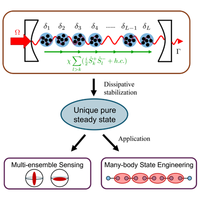
Reconfigurable Dissipative Entanglement between Many Spin Ensembles: From Robust Quantum Sensing to Many-Body State Engineering
Article | 2026-06-01 06:00 EDT
Anjun Chu, Mikhail Mamaev, Martin Koppenhöfer, Ming Yuan, and Aashish A. Clerk
Researchers transform common cavity noise into a powerful tool to stabilize reconfigurable entangled states for ultraprecise sensing and topological matter.
Phys. Rev. X 16, 021047 (2026)
arXiv
Chirality routing non-polaritonic vacuum correlations in Landau polaritons
New Submission | Mesoscale and Nanoscale Physics (cond-mat.mes-hall) | 2026-06-02 20:00 EDT
Ayoub EL-Amrani, Zakaria Mzaouali, Houssam Sabri, Abdelouahed El Fatimy, Dukhyung Lee
Ultrastrong coupling between matter and cavity vacuum fields can turn the electromagnetic vacuum into a structured quantum environment, thereby opening passive routes for modifying and manipulating material properties. Recent work has identified light–matter entanglement as an important ingredient in these property changes, which raises the question of where the relevant vacuum correlations actually reside. Landau polaritons provide chiral ultrastrong coupling systems in which one circular cavity polarization forms the bright polariton branches. Here, using a quantum information approach, we show that an exact chiral charge in a multimode Hopfield model routes the dominant anomalous correlations, squeezing, and cavity–matter entanglement into the opposite polarization. We find that, using parameters extracted from a multimode Landau polariton system, this hidden sector correlates the cyclotron resonance with finite momentum magnetoplasmons through Gaussian discord, while pairwise matter–matter entanglement remains absent. We further predict a polarization anisotropy of dressed vacuum electric field fluctuations as a signature of this chiral routing. These results identify chirality as a symmetry principle for organizing ultrastrong coupling vacua and show that quantum information tools provide a powerful framework for revealing the salient properties of Landau polaritons.
Mesoscale and Nanoscale Physics (cond-mat.mes-hall), Quantum Physics (quant-ph)
20 pages, 13 figures
Advances in electrical contacts to single crystals of emerging materials for transport measurements
New Submission | Materials Science (cond-mat.mtrl-sci) | 2026-06-02 20:00 EDT
Huandong Chen, Abhay. N. Pasupathy, Jayakanth Ravichandran
Transport measurements that probe electrical resistivity of a material under varying external stimuli, such as temperature, magnetic field, optical illumination, and gate voltage, are among the most important experimental techniques in condensed matter physics. These measurements provide critical insights into the fundamental electronic properties of materials. In recent years, they have facilitated the discovery and exploration of intriguing physical phenomena (e.g., superconductivity and quantum oscillations) and unique device functionalities (e.g., photoresponse and electrostatic gating effects) in various emerging materials, particularly in the form of single crystals. However, unlike large-scale wafers or thin films, newly synthesized single crystals often pose substantial challenges in establishing reliable electrical contacts due to their irregular geometries, limited dimensions, inherent structural characteristics, and potential susceptibility to degradation. In this review, we highlight recent technological advancements in the fabrication of high-quality, lithographically defined multi-terminal electrodes on both exfoliable and non-exfoliable single crystals for transport measurements. Our work provides a practical guide for researchers seeking to select appropriate contact-fabrication strategies tailored to unique characteristics of emerging crystals.
Materials Science (cond-mat.mtrl-sci), Applied Physics (physics.app-ph)
Photostationary Lifshitz transition in High Tc superconductor Bi2Sr2CaCu2O8+δ
New Submission | Strongly Correlated Electrons (cond-mat.str-el) | 2026-06-02 20:00 EDT
Ji Dai, Lukas Hellbrück, Michele Puppin, Alberto Crepaldi, Francesco Barantani, Thomas LaGrange, Arnaud Magrez, Edoardo Martino, Neven Barisic, László Forró, J. Hugo Dil, Marco Grioni, Henrik M. Rønnow, Siham Benhabib, Fabrizio Carbone
To date, controlling the steady-state electronic band structure in high-Tc cuprate superconductors has been achieved primarily through chemical doping or magnetic fields. Here, we present that ultrafast optical excitation can instead drive the electronic band structure of Bi2Sr2CaCu2O8+{\delta} into a photostationary, long-lived excited state. At sufficiently high pump fluences, this state undergoes a Lifshitz transition of the Fermi surface, characterized by a change in topology from hole-like to electron-like. Time- and angle-resolved photoemission spectroscopy, supported by single-band tight-binding calculations, reveals that 1.6 eV photoexcitation induces band-structure evolutions closely analogous to those produced by chemical doping. These results point to an efficient photodoping mechanism involving cooperative effects, including charge transfer, renormalization of effective electronic correlations, and defect-assisted charge trapping. Our findings raise fundamental questions regarding thermalization processes occurring on timescales comparable to the laser repetition period in cuprates. More broadly, ultrafast optical control enables access to otherwise inaccessible regions of the phase diagram by tuning the pump fluence.
Strongly Correlated Electrons (cond-mat.str-el)
Aharonov-Casher Chern bands for ultracold dark state atoms
New Submission | Quantum Gases (cond-mat.quant-gas) | 2026-06-02 20:00 EDT
Domantas Burba, Dominykas Borodinas, Gediminas Juzeliūnas
We consider the Aharonov-Casher (AC) condition for ultracold atoms adiabatically following the dark-state in a $ \Lambda$ -type atom-light coupling scheme. The AC condition establishes a relation between the geometric scalar potential and the synthetic magnetic field, resulting in a fully degenerate lowest Landau-level-like band even if the magnetic field is inhomogeneous but has a proper sign. We derive a general requirement for the atom-light coupling under which the AC condition applies. The requirement holds if the Rabi frequencies of the $ \Lambda$ scheme are the superposition of plane waves with the appropriate amplitudes and phases. In particular, the Rabi frequencies made of $ N=3,,4,,6$ fine tuned plane waves yield a smooth background magnetic field of definite sign, as well as an array of non-measurable Aharonov-Bohm flux singularities. Departing from the fine tuning, the latter singularities broaden into narrow subwavelength patches of the opposite magnetic field, which broaden the lowest energy band. The lowest band is broadened also for the fine tuned situation due to deviation from the adiabatic approach because of the finite atom-light coupling strength. It is shown that a proper combination of the two imperfections (departure from fine tuning and finite atom-light coupling strength) can lead to a completely flat lowest band, which furthermore is characterized by the perfect topology needed for simulating the fractional Hall states.
Quantum Gases (cond-mat.quant-gas), Mesoscale and Nanoscale Physics (cond-mat.mes-hall), Quantum Physics (quant-ph)
13 pages, 9 figures
Vestigial Nematic Order at Zero Temperature in Two-Dimensional Frustrated Quantum Antiferromagnets
New Submission | Strongly Correlated Electrons (cond-mat.str-el) | 2026-06-02 20:00 EDT
Matthew C. O’Brien, Eduardo Fradkin
The phase diagram of the two-dimensional quantum $ J_1$ -$ J_3$ Heisenberg antiferromagnet on a square lattice is a long-standing open problem. Despite recent advances in numerical techniques for quantum spin models, a detailed analytical theory is still lacking. We address this problem using a semiclassical approach based on a continuum nonlinear sigma model effective field theory, applying the nonperturbative large-$ N$ technique to map out the phase diagram and determine the magnetic correlations. We show that previously-overlooked interactions are crucial for stabilizing a vestigial nematic phase, both at finite and zero temperature. Our results reveal that the spontaneous breaking of global symmetries in the $ J_1$ -$ J_3$ model is controlled by the strength of infrared quantum fluctuations which are enhanced by proximity to the classical Lifshitz point.
Strongly Correlated Electrons (cond-mat.str-el)
21 pages, 10 figures
Extracting central charge from ground-state overlaps of spatially deformed Hamiltonians
New Submission | Strongly Correlated Electrons (cond-mat.str-el) | 2026-06-02 20:00 EDT
Chen Bai, Xinyu Sun, Liang-Hong Mo, Hong-Hao Tu
We show that the conformal anomaly of a $ (1+1)$ -dimensional conformal field theory can be extracted directly from a ground-state wave-function overlap associated with a spatial conformal deformation. Focusing on the $ q$ -Möbius deformation, we derive an exact overlap formula between the deformed and undeformed ground states, whose exponent depends only on the central charge. Motivated by this result, we construct a lattice estimator based solely on ground-state overlaps and apply it to representative critical quantum chains and the gapless edge modes of a two-dimensional Chern insulator. Numerical results demonstrate that the resulting overlaps provide a simple and robust probe of the central charge in microscopic models. We further demonstrate that the deformed ground states retain universal geometric structures in their entanglement spectra and entanglement entropies. These results provide a simple wave-function-based route to probing conformal data in critical systems and topological edge modes.
Strongly Correlated Electrons (cond-mat.str-el), High Energy Physics - Theory (hep-th), Quantum Physics (quant-ph)
7+9 pages, 3+2 figures
Electron vs. hole doping in infinite-layer nickelates: electronic structure, magnetism and correlations
New Submission | Strongly Correlated Electrons (cond-mat.str-el) | 2026-06-02 20:00 EDT
Ezra Day-Roberts, Fabio Bernardini, Harrison LaBollita, Yi-Feng Zhao, Andres Cano, Antia S. Botana
The observation of superconductivity in undoped infinite-layer nickelates $ R$ NiO$ 2$ ($ R$ = rare earth) challenges our current understanding and calls for a re-examination of the underlying electronic structure of this family of materials. In this context, it is particularly important to extend the investigation of $ R$ NiO$ 2$ compounds from the intensively studied hole-doped regime to the almost unexplored electron-doped one. Here, we use a combination of density-functional theory and dynamical mean-field theory to study the evolution of the electronic structure of infinite-layer nickelates in these two doping regimes. We find a striking asymmetry in the self-doping of the Ni-$ d{x^2-y^2}$ band due to the $ R(5d)$ states: while this effect is strongly suppressed upon hole doping, electron doping instead leads to an increase in the size of the $ R(5d)$ electron pockets, but without effectively hole-doping the Ni-$ d{x^2-y^2}$ band. This asymmetry has an important impact on the magnetic response as antiferromagnetism is rapidly suppressed upon hole doping, whereas it remains the ground state upon electron doping. Despite these differences, electronic correlations on both sides of the phase diagram are dominated by the Ni $ d_{x^2-y^2}$ orbital, suggesting that a single-band description may be appropriate for infinite-layer nickelates in both the electron- and hole-doped regimes.
Strongly Correlated Electrons (cond-mat.str-el), Materials Science (cond-mat.mtrl-sci), Superconductivity (cond-mat.supr-con)
8 pages, 10 figures
Co-adsorption mechanism drives CO oxidation on defective ZnS
New Submission | Materials Science (cond-mat.mtrl-sci) | 2026-06-02 20:00 EDT
P.R.A. de Oliveira, C.Codeço, M.G.Menezes, P.Venezuela, F.Stavale, J.A.Boscoboinik
Reactivity on wide-bandgap semiconductor surfaces relies critically on the generation of active sites. In the case of CO oxidation, however, the mere presence of defects is insufficient to drive reactivity. Here, we investigate CO oxidation on a defective ZnS single-crystal surface by combining near ambient pressure X-ray photoelectron spectroscopy (NAP-XPS) and density functional theory (DFT) calculations. NAP-XPS measurements reveal CO$ _2$ -like surface intermediates only under oxygen-rich conditions, consistent with oxygen-assisted CO oxidation. DFT calculations support an oxygen-assisted co-adsorption pathway in which CO interacts preferentially with adsorbed oxygen species stabilized near Zn-deficient sites, forming weakly bound CO$ _2$ -like structures. These results identify oxygen coverage, rather than defect density alone, as the key factor controlling CO$ _2$ -like intermediate formation on defective ZnS and establish defective ZnS as a model platform for studying oxygen-assisted surface chemistry on non-oxide semiconductors.
Materials Science (cond-mat.mtrl-sci)
14 pages (single column), 5 figures . Letter format. Supporting Information available upon request
Localization of Active Particles on Random Arrays of Parallel Filaments
New Submission | Disordered Systems and Neural Networks (cond-mat.dis-nn) | 2026-06-02 20:00 EDT
Quenched disorder in the environment can fundamentally alter transport dynamics in both active and passive systems. We explore how disordered arrays of filaments govern the distribution of intermittently moving particles which switch between diffusive and processive transport. Motivated by the mixed-polarity arrangements of parallel microtubules observed in mammalian dendrites, we show that such arrays tend to result in localization of particles at regions of convergent filament orientation. In the rapid attachment-detachment limit, the disordered system can be described by a noisy one-dimensional effective energy landscape, whose structure is approximated by a random walk. The depth and width of wells on this landscape are expressed as a function of the transport kinetics and system geometry. Localization is shown to be strongest at intermediate run-lengths, where biased transport persists long enough to sense the quenched filament polarity but not so long as to facilitate escape from local traps. These results demonstrate robust localization of particles moving on random filament networks, highlighting the emergent spatial organization that arises from an interplay of active transport and quenched disorder.
Disordered Systems and Neural Networks (cond-mat.dis-nn), Statistical Mechanics (cond-mat.stat-mech), Biological Physics (physics.bio-ph), Subcellular Processes (q-bio.SC)
Electronic screening of the friction acting on ions and water molecules in narrow carbon nanotubes
New Submission | Mesoscale and Nanoscale Physics (cond-mat.mes-hall) | 2026-06-02 20:00 EDT
Li, et. al., have observed a larger flow rate, resulting from osmotic pressure, of protons and water molecules in nanometer scale diameter metallic carbon nanotubes compared to that in semiconducting carbon nanotubes. The flow rate of potassium ions, however, under an applied electric field is almost the same in metallic and semiconducting nanotubes. We propose a simple physical picture to understand these experimental results by examining the effects of screening by conduction electrons in electrically conducting carbon nanotubes on the friction experienced by protons, water molecules, and ions flowing through the nanotube.
Mesoscale and Nanoscale Physics (cond-mat.mes-hall)
Impact of viscoelastic polymer solution droplets on a granular bed
New Submission | Soft Condensed Matter (cond-mat.soft) | 2026-06-02 20:00 EDT
Jooyeon Park, Theophile Meiller, Sreeram Rajesh, Alban Sauret
The impact of polymer solution droplets on granular beds is relevant to powder processing, binder jetting additive manufacturing, and environmental applications involving erosion control or spray deposition, yet most controlled studies of drop–grain interactions have focused on Newtonian liquids. In this study, we experimentally investigate the impact of viscoelastic polyethylene oxide (PEO) droplets on a dry granular bed and compare the resulting cratering dynamics with those of Newtonian liquids over a wide range of impact energies and Ohnesorge numbers. Crater morphology changes with impact energy, and this evolution occurs at lower energies for drops of polymer solution, consistent with their distinct liquid–grain interactions during impact. The crater diameter exhibits two distinct regimes: a low-energy plateau and a power-law growth at higher impact energies. We identify the transition between these regimes and show that, although the plateau size and the power law remain nearly unchanged, viscoelastic droplets reach the transition at lower impact energy than Newtonian droplets. This suggests that viscoelasticity modifies how the impact energy is partitioned between droplet deformation and dissipation in the granular bed.
Soft Condensed Matter (cond-mat.soft), Fluid Dynamics (physics.flu-dyn)
Microstructure-specific mechanisms define multistage relaxation dynamics in a metallic model-glass
New Submission | Materials Science (cond-mat.mtrl-sci) | 2026-06-02 20:00 EDT
Achraf Atila, Zengquan Wang, Birte Riechers, Robert Maaß
Deciphering complex relaxation pathways in disordered solids is a central challenge across polymeric, oxide, and metallic glasses, which traditionally relies on the interpretation of mechanical spectroscopy and resulting damping modes. Here we demonstrate the direct observation of dominant atomic-scale relaxation mechanisms during isothermal annealing of an as-quenched binary model glass towards incipient crystallization. Assessed via simulated x-ray photon correlation spectroscopy, a multi-state structural decorrelation is uncovered via speckle-pattern analysis of the full three-dimensional diffraction sphere across the first peak of the structure factor. Over a simulation time of up to 10 $ \mu$ s, three distinct and subsequent decorrelation stages of thermal vibration, glassy network evolution, and structural and chemical ordering towards crystallization are identified. These findings promote a picture where specific dynamically-separated mechanisms drive the microstructural evolution during glass relaxation and suggest a much richer multi-mode relaxation behavior of metallic glasses than hitherto identified.
Materials Science (cond-mat.mtrl-sci)
12 pages, 5 figures, Under review since July 2025
Imaging the Magnetically Driven Reconstruction of the Electronic States in the Antiferromagnetic Topological Insulator EuSn$_2$As$_2$
New Submission | Strongly Correlated Electrons (cond-mat.str-el) | 2026-06-02 20:00 EDT
Luka Khizanishvili, Erekle Jmukhadze, Anika Raisa, Divyanshi Sar, Mingda Gong, Tetiana Romanova, Dariusz Kaczorowski, Wei-Cheng Lee, Pegor Aynajian
The realization of the axion insulator phase in magnetic topological insulators is often hindered by crystalline symmetries that protect gapless surface states, even when time-reversal symmetry is broken. Here, we use variable-temperature scanning tunneling microscopy (STM) and spectroscopy (STS), complemented with density functional theory (DFT), to investigate the local electronic structure of the antiferromagnetic (AFM) topological insulator EuSn$ _2$ As$ _2$ across its Néel transition at $ T_N = 24$ K. On the (001) surface, we observe a substantial density of intrinsic Sn vacancies that introduce nanoscale electronic inhomogeneity and p-type doping. Upon cooling below $ T_N$ , we resolve the emergence of two distinct magnetically driven gaps: a $ \sim$ 100 meV gap near the Fermi level and a $ \sim$ 50 meV gap at the ARPES-resolved Dirac point. We attribute the former gap to AFM Brillouin-zone folding and hybridization. The characteristics of the 50 meV gap point toward the lifting of mirror-symmetry protection by Sn vacancies and the consequent mass gapping of the Dirac point, although contributions from AFM-induced folding hybridization cannot be entirely ruled out. Our findings provide real-space evidence for strong coupling between localized moments and itinerant topological states, highlighting exfoliable EuSn$ _2$ As$ _2$ as a potential candidate for realizing axion-insulator-based devices.
Strongly Correlated Electrons (cond-mat.str-el)
Magnetic self-frustration from spontaneous structural distortion
New Submission | Strongly Correlated Electrons (cond-mat.str-el) | 2026-06-02 20:00 EDT
T. Vignau Costa, G. L. Rossini, D. C. Cabra, S. A. Grigera, R. A. Borzi
In frustrated magnetism, lattice distortions mediated by magnetoelastic coupling are commonly invoked as an escape route from extensive degeneracy toward an ordered ground state and, in some cases, the onset of multiferroicity. Here we present a minimal classical model that illustrates the converse phenomenon, which we term ``magnetic self-frustration’’. Monte Carlo simulations reveal that a kagomé lattice with trivial magnetic interactions – namely, nearest-neighbor Ising ferromagnetism – undergoes a magnetostructural transition into a breathing-like phase, characterized by irregular bond dimerization along the three kagomé directions. Structurally, the equilateral triangles belonging to one of the two kagomé sublattices spontaneously distort, expanding into isosceles triangles. An analysis to first order in the magnetoelastic coupling constant $ \alpha$ shows that the shape of these triangles is remarkably robust. Acting like rigid building blocks in a puzzle, their vertices determine the geometry of the second sublattice, giving rise to contracted ferromagnetic triangles with a variety of shapes. The magnetic sector can be mapped onto an effective antiferromagnetic triangular lattice, which remains disordered down to low temperatures and retains a finite residual entropy of one third of that of Wannier. This self-frustrated phase takes place at intermediate values of $ \alpha$ , separating the conventional undistorted ferromagnetic phase at weak coupling from a strongly coupled ordered phase characterized by a regular dimerized up-up-down-down antiferromagnetic pattern along the three kagomé directions, built from ferromagnetic triangles and hexagons.
Strongly Correlated Electrons (cond-mat.str-el)
Robust control over polar skyrmion bubble density with a combined optical and electrical approach
New Submission | Materials Science (cond-mat.mtrl-sci) | 2026-06-02 20:00 EDT
Lingyuan Gao, Laurent Bellaiche
Polar skyrmion bubbles are nanoscale ferroelectric domain configurations with swirling polarization textures, and often emerge in ferroelectric oxide systems. Owing to their inhomogeneous polarization patterns, which endow them with distinct topologies and electrical responses from homogeneous monodomains, polar skyrmion bubbles are envisaged to be promising candidates for non-volatile memory devices. In such device, the recorded information density is directly proportional to the density of bubbles, underscoring the need for precise control over bubble nucleation. Here, using first-principles-based calculations, we demonstrate that when assisted with a DC electric field, twisted light, which has a spatially inhomogeneous field pattern, can robustly tune the density of polar skyrmion bubbles in ferroelectric ultrathin films between $ 10^2\sim 10^4 \rm{bit}/\mu m^2$ . Moreover, by modulating DC and optical field strengths together with the beam radius, the nucleation rate, which characterizes the creation and annihilation speed of polar skyrmion bubbles, can also be well controlled. These findings highlight the unique response of ferroelectric nanofilms to optical and electric fields, which is crucial for employing polar skyrmion bubbles in the next-generation of ultrahigh-density memory technologies.
Materials Science (cond-mat.mtrl-sci)
Microscopic origin of polytype-dependent melting in SiC revealed by machine-learning molecular dynamics
New Submission | Materials Science (cond-mat.mtrl-sci) | 2026-06-02 20:00 EDT
Ljiljana Stojanović, Samuel J. Magorrian, Lara Kabalan, Richard N. White, Fabian L. Thiemann, Viktor Zólyomi
Predicting how crystal structure influences high-temperature stability remains a key challenge in materials modelling and design. Silicon carbide (SiC), one of the most thermally and chemically stable materials known, provides an ideal system for studying this problem because its many polytypes preserve similar local tetrahedral bonding while differing in long-range stacking geometry. Here, we combine phase-coexistence machine-learning molecular dynamics with finite-temperature phonon analysis, enabled by a fine-tuned MACE interatomic potential that accurately describes crystalline, high-temperature, and disordered configurations across multiple SiC polytypes. We identify a clear relative stability ordering, 3C > 2H > 9R, reflected consistently in structural disordering, interlayer sliding, and finite-temperature phonon spectra. Across all polytypes, melting initiates through the formation of short C-C contacts and carbon-rich local regions, followed by a progressive loss of tetrahedral Si-C connectivity. The reduced stability of the long-period 9R polytype is traced to low-frequency transverse-acoustic shear modes associated with relative bilayer sliding, which are already present in the 0 K phonon spectra and soften further at high temperature. These modes generate larger lateral bilayer displacements, linking enhanced interlayer sliding to local chemical disordering and ultimately melting. More broadly, our results show that high-temperature stability in polytypic covalent materials is governed not only by local bond strength, but also by stacking-dependent transverse dynamics.
Materials Science (cond-mat.mtrl-sci), Computational Physics (physics.comp-ph)
Data-Driven Discovery of Unconventional Antiferromagnets
New Submission | Materials Science (cond-mat.mtrl-sci) | 2026-06-02 20:00 EDT
Qirui Cui, Chenxu Liu, Anna Delin, Kaiyou Wang
Unconventional antiferromagnets combine zero net magnetization with spin-split electronic bands, offering a distinct, important platform for spintronics. Their discovery, however, has so far depended largely on case-by-case studies and on a limited number of compounds with experimentally resolved magnetic structures. Here, we overcome these bottlenecks by resolving magnetic ground states across a broad materials database. We narrow down 37163 magnets from the Materials Project to 189 collinear antiferromagnets by combining physics-informed prescreening, high-throughput exchange calculations and Luttinger-Tisza analysis. Among these, symmetry analysis identifies 36 altermagnets and 11 Luttinger-compensated ferrimagnets (LCFs), including 22 altermagnets and 9 LCFs that have not been reported previously. The identified unconventional antiferromagnets can support nonrelativistic spin Hall effects and doping-tunable spin transport with switchable polarization and giant anisotropy. Our framework converts broad structural databases into a curated, symmetry-classified set of experimentally testable compensated spin-split magnets, establishing a scalable route for the efficient discovery of functional antiferromagnets.
Materials Science (cond-mat.mtrl-sci), Applied Physics (physics.app-ph)
22 pages, 3 figures
Design and modelling of compliant mechanisms with invertible Poisson’s ratio effect for growing biological cells
New Submission | Soft Condensed Matter (cond-mat.soft) | 2026-06-02 20:00 EDT
Manu Sebastian, Sreenath Balakrishnan, Safvan Palathingal
The behaviour of biological cells depends on the mechanical properties, such as Elastic Modulus and Poisson’s ratio, of the substrate they adhere to. Tunable materials such as polyacrylamide gels and hydrogels were previously used as substrates to understand this dependence. However, these substrates do not facilitate changing their elastic properties in situ while cells are growing on them. This work presents an alternate approach that enables this–substrates based on tunable compliant micro mechanisms.
In particular, the mechanism proposed here has an invertible Poisson’s ratio effect. In the first configuration, the effect is positive, and in the second, it is negative, with any desired magnitude. We achieve this by changing the stiffness between two internal points of a mechanism with the shape of a re-entrant structure. An increase in stiffness causes the direction of deformation along the lateral axis to reverse for a given reference load along the horizontal axis.
We derive analytical expressions that relate the geometric parameters to the ratio of input and output displacements for both mechanism configurations. The analytical modelling is verified with finite element analysis and experiments on mesoscale design prototypes of both configurations.
Soft Condensed Matter (cond-mat.soft)
Individually tunable Si/SiGe quantum dot operating voltages via gate-biased illumination
New Submission | Mesoscale and Nanoscale Physics (cond-mat.mes-hall) | 2026-06-02 20:00 EDT
Jared Benson, Sanghyeok Park, Owen M. Eskandari, M. A. Wolfe, Brighton X. Coe, J. P. Dodson, S. N. Coppersmith, Mark Friesen, M. A. Eriksson
Semiconductor quantum dot qubits often require very different voltages on each gate to bring them to a correct operating point. Here, we present a method by which one can controllably and repeatably alter the nanoscale trapped charge distribution at an oxide-semiconductor interface. We demonstrate this method on a Si/SiGe quantum dot device, and we find that the operating voltages can be controlled and made much more uniform. The method relies on illumination with near-infrared light in the presence of applied gate voltages, and it enables the tuning of the device operating point on a gate-by-gate basis. We present an explanation of the underlying physics using self-consistent Schrödinger-Poisson simulations. As an application of this method, we tune a triple quantum dot to have uniform and small operating voltages in the (1,1,1) charge configuration. Importantly, we show that shifting the operating voltages in this way does not change the measured charge noise.
Mesoscale and Nanoscale Physics (cond-mat.mes-hall), Quantum Physics (quant-ph)
12 pages, 6 figures
Surface Reconstruction in Low-Temperature ARPES Spectra of Charge-Ordered EuAl$_4$
New Submission | Strongly Correlated Electrons (cond-mat.str-el) | 2026-06-02 20:00 EDT
Hao Liu, Bo Chen, Chen Zhang, Qi-Yi Wu, Sheng-Tao Cui, Zhe Sun, Zhong-Tuo Fu, Ying Zhou, Yang Luo, Jun Liu, Yu-Xia Duan, Jian-Qiao Meng
Charge ordering in EuAl$ _4$ has been widely discussed in connection with band reconstruction, magnetism,and topological electronic states, yet the microscopic origin of the complex low-temperature ARPES spectra remains unresolved. Here we combine photon-energy-, temperature-, and cleavage-history-dependent ARPES with firstprinciples calculations to separate intrinsic bulk bands from surface-derived spectral weight. Spectra measured on high-temperature-cleaved surfaces, both at 160 K and after cooling to 10 K, are well described by the calculated three-dimensional bulk electronic structure, whereas low-temperature-cleaved surfaces exhibit additional electron-like bands, replica-like Fermi-surface contours, and nearly kz-independent surface-derived features that are absent from the bulk calculations. These extra features are progressively suppressed upon warming, whereas the bulk-derived bands remain largely unchanged across the charge-density-wave transition within the experimental resolution. The combined analysis of photon-energy dependence, temperature evolution, and cleavage history identifies the reconstructed low-temperature spectral weight as arising predominantly from a thermally fragile surface reconstruction rather than from intrinsic bulk CDW-induced band folding. These results resolve an important ambiguity in EuAl$ _4$ and provide spectroscopic criteria for distinguishing surface reconstruction from bulk charge-order effects in BaAl$ _4$ -family correlated semimetals.
Strongly Correlated Electrons (cond-mat.str-el)
7 pages, 3 figures
Complexity of tensor network simulation for noisy quantum circuits
New Submission | Strongly Correlated Electrons (cond-mat.str-el) | 2026-06-02 20:00 EDT
Yuguo Shao, Zishuo Zhao, Song Cheng, Zhengwei Liu
We aim to rigorously address how local noise affects classical simulability of quantum dynamics benchmarked by tensor-network methods. Using operator entanglement entropy (OEE), we prove the following: (1) For single-qubit depolarizing noise on arbitrary circuits, tensor networks with $ \mathrm{poly}(n)$ bond dimension suffice for fixed absolute Hilbert-Schmidt error after $ \order{1}$ depth, while relative error demands $ \order{\log n}$ depth; and this bound is optimal. (2) For single-qubit depolarizing noise on 1D local circuits, the existence of whole-trajectory error-bounded matrix product operator (MPO) of $ \mathrm{poly}(n)$ bond dimension at all depths. (3) For general single-qubit noise in 1D brickwall circuits, random two-design gates with contraction coefficient $ c<1/3$ yield an $ \order{1}$ OEE plateau with probability $ 1-Te^{-\Omega(n)}$ , while arbitrary gates with $ c<1/48$ give $ \order{\log n}$ OEE in the worst case. (4) In higher dimensions, these bounds yield uniform-in-depth $ \mathrm{poly}(n)$ average boundary-bond dimensions for projected entangled pair operators~(PEPO) across every cut – under depolarizing noise at either absolute or relative accuracy, and under general noise with strong contraction at absolute accuracy. Our results establish a rigorous connection between certain noise models, circuit types, and their classical simulability.
Strongly Correlated Electrons (cond-mat.str-el), Quantum Physics (quant-ph)
47 pages, 3 figures
The Uhlmann phase of Higher-Order Topological Insulators at Finite Temperature
New Submission | Mesoscale and Nanoscale Physics (cond-mat.mes-hall) | 2026-06-02 20:00 EDT
We have studied the finite-temperature topology of higher-order topological insulators (HOTIs) based on the Uhlmann phase, which is a phase angle of the Uhlmann overlap. As an example of HOTIs, the Hamiltonian of the Benalcazar-Bernevig-Hughes (BBH) model is constructed from Gamma matrices satisfying the Clifford algebra. This specific algebraic structure underpins the model’s higher-order topological properties, including the quantization of the Uhlmann phase to $ 0$ or $ \pi$ . This quantization enables us to treat the abrupt jumps of the Uhlmann phase as an indication of the nontrivial topological phase of the BBH model at finite temperature. From the disappearance of these jumps, we determine the critical temperature at which the topological transition occurs. For a special choice of parameters, the Uhlmann overlap and the critical temperature can be computed analytically.
Mesoscale and Nanoscale Physics (cond-mat.mes-hall)
9 pages, 6 figures
Synthesis of single-layered fluorographdiyne nanosheets via selective on-surface 2D covalent polymerization
New Submission | Materials Science (cond-mat.mtrl-sci) | 2026-06-02 20:00 EDT
Chen-Hui Shu, Yi Zheng, Tao Lin, Li-Xia Kang, Zhang Qu, Zhi-Yu Wang, Ying Wang, Zheng-Yang Huang, Qian Liu, Hang Xu, Chong Chen, Yangfan Wu, Longteng Xiao, Mengxi Liu, Xiaohui Qiu, Pei-Nian Liu, Deng-Yuan Li
Two-dimensional conjugated polymers (2DCPs) are significant macromolecular materials with intriguing and tunable physicochemical properties that depend on their geometries. Graphdiyne and its derivatives are exemplary 2DCPs featuring sp-sp2 hybridized skeletons. However, achieving single-layered, large-domain/regular graphdiyne and its derivatives on surfaces remains a formidable challenge due to the lack of selective 2D covalent polymerization methods. Here, we report a selective on-surface 2D covalent polymerization method via the combination of cobalt catalysis and coronene templating, achieving the synthesis of single-layered fluorographdiyne nanosheets up to 60\ast60 nm2 on Au(111) surface. Using scanning probe techniques, we visualize the sequential polymerization process and characterize cobalt-activated coupling intermediates at the atomic level. Experimental and theoretical analyses suggest that strong d-{\pi} coupling between cobalt and alkynyl transforms a robust Csp-Au bond into a weaker Csp2-Au bond, thereby facilitating the demetallization C-C coupling. Besides, the templating effect of coronene suppresses kinetically trapped defects and improves the selectivity of hexagonal-ring formation in the complex 2D covalent polymerization process.
Materials Science (cond-mat.mtrl-sci), Chemical Physics (physics.chem-ph)
Giant Thermal-Conductivity Enhancement from Pseudo-Angular Momentum Conservation
New Submission | Materials Science (cond-mat.mtrl-sci) | 2026-06-02 20:00 EDT
Tingting Wang, Dabao Zha, Hao Chen, Jiangbin Gong, Lifa Zhang
Pseudo-angular momentum (PAM) underlies optical selection rules for chiral phonons, but whether it also constrains thermally populated finite-q phonon-phonon scattering has remained unresolved. We show that rotational or screw eigenphase conservation imposes a PAM residue rule on cubic anharmonic vertices, revealing a hidden selection rule for heat transport. In screw-symmetric helical Te, an exact platform, implementing this rule as a projector in first-principles Boltzmann transport leaves spectra and force constants unchanged but removes roughly two thirds of kinematically allowed triplets, suppresses resistive Umklapp relaxation, and enhances lattice thermal conductivity by a factor of 5.30 at 300 K, remaining above fivefold up to 400 K. A bulk chiral-crystal benchmark further shows that explicit eigenphase organization can increase the calculated lattice thermal conductivity by about 24%, comparable to the reported first-principles underestimation of experiment. These results establish PAM conservation as an anharmonic selection principle for chiral-phonon heat transport and identify symmetry-resolved PAM conservation as a route to predicting and controlling thermal conductivity in chiral crystals and nanoscale phononics.
Materials Science (cond-mat.mtrl-sci)
6 pages, 5 figures
Velocity Resetting of Inertial Run-and-Tumble Particles in Non-Newtonian Media: Velocity Distribution, Diffusion and First-Passage Time
New Submission | Soft Condensed Matter (cond-mat.soft) | 2026-06-02 20:00 EDT
Subhanker Howlader, Sayantan Mondal, Prasenjit Das
We study the dynamics of an athermal inertial run-and-tumble particle moving through a non-Newtonian medium in $ d=1$ , where the particle’s velocity $ v$ is reset to zero at a constant rate $ r$ . The drag force from the non-Newtonian medium is represented by a nonlinear velocity-dependent function $ g(v)$ . The run-and-tumble dynamics is modeled by a symmetric dichotomous noise with strength $ \Sigma$ and flipping rate $ \lambda$ . We begin with the Fokker-Planck (FP) equation for the velocity distribution $ P(v,t)$ of the particle. In the presence of resetting, however, the FP equation does not yield a closed-form solution even in the steady state. We therefore compute the steady-state velocity distribution $ P_s(v)$ directly from particle trajectories and compare it with the numerical solution of the FP equation, finding good agreement between the two approaches. For sufficiently large $ r$ , $ P_s(v)$ shows a cusp-like singularity at $ v=0$ and the particles display diffusive motion at long times. The effective diffusion coefficient $ D_{\mathrm{eff}}$ decays as $ r^{-2}$ in the large-$ r$ regime. These results hold irrespective of the specific form of $ g(v)$ and the values of $ \lambda$ and $ \Sigma$ . However, the mean first-passage time exhibits a strong dependence on the nature of the medium as the resetting rate $ r$ is varied. In shear-thickening media, there exists an optimal resetting rate that minimizes the time required to reach the target velocity $ v_t$ . In contrast, no such optimal resetting rate is observed in shear-thinning media.
Soft Condensed Matter (cond-mat.soft)
19 Pages, 6 Figures, Accepted in Physics of Fluids
Non-equilibrium glassy arrest and discontinuous transitions at avoided quantum critical points
New Submission | Statistical Mechanics (cond-mat.stat-mech) | 2026-06-02 20:00 EDT
The non-equilibrium dynamics of an order parameter confined by an external constraint field are investigated within a spatially extended Belitz-Kirkpatrick-Vojta framework. A generic non-monotonic dissipation peak arises at avoided criticality due to the interplay between macroscopic free-energy flattening and microscopic disorder-induced trapping. Near this regime, suppressed deterministic forces enhance activated trapping, leading to an effective violation of the fluctuation-dissipation theorem and ultimate glassy arrest. At higher fields, the system undergoes a discontinuous phase transition that bypasses this flat free-energy region. These explicit analytical scalings establish a generic mechanism for non-equilibrium arrest in disordered condensed matter systems.
Statistical Mechanics (cond-mat.stat-mech)
10 figures, 5 figures
Noncollinear spin textures and 90° domain walls in twisted XY magnets
New Submission | Mesoscale and Nanoscale Physics (cond-mat.mes-hall) | 2026-06-02 20:00 EDT
Guanghui Cheng, Shiva T. Konakanchi, Andres E. Llacsahuanga Allcca, Sanjeev Khare, Nithin Abraham, Yuqing Cao, Hechang Lei, Kenji Watanabe, Takashi Taniguchi, Pramey Upadhyaya, Yong P. Chen
Twisted moiré magnets are promising in exploring noncollinear magnetic phases, yet current experimental studies have been restricted to uniaxial magnets, limiting the accessible phase space. Here, we demonstrate noncollinear moiré magnetism based on XY magnet CrCl3. The tunneling magnetoconductance of twisted CrCl3 exhibits multiple field-driven transitions in small-twist-angle devices, attributed to the coexisting antiferromagnetic and ferromagnetic domains with distinct susceptibilities. The inferred spin configuration depends on the layer number, reflecting the interlayer coupling strength between twisted layers. This moiré magnetism is remarkably robust, persisting up to twisted double nine-layer stacks. Combined with micromagnetic simulations, we identify the ground state as the predicted “twisted-s” phase featuring 90° domain walls. Finally, we demonstrate voltage control of these noncollinear phases, highlighting the electrically tunable twist-spintronics.
Mesoscale and Nanoscale Physics (cond-mat.mes-hall), Materials Science (cond-mat.mtrl-sci)
Semiflexible Ring Polymers on Active Motor Beds: Nonequilibrium Dynamics and Conformations
New Submission | Soft Condensed Matter (cond-mat.soft) | 2026-06-02 20:00 EDT
Sandip Roy, Abhishek Chaudhuri, Anil Kumar Dasanna
A semiflexible ring polymer on a motor-protein bed exhibits activity- and processivity-dependent rotational and conformational dynamics that are not captured by linear-chain behavior. Using coarse-grained Langevin simulations with bending elasticity, excluded-volume interactions, and stochastic motor attachment, stepping, and detachment, we vary activity (Peclet number), motor processivity, and chain stiffness to map the nonequilibrium response. The mean-squared displacement shows crossover dynamics, with semiflexible rings displaying subdiffusive-to-diffusive behavior at low activity and an intermediate ballistic regime at higher activity, while increasing flexibility shifts the short-time response toward a Rouse-like limit. Diameter autocorrelations exhibit damped oscillations associated with coherent rotation; the rotational frequency increases with activity and processivity, whereas the decorrelation time is non-monotonic at high processivity. Fourier mode analysis identifies competition between the radius (k=0) and elliptic (k=2) modes as the origin of the non-monotonic asphericity.
Soft Condensed Matter (cond-mat.soft)
Non-Hermiticity-induced chirality imbalance of Weyl Landau levels
New Submission | Mesoscale and Nanoscale Physics (cond-mat.mes-hall) | 2026-06-02 20:00 EDT
Sachin Vaidya, Alaa Bayazeed, André Grossi Fonseca, Adolfo G. Grushin, Marin Soljačić, Christina Jörg
Weyl semimetals obey a global chirality constraint: the net chiral topological charge and any associated chiral spectral flow must vanish, as required by the Nielsen-Ninomiya theorem. Under magnetic fields, this constraint manifests through counter-propagating zeroth Landau levels associated with Weyl nodes of opposite chirality. Here, we experimentally demonstrate how non-Hermiticity can reshape this balance in a synthetic photonic Weyl semimetal. Using engineered gauge fields in one-dimensional multilayer structures, we realize both homogeneous and axial magnetic fields and directly probe the resulting Landau-level spectra. While a homogeneous field produces the expected chirality-balanced zeroth Landau levels, an axial field spatially separates the compensating chiral channels: co-propagating bulk pseudo-Landau levels carry one chirality, whereas the opposite chirality resides in boundary-localized surface states. We show that radiative boundary loss selectively suppresses these surface states, removing them from the long-lived observable spectrum and producing an experimentally accessible chirality imbalance. By reducing boundary loss, we recover the hidden chiral channel and reveal its surface-state origin. These results show that non-Hermiticity, present naturally in photonics, can control and relax fundamental chirality constraints in topological systems, enabling access to otherwise forbidden spectral responses.
Mesoscale and Nanoscale Physics (cond-mat.mes-hall), Optics (physics.optics)
9 pages, 6 figures
Sliding contact creates universal self-affine fractal surfaces
New Submission | Soft Condensed Matter (cond-mat.soft) | 2026-06-02 20:00 EDT
Ruibin Xu, Haohao Ren, Adriane Clerc, Guilhem Mollon, Wenbo Sheng, Feng Zhou, B.N.J. Persson
Surface roughness evolves during sliding, a process known as run-in, and the resulting topography controls friction, leakage, and failure from machines to geological faults. Yet the physical rule selecting this state remains unclear. We show that metals, rocks, and glasses develop universal self-similar roughness at short wavelengths, while retaining a material-dependent roll-off. A two-process model explains this behavior: junction formation and rupture drive universal roughening, whereas larger-scale deformation and/or fracture limit its growth.
Soft Condensed Matter (cond-mat.soft), Materials Science (cond-mat.mtrl-sci), Statistical Mechanics (cond-mat.stat-mech), Classical Physics (physics.class-ph)
Supersymmetric quantum criticality with discrete symmetry
New Submission | Strongly Correlated Electrons (cond-mat.str-el) | 2026-06-02 20:00 EDT
Supersymmetry, originally proposed in high-energy physics, can emerge as a remarkable low-energy structure in condensed matter systems. While emergent supersymmetry at quantum critical points is widely discussed in models with continuous symmetries, real materials are constrained by microscopic discrete symmetries. To address this, we investigate (2+1)-dimensional Gross-Neveu-Yukawa theories coupling Dirac fermions to a complex order parameter with discrete $ Z_n$ anisotropy. Using the functional renormalization group, we find that for $ n>3$ , the anisotropic perturbations are irrelevant at the fixed point, yielding a $ \mathcal{N}=2$ Wess-Zumino supersymmetric critical point. In the ordered phase, this dangerously irrelevant anisotropy gives rise to a second characteristic length scale, $ \xi’$ , alongside the usual correlation length, $ \xi$ . By tracking mass thresholds along symmetry-broken renormalization group trajectories, we extract the exponents $ \nu’$ and $ \nu$ without imposing prior scaling assumptions. For the $ Z_4$ , $ Z_5$ , and $ Z_6$ models, our results support the scaling relation $ \nu’/\nu = 1+|y_n|/p$ with $ p=2$ in the isotropic framework used here.
Strongly Correlated Electrons (cond-mat.str-el), Statistical Mechanics (cond-mat.stat-mech), High Energy Physics - Theory (hep-th)
17 pages, 6 figures
Impact of Disorder Dynamics and Multi-Domain Kinetics on the Sliding Ferroelectricity of CVD-Grown 3R-WSe2 Bilayers
New Submission | Materials Science (cond-mat.mtrl-sci) | 2026-06-02 20:00 EDT
Sourav Paul, Prasenjit Ghosh, Krishna Prasad Maity, Vineet Pandey, Abhijith M.B., Premananda Chatterjee, Kenji Watanabe, Takashi Taniguchi, Nicholas R. Glavin, Ajit K. Roy, Atindra Nath Pal, Vidya Kochat
Sliding ferroelectricity in van der Waals (vdW) layered systems has emerged as a promising route toward non-volatile nanoscale devices, where interlayer displacement in non-centrosymmetric bilayers generates an out-of-plane polarization. In particular, 3R-stacked bilayer transition metal dichalcogenides (TMDs) grown via chemical vapor deposition (CVD) have been shown to host such polarization due to broken inversion symmetry. However, a detailed investigation of the 2D ferroelectric (FE) properties of CVD-grown 2D films, particularly the role of intrinsic disorder, such as structural defects and domain structure, remains poorly understood. Here, we investigate the FE switching characteristics of CVD-grown 3R-stacked WSe2 using a graphene-based ferroelectric field-effect transistor (graphene-FE-FET) architecture, where graphene serves as a highly sensitive probe of induced charge modulation due to polarization switching of FEs. We show that the growth-induced structural disorder significantly impacts polarization switching, while multi-domain kinetics governs the evolution of the FE response. These findings provide important insights into the design and optimization of FE devices based on vdW materials.
Materials Science (cond-mat.mtrl-sci), Mesoscale and Nanoscale Physics (cond-mat.mes-hall), Applied Physics (physics.app-ph)
Manifold Diffusion for Structure Generation of Transition Metal Complexes
New Submission | Materials Science (cond-mat.mtrl-sci) | 2026-06-02 20:00 EDT
Luca Schaufelberger, Kjell Jorner
Transition metal complexes are central to catalysis, drug design, and materials science, with relevant properties strongly sensitive to their three-dimensional geometry. However, the electronic diversity and unconventional bonding environments of transition metal complexes pose a major challenge for accurate structure generation. In this work, we introduce TMCgen, a manifold diffusion machine learning model that efficiently and accurately generates geometries of transition metal complexes. By formulating the diffusion process over the metal-ligand coordination angles, combined with torsional and rotational diffusion of the ligands, TMCgen focuses on the key geometric degrees of freedom of transition metal complexes. TMCgen shows strong performance in generating accurate coordination environments on a diverse set of experimentally derived bioinorganic and organometallic complexes while requiring only few inference steps, enabling efficient generation. Our results demonstrate the potential of manifold-based generative modeling for data-efficient geometry generation, paving the way for property-conditioned design of transition metal complexes.
Materials Science (cond-mat.mtrl-sci), Machine Learning (cs.LG), Chemical Physics (physics.chem-ph)
A Visible-Frequency Excitonic Reststrahlen Band in (PEA)$_2$PbI$_4$ Slabs
New Submission | Materials Science (cond-mat.mtrl-sci) | 2026-06-02 20:00 EDT
Michael Pfeufer, Patrick Grenzer, Friedrich Schöppler, Tobias Hertel
Layered halide perovskites host exceptionally strong excitons, whose optical signatures are usually interpreted as absorptive resonances on a smooth dielectric background. Strong excitons, however, can also reshape the dielectric response itself and drive the real permittivity negative, opening a reflective band: the visible, excitonic analogue of an infrared Reststrahlen band. Whether bare (PEA)$ _2$ PbI$ _4$ slabs reach this regime has remained unclear. Here we show that low-temperature transmission of (PEA)$ _2$ PbI$ _4$ slabs, driven by the intralayer-exciton manifold, evolves with increasing thickness from an excitonic dip into a broad near-zero-transmission interval with compressed Fabry-Pérot-like fringes. Transfer-matrix analysis with an effective Lorentz-oscillator dielectric response reproduces this crossover, reconstructs a finite negative-Re($ \varepsilon$ ) window, and implies near-ultrastrong exciton-photon coupling. Calculated field maps show suppressed in-plane field penetration within this interval and a driven longitudinal response near the high-energy ($ \varepsilon=0$ ) edge. These results identify (PEA)$ _2$ PbI$ _4$ slabs as a cavity-free visible-frequency excitonic Reststrahlen material.
Materials Science (cond-mat.mtrl-sci), Mesoscale and Nanoscale Physics (cond-mat.mes-hall), Optics (physics.optics)
10 pages, 4 figures
Magnon bandstructure and topology in a periodically deformed Kagome lattice with DM interaction
New Submission | Strongly Correlated Electrons (cond-mat.str-el) | 2026-06-02 20:00 EDT
Mohammed Abdullah Hammadi, Mohammed Salman Alsadah, Husam Abdulmajeed Noorwli, Hocine Bahlouli, Michael Vogl
We study the band structure and topology of magnons for a Heisenberg model with DM interaction on a deformed Kagome lattice. For simplicity, we focus on a periodically deformed lattice with hexagonal symmetry and an enlarged unit cell. This enlarged unit cell gives rise to a richer band structure than in the undeformed case. Analyzing band topology, there is a distinction between the topologically trivial case with anti-ferromagnetic coupling and the topologically rich case with ferromagnetic coupling. In the anti-ferromagnetic case, a spin-space symmetry, also present in the classical ground state, enforces these topologically trivial states. In the ferromagnetic case, this symmetry is spontaneously broken by the classical ground state. Consequently, the band structure also hosts rich topological features. Specifically, we observe many topological transitions and bands with Chern numbers ranging from $ +2$ to $ -2$ , which makes the system richer than in the undeformed case. This emergent rich topological structure demonstrates that deformed magnets can host new and exciting physics.
Strongly Correlated Electrons (cond-mat.str-el)
Wasserstein-2 gradient flows and the geometry of entropy production in classical and quantum stochastic thermodynamics
New Submission | Statistical Mechanics (cond-mat.stat-mech) | 2026-06-02 20:00 EDT
Olga Movilla Miangolarra, Ralph Sabbagh, Artemy Kolchinsky
The second law does more than set the direction of thermodynamic evolution: it endows nonequilibrium transformations with an underlying geometry. In this work, we provide a unified geometric description of entropy production in classical and quantum thermodynamics based on Wasserstein-2 structures arising from gradient flows of free energy. We review how relaxation to equilibrium, in overdamped diffusions, discrete detailed-balanced Markov chains, and dissipative Lindblad dynamics, can be formulated as a gradient flow on the space of states. The associated Wasserstein-2 distance bounds entropy production, yielding a finite-time refinement of the second law. We extend this framework beyond purely dissipative dynamics by introducing generalized Wasserstein-2 metrics that incorporate conservative (Hamiltonian) dynamics in both classical inertial systems and open quantum systems, yielding intrinsic distances that exactly characterize minimal entropy production under fixed dissipative mobilities. We establish equivalence bounds between purely dissipative and Hamiltonian-dissipative geometries, explicitly quantifying how inertial or coherent dynamics can reduce dissipation. Finally, when restricted to equilibrium distributions, we recover the thermodynamic length of linear response-including the quantum thermodynamic length-thereby linking optimal transport, thermodynamic length, and counterdiabatic protocols within a single geometric framework. All in all, our results extend the Riemannian program of thermodynamics further from equilibrium and provide a geometric foundation for optimal protocols beyond the overdamped setting.
Statistical Mechanics (cond-mat.stat-mech), Quantum Physics (quant-ph)
30 pages 5 figures
Optically programmable and erasable cryogenic flash memory on an undoped Si/SiGe heterostructure
New Submission | Mesoscale and Nanoscale Physics (cond-mat.mes-hall) | 2026-06-02 20:00 EDT
S Rastogi, S Samanta, V Jangir, L Patra, K Modi, A Jain, G Scappucci, U Mukhopadhyay, S Mahapatra
Scalable cryogenic memory is a critical yet unresolved requirement for large-scale quantum computing architectures, particularly for computing-in-memory schemes. We exploit the interplay between optical excitation and gate bias in an undoped Si/SiGe heterojunction field-effect transistor (HFET) to realize non-volatile memory functionality. The device exploits a high interface trap density ($ D_{it} > 1.6 \times 10^{12}$ eV$ ^{-1}$ cm$ ^{-2}$ ), which, in conjunction with the oxide thickness and dielectric constant, enables effective “locking” of the threshold voltage to the applied gate bias over a wide voltage range. Two of these states can be selected for binary operation, while the availability of multiple stable states within the same device enables multibit data storage. Robust cycling endurance ($ >10^3$ cycles) and long-term state retention ($ >~10^4$ ~s) of the memory states at 1.5 K confirm the suitability of this approach for integration into Si/SiGe-based quantum computing architectures.
Mesoscale and Nanoscale Physics (cond-mat.mes-hall)
S Rastogi, S Samanta: These authors contributed equally
Impact of Cu-Mn ratio on Structure and Defects in Layered Multiferroic Cu1-xMn1+ySiTe3
New Submission | Materials Science (cond-mat.mtrl-sci) | 2026-06-02 20:00 EDT
Sai Venkata Gayathri Ayyagari, Boyang Zheng, Sreekant Anil, Subrata Ghosh, Yuxi Zhang, Yu Liu, Chandan De, Ke Wang, Jeffrey Shallenberger, Weiwei Xie, Vincent H. Crespi, Zhiqiang Mao, Nasim Alem
Multiferroic materials exhibit the coexistence of magnetic and ferroelectric order, enabling control of magnetism through electric fields and vice versa. These properties make them attractive for spintronic and memory device applications. Recent studies on Cu1-xMn1+ySiTe3 (0.04 \leq x \leq 0.26; 0.03 \leq y \leq 0.15) have revealed strong magnetoelectric coupling, with variations in Mn-to-Cu concentration leading to variations in optical, electronic, and magnetic responses. Despite these findings, the influence of nanoscale structure and defects on the observed properties remains poorly understood. In this study, we investigate the structure and nanoscale defects in Cu-deficient Cu1-xMn1+ySiTe3 (Cu:Mn ratio <1, i.e., with 0.04 \leq x \leq 0.26 and 0.03 \leq y \leq 0.15) and Cu-rich Cu1+xMn1-ySiTe3 (Cu:Mn ratio >1, i.e., with 0.04 \leq x \leq 0.3 and 0.13 \leq y \leq 0.31) crystals using scanning/transmission electron microscopy and single-crystal X-ray diffraction. Cu-deficient crystals exhibit extensive stacking faults correlated with chemical inhomogeneity between Mn and Cu, along with variations in Te stacking. In contrast, Cu-rich crystals show fewer stacking faults but contain other local structural variations, such as needle-shaped precipitates and loop-like features. These distinct local structural features between Cu-rich and Cu-deficient crystals can be correlated to variations in their observed properties. Complementary density functional theory calculations confirm that the Cu-rich structure is more polar than the Cu-deficient structure. Overall, this study provides a comprehensive understanding of how subtle changes in chemistry influence the nanoscale structure, defect distribution, and functional properties in Cu1-xMn1+ySiTe3, offering guidance for designing multiferroic materials with tailored performance.
Materials Science (cond-mat.mtrl-sci)
Edge Detection Framework Utilizing SOT-MTJ Bit-Cell Arrays
New Submission | Mesoscale and Nanoscale Physics (cond-mat.mes-hall) | 2026-06-02 20:00 EDT
Traditional edge detection algorithms, foundational to computer vision, face significant challenges in energy efficiency and processing latency on conventional CMOS-based hardware. Existing algorithms, such as Canny, are computationally expensive, posing challenges in resource-constrained hardware where energy efficiency and low latency are critical. This study introduces a novel, hardware-efficient algorithm that leverages the intrinsic characteristics of magnetic tunnel junction (MTJ) devices. We present a detailed device-level analysis of an MTJ-based system for edge detection, outlining its operational cycles, including write, read, and reset methods. The algorithm’s efficacy is evaluated against the standard Canny edge detection method. We provide a quantitative performance analysis, including metrics such as energy consumption and latency, which demonstrates that our proposed spintronics-based approach offers a promising solution for achieving low-power, high-speed image processing.
Mesoscale and Nanoscale Physics (cond-mat.mes-hall)
Submission for ICMAGMA 2026 (NIT Goa)
Thermodynamic origin of medium-entropy stabilization in multicomponent rock-salt oxides
New Submission | Materials Science (cond-mat.mtrl-sci) | 2026-06-02 20:00 EDT
Supriya Ghosal, Swapan Pati, Ashutosh Kumar
High entropy oxides are commonly associated with high configurational entropy ($ \Delta S_{conf}\geq$ 1.61R) corresponding to five equimolar cations occupying a crystallographic sublattice. However, recent experimental observations indicate that medium-entropy compositions may also exhibit entropy-stabilized rock-salt phases, raising an important question regarding the minimum entropy required for phase stabilization. In this work, we employ a first-principles thermodynamic framework to investigate the stability of rock-salt oxides containing two to five principal cations components analogous to (Ni$ _{0.8}$ Cu$ _{0.2}$ )O, (Ni$ _{0.6}$ Cu$ _{0.2}$ Zn$ _{0.2}$ )O, (Ni$ _{0.4}$ Cu$ _{0.2}$ Zn$ _{0.2}$ Co$ _{0.2}$ )O, (Ni$ {0.2}$ Cu$ {0.2}$ Zn$ {0.2}$ Co$ {0.2}$ Mg$ {0.2}$ )O. Density functional theory, MCSQS-based structural modeling, and finite-temperature Gibbs free-energy analysis are combined to quantify the roles of enthalpy mixing ($ \Delta H{mix}$ ), configurational ($ \Delta S{conf}$ ), vibrational ($ \Delta S{vib}$ ), and electronic contributions towards ($ \Delta S{elec}$ ) entropy change in governing phase stability. The results show that $ \Delta S{conf}$ alone is not a universal descriptor of phase stability. While the two-cation system is enthalpy-stabilized but three-, four- and five-cation systems become thermodynamically stable at high-temperature due to entropy-driven reduction of the Gibbs free energy. These findings demonstrate that single-phase rock-salt oxides are not restricted to the conventional high-entropy limit and that medium-entropy compositions can also be stabilized under suitable thermodynamic conditions.
Materials Science (cond-mat.mtrl-sci)
10 Pages, 5 figures
Energy spectra and cascade in the spin turbulence of a driven spinor Bose-Einstein condensate
New Submission | Quantum Gases (cond-mat.quant-gas) | 2026-06-02 20:00 EDT
Junghoon Lee, Jongmin Kim, Donggyu Lee, Yong-il Shin
We investigate the spin-interaction energy spectrum of spin turbulence in a driven spinor Bose-Einstein condensate. Continuous spin driving of a spin-1 condensate produces a nonequilibrium steady state with spatially fluctuating magnetization. We observe a power-law scaling consistent with the $ -7/3$ exponent predicted for spin-wave turbulence, which persists across our full range of drive strengths despite substantial changes in the spectral anisotropy. After switching off the drive, we track the free-decay evolution and find evidence consistent with a direct cascade of spin-interaction energy toward higher wavenumbers. These results establish an energy-spectral hallmark of spin turbulence and enable quantitative studies of cascade dynamics in spinor superfluids.
Quantum Gases (cond-mat.quant-gas), Fluid Dynamics (physics.flu-dyn)
11 pages, 6 figures
Low-Temperature Suppression of Intertwined Orders in La${1/3}$Sr${2/3}$FeO$_{3}$ Thin Films
New Submission | Strongly Correlated Electrons (cond-mat.str-el) | 2026-06-02 20:00 EDT
Mayia A. Vranas, Robin Glefke, Katherine Matthews, Xiaoke Li, Tianxing Wang, Henry Navarro, I-Ching Lin, Sarmistha Das, Biswajit Sahoo, Rourav Basak, Wei He, Holden Bauer, Ella Di Liberti, Jacob Butler, Elliot Kisiel, Erik Lamb, Jun-Sik Lee, Cheng-Tai Kuo, Heemin Lee, Christie Nelson, Sophie Morley, Sujoy Roy, Christoph Klewe, Fanny Rodolakis, Jessica McChesney, Oleg Shpyrko, Yimei Zhu, Eric Fullerton, Ivan Schuller, Alex Frano
The strong coupling between spin, charge, and lattice degrees of freedom in perovskite oxides leads to an array of exotic phenomena, giving these materials rich phase diagrams that can include coupled orders. This is exemplified by the A-site doped ferrite La$ _{1/3}$ Sr$ _{2/3}$ FeO$ _{3}$ (LSFO), which exhibits a coupled paramagnetic-antiferromagnetic and charge ordering phase transition at $ \sim$ 190 K that has been well studied in thin films, bulk, and polycrystalline samples. However, the low temperature behavior of LSFO thin films below $ \sim$ 100 K has not been thoroughly explored. This work uses several X-ray scattering and spectroscopy techniques to directly probe LSFO’s magnetic and charge order down to low temperature. Using resonant X-ray scattering, we observe a complete suppression of LSFO’s known antiferromagnetic and charge order below $ \sim$ 25 K. Further spectroscopy and coherent scattering measurements provide insight into LSFO’s electronic structure and domain dynamics in this new low temperature phase, and we propose possible explanations for the observed order suppression based on reduced dimensionality of domains in our thin films. Our findings provide insight into the effects of competing interactions in strongly correlated materials, particularly those with coupled orders.
Strongly Correlated Electrons (cond-mat.str-el)
15 pages, 10 figures
Autonomous scanning electrochemical cell microscopy enables rapid exploration of large compositionally complex material spaces
New Submission | Materials Science (cond-mat.mtrl-sci) | 2026-06-02 20:00 EDT
Felix Thelen, Moonjoo Kim, Geovane Arruda de Oliveira, Jan Lukas Buergel, Wolfgang Schuhmann, Alfred Ludwig
Alloying is a central strategy in electrocatalysis, enabling fine-tuning of electronic structure. In particular, compositionally complex solid solutions (CCSS) often called high-entropy alloys are of high interest as they allow active site design. However, the “combinatorial explosion” in the number of possible compositions poses a critical bottleneck for the discovery of active CCSS electrocatalysts. We present an autonomous scanning electrochemical cell microscopy (SECCM) system for ultrahigh-throughput and large-scale CCSS activity screening. The platform rapidly establishes composition-electrocatalytic activity relationships for large compositional spaces across multiple thin-film CCSS materials libraries via active learning and automated library exchange. Embedding analytical expressions of voltammetry in the algorithm enables the learning of whole voltammograms rather than a single selected metric. As a demonstration, we investigated hydrogen evolution reaction (HER) activities of Au-Ir-Rh, where Ir and Rh exhibit strong metal-hydrogen binding and Au exhibits relatively weak binding as derived from the HER volcano plot. The composition-activity trend was accurately predicted after measuring only 15% of all 966 measurement areas. Au30Ir20Rh50 and Au10Ir35Rh55 exhibit highest activities with standard rate constants of about 0.012 cm/s, demonstrating positive synergistic contributions from elemental mixing. The autonomous robotic SECCM platform is broadly applicable to a wide range of electrocatalytic reactions, providing a general pathway for accelerating CCSS electrocatalyst discovery and optimization.
Materials Science (cond-mat.mtrl-sci)
Compressibility and High-Pressure Structure of CaMg$_2$Bi$_2$ and YbMg$_2$Bi$_2$
New Submission | Materials Science (cond-mat.mtrl-sci) | 2026-06-02 20:00 EDT
Mario Calderón-Cueva, Allison Pease, Cheng Peng, Wanyue Peng, Megan Rylko, Weiwei Xie, Susannah M. Dorfman, Alexandra Zevalkink
Compounds with the formula $ AM_2X_2$ in the CaAl$ _2$ Si$ _2$ structure type have garnered increasing interest across various solid-state research domains, such as quantum topological and thermoelectric materials. Prior studies have identified high-pressure phase transitions in several compounds, including Mg$ _3$ Sb$ _2$ , Mg$ _3$ Bi$ _2$ , CaMn$ _2$ Bi$ _2$ , and SrAl$ _2$ Si$ _2$ . In this study, we investigate the structural behavior of CaMg$ _2$ Bi$ _2$ and YbMg$ _2$ Bi$ _2$ under varying pressure conditions. We synthesized crystals using the molten metal flux method and examined them through single-crystal synchrotron X-ray diffraction, employing diamond anvil cells to exert pressures up to 20 GPa. Our analysis reveals insights into the anisotropic compressibility of these materials, highlighting the more compressible and flexible octahedral $ A$ -Bi bonds as the primary contributors to this anisotropy. Moreover, we observed a phase transition in both CaMg$ _2$ Bi$ _2$ and YbMg$ _2$ Bi$ _2$ at pressures above 9.6 GPa and 8.7 GPa, respectively. The newly identified high-pressure phase exhibits a distortion of the original CaAl$ _2$ Si$ _2$ structure with space group $ C2/m$ . This high-pressure structure is distinct from that of related compounds (e.g., CaMn$ _2$ Bi$ _2$ , MgMg$ _2$ Bi$ _2$ ), the latter exhibiting a square pyramidal coordination for the $ M$ site.
Materials Science (cond-mat.mtrl-sci)
18 pages, 11 figures total (including SI). Includes supplementary information
Catalytic precursor dissociation in Hot-Wire CVD and comparing a-Si:H growth under continuous and pulsed silane flow conditions
New Submission | Materials Science (cond-mat.mtrl-sci) | 2026-06-02 20:00 EDT
Swati Goyal, Karam Veer Singh, Rajiv O. Dusane, Triratna P. Muneshwar
Hot-wire Chemical vapor deposition (HWCVD) of hydrogenated amorphous silicon (a-Si:H) thin films utilizes the dissociation of silane (SiH4) precursor over heated tungsten or tantalum filaments (\geq 1600 °C). In this work, assuming catalytic dissociation mechanism, we present kinetic model for SiH4 dissociation and the resulting a-Si:H film growth. Our model calculations showed that for an identical dose of the introduced SiH4 precursor, a-Si:H thickness was considerably higher for the pulsed SiH4 flow as compared to the continuous SiH4 flow. The pulsed SiH4 flow is represented by time intervals t_ON and t_OFF, where the SiH4 flow rate (F_(SiH_4)) is at the set-point and zero, respectively. In agreement with our model calculations for an introduced 75 cm^3 (STP) SiH4 dose, the resulting a-Si:H film thickness was 175 \pm 5 nm under continuous precursor flow, whereas it considerably increased to 425 \pm 8 nm when this SiH4 dose was split into 15 shorter pulses (t_ON =15s ; t_OFF = 60s). Moreover, these a-Si:H films deposited using pulsed SiH4 flow exhibited improved electrical properties, with a dark conductivity ({\sigma_d}) of 1.1 \times 10^-11 S/cm and a photoconductivity ({\sigma_ph}) of \sim 5.8 \times 10^-5 S/cm, compared to films deposited under continuous SiH4 flow ({\sigma}_d \sim 2.5 \times 10^-10 S/cm and {\sigma}_ph \sim 3.5 \times 10^-6 S/cm).
Materials Science (cond-mat.mtrl-sci)
Precursor reaction modelling and comparison with experiments
Pre-failure response spectra predict finite-amplitude fragility
New Submission | Statistical Mechanics (cond-mat.stat-mech) | 2026-06-02 20:00 EDT
Failure theories often identify a single leading route to failure: the most unstable mode, weakest link, minimum-action escape path, or optimal perturbation. Yet finite-amplitude susceptibility depends not only on the nearest route but on how much of perturbation space lies near dangerous directions. We cast this distinction as a fragility problem: for each perturbation direction, the failure distance is the smallest amplitude that crosses a prescribed boundary, and the fragility curve is the fraction of directions that fail below a given amplitude. Measuring this curve directly requires nonlinear trials over many directions; instead, we show that it is predicted, before any failure occurs, by the tail of a single pre-failure quantity: the boundary-normalized fragility gain computed from the linearized response. The breadth of the associated response spectrum sets how many near-dangerous pathways coexist beyond the strongest direction. We demonstrate the mechanism in a high-dimensional nonlinear non-normal network with the strongest directional gain held fixed: the system with broader response-channel breadth has a larger nonlinear fragility curve, isolating breadth from the worst direction. An independent scalar test in deterministic traffic breakdown confirms the predicted sign: response breadth lowers calibrated jam thresholds once the strongest response is matched, with residual margins screening but never reversing the effect. Response-spectrum breadth thus emerges as a pre-failure coordinate for finite-amplitude fragility beyond the strongest path.
Statistical Mechanics (cond-mat.stat-mech), Chaotic Dynamics (nlin.CD)
Benchmark Dataset for Catalysis on 2D MXenes
New Submission | Materials Science (cond-mat.mtrl-sci) | 2026-06-02 20:00 EDT
Pavlo Melnyk, Anmar Karmush, Mårten Wadenbäck, Ania Beatriz Rodríguez-Barrera, Johanna Rosen, Michael Felsberg, Jonas Björk
Merging first-principles calculations with machine learning (ML), we aim to accelerate the exploration of catalytic behaviour in novel materials. We focus on two-dimensional (2D) Ti$ _2$ CT$ _y$ MXenes, whose versatile surface chemistry makes them particularly compelling candidates for catalysis. Resolving their composition and structure under realistic conditions exceeds the reach of standard density functional theory (DFT) due to computational cost. To address this challenge, we generate a comprehensive dataset of 50,000 DFT calculations for training and 10,000 for testing, encompassing both Ti$ _2$ CT$ _y$ MXene configurations and molecular systems, along with an additional test dataset with 1000 genuinely new, larger systems to investigate how well models generalise. We train and validate widely used and competitive machine learning interatomic potential (MLIP) models, including EquiformerV2, MACE, MatRIS, and UPET, that accurately predict atomic forces and formation energies – quantities that DFT must repeatedly compute for structural and catalytic investigations – for these 2D materials. This combined DFT-ML framework achieves computational acceleration on the order of approximately $ 1-4 \cdot 10^3$ (on a CPU) while maintaining desired-level accuracy (approximately +/- $ 10$ meV/A for forces and approximately +/- $ 1$ meV for per-atom energies), paving the way for more efficient investigations of MXene catalytic behaviour. Moreover, we perform an extensive qualitative evaluation of the trained models, showcasing the importance of comprehensive simulation-based comparison beyond benchmark metrics. The dataset and the trained models with the code are available at this https URL.
Materials Science (cond-mat.mtrl-sci), Machine Learning (cs.LG)
Quantum control of spin qubits using SOT-driven nanomagnets
New Submission | Mesoscale and Nanoscale Physics (cond-mat.mes-hall) | 2026-06-02 20:00 EDT
Aniruddha Chakraborty (1), Kanishk Modi (2), Dhritiman Bhattacharya (3), Uditendu Mukhopadhyay (2, 4), Suddhasatta Mahapatra (2, 4), Jayasimha Atulasimha (1) ((1) Department of Mechanical and Nuclear Engineering, College of Engineering, Virginia Commonwealth University, (2) Department of Physics, Indian Institute of Technology Bombay, Powai, Mumbai, India, (3) Department of Electrical & Computer Engineering, Henry M. Rowan College of Engineering, Rowan University, (4) Centre of Excellence in Quantum Information, Computing, Science & Technology, Indian Institute of Technology Bombay, Powai, Mumbai, India)
Spin rotation (SR) is an essential capability for realization of single and two-qubit gates in spin quantum computing (SQC) architectures. To perform SR, resonant AC magnetic fields are either generated by microwave current pulses fed to an antenna, or voltage pulses applied to a gate, in presence of an inhomogeneous Zeeman field. While the former approach is limited by gate-speed and site-selectivity of SR, the latter adds to the decoherence of the spin qubits. Here, we propose an alternative technique for driving high-speed SR without compromising the qubit coherence, by employing spin-orbit-torque (SOT)-driven nanomagnets to produce oscillating magnetic fields, locally at the qubit site. The proposed scheme is highly energy-efficient, scalable, and compatible with the CMOS fabrication technology.
Mesoscale and Nanoscale Physics (cond-mat.mes-hall)
Aniruddha Chakraborty and Kanishk Modi, both authors contribute equally
Ultrafast formation of a large dynamic magnetic soliton
New Submission | Mesoscale and Nanoscale Physics (cond-mat.mes-hall) | 2026-06-02 20:00 EDT
Ondřej Wojewoda, Sina Mayr, Miela J. Gross, Jan Klíma, Jaganandha Panda, Jakub Krčma, Jakub Holobrádek, Kristýna Davídková, Andrii V. Chumak, Igor Gerasimchuk, Roman Verba, Philipp Pirro, Markus Weigand, Simone Finizio, Morris Lindner, Carsten Dubs, Qi Wang, Sebastian Wintz, Caroline A. Ross, Michal Urbánek
Nonlinear magnetization dynamics offers a rich variety of phenomena ranging from bistability to chaos. Here, we report the ultrafast formation of a dynamic magnetic soliton in thin ferrimagnetic garnet films with perpendicular magnetic anisotropy, driven by the microwave magnetic field of a microstrip antenna. Using time-resolved Brillouin light scattering microscopy and scanning transmission X-ray microscopy, we directly track the build-up of the large-angle precession state. The observed soliton is distinct from other nonlinear magnetic excitations in two key aspects: (i) it forms inside the linear spin-wave frequency band, and (ii) it is exceptionally large, reaching tens of microns beyond the antenna. We explain the soliton formation by the self-limiting mechanism upon a positive nonlinear frequency shift and the spatial extent of the near-field of the antenna. At large distances from the drive, the soliton collapses and emits short-wavelength spin waves via almost instantaneous spatial wavenumber conversion. Time-resolved measurements further reveal a small finite delay during soliton formation, while coherent long-range oscillations appear essentially simultaneously over distances up to 40 micrometers. These results establish microwave-driven solitons as a robust nonlinear phenomenon in thin-film garnets and suggest opportunities for fast, nonlocal manipulation of magnetic states and for applications in novel computational schemes.
Mesoscale and Nanoscale Physics (cond-mat.mes-hall)
Three- and four-boson systems expanded around the unitarity limit: Application to $^4$He
New Submission | Quantum Gases (cond-mat.quant-gas) | 2026-06-02 20:00 EDT
Feng Wu, Xincheng Lin, Ubirajara van Kolck, Sebastian König
The three- and four-boson systems with a large scattering length and a short effective range in the two-body sector are studied in the framework of Short-Range Effective Field Theory. The starting point (leading order) of the EFT is taken to be the universal unitarity limit, where the two-body sector is parameter-free and only one three-body parameter enters. In this limit, physical systems manifests discrete scale invariance. Deviations from universality arising from finite scattering-length and effective-range corrections, as well as a four-body force required by renormalization, are included perturbatively at next-to-leading order. The three-body ground state and its associated four-body ground and first-excited states are studied using the Faddeev-Yakubovsky formalism and a complementary diagrammatic approach. By employing techniques to remove contributions from deep trimers in tetramer calculations, we extend our analysis to larger cutoffs than previously accessible within the FY approach. Our results for binding energies and radii of $ ^4$ He three- and four-atom systems converge well to results obtained with sophisticated phenomenological potentials. These successes suggest that the physics of $ ^4$ He atomic clusters is governed by only small deviations from discrete scale invariance.
Quantum Gases (cond-mat.quant-gas), Nuclear Theory (nucl-th), Atomic Physics (physics.atom-ph)
29 pages, 20 figures
High Resolution Study of the 2D ANNNI Model Using a Two-replica Cluster Algorithm and Population Annealing
New Submission | Statistical Mechanics (cond-mat.stat-mech) | 2026-06-02 20:00 EDT
The axial next-nearest-neighbor Ising (ANNNI) model in two dimensions is studied using population annealing combined with a two-replica cluster algorithm. We are able to fully resolve the sequence of sharp specific heat peaks that characterize the finite-size incommensurate floating phase. We also show that the two-replica cluster algorithm is much more effective in equilibrating the system than either single-replica cluster methods or the Metropolis algorithm when these are combined with population annealing. We argue that effectiveness of the new algorithm is due to its ability to move groups of defect lines between replicas combined with resampling in population annealing, which removes replicas from the population that have larger numbers of defect lines.
Statistical Mechanics (cond-mat.stat-mech), Soft Condensed Matter (cond-mat.soft)
13 pages, 14 figures
Structure, Composition, and High-Field Superconductivity in Metal-Rich $\mathrmη$-Carbide-Type Compounds
New Submission | Superconductivity (cond-mat.supr-con) | 2026-06-02 20:00 EDT
Manuele Balestra, KeYuan Ma, Harald O. Jeschke, Fabian O. von Rohr
$ \mathrm{\eta}$ -Carbide-type compounds have recently emerged as a diverse class of materials in the study of superconductivity. These phases contribute to a growing family of metal-rich quantum materials that exhibit unusual superconducting properties emerging from complex metallic bonding. Several members of the $ \mathrm{\eta}$ -carbide-type phases have been found to be bulk superconductors – such as Nb$ _4$ Rh$ _2$ C$ _{1-\delta}$ , Ta$ _4$ Rh$ _2$ C$ _{1-\delta}$ , Ti$ _4$ Ir$ _2$ O$ _{1-\delta}$ , and Ti$ _4$ Co$ 2$ O$ {1-\delta}$ – with transition temperatures up to $ T{\rm c} \approx$ 10 K and upper critical fields as high as $ \mu_0 H{\rm c2}(0) \approx$ 30 T. Whereas the transition temperatures may fall within the range typical for intermetallic superconductors, the pronounced violation of the weak-coupling Pauli limit in many of these crystallographically high-symmetry materials is noteworthy. Here, we review recent progress on superconducting $ \mathrm{\eta}$ -carbide-type phases, emphasizing how crystal symmetry, synthetic challenges, transition-metal composition, and electronic structure govern their superconducting properties. Furthermore, we outline open questions and future directions, including the possible discovery of new $ \mathrm{\eta}$ -carbide-type materials.
Superconductivity (cond-mat.supr-con)
Phys. Rev. Materials 10, 050301 (2026)
Locality-Induced Hierarchical Backflow Wavefunctions for Correlated Fermions
New Submission | Strongly Correlated Electrons (cond-mat.str-el) | 2026-06-02 20:00 EDT
Yu-Tong Zhou, Zheng-Wei Zhou, Wen-Yuan Liu
We show that locality provides a natural principle to hierarchically organize backflow wavefunctions. This leads us to propose a family of variational fermionic states, termed hierarchical backflow (HB) wavefunctions. The expressive power of HB is systematically improvable, controlled by a path depth $ K$ which reflects the range of backflow correlations. At half-filling, the HB with $ K=1$ already achieves high energy precision, with an accuracy around $ 0.5%$ for system sizes from $ 4\times 4$ to $ 10\times 10$ . At hole doping $ n_h=0.125$ , the method scales efficiently to $ 12\times16$ and $ 16\times16$ systems, and the energy systematically achieves higher accuracy with $ K$ increasing, yielding a clear stripe phase. The HB further enables a local-nonlocal decomposition, naturally bridging to neural quantum states, while featuring compact representations and efficient optimization. Our work reveals locality as a natural organizing principle of backflow wavefunctions, opening a new framework with systematic improvability and interpretability for large-scale simulations of correlated fermion systems.
Strongly Correlated Electrons (cond-mat.str-el), Quantum Physics (quant-ph)
Electronic Hall viscosity: hidden indicator for antiferromagnets
New Submission | Mesoscale and Nanoscale Physics (cond-mat.mes-hall) | 2026-06-02 20:00 EDT
Ding Li, Tao Qin, Jianhui Zhou
The antiferromagnets with negligible stray fields and ultrafast spin dynamics play a crucial role in the fields of energy-efficient spintronics and topological electronics. However, the detection and control of the underlying nontrivial Berry curvature become extremely limited by the vanishing magnetization and anomalous Hall conductivity. Here, we show the electronic Hall viscosity is closely related to the quadruple Berry curvature of Bloch bands and is bounded by the $ d$ -orbit factor modulated second moment of the quantum volume. Moreover, we derive the symmetry requirement for nonzero electronic Hall viscosity that could characterize antiferromagnetic ordering even when the linear anomalous Hall response gets forbidden. We further examine our key findings in two archetypal antiferromagnets: $ d$ -wave altermagnet $ \mathrm{RuO}{2}$ , and noncollinear $ \mathrm{Mn{3}Sn}$ through direct first-principle calculations. Thus, our work reveals a new and fundamental quantum geometry quantity of generic antiferromagnets and offers a broadly applicable way to design antiferromagnetic spintronics devices via unconventional Hall viscosity.
Mesoscale and Nanoscale Physics (cond-mat.mes-hall)
7 pages, 3 figures, 1 table. Comments are welcome
Wilson Holonomy and Spectral Monodromy in Spin-Orbit Rings: Effective Gauge Connections and Loop Observables
New Submission | Mesoscale and Nanoscale Physics (cond-mat.mes-hall) | 2026-06-02 20:00 EDT
A spin-orbit Hamiltonian with an effective gauge structure carries two distinct loop objects that are routinely conflated: an energy-independent Wilson holonomy, which organizes interference and internal spin transport, and an energy-dependent monodromy, which quantizes the spectrum. We show that cleanly separating these objects supplies a precise, computable bridge between the loop/holonomy representation of gauge theories and condensed-matter spin-orbit transport. The construction maps a spin-orbit Hamiltonian to an effective $ U(1)$ plus internal non-Abelian connection, reduces it to a first-order transport problem, and reads physical predictions from holonomy, monodromy, curvature, and eigenphase data. Two rings make the separation explicit. For a Dirac (graphene) ring with Rashba coupling and Aharonov-Bohm flux, the total holonomy factorizes exactly into a commuting $ U(1)$ flux phase times an internal spin/pseudospin holonomy, and the spectrum follows from a holonomy-eigenvalue condition. For a Rashba-Dresselhaus ring, the internal $ SU(2)$ transport is genuinely non-Abelian away from the $ \alpha=\pm\beta$ pure-gauge locus, where curvature controls path ordering; spectral quantization then requires an explicit first-order reduction obtained by phase-space doubling of the second-order Schrödinger problem. A non-Abelian Stokes formulation and Magnus expansion serve as ordering diagnostics rather than spectral tools. Spin-network ideas enter only as historical geometric motivation, not as a dynamical import into spintronics.
Mesoscale and Nanoscale Physics (cond-mat.mes-hall), Mathematical Physics (math-ph), Quantum Physics (quant-ph)
40 pages, 8 figures. Submission to SciPost Physics
Topological Surface States and Anisotropic Magnetotransport in SnSb$6$Te${10}$
New Submission | Materials Science (cond-mat.mtrl-sci) | 2026-06-02 20:00 EDT
Mohit Mudgal, Subhajit Mandal, Bishal Das, Priyanka Meena, Amarjyoti Choudhury, Vishnu Kumar Tiwari, Yogendra Kumar, Vivek Kumar Malik, Tulika Maitra, Kiyohisa Tanaka, Shinichiro Ideta, Kenya Shimada, Aftab Alam, Jayita Nayak
We have investigated the electronic structure and magnetotransport properties of SnSb$ _6$ Te$ _{10}$ single crystals using density functional theory (DFT), synchrotron-based angle-resolved photoemission spectroscopy (ARPES), and quantum transport measurements. Our DFT calculations reveal a clear spin-orbit coupling driven band inversion between the Sb-$ p$ and Te-$ p$ states together with a non-trivial $ \mathbb{Z}_2$ topological invariant. The calculated surface-state dispersion and hexagonally warped Fermi surface contours agree well with the ARPES measurements. Temperature-dependent transport measurements indicate dominant electron-phonon scattering, while Hall measurements confirm hole-type carriers with carrier density of the order of $ 10^{21}$ cm$ ^{-3}$ . Both transverse and longitudinal magnetotransport exhibit weak antilocalization behavior, while Shubnikov-de Haas oscillations observed for $ H \parallel c$ yield a Berry phase close to $ \pi$ , consistent with Dirac-like surface states. Furthermore, angle-dependent magnetotransport measurements reveal pronounced anisotropy associated with an anisotropic Fermi surface topology and mixed bulk-surface transport behavior. Our combined theoretical and experimental results establish SnSb$ _6$ Te$ _{10}$ as a strong topological insulator and a promising platform for investigating topological transport phenomena in layered telluride systems.
Materials Science (cond-mat.mtrl-sci), Strongly Correlated Electrons (cond-mat.str-el)
10 pages, 7 figures
A literature-grounded scientific reasoning framework for defect-engineered TiO$_{2}$ photocatalysts
New Submission | Materials Science (cond-mat.mtrl-sci) | 2026-06-02 20:00 EDT
F. J. Dominguez-Gutierrez, E. Wierzbicka
Defect-engineered TiO$ _2$ photocatalysts are extensively investigated for photocatalytic hydrogen evolution; however, the highly heterogeneous nature of the literature, including inconsistent descriptors, diverse synthesis protocols, non-uniform activity metrics, and incomplete mechanistic reporting, limits the applicability of conventional machine-learning approaches based solely on statistical regression. Here, we present a literature-grounded large language model (LLM)-assisted scientific reasoning framework for defect-engineered TiO$ _2$ photocatalysts integrating curated literature data, mechanistic rule extraction, and retrieval-augmented reasoning. A harmonized database was constructed from experimentally relevant publications specifically selected for hydrogen-evolution-related defect engineering in TiO$ _2$ , covering polymorph-dependent behavior, hydrogenation conditions, Ti$ ^{3+}$ defect states, oxygen vacancies, illumination conditions, and photocatalytic activity descriptors. In parallel, mechanistic evidence sentences and publications-defined scientific rules were encoded into a structured reasoning layer enabling explainable inference beyond black-box prediction. The resulting framework combines structured experimental descriptors, semantic literature retrieval, and mechanistic interpretation to generate confidence-aware recommendations for optimal defect-engineering conditions. For example, the AI agent identified a consistent optimal anatase hydrogenation window centered at ~500 $ °$ C under H$ _2$ -containing atmospheres for approximately 1 h, supported by mechanistic evidence linking balanced Ti$ ^{3+}$ /oxygen-vacancy populations with enhanced photocatalytic hydrogen evolution.
Materials Science (cond-mat.mtrl-sci)
Ground-state phase diagram of Rydberg atoms in a triangular-prism array
New Submission | Quantum Gases (cond-mat.quant-gas) | 2026-06-02 20:00 EDT
Qing-Yuan Zuo, Shuo Geng, Shan-Wen Tsai, Jin Zhang
We study the ground-state phase diagram of Rydberg atoms in a triangular-prism optical tweezer array using the density matrix renormalization group. By tuning the detuning-to-Rabi-frequency ratio and the Rydberg blockade radius, the system realizes several density-wave phases with spontaneous breaking of translational and leg-exchange symmetries. Unlike two-leg Rydberg ladders with $ \mathbb{Z}_2$ leg-exchange symmetry, the triangular prism has $ \mathbb{D}_3$ symmetry, leading to a richer set of ordered phases and transitions. For blockade radius moderately larger than the lattice spacing, a phase with alternating double and single Rydberg occupancy appears at large detuning. It breaks $ \mathbb{Z}_2$ translational and $ \mathbb{Z}_3$ rotational symmetry while preserving a rung reflection symmetry. Upon decreasing detuning, it melts through two Berezinskii-Kosterlitz-Thouless transitions with an intermediate critical phase described by a $ \mathbb{Z}_6$ clock model. At larger blockade radius, a phase with one Rydberg excitation per triangle and broken $ \mathbb{D}_3$ symmetry appears through a first-order transition. When double occupation of neighboring triangles is suppressed, rung-trimerized density waves develop as detuning increases from the disordered phase. Their melting follows the same structure as in Rydberg chains and two-leg ladders: the $ \mathbb{Z}_2$ case has Ising critical lines, while the $ \mathbb{Z}_3$ and $ \mathbb{Z}_4$ cases have chiral critical lines, with Potts and Ashkin-Teller points only on the corresponding commensurate lines. Inside the $ \mathbb{Z}_2$ rung-trimerized phase, an entanglement-entropy peak signals a crossover regime with enhanced period-2 density modulation before a first-order transition into a $ \mathbb{Z}_2\times\mathbb{D}_3$ phase. Floating phases with incommensurate quasi-long-range order appear between trimerized states of different periods.
Quantum Gases (cond-mat.quant-gas), Atomic Physics (physics.atom-ph), Quantum Physics (quant-ph)
Hot carrier diffusion-assisted ideal carrier multiplication in monolayer MoSe2
New Submission | Mesoscale and Nanoscale Physics (cond-mat.mes-hall) | 2026-06-02 20:00 EDT
Joonsoo Kim, Hong-Guk Min, Sehwan Park, Jin Cheol Park, Junhyeok Bang, Youngkuk Kim, Ji-Hee Kim
Carrier multiplication (CM), the process of generating multiple charge carriers from a single photon, offers an opportunity to exceed the Shockley-Queisser limit in photovoltaic applications. Despite extensive research, no material has yet achieved ideal CM efficiency, primarily owing to significant energy losses from carrier-lattice scattering. In this study, we demonstrate that monolayer MoSe2 can attain the theoretical maximum CM efficiency permitted by energy-momentum conservation principle, using ultrafast transient absorption spectroscopy. By resolving the scatter-free ballistic transport of hot carriers and validating our findings with first-principles calculations, we identify the cornerstone of optimal CM in monolayer MoSe2: superior hot-carrier dynamics characterized by suppressed energy dissipation via minimized carrier-lattice scattering, and the availability of abundant CM pathways facilitated by 2Eg band nesting. Comparative analysis with bulk MoSe2 further emphasizes the enhanced CM efficiency in the monolayer, attributed by superior hot-carrier diffusion and access to additional CM pathways. These results position monolayer MoSe2 as a promising candidate for high-performance optoelectronic applications, providing a robust platform for next-generation energy conversion technologies.
Mesoscale and Nanoscale Physics (cond-mat.mes-hall)
Enhanced Spin-to-Charge Conversion in Bi2Se3/NiFe via Interface Engineering with a Ti Spacer Layer
New Submission | Materials Science (cond-mat.mtrl-sci) | 2026-06-02 20:00 EDT
Sourav Rajat Subhra Maitra, Poulami Manna, Ravi Prakash Singh, Chandrasekhar Murapaka, Arabinda Haldar
Topological insulators have attracted significant attention in spintronics due to their topological surface states and spin-momentum-locking-driven spin-to-charge conversion. Among these, Bi2Se3 has been extensively investigated because of its large bulk bandgap and single Dirac cone band structure. However, spin-to-charge conversion strongly depends on the quality of the topological insulator/ferromagnet interface. Here, we investigate spin-to-charge conversion in a sputter-deposited heterostructure comprising a topological insulator (Bi2Se3) and a ferromagnetic NiFe thin film separated by a titanium spacer layer. The Bi2Se3 layer is deposited on a silicon substrate for industrial compatibility. Pure spin current is injected into the Bi2Se3 layer through the titanium spacer via spin pumping induced by spin precession during microwave-driven ferromagnetic resonance of the ferromagnetic film. Spin pumping studies are performed by varying the Bi2Se3 thickness. The Gilbert damping parameter exhibits a significant 55% increase at a Bi2Se3 thickness of 4 nm, indicating a pure surface-state contribution. The spin Hall angle, which quantifies the spin-to-charge conversion efficiency, increases by an order of magnitude upon insertion of the titanium spacer layer. This enhancement is attributed to the suppression of interdiffusion between the Bi2Se3 and NiFe layers by titanium, thereby preserving the topological surface states. These findings highlight the important role of titanium spacer layers in spintronic devices based on topological materials.
Materials Science (cond-mat.mtrl-sci), Mesoscale and Nanoscale Physics (cond-mat.mes-hall)
20 Pages and 4 Figures
Interplay between Quantum Metric and Hybridized Collective Modes in Flat-Band Superfluids
New Submission | Superconductivity (cond-mat.supr-con) | 2026-06-02 20:00 EDT
Yi Liu, Mingyan Wang, Penghui Hu, Yao Lu
We investigate collective excitations in flat-band superfluids by incorporating the coupled dynamics of pairing (phase and amplitude) and density fluctuations. We demonstrate that for any time-reversal symmetric superfluid system with an isolated flat band, only a single low-energy collective mode emerges in the long-wavelength limit. In contrast to the linearly dispersive Goldstone mode in conventional superfluids, this hybridized mode is gapless at zero momentum but exhibits a quadratic dispersion ($ \omega \propto q^2$ ) at small momenta. Analytically, we reveal that the dispersion coefficient of this collective mode is governed by the normal-state quantum metric of the flat band. These analytical predictions are in excellent agreement with numerical calculations. Our results are universally applicable to any generic $ s$ -wave flat-band superfluid, provided the flat band is energetically well separated from other dispersive bands.
Superconductivity (cond-mat.supr-con), Quantum Gases (cond-mat.quant-gas)
Stationarity-constrained representative volume elements for image-based homogenization of granular microstructures
New Submission | Materials Science (cond-mat.mtrl-sci) | 2026-06-02 20:00 EDT
Fernando Alonso-Marroquin, Abdullah Alqubalee, Christian Tantardini
We present an image-based workflow for Representative Elementary Volume (REV) sizing in chemically mapped granular microstructures. The REV is treated as a finite-window convergence scale within approximately stationary material domains, rather than as a global length assigned to a non-stationary image. Full-resolution backscattered-electron (BSE) gray-level maps are screened by local mean and standard-deviation compatibility to identify stationary domains. Candidate windows are sampled only inside these domains, and the representative support is selected using a persistent mean–spectral criterion requiring both the apparent-mean residual and the low-wavenumber covariance-spectrum residual to remain within tolerance over the non-reference tail. Ensemble reproducibility is used as an auxiliary check. Applied to seven full-resolution BSE images of dune-sand microstructures, the strict stationary-domain criterion gives $ (L_{\rm REV}=1536\mathrm{pixels})$ , corresponding to $ (\ell_{\rm REV}\approx2.01\mathrm{mm})$ for a BSE pixel size of $ (1.31\mu\mathrm{m})$ . Property-level homogenization on QEMSCAN-derived numerical maps independently supports this millimetre-scale estimate: the converted support is $ (L_{\rm REV}^{\rm prop}=201.2)$ pixels and is snapped to the nearest tested size, $ (L_{\rm REV}^{\rm prop}=204)$ pixels $ (\ell_{\rm REV}^{\rm prop}=2.04\mathrm{mm})$ . This length lies in the large-window regime of the apparent conductivity, stiffness, and directional Young-modulus curves. The workflow provides a reproducible route for REV sizing while making explicit its dependence on stationarity, image field, window sequence, and target observable.
Materials Science (cond-mat.mtrl-sci), Soft Condensed Matter (cond-mat.soft)
Polymer-Regulated Freezing of Water Droplets Revealed by Synchrotron X-ray Imaging and Raman Spectroscopy
New Submission | Soft Condensed Matter (cond-mat.soft) | 2026-06-02 20:00 EDT
Hyeonjun An, Bomi Kim, Jae Kwan Im, Min Woo Kim, Seob-Gu Kim, Jae-Hong Lim, Kitae Kim, Joonwoo Jeong
Adding a polymer to a sessile water droplet not only lowers its freezing point but also suppresses the tip singularity that forms during its freezing on cold substrates. Here, we employ synchrotron X-ray and Raman imaging to elucidate the spatiotemporal mechanism underlying tip suppression in an aqueous polyvinyl alcohol (PVA) solution, a model polymer solution. As the polymer concentration increases, we observe slower propagation of the freezing front, reduced bubble entrapment, and a progressively more rounded apex across the volumes and molecular weights examined. X-ray tomography reveals that frozen PVA droplets retain low X-ray transmittance domains in their interiors and at the surface, and Raman spectral mapping confirms that these domains correspond to PVA-enriched regions, providing direct evidence of freeze-induced polymer segregation. These findings indicate that PVA is redistributed heterogeneously during water solidification rather than shifting bulk properties homogeneously, providing a spatially resolved framework for interpreting the observed tip blunting and the suppression of discrete bubble entrapment. Our work identifies freeze-induced polymer segregation as a pathway by which a dissolved polymer regulates both the external shape and the internal structure of a freezing droplet, and these findings shed light on potential applications in freezing-based processes such as freeze-casting and cryopreservation.
Soft Condensed Matter (cond-mat.soft), Fluid Dynamics (physics.flu-dyn)
How Can Machine Learning Accelerate CALPHAD Free Energy Modeling?
New Submission | Materials Science (cond-mat.mtrl-sci) | 2026-06-02 20:00 EDT
Chen Shen, Muhammad Waqas Qureshi, Mark Asta, Izabela Szlufarska, Dane Morgan
The CALPHAD framework provides a rigorous basis for thermodynamic modeling, yet its ability to predict new chemistries is restricted by limited data and by functional forms that rely heavily on composition alone. Here, we show that machine learning (ML) can address these challenges through a hybrid strategy that learns Redlich-Kister (RK) interaction coefficients directly from physically informed elemental descriptors. Using formation energies of 14-element FCC alloys generated by a universal machine-learning interatomic potential (MLIP), we benchmark three classes of models: (1) composition-based RK and ML models, (2) descriptor-based ML models, and (3) a combined ML-augmented RK approach (ML4RK). Leave-one-element-out tests highlight complementary strengths. RK models, class (1), remain the most data-efficient when binary information is available, while descriptor-based ML models, class (2), enable genuine zero-shot extrapolation to elements absent from the training set. By embedding elemental descriptors into the RK framework, the hybrid approach unifies these regimes and enables prediction of interaction parameters for otherwise unknown or data-scarce binaries, class (3). This work demonstrates a physically grounded and data-efficient route to extend CALPHAD models by combining the transferability of ML with the physical grounding, interpretability, data efficiency, and robustness of thermodynamic formalisms.
Materials Science (cond-mat.mtrl-sci)
Orbital Hall effect-driven spin-orbit torque enhancement in Ti-based systems via rare-earth interface engineering
New Submission | Materials Science (cond-mat.mtrl-sci) | 2026-06-02 20:00 EDT
Rohiteswar Mondal, Chennoju Raghu, Animesh Baral, Arabinda Haldar, Chandrasekhar Murapaka
Orbital currents in light metals offer large orbital Hall conductivities, yet translating this into practical spin-orbit torque efficiency is hindered by fundamental limitations. In this work, we introduce a Gd interlayer between a Ti orbital source and a Co ferromagnet to enhance the orbital torque efficiency. Ferromagnetic resonance-based spin (orbital) pumping measurements identify an optimal Gd thickness of around 4 nm, where the orbital-to-spin conversion efficiency reaches its maximum. The Ti-thickness dependence of the inverse orbital Hall effect signal confirms a bulk orbital Hall origin in Ti and yields a qualitative orbital diffusion length exceeding 20 nm. Spin-torque ferromagnetic resonance measurements demonstrate a fivefold enhancement of the SOT efficiency in Ti(20 nm)/Co compared to a Gd(4 nm)/Co reference. Interestingly, the trilayer Ti/Gd/Co architecture exhibits a spin (orbital) torque efficiency greater than 1, which is higher than that of the bilayer Ti/Co and Gd/Co structures, irrespective of Ti thickness. These results establish rare-earth interlayer engineering as a viable route to enhanced orbital torque efficiency for next-generation spin-orbitronic devices.
Materials Science (cond-mat.mtrl-sci)
15 PAGES, 3 FIGURES
Particle Force-Based Continuum Model for Multicomponent Size Segregating Mixtures
New Submission | Soft Condensed Matter (cond-mat.soft) | 2026-06-02 20:00 EDT
Soniya Kumawat, Anurag Tripathi
We investigate size difference driven segregation in dense granular flows of multicomponent mixtures down a periodic chute using continuum model and Discrete Element Method (DEM) simulations. A previously developed particle force-based segregation model for binary mixtures is systematically extended to mixtures comprising three or more particle species differing in size. The generalized model accounts for inter-species interactions by computing the net force on each component in the presence of all others, without relying on empirical percolation velocity. This segregation model is coupled with a mixture rheology model and incorporated into the species transport and momentum balance equations to develop a continuum model that predicts the spatial and temporal evolution of species concentration and velocity fields. The continuum model predictions are found to be in agreement with DEM simulation data for ternary and quaternary mixtures over a wide range of mixture compositions and chute inclinations at moderate size ratios for well-mixed and small-near-base configurations. For larger size ratios, the one dimensional model predictions capture the qualitative segregation trend while showing relatively larger quantitative differences from DEM data. For an initial configuration, having large particles near base and small particles near the free surface, a Rayleigh-Taylor like instability at early times is observed. Due to the presence of this instability, two dimensional evolution of the species concentration fields is present for initial part of the flow. Predictions of such features requires the extension of the one dimensional continuum model to two dimensions.
Soft Condensed Matter (cond-mat.soft)
High-quality Nano-patterning of Oxide Interfaces Using Transferred Gold Mask
New Submission | Materials Science (cond-mat.mtrl-sci) | 2026-06-02 20:00 EDT
Qing Xiao, Yanling Liu, Changjian Ma, Danqing Liu, Zhiyuan Qin, Qianyi Zhao, Chengyuan Huang, Mengke Ha, Zhenhao Li, Guanglei Cheng
Complex oxide interfaces, such as \mathrm{SrTiO_3} and \mathrm{KTaO_3} based heterostructures, host rich correlated phenomena with strong potential for advanced device applications. However, these interfaces are extremely susceptible to contamination and defect formation during nanofabrication, which often compromises device performance. Here, we present a solvent-free method for patterning oxide interfaces by employing high-resolution transferable thin metal masks in conjunction with oxygen-enriched Ar+ milling, which enables a clean and well-controlled nanofabrication process. Transport measurements demonstrate that the fabricated devices preserve their intrinsic properties, including high carrier mobilities, with negligible degradation compared to the pristine interfaces. This technique offers a convenient and robust route for engineering high-performance oxide electronic devices with precisely tailored transport characteristics.
Materials Science (cond-mat.mtrl-sci), Mesoscale and Nanoscale Physics (cond-mat.mes-hall)
26 pages, 10 figures
Resonant Raman scattering in bilayer 3R-MoS$_{2}$
New Submission | Materials Science (cond-mat.mtrl-sci) | 2026-06-02 20:00 EDT
Chinmay K. Mohanty, Kacper Walczyk, Tomasz Woźniak, Chengcheng Jiang, Adam Babiński, Clement Faugeras, Zhaolong Chen, Maciej R. Molas
Raman scattering is a powerful spectroscopic technique widely employed to investigate light-matter interactions and lattice dynamics in two-dimensional materials. Here, we investigate the temperature-dependent resonant Raman response of bilayer 3R-MoS$ _2$ . The study combines multi-wavelength Raman spectroscopy, photoluminescence measurements, and density functional theory calculations to track the evolution of excitonic transitions and resonance conditions. We observe contributions from both zone-centre and finite-momentum phonons, a pronounced quenching of the Stokes intensity at low temperatures followed by saturation, the emergence of anti-Stokes scattering above 130~K, and a strong deviation of the effective phonon temperature from the lattice temperature induced by resonance effects. These results demonstrate that the Raman response is governed by the interplay between incoming and outgoing resonance processes, providing deeper insight into exciton-phonon coupling in van der Waals materials.
Materials Science (cond-mat.mtrl-sci), Mesoscale and Nanoscale Physics (cond-mat.mes-hall)
9 pages, 4 figures + SI
Signatures of Rashba-Cavity-Induced Berry-curvature redistribution in the Spin-Hall Conductivity of Semiconductor Artificial Graphene
New Submission | Mesoscale and Nanoscale Physics (cond-mat.mes-hall) | 2026-06-02 20:00 EDT
Maryam Mansouri, Vram Mughnetsyan, Armen Harutyunyan, Albert Kirakosyan, Vidar Gudmundsson
We investigate the combined effect of a far-infrared cavity field and Rashba spin-orbit interac- tion on the band structure and transport properties of artificial graphene composed of quazi-2D InAs/GaAs quantum dots. The coupling to cavity photons is modeled by constructing a complete basis as the tensor product of the electronic Hilbert space and the Fock space. Our calculations for the system embedded in a linear cavity predict the existence of both type-I and type-II Dirac points which can be distinguished by their response to Rashba interaction. Namely, Rashba coupling opens a gap at type-II Dirac points, while type-I Dirac points remain gapless. For both cylindrical and linear cavities, we demonstrate the formation of electron-photon hybrid states and Rabi oscillations between energy minibands. Multiple splittings, crossings, and anticrossings between Dirac-band replicas produce pronounced modifications of the spin-Hall conductivity, including strong anisotropy and oscillatory behavior controlled by cavity geometry and polarization. Our results show that the interplay between Rashba and cavity couplings governs Dirac-point physics and provides a route toward tunable polaritonic transport and topological phases in engineered nanostructures.
Mesoscale and Nanoscale Physics (cond-mat.mes-hall)
Flat interface between amorphous ices and the role of MDA-like intermediate states in the LDA-HDA transformation
New Submission | Materials Science (cond-mat.mtrl-sci) | 2026-06-02 20:00 EDT
Anastasiia Shupletsova, Vladimir Stegailov
The pressure-induced transformation between low-density amorphous ice (LDA) and high-density amorphous ice (HDA) is a prototypical polyamorphic transition, yet its microscopic mechanism - and in particular the nature of intermediate amorphous (IA) states - has long remained unresolved. We present the first characterisation of a flat LDA||HDA interface, determining its equilibrium thickness and showing its link to medium-density amorphous ice (MDA). Interestingly, the thickness of the interfacial layer remains constant under compression, while its position shifts reversibly into the LDA region - an elastic response that exhibits kinetic hysteresis upon decompression, reminiscent of memory effects. For high-precision discrimination of amorphous ices, we use a neural network classifier based on SOAP (Smooth Overlap of Atomic Positions) descriptors. The systematic description of the local structure emphasizes the importance of orientational information from the hydrogen bond network. Furthermore, this approach enables molecular dynamics analysis of the LDA-to-HDA transformation, directly mapping the spatial distribution of intermediate structures relative to growing HDA domains and the surrounding LDA matrix, and revealing that MDA-like IA configurations are not a distinct bulk phase but rather localise at the LDA-HDA interface.
Materials Science (cond-mat.mtrl-sci)
Quantized orbital and spin Hall transport: interplay between $sp$-hybridization, altermagnetism and spin-orbit coupling
New Submission | Mesoscale and Nanoscale Physics (cond-mat.mes-hall) | 2026-06-02 20:00 EDT
Saikat Saha, Banasree Sadhukhan, Tanay Nag
We here explore the emergence of orbital and spin Hall effects, originating beyond the $ L$ -$ S$ coupling, and investigate the interplay between inter-orbit hybridization, relativistic Rashba spin-orbit coupling (SOC), and non-relativistic SOC, namely altermagnetic (AM) order, in a two-dimensional model Hamiltonian. The orbital (spin) Hall responses are remarkably found to be quantized within a window of Fermi energy when the strength of AM order (Rashba SOC) exceeds (falls below) the scale set by $ sp$ -hybridization. Importantly, orbital and spin Hall quantizations are independent of Rashba SOC and AM order, respectively, while the uniform profiles of finite orbital and vanishingly small spin moments of bands around the Fermi energy. The microscopic origin of such quantization comes from the Fermi surface-activated orbital and spin Berry curvatures. The extent of the quantized regime is strongly controlled by the intra-orbital coupling strength. As the temperature increases, the quantization is significantly compromised in the spin Hall case. We extend our analysis to the orbital and spin Nernst coefficients where the pronounced dip-peak structures signal the existence of the quantization leading to experimental relevance.
Mesoscale and Nanoscale Physics (cond-mat.mes-hall), Materials Science (cond-mat.mtrl-sci)
Main text: 7 pages and 5 figures, SM: 4 pages and 3 figures
Quantum Statistics and Structural Topology Govern Thermal Transport in Two-Dimensional Monolayer Amorphous Carbon
New Submission | Mesoscale and Nanoscale Physics (cond-mat.mes-hall) | 2026-06-02 20:00 EDT
We investigate the quantum thermal conductivity (TC) of two-dimensional monolayer amorphous carbon (MAC). We employ three distinct amorphization algorithms to generate various possible MAC configurations, ranging from Zachariasen-type continuous random networks to nanocrystallites embedded in random networks. The local bond order parameter, q3, is used to quantify the amorphousness of the structures, and TC is computed as functions of q3 and temperature. This framework enables us to assess how structural topology, degree of amorphization, and quantum statistics contribute to heat conduction in a two-dimensional amorphous solid. At room temperature, TC values are predicted to range between 3.5 to 10 W/m/K, in agreement with recent experiments. Analysis of vibrational modes reveals that, while the modes of these 2D amorphous structures fall into the usual categories, namely, propagons, diffusons, and locons, their polarization characteristics display distinct behavior. Owing to the fully quantum mechanical framework, we examine both low- and high-temperature characteristics of this 2D amorphous system. By examining the classical limit, we show that classical treatments substantially overestimate the TC of MAC; namely, the quantum TC is less than half of the classical value at room temperature and up to nearly an order of magnitude lower at low temperatures.
Mesoscale and Nanoscale Physics (cond-mat.mes-hall), Materials Science (cond-mat.mtrl-sci)
Supporting Information included
The Longest Increasing Subsequence Problem revisited
New Submission | Disordered Systems and Neural Networks (cond-mat.dis-nn) | 2026-06-02 20:00 EDT
The Longest Increasing Subsequence problem - a classic combinatorial challenge with deep connections to statistical mechanics- exhibits a rich thermodynamic landscape. Introducing a temperature we identify two distinct energy scales: A Schottky-like crossover at T_cross and a condensation transition at T_cond, below which the number of maximum-length configurations becomes sub-exponential in system size. We also show that despite the existence of polynomial-time dynamic programming algorithms for the ground state, local Monte Carlo dynamics, after sudden quenches at low temperatures, become trapped in metastable state configurations displaying characteristic glassy signatures: two-step relaxation, persistent dynamical overlaps and aging. On the other hand, logarithmic annealing tracks equilibrium down to the ground state. These results establish that thermodynamic sparsity - not energetic barriers - can render local search dynamically intractable, positioning the LIS problem as a bridge between exactly solvable optimization and glassy spin-glass phenomenology.
Disordered Systems and Neural Networks (cond-mat.dis-nn), Statistical Mechanics (cond-mat.stat-mech)
8 pages and 9 figures
Altermagnetism in MnF$_2$: Band Splitting and Its Physical Consequences
New Submission | Materials Science (cond-mat.mtrl-sci) | 2026-06-02 20:00 EDT
MnF$ _2$ is widely regarded as a candidate altermagnet, but the magnitude and implications of its altermagnetic band splitting remain debated. Using electronic-structure calculations, we construct minimal models that capture the magnetic and electronic properties of MnF$ _2$ . These models show that the parameters governing the chiral magnon splitting and the spin splitting of the electronic bands are relatively small. Moreover, the electronic system lies in the strong-coupling regime, where most magnetic properties are controlled by the ratio $ t/U$ between the characteristic hopping amplitude $ t$ and the large on-site Coulomb repulsion $ U$ . Consequently, all exchange interactions scale as $ 1/U$ , so a small altermagnetic hopping $ \delta t$ produces only a proportionally small exchange term. Upon doping, the altermagnetic contribution to the anomalous Hall effect is likewise suppressed, being smaller than the conventional (non-altermagnetic) contribution by a factor of order $ \delta t/U$ . In contrast, the behavior of the conductivity tensor $ \hat{\sigma}(\omega)$ at $ \hbar \omega \sim U$ differs qualitatively, because $ \delta t$ enters the energies of interband optical transitions \emph{directly} rather than through the reduced ratio $ \delta t/U$ . This contribution strongly reshapes $ \hat{\sigma}(\omega)$ , leading to a dramatic enhancement of the magneto-optical response.
Materials Science (cond-mat.mtrl-sci)
9 pages, 3 figures
Tandem Exclusion Process
New Submission | Statistical Mechanics (cond-mat.stat-mech) | 2026-06-02 20:00 EDT
Ngo Phuoc Nguyen Ngoc, Lam Thi Nhung, Huynh Anh Thi
We introduce the \emph{tandem exclusion process} (TEP), a one-dimensional stochastic lattice model motivated by tandem running in ants. Particles evolve through two cooperative local transitions, $ 110\to101$ at rate $ \alpha$ (leader advancement) and $ 101\to011$ at rate $ \beta$ (follower recovery). We prove that the stationary measure on the dynamically active sector is the Gibbs measure $ \pi\propto q^{H(\eta)}$ , where $ q=\beta/\alpha$ and $ H(\eta)$ counts neighboring occupied pairs, and derive exact closed-form expressions for the stationary current and spatial correlations using transfer-matrix methods. The current is asymmetric under particle–hole exchange $ \rho\mapsto1-\rho$ , with its maximum occurring at densities strictly larger than $ 1/2$ , in contrast to the symmetric current $ \rho(1-\rho)$ of the totally asymmetric simple exclusion process (TASEP). For $ q>1$ , cooperative dynamics enhances the current above the TASEP value and generates strong spatial clustering; in the limit $ q\to\infty$ , the current approaches $ J\to\alpha\rho$ , corresponding to nearly unconstrained collective transport. These results suggest that tandem coordination alone can substantially enhance collective transport efficiency at moderate and high densities, even without pheromone-mediated long-range communication.
Statistical Mechanics (cond-mat.stat-mech)
Universal Right-Hand Chirality of Evanescent Vector Fields
New Submission | Mesoscale and Nanoscale Physics (cond-mat.mes-hall) | 2026-06-02 20:00 EDT
Yilin Qing, Ji Zou, Yi-Pu Wang, Gerrit E. W. Bauer, Tao Yu
A locking between propagation direction $ \hat{\bf q}$ , spin $ \hat{\bf S}$ , and surface or interface normal $ \hat{\bf n}$ – a phenomenon broadly termed \textit{chirality} – pervades evanescent or surface waves in optics, magnetism, plasmonics, and acoustics. Yet, it is not known whether the phenomenon is universal or bound to conditions. Here, we unveil that any \textit{source-free} vector field that propagates along $ \hat{\bf q}$ and is evanescent along $ \hat{\bf n}$ , the existence of a spin automatically enforces a rigid, right-handed locking among $ \hat{\bf q}$ , $ \hat{\bf S}$ , and $ \hat{\bf n}$ , that is characterized by a chirality index $ C_{\bf q}\equiv \hat{\bf n}\cdot(\hat{\bf S}\times \hat{\bf q})>0$ . For an arbitrary propagation direction defined by $ \hat{\bf q}\cdot \hat{\bf S}\equiv \eta\in [-1,1]$ , i.e., not necessarily transverse spin, we derive a fundamental upper bound $ C_{\bf q}\le \sqrt{1-\eta^2}$ . The universal absence of left-handed evanescent (source-less) vector fields underscores the fundamental physical non-equivalence of mirror-image configurations – a principle echoed by parity violation, the natural excess of enantiomers in chiral molecules, and the fixed chirality of DNA.
Mesoscale and Nanoscale Physics (cond-mat.mes-hall)
7 pages, 2 figures, 1 table
Resonant Coupling and the Non-Phononic Flat Band in Amorphous Solids
New Submission | Soft Condensed Matter (cond-mat.soft) | 2026-06-02 20:00 EDT
Recent experiments and simulations provide compelling evidence for the emergence of a non-phononic flat band in the dynamical structure factor of two- and three-dimensional amorphous solids. This feature has been suggested to be connected to the excess in the reduced vibrational density of states of glasses, commonly known as the boson peak, and displays several apparently universal characteristics. First, it is nearly dispersionless, with an energy close to the boson-peak frequency. Second, its intensity is negligible below a critical wave vector of the order of the first diffraction peak. Third, its reduced intensity exhibits a strong correlation with the static structure factor. Here, we revisit the resonant-coupling model, a single-mode harmonic realization of the soft-potential scenario in which acoustic phonons interact with single frequency quasi-localized vibrations. We show that this minimal framework naturally reproduces the main features of the observed flat band and clarifies its connection to the boson peak.
Soft Condensed Matter (cond-mat.soft), Disordered Systems and Neural Networks (cond-mat.dis-nn), Materials Science (cond-mat.mtrl-sci)
v1: comments welcome
Significance of time-convolutionless mode-coupling theory in capturing the dynamics of glass-forming liquids
New Submission | Statistical Mechanics (cond-mat.stat-mech) | 2026-06-02 20:00 EDT
This paper demonstrates the significance of the recently proposed time-convolutionless mode-coupling theory (TMCT) in capturing the dynamics of glass-forming liquids. The origin of the primary differences between ideal MCT and TMCT is comprehensively explored from a unified perspective. First, we review two distinct projection operator methods in the Heisenberg picture: the time-convolution (TC) formulation proposed by Mori and the time-convolutionless (TCL) formulation proposed by Tokuyama and Mori. We show that the appropriate choice between these frameworks fundamentally depends on the space-time scales of the relevant variables. In TMCT, the TC formulation is applied to the current density, whereas the TCL formulation is applied to the number density because the latter operates on a significantly longer space-time scale. In contrast, ideal MCT applies the TC formulation to both densities. Consequently, the governing equation in TMCT is timeconvolutionless, whereas the ideal MCT equation features a time-convolution form. This fundamental difference significantly affects various physical quantities near the glass transition. Finally, the full TMCT equation is transformed into a simplified recursion equation to facilitate numerical analysis, and the key predictions of TMCT are compared with those of ideal MCT
Statistical Mechanics (cond-mat.stat-mech)
11 pages, 1 figure, 1 table
Negative Interaction Quench Dynamics of Density-Ordered Dipolar Bosons in a One-Dimensional Optical Lattice
New Submission | Quantum Gases (cond-mat.quant-gas) | 2026-06-02 20:00 EDT
Rhombik Roy, N. D. Chavda, Barnali Chakrabarti, Arnaldo Gammal
We explore the nonequilibrium dynamics of a density-ordered dipolar Bose gas in a finite one-dimensional optical lattice following a negative interaction quench, using the numerically exact multiconfigurational time-dependent Hartree method for bosons. The interaction sign reversal, effectively driving a crossover from long-range to short-range interactions, generates rich intra- and interwell tunneling dynamics spanning superfluid, Mott-insulating, and fragmented regimes. A striking finding is the robustness of the underlying crystal-state correlations against the quench, despite the strong dynamical response. We identify emergent excitation modes, including local breathing and dipole-like oscillations, via real- and momentum-space observables, and quantify tunneling through site-resolved position variance. One- and two-body Glauber correlation functions further uncover a direct connection between tunneling and correlation dynamics. Moreover, we show that combining interaction quenches with lattice-depth ramping enables controllable dynamical engineering, establishing dipolar lattice systems as a promising platform for nonequilibrium quantum simulation.
Quantum Gases (cond-mat.quant-gas), Quantum Physics (quant-ph)
14 pages, 10 figures
Doping- and temperature-dependent electronic structure and spin dynamics in the Hubbard model on a square lattice within cluster perturbation theory
New Submission | Strongly Correlated Electrons (cond-mat.str-el) | 2026-06-02 20:00 EDT
V. I. Kuz’min, S. G. Ovchinnikov
The doping and temperature dependencies of the electronic structure and the dynamic spin susceptibility of the Hubbard model on a square lattice are studied within cluster perturbation theory (CPT). The most general features of both electronic and spin spectra qualitatively agree with the experimental data on cuprates. Generalized mean-field calculations of the electronic structure using static short-range magnetic correlations from CPT are also implemented and compared with the results of CPT, allowing us to discuss the role of short-range antiferromagnetism in the formation of the pseudogap.
Strongly Correlated Electrons (cond-mat.str-el)
11 pages, 9 figures
Microscopic Origin of Emergent Elliptic Flow and Molecule Formation in Strongly Interacting Quasi-Two-Dimensional Few-Body Systems
New Submission | Quantum Gases (cond-mat.quant-gas) | 2026-06-02 20:00 EDT
Xin-Yuan Gao, Kai Yuen Lee, Qingze Guan, Yangqian Yan
Recent experiments simulating two-dimensional few-fermion systems have observed emergent hydrodynamic behavior, i.e., interaction-driven elliptic flow by adding fermions two at a time [S.~Brandstetter et al., Nat. Phys. (2025)]. Due to the curse of dimensionality and strong correlations, capturing such phenomena beyond two particles remains challenging. Here, we use the ab initio time-dependent explicitly correlated Gaussian (TDECG) method to quantitatively reproduce these experimental observations. With only a moderate number of correlated Gaussian basis functions, our approach obtains converged dynamical observables for systems up to six particles. Furthermore, real-time access to the many-body wavefunction and two-point correlation functions enables us to visualize the transformation from a strongly interacting gas to a stream of paired molecules, i.e., a dynamical BCS-BEC crossover.
Quantum Gases (cond-mat.quant-gas)
30 pages, 14 figures
Integer quantum Hall effect
New Submission | Mesoscale and Nanoscale Physics (cond-mat.mes-hall) | 2026-06-02 20:00 EDT
Integer quantum Hall effect, which is the Hall effect quantized into integer times $ e^2/h$ ($ e$ : elementary charge, $ h$ : Planck’s constant) observed first in two-dimensional electron gases in strong magnetic fields, is reviewed from both theoretical and experimental standpoints. Basic physics underlying the phenomenon is explained. Specifically in this new edition we have a fresh look at how the quantum Hall effect is captured in a perspective of topological systems, since, while the quantum Hall effect is historically the first realization of the topological systems, the field has been delved into a much wider realm of physics of topological systems. We also mention diverse advances such as the quantum Hall effect (QHE) in various materials and contexts that include graphene, oxides and narrow-gap semiconductors, a relation with the fractional quantum Hall effect, and the quantum Hall effect as the resistance standard and further roles in the new SI system. We also expound the Floquet topological insulator (a light-matter coupled system) as a new paradigm in nonequilibrium topological systems, where an anomalous quantum Hall effect in zero magnetic field is realized as theoretically predicted to occur in graphene illuminated by a circularly-polarized laser and experimentally verified recently.
Mesoscale and Nanoscale Physics (cond-mat.mes-hall)
In R. Fornari (Ed.): Comprehensive Semiconductor Science and Technology, 2nd Edition, Vol. 1, p. 134 (Elsevier, 2024)
Hydrogen trapping and interfacial decohesion at the α-Al2O3(0001)/Fe(110) interface
New Submission | Materials Science (cond-mat.mtrl-sci) | 2026-06-02 20:00 EDT
Youngseok Hwang, Norihito Sakaguchi, Yuji Kunisada
Hydrogen embrittlement and tritium leakage pose critical challenges for fusion reactor structural components, rendering {\alpha}-Al2O3/Fe interfaces vital as tritium permeation barriers. Here, the thermodynamic stability, trapping energetics, and hydrogen-induced decohesion at the {\alpha}-Al2O3 (0001)/Fe(110) interface were systematically investigated using density functional theory. Single-hydrogen incorporation reveals that the Fe-hollow site is the most stable trapping region, owing to local free volume and heterogeneous interfacial bonding. Multi-hydrogen analysis demonstrates that trapping behavior is concentration-dependent; increasing hydrogen concentration progressively reduces the available free volume and increases local lattice distortion. As a result, simulated cleavage processes show a monotonic decrease in cleavage energy with accumulation. At high hydrogen concentrations, cleavage energy turns negative, indicating spontaneous interfacial exfoliation. These quantitative insights clarify the atomistic degradation mechanisms of protective oxide scales, offering a theoretical framework for optimizing high-performance permeation barriers in fusion-relevant steels.
Materials Science (cond-mat.mtrl-sci)
Role of System-Bath Interaction in Non-Markovian Quantum Brownian Otto Cycles
New Submission | Statistical Mechanics (cond-mat.stat-mech) | 2026-06-02 20:00 EDT
We study finite-time quantum Otto cycles whose working medium is a harmonic oscillator undergoing a quantum Brownian motion described by the Caldeira-Leggett model when the oscillator is in contact with heat baths in isochoric processes. The time evolution of the Otto cycle is studied by analytically solving the exact Heisenberg-Langevin equations for the system variables and the interaction energy between the system and the bath. This enables us to investigate non-Markovian strong-coupling effects on the quantum Otto cycle. We obtain cyclic steady states and study the thermodynamic properties of the Otto cycle for various values of the parameters describing the heat baths and the coupling between the system and the bath. We compare our results with those obtained in the Markovian limit, where the time evolution is described by the Lindblad equation. We find that the change in the interaction energy during the isochoric process contributes to both work and heat, and plays a crucial role in determining thermodynamic behavior of the cycle. In particular, we find that when the Otto cycle operates as an engine, the effect of the interaction energy is to reduce the work output. We also compare our results with the power-efficiency trade-off relation recently proposed for the Markovian quantum Otto engine. We find that the power of our non-Markovian engine for a given efficiency value falls below the Markovian power-efficiency bound.
Statistical Mechanics (cond-mat.stat-mech), Quantum Physics (quant-ph)
15 pages, 11 figures
Stress relaxation in fiber networks via force-dependent stochastic severing
New Submission | Soft Condensed Matter (cond-mat.soft) | 2026-06-02 20:00 EDT
Prathamesh Kulkarni, Anatoly B. Kolomeisky, Fred C. MacKintosh
Fiber networks contribute to the mechanical stability of various biological systems, from cells to tissues. Such systems have been modeled by networks of springs or fibers that exhibit rigidity transitions as a function of either connectivity or applied strain. For a fiber network under constant applied strain, severing can reduce the connectivity and destabilize an initially rigid structure. Here, we investigate stress relaxation in spring and fiber networks in the presence of stochastic, force-dependent severing. A computational model to predict stress relaxation with mechanochemical feedback of stress on severing is developed. We also examine the effects of severing on the network topology and onset of rigidity transition. Using 2D triangular lattice-based computer simulations, we explore different limits of the feedback and demonstrate the shift in the onset of rigidity depending on the limit. The limit of tension-suppressed severing delays stress relaxation and shifts the transition into the bending-dominated regime to lower-than-expected connectivity. In contrast, tension-enhanced severing accelerates relaxation and shifts the transition to higher-than-expected connectivity. It is also found that the magnitude of this shift depends on the applied shear strain and the strength of the feedback. Our theoretical approach clarifies some microscopic aspects of these phenomena. Understanding the impact of such feedback mechanisms can provide valuable insights into designing systems by tuning the feedback to the desired response.
Soft Condensed Matter (cond-mat.soft), Statistical Mechanics (cond-mat.stat-mech), Biological Physics (physics.bio-ph)
Polaron Transport in TiO$_{2}$ from Machine Learning Molecular Dynamics
New Submission | Materials Science (cond-mat.mtrl-sci) | 2026-06-02 20:00 EDT
Christian S. Ahart, Denan Li, Jochen Blumberger, Shi Liu
Transition metal oxides have attracted much attention as photo(electrochemical)-catalysts but practical applications are typically hampered by their low and anisotropic charge mobility. A deep understanding of excess charge carrier transport in these materials requires a dynamical treatment of nuclear motion that goes well beyond standard approaches. Here we introduce DeepPolaron, a machine learning framework boosting the accessible time scale of first principles molecular dynamics of adiabatic polaron transport by three orders of magnitude at a virtually negligible loss in accuracy. We apply our method to excess electron and hole transport in titanium dioxide rutile and anatase. We find that the excess electron in rutile relaxes to a polaron predominantly localized on a single Ti atom with hopping occurring only along the [001] direction, associated with an activation energy of 39 meV and a room temperature mobility of $ 4.4 \times 10^{-2}$ cm$ ^2$ /Vs in good agreement with experiment. In contrast the hole polaron in anatase is localized on a single O atom, and due to poor O 2p orbital overlap with first nearest neighbors charge transport occurs primarily to second nearest neighbors, with a large activation energy of 139 meV resulting in a small room temperature mobility of $ 1.4 \times 10^{-3}$ cm$ ^2$ /Vs. This work provides a finite temperature first-principles characterization of small polaron transport in rutile and anatase, with a methodology that is directly transferable to other small polaron forming materials and interfacial charge-transfer processes.
Materials Science (cond-mat.mtrl-sci)
Excitonic-Superconducting Coexistence and Emergent Nematic Superconductivity Driven by Spontaneous Symmetry Breaking
New Submission | Superconductivity (cond-mat.supr-con) | 2026-06-02 20:00 EDT
Fei Yang, Ruigang Li, Junwei Liu, Binghai Yan
Excitonic insulating (EI) and superconducting (SC) orders are generally regarded as mutually exclusive electronic instabilities. Within a self-consistent microscopic theory, we study electronic systems hosting an EI phase in the presence of SC pairing and show that an intrinsic mismatch between electron and hole Fermi surfaces fundamentally reshapes this competition. This mismatch stabilizes FFLO-like electron-hole pairing and drives spontaneous symmetry breaking of the EI state. The resulting symmetry breaking reconstructs the pairing phase space for SC and EI state, such that different regions of the Fermi surface complementarily support either EI or SC correlations, leading to a natural coexistence of the two orders. Notably, the emergent SC state consequently breaks rotational symmetry and develops intrinsic nematic superconductivity, even in the absence of explicit symmetry-breaking fields (such as magnetic fields, spin-orbit coupling, or bare band-structure anisotropy). Our results suggest that candidate materials such as monolayer 1T$ ‘$ -MoTe$ _2$ and the square-net semimetal NaAlSi may provide promising platforms for observing this phenomenon. More broadly, these findings reveal a unique mechanism by which competing many-body orders generate electronic nematicity, suggesting a broader route toward spontaneous anisotropic electronic states in correlated quantum materials.
Superconductivity (cond-mat.supr-con), Materials Science (cond-mat.mtrl-sci), Strongly Correlated Electrons (cond-mat.str-el)
Evolution of the intertwining correlated topological phases in iron-based superconductor Fe(Te,Se)
New Submission | Superconductivity (cond-mat.supr-con) | 2026-06-02 20:00 EDT
Yue Sun, Shiying He, Zhongyi Zhang, Yong Huang, Jingheng Chen, Weixiang Yan, Chunbo Yu, Yuyang Dong, Kohei Aido, Xin Zhou, Zhengtai Liu, Mao Ye, Jishan Liu, Haruhisa Kitano, Zhixiang Shi, Hong Ding, Takeshi Kondo, Xianxin Wu, Peng Zhang
Multiple topological electronic phases can coexist within a single quantum material and induce different topological superconducting states, offering deeper insights into interplay of topological superconducting states and Majorana modes, which may also be influenced and modified by correlation effect. Iron-based superconductors, with both topological states and correlation effect, is an ideal platform to study these phenomena. Here, with high resolution angle resolved photoelectron spectroscopy, we directly resolve two distinct intertwining topological states in iron-based superconductor Co-doped Fe(Te,Se), and study their evolution with electron doping. We identify a region where both topological insulator surface states and topological Dirac semimetal states intersect the Fermi level. The topological states are affected by the strong correlation effect and are isolated from trivial bulk states. The evolution between distinct topological phases offers a good opportunity to study various Majorana modes from different superconducting phases according to theoretical analysis. Our findings establish an ideal platform for exploring the interaction between multiple topological superconducting states and the related Majorana modes.
Superconductivity (cond-mat.supr-con), Materials Science (cond-mat.mtrl-sci), Strongly Correlated Electrons (cond-mat.str-el)
6 pages, 4 figures
JACS (2026)
Iterative Thermodynamic Augmentation of Spatially Resolved Analytic Microscopy for Fast-Diffusing Solutes
New Submission | Materials Science (cond-mat.mtrl-sci) | 2026-06-02 20:00 EDT
Santiago Benito, Louis Becker, Niels Jöns, Sebastian Weber
The spatially resolved quantification of fast-diffusing solutes presents several challenges in analytic microscopy. Given the critical role of interstitially alloyed elements in physical metallurgy, we propose a computational framework that addresses this limitation by augmenting spatially resolved composition maps of substitutional elements with computationally derived interstitial distributions. The underlying methodology is an iterative thermodynamic model: exploiting the stark differences in solid-state diffusion kinetics, the model assumes a state of partial chemical equilibrium exclusively for the mobile interstitial species. An optimization scheme iteratively adjusts an uniform interstitial chemical potential across the mapped microstructure until the integrated local concentration converges with an independently measured bulk value. Ultimately, this approach extracts thermodynamically consistent interstitial concentration maps from robust, low-noise microscopy data, yielding quantitative spatial arrays that are otherwise time- and resource-intensive to obtain at best.
Materials Science (cond-mat.mtrl-sci)
Dynamical frustration in space-time metamaterials
New Submission | Soft Condensed Matter (cond-mat.soft) | 2026-06-02 20:00 EDT
Rupesh Mahore, Oleksandr Gamayun, Guillaume Noetinger, Romain Fleury, Corentin Coulais, Benjamin Apffel
From spin ice and crumpled paper to cold atoms lattices and metamaterials, geometrical frustration occurs generically whenever local constraints cannot be satisfied all at once. The result is a ground state degeneracy, where many equivalent states, each of which contains unsatisfied constraints, coexist. Here, we introduce dynamical frustration, where the ground state degeneracy makes way to a non-reciprocal self-oscillating state instead. To create dynamical frustration, we construct metamaterials that are driven parametrically in time and modulated in space. The parametric pumping leads to period doubling and in turn to a discrete symmetry-breaking. This symmetry breaking, together with the spatial modulation enforces the existence of topologically protected phase dislocations, which propagate unidirectionally with a spontaneous phase that breaks a continuous symmetry. Tesselating 1d frustrated loops, one obtains a 2d metamaterial where phase dislocations self-organize into globally synchronized non-reciprocal phase defects. We expect dynamical frustration to be broadly applicable at any scale, from cold atoms and superconducting circuits to acoustics and RF circuits – anywhere where space-time modulation can be pushed beyond linear stability.
Soft Condensed Matter (cond-mat.soft), Quantum Gases (cond-mat.quant-gas), Pattern Formation and Solitons (nlin.PS)
Noise spectroscopy of two-body loss as a probe of dynamical bulk viscosity in ultracold atomic gases
New Submission | Quantum Gases (cond-mat.quant-gas) | 2026-06-02 20:00 EDT
Tingyu Zhang, Hiroyuki Tajima, Takeo Kato
We show that the correlated noise of the two-body loss current provides access to the dynamical bulk viscosity in weakly dissipative quantum gases. Starting from the Lindblad equation for weak inelastic losses, we derive the loss-current operator. After subtracting the leading Poissonian shot-noise background, the remaining noise power spectrum of two-body loss current is found proportional to the equilibrium correlation function of the contact operator. Combining this result with the exact relation between contact correlations and bulk viscosity, we demonstrate the correspondence between the measurable loss-current noise and the bulk-viscosity. Our result identifies the higher-order fluctuation of two-body loss as a probe of dynamical bulk viscosity, whose measurement has remained elusive in experiments.
Quantum Gases (cond-mat.quant-gas), Atomic Physics (physics.atom-ph)
6 pages,2 figures
Voltage-driven transition from steady-state fluctuations to phase-transition noise in nanoscale VO$_2$ devices
New Submission | Mesoscale and Nanoscale Physics (cond-mat.mes-hall) | 2026-06-02 20:00 EDT
Sebastian Werner Schmid, Zoltán Balogh, Botond Sánta, Tímea Nóra Török, Zsombor Sinóros-Szabó, György Molnár, János Volk, László Pósa, András Halbritter
We investigate the electrically driven metal-to-insulator transition (MIT) in nanoscale vanadium dioxide (VO$ _2$ ) Mott memristor through noise spectroscopy and two-dimensional resistor network simulations. Our experiments focus on both the insulating phase as the applied voltage approaches the threshold voltage (set transition) and the metallic phase as the voltage is reduced toward the reset voltage (reset transition). In both regimes, we observe an order of magnitude increase in relative current noise near the transition points. To analyze the origin of this noise enhancement, we use simulations that capture the stochastic dynamics of the phase transition. The simulations indicate that the increased noise stems from amplified phase fluctuations near the percolation threshold, where competing metallic and insulating domains lead to dynamic reconfiguration of the conduction paths. In addition, we show that the precursor current fluctuations observed near the switching threshold are consistent with the threshold voltage variability measured in repeated switching cycles, indicating that the noise sets a lower bound on the achievable variance. These findings offer key insights into the non-equilibrium processes governing phase transitions in nanoscale VO$ _2$ devices under electrical stimuli.
Mesoscale and Nanoscale Physics (cond-mat.mes-hall)
Microscopic Theory of the Phonon Thermal Hall Effect in Chiral Mott Insulators
New Submission | Strongly Correlated Electrons (cond-mat.str-el) | 2026-06-02 20:00 EDT
The thermal Hall effect (THE) probes charge-neutral excitations in insulators, where the charge gap blocks electronic transport. Recently, phonons have been shown to induce a THE comparable in magnitude to the spin contribution, underscoring their critical role in thermal transport. Here, we develop a microscopic theory of the phonon thermal Hall effect (PTHE) in chiral Mott insulators. First, we derive the exact analytic form of the effective Raman interaction in half-filled Mott insulators, showing that its strength is directly proportional to the scalar spin chirality. Next, we demonstrate the intrinsic PTHE explicitly on the kagome lattice. Crucially, our formulation reveals a temperature-dependent crossover in the transport behavior under isotopic substitution. Using this result, we establish a scaling law that quantitatively separates the phonon contribution to the THE from other background signals. Our results not only provide the first fully microscopic derivation of the PTHE, but also establish a definitive experimental standard for isolating microscopic heat carriers in chiral Mott insulators.
Strongly Correlated Electrons (cond-mat.str-el), Mesoscale and Nanoscale Physics (cond-mat.mes-hall)
8+22 pages, 2 figures
Interface Symmetry and Electrostatic Stabilization of Strain-Resilient Janus Heterobilayers for Flexible Piezotronics
New Submission | Materials Science (cond-mat.mtrl-sci) | 2026-06-02 20:00 EDT
Surender Kumar, Mostafa Torkashvand, Stefan Velja, Caterina Cocchi
The electronic structure of conventional two-dimensional transition metal dichalcogenides (TMDs) is highly sensitive to lattice deformation, often leading to indirect-to-direct band-gap transitions that compromise performance in flexible nanoelectronic applications. Janus TMDs, with their broken mirror symmetry and intrinsic out-of-plane dipoles, offer a promising alternative platform for electrostatic tuning. However, their electronic stability under strain and the role of the chalcogen stacking sequence in their heterostructures remains poorly understood. Here, we study from first principles the strain tolerance and piezoelectric properties of MoSSe/WSSe heterobilayers. By examining different configurations, we demonstrate that the interface chemistry strongly modulates interlayer coupling, dynamic charge redistribution, and dipole interactions. Importantly, the combined effects of intrinsic electric fields and interface electrostatics effectively suppress the strain-induced band-gap transitions typical of conventional TMDs. Moreover, while the in-plane piezoelectric response remains nearly insensitive to the stacking order, the shear piezoelectric coefficient depends heavily on the interfacial symmetry and can be effectively tuned by strain modulation. Our results highlight interfacial engineering as a powerful route to design strain-resilient Janus heterostructures for next-generation flexible optoelectronic, valleytronic, and piezotronic devices.
Materials Science (cond-mat.mtrl-sci)
Can the Brownian diffusion coefficient be reconstructed from Lyapunov exponents?
New Submission | Statistical Mechanics (cond-mat.stat-mech) | 2026-06-02 20:00 EDT
I. G. Marchenko, I. I. Marchenko, D. Ivashchenko, J. Łuczka, J. Spiechowicz
We consider an ac-driven particle moving in a spatially periodic and symmetric potential. In the zero- temperature limit, for the analyzed parameter set, its dynamics is non-chaotic and the particle does not manifest diffusive properties. At non-zero temperatures, the asymptotic long-time motion follows normal (Brownian) diffusion. Recent studies have shown that within tailored parameter regimes, the diffusion coef- ficient is a quasiperiodic function of the external driving amplitude [1]. Although no general relation between Lyapunov exponents and Brownian diffusion exists, we demonstrate that the quasiperiodic diffusion coefficient at non-zero temperature can be accurately reconstructed from the maximal Lyapunov exponent of the corresponding deterministic system (at vanishing temperature). We propose an approximate formula for this purpose, which shows good agreement with numerical simulations, although some discrepancies are detected in the vicinity of the local maxima of the diffusion coefficient. Finally, we examine the robustness of the correlation between diffusion and the Lyapunov exponent under variations of the system parameters.
Statistical Mechanics (cond-mat.stat-mech)
10 pages, 5 figures
Stretching and bending of (really) thick elastic plates
New Submission | Soft Condensed Matter (cond-mat.soft) | 2026-06-02 20:00 EDT
The mechanical energy of an elastic plate separates into stretching and bending energies. This is a result for asymptotically thin plates, but it is often a surprisingly accurate approximation for thick plates, too. Here, we address this conundrum: We compute the deformations of a thick elastic plate resulting from imposed, asymptotically small deformations of its midline to discover effective stretching and bending moduli. They soften with increasing plate thickness, but, strikingly, their ratio remains approximately constant. In this way, our calculations provide a justification for applying the thin-plate picture of stretching and bending to thick plates such as biological cell sheets.
Soft Condensed Matter (cond-mat.soft)
6 pages, 3 figures
Magnetic control of electron scattering in silicene quantum dots
New Submission | Mesoscale and Nanoscale Physics (cond-mat.mes-hall) | 2026-06-02 20:00 EDT
Mohamed El Azar, Elmustapha Feddi, Pablo Díaz, David Laroze, Ahmed Jellal
The Klein tunnel effect phenomenon makes it impossible to permanently confine charge carriers in massless nanostructures. However, applying a constant magnetic field allows these electrons to be temporarily localized, thus forming quasi-bound states. In this study, we analyze the mechanism of electron diffusion through a silicene quantum dot (SQD) subjected to a perpendicular magnetic field. To enhance spatial localization, we exploit the spin-orbit coupling (SOC) specific to silicene, which generates a natural energy gap by acting as an effective mass. We first derive the solutions to the Dirac equation at low energy. Subsequently, by imposing the continuity conditions at the SQD interfaces, we obtain exact expressions for the diffusion coefficients. These results are then used to map the scattering efficiency together with the spatial distributions of probability and current densities. Our simulations demonstrate that the presence of this intrinsic gap significantly enhances electron trapping at the center of the SQD. Finally, we prove that the interplay between the external field and SOC breaks spin symmetry, thereby enabling robust and spin-selective confinement.
Mesoscale and Nanoscale Physics (cond-mat.mes-hall), Quantum Physics (quant-ph)
12 pages, 7 figures
Annals of Physics 492 (2026) 170543
Molecular-to-polymeric crossover in ion diffusion in glyme-based electrolytes: from vehicular to hopping transport
New Submission | Soft Condensed Matter (cond-mat.soft) | 2026-06-02 20:00 EDT
Aicha Jani, Simon Gravelle (LIPhy), Pawel Wzietek, Mehdi Zeghal, Patrick Judeinstein
Ion transport in glyme-based electrolytes arises from a complex interplay between solvation structure, ion correlations, and polymer chain length. Here, combining pulsed-field gradient nuclear magnetic resonance (PFG-NMR), ionic conductivity measurements, and molecular dynamics (MD) simulations, we investigate the diffusion of monovalent cations (Li$ ^+$ , Na$ ^+$ , Cs$ ^+$ ) and TFSI$ ^-$ anions across a wide molecular-weight range, from monoglyme to long poly(ethylene oxide) (PEO) chains up to 4000~g/mol, corresponding to $ n$ up to 88, where $ n$ is the number of ethylene oxide repeat units. We identify a crossover region at $ n \approx 8$ separating two transport regimes. For short chains, ion motion is consistent with a vehicular mechanism, accompanied by pronounced ion correlations. For longer chains, ion transport decouples from polymer motion and proceeds via rapid coordination exchanges within a slowly relaxing matrix. This transition is accompanied by reduced ion clustering and enhanced anion mobility, leading to increasingly anion-dominated charge transport. Overall, our results provide a molecular picture of ion transport across the molecular-to-polymeric transition and highlight the central role of solvation shell dynamics and polymer relaxation in governing ion dynamics in glyme-based electrolytes.
Soft Condensed Matter (cond-mat.soft)
Spin Dynamics from Niu-Kleinman Adiabatic Approach and Slave Boson Mean Field Theory
New Submission | Strongly Correlated Electrons (cond-mat.str-el) | 2026-06-02 20:00 EDT
Xuan Yang, Tianyang Xie, Shaohang Shi, Kun Jiang, Jiangping Hu
Spin-wave excitations provide a central probe of magnetic order and electronic correlations in strongly correlated materials. In this work, we develop an adiabatic theory of spin dynamics by combining the Niu-Kleinman formalism with Kotliar-Ruckenstein slave-boson theory (NK+KRSB). For each frozen spin configuration, the constrained slave-boson saddle point is solved self-consistently, allowing the Berry-curvature matrix and energy Hessian entering the linearized adiabatic equations of motion to be extracted directly. Applied to the half-filled single-orbital Hubbard model, the resulting spin-wave dispersion shows substantially improved agreement with determinant quantum Monte Carlo benchmarks compared with the random phase approximation and closely approaches results from the time-dependent Gutzwiller approximation. We further extend the method to a two-orbital model of $ \mathrm{La}_2\mathrm{NiO}_4$ , demonstrating its applicability to realistic multi-orbital correlated systems. Because the approach only requires saddle-point solutions near the magnetic ground state, it remains computationally efficient while incorporating strong-correlation effects beyond conventional weak-coupling descriptions, providing a practical framework for studying low-energy spin excitations in correlated quantum materials.
Strongly Correlated Electrons (cond-mat.str-el)
Linear optimal protocol for physical constraints in weakly driven processes
New Submission | Statistical Mechanics (cond-mat.stat-mech) | 2026-06-02 20:00 EDT
The minimization of irreversible work in weakly driven systems within linear response under physical constraints on the protocol derivative is studied. The problem reduces to a shifted eigenvalue equation involving the relaxation function. Owing to its dependence on time differences and its evenness, the relaxation kernel is naturally defined over a symmetric interval, where a periodic representation arises as a consistent closure that restores continuous translational invariance. Also, it shows how the irreversible work is defined in practice. Within this framework, the operator becomes diagonal in a Fourier basis. The global optimal solution is the zero mode, yielding a constant driving speed and a linear protocol. The corresponding optimal work depends only on the integrated relaxation function. Numerical results obtained via genetic programming confirm the robustness of this solution across different kernels.
Statistical Mechanics (cond-mat.stat-mech)
1 figure, 4 tables
A Minimal Duality Estimate for the Surface-Code Threshold under Nearest-Neighbor Correlated Errors
New Submission | Disordered Systems and Neural Networks (cond-mat.dis-nn) | 2026-06-02 20:00 EDT
We apply the single-equation duality criterion to the square-octagonal random-bond Ising model recently obtained from an exact error-edge map for a surface code with nearest-neighbor correlated errors. The calculation is performed for the minimal cell after the error-edge reduction. For the symmetric case (p_1=p_2=p_3=p), this gives (p_c=0.0288427147), in close agreement with the reported numerical threshold of about (3%).
Disordered Systems and Neural Networks (cond-mat.dis-nn), Quantum Physics (quant-ph)
2 pages, 1 figure
SPOCK*: A simple program for simulating knotted and concatenated polymer rings off-lattice
New Submission | Soft Condensed Matter (cond-mat.soft) | 2026-06-02 20:00 EDT
Franco Ferrari, Marcin R. Piątek
The purpose of this work is to present SPOCK\ast, a Monte Carlo code specifically written to investigate the thermodynamic and mechanical properties of polymers in the presence of topological constraints. The interactions between the monomers are described by a Lennard-Jones potential. Pulling forces can be applied to one or more monomers. Simple and fast algorithms have been implemented to preserve the topology and to compute the energy of the sampled conformations. After a new conformation is accepted, only the difference of energy between the new and the old conformations needs to be evaluated. In this way the simulation time grows linearly with the polymer size. A strategy based on the fluctuations of the specific heat capacity has been developed in order to avoid bottlenecks like the trapping of the system in a deep local minima at low temperature. Currently, the averages of the following observables are computed: specific heat capacity, elongation and gyration radius.
Soft Condensed Matter (cond-mat.soft)
19 pages, 11 figures, pdflatex + elsearticle macro + amsmath and amssymb packages
Giant dielectric permittivity in Nb-doped rutile crystals
New Submission | Materials Science (cond-mat.mtrl-sci) | 2026-06-02 20:00 EDT
D. Nuzhnyy, V. Bovtun, J. Petzelt, M. Savinov, M. Kempa, P. Levinský, P. Vaněk, T. Kmječ, T. Ostapchuk, P. Kužel, J. Hlinka, D. Crandles, M. Cosco, Y. Hashimoto, H. Taniguchi, S. Kamba
Dielectric properties of Nb-doped (~1.5 at%) rutile single crystals were studied in the 10-300 K temperature range (at frequencies below the MHz range down to 0.3 K) in a broad frequency range, up to terahertz and infrared range, to understand the origin of its giant permittivity. The results were fitted, modelled and compared with those of the undoped rutile crystal measured in the terahertz and infrared ranges. The primary effect originates from the near-electrode depletion layer of lower conductivity compared to the bulk (surface barrier-layer capacitor effect), which causes a strong thermally activated relaxation in the MHz dielectric spectra. In the higher frequency range, the main difference between doped and undoped crystals is the presence of an overdamped microwave excitation (central mode) in the doped crystal for both polarizations, persisting down to 10 K and not thermally activated. This accounts for the previously reported permittivity increase, even at 2 K - where all lower-frequency relaxations are frozen - compared to undoped crystals. It also explains why our low-frequency permittivity at 0.3K exceeds the THz value. The origin of this excitation remains unclear and requires further investigations. Doping affects polar phonons only by slightly increasing their damping.
Materials Science (cond-mat.mtrl-sci)
Deep Learning-Accelerated Dynamic Kinetic Monte Carlo Simulation for Hydrogen Transport in Tungsten
New Submission | Materials Science (cond-mat.mtrl-sci) | 2026-06-02 20:00 EDT
Seiki Saito, Keisuke Takeuchi, Hiroaki Nakamura, Yasuhiro Oda, Kazuo Hoshino, Yuki Homma, Shohei Yamoto, Yuki Uchida
In magnetic confinement fusion reactors, hydrogen plasma irradiation causes material saturation and recycling, where hydrogen released from the tungsten wall significantly impacts the peripheral plasma. Kinetic Monte Carlo (kMC) simulations are essential for investigating the dynamic balance between incident and emitted fluxes at the atomic scale. However, standard kMC frameworks are inadequate for handling realistic material complexities, such as polycrystalline structures and dynamic evolution under irradiation, being computationally bottlenecked by continuous transition parameter updates. Conventionally, evaluating migration barriers in disordered systems (e.g., grain boundaries) relies on computationally prohibitive on-the-fly atomistic calculations like the Nudged Elastic Band (NEB) method.
Here, we present a deep learning-accelerated Dynamic kMC framework that eliminates this reliance. Our approach integrates a three-stage deep learning pipeline: a pix2pix model for predicting local 3D potential energy distributions, a U-Net for extracting hydrogen trapping sites, and a 3D-CNN for directly evaluating migration barriers. To achieve macroscopic timescales, we implemented a hierarchical spatial index combined with a differential local-update algorithm operating in O(1) complexity. This architecture restricts recalculations to the immediate vicinity of moving atoms, accelerating updates. Demonstrated on a large-scale realistic polycrystalline tungsten model, the framework successfully reproduces preferential hydrogen trapping along grain boundaries, bridging the gap between atomic-scale accuracy and macroscopic timescales for full-scale plasma-wall interaction simulations.
Materials Science (cond-mat.mtrl-sci), Computational Physics (physics.comp-ph), Plasma Physics (physics.plasm-ph)
Charge dynamics in the Weyl semimetals NbIrTe$_4$ and TaIrTe$_4$ under pressure: Signatures of an electronic phase transition
New Submission | Materials Science (cond-mat.mtrl-sci) | 2026-06-02 20:00 EDT
M. Lamp, J. Ebad-Allah, A. Chmeruk, N. Bura, R. Schönemann, L. Balicas, S. H. Lee, Z. Q. Mao, L. Chioncel, C. A. Kuntscher
A high-pressure investigation of the Weyl semimetals NbIrTe$ 4$ and TaIrTe$ 4$ is presented, using infrared spectroscopy supplemented by density functional theory calculations. The experimental optical conductivity spectra as a function of pressure suggest the occurrence of a pressure-induced phase transition at a critical pressure $ P\text{c}=7\text{–}8$ GPa. This transition is most likely electronic in nature, as Raman scattering measurements provide no evidence of a significant structural phase transition. Above $ P\text{c}$ a significant redistribution of spectral weight occurs in the optical conductivity spectrum for both materials. A Drude-Lorentz analysis of the optical data indicates a sharp reduction in the free carrier concentration at $ P_\text{c}$ , concomitant with the appearance of a low-energy phonon, which was initially screened by free charge carriers. A predominantly electronic origin of the phase transition is supported by the calculated electronic band structure, Fermi surface, and interband optical conductivity as a function of pressure. Our findings provide collective evidence for a pressure-induced, most likely electronic phase transition in both van der Waals materials at $ P_\text{c}=7\text{–}8$ GPa, highlighting the tunability of their electronic band structure by hydrostatic pressure.
Materials Science (cond-mat.mtrl-sci)
13 pages, 7 figures
Anisotropic Moiré Fractional Chern Insulators and Their Phase Transitions
New Submission | Strongly Correlated Electrons (cond-mat.str-el) | 2026-06-02 20:00 EDT
Recently, moiré heterostructures have been observed to host fractional Chern insulator (FCI) phases at zero magnetic field. In this work, we show that the FCI phases are robust against moderate lattice anisotropy, while sufficiently strong anisotropy drives quantum phase transitions from incompressible topological phases to competing charge-density-wave (CDW) and Fermi-liquid (FL) phases. Specifically, in the case of twisted transition metal dichalcogenides (such as MoTe$ _2$ ), the anisotropy arises from an interlayer momentum shift induced by heterostrain. We find that increasing anisotropy suppresses the many-body topological gap, eventually destabilizing the fractional topological phase. Beyond a critical anisotropy value, the system gradually transitions to a symmetry-broken state characterized by stripe-like CDW order. It has a Landau Level counterpart, where effective mass anisotropy provides an additional tuning knob for the fractional quantum Hall state; sufficiently strong anisotropy drives a transition to a charge-ordered phase. Moreover, in the anisotropic ideal Chern band model with lattice stretching, a Fermi liquid phase emerges as anisotropy increases. Our results establish that anisotropy provides a direct route for engineering and exploring competing correlated phases in FCI states based on moiré materials.
Strongly Correlated Electrons (cond-mat.str-el)
Roughness-controlled Tribocharging Governs Friction in Dry Glass Contacts
New Submission | Soft Condensed Matter (cond-mat.soft) | 2026-06-02 20:00 EDT
Liang Peng, Begum Demirkurt, Thibault Roch, Albert M. Brouwer, Bart Weber, Daniel Bonn
Friction is commonly reduced by polishing surfaces, based on the idea that roughness enhances mechanical interlocking and thus friction. Here we show that, for dry glass-glass contacts, increasing nanoscale roughness can instead reduce friction because it suppresses triboelectric adhesion. Using rheometer-based friction measurements in dry nitrogen, super-resolution imaging of the real contact area, soft x-ray discharge, and Faraday-cup electrometry, we demonstrate that sliding generates substantial tribocharges whose electrostatic attraction contributes significantly to friction. As the root-mean-square surface slope h’_rms of the glass ball is increased from 0.01 to 0.09, the real contact area and retained tribocharge both decrease strongly, while the average contact pressure increases by a factor of three; nevertheless, the friction coefficient drops by about 30%. Discharging the interface with soft x-rays largely removes the roughness dependence of friction. Our results show that nanoscale roughness controls tribocharging and electroadhesion in dielectric contacts, inverting the classical relation between roughness and friction and identifying triboelectric effects as a key design parameter for friction control.
Soft Condensed Matter (cond-mat.soft), Materials Science (cond-mat.mtrl-sci)
10 pages, 7 figures
Moire-Engineered Excitonic Landscape and Phonon-Mediated Recombination in Twisted WSe2 Bilayers
New Submission | Mesoscale and Nanoscale Physics (cond-mat.mes-hall) | 2026-06-02 20:00 EDT
Memansa Thapa, Aksa Thomas, Jayalekshmi U. J., Krishna Prasad Bera, Darshit Solanki, Kenji Watanabe, Takashi Taniguchi, Ajay Kumar Shukla, Anindya Das, Ajay Soni
We report light emission from the moire superlattice of a twisted bilayer of tungsten diselenide (WSe2/WSe2) encapsulated in insulating hexagonal boron nitride (hBN). The low-temperature photoluminescence (PL) spectroscopy reveals signatures of moire-potential induced strong interlayer excitonic emission and phonon-assisted recombination, while the twisting significantly suppresses the emission from localized defect-bound excitons. The moire potential redistributes carriers into indirect valleys, thereby enhancing recombination efficiency and stabilizing the interlayer excitons. Our findings establish that precise control of twist angle and dielectric environment provides a new route for engineering excitonic systems for exploring exciton-phonon interactions and associated quantum phenomena in transition metal dichalcogenides.
Mesoscale and Nanoscale Physics (cond-mat.mes-hall), Materials Science (cond-mat.mtrl-sci)
17 Pages, 5 Figures
Phase-dependent parametric amplification of propagating spin waves in YIG nanostructures enabled by local inhomogeneities
New Submission | Other Condensed Matter (cond-mat.other) | 2026-06-02 20:00 EDT
Akira Lentfert, Ephraim Spindler, Björn Heinz, Mathias Weiler, Philipp Pirro
As magnonics evolves towards non-conventional computing, the development of phase-conserving and phase-sensitive amplification mechanisms becomes increasingly important. A particularly promising approach is non-adiabatic parametric amplification. In this work, the influence of local inhomogeneities on the parallel parametric amplification of spin waves in nano-scale Yttrium Iron Garnet waveguides is investigated. Micromagnetic simulations reveal that in larger pump regions, where only adiabatic amplification is expected, scattering centers provide additional linear momentum that enables non-adiabatic amplification of propagating spin waves. Importantly, the coherence of the process remains unaffected by the scattering and the generation of co-propagating spin waves enhance the effective amplification. Our simulations are confirmed by micro-focused Brillouin light scattering spectroscopy experiments, reproducing both the phase-dependent behavior and the characteristic features of the time-resolved dynamics. These findings demonstrate the flexibility of the parametric amplification process and provide a key mechanism for the development of large-scale spin-wave computing circuits.
Other Condensed Matter (cond-mat.other)
6 pages, 5 figures
Stacking-Engineered Switchable Altermagnetism in Topological FeSe bilayer systems
New Submission | Materials Science (cond-mat.mtrl-sci) | 2026-06-02 20:00 EDT
Jie Li, Shifang Li, Mengyang Zhang, Pan Zhou, Jianxin Zhong, Ruqian Wu
Altermagnetism and topological insulators represent two of the most transformative frontiers in modern condensed matter physics, spintronics, and quantum information science. Bringing these two paradigms together opens a largely unexplored route toward fundamentally new quantum phenomena. Here, we predict a topological altermagnetic phase in bilayer tetragonal Fe-based superconductors and reveal it as a highly tunable platform for valley-polarized anomalous Hall physics. Based on first-principles calculations, we show that the characteristic spin-splitting and valley polarization can be effectively tuned via applied strain. Moreover, the resulting valley-polarized anomalous Hall conductivity can be manipulated by shifting the Fermi level. These findings reveal a powerful route for controlling altermagnetism in topological materials and identify a realistic material platform for its experimental realization and technological exploitation.
Materials Science (cond-mat.mtrl-sci)
Vibrational resonance in a one-dimensional dissipative Bose-Josephson junction
New Submission | Quantum Gases (cond-mat.quant-gas) | 2026-06-02 20:00 EDT
We investigate the linear and nonlinear response of a one-dimensional dissipative Bose-Josephson junction subjected simultaneously to a weak low-frequency probe and a rapidly oscillating high-frequency external drive. Starting from the dissipative two-mode Bose-Josephson equations, we derive an effective higher-order nonlinear equation for the population imbalance by retaining the leading nonlinear correction. Using time-scale separation and perturbative analysis, we obtain analytical expressions for both the linear response at the fundamental frequency and the nonlinear response at the second harmonic. We show that the high-frequency modulation modifies the effective potential landscape and dynamically breaks the symmetry around the stationary state, giving rise to a finite second-harmonic response that is absent without the rapidly oscillating field. Both the linear and nonlinear response amplitudes exhibit resonance-like enhancement for optimal values of the high-frequency driving strength. We further analyze the dependence of the resonance characteristics on interaction strength, dissipation, and driving parameters in both the zero-phase and $ \pi$ -phase modes and compare the analytical predictions with direct numerical simulations. Our results demonstrate a controllable mechanism toward realizing linear and nonlinear vibrational resonance in a one-dimensional dissipative Bose-Josephson junction and open new possibilities for controlling collective dynamics in driven ultracold bosonic systems.
Quantum Gases (cond-mat.quant-gas)
12 pages, 5 figures
Physically-Motivated Primitive Path Analysis of Entangled Polymer Networks
New Submission | Soft Condensed Matter (cond-mat.soft) | 2026-06-02 20:00 EDT
B M Shahi Sifat Mottaqin, Benjamin Morrow, Robert J. Wagner
Physical entanglements between polymer chains enhance the moduli, strength, and toughness of elastomers and gels, yet relating entanglement micromechanics to macroscopic mechanical benefits remains difficult. Experimentally investigating entanglements is challenging due to their nanoscale sizes, subsurface locations, and chemical indistinguishability from their surroundings. Computationally mapping structure-property relations is costly when using physics-based models that enable direct entanglement observation, such as coarse-grained molecular dynamics (CGMD). Entanglements are also transient, configuration-dependent features without clear quantitative definitions. To address this ambiguity, we introduce an approach that quantitatively defines local entanglements along simulated polymer backbones using the Gaussian Linking Number, and introduce a geometric center of entanglement verified to represent the position through which entropic chain forces are transmitted via Kremer-Grest CGMD simulations. Unlike existing approaches, which output a single linking number for chain pairs, our method identifies the multitude of load-transmitting inter- and intra-chain entanglements along a polymer’s backbone. To bridge scales, we introduce a topological distillation algorithm that converts entangled CGMD networks into representative discrete network models (DNMs), representing entanglements as vertices and primitive paths as load-transmitting edges. Our DNMs reproduce small-strain virial stress predictions of the Kremer-Grest model with a 97% reduction in computational cost, verifying both physical accuracy and computational efficiency. This distillation procedure will facilitate physics-based, predictive modeling of entangled network mechanics, from polymers to architected metamaterials.
Soft Condensed Matter (cond-mat.soft), Mesoscale and Nanoscale Physics (cond-mat.mes-hall)
11 pages, 9 figures
Electromagnetic Field Equivalence from Moving Manifolds
New Submission | Statistical Mechanics (cond-mat.stat-mech) | 2026-06-02 20:00 EDT
We apply a geometric formulation of electromagnetic fields on moving manifolds to the problem of field equivalence between dynamically separated domains. Starting from the tensorially invariant equations of motion for moving hypersurfaces, we introduce an electromagnetic specialization by constructing an energy density from the electromagnetic field tensor, yielding a geometric extension of Maxwell electrodynamics. The classical Maxwell equations then emerge as a constrained geometric sector of the broader evolution system. Hence, by comparing internal and external electromagnetic configurations, we show that under isolation conditions with no interfacial current exchange, the field difference satisfies the source-free Maxwell equation. Furthermore, the equilibrium Maxwell sector establishes a direct correspondence between the Lorentz-invariant electromagnetic structure and the geometry of constant-mean-curvature manifolds. The resulting field-difference equations admit equivalence solutions generated by specific velocity sectors of the moving-manifold dynamics. We further demonstrate that the resulting field-equivalence regime is intrinsically dynamical: static curved configurations generically retain nonvanishing electromagnetic contrast through curvatureinduced contributions to the geometric pressure balance, whereas dynamically evolving manifolds admit nontrivial admissible sectors satisfying the equivalence condition. Explicit nonvacuum realizations are obtained within the tangential-flow sector of the moving-manifold system, while bounded static Euclidean configurations are generically excluded.
Statistical Mechanics (cond-mat.stat-mech)
7 pages, 2 figures
Moiré Strain Skyrmions in Sliding Twisted Bilayers
New Submission | Materials Science (cond-mat.mtrl-sci) | 2026-06-02 20:00 EDT
Rong Hu, Yu-Tao Tan, Dapeng Liu, Yizhou Liu, Jie Ren
Strain defect is crucial to the physical properties of solid materials. Among them, strain glass induced by defect engineering provides an important paradigm for nanoscale domain manipulation. Here, we propose purely mechanical moiré strain Skyrmions, a topologically protected elastic textures whose motion can be controlled by interlayer sliding and the chirality of the moiré bilayer. Using an empirical continuum elastic model combined with symmetry analysis, we demonstrate the Skyrmion lattice structure as the elastic ground state. Under interlayer sliding, these moiré strain Skyrmions exhibit the Skyrmion Hall effect of transverse motion, with a Hall angle determined by bilayer chirality and inversely proportional to the moiré twist angle. Our work establishes interlayer sliding as an efficient, low-energy control knob for topological excitations, offering a new paradigm for designing chiral-material-based information transport devices.
Materials Science (cond-mat.mtrl-sci)
Sub-cycle field-driven dynamical Berry phase in solids
New Submission | Materials Science (cond-mat.mtrl-sci) | 2026-06-02 20:00 EDT
Lior Faeyrman, Jianing Zhang, Misha Ivanov, Liang-You Peng, Nirit Dudovich, Riccardo Piccoli
In quantum mechanics, a wavepacket acquires a geometric phase, known as the Berry phase, as it evolves along a closed trajectory in parameter space. In condensed matter systems, the Berry phase underlies a broad range of phenomena, including the anomalous Hall effect, orbital magnetism, and electric polarization. However, in centrosymmetric materials possessing time-reversal (TR) symmetry, its manifestation is suppressed and effectively vanishes. When a system is driven by a strong terahertz (THz) field, it can be coherently driven far from equilibrium, transiently reshaping its symmetry on sub-picosecond timescales. This capability opens new avenues for quantum control with potential applications in information processing and sensing. Here, we experimentally demonstrate that a strong THz field can transiently break inversion symmetry in MgO, inducing a dynamical complex Berry phase, thereby manipulating the topological properties of the material. Applying high-harmonic generation (HHG) spectroscopy, we directly resolve the Berry phase, accessing both its real and imaginary components. The first is associated with coherent intraband dynamics while the second with quantum tunneling through a potential barrier. This observation enables the reconstruction of the time-dependent evolution of the Berry phase within the cycle of the THz field. The coherent manipulation of solids with strong fields, combined with attosecond-resolved HHG spectroscopy, represents a fundamental step toward unveiling and controlling geometric quantum phenomena in condensed matter systems.
Materials Science (cond-mat.mtrl-sci), Optics (physics.optics)
Probing the scale-free hierarchy of the $p=3$ spherical spin glass via persistent Langevin dynamics
New Submission | Disordered Systems and Neural Networks (cond-mat.dis-nn) | 2026-06-02 20:00 EDT
How does a persistent random walker perceive a complex energy landscape? We address this question by studying the persistent Langevin dynamics of the p=3 spherical spin glass, a paradigmatic mean-field model with a scale-free hierarchical landscape. By tuning the persistence time tau_p, which controls the walker’s inertia and effectively sets its energy resolution delta E proportional to 1/tau_p, we measure the energy correlation time tau_corr. At temperature T=1.0, we find tau_corr scales as tau_p to the power alpha with alpha = 0.337 plus or minus 0.035 for tau_p in the range [2,32] (for N=64), in excellent agreement with the Kardar-Parisi-Zhang (KPZ) universality class prediction alpha = 1/3. Finite-size scaling using N = 16,32,48,64,128 yields the thermodynamic limit alpha(infinity) = 0.3333 plus or minus 0.0134, fully consistent with 1/3. Thus, tau_p acts as a tunable probe that reveals the predicted scale-free hierarchy of the landscape. Moreover, the temperature dependence alpha(T) for T = 0.5,1.0,1.5,2.0 exhibits a clear U-shaped curve, identifying three dynamical regimes: ballistic/inertial, KPZ, and noise-dominated. Our results establish persistent Langevin dynamics as a powerful tool for uncovering hidden landscape topology and demonstrate that the p=3 spherical spin glass belongs to the KPZ universality class.
Disordered Systems and Neural Networks (cond-mat.dis-nn)
7 pages, 2 figures
Quantized Conductance through Surface States in High Quality Three-Dimensional Dirac Semimetal Cd$_3$As$_2$ Nanowire/Nanoribbon p-n Junctions
New Submission | Mesoscale and Nanoscale Physics (cond-mat.mes-hall) | 2026-06-02 20:00 EDT
Sungjin An, Zhuo Bin Siu, Vardan Kaladzhyan, Jens H. Bardarson, Sunghun Lee, Myoung-Jae Lee, Kidong Park, Jeunghee Park, Mansoor B. A. Jalil, Jungpil Seo, Minkyung Jung
We report the observation of quantized conductance in high-mobility three-dimensional Dirac semimetal Cd$ _3$ As$ _2$ nanowire and nanoribbon p-n junctions. By employing suspended device geometries with dual local gates, we form tunable p-n junctions and realize ballistic transport across sub-micron channel lengths. In a wide nanoribbon device with a channel width of $ \sim 330$ nm, conductance plateaus appear at integer multiples of $ 2e^2/h$ in the n-n regime under high magnetic fields. Numerical simulations suggest that these features represent unresolved spin-split subbands due to the smaller subband spacing in wider channels, and support the interpretation that the observed quantization may originate from surface-state-dominated conduction. In contrast, narrower nanoribbons and nanowires exhibit conductance steps of $ 1e^2/h$ , demonstrating spin-resolved subbands likely due to enhanced confinement effects. From spin-resolved subband spectroscopy, we extract an effective Landé $ g$ -factor of $ \sim 43$ for the first subband in the bulk gap, establishing these nanostructures as a prospective platform for fault-tolerant quantum electronics.
Mesoscale and Nanoscale Physics (cond-mat.mes-hall)
21 pages, 4 figures
Room-Temperature Electric-Field Control of Anomalous Hall Effect in Py/BTO/LSMO Heterostructures
New Submission | Materials Science (cond-mat.mtrl-sci) | 2026-06-02 20:00 EDT
Kusampal Yadav (1), Kousik Das (1), Aditya Raj (2), Mainak Ghosh (2), Abhishek Kumar (3), Kartick Biswas (3), Kalyan Sarkar (1), Pavan Nukala (3), Sayantika Bhowal (2), Devajyoti Mukherjee (1) ((1) School of Physical Sciences, Indian Association for the Cultivation of Science, (2) Department of Physics, Indian Institute of Technology Bombay, (3) Centre for Nanoscience and Engineering, Indian Institute of Science, Bengaluru)
We demonstrate room temperature electric field control of the anomalous Hall effect in epitaxial Ni80Fe20 (Py) BaTiO3 (BTO) La0.7Sr0.3MnO3 (LSMO) thin film heterostructures grown on MgO and LaAlO3 substrates. Substrate induced strain states generate distinct magnetic anisotropies, enabling voltage driven tuning between anomalous and topological Hall contributions. Robust ferroelectric polarization in BTO, confirmed by piezoresponse force microscopy, couples strongly to interfacial orbital reconstruction and carrier redistribution. As a result, Hall resistivity exhibits giant low voltage tunability, with up to nearly 93 percent modulation at operating voltages of only 0.5 tand 2 V. Density functional theory calculations further reveal polarization controlled Rashba spin splitting, establishing a direct link between ferroelectric order and emergent quantum transport. These findings establish Py/BTO/LSMO heterostructures as promising candidates for low-power multifunctional spintronic devices, where substrate engineering enables control over emergent quantum transport phenomena.
Materials Science (cond-mat.mtrl-sci)
Submitted to Advanced Functional Materials. This manuscript is a preprint and has not yet undergone peer review. Sayantika Bhowal (2) and Devajyoti Mukherjee (1) are corresponding authors
Surface Modification for III-V Selective Area Molecular Beam Epitaxy of Non-Selective Mask Materials
New Submission | Materials Science (cond-mat.mtrl-sci) | 2026-06-02 20:00 EDT
Ashlee M. García, Byron D. Aguilar, William J. Doyle, Pernille Undrum Fathi, Federico Capasso, Daniel Wasserman, Seth R. Bank
Selective-area embedded regrowth of III-V semiconductors by molecular beam epitaxy enables the seamless integration of metals and dielectrics into crystalline material for novel design of optoelectronic devices. However, traditional masks like $ SiO_2$ and $ Si_{3}N_{4}$ limit the design of high-contrast photonics in the infrared due to their high extinction coefficients at technologically relevant wavelengths. Consequently, there is a need to explore alternative mask materials to expand the selective area molecular beam epitaxy capabilities beyond those traditionally used. This study evaluates the deposition selectivity of the alternative materials $ Al_{2}O_{3}$ , $ TiO_2$ , and $ HfO_2$ , films with preferable spectral responses but higher surface reactivity. It was found that $ Al_{2}O_{3}$ exhibits promising selective growth characteristics within typical GaAs growth temperatures, $ HfO_2$ demonstrated a high non-selectivity dominated by Ga adsorption on the mask at temperatures up to 650 $ ^\circ$ C, and $ TiO_2$ proved reactive during deposition. To achieve selective growth of highly non-selective and even reactive mask materials, a surface modification technique was employed to improve the selective growth characteristics of any given film. Selective growth of $ Si_{3}N_{4}$ and $ TiO_2$ films was achieved with the application of a thin $ SiO_2$ capping layer utilizing growth conditions typical of the GaAs/$ SiO_2$ system. The relationship between the thickness of $ SiO_2$ caps and growth selectivity was examined, revealing that sub-1 nm capping layers can significantly influence the mask surface chemistry, indicating that by depositing a thin layer of $ SiO_2$ , $ SiO_2$ -like selectivity for any mask material can be realized without degrading its optical response.
Materials Science (cond-mat.mtrl-sci)
Neural Spectral Element Methods for stiff multiphysics PDEs with electrochemical transport benchmarks
New Submission | Materials Science (cond-mat.mtrl-sci) | 2026-06-02 20:00 EDT
Conrard Giresse Tetsassi Feugmo, David Pankaczy
The Neural Spectral Element Method (NSEM) evaluates each network only at fixed Legendre-Gauss-Lobatto quadrature nodes and replaces all derivative calls with precomputed spectral differentiation matrices. The resulting deterministic loss enables limited-memory BFGS (L-BFGS) to reach residuals of 10^-9 to 10^-10. A Kosloff-Tal-Ezer coordinate map resolves electrochemical boundary layers, while a mesh-free neural mortar framework couples multi-element domains. On the four-example Poisson-Nernst-Planck (PNP) benchmark of Huang and co-workers, NSEM attains 10^-4 to 10^-7 relative pointwise error with two orders of magnitude fewer collocation points than the adaptive-resampling PINN baseline. Both a tanh multilayer perceptron (MLP) and a basis-aligned Legendre Kolmogorov-Arnold Network (KAN) backbone attain spectral accuracy within the same NSEM infrastructure, with the KAN requiring roughly half the Adam steps to enter the L-BFGS basin of attraction on the 1D PNP benchmark.
Materials Science (cond-mat.mtrl-sci), Mathematical Physics (math-ph), Applied Physics (physics.app-ph), Computational Physics (physics.comp-ph)
Ferroelectric hysteresis in singly aligned graphene-hBN moiré superlattices
New Submission | Mesoscale and Nanoscale Physics (cond-mat.mes-hall) | 2026-06-02 20:00 EDT
Bao Q. Tu, Tanweer Ahmed, Garen Avedissian, Suzanne Lancaster, Mayank Sharma, Kenji Watanabe, Takashi Taniguchi, Fèlix Casanova, Marco Gobbi, Luis E. Hueso
Ferroelectric materials have the unique ability to maintain an electric polarization which can be reversed under an external applied electric field. This property makes them valuable for applications such as non-volatile random-access memories, transducers, actuators and electro optic modulators. Recently, emergent unconventional ferroelectricity has been demonstrated in moiré superlattices of bilayer graphene and hexagonal boron nitride (hBN) hosting non centrosymmetric stacking order. Whether this phenomenon is also present in noncentrosymmetric single layer graphene (SLG)-hBN moiré superlattices is still under debate. Here we demonstrate a ferroelectric response in an SLG-hBN moiré superlattice. Through Hall measurements, we pinpoint the origin of the hysteretic behavior to abnormal charge screening due to the moiré superlattice band and estimate the spontaneous polarization magnitude in the moiré superlattice structure. Temperature dependent measurements confirm that the hysteretic behavior persists from 2K up to room temperature, opening opportunities for high-mobility, ultrathin non-volatile devices
Mesoscale and Nanoscale Physics (cond-mat.mes-hall), Materials Science (cond-mat.mtrl-sci)
This is the preprint version. Visit publisher’s website for the peer reviewed version of record
Layer-Resolved Nonlinear Optics in Finite-Thickness Two-Dimensional Systems
New Submission | Materials Science (cond-mat.mtrl-sci) | 2026-06-02 20:00 EDT
Liangting Ye, Chengzhi Wu, Zeyu Jiang, Bing Huang
Nonlinear optical (NLO) responses in two-dimensional quantum-confined systems are typically described within bulk-based frameworks as macroscopic spatial averages. In finite-thickness van der Waals multilayers directly relevant to nanoscale devices, this picture substantially breaks down. Here, we establish a general symmetry-based framework for classifying second-order NLO responses in multilayers. We reveal a layer-resolved organization into skin, weak-skin, and hidden effects governed by local symmetry and stacking order. First-principles calculations for both nonmagnetic and spin-polarized systems confirm our predictions, demonstrating that stacking alone suffices to dramatically reshape both the spatial pattern and magnitude of the NLO response, a phenomenon not explainable within standard bulk theory. Our results establish stacking geometry as an effective knob for engineering surface-selective NLO responses in layered materials.
Materials Science (cond-mat.mtrl-sci), Optics (physics.optics)
9 pages, 5 figures
Universal theory of domain-wall width in multi-sublattice Heisenberg magnets
New Submission | Materials Science (cond-mat.mtrl-sci) | 2026-06-02 20:00 EDT
José M. Lendínez, Marta Yanguas, Theodor Griepe, Michael Saur, Rubén M. Otxoa, Levente Rózsa, Unai Atxitia
We propose a universal expression for the domain-wall width in generic multi-sublattice Heisenberg magnets, applicable to ferro-, antiferro-, and ferrimagnetic orders. The result follows from an exact connection between the domain-wall profile and the long-wavelength spin-wave dispersion, yielding a unified framework for describing magnetic textures across distinct ordering types. The predictions show excellent quantitative agreement with large-scale atomistic spin dynamics simulations over a broad range of exchange and anisotropy values and spin multi-sublattice structures, including three-dimensional rock-salt-type magnets and two-dimensional honeycomb and kagome ferromagnets. Moreover, we establish a general microscopic foundation for the temperature dependence of the domain-wall width. Our approach offers a powerful tool for understanding domain-wall profiles in complex spin systems.
Materials Science (cond-mat.mtrl-sci), Mesoscale and Nanoscale Physics (cond-mat.mes-hall)
6 pages, 5 figures
Phonon-driven nodal surface superconductivity of Fermi arcs
New Submission | Superconductivity (cond-mat.supr-con) | 2026-06-02 20:00 EDT
Francesco Buccheri, Alessandro de Martino, Jeroen van den Brink
According to recent observations, the topological surface states of Weyl semimetals may develop a superconducting gap, while bulk superconductivity remains absent. What drives the formation of this novel superconducting state is an open question. Here, we show that this phenomenon can arise from the interaction of Fermi arc electrons with both surface and bulk phonons in time-reversal-invariant Weyl semimetals. We identify two competing pairing channels, intra-arc and inter-arc, whose relative strength is governed by the efficiency of Coulomb screening at the surface. The combined effect of the Fermi arcs being disconnected and the weak screening of the Coulomb repulsion at the system’s surface causes nodes to appear in the superconducting gap, as observed recently by photoelectron spectroscopy experiments on PtBi2. This suggests manipulation of the Coulomb screening, e.g. by a surface layer coating, as a pathway to engineer the critical temperature, as well as size and symmetry of the surface superconducting gap.
Superconductivity (cond-mat.supr-con)
12 pages, 4 figures
Quenching of Nonrelativistic p-Wave Spin Splitting by c-f Decoupling in CeNiAsO
New Submission | Strongly Correlated Electrons (cond-mat.str-el) | 2026-06-02 20:00 EDT
Xinnuo Zhang, Zhicheng Jiang, Shibo Shen, Jian Yuan, Junseo Yoo, Changyoung Kim, Mao Ye, Jishan Liu, Zhengtai Liu, Yanfeng Guo, Yilin Wang, Dawei Shen
The extending of spin-space group symmetries to coplanar antiferromagnets has predicted the emergence of odd-parity nonrelativistic spin splittings, making the identification of a practical $ p$ -wave magnet a central pursuit in spintronics. The layered heavy-fermion oxypnictide CeNiAsO has been widely regarded as the prototypical platform to verify this paradigm, as its commensurate coplanar magnetic configuration is theoretically expected to induce a robust $ p$ -wave band splitting. Here, we investigate the electronic structure of single-crystal CeNiAsO using ultra-low-temperature, high-resolution, and resonant angle-resolved photoemission spectroscopy (ARPES). Across the consecutive magnetic transitions into the ordered phases, our spectroscopic data reveal neither the expected band folding associated with a spin density wave nor any observable $ p$ -wave band splitting, demonstrating that the conduction bands retain full Kramers degeneracy. By tracking the temperature dependence of the Ce 4$ f$ spectral weight via resonant ARPES, we find no evidence of coherent $ c-f$ hybridization near the Fermi level within the magnetically ordered states, confirming that the Ce 4$ f$ electrons operate in the localized limit. Our findings establish a clear many-body constraint on projecting real-space magnetic symmetries onto momentum-space electronic bands, demonstrating that geometric symmetry classifications constitute a necessary framework but are not a sufficient condition for nonrelativistic spin splittings in the presence of strong electronic correlations.
Strongly Correlated Electrons (cond-mat.str-el), Materials Science (cond-mat.mtrl-sci)
8 pages, 4 figures
Suppression of p-Wave Altermagnetism by Localized 4f Electrons in CeNiAsO
New Submission | Strongly Correlated Electrons (cond-mat.str-el) | 2026-06-02 20:00 EDT
Jiuxiang Zhang, Yueyang Sun, Honglin Zhou, Jumin Shi, Di Wu, Hongze Gu, Wenjin Mao, Hengrui Dong, Yu Xu, Yinghao Li, Ziling Cao, Taimin Miao, Bo Liang, Neng Cai, Wenpei Zhu, Mingkai Xu, Jiaqi Chen, Chunhong Deng, Bo Liu, Xun Ma, Zhengtai Liu, Mao Ye, Shenjin Zhang, Zhimin Wang, Fengfeng Zhang, Feng Yang, Qinjun Peng, Zuyan Xu, Guodong Liu, Xintong Li, Hanqing Mao, Shiliang Li, Hongming Weng, Lin Zhao, X. J. Zhou
Altermagnetism, characterized by momentum-dependent spin splitting and zero net magnetization, has so far been explored mainly in weakly or moderately correlated d-electron systems. How such symmetry-allowed band splitting manifests in heavy-fermion materials, where magnetic exchange competes with Kondo correlations, remains unclear. Here we use high-resolution angle-resolved photoemission spectroscopy to investigate CeNiAsO, a heavy-fermion candidate for p-wave altermagnetism. Despite macroscopic signatures consistent with the proposed p-wave magnetic order, we find no resolvable near-Fermi-level p-wave exchange splitting on the Ni 3d-derived conduction bands across the Neel transitions. Fermi-surface mapping, orbital-resolved ARPES identify that the low-energy electronic structure is dominated by Ni 3d bands, while resonant photoemission reveals that the Ce 4f states remain predominantly localized with residual c-f hybridization. First-principles calculations further show that an uncorrected itinerant-4f description produces dispersive Ce 4f bands and additional Fermi-surface pockets that are absent in experiment, thereby overestimating both the low-energy c-f hybridization and the exchange splitting transferred to the Ni 3d bands. When the localized Ce 4f character is incorporated through DFT+U , the experimental Fermi-surface topology is recovered and the residual p-wave splitting on the Ni 3d-derived bands is reduced to only a few meV, below the effective experimental resolution. These results identify CeNiAsO as a strongly correlated f-electron limit of p-wave magnetism, in which localized 4f electrons suppress the observable single-particle band-splitting signature expected from a weak-correlation picture.
Strongly Correlated Electrons (cond-mat.str-el), Materials Science (cond-mat.mtrl-sci)
23 pages, 4 figures
Anisotropic interactions induce dynamical arrest in artificial colloidal ice
New Submission | Soft Condensed Matter (cond-mat.soft) | 2026-06-02 20:00 EDT
Leonardo G. Alanis-Cantú, Antonio Ortiz-Ambriz
Artificial Colloidal Ice is an ice-like system used to study the effects of frustration in controlled environments where all degrees of freedom can be accessed at a length-scale large enough for optical visualization and in real time. We modify this model system by inducing anisotropic interactions through an in-plane magnetic field. In this new regime, the system has a well-defined ground state consisting of a checkerboard pattern of fully charged vertices. However, Brownian Dynamics simulations are unable to reach this ground state and instead remain frozen in metastable disordered states, even in the absence of quenched disorder in the lattice. This arrest is caused by the local magnetic enhancement of the potential barrier that the particles need to cross to find a lower energy state.
Soft Condensed Matter (cond-mat.soft)
Submitted to Physical Review Research
Chaotic spin dynamics of elongated spinor condensates
New Submission | Quantum Gases (cond-mat.quant-gas) | 2026-06-02 20:00 EDT
Jose Reyes-Calderón (1), Albert Gallemí (1,2,3), Carsten Klempt (4), Luis Santos (1) ((1) Institut für Theoretische Physik, Leibniz Universität Hannover, (2) Departament de Física, Universitat de les Illes Balears, (3) Institute of Applied Computing and Community Code (IAC-3), (4) Institut für Satellitengeodäasie und Inertialsensorik (DLR-SI), Deutsches Zentrum für Luft- und Raumfahrt e.V. (DLR))
Elongated spin-$ 1$ condensates present a highly non-trivial local magnetization dynamics, due to the interplay between nonlinear and quantum effects stemming from the inhomogeneous density profile. This interplay results in different dynamical regimes after an initial global quench. In particular, we show that the system may display the coexistence of markedly different dynamical domains separated by a robust interface that acts as a spatial excited-state quantum phase transition. Furthermore, the local spinor dynamics may enter a chaotic regime characterized by irregular evolution and exponential sensitivity to initial conditions. We map the universal phase diagram distinguishing regular and chaotic regimes, which may be probed in on-going experiments.
Quantum Gases (cond-mat.quant-gas)
5 pages, 3 figures
Nonequilibrium transport in epitaxial CsPbBr3 single crystals
New Submission | Mesoscale and Nanoscale Physics (cond-mat.mes-hall) | 2026-06-02 20:00 EDT
Seryio Saris, Roberto Rosati, Vladimir Bruevich, Thomas J. Sheehan, Maksim Roman, Vitaly Podzorov, Ermin Malic, William A. Tisdale
Transport of optically excited carriers in semiconductors is typically described within a quasi-equilibrium picture, where energy is carried by a single thermalized quasiparticle population characterized by well-defined transport coefficients. Here, we demonstrate that in epitaxial CsPbBr3 perovskite single crystals, this picture holds near room temperature - but breaks down dramatically at low temperature. Using transient microscopy, we show that optically measured carrier mobilities match device-scale Hall-effect and field-effect transistor measurements across a broad temperature range, resolving reported discrepancies and validating the equilibrium framework in the free-carrier regime. Below ~60 K, however, when excitonic effects become significant, equilibrium models begin to fail. We observe two coupled populations: a transient (<100 ps) hot-exciton gas with a diffusivity ~25-30 cm2/s - greatly exceeding the diffusivity expected for thermalized excitons - and a quasi-localized state that is fed by the cooling of the hot-exciton gas. These results reveal that in CsPbBr3, transport and thermalization are not separable processes: carriers move while still redistributing among internal degrees of freedom, breaking the timescale separation that underpins equilibrium transport theory in conventional semiconductors. By resolving transport at the population level, we can directly access the competing kinetics of exciton formation, interconversion, and cooling, offering a new space for controlling energy flow in perovskite materials and their photonic applications.
Mesoscale and Nanoscale Physics (cond-mat.mes-hall)
Hydrothermally-Assisted Sintering of Calcium Hydroxide Sputtering Targets: A Route to Quantum-Grade CaO Thin Films
New Submission | Materials Science (cond-mat.mtrl-sci) | 2026-06-02 20:00 EDT
Jake A. DeChiara, Tainara Coutinho, Saeed S.I. Almishal, Jon-Paul Maria
In this report we demonstrate dense polycrystalline calcium hydroxide ceramics fabricated by hydrothermally-assisted sintering - often referred to as cold-sintering - to produce high-purity calcium hydroxide targets for calcium oxide thin film deposition. Calcium hydroxide ceramics exhibit up to 98% theoretical density without thermal dehydration, when sintered at temperatures between 100 °C - 300° C with 400 MPa applied uniaxial pressure for 1 hour. The brucite phase is preserved in calcium hydroxide targets at all temperatures. Small equivalent fractions of calcium carbonate are present in both the calcium hydroxide precursor powder and final targets suggesting minimal additional production during formation and densification. Microstructure evolution during densification is documented by scanning electron microscopy, indicating both mass transport and plastic deformation densification mechanisms. The hydrothermal-assisted sintering process is scaled up to produce 2-inch diameter calcium hydroxide targets suitable for sputter deposition. We also report epitaxial calcium oxide film deposition from these targets on r-plane sapphire substrates. (002) oriented epitaxial films are achieved with a time-stable 1.2 nm per minute deposition rate. We note that energetic bombardment during growth can be substantial at these rates even when 1 mol% oxygen is added to the sputtering process necessitating the low deposition rate conditions.
Materials Science (cond-mat.mtrl-sci)
Leveraging structural disorder to enhance topological phases
New Submission | Mesoscale and Nanoscale Physics (cond-mat.mes-hall) | 2026-06-02 20:00 EDT
Laura Gomez Paz, Peru d’Ornellas, Adolfo G Grushin
On-site disorder can be leveraged to induce a transition from a trivial to a topological insulator. However it is unclear if structural disorder in the absence of on-site disorder can aid a similar transition and, if so, which kind of structural disorder is more favourable. We numerically show that structural disorder can enhance and sustain a topological phase up to strong disorder in two dimensions provided that one penalises atomic sites from being close to one another. However, we find this effect is absent in three dimensions, where structural disorder appears generically detrimental to the phase. In our calculations we include disorder that can scramble the global spin-reference frame, an overlooked type of disorder expected to exist in strongly disordered solids. This disorder fatally scrambles the information necessary for the spin-Bott and the spin-Chern marker to correctly diagnose a topological phase. By using the spectral localizer, a local marker directly defined using the time-reversal symmetry operator rather than a spin-projection, we show how one can circumvent this limitation, providing a basis-indifferent theory for calculating Z2 invariants. Our work showcases that not all structural disorders are equally beneficial to topology, and highlights guiding principles to enhance and detect topological phases in both solid-state and metamaterial realisations.
Mesoscale and Nanoscale Physics (cond-mat.mes-hall), Disordered Systems and Neural Networks (cond-mat.dis-nn)
19 pages, 13 figures
Thouless Pumping of Large Chern Numbers in Optical Floquet Quasicrystals
New Submission | Quantum Gases (cond-mat.quant-gas) | 2026-06-02 20:00 EDT
Shien Wan, Zecheng Li, Bo Song
Chern numbers are central to correlated and topological phenomena, yet most topological systems are associated with Chern numbers of order unity. Here we propose a scheme to achieve large Chern numbers in an optical Floquet quasicrystal with cold atoms, which can be directly measured via Thouless pumping. We study the quasienergy spectrum of Floquet quasicrystals and characterize the emergent Chern numbers using gap labeling theorem. We further investigate the Thouless pumping in the Floquet quasicrystal at different driving frequencies and amplitudes, revealing the connection between transport features and the quasienergy spectrum. Our findings open new avenues for exploring rich topological dynamics in Floquet quasicrystals and realizing fractional Chern insulating states.
Quantum Gases (cond-mat.quant-gas), Mesoscale and Nanoscale Physics (cond-mat.mes-hall), Quantum Physics (quant-ph)
15 pages, 11 figures
Electrical observation via spin Seebeck effect of fractionalized excitations in a magnetic insulator
New Submission | Strongly Correlated Electrons (cond-mat.str-el) | 2026-06-02 20:00 EDT
Nan Tang, Josef Willsher, Stephan Glamsch, Aisha Aqeel, Ludwig Scheuchenpflug, Michael Schulze, Christoph Liebald, Daniel Rytz, Christo Guguschev, Manfred Albrecht, Roderich Moessner, Philipp Gegenwart
Fractionalized excitations are among the most striking signatures of emergence in quantum matter. While widely sought in frustrated magnets, their detection and characterization remain challenging, motivating the exploration of new probes. Meanwhile, Spintronics offers versatile tools for probing spin-related phenomena. In particular, the spin Seebeck effect (SSE) converts thermally driven magnetic excitations into a voltage in an adjacent metal, providing electrical access to the underlying dynamics and transport properties. Here we employ the SSE to probe emergent magnetic monopoles in the non-collinear Ising magnet Dy$ _2$ Ti$ _2$ O$ _7$ , a rare instance of a three-dimensional fractionalized magnet. We observe an SSE signal featuring a pronounced peak at monopole proliferation, accompanied by characteristic frequency and angular dependence. Our results broaden the scope of spintronic methods for detecting exotic excitations, provide new insights into magnetic insulators generally and monopole physics specifically, and suggest the potential of quantum materials as functional interfaces.
Strongly Correlated Electrons (cond-mat.str-el), Mesoscale and Nanoscale Physics (cond-mat.mes-hall)
This version supersedes the previous version, arXiv:2509.18422, with one additional figure in the main text, corrected errors, an expanded author list, the inclusion of a theoretical model, and other minor revisions. 39 pages, 4+5 figures
Towards Automated Discovery: A Review of Generative Models, Multimodal Learning and Closed-Loop Workflows in Inverse Materials Design
New Submission | Materials Science (cond-mat.mtrl-sci) | 2026-06-02 20:00 EDT
Anand Babu, Rogério Almeida Gouvêa, Gian-Marco Rignanese
Inverse materials design is shifting materials discovery from forward prediction to targeted proposal of candidates that satisfy objectives under physical constraints. Here, we review recent advances in generative crystal structure modeling, multimodal learning, and closed-loop design pipelines for crystalline solids. We survey how modern generators learn chemical-structural priors from large databases to enable controllable sampling of periodic structures, and compare leading model classes including variational autoencoders, normalizing flows, autoregressive formulations, and diffusion models. Particular attention is given to how feasibility constraints and physical priors are enforced across the workflow, through representation choices, training objectives, sampling-time guidance, and post-generation screening and relaxation. We also discuss how multimodal learning fuses diverse materials modalities, including crystal structures, thermodynamic, electronic information, microscopy, spectroscopy, processing context, and scientific text, to construct a more universal, transferable representation of chemical space. In addition, diverse inverse-design strategies are examined, particularly those that integrate conditional generation with latent optimization, Bayesian optimization, reinforcement learning, and active learning. Finally, we highlight recurring failure modes, such as surrogate exploitation, diversity collapse, distribution shift, and the stability-synthesizability gap, and outline discovery-grade evaluation practices based on staged reporting of validity, novelty, uniqueness, stability, and cost.
Materials Science (cond-mat.mtrl-sci), Emerging Technologies (cs.ET), Machine Learning (cs.LG), Applied Physics (physics.app-ph), Computational Physics (physics.comp-ph)
Frustrated neurons: Energy landscapes and relaxation dynamics in repulsive phase oscillators
New Submission | Disordered Systems and Neural Networks (cond-mat.dis-nn) | 2026-06-02 20:00 EDT
Geometrical frustration, a central paradigm in condensed matter physics, provides a unifying language for systems in which locally preferred interactions cannot be made globally compatible. Here, we use this language to formulate a minimal theory of frustrated neural timing, mapping repulsively coupled rhythmic units onto antiferromagnetic XY models. Within this framework, the condensed-matter concepts of local constraints, degenerate ground-state manifolds, metastability, and quench dynamics become a concrete diagnostic framework for structured neural phase dynamics. We analyze a hierarchy of geometries: a triangle as the minimal frustrated motif with two chiral 120° timing states, a tetrahedron whose reduced ground-state manifold consists of intersecting continuous branches associated with antipodal pairings, and a kagome lattice on which local constraints define a constrained three-coloring manifold. The kagome lattice reveals the central dynamical result: zero-temperature relaxation suppresses global synchrony but typically selects low-energy metastable torque-balanced states rather than exact ground states. Finally, we show how the phase theory can be carried back towards biophysical neural models by treating it as an effective-interaction target, where geometrical timing frustration is realized through preferred phase lags that become incompatible around closed motifs. This perspective suggests that weak global coherence in neural systems does not necessarily signal disordered activity, but can reflect structured local timing order shaped by a frustrated dynamical landscape.
Disordered Systems and Neural Networks (cond-mat.dis-nn), Statistical Mechanics (cond-mat.stat-mech), Adaptation and Self-Organizing Systems (nlin.AO), Biological Physics (physics.bio-ph)
39 pages, 15 figures
Symmetry-Protected Weyl Nodal Loops in a Triangular Altermagnet
New Submission | Materials Science (cond-mat.mtrl-sci) | 2026-06-02 20:00 EDT
Chao-Chun Wei, Xiaoyin Li, Sophia Adams, Jacob Kjeldahl Jensen, Qiang Zhang, Jue Liu, Maxim Avdeev, Dinesh Kumar Yadav, Vikram V. Deshpande, Luisa Whittaker-Brooks, Feng Liu, Huiwen Ji
Weyl semimetals and altermagnets represent two distinct classes of quantum materials exhibiting nontrivial topological and magnetic order, respectively. Here we report the realization of a Weyl nodal-loop altermagnet in Cr$ _7$ Se$ _8$ , combining neutron diffraction and first-principles calculations. The hexagonal system hosts a coplanar $ 120^\circ$ compensated magnetic order on a triangular lattice, which breaks inversion-time-reversal and translation-time-reversal symmetries simultaneously while preserving a crystalline mirror plane. The resulting electronic structure features linearly dispersing nodal loops close to the Fermi level ($ E_F$ ) confined to the mirror-invariant $ k_z=0$ plane. Along high-symmetry directions, the crossings near $ E_F$ form Dirac-like fourfold degeneracies in the absence of spin-orbit coupling; at generic momenta, these crossings split into twofold and form continuous Weyl-like nodal loops protected by mirror symmetry. The momentum-dependent spin polarization exhibits an $ f$ -wave-like pattern characteristic of odd-parity altermagnets.
Materials Science (cond-mat.mtrl-sci)
Reduce dimensional quantum criticality for Non-Fermi liquids
New Submission | Strongly Correlated Electrons (cond-mat.str-el) | 2026-06-02 20:00 EDT
Phumudzo T. Rabambi, Mario Solís
We present a reduced dimension theoretical framework for studying quantum field theories at finite density, providing a tractable model for investigating non-Fermi liquid (NFL) behavior near quantum phase transitions. Our approach departs from the standard paradigm by placing bosons and fermions in different spatial dimensions: bosonic fields reside in a $ (d+1)$ -dimensional bulk, while fermionic fields are confined on a $ d$ -dimensional boundary. This dimensional separation significantly simplifies the renormalization group (RG) analysis of gapless boson-fermion coupling. We demonstrate that the tree-level boson exchange contributions, which typically exhibit logarithmic divergences, become finite in our reduced-dimension scheme. Furthermore, the $ \log^2$ and $ \log^3$ divergences that characterize 1-loop four-fermion interactions in conventional treatments are reduced to logarithmic divergences within this framework, substantially improving the convergence properties of the perturbative expansion and allowing controlled theoretical analysis of NFL physics.
Strongly Correlated Electrons (cond-mat.str-el)
2 figs, 10 pages