CMP Journal 2026-05-19
Statistics
Nature: 3
Nature Nanotechnology: 1
Nature Physics: 1
Physical Review Letters: 14
Physical Review X: 1
arXiv: 143
Nature
A multi-agent system for automating scientific discovery
Original Paper | Computational platforms and environments | 2026-05-18 20:00 EDT
Ali Essam Ghareeb, Benjamin Chang, Ludovico Mitchener, Angela Yiu, Caralyn J. Szostkiewicz, Dmytro Shved, Gavin J. Gyimesi, Jon M. Laurent, Samantha M. Wright, Muhammed T. Razzak, Andrew D. White, Silvia C. Finnemann, Michaela M. Hinks, Samuel G. Rodriques
Scientific discovery is driven by the iterative process of observation, hypothesis generation, experimentation, and data analysis. Despite recent advancements in applying artificial intelligence to biology, no system has yet automated all these stages [1, 2, 3]. Here, we introduce Robin, the first multi-agent system capable of fully automating both hypothesis generation and data analysis for experimental biology. By integrating literature search agents with data analysis agents, Robin can generate hypotheses, propose experiments, interpret experimental results, and generate updated hypotheses, achieving a semi-autonomous approach to scientific discovery. By applying this system, we were able to identify promising therapeutic candidates for dry age-related macular degeneration (dAMD), the major cause of blindness in the developed world [4, 5]. Robin proposed enhancing retinal pigment epithelium phagocytosis as a therapeutic strategy, and identified and confirmed in vitro efficacy for ripasudil and KL001. Ripasudil is a clinically-used Rho kinase (ROCK) inhibitor that has never previously been proposed for treating dAMD. To elucidate the mechanism of ripasudil-induced upregulation of phagocytosis, Robin then proposed and analyzed a follow-up RNA-seq experiment, which revealed upregulation of ABCA1, a lipid efflux pump and possible novel target. All hypotheses, experimental directions, data analyses, and data figures in the main text of this report were produced by Robin. As the first AI system to autonomously discover and validate novel therapeutic candidates within an iterative lab-in-the-loop framework, Robin establishes a new paradigm for AI-driven scientific discovery.
Computational platforms and environments, Target identification
An AI system to help scientists write expert-level empirical software
Original Paper | Computational science | 2026-05-18 20:00 EDT
Eser Aygün, Anastasiya Belyaeva, Gheorghe Comanici, Marc Coram, Hao Cui, Jake Garrison, Renee Johnston, Anton Kast, Cory Y. McLean, Peter Norgaard, Zahra Shamsi, David Smalling, James Thompson, Subhashini Venugopalan, Brian P. Williams, Chujun He, Sarah Martinson, Martyna Plomecka, Lai Wei, Yuchen Zhou, Qian-Ze Zhu, Matthew Abraham, Erica Brand, Anna Bulanova, Jeffrey A. Cardille, Chris Co, Scott Ellsworth, Grace Joseph, Malcolm Kane, Ryan Krueger, Johan Kartiwa, Dan Liebling, Jan-Matthis Lueckmann, Paul Raccuglia, Xuefei Julie Wang, Katherine Chou, James Manyika, Yossi Matias, John C. Platt, Lizzie Dorfman, Shibl Mourad, Michael P. Brenner
The cycle of scientific discovery is frequently bottlenecked by the slow, manual creation of software to support computational experiments1. To address this, we present Empirical Research Assistance (ERA), an AI system that creates expert-level scientific software whose goal is to maximize a quality metric. The system uses a Large Language Model (LLM) and Tree Search (TS)2 to systematically improve the quality metric and intelligently navigate the large space of possible solutions. ERA achieves expert-level results when it explores and integrates complex research ideas from external sources. The effectiveness of tree search is demonstrated across a diverse range of tasks. In bioinformatics, ERA discovered 40 novel methods for single-cell data analysis that outperformed the top human-developed methods on a public leaderboard. In epidemiology, ERA generated 14 models that outperformed the CDC ensemble and all other individual models for forecasting COVID-19 hospitalizations. ERA also produced expert-level software for geospatial analysis, neural activity prediction in zebrafish, and numerical solution of integrals, and a novel rule-based construction for time series forecasting. By devising and implementing novel solutions to diverse tasks, ERA represents a significant step towards accelerating scientific progress.
Computational science, Computer science
Accelerating scientific discovery with Co-Scientist
Original Paper | Machine learning | 2026-05-18 20:00 EDT
Juraj Gottweis, Wei-Hung Weng, Alexander Daryin, Tao Tu, Petar Sirkovic, Artiom Myaskovsky, Grzegorz Glowaty, Felix Weissenberger, Alessio Orlandi, Dan Popovici, Anil Palepu, Keran Rong, Ryutaro Tanno, Khaled Saab, Fan Zhang, Jacob Blum, Andrew Carroll, Kavita Kulkarni, Nenad Tomašev, Dina Zverinski, Ivor Rendulic, Elahe Vedadi, Florian Hasler, Luka Rimanic, Marina Boia, Ivan Budiselic, Ben Feinstein, Mathias Bellaiche, Tom Sheffer, Jan Freyberg, Jeremy Ratcliff, Ottavia Bertolli, Katherine Chou, Avinatan Hassidim, Burak Gokturk, Amin Vahdat, Yuan Guan, Vikram Dhillon, Eeshit Dhaval Vaishnav, Byron Lee, Tiago R. D. Costa, José R. Penadés, Gary Peltz, Yossi Matias, James Manyika, Demis Hassabis, Yunhan Xu, Pushmeet Kohli, Annalisa Pawlosky, Alan Karthikesalingam, Vivek Natarajan
Scientific discovery is driven by scientists generating novel hypotheses for complex problems that undergo rigorous experimental validation. To augment this process, we introduce Co-Scientist, a multi-agent AI system built on Gemini for structured scientific thinking and hypothesis generation. Co-Scientist aims to help scientists discover new original knowledge. Conditioned on their research objectives and prior scientific evidence, it formulates demonstrably novel research hypotheses for experimental verification. The system’s design involves agents continuously generating, critiquing and refining hypotheses accelerated by scaling test-time compute. Key contributions include: (1) a multi-agent architecture with an asynchronous task execution framework for flexible compute scaling; (2) a tournament evolution process for self-improving hypotheses generation. Automated evaluations show continued benefits of test-time compute scaling, improving hypothesis quality over time. While general purpose, we focus the validation in three biomedical applications: drug repurposing, novel target discovery 1, and explaining mechanisms of anti-microbial resistance 2. Specifically, Co-Scientist helped identify new drug repurposing candidates and synergistic combination therapies for acute myeloid leukemia, which were validated through in vitro experiments. These real-world validations demonstrate the potential of Co-Scientist to accelerate scientific discovery and usher in an era of AI empowered scientists.
Machine learning, Medical research
Nature Nanotechnology
Room-temperature hydrogen storage of boron nanoclusters
Original Paper | Hydrogen storage materials | 2026-05-18 20:00 EDT
Xin Zhang, Guanglin Xia, Chaoqun Li, Wanping Shen, Yunhao Lu, Wenxuan Zhang, Huifeng Liu, Zhenguo Huang, Wenping Sun, Mingxia Gao, Yongfeng Liu, Hongge Pan
Lithium borohydride (LiBH4) is a promising hydrogen carrier owing to its high hydrogen storage capacity. However, the low reactivity of its dehydrogenation products, boron and LiH, towards dihydrogen molecules makes the re-generation of borohydrides extremely challenging. Here we theoretically unravel that the dissociation of H2 into H atoms and its adsorption by the active Bspike atoms (surface-protruding boron atoms with low coordination and high reactivity) is a prerequisite for the formation of B-H bond, rather than the direct reaction between H2 and B. Moreover, the proportion of Bspike atoms increases exponentially as the size of B clusters decreases, indicating that reducing B particle size to the ultrasmall scale is critical for enhancing hydrogenation reactivity. Thereby, we experimentally synthesize nanocomposites consisting of ultrafine LiBH4 nanoparticles decorated with 3 nm Ni catalytic clusters for hydrogen storage. Upon dehydrogenation, these nanocomposites form B and LiH clusters in close proximity at 5-10 nm scale, while the Ni clusters remain intact. The Ni clusters not only facilitate the dissociation of H2 into H atoms but also strongly interact with the B clusters, weakening B-B bond, which enables the hydrogenation of B/LiH back to LiBH4 at temperatures as low as 30 °C under 100 bar H2.
Nat. Nanotechnol. 21, 689-698 (2026)
Hydrogen storage materials, Materials for energy and catalysis, Nanoparticles
Nature Physics
Entanglement-enabled image transmission through complex media
Original Paper | Quantum optics | 2026-05-18 20:00 EDT
Chloé Vernière, Raphaël Guitter, Baptiste Courme, Hugo Defienne
Scattering in complex media scrambles light, thereby obscuring images and limiting applications from astronomy to microscopy. Existing computational and wavefront-shaping methods treat scattering as a linear optical-wave inversion problem that aims to render the medium transparent by inverting the scattering process. As classical approaches, they do not account for the quantum nature of the incident field. Here we demonstrate a quantum-entanglement-based method that enables selective image transmission through complex media. The medium is effectively turned into a quantum-classical image filter via wavefront shaping: images encoded on an entangled two-photon state are transmitted faithfully, whereas those carried by classical light remain fully scattered and unreadable. This method exploits a property of quantum entanglement–the preservation of photon correlations across multiple measurement bases–that has no classical counterpart. Therefore, we establish an approach for controlling light in complex media by tailoring solutions to the quantum properties of the input state, with potential applications in secure information transmission by rendering channels opaque to classical signals and preserving the quantum link.
Quantum optics, Quantum physics
Physical Review Letters
Exact Floquet Dynamics of Strongly Damped Driven Quantum Systems
Article | Quantum Information, Science, and Technology | 2026-05-18 06:00 EDT
Konrad Mickiewicz, Valentin Link, and Walter T. Strunz
We present an approach for efficiently simulating strongly damped quantum systems subjected to periodic driving, employing a periodic matrix product operator representation of the influence functional. This representation enables the construction of a numerically exact Floquet propagator that captur…
Phys. Rev. Lett. 136, 200201 (2026)
Quantum Information, Science, and Technology
General Framework for Error Interference in Quantum Simulation
Article | Quantum Information, Science, and Technology | 2026-05-18 06:00 EDT
Boyang Chen, Jue Xu, Xiao Yuan, and Qi Zhao
Quantum simulation is widely regarded as one of the most promising applications of quantum computing. A critical challenge in this domain is understanding and quantifying the accumulation of algorithmic errors over time, which is essential for designing more efficient simulation algorithms and for a…
Phys. Rev. Lett. 136, 200601 (2026)
Quantum Information, Science, and Technology
Optimizing the Frequency Positioning of Tunable Couplers in a Circuit QED Processor to Mitigate Spectator Effects on Quantum Operations
Article | Quantum Information, Science, and Technology | 2026-05-18 06:00 EDT
S. Vallés-Sanclemente, T. H. F. Vroomans, T. R. van Abswoude, T. Stavenga, F. Brulleman, S. L. M. van der Meer, Y. Xin, A. Lawrence, V. Singh, M. A. Rol, and L. DiCarlo
We experimentally optimize the frequency of flux-tunable couplers in a superconducting quantum processor to minimize the impact of spectator transmons during quantum operations (single-qubit gates, two-qubit gates, and readout) on other transmons. We adapt a popular transmonlike tunable-coupling ele…
Phys. Rev. Lett. 136, 200801 (2026)
Quantum Information, Science, and Technology
Numerical Evolution of Self-Gravitating Halos of Self-Interacting Dark Matter
Article | Cosmology, Astrophysics, and Gravitation | 2026-05-18 06:00 EDT
Marc Kamionkowski, Kris Sigurdson, and Oren Slone
We discuss a modification of a recently developed numerical scheme for evolving spherically symmetric self-gravitating systems to include the effects of self-interacting dark matter. The approach is far more efficient than traditional -body simulations and cross sections with different dependencies…
Phys. Rev. Lett. 136, 201001 (2026)
Cosmology, Astrophysics, and Gravitation
Role of Final-State Interaction Modeling in Neutrino-Energy Reconstruction and Oscillation Measurements
Article | Particles and Fields | 2026-05-18 06:00 EDT
Y. Liu, L. Munteanu, and S. Dolan
We present a quantitative demonstration that, without additional theoretical and experimental efforts, realistic variations in final-state interaction (FSI) modeling may alter reconstructed neutrino-energy spectra at next-generation long-baseline experiments by amounts comparable to, or larger than,…
Phys. Rev. Lett. 136, 201801 (2026)
Particles and Fields
Precise Measurement of Matter-Antimatter Asymmetry with Entangled Hyperon-Antihyperon Pairs
Article | Particles and Fields | 2026-05-18 06:00 EDT
M. Ablikim et al. (BESIII Collaboration)
A search for violation with an entangled system of pairs is performed, using events collected with the BESIII experiment. A nine-dimensional helicity amplitude is used to fit and its subsequent decays. The and decay parameters are determined with h…
Phys. Rev. Lett. 136, 201802 (2026)
Particles and Fields
Glauber-Theory Calculations of High-Energy Nuclear Scattering Observables Using Variational Monte Carlo Wave Functions
Article | Nuclear Physics | 2026-05-18 06:00 EDT
W. Horiuchi, Y. Suzuki, and R. B. Wiringa
Experiments using intermediate- to high-energy radioactive nuclear beams present numerous findings. Extracting important properties of physical observables relies on a firm theoretical analysis. Though Glauber theory is believed to work well, no convincing calculation has so far been done. We perfor…
Phys. Rev. Lett. 136, 202501 (2026)
Nuclear Physics
Anisotropic Josephson Coupling of $d$ Vectors in Triplet Superconductors Arising from Frustrated Spin Textures
Article | Condensed Matter and Materials | 2026-05-18 06:00 EDT
Grayson R. Frazier, Junyi Zhang, and Yi Li
We demonstrate that coupling itinerant electrons to a noncollinear classical exchange field can induce anisotropic Josephson coupling between superconducting vectors, analogous to the Dzyaloshinskii-Moriya and -type interactions in magnetism. Using perturbative methods, we analyze an model on…
Phys. Rev. Lett. 136, 206001 (2026)
Condensed Matter and Materials
$g$-Factor Theory of Si/SiGe Quantum Dots: Spin-Valley and Giant Renormalization Effects
Article | Condensed Matter and Materials | 2026-05-18 06:00 EDT
Benjamin D. Woods, Merritt P. Losert, Robert Joynt, and Mark Friesen
Understanding the -factor physics of Si/SiGe quantum dots is crucial for realizing high-quality spin qubits. While previous work has explained some aspects of -factor physics in idealized geometries, the results do not extend to general cases and they miss several important features. Here, we cons…
Phys. Rev. Lett. 136, 206201 (2026)
Condensed Matter and Materials
Disorder-Assisted Spin Filtering at Metal-Ferromagnet Interfaces: An Alternative Route to Anisotropic Magnetoresistance
Article | Condensed Matter and Materials | 2026-05-18 06:00 EDT
Ivan Iorsh and Mikhail Titov
We demonstrate that anisotropic magnetoresistance (AMR) in metal-ferromagnet bilayers can arise entirely from interfacial scattering, without invoking bulk spin Hall or inverse spin Hall effects. Using a minimal boundary-value formulation of the Boltzmann equation with interfacial exchange and Rashb…
Phys. Rev. Lett. 136, 206301 (2026)
Condensed Matter and Materials
Correlation-Driven Ultrafast Exciton Diffusion in Hubbard-Regime Moiré Superlattices
Article | Condensed Matter and Materials | 2026-05-18 06:00 EDT
Huan Liu, Haowen Xu, Shihong Chen, Rui Han, Zejun Sun, Mingxin Xu, Shuchun Huang, Xiushuo Zhang, Li Huang, Jianbin Luo, and Dameng Liu
Ultrafast microscopy reveals that exciton flow in moiré superlattices can be switched on or off by competing Hubbard interactions and correlated electron phases, enabling quantum control of energy transport.
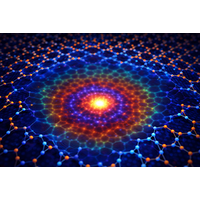
Phys. Rev. Lett. 136, 206302 (2026)
Condensed Matter and Materials
Dissipation-Shaped Quantum Geometry in Nonlinear Transport
Article | Condensed Matter and Materials | 2026-05-18 06:00 EDT
Zhichao Guo, Xing-Yuan Liu, Hua Wang, Li-kun Shi, and Kai Chang
Nonlinear transport as a probe of quantum geometry is not universal and is contingent on the specific dissipation mechanism, not just its strength.
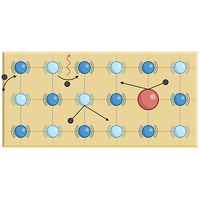
Phys. Rev. Lett. 136, 206303 (2026)
Condensed Matter and Materials
Finite-Frequency Fluctuation-Response Inequality
Article | Statistical Physics; Classical, Nonlinear, and Complex Systems | 2026-05-18 06:00 EDT
Andreas Dechant
Researchers derive a universal limit linking noise and response to perturbations in systems far from equilibrium.
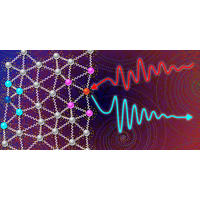
Phys. Rev. Lett. 136, 207101 (2026)
Statistical Physics; Classical, Nonlinear, and Complex Systems
Wavenumber Lock-in in Buckled Elastic Structures: An Analogue to Parametric Instabilities
Article | Polymers, Chemical Physics, Soft Matter, and Biological Physics | 2026-05-18 06:00 EDT
H. E. Read, G. Risso, A. Djellouli, K. Bertoldi, and A. Lazarus
Parametric instabilities are a known feature of periodically driven dynamic systems; at particular frequencies and amplitudes of the driving modulation, the system's quasiperiodic response undergoes a frequency lock-in, leading to a periodically unstable response. Here, we demonstrate an analogous p…
Phys. Rev. Lett. 136, 208201 (2026)
Polymers, Chemical Physics, Soft Matter, and Biological Physics
Physical Review X
Probing Quantum Anomalous Hall States in Twisted Bilayer ${\mathrm{WSe}}_{2}$ via Attractive Polaron Spectroscopy
Article | 2026-05-18 06:00 EDT
Beini Gao, Mahdi Ghafariasl, Mahmoud Jalali Mehrabad, Tsung-Sheng Huang, Lifu Zhang, Deric Session, Pranshoo Upadhyay, Rundong Ma, Ghadah Alshalan, Daniel Suarez, Supratik Sarkar, Suji Park, Houk Jang, Kenji Watanabe, Takashi Taniguchi, Ming Xie, You Zhou, and Mohammad Hafezi
Magneto-optical spectroscopy of twisted WSe reveals a spontaneous quantum anomalous Hall phase and demonstrates electric-field control over transitions between ferromagnetic and antiferromagnetic orders.
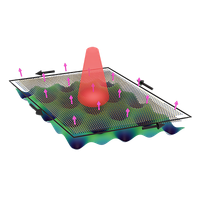
Phys. Rev. X 16, 021037 (2026)
arXiv
Anomalous Diffusion as Structural Memory: An Extended Structural Dynamics Approach
New Submission | Statistical Mechanics (cond-mat.stat-mech) | 2026-05-19 20:00 EDT
Sub-diffusion in biological systems is conventionally treated as anomalous, requiring fractional derivatives, heavy-tailed waiting times, or fitted memory kernels. We argue that this anomaly is an artifact of an incomplete phase space. Standard frameworks model diffusing particles as points. Biological molecules are not points. They are three-dimensional deformable entities whose position, orientation, and internal structure are irreducible physical properties, not modeling conveniences appended to a point mass. Within the Extended Structural Dynamics (ESD) framework, each particle is a primitive structured entity with translational, orientational, and deformational degrees of freedom. When dynamics on this full phase space are projected onto the translational subspace alone, a memory kernel emerges from the projection without phenomenological postulate. The subdiffusion exponent is determined by the internal mode spectrum, independently measurable from B-factors, NMR order parameters, or molecular dynamics simulations, without fitting to transport data. Four falsifiable predictions follow: subdiffusion strength correlates with molecular flexibility; temperature drives crossover to normal diffusion at a characteristic energy scale set by internal mode frequencies; a non-zero rotation-translation cross-correlation spectrum encodes internal dynamics, identically zero in point-particle models; and memory timescales scale as the square of particle size. Quantitative consistency with experimental observations for proteins in crowded media is demonstrated using independently estimated structural parameters. What appears anomalous from the point-particle perspective is the expected behavior of structured matter projected onto an impoverished description. The anomaly is not in the physics. It is in the phase space.
Statistical Mechanics (cond-mat.stat-mech), Soft Condensed Matter (cond-mat.soft), Biological Physics (physics.bio-ph)
he ESD framework has been peer reviewed in the context of plasma transport (BarAvi 2026c, Transport Phenomena, De Gruyter Brill, in press)
Nonlinear Ohmic electromagnetic response
New Submission | Mesoscale and Nanoscale Physics (cond-mat.mes-hall) | 2026-05-19 20:00 EDT
Anwei Zhang, Zheng Cai, C. M. Wang
We systematically investigate nonlinear Ohmic responses in second-harmonic generation and bilinear magnetoelectric effects within the Matsubara Green’s function formalism. The optical nonlinear Ohmic conductivity is shown to consist of a nonlinear Drude-like part and an intrinsic term determined by the fully symmetrized normalized quantum metric dipole. Notably, we predict a previously unrecognized intrinsic Ohmic conductivity arising from band geometry in the bilinear magnetoelectric response, which exhibits transverse behavior similar to its optical counterpart. Using a two-dimensional Dirac model, we demonstrate that this geometrically induced nonlinear Ohmic response is observable in materials with high Fermi velocity and narrow band gaps. Our work provides a systematic quantum field-theoretic framework for describing nonlinear Ohmic transport in condensed matter systems.
Mesoscale and Nanoscale Physics (cond-mat.mes-hall), Quantum Physics (quant-ph)
13 pages, 2 figures
A Unified Critical Scaling Theory for Macroscopic Lightning and Quantum Avalanches: From Three-Dimensional Directed Percolation to Testable Predictions
New Submission | Statistical Mechanics (cond-mat.stat-mech) | 2026-05-19 20:00 EDT
Lightning, the most colossal discharge in nature, and flux avalanches in quantum superconductors–phenomena separated by twenty orders of magnitude in scale–display striking fractal similarity. We demonstrate that this is no mere analogy but reveals a deep physical unity. Here, we establish a universal theoretical framework that connects them. By mapping both onto the same three-dimensional reaction-diffusion-advection equation grounded in non-equilibrium statistical physics, we show they belong to the same critical universality class. We demonstrate that both systems belong to the three-dimensional Directed Percolation (3D-DP) universality class near their critical point, sharing a unified set of universal critical exponents (e.g., avalanche size distribution exponent $ \tau \approx 1.41$ , fractal dimension $ D_f \approx 2.5$ ). Furthermore, by incorporating the anisotropy and turbulence coupling intrinsic to real thunderstorm environments, we predict novel effects such as anisotropic fractality of lightning channels and the systematic shift of critical exponents by turbulence. The core theoretical breakthrough lies in proposing a geometric correspondence of quantum phase information: through a rigorous mapping, the microscopic quantum phase coherence of superconductors is translated into the curvature and torsion distributions of macroscopic lightning channels, revealing a quantum statistical fingerprint emergent in classical geometry. This framework not only provides a unified paradigm for understanding dissipative structures across scales but also, via seven testable predictions, opens avenues for simulating natural lightning with laboratory quantum systems and developing novel physical early-warning methods.
Statistical Mechanics (cond-mat.stat-mech), Atmospheric and Oceanic Physics (physics.ao-ph), Computational Physics (physics.comp-ph)
Long Spin Relaxation Times in CVD-Grown Nanodiamonds
New Submission | Mesoscale and Nanoscale Physics (cond-mat.mes-hall) | 2026-05-19 20:00 EDT
Jeroen Prooth, Michael Petrov, Alevtina Shmakova, Michal Gulka, Petr Cigler, Jan D’Haen, Hans-Gerd Boyen, Milos Nesladek
Currently, the primary applications of fluorescent nanodiamonds (FNDs) are in the area of biosensing, by using photoluminescence or spin properties of colour centres, mainly represented by the Nitrogen Vacancy (NV) point defect. The sensitivity of NV-FNDs to external fields is, however, limited by crystallographic defects, which influence their key quantum state characteristics - the spin longitudinal (\textit{T$ _1$ }) and spin transversal (\textit{T$ _2$ }) relaxation and coherence times, respectively. We report on utilising an advanced FND growth technique consisting of heterogeneous nucleation on pre-engineered sites to create FNDs averaging around 60 nm in size, with mean longitudinal coherence times of 800 $ \mu$ s and a maximum over 1.8 ms, close to bulk theoretical values. This is a major, nearly ten-fold improvement over commercially available nanodiamonds for the same size range of 50 to 150 nm. Heavy-N doped nanodiamond shells, important for sensing events in nm proximity to the diamond surface, are fabricated and discussed in terms of re-nucleation and twinning on {111} crystal facets. We also discuss scalability issues in order to enable the production of FND volumes matching the needs of sensing applications.
Mesoscale and Nanoscale Physics (cond-mat.mes-hall), Quantum Physics (quant-ph)
Adv Quantum Technol.2023, 6, 2300004
Irreversibility from Self-Reference: Gradient Flow and an H-Theorem for a Self-Referential Statistical Operator Framework
New Submission | Statistical Mechanics (cond-mat.stat-mech) | 2026-05-19 20:00 EDT
This paper is a direct companion to arXiv:2605.06705, where the self-referential operator Omega was introduced and the Tsallis index q = alpha + beta was derived as a fixed-point condition within the local kernel approximation (LKA). Here we address four aspects deferred from the previous work. First, we carry out the first-order perturbative expansion of Omega beyond the LKA and demonstrate structural stability of q = alpha + beta at leading order in (xi/L)^2. Second, we define the iterative dynamical scheme Psi_(n+1) = Omega[Psi_n] and analyze convergence via Frechet spectral radius. Third, and centrally, we establish an H-theorem rigorously within the LKA for both the discrete iteration and the continuous gradient flow: we compute dF/dtau explicitly along the flow, identify the negative semi-definite dissipation term, establish the result rigorously in the LKA using strict convexity of F proved in the companion paper, and provide numerical evidence showing monotone decrease of F[Psi_n] across 53 iterations on an N = 80 discrete system. Fourth, we characterize the non-perturbative role of the self-coupling parameter kappa, identifying a re-entrant disordered phase at kappa > kappa\ast approximately 0.50 +/- 0.05. The paper is explicit about what is proved, what is established numerically, and what open problems remain for a complete analytical proof beyond the LKA.
Statistical Mechanics (cond-mat.stat-mech)
12 pages. Companion paper to arXiv:2605.06705
The problem of relaxation to equilibrium
New Submission | Statistical Mechanics (cond-mat.stat-mech) | 2026-05-19 20:00 EDT
Silvina Limandri (1,2), Silvina Segui (2), Bruno Castellano (1), Ignacio Belitzky (1), Gustavo Castellano (1,2) ((1) Facultad de Matemática, Astronomía, Física y Computación, Universidad Nacional de Córdoba, Argentina, (2) Instituto de Física Enrique Gaviola, IFEG-CONICET)
When a thermodynamic system is released from any constraint, after some time its evolution will render it into an equilibrium state. Although the description of this relaxation to thermodynamic equilibrium has been attempted through both classical (Hamilton’s equations) or quantum (Schrödinger equation) approaches, no success has been achieved without recurring to additional hypotheses. The present work demonstrates the possibility of reaching equilibrium states in a simple classical gaseous system, by imposing non-strict boundary conditions, in the sense that all interactions with the container walls must occur according to Heisenberg’s uncertainty principle.
Statistical Mechanics (cond-mat.stat-mech)
Number of pages: 7 Number of figures: 5
Thermodynamic and statistical properties of a multifractional modified dispersion relation via the grand-canonical ensemble
New Submission | Statistical Mechanics (cond-mat.stat-mech) | 2026-05-19 20:00 EDT
We study the thermodynamic and statistical properties of a gas governed by a multifractional modified dispersion relation of the form $ \omega^{2}=k^{2}+4E_{\ast}^{-1/2}k^{5/2}$ , where $ E_{\ast}$ sets the characteristic scale of the multifractional correction. Working within the grand-canonical ensemble, we derive the modified density of states, the grand potential, the partition function, and the main thermodynamic quantities for both bosonic and fermionic sectors. The deformation changes the available phase-space distribution and produces nonstandard thermal scalings controlled by the ratio $ T/E_{\ast}$ . In the infrared regime, the usual relativistic gas behavior is recovered with leading corrections proportional to powers of $ (T/E_{\ast})^{1/2}$ . In the ultraviolet regime, the density of states scales as $ \varrho(\omega)\propto \omega^{7/5}$ , corresponding to an effective density-of-states dimension $ d_{\mathrm{eff}}=12/5$ . As a consequence, the Stefan-Boltzmann law is deformed from $ u\propto T^{4}$ to $ u\propto E_{\ast}^{3/5}T^{17/5}$ , while the equation-of-state parameter approaches $ w=5/12$ instead of the standard radiation value $ w=1/3$ . We also analyze thermal stability, particle number and energy fluctuations, Bose-Einstein condensation, and the degenerate Fermi gas limit. The multifractional correction increases the critical temperature of a conserved bosonic gas and modifies the Fermi energy, pressure, sound speed, and low-temperature heat capacity of degenerate fermions.
Statistical Mechanics (cond-mat.stat-mech), Quantum Gases (cond-mat.quant-gas), High Energy Physics - Theory (hep-th)
31 pages and 7 figures. Suggestions are welcome
Universal dynamics from a single-particle dark state
New Submission | Quantum Gases (cond-mat.quant-gas) | 2026-05-19 20:00 EDT
Ruben Daraban, Arghavan Safavi-Naini, Johannes Schachenmayer, Mohammad Maghrebi
Open quantum systems can host dark or subradiant states whose decay is highly suppressed. While these states have been extensively studied in the few-excitation regime, their impact on the many-body dynamics remains largely unexplored. Here, we study a spin chain subject to correlated dissipation on neighboring sites, which admits a single-particle dark state at zero momentum. We show that the single-particle dark state qualitatively alters the many-body dynamics at long times, and identify its distinct universal behavior. While the zero-momentum mode is dark at the single-particle level, it decays slowly as $ 1/\log t$ as it becomes dressed by other modes through a dissipation-induced nonlinearity. We demonstrate that the momentum distribution takes a universal scaling form in $ k\sqrt{t}$ , and the total density decays as $ 1/\sqrt{t}\log t$ . Our results further elucidate the origin of the conflicting results in recent works. Finally, we corroborate the analytics with matrix product state simulations and show that the same universal behavior persists for soft-core interactions, underscoring the universality of the emergent dynamics.
Quantum Gases (cond-mat.quant-gas), Statistical Mechanics (cond-mat.stat-mech), Quantum Physics (quant-ph)
6+19pages,3+9figues
From bulk to interface dynamics, in and out of equilibrium
New Submission | Statistical Mechanics (cond-mat.stat-mech) | 2026-05-19 20:00 EDT
Lila Sarfati, Julien Tailleur, Frédéric van Wijland
We study the dynamics of weakly deformed interfaces separating two stable phases, starting from the fluctuating hydrodynamics of the phase-separating fields. Using a well-chosen definition for the interface and the dynamical-action formalism to represent path probabilities, we derive the linear relaxation of the interface and the fluctuations around it for a large class of models. Our method applies to equilibrium dynamics, where it recovers and complements existing results, but also extends to their non-equilibrium counterparts. We explain how non-linear terms can be systematically computed and illustrate their derivations in the case of (active) model A. We highlight the danger of a popular ansatz used to derive interface dynamics, which was rigorously established in equilibrium but is uncontrolled for active field theories.
Statistical Mechanics (cond-mat.stat-mech), Soft Condensed Matter (cond-mat.soft)
Correlation-Driven Spin Reorientation via Competing Anisotropy Channels in CrPS4
New Submission | Strongly Correlated Electrons (cond-mat.str-el) | 2026-05-19 20:00 EDT
Raju Baral, Harald O. Jeschke, Igor I. Mazin, Jue Liu, David Mandrus, Stuart Calder
We identify a correlation-driven mechanism for the temperature-induced spin reorientation in the quasi-one-dimensional van der Waals antiferromagnet CrPS4. Magnetic pair distribution function (mPDF) analysis resolves the local spin direction and shows that ferromagnetic intrachain correlations persist far above TN. Combining these correlations with a DFT-derived spin Hamiltonian reveals competing single-ion and exchange-anisotropy channels, with single-ion anisotropy remaining local while exchange anisotropy is renormalized as intersite correlations decay. This differential renormalization rotates the effective easy axis and captures the ordered-state canting. Above TN, the continued rotation beyond the model prediction delineates the limits of the dominant-chain approximation. These results establish mPDF-derived correlations as direct inputs to microscopic Hamiltonians and show how low-dimensional correlations can control magnetic anisotropy.
Strongly Correlated Electrons (cond-mat.str-el), Other Condensed Matter (cond-mat.other)
Ultrasonic determination of crystallographic texture by transmitted field fitting regardless of medium dispersivity
New Submission | Materials Science (cond-mat.mtrl-sci) | 2026-05-19 20:00 EDT
Diego A. Cowes, Juan I. Mieza, Martín P. Gómez
The determination of crystallographic texture through elastic wave propagation offers a cost-effective, nondestructive means of obtaining through-thickness information with minimal sample preparation. Existing ultrasonic approaches rely on either bulk-wave or guided-wave velocity measurements for texture inversion. These strategies impose geometric constraints: bulk-wave methods become impractical for thin specimens, whereas guided-wave techniques are limited to relatively small thicknesses. Furthermore, many formulations assume orthotropic symmetry of the aggregate, thereby restricting their applicability to materials with higher anisotropy. In this work, a full-field wave fitting strategy is developed in which the transmitted ultrasonic field is simulated and directly compared to experimental measurements. Because the approach does not rely on bulk-wave or plate-wave approximations, it remains applicable across a broad range of specimen thicknesses. Furthermore, no macroscopic symmetry assumptions are imposed on the aggregate, enabling the characterization of generally anisotropic materials. The effective elastic response is computed using a Hashin-Shtrikman homogenization framework, which provides tighter bounds than classical Voigt-Reuss-Hill averages and constrains the admissible search space during optimization, thereby improving convergence. The nonlinear inverse problem is solved using a GPU-accelerated optimization scheme. The methodology is validated on materials with hexagonal and cubic crystal symmetry over a range of specimen thicknesses. The inferred texture coefficients show consistent agreement with independent diffraction measurements. Additionally, textures with weak elastic anisotropy are successfully recovered, demonstrating the robustness and versatility of the proposed method. Complete measurement and inversion are achieved within approximately 10 minutes.
Materials Science (cond-mat.mtrl-sci), Applied Physics (physics.app-ph), Computational Physics (physics.comp-ph)
Data-driven analysis of metastability in a stochastic bistable system
New Submission | Statistical Mechanics (cond-mat.stat-mech) | 2026-05-19 20:00 EDT
Ankan Banerjee, Manuel Santos Gutierrez, John Moroney, Valerio Lucarini
We study the metastability properties of a simple prototypical bistable system using the formalism of the Koopman operator. Instead of studying noise-induced transitions by following the trajectories of the system, we track them by studying the time evolution and the decay rate of the subdominant mode of the Koopman operator, thus in a geometry-agnostic framework. We find agreement with the predictions - both the exponential and subexponential ones - of large deviation theory in the weak-noise limit for the statistics of escape time, both in equilibrium and nonequilibrium conditions. The subdominant Koopman mode also allows for an accurate reconstruction of the competing basins of attraction. Going deeper in the Koopman spectrum, we are able to recognise modes that are associated with intrawell variability as well as with the escape of trajectories from the saddle towards the attractor, both in the equilibrium and nonequilibrium case. Our methodology, being grounded in purely data-driven techniques, could be helpful for studying high-dimensional metastable systems.
Statistical Mechanics (cond-mat.stat-mech), Dynamical Systems (math.DS), Atmospheric and Oceanic Physics (physics.ao-ph), Data Analysis, Statistics and Probability (physics.data-an)
15 pages, 8 figures, 2 tables
Revealing Hund superdispersion with tunneling spectroscopy
New Submission | Strongly Correlated Electrons (cond-mat.str-el) | 2026-05-19 20:00 EDT
Luke C. Rhodes, Fabian B. Kugler, Olivier Gingras, Carolina Marques, Edgar Abarca Morales, Phil D.C. King, Antoine Georges, Peter Wahl
In cuprate superconductors, electron-electron repulsion results in characteristic spectroscopic features known as waterfalls', where the sharp quasiparticle dispersion transitions into broad Hubbard bands. However, in multi-orbital systems, the additional Hund coupling results in behavior that defies the conventional Mott--Hubbard paradigm, creating qualitatively distinct superdispersive’ features in the spectral function. Here, we use tunneling spectroscopy to reveal this signature of Hund physics in Sr$ _2$ RuO$ _4$ . By combining density functional theory, dynamical mean-field theory, and continuum local density of states calculations, we show that the experimental features are in excellent agreement with theoretical predictions and intimately linked to the non-monotonous energy dependence of the real part of the self-energy in a Hund metal. Our results provide direct experimental evidence for Hund-induced spectroscopic features and open a new route to probing correlation effects in quantum materials.
Strongly Correlated Electrons (cond-mat.str-el), Materials Science (cond-mat.mtrl-sci)
29 pages including supplementary material, 4 figures in main text plus 2 supplementary figures
Crystal growth and characterization of the ultra-high temperature substrate $\mathrm{Ta_{1-x}Hf_{x}C_{0.5}}$
New Submission | Materials Science (cond-mat.mtrl-sci) | 2026-05-19 20:00 EDT
Evan N. Crites, Sharad Mahatara, Joshua R. Hummel, Sydney R. Laywell, Ahamed Raihan, Shivashree S. Gowda, Ethan A. Scott, Amitayush Jha Thakur, Jessica L. McChesney, Patrick E. Hopkins, MVS Chandrashekhar, Michael G. Spencer, Stephan Lany, Satya K. Kushwaha, Tyrel M. McQueen
Incorporation of $ \mathrm{Al_{y}Ga_{1-y}N}$ (AGN) semiconductors into high power electronics offers efficiency improvements in power transmission, generation, and use, if approaches to eliminate the defects arising from film-lattice mismatch can be established. Here, we report the optical floating zone crystal growth of $ \mathrm{Ta_{1-x}Hf_{x}C_{0.5}}$ (x = 0.2), a new metallic substrate material family lattice matched to the ultra-wide-band-gap, Al-rich side (y = 0.91) of the AGN solid solution. Laue diffraction demonstrates large single crystal domains in the as-grown boule. Single crystal x-ray diffraction at T = 213 K in conjunction with first principles calculations shows that the material adopts a layered crystal structure with AA-type stacking of (Ta/Hf)-C-(Ta/Hf) trilayers described in the trigonal space group P-3m1 (#164), with a = 3.1168(4) Å, c = 4.9644(4) Å, and $ \beta$ = 120.0°. X-ray photoelectron spectroscopy (XPS) measurements show the Hf:Ta ratio to be close to the nominal value of 0.8:0.2 in the grown crystal. Density Functional Theory calculations reveal that this structure is stabilized by the low energy of carbon-vacancy formation of a hypothetical $ \mathrm{(Ta/Hf){1}C{1}}$ anti-NiAs structure type, and imply flexibility in interface structure with an overlayer nitride film. A surface preparation/polishing procedure is developed that reduces root mean square (RMS) surface roughness from as-cut 130 nm to 7 nm as measured by atomic force microscopy. Scanning electron microscopy shows the presence of a native surface oxide, removed by polishing, along with carbon-rich pits. Time-domain thermoreflectance measurements show a room temperature thermal conductivity of $ \kappa$ = 18.1(4) W m-1 K-1. These results provide key first steps for utilizing metallic, lattice matched, substrates for the growth of Al-rich AGN semiconductors.
Materials Science (cond-mat.mtrl-sci)
Pre-publication version. Main text 22 pages, 10 figures, 4 tables. SI 4 pages, 5 figures
Machine Learning Approaches to Point Defects in Non-Metallic Materials: A Review of Methods
New Submission | Materials Science (cond-mat.mtrl-sci) | 2026-05-19 20:00 EDT
We review recent machine-learning (ML) approaches for point defects in non-metallic materials, with an emphasis on defect formation energies. Existing studies largely fall into two categories: direct ML models that predict defect energetics from local structural representations, and machine-learning potentials (MLPs) that approximate the defect-containing potential energy surface. We summarize key achievements as well as persistent bottlenecks, emphasizing that dataset quality often dominates practical model performance. We further identify charged-defect formation energies as a central frontier, where Fermi-level alignment, finite-size corrections, and long-range electrostatics must be handled carefully and consistently to enable meaningful comparisons and transferable predictions across different materials.
Materials Science (cond-mat.mtrl-sci)
Appear in APEX-NEXT soon
Bipolaronic High-Temperature Superconductivity from Phonon-Modulated Hopping: A Perspective
New Submission | Superconductivity (cond-mat.supr-con) | 2026-05-19 20:00 EDT
Phonon-mediated superconductivity is conventionally thought to be capped at a transition temperature $ T_{\mathrm{c}}$ no larger than roughly one-tenth of the phonon frequency $ \Omega$ , a bound rooted in the breakdown of Migdal-Eliashberg theory at intermediate coupling and in the heaviness of bipolarons formed in standard models with phonons that couple to the electron density. In this review I describe a route to phonon-mediated high-$ T_{\mathrm{c}}$ superconductivity that bypasses this bound. The key ingredient is a class of electron-phonon couplings in which lattice distortions modulate the electron hopping and therefore its kinetic energy rather than its potential energy, known as the Peierls model (also known as Su-Schrieffer-Heeger model). In these models phonon exchange generates an interaction that binds two electrons into a small but unusually light bipolaron. Using sign-problem-free quantum Monte Carlo simulations of a bond-Peierls model on the square and cubic lattices, my collaborators and I have shown that a dilute liquid of such bipolarons forms an $ s$ -wave superconductor with a $ T_{\mathrm{c}}/\Omega$ that significantly exceeds the conventional bound, that this conclusion is robust against screened Coulomb repulsion, and that $ T_{\mathrm{c}}/\Omega$ – despite being reduced – remains above bound in presence of strong long-range Coulomb repulsion. A semi-classical instanton analysis explains why, at strong coupling, bipolarons in models with phonon-modulated hopping are lighter than their density-coupled (Holstein) counterparts. I close with a discussion of materials in which this physics may be operative, in particular the iron-based pnictide superconductors, and of design principles that follow from it.
Superconductivity (cond-mat.supr-con), Strongly Correlated Electrons (cond-mat.str-el)
23 pages, 9 figures
Berry-phase in a periodically driven single molecule magnet transistor
New Submission | Mesoscale and Nanoscale Physics (cond-mat.mes-hall) | 2026-05-19 20:00 EDT
We consider the electron transport through a single molecule magnet transistor in the presence of a local transverse magnetic field and ac-driven gate voltage. We calculate the conductance as a function of the electron energy and transverse magnetic field by using the Floquet and Landauer formalism. We show that the time periodic potential causes zero transmission resonances that oscillate as a function of the transverse magnetic field due to the Berry phase interference associated with two quantum tunneling paths. We find that these Berry phase oscillations can be detected in the conductance as a function of the transverse magnetic field for an incoming electron with a specific energy.
Mesoscale and Nanoscale Physics (cond-mat.mes-hall)
6 pages
Gonz'alez, G. (2019), Berry-Phase in a Periodically Driven Single Molecule Magnet Transistor. Phys. Status Solidi B, 256: 1800725
Non-linear diffusion and inhomogeneity of the magnetic field in single-turn coils: Insights from 3D multiphysics modeling
New Submission | Materials Science (cond-mat.mtrl-sci) | 2026-05-19 20:00 EDT
Hideaki Kobayashi, Yugaku Goyo, Yuto Ishii, Yasuhiro H. Matsuda, Kunio Takekoshi, Akihiko Ikeda
The single-turn coil method is a destructive pulsed magnet for generating over 100 T with a few $ \mu$ -second pulse duration, and it inevitably causes the coil to explode. The temporal and spatial distributions of the electric current and magnetic field are highly inhomogeneous, arising from the skin effect, rapid temperature rise, and coil deformation. To grasp the dynamic phenomena in the single-turn coil, we conducted a finite element analysis using multiphysics simulation. We employed finite element method calculations using a fully 3D model of the single-turn coil with broken cylindrical symmetry. The calculated result revealed highly nonlinear diffusion of electric current, temperature, and magnetic fields, which are the sources of the inhomogeneous magnetic fields inside the single-turn coil in time and space.
Materials Science (cond-mat.mtrl-sci), Applied Physics (physics.app-ph), Computational Physics (physics.comp-ph)
9 pages, 7 figures
Euler-Maruyama method for non-Wiener processes
New Submission | Statistical Mechanics (cond-mat.stat-mech) | 2026-05-19 20:00 EDT
Descriptions of complex physical or biological systems often include stochastic contributions, and these are commonly simulated using Wiener processes. In many cases however, non-Gaussian fluctuations may originate from non-Wiener processes which remain less explored. The Euler-Maruyama method of discretising stochastic differential equations to non-Wiener processes is generalised. Non-Gaussian noise generated from a subset of Lévy processes can be used simply and often with more physical justification, for both additive and multiplicative noise. An example of this is provided that gives superior physical results compared to using geometric Brownian motion. Finally the results of the additive noise are shown to be equivalent to a derived master equation via the Kramers-Moyal expansion.
Statistical Mechanics (cond-mat.stat-mech), Adaptation and Self-Organizing Systems (nlin.AO)
6 pages, 3 figures
Hydrodynamic cascade drives tumbling in sheared colloidal rod suspensions
New Submission | Soft Condensed Matter (cond-mat.soft) | 2026-05-19 20:00 EDT
Lucas H. P. Cunha, Paul F. Salipante, Peter D. Olmsted, Steven D. Hudson
Modeling the dynamics of colloidal rods remains a central challenge in soft-matter physics due to the anisotropic and long-ranged nature of their interactions. Hydrodynamic interactions in rods suspensions are often assumed to be screened or too week to play any role in semi-dilute regimes, yet we find here these assumptions to break down at shear rates and concentrations that are often attained in experiments. Using particle-based simulations and scaling analysis, we uncover a cascade of tumbling events driven by hydrodynamic coupling among neighboring rods. This collective dynamics disrupts flow alignment and leads to a pronounced increase in viscosity and normal stress differences, in qualitative agreement with recent experiments. The discovery of this hydrodynamically-promoted cascade effect calls for a revision of existing constitutive models for colloidal rods and highlights hydrodynamic coupling as a key mechanism governing collective dynamics in highly anisotropic suspensions.
Soft Condensed Matter (cond-mat.soft), Fluid Dynamics (physics.flu-dyn)
Systematic dynamical mean-field theory study of 3d perovskite oxides with uniform Coulomb interactions
New Submission | Strongly Correlated Electrons (cond-mat.str-el) | 2026-05-19 20:00 EDT
Antik Sihi, Caden Ginter, Kristjan Haule, Subhasish Mandal
Strongly correlated transition-metal perovskite oxides pose a fundamental challenge for electronic-structure theory and for large-scale, data-driven materials discovery. While DFT+DMFT provides a quantitatively accurate description of such systems, its high-throughput application is hindered by the need to determine material-specific Coulomb interaction parameters ($ U$ ). First-principles approaches such as the cRPA predict a highly nonlinear and non-transferable evolution of the interaction strength across chemically similar ABO$ _3$ perovskites. Here we show that this paradigm does not extend to the large-energy-window eDMFT, which employs highly localized orbitals and treats electronic correlations and screening self-consistently within the same many-body framework. As a result, spectral properties are governed primarily by the dynamical self-energy rather than by static interaction-induced energy shifts. Recent constrained-eDMFT calculations demonstrated that, for broad classes of $ 3d$ transition-metal oxides, the self-consistently screened Coulomb interactions naturally fall within relatively narrow ranges for correlated metals and insulators. Motivated by these findings, we implement a high-throughput eDMFT framework employing physically derived interaction values of $ U=6$ eV for metals and $ U=10$ eV for insulators together with $ exact$ double counting. We test this framework using systematic high-throughput eDMFT calculations for ABO$ _3$ compounds (A = Ca, Sr, La; B = V–Ni) and benchmark the resulting spectral functions against photoemission experiments, where we find overall excellent agreement. Our results establish that charge self-consistent eDMFT enables robust, parameter-tuning-free high-throughput many-body calculations for correlated oxides, opening a practical pathway toward predictive electronic-structure databases for strongly correlated materials.
Strongly Correlated Electrons (cond-mat.str-el)
Emergent impedance due to antiferromagnetic domain wall dynamics
New Submission | Mesoscale and Nanoscale Physics (cond-mat.mes-hall) | 2026-05-19 20:00 EDT
Yuta Yamane, Jotaro J. Nakane, Yasufumi Araki, Jun’ichi Ieda
We theoretically investigate emergent impedance induced by domain-wall dynamics in antiferromagnets. Emergent impedance, arising from a combined action of spin-transfer torque and spinmotive force, was previously predicted and observed in spiral magnets. Here we develop a formalism for the electrical response of an antiferromagnetic domain wall under ac currents, and obtain analytical expressions for the resulting emergent impedance. We find that two dynamical modes play separate roles in the emergent impedance: Translational motion of the domain-wall center generates a contribution proportional to its velocity, analogous to that arising from the corresponding motion of a spiral magnet. Another contribution, unique to antiferromagnetic domain walls, originates from the time-dependent canting of the sublattice magnetizations localized within the moving domain wall, whose magnitude is inversely proportional to the antiferromagnetic exchange coupling constant. The competition between these two distinct contributions determines the sign and magnitude of the imaginary part of the emergent impedance at sub-resonant frequencies. Our results provide a fundamental insight into electron transport in antiferromagnets, and open avenues for novel antiferromagnet-based spintronics devices.
Mesoscale and Nanoscale Physics (cond-mat.mes-hall)
Physical Review B 113, 014421 (2026)
Relativistic theory for coupled orbital and spin angular momentum dynamics in magnetic systems
New Submission | Other Condensed Matter (cond-mat.other) | 2026-05-19 20:00 EDT
Subhadip Santra, Ritwik Mondal, Marco Berritta, Peter M. Oppeneer
We develop a complete relativistic theory to describe the dynamics of electronic angular momentum including both spin (S) and orbital (L) contributions in magnetic systems. We start with the relativistic Dirac-Kohn-Sham Hamiltonian under the influence of an electromagnetic field and apply a unitary transformation to formulate the extended Pauli Hamiltonian. Using the transformed semirelativistic Hamiltonian, we derive the angular momentum dynamics for the orbital and spin angular momenta. Thereby, we formulate the coupled dynamics of orbital and spin moments consistent with the relativistic Dirac framework. Considering especially the conservation of the total angular momentum, J = S +L, we show first that J is conserved in the absence of a spin-polarized Kohn-Sham exchange field, but is no longer conserved under the application of an electromagnetic field, e.g., laser pulse, THz field, etc. Second, considering magnetic systems with atomic spin and orbital momenta, we derive the coupled equations of motion of angular momenta dynamics whilst making the atomistic Heisenberg approximation for the exchange interaction. Our results suggest that, under these assumptions, the total angular momentum remains conserved, even with electromagnetic field, but atomic spin and orbital angular momenta individually are not conserved.
Other Condensed Matter (cond-mat.other), Materials Science (cond-mat.mtrl-sci)
14 pages
Learning inelastic constitutive models from stress-strain data under hard thermodynamic constraints
New Submission | Materials Science (cond-mat.mtrl-sci) | 2026-05-19 20:00 EDT
Machine learning approaches informed by physics have offered new insights into the discovery of constitutive models from data, helping overcome some limitations of traditional constitutive modelling while reducing the cost of otherwise computationally intensive simulations. Yet, most existing approaches only partially enforce the requirements of physics and thermodynamics, leaving open questions about their consistency across a broad range of material behaviours and their ability to generalise robustly to unseen loading paths when only limited measurements are available.
This work establishes a thermodynamics-constrained learning framework whose architecture embeds the principles of non-equilibrium thermodynamics, objectivity and stability as hard, scalable constraints to learn constitutive models from standard macroscopic data. Analytical benchmarks involving stress-strain loading paths demonstrate that the method learns thermodynamically consistent and robust constitutive models for a range of inelastic materials of increasing complexity. At inference, the resulting models generalise to more demanding, unobserved paths and can autonomously recover interpretable internal variables that capture path-dependent evolution. The framework is then applied to granular media, prototypical heterogeneous and history-dependent materials for which constitutive modelling remains challenging. Trained on numerically simulated experiments based on the discrete element method, the model discovers the underlying constitutive equations and predicts responses under cyclic loading, including the emergence of hysteresis absent from the training data, relying solely on macroscopic stress-strain histories. The findings indicate that enforcing non-equilibrium thermodynamics through hard constraints represents a principled route to robust, consistent, and scalable data-driven discovery of constitutive models.
Materials Science (cond-mat.mtrl-sci)
Finite-Temperature Spin Exchange-Correlation Kernel of the Uniform Electron Gas
New Submission | Strongly Correlated Electrons (cond-mat.str-el) | 2026-05-19 20:00 EDT
Pengcheng Hou, Zhiyi Li, Youjin Deng, Kun Chen
The finite-temperature spin response of the uniform electron gas (UEG) is a fundamental reference for spin-polarized and magnetized electron liquids, including warm dense matter (WDM), yet it remains far less constrained than charge response. Using variational diagrammatic Monte Carlo, we compute the static spin exchange–correlation (XC) kernel $ K_{xc}(q;T)$ of the unpolarized UEG at metallic densities across the quantum-degenerate, warm-dense, and classical regimes. The kernel connects smoothly to zero-temperature spin-response parametrizations at low temperature, while heating suppresses the Fermi-surface-scale spin-correlation structure and weakens the XC-driven Stoner enhancement. Its long-wavelength limit provides a direct response test of the spin stiffness implied by thermal local-spin-density-approximation (LSDA) parametrizations, showing low-temperature consistency while exposing a resolved warm-dense residual in current LSDA parametrizations. In the classical regime, the spin XC kernel becomes nearly local on the Fermi-momentum scale, in sharp contrast to the corresponding charge XC kernel. These results provide a first-principles basis for finite-temperature spin-response theory and magnetized WDM modeling.
Strongly Correlated Electrons (cond-mat.str-el), Computational Physics (physics.comp-ph), Plasma Physics (physics.plasm-ph)
Interface engineering of the anomalous Hall effect in Ni-based heterostructures
New Submission | Materials Science (cond-mat.mtrl-sci) | 2026-05-19 20:00 EDT
Mainak Ghosh, Kusampal Yadav, Kalyan sarkar, Kousik Das, Devajyoti Mukherjee, Sayantika Bhowal
Using a combined experimental and first-principles theoretical approach, we demonstrate interface engineering of the anomalous Hall effect in Ni-based epitaxial thin-film heterostructures. Ferromagnetic Ni thin films are grown on (001)-oriented single-crystal LaAlO$ _3$ , SrTiO$ _3$ , and MgO substrates, which impose different biaxial tensile strains of 0.3%, 0.6%, and 0.8%, respectively. Our room-temperature Hall transport measurements reveal a pronounced substrate-dependent modulation of the anomalous Hall conductivity. Interestingly, our calculations show that strain alone cannot account for the experimentally observed trends. Instead, we identify interfacial inversion-symmetry breaking, which induces Rashba spin-orbit interaction, as the key mechanism governing the anomalous Hall conductivity across different interfaces. Building on this understanding, we further demonstrate both theoretically and experimentally that the anomalous Hall conductivity can be continuously tuned by an external electric field. These findings establish the critical role of substrate-induced interfacial effects in controlling the anomalous Hall effect in engineered heterostructures and provide a viable pathway toward electrically tunable room-temperature spintronic devices.
Materials Science (cond-mat.mtrl-sci)
11 pages, 6 figures
Nonreciprocal impurity scattering as a probe for pairing symmetries in kagome superconductors
New Submission | Superconductivity (cond-mat.supr-con) | 2026-05-19 20:00 EDT
Hong-Min Jiang, Hao Du, Shun-Li Yu
The superconducting (SC) pairing symmetry and its link to time-reversal symmetry breaking (TRSB) in the vanadium-based kagome superconductors remain unresolved, with ambiguities stemming from sublattice interference and charge-density-wave (CDW) entanglement with superconductivity. Using two representative SC pairings, i.e., the conventional on-site $ s$ -wave and the TRSB $ d_{x^2-y^2}+id_{xy}$ -wave, as a model study, we theoretically show that while single magnetic impurity yield qualitatively identical spectral behavior of local density of states (LDOS) for these two symmetries, two magnetic impurities give rise to distinct LDOS patterns. For the conventional on-site $ s$ -wave pairing, time-reversal symmetry (TRS) enforces equivalent forward and backward scattering between two impurities across all impurity configurations, leading to near disappearance of a Yu-Shiba-Rusinov (YSR) state pair along the line connecting the two impurities. However, for the TRSB $ d_{x^2-y^2}+id_{xy}$ -wave pairing, this scattering equivalence holds only for inversion-symmetric impurity configurations, with a pair of YSR disappearance restricted to this case. These distinct spectral features are resolvable in scanning tunneling microscopy (STM) experiments, providing a direct avenue to discriminate TRSB and non-TRSB SC pairing symmetries in kagome superconductors and an alternative method to probe SC nonreciprocity that circumvents the ambiguities of conventional critical current-based techniques.
Superconductivity (cond-mat.supr-con)
9 pages, 6 figures
Reprogrammable magnonic logic in a multiferroic heterostructure via magnetoelectric coupling
New Submission | Mesoscale and Nanoscale Physics (cond-mat.mes-hall) | 2026-05-19 20:00 EDT
Ping Che, Amr Abdelsamie, Ádám Papp, Sali Salama, André Thiaville, Romain Lebrun, Stéphane Fusil, Vincent Garcia, Aymeric Vecchiola, Karim Bouzehouane, Manuel Bibes, Agnès Barthélémy, Jean-Paul Adam, Vladislav Demidov, Paolo Bortolotti, Abdelmadjid Anane, Isabella Boventer
The realization of fully reconfigurable, voltage-controlled, and programmable on-chip magnonic devices is essential to fully harness the potential of spin waves for signal processing, logic and neuromorphic computing. Yet, existing demonstrations of electrical tuning of magnonic responses are either volatile, current-driven and thus energy-inefficient, or rely on local strain modification limiting their scalability for wafer-scale integration. Here, we address this challenge using a BiFeO3/La0.67Sr0.33MnO3 multiferroic thin film heterostructure. We show that ferroelectric domain engineering in BiFeO3 enables deterministic tuning of the magnon dispersion of La0.67Sr0.33MnO3, producing frequency shifts up to $ \sim 150 MHz$ and allowing reconfigurable waveguiding. Micro-focused Brillouin light scattering directly images these effects, revealing electrically defined magnonic waveguides and spatially programmable dispersion. Compared to conventional approaches, this method provides non-volatile and reversible control. Furthermore, using an inverse-design simulation code, we demonstrate the capability of our platform to perform advanced magnonic functions such as frequency demultiplexing. Our results open a new avenue for using magnetoelectric heterostructures for magnonic logic, with further applicability to reservoir and neuromorphic computing and AI driven magnonic devices.
Mesoscale and Nanoscale Physics (cond-mat.mes-hall)
24 pages (main & supplemental) and 9 figures (4 main and 5 supplemental)
New Source of Spin-hot spot in displaced silicon double quantum dots
New Submission | Mesoscale and Nanoscale Physics (cond-mat.mes-hall) | 2026-05-19 20:00 EDT
Controlling electron spins in double quantum dots allows individual electrons to be trapped and manipulated for next-generation solid-state qubit devices. In this paper, the study analyzes spin relaxation due to deformation potentials of acoustic phonon in single and double quantum dots under in-plane and out-of-plane magnetic fields, showing that in single quantum dots the relaxation rate is highly sensitive to low in-plane magnetic fields ($ <1T$ ) but converges near a spin-hot-spot region. In a single quantum dot, the spin-hot spot arises from well-understood level crossings between singlet and triplet states. In double quantum dots, a new and unusual spin-hot spot appears as the dots are pulled apart from the origin, with spin-relaxation rates three orders of magnitude lower than conventional single quantum dots. In displaced quantum dots dominated by magnetic confinement, two distinct spin-hot spots appear at different in-plane magnetic field strengths, where spin-relaxation time varies from millisecond to picosecond. When quantum dots are separated by about 60 nm, calculations predict oscillations in spin-hot spots as the in-plane magnetic field changes. These unusual spin-hot spot oscillations occur at low magnetic fields ($ <1T$ ), resulting in spin-relaxation rates about four orders of magnitude lower than those of conventional high-field spin-hot spots ($ \approx 4.5T$ ). The extremely low spin-relaxation rate at the spin-hot spot enables the preparation of qubit superposition states for quantum computing and information processing.
Mesoscale and Nanoscale Physics (cond-mat.mes-hall)
An Efficient Approach for Calculating Free Energy in Molecular Dynamics: Demineralization of Hydroxyapatite as a Case Study
New Submission | Materials Science (cond-mat.mtrl-sci) | 2026-05-19 20:00 EDT
Mahdi Tavakol, Jin-Chong Tan, Alexander M. Korsunsky
Despite the strength of Molecular Dynamics simulations in providing insights into the microscopic details of phenomenon in many fields in materials science, physics and biology, the biggest barrier is its limited timescale which is several orders of magnitude lower than the timescale of the real-world processes and phenomena being modeled. Free energy calculations are designed as a remedy to this problem that in theory can overcome this barrier. This is particularly relevant for biomineralisation processes such as tooth mineral formation and dissolution, while reflecting a broader challenge in accurately modelling rare events and long-timescale phenomena across complex molecular systems. However, due to the novelty of the field, a number of questions remain outstanding pertaining to the best practice of applying this method. The non-equilibrium work approach based on the Jarzynski equation is one of the most promising free energy calculation methods. However, the biggest challenge for the broader use of this method is the question of how many simulations are required for an accurate free energy estimation. Comparing the free energy results with very long reversible pulling simulations of atom clusters from the surface, each taking 75 days on the 48-core Intel Xeon Platinum 8268 CPUs, in this study we showed that this question is irrelevant and higher quality and better equilibrated initial structures is the proper approach than simply based on the number of simulations. We designed a new adaptive free energy calculation methodology which combines high quality, high computational cost free energy values with lower quality, lower cost values to build up the entire free energy profile. In the best case scenario this method lowers manifold the computational cost required for the non-equilibrium work free energy calculations compared to both the regular method and the reversible simulation.
Materials Science (cond-mat.mtrl-sci)
22 pages, 9 figures
First-principles calculations of electrical conductivities of edge-modified graphene nanoribbons: strain effect
New Submission | Materials Science (cond-mat.mtrl-sci) | 2026-05-19 20:00 EDT
Sanjay Prabhakar, Roderick Melnik
We investigate the influence of strain on the electrical properties of graphene nanoribbons that have potential applications in making sensors and other optoelectronic devices. In particular, we chose pristine armchair graphene nanoribbons with 7 zigzag edges (7aGNRsH), boron doped armchair graphene nanoribbons with 7 zigzag edges (7aGNRsH-B) and armchair graphene nanoribbons with 7 zigzag edges that have one carbon atom vacancy (7aGNRsH-V). Based on first-principles calculations, results show that pristine unstrained 7aGNRsH is electrically nonconductive but turns to be electrically conductive in a wide range of energy spectrum, e.g., from IR to visible to UV, due to the application of strain engineering. In metallic unstrained and strained 7aGNRsH-B and 7aGNRsH-V, non-vanishing electrical conductivity in the IR, visible and UV energy spectrum regimes are observed. We also investigate the influence of strain on the Berry curvature of 7aGNRsH, 7aGNRsH-B and 7aGNRsH-V nanoribbons. The results show that fermions are spread through out the Brillion zone in the reciprocal space for semiconducting unstrained 7aGNRsH but localized near the $ \Gamma$ -point for strained 7aGNRsH that have out-of-plane deformations due to strain engineering. For metallics 7aGNRsH-B and 7aGNRsH-V, Berry curvature plots show that fermions are localized far away from the $ \Gamma$ -point. In two atom boron doped p-type armchair graphene nanoribbons with 7 zigzag edges (7aGNRsH-2B), large peaks in electrical conductivity at IR energy spectrum regimes can be observed. These peaks of electrical conductivities in 7aGNRSH-2B may be detectable in experimentally synthesized structure in Reference, JACS 137, 8872 (2016).
Materials Science (cond-mat.mtrl-sci)
Physica E 142, 115267 (2022)
Percolation transition of strongly connected clusters in finite dimensions and on complete graphs
New Submission | Statistical Mechanics (cond-mat.stat-mech) | 2026-05-19 20:00 EDT
We study the percolation of strongly connected clusters (SCCs), in which sites are mutually reachable through directed paths, in systems with randomly oriented bonds by extensive simulations on hypercubic lattices from dimension $ d=2$ to $ 7$ and complete graphs. Below the upper critical dimension $ d_u=6$ , the critical SCCs exhibit nontrivial fractal dimension $ d_{\rm SCC}$ , and the size distribution scales as $ \sim s^{-\tau_{\rm SCC}}$ with the hyperscaling relation $ \tau_{\rm SCC}=1+d/d_{\rm SCC}$ . For $ d \ge d_u$ , mean-field behavior is recovered with $ d_{\rm SCC}/d=1/3$ , consistent with complete-graph results. However, in contrast to hypercubic lattices, complete graphs exhibit a double-scaling structure in the SCC size distribution: large SCCs are governed by mean-field value $ \tau_{\rm SCC}=4$ , while small SCCs follow a distinct power law with exponent $ \tau’=1$ . At criticality, the giant in- and out-clusters are also fractal, sharing the same dimension as standard percolation clusters. These results show that critical SCCs remain well-defined fractal objects across dimensions, while their approach to the mean-field limit involves nontrivial changes in cluster statistics.
Statistical Mechanics (cond-mat.stat-mech)
11 pages, 10 figures
Incommensurate Antiferromagnetic Order in the Fe-substituted Bi-2201 Cuprate in the Heavily Overdoped Regime
New Submission | Superconductivity (cond-mat.supr-con) | 2026-05-19 20:00 EDT
Y. Komiyama, Y. Ikeda, T. Taniguchi, T. J. Williams, M. Matsuda, S. Asai, T. Masuda, H. Kuwahara, H. Kuroe, T. Kawamata, I. Watanabe, M. Fujita, T. Adachi
Elastic neutron scattering experiments showed incommensurate antiferromagnetic peaks in 5% Fe-substituted Bi-2201 cuprate in the non-superconducting heavily overdoped regime. The incommensurability delta~0.21 is comparable to that observed in Fe-substituted Bi-2201 in the overdoped regime. [Hiraka et al., Phys. Rev. B 81, 144501 (2010).] The magnetic correlation length is comparable between the overdoped and non-superconducting heavily overdoped regimes. It is plausible that incommensurate antiferromagnetic order is induced and stabilized by Fe in the heavily overdoped regime, which suggests a robust antiferromagnetic correlation beyond the superconducting dome in the phase diagram.
Superconductivity (cond-mat.supr-con), Strongly Correlated Electrons (cond-mat.str-el)
5 pages, 3 figures, J. Phys. Soc. Jpn., in press
Model of Simplicial Complexes with dimension-wise preferential attachment
New Submission | Statistical Mechanics (cond-mat.stat-mech) | 2026-05-19 20:00 EDT
Diego Febbe, Duccio Fanelli, Timoteo Carletti
Network science is a powerful framework allowing to model complex systems, it is capable to describe and take into account the intricate web of connections existing among the constituting basic element of the system. Recently scholars have brought to the fore the relevance of higher-order networks, namely structures allowing to encode for many-body interaction, differently from the pairwise case handled by networks. This novel research field opens new avenues of research with applications ranging from neurosciences to social sciences; there is thus a need for generative models of higher-order network capable to reproduce features present in empirical data. In this work we present a model for growing simplicial complex rooted on a preferential attachment process acting dimension-wise, i.e., returning a power law distribution for the generalized degree of simplexes of different dimension.
Statistical Mechanics (cond-mat.stat-mech)
Bogoliubov sum rules and the Knight-shift ellipsoid in noncentrosymmetric superconductors
New Submission | Superconductivity (cond-mat.supr-con) | 2026-05-19 20:00 EDT
We show that the residual $ T=0$ Knight shift of a noncentrosymmetric superconductor in the strong-locking regime is completely determined by a single Fermi-surface average – the projector $ \Pi_{\mu\nu}=\langle\hat n_{\mu}\hat n_{\nu}\rangle_{\rm FS}$ of the spin-locking direction $ \hat n_{\mathbf{k}}$ – giving the tensor identity $ \chi_{\mu\nu}(0)=\chi_{N}[\delta_{\mu\nu}-\Pi_{\mu\nu}]$ independently of pairing symmetry, gap magnitude, and Fermi-surface shape. Because $ \mathrm{Tr},\Pi=1$ , the three principal Knight shifts at $ T=0$ lie on a two-dimensional simplex of locking textures, the \emph{Knight-shift ellipsoid}, whose vertices, edges, and interior classify every canonical pairing class. The identity follows from a Bogoliubov sum rule, $ \sum|M_{ph,O}|^{2}+\sum|M_{pp,O}|^{2}=\mathrm{Tr}{s}(O^{2})$ , valid at every momentum for every Hermitian single-particle operator $ O$ as the BdG-doubled form of unitary invariance. Around the central theorem we develop controlled departures (a closed-form $ s$ -wave SOC interpolation, a finite-field strong-locking identity), a dynamical counterpart (a spin Ferrell–Glover–Tinkham sum rule and a rigorous vanishing-projection theorem for $ 1/T{1}$ ), and a decoupled-pocket multiband baseline, packaged into six experimental protocols. Applied to the $ ^{75}$ As NMR data on K$ _{2}$ Cr$ _{3}$ As$ {3}$ , the observed ellipsoid sits at the oblate-axial vertex $ (0,0,1)$ and saturates the trace bound; the decoupled-pocket SOC-texture baseline is excluded by $ \sim 0.5$ in normalized units, requiring a common $ \hat c$ -axis locking on all three pockets, and the suppression of $ 1/T{1}\parallel\hat c$ is identified, via the vanishing-projection theorem, as a fingerprint of finite-$ \mathbf{q}$ ferromagnetic spin-fluctuation gap formation.
Superconductivity (cond-mat.supr-con), Strongly Correlated Electrons (cond-mat.str-el)
Supercurrent spin Hall effect enabled nanopillar Josephson diodes
New Submission | Superconductivity (cond-mat.supr-con) | 2026-05-19 20:00 EDT
Debashree Nayak, Dimple Rani, Prasanjit Samal, Kartik Senapati
In the recent years it has been possible to achieve diode-like, non-reciprocal current-voltage response in Josephson junctions, despite the intrinsic symmetry of the Josephson effect itself. This is typically achieved by incorporating Rashba spin-orbit coupling into the Josephson junction as a strong inversion symmetry breaking component, and external magnetic field as a tuneable time-reversal symmetry breaking component. However, the efficiencies of the external field tuneable Josephson-diodes have remained limited to less than 10 %, often measured below 100 mK temperature. In this work we take a new approach where non-reciprocity is induced by intrinsic SOC in a heavy metal Josephson barrier via the predicted supercurrent spin-Hall effect. By measuring a series of Nb-Pt-Nb nanopillar junctions we demonstrated field tuneable Josephson diode efficiencies as high as 17%, measured above liquid Helium temperature. This was possible by the realization of a net non-equilibrium spin segregation in the Pt barrier, due to the supercurrent spin-Hall effect in the Pt barrier, analogous to the normal spin-Hall effect. As the direction of the induced spin moment is determined by the bias current, an external magnetic field causes the associated phases to add with opposite signs for opposite current directions, resulting in a nonreciprocal supercurrent across the junction.
Superconductivity (cond-mat.supr-con)
Dynamic Many-Body Theory: The dynamics of atomic impurities in $^4$He
New Submission | Other Condensed Matter (cond-mat.other) | 2026-05-19 20:00 EDT
We implement manifestly microscopic many-body methods to study the dynamics of atomic impurities in a host quantum fluid, specifically $ ^4$ He. Our investigations are motivated by experiments of muonium atoms within $ ^4$ He with the goal of testing the universality of free fall by neutral bound states using unstable particles.
Structure calculations are performed using standard semi-analytic methods; we extend here the calculations of our previos work (Journal of Low Temperature Physics {\bf 93}, 415-449 (1993)) to muonic \he4, antiprotonic \he4 and mounium atoms within \he4. We find that the muonium impurity probes, due to its large zero-point motion, the atomic interaction at rather short distances. Its chemical potential is estimated to be about 19 meV. Antiprotonic \he4 has, on the other hand, a negative chemical potential.
Dynamics is treated by making all correlation functions time-dependent. In analogy to the derivation of the dynamics of the background liquid, we derive a working formula for the impurity self-energy that includes the most relevant physical effects. Results for the effective mass of \he3 and hydrogen atoms agree well with available experiments. The dispersion relations of muonic \he4 and antiprotonic \he4 pass through under the roton minimum.
Other Condensed Matter (cond-mat.other)
Path-Extrema Upper Bounds on Mean Entropy Production
New Submission | Statistical Mechanics (cond-mat.stat-mech) | 2026-05-19 20:00 EDT
Fluctuation relations imply the second-law inequality $ \langle\Sigma_T\rangle\ge0$ , but path extrema can also constrain how large the mean entropy production can be. For steady-state processes with entropy-production martingale $ M_t=e^{-\Sigma_t}$ , we show that knowing only the positive running maximum of $ \Sigma_t$ gives no improvement over the trivial endpoint bound: rare negative entropy-production excursions can still carry the exponential weight required by the fluctuation relation. Using the running extrema $ L_T=\inf M_t$ and $ H_T=\sup M_t$ , we derive a path-extrema upper envelope $ \mathcal{U}{\rm ext}$ . The relaxed envelope problem ranks realized intervals by the entropy gain per martingale cost, $ \ln(H_T/L_T)/(H_T-L_T)$ , giving a continuous knapsack problem. The actual mean satisfies the exact identity $ \langle\Sigma_T\rangle=\mathcal{U}{\rm ext}-\mathcal{A}-\mathcal{C}$ , where $ \mathcal{A}$ is an allocation gap across realized envelopes and $ \mathcal{C}$ is a curvature gap within each envelope. Thus path extrema set the upper envelope, while the two gaps quantify how actual dynamics allocate terminal outcomes across envelope classes and place terminal values within each realized envelope. This turns path-extrema information into a quantitative upper-bound theory for entropy production, complementary to the usual lower-bound role of fluctuation relations.
Statistical Mechanics (cond-mat.stat-mech), Mathematical Physics (math-ph)
Spatial statistics for screening molecular structures
New Submission | Materials Science (cond-mat.mtrl-sci) | 2026-05-19 20:00 EDT
Pranoy Ray, Surya R. Kalidindi
The dominant paradigm in computational materials discovery relies on heavily parameterized deep architectures, including message-passing graph networks and equivariant models, that require millions of DFT-labeled training structures and produce non-convex latent representations that complicate continuous optimization for inverse design. These architectures are impractical in data-scarce regimes, which is the typical case in molecular screening, and exhibit well-documented limitations in capturing chemically disordered configurations and chiral geometries. This review presents feature engineering based on spatial statistics as a physically rigorous and immediately deployable alternative. Molecular structures are encoded as voxelized scalar fields, and two-point auto- and cross-correlations are evaluated deterministically via Fast Fourier Transforms, explicitly transferring the burden of spatial pattern recognition from the learning algorithm to a closed-form, physics-informed operation. Principal component analysis of the resulting correlation maps yields low-dimensional, strictly convex representations that support lean neural networks (<100k trainable parameters) and non-parametric surrogate models, achieving sub-2% prediction error with as few as 10 training samples. Demonstrated across periodic crystals, chemically disordered high-entropy alloys, and non-periodic organic molecules, this framework enables Bayesian active learning and zero-shot extrapolation on commodity hardware, which current large-scale architectures cannot replicate at equivalent data budgets.
Materials Science (cond-mat.mtrl-sci), Disordered Systems and Neural Networks (cond-mat.dis-nn), Mesoscale and Nanoscale Physics (cond-mat.mes-hall)
Optical, vibrational, and electronic properties of semiconducting YbN
New Submission | Materials Science (cond-mat.mtrl-sci) | 2026-05-19 20:00 EDT
M. Markwitz, C. Pot, R. G. Buckley, W. F. Holmes-Hewett, S. Granville
We investigate the vibrational, optical, and electronic properties of insulating YbN thin films using Raman spectroscopy, Fourier-transform infrared spectroscopy, and electrical transport measurements, supported by density functional theory. Raman spectra reveal the LO($ {\Gamma}$ ) phonon and a cation-vacancy mode, while the optical conductivity identifies the TO phonon and an absorption edge corresponding to a 1.7 eV N 2p{$ \rightarrow$ }Yb 5d transition. The films exhibit thermally activated resistivity consistent with an insulating ground state. An additional defect induced absorption tail below the intrinsic band gap is observed, which in combination with the electrical measurements indicates the Fermi energy resides in a disordered conduction band minimum.
Materials Science (cond-mat.mtrl-sci)
7 pages, 5 figures
Structure of Molten FeCl2 and FeCl3
New Submission | Materials Science (cond-mat.mtrl-sci) | 2026-05-19 20:00 EDT
Fakhrul Hasan Bhuiyan, Jicheng Guo, Christopher James Benmore, Avery Blockmon, Denis Johnson, Alvaro Vazquez Mayagoitia
Molten iron chlorides are central to emerging energy technologies, including electrochemical iron production and redox flow batteries. Optimizing their electrochemical performance and transport properties requires atomic-scale structural understanding, yet detailed data for molten FeCl2 and its differences from FeCl3 remain scarce. Here, we determined the structures of molten FeCl2 and FeCl3 using High Energy X-ray diffraction (HEXRD), Empirical Potential Structure Refinement (EPSR), and molecular dynamics (MD) simulations with machine learning interatomic potentials (MLIPs). HEXRD measurements provided structure factors and total radial distribution functions (RDFs), which were quantitatively reproduced through EPSR refinement directly constrained by experimental data. MD simulations using MACE foundation and fine-tuned models reproduced experimental structure factors as well as total and partial RDFs, capturing key structural differences between the melts. The models resolved the octahedral to tetrahedral coordination transition of Fe upon melting in FeCl3 and predicted a similar transition in FeCl2. Analysis of MD trajectories quantified coordination environments, bridging Cl populations, bond-angle distributions, and connectivity patterns, revealing distinct degrees of polymerization and local geometry. Polymer chain statistics further showed that, contrary to prior reports, both liquids predominantly consist of extended chains containing six or more Fe centers rather than discrete Fe2Cl6 units. Finally, diffusion coefficients of the two melts calculated from the MACE-MD simulations were compared. Together, these results establish atomic-scale structural benchmarks for molten FeCl2 and FeCl3 and demonstrate the reliability of MACE-based MLIPs for predictive modeling of high-temperature molten salts, while providing practical guidance for MLIP development in complex ionic liquids.
Materials Science (cond-mat.mtrl-sci), Applied Physics (physics.app-ph), Chemical Physics (physics.chem-ph)
26 total pages, 11 main figures, 6 supplementary figures
Observation of universal thermopolarization effect in insulators
New Submission | Materials Science (cond-mat.mtrl-sci) | 2026-05-19 20:00 EDT
Shuichi Iwakiri, Yasumitsu Miyata, Takao Mori
Heat-to-charge conversion has traditionally been realized via the Seebeck effect in conductors and pyroelectricity in polar insulators. Here, we demonstrate that temperature gradients generate electrical polarization, namely thermopolarization, in a wide range of insulators through a thermomechanical pathway. We identify a mechanism where thermal expansion under a temperature gradient produces strain gradients that induce polarization via the flexoelectric effect. Using a device with an on-chip heater, we detect the heat-induced polarization in crystalline, polymeric, and amorphous systems, including MgO, Al$ _2$ O$ _3$ , MnO, mica, PET, PEN, polyimide, and soda-lime glass. The magnitude of the response exhibits a robust scaling with the coefficient of thermal expansion, which is reproduced by finite-element simulations. Furthermore, we identify two routes to enhance the response: reducing the sample thickness and exploiting structural instabilities such as glass and antiferromagnetic phase transitions, where more than an order-of-magnitude enhancement is observed. These results establish a symmetry-independent route for heat-to-charge conversion in insulators and provide a device-compatible platform for electrically probing lattice responses, with potential for enhancement in nanoscale systems such as two-dimensional materials.
Materials Science (cond-mat.mtrl-sci)
On-chip detection of anisotropic thermopolarization in quartz
New Submission | Materials Science (cond-mat.mtrl-sci) | 2026-05-19 20:00 EDT
Shuichi Iwakiri, Yasumitsu Miyata, Takao Mori
Temperature gradients are widely used to drive and probe transport phenomena in solids, forming the basis of heat-to-charge conversion processes. In typical experiments, local heating is introduced to generate a temperature gradient, and the resulting electrical response is detected by separate electrodes. Such measurements usually regard heating purely as a source of thermal excitation. Here, we show that heating inherently generates mechanical stress through thermal expansion, which in turn produces measurable electrical signals via electromechanical coupling. Using quartz as a model piezoelectric system, we demonstrate that heat can be converted to electrical currents via thermally generated stress. The on-chip device used in our experiment enables us to probe the anisotropy of the piezoelectric tensor through the thermally generated current, exhibiting twofold and threefold responses for X-cut and Z-cut crystals, respectively. We further show that the response can be detected in both current and voltage modes. These results reveal a thermomechanical pathway for heat-to-charge conversion and establish a general platform for electrically probing thermomechanical responses in insulating materials.
Materials Science (cond-mat.mtrl-sci)
Disorder effect on the superfluid density and the origin of the pseudogap end point in the cuprate superconductors
New Submission | Superconductivity (cond-mat.supr-con) | 2026-05-19 20:00 EDT
Rong Cheng, Tao Li, Jianhua Yang
A major puzzle in the study of the cuprate superconductivity is the origin of the pseudogap end point. Intriguingly, such a critical doping is also where the superfluid density of the system reaches its maximum. A non-monotonic doping dependence of the superfluid density is rather unusual since the Drude weight of the cuprate system is found to increase monotonically with the doping concentration. It is generally believed that such a peculiar behavior should be attributed to both the strongly correlated nature of the cuprate system and the disorder effect. In this work, we develop a variational theory for the zero temperature superfluid density of the disordered $ t-J$ model. This is achieved in two steps. First, we perform an unrestricted variational optimization of an RVB variational ground state for the disordered $ t-J$ model. Second, we construct the variational state that describes the paramagnetic current response on such an RVB state. The zero temperature superfluid density $ \rho_{s}(0)$ is then extracted from the curvature of the variational ground state energy of the system as a function of the external electromagnetic field. We find that $ \rho_{s}(0)$ computed in this way is remarkably robust against the disorder effect. More specifically, we find that $ \rho_{s}(0)$ is a monotonically increasing function of doping concentration $ x$ and scales linearly with the total optical weight. This is consistent with the observation in the underdoped cuprates but is strongly at odd with the behavior in the overdoped cuprates. The strong contrast between the disorder effect in the underdoped and the overdoped regime lends strong support to our previous proposal that there exist a Mott transition between a doped-Mott-insulating metal in the underdoped regime and a fermi-liquid-like metal in the overdoped regime around the pseudogap end point.
Superconductivity (cond-mat.supr-con), Strongly Correlated Electrons (cond-mat.str-el)
14 pages, 5 figures
Frequency renormalization and its effects in nonlinear phononics with $Q_RQ_{IR}^{2}$-type coupling
New Submission | Materials Science (cond-mat.mtrl-sci) | 2026-05-19 20:00 EDT
A two-phonon system with lowest-order coupling of form $ Q_RQ_{IR}^2$ is studied by perturbation method, and analytic results for both phonon displacements and frequencies are obtained. The frequency renormalization of infrared (IR) active mode brings the rectification of Raman mode to saturate at high pump field. For degenerate IR mode with coupling of form $ Q_R(Q_{IR,x}^2-Q_{IR,y}^2)$ , the frequency of IR mode will split when resonantly pumped by elliptically or linearly polarized ultrashort mid-IR pulse, realizing Raman rectification and magnetization simultaneously. Our results reveal a dynamical effect of nonlinear phononics not captured by first-principles calculation, extend the dynamical multiferroicity to systems with coupling $ Q_R(Q_{IR,x}^2-Q_{IR,y}^2)$ , and the method can be readily applied to higher-order couplings. The amplitude saturation under strong pump field stimulates future researches to overcome this nonlinear effect.
Materials Science (cond-mat.mtrl-sci)
Causal Anomaly Detection for Lithium-Ion Battery Degradation
New Submission | Materials Science (cond-mat.mtrl-sci) | 2026-05-19 20:00 EDT
Dieter W. Heermann, Hagen Heermann
Reliable early detection of lithium-ion battery degradation requires health indicators that are physically interpretable and computable from routine cycler telemetry without access to the degradation region. We introduce \textsc{CausalHealth}, a framework that applies causal graph discovery and $ k$ -nearest-neighbour transfer entropy to per-cycle voltage, current, temperature, and resistance time series, and organises twelve resulting anomaly scores into three signal-class bundles (Magnitude-shift, Predictive-residual, Complexity-entropy) – with Isolation Forest reported separately as it falls below the bundle reliability threshold – to characterise detection sensitivity across ten commissioning fractions (5–30,%). The Magnitude-shift class achieves 100,% detection across all seven tested cells spanning LFP (MIT–Stanford MATR) and LCO (NASA PCoE, CALCE CS2) chemistries, with a lead time of up to 402 cycles before conventional capacity-threshold failure on gradual-fade cells. A Reliability-Weighted Master Health Index (RWMHI) – a cross-bundle fusion of five high-reliability detectors weighted by inverse coefficient of variation – improves lead time by 15–52 cycles over the class median on long-lived cells while maintaining 100,% detection. Validation against electrochemical impedance spectroscopy on an NMC prismatic cell provides independent physical grounding: transfer entropy $ \mathrm{TE}(R !\to! V)$ correlates with charge-transfer resistance $ R_{\mathrm{ct}}$ (pooled $ r = +0.990$ ; temperature-controlled partial $ r = +0.898$ ), and an Arrhenius analysis of both quantities yields an activation energy consistent with published NMC charge-transfer kinetics. These results are evaluated on seven cells across three benchmark datasets.
Materials Science (cond-mat.mtrl-sci), Statistical Mechanics (cond-mat.stat-mech), Machine Learning (cs.LG), Computational Physics (physics.comp-ph)
Observation of a Mott quantum spin Hall insulator in twisted WSe2
New Submission | Mesoscale and Nanoscale Physics (cond-mat.mes-hall) | 2026-05-19 20:00 EDT
Yifei Jin, Yaqi Ma, Aoqian Zhang, Nan Zhang, Ulf Lampe, Ivana Wong, Kenji Watanabe, Takashi Taniguchi, Tze Kin Cheung, Ning Wang, Kaifei Kang
Quantum spin Hall (QSH) insulators and Mott insulators are conventionally regarded as distinct insulating phases, arising from band topology and strong Coulomb interactions, respectively. Here, we report the observation of QSH edge transport in a magnetic-field-stabilized Mott insulating state at half filling of the second moire band in a 2.29 degree twisted WSe2 device. This state exhibits a resistance plateau identical to that of the single-particle QSH state at full filling of the first moire valence band, indicating the same number of helical edge channels. Electrical transport measurements reveal nearly quantized resistance that is insensitive to vertical electric field, out-of-plane magnetic field, and temperature below 5 K. Pronounced nonlocal transport and strong negative in-plane magnetoconductance further support helical edge conduction, establishing robust edge transport in the strongly correlated regime. Temperature-dependent Hall measurements reveal a characteristic temperature scale of approximately 10 K, corresponding to an energy scale of about 1 meV. Our results demonstrate that spin-conserved QSH edge states can persist in a half filled, strongly correlated insulating phase and under external magnetic field, opening a route toward interaction-resilient topological transport in moire quantum materials.
Mesoscale and Nanoscale Physics (cond-mat.mes-hall)
At Most Two Infinite Blue Clusters in the CMR Representation of the Edwards-Anderson Spin Glass
New Submission | Disordered Systems and Neural Networks (cond-mat.dis-nn) | 2026-05-19 20:00 EDT
The two-replica Chayes-Machta-Redner (CMR) representation is one of the main proposed geometric signatures of spin-glass order in the short-range Edwards-Anderson model. Mean-field arguments and recent numerics suggest that the low-temperature phase should exhibit two macroscopic blue clusters carrying opposite overlap signs. We prove a rigorous structural constraint in this direction. For any translation-invariant joint Gibbs measure on disorder, two spin replicas, and CMR bond variables on Z^d, the blue subgraph contains at most two infinite connected components; if two exist, then they lie in a common infinite grey cluster and belong to opposite overlap-parity classes. The main obstacle is that the blue-bond process is neither insertion-tolerant nor positively associated, so the usual Burton-Keane and random-cluster arguments do not apply. We circumvent this by working in the full joint measure and using a finite-box merge operation together with the mass-transport bound on ends of translation-invariant subgraphs. As auxiliary input, we establish finite energy and a percolation transition for the grey subgraph via Bayesian resampling of couplings and a parity-based Peierls estimate. These results do not prove the existence of infinite blue clusters or a spin-glass phase transition, but they give a rigorous upper bound compatible with the two-cluster picture for short-range spin glasses.
Disordered Systems and Neural Networks (cond-mat.dis-nn), Mathematical Physics (math-ph)
17 pages, 1 figure
Global space correlations of polarization, charge density, and electric field in electrolytes under the fixed-potential condition
New Submission | Soft Condensed Matter (cond-mat.soft) | 2026-05-19 20:00 EDT
We examine the thermal fluctuations of the polarization $ p$ , the charge density $ \rho$ , and the electric field $ E$ in dilute electrolytes inserted between pararell metallic electrodes, where we fix the applied potential difference $ \Phi_a$ between the two electrodes. If the film thickness $ H$ is shorter than the Debye screening length $ \kappa^{-1}$ , the space correlation of the polarization $ p_z$ and the electric field $ E_z$ along the surface normal (in the $ z$ direction) acuire global components inversely proportional to the film volume $ V$ , which vary slowly along the $ z$ axis and are homogeneous in the $ xy$ plane. The areal charge density on each electrode surface also has a component homogeneous on the surface, which produces the global electric fluctuations. On the other hand, if $ H$ much exceeds $ \kappa^{-1}$ , the global correlations of $ p_z$ and $ \rho$ become small in the bulk region outside the electric double layers, but that of $ E_z$ remains almost unchanged by ions in the whole cell at fixed $ \Phi_a$ . The dielectric constant $ \epsilon_{\rm eff}$ depends on $ H$ and $ \kappa$ and is expressed in terms of the fluctuation variances of $ p_z$ and $ \rho$ and that of the noblocal surface charge density at fixed $ \Phi_a$ .
Soft Condensed Matter (cond-mat.soft), Statistical Mechanics (cond-mat.stat-mech)
11 pages, 7 figures
Durable Enhancement of $\mathbf{MoS_2}$ Single-Layer Photoluminescence by Ultraviolet Laser Treatment Under Ambient Conditions
New Submission | Mesoscale and Nanoscale Physics (cond-mat.mes-hall) | 2026-05-19 20:00 EDT
Mahan Bakhshikhah, Jiří Liška, Rahul Kesarwani, Jindřich Mach, Ondřej Červinka, Petr Dub, Jiří Spousta, Jan Přibyl, Jana Kalbáčová Vejpravová, Tomáš Šikola
Single-layer molybdenum disulfide ($ MoS_2$ ) possesses significant potential for nanoscale optoelectronics, but achieving high-intensity, long-term-stable photoluminescence (PL) emission remains a challenge. In this work, we demonstrate a remarkably robust, more than 8-fold maximum enhancement in the PL intensity of exfoliated and CVD-grown single-layer $ MoS_2$ via a non-destructive ultraviolet (UV) laser treatment method. This substantial increase in radiative efficiency is accompanied by a trion-to-neutral exciton transition in the PL signal and a corresponding blue shift of the Raman $ E_{2g}^1$ and $ A_{1g}$ vibrational modes, signaling successful electron depletion (p-doping) and formation of Mo-O bonds, respectively. Furthermore, we demonstrate precise spatial control over PL properties by confining PL treatment exclusively to the UV laser-treated area. Crucially, the enhanced PL performance shows exceptional longevity; the CVD sample and the exfoliated sample remained stable for the entire monitoring period (72 and 32 days, respectively) under ambient conditions. We further investigated UV laser treatment in a controlled-environment chamber under argon, nitrogen, and oxygen atmospheres, distinguishing the influence of oxygen as the PL treatment agent. These findings establish a reliable pathway for the permanent treatment of single-layer $ MoS_2$ PL properties, an essential step toward practical, high-performance nanophotonic devices.
Mesoscale and Nanoscale Physics (cond-mat.mes-hall), Optics (physics.optics)
Enhancement of superconductivity by polarization of magnetic impurities in disordered films
New Submission | Superconductivity (cond-mat.supr-con) | 2026-05-19 20:00 EDT
Gleb S. Seleznev, Yakov V. Fominov
Dirty superconducting films with magnetic impurities can exhibit nontrivial behavior in a magnetic field that polarizes the impurity spins. As predicted by Kharitonov and Feigelman (KF) [JETP Lett. 82, 421 (2005)], this polarization reduces the exchange scattering rate. Consequently, a parallel magnetic field can enhance the critical temperature $ T_c$ when magnetic-field pair breaking is weak, as realized for strong spin-orbit scattering and small film thickness. Recently, Llanos et al. [Nat. Phys. (2026)] observed a pronounced enhancement of $ T_c$ consistent with the KF theory. The same experiment also reported an enhancement of the perpendicular upper critical field $ H_{c2}^{\perp}$ and a suppression of the London penetration depth $ \lambda_L$ by a parallel magnetic field. These quantities were not considered in the original KF theory. To address this gap, we develop a theoretical framework based on Gor’kov’s diagrammatic technique for dirty superconductors. We extend the KF theory in two experimentally relevant directions: (i) to arbitrary temperatures $ T<T_c$ and several superconducting observables, and (ii) to arbitrary magnetic-field orientations. As a result, we demonstrate theoretically the suppression of $ \lambda_L$ and the enhancement of $ H_{c2}^{\perp}$ by a parallel magnetic field, in agreement with experiment.
Superconductivity (cond-mat.supr-con)
18 pages, 7 figures
Specific heat and susceptibility of S=1/2 antiferromagnets on square, triangular, and kagome lattices
New Submission | Strongly Correlated Electrons (cond-mat.str-el) | 2026-05-19 20:00 EDT
We study the temperature dependence of the thermodynamic properties of spin-1/2 antiferromagnets on two-dimensional lattices. Our analysis employs the sine-square deformation (SSD), in which a real-space envelope function is applied to the Hamiltonian so that the local energy scale is smoothly reduced to zero at the system boundaries. The quantum eigenstates of the SSD Hamiltonian exhibit bulk-like behavior near the system center, effectively mimicking the thermodynamic limit even in small finite-size calculations. Using these fictitious bulk states, we compute the energy density, specific heat, and magnetic susceptibility as functions of temperature. We find that both the triangular- and kagome-lattice antiferromagnets show either a shoulder or a pronounced double-peak structure in the low-temperature specific heat, whereas the kagome case particularly shows a strong enhancement of magnetic susceptibility down to the lowest temperature range. These direct comparisons, together with the square-lattice and one-dimensional cases, reveal that although both frustrated systems retain a substantial amount of entropy, the low-energy excitations below ~ 0.5J of the kagome lattice are predominantly governed by the magnetic excited states, whereas not much for the triangular lattice.
Strongly Correlated Electrons (cond-mat.str-el)
15 pages 8 figures
Zeitschrift f"ur Naturforschung A, 2026
Geometry-Driven Nonlinear Orbital Magnetoelectric Effect
New Submission | Mesoscale and Nanoscale Physics (cond-mat.mes-hall) | 2026-05-19 20:00 EDT
Jinxiong Jia, Zhenhua Qiao, Jian Wang
We propose a nonlinear orbital magnetoelectric effect, which generates orbital magnetization quadratically in centrosymmetric materials where the linear orbital magnetoelectric effect is strictly forbidden. Using extended semiclassical formulation, we derive a gauge-invariant microscopic theory that separates intrinsic and extrinsic contributions and establishes their distinct dependence on the relaxation time, providing an experimental discriminator. In two-dimensional systems the nonlinear response is far less constrained by out-of-plane rotational symmetries than the linear orbital magnetoelectric effect, substantially enlarging the materials platform. Microscopically, the dominant contributions are governed by a Hermitian-connection structure. Finally, we estimate that the magnitude of the nonlinear orbital magnetoelectric effect lies within the sensitivity of state-of-the-art magneto-optical Kerr measurements.
Mesoscale and Nanoscale Physics (cond-mat.mes-hall)
6 pages, 2 figures
Partial Kondo Screening Solves the Mystery of Rare Earth Tetraborides
New Submission | Strongly Correlated Electrons (cond-mat.str-el) | 2026-05-19 20:00 EDT
Soumyaranjan Dash, Sanjeev Kumar
We invoke a new mechanism to account for multiple magnetization plateaus observed in rare-earth tetraborides. Using a combination of hybrid and semiclassical Monte Carlo simulations of the Kondo lattice model (KLM) on the Shastry-Sutherland lattice (SSL), we find robust magnetization plateaus at fractions 1/6, 2/9, 1/4, 1/3, 1/2, 2/3 and 3/4 of the saturation magnetization. We find that most of the plateau states are partially Kondo screened and emerge from the field-tuning of a complex three-way competition between the kinetic energy, the Kondo coupling, and the magnetic frustration. Most remarkably, the unusual magneto-transport reported in ErB$ _4$ and TmB$ _4$ admits an unexpectedly simple explanation within our mechanism. This work not only provides an elegant and simple solution to the long-standing puzzle of metamagnetism and anomalous magnetotransport in RB$ _4$ , but also introduces a novel mechanism to predict and discover new correlated phases in frustrated Kondo lattices.
Strongly Correlated Electrons (cond-mat.str-el), Materials Science (cond-mat.mtrl-sci)
12 pages, 11 figures
Enhanced $s^\pm$-wave superconductivity in electron-doped La$_3$Ni$_2$O$_7$
New Submission | Superconductivity (cond-mat.supr-con) | 2026-05-19 20:00 EDT
Xun Liu, Chao Deng, Wenfeng Wu, Liang Si, Mi Jiang
In cuprates, electron doping yields a much lower superconducting $ T_c$ than hole doping. For recently discovered nickelate superconductors, the analogous doping strategies become more challenging. Consequently, while hole-doped Ruddlesden-Popper (RP) nickelates have been extensively studied, electron-doped RP nickelates remain rarely explored both experimentally and theoretically. Here we fill this gap by systematically investigating the two-orbital bilayer model for three representative systems: bulk La$ _3$ Ni$ _2$ O$ _7$ at ambient pressure and 15,GPa, and a heterostructure La$ _3$ Ni$ _2$ O$ _7$ :La$ _3$ Al$ 2$ O$ 7$ that provides a feasible experimental route to electron doping. Using first-principle calculations and large-scale dynamical cluster quantum Monte Carlo simulations, we find that electron doping generically enhances $ s^\pm$ -wave pairing superconductivity (SC) in all three cases, with the heterostructure showing the highest $ T_c$ in the underdoped regime. Furthermore, our results suggest an inter-orbital cooperative mechanism that the pairing on the $ d{x^2-y^2}$ orbital, induced by that on the $ d{z^2}$ orbital, plays vital role in the SC. This work provides the first theoretical prediction of enhanced SC in electron-doped RP nickelates and calls for future experimental verification.
Superconductivity (cond-mat.supr-con), Strongly Correlated Electrons (cond-mat.str-el)
5 Pages, 5 figures and supplementary material
Structure of the twist-bend nematic phase with respect to the orientational molecular order of the thioether-linked dimers
New Submission | Soft Condensed Matter (cond-mat.soft) | 2026-05-19 20:00 EDT
Antoni Kocot, Barbara Loska, Yuki Arakawa, Katarzyna Merkel
An analysis of the IR absorbance for the segmented functional groups of liquid crystal dimers: mesogen and linker, enabled the orientation order to be determined and information about the dipole interactions in the nematic and twist-bend nematic phases to be obtained. The long axis orientational order increases as the temperature decreases in the nematic phase, although much more slowly than for the classical nematics, and then reverses this trend in the twist-bend nematic phase due to the tilt of the molecules. In the nematic phase, the short axis of the molecule performs an isotropic uniform rotation and has a uniaxial alignment. In the twist-bend nematic phase, however, biaxial ordering occurs and grows significantly in accordance with the helical deformation of the director. Changes in the mean absorbance in the twist-bend nematic phase were observed: a decrease for the longitudinal dipole at the nematic-twist-bend nematic phase transition, thus emphasizing the antiparallel axial interaction of the dipoles, while the absorbance of the transverse dipoles remains unchanged up to 340 K, and then the latter become parallelly correlated.
Soft Condensed Matter (cond-mat.soft)
Author’s accepted manuscript. Published in Phys. Rev. E 105, 044701 (2022). 34 pages, 10 figures. Work supported by the National Science Centre, Poland (Grant No. 2018/31/B/ST3/03609 and Project No. 2020/39/O/ST5/03460)
Phys. Rev. E 105, 044701 (2022)
Anomalous thermal and elastic properties of an epitaxial NiTi film exhibiting R-phase
New Submission | Materials Science (cond-mat.mtrl-sci) | 2026-05-19 20:00 EDT
Kristýna Repček (1), Tomáš Grabec (2), David Mareš (2), Pavla Stoklasová (2), Petr Sedlák (2), Jakub Kušnír (2), Petr Veřtát (3), Oleg Heczko (3), Sebastian Fähler (4), Klara Lünser (5,6), H. Seiner (2) ((1) Faculty of Nuclear Sciences and Physical Engineering, Czech Technical University in Prague, (2) Institute of Thermomechanics, Czech Acad Sci, Prague, Czechia, (3) Institute of Physics, Czech Acad Sci, Prague, Czechia, (4) Helmholtz-Zentrum Dresden-Rossendorf, Dresden, Germany, (5) Institute for Energy and Materials Processes, Universität Duisburg-Essen, Germany, (6) Research Center Future Energy Materials and Systems (RC FEMS), Research Alliance Ruhr, Bochum, Germany)
Shape memory alloys like NiTi are at the core of emerging thermal management applications, including elastocaloric refrigeration, thermoelastic harvesting, and latent heat storage. Most of these applications benefit from a small scale due to the accelerated heat exchange, but obtaining precise functional properties of films is challenging. Here we demonstrate that transient grating spectroscopy (TGS) enables characterization of elastic coefficients and thermal diffusivity of a 3 $ \mu$ m thick epitaxial NiTi film during a thermally induced phase transformation. The in-situ measurement of a complete austenite$ \rightarrow$ R-phase$ \rightarrow$ martensite$ \rightarrow$ austenite temperature cycle reveals that the elastic properties exhibit a crossover of the shear moduli (from $ c^\prime < c_{44}$ in austenite to $ c^\prime > c_{44}$ in martensite) and that the thermal diffusivity changes by 450 $ %$ between the R-phase and austenite. This dramatic change, together with the absence of hysteresis between the R-phase and austenite, makes NiTi a promising material candidate for thermal switches. The results indicate that the change in thermal diffusivity originates from an anomalous heat capacity of the R-phase. Furthermore, our TGS study provides temperature-dependent thermal and elastic properties required for simulating thermal management microsystems using this material.
Materials Science (cond-mat.mtrl-sci)
Manuscript submitted to APL Materials
Microstructure evolution during rapid solidification of hypoeutectic Al-Ag alloys near absolute stability
New Submission | Materials Science (cond-mat.mtrl-sci) | 2026-05-19 20:00 EDT
Brian Rodgers, Mingwang Zhong, Trevor Lyons, John Roehling, Joseph T. McKeown, Alain Karma, Amy J. Clarke
Microsegregation-free microstructures can form by solidifying at velocities beyond the absolute stability limit ($ V_{\text{abs}}$ ), where solute partitioning is suppressed by a stable, planar solid-liquid interface. Producing such microstructures is of considerable practical interest; however, $ V_{\text{abs}}$ typically exceeds the $ {\sim}1$ m/s growth rates encountered in additive manufacturing (AM). Here we demonstrate the absolute stability limit can be reached in sufficiently concentrated hypoeutectic Al-Ag alloys at growth rates well below the 1~m/s typically encountered in additive manufacturing. Dynamic Transmission Electron Microscopy (DTEM) of rapid solidification front evolution – following laser spot melting of Al-Ag thin films – combined with postmortem microstructural characterization, enables detailed quantitative comparison with both phase-field (PF) simulations and a sharp-interface linear stability analysis that uses a non-equilibrium, velocity-dependent phase diagram extracted from the PF model. The analysis predicts that $ V_{\text{abs}}$ follows a trend similar to that of the miscibility gap, first increasing and then decreasing with Ag concentration. Predicted values of $ V_{\text{abs}}$ are in good quantitative agreement with PF simulations over the entire hypoeutectic concentration range and with experiments for three concentrated alloys. These results inform the prediction and control of microstructural development in concentrated alloys near the absolute stability limit under AM conditions.
Materials Science (cond-mat.mtrl-sci)
Getting rid of the ghosts: a toy-model of membrane melting
New Submission | Soft Condensed Matter (cond-mat.soft) | 2026-05-19 20:00 EDT
The theory of thermal fluctuations in crystalline membranes is put under scrutiny. In particular, the two critical regimes of the renormalisation group diagram, which are often left out of the discussion because of their instability in one direction, are examined in details. After studying the proper Goldstone mode counting around each of them, the properties of the fluctuations dominating the large scale spectrum are analysed. This shows that the fixed point P2 is a good candidate to describe the melting of a crystalline membrane. The properties of the melted membrane are then compared to the known properties of fluid membranes. As a byproduct of this analysis, we show that the generation of a fluid membrane by melting a bidimensional crystal allows to formulate its correlation functions without being plagued by the ghosts that inevitably show up in the usual Canham-Helfrich action relying on the Monge parametrisation.
Soft Condensed Matter (cond-mat.soft), High Energy Physics - Theory (hep-th)
7 pages, 1 Figure
Topological Data Analysis combined with Machine Learning for Predicting Permeability of Porous Media
New Submission | Soft Condensed Matter (cond-mat.soft) | 2026-05-19 20:00 EDT
Ebru Dagdelen, Catherin Neena Lalu, Aakash Karlekar, Manav Arora, Matthew Illingworth, Jonathan Jaquette, Linda Cummings, Lou Kondic
Flow in porous media is difficult to address using standard analytical or numerical methods due to its complexity. However, since synthetic representations of porous media are easy to produce and data from physical experiments are becoming more widely available, the problem is well-suited to studies that include machine learning (ML) techniques. We discuss a number of features that can be extracted from such data, and their utility as input variables into a standard ML algorithm. These features include structural measures describing the geometry of the porous media, topological measures describing the connectivity, and network measures obtained by modeling the porous media as simplified pore networks. These features enable the prediction of the permeability of the considered (synthetic) porous materials using ML techniques that also leverage the separately computed exact permeability (ground truth). Comparing results obtained using different input variables helps develop a better understanding of the utility of various measures for predicting permeability based on the porous media structure. We show, in particular, that topological data analysis (TDA) provides a useful set of features that can be easily combined with ML to yield meaningful results.
Soft Condensed Matter (cond-mat.soft), Machine Learning (cs.LG)
Exact solution and pair correlation functions for a generalized three-chain Ising tube with multispin interactions
New Submission | Statistical Mechanics (cond-mat.stat-mech) | 2026-05-19 20:00 EDT
We obtain an exact solution for a generalized three-chain Ising tube (TCGIT) of length $ L$ with toroidal boundary conditions and the most general $ C_3$ -invariant Hamiltonian on an elementary prism, containing 20 independent coupling constants, including an external magnetic field. Using an $ 8\times 8$ transfer matrix, we derive the exact partition function of the finite system and obtain the free energy, internal energy, specific heat, magnetization, magnetic susceptibility, and entropy in the thermodynamic limit $ L\to\infty$ . In the general case, $ \lambda_{\max}$ is determined by a quartic equation, whereas in the principal special case with even-spin interactions (PSC) the spectrum simplifies substantially: the characteristic polynomial factorizes, and $ \lambda_{\max}$ is given by the root of a quadratic equation. For mirror-symmetric subfamilies, we derive explicit formulas for the pair correlation functions and express the magnetization in terms of the components of the eigenvector associated with $ \lambda_{\max}$ ; in the even-spin case with $ h=0$ , the magnetization vanishes. Important special cases include the width-three planar model with nearest-neighbor, next-nearest-neighbor, and plaquette interactions, including the entropy limit $ S(T\to0^+)=(\ln 2)/3$ for $ k\ge 0$ and $ S(T\to0^+)=0$ for $ k<0$ , as well as the width-three planar triangular model with distinct nearest-neighbor couplings, three-spin interactions involving neighboring triangles, and an external field.
Statistical Mechanics (cond-mat.stat-mech)
22 pages, 12 figures
A comparative first-principles investigation of bilayer NbOX2 (X=Cl, Br, I) for Photocatalytic water splitting applications
New Submission | Materials Science (cond-mat.mtrl-sci) | 2026-05-19 20:00 EDT
Laku Dorjee Tamang, Shivraj Gurung, Bhanu Chettri, Nguyen Thanh Tien, Le Huu Nghia, Darwin Barayang Putungan, Ranjit Thapa, Kailash Chandra Bhamu, Dibya Prakash Rai
Motivated by our previous work on bulk NbOX2 , where we have reported its high 1dielectric polarisation and finite piezoelectric response, this work extends to its 2D homo bilayer system to explore its potential for photocatalytic water splitting. Herein, density functional theory (DFT) were employed in probing the structural, electronic, optical, and photocatalytic properties of 2D homo bilayer NbOX2 (X = Cl, Br, and I). Our results show that structurally, NbOCl2 and NbOBr2 prefer AC bilayer stacking,while AB stacking was preferred by NbOI2 . All the considered bilayers are dynamically, thermally, and mechanically stable. From the analysis of electronic structure we have found a decreasing trend in the energy band gap as X goes down the group from Cl to I, with the position of the valence band maximum shifting upward along the high symmetry points. In terms of carrier mobility, all 2D bilayer systems possess high carrier mobility comparable to known 2D materials. It also exhibits an anisotropic carrier transfer property by which charge carriers are separated efficiently. These materials show similar trends to BiOI and PtSe2 , in which photocatalytic efficiency was increased by forming the multiple layers. The materials under investigation are suitable for photocatalytic water splitting under visible and ultraviolet regions with absorption coefficients of 105 cm-1.
Materials Science (cond-mat.mtrl-sci)
Finite-width adiabatic shear banding and dislocation patterning in mesoscale polycrystalline aggregates
New Submission | Materials Science (cond-mat.mtrl-sci) | 2026-05-19 20:00 EDT
Siddharth Singh, Rajat Arora, Janith Wanni, Charles Adkins, Raymond Rasmussen, Noah J. Schmelzer, Dan J. Thoma, Curt A. Bronkhorst, Amit Acharya
Dynamic shear banding under adiabatic conditions in a mesoscale polycrystalline aggregate is studied using a model of mesoscale dislocation mechanics and experiments. The model involves a length scale related to hardening induced by excess/polar/geometrically necessary dislocation (GND) density, and utilizes a simple classical crystal plasticity model with isotropic Voce law hardening. Simulations of statistically representative volume elements of a polycrystal determined from experimental samples are conducted. Studies in 2-d (section) and 3-d capture the experimentally observed finite-width shear bands and the formation of low-angle subgrain boundaries even in the absence of heat conduction in the model, as well as size-dependent strengthening for grain sizes from 1 to 20 $ \mu$ m. The 2-d and large-scale 3-d simulations, the latter involving 1 million finite elements, provide access to the progressive evolution of material strength, stress state, and temperature in the course of large deformations. GND distributions accumulate at grain boundaries and form patterned structures within grain interiors, offering insight into the microstructural changes that precede failure in adiabatic shear bands. Mesh-converged, delocalized and localized plastic flow to very large deformations without softening is observed for a significant range of parameters, reflecting a competition between GND hardening and thermal softening in setting the non-softening steady state in the absence of other ductile damage mechanisms in the model.
Materials Science (cond-mat.mtrl-sci)
Variational Boundary Fluctuations as a First-Principles Origin of Langevin Noise
New Submission | Statistical Mechanics (cond-mat.stat-mech) | 2026-05-19 20:00 EDT
Stochastic forces are usually postulated or obtained by eliminating environmental degrees of freedom. Here we identify a variational origin: fluctuating endpoint data in Hamilton’s principle induce fluctuations of the on-shell action. Hamilton–Jacobi propagation transports this boundary imprint, whose gradient generates an effective Langevin force inherited from boundary-action fluctuations. The resulting force is not freely specifiable: its amplitude is filtered by the Hessian of Hamilton’s principal function, yielding multiplicative and state-dependent noise. Homogeneous additive Langevin forcing is recovered only as a Markovian coarse-grained limit.
Statistical Mechanics (cond-mat.stat-mech), Classical Physics (physics.class-ph)
Iterative maps emerging from cohomological structure of primes
New Submission | Statistical Mechanics (cond-mat.stat-mech) | 2026-05-19 20:00 EDT
Prime numbers appeared in contexts spanning statistical mechanics, quantum mechanics and dynamical systems. However, the mechanisms governing the irregularities observed in their sequence and linking them to physical systems remained unclear. Here, it is shown that prime gaps at different separation distances follow a function depending on that distance and can be described by an iterative map which predicts the primary growth of successive primes. On the other hand, the analysis of remaining fluctuations reveals the existence of a well-defined cohomological structure, where the deterministic functional relation holds for primes up to small decaying fluctuations. In consequence, the long-range correlations as well as local jumps in primes encode the underlying cohomological structure where prime numbers are states of a given system that becomes deterministic asymptotically. Remarkably, the solution to this cohomological equation turns out to be the logarithmic integral function.
Statistical Mechanics (cond-mat.stat-mech), Number Theory (math.NT)
17 pages, 6 figures
Collective dynamics of active matter with orientation-weighted alignment
New Submission | Soft Condensed Matter (cond-mat.soft) | 2026-05-19 20:00 EDT
Bohdan Dobosh, Alexander Yakimenko
We study an agent-based model of self-propelled particles with a velocity-dependent alignment rule. This interaction is orientation weighted and acts along the line connecting neighboring particles. Tuning the alignment strength produces several distinct collective regimes, including disordered gas-like motion, coherent flocking, jammed high-density states, and densely ordered moving clusters with active-crystal-like behavior. These results show that a simple local alignment rule can generate a broad range of nonequilibrium collective dynamics within a single microscopic model.
Soft Condensed Matter (cond-mat.soft), Pattern Formation and Solitons (nlin.PS)
8 pages, 5 figures
Theory of melting lines with a variable enthalpy of fusion
New Submission | Statistical Mechanics (cond-mat.stat-mech) | 2026-05-19 20:00 EDT
Conventional derivations of phase boundaries from the Clausius-Clapeyron (CC) relation often employ the constant latent heat approximation to maintain analytical functions of the sublimation and boiling curves. To address the complex thermodynamics of the solid-liquid transition, we develop a two-phase analytical model by modifying the CC equation to account for a variable enthalpy of fusion along the melting line (ML). Our methodology utilizes recent theoretical and experimental progress demonstrating that the isobaric heat capacity of crystalline solids near the melting point features a dominant anharmonic, volume-dependent component. Consequently, the latent heat is correlated to the specific volumes of the coexisting phases. Differentiation of this modified CC relation yields a second-order differential equation governing ML. By imposing appropriate e boundary conditions, physically acceptable approximate parabolic solutions are derived. The parameters of these analytic functions are defined exclusively by fundamental thermophysical properties, including the bulk moduli, thermal expansion coefficients, and specific volumes of the coexisting phases, as well as the isobaric heat capacity of the solid. Our derivation, rooted in solid-state anharmonicity, yields approximate parabolic scaling laws that corroborate with a recent universal model derived from the Phonon Theory of Liquids [K. Trachenko, Phys. Rev. E 109, 034122 (2024)], supporting the universal parabolic nature of melting curves from a completely distinct theoretical foundation.
Statistical Mechanics (cond-mat.stat-mech)
Finite-frequency anomaly-induced electromechanical response of Dirac fermions in deformed graphene
New Submission | Strongly Correlated Electrons (cond-mat.str-el) | 2026-05-19 20:00 EDT
A deformation of a graphene sheet changes more than the positions of the atoms. In the low-energy Dirac theory it also produces geometric electron-phonon vertices. One of these vertices acts as an emergent phonon gauge field, $ \calA_\mu$ , which couples to the same Dirac current as the electromagnetic vector potential. This shared current vertex gives a direct route from mechanics to electronics: a moving deformation can generate a transverse electric current, and a deformation pattern with emergent phonon flux can bind electric charge. We show that the coefficient of this mixed electromechanical response is the parity-odd current-current correlator of a massive Dirac cone. For an insulating cone the coefficient is the one-cone Chern-Simons value, while for a doped cone in the local regime it is reduced by the Berry curvature factor $ m/|\mu|$ . We apply the response to explicit deformations. A traveling flexural wave generates a transverse second-harmonic current; a static ripple mixed with a dynamic phonon generates a transverse current at the drive frequency; and two non-collinear modes can generate charge modulation through the emergent phonon flux. We keep the spin and valley sum explicit, so the paper shows when the one-cone anomaly becomes a charge current in graphene and when it instead appears in a valley, spin, or spin-valley channel. For sublattice-gapped graphene with a valley-odd deformation gauge coupling, the two valleys add rather than cancel. The experimentally sharp signature is a transverse electrical signal at twice the flexural-wave frequency, with a phase fixed by the sign of the sublattice gap and a gate dependence that crosses over from a gap plateau to a $ 1/|\mu|$ decay. These direction, phase, frequency, and gate-voltage selection rules give clean tests of the anomaly-induced electromechanical channel in deformed graphene.
Strongly Correlated Electrons (cond-mat.str-el), Disordered Systems and Neural Networks (cond-mat.dis-nn), Mesoscale and Nanoscale Physics (cond-mat.mes-hall)
14 pages, 4 figures, revtex
Competition and coexistence of superconducting symmetries in $p$-wave magnets
New Submission | Superconductivity (cond-mat.supr-con) | 2026-05-19 20:00 EDT
J. E. C. Carmelo, I. R. Pimentel, P. D. Sacramento
We investigate the interplay between unconventional magnetism and superconductivity in a model of a $ p$ -wave magnet on a square lattice. Using a self-consistent Bogoliubov-de-Gennes approach, we analyze the pairing amplitudes, competition, and coexistence of spin-singlet $ s$ -wave and spin-triplet $ p$ -wave pairings in the presence of a magnetic texture with a helical structure along the $ x$ direction that is repeated in the $ y$ direction. We find that the magnetic helix selectively stabilizes different pairing symmetries depending on its orientation and strength. In particular, mixed-spin $ p_x$ -wave pairing is enhanced at intermediate magnetic couplings and equal-spin $ p_y$ -wave pairing is robust and insensitive to all coupling intensities. When the multiple order parameters are simultaneously considered, we find regimes of coexistence and competition. Increasing the magnetic coupling drives two quantum phase transitions. The first from dominant spin-singlet $ s$ -wave to mixed-spin triplet $ p_x$ -wave pairings in a regime of coexistence. The second from spin-singlet $ s$ -wave and mixed-spin triplet $ p$ -wave pairings with total spin projection $ S_z=0$ to dominant equal-spin triplet $ p_y$ -wave pairings with $ S_z=\pm1$ in a regime of mutually exclusive superconducting phases. Our results demonstrate that $ p$ -wave magnetic order does not merely diminish spin-singlet $ s$ -wave superconductivity but can actively promote and stabilize spin-triplet $ p$ -wave pairing, both intrinsically and in proximity to spin-singlet $ s$ -wave superconductors. These findings highlight unconventional magnets as promising materials for realizing robust triplet superconductivity.
Superconductivity (cond-mat.supr-con)
16 pages, 8 figures
I-V characteristics of SNS junctions with a multivalley normal region
New Submission | Superconductivity (cond-mat.supr-con) | 2026-05-19 20:00 EDT
Liam Bonds, Shiang-Bin Chiu, Anton Andreev, Boris Spivak
In multivalley conductors the inter-valley relaxation time $ \tau_v$ and the inelastic relaxation time $ \tau_{in}$ may be significantly longer than the intra-valley momentum relaxation time $ \tau$ . We show that this separation of time scales has dramatic effects on the I-V characteristics of SNS junctions with a multivalley normal region. We generalize the Larkin-Ovchinnikov equations describing superconducting kinetics to the case of multivalley superconductors. We use this generalization to obtain a kinetic description of multivalley SNS junctions. We find that at constant voltage bias $ V$ , the current $ I(V)$ is nonmonotonic; it exhibits two peaks of similar magnitude $ I_\text{max,1} \sim I_\text{max,2}$ at $ V_1 \sim \hbar(e\tau_{in})^{-1}$ and $ V_2\sim \hbar(e\tau_v)^{-1}$ , which may greatly exceed the critical current $ I_c(T)$ . At constant current bias $ I$ we find that in a wide interval, $ I_c(T) < I \lesssim I_{\text{jump}}$ , the nonlinear resistance of the junction is controlled by the long relaxation times and may be several orders of magnitude smaller than the normal state resistance.
Superconductivity (cond-mat.supr-con), Mesoscale and Nanoscale Physics (cond-mat.mes-hall)
Ferroelectric polarization controlled orbital Hall conductivity in a higher-order topological insulator: \textit{d1T}-phase monolayer MoS$_2$
New Submission | Materials Science (cond-mat.mtrl-sci) | 2026-05-19 20:00 EDT
The higher-order topological insulator is an extended concept of the conventional topological insulator, which obeys the generalization of the standard bulk-boundary correspondence. In our paper, we predict the monolayer \textit{d1T}-phase transition metal dichalcogenide MoS$ _2$ to be a higher-order topological insulator, while also possessing intriguing ferroelectric characteristics. We explicitly demonstrate the nontrivial topological index and reveal the hallmark corner states with quantized fractional charge within the bulk band gap. Second, we show the existence of a nonzero orbital Hall conductivity plateau within the energy gap which is a signature to identify higher-order topology system. Additionally, we investigate the relationship between the ferroelectricity and the orbital Hall conductivity of \textit{d1T} MoS$ 2$ and find that the direction of ferroelectric polarization can modulate the positive and negative values of the orbital Hall conductivity $ \sigma{\rm{OH}}^x$ . Our findings provide the theory and material candidate for ferroelectricity tunable orbital Hall effect which is promising to realize the external electric field controllable orbitronics.
Materials Science (cond-mat.mtrl-sci)
8 pages,5 figures
Physical Review B 110 (5), 054106 (2024)
Thermal Transport in Defective Uranium Nitride: Effects of Point Defects, Anharmonicity, and Electronic Contributions
New Submission | Materials Science (cond-mat.mtrl-sci) | 2026-05-19 20:00 EDT
Beihan Chen, Marat Khafizov, Zilong Hua, David H. Hurley, Miaomiao Jin
The impact of point defects on thermal transport in uranium nitride (UN) is investigated using a MLIP combined with Green-Kubo (GK) and normal mode analysis (NMA) methods over 300-1500 K. In pristine UN, temperature-dependent calculations of lattice thermal conductivity reveal that four-phonon scattering is essential yet sufficient to accurately capture high temperature anharmonic phonon transport, as evidenced by close agreement between GK and ShengBTE calculations including three- and four-phonon processes. In defective systems, all types of point defects significantly reduce thermal conductivity at low temperature. Mode-resolved analysis further shows that interstitial defects introduce new phonon states due to a stronger local strain effect. Notably, the uranium interstitial leads to strong defect-phonon scattering over broad phonon spectrum, while the other point defects produce more selective scattering, with even reduced phonon scattering for some acoustic modes. The optical contribution to thermal conductivity remains nearly constant in the presence of IU, but decreases with increasing temperature for pristine and the other defect types. The total thermal conductivity, incorporating electron-phonon coupling and an estimated electronic contribution, yields excellent agreement with experiment in the pristine system, with electronic contributions dominating thermal transport above 600 K. Moreover, with defect-electron contribution introduced through a semiclassical electron-defect scattering model, it is found that (i) the total conductivity degradation follows IU, VU, IN, and VN in descending order, and (ii) electron-phonon coupling becomes negligible in defective systems. These results provide a unified understanding of defect-dependent thermal transport in UN.
Materials Science (cond-mat.mtrl-sci)
Universal interface fluctuations in absorbing-state phase transitions
New Submission | Statistical Mechanics (cond-mat.stat-mech) | 2026-05-19 20:00 EDT
Yohsuke T. Fukai, Keiichi Tamai, Tetsuya Hiraiwa
Despite similarities between models exhibiting absorbing phase transitions (APTs) and those showing Kardar-Parisi-Zhang (KPZ) growth, the relationship between these universal fluctuations has remained elusive. We numerically study (1+1)-dimensional interfaces of (2+1)-dimensional models showing APTs of directed percolation (DP) and compact directed percolation (CDP) classes with an active boundary, finding a universal crossover from short-time APT-governed fluctuations to long-time KPZ fluctuations. Upon rescaling time and length by the APT correlation time and length, the cumulants of the interface height distributions collapse onto a single scaling function. The fluctuation properties of the discrete Domany-Kinzel model and the continuum stochastic Fisher-Kolmogorov-Petrovsky-Piskunov (sFKPP) equation coincide, indicating that the KPZ growth parameters are determined solely by fundamental properties of the APT. For the CDP sFKPP equation, a dimensionless parameter tunes both the critical interface distribution and the KPZ parameters, with the interface properties of the biased voter model recovered in a limiting case. These results uncover a universal crossover in which KPZ fluctuations emerge from APT fluctuations at long times, linking paradigmatic universality classes of nonequilibrium scale-invariant phenomena.
Statistical Mechanics (cond-mat.stat-mech), Cellular Automata and Lattice Gases (nlin.CG), Populations and Evolution (q-bio.PE)
9 pages, 4 figures
Anomalies in the thermal conductivity of honeycomb antiferromagnet MnPS$_{3}$
New Submission | Materials Science (cond-mat.mtrl-sci) | 2026-05-19 20:00 EDT
Jian Yan, Hiromu Okamoto, Hiroki Yoshida, Hikaru Takeda, Xuan Luo, Yuping Sun, Jun-ichi Yamaura, Minoru Yamashita
Intrinsic two-dimensional magnets serve as a good platform to explore collective, charge-neutral and low-energy excitations. Distinguishing the crucial role of them in experimental aspect remains a challenge for decades. Here, we study the thermal transport in honeycomb antiferromagnet MnPS$ _{3}$ with $ T_N$ =78 K down to very low temperatures (<0.01$ T_N$ ). At high temperatures (>0.1$ T_N$ ), the field dependence of the thermal Hall conductivity exhibits a linear phonon Hall effect and a peak associated with the spin-flop transition due to a strong spin-lattice coupling, well reproducing the previous report (Phys. Rev. B 110, 165147 (2024)). Notably, below 2 K, we find that the field dependence of the thermal Hall conductivity exhibits sign reversals within the spin-flop phase, at which the field dependence of the longitudinal thermal conductivity also shows multiple valleys. We suggest that these anomalies are caused by the redistribution of Berry curvature in magnon bands, demonstrating the superior performance of the thermal Hall measurements to detect the Berry curvature distributions in magnetic insulators.
Materials Science (cond-mat.mtrl-sci)
25 pages, 11 figures, to appear in PRB
Lattice Relaxation in Moiré Heterobilayers
New Submission | Mesoscale and Nanoscale Physics (cond-mat.mes-hall) | 2026-05-19 20:00 EDT
Christophe De Beule, Yiyang Lai, Liangtao Peng, Daniel Bennett, Shaffique Adam
We develop an analytical theory for lattice relaxation in twisted moiré heterobilayers, accounting for lattice mismatch, twist, external biaxial heterostrain, and different elastic constants. Starting from continuum elasticity, we derive the self-consistent equations for the in-plane displacement fields and obtain simple perturbative expressions for the layer-resolved in-plane displacement fields induced by lattice relaxation. We apply our theory to graphene on hBN and representative 2H transition metal dichalcogenide heterobilayers, including MoTe$ _2$ /WSe$ _2$ and WSe$ _2$ /WS$ _2$ . Our analytical results agree very well with full numerical solutions over experimentally relevant parameters. We further show that heterobilayers can exhibit a buckling instability near alignment, driven by compressive in-plane strain due to moiré relaxation. Our results provide a simple theoretical framework for incorporating lattice relaxation in realistic moiré heterostructures.
Mesoscale and Nanoscale Physics (cond-mat.mes-hall)
7 + 7 pages, 3 + 3 figures
Coherent spectroscopy of collective excitations in superfluid helium far from equilibrium
New Submission | Other Condensed Matter (cond-mat.other) | 2026-05-19 20:00 EDT
Gabriel Voith, Alexander A. Milner, Valery Milner
Ultrafast dynamics of collective excitations in superfluids remains largely unexplored beyond the roton regime, despite its importance for understanding nonequilibrium processes in these systems. Here, we employ ultrafast coherent control with sequences of femtosecond pulses to perform spectroscopy of multiple branches of the Landau excitation spectrum in superfluid helium far from equilibrium. By measuring the time-resolved optical birefringence, we track the nonequilibrium dynamics of maxon pairs and Pitaevskii plateau excitations alongside the previously studied roton pairs, revealing surprisingly strong binding energy of maxon pairs, their extremely short lifetime, and the influence of the quasiparticle effective mass on the phase of the coherent response. These results demonstrate the ability to extract previously inaccessible information about collective excitations in a strongly interacting quantum fluid by probing its nonequilibrium dynamics on femtosecond and picosecond timescales.
Other Condensed Matter (cond-mat.other), Quantum Gases (cond-mat.quant-gas), Quantum Physics (quant-ph)
Network analysis for steady-state current fluctuations under finite affinity: Application to Brownian computation
New Submission | Statistical Mechanics (cond-mat.stat-mech) | 2026-05-19 20:00 EDT
A graph-theoretic analysis of the steady-state current noise in master equations under a finite thermodynamic force (affinity) is presented. The incidence matrix twisted by a finite affinity is not orthogonal to the standard cycle space, motivating the introduction of twisted circuit matrices to restore the orthogonality. The resulting twisted-cycle matrix yields an interference-like effect, enabling us to express the signal-to-noise ratio as a quadratic optimization problem in terms of twisted-cycle currents. We apply this framework to a Brownian computation model on a tree-like state-transition diagram with exponential backward branching, finite affinity at each step, and a single reset cycle. In the limit of an infinitely long intended computation path $ \ell$ , the Fano factor of the reset current undergoes a transition from noiseless to Poissonian behavior at an affinity equal to the logarithm of the number of immediate predecessors $ \alpha$ . This corresponds to an easy-hard transition in the computational time complexity [K. Okajima, K. Hukushima, arXiv:2512.24728 ], which is not captured by the thermodynamic uncertainty relation. This transition point precisely characterizes the thermodynamic costs of logically irreversible computation: in the absence of affinity, the reset cost scales as $ \ln \ell$ , whereas reaching the transition point requires a thermodynamic force of order $ \ln \alpha$ per step to counteract backward branching.
Statistical Mechanics (cond-mat.stat-mech), Mesoscale and Nanoscale Physics (cond-mat.mes-hall)
12 pages, 4 figures, ancillary Mathematica notebook provided as supplemental material
Mpemba effect in a sheared granular gas with velocity-dependent restitution
New Submission | Soft Condensed Matter (cond-mat.soft) | 2026-05-19 20:00 EDT
Makoto R. Kikuchi, Yuria Kobayashi, Satoshi Takada
We investigate the Mpemba effect in a dilute sheared granular gas with a velocity-dependent restitution coefficient. Using kinetic theory based on Grad’s moment method, we analyze the relaxation dynamics following a sudden change in the shear rate. We show that, despite having a higher initial temperature, a system starting from an isotropic state can relax faster than a system prepared in a sheared steady state, demonstrating a clear Mpemba effect in the temperature evolution. We further demonstrate the emergence of a viscosity Mpemba effect, characterized by crossings in the relaxation curves of the shear viscosity. Remarkably, multiple crossings arise due to an additional intrinsic timescale introduced by the velocity dependence of the restitution coefficient, providing a minimal kinetic mechanism for multiple Mpemba effects in driven granular gases.
Soft Condensed Matter (cond-mat.soft), Statistical Mechanics (cond-mat.stat-mech)
6 pages, 4 figures
Multiple Superconducting Phases in Rhombohedral Heptalayer Graphene
New Submission | Mesoscale and Nanoscale Physics (cond-mat.mes-hall) | 2026-05-19 20:00 EDT
Chuanqi Zheng, Chushan Li, Chenyu Zhang, Kenji Watanabe, Takashi Taniguchi, Hao Yang, Dandan Guan, Liang Liu, Shiyong Wang, Yaoyi Li, Hao Zheng, Canhua Liu, Jinfeng Jia, Zhiwen Shi, Guorui Chen, Tingxin Li, Xiaoxue Liu
Crystalline rhombohedral multilayer graphene (RMG) has emerged as an ideal platform for studying unconventional superconductivity. Here, we report the observation of superconductivity in moiréless rhombohedral heptalayer graphene (RHG) at zero magnetic field. The superconducting phases emerge at low displacement electric fields (|D| < 0.2 V/nm) and are symmetrically distributed about D = 0, with one robust state exhibiting zero resistance and two weaker superconducting features. Comparisons with rhombohedral pentalayer graphene (RPG) reveal distinct perpendicular magnetic-field responses, and quantum oscillation measurements indicate that superconductivity in RHG arises from a half-metallic normal state. These results highlight the strong dependence of superconductivity on layer number and electronic structure in RMG systems and provide new insights into its microscopic origin.
Mesoscale and Nanoscale Physics (cond-mat.mes-hall)
To appear in Chin. Phys. Lett
Metal-free heteroatom doping of carbon nitride for enhanced photocatalytic hydrogen peroxide production
New Submission | Materials Science (cond-mat.mtrl-sci) | 2026-05-19 20:00 EDT
Eneko Sebastian-Garate, Bruna F. Gonçalves, Jordi Llusar, Pawel Gluchowski, Ivan Infante, Senentxu-Lanceros Mendez, Qi Zhang, Hugo Salazar
The photocatalytic production of hydrogen peroxide (H$ _2$ O$ _2$ ) from water is a promising strategy for solar-to-chemical energy conversion. Herein, we investigate the effect of metal-free heteroatom doping (B, O, P, and S) on the structural, electronic, and photocatalytic properties of graphitic carbon nitride (C$ _3$ N$ _4$ ) for H$ _2$ O$ _2$ production under simulated solar irradiation. While pristine C$ _3$ N$ _4$ exhibits stacked nanosheets, doping induces disorder, partial exfoliation, and changes in interlayer spacing, confirming successful heteroatom incorporation and modification of the electronic and optical properties. Photocatalytic experiments reveal that H$ _2$ O$ _2$ production strongly depends on the sacrificial agent, pH, and reactive-species scavengers. All doped catalysts show enhanced activity compared to pristine C$ _3$ N$ _4$ , with 9.6-, 14.8-, 11.0-, and 16.4-fold increases for B-, P-, O-, and S-doped C$ _3$ N$ _4$ , respectively. S-doped C$ _3$ N$ _4$ achieved the highest H$ _2$ O$ _2$ production rate of 3022.1 $ \mu$ mol h$ ^{-1}$ g$ ^{-1}$ and an apparent quantum yield of 8.1%, attributed to improved charge separation and optimized selectivity. Mechanistic studies indicate that oxygen activation mainly follows a two-electron (2e$ ^{-}$ ) pathway driven by charge-carrier modulation and reactive oxygen species dynamics, with singlet oxygen and photogenerated holes playing a dominant role. In addition, S-doped C$ _3$ N$ _4$ retained over 95% of its activity after five cycles. These results highlight metal-free heteroatom doping as an effective strategy for sustainable photocatalytic H$ _2$ O$ _2$ generation.
Materials Science (cond-mat.mtrl-sci)
23 pages, 4 figures
Nano Energy 146 (2025) 111551
Global resetting and emergent correlations: exit statistics in an interval
New Submission | Statistical Mechanics (cond-mat.stat-mech) | 2026-05-19 20:00 EDT
There is considerable current interest in the emergence of statistical correlations within a population of otherwise non-interacting Brownian particles subject to a common fluctuating environment or drive. Examples include global stochastic resetting, switching confining potentials, fluctuating diffusivities, and stochastically gated boundaries. Most studies have focused on the analytical structure of the stationary joint probability density (assuming it exists). In this paper, we extend previous work on the exit statistics of multiple particles in stochastically gated domains to the case of global resetting in an interval with absorbing boundaries at both ends. First, we use a generalised Itô’s lemma to derive a hierarchy of boundary value problems (BVPs) for the joint splitting probability that all particles exit from the same end of the interval. The BVPs form a nested sequence with respect to the initial number of particles $ M$ . We explicitly solve the BVP for a pair of particles ($ M=2$ ) and use this to illustrate the emergence of pairwise correlations. Second, we show how the BVP for the splitting probability of $ M$ Brownian particles can be mapped onto the $ M$ th order moment equation of a stochastic diffusion equation with resetting. We thus establish a general mathematical framework to study exit problems for globally-driven particle systems.
Statistical Mechanics (cond-mat.stat-mech)
24 pages, 5 figures
Quantum Mpemba effect for operators in open systems
New Submission | Statistical Mechanics (cond-mat.stat-mech) | 2026-05-19 20:00 EDT
Pitambar Bagui, Bijay Kumar Agarwalla
The quantum Mpemba effect concerns with anomalous relaxation of quantum states that evolves either under unitary or non-unitary dynamics. In the context of open quantum systems, while most studies focus on quantum states evolving under completely positive trace-presing dynamics described by the Gorini-Kossakowski-Sudarshan-Lindblad (GKSL) master equation, we demonstrate that an analogous effect can arise at the level of operators. In particular, we show that operators that evolves under the adjoint Liouvillian – despite not being a trace-preserving map – can still exhibit a genuine Mpemba effect. We derive general conditions under which this phenomenon can occur and validate our predictions for three different open quantum setups. Our results broaden the scope of the Mpemba effect in quantum systems and provide a framework for controlling the relaxation of physically relevant observables.
Statistical Mechanics (cond-mat.stat-mech), Mesoscale and Nanoscale Physics (cond-mat.mes-hall), Quantum Physics (quant-ph)
14 pages, 7 figures
Lateral hydrodynamics in supported membranes: The Evans-Sackmann model and its extensions
New Submission | Soft Condensed Matter (cond-mat.soft) | 2026-05-19 20:00 EDT
Yuto Hosaka, David Andelman, Shigeyuki Komura
We review the theoretical development and modern applications of the Evans-Sackmann hydrodynamic model for lateral transport in supported fluid membranes. We first cover the original formulation, emphasizing the linear momentum decay term that captures membrane-substrate coupling mediated by a thin lubricating fluid layer. This coupling term enables quantitative interpretation of tracer diffusion measurements in supported bilayers. Building on this foundation, we survey theoretical extensions that relax standard boundary conditions at the inclusion perimeter, where inclusions refer to embedded objects such as proteins, lipid domains, or tracer particles within the membrane. We discuss the drag of a disk and a liquid domain, as well as the dynamics of membrane phase separation. We further highlight how the supported-membrane mobility tensor serves as a unifying tool for systematic treatments of correlated diffusion, polymer dynamics, phase separation kinetics, and many-body interactions in quasi-two-dimensional environments. Finally, we discuss recent extensions to active and chiral membranes, where odd viscosity provides a transverse hydrodynamic response and offers a possible route for detecting chirality in two-dimensional fluids.
Soft Condensed Matter (cond-mat.soft), Fluid Dynamics (physics.flu-dyn)
13 pages, 6 figures
Temperature-Controlled Resonance in a Heteronuclear Quantum Gas Mixture
New Submission | Quantum Gases (cond-mat.quant-gas) | 2026-05-19 20:00 EDT
Xiaoyi Yang, Tianyu Xu, Shengli Ma, Zhigang Wu, Ren Zhang
Single-channel resonances are fundamental processes in scattering of atoms, yet their occurrence is largely incidental and lacks systematic control. In this Letter, we propose a mechanism to realize a continuously tunable single-channel resonance by controlling the temperature of the heteronuclear mixture. By extending the Casimir-like mediated interaction to finite temperature, we demonstrate that thermal smearing of the Fermi surface reshapes the effective potential between impurities, giving rise to a temperature-controlled resonance (TCR) over a wide parameter range. As a direct consequence, the resonance position shifts systematically with temperature variation, providing a clear experimental signature of this mechanism. We further investigate the quench dynamics of a Bose gas immersed in a Fermi sea and demonstrate that the observed temperature-dependent loss features in recent experiments are consistent with the TCR mechanism. Our results establish temperature as a simple and experimentally accessible control knob for single-channel resonances in ultracold quantum gases.
Quantum Gases (cond-mat.quant-gas), Quantum Physics (quant-ph)
7+7 pages, 4+2 figures
Geometric symmetry and size-dependent skyrmion phase transitions in magnetic nanostructures
New Submission | Mesoscale and Nanoscale Physics (cond-mat.mes-hall) | 2026-05-19 20:00 EDT
J. Y. Wang, C. X. Zhao, Y. F. Duan, H. M. Dong
We investigate the interplay of geometric symmetry, size, and external magnetic fields in regulating individual skyrmion states within magnetic nanostructures. By analyzing nanodisks, nanosquares, and nanorectangles, we demonstrate that rotational symmetry in nanodisks enables rich topological phase transitions, from ferromagnetic states to skyrmions, skyrmioniums, and multi-states, as their diameter increases. In contrast, square and rectangular structures exhibit suppressed topological complexity due to corner-induced demagnetization effects and reduced symmetries. Under perpendicular magnetic fields, nanodisks show field-driven transitions between skyrmionium and skyrmion states. By leveraging asymmetry, square and rectangular nanostructures stabilize skyrmions over a broader parameter range than nanodisks. These findings highlight geometric symmetry as a critical design parameter for tailoring skyrmion stability and functionality in spintronic applications such as multi-state memory and reconfigurable logic devices.
Mesoscale and Nanoscale Physics (cond-mat.mes-hall), Materials Science (cond-mat.mtrl-sci)
12 pages, 7 figures
Shapiro steps of superfluid Fermi gases in a ring trap across the BCS–BEC crossover
New Submission | Quantum Gases (cond-mat.quant-gas) | 2026-05-19 20:00 EDT
Hikaru Kuriki, Masaya Kunimi, Tetsuro Nikuni
We investigate the transport properties of a superfluid Fermi gas confined in a ring trap with a moving potential barrier across the Bardeen-Cooper-Schrieffer (BCS) to Bose-Einstein condensate (BEC) crossover. Employing time-dependent Bogoliubov–de Gennes (BdG) equations, we simulate the dynamics of a Josephson junction biased by both DC and AC currents. Over a wide range of interaction strengths, we observe clear low-order Shapiro-step plateaus in the barrier-velocity–chemical-potential-diffenrence, within the phase-coherent regime, where the time-averaged chemical potential difference is quantized in units of $ \hbar\omega/2$ . This factor of $ 1/2$ reflects our convention of defining the chemical potential per single fermion in the BdG framework. Microscopic analysis reveals that these fundamental steps originate from synchronized phase slips mediated by periodic soliton generation at the barrier. Our findings clarify the role of interaction regimes in the nonequilibrium phase dynamics of ring-trapped fermionic superfluids and provide microscopic insights relevant to future studies of atomtronic systems with nontrivial topology.
Quantum Gases (cond-mat.quant-gas), Superconductivity (cond-mat.supr-con)
14 pages, 11 figures
Indicators for phonon hydrodynamics from first principles predictions of thermal conductivity
New Submission | Materials Science (cond-mat.mtrl-sci) | 2026-05-19 20:00 EDT
Nikhil Malviya, Navaneetha K. Ravichandran
Hydrodynamic heat flow, where out-of-equilibrium phonons collectively drift in response to an applied temperature differential, has attracted renewed interest following its experimental observation in graphite at temperatures as high as 300 K. To accelerate discovery of material alternatives to graphite and suitable experimental conditions for realizing this non-Fourier heat flow regime, computationally efficient indicators derived from predictive first principles approaches are necessary. Here we show that the ratio of thermal conductivity ($ \kappa$ ) obtained from the complete solution of the linearized Peierls-Boltzmann equation (LPBE) for phonon transport ($ \kappa_{LPBE}$ ), to that from the relaxation time approximation (RTA) for phonon decay ($ \kappa_{RTA}$ ), is a low cost indicator for phonon hydrodynamics. We show that collectively drifting non-equilibrium phonons amplify the ratio of $ \kappa_{LPBE}$ to $ \kappa_{RTA}$ , while a small $ \kappa_{LPBE}/\kappa_{RTA}$ correlates with predominantly diffusive phonon transport. On the other hand, we find that conventional approaches that rely only on momentum-conserving Normal and momentum-dissipating Umklapp scattering rates, such as the RTA and the Callaway approximations to the LPBE, are inadequate to predict phonon hydrodynamics. Furthermore, our study reveals that the indicator ratio - $ \kappa_{LPBE}/\kappa_{RTA}$ , and therefore the strength of hydrodynamic signatures, decrease with increasing Brillouin zone (BZ) sampling density for several ultrahigh-$ \kappa$ materials at low temperatures, thus underscoring the need for careful BZ sampling convergence studies to ensure robust predictions of phonon hydrodynamics. This computationally inexpensive indicator of phonon hydrodynamics will accelerate the search for new materials that exhibit such unconventional heat flow regimes.
Materials Science (cond-mat.mtrl-sci)
Graph-Theoretic Detection of Hilbert Space Fragmentation
New Submission | Strongly Correlated Electrons (cond-mat.str-el) | 2026-05-19 20:00 EDT
A. Rutkowski, M. Mierzejewski, J. Herbrych
Hilbert-space fragmentation provides a mechanism for ergodicity breaking in quantum many-body systems even in the absence of disorder, leading to dynamically disconnected sectors and strong memory of initial conditions. However, identifying such structures is often challenging and typically relies on prior knowledge of conservation laws or model-specific analytical insight. Here we introduce an unbiased approach based on spectral graph theory and, within this framework, formulate the concept of nearly fragmented systems, in which perturbative processes couple otherwise fragmented sectors while preserving their dynamical imprint. By representing basis states as vertices and Hamiltonian matrix elements as edges, we map the connectivity structure of the many-body Hilbert space onto a graph and analyze it using tools such as the Laplacian spectrum, Fiedler vectors, and modularity. Exact fragmentation corresponds to disconnected graph components, while nearly fragmented systems manifest as weakly connected communities whose structure can still be resolved spectrally. Applying this framework to the one-dimensional $ t$ -$ J$ model and its perturbations, we demonstrate that graph-theoretic diagnostics reliably identify both fragmented and nearly fragmented Hilbert-space structures and capture the hierarchy of dynamical time scales that governs the system’s evolution. We further show that the method extends beyond kinetically constrained models by applying it directly to the Hubbard chain, where it reveals the emergence of nearly decoupled subspaces associated with doublon dynamics and spin configurations. Our results establish the spectral graph analysis as a general and scalable tool for diagnosing fragmentation and approximate dynamical constraints in complex quantum many-body systems.
Strongly Correlated Electrons (cond-mat.str-el)
Anderson Transition and Mobility Edges in a Family of 3D Fractal Lattices
New Submission | Disordered Systems and Neural Networks (cond-mat.dis-nn) | 2026-05-19 20:00 EDT
Tianyu Li, Xin Tang, Sheng Liu, Haiping Hu
Anderson localization is fundamentally controlled by dimensionality, yet the nature of the Anderson transition in continuously tunable noninteger dimensions remains largely unexplored. Here, we introduce a family of three-dimensional fractal lattices with continuously tunable spectral dimension $ d_s\in[2,3]$ , providing a controlled platform for studying localization physics beyond integer dimensions and across the lower critical dimension $ d_s=2$ . Using large-scale finite-size scaling analysis, we systematically investigate the Anderson transition and identify mobility edges throughout the fractal family. The critical disorder strength evolves continuously from $ 0$ to $ 16.6$ as the spectral dimension increases from $ 2$ to $ 3$ . We show that the spectral dimension predominantly governs the universality class of the transition, while the precise critical point is additionally influenced by microscopic geometric details of the underlying fractal lattice. The critical exponent exhibits an approximate inverse dependence on $ d_s$ , providing quantitative insight into scaling theory in noninteger dimensions. Our results establish tunable fractal lattices as a versatile framework for exploring localization and quantum critical phenomena beyond conventional integer-dimensional systems.
Disordered Systems and Neural Networks (cond-mat.dis-nn), Quantum Physics (quant-ph)
8 pages,6figures
Entropy additivity from exponential decay of correlations: a coarse-grained operator approach
New Submission | Statistical Mechanics (cond-mat.stat-mech) | 2026-05-19 20:00 EDT
Thermodynamic extensivity is commonly introduced as a postulate – the homogeneity of degree one in thermodynamic potentials. We provide a constructive derivation of this property from microscopic conditions on the pair potential, without assuming it. Working with the one- and two-particle reduced densities of the $ N$ -body canonical Gibbs state, we introduce a combined coarse-graining operator $ \mathcal{C}$ on single-particle phase space $ \mathcal{M}=\Lambda\times\mathbb{R}^3$ , producing dimensionless mesoscopic probabilities over spatial–momentum cells $ {V_i\times\Pi_\alpha}$ . Under three conditions on the pair potential – stability, temperedness, and exponential cluster decomposition with correlation length $ \xi$ – we show, using the Ursell cluster expansion, that the coarse-grained entropy satisfies [S_{\mathrm{CG}}=\sum_i S_i+O!\left(\frac{|\Lambda|}{\ell^d}e^{-\ell/\xi}\right),] where $ \ell\gg\xi$ is the cell diameter. The correction is exponentially suppressed per cell, making entropy additive and recovering the thermodynamic limit of Ruelle and Fisher in explicit operator language. For systems with long-range interactions, where temperedness fails, the correction does not vanish, and non-additivity is quantified through inter-cell mutual information. We further show that spatial averaging does not commute with nonlinear thermodynamic functionals such as the entropy density – a thermodynamic analogue of the cosmological averaging problem – and we derive the generalised Euler relation with explicit surface corrections.
Statistical Mechanics (cond-mat.stat-mech)
24 pages, 8 figures
$5/9-$Magnetization Plateau and Spin Supersolidity in YCu$3$(OD)${7-x}$Br$_{2+x}$ under Magnetic Fields up to 120~T
New Submission | Strongly Correlated Electrons (cond-mat.str-el) | 2026-05-19 20:00 EDT
Hiroaki Hayashi, Han Li, Feng-Feng Song, Xu-Guang Zhou, Akira Matsuo, Taeyun Kim, Enze Lv, Yuto Ishii, Zhe Qu, Gang Su, Koichi Kindo, Kwang-Yong Choi, Wei Li, Yasuhiro H. Matsuda
We performed high-precision magnetization measurements up to 120T on three compositions of the newly discovered kagome antiferromagnet YCu$ _3$ (OD)$ _{7-x}$ Br$ _{2+x}$ (YCOB), revealing a previously unobserved 5/9 fractional magnetization plateau. All YCOB samples with different Br$ ^-$ concentrations exhibit nearly identical magnetization curves below 60T, whereas the 5/9 plateau appears at markedly different fields in the ultrahigh-field regime. By modeling the experimental data using tensor-network calculations, we derive the effective spin Hamiltonians for the YCOB family with three spatially anisotropic Heisenberg couplings (the 3$ J$ -type model), which quantitatively reproduces the measured magnetization processes and captures the composition-dependent evolution of the 5/9 plateau. Furthermore, our theoretical analysis suggests the emergence of a spin supersolid phase in the field window between the 1/3 and 5/9 plateaus, which is sensitive to spin exchange parameters and accounts for the significant variation in the critical fields of the 5/9 plateau observed among different YCOB compositions.
Strongly Correlated Electrons (cond-mat.str-el)
9 pages, 7 figures
Exact Organization of Density Matrices and Entanglement Structure in the Kitaev Spin Liquid
New Submission | Strongly Correlated Electrons (cond-mat.str-el) | 2026-05-19 20:00 EDT
Chen-Chih Wang, Yi-Ping Huang, Sungkit Yip
We give an exact form of the density matrix of the spin-1/2 Kitaev spin liquid represented in terms of spin operators and study the entanglement structures of the Kitaev honeycomb model within the spin framework. We show that the density matrix is naturally organized by equivalence classes of string operators associated with the underlying gauge structure of the model. With the explicit form of the density matrix, plus the exact Gauss law of the emergent gauge theory and the exact 1-form Wilson symmetry in the Kitaev model, we demonstrate the existence of the underlying symmetry-resolved block-diagonal structure of the reduced density matrix, which gives rise to the extensive degeneracy in the entanglement spectrum. The block-diagonal structure is then proven to be responsible for the separability of the entanglement entropy into the gauge and matter parts. Furthermore, we extend the formalism to subsystems with an odd number of lattice sites, revealing a relation between the entanglement spectrum and the fermion parity that is seldom mentioned in the literature.
Strongly Correlated Electrons (cond-mat.str-el)
19 pages, 8 figures
Multi-rotational switching in a noncollinear antiferromagnet by spin-orbit torque
New Submission | Mesoscale and Nanoscale Physics (cond-mat.mes-hall) | 2026-05-19 20:00 EDT
Yuma Sato, Yutaro Takeuchi, Yuta Yamane, Shun Kanai, Shunsuke Fukami
Spintronics has advanced through discoveries of various electrically-driven spin dynamics in nanomagnets. Here, we report a novel switching dynamics of spin systems driven by spin-orbit torque, using a noncollinear antiferromagnetic nanodot. With electric pulses spanning a wide range of durations and amplitudes, we find an unconventional insensitivity of a threshold current density to pulse duration in switch-back events. This observation is attributed to a previously unrecognized process, in which the noncollinear antiferromagnetic order undergoes multiple rotations before completing reversal, a phenomenon we term multi-rotational switching. Our theoretical analysis reveals that multi-rotational switching arises from the interplay of three key factors: current-driven coherent rotation of the noncollinear antiferromagnetic order, field-induced reorientation of the uncompensated net magnetization, and thermal fluctuations. These findings establish a microscopic mechanism governing current-induced switching in noncollinear antiferromagnets, a topic of growing interest for next-generation spintronics technologies, opening a new route to controlling antiferromagnetic order in nanodevices.
Mesoscale and Nanoscale Physics (cond-mat.mes-hall)
Hydrostatic Pressure-Induced Evolution of the Superconducting Transition Temperature of Bi-2212: Insights from First-Principles Calculations
New Submission | Superconductivity (cond-mat.supr-con) | 2026-05-19 20:00 EDT
Shuhong Tang, Hanyu Wang, Di Peng, Da-yong Liu, Zhi Zeng, and Liang-Jian Zou
High-pressure experiments on Bi$ _2$ Sr$ _2$ CaCu$ _2$ O$ _{8+x}$ (Bi-2212) have reported apparently conflicting evolutions of the superconducting transition temperature $ T_c$ , ranging from weak enhancement to strong suppression and even a proposed second superconducting dome. To clarify the origin of these discrepancies, we combine first-principles density functional theory calculations with a pressure-dependent low-energy bilayer model solved by the slave-boson mean-field method together with a Berezinskii-Kosterlitz-Thouless estimate of phase coherence. Our results show that hydrostatic pressure induces a pronounced self-doping effect in Bi-2212: holes are transferred from the Bi-O charge-reservoir layers to the CuO$ _2$ superconducting planes, leading to a systematic increase in the effective CuO$ _2$ -plane hole concentration $ \delta_x$ . At the same time, pressure enhances the pairing scale through the renormalization of the hopping and superexchange parameters. As a consequence, the pressure evolution of $ T_c$ is governed by the competition between pressure-enhanced pairing and pressure-driven motion along the common $ T_c$ -$ \delta_x$ dome, making $ T_c(P)$ highly sensitive to the initial doping state. Even samples with very similar ambient-pressure $ T_c$ but slightly different initial doping can therefore display qualitatively different pressure responses. This provides a unified interpretation of a large part of the disparate high-pressure behavior reported for Bi-2212 and suggests that slightly underdoped samples are more favorable than ambient-pressure optimal samples for achieving improved superconducting performance under pressure.
Superconductivity (cond-mat.supr-con)
11 pages, 6 figures
Real-time Multi-instrument Autonomous Discovery of Novel Phase-change Memory Materials
New Submission | Materials Science (cond-mat.mtrl-sci) | 2026-05-19 20:00 EDT
Chih-Yu Lee, Haotong Liang, Ryan Kim, Austin McDannald, Carlos A Rios Ocampo, A. Gilad Kusne, Ichiro Takeuchi
Autonomous labs enable the integration of automated experiment execution, data analysis and decision making. The main challenge remains the integration of diverse data streams from multiple instruments, where the data is often heterogeneous and unsynchronized. The standard learning process of undetermined synthesis-process-structure-property relationships (SPSPR) usually relies on post-experiment analysis after data is fully collected, not during live experiments, and decision making is carried out independently across characterization equipment. Here, we demonstrate the Multi-instrument Autonomous Discovery (MAD) framework – combining structural property mapping and functional property optimization simultaneously in a closed-loop manner. As an example, we applied MAD to phase change memory (PCM) materials, and, in particular on the Mn-Sb-Te ternary, a previously unexplored materials system for PCM. A multi-output model is employed to merge data from x-ray diffraction (XRD) and electrical resistance measurements simultaneously through a co-regionalization kernel that models the relationship between them. The output probabilistic posterior and uncertainty quantification facilitate decision making with shared knowledge, while the goals are different across tasks. We aimed to maximize the knowledge of crystal structure distribution using non-negative matrix factorization (NMF), while in parallel, we find the composition with the maximum resistance value, an important figure of merit for PCM. Leveraging MAD, we found promising electrical PCMs and identified the SPSPR within 25 closed-loop iterations, corresponding to a seven-fold speed-up. The framework opens a new path of study in large-scale autonomous facilities, where future experiments can be run in parallel together, not independently.
Materials Science (cond-mat.mtrl-sci), Machine Learning (cs.LG), Applied Physics (physics.app-ph)
25 pages, 5 figures
Combinatorial Survey of Structural Phase Distribution and Magnetism in Fe-Ge-Te Composition-spread Thin Film Libraries
New Submission | Materials Science (cond-mat.mtrl-sci) | 2026-05-19 20:00 EDT
Chih-Yu Lee, Takahiro Yamazaki, Peng Yan, Ryan Kim, Masato Kotsugi, Efrain E. Rodriguez, Joseph W. Bennett, Ichiro Takeuchi
Recently, magnetic 2-dimensional (2D) van der Waals (vdW) materials have garnered tremendous attention. The vdW ferromagnet Fe5Ge1Te2 has a Curie temperature Tc of ~ 270 K, which is tailorable by tuning the stoichiometry and the Fe deficiency to reach room temperature. To explore the expanded compositional space, we implemented combinatorial synthesis and high-throughput characterization to investigate the structural phase distribution and ferromagnetism of a Fe-Ge-Te thin film library. The library was prepared by magnetron co-sputtering followed by annealing in vacuum or in an inert environment. Composition and structural phase distribution of the 177 pads in the library were characterized using high-throughput wavelength dispersive spectroscopy (WDS), X-ray diffraction (XRD), and two-point probe resistance measurements. We leverage unsupervised machine learning to cluster the XRD dataset into groups of compositions with similar structural phases, and further study the ferromagnetic properties via SQUID magnetometry and X-ray magnetic circular dichroism (XMCD) across different clusters. The results are compared against magnetization and structural models calculated using DFT. Our results demonstrate that the hexagonal crystal structure is a critical prerequisite for ferromagnetism in this system, and that unexplored materials adopting this structure can be efficiently identified as possible ferromagnetic materials using our high-throughput, ML-assisted framework. This workflow based on the combinatorial strategy allows us to rapidly capture the composition-structure-magnetic property map across a broad compositional landscape of novel magnetic materials.
Materials Science (cond-mat.mtrl-sci)
18 pages, 5 figures
Chemo-mechanical coupling stabilizes mixed $\mathrm{Ag}{x}\mathrm{Cu}{1-x}\mathrm{GaSe}_{2}$ solar-cell absorbers: Insights from Monte-Carlo simulations assisted by ab initio informed machine-learning potentials
New Submission | Materials Science (cond-mat.mtrl-sci) | 2026-05-19 20:00 EDT
Vasilios Karanikolas, Delwin Perera, Linus Erhard, Jochen Rohrer, Karsten Albe
Alloying Ag into Cu(In,Ga)Se$ _2$ has enabled record solar-cell efficiencies ($ \sim23.6%$ ), yet their long-term stability remains in question because initio calculations predict a Ag-Cu miscibility gap near ambient temperature. By off-lattice Monte-Carlo simulations using a newly developed machine learning (ML) interatomic potential we show that the presence of coherency strain is resolving the controversy between experimental observations and the predicted phase stability. Incorporating elastic energy contributions present in a coherent setup results in complete Ag-Cu miscibility, whereas the expected phase separation occurs in the absence of coherency strains with respect to the end boundary phases, which are mimicked by an incoherent interface with misfit dislocations. The developed ML-MC framework provides a novel approach for resolving discrepancies in thermodynamic stability for systems where mechanical and chemical effects compete.
Materials Science (cond-mat.mtrl-sci), Mesoscale and Nanoscale Physics (cond-mat.mes-hall)
14 pages, 7 figures
Localization Transitions in a Half-Filled Helical Aubry-André Model
New Submission | Disordered Systems and Neural Networks (cond-mat.dis-nn) | 2026-05-19 20:00 EDT
Taylan Yildiz, B. Tanatar, Balázs Hetényi
We study localization in a one-dimensional quasiperiodic lattice obtained by extending the Aubry-André model with an additional $ N$ th-neighbor hopping term of strength $ J_{N}$ . This long-range tunneling couples successive windings of an effective helical chain and introduces a second control parameter beyond the quasiperiodic potential strength $ \Delta$ . Working with noninteracting fermions (typically at half filling), we diagnose the delocalization-localization transition using extensions of the modern theory of polarization. Specifically, we compute the polarization amplitudes of the many-body Slater-determinant ground state and construct a geometric Binder cumulant from polarization amplitudes. The critical potential where the localization transition happens is extracted from the sign change (zero crossing) of the geometric Binder cumulant. We map critical potential as a function of $ J_N$ and the helical range $ N$ , finding that stronger helical hopping generally stabilizes the extended phase (shifting critical potential upward), while the $ N$ -dependence can display pronounced commensurability-induced spikes. We further compare the geometric Binder cumulant with the Fermi gap, which remains near zero at small values of potential and opens in the same parameter regime where the geometric Binder cumulant departs from extended phase. Finally, to take a controlled thermodynamic limit along Fibonacci system sizes, we employ a Zeckendorf-shift construction that fixes the many-body sector consistently as system size goes to infinity.
Disordered Systems and Neural Networks (cond-mat.dis-nn)
Strong-coupling anisotropic superconductivity in hexagonal HfRuAs from anisotropic Migdal-Eliashberg theory
New Submission | Superconductivity (cond-mat.supr-con) | 2026-05-19 20:00 EDT
P. V. Sreenivasa Reddy, Guang-Yu Guo
We present a comprehensive theoretical investigation of the superconducting (SC) properties of hexagonal HfRuAs ($ h$ -HfRuAs) by solving anisotropic Migdal–Eliashberg (ME) equations with the inputs from \textit{ab initio} calculations of electronic structure, phonon dispersion and electron phonon coupling matrix elements. The calculated Eliashberg spectral function reveals strong electron–phonon coupling (EPC) with a constant $ \lambda \approx 1.56$ , dominated by low-frequency phonon modes associated primarily with Hf and Ru vibrations. The SC state is characterized by a single anisotropic gap with overall $ s$ -wave symmetry, as evidenced by the fully gapped quasiparticle density of states. The momentum-resolved EPC and SC gap exhibit pronounced anisotropy across different Fermi surface sheets, with the largest variations occurring on the hole-like bands. The SC gap is centered around $ \Delta \approx 2.9$ meV with a spread of $ \sim 0.8$ meV, indicating significant multiband anisotropy. The resulting gap ratio $ 2\Delta(0)/k_B T_c \approx 4.2$ exceeds the BCS weak-coupling limit, establishing $ h$ -HfRuAs as a strong-coupling superconductor. The calculated transition temperature, $ T_c$ , agrees in the order of magnitude with experiments. Overall, our results identify $ h$ -HfRuAs as a phonon-mediated, strongly coupled anisotropic superconductor and provide detailed insights into the role of momentum-dependent electron–phonon interactions in determining its SC properties.
Superconductivity (cond-mat.supr-con)
Weak Fragmentation and Thermalization in a Dipole-Conserving Bose-Hubbard Chain
New Submission | Quantum Gases (cond-mat.quant-gas) | 2026-05-19 20:00 EDT
We study Hilbert-space fragmentation and thermalization in a one-dimensional dipole-conserving Bose-Hubbard chain. By analyzing the structure of the Hamiltonian matrix in the Fock basis, we show that the system exhibits weak Hilbert-space fragmentation. We further construct an exponentially large family of frozen product states and derive analytical upper and lower bounds on their number. Using exact diagonalization, we examine the consequences of weak fragmentation for eigenstate half-chain entanglement, density relaxation dynamics, and level statistics. All these quantities reveal a transition from a weak eigenstate thermalization regime to a nonergodic regime with increasing on-site interaction strength. These results show that weak Hilbert-space fragmentation \textit{does not} preclude quantum chaos or thermalization, and provides a minimal platform for studying the interplay of dipole conservation, weak fragmentation, and ergodicity breaking.
Quantum Gases (cond-mat.quant-gas)
14 pages, 10 figures
Perturbation Theory of the Free Energy via the Mesoscopic Combined Partition Function
New Submission | Statistical Mechanics (cond-mat.stat-mech) | 2026-05-19 20:00 EDT
We develop a systematic perturbation theory for the Helmholtz free energy of a classical $ N$ -body system within the mesoscopic framework of~\cite{OsanoMeso,OsanoExtensivity}. The combined coarse-graining operator $ \mathcal{C}=\mathcal{C}x\circ\mathcal{C}p$ acting on single-particle phase space partitions it into product cells $ C{i,\alpha}=V_i\times\Pi\alpha$ and generates a mesoscopic partition function $ \mathcal{Z}{\rm meso}(\lambda)$ whose reference level factorises by the multinomial theorem: $ \mathcal{Z}{\rm meso}^{(0)}=(Z_1^{(0)})^N$ . Perturbation theory for $ \mathcal{F}{\rm meso}(\lambda)=-k_BT\ln\mathcal{Z}{\rm meso}(\lambda)$ in the inter-cell perturbation $ \mathcal{V}{\rm meso}$ yields the mesoscopic Gibbs–Bogoliubov inequality and an exact coupling-parameter integration formula. The full free energy satisfies \begin{equation\ast} F(\lambda)=\mathcal{F}{\rm meso}(\lambda)-k_BT!\sum_{i<j}I(i,j;\lambda)+O!\left(|\Lambda|\ell^{-d}e^{-2\ell/\xi}\right), \end{equation\ast} where the inter-cell mutual informations $ I(i,j;\lambda)$ are the corrections identified in the extensivity analysis. The first-order theory recovers the van der Waals equation and the Barker–Henderson result; the second-order term converges to the structure-factor formula in the fine-cell limit. For long-range interactions, factorisation fails, and the mutual-information corrections quantify the resulting non-extensivity.
Statistical Mechanics (cond-mat.stat-mech)
18 pages
Confinement-controlled pattern selection in a finite population-imbalanced dipolar Bose-Einstein condensate
New Submission | Quantum Gases (cond-mat.quant-gas) | 2026-05-19 20:00 EDT
Zhenhao Wang, Weijing Bao, Jia-Rui Luo, Gentaro Watanabe, Kui-Tian Xi
We study the ground-state density patterns of a population-imbalanced two-component dipolar Bose-Einstein condensate confined in a circular quasi-two-dimensional box. Using a mean-field model, we map out phase diagrams as functions of the axial confinement, interaction imbalance, and population ratio. The system supports a rich sequence of stationary morphologies, including a nearly uniform pancake state, pancake-droplet and ring-droplet coexistence states, droplet arrays, and concentric rings. These patterns show a close structural correspondence to microphase-separated morphologies in diblock-copolymer systems, with the population imbalance acting as an effective volume fraction that selects the pattern topology. Analysis of the density profiles and structure factors reveals that the modulated states possess an intrinsic nonzero characteristic wave vector, which remains essentially unchanged when the box size is varied. We also find that the characteristic pattern spacing scales linearly with the axial confinement length, indicating that the transverse thickness of the condensate controls the effective in-plane length scale. In a finite circular box, this smooth scaling is interrupted by discrete steps, reflecting geometric frustration and the integer locking of the number of rings or droplets. Our results show that box-trapped dipolar mixtures provide a controllable platform for studying finite-size pattern selection and nonlocal microphase formation in quantum fluids.
Quantum Gases (cond-mat.quant-gas), Pattern Formation and Solitons (nlin.PS), Quantum Physics (quant-ph)
10 pages, 6 figures
Taming the 3D Wilson-Fisher Fixed Point via Nonlocal Effective Action
New Submission | Strongly Correlated Electrons (cond-mat.str-el) | 2026-05-19 20:00 EDT
Hyeon Jung Kim, Seung-Jong Yoo, Jinmo Bok, Lemuel John Sese, Semin Park, Ki-Seok Kim
We present a novel Renormalization Group (RG) framework based on a nonlocal effective action ansatz to tame the strong coupling dynamics of the three-dimensional relativistic $ \phi^{4}$ theory. By implementing a Hubbard-Stratonovich transformation, we decouple the quartic interaction into a system of the primary field $ \phi$ and an auxiliary field $ \varphi \sim \phi^2$ . Rather than freezing the intermediate scaling dimensions, the nonlocality of our effective action allows both exponents $ \Delta_{\phi}$ and $ \Delta_{\varphi}$ to act as fully independent, unconstrained dynamical this http URL nonlocal propagator framework plays a critical role in the RG flow: evaluating self-energies and vertex fluctuations up to the three-loop order, the nonlocality drives precise structural cross-cancellations among multi-loop fluctuations near the Gaussian limit. Solving the resulting closed two-variable master equations isolates a robust, non-trivial physical fixed point at $ \Delta_{\phi}^{\ast} \approx 0.981$ and $ \Delta_{\varphi}^{\ast} \approx 0.415$ . These dynamic exponents yield a kinematic anomalous dimension $ \eta_{\phi} \approx 0.038$ , an energy operator dimension $ \Delta_{\phi^2} \approx 1.417$ , and-via mass deformation-a thermal correlation length exponent $ \nu \approx 0.6317$ , demonstrating exceptional quantitative agreement with high-precision Quantum Monte Carlo (QMC) and conformal bootstrap benchmarks. Our results rigorously confirm that unfreezing the nonlocal degrees of freedom successfully eliminates the systematic truncation errors inherent to conventional local ansatz treatments, simultaneously resolving both the static scaling and thermodynamic flows of the Wilson-Fisher universality class.
Strongly Correlated Electrons (cond-mat.str-el)
Amoeboid cell migration and shape dynamics driven by actin polymerization
New Submission | Soft Condensed Matter (cond-mat.soft) | 2026-05-19 20:00 EDT
Winfried Schmidt, Chaouqi Misbah, Alexander Farutin
Cell migration is fundamental to development, tissue organization, immune response, and disease progression. Amoeboid motility is distinguished by rapid motion and strongly fluctuating cell shapes, reflecting the intrinsically nonlinear nature of active living matter far from equilibrium. Here we introduce a minimal active-shell model of an amoeboid cell that couples actin polymerization, cortical flows, and membrane deformation through nonlocal mechanical interactions. The model gives rise to a rich spectrum of emergent behaviors. A symmetric non-motile state can spontaneously break symmetry and transition toward persistent directed migration driven solely by polymerization-induced retrograde flow, even in the absence of shape deformation. Increasing activity further triggers a cascade of dynamical states, including circular trajectories, oscillatory zigzag motion, and irregular chaotic-like migration with fluctuating protrusions and multi-lobed morphologies. Although these migratory modes are observed experimentally in distinct cellular contexts, our results show that they can emerge from the same underlying physical mechanism, providing a unified framework for amoeboid dynamics. Notably, contractile stresses induced by molecular motors are not required to generate spontaneous motility, polarity, or complex migration patterns. Our findings highlight how collective active processes at the cellular scale can self-organize into complex dynamical states, revealing generic principles of nonlinear behavior in living systems.
Soft Condensed Matter (cond-mat.soft), Biological Physics (physics.bio-ph)
Characterisation of fire-damaged batteries,implications for recycling
New Submission | Materials Science (cond-mat.mtrl-sci) | 2026-05-19 20:00 EDT
Wafaa AlShatty (1) (2), Tom Dunlop (2), Rhys Charles (2), Davide Deganello (2), Jenny Baker (1) (2)
As lithium-ion battery demand grows, so do fire safety challenges. Despite this, research on fire-damaged batteries remains limited. This study explores the distribution of valuable metals (such as Ni, Mn, Co, Cu) in two types of waste derived from lithium-ion nickel-manganese-cobalt oxide batteries (NMC811), black mass (BM) and fire-damaged waste (FD). It emphasizes that cobalt, manganese, and nickel-rich NMC811 particles are predominantly found in smaller particle size fractions (<125 microns), where they can account for up to 85 percent of total metal content. Fire-damaged (FD) batteries show a similar, though less pronounced, trend. Evidence of structural degradation suggests that fire temperatures exceeded 500°C; however, the presence of residual organic binders indicates that heat was unevenly distributed during the fire. FD batteries become friable and easily fragment into fine particles, which can hinder the effective separation of copper and aluminium current collectors, increasing their presence in processed material. The inclusion of FD batteries in standard BM processing introduces variability in output composition, potentially lowering the concentration of high-value NMC811 materials present. To maintain product quality and recycling output values, it is recommended that FD batteries are processed separately. Alternatively, particle size separation may allow for tailored outputs aligned with specific customer requirements.
Materials Science (cond-mat.mtrl-sci)
High-Density Horizontal Arrays of Single-Chirality Carbon Nanotubes
New Submission | Materials Science (cond-mat.mtrl-sci) | 2026-05-19 20:00 EDT
Yanzhao Liu, Zilong Qiu, Yuguang Chen, Nie Zhang, Bing Han, Huimin Yin, Bojun Liu, Min Lyu, Zhihong Li, Yiran Ma, Jian Sheng, Jiahui Shao, Zeyao Zhang, Li Ding, Hao Hong, Chuanhong Jin, Sheng Wang, Kaihui Liu, Xiaowei He, Lian-Mao Peng, Yan Li
Highly ordered high-density arrays of single-chirality single-walled carbon nanotubes (SWCNTs) are greatly desired for exploring the intrinsic anisotropic properties and collective performance of such 1-dimensional (1D) nanomaterials. Here we present a Marangoni flow-induced self-assembly (MISA) strategy to fabricate monolayered SWCNT arrays achieving a packing density of ~200 $ {\mu m}^{-1}$ and a 2-dimensional order parameter ($ S_{2\mathrm{D}}$ ) of ~0.95. Relying on its general compatibility with both organic and aqueous dispersions, we prepare single-chirality and enantiomer-pure SWCNT arrays from organic and aqueous dispersions resulting from the sorting processes. The anisotropic optical and electrical properties of the arrays are demonstrated by the polarization-dependent Rabi splitting as well as polarized near-infrared light emission and detection. With the great tolerance to solutions, substrates, and materials, as well as the feasibility and controllability, MISA shows great potential in the assembly of 1D nanomaterials.
Materials Science (cond-mat.mtrl-sci)
Localization of a quantum particle in a classical one-component plasma. II. Dynamic Disorder and Temporal Decorrelation
New Submission | Statistical Mechanics (cond-mat.stat-mech) | 2026-05-19 20:00 EDT
We extend the static theory of disorder-induced exponential decay of the averaged Green function of a quantum charged particle in a classical one-component plasma to the dynamic regime by incorporating the temporal evolution of the ionic density fluctuations within the random phase approximation. The dynamic potential correlator is derived from the fluctuation-dissipation theorem and the Kramers–Kronig relations. Within the eikonal (straight-line) approximation, the effective disorder strength is expressed through the dielectric function of the ion plasma. For particles moving faster than the ion thermal speed, the static Coulomb logarithm is recovered, with the large-distance cutoff replaced by the dynamic scale $ v/\omega_{pi}$ . For slow particles, the Coulomb logarithm disappears completely and the disorder strength becomes proportional to the velocity, leading to a fundamentally different scaling of the localization length. In particular, the strong-disorder length diverges as $ k^{-1/3}$ for $ v\ll v_{\mathrm{th}}$ , whereas it saturates in the static limit, indicating that ultra-slow particles are not exponentially localized in a dynamic plasma. A crossover between the quasi-static and dynamic regimes occurs when the particle speed becomes comparable to the ion thermal speed.
Statistical Mechanics (cond-mat.stat-mech)
Submitted to Physical Review E
First-principles investigation of small polarons in rhombohedral NaNbO$_{3}$
New Submission | Materials Science (cond-mat.mtrl-sci) | 2026-05-19 20:00 EDT
Mohammad Amirabbasi, Lorenzo Villa, Elaheh Ghorbani, Jochen Rohrer, Karsten Albe
Sodium niobate (NaNbO$ _{3}$ ) is a perovskite oxide and a key component of emerging lead-free antiferroelectric capacitors for high-energy-density applications. However, its performance can be hindered by irreversible phase transitions and leakage currents associated with low electrical resistivity. Defect and doping engineering offers a potential way to overcome these problems, but its use requires a detailed understanding of electronic, ionic, and polaron charge-compensation mechanisms, where the role of polarons remains largely unexplored. Here, we investigate the stability of small hole and electron polarons in rhombohedral NaNbO$ _{3}$ , which is a structurally well-defined model system that avoids lattice-dynamical instabilities. Trapping energies are calculated using density-functional theory corrected by a Hubbard $ U$ , using the enforced-piecewise-linearity approach including finite-size scaling. For the small hole-polaron centered on O-2$ p$ orbital, we find a trapping energy of $ -$ 0.65 (eV) and an adiabatic migration barrier of 0.32 (eV) determined by nudged-elastic-band calculations. In contrast, we show that excess electrons do not self-trap on Nb-4$ d$ orbitals, reflecting weak electron-phonon coupling in the conduction band manifold. These results identify oxygen as an intrinsic hole trap in NaNbO$ _{3}$ and highlight the importance of including hole polarons in defect models of NaNbO$ _{3}$ -based electroceramics.
Materials Science (cond-mat.mtrl-sci)
Short-range order in the CoCrFeMnNi high-entropy alloy from cluster expansion
New Submission | Materials Science (cond-mat.mtrl-sci) | 2026-05-19 20:00 EDT
Wei Chen, Gian-Marco Rignanese, Geoffroy Hautier
We investigate the short-range order (SRO) and phase stability of the equiatomic CoCrFeMnNi high-entropy alloy using cluster expansion supplemented by an eigen-decomposition analysis of the SRO parameters. Our results reveal that the primary ordering behavior is determined by strong Cr-Cr repulsive interactions, complemented by attractive heteroatomic Cr-$ X$ pairs in the first nearest-neighbor shell. This chemical affinity is consistent with the emergence of ordered local environments and appears to be a major contributor to the primary order-disorder transition. At lower temperatures, the spectral SRO analysis suggests two additional lower-temperature instabilities: a collective ordering instability and an Fe-rich local clustering instability.
Materials Science (cond-mat.mtrl-sci)
4 figures
Pressure Effects on CeMnSi: Evolution of Ce 4f and Mn 3d Electronic States and Negative Thermal Expansion
New Submission | Strongly Correlated Electrons (cond-mat.str-el) | 2026-05-19 20:00 EDT
Sae Nishiyama, Haruka Mima, Jun-ichi Hayashi, Keiki Takeda, Chihiro Sekine, Yoshiya Uwatoko, Hiroki Takahashi, Hiroshi Tanida, Yukihiro Kawamura
We investigated pressure effects on the nontrivial heavy-fermion antiferromagnet CeMnSi by means of electrical resistivity and powder X-ray diffraction. With increasing pressure, the antiferromagnetic order of Mn (T_N ~ 240 K at ambient pressure) is rapidly suppressed and disappears at P_c ~ 1.3 GPa. Instead, a pressure-induced anomaly appears at T_M ~ 97 K and shifts to higher temperatures with increasing pressure. The switching of the Mn magnetic state may reflect a modification of the magnetic symmetry of the system, which could influence the stability of the heavy-fermion state. In the low-pressure region, non-Fermi-liquid-like behavior characterized by nearly T-linear resistivity is observed around 0.7 GPa. In addition, the resistivity shows a marked reduction below T_M and a qualitative change toward more metallic behavior above the structural transition pressure P_s ~ 5.7 GPa. At ambient pressure, CeMnSi exhibits negative thermal expansion below ~40 K, which is absent in LaMnSi, supporting the formation of a heavy-fermion ground state.
Strongly Correlated Electrons (cond-mat.str-el)
Submitted to JPSJ, 10 pages, 7 figures,
Modulating hydrodynamic flow by modifying the active patch of a colloid
New Submission | Soft Condensed Matter (cond-mat.soft) | 2026-05-19 20:00 EDT
Om Vandra, Suhal Siva Ratan T. N., Hemant Giri, Manish Modani, Vijay Chikkadi, Raghunath Chelakkot, Apratim Chatterji
We have developed a simulation model to study the hydrodynamic flow fields around Brownian colloidal particles with an active surface patch. Hydrodynamics is introduced by modeling low-Reynolds-number fluid flows around a colloid using multi-particle collision (MPC) dynamics and allowing momentum exchange between the MPC fluid and the colloid. This approach provides good estimates of both near- and far-field flows around the colloid. The size of the active patch is varied to generate different fluid flow fields around the colloid. In this framework, the fluid in the vicinity of the active patch is driven radially away from (or toward) the surface, and an equal and opposite momentum is imparted to the colloid to ensure momentum conservation. The resulting surface-driven flow generates self-propulsion of the particle, thereby converting an otherwise Brownian colloid into an active Brownian particle. Interestingly, as we systematically vary the surface area of the active patch on the colloid, the nature of the generated flow field changes from that of a pusher to a puller. To model such surface activity-driven flows, we developed a hybrid boundary condition that ensures a no-slip condition while incorporating momentum exchange between the flowing fluid and the colloid surface. This scheme integrates the advantages of bounce-back and stochastic boundary conditions while mitigating their respective limitations. Thus, in future studies, the effective hydrodynamic interactions between an active and a passive colloid, or between two active colloids, can be modulated by adjusting the size of the active patch.
Soft Condensed Matter (cond-mat.soft)
Why hole polaron formation on oxygen is limiting the Fermi level in Fe acceptor doped BaTiO$_{3}$ under oxidizing conditions
New Submission | Materials Science (cond-mat.mtrl-sci) | 2026-05-19 20:00 EDT
Mohammad Amirabbasi, Emre Erdem, Denis Sudarikov, Jochen Rohrer, Andreas Klein, Karsten Albe
Oxidizing Fe-doped BaTiO$ _3$ is commonly expected to convert substitutional Fe$ ^{3+}$ acceptors into formal Fe$ ^{4+}$ centers. Yet, the experimentally accessible picture based on electron-paramagnetic resonance (EPR) is dominated by Fe$ ^{3+}$ -related signatures, while Fe$ ^{4+}$ is not a straightforward observable. Here we show that this apparent discrepancy reflects the preferred location of the oxidizing hole: not on Fe, but on oxygen. Using density-functional theory with with occupation-matrix control and a piecewise-linearity-based Hubbard correction (DFT+$ U$ ) for O-2$ p$ states, we find that an oxygen-centered hole polaron is forming a Fe$ ^{3+}$ -O$ ^{-}$ complex that is lower in energy than the formal Fe$ ^{4+}$ configuration. Our results identify ligand-hole formation as a favorable charge-compensation mechanism in oxidized Fe-doped BaTiO$ _3$ and provide an explanation for the predominance of Fe$ ^{3+}$ -based centers in spectroscopy. More broadly, they show how oxygen polarons can limit Fermi-level shifts and control the electronic response of acceptor-doped ferroelectric perovskites.
Materials Science (cond-mat.mtrl-sci)
Quantum geometry induced anomalous chiral transport and hidden symmetry breaking in centrosymmetric 2M-WS2
New Submission | Strongly Correlated Electrons (cond-mat.str-el) | 2026-05-19 20:00 EDT
Hang Cui, Shao-Bo Liu, Erqing Wang, Mingxiang Pan, Yuqiang Fang, Ning Ma, Wenlong Liu, Di Chen, Yu Zhang, Yuanjun Song, Tingting Hao, Jiankun Li, Jian Cui, Ya Feng, Haiwen Liu, Fuqiang Huang, Huaqing Huang, X.-C. Xie, Jian-Hao Chen
Chirality, a widely existing material property in nature involving the breaking of the left-right symmetry, has profound influences in various fields of natural sciences. Nonlinear response, such as electronic magnetochiral anisotropy (eMChA), has been recognized as a sensitive probe for the effects of symmetry breaking and nontrivial quantum geometries in solids. So far, observations of eMChA have primarily been limited to inversion-symmetry broken materials. Here, we report a remarkable chiral transport in centrosymmetric candidate topological superconductor 2M-WS2 flakes observed via second-harmonic generation under an out-of-plane magnetic field. More importantly, the eMChA becomes significant around the crossover temperature TFL ~ 25 K from the Fermi liquid (FL) to strange metal (SM) in the normal state, which interestingly echoes with the anomalously large Nernst response at the same temperature in bulk 2M-WS2. These observations reveal a direct correspondence between the nonlinear response, Nernst response, and FL-SM transition in 2M-WS2. Theoretical analysis indicates that nontrivial quantum geometry is behind the simultaneous response of eMChA and Nernst effects in 2M-WS2 and the contribution from the orbital magnetic moment at the Fermi surface becomes significant during the FL-SM transition. Based on first-principles calculations, a thick-layer-sliding mechanism with minimal energy gain in 2M-WS2 provides one possibility for the generation of such nontrivial quantum geometry. The intertwined physics of remarkable eMChA, Nernst response, and FL-SM transition make 2M-WS2 a rare quantum platform to study the chiral transport and unexplored phenomena in strange metals, which may shed light on the trans-century, unresolved scientific issue in unconventional high-temperature superconductivity.
Strongly Correlated Electrons (cond-mat.str-el), Superconductivity (cond-mat.supr-con)
Accepted by Physical Review Letters
Coalescence of Polymer Droplets Moving on a Surface with Stiffness Gradient
New Submission | Soft Condensed Matter (cond-mat.soft) | 2026-05-19 20:00 EDT
Divyansh Tripathi, Vimal Kishore, Panagiotis E. Theodorakis, Swarn Lata Singh
Here, we study the coalescence of two droplets that are moving in the same direction on a soft surface; the motion of the droplets is caused by a gradient in the surface stiffness. As reference, stationary coalescence of the same droplets is also studied on the corresponding uniform surfaces for different stiffness values. To describe the coalescence phenomenon on a surface with stiffness gradient, a relevant range of velocity ratios of the leading and the trailing droplet was considered to elucidate the effect of this parameter on coalescence. Moreover, to analyze the dynamics of the process, the temporal growth of the bridge height $ (h)$ was investigated, which follows a power law $ (h \sim t^{\alpha})$ , before eventually attaining a constant value. The obtained values of $ \alpha$ show a transition from a higher to a lower value as a function of time, pointing to the presence of two distinct power-law growth regimes, where the transition signifies the crossover from the capillarity-dominated regime to the viscoelasticty-dominated regime of coalescence. In addition, varying attractive strengths for droplet–droplet and intra-droplet interactions were considered. The results indicate that both the dynamics and the degree of the coalescence strongly depend on these interaction parameters. Thus, we anticipate that our results will shed more light on the durotaxis-driven coalescence of polymeric droplets for various relevant system parameters, which will have practical implications for applications ranging from microfluidics to ink-jet printing, where substrate properties may vary. In addition, results may add to the fundamental understanding of the interactions among multicellular aggregates moving on biological surfaces.
Soft Condensed Matter (cond-mat.soft), Materials Science (cond-mat.mtrl-sci), Statistical Mechanics (cond-mat.stat-mech)
Strong nanomechanical Duffing nonlinearity and interactions induced through cavity optomechanics
New Submission | Mesoscale and Nanoscale Physics (cond-mat.mes-hall) | 2026-05-19 20:00 EDT
Nonlinearity is a key resource in both classical and quantum signal processing. Nonlinear nanomechanical elements have found applications ranging from sensing to computing, while networks of nonlinear resonators, as well as nonlinearly coupled networks of linear resonators, constitute promising platforms for simulating complex dynamics. Here, we experimentally demonstrate an approach to realizing strong mechanical nonlinearity in nanomechanical resonators, fully controlled through optical laser drives. The mechanism exploits the nonlinearity of the radiation-pressure interaction in a cavity optomechanical system, which gives rise to a nonlinear optical spring effect. The resulting Duffing nonlinearity is conveniently tunable in strength via pump laser power, while its sign is controlled by laser detuning. Moreover, we demonstrate that the nonlinear optical spring mediates effective interactions between mechanical modes coupled to a common cavity, inducing tunable nonlinear interactions between them that impact spectral response and dynamics. These results establish cavity optomechanics as a versatile and in-situ reconfigurable platform for engineering nonlinear dynamics in resonators and networks.
Mesoscale and Nanoscale Physics (cond-mat.mes-hall), Optics (physics.optics), Quantum Physics (quant-ph)
Jones-Roberts solitary waves and the onset of rotation in a spherical surface condensate
New Submission | Quantum Gases (cond-mat.quant-gas) | 2026-05-19 20:00 EDT
Noel Cuadra, Thomas Gasenzer, Davide Proment, Alberto Villois
The nonlinear excitations underlying the onset of rotation in a dilute Bose-Einstein condensate confined to a thin spherical shell are studied. These excitations correspond to solitary waves rotating about the sphere at constant angular speed: at low speeds they appear as dipoles of singly quantized vortices with opposite circulation, while at higher speeds they evolve into vortex-free Jones-Roberts solitons. With further increase of the angular speed, these excitations hybridize with equatorially confined modes whose azimuthal wave number is set by the sphere radius measured in units of the healing length. The propagation speed of these modes is shown to play the role of a Landau critical velocity, thereby setting the upper limiting angular speed of the entire Jones-Roberts family.
Quantum Gases (cond-mat.quant-gas)
5 pages, 4 figures
Energy-Weighted Site Percolation in Two Dimensions
New Submission | Statistical Mechanics (cond-mat.stat-mech) | 2026-05-19 20:00 EDT
We study a generalization of two-dimensional site percolation by assigning an energy cost $ \varepsilon$ to bonds between nearest-neighbor occupied sites. This leads to a competition between entropy-driven cluster growth and energetic suppression (or enhancement) of connectivity. Varying $ \varepsilon$ continuously interpolates between dense ferromagnetic-like clusters, ordinary classical percolation, and a dilute regime of minimally connected isolated clusters. Using Monte Carlo simulations and real-space renormalization-group (RG) methods, we show that bond energy shifts the percolation threshold smoothly. We define an energy-weighted correlation length that remains finite at the classical site occupation threshold ($ p_c(\varepsilon=0)$ ) and shrinks with increasing $ \varepsilon$ , capturing the energetic suppression of large-scale connectivity. The cluster size distribution exhibits an energy-dependent cutoff that drives the transition from percolation-like clusters to isolated clusters. A real-space RG with Kadanoff block recursions reveals a systematic evolution of the correlation-length exponent $ \nu$ from $ \nu=1/2$ (dense clusters) to $ \nu=4/3$ (classical percolation), approaching $ \nu=1$ (minimally connected isolated clusters), in agreement with Coulomb-gas predictions for loop models where bond energy renormalizes loop fugacity. For large values of (\varepsilon) (isotropic case), the suppression of nearest-neighbor bonds results in the emergence of antiferromagnetic sub-lattice ordering at high densities. Additionally, anisotropic bond energies lead to directionally selective cluster growth. Finally, we also discuss a lattice gas RG approach and scenarios where bond energy is renormalized across different scales.
Statistical Mechanics (cond-mat.stat-mech), Disordered Systems and Neural Networks (cond-mat.dis-nn)
24 pages, 18 figures
Tuning the Charge Transfer of Transition Metal Dichalcogenides via Misfit Layer Compounds
New Submission | Materials Science (cond-mat.mtrl-sci) | 2026-05-19 20:00 EDT
Hugo Le Du, Ludovica Zullo, Justine Cordiez, Robin Salvatore, Giovanni Marini, Marie Hervé, Debora Pierucci, Shunsuke Sasaki, Florent Pawula, Etienne Janod, Chiara Bigi, Marta Zonno, François Bertran, Thomas Jaouen, Patrick Le Fèvre, Matteo Calandra, Laurent Cario, Tristan Cren, Marie D Angelo
Misfit layer compounds (MLCs) are a versatile platform for exploring the electronic phase diagram of two dimensional (2D) materials beyond the limits of conventional gating techniques. This work demonstrates the precise tunability of electron doping in NbSe2 monolayers through chemical alloying within the rocksalt layer of (LaxPb1xSe)1.14(NbSe2)2 heterostructures. By combining first principles density functional theory (DFT) calculations with angle resolved photoemission spectroscopy (ARPES), we prove that the rocksalt unit acts as an universal electron donor. We show that varying the La Pb ratio results in a rigid Fermi level shift, still preserving the NbSe2 electronic structure. Crucially, photon energy dependent ARPES confirms that the NbSe2 layers nearly maintain their intrinsic 2D character and orbital identity within the three dimensional misfit. This study establishes MLCs as a reliable platform for engineering emergent states in 2D transition metal dichalcogenides through precise stoichiometric control.
Materials Science (cond-mat.mtrl-sci)
Kapitza-like modulation of near-field radiative heat transfer
New Submission | Mesoscale and Nanoscale Physics (cond-mat.mes-hall) | 2026-05-19 20:00 EDT
We introduce a Kapitza-like mechanism for the near-field radiative heat transfer and show that fast modulation of any parameter controlling the flux, such as the vacuum gap or a material response, produces a quadratic, time-averaged correction in the slow thermal dynamics. This correction splits into a frequency-independent static term and a low-pass dynamical term, yielding sizable modulation-induced temperature shifts and modified effective thermal conductances that can stabilize or destabilize the steady state. Applying the theory to gap modulation between SiC slabs, we derive analytical scaling laws and predict temperature shifts that are fully measurable with existing experimental platforms, requiring only readily accessible low modulation frequencies of order $ \Omega \approx 10^4~\mathrm{rad/s}$ . Our results establish a thermal analogue of the Kapitza mechanism and provide a general route for controlling radiative heat flow in micro- and nanoscale platforms.
Mesoscale and Nanoscale Physics (cond-mat.mes-hall)
7 pages, 5 figures
Ordering, correlation functions and phase transitions in molecular systems
New Submission | Statistical Mechanics (cond-mat.stat-mech) | 2026-05-19 20:00 EDT
Although the classical density functional theory (DFT) of inhomogeneous fluids was formulated more than four decades ago, its application to broken symmetry phases of molecular systems remained a challenge. Approximate free energy functionals proposed in the past failed to give accurate description of relative stability of phases, phase transitions, and of properties arising due to broken symmetry. In a DFT pair correlation functions (PCFs) play a fundamental role. While in the case of homogeneous fluids, PCFs are routinely determined using experimental, theoretical or simulation methods, determination of PCFs of broken symmetry phases remained a problem. Breaking of symmetry at the transition point gives rise a new contribution to correlation functions which may differ significantly from that of the coexisting higher symmetry phase. We review methods which have been developed in the last few years to calculate PCFs of broken symmetry phases and their inclusion in the expressions of the grand potential and the intrinsic free-energy. This leads to formulation of an exact DFT. We describe application of the theory to freezing of variety of fluids into ordered phases and transition from an ordered phase of higher symmetry to a phase of lower symmetry. Comparison of results found from different versions of DFT and simulations reveal their accuracy. A brief description of basics of statistical mechanics is included to make the article self-contained.
Statistical Mechanics (cond-mat.stat-mech)
114 pages,31 figures
Coherent modeling of double-folded ring polymers and their underlying random tree structure
New Submission | Soft Condensed Matter (cond-mat.soft) | 2026-05-19 20:00 EDT
Pieter H. W. van der Hoek, Angelo Rosa, Elham Ghobadpour, Ralf Everaers
Topologically constrained genome-like polymers often double-fold into tree-like configurations, which can be modelled on the level of folded (ring) polymers or on the level of the underlying random trees. For both descriptions, we have recently obtained expressions for the configurational entropy in ensembles with controlled branching activity. Here we demonstrate that they are equivalent up to a contribution originating from the number of distinct wrappings of a single tree. This allows us to develop a coherent framework for freely switching between the two representations. Importantly, the equivalence extends to interacting systems provided the interactions are treated consistently on the tree and on the ring level. To demonstrate the utility of the scheme, we introduce a generalization of the Amoeba Monte Carlo algorithm capable of generating the required ensembles of trees with fluctuating sizes. While the tree algorithm reproduces results obtained by dynamic simulations of the corresponding ring model, it is $ O(N)$ faster for the purpose of sampling static properties and leverages the utility of the ring model for the study of dynamical properties, when used for the preparation of equilibrated starting states.
Soft Condensed Matter (cond-mat.soft)
20 pages, 6 figures, supplementary material, submitted for publication
Metastable Cu$_{1-x}$CrTe$_2$ – Completing the copper chromium delafossite series through soft chemistry
New Submission | Materials Science (cond-mat.mtrl-sci) | 2026-05-19 20:00 EDT
Kai D. Röseler, Geo Sciarini, Felix Eder, Samuel Moody, Vladimir Pomjakushin, Fabian O. von Rohr
In the layered copper chromium dichalcogenide series CuCr$ X_2$ , the oxide, the sulfide, and the selenide analogues have been reported, but the telluride CuCrTe$ _2$ has remained unsynthesized so far. Here, we report the synthesis of Cu$ _{1-x}$ CrTe$ _2$ ($ x \approx 0.3$ ), which forms only within a narrow temperature window near 90 °C by solvothermal cation exchange of K$ _{1-x}$ CrTe$ _2$ ($ x \approx 0.3$ ) and CuBr. Cu$ _{1-x}$ CrTe$ 2$ undergoes a magnetostructural transition to an antiferromagnetic state at $ T\mathrm{N}=239$ K, a Néel temperature that is high relative to other $ A$ CrTe$ _2$ phases and comparable to that of ferromagnetic, fully-deintercalated CrTe$ _2$ . Cu$ _{1-x}$ CrTe$ _2$ is metastable and decomposes at temperatures as low as 250 °C to form spinel CuCr$ _2$ Te$ _4$ . These results highlight the importance of low-temperature topochemical routes for accessing metastable Cu(I)-containing tellurides that are inaccessible by conventional solid-state synthesis.
Materials Science (cond-mat.mtrl-sci)
A study of the dimer-trimer crossover in a driven three-component Fermi gas
New Submission | Quantum Gases (cond-mat.quant-gas) | 2026-05-19 20:00 EDT
Ronnie Slowinski, Gaël Servignat, Frédéric Chevy, Carlos Lobo
We develop an Effective Field Theory (EFT) for a system with three distinguishable atomic species and present a variational calculation of the two and three-body binding energies in vacuum and in the presence of a single Fermi sea. Specifically, we consider the case where the interaction between first two atomic species is externally driven so as to produce a (non-universal) closed-channel dimer whose coupling can be controlled independently of all other interactions. We then model the remaining interactions as a contact interaction between the dimer and a third atomic species which forms the medium. We derive analytical expressions for the dimer and trimer binding energies in vacuum and in medium, and in the latter case we predict a crossing between the dimer and trimer branches as a function of the atom-dimer scattering length, analogous to the usual polaron and molecule problem. Furthermore, we show that the position of this crossing can be controlled by varying the atom-atom coupling that results from the external drive and we discuss the implications of these findings.
Quantum Gases (cond-mat.quant-gas)
Qumus: Realization of An Embodied AI Quantum Material Experimentalist
New Submission | Mesoscale and Nanoscale Physics (cond-mat.mes-hall) | 2026-05-19 20:00 EDT
Lihan Shi, Zhaoyi Joy Zheng, Xinzhe Juan, Yimin Wang, Ming Yin, Mayank Sengupta, Kristina Wolinski, Yanyu Jia, Jingzhi Shi, Derek Saucedo, Neill Saggi, Haosen Guan, Kenji Watanabe, Takashi Taniguchi, Ali Yazdani, Mengdi Wang, Sanfeng Wu
While modern Large Language Models (LLMs) and agentic artificial intelligence (AI) have demonstrated transformative capabilities in digital domains, the realization of embodied AI capable of real-world scientific discovery remains a difficult frontier. The advancements are hindered by the inherent complexity of integrating high-level reasoning, multimodal information processing and real-time physical execution. Here we introduce Qumus, the first AI quantum materials experimentalist. Physically embodied within a robotic mini-laboratory, Qumus is an intelligent, multimodal, and multi-agent system designed for the creation and nano-processing of atomically thin two-dimensional (2D) materials and stacked van der Waals (vdW) structures. Qumus autonomously navigates the full scientific cycle, from hypothesis generation and protocol planning to multi-step experimental execution, result analysis and reporting, acting as an experimentalist. Markedly, the system has achieved, for the first time, the AI-creation of graphene, as well as the first AI-fabrication of complex nanodevices including atomically thin field-effect transistors via vdW stacking. Qumus excels at these tasks by demonstrating autonomous error correction and closed-loop experimentation. Our results establish a generalizable framework for self-improving embodied AI systems that learn directly from the quantum world, opening a pathway toward accelerated discovery in quantum materials, electronics and beyond.
Mesoscale and Nanoscale Physics (cond-mat.mes-hall), Materials Science (cond-mat.mtrl-sci), Artificial Intelligence (cs.AI), Robotics (cs.RO)
29 Pages in total. Supplementary Demo Videos are available at this https URL
Spin and orbital mixing of edge states in a quantum Hall system proximitized by a superconductor
New Submission | Mesoscale and Nanoscale Physics (cond-mat.mes-hall) | 2026-05-19 20:00 EDT
We investigate the formation and transport properties of chiral Andreev edge states in a two-dimensional quantum Hall system proximitized by a superconductor. By numerically modeling the system using the Bogoliubov-de Gennes equations, we analyze the non-local conductance and transmission probabilities of multimode and spinful systems. We demonstrate that the Andreev reflection process induces a mixing of the quantum Hall edge modes at higher filling factors, a phenomenon strictly prohibited in clean, purely electronic systems. When incorporating the Zeeman interaction, we show that the Andreev edge states split into uncoupled spin species, maintaining spin orthogonality that prevents mixing between opposite spin sectors. Furthermore, we explore the impact of Rashba spin-orbit coupling. While the spin-orbit interaction alone causes slight spin depolarization, its combination with an in-plane magnetic field drives complex spin mixing among all chiral Andreev bands, fundamentally altering the conductance oscillations. Finally, we reveal that the electron transmission probabilities exhibit robust degeneracies, which emerge as a direct consequence of the unitarity constraints and the particle-hole symmetry of the system’s scattering matrix in a magnetic field and the presence of spin-orbit interaction.
Mesoscale and Nanoscale Physics (cond-mat.mes-hall), Superconductivity (cond-mat.supr-con)
Epitaxial growth and magnetic phase transitions in non-centrosymmetric EuPdSi$_3$ thin films
New Submission | Materials Science (cond-mat.mtrl-sci) | 2026-05-19 20:00 EDT
Sebastian Kölsch, Alfons G. Schuck, Olena Fedchenko, Dmitry Vasilyev, Olena Tkach, Sergeij Chernov, Christoph Schlüter, Andrii Gloskowski, Hans-Joachim Elmers, Gerd Schönhense, Jens Müller, Michael Huth
Non-centrosymmetric magnetic materials are a promising platform for stabilizing chiral spin textures, such as skyrmions and cycloidal magnetic states. This is particularly true in epitaxial thin film geometries, where strain and interface effects offer additional control. Herein, we report on the first epitaxial thin films of EuPdSi$ _3$ grown by molecular beam epitaxy on MgO(001). X-ray diffraction confirms an epitaxial relationship of tetragonal EuPdSi$ _3$ in the BaNiSn$ _3$ structure with out-of-plane c-axis orientation and parallel in-plane a-axes. Hard x-ray photoelectron spectroscopy reveals a stable Eu valence of 2.0, yielding a large magnetic moment of approximately 7 $ \mu_B$ per Eu atom in accordance with Hund’s rule. Owing to the non-centrosymmetric crystal structure, non-collinear magnetic states such as Néel-type skyrmions and cycloidal phases are allowed by symmetry. Electronic transport measurements reveal two magnetic phase transitions at 19 K and 15 K in zero applied field. Under magnetic fields applied along the crystallographic [100] and [001] directions, distinct temperature dependent magnetic phases emerge, demonstrating the sensitivity of the magnetic ground state to field orientation in epitaxial EuPdSi$ _3$ thin films.
Materials Science (cond-mat.mtrl-sci)
Direction-selective triplet pairing and spin-edge locking in altermagnetic metals
New Submission | Superconductivity (cond-mat.supr-con) | 2026-05-19 20:00 EDT
Lie Yuan, Junkang Huang, Yu-Xuan Li, Tao Zhou
We investigate self-consistent unconventional superconductivity in a two-dimensional $ d$ -wave altermagnetic metal. We find that momentum-dependent altermagnetic spin splitting suppresses opposite-spin singlet pairing and stabilizes highly anisotropic equal-spin triplet order. In the spin-conserving limit, this directional triplet pairing gives rise to nearly dispersionless Majorana boundary states associated with effective one-dimensional topological channels. Rashba spin-orbit coupling mixes spin sectors, activates additional pairing components, and drives the system into a mixed-parity superconducting state with dispersive Majorana boundary states. The spin-resolved boundary spectra further reveal a characteristic locking between boundary orientation and spin polarization, reflecting the underlying altermagnetic symmetry. These results identify altermagnetic spin splitting as an intrinsic mechanism for selecting unconventional pairing and generating spin-resolved Majorana boundary states without external magnetic fields.
Superconductivity (cond-mat.supr-con), Materials Science (cond-mat.mtrl-sci), Strongly Correlated Electrons (cond-mat.str-el)
13 pages, 8 figures
Frustration from Localized Zhang-Rice States: A Unified Theory of Doping-Driven Magnetic Transitions in Cuprates
New Submission | Strongly Correlated Electrons (cond-mat.str-el) | 2026-05-19 20:00 EDT
Xiaodong Wang, Ping Xu, Jiong Mei, Shao-Hang Shi, Zi-Xiang Li, Mingpu Qin, Kun Jiang, Hui-Ke Jin
The microscopic mechanism by which doped holes disrupt the antiferromagnetic order is one of the fundamental questions in cuprates. In this work, we propose a unified microscopic theory in which doped holes form spatially localized Zhang-Rice singlets which actively mediate emergent spin exchange. Rather than acting as simple non-magnetic vacancies, these localized states introduce emergent next-nearest $ J_2$ and third-nearest $ J_3$ neighbor superexchanges. This dopant-induced exchange pathway generates significant magnetic frustration, naturally explaining the rapid collapse of the Néel AFM order and the emergence of a spin-glass phase on the hole-doped side. Our findings provide a comprehensive framework for understanding the complex doping-driven magnetic phase transitions and magnetic electron-hole asymmetry in lightly doped cuprates.
Strongly Correlated Electrons (cond-mat.str-el), Disordered Systems and Neural Networks (cond-mat.dis-nn), Materials Science (cond-mat.mtrl-sci)
4.5 pages, 3 figs, SM will be updated later
Accelerating charging dynamics of electric double-layer capacitors
New Submission | Soft Condensed Matter (cond-mat.soft) | 2026-05-19 20:00 EDT
Megh Dutta, Ivan Palaia, Emmanuel Trizac, Benjamin Rotenberg
Electric double-layer capacitors (EDLCs), consisting of an ionic fluid between two metallic electrodes, are electrochemical energy storage devices complementary to batteries, allowing for a faster charge/discharge. The charging dynamics in response to a voltage step features a variety of regimes and relaxation timescales, depending on the applied voltage and the various lengths characterizing the system, most importantly the inter-electrode distance and the Debye length over which electrostatic effects are screened in the electrolyte. Inspired by recent works on “shortcut to adiabaticity” in colloidal systems, here we investigate the possibility to control the charge and discharge of planar EDLCs using time-dependent voltages. Specifically, our aim is to achieve a full charge or discharge within a finite time shorter than their intrinsic relaxation timescales. Within the Poisson-Nernst-Planck model and the small-voltage regime, we derive time-dependent protocols that can eliminate an arbitrary number of relaxation modes. This permits to approach the equilibrium charged state within a finite time, that can be in practice an order of magnitude faster than the natural equilibration time. We illustrate the relevance and efficacy of the method on polynomial drivings and show that the surface charge density, charge-density profiles, and global deviation from equilibrium (quantified by a Kullback-Leibler-like divergence) can all be significantly accelerated, even for driving times comparable to or shorter than the natural RC time of the system.
Soft Condensed Matter (cond-mat.soft), Chemical Physics (physics.chem-ph)
Spin-caloritronic signatures of soft magnons in bilayer CrSBr
New Submission | Mesoscale and Nanoscale Physics (cond-mat.mes-hall) | 2026-05-19 20:00 EDT
Rob den Teuling, Ping Tang, Gerrit E. W. Bauer, Yaroslav M. Blanter
Spin transport in magnetic insulators is often treated by assuming that magnons carry a fixed spin angular momentum of $ \hbar$ , which does not hold in general, however. Here we calculate the magnon spin angular momentum of a layered antiferromagnet as a function of applied magnetic field and wave vector. We show that the triaxial anisotropy and intralayer dipolar interactions in bilayer CrSBr renormalize the magnon spin angular momentum, which diverges upon field-induced magnon softening. This divergence gives rise to a pronounced peak in the thermal spin Seebeck response and provides a clear spin-caloritronic signature of soft magnons.
Mesoscale and Nanoscale Physics (cond-mat.mes-hall)
14 pages, 17 figures
Spatially-Localized Second Harmonic Generation via Spin Wave Concentration in Patterned YIG Structures
New Submission | Materials Science (cond-mat.mtrl-sci) | 2026-05-19 20:00 EDT
Stephanie R. Lake, Marc Eger, Philipp Geyer, Rouven Dreyer, Seth W. Kurfman, Georg Schmidt
The anisotropic dispersion and inherent nonlinearity of magnetostatic spin waves in thin films and confined structures provide unique opportunities for implementation in next-generation magnonic devices for data and signal processing. A particular challenge is to establish an effective means to locally generate higher harmonics and subsequently exploit them while avoiding extraneous nonlinear losses.
Here we demonstrate that deterministically and locally tuning the dispersion relation by geometric confinement through standard patterning processes, allows the creation spatially localized, high-intensity magnons hundreds of $ \mu m$ or even further from the excitation source. The local intensity obtained in passive, lithographically patterned YIG funnel structures is sufficient to achieve second harmonic generation in localized regions via conventional magnon scattering processes. We verify these effects are truly nonlinear processes by direct measurement and comparison of the 1-$ \omega$ and 2-$ \omega$ magnon signals as determined by highly sensitive frequency- and spatially-resolved SNS-MOKE technique. This lays the foundation for using similar devices in future magnon-based infrastructures to localize and enhance sensitivity of readout, downstream magnon-based logic operations, and for other higher harmonic generation-related phenomena and low-power magnonics applications.
Materials Science (cond-mat.mtrl-sci)
Termination-Preserved Ultra-high Tunneling Magnetoresistance in Altermagnetic KV2Se2O
New Submission | Materials Science (cond-mat.mtrl-sci) | 2026-05-19 20:00 EDT
Junnan Guo, Himanshu Mavani, Wenhui Fang, Jifeng Tang, Wenhao Li, Weikang Wu, Hui Li, Evgeny Y. Tsymbal, Lishu Zhang
Altermagnets exhibit nonrelativistic spin splitting without net magnetization, establishing a new platform for next-generation spintronic devices. Although altermagnetic tunnel junctions (AMTJs) represent the most promising realizations, their practical applications are hindered by low tunnel magnetoresistance (TMR) ratios and strong sensitivity to interfacial configurations. Here, we systematically explore the transport properties and microscopic mechanisms of AMTJs based on the recently discovered d-wave altermagnet KV2Se2O. Using first-principles calculations and orbital-resolved analysis, we demonstrate that the synergy between compressed nodal-point like spin-degenerate channels and coplanar interfacial magnetic order yields an ultra-high intrinsic TMR above 105% for all interfacial terminations. More importantly, K-termination effectively preserves bulk spin polarization through its unique passivation characteristics, leading to an ultra-high TMR up to 1012%. These results identify the coupling between momentum-space topology and interfacial passivation provides a reliable strategy for realizing giant magnetoresistive responses in altermagnetic spintronic devices.
Materials Science (cond-mat.mtrl-sci)
Probing Dielectric Screening in van der Waals Heterostructures via Pressure-Tuned Exciton Rydberg Series
New Submission | Mesoscale and Nanoscale Physics (cond-mat.mes-hall) | 2026-05-19 20:00 EDT
Shalini Badola, Adlen Smiri, Thomas Pelini, Aditi Moghe, Tristan Riccardi, Amit Pawbake, Kenji Watanabe, Takashi Taniguchi, Iann C. gerber, Clement Faugeras
Excitons in two-dimensional semiconductors are directly exposed to the environment and are sensitive to the dielectric properties of their surrounding. Here, we show that the Rydberg series of excited states of excitons in a monolayer WSe$ _2$ encapsulated in hexagonal boron nitride (hBN) can be used to probe the pressure-induced modifications of the surrounding dielectric properties. We propose a model based on the pressure induced evolution of the interlayer distances in this van der Waals heterostructure and on the bulk dielectric properties of hBN. This approach allows a direct measurement of the dielectric constant of pressurized hBN and establishes a new methodology for dielectric sensing.
Mesoscale and Nanoscale Physics (cond-mat.mes-hall), Materials Science (cond-mat.mtrl-sci)
6 pages, 3 figures
Interlayer electronic coherence links magnetism and superconductivity in Ruddlesden-Popper nickelates
New Submission | Strongly Correlated Electrons (cond-mat.str-el) | 2026-05-19 20:00 EDT
Feiyang Liu, Lixing Chen, Enkang Zhang, Ying-Jie Zhang, Jun Zhao
The extent to which electronic dimensionality influences magnetism and superconductivity in Ruddlesden-Popper (RP) nickelates remains unsettled. Here we report high-precision crystallographic-axis-resolved dc transport measurements on high-quality single crystals of bilayer and trilayer RP nickelates. Using a six-terminal geometry, we self-consistently determine the intrinsic in-plane ($ \rho_\parallel$ ) and out-of-plane ($ \rho_\bot$ ) resistivities on the same crystal, while minimizing uncertainties associated with current redistribution in highly anisotropic conductors. We uncover strong intrinsic electronic anisotropy in both bilayer and trilayer nickelates, in contrast to the weak anisotropy inferred from conventional four-probe measurements. Moreover, $ \rho_\bot$ exhibits a nonmonotonic temperature dependence, revealing a universal coherent-to-incoherent crossover in interlayer transport. Across the RP nickelate series, the maximum superconducting transition temperature ($ T_c$ ) observed under pressure is inversely correlated with the ambient-pressure resistivity anisotropy, suggesting that stronger interlayer electronic coherence is favorable for superconductivity. In addition, $ \rho_\bot$ serves as an exceptionally sensitive and selective probe of magnetic and density-wave orders, exhibiting pronounced anomalies, whereas only weak signatures are observed in $ \rho_\parallel$ . Our results highlight interlayer coherence as a key organizing parameter that both tracks the relevant magnetic correlations and is closely tied to superconductivity, providing stringent constraints on microscopic theories of high-$ T_c$ superconductivity in nickelates.
Strongly Correlated Electrons (cond-mat.str-el), Superconductivity (cond-mat.supr-con)
19 pages, 4 figures
Bilayer crystals in a polar-molecules system
New Submission | Quantum Gases (cond-mat.quant-gas) | 2026-05-19 20:00 EDT
Vinicius Zampronio, Matteo Ciardi, Fabio Cinti
We investigate the finite-temperature phase diagram of polar molecules confined in a quasi-two-dimensional geometry by a harmonic potential along the polarization axis. We employ Quantum Monte Carlo simulations to explore the strongly correlated regime accessible with current experimental setups. By tuning temperature and confinement strength, we identify a rich set of phases, including normal fluid, superfluid, supersolid, cluster crystal, and bilayer crystal states. Our results reveal the emergence of crystallization upon increasing temperature, highlighting the nontrivial role of thermal fluctuations in dipolar systems. In particular, we show that a bilayer crystal with one molecule per lattice site can be stabilized by varying the confinement strength at fixed interaction. Moreover, we show evidence of layering of superfluid states with phase coherence between the two layers. These findings provide insight into the interplay between interactions, confinement, and temperature in low-dimensional dipolar systems, and suggest new directions for engineering quantum phases with ultracold polar molecules.
Quantum Gases (cond-mat.quant-gas)
7 pages and 6 figures
Localization of a quantum particle in a classical one-component plasma.III. Mutual coherence and coherence degradation in Coulomb-disordered media
New Submission | Statistical Mechanics (cond-mat.stat-mech) | 2026-05-19 20:00 EDT
We derive the mutual coherence function of an electron beam propagating through a static or dynamic Coulomb-disordered medium and show that its decay introduces an intrinsic coherence-reduction mechanism relevant for electron microscopy in Coulomb-disordered media. Using the Efimov path-integral formalism, the coherence length $ \rho_c$ is expressed through the same disorder correlator that governs the single-particle localization length $ \ell$ . For both a static electrolyte and a dynamic plasma we obtain a universal relation $ \rho_c \sim \lambda_D \sqrt{\ell/L}$ , where $ \lambda_D$ is the Debye length and $ L$ the sample thickness. In the static case $ \ell\propto k^{2}$ (electron momentum), whereas in the dynamic slow-particle regime $ \ell\propto k$ , leading to qualitatively different energy dependences of the coherence scale. The ion thermal velocity cancels out in the final expression, demonstrating a formal connection between transverse coherence decay and longitudinal localization phenomena. Exact analytical results are given for the phase structure function of a model electrolyte, and numerical estimates indicate that disorder-induced phase decorrelation may contribute appreciably to the attenuation of high-spatial-frequency contrast under experimentally relevant liquid-cell electron microscopy conditions. Possible implications for cryo-EM, disordered liquids, soft condensed matter, and biological media are discussed. In an appendix we extend the theory to the relativistic regime relevant for transmission electron microscopy.
Statistical Mechanics (cond-mat.stat-mech)
Submitted to Physical Review E
Charge order on a triangular lattice with Mott physics and arbitrary charge density
New Submission | Strongly Correlated Electrons (cond-mat.str-el) | 2026-05-19 20:00 EDT
Aleksey Alekseev, Agnieszka Cichy, Konrad Jerzy Kapcia
Triangular-lattice systems attract a lot of attention due to various frustration-induced and strongly correlated effects. Here, we focus on the charge-ordering phenomenon by means of investigation of the extended Hubbard model with dynamical mean-field theory (DMFT). By considering the intersite nearest-neighbor interaction we have found a very rich phase diagram that contains large number of features, phases, and phase transitions. Among them are pinball-liquid (PL) phases where we distinguish charge-transfer-driven and Mott-localization-driven PLs; phase transitions that change their order as model parameters evolve (from discontinuous to continuous); very strong particle-hole asymmetry. Various features of the phase diagram are found to be better understood by means of the simple mean-field approximation (MFA). Moreover, besides helping with interpretation of the phase diagram, the MFA results together with results for the atomic-limit model are found to be able to set rather good expectations on how the DMFT phase diagram should look like. Nevertheless, a few features were not expected and are found within the DMFT, such as a small-region intermediate metallic phase on an electron-doped side of the phase diagram.
Strongly Correlated Electrons (cond-mat.str-el), Materials Science (cond-mat.mtrl-sci), Quantum Gases (cond-mat.quant-gas), Statistical Mechanics (cond-mat.stat-mech), Computational Physics (physics.comp-ph)
14 pages, 7 figures, 80 references; RevTeX class, double-column formatting; includes also Supplemental Material (3 pages, 4 figures)
A geometry-first tutorial for time-resolved morphological analysis with PyPETANA
New Submission | Soft Condensed Matter (cond-mat.soft) | 2026-05-19 20:00 EDT
Benjamin Evert Himberg, Sanghita Sengupta
We present a step-by-step, reproducible tutorial for PyPETANA, an open-source Python framework for geometry-first, time-resolved quantification of evolving morphology from image data. Starting from time-lapse video input, the tutorial demonstrates how to extract binary masks, compute time-resolved geometric observables including area, perimeter, circularity, and effective fractal dimensions, and analyze their temporal evolution. The workflow emphasizes direct reconstruction of morphology from images without assuming microscopic growth mechanisms. In addition to compactness-sensitive geometric descriptors, the framework supports multiscale boundary analysis through supersampled box-counting methods applied to filled morphologies and finite-width boundary bands. The benchmark suite further demonstrates applicability to invasive tumor morphologies and multiscale boundary evolution in time-resolved cancer-growth interfaces. This tutorial accompanies the computational workflow underlying arXiv:2602.05958 and provides a reproducible foundation for geometry-based analysis of evolving non-equilibrium morphologies.
Soft Condensed Matter (cond-mat.soft)
29 pages, 8 figures, 4 algorithm
Defect Control via Cu Enrichment Enhances Multifunctional Properties in the Polar Semiconductor Cu1+xMn1-ySiTe3
New Submission | Materials Science (cond-mat.mtrl-sci) | 2026-05-19 20:00 EDT
Subrata Ghosh, Yu Liu, Saugata Sarker, Boyang Zheng, Sreekant Anil, Soumi Mondal, Yuxi Zhang, Sai Venkata Gayathri Ayyagari, Mingyu Xu, Yingdong Guan, Tsung-Han Yang, Xiaoping Wang, Vincent H. Crespi, Nasim Alem, Weiwei Xie, Venkatraman Gopalan, Qiang Zhang, Zhiqiang Mao
Polar materials have recently attracted significant interest due to their rich multifunctional properties. The chalcogenide polar semiconductor Cu1-xMn1+ySiTe3 (Cu-deficient) is an emerging multiferroic system in which electric polarization is coupled to magnetization. However, its macroscopic ferroelectric polarization is strongly suppressed due to the presence of a high density of stacking faults. In this work, we demonstrate that these crystal defects, likely originating from non-stoichiometry, can be substantially reduced by increasing the Cu content. Cu-enriched samples, Cu1+xMn1-ySiTe3, crystallize in a noncentrosymmetric monoclinic structure (space group Pm) as the Cu-deficient counterpart but show a nearly stacking-fault-free phase, which is attributed to the emergence of an interstitial site. Consequently, the Cu-enriched samples show a pronounced enhancement of the second-harmonic generation (SHG) response compared to Cu-deficient compositions. Magnetically, the Cu-enriched crystals retain long-range antiferromagnetic order with a Neel temperature of TN ~ 33 K without a glassy state but manifest a distinct spin-flop transition along the polar b-axis that is absent in the Cu-deficient compositions. Furthermore, the electronic ground state evolves from insulating to doped semiconducting behavior upon Cu enrichment. Together, these results establish this material system as a unique and versatile platform for elucidating the interplay among composition, crystal defects, and multifunctional properties, offering a route to design magnetic polar systems with tunable quantum functionalities.
Materials Science (cond-mat.mtrl-sci)
23 pages
Phase dynamics and dissipation in tunnel ferromagnetic Josephson junctions
New Submission | Superconductivity (cond-mat.supr-con) | 2026-05-19 20:00 EDT
F. Calloni, R. Satariano, R. Ferraiuolo, H.G. Ahmad, D. Gatta, E. Raja, G. Santo, G. Serpico, R. Vydyasagar, D. Montemurro, N. Poccia, A. Vettoliere, G. Ausanio, C. Granata, L. Parlato, G.P. Pepe, A. Bruno, F. Tafuri, D. Massarotti
We investigate tunnel ferromagnetic Josephson junctions based on Superconductor-Insulator-thin superconductor-Ferromagnet-Superconductor multilayers. A comparative study of their electrodynamic properties is performed for junctions with niobium and aluminum (Al) electrodes, featuring different ferromagnetic interlayer materials and lateral dimensions ranging from the micrometric to the submicrometric scale. The parameters extracted from the fitting of the current-voltage characteristics using the tunnel junction microscopic model are found to be consistent with those independently estimated from switching current distribution measurements. Submicrometric Al-based devices exhibit electrodynamic properties comparable to those implemented in state-of-the-art transmon qubits and display clear signatures of quantum phase diffusion. The strong agreement between transport modelling and escape dynamics establishes a robust framework for describing hybrid ferromagnetic Josephson junctions consistent with their energy scales and supports their potential integration into superconducting quantum and classical digital circuits.
Superconductivity (cond-mat.supr-con)
13 pages, 4 figures
Electronic mechanism of sub-100-fs demagnetization induced by a femtosecond light pulse
New Submission | Materials Science (cond-mat.mtrl-sci) | 2026-05-19 20:00 EDT
Konrad J. Kapcia, Victor Tkachenko, Flavio Capotondi, Alexander Lichtenstein, Serguei Molodtsov, Przemysław Piekarz, Beata Ziaja
A quantitative understanding of the processes that trigger light-induced demagnetization on ultrashort timescales is crucial for achieving an ultrafast, radiation-controlled magnetic response in materials. This milestone is essential for developing next-generation magnetic storage devices and ultrafast magnetic switches. In this theoretical study, we investigated demagnetization triggered in a single magnetic domain by light pulses ranging from a few to a few tens of femtoseconds in duration, with photon energies spanning the optical and X-ray regimes, under strongly non-equilibrium conditions. We predicted a loss of magnetization in the sub-100-fs range in all cases, primarily due to the excitation of the electronic system and the subsequent redistribution of electrons within the magneto-sensitive band. The considered timescales were too short for phonon-mediated processes or inter-site Heisenberg exchange processes to contribute significantly. These findings pave the way for highly accurate, radiation-driven magnetization control in magnetic materials at sub-100-femtosecond timescales with potential practical applications.
Materials Science (cond-mat.mtrl-sci), Other Condensed Matter (cond-mat.other), Atomic Physics (physics.atom-ph), Computational Physics (physics.comp-ph), Optics (physics.optics)
11 pages, 4 figures, 85 references; includes Supplementary Information (1 pdf file - 8 pages, 6 figures). This is the author created version of an article accepted for publication in Scientific Reports journal. The article has been published on a gold open access basis under a CC BY 4.0 licence
Scientific Reports 16, 14705 (1-9) (2026)
Effect of electric current on optical response of viscous electron-hole plasma
New Submission | Mesoscale and Nanoscale Physics (cond-mat.mes-hall) | 2026-05-19 20:00 EDT
Yu. A. Pusep, M. A. T. Patricio, G. M. Jacobsen, M. D. Teodoro, G. M. Gusev, A. K. Bakarov
The influence of the Hall voltage on the photoluminescence of a dense hydrodynamic electron-hole plasma laser generated in a mesoscopic n-doped GaAs channel under intense laser excitation is studied. Laser excitation induces an interband current determined by the recombination of photogenerated electron-hole pairs. As a result, background electrons drifting under the influence of the Hall voltage form an effective Hall current. The Coulomb drag caused by the Hall current causes the accumulation of light holes, leading to the appearance of a double photoluminescence line formed by the recombination of excitons and trions. In contrast, in the absence of a Hall current, the shift in the photoluminescence energy associated with heavy holes occurs due to the electric field created by the Hall potential difference.
Mesoscale and Nanoscale Physics (cond-mat.mes-hall)
5 pages, 3 figures
J. Phys. D: Appl. Phys, 2026
Can machine learning for quantum-gas experiments be explainable?
New Submission | Quantum Gases (cond-mat.quant-gas) | 2026-05-19 20:00 EDT
I. B. Spielman amd J. P. Zwolak
Virtually all aspects of many-body atomic physics are challenging: experiments are technically demanding, datasets have become enormous, and the memory and CPU requirements for classical simulation of generic quantum systems often scale exponentially with system size. Machine learning (ML) methods are already assisting in each of these areas and are poised to become transformative. Here, we focus on two specific applications of ML to cold-atom-based quantum simulators. These devices generally generate data in the form of images; we first showcase denoising of raw images and then identify solitonic waves in Bose-Einstein condensates. In both of these examples, we comment on the interplay between performance, model complexity, and interpretability.
Quantum Gases (cond-mat.quant-gas), Machine Learning (cs.LG), Atomic Physics (physics.atom-ph), Quantum Physics (quant-ph)