CMP Journal 2026-05-18
Statistics
Nature Materials: 1
Nature Physics: 1
Nature Reviews Physics: 1
Physical Review Letters: 14
arXiv: 61
Nature Materials
Layer photovoltaic effect in a two-dimensional antiferromagnet with parity-time symmetry
Original Paper | Nonlinear optics | 2026-05-17 20:00 EDT
Yu Dong, Sota Kitamura, Yuki M. Itahashi, Daniel G. Chica, Shingo Toyoda, Kenji Watanabe, Takashi Taniguchi, Miuko Tanaka, Xavier Roy, Naoki Ogawa, Takahiro Morimoto, Yoshihiro Iwasa, Toshiya Ideue
Antiferromagnets with parity-time symmetry host intriguing optical and transport phenomena governed by quantum metric, as the counterpart, Berry curvature, vanishes under parity-time symmetry. In antiferromagnets with parity-time symmetry, the intrinsic photovoltaic effect, driven by the interband quantum metric associated with optically allowed transitions, is expected due to the inversion symmetry breaking induced by antiferromagnetic order, but experimental demonstration has remained elusive. Here we report the experimental observation of an intrinsic photovoltaic effect in a two-dimensional antiferromagnet with parity-time symmetry, bilayer CrSBr. Notably, the intrinsic photocurrent reverses sign according to the antiferromagnetic configurations. Moreover, by manipulating the magnetic field and device architecture (the top and bottom contacts), we distinctly identify layer-resolved intrinsic photocurrent responses. A tight-binding model based on the band-resolved quantum-metric-driven magnetic injection current mechanism is proposed to interpret these observations and reveal the layer-localized nature of the quantum metric. Our findings provide a promising strategy for developing switchable photovoltaic devices and engineering the spatial quantum geometry in layered antiferromagnets.
Nonlinear optics, Two-dimensional materials
Nature Physics
Simple input-output dependencies explain neuronal activity
Original Paper | Biological physics | 2026-05-17 20:00 EDT
Christopher W. Lynn
Our understanding of neural computation is founded on the assumption that neurons fire in response to a linear summation of inputs. However, experiments demonstrate that some neurons are capable of complex functions that require interactions between inputs. Here we show that direct dependencies–without interactions between inputs–explain most of the variability in neuronal activity. Neurons across multiple brain regions and species are quantitatively described by models that capture the measured dependence on each input individually but assume nothing about combinations of inputs. These minimal models, which are equivalent to logistic artificial neurons, predict complex higher-order dependencies and recover known features of synaptic connectivity. The inferred neural network is sparse, indicating a highly redundant neural code that is robust to perturbations. These results suggest that, despite intricate biophysical details, most neurons can be described by simple artificial models.
Biological physics, Computational biophysics, Information theory and computation, Statistical physics
Nature Reviews Physics
Transitions of the Atlantic Ocean circulation
Review Paper | Ocean sciences | 2026-05-17 20:00 EDT
Henk A. Dijkstra, Bernd Krauskopf, Reyk Börner, René M. van Westen
The present-day Atlantic Ocean circulation is susceptible to large-scale instabilities that, if they develop, would have worldwide climate impacts. Transitions between circulation patterns owing to such instabilities have been found across a hierarchy of ocean-climate models, but it remains difficult to determine whether they will occur under future climate change. We discuss how a dynamical systems approach can be used to identify basic destabilization mechanisms, determine the essential transition behaviour and thereby unify much of the model behaviour that has been found. This approach helps to interpret the complex behaviour seen in climate records and existing model simulations, to design new climate model experiments and, eventually, to quantitatively assess the stability of the Atlantic Ocean circulation under present-day and future climate forcing.
Ocean sciences, Physical oceanography
Physical Review Letters
Exact Floquet Dynamics of Strongly Damped Driven Quantum Systems
Article | Quantum Information, Science, and Technology | 2026-05-18 06:00 EDT
Konrad Mickiewicz, Valentin Link, and Walter T. Strunz
We present an approach for efficiently simulating strongly damped quantum systems subjected to periodic driving, employing a periodic matrix product operator representation of the influence functional. This representation enables the construction of a numerically exact Floquet propagator that captur…
Phys. Rev. Lett. 136, 200201 (2026)
Quantum Information, Science, and Technology
General Framework for Error Interference in Quantum Simulation
Article | Quantum Information, Science, and Technology | 2026-05-18 06:00 EDT
Boyang Chen, Jue Xu, Xiao Yuan, and Qi Zhao
Quantum simulation is widely regarded as one of the most promising applications of quantum computing. A critical challenge in this domain is understanding and quantifying the accumulation of algorithmic errors over time, which is essential for designing more efficient simulation algorithms and for a…
Phys. Rev. Lett. 136, 200601 (2026)
Quantum Information, Science, and Technology
Optimizing the Frequency Positioning of Tunable Couplers in a Circuit QED Processor to Mitigate Spectator Effects on Quantum Operations
Article | Quantum Information, Science, and Technology | 2026-05-18 06:00 EDT
S. Vallés-Sanclemente, T. H. F. Vroomans, T. R. van Abswoude, T. Stavenga, F. Brulleman, S. L. M. van der Meer, Y. Xin, A. Lawrence, V. Singh, M. A. Rol, and L. DiCarlo
We experimentally optimize the frequency of flux-tunable couplers in a superconducting quantum processor to minimize the impact of spectator transmons during quantum operations (single-qubit gates, two-qubit gates, and readout) on other transmons. We adapt a popular transmonlike tunable-coupling ele…
Phys. Rev. Lett. 136, 200801 (2026)
Quantum Information, Science, and Technology
Numerical Evolution of Self-Gravitating Halos of Self-Interacting Dark Matter
Article | Cosmology, Astrophysics, and Gravitation | 2026-05-18 06:00 EDT
Marc Kamionkowski, Kris Sigurdson, and Oren Slone
We discuss a modification of a recently developed numerical scheme for evolving spherically symmetric self-gravitating systems to include the effects of self-interacting dark matter. The approach is far more efficient than traditional -body simulations and cross sections with different dependencies…
Phys. Rev. Lett. 136, 201001 (2026)
Cosmology, Astrophysics, and Gravitation
Role of Final-State Interaction Modeling in Neutrino-Energy Reconstruction and Oscillation Measurements
Article | Particles and Fields | 2026-05-18 06:00 EDT
Y. Liu, L. Munteanu, and S. Dolan
We present a quantitative demonstration that, without additional theoretical and experimental efforts, realistic variations in final-state interaction (FSI) modeling may alter reconstructed neutrino-energy spectra at next-generation long-baseline experiments by amounts comparable to, or larger than,…
Phys. Rev. Lett. 136, 201801 (2026)
Particles and Fields
Precise Measurement of Matter-Antimatter Asymmetry with Entangled Hyperon-Antihyperon Pairs
Article | Particles and Fields | 2026-05-18 06:00 EDT
M. Ablikim et al. (BESIII Collaboration)
A search for violation with an entangled system of pairs is performed, using events collected with the BESIII experiment. A nine-dimensional helicity amplitude is used to fit and its subsequent decays. The and decay parameters are determined with h…
Phys. Rev. Lett. 136, 201802 (2026)
Particles and Fields
Glauber-Theory Calculations of High-Energy Nuclear Scattering Observables Using Variational Monte Carlo Wave Functions
Article | Nuclear Physics | 2026-05-18 06:00 EDT
W. Horiuchi, Y. Suzuki, and R. B. Wiringa
Experiments using intermediate- to high-energy radioactive nuclear beams present numerous findings. Extracting important properties of physical observables relies on a firm theoretical analysis. Though Glauber theory is believed to work well, no convincing calculation has so far been done. We perfor…
Phys. Rev. Lett. 136, 202501 (2026)
Nuclear Physics
Anisotropic Josephson Coupling of $d$ Vectors in Triplet Superconductors Arising from Frustrated Spin Textures
Article | Condensed Matter and Materials | 2026-05-18 06:00 EDT
Grayson R. Frazier, Junyi Zhang, and Yi Li
We demonstrate that coupling itinerant electrons to a noncollinear classical exchange field can induce anisotropic Josephson coupling between superconducting vectors, analogous to the Dzyaloshinskii-Moriya and -type interactions in magnetism. Using perturbative methods, we analyze an model on…
Phys. Rev. Lett. 136, 206001 (2026)
Condensed Matter and Materials
$g$-Factor Theory of Si/SiGe Quantum Dots: Spin-Valley and Giant Renormalization Effects
Article | Condensed Matter and Materials | 2026-05-18 06:00 EDT
Benjamin D. Woods, Merritt P. Losert, Robert Joynt, and Mark Friesen
Understanding the -factor physics of Si/SiGe quantum dots is crucial for realizing high-quality spin qubits. While previous work has explained some aspects of -factor physics in idealized geometries, the results do not extend to general cases and they miss several important features. Here, we cons…
Phys. Rev. Lett. 136, 206201 (2026)
Condensed Matter and Materials
Disorder-Assisted Spin Filtering at Metal-Ferromagnet Interfaces: An Alternative Route to Anisotropic Magnetoresistance
Article | Condensed Matter and Materials | 2026-05-18 06:00 EDT
Ivan Iorsh and Mikhail Titov
We demonstrate that anisotropic magnetoresistance (AMR) in metal-ferromagnet bilayers can arise entirely from interfacial scattering, without invoking bulk spin Hall or inverse spin Hall effects. Using a minimal boundary-value formulation of the Boltzmann equation with interfacial exchange and Rashb…
Phys. Rev. Lett. 136, 206301 (2026)
Condensed Matter and Materials
Correlation-Driven Ultrafast Exciton Diffusion in Hubbard-Regime Moiré Superlattices
Article | Condensed Matter and Materials | 2026-05-18 06:00 EDT
Huan Liu, Haowen Xu, Shihong Chen, Rui Han, Zejun Sun, Mingxin Xu, Shuchun Huang, Xiushuo Zhang, Li Huang, Jianbin Luo, and Dameng Liu
Ultrafast microscopy reveals that exciton flow in moiré superlattices can be switched on or off by competing Hubbard interactions and correlated electron phases, enabling quantum control of energy transport.
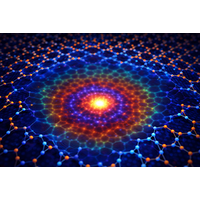
Phys. Rev. Lett. 136, 206302 (2026)
Condensed Matter and Materials
Dissipation-Shaped Quantum Geometry in Nonlinear Transport
Article | Condensed Matter and Materials | 2026-05-18 06:00 EDT
Zhichao Guo, Xing-Yuan Liu, Hua Wang, Li-kun Shi, and Kai Chang
Nonlinear transport as a probe of quantum geometry is not universal and is contingent on the specific dissipation mechanism, not just its strength.
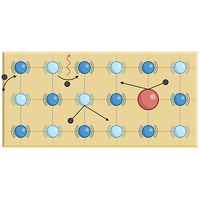
Phys. Rev. Lett. 136, 206303 (2026)
Condensed Matter and Materials
Finite-Frequency Fluctuation-Response Inequality
Article | Statistical Physics; Classical, Nonlinear, and Complex Systems | 2026-05-18 06:00 EDT
Andreas Dechant
Researchers derive a universal limit linking noise and response to perturbations in systems far from equilibrium.
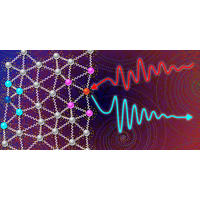
Phys. Rev. Lett. 136, 207101 (2026)
Statistical Physics; Classical, Nonlinear, and Complex Systems
Wavenumber Lock-in in Buckled Elastic Structures: An Analogue to Parametric Instabilities
Article | Polymers, Chemical Physics, Soft Matter, and Biological Physics | 2026-05-18 06:00 EDT
H. E. Read, G. Risso, A. Djellouli, K. Bertoldi, and A. Lazarus
Parametric instabilities are a known feature of periodically driven dynamic systems; at particular frequencies and amplitudes of the driving modulation, the system's quasiperiodic response undergoes a frequency lock-in, leading to a periodically unstable response. Here, we demonstrate an analogous p…
Phys. Rev. Lett. 136, 208201 (2026)
Polymers, Chemical Physics, Soft Matter, and Biological Physics
arXiv
Unveiling Magnetic Frustration via the Elastocaloric Effect
New Submission | Strongly Correlated Electrons (cond-mat.str-el) | 2026-05-18 20:00 EDT
Eric C. Andrade, Pedro M. Cônsoli, Matthias Vojta
Motivated by experimental progress in pressure and strain tuning of quantum materials, we examine the thermodynamic response of frustrated magnets to uniaxial strain. Specifically, we study Ising and Heisenberg models on spatially anisotropic triangular (and, for the Ising model, also kagome) lattices. We determine the entropy as a function of temperature and strain, and use it to compute the elastic Grüneisen ratio $ \eta$ . The Ising models can be strain-tuned into and out of classical spin-liquid phases, and we show that $ \eta$ can become arbitrarily large at low temperature $ T$ near the point of maximal frustration, a universal hallmark of an extensive ground-state entropy. In contrast, the spin-$ 1/2$ Heisenberg model is moderately frustrated and displays multiple $ T=0$ phase transitions. These transitions dominate $ \eta$ at low $ T$ while the intermediate-$ T$ behavior is similar to that of the Ising model. We discuss the extent to which the elastic Grüneisen ratio can be used to deduce the phase diagram, and we connect our results to recent experiments on triangular-lattice magnets.
Strongly Correlated Electrons (cond-mat.str-el), Statistical Mechanics (cond-mat.stat-mech)
7 pages, 6 figures
Stochastic Safety Limits and Scale-Dependent Power Fluctuations in Nuclear Reactors: A Critical Scaling Approach
New Submission | Disordered Systems and Neural Networks (cond-mat.dis-nn) | 2026-05-18 20:00 EDT
Applying boundary functionals of random risk processes to various physical problems makes it possible to determine many important characteristics of these problems. For example, a special case of boundary functionals is the time to first reach a level, which is widely and successfully applied to a variety of problems. We consider the application of boundary functionals to solving nuclear safety problems. In situations such as reactor startup, as well as for certain types of reactors, neutron behavior changes. Neutron clustering begins to play an important role, and the distributions characterizing neutron behavior change. The normal Gaussian distribution is replaced by stable limiting, distributions to which the sums of random variables converge. Boundary functionals allow us to accurately calculate the statistics of random events, determine the behavior of reactor power peaks, the probabilities of catastrophic power surges, and other quantities important for reactor safety, providing a mathematical bridge between the abstract theory of directed percolation and engineering calculations of protection parameters. This article examines the first-passage time to reach a certain level.
Disordered Systems and Neural Networks (cond-mat.dis-nn), Probability (math.PR)
27 pages, 6 figures
Zitterbewegung velocity in semiclassical electron dynamics
New Submission | Other Condensed Matter (cond-mat.other) | 2026-05-18 20:00 EDT
Zitterbewegung plays a major role in electron dynamics in solids, yet is not captured in conventional semiclassical treatments. Here, starting from the quantum Liouville equation, I identify a new Zitterbewegung velocity, which involves the symmetric and antisymmetric components of the quantum geometric tensor oscillating out of phase. The Zitterbewegung velocity resolves the position-shift paradox, recovering the field-induced shift in an electron’s position by integrating the semiclassical equations, and is directly related to the famous minimum conductivity of massless Dirac fermions.
Other Condensed Matter (cond-mat.other)
Disorder-driven symmetry suppression by van der Waals planar defects in a magnetic topological insulator
New Submission | Materials Science (cond-mat.mtrl-sci) | 2026-05-18 20:00 EDT
Rikkie Joris, Heyi Xia, Ana Beatriz Pedro Fontes, Seul-Ki Bac, Sara Bey, Jiaqi Zhou, Zviadi Zarkua, Ahmed Samir Lotfy, Muhammad Saad, Philippe Ohresser, Margriet van Bael, Clement Merckling, Xinyu Liu, Francisco Molina-Lopez, Jean-Christophe Charlier, Jin Won Seo, Badih A. Assaf, Lino M. C. Pereira
Magnetic topological insulators offer a platform to control electronic topology through magnetic order, yet reliable routes to tune their properties remain limited. Here, we show that ion irradiation allows to modify the magnetic and the topological properties of the van der Waals magnetic topological insulator MnBi$ _2$ Te$ _4$ . Using inert ion beams, intrinsic defects are introduced via collision cascades without chemical doping. We identify two distinct regimes. At low fluence, cation antisite disorder leads to a near-complete redistribution of Bi over cation sites while preserving long-range crystallographic order, accompanied by a transition from $ p$ -type to $ n$ -type transport. At high fluence, cation-anion intermixing drives the formation of a previously unreported layer-disordered phase characterized by a high density of van der Waals-specific planar defects, including swapped bilayers. Despite significant structural disorder, the system retains partial periodic order up to high displacement levels. Magnetometry and X-ray spectroscopy show that the Mn high-spin state and antiferromagnetic interactions persist, while magnetic anisotropy is strongly reduced. At the same time, the anomalous Hall response is suppressed by over an order of magnitude, far exceeding the change in magnetization, indicating a direct modification of Berry curvature. These results establish ion irradiation as a means to tune topology through defect engineering and reveal a disorder-driven approach to control symmetry and electronic structure in van der Waals magnetic materials.
Materials Science (cond-mat.mtrl-sci)
Chemical Origins of Non-Bonded Interactions Within and Between Solids
New Submission | Materials Science (cond-mat.mtrl-sci) | 2026-05-18 20:00 EDT
Paul J. Robinson, Adam Rettig, Hieu Q. Dinh, Anton Z. Ni, Joonho Lee
Non-bonded interactions govern structure, stability, and function across a wide range of solid-state materials, yet their chemical origins are often difficult to resolve from total energies alone. Here we generalize absolutely localized molecular orbital energy decomposition analysis to quantify and interpret non-bonded interactions within and between solids at the density functional theory level. Across molecular crystals, moiré heterobilayers, and layered perovskite heterostructures, this framework separates lattice-formation energies, interlayer binding energies, and band-structure changes into chemically intuitive contributions from frozen interactions, polarization, and charge transfer. The analysis reveals how dispersion controls polymorph stability in pharmaceutical crystals, how local stacking modulates interlayer coupling in MoS2/WSe2, and how alkali-cation substitution switches the quantum-well character of layered perovskite heterostructures. By connecting emergent solid-state properties to microscopic interaction mechanisms, this framework provides a chemically transparent basis for understanding and designing complex materials.
Materials Science (cond-mat.mtrl-sci), Chemical Physics (physics.chem-ph)
17 pages, 7 figures
Reversible nanoscale patterning of WTe$_2$ with a scanning tunneling microscope
New Submission | Materials Science (cond-mat.mtrl-sci) | 2026-05-18 20:00 EDT
Kevin Hauser, Danyang Liu, Berk Zengin, Jens Oppliger, Samuel Mañas-Valero, Catherine Witteveen, Fabian O. von Rohr, Jennifer E. Hoffman, Fabian D. Natterer
Manipulating the lattice structure of ferroelectric quantum materials enables their use in low-power electronic devices, including field-effect transistors. WTe$ _2$ is a Weyl-semimetal candidate and ferroelectric, both properties arising from the reduced crystal symmetry of its T$ _\mathrm{d}$ ground state. The T$ _\mathrm{d}$ crystal phase results from a Peierls distortion of the 1T parent structure and an interlayer shift. While experiments in WTe$ _2$ have established ferroelectric switching and transient control of the predicted topological phase via ultrafast excitations, persistent electronic changes on the nanometer scale remain elusive. Here, we demonstrate that current pulses applied via scanning tunneling microscopy can both write and erase persistent nanometer-scale patterns on the surface of WTe$ _2$ . These patterns consist of apparent picometer in-plane and out-of-plane atomic displacements, accompanied by changes to the local density of states. The out-of-plane displacements further modulate the Peierls-like distortion present in WTe$ _2$ , while the in-plane displacements are indicative of ferroelectric switching. The induced patterns can be repositioned and erased, suggesting a nanoscale handle on the ferroelectric properties of WTe$ _2$ .
Materials Science (cond-mat.mtrl-sci), Mesoscale and Nanoscale Physics (cond-mat.mes-hall)
Radio-frequency reflectometry in silicon carbide large-area transistors
New Submission | Mesoscale and Nanoscale Physics (cond-mat.mes-hall) | 2026-05-18 20:00 EDT
Alexander Zotov, Conor McGeough, Megan Powell, Alessandro Rossi
Radio-frequency (RF) reflectometry is widely used for high-bandwidth readout of semiconductor quantum devices at cryogenic temperatures, but its application has mainly been limited to nanoscale structures with relatively small capacitances. Here, we investigate RF readout in a different regime by applying gate-based reflectometry to a large-area silicon carbide transistor with parasitic capacitances orders of magnitude larger than those of typical quantum devices, conditions normally expected to hinder RF readout. We observe a gate-dependent RF response which degrades and eventually vanishes as temperature is lowered, although MOSFET operation in DC transport is maintained down to deep cryogenic temperatures. We attribute this behaviour to impedance changes introduced by carrier freeze-out in the transistor drift region, and propose a modified circuit configuration designed to restore sensitivity under these conditions. These results establish how parasitic pathways and device geometry can limit RF readout, providing insight into the design of scalable cryogenic-CMOS quantum systems.
Mesoscale and Nanoscale Physics (cond-mat.mes-hall), Applied Physics (physics.app-ph)
13 pages, 7 figures
Strong universality class in disordered systems
New Submission | Statistical Mechanics (cond-mat.stat-mech) | 2026-05-18 20:00 EDT
Henrique A Lima, Kaue Hermann, Ismael S. S. Carrasco, Jairo R. L. de Almeida, Fernando A. Oliveira
Disordered systems are very rich laboratories for exploring complex systems. In particular, disordered magnetic systems have been extremely important in the last five decades for understanding a wide range of phenomena. In this work, we use the Edwards-Anderson Hamiltonian to obtain the thermodynamic properties of disordered magnetic systems. In this way, we conduct a systematic investigation of magnetization, correlation functions, order parameter, and fractal dimensions, in function of disorder. In this context, the autocorrelation function for order–parameter fluctuations, introduced by Fisher ( Journal of Mathematical Physics 5, 944322 (1964)), provides an important mathematical framework for understanding the second-order phase transition at equilibrium. However, his analysis is restricted to a Euclidean space of dimension $ d$ , and an exponent $ \eta$ is introduced to correct the spatial behavior of the correlation function at $ T=T_c$ . In recent work, Lima et al ( Phys. Rev. E 110, L062107 (2024)) demonstrated that at $ T_c$ a fractal analysis is necessary for a complete description of the correlation function. We use Monte Carlo simulations to validate analytical results and to show how disorder alters critical exponents , giving rise to different universality classes. On the other hand, there is a subgroup of critical exponents and fractal dimensions that are invariant with disorder. This subgroup heralds a strong universality class.
Statistical Mechanics (cond-mat.stat-mech)
8 pages, 8 figures
Multifractal and Ergodic Properties of Conductance Fluctuations under Strong Disorder
New Submission | Mesoscale and Nanoscale Physics (cond-mat.mes-hall) | 2026-05-18 20:00 EDT
Marcos A. A. de Sousa, Heitor R. Publio, Henrique A. de Lima, Adauto J. F. de Souza, Fernando A. Oliveira, Anderson L. R. Barbosa
Understanding the stochastic properties of conductance fluctuations in disordered mesoscopic systems is fundamental to quantum transport. In this work, we investigate the multifractal and ergodic properties of the fictitious time series of conductance in two-dimensional tight-binding models under varying Anderson disorder. Using standard multifractal analysis, we show that conductance fluctuations exhibit a transition from non-ergodic to ergodic behavior as the disorder strength increases, as evidenced by the decay of the conductance correlation function. Remarkably, multifractality persists in both regimes; however, it becomes insensitive to shuffling in the strong-disorder (ergodic) regime, suggesting that distributional effects dominate temporal organization. On the contrary, in the weakly disordered (non-ergodic) regime, long-range correlations play a significant role. These findings are robust against changes in lead geometry (asymmetric vs. symmetric). Our results provide new insights into the interplay between ergodicity, multifractality, and rare events in disordered quantum transport.
Mesoscale and Nanoscale Physics (cond-mat.mes-hall), Statistical Mechanics (cond-mat.stat-mech)
9 pages, 17 figures
Itinerant antiferromagnetism in the antagonistic pair compound Y$_4$Co$_3$Ag
New Submission | Strongly Correlated Electrons (cond-mat.str-el) | 2026-05-18 20:00 EDT
Rafaela F. S. Penacchio, Nao Furukawa, Joanna M. Blawat, John Singleton, Zhouqi Li, Raquel A. Ribeiro, Sérgio L. Morelhão, Sergey L. Bud’ko, Paul C. Canfield, Tyler J. Slade
Low dimensional crystallographic motifs have long been associated with desirable physical properties. The confinement of electrons to low dimensions is thought to enhance quantum fluctuations and may promote correlated phenomena. Here, using the antagonistic pair concept, we add Y to the immiscible Co-Ag pair to discover Y$ _4$ Co$ _3$ Ag. This compound adopts a monoclinic $ I$ 2/$ m$ structure consisting of Y channels that are filled by one-dimensional zigzag and hexagonal Co chains, which extend along the crystallographic $ b$ -axis with no nearest neighbor contacts between Co and Ag atoms. Transport, magnetic, and specific heat measurements reveal that Y$ 4$ Co$ 3$ Ag orders antiferromagnetically at $ T_N=14.9$ K with an effective magnetic moment $ \mu{\text{eff}}$ = 1.4 $ \mu{\text{B}}$ /Co. Specific heat measurements show only a small entropy loss on the order of $ 0.1,R\ln2$ associated with magnetic order, and magnetization isotherms, in DC fields up to 70 kOe at 1.8 K and in pulsed fields up to 600 kOe at 500 mK, indicate a small ordered moment of less than 0.2 $ \mu_B$ /Co. Taken together, our results imply the presence of small, itinerant moments and strong fluctuations in Y$ _4$ Co$ _3$ Ag, suggesting that Y$ _4$ Co$ _3$ Ag may be a promising candidate material to investigate itinerant magnetic interactions in a quasi-one dimensional system.
Strongly Correlated Electrons (cond-mat.str-el)
Entropy Production from Spin–Vibrational Coupling in Endohedral-Fullerene Qubits Encapsulated in Suspended Carbon Nanotubes
New Submission | Mesoscale and Nanoscale Physics (cond-mat.mes-hall) | 2026-05-18 20:00 EDT
Hybrid carbon nanotube-fullerene architectures provide a controllable platform for studying irreversibility and information flow in structured quantum environments. We analyze entropy generation in a system where paramagnetic endohedral fullerenes, such as N@C$ _{60}$ and P@C$ _{60}$ , are encapsulated inside a suspended carbon nanotube (CNT) resonator, with selected multi-level fullerene spin states forming an effective qubit coupled to quantized CNT flexural modes. Building on prior work on fullerene-filled CNTs, spin-phonon control in suspended nanotubes, and phase-space propagators for damped driven oscillators, we develop a hybrid open-system model combining driven quantum Brownian motion of the CNT with an effective Jaynes-Cummings spin-vibrational interaction. The resonator dynamics are represented by a Wigner function whose evolution is written analytically in terms of the initial Wigner distribution and a Gaussian propagator. This phase-space description separates drive-induced displacement, diffusion, and damping, and connects these processes directly to entropy flow. The coupled spin-mechanical dynamics are embedded in a Lindblad master equation including mechanical damping, spin relaxation, pure dephasing, and thermally activated excitation. Within this framework we derive the entropy balance, identify entropy flux and non-negative entropy production, and examine how spin-vibrational hybridization redistributes irreversibility between coherent exchange and dissipative channels. We show that magnetic-gradient-enhanced spin-phonon coupling, resonant driving, and moderate thermal occupation produce crossovers between oscillator-dominated and spin-dominated entropy-production regimes. The framework provides a basis for using CNT-PEF hybrids as nanoscale platforms to study nonequilibrium quantum thermodynamics, decoherence, and information loss in vibrational environments.
Mesoscale and Nanoscale Physics (cond-mat.mes-hall), Quantum Physics (quant-ph)
19 pages, 6 figures
Quantum Geometry-Driven Nonlinear Spin Currents in Floquet Non-Hermitian Altermagnets
New Submission | Mesoscale and Nanoscale Physics (cond-mat.mes-hall) | 2026-05-18 20:00 EDT
Altermagnets are rapidly emerging as a highly promising platform for spintronics, yet dynamically controlling their spin responses remains a fundamental challenge. In this work, we demonstrate that introducing periodic optical driving and non-Hermiticity provides a powerful route to achieve tunable control over these systems. We derive a general analytical expression for nonlinear spin currents in non-Hermitian phases with a spectral line gap, revealing that the intrinsic response cleanly separates into quantum metric, Berry curvature, and Berry connection dipole contributions. Applying this formalism to a Floquet non-Hermitian $ d$ -wave altermagnet, we uncover that the nonlinear spin conductivity is overwhelmingly dominated by the bare quantum metric. Furthermore, we show that the optical field’s polarization can actively tune – and even strictly reverse – the direction of both longitudinal and transverse spin currents. Our work establishes a quantum geometric framework for the optical manipulation of nonlinear spin transport in advanced magnetic materials.
Mesoscale and Nanoscale Physics (cond-mat.mes-hall), Materials Science (cond-mat.mtrl-sci)
p-Wave Orbital Angular Momentum Texture in a Chiral Crystal
New Submission | Materials Science (cond-mat.mtrl-sci) | 2026-05-18 20:00 EDT
Dongjin Oh, Chiara Pacella, Xiangyu Luo, Chris Jozwiak, Aaron Bostwick, Eli Rotenberg, Mats Leandersson, Craig Polley, Angel Rubio, Domenico Di Sante, Riccardo Comin
The spin and orbital angular momentum (SAM and OAM) are conceptually analogous, yet their roles in condensed matter systems have not been often treated on equal footing. While SAM has been extensively explored, OAM has long been regarded as quenched in crystalline environments and thus largely overlooked. Recent experimental and theoretical advances, however, have demonstrated that OAM can drive a variety of novel electronic phenomena, highlighting the importance of probing OAM textures in the electronic band structure. Here, we investigate the momentum-space OAM texture of (TaSe4)2I, a one-dimensional chiral crystal. Using circular-dichroism angle-resolved photoemission spectroscopy (CD-ARPES), we uncover a p-wave OAM texture accompanied by OAM dipole structures. This orbital p-wave texture is intimately connected to, and thus controllable by the chirality of the host lattice. Complementary spin-resolved ARPES measurements and first-principles calculations reveal that the OAM polarization overwhelmingly dominates the low-energy electronic properties of (TaSe4)2I, far exceeding the SAM polarization. These observations represent the experimental verification of a new type of OAM texture in crystalline materials. Most importantly, these findings underscore a promising material platform for spinless orbitronics applications and lay the foundation for realizing multipolar OAM textures-orbital counterparts of the spin texture in unconventional magnets.
Materials Science (cond-mat.mtrl-sci)
12 pages, 4 figures
Local distortions as a source of piezoelectric/stiffness decoupling in B-doped AlScN
New Submission | Materials Science (cond-mat.mtrl-sci) | 2026-05-18 20:00 EDT
Laszlo Wolf, Geoff L. Brennecka, Vladan Stevanović
We present a first-principles analysis of the wurtzite pseudo-ternary (Al,Sc,B)N to elucidate the structural origin of a decoupling between stiffness $ C_{33}$ and piezoelectric response $ e_{33}$ upon boron incorporation, using DFT-relaxed 100-atom special quasirandom structures across a broad composition range. Pair distribution function analysis reveals interstitial threefold-coordinated boron atoms that have displaced from the tetrahedral cation site. Direct structural analysis establishes their preferential orientation along the $ c$ -axis and identifies a scandium-activated creation mechanism. The vertical coordination asymmetry of each cation is quantified through a site-specific axial asymmetry ratio (AAR), showing that boron incorporation progressively symmetrizes the Sc environment. Correlation with Born effective charges demonstrates that this symmetrization is the mechanism behind the piezoelectric enhancement.
Materials Science (cond-mat.mtrl-sci)
Non-Relativistic Spin-Orbit Interaction in Triplet Superconductors: Edelstein Effect and Spin Pumping by Electric Fields
New Submission | Superconductivity (cond-mat.supr-con) | 2026-05-18 20:00 EDT
Ping Li, G. A. Bobkov, I. V. Bobkova, Tao Yu
Non-relativistic momentum-dependent spin splitting, as observed in collinear altermagnets and non-collinear $ p$ -wave magnets, provides exciting avenues for controlling spin dynamics. Here, we reveal a distinct form of non-relativistic ``spin-orbit coupling” in triplet superconductors by demonstrating that the triplet order parameter induces a wave-vector-dependent spin texture of Bogoliubov quasiparticles, thereby entangling their orbital and spin motions. Even in the absence of relativistic spin-orbit coupling, this intertwining of spin and orbital motion allows an electric field to generate spin polarization in a $ p$ -wave superconductor – that is, an Edelstein effect. Building on this mechanism, we propose an efficient scheme for the nonlinear generation of a DC spin current via electric near fields, driven by AC spin polarization and electron velocity. This general principle offers a powerful route for generating and manipulating spin currents in unconventional superconductors.
Superconductivity (cond-mat.supr-con)
7 pages, 3 figures
Topological property of graphene with triangular array of nanoholes
New Submission | Mesoscale and Nanoscale Physics (cond-mat.mes-hall) | 2026-05-18 20:00 EDT
Yong-Cheng Jiang, Xing-Xiang Wang, Xiao Hu
The nontrivial band topology for graphene with regular arrays of nanoholes with $ C_{6v}$ symmetry is investigated theoretically. For the case of $ 3\sqrt{3} \times 3\sqrt{3}$ triangular array of nanoholes, we find an energy gap at $ \Gamma$ point around the Fermi level associated with a band inversion which induces change in parity indices, whereas deep below the Fermi level there are a bunch of valence bands characterized as obstructed atomic limit (OAL) which also accommodate imbalance in parity indices. This band structure renders the gap at the Fermi level topologically trivial and carrying no edge states, while the nontrivial band topology of the OAL manifests in two flat bands in the ribbon structure associated with localized electronic states at ribbon edges. The present results exhibit rich topological behaviors in graphene derivatives waiting for explorations.
Mesoscale and Nanoscale Physics (cond-mat.mes-hall)
10 pages, 5 figures, 1 table
A Finite-State Gibbs Construction from a Recognition Cost
New Submission | Statistical Mechanics (cond-mat.stat-mech) | 2026-05-18 20:00 EDT
Megan Simons, Jonathan Washburn
On a finite outcome space, the canonical Gibbs distribution is usually obtained by maximizing Shannon entropy at fixed mean of an externally supplied energy functional. This paper studies the finite-state consequences of a ratio-cost construction instead: after adopting the normalized d’Alembert degree-two closure called the Recognition Composition Law (RCL), with unit log-curvature calibration at the reference ratio, the continuous nontrivial positive branch is $ J(x)=\tfrac12(x+x^{-1})-1=\cosh(\log x)-1$ . Given the induced cost vector $ X_\omega=J(r_\omega)$ , multinomial counting and convex duality recover the finite-state Gibbs weights and the identity $ F_{\mathrm{R}}(q)-F_{\mathrm{R}}(p)=T_{\mathrm{R}},D_{\mathrm{KL}}(q\Vert p)$ ; the entropy-maximization steps are classical once the cost is fixed. New technical content includes a non-asymptotic Stirling bound and soft-shell constrained-type theorems for real-valued costs. A three-state example compares the Gibbs law to squared-log, affinity-as-energy, and Tsallis alternatives at the same cost vector and mean-cost constraint, with sample-size power calculations at fixed RCL ground truth. The framework is conditional on axioms (A1)–(A3) and restricted to finite outcome spaces with strictly positive weights; it does not derive the composition law from a more primitive principle.
Statistical Mechanics (cond-mat.stat-mech), Information Theory (cs.IT), Mathematical Physics (math-ph)
50 pages, 2 figures. Python scripts for numerical tables and figures included as ancillary files
Observation of flat-bottom U-shaped energy gap in high-Tc nickelate (La,Pr)3Ni2O7 thin films
New Submission | Superconductivity (cond-mat.supr-con) | 2026-05-18 20:00 EDT
Zhen Liang, Tianheng Wei, Wei Ren, Haoran Ji, Zheyuan Xie, Yanzhao Liu, Ziqiang Wang, Jian Wang
The discovery of high transition temperature (high-Tc) superconductivity in Ruddlesden-Popper (R-P) bilayer nickelates under high pressure has stimulated extensive work to understand the underlying mechanism and search for superconductors with higher Tc. The recent realization of superconductivity in R-P bilayer nickelate thin films with onset Tc above 40 K at ambient-pressure enables the use of a wide array of powerful experimental tools to investigate the unconventional high-Tc superconductivity in bilayer nickelates. Here, using ultra-low temperature scanning tunneling microscopy/spectroscopy (STM/S) and electrical transport study, we report the first successful observation of an energy-symmetric, flat-bottom U-shaped gap with zero residual density of states around the Fermi level in the high-Tc nickelate (La,Pr)3Ni2O7 thin film grown on SrLaAlO4 substrate. Before and after STM/S studies, transport measurements on the same sample reveal consistent superconducting behaviors showing zero resistance, with an onset Tc above 40 K and zero resistance Tc above 20 K. The tunneling spectra exhibit highly unconventional temperature evolution, characterized by a rapid filling of the U-shaped energy gap to a V-shaped gap as the temperature increases. Furthermore, the U-shaped energy gap is reduced under a c-axis magnetic field of 14 T. The energy-symmetric U-shaped gap, taken together with its dependence on magnetic field and temperature, is consistent with the behavior of a superconducting gap, suggesting a nodeless gap function at ultra-low temperatures. Our findings shed new lights on the nature of high-Tc superconductivity and provide an encouraging and thought-provoking hint for a local superconductivity with Tc above liquid nitrogen boiling temperature in nickelate superconductors at ambient or zero pressure.
Superconductivity (cond-mat.supr-con), Mesoscale and Nanoscale Physics (cond-mat.mes-hall), Materials Science (cond-mat.mtrl-sci), Strongly Correlated Electrons (cond-mat.str-el)
Short-time critical dynamics in the classical cubic dimer model
New Submission | Statistical Mechanics (cond-mat.stat-mech) | 2026-05-18 20:00 EDT
Hu-Xiao Peng, Zheng Yan, Shuai Yin
The classical dimer model on the cubic lattice hosts a columnar ordered phase and a disordered Coulomb phase, separated by a continuous phase transition that lies beyond the conventional Landau-Ginzburg-Wilson paradigm. While its equilibrium critical properties have been extensively studied, the nonequilibrium critical dynamics of this model–particularly in the short-time regime–remains largely unexplored. In this work, we investigate the short-time critical dynamics near the transition using large-scale Monte Carlo simulations. By quenching the system from both ordered and disordered initial states with vanishing initial correlation length, we analyze the scaling behaviors of the order parameter and its time correlation function in the short-time stage. From these scaling behaviors, we accurately determine the critical temperature $ T_c = 0.672(1)$ and the static critical exponent $ \beta/\nu = 0.581(5)$ according to the scaling theory of the short-time dynamics. These results are in excellent agreement with previous equilibrium studies. Moreover, we extract the dynamic critical exponent $ z = 1.92(1)$ and, notably, find a negative critical initial slip exponent $ \theta = -1.052(5)$ . This unusual negative value contrasts sharply with the positive $ \theta$ typically observed in conventional critical dynamics. We attribute this anomalous behavior to the combined effects of the emergent SO(5) symmetry at criticality and the local U(1) gauge constraint (Gauss law), which enforces a conserved diffusive dynamics and enhances fluctuations in the short-time regime. Our results provide the first comprehensive characterization of nonequilibrium short-time criticality in the three-dimensional dimer model, shedding new light on the universal dynamical features of phase transitions beyond the Landau-Ginzburg-Wilson framework.
Statistical Mechanics (cond-mat.stat-mech)
9 pages, 6 figures
Commun. Theor. Phys. 78, 075602 (2026)
Equidistant resonance jumps in superconducting coplanar resonators driven by Abrikosov vortices
New Submission | Superconductivity (cond-mat.supr-con) | 2026-05-18 20:00 EDT
Dmitrii S. Kalashnikov, Denis Yu. Vodolazov, Ruslan I. Kinzibaev, Andrei G. Shishkin, Vasily S. Stolyarov
Superconducting coplanar resonators are key building blocks of cryogenic microwave circuits, yet their performance in perpendicular magnetic fields is ultimately limited by Abrikosov vortices. In this work we investigate the dependence of the transmission parameter $ S_{21}$ of niobium quarter-wave coplanar resonators on perpendicular magnetic fields up to 40 Oe and at temperatures between 18 mK and 5 K. Beyond the reversible Meissner regime, the entire resonance peak exhibits abrupt, staircase-like jumps as a function of magnetic field. Upon reversal of the field sweep, these jumps form an almost equidistant series with spacing 1.7-1.8 Oe, which, in agreement with theoretical estimates, we interpret as signatures of multiple-vortex entry and exit events. Additionally, we observe the non-proportional responses of the resonant frequency and the internal quality factor that indicate a complex contribution of vortex and antivortex configurations. We believe that our results will stimulate further studies of large vortex-antivortex systems, explicitly accounting for their discrete nature.
Superconductivity (cond-mat.supr-con)
Markov State Model for the forced unfolding of a small peptide
New Submission | Soft Condensed Matter (cond-mat.soft) | 2026-05-18 20:00 EDT
Marco Oestereich, Jürgen Gauss, Gregor Diezemann
In typical single-molecule force spectroscopy experiments the mechanical unfolding of molecular complexes or biomolecules is studied applying a force ramp to one end of the system while the other end is kept fixed in space. The computational counterpart of this type of experiments can routinely be performed using molecular dynamics simulations with atomistic resolution. However, due to the large difference in time scales often coarse graining procedures are applied in the simulations. Most of the applied techniques do not allow to follow the atomistic details of the relevant conformational transitions due to the structural simplifications used to speed up the simulations. Here, we apply an earlier developed dynamic coarse graining technique based on Markov state modeling to a model peptidic system that does not unfold in a simple two-state manner. Using the donor-acceptor distances of the helical hydrogen bonds as collective variables and performing a dimension reduction technique allows us to construct a Markov model of the unfolding process that correctly represents the microscopic behavior of the system. The chosen example shows that the method can be used to mimick the mechanical unfolding process of systems for which the end-to-end distance does not provide a sufficient order parameter and that do not unfold in a simple cooperative manner.
Soft Condensed Matter (cond-mat.soft), Chemical Physics (physics.chem-ph)
16 pagers, 6 Figures
Layer-dependent Landé $g$-factors of electrons, holes, and excitons in two-dimensional Ruddlesden-Popper lead halide perovskites
New Submission | Other Condensed Matter (cond-mat.other) | 2026-05-18 20:00 EDT
Nataliia E. Kopteva, Dmitri R. Yakovlev, Mikhail O. Nestoklon, Carolin Harkort, Evgeny A. Zhukov, Dennis Kudlacik, Erik Kirstein, Scott A. Crooker, Oleh Hordiichuk, Ole F. Dressler, Maksym V. Kovalenko, Manfred Bayer
Two-dimensional Ruddlesden-Popper lead halide perovskites provide a valuable platform for tailoring charge and spin properties through quantum confinement and reduced symmetry. While the electron and hole Landé $ g$ -factors in bulk lead halide perovskites exhibit a universal dependence on the band gap energy, their evolution in two-dimensional perovskites has remained largely unexplored. Here, the Zeeman splittings of electrons and holes in (PEA)$ _2$ MA$ _{n-1}$ Pb$ _n$ I$ _{3n+1}$ perovskites with the number of inorganic layers ovarying in the range $ n=1,…,8$ are measured by means of the spin-flip Raman scattering and time-resolved Kerr rotation magneto-optical techniques. A systematic evolution of the electron and hole $ g$ -factors with decreasing layer thickness, which deviates from the universal bulk behavior and reveals confinement-driven trends similar to those observed in perovskite nanocrystals, is found. The experimental results are in good qualitative agreement with empirical tight-binding calculations. The exciton $ g$ -factors are evaluated from the Zeeman splittings of the exciton resonances in reflectivity measured in pulsed magnetic fields up to 55~T. These results provide comprehensive insight into the spin properties of two-dimensional lead halide perovskites and establish them as a tunable platform for engineering spin-dependent phenomena in quantum-confined semiconductors.
Other Condensed Matter (cond-mat.other)
Thermodynamic signatures of a field-induced ordered intermediate phase in Na$_2$Co$_2$TeO$_6$
New Submission | Strongly Correlated Electrons (cond-mat.str-el) | 2026-05-18 20:00 EDT
Prashanta K. Mukarjee, Sebastian Erdmann, R. Kalaivanan, R. Sankar, Kwang-Yong Choi, Alexander A. Tsirlin, Philipp Gegenwart
The honeycomb cobaltate Na$ 2$ Co$ 2$ TeO$ 6$ has recently been proposed as a candidate material for hosting field-induced quantum spin liquid (QSL) behavior. Here, we present a comprehensive thermodynamic study of its low-temperature, high-field phase diagram using magnetization, specific heat, and magnetocaloric-effect measurements down to 1 K. In zero field, we observe a weak residual moment that provides further insight into the nature of the magnetic ground state. For in-plane magnetic fields ($ B \parallel a^\ast$ ), we identify three field-induced transitions at $ B{c1} \simeq 6$ T, $ B{c2} \simeq 7.8$ T, and $ B{c3} \simeq 10.4$ T. The magnetic Grüneisen parameter and specific heat reveal clear thermodynamic signatures of these successive phase transitions enclosing two intermediate phases. Contrary to expectations for a field-induced QSL, the phase between $ B_{c2}$ and $ B_{c3}$ lacks enhanced magnetic entropy but instead shows behavior consistent with a distinct ordered state. Above $ B_{c3}$ , the absence of additional anomalies indicates a crossover to a conventional spin-polarized regime. Our results place stringent thermodynamic constraints on the proposed QSL scenario in Na$ _2$ Co$ _2$ TeO$ _6$ , calling for further microscopic investigations to establish the precise nature of the field-induced phases.
Strongly Correlated Electrons (cond-mat.str-el)
Effective increase of a superconducting critical temperature in a high-entropy electron mixture
New Submission | Superconductivity (cond-mat.supr-con) | 2026-05-18 20:00 EDT
We show theoretically that a superconducting critical temperature can be effectively increased in a high-entropy mixture of electrons belonging to conduction and valence bands. In order to employ the entropy of mixing into the superconducting phase dynamics, we suggest to use a metallic trap that removes quasiparticle excitations from the superconductor. This makes the concentration of Cooper pairs a dynamic variable of the entropy of mixing, and thus affects the Ginzburg-Landau functional of the superconductor effectively reducing the first expansion coefficient or, in other words, increasing the critical temperature.
Superconductivity (cond-mat.supr-con)
Critical quench dynamics of Wegner’s $\mathbb{Z}_2$ gauge model: a geometric perspective
New Submission | Statistical Mechanics (cond-mat.stat-mech) | 2026-05-18 20:00 EDT
Ramgopal Agrawal, Leticia F. Cugliandolo, Marco Picco
Wegner’s $ \mathbb{Z}2$ gauge model is the earliest formulation of pure lattice gauge theory and predicts the topological nature of the confinement-deconfinement transition. In three dimensions ($ D=3$ ), the equilibrium critical behavior of the model is understood in terms of geometrically defined objects, namely loop excitations and Fortuin-Kasteleyn (FK) clusters. This work investigates the critical quench dynamics of this model from a geometric perspective, following quenches from both a high-temperature percolation phase and the zero-temperature ground state. Using time-dependent finite-size scaling analysis, we find that the critical non-equilibrium relaxation of the percolation order parameter is governed by a dynamical exponent $ z{\rm p} \simeq 2.6$ , consistent with that associated with the energy density, $ z_{\rm c}$ . Importantly, the value of $ z_{\rm p}$ is robust with respect to the initial quench condition and the choice of geometrical objects. Furthermore, we provide a detailed characterization of the kinetics of different geometrical objects during the evolution from the percolation phase. Notably, we observe that the quench dynamics obeys dynamic scaling in terms of a growing lengthscale, $ \xi_{\rm p}(t) \sim t^{1/z_{\rm p}}$ , despite the absence of a local order parameter.
Statistical Mechanics (cond-mat.stat-mech), High Energy Physics - Lattice (hep-lat), High Energy Physics - Theory (hep-th)
29 pages, 12 figures
Stable magnetic nanodomains engineered via Ga+-ion irradiation for deterministic sequential switching
New Submission | Mesoscale and Nanoscale Physics (cond-mat.mes-hall) | 2026-05-18 20:00 EDT
Gijs W.A. Simons, Rik F.J. van Haren, Bert Koopmans
Precise control of magnetic domain formation at the nanoscale remains constrained by stochastic defect-mediated and unstable pinning, limiting scalability and reproducibility in spintronic architectures. Here we demonstrate that spatially engineered anisotropy gradients provide a deterministic alternative. Using focused Ga+-ion irradiation, we pattern magnetic energy landscapes containing nanoscale “anisotropy wells” that confine magnetic domain walls and enable bidirectional sequential switching without reliance on difficult-to-control material disorder. An analytical framework describing domain-wall energetics in graded anisotropy profiles yields predictive design rules for depinning and stability, which are supported by micromagnetic simulations and experiments. We realize programmable multi-domain configurations in continuous ferromagnetic films and demonstrate robust, reproducible switching of 750 nm regions, while first results for 100 nm are shown, approaching the theoretical limit set by the domain-wall width. By replacing unstable pinning with engineered energy landscapes, this anisotropy landscape establishes a scalable materials strategy for deterministic magnetic-state programming and opens a pathway toward dense, energy-efficient spintronic and reconfigurable magnetic nanodevices.
Mesoscale and Nanoscale Physics (cond-mat.mes-hall), Materials Science (cond-mat.mtrl-sci), Applied Physics (physics.app-ph)
13 pages main text, 6 figures, 5 pages S.I., 3 supplementary figures, Partially presented at INTERMAG 2026
Cycle affinity and winding localize eigenvalues of Markov generators
New Submission | Statistical Mechanics (cond-mat.stat-mech) | 2026-05-18 20:00 EDT
Artemy Kolchinsky, Naruo Ohga, Sosuke Ito
The complex eigenvalues of Markov generators govern oscillatory properties of relaxation, autocorrelation, and linear response. Here we show that these eigenvalues are localized by nonequilibrium cycles of the generator, thus revealing a fundamental tradeoff between thermodynamic driving, oscillation, and decay of eigenmodes. Specifically, we prove that each complex eigenvalue is confined to a region determined by the cycle affinity and the eigenvector ``winding number’’ of some nonequilibrium cycle. In unicyclic systems, we also demonstrate that the winding number coincides with the ordered eigenvalue index, yielding new thermodynamic bounds on the slowest and fastest relaxation modes. In multicyclic systems, our approach unifies and extends several previous inequalities and proves the Uhl–Seifert ellipse conjecture.
Statistical Mechanics (cond-mat.stat-mech)
Solving Classical and Quantum Spin Glasses with Deep Boltzmann Quantum States
New Submission | Disordered Systems and Neural Networks (cond-mat.dis-nn) | 2026-05-18 20:00 EDT
Luca Leone, Arka Dutta, Markus Heyl, Enrico Prati, Pietro Torta
Variational neural network models have achieved remarkable success in solving ground-state problems of quantum many-body systems. However, addressing classical and quantum spin glasses remains challenging, as disorder and energy frustration give rise to an exponentially large number of local energy minima separated by high-energy barriers, hindering the efficiency of conventional Metropolis-based Monte Carlo methods. To bridge this gap, we introduce Deep Boltzmann Quantum States, a class of neural quantum states inspired by deep Boltzmann machines that inherit efficient block Gibbs sampling. We also propose two key advances in the training algorithm. Firstly, we combine natural-gradient updates with state-of-the-art stochastic optimizers. Secondly, we gradually tune the hardness of the problem Hamiltonian by interpolating from an easy to a hard regime, without the need to closely approximate the instantaneous adiabatic state at intermediate times. We match the exact solution or the best available estimate for several instances of classical and quantum Ising spin-glass models with infinite-range interactions and hundreds of spins. We also solve instances of the NP-hard Job Shop Scheduling Problem exceeding the current limitations of quantum annealing hardware. To summarize, deep neural architectures with efficient global update rules and trained within an annealing-like scheme, provide a powerful framework for solving real-world hard combinatorial optimization and for investigating disordered quantum many-body systems.
Disordered Systems and Neural Networks (cond-mat.dis-nn), Quantum Physics (quant-ph)
Active Model B$^-$ from Mass-Conserving Reaction-Diffusion Systems
New Submission | Soft Condensed Matter (cond-mat.soft) | 2026-05-18 20:00 EDT
Davide Toffenetti, Beatrice Nettuno, Henrik Weyer, Erwin Frey
We show that the late-time dynamics of a minimal three-component mass-conserving reaction–diffusion system reduce to a scalar active field theory, Active Model B$ ^-$ (AMB$ ^-$ ), in which a density-dependent interfacial coefficient $ \kappa(\phi)$ turns negative at high density. This drives a finite-wavelength instability and stabilises microphase-separated patterns, in contrast to the unbounded coarsening of two-component mass-conserving systems. Unlike Active Model B$ ^+$ , AMB$ ^-$ retains a chemical potential that remains a state function, inherited from the underlying conservation law, but admits no equation of state for the pressure.
Soft Condensed Matter (cond-mat.soft), Statistical Mechanics (cond-mat.stat-mech)
DT and BN contributed equally to this work
Actin cross-linking organizes basal body patterning through anomalous diffusion transitions
New Submission | Soft Condensed Matter (cond-mat.soft) | 2026-05-18 20:00 EDT
Raghavan Thiagarajan, Younes Farhangi Barooji, Poul-Martin Bendix, Mandar M. Inamdar, Jakub Sedzinski
Subcellular protein complexes and organelles exhibit diverse dynamic behaviors that reflect the mechanical constraints and organization of the intracellular environment. Although some structures follow classical Brownian motion, many display anomalous dynamics. The transitions between these regimes are increasingly recognized as critical for subcellular organization, yet how they influence pattern formation remains unclear. Here, we investigate the spatial arrangement of cilia on the apical surface of multiciliated cells (MCCs) in developing Xenopus laevis embryos, where coordinated ciliary beating depends on the precise organization of hundreds of centriole-derived basal bodies (BBs). Using quantitative confocal, high-resolution and high-speed TIRF imaging together with theoretical modeling, we show that BB trajectories undergo time-resolved transitions between diffusive and anomalous motion, with distinct regimes that correlate with apical surface expansion. During the early stages, actin remodeling facilitates the dispersal of BBs by providing a permissive, low-confinement environment. As development progresses, the actin network becomes increasingly cross-linked that constrains BB movement and promotes uniform spacing across the apical domain. Disruption of $ \alpha$ -actinin-1, a major actin cross-linking protein, impairs the integrity of the apical actin meshwork, weakens BB confinement, and disrupts regular spatial patterning, ultimately compromising the arrangement of BBs required for proper cilia alignment. Together, we show that progressive apical actin cross-linking coordinates BB positioning and regulates their dynamic state, guiding the shift from diffusive to confined motion. This transition in dynamics enables the emergence of a uniform BB pattern, which in turn ensures the aligned deployment of motile cilia necessary for effective directional fluid flow.
Soft Condensed Matter (cond-mat.soft), Biological Physics (physics.bio-ph), Subcellular Processes (q-bio.SC)
Main text: 47 pages; 7 main figures; Supplementary text: 60 pages; 10 Supplementary figures
The Directed Abelian Sandpile Model on Cylinders
New Submission | Statistical Mechanics (cond-mat.stat-mech) | 2026-05-18 20:00 EDT
Abdul Quadir, Nikita Kalinin, Ram Ramaswamy
We study the abelian sandpile model in two dimensions on a directed cylindrical lattice with periodic transverse boundary conditions in the transverse direction and dissipation at one boundary. Recurrent configurations form a finite abelian group, and repeated grain addition at a specific site generates deterministic dynamics on this group. Using Dhar’s formulation, the sandpile group is identified with the co-kernel of the reduced directed Laplacian. We show that the group structure admits an exact reduction to a transverse problem, allowing complete determination of its cyclic decomposition. Our results establish a direct connection between the algebraic structure of the sandpile group and the periodicity of the driven dynamics, establishing the manner in which the underlying algebraic structure governs both deterministic and stochastic evolution in directed sandpile.
Statistical Mechanics (cond-mat.stat-mech)
8 pages, 2 figures
Bak–Tang–Wiesenfeld model for various topologies and ranges of interaction
New Submission | Statistical Mechanics (cond-mat.stat-mech) | 2026-05-18 20:00 EDT
P. Szczepaniak, K. Malarz (AGH University of Krakow)
In this paper, the Bak–Tang–Wiesenfeld model for various substrate topologies and a variety of neighborhoods is reconsidered. With computer simulation, we study the distribution of avalanche sizes. Using the Z-score we confirm that independently of the substrate topology and the range of neighborhood, the exponent that governs the power law of the probability distribution of the size of avalanches is the same and approximately equal 1.208(39). However, this requires a smartly chosen number of deposited grains in relation to the linear size of the system.
Statistical Mechanics (cond-mat.stat-mech)
7 pages, 5 figures, for International Conference on Statistical Physics, SigmaPhi 2026, <this http URL
Tunable Crossed Andreev Reflection in Bipolar Magnetic Semiconductors
New Submission | Mesoscale and Nanoscale Physics (cond-mat.mes-hall) | 2026-05-18 20:00 EDT
Polireddi Naveen, Abhiram Soori
Crossed Andreev reflection (CAR) is a nonlocal quantum transport phenomenon that arises at the interface between a superconductor and two spatially separated metals. In this process, an electron incident from one metal combines with another electron originating from the other metal to form a Cooper pair in the superconductor. As a consequence, a hole is emitted into the second metal, establishing a nonlocal electron-hole conversion process. In contrast to local Andreev reflection – where electron-to-hole conversion occurs within the same region – CAR intrinsically links two spatially separated carriers, giving rise to nonlocal correlations and quantum entanglement. In bipolar magnetic semiconductors (BMSs), the conduction and valence bands possess opposite spin polarizations. We propose to achieve tunable control of CAR by independently adjusting the chemical potentials of the two regions. By engineering the alignment of spin-polarized bands in the two BMS leads, CAR can be selectively enhanced or suppressed. This tunability enables precise manipulation of nonlocal transport, and correlated electron dynamics, offering promising prospects for spintronic and superconducting device applications.
Mesoscale and Nanoscale Physics (cond-mat.mes-hall), Materials Science (cond-mat.mtrl-sci), Superconductivity (cond-mat.supr-con)
5 pages, 4 captioned figures. Comments are welcome
Lieb-Schultz-Mattis constraints for hyperbolic lattices
New Submission | Strongly Correlated Electrons (cond-mat.str-el) | 2026-05-18 20:00 EDT
The Lieb-Schultz-Mattis (LSM) theorem and its higher-dimensional extensions forbid the existence of a unique, symmetric, and gapped ground state at fractional fillings in quantum many-body systems with a conserved particle number (or spin angular momentum) and the conventional translation symmetry of Euclidean lattices. In this work, we propose a generalization of the LSM theorem to quantum many-body systems on hyperbolic lattices, i.e., regular tessellations of two-dimensional negatively curved space. By leveraging concepts from hyperbolic band theory in a many-body setting, we adapt Oshikawa’s flux-threading argument to periodic hyperbolic lattices with a non-Euclidean (Fuchsian) translation symmetry and compute a lower-bound to the ground-state degeneracy as a function of filling and lattice geometry. We explore the consequences of LSM constraints for gapped phases of hyperbolic quantum matter and suggest frustrated spin models on hyperbolic analogs of the square and triangular lattices as promising platforms for realizing symmetric spin liquids in hyperbolic space.
Strongly Correlated Electrons (cond-mat.str-el), Mesoscale and Nanoscale Physics (cond-mat.mes-hall), Quantum Physics (quant-ph)
20 pages, 3 figures, 1 table
Orbital Angular Momentum Textures and Currents in a Discrete Helix: Equilibrium and Linear Response
New Submission | Mesoscale and Nanoscale Physics (cond-mat.mes-hall) | 2026-05-18 20:00 EDT
Danny Cordova, Bertrand Berche, Ernesto Medina
Recently, nonequilibrium orbital angular momentum in low-dimensional systems has attracted renewed attention. Here we introduce a minimal three-orbital tight-binding model for a single helical chain and show that chirality alone generates a momentum-dependent orbital-angular-momentum texture through Slater–Koster hybridization in the local basis $ (p_r,p_\phi,p_z)$ , without requiring atomic spin–orbit coupling. In the single-helix geometry, the radial orbital texture vanishes identically, while the azimuthal and longitudinal components remain finite and arise from the odd-in-momentum $ (p_z,p_r)$ and $ (p_r,p_\phi)$ sectors. As a result, the equilibrium average orbital texture vanishes by parity, although persistent-like orbital angular momentum currents may still exist and imply chirality-dependent end magnetization in a finite helix. Under an applied longitudinal electric field, the system develops a finite orbital Edelstein response, whereas the projected longitudinal orbital-current conductivity vanishes in the linear regime by parity. When spin degrees of freedom are included, the orbital texture acts as a source of spin polarization through orbital-to-spin transduction. The resulting spin response is controlled by orbital overlap scales much larger than the bare relativistic spin–orbit scale, making it a stronger candidate for spin injection than the conventional spin Edelstein mechanism. These results identify chirality as the minimal microscopic ingredient for generating orbital angular momentum response in one-dimensional systems and support an orbital route to spin selectivity in chiral conductors.
Mesoscale and Nanoscale Physics (cond-mat.mes-hall)
Large-$N$ scaling of Tan’s contact for the harmonically trapped Tonks–Girardeau gas at finite temperature
New Submission | Quantum Gases (cond-mat.quant-gas) | 2026-05-18 20:00 EDT
We derive the canonical-ensemble scaling of Tan’s contact for $ N$ harmonically trapped Tonks–Girardeau bosons at finite temperature in the large-$ N$ limit. The leading scaling coefficient reproduces the local-density-approximation result and is obtained from a contour-integral representation of the canonical partition function followed by a saddle-point reduction to a phase-space integral with a self-consistent scaled chemical potential. The subleading coefficient is the central new object of this work: it admits an explicit representation in terms of universal phase-space integrals of the Fermi factor, has closed-form Sommerfeld and virial limits, and is identified with the canonical-versus-grand-canonical ensemble difference at fixed mean particle number. In the high-temperature Boltzmann regime the ratio of subleading to leading coefficients collapses to a universal value, traceable to the Poissonian particle-number statistics of the dilute grand-canonical gas. We construct Padé approximants for both scaling functions that interpolate uniformly between the low-temperature Sommerfeld and high-temperature virial regimes; for the subleading coefficient we report a form that is uniformly accurate on our working range of temperatures and asymptotically correct beyond. The scaling law is verified against canonical contour-integration data across the full temperature range.
Quantum Gases (cond-mat.quant-gas), Statistical Mechanics (cond-mat.stat-mech)
31 pages, 5 figures
Charge-sensitive vibrational modes in BEDT-TTF salts: Signatures of charge ordering and site charge
New Submission | Strongly Correlated Electrons (cond-mat.str-el) | 2026-05-18 20:00 EDT
Savita Priya, Martin Dressel, Jesse Liebman, Natalia Drichko
BEDT-TTF-based organic conductors host a number of ground states, tuned by electron repulsion from Mott and charge ordered insulators to superconductors. Knowing charge distribution on the molecular sites in the insulating state of these materials is a key to understanding the origin of these ground states. We survey and discuss the C=C stretching modes in BEDT-TTF based molecular conductors. These molecular vibrations are extremely crucial in characterization of charge-ordered insulators, and are recently linked to superconductivity in some compounds. Focusing on the known examples of BEDT-TTF$ ^{+0.5}$ salts, we analyse the reliability of the C=C stretching modes for the determination of charge ordering and absolute site charge. Considering the charge-ordered states, a prominent shift in frequency of 141 cm$ ^{-1}$ per elementary charge $ e$ for $ \nu_{27}(b_{1u})$ and 98 cm$ ^{-1}$ e$ for $ \nu_2$ ($ a_g$ ) can be clearly realised, however, the distribution resulting from different compounds span over 20 cm$ ^{-1}$ . For nominal BEDT-TTF$ ^{+0.5}$ compounds, the distribution of the resonance also extends around 20 cm$ ^{-1}$ , yielding an unexpected large uncertainty of $ \Delta\rho\approx(\pm0.045)e$ , which is presumably due to the influence of small differences in the structure. This highlights the limitations of charge-frequency relations to detect small deviations in absolute charge values on molecular lattice sites, and emphasises on the use of the relations to estimate charge-ordering, rather than absolute site charge.
Strongly Correlated Electrons (cond-mat.str-el), Chemical Physics (physics.chem-ph)
16 pages, 9 Figures, 7 Tables
Benchmarking empirical and machine-learned interatomic potentials using phase diagram predictions for Lead
New Submission | Materials Science (cond-mat.mtrl-sci) | 2026-05-18 20:00 EDT
Tom Hellyar, Pascal T. Salzbrenner, Peter I. C. Cooke, Chris J. Pickard, Scott Habershon, Livia B. Pártay
We compare the predicted phase behaviour of lead (Pb) using three different interatomic potential models, including an embedded atom method (EAM), a modified embedded atom method (MEAM), and a neural network-based machine-learned model in the form of an ephemeral data-derived potential (EDDP). Using nested sampling and replica-exchange nested sampling simulations, we computed thermodynamic and structural properties at pressures up to 60 GPa, mapping both melting behaviour and solid-phase stability. Both the EAM and MEAM models predict the face-centred cubic (FCC) phase to remain stable up to approximately 60 GPa. In contrast, the EDDP model captures the experimentally-observed FCC-to-hexagonal close-packed (HCP) transition at around 15 GPa. These results highlight the importance of training data and model flexibility in accurately describing high-pressure phase behaviour, and demonstrate the effectiveness of nested sampling as a robust framework for exploring phase stability in materials. Particularly, the combination of nested sampling with modern machine-learned interatomic potentials - delivering near ab initio accuracy at tractable cost - opens the door to truly predictive and exhaustive exploration. EDDPs trained on diverse, out-of-equilibrium configurations appear particularly well suited to this task, offering a robust and transferable framework for unbiased phase discovery.
Materials Science (cond-mat.mtrl-sci), Statistical Mechanics (cond-mat.stat-mech)
13 pages, 10 figures
Interfacial Reconstructions and Engineering in III-V@II-VI Core-Shell Quantum Dots
New Submission | Materials Science (cond-mat.mtrl-sci) | 2026-05-18 20:00 EDT
Jordi Llusar, Abdessamad El Adel, Luca De Trizio, Liberato Manna, Zeger Hens, Ivan Infante
In core/shell quantum dots (QDs), the interface between semiconductors of different chemical character largely determines their optoelectronic properties. In III-V/II-VI systems, this boundary involves pronounced chemical and electronic discontinuities that can generate trap states even under complete surface passivation. Using density functional theory on atomistic models of InAs/CdSe QDs, we systematically reconstruct atomic arrangements at the surface and interface to evaluate how local coordination and interfacial dipoles influence the electronic structure. Abrupt interfaces induce charge imbalance and band-gap collapse, whereas introducing an alloyed interlayer that mixes core and shell atoms and vacancies restores energetic alignment and yields delocalized band-edge states, consistent with experimental findings. We also introduce a charge-flow analysis that quantifies charge redistribution across the QD, providing a framework for realistic modeling of interlayer formation and predictive design of defect-free interfaces in core@shell architectures.
Materials Science (cond-mat.mtrl-sci)
27 pages, 4 figures
ACS Energy Letters 11 5 (2026) 3945-3952
A practical Laser-Heated Diamond Anvil Cell synthesis technique and recovery workflow for metastable MnSb2 and YbZn2 phases
New Submission | Materials Science (cond-mat.mtrl-sci) | 2026-05-18 20:00 EDT
S. Huyan, R. F. S. Penacchio, D. Zhang, Z. Li, S. L. Morelhão, Raquel Ribeiro, P. C. Canfield, S. L. Bud’ko
The creation and exploration of new materials under extreme pressure-temperature conditions has become increasingly reliant on laser-heated diamond anvil cell (LHDAC) techniques, which provide direct access to previously unexplored regions of multinary phase diagrams. Whereas numerous high-pressure phases have been identified in situ, systematic recovery and post-synthesis physical property characterization of these materials remain significant challenges. In this work, we present the development of an integrated LHDAC synthesis and demonstrate a practical LHDAC-based synthesis workflow that enables stabilization and recovery of metastable intermetallic phases for subsequent structural and transport studies. Using this approach, we successfully achieved LHDAC synthesis of high-pressure MnSb2 and YbZn2 phases under moderate pressures. Synchrotron X-ray diffraction and spatial mapping confirm dominant formation of the targeted phases, whereas laboratory-based refinement quantifies phase fractions despite intrinsic microstrain and minor secondary phases. High-pressure transport measurements on recovered samples reveal tunable by pressure electronic instabilities in both systems. In MnSb2, pressure suppresses two high-temperature magnetic ordering anomalies, observed in transport, by 5 GPa and for higher pressures induces a new low-temperature feature that increases with further pressure increase. In hexagonal high-pressure YbZn2, an electronic reconstruction emerges at ~11 GPa, characterized by semiconducting-like behavior from ~ 30 K to 300 K and a broad low-temperature coherence crossover near 30 K. Our results establish LHDAC synthesis not only as a structural discovery tool, but also as an experimental platform for investigating correlated quantum states stabilized far from equilibrium thermodynamic conditions.
Materials Science (cond-mat.mtrl-sci), Applied Physics (physics.app-ph)
22 pages, 8 figures and 27 references
Fuzzy band structure of quantum dots by Bloch Orbital Expansion, unconventional insights into geometry-electronic structure relations
New Submission | Materials Science (cond-mat.mtrl-sci) | 2026-05-18 20:00 EDT
Zeger Hens, Jordi Llusar, Ivan Infante
The extension of ab-initio methods like density functional theory (DFT) to quantum dot (QD) geometries has enabled researchers to explore relationships between QD surface termination and electronic structure. However, fully utilizing the data from DFT requires novel classification methods for QD orbitals. Here, we identify relationships between QD geometry and electronic structure by transforming real-space QD orbitals into momentum-space using Bloch orbital expansion (BOE), yielding a fuzzy QD band structure. Comparing with bulk band structures, we show that truncated, unpassivated facets in III-V and II-VI QDs produce mid-gap orbitals derived from bulk surface orbitals; an identification challenging in real space. QDs with reconstructed facets, however, feature delocalized orbitals formed by superposition of bulk Bloch orbitals. Moreover, we prepare for the first time atomistic core/shell QD models and by the BOE expansion we can clearly identify the core/shell band alignment not possible in real space. These findings emphasize BOE as a vital tool for connecting computational and experimental insights in nanocrystal research.
Materials Science (cond-mat.mtrl-sci)
34 Pages, 4 Figures, 1 Table
ACS Nano 2025, 19, 8, 8227-8237
Spherically symmetric approaches in the theoretical study of low-dimensional magnets
New Submission | Strongly Correlated Electrons (cond-mat.str-el) | 2026-05-18 20:00 EDT
A.F. Barabanov, V.E. Valiulin, A.V. Mikheyenkov, P.S. Savchenkov
The main ideas and some of the most important results of the spherically symmetric self-consistent approach and a number of related theoretical algorithms are presented. These methods make it possible to study low-dimensional Heisenberg-type spin models, including frustrated ones, with careful consideration of the theoretic (Mermin-Wagner and Marshall) theorems, as well as the site spin constraint. Thus, the difficulties that may arise in the traditional analysis of low-dimensional magnetic systems are avoided. The approach can also be applied to the spin-pseudospin model, and is also embedded in more complex constructions when considering spin models with free carriers, such as the basic and three-band Hubbard models, t-J and s-d models, and the Kondo lattice.
Strongly Correlated Electrons (cond-mat.str-el)
Phys. Usp. 69, 116-137 (2026)
Transport signatures of valley polarization in graphene multilayers: In-plane linear magnetoconductivity vs anomalous Hall effect
New Submission | Mesoscale and Nanoscale Physics (cond-mat.mes-hall) | 2026-05-18 20:00 EDT
Fernando Peñaranda, Fernando de Juan
In two-dimensional materials where interacting Fermi pockets occur in valleys related by time-reversal symmetry, a spontaneous valley imbalance results in a novel state known as an orbital magnet. Due to the breaking of time-reversal symmetry, this state can be probed in transport experiments by the violation of Onsager relations, most often done through the anomalous Hall effect (AHE). Here we propose that odd-in-field, in-plane linear magnetoconductivity (LMC) is an alternative probe of valley polarization which can occur even when the AHE vanishes. In multilayer structures, the effect originates from in-plane orbital moments and Berry curvatures enabled by interlayer tunneling and dominates over the spin response. After a classification of many recently studied multilayers, we focus on two valley polarized examples: twisted bilayer graphene, where LMC is finite but the AHE vanishes unless additional symmetry breaking from the substrate is present, and rhombohedral graphene multilayers, where LMC and AHE both track valley polarization because they have the same symmetry. Using self-consistent Hartree-Fock and semiclassical transport calculations, we present detailed predictions of LMR for these two examples and analyze the implications for recent experiments.
Mesoscale and Nanoscale Physics (cond-mat.mes-hall)
In-situ correlative SEM/KPFM for semiconductor devices and 2D heterostructures
New Submission | Mesoscale and Nanoscale Physics (cond-mat.mes-hall) | 2026-05-18 20:00 EDT
Prabhu Prasad Swain, Nahid Hosseini, Eveline. S Mayner, Aleksandra Radenovic, Marcos Penedo, Georg E. Fantner
Correlative nanoscale surface characterization benefits from simultaneously measuring electronic and structural properties in the same environment, a capability that is essential for modern-day materials science and semiconductor failure analysis. In-situ AFM-SEM measurements facilitated by self-sensing cantilevers offer great potential here; however, they are limited due to their inherent capacitive crosstalk. Here, we demonstrate for the first time the in-situ implementation of single-pass heterodyne Kelvin probe force microscopy inside a scanning electron microscope, using piezo-resistive cantilevers. We overcome the capacitive crosstalk prevalent in piezo-resistive cantilevers by demodulating excitation and detection to simultaneously map surface topography and contact potential difference for correlation with compositional analysis. We systematically compare different operational modes of this heterodyne technique, elucidating their spatial resolution, signal sensitivity, and signal-to-noise ratio. The integrated approach yields exceptional signal quality and reveals how electron beam scan parameters can directly influence surface potential contrast. We demonstrate this correlative analysis workflow on two-dimensional heterostructures and semiconductor circuits. This work establishes a robust and versatile correlative imaging mode for in-situ Kelvin force and topography imaging inside a scanning electron microscope for next-generation semiconductor device analysis and materials science.
Mesoscale and Nanoscale Physics (cond-mat.mes-hall), Applied Physics (physics.app-ph), Instrumentation and Detectors (physics.ins-det)
Biophysical Considerations for Rational Antibody and ADC Design
New Submission | Soft Condensed Matter (cond-mat.soft) | 2026-05-18 20:00 EDT
Alberto Ocana, Jorge R. Espinosa
Antibody-based therapeutics-including antibody-drug conjugates (ADCs), bispecific antibodies, and novel formats-are reshaping oncology, yet key determinants of efficacy, safety, and manufacturability frequently emerge after conjugation and formulation. We argue that computational biophysics provides an underexploited framework to address this gap by connecting molecular interactions to biological outcomes. We highlight how molecular dynamics, coarse-grained simulations, and free energy calculations reveal how conjugation site, linker chemistry, and drug-antibody ratio reshape conformational landscapes. We emphasize structural coupling between antibody, linker, and payload, with implications for antigen binding, internalization, and developability. We propose that integrating physics-based modeling into development pipelines-alongside experimental validation-can reduce empirical iteration and de-risk translation. As force fields, and hybrid physics-machine-learning methods improve, this field is poised to become a central driver of next-generation ADC design.
Soft Condensed Matter (cond-mat.soft), Biological Physics (physics.bio-ph)
16 pages, 2 figures
Charge Transfer from Perovskite Quantum Dots to Multifunctional Ligands with Tethered Molecular Species
New Submission | Materials Science (cond-mat.mtrl-sci) | 2026-05-18 20:00 EDT
Mariam Kurashvili, Lena S. Stickel, Jordi Llusar, Christian Wilhelm, Fabian Felixberger, Ivana Ivanović-Burmazović, Ivan Infante, Jochen Feldmann, Quinten A. Akkerman
Perovskite quantum dots (pQDs) are promising materials for optoelectronic and photocatalytic applications due to their unique optical properties. To enhance charge carrier extraction or injection donor/acceptor molecules can be tethered to the pQD. These molecules must strongly bind to the ionic surfaces of pQDs without compromising colloidal stability. These we achieve by using multifunctional ligands containing a quaternary ammonium binding group for strong pQDs surface attachment, a long tail group for colloidal stability, and a functional group near the pQD surface. Such pQDs with ferrocene-functionalized ligands show fast photoexcited hole transfer with near-unity efficiency. Density functional theory calculations reveal how ferrocene’s molecular structure reorganizes following hole transfer, affecting its charge separation efficiency. This approach can also be extended to in photoexcited electron and energy transfer processes with pQDs. Therefore, this strategy offers a blueprint for creating efficient QD-molecular hybrids for applications like photocatalysis.
Materials Science (cond-mat.mtrl-sci)
25 Pages, 5 Figures
ACS Energy Lett. 2025, 10, 6, 2811-2820
Machine learning potential as a guide for eutectic in ultra-refractory multicomponent ceramics
New Submission | Disordered Systems and Neural Networks (cond-mat.dis-nn) | 2026-05-18 20:00 EDT
V.E. Valiulin, A.V. Mikheyenkov, N.M. Chtchelkatchev, E.A. Levashov
The experimental determination of eutectic points is a long-established and widely used technique, but it is generally only practical for systems with relatively low melting points. Many modern, promising materials, however, are ultra-refractory, with melting points exceeding 3000 K. For these systems, conventional melting experiments become prohibitively expensive and technically challenging. Advanced AI modeling can serve as a powerful precursor to guide successful experimentation in such cases. This work proposes a novel criterion for determining the eutectic point concentration in ultra-refractory alloys. The approach is verified using the Ti-B-C system - the most thoroughly studied three-component refractory system to date. The core of the algorithm is a machine-learning interatomic potential, based on a neural network, which achieves accuracy comparable to ab initio methods. Crucially, the algorithm operates effectively in the liquid phase, eliminating the need for information about the solid alloy’s crystalline structure to estimate eutectic points.
Disordered Systems and Neural Networks (cond-mat.dis-nn), Materials Science (cond-mat.mtrl-sci)
J. Chem. Phys. 164, 054504 (2026)
Long-range magnetic ordering and structural phase transition in disordered high-entropy spinel chromites
New Submission | Materials Science (cond-mat.mtrl-sci) | 2026-05-18 20:00 EDT
Sushanta Mandal, Koushik Chakraborty, Isha, Arvind Kumar Yogi, S. D. Kaushik, Sourav Marik, Tirthankar Chakraborty
High-entropy spinel oxides provide an excellent platform for investigating entropy-stabilized correlated systems with strong configurational disorder. In this work, we systematically study the temperature evolution of the structural and magnetic properties of Cr-based high-entropy spinels with compositions $ (Mn_{0.2}Co_{0.2}Ni_{0.2}Cu_{0.2}Zn_{0.2})Cr_2O_4$ and $ (Mg_{0.2}Co_{0.2}Ni_{0.2}Cu_{0.2}Zn_{0.2})Cr_2O_4$ . Our results reveal that both systems crystallize in cubic structure with space group \textit{$ Fd\overline{3}m$ } at room temperature. Each system undergoes antiferromagnetic ordering below the Néel temperatures $ T_N$ = 49 K and 35 K, respectively. Neutron diffraction measurements confirm the emergence of long-range magnetic order with spiral spin arrangement. Both systems exhibit a structural phase transition from cubic \textit{$ Fd\overline{3}m$ } to orthorhombic \textit{Fddd} symmetry at approximately 55 K and 85 K, respectively. Notably, despite the significant chemical disorder at the A site, both systems undergo transitions analogous to those observed in low entropy spinel systems. This behavior suggests that high configurational entropy may promote global structural stabilization despite local chemical disorder, thereby preserving long-range orderings and the characteristic symmetry-breaking transitions of the pristine spinel systems.
Materials Science (cond-mat.mtrl-sci)
10 pages, 7 figures
Causation-guided mechanism identification and interpretable reduced-order modeling of damage-driving grain-boundary stress in creep
New Submission | Materials Science (cond-mat.mtrl-sci) | 2026-05-18 20:00 EDT
Weichen Kong, Yanwei Dai, Yinglin Zhang, Yinghua Liu
Grain-boundary (GB) local stress is central to the initiation and evolution of long-term creep damage in polycrystalline superalloys. Owing to the high-dimensional nonlinear relationships between the GB stress response and multiple crystallographic, microstructural, and micromechanical characteristics, it remains challenging to identify the key characteristics governing GB stress and to elucidate their mechanisms of influence. Dislocation-climb-affected crystal-plasticity finite-element simulations of minimal grain clusters are combined with an integrated causation-guided machine-learning framework, in which mechanics-informed descriptors are analyzed by causation entropy to identify governing mechanisms and then distilled into a reduced-order regression form for interpretable prediction of GB normal stress. Among 18 physically motivated characteristics, the GB inclination angle, the slip transmission, the climb-related Schmid-type indicator, and the elastic-modulus mismatch are found to be dominant, revealing the coupled roles of interfacial geometry, crystallographic compatibility, creep stress relaxation, and micromechanical contrast. The identified characteristics hierarchy and functional representation remain effective under multiaxial loading and can be extended to tricrystal systems through physically interpretable nonlocal augmentation when a purely local description becomes insufficient, demonstrating strong physical consistency and robust generalizability across physical conditions. The extracted candidate functions also improve surrogate-model performance across multiple machine-learning model classes, providing supporting evidence for the physical relevance and efficiency of the identified representation. The proposed methods demonstrate strong potential for the development of interpretable machine-learning models and for the study of microscale nonlocal damage.
Materials Science (cond-mat.mtrl-sci), Information Theory (cs.IT)
Thermal conductivity of seifertite and pyrite-type SiO$_2$: A comparative study
New Submission | Materials Science (cond-mat.mtrl-sci) | 2026-05-18 20:00 EDT
Doyoon Park, Yihang Peng, Jie Deng
Thermal conductivity is a fundamental material property that plays a crucial role in understanding the dynamics and evolution of planetary interiors. Despite its importance, the thermal conductivity of seifertite and pyrite-type SiO$ _2$ remains unknown. Here, we calculate the lattice thermal conductivities of seifertite and pyrite-type SiO$ _2$ using the Green-Kubo method based on molecular dynamics (MD) simulations driven by two machine learning potentials (MLPs) constructed from the SCAN and PBEsol exchange-correlation functionals, with $ \textit{ab initio}$ -level accuracy. To demonstrate our methodology, we also compute thermal conductivities using the phonon quasiparticle approach for comparison. Overall, the Green-Kubo method predicts up to 119 % higher thermal conductivity with a temperature dependence close to $ T^{-1}$ , as it fully captures diffusion-like phonons at high temperatures that are missed by the phonon quasiparticle approach. The 19 % reduction in thermal conductivity across the phase transition from seifertite to the pyrite-type phase suggests the potential formation of a thermally insulating layer in the mantle of super-Earths.
Materials Science (cond-mat.mtrl-sci)
Staggering domino-like blast front motion in a one-dimensional cold gas
New Submission | Statistical Mechanics (cond-mat.stat-mech) | 2026-05-18 20:00 EDT
Taras Holovatch, Yuri Kozitsky, Krzysztof Pilorz, Yurij Holovatch
One-dimensional alternating particle systems are widely used to study interconnections between the hydrodynamics of blast waves in a gas-like medium and the Newtonian dynamics of its corpuscular constituents. We study the model in which point particles with masses $ m,\mu, m,\mu,\dots, (m\geq\mu)$ are distributed on the positive half-line $ \mathbb{R}_{+}$ . Their dynamics are initiated by giving a positive velocity to the leftmost particle; in its course, the particles undergo elastic collisions. For this model with $ m/\mu=2$ , it has previously been established that the dynamics that start from random initial positions are consistent with predictions based on Euler’s hydrodynamic equation. In particular, they have the following properties: (i) the position of the rightmost particle (shock front) evolves as $ t^\delta$ with $ \delta<1$ ; (ii) recoiled particles behind the front enter the negative half-axis; (iii) particles with locations $ x\leq0$ move ballistically and eventually take over the total energy of the system. In this paper, we present numerical and analytical results for the dynamics of this model with nonrandom (typically equidistant) initial positions and various values of $ m/\mu$ . For $ m/\mu=2$ and equidistant initial positions, our results qualitatively agree with those just mentioned. At the same time, we found an infinite family of numbers $ {\mathcal{M}_k}$ such that, for $ m/\mu=\mathcal{M}_k$ , the hydrodynamic behavior mentioned changes drastically to the following. At each moment, only a single triplet $ m,\mu, m$ is in motion, whereas all other particles are at rest. As a result, the shock front moves ballistically with an average velocity equal to the initial one. Such a `staggering domino-like’ picture is obtained as an exact solution, which yields, in particular, explicit formulas for $ \mathcal{M}_k$ and the particle velocities and positions.
Statistical Mechanics (cond-mat.stat-mech), Chaotic Dynamics (nlin.CD), Fluid Dynamics (physics.flu-dyn)
21 pages, 4 figures
Rapid Atmospheric Vapor Deposition of H:In2O3 Transparent Conducting Oxide Thin Films
New Submission | Materials Science (cond-mat.mtrl-sci) | 2026-05-18 20:00 EDT
Xiaoyu Guo, Hae-Jun Seok, Eilidh L. Quinn, Matthew K Sharpe, Callum. D. McAleese, Yi-Teng Huang, Xinjuan Li, Kexue Li, Chia-Yu Chang, Yongjie Wang, John O’Sullivan, Katie L. Moore, Caterina Ducati, Ruy Sebastian Bonilla, Han-Ki Kim, Abderrahime Sekkat, Robert L. Z. Hoye
Transparent conducting oxides (TCOs) are essential for the optoelectronics industry, but there is a critical gap in cost-effective methods to rapidly deposit low sheet resistance, high transmittance films without damaging delicate materials, including emerging soft semiconductors like metal-halide perovskites. In this work, atmospheric pressure chemical vapor deposition (AP-CVD) is used to synthesise H:In2O3 films with 7.20+/-0.01 Ohm/sq sheet resistance (0.50+/-0.06 this http URL resistivity) and transmittance up to 89% in the near-infrared (NIR), surpassing commercial sputter-deposited indium tin oxide. The growth rate is 40x higher than atomic layer deposition (ALD), and the AP-CVD films are fully processed under atmospheric conditions at only 140 C. Comparison of secondary ion mass spectrometry and time-of-flight elastic recoil detection analysis with changes in carrier concentration indicate that H dopants are introduced from the water oxidant. There is an increase in mobility form 40+/-10 cm2/Vs to 160+/-30 cm2/Vs when changing from O2 to H2O as the oxidant, which is attributed to H dopants passivating oxygen vacancies that act as carrier scattering centers. This work establishes AP-CVD as a promising method for manufacturing high figure-of-merit TCOs in a rapid, scalable and cost-effective manner, using mild growth conditions compatible with thermally-sensitive materials.
Materials Science (cond-mat.mtrl-sci)
20 pages, 3 figures
An agitated oscillator chain
New Submission | Statistical Mechanics (cond-mat.stat-mech) | 2026-05-18 20:00 EDT
Aaron Beyen, Christian Maes, Ion Santra
We study how the stationary dynamics of an oscillator chain is modified when coupled to a bath of run-and-tumble particles. First, assuming time-scale separation, we derive the induced Langevin chain dynamics with explicit expressions for the streaming term, friction coefficient, and noise amplitude. At high persistence of the run-and-tumble particle bath, the linear friction turns negative, creating an instability. Second, we find that this anti-damping is arrested at long times due to nonlinear effects, reminiscent of a Rayleigh oscillator. We conclude that a passive harmonic chain can be transformed by its coupling to active matter into a self-sustained fluctuating medium with many-body Rayleigh-like dynamics. That transfer of activity results in pulsations of the displacements, spatial oscillations, and the emergence of persistence in velocities along the chain.
Statistical Mechanics (cond-mat.stat-mech)
Comments welcome
Bridging Atomistic Simulation and Experimental Processing Timescales with Goal-Directed Deep Reinforcement Learning
New Submission | Materials Science (cond-mat.mtrl-sci) | 2026-05-18 20:00 EDT
Wonseok Jeong, Francesca Tavazza, Brian DeCost
Atomic-scale modeling has advanced rapidly through integration of machine learning, yet a key bottleneck remains. Even with an accurate potential energy surface and a clear target material, we still lack a practical atomistic dynamics framework that can simulate how materials form under realistic synthesis and processing conditions. Many processing transformations are governed by rare events in non-idealized evolving environments, while direct molecular dynamics is limited by femtosecond timesteps and short accessible trajectories. Existing acceleration methods often require prior mechanistic knowledge, including reaction coordinates, collective variables, event tables, or pathway guesses, which is rarely available in real experiments. Here we present an E(3)-equivariant deep reinforcement learning framework that enables goal-directed pathway discovery without hand-crafted reaction coordinates. The framework introduces a complementary operating mode for atomistic simulation in which realistic, non-idealized environments can be addressed directly while retaining kinetic plausibility through barrier-aware rewards. As a challenging benchmark, we target silicon dry oxidation, where rare-event pathways in amorphous SiO2 are effectively inaccessible to conventional atomistic methods. We treat an O2 molecule as an agent that performs continuous rigid-body translations and rotations in a Si/a-SiO2 environment. The agent is trained with an episode-level objective that rewards verified O2 dissociation while preferring low effective activation barriers. We demonstrate that the learned policy discovers kinetically favorable O2 diffusion and dissociation pathways in a disordered Si/a-SiO2 environment, progressively improving success rate while reducing effective activation barriers over training. We also discuss how the approach can be generalized to other processing and synthesis problems.
Materials Science (cond-mat.mtrl-sci)
35 pages, 9 figures
Lattice Relaxation Flattens Chern Bands in Rhombohedral Graphene Stacks
New Submission | Strongly Correlated Electrons (cond-mat.str-el) | 2026-05-18 20:00 EDT
Motivated by recent observations of integer and fractional Chern insulators in rhombohedral graphene stacks aligned with hexagonal boron nitride (hBN), we propose and study a model in which the moiré potential is defined by the pattern of layer-shear strain fields produced by lattice relaxation in these heterostructures. Although these strain fields decrease exponentially with the number of layers, their imprints on electrons residing away from the contact layer are non-negligible. In the absence of a displacement field, lattice relaxation effects amplify the electronic differences among the two different stackings with hBN. These differences, although attenuated at the single-electron level, survive in the so-called moiré-distant regime and are further enhanced with the inclusion of electron interactions. We find that lattice relaxation plays a crucial role in flattening and isolating a valley-polarized Hartree-Fock electron band with $ |C|=1$ Chern number. Our results challenge the conventional wisdom on moiré effects in these heterostructures by illustrating the intertwined effects of long-range Coulomb interactions and lattice relaxation, and opens the door to explore different regimes of twist angles and displacement fields for the search for topological states.
Strongly Correlated Electrons (cond-mat.str-el), Mesoscale and Nanoscale Physics (cond-mat.mes-hall)
8 + 5 pages, 5 + 3 figures
Universal Magnetic Structure Prediction from Atomic Coordinates with Near-Experimental Accuracy
New Submission | Materials Science (cond-mat.mtrl-sci) | 2026-05-18 20:00 EDT
Abhijatmedhi Chotrattanapituk, Ryotaro Okabe, Eunbi Rha, Mariya Al-Hinai, Eugene Jiang, Daniel Pajerowski, Yongqiang Cheng, Joshua J. Turner, Mingda Li
Magnetic order is a fundamental property of materials, governing collective behavior and enabling a broad range of functionalities. Yet magnetic structure remains difficult to determine: experiments are costly and specialized, while first-principles methods often struggle with the noncollinear and incommensurate orders found in real materials. Here we introduce magnetic structure network (MSN), an E(3) equivariant graph neural network that predicts both collinear and non-collinear magnetic structures directly from atomic crystal structures, trained directly on experimentally determined structures from MAGNDATA. By proposing the primitive modulated structure representation (PMSR), we are able to encode commensurate and incommensurate structures in a unified way without symmetry assumptions. The model achieves strong performance across all modulation components and reconstructs experimental magnetic structures with high fidelity. Our approach provides a scalable framework for rapid magnetic structure prediction and opens a route to data-driven discovery of magnetic materials.
Materials Science (cond-mat.mtrl-sci), Machine Learning (cs.LG)
9 pages, 3 figures
Acoustic spin resonance in polariton condensates
New Submission | Mesoscale and Nanoscale Physics (cond-mat.mes-hall) | 2026-05-18 20:00 EDT
D. A. Saltykova, A. Kudlis, A. V. Yulin, I. A. Shelykh
We theoretically investigate acoustic spin resonance in a spatially homogeneous spinor polariton condensate. A longitudinal acoustic wave generates a time-periodic strain-induced effective magnetic field acting on the condensate pseudospin. When this field is transverse to the static in-plane linear-polarization splitting, it resonantly drives polarization oscillations. We show that spin-dependent interactions shift the resonance and produce nonlinear line shapes, while gain, reservoir dynamics, and spin relaxation make the response dissipative and history-dependent, producing amplitude hysteresis. In the presence of lifetime anisotropy, the condensate can develop a bifurcated stationary state with finite circular polarization, and a resonant acoustic drive can switch between the corresponding out-of-plane branches. A Zeeman splitting provides an additional conservative knob for tuning the resonance frequency. Our results identify coherent acoustic driving as a route to resonant, nonlinear, and switchable control of polariton pseudospin dynamics.
Mesoscale and Nanoscale Physics (cond-mat.mes-hall), Optics (physics.optics)
8 pages + 13 pages of Supplementary Materials
Near-degenerate competing magnetic orders in EuAgAs: a tunable route to altermagnetism
New Submission | Materials Science (cond-mat.mtrl-sci) | 2026-05-18 20:00 EDT
Mohamed El Gazzah, Daniel Kaplan, Zachary Morgan, Abhijeet Nayak Resham Regmi, Sk Jamaluddin, Huibo Cao, Igor I. Mazin, Nirmal J. Ghimire
Altermagnets (AMs) have recently emerged as a distinct magnetic class bridging central features of ferromagnets (FMs) and antiferromagnets (AFMs), offering new opportunities for spin-based electronics. While they possess zero net magnetization like collinear AFMs, they simultaneously exhibit momentum-dependent spin splitting long thought exclusive to FMs. Despite intense theoretical interest, experimentally accessible materials hosting both altermagnetism and nontrivial band topology remain scarce. EuAgAs, crystallizing in space group $ P6_3/mmc$ , was previously identified via density functional theory (DFT) as a bulk altermagnetic Dirac semimetal. Contrary to these predictions, our neutron diffraction experiments reveal that the bulk ground state adopts a $ \mathbf{q} = (0,0,\tfrac{1}{2})$ AFM structure with an in-plane $ \uparrow\uparrow\downarrow\downarrow$ spin sequence. Systematic DFT calculations, however, uncover a remarkable near-degeneracy among competing magnetic orders: the FM and AM configurations lie only $ 0.11$ and $ 0.40~\text{meV/f.u.}$ above the AFM ground state, respectively. We further show that while a simple Heisenberg model favors a spin-spiral ground state, the inclusion of non-Heisenberg biquadratic coupling stabilizes the observed commensurate AFM phase. This near-degeneracy renders the magnetic state highly tunable, with DFT predicting a transition to the altermagnetic phase under hydrostatic pressure at approximately $ 14 \text{ GPa}$ , establishing EuAgAs as a controllable platform for accessing topological altermagnetism.
Materials Science (cond-mat.mtrl-sci), Mesoscale and Nanoscale Physics (cond-mat.mes-hall), Strongly Correlated Electrons (cond-mat.str-el)
9 pages + supplementary
Brownian motion: non-equilibrium states from equilibrium trajectories – recovering hydrodynamic regimes from prepared displacement measurements
New Submission | Statistical Mechanics (cond-mat.stat-mech) | 2026-05-18 20:00 EDT
Jason Boynewicz, Michael C. Thumann, Giuseppe Procopio, Massimiliano Giona
Owing to the Chapman-Kolmogorov equation for Markovian dynamics,any equilibrium trajectory of a Brownian particle in a solvent fluid can be viewed as the superposition of an uncountable number of non-equilibrium states. This property permits the unraveling of fine details of fluid-particle interactions at microscales defined by its non-equilibrium properties from the analysis of a single Brownian trajectory and to connect them to the hydrodynamics of the solvent fluid, simply considering the lower-order (second) moments of particle position in trapped conditions. In this way, the acceleration due to thermal-hydrodynamic fluctuational forces is isolated from the other factors and the short-time displacement statistics is completely determined by the correlation properties of the fluctuational thermal-hydrodynamic force. This approach not only confirms the $ t^{5/2}$ -law obtained by Boynewicz et al. (2026), related to fluid inertial effects, but indicates that this scaling may be superseded by a $ t^4$ -scaling at very short times once the correlated nature of the stochastic forcings is taken into account. The latter result is related to the regularity properties of particle velocity realizations.
Statistical Mechanics (cond-mat.stat-mech)
The fractal dimension of Brownian dynamics in liquids
New Submission | Statistical Mechanics (cond-mat.stat-mech) | 2026-05-18 20:00 EDT
Michael C. Thumann, Jason Boynewicz, Giuseppe Procopio, Massimiliano Giona, Mark G. Raizen
The classical Einstein-Langevin theory of Brownian motion assumes a memoryless thermal bath, establishing a universal fractal dimension of $ d_v = 3/2$ for the velocity fluctuations of a particle. In this Letter, we demonstrate experimentally and theoretically that fluid-inertial memory effects fundamentally redefine the fractal scaling of these fluctuations. In analyzing highly resolved measurements of Brownian microspheres in liquids, we show that the non-Markovian hydrodynamic thermal noise establishes a distinct velocity fractal dimension of $ d_v = 7/4$ . Coupled with theoretical analysis of non-equilibrium short-time dynamics and the initial scaling of the velocity autocorrelation function, this result establishes the non-equilibrium universality class of Brownian motion in fluid media possessing a finite non-vanishing density.
Statistical Mechanics (cond-mat.stat-mech)
14 pages, 13 figures
Polariton BECs: Theory and Concepts
New Submission | Quantum Gases (cond-mat.quant-gas) | 2026-05-18 20:00 EDT
Polaritons are a superposition of light and matter, that combine Strong Interferences (of light) with Weak Interactions (of excitons), making them WISI (Weakly-Interacting, Strongly-Interfering) particles. Their condensation is the main highlight of a field which occupies a unique position at the intersection of quantum optics, condensed matter physics and nonlinear dynamics of driven, dissipative systems. This chapter surveys selected theoretical concepts of polariton condensates’ formation, coherence and dynamics, with an emphasis on their distinctions from their atomic counterparts and on points of ongoing controversy. We argue that linear and non-interacting effects are undervalued in polariton physics, and that a significant part of the phenomenology – including bosonic correlations and coherence buildup – can often be understood without invoking strong interactions or genuine quantum effects.
Quantum Gases (cond-mat.quant-gas), Other Condensed Matter (cond-mat.other)
This preprint will appear as a chapter in the Springer book entitled Short and Long Range Quantum Atomic Platforms – Theoretical and Experimental Developments (provisional title), edited by P. G. Kevrekidis, C. L. Hung, and S. I. Mistakidis