CMP Journal 2026-05-13
Statistics
Nature: 26
Nature Materials: 1
Physical Review Letters: 15
Physical Review X: 2
arXiv: 91
Nature
Stereoelectronic manipulation of ligands for perovskite solar cells
Original Paper | Solar cells | 2026-05-12 20:00 EDT
Tinghuan Yang, Erxin Zhao, Nan Wu, Xiaoming Chang, Chenqing Tian, Hai-Long Wang, Lu Zhang, Nannan Gu, Ting Nie, Ye Yang, Zheng Zhang, Tianfei Xu, Xin Chen, Shuang Wang, Tianqi Niu, Niansheng Xu, Chuang Ma, Haojin Li, Buyi Yan, Zicheng Ding, Shengzhong Frank Liu, Feng Gao, Kui Zhao
Interfacial losses at perovskite/charge transport layer heterojunctions persist as a critical barrier to achieving high-performance perovskite solar cells.1-5 While molecular ligands can passivate interfacial vacancy defects, their vertical anchoring geometry compromises charge transport by increasing interfacial transport pathway. Here, we demonstrate that stereoelectronic manipulation of ligand adsorption topology advances interfacial minimum energy loss for efficient and stable perovskite solar cells. By strategically replacing benzene carbons with nitrogen atoms to create pyridine or pyrimidine rings, we design ligands that concurrently anchor to the perovskite through Pb-N coordination bonds and Pb-I-π interactions, endowing a single molecule with dual, synergistic binding modes. This mutually reinforcing stereoelectronic interplay drives thermodynamically favorable planar alignment of ligands, enabling atomic-scale defect mitigation while maintaining sub-nanometer-scale charge transfer across the interface. The optimized interfacial architecture achieves a stabilized power output of 26.85%, with certificated reverse-scan and forward-scan efficiencies of 27.41% and 26.35%, respectively. Furthermore, the solar modules exhibit exceptional operational stability, retaining 85.8% of initial module efficiency after 258 days of outdoor real‐time field testing.
Solar cells
An ultra-faint, chemically primitive galaxy forming in the reionization era
Original Paper | Early universe | 2026-05-12 20:00 EDT
Kimihiko Nakajima, Masami Ouchi, Yuichi Harikane, Eros Vanzella, Yoshiaki Ono, Yuki Isobe, Moka Nishigaki, Takuji Tsujimoto, Fumitaka Nakamura, Yi Xu, Hiroya Umeda, Yechi Zhang
The formation of the first stars and galaxies marked the onset of chemical enrichment, yet direct observations of such primordial systems remain elusive. Here we present James Webb Space Telescope spectroscopic observations of LAP1-B, an ultra-faint galaxy at redshift zspec = 6.625 ± 0.001, corresponding to a cosmic age of 800 million years after the Big Bang. This galaxy is strongly magnified by gravitational lensing. LAP1-B exhibits a gas-phase oxygen abundance of (4.2 ± 1.8) × 10-3 times the solar value, making it the most chemically primitive star-forming galaxy discovered to date. The galaxy displays an exceptionally hard ionizing radiation field, which is inconsistent with chemically enriched stellar populations or accreting black holes but matches theoretical predictions for an exceptionally metal-deficient stellar population1. It also shows an elevated carbon-to-oxygen abundance ratio for its metallicity in the interstellar medium, consistent with nucleosynthetic yields from a stellar population formed in the absence of initial metals2,3,4. The lack of detectable stellar continuum constrains the stellar mass to below 3,300 M⊙, and the dynamical mass, derived from emission-line kinematics, exceeds the combined stellar and gas mass, which indicates a dominant dark matter halo. Our findings establish LAP1-B as a ‘fossil in the making’, a direct high-redshift progenitor of the ancient ultra-faint dwarf galaxies observed in the local Universe and offers a rare window into the earliest stages of galaxy formation.
Early universe, Galaxies and clusters
More concentrated precipitation decreases terrestrial water storage
Original Paper | Climate change | 2026-05-12 20:00 EDT
Corey S. Lesk, Justin S. Mankin
Terrestrial water availability is a key determinant of human and ecosystem well-being1,2. Apart from mean precipitation and evaporation changes3,4, it is unknown how daily-scale precipitation concentration into fewer, heavier events affects hydrologic partitioning and the land water balance5,6,7,8,9. Here we show observationally that more concentrated precipitation decreases land water availability across all climates globally, a drying effect as strong in magnitude as the wetting effect of increased total precipitation. Simple and complex land-surface models recover the observed effect, whereas idealized simulations show that it arises from enhanced evaporation caused by hydrologic partitioning changes at the land surface. Projected terrestrial water storage impacts of warming-driven precipitation concentration at about 2 °C of warming shift the land surface to abnormally dry conditions (≥0.5 standard deviation10) for 27% of the global population, independent of any total precipitation or irrigation changes. Our results show new key determinants of the land water balance, highlighting its sensitivity to the temporal distribution of precipitation, with broad implications for future water availability.
Climate change, Hydrology
Efficient robot navigation inspired by honeybee learning flights
Original Paper | Aerospace engineering | 2026-05-12 20:00 EDT
Dequan Ou, Jesse J. Hagenaars, Maciej R. Jankowski, Michiel V. M. Firlefyn, Christophe De Wagter, Florian T. Muijres, Jacqueline Degen, Guido C. H. E. de Croon
Navigation is a crucial capability for both animals and robots. Although tiny flying insects can robustly navigate over long distances1, state-of-the-art robot navigation methods are computationally expensive and therefore restricted to large robots2,3. Here we propose ‘Bee-Nav’, a highly efficient navigation strategy inspired by the visual learning flights of honeybees4,5,6. In equivalent robotic learning flights, a tiny neural network is trained to map omnidirectional images to a home vector based on path integration. After learning, the robot can fly far away from home, come straight back using path integration and cancel integration drift using the visual homing network. Simulations showed that, for realistic path integration accuracies, the neural network requires training on only approximately 0.25-10.00% of the total flight area. In real-world indoor and outdoor experiments, a small drone successfully returned to within 0.5 m of home for 100% of 30-110-m flights and 70% of 200-600-m flights in windy conditions, using 3.4-kB and 42-kB neural networks, respectively. The proposed navigation strategy will be vital for resource-constrained robots that perform tasks while travelling from and to a home location. Furthermore, it provides new perspectives on the neuroethology of insect navigation, from how visual learning shapes homing trajectories to the nature of cognitive maps.
Aerospace engineering, Animal behaviour
Sustaining microglial reparative function enhances stroke recovery
Original Paper | Molecularly targeted therapy | 2026-05-12 20:00 EDT
Jun Tsuyama, Seiichiro Sakai, Kumiko Kurabayashi, Ayaka Nakamura, Eri Tanaka, Yuichiro Hara, Ito Kawakami, Makoto Tsuda, Takahiro Masuda, Marco Prinz, Hideya Kawaji, Takashi Shichita
Neurological symptoms after brain injury can remain as lifelong detrimental sequelae because most of the spontaneous recovery response disappears within a few months after the injury1,2. Microglia have an essential role in this process; however, the cellular and molecular mechanisms that diminish spontaneous functional recovery in the brain remain unclear. Here using cellular fate analysis, we show that reparative microglia persist in the brain after a stroke even after losing their beneficial functions. In these cells, ZFP384 is identified as a pivotal transcriptional regulator that diminishes the expression of genes associated with the recovery phase, turning them into dysfunctional microglia that lose their reparative functions. Mechanistically, ZFP384 diminishes the YY1-mediated chromatin interaction necessary to induce the expression of these genes in microglia. The use of antisense oligonucleotides that target Zfp384 can sustain the broad range of neural repair effects of microglia and enhance recovery after stroke, even in the chronic phase of ischaemic stroke. Thus, therapeutics that prevent the loss of reparative immunity–the beneficial restorative functions of immune cells–can prolong functional recovery in the brain.
Molecularly targeted therapy, Neuroimmunology, Stroke
Adaptive cellular evolution in the intestine of hyperdiverse cichlid fishes
Original Paper | Evolutionary genetics | 2026-05-12 20:00 EDT
Antoine Fages, Maëva Luxey, Fabrizia Ronco, Charlotte E. T. Huyghe, Sabrina Fischer, Gudrun Viktorin, P. Navaneeth Krishna Menon, Adrian Indermaur, Walter Salzburger, Patrick Tschopp
The ability of animals to efficiently track down and digest food is crucial for their survival, and the specialization to different diets is a major driver of diversification in this group1,2,3. Although the evolution of feeding structures has been studied extensively in this context4,5,6, the nature and extent of adaptations in the digestive tract remain poorly understood. Here, we examine dietary adaptations in the intestines of one of the largest adaptive radiations in vertebrates, the cichlid fishes of Lake Tanganyika. By generating comprehensive single-cell transcriptomic data for 24 Tanganyikan cichlid species with divergent feeding habits, and integrating this with eco-morphological and genomic information, we uncover that, at the cellular level, dietary adaptations primarily involve anterior enterocytes. In particular, we show that the relative abundances of anterior enterocytes as well as the gene expression profiles in this cell population evolved in response to rapid trophic specializations, and that these diet-related adaptations are driven by fast-evolving, cell-population-specific genes. Overall, our findings show that alterations in intestinal epithelium cell composition and in the cell-type-specific molecular makeup provided the substrate for trophic specializations, demonstrating that ecological adaptations target multiple layers of biological organization.
Evolutionary genetics, Molecular evolution
Long-term editing of brain circuits using an engineered electrical synapse
Original Paper | Emotion | 2026-05-12 20:00 EDT
Elizabeth Ransey, Gwenaëlle E. Thomas, Elias M. Wisdom, Agustin Almoril-Porras, Ryan Bowman, Elise Adamson, Kathryn K. Walder-Christensen, Jesse A. White, Dalton N. Hughes, Hannah Schwennesen, Caly Ferguson, Kay M. Tye, Stephen D. Mague, Longgang Niu, Zhao-Wen Wang, Daniel Colón-Ramos, Rainbo Hultman, Nenad Bursac, Kafui Dzirasa
Electrical signalling across distinct populations of brain cells underpins cognitive and emotional function. However, approaches that selectively regulate electrical signalling between two cellular components of a mammalian neural circuit remain sparse. Here we engineered an electrical synapse composed of two connexin proteins1 found in Morone americana (white perch fish)–connexin 34.7 and connexin 35–to accomplish mammalian circuit modulation. By exploiting protein mutagenesis, devising a new in vitro system for assaying connexin hemichannel docking, and performing computational modelling of hemichannel interactions, we uncovered a structural motif that contributes to electrical synapse formation. Targeting this motif, we designed connexin 34.7 and connexin 35 hemichannels that dock with each other to form an electrical synapse but not with other major connexins expressed in the mammalian central nervous system. We validated this electrical synapse in vivo using worms (Caenorhabditis elegans) and mice (Mus musculus). We demonstrate that it can strengthen communication across neural circuits composed of pairs of distinct cell types and modify behaviour accordingly. Thus, we establish ‘long-term integration of circuits using connexins’ (LinCx) for precision circuit editing in mammals.
Emotion, Molecular neuroscience
State media control influences large language models
Original Paper | Computer science | 2026-05-12 20:00 EDT
Hannah Waight, Eddie Yang, Yin Yuan, Solomon Messing, Margaret E. Roberts, Brandon M. Stewart, Joshua A. Tucker
Millions of people around the world query large language models (LLMs) for information. Although several studies have compellingly documented the persuasive potential of these models1,2,3,4,5,6,7,8,9,10, there is limited evidence of who or what influences the models themselves, leading to a flurry of concerns about which companies and governments build and regulate the models. Here we show through six studies that government control of the media across the world already influences the output of LLMs via their training data. We use a cross-national audit to show that LLMs exhibit a stronger pro-government valence in the languages of countries with lower media freedom than in those with higher media freedom. This result is correlational, so to triangulate the specific mechanism of how state media control can influence LLMs, we develop a multi-part case study on China’s media. We demonstrate that media scripted and curated by the Chinese state appears in LLM training datasets. To evaluate the plausible effect of this inclusion, we use an open-weight model to show that additional pretraining on Chinese state-coordinated media generates more positive answers to prompts about Chinese political institutions and leaders. We link this phenomenon to commercial models through two audit studies demonstrating that prompting models in Chinese generates more positive responses about China’s institutions and leaders than do the same queries in English. The combination of influence and persuasive potential across languages suggests the troubling conclusion that states and powerful institutions have increased strategic incentives to leverage media control in the hopes of shaping LLM output.
Computer science, Politics, Society
Enhanced response of extreme compound events to cumulative CO2 emissions
Original Paper | Climate and Earth system modelling | 2026-05-12 20:00 EDT
Jun Li, Yao Zhang, Philippe Ciais, Hongying Zhang, Zhaoli Wang, Hongwu Tang, Shilong Piao
Compound events–such as concurrent hot-wet and drought-heat extremes–are among the most consequential climate hazards on Earth1,2,3,4 and are projected to become more severe under warming. Although the transient mean temperature response to cumulative CO2 emissions has been well quantified5,6,7,8, the corresponding response of compound events remains less clear. Here we show that the response of the transient compound events to cumulative CO2 emissions (TCoRE), defined as the change in event frequency per unit of cumulative CO2 emissions, is strongly dependent on the background frequency of compound events. In particular, we find that historically frequent compound events increase almost linearly with increasing cumulative CO2 emissions, whereas rarer and more severe events escalate disproportionately. Moreover, the observationally constrained TCoRE is 37-75% higher than the multi-model average, indicating that compound extremes will occur more frequently than Earth system models project. The constraint also reduces model ensemble uncertainty by 37-56%. Applying the constrained TCoRE further suggests that the allowable CO2 emissions consistent with limiting warming to 1.5 °C and 2 °C are substantially lower when accounting for changes in compound events. We propose the TCoRE as a simple, robust and observationally constrained metric with direct relevance for climate risk assessment and policy development.
Climate and Earth system modelling, Projection and prediction
Enamel proteins from six Homo erectus specimens across China
Original Paper | Palaeontology | 2026-05-12 20:00 EDT
Qiaomei Fu, Zhongyou Wu, E. Andrew Bennett, Song Xing, Qiang Ji, Zhe Dong, Huiyun Rao, Xuejun Gu, Yizhao Dang, Jun Xing, Kai Zhou, Xiaotian Feng
Homo erectus remains have been found in Africa, Eurasia and Southeast Asia1,2,3, dating back around two million years; however, owing to their age and state of preservation, obtaining informative molecular data from them has proved challenging. Here we successfully extracted and analysed ancient enamel proteins from five male and one female Middle Pleistocene H. erectus specimens from approximately 0.4 million years ago, from the Zhoukoudian, Hexian and Sunjiadong sites. All specimens from all three sites share two amino acid variants. Of these, A253G in AMBN is previously unknown and has not been identified in other human lineages, including H. erectus from Dmanisi (Georgia), Homo antecessor from Atapuerca (Spain), Denisovans, Neanderthals and modern humans. The other variant, AMBN(M273V), has previously been identified in Denisovans, and our evidence now indicates it may have been introduced through populations related to these Middle Pleistocene H. erectus. The regions in the Denisovan genome attributed to super-archaic introgression, some of which later passed to modern humans, are likely to have originated from H. erectus. Late Middle Pleistocene H. erectus may have coexisted with Denisovans in parts of East Asia, where these interactions are presumed to have occurred.
Palaeontology, Proteomics
Twenty-first century emergence of alpine fire in Central African mountains
Original Paper | Environmental impact | 2026-05-12 20:00 EDT
Andrea L. Mason, Eleanor M. B. Pereboom, Sarah J. Ivory, Richard S. Vachula, Meredith A. Kelly, Bob Nakileza, James M. Russell
Wildfires are an escalating global hazard that threaten ecosystems, air quality and societies1,2. Although tall tropical mountains have generally been considered too cool and moist to burn3, the recent occurrence of high-elevation wildfires on Africa’s highest mountains suggests the emergence of a new and potentially transformative threat. A lack of historical records of fire in these environments limits our understanding of fire activity, its environmental impacts and the resilience of Afromontane ecosystems. Here we show that a twenty-first century fire was the first to affect Afroalpine elevations (>3,800 m above sea level (a.s.l.)) over the past 12 thousand years in the Rwenzori Mountains, Central Africa. At mid-elevations (2,990 m a.s.l.), fire increased abruptly around 2 thousand years ago, coincident with regional evidence for changing human activity4, and this was followed by an increase in bamboo-dominated ecosystems. Our results highlight the role of humans as an important driver of Afromontane fire activity and show that high-elevation tropical Afroalpine fire is a new twenty-first century disturbance that could transform high-elevation tropical ecosystems.
Environmental impact, Fire ecology, Palaeoclimate
Ecotypes of triple-negative breast cancer in response to chemotherapy
Original Paper | Breast cancer | 2026-05-12 20:00 EDT
Yun Yan, Yiyun Lin, Tapsi Kumar, Shanshan Bai, Aatish Thennavan, Jianzhuo Li, Emi Sei, Tuan Tran, Min Hu, Mitchell Rao, Chenling Tang, Siyuan He, Anna Casasent, Elizabeth Ravenberg, Gaiane Margishvili Rauch, Alyson R. Clayborn, Debu Tripathy, Alastair Thompson, Bora Lim, Lei Huo, Stacy Moulder, Clinton Yam, Nicholas Navin
Triple-negative breast cancer (TNBC) is an aggressive subtype that is frequently treated with chemotherapy, but only half of the patients respond well and have good clinical outcome1,2. Here we leveraged pretreatment tissue samples from treatment-naive patients with TNBC who received neoadjuvant chemotherapy and performed single-cell transcriptomic analysis of 427,857 cells from 101 patients and spatial transcriptomic analysis of 44 patients. We classified TNBC tumours into 4 patient-level subtypes (archetypes) using the cancer-cell gene expression and identified 13 metaprograms that reflect intra-tumoural heterogeneity at the single-cell level. The TNBC tumour microenvironment consisted of 49 immune and stromal cell states, many of which were reprogrammed relative to normal breast tissues. Furthermore, we identified eight distinct cellular communities (ecotypes) on the basis of the co-occurrences of cancer cells and tumour microenvironment cell types, and their spatial organization in tissues. In contrast to previous studies on T cells, our data show the importance of macrophage subtypes and cancer-cell metaprograms for interferon signalling, human leukocyte antigen expression and cell cycle activity that are associated with a good response to neoadjuvant chemotherapy. Collectively, this study provides new insights into the biology of untreated TNBC tumours and their association with chemotherapy response.
Breast cancer, Medical genomics, Tumour heterogeneity
Gaussian boson sampling with 1,024 squeezed states in 8,176 modes
Original Paper | Quantum information | 2026-05-12 20:00 EDT
Hua-Liang Liu, Hao Su, Yu-Hao Deng, Si-Qiu Gong, Yi-Chao Gu, Hao-Yang Tang, Meng-Hao Jia, Qian Wei, Yu-Kun Song, Dong-Zhou Wang, Ming-Yang Zheng, Fa-Xi Chen, Li-Bo Li, Si-Yu Ren, Xue-Zhi Zhu, Mei-Hong Wang, Yao-Jian Chen, Yan-Fei Liu, Long-Sheng Song, Peng-Yu Yang, Jun-Shi Chen, Hong An, Lei Zhang, Lin Gan, Guang-wen Yang, Jia-Min Xu, Yu-Ming He, Hui Wang, Han-Sen Zhong, Ming-Cheng Chen, Xiao Jiang, Li Li, Nai-Le Liu, Xiao-Long Su, Qiang Zhang, Chao-Yang Lu, Jian-Wei Pan
The development of large-scale, high-fidelity quantum processors is a fundamental scientific challenge, essential for exploring the boundaries of classical computation and advancing towards fault-tolerant systems. Gaussian boson sampling not only serves as a prominent model for demonstrating quantum computational advantage1,2,3 but can also generate bosonic error-correcting codes for fault-tolerant quantum computing4,5,6. However, its scalability has been hindered by significant photon loss in increasingly large and complex encoding circuits. Here we show a programmable photonic quantum processor, Jiuzhang 4.0, which incorporates 1,024 high-efficiency squeezed states into a hybrid spatial-temporal encoded 8,176-mode circuit. By achieving 92% source efficiency and 51% overall system efficiency, the processor produces samples with detection events up to 3,050 photons, representing an order-of-magnitude increase in scale over previous demonstrations7,8,9,10. This architecture realizes a cubic scaling of connectivity (163 = 4, 096), enabling sampling within a Hilbert space of dimension approximately 102,461. The experimental results are rigorously validated against all current classical simulation methods, especially the matrix product state algorithms recently designed to exploit photon loss11. The ability to control thousands of photons in programmable low-loss quantum processors pushes the experimental frontier into a regime far beyond classical tractability and opens a pathway to trillion-qumode three-dimensional cluster states and fault-tolerant photonic quantum hardware.
Quantum information, Quantum optics, Quantum simulation
Lineage and organ signals sequentially build organ intrinsic nervous systems
Original Paper | Neurophysiology | 2026-05-12 20:00 EDT
I-Uen Yvonne Hsu, Jia Zhao, Yingxin Lin, Yunshan Guo, Qian J. Xu, Yuancheng Shao, Ruiqi L. Wang, Dominic Yin, Kakali Ghoshal, Rida Mourad, Ambra Pozzi, Carmen M. Halabi, Lawrence H. Young, Hongyu Zhao, Le Zhang, Rui B. Chang
Organ intrinsic nervous systems (OINSs) are critical components of the body-brain axis and coordinate visceral organ function with systemic physiological control1,2,3,4,5,6,7. Despite their importance, how these distinct neural architectures arise from a common neural crest cell origin has remained unclear. Here we present a systems-level, cross-organ analysis of OINS development, integrating lineage tracing, 3D imaging, single-cell transcriptomics and genetic perturbations across the heart, pancreas, intestine and lungs. We show that differences in neural crest cell migratory trajectories prefigure the spatial architecture of OINSs, laying the foundation for organ-specific patterning. By contrast, molecular identity emerges largely in response to local environments, indicating that extrinsic cues have a major instructive role. Using in vitro co-cultures, we demonstrate that organ-derived cues reprogramme intrinsic neurons towards organ-specific transcriptional profiles and direct neuronal differentiation, with extracellular matrix (ECM) contact as a central mediator. In vivo, ECM-integrin signalling supports neurogenesis of intrinsic cardiac neurons, and ECM crosslinking stabilizes their stereotyped ganglionic organization. Together, these findings reveal that OINS diversity arises through a dual logic: lineage programmes prefigure spatial frameworks, whereas organ-specific cues instruct final molecular identities and architectural precision. This work establishes a conceptual paradigm for how organs actively build their nervous systems, illuminating principles that underlie body-brain integration.
Neurophysiology, Peripheral nervous system
SNOR promotes translation restart after dormancy
Original Paper | Cryoelectron microscopy | 2026-05-12 20:00 EDT
Maciej Gluc, Higor Rosa, Maria Bozko, Lesley A. Turner, Cassidy R. Prince, Yelena Peskova, Heather A. Feaga, Kathleen L. Gould, Simone Mattei, Ahmad Jomaa
Cellular dormancy enables survival during prolonged nutrient limitation by reversibly suppressing protein synthesis1,2,3,4. How inactive eukaryotic ribosomes are reactivated when nutrients return remains unclear. Here, using high-resolution in situ cryo-electron tomography in Schizosaccharomyces pombe, we identify SNOR, an SBDS domain-containing ribosome-associated factor that binds at the peptidyl transferase centre and contacts the hypusinated loop of eIF5A during glucose depletion-induced dormancy. Rather than acting as a canonical hibernation factor, SNOR licenses dormant ribosomes for rapid translational restart. Upon glucose repletion, SNOR and eIF5A act together to promote efficient recovery of polysomes and exit from dormancy. These findings define a stress-responsive ribosome restart module that couples carbon-source limitation to surveillance of the ribosomal active site and reactivation of protein synthesis.
Cryoelectron microscopy, Cryoelectron tomography, Ribosome
Mesoscale atomic engineering in a crystal lattice
Original Paper | Magnetic properties and materials | 2026-05-12 20:00 EDT
Julian Klein, Kevin M. Roccapriore, Mads Weile, Sergii Grytsiuk, Andrew R. Lupini, Zdenek Sofer, Dimitar Pashov, Mark van Schilfgaarde, Swagata Acharya, Malte Rösner, Frances M. Ross
Controlling individual atoms using lasers1, ion traps2 and scanning probe tips3 has transformed our understanding of matter and enabled breakthroughs in quantum science4,5,6. Extending this control into three-dimensional (3D) solids and across mesoscopic scales, however, remains a foundational challenge. Electron irradiation in electron microscopes is known to induce atomic displacements7, and atomic manipulation has been proposed8 and demonstrated9,10. Yet repeated and deterministic control has remained elusive9,10,11,12,13,14,15,16,17. Here we demonstrate deterministic atomic engineering in a 3D crystal, creating ordered arrangements of more than 40,000 user-defined defects within minutes across a 150 nm × 100 nm × 13 nm volume. By steering individual Cr atoms in the magnetic semiconductor CrSBr into selected interstitial sites using an electron beam directed with sub-20-pm-scale accuracy, we create vacancy-interstitial complexes. The resulting impurity array forms a mesoscale crystal embedded within the host lattice, a new form of engineered artificial matter that remains stable at room temperature and outside the microscope. By tracking Cr atom displacements, we identify conditions under which the defect structures are predictable. Our calculations suggest that these defects form correlated impurity states with intra-defect optical transitions and inter-defect kinetic and Coulomb interactions. This establishes a generalizable platform for atomic defect engineering at mesoscopic, and potentially macroscopic, scales, opening opportunities for scalable quantum technologies, including deterministic colour-centre placement, quantum simulation of many-body lattice models and atomic-scale manufacturing.
Magnetic properties and materials, Structural properties, Transmission electron microscopy, Two-dimensional materials
Subspace communication in the hippocampal-retrosplenial axis
Original Paper | Neural circuits | 2026-05-12 20:00 EDT
Joaquin Gonzalez, Mihály Vöröslakos, Deren Aykan, Nina Soto, Noam Nitzan, Rachel Swanson, Mursel Karadas, Zhe Sage Chen, György Buzsáki
The capacity of hippocampal circuits to transform inputs into downstream outputs is fundamental to navigation and memory, yet the circuit-level mechanisms that enable this flexibility in adapting to experience remain unclear. Here we approach this problem by performing large-scale (up to 1,024 channel) recordings across the hippocampal-retrosplenial cortex (RSC) circuit in behaving mice, enabling simultaneous access to spiking activity in dentate gyrus (DG), CA3, CA2, CA1 and RSC. On the basis of a linear dimensionality-reduction technique known as partial canonical correlation analysis, we identify low-dimensional communication subspaces1 between two regions while accounting for influences from a third area. These subspaces captured distinct input-output transformations in the CA1 region, linking upstream hippocampal activity (DG, CA3 and CA2) to downstream cortical targets (RSC). Intrinsic firing properties and anatomical location constrained subspace memberships–members were mapped to deep sublayers of the CA3-CA1-RSC axis during both spatial and non-spatial tasks. These subspaces could recombine overlapping neuronal pools to support distinct interareal interactions across changing experiences and brain states. Reactivation patterns of CA1-CA3 subspaces, but not those of CA1-RSC, during post-experience sleep correlated with replay, reflecting a plasticity-stability balance in the input-output transformation along the hippocampal-retrosplenial axis. Our findings suggest a model in which hippocampal-neocortical communication reconfigures predetermined circuit motifs to flexibly encode experiences.
Neural circuits, Neuronal physiology
Large-scale discovery, analysis and design of protein energy landscapes
Original Paper | Biophysical methods | 2026-05-12 20:00 EDT
Állan J. R. Ferrari, Sugyan M. Dixit, Jane Thibeault, Mario Garcia, Scott Houliston, Robert W. Ludwig, Pascal Notin, Claire M. Phoumyvong, Cydney M. Martell, Michelle D. Jung, Kotaro Tsuboyama, Lauren Carter, Cheryl H. Arrowsmith, Miklos Guttman, Gabriel J. Rocklin
All folded proteins continuously fluctuate between their low-energy native structures and higher-energy conformations that can be partially or fully unfolded. These rare states influence protein function1,2, interactions3, aggregation4,5,6,7 and immunogenicity8,9, yet they remain far less understood than protein native states. Although native protein structures are now often predictable with impressive accuracy, conformational fluctuations and their energies remain largely invisible10 and unpredictable11,12,13,14, and experimental challenges have prevented large-scale measurements that could improve machine learning and physics-based modelling. Here we introduce a multiplexed experimental approach to analyse the energies of conformational fluctuations for hundreds of protein domains in parallel using intact protein hydrogen-deuterium exchange mass spectrometry. We analysed 5,778 domains 28-64 amino acids in length, revealing hidden variation in conformational fluctuations, even between sequences sharing the same fold and global folding stability. Site-resolved hydrogen exchange nuclear magnetic resonance analysis of 13 domains showed that these fluctuations often involve entire secondary structural elements with lower stability than the overall fold. Computational modelling of our domains identified structural features that correlated with the experimentally observed fluctuations, enabling us to design mutations that stabilized low-stability structural segments. Our dataset enables new machine-learning-based analysis of protein energy landscapes, and our experimental approach promises to profile these landscapes at considerable scale.
Biophysical methods, Computational biophysics, Protein design
Asymmetric splitting in dividing lipid-nucleotide multilamellar droplets
Original Paper | Colloids | 2026-05-12 20:00 EDT
He Meng, Liyan Jia, Dong Qiu, Yiyang Lin, Shu Wang, Stephen Mann, Yan Qiao
Liquid crystalline droplets with molecularly crowded interiors capable of selective biomolecular sequestration and interfacial wetting have been recently developed for the construction of artificial cells (protocells) and chain-like protocell networks1,2,3. The controlled division of these synthetic protocells4,5,6,7,8,9,10,11,12,13,14,15,16, however, remains a challenge. Symmetric fission of vesicles and droplets has been shown17,18,19,20,21,22,23,24,25,26 using thermal gradients, dissipative self-assembly, wetting energies and chemical reactions27,28,29,30,31, but asymmetric division is rare. For example, osmotic pressure has been used to induce the asymmetric division of lipid vesicles containing a polyethylene glycol-dextran aqueous two-phase system32 as well as giant unilamellar vesicles prepared with lipid-phase-separated bilayers33. Here we show that structured liquid droplets exhibit asymmetric division in the absence of reconstituted protein machinery. In the presence of alkaline phosphatase or multivalent metal cations, individual multilamellar droplets split to produce two morphologically distinct progeny (droplet and vesicle). We show that heteromorphic division occurs by circumferential growth of a single surface caveola along a latent core-shell domain boundary because of induced changes in lipid headgroup-nucleotide counterion interactions and demonstrate that functional biomolecules are transferred between the different protocell generations. Taken together, our results provide a step towards the bottom-up assembly of proliferating artificial cells.
Colloids, Self-assembly
Sleep chart of biological ageing clocks in middle and late life
Original Paper | Computational models | 2026-05-12 20:00 EDT
Cliodhna Kate O’Toole, Zhiyuan Song, Filippos Anagnostakis, Zhijian Yang, Ye Ella Tian, Michael R. Duggan, Chunrui Zou, Yue Leng, Yi Cai, Wenjia Bai, Cynthia H. Y. Fu, Michael S. Rafii, Paul Aisen, Gao Wang, Philip L. De Jager, Jian Zeng, Hamilton Se-Hwee Oh, Xia Zhou, Keenan A. Walker, Daniel W. Belsky, Andrew Zalesky, Eleanor M. Simonsick, Susan M. Resnick, Luigi Ferrucci, Christos Davatzikos, Junhao Wen
Optimal sleep has a vital role in promoting healthy ageing and enhancing longevity. Here we propose Sleep Chart to assess the relationship between self-reported sleep duration and 23 biological ageing clocks derived from in vivo imaging1, plasma proteomics2 and metabolomics3. First, a systemic, U-shaped pattern emerges between sleep duration and biological age gaps across nine brain and body systems and three omics technologies. The sample-specific lowest biological age gaps are achieved between 6.4 and 7.8 h of sleep duration, varying by organ and sex in the UK Biobank (aged 37-84 years). Furthermore, short (<6 h) and long (>8 h) sleep duration, compared with a normal sleep duration (6-8 h), are associated with increased risk of systemic diseases beyond the brain and all-cause mortality, with evidence from genetic correlations and time-to-incident survival predictions, such as depression and diabetes. Finally, the pathways by which long and short sleep duration are associated with late-life depression differ: ageing clocks may partially mediate the pathway for long sleep duration, while short sleep duration shows a more direct link. Although Mendelian randomization does not provide strong evidence that disease causally affects sleep, it cannot completely exclude such reverse causality. Our findings suggest a cross-organ, multi-omics U-shaped relationship between sleep duration and biological ageing clocks, highlighting the potential of sleep optimization to promote healthy ageing, lower disease risk and extend longevity.
Computational models, Systems analysis
Developmental gene expression patterns driving species-specific cortical features
Original Paper | Development of the nervous system | 2026-05-12 20:00 EDT
Awais Javed, Lucía Gómez, Veronica Pravata, Moein Sarhadi, Quentin Lo Giudice, Timéa Szalai, Léa Aubert, Théo Ribierre, Laurent Nguyen, Silvia Cappello, Denis Jabaudon, Esther Klingler
The cerebral cortex shows species-specific variations in size and organization, which probably account for distinct behavioural abilities1. These structural differences may reflect evolutionary changes in the developmental expression of shared genes. Here, to investigate this possibility, we used machine vision to identify and compare cell-type-specific gene expression patterns in the developing mouse and human neocortex, and in human cortical organoids. Using this approach, we identified genes with evolutionarily conserved or divergent transcriptional regulation, revealing species-specific cyto-temporal gene expression patterns. Among such genes, the transcription factor gene JUNB showed mutually exclusive expression in human progenitors and mouse neurons. Through cell-type-specific gain- and loss-of-function experiments in mice and human cortical organoids, we show that JUNB bidirectionally controls human cortical features, including progenitor proliferation rates, neuronal production timing and total neuronal output. We identify IRF1 as a human radial glia-specific regulator that, when expressed in mouse radial glia, activates JUNB and recruits human-like gene regulatory networks, demonstrating cross-species activation of poised developmental programmes. Together, these findings reveal how cyto-temporal regulation of shared genes drives species-specific cortical features, and provide a molecular framework for understanding and manipulating these evolutionary programmes.
Development of the nervous system, Neurogenesis
Obesity rise plateaus in developed nations and accelerates in developing nations
Original Paper | Epidemiology | 2026-05-12 20:00 EDT
Bin Zhou, Nowell H. Phelps, Agnese Galeazzi, Olivia N. O’Driscoll, James E. Bennett, Lakshya Jain, Ysé D’Ailhaud De Brisis, Ana Barradas-Pires, Fulvio Deo, Gretchen A. Stevens, Vasilis Kontis, Christopher J. Paciorek, Rodrigo M. Carrillo-Larco, Anu Mishra, Yefeng Fan, Andrea Rodriguez-Martinez, Vishwa Nath, Archie W. Rayner, Annalise Zouein, Natalie R. Evans, Jennifer L. Baker, Günther Fink, Maroje Sorić, Carlos A. Aguilar-Salinas, Ranjit Mohan Anjana, Zulfiqar A. Bhutta, Pascal Bovet, Goodarz Danaei, Kairat Davletov, Shubash Ganapathy, Edward W. Gregg, Nayu Ikeda, Andre Pascal Kengne, Young-Ho Khang, Kamlesh Khunti, Tiina Laatikainen, Avula Laxmaiah, Lee-Ling Lim, Hsien-Ho Lin, Jean Claude N. Mbanya, J. Jaime Miranda, Anja Schienkiewitz, Sylvain Sebert, Namuna Shrestha, Yi Song, Luis Adrián Soto-Mota, Gregor Starc, Limin Wang, Novie O. Younger-Coleman, Francesco Zaccardi, Julie Aarestrup, Leandra Abarca-Gómez, Mohsen Abbasi-Kangevari, Ziad A. Abdeen, Shynar Abdrakhmanova, Suhaila Abdul Ghaffar, Hanan F. Abdul Rahim, Zulfiya Abdurahmnova, Niveen M. Abu-Rmeileh, Jamila Abubakar Garba, Benjamin Acosta-Cazares, Ishag Adam, Marzena Adamczyk, Robert J. Adams, Seth Adu-Afarwuah, Wichai Aekplakorn, Tin Afifah, Kaosar Afsana, Shoaib Afzal, Imelda A. Agdeppa, Javad Aghazadeh-Attari, Åsa Ågren, Hassan Aguenaou, Charles Agyemang, Mohamad Hasnan Ahmad, Noor Ani Ahmad, Ali Ahmadi, Naser Ahmadi, Nastaran Ahmadi, Imran Ahmed, Soheir H. Ahmed, Wolfgang Ahrens, Gulmira Aitmurzaeva, Kamel Ajlouni, Dilorom Akhmedova, Nilufar Akhmedova, Nasser Al-Daghri, Sarah F. Al-Hamli, Hazzaa M. Al-Hazzaa, Halima Al-Hinai, Jawad A. Al-Lawati, Rajaa Al-Raddadi, Islam K. Al-Shami, Deena Al Asfoor, Huda M. Al Hourani, Nawal M. Al Qaoud, Monira Alarouj, Fadia AlBuhairan, Shahla AlDhukair, Maryam A. Aldwairji, Sílvia Alexius, Mohamed M. Ali, Mohammed K. Ali, Nazirah Alias, Anna V. Alieva, Abdullah Alkandari, Buthaina M. Alkhatib, Mar Alvarez-Pedrerol, Eman Aly, Deepak N. Amarapurkar, Parisa Amiri, John Amoah, Norbert Amougou, Philippe Amouyel, Atieh Amouzegar, Lars Bo Andersen, Sigmund A. Anderssen, Jonas S. Andersson, Odysseas Androutsos, Malick Anne, Alireza Ansari-Moghaddam, Elena Anufrieva, Hajer Aounallah-Skhiri, Joana Araújo, Inger Ariansen, Carmen Arias López, Tahir Aris, Raphael E. Arku, Nimmathota Arlappa, Enrique G. Artero, Krishna K. Aryal, Thor Aspelund, Felix K. Assah, Nega Assefa, Batyrbek Assembekov, Maria Cecília F. Assunção, Shiu Lun Au Yeung, May Soe Aung, Juha Auvinen, Mária Avdičová, Kishwar Azad, Ana Azevedo, Mohsen Azimi-Nezhad, Fereidoun Azizi, Bontha V. Babu, Flora Bacopoulou, Azli Baharudin, Suhad Bahijri, Borko Bajić, Izet Bajramovic, Marta Bakacs, Nagalla Balakrishna, Yulia Balanova, Mohamed Bamoshmoosh, Maciej Banach, José R. Banegas, Joanna Baran, Rafał Baran, Carlo M. Barbagallo, Valter Barbosa Filho, Alberto Barcelo, Maja Baretić, Amina Barkat, Joaquin Barnoya, Lena Barrera, Marta Barreto, Aluisio J. D. Barros, Mauro Virgílio Gomes Barros, Anna Bartosiewicz, Alicja Basiak-Rasała, Abdul Basit, Joao Luiz D. Bastos, Iqbal Bata, Anwar M. Batieha, Aline P. Batista, Rosangela L. Batista, Zhamilya Battakova, Susanne Bauer, Louise A. Baur, Pascal M. Bayauli, Robert Beaglehole, Silvia Bel-Serrat, Antonisamy Belavendra, María R. Beltran-Valls, Habiba Ben Romdhane, Theodora Benedek, Judith Benedics, Mikhail Benet, Gilda Estela Benitez Rolandi, Pedro J. Benito, Michaela Benzeval, Elling Bere, Nicolas Berger, Ingunn Holden Bergh, Yemane Berhane, Salim Berkinbayev, Antonio Bernabe-Ortiz, Gailute Bernotiene, Ximena Berrios Carrasola, Paula Berruezo, Heloísa Bettiol, Manfred E. Beutel, Augustin F. Beybey, Jorge Bezerra, Aroor Bhagyalaxmi, Sumit Bharadwaj, Santosh K. Bhargava, Hongsheng Bi, Yufang Bi, Daniel Bia, Katia Biasch, Elysée Claude Bika Lele, Mukharram M. Bikbov, Bihungum Bista, Dusko J. Bjelica, Anne A. Bjerregaard, Peter Bjerregaard, Espen Bjertness, Marius B. Bjertness, Cecilia Björkelund, Ieva Blauzde, Moran Blaychfeld Magnazi, Katia V. Bloch, Anneke Blokstra, Simona Bo, Martin Bobak, Lynne M. Boddy, Bernhard O. Boehm, Jose G. Boggia, Elena Bogova, Carlos P. Boissonnet, Stig E. Bojesen, Marialaura Bonaccio, Americo Bonanni, Vanina Bongard, Alice Bonilla-Vargas, Matthias Bopp, Elaine Borghi, Herman Borghs, Steve Botomba, Rupert Bourne, Khadichamo Boymatova, Francesca Bracone, Lien Braeckevelt, Lutgart Braeckman, Marjolijn C. E. Bragt, Tasanee Braithwaite, Imperia Brajkovich, Francesco Branca, Juergen Breckenkamp, João Breda, Hermann Brenner, Lizzy M. Brewster, Garry R. Brian, Yajaira Briceño, Lăcrămioara Brîndușe, Bettina Bringolf-Isler, Miguel Brito, Sinead Brophy, Johannes Brug, Anna Bugge, Marta Buoncristiano, Genc Burazeri, Con Burns, Antonio Cabrera de León, Joseph Cacciottolo, Cristina Cadenas-Sanchez, Hui Cai, Roberta B. Caixeta, Tilema Cama, Christine Cameron, José Camolas, Francesco Campa, Günay Can, Ana Paula C. Cândido, Felicia Cañete, Mario V. Capanzana, Naděžda Čapková, Eduardo Capuano, Rocco Capuano, Vincenzo Capuano, Marloes Cardol, Viviane C. Cardoso, Axel C. Carlsson, Esteban Carmuega, Joana Carvalho, Deborah Carvalho Malta, José A. Casajús, Felipe F. Casanueva, Jose Castro-Piñero, Ertugrul Celikcan, Laura Censi, Chiara Cerletti, Marvin Cervantes‐Loaiza, Juraci A. Cesar, Parinya Chamnan, Snehalatha Chamukuttan, Angelique W. Chan, Queenie Chan, Fadi J. Charchar, Marie-Aline Charles, Himanshu K. Chaturvedi, Nish Chaturvedi, Norsyamlina Che Abdul Rahim, Fangfang Chen, Huashuai Chen, Long-Sheng Chen, Shuohua Chen, Zhengming Chen, Ching-Yu Cheng, Yiling J. Cheng, Leila Cheraghi, Bahman Cheraghian, Angela Chetrit, Ekaterina Chikova-Iscener, Mai J. M. Chinapaw, Arnaud Chiolero, Adela Chirita-Emandi, María-Dolores Chirlaque, Chean Lin Chong, Kaare Christensen, Diego G. Christofaro, Jerzy Chudek, Silvia Ciardullo, Renata Cifkova, Michelle Cilia, Eliza Cinteza, Massimo Cirillo, Frank Claessens, Maria Clapperton, Philip Clare, Janine Clarke, Svetlana Cociu, Emmanuel Cohen, Sandra Colorado-Yohar, Laura-María Compañ-Gabucio, Hans Concin, Susana C. Confortin, Cyrus Cooper, Tara C. Coppinger, Lorraine S. Cordeiro, Eva Corpeleijn, Lilia Yadira Cortés, Cojocaru R. Cosmin, Simona Costanzo, Melanie J. Cowan, Chris Cowell, Cora L. Craig, Amelia C. Crampin, Haddy Crookes, Amanda J. Cross, Sarah Crozier, Ana B. Crujeiras, Juan J. Cruz, Tamás Csányi, Semánová Csilla, Alexandra M. Cucu, Liufu Cui, Felipe V. Cureau, Sarah Cuschieri, Ewelina Czenczek-Lewandowska, Graziella D’Arrigo, Eleonora d’Orsi, Haroldo da Silva-Ferreira, Alanna G. da Silva, Liliana Dacica, Tukur Dahiru, Christina C. Dahm, María Ángeles Dal Re Saavedra, Jean Dallongeville, Albertino Damasceno, Camilla T. Damsgaard, Maryam S. Daneshpour, Rachel Dankner, Parasmani Dasgupta, Saeed Dastgiri, Luc Dauchet, Afonso de Almeida, Francisco de Assis Guedes de Vasconcelos, Maria Alice Altenburg de Assis, Guy De Backer, Dirk De Bacquer, Jaco De Bacquer, Jeroen de Bont, Luigi G. De Filippis, Patrícia de Fragas Hinnig, Stefaan De Henauw, Pilar De Miguel-Etayo, Jan-Walter De Neve, Paula Duarte de Oliveira, Luz Maria De Regil, David De Ridder, Karin De Ridder, Susanne R. de Rooij, Ana Carolina M. G. N. de Sá, Delphine De Smedt, Thomas V. de Souza, Marco A. de Valois Correia Júnior, George Dedoussis, Mohan Deepa, Alexander D. Deev, Vincent DeGennaro Jr, Francis Delpeuch, Stefaan Demarest, Elaine Dennison, Katarzyna Dereń, Valérie Deschamps, Ruslan D. Devrishov, Meghnath Dhimal, Juvenal Soares Dias-da-Costa, Alejandro Diaz, Francisco Diez-Canseco, Zivka Dika, Shirin Djalalinia, Visnja Djordjic, Ha T. P. Do, Annette J. Dobson, Liria Dominguez, Maria Benedetta Donati, Chiara Donfrancesco, Guanghui Dong, Li Dong, Yanhui Dong, Silvana P. Donoso, Cecilia Dorado-García, Angela Döring, Maria Dorobantu, Ahmad Reza Dorosty, Marcus Dörr, Nico Dragano, Wojciech Drygas, Shufa Du, Jia Li Duan, Charmaine A. Duante, Priscilla Duboz, Marina Duishenkulova, Vesselka L. Duleva, Virginija Dulskiene, Samuel C. Dumith, Anar Dushpanova, Terence Dwyer, Azhar Dyussupova, Vilnis Dzerve, Elzbieta Dziankowska-Zaborszczyk, Anna Dzielska, Narges Ebrahimi, Guadalupe Echeverría, Ricky Eddie, Ebrahim Eftekhar, Vasiliki Efthymiou, Eruke E. Egbagbe, Robert Eggertsen, Sareh Eghtesad, Gabriele Eiben, Ulf Ekelund, Mohammad El-Khateeb, Laila El Ammari, Jalila El Ati, Denise Eldemire-Shearer, Paul Elliott, Ofem Enang, Ronit Endevelt, Reina Engle-Stone, Jonas Englund, Rajiv T. Erasmus, Cihangir Erem, Gul Ergor, Louise Eriksen, Johan G. Eriksson, Jorge Escobedo-de la Peña, Ali Esmaeili, Vanesa España-Romero, Alun Evans, Roger G. Evans, David Faeh, Guy Fagherazzi, Noushin Fahimfar, Ildar Fakhradiyev, Albina A. Fakhretdinova, Caroline H. Fall, Elnaz Faramarzi, Mojtaba Farjam, Victoria Farrugia Sant’Angelo, Farshad Farzadfar, Yosef Farzi, Mohammad Reza Fattahi, Asher Fawwad, Wafaie W. Fawzi, Rosemarie Felder-Puig, Francisco J. Felix-Redondo, Trevor S. Ferguson, Romulo A. Fernandes, Daniel Fernández-Bergés, Desha R. Fernando, Rashida A. Ferrand, Daniel Ferrante, Thomas Ferrao, Gerson Ferrari, Marika Ferrari, Marco M. Ferrario, Catterina Ferreccio, Eldridge Ferrer, Jean Ferrieres, Thamara Hubler Figueiró, Anna Fijalkowska, Mauro Fisberg, Krista Fischer, Malang N. Fofana, Maria Forsner, Edward F. Fottrell, Heba M. Fouad, Damian K. Francis, Maria do Carmo Franco, Zlatko Fras, Brooklyn Fraser, Guillermo Frontera, Flavio D. Fuchs, Sandra C. Fuchs, Yuki Fujita, Matsuda Fumihiko, Viktoriya Furdela, Takuro Furusawa, Zbigniew Gaciong, Lutfi Gafarov, Mihai Gafencu, Sonya V. Galcheva, Henrike Galenkamp, Daniela Galeone, Myriam Galfo, Fabio Galvano, Jingli Gao, Chandalene Garabwan, Natalia García-Corada, Manoli Garcia-de-la-Hera, Marta García Solano, Dickman Gareta, Sarah P. Garnett, Jean-Michel Gaspoz, Magda Gasull, Victoria Gauthier, Adroaldo Cesar Araujo Gaya, Anelise Reis Gaya, Andrea Gazzinelli, Ulrike Gehring, Johanna M. Geleijnse, Ronnie George, Eva Gerdts, Ibrahim D. Gezawa, Ebrahim Ghaderi, Seyyed-Hadi Ghamari, Ali Ghanbari, Asghar Ghasemi, Erfan Ghasemi, Hala Ghattas, Oana-Florentina Gheorghe-Fronea, Simona Giampaoli, Francesco Gianfagna, Christian Gieger, Tiffany K. Gill, Ntombifuthi Ginindza, Jonathan Giovannelli, Glen Gironella, Aleksander Giwercman, Konstantinos Gkiouras, Natalya Glushkova, Ramesh Godara, Keith M. Godfrey, Justyna Godos, Sibel Gogen, Marcel Goldberg, David Goltzman, Georgina Gómez, Luis F. Gomez, Santiago F. Gómez, Aleksandra Gomula, Bruna Gonçalves Cordeiro da Silva, Helen Gonçalves, Mauer Gonçalves, Ana D. González-Alvarez, David A. Gonzalez-Chica, Esther M. González-Gil, Marcela Gonzalez-Gross, Margot González-Leon, Juan P. González-Rivas, Angel R. Gonzalez, Frederic Gottrand, Antonio Pedro Graça, Dušan Grafnetter, Aneta Grajda, Maria G. Grammatikopoulou, Andriene Grant, Ronald D. Gregor, Maria João Gregório, Anne Sameline Grimsgaard, Else Karin Grøholt, Anders Grøntved, Giuseppe Grosso, Dongfeng Gu, Viviana Guajardo, Emanuela Gualdi-Russo, Pilar Guallar-Castillón, Elias F. Gudmundsson, Vilmundur Gudnason, Maëlenn Guerchet, Ramiro Guerrero, Idris Guessous, Andre L. Guimaraes, Unjali P. Gujral, Martin C. Gulliford, Johanna Gunnlaugsdottir, Marc J. Gunter, Xiu-Hua Guo, Yin Guo, Prakash C. Gupta, Preeti Gupta, Rajeev Gupta, Oye Gureje, Mirjana A. Gurinović, Enrique Gutiérrez González, Laura Gutierrez, Felix Gutzwiller, Mònica Guxens, Xinyi Gwee, Seongjun Ha, Farzad Hadaegh, Charalambos A. Hadjigeorgiou, Rosa Haghshenas, Gahraman Hagverdiyev, Hamid Hakimi, Jytte Halkjær, Sameh S. Hallaq, Ian R. Hambleton, Behrooz Hamzeh, Dominique Hange, Abu A. M. Hanif, Sari Hantunen, Jie Hao, Carla Menêses Hardman, Louise Hardy, Tina Harmer Lassen, Javad Harooni, Seyed Mohammad Hashemi-Shahri, Mitra Hasheminia, Maria Hassapidou, Jun Hata, Teresa Haugsgjerd, Chika Hayashi, Alison J. Hayes, Jiang He, Yuan He, Yuna He, Mehdi Hedayati, Regina Heidinger-Felső, Margit Heier, Mirjam Heinen, Tatjana Hejgaard, Marleen Elisabeth Hendriks, Rafael dos Santos Henrique, Ana Henriques, Leticia Hernandez Cadena, Sauli Herrala, Marianella Herrera-Cuenca, Victor M. Herrera, Isabelle Herter-Aeberli, Karl-Heinz Herzig, Ramin Heshmat, Barbara Heude, Allan G. Hill, Sai Yin Ho, Michael Hobbs, Doroteia A. Höfelmann, Michelle Holdsworth, Reza Homayounfar, Clara Homs, Emiel O. Hoogendijk, Wilma M. Hopman, Andrea R. V. R. Horimoto, Claudia M. Hormiga, Bernardo L. Horta, Farhad Hosseinpanah, Leila Houti, Christina Howitt, Thein Thein Htay, Aung Soe Htet, Maung Maung Than Htike, Yonghua Hu, José María Huerta, Ilpo Tapani Huhtaniemi, Laetitia Huiart, Constanta Huidumac Petrescu, Martijn Huisman, Abdullatif S. Husseini, Chinh Nguyen Huu, Inge Huybrechts, Nahla Hwalla, Jolanda Hyska, Licia Iacoviello, Ellina M. Iakupova, Jesús M. Ibarluzea, Norazizah Ibrahim Wong, Jannicke Igland, Chinwuba Ijoma, Edolem Ikerdeu, M. Arfan Ikram, Carmen Iñiguez, Violeta Iotova, Maybelline Joy B. Ipil, Vilma E. Irazola, Takafumi Ishida, Godsent C. Isiguzo, Muhammad Islam, Sheikh Mohammed Shariful Islam, Duygu Islek, Ivaila Y. Ivanova-Pandourska, Masanori Iwasaki, Tuija Jääskeläinen, Rod T. Jackson, Jeremy M. Jacobs, Michel Jadoul, Tazeen H. Jafar, Kenneth James, Konrad Jamrozik, Nataša Jan, Anna Jansson, Imre Janszky, Edward Janus, Juel Jarani, Gerald Jarnig, Marjo-Riitta Jarvelin, Grazyna Jasienska, Ana Jelaković, Bojan Jelaković, Garry Jennings, A. M. Jibo, Ramon O. Jimenez, Karl-Heinz Jöckel, Michel Joffres, Jari J. Jokelainen, Jost B. Jonas, Lars Jøran Kjerpeseth, Torben Jørgensen, Rohina Joshi, Josipa Josipović, Farahnaz Joukar, Pekka Jousilahti, Jacek J. Jóźwiak, Debra S. Judge, Anne Juolevi, Gregor Jurak, Iulia Jurca Simina, Vesna Juresa, Rudolf Kaaks, Niina E. Kaartinen, Felix O. Kaducu, Agnes L. Kadvan, Anthony Kafatos, Maria Kafyra, Mónika Kaj, Eero O. Kajantie, Sree Ramakrishna Kakani, Bernard Kakuhikire, Natia Kakutia, Daniela Kállayová, Zhanna Kalmatayeva, Natasa Kalpourtzi, Ofra Kalter-Leibovici, Yves Kameli, Kodanda R. Kanala, Srinivasan Kannan, Efthymios Kapantais, Anna Kapustina, Eva Karaglani, Line L. Kårhus, Khem B. Karki, Omat Karlsson, Adoubi Kassi Anicet, Philippe B. Katchunga, Marzieh Katibeh, Prasad Katulanda, Joanne Katz, Peter T. Katzmarzyk, Jussi Kauhanen, Prabhdeep Kaur, Maryam Kavousi, Gyulli M. Kazakbaeva, François F. Kaze, Benson M. Kazembe, Calvin Ke, Youzhi Ke, Ulrich Keil, Lital Keinan Boker, Sirkka M. Keinänen-Kiukaanniemi, Roya Kelishadi, Cecily Kelleher, Han C. G. Kemper, Maryam Keramati, Mathilde Kersting, Bobby Kgosiemang, Yousef Saleh Khader, Kazem Khalagi, Arsalan Khaledifar, Davood Khalili, Bahareh Kheiri, Motahareh Kheradmand, Irina V. Khorosheva, Alireza Khosravi Farsani, Ilse M. S. L. Khouw, Saeed Khwaja Mir Islam, Ursula Kiechl-Kohlendorfer, Stefan Kiechl, Japhet Killewo, Hyeon Chang Kim, Jenny M. Kindblom, Heidi Klakk, Suntara Klanarong, Jana Klanova, Magdalena Klimek, Jurate Klumbiene, Michael Knoflach, Susanne Kobel, Maciej Kochman, Bhawesh Koirala, Sweta Koirala, Elin Kolle, Sanda M. Kolo, Patrick Kolsteren, Jürgen König, Päivikki Koponen, Raija Korpelainen, Paul Korrovits, Magdalena Korzycka, Jelena Kos, Seppo Koskinen, Katsuyasu Kouda, Malik Koussoh Simone, Éva Kovács, Viktoria Anna Kovacs, Irina Kovalskys, Sudhir Kowlessur, Slawomir Koziel, Jana Kratenova, Wolfgang Kratzer, Vilma Kriaucioniene, Susi Kriemler, Peter Lund Kristensen, Helena Krizan, Maria F. Kroker-Lobos, Steinar Krokstad, Daan Kromhout, Herculina S. Kruger, Ruan Kruger, Łukasz Kryst, Ruzena Kubinova, Renata Kuciene, Urho M. Kujala, Enisa Kujundzic, Zbigniew Kulaga, Mukhtar Kulimbet, Vaitheeswaran Kulothungan, Richard Kumapley, R. Krishna Kumar, Meena Kumari, Marie Kunešová, Yadlapalli S. Kusuma, Vladimir Kutsenko, Kari Kuulasmaa, Catherine Kyobutungi, Quang Ngoc La, Fatima Zahra Laamiri, Demetre Labadarios, Idoia Labayen, Carl Lachat, Karl J. Lackner, Jouni Lahti, Daphne Lai, Wai Kent Lai, Youcef Laid, Lachmie Lall, Ecosse L. Lamoureux, Maritza Landaeta Jimenez, Edwige Landais, Anne Langsted, Tiina Lankila, Vera Lanska, Georg Lappas, Bagher Larijani, Mina P. Lateva, Tint Swe Latt, Martino Laurenzi, María Lazo-Porras, Gwenaëlle Le Coroller, Khanh Le Nguyen Bao, Agnès Le Port, Tuyen D. Le, Jeannette Lee, Paul H. Lee, Terho Lehtimäki, Daniel Lemogoum, David A. Leon, Elvynna Leong, Aitana Lertxundi, Nerea Lertxundi, Branimir Leskošek, Justyna Leszczak, Katja B. Leth-Møller, Gabriel M. Leung, Esko Levälahti, Sergey P. Levushkin, Yanping Li, Merike Liivak, Christa L. Lilly, Charlie Lim, Wei-Yen Lim, Maria Fernanda Lima-Costa, Yi-Jing Lin, Lars Lind, Vijaya Lingam, Birgit Linkohr, Allan Linneberg, Jakob Linseisen, Lauren Lissner, Mieczyslaw Litwin, Jing Liu, Lijuan Liu, Liping Liu, Xiaotian Liu, Yang Liu, Sabrina Llop, Wei-Cheng Lo, Helle-Mai Loit, Ayesha Lokubalasooriya, Khuong Quynh Long, Carla Lopes, Luis Lopes, Marcus V. V. Lopes, Oscar Lopes, Esther Lopez-Garcia, José Francisco López-Gil, Tania Lopez, Paulo A. Lotufo, José-Eugenio Lozano-Alonso, Gabriel Lozano-Berges, Janice L. Lukrafka, Dalia Luksiene, María Delia Luna, Annamari Lundqvist, Nuno Lunet, Charles Lunogelo, Michala Lustigová, Edyta Łuszczki, Jean-René M’Buyamba-Kabangu, Guansheng Ma, Jun Ma, Xu Ma, George L. L. Machado-Coelho, Aristides M. Machado-Rodrigues, Enguerran Macia, Luisa M. Macieira, Ahmed A. Madar, Sherilynn Madraisau, Anja L. Madsen, Gladys E. Maestre, Stefania Maggi, Dianna J. Magliano, Emmanuella Magriplis, Gowri Mahasampath, Bernard Maire, Marjeta Majer, Marcia Makdisse, Päivi Mäki, Mohammad-Reza Malekpour, Fatemeh Malekzadeh, Reza Malekzadeh, Rahul Malhotra, Laurent Malisoux, Sofia K. Malyutina, Lynell V. Maniego, Yannis Manios, Jim I. Mann, Satu Männistö, Fariborz Mansour-Ghanaei, Taru Manyanga, Enzo Manzato, Mala Ali Mapatano, Anie Marcil, Francisco Mardones, Paula Margozzini, Joany Mariño, Mihaela Marinović Glavić, Anastasia Markaki, Oonagh Markey, Josko Markic, Eliza Markidou Ioannidou, Pedro Marques-Vidal, Larissa Pruner Marques, Jaume Marrugat, Dries Martens, Yves Martin-Prevel, Rosemarie Martin, Borja Martinez-Tellez, Vicente Martínez-Vizcaíno, Reynaldo Martorell, Eva Martos, Fatai A. Maruf, Katharina Maruszczak, Stefano Marventano, Giovanna Masala, Luis P. Mascarenhas, Mannix Masimango Imani, Masoud Masinaei, Ellisiv B. Mathiesen, Prashant Mathur, Alicia Matijasevich, Piotr Matłosz, Tandi E. Matsha, Victor Matsudo, Giletta Matteo, Pallab K. Maulik, Christina Mavrogianni, Artur Mazur, Camille M. Mba, Shelly R. McFarlane, Stephen T. McGarvey, Keeley McGee, Martin McKee, Rachael M. McLean, Scott B. McLean, Breige A. McNulty, Sounnia Mediene Benchekor, Jurate Medzioniene, Kirsten Mehlig, Vrinda Mehra, Amir Houshang Mehrparvar, Jørgen Meisfjord, Christine Meisinger, Jesus D. Melgarejo, Marina Melkumova, Júlio B. Mello, Sofia Mendes, Fabián Méndez, Carlos O. Mendivil, Ana Maria B. Menezes, Geetha R. Menon, Gert B. M. Mensink, Maria Teresa Menzano, Indrapal I. Meshram, Diane T. Meto, Haakon E. Meyer, Jie Mi, Kim F. Michaelsen, Nathalie Michels, Kairit Mikkel, Jelena P. Milešević, Jody C. Miller, Olga Milushkina, Cláudia S. Minderico, G. K. Mini, Juan Francisco Miquel, Mohammad Reza Mirjalili, Daphne Mirkopoulou, Parvin Mirmiran, Masoud Mirzaei, Marjeta Mišigoj-Duraković, Antonio Mistretta, Veronica Mocanu, Ana Mocumbi, Pietro A. Modesti, Jobe Modou, Sahar Saeedi Moghaddam, Shukri F. Mohamed, Kazem Mohammad, Mohammad Reza Mohammadi, Zahra Mohammadi, Noushin Mohammadifard, Viswanathan Mohan, Sherina Mohd Sidik, Muhammad Fadhli Mohd Yusoff, Iraj Mohebbi, Diego Moliner Urdiales, Line T. Møllehave, Niels C. Møller, Dénes Molnár, Amirabbas Momenan, Charles K. Mondo, Rafael Monge-Rojas, Michele M. Monroy-Valle, Roger A. Montenegro Mendoza, Eric Monterrubio-Flores, Kotsedi Daniel K. Monyeki, Jin Soo Moon, Mahmood Moosazadeh, Hermine T. Mopa, Farhad Moradpour, Leila B. Moreira, Alain Morejon, Luis A. Moreno, Francis Morey, Karen Morgan, Suzanne N. Morin, Erik Lykke Mortensen, George Moschonis, Alireza Moslem, Mildrey Mosquera, Malgorzata Mossakowska, Aya Mostafa, Seyed-Ali Mostafavi, Anabela Mota-Pinto, Eugen Mota, Jorge Mota, Maria Mota, Mohammad Esmaeel Motlagh, Jorge Motta, Robert Moumakwa, Marcos André Moura-dos-Santos, Yeva Movsesyan, Malay K. Mridha, Kelias P. Msyamboza, Alicia Mtijasevich, Thet Thet Mu, Magdalena Muc, Florian Muca, Boban Mugoša, Maria L. Muiesan, Martina Müller-Nurasyid, Patricia B. Munroe, Adrià Muntaner-Mas, Thomas Münzel, Molly M. Murphy, Celine Murrin, Jaakko Mursu, Elaine M. Murtagh, Kamarul Imran Musa, Sanja Musić Milanović, Vera Musil, Geofrey Musinguzi, Muel Telo M. C. Muyer, Iraj Nabipour, Gabriele Nagel, Farid Najafi, Harunobu Nakamura, Hanna Nalecz, Jana Námešná, Ei Ei K. Nang, Vinay B. Nangia, Martin Nankap, Sameer Narake, K. M. Venkat Narayan, Paola Nardone, Take Naseri, Tim Nawrot, William A. Neal, Nareemarn Neelapaichit, Mayssam Nehme, Azim Nejatizadeh, Ilona Nenko, Martin Neovius, Flavio Nervi, Olena Nesterova, Dinesh Neupane, Tze Pin Ng, Chung T. Nguyen, Nguyen D. Nguyen, Quang Ngoc Nguyen, Michael Y. Ni, Rodica Nicolescu, Peng Nie, Ramfis E. Nieto-Martínez, Yury P. Nikitin, Guang Ning, Toshiharu Ninomiya, Nobuo Nishi, Sania Nishtar, Marianna Noale, Oscar A. Noboa, Helena Nogueira, Maria Nordendahl, Børge G. Nordestgaard, Kevin I. Norton, Davide Noto, Natalia Nowak-Szczepanska, Mohannad Al Nsour, Irfan Nuhoğlu, Eha Nurk, Fred Nuwaha, Moffat Nyirenda, Terence W. O’Neill, Dermot O’Reilly, Galina Obreja, Caleb Ochimana, Angélica M. Ochoa-Avilés, Eiji Oda, Augustine N. Odili, Kyungwon Oh, Kumiko Ohara, Claes Ohlsson, Ryutaro Ohtsuka, Örn Olafsson, Brian Oldenburg, Maria Teresa A. Olinto, Isabel O. Oliveira, Mohd Azahadi Omar, Saeed M. Omar, Altan Onat, Sok King Ong, N. Charlotte Onland-Moret, Lariane M. Ono, Obinna Onodugo, Pedro Ordunez, Rui Ornelas, Francisco B. Ortega, Ana P. Ortiz, Pedro J. Ortiz, Merete Osler, Clive Osmond, Sergej M. Ostojic, Afshin Ostovar, Johanna A. Otero, Charlotte B. Ottendahl, Akaninyene Otu, Kim Overvad, Ellis Owusu-Dabo, Adetoyeje Y. Oyeyemi, Adewale L. Oyeyemi, Fred Michel Paccaud, Cristina P. Padez, Ioannis Pagkalos, Marat Pahimov, Elena Pahomova, Karina Mary de Paiva, Andrzej Pająk, Natalja Pajula, Alberto Palloni, Luigi Palmieri, Demosthenes Panagiotakos, Songhomitra Panda-Jonas, Arvind Pandey, Zengchang Pang, Francesco Panza, Antonio Paoli, Mariela Paoli, Sousana K. Papadopoulou, Dimitrios Papandreou, Rossina G. Pareja, Suvi Parikka, Soon-Woo Park, Suyeon Park, Winsome R. Parnell, Mahboubeh Parsaeian, Ionela M. Pascanu, Patrick Pasquet, Chona F. Patalen, Roengrudee Patanavanich, Nikhil D. Patel, Marcos Pattussi, Halyna Pavlyshyn, Raimund Pechlaner, Ivan Pećin, Dorthe C. Pedersen, Mangesh S. Pednekar, João M. Pedro, Ana B. Peinado, Sergio Viana Peixoto, Markku Peltonen, Guillem Pera, Alexandre C. Pereira, Marco A. Peres, Napoleon Perez-Farinos, Agustín Perez-Londoño, Cynthia M. Pérez, Markus Perola, Valentina Peterkova, Annette Peters, Janina Petkeviciene, Ausra Petrauskiene, Olga Petrovna Kovtun, Emanuela Pettenuzzo, Niloofar Peykari, Norbert Pfeiffer, Son Thai Pham, Felix P. Phiri, Rafael N. Pichardo, Preux Pierre-Marie, Iris Pigeot, Hynek Pikhart, Aida Pilav, Pavel Piler, Lorenza Pilotto, Francesco Pistelli, Freda Pitakaka, Aleksandra Piwonska, Andreia N. Pizarro, Pedro Plans-Rubió, Alina G. Platonova, Bee Koon Poh, Hermann Pohlabeln, Raluca M. Pop, Barry M. Popkin, Stevo R. Popovic, Miquel Porta, Georg Posch, Anil Poudyal, Dimitrios Poulimeneas, Hamed Pouraram, Farhad Pourfarzi, Akram Pourshams, Hossein Poustchi, Dorairaj Prabhakaran, Rajendra Pradeepa, Andrew Prentice, Alison J. Price, Jacqueline F. Price, Antonio Prista, Rui Providencia, Jardena J. Puder, Iveta Pudule, Soile Puhakka, Maria Puiu, Margus Punab, Muhammed S. Qadir, Radwan F. Qasrawi, Qing Qiao, Mostafa Qorbani, Anna Quialheiro, Hedley K. Quintana, Pedro J. Quiroga-Padilla, Tran Quoc Bao, Stefan Rach, Maria-Victoria Racu, Ivana Radic, Ricardas Radisauskas, Salar Rahimikazerooni, Mahfuzar Rahman, Mahmudur Rahman, Olli Raitakari, Manu Raj, Tamerlan Rajabov, Sherali Rakhmatulloev, Ivo Rakovac, Sudha Ramachandra Rao, Ambady Ramachandran, Otim P. C. Ramadan, Virgílio V. Ramires, Manuel Ramirez-Zea, Jacqueline Ramke, Elisabete Ramos, Rafel Ramos, Lekhraj Rampal, Sanjay Rampal, Sheena E. Ramsay, João F. L. B. Rangel Junior, Lalka S. Rangelova, Harish Ranjani, Ravindra P. Rannan-Eliya, João F. Raposo, Patricia Rarau, Vayia Rarra, Ramon A. Rascon-Pacheco, Mohammad-Mahdi Rashidi, Cassiano Ricardo Rech, Cristina Recuero Carretero, Josep Redon, Valéria Regecová, Jane D. P. Renner, Judit A. Repasy, Cézane P. Reuter, Luis Revilla, Andrew Reynolds, Negar Rezaei, Abbas Rezaianzadeh, Yeunsook Rho, Lourdes Ribas-Barba, Robespierre Ribeiro, Rogério T. Ribeiro, Elio Riboli, Fernando Rigo, Attilio Rigotti, Leanne M. Riley, Natascia Rinaldo, Tobias F. Rinke de Wit, Ulf Risérus, Ana I. Rito, Raphael M. Ritti-Dias, Juan A. Rivera, Reina G. Roa, Romana Roccaldo, Daniela Rodrigues, Fernando Rodríguez-Artalejo, Manuel A. Rodríguez-Pérez, María del Cristo Rodriguez-Perez, Laura A. Rodríguez-Villamizar, Andrea Y. Rodríguez, Ulla Roggenbuck, Peter Rohloff, Fabian Rohner, Rosalba Rojas-Martinez, Gemma Rojo-Martínez, Nipa Rojroongwasinkul, Almudena Rollán Gordo, Dora Romaguera, Elisabetta L. Romeo, Gil B. Rosa, Rafaela V. Rosario, Annika Rosengren, Ian Rouse, Vanessa Rouzier, Joel G. R. Roy, Maira Ruano Estrada, Maira H. Ruano, Adolfo Rubinstein, Frank J. Rühli, Jean-Bernard Ruidavets, Blanca Sandra Ruiz-Betancourt, Maria Ruiz-Castell, Emma Ruiz Moreno, Iuliia A. Rusakova, Wojciech Rusek, Kenisha Russell Jonsson, Paola Russo, Petra Rust, Marcin Rutkowski, Katri Sääksjärvi, Marge Saamel, Crizian G. Saar, Charumathi Sabanayagam, Kalpana Sabapathy, Hamideh Sabbaghi, Shaun Sabico, Harshpal S. Sachdev, Alireza Sadjadi, Ali Reza Safarpour, Sare Safi, Mohammad Hossien Saghi, Olfa Saidi, Calogero Saieva, Satoko Sakata, Nader Saki, Sanja Šalaj, Benoit Salanave, Eduardo Salazar Martinez, Akkumis Salkhanova, Diego Salmerón, Veikko Salomaa, Jukka T. Salonen, Massimo Salvetti, Margarita Samoutian, Jose Sánchez-Abanto, Guillermo Sanchez-Delgado, Mairena Sánchez-López, Joaquin Sanchis-Moysi, Sandjaja, Susana Sans, Loreto Santa-Marina, Ethel Santacruz Lezcano, Diana A. Santos, Ina S. Santos, Lèlita C. Santos, Maria Paula Santos, Osvaldo Santos, Palmira Santos, Rute Santos, Tamara R. Santos, Vonthanak Saphonn, Jouko L. Saramies, Luis B. Sardinha, Nizal Sarrafzadegan, Yoko Sato, Kai-Uwe Saum, Stefan Savin, Savvas Savva, Mathilde Savy, Norie Sawada, Mariana Sbaraini, Marcia Scazufca, Beatriz D. Schaan, Angelika Schaffrath Rosario, Herman Schargrodsky, Karin Schindler, Amand Floriaan Schmidt, Börge Schmidt, Carsten O. Schmidt, Andrea Schneider, Peter Schnohr, Catherine Mary Schooling, Ben Schöttker, Sara Schramm, Stine Schramm, Helmut Schröder, Constance Schultsz, Gry Schultz, Matthias B. Schulze, Aletta E. Schutte, Moslem Sedaghattalab, Rusidah Selamat, Abhijit Sen, Idowu O. Senbanjo, Sadaf G. Sepanlou, Guillermo Sequera, Luis Serra-Majem, Jennifer Servais, Ľudmila Ševčíková, Ronel Sewpaul, Svetlana A. Shalnova, Teresa Shamah-Levy, Seyed Morteza Shamshirgaran, Shubash Shander, Coimbatore Subramaniam Shanthirani, Maryam Sharafkhah, Sanjib K. Sharma, Almaz Sharman, Jonathan E. Shaw, Amaneh Shayanrad, Ali Akbar Shayesteh, Nurzhamal Sheisheeva, Ching-Fen Shen, Lela Shengelia, Kenji Shibuya, Hana Shimizu-Furusawa, Tal Shimony, Avi Shina, Igor D. Shkrobanets, Marat Shoranov, Khairil Si-Ramlee, Alfonso Siani, Abla M. Sibai, Labros S. Sidossis, Mark J. Siedner, Natalia Silitrari, Antonio M. Silva, Caroline Ramos de Moura Silva, Diego Augusto Santos Silva, Kelly Samara Silva, Xueling Sim, Mary Simon, Judith Simons, Leon A. Simons, Ivan Simunovic, Agneta Sjöberg, Michael Sjöström, Elena V. Skoblina, Natalia A. Skoblina, Tatyana Slazhnyova, Jolanta Slowikowska-Hilczer, Przemysław Slusarczyk, Liam Smeeth, Lee Smith, Hung-Kwan So, Fernanda Cunha Soares, Grzegorz Sobek, Eugène Sobngwi, Morten Sodemann, Stefan Söderberg, Moesijanti Y. E. Soekatri, Agustinus Soemantri, Raquel Soler-Blasco, Vincenzo Solfrizzi, Yuliya V. Solovieva, Mohammad Hossein Somi, Emily Sonestedt, Sajid Soofi, Thorkild I. A. Sørensen, Elin P. Sørgjerd, Victoria E. Soto-Rojas, Aïcha Soumaré, Alfonso Sousa-Poza, Mafalda Sousa-Uva, Mam Sovatha, Agnieszka Sozańska, Bente Sparboe-Nilsen, Karen Sparrenberger, Vita Speckauskiene, Phoebe R. Spencer, Angela Spinelli, Igor Spiroski, Jan A. Staessen, Aleksandra Stamenova, Hanspeter Stamm, Laura Stanciulescu, Andreas Stang, Kaspar Staub, Bill Stavreski, Jostein Steene-Johannessen, Peter Stehle, Aryeh D. Stein, Silje Steinsbekk, George S. Stergiou, Jochanan Stessman, Jutta Stieber, Doris Stöckl, Jakub Stokwiszewski, Katarzyna Stoś, Ekaterina Stoyanova, Gareth Stratton, Karien Stronks, Maria Wany Strufaldi, Lela Sturua, Milton F. Suarez-Ortegón, Phalakorn Suebsamran, Mindy S. Sugiyama, Machi Suka, Gerhard Sulo, Malin Sund, Johan Sundström, Yn-Tz Sung, Jordi Sunyer, Suparmi, Unursaikhan Surenjav, Paibul Suriyawongpaisal, Kitti Susovits, Nabil William G. Sweis, Boyd A. Swinburn, René Charles Sylva, Unni Syversen, Lucjan Szponar, Yasuharu Tabara, Lorraine Tabone, E. Shyong Tai, Konstantinos D. Tambalis, Mari-Liis Tammesoo, Abdonas Tamosiunas, Eng Joo Tan, Baimakhan Tanabayev, Nikhil Tandon, Xun Tang, Maya Tanrygulyyeva, Frank Tanser, Yong Tao, Mohammed Rasoul Tarawneh, Jakob Tarp, Carolina B. Tarqui-Mamani, Radka Taxová Braunerová, Anne Taylor, Félicité Tchibindat, Saskia Te Velde, William R. Tebar, Fahimeh R. Tehrani, Grethe S. Tell, Tania Tello, Masresha Tessema, Lukas Teufl, Yih Chung Tham, K. R. Thankappan, Holger Theobald, Xenophon Theodoridis, Sathish Thirunavukkarasu, Nihal Thomas, Barbara Thorand, Amanda G. Thrift, Ľubica Tichá, Erik J. Timmermans, Dwi Hapsari Tjandrarini, Anne Tjonneland, Ervin Toçi, Maryam Tohidi, Hanna K. Tolonen, Janne S. Tolstrup, Maciej Tomaszewski, Murat Topbas, Roman Topór-Mądry, Pere Torán-Monserrat, Liv Elin Torheim, Michael J. Tornaritis, Maties Torrent, Laura Torres-Collado, Duarte Torres, Silvia Torres, Stefania Toselli, Giota Touloumi, Luciana Tovo-Rodrigues, Pierre Traissac, Thi Tuyet-Hanh Tran, Mark S. Tremblay, Areti Triantafyllou, Antonia Trichopoulou, Oanh T. H. Trinh, Justina Trišauskė, Atul Trivedi, Alexander C. Tsai, Lechaba Tshepo, Thomas Tsiampalis, Maria Tsigga, Panagiotis Tsintavis, Shoichiro Tsugane, John Tuitele, Azaliia M. Tuliakova, Marshall K. Tulloch-Reid, Fikru Tullu, Tomi-Pekka Tuomainen, Jaakko Tuomilehto, Maria L. Turley, Gilad Twig, Per Tynelius, Evangelia Tzala, Themistoklis Tzotzas, Christophe Tzourio, Nwannedimma Udoji, Peter Ueda, Eunice Ugel, Flora A. M. Ukoli, Hanno Ulmer, Belgin Unal, Zhamyila Usupova, Hannu M. T. Uusitalo, Nalan Uysal, Sergio Valdes, Gonzalo Valdivia, Susana Vale, Popov I. Valery, Majid Valizadeh, Damaskini Valvi, Rob M. van Dam, Bert-Jan van den Born, Johan Van der Heyden, Yvonne T. van der Schouw, Koen Van Herck, Wendy Van Lippevelde, Hoang Van Minh, Natasja M. Van Schoor, Irene G. M. van Valkengoed, Dirk Vanderschueren, Diego Vanuzzo, Anette Varbo, Gregorio Varela-Moreiras, Luz Nayibe Vargas, Senthil K. Vasan, Daniel G. Vasques, Radu Vatasescu, Tomas Vega, Toomas Veidebaum, Gustavo Velasquez-Melendez, Biruta Velika, Michel Velten, Charlotte Verdot, Maïté Verloigne, Giovanni Veronesi, W. M. Monique Verschuren, Germán Vicente-Rodríguez, Cesar G. Victora, Josep Vidal-Conti, Giovanni Viegi, Lucie Viet, Frøydis N. Vik, Monica Vilar, Salvador Villalpando, Luis Villarroel, Jesus Vioque, Napaphan Viriyautsahakul, Jyrki K. Virtanen, Marjolein Visser, Bharathi Viswanathan, Chiranthika Vithana, Mihaela Vladulescu, Tiina Vlasoff, Peter Vollenweider, Henry Völzke, Georgia Vourli, Ari Voutilainen, Martine Vrijheid, Tanja G. M. Vrijkotte, Silvije Vuletić, Alisha N. Wade, Wakenge Wakilongo, Thomas Waldhör, Janette Walton, Elvis O. A. Wambiya, Wan Mohamad Wan Bebakar, Wan Nazaimoon Wan Mohamud, Rildo de Souza Wanderley Júnior, Chongjian Wang, Huijun Wang, Ningli Wang, Qian Wang, Xiangjun Wang, Ya Xing Wang, Yi-Ren Wang, S. Goya Wannamethee, Nicholas Wareham, Olivia Wartha, Adelheid Weber, Karen Webster-Kerr, Niels Wedderkopp, Daniel Weghuber, Li Wei, Wenbin Wei, Aneta Weres, Bo Werner, Leo D. Westbury, Peter H. Whincup, Lars Wichstrøm, Kremlin Wickramasinghe, Kurt Widhalm, Indah S. Widyahening, Andrzej Więcek, Nilmini Wijemunige, Philipp S. Wild, Rainford J. Wilks, Johann Willeit, Karin Willeit, Peter Willeit, Julianne Williams, Tom Wilsgaard, James P. Wirth, Agnieszka Wiśniowska-Szurlej, Bogdan Wojtyniak, Meseret Woldeyohannes, Kathrin Wolf, Roy A. Wong-McClure, Andrew Wong, Emily B. Wong, Jyh Eiin Wong, Mark Woodward, Agnieszka E. Woźniak, Frederick C. Wu, Hon-Yen Wu, Jianfeng Wu, Li Juan Wu, Shouling Wu, Justyna Wyszyńska, Haiquan Xu, Liang Xu, Can Can Xue, Nor Azwany Yaacob, Uruwan Yamborisut, Li Yan, Lily D. Yan, Weili Yan, Ling Yang, Xiaoguang Yang, Yang Yang, Nazan Yardim, Chao-Yu Yeh, Martha Yépez García, Panayiotis K. Yiallouros, Agneta Yngve, Chandra Mandil Yogal, Moein Yoosefi, Akihiro Yoshihara, Yoto Yotov, Qi Sheng You, Yu-Ling Yu, Yunjiang Yu, Safiah Md Yusof, Ahmad Faudzi Yusoff, Luciana Zaccagni, Vassilis Zafiropulos, Ahmad A. Zainuddin, Farhad Zamani, Sabina Zambon, Antonis Zampelas, Hana Zamrazilová, Maria Elisa Zapata, Tomasz Zatoński, Ko Ko Zaw, Ayman A. Zayed, Tomasz Zdrojewski, Magdalena Żegleń, Kristyna Zejglicova, Girum Zeleke, Tajana Zeljkovic Vrkic, Yi Zeng, Andrea Zentai, Bing Zhang, Luxia Zhang, Zhen-Yu Zhang, Dong Zhao, Ming-Hui Zhao, Wenhua Zhao, Yanitsa V. Zhecheva, Wei Zheng, Bekbolat Zholdin, Maigeng Zhou, Dan Zhu, Oleg F. Zhukov, Sophia Zollner-Kiechl, Paul Zimmet, Marie Zins, Emanuel Zitt, Yanina Zocalo, Julio Zuñiga Cisneros, Monika Zuziak, Majid Ezzati
Global reporting of obesity is commonly based on comparisons over multiple decades1 and lacks a granular and systematic analysis of its dynamics. We used 4,050 population-based studies with measured height and weight data on 232 million participants to assess the worldwide dynamics of obesity from 1980 to 2024. The rise in obesity decelerated in school-aged children and adolescents throughout the 1990s in many high-income countries, and subsequently plateaued in most at age-standardized prevalences spanning 20 percentage points, from 3-4% for girls in Japan, Denmark and France to 23% for boys in the USA. There were indications of a small decline in obesity in children and adolescents in some high-income western countries (for example, Italy, Portugal and France) since the 2000s. Similar trends were seen in some countries in Central and Eastern Europe. In adults, the rise in obesity slowed down in high-income western countries about a decade after children, followed by a plateau or possibly a small reversal of the rise in some countries (for example, Spain). In most low-income and middle-income countries, the annual absolute change in prevalence has remained stable or increased over time, even though prevalence has surpassed that of high-income countries. These highly varied dynamics suggest that the social, economic and technological trends that influence the availability, affordability and use of different foods may have helped control the rise in obesity in high-income countries, but require policy interventions in low-income and middle-income countries.
Epidemiology, Obesity
Eosinophils drive intestinal remodelling and innate defence in reproduction
Original Paper | Mucosal immunology | 2026-05-12 20:00 EDT
Chenyan Huang, Amanda Sun, Jojo Reyes, Jessica Ribeiro de Souza, Thomas R. Cafiero, Krist H. Antunes Fernandes, Fabricio Marcus Silva Oliveira, Yujie Qiao, Pedro Gazzinelli-Guimaraes, Yuri Pritykin, Ai Ing Lim
Mammalian reproduction requires substantial immune adaptations to safeguard reproductive success and to ultimately shape the evolutionary trajectories of a species. Systemic and placental immunity shift towards tolerance during pregnancy1,2; however, how maternal immunity adapts in barrier tissues–which are sites of frequent infection and inflammation–from pregnancy until the postpartum lactation period remains poorly understood. Here we report a previously unrecognized role for eosinophils, a type of granulocyte typically associated with allergies and helminth infections3,4, in remodelling the intestinal barrier during reproduction. Beginning in pregnancy and peaking during lactation, eosinophils accumulate in the small intestine in the absence of infection or inflammation. Using genetic and pharmacological perturbations, organoid cultures and single-cell and spatial transcriptomics, we show that eosinophils promote goblet cell differentiation in a stem-cell-intrinsic manner that leads to increased mucus production. This remodelling culminates during lactation and limits pathogen entry and dissemination to confer broad innate protection against enteric bacterial infections. Moreover, in mice, intestinal remodelling and innate defence persist weeks after lactation cessation. Our findings demonstrate that despite a general trend towards systemic immune modulation during reproduction, the maternal intestine undergoes remodelling to strengthen innate defence, a mechanism that may have evolved to protect mothers and offspring in pathogen-rich environments. More broadly, we establish a framework for studying tissue-specific immune adaptation across the reproductive cycle and highlight that tissues can retain changes following physiological reproduction, with lasting implications for host defence and women’s health.
Mucosal immunology, Reproductive biology
A synaptic locus of song learning
Original Paper | Basal ganglia | 2026-05-12 20:00 EDT
Drew C. Schreiner, Samuel Brudner, Amanda Li, John Pearson, Richard Mooney
Learning by imitation is the foundation for verbal and musical expression, but its neural basis remains unclear. A juvenile male zebra finch imitates the multisyllabic song of an adult tutor in a process that depends on a song-specialized cortico-basal ganglia circuit1,2,3,4, affording a powerful system to identify the synaptic substrates of imitative motor learning. Plasticity at a particular set of cortico-basal ganglia synapses is hypothesized to drive rapid learning-related changes in song before these changes are subsequently consolidated in downstream circuits5. Nevertheless, this hypothesis is untested and the synaptic locus where learning initially occurs is unclear. Here, by combining a computational framework to quantify song learning with synapse-specific optogenetic and chemogenetic manipulations within and downstream of the cortico-basal ganglia circuit, we identified the specific cortico-basal ganglia synapses that drive the acquisition and expression of rapid vocal changes during juvenile song learning and characterized the hours-long timescale over which these changes consolidate. Furthermore, transiently augmenting postsynaptic activity in the basal ganglia briefly accelerates learning rates and persistently alters song, demonstrating a direct link between basal ganglia activity and rapid learning. These results localize the specific cortico-basal ganglia synapses that enable a juvenile songbird to learn to sing and reveal the circuit logic and behavioural timescales of this imitative learning paradigm.
Basal ganglia, Birdsong, Learning and memory, Neural circuits
An X-linked long non-coding RNA, PTCHD1-AS, and the core features of autism
Original Paper | Autism spectrum disorders | 2026-05-12 20:00 EDT
Clarrisa A. Bradley, Sangyoon Y. Ko, Meng Tian, Liam T. Ralph, Lia D’Abate, Jinyeol Lee, Tianyi Liu, Junhui Wang, Patrick Tidball, Marla Mendes, Xiaolian Fan, Jennifer L. Howe, Roumiana Alexandrova, Giovanna Pellecchia, Guillermo Casallo, Tara Paton, Leanne E. Wybenga-Groot, Worrawat Engchuan, Bhooma Thiruvahindrapuram, Brett Trost, Jill de Rijke, Ashish Kadia, Fuzi Jin, Nelson Bautista Salazar, J. Javier Diaz-Mejia, Jeffrey R. MacDonald, Eric Deneault, P. Joel Ross, James Ellis, Carole Shum, John Georgiou, Olivia Rennie, Miriam S. Reuter, Ny Hoang, Ege Sarikaya, Thanuja Selvanayagam, Aeen Ebrahim Amini, Annabel Rutherford, Natalia Rivera-Alfaro, Christian R. Marshall, Marcello Scala, Cassandra K. Runke, Hutton M. Kearney, John Christodoulou, David I. Francis, Brian H. Y. Chung, Jill Pluciniczak, Alana Iaboni, Kristen M. Wigby, Christine W. Nordahl, David G. Amaral, Melissa L. Hudson, Calvin P. Sjaarda, Andrea Guerin, Mayada Elsabbagh, Rebecca Landa, Seema Mital, Robert Lesurf, Anjali Jain, Michael D. Wilson, Jacob Ellegood, Jason P. Lerch, Leo J. Lee, Brendan J. Frey, Michael W. Salter, Jacob A. S. Vorstman, Evdokia Anagnostou, Paul W. Frankland, Graham L. Collingridge, Stephen W. Scherer
There are around 100 genes or copy-number variations used in genetic testing for autism spectrum disorder (ASD)1,2. The established genes are protein coding, and the associated phenotypes usually extend beyond sociobehavioural traits seen in autism, including cognitive/medical complexities and attention deficit hyperactivity disorder (ADHD)3,4. We examined whole-genome sequencing data in cases of ASD (9,349) and controls (8,332) and identify 27 male individuals with ASD with X-chromosome microdeletions that implicate the long non-coding RNA PTCHD1-AS as an ASD-susceptibility gene (odds ratio = 2.56, P = 0.01). Two Ptchd1-as-knockout mouse models, which were created by disrupting/deleting the evolutionarily conserved exon 3, show ASD-like features in male mice, including increased repetitive behaviours and impaired social behaviour and communication without cognitive comorbidities or ADHD-like behaviours. Hippocampus-dependent synaptic function, complex learning and locomotor activity are unaffected in knockout mice. Native nuclear-enriched mouse Ptchd1-as showed sustained expression from postnatal day 7 onwards in the dorsal striatum, a predominantly GABAergic brain region that is implicated in ASD5. Multi-omics analysis revealed transcriptomic alterations in striatal oligodendrocytes, astrocytes and neurons impacting myelination and synaptic plasticity. Disrupting Ptchd1-as led to reductions in conventional protein kinase C (cPKC) isoforms, altered SRC and GSK-3α/β phosphorylation and enhanced striatal synaptic plasticity (long-term potentiation and long-term depression). Together, these findings implicate striatal molecular and circuit-level dysregulation through PTCHD1-AS in ASD aetiology.
Autism spectrum disorders, Genetics of the nervous system, Long non-coding RNAs, Medical genomics
White matter micro- and macrostructure brain charts for the human lifespan
Original Paper | Brain imaging | 2026-05-12 20:00 EDT
Michael E. Kim, Chenyu Gao, Karthik Ramadass, Nancy R. Newlin, Praitayini Kanakaraj, Sam Bogdanov, Gaurav Rudravaram, Derek Archer, Timothy J. Hohman, Angela L. Jefferson, Victoria L. Morgan, Alexandra Roche, Dario J. Englot, Susan M. Resnick, Lori L. Beason-Held, Laurie E. Cutting, Laura A. Barquero, Micah A. D’archangel, Tin Q. Nguyen, Kathryn L. Humphreys, Yanbin Niu, Sophia Vinci-Booher, Carissa J. Cascio, Sid O’Bryant, Arthur Toga, Marilyn Albert, L. Taylor Davis, Zhiyuan Li, Simon N. Vandekar, Panpan Zhang, John C. Gore, Bennett A. Landman, Kurt G. Schilling
The human brain relies on a complex network of connections to function, with white matter acting as the primary communication highway between different brain regions1,2. Disruptions in these critical communication pathways are linked to several neurological, psychiatric and developmental disorders3,4. Although clinicians have long used standard growth charts to track physical development5, with more recent work translating these to whole-brain and grey matter measurements6,7,8,9, there has been no equivalent reference standard for white matter. Establishing a readily available normative reference is an imperative first step if we hope to utilize these white matter structural biomarkers clinically. Here we present lifespan reference charts for human brain white matter. By processing and standardizing 35,120 brain scans from diverse global studies, we mapped the typical growth, maturation and age-related decline of specific brain pathways from birth to 100 years of age. These reference charts establish a fundamental benchmark for healthy brain development and ageing, allowing researchers and clinicians to quantify how an individual’s brain deviates from typical patterns and highlighting disorder-related alterations. Furthermore, the accompanying open access charts enable the scientific and clinical communities to evaluate new patient and research data against these normative baselines, facilitating future clinical and neuroscience studies.
Brain imaging, Data processing
Nature Materials
A Sc2C2@C88-cluster-based ultra-compact multilevel probabilistic bit for matrix multiplication
Original Paper | Carbon nanotubes and fullerenes | 2026-05-12 20:00 EDT
Haoran Qi, Guohao Xi, Yuan-Biao Zhou, Xinrong Liu, Yifu Mao, Jian Yang, Jun Chen, Kuojuei Hu, Weiwei Gao, Shuai Zhang, Xiaoqin Gao, Jianguo Wan, Da-Wei Zhou, Junhong An, Xuefeng Wang, De-Chuan Zhan, Minhao Zhang, Cong Wang, Wei ji, Yuan-Zhi Tan, Su-Yuan Xie, Fengqi Song
Information units are progressively approaching the fundamental physical limits of integration density, including in terms of extremely small sizes, multistates and probabilistic traversal. However, simultaneously encompassing all of these characteristics in a unit remains elusive. Here, via real-time in situ electrical monitoring, we clearly observed stochastic alterations of multiple conductance states in Sc2C2@C88. The true random bit sequence generated exhibited an autocorrelation function whose confidence interval fell within ±0.02, demonstrating high-quality randomness. The alterations of multiple conductance states are controllable, that is, whose probability distributions could traverse from 0 to 1, enabling us to factorize 551 into its prime factors. Furthermore, we proposed a matrix-chain multiplication scheme and experimentally verified the multiplication of two 4 × 4 state-transition matrices with a small maximum error of <0.05. Combined with theoretical calculations, the stochastic but controllable multistates are probably attributed to the rich energy landscape, which could be stepwise changed by the electric field. Our findings reveal extremely small multilevel probabilistic bit for matrix multiplication, which pave the way for ultra-compact intelligent electronic devices.
Carbon nanotubes and fullerenes, Electronic devices
Physical Review Letters
Learning Transitions in Classical Ising Models and Deformed Toric Codes
Article | Quantum Information, Science, and Technology | 2026-05-12 06:00 EDT
Malte Pütz, Samuel J. Garratt, Hidetoshi Nishimori, Simon Trebst, and Guo-Yi Zhu
Conditional probability distributions describe the effect of learning an initially unknown classical state through Bayesian inference. Here we demonstrate the existence of a learning transition, having signatures in the long distance behavior of conditional correlation functions, in the two-dimensio…
Phys. Rev. Lett. 136, 190402 (2026)
Quantum Information, Science, and Technology
Single-Shot Conditional Displacement Gate between a Trapped Atom and Traveling Light
Article | Quantum Information, Science, and Technology | 2026-05-12 06:00 EDT
Seigo Kikura, Hayato Goto, Fumiya Hanamura, and Takao Aoki
We propose a single-shot conditional displacement gate between a trapped atom as the control qubit and a traveling light pulse as the target oscillator, mediated by an optical cavity. Classical driving of the atom synchronized with the light reflection off the cavity realizes the single-shot impleme…
Phys. Rev. Lett. 136, 190801 (2026)
Quantum Information, Science, and Technology
Analytic Discrete Self-Similar Solutions of Einstein-Klein-Gordon at Large $D$
Article | Cosmology, Astrophysics, and Gravitation | 2026-05-12 06:00 EDT
Christian Ecker, Florian Ecker, and Daniel Grumiller
Discretely self-similar solutions govern critical collapse and have been known only numerically since Choptuik's pioneering work. Using the large- expansion, where is the spacetime dimension, we construct an infinite family of analytic solutions of the Einstein-massless-Klein-Gordon equations. In…
Phys. Rev. Lett. 136, 191401 (2026)
Cosmology, Astrophysics, and Gravitation
Scalar Fields around Black Hole Binaries in LIGO-Virgo-KAGRA
Article | Cosmology, Astrophysics, and Gravitation | 2026-05-12 06:00 EDT
Soumen Roy, Rodrigo Vicente, Josu C. Aurrekoetxea, Katy Clough, and Pedro G. Ferreira
Light scalar particles arise naturally in many extensions of the standard model and are compelling dark-matter candidates. Gravitational interactions near black holes can trigger the growth of dense scalar configurations that, if sustained during inspiral, alter binary dynamics and imprint signature…
Phys. Rev. Lett. 136, 191402 (2026)
Cosmology, Astrophysics, and Gravitation
Microscopic Quantum Friction
Article | Atomic, Molecular, and Optical Physics | 2026-05-12 06:00 EDT
Pedro H. Pereira, F. Impens, C. Farina, P. A. Maia Neto, and R. de Melo e Souza
We report on a microscopic theory of quantum friction. Our approach investigates the interplay between the dispersive response and the relative center-of-mass motion of two ground-state atoms. This coupling yields a quantum force, which can be expressed as a power series in the velocity. The signifi…
Phys. Rev. Lett. 136, 193601 (2026)
Atomic, Molecular, and Optical Physics
Background-Free Intensity Autocorrelation for Femtosecond X-Ray Pulses
Article | Plasma and Solar Physics, Accelerators and Beams | 2026-05-12 06:00 EDT
Taito Osaka, Shotaro Matsumura, Masafumi Miyake, Yasuhisa Sano, Ichiro Inoue, Yuichi Inubushi, Kensuke Tono, Kenji Tamasaku, and Makina Yabashi
An adapted optical technique reveals the temporal structure of ultrafast x-ray pulses by eliminating background light.
Phys. Rev. Lett. 136, 195002 (2026)
Plasma and Solar Physics, Accelerators and Beams
Bose-Hubbard Model with Power-Law Hopping in One Dimension
Article | Condensed Matter and Materials | 2026-05-12 06:00 EDT
Tanul Gupta, Nikolay V. Prokof’ev, and Guido Pupillo
We investigate the zero-temperature phase diagram of the one-dimensional Bose-Hubbard model with power-law hopping decaying with distance as using exact large scale quantum Monte Carlo simulations. For all the quantum phase transition from a superfluid and a Mott insulator at unit fill…
Phys. Rev. Lett. 136, 196001 (2026)
Condensed Matter and Materials
Optimally Tensile Strained ${\mathrm{La}}{3}{\mathrm{Ni}}{2}{\mathrm{O}}{7}$ Films as Candidate High-Temperature Superconductors on Designer Substrates ${\mathrm{Ba}}{1-x}{\mathrm{Sr}}{x}\mathrm{O}$ and SrO-Terminated ${\mathrm{SrTiO}}{3}$
Article | Condensed Matter and Materials | 2026-05-12 06:00 EDT
Liangliang Liu, Junhao Peng, Zhuangzhuang Qiao, Shuo Cai, Huafeng Dong, Yu Jia, and Zhenyu Zhang
High-temperature superconductivity in -derived films with critical temperatures () of 40-50 K has so far been realized only under substrate-induced compressive strain. Here we use first-principles calculations to predict that such films can be stably grown on designer substrates
Phys. Rev. Lett. 136, 196002 (2026)
Condensed Matter and Materials
Twist and Strain in Square Moiré Patterns of Stacked Graphene Layers
Article | Condensed Matter and Materials | 2026-05-12 06:00 EDT
Roberto Carrasco, Federico Escudero, Zhen Zhan, Eva Cortés-del Río, Beatriz Viña-Bausá, Yulia Maximenko, Pierre A. Pantaleón, Francisco Guinea, and Iván Brihuega
We report the first observation of controlled, strain-induced square moiré patterns in stacked graphene. By selectively displacing native wrinkles, we drive a reversible transition from the usual trigonal to square moiré order. Scanning tunneling microscopy reveals elliptically shaped AA domains, wh…
Phys. Rev. Lett. 136, 196102 (2026)
Condensed Matter and Materials
Breakdown of the Wiedemann-Franz Law in an Interacting Quantum Hall Metamaterial
Article | Condensed Matter and Materials | 2026-05-12 06:00 EDT
Patrice Roche, Carles Altimiras, François D. Parmentier, and Olivier Maillet
Interacting quantum Hall metamaterials violate the Wiedemann-Franz law, with a Lorenz ratio scaling as the square root of the chain length.
Phys. Rev. Lett. 136, 196301 (2026)
Condensed Matter and Materials
Nonlocal Response in Arrays of Nanoscale Metallic Islands: Fractionalized Entropy and Anomalous Heat Transport
Article | Condensed Matter and Materials | 2026-05-12 06:00 EDT
Nitay Hurvitz, Gleb Finkelstein, and Eran Sela
A theoretical framework for metallic-island arrays coupled by quantum Hall edge channels shows that strong Coulomb constraints endow these systems with emergent fractionalized degrees of freedom.
Phys. Rev. Lett. 136, 196302 (2026)
Condensed Matter and Materials
Fragility of Topology under Electronic Correlations in Iron Chalcogenides
Article | Condensed Matter and Materials | 2026-05-12 06:00 EDT
Younsik Kim, Junseo Yoo, Sehoon Kim, Sungsoo Hahn, Kiyohisa Tanaka, Li Yu, Minjae Kim, and Changyoung Kim
The interplay between electronic correlations and topology is a central topic in the study of quantum materials. In this Letter, we investigate the impact of the orbital-selective Mott phase (OSMP) on the topological properties of (FTS), an iron chalcogenide superconductor known to host b…
Phys. Rev. Lett. 136, 196502 (2026)
Condensed Matter and Materials
Multistimuli-Controlled Topological Nucleation of Skyrmion Loops and Monopoles in Liquid Crystals
Article | Polymers, Chemical Physics, Soft Matter, and Biological Physics | 2026-05-12 06:00 EDT
Qingtian Shi, Jing Zhang, Wentao Tang, Zhawure Asilehan, Kun Tian, Xinda Zheng, Fernando Vergara, Ruijie Wang, Jingyu Li, Rui Zhang, Jinghua Jiang, and Chenhui Peng
A new method for creating twisted structures in liquid crystals could be helpful in controlling them for possible memory-storage applications.

Phys. Rev. Lett. 136, 198101 (2026)
Polymers, Chemical Physics, Soft Matter, and Biological Physics
Falling through the Cracks: Energy Storage along Segmented Brittle Crack Fronts
Article | Polymers, Chemical Physics, Soft Matter, and Biological Physics | 2026-05-12 06:00 EDT
Xinyue Wei and John M. Kolinski
During brittle crack propagation, a smooth crack front curve frequently becomes disjoint, generating a stepped crack and a material ligament that unites the newly formed crack fronts. These universal features fundamentally alter the singular field structure and stability of propagating cracks; howev…
Phys. Rev. Lett. 136, 198201 (2026)
Polymers, Chemical Physics, Soft Matter, and Biological Physics
Hierarchical and Ultrametric Barriers in the Energy Landscape of Jammed Granular Matter
Article | Polymers, Chemical Physics, Soft Matter, and Biological Physics | 2026-05-12 06:00 EDT
Shuonan Wu, Yuchen Xie, Deng Pan, Lei Zhang, and Yuliang Jin
According to the mean-field glass theory, the (free) energy landscape of disordered systems is hierarchical and ultrametric if they belong to the full-replica-symmetry-breaking universality class. However, examining this theoretical picture in three-dimensional systems remains challenging, where the…
Phys. Rev. Lett. 136, 198202 (2026)
Polymers, Chemical Physics, Soft Matter, and Biological Physics
Physical Review X
Could Living Cells Use Phase Transitions to Process Information?
Article | 2026-05-12 06:00 EDT
Arvind Murugan, David Zwicker, Charlotta Lorenz, and Eric R. Dufresne
This Perspective explores biomolecular condensation as a powerful framework for computation, enabling cells to process high-dimensional information to sense, classify, and respond to complex environmental signals.
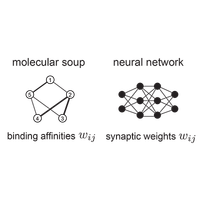
Phys. Rev. X 16, 020501 (2026)
Probing Excited-State Dynamics of Transmon Ionization
Article | 2026-05-12 06:00 EDT
Zihao Wang, Benjamin D’Anjou, Philippe Gigon, Alexandre Blais, and Machiel S. Blok
Researchers probe "transmon ionization," revealing how qubits escape their computational states into highly excited states via multiphoton resonances. Understanding these Landau-Zener transitions is an important step toward developing better readout schemes.

Phys. Rev. X 16, 021033 (2026)
arXiv
The Meissner effect does not require radial charge flow
New Submission | Superconductivity (cond-mat.supr-con) | 2026-05-13 20:00 EDT
The Meissner effect is the expulsion of magnetic flux from the interior of a bulk superconductor in the presence of the constant critical magnetic field by the persistent current circulating near the surface of the superconductor. The conventional theory of superconductivity explains the appearance of the persistent current in the Meissner effect and other macroscopic quantum phenomena observed in superconductors as a consequence of the quantization of angular momentum of Cooper pairs. According to the alternative theory of hole superconductivity the persistent current appears due to the Lorentz force acting on a radial charge flow rather than due to quantization. Therefore, the author of this theory, Jorge Hirsch, argues in his numerous publications that a radial charge flow is required to explain the Meissner effect. This article draws attention to the fact that the appearance of the persistent current because of quantization is not only the statement of the conventional theory of superconductivity, but first of all the experimental fact that cannot be explained using the Lorentz force. Therefore, the explanation of the Meissner effect does not require radial charge flow.
Superconductivity (cond-mat.supr-con), Quantum Physics (quant-ph)
11 pages, 0 fiqures
Physica C: Superconductivity and its applications 645, 1354858 (2026)
Homogenization of rod-like metamaterials as a special Cosserat rod
New Submission | Materials Science (cond-mat.mtrl-sci) | 2026-05-13 20:00 EDT
Rod-like metamaterials are the structures that are obtained by periodically assembling its microstructural unit (network of rods) in just one direction. In this work, we present a scheme for obtaining the nonlinear constitutive response of such structures when homogenized macroscopically as a continuum rod. To capture accurately arbitrary and large deformation, the geometrically exact special Cosserat rod theory is used for modeling the rod at both micro and macro scales. By assuming the metamaterial structure to be strained uniformly (at macroscale) along its arc length, the full structure problem is reduced to just that of its microstructural unit but subjected to helically periodic boundary condition. The microscale problem, consisting of a network of rods and formulated in a variational setting, is solved in the presence of rod joint constraints and helically periodic boundary conditions. The expressions for the macroscale/homogenized rod’s stress resultants (internal contact force and moment) and stiffnesses are then obtained. Finally, several numerical examples having different microstructural units/RVEs are presented to demonstrate our method. We start with simpler square and cross RVEs to validate our results with the existing literature. We then take up more complex RVEs such as square RVEs having helical constituent rods which have application as artificial muscle material and eventually we work on the homogenization of auxetic tubular metamaterials. We show how various design parameters of these RVEs can be tuned to obtain the desired macroscopic response.
Materials Science (cond-mat.mtrl-sci), Optics (physics.optics)
Time-dependent pore-network modelling of Ostwald ripening in porous media
New Submission | Soft Condensed Matter (cond-mat.soft) | 2026-05-13 20:00 EDT
Ademola Isaac Adebimpe, Sajjad Foroughi, Branko Bijeljic, Martin J. Blunt
We present a time-dependent pore-network model that couples transient mass transfer in the aqueous phase, capillary pressure heterogeneity, and realistic pore-throat geometries to capture the dynamic evolution of gas clusters during Ostwald ripening in porous media. The model is applied to Bentheimer sandstone to study Ostwald ripening after imbibition to residual gas saturation. Both imbibition (shrinkage) and drainage (growth) events occur as the local capillary pressure in trapped gas clusters approaches equilibrium. The model tracks event statistics, capillary pressure equilibration, cluster volume distributions, and spatial saturation profiles over 48 hours. While the volume-weighted average capillary pressure is constant, there is a rapid initial decline in average number-weighted cluster pressure and a shift in cluster size distributions toward fewer, larger ganglia, consistent with pore-scale imaging studies. Pore and throat occupancy analysis reveal persistent gas trapping in larger pore spaces. Since growth is by drainage, the pore-scale configuration of fluid is different from that predicted by an equilibrium percolation-without-trapping model that only allows imbibition events. The model reproduces displacement and ganglion rearrangement during time-limited laboratory experiments, and can then provide predictions of trapped saturation, relative permeability and capillary pressure under field-scale conditions with application to hydrogen, natural gas and carbon dioxide storage in the subsurface.
Soft Condensed Matter (cond-mat.soft), Fluid Dynamics (physics.flu-dyn)
14 pages, 11 figures, 2 tables
Quantifying the effects of particle clustering in random thermoelastic composites – numerical and mean-field analyses
New Submission | Soft Condensed Matter (cond-mat.soft) | 2026-05-13 20:00 EDT
Pawel Holobut, Michal Majewski, Katarzyna Kowalczyk-Gajewska
The effect of space distribution of randomly-placed particles in a representative composite volume on the thermoelastic effective properties and local stress and strain distribution is analyzed. Quantitative assessment is performed using both the full-field finite element analyses and the mean-field interaction model, known also as a ‘’cluster’’ model. The latter model is developed in the multi-family setting enabling one to study the mean stress and strain separately for each inclusion of the representative unit cell. The particles are assumed to be spherical and of equal size, while considered examples differ by the volume fraction of inclusions and mean nearest-neighbour distances.
Soft Condensed Matter (cond-mat.soft), Materials Science (cond-mat.mtrl-sci)
The article contains 9 figures as well as two appendices with a thorough description of computational procedures
A Guide to Fully Characterize the Fracture Properties of Cementitious Materials from Simple Experiments
New Submission | Soft Condensed Matter (cond-mat.soft) | 2026-05-13 20:00 EDT
Subhrangsu Saha, Bruce J. Moore, Ben Manaugh, Jeffery R. Roesler, Oscar Lopez-Pamies
Guided by recent advances in the understanding of nucleation and propagation of fracture in elastic brittle materials, this paper proposes a suite of three simple experiments that permit the measurement of the three macroscopic material properties governing when and where cracks nucleate and propagate in structures made of cementitious materials that are subjected to arbitrary monotonic quasi-static loading conditions. The first experiment is that of the uniaxial compression of a cylindrical specimen, which enables the extraction of the elastic properties – namely, the Young’s modulus and Poisson’s ratio – as well as the uniaxial compressive strength. The second experiment is the Brazilian fracture test, performed with flat platens on a material disk to determine the uniaxial tensile strength. Having knowledge of the uniaxial compressive and uniaxial tensile strengths then allows for the estimation of the strength surface of the material via interpolation (e.g., a Drucker-Prager fit). Finally, the third experiment is the wedge split test on a notched cube, which yields the fracture toughness. We demonstrate by means of direct comparisons with four-point and three-point bending tests on both unnotched and notched beams made of a 3D-printable mortar mixture that the elasticity, strength, and toughness properties obtained from the proposed tests are sufficient to predict the nucleation and propagation of fracture for any structure (granted separation of length scales) made of cementitious materials under any monotonic quasi-static loading condition.
Soft Condensed Matter (cond-mat.soft), Materials Science (cond-mat.mtrl-sci)
Geometry-enabled magnetic resilience in superconducting nanowire single-photon detectors
New Submission | Superconductivity (cond-mat.supr-con) | 2026-05-13 20:00 EDT
Marinus C. van der Maas, Lin Jin, Ilhan Tunç, Raymond Vermeulen, Henri Ervasti, Ravi Gopie, Jan Riegelmeyer, Marco Colangelo, Ryoichi Ishihara, Carlos Errando-Herranz
While magnetic fields and superconductors are both central to classical and quantum technologies, their combined use is often challenging, as magnetic fields significantly affect superconducting device performance. In superconducting nanowire single-photon detectors (SNSPDs), magnetic fields drastically reduce detection efficiencies, hampering their application in magnetically-active classical and quantum photonics. Here, we systematically characterize the performance of NbTiN SNSPDs under magnetic fields and show the enhancement of their intrinsic detection efficiency (IDE) at lower bias currents and its suppression at higher currents. This leads to SNSPD performance degradation through reduced or disappearing saturation plateaus. We show that the magnitude of this degradation is highly dependent on nanowire width and demonstrate width-optimized SNSPDs with saturating IDE for a wide range of photon energies under application-relevant magnetic fields. Minimizing degradation in superconducting devices under magnetic fields enables applications like detector-integrated spin-optic and atomic quantum processors, high-sensitivity magnetometry, and quantum transduction.
Superconductivity (cond-mat.supr-con), Applied Physics (physics.app-ph), Instrumentation and Detectors (physics.ins-det), Optics (physics.optics), Quantum Physics (quant-ph)
31 pages, 16 figures
Context-Gated Associative Retrieval: From Theory to Transformers
New Submission | Disordered Systems and Neural Networks (cond-mat.dis-nn) | 2026-05-13 20:00 EDT
Moulik Choraria, Argyrios Gerogiannis, Vidhata Jayaraman, Ankur Mani, Lav R. Varshney
Hopfield networks and their generalizations have established deep connections among biological associative memories, statistical physics, and transformers. Yet most models treat retrieval as a fixed query-to-memory mapping, ignoring the role of external context in recall. In this work, we propose a two-stage associative memory architecture, wherein a context-gate subcircuit reshapes the retrieval energy landscape before and during recall. We show theoretically that context gating increases inter-memory separation while inducing sparsity, translating into exponential improvements in retrieval. Crucially, we prove that the system admits a unique self-consistent fixed point, revealing that the resulting retrieval state is driven by both a direct contextual bias and a second-order retrieval-gate feedback loop. We then bridge this theory to transformers; specifically, we evaluate a first-order approximation on Llama-3, confirming that in-context learning acts as context-gated retrieval. Native dynamics mirror our theory: context localizes a memory subspace, enabling the zero-shot query to cleanly discriminate. Ultimately, this framework provides a mechanistic link between associative memory theory and LLM phenomenology.
Disordered Systems and Neural Networks (cond-mat.dis-nn), Artificial Intelligence (cs.AI)
Nano-Clay-Stabilized Water-in-Oil Colloidal Pickering Emulsions as Thixotropic Lubricant
New Submission | Soft Condensed Matter (cond-mat.soft) | 2026-05-13 20:00 EDT
Arun Kumar, Rahul Yadav, Yogesh M. Joshi, Manjesh K. Singh
The limitations of conventional mineral oil-based lubricants motivate the development of environmentally benign emulsions capable of providing lubrication and heat dissipation in demanding applications. In this study, nano-organoclay (Garamite 1958)-stabilized thixotropic water-in-oil Pickering emulsions are developed using sunflower oil as the base. The rheological and tribological properties of the emulsion system are systematically examined. Rheological findings reveal a pronounced increase in yield stress, shear thinning and thixotropic behavior on increasing Garamite loading percentage in the emulsion. The tribological performance is assessed against dry, water, and oil-lubricated conditions for a steel-steel interface under high contact pressure. The findings indicate that the tribological performance is significantly influenced by the microstructure and thixotropic behavior of the emulsions. The emulsion with the optimal nano-clay concentration demonstrates approximately 41% and 84% lower friction and approximately 80% and 96% lower wear than oil and water, respectively. The emulsion exhibits sensitivity to the sliding direction and displays load-responsive friction behavior with a memory effect owing to the reversible structuring of the clay-droplet network. This superior performance is attributed to the combined effects of thixotropy, anisotropic nanoclay morphology, and stable droplet armoring, which form a robust and adaptive interfacial film. This study advances the understanding of Pickering emulsions in metallic tribosystems by correlating the microstructure and rheology with tribological performance, thereby facilitating the design of high-performance, smart, and eco-conscious lubricants for metallic systems.
Soft Condensed Matter (cond-mat.soft)
21 pages, 10 figures, SI
Inverse Design of Metainterfaces for Static Friction Control: Beyond the Hertzian Limit
New Submission | Soft Condensed Matter (cond-mat.soft) | 2026-05-13 20:00 EDT
Jacopo Bilotto, Arnav Singhal, Joaquin Garcia-Suarez, Gaëtan Cortes, Lucas Fourel, Jean-François Molinari
Programming the static friction of mechanical interfaces is critical for soft robotics, haptics, and precision gripping. Static friction is governed by the real contact area, and standard rough surfaces exhibit a linear area-load scaling inherent to classical Archard and Greenwood-Williamson models, severely restricting their functional range. Here, we propose a framework for the inverse design of tribological metainterfaces engineered for programmable contact behaviors. By utilizing general axisymmetric asperities, we unlock nonlinear macroscopic responses unattainable by standard Hertzian contacts. To solve the inverse problem, we embed a fully differentiable contact mechanics engine within a neural network and a quadratic optimizer. We leverage regularized physical gradients to automatically discover non-standard topographies that reproduce complex target friction laws, with only a few asperities in unit cells. The predicted designs are strictly validated against high-fidelity Boundary Element Method (BEM) simulations. This framework bridges data-driven optimization and rigorous physics, offering a scale-invariant pathway for discovering functional tribological surfaces.
Soft Condensed Matter (cond-mat.soft)
19 pages, 8 figures
Adamantane plasma polymers: fluorine-free vacuum-processable triboelectric thin films for all-triboelectric nanogenerator configurations
New Submission | Materials Science (cond-mat.mtrl-sci) | 2026-05-13 20:00 EDT
Gloria P. Moreno-Martinez, Fernando Nunez-Galvez, Hari Krishna Mishra, Triana Czermak, Xabier Garcia-Casas, Vanda Cristina Godinho, Bernd Wicklein, Juan Carlos Sanchez-Lopez, Javier Ferrer, Isabel Montero, Juan Ramon Sanchez-Valencia, Andris Sutka, Francisco Aparicio, Angel Barranco, Ana Borras
Triboelectric nanogenerators (TENGs) are major drivers in on-site power generation for smart devices, enable self-powered sensors, and introduce novel catalytic processes. Here, we present the advantages of adamantane plasma layers as bivalently triboelectric surfaces capable of exhibiting both tribopositive and tribonegative character through simple modification of the synthesis conditions without the need for additives or functionalization. Fabrication facing or backfacing the plasma yields thin film polymers with different dielectric constants, Young’s moduli, and secondary electron emission. The conformality, stability, and processability of the polymers enable direct implementation across solid-solid, solid-liquid, and hybrid piezo-triboelectric configurations. Additional texturization by buckling is shown to provide voltage and current outputs as high as 90 V cm2 and 0.6 uA for a 2.8 um (tribonegative) vs. 400 nm (tribopositive) combination. A maximum power density of 2.1 uW cm-2 is generated from salty droplets in a switch-electrode drop-TENG configuration employing a 500 nm-thick tribopositive adamantane polymer as the triboelectric surface. These layers have demonstrated outstanding durability, enabling more than 10^5 cycles in solid-solid nanogenerators and 10^4 droplet impacts in solid-liquid configurations. The synthetic method is environmentally friendly and industrially scalable, making the adamantane plasma polymer a reliable and competitive solution for thin film triboelectric materials.
Materials Science (cond-mat.mtrl-sci)
38 pages main text, 9 figures and 2 schematics; 9 pages of Supporting Information
Strain-controlled crossover between Majorana and Andreev bound states in disordered superconductor-semiconductor heterostructures
New Submission | Mesoscale and Nanoscale Physics (cond-mat.mes-hall) | 2026-05-13 20:00 EDT
Shubhanshu Karoliya, Ekta, Gargee Sharma
The unambiguous identification of topological Majorana-bound states (MBSs) in superconducting hybrid systems is hindered by trivial low-energy excitations, especially partially separated Andreev bound states (psABSs), which can mimic Majorana signatures. Here we show that spatially nonuniform strain offers a systematic route to control and interconvert these low-energy states. Using tight-binding Bogoliubov–de Gennes simulations, we study one-dimensional semiconductor nanowires and graphene nanoribbons with superconductivity, Rashba spin-orbit coupling, Zeeman fields, and disorder. We find that even weak strain can qualitatively reshape the low-energy spectrum by modifying effective band parameters and redistributing wavefunction weight. In nanowires, strain tunes the spatial overlap of Majorana components and shifts the topological phase boundary, enabling controlled crossovers between trivial states, psABSs, and topological MBSs. In graphene nanoribbons, where multiband effects and edge states produce a dense, hybridized low-energy spectrum, strain suppresses subband mixing, lifts degeneracies, and stabilizes boundary-localized modes. In both platforms, we identify regimes where disorder-induced psABSs are converted into well-separated and robust MBSs through strain-enhanced nonlocality. We further develop an analytical framework based on a position-dependent topological mass and strain-driven domain-wall motion, which captures the physical mechanism of these crossovers and yields a real-space criterion for the emergence and stability of Majorana modes. Our results establish strain as an effective tuning parameter for distinguishing and stabilizing topological MBSs in realistic disordered systems, and suggest an experimentally relevant pathway toward improved control and identification of Majorana modes in complex hybrid structures relevant to topological quantum computation.
Mesoscale and Nanoscale Physics (cond-mat.mes-hall)
20+7 pages, 7+8 figures
Valley-Controlled Viscosity of Two-Dimensional Dirac Fluids
New Submission | Mesoscale and Nanoscale Physics (cond-mat.mes-hall) | 2026-05-13 20:00 EDT
Alexey Ermakov, Alessandro Principi
Motivated by recent experiments in weakly hybridized small-angle twisted bilayer graphene, we investigate how valley imbalance affects the viscosity of two-dimensional Dirac fluids. We show that shifting the two low-energy Dirac cones relative to one another provides a direct knob to control the viscosity of the electron fluid. As the splitting is increased, the system passes through distinct transport regimes associated with valley depletion, charge-neutrality crossover, and the onset of electron-hole scattering, producing a pronounced nonmonotonic response. To place this result in context, we also analyze the viscosity in monolayer graphene (MLG) and two-dimensional electron gas (2DEG). We show that, due to the strong dependence of its inertial mass density on temperature, the kinematic viscosity of MLG is a monotonically decreasing function of temperature. Our results identify valley control as a route to tuning hydrodynamic transport in Dirac materials and clarify the interplay between band structure, scattering phase space, and screening in setting the viscous response.
Mesoscale and Nanoscale Physics (cond-mat.mes-hall)
Application of the exact-factorization density-functional perturbation approach to pentacene crystal and monolayer MoS2
New Submission | Materials Science (cond-mat.mtrl-sci) | 2026-05-13 20:00 EDT
Rachel Steinitz-Eliyahu, Galit Cohen, Guy Vosco, E.K.U. Gross, Ryan Requist, Sivan Refaely-Abramson
Non-adiabatic effects arising from electron-phonon interactions are often neglected within the Born-Oppenheimer (BO) approximation, which assumes that electronic states adjust instantaneously to nuclear motion. The exact factorization (EF) formalism provides a rigorous framework for treating such effects beyond the adiabatic regime and has recently been adapted to density functional theory (DFT) in the harmonic limit. Building on these foundations, we previously introduced an EF-based perturbative scheme, the EF density-functional perturbation theory (EF-DFPT), that enables the computation of phonon-driven non-adiabatic (NA) corrections to Kohn-Sham (KS) electronic states, up to second order in nuclear displacements. Here, we present the first implementation and application of EF-DFPT to extended periodic materials, focusing on its impact on experimentally relevant observables. Using the pentacene molecular crystal and monolayer MoS2 as representative soft- and stiff-mode systems, respectively, we demonstrate how NA electron-phonon interactions modify the static dielectric response. We show that these modifications originate from the combined effect of NA phonon-dressed electronic wavefunctions and second-order NA energy renormalizations. The resulting behavior is strongly material dependent: NA effects are negligible in monolayer MoS2, whereas in pentacene they lead to pronounced long-range screening effects associated with soft vibrational modes and enhanced electron-phonon coupling.
Materials Science (cond-mat.mtrl-sci)
Contrasting structural reversibility and magnetic correlations in isostructural honeycomb magnets CrCl$_3$ and $α$-RuCl$_3$
New Submission | Strongly Correlated Electrons (cond-mat.str-el) | 2026-05-13 20:00 EDT
Zachary Morgan (1), Iris Ye (2), Jiasen Guo (1), Michael A McGuire (3), Jiaqiang Yan (3) ((1) Neutron Scattering Division, Oak Ridge National Laboratory, Oak Ridge, Tennessee, USA (2) Next Generation Pathway to Computing Program Participant (3) Materials Science and Technology Division, Oak Ridge National Laboratory, Oak Ridge, Tennessee, USA)
We report a comparative neutron single crystal diffraction study of the structural and magnetic properties of layered halides CrCl$ _3$ and $ \alpha$ -RuCl$ _3$ , which host a honeycomb arrangement of transition metal ions with distinct electronic configurations and undergo a first-order structural transition between high-temperature \textit{C}2/\textit{m} and low-temperature \textit{R}$ \bar{3}$ . Both compounds show a step-like change in the $ c$ -lattice, consistent with an expected stacking rearrangement. In contrast, the in-plane lattice response is quite different: $ \alpha$ -RuCl$ _3$ exhibits an abrupt hysteretic change across the transition accompanied by progressive crystalline degradation upon thermal cycling, whereas CrCl$ _3$ shows a smooth in-plane lattice evolution and remains structurally robust. Magnetically, CrCl$ _3$ orders into an A-type antiferromagnetic structure at T$ _N$ =14,K and exhibits pronounced diffuse magnetic scattering extending up to about 40,K. $ \alpha$ -RuCl$ _3$ shows no observable magnetic diffuse scattering above its zig-zag antiferromagnetic ordering temperature T$ _N$ =7.6,K. These results suggest that the contrasting structural and magnetic behaviors arise from an interplay between interlayer sliding energetics and the fundamentally different electronic configurations of the two compounds.
Strongly Correlated Electrons (cond-mat.str-el), Materials Science (cond-mat.mtrl-sci)
Photon Momentum Enabled Symmetry Breaking and Nonlinear Photocurrents in the Centrosymmetric Dirac Semimetal PdTe
New Submission | Mesoscale and Nanoscale Physics (cond-mat.mes-hall) | 2026-05-13 20:00 EDT
Sambhu G Nath, Subhadip Manna, R K Gopal, Chiranjib Mitra
In centrosymmetric Dirac semimetals, second order nonlinear photocurrents are forbidden by the coexistence of time-reversal and inversion symmetries. Here, we demonstrate that finite photon momentum transfer acts as a dynamic symmetry breaking mechanism in PdTe, enabling nonlinear optical responses that are nominally forbidden in the centrosymmetric bulk. Through polarization sensitive measurements, we resolve distinct contributions from the circular photogalvanic effect (CPGE), geometric shift currents, and photon drag mediated processes. We show that the helicity dependent current vanishes at normal incidence and reverses sign with the angle of incidence, reflecting the coupling between photons and spin polarized surface states. Crucially, thickness dependent analysis reveals that the helicity dependent photocurrent component C scales with film thickness, establishing a robust bulk contribution enabled by momentum transfer. This confirms that incident photons provide the directional axis required to probe interband quantum geometry, rather than the response originating solely from surface states or strain. Our results demonstrate that optical excitation can dynamically reduce the effective symmetry of the system, enabling access to quantum geometric tensors and establishing PdTe as a promising platform for exploring nonequilibrium dynamics governed by photon momentum in high symmetry topological materials.
Mesoscale and Nanoscale Physics (cond-mat.mes-hall), Other Condensed Matter (cond-mat.other)
Field Theory of Data: Anomaly Detection via the Functional Renormalization Group. The 2D Ising Model as a Benchmark
New Submission | Statistical Mechanics (cond-mat.stat-mech) | 2026-05-13 20:00 EDT
Riccardo Finotello, Vincent Lahoche, Parham Radpay, Dine Ousmane Samary
We establish a correspondence between anomaly detection in high-noise regimes and the renormalization group flow of non-equilibrium field theories. We provide a physical grounding for this framework by proving that the detection of phase transitions in interacting non-equilibrium systems maps to the study of an effective equilibrium field theory near its Gaussian fixed point, which we identify with the universal Marchenko-Pastur distribution. Applying the Functional Renormalization Group to the two-dimensional Model A, we demonstrate that the noise-to-signal ratio acts as a physical temperature, where the signal emerges as ordered domains within a thermalized background of fluctuations. Using the exact Onsager solution as a benchmark, we show that this approach identifies critical thresholds with an error below 4%, significantly outperforming standard information-theoretic metrics such as the Kullback-Leibler divergence. Our results provide a universal strategy for resolving structures in complex datasets near criticality, bridging the gap between statistical mechanics and statistical inference.
Statistical Mechanics (cond-mat.stat-mech), Information Theory (cs.IT), High Energy Physics - Theory (hep-th), Methodology (stat.ME)
15 pages, 2 appendixes
BCS-BEC crossover in trapped one-dimensional Fermi-Hubbard chains: entanglement and correlation signatures from DMRG and effective-pairing theory
New Submission | Quantum Gases (cond-mat.quant-gas) | 2026-05-13 20:00 EDT
G. Diniz, I. M. Carvalho, M. Sanino, F. Iemini, V. V. França
Confined ultracold atoms in optical lattices provide a versatile platform for simulating lattice models of strongly correlated quantum systems, where pairing phenomena and superfluid phases can be explored under controlled conditions. While the crossover between the Bardeen-Cooper-Schrieffer (BCS) phase and the Bose-Einstein condensation (BEC) is well understood in homogeneous systems, spatial confinement breaks translational symmetry and reshapes correlation patterns, making the BCS-BEC identification in trapped geometries challenging and allowing unconventional phases to emerge with no direct analog in homogeneous systems. Here we present a characterization of the BCS-BEC crossover in harmonically confined one-dimensional Fermi-Hubbard chains. Our analysis combines Density Matrix Renormalization Group (DMRG) simulations and entanglement-based diagnostics with effective models describing the formation of tightly bound fermion pairs. This combined approach enables a detailed understanding of how the interplay between interactions and confinement reshapes the crossover, leading to insulating regions coexisting with persistent superfluid correlations. Within this framework, we further introduce conditioned correlation functions whose power-law decay allows a clear distinction between BCS-like and BEC-like regimes. The consistency between the effective descriptions and the numerical DMRG results yields a unified picture of the crossover in harmonically confined geometries.
Quantum Gases (cond-mat.quant-gas), Strongly Correlated Electrons (cond-mat.str-el), Superconductivity (cond-mat.supr-con)
Bound States in Second-order Topological Graphitic Structures
New Submission | Mesoscale and Nanoscale Physics (cond-mat.mes-hall) | 2026-05-13 20:00 EDT
Haiyue Huang, Prineha Narang, Ioannis Petrides
Quadrupole insulators are a class of second-order topological insulators (SOTIs) that host zero-dimensional corner states within a two-dimensional bulk. Despite their unique properties, their realization in electronic systems on realistic material platforms remains rare. In this work, we present a general design principle to obtain quadrupole insulators based on two-dimensional graphitic structures. By engineering the positions and connections of zigzag edges, we identify four topological classes of graphitic structures. We show that topologically protected massless corner state emerge at the intersection of domains belonging to different topological classes. Crucially, by tuning the smoothness of the domain wall, we further demonstrate the appearance of additional massive localized states with non-zero angular momentum. Our results provide a practical framework for realizing experimentally accessible SOTIs and uncover the coexistence of both massless and massive bound states in two dimensions.
Mesoscale and Nanoscale Physics (cond-mat.mes-hall), Chemical Physics (physics.chem-ph), Computational Physics (physics.comp-ph)
Synergistic doping of the grain interior and grain boundary alters deformation mechanisms and enables extreme strength in nanocrystalline Ni-Cr-Y alloys
New Submission | Materials Science (cond-mat.mtrl-sci) | 2026-05-13 20:00 EDT
Yi Liu, Jason R. Trelewicz, Timothy J. Rupert
Solid solution addition and grain boundary segregation have been independently shown to enhance the strength of nanocrystalline alloys. In the present study, the synergy between these two effects is investigated in nanocrystalline Ni-Cr-Y sputtered films through systematic variation of alloying element contents with grain size kept constant. Cr is introduced into a solid solution and serves to strengthen the lattice, while Y segregates to the grain boundaries to stabilize these features. Nanoindentation is used to probe hardness, with unexpected trends and very high values observed. Cr additions led to nanocrystalline solid solution strengthening, yet saturation was observed at higher concentrations due to the emergence of grain boundary dominated processes, as evidenced by pile-up morphologies containing slip steps and grain rotation. Y segregated to the grain boundaries, enhancing boundary-mediated strengthening by pinning the dislocations and suppressing dislocation emission, grain boundary sliding, and grain rotation processes. With increasing Y concentration, the nanocrystalline solid solution strengthening effect induced by Cr addition becomes weaker. This phenomenon can be attributed to a reduced dislocation bowing distance caused by dopant pinning. Most notably, the strongest ternary Ni-Cr-Y alloy exhibited a hardness of 11.0 GPa, among the highest hardness values reported for single-phase Ni-based alloys. These findings highlight how tuning grain and grain boundary chemistry offers a viable strategy to control dislocation mechanics and improve the strength of nanocrystalline metals.
Materials Science (cond-mat.mtrl-sci)
Symmetry Guided Band-Gap Opening via Periodic Topological Defects in Graphene
New Submission | Materials Science (cond-mat.mtrl-sci) | 2026-05-13 20:00 EDT
D. N. Garzon, Leonel Cabrera-Loor, Jacopo Gliozzi, Marco Fronzi, Catherine Stampfl, Henry P. Pinto
Graphene lacks an intrinsic band-gap, which limits its use in electronic applications. Here we demonstrate that periodic arrays of topological defects can open and control a band-gap in a predictable manner governed by defect spacing and lattice symmetry. Using first-principles density functional theory calculations supported by tight-binding models, we investigate graphene superlattices containing Stone-Wales and flower-like defects over a range of $ N \times N$ periodicities, where $ N$ determines the defect separation. We show that band-gap opening occurs only when translation symmetry is reduced in a specific way: for supercells with $ N$ a multiple of three, Brillouin-zone folding brings the Dirac cones at $ K$ and $ K’$ to the same momentum in the reduced Brillouin zone. In particular, flower-like defect superlattices produce larger and tunable band-gaps, whose magnitude decreases systematically with increasing defect separation and approaches zero in the dilute-defect limit. These results establish a predictive framework for band-gap engineering in defect-patterned graphene and clarify the microscopic mechanism underlying gap formation in periodically reconstructed lattices.
Materials Science (cond-mat.mtrl-sci), Mesoscale and Nanoscale Physics (cond-mat.mes-hall)
14 pages, 7 figures, 2 tables; supporting information: 3 pages, 4 figures
Magnetic-field-tunable cyclotron hyperbolic polaritons
New Submission | Mesoscale and Nanoscale Physics (cond-mat.mes-hall) | 2026-05-13 20:00 EDT
Zijian Zhou, Ran Jing, Heng Wang, Lukas Wehmeier, Mengkun Liu, Bing Cheng
Hyperbolic polaritons are conventionally associated with structural anisotropy or phononic Reststrahlen bands. Here, we predict a new class of hyperbolic polaritons arising from magnetic-field-induced cyclotron motion of charge carriers. When a perpendicular magnetic field is applied to high-mobility semimetals, the cyclotron response drives the in-plane dielectric function from metallic- to insulating-like below the cyclotron resonance frequency, while the out-of-plane response remains metallic. This anisotropy creates a hyperbolic dielectric environment that supports field-tunable hyperbolic polaritons. We develop a comprehensive theoretical framework incorporating coupling to other collective excitations and show that these modes can be directly visualized in real space via terahertz near-field nanoscopy. Our work identifies cyclotron motion as a new route to hyperbolic polaritons and establishes a versatile platform for magnetically programmable nanophotonics.
Mesoscale and Nanoscale Physics (cond-mat.mes-hall), Materials Science (cond-mat.mtrl-sci)
6 pages, 4 figures
First-principles real-space embedding theory of the superconducting proximity effect
New Submission | Superconductivity (cond-mat.supr-con) | 2026-05-13 20:00 EDT
Nicolas Baù, Mitra Dowlatabadi, Tommaso Chiarotti, Massimo Capone, Antimo Marrazzo
When a superconductor is placed in contact with a normal material, Cooper pairs penetrate the latter and induce superconductivity via the proximity effect. Despite its central role in quantum materials, superconducting devices and topological platforms, a predictive first-principles description of the proximity effect at realistic interfaces has remained computationally prohibitive so far. Here, we fill this gap by developing a Green’s-function framework based on real-space dynamical embedding that enables first-principles simulations of superconducting proximity in mesoscopic systems. We show that the proximity effect admits a transparent diagrammatic formulation in terms of normal and anomalous embedding self-energies, which disentangle and quantify the distinct renormalization mechanisms generated by coupling to a superconducting bath. By combining this formalism with recursive schemes, we compute local spectral functions and proximity lengths extending over hundreds of nanometers into the bulk without resorting to thick interface slabs. We deploy the approach on tight-binding models (Qi-Hughes-Zhang and Fu-Kane-Mele), where we analyze mixed-parity superconductivity in topological insulators proximitized by $ s$ -wave superconductors, and on first-principles simulations of NbSe$ _2$ /CrBr$ _3$ heterostructures based on density-functional theory and maximally-localized Wannier functions, the latter enabling direct comparison with scanning tunneling spectroscopy experiments. Our work provides a scalable and conceptually unified framework that bridges microscopic electronic structure and mesoscale proximity physics, enabling predictive atomistic simulations of superconducting interfaces.
Superconductivity (cond-mat.supr-con), Mesoscale and Nanoscale Physics (cond-mat.mes-hall), Materials Science (cond-mat.mtrl-sci)
21 pages, 10 figures
Giant critical response in a driven-dissipative quantum gas
New Submission | Quantum Gases (cond-mat.quant-gas) | 2026-05-13 20:00 EDT
Ross C. Schofield, Daniel Lim, Himadri S. Dhar, Robert A. Nyman, Akshay K. Verma, Edmund Clarke, Jon Heffernan, Florian Mintert, Rupert F. Oulton
Systems close to a phase transition turn weak perturbations into large responses. At equilibrium, this amplification is closely linked to criticality: fluctuations grow, dynamics slow, and a common soft mode controls the response. Whether this correspondence survives in driven-dissipative quantum systems, sustained by continuous pumping and loss away from thermal equilibrium, remains an open question. Here we show experimentally that it does. In a room-temperature semiconductor photon Bose-Einstein condensate, the critical slowing of spontaneous intensity fluctuations and the amplification of weak pump perturbations are measured independently. Both peak at the same condensate population, $ \bar{n}_c = 1250$ , where the dimensionless slowing factor and susceptibility reach the same value, $ \bar{n}_c/2 = 625$ . A single weakly damped collective photon-reservoir mode governs both effects. This fluctuation-response correspondence in a finite open quantum gas establishes critical susceptibility as a measurable dynamical signature of condensation, with peak gain set by system size.
Quantum Gases (cond-mat.quant-gas), Optics (physics.optics), Quantum Physics (quant-ph)
6 pages, 5 figures
Optical signatures of antiferromagnetic correlations in a strongly interacting quantum Hall MoSe2 monolayer
New Submission | Mesoscale and Nanoscale Physics (cond-mat.mes-hall) | 2026-05-13 20:00 EDT
Jiho Sung, Pavel A. Volkov, Ilya Esterlis, Jue Wang, Luke N. Holtzmann, Takashi Taniguchi, Kenji Watanabe, Katayun Barmak, James Hone, Mikhail D. Lukin, Philip Kim, Hongkun Park
Strong magnetic fields quench the kinetic energy of electrons, leading to the formation of flat energy bands, known as Landau levels (LLs). In this situation, even weak interactions can drive the emergence of various ordered phases. The simplest of such phases is a quantum Hall ferromagnet, where a spontaneous spin polarization emerges when LLs with opposite spins cross. The presence of strong electron-electron interaction at zero field changes this picture and makes the resulting states much harder to predict. Here we use magneto-optical spectroscopy to reveal quantum Hall states with unconventional correlations favouring an unpolarized state in the strongly correlated electron liquid in a MoSe2 monolayer. The oscillations of the exciton polaron energies as a function of perpendicular magnetic field and electron density demonstrate the emergence of LLs in a correlated electron liquid and density-dependent crossings between LLs of opposite valleys. On lowering the LL filling factor, where interactions within LLs are stronger, the crossings systematically broaden, indicating an increase in the Zeeman energy required to fully polarize the valley-degenerate LLs. These observations are shown to be consistent with antiferromagnetic interactions between LL electrons, favouring a ground state with zero valley polarization, and are therefore inconsistent with conventional quantum Hall ferromagnetism. This discovery demonstrates a qualitatively distinct form of quantum Hall magnetism in a strongly correlated electron liquid, establishing an anchoring point for understanding spin-unpolarized fractional and ordered states of correlated electrons driven by magnetic field.
Mesoscale and Nanoscale Physics (cond-mat.mes-hall), Strongly Correlated Electrons (cond-mat.str-el)
Main text, 4 figures
Unbiased large-$N$ approach to competing vestigial orders of density-wave and superconducting instabilities
New Submission | Strongly Correlated Electrons (cond-mat.str-el) | 2026-05-13 20:00 EDT
Grgur Palle, Rafael M. Fernandes
When a primary order breaks multiple symmetries, partially ordered phases that only break a subset of those symmetries, known as vestigial phases, may onset at a higher temperature. This concept has been applied to a wide range of systems, including iron pnictides, cuprates, van der Waals antiferromagnets, doped topological insulators, and twisted bilayer graphene. In general, a multi-component primary order parameter (OP) supports multiple vestigial channels, each described by a quadratic (or higher-order) composite OP. However, the standard large-$ N$ approach to the Ginzburg-Landau action of the primary OP has an intrinsic ambiguity in how one decouples the composite OPs, leading to situations in which one can seemingly enhance or eliminate altogether any vestigial instability. Here, we show that this ambiguity is a direct consequence of redundancy relations, such as Fierz identities, that relate different composite OPs, reflecting the fact that different vestigial channels interfere with each other and thus cannot be treated separately. To resolve this ambiguity, we propose an unbiased large-$ N$ approach that respects both the redundancy relations and the underlying symmetry-group structure, and that gives unique values for the effective interactions of all vestigial channels. Our analysis reveals the generic existence of regions in the parameter space of quartic Landau coefficients where no vestigial order is stable, in contrast to the standard large-$ N$ approach, but in agreement with weak-coupling and variational approaches. We illustrate our results by analyzing the vestigial orders of charge-density waves, spin-density waves, and multi-component superconductors in tetragonal, hexagonal, and cubic systems, respectively, revealing the presence of exotic vestigial phases describing spin-quadrupolar, charge-$ 4e$ superconducting, and altermagnetic orders.
Strongly Correlated Electrons (cond-mat.str-el), Statistical Mechanics (cond-mat.stat-mech), Superconductivity (cond-mat.supr-con)
28 pages, 6 figues, 3 tables
Random-h Fractional-Dimensional Lattices Reveal Endpoint-Compressed Percolation Activation between Two and Three Dimensions
New Submission | Statistical Mechanics (cond-mat.stat-mech) | 2026-05-13 20:00 EDT
Non-integer dimensionality is central to fractal and complex systems, yet it is rarely represented as an explicit lattice on which classical statistical-mechanical models can be directly simulated. Here we introduce random-h fractional dimension (RhFD), a constructive lattice framework in which fractional-dimensional environments are generated by stochastic activation of local connectivity, h. In the 2D-to-3D interval, RhFD lattices are formed by recursively growing out-of-plane sites from a square base with probability \r{ho}h. Using quenched site-percolation simulations, we show that the construction recovers the integer-dimensional endpoints and yields a robust crossover in which the percolation threshold decreases from the 2D regime toward the 3D regime. The crossover is not a uniform interpolation: high-resolution scans reveal endpoint-compressed activation, with -dpc/d\r{ho}h increasing toward \r{ho}h = 1. Mass dimension increases with \r{ho}h, whereas the coordination descriptor first decreases as sparse protrusions form and then rises sharply when a dense 3D backbone emerges. RhFD provides an explicit lattice substrate for fractional-dimensional statistical mechanics and shows that geometric mass, local coordination, and critical connectivity can decouple during dimensional crossover.
Statistical Mechanics (cond-mat.stat-mech)
11 pages, 5 figures
Existent condition of partially wet state in capillary tubes
New Submission | Soft Condensed Matter (cond-mat.soft) | 2026-05-13 20:00 EDT
Chen Zhao, Jiajia Zhou, Masao Doi
We develop a theory that predicts the equilibrium states of a fluid contained in a capillary which has corners. Each section of the tube can take three states: completely wet state where the tube section is completely occupied by the fluid, partially wet state where only the corners are occupied by the fluid known as corner film or finger, and completely dry state. We calculate the phase diagram of these states for a square tube with rounded corners. It is shown that the partially wet state can exist only in a certain region in the parameter space spanned by the equilibrium contact angle and the corner curvature.
Soft Condensed Matter (cond-mat.soft), Fluid Dynamics (physics.flu-dyn)
31 pages, 18 figures
Mechanics of heterogeneous fiber networks
New Submission | Soft Condensed Matter (cond-mat.soft) | 2026-05-13 20:00 EDT
Kyu Hwan Choi, Sattvic Ray, Reef Sweeney, Zvonimir Dogic, Sho C. Takatori
Internally generated active stresses drive soft materials into architectures inaccessible to thermal self-assembly. We use a microtubule-based active fluid to assemble and irreversibly restructure actin-fascin networks. Subsequently, we probe the mesoscale mechanics of such networks by combining active microrheology with fluorescence imaging of the strain field around the probe. Increasing motor concentration broadens the pore-size distribution and thickens load-bearing bundles, raising the mean local elastic modulus and its spatial variability. Displacement fields of actively-processed networks propagate over longer range when compared to unprocessed networks. At large strains, both networks strain soften and plastically restructure. The combined microrheology and strain-imaging approach show that tunable active stresses reprogram the structure and viscoelastic response of fiber networks at the scale of their structural heterogeneity.
Soft Condensed Matter (cond-mat.soft)
7 pages, 4 figures, 4 videos
Discovery of a nonsymmorphic superconductor with spontaneous rotational symmetry breaking and nontrivial zero modes
New Submission | Superconductivity (cond-mat.supr-con) | 2026-05-13 20:00 EDT
Hui Guo, Zhixuan Li, Senhao Lv, Tianqi Gao, Zihao Huang, Kuanrong Hao, Lizhi Zhang, Ke Zhu, Siyu Li, Xianghe Han, Xiao Lin, Shengshan Qin, Wu Zhou, Haitao Yang, Hui Chen, Hong-Jun Gao
Topological superconductivity has attracted great interest due to its fundamental significance for realizing Majorana quasiparticles and fault-tolerant quantum computation. Nonsymmorphic superconductors, with symmetry-protected nontrivial electronic structures, offer a promising route to exotic topological superconducting states, yet experimental realizations remain scarce. Here we identify nonsymmorphic compound PtPb4 as a robust platform hosting superconductivity with spontaneous rotational symmetry breaking and nontrivial zero-energy modes. PtPb4 crystallizes in a frustrated Shastry-Sutherland lattice and exhibits nontrivial band topology. By combining in-plane and out-of-plane resistivity measurements, pronounced twofold anisotropy is observed in both the superconducting state and the upper critical field, evidencing spontaneous rotational symmetry breaking. Scanning tunneling microscopy/spectroscopy further reveal twofold-symmetric magnetic vortices, providing direct real-space evidence for the symmetry-broken superconducting state. Notably, a robust zero-energy vortex bound state emerges and persists without spatial splitting over extended distances, consistent with the characteristics expected for Majorana bound state. These findings uncover an exotic superconducting state in PtPb4 and establish a promising platform for exploring topological superconductivity and superconducting quantum devices.
Superconductivity (cond-mat.supr-con)
18 pages, 5 figures
Superconductivity Reinforces Charge-Density-Wave Phase Coherence across Cuprates
New Submission | Superconductivity (cond-mat.supr-con) | 2026-05-13 20:00 EDT
H. Lee, C.-T. Kuo, M. Fujita, C.-C. Kao, J.-S. Lee
For decades, superconductivity in high-Tc cuprates has been viewed as a competitor that suppresses charge-density-wave (CDW) order by reducing its amplitude and spatial extent. Here, we show that this picture is incomplete, as superconductivity is accompanied by a systematic enhancement of CDW phase coherence across multiple cuprate families. Using resonant soft x-ray scattering combined with a coherence-sensitive momentum-profile analysis, we uncover a BCS-like growth of phase coherence below Tc, which phenomenologically manifests as the absence of CDW peak broadening and near-perfect wave-vector locking. This enhancement remains visible even in a disorder-dominated regime created by long-term crystal aging and follows a common trend when compared with published data on Bi-, Hg-, Y-, and Nd-based cuprates. These results indicate that superconductivity reshapes CDW order in two distinct ways, suppressing its amplitude while strengthening its phase coherence, and reveal an additional phase-level interplay with lattice coupling in high-Tc cuprates.
Superconductivity (cond-mat.supr-con)
Phys. Rev. Lett. 136, 186502 (2026)
Landau theory applied to antiferroelectric ordering in ferroelectric nematic liquid crystals
New Submission | Soft Condensed Matter (cond-mat.soft) | 2026-05-13 20:00 EDT
Manisha Badu, Arjun Ghimire, Milon, Priyanka Kumari, Hari Krishna Bisoyi, Oleg D. Lavrentovich, James Gleeson, Antal Jakli, Samuel Sprunt
The polarization and density modulation associated with antiferroelectric ordering is studied experimentally as a function of temperature in two ferroelectric nematic liquid crystals, the prototypical single compound (DIO) and a commercial mixture (FNLC919). The modulation wavenumber qA is determined by small angle X-ray diffraction from the weak smectic-like density wave (wavenumber qS = 2qA) that accompanies the polarization modulation. Results for qS and the saturated value of the polarization are analyzed in terms of Landau theory previously developed to describe the para-/antiferro-/feroelectric sequence of phase transitions in solid ferroelectrics. The analysis indicates that the polarization modulation is reasonably well approximated by a simple sinusoid in the antiferroelectric phase of DIO, whereas in FNLC919 the modulation develops a strongly soliton-like profile (with sharply decreasing wavenumber) close to the antiferro- to ferrolectric transition.
Soft Condensed Matter (cond-mat.soft)
Thermoviscoelasticity of polydomain liquid crystal elastomers regulated by soft elasticity
New Submission | Soft Condensed Matter (cond-mat.soft) | 2026-05-13 20:00 EDT
Zhengxuan Wei, Beijun Shen, Zumrat Usmanova, Umme Hani Bootwala, Ruobing Bai
Liquid crystal elastomers (LCEs) are elastomeric networks with rod-like mesogens that reorient under load. In polydomain LCEs, this reorientation drives a polydomain-to-monodomain transition that produces a soft-elastic plateau. Coupling between this soft elasticity and polymer-network viscoelasticity yields a path-dependent thermoviscoelastic response, central to applications in damping, impact protection, and tough adhesives. However, the physics governing this response under complex thermomechanical histories remains insufficiently studied. We present a combined experimental and theoretical study of polydomain LCEs under three uniaxial protocols: single-cycle loading-unloading, stress-free recovery from various pre-stretches, and multi-cycle loading with progressively increasing amplitude. We develop a finite-deformation constitutive model combining two parallel mechanisms: rate-independent, temperature-dependent soft elasticity from mesogen reorientation, and time- and temperature-dependent viscoelasticity. With a single parameter set, the model quantitatively reproduces all three protocols and resolves each mechanism’s contribution. A temperature-dependent soft-elastic limit governs the low-rate response and the long-time recovered stretch, while viscoelasticity controls the rate-dependent deviation and the cycle-wise accumulation of residual stretch away from this limit. A thermal recovery test above the nematic-isotropic transition confirms that all hysteresis and residual deformation are reversible, ruling out irreversible damage. The framework provides mechanistic understanding and a predictive basis for designing polydomain LCE components under complex thermomechanical histories.
Soft Condensed Matter (cond-mat.soft)
submitted manuscript
Defect screening and load transfer in minimal hard-soft double networks
New Submission | Soft Condensed Matter (cond-mat.soft) | 2026-05-13 20:00 EDT
Fucheng Tian, Feixue Lu, Katsuhiko Sato, Liangbin Li, Bin Li, Jian Ping Gong
Double network (DN) materials exhibit anomalous strength and toughness that far exceed the sum of their constituents. While widely exploited, the fundamental physical mechanisms underlying this synergy remain elusive. Here, we show that a minimal three-dimensional model of two coupled, disordered linear-elastic networks is sufficient to capture the essential physics of DN nonlinear mechanics. The model reproduces the full suite of unique mechanical behaviors, including yielding, necking, strain hardening, and the brittle-to-ductile transition. Mechanical contrast between the hard and soft networks drives inter-network load transfer, which screens defects and suppresses stress concentrations in the hard network. By defining a stress-concentration factor, K_sc, we find that the hard-network failure strain scales universally as 1/K_sc, directly bridging microscopic defect screening to macroscopic yielding. We further show that complete defect screening triggers the shift from localized necking to delocalized damage. Furthermore, the stable necking plateau is identified as an energetic selection governed by the balance between potential energy release and irreversible dissipation. These findings reveal that a simple linear-elastic framework can account for the rich nonlinear landscape of DN materials, providing a general principle for designing next-generation tough solids.
Soft Condensed Matter (cond-mat.soft)
28 pages, 4 figures in the main text; 9 figures in the Supplemental Material
$G^0W^0$ implementation based on the pseudopotential and numerical-atomic-orbital basis-set framework: Algorithms and benchmarks
New Submission | Materials Science (cond-mat.mtrl-sci) | 2026-05-13 20:00 EDT
Huanjing Gong, Min-Ye Zhang, Peize Lin, Bohan Jia, Ziqing Guan, Lixin He, Xinguo Ren
The $ GW$ method delivers substantially improved accuracy in electronic band structure calculations over conventional Kohn-Sham density functional theory (KS-DFT) by explicitly incorporating the electron self-energy effect beyond mean-field approximations. Despite many existing implementations, a periodic $ GW$ implementation within the framework of numerical atomic orbitals (NAO) combined with the pseudopotential (PP) scheme has not been reported. This is urgently needed given the increasing popularity of the NAO-PP framework in KS-DFT calculations and its importance for the development of machine-learning electronic-structure approaches. In this work, we present an efficient NAO-PP-based $ G^0W^0$ computational framework by interfacing the first-principles software package ABACUS with LibRPA – a library for performing low-scaling random-phase approximation and $ GW$ calculations based on NAOs. Our approach employs the localized resolution of identity (LRI) technique with a novel compression scheme, significantly improving both computational efficiency and numerical stability. In addition, an analytic treatment of the small-q limit of the microscopic dielectric function reduces the need for dense q-point sampling. Furthermore, we propose a practical strategy to select a suitable KS-DFT pseudopotential prior to $ G^0W^0$ calculations by examining the frequency-dependent macroscopic dielectric function. Systematic benchmarks validate the effectiveness of our compression scheme and real-space tensor filtering strategies, demonstrating both high accuracy and significant computational efficiency gains. Comparisons with established $ G^0W^0$ implementations show excellent agreement in band structures and band gaps, confirming ABACUS+LibRPA as a reliable and efficient platform for large-scale $ G^0W^0$ simulations.
Materials Science (cond-mat.mtrl-sci)
50 pages, 11 figures
Experimental Progress in Ambient-Pressure Superconducting Bilayer Nickelate Films
New Submission | Superconductivity (cond-mat.supr-con) | 2026-05-13 20:00 EDT
Bilayer Ruddlesden-Popper nickelates display superconductivity near 80 K under high pressure, establishing a new nickelate platform for studying unconventional high-temperature superconductivity. The recent stabilization of superconducting RA3Ni2O7 (RA = rare earth or alkaline earth) films at ambient pressure has changed the experimental landscape: epitaxial strain can reproduce key structural ingredients of the high-pressure phase while making transport, spectroscopy, microscopy, and device-oriented measurements directly accessible. This Review summarizes the experimental progress on ambient-pressure superconducting bilayer nickelate films, with emphasis on synthesis routes, oxygen stoichiometry, substrate-induced strain, normal-state transport, superconducting properties, doping phase diagrams, and momentum-resolved electronic structure. We highlight several issues that remain unsettled, including the reproducibility of phase-pure ultrathin films, the microscopic origin of the two-step superconducting transition, the role of oxygen defects and substrate-derived doping, the position of the Ni 3dz2-derived {\gamma} band, and the pairing symmetry. We close by outlining experimental directions that could establish a more quantitative link among crystal structure, orbital reconstruction, and superconductivity in bilayer nickelate films.
Superconductivity (cond-mat.supr-con), Strongly Correlated Electrons (cond-mat.str-el)
12 figures
Euler Topology in Superconducting Honeycomb Lattices
New Submission | Superconductivity (cond-mat.supr-con) | 2026-05-13 20:00 EDT
Rasoul Ghadimi, Chiranjit Mondal, Bohm-Jung Yang
Electronic bands in systems with space-time inversion (IST) symmetry can host nontrivial Euler topology. Here, we investigate the band topology of IST-symmetric superconducting honeycomb lattices and demonstrate that s-wave spin-singlet (SWSS) and f-wave spin-triplet (FWST) superconducting pairings give rise to valley-Euler and Euler superconductors, respectively. We find that Euler topology in both pairing states gives rise to mirror-symmetry-protected helical domain-wall modes. Furthermore, we show that Euler topology in the FWST state induces non-Abelian braiding of Dirac nodes in momentum space when anisotropic hopping is introduced. Our work establishes superconducting electronic instabilities as a natural route to realizing nontrivial Euler band topology in Dirac materials.
Superconductivity (cond-mat.supr-con), Mesoscale and Nanoscale Physics (cond-mat.mes-hall)
SM+ 3 figures
Outstanding TC Enhancement in 5d-3d Y2NiIrO6 by Compression
New Submission | Strongly Correlated Electrons (cond-mat.str-el) | 2026-05-13 20:00 EDT
Zheng Deng, Yao Zhang, Sijia Zhang, Jing Song, Wanli He, Yuanzhe Li, Meilin Jin, Xiang Li, Guanghua Liu, Zhen Dong, Jinkai Bi, Wenmin Li, Jianfa Zhao, Jun Zhang, Yi Peng, Luchuan Shi, Junling Meng, Xiancheng Wang, Changqing Jin
Understanding and predicting the properties of 5d compounds critically depend on the identification of the superexchange interactions from which their magnetism emerges. The study of pressure effects on double perovskites Y2NiIrO6 (YNIO) provide deep insight toward this goal. At ambient pressure, YNIO is a ferrimagnetic insulator with the Ir4+-5d Jeff = 1/2 Mott-insulating state. Under the physical pressure up to 17 GPa, the compound exhibits concurrent compression on Ni/Ir-O bond lengths and Ni-O-Ir bond angles, leading to increase of the Curie temperature from 192 to 240 K. In contrary, external pressure increases distanced Ir-Ir interaction and in turn induces magnetic frustration in Sr2IrO4/Sr3Ir2O7 due to the extended 5d orbitals. In YNIO, the rock-salt ordered Ni-Ir naturally blocks extended superexchange beyond the nearest neighbor, and in turn suppresses such magnetic frustration. Moreover, the orthogonal Ni eg-Ir t2g pathway in YNIO is robust under lattice distortion, while the superexchange is weakened by bond bending in La2NiMnO6 with a similar half-filed eg-t2g configuration. Our findings establish a framework for elucidating the mechanism of 5d-3d superexchange and guides bond-engineered magnetism in iridate-related systems.
Strongly Correlated Electrons (cond-mat.str-el)
Interband Berry connection measurement in the optical honeycomb lattice
New Submission | Quantum Gases (cond-mat.quant-gas) | 2026-05-13 20:00 EDT
Shao-Wen Chang, Malte N. Schwarz, Erin G. Moloney, Ke Lin, Dan M. Stamper-Kurn
The geometry of Bloch bands affects many physical properties of crystalline solids and other spatially periodic systems. Direct experimental determination of such geometry is an active area of research. In this work, we focus on the fundamental connection between optical excitations and the relative geometry of pairs of Bloch bands, as characterized by the interband Berry connection. We simulate the response of electrons in solids to optical excitation by the response of ultracold fermionic atoms in optical lattices to periodic modulation of the lattice position. The strength of resonant excitation between bands, measured at each quasimomentum and for various lattice-shaking polarizations, directly maps out the interband Berry connection. We apply this method to the optical honeycomb lattice, driving excitations between the ground $ n=1$ band and the excited $ n’={2,3,4}$ bands. We observe transparency lines of quasimomenta at which the response to excitation of specific polarization is zero. Further, the interband Berry connection between bands 1 and 3 shows irreducible Dirac strings connecting the $ K$ and $ K’$ points in the Brillouin zone, lines along which the interband Berry connection abruptly changes orientation. Our work establishes optical response as a powerful tool for characterizing geometrical and topological properties of band structure.
Quantum Gases (cond-mat.quant-gas), Atomic Physics (physics.atom-ph)
10 pages, 10 figures
Fast and Accurate Prediction of Lattice Thermal Conductivity via Machine Learning Surrogates
New Submission | Materials Science (cond-mat.mtrl-sci) | 2026-05-13 20:00 EDT
Zeyu Wang, Shuya Yamazaki, Martin Hoffmann Petersen, Masato Ohnishi, Tomiya Yamamoto, Wei Nong, Jianghai Wang, Ruiming Zhu, Masatoshi Hanai, Michimasa Morita, Toyotaro Suzumura, Zekun Ren, Junichiro Shiomi, Kedar Hippalgaonkar
The appearance of generative models has opened vast chemical spaces in the design of functional materials. Although machine learning interatomic potentials (MLIPs) have substantially accelerated phonon calculations, high-fidelity prediction of lattice thermal conductivity \k{appa}lat still requires accurate treatment of anharmonic interactions, which remains a key challenge for existing potentials across novel chemical spaces. To address this challenge, we present a comprehensive benchmark of 15 surrogate models for predicting \k{appa}lat using the Phonix database, which contains 6,966 entries with anharmonic phonon properties derived from first-principles calculations. Firstly, We categorize these surrogate models into three distinct groups: Physical-informed feature descriptors combined with ML models, end-to-end deep neural networks, and pre-trained MLIP-embeddings combined with ML models. By evaluating model performance across random, space-group disjoint (testing generalization to unseen crystal symmetries), and Out-Of-Distribution splits (OOD dataset that testing extrapolation to property regimes beyond the training range) based on \k{appa}lat, we probe both interpolation and exploration capabilities. Our results reveal that MLIP-embedded models excel in interpolation within well-sampled regions, deep neural network models especially ALiEGNN demonstrate superior robustness in OOD regimes critical for discovering novel low-\k{appa}lat. Additionally, we find a systematic degradation in performance when the structural representation is reduced. Although surrogate models exhibit lower accuracy than direct simulations using first-principles calculation, they reduce computational costs by orders of magnitude, enabling efficient high-throughput screening of thermoelectric materials with minimal loss in generative design workflows.
Materials Science (cond-mat.mtrl-sci), Computational Physics (physics.comp-ph)
The Algebra of Free Fermions: Classifying Spaces, Hamiltonians, and Computation
New Submission | Mesoscale and Nanoscale Physics (cond-mat.mes-hall) | 2026-05-13 20:00 EDT
Research on topological phases of matter is a core field in modern condensed matter physics. Free fermion systems, such as topological insulators and superconductors, have been studied using the “Tenfold Way” and K-theory. Building on Kitaev’s idea of $ \Omega$ -spectrum and classifying space, as well as Freed-Moore’s K-theory, this work demonstrates that free fermionic systems form a genuine $ G$ -$ \Omega$ -spectrum and clarifies its connection to several distinct classification schemes appearing in the physical literature. By introducing the $ \mathbb{Z}2$ -graded algebra $ A{\mathrm{sym}}^V$ , the classification problem for systems with general symmetries, including antilinear symmetries, antisymmetries, projective representations, and point group symmetries, is turned into an extension problem in representation theory. To solve this, a computational method for the $ \mathbb{Z}2$ -graded Wedderburn-Artin decomposition of $ A{\mathrm{sym}}^V$ is developed. This decomposition not only yields a classification but also enables the explicit construction of the corresponding Dirac Hamiltonian. Furthermore, a GAP programming package has been developed to automate these calculations.
Mesoscale and Nanoscale Physics (cond-mat.mes-hall), Mathematical Physics (math-ph)
Tracer-free Contactless Acoustic Microrheometry Quantifies Viscoelastic Spectrum of Phase-separated Condensates
New Submission | Soft Condensed Matter (cond-mat.soft) | 2026-05-13 20:00 EDT
Kichitaro Nakajima, Taichi Yoshikawa, Yuta Suzuki, Shuta Nakatani, Kanta Adachi, Nobutomo Nakamura, Sanae Murayama, Hiroki Sakuta, Naoya Yangisawa, Nadia A. Erkamp, Tomas Sneideris, Mao Fukuyama, Masateru Taniguchi, Miho Yanagisawa, Hirotsugu Ogi, Tuomas P.J. Knowles
The rheology of phase-separated condensates plays a central role in applications spanning advanced materials design and cellular processes, yet quantitative characterization of their viscoelasticity remains challenging due to the limitations of existing microrheological methods that require tracer particles or mechanical contact. Here, we establish tracer-free and contactless acoustic microrheometry as a versatile platform for quantifying the frequency-dependent complex shear modulus of single microscale condensates over 0.01-10 Hz. Using spatiotemporally controlled acoustic radiation force generated within a micro-acoustic resonator, this method deforms condensates for creep-recovery and oscillatory viscoelastic measurements. Quantitative validation using dextran condensates in a polyethylene-glycol continuous phase successfully captures their size- and frequency-dependent mechanical responses, while application to nucleic-acid condensates reveals salt-dependent internal viscoelastic changes at single-condensate resolution. By enabling quantitative dissection of condensate mechanics without invasive probes, acoustic microrheometry provides a broadly applicable framework for investigating phase-separated condensates across materials science, soft matter physics, biology, and beyond.
Soft Condensed Matter (cond-mat.soft), Biological Physics (physics.bio-ph)
15 pages, 5 figures, 1 supplementary PDF file, and 6 supplementary movies
Altermagnons at the metal-insulator transition
New Submission | Strongly Correlated Electrons (cond-mat.str-el) | 2026-05-13 20:00 EDT
Jonas Issing, Matteo Dürrnagel, Sarbajit Mazumdar, Alena Lorenz, Niklas Witt, Giorgio Sangiovanni, Michael Klett, Lennart Klebl, Ronny Thomale, Jannis Seufert
By means of slave-boson theory for the Hubbard model on the checkerboard lattice, we calculate dynamical altermagnetic spin susceptibilities from the metallic to the Mott-insulating regime. We track magnon dispersion and lifetime renormalization, allowing us to uncover a crossover from a chirality-selective dissipation of magnon modes to coherent yet strongly deformed chiral magnon branches across the metal insulator transition. Our formalism lends itself to a quantitative description of collective spin dynamics in correlated altermagnets.
Strongly Correlated Electrons (cond-mat.str-el)
17 pages, 8 figures, supplementary material
Barnett effect in rotating spinor dipolar quantum droplets
New Submission | Quantum Gases (cond-mat.quant-gas) | 2026-05-13 20:00 EDT
Donghao Yan, Shaoxiong Li, Hiroki Saito
We propose releasing the spin degree of freedom to stabilize the vortex state in self-bound droplets of dipolar Bose-Einstein condensates. When a vortex is embedded into the droplet, spontaneous magnetization arises in the axial direction via a mechanism similar to the Barnett effect; that is, the orbital angular momentum is transferred to the spin angular momentum. When an external magnetic field is applied to the spontaneously magnetized droplet, the entire atomic cloud starts to rotate without changing its shape, which can be regarded as mechanical Larmor precession of a macroscopic object. A chirally different pair of droplets can form a stable bound state because of the attractive interaction between the spontaneously magnetized droplets.
Quantum Gases (cond-mat.quant-gas)
10 pages, 6 figures, 4 movies
Tensional wrinkling of thin elastic sheets with two circular holes
New Submission | Soft Condensed Matter (cond-mat.soft) | 2026-05-13 20:00 EDT
Yang Liu, Sepideh Razavi, Pietro Cicuta, Dominic Vella, Alain Goriely
A paradigm for the study of wrinkling in elastic sheet is the Lamé configuration, in which azimuthal wrinkles form in an annular sheet subjected to tensile loads at both edges. Since wrinkles are spatially extended, this instability provides a mechanism for stress transmission over long distances. A natural extension of this problem is wrinkling in sheets with multiple holes or broken symmetry. Here, we investigate tension-induced wrinkling in thin elastic sheets containing two circular holes by combining analytical modeling and experiments. The pre-buckled state is solved analytically using bipolar coordinates, enabling identification of the wrinkling threshold as a function of the distance between the two holes. Near-threshold wrinkling and interactions between wrinkles are analyzed, and we validate our theoretical predictions against experimental observations obtained through video imaging of spin-coated polystyrene sheets floating on liquid surfaces with controlled surface tension. Our results demonstrate that geometric symmetry breaking, such as the presence of a second hole, strongly influences wrinkle nucleation, orientation, and spatial extent. Beyond mechanics, these findings might provide a simple mechanism for cellular mechanosensing, where force transmission is amplified by mechanical instabilities.
Soft Condensed Matter (cond-mat.soft)
28 pages, 12 figures
Nanostructure of PEGDA-PEG hydrogel membranes and how it controls their permeability
New Submission | Soft Condensed Matter (cond-mat.soft) | 2026-05-13 20:00 EDT
Sixtine de Chateauneuf-Randon, Malak Alaa Eddine, Bruno Bresson, Thomas Salez (LOMA), Sylvain Prévost, S. Belbekhouche, Théo Merland (SIMM), Cédric Lorthioir (LCMCP-SMiLES), Clémence Le Coeur, C. Monteux
The spacial heterogeneity of hydrogels composed of PEGDA and added polymer chains is expected to play a crucial role on their transport properties which can be exploited in filtration or tissue engineering. However little is known about the arrangement of the polymer chains in the matrix and the length scales of these heterogeneities. Here we combine solid-state NMR and Small Angle Neutron Scattering to unravel the structure and dynamics of PEGDA hydrogels containing added PEG chains of various concentrations. Our results show that the samples present heterogeneities in both the PEGDA and PEG concentrations and suggest that the PEG chains entangle with the PEGDA network. When plotting the sample permeability, K, as a function the specific surface of the PEGDA heterogeneities we obtain a master curve, showing that the heterogeneity of the PEGDA matrix controls the permeability of the sample. Moreover the scaling K ___ V/S suggests a structure composed of facetted PEGDA/PEG heterogeneities separated by a network of aqueous thin and flattened films in which the water can permeate.
Soft Condensed Matter (cond-mat.soft), Chemical Physics (physics.chem-ph)
Theory and Discovery of Electrides
New Submission | Materials Science (cond-mat.mtrl-sci) | 2026-05-13 20:00 EDT
Chengcheng Xiao, Nicholas Bristowe, Arash A. Mostofi
Electrides are materials with electrons localized at interstitial regions of the crystal lattice and have been identified as promising candidates for a variety of applications, including catalysis, electron emission, and superconductivity. We present a theoretical framework for the origin of interstitial electrons in electrides. We demonstrate that this theory can explain electride-like behavior in prototypical electrides, and we use it to develop descriptors for the high-throughput discovery of new inorganic electride candidates from first principles. We also show that the same concepts can explain electride-like behavior in other classes of material, including high-pressure electrides and organic electrides and, more broadly, provide an alternative understanding of F-center defects and solvated electrons.
Materials Science (cond-mat.mtrl-sci)
8 pages, 5 figures; Supplementary Material included
Synergistic improvement of specific strength and plasticity achieved in Ti-based metallic glass designed based on quasicrystal structure
New Submission | Materials Science (cond-mat.mtrl-sci) | 2026-05-13 20:00 EDT
Zhengqing Cai, Zijing Li, Shidong Feng, Limin Wang, Riping Liu
Achieving a balance between low density, high strength, and good ductility remains a major challenge in the development of structural materials. Ti-based bulk metallic glasses (BMGs) have attracted considerable attention due to their exceptionally high specific strength. However, the intrinsic strength-plasticity trade-off has hindered their practical applications. Based on a quasicrystal-derived structural heredity and minor-element microalloying, this work realizes a synergistic enhancement of specific strength and plasticity in Ti-based BMGs. The resulting ((Ti_{40}Zr_{40}Ni_{20}){72}Be{28}){97}Al{3} BMGs demonstrate an ultrahigh specific strength of 5.34 \times 10^5 \text{ N}\cdot\text{m}\cdot\text{kg}^{-1}, establishing a new record for Ti-based BMGs, along with a plastic strain of 13%, breaking through the traditional strength-plasticity limitation of BMGs. Structural analyses show that Al microalloying effectively inherits and modulates the short-range order derived from quasicrystalline structures, thereby achieving an observed synergistic enhancement in both strength and plasticity. This work provides new insights into composition design and lightweight structural applications of Ti-based BMGs.
Materials Science (cond-mat.mtrl-sci)
11 pages, 4 figures
Acta Phys. Sin., 2026, 75(2):020802
Laser-assisted tunneling in a static tungsten diselenide WSe$_2$ barrier
New Submission | Mesoscale and Nanoscale Physics (cond-mat.mes-hall) | 2026-05-13 20:00 EDT
Rachid El Aitouni, Mohammed El Azar, Clarence Cortes, Pablo Díaz, David Laroze, Ahmed Jellal
We study the tunneling effect of Dirac fermions in a monolayer WSe$ _2$ subjected to a static electrostatic barrier and irradiated by a linearly polarized laser field. Within the Floquet formalism, the time-periodic driving is incorporated to derive analytical wave functions across the three regions of the system. By enforcing continuity conditions at the interfaces, we obtain the transmission and reflection coefficients, which are then used to evaluate the conductance via the Büttiker approach. Our results reveal that the laser field induces a rich Floquet sideband structure, whose number and strength increase with the driving parameter $ \alpha$ . This leads to a significant suppression of transmission and provides an efficient mechanism to overcome Klein tunneling. Moreover, increasing the width of the irradiated region enhances the interaction between fermions and the external field, resulting in energy renormalization and the formation of Stark-like confined states. The interaction between several Floquet channels creates strong interference effects, which reduce the transmitted current even further. The results demonstrate that light-matter interaction allows for the dynamic control of quantum transport in WSe$ _2$ materials. This technology allows for the development of new optoelectronic devices, including tunable quantum filters and light-controlled nanoscale transistors.
Mesoscale and Nanoscale Physics (cond-mat.mes-hall), Quantum Physics (quant-ph)
12 pages, 7 figures. Version to appear in Ann. Phys. 2026
CERTIFY-ED: A Multi-Layer Verification Framework for Exact Diagonalization of Quantum Many-Body Systems
New Submission | Strongly Correlated Electrons (cond-mat.str-el) | 2026-05-13 20:00 EDT
Exact diagonalization (ED) is a workhorse technique in computational quantum many-body physics, but published ED results are rarely accompanied by machine-checkable evidence of their numerical correctness. The community typically relies on the implicit trust chain LAPACK $ \to$ user code $ \to$ result, with at most informal agreement against another package treated as confirmation. We argue that this practice is inadequate for a method whose output frequently underpins theoretical claims, and we present \textsc{certify-ed}, a verification framework designed to be used \emph{alongside} existing ED packages (QuSpin, XDiag, ALPS) rather than as a replacement for them. The framework consists of (i) a multi-oracle eigensolver that runs three independent LAPACK paths and reports their pairwise disagreement, (ii) thirteen logically independent validation layers covering algebraic invariants, analytic limits, alternative algorithms, arbitrary-precision reference computation, conservation laws, dynamical consistency, and finite-size scaling, and (iii) tamper-evident SHA-256 hashed certificates that downstream consumers can verify. The framework also ships an error-injection layer that confirms the entire pipeline detects six injected error classes. Running on sixteen physics models from one-dimensional spin chains to two-dimensional Kitaev honeycomb clusters, our reference implementation passes 53 of 53 unit tests and 81 of 81 individual validation tests in under thirty seconds, with maximum disagreement against QuSpin of $ 1.6\times 10^{-14}$ across 320 eigenvalue comparisons, and agreement with 50-digit \texttt{mpmath} reference values to $ 1.6\times 10^{-15}$ . The package is released under the MIT license on Zenodo and Github
Strongly Correlated Electrons (cond-mat.str-el), Computational Physics (physics.comp-ph)
12 pages, 4 figures. Code available at Zenodo: this https URL . Source code: this https URL
Exciton-roton mode in moiré fractional Chern insulators
New Submission | Strongly Correlated Electrons (cond-mat.str-el) | 2026-05-13 20:00 EDT
Xiaoyang Shen, Zijian Zhou, Ruiping Guo, Renqi Wang, Wenhui Duan, Chong Wang, Yong Xu
Moiré fractional Chern insulators (FCIs) are a novel class of quantum matter that realizes fractional quantum Hall (FQH) physics in zero magnetic field and provides a platform for exploring unconventional collective excitations. Here we show that hybridization between the magneto-roton and moiré interband excitations gives rise to an exciton-roton mode absent in continuum FQH systems in the long-wavelength limit. Using exact diagonalization and a variational Bethe-Salpeter equation for twisted MoTe$ _2$ , we demonstrate that this hybridization is controlled by the quantum geometry and yields a mode that combines excitonic optical response with the characteristic FCI roton minimum. The resulting exciton-roton remains low-lying, with excitation energy below the interband transition, and acquires optical activity, leading to a double-peak spectroscopic signature. These results identify optical spectroscopy as a direct probe of collective excitations in moiré FCIs.
Strongly Correlated Electrons (cond-mat.str-el), Mesoscale and Nanoscale Physics (cond-mat.mes-hall)
5+8 pages, 6 figures
Relationship between doping-induced in-gap states and spin excitations in Kitaev-Hubbard models
New Submission | Strongly Correlated Electrons (cond-mat.str-el) | 2026-05-13 20:00 EDT
Si-Qi Hou, Shun-Li Yu, Zhao-Yang Dong, Jian-Xin Li
We investigate the connection between doping-induced in-gap states and underlying spin excitations in Mott insulators by employing cluster perturbation theory on one-dimensional (1D) and quasi-1D Kitaev-Hubbard models. By manipulating Kitaev-like hopping terms ($ t^{\prime}$ ) that selectively control spin anisotropies in the strong-coupling limit, we establish a direct correspondence between the kinetic dispersion of the in-gap states and the spin excitation spectra. Specifically, in the Z chain, in-gap states evolve from a gapless dispersion to a gapped flat band as the system transitions from the Heisenberg to the Ising model, exhibiting a gap scaling of $ 2t^{\prime 2}/U$ that matches the Ising spin gap. In the XY chain, the in-gap states split into a dispersive and a flat branch at the Kitaev limit, perfectly mirroring the Jordan-Wigner fermionic spectrum. For the two-leg ladder, we observe an emergent broad continuum of in-gap states that reflects the fractionalization of spin excitations, accompanied by a gap manifesting the presence of topological $ Z_2$ visons. Our results establish a robust correspondence between charge and spin dynamics in doped Mott insulators and demonstrate that in-gap states can serve as a probe of exotic quantum spin phenomena, including fractionalization and topological excitations, offering a new pathway to investigate spin liquids via spectroscopic probes of charge excitations.
Strongly Correlated Electrons (cond-mat.str-el)
Universality of magnetic susceptibility in the conical state of kagome ferromagnet Fe$_3$Sn$_2$
New Submission | Materials Science (cond-mat.mtrl-sci) | 2026-05-13 20:00 EDT
Lilian Prodan, Donald M. Evans, Lukas Puntigam, 1 István Kézsmárki, Vladimir Tsurkan
We report universal behavior of the differential magnetic susceptibility (DMS) in the conical phase that mediates the spin-reorientation (SR) transition of the kagome ferromagnet Fe$ _3$ Sn$ _2$ . Within the SR temperature range, the DMS isotherms exhibit extremely narrow crossing regions, forming isosbestic points. Using an isosbestic-invariance analysis, we show that the isotherms collapse onto a single temperature-independent curve, revealing quadratic-in-temperature corrections to the susceptibility. Complementary field-dependent magnetic-force-microscopy measurements uncover evolution of spin textures from stripe-like domains at low fields to isolated bubble-like domains near the isosbestic field ($ \sim 0.6$ ~T), a behavior not previously reported in bulk Fe$ _3$ Sn$ _2$ within the conical state. These findings point to a universal mechanism for the emergence of complex magnetic textures near isosbestic points, driven by the competition between magnetocrystalline anisotropy, dipolar interactions, and external magnetic field.
Materials Science (cond-mat.mtrl-sci)
7 pages, 7 figures
Observation of sine-Gordon-like solitons in a spinor Bose-Einstein condensate
New Submission | Quantum Gases (cond-mat.quant-gas) | 2026-05-13 20:00 EDT
Yannick Deller, Alexander Schmutz, Raphael Schäfer, Alexander Flamm, Florian Schmitt, Ido Siovitz, Thomas Gasenzer, Panayotis G. Kevrekidis, Helmut Strobel, Markus K. Oberthaler
We experimentally generate sine-Gordon-like solitons in a spin-1 spinor Bose-Einstein condensate (BEC) utilizing a robust and reproducible local phase-imprinting scheme. We find that the soliton velocity can be tuned by the effective quadratic Zeeman shift. This enables the investigation of controlled soliton interactions, in which we observe the characteristic elastic collision behavior of the integrable sine-Gordon model. The spatial displacement – the so-called phase shift – between incoming and outgoing solitons, the signature of their pairwise interaction, is found to be in quantitative agreement with numerical spin-1 simulations within the error bars. These results establish spinor BECs as a highly controllable experimental platform for studying aspects of the dynamics of sine-Gordon-like models.
Quantum Gases (cond-mat.quant-gas), Pattern Formation and Solitons (nlin.PS)
Critical Dynamics of Non-Reciprocally Coupled Conserved Systems
New Submission | Statistical Mechanics (cond-mat.stat-mech) | 2026-05-13 20:00 EDT
Non-reciprocal systems have been shown to sustain time-dependent patterns, most prominently travelling waves. The transition into these time-dependent states generally breaks time-translational invariance, representing a clear deviation from equilibrium dynamics. Though common implementations of non-reciprocity lead to such phenomenology, these spatio-temporal patterns are absent in other models. In the same vein, the ensuing scaling behaviour also depends on the precise way non-reciprocity is implemented. To better understand the effects of different non-reciprocal interactions, we study the critical conserved dynamics of non-reciprocally coupled spin systems. Specifically, we consider the dynamics of two $ n$ -component order parameter fields $ \boldsymbol{\phi}_i$ with $ i \in{1,2}$ . Unlike the common implementations of non-reciprocal interactions, we introduce the non-reciprocity solely through the non-linear interaction between the distinct species. Using the field-theoretic renormalisation group (RG) procedure, we perform a one-loop analysis and show that at one-loop level, the critical behaviour depends on the microscopic value of certain quantities. Using the flow functions, we elucidate the behaviour of the fixed points for different bare microscopic values. We also show that for $ n \geq 4$ , there is a fixed point where the ensuing critical dynamics asymptotically obey detailed-balance, implying the emergent dynamics are agnostic to the microscopic non-reciprocity on large scales. Finally, we show that the conserved dynamics reduces the number of independent scaling exponents, mimicking the effect of a standard fluctuation-dissipation relation.
Statistical Mechanics (cond-mat.stat-mech), Soft Condensed Matter (cond-mat.soft)
Universal Speed Limit in a Far-from-Equilibrium Bose Gas: Symmetry and Dynamical Decoherence
New Submission | Quantum Gases (cond-mat.quant-gas) | 2026-05-13 20:00 EDT
Predicting universal transport coefficients in far-from-equilibrium quantum systems remains a fundamental challenge. A paradigmatic example is the non-thermal fixed point (NTFP) of isolated Bose gases, where coherence spreads as $ \ell^2(t) = C\hbar t/m$ with a universal constant $ C$ . While the scaling exponent $ z=2$ is well established, the amplitude $ C$ has remained elusive because the underlying particle cascade $ n(k)\sim k^{-4}$ leads to a divergent kinetic energy, threatening the very existence of a constant speed limit. Here we resolve this paradox and present the first analytical, parameter-free prediction of a universal amplitude $ C$ . A deep interplay between symmetry and dissipation is uncovered. The emergent weak U(1) symmetry at the NTFP enforces a conserved total current, forcing the low-energy phase dynamics to obey a diffusive Langevin equation with noise entering as the divergence of a stochastic current. This structure, combined with dynamical decoherence of high-momentum modes, yields a universal power-law momentum distribution $ \tilde{f}(v)\sim(1+v^2)^{-3}$ (with $ v=k\ell$ ) that naturally regularizes the ultraviolet divergence. From this, a parameter-free geometric baseline $ C=3$ is obtained, independent of microscopic details. The experimental value $ C=3.4(3)$ [Martirosyan et al., Nature 647, 608 (2025)] is then shown to be quantitatively consistent with universal logarithmic corrections arising from a marginally irrelevant coupling at the fixed point. A new paradigm is thus established for predicting transport coefficients in strongly correlated non-equilibrium systems: symmetry constraints determine the low-energy effective theory, dynamical decoherence provides a natural ultraviolet completion, and scaling analysis delivers testable predictions moving beyond scaling exponents to quantitative amplitude prediction.
Quantum Gases (cond-mat.quant-gas), Quantum Physics (quant-ph)
26 pages, 2 figures
Enhanced Photomultiplication Effect by Synergistic Integration of Hole-Blocking Layers and Trap Engineering in PM-OPDs
New Submission | Other Condensed Matter (cond-mat.other) | 2026-05-13 20:00 EDT
Awais Sarwar, Louis Conrad Winkler, Anncharlott Kusber, Fred Kretschmer, Karl Leo, Hans Kleemann, Johannes Benduhn
Photomultiplication-type organic photodetectors (PM-OPDs) promise exceptional sensitivity for weak-light detection but typically suffer from a gain-bandwidth trade-off where high external quantum efficiency (EQE) incurs large dark current and slow response times. Here, we demonstrate a fully vacuum-deposited PM-OPD architecture that mitigates these limitations by integrating hole-blocking layers low-stoichiometry molecular trap engineering. We isolate discrete trapping sites that maximize positive space-charge accumulation by introducing m-MTDATA as a dedicated hole-trapping site at a low concentration (0.5 wt%) into a BDP-OMe:C60 bulk heterojunction. This engineered charge confinement triggers efficient field-assisted electron injection from the anode while remaining strictly below the threshold for localized percolation, effectively decoupling the photocurrent multiplication mechanism from trap-mediated dark current shunts. Consequently, the optimized device achieves a peak EQE exceeding 1100% at a reverse bias of -4 V. The optimized device exhibits a specific detectivity of 4x10^{12} Jones under -2 V reverse bias along with a cutoff frequency (f-3dB) of 22 kHz.
Other Condensed Matter (cond-mat.other)
Topological edge states of the hexagonal linear chain
New Submission | Mesoscale and Nanoscale Physics (cond-mat.mes-hall) | 2026-05-13 20:00 EDT
We study the eigenspectrum properties of a one-dimensional molecular chain composed of hexagonal unit cells. The system features two alternating hopping parameters, resulting in a rich energy spectrum with both dispersive and flat bands. By analyzing the model under periodic and open boundary conditions, we identify two insulating phases separated by a gap-closing transition controlled by the ratio of hopping amplitudes. In the topological phase, realized when the hopping ratio falls below a critical value, edge states emerge that are exponentially localized at the boundaries of finite chains.
Mesoscale and Nanoscale Physics (cond-mat.mes-hall)
9 pages, 8 figures
This work has been published in Physics Letters A (2026)
Nematicity in LaFeAsO single crystals studied by elastoresistance, high-resolution thermal expansion and shear-modulus measurements
New Submission | Superconductivity (cond-mat.supr-con) | 2026-05-13 20:00 EDT
X. C. Hong, S. Sauerland, L. Wang, F. Scaravaggi, A. U. B. Wolter, R. Kappenberger, S. Aswartham, S. Wurmehl, S. Sykora, F. Caglieris, B. Büchner, C. Hess, R. Klingeler
Nematicity in LaFeAsO single crystals is studied by means of high-resolution thermal expansion, shear modulus, and elastoresistivity measurements. A softening of the shear modulus $ C_{\rm 66}$ towards the structural phase transition at $ T_{\rm S}$ is observed. In addition, a similar Curie-Weiss-like divergence of the nematic susceptibilities is found in the temperature dependence of both $ \chi^{sh}$ and $ \chi^{er}$ , which are deduced from the shear modulus (sh) and the elastoresistivity (er) studies, respectively. These observations provide evidence for an electronic origin of nematicity in LaFeAsO. The characteristic energy of the coupling between the lattice and the electronic degrees of freedom is deduced to $ \sim$ 30~K. The comparison to corresponding measurements on BaFe$ _2$ As$ _2$ single crystals reveals a very similar temperature dependence of the shear modulus but yields contrasting results for $ \chi^{er}$ : In BaFe$ _2$ As$ _2$ , $ \chi^{er}$ diverges similarly as the uncoupled nematicity deduced from the shear modulus data as it is expected from the underlying Landau theory. In contrast, the Weiss temperatures of $ \chi^{er}$ and $ \chi^{sh}$ are significantly different in LaFeAsO. This difference is at odds with the commonly anticipated theories of resistivity anisotropy and electronic nematicity in iron pnictides.
Superconductivity (cond-mat.supr-con), Strongly Correlated Electrons (cond-mat.str-el)
Phys. Rev. B 112, 235107 (2025)
Staggered spin susceptibility at a two-dimensional antiferromagnetic quantum critical point
New Submission | Strongly Correlated Electrons (cond-mat.str-el) | 2026-05-13 20:00 EDT
We report on the finite temperature staggered spin susceptibility $ \chi(Q)$ as a function of the mode-mode coupling constant $ y_1$ in the self-consistent renormalization theory of two-dimensional antiferromagnetic spin fluctuations with zero-point quantum fluctuations just at the quantum critical point ($ y_0$ = 0). We find that the value $ y_1$ = 0.1 is a criterion to classify the effect of the zero-point spin fluctuations on the temperature dependence of $ \chi(Q)$ into a Curie law for weak $ y_1 < $ 0.1 and a Curie-Weiss type or a power law type for strong $ y_1 > $ 0.1.
Strongly Correlated Electrons (cond-mat.str-el), Superconductivity (cond-mat.supr-con)
4 pages, 4 figures
Tailoring the material properties, nanostructure and grain alignment of Alnico magnets through micromagnetic simulations
New Submission | Materials Science (cond-mat.mtrl-sci) | 2026-05-13 20:00 EDT
Anda Elena Stanciu, Johann Fischbacher, Markus Gusenbauer, Alexander Kovacs, Harald Oezelt, Joachim Seland Graff, Patricia Carvalho, Anette Eleonora Gunnæs, Matej Zaplotnik, Espen Sagvolden, Spyros Diplas, Thomas Schrefl
Alnico magnets have gained renewed interest in the search for rare-earth free permanent magnets due to their high thermal stability and magnetisation. However, the limited coercivity of these shape-anisotropy-based alloys constrains their performance. Starting from a reference Alnico sample, we realised a finite elements micromagnetic study of exchange-decoupled rods by varying their dimensions and interrod spacing across those observed experimentally. We computed the hysteresis properties by progressing from micromagnetic simulations of a small number of rods within the magnetostatic field of their neighbours to large systems treated statistically based on the distribution of orientations of the grains. We compared the coercivity of an isolated rod with that of the exchange-decoupled system to highlight the effect of magnetostatic interactions. We computed analytically the stray field acting on a single rod as a consequence of its surrounding rods in order to confirm the scaling of the coercivity with the packing fraction p. We explored how intrinsic material properties influence magnetic behaviour by examining materials with different magnetocrystalline anisotropy constants and saturation polarisation values. Results from several hundred simulations were used to train a multi-layer perceptron regressor and predict the magnetic properties as function of the dimensions of the rods, interrod spacing and orientation of the grains. With this approach, we highlight the underlying trends by which nanoscale structuring, intrinsic material properties and grain alignment can be tailored to improve the magnetic properties of Alnico alloys.
Materials Science (cond-mat.mtrl-sci), Applied Physics (physics.app-ph)
Vacancy-Enhanced $N-N$ Bonding and Deep Level Complex Defect Formation in $β-Ga_2O_3$
New Submission | Materials Science (cond-mat.mtrl-sci) | 2026-05-13 20:00 EDT
Asiyeh Shokri, Yevgen Melikhov, Yevgen Syryanyy, Maryna Chernyshova, Iraida N. Demchenko
The formation and electronic properties of nitrogen-related defect complexes in $ \beta-Ga_2O_3$ are investigated using first-principles calculations. Starting from the energetically favorable $ N_{i9}-N_{OI}$ configuration, nitrogen atoms exhibit a strong tendency toward co-localization, leading to reduced $ N-N$ separation. However, analysis of bond lengths and electron localization function shows that these configurations do not fully attain molecular $ N_{2}$ character. The role of intrinsic defects is further examined by introducing oxygen and gallium vacancies. Vacancy-assisted configurations enhance local lattice relaxation and further decrease the $ N-N$ distance. Formation energy calculations indicate that several vacancy-assisted complexes are thermodynamically favorable, while binding energy analysis confirms their stability against dissociation. Despite this, the density of states analysis reveals that all configurations introduce localized electronic states within the band gap. These states originate primarily from hybridized $ N$ -$ 2p$ and $ O$ -$ 2p$ orbitals and remain energetically separated from the band edges. Spin density analysis further confirms strong localization. Overall, these defect complexes act as deep trapping centers, limiting carrier transport in $ \beta-Ga_2O_3$ and thereby promoting semi-insulating behavior and current blocking characteristics.
Materials Science (cond-mat.mtrl-sci)
12 pages; 6 figures
Emergent Vortex Ordering in a Multiflavor Pyrochlore-Lattice Compound GeCo$_2$O$_4$
New Submission | Strongly Correlated Electrons (cond-mat.str-el) | 2026-05-13 20:00 EDT
Jiajun Mo, Otkur Omar, Shuangkui Guang, Kazuki Iida, Kazuya Kamazawa, Fabio Orlandi, Wenyun Yang, Xiaobai Ma, Xiquan Zheng, Yingying Peng, Yuan Xiao, Shunhong Zhang, Oksana Zaharko, Xuefeng Sun, Shang Gao
Entangled spin and orbital degrees of freedom provide a multiflavor route to novel magnetic states inaccessible in conventional spin systems. Here, we report the experimental identification of an emergent vortex lattice in the multiflavor pyrochlore-lattice compound GeCo$ _2$ O$ _4$ . By combining comprehensive neutron scattering experiments with a regularized regression framework, we identify substantial Kitaev interactions among the nearest-neighboring Co$ ^{2+}$ pseudospins, which cooperate with geometric frustration to stabilize the vortex order. These results reveal an unexpected route to vortex-lattice order in a three-dimensional Kitaev-frustrated magnet and demonstrate a regularized protocol for Hamiltonian determination in frustrated quantum materials.
Strongly Correlated Electrons (cond-mat.str-el), Materials Science (cond-mat.mtrl-sci)
12 pages, 5 figures
Statistical Potential for Identical Fermions: Emergent Attraction and Pauli Crystal Formation
New Submission | Statistical Mechanics (cond-mat.stat-mech) | 2026-05-13 20:00 EDT
Kawon Lee, Sangeun Oh, Young Woo Choi, Jeong-Hyuck Park
We show that the thermodynamics of $ N$ identical fermions maps onto that of distinguishable particles governed by a collective statistical potential – the microscopic origin of degeneracy pressure. Known to be purely repulsive for $ {N=2}$ , this potential develops attractive contributions for $ {N\geq 3}$ . Its minima coincide with Pauli crystal configurations, providing the energetic origin of these structures. For large $ N$ , the dominant force is attractive on inner shells and repulsive on outer ones – not of two-body origin. The global minimum undergoes discrete melting transitions at specific temperatures.
Statistical Mechanics (cond-mat.stat-mech)
6 + 15 (SM) pages; 5 + 13 (SM) figures
Magnetism and spin dynamics of Na\textsubscript{5}Yb(MoO\textsubscript{4})\textsubscript{4}: A weakly interacting rare-earth stretched diamond lattice
New Submission | Strongly Correlated Electrons (cond-mat.str-el) | 2026-05-13 20:00 EDT
N. Rajeesh Kumar, J. Khatua, Changhyun Koo, Izumi Umegaki, C. -E. Yin, C. -W. Wang, A. M. Strydom, H. -T. Jeng, Kwang-Yong Choi, R. Sankar, W. -T. Chen
We report a comprehensive investigation of the structural and magnetic properties of Na$ _5$ Yb(MoO$ _4$ )$ _4$ , a member of the stretched diamond magnetic lattice family. Neutron powder diffraction at 3.3K confirms that the compound crystallizes in the tetragonal \textit{I4$ _1$ /a} space group, with a large interatomic separation of 6.33Å between magnetic Yb ions forming a three-dimensional stretched diamond framework. Magnetic susceptibility and specific heat measurements reveal no evidence of long-range magnetic order down to 60mK. The low-temperature magnetic behavior is governed by an effective $ J_{\mathrm{eff}} = 1/2$ Kramers doublet ground state, well separated from excited crystal-field levels, arising from the distorted dodecahedral oxygen coordination of Yb$ ^{3+}$ . Density functional theory calculations within the DFT+$ U$ framework indicate that exchange interactions between Yb ions are negligibly small, consistent with the long O–Mo–O super-superexchange pathways. The temperature dependence of the specific heat exhibits signatures of gapped spin excitations, most likely originating from long-range dipolar correlations and further shaped by weak exchange interactions together with the strong single-ion anisotropy of the Yb moments. Muon spin relaxation measurements reveal persistent low-energy spin dynamics, indicating that dipolar correlations remain dynamic and are insufficient to stabilize static magnetic order down to 50mK. These results identify Na$ _5$ Yb(MoO$ _4$ )$ _4$ as a rare example of a dipolar quantum paramagnet in which single-ion physics and long-range dipolar interactions dominate, while exchange interactions are suppressed to the millikelvin energy scale.
Strongly Correlated Electrons (cond-mat.str-el), Materials Science (cond-mat.mtrl-sci)
16 pages, 9 figures
$H$-linear magnetoresistance in NbSe$_2$ due to impeded cyclotron motion
New Submission | Strongly Correlated Electrons (cond-mat.str-el) | 2026-05-13 20:00 EDT
A. Kool, D. Pizzirani, P. Tinnemans, S. Wiedmann, F. Flicker, J. van Wezel, N. E. Hussey, R. D. H. Hinlopen
Linear magnetoresistance (LMR) is a widespread phenomenon observed in a host of quantum materials ranging from semiconductor nanostructures to quantum critical and strange metals. While multiple scenarios to explain LMR have been proposed, a complete understanding of the phenomenon remains elusive. Indeed, it is highly likely that the origin of LMR depends on the specific electronic state. Here, we report a study of the impact of disorder on the form of the magnetoresistance of the prototypical charge-density-wave (CDW) compound 2$ H$ -NbSe$ _2$ . The magnetoresistance is shown to exhibit strong qualitative and quantitative agreement with Boltzmann transport analysis incorporating impeded cyclotron motion (ICM). We identify the source of ICM in 2$ H$ -NbSe$ _2$ as strong scattering sinks where the CDW order connects the high temperature Fermi cylinders. Such unusual “hotspots” provide an explanation for the observed LMR as well as for the long-unexplained absence of quantum oscillations inside the charge ordered state in 2$ H$ -NbSe$ _2$ . These findings provide strong evidence that ICM generates LMR in certain correlated metals.
Strongly Correlated Electrons (cond-mat.str-el)
3 figures on 15 pages, plus 14 supplementary figures and 2 tables on 25 pages
Sci. Adv. 12 aea6029 (2026)
Discovery of High-Voltage Magnesium-Ion Cathodes using Machine Learning and First-Principles Calculations
New Submission | Materials Science (cond-mat.mtrl-sci) | 2026-05-13 20:00 EDT
Jhon Rogelnor A. Florida, Edward Aris D. Fajardo
Developing high-performance cathode materials for magnesium-ion batteries (MIBs) remains challenging because Mg$ ^{2+}$ ions move slowly, and conventional materials exhibit low voltage outputs. In this study, machine learning and first-principles calculations were combined to investigate topological quantum materials (TQMs) as a new class of cathode candidates. A modified crystal graph convolutional neural network (mCGCNN) was used to screen 917 Mg-containing TQMs, identifying a small subset of materials with predicted voltages above 3 V and high volumetric capacities. Among these, Mg$ _2$ VO$ _4$ and Mg$ _6$ MnO$ _8$ were selected for detailed density functional theory (DFT) analysis. Formation energy and convex-hull calculations indicate that Mg$ _x$ VO$ _4$ exhibits a fully stable magnesiation pathway, whereas Mg$ _x$ MnO$ _8$ demonstrates minor metastability at intermediate compositions. The calculated voltage profiles yield average voltages of 3.66 V for Mg$ _2$ VO$ _4$ and 4.06 V for Mg$ _6$ MnO$ _8$ , in good agreement with machine learning predictions. Electronic structure analysis, supported by Wannier interpolation, confirms that both materials are semiconducting, with valence bands dominated by O $ 2p$ states and conduction bands by transition-metal $ d$ states, indicating a charge-transfer redox mechanism. Compared to conventional Mg cathodes, these TQMs exhibit higher voltages and competitive capacities, underscoring their potential for next-generation multivalent batteries. This study demonstrates that integrating machine learning with first-principles calculations offers an efficient approach for discovering and understanding novel cathode materials.
Materials Science (cond-mat.mtrl-sci)
10 pages, 6 figures
Enhanced Impact Mitigation via 3D-Multilayered Material Architectures
New Submission | Materials Science (cond-mat.mtrl-sci) | 2026-05-13 20:00 EDT
Thomas Butruille, Joshua C. Crone, Carlos M. Portela
Materials designed by nature commonly exhibit functional grading and laminated structures, particularly when intended for enhanced impact protection. Synthetic materials have also found success in exploiting this concept with fully dense but spatially varying architectures, as is the case with advanced fiber-based composites. In the lightweight materials space, porous architected materials have shown benefits for extreme impact mitigation, proving to be advantageous in dissipating large amounts of energy per unit mass, but rarely harness the benefits of layering or functional grading in designs. Here, a design paradigm for lightweight multilayered materials towards high impact-mitigation efficacy is demonstrated, showing that the use of alternating monolithic and beam-based architectures leads to enhanced and predictable responses under extreme conditions. These layered, mass-equivalent `heterostructures’ with different ordering and proportions of octet and monolithic layers outperform single-architecture lattices on a mass-normalized energy dissipation basis by >50% when subjected to supersonic microparticle impact. Through analysis that combines wave-propagation analysis, nonlinear finite element simulations, and post-impact crater reconstruction, layer-by-layer mechanical properties are mapped to crater formation and energy dissipation behaviors. This heterostructure design framework offers a simple approach towards tuning failure and impact resistance of materials for protective applications from Whipple shields to sports equipment.
Materials Science (cond-mat.mtrl-sci)
7 figures, SI: 5 Figures
Mechanical detection of sub-band mobilities of two-dimensional electron gas on reduced SrTiO$_3$(001) surface
New Submission | Materials Science (cond-mat.mtrl-sci) | 2026-05-13 20:00 EDT
Akash Gupta, Marcin Kisiel, Remy Pawlak, Ernst Meyer
The two-dimensional electron gas (2DEG) in reduced strontium titanate offers a versatile platform for oxide electronics, yet its dissipation mechanisms under field driven charge fluctuations remain poorly understood. Here, we combine low-temperature atomic force microscopy with scanning tunnelling spectroscopy to probe the force and dissipation responses of a mechanical oscillator interacting with the STO 2DEG. The observation of Rydberg like image potential states by tunnelling experiments confirm the 2DEG formation, while dissipation spectroscopy reveals bias-dependent peaks linked to local electrostatic gating and charge redistribution within the 2DEG energy sub-bands. These features are quantitatively explained by variations in quantum capacitance as carrier density is tuned by electric fields. Under magnetic fields, dissipation peaks obey the Kohler’s rule, allowing extraction of carrier mobilities in each sub-band. Our results establish a non-invasive AFM - based methodology for quantifying energy losses in quantum oxides, providing new insights into charge dynamics relevant for spintronic applications.
Materials Science (cond-mat.mtrl-sci), Mesoscale and Nanoscale Physics (cond-mat.mes-hall)
30 pages, 4 figures
Competing crystallization pathways and cold crystallization kinetics in 10OS5 liquid crystal
New Submission | Materials Science (cond-mat.mtrl-sci) | 2026-05-13 20:00 EDT
Aleksandra Deptuch, Mirosława D. Ossowska-Chruściel, Janusz Chruściel, Ewa Juszyńska-Gałązka
The liquid crystalline 4-pentylphenyl-4’-decyloxythiobenzoate is investigated in various temperature programs for determination of crystallization kinetics and glassforming properties. The Avrami model, Augis-Bennett method and isoconversional method are used. Cooling at the 25-30 K/min rate results in formation of the glass of the tilted smectic Y phase with the herring-bone order within layers. Slower cooling leads to the partial or total (2 K/min) crystallization of the metastable Cr2 phase, which during subsequent heating or annealing in a proper temperature transforms to another Cr1 phase. Heating from the vitrified smectic Y leads to cold crystallization of the pure Cr1 phase or the Cr1/Cr2 mix. Both Cr1 and Cr2 are conformationally disordered crystal phases, which is indicated both by the melting entropy values and the dielectric spectra. The results demonstrate that the energy released during cold crystallization can be tuned by thermal history, highlighting 10OS5 as a candidate for thermal energy storage applications.
Materials Science (cond-mat.mtrl-sci), Soft Condensed Matter (cond-mat.soft)
Cell divisions suppress dynamical correlations in solid tissues
New Submission | Soft Condensed Matter (cond-mat.soft) | 2026-05-13 20:00 EDT
Ali Tahaei, Ahandeep Manna, Marko Popović
Developing tissues often maintain mechanical coherence while continuously remodeling through cellular processes such as cell divisions and rearrangements. In this way, they are an example of amorphous solids. In passive amorphous solids, local rearrangements can trigger one another through long-ranged elastic interactions, leading to system-spanning avalanches near yielding. Whether similar collective dynamics should be expected in living tissues is unclear, because cell divisions generate stress and remodeling events independently of local mechanical stability. Here, we address this question using a two-dimensional elastoplastic model in which cell divisions are treated as active plastic events. We find that while cell divisions fluidize the tissue below the passive yield stress, but preserve the marginal stability in the quasistatic limit. However, they also strongly suppress the system-spanning avalanches of cell rearrangements, in constrast with the expected behavior in passive amorphous solids. Finally, we show that the avalanche supression originates from the energy balance in the system. Namely, the energy injected by cell divisions allows for shear flow below the yield stress, but also provides a finite budget for rearrangements. These results suggest that proliferating tissues display the structural hallmarks of marginal amorphous solids while exhibiting much shorter-ranged correlations in dynamics, compared to passive amorphous solids.
Soft Condensed Matter (cond-mat.soft), Biological Physics (physics.bio-ph)
Following the thread: surface and bulk solvent migration in silicone elastomers from local volumetric swelling
New Submission | Soft Condensed Matter (cond-mat.soft) | 2026-05-13 20:00 EDT
Chenzhuo Li, Tom Beyeler, Marc Antonio Chalhoub, John M. Kolinski
Poroelastic materials, consisting of a permeable solid matrix infiltrated with fluid, are ubiquitous in natural and engineering contexts. In poroelastic polymer solids, the elastic matrix swells to equilibrium when immersed in a solvent bath; thus, the network elasticity couples to the solvent transport. Despite the ubiquity and importance of poroelastic theory in describing phenomena as diverse as earthquakes and biological tissues, there is a paucity of experimental data that probe the local network response to controlled stress and solvent boundary conditions. Here, we first probe the baseline diffusion kinetics of a polymeric solvent during free swelling of a polydimethylsiloxane (PDMS) network with well-characterized silicone oils. In situ 3D spatiotemporal measurements identify a flux-limited interfacial boundary condition, contradicting the canonical fully drained assumption. This correction eliminates an order-of-magnitude underestimation of diffusivity in standard bulk analysis. The swelling equilibrium is accurately captured by a Flory-Rehner theory that requires modification to include the effective finite extensibility of the filled network. Solvent migration is then studied using a bending configuration for three material preparations: as-prepared, mobile-phase-free, and fully swollen in silicone oils. The as-prepared and mobile-phase-free beams show no discernible volumetric change or force relaxation, whereas local in situ measurements directly resolve tensile-side dilation and compressive-side contraction, yielding the effective diffusivities in agreement with the force-relaxation data. These measurements rigorously benchmark solvent diffusivity in polymer networks, underscoring the importance of unambiguous interfacial boundary conditions and shedding light on mechanics and engineering across poroelastic polymers and geomaterials.
Soft Condensed Matter (cond-mat.soft)
Identifying the relevant parameters in design strategies for stable glasses
New Submission | Statistical Mechanics (cond-mat.stat-mech) | 2026-05-13 20:00 EDT
Leonardo Galliano, Ludovic Berthier
A glass is conventionally obtained by cooling a bulk supercooled liquid through its glass transition temperature. The discovery of ultrastable glasses prepared using physical vapor deposition, together with the recent multiplication of numerical algorithms created to increase the stability of glasses, demonstrates the existence of a variety of strategies for designing glasses with different physical properties. This raises a broader question: which parameters most strongly govern the enhancement of glass stability? Existing computational strategies often produce highly stable glasses by optimizing certain physical properties through dynamical changes in particle diameters. We challenge the idea that these physical quantities are causally responsible for glass stability and suggest instead that diameter dynamics is the principal source of enhanced stability. To support our view, we introduce computational methods to optimize physical quantities without changing the particle diameters. Using the examples of enhanced hyperuniformity at large scale and local ordering at small scale, we design glass configurations with highly optimized values compared to bulk equilibrium states. However, these glasses do not show enhanced stability. The proposed physical quantities are correlated with glass stability, but are not causally responsible for ultrastability. These findings indicate that design rules for stable glasses should be reinterpreted in terms of the dynamical processes that generate stability, rather than the optimized physical quantities they target.
Statistical Mechanics (cond-mat.stat-mech), Disordered Systems and Neural Networks (cond-mat.dis-nn), Soft Condensed Matter (cond-mat.soft), Computational Physics (physics.comp-ph)
11 pages, 7 figures
Flow bistability in non-Newtonian electron fluid
New Submission | Mesoscale and Nanoscale Physics (cond-mat.mes-hall) | 2026-05-13 20:00 EDT
A. N. Afanasiev, P. S. Alekseev
Modern two dimensional conductors with low defect densities and strong electron-electron scattering are favorable platforms for formation of a viscous fluid of conduction electrons. Electric properties of these systems are determined by the hydrodynamic regime of charge transport distinguished by many experimental signatures: a decrease in sample resistance with increasing temperature (the Ghurzhi effect), strong negative magnetoresistance and others. Here we consider the flow of 2D electron fluid in the nonlinear regime characterized by non-Newtonian viscosity which depends on spatial gradients of hydrodynamic velocity. We derive a simplified version of the dynamic equations for the non-Newtonian electron fluid and consider the specific underlying mechanism associated with local electron heating. Recent works have demonstrated that this may be one of the main mechanisms for nonlinearity in 2D electron fluids. We show that in a certain range of parameters, the two steady-state flow configurations coexist for the narrow channel geometry, and this bistability leads to an S-shaped current-voltage characteristic. By solving the derived time-dependent dynamic equations, we trace the transient response to a step variation of the longitudinal voltage and demonstrate how the current switching and hysteresis occur in samples with the non-Newtonian electron fluid.
Mesoscale and Nanoscale Physics (cond-mat.mes-hall)
7 pages, 3 figures
Morphology-resolved stress contributions in sheared wet granular materials
New Submission | Soft Condensed Matter (cond-mat.soft) | 2026-05-13 20:00 EDT
Ahmad Awdi, Camille Chateau, Coumba Niang, Patrick Aimedieu, Jean-Noël Roux, Abdoulaye Fall
Three-dimensional X-ray microtomography, coupled to rheometric measurements, enables a morphology-resolved reconstruction of capillary stresses at the grain scale in unsaturated wet granular materials. Liquid domains are automatically classified into capillary bridges, dimers, trimers, and larger clusters, and their spatial organization is tracked as a function of shear deformation and liquid content. We show that shear localization governs the redistribution of the liquid phase: capillary bridges remain uniformly distributed throughout the sample, while higher-order morphologies accumulate preferentially near the lower boundary of the shear-zone through a shear-driven coalescence mechanism. Despite this spatial localization, simple two-grain bridges generate the dominant contribution to the isotropic capillary pressure, accounting for nearly 85% of the total at liquid-to-solid volume ratio $ \epsilon = 0.05$ , whereas more complex liquid clusters contribute only weakly to the overall cohesion. Incorporating the morphology-resolved capillary pressure into an effective-stress framework qualitatively reproduces the macroscopic friction coefficient across the full range of investigated liquid contents, without adjustable parameters. These results establish a predictive micro–macro link between liquid morphology and the rheology of wet granular materials.
Soft Condensed Matter (cond-mat.soft)
12 pages, 14 figures
Physical Review E 113, 055408 (2026)
Probing Non-Equilibrium Grain Boundary Dynamics with XPCS and Domain-Adaptive Machine Learning
New Submission | Materials Science (cond-mat.mtrl-sci) | 2026-05-13 20:00 EDT
Mouyang Cheng, Bowen Yu, Chu-Liang Fu, Nina Andrejevic, Matthias T. Agne, Riley Hanus, Qiwei Wan, Nathan C. Drucker, Thanh Nguyen, Andrei Fluerasu, Lutz Wiegart, Xiaoqian M Chen, Daniel Pajerowski, Yongqiang Cheng, Joshua J Turner, G. Jeffrey Snyder, Mingda Li
Grain-boundary (GB) dynamics control the stability, mechanical, and functional response of nanocrystalline materials, but direct experimental access to their slow non-equilibrium motion has been limited. Here we establish X-ray photon correlation spectroscopy (XPCS), combined with domain-adaptive machine learning, as a quantitative probe of GB dynamics. Temperature- and grain-size-dependent two-time XPCS measurements in nanocrystalline silicon reveal pronounced departures from time-translation invariance, showing that GB relaxation can remain far from equilibrium over experimental timescales. However, direct extraction of quantitative physical information from these high-dimensional, noisy fluctuation maps faces a significant challenge. To overcome this barrier, we develop a semi-supervised learning framework that transfers physical parameter labels from continuum simulations to unlabeled experimental XPCS maps through domain-adaptive representation alignment. This AI-augmented approach enables the extraction of key kinetic parameters, including bulk diffusivity, GB stiffness, and effective GB concentration, directly from experimental XPCS measurements. Our results show how machine learning can transform indirect fluctuation signals into quantitative materials dynamics, providing a general route to study non-equilibrium defect motion in solids.
Materials Science (cond-mat.mtrl-sci), Machine Learning (cs.LG)
14 pages, 4 figures
Engineering few-layer graphene by S-doping: from sustaining linear dispersion to flat bands
New Submission | Materials Science (cond-mat.mtrl-sci) | 2026-05-13 20:00 EDT
Armin Sahinovic, Rossitza Pentcheva
Motivated by the technological relevance of S-doped few-layer graphene (FLG) in battery applications and in the oxygen reduction reaction, we systematically explore the effect of basal plane S-doping on the electronic properties of mono-, bi-, and four-layer graphene, using first-principles calculations with van der Waals corrections. In the monolayer we find a variety of effects ranging from a sustained Dirac cone with localized impurity bands away from the Fermi level in thiophenic doping (2V1S) to a band gap opening of 0.4 eV and flat bands close to the Fermi-level in graphitic doping (1V1S) and an additional $ n$ -type doping together with spin-polarization, when three S-atoms are adsorbed in a four-site vacancy (4V3S). Incorporation in FLG leads to modification of the Dirac cone into a set of hyperbolic touching bands in 2V1S; reduction (bilayer) and closing of the band gap with additional hyperbolic touching bands in conjunction with the flat band at the Fermi level in 1V1S and 4V3S and a reduction of spin polarization in the latter. Overall, S-doping enables design of the band structure and tuning the electronic behavior of FLG from metallic to insulating and from linear dispersive to flat bands that makes S-doped FLG a promising material for versatile technological applications.
Materials Science (cond-mat.mtrl-sci)
14 pages, 9 figures
Probing charge noise in bilayer graphene quantum dots by Landau-Zener-Stückelberg-Majorana spectroscopy
New Submission | Mesoscale and Nanoscale Physics (cond-mat.mes-hall) | 2026-05-13 20:00 EDT
Katrin Hecker, Samuel Möller, Tobias Deußen, Hubert Dulisch, Luca Banszerus, Kenji Watanabe, Takashi Taniguchi, Christian Volk, Christoph Stampfer
Charge noise is an important factor limiting qubit coherence and relaxation in solid-state devices. In bilayer graphene (BLG) quantum dots, recently established as a promising platform for spin- and valley-based qubits, both the origin and magnitude of charge noise remain largely unexplored. Here, we investigate high-frequency charge noise using Landau-Zener-Stückelberg-Majorana (LZSM) interference spectroscopy. We study a single-particle charge qubit formed in a BLG double quantum dot at frequencies between 5 and 10 GHz and extract a noise spectral density $ S_\varepsilon$ on the order of 0.5-0.9 neV$ /\sqrt{\mathrm{Hz}}$ . This is comparable to values reported for III-V semiconductor platforms and silicon. From the temperature and frequency dependence of the charge qubit decoherence, we conclude that thermal (Johnson) noise or electron-phonon coupling dominates over two-level fluctuators.
Mesoscale and Nanoscale Physics (cond-mat.mes-hall), Quantum Physics (quant-ph)
Ordering governs magnetic tunability in FePt-based Janus particles independent of curvature
New Submission | Materials Science (cond-mat.mtrl-sci) | 2026-05-13 20:00 EDT
Natalia Gonzalez-Vazquez, Eylül Suadiye, Eberhard Goering, Ruben O. Miranda-Rosales, Hilda David, Frank Thiele, Julia Unangst, Andrew K. Schulz, Gunther Richter
Magnetic Janus particles enable remote actuation in biomedical, microfluidic, and materials applications. While curvature-driven magnetic effects are well known at the nanoscale, their influence on magnetization reversal in micrometer-sized particles is still unclear. In this work, we combine experiments and micromagnetic simulations to study curvature-dependent magnetism in FePt-coated Janus particles with diameters ranging from 3-10 microm, and extend the analysis to 1-20 microm through simulations. Structural and crystallographic characterization confirms continuous FePt coatings with near-equiatomic composition and partial L1_0 ordering. Magnetometry measurements show nearly unchanged hysteresis behavior across particle sizes, with coercivity remaining approximately constant m_0Hc = 1.13 +/- 0.05 T, pooled n = 8). Statistical analysis reveals no significant dependence of coercivity or remanence on particle diameter (p = 0.61 for Hc and p = 0.85 for Mr/Ms). To explain these results, we introduce FunMaP, an open-source micromagnetic simulation framework that enables direct comparison between experiments and idealized FePt caps. Simulations confirm that curvature has little effect on magnetization reversal at micrometer scales, consistent with a locally planar magnetic limit where the exchange length is much smaller than the particle radius. In contrast, differences in chemical ordering strongly affect hysteresis shape and coercivity. These findings demonstrate that magnetic behavior in micrometer-scale FePt Janus particles is governed mainly by material ordering rather than curvature. This work establishes a quantitative boundary for curvature-dependent magnetism and provides design guidelines for programmable magnetic micro-systems.
Materials Science (cond-mat.mtrl-sci), Mesoscale and Nanoscale Physics (cond-mat.mes-hall)
E.S., A.K.S., and G.R. jointly supervised this work
Phase-slip residual-order spin state in FeSe
New Submission | Superconductivity (cond-mat.supr-con) | 2026-05-13 20:00 EDT
Zhixin Liu, Jiyu Fan, Lei Zhang, Ma Chunlan, Yanda Ji, Zhongqin Yang, Yan Zhu
Clarifying the magnetic ground state is essential for analysing unconventional superconductivity, because microscopic magnetic order provides one of the basic starting assumptions for spin-fluctuation pairing theories. FeSe exhibits pronounced stripe- and Neel-type spin fluctuations yet lacks static long-range order, posing a long-standing puzzle. By combining PBE and r2SCAN mixed exchange-correlation calculations with spectrally weighted simulations of the static spin structure factor S(q), we show that FeSe is not governed by a single magnetic configuration but by a nearly degenerate manifold of phase-slip defects embedded in a stripe background. We term this state a residual-order spin state (ROSS): a spin state that retains local stripe-like antiferromagnetic correlations but loses long-range phase coherence because of phase slips. Multiple slip configurations are compressed into an exceptionally narrow energy window. Non-local magneto-elastic coupling redistributes domain-wall formation energy through the lattice, whereas competing magnetic interactions truncate the real-space coherence length to an optimal scale of about ten moments. Weighted superpositions of these slip states reproduce the momentum-space line shapes of both stripe- and Neel-type spin fluctuations observed by inelastic neutron scattering, providing a microscopic basis for superconductivity models built on spin fluctuations.
Superconductivity (cond-mat.supr-con), Strongly Correlated Electrons (cond-mat.str-el)
Magnon polaritons in a van der Waals ferromagnet coupled to a superconducting resonator
New Submission | Mesoscale and Nanoscale Physics (cond-mat.mes-hall) | 2026-05-13 20:00 EDT
Alvaro Bermejillo-Seco, Luuk J. van der Goot, Matteo Arfini, Yaroslav M. Blanter, Gary A. Steele, Herre S.J. van der Zant
Achieving magnon-photon hybridization in the microwave regime is essential for integrating magnetic excitations with superconducting circuits. While this has been extensively demonstrated in bulk magnetic systems, realizing it in two-dimensional van der Waals materials remains challenging due to their reduced magnetic volume and increased dissipation. Here, magnon-photon hybridization is observed in exfoliated flakes of the van der Waals ferromagnet Cr$ _2$ Ge$ _2$ Te$ _6$ , with thicknesses down to 30 nm. The resulting magnon polaritons-hybrid excitations of cavity photons and magnons-are evidenced by reproducible avoided crossings across six devices, enabled by a low-impedance superconducting resonator design. The coupling strength follows the expected square-root dependence on thickness, and extrapolation of this scaling indicates that hybridization in the monolayer limit is within reach.
Mesoscale and Nanoscale Physics (cond-mat.mes-hall)
The wave nature of a Mott insulator
New Submission | Quantum Gases (cond-mat.quant-gas) | 2026-05-13 20:00 EDT
Xudong Yu, Chengyang Wu, Wenhan Chen, Igor Zhuravlev, Zekui Wang, Yi Zeng, Sudipta Dhar, Milena Horvath, Thierry Giamarchi, Manuele Landini, Hanns-Christoph Nägerl, Hepeng Yao, Yanliang Guo
Quantum phases of matter are routinely identified by coherence features, with interference patterns being one of the most directly observable quantities. In lattices, the superfluid-to-Mott-insulator (SF-MI) transition is commonly viewed as a change from wave-like coherence to particle-like localization: interference peaks are taken as a hallmark of superfluidity, whereas their disappearance is used to diagnose insulating behavior. Here, we challenge this picture for one-dimensional (1D) strongly interacting gases subject to a lattice potential. We realize a gapped Mott insulator through pinning in a shallow lattice and find that pronounced interference peaks persist deep in the insulating regime. Strikingly, the interference becomes stronger as the Mott fraction increases, demonstrating that a certain degree of coherence still exists in the insulator state. Measurements of the one-body correlation function reveal an oscillatory, exponentially decaying coherence pattern across several lattice sites, in quantitative agreement with quantum Monte Carlo (QMC) simulations. Our work shows that interference does not uniquely diagnose superfluidity and it exposes the unexpected wave nature of a 1D Mott insulator.
Quantum Gases (cond-mat.quant-gas)
9 pages, 4 figures
Graphene lattice recoil in hard X-ray photoemission: Experiment and Theory
New Submission | Materials Science (cond-mat.mtrl-sci) | 2026-05-13 20:00 EDT
Simone Ritarossi, Alice Apponi, Orlando Castellano, José Lorenzana, Domenica Convertino, Camilla Coletti, Tien-Lin Lee, Francesco Offi, Alessandro Ruocco
Hard-x-ray C 1s photoemission from monolayer graphene probes a regime in which nuclear recoil and intrinsic electronic asymmetry contribute on comparable energy scales to the observed spectral line shape. Here we combine experiment and modeling over the photon-energy range 0.8 keV–8 keV to resolve this interplay quantitatively. A graphene-specific implementation of the Fujikawa–Takata cumulant formalism, based on an anisotropic vibrational density of states constrained by first-principles phonon calculations, captures the expected recoil scaling with photon energy and emission geometry but fails to reproduce the pronounced asymmetric tails of the measured spectra. To overcome this limitation, we introduce an explicit electronic convolution model in which an intrinsic, photon-energy-independent electronic line shape extracted from near-recoilless 0.8 keV data is convolved with a phonon recoil kernel carrying the full dependence on photon energy and emission angle. This approach reproduces both the measured line-shape evolution and the observed centroid shifts across the explored energy range without refitting the spectra at higher photon energies. The results show that recoil in graphene cannot be described by a baseline treatment in which the phonon recoil kernel is combined only with symmetric lifetime broadening, but must be treated together with the intrinsic many-body electronic response of the C 1s line.
Materials Science (cond-mat.mtrl-sci)
Link length and energy fluctuations in extensible freely jointed chains
New Submission | Statistical Mechanics (cond-mat.stat-mech) | 2026-05-13 20:00 EDT
The freely jointed chain is often applied to model the thermodynamics of single polymer chains, but the traditional formulation of the model lacks internal energy changes due to bond stretching. For this reason, the extensible freely jointed chain model includes a potential energy function, typically harmonic, that governs the length of each link in the chain. Among the other quantities of interest that are subject to thermal fluctuations, these link lengths and energies too fluctuate about their ensemble average values. Since a plethora of models for polymer chains and networks incorporate chain dissociation as a function of either link length or energy, these fluctuations are crucial to understand and quantify. Motivated by this fact, fluctuations in link length and energy are analyzed within a freely jointed chain under an applied force. These fluctuations are quantified through their average values, standard deviations, and probability distributions. Across all values, asymptotically correct analytic relations and their less ergonomic exact counterparts are introduced. The asymptotic relations are verified to be accurate through direct comparison and to be correct within transcendentally small terms through error analysis. In certain cases, the fluctuations are shown to be approximately normally distributed. Hereafter, model components predicated on link length or energy ought to account for these fluctuations.
Statistical Mechanics (cond-mat.stat-mech), Soft Condensed Matter (cond-mat.soft)
Optical Response of a screw dislocated GaAs Quantum Wire: Temperature and Pressure Effects
New Submission | Mesoscale and Nanoscale Physics (cond-mat.mes-hall) | 2026-05-13 20:00 EDT
Vinod Kumar, Shweta Kumari, Surender Pratap
We investigate the influence of a screw dislocation, characterized by the dislocation parameter, on the optical response of a parabolic GaAs cylindrical quantum wire under the combined effects of temperature, hydrostatic pressure, and the axial magnetic field. Using a torsion-modified metric together with pressure- and temperature-dependent material properties, namely the effective mass and dielectric permittivity, we obtain exact solutions of the Schrödinger equation in terms of Whittaker functions. The screw dislocation introduces a (k_z)-dependent coupling that breaks the symmetry between the angular momentum states (m) and (-m) and modifies the centrifugal term in the effective potential. Based on the resulting eigenstates, we evaluate the linear and third-order nonlinear optical absorption coefficients, as well as the corresponding refractive index changes, for the dipole-allowed transitions (m = 0 \to +1) and (m = 0 \to -1). Our results show that increasing the dislocation parameter produces a pronounced redshift and suppresses the resonance amplitude for the (m = 0 \to +1) transition, whereas the (m = 0 \to -1) transition exhibits a blueshift accompanied by peak enhancement. We further find that increasing temperature shifts the resonances toward higher photon energies and enhances their amplitudes, while hydrostatic pressure causes a redshift and reduces the peak intensity for both transitions. In addition, the magnetic field strengthens the optical response and induces a blueshift for the (m = 0 \to +1) transition, whereas the opposite behavior is obtained for the (m = 0 \to -1) transition. We have also examined the behavior of the refractive index changes, which exhibit analogous asymmetric dependence on the dislocation parameter.
Mesoscale and Nanoscale Physics (cond-mat.mes-hall)
9 pages, 9 figures
Anomalous spin-pumping behavior of half-metallic ferromagnet/d-wave superconductor heterostructures
New Submission | Superconductivity (cond-mat.supr-con) | 2026-05-13 20:00 EDT
Hadi H. Hassan, Santiago J. Carreira, M. Cabero, F. Martinet, Alexander Buzdin, Jacobo Santamaria, Javier E. Villegas
Spin-pumping experiments in superconductor/ferromagnet heterostructures, which probe spin-sinking by the superconductor, have revealed a variety of complex behaviors. Most studies have focused on conventional s-wave superconductors combined with metallic or insulating ferromagnets. Here, we study a d-wave superconductor paired with a half-metallic ferromagnet, in epitaxial YBa2Cu3O7-d/La0.7Sr0.3MnO3 heterostructures with two crystalline orientations: one in which YBCO is c-axis oriented, and the other in which YBCO grows along the (103) direction. Using ferromagnetic resonance (FMR), we probe the temperature-dependent Gilbert damping coefficient {\alpha}. For (103) heterostructures, {\alpha}(T) initially decreases below Tc, but then increases at lower temperatures, exceeding normal-state levels. This behavior can be understood in terms of the opening of the superconducting gap and spin transport via nodal quasiparticles, which dominate when the ab-plane of YBCO is exposed at the interface. In stark contrast, c-axis heterostructures exhibit a pronounced enhancement of {\alpha}(T) below Tc, peaking at 0.65-0.7Tc before decaying. This anomaly suggests the dominance of interface-bound Andreev states, arising from a locally suppressed superconducting order parameter due to proximity effects with the half-metallic LSMO.
Superconductivity (cond-mat.supr-con)
Variational approach to droplet motion on uneven solid surfaces, including contact line dynamics and evaporation
New Submission | Soft Condensed Matter (cond-mat.soft) | 2026-05-13 20:00 EDT
Gyula I Tóth, David N Sibley, Agnes J Bokányi-Tóth, Dmitri Tseluiko, Andrew J Archer
We show how dynamical equations for liquid films and drops on uneven surfaces, including contact line dynamics and evaporation/condensation effects, may be formulated as a variational dynamics, generated via Onsager’s variational principle. The theory applies in the isothermal overdamped-dynamics limit. We apply this general approach to obtain several well-known results on contact line dynamics and to study drops pinning and sliding on inclined corrugated surfaces. This approach constructs the dynamical equations starting from the free energy of the system and therefore has the advantage that it naturally incorporates the correct equilibrium properties.
Soft Condensed Matter (cond-mat.soft), Mesoscale and Nanoscale Physics (cond-mat.mes-hall), Statistical Mechanics (cond-mat.stat-mech), Dynamical Systems (math.DS)
41 pages, 5 figures
Fluctuation spectra of embryonic cell-cell interfaces reveal inverse-square scaling
New Submission | Soft Condensed Matter (cond-mat.soft) | 2026-05-13 20:00 EDT
Brian Huynh, Shinuo Weng, José Alvarado
Tissue-scale shape changes are driven by ensembles of intracellular forces. However measuring force in these contexts remains a difficult challenge. Here we perform spectral analysis of transverse fluctuations of cell-cell junctions in \emph{Xenopus} embryonic tissue explants undergoing convergent extension. We developed an image analysis pipeline to extract fluctuation amplitude profiles $ u(x,t)$ from time-lapse confocal movies and computed two-dimensional spatiotemporal power spectra. We observe power-law scaling of mean-squared fluctuation power spectra consistent with $ \langle u_q^2 \rangle \sim q^{-2}$ and $ \langle u_f^2 \rangle \sim f^{-2}$ . The spatial scaling agrees with predictions from the Helfrich Hamiltonian, and the temporal scaling agrees with overdamped dynamics of a fluctuating membrane, both in the tension-dominated regime. Pharmacological reduction of actomyosin contractility (via low-dose blebbistatin or latrunculin B) did not significantly alter either scaling exponent. Our results provide an early empirical characterization of junction fluctuation spectra in an actively shape-changing tissue. Simple tension-dominated membrane models appear sufficient to describe transverse junction dynamics despite their active and coupled nature. This work establishes a quantitative baseline for future studies of tension-bearing tissues and motivates the development of physical models specific to multicellular systems.
Soft Condensed Matter (cond-mat.soft)
17 pages, 5 figures
Equivariant Space Group and Hamiltonian for Collinear Magnetic Systems
New Submission | Materials Science (cond-mat.mtrl-sci) | 2026-05-13 20:00 EDT
Chaoxi Cui, Zhi-Ming Yu, Yilin Han, Run-Wu Zhang, Shengyuan A. Yang, Yugui Yao
Condensed matter physics increasingly focuses on exploiting the magnetic order parameter orientation n as a tuning knob for properties of collinear magnetic materials, but a general method for constructing effective Hamiltonians with explicit n-dependence has been lacking. Here, we develop a symmetry-based framework, built on the equivariant space group, for constructing such Hamiltonians, termed equivariant magnetic Hamiltonians (EMHs). The resulting EMH lives in a higher-dimensional k-n space and exhibits unconventional symmetry actions and topological features. Using a 1D ferromagnetic chain and a 3D antiferromagnet as examples, we demonstrate that explicit n-dependence in EMHs enables the study of magnetic-dynamics-driven topological pumping, including even-integer charge pumping and a second-Chern-number-induced quantized pumping of surface anomalous Hall conductivity. Beyond model systems, we incorporate the framework into first-principles calculations to construct ab-initio EMHs that accurately capture the n-dependent band structures of real materials. The approach can also be generalized to non-collinear magnetic systems. Our work establishes a general framework for constructing EMHs and for exploring the rich physics arising from magnetic anisotropy and magnetic dynamics.
Materials Science (cond-mat.mtrl-sci)
Programmable Superradiance in an Interacting Qubit Array
New Submission | Quantum Gases (cond-mat.quant-gas) | 2026-05-13 20:00 EDT
Botao Du, Qihao Guo, Ruichao Ma
When multiple quantum emitters couple to a common electromagnetic environment, interference in their collective radiative dynamics gives rise to superradiance and subradiance. In regimes where coherent interactions and collective dissipation compete, the microscopic many-body dynamics and quantum correlations among the emitters that underlie superradiance and subradiance are theoretically challenging and remain experimentally elusive, even though collective emission has been observed in many physical systems. Here, we realize a superconducting qubit array coupled to a common microwave waveguide that mediates collective dissipation, with simultaneous access to coherent interactions and microscopic measurements of many-body dynamics. Engineered qubit-waveguide couplings with tunable amplitude and phase enable control of collective interference and the resulting super- and subradiant states. Leveraging site-resolved control and readout, we directly observe the microscopic decay dynamics of multi-qubit states across different excitation manifolds and track the evolution of populations and tunable quantum correlations. We reveal collective decay in regimes beyond the ideal Dicke model, where strong qubit-qubit interactions stabilize superradiance and subradiance against local dephasing and reshape decay pathways through spatially and spectrally structured many-body eigenstates. Our results establish a flexible platform for exploring collective phenomena in many-body quantum optics and driven-dissipative approaches to robust quantum information processing.
Quantum Gases (cond-mat.quant-gas), Quantum Physics (quant-ph)
Maintext 10 pages, 5 figures; Supplementary Information
Automated multiphase identification and refinement in powder diffraction using mismatch-tolerant machine learning
New Submission | Materials Science (cond-mat.mtrl-sci) | 2026-05-13 20:00 EDT
Lalit Yadav, Yongqiang Cheng, Mathieu Doucet
Powder diffraction is a primary structural characterization tool in materials science, yet automated phase identification remains a major bottleneck for autonomous discovery. Existing workflows rely heavily on search–match heuristics and manual Rietveld refinement, and broadly usable end-to-end automation is especially limited for neutron powder diffraction, where comparable tools are largely absent. Here we introduce RADAR-PD, a modality-aware machine learning framework for phase identification and quantification across both X-ray and neutron powder diffraction. RADAR-PD couples a mismatch-tolerant neural network operating on coarse momentum-transfer fingerprints with automated lattice nudging and physics-constrained Rietveld verification, enabling dominant-phase hypotheses to be generated from elemental constraints and secondary phases to be isolated recursively. On an experimental RRUFF PXRD benchmark, RADAR-PD outperforms DARA in recovering the reference phase. RADAR-PD further provides robust multiphase analysis on complex time-of-flight and constant-wavelength neutron datasets, addressing an important unmet need in automated neutron diffraction analysis. These results establish RADAR-PD as an auditable, instrument-agnostic framework for autonomous structural discovery.
Materials Science (cond-mat.mtrl-sci), Strongly Correlated Electrons (cond-mat.str-el)
Designing Coulombic Contact Interactions between Polarizable Particles through Asymmetry
New Submission | Soft Condensed Matter (cond-mat.soft) | 2026-05-13 20:00 EDT
Polarizable particle systems, including charged colloids, polarizable ions, biomolecular assemblies, and soft nanomaterials, can exhibit contact electrostatic interactions that depart strongly from Coulomb behavior when dielectric mismatch and geometric singularities amplify polarization effects. Here we use charged dielectric spheres as a model system and show that these polarization contributions can be canceled by jointly tuning size, charge, and dielectric asymmetries. By extending a recently developed image-charge formula to contacting dielectric spheres, we derive analytical conditions under which the contact interaction reduces to the bare Coulomb form. Accurate two-sphere calculations validate the resulting contact design rules with relative errors below $ 3%$ . Strikingly, many-body molecular dynamics simulations reveal that systems satisfying these two-body rules self-assemble into structures that closely match their pure Coulomb references. These results establish asymmetry as a route for turning electrostatic complexity into Coulombic simplicity at contact, with implications for controlled self-assembly and materials design.
Soft Condensed Matter (cond-mat.soft), Computational Physics (physics.comp-ph)
25 pages, 7 figures