CMP Journal 2026-04-17
Statistics
Nature Physics: 2
Nature Reviews Physics: 1
Physical Review Letters: 7
Physical Review X: 1
arXiv: 77
Nature Physics
Inter-magnet pumping counters dissipation in artificial ferrimagnets
Original Paper | Magnetic devices | 2026-04-16 20:00 EDT
Kai Zhang, Y. X. Niu, Peng-Lu Zhao, Tianxu Zhang, Yang Meng, L. Chen, Hong-Wu Zhao, C. H. Back, Arne Brataas, Qian Niu, J. Li
Generating a spin current naturally increases the magnetic dissipation of its source, and this unavoidable rise in dissipation presents a substantial obstacle to achieving high-efficiency and low-loss spintronics applications. Despite substantial efforts to reduce dissipation, its positive correlation with spin current output remains an insurmountable barrier. Here we demonstrate a counterintuitive phenomenon: the effective damping of an artificial ferrimagnet, which quantifies the dissipation in its dynamics, is negatively correlated with the spin current output. In other words, higher output equals lower dissipation. To explain this unexpected result, we propose a complex mechanism in which inter-magnet pumping can counter dissipation in the presence of spin current output, transforming the usual increase in dissipation into a decrease. Along with this, we observe an improvement in spin current output efficiency, quantified through the effective spin-mixing conductance. These findings revise the current understanding of spin dynamics and could provide insights useful for developing high-efficiency, low-loss spintronic devices.
Magnetic devices, Spintronics
Symmetry-guided catalogue of chiral phonon materials
Original Paper | Condensed-matter physics | 2026-04-16 20:00 EDT
Yue Yang, Zhenyu Xiao, Yu Mao, Zhanghuan Li, Zhenyang Wang, Tianqi Deng, Yanhao Tang, Zhi-Da Song, Yuan Li, Huiqiu Yuan, Ming Shi, Yuanfeng Xu
Chiral phonons–circularly polarized lattice vibrations with angular momentum–have become a key frontier in quantum materials. They offer ways to control heat and information through their coupling to electronic spin and orbital and valley degrees of freedom. We present a symmetry-based framework that classifies phonon chirality across all crystallographic space groups. Our approach, built on the symmetry representations of phonon angular momentum in reciprocal space, identifies three phononic material classes, namely, crystals with no chirality, chiral crystals with conventional s-wave helicity, and a group of achiral crystals hosting exotic higher-order helicities such as d, g and i waves. Through high-throughput computation, we shortlist the most promising material candidates for experimental investigation. These results are compiled into the open-access Chiral Phonon Materials Database, which enables screening for materials with the desired chiral phonon properties. Our work establishes both theoretical framework and material platform required to exploit the properties of chiral phonons for next-generation thermal management and quantum technologies.
Condensed-matter physics, Theory and computation
Nature Reviews Physics
Material insights on electronic transport of charge and heat from first principles
Review Paper | Electronic properties and materials | 2026-04-16 20:00 EDT
Jiawei Zhou, Gang Chen
Understanding electron transport has long been a central challenge in condensed matter physics and materials science, owing to the complexity of electronic band structures and the diverse mechanisms by which electrons interact. Early approaches often relied on simplified models or empirical parameters, limiting both their accuracy and predictive capabilities. Recent advances in first-principles calculations have enabled rigorous quantification of band structures and scattering processes without empirical parameters, which makes it possible to directly compute electronic transport properties – such as mobility and conductivity – with unprecedented details and even predict novel materials. In this Review, we illustrate material cases in which first-principles approaches have provided detailed and quantitative insights into the electron transport mechanisms and highlight the emergent chemical intuition that rationalizes these transport properties. We discuss how these insights have guided the discovery of new materials, including high-mobility semiconductors and thermoelectric compounds, and the potential to expand these first-principles techniques to a broader class of materials and structures.
Electronic properties and materials, Semiconductors, Theory and computation, Thermoelectric devices and materials
Physical Review Letters
Shallow Quantum Circuit for Generating Extremely Low-Entangled Approximate State Designs
Article | Quantum Information, Science, and Technology | 2026-04-16 06:00 EDT
Wonjun Lee, Minki Hhan, Gil Young Cho, and Hyukjoon Kwon
Random quantum states have various applications in quantum information science. We discover a new ensemble of quantum states that serve as an -approximate state -design while possessing extremely low entanglement, magic, and coherence. These resources can reach their theoretical lower bounds,
Phys. Rev. Lett. 136, 150603 (2026)
Quantum Information, Science, and Technology
Probing the Three-Body Force in Hadronic Systems with Specific Charge Parity
Article | Particles and Fields | 2026-04-16 06:00 EDT
Ya-Wen Pan, Ming-Zhu Liu, and Li-Sheng Geng
Three-body forces, a type of nonperturbative strong interactions, are widely studied in nuclear physics. However, whether their inclusion is necessary in nuclear systems remains a topic of intense debate. In this Letter, we propose that the existence of three-body forces in certain three-body hadron…
Phys. Rev. Lett. 136, 151901 (2026)
Particles and Fields
Universal Global Gates for a Fine-Structure Qubit in Strontium-88
Article | Atomic, Molecular, and Optical Physics | 2026-04-16 06:00 EDT
Renhao Tao, Ohad Lib, Flavien Gyger, Hendrik Timme, Maximilian Ammenwerth, Immanuel Bloch, and Johannes Zeiher
Metastable atomic qubits are a highly promising platform for the realization of quantum computers, owing to their scalability and the possibility of converting leakage errors to erasure errors midcircuit. Here, we demonstrate and characterize a high-fidelity quantum gate set for the metastable fine-…
Phys. Rev. Lett. 136, 153602 (2026)
Atomic, Molecular, and Optical Physics
Terahertz-Driven Parametric Excitation of Raman-Active Phonons in ${\mathrm{LaAlO}}_{3}$
Article | Condensed Matter and Materials | 2026-04-16 06:00 EDT
M. Basini, V. Unikandanunni, F. Gabriele, M. Cross, A. M. Derrico, A. X. Gray, M. C. Hoffmann, F. Forte, M. Cuoco, and S. Bonetti
Achieving parametric excitation in an oscillating physical system involves periodically adjusting one of its parameters to modulate the oscillator's natural frequency. This phenomenon has been observed in numerous systems within physics and engineering, profoundly transforming modern science and tec…
Phys. Rev. Lett. 136, 156902 (2026)
Condensed Matter and Materials
Tunable Anomalous Diffusion in Subrecoil-Laser-Cooled Atoms
Article | Statistical Physics; Classical, Nonlinear, and Complex Systems | 2026-04-16 06:00 EDT
Soma Shiraki, Eli Barkai, and Takuma Akimoto
Laser cooling of atomic motion enables advances in quantum information and precision metrology. However, the spatial spreading of subrecoil-laser-cooled atoms--crucial for understanding cooling mechanisms and atomic confinement--remains largely unexplored. Here, we analyze anomalous diffusion in subre…
Phys. Rev. Lett. 136, 157101 (2026)
Statistical Physics; Classical, Nonlinear, and Complex Systems
Liquid Dam: A Constant-Speed Regime in Gravity-Driven Shear-Thickening Suspensions
Article | Polymers, Chemical Physics, Soft Matter, and Biological Physics | 2026-04-16 06:00 EDT
Alexis Bougouin, Henri Lhuissier, Yoël Forterre, and Bloen Metzger
Flows of gravity-driven, shear-thickening fluids form a sharp, vertical front that advances at constant velocity independent of released volume, flow height, and slope.
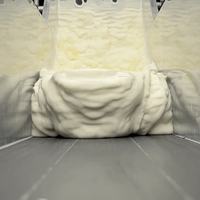
Phys. Rev. Lett. 136, 158202 (2026)
Polymers, Chemical Physics, Soft Matter, and Biological Physics
Dynamics of Wound Closure in Living Nematic Epithelia
Article | Polymers, Chemical Physics, Soft Matter, and Biological Physics | 2026-04-16 06:00 EDT
Henry Andralojc, Jake Turley, Helen Weavers, Paul Martin, Isaac V. Chenchiah, Rachel R. Bennett, and Tanniemola B. Liverpool
We study theoretically the closure of a wound in a layer of epithelial cells in a living tissue after damage. Our analysis is informed by our recent experiments observing reepithelialization in vivo of Drosophila pupae. On time and length scales such that the evolution of the epithelial tissue near …
Phys. Rev. Lett. 136, 158402 (2026)
Polymers, Chemical Physics, Soft Matter, and Biological Physics
Physical Review X
Model Order Reduction for Open Quantum Systems Based on Measurement-Adapted Time-Coarse Graining
Article | 2026-04-16 06:00 EDT
Wentao Fan and Hakan E. Türeci
Researchers introduce measurement-adapted time-coarse graining, a model reduction technique that uses the time resolution of measurement channels to capture the observable dynamics of a complex quantum system.
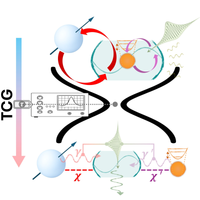
Phys. Rev. X 16, 021015 (2026)
arXiv
Controlled Loop Expansion for the Topological Heavy Fermion Model
New Submission | Strongly Correlated Electrons (cond-mat.str-el) | 2026-04-17 20:00 EDT
We develop a controlled theoretical framework for the topological heavy fermion model relevant to magic-angle twisted bilayer graphene, where low density conduction electrons hybridize with a lattice of strongly interacting f-sites. By tracing out the localized electrons, we derive an effective action for the conduction electrons with long-range in time effective interactions, built from correlators of the single f-site problem. We identify a small hybridization-phase-space parameter resulting in a controlled loop expansion, enabling the derivation of nonperturbative results in either the interaction or the hybridization strength. To tree-level, the results are equivalent to the Hubbard I approximation. At higher loop order, we derive two key results applicable to temperatures above the flavor ordering temperature and below the on-site charging energy: 1) the quasi-particle lifetime, 2) the flavor susceptibility of the system. Remarkably, despite being strongly interacting, we find the susceptibility to accurately obey a Curie-Weiss law parametrically close to the Curie temperature.
Strongly Correlated Electrons (cond-mat.str-el)
26 pages, 7 figures
Divergent spin conductivity on the verge of ferromagnetic quantum criticality
New Submission | Strongly Correlated Electrons (cond-mat.str-el) | 2026-04-17 20:00 EDT
Sondre Duna Lundemo, Asle Sudbø
We show that the spin conductivity of a metal approaching a ferromagnetic quantum critical point exhibits divergent fluctuation corrections. This effect arises from critical spin fluctuations and constitutes a spin analog of the Aslamazov-Larkin theory of paraconductivity in superconductors. The spin current is derived in linear response within a Gaussian-level treatment of the effective action for a system with easy-plane magnetic anisotropy. We demonstrate the consistency of our spin transport theory by showing that it (i) fulfills the Ward identity and (ii) yields vanishing spin stiffness in the normal state. The critical enhancement of the spin conductivity is interpreted as incipient spin superfluidity in the quantum critical region. This is further supported by an intuitive picture based on the current-loop representation of the easy-plane ferromagnet.
Strongly Correlated Electrons (cond-mat.str-el)
6 + 16 pages, 2 + 10 figures
Quantum Charge-4e Superconductivity and Deconfined Pseudocriticality in the Attractive SU(4) Hubbard Model
New Submission | Strongly Correlated Electrons (cond-mat.str-el) | 2026-04-17 20:00 EDT
Zhou-Quan Wan, Huan Jiang, Xuan Zou, Shiwei Zhang, Shao-Kai Jian
Unlike conventional charge-2e superconductors, a charge-4e superconductor exhibits long-range coherence of electron quartets rather than Cooper pairs. Clear zero-temperature realizations of charge-4e superconductivity remain rare. Here, we investigate the zero-temperature phase diagram of the attractive SU(4) Hubbard model with numerically exact, large-scale quantum Monte Carlo (QMC) simulations overcoming major technical hurdles. We identify both charge-2e and charge-4e superconducting phases. Upon increasing interaction, charge-2e correlations are suppressed and eventually vanish, while the charge-4e correlations remain robust and converge with system size, signaling the onset of a quartet-condensed phase. Interestingly, across the charge-2e–charge-4e transition, single electrons remain gapped, while charge-2e correlations exhibit a scaling behavior inconsistent with a conventional Landau description. These features are naturally captured by a fractionalized framework in which the physical charge-2e order parameter is a composite field coupled to an emergent non-Abelian gauge structure. We formulate an Sp(4) gauge-Higgs theory that realizes deconfined quantum pseudocriticality between the Higgs (charge-2e) phase and the confined (charge-4e) phase. The Sp(4) gauge-Higgs theory yields pseudocriticality through a fixed-point collision, and its one-loop collision-point exponents quantitatively track the QMC results. Our results establish charge-4e superconductivity as a bona fide zero-temperature phase, provide a simple model for future studies in a numerically exact framework, and reveal an unconventional route to superconducting criticality.
Strongly Correlated Electrons (cond-mat.str-el), Statistical Mechanics (cond-mat.stat-mech), Superconductivity (cond-mat.supr-con), High Energy Physics - Theory (hep-th)
5 + 11 pages, 12 figures
Limits of validity for Migdal-Eliashberg theory: role of polarons/bi-polarons
New Submission | Strongly Correlated Electrons (cond-mat.str-el) | 2026-04-17 20:00 EDT
Nikolay Prokof’ev, Ilya Esterlis, Artem Abanov, Andrey Chubukov
It is widely believed that in an adiabatic limit a Fermi liquid state of an electron-phonon system described by Migdal-Eliashberg theory remains stable before a dressed phonon softens. Using Holstein model as a prototypical example and variational/analytic considerations we demonstrate that in a wide range of fillings both in 3D and 2D, a polaronic/bi-polaronic state emerges before phonon softening; at small filling in 3D this happens already at weak coupling. We show that a polaronic/bi-polaronic state emerges, upon increasing coupling, via an intermediate pseudogap-type mixed state, in which some fermions regain Fermi liquid behavior, yet Luttinger theorem is broken. At even larger couplings the density of states gradually approaches its form in the atomic limit.
Strongly Correlated Electrons (cond-mat.str-el)
4 pages, 4 figures + end matter
Breakdown of the Migdal-Eliashberg theory for electron-phonon systems. Role of polarons/bi-polarons
New Submission | Strongly Correlated Electrons (cond-mat.str-el) | 2026-04-17 20:00 EDT
Andrey Chubukov, Ilya Esterlis, Artem Abanov, Nikolay Prokof’ev
The Migdal-Eliashberg theory (MET) describes electrons interacting with phonons in the adiabatic limit when the phonon Debye frequency is much smaller than the Fermi energy. A conventional belief is that MET holds even at strong coupling, when electron self-energy is large, and breaks down only near the point where the dressed phonon spectrum softens to near zero. We analyze numerically and analytically a different option – collapse to a polaronic/bipolaronic ground state. The last scenario has never been analyzed in precise quantitative terms for a generic electron density. Using variational considerations, we establish rigorous upper bounds on the coupling $ \lambda$ , at which a FL state transforms into the bipolaron/polaron state. We show that at small and near-maximum densities, this happens well before a dressed phonon softens. This is true both in 2D and 3D systems; in the latter the upper bound on $ \lambda$ tends to zero in the limit of small or near-full density. We present analytical reasoning for this behavior based on hints extracted from exact diagrammatic treatment of the on-site Holstein model for the spin polarized case and argue that polarons are produced by fermions with energies comparable to the bandwidth; i.e., polaron formation is outside the realm of MET. Closer to half-filling, the leading instability upon increasing $ \lambda$ is towards a charge-density-wave state (CDW), and there exists a strong coupling regime of MET near this instability, while the polaron/bipolaron state develops at larger $ \lambda$ out of a CDW-ordered state and inherits a CDW order over some range of coupling.
Strongly Correlated Electrons (cond-mat.str-el)
44 pages, 31 figures + appendices
Topologically non-trivial gap function and topology-induced time-reversal symmetry breaking in a superconductor with singular dynamical interaction
New Submission | Strongly Correlated Electrons (cond-mat.str-el) | 2026-04-17 20:00 EDT
In many strongly correlated electron systems, non-Fermi liquid behavior and unconventional superconductivity can be viewed as emerging from an effective 4-fermion interaction with a singular frequency dependence. A pairing instability in such a system is qualitatively different from that in a Fermi liquid and generally gives rise to multiple pairing states with topologically distinct gap functions. However, in the systems studied so far, a topologically trivial solution has the lowest energy. Here we show that a repulsive Hubbard-type interaction with a finite cutoff added to a model with a singular dynamical interaction selects, in some parameter range, the theretofore subleading, topologically nontrivial solution. We consider a minimal model that displays this behavior and show that the transformation between the topologically trivial and nontrivial gap functions necessarily occurs via an intermediate phase with topology-induced breaking of time-reversal symmetry.
Strongly Correlated Electrons (cond-mat.str-el), Superconductivity (cond-mat.supr-con)
Twisted Bilayer Graphene Lifetimes At Integer Fillings: An Analytic Result
New Submission | Strongly Correlated Electrons (cond-mat.str-el) | 2026-04-17 20:00 EDT
Haoyu Hu, Yuelin Shao, Lorenzo Crippa, Dumitru Călugăru, Giorgio Sangiovanni, Tim Wehling, Leonid I. Glazman, B. Andrei Bernevig
Twisted bilayer graphene near integer fillings hosts correlated single-particle excitations whose dispersion and linewidth are increasingly accessible experimentally. We study these excitations using the topological heavy-fermion model, which captures both strong correlations and band topology of twisted bilayer graphene. In the decoupled limit, where both the single-particle fc hybridization and the Hund coupling between f and c electrons are absent, the model admits exact solutions in which free Dirac fermions coexist with interacting f electrons that form zero-width Hubbard bands. By treating the fc hybridization and Hund coupling perturbatively around this solvable limit, we obtain analytical results for the single-particle self-energy. From the resulting self-energy, we derive explicit expressions for both dispersion renormalization and scattering rates of both Hubbard-band excitations and low-energy Dirac modes, thereby establishing an analytical framework for understanding correlated excitations in twisted bilayer graphene. We analyze the scattering of the two kinds, Gamma3 and Gamma1,2, of Dirac electrons and find that they arise from different mechanisms. We also briefly investigate the effect of strain. Finally, we compare these analytical expressions with DMFT results for the same model.
Strongly Correlated Electrons (cond-mat.str-el)
Self-contact in a buckled elastica
New Submission | Soft Condensed Matter (cond-mat.soft) | 2026-04-17 20:00 EDT
Krishnan Suryanarayanan, Parth Patel, Anup Kumar Pathak, Harmeet Singh
We explore the mechanics of a terminally loaded buckled elastica under frictionless self-contact. With the aid of two integrals associated with the elastica, we propose a scale-invariant condition necessary for the onset of contact. The condition is independent of the boundary conditions, does not involve the position vectors of the material points, and delivers the value of the compressive load at which self-contact initiates. Furthermore, we show that one of the two integrals, namely the \emph{Hamiltonian}, persists after contact. We compute post-contact configurations of modes three through ten for a pinned-pinned buckled elastica. At a given value of the compressive load, we report multiple post-contact configurations for modes eight and nine. Finally, we show that an infinite force is required to transition from a point contact to a line contact in symmetric post-contact configurations of odd modes.
Soft Condensed Matter (cond-mat.soft)
Simulating hydrodynamic interactions in colloidal suspensions using multiparticle collision dynamics with rigid-body constraints
New Submission | Soft Condensed Matter (cond-mat.soft) | 2026-04-17 20:00 EDT
Michaela Bush, Jeremy C. Palmer, Michael P. Howard
We develop a method for simulating colloidal suspensions using multiparticle collision dynamics (MPCD) with a discrete particle model represented as a rigid body. The key steps for incorporating the rigid-body constraints are to thermalize the velocities of the discrete sites before they participate in the MPCD collision step, then transfer momentum from the sites to the rigid body. We demonstrate that the rigid-body model produces the expected statistics for a single spherical particle and the same transport properties for a hard-sphere colloidal suspension as an equivalent model using harmonic bonds to maintain the site geometry. Importantly, the rigid-body model has less computational overhead and permits a larger simulation timestep than the harmonic-bond model, leading to a nearly order of magnitude speedup in benchmark simulations of hard-sphere colloidal suspensions. Our method is compatible with arbitrary discretization, so it enables more efficient MPCD simulations of suspensions of colloidal particles with complex shapes.
Soft Condensed Matter (cond-mat.soft)
A Generalized Coherent State Framework for Many-Body Density of States
New Submission | Strongly Correlated Electrons (cond-mat.str-el) | 2026-04-17 20:00 EDT
We develop a general framework to calculate the many-body density of states (DOS) of isolated and interacting quantum systems. Based on the generalized coherent state formalism and the Simon-Lieb bounds for a quantum partition function, our method provides a general method of calculation for the DOS in high-dimensional irreducible sectors. This framework further provides rigorous bounds for the ground state energy in each sector and enables the calculation of microcanonical observables across the entire spectrum. Using the Lipkin-Meshkov-Glick (LMG) model as a test bed, we validate our framework by successfully identifying quantum phase transitions (QPTs) and excited-state quantum phase transitions (ESQPTs) across spin sectors. Unlike existing model-specific numerical or analytical techniques, our formalism relies on general underlying symmetries, making it broadly applicable. Applying our method to the ferromagnetic transverse field Ising chain with power law interactions, we demonstrate that its highest-spin-sector DOS is qualitatively identical to that of LMG-type Hamiltonians. Our work establishes a versatile and computationally efficient bridge between algebraic structure and many-body thermodynamics.
Strongly Correlated Electrons (cond-mat.str-el), Other Condensed Matter (cond-mat.other)
Lifetime and spectral function of topological heavy fermions
New Submission | Strongly Correlated Electrons (cond-mat.str-el) | 2026-04-17 20:00 EDT
Nemin Wei, Felix von Oppen, Leonid I. Glazman
Twisted bilayer graphene provides a paradigmatic platform for exploring the interplay between electronic topology and strong correlations. Within the topological heavy fermion model [Song and Bernevig, Phys. Rev. Lett. 129, 047601 (2022)], topology and electron interactions are brought together by including a weak hybridization between the bands of itinerant $ c$ - and localized $ f$ -electrons. Hybridization infuses concentrated Berry curvature into the $ f$ -band, while leaving it flat. These band features have motivated recent proposals of a Mott semimetal phase above the flavor-ordering temperature at charge neutrality. In this work, we develop an analytic theory of the quasiparticle dispersion and lifetime in the Mott semimetal. We reformulate the interacting flat-band Hamiltonian as an on-site Hubbard interaction defined on a set of non-orthogonal orbitals, and compute the electron Green’s function using the equation-of-motion method, in close analogy with the Hubbard-III approximation. Unlike the conventional Hubbard model, in our case this approximation is controlled by a well-defined small parameter in the theory. We evaluate the electron self-energy and demonstrate the emergence of well-defined low-energy quasiparticles with the dispersion and relaxation rate proportional to the interaction strength. The quasiparticle spectrum is well-resolved in energy and in momentum down to the very vicinity of the Fermi level. Our results illustrate unconventional spectral properties arising from strong correlations and nontrivial quantum geometry, and have direct relevance for spectroscopic probes such as quantum twisting microscope experiments.
Strongly Correlated Electrons (cond-mat.str-el)
18 pages, 2 figures
$μ$SR study of time-reversal symmetry constraints and bulk superfluid response in Li$_{0.95}$FeAs
New Submission | Superconductivity (cond-mat.supr-con) | 2026-04-17 20:00 EDT
Rustem Khasanov, Hubertus Luetkens, Nikolai D. Zhigadlo
We report zero-field (ZF) and transverse-field (TF) muon-spin rotation/relaxation ($ \mu$ SR) measurements on superconducting Li$ {0.95}$ FeAs ($ T{\rm c}\simeq16.0$ K) grown by a high-pressure self-flux method. The ZF-$ \mu$ SR data show no detectable change of the electronic relaxation rate on cooling through $ T_{\rm c}$ , providing no evidence for time-reversal-symmetry breaking in the superconducting state. TF-$ \mu$ SR measurements reveal a well-developed vortex response with strong flux pinning and a negligible nonsuperconducting contribution, confirming that superconductivity is a bulk property of the sample. From the second moment of the internal field distribution we determine a low-temperature in-plane magnetic penetration depth $ \lambda_{ab}= 245(15)$ nm. The temperature dependence of the normalized superfluid density is well described by an effective two-gap model with $ \Delta_1 = 2.0(2)$ meV and $ \Delta_2 = 0.7(2)$ meV. A quantitative comparison with ARPES-based band weights shows that the $ \mu$ SR response is dominated by the Fermi-surface sheets carrying the intermediate and small superconducting gaps, whereas the band hosting the largest gap contributes only about 3% to the total superfluid density and is therefore not resolved in the present analysis. Taken together, these results establish Li$ _{0.95}$ FeAs as a bulk multigap superconductor without detectable time-reversal symmetry breaking and show how $ \mu$ SR reconciles the gap scales reported by bulk and surface-sensitive probes in this multiband system.
Superconductivity (cond-mat.supr-con)
9 pages, 7 figures
Configuration-dependent electronic and optical properties of 2D Mo$_{1-x}$W$_x$S$_2$ alloys across the full composition range
New Submission | Materials Science (cond-mat.mtrl-sci) | 2026-04-17 20:00 EDT
Here we analyze multiple symmetry-inequivalent atomic configurations across the entire composition range of the isovalent and isostructural Mo$ _x$ W$ _{1-x}$ S$ _2$ alloy using density-functional theory and Monte Carlo simulations. Our results show that although structural stability and energetics are largely composition-driven, the electronic and optical properties exhibit configuration dependence, with local atomic arrangements critically shaping band-edge splitting, valley structure, effective-mass anisotropy, and optical selection rules. In contrast to the pristine monolayers, even in the absence of spin-orbit coupling (SOC), splitting of the band edges at the $ K$ point is observed across the entire composition range. In particular, while the valence-band maximum (VBM) remains largely robust, the conduction-band minimum (CBM) shows strong configuration-dependent splitting from few meV up to hundredths of meV. This behaviour leads to a non-trivial dependence of the valley energetics. Configurations with well-separated conduction bands support additional optically active transitions beyond the conventional A and B excitons in MoS$ _2$ and WS$ _2$ monolayers, whereas nearly degenerate cases exhibit a reduced number of allowed transitions, observed for specific configurations at $ x = 1/3$ and $ x = 2/3$ . These results demonstrate that the number and character of optically active transitions are governed not only by composition, but also by the microscopic arrangement of atoms. Moreover, we found the hole effective masses at the VBM show configuration-dependent anisotropy, reflecting sensitivity to local symmetry breaking and implying direction-dependent transport.
Materials Science (cond-mat.mtrl-sci)
8 pages, 5 figures
Long-range spin-polarized Josephson effect in ballistic S/F/S junctions with precessing magnetization
New Submission | Mesoscale and Nanoscale Physics (cond-mat.mes-hall) | 2026-04-17 20:00 EDT
E. S. Andriyakhina, M. Mansouri, M. Breitkreiz, P. W. Brouwer
We present a theory of ballistic N/F/S and S/F/S junctions with a uniformly precessing magnetization, which generates long-range equal-spin superconducting correlations [Takahashi et al., Phys. Rev. Lett. 99, 057003 (2007), Houzet, Phys. Rev. Lett. 101, 057009 (2008)]. The non-equilibrium distribution of Andreev bound states leads to a strongly non-sinusoidal current-phase relationship for large precession angles. We derive detailed results for ballistic junctions involving partially and fully polarized ferromagnets. In the fully polarized half-metal limit, the magnetization precession switches the junction from an “off” state with vanishing subgap current to an “on” state with finite Andreev conductance and finite Josephson current.
Mesoscale and Nanoscale Physics (cond-mat.mes-hall), Superconductivity (cond-mat.supr-con)
Revisiting apparent ideal diamagnetism at ambient conditions in graphene-n-heptane-permalloy systems
New Submission | Superconductivity (cond-mat.supr-con) | 2026-04-17 20:00 EDT
Rajendra Dulal, Serafim Teknowijoyo, Sara Chahid, Vahan Nikoghosyan, Armen Gulian
We previously reported apparent ideal diamagnetism at ambient conditions in a graphene-n-heptane-permalloy system. At the same time, the experiments revealed inconsistent behavior, including signal freezing and occasional paramagnetic responses. Further measurements performed without graphene produced similar signals, indicating that graphene is not responsible for the observed effects. The results suggest that magnetic field redistribution caused by inhomogeneities in the permalloy foil and experimental geometry can mimic ideal diamagnetism in sub-milligauss measurements. These findings revise the interpretation of our earlier results and emphasize caution in interpreting ultra-low-field magnetic measurements.
Superconductivity (cond-mat.supr-con)
Two pathways to break the insulating state in a correlated transition metal oxide
New Submission | Strongly Correlated Electrons (cond-mat.str-el) | 2026-04-17 20:00 EDT
Joel Kuttruff, Ritwika Mandal, Marina Servol, Céline Mariette, Hiroko Tokoro, Shin-ichi Ohkoshi, Rodolphe Sopracase, Hervé Cailleau, Laurent Cario, Etienne Janod, Maciej Lorenc, Vinh Ta Phuoc
Correlated transition metal oxides present exciting prospects as switches or memory and storage devices owing to the possibility to control electronic properties using various external stimuli. While their complex behaviour is known to stem from interplay between electronic correlations, atomic structure and orbital physics, they remain poorly understood on the microscopic level. Here, we investigate such origins as a function of temperature and pressure in the transition metal oxide Ti3O5. We find that the insulating room-temperature phase is characterized by one-dimensional zig-zag chains composed by two types of titanium dimers forming orbital selective valence bonds. At the thermal phase transition, one type of titanium dimer breaks up, resulting in an insulator to metal transition with a large orbital repopulation between the two states. Moreover, optical spectroscopy reveals that an additional pressure-driven insulator to metal transition occurs in Ti3O5 at room temperature. The phenomenology of this novel pressure-induced metallic transition is completely different from the insofar studied transitions and results from a competition between intra- and inter-dimer hopping. Our combined results suggest that Ti3O5 is a prototypical correlated transition metal oxide, where both correlations as well as orbital interactions need to be considered to fully understand the evolution of the electronic states.
Strongly Correlated Electrons (cond-mat.str-el)
33 pages, 17 figures
Ultra-high-vacuum cluster tool for epitaxial synthesis and optical spectroscopy of reactive 2D materials
New Submission | Materials Science (cond-mat.mtrl-sci) | 2026-04-17 20:00 EDT
M. Dembecki, J. Schabesberger, M. Bissolo, A. Thurn, A. Ulhe, P. Avdienko, J. Ulrichs, H. Riedl, G. Koblmüller, E. Zallo, J.J. Finley
The large-area synthesis of high-crystalline-quality two-dimensional (2D) materials is at the core of novel material integration for semiconductor technology. This effort relies on developing fabrication and characterization techniques that can uncover the material’s intrinsic properties by preserving its pristine conditions. In this article, we present an all ultra-high-vacuum cluster for the growth using molecular beam epitaxy of 2D semiconductors that are unstable under ambient conditions and optical spectroscopy using low temperature (20 K) photoluminescence and Raman scattering. The optical chamber of the setup provides micrometer scale spatial resolution and the ability to scan the entire wafer. The performance of its setup regarding spatial resolution, temperature control over a temperature range of 20-300 K using a closed-cycle cryostat and long-term preservation are demonstrated using as-grown post-transition metal monochalcogenides. Furthermore, we introduce a deconvolution-based algorithm to recover spatial information under vibration using a system-specific point-spread function. This enables in situ analysis of the structural and optoelectronic properties of as-grown materials in their pristine form, providing rich and reproducible feedback for both fundamental studies and the optimization of scalable 2D material growth toward integration in advanced devices.
Materials Science (cond-mat.mtrl-sci), Instrumentation and Detectors (physics.ins-det), Optics (physics.optics)
Methodology paper, 9 pages, 8 figures
Environment-dependent tight-binding models from ab initio pseudo-atomic orbital Hamiltonians
New Submission | Materials Science (cond-mat.mtrl-sci) | 2026-04-17 20:00 EDT
\textit{Ab initio} pseudo-atomic orbital (PAO) Hamiltonians express the electronic structure of a solid in a compact, localized basis that spans the same Hilbert space as a conventional Slater–Koster tight-binding model, thereby providing an exact \textit{ab initio} representation without any loss of accuracy. Building on this correspondence, we develop an environment-dependent tight-binding (EDTB) framework in which Slater–Koster hopping integrals are augmented with bond-screening functions that capture the local coordination environment. All parameters are determined by fitting to the PAO eigenvalue spectrum across multiple atomic configurations simultaneously, which breaks the degeneracy between screening and hopping parameters and yields physically meaningful, transferable models capable of generating Hamiltonians for large systems with \textit{ab initio} precision. We demonstrate the efficiency and accuracy of the approach on four prototypical systems: bulk platinum, silicon surfaces, Si/Ge~[001] superlattices, and twisted bilayer graphene with up to $ 4{,}324$ atoms. The method is implemented in the \paoflow{} code and integrates seamlessly with its full post-processing suite, enabling the evaluation of a broad range of electronic, optical, and transport properties.
Materials Science (cond-mat.mtrl-sci)
Direct laser micromachining of superconducting terahertz Josephson plasma emitters
New Submission | Superconductivity (cond-mat.supr-con) | 2026-04-17 20:00 EDT
Reo Yamaguchi, Takuma Sakurai, Kazuhiro Yamaki, Akinobu Irie, Junichiro Kato, Taichiro Nishio, Shigeyuki Ishida, Hiroshi Eisaki, Manabu Tsujimoto
We demonstrate a rapid, maskless fabrication method for superconducting terahertz Josephson plasma emitters (JPEs) based on direct ultraviolet laser micromachining of Bi$ _2$ Sr$ _2$ CaCu$ _2$ O$ _{8+\delta}$ (Bi-2212) single crystals. Although machining debris is formed near the processed regions, uniform stacks of intrinsic Josephson junctions are preserved inside the crystal, enabling stable terahertz emission. Devices fabricated with Ag, Cu, and Cr electrodes all exhibited terahertz radiation, with Cu electrodes showing performance comparable to Ag while offering a low-cost alternative. Spectroscopic and polarization analyses indicate that the emitted radiation is elliptically polarized and dominated by the geometrical cavity resonance mode. Structural and electrical characterizations reveal that the machining width and depth are not limited by the optical spot size but are governed by the anisotropic thermal conductivity of Bi-2212, consistent with a thermally dominated laser ablation process. This direct laser micromachining approach provides a fast and versatile fabrication technique for JPEs and is broadly applicable to superconducting electronics and terahertz devices.
Superconductivity (cond-mat.supr-con), Applied Physics (physics.app-ph)
14 pages, 5 figures, 1 table
An Investigation in the Kinetic Persistence of TiO$_2$ Polymorphs using Machine Learning Driven Pathfinding in Crystal Configuration Space
New Submission | Materials Science (cond-mat.mtrl-sci) | 2026-04-17 20:00 EDT
Max C. Gallant, David Mrdjenovich, Kristin A. Persson
As the number of theoretically predicted materials continues to grow, it becomes increasingly important to assess not only their thermodynamic stability but also their kinetic viability under realistic synthesis conditions. In this study, we investigate the hypothesis that the kinetic persistence of a metastable polymorph is related to the topography of the potential energy landscape separating it from lower energy phases. To accomplish this, we develop a new method for identifying diffusionless transformation pathways between metastable polymorphs and their ground-state counterparts and discuss the energetics of those pathways with respect to the experimental observation of each phase. This algorithm is underpinned by the recently developed Crystal Normal Form, which provides a graph representation of crystal configuration space and supplies the substrate for our pathfinding algorithm. We apply this method to the titanium dioxide system which contains the well-known anatase, rutile, and brookite phases in addition to a number of hypothetical metastable polymorphs.
Materials Science (cond-mat.mtrl-sci)
Josephson phase shift and diode effect due to the inverse spin Hall effect
New Submission | Mesoscale and Nanoscale Physics (cond-mat.mes-hall) | 2026-04-17 20:00 EDT
Gen Tatara, Yositake Takane, Aurelien Manchon
We theoretically study the direct and inverse spin Hall effects in a superconductor-normal metal-superconductor junction induced by a spin-orbit interaction that is invariant under spatial inversion. We show that a supercurrent induces a spin Hall effect, leading to a static spin accumulation with opposite polarizations at the two edges, analogous to that in normal conductors. For the inverse effect, we consider a spatially inhomogeneous static magnetic field and show that it induces an anomalous phase shift, which, in the presence of higher harmonics, results in a diode effect. Unlike Rashba systems, the present mechanism does not require broken structural inversion symmetry.
Mesoscale and Nanoscale Physics (cond-mat.mes-hall)
Solitonic Solutions of the One-Dimensional Harmonically Trapped Repulsive Bose-Einstein Condensate via Neural Network Quantum States
New Submission | Quantum Gases (cond-mat.quant-gas) | 2026-04-17 20:00 EDT
We demonstrate the existence of bright solitons in a repulsively interacting, harmonically trapped quasi-one-dimensional Bose-Einstein condensate described by the Gross-Pitaevskii equation. Using a neural-network quantum state (NNQS) approach, we parametrize the initial wavefunction and optimize it to find solutions that recur after one trap period, effectively balancing repulsion with trap-induced attraction. Aside from the bright solitonic solution, we also report double bright and dark soliton states. Perturbing the initial state with multiplicative phase and amplitude noise confirms that these periodic orbits are orbitally stable. Our results indicate that NNQS provides a powerful framework for uncovering coherent structures in nonlinear wave systems.
Quantum Gases (cond-mat.quant-gas), Pattern Formation and Solitons (nlin.PS)
The Two Orbital, Interacting Hatano-Nelson Model
New Submission | Strongly Correlated Electrons (cond-mat.str-el) | 2026-04-17 20:00 EDT
Jonah Huang, Rubem Mondaini, Nancy Aggarwal, Richard Scalettar
The single orbital, one-dimensional, Hatano-Nelson Hamiltonian provides deep insight into the physics of non-Hermiticity, resulting from asymmetric left/right hopping, and its connections to localization. In the absence of disorder, its single particle eigenvalues $ E_{\alpha}$ lie on an ellipse in the complex plane whose extent in the imaginary direction is controlled by the degree of asymmetry. When randomness is introduced, two sets of real eigenvalues emerge at the extremes of the largest and smallest real part of $ E_{\alpha}$ . These real eigenvalues are associated with localized eigenvectors. For spinless fermions, increasing near-neighbor interactions first cause a transition to a charge density wave phase, and ultimately, on finite lattices, a collapse of all eigenvalues to the real axis. In this paper, we explore the presence of real eigenvalues in the interacting, two-particle sector for the spinful case (Hubbard model) in a two-chain (two-band) geometry with a Hermitian interchain hopping. Our key results are to obtain the ``phase” diagrams for the existence of a purely real spectrum, as a function of the interaction strength, degree of non-Hermiticity, and interchain hopping. We study the sensitivity to boundary conditions of the spectral properties of our two-chain model with winding number analysis and explore the relationship between PBC doublon states and OBC skin modes. To address the question of stability in such non-equilibrium systems, we solve the dynamics at low filling according to Lindbladian evolution and find that the non-Hermitian description is able to qualitatively describe such systems.
Strongly Correlated Electrons (cond-mat.str-el), Mesoscale and Nanoscale Physics (cond-mat.mes-hall), Quantum Gases (cond-mat.quant-gas), Quantum Physics (quant-ph)
Discovery of an odd-parity f-wave charge order in a kagome metal
New Submission | Strongly Correlated Electrons (cond-mat.str-el) | 2026-04-17 20:00 EDT
Jiangchang Zheng, Caiyun Chen, Ruiqin Fu, Luca Buiarelli, Zihan Lin, Fazhi Yang, Tianhao Guo, Ganesh Pokharel, Andrea Capa Salinas, Sen Zhou, Turan Birol, Stephen D. Wilson, Junzhang Ma, Daniel J. Schultz, Xianxin Wu, Berthold Jäck
The spontaneous breaking of symmetries is a cornerstone of physics, defining the phases of matter from the cosmological scale to the quantum realm. In condensed matter, electronic orders are classified by their behavior under fundamental symmetries like spatial inversion (parity). While even-parity orders, such as conventional superconductivity and charge density waves, are ubiquitous, their odd-parity counterparts–predicted to host exotic phenomena such as gapless quasiparticle excitations and novel collective modes–are comparatively elusive states of quantum matter. Here, using high-resolution scanning tunneling microscopy and angle-resolved photoemission spectroscopy on the kagome metal CsV$ _3$ Sb$ _5$ , we report the discovery of an inversion symmetry-breaking $ f$ -wave charge bond order. We show that this phase, which preserves translation symmetry, is stabilized by the spontaneous opening of a spectral gap at a previously overlooked Dirac point, providing a textbook condensed-matter realization of the Gross-Neveu model for dynamical mass generation and parity breaking. Intriguingly, this $ f$ -wave order is itself a intervening phase, vanishing abruptly below a temperature of 10,K and pointing to a subsequent transition into a `hidden’ electronic state that is invisible to local STM probes. Our findings establish odd-parity charge order as a novel phase of matter, here, embedded within the intricate hierarchy of correlated electronic orders on the kagome lattice.
Strongly Correlated Electrons (cond-mat.str-el), Mesoscale and Nanoscale Physics (cond-mat.mes-hall)
5 figures
First-principles study of infrared, Raman, piezoelectric and elastic properties of Mg-IV-N\textsubscript{2} (IV = Ge, Si, Sn)
New Submission | Materials Science (cond-mat.mtrl-sci) | 2026-04-17 20:00 EDT
Sarker Md. Sadman, Walter R. L. Lambrecht
Mg-IV-N\textsubscript{2} compounds with IV=Si, Ge, Sn are ultra-wide band gap semiconductors with various potential electronic and optoelectronic applications. They share the \textit{Pna}2\textsubscript{1} space group crystal structure. Here we present Density Function Perturbation Theory (DFPT) calculations of the vibrational modes of these materials. We focus on the vibrational modes at the zone center to establish the relation between vibrational modes and their corresponding point-group symmetries, which determine the Raman and infrared spectra but also report the full Brillouin zone phonon dispersions and density of states. We also determine the piezoelectric tensor and the elastic compliance tensor.
Materials Science (cond-mat.mtrl-sci)
Persistent Free Volume Governs (Anti-)plasticization in Chitosan-Water Mixtures
New Submission | Soft Condensed Matter (cond-mat.soft) | 2026-04-17 20:00 EDT
Baris E. Ugur, Michael A. Webb
Chitosan is a highly versatile and sustainable polymer with a broad range of potential biological and materials engineering applications. Despite its versatility, the native brittleness of chitosan limits its broader utilization. This limitation can be addressed by blending chitosan with small-molecule additives to modulate its thermomechanical properties. We employ molecular dynamics (MD) simulations to investigate the mechanism underlying antiplasticization followed by plasticization at increasing water content. Decomposition of the elastic moduli reveals a competition between weakened polymer-polymer interactions and enhanced polymer-water interactions, with their relative strengths governing the resulting properties. We introduce a simple model incorporating dynamically accessible free volume regions as a key driver of polymer mobility, effectively capturing the (anti-)plasticization of elastic properties. We show that accessibility of free volume regions is enabled by connectivity of additive-accessible volume regions. This study provides new insights into the molecular interactions that dictate the properties of chitosan-water mixtures and may inform the rational design of chitosan-based materials and other hydrated biopolymers.
Soft Condensed Matter (cond-mat.soft), Materials Science (cond-mat.mtrl-sci), Statistical Mechanics (cond-mat.stat-mech)
Wide-field magnetic imaging of shielding-current-driven vortex rearrangement under local heating using diamond quantum sensors
New Submission | Superconductivity (cond-mat.supr-con) | 2026-04-17 20:00 EDT
Ryoei Ota, Shunsuke Nishimura, Koki Honda, Takeyuki Tsuji, Taro Yamashita, Takayuki Iwasaki, Mutsuko Hatano, Kento Sasaki, Kensuke Kobayashi
Understanding and controlling vortex motion in superconductors are important both for suppressing dissipation in superconducting devices and for device applications that exploit vortices. In this work, we quantitatively imaged the stray magnetic field distribution of vortices in an NbN thin film by wide-field magnetic imaging using a perfectly aligned diamond NV ensemble. By continuously measuring while stepwise varying the applied magnetic field under local laser heating, we captured a rearrangement of the vortex configuration in real space and in real time over more than 100 min. The observed vortex rearrangement is consistent with a reduction of the pinning force due to local laser heating and with the Lorentz force exerted by shielding currents induced by the field variation. These results provide insight into vortex dynamics and suggest potential applications, including vortex exclusion from sensitive regions of superconducting devices and vortex positioning in vortex-based devices.
Superconductivity (cond-mat.supr-con)
6 pages, 4 figures, and supplementary materials
Absence of solid phase in dense amorphous active granular matter
New Submission | Soft Condensed Matter (cond-mat.soft) | 2026-04-17 20:00 EDT
Solid phase of dense granular matter is inevitable because of jamming transition when the packing fraction or the pressure suffered is high enough. The experiment suggests that active Brownian granular matter will keep fluid phase even under the highest packing fraction (higher than the packing fraction of crystallization) if crystallization is prevented by mixing granular particles of different sizes. The findings encourage us to reconsider the role of activity in affecting the global dynamical properties of matter.
Soft Condensed Matter (cond-mat.soft)
10 pages, 4 figures
Quantum Landscape of Superconducting Diodes
New Submission | Superconductivity (cond-mat.supr-con) | 2026-04-17 20:00 EDT
This study maps the quantum landscape of superconducting diodes (SDs) \cite{nadeem23} onto the quantum technology architecture, which is currently constrained by fundamental challenges in control and scalability. In the existing non-integrated quantum technology hardware, control and scalability related issues emerge at two fronts: First, nonlinear and nonreciprocal circuit elements, which are essential building blocks for quantum processors, are often complex, bulky, and dissipative. Second, the temperature gradient between classical control electronics ($ T_C\gtrsim$ K), which is also dissipative, and the quantum processor at cryogenic temperatures ($ T_Q\sim$ mK) makes scalability even more challenging. The main focus is to reveal how the built-in nonlinearity, nonreciprocity, and quantum functionalities of SDs are significant for on-chip integrated circuit quantum electrodynamics (c-QED), enabling scalable integration of noise-resilient qubit and qubit-interfaces for efficient power delivery, coherent control and memory, high-fidelity readout, and quantum-limited amplification. To this end, this study will also shed light on how thermodynamic constraints and field effects can be harnessed within a quantum-enhanced SD platform, thereby enabling thermal compatibility between classical and quantum workflows, isothermal all-electrical control, and on-chip scalability. This perspective is expected to play a pivotal role in the advancement of superconducting circuit-based quantum hardware with temperature-matched classical, quantum, and hybrid workflows.
Superconductivity (cond-mat.supr-con), Materials Science (cond-mat.mtrl-sci), Quantum Physics (quant-ph)
37 pages, 7 figures
Effect of Rashba spin-orbit coupling on Faraday rotation in an extended Haldane model
New Submission | Mesoscale and Nanoscale Physics (cond-mat.mes-hall) | 2026-04-17 20:00 EDT
Yuan Fang, Yixiang Wang, Xiaopu Zhang
Utilization of Faraday rotation (FR) properties of topological materials offers a promising route toward novel magneto-optical devices. We systematically investigated the effect of Rashba spin-orbit coupling (SOC) on FR spectra in an extended Haldane model, which incorporates Rashba SOC and exchange splitting into the original spinless Haldane framework. Using the Kubo formalism, we calculated the FR spectra across the model’s rich topological phase diagram. We found that in the Chern number C=2 region, in the absence of exchange splitting, the FR angle can exceed 4$ ^\circ$ and its peak position is tunable by the Rashba SOC. In contrast, with the inclusion of exchange splitting, a nearly flat FR profile emerges over a broad frequency range, and the FR peak values increase monotonically with the Rashba SOC strength. The Rashba SOC opens additional transition channels, whose net contribution constructively enhances the FR peak. Furthermore, we derived a low-energy effective Hamiltonian expanded up to quadratic terms, the results of which are in good agreement with tight-binding model calculations, thereby validating our numerical results. Our findings suggest that magneto-optical device characteristics can be designed and optimized through Rashba SOC engineering.
Mesoscale and Nanoscale Physics (cond-mat.mes-hall)
Anomalous Platinum and Oxygen Transport during Electroforming of NbOx Memristors
New Submission | Materials Science (cond-mat.mtrl-sci) | 2026-04-17 20:00 EDT
Shimul Kanti Nath, Sanjoy Kumar Nandi, Xiao Sun, Sujan Kumar Das, Bin Gong, Nicholas J. Ekins-Daukes, Deepak Mishra, Mahesh P. Suryawanshi, William D. A. Rickard, Songyan Yin, Michael P. Nielsen, Robert G. Elliman
Electroforming of metal-oxide-metal memristors is generally attributed to the creation of oxygen-vacancy filaments within the oxide, with noble metal electrodes such as Pt and Au remaining chemically inert. Here, we demonstrate that electroforming and subsequent operation of Pt/NbOx/Nb2O5/Pt devices can induce an unexpected and highly correlated redistribution of both oxygen and platinum. Time-of-flight secondary ion mass spectrometry reveals a filamentary pathway characterized by micrometer-scale oxygen enrichment extending from the Nb2O5 layer through NbOx and deep into the Pt top electrode. Surprisingly, this is accompanied by the formation of a Pt-rich filament penetrating the oxide stack along the same filamentary path. Finite-element and lumped-element modelling show that current-controlled negative-differential-resistance operation produces localized Joule heating and high-frequency thermal cycling, which strongly enhances oxygen migration and enables thermally assisted Pt diffusion along vacancy-rich pathways. These findings reveal a previously unrecognized metal-ion transport mechanism in NbOx memristors and highlight the critical role of post-forming electrical dynamics in determining filament chemistry, stability, and device reliability.
Materials Science (cond-mat.mtrl-sci)
Level statistics of the disordered Haldane-Shastry model with $1/r^α$ interaction
New Submission | Strongly Correlated Electrons (cond-mat.str-el) | 2026-04-17 20:00 EDT
Vengatesan Ganapathy, Pranay Patil, Ajit C. Balram
Understanding how the interaction range and various types of disorder affect the level statistics of many-body quantum systems and lead to the emergence of many-body localization (MBL) is a challenging open frontier. We study the level statistics of a variant of the spin-$ 1/2$ Haldane-Shastry model with $ 1/r^{\alpha}$ interactions, where $ \alpha{\geq}0$ parametrizes the range of the interactions, in the presence of position disorder and/or random magnetic fields. We find that neither position disorder nor random magnetic fields alone yields pristine Poisson statistics in this long-range interacting system; however, Poisson statistics emerge in their combined presence, suggesting the emergence of MBL when both types of disorder coexist. Interestingly, once random magnetic fields break the $ SU(2)$ symmetry, the strength of the position disorder, $ \delta$ , appears to play an important role, as evidenced by an approximate scaling collapse of the disorder-averaged gap ratios that is parametrized in terms of a single parameter, $ \alpha \delta$ .
Strongly Correlated Electrons (cond-mat.str-el), Statistical Mechanics (cond-mat.stat-mech), Quantum Physics (quant-ph)
16 pages, 15 figures
Interlayer hybridization enables superconductivity in bilayer nickelates
New Submission | Superconductivity (cond-mat.supr-con) | 2026-04-17 20:00 EDT
Shilong Zhang, Meng Zhang, Qilin Luo, Zihao Tao, Hsiao-Yu Huang, Kunhao Li, Jie Li, Junchi Fu, Di-Jing Huang, Yanwu Xie, Yi Lu, Yingying Peng
Ruddlesden-Popper nickelates offer a new route to high-temperature superconductivity beyond the cuprates and iron-pnictides. However, the electronic reorganization that enables superconductivity in bilayer nickelates remain unresolved, largely due to the difficulty of directly probing the superconducting phase. Here, we overcome this limitation by stabilizing superconducting (La,Pr)$ 3$ Ni$ 2$ O$ 7$ thin films with a protective capping layer, thereby enabling direct spectroscopic access via X-ray absorption and resonant inelastic X-ray scattering. We resolve the evolution of in-plane and out-of-plane electronic states, spin and orbital excitations, and spin-density-waves across insulating, superconducting, and metallic regimes. Combining experimental results with theoretical analysis, we show that the in-plane $ d{x^2-y^2}$ states form an itinerant backbone, while superconductivity emerges only when coherent $ d{z^2}$ -$ p_z$ -$ d{z^2}$ interlayer hybridization develops, accompanied by suppressed static spin order and strongly damped spin excitations. Oxygen stoichiometry and epitaxial strain both act on this interlayer channel, placing superconductivity within a narrow window of interlayer coherence and correlation strength. These findings identify the microscopic ingredients required for superconductivity in bilayer nickelates and provide a multiorbital picture of its emergence.
Superconductivity (cond-mat.supr-con), Strongly Correlated Electrons (cond-mat.str-el)
8 pages, 4 figures
Phonon mediated spin-spin interactions
New Submission | Other Condensed Matter (cond-mat.other) | 2026-04-17 20:00 EDT
Indirect long range interactions between localized magnetic moments are in metals mediated by itinerant electrons. In insulators and semi-conductor, such interactions need to be small, if not negligible, due to the absence of mediating carriers. The existence of magnetically ordered insulators, for instance, metal-oxides, is therefore an everlasting source for proposals of various mechanisms that may support the order. Here, phonon mediated interactions between localized magnetic moments is considered as a mechanism that can provide quantifiable symmetric and anti-symmetric anisotropic spin-spin interactions. It is demonstrated that while a symmetric anisotropic interaction exists for all types of phonons, the existence of anti-symmetric anisotropic interactions requires broken inversion symmetry. The latter mechanism may explain the weak ferromagnetic order observed in chiral, e.g., CuO and CoO compounds. Furthermore, the interaction is nearly independent of the temperature at low temperature while approaches a linear growth at high. Spatially, the interactions have an oscillatory power law decay with the inter-nuclei distance.
Other Condensed Matter (cond-mat.other)
6 pages, 3 figures; submitted
Orbitals of Artificial Atoms in a Gapped Two-Dimensional Vacuum
New Submission | Mesoscale and Nanoscale Physics (cond-mat.mes-hall) | 2026-04-17 20:00 EDT
Mong-Wen Gu, Aizhan Sabitova, Taner Esat, Christian Wagner, F. Stefan Tautz, Aleksandr Rodin, Ruslan Temirov
Advances in nanotechnology now allow the creation of artificial atoms - engineered structures whose electronic states closely mimic those of real atoms. Understanding how these artificial atoms interact and bond is key to designing new materials with tailored electronic properties. Here, we use scanning tunnelling microscopy to visualise the bound states of nanostructures patterned in a two-dimensional molecular film featuring a parabolic band with multiple partial energy gaps. The lowest-energy states split off from the bottom of the band and resemble the familiar $ s$ and $ p$ orbitals of natural atoms, even bonding in the same way. Yet, artificial atoms go beyond this analogy: the gapped two-dimensional vacuum in which they reside gives rise to entirely new orbitals with no counterparts in real atoms. These quasi-one-dimensional localised states enrich the orbital vocabulary of chemistry, adding a new class of orbitals that are predominantly shaped by the surrounding electronic vacuum.
Mesoscale and Nanoscale Physics (cond-mat.mes-hall)
Morphological Transition: From Meanders to Mound Structures
New Submission | Materials Science (cond-mat.mtrl-sci) | 2026-04-17 20:00 EDT
Marta A. Chabowska, Hristina Popova, Magdalena A. Załuska-Kotur
Mound formation on flat and miscut crystal surfaces exhibits distinct growth behaviors. While mound structures are the predominant feature on flat surfaces, miscut surfaces display a smooth transition from meandered patterns to three-dimensional mounds, depending on both internal and external conditions. We investigate this morphological evolution-from meander-like surface patterns to faceted pyramidal structures-using a vicinal Cellular Automata modeling framework. The transition is shown to be governed by the competition between the Ehrlich-Schwoebel barrier and adatom mobility on terraces. Under moderate barrier strengths and sufficiently high terrace diffusivity, the system demonstrates a reversible transition from mounded configurations to regular step meandered patterns. This reveals a complex interplay between kinetic barriers and mass transport. Our simulations cover a wide range of growth conditions, including variations in deposition flux, surface diffusion rates, temperature, and miscut angle. By applying the height-height correlation function, we calculate the correlation lengths along and across the steps and analyze their scaling behavior. These results offer insight into the continuum pathways that connect distinct classes of surface structures and provide a unified framework for describing pattern evolution across different crystal growth regimes.
Materials Science (cond-mat.mtrl-sci)
14 pages, 11 figures + supplementary materials
Nonmagnetic-magnetic Transitions in Rutile RuO2
New Submission | Materials Science (cond-mat.mtrl-sci) | 2026-04-17 20:00 EDT
Yue-Fei Hou, Jiajun Lu, Xinfeng Chen, Gui-Bin Liu, Ping Zhang
Rutile RuO$ _2$ has attracted great interest recently, as its magnetic ground state remains controversial. Experimental studies have reported either nonmagnetic or altermagnetic (AM) ground states in different crystalline samples of RuO$ _2$ , highlighting the need for a reasonable explanation to resolve this contradiction. In this study, density functional theory calculations are performed to reveal the correlation-sensitive and strain-dependent magnetism of bulk RuO$ _2$ . On one hand, multiple AM phases with different magnitudes of the spin magnetic moment are identified in the Hubbard parameter space for RuO$ _2$ . On the other hand, when appropriate strains which significantly change the crystal cell volume are applied, the ground state of RuO$ _2$ can undergo transitions between the nonmagnetic state with no spin splitting and the magnetic states with spin splitting in the band structure. These findings not only demonstrate intriguing physics in 4d-electron-correlated RuO$ _2$ , but also retain its potential for spintronic applications.
Materials Science (cond-mat.mtrl-sci), Computational Physics (physics.comp-ph)
18 pages, 5 figures
Nontrivial three-sublattice magnetization in the easy-axis spin-1/2 XXZ antiferromagnet on the triangular lattice
New Submission | Strongly Correlated Electrons (cond-mat.str-el) | 2026-04-17 20:00 EDT
Masahiro Kadosawa, Masaaki Nakamura, Yukinori Ohta, Satoshi Nishimoto
We investigate the ground-state magnetic structure of the spin-$ 1/2$ XXZ antiferromagnet on the triangular lattice in the easy-axis regime using the density-matrix renormalization group. By applying spiral boundary conditions, we exactly map finite $ L\times L$ clusters onto one-dimensional chains while avoiding the spatial anisotropy inherent in cylindrical geometries. From symmetry-broken local magnetization profiles, we extract the three-sublattice moments and track their evolution with anisotropy. At the isotropic point, we obtain a positive sublattice moment of $ 0.21671$ , consistent with previous numerical estimates. In the easy-axis regime, the ordered moments remain close to a zero-magnetization three-sublattice structure of the form $ (2m,-m,-m)$ over a broad range of $ \Delta$ . Extrapolation in $ 1/\Delta$ shows that the positive sublattice moment stays well below the classical saturation value $ 1/2$ , approaching $ 0.41873$ as $ \Delta\to\infty$ , while the magnitude of the negative sublattice moment approaches $ 0.20832$ . We further compare the energies of the Y state and the up-down-down state and find that the Y state is favored at zero field. Independent thermodynamic-limit energy calculations, performed without assuming any particular ordered pattern, yield an energy consistent with the Y-state solution. These results show that the easy-axis ground state does not simply cross over to a trivially saturated collinear Ising state, but instead remains a nontrivial three-sublattice ordered state selected from the macroscopically degenerate Ising manifold by quantum fluctuations.
Strongly Correlated Electrons (cond-mat.str-el)
11 pages, 9 figures, 2 tables
Thermal conductivity tuning of scalable nanopatterned silicon membranes measured with a three-probe method
New Submission | Mesoscale and Nanoscale Physics (cond-mat.mes-hall) | 2026-04-17 20:00 EDT
Jose M. Sojo-Gordillo, Alex Rodriguez-Iglesias, Dominik M. Koch, Arianna Nigro, Iñigo Martin-Fernandez, Marta Fernandez-Regulez, Marc Salleras, Ilaria Zardo
Phononic silicon structures have emerged as an integrable and scalable nanosystem for tailoring thermal transport. However, their widespread adoption has been limited by their complex fabrication pathways. Alongside, the reliable characterization of thermal properties in suspended nanostructured films remains challenging, as thermal contact resistances often hinder the accuracy of measurements.
In this work, we demonstrate a clear and controllable reduction of thermal conductivity in nanopatterned silicon membranes. A block copolymer self-assembly approach is employed to fabricate nanoholed silicon films with a pitch of 63 nm and hole diameters of 35 nm. Additionally, we introduce an extension of the three-probe technique that enables robust, quantitative, and spatially resolved thermal conductivity measurements in complex thin-film systems, accounting for thermal contact artifacts.
The method is validated through measurements on unpatterned 40 nm-thick silicon thin films between 30 and 350 K, yielding a room-temperature thermal conductivity of 46.5 W/m.K. Finally, we further show that controlled etching of the nanoholes provides a powerful means to tune thermal transport in the overall studied temperature range, establishing hole etch depth control as an effective parameter in phononic silicon. Specifically, a fivefold reduction in thermal conductivity is achieved, reaching 7.3 W/m.K for fully etched-through membranes at room temperature.
Mesoscale and Nanoscale Physics (cond-mat.mes-hall), Materials Science (cond-mat.mtrl-sci)
29 pages, 6 figures
Mean-field phase diagrams of spinor bosons in an optical cavity
New Submission | Quantum Gases (cond-mat.quant-gas) | 2026-04-17 20:00 EDT
Maksym Prodius, Mateusz Łącki, Jakub Zakrzewski
The plethora of possible ground states of spinor bosons placed in an external lattice and a cavity is revisited. We discuss the simplest case when the external lattice nodes coincide with the antinodes of the cavity field. We analyze the problem within the grand-canonical mean-field approach, considering both the homogeneous system and the nonhomogeneous case with a harmonic trapping potential. Due to the spin degree of freedom, in the homogeneous case we treat the system in a twofold manner: we impose the physically relevant total-magnetization constraint, while also discussing the minimization landscape for the full unconstrained problem. In the latter, by combining analytical arguments with numerical calculations based on the Gutzwiller ansatz, we show that the system exhibits two types of magnetic phases: an antiferromagnetic Mott insulator (AFM) and a ferromagnetic density wave (FDW). In addition, three distinct supersolid phases emerge, characterized by different patterns of spin and density imbalances. In case of the zero total magnetization, only two of the three supersolid regimes survive, and the FDW phases are replaced by entangled density waves (EDW). These new ground states present density-modulated superpositions of the underlying spin components of the bosons. Finally, we present the phase diagram of the trapped system, which is directly relevant for future experiments.
Quantum Gases (cond-mat.quant-gas), Quantum Physics (quant-ph)
10 pages + appendix, 6 figures
Spin-Valley-Mismatched Altermagnet for Giant Tunneling Magnetoresistance
New Submission | Materials Science (cond-mat.mtrl-sci) | 2026-04-17 20:00 EDT
Kun Yan, Yizhi Hu, Wei-Hua Xiao, Xiaolong Zou, Xiaobin Chen, Wenhui Duan
Altermagnet-based heterojunctions have demonstrated magnetoresistive effects in experiments, however, a predictive theoretical model for non-ferromagnetic structures has remained elusive. In this work, we develop a tunneling-based spin-transport theory that explicitly incorporates the transverse-wavevector ($ \bf{k}_|$ )-dependent spin polarization of an altermagnet’s transport channels, enabling the prediction of giant tunneling magnetoresistance (TMR). Based on the theory, we predict that the altermagnet KV$ _2$ Se$ _2$ O can reach the extreme limit of magnetoresistance. By performing first-principles transport calculations, we verify that magnetic tunnel junctions using the metallic KV$ _2$ Se$ _2$ O as the electrodes and few-layer MgO as the spacer exhibit zero-bias magnetoresistance larger than $ 7.57\times10^7$ %, which is robust against the bias and thickness of the spacer. Our research provides a quantitative design principle for next-generation spin-electronic devices and establishes KV$ _2$ Se$ _2$ O/MgO/KV$ _2$ Se$ _2$ O as a leading candidate material system for room-temperature ultra-high-density non-volatile memory.
Materials Science (cond-mat.mtrl-sci)
8 pages, 5 figures. npj Computational Materials, in press
Formalizing Poisson-Boltzmann Theory for Field-Tunable Nanofluidic Devices
New Submission | Mesoscale and Nanoscale Physics (cond-mat.mes-hall) | 2026-04-17 20:00 EDT
Zhongyuan Zhao, Chudi Qi, Yuheng Li, Shoushan Fan, Qunqing Li, Yang Wei
Nanofluidic devices prompts unconventional ion transports appealing to energy and information technologies, thanks to the susceptibility of confined electric double layers (EDL) to various external physical fields. Although experimental studies advance rapidly, the rationalization of field-tunable nanofluidic transports has not reached a formalized and unified level. Here we formally reformulate the Poisson-Boltzmann theory and reveal distinct EDL regimes on the parameter space. Based on the regime classification, we establish a formal framework for the tunable nanofluidic transport, which reproduces the observed conductivity-concentration scaling behaviors, rationalizes the ionic transistors with reconfigurable polarities, and predicts two fundamental thermodynamic limits for electrostatic modulation (60 mV/dec and 120 mV/dec). Being accurate, generalizable and extensible, this framework can account for a wide range of ion transports in confined spaces.
Mesoscale and Nanoscale Physics (cond-mat.mes-hall), Applied Physics (physics.app-ph)
7 pages, 4 figures
Weak Magnetic Sensing via Floquet Driving in an Active Cavity Magnon Coupled System
New Submission | Mesoscale and Nanoscale Physics (cond-mat.mes-hall) | 2026-04-17 20:00 EDT
Fan Yang, Xudong Wang, Lijun Yan, Yue Zhao, Jinwei Rao, Lihui Bai, Shishen Yan
While significant advancements have been made in weak magnetic field detection, conventional high-sensitivity techniques are often limited by requirements for cryogenic operation or bulky setups. In this work, we develop a sensitive alternating magnetic field sensor based on a coupled system of an active microwave cavity and yttrium iron garnet (YIG), with the components implemented on printed circuit boards (PCBs). By introducing electrically tunable gain to compensate for cavity losses, we substantially improve both the quality factor and the signal intensity. Under the coupled system, Floquet modulation is induced by the alternating magnetic field, allowing for weak field detection by driving a specific hybrid mode and measuring the resulting Floquet sidebands. This miniaturized device operates at room temperature, achieving a detection limit of 121 pT/\sqrt{Hz}.
Mesoscale and Nanoscale Physics (cond-mat.mes-hall)
Layer-dependent quantum transport in KV2Se2O-based altermagnetic tunnel junctions
New Submission | Mesoscale and Nanoscale Physics (cond-mat.mes-hall) | 2026-04-17 20:00 EDT
Yue Zhao, Bin Xiao, Jiawei Liu, Hui Zeng, Jun Zhao
Magnetic tunnel junction (MTJ) is the key component to enable information access and increasing number of MTJs is integrated to develop high-density spintronic devices. However, continuous miniaturization of the conventional MTJs is hindered by stray magnetic fields. Altermagnets, combining the advantages of both ferromagnets and antiferromagnets, provide a promising alternative to fabricate versatile MTJs with exotic properties, such as giant spin splitting, high intrinsic frequency, and absence of stray fields. Inspired by the altermagnetic metal candidate KV2Se2O reported recently, we design an altermagnetic tunnel junction (AMTJ) based on KV2Se2O/SrTiO3/KV2Se2O. Using density functional theory combined with non-equilibrium Green’s function, we investigate the layer-dependent quantum transport properties and the tunneling magnetoresistance (TMR) of such AMTJ device. Our calculated results reveal that the transmission of the AMTJ device exhibits a pronounced oscillation behavior dependent on the number of layers of the SrTiO3 semiconductor, which is attributed to the interface configuration determined by parity of the layer number. In odd-layer devices, the electron-rich O-Se interface exhibits a smooth effective potential and enables transverse momentum (k||) transport channels, leading to enhanced transmission. In contrast, in even-layer devices, the Ti-Se interface presents a steeper effective potential, impeding quantum transport through transverse momentum (k||) channels. A giant TMR of 4.6\ast10^7% is predicted to be realized by using a 4-layer SrTiO3. Our findings not only provide physical understanding relevant to the quantum transport in AMTJs, but also unveil that the barrier interface engineering is a strategy to tune the magnetoelectric performance.
Mesoscale and Nanoscale Physics (cond-mat.mes-hall), Materials Science (cond-mat.mtrl-sci)
Pattern formation during melting of lamellar eutectics
New Submission | Materials Science (cond-mat.mtrl-sci) | 2026-04-17 20:00 EDT
Rahul Nellissery Rajan, Rajesh Kumari Rajendran, Guillaume Boussinot, Kamal Sbargoud, Sabine Bottin-Rousseau, Silvère Akamatsu
We present a study of the melting dynamics of a two-phase eutectic solid. In situ, thin-sample experiments using a transparent eutectic alloy and two-dimensional phase field simulations calibrated for the very same alloy are combined to assess pattern formation during directional melting in a temperature gradient. Depending on the melting velocity $ V_m$ and the spacing $ \lambda$ of the pre-solidified lamellar microstructure, an unexpectedly rich diversity of melting patterns is observed, with good agreement between experiments and simulations. We unravel the different physical mechanisms leading to this diversity, and establish the scaling behaviors of (i) the penetration of the liquid along the solid-solid interface at large $ V_m$ , (ii) the thickening of the primary-phase fingers at low $ V_m$ , and (iii) a period-doubling instability for small $ \lambda$ values. Our study provides a fundamental basis for further investigations of eutectic melting, including additive manufacturing during which melting/solidification cycles take place.
Materials Science (cond-mat.mtrl-sci)
Understanding jump discontinuity in disordered system
New Submission | Disordered Systems and Neural Networks (cond-mat.dis-nn) | 2026-04-17 20:00 EDT
Anjan Daimari, Diana Thongjaomayum
The response of a complex system to a slow varying external force often displays a jump discontinuity in the order parameter near the critical point. However, this discontinuity is not usually a single jump but rather breaks into smaller jumps which makes it difficult to locate the critical point on approaching its vicinity based only on simulations, in the absence of exact results. Our work is a small effort in understanding these breaks in jump through the hysteretic response of a classical Ising spin system to an external field, $ h$ , in the context of a nonequilibrium zero-temperature random field Ising model on dilute systems. We consider a Bethe lattice with coordination number, $ z = 4$ , and dilute a fraction $ (1-c)$ of the sites. Therefore the lattice now consists of sites with varying $ z = 4, 3, 2, 1$ and possibly few isolated sites $ (z=0)$ , depending on the concentration $ c$ . We obtain the exact solution of the magnetization curve, $ m(h)$ vs $ h$ , for the entire lattice as well as for each sublattice of different $ z$ coordinated sites, $ m_4(h), m_3(h), m_2(h), m_1(h), m_0(h)$ . The discontinuity in total magnetization is the result of the superposition of the jumps of different $ z$ coordinated sites and observed at the same value of external field, $ h_{crit}$ . The dominant contribution to the jump comes from those sites with higher concentration and larger $ z$ . However, the triggering sites responsible for large jumps are mostly $ z\ge3$ . We test this on cubic lattices as well, where exact results are not available. We hope our analysis will help in understanding fluctuations around a jump in numerical simulations as well as experiments.
Disordered Systems and Neural Networks (cond-mat.dis-nn)
13 figures
Phys. Rev. E 113, 044104 (2026)
Discovering structural, electronic and excitonic properties of bulk, nanostructured and doped C3N4 in diamond- and graphitic-like phases
New Submission | Materials Science (cond-mat.mtrl-sci) | 2026-04-17 20:00 EDT
Da Chen, Pietro Andreozzi, Giulia Frigerio, Daniele Perilli, Paulo Siani, Cristiana Di Valentin
In this systematic density functional theory study, we compare a standard gradient corrected functional (PBE) with a long-range hybrid functional (HSE06), with and without correction for the dispersion forces, relatively to their ability to correctly reproduce structural and electronic properties of different bulk 3D C3N4 phases, encompassing diamond- and graphitic-like models. Corrugation is found to provide further stabilization to the layered structures with all methods. We observe that HSE06-D3 method provides results in good agreement with experimental data and with more sophisticated G0W0 calculations. Based on that, we exploited the method to investigate the nature of the bulk triplet excitons in these C3N4 structures to evaluate the S0-T1 energy difference, the selftrapping triplet exciton energy and the photoluminescence emission energy, since this is a promising vis-light photocatalyst. Nanostructuring (0D and 2D) is another relevant aspect of these materials in practical applications, therefore we have considered the effect of single or multilayer exfoliation or space confinement in nanoparticles. Finally, we also discuss how the introduction of extrinsic dopants (e.g. S atoms) in the nanostructures modifies the atomic and electronic structure.
Materials Science (cond-mat.mtrl-sci)
41 pages, 11 figures, submitted to The Journal of Physical Chemistry
Propagation of laser-generated GHz surface acoustic wavepackets in FeRh/MgO(001) below and above the antiferromagnetic-ferromagnetic phase transition
New Submission | Materials Science (cond-mat.mtrl-sci) | 2026-04-17 20:00 EDT
Ia. A. Mogunov (1), A. Yu. Klokov (2), N. Yu. Frolov (2), A. I. Sharkov (2), A. V. Protasov (3), G. E. Zhezlyaev (3), D. I. Devyaterikov (3), V. I. Zverev (4), A. M. Kalashnikova (1) ((1) Ioffe Institute, St. Petersburg, Russia, (2) P.N. Lebedev Physical Institute of the RAS, Moscow, Russia, (3) Institute of Metal Physics of the Ural Branch of the RAS, Ekaterinburg, Russia, (4) Lomonosov Moscow State University, Moscow, Russia)
Magnetoacoustic devices that harness the strong coupling between acoustic waves and magnons have emerged as a promising platform for energy-efficient spintronics. Laser-generated pulsed surface acoustic waves (SAWs) are particularly attractive for such applications, offering broadband frequency content up to the gigahertz (GHz) range, remote excitation without lithographic patterning, and surface localization for efficient on-chip integration. In this work, we present a comprehensive experimental study of laser-generated SAW pulses in the Fe49Rh51/MgO(001) system. A thin film of the near-equiatomic FeRh alloy serves both as an opto-acoustic transducer and as a mechanical load that modulates SAW propagation. The antiferromagnetic to ferromagnetic phase transition in FeRh, occurring slightly above room temperature, is accompanied by abrupt changes in its elastic properties, enabling controlled modification of the SAW excitation efficiency and dispersion characteristics by tuning the sample temperature and laser fluence. Using 160 fs laser pulses for excitation and time-resolved Sagnac interferometry for detection, we evaluated key SAW parameters, including amplitude, spectral content, phase and group velocities, and their in-plane anisotropy. Particular emphasis is placed on the dispersion relation and its anisotropy, which govern the coherent interaction between phonons and magnons and are determined primarily by the FeRh film.
Materials Science (cond-mat.mtrl-sci)
14 pages, 7 figures, 1 table
Emergence of Open Chemical Reaction Network Thermodynamics within Closed Systems
New Submission | Statistical Mechanics (cond-mat.stat-mech) | 2026-04-17 20:00 EDT
Benedikt Remlein, Massimiliano Esposito, Francesco Avanzini
We address a fundamental question: under which conditions do the dynamics and thermodynamics of open chemical reaction networks (CRNs), grounded on the notion of idealized chemostats that exchange selected species, emerge from underlying closed CRNs? While open CRNs provide the standard framework to describe out-of-equilibrium chemical systems, real systems are finite and ultimately relax to equilibrium, leaving the status of this description conceptually unresolved. Here we show that open-CRN behavior arises as an asymptotic regime of closed CRNs when two minimal and physically transparent conditions are met: a time-scale separation, whereby fast reactions effectively act as exchange mechanisms, and an abundance separation, whereby a subset of species behaves as chemostats with diverging chemical capacity. In this regime, both the stochastic dynamics and the thermodynamic structure \ – including local detailed balance, entropy production, and free-energy balance \ – emerge to leading order from the underlying closed CRN. Our results apply to arbitrary stoichiometries. They show that chemostats need not be introduced as external idealizations, but instead arise as emergent thermodynamic structures within closed systems, providing a unified and physically grounded foundation for the nonequilibrium thermodynamics of CRNs.
Statistical Mechanics (cond-mat.stat-mech), Chemical Physics (physics.chem-ph)
26 pages, 5 figures
Unconventional plasmon dynamics due to strong correlations in Sr$_2$RuO$_4$
New Submission | Strongly Correlated Electrons (cond-mat.str-el) | 2026-04-17 20:00 EDT
Juraj Krsnik, Dino Novko, Fabian B. Kugler, Osor S. Barišić, Karsten Held
Plasmon modes, their dispersion, and the onset of damping when approaching the electron-hole continuum are well understood when electron correlations are weak. However, we know little about how this picture is modified and what additional features emerge in strongly correlated materials. Here, we present a fully ab initio approach to plasmon excitations that combines density functional theory with dynamical mean-field theory, and we use it to reconcile controversial electron energy-loss spectroscopy results in Sr$ _2$ RuO$ _4$ . In particular, we show that electronic correlations reproduce the plasmon dispersion, while generating a large intrinsic width already below the electron-hole continuum. An additional high-energy peak reflecting transitions between incoherent features and a sharp increase of the plasmon’s energy-momentum dispersion, akin to waterfalls in photoemission spectroscopy, are identified as genuine correlation effects.
Strongly Correlated Electrons (cond-mat.str-el)
5+10 pages, 4+8 figures
Highly coarse-grained polarisable water models for mesoscopic simulations
New Submission | Soft Condensed Matter (cond-mat.soft) | 2026-04-17 20:00 EDT
Michael A. Seaton, Benjamin T. Speake, Ilian T. Todorov
Modelling micro- and meso-scopic scale thermodynamic and transport properties of soft condensed matter hinges upon its representation. This is especially relevant for polar solvents such as water, since these require effective representation of their dielectric nature as driven by molecular charge distributions and molecular network structuring. The dielectric nature of a medium leads to complex phenomena such as local polarisability response and restructuring near interfaces in reaction to changes in local charge distributions. Inclusion of such phenomena when using larger-than-atomistic techniques such as coarse-grained molecular dynamics (CG-MD) and dissipative particle dynamics (DPD) is still an open question, to which we provide a novel way to consider and justify the necessary and suitable coarse-graining level, enabling us to compare new polar CG models’ performance against that of an underlying atomistic model. We polarise our previous non-polar nDPD water model to prepare it for use in simulations of liquid electrolytes as well as solvated organic membranes and measure its fitness to serve as a dielectric medium by comparing its properties to those of the TIP3P water model, while simultaneously observing changes to properties already represented well by the non-polar model.
Soft Condensed Matter (cond-mat.soft), Chemical Physics (physics.chem-ph)
Reversable phase transitions in ferroic two-dimensional Nb2O2I4 through optically excited coherent phonons
New Submission | Materials Science (cond-mat.mtrl-sci) | 2026-04-17 20:00 EDT
Chuanlin Liu, Dan Liu, Jie Guan, Chao Lian
We investigate optically induced phase transitions in the two-dimensional (2D) ferroelectric (FE) material Nb2O2I4 using real-time time-dependent density functional theory (rt-TDDFT). Our results demonstrate that tailored laser pulses can activate specific coherent phonon modes. Specifically, the anharmonic atomic distortions of the A1-1 and A1-2 modes at the {\Gamma}-point facilitate the reversal of in-plane polarization. By fine-tuning laser parameters, additional phonon modes at both the Y and {\Gamma} points are excited. The resulting nonequilibrium atomic dynamics enable the formation of previously unreported ferroic phases, including three antiferroelectric (AFE) phases and one ferrielectric (FiE) phase. Notably, these optically induced phases can be reverted to the initial FE state using appropriate techniques. This controllable reversibility among multiple ferroic phases positions 2D Nb2O2I4 as a highly promising candidate for next-generation electronic storage applications.
Materials Science (cond-mat.mtrl-sci)
Effect of sub-critical fluid shear flow on granular bed strength
New Submission | Soft Condensed Matter (cond-mat.soft) | 2026-04-17 20:00 EDT
Dong Wang, Sophie Bodek, Nicholas T. Ouellette, Mark D. Shattuck, Corey S. O’Hern
Interactions between fluids and granular materials are prevalent on the Earth’s surface. In the case of fluid flow over a sediment bed, the fluid imparts a shear stress to the granular materials. When the applied shear stress is above a critical value, the grains become entrained in the fluid flow. Prior experimental studies have shown that granular beds subjected to a sub-critical fluid flow can strengthen in the same direction as the sub-critical flow. In contrast, granular beds can become weaker in the direction opposite to the sub-critical fluid flow. To investigate the grain-scale mechanisms that control directional strengthening and weakening, we perform discrete element method (DEM) simulations of granular beds subjected to model fluid flows in two (2D) and three (3D) dimensions with varied inter-particle static friction coefficients and conditioning flow speeds. In these studies, the sub-critical grain motion does not cause significant bed compaction. Instead, we find that the strength of a granular bed in a particular direction is highly correlated with the fraction of {\it surface} grains that can be dislodged by a fluid force applied in that direction. Further, the anisotropic bed strength only persists over a finite time scale that is set by the Shields number. We also show that inter-particle static friction is not required for bed strength anisotropy, but varying the friction affects the magnitude of the anisotropy. This research enhances the grain-scale understanding of erosion of granular beds caused by fluid flows and underscores the importance of tracking the history of the fabric of the bed surface since it couples strongly to bed strength.
Soft Condensed Matter (cond-mat.soft)
Magneto-optical imaging of macroscopic altermagnetic domains in MnTe
New Submission | Materials Science (cond-mat.mtrl-sci) | 2026-04-17 20:00 EDT
Gakuto Watanabe, Soichiro Yamane, Ryotaro Maki, Atsutoshi Ikeda, Akimitsu Kirikoshi, Junya Otsuki, Takuya Aoyama, Kenya Ohgushi, Shingo Yonezawa
Altermagnets are a new class of magnets accompanying global time-reversal symmetry breaking (TRSB) without net magnetization. The TRSB results in formation of novel altermagnetic domains. Features of altermagnetic domains, in particular their responses to external stimuli, are essentially important but yet unexplored. Here, we report visualization of bulk altermagnetic domains in MnTe based on scanning magneto-optical Kerr-effect microscopy using telecom infrared wavelength. We found two distinct TRSB domains with large Kerr rotations that do not scale with its tiny bulk magnetization. We also revealed controllability and stability of domains against magnetic or thermal perturbations. Our first observation of altermagnetic domains using a laboratory-scale simple optical technique showing their movable nature provide firm bases for future fundamental and application studies of altermagnets.
Materials Science (cond-mat.mtrl-sci), Other Condensed Matter (cond-mat.other), Strongly Correlated Electrons (cond-mat.str-el), Applied Physics (physics.app-ph), Optics (physics.optics)
Fermi-liquid versus non-Fermi-liquid/‘strange-metal’ fits to the electrical resistivity in the quantum critical magnetic regime of an unconventional superconductor
New Submission | Superconductivity (cond-mat.supr-con) | 2026-04-17 20:00 EDT
W. Knafo, T. Thebault, K. Somesh, G. Lapertot, G. Knebel, D. Braithwaite, D. Aoki
The question of a possible quantum critical point lying inside of a superconducting phase is central for understanding unconventional superconductivity. In various unconventional superconductors, non-Fermi-liquid/‘strange-metal’ $ T^{n}$ variations, with $ n<2$ , of the electrical resistivity have been identified as the signature of magnetic quantum criticality. However, a difficulty is to prove experimentally that a non-Fermi-liquid/‘strange-metal’ law identified at temperatures above the superconducting temperature is the signature of an intrinsic zero-temperature quantum critical regime. In the heavy-fermion paramagnet UTe$ _2$ , unconventional superconductivity develops in the vicinity of a metamagnetic quantum phase transition induced by a magnetic field, and the quantum critical magnetic properties are suspected to play a role for the superconducting mechanism. In this work, we present a comparative analysis of electrical resistivity data collected on two UTe$ _2$ samples of different qualities, in magnetic fields tilted by angles $ \theta\simeq35-40$ $ ^\circ$ from $ \mathbf{b}$ to $ \mathbf{c}$ . Fits to the data have been performed either with a Fermi-liquid function $ \rho=\rho_0+AT^{2}$ or with a non-Fermi-liquid/‘strange-metal’ function $ \rho=\rho_0+A_nT^n$ . Near to a superconducting phase induced beyond 40T, non-physical residual resistivities $ \rho_0<0$ are extracted from the $ T^n$ fits, revealing that a ‘hidden’ Fermi-liquid $ T^2$ regime may be ultimately recovered at low temperature. The results obtained here highlight the importance to investigate high-quality samples with low residual resistivity to confirm - or not - the presence of a suspected ‘hidden’ quantum critical behavior masked by superconductivity.
Superconductivity (cond-mat.supr-con), Strongly Correlated Electrons (cond-mat.str-el)
7 pages, 5 figures
Coarse Graining Reveals a Fluctuation-theorem-like Asymmetry in Financial Markets
New Submission | Statistical Mechanics (cond-mat.stat-mech) | 2026-04-17 20:00 EDT
Jian Gao, Lufeng Zhang, Ping Fang, Pu Ke, Jin Wu, Yue Liu, Haijun Zhou
Fluctuation theorems show how coarse graining transforms microscopic symmetry into observable irreversibility. Here we ask whether an analogous symmetrybased diagnostic can be constructed for financial markets. At the microscopic level, each transaction pairs a buyer and a seller, whereas trading decisions are typically made from coarse-grained price histories. Using symmetric takeprofit and stop-loss rules, we compare the holding-time distributions of long and short trading ensembles generated from the same price series. Across equityindices, individual stocks and cryptocurrencies, the log-ratio of the two distributions shows a robust crossover. It remains nearly constant at short durations but becomes linear in the tail, implying an exponential directional asymmetry. The tail slope defines an effective market temperature, an operational measure of fluctuation intensity on the chosen observation scale. A Bachelier first-passage benchmark captures the exponential tails but not the asymmetry, because long and short positions share the same leading decay rate. By contrast, short-time correlations between overlapping positions provide a minimal mechanism for the asymmetry by generating direction-dependent subleading relaxation spectra in a coarse-grained Markov description. Together, these results establish a fluctuation-theorem-like diagnostic of irreversibility in financial markets and, more broadly, in complex systems accessible only through coarse-grained observables.
Statistical Mechanics (cond-mat.stat-mech)
17 pages,5 figures
Towards Non-van der Waals 2D Topological Insulators
New Submission | Materials Science (cond-mat.mtrl-sci) | 2026-04-17 20:00 EDT
Mani Lokamani, Gustav Bihlmayer, Gregor Michalicek, Daniel Wortmann, Stefan Blügel, Rico Friedrich
Non-van der Waals two-dimensional (2D) materials derived from strongly bonded non-layered crystals have recently emerged as a novel and rising platform for nanoscale research. While uncovering and tuning their (opto-)electronic, catalytic, and magnetic properties has been the focus of intense research, the impact of spin-orbit coupling (SOC) onto their electronic structure has not yet been explored in detail. Studying these effects is, however, particularly relevant due to their surface cation termination and the presence of heavy elements in several representative compounds. Here, we investigate the effect of SOC onto the electronic structure of 2D AgBiO3, NaBiO3, and SbTlO3. While the first two systems show negligible band renormalization upon inclusion of relativistic effects around the band gap, SbTlO3 showcases a large SOC induced splitting (229meV) for the lowest conduction bands associated with a band inversion. Substitution of Tl with Pb forming SbPbO3 brings the band-inverted feature to the Fermi level. Analysis of topological invariants and investigation of edge states of zig-zag and armchair ribbons within the 200meV gap confirms the topological nature of the band splitting. Our work thus establishes a foundation for the systematic study of robust non-van der Waals 2D topological insulators.
Materials Science (cond-mat.mtrl-sci), Computational Physics (physics.comp-ph)
9 pages, 4 figures
Thermodynamic Geometry of Relaxation
New Submission | Statistical Mechanics (cond-mat.stat-mech) | 2026-04-17 20:00 EDT
Hao Wang, Li Zhao, Shuai Deng, Yu-Han Ma
While the geometry of equilibrium states and driven non-equilibrium processes is clearly understood, a geometric description for relaxation towards equilibrium is still lacking. Here, we propose a thermo-geometric measure based on the Rayleigh quotient, reformulating relaxation as a fundamental competition between entropic stiffness and frictional dissipation. Taking a van der Waals gas with two dissipation channels as an example, we explicitly demonstrate its relaxation landscape. Particularly, we find that upon approaching the critical temperature $ T_c$ , the slow-mode relaxation rate vanishes linearly as $ \lambda_s \propto (T-T_c)/T_c$ , indicating critical slowing down. This study completes the thermodynamic geometry framework, providing a general tool for characterizing the relaxation dynamics of complex systems.
Statistical Mechanics (cond-mat.stat-mech), Classical Physics (physics.class-ph), Quantum Physics (quant-ph)
6 pages(2 figures)+13 pages Supplemental Materials; Comments are welcome!
Controllable highly oriented skyrmion track array in Fe3GaTe2
New Submission | Materials Science (cond-mat.mtrl-sci) | 2026-04-17 20:00 EDT
Yunhao Wang, Shiyu Zhu, Chensong Hua, Guojing Hu, Linxuan Li, Senhao Lv, Jianfeng Guo, Jiawei Hu, Runnong Zhou, Zizhao Gong, Chengmin Shen, Zhihai Cheng, Jinan Shi, Wu Zhou, Haitao Yang, Weichao Yu, Jiang Xiao, Hong-Jun Gao
Magnetic skyrmions are emerging as promising candidates for next-generation information technologies, while the realization of scalable skyrmion lattices with tailored configurations is essential for advancing fundamental skyrmion physics and developing future applications. Here we achieved the controllable generation and regulation of a large-area, highly oriented skyrmion track array (STA) in ferromagnetic Fe3GaTe2 using a vector magnetic field manipulation technique. The orientation and ordering of STA, along with the types and density of skyrmions, are precisely controlled by modulating parameters during the manipulation. The critical roles of in-plane magnetic fields and Dzyaloshinskii-Moriya interaction in STA generation is further confirmed by micromagnetic simulation. Our findings develop a strategy for engineering large-area and highly-oriented skyrmion configurations, offering a new pathway for the future application of next-generation spintronic and information technologies.
Materials Science (cond-mat.mtrl-sci), Mesoscale and Nanoscale Physics (cond-mat.mes-hall)
Physical Review X 15, 021032 (2025)
Multispecific DNA-Coatings for Self-Assembly
New Submission | Soft Condensed Matter (cond-mat.soft) | 2026-04-17 20:00 EDT
T.C.M. Stevens, A. van der Sluis, I.K. Voets, P.G. Moerman
DNA-coated particles are promising as building blocks for functional and finite-sized assemblies because they can be programmed with orthogonal interactions owing to the sequence-specific hybridization of DNA strands. To fully exploit this programmability, it is important to develop particles with coatings that incorporate multiple distinct DNA sequences in tunable ratios and to understand how the coating composition influences self-assembly. Here, we compared two strategies to graft multiple DNA sequences in tunable and well-defined ratios on micron-sized colloidal particles. We found that a method based on click chemistry yielded mixed coatings with large batch-to-batch variation in the composition, while a method based on isothermal DNA polymerization produced coatings of predictable composition with a precision of a few percent, but requires reaction rate measurements for each new sequence in the coating. Our self-assembly experiments showed that, even with precise control over coating composition, equilibrium co-assembly of multiple types of DNA-coated particles is limited by the number of interactions that are reversible within the same narrow temperature window. This finding highlights the need to explicitly incorporate sequential assembly pathways into structure design, with coating composition dictating the order of binding events, Together, our results show how systematic tuning of interaction strength and sequential assembly through multispecific DNA coatings is a prerequisite for the experimental realization of finite-sized and dynamic structures that have so far remained largely theoretical.
Soft Condensed Matter (cond-mat.soft)
Poor man’s Majorana bound states in quantum dot based Kitaev chain coupled to a photonic cavity
New Submission | Mesoscale and Nanoscale Physics (cond-mat.mes-hall) | 2026-04-17 20:00 EDT
Francesco Buonemani, Alvaro Gómez-León, Marco Schirò, Olesia Dmytruk
Quantum dot based platforms offer a promising route towards realizing the Kitaev chain Hamiltonian hosting Majorana bound states (MBSs). Poor man’s MBSs arise in a two-site Kitaev chain when the parameters of the system are fine-tuned to the sweet spot. Based on our previous work [Phys. Rev. B 111, 155410 (2025)], we consider a microscopic model for the Kitaev chain based on quantum dots with proximity effect embedded in a photonic cavity. We find that the photon coupling in the microscopic model yields an effective Hamiltonian where the cavity affects the pairing term. However, we demonstrate that even in this case, it is possible to screen particle interactions and reach the sweet spot condition for the emergence of the poor man’s MBSs. In particular, we find that attractive particle interactions can be canceled for the cavity prepared in the zero-photon state, while repulsive ones can be screened with a cavity prepared in the one-photon state. Furthermore, in case of a large number of photons in the cavity, we find that the hopping amplitudes are suppressed resulting in a degenerate spectrum. This motivates the use of quantum light for engineering poor man’s MBSs with cavity embedding.
Mesoscale and Nanoscale Physics (cond-mat.mes-hall)
15 pages, 7 figures
Type II Lifshitz invariant and optically active Higgs mode in time-reversal symmetry broken superconductors
New Submission | Superconductivity (cond-mat.supr-con) | 2026-04-17 20:00 EDT
Raigo Nagashima, Chihiro Mamiya, Naoto Tsuji
Lifshitz invariant is a symmetry-allowed term in the Ginzburg-Landau free energy of an ordered phase, involving the order parameters and a single spatial derivative, which serves as a source of unusual optical responses. Here we introduce a type II" Lifshitz invariant for superconductors, which changes its sign under the particle-hole transformation and can be distinguished from the ordinary particle-hole even type I” Lifshitz invariant. We show that the type II Lifshitz invariant appears only in superconductors that break time-reversal symmetry and allows the Higgs mode to be visible in the optical conductivity spectrum. We provide a classification of all pairs of irreducible corepresentations of order parameters in the magnetic point groups that admit a type II Lifshitz invariant. We also numerically calculate the optical conductivity for various models of time-reversal symmetry broken multiband superconductors, finding agreement with the group-theoretical analysis. Our results establish a universal class of time-reversal symmetry broken superconductors hosting an optically active Higgs mode.
Superconductivity (cond-mat.supr-con)
21+10 pages, 3 figures
High-temperature charge-4e superconductivity in SU(4) interacting fermions
New Submission | Strongly Correlated Electrons (cond-mat.str-el) | 2026-04-17 20:00 EDT
Shao-Hang Shi, Zhengzhi Wu, Jiangping Hu, Zi-Xiang Li
The condensation of electron quartets, known as charge-4e superconductivity (SC), represents a novel quantum state of matter beyond the standard paradigm of Cooper pairing. However, concrete microscopic models realizing this phase in two dimensions remain a central challenge. Here, we introduce a non-engineered and sign-problem-free model, unambiguously demonstrating the emergence of a robust and high-temperature charge-4e SC phase using unbiased quantum Monte Carlo simulations. At zero temperature, the phase diagram reveals that charge-4e SC is the primary ground state in the strong-coupling regime. At finite temperature in the absence of charge-2e SC, we identify charge-4e SC through a Berezinskii-Kosterlitz-Thouless transition, marked by a universal jump in the superfluid stiffness consistent with a condensate of charge 4e. Remarkably, the transition temperature Tc increases nearly linearly with interaction strength, providing a robust mechanism for high-Tc quartet superconductivity. Furthermore, spectral analysis reveals a prominent pseudogap above Tc arising from strong phase fluctuations. Our results establish a canonical and numerically exact model system for charge-4e superconductivity, offering crucial guidance for its realization in experimental platforms such as moiré materials and ultracold atomic systems.
Strongly Correlated Electrons (cond-mat.str-el), Quantum Gases (cond-mat.quant-gas), Superconductivity (cond-mat.supr-con)
7 pages, 3 figures + 9 pages supplementary material
Heat flux deflection induced by hydrodynamic electron transport in a homogeneous Corbino disk under magnetic field
New Submission | Mesoscale and Nanoscale Physics (cond-mat.mes-hall) | 2026-04-17 20:00 EDT
Chuang Zhang, Meng Lian, Hong Liang, Xiaokang Li, Zhaoli Guo, JingTao Lü
Hydrodynamic electron transport, namely, the electric behaviors in solid materials at the macroscopic level are similar to the fluid hydrodynamics when the momentum-conserving electron-electron scattering plays the leading role, has got much attention in the past ten years. However, most of previous studies mainly focus on the electric properties. In this work, the thermal behaviors of hydrodynamic electron transport in a homogeneous 2D Corbino disk geometry is studied by the electron Boltzmann transport equation (eBTE) coupled with the Poisson equation under the magnetic field perpendicular to disk plane. Results show that in the electron hydrodynamic regime, the heat flux deflection phenomenon appears under the radial electric field or temperature gradient, namely, the heat flux no longer flows only along the radial direction and there is heat flux in the tangential direction of the radius. Heat flux deflection phenomenon is suppressed by momentum-relaxing scattering process and promoted by momentum-conserving scattering process. When an electric potential gradient or temperature gradient in the same direction is applied separately, the direction of heat flux is reversed in the electron hydrodynamic regime.
Mesoscale and Nanoscale Physics (cond-mat.mes-hall), Strongly Correlated Electrons (cond-mat.str-el)
18 pages, 4 figures
Disentangling the ferroelectric phases of epitaxial hafnia
New Submission | Materials Science (cond-mat.mtrl-sci) | 2026-04-17 20:00 EDT
Johanna van Gent Gonzalez, Ewout van der Veer, Yulei Li, Daniel A. Chaney, Beatriz Noheda
Since its discovery, ferroelectric hafnia has been extensively studied due to its CMOS-compatibility and ability to remain polarized at sub-10 nm thicknesses. The ferroelectric behaviour is generally attributed to a polar orthorhombic (OIII) phase. However, a second polar phase with rhombohedral symmetry (R-phase) has also been reported in epitaxial films. The nature of the R-phase remains disputed due to the subtle differences with the OIII-phase when probed by standard thin film characterisation techniques. Given the functional properties of ferroelectrics are crucially determined by the crystal symmetry, resolving this matter is imperative. In this work, we settle the controversy through extensive 3D reciprocal space surveys made possible via synchrotron-based grazing incidence diffraction from epitaxial films of both phases. These experiments, together with direct comparison of their temperature dependence and electrical responses, conclusively establish them as two distinct phases and provide insight into their key characteristics.
Materials Science (cond-mat.mtrl-sci)
Static heterogeneity generates apparent universality in first-passage bursty dynamics
New Submission | Other Condensed Matter (cond-mat.other) | 2026-04-17 20:00 EDT
Morten Møller, Philipp Rahe, Sadegh Ghaderzadeh, Elena Besley, Philip Moriarty
Processes involving bursts of activity separated by quiescent periods occur across diverse systems and scales. In human dynamics, these phenomena have been described by power-law inter-event time distributions, $ P(t)\sim t^{-\alpha}$ , with putative universality classes $ \alpha=1$ and $ \alpha=\frac{3}{2}$ having been proposed. Whether the observed $ \alpha = 1$ scaling reflects intrinsic scale-free dynamics or instead emerges from heterogeneous underlying rates has been debated at length. We address this question in a canonical physical system for first-passage dynamics: two-dimensional molecular diffusion detected by the tip of a scanning tunnelling microscope. The resulting inter-pulse time distributions exhibit the same apparent truncated power-law form reported for human activities such as email communication, web browsing, and library loans. Maximum-likelihood estimation and model comparison decisively favor a Kohlrausch-Williams-Watts–tempered power law, $ P(t)\propto t^{-\alpha}\exp\left(-(t/t_c)^\beta\right)$ , with $ \alpha \sim 1$ . Kinetic Monte Carlo simulations reproduce this behavior, showing that the apparent $ \alpha \sim 1$ scaling is confined to a finite time window and arises from tip-induced spatial heterogeneity, not scale invariance.
Other Condensed Matter (cond-mat.other)
34 pages (main, including four figures and four tables); 32 pages (Supplementary Text, including 14 figures and 1 table)
Kardar-Parisi-Zhang physics in optically-confined continuous polariton condensates
New Submission | Quantum Gases (cond-mat.quant-gas) | 2026-04-17 20:00 EDT
Mikhail Misko, Natalia Starkova, Pavlos G. Lagoudakis
Kardar-Parisi-Zhang (KPZ) scaling has been observed in discrete polariton lattices, enabled by engineered band structures that stabilize the condensate. Whether this universality extends to intrinsically continuous systems with natural noise regularization remains an open question. We propose and numerically demonstrate KPZ scaling in a continuous quasi-one-dimensional polariton condensate stabilized by optical confinement in the transversal direction. Large-scale simulations of the stochastic Gross-Pitaevskii equation, with experimentally relevant parameters, reveal temporal and spatial scaling exponents of the two-point phase correlation function betaC = 0.30(5) and alfaC =0.46(8), and Tracy-Widom one-point phase fluctuation statistics, yielding robust KPZ dynamics intrinsic to the continuous polariton fluid.
Quantum Gases (cond-mat.quant-gas), Statistical Mechanics (cond-mat.stat-mech)
Passivity-Driven Order–Disorder Transitions in Self-Aligning Active Matter
New Submission | Soft Condensed Matter (cond-mat.soft) | 2026-04-17 20:00 EDT
Weizhen Tang, Amir Shee, Zhangang Han, Pawel Romanczuk, Yating Zheng, Cristián Huepe
We study dense mixtures of passive and active self-aligning disks with isotropic or anisotropic mobility. We find that the passive fraction controls an order-disorder transition that is continuous in the isotropic case and discontinuous in the anisotropic one. A mean-field equation derived from the microscopic heading dynamics captures this dichotomy. Near the transition, both ordered regimes can exhibit multiple metastable oscillating or rotating states, depending on the spatial arrangement of passive particles and lattice defects, but with different transient dynamics: Systems with isotropic mobility visit multiple long-lived attractors during each simulation while systems with anisotropic mobility are trapped by a single attractor. Our results reveal the passive fraction as a physically relevant control parameter in active systems, leading to rich self-organizing dynamics.
Soft Condensed Matter (cond-mat.soft), Statistical Mechanics (cond-mat.stat-mech)
8 pages, 5 figures
Quantum fluctuations and the emergence of in-gap Higgs mode in superconductors
New Submission | Superconductivity (cond-mat.supr-con) | 2026-04-17 20:00 EDT
Sida Tian, Naoto Tsuji, Dirk Manske
We extend the well-established action of the Higgs mode in $ s$ -wave superconductors to include quantum fluctuations (QFs). We find that already one-loop quantum corrections to the Higgs propagator shift its eigenfrequency below the superconducting energy gap $ 2\Delta$ . Consequently, the Higgs mode appears as an undamped pole below the quasiparticle continuum, leading to drastically sharper experimental signatures. We demonstrate this by calculating two characteristic fingerprints of the Higgs mode, namely in Third Harmonic Generation (THG) and inelastic Raman scattering signals. More generally, gaps measured in $ s$ -wave superconductors with different experimental techniques (such as scanning tunneling microscope and Raman scattering) may be different due to fluctuation corrections. Since already arbitrarily weak QFs lead to the shift and to the new pole, our results shed some light on other amplitude modes even for systems with weak QFs, including charge density waves, (anti-) ferromagnets, or cold atom fermionic condensates.
Superconductivity (cond-mat.supr-con)
19 pages, 6 figures
Fully Atomic-Layer-Deposited Vertical Complementary FeRAM with Ultra-High 2Pr > 100 uC/cm2 and High Endurance > 1E10 cycles
New Submission | Materials Science (cond-mat.mtrl-sci) | 2026-04-17 20:00 EDT
Renhao Xue, Ruizhan Yan, Mansun Chan, Xiwen Liu
A limited remanent polarization (Pr) in HfO2-based FeRAM remains a key obstacle to density scaling and reliability, while material and process optimizations offer only incremental improvements. This limitation fundamentally originates from the thickness-constrained switchable polarization and the intrinsic polarization ceiling of HfO2-based ferroelectrics. Here, we propose an all-ALD-grown vertical complementary FeRAM (VCF) architecture, in which the top and bottom stacked FeRAM cells maintain complementary polarization. This complementary dipole configuration converts the readout from a single-layer polarization response into a differential polarization summation, thereby amplifying the effective charge window without increasing the switching field of each individual layer or incurring area overhead. Viewed from top to bottom, an “up-down” polarization pair stores logic ‘1’, whereas a “down-up” pair stores logic ‘0’. Using a complementary polarization write-read scheme, the VCF achieves an effective differential polarization above 100 uC/cm^2 and retains above 90 uC/cm^2 after 1e10 switching cycles without electrical breakdown. Robust retention (longer than 1e4 s at 85 degC) and strong disturb immunity are demonstrated, with an effective differential polarization above 80 uC/cm^2 under a V/3 scheme after 1e6 disturb pulses. Array-level operation is validated in a 5 x 5 selector-free crosspoint array. The performance enhancement of the VCF arises from the co-optimization of the all-ALD-grown process, device architecture, and operation scheme, enabling high density, a wide memory window, and strong reliability for scalable FeRAM integration.
Materials Science (cond-mat.mtrl-sci)
Hanbury Brown-Twiss interferometry at the $ν=2/5$ fractional quantum Hall edge
New Submission | Mesoscale and Nanoscale Physics (cond-mat.mes-hall) | 2026-04-17 20:00 EDT
Ryotaro Sano, Fumihiro Murabayashi, Daigo Ichikawa, Thibaut Jonckheere, Jérôme Rech, Thierry Martin, Masayuki Hashisaka, Takeo Kato
We propose a Hanbury Brown-Twiss interferometer for a $ \nu=2/5$ fractional quantum Hall edge system, in which quasiparticles tunnel between two co-propagating edge modes. In contrast to the previously studied anyonic Fabry-Pérot and Mach-Zehnder interferometers, the proposed setup relies purely on two-particle interference rather than single-particle interference. In the weak-tunneling regime, we employ a bosonized edge theory together with Keldysh perturbation theory to evaluate the cross-correlation of the tunneling currents. In the large-device limit, we obtain an analytic expression for the flux-dependent noise, whose structure closely resembles that of an electronic HBT interferometer, but with the electron charge replaced by the fractional charge $ e^{\star}=e/3$ and with scaling dimensions characteristic of the fractional edge modes. In this limit, the explicit anyonic exchange phases cancel, whereas when the device size becomes comparable to the thermal length, the cross-correlation may recover a more explicit dependence on the anyonic statistical angle.
Mesoscale and Nanoscale Physics (cond-mat.mes-hall)
14 pages, 6 figures
Lattice dynamics and complete polarization analysis of Raman-active modes in LaInO$_3$
New Submission | Materials Science (cond-mat.mtrl-sci) | 2026-04-17 20:00 EDT
Jonas Rose, Hai Nguyen, Moritz Meißner, Zbigniew Galazka, Roland Gillen, Georg Hoffmann, Oliver Brandt, Manfred Ramsteiner, Markus R. Wagner, Hans Tornatzky
In this study, we present a comprehensive analysis of the Raman active phonon modes in orthorhombic LaInO$ _3$ based on a combination of polarization-angle resolved Raman spectroscopy and density functional theory calculations. By using backscattering from multiple crystallographic surface orientations and employing a full symmetry analysis, we identify and assign most of the Raman-active $ \Gamma$ -point phonons to their irreducible representations of the D$ _{\rm{2h}}$ point group. A multidimensional hyperspectral fitting procedure allows us to extract the relative Raman tensor elements from the angular dependence of the scattering intensities, even for strongly overlapping modes. First-principles calculations yield the phonon dispersion along high-symmetry directions, the phonon densities of states, and atomic displacement patterns, which are found to be in good agreement with the experimental mode frequencies.
Materials Science (cond-mat.mtrl-sci)
Optimal spin-qubit hallmarks of sulfur-vacancy defects in 4H-SiC: Design from first principles
New Submission | Materials Science (cond-mat.mtrl-sci) | 2026-04-17 20:00 EDT
Marisol Alcántara Ortigoza, Sergey Stolbov
By applying our methodology, we propose a defect in 4H-SiC which combines a Si vacancy and a C atom substituted with S (VSiSC) to have a spin-triplet ground state with the spin qubit functionality. Our calculations confirm that all configurations of the defect have a dynamically and thermodynamically stable triplet ground state and higher energy singlet states, essential for the spin-qubit polarization cycle. From GW calculations, we found that the electronic states associated with the defect form sharp and isolated peaks within the band gap for both triplet and singlet states. Further Bethe-Salpeter-equation calculations show that all considered configurations have intense optical excitations in the near infrared spectrum range. Analysis of the excitation energies and rates indicate that the VSiSC defect can be an excellent optically controlled spin qubit. Crucially, the host elements and the dopant have high-abundance isotopes with zero nuclear spin ensuring high spin-coherence time of the qubit.
Materials Science (cond-mat.mtrl-sci)
Abrikosov vortices in altermagnetic superconductors
New Submission | Superconductivity (cond-mat.supr-con) | 2026-04-17 20:00 EDT
We study the penetration of an external magnetic field into a superconductor with collinear $ d$ -wave altermagnetic order. We demonstrate that instead of circular Abrikosov vortices, the magnetic field generates elliptical vortices with their major axis oriented along one of the crystallographic axis, along which the altermagnetic spin splitting is maximal. Upon reversing the component of the magnetic field parallel to the altermagnetic Néel vector, the vortices reorient towards the other crystallographic axis with maximal spin splitting. We demonstrate that this effect originates from an altermagnetism-induced anisotropy of the effective mass, which is controlled by the coupling between the external magnetic field and the Néel vector. As a consequence, a superconducting film hosting such altermagnetic order and containing pinning defects exhibits nonreciprocal magnetization curves under reversal of the magnetic field parallel to its Néel vector, due to the different vortex–vortex interaction energies for the two field orientations. Our results broaden the understanding of the coexistence of altermagnetism and superconductivity, both in materials hosting these orders intrinsically or in superconductor/altermagnet hybrid structures, and open new experimental avenues for exploring supercurrent vortices in these systems.
Superconductivity (cond-mat.supr-con)
6 pages, 3 figures
Orientational bistability and field-controlled switching of a superparamagnetic dimer
New Submission | Soft Condensed Matter (cond-mat.soft) | 2026-04-17 20:00 EDT
James R. N. Tett, Finlay Johnston, Brennan Sprinkle, Alice L. Thorneywork
We study the orientational dynamics of superparamagnetic colloidal dimers that carry both an induced magnetic moment, proportional to the applied field, and an effective permanent moment. In a static, uniform magnetic field, dimers that are permanently fixed together hop between two preferred in-plane angles, developing a bimodal steady-state orientation distribution. When the same field is periodically reversed, we observe a sharp, field-controlled change in the dynamical response from small hopping events with $ \Delta \theta\ll \pi$ to full $ \Delta\theta \approx \pi$ rotations on each field flip. We show that both the static bistability and the switching bifurcation can be rationalised by a magnetic response in the dimer that consists of both a strong induced and weak body-fixed component. This leads to a complex orientational energy/potential landscape, with coupled roll-yaw rotations of the dimer responsible for the bistable dynamics. By combining the misorientation between dimer axis and field, bifurcation field strength and short-time orientational variance, we determine the magnitude and orientation of the net permanent dipole, thereby characterising details of the internal magnetic structure of the particles via microscopy.
Soft Condensed Matter (cond-mat.soft)
Universal magnetic energy scale in the doped Fermi-Hubbard model
New Submission | Strongly Correlated Electrons (cond-mat.str-el) | 2026-04-17 20:00 EDT
Radu Andrei, Ivan Morera, Jonathan B. Curtis, Immanuel Bloch, Eugene Demler
Magnetic correlations of doped Mott insulators hold the key to the unusual characteristics of many quantum materials. Recent experiments with ultracold atoms in optical lattices have provided new information about the magnetic properties of the Fermi-Hubbard model on a square lattice. We demonstrate that recent measurements indicate that a single doping-dependent energy scale determines both static correlations and dynamical response of these systems. To understand these experimental findings, we employ a self-consistent formalism to describe the coupling between antiferromagnetic magnons and doped holes, and we uncover the emergence of a universal magnetic energy scale at finite doping, which we denote by $ J^\ast$ . We present the single- and two-magnon spectral properties at finite doping and discuss the appearance of a bimagnon peak in lattice-modulation spectroscopy, at frequencies set by $ J^\ast$ . Furthermore, we argue that this same energy scale sets the onset of pseudogap phenomena, leading to the hypothesis $ k_BT^\ast = c J^\ast$ , with $ c$ an order one number. We identify another low-energy scale emerging from our analysis of magnetic excitations, and argue that it controls the stability of Néel order at the lowest temperatures, ultimately driving a transition to an incommensurate spin-density-wave at finite doping. We discuss the relation between this low-energy scale and the nature of fermionic quasiparticles. Our analysis suggests that stability of the commensurate antiferromagentic phase at finite doping can be controlled experimentally by introducing additional quasiparticle broadening via disorder or low-frequency noise.
Strongly Correlated Electrons (cond-mat.str-el), Quantum Gases (cond-mat.quant-gas)
7 pages, 4 figures + 29 pages, 13 figures in SM
New frontiers in quantum science and technology using van der Waals Josephson junctions
New Submission | Mesoscale and Nanoscale Physics (cond-mat.mes-hall) | 2026-04-17 20:00 EDT
Joydip Sarkar, Ayshi Mukherjee, Amit Basu, Ritajit Kundu, Arijit Kundu, Mandar M. Deshmukh
Over the last decade, the development of Josephson devices based on van der Waals (vdW) materials has advanced rapidly, representing a paradigm shift driven by the advent of 2D materials. The diverse vdW materials library, combined with advanced fabrication techniques, enables the integration of materials with vastly disparate properties for scientific exploration. The vdW Josephson junctions (JJs) offer a unique route to explore novel functionalities and associated physics that remain inaccessible in conventional JJs, which have reached an industrial level in terms of fabrication. Beyond material diversity, vdW crystalline materials offer fundamental new control over device symmetries, enabling the realization of Hamiltonians unique to 2D systems. Furthermore, the long relaxation times of myriad excitations in 2D heterostructures open possibilities for creating exquisite quantum sensors, with the 2D material itself acting as an efficient bus for transmitting excitations to the active sensing element. This creative explosion in vdW-based superconducting electronics is rapidly growing, and our review highlights the resulting devices and physics. The confluence of vdW JJs with twistronics and topology has the potential to redefine superconducting quantum technology, enabling applications from quantum computation to ultra-sensitive hybrid sensors. While opportunities abound with vdW JJs, the challenge of scalability must be surmounted for translation into real-world devices. This review synthesizes current developments and offers a roadmap for researchers navigating this burgeoning field.
Mesoscale and Nanoscale Physics (cond-mat.mes-hall)