CMP Journal 2026-04-14
Statistics
Nature: 2
Nature Physics: 5
Physical Review Letters: 10
Physical Review X: 1
arXiv: 139
Nature
Polyclonal selection of immune checkpoint mutations in thyroid autoimmunity
Original Paper | Autoimmune diseases | 2026-04-13 20:00 EDT
Pantelis A. Nicola, Andrew R. J. Lawson, Alexandra Tidd, Juliette Imbert, Yoshihiro Ishida, Luke A. Wylie, Paul A. Scott, Kenny Roberts, Luke M. R. Harvey, Stefanie V. Lensing, Wei Cheng, Federico Abascal, Daniel Leongamornlert, Yvette Hooks, Matthew Mayho, Nicole Müller-Sienerth, Sara Widaa, Laura Mincarelli, James Illing, Flavia Peci, Bee Ling Ng, Georgeina L. Jarman, Andrew J. C. Russell, Krishnaa T. A. Mahbubani, Kourosh Saeb-Parsy, Anna L. Paterson, Krishna Chatterjee, Raheleh Rahbari, Omer Ali Bayraktar, Michael R. Stratton, Peter J. Campbell, John A. Tadross, Nadia Schoenmakers, Iñigo Martincorena
Our immune system contains multiple checkpoints to prevent the activation of self-reactive lymphocytes. How some lymphocytes escape these constraints to cause autoimmune disease remains poorly understood. A long-standing hypothesis posits that somatic mutations in immune-regulatory genes may enable self-reactive lymphocytes to bypass tolerance checkpoints1-3, but testing this has been challenging due to technical limitations. Here, we use whole-exome and targeted NanoSeq4,5, an accurate single-molecule DNA sequencing protocol, to comprehensively search for driver mutations in autoimmune thyroid disease. This revealed many B cell clones convergently acquiring loss-of-function mutations in the key immune checkpoint genes TNFRSF14 (HVEM) and CD274 (PD-L1), as well as less frequent mutations in other immune genes. In highly inflamed biopsies, we detected tens to hundreds of independent immune checkpoint mutant clones. Laser microdissection, methylation sequencing, spatial transcriptomics, immunostaining, single-nucleus DNA sequencing, and antibody synthesis localised these mutations to B cells, confirmed some to be self-reactive, and identified clones carrying multiple hits. We found widespread TNFRSF14 biallelic loss, and clones with as many as 4-6 driver mutations. Whilst each clone accounts for a small fraction of cells (typically <1%), the myriad mutant clones in each donor amounted to a substantial fraction of B cells harbouring driver mutations. Our results support the hypothesis that somatic mutations in autoimmune lymphocytes may allow them to escape tolerance constraints through a polyclonal cascade of somatic evolution, providing new insights into the molecular basis of autoimmune disease.
Autoimmune diseases, Autoimmunity, Disease genetics, Immunogenetics, Next-generation sequencing
Autonomous closed-loop framework for reproducible perovskite solar cells
Original Paper | Energy | 2026-04-13 20:00 EDT
Danpeng Gao, Shuaihua Lu, Chunlei Zhang, Ning Wang, Zexin Yu, Xianglang Sun, Rebecca Martin, Francesco Vanin, Liangchen Qian, Nicholas Long, Larry Lüer, Bo Li, Martin Stolterfoht, Junhui Hou, Jun Yin, Yen-Hung Lin, Haipeng Lu, Nan Li, Nicola Gasparini, Christoph Joseph Brabec, Samuel D. Stranks, Xiao Cheng Zeng, Zonglong Zhu
The commercialization of perovskite solar cells is bottlenecked by inefficient, trial-and-error approaches reliant on human expertise in both material discovery and device fabrication (1-3). Here, we introduce an autonomous closed-loop framework that integrates machine learning (ML)-driven material discovery with an automated manufacturing platform. The system employs active learning and quantum modeling to rapidly identify high-performance molecules, while the platform uses Bayesian optimization and symbolic regression in a feedback loop to continuously refine the fabrication process. This integrated approach enabled the discovery of a passivation molecule, 5-(aminomethyl)nicotinonitrile hydroiodide (5ANI), which yielded 0.05 cm² solar cells with a power conversion efficiency (PCE) of 27.22% (certified maximum power point tracking (MPPT) efficiency of 27.18%) and 21.4 cm² mini-modules with a PCE of 23.49%. Moreover, the devices exhibited long-term operational stability, retaining 98.7% of their initial efficiency after 1,200 hours of continuous operation under the ISOS-L-1I protocol. Crucially, the automated platform achieved an efficiency reproducibility nearly 5 times that of manual fabrication. This work establishes an automated closed-loop system that synergizes ML-powered discovery with the high-fidelity data from automated manufacturing, setting a benchmark for autonomous discovery and manufacturing in photovoltaics and materials.
Energy, Solar cells
Nature Physics
Detection of atmospheric 42Ar at the 10-21 level by atom counting
Original Paper | Characterization and analytical techniques | 2026-04-13 20:00 EDT
Z.-F. Wan, J. W. Liang, Z. H. Jia, W. Jiang, Z.-T. Lu, L. T. Sun, G. M. Yang
The lowest detectable abundances with accelerator mass spectrometry remain limited by persistent background interferences from atomic and molecular isobars as well as neighbouring isotopes. Such interference is eliminated by laser-based atom trap trace analysis that captures individual atoms through resonant photon scattering. Its detection limit solely depends on the atom counting rate and data acquisition duration. Here we report the direct detection of atmospheric 42Ar at an isotopic abundance level of 10-21 by combining atom trap trace analysis with an isotope pre-enrichment process, achieving a detection limit several orders of magnitude beyond existing methods. Our measurement consumed only 10 l of argon at standard temperature and pressure. This result demonstrates a powerful tool for detecting isotopes at previously inaccessible abundance levels, with implications for environmental dating and background characterization in next-generation liquid-argon detectors.
Characterization and analytical techniques, Experimental nuclear physics
Capillary Leidenfrost effect
Original Paper | Fluid dynamics | 2026-04-13 20:00 EDT
Zhi Zhang, Zhenwen Zhang, Bingqiang Ji, Yongjiu Yuan, Wai Kin Lo, Xiong Wang, Xiaoxue Yao, Qili Xu, Chen Ling, Hyoungsoo Kim, Gang Kevin Li, Thomas Schutzius, Steven Wang
The Leidenfrost effect, best known as the formation of an insulating vapour layer beneath a liquid droplet that delays boiling, offers great potential for droplet manipulation and drag reduction. However, regulating the conventional Leidenfrost effect remains challenging due to the complex liquid dynamics involved. Here we report a behaviour that we term the capillary Leidenfrost effect, which enables stable and sustained solid levitation driven by liquid evaporation. It occurs at a temperature threshold that is below the Leidenfrost point of its droplet counterpart, yet without the need for specialized surface manufacturing techniques. Our structure is composed of periodically arranged capillaries that stabilize the liquid interface, enhance heat conduction and provide liquid storage capacities. The capillary Leidenfrost effect is generic in widely accessible natural materials and metals. Our experiments demonstrate the feasibility of long-distance, sustained self-propulsion and load delivery on a practical scale. This mechanism facilitates potential applications from contactless transportation and drag reduction to extended-distance delivery in harsh environments.
Fluid dynamics, Fluidics
Intrinsic phononic dressed states in a nanomechanical system
Original Paper | NEMS | 2026-04-13 20:00 EDT
M. Yuksel, M. P. Maksymowych, O. A. Hitchcock, F. M. Mayor, N. R. Lee, M. I. Dykman, A. H. Safavi-Naeini, M. L. Roukes
Nanoelectromechanical systems provide a platform for probing the quantum nature of mechanical motion in mesoscopic systems. Quantum effects are most pronounced when device vibrations are nonlinear, but it has been difficult to achieve vibrational nonlinearity at the single-phonon level. Here we report the observation of intrinsic mesoscopic vibrational states that are dressed by the interactions with a nonlinear quantum system. The nonlinearity results from the strong resonant coupling between an eigenmode of a nanoelectromechanical system resonator and a single, two-level system that is intrinsic to the device material. We control the two-level system in situ by varying the mechanical strain in the device, tuning it in and out of resonance with the nanoelectromechanical system mode. Varying the resonant drive or temperature allows a controlled ascent of the non-equidistant energy ladder of the hybridized system. Fluctuations of the two-level system on and off resonance with the mode induce switching between the dressed and bare states. These quantum effects directly emerge from the intrinsic material properties of mechanical systems without the need for complex, external quantum circuits. Our work offers insight into mesoscopic dynamics and provides the opportunity to harness nanomechanics for quantum measurements.
NEMS, Quantum mechanics, Single photons and quantum effects
Lifetime of the singly charged 229Th nuclear isomer
Original Paper | Atomic and molecular collision processes | 2026-04-13 20:00 EDT
Y. Shigekawa, A. Yamaguchi, K. Tokoi, N. Sato, H. Kikunaga, K. Shirasaki, Y. Kasamatsu, M. Wada, H. Haba
The nucleus of thorium-229 (229Th) has an exceptionally low-energy isomeric state (229mTh). Because its excitation energy is close to the energy levels of valence electrons, the lifetime of 229mTh varies substantially depending on its electronic state. Although internal conversion and radiative decay were recently observed, the electronic bridge decay of 229mTh, a higher-order decay process through an electronic transition, has not yet been confirmed. A promising candidate to search for this decay channel is singly charged 229mTh+ in the electronic ground state. Here we produce 229mTh+ by a charge-exchange reaction in an ion trap and detect the isomers through measuring the electrons emitted from internal conversion processes. We determined the half-life of 229mTh+ to be 0.46(8) s. Our result differs by several orders of magnitude from the half-lives of internal conversion and radiative decay, indirectly suggesting the existence of the electronic bridge decay of 229mTh. This will enable the direct observation and further investigation of the electronic bridge process, which will contribute to understanding nuclear-electron interactions and accelerating nuclear deexcitation in the operation of a thorium-based nuclear clock.
Atomic and molecular collision processes, Experimental nuclear physics
Photoengineering the magnon spectrum in an insulating antiferromagnet
Original Paper | Electronic properties and materials | 2026-04-13 20:00 EDT
V. Radovskaia, R. Andrei, J. R. Hortensius, R. V. Mikhaylovskiy, R. Citro, S. Chattopadhyay, M. X. Na, B. A. Ivanov, E. Demler, A. V. Kimel, A. D. Caviglia, D. Afanasiev
In antiferromagnets, where quantum mechanical exchange interactions dictate spin behaviour, understanding the dynamics of magnons–collective spin wave excitations that naturally reach terahertz frequencies and supersonic velocities–is essential for both fundamental science and emerging technologies. Femtosecond optical pulses offer a powerful means to coherently excite these magnons across the full Brillouin zone and to manipulate their spectral characteristics. Yet, achieving such control has remained difficult, as it requires ultrafast and sustained tuning of the underlying exchange interaction. Here we demonstrate an optically driven renormalization of the terahertz magnon spectrum in the insulating antiferromagnet DyFeO₃. Our results show that this transformation arises from a substantial transient reduction of the exchange interaction within a nanoscale region near the surface. These findings reveal a route to light-induced, nanoscale control of antiferromagnetic spin dynamics, opening opportunities for reconfigurable, ultrafast magnonic and spintronic functionalities.
Electronic properties and materials, Ferromagnetism, Magnetic properties and materials, Magneto-optics, Spintronics
Physical Review Letters
Proof of a Universal Speed Limit on Fast Scrambling in Quantum Systems
Article | Quantum Information, Science, and Technology | 2026-04-13 06:00 EDT
Amit Vikram, Laura Shou, and Victor Galitski
We prove that the time required for sustained information scrambling in any Hamiltonian quantum system is universally at least logarithmic in the entanglement entropy of scrambled states. This addresses two foundational problems in nonequilibrium quantum dynamics. (1) It sets the earliest possible t…
Phys. Rev. Lett. 136, 150401 (2026)
Quantum Information, Science, and Technology
Krylov Winding and Emergent Coherence in Operator Growth Dynamics
Article | Quantum Information, Science, and Technology | 2026-04-13 06:00 EDT
Rishik Perugu, Bryce Kobrin, Michael O. Flynn, and Thomas Scaffidi
Operator growth at finite temperature in quantum chaotic systems relies on coherent spreading in the Krylov basis.

Phys. Rev. Lett. 136, 150402 (2026)
Quantum Information, Science, and Technology
Gravitational Collapse in the Vicinity of the Extremal Black Hole Critical Point
Article | Cosmology, Astrophysics, and Gravitation | 2026-04-13 06:00 EDT
William E. East
We study the threshold of gravitational collapse in spherically symmetric spacetimes governed by the Einstein-Maxwell-Vlasov equations. We numerically construct solutions describing a collapsing distribution of charged matter that either forms a charged black hole or eventually disperses. We first c…
Phys. Rev. Lett. 136, 151401 (2026)
Cosmology, Astrophysics, and Gravitation
Horizon Edge Partition Functions in $\mathrm{Λ}>0$ Quantum Gravity
Article | Particles and Fields | 2026-04-13 06:00 EDT
Y. T. Albert Law and Varun Lochab
We obtain the spectra of codimension-2 horizon "edge" degrees of freedom for gravity and higher-spin gauge fields in de Sitter space and in the static Nariai spacetime, advancing previous Lorentzian and Euclidean analyses of one-loop thermodynamics. The edge spectra exhibit universal shift symmetrie…
Phys. Rev. Lett. 136, 151601 (2026)
Particles and Fields
Experimental Observation of Negative Weak Values for the Time Atoms Spend in the Excited State as a Photon is Transmitted
Article | Atomic, Molecular, and Optical Physics | 2026-04-13 06:00 EDT
Daniela Angulo, Kyle Thompson, Vida-Michelle Nixon, Andy Jiao, Howard M. Wiseman, and Aephraim M. Steinberg
When a photon traverses a cloud of atoms without scattering, how much time does it spend as an atomic excitation? To address this question, we used the cross-Kerr effect to weakly probe the degree of atomic excitation caused by a transmitted resonant "signal" photon by measuring the phase shift indu…
Phys. Rev. Lett. 136, 153601 (2026)
Atomic, Molecular, and Optical Physics
Imaging Kekulé Spiral Order in Graphene
Article | Condensed Matter and Materials | 2026-04-13 06:00 EDT
Can Zhang, Hua Chen, Ying Su, Fudi Zhou, Lili Zhou, Zhaoteng Dong, Mengya Ren, Lijun Zhang, Yu Zhang, and Yeliang Wang
The first experimental evidence that a 1D nanostructure induces Kekulé spiral order in graphene.
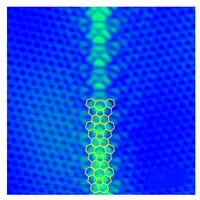
Phys. Rev. Lett. 136, 156401 (2026)
Condensed Matter and Materials
Tensor Network Method for Real-Space Topology in Quasicrystal Chern Mosaics
Article | Condensed Matter and Materials | 2026-04-13 06:00 EDT
Tiago V. C. Antão, Yitao Sun, Adolfo O. Fumega, and Jose L. Lado
A quantum-many-body-inspired tensor-network algorithm can compute local topological invariants for systems with hundreds of millions of sites by avoiding an explicit storage of Hamiltonian matrices.
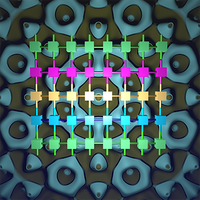
Phys. Rev. Lett. 136, 156601 (2026)
Condensed Matter and Materials
Minkowski-Space Modeling of Hyperbolic Lenses
Article | Condensed Matter and Materials | 2026-04-13 06:00 EDT
Enrico Maria Renzi, Simon Yves, Sveinung Erland, Diana Strickland, Eitan Bachmat, and Andrea Alù
The extreme anisotropy of hyperbolic materials enables extreme wave confinement, but it is also associated with an inherent misalignment between phase and energy flow, which complicates device modeling and design. Here, we introduce a Minkowski-space approach to describe hyperbolic wave propagation,…
Phys. Rev. Lett. 136, 156901 (2026)
Condensed Matter and Materials
Accurate Size Measurement of Individual Polydispersed Hard Spheres from Blurry Video
Article | Polymers, Chemical Physics, Soft Matter, and Biological Physics | 2026-04-13 06:00 EDT
Kaiyao Qiao and Yilong Han
Polydisperse colloidal spheres serve as valuable model systems for studying single-particle dynamics in liquids, glasses, and crystals. Particle size critically influences local structure and free volume, which governs dynamics. However, accurately determining individual particle diameters from imag…
Phys. Rev. Lett. 136, 158201 (2026)
Polymers, Chemical Physics, Soft Matter, and Biological Physics
Universal Persistent Brownian Motions in Confluent Tissues
Article | Polymers, Chemical Physics, Soft Matter, and Biological Physics | 2026-04-13 06:00 EDT
Alessandro Rizzi and Sangwoo Kim
Biological tissues are active materials whose nonequilibrium dynamics emerge from distinct cellular force-generating mechanisms. Using a two-dimensional active foam model, we compare the effects of traction forces and junctional tension fluctuations on confluent tissue dynamics. While these two mode…
Phys. Rev. Lett. 136, 158401 (2026)
Polymers, Chemical Physics, Soft Matter, and Biological Physics
Physical Review X
More is Less in Unpercolated Active Solids
Article | 2026-04-13 06:00 EDT
Jack Binysh, Guido Baardink, Jonas Veenstra, Corentin Coulais, and Anton Souslov
By combining experiments with robotic metamaterials and theory, this work shows that increasing microscopic activity can counterintuitively cause a solid's macroscale active response to vanish when active units are too sparse for the active forces to percolate through the structure.
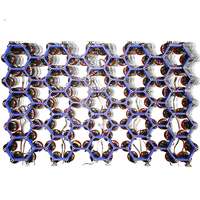
Phys. Rev. X 16, 021012 (2026)
arXiv
Structure and rheology of multi-chain amphiphilic block copolymers under shear in dilute solutions
New Submission | Soft Condensed Matter (cond-mat.soft) | 2026-04-14 20:00 EDT
Ehsan Kamali Ahangar, Dominic Robe, Elnaz Hajizadeh
This study presents a computational investigation of self-assembly and rheological behaviour of multichain amphiphilic block copolymers under varying chain length, architecture, composition, and shear rate. Using Brownian dynamics (BD) simulations, we systematically examined bead-spring model multi-chain diblock and triblock copolymers with chain lengths of 12-48 beads, hydrophobic fractions (f) ranging from 0 to 1.0, and shear rates spanning 0-0.1 1/ns. In the dilute regime, results demonstrate that triblock copolymers form extensive 3D networks with bridging architectures through hydrophobic end blocks, achieving solution viscosities up to half an order of magnitude higher than diblock systems, with superior structural integrity under weak shear. At shear rate=0.003-0.01 1/ns, both chain architectures show increased gyration radius of individual chains within each micelle and decreased cluster counts, indicating aggregation of clusters prior to breakdown at higher shear rates. Shape anisotropy analysis reveals that triblocks develop highly elongated prolate structures (L1/L3 = 11) at high shear rates, while diblocks form more discrete micellar assemblies (L1/L3 = 7.5). Chain length analysis shows systematic increases in radius of gyration, with triblocks exhibiting an increase in cluster count, indicative of network percolation. Rheologically, triblock systems maintain lower crossover frequencies with increasing hydrophobic fraction, reflecting slower network relaxation versus diblocks. The terminal relaxation time of triblock copolymer systems increases with hydrophobic fraction due to double-ended hydrophobic bridging, while diblocks maintain stable values. These findings provide fundamental insights for the rational design of polymer-based drug carriers through architectural selection and flow conditions.
Soft Condensed Matter (cond-mat.soft)
i-Rheo-Tempo: A Model-Free, Quadrature-Free Reconstruction of the Shear Relaxation Modulus from Complex Viscosity
New Submission | Soft Condensed Matter (cond-mat.soft) | 2026-04-14 20:00 EDT
Jorge Ramírez, Manlio Tassieri
Reliable transformation between frequency- and time-domain material functions remains a central challenge in linear viscoelasticity due to finite bandwidth, discrete sampling, and experimental noise. We introduce \emph{i\text{-}Rheo-Tempo}, a quadrature-free method that reconstructs the shear relaxation modulus directly from dynamic measurements through an exact second-derivative representation of the complex viscosity. When the spectrum is approximated as piecewise linear, the inversion reduces to a compact interval-slope formulation based solely on local spectral properties, avoiding numerical quadrature, parametric fitting, and predefined relaxation spectra. The method is validated against a set of complex fluids including synthetic models, polymer melts, industrial elastomers, comb polymers, and broadband microrheology datasets spanning nearly nine decades in frequency. In all cases, the reconstructed relaxation modulus is in quantitative agreement with independent time-domain measurements. These results demonstrate that \emph{i\text{-}Rheo-Tempo} provides a robust, model-free solution to the frequency-to-time inverse problem and, more generally, establishes a framework for recovering time-domain responses from experimentally measured complex spectra.
Soft Condensed Matter (cond-mat.soft), Complex Variables (math.CV)
Numerical Modeling of Solvent Diffusion through the Transition Metal Dichalcogenides based Nanomaterials
New Submission | Materials Science (cond-mat.mtrl-sci) | 2026-04-14 20:00 EDT
This article presents a numerical simulation of solvent diffusion in transition metal dichalcogenide based nanomaterials during solvothermal reaction, leading to layer exfoliation and, consequently, a reduction in the average nanoparticle size. By solving modified Ficks law of diffusion and utilizing the dynamic bond percolation model, this study examines the evolution of a system of nanoparticles. During the simulation, the effects of key parameters, such as the diffusivity variable that determines the diffusion rate, and the number of iterations needed to achieve enhanced nanoparticle size uniformity, have been analyzed. To gain more insight into the size evolution of the nanoparticles, avalanche statistics, and fluctuations in the average nanoparticle size by Shannon entropy has been utilized. The size distribution observed for different diffusivity variables and iterations has also been studied, which predicts the probability of finding the nanoparticles of specific sizes within the system. A correlation between the iteration for maximum entropy and the minimum of relative change in particle size with iteration has been established, indicating that an iteration exists that takes the system towards saturation in terms of the average size of the nanoparticles. The numerical findings indicate that the experimental parameters, such as solvent selectivity and diffusivity, as well as reaction time, play significant roles in determining nanoparticle size and uniformity, thereby enhancing potential material applications.
Materials Science (cond-mat.mtrl-sci), Statistical Mechanics (cond-mat.stat-mech)
14 pages, 7 figures
Turning Porous Functional Materials into Directional Transport Platforms with Unidirectional Surface Acoustic Waves
New Submission | Soft Condensed Matter (cond-mat.soft) | 2026-04-14 20:00 EDT
Sujith Jayakumar, Jinan Parathi, Gideon Onuh, Feng Guo, Ofer Manor, James Friend
Porous media underpin absorption, filtration, separation, and high-area interfacial transport in chemical and diagnostic systems, yet sustained directional flow through them remains difficult because tortuous pore networks and strong acoustic losses promote bypassing, weak flow, and counterflow. Here, we show that floating-electrode unidirectional transducers (FEUDTs) convert porous materials into actively pumped transport platforms by generating predominantly unidirectional surface acoustic waves (SAWs) that couple more effectively than conventional interdigital transducers across wet multilayer interfaces. By varying pore size, permeability, sample thickness, and fluid viscosity, we find that transport is strongly enhanced when the SAW wavelength is comparable to the characteristic pore dimension, providing a practical design rule for acoustically activated porous media. Under these conditions, FEUDTs drive directional flow velocities up to 0.6 mm s$ ^{-1}$ at sub-watt input power, about 600 times faster than diffusion alone. FEUDTs also sustain pumping in prewetted porous media, where capillary contributions are removed, yielding velocities that exceed capillary-driven flow under matched conditions while remaining far above thermally induced transport. A reduced theoretical framework captures the main experimental trends and identifies transducer architecture, pore geometry, and actuation strength as the key parameters governing long-range, tunable transport in porous functional materials.
Soft Condensed Matter (cond-mat.soft)
21 pages, 11 figures, and separate supplementary information in its own PDF file
Heterogeneous Molecular Signatures of Human Odor Perception
New Submission | Materials Science (cond-mat.mtrl-sci) | 2026-04-14 20:00 EDT
P. Zanineli, E. V. C. Lopes, G. R. Schleder, L. N. Lemos, F. Crasto de Lima, A. Fazzio
Understanding how molecular structure gives rise to odor perception remains a long-standing challenge, with ongoing debate over whether olfaction is primarily governed by molecular shape, vibrational properties, or their interplay at the level of olfactory receptors. Here, we ask whether different odors rely on common molecular determinants or instead emerge from distinct physicochemical regimes. Using interpretable machine-learning models trained on molecular descriptors derived from first-principles calculations that span electronic, vibrational, and structural properties, we analyze feature contributions for odor categories and their associated receptors. We find that no single descriptor class universally dominates odor prediction; instead, different odors exhibit strongly odor-specific patterns of feature importance, with substantial variability across physicochemical domains. This heterogeneity is consistent across different models, suggesting that a universal encoding scheme does not capture odor perception but reflects receptor- and odor-dependent structure-odor relationships. Our results provide statistical constraints on competing olfactory theories and offer a data-driven framework for organizing odor space.
Materials Science (cond-mat.mtrl-sci), Biological Physics (physics.bio-ph), Chemical Physics (physics.chem-ph)
Proof of entropic order in Generalized Ising Models
New Submission | Statistical Mechanics (cond-mat.stat-mech) | 2026-04-14 20:00 EDT
Enrico Andriolo, Mendel Nguyen, Emily Richards, Tin Sulejmanpasic
Ordering at arbitrarily high temperature - entropic order - has been argued to take place in a class of generalized Ising models parameterised by a real interaction parameter $ p$ when $ p\ge 1$ . We give a rigorous proof of this conjecture. We further show that on arbitrary graphs, these models solve graph packing problems - crucially, the Maximum Independent Set optimisation problem. Due to the NP-hardness of this packing problem on generic graphs, some lattice systems will exhibit glassy phases. We call this phenomenon $ entropic$ $ glass$ .
Statistical Mechanics (cond-mat.stat-mech), High Energy Physics - Lattice (hep-lat), High Energy Physics - Theory (hep-th)
Main document: 5 pages, 3 figures Suppemental Material: 7 pages, 2 figures
Ferromagnetic interlayer exchange coupling in a few layers of CrSBr on a gold thin film
New Submission | Materials Science (cond-mat.mtrl-sci) | 2026-04-14 20:00 EDT
Rixt Bosma, Darius A. Pacurar, Daniel Sade, Jingbo Wang, Nicholas Dale, Cameron W. Johnson, Sergii Grytsiuk, Alexander Rudenko, Alexander Stibor, Malte Roesner, Marcos H. D. Guimaraes, Roberto Lo Conte
The two-dimensional character of van der Waals magnets allows for efficient control of their properties via proximity effects and electrical stimuli, making them promising candidates for application in spin-electronics. We use spin-polarized low energy electron microscopy to directly image the magnetic texture of thin CrSBr on top of a Au film, uncovering a ferromagnetic ground state for CrSBr thicknesses smaller than 11 nm. We argue that the stabilization of the ferromagnetic ordering - as compared to the conventional antiferromagnetic one - is obtained via electron transfer from the Au film to the CrSBr flakes, in agreement with ab-initio density functional theory calculations. Reflected-electron spectroscopy shows clear differences in the unoccupied density of states between a few layers of CrSBr on Au and bulk CrSBr, pointing towards electronic band structure modification in thin CrSBr. This work sheds light on the possibility to tune magnetic properties of two-dimensional magnets via substrate engineering.
Materials Science (cond-mat.mtrl-sci), Mesoscale and Nanoscale Physics (cond-mat.mes-hall)
Anyon molecules in fractional quantum Hall states
New Submission | Mesoscale and Nanoscale Physics (cond-mat.mes-hall) | 2026-04-14 20:00 EDT
Taige Wang, Michael P. Zaletel
We use segment DMRG on the infinite cylinder to compute energies of charged excitations in gate-screened fractional quantum Hall states. For the $ \nu=1/3$ Laughlin, $ \nu=2/5$ Jain, and $ \nu=5/2$ anti-Pfaffian states, we find screening can bind like-charged anyons into molecules, with a strong dependence on filling-factor, gate distance, and fusion channel. In the Laughlin state, stable $ \pm 2e/3$ molecules and larger clusters appear over a broad gate-distance window. The Jain state is molecular throughout the range we consider. In the anti-Pfaffian, binding is strongest on the hole side, where the charge-$ e/2$ molecule is fused into the $ \psi$ channel over a broad window of gate distances. In all three cases, screening suppresses long-range repulsion and exposes an intermediate-range attraction encoded in the oscillatory density tail of the fundamental anyon. We discuss consequences for addition spectra, interferometry, Wigner crystallization, anyon superconductivity, and entropy measurements.
Mesoscale and Nanoscale Physics (cond-mat.mes-hall), Strongly Correlated Electrons (cond-mat.str-el)
6 pages, 3 figures
Symmetry Protected Bulk-Boundary Correspondence in Interacting Topological Insulators
New Submission | Mesoscale and Nanoscale Physics (cond-mat.mes-hall) | 2026-04-14 20:00 EDT
Kiran Babasaheb Estake, Dibyendu Roy
We establish a quantitative bulk boundary correspondence in interacting topological insulators by relating many-body topological invariants to characteristic degeneracy structures in the entanglement spectrum. Focusing on generalized Su Schrieffer Heeger chains with higher winding number, we construct a gauge-invariant many-body winding invariant based on Pancharatnam geometric phases that remains well defined in the presence of interactions. We show that this invariant uniquely determines the low-lying entanglement-spectrum degeneracy, which exhibits a universal 4 to the power nu scaling with the winding number nu, providing a concrete formulation of bulk boundary correspondence beyond single-particle topology. Using exact diagonalization, we demonstrate the robustness of this correspondence under interactions and symmetry preserving disorder, and identify inversion symmetry as a minimal protecting symmetry that stabilizes both the quantization of the invariant and the associated entanglement degeneracies. Our results unify geometric-phase invariants and entanglement diagnostics within a many-body framework and provide a route to identifying interacting topological phases beyond band theory.
Mesoscale and Nanoscale Physics (cond-mat.mes-hall)
Decoding Superconductivity in La$_3$Ni$2$O${7-δ}$ Thin Films via Ozone-Driven Structure and Oxidation Tuning
New Submission | Superconductivity (cond-mat.supr-con) | 2026-04-14 20:00 EDT
Mathieu Flavenot, Hoshang Sahib, Jérôme Robert, Marc Lenertz, Gilles Versini, Laurent Schlur, Alexandre Gloter, Nathalie Viart, Daniele Preziosi
The discovery of superconductivity in bulk Ruddlesden-Popper La$ _3$ Ni$ _2$ O$ _7$ (LNO327) under high hydrostatic pressure has redefined the recent experimental consensus that nickelate superconductivity is restricted to systems with a $ 3d^9$ electronic configuration and square-planar coordination. However, the structural and electronic prerequisites for stabilizing superconductivity, whether under pressure or at ambient conditions in the case of thin films, remain poorly understood, largely due to the metastable nature of the LNO327 phase. Here, we present a detailed structural study of epitaxial La$ _3$ Ni$ _2$ O$ _{7-\delta}$ thin films by using scanning transmission electron microscopy (STEM) combined with electron energy loss spectroscopy (EELS). Grown via pulsed laser deposition onto SrLaAlO$ _4$ substrates, those films exhibit distinct superconducting properties as a function of the different post-annealing conditions used. By correlating the rich landscape of stacking polymorphs with transport behavior, this work establishes a framework for understanding the metastable superconducting phase in bilayer nickelate thin films. Our findings underscore the critical role of homogeneity in oxygen stoichiometry, epitaxial strain and structural motif in stabilizing superconductivity, offering a clear pathway for designing ambient-pressure superconducting nickelates.
Superconductivity (cond-mat.supr-con), Materials Science (cond-mat.mtrl-sci)
Self-doped Crystal from Preempted Band-inversion Transitions
New Submission | Strongly Correlated Electrons (cond-mat.str-el) | 2026-04-14 20:00 EDT
Jiechao Feng, Zhaoyu Han, Michael P. Zaletel, Zhihuan Dong
Recent experiments in rhombohedral graphene find evidence for a “self-doped” Wigner crystal (SDC) in which a slightly incommensurate Wigner crystal (WC) coexists with a small Fermi sea. We provide non-perturbative arguments that such SDCs generically arise from preempted band-inversion transitions between commensurate crystals, which motivates simple band-theory criteria for their appearance. Self-consistent Hartree-Fock calculations establish the existence of a SDC consistent with this mechanism in both the $ \lambda$ -jellium model and rhombohedral pentalayer graphene (R5G). In the $ \lambda$ -jellium model, we identify a SDC phase located between a “halo”-WC and an anomalous Hall crystal (AHC), which would otherwise be connected via a Dirac transition when pinned to commensuration; this contrasts with the WC-AHC transition, which we show cannot be connected by a continuous transition due to a mismatch of symmetry indices. In R5G, we predict a SDC phase located between a WC and a “disqualified” halo anomalous Hall crystal. We discuss in general how the Berry curvature distribution in the parent band affects the appearance of SDC, revealing a novel role of quantum geometry in inducing exotic quantum phases of matter.
Strongly Correlated Electrons (cond-mat.str-el), Mesoscale and Nanoscale Physics (cond-mat.mes-hall)
8+4 pages, 4+2 figures
Self-compensation by silicon $DX$ centers in ultrawide-bandgap nitrides
New Submission | Materials Science (cond-mat.mtrl-sci) | 2026-04-14 20:00 EDT
John L. Lyons, Darshana Wickramaratne
\textit{DX} behavior limits $ n$ -type carrier concentrations in ultrawide-bandgap nitrides such as aluminum nitride (AlN) and cubic boron nitride ($ c$ -BN). Instead of acting as effective-mass donors, \textit{DX} centers capture two electrons, stabilizing a negative charge state that leads to self compensation. Silicon is the most effective $ n$ -type dopant in this class of materials; in AlN, its \textit{DX} level [(i.e., the (+/$ -$ ) transition level] is $ \sim$ 270 meV from the conduction-band minimum. This implies that many silicon impurities incorporated into AlN will be negatively charged and compensate the intended $ n$ -type doping. By combining density functional theory calculations of temperature-dependent band gaps and Si dopant transition levels, we show here that significant compensation occurs in silicon-doped AlN, even in the absence of any other defects. This compensation strongly limits free electron concentrations which become independent of doping concentration, and donor activation is only significant for light doping scenarios. Higher free carrier concentrations can be achieved in AlGaN alloys or in $ c$ -BN, where the \textit{DX} level sits closer to the conduction-band minimum.
Materials Science (cond-mat.mtrl-sci)
10 pages, 4 figures
Structural Motif Selection in Fluorinated Metal-Organic Chalcogenides Driven by Ligand Electrostatics
New Submission | Materials Science (cond-mat.mtrl-sci) | 2026-04-14 20:00 EDT
Md. Saiful Islam, Tomoaki Sakurada, Yeongsu Cho
Hybrid organic-inorganic materials enable systematic structural tuning through chemical modification of organic ligands. Predictive control, however, requires mechanistic understanding of how ligand chemistry and inorganic frameworks jointly determine structural motif selection. Metal-organic chalcogenides (MOCs), where metal-chalcogenide units are covalently bonded to organic ligands, offer an ideal platform in which ligand substitution directly alters crystal structure. Here, we investigate silver selenide-based MOCs with fluorinated phenyl ligands to elucidate governing interactions. Density functional theory with fragment-based energy analysis identifies ligand-ligand interactions as the primary energetic driver of motif selection. Symmetry-adapted perturbation theory further decomposes ligand-ligand interactions and shows that electrostatic interactions are decisive in selecting the preferred motif by selectively stabilizing specific packing arrangements. The results further show that ligand orientation controls the effectiveness of long-range electrostatic interactions, establishing a physically grounded design principle for directing structural motifs in MOCs through targeted control of ligand packing and electrostatics.
Materials Science (cond-mat.mtrl-sci)
Ultrasonic characterization of generally anisotropic elasticity implementing optimal zeroth-order elastic bounds and a wave-fitting approach
New Submission | Materials Science (cond-mat.mtrl-sci) | 2026-04-14 20:00 EDT
Diego Cowes, Juan I. Mieza, MArtín P. Gómez
The elastic behavior of materials is of critical importance for the design, fabrication, and testing of industrial and structural components. The ease with which the wave angle of incidence can be varied makes ultrasonic techniques well suited for the characterization of anisotropic materials, whose properties are direction-dependent. This work aims to develop an ultrasonic goniometry method in which a wave is transmitted through a sample while scanning over spherical coordinates. A plane-wave model is formulated that accounts for fluid-solid interfaces and is applicable to a wide range of sample thicknesses. The model assumes general anisotropy, enabling the characterization of materials with symmetries up to triclinic, and does not require precise sample alignment. Specially designed transducers support the plane-wave approximation, thereby avoiding the need for more computationally expensive finite-beam models. Furthermore, implementation of the forward model on GPU architectures significantly reduces the computational cost associated with the numerous evaluations required during the waveform fitting inversion. The introduction of optimal zeroth-order bounds is used to tightly delimit the search space, and an isotropic self-consistent solution is shown to provide an effective initial guess. Finally, measurements on plate-like samples are compared with the literature and diffraction-based methods.
Materials Science (cond-mat.mtrl-sci), Applied Physics (physics.app-ph), Computational Physics (physics.comp-ph)
Closing the ultrahigh temperature metrology gap: non-contact thermal conductivity ($\mathrm{k}$) and spectral emittance ($\mathrm{\varepsilon_λ}$) of molybdenum up to 3200 K
New Submission | Materials Science (cond-mat.mtrl-sci) | 2026-04-14 20:00 EDT
Hunter B. Schonfeld, Elizabeth Golightly, Milena Milich, Scott Bender, Konstantinos Boboridis, Davide Robba, Luka Vlahovic, Rudy Konings, Ethan Scott, Patrick E. Hopkins
Advances in next-generation hypersonic hot structures, high heat-flux fusion or fission components, and laser based additive manufacturing depend on reliable solid state thermal conductivity data at high and ultrahigh temperatures, where conventional measurements become increasingly sensitive to contact resistances, uncertain boundary conditions, and nonlinear radiative losses. Building on our initial demonstration of ultrahigh temperature steady-state temperature differential radiometry (SSTDR), we present a substantially more robust platform aimed at making high temperature thermal and radiative property measurements more routine. The method integrates lock-in infrared thermography with a spatially localized, modulated perturbation laser to form a conduction dominant differential observable along with hyperspectral pyrometry and a validated 2D axisymmetric steady state heat transfer model. Using high purity molybdenum as a benchmark, we report solid state thermal conductivity k(T) from 1500 - 3000 K (to the onset of melting) with uncertainties of 7.9-11 % enabled by comprehensive uncertainty propagation, sensitivity analysis, and bounding studies. We additionally provide normal spectral emittance of molybdenum in both solid and liquid states over 500-1000 nm. These advances establish SSTDR as an accurate, non-contact route for closing the high temperature k(T) data gap while simultaneously producing much needed phase dependent radiative property data for melt adjacent and extreme heat-flux applications. Note: This is a shortened abstract; full version in manuscript.
Materials Science (cond-mat.mtrl-sci)
16 pages, 6 figures
How Does Intercalation Reshape Layered Structures? A First-Principles Study of Sodium Insertion in Layered Potassium Birnessite
New Submission | Materials Science (cond-mat.mtrl-sci) | 2026-04-14 20:00 EDT
Adriana Lee Punaro, Daniel Maldonado-Lopez, Jorge L. Cholula-Díaz, Marcelo Videa, Jose L. Mendoza-Cortes
This study presents a first-principles study at the level of hybrid-level density functional theory of the sodium intercalation process in a layered potassium birnessite (a layered manganese dioxide, {\delta}-MnO2). Understanding the intercalation processes of {\delta}-MnO2 is a vital step in advancing its potential innovative applications. Through a formation energy formalism, we analyze the stability of the structure as sodium ions (Na+) are intercalated between layers. Simulated Raman spectra allow us to find relationships between the vibrational and structural properties of the material, i.e. we identify the most important vibrational modes and related them to the structural/geometrical change. The diffusion of Na+ and K+ ions in birnessite is studied by transition state theory, determining the energy barriers to ion displacement in the interlayer. The symmetry and planar density of the system are characterized by simulated X-ray diffraction and geometrical analysis of the optimized structures. Through binding energy analysis, we also find that the Na+ ions are more loosely bound to the lattice as they reach the saturation limit. Finally, the electronic properties are studied via spin-polarized densities of states. As intercalants are added, the electronic properties are profoundly modified, resulting from modification of Mn oxidation states, lattice distortions, and symmetry effects. Moreover, some of the intercalated structures behave as bipolar magnetic semiconductors with potential applications in spintronics devices. In other words, the band gaps and magnetic behavior of the system can be controlled by intercalation. This work provides an overarching analysis of intercalated birnessite and describes the essential properties of potassium birnessite and co-intercalation with Sodium as a next-generation energy, electronic, and spintronic material.
Materials Science (cond-mat.mtrl-sci), Chemical Physics (physics.chem-ph), Computational Physics (physics.comp-ph)
35 pages, 8 main figures
Vapor-liquid-solid growth of unconventional nanowires
New Submission | Materials Science (cond-mat.mtrl-sci) | 2026-04-14 20:00 EDT
Vapor liquid solid (VLS) growth is one of the most widely used routes for nanowire synthesis. For conventional semiconductor nanowires, here we refer to group IV and III-V systems, decades of work have established VLS growth across diverse vapor-phase methods and enabled substantial control over morphology, crystal phase, and structural modulation. In contrast, comparable deterministic control has not yet been achieved for many non-conventional nanowire classes, including oxides, carbides, and chalcogenides, despite their predicted functional properties and broad application potential. Here we survey and categorize the literature on VLS and VLS-related synthesis of these non-conventional nanowires, highlighting key similarities and differences relative to the group IV and III-V baseline. We analyze mechanistic and potential factors that underlie the lag in synthesis development, including constraints associated with precursor’s chemistry and delivery, seed particle composition and dynamics, and competing non-catalytic nucleation and growth pathways. The review is grouped into three main sections, according to the order in which each step takes place during a nanowire growth process, namely precursor delivery, seed particle formation, and nucleation and growth. Each section starts with a brief discussion of what has been achieved in group IV and III-V nanowires as a baseline, followed by similar as well as unique aspects in other material classes. Each section concludes with challenges and opportunities, where we discuss how insights developed in one nanowire system can inform progress in others, ultimately paving the way for more deterministic synthesis and integration of complex one-dimensional nanomaterials.
Materials Science (cond-mat.mtrl-sci)
30 pages, 8 figures
A Minimal Model of Representation Collapse: Frustration, Stop-Gradient, and Dynamics
New Submission | Disordered Systems and Neural Networks (cond-mat.dis-nn) | 2026-04-14 20:00 EDT
Louie Hong Yao, Yuhao Li, Shengchao Liu
Self-supervised representation learning is central to modern machine learning because it extracts structured latent features from unlabeled data and enables robust transfer across tasks and domains. However, it can suffer from representation collapse, a widely observed failure mode in which embeddings lose discriminative structure and distinct inputs become indistinguishable. To understand the mechanisms that drive collapse and the ingredients that prevent it, we introduce a minimal embedding-only model whose gradient-flow dynamics and fixed points can be analyzed in closed form, using a classification-representation setting as a concrete playground where collapse is directly quantified through the contraction of label-embedding geometry. We illustrate that the model does not collapse when the data are perfectly classifiable, while a small fraction of frustrated samples that cannot be classified consistently induces collapse through an additional slow time scale that follows the early performance gain. Within the same framework, we examine collapse prevention by adding a shared projection head and applying stop-gradient at the level of the training dynamics. We analyze the resulting fixed points and develop a dynamical mean-field style self-consistency description, showing that stop-gradient enables non-collapsed solutions and stabilizes finite class separation under frustration. We further verify empirically that the same qualitative dynamics and collapse-prevention effects appear in a linear teacher-student model, indicating that the minimal theory captures features that persist beyond the pure embedding setting.
Disordered Systems and Neural Networks (cond-mat.dis-nn), Statistical Mechanics (cond-mat.stat-mech), Artificial Intelligence (cs.AI), Machine Learning (cs.LG)
20 pages, 13 figures
Universality and ambiguity in extremes of anomalous diffusion
New Submission | Statistical Mechanics (cond-mat.stat-mech) | 2026-04-14 20:00 EDT
Many biophysical processes begin when the fastest searcher finds a target out of many random searchers, which is called an extreme or fastest first passage time (fFPT). In some models, (i) the fFPT vanishes logarithmically as the number of searchers grows, and (ii) the fFPT can be faster for subdiffusive search compared to normal diffusion. Though mathematically rigorous, the relevance of (i) and (ii) to actual physical systems is suspect since their derivations involve searchers which move with unbounded speed. Indeed, we previously proved that the fFPT for searchers with bounded speed converges exponentially to a strictly positive minimal search time as the number of searchers grows. In this paper, we study fFPTs for a broad class of anomalous and normal diffusion models with bounded or unbounded speed. These models include scaled Brownian motion, Riemann-Liouville fractional Brownian motion, and fractional Brownian motion. For all of these models, we show that the fFPT decays logarithmically in the number of searchers and that subdiffusion can be faster than normal diffusion (we further show that superdiffusion can be slower than normal diffusion). In this sense, features (i) and (ii) are rather universal. On the other hand, we show that the parameter regimes in which (i) and (ii) are valid depend on the particulars of the individual model, and thus ambiguities remain in the relevance of these features to specific physical systems.
Statistical Mechanics (cond-mat.stat-mech), Probability (math.PR)
16 pages, 6 figures
Exchange Frustration and Topological Magnetism in Electrostatically Doped SrRuO3
New Submission | Materials Science (cond-mat.mtrl-sci) | 2026-04-14 20:00 EDT
Naafis Ahnaf Shahed, Himanshu Mavani, Zhonglin He, Kai Huang, Mohamed Elekhtiar, Evgeny Y. Tsymbal
Magnetism in transition-metal systems emerges from exchange interactions that depend sensitively on carrier density. Yet leveraging this sensitivity to deliberately engineer exchange frustration and associated topological spin textures remains largely unexplored. Here, combining first-principles calculations with atomistic Monte Carlo simulations, we demonstrate that ferroelectric polarization enables electrostatic control of exchange frustration in the itinerant ferromagnet SrRuO3. We show that electrostatic hole doping renormalizes competing exchange interactions, driving SrRuO3 away from its bulk ferromagnetic ground state toward frustrated regimes, whereas electron doping largely preserves ferromagnetism. At BaTiO3/SrRuO3 interfaces, polarization-induced charge depletion modulates layer dependent exchange couplings, enhancing competition among J1, J2 and J3. The resulting exchange frustration stabilizes a sequence of magnetic phases as a function of thickness and applied magnetic field, including stripe and spiral states, topological meron and bimeron textures, and diverse skyrmionic objects. A minimal spin model identifies exchange frustration as the primary control parameter governing these crossovers, with magnetic anisotropy, Dzyaloshinskii-Moriya interaction, and external field selecting the emergent topology. Our results establish electrostatic doping as a route to engineer frustrated and topological magnetism in itinerant oxide metals.
Materials Science (cond-mat.mtrl-sci)
Strong Electron-Phonon Coupling and Multiband Superconductivity in Hexagonal BP3 Monolayer
New Submission | Superconductivity (cond-mat.supr-con) | 2026-04-14 20:00 EDT
Jakkapat Seeyangnok, Udomsilp Pinsook
We investigate the structural, electronic, and superconducting properties of a hexagonal BP3 monolayer using first-principles calculations combined with anisotropic Migdal-Eliashberg theory. The optimized structure exhibits a stable, slightly buckled configuration, as confirmed by phonon dispersion analysis and ab initio molecular dynamics simulations. The phonon spectrum indicates high-frequency vibrational modes associated with B-P bonding. Electronic band structure calculations reveal a multiband metallic state, with states near the Fermi level predominantly derived from pz orbitals of both boron and phosphorus atoms, forming two distinct Fermi surface sheets. The electron-phonon coupling is relatively strong, with a total coupling constant of lambda = 1.59, dominated by low- and intermediate-frequency phonon modes. Solving the anisotropic Migdal-Eliashberg equations yields a superconducting transition temperature of Tc = 9.7 K. The superconducting state is characterized by a nodeless but anisotropic gap structure, exhibiting two distinct gap values of approximately 2.25 and 1.74 meV associated with different Fermi surface sheets. These results identify the BP3 monolayer as a strongly coupled, multiband two-dimensional superconductor and provide insight into the role of orbital hybridization in electron-phonon-mediated superconductivity in low-dimensional systems.
Superconductivity (cond-mat.supr-con)
7 pages, 6 figures
Adiabatic self-vibrations of a movable Cooper-pair box generated by inelastic Andreev tunneling
New Submission | Mesoscale and Nanoscale Physics (cond-mat.mes-hall) | 2026-04-14 20:00 EDT
Sunghun Park, Anton V. Parafilo, Leonid Y. Gorelik, Robert I. Shekhter
Self-sustained oscillators produce stable periodic motion robust to dissipation. Such motion is usually achieved by work fed back into the oscillator, but its performance is often limited by frequency-dependent operation. Here we propose a scheme for self-sustained vibrations without external feedback. We consider a movable Cooper-pair box attached to the free end of a voltage-biased normal-metal pillar. The Cooper-pair box carries an Andreev current subject to an electric field applied perpendicular to the current. In the adiabatic limit, where the Cooper-pair box state follows its motion, vibrational instability occurs, pumped by inelastic Andreev tunneling. Nonlinearity of the Josephson coupling saturates the vibrational amplitude, resulting in two-dimensional self-vibrations. We discuss the advantage of this adiabatic scheme in comparison with feedback-induced self-oscillation.
Mesoscale and Nanoscale Physics (cond-mat.mes-hall), Superconductivity (cond-mat.supr-con)
5 pages, 3 figures
Quantum geometry of the non-Hermitian skin effect
New Submission | Mesoscale and Nanoscale Physics (cond-mat.mes-hall) | 2026-04-14 20:00 EDT
Ken-Ichiro Imura, Kohei Kawabata
The non-Hermitian skin effect is nonreciprocity-induced localization phenomena in which a macroscopic number of eigenstates accumulate anomalously at the boundary, accompanied by the extreme sensitivity to boundary conditions. Here, we develop a geometric characterization of the non-Hermitian skin effect. We demonstrate that the localization length scale associated with the skin effect is encoded in the quantum metric defined solely from right eigenstates, but not in the biorthogonal quantum metric. Moreover, we show that the quantum metrics exhibit the power-law divergences at gapless points that depend on the different boundary conditions. We also reveal that cusps of the generalized Brillouin zone in non-Bloch band theory are signaled by discontinuities in the quantum metrics. We illustrate these behavior using prototypical non-Hermitian models, such as the Hatano-Nelson model and the non-Hermitian, nonreciprocal Su-Schrieffer-Heeger model.
Mesoscale and Nanoscale Physics (cond-mat.mes-hall), Optics (physics.optics), Quantum Physics (quant-ph)
18 pages, 10 figures
Concise overview of methods to enhance the thermoelectric efficiency of SnTe
New Submission | Materials Science (cond-mat.mtrl-sci) | 2026-04-14 20:00 EDT
SnTe is a potential thermoelectric material in the mid temperature range. Detailed techniques to enhance the figure of merit by increasing the Power Factor, and reducing thermal conductivity, of SnTe-based TE materials are discussed. The key factors governing the figure of merit of a thermoelectric material are discussed to facilitate the optimization of the efficiency. Various techniques to synthesis bulk and nanostructured SnTe are presented. Efforts are made to reveal the optimization techniques for figure of merit of SnTe based materials through band structure engineering and reduction in thermal conductivity. Nano-structuring is one of the important approaches to decouple the interrelated material properties and reduce thermal conductivity. Band structure engineering is employed to enhance the Power Factor.
Materials Science (cond-mat.mtrl-sci)
7 pages, 1 figure, International Conference on Emerging Trends in Chemical Science Towards Sustainability & Interdisciplinarity-2026, The Bhawanipur Education Society College
NaCl-Assisted Growth of SnSe Nanosheets with Ferroelectricity and Ferromagnetism
New Submission | Materials Science (cond-mat.mtrl-sci) | 2026-04-14 20:00 EDT
Huiwen Xu, Hanxiang Wu, Chang Li, Fei Pang
Two-dimensional(2D) SnSe is an emerging 2D material exhibiting intriguing properties such as ferroelectricity and nonlinear optical response. Here, high-quality single-crystalline SnSe nanosheets were synthesized via NaCl-assisted chemical vapor deposition(CVD) method. The crystalline structure and composition of the nanosheets are confirmed by XRD, Raman spectroscopy, and XPS. Ferroelectric domains are directly observed in SnSe nanosheets using piezoresponse force microscopy(PFM). Magnetic measurements reveal a weak magnetic behavior with a Curie temperature of approximately 120 K. This work further establishes a controllable synthesis route for SnSe nanosheets, thereby paving the way for subsequent investigation of their multiferroic properties.
Materials Science (cond-mat.mtrl-sci), Mesoscale and Nanoscale Physics (cond-mat.mes-hall)
Comment on arXiv:2510.13767; Structural origin of resonant diffraction in RuO_2 (DOI: 10.1103/yr5q-1v1s)
New Submission | Strongly Correlated Electrons (cond-mat.str-el) | 2026-04-14 20:00 EDT
Occhialini et al. (arXiv:2510.13767; DOI: https://doi.org/10.1103/yr5q-1v1s) add results to several recent experimental studies of bulk magnetism in the rutile compound RuO_2. It is of interest as a candidate altermagnet. The cited publication contains several serious errors. Notably, scattering amplitudes used to interpret measurements accomplished with resonant x-ray Bragg diffraction, which appear in the main text and SM (Eqs. 14 & 16), are wrong. The authors tender erroneous amplitudes (Phys. Rev. Lett. 122, 017202) and thereby ignore previously published correct results (Phys. Rev. B 105, 014403). As a result, the concluding statement and Footnote SM [54] are misleading.
Strongly Correlated Electrons (cond-mat.str-el)
Hidden Universal Metal in Cuprate Superconductors
New Submission | Superconductivity (cond-mat.supr-con) | 2026-04-14 20:00 EDT
Nuclear relaxation is a powerful probe of temperature dependent electronic excitations in superconducting metals. Their emergence from a condensed state near the critical temperature, $ T_\mathrm{c}$ , is of particular interest. In cuprate superconductors, the behavior is still not understood. Here, based on planar Cu and O relaxation data available in the literature, a simple phenomenology is developed. At its core is a universal metal, characterized by $ 1/{^{63}T}{1\perp} T\mathrm{c} \approx 25$ /Ks, found in all materials, i.e. $ T_\mathrm{c}$ is directly related to the Cu nuclear relaxation rate. Above $ T_\mathrm{c}$ , as a function of temperature, this universal metal crosses over into a strange metal regime where relaxation increasingly lags behind that of the universal metal. The latter is also tied to the metallic planar O relaxation, which only deviates from it at lower energies in underdoped materials with a doping dependent, but temperature independent pseudogap described earlier. Planar O relaxation has the expected fixed anisotropy, but for Cu it is doping dependent and varies between about 3.6 for lower and 1 for high doping levels. It is this doping-related anisotropy that sets the maximum critical temperature of the family and in that sense is tied to the universal metal. This likely requires two components of relaxation. The new phenomenology will be discussed and should give a better foundation for the understanding of the phase diagram of the cuprates.
Superconductivity (cond-mat.supr-con)
15 pages, 4 figures
Probing topology in thin films with quantum Sondheimer oscillations
New Submission | Mesoscale and Nanoscale Physics (cond-mat.mes-hall) | 2026-04-14 20:00 EDT
Léo Mangeolle, Johannes Knolle
Sondheimer oscillations (SO) are magnetoresistance oscillations occurring in thin films due to the commensurability between cyclotron motion and sample thickness, and are traditionally regarded as a purely semiclassical size effect. Here we develop a general quantum theory of SO for thin-film conductors in the quantum limit of a large magnetic field. We show that corrections arising from band topology modify the SO frequency, in contrast to Shubnikov-de Haas oscillations where topological information appears only in the phase. As a consequence, quantum SO provide a direct and robust probe of the full Landau level spectrum. Applying our framework to a minimal model with tunable Berry phase, we demonstrate how topology manifests itself in experimentally accessible magneto-oscillation spectra and discuss damping mechanisms including surface roughness.
Mesoscale and Nanoscale Physics (cond-mat.mes-hall), Strongly Correlated Electrons (cond-mat.str-el)
6+1+3 pages, 2 figures
Accelerated Dopant Screening in Oxide Semiconductors via Multi-Fidelity Contextual Bandits and a Three-Tier DFT Validation Funnel
New Submission | Materials Science (cond-mat.mtrl-sci) | 2026-04-14 20:00 EDT
Band gap engineering of oxide semiconductors through doping is critical for photocatalysis and optoelectronics, yet the combinatorial space of dopant elements, substitution sites, and co-doping combinations far exceeds typical density functional theory (DFT) budgets. We screen doped candidates across five oxide hosts (ZnO, TiO2, SrTiO3, SnO2, MgO), culminating in a 529-candidate ZnO co-doping campaign, and identify Cu-containing co-doped ZnO systems as consistently achieving visible-light-range band gaps (1.0-1.8 eV), with Y2Cu2 co-doped ZnO as the optimal candidate (1.84 eV). A three-tier validation funnel (PBE, PBE+U, ionic relaxation) reveals that no single level of theory suffices: V-doped ZnO shifts from near-metallic to wide-gap upon Hubbard U correction, while Cu-doped SrTiO3 enters the visible-light window only after correcting for d-electron localization.
To make this screening tractable, we introduce a multi-fidelity screening strategy that replaces 81% of DFT evaluations with computationally inexpensive surrogate predictions, reducing a 529-candidate closed-loop Quantum ESPRESSO campaign from an estimated 440 to 62 CPU-hours while finding the global optimum in 100% of 50 independent trials (p = 5.0e-8 versus random screening, Wilcoxon signed-rank). Cross-host analysis of the dopant-host interaction matrix reveals that dopant performance is governed by just two latent chemical dimensions, enabling prediction of rankings in unseen hosts. All 583 DFT calculations, screening code, and stability proofs are released as an open benchmark.
Materials Science (cond-mat.mtrl-sci), Machine Learning (cs.LG), Computational Physics (physics.comp-ph)
Spectral Signatures of Active Fluctuations in Semiflexible Polymers
New Submission | Soft Condensed Matter (cond-mat.soft) | 2026-04-14 20:00 EDT
Love Grover, Anil Kumar Dasanna, Abhishek Chaudhuri
We study how an active bath is transduced into the internal fluctuation spectrum of a semiflexible polymer. Starting from the statistics of active forces exerted by an explicit bath of active Brownian particles, we derive an effective description in terms of temporally persistent and spatially correlated noise, and test it against simulations of both explicit-bath and implicit-noise models. We find that activity reorganizes polymer fluctuations spectrally rather than uniformly: increasing the active force predominantly enhances the lowest modes, while increasing persistence shifts the spectral weight toward progressively longer wavelengths. The theory captures this mode-level reorganization well and explains the strong qualitative correspondence between explicit and implicit active baths over a broad parameter range. In contrast, global size measures such as the radius of gyration are systematically underestimated, which we trace to activity-induced bond stretching and contour-length renormalization absent from the present fixed-contour theory. Our results show that a semiflexible polymer acts as a multiscale probe of active matter, resolving the temporal and spatial structure of nonequilibrium forcing through its mode spectrum.
Soft Condensed Matter (cond-mat.soft)
22 pages, 6 figures
Continuous PT-Symmetry Breaking as a Design Variable for Giant Altermagnetic Spin Splitting
New Submission | Materials Science (cond-mat.mtrl-sci) | 2026-04-14 20:00 EDT
Magnetic point-group analysis classifies altermagnets but returns only a binary symmetry verdict, leaving spin-splitting energy (SSE) inaccessible without spin-polarized density functional theory (DFT). This binary ceiling is not fundamental. Sublattice symmetry breaking is promoted here to a continuous, DFT-free scalar – the Motif Symmetry-Breaking Index (MSBI) – that quantifies $ \mathcal{PT}$ -symmetry breaking between antiparallel magnetic motifs directly from crystal coordinates. SHAP analysis of an XGBoost surrogate trained on 3,851 DFT-labeled binary structures identifies three dominant descriptors: MSBI (symmetry-breaking axis), motif packing fraction MPF (superexchange axis), and the $ p/d$ electron ratio (covalency axis), each mapping onto a directly tunable experimental handle. A controlled VO–CrSb comparison within the same P$ 6_3$ /mmc host lattice demonstrates that composition alone boosts SSE sevenfold. Bayesian optimization over this three-axis space, followed by independent DFT validation, recovers $ \alpha$ -NiS (SSE $ = 0.823$ ,eV) as cross-validation against an independent symmetry-based prediction and identifies three previously unrecognized high-SSE candidates – square-planar FeS (1.297,eV), octahedral CoS (1.103,eV), and FeAs (1.089,eV) – all matching or exceeding CrSb. Square-planar Fe–S is proposed as a transferable coordination motif for giant altermagnetic spin splitting, advancing altermagnet design from symmetry classification to continuous quantitative optimization.
Materials Science (cond-mat.mtrl-sci), Machine Learning (cs.LG), Computational Physics (physics.comp-ph)
15 pages, 5 figures
Brittle-to-ductile fracturing transition: A chemo-mechanical phase-field framework
New Submission | Materials Science (cond-mat.mtrl-sci) | 2026-04-14 20:00 EDT
Fanyu Wu, Chong Liu, Manolis Veveakis, Manman Hu
In chemically reactive environments, the mechanical integrity of geomaterials is fundamentally compromised by solid matrix dissolution. In this study, we propose a fully coupled chemo-mechanical phase-field framework to capture the dynamic interplay between mineral dissolution and fracture propagation. A key feature of the proposed model is the dynamic coupling of local mass removal to the fracture length scale, while also incorporating the damage-accelerated reaction-diffusion processes. Our results capture the development of an enlarged fracture process zone driven by chemical mass removal. This chemically induced widening blunts the sharp crack tip, alleviating the near-tip stress concentrations and causing a pronounced degradation in material stiffness before failure. Furthermore, we reveal a distinct ductilization effect, characterized by a more gradual accumulation of damage and a delayed onset of macroscopic failure. We show that the transition between brittle and ductile failure modes is dictated by the competing timescales of chemical degradation and mechanical deformation. Highly acidic environments enhance matrix dissolution and promote ductile fracture, whereas rapid mechanical loading limits chemical interaction and preserves brittle failure mode.
Materials Science (cond-mat.mtrl-sci), Geophysics (physics.geo-ph)
Local topological markers for Chern insulators in ribbon geometry
New Submission | Mesoscale and Nanoscale Physics (cond-mat.mes-hall) | 2026-04-14 20:00 EDT
Maks Repše, Tomaž Rejec, Jernej Mravlje
Local topological markers are used to characterize Chern insulators in the presence of spatial inhomogeneities, such as boundaries and disorder. In this paper, we study the local Chern marker in systems with partial translational symmetry. We express the local Chern marker in the hybrid position-momentum basis for both open and periodic boundary conditions. We calculate the local Chern marker for a Haldane model ribbon. We show that the behavior at the two boundaries is qualitatively different from fully open geometries. We further compare the local Chern marker with the local Středa marker and show agreement in the bulk and small deviations at the boundaries that diminish with increasing system size. The correspondence between the two markers remains good if disorder is introduced, provided its magnitude remains below large values that cause substantial change of the Chern number due to Anderson physics. Finally, by exploiting the numerical efficiency due to partial translational symmetry, we study equilibrium critical behavior and the Kibble-Zurek mechanism in a weakly disordered Qi-Wu-Zhang Chern insulator. We extract relevant scaling exponents from the local Chern marker configuration and show that they converge to the analytically predicted values with increasing system size.
Mesoscale and Nanoscale Physics (cond-mat.mes-hall)
9 pages, 12 figures
Ultrafast decoupling of the pseudogap from superconductivity in a pressurized cuprate
New Submission | Superconductivity (cond-mat.supr-con) | 2026-04-14 20:00 EDT
Yanghao Meng, Wenjin Mao, Liucheng Chen, Elbert E. M. Chia, Yifeng Yang, Jianlin Luo, Lin Zhao, Xingjiang Zhou, Xiaohui Yu, Xinbo Wang
The relationship between the pseudogap and superconductivity remains a central puzzle in the physics of cuprates. Hydrostatic pressure provides a clean tuning parameter free from chemical disorder, yet probing the microscopic energy scales of these phases under compression has remained experimentally challenging. Here, we utilize ultrafast optical spectroscopy to construct the high-pressure phase diagram of the underdoped cuprate Bi$ 2$ Sr$ 2$ CaCu$ 2$ O$ {8+\delta}$ up to 37 GPa. Our results reveal a striking dichotomy within the pseudogap state: while the onset temperature $ T^\ast$ rises monotonically with pressure, the energy gap $ \Delta{\mathrm{PG}}$ is continuously suppressed. In contrast, the critical temperature $ T{\mathrm{c}}$ and the superconducting gap $ \Delta{\mathrm{SC}}$ trace a correlated dome-like trajectory, demonstrating that superconductivity evolves independently from the pseudogap. Furthermore, an abrupt collapse of the gap ratio $ 2\Delta{\mathrm{SC}}/k_{\mathrm{B}}T_{\mathrm{c}}$ near 8 GPa marks a pressure-driven dimensional crossover, quenching two-dimensional phase fluctuations to stabilize global three-dimensional coherence. Upon reaching 37 GPa, the superconducting condensate is completely quenched into an insulating-like state. By resolving the extended phase evolution, our findings disentangle the pseudogap and superconducting orders, establishing a rigorous experimental basis for the pairing mechanism of high-temperature superconductivity.
Superconductivity (cond-mat.supr-con), Strongly Correlated Electrons (cond-mat.str-el), Optics (physics.optics)
29 pages, 10 figures
Concentration regimes in salt-free aqueous xanthan solutions under shear
New Submission | Soft Condensed Matter (cond-mat.soft) | 2026-04-14 20:00 EDT
Ammar El Menayyir, Markus Neuner, Polina Fuks, Vahid A. Z. Alashloo, Halim Altuntas, Zehau Luo, Melike Özgül, Claudia Seeberger, Sharadwata Pan, Andreas Wierschem
Concentration regimes in polymer and polyelectrolyte solutions can be identified by scaling laws for the relation between specific zero-shear viscosity and concentration. Recently, we have shown that the same is true for the infinite-shear viscosity plateau. The shear-thinning range is usually accessed by focusing on the viscosity functions for the respective concentration regime. For salt-free aqueous xanthan solutions, we find power-law dependencies of the specific viscosity on concentration throughout the entire shear-rate range. We distinguish six different concentration regimes. Apart from those already known for the zero-shear viscosity of polyelectrolyte solutions, i.e. dilute, semidilute unentangled, semidilute entangled and neutral semidilute entangled, we identify a linear regime for low shear rates at high concentrations, where the solution gels and a regime at both, higher concentrations and higher shear rates. Within some regimes, the power-law exponents change smoothly with shear rate, particularly, when deviating from the zero-shear viscosity plateau before the power-law of the viscosity function. Some regimes merge as their power-law exponents approach each other. The fact that the regimes extend smoothly from the zero-shear regime into finite shear rates, i.e. away from thermodynamic equilibrium, shows that indicators such as critical concentrations remain valid at finite shear rates. This motivates us to interpret the data in the light of existing scaling laws and current knowledge about shear-rate dependent interaction mechanisms in polyelectrolyte solutions, particularly in xanthan solutions. It allows to follow the shift of relevant interaction mechanisms with shear rate. We think that the consideration of scaling laws under shear can be particularly helpful for identifying, for instance, thresholds for shear-induced disentanglement or disaggregation.
Soft Condensed Matter (cond-mat.soft), Fluid Dynamics (physics.flu-dyn)
17 pages, 4 figures
Spectral Softening and the Structural Breakdown of Thermodynamic Equilibrium
New Submission | Statistical Mechanics (cond-mat.stat-mech) | 2026-04-14 20:00 EDT
Under sufficiently slow driving, thermodynamics predicts reversible evolution through a sequence of equilibrium states. We show that this expectation fails near spectral degeneracy in driven quadratic Hamiltonian systems. As the soft-mode frequency collapses, the intrinsic dynamical timescale diverges and quadratic confinement is lost, leading to a breakdown of timescale separation and the failure of adiabatic following even under arbitrarily slow driving. More precisely, adiabaticity is lost once the soft-mode frequency falls below a finite, drive-dependent threshold, implying that the breakdown extends over a finite regime rather than being confined to a singular limit. Crucially, this dynamical instability is accompanied by a divergence of the canonical partition function, rendering equilibrium ensembles ill-defined and eliminating the foundation of quasistatic thermodynamic processes. This breakdown does not arise from unbounded Hamiltonians or critical slowing down, but emerges structurally from spectral softening within a bounded quadratic system. Analysis of the Wigner phase-space representation, together with its classical counterpart, reveals the same singular structure, demonstrating that this limitation is not uniquely quantum but originates from the underlying Hamiltonian phase-space geometry. These results show that thermodynamic reversibility is fundamentally constrained, as a direct consequence of the breakdown of equilibrium, whenever spectral softening removes an intrinsic frequency scale.
Statistical Mechanics (cond-mat.stat-mech)
12 pages, 1 figure
A Scalable Configuration-Interaction Impurity Solver via Active Learning
New Submission | Strongly Correlated Electrons (cond-mat.str-el) | 2026-04-14 20:00 EDT
Finite-Hamiltonian impurity solvers provide direct real-frequency spectra and a natural route to enlarged impurity Hamiltonians, but their applicability is limited by the rapid Hilbert-space growth with the number of bath or other added one-particle orbitals. We introduce an active-learning extension of adaptive-truncation configuration interaction (AL-ATCI) that identifies the determinant manifold relevant to the correlated state. The approximation is systematically controlled by the query size N_query, which also provides an internal convergence parameter when no external benchmark is available. Over the benchmark range studied here, the computational cost grows only weakly with bath size, because enlarging the bath mainly expands the combinatorial determinant space rather than the physically relevant manifold. In dynamical mean-field-theory benchmarks for the one-dimensional Hubbard model, AL-ATCI reproduces exact-diagonalization accuracy and extends cellular calculations to clusters as large as N_c = 10. For a three-orbital rotationally invariant Sr2RuO4 impurity problem, we demonstrate systematic convergence of dynamical quantities and a highly compressed configuration space as N_b is increased from 9 to 18. These results substantially alleviate the bath-discretization bottleneck of exact-diagonalization- and configuration-interaction-based impurity solvers and make large-bath and enlarged-orbital calculations more practical.
Strongly Correlated Electrons (cond-mat.str-el)
5 pages, 4 figures, supplemental material included
Quantifying chirality of phonons
New Submission | Materials Science (cond-mat.mtrl-sci) | 2026-04-14 20:00 EDT
Yu-Chi Huang, Gakuto Kusuno, Yusuke Hashimoto, Dominik Maximilian Juraschek, Hiroaki Kusunose, Takuya Satoh
Recent years have witnessed growing interest in chiral phonons, lattice vibrations carrying angular momentum and exhibiting handedness, as revealed by helicity-dependent optical phenomena. Despite this progress, a quantitative characterization of phonon chirality as a dynamical property has remained elusive. In this work, we propose a theoretical framework to quantify the dynamical chirality of lattice vibrations. We introduce two quantitative measures: momentum-resolved dynamical chirality, which provides a mode- and wave-vector-resolved picture of phonon chirality, and the bulk dynamical chirality, which characterizes the collective behavior of thermally populated chiral phonons. Using first-principles calculations for both chiral and achiral materials, we demonstrate how these quantities capture the handedness and population imbalance of phonon modes and serve as a means to distinguish the enantiomers of chiral crystals.
Materials Science (cond-mat.mtrl-sci)
Algorithmic overlaps as thermodynamic variables: from local to cluster Monte Carlo dynamics in critical phenomena
New Submission | Statistical Mechanics (cond-mat.stat-mech) | 2026-04-14 20:00 EDT
Ian Pilé, Youjin Deng, Lev Shchur
We investigate the spatial overlap of successive spin configurations in Markov chain Monte Carlo simulations using the local Metropolis algorithm and the Swendsen-Wang and Wolff cluster algorithms. We examine the dynamics of these algorithms for two models in different universality classes: the Ising model and the Potts model with three components. The overlap of two successive Wolff clusters reflects critical behavior and can be used as an order parameter for the algorithm’s dynamics. In the case of the Swendsen-Wang algorithm, similar behavior is demonstrated by the variation in the overlap of two consecutive lattice configurations, which behaves like order parameter. Nothing similar is observed for the Metropolis algorithm, and the dynamics in the critical region are determined by the spin flip frequency, which is equivalent to the acceptance rate. Thus, the critical behavior of Wolff cluster overlap and the variation of configuration overlap in the Swendsen-Wang algorithm are naturally related to the critical behavior of geometric objects - Fortuin-Kastelein clusters. Interestingly, in all cases, the geometric quantity - configuration overlap or its variation - reflects the thermodynamics of the phase transition.
Statistical Mechanics (cond-mat.stat-mech)
14 pages, 36 figures
Probing lattice fluctuations using solid-state high-harmonic spectroscopy
New Submission | Materials Science (cond-mat.mtrl-sci) | 2026-04-14 20:00 EDT
Lance Hatch, Navdeep Rana, Shoushou He, Jessica Yu, Boyang Zhao, Yu Zhang, Haidan Wen, Xavier Roy, Lun Yue, Mette Gaarde, Hanzhe Liu
Solid-state high-harmonic spectroscopy allows the study of strongly driven ultrafast electron dynamics. Microscopically, high harmonics are generated by strong-laser-field acceleration of electron-hole pairs through the lattice. At finite temperatures, atomic-scale structural fluctuations are ubiquitous and are expected to influence the electron-hole trajectories. Yet, the effect of thermal lattice fluctuations on solid-state high-harmonic generation (HHG) has not been quantified. Here, we demonstrate a profound sensitivity of HHG to thermal lattice fluctuations, by characterizing the temperature dependence of HHG in Re6Se8Cl2, a superatomic semiconductor. As the sample temperature is decreased, the high-harmonic yield exhibits a slow increase, followed by an abrupt increase below 50 K, consistent with the temperature at which lattice vibrations are strongly suppressed. Our calculations show that thermal lattice fluctuations both weaken the harmonic response from individual distorted configurations and induce phase dispersion across the ensemble, leading to a pronounced suppression of the coherently emitted harmonics. We show that this effect can be interpreted in terms of an effective electronic dephasing time that varies with temperature. Our results are relevant to dephasing in broad strong-field phenomena, including lightwave electronics and Floquet engineering. The wide tunability of superatomic crystals further enables materials-controlled strong-field physics.
Materials Science (cond-mat.mtrl-sci), Optics (physics.optics)
Emergent Topological Universality and Marginal Replica Symmetry Breaking in Gauge-Correlated Spin Glasses
New Submission | Disordered Systems and Neural Networks (cond-mat.dis-nn) | 2026-04-14 20:00 EDT
Recent tensor-network samplings of modified Nishimori spin glasses have revealed robust finite-temperature critical transitions in two dimensions, defying the standard Edwards-Anderson lower critical dimension boundary ($ d_{l}\approx2.5$ ). We present a theoretical framework demonstrating that the discrete $ Z_{2}$ gauge constraints utilized to bypass Monte Carlo kinetic traps fundamentally alter the system’s universality class. By mapping the algorithmic disorder distribution to the 2D Ising Conformal Field Theory (CFT), we prove the emergent spatial variance generates a fractional momentum operator that drives the dynamic upper critical dimension to zero ($ d_{u}\rightarrow0$ ). This marginal topology dynamically suppresses the replica-coupling vertices, yielding an infinite-order Berezinskii-Kosterlitz-Thouless (BKT) transition and a non-integrable replicon divergence that predicts a massive instability toward 1-step Replica Symmetry Breaking (1-RSB). Leveraging a spectral Corner Transfer Matrix Renormalization Group (CTMRG) architecture up to macroscopic scales ($ L=1024$ ), we quantitatively validate the topological scaling argument $ \mathcal{G}((T-T_{c})\ln(L/L_{0}))$ . By isolating the continuum field theory from microscopic lattice artifacts, we recover the fundamental lattice metric $ L_{0}\approx 0.94$ , unequivocally confirming the existence of a distinct, topologically driven spin-glass phase.
Disordered Systems and Neural Networks (cond-mat.dis-nn), Statistical Mechanics (cond-mat.stat-mech)
5 pages, 1 figure, plus Supplemental Material
Stochastic entropy production in scattering theory
New Submission | Mesoscale and Nanoscale Physics (cond-mat.mes-hall) | 2026-04-14 20:00 EDT
Ludovico Tesser, Henning Kirchberg, Matteo Acciai, Janine Splettstoesser
We formulate a stochastic description of entropy production in scattering theory for coherent transport. We distinguish between the information entropy change due to partial knowledge of the leads’ state and the thermodynamic entropy change due to the equilibration of each lead with its bath. By employing a two-point measurement scheme, we access the stochastic entropy production at these different stages of the process, as well as the statistics of generic transport quantities. When restricted to particle or energy transport, our approach reproduces the Landauer-Büttiker formulas. The possibility to consider more general quantities such as the entropy currents and their fluctuations, provides a systematic connection between stochastic thermodynamics and coherent transport.
Mesoscale and Nanoscale Physics (cond-mat.mes-hall), Statistical Mechanics (cond-mat.stat-mech), Quantum Physics (quant-ph)
Comments are welcome!
Beyond Whittle: exact finite-time multispectral statistics from a single Brownian trajectory in a harmonic trap
New Submission | Statistical Mechanics (cond-mat.stat-mech) | 2026-04-14 20:00 EDT
Isaac Pérez Castillo, François Leyvraz, Miguel Eduardo Gómez Quintanar, Andrés Álvarez Ballesteros
Power spectral densities are often interpreted through ensemble averages and long-time asymptotics. In many experiments, however, only a single finite record is available, so spectral estimators remain broadly distributed and the usual independence assumptions across frequencies need not hold. Here we develop an exact finite-$ T$ multispectral theory for an overdamped Brownian particle in a harmonic trap. For a collection of frequencies $ {\omega_i}$ , we obtain an exact characterization of the joint law of the finite-time estimators $ {S(\omega_i,T)}$ , together with a covariance-explicit Gaussian representation for the associated Fourier projections. This representation makes the observation-window-induced inter-frequency correlations explicit and shows how they vanish as $ T\to\infty$ , thereby recovering the asymptotic Whittle picture. We then use this structure to formulate a hierarchy of spectral likelihoods for inference from a single trajectory, ranging from the factorized Whittle approximation to blockwise covariance-aware approximations in frequency space. Monte Carlo simulations validate the finite-time theory and quantify the effect of neglected cross-frequency correlations on single-trajectory estimates of the trap parameters. Our results provide a controlled finite-time benchmark for spectral inference beyond the asymptotic regime.
Statistical Mechanics (cond-mat.stat-mech)
The Reemergence of Selenium Solar Cells
New Submission | Materials Science (cond-mat.mtrl-sci) | 2026-04-14 20:00 EDT
Selenium, the world’s oldest photovoltaic material, has experienced a renaissance in research over the past decade, with certified solar cell efficiencies climbing from the historical record of 5% to breaking the 10% barrier. Its wide bandgap makes it a particularly interesting candidate for tandem solar cells and indoor photovoltaic applications, yet despite steadily improving the carrier collection, devices consistently suffer from a substantial open-circuit voltage deficit. This review provides a critical analysis of the material properties and optoelectronic quality of state-of-the-art selenium thin films. Published results from independent groups are digitized and directly compared, collectively painting a comprehensive picture of the carrier dynamics, supported and contextualized by drift-diffusion simulations. Strategies for synthesizing and processing selenium thin films are also examined in detail, highlighting not only best practices but also the underlying crystal growth kinetics that ultimately govern material quality. Finally, a series of open questions and challenges is presented, spanning from fundamental materials science and atomic-scale defect physics to device-level engineering, providing a roadmap to unlock the intrinsic photovoltaic potential of selenium and guide the future development of higher-efficiency selenium solar cells.
Materials Science (cond-mat.mtrl-sci)
Crystalline topological invariants in quantum many-body systems
New Submission | Strongly Correlated Electrons (cond-mat.str-el) | 2026-04-14 20:00 EDT
Naren Manjunath, Maissam Barkeshli
Crystalline symmetries give rise to topological invariants that can distinguish quantum phases of matter. Understanding these in strongly interacting systems is an ongoing research direction requiring non-perturbative methods. Recent developments have demonstrated that even classic models, like the Harper-Hofstadter model of free fermions on a lattice in a magnetic field, yield a host of crystalline symmetry protected topological invariants. Here we review some of these developments, focusing mainly on how to characterize, classify, and detect invariants arising from lattice translation and rotation symmetries along with charge conservation in two-dimensional systems, including integer and fractional Chern insulators.
Strongly Correlated Electrons (cond-mat.str-el), Mesoscale and Nanoscale Physics (cond-mat.mes-hall), High Energy Physics - Theory (hep-th), Mathematical Physics (math-ph), Quantum Physics (quant-ph)
On the selection of Saffman-Taylor fingers in a tapered Hele-Shaw cell
New Submission | Soft Condensed Matter (cond-mat.soft) | 2026-04-14 20:00 EDT
We present an analytical study for predicting the finger width of the Saffman-Taylor finger in a tapered Hele-Shaw cell. We consider a rectilinear geometry with a constant depth gradient and apply analytical techniques of singular perturbation analysis and WKB approximation to derive an expression for the finger selection mechanism for such tapered Hele-Shaw cells with small depth gradients. We establish [ \Lambda - \frac{1}{2} \sim f(\alpha) Ca_m^{2/3} \quad \mbox{as} \quad Ca_m \rightarrow 0, ;;; \mbox{and} ;;; \lvert \alpha \rvert \ll 1.] Here, $ \Lambda$ is the dimensionless finger width, $ Ca_m$ denotes the modified Capillary parameter, and $ f(\alpha)$ is a linear function of the gap gradient $ \alpha$ , such that $ f(\alpha = 0) = 1$ recovering the results of parallel Hele-Shaw cell (Hong and Langer \cite{hong1986analytic}, Combescot \emph{et al.} \cite{Combescot1986}, Shraiman \cite{shraiman1986velocity}). Our findings indicate that the Hele-Shaw cell gap gradient plays a crucial role in determining $ \Lambda$ , allowing for control over fingering instabilities such that the single-finger steady state can be stabilised or destabilised depending on the sign of the gradient, compared to the standard Hele-Shaw cell. The theoretical estimates reveal excellent agreement with experimental finger-width data and predictions from linear stability analyses.
Soft Condensed Matter (cond-mat.soft), Fluid Dynamics (physics.flu-dyn)
Dynamical Facilitation in Active Glass Formers: Role of Morphology and Persistence
New Submission | Soft Condensed Matter (cond-mat.soft) | 2026-04-14 20:00 EDT
Understanding dynamical facilitation in nonequilibrium glass-forming systems driven by active forces remains an open challenge. In particular, it is unclear whether facilitation survives in active glasses, where persistent self-propulsion breaks detailed balance and introduces directional memory. Here, we use large-scale simulations of a two-dimensional athermal Ornstein-Uhlenbeck particle model to investigate how persistent active forcing modifies cooperative relaxation. We analyze the morphology of cooperatively rearranging regions (CRRs) and the spatial transport of mobility excitations. A spatially resolved core-shell decomposition reveals distinct responses of the core and shell to activity: the core undergoes global morphological changes while retaining internal plasticity, whereas the shell acts as a rigid scaffold that supports primarily axial deformation and facilitates transport. Dynamical observables, including modal displacement, shell occupation probability, and facilitation length, exhibit a pronounced non-monotonic dependence on persistence time. This behavior reflects the competition between persistence and effective noise, leading to either coherent or trapping-dominated dynamics at large persistence, depending on temperature. Despite significant morphological changes, the facilitation length shows an approximate scaling collapse when rescaled by the persistence length, $ l_p=\sqrt{T_{\mathrm{eff}}\tau_p}$ . This is consistent with a diffusive-like time-length coupling, $ \xi_{\mathrm{fac}} \sim \tau_{\alpha}^{1/2}$ , indicating that activity reshapes facilitation pathways without altering their large-scale transport character. Our results support a generalized facilitation framework for active glass formers.
Soft Condensed Matter (cond-mat.soft)
19 pages, 20 figures
Topological Magnon-Phonon Hybrid Bands in Ferromagnetic Skyrmion Crystals
New Submission | Mesoscale and Nanoscale Physics (cond-mat.mes-hall) | 2026-04-14 20:00 EDT
Doried Ghader, Bilal Jabakhanji
We investigate magnon-phonon (MP) excitations in a Neel-type two-dimensional ferromagnetic skyrmion crystal (SkX) stabilized on a triangular spin lattice by Dzyaloshinskii-Moriya interaction (DMI). Although the lowest two magnon bands of the bare SkX are topologically trivial, we show that coupling to lattice vibrations reconstructs the low-energy sector and generates topological MP hybrid bands. Starting from a spin-lattice Hamiltonian in which phonons couple to magnons through fluctuations of the DMI vectors, we derive the bosonic Hamiltonian for the SkX and compute the hybrid band structure by Bogoliubov diagonalization. MP coupling opens gaps at low-energy magnon-phonon crossings, lifts phonon degeneracies associated with supercell folding, and yields nontrivial Chern numbers for the lowest hybrid bands. The resulting low-energy topology and associated edge states remain robust under magnetic-field variation, while higher-energy hybrid bands can undergo field-driven topological phase transitions. These results extend topological magnon-phonon hybridization to noncoplanar SkXs.
Mesoscale and Nanoscale Physics (cond-mat.mes-hall), Quantum Physics (quant-ph)
The effect of grain boundaries on magnetic exchange interactions in iron
New Submission | Materials Science (cond-mat.mtrl-sci) | 2026-04-14 20:00 EDT
Martin Zelený, Martin Heczko, Petr Šesták, Denis Ledue, Renaud Patte, Miroslav Černý
This work investigates how grain boundaries (GBs) modify magnetic exchange interactions in bcc iron, with particular focus on the effect of phosphorus segregation. Using density-functional theory combined with the Liechtenstein-Katsnelson-Antropov-Gubanov Green’s-function approach, we calculate Heisenberg exchange parameters for three symmetric tilt GBs, $ \Sigma5(310)$ , $ \Sigma13(510)$ , and $ \Sigma13(320)$ , and use these parameters in Monte Carlo simulations to evaluate finite-temperature magnetic behavior. All clean GBs exhibit strong local deviations from bulk exchange interactions, including antiferromagnetic coupling across the boundary plane. These negative exchange interactions are not governed by interatomic distance alone, but arise primarily from the altered local coordination and symmetry breaking at the GB. Phosphorus segregation, modeled in both substitutional and interstitial configurations at the $ \Sigma5(310)$ GB, suppresses the antiferromagnetic couplings and significantly redistributes the local exchange landscape through chemical and electronic effects. Monte Carlo results show that, despite pronounced local perturbations, realistic GB densities cause only a small reduction in the Curie temperature because bulk-like regions dominate the global magnetic transition. A substantial decrease in Curie temperature appears only when the GB volume fraction is artificially increased. The results demonstrate that GBs strongly influence local magnetic interactions while having a limited effect on global magnetic ordering, and they establish a general framework for linking atomistic interfacial structure and chemistry to mesoscale magnetic behavior in Fe-based materials.
Materials Science (cond-mat.mtrl-sci)
15 pages, 7 figures, submitted to Journal of Physics D: Applied Physics
Holonomy-based Diagnostic of Strain Compatibility in Birefringence Imaging of Stress-induced Ferroelectric SrTiO$_3$
New Submission | Materials Science (cond-mat.mtrl-sci) | 2026-04-14 20:00 EDT
Hirotaka Manaka, Kazuma Seike, Yoko Miura
We introduce a holonomy-based geometric diagnostic for birefringence-derived director fields and apply it to stress-induced ferroelectric SrTiO$ _3$ . Treating the director as a line field in $ \mathbb{R}P^2$ , we define a holonomy angle $ \omega$ from residual rotations accumulated along closed loops in real space and compare it with a conventional local-gradient metric. Whereas the gradient quantifies local orientational variation, $ \omega$ probes the global compatibility of rotations along closed paths. The resulting $ \omega$ map cannot be reproduced by simple coarse-graining of local gradients, indicating sensitivity to loop-level orientational incompatibility. Analysis of alignment of holonomy rotation axes reveals a cooling-induced reorganization of the electromechanical response, consistent with strain- or stress-related inhomogeneity above the ferroelectric transition and additional ordering below it. These results demonstrate holonomy as a loop-based geometric diagnostic of strain compatibility in orientational fields derived from birefringence.
Materials Science (cond-mat.mtrl-sci)
44 pages, 21 figures
Heat Conduction in Momentum-Conserving Fluids: From quasi-2D to 3D systems
New Submission | Statistical Mechanics (cond-mat.stat-mech) | 2026-04-14 20:00 EDT
Rongxiang Luo, Jiaqi Wen, Juncheng Guo
Using nonequilibrium and equilibrium molecular dynamics simulations, we investigate heat conduction in a momentum-conserving mesoscopic fluid modeled by multiparticle collision dynamics. Across quasi-two-dimensional (q-2D) to three-dimensional (3D) systems, we identify three distinct transport regimes: (i) a \emph{ballistic regime}, where thermal conductivity scales linearly with system size ($ \kappa \sim L$ ) and the total heat current autocorrelation function $ C(t)$ remains constant; (ii)a \emph{kinetic regime}, characterized by size-independent $ \kappa$ and exponentially decaying $ C(t)$ , demonstrating that normal heat conduction dominated by kinetic effects is far more ubiquitous than previously observed in 1D systems; and (iii)a \emph{hydrodynamic regime}, where the q-2D system exhibits logarithmically divergent conductivity ($ \kappa \sim \ln L $ ) with $ C(t) \sim t^{-1} $ , while the 3D system displays finite $ \kappa $ and $ C(t) \sim t^{-3/2} $ . Our results, observed in the hydrodynamic regime, quantitatively validate the scaling predictions for heat transport and reveal a clear dimensional crossover – from 2D-like anomalous transport to 3D Fourier behavior. These results lay a foundation for understanding thermal transport in q-2D to 3D systems and have practical implications for the design of micro- and nanoscale thermal devices.
Statistical Mechanics (cond-mat.stat-mech), Classical Physics (physics.class-ph)
Quantum to classical relaxation dynamics of the dissipative Rydberg gas
New Submission | Quantum Gases (cond-mat.quant-gas) | 2026-04-14 20:00 EDT
Viktoria Noel, Igor Lesanovsky
We investigate the relaxation dynamics of a Rydberg gas in regimes where coherent processes and dissipation compete. In the strongly dissipative limit, the dynamics is known to be governed by an effective classical rate equation and to exhibit kinetically constrained, glassy relaxation towards a trivial stationary state. This behaviour originates from the Rydberg blockade, which prevents simultaneous excitations within a characteristic blockade radius. However, the fate of kinetic constraints in the weakly dissipative limit remains unexplored in large systems above one dimension. To access large system sizes and two-dimensional geometries, we employ the truncated Wigner approximation, a phase-space method that captures correlated many-body dynamics beyond classical rate equations. To probe the emergence of kinetic constraints on timescales where coherent and dissipative processes are comparable, we analyse the relaxation dynamics starting from two initial states: a fully polarised state and a Néel state, which belongs to a manifold of so-called quantum scars. In both cases, we observe a pronounced slowdown in the relaxation of the magnetisation towards the stationary state and identify transient signatures of quantum kinetically constrained dynamics in one and two dimensions.
Quantum Gases (cond-mat.quant-gas)
The class C quantum network model with random tunneling and its nonlinear sigma model representation
New Submission | Mesoscale and Nanoscale Physics (cond-mat.mes-hall) | 2026-04-14 20:00 EDT
D. S. Katkov, M. V. Parfenov, I. S. Burmistrov
The spin quantum Hall effect is a relative of the integer quantum Hall effect, characterized by integer quantized spin Hall conductance. In this work, we formulate and investigate a quantum network model consisting of $ \textsf{N}$ channels per chiral link, preserving the fundamental symmetries of the spin quantum Hall effect. We demonstrate that, in the general case, the triplet sector of the theory remains coupled to the singlet sector. In the large-$ \textsf{N}$ limit, we systematically derive the effective long-distance, low-energy field theory, identified as a nonlinear sigma model. Our analysis reveals that while triplet modes are typically massive and do not influence the large-$ \textsf{N}$ nonlinear sigma model, specific conditions exist where these modes become `soft’, thereby increasing the ultraviolet cutoff length of the effective theory. Furthermore, by calculating the bare longitudinal and spin Hall conductances, we show that the standard saddle-point approximation fails in regimes with significant tunneling asymmetry between even and odd links. Finally, we establish that the introduction of a Zeeman field not only breaks the SU(2) symmetry of the nonlinear sigma model action but also generates a term that explicitly violates inversion symmetry.
Mesoscale and Nanoscale Physics (cond-mat.mes-hall)
17 pages, 2 figures
Location of the liquid-vapor critical point in aluminum
New Submission | Statistical Mechanics (cond-mat.stat-mech) | 2026-04-14 20:00 EDT
The precise location of the liquid-vapor critical point (CP) in aluminum has remained elusive for decades, with reported critical temperatures spanning nearly 4000K. Here we resolve this long-standing uncertainty by combining deep potential molecular dynamics with large-scale simulations trained on high-fidelity electronic-structure data. We benchmark multiple exchange-correlation functionals against experimental liquid densities and identify PBEsol as providing the most consistent description. Using complementary approaches – spinodal analysis of the equation of state and direct coexistence simulations with Gaussian mixture phase identification – we converge on a critical temperature of $ 6531$ -$ 6576$ ~K, a critical density of $ 0.637$ ~g/cm$ ^{3}$ , and a critical pressure of $ 1.6$ ~kbar. The precision of these values, with uncertainties of $ \sim$ 50K in temperature, represents a step change over previous estimates. Our framework establishes a transferable strategy for predicting critical phenomena in metals, with implications for laser ablation, shock compression, and planetary modeling under extreme conditions.
Statistical Mechanics (cond-mat.stat-mech), Materials Science (cond-mat.mtrl-sci), Chemical Physics (physics.chem-ph)
11 pages, 4 figures
Microscopic model for the ground state, 1/3 plateau and excitations of $γ$-Mn$_3$(PO$_4$)$_2$
New Submission | Strongly Correlated Electrons (cond-mat.str-el) | 2026-04-14 20:00 EDT
P. A. Maksimov, L. V. Shvanskaya, O. S. Volkova, A. N. Vasiliev
We present a magnetic model for an antiferromagnetic compound $ \gamma$ -Mn$ _3$ (PO$ _4$ )$ _2$ , which was previously shown to exhibit a 1/3 magnetization plateau due to the trimer-based structure of the lattice of magnetic Mn$ ^{2+}$ ions with $ S=5/2$ . An exchange Hamiltonian that yields observed field transitions is obtained from fitting magnetization data. It is shown that both biquadratic coupling and single-ion anisotropy are necessary to be present in the magnetic model to explain multiple phase transitions in the magnetic susceptibility data. The calculated magnetic spectrum is in agreement with the low-temperature specific heat data.
Strongly Correlated Electrons (cond-mat.str-el)
8 pages, 5 figures
Strain-tunable interface electrostatics in Janus MoSSe/silk vdW heterostructure for triboelectric nanogeneration
New Submission | Materials Science (cond-mat.mtrl-sci) | 2026-04-14 20:00 EDT
Deobrat Singh, Raquel Lizarraga
Understanding and engineering interfacial electrostatics in hybrid two-dimensional (2D) and biomolecular material systems is essential for advancing high-performance triboelectric nanogenerators (TENGs). In this work, we systematically investigate the strain-dependent electronic structure and triboelectric response of Janus MoSSe, silk fibroin, and their van der Waals (vdW) heterostructure using first-principles calculations. Tensile strain induces a pronounced band-gap reduction in the MoSSe/silk interface, exceeding that of the isolated constituents and indicating enhanced interlayer electronic coupling. The vdW heterostructure exhibits a significant work-function shift and a substantially larger dipole moment compared to MoSSe and silk alone, revealing strong interfacial charge redistribution driven by Fermi-level alignment and asymmetric polarization. This enhanced polarization directly amplifies the triboelectric surface charge density, producing values more than double those of pristine MoSSe and several orders of magnitude higher than silk. Consequently, the open-circuit voltage and overall triboelectric output are markedly improved across all strain levels. These results demonstrate that synergistic interfacial polarization and strain engineering can effectively elevate charge separation, storage, and transfer efficiencies, establishing the MoSSe/silk vdW heterostructure as a promising material for next-generation high-efficiency TENGs.
Materials Science (cond-mat.mtrl-sci)
Two-Dimensional Spin-Antiferroelectric Altermagnets with Giant Spin Splitting: From Model to Material Realization
New Submission | Materials Science (cond-mat.mtrl-sci) | 2026-04-14 20:00 EDT
Zesen Fu, Aolin Li, Wenzhe Zhou, Fangping Ouyang, Fawei Zheng, Yugui Yao
The realization of multiferroic altermagnets featuring giant intrinsic spin splitting, hold great promise for next-generation spintronics. In this work, based on the recently proposed concept of spin-antiferroelectric (spin-AFE), we construct a class of two-dimensional (2D) multiferroic altermagnets, termed 2D spin-antiferroelectric altermagnets (2D spin-AFEAMs), enabling electrical control of spin polarization via a gate field. Furthermore, we propose a general design strategy for constructing 2D spin-AFEAMs with large intrinsic spin splitting. Guided by this strategy, we predict monolayer $ (\mathrm{CoCl})_2\mathrm{Te}$ and its family materials as potential candidates of 2D spin-AFEAM. We uncover a highly tunable transport regime in monolayer $ (\mathrm{CoCl})_2\mathrm{Te}$ , where the spin current can be switched via the in-plane electric field angle when hole-doped, and via the gate field polarity when electron-doped. Our work enriches the family of 2D multiferroics and provides a blueprint for realizing high-performance, electrically switchable altermagnetic spintronic devices.
Materials Science (cond-mat.mtrl-sci)
8 pages, 4 figures
Electrodynamics of Quantum-Critical Conductors and Superconductors
New Submission | Superconductivity (cond-mat.supr-con) | 2026-04-14 20:00 EDT
This thesis presents and discusses optical low-temperature experiments on disordered NbN, granular Al thin-films, and the heavy-fermion compound CeCoIn5, offering a unified picture of quantum-critical superconductivity. It provides a concise introduction to the respective theoretical models employed to interpret the experimental results, and guides readers through in-depth calculations supplemented with supportive figures in order to both retrace the interpretations and span the bridge between experiment and state-of-the art theory.
Superconductivity (cond-mat.supr-con), Strongly Correlated Electrons (cond-mat.str-el)
This Doctora thesis was submitted and accepted by the University of Stuttgart in 2017 and published in 2018 by Springer Cham
Electrochemical stability and lithium insertion at the Li|Li3OCl solid electrolyte interface
New Submission | Materials Science (cond-mat.mtrl-sci) | 2026-04-14 20:00 EDT
Deobrat Singh, Li-Yun Tian, Moyses Araujo, Raquel Lizarraga
Solid-state lithium batteries have attracted considerable attention due to their potential to provide improved safety and higher energy density compared with conventional liquid electrolyte batteries. However, the stability of the interface between Li metal anodes and solid electrolytes remains a critical issue that strongly influences battery performance. In this work, first-principles density functional theory calculations are performed to investigate the interfacial properties of a solid-state battery system composed of Li metal anode and Li3OCl solid electrolyte. The structural stability, electronic structure, and electrochemical behavior of the Li|Li3OCl interface are systematically analyzed. Several interface orientations are constructed and compared in order to identify the most energetically favorable configuration. The electronic properties and interfacial charge redistribution are further examined to understand the nature of the interaction between Li metal and the Li3OCl electrolyte. Our results indicate that the Li|Li3OCl interface exhibits stable structural and electronic characteristics, with localized charge redistribution occurring near the interface region. The electrochemical stability against the insertion of an additional Li atom is also evaluated, showing that Li incorporation is energetically unfavorable in most layers of the electrolyte. These results suggest that the Li3OCl electrolyte maintains good electrochemical stability in contact with Li metal. The present study provides atomic-scale insight into the interfacial behavior of Li|Li3OCl and highlights the potential of Li3OCl as a promising solid electrolyte for solid-state lithium batteries.
Materials Science (cond-mat.mtrl-sci)
Interplay of disorder and interactions in quantum Hall systems: from fractional quantum Hall liquids to Wigner crystals and amorphous solids
New Submission | Mesoscale and Nanoscale Physics (cond-mat.mes-hall) | 2026-04-14 20:00 EDT
Ke Huang, Sankar Das Sarma, Xiao Li
We investigate the interplay of disorder and interactions in two-dimensional electron systems in a strong magnetic field, focusing on the transition between Wigner crystals and fractional quantum Hall liquids. We first study classical Wigner crystals with charged impurities, revealing a transition from a single crystal to local crystals and eventually to an amorphous state as impurity concentration increases. We then analyze noninteracting electron crystals created by periodic potentials, showing that their structure factor exhibits both peaks and a ring, distinct from classical Wigner crystals. Finally, we explore fractional quantum Hall liquids with random disorders and charged impurities, demonstrating that the ground state can transition from an incompressible liquid to a localized ordered state and eventually to an amorphous state as disorder strength increases. Our findings highlight the rich interplay between disorder and interactions in quantum Hall systems and provide insights into experimental observations of these phenomena. Comparing qualitatively with a recent STM experiment [Nature \textbf{628}, 287 (2024)], we conclude that the 2D system makes a transition from an incompressible homogeneous fractional quantum Hall liquid to a generic locally ordered solid and eventually to a disordered amorphous solid at large disorder.
Mesoscale and Nanoscale Physics (cond-mat.mes-hall)
11 pages, 7 figures
On stress-assisted boundary migration during recrystallization
New Submission | Materials Science (cond-mat.mtrl-sci) | 2026-04-14 20:00 EDT
Yubin Zhang, Qiwei Shi, Guilin Wu
This study investigates the boundary migration mechanisms near the sample surface of recrystallizing grains in high-purity Al subjected to cryogenic rolling. Local strain and stress tensors were characterized during \textit{in situ} annealing by combining high-resolution electron backscatter diffraction with microstructure-based digital image correlation strain analysis. The results reveal local residual strains on the order of $ 10^{-3}$ within the recrystallizing grain, with values several times higher in the adjacent deformed matrix. The residual stresses in recrystallizing grains are a passive response to those developed within the surrounding deformed grains; the latter being strongly influenced by the local geometry and characteristics of dislocation boundaries, as well as by constraints imposed by neighboring grains. No evidence of shear-coupled motion was observed during the recrystallization boundary migration, despite the presence of shear stress across the boundary. In contrast, detailed analysis of the principal strain components reveals a clear correlation between residual strain patterns and boundary migration directions. These findings indicate that recrystallization boundary migration is modulated by the anisotropy of the local internal stress state.
Materials Science (cond-mat.mtrl-sci)
Surface ferrimagnetic order in RuO2 film
New Submission | Materials Science (cond-mat.mtrl-sci) | 2026-04-14 20:00 EDT
Jiahua Lu, Huangzhaoxiang Chen, Zhe Zhang, Xinyue Wang, Donghang Xie, Bo Liu, Liang He, Yao Li, Jun Du, Zhi Wang, Junwei Luo, Rong Zhang, Yongbing Xu, Xuezhong Ruan
RuO2, widely proposed as a prototypical altermagnet, remains intensely debated with regard to its magnetic nature. Here, we demonstrate that RuO2 is non-magnetic in the bulk, but possesses a spontaneous surface ferrimagnetic order. Using spin- and angle-resolved photoemission spectroscopy, we directly detect a narrow surface state with identical spin polarizations at opposite momenta and at the Brillouin-zone center, incompatible with the spin texture of any altermagnetic order. First-principles calculations identify the non-magnetic bulk state and reveal that the detected magnetism is confined to the fully oxygen-terminated surface, where the charge transfer from Ru to O at surface triggers a ferrimagnetic alignment between adjacent Ru sublattices with antiparallel moments of +0.48 uB and -0.04 uB. Our findings provide a unified explanation reconciling debating reports on the magnetism of RuO2, establishing surface ferrimagnetism as the origin of the observed magnetic signals, and distinguishing it unambiguously from altermagnetism.
Materials Science (cond-mat.mtrl-sci), Other Condensed Matter (cond-mat.other)
29 pages, 7 figures, 1 table
Confined kinetics and heterogeneous diffusion driven by fractional Gaussian noise: A path integral approach
New Submission | Statistical Mechanics (cond-mat.stat-mech) | 2026-04-14 20:00 EDT
David Santiago Quevedo, Felipe Segundo Abril-Bermúdez, Cristiane Morais Smith
Many complex systems are described by Langevin-type equations in which the noise exhibits long-range correlations and couples to the system in a state-dependent, multiplicative manner, leading to heterogeneous non-Markovian diffusion. Here, we investigate the problem of diffusion driven by fractional Gaussian noise with a general multiplicative coefficient from a path-integral perspective. Using a stationary-phase approximation, we derive a Gaussian propagator expressed in terms of the Lamperti transform of the process. In the additive limit, our results recover the path-integral representation of fractional Brownian motion based on its Riemann-Liouville formulation and establish its equivalence with the Langevin construction. We further analyze the effect of subordinating the process to a killing rate within the Feynman-Kac framework, and develop a general procedure to derive kinetic equations in terms of effective local Hamiltonians. We show that the interplay between multiplicative diffusion and confinement induces an effective drift term, leading to probability accumulation in regions of low noise amplitude.
Statistical Mechanics (cond-mat.stat-mech), Mathematical Physics (math-ph)
A Soft Penetrable Sphere Colloid Model for the Description of Charge and Excluded Volume Interactions in Antibody Solutions
New Submission | Soft Condensed Matter (cond-mat.soft) | 2026-04-14 20:00 EDT
Peter Schurtenberger, Marco Polimeni, Sophia Marzouk, Robin Curtis, Emanuela Zaccarelli, Anna Stradner
Colloid models have frequently been used to successfully describe the influence of protein-protein interactions on antibody solution properties, but they suffer from inherent problems due to the anisotropic shape of the particles. The net charge required to describe electrostatic interactions is an effective quantity that cannot directly be obtained from the known molecular structure of an antibody, and the solution structure caused by excluded volume interactions is strongly overestimated at high concentrations due to the assumption of hard sphere interactions. As a result, these models have descriptive rather than predictive power. Here we present an improved, soft penetrable sphere model based on analogies to soft colloids and star polyelectrolytes that take into account the Y-shaped antibody form and the corresponding charge and ion distribution. The model not only correctly describes the concentration and ionic strength dependence of thermodynamic and collective dynamics quantities such as the osmotic compressibility and the apparent hydrodynamic radius, but also reproduces the center-of-mass static structure factor obtained in computer simulations using a weakly coarse-grained model, in which the antibody is described at an amino acid level. We demonstrate that this soft penetrable sphere model quantitatively reproduces experimental data from static and dynamic light scattering at low and high ionic strength for two well-characterized monoclonal antibodies (mAbs) using the net charges and the overall mAb dimensions directly obtained from their molecular structure.
Soft Condensed Matter (cond-mat.soft), Biological Physics (physics.bio-ph)
Geometric control of powder jet dynamics and energy dissipation
New Submission | Soft Condensed Matter (cond-mat.soft) | 2026-04-14 20:00 EDT
Kazuya U. Kobayash, Komei Jinbo, Riku Kodama, Masakazu Muto, Rei Kurita
Applying an impulsive force to a powder layer shaped with a concave surface generates a sharp powder jet. This phenomenon has been proposed as a method for evaluating the flowability of powders from small amount of samples. In this study, we systematically varied the radius of the initial concave shape as a controllable parameter and quantitatively examined the resulting jet dynamics, focusing on ejection velocity and maximum height. Our high-speed observations revealed that increasing the concave radius led to broader jets with significantly reduced velocity and maximum height. These dynamic quantities followed a scaling relation with drop height, while the scaling coefficient decreased with the concave radius, indicating that the surface geometry directly governs the extent of energy dissipation. Furthermore, a minimal mechanical model incorporating the sliding distance and velocity squared type dissipation of the powder flow reproduces the observed linear dependence of the jet height on the concave radius. These findings establish powder jets as a sensitive probe of dissipation in dynamic powder flow and provide a quantitative framework for comparing powder specific interactions such as humidity, particle size and particle shape.
Soft Condensed Matter (cond-mat.soft)
Anderson localization via Peierls phase modulation
New Submission | Disordered Systems and Neural Networks (cond-mat.dis-nn) | 2026-04-14 20:00 EDT
Arpita Goswami, Pallabi Chatterjee, Ranjan Modak, Shaon Sahoo
We investigate a two leg ladder system subjected to an external magnetic field. In the absence of a magnetic field, the system is described by a clean tight binding model, with no disorder in either the onsite potential or the hopping amplitudes. The effect of magnetic field in this system is studied by introducing the Peierls phases in the hopping amplitudes along a leg (appropriate when the Landau gauge is chosen). For a uniform magnetic field, characterized by a constant Peierls phase, we find that all eigenstates remain delocalized. In contrast, random Peierls phases, representing a random magnetic field, lead to complete localization of the eigenstates. We further show that a quasiperiodic modulation of the Peierls phase can drive a transition from a fully delocalized to a fully localized phase upon tuning the quasiperiodicity. For a two parameter quasiperiodic Peierls phase, varying analogously to a generalized Aubry Andre type potential, we construct the phase diagram of the system. The phase diagram exhibits regions of delocalized and localized phases, separated by intermediate regimes of mixed phase. We also perform a semiclassical analysis that qualitatively yields a similar phase diagram, capturing the localization transition. Our results demonstrate a mechanism for controlling transport properties via the Peierls phase engineering.
Disordered Systems and Neural Networks (cond-mat.dis-nn), Statistical Mechanics (cond-mat.stat-mech)
18 pages, 23 figures
Half-quantized anomalous Hall conductance in topological insulator/ferromagnet van der Waals heterostructures
New Submission | Mesoscale and Nanoscale Physics (cond-mat.mes-hall) | 2026-04-14 20:00 EDT
Shahid Sattar, Roman Stepanov, Alexander Tyner, M. F. Islam, A. H. MacDonald, C. M. Canali
The half-quantized anomalous Hall conductance (AHC) in topological materials is a condensed matter physics realization of the parity anomaly of (2+1) quantum field theory and an important challenge for both theoretical and experimental research. A possible realization of this phenomenon may be achieved by interfacing a two-dimensional (2D) ferromagnetic (FM) layer with one surface of a thin slab of a topological insulator (TI), which breaks the otherwise conserved time-reversal symmetry, leading to a gap opening in the Dirac-like energy spectrum of the TI surface states. The resulting heterostructure can support chiral currents where only one spin channel contributes to transport, producing a half-quantized Hall conductance ($ e^2/2h$ ). In this work, using first-principles methods together with tight-binding models, we investigate the magnetization-induced gap, the properties of the sidewalls states, and Hall conductance in three different FI/TI van der Waals heterostructures that are relevant for ongoing experiments. We also discuss the factors that can hinder the realization of exact half-quantization in a realistic system and their implication for the quantum anomalous Hall effect and the topological magnetoelectric effect.
Mesoscale and Nanoscale Physics (cond-mat.mes-hall)
9 pages, 5 figures
Tunable viscosity across the BCS-BEC crossover
New Submission | Quantum Gases (cond-mat.quant-gas) | 2026-04-14 20:00 EDT
Yunxiang Liao, Andrey Grankin, Archisman Panigrahi, Victor Galitski, Leonid Levitov
Tunable interactions make ultracold quantum gases a unique platform for exploring hydrodynamic properties in the strongly correlated regime. Of particular interest are turbulent flows possible in the regime of high Reynolds numbers. Since the system size and flow velocity are limited in experimentally realistic systems, we propose an alternative approach to enhance the Reynolds numbers in an ultracold Fermi gas by minimizing the shear viscosity in the vicinity of the Feshbach resonance. By employing the Keldysh formulation of the linear response theory, we theoretically demonstrate that the shear viscosity can vary by several orders of magnitude in the vicinity of the BCS-BEC crossover. It is also shown that while Drude-like contributions generally dominate at large Feshbach detunings, higher-order vertex corrections, including the Maki-Thompson contribution, become significant and suppress singular behavior in the near-resonant regime. Our results provide a roadmap for achieving tunable Reynolds numbers in ultracold quantum fluids, which can serve as table-top turbulence simulators.
Quantum Gases (cond-mat.quant-gas)
5+15 pages,4+1 figures
Structural Reconstruction Induced d-wave Altermagnetism in $\mathrm{V_{2}X_2}$ ($X = \mathrm{S, Se}$) monolayer
New Submission | Strongly Correlated Electrons (cond-mat.str-el) | 2026-04-14 20:00 EDT
Geethanjali S, Sasmita Mohakud
Altermagnetism, featuring momentum-dependent spin splitting without relativistic effects, holds promise for next generation spintronic applications. In this study, we investigate the momentum-dependent spin splitting in the electronic band structure of a reconstructed $ V_{2}X_{2}$ ($ X=\mathrm{S, Se}$ ) lattice, achieved by introducing chalcogen cluster vacancies in trigonal $ VX_{2}$ ($ X=\mathrm{S, Se}$ ) monolayer. The reconstructed structure forms an inverse Lieb lattice of vanadium atoms, comprising two magnetic sublattices related by $ C_{4}$ lattice rotational symmetry and $ C_{2}$ magnetic symmetry, resulting in zero net magnetization despite the breaking of time-reversal ($ \mathcal{T}$ ) and combined inversion time-reversal ($ \mathcal{PT}$ ) symmetries. The electronic structure exhibits strongly anisotropic spin splitting on the Fermi surface, pronounced along $ \Gamma!-!X$ and $ \Gamma!-!Y$ and vanishing near $ M$ point, revealing symmetry-enforced nodal features. The spin splitting follows a fourfold angular modulation consistent with $ d_{x^{2}-y^{2}}$ -type altermagnetism, while the real-space spin density exhibits a corresponding $ d$ -wave pattern localized on vanadium sites. Our findings demonstrate that vacancy-driven reconstruction provides an effective route realizing two-dimensional d-wave altermagnets, opening a new avenue for advanced spintronic technologies.
Strongly Correlated Electrons (cond-mat.str-el), Mesoscale and Nanoscale Physics (cond-mat.mes-hall), Materials Science (cond-mat.mtrl-sci)
Thermalization Fronts in the Hubbard-Holstein Model
New Submission | Strongly Correlated Electrons (cond-mat.str-el) | 2026-04-14 20:00 EDT
We investigate the nonequilibrium dynamics of the weak-coupling Hubbard-Holstein model after a sudden switch-on of the electron-phonon interaction within nonequilibrium dynamical mean-field theory (DMFT). Using the self-consistent Migdal approximation for the electron-phonon coupling together with second-order perturbation theory for the electron-electron interaction, we show that the relaxation dynamics exhibits a crossover between electron-dominated and phonon-dominated regimes, extending to finite Hubbard interaction the scenario previously identified in the Holstein model. To investigate the microscopic buildup of the thermal state, we analyze the dynamics within the Step-by-Step DMFT framework. In the plane of real time and DMFT iteration number, thermalization is marked by a sharp propagating front. This front appears in electronic observables already for weak quenches within the simulated time window, whereas the phononic sector exhibits a visible front only at sufficiently strong coupling. Thus, at weak coupling the local dispersionless phonons show a delayed onset of front formation, while near and beyond the crossover the front develops on comparable timescales in both the electronic and phononic sectors. Whenever both fronts are resolved, they propagate with the same velocity, showing that thermalization spreads coherently through the coupled electron-phonon system.
Strongly Correlated Electrons (cond-mat.str-el)
16 pages, 8 figures
Emergent Quantum Droplets in Logarithmic Klein-Gordon Models of Bose-Einstein Condensates
New Submission | Quantum Gases (cond-mat.quant-gas) | 2026-04-14 20:00 EDT
Kevin Hernández, Elías Castellanos
We study a relativistic scalar field model for self-bound Bose-Einstein condensates (BECs) by analyzing a nonlinear Klein-Gordon equation with cubic and logarithmic interactions. This framework captures essential features of quantum droplets, such as self-trapping and finite energy configurations, which emerge from the interplay between attractive and repulsive terms. By performing the non-relativistic limit, we derive a generalized Gross-Pitaevskii equation with a logarithmic correction, consistent with recent models used to describe ultra-cold atomic gasses beyond mean-field theory. We construct the corresponding Lagrangian density, identify conserved quantities via Noether’s theorem, and compute the energy-momentum tensor. Numerical solutions of the BEC parameters are shown, establishing the foundations for a field theoretical description of relativistic condensates with a logarithmic interaction. This model provides a unified approach to investigate relativistic effects in quantum droplets and enriches the theoretical landscape of Bose-Einstein condensates with non-standard interactions. The resulting dynamics exhibit stable oscillatory regimes consistent with self-bound condensate configurations.
Quantum Gases (cond-mat.quant-gas)
20 pages, 8 figures
A Lightweight Universal Machine-Learning Interatomic Potential via Knowledge Distillation for Scalable Atomistic Simulations
New Submission | Materials Science (cond-mat.mtrl-sci) | 2026-04-14 20:00 EDT
Sangmin Oh, Jinmu You, Jaesun Kim, Jiho Lee, Hyungmin An, Seungwu Han, Youngho Kang
We introduce a lightweight universal machine-learning interatomic potential (uMLIP), SevenNet-Nano, based on the graph neural network architecture SevenNet and enabled by a knowledge-distillation framework. The model inherits the broad generalization capability of a large multi-task foundation model, SevenNet-Omni, trained on diverse materials datasets across chemical, configurational, and computational spaces. By learning chemical representations from high-quality inference data generated by the teacher model within a unified computational framework, SevenNet-Nano achieves high accuracy and strong transferability despite its compact architecture. The model also accurately captures a wide range of interatomic interactions, enabling reliable simulations under both equilibrium and extreme conditions, including plasma etching of SiO$ _2$ . Comprehensive benchmarks on static and dynamical properties–such as Li-ion diffusion and liquid densities–demonstrate its broad applicability with minimal fine-tuning. Importantly, SevenNet-Nano significantly reduces computational cost, achieving over an order-of-magnitude speedup and enabling large-scale atomistic simulations involving thousands of atoms.
Materials Science (cond-mat.mtrl-sci)
Forecasting Return Time of Extreme Precipitation by Large Deviation Theory
New Submission | Statistical Mechanics (cond-mat.stat-mech) | 2026-04-14 20:00 EDT
Haotian Xie, Haoxian Liu, Jingfang Fan, Ying Tang
Forecasting extreme precipitation is essential yet challenging due to its rarity and complexity. We develop a large deviation framework to estimate the return times of extreme precipitation events. We first find that the Landau distribution, originally introduced in plasma physics, accurately captures extreme precipitation at approximately 93% of global locations, outperforming conventional extreme value distributions with 76% matched locations under the same accuracy criterion. Enriching rare event samples by the fitted Landau distribution, we obtain more accurate estimates of large deviation rate functions and return times, enabling forecasts beyond historically observed precipitation intensities. Mapping historical return times to future projections from the Coupled Model Intercomparison Project Phase 6 (CMIP6), we show that return time curves under different emission scenarios collapse onto a unified relation, revealing a sharply increased lifetime exposure to extreme precipitation for 21st-century birth cohorts under most future emission scenarios.
Statistical Mechanics (cond-mat.stat-mech), Geophysics (physics.geo-ph)
Enhanced squeezing for quantum gravimetry in a Bose-Einstein condensate with focussing
New Submission | Quantum Gases (cond-mat.quant-gas) | 2026-04-14 20:00 EDT
Lewis A. Williamson, Karandeep Gill, Andrew J. Groszek, Matthew J. Davis, Simon Haine
Free-fall atom interferometers offer a powerful platform for accurate, absolute gravitational sensing. Szigeti et al. [Phys. Rev. Lett. 125, 100402 (2020)] recently proposed a quantum-enhanced scheme that uses a spin-squeezed Bose-Einstein condensate as an input state to improve the phase sensitivity of the interferometer. The spin squeezing, generated via one-axis twisting interactions, was limited by condensate expansion. Here we present an improved state preparation in which a sudden trapping potential – a delta kick – is initially applied to focus the condensate. The resulting increase in density enhances the one-axis-twisting interactions and produces greater spin squeezing. Using multimode truncated-Wigner simulations, we quantify the performance of the interferometer and find that, for an optimal kick strength, the phase sensitivity surpasses the standard quantum limit by a factor of $ \sim 20$ . This represents a fourfold improvement over the original scheme without the delta kick and is well captured by a two-mode approximation.
Quantum Gases (cond-mat.quant-gas), Quantum Physics (quant-ph)
14 pages + refs, 5 figures
A first-principles study of bcc chromium beyond the generalized gradient approximation (GGA)
New Submission | Materials Science (cond-mat.mtrl-sci) | 2026-04-14 20:00 EDT
Alma Partos (1), Igor Di Marco (1 and 2), Shivalika Sharma (1 and 3) ((1) Institute of Physics, Nicolaus Copernicus University, Torun, Poland, (2) Department of Physics and Astronomy, Uppsala University, Uppsala, Sweden, (3) Center for Theoretical Physics of Complex Systems, Institute for Basic Science (IBS), Daejeon, South Korea)
The study of magnetism in transition metals is a cornerstone in understanding complex electronic and magnetic interactions in condensed matter systems. Among transition metal elements, body-centered cubic (bcc) chromium stands out because of its spin-density wave (SDW) ground state, posing a long-standing challenge for density functional theory (DFT). Conventional functionals, such as the generalized-gradient approximation (GGA) and the local-density approximation (LDA), fail to predict this experimentally observed incommensurate SDW as the ground state. In this study, we present a comprehensive DFT analysis of bcc Cr employing GGA and a variety of meta-GGA functionals. We evaluated total energies, structural parameters, and magnetic properties across a wide range of SDW wave vectors. Our results show that all meta-GGA functionals overestimate the local magnetic moments and enhance the nodal magnetic frustration, destabilizing the SDW state relative to the commensurate antiferromagnetic (AF) configuration. Tao-Perdew-Staroverov-Scuseria (TPSS) yields results closest to those of the GGA, thus providing the most adequate description of bcc Cr among the meta-GGA functionals. These results emphasize the need for the further development of non-local or hybrid functionals tailored for complex magnetic systems.
Materials Science (cond-mat.mtrl-sci)
20 pages, 7 figures. Supplementary material included (3 figures)
Journal of Magnetism and Magnetic Materials 642, 173847 (2026)
Dynamical Regimes of Discrete Diffusion Models
New Submission | Statistical Mechanics (cond-mat.stat-mech) | 2026-04-14 20:00 EDT
Tomoei Takahashi, Takashi Takahashi, Yoshiyuki Kabashima
Diffusion models generate high-dimensional data such as images by learning a process that gradually removes noise from corrupted data. Recent studies have shown that the backward dynamics of diffusion models exhibit two characteristic transitions: the speciation transition, at which generated samples begin to capture the global structure of the training data, and the collapse transition, at which the generation dynamics starts committing to individual training samples. While these transitions have been theoretically analyzed for continuous data, the same theoretical criteria have not been applied for discrete diffusion models, which are diffusion models for discrete data. In this work, we propose a simple effective model for discrete diffusion models trained on two-class Ising variable data with a general mixture ratio and analyze its backward dynamics using methods from statistical mechanics. We show that, as in the previous study on continuous data, the speciation transition can be determined through a second-order phase transition analysis using high-temperature expansion, while the collapse transition corresponds to a condensation transition described by the Random Energy Model. An analytical expression for the speciation time is obtained, and we show that its scaling becomes consistent with that of the continuous case when the noise increases with time as in practical diffusion models. These theoretical predictions are confirmed by numerical simulations and experiments with trained discrete diffusion models on real datasets. These results suggest that the original theoretical framework for continuous data remain valid for discrete data, and may provide a useful starting point for the statistical-mechanics analysis of discrete generative diffusion in more realistic settings.
Statistical Mechanics (cond-mat.stat-mech)
35 pages, 7 figures
opt-DDAP: Optimisable density-derived atomic point charges via automatic differentiation
New Submission | Materials Science (cond-mat.mtrl-sci) | 2026-04-14 20:00 EDT
Interatomic potentials which accurately describe long-range electrostatics require atom-centred charges. One such method to determine these atom-centred charges from density functional theory (DFT) calculations is the density-derived atomic point (DDAP) charge method. DDAP fits atom-centred Gaussians to the ground-state DFT charge density and preserves the multipole moments that govern long-range electrostatics. While these charges accurately predict long-range behaviour, in practice, they are limited by their reliance on fixed, heuristic parameters and a constrained solver that becomes numerically unstable for complex or covalent systems. In this work, we present opt-DDAP, which solves this limitation by reformulating the algorithm as a differentiable computational graph. This reformulation allows for the optimisation of Gaussian basis parameters and the reciprocal-space cutoff using automatic differentiation. To ensure numerical robustness through this automatic differentiation process, we replace the conventional Lagrange-multiplier approach with a pseudo-inverse solution followed by charge renormalisation, maintaining stability even in the presence of ill-conditioned matrices. We validate the framework on NaCl vacancy supercells and on MoS$ _2$ , demonstrating faithful reconstruction of both absolute and difference charge densities. The optimised charges are intended to serve as inputs to effective electrostatic models in machine-learning and empirical interatomic potentials that incorporate long-range interactions.
Materials Science (cond-mat.mtrl-sci), Chemical Physics (physics.chem-ph)
Microscopic mechanism for resonant light-enhanced pair correlations in K$3$C${60}$
New Submission | Superconductivity (cond-mat.supr-con) | 2026-04-14 20:00 EDT
Juan I. Aranzadi, Joseph Tindall, Paul Fadler, Michael A. Sentef
Recent experiments on K$ _3$ C$ _{60}$ revealed a giant enhancement of the light-induced superconducting-like optical response for pump frequencies near 10 THz, with an efficiency roughly two orders of magnitude larger than for off-resonant excitation. Here we show that a resonant enhancement of pair correlations arises naturally in a driven electronic model of K$ _3$ C$ _{60}$ derived from \emph{ab initio} parameters. Exact diagonalization on small clusters identifies a symmetry-constrained two-photon pathway: the first photon drives the system from the even-parity ground state to an intermediate odd-parity manifold, and the second photon drives it to an even-parity excited state with enhanced pair correlations. Guided by this structure, we develop a DMRG+Krylov approach for larger clusters and find that the resonance energy shifts downwards with system size due to the kinetic-energy gain of the delocalized doublon excitation. A simplified single-orbital model reproduces the same scaling trend and allows us to reach a 14-site fcc cluster, where the resonant peak is pushed to $ \sim$ 30 THz. Our results establish a purely electronic mechanism for resonant light-enhanced pair correlations in K$ _3$ C$ _{60}$ and independently support the view that the experimentally observed 10 THz resonance is indeed due to superconducting-like coherent pair formation rather than improved metallicity. More broadly, they suggest that related resonant pathways may arise in other intermediate-coupling Hubbard materials with on-site repulsion $ U$ and electronic bandwidth $ W$ on comparable scales.
Superconductivity (cond-mat.supr-con), Materials Science (cond-mat.mtrl-sci), Strongly Correlated Electrons (cond-mat.str-el), Optics (physics.optics), Quantum Physics (quant-ph)
5 pages, 2 figures
Scar subspaces stabilized by algebraic closure: Beyond equally-spaced spectra and exact solvability
New Submission | Statistical Mechanics (cond-mat.stat-mech) | 2026-04-14 20:00 EDT
We construct a class of quantum many-body systems hosting an $ \mathfrak{su}(3)$ -invariant scar subspace, extending the conventional paradigm of quantum many-body scars beyond equally spaced spectra and single-directional tower structures. Our construction is based on local constraints that realize an algebraic closure within the scar subspace. As a result, the spectrum in the subspace is no longer equally spaced, but instead forms a multidirectional lattice structure parametrized by multiple independent quantum numbers. This leads to qualitatively new dynamical signatures: instead of single-frequency revivals, the system exhibits multifrequency oscillations governed by integer linear combinations of distinct energy scales. Importantly, the stability of the scar subspace does not rely on exact solvability of individual eigenstates. We show that algebraic closure preserves the invariant subspace even under perturbations that render the eigenstates analytically intractable, thereby realizing quantum many-body scars on an unsolvable reference state. Our results identify algebraic closure as a unifying mechanism underlying scar subspaces beyond the conventional $ \mathfrak{su}(2)$ paradigm, and open a route toward richer nonthermal dynamics in nonintegrable quantum systems.
Statistical Mechanics (cond-mat.stat-mech), Quantum Physics (quant-ph)
8 pages, 2 figures
Type-II superconductivity in the Dirac semimetal PdTe2
New Submission | Superconductivity (cond-mat.supr-con) | 2026-04-14 20:00 EDT
Ritu Gupta, Catherine Witteveen, Debarchan Das, Fabian O. von Rohr, Rustem Khasanov
We report on the microscopic superconducting properties of the Dirac semimetal PdTe2. In this study, we have focused on mosaic crystals of PdTe2, and used detailed zero field and transverse field muon spin relaxation/rotation ($ \mu$ SR), ac-magnetic susceptibility, and resistivity measurements to investigate their superconducting properties. The magnetic susceptibility measurements reveal two superconducting transition temperatures at 1.8 and 1.6~K, respectively, in agreement with earlier reports. In contrary to these reports, we find that these mosaic PdTe2 crystals, are not type-I, but rather type-II superconductors. In fact, we observe the clear manifestation of a flux line lattice through a clear diamagnetic shift and Gaussian broadening of the Fourier spectra in the superconducting state. This behavior is likely caused by the disorder in the mosaic crystals of PdTe2 studied here. Our analysis of the superconducting order parameter by the means of temperature dependent magnetic penetration depth $ \lambda(T)$ reveals a fully gapped superconducting state that can be well-fitted using an s-wave symmetric gap. We find that PdTe2 is a promising model system for the investigation and interplay of non-trivial topology, surface superconductivity, and type-II bulk superconductivity in a van-der-Waals material. Moreover, our results indicate that the superconductivity in this material can be easily modified from type-I to type-II by disorder in the system.
Superconductivity (cond-mat.supr-con)
Phys. Rev. B 109, 134507, 2024
Topological charge of fermions and Landau theory of Fermi liquid
New Submission | Strongly Correlated Electrons (cond-mat.str-el) | 2026-04-14 20:00 EDT
In the fermionic liquids, the Fermi surface is topologically stable,\cite{Volovik2003} which is at the origin of the applicability of the Landau theory of Fermi liquid (LFL). The LFL exists under special condition, when the Green’s function has a pole with nonzero residue $ Z$ . Otherwise one has non-Landau Fermi liquid (NLFL), such as Luttinger liquid, which is described by the same topological invariant. It appears that in general this topological invariant is the property of the fermionic particle, i.e. the particle charge (or the electric charge of electron) is equivalent to the topological charge of the fermion. The conservation of the fermionic charge is equivalent to the conservation of the topological charge. We consider the application of this topological charge to the Landau theory of Fermi liquids. We also consider the application to non-Fermi liquids and crystalline insulators in relation to the Luttinger theorem.
Strongly Correlated Electrons (cond-mat.str-el), High Energy Physics - Phenomenology (hep-ph)
10 pages, prepared for special issue of ZhETF on topological matter
Unconventional alternating out-of-plane spin polarization in the coplanar kagome antiferromagnet
New Submission | Mesoscale and Nanoscale Physics (cond-mat.mes-hall) | 2026-04-14 20:00 EDT
The emergence of spin-polarized currents in nonrelativistic platforms continues to attract significant interest in spintronics. Here we demonstrate that a noncollinear kagome antiferromagnet can generate an alternating out-of-plane spin polarization originating from the spin chirality of the magnetic unit cell, in the absence of relativistic spin–orbit coupling. Under spatial confinement, the system develops distinct real-space spin separation patterns whose structure is governed by the symmetry of the lattice termination. In particular, breaking the transverse mirror symmetry of the ribbon produces an altermagnetic-like spin splitting in the band structure. Furthermore, we uncover a spin–edge locking mechanism in which propagating edge states acquire an unconventional spin polarization. These results highlight how magnetic symmetry and confinement can generate spin-polarized transport in coplanar antiferromagnets without relying on relativistic interactions.
Mesoscale and Nanoscale Physics (cond-mat.mes-hall)
5 figures
Parent Hamiltonian Construction of Generalized Calogero-Sutherland Models
New Submission | Strongly Correlated Electrons (cond-mat.str-el) | 2026-04-14 20:00 EDT
Hari Borutta, Andreas Feuerpfeil, Yasir Iqbal
The Calogero-Sutherland model is a paradigmatic integrable system describing one-dimensional non-relativistic particles with inverse-square interactions. At interaction strength $ \lambda=2$ , the CSM exhibits a deep connection to anyon physics, featuring the Laughlin-Jastrow polynomial as its exact ground state. Motivated by this structure, we develop a general reverse-engineering construction of positive semi-definite continuum parent Hamiltonians for trial states admitting a rational conformal field theory description with central charge $ c<1$ . By leveraging the null-vector structure of the underlying primary fields and the associated Belavin-Polyakov-Zamolodchikov equations, we derive corresponding many-body annihilation operators. We then apply this construction explicitly to the Moore-Read and $ k=3$ Read-Rezayi states - relating to Ising and Fibonacci anyons, respectively - obtaining continuum Hamiltonians for which these Jack-polynomial states are exact zero modes. We emphasize, however, that our construction does not by itself establish ground-state uniqueness or determine the nature of the excitation spectrum.
Strongly Correlated Electrons (cond-mat.str-el), Other Condensed Matter (cond-mat.other), Mathematical Physics (math-ph)
11 pages
Evolution of effective magnetic exchange interaction under spin dilution in SrIr$_{1-x}$Sn$_x$O$_3$
New Submission | Strongly Correlated Electrons (cond-mat.str-el) | 2026-04-14 20:00 EDT
Xiang Li, Yifan Jiang, Yuan Wan, Xuerong Liu
Resonant inelastic X-ray scattering measurements reveal robust magnetic excitations in the perovskite iridates SrIr$ _{1-x}$ Sn$ _x$ O$ _3$ . We analyzed the dispersions of the magnetic excitation with spin-dilution ratio $ x$ = 0, 0.03, 0.06, 0.1, and 0.2, crossing from semi-metal to spin-diluted while antiferromagnetically ordered insulators. The extracted effective magnetic exchange interactions decrease continuously upon increasing spin dilution, and their evolution follows a simple spin-dilution scaling law. These results not only verify the strong electron-correlation nature of the metallic parent SrIrO$ _3$ , but also reveal the entanglement of the charge and spin dynamics in this system.
Strongly Correlated Electrons (cond-mat.str-el)
Nanoscale mapping of stacking-dependent work function and local photoresponse in CVD-grown MoS2 bilayers by KPFM
New Submission | Mesoscale and Nanoscale Physics (cond-mat.mes-hall) | 2026-04-14 20:00 EDT
Anagha Gopinath, Faiha Mujeeb, Subhabrata Dhar, Jyoti Mohanty
Stacking order in bilayers of transition metal dichalcogenides (TMDs) controls structural symmetry and layer-to-layer interactions, offering a direct route to tune their electronic properties and enable optoelectronic applications. The work function is a key parameter that determines the electronic and optoelectronic device performance. However, a comprehensive understanding of the influence of stacking order on work function of TMDs remains limited. Herein, we employ Kelvin Probe Force Microscopy (KPFM) to probe spatial variations in surface potential and thereby determine the work function of AA’- and AB-stacked MoS2 bilayers grown using NaCl-assisted chemical vapor deposition (CVD) technique. The work function increases with layer number in both AA’- and AB-stacked MoS2, with a larger work function difference in AB-stacked layers, reflecting their stronger interlayer coupling. KPFM measurements clearly resolve local electronic heterogeneities arising from carrier trapping at residual surface particulates from CVD growth. Photoinduced surface potential variations imply n-type doping in MoS2 due to enhanced photogating from trapped holes and Na+ ions at the MoS2/SiO2 interface. Our study demonstrates the competing effects of interlayer coupling, substrate-induced photogating, and carrier trapping by surface particulates in determining the localized optoelectronic response of MoS2 bilayers. Correlative atomic force microscopy measurements in lateral force microscopy and force modulation microscopy modes probe the nanomechanical response to electronic variations. These findings provide new insights into the localized optoelectronic response of CVD-grown AA’- and AB-stacked MoS2, with significant implications for the design and reliability of optoelectronic devices.
Mesoscale and Nanoscale Physics (cond-mat.mes-hall)
18 pages, 7 images
Effect of Indium doping on structural and thermoelec-tric properties of SnTe
New Submission | Materials Science (cond-mat.mtrl-sci) | 2026-04-14 20:00 EDT
Diptasikha Das, A. Jana, S. Mahakal, Pallabi Sardar, J. Seal, Shamima Hussain, Kartick Malik
The solid state reaction method is employed to synthesize Sn1-xInxTe samples. Power Factors of synthesized samples are estimated from resistivity and thermopower data. Modifications in structural parameters, resistivity and thermopower owing to In doping in SnTe thermoelectric material are reported. In-depth structural analysis, employing Rietveld refinement of X-ray diffraction data, confirms the substitution of Sn by In. A minute amount of embedded phases in synthesized samples is revealed from the refinement of X-ray diffraction data. Williamson-Hall and modified Williamson-Hall methods are employed to estimate dislocation density and strain. The highest power factor and maximum host phases are simultaneously achieved for the Sn0.96In0.04Te sample amid the synthesized Sn1-xInxTe samples.
Materials Science (cond-mat.mtrl-sci)
6 pages, 2 figures, NATIONAL CONFERENCE ON FRONTIERS IN MODERN PHYSICS (NCFMP 2024), Adamas University, Kolkata, West Bengal, India
Regular and Anomalous Motion of Individual Magnetic Quincke Rollers Under Rotating Magnetic Field
New Submission | Soft Condensed Matter (cond-mat.soft) | 2026-04-14 20:00 EDT
Zoran M. Cenev, Ville S.I. Havu, Jaakko V.I. Timonen
We report the motion of individual magnetic Quincke rollers composed of silica particles doped with superparamagnetic iron oxide nanoparticles, whose activity arises from the coupling between Quincke rolling and an externally applied rotating magnetic field. We applied a clockwise (CW) rotating magnetic field of magnitude approximately 11 mT and rotational frequencies ranging from 0.2 to 2.75 Hz. At low frequencies, the dominant mode of motion is a CW helical trajectory. Circular trajectories emerge as a limiting case of this helical motion, in which lateral translation vanishes and the particle traces overlapping closed loops in the xy-plane. At higher frequencies, a second regular mode becomes prevalent, characterized by helical wavy trajectories in which the particle follows a CW helical path with a spatially varying curvature. Under specific conditions, however, we observe the unexpected emergence of anomalous counterclockwise (CCW) trajectories, in which individual particles roll in a direction opposite to that of the applied CW rotating magnetic field. A theoretical model incorporating electrostatic interactions, far-field hydrodynamic coupling, and a magnetic dipole approximation indicates that the anomalous behavior results from the interplay among the magnitude and orientation of the initial magnetic dipole moment, the frequency of the rotating magnetic field, and the magnitude of the initial translational velocity. Together, these factors determine the likelihood of a particle exhibiting regular or anomalous rotational motion.
Soft Condensed Matter (cond-mat.soft)
GPU acceleration of plane-wave density functional theory calculations in Abinit
New Submission | Materials Science (cond-mat.mtrl-sci) | 2026-04-14 20:00 EDT
Ioanna-Maria Lygatsika, Marc Sarraute, Lucas Baguet, Pierre Kestener, Marc Torrent
We report on the GPU porting of the Abinit high-performance simulation code for plane-wave DFT calculations. Large-scale electronic structure calculations require computing the electronic wave function by solving the Kohn-Sham problem discretized over a large number of plane-wave basis functions. Porting such calculations over hundreds of GPU nodes relies not only on extensive usage of vendor libraries from a development perspective, but also on algorithmic revisions of the iterative diagonalization procedure in the resolution of the Kohn-Sham problem to identify GPU-efficient mathematical operations (linear algebra, FFTs) applied to wave functions distributed in memory. The present contribution discusses the Abinit implementation on multi-GPU architectures, providing detailed performance results to compare CPU nodes versus heterogeneous CPU-GPU nodes. Particular attention is given in the comparison of two different diagonalization algorithms, that is Locally Optimal Block Preconditioned Conjugate Gradient and Chebyshev polynomial filtering, in terms of their GPU efficiency.
Materials Science (cond-mat.mtrl-sci)
Band Tail State Broadening in IGZO TFTs After pBTI-Induced Negative VT Shift Revealed via DC and 1/f Noise Measurements
New Submission | Materials Science (cond-mat.mtrl-sci) | 2026-04-14 20:00 EDT
R. Asanovski, P. Rinaudo, A. Chasin, Y. Zhao, H.F.W. Dekkers, M. J. van Setten, D. Matsubayashi, N. Rassoul, A. Belmonte, G.S. Kar, B. Kaczer, J. Franco
We investigate the origin of negative threshold voltage shifts in back-gated amorphous IGZO TFTs under positive bias and high temperature stress. Combined DC and 1/f noise measurements reveal that the stress does not generate new dielectric traps but instead broadens the IGZO conduction band tail states. A recovery experiment confirms that the associated threshold voltage, subthreshold swing, and noise degradation are reversible. Simulations using an in-house Poisson solver confirm the experimental observations that high-temperature stress increases hydrogen doping and the density of sub-gap states.
Materials Science (cond-mat.mtrl-sci)
4 pages, 9 figures
Ladder-like Structural Architecture of Layered Magnetic $A_{2.4}$Cr$8$Te${14}$ ($A$ = Rb, Cs) Compounds by Self-flux Synthesis
New Submission | Materials Science (cond-mat.mtrl-sci) | 2026-04-14 20:00 EDT
Kai D. Röseler, Felix Eder, Fabian O. von Rohr
The discovery and control of intergrowth structures represent an important avenue for the targeted synthesis of new, more complex structure types. When including magnetic framework metal atoms, this enhanced complexity can transfer to rich magnetic ground states. Here, we show that the subtle adjustment of the composition of alkali-tellurium fluxes enables the synthesis of a new family of alkali chromium tellurides, $ A_{2.4}$ Cr$ _8$ Te$ _{14}$ ($ A$ = Rb, Cs). Their ladder-like crystal structures integrate the two-dimensional character of delafossite-like $ A$ CrTe$ 2$ with the tunnel motifs of hollandite-like $ A{x}$ Cr$ _5$ Te$ _8$ phases. This results in a previously unobserved unique hybrid framework. Direction-dependent magnetization measurements on oriented single crystals reveal distinct magnetic ground states: Rb$ _{2.4}$ Cr$ _8$ Te$ {14}$ is antiferromagnetic with $ T{\rm N}$ = 114.5 K, while Cs$ _{2.4}$ Cr$ _8$ Te$ {14}$ is ferrimagnetic with $ T{\rm C}$ = 125.0 K. This work underscores the simplicity and effectiveness of flux growth as a design strategy for discovering low-dimensional materials.
Materials Science (cond-mat.mtrl-sci)
Chemistry - A European Journal (2026): e70897
Tensor-Network Population Annealing
New Submission | Statistical Mechanics (cond-mat.stat-mech) | 2026-04-14 20:00 EDT
Takumi Oshima, Yuma Ichikawa, Koji Hukushima
We propose a hybrid sampling method, tensor-network population annealing (TNPA), which combines tensor-network (TN) initialization with population annealing (PA). We apply this method to the two-dimensional Edwards-Anderson Ising spin glass. The approach is motivated by the limitations of existing methods: TN-based samplers can become numerically unstable in frustrated spin systems at low temperatures, whereas conventional PA requires a long annealing schedule when started from the high-temperature limit. In TNPA, TN contractions are used only within a reliable temperature range to generate initial configurations that are close to the equilibrium distribution. The subsequent low-temperature equilibration is then carried out by PA. To stabilize the initialization process, we introduce a diagnostic based on the effective sample size that adaptively selects the initialization temperature. The proposed framework provides a practical and physically motivated route to low-temperature sampling by combining the complementary strengths of TN and PA.
Statistical Mechanics (cond-mat.stat-mech), Disordered Systems and Neural Networks (cond-mat.dis-nn), Probability (math.PR)
14 pages, 10 figures
Emergence of the unexpected charge-density-wave phase driven by artificial gauge field in three-leg Bose-Hubbard ladder
New Submission | Quantum Gases (cond-mat.quant-gas) | 2026-04-14 20:00 EDT
Takayuki Yokoyama, Yasuhiro Tada
We investigate hard-core bosons at half filling on a three-leg ladder under the uniform artificial gauge field. By analyzing current patterns and correlation functions, we uncover a rich quantum phase diagram containing multiple superfluid and insulating phases. In bosonic ladder systems, increasing the gauge flux typically destabilizes the Meissner phase and leads to vortex phases characterized by circulating currents. In the present system, however, we find that charge-density-wave (CDW) phases emerge precisely in such a flux regime despite the presence of only an on-site interaction, where vortex states are naturally expected and are indeed realized in nearby parameter regions. While part of this behavior can be qualitatively understood from a strong-coupling perspective, we also identify an isolated CDW region that cannot be connected to such limits. Furthermore, upon increasing the artificial gauge flux, we observe a reentrant sequence of quantum phase transitions, CDW $ \to$ vortex-superfluid $ \to$ CDW, revealing a strong competition between the vortex phase and the density-wave order.
Quantum Gases (cond-mat.quant-gas), Statistical Mechanics (cond-mat.stat-mech), Strongly Correlated Electrons (cond-mat.str-el), Superconductivity (cond-mat.supr-con)
13 pages, 10 figures
Sluggish quantum mechanics of noninteracting fermions with spatially varying effective mass
New Submission | Statistical Mechanics (cond-mat.stat-mech) | 2026-04-14 20:00 EDT
Giuseppe Del Vecchio Del Vecchio, Manas Kulkarni, Satya N. Majumdar, Sanjib Sabhapandit
We analyze a class of one-dimensional quantum systems characterized by a position-dependent kinetic term arising as the continuum limit of an inhomogeneous tight-binding model with spatially varying hopping amplitudes. In this limit, the Schrodinger equation takes the so-called BenDaniel-Duke form with an effective mass, scaling as $ m_{eff}(x) = m_{eff}|x|^{\alpha}$ with $ \alpha > 0$ , leading to a framework we term sluggish quantum mechanics, where particle motion is progressively suppressed at larger distances. Both without any external potential and with $ V_{ext}(x)=\frac{1}{2}m_{eff}\omega^2 |x|^{\alpha+2}$ , we obtain the eigenfunctions and the quantum propagators exactly. We then investigate the problem of $ N$ noninteracting spinless fermions in the trap, determining the many-body ground-state wavefunction and the joint probability density function of the positions of the $ N$ fermions. We show that the many-body quantum probability density in the ground state forms a determinantal point process whose correlation kernel can be computed for any $ N$ , giving access to the average density as well as higher order correlation functions for any finite $ N$ . Moreover, we analyze the scaling form of this kernel in the large $ N$ limit in the bulk, near the edge, and close to the origin. Our results show that the scaled average density profile for large $ N$ has a finite support symmetric with respect to the origin, but has a non-monotonic shape with a vanishing minimum at the origin for any $ \alpha>0$ . One of the key findings of our work is that the scaled kernel near the origin $ x=0$ for $ \alpha>0$ is neither the Bessel nor the Airy kernel (that are standard for trapped fermions), but is new, and is given by a sum of two Bessel kernels with different indices. Our results thus provide a framework relevant to engineered optical lattices with position-dependent tunneling.
Statistical Mechanics (cond-mat.stat-mech), Quantum Physics (quant-ph)
23 pages, 4 figures
High-Pressure Structural Evolution of Na2ZrSi2O7 and Na2ZrSi2O7.H2O: Topology-Driven Compression Behaviors, Phase Stability, and Electronic Transitions
New Submission | Materials Science (cond-mat.mtrl-sci) | 2026-04-14 20:00 EDT
Peijie Zhang, Pablo Botella, Neha Bura, Xiao Dong, Catalin Popescu, Yellampalli Raghavendra, Rakesh Shukla, Srungarpu Nagabhusan Achary, Daniel Errandonea
Silicate frameworks exhibit diverse structural responses under extreme conditions, which are strongly influenced by hydration. Here, we present a comparative high-pressure synchrotron X-ray diffraction study of Na2ZrSi2O7 and its hydrated analogue Na2ZrSi2O7.H2O up to 30 GPa, combined with electronic structure calculations. At ambient conditions, both phases share the same primary building units (PBUs: [ZrO6] and [SiO4]) but differ in secondary building units (SBUs, M2T4 vs. M2T6). Under compression, Na2ZrSi2O7 undergoes a phase transition near 15 GPa, while the hydrated phase remains stable throughout the pressure range. The anhydrous compound exhibits a higher bulk modulus (B0 = 77.1 GPa) and less anisotropic compression compared with the hydrated phase (B0 = 66.3 GPa). Distinct deformation mechanisms are observed: the anhydrous framework accommodates pressure through [ZrO6] octahedral distortion, whereas the hydrated framework compresses via [Si2O7] group tilting. Electronic structure calculations indicate band gap widening with pressure in both phases; notably, Na2ZrSi2O7 shows a direct-to-indirect band gap transition, whereas the hydrated phase retains a direct gap. These results reveal how hydration-driven topological modifications at the secondary building unit scale dictate the pressure-induced structural evolution, phase stability, and electronic properties of zirconosilicate frameworks.
Materials Science (cond-mat.mtrl-sci)
20 pages, 5 figure
Inorg. Chem. 2025, 64, 50, 24594-24600
Density Functional Theory Study of Lanthanide Monoxides under High Pressure: Pressure-Induced B1-B2 Transition
New Submission | Materials Science (cond-mat.mtrl-sci) | 2026-04-14 20:00 EDT
Sergio Ferrari, Daniel Errandonea
Using density functional theory, we study the influence of hydrostatic pressure on the crystal structure of lanthanide monoxides, focusing on the monoxides formed by the fifteen elements of the lanthanide series, from La to Lu. Calculations are performed using two methods for the ambient pressure B1 (NaCl type) structure, the general gradient approximation (GGA) and the local density approximation (LDA). Through a systematic comparison with existent experimental data, we find that the first method agrees better with the experiments. In addition, considering other cubic structures previously reported for lanthanide monoxides, as B2 (CsCl type) and B3 (ZnS type), we explore the possibility of the occurrence of pressure-induced phase transitions. Based on the better accuracy of GGA to describe the B1 phase at ambient conditions, we exclusively use GGA for the high pressure study. We find, for the fifteen studied compounds, that, at ambient pressure, the B1 structure is the one with the lowest enthalpy, being therefore the most thermodynamically stable structure. We also determine that, at elevated pressures, all the studied compounds undergo a structural phase transition to the B2 phase. We finally establish the relationship between pressure and volume of the unit cell, along with the associated isothermal equation of state, determining the bulk modulus.
Materials Science (cond-mat.mtrl-sci)
Crystals 2024, 14(10), 831
Pinch-off of non-Brownian rod suspensions: onset of heterogeneity and effective extensional viscosity
New Submission | Soft Condensed Matter (cond-mat.soft) | 2026-04-14 20:00 EDT
Virgile Thiévenaz, Nathan Vani, Alban Sauret
The stretching and pinch-off of a liquid bridge is a simple way to probe when a suspension of particles stops behaving as a continuum. In this study, we consider density-matched suspensions of rigid nylon fibers with aspect ratios (length over diameter) ranging from 2 to 84, and volume fractions $ \phi$ spanning the dilute to dense regimes. High-speed imaging of pendant-drop breakup reveals three successive regimes, as previously observed for spherical particles: an equivalent-fluid regime at early times, a dislocation regime corresponding to the separation of the rods, and a final regime controlled by the interstitial liquid once the neck is devoid of rods. The thresholds between these regimes follow the previously proposed scaling for spherical particles, in which the rod length, rather than the rod diameter, is used as the relevant discrete scale. In the equivalent-fluid regime, pinch-off also leads to an effective extensional viscosity that increases with both volume fraction and aspect ratio. This viscosity is not equal to the shear viscosity measured in a parallel-plate rheometer, but both sets of data are well described by Mills’ law using a critical volume fraction $ \phi_c$ . Finally, the critical volume fraction $ \phi_c$ decreases monotonically with the aspect ratio and is well captured by an empirical law. These results show that pinch-off is a sensitive probe of continuum breakdown in anisotropic suspensions and that, for rigid rods, the rod length controls the onset of heterogeneous thinning.
Soft Condensed Matter (cond-mat.soft), Fluid Dynamics (physics.flu-dyn)
Surface correlation functions of dead-leave models
New Submission | Materials Science (cond-mat.mtrl-sci) | 2026-04-14 20:00 EDT
The pore-surface and surface-surface correlation functions are structural characteristics that play an important role in theoretical materials science and in small-angle scattering theory. Exact analytical expressions for the surface correlation functions are available only for very few models, and we here derive such expressions for the general class of dead-leave models. Within these models, a two-phase pore/solid structure is created by sequentially and randomly filling space with pore-like or solid-like grains that overlap any preexisting structure, in the same way as dead leaves fall on the ground. The obtained mathematical expressions are valid for any grain shape, in arbitrary dimension. The results are illustrated with monodispersed spherical grains, as well as with a dead-leave realization of a Debye random medium. In the latter case, the size distribution of the grains is designed to produce a structure having exponential two-point correlation function. Compared to Debye random media obtained by numerical reconstruction, the dead-leave structure has almost identical surface-surface correlation function, but distinctly different pore-surface correlation function. As a byproduct of our analysis, we also submit a general expression for the pore-surface and surface-surface correlation functions of the Boolean model, valid for arbitrary grains.
Materials Science (cond-mat.mtrl-sci), Statistical Mechanics (cond-mat.stat-mech), Data Analysis, Statistics and Probability (physics.data-an)
Submitted to Physical Review E
Magnetic Order of Dresselhaus-type Antiferromagnet EuIr$_4$In$_2$Ge$_4$ Studied by Single Crystal Neutron Diffraction
New Submission | Strongly Correlated Electrons (cond-mat.str-el) | 2026-04-14 20:00 EDT
Chihiro Tabata, Koji Kaneko, Akiko Nakao, Takashi Ohhara, Tatsuma D. Matsuda, Yoshichika Ōnuki
The magnetic order of EuIr$ _4$ In$ _2$ Ge$ 4$ , which crystallizes in a Dresselhaus-type noncentrosymmetric tetragonal structure, was investigated using two complementary single-crystal neutron diffraction approaches. Time-of-flight single-crystal diffraction reveals antiferromagnetic Bragg reflections with propagation vector $ q = (1, 0, 0)$ below the Néel temperature $ T{\rm N}$ = 2.5 K, indicating a breaking of body-centered translational symmetry. Polarized neutron diffraction on a triple-axis spectrometer demonstrates that the ordered Eu$ ^{2+}$ $ 4f$ moments lie within the basal plane and form a collinear antiferromagnetic structure with antiparallel alignment between corner and body-center sites. Despite the Dresselhaus-type spin splitting in the conduction bands, the magnetic order remains simple, implying weak coupling between localized moments and itinerant electrons.
Strongly Correlated Electrons (cond-mat.str-el)
10 pages, 4 figures
J. Phys. Soc. Jpn. 95, 053702 (2026)
Multiplexed cryo-CMOS control of an isolated double quantum dot
New Submission | Mesoscale and Nanoscale Physics (cond-mat.mes-hall) | 2026-04-14 20:00 EDT
Mathieu Darnas, Mathilde Ouvrier-Buffet, Antoine Faurie, Jean-Baptiste Casanova, Benoit Bertrand, Candice Thomas, Jean Charbonnier, Jean-Philippe Michel, Bruna Cardoso Paz, Yvain Thonnart, Franck Badets, Franck Balestro, Matias Urdampilleta, Tristan Meunier, Baptiste Jadot
Scalable spin-based quantum computing demands precise and stable control of a large number of gate-defined quantum dots while minimizing wiring complexity and thermal load. Control architectures based on sample-and-hold (SH) multiplexing techniques offer a promising solution by enabling sequential programming of several gate voltages using a limited number of input lines. However, the compatibility of such dynamic voltage refreshing with the stringent stability, noise, and speed requirements of quantum dot operation is an active subject of study. Here we experimentally demonstrate that a multiplexing cryo-CMOS circuit can reliably bias a silicon double quantum dot (DQD) at 0.5K. Exploiting the isolated regime, we show deterministic loading and isolation of four electrons and stable access to all five charge configurations from (4,0) to (0,4), despite the sequential voltage refreshing. We further demonstrate rapid voltage pulsing across an inter-dot transition, resolving single-electron tunneling events and stochastic switching at the (1,3)-(0,4) transition. These results confirm that SH-based multiplexed control is compatible with both static biasing and pulsing of isolated quantum dots, representing an important milestone toward scalable cryogenic control architectures for large-scale spin-qubit processors.
Mesoscale and Nanoscale Physics (cond-mat.mes-hall)
6 pages, 5 figures
A new helical InSeI polymorph: crystal structure and polarized Raman spectroscopy study
New Submission | Materials Science (cond-mat.mtrl-sci) | 2026-04-14 20:00 EDT
Lucía Olano-Vegas, Davide Spirito, Evgeny Modin, Pavlo Solokha, Sergio Marras, Marco Gobbi, Fèlix Casanova, Serena De Negri, Luis E. Hueso, Beatriz Martín-García
Tetragonal InSeI is an interesting low-dimensional metal chalcohalide due to its composition and anisotropic crystal structure composed of helical chains, which give rise to optoelectronic properties with potential application in photodetectors, optical thermometers, and spintronic devices. However, experimental works lack on the study of its anisotropic or chiral behavior. Here we present the crystal structure of an unreported InSeI polymorph and study its lattice dynamics in bulk crystals and exfoliated nanowires by polarized Raman spectroscopy for two non-equivalent crystallographic planes. We determine the orientation of the helical chains and distinguish between crystallographic planes by linearly polarized measurements, evaluating the angle-dependent intensity of the modes, which allows assigning each mode to its representation. Circularly polarized Raman measurements do not reveal chiral phonons, despite the helical chains and anisotropic crystal structure. These results offer insight into the crystal structure of InSeI, which is fundamental for the fabrication of orientation-dependent optoelectronic and spintronic devices.
Materials Science (cond-mat.mtrl-sci), Mesoscale and Nanoscale Physics (cond-mat.mes-hall)
Journal of Materials Chemistry C, 2025, 13, 7102-7109
Enhancement of topological magnon-driven spin currents through local edge strain in CrI$_3$ nanoribbons
New Submission | Mesoscale and Nanoscale Physics (cond-mat.mes-hall) | 2026-04-14 20:00 EDT
David Sanz Ruiz, David Soriano
This work describes topological magnon transport in zigzag CrI$ _3$ nanoribbons (ZNR) in presence of edge strain. Exchange coupling terms under strain are obtained from first-principles calculations, and the topological properties are introduced \emph{via} second-neighbor Dzyaloshinskii-Moriya interactions. The magnon Hamiltonian is calculated using linear spin-wave theory and the Holstein-Primakoff transformation. Then, we use non-equilibrium Green’s function method to calculate the spin-wave-generated currents in ribbons with different edge strain. Our calculations show the formation of strongly localized edge topological magnons within the gap for DMI values slightly higher than the ones reported experimentally and in the presence of a tensile edge strain of the order of 3%. The magnon-mediated topological spin transport calculations shows an increase of the spin current and characteristic decay length in tensile-strained CrI$ _3$ nanoribbons compared with unstrained ones. Our findings demonstrate that straintronics provides a powerful route to harness and control topological magnons in two-dimensional magnetic materials.
Mesoscale and Nanoscale Physics (cond-mat.mes-hall)
8 pages, 5 figures
Ultrafast ghost Hall states in a 2d altermagnet
New Submission | Mesoscale and Nanoscale Physics (cond-mat.mes-hall) | 2026-04-14 20:00 EDT
Ruikai Wu, Deepika Gill, Sangeeta Sharma, Sam Shallcross
Two-dimensional materials that exhibit optically active spin and valley degrees of freedom represent one of the most fascinating – and potentially most technologically useful – platforms for the ultrafast interaction of light and matter. Here we show, via the example of Cr$ _2$ SO, that two dimensional altermagnets host valley states controllable by femtosecond laser light: linearly polarized light pulses excite charge at one of two inequivalent valleys, with which valley charge is excited at determined by the polarization vector direction. This underpins a rich spin and valley physics including: (i) valleytronics $ -$ the generation of nearly 100$ %$ spin polarized valley currents, as well as (ii) a “ghost Hall” effect $ -$ the ultrafast creation of states in which spin and charge currents are orthogonal without invoking Hall physics. Our findings establish 2d altermagents as a platform providing a new route for the control of spin- and charge currents at ultrafast times.
Mesoscale and Nanoscale Physics (cond-mat.mes-hall), Materials Science (cond-mat.mtrl-sci), Other Condensed Matter (cond-mat.other), Computational Physics (physics.comp-ph), Quantum Physics (quant-ph)
Strain-Induced Curvature in Monolayer Graphene: Effects on Electronic Structure, Phonon Dynamics, and Lattice Thermal Conductivity
New Submission | Mesoscale and Nanoscale Physics (cond-mat.mes-hall) | 2026-04-14 20:00 EDT
M. C. Santos, E. Lora da Silva, D. S. Baptista, T. Santos, M. Molinari, F. J. Manjón, Yin Cui, Xidong Lin, Tao Yang
We present a comprehensive set of calculations to investigate the effect of strain-induced x-y topological perturbation in the monolayer graphene sheet. We show that the induced curvature with the defined strain constraint, energetically stabilizes the systems. The electronic properties are modified when the amplitude of the curvature of the sheet increases, which induces Van Hove singularities of the electronic Density of States to approach the Fermi energy. The highly curved system exhibits coexisting flat and linear dispersions close to the Fermi level, which is a promising feature for thermoelectric applications. We also demonstrate, through the phonon dispersion curves, that respective systems are dynamically stable within the studied range of strains/curvatures. Moreover, the flexural acoustic mode transitions from quadratic to linear dispersion under strain, mimicking the 3D behavior and enhancing phonon scattering. The increase of phonon scattering will therefore decrease the value of the lattice thermal conductivity, $ \kappa_L$ . Such results allows us to conclude that it is possible to tune $ \kappa_L$ by applying x-y strain to the monolayer sheet, and inducing different topological curvatures.
Mesoscale and Nanoscale Physics (cond-mat.mes-hall), Materials Science (cond-mat.mtrl-sci)
14 pages, 8 main figures and 3 supplementary figures
Ru Alloying in Ni/Al Reactive Multilayers: Experimental Observations and Molecular Dynamics Simulations
New Submission | Materials Science (cond-mat.mtrl-sci) | 2026-04-14 20:00 EDT
Nensi Toncich, Ankit Yadav, Jan Fikar, Ralph Spolenak
Reactive multilayer thin films, a class of energetic materials, are increasingly recognized for their potential in joining applications, utilizing the chemical energy released as heat during exothermic reactions. These materials hold also promise for additional diverse technological applications, which require precise control over heat release rates and reaction propagation velocities. The microstructural properties of reactive multilayers play a critical role in determining their chemical reaction behavior. Among these, Ni/Al reactive multilayers have been extensively studied and used due to their favorable characteristics. In this study, we explore the incorporation of ruthenium (Ru) as a co-alloying element with nickel (Ni) in the Ni/Al system to investigate its impact on the materials properties, with a particular focus on reaction velocity and temperature. Ru enhances the reaction rates, but also causes a composition dependent phase transition in the as-deposited state from fcc to hcp. Additionally, molecular dynamics simulations are employed to examine the effects of Ru co-alloying with Ni, providing deeper insights into the underlying mechanisms. This work aims to advance the understanding of Ru’s role in influencing the performance of Al/Ni-based reactive multilayers for advanced applications.
Materials Science (cond-mat.mtrl-sci)
11 pages, 5 figures
Absence of thermalization after a local quench and strong violation of the eigenstate thermalization hypothesis
New Submission | Statistical Mechanics (cond-mat.stat-mech) | 2026-04-14 20:00 EDT
Peter Reimann, Christian Eidecker-Dunkel
Absence of thermalization after a global quantum quench is a well-established numerical observation in integrable many-body systems, and can be empirically related to a violation of the eigenstate thermalization hypothesis (ETH) in such models. Still, in many of those examples a weaker version of the conventional ETH (wETH) has been numerically reported or even rigorously proven. In this paper we show analytically and illustrate numerically that the absence of thermalization is already possible after a local quench. A closely related finding is a strong violation of the ETH, meaning that not even the wETH is fulfilled anymore. In our analytical explorations we focus on XX-spin-chain models with open boundary conditions, where the local quench is generated by initiating the system in thermal equilibrium and then suddenly switching on (or slightly changing) a single-spin impurity either at the end or in the center of the chain. Numerically we observe qualitatively similar phenomena also for more general XXZ-models in the case of an end-impurity, but not in the case of a central impurity.
Statistical Mechanics (cond-mat.stat-mech), Quantum Physics (quant-ph)
20 pages, 12 figures, plus appendices 10 pages
Phys. Rev. B 113, 144304 (2026)
Revealing Dislocation Interactions Controlling Mechanical Properties of Metals
New Submission | Materials Science (cond-mat.mtrl-sci) | 2026-04-14 20:00 EDT
Felix Frankus, Sina Borgi, Albert Zelenika, Basit Ali, Raquel Rodriguez-Lamas, Henning Friis Poulsen, Grethe Winther
During plastic deformation, metals change shape while continuously becoming stronger. The microscopic origin of these processes lies in the proliferation and movement of line defects, dislocations, and the subsequent self-organisation and pinning of dislocations on lattice imperfections, including other dislocations. The nature of these multiscale processes has remained elusive because in situ observations have not been feasible. We present 3D movies of how dislocations pile up near an obstacle, deeply within a mm-sized pure Al sample and during tensile deformation. Cross-slip is found to provide a mechanism for the dislocations to escape the pile-up, leading to pronounced intermittent behaviour. Such data support a new generation of dislocation dynamics and micro-mechanics modelling.
Materials Science (cond-mat.mtrl-sci)
11 pages, 4 figures
Exact Criterion for Ground-State Overlap Dominance after Quantum Quenches
New Submission | Statistical Mechanics (cond-mat.stat-mech) | 2026-04-14 20:00 EDT
Recently, conjectured and verified in TIFM model that for a sudden quench within the same physical phase region, the overlap of the initial ground state with the final eigenstates is maximal for the final ground state. We solve this problem exactly for a broad class of translationally invariant free-fermion systems. For Hamiltonians that factorize into independent $ 2\times2$ sectors, the final ground state is uniquely maximal if and only if the initial and final sector Bloch vectors have positive dot product. This exact criterion proves the conjecture for large classes, but also shows that it is false in general: in Kitaev chains there are same-phase quenches for which the final ground state is not the maximal-overlap state. The same mechanism has a direct dynamical consequence, implying that same-phase quenches can generate DQPTs without crossing an physical phase boundary.
Statistical Mechanics (cond-mat.stat-mech), Quantum Physics (quant-ph)
6 pages + 3 figures; comments are welcome
Investigating nucleation-driven phase transitions in neopentyl molecular crystals using infrared thermography and polarised light microscopy
New Submission | Materials Science (cond-mat.mtrl-sci) | 2026-04-14 20:00 EDT
Frederic Rendell-Bhatti, Vinzent G. Hana, Csongor Joba, David Boldrin, Donald A. MacLaren
Sustainable solid-state refrigerants based on barocaloric materials are often limited by thermal hysteresis associated with supercooling effects. Here, we present imaging methods to investigate and compare thermal behaviour and transition kinetics of the barocaloric molecular crystal neopentyl glycol (NPG) with those of a lightly doped derivative, NPG$ _{0.99}$ PE$ _{0.01}$ , which incorporates 1 mol % pentaerythritol (PE). We use temperature-dependent polarised light (PL) microscopy and infrared (IR) thermography to correlate phase transition kinetics and local heat-flow with the bulk thermodynamic response obtained from calorimetry. We show that the doped system exhibits reduced supercooling and thermal hysteresis, attributed to increased microstructural disorder and an increase in the number of nucleation events. These findings provide insight into the design of low-hysteresis barocaloric materials for high-efficiency solid-state cooling applications.
Materials Science (cond-mat.mtrl-sci), Applied Physics (physics.app-ph)
11 pages, 4 figures
Field-driven triggering of self-induced Floquet magnons in a magnetic vortex
New Submission | Materials Science (cond-mat.mtrl-sci) | 2026-04-14 20:00 EDT
R. Lopes Seeger, G. Philippe, A. Jenkins, L. C. Benetti, A. Schulman, R. Ferreira, J.-V. Kim, T. Devolder
We report the experimental control of Floquet magnons in a magnetic vortex. Using microwave spectroscopy of vortex state magnetic tunnel junctions (MTJs), we find that self-induced Floquet sidebands form frequency combs whose existence depend on the vortex core orbit. By shifting the vortex core with an applied magnetic field, we switch the system between regular and Floquet magnons at identical drive conditions, demonstrating hysteretic control of the Floquet spectrum. A nonlinear vortex-magnon model shows that this behavior originates from multiple stable vortex gyration radii created by Floquet-mediated feedback. These results establish magnetic state initialization as a means to switch between regular and Floquet magnons.
Materials Science (cond-mat.mtrl-sci)
Optimization of cooling power of a thermoelectric refrigerator: A unified approach
New Submission | Statistical Mechanics (cond-mat.stat-mech) | 2026-04-14 20:00 EDT
Rajeshree Chakraborty, Ramandeep S. Johal
We analyze the steady-state formalism for optimizing the cooling power of a thermoelectric refrigerator (TER), unifying the endoreversible and exoreversible approximations within one framework. Although the cooling power is non-optimizable within the endoreversible model based on Newtonian heat-transfer law, we show that the issue can be circumvented in the near-reversible regime where the external thermal conductances are large, but finite. We extend this analysis to optimize the cooling power in the presence of both internal and external irreversibilities and derive a closed-form expression for the coefficient of performance (COP) that depends on the thermoelectric figure of merit and the ratio of internal to external thermal conductances. The model reproduces the endoreversible and the exoreversible limits as special cases. We conclude that for small temperature differences, the combined irreversibilities reduce the COP to values below 1/2, which aligns with the observed performance of the single-stage TER, and can provide realistic estimates for the COP.
Statistical Mechanics (cond-mat.stat-mech)
9 pages, RevTex4.2, 3 figures
Giant Domain-Wall Hall Magnetoresistance in Magnetic Topological Semimetal
New Submission | Mesoscale and Nanoscale Physics (cond-mat.mes-hall) | 2026-04-14 20:00 EDT
Jinying Yang, Qingqi Zeng, Yibo Wang, Meng Lyu, Yang Liu, Xingchen Liu, Xuebin Dong, Binbin Wang, Xiyang Li, Enke Liu
Magnetic topological semimetals exhibit emerging magneto-transport behaviors, such as the giant anomalous Hall effect (AHE), chiral Hall effect, and antisymmetric magnetoresistance. In this work, based on the magnetic Weyl semimetal Co3Sn2S2, we report an intriguing longitudinal domain-wall Hall magnetoresistance in multi-domain states. According to a multi-domain model, a concise formula of this Hall magnetoresistance was revealed and verified experimentally. Rather than the real change of longitudinal resistance, this Hall magnetoresistance originates from an additional electric field distribution induced by the transverse giant AHE through the domain wall, which can be directly correlated to the Berry phase of topological Weyl bands. In Co3Sn2S2 devices, the Hall magnetoresistance was an order of magnitude larger than that of conventional magnetic materials, indicating its potential for multi-resistance-state modulation via the Weyl-enhanced AHE.
Mesoscale and Nanoscale Physics (cond-mat.mes-hall), Materials Science (cond-mat.mtrl-sci)
8 pages, 4 figs
Nexus-CAT: A Computational Framework to Define Long-Range Structural Descriptors in Glassy Materials from Percolation Theory
New Submission | Disordered Systems and Neural Networks (cond-mat.dis-nn) | 2026-04-14 20:00 EDT
Julien Perradin, Simona Ispas, Anwar Hasmy, Bernard Hehlen
Nexus-CAT (Cluster Analysis Toolkit) is an open-source Python package for cluster detection and percolation analysis of atomistic simulation trajectories. Standard structural tools, such as the pair distribution function or structure factor, fail to capture the long-range connectivity changes underlying amorphous-amorphous transitions in glassy materials. Nexus-CAT addresses this gap by reading extended XYZ trajectory files and identifying clusters via a Union-Find algorithm with path-compression. Four clustering strategies, i.e., distance-based, bonding, coordination-filtered, and shared-neighbor, are implemented through a Strategy Factory design pattern, enabling the treatment of diverse network topologies. The program computes key percolation properties with percolation detection based on a rigorous period vector algorithm. The package is validated against theoretical predictions and applied to glasses with different bonding environments, namely vitreous silica, vitreous ice, and amorphous silicon. One original result is the observation of a percolation transition prior to crystallization in the latter, indicating that pressure-induced crystallization is initially driven by an amorphous transformation with similar coordination number. The code is also designed to be readily extended to gels, cements, and other disordered materials. Nexus-CAT is fully available on GitHub and PyPI.
Disordered Systems and Neural Networks (cond-mat.dis-nn), Statistical Mechanics (cond-mat.stat-mech)
31 pages, 7 figures, 1 table
Inverse engineering of cooling protocols: from normal behavior to Mpemba effects
New Submission | Statistical Mechanics (cond-mat.stat-mech) | 2026-04-14 20:00 EDT
When a cup of hot coffee is suddenly put into a cold environment, it cools down as a function of time $ t$ until the internal temperature $ T_\text{int}$ of the coffee equals the external ambient temperature $ T_\text{ext}$ . This instantaneous shock-freezing corresponds to an imposed cooling protocol of the external temperature $ T_\text{ext}(t)$ , ideally described as a step-function in time, causing the time-dependent change of the internal temperature $ T_\text{int}(t)$ . While the effect of different given protocols $ T_\text{ext}(t)$ on the resulting system cooling behaviour, embodied in $ T_\text{int}(t)$ , has been studied extensively, we consider here the inverse question: for a given system cooling $ T_\text{int}(t)$ how can an appropriate protocol $ T_\text{ext}(t)$ be engineered to produce the desired prescribed $ T_\text{int}(t)$ . We use both the phenomenological Newtonian equation for cooling and microscopic models, such as a discrete two-level system and a Brownian harmonic oscillator with time-dependent noise, to compute analytically the protocol $ T_\text{ext}(t)$ needed to achieve a prescribed $ T_\text{int}(t)$ . We then discuss the same question for phenomenological generalizations of the Newtonian law which include anomalous Mpemba effects, overcooling, asymmetries in cooling and heating as well as delay phenomena. It is shown that backward-engineered protocols do not always exist and can be non-unique. The results are important for steering the cooling behavior by time-varying external heat sources in a systematic way.
Statistical Mechanics (cond-mat.stat-mech)
Machine Learning-Enabled Mechanical Analysis and Optimization of Bioinspired Functionally Graded Materials
New Submission | Soft Condensed Matter (cond-mat.soft) | 2026-04-14 20:00 EDT
Tendon-bone enthesis connects tendon and bone, two mechanically dissimilar materials, while effectively minimizing stress concentrations, a capability rarely achieved in engineering materials. Its hierarchical organization and graded variations in composition or mineralization are widely recognized as key contributors to its exceptional performance. Here, we investigate the mechanics of enthesis, focusing on the insertion of interface collagen fibers into bone where hierarchical collagen fibril structures and graded mineralization are present, and translate these insights into bioinspired engineering material design using a convolutional neural network-based field predictor (CNNFP). We first construct a three-dimensional finite element model (FEM) of the interface fiber-bone enthesis, in which local material properties depend on mineralization level, mean fibril orientation, and angular dispersion, informed by a multiscale continuum theory. We introduce a scalar risk factor that integrates local stress states and constituent fibril organizations to quantify local vulnerability. Simulation results demonstrate that graded and spatially heterogeneous configurations markedly reduce stress concentrations, supporting prevailing biomechanical hypotheses. We then train the CNNFP as an accurate surrogate for FEM and embed it within a kernel-based gradient optimization framework to efficiently identify optimal field configurations. The optimized designs are validated against FEM ground truth, establishing a generalizable AI-enabled pathway for the optimization of bioinspired functionally graded materials.
Soft Condensed Matter (cond-mat.soft)
29 pages and 7 figures in the main text with additional 5 tables and 4 figures in the 19-page Support Information file
Machine-learning modeling of magnetization dynamics in quasi-equilibrium and driven metallic spin systems
New Submission | Strongly Correlated Electrons (cond-mat.str-el) | 2026-04-14 20:00 EDT
Gia-Wei Chern, Yunhao Fan, Sheng Zhang, Puhan Zhang
We review recent advances in machine-learning (ML) force-field methods for large-scale Landau-Lifshitz-Gilbert (LLG) simulations of metallic spin systems. We generalize the Behler-Parrinello (BP) ML architecture – originally developed for quantum molecular dynamics – to construct scalable and transferable ML models capable of capturing the intricate dependence of electron-mediated exchange fields on the local magnetic environment characteristic of itinerant magnets. A central ingredient of this framework is the implementation of symmetry-aware magnetic descriptors based on group-theoretical bispectrum formalisms. Leveraging these ML force fields, LLG simulations faithfully reproduce hallmark non-collinear magnetic orders – such as the $ 120^\circ$ and tetrahedral states – on the triangular lattice, and successfully capture the complex spin textures emerging in the mixed-phase states of a square-lattice double-exchange model under thermal quench. We further discuss a generalized potential theory that extends the BP formalism to incorporate both conservative and nonconservative electronic torques, thereby enabling ML models to learn nonequilibrium exchange fields from computationally demanding microscopic approaches such as nonequilibrium Green’s-function techniques. This extension yields quantitatively accurate predictions of voltage-driven domain-wall motion and establishes a foundation for quantum-accurate, multiscale modeling of nonequilibrium spin dynamics and spintronic functionalities.
Strongly Correlated Electrons (cond-mat.str-el), Machine Learning (cs.LG), Computational Physics (physics.comp-ph)
19 pages, 12 figures
Journal of Magnetism and Magnetic Materials, vol. 642, 173898 (2026)
Electron localization, charge redistribution, and emergence of topological states at graphite junctions
New Submission | Mesoscale and Nanoscale Physics (cond-mat.mes-hall) | 2026-04-14 20:00 EDT
Luke Soneji, Simon Crampin, Marcin Mucha-Kruczynski
Low-energy electronic behavior in graphite crystals is highly dependent on the relative stacking arrangement of the constituent layers. Topologically non-trivial electronic states can arise due to interrupted rhombohedral (ABC) stacking, localized at the edges of the stacking region, but not in the case of Bernal (AB) stacking. Here, we study the electronic properties of junctions between half-crystals of graphite of either Bernal or rhombohedral stacking, using a charge self-consistent tight-binding method and embedding potentials to account for the influence of layers far from the junction. We find junction-localized electronic states to be a ubiquitous feature, and all systems but one involving a rhombohedral half-crystal support a flat-band expected to exhibit electronic instabilities and strongly-correlated states. Nascent flat-band states associated with finite rhombohedral stacking sequences extend the physics into pure Bernal systems.
Mesoscale and Nanoscale Physics (cond-mat.mes-hall)
Semiclassical theory of frequency dependent linear magneto-optical transport in Weyl semimetals
New Submission | Mesoscale and Nanoscale Physics (cond-mat.mes-hall) | 2026-04-14 20:00 EDT
Azaz Ahmad, Pankaj Bhalla, Snehasish Nandy, Tanay Nag
We develop a semiclassical Boltzmann theory for frequency-dependent magneto-optical transport in Weyl semimetals (WSMs), incorporating momentum-dependent relaxation via a scattering matrix approach. The interplay of orbital magnetic moment, Weyl cone tilt, intervalley scattering, and electromagnetic driving is analyzed to obtain the full conductivity tensor in the presence of a static magnetic field. For untilted WSMs with orbital magnetic moment, strong intervalley scattering in the weak ac regime induces a sign reversal of the longitudinal magneto-optical conductivity (LMOC), thereby suppressing the chiral anomaly. In contrast, in the strong ac regime, intervalley scattering fails to neutralize the chiral imbalance within a driving cycle, and no sign reversal is observed. Orbital magnetic moment induces linear magnetic-field contributions, while chiral anomaly yields quadratic response accompanied by expected angular profiles. Tilt direction and orientation strongly affect LMOC such as, transverse tilt gives symmetric non-monotonic behavior, whereas parallel tilt leads to asymmetric, nearly monotonic response. Notably, negative LMOC arises intrinsically for parallel tilt, but requires orbital magnetic moment for transverse tilt. These results highlight frequency-dependent conductivity as a sensitive probe of chiral relaxation in MHz-THz magneto-optical experiments.
Mesoscale and Nanoscale Physics (cond-mat.mes-hall), Quantum Physics (quant-ph)
15 pages, 11 figures
Berry curvature and field-induced intrinsic anomalous Hall effect in an antiferromagnet FeTe
New Submission | Materials Science (cond-mat.mtrl-sci) | 2026-04-14 20:00 EDT
Satoshi Okamoto, Adriana Moreo, Naoto Nagaosa, Stuart S. P. Parkin
Berry curvature is ubiquitous in condensed matter physics and materials science. Its main consequence is the intrinsic anomalous Hall effect (AHE) in magnetic materials and plays a pivotal role in spintronic applications and quantum technologies. Here, we present a theoretical study of the intrinsic AHE in tetragonal FeTe, a semimetallic van der Waals antiferromagnet with compensated magnetic ordering at low temperatures. Using a realistic spin-fermion model, we demonstrate that FeTe exhibits a large Berry-curvature-driven AHE under an applied magnetic field. Our calculations reveal that the Hall conductivity of this compound is extremely sensitive to temperature and field strength and even exhibits sign reversal, highlighting FeTe as a prototypical platform where magnetism and topology combine to produce robust intrinsic Hall responses. This work establishes FeTe as a promising candidate for exploring quantum transport in low-dimensional correlated systems. We also discuss the implications for recent experimental results of the AHE and ordinary Hall effect reported for FeTe.
Materials Science (cond-mat.mtrl-sci), Strongly Correlated Electrons (cond-mat.str-el)
Main text (14 pages, 9 figures) and supplementary information (3 pages, 2 figures)
Pt-wedge squeegee cleaning of two-dimensional materials and heterostructures
New Submission | Materials Science (cond-mat.mtrl-sci) | 2026-04-14 20:00 EDT
Emine Yegin, Doruk Pehlivanoğlu, T. Serkan Kasırga
The surface of ultra-thin materials plays a crucial role in determining the properties. This is particularly important in two-dimensional (2D) materials where the surface-bulk distinction is no longer present. While mechanical cleaning of two-dimensional materials to remove interfacial and surface contaminants is used to achieve better sample quality, low throughput and the challenging optimization of cleaning procedures hinder their widespread adoption. Here, we report on atomic force microscope (AFM)-based mechanical cleaning with modified AFM cantilevers for high-throughput and easy-to-implement cleaning of 2D materials and their heterostructures. A Pt-wedge is deposited via focused ion beam on the cantilever to improve the mechanical cleaning of samples and streamline the cleaning procedures. We demonstrate that a cleaning rate of 3 {\mu}^2/s can be achieved with our modified cantilevers, compared to the 0.01 {\mu}^2/s effective cleaning rate in pointy-tip cleaning. As showcases, we demonstrate that monolayer WS2 on h-BN exhibits much sharper photoluminescence (PL) emission at room temperature after AFM cleaning, and WS2 monolayers exhibit a higher quality contacts to cleaned Au electrodes as compared to uncleaned electrodes. We also showed that h-BN encapsulated heterostructures can be cleaned rapidly using the improved method. Overall, our results exhibit a feasible and facile path for the large-scale application of AFM-based cleaning of integrated 2D materials.
Materials Science (cond-mat.mtrl-sci), Mesoscale and Nanoscale Physics (cond-mat.mes-hall)
Loop-dependent entangling holonomies in localized topological quartets
New Submission | Mesoscale and Nanoscale Physics (cond-mat.mes-hall) | 2026-04-14 20:00 EDT
A spectrally isolated quartet can preserve a local two-qubit description at each point in parameter space while still acquiring a loop holonomy that does not lie in the local subgroup $ \U(2)\otimes\U(2)$ . We demonstrate this in three localized topological settings: a BHZ ribbon, a spinful SSH chain, and a BBH corner quartet. On a given quartet, changing only the loop moves the transport between almost local and strongly entangling regimes. The clearest contrast appears in BHZ: co-rotating and counter-rotating edge-field loops carry nearly identical eigenphase data, yet the former remains almost local whereas the latter realizes an Ising-like entangler. SSH isolates the controlled-rotation mechanism in a numerically stable setting, while BBH extends the phenomenon to a higher-order corner multiplet. Standard topological diagnostics, including Berry phases, Chern numbers, determinant phases, and eigenphase spectra, do not distinguish these cases. The primary diagnostic is the distance of the loop holonomy to the extracted local subgroup; canonical two-qubit coordinates are introduced only after reduction failure has been established, in order to identify the resulting gate class. In the sense of Ref.[arXiv:2601.13764], these results provide microscopic, loop-resolved manifestations of entangling gluing.
Mesoscale and Nanoscale Physics (cond-mat.mes-hall), High Energy Physics - Theory (hep-th), Mathematical Physics (math-ph), Algebraic Topology (math.AT), Quantum Physics (quant-ph)
26 pages, 7 figures
Morphological false-vacuum decay in dipolar supersolids
New Submission | Quantum Gases (cond-mat.quant-gas) | 2026-04-14 20:00 EDT
Wyatt Kirkby, Lauriane Chomaz, Thomas Gasenzer
False-vacuum decay between two morphologically distinct supersolid phases via bubble nucleation is studied in a uniform dipolar gas confined to the plane. Starting from a metastable honeycomb state, the formation of stripe phase domains is simulated numerically by means of a stochastic projected extended Gross-Pitaevskii equation. The speed of bubble growth is analyzed in relation to the multiple speeds of sound of the supersolid, and is found to be set by the slowest of these sounds. The vacuum decay rate is numerically extracted and compared against a minimal effective model for the Coleman bounce solution connecting the two supersolid orders. Our results establish dipolar supersolids as a novel and versatile platform for studying false-vacuum decay. This setting offers a rich structure of metastable states and collective excitations that come into play in the decay. Furthermore, here, in contrast to previous studies, bubble formation occurs directly in the real-space density and can be probed with \textit{in situ} imaging.
Quantum Gases (cond-mat.quant-gas), High Energy Physics - Phenomenology (hep-ph)
17 pages, 9 figures
The Widom line in the Ising model on a decorated bilayer lattice
New Submission | Statistical Mechanics (cond-mat.stat-mech) | 2026-04-14 20:00 EDT
Joseph Chapman, Justas Gidziunas, Bruno Tomasello, Sam Carr
There has been much recent interest devoted to a class of frustrated one-dimensional statistical mechanics lattice models which exhibit sharp thermodynamics. In this work, we study an extension of one of these models to two dimensions; the Ising model on a decorated bilayer lattice. We show that the pseudo-transitions of the one-dimensional models become a real first order phase transition in this two-dimensional analogue. Moreover, the pseudo-transition is found to still exist above a bi-critical point. This can be characterised as a Widom line, which allows a re-interpretation of the physics in the previously studied one-dimensional models.
Statistical Mechanics (cond-mat.stat-mech)
25 pages, 9 figures
Role of Excited States in Resonant Charge Transfer during Li$^+$ Backscattering from MoS$_2$: A Multi-Orbital Theoretical Study
New Submission | Strongly Correlated Electrons (cond-mat.str-el) | 2026-04-14 20:00 EDT
Thomas A. Balsamo, Faustino G. Ibarlucea, Marcelo A. Romero
We present a theoretical investigation of resonant charge transfer in low-energy Li$ ^+$ ions backscattered from a MoS$ _2$ surface, focusing on the influence of excited projectile states. Using a time-dependent Anderson model in the infinite-$ U$ limit, we evaluate the individual contributions from the Li $ 2s$ , $ 2p_x$ , $ 2p_y$ , and $ 2p_z$ orbitals to the final charge state distribution. The Hamiltonian parameters are computed using an expanded Huzinaga basis set that explicitly incorporates lithium’s $ 2p$ orbitals. Each orbital channel is treated separately, and electronic correlation effects are introduced approximately through a probabilistic exclusion principle applied to the final charge state. Theoretical calculations demonstrate that including $ 2p$ channels enhances the agreement with previously reported experimental neutral fractions, where the single-channel descriptions show noticeable discrepancies. Among excited states, the $ 2p_z$ orbital oriented perpendicular to the surface contributes most significantly due to its spatial extension toward the substrate. Examination of temporal evolution reveals that independent channel occupations exceed unity at small projectile$ -$ surface separations, highlighting the necessity of dynamical correlation treatments. These findings establish that excited states make non-negligible contributions to charge exchange processes for alkali ions interacting with transition metal dichalcogenide surfaces and should be incorporated for accurate quantitative modeling.
Strongly Correlated Electrons (cond-mat.str-el)
11 pages, 7 figures
Quasi-linear `non-metallic’ resistivity in the distorted-kagome metal CrPdAs
New Submission | Strongly Correlated Electrons (cond-mat.str-el) | 2026-04-14 20:00 EDT
Benny Lau, Wenlong Wu, Bo Yuan, Julian Nickel, Stephen Julian
We report the growth and characterization of single crystals of the disorted-kagome lattice compound CrPdAs. Spin-glass behaviour with $ T_{SG} \sim 60\ {\rm K}$ is observed in all crystals tested. Some growths show in addition a magnetic impurity phase with $ T_c$ around 200 K, but annealing produces single-phase crystals without the ferromagnetic impurity phase. Single-phase crystals nevertheless have $ 29\pm 5%$ anti-site disorder of the Cr and Pd sites, similar to a previous generation of flux-grown polycrystalline samples. We observe a large linear-coefficient of the heat capacity at low temperature, $ \gamma = 23 \pm 3$ mJ/mole,K$ ^2$ , which is typical of kagome metals. The calculated band structure shows several Dirac band-crossings very near $ E_F$ whose degeneracy is lifted when spin-orbit interaction is included. Our most curious finding is a `non-metallic’ in-plane resistivity, extending over the entire measured temperature range from 300 K down to 2 K. This resistivity is quasi-linear below about 130 K, and shows no sign of saturation down to the lowest temperature measured.
Strongly Correlated Electrons (cond-mat.str-el)
12 pages, 8 figures
Step-Edge Anomaly in Topological Metals
New Submission | Mesoscale and Nanoscale Physics (cond-mat.mes-hall) | 2026-04-14 20:00 EDT
Oskar Schweizer, Virginia Gali, Adam Y. Chaou, Gal Lemut, Piet W. Brouwer, Maxim Breitkreiz
Bulk-boundary correspondence guarantees the presence of robust, anomalous states on the boundary of topological matter. The edges of a two-dimensional Chern insulator harbor one-dimensional chiral states, which have a conductance $ n, e^2/h$ , where $ n$ is an integer that is solely determined by the bulk. In this work we show that step edges on the surface of three-dimensional topological metals have a robust conductance $ K, e^2/h$ , where $ K$ is also fixed by the bulk and assumes non-integer values. We explain this prediction on the basis of the topology of gapless systems, exemplify it on a lattice model, and connect to recent experimental observations of enhanced density of states at step-edges in topological metals.
Mesoscale and Nanoscale Physics (cond-mat.mes-hall)
6 + 4 pages, 5 + 2 figures
Neuromorphic computing with optomechanical oscillators
New Submission | Mesoscale and Nanoscale Physics (cond-mat.mes-hall) | 2026-04-14 20:00 EDT
Andrea Gaspari, Rémi Avriller, Florian Marquardt, Fabio Pistolesi
The increasing resource demands of artificial neural networks have prompted the exploration of novel platforms better suited for machine learning. In this context, phase oscillators represent a promising candidate due to their intrinsic nonlinearity and their ability to exhibit collective synchronization when coupled together. In the present work, we investigate one such implementation: a network of optomechanical oscillators pumped in the blue-detuned regime to achieve self-sustained oscillations. We propose a theoretical framework to describe their dynamics and demonstrate how such systems can be employed for neuromorphic computing. We discuss how they can be trained and analyze a platform, based on drum resonators, that could enable their physical implementation. Ultimately, the theoretical results obtained from modelling an XOR gate using 5 nodes in an all-to-all configuration are discussed.
Mesoscale and Nanoscale Physics (cond-mat.mes-hall)
20 pages, 17 figures
A unified descriptor framework for hydrogen storage capacity and equilibrium pressure in interstitial hydrides
New Submission | Materials Science (cond-mat.mtrl-sci) | 2026-04-14 20:00 EDT
Seong-Hoon Jang, Di Zhang, Xue Jia, Hung Ba Tran, Linda Zhang, Ryuhei Sato, Yusuke Hashimoto, Yusuke Ohashi, Toyoto Sato, Kiyoe Konno, Shin-ichi Orimo, Hao Li
Hydrogen is a promising energy carrier, yet its practical deployment is limited by the lack of storage materials that simultaneously achieve high storage capacity ($ w$ ) and practical equilibrium pressure at room temperature ($ P_{\rm eq,RT}$ ). Interstitial metal hydrides offer fast kinetics and favorable thermodynamics (high $ P_{\rm eq,RT}$ ) but suffer from intrinsically low w. Here, we establish a physically interpretable, data-driven framework to uncover descriptor-property relationships in interstitial hydrides using a curated database of pressure-composition-temperature measurements (Digital Hydrogen Platform, DigHyd) and white-box symbolic regression. Strikingly, the analysis reveals a clear separation of governing mechanisms, in which $ w$ is governed by geometric and lattice conditions, captured by the average atomic radius ($ \left\langle r_M \right\rangle$ ) and average thermal conductivity ($ \left\langle\kappa\right\rangle$ ), with an optimal regime of $ r_M \sim 1.47 Å$ and relatively low $ \left\langle\kappa\right\rangle$ . In contrast, $ P_{\rm eq,RT}$ is governed by elastic properties, captured by the average shear modulus ($ \left\langle G \right\rangle$ ) and average Poisson’s ratio ($ \left\langle \nu \right\rangle$ ), reflecting the role of lattice rigidity and mechanical compliance. These relationships are translated into compositional optimization pathways that follow the descriptor trends above, enabling the design of candidate materials with enhanced w under practical equilibrium conditions ($ P_{\rm eq,RT} \sim 0.1$ MPa). This work establishes a general, interpretable strategy for physics-informed design of energy materials systems.
Materials Science (cond-mat.mtrl-sci), Data Analysis, Statistics and Probability (physics.data-an)
Hybrid functional calculation of electrical activity and complexing mechanism of Cu-related defects
New Submission | Materials Science (cond-mat.mtrl-sci) | 2026-04-14 20:00 EDT
Xinyu Shi, Zirui He, An-An Sun, Siqing Shen, Yongli Liang, Hao Hu, Shang-Peng Gao, Meng Chen
Copper is a detrimental impurity in silicon with high diffusivity and a high tendency to precipitate. Interaction between Cu and other defects is essential for understanding the nature of Cu precipitation in silicon. Despite extensive experimental investigations of Cu-related defects in silicon, a comprehensive understanding remains elusive due to limitations of techniques in resolving defect configurations, as well as inconsistencies between theoretical and experimental results regarding transition levels. Moreover, the underlying formation mechanism of the well-known $ \mathrm{Cu_{PL}}$ line is still unclear. In this work, configurations, formation energies, and transition levels of Cu-related defects in silicon are calculated using the HSE06 functional and finite-size correction. Defects involved in this study include $ \mathrm{Cu_i}$ , $ \mathrm{Cu_{Si}}$ , Cu-B, Cu-P, and Cu-H. A $ \mathrm{Cu_{i4}V}$ model is proposed to explain the discrepancies between theory and experiment about $ \mathrm{Cu_{PL}}$ defect. Our calculations may provide insight into the electrically active defects and the early states of Cu precipitation in silicon.
Materials Science (cond-mat.mtrl-sci)
Kinematic and rheological equivalence of steady shearing and planar extensional flows
New Submission | Soft Condensed Matter (cond-mat.soft) | 2026-04-14 20:00 EDT
Nicholas King, Gareth H. McKinley
Steady shearing and planar extension are commonly viewed as two distinct types of flow field, especially in the context of probing the rheology of complex fluids. By leveraging the kinematic equivalence between the two flows, we derive an effective extension rate experienced by a material element which removes the rotational component of the shearing flow. This enables reconstruction of the steady planar extensional viscosity of an unknown fluid using only material functions measured in a steady shearing flow, revealing a deep rheological equivalence between the two deformation histories. We demonstrate this equivalency through phenomenological and microscopically motivated frame-invariant constitutive models as well as experiments with a viscoelastic polymer solution.
Soft Condensed Matter (cond-mat.soft)
Geometry-controlled magnon-polariton excitations in a bilayer planar cavity
New Submission | Mesoscale and Nanoscale Physics (cond-mat.mes-hall) | 2026-04-14 20:00 EDT
S. Solihin, Ahmad R. T. Nugraha, Muhammad Aziz Majidi
Planar cavity magnonics has been developed predominantly for a single magnetic film, leaving the role of multiple magnetic layers in a cavity-scattering framework with spatial resolution largely unexplored. In this study, we introduce a bilayer planar cavity in which two magnetic films are embedded inside the same microwave cavity and interact through the cavity field and their relative placement within the standing-wave pattern. First, we derive a full two-film scattering theory in the macrospin limit and recover the exact zero-gap half-thickness limit to benchmark it against the known one-film planar result. This formulation reveals that the bilayer does not simply strengthen the magnon-photon interaction by adding magnetic material but instead enables position-dependent control of the collective bright channel. Antinode-compatible placements enhance effective coupling, whereas node-compatible placements suppress it. We then show that weak symmetry breaking between the two films transfers the finite cavity weight to a mode that is dark in the symmetric limit, producing an additional spectroscopic branch without immediately destroying the main avoided crossing. To extend the analysis beyond the macrospin regime, we formulate a reduced multimode bilayer theory for $ J\neq 0$ , where odd standing-spin-wave families reorganize into family-resolved bright and dark bilayer channels. Our results show that bilayer planar cavities are a minimal but versatile setting for controlling the collective magnon-polariton structure through geometry, symmetry, and exchange-driven mode hierarchy.
Mesoscale and Nanoscale Physics (cond-mat.mes-hall)
Statistical Signatures of Majorana Zero Modes in Disordered Topological Superconductor Antidot Vortices
New Submission | Superconductivity (cond-mat.supr-con) | 2026-04-14 20:00 EDT
An antidot-pinned vortex in a three-dimensional topological insulator-superconductor platform hosts a Majorana zero mode (MZM). However, numerous Caroli-de Gennes-Matricon (CdGM) states coexist with it. We develop a general theory to study the effects of disorder on the system, emphasizing the difference between Majorana zero mode and CdGM states. Using both an analytical random matrix theory approach and numerical simulations, we derive the statistical distributions of these states. Our results demonstrate that the variance of the MZM probability density is twice that of the CdGM states, a difference due to the former having a real wave function as opposed to a complex one. This distinction can be measured by using scanning tunneling microscopy in a disordered antidot vortex, providing a signature of MZM beyond the zero-bias conductance peak.
Superconductivity (cond-mat.supr-con)
9 pages, 4 figures
Strongly correlated model of acousticlike plasmons persisting across the phase diagram of cuprate superconductors
New Submission | Strongly Correlated Electrons (cond-mat.str-el) | 2026-04-14 20:00 EDT
Luciano Zinni, Hiroyuki Yamase, Matthias Hepting, Matías Bejas, Andrés Greco
Layered two-dimensional electron systems exhibit both optical and acousticlike plasmons around the Brillouin-zone center. In the layered cuprate La$ _{2-x}$ Sr$ _x$ CuO$ _4$ , resonant inelastic x-ray scattering (RIXS) has detected corresponding acousticlike plasmons in a low-energy regime comparable to that of other collective excitations associated with distinct regions of the cuprate phase diagram. This overlap in energy scale raises the question of whether the acousticlike plasmons are significantly influenced by phase-specific electronic phenomena, including the pseudogap, charge and spin order, superconductivity, and strange-metal behavior. Here we show that a single parameter set of the layered $ t$ -$ J$ -$ V$ model, which incorporates strong correlations and the long-range Coulomb interaction $ V$ , consistently describes the acousticlike plasmon dispersion across all currently available RIXS data from the underdoped to the heavily overdoped regime. This transferability of a single parameter set exceeds that of earlier theoretical descriptions and supports a picture in which strong correlations persist into the heavily overdoped regime, while the collective plasmon mode exhibits only limited sensitivity to the phase-specific electronic phenomena that distinguish different regions of the phase diagram.
Strongly Correlated Electrons (cond-mat.str-el)
Effect of Pre-Shear and Dispersity on Crystallization of a Model Polymer with Soft Pair Interactions using Molecular Dynamics Simulations
New Submission | Soft Condensed Matter (cond-mat.soft) | 2026-04-14 20:00 EDT
Tzortzis Koulaxizis, Antonia Statt
Polymer crystallization is a process of great interest in both fundamental theory and industrial settings, particularly in polymer processing and applications involving semi-crystalline materials. The effect of processing on the initial stages of crystallization is not fully understood. Our study investigates the influence of pre-shear on monodisperse melts and bidisperse blends of a generic, segmentally coarse-grained polymer model. Through molecular dynamics simulations, we explore how polydispersity affects crystallization, where we found that the addition of short chains to a melt of longer chains increased the final crystallinity by about 10%, and increased the initial growth rate by roughly a factor of two. In contrast, however, pre-shearing the hot melt before quenching only showed a minor increase in both growth rates and final crystallinty, except in monodisperse melts of short chains. Crystal grain shapes were most influenced by pre-shearing monodisperse melts, where both asphericity and prolateness decreased. Additionally, we determined topological connectivity of crystal grains through tie- and loop-chain analysis. Again, only monodisperse melts showed a significant increase of tie chain fractions with pre-shear, while all other systems showed only modest increases. Our findings provide insight into the changes of crystallinity and cluster morphologies that emerge when pre-sheared, offering a deeper understanding of the initial crystallization processes in polymer melts when subjected to pre-shear.
Soft Condensed Matter (cond-mat.soft)
Thermodynamic fluctuations in freely jointed chains under force
New Submission | Statistical Mechanics (cond-mat.stat-mech) | 2026-04-14 20:00 EDT
It is common to study polymer physics through the use of idealized single-chain models, and the most popular of these is the freely jointed chain model. In certain thermodynamic ensembles, statistical mechanical treatment of this model is analytically tractable or sometimes exactly solvable. This enables useful relations to be ascertained, like the expected chain end-to-end length as a function of an applied force. However, most of these relations return ensemble averages, which are values with inherent uncertainty, as opposed to deterministic values with no variance. This is an important distinction to understand and quantify, because the majority of studies to date involving single-chain models effectively treat these values as deterministic rather than fluctuating. To address this issue, thermodynamic fluctuations are examined in the freely jointed chain model. Specifically, the probability densities and standard deviations of the longitudinal, lateral, transverse, and radial portions of the chain extension, as well as the extension and link angles, are examined for different numbers of links and applied forces. Fluctuations in these quantities are shown to be considerable until the applied force becomes large. Increasing the number of links in the chain gradually reduces fluctuations in all quantities except for the link angles, since they are independent for freely jointed chains in the isotensional ensemble. Quantities are obtained analytically whenever possible and numerically otherwise. Overall, these results provide intuitive admonitions to consider when modeling the stretching of single polymer chains or the deformation of entire polymer networks.
Statistical Mechanics (cond-mat.stat-mech), Soft Condensed Matter (cond-mat.soft)
Reduced pair breaking from extended disorder in unconventional superconductors: implications to 4Hb-TaS$_2$
New Submission | Superconductivity (cond-mat.supr-con) | 2026-04-14 20:00 EDT
Yuval Tsur, Mark H. Fischer, Jonathan Ruhman
Unconventional superconductivity is generally expected to be strongly suppressed by nonmagnetic disorder, as captured by Abrikosov–Gor’kov (AG) theory. However, several materials, including transition metal dichalcogenides, exhibit signatures of unconventional pairing despite relatively high resistivities, suggesting a breakdown of the conventional relation between momentum relaxation and pair breaking. Here, we study this problem in H-phase transition metal dichalcogenides by computing the disorder-dressed pairing susceptibility. We employ a multiband model with spin-orbit coupling and include an impurity potential that mimics a common lattice defect, namely a chalcogen vacancy or site ad-atom. This yields to an extended impurity potential, which we compare with the commonly considered on-site (point defect) potential. We evaluate the momentum-relaxation rate and the pair-breaking rate on equal footing. We find that extended impurity potentials lead to a parametrically reduced pair-breaking rate compared to the transport scattering rate, with $ \Gamma \tau_D \sim 1/3$ over a wide parameter range. This reduction originates from the momentum structure of the disorder potential, which partially matches the internal structure of the superconducting gap and suppresses pair-breaking processes. As a result, unconventional pairing states are significantly more robust than predicted by standard AG theory. Our results provide a natural explanation for the persistence of unconventional superconductivity in systems with strong disorder and substantially alleviate the apparent conflict between high resistivity and unconventional pairing in materials such as 4Hb-TaS$ _2$ .
Superconductivity (cond-mat.supr-con)
Topological Kondo Insulator from Spin Loop Currents
New Submission | Strongly Correlated Electrons (cond-mat.str-el) | 2026-04-14 20:00 EDT
Andreas Gleis, Kevin Lucht, Po-Jui Chen, Daniele Guerci, Andrew J Millis, J. H. Pixley
We demonstrate that interacting electrons in AB-stacked $ \mathrm{MoTe}_2/\mathrm{WSe}_2$ realize a topological Kondo insulator at hole filling $ \nu=2$ per moiré unit cell. In the presence of only local correlations, a symmetry of the moiré-scale bandstructure enforces a compensated topological semimetal by tying band inversion to band overlap. We show that non-local interactions change the physics qualitatively, since they allow intrinsic, quantum-geometry-induced spin loop currents to feed back on the effective bandstructure, which lift the remaining accidental degeneracies and open a full gap in the spectrum, leading to a fully gapped topological Kondo insulator. We establish this using real-frequency dynamical mean-field theory to capture Kondo physics alongside Hartree-Fock for non-local interactions. The topological Kondo insulator emerges at intermediate displacement fields, where strong correlations manifest through an enhanced spin susceptibility, a suppressed charge susceptibility, and a stronger thermal dependence of the resistivity. Our results are in good agreement with recent experiments on $ \mathrm{MoTe}_2/\mathrm{WSe}_2$ bilayers demonstrating topological to trivial phase transitions controlled by the displacement field.
Strongly Correlated Electrons (cond-mat.str-el)
An active soft condensed matter approach to the Physics of living systems
New Submission | Soft Condensed Matter (cond-mat.soft) | 2026-04-14 20:00 EDT
This article aims to introduce the broad field of soft active matter physics and its relevance to the life sciences in simple, accessible language. Although this area of research is relatively new, it has already demonstrated significant potential in providing a physical understanding of many biological processes. While several review articles by leading researchers exist, they can be difficult to grasp for undergraduate students and even early-career researchers who wish to enter this field. In this article, I cover the basics, introduce the origins of soft active matter physics, and explain how it differs from traditional equilibrium condensed matter ideas at the fundamental level. For the most part, I will avoid mathematical equations and excessive technical precision in several statements. Instead, I will focus on communicating the core ideas and the overall spirit of the argument, using everyday examples to develop a physical intuition. The primary focus will be on the dynamical aspects of these systems. I will conclude by briefly discussing a published experimental study from our research group that examines universal features of the trajectories of homing and migrating organisms.
Soft Condensed Matter (cond-mat.soft), Statistical Mechanics (cond-mat.stat-mech), Biological Physics (physics.bio-ph)
Resonance Vol. 31, No. 3, 349-367 (2026)
Multiple spiking functionalities in annealing-optimized Ag/Hf${0.5}$Zr${0.5}$O$_2$-based memristive neurons
New Submission | Materials Science (cond-mat.mtrl-sci) | 2026-04-14 20:00 EDT
Nikita Zhidkov, Andrei Zenkevich, Anton Khanas
Rapid progress of artificial neural network applications in recent years has led to the issue of an unprecedented energy consumption. It can be solved by the implementation of energy efficient hardware based on non-von-Neumann architectures, which requires the development of electronic components emulating the behavior of synapses and neurons. While research of synaptic elements is vast, the technology for fabrication of scalable and highly reproducible neuronal elements is far less developed. In this paper, we demonstrate an artificial neuron with multiple functionalities based on filamentary switching Ag/Hf$ _{0.5}$ Zr$ _{0.5}$ O$ _2$ (HZO) memristors. To improve the parameters of memristors, we propose a two-step annealing method, which allows for better control of the crystallization of the functional dielectric layer (HZO) as well as of the diffusion of active electrode (Ag) atoms. Furthermore, we demonstrate the leaky integrate-and-fire (LIF) neuronal behavior in multiple spiking modes: time-to-first-spike (TTFS), number of spikes and firing rate coding. Moreover, the neuron operation does not require the additional electronic overhead and is supported solely by a Ag/HZO memristor with a current limiting resistor connected in series. The presented results pave the way for the creation of next generation energy efficient neuromorphic hardware operating on the principles of spiking neural networks.
Materials Science (cond-mat.mtrl-sci), Applied Physics (physics.app-ph)
Diffusing diffusivity model with dichotomous noise
New Submission | Statistical Mechanics (cond-mat.stat-mech) | 2026-04-14 20:00 EDT
Dongho Lee, Jae-Hyung Jeon, Pascal Viot, Gleb Oshanin
We study Langevin dynamics with stochastic diffusivity arising from fluctuations of the surrounding medium. The diffusivity is modeled as Ornstein-Uhlenbeck process driven by symmetric dichotomous noise, which confines it to a finite interval. We derive analytical expressions for the short-time probability density function (PDF) of the particle displacement and analyse its asymptotic behaviour. While the PDF retains the characteristic logarithmic divergence at the origin, its tails differ from the Gaussian white-noise case: exponential tails are replaced by Gaussian ones modulated by a power-law with a switching-rate-dependent exponent. At long times, the dynamics converges to ordinary Gaussian diffusion. We determine the variance and covariance of the time-averaged stochastic diffusivity and show that it is self-averaging. The model provides a minimal analytically tractable framework for stochastic transport in environments with bounded or switching fluctuations.
Statistical Mechanics (cond-mat.stat-mech)