CMP Journal 2026-02-03
Statistics
Nature: 1
Nature Physics: 1
Physical Review Letters: 23
arXiv: 111
Nature
Ontogeny and transcriptional regulation of Thetis cells
Original Paper | Haematopoiesis | 2026-02-02 19:00 EST
Yoselin A. Paucar Iza, Tyler Park, Eliyambuya Baker, Gayathri Shibu, Tilman Hoelting, Greyson Feather, Anushka Yadav, Yollanda Franco Parisotto, Zihan Zhao, Blossom Akagbosu, Marc Elosua Bayes, Logan Fisher, Lucas M. James, Jianping Ma, Benjamin D. Philpot, Behdad Afzali, Christina Leslie, Chrysothemis C. Brown
Thetis cells (TCs) are a recently identified lineage of RORγt+ antigen-presenting cells comprising four subsets including a tolerogenic subset, TC IV, that instructs tolerance to gut microbiota and food antigens1-6. A developmental wave of TCs during early life creates a critical window of opportunity for establishing intestinal tolerance1,5. Yet the ontogeny of TCs and the cues shaping their abundance and heterogeneity remain unknown, limiting efforts to harness their therapeutic potential. Here we identify a population of RORγt+ progenitors, termed Thetis-Lymphoid Tissue inducer progenitors (TLP), that give rise to the immediate TC progenitor (TCP) and the Lymphoid Tissue inducer progenitor (LTiP), and identify PU.1 as the transcription factor governing TC fate. Despite transcriptional similarity to myeloid-derived conventional dendritic cells (cDCs), we show that TCs descend from the common lymphoid progenitor (CLP). Deletion of the plasmacytoid DC (pDC) lineage-determining transcription factor TCF4 expands TLPs and TCs, suggesting a shared developmental branch with pDCs. TLPs are enriched in fetal liver; however, unlike LTi cells, TCs emerge postnatally, pointing to developmentally-timed environmental cues that promote TCP differentiation. We identify one such cue-RANKL provision by lymphoid tissue organizer cells-which is essential for TC I differentiation. Together, these findings define the ontogeny of TCs and the transcription factors that promote TC differentiation and heterogeneity, facilitating future investigations of these enigmatic cells and their therapeutic potential for tolerance induction in food allergy and autoimmunity.
Haematopoiesis, Innate immune cells, Mucosal immunology
Nature Physics
Selective excitation of work-generating cycles in non-reciprocal living solids
Original Paper | Biological physics | 2026-02-02 19:00 EST
Yu-Chen Chao, Shreyas Gokhale, Lisa Lin, Alasdair Hastewell, Alexandru Bacanu, Yuchao Chen, Junang Li, Jinghui Liu, Hyunseok Lee, Jörn Dunkel, Nikta Fakhri
Emergent non-reciprocity in active matter drives the formation of self-organized states that transcend the behaviours of equilibrium systems. Here we show that active solids composed of living starfish embryos spontaneously transition between stable fluctuating and stable oscillatory steady states. The non-equilibrium steady states arise from two distinct chiral symmetry-breaking mechanisms at the microscopic scale: the spinning of individual embryos resulting in a macroscopic odd elastic response and the precession of their rotation axis leading to active gyroelasticity. In the oscillatory state, we observe long-wavelength optical vibrational modes that can be excited through mechanical perturbations. These excitable non-reciprocal solids exhibit non-equilibrium work generation without cycling protocols, due to coupled vibrational modes. Our work introduces a new class of tunable non-equilibrium processes and offers a framework for designing and controlling soft robotic swarms and adaptive active materials while opening new possibilities for harnessing non-reciprocal interactions in engineered systems.
Biological physics, Statistical physics, thermodynamics and nonlinear dynamics
Physical Review Letters
Lepton-Number Crossings are Insufficient for Flavor Instabilities
Article | Cosmology, Astrophysics, and Gravitation | 2026-02-03 05:00 EST
Damiano F. G. Fiorillo and Georg G. Raffelt
In dense neutrino environments, the mean field of flavor coherence can develop instabilities. A necessary condition is that the flavor lepton number changes sign as a function of energy and/or angle. Whether such a crossing is also sufficient has been a longstanding question. We construct an explici…
Phys. Rev. Lett. 136, 051001 (2026)
Cosmology, Astrophysics, and Gravitation
Study of the Magnetic Dipole Transition of $J/ψ→γ{η}{c}$ via ${η}{c}→p\overline{p}$
Article | Particles and Fields | 2026-02-03 05:00 EST
M. Ablikim et al. (BESIII Collaboration)
Using events collected with the BESIII detector at the BEPCII collider, we present the first amplitude analysis of with the invariant mass in the mass region . The product branching fraction is determined to be
Phys. Rev. Lett. 136, 051901 (2026)
Particles and Fields
Radial Coupling at Conical Intersection Governs Competing Fragmentation Pathways in Halomethane Cations
Article | Atomic, Molecular, and Optical Physics | 2026-02-03 05:00 EST
Yupeng Liu, Cong-Cong Jia, Peipei Ge, Min Li, Xiaoqing Hu, Keyu Guo, Wei Cao, Yong Wu, Jianguo Wang, and Peixiang Lu
Controlling selective bond cleavage in polyatomic molecules remains a fundamental challenge in photochemistry, primarily due to nonadiabatic dynamics at conical intersections. By combining time-resolved Coulomb explosion imaging with quantum wave packet simulations, we report a striking reversal in …
Phys. Rev. Lett. 136, 053201 (2026)
Atomic, Molecular, and Optical Physics
Liquid-Nitrogen-Cooled ${}^{40}{\mathrm{Ca}}^{+}$ Ion Optical Clock with a Systematic Uncertainty of $4.4×{10}^{-19}$
Article | Atomic, Molecular, and Optical Physics | 2026-02-03 05:00 EST
Bao-lin Zhang, Zi-xiao Ma, Yao Huang, Hui-li Han, Ru-ming Hu, Yu-zhuo Wang, Hua-qing Zhang, Li-yan Tang, Ting-yun Shi, Hua Guan, and Ke-lin Gao
We report a single-ion optical clock based on the transition of the ion, operated in a liquid nitrogen cryogenic environment, achieving a total systematic uncertainty of . We employ a refined temperature evaluation scheme to reduce the frequency uncertainty due to blackbod…
Phys. Rev. Lett. 136, 053202 (2026)
Atomic, Molecular, and Optical Physics
Enhancing Photon Indistinguishability of Spectrally Mismatched Single Photons by Cavity Floquet Engineering
Article | Atomic, Molecular, and Optical Physics | 2026-02-03 05:00 EST
Jia-Wang Yu, Xiao-Qing Zhou, Zhi-Bo Ni, Xiao-Tian Cheng, Yi Zhao, Hui-Hui Zhu, Chen-Hui Li, Feng Liu, and Chao-Yuan Jin
We theoretically propose a scheme to enhance the photon indistinguishability of spectrally mismatched single photons via Floquet-engineered optical frequency combs in cavity quantum electrodynamic systems. By periodically modulating two distinct single-photon states under a modulation frequency whic…
Phys. Rev. Lett. 136, 053601 (2026)
Atomic, Molecular, and Optical Physics
Spin-Selective Topological Effects without Encircling Exceptional Points
Article | Atomic, Molecular, and Optical Physics | 2026-02-03 05:00 EST
Shun Wan, Yuze Hu, Ran Huang, Shiru Song, Hui Yang, Weibao He, Siyang Hu, Ziheng Ren, Zhongyi Yu, Yunlan Zuo, Yulong Zhang, Dongsheng Yang, Xiang’ai Cheng, Franco Nori, Hui Jing, and Tian Jiang
Exceptional points (EPs), namely non-Hermitian spectral singularities, enable unconventional light-matter interactions, leading to intriguing phenomena, such as chiral mode transfer, state flip, and chiral phase accumulation. Yet considerable previous EP effects in topological photonics based on a s…
Phys. Rev. Lett. 136, 053801 (2026)
Atomic, Molecular, and Optical Physics
Angular Velocity of Kolmogorov-Scale Fibers as Proxy for Turbulent Dissipation
Article | Physics of Fluids, Earth & Planetary Science, and Climate | 2026-02-03 05:00 EST
Domenico Zaza, Vlad Giurgiu, Michele Iovieno, and Alfredo Soldati
We introduce a fiber-based method to directly measure turbulent energy dissipation. Combining original measurements of the full-body rotation--tumbling and spinning--of short, Kolmogorov-scale fibers in turbulent channel flow with direct numerical simulations using a point-fiber model, we show that th…
Phys. Rev. Lett. 136, 054001 (2026)
Physics of Fluids, Earth & Planetary Science, and Climate
Spectral Similarity Masks Structural Diversity at Hydrophobic Water Interfaces
Article | Condensed Matter and Materials | 2026-02-03 05:00 EST
Yong Wang, Yifan Li, Linhan Du, Chunyi Zhang, Lorenzo Agosta, Marcos Calegari Andrade, Annabella Selloni, and Roberto Car
The air-water and graphene-water interfaces represent quintessential examples of the liquid-gas and liquid-solid boundaries, respectively. While the sum-frequency generation (SFG) spectra of these interfaces show similarities, a consensus on their signals and interpretations has yet to be reached. L…
Phys. Rev. Lett. 136, 056202 (2026)
Condensed Matter and Materials
Enhanced Transverse Electron Transport via Disordered Composite Formation
Article | Condensed Matter and Materials | 2026-02-03 05:00 EST
Sang J. Park, Hojun Lee, Jongjun M. Lee, Jangwoo Ha, Hyun-Woo Lee, and Hyungyu Jin
Transverse electron transport in magnetic materials such as the anomalous Hall and Nernst effects holds promise for spintronic and thermoelectric applications. Efforts to enhance transverse transport have focused on finding quantum materials with large Berry curvature, skew scattering, or side jump.…
Phys. Rev. Lett. 136, 056301 (2026)
Condensed Matter and Materials
Quantum Christoffel Nonlinear Magnetization
Article | Condensed Matter and Materials | 2026-02-03 05:00 EST
Xiao-Bin Qiang, Xiaoxiong Liu, Hai-Zhou Lu, and X. C. Xie
The Christoffel symbol is an essential quantity in Einstein's general theory of relativity. We discover that an electric field can induce a nonlinear magnetization in quantum materials, described by a Christoffel symbol defined in the Hilbert space of quantum states (quantum Christoffel symbol). Qui…
Phys. Rev. Lett. 136, 056302 (2026)
Condensed Matter and Materials
Thermal Hall Conductivity of Semimetallic Graphite Dominated by Ambipolar Phonon Drag
Article | Condensed Matter and Materials | 2026-02-03 05:00 EST
Qiaochao Xiang, Xiaokang Li, Xiaodong Guo, Zengwei Zhu, and Kamran Behnia
It is now known that in addition to electrons, other quasiparticles such as phonons and magnons can also generate a thermal Hall signal. Graphite is a semimetal with extremely mobile charge carriers of both signs and a large lattice thermal conductivity. We present a study of the thermal Hall effect…
Phys. Rev. Lett. 136, 056303 (2026)
Condensed Matter and Materials
Optical Signatures of $-\frac{1}{3}$ Fractional Quantum Anomalous Hall State in Twisted ${\mathrm{MoTe}}_{2}$
Article | Condensed Matter and Materials | 2026-02-03 05:00 EST
Haiyang Pan, Shunshun Yang, Yuzhu Wang, Xiangbin Cai, Wei Wang, Yan Zhao, Kenji Watanabe, Takashi Taniguchi, Linlong Zhang, Youwen Liu, Bo Yang, and Weibo Gao
The discovery of fractional charge excitations in new platforms offers crucial insights into strongly correlated quantum phases. While a range of fractional quantum anomalous Hall (FQAH) states have recently been observed in two-dimensional twisted moire systems, the theoretically anticipated fillin…
Phys. Rev. Lett. 136, 056601 (2026)
Condensed Matter and Materials
Thermodynamic Variational Principle Unifying Gravity and Heat Flow
Article | Statistical Physics; Classical, Nonlinear, and Complex Systems | 2026-02-03 05:00 EST
Naoko Nakagawa and Shin-ichi Sasa
Predicting the stable phase configuration in a liquid-gas system becomes a fundamental challenge when the stratification favored by gravity conflicts with arrangements induced by heat flow, particularly because standard equilibrium thermodynamics is insufficient in such nonequilibrium steady states.…
Phys. Rev. Lett. 136, 057101 (2026)
Statistical Physics; Classical, Nonlinear, and Complex Systems
Ergotropic Characterization of Continuous-Variable Entanglement
Article | Quantum Information, Science, and Technology | 2026-02-02 05:00 EST
Beatriz Polo-Rodríguez, Federico Centrone, Gerardo Adesso, and Mir Alimuddin
Continuous-variable quantum thermodynamics in the Gaussian regime provides a promising framework for investigating the energetic role of quantum correlations, particularly in optical systems. In this Letter, we introduce an entropy-free criterion for entanglement detection in bipartite Gaussian stat…
Phys. Rev. Lett. 136, 050201 (2026)
Quantum Information, Science, and Technology
Mapping Phase Diagrams of Quantum Spin Systems Through Semidefinite-Programming Relaxations
Article | Quantum Information, Science, and Technology | 2026-02-02 05:00 EST
David Jansen, Donato Farina, Luke Mortimer, Timothy Heightman, Andreas Leitherer, Pere Mujal, Jie Wang, and Antonio Acín
Identifying quantum phase transitions poses a significant challenge in condensed matter physics, as this requires methods that both provide accurate results and scale well with system size. In this work, we demonstrate how relaxation methods can be used to generate the phase diagram for one- and two…
Phys. Rev. Lett. 136, 050401 (2026)
Quantum Information, Science, and Technology
Integrable Spin Chains in Twisted Maximally Supersymmetric Yang-Mills Theory
Article | Particles and Fields | 2026-02-02 05:00 EST
Tim Meier and Stijn J. van Tongeren
We study an angular dipole deformation of maximally supersymmetric Yang-Mills (SYM) theory that preserves its classical scale invariance. Two-point functions of suitable single trace operators, restricted to an invariant plane, are determined by scaling dimensions computable via an integrable spin c…
Phys. Rev. Lett. 136, 051601 (2026)
Particles and Fields
From Spin to Pseudospin Symmetry: The Origin of Magic Numbers in Nuclear Structure
Article | Nuclear Physics | 2026-02-02 05:00 EST
C. R. Ding, C. C. Wang, J. M. Yao, H. Hergert, H. Z. Liang, and S. K. Bogner
Calculations show how the mysterious "magic numbers" that stabilize nuclear structures emerge naturally from nuclear forces--once these are described with appropriate spatial resolution.

Phys. Rev. Lett. 136, 052501 (2026)
Nuclear Physics
Re-emergence of a Polar Instability at High Pressure in ${\mathrm{KNbO}}_{3}$
Article | Condensed Matter and Materials | 2026-02-02 05:00 EST
Mohamad Baker Shoker, Sitaram Ramakrishnan, Boris Croes, Olivier Cregut, Nicolas Beyer, Kokou D. Dorkenoo, Pierre Rodière, Björn Wehinger, Gaston Garbarino, Mohamed Mezouar, Marine Verseils, Pierre Fertey, Salia Cherifi-Hertel, Pierre Bouvier, and Mael Guennou
Ferroelectric instabilities in perovskites are known to be suppressed by a moderate hydrostatic pressure. The prediction of their re-entrance in a much higher pressure regime is well accepted theoretically, but a conclusive experimental confirmation is still missing. Here, we show its occurrence in …
Phys. Rev. Lett. 136, 056101 (2026)
Condensed Matter and Materials
Dynamical Superconducting Parity Effect in a Coulomb Pb Island
Article | Condensed Matter and Materials | 2026-02-02 05:00 EST
Wenhao Zhang, Xin Liao, James Jun He, Hui-Nan Xia, Tao Xie, Naoto Nagaosa, Tianyou Zhai, and Ying-Shuang Fu
Cooper-pair condensation dynamics plays an indispensable role in a new type of superconducting parity effect in a Coulomb blockade system made up of nanosized Pb islands.
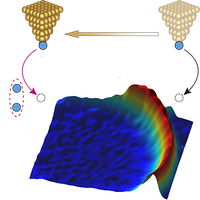
Phys. Rev. Lett. 136, 056201 (2026)
Condensed Matter and Materials
Dynamic Correlations of Frustrated Quantum Spins from High-Temperature Expansion
Article | Condensed Matter and Materials | 2026-02-02 05:00 EST
Ruben Burkard, Benedikt Schneider, and Björn Sbierski
For quantum spin systems in equilibrium, the dynamic structure factor (DSF) is among the most feature-packed experimental observables. However, from a theory perspective it is often hard to simulate in an unbiased and accurate way, especially for frustrated and high-dimensional models at intermediat…
Phys. Rev. Lett. 136, 056501 (2026)
Condensed Matter and Materials
Infinite Randomness Criticality and Localization of the Floating Phase in Arrays of Rydberg Atoms Trapped with Nonperfect Tweezers
Article | Condensed Matter and Materials | 2026-02-02 05:00 EST
Jose Soto-Garcia and Natalia Chepiga
Chains of Rydberg atoms have emerged as a powerful platform for exploring low-dimensional quantum physics. This success originates from the precise control of lattice geometries provided by optical tweezers, which allows access to a wide range of synthetic quantum phases. Experiments on one-dimensio…
Phys. Rev. Lett. 136, 056502 (2026)
Condensed Matter and Materials
Ultrafast Spin Accumulations Drive Magnetization Reversal in Multilayers
Article | Condensed Matter and Materials | 2026-02-02 05:00 EST
Harjinder Singh, Alberto Anadón, Junta Igarashi, Quentin Remy, Stéphane Mangin, Michel Hehn, Jon Gorchon, and Gregory Malinowski
Engineering and controlling heat and spin transport on the femtosecond timescale in spintronic devices opens up new ways to manipulate magnetization with unprecedented speed. Yet the underlying reversal mechanisms remain poorly understood due to the challenges of probing ultrafast, nonequilibrium sp…
Phys. Rev. Lett. 136, 056701 (2026)
Condensed Matter and Materials
Ideal Glass and Ideal Disk Packing in Two Dimensions
Article | Polymers, Chemical Physics, Soft Matter, and Biological Physics | 2026-02-02 05:00 EST
Viola M. Bolton-Lum, R. Cameron Dennis, Peter K. Morse, and Eric I. Corwin
A computational minimization procedure shows how to make an ideal glass, a disordered system of particles with zero configurational entropy and with the mechanical and thermal properties of a crystal.
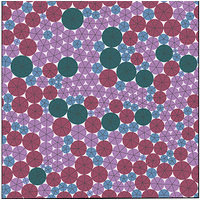
Phys. Rev. Lett. 136, 058201 (2026)
Polymers, Chemical Physics, Soft Matter, and Biological Physics
arXiv
Spherical Balls Settling Through a Quiescent Cement Paste Measured by X-ray Tomography: Influence of the Paste Thixotropy
New Submission | Soft Condensed Matter (cond-mat.soft) | 2026-02-03 20:00 EST
Subhransu Dhar, Eduardo Machado-Charry, Robert Schennach, Teresa Liberto, Agathe Robisson
The settling of spherical balls in quiescent cement pastes of increasing age is studied. Metallic spheres with radii of 2, 2.5 and 3mm are dropped into the paste and allowed to settle, while their position is tracked using X-ray tomography. The instantaneous velocity of the spheres, calculated from their movement, is observed to be quasi-constant during their fall, and an average is estimated. The results show that the average velocity of the balls decreases logarithmically with paste age until ball stoppage, for all three ball sizes. In parallel, the rheological properties of the cement paste are measured using a rheometer with a vane geometry. The evolution of the paste static yield stress over time is evaluated, and proves to be a reliable predictor for ball stoppage. Finally, thixotropic models of increasing complexity are evaluated. These models consider four forms of structural growth and breakdown parameters, and their ability to capture the ball settling velocity as a function of paste age is compared. This emphasizes the importance of considering paste breakdown in relation to shearing of the paste when the ball passes through it.
Soft Condensed Matter (cond-mat.soft), Materials Science (cond-mat.mtrl-sci)
Autonomous Multi-Agent AI for High-Throughput Polymer Informatics: From Property Prediction to Generative Design Across Synthetic and Bio-Polymers
New Submission | Soft Condensed Matter (cond-mat.soft) | 2026-02-03 20:00 EST
Mahule Roy, Adib Bazgir, Arthur da Silva Sousa Santos, Yuwen Zhang
We present an integrated multiagent AI ecosystem for polymer discovery that unifies high-throughput materials workflows, artificial intelligence, and computational modeling within a single Polymer Research Lifecycle (PRL) pipeline. The system orchestrates specialized agents powered by state-of-the-art large language models (DeepSeek-V2 and DeepSeek-Coder) to retrieve and reason over scientific resources, invoke external tools, execute domain-specific code, and perform metacognitive self-assessment for robust end-to-end task execution. We demonstrate three practical capabilities: a high-fidelity polymer property prediction and generative design pipeline, a fully automated multimodal workflow for biopolymer structure characterization, and a metacognitive agent framework that can monitor performance and improve execution strategies over time. On a held-out test set of 1,251 polymers, our PolyGNN agent achieves strong predictive accuracy, reaching R2 = 0.89 for glass-transition temperature (Tg ), R2 = 0.82 for tensile strength, R2 = 0.75 for elongation, and R2 = 0.91 for density. The framework also provides uncertainty estimates via multiagent consensus and scales with linear complexity to at least 10,000 polymers, enabling high-throughput screening at low computational cost. For a representative workload, the system completes inference in 16.3 s using about 2 GB of memory and 0.1 GPU hours, at an estimated cost of about $ 0.08. On a dedicated Tg benchmark, our approach attains R2 = 0.78, outperforming strong baselines including single-LLM prediction (R2 = 0.67), group-contribution methods (R2 = 0.71), and ChemCrow (R2 = 0.66). We further demonstrate metacognitive control in a polystyrene case study, where the system not only produces domain-level scientific outputs but continually monitors and optimizes its own behavior through tactical, strategic, and meta-strategic self-assessment.
Soft Condensed Matter (cond-mat.soft), Materials Science (cond-mat.mtrl-sci), Artificial Intelligence (cs.AI)
Microfluidic Fabrication and Analysis of Biocompatible, Monodisperse DNA-Hydrogels with Tunable Swelling and Dissolution Kinetics
New Submission | Soft Condensed Matter (cond-mat.soft) | 2026-02-03 20:00 EST
Corinna Torabi, Takayuki Suzuki, Emily Helm, Harrison Khoo, Sophie Tanengaum, Rebecca Schulman, Soojung Claire Hur
Stimulus-responsive DNA-hydrogels with swelling capabilities are a promising class of materials for biomedical applications such as drug delivery and biosensing. Designing these systems remains challenging because fabrication methods must be simultaneously biocompatible and conserve scarce DNA materials, even at the microscale. Moreover, stimulus-induced swelling must be precisely controlled and shown to drive measurable changes in molecular properties. We present a biocompatible fabrication and characterization method for micron-scale DNA-hydrogels with tunable isotropic swelling and dissolving properties. We first developed a fabrication method demonstrating that both the hydrogel composition and the fabrication process itself are biocompatible, while also minimizing the consumption of valuable DNA reagents. We then demonstrated modular control over isotropic swelling in micron-scale DNA microgels, achieving up to a two-fold size increase with tunable swelling through defined design parameters. We further established a quantitative workflow to measure structural changes of spherical, swollen and unswelled microgels leveraging the diffusive properties of a DNA-binding dye. Finally, we demonstrate tunable dissolving of microgels and quantitatively reveal various experimental factors that influence dissolution rates beyond what is traditionally considered in microgel experiments. Together, these advances establish a biocompatible platform for the fabrication and analysis of stimulus-responsive DNA micro-hydrogels, providing a foundation for their future use in drug delivery, biosensing, and related biomedical technologies.
Soft Condensed Matter (cond-mat.soft)
Plasticity, hysteresis, and recovery mechanisms in spider silk fibers
New Submission | Soft Condensed Matter (cond-mat.soft) | 2026-02-03 20:00 EST
Renata Olivé, José Pérez-Riguero, Noy Cohen
Spider silk is a remarkable biomaterial with exceptional stiffness, strength, and toughness stemming from a unique microstructure. While recent studies show that silk fibers exhibit plasticity, hysteresis, and recovery under cyclic loading, the underlying microstructural mechanisms are not yet fully understood. In this work, we propose a mechanism explaining the loading-unloading-relaxation response through microstructural evolution: initial loading distorts intermolecular bonds, resulting in a linear elastic regime. Upon reaching the yield stress, these bonds dissociate and the external load is transferred to the polypeptide chains, which deform entropically to allow large deformations. Unloading is driven by entropic shortening until a traction free state with residual stretch is achieved. Subsequently, the fiber recovers as chains reorganize and bonds reform, locking the microstructure into a new stable equilibrium that increases stiffness in subsequent cycles. Following these mechanisms, we develop a microscopically motivated, energy-based model that captures the macroscopic response of silk fibers under cyclic loading. The response is decoupled into two parallel networks: (1) an elasto-plastic network of inter- and intramolecular bonds governing the initial stiffness and yield stress, and (2) an elastic network of entropic chains that enable large deformations. The model is validated against experimental data from Argiope bruennichi dragline silk. The findings from this work are three-fold: (1) explaining the mechanisms that govern hysteresis and recovery and linking them to microstructural evolution; (2) quantifying the recovery process of the fiber, which restores and enhances mechanical properties; and (3) establishing a predictive foundation for engineering synthetic fibers with customized properties.
Soft Condensed Matter (cond-mat.soft), Materials Science (cond-mat.mtrl-sci), Biological Physics (physics.bio-ph)
Towards Agentic Intelligence for Materials Science
New Submission | Materials Science (cond-mat.mtrl-sci) | 2026-02-03 20:00 EST
Huan Zhang, Yizhan Li, Wenhao Huang, Ziyu Hou, Yu Song, Xuye Liu, Farshid Effaty, Jinya Jiang, Sifan Wu, Qianggang Ding, Izumi Takahara, Leonard R. MacGillivray, Teruyasu Mizoguchi, Tianshu Yu, Lizi Liao, Yuyu Luo, Yu Rong, Jia Li, Ying Diao, Heng Ji, Bang Liu
The convergence of artificial intelligence and materials science presents a transformative opportunity, but achieving true acceleration in discovery requires moving beyond task-isolated, fine-tuned models toward agentic systems that plan, act, and learn across the full discovery loop. This survey advances a unique pipeline-centric view that spans from corpus curation and pretraining, through domain adaptation and instruction tuning, to goal-conditioned agents interfacing with simulation and experimental platforms. Unlike prior reviews, we treat the entire process as an end-to-end system to be optimized for tangible discovery outcomes rather than proxy benchmarks. This perspective allows us to trace how upstream design choices-such as data curation and training objectives-can be aligned with downstream experimental success through effective credit assignment.
To bridge communities and establish a shared frame of reference, we first present an integrated lens that aligns terminology, evaluation, and workflow stages across AI and materials science. We then analyze the field through two focused lenses: From the AI perspective, the survey details LLM strengths in pattern recognition, predictive analytics, and natural language processing for literature mining, materials characterization, and property prediction; from the materials science perspective, it highlights applications in materials design, process optimization, and the acceleration of computational workflows via integration with external tools (e.g., DFT, robotic labs). Finally, we contrast passive, reactive approaches with agentic design, cataloging current contributions while motivating systems that pursue long-horizon goals with autonomy, memory, and tool use. This survey charts a practical roadmap towards autonomous, safety-aware LLM agents aimed at discovering novel and useful materials.
Materials Science (cond-mat.mtrl-sci), Artificial Intelligence (cs.AI)
82 pages
QUASAR: A Universal Autonomous System for Atomistic Simulation and a Benchmark of Its Capabilities
New Submission | Materials Science (cond-mat.mtrl-sci) | 2026-02-03 20:00 EST
The integration of large language models (LLMs) into materials science offers a transformative opportunity to streamline computational workflows, yet current agentic systems remain constrained by rigid tool-calling approaches and narrowly scoped agents. In this work, we introduce QUASAR, a universal autonomous system for atomistic simulation designed to facilitate production-grade scientific discovery. QUASAR autonomously orchestrates complex multi-scale workflows across diverse methods, including density functional theory, machine learning potentials, molecular dynamics, and Monte Carlo simulations. The system incorporates robust mechanisms for adaptive planning, context-efficient memory management, and hybrid knowledge retrieval to navigate real-world research scenarios without human intervention. We benchmark QUASAR against a series of three-tiered tasks, progressing from routine tasks to frontier research challenges such as photocatalyst screening and novel material assessment. These results suggest that QUASAR can function as a general atomistic reasoning system rather than a task-specific automation framework. They also provide initial evidence supporting the potential deployment of agentic AI as a component of computational chemistry research workflows, while identifying areas requiring further development.
Materials Science (cond-mat.mtrl-sci), Artificial Intelligence (cs.AI)
12 pages, 2 figures
Topological Defects from Quantum Reset Dynamics
New Submission | Statistical Mechanics (cond-mat.stat-mech) | 2026-02-03 20:00 EST
R. Jafari, Henrik Johannesson, Sebastian Eggert
We analyze mechanisms for universal out-of-equilibrium dynamics near criticality by exploring the effect of randomized quantum resetting (QR) under a finite-time quench across a quantum phase transition. Using the transverse-field Ising chain as a generic model and exploiting its exact solution, QR is found to cause a crossover of the scaling of the topological defect density with the time scale $ \tau$ of the quench, from Kibble-Zurek to anti-Kibble-Zurek scaling as $ \tau$ increases. This reflects a competition between non-adiabatic quench-driven excitations and QR, giving rise to local minima of the defect densities at optimal annealing times. These times and the corresponding local minima are shown to scale as universal power laws with the rate of QR. Additional results for the scaling of the mean excess energy suggest that a system driven across a quantum critical point exhibits the same scaling behavior under a linear quench with QR as with uncorrelated noise.
Statistical Mechanics (cond-mat.stat-mech), Strongly Correlated Electrons (cond-mat.str-el), Quantum Physics (quant-ph)
6 pages with 3 figures. More information and the latest version can be found at this https URL
Discrete holography and density of states in the crossover from hyperbolic to Euclidean lattices
New Submission | Mesoscale and Nanoscale Physics (cond-mat.mes-hall) | 2026-02-03 20:00 EST
Mireia Tolosa-Simeón, Igor Boettcher
We study tight-binding models in the crossover from hyperbolic to Euclidean lattices, realized through the successive insertion of Euclidean defects into hyperbolic lattices. We analyze how the holographic two-point boundary correlation function and bulk density of states evolve as defects are gradually introduced. We find that bulk properties are strongly affected by the presence of Euclidean defects, whereas boundary observables remain remarkably robust even at high defect fractions. This robustness indicates that essential features of boundary physics on hyperbolic lattices, which capture aspects of AdS/CFT-like dualities in discrete systems, can be reproduced both experimentally and numerically without requiring perfectly hyperbolic lattices, thereby reducing the system size needed for implementation.
Mesoscale and Nanoscale Physics (cond-mat.mes-hall), Statistical Mechanics (cond-mat.stat-mech), High Energy Physics - Theory (hep-th), Mathematical Physics (math-ph)
13 pages, 8 figures
Gradient-expansion of the inhomogeneous electron-gas revisited
New Submission | Materials Science (cond-mat.mtrl-sci) | 2026-02-03 20:00 EST
Mario Benites, Angel Rosado, Efstratios Manousakis
In the present work, we revisit the problem of the inhomogeneous electron gas under the influence of a weak external potential, which allows us to calculate the gradient corrections to the density functional within linear response, an approach known as the gradient expansion approximation. To obtain the exchange ($ b_x$ ) and correlation ($ b_{c}$ ) contributions to the coefficient $ b_{xc}$ , i.e., to the prefactor of the $ q^2$ term of the proper-polarization function, we revisited all the previous calculations and expose misconceptions which led to incorrect conclusions. We used various ways to apply a necessary regularization to the singular Coulomb interaction potential. We found that the separate exchange ($ b_x$ ) and correlation ($ b_c$ ) contributions to the coefficient $ b_{xc}$ have regularization-scheme dependent values even though the regulator is set to zero at the end of the calculation. This implies that it is impossible to define such a separation meaningfully. On the contrary, we found that when the regulator is set to zero at the end of the calculation, the combination $ b_{xc}$ is regularization-scheme independent and, thus, has a unique value. We conclude that it is incorrect to separate those two terms when constructing a generalized-gradient-approximation (GGA) contribution to the density functional. This appears to be a common approach in most popular GGA functionals, where various constraints are applied to each contribution separately.
Materials Science (cond-mat.mtrl-sci)
27 double column pages, 2 figures
Machine Learning to Predict Spectral Anisotropy in Valence-to-Core X-ray Emission Spectroscopy
New Submission | Strongly Correlated Electrons (cond-mat.str-el) | 2026-02-03 20:00 EST
Charles A. Cardot, John Tichenor, Seth M. Shjandemaar, Josh J. Kas, Fernando D. Vila, Gerald T. Seidler, John J. Rehr
Polarization analysis in x-ray spectroscopy provides an orientation dependent sensitivity to local bonding environments. For a cluster of atoms, polarization sensitivity is most often discussed through the lens of point group symmetries. However, this is a discrete, qualitative method of classifying clusters, and it does little to indicate the degree of spectral anisotropy. Here we adopt a random forest model for quantitative prediction of spectral anisotropy. Its input relies on simplified local geometric and chemical information that can be obtained from any crystal structure file. The model is trained on over 10,000 experimentally realized transition metal structures from the Materials Project, with the target being VtC-XES calculated using the real space Green’s function code FEFF. We find that the model can strongly predict the degree of spectral anisotropy, with the primary factors being derived from the spatial moments of ligands in a cluster.
Strongly Correlated Electrons (cond-mat.str-el)
Enhanced detection of circularly polarized photons with topological materials
New Submission | Other Condensed Matter (cond-mat.other) | 2026-02-03 20:00 EST
Hamideh Sharifpour, George J. de Coster, Avik W. Ghosh
Topological insulators (TI) are highly attractive platforms for next-generation optoelectronic and photonic devices. Spin-momentum locking of topological surface states enhance their nonlinear optical responses and sensitivities, especially to circularly polarized light. Until now, theoretical investigations of nonlinear responses in TIs have been limited to microscopic calculations on analytical continuum models, or leveraging density functional theory based Hamiltonians. In this work, we expand beyond these two approaches by employing a nonlinear Kubo formalism to calculate second-order nonlinear optical conductivity in a slab geometry using symmetry informed tight binding models that accurately reproduce the conduction, valence and topological surface bands in Bi$ _2$ Se$ _3$ . Our methodology enables us to study the layer resolved contribution to injection-currents coupled to the incident electric field. We demonstrate that our technique can reveal how device engineering modifies elements of the nonlinear optical response such as the circular photogalvanic effect by breaking inversion and time-reversal symmetry. We find, in line with experiments, that the photogalvanic current is sensitive to field effects, Fermi level energy, gate voltage and the energy of incident light. Our computed midwavelength infrared (mid-IR) responsivity $ R \approx 0.169~\mathrm{\mu A/W}$ is comparable to reported TI and intrinsic 2D-material photodetectors. We further simulate experimentally unexplored methods to modify the circular photogalvanic effect such as proximitizing a magnetic field to one of the TI surface materials, suggesting a mechanism for optoelectronic tuning.
Other Condensed Matter (cond-mat.other)
14 pages, 9 figures
A seven-facet polyhedron captures the composition-only formation-energy landscape of inorganic solids
New Submission | Materials Science (cond-mat.mtrl-sci) | 2026-02-03 20:00 EST
Justin Tahmassebpur, Sarvesh Chaudhari, Cristóbal Méndez, Rushil Choudhary, Sudipta Kundu, Raymond E. Schaak, Héctor Abruña, Peter Frazier, Tomás Arias
This work demonstrates that the convex hull of formation energies for solid compounds involving elements from hydrogen to uranium admits a remarkably simple description over the 92-dimensional space of chemical compositions, despite the enormous combinatorial complexity of possible atomic structures. By training an interpretable max-affine model directly on near-hull formation energies from the Materials Project density-functional theory (DFT) database, we find that the hull can be reconstructed to DFT accuracy using a polyhedron with only seven facets. These facets define seven chemically coherent materials classes, with just seven coefficients per element sufficing to capture the dominant energetic trends across composition space. Remarkably, this compact, composition-only representation generalizes far beyond bulk formation energies. Without retraining or structural input, the same model reproduces trends in DFT-calculated defect formation energies, captures experimentally observed elemental mixing correlations in high-entropy materials, and enables the construction and optimization of Pourbaix diagrams for electrochemical stability. Together, these results show that many materials properties governed by energy differences can be expressed as simple linear combinations of a small set of interpretable, element-specific parameters. The result is a bonding-geometry-free thermodynamic framework that unifies stability, defects, mixing, and electrochemistry, and enables rapid, interpretable screening across vast chemical spaces.
Materials Science (cond-mat.mtrl-sci)
Defects, Corrugation and Temperature Govern Rarefied-Air Drag on Graphene Coatings
New Submission | Materials Science (cond-mat.mtrl-sci) | 2026-02-03 20:00 EST
Samuel Cajahuaringa, Davide Bidoggia, Maria Peressi, Antimo Marrazzo
In rarefied atmospheric environments, where continuum fluid dynamics breaks down, aerodynamic drag is governed by gas-surface momentum exchange, making surface structure and chemistry key design knobs. Using molecular dynamics simulations, we show that coating the $ \alpha$ -Al2O3(0001) surface with graphene markedly reduces the tangential momentum accommodation coefficient (TMAC) of N2, shifting scattering toward more specular reflection and thereby lowering drag; we further benchmark this response against graphite. The reduction strengthens up to 900 K. While structural defects can increase TMAC via defect-induced corrugation and local atomic and electronic rearrangements, graphene retains its performance at experimentally relevant defect densities.
Materials Science (cond-mat.mtrl-sci), Chemical Physics (physics.chem-ph), Fluid Dynamics (physics.flu-dyn)
Many-body contributions to polymorphism and polyhexaticity in a water monolayer
New Submission | Soft Condensed Matter (cond-mat.soft) | 2026-02-03 20:00 EST
Oriol Vilanova, Giancarlo Franzese
Nanoconfined water plays a crucial role in nanofluidics, biology, and cutting-edge technologies. The process of melting water monolayers and quasi-two-dimensional confined water involves, as an intermediate stage, the hexatic phase–a state that lies between solid and liquid and is characterized by quasi-long-range orientational order and short-range translational order. However, the influence of hydrogen bond (HB) cooperativity in this process has not been thoroughly investigated. This gap hampers our understanding of the phase behavior of confined water and limits the accuracy of our models. To address this, we extend the water model developed by Franzese and Stanley, which explicitly includes many-body interactions (MBIs) of HBs. We distinguish the contributions of three-body and five-body HB-MBIs. Our Monte Carlo calculations in the isobaric-isothermal ensemble produces a detailed pressure-temperature phase diagram, revealing polymorphism and polyhexaticity: low-density square ice and high-density triangular ice are separated from the liquid phase by distinct hexatic phases. Three-body interactions notably promote crystallization and can destabilize the low-density hexatic phase, while cooperative five-body interactions help restore it, thus modifying the thermodynamic landscape. These findings demonstrate that HB-MBIs are key in determining the phase behavior of confined water, influencing phenomena such as the non-monotonic specific heat, maximum density lines, and the accessibility of the liquid-liquid critical point. Beyond advancing theoretical understanding, these results have wide-ranging implications for nanofluidics, interfacial science, and applications in biology, food technology, and pharmaceutics, where controlling water under confinement is essential.
Soft Condensed Matter (cond-mat.soft), Mesoscale and Nanoscale Physics (cond-mat.mes-hall), Statistical Mechanics (cond-mat.stat-mech)
14 pages including Supplementary Information, 7 figures
On the Landauer formula in interfacial thermal transport
New Submission | Mesoscale and Nanoscale Physics (cond-mat.mes-hall) | 2026-02-03 20:00 EST
In this commentary, we clarify that the Landauer formula is not limited to the phonon gas model. It is fundamentally more general and applies to both particle- and wave-based descriptions of phonons, provided the transmission function is well defined. In the harmonic regime, the phonon transmission function and the resulting Landauer expression for heat current are exact. They can be rigorously derived using the atomistic Green’s function method, which treats phonons as waves and does not require phonon dispersion in the interface region. In short, the Landauer framework remains valid for ideal, disordered, and defective interfaces, as long as an appropriate transmission function is used.
Mesoscale and Nanoscale Physics (cond-mat.mes-hall)
Deriving Reliable Nucleation Rates from Metadynamics Simulations: Application to Yukawa Fluids
New Submission | Statistical Mechanics (cond-mat.stat-mech) | 2026-02-03 20:00 EST
B. Arnold, J. Daligault, D. Saumon, S. X. Hu
In order to solidify the usefulness of metadynamics in studying nucleation of crystals from supercooled liquids, we provide a specific procedure to calculate nucleation free energy barriers. After a pedagogical review of the important elements of classical nucleation theory and how metadynamics is used to find nucleation free energy barriers, we explain the benefits of local collective variables over more common global collective variables. We show how a metadynamics free energy barrier must be carefully postprocessed so that classical nucleation theory can be applied to calculate nucleation rates. We apply our procedure to a Yukawa plasma and show that a particular physically-motivated fit to metadynamics data reproduces low-temperature reference data, justifying the usefulness of metadynamics to predict nucleation rates and the nucleation critical temperature.
Statistical Mechanics (cond-mat.stat-mech)
20 pages including supplementary material, 10 figures
Memory effects govern scale-free dynamics beyond universality classes
New Submission | Statistical Mechanics (cond-mat.stat-mech) | 2026-02-03 20:00 EST
Scale-invariant avalanches – with events of all sizes following power-law distributions – are considered critical. Above the upper critical dimension of four, the mean-field solution with a robust $ 3/2$ size exponent describes the dynamics. In two and three dimensions, spatial constraints yield smaller yet robust exponent values governed by universality classes. However, both earthquake data and experiments often show exponent values larger than $ 3/2$ , challenging those theoretical arguments based on critical behavior. Through extensive simulations in the classical OFC earthquake model, here we show a clear transition from the theoretical expected behavior of a robust exponent value, to a regime of quasi-critical dynamics with larger than $ 3/2$ exponents that depend on dissipation. While the first critical regime exhibits an inherently memoryless behavior, both the transition and the second regime are driven by memory effects provoked by the growth of avalanches over the traces left by previous events, due to dissipative mechanisms. The system hovers at a distance $ d_{cp}$ from the critical point, and accounting for a power-law distribution of $ d_{cp}$ , validated by susceptibility measurements, captures the transition. This framework provides a unified description of both critical and quasi-critical behavior, and thus of the full spectrum of scale-free dynamics observed in nature.
Statistical Mechanics (cond-mat.stat-mech), Disordered Systems and Neural Networks (cond-mat.dis-nn), Adaptation and Self-Organizing Systems (nlin.AO)
9 pages, 7 figures
Interatomic potentials for platinum
New Submission | Materials Science (cond-mat.mtrl-sci) | 2026-02-03 20:00 EST
We present two new interatomic potentials for platinum (Pt) in angular-dependent potential (ADP) and modified Tersoff (MT) formats. Both potentials have been trained on a reference database of first-principles calculations without using experimental data. The properties of Pt predicted by the ADP and MT potentials agree better with DFT calculations and experimental data than the potentials available in the literature. Future applications of the MT model to mixed-bonding metal-covalent systems are discussed.
Materials Science (cond-mat.mtrl-sci)
Continuously tunable dipolar exciton geometry for controlling bosonic quantum phase transitions
New Submission | Materials Science (cond-mat.mtrl-sci) | 2026-02-03 20:00 EST
Zhenyu Sun, Haoteng Sun, Xiaohang Jia, An Li, Naiyuan J. Zhang, Ken Seungmin Hong, Joseph DePinho, Conor Y. Long, Kenji Watanabe, Takashi Taniguchi, Ou Chen, Jue Wang, Jia Li, Brenda Rubenstein, Yusong Bai
The geometry and binding energy of excitons, set by electron-hole wavefunction distributions, are fundamental factors that underpin their many-body interactions and determine optoelectronic properties of semiconductors. However, in typical solid-state systems, these quantities are fixed by material composition and structure. Here we introduce a polarizable interlayer exciton hosted in a two-dimensional tetralayer heterostructure whose dipole length, in-plane radius, and binding energy can be continuously programmed in situ over a wide range, enabling direct control over the nature of excitonic many-body phase transitions. An out-of-plane electric field redistributes layer-hybridized electron-hole wavefunctions, realizing in situ control of exciton geometry through a strong quadratic Stark response. This tunability further regulates the nature of interaction-driven Mott transition, transforming it from gradual to abrupt. Our results establish exciton geometry as a continuously tunable materials parameter, opening routes to exciton-based quantum phase-transition simulators and guiding the design of emergent optoelectronic functionalities from programmable excitonic materials.
Materials Science (cond-mat.mtrl-sci)
20 pages, 4 figures
Ammonia Catalyst Evolution Under Reactor Conditions Revealed by Environmental and Multimodal Electron Microscopy
New Submission | Materials Science (cond-mat.mtrl-sci) | 2026-02-03 20:00 EST
Amy S. McKeown-Green, Parivash Moradifar, Zisheng Zhang, Cedric Lim, Andrew Barnum, Lin Yuan, Robert Sinclair, Frank Abild-Pedersen, Colin Ophus, Jennifer A. Dionne
Bimetallic catalysts provide new routes toward sustainable ammonia synthesis, but the structural dynamics controlling their performance under real-world conditions remain poorly understood. Here, we combine in situ gas-cell and multimodal electron microscopy to disentangle the temperature-, pressure-, and chemistry-dependent restructuring of AuRu catalysts, revealing pathways accessible only at atmospheric pressure. As synthesized, AuRu nanocatalysts are polycrystalline face-centered-cubic alloys with Au/Ru intermixing that phase-segregate into Au- and Ru-rich domains with elevated temperature (>450 °C). Increased pressure (~1 atm in 3:1, hydrogen:nitrogen) unlocks pronounced faceting and internal nanovoid formation, which systematic gas-chemistry variation identifies as hydrogen-driven. Density functional theory-based interatomic potentials show that hydrogen can amplify Au/Ru diffusion asymmetry, promoting nanovoid formation via a gas-mediated Kirkendall mechanism. Together, these results bridge the pressure gap between traditional in situ electron microscopy and benchtop ammonia reactors, enabling resolution of distinct restructuring stimuli in multicomponent systems.
Materials Science (cond-mat.mtrl-sci)
† These authors contributed equally to this work. This work was conducted at Stanford University
Electron-phonon interactions and instabilities in Weyl semimetals under magnetic fields and torsional strain
New Submission | Strongly Correlated Electrons (cond-mat.str-el) | 2026-02-03 20:00 EST
Fabian Jofre Parra, Daniel A. Bonilla, Enrique Muñoz
We study the presence of an external magnetic field, in combination with torsional strain, over the electron-phonon interactions in a type I Weyl semimetal. This particular superposition of field and strain, modeled in the continuum approximation by an effective gauge field, leads to an asymmetric pseudo-magnetic field at each Weyl node of opposite chirality. Therefore, we also studied the role of nodal asymmetry in the properties of the system by means of the Kadanoff-Wilson renormalization group and the corresponding flow equations. By solving those, we discuss the evolution of the coupling parameters of the theory, and analyze possible fixed points and lattice (Peierls) instabilities emerging from interactions between phonons with the chiral Landau level in the very strong pseudo-magnetic field regime.
Strongly Correlated Electrons (cond-mat.str-el), Mesoscale and Nanoscale Physics (cond-mat.mes-hall)
Upward band gap bowing and negative mixing enthalpy in multi-component cubic halide perovskite alloys
New Submission | Materials Science (cond-mat.mtrl-sci) | 2026-02-03 20:00 EST
Xiuwen Zhang, Fernando P. Sabino, Jia-Xin Xiong, Alex Zunger
Physical properties intermediate between constituents of alloys can be achieved as downward convex positive bowing, upward concave negative bowing, or zero bowing. Such bowing effects are essential for band gap engineering in semiconductor alloys. Upward band gap bowing effects are rather rare, hindering the exploration on half of the available physical property space of alloys. Part of the this being a rare event is related to the need to stabilize an alloy with low mixing enthalpy, so it does not phase separate. In this paper we find via density functional theory that one can satisfy the simultaneous conditions of negative mixing enthalpy and upward band gap bowing in four-component ABX3 halide perovskite alloys in the cubic perovskite structure. Such perovskite alloys have the B-site occupied by a mixture of group IVB and IIB elements that have the IVB-s and IIB-s states in the valence bands and conduction bands, respectively, leaving the delocalized s states strongly repel each other. This s-s repulsion leads to the upward band gap bowing and negative mixing enthalpies simultaneously. Remarkably, we identify a perovskite alloy that has a band gap much larger than all its components. Analogous trends of upward band gap bowing and negative mixing enthalpy also appear in the corresponding three-component and two-component ABX3 halide perovskite alloys. These observations of upward band gap bowing and negative mixing enthalpy will significantly accelerate the design of stable upward band gap bowing alloys in a broad range of material families.
Materials Science (cond-mat.mtrl-sci)
Exactly solvable higher-order Liouvillian exceptional points in dissipative fermionic systems
New Submission | Mesoscale and Nanoscale Physics (cond-mat.mes-hall) | 2026-02-03 20:00 EST
We propose a general class of open fermionic models where quadratic Liouvillians governing the dissipative dynamics feature exactly solvable higher-order exceptional points (EPs). Invoking the formalism of third quantization, we show that, among the multiple EPs of Liouvillian, an EP with its order approaching the system size arises as the quasisteady state of the system, leading to a gapless Liouvillian spectrum. By introducing perturbations, in the form of many-body quantum-jump processes, these higher-order EPs break down, leading to finite Liouvillian gaps with fractional power-law scalings. While the power-law scaling is a signature of the higher-order EP, its explicit form is sensitively dependent on the many-body perturbation. Finally, we discuss the steady-state approaching dynamic which can serve as detectable signals for the higher-order Liouvillian EPs.
Mesoscale and Nanoscale Physics (cond-mat.mes-hall)
Unified origin of negative energetic elasticity in a lattice polymer chain: soft self-repulsion and bending stiffness
New Submission | Soft Condensed Matter (cond-mat.soft) | 2026-02-03 20:00 EST
We study a single lattice polymer chain under a fixed end-to-end distance, incorporating both Domb–Joyce (DJ) soft-core self-repulsion between polymer segments and a local bending-energy cost. By decomposing the stiffness into energetic and entropic contributions, we survey the parameter space defined by the self-repulsion strength and bending-energy cost. We find that the energetic contribution to stiffness is negative across the entire explored range, whereas the entropic contribution remains positive. These results unify two previously independent mechanisms of negative energetic elasticity – solvent-induced self-repulsion and bending stiffness – and demonstrate that either mechanism alone, as well as their combination, produces the same sign. Beyond this sign-level unification, we analyze the internal-energy scaling and show that, in the absence of the bending-energy term, the DJ (self-repulsion) limit exhibits a robust $ (n-r)^{7/4}/n$ scaling collapse. In contrast, the introduction of finite bending stiffness progressively disrupts this scaling, providing an internal-energy-based diagnostic to distinguish between contributions from self-repulsion and bending stiffness.
Soft Condensed Matter (cond-mat.soft), Statistical Mechanics (cond-mat.stat-mech), Chemical Physics (physics.chem-ph)
5 pages, 4 figures
Synergistic effect of the electronic band delocalization and bond anharmonicity on the thermoelectric performance of Cs2TeX6(X=Cl, Br, I)
New Submission | Materials Science (cond-mat.mtrl-sci) | 2026-02-03 20:00 EST
Heena, Vineet Kumar Pandey, Saanvi Marethiya, Ambesh Dixit, Ajay Singh Verma, K.C. Bhamu
We investigate the structural, mechanical, and thermoelectric properties of lead-free double halide perovskites Cs2TeX6 (X = Cl, Br, I) using first-principles calculations and semiclassical Boltzmann transport theory. The HSE06 band gap is incorporated using the scissor correction method along with PBE calculated electronic band structures including spin orbit coupling to accurately predict transport properties. The band gap values are 3.27, 2.50, and 1.55 eV for Cs2TeX6 (X = Cl, Br, I), respectively. The coexistence of heavy and light bands in the Cs2TeI6 band structure helps mitigate the trade-off between the Seebeck coefficient and electrical conductivity. Among these systems, Cs2TeI6 exhibits superior performance with a ZT of 1.97 at 800 K and an electronic concentration of 3.35 x 10^19 cm^-3. Such a high ZT at relatively low carrier concentration arises from high electrical conductivity combined with low lattice thermal conductivity. The lattice thermal conductivity of Cs2TeI6 is found to be 0.41 W m^-1 K^-1 at room temperature. This low lattice thermal conductivity is attributed to weak Te-I bonding and non-uniform out-of-phase displacement of Cs atoms. The presence of local TeX6 units together with weak bonds strongly resists heat conduction, leading to significant suppression of lattice thermal conductivity. In particular, transverse acoustic phonons and optical phonons play a key role in limiting lattice thermal conductivity. These results identify Cs2TeI6 as a promising candidate for high performance thermoelectric applications.
Materials Science (cond-mat.mtrl-sci)
27 Pages, 11 Figures, 3 Tables
Floquet quantum geometry in periodically driven topological insulators
New Submission | Mesoscale and Nanoscale Physics (cond-mat.mes-hall) | 2026-02-03 20:00 EST
Peng He, Jian-Te Wang, Jiangbin Gong, Hai-Tao Ding
Quantum geometry plays a fundamental role across many branches of modern physics, yet its full characterization in nonequilibrium systems remains a challenge. Here, we propose a framework for quantum geometry in Floquet topological insulators by introducing a time-resolved quantum metric tensor, defined via the trace distance between micromotion operators in momentum-time space. For class A in two spatial dimensions, we find a general inequality linking the Floquet quantum metric tensor and the Floquet topology: the associated quantum volume is bounded below by the Floquet topological invariant. This relation is found to also hold in class AIII in one dimension, where the Floquet geometric tensor may be notably reduced due to time-reflection symmetry. This work will be useful in digesting the general aspects of quantum geometry in periodically driven systems in connection with their topological characterization.
Mesoscale and Nanoscale Physics (cond-mat.mes-hall), Quantum Gases (cond-mat.quant-gas)
Multimodal Machine Learning for Integrating Heterogeneous Analytical Systems
New Submission | Materials Science (cond-mat.mtrl-sci) | 2026-02-03 20:00 EST
Shun Muroga, Hideaki Nakajima, Taiyo Shimizu, Kazufumi Kobashi, Kenji Hata
Understanding structure-property relationships in complex materials requires integrating complementary measurements across multiple length scales. Here we propose an interpretable “multimodal” machine learning framework that unifies heterogeneous analytical systems for end-to-end characterization, demonstrated on carbon nanotube (CNT) films whose properties are highly sensitive to microstructural variations. Quantitative morphology descriptors are extracted from SEM images via binarization, skeletonization, and network analysis, capturing curvature, orientation, intersection density, and void geometry. These SEM-derived features are fused with Raman indicators of crystallinity/defect states, specific surface area from gas adsorption, and electrical surface resistivity. Multi-dimensional visualization using radar plots and UMAP reveals clear clustering of CNT films according to crystallinity and entanglements. Regression models trained on the multimodal feature set show that nonlinear approaches, particularly XGBoost, achieve the best predictive accuracy under leave-one-out cross-validation. Feature-importance analysis further provides physically meaningful interpretations: surface resistivity is primarily governed by junction-to-junction transport length scales, crystallinity/defect-related metrics, and network connectivity, whereas specific surface area is dominated by intersection density and void size. The proposed multimodal machine learning framework offers a general strategy for data-driven, explainable characterization of complex materials.
Materials Science (cond-mat.mtrl-sci), Soft Condensed Matter (cond-mat.soft), Artificial Intelligence (cs.AI), Machine Learning (cs.LG), Data Analysis, Statistics and Probability (physics.data-an)
12 pages, 4 figures, 2 tables
The Impact of Geometric Blockade on Thermoelectric Transport in Triangular Triple Quantum Dots
New Submission | Mesoscale and Nanoscale Physics (cond-mat.mes-hall) | 2026-02-03 20:00 EST
Shuo Dong, Yiming Liu, Junqing Li, Jianhua Wei
We investigate the transport properties of a triangular triple quantum dot (TTQD) system connected with two reservoirs under linear response regime. By employing the hierarchical equations of motion(HEOM), we compute the thermopower and thermoelectric figure of merit. The impact of interaction scheme among three quantum dots on the thermopower is thoroughly analyzed, while the thermoelectric current and spectral function throughout this process are also elaborated. Our results reveal that, under low-temperature conditions, the alleviation of the geometric blockade in the TTQD system leads to a significantly faster enhancement of the heat current compared to the electric current. This phenomenon consequently elevates the thermopower, resulting in a remarkably high thermoelectric figure of merit.
Mesoscale and Nanoscale Physics (cond-mat.mes-hall)
Josephson Oscillation and Nonlinear Self-Trapping in Quasi-one-dimensional Quantum Liquid
New Submission | Quantum Gases (cond-mat.quant-gas) | 2026-02-03 20:00 EST
Shivam Singh, Ibrar, Suhail Rashid, Ayan Khan
In this article, we study the two-mode method to analyze the Josephson oscillation for a trapped binary Bose-Einstein condensate while taking into account the beyond mean-field and three body interactions. For this purpose, we use the archetypal model of double well potential and study the Josephson oscillation and self-trapping phases in quasi-one dimension. Additionally, our analysis provides quantitative discussion on the effect of asymmetry and dimension. We further corroborate our findings with Bogoliubov quasi-particle method and notice regions of instabilities and roton like mode.
Quantum Gases (cond-mat.quant-gas)
13 Pages, 10 figures
Momentum- and frequency-resolved collective electronic excitations in solids: insights from spectroscopy and first-principles calculations
New Submission | Materials Science (cond-mat.mtrl-sci) | 2026-02-03 20:00 EST
Dario A. Leon, Kristian Berland
Collective electronic excitations, including plasmons, excitons, and intra- and interband transitions, play a central role in determining the dynamic screening, optical response, and energy transport properties of materials. Recent advances in momentum- and frequency-resolved spectroscopies, such as electron energy-loss spectroscopy (EELS) and inelastic x-ray scattering (IXS), together with progress in first-principles many-body perturbation theory (MBPT) calculations, now allow collective excitations to be mapped with considerable precision across the Brillouin zone. This topical review surveys current developments in the representation and interpretation of both experimental and theoretical dielectric-response spectra. Particular emphasis is placed on recent ways of representing spectral band structures (SBS) of the direct and inverse dielectric functions, such as analytical approaches based on multipole-Padé approximants in momentum and frequency (MPA($ \q$ )), which provide a combined band-like description of the dispersion of the main collective excitations. We discuss how features observed in metals, semiconductors, and low dimensional systems reflect the interplay between electronic structure, screening strength, and local-field effects, and how post-processing procedures can improve the quantitative comparison between experiment and theory. Finally, we provide perspectives on open challenges and potential developments in quantitative dielectric-function analyses.
Materials Science (cond-mat.mtrl-sci)
Van Hove singularity-induced multiple magnetic transitions in multi-orbital systems
New Submission | Strongly Correlated Electrons (cond-mat.str-el) | 2026-02-03 20:00 EST
Van Hove singularities (VHSs) amplify electronic correlations, providing a crucial platform for discovering novel quantum phase transitions. Here, we show that VHSs in multi-orbital systems can stabilize a variety of competing $ \bm{Q}=0$ magnetic orders, including intrinsic altermagnetism emerging from spontaneous orbital antiferromagnetism. This intrinsic phase, in which antiparallel spins reside on distinct orbitals, is realized across all four 2D Bravais lattices. It is driven by orbital-resolved spin fluctuations enhanced by inter-orbital hopping and favors suppressed Hund’s coupling $ J_H$ , strong inter-orbital hybridization, and filling near a VHS from quadratic band touching. Through Hubbard-$ U$ -$ J_H$ phase diagrams we map several magnetic phase transitions: (i) ferrimagnet to $ d$ -wave extrinsic altermagnet, (ii) $ d$ -wave intrinsic altermagnet to ferromagnet, and (iii) $ g$ -wave extrinsic altermagnet to either $ d$ -wave extrinsic altermagnet or ferromagnet. Our work identifies VHSs as a generic route to altermagnetism in correlated materials.
Strongly Correlated Electrons (cond-mat.str-el)
Quantum Geometry and Nonlinear Responses in Magnetic and Topological Quantum Materials
New Submission | Mesoscale and Nanoscale Physics (cond-mat.mes-hall) | 2026-02-03 20:00 EST
This dissertation explores various nonlinear responses that arise from the rich interplay between quantum geometry, disorder, magnetism and topology in quantum materials. In addition to presenting generalizations of quantum kinetic theory, Kubo formulas and semiclassical Boltzmann transport theory to the nonlinear response regime, we discuss several predictions of novel transport effects and physical insights that emerge from these developments.
Mesoscale and Nanoscale Physics (cond-mat.mes-hall), Quantum Physics (quant-ph)
184 pages. PhD thesis (also available at this http URL)
A New Workflow for Materials Discovery Bridging the Gap Between Experimental Databases and Graph Neural Networks
New Submission | Materials Science (cond-mat.mtrl-sci) | 2026-02-03 20:00 EST
Brandon Schoener, Yuting Hu, Pasit Wanlapha, Akshay Rengarajan, Ian Moog, Michael Wang, Peihong Zhang, Jinjun Xiong, Hao Zeng
Incorporating Machine Learning (ML) into material property prediction has become a crucial step in accelerating materials discovery. A key challenge is the severe lack of training data, as many properties are too complicated to calculate with high-throughput first principles techniques. To address this, recent research has created experimental databases from information extracted from scientific literature. However, most existing experimental databases do not provide full atomic coordinate information, which prevents them from supporting advanced ML architectures such as Graph Neural Networks (GNNs). In this work, we propose to bridge this gap through an alignment process between experimental databases and Crystallographic Information Files (CIF) from the Inorganic Crystal Structure Database (ICSD). Our approach enables the creation of a database that can fully leverage state-of-the-art model architectures for material property prediction. It also opens the door to utilizing transfer learning to improve prediction accuracy. To validate our approach, we align NEMAD with the ICSD and compare models trained on the resulting database to those trained on NEMAD originally. We demonstrate significant improvements in both Mean Absolute Error (MAE) and Correct Classification Rate (CCR) in predicting the ordering temperatures and magnetic ground states of magnetic materials, respectively.
Materials Science (cond-mat.mtrl-sci), Machine Learning (cs.LG)
8 pages, 3 figures, 1 table, submitted to Journal of Magnetism and Magnetic Materials
Disproportionate influence of site disorder on the evolution of magnetic phases in anti-Heusler alloy Al$_2$MnFe
New Submission | Materials Science (cond-mat.mtrl-sci) | 2026-02-03 20:00 EST
Soumya Bhowmik (1), Santanu Pakhira (2), Ashis Kundu (3), V. Raghavendra Reddy (4), Mukul Kabir (3), Chandan Mazumdar (1) ((1) Condensed Matter Physics Division, Saha Institute of Nuclear Physics, A CI of Homi Bhabha National Institute, Kolkata, India, (2) Department of Physics, Maulana Azad National Institute of Technology, Bhopal, M.P., India, (3) Department of Physics, Indian Institute of Science Education and Research (IISER) Pune, India, (4) UGC-DAE Consortium for Scientific Research, Indore, India)
Anti-Heusler alloys, being a new addition to the Heusler alloys family, exhibit atomic disorders, and almost all of them are reported as a re-entrant spin-glass system. Although such spin-glass feature is generally attributed to the inherent atomic disorder, a comprehensive and extensive investigation on the individual roles of different types of disorders in magnetic interactions remains lacking for any of the reported anti-Heusler systems. As an illustrative case, we have carried out an in-depth experimental as well as theoretical investigation of structural, magnetic, and transport properties of a polycrystalline anti-Heusler alloy, Al$ 2$ MnFe. While the major atomic disorder is found to be among Fe and Mn atoms, which are randomly distributed among the two octahedral sites, 4$ a$ and 4$ b$ (B2-type disorder), a relatively small fraction ($ \sim$ 12%) of Mn atoms also replace Al atoms at the tetrahedral 8$ c$ site. Magnetically, the system undergoes two transitions: a paramagnetic to a ferromagnetic transition at $ T{\rm C}\sim$ 113K, followed by a spin-glass phase transition below $ T_{\rm f}\sim$ 20K. Here, the magnetic moment is primarily confined to Mn atoms. Very interestingly, our theoretical analysis reveals that the ferromagnetic spin arrangement remains rather robust in spite of the 50% disorder of moment-carrying Mn atoms between the two octahedral sites, but a much smaller ($ \sim$ 12%) cross-distribution of Mn atoms between octahedral and tetrahedral sites are sufficient to impose a reentrant spin-glass state at low temperature. Our analysis brings forth the importance of understanding the role of individual types of swap-disorder on magnetic properties in the anti-Heusler family of materials.
Materials Science (cond-mat.mtrl-sci)
Physical Review B 113, 014429 (2026)
Observing quantum phase transitions at non-zero temperature: non-analytic behavior of order-parameter correlation times
New Submission | Statistical Mechanics (cond-mat.stat-mech) | 2026-02-03 20:00 EST
István Csépányi, Giuseppe Del Vecchio Del Vecchio, Benjamin Doyon, Márton Kormos
Phase transitions occur when a macroscopic number of local degrees of freedom coherently change their behavior. In ground states of quantum many-body systems, phase transitions due to quantum fluctuations are observed as non-analytic behaviors of order parameters, such as magnetization, as functions of a conjugate parameter, such as the magnetic field. However, as soon as thermal fluctuations are present, these effects are believed to disappear for local observables. We show that this is not necessarily the case: order parameters may still show non-analytic behaviors within their dynamics. With the example of the Ising model and using methods based on hydrodynamic fluctuations, we evaluate the exact order-parameter correlation time, in space-time directions of all velocities, in equilibrium states at nonzero temperature. We reveal non-analytic behaviors of spin correlation times as functions of the magnetic field, velocity, and temperature. As a function of the magnetic field, they occur at values that continuously approach that of the zero-temperature equilibrium transition point as the velocity is decreased and reach it within the light cone, where we obtain a new, temperature-independent logarithmic divergence characterizing the collective dynamics. Thus, collective effects induced by quantum fluctuations persist within the dynamics of local observables.
Statistical Mechanics (cond-mat.stat-mech), Strongly Correlated Electrons (cond-mat.str-el)
7+2 pages + Supp. Mat. (12 pages); 2+2 figures
Elastic, Quasielastic, and Superelastic Electron Scattering from Thermal Lattice Distortions in Perfect Crystals
New Submission | Other Condensed Matter (cond-mat.other) | 2026-02-03 20:00 EST
Eric J. Heller, Anton M. Graf, Yubo Zhang, Alhun Aydin., Joonas Keski-Rahkonen
In conventional treatments of electron transport, momentum relaxation within a perfect, defect free crystal is commonly assumed to require phonon creation or annihilation. Here we treat the crystal as finite and isolated, retaining the lattice center of mass (recoil) degree of freedom and enforcing conservation of total mechanical momentum alongside discrete crystal pseudomomentum. Starting from the density density form of the electron lattice interaction, we find that an electron in the interior of a perfect crystal admits strong, and in some regimes dominant, elastic momentum relaxing scattering channels, in which momentum is conserved by recoil of the lattice background without phonon excitation. In addition, we identify mixed quasielastic and superelastic channels in which phonon occupations change but do not account fully for the electron’s momentum transfer. These results provide a microscopic basis for momentum relaxation that does not rely on local energy dissipation. They naturally reconcile a wide range of experimental observations, including weak localization, quantum oscillations, ultrasonic attenuation, and the separation of momentum and energy relaxation times, with predominantly elastic scattering in clean crystals. The framework clarifies how diffusive transport, including Planckian scale diffusion, can emerge from elastic dynamics in a time dependent lattice background.
Other Condensed Matter (cond-mat.other)
An Open-Source Framework for Measurement and Analysis of Nanoscale Ionic Transport
New Submission | Mesoscale and Nanoscale Physics (cond-mat.mes-hall) | 2026-02-03 20:00 EST
Yichao Wang, Munan Fang, Aziz Roshanbhai Lokhandwala, Siddhi Vinayak Pandey, Boya Radha
Nanofluidic systems exploit nanometre-scale confinement in channels and pores to regulate ionic transport, enabling functionalities such as osmotic energy harvesting and neuromorphic ionic memory. Studying such confined transport requires both precise electrical instrumentation and careful data analysis, yet, in practice, measurements are still often taken with vendor software, exported as files, and processed later in separate environments. In this work, we bring these steps together in a unified Python-based framework built around three interoperable graphical user interfaces (GUIs) for nanochannel, nanopore and memristor experiments. The framework is organised into two functional parts, measurement and analysis. On the measurement side, two GUIs drive Keithley Source Meters to run continuous voltage sweeps and user-defined memristive pulse sequences, while providing live plots, configuration management and controlled shutdown routines. On the analysis side, a dedicated nanochannel and nanopore GUI reads raw I-V datasets, applies unit-consistent processing, extracts conductance and ion mobility, evaluates selectivity and osmotic power, and is complemented by a web-based calculator that performs the same mobility analysis without a local Python installation. All three GUIs are implemented in Python/Tkinter with modular plotting and logging layers so that flexible control sequences and physics-based post-processing share a common data format, improving reproducibility, timing stability and day-to-day efficiency in nanofluidic and electronic device studies.
Mesoscale and Nanoscale Physics (cond-mat.mes-hall), Applied Physics (physics.app-ph)
Ferroelectric quantum critical point in superconducting hydrides: The case of H$_3$S
New Submission | Superconductivity (cond-mat.supr-con) | 2026-02-03 20:00 EST
Marco Cherubini, Abhishek Raghav, Michele Casula
H$ _3$ S sulfur hydride has been widely investigated for its high superconducting critical temperature $ T_c$ of 203 K at about $ p_c = 155$ GPa. Despite being the precursor of superconducting hydrides, a detailed picture of its phase diagram in an extended temperature and pressure range is still missing. To determine it with inclusion of both thermal and quantum effects, we carry out path integral molecular dynamics combined to a MACE neural network potential trained on BLYP density functional theory configurations. The resulting H$ 3$ S phase diagram is characterized by the ferroelectric transition between the Im$ \bar{3}$ m and R3m phases, which originates from a quantum critical point (QCP) located at $ p\mathrm{QCP} \approx 134$ GPa. We show that the experimental $ T_c$ peak falls into a paraelectric region of large nuclear quantum fluctuations above the ferroelectric QCP, as measured by local phonon Green’s functions resolved in imaginary time, where fluctuating dipole moments are at play. We study the critical behavior of the system in the proximity of the QCP by a finite-size scaling analysis, showing that it belongs to the 4D Ising universality class. We finally discuss its implications for the superconducting state.
Superconductivity (cond-mat.supr-con)
7 pages, 4 figures, Supplementary Material appended
Plateau moduli of Kremer-Grest models for commodity polymer melts
New Submission | Soft Condensed Matter (cond-mat.soft) | 2026-02-03 20:00 EST
Carsten Svaneborg, Ralf Everaers
We estimate the plateau moduli of highly entangled end-pinned bead-spring polymer melts with Z = 100 and Z = 200 from the time-dependent elastic response to a step strain, which we first extrapolate to infinite time and then interpolate to zero strain. We present data for systems deformed in the melt state as well as for systems deformed at the primitive path level following the recent iPPA protocol. We observe excellent agreement between the plateau moduli obtained via the two deformation protocols and good agreement with the available experimental data for commodity polymer melts using a common mapping on the Kuhn scale.
Soft Condensed Matter (cond-mat.soft)
Critical Temperatures from Domain-Wall Microstate Counting: A Topological Solution for the Potts Universality Class
New Submission | Statistical Mechanics (cond-mat.stat-mech) | 2026-02-03 20:00 EST
We derive a universal relation for the critical temperatures of the $ q$ -state Potts model based on the counting of domain-wall microstates. By balancing interface energy against configurational entropy, we show that the critical temperature is determined by the ratio of the coordination-dependent energy cost to the logarithm of a total multiplicity factor. This factor decomposes into a lattice-topological constant, representing a projection from an underlying orthogonal Euclidean space, and a term representing Markovian sampling in the $ q$ -dimensional state space. The framework recovers exact solutions for two-dimensional square, triangular, and honeycomb lattices and achieves sub-3% accuracy for three-dimensional simple cubic, bcc, fcc, and diamond geometries. This approach unifies the Potts universality class into a single geometric classification, revealing that the phase transition is governed by the saturation of interface propagation through the lattice manifold and providing a predictive tool that characterizes the entire $ q$ -state family from a single topological calibration.
Statistical Mechanics (cond-mat.stat-mech)
Soft 3D Metamaterial for Low-Frequency Elastic Waves
New Submission | Soft Condensed Matter (cond-mat.soft) | 2026-02-03 20:00 EST
Thomas Daunizeau, David Gueorguiev, Vincent Hayward, Allison Okamura, Sinan Haliyo
Acoustic metamaterials offer exceptional control over wave propagation, but their potential remains unfulfilled due to fabrication constraints. Conventional processes yield mostly rigid, planar structures, whereas soft-matter alternatives have so far been confined to ultrasounds. This work overcomes prior limitations with a fully soft 3D metamaterial operating around 200Hz. The design combines a 3D-printed elastomer lattice with resonant inclusions of liquid metal, injected via a network of mesofluidic channels. Its dynamic response is derived from a hybrid strategy uniting a lumped-element model with finite element analysis. Simulations reveal how the dual-phase design decouples flexural and torsional modes, opening a subwavelength band gap for low-frequency elastic waves. Empirical validation is achieved via a custom camera-based vibrometer. Its high spatiotemporal resolution and full-field capabilities enable direct capture of local modes and evanescent waves underlying the band gap. Accelerometer data corroborate these findings and demonstrate greater attenuation than common silicone elastomers at only half of the density. By combining scalable fabrication, compliance, and operations at frequencies relevant to human tactile perception, this novel metamaterial paves the way for lightweight, high-performance cushioning and handles that protect users from harmful vibration exposure.
Soft Condensed Matter (cond-mat.soft)
Leaves of preferential attachment trees
New Submission | Statistical Mechanics (cond-mat.stat-mech) | 2026-02-03 20:00 EST
Harrison Hartle, P. L. Krapivsky
We provide a local probabilistic description of the limiting statistics of large preferential attachment trees in terms of the ordinary degree (number of neighbors) but augmented with information on leafdegree (number of neighbors that are leaves). The full description is the joint degree-leafdegree distribution $ n_{k,\ell}$ , which we derive from its associated multivariate generating function. From $ n_{k,\ell}$ we obtain the leafdegree distribution, $ m_{\ell}$ , as well as the fraction of vertices that are protected (nonleaves with leafdegree zero) as a function of degree, $ n_{k,0}$ , among numerous other results. We also examine fluctuations and concentration of joint degree-leafdegree empirical counts $ N_{k,\ell}$ . Although our main findings pertain to the preferential attachment tree, the approach we present is highly generalizable and can characterize numerous existing models, in addition to facilitating the development of tractable new models. We further demonstrate the approach by analyzing $ n_{k,\ell}$ in two other models: the random recursive tree, and a redirection-based model.
Statistical Mechanics (cond-mat.stat-mech), Social and Information Networks (cs.SI), Physics and Society (physics.soc-ph)
23 pages, 5 figures
From shape to fate: making bacterial swarming expansion predictable
New Submission | Soft Condensed Matter (cond-mat.soft) | 2026-02-03 20:00 EST
Shengyou Duan, Zhaoyang Wang, Kaiyi Xiong, Jin Zhu, Pengxi Gu, Weijie Chen, Hongyi Xin, Zijie Qu
Microbial swarming on mucosal surfaces reshapes microbial communities and influences mucosal healing and antibiotic tolerance. Yet even with time-lapse microscopy and deep learning, analyses of swarming colonies remain descriptive and cannot forecast how their fronts reorganize in time. This limitation is significant because the advancing edge determines access to nutrients, host tissue and competing microbes. We recast the expansion of Enterobacter sp. SM3 swarms as a problem of morphological forecasting, and assemble SwarmEvo, a time-lapse dataset represented as boundary-resolved segmentations. TexPol–Net, a texture- and geometry-aware segmentation model, sharpens diffuse edges and preserves fingered fronts, creating a stable substrate for dynamics. On this representation, we develop Morpher, an autoregressive forecasting network with a ``Morphon’’ memory that links local curvature to long-range temporal dependencies. Morpher outperforms leading video-prediction models in maintaining front localization and anisotropic branching, and modest segmentation improvements yield noticeably more stable forecasts. Ablations across sequence models, inference strategies and observation ratios show that attention-based architectures with structural memory best preserve dense-finger propagation. By uniting geometry-aware segmentation with morphology-level forecasting, this framework turns swarming expansion into a predictive dynamical system, enabling quantitative interrogation and potential control of microbial collectives during mucosal repair and gut ecosystem engineering.
Soft Condensed Matter (cond-mat.soft)
Anisotropic electron gas in a hyperbolic van der Waals material
New Submission | Mesoscale and Nanoscale Physics (cond-mat.mes-hall) | 2026-02-03 20:00 EST
Nicola Melchioni, Andrea Mancini, Antonio Ambrosio
Electron gases in low dimensional materials exhibit unconventional transport and optical phenomena due to reduced phase space, enhanced interactions, and strong sensitivity to lattice symmetry. While commonly realized in quantum confined systems and engineered heterostructures, such states are rare in naturally occurring materials. Hyperbolic materials provide a compelling alternative, as extreme lattice anisotropy can host unconventional electronic states and novel electron-phonon interactions. Here, we investigate the angle resolved polarized Raman (ARPR) response of MoOCl2, the first naturally occurring hyperbolic material whose hyperbolicity originates from a highly anisotropic electron gas. We observe pronounced polarization dependent Fano line shapes, revealing coherent coupling between phonons and an anisotropic electronic continuum. We characterize the directional response of this continuum, incorporating it into effective Raman tensors that quantitatively reproduce the ARPR measurements and capture the distinct Raman fingerprint of MoOCl2. Excitation energy and thickness dependent ARPR measurements further demonstrate a tunable quasi 1D electronic continuum with weak interlayer coupling, establishing MoOCl2 as a model system for Raman studies of electron-phonon coupling in hyperbolic materials
Mesoscale and Nanoscale Physics (cond-mat.mes-hall), Materials Science (cond-mat.mtrl-sci)
34 pages, 12 figures
Robust Machine Learning Framework for Reliable Discovery of High-Performance Half-Heusler Thermoelectrics
New Submission | Materials Science (cond-mat.mtrl-sci) | 2026-02-03 20:00 EST
Shoeb Athar, Adrien Mecibah, Philippe Jund
Machine learning (ML) can facilitate efficient thermoelectric (TE) material discovery essential to address the environmental crisis. However, ML models often suffer from poor experimental generalizability despite high metrics. This study presents a robust workflow, applied to the half-Heusler (hH) structural prototype, for figure of merit (zT) prediction, to improve the generalizability of ML models. To resolve challenges in dataset handling and feature filtering, we first introduce a rigorous PCA-based splitting method that ensures training and test sets are unbiased and representative of the full chemical space. We then integrate Bayesian hyperparameter optimization with k-best feature filtering across three architectures-Random Forest, XGBoost, and Neural Networks - while employing SISSO symbolic regression for physical insight and comparison. Using SHAP and SISSO analysis, we identify A-site dopant concentration (xA’), and A-site Heat of Vaporization (HVA) as the primary drivers of zT besides Temperature (T). Finally, a high-throughput screening of approximately 6.6x10^8 potential compositions, filtered by stability constraints, yielded several novel high-zT candidates. Breaking from the traditional focus of improving test RMSE/R^2 values of the models, this work shifts the attention on establishing the test set a true proxy for model generalizability and strengthening the often neglected modules of the existing ML workflows for the data-driven design of next-generation thermoelectric materials.
Materials Science (cond-mat.mtrl-sci), Machine Learning (cs.LG)
44 pages, 8 figures. Submitted for publication
AI Meets Plasticity: A Comprehensive Survey
New Submission | Materials Science (cond-mat.mtrl-sci) | 2026-02-03 20:00 EST
Hadi Bakhshan, Sima Farshbaf, Junior Ramirez Machado, Fernando Rastellini Canela, Josep Maria Carbonell
Artificial intelligence (AI) is rapidly emerging as a new paradigm of scientific discovery, namely data-driven science, across nearly all scientific disciplines. In materials science and engineering, AI has already begun to exert a transformative influence, making it both timely and necessary to examine its interaction with materials plasticity. In this study, we present a holistic survey of the convergence between AI and plasticity, highlighting state-of-the-art AI methodologies employed to discover, construct surrogate models for, and emulate the plastic behavior of materials. From a materials science perspective, we examine cause-and-effect relationships governing plastic deformation, including microstructural characterization and macroscopic responses described through plasticity constitutive models. From the perspective of AI methodology, we review a broad spectrum of applied approaches, ranging from frequentist techniques such as classical machine learning (ML), deep learning (DL), and physics-informed models to probabilistic frameworks that incorporate uncertainty quantification and generative AI methods. These data-driven approaches are discussed in the context of materials characterization and plasticity-related applications. The primary objective of this survey is to develop a comprehensive and well-organized taxonomy grounded in AI methodologies, with particular emphasis on distinguishing critical aspects of these techniques, including model architectures, data requirements, and predictive performance within the specific domain of materials plasticity. By doing so, this work aims to provide a clear road map for researchers and practitioners in the materials community, while offering deeper physical insight and intuition into the role of AI in advancing materials plasticity and characterization, an area of growing importance in the emerging AI-driven era.
Materials Science (cond-mat.mtrl-sci), Artificial Intelligence (cs.AI), Machine Learning (cs.LG)
Topological Quantum Criticality in Quasiperiodic Ising Chain
New Submission | Statistical Mechanics (cond-mat.stat-mech) | 2026-02-03 20:00 EST
Sheng Yang, Hai-Qing Lin, Xue-Jia Yu
Topological classifications of quantum critical systems have recently attracted growing interest, as they go beyond the traditional paradigms of condensed matter and statistical physics. However, such classifications remain largely unexplored at critical points in aperiodic environments, particularly under quasiperiodic modulations. In this Letter, we uncover a novel class of topological quasiperiodic fixed points that are intermediate between the clean and infinite-randomness limits. By exactly solving the quasiperiodic cluster-Ising chain, we unambiguously demonstrate that all phase boundaries separating quasiperiodically modulated phases are governed by a new family of topological Ising-like fixed points unique to strongly modulated quasiperiodic systems: Despite exhibiting indistinguishable bulk critical properties, these fixed points host robust topological edge degeneracies and are therefore topologically distinct from previously recognized quasiperiodic universality classes, as further supported by complementary lattice simulations.
Statistical Mechanics (cond-mat.stat-mech), Strongly Correlated Electrons (cond-mat.str-el)
5 + 14 pages, 16 figures. Any comments or suggestions would be greatly appreciated !
Geometry-driven splitting dynamics of a triply quantized vortex in a ring-shaped condensate
New Submission | Quantum Gases (cond-mat.quant-gas) | 2026-02-03 20:00 EST
Sixun Jia, Xin Wang, Xiaofeng Wu, Shuhang Wang, Bo Zhang, Bo Xiong
We study the splitting dynamics of a triply quantized vortex (TQV) confined in a ring-shaped Bose-Einstein condensate under a weakly elliptical harmonic trap. Using full 3D simulations in cylindrical coordinates, combined with a semi-analytical energy analysis, we show that the vortex preferentially splits along the long axis of the trap, a direction that minimizes the kinetic-energy cost relative to the initial TQV state. Systematic parameter scans reveal that initial quantum fluctuations increase the splitting time and suppress the transient three-core pattern observed in noise-free simulations, whereas stronger nonlinear interactions accelerate the splitting. When the trap is nearly isotropic, the unstable Bogoliubov modes are dominated by both azimuthal quantum number $ l_q=3$ and $ l_q=2$ ; this leads to a dynamical sequence where three daughter vortices first form a triangular arrangement, later evolving into a linear chain. For stronger anisotropy, geometric coupling selectively enhances the $ l_q=2$ mode, making it the sole dominant channel and resulting directly in linear vortex alignment – a clear signature of geometry-induced mode competition explained through combined energy-based and Bogoliubov stability analysis. Our results provide a quantitative picture of how trap geometry can steer the instability pathway, splitting time, and final pattern of a multiply quantized vortex, offering a route toward geometry-controlled vortex engineering.
Quantum Gases (cond-mat.quant-gas)
10 pages, 6 figures
Novel dynamical excitations and roton-based measurement of Cooper-pair momentum in a two-dimensional Fulde-Ferrell-Larkin-Ovchinnikov superfluid on optical lattices
New Submission | Superconductivity (cond-mat.supr-con) | 2026-02-03 20:00 EST
Shuning Tan, Jiayi Shi, Peng Zou, Tianxing Ma, Huaisong Zhao
Determining the center-of-mass (COM) momentum of Cooper pairs in unconventional superconductors or superfluids is a topic of great interest in condensed matter physics and ultracold atomic gases. Theoretically, we investigate the dynamical excitations of a two-dimensional spin-polarized attractive Hubbard model on a square optical lattice under an effective Zeeman field by computing the density and spin dynamical structure factors, focusing on phase transition from a Bardeen-Cooper-Schrieffer (BCS) superfluid to an Fulde-Ferrell-Larkin-Ovchinnikov (FFLO) superfluid. In the FFLO superfluid, besides the phonon mode in the density channel, a low-energy bogolon mode emerges in the spin channel, which is associated with Bogoliubov quasiparticles on a Bogoliubov Fermi surface. Moreover, the dynamical excitations exhibit pronounced anisotropy in momentum space due to the finite COM momentum. At half filling, the roton mode around $ [\pi,\pi]$ evolves from a point-like minimum into a ring structure shifted by the COM momentum across the BCS-FFLO transition, providing a roton-based protocol to extract the COM momentum. These predictions provide key insights for confirming the existence of FFLO superfluids and understanding their dynamical excitation spectra.
Superconductivity (cond-mat.supr-con), Quantum Gases (cond-mat.quant-gas)
13 pages,12 figures
Magnetic, transport and electronic properties of Ni$_2$FeAl Heusler alloy nanoparticles: Experimental and theoretical investigation
New Submission | Materials Science (cond-mat.mtrl-sci) | 2026-02-03 20:00 EST
Priyanka Yadav, Mohd Zeeshan, Brajesh K. Mani, Rajendra S. Dhaka
We present a comprehensive investigation of structural, magnetic and transport properties of Ni$ 2$ FeAl Heusler alloy nanoparticles (NPs) synthesized via template-less chemical route. The NPs exhibit high saturation magnetization of 3.02 $ \mu {\rm B}$ /f.u. at 5K, large magnetic anisotropy of 0.238 MJ/m$ ^3$ , and a Curie temperature of 874K. Magnetocaloric analysis reveals a magnetic entropy change of 3.1 this http URL$ ^{-1}$ K$ ^{-1}$ at 70 kOe. Low-temperature transport measurements show a weak resistivity upturn, following a $ -T^{1/2}$ dependence, indicative of disorder-enhanced electron-electron interactions. First-principles calculations based on density functional theory yield a magneto-crystalline anisotropy energy of 0.987 MJ/m$ ^3$ , consistent with experiment and demonstrate pronounced surface and finite-size effects through comparison of bulk and nanocluster geometries. The combination of high Curie temperature, sizable perpendicular magnetic anisotropy, and moderate spin polarization and magnetic entropy change make the Ni$ _2$ FeAl as promising candidate for various applications.
Materials Science (cond-mat.mtrl-sci), Mesoscale and Nanoscale Physics (cond-mat.mes-hall)
submitted
Quantum Metric Length as a Fundamental Length Scale in Disordered Flat Band Materials
New Submission | Mesoscale and Nanoscale Physics (cond-mat.mes-hall) | 2026-02-03 20:00 EST
Chun Wang Chau, Tian Xiang, Shuai A. Chen, K. T. Law
Our previous understanding of electronic transport in disordered systems was based on the assumption that there is a finite Fermi velocity for the relevant electrons. The Fermi velocity determines important length scales in disordered systems such as the diffusion length and the localization length. However, in disordered systems with vanishing or nearly vanishing Fermi velocity, it is uncertain what determines the important length scales in such systems. In this work, we use the 1D Lieb lattice with isolated flat bands as an example to show that the quantum metric length (QML) is a fundamental length scale in the ballistic, diffusive and localization regimes. The QML is defined through the Bloch state wave functions of the flat bands. In the ballistic regime with short junctions, the QML controls the finite energy transport properties. In the localization regime with long junctions, the localization length is determined by the QML and remarkably, independent of disorder strength over a wide range of disorder strength. We call this unconventional localization regime, the quantum metric localization regime. In the diffusive regime, we demonstrate that the diffusion coefficient is linearly proportional to the QML via the wave-packet dynamics numerically. Importantly, the numerical results are consistent with the analytical results obtained through the Bethe-Salpeter equation. We conclude that the QML is a fundamentally important length scale governing the properties of disordered flat band materials.
Mesoscale and Nanoscale Physics (cond-mat.mes-hall)
This manuscript supersedes arXiv:2412.19056
Towards knowledge-based workflows: a semantic approach to atomistic simulations for mechanical and thermodynamic properties
New Submission | Materials Science (cond-mat.mtrl-sci) | 2026-02-03 20:00 EST
Abril Azocar Guzman, Hoang-Thien Luu, Sarath Menon, Tilmann Hickel, Nina Merkert, Stefan Sandfeld
Mechanical and thermodynamic properties, including the influence of crystal defects, are critical for evaluating materials in engineering applications. Molecular dynamics simulations provide valuable insight into these mechanisms at the atomic scale. However, current practice often relies on fragmented scripts with inconsistent metadata and limited provenance, which hinders reproducibility, interoperability, and reuse. FAIR data principles and workflow-based approaches offer a path to address these limitations. We present reusable atomistic workflows that incorporate metadata annotation aligned with application ontologies, enabling automatic provenance capture and FAIR-compliant data outputs. The workflows cover key mechanical and thermodynamic quantities, including equation of state, elastic tensors, mechanical loading, thermal properties, defect formation energies, and nanoindentation. We demonstrate validation of structure-property relations such as the Hall-Petch effect and show that the workflows can be reused across different interatomic potentials and materials within a coherent semantic framework. The approach provides AI-ready simulation data, supports emerging agentic AI workflows, and establishes a generalizable blueprint for knowledge-based mechanical and thermodynamic simulations.
Materials Science (cond-mat.mtrl-sci), Artificial Intelligence (cs.AI), Software Engineering (cs.SE)
Superstable Geometry in Triadic Percolation
New Submission | Statistical Mechanics (cond-mat.stat-mech) | 2026-02-03 20:00 EST
Fatemeh Aghaei, Abbas Ali Saberi, Holger Kantz, Juergen Kurths
Triadic percolation turns bond percolation into a dynamical problem governed by an effective one-dimensional unimodal map. We show that the geometry of superstable cycles provides a direct, map-agnostic probe of local nonlinearity: specifically, the distance from the map’s maximum to a distinguished next-to-maximum point on the attracting $ 2^n$ -cycle (which coincides with a preimage of the maximum at $ 2^n$ -superstability) scales as $ |\Delta p|^{\gamma}$ with $ \gamma = 1/z$ , where $ z$ is the nonflat order of the maximum. This prediction is verified across canonical unimodal families and heterogeneous triadic ensembles, with Lyapunov spectra corroborating the one-dimensional reduction. A derivative condition on the activation kernel fixes the local nonlinearity order $ z$ (and thus, under standard unimodal-map hypotheses, the associated $ z$ -logistic universality class) and gives conditions under which $ z>2$ can be realized. The diagnostic operates directly on orbit data under standard regularity assumptions, providing a practical tool to classify universality in higher-order networks.
Statistical Mechanics (cond-mat.stat-mech), Disordered Systems and Neural Networks (cond-mat.dis-nn), Soft Condensed Matter (cond-mat.soft), Networking and Internet Architecture (cs.NI)
7 pages, 5 figures
Inferring Concepts from Noisy Examples in Hopfield-like Neural Networks
New Submission | Disordered Systems and Neural Networks (cond-mat.dis-nn) | 2026-02-03 20:00 EST
Marco Benedetti, Giulia Fischetti, Enzo Marinari, Gleb Oshanin, Victor Dotsenko
We study a variant of the pseudo-inverse learning rule for Hopfield-like Neural Networks, which allows the network to infer archetypal concepts on the basis of a limited number of examples. The mean-field replica theory for this model reveals how this generalization ability is mediated by a multitude of states, with diverse thermodynamic properties, coexisting with the standard Hopfield ones. They appear and vanish through smooth transitions or discontinuous jumps and, interestingly, show much stronger Replica Symmetry Breaking (RSB) effects than the standard Hopfield model, as captured by our 1RSB analysis. Our results, in excellent agreement with numerical simulations, provide deeper insight into the interplay between memory storage and generalization in attractor neural networks.
Disordered Systems and Neural Networks (cond-mat.dis-nn)
Phase Dynamics of Self-Accelerating Bose-Einstein Condensates
New Submission | Quantum Gases (cond-mat.quant-gas) | 2026-02-03 20:00 EST
Maximilian L. D. D. Pellner, Georgi Gary Rozenman
Self-accelerating Airy matter waves offer a clean setting to access the cubic Kennard phase. Here we reconstruct the relative phase of simulated Airy-shaped Bose-Einstein condensates in free space, a regime approached in microgravity, from interference fringes. The cubic phase dynamics are quantified via windowed polynomial fits with systematics-aware uncertainty estimates that account for window-induced correlations. We compare two experimentally feasible phase-extraction methods - heterodyne-based and density-based - and show that an Airy-Gaussian geometry yields substantially improved robustness to fit-window selection relative to an Airy-Airy collision. In the weakly interacting regime, the extracted cubic coefficient responds linearly to the effective one-dimensional interaction strength. Our approach turns cubic phase dynamics into a practical probe of weak mean-field nonlinearities in self-accelerating condensates.
Quantum Gases (cond-mat.quant-gas), Atomic Physics (physics.atom-ph), Computational Physics (physics.comp-ph), Quantum Physics (quant-ph)
14 pages, 9 figures
Correlated and anti-correlated density dependent motility
New Submission | Soft Condensed Matter (cond-mat.soft) | 2026-02-03 20:00 EST
I study via Langevin dynamics simulations two opposite cases of systems of particles that alternate their identity according to density dependent motility (DDM) rules and interact via a soft repulsive potential. In the correlated case, dilute regions are passive and dense regions are active, while in the anti-correlated case, dilute regions are active and dense regions are passive. I classify the emerging steady states, explain the principal phase transitions, and finally suggest directions for further investigation.
Soft Condensed Matter (cond-mat.soft), Statistical Mechanics (cond-mat.stat-mech)
Reshaping Global Loop Structure to Accelerate Local Optimization by Smoothing Rugged Landscapes
New Submission | Disordered Systems and Neural Networks (cond-mat.dis-nn) | 2026-02-03 20:00 EST
Timothee Leleu, Sam Reifenstein, Atsushi Yamamura, Surya Ganguli
Probabilistic graphical models with frustration exhibit rugged energy landscapes that trap iterative optimization dynamics. These landscapes are shaped not only by local interactions, but crucially also by the global loop structure of the graph. The famous Bethe approximation treats the graph as a tree, effectively ignoring global structure, thereby limiting its effectiveness for optimization. Loop expansions capture such global structure in principle, but are often impractical due to combinatorial explosion. The $ M$ -layer construction provides an alternative: make $ M$ copies of the graph and reconnect edges between them uniformly at random. This provides a controlled sequence of approximations from the original graph at $ M=1$ , to the Bethe approximation as $ M \rightarrow \infty$ . Here we generalize this construction by replacing uniform random rewiring with a structured mixing kernel $ Q$ that sets the probability that any two layers are interconnected. As a result, the global loop structure can be shaped without modifying local interactions. We show that, after this copy-and-reconnect transformation, there exists a regime in which layer-to-layer fluctuations decay, increasing the probability of reaching the global minimum of the energy function of the original graph. This yields a highly general and practical tool for optimization. Using this approach, the computational cost required to reach these optimal solutions is reduced across sparse and dense Ising benchmarks, including spin glasses and planted instances. When combined with replica-exchange Monte Carlo, the same construction increases the polynomial-time algorithmic threshold for the maximum independent set problem. A cavity analysis shows that structured inter-layer coupling significantly smooths rugged energy landscapes by collapsing configurational complexity and suppressing many suboptimal metastable states.
Disordered Systems and Neural Networks (cond-mat.dis-nn), Statistical Mechanics (cond-mat.stat-mech)
Spin Relaxometry with Solid-State Defects: Theory, Platforms, and Applications
New Submission | Mesoscale and Nanoscale Physics (cond-mat.mes-hall) | 2026-02-03 20:00 EST
Ruotian Gong, Alex L. Melendez, Guanghui He, Zhongyuan Liu, Chong Zu, Huan Zhao
Spin relaxometry using solid-state spin defects, such as the diamond nitrogen-vacancy (NV) center, probes dynamical processes by measuring how environmental fluctuations enhance the spin relaxation rate. In the weak-coupling limit, relaxation rates sample the transverse magnetic-noise power spectral density through a sensor-specific filter function, turning the defect into a local, frequency-selective noise spectrometer. This review bridges theory and experiment, clarifying how measured relaxation rates map onto noise spectra and how near-field geometry shapes the response. We highlight representative applications across condensed-matter physics, chemical and biological sensing, and relaxometry-based magnetic-resonance spectroscopy. We conclude with emerging opportunities and key challenges.
Mesoscale and Nanoscale Physics (cond-mat.mes-hall), Quantum Physics (quant-ph)
19 pages, 5 figures
Freezing-Melting Mediated Dewetting Transition for Droplets on Superhydrophobic Surfaces with Condensation
New Submission | Soft Condensed Matter (cond-mat.soft) | 2026-02-03 20:00 EST
Jiawang Cui, Tianyou Wang, Zhizhao Che
The water-repellence properties of superhydrophobic surfaces make them promising for many applications. However, in some extreme environments, such as high humidities and low temperatures, condensation on the surface is inevitable, which induces the loss of surface superhydrophobicity. In this study, we propose a freezing-melting strategy to achieve the dewetting transition from the Wenzel state to the Cassie-Baxter state. It requires freezing the droplet by reducing the substrate temperature and then melting the droplet by heating the substrate. The condensation-induced wetting transition from the Cassie-Baxter state to the Wenzel state is analyzed first. Two kinds of superhydrophobic surfaces, i.e., single-scale nano-structured superhydrophobic surface and hierarchical-scale micro-nano-structured superhydrophobic surface, are compared and their effects on the static contact states and impact processes of droplets are analyzed. The mechanism for the dewetting transition is analyzed by exploring the differences in the micro/nano-structures of the surfaces and it is attributed to the unique structure and strength of the superhydrophobic surface. These findings will enrich our understanding of the droplet-surface interaction involving phase changes and have great application prospects for the design of superhydrophobic surfaces.
Soft Condensed Matter (cond-mat.soft), Fluid Dynamics (physics.flu-dyn)
Langmuir 2024, 40, 28, 14685-14696
Excitations and anisotropic sound in planar dipolar supersolids with tilted dipoles
New Submission | Quantum Gases (cond-mat.quant-gas) | 2026-02-03 20:00 EST
Reuben Cook, Au-Chen Lee, P. Blair Blakie
We investigate the collective excitations of anisotropic dipolar supersolids in planar confinement, focusing on triangular and stripe phases in situations where the dipoles are titled to have a component in the plane. Using Bogoliubov-de Gennes calculations and hydrodynamic theory, we identify the elastic parameters that govern the long-wavelength dynamics, including two orientational coefficients that capture the broken rotational symmetry induced by dipole tilt. Analytical expressions for the speeds of sound are obtained along the principal axes for triangular supersolids and along any propagation direction for the stripe supersolid. Our results provide a unified framework for understanding sound propagation in anisotropic dipolar supersolids and establish connections to recent experiments on sound propagation in striped Bose-Einstein condensates.
Quantum Gases (cond-mat.quant-gas)
13 pages, 5 figures
Steady-state skin effect in bosonic topological edge states under parametric driving
New Submission | Mesoscale and Nanoscale Physics (cond-mat.mes-hall) | 2026-02-03 20:00 EST
Non-Hermitian systems have attracted significant theoretical interest due to their extreme properties. However, realizations have mostly been limited to classical applications or artificial setups. In this study, we focus on the quantum nature inherent in bosonic Bogoliubov-de Gennes (BdG) systems, which from the perspective of spectral theory corresponds to non-Hermiticity. Based on this insight, we propose a steady-state skin effect in quantum condensed matter utilizing such BdG non-Hermiticity. Specifically, we introduce BdG quantum terms arising from parametric pumping to the edge states of an underlying bosonic Hermitian Chern insulator, thereby realizing non-Hermiticity without dissipation. This system design has the advantage of being largely independent of microscopic model details. Through analysis using non-equilibrium Green’s functions, we find that under open boundary conditions, a steady state exhibiting the non-Hermitian skin effect is realized. The pronounced corner particle accumulation observed in this steady state shows quadrature anisotropy, which manifests the bosonic quantum nature. Our results bridge the gap between the fascinating mathematics of non-Hermitian matrices and practical quantum physical systems.
Mesoscale and Nanoscale Physics (cond-mat.mes-hall), Materials Science (cond-mat.mtrl-sci), Quantum Gases (cond-mat.quant-gas), Quantum Physics (quant-ph)
8 pages, 4figures, accepted by PRB
Depth and slip ratio dependencies of friction for a sphere rolling on a granular slope
New Submission | Soft Condensed Matter (cond-mat.soft) | 2026-02-03 20:00 EST
Takeshi Fukumoto, Hiroyuki Ebata, Ishan Sharma, Hiroaki Katsuragi
We experimentally investigate the dynamics of a sphere rolling down a granular slope by varying the initial velocity, slope angle, and sphere density. The results show that the sphere rolls down with constant deceleration while sinking into the granular bed. $ \delta/R$ (the sinking depth $ \delta$ normalized to the sphere radius $ R$ ) is scaled by the sphere density normalized by the bulk density of the granular layer. To evaluate the translational energy dissipation, we introduce an effective friction coefficient $ \mu_\mathrm{d}$ . We demonstrate that $ \mu_\mathrm{d}$ decreases with increasing the slope angle and the slip ratio. Furthermore, systematic measurements over a wide range of sphere densities reveal that $ \mu_\mathrm{d}$ increases linearly with $ \delta/R$ : $ \mu_\mathrm{d}=\beta(\delta/R)+\mu_0$ . The value of $ \mu_0$ is linearly decreasing with slip ratio and its coefficient $ \beta(\simeq0.41)$ does not vary significantly. The results suggest that the normalized depth and slip ratio determine the effective friction of a rolling sphere.
Soft Condensed Matter (cond-mat.soft)
Ferromagnetic Ferroelectricity due to Orbital Ordering
New Submission | Materials Science (cond-mat.mtrl-sci) | 2026-02-03 20:00 EST
Realization of ferromagnetic ferroelectricity, combining two ferroic orders in a single phase, is the longstanding problem of great practical importance. One of the difficulties is that ferromagnetism alone cannot break inversion symmetry $ \mathcal{I}$ . Therefore, such a phase cannon be obtained by purely magnetic means. Here, we show how it can be designed by making orbital degrees of freedom active. The idea can be traced back to a basic principle of interatomic exchange, which states that an alternation of occupied orbitals along a bond (i.e., antiferro orbital order) favors ferromagnetic coupling. Moreover, the antiferro orbital order breaks $ \mathcal{I}$ , so that the bond becomes not simply ferromagnetic but also ferroelectric. Then, we formulate main principles governing the realization of such a state in solids, namely: (i) The magnetic atoms should not be located in inversion centers, as in the honeycomb lattice; (ii) The orbitals should be flexible enough to adjust they shape and minimize the energy of exchange interactions; (iii) This flexibility can be achieved by intraatomic interactions, which are responsible for Hund’s second rule and compete with the crystal field splitting; (iv) For octahedrally coordinated transition-metal compounds, the most promising candidates appear to be iodides with a $ d^{2}$ configuration and relatively weak $ d$ -$ p$ hybridization. Such a situation is realized in the van der Walls compound VI$ _3$ , which we expect to be ferromagnetic ferroelectric.
Materials Science (cond-mat.mtrl-sci), Strongly Correlated Electrons (cond-mat.str-el)
22 pages, 11 figures
Degenerate Soft Modes and Selective Condensation in BaAl$_2$O$_4$ via Inelastic X-ray Scattering
New Submission | Materials Science (cond-mat.mtrl-sci) | 2026-02-03 20:00 EST
Yui Ishii, Arisa Yamamoto, Alfred Q. R. Baron, Hiroshi Uchiyama, Naoki Sato
BaAl$ _2$ O$ _4$ is a ferroelectric material that exhibits structural quantum criticality through chemical composition tuning. Although theoretical calculations and several diffraction experiments have suggested the involvement of a soft mode in its ferroelectric structural phase transition, direct experimental verification is still lacking. In this study, we successfully observed two soft modes of BaAl$ _2$ O$ 4$ using x-ray inelastic scattering, providing direct experimental evidence for their role in the structural phase transition. Furthermore, we reveal that the soft modes at the M and K points are nearly degenerate in energy, indicating a delicate balance in which either mode could potentially freeze. The K-point mode simultaneously softens toward the transition temperature ($ T{\rm C}$ ) in a manner nearly identical to the M-point mode. However, the phase transition condenses only at the M point, with the M-point mode stabilizing as an acoustic mode in the low-temperature structure and the K-point mode hardening as temperature decreases.
Materials Science (cond-mat.mtrl-sci)
A Three-State Thermodynamically Consistent Cross-Bridge Model for Muscle Contraction
New Submission | Soft Condensed Matter (cond-mat.soft) | 2026-02-03 20:00 EST
Muscle contraction is a prototypical multiscale chemomechanical process in which ATP hydrolysis at the molecular level drives force generation and mechanical work at larger scales. A long-standing challenge is to connect microscopic cross-bridge dynamics to macroscopic observables while retaining an explicit, thermodynamically consistent energetic budget for chemical-to-mechanical transduction. Here we use the Energetic Variational Approach (EnVarA) to unify Hill’s cycle-affinity viewpoint with Huxley’s sliding-filament mechanics within a single thermodynamically closed framework. We formulate a three-state Fokker–Planck-jump description for cross-bridge populations evolving on state-dependent free-energy landscapes, in which ATP hydrolysis enters through local detailed balance and biases the transition rates. Filament sliding velocity is incorporated as a convective transport mechanism in the Fokker–Planck dynamics, so that mechanical power exchange with the external motion emerges transparently from the resulting energy-dissipation law together with chemical input and irreversible dissipation. Under chemostatted conditions and a fast-equilibration closure for the attached substates, the model reduces to a closed two-state molecular motor description; in a further singular limit, this reduction recovers a Huxley-type transport-reaction equation. Proof-of-concept simulations of the reduced model reproduce a Hill-like force-velocity relation and show how ATP availability modulates the force-velocity curve while preserving its characteristic Hill-type shape.
Soft Condensed Matter (cond-mat.soft), Biological Physics (physics.bio-ph)
12 pages, 3 figures
Rheologically tuned diffusion modulates quorum sensing in Vibrio fischeri
New Submission | Soft Condensed Matter (cond-mat.soft) | 2026-02-03 20:00 EST
Chunhe Li, Zixiang Lin, Hongyi Bian, Anqi Li, Yu Cheng, Honyi Xin, Zijie Qu
Understanding how the physical properties of a fluid influence bacterial behavior is essential for explaining how microorganisms interact with their environment and with animal hosts. Here, we examine how changes in fluid viscosity and rheological properties affect the locomotion of the marine bacterium Vibrio fischeri and its ability to produce luminescence through cell–cell communication. We track the three-dimensional motion of single cells in well-defined fluids with different physical properties and measure the luminescence emitted by cell populations. We find that fluids with higher viscosity cause V. fischeri to spend more time in a slower, turning-focused swimming mode, which reduces how effectively cells spread out and encounter the chemical signals required to activate luminescence. As a result, luminescence first increases and then decreases in Newtonian fluids, but decreases monotonically in fluids that exhibit non-Newtonian rheological behavior. Computer simulations based on our measurements confirm that the ability of cells to explore their surroundings plays a central role in determining when and how strongly they communicate. These findings reveal a direct link between the physical environment, bacterial movement, and collective behavior, and offer new insight into how microorganisms adapt to complex fluid habitats, including those found inside animal hosts.
Soft Condensed Matter (cond-mat.soft)
main: 10 pages, 4 figures; SI: 13 pages, 7 figures
Morphological Evolution of Nickel-Fullerene Thin Film Mixtures
New Submission | Materials Science (cond-mat.mtrl-sci) | 2026-02-03 20:00 EST
Giovanni Ceccio, Kazumasa Takahashi, Romana Miksova, Yuto Kondo, Eva Stepanovska, Josef Novak, Sebastiano Vasi, Jiri Vacik
Hybrid systems consisting of metal-fullerene composites exhibit intriguing properties but often suffer from thermal instability. With proper control, such instability can be harnessed to enable the formation of sophisticated nanostructures with nanometric precision. These self-organization phenomena are not limited to thermal stimulation alone but can also be triggered by other external stimuli. In this work, we investigate the morphological evolution of thin films composed of evaporated C60 and sputtered nickel mixtures, focusing on how external stimuli influence both their structural and electrical properties. Thin films were prepared under controlled deposition conditions, and their surface morphology was analyzed using advanced characterization techniques. Progressive changes in film morphology were observed as a function of composition and external treatment, highlighting the interplay between metallic and molecular components. In particular, it was observed that, due to the annealing treatment, the sample undergoes strong phase separation, with the formation of structures tens of microns in diameter and an increase in electrical resistance, exhibiting insulating behavior. These findings provide insights into the mechanisms governing hybrid thin film formation and suggest potential applications in electronic, optoelectronic, and energy-related devices.
Materials Science (cond-mat.mtrl-sci)
Crystals 2026, 16, 73
Facilitating electrical and laser-induced skyrmion nucleation with a dipolar-field enhanced effective DMI
New Submission | Materials Science (cond-mat.mtrl-sci) | 2026-02-03 20:00 EST
Mark C. H. de Jong, Dinar Khusyainov, Julian Hintermayr, Bart Sanders, Dmitry Kozodaev, Aleksei V. Kimel, Bert Koopmans, Theo H. M. Rasing, Reinoud Lavrijsen
We demonstrate experimentally how the nucleation of skyrmions in an Ir, Co, and Pt based magnetic multilayer is affected by introducing a layer dependent sign for the Dzyaloshinskii-Moriya interaction (DMI). In one stack, the bottom half of the stack is given a positive DMI and the top half a negative DMI, and as a result, the in-plane component of the dipolar field is aligned parallel to the effective field of the DMI in every layer, enhancing the effective DMI. We show that this enhanced DMI facilitates the nucleation and stability of skyrmions using both current-driven and laser-induced skyrmion nucleation. In the devices with an enhanced effective DMI, the density of nucleated skyrmions is greater by up to a factor 20 and skyrmions can be observed in stronger magnetic fields - suggesting that their stability is also improved. These results show that skyrmion nucleation depends strongly on the magnitude of the effective DMI in a magnetic multilayer and that the dipolar field within such a multilayer presents an effective route towards controlling the effective DMI, and thereby, the nucleation of chiral magnetic textures.
Materials Science (cond-mat.mtrl-sci)
Weyl-Dirac nodal line phonons with type-selective surface states
New Submission | Mesoscale and Nanoscale Physics (cond-mat.mes-hall) | 2026-02-03 20:00 EST
Le Du, Zeling Li, Jiabing Chen, Dongliang Mao, Lei Wang, Xiao-Ping Li
The band complex formed by multiple topological states has attracted extensive attention for the emergent properties produced by the interplay among the constituent states. Here, based on group theory analysis, we present a scheme for rapidly identifying the Weyl-Dirac nodal lines (a complex of Weyl and Dirac nodal lines) in bosonic systems. We find only 5 of the 230 space groups host Weyl-Dirac nodal line phonons. Notably, the Dirac nodal line resides along the high-symmetry line, whereas the Weyl nodal line is distributed on the high-symmetry plane and is interconnected with the Dirac nodal line, jointly forming a composite nodal network structure. Unlike traditional nodal nets, this nodal network exhibits markedly distinct surface states on different surfaces, which can be attributed to the fundamental differences in the topological properties between the Weyl and Dirac nodal lines. This unique property thus allows the material to present distinct surface states in a termination-selective manner. Furthermore, by first-principles calculations, we identify the materials NdRhO$ _{3}$ and ZnSe$ _{2}$ O$ _{5}$ as candidate examples to elaborate the Weyl-Dirac nodal line and their related topological features. Our work provides an insight for exploring and leveraging topological properties in systems with coexisting multiple topological states.
Mesoscale and Nanoscale Physics (cond-mat.mes-hall), Materials Science (cond-mat.mtrl-sci)
Bayesian Parameter Estimation for Predictive Modeling of Illumination-Dependent Current-Voltage Curves
New Submission | Materials Science (cond-mat.mtrl-sci) | 2026-02-03 20:00 EST
Machine learning enables rapid estimation of material parameters in solar cells via neural-network-based surrogate models. However, the reliability of extracted parameters depends on underlying assumptions such as the choice of one-dimensional drift-diffusion model and selection of free material parameters. To validate the inferred parameters, we perform predictive modeling of light-intensity-dependent current-voltage (JV) characteristics. Well-known physical effects, including the influence of external resistance and recombination dynamics on illumination-dependent device performance, are reflected in parameter estimation and prediction workflow. We show that correct treatment of dark shunt resistance and emphasizing shifted current (J + Jsc) during fitting enhances prediction accuracy at low to intermediate illumination level. Additionally, we analyze the information content of various input JV curve combinations, demonstrating that including at least one illuminated JV, preferably not under high illumination due to series resistance effects, is critical for reliable parameter estimation and device performance prediction.
Materials Science (cond-mat.mtrl-sci)
10 Pages, 4 figures
Quantum vortex channels as Josephson junctions
New Submission | Quantum Gases (cond-mat.quant-gas) | 2026-02-03 20:00 EST
Natalia Masalaeva, Wyatt Kirkby, Francesca Ferlaino, Russell N. Bisset
In quantum gases, weak links are typically realized with externally imposed optical potentials. We show that, in rotating binary condensates, quantized vortices in one component form hollow channels that act as self-induced weak links for the other, enabling superflow through otherwise impenetrable, phase-separated domains. This introduces a novel barrier mechanism: quantum pressure creates an effective barrier inside the vortex channel, set by the constriction width, which controls the superflow. Tuning the interspecies interaction strength drives a crossover from the hydrodynamic transport to Josephson tunneling regime. Long-range dipolar interactions further tune the weak-link properties, enabling both short links and two coupled junctions in series. Circuit models quantitatively capture the dc current-phase relations for both configurations. These results establish vortices as reconfigurable, interaction-controlled Josephson elements in superfluids.
Quantum Gases (cond-mat.quant-gas), Quantum Physics (quant-ph)
9 pages, 6 figures
Thermophysical properties of spark plasma sintered UCo: a comparison with machine learning predictions
New Submission | Materials Science (cond-mat.mtrl-sci) | 2026-02-03 20:00 EST
Yifan Sun, Hironobu Nakamura, Masaya Kumagai, Yuji Ohishi, Ken Kurosaki
Uranium dioxide has been widely used as a nuclear fuel in commercial light water reactors due to its high uranium density and chemical stability. However, its relatively low thermal conductivity is not optimal from the viewpoints of fuel integrity and safety margins, particularly during loss-of-coolant accidents. Although the development of accident-tolerant fuels with higher thermal conductivity is strongly desired, many potential uranium compounds remain unexplored due to constraints associated with handling radioactive materials. To efficiently screen promising uranium compounds with high thermal conductivity, past studies have leveraged machine-learning models to accelerate the discovery process. In this study, we experimentally examine the model’s predictions by fabricating UCo and measuring its high-temperature thermophysical properties. Our results show that the thermal conductivity of UCo predicted by machine learning is in good agreement with the experimental measurements. Despite slight discrepancies, additional SHAP analysis suggests that the model’s decision logic is consistent with known physical trends. Overall, this study fills a gap in reported thermophysical properties of UCo and provides experimental support for machine-learning-assisted screening of uranium compounds relevant to advanced fuel development.
Materials Science (cond-mat.mtrl-sci)
10 pages, 7 figures
Internal Trajectories and Observation Effects in Langevin Splitting Schemes
New Submission | Statistical Mechanics (cond-mat.stat-mech) | 2026-02-03 20:00 EST
Langevin integrators based on operator splitting are widely used in molecular dynamics. This work examines Langevin splitting schemes from the perspective of their internal trajectories and observation points, complementing existing generator-based analyses. By exploiting merging, splitting, and cyclic permutation of elementary update operators, formally distinct schemes can be grouped according to identical or closely related trajectories. Accuracy differences arising from momentum updates and observation points are quantified for configurational sampling, free-energy estimates, and transition rates. While modern Langevin integrators are remarkably stable under standard simulation conditions, subtle but systematic biases emerge at large friction coefficients and time steps. These results clarify when accuracy differences between splitting schemes matter in practice and provide an intuitive framework for understanding observation effects.
Statistical Mechanics (cond-mat.stat-mech), Chemical Physics (physics.chem-ph), Computational Physics (physics.comp-ph)
Fe-DCA Metal-Organic Frameworks on the Bi2Se3(0001) Topological Insulator Surface
New Submission | Materials Science (cond-mat.mtrl-sci) | 2026-02-03 20:00 EST
Anna Kurowská, Jakub Planer, Pavel Procházka, Veronika Stará, Elena Vaníčková, Zdeněk Endstrasser, Matthias Blatnik, Čestmír Drašar, Jan Čechal
The formation of two-dimensional metal-organic frameworks (MOFs) on an inert surface of a topological insulator (TI) is a pathway to engineer quantum materials with exotic properties. MOFs featuring ferromagnetically coupled metal atoms are theoretically predicted to induce an exchange gap in the TI surface band structure, potentially leading to a quantum anomalous Hall effect. However, achieving ordered MOFs on TI surfaces remains challenging due to the limited knowledge of self-assembly on these substrates. In this paper, we demonstrate self-assembly of Fe atoms and dicyanoanthracene (DCA) molecules into 2D MOFs on the Bi2Se3(0001) surface at room temperature, investigated via a combination of low-energy electron microscopy and diffraction (LEEM/LEED), scanning tunneling microscopy (STM), and ab initio calculations based on density functional theory (DFT). Two competing Fe-DCA phases form. The first phase corresponds to a close-packed Fe1DCA3 structure. In contrast, the second phase exhibits a larger unit cell with no match to either known or DFT-calculated systems, indicating a more complex bonding environment. These findings advance the understanding of the growth of MOFs on a strong topological insulator surface and provide insights for designing MOFs/TI interfaces with tailored electronic and magnetic properties.
Materials Science (cond-mat.mtrl-sci)
FluxNet: Learning Capacity-Constrained Local Transport Operators for Conservative and Bounded PDE Surrogates
New Submission | Materials Science (cond-mat.mtrl-sci) | 2026-02-03 20:00 EST
Zishuo Lan, Junjie Li, Lei Wang, Jincheng Wang
Autoregressive learning of time-stepping operators offers an effective approach to data-driven PDE simulation on grids. For conservation laws, however, long-horizon rollouts are often destabilized when learned updates violate global conservation and, in many applications, additional state bounds such as nonnegative mass and densities or concentrations constrained to [0,1]. Enforcing these coupled constraints via direct next-state regression remains difficult. We introduce a framework for learning conservative transport operators on regular grids, inspired by lattice Boltzmann-style discrete-velocity transport representations. Instead of predicting the next state, the model outputs local transport operators that update cells through neighborhood exchanges, guaranteeing discrete conservation by construction. For bounded quantities, we parameterize transport within a capacity-constrained feasible set, enforcing bounds structurally rather than by post-hoc clipping. We validate FluxNet on 1D convection-diffusion, 2D shallow water equations, 1D traffic flow, and 2D spinodal decomposition. Experiments on shallow-water equations and traffic flow show improved rollout stability and physical consistency over strong baselines. On phase-field spinodal decomposition, the method enables large time-steps with long-range transport, accelerating simulation while preserving microstructure evolution in both pointwise and statistical measures.
Materials Science (cond-mat.mtrl-sci), Computational Engineering, Finance, and Science (cs.CE), Machine Learning (cs.LG), Computational Physics (physics.comp-ph)
Strong Correlations in the Dynamical Evolution of Lowest Landau Level Bosons
New Submission | Quantum Gases (cond-mat.quant-gas) | 2026-02-03 20:00 EST
Recent experiments with rotating Bose gases have demonstrated the interaction-driven hydrodynamic instability of an initial extended strip-like state in the lowest Landau level. We investigate this phenomenon in the low density limit, where the mean-field Gross–Pitaevskii theory becomes inadequate, using exact diagonalisation studies and analytic arguments. We show that the behaviour can be understood in terms of weakly-interacting repulsively-bound few-body clusters. Signatures of cluster behaviour are observed in the expectation values of observables which oscillate at frequencies characterised by the energies of few-body boundstates. Using a semiclassical theory for interacting clusters, we predict the long-time growth of the cloud width to be a power law in the logarithm of time. This slow thermalisation of bound clusters represents a form of quantum many-body scars.
Quantum Gases (cond-mat.quant-gas), Mesoscale and Nanoscale Physics (cond-mat.mes-hall), Strongly Correlated Electrons (cond-mat.str-el)
12 pages, 9 figures
Optical properties of Fermi polarons in a GaInP/MoSe2 monolayer heterostructure
New Submission | Materials Science (cond-mat.mtrl-sci) | 2026-02-03 20:00 EST
Hangyong Shan, Max Waldherr, Diksha Diksha, Ghada Missaoui, Seyma Esra Atalay, Martin Zinner, Ana Maria Valencia, Kenji Watanabe, Takashi Taniguchi, Seth Ariel Tongay, Caterina Cocchi, Brendan C. Mulkerin, Jesper Levinsen, Francesca Maria Marchetti, Meera M. Parish, Niklas Nilius, Christian Schneider, Sven Höfling
Engineering optical properties, such as luminescence purity and charge transfer, is crucial for harnessing the application potential of atomically thin transition metal dichalcogenides (TMDCs). While electrostatic gating is widely applied to gain charge control in TMDC monolayers, charge transfer can also be engineered via coupling of TMDC monolayers at semiconductor III/V, organic, or van der Waals interfaces. This confers great advantages, such as ease in implementation and compatibility in device integration. Here, we shed light on the optical properties of many-particle complexes emerging at the GaInP/MoSe2 interface as a highly relevant material combination to manipulate the optical properties of TMDCs in integrated photonic devices. Our study verifies its nature as a type II hetero-interface, which bears the feasibility to display disorder-free photoluminescence. Through optical absorption measurements, we verify that the charged complexes acquire substantial oscillator strength. Furthermore, temperature-dependent photoluminescence, supported by a microscopic theory framework, evidences the suppression of the characteristic carrier recoil effect that was previously observed in the photoluminescence of trions in TMDCs. These phenomena allow us to identify the optical signatures at the TMDC-GaInP interface as Fermi polaron quasiparticle resonances, which are of high importance in researching Bose-Fermi mixtures in condensed matter systems.
Materials Science (cond-mat.mtrl-sci)
Putting machine learning to the test in a quantum many-body system
New Submission | Disordered Systems and Neural Networks (cond-mat.dis-nn) | 2026-02-03 20:00 EST
Yilun Gao, Alberto Rodríguez, Rudolf A. Römer
Quantum many-body systems pose a formidable computational challenge due to the exponential growth of their Hilbert space. While machine learning (ML) has shown promise as an alternative paradigm, most applications remain at the proof-of-concept stage, focusing narrowly on energy estimation at the lower end of the spectrum. Here, we push ML beyond this frontier by extensively testing HubbardNet, a deep neural network architecture for the Bose-Hubbard model. Pushing improvements in the optimizer and learning rates, and introducing physics-informed output activations that can resolve extremely small wave-function amplitudes, we achieve ground-state energy errors reduced by orders of magnitude and wave-function fidelities exceeding 99%. We further assess physical relevance by analysing generalized inverse participation ratios and multifractal dimensions for ground and excited states in one and two dimensions, demonstrating that optimized ML models reproduce localization, delocalization, and multifractality trends across the spectrum. Crucially, these qualitative predictions remain robust across four decades of the interaction strength, e.g. spanning across superfluid, Mott-insulating, as well as quantum chaotic regimes. Together, these results suggest ML as a viable qualitative predictor of many-body structure, complementing the quantitative strengths of exact diagonalization and tensor-network methods.
Disordered Systems and Neural Networks (cond-mat.dis-nn), Quantum Gases (cond-mat.quant-gas)
Spin Hall and Edelstein effects in a ballistic quantum dot with Rashba spin-orbit coupling
New Submission | Mesoscale and Nanoscale Physics (cond-mat.mes-hall) | 2026-02-03 20:00 EST
Alfonso Maiellaro, Francesco Romeo, Mattia Trama, Jacopo Settino, Claudio Guarcello, Carmine Antonio Perroni, Pawel Wójcik, Bartłomiej Szafran, Daniela Stornaiuolo, Marco Salluzzo, Thomas Sand Jespersen, Nicolas Bergeal, Manuel Bibes, Roberta Citro
We study spin-resolved transport in a ballistic quantum dot with Rashba spin-orbit coupling, focusing on charge-to-spin conversion and spin Hall effect. In the regime where the dot size is comparable to the Fermi wavelength, we identify a clear crossover from weak localization to weak antilocalization as the Rashba coupling increases. This transition is accompanied by gate-tunable spin currents of Edelstein and spin Hall type, whose behavior reflects the underlying electron wavefunction interference. Notably, the Edelstein current shows an inflection point at the critical Rashba strength, signaling the crossover from weak localization to weak antilocalization. In the presence of an in-plane magnetic field we also report a transition in angular periodicity of the magnetoresistance – from $ \pi$ to $ 2\pi$ – arising from the interplay between spin-orbit interaction and Zeeman coupling. These results establish a direct link between quantum coherence, charge-to-spin conversion, and geometric confinement in mesoscopic systems.
Mesoscale and Nanoscale Physics (cond-mat.mes-hall)
9 pages, 7 figures, paper
Quantum Geometric Entropy Production and Entropy Hall Effect
New Submission | Statistical Mechanics (cond-mat.stat-mech) | 2026-02-03 20:00 EST
Longjun Xiang, Jinxiong Jia, Jian Wang
Quantum geometry, encoded in the Berry curvature and quantum metric, has unified diverse anomalous transport phenomena in solids, yet a microscopic quantum-geometric theory of entropy transport for Bloch electrons is still lacking. We formulate an entropy continuity equation for noninteracting fermions driven by an electric field, starting from the von Neumann entropy, and obtain quantum-mechanical expressions for the entropy current density and entropy production rate. Introducing relaxation through a relaxation-time dissipator, we identify the quantum metric as the origin of the leading entropy production, providing a direct microscopic diagnostic of dissipation in both the extrinsic Drude response and an intrinsic nonlinear Ohmic contribution controlled by quantum metric. We further predict an entropy Hall effect arising from the Berry curvature and show that it obeys an Onsager reciprocal relation with the anomalous Nernst effect under a temperature gradient. Finally, we establish universal relations connecting entropy and charge currents under DC and AC driving, offering experimentally accessible probes of quantum geometry through nonequilibrium entropy flow.
Statistical Mechanics (cond-mat.stat-mech)
Topological superconducting phase in a non-Hermitian Kitaev chain with staggered pairing imbalance
New Submission | Mesoscale and Nanoscale Physics (cond-mat.mes-hall) | 2026-02-03 20:00 EST
Xiao-Jue Zhang, Rong Lü, Qi-Bo Zeng
We introduce a one-dimensional non-Hermitian Kitaev chain with staggered imbalance in the $ p$ -wave superconducting pairing. By tuning the chemical potential and the pairing imbalance, we find that the eigenenergy spectrum undergoes real-to-complex transitions, and the spectral gap can change from a real to an imaginary line gap. The pairing imbalance significantly enlarges the parameter region supporting a topological superconducting phase. Remarkably, we show that a topologically nontrivial phase hosting Majorana zero modes can be induced by varying the pairing imbalance, even in the regime of strong chemical potential. The gap-closing points and phase boundaries are determined analytically, and the resulting phase diagrams are characterized by a nonzero topological invariant. Furthermore, we identify the existence of Majorana zero modes and finite-energy Majorana edge modes in this system. Our results reveal exotic phenomena arising from imbalanced pairing and establish a new platform for exploring topological superconductivity in non-Hermitian systems.
Mesoscale and Nanoscale Physics (cond-mat.mes-hall)
9 pages, 7 figures
Atomistic Approach to Exciton-Phonon Couplings in Semiconductor Quantum Dots
New Submission | Mesoscale and Nanoscale Physics (cond-mat.mes-hall) | 2026-02-03 20:00 EST
We present a fully atomistic approach to exciton-phonon coupling in semiconductor quantum dots that bridges microscopic electronic-structure calculations with non-Markovian open-quantum-system dynamics. On the example of an InAsP quantum dot embedded in an InP matrix, we compute single-particle states using an ab initio-parametrized tight-binding model, then obtain correlated many-body wave functions of neutral excitons, biexcitons, and charged trions via the configuration-interaction method. Using these correlated states, we compute the exciton-phonon coupling matrix elements. The resulting phonon spectral densities for different excitonic complexes are compared with the widely used analytical super-Ohmic form and reveal deviations at higher energies originating from the realistic dot geometry and atomistic wave functions, whereas configuration mixing is found to play only a minor role. Furthermore, we extract radiative lifetimes comparable to values experimentally measured. As a direct application, we simulate the emission brightness of a pulsed-driven quantum dot and demonstrate that the atomistically derived spectral density substantially broadens the region of efficient off-resonant excitation compared to the analytical model. The presented framework provides a nearly parameter-free route to simulate the non-Markovian open quantum dynamics in semiconductor quantum dots.
Mesoscale and Nanoscale Physics (cond-mat.mes-hall)
11 pages, 5 figures
Mandelbrot, Financial Markets and the Origins of “Econophysics”
New Submission | Statistical Mechanics (cond-mat.stat-mech) | 2026-02-03 20:00 EST
This text revisits the origins of econophysics through the figure of Benoît Mandelbrot, not as the father of fractals, but as the instigator of a distinctive scientific posture. The guiding thread is methodological: accept the stubborn features of the data and use models as instruments for intuition rather than as axiomatic certificates of truth. In this perspective, scaling, intermittency and extremes are not peripheral imperfections around a well-behaved equilibrium; they are the very texture of economic and financial fluctuations. This naturally shifts attention from exogenous narratives to endogenous dynamics: interactions, feedback loops, and collective amplification mechanisms that can make systems intrinsically {\it fragile}. We argue that the importation of concepts from statistical physics – criticality, disorder, emergence, multiplicative cascades – should be read not as an artificial transposition but as a candid attempt to look for generic mechanisms compatible with empirical regularities observed across scales, from markets to macroeconomic aggregates.
Statistical Mechanics (cond-mat.stat-mech)
Two-lifetime model for the cuprates revisited
New Submission | Superconductivity (cond-mat.supr-con) | 2026-02-03 20:00 EST
Lucia Gelenekyová, František Herman, Hana Havranová, Richard Hlubina
Several models of the strange-metal state of the cuprate superconductors postulate the existence of strong inelastic forward scattering of the electrons, but direct evidence of such scattering is missing. Here we show that angle-resolved photoemission spectroscopy (ARPES) provides a unique tool which can address this issue. We propose a two-lifetime phenomenological model of the superconducting state of the cuprates and we show that it explains several salient low-energy features of the measured ARPES spectra. The model enables discrimination between forward- and large-angle scattering and, in addition, gives access to the magnitude of the gap function away from the Fermi surface.
Superconductivity (cond-mat.supr-con), Disordered Systems and Neural Networks (cond-mat.dis-nn)
Main text: 5 pages and 4 figures, supplemental material: 3 pages and 5 figures
Nonreciprocity Induced Fractional Nonlinear Thouless Pumping
New Submission | Quantum Gases (cond-mat.quant-gas) | 2026-02-03 20:00 EST
Yanqi Zheng, Kun Pu, Ligging Ren, Chenxi Bai, Zhaoxin Liang
Recent interest has surged in eigenvalue’s nonlinearity-based topological transport governed by the equation of auxiliary eigenvalues $ H\Psi=\omega S(\omega)\Psi$ [T. Isobe et al., Phys. Rev. Lett. 132, 126601 (2024); C. Bai and Z. Liang, 111, 042201 (2025); Phys. Rev. A 112, 052207 (2025)] rather than the conventional Schrodinger equation $ H\Psi=E\Psi$ in conservative settings, yet non-Hermitian generalizations remain uncharted. In this work, we are motivated to investigate the nonlinear Thouless pumping in a non-Hermitian and nonlinear Rice-Mele model. In particular, we uncover how non-Hermiticity parameters can induce fractional topological phases–even in the presence of quantized topological invariants as predicted by conventional linear approaches. Crucially, these fractional phases are naturally explained within the framework of the equation of auxiliary eigenvalues, directly linking nonlinear spectral characteristics to the bulk-boundary correspondence. Our findings reveal novel emergent phenomena arising from the interplay between nonlinearity and non-Hermiticity, providing key insights for the design of topological insulators and the controlled manipulation of quantum edge states in the real world.
Quantum Gases (cond-mat.quant-gas), Mesoscale and Nanoscale Physics (cond-mat.mes-hall), Pattern Formation and Solitons (nlin.PS)
12 pages, 5 figures
Microscopic simulations of the coupled dynamics of cavity photons, excitons, and biexcitons
New Submission | Mesoscale and Nanoscale Physics (cond-mat.mes-hall) | 2026-02-03 20:00 EST
Hendrik Rose, Stefan Schumacher, Torsten Meier
The coherent interaction between quantum light and material excitations in semiconductor nanostructures is investigated using a fully quantized microscopic approach that incorporates many-body Coulomb correlations. The simulations demonstrate that the quantum dynamics is influenced by biexciton continuum states and is highly sensitive to both the frequency of the cavity mode and the strength of the light-matter coupling.
Mesoscale and Nanoscale Physics (cond-mat.mes-hall), Quantum Physics (quant-ph)
Intersubband electric dipole spin resonance in transition metal dichalcogenide heterobilayers
New Submission | Mesoscale and Nanoscale Physics (cond-mat.mes-hall) | 2026-02-03 20:00 EST
The theory of inter-spin-subband electric dipole spin resonance in transition metal dichalcogenide heterobilayers is proposed. Our symmetry analysis demonstrates that, in contrast to monolayers, the reduced symmetry of heterobilayers enables coupling between conduction band spin subbands by an electric field. We establish the optical selection rules for all six high-symmetry stacking configurations. The microscopic mechanism of the effect is identified as the spin-orbit coupling induced mixing of Bloch states from different conduction bands, which generates a non-zero momentum matrix element between the spin-split states. It also leads to the linear-in-wavevector spin-dependent terms in the effective Hamiltonian, i.e., the Rashba effect. Our estimates show that the rate of electric-dipole spin-flip transitions exceeds by far that of the magnetic-dipole transitions in transition metal dichalcogenide heterobilayers.
Mesoscale and Nanoscale Physics (cond-mat.mes-hall), Materials Science (cond-mat.mtrl-sci), Other Condensed Matter (cond-mat.other)
8 pages, 3 figures, 1 table
Machine-Learned Hamiltonians for Quantum Transport Simulation of Valence Change Memories
New Submission | Disordered Systems and Neural Networks (cond-mat.dis-nn) | 2026-02-03 20:00 EST
Chen Hao Xia, Manasa Kaniselvan, Marko Mladenoivić, Mathieu Luisier
The construction of the Hamiltonian matrix \textbf{H} is an essential, yet computationally expensive step in \textit{ab-initio} device simulations based on density-functional theory (DFT). In homogeneous structures, the fact that a unit cell repeats itself along at least one direction can be leveraged to minimize the number of atoms considered and the calculation time. However, such an approach does not lend itself to amorphous or defective materials for which no periodicity exists. In these cases, (much) larger domains containing thousands of atoms might be needed to accurately describe the physics at play, pushing DFT tools to their limit. Here we address this issue by learning and directly predicting the Hamiltonian matrix of large structures through equivariant graph neural networks and so-called augmented partitioning training. We demonstrate the strength of our approach by modeling valence change memory (VCM) cells, achieving a Mean Absolute Error (MAE) of 3.39 to 3.58 meV, as compared to DFT, when predicting the Hamiltonian matrix entries of systems made of $ \sim$ 5,000 atoms. We then replace the DFT-computed Hamiltonian of these VCMs with the predicted one to compute their energy-resolved transmission function with a quantum transport tool. A qualitatively good agreement between both sets of curves is obtained. Our work provides a path forward to overcome the memory and computational limits of DFT, thus enabling the study of large-scale devices beyond current \textit{ab-initio} capabilities
Disordered Systems and Neural Networks (cond-mat.dis-nn), Mesoscale and Nanoscale Physics (cond-mat.mes-hall)
Direct Observation of Unidirectional Density Wave and Band splitting in a Single-Domain Trilayer Nickelate Pr$_4$Ni$3$O${10}$
New Submission | Superconductivity (cond-mat.supr-con) | 2026-02-03 20:00 EST
Zhicheng Jiang, Enkang Zhang, Yuxin Wang, Zhengtai Liu, Jishan Liu, Runfeng Zhang, Xinnuo Zhang, Wenchuan Jing, Yu Huang, Qi Jiang, Mao Ye, Kun Jiang, Jun Zhao, Dawei Shen, Donglai Feng
Unraveling the interplay between density-wave (DW) instabilities and multi-orbital physics is critical for understanding superconductivity in Ruddlesden-Popper nickelates, yet intrinsic electronic features have been persistently obscured by material inhomogeneity and thus the multi-domain averaging effect. Here, we employ micro-focused angle-resolved photoemission spectroscopy ($ \mu$ -ARPES) on single-domain Pr$ _4$ Ni$ _3$ O$ {10}$ to disentangle the complex hierarchy of intrinsic and back-folded bands, explicitly identifying the electronic states driving the DW phase transition. We provide decisive spectroscopic evidence that the low-energy reconstruction is governed by inter-orbital nesting between the $ \alpha$ and $ \beta$ bands. Specifically, we resolve a orbital-dependent gap of $ \sim44$ meV on the $ \alpha$ pocket, a value quantitatively consistent with prior measurements, unifying previously conflicting experimental reports regarding the locus and magnitude of the DW gap. Furthermore, we reveal strong orbital-selective mass renormalization in the $ d{z^2}$ states and successfully resolve the long-sought intrinsic trilayer $ \beta$ -band splitting, establishing a critical lower bound for the outer-layer hopping. These results define a coherent microscopic fingerprint for the trilayer nickelates, identifying the specific nesting channels and correlation effects that underpin the phase diagram.
Superconductivity (cond-mat.supr-con), Materials Science (cond-mat.mtrl-sci)
10 pages,5 figures
Viscous Electron Flow and Nonlinear Magnetotransport in 2D Channels
New Submission | Mesoscale and Nanoscale Physics (cond-mat.mes-hall) | 2026-02-03 20:00 EST
A. D. Levin, G. M. Gusev, A. K. Bakarov
We examine nonlinear transport in a viscous two-dimensional electron fluid within narrow GaAs channels. The differential magnetoresistance shows nonmonotonic behavior, a signature of electron pairing in the hydrodynamic regime. Theoretical models that account for both the influence of these interactions on shear stress relaxation and viscosity changes from electron heating show good agreement with the data. The nonlinear regime thus reveals how such correlated states govern the hydrodynamic behavior of the electron fluid. Our findings establish the nonlinear transport regime as a powerful probe for dissecting the complex interplay of correlated electron states and momentum relaxation in the hydrodynamic flow of an electron fluid.
Mesoscale and Nanoscale Physics (cond-mat.mes-hall)
10 pages, 8 figures
Phys. Rev. B 113, 075301, 2026
The Dose Makes the Poison: Perturbative Steps Toward the Ultimate Linearized Coupled Cluster Method
New Submission | Strongly Correlated Electrons (cond-mat.str-el) | 2026-02-03 20:00 EST
Sylvia J. Bintrim, Ella R. Ransford, Kevin Carter-Fenk
“Addition-by-subtraction” coupled cluster (CC) approaches provide a promising approach to treating the difficult strong correlation problem by simplifying the standard CC equations. In a separate vein, linearized CC methods have drawn interest for their lower computational cost, increased parallelizability, and favorable properties for extension to the excited state–but the inclusion of ring/crossed-ring terms causes singularities even for single bond breaking. A linearized, addition-by-subtraction CC method called linearized ladder CCD (linLCCD) removes these terms to avoid divergences, but linLCCD under-estimates dynamical correlation. Herein we resolve this deficiency of linLCCD by introducing a linearized external coupled cluster perturbation theory that adds a second-order ring/crossed-ring correction back into a linLCCD reference wave function. Our resultant xlinCCD(2) method is regular and yields comparable results to linearized CCD in weakly-correlated regimes.
Strongly Correlated Electrons (cond-mat.str-el)
26 pages, 4 figures
Contrasting Momentum-Selective Spin-Density-Wave Gaps in Bilayer and Trilayer Nickelates
New Submission | Superconductivity (cond-mat.supr-con) | 2026-02-03 20:00 EST
Jun Shu, Jun Shen, Xiaoxiang Zhou, Yinghao Zhu, Qingsong Wang, Dengjing Wang, Weihong He, Jie Yuan, Kui Jin, Dawei Shen, Congcong Le, Jun Zhao, Zengyi Du, Ge He, Donglai Feng
Resolving where the density-wave gap opens in momentum space is essential for identifying the microscopic origin of the instability in layered nickelates. Using polarization-resolved electronic Raman scattering, we map the momentum selectivity of the spin-density-wave (SDW) gap in trilayer La4Ni3O10. We observe a SDW-induced redistribution of spectral weight on both the $ \alpha$ pocket at the Brillouin-zone centre and a portion of the $ \beta$ pocket near the zone boundary, characterized by gap energies of approximately 55~meV. In contrast, no comparable spectral weight suppression is observed along the diagonal region of $ \beta$ pockets, implying little or no gap opening. This gap topology contrasts sharply with that in La3Ni2O7, where anisotropic SDW gaps open solely on the $ \beta$ pocket. Our results establish a distinct momentum-space gap topology between bilayer and trilayer nickelates, placing new constraints on the ordering wave vector and the mechanism of the density-wave instability relevant to superconductivity.
Superconductivity (cond-mat.supr-con)
6 pages, 3 figures
Interaction-induced moiré lattices: from mosaic mobility edges to many-body localization
New Submission | Disordered Systems and Neural Networks (cond-mat.dis-nn) | 2026-02-03 20:00 EST
Yan-Hao Yang, Zhihao Xu, Lei Ying, Qizhong Zhu
We study localization driven solely by interparticle interactions in moiré lattice systems without intrinsic disorder or externally imposed quasiperiodic potentials. We consider a one-dimensional bilayer with incommensurate lattice constants, described by a spin-dependent Fermi-Hubbard-type model with short-range interlayer interactions, where quasiperiodicity emerges only through interactions. Exact diagonalization shows that quenching hopping in one layer generates an interaction-induced mosaic potential with multiple mobility edges. When both layers are dynamical, increasing interlayer interactions drives transitions among ergodic, critical, and many-body localized regimes, with energy-dependent coexistence in certain parameter ranges. An exact mapping to a noninteracting single-particle model on a higher-dimensional structured graph provides a unified interpretation of these results and suggests an experimentally accessible route to interaction-induced moiré physics and localization.
Disordered Systems and Neural Networks (cond-mat.dis-nn)
10 pages, 8 figures. Comments are welcome
Triplet Envelope Functions for increasing machine learning interatomic potential efficiency and stability
New Submission | Materials Science (cond-mat.mtrl-sci) | 2026-02-03 20:00 EST
Emil Annevelink, Varun Shankar
Central to interatomic potential efficiency is the radial envelope function that enables linear scaling with computational cost by defining a local neighborhood of atoms. This has enabled MLIPs to revolutionize materials science over the past decade by providing DFT accuracy with linear scaling computational cost in molecular dynamics workflows. However, MLIPs still have a relatively high computational cost compared to empirical interatomic potentials, preventing them from transforming molecular dynamics workflows. A central issue is that MLIPs use relatively large cutoff radii, converging to 6A over the last few years. The large cutoffs prioritize accuracy of any material over efficiency in any particular region of phase space, capturing dispersion effects and low density materials at the expense of increased computational cost in higher density materials. Past work has aimed to address this with KNN graph sparsification, which, while significantly reducing cost, has the drawback of breaking energy conservation. In this work, we propose higher-order envelope functions that prune local atomic neighborhoods through physically inspired geometric functions to provide the memory and efficiency benefits of KNN graph sparsification while eliminating non-conservative energy dynamics. Through numerical experiments on solids and liquids with 5-8A cutoffs, we show that triplet envelope functions complement radial envelope functions by doubling training and inference speed, tripling memory efficiency, and increasing simulation stability while not impacting accuracy or data efficiency for the most common 6A cutoff. Moreover, experiments with 8A radial cutoffs show triplet envelope functions create a pathway to larger cutoff radii for efficiently and accurately modeling open structures with large interatomic distances, showing a promising new direction for engineering MLIP efficiency.
Materials Science (cond-mat.mtrl-sci)
Symmetry-restricted energy landscapes as a benchmark for machine learned interatomic potentials
New Submission | Materials Science (cond-mat.mtrl-sci) | 2026-02-03 20:00 EST
Abhijith S Parackal, Rickard Armiento, Florian Trybel
Machine learned interatomic potentials (MLIPs) are becoming a standard method for DFT-level accurate molecular dynamics simulation and large-scale studies of crystal energetics. Increasingly popular are universal pre-trained potentials, also called foundation models, based one, e.g. the MACE, CHGNet, M3GNet, ORB, and SevenNet architectures. While there are many benchmarks of these models using validation errors and materials discovery tasks, their fidelity in reproducing the detailed features of potential energy surfaces (PES) is not understood to the same degree. We evaluate the accuracy of these potentials by systematically probing their predicted energy landscapes. Two-dimensional slices of the potential energy surface are constructed where the atomic positions are varied along selected Wyckoff degrees of freedom within a fixed crystal symmetry. This approach enables a direct, visual comparison of the interatomic potentials and DFT-calculated surfaces which reveals potential artifacts e.g., arising from unique local environments. Our analysis highlights the strengths and limitations of different potentials in capturing local minima, saddle points, and overall PES topology, offering insights into the physical accuracy of current pre-trained IAPs and providing benchmarks for future model development.
Materials Science (cond-mat.mtrl-sci)
8 pages, 4 figures
Observing weakly broken conservation laws in a dipolar Rydberg quantum spin chain
New Submission | Quantum Gases (cond-mat.quant-gas) | 2026-02-03 20:00 EST
Cheng Chen, Luca Capizzi, Alice Marché, Guillaume Bornet, Gabriel Emperauger, Thierry Lahaye, Antoine Browaeys, Maurizio Fagotti, Leonardo Mazza
Integrable quantum many-body systems host families of extensive conservation laws, some of which are fragile: even infinitesimal perturbations can qualitatively alter their dynamical constraints. Here we show that this fragility leaves a clear experimental fingerprint in a one-dimensional quantum spin chain of as few as 14 Rydberg atoms. Weak integrability breaking from interatomic dipolar couplings is directly detectable within experimentally accessible times in the dynamics of non-local observables. In particular, magnetization fluctuations are highly sensitive to the breaking of fragile conservation laws and exhibit anomalous growth, which we observe experimentally; similar signatures appear in a semilocal string observable. Numerical simulations on substantially longer chains and a simplified classical stochastic model reproduce those features. We establish non-local observables as a sensitive probe of fragile conservation laws in quantum spin chains and Rydberg-atom arrays as a platform to test perturbative descriptions of quantum many-body dynamics with weak integrability breaking.
Quantum Gases (cond-mat.quant-gas), Statistical Mechanics (cond-mat.stat-mech), Quantum Physics (quant-ph)
9 pages + References and Additional Materials; 8 Figures
Long-range phase coherence and phase patterns in hybrid Josephson junction arrays
New Submission | Superconductivity (cond-mat.supr-con) | 2026-02-03 20:00 EST
Xi Wang, Asbjørn C. C. Drachmann, Candice Thomas, Michael J. Manfra, Nandini Trivedi, Charles M. Marcus, Saulius Vaitiekėnas, Beena Kalisky
The coherence of superconductivity and its suppression near a quantum phase transition is governed by the interplay between local pairing and macroscopic phase coherence. Using scanning SQUID, we image the local susceptibility in a hybrid Josephson junction array. On a square lattice of narrow islands, we simultaneously access both the amplitude and spatial phase structure of sensitive superconducting states. We observe periodic phase patterns at commensurate magnetic fillings. At zero field the long-range phase coherence is strongest. At a finite field, smaller than one percent of flux quantum per unit cell, the system fragments into large regions of constant superconducting phase, as a function of the applied field. Our results provide the first direct measurement of long-range phase coherence in a Josephson junction array.
Superconductivity (cond-mat.supr-con)
Energy-Transfer-Enhanced Emission and Quantum Sensing of VB- Defects in hBN-PbI2 Heterostructures
New Submission | Materials Science (cond-mat.mtrl-sci) | 2026-02-03 20:00 EST
Eveline Mayner, Yaroslav Zhumagulov, Cristian de Giorgio, Feihong Chu, Prabhu Swain, Georg Fantner, Andras Kis, Oleg Yazyev, Aleksandra Radenovic
Spin defects in two-dimensional materials hold significant potential for quantum information technologies and sensing applications. The negatively charged boron vacancy (VB-) in hexagonal boron nitride (hBN) has attracted considerable attention as a quantum sensor due to its demonstrated sensitivity to temperature, magnetic fields, and pressure.1 However, its applications have thus far been limited by inherently dim photoluminescence (PL). By fabricating a van der Waals heterostructure with a sensitizing donor layer, lead iodide (PbI2), we effectively enhance the PL intensity from the VB- by 5-45x, while maintaining compatibility with other heterostructures and vdW optoelectronic platforms. The type-I band alignment at the heterojunction enables efficient exciton migration while suppressing back-electron transfer, and the strong spectral overlap between the PbI2 emission and defect absorption supports efficient fluorescence resonance energy transfer. Ab initio density functional theory (DFT) predicts a photon-ratcheting mechanism that boosts absorption and emission while maintaining magnetic resonance (ODMR) contrast through minimal hybridization. Experimentally, the heterostructure exhibits enhanced continuous-wave ODMR sensitivity and functions as a precise probe of external magnetic fields. This work establishes a proof-of-concept for amplifying weak defect signals in nanomaterials, highlighting a new strategy for engineering their optical and magnetic responses.
Materials Science (cond-mat.mtrl-sci), Optics (physics.optics), Quantum Physics (quant-ph)
15 pages, 5 figures
Non-Perturbative SDiff Covariance of Fractional Quantum Hall Excitations
New Submission | Strongly Correlated Electrons (cond-mat.str-el) | 2026-02-03 20:00 EST
Collective excitations of Fractional Quantum Hall (FQH) liquids at long wavelengths are thought to be of a generally covariant geometric nature, governed by area-preserving diffeomorphisms ($ \mathrm{SDiff}$ ). But current analyses rely solely on the corresponding perturbative $ w_\infty$ Lie algebra. We argue this is insufficient: We identify a non-perturbative construction of the effective Maxwell-Chern-Simons quantum field theory which carries unitary $ \mathrm{SDiff}$ equivariance. But this turns out to be non-differentiable, suggesting FQH excitation phenomenology beyond the $ w_\infty$ algebra.
Strongly Correlated Electrons (cond-mat.str-el), High Energy Physics - Theory (hep-th), Mathematical Physics (math-ph), Quantum Physics (quant-ph)
7 pages, 1 table
Critical behavior and evidence of dimensional crossover in quasi-two-dimensional Li$_2$FeSiO$_4$
New Submission | Strongly Correlated Electrons (cond-mat.str-el) | 2026-02-03 20:00 EST
Waldemar Hergett, Kevin Ackermann, Erik Walendy, Sven Spachmann, Martin Jonak, Mahmoud Abdel-Hafiez, Maurits W. Haverkort, R. Klingeler
We report thermal expansion and heat capacity studies on Li$ 2$ FeSiO$ 4$ single crystals which enable us to investigate the critical behavior in the magnetically quasi-two-dimensional (2D) material. Pronounced $ \lambda$ -shaped anomalies at the magnetic ordering temperature $ T{\rm N}$ imply significant magneto-elastic coupling. Our analysis of both the thermal expansion and the specific heat data implies the crossover from 2D Ising-like behavior for $ |(T-T{\rm N})/T_{\rm N}|>0.3$ to 3D Ising behavior \rev{below $ \simeq 1.3\times T_{\rm N}$ . The 2D-like behavior is further supported by density functional calculations which show minimal dispersion perpendicular to the crystallographic $ ac$ planes of the layered structure, thereby indicating the 2D nature of magnetism at higher temperatures.} Our results extend the available model materials of quasi-2D magnetism to a high-spin $ S=2$ system with tetrahedrally coordinated Fe$ ^{2+}$ -ions, thereby illustrating how magnetic order evolves in a 2D Ising-like system with orbital degrees of freedom.
Strongly Correlated Electrons (cond-mat.str-el)
Phys. Rev. B 113, 024435 (2026)
Reexamining the strange metal charge response with transmission inelastic electron scattering
New Submission | Strongly Correlated Electrons (cond-mat.str-el) | 2026-02-03 20:00 EST
Niels de Vries, Eric Hoglund, Dipanjan Chaudhuri, Sang hyun Bae, Jin Chen, Xuefei Guo, David Balut, Genda Gu, Pinshane Huang, Jordan Hachtel, Peter Abbamonte
The strange metal remains one of the great unsolved problems for 21st century science. Since the early development of the marginal Fermi liquid phenomenology, it has been clear that progress requires detailed knowledge of the momentum- and frequency-dependent charge susceptibility, $ \chi(\mathbf{q},\omega)$ , particularly at large momenta. Electron energy-loss spectroscopy (EELS), performed in either reflection or transmission geometry, provides the most direct probe of $ \chi(\mathbf{q},\omega)$ . However, measurements over the past four decades have yielded conflicting results, with some studies reporting a dispersing RPA-like plasmon and others observing a strongly overdamped, incoherent response. Here we report a transmission EELS study of Bi$ _2$ Sr$ _2$ CaCu$ _2$ O$ _{8+x}$ (Bi-2212) that simultaneously achieves high energy resolution ($ \Delta E \approx 30$ meV) and high momentum resolution ($ \Delta q \approx 0.01$ Å$ ^{-1}$ ). To address issues of reproducibility, measurements were repeated ten times on five different Bi-2212 flakes, benchmarked against aluminum, a well-characterized Fermi liquid, and quantitatively compared with prior studies spanning four decades. At momenta $ q < 0.15$ Å$ ^{-1}$ , we observe a highly damped plasmon whose linewidth is comparable to its energy. At larger momenta, $ q > 0.15$ Å$ ^{-1}$ , this excitation does not disperse but instead evolves into an incoherent continuum, with no evidence for the RPA-like dispersion reported in some earlier works. Comparison with recent RIXS measurements on Bi-based cuprates supports the view that Bi-2212 is an incoherent metal with strongly damped charge excitations.
Strongly Correlated Electrons (cond-mat.str-el), Superconductivity (cond-mat.supr-con)
11 pages, 4 figures
Mechanics of incompatible asymmetric grain boundary migration
New Submission | Materials Science (cond-mat.mtrl-sci) | 2026-02-03 20:00 EST
Grain boundary (GB) migration governs microstructure evolution and can mediate plastic deformation through sliding or shear coupling. Numerous experimental and numerical studies have reported a wide range of behaviors associated with boundary migration, such as defect emission or mode switching. Notably, recent studies have reported directionally asymmetric migration rates under symmetric loading, attributing this behavior to intrinsically asymmetric mobility; however, a mechanistic mesoscale explanation for this behavior remains lacking. In this work, we introduce a constitutive flow rule for grain-boundary eigendeformation within a multiphase-field framework, in which interfacial shear evolves in response to its mechanically conjugate driving force through the phase field Allen-Cahn equations. The formulation systematically employs regularized grain boundary shear kinematics informed by crystallography, and enables elastic compatibility to modulate boundary motion. Migration thresholds, residual back-stress, and apparent directional asymmetry appear naturally as emergent mechanical behavior. Simulations of symmetric and asymmetric tilt grain boundaries under mechanical, synthetic, and curvature-driven loading reveal persistent defect-like residuals following incompatible migration, transitions from planar motion to lamination at large inclinations, and even “ratcheting” behavior. These results provide a mechanically transparent explanation for behaviors such as effective mobility asymmetry and establish elastic compatibility as a constitutive mechanism in mesoscale models of boundary-mediated plasticity.
Materials Science (cond-mat.mtrl-sci)
Unbounded Systematic Error in Thin Film Conductivity Measurements
New Submission | Materials Science (cond-mat.mtrl-sci) | 2026-02-03 20:00 EST
Yongyi Gao, Hio-Ieng Un, Yuxuan Huang, Henning Sirringhaus, Ian E. Jacobs
Electrical conductivity is the most fundamental charge transport parameter, and measurements of conductivity are a basic part of materials characterization for nearly all conducting materials. In thin films, conductivity is often measured in four bar architectures in which the current source and voltage measurement are spatially separated to eliminate systematic error due to contact resistance. Despite the apparent simplicity of these measurements, we demonstrate here that the four bar architecture is subject to significant systematic error arising from the finite conductivity of the metal electrodes. Remarkably, these systematic errors can in some cases become unbounded, producing arbitrarily high measured conductivity at modest true film conductivities, within the range relevant to emerging thin film thermoelectric materials such as conducting polymers. These unbounded errors, which can occur even in properly conducted four-point measurements of patterned films, likely explain literature reports of extremely high conductivities in conducting polymers, and can lead to anomalous scaling in temperature dependent studies, potentially leading to incorrect interpretation of the relevant charge transport mechanism. We characterize the device geometric factors that control these errors, which stand partially at odds with those required for accurate Seebeck coefficient measurements. Our analyses allow us to identify device architectures that provide small systematic errors for conductivity and Seebeck coefficient while still providing a low measurement resistance, critical to reducing noise in thermal voltage measurements. These findings provide important guidelines for accurate measurements in the growing field of thin-film thermoelectric materials.
Materials Science (cond-mat.mtrl-sci), Soft Condensed Matter (cond-mat.soft)
Electromagnetic Response of a Half-Filled Chern Band near Topological Criticality
New Submission | Strongly Correlated Electrons (cond-mat.str-el) | 2026-02-03 20:00 EST
Xinlei Yue, Fabian Pichler, Michael Knap, Ady Stern
We evaluate electromagnetic-response observables in a half-filled Chern band, across a topological phase transition between a composite Fermi liquid (CFL) and a Fermi liquid (FL) phase. While a sharp gapped plasma mode exists deep in the CFL phase, we demonstrate that it is damped near the proposed continuous phase transition between CFL and FL. This plasmon-damping phenomenon originates from emergent gauge fields and a Dirac-fermion-like spectrum. Similar features also occur in other continuous deconfined topological phase transitions, such as the Laughlin to superfluid transition in a bosonic system. In particular, this damping behavior extends over a finite range across the phase boundary, and, hence, we expect it to persist even when the transition is weakly first-order. Furthermore, we analyze the behavior of the Drude weight, the wavevector-dependent conductivity, and the chiral mirror effect across these topological phase transitions.
Strongly Correlated Electrons (cond-mat.str-el), Mesoscale and Nanoscale Physics (cond-mat.mes-hall)
9 pages, 3 figures
Nonlinear light cone spreading of correlations in a triangular quantum magnet: a hard quantum simulation target
New Submission | Strongly Correlated Electrons (cond-mat.str-el) | 2026-02-03 20:00 EST
A. Scheie, J. Willsher, E. A. Ghioldi, Kevin Wang, P. Laurell, J. E. Moore, C. D. Batista, J. Knolle, D. Alan Tennant
Dynamical correlations of quantum many-body systems are typically analyzed in the momentum space and frequency basis. However, quantum simulators operate more naturally in real space, real time settings. Here we analyze the real-space time-dependent van Hove spin correlations $ G(r,t)$ of the 2D triangular antiferromagnet KYbSe$ _2$ as obtained from high-resolution Fourier-transformed neutron spectroscopy. We compare this to $ G(r,t)$ from five theoretical simulations of the well-established spin Hamiltonian. Our analysis reveals non-linear sub-ballistic low-temperature transport in KYbSe$ _2$ which none of the current state-of-the-art numerical or field-theoretical methods reproduce. Our observation signals an emergent collective hydrodynamics, perhaps associated with the quantum critical phase of a quantum spin liquid, and provides an ideal benchmark for future quantum simulations.
Strongly Correlated Electrons (cond-mat.str-el), Quantum Physics (quant-ph)
5 pages, 3 figures. 11 pages supplemental information
Dynamic nuclear spin polarization in the fractional quantum Hall effect spin transitions
New Submission | Mesoscale and Nanoscale Physics (cond-mat.mes-hall) | 2026-02-03 20:00 EST
Haotian Zhou, Yuli Lyanda-Geller
Experiments suggest that nuclear spins play a significant role in the quantum Hall effect (QHE) near integer and fractional QHE spin transitions, but many of these phenomena still remain to be understood. Here we study theoretically the dynamic nuclear polarization (DNP) in the two-dimensional electron liquid near a quantum point contact (QPC) or a domain wall between spin polarized and unpolarized phases induced by electrostatic gating in the fractional QHE at a filling factor 2/3 and analyze the dependence of the spin transition on temperature and the magnitude of the flowing current. We demonstrate that nearly all nuclear spins in the QPC or in the domain wall can be polarized by the electric current. The Overhauser effective magnetic field from the DNP can be strong enough to induce (or modify) a phase transition between polarized and unpolarized phases. This changes the gate voltages and magnetic fields required for the spin transitions, and leads to the reconstruction of the boundary between two phases and a domain wall and a current path displacement. The spread of nuclear spin polarization and the domain wall displacement are strongly asymmetric with respect to the direction of the current flow. Equilibration due to hyperfine interactions and its role on the nuclear spin polarization, domain wall displacements and spin transitions is studied. Back and forth oscillatory transitions between polarized and unpolarized phases near a source contact are discussed. Hyperfine interactions of nuclear spins provide a route for observation and control of the parafermion zero modes that can be induced when the domain wall between the polarized and unpolarized regions is placed in the proximity of a superconductor
Mesoscale and Nanoscale Physics (cond-mat.mes-hall), Strongly Correlated Electrons (cond-mat.str-el)
23 Pages, 9 Figures
Renewal theory for a run-and-tumble particle with stochastic resetting and a sticky boundary
New Submission | Statistical Mechanics (cond-mat.stat-mech) | 2026-02-03 20:00 EST
Paul C Bressloff, Samantha Linn
We consider a run-and-tumble particle (RTP) with stochastic resetting confined to the half line $ [0,\infty)$ with a sticky boundary at $ x=0$ . In the bulk the RTP tumbles at a constant rate $ \alpha>0$ between velocity states $ \pm v$ with $ v>0$ and randomly resets to its initial position and orientation $ (x_0,k_0)\in(\mathbb{R}^+,\pm)$ . When the RTP reaches the target at $ x=0$ it attaches to the boundary for a random waiting time before either detaching and continuing to navigate the bulk domain or (permanently) entering the target. These events are the analogs of adsorption, desorption, and absorption of a particle by a partially reactive surface in physical chemistry. We use renewal theory to characterize the particle trajectory in terms of successive binding events under two distinct desorption protocols: via resetting to $ (x_0,k_0)$ and via continuous movement from $ x=0$ with velocity $ +v$ . First we derive the nonequilibrum stationary state (NESS) in the case of no absorption and characterize the accumulation at the boundary. Second, we compute the mean first passage time (MFPT) statistics. In addition to observing the usual unimodal dependence of the MFPT on bulk resetting, both the NESS and MFPT strongly depend on the initial orientation $ k_0$ and the desorption protocol. For instance, if the initial orientation is toward the boundary, we find that the desorption-induced resetting protocol can reduce the MFPT more effectively than the non-resetting desorption protocol. We also show how matching the desorption kinetics with the bulk resetting or tumbling rate introduces a trade-off between minimizing the adsorption and absorption times. In this setting we find that the desorption protocol which minimizes the absorption MFPT for a given set of parameters is almost always the opposite of that favored when desorption and bulk kinetics are not the same.
Statistical Mechanics (cond-mat.stat-mech), Probability (math.PR)
18 pages, 10 figures
Resolution of the Two-Dimensional Ferromagnetic Spin-3/2 Ising Model via Cluster Growth
New Submission | Statistical Mechanics (cond-mat.stat-mech) | 2026-02-03 20:00 EST
J. Roberto Viana, Octavio D. Rodriguez Salmon, Minos A. Neto, Griffith Mendonça, F. Dinóla Neto
We propose a computational methodology based on a hierarchical cluster growth process to solve spin-3/2 Ising models efficiently. The method circumvents the exponential complexity ((4^{N})) of the canonical ensemble partition function by iteratively constructing finite magnetic clusters of size (N_g), where the effective spin state of a site in generation (g+1) is determined by the local magnetization of a cluster from generation (g). This approach, which shares conceptual ground with effective field theories, allows the study of systems of effectively very large size (N = N_0 (N_g)^{g}). We apply the formalism to the ferromagnetic spin-3/2 Ising model on a honeycomb lattice, modeling the monolayer CrI$ 3$ , a prototypical two-dimensional Ising magnet. The model, calibrated using the experimental transition temperature ((T{c} \simeq 45) K), successfully reproduces key experimental features: the temperature dependence of the magnetization (m(T)), including its inflection point, and the broadened peak in the specific heat (c_v(T)). We also compute the entropy (s(T)), finding a finite residual value at low temperatures consistent with the system’s double degeneracy. Our results demonstrate that this hierarchical cluster method provides a quantitatively accurate and computationally efficient framework for studying complex magnetic systems.
Statistical Mechanics (cond-mat.stat-mech)
Twelve figures, 29 pages
Frequency Stability of Graphene Nonlinear Parametric Oscillator
New Submission | Mesoscale and Nanoscale Physics (cond-mat.mes-hall) | 2026-02-03 20:00 EST
Enise Kartal, Oriel Shoshani, Elena Botnaru, Alberto Martín-Pérez, Tomás Manzaneque, Farbod Alijani
High-frequency stability is crucial for the performance of graphene resonators in sensing and timekeeping applications. However, the extreme miniaturization and high mechanical compliance that make graphene attractive also render it highly susceptible to nonlinearities, degrading frequency stability. Here, we demonstrate that graphene parametric oscillators provide an alternative nonlinear operating regime, where short-term frequency stability can be enhanced despite strong nonlinearity. By operating graphene resonators in a phase-locked loop (PLL), we experimentally demonstrate that parametric oscillations in the post-bifurcation regime achieve lower Allan deviation at fast integration times than Duffing oscillations at identical amplitudes. This improvement originates from strong nonlinear damping inherent to parametric oscillators, which suppresses amplitude-to-frequency noise conversion at large amplitudes. A minimal theoretical model captures observed phase diffusion and identifies nonlinear damping as the dominant mechanism governing phase noise reduction. These results highlight the role of nonlinear dissipation in enabling precision sensing beyond conventional limits of graphene oscillators.
Mesoscale and Nanoscale Physics (cond-mat.mes-hall)
Orbital Magnetization of Interacting Electrons
New Submission | Strongly Correlated Electrons (cond-mat.str-el) | 2026-02-03 20:00 EST
We derive an exact expression for the orbital magnetization of electrons with short-range interactions (such as density-density interactions) in terms of exact zero-frequency response functions of the zero-field system. The result applies to weakly and strongly correlated electrons at zero and finite temperature, provided that the local grand potential density only depends on local thermodynamic parameters. We benchmark the formula for non-interacting and weakly-coupled electrons. To zeroth and first orders in the interaction strength, it agrees with the modern theory of orbital magnetization and its recent generalization to self-consistent Hartree-Fock bands. Our work provides an exact framework of interacting orbital magnetization beyond mean-field treatments, and paves the way for quantitative studies of strongly correlated electrons in external magnetic fields.
Strongly Correlated Electrons (cond-mat.str-el), Mesoscale and Nanoscale Physics (cond-mat.mes-hall)
11 pages, 2 figures
Visualizing the Odd-parity Superconducting Order Parameter and its Quasiparticle Surface Band in UTe2
New Submission | Superconductivity (cond-mat.supr-con) | 2026-02-03 20:00 EST
Shuqiu Wang, J.C. Séamus Davis
A distinctive identifier of nodal intrinsic topological superconductivity (ITS) would the appearance of an Andreev bound state on crystal surfaces parallel to the nodal axis, in the form of a topological quasiparticle surface band (QSB) appearing only for $ T < T_C$ . Moreover, theory shows that specific QSB characteristics observable in tunneling to an s-wave superconductor can distinguish between chiral and non-chiral ITS order parameter $ \Delta_k$ . To search for such phenomena in $ \text{UTe}_2$ , s-wave superconductive scan-tip scanning tunneling microscopy (STM) imaging was employed. It reveals an intense zero-energy Andreev conductance maximum at the $ \text{UTe}_2$ (0-11) crystal termination. Development of the zero-energy Andreev conductance peak into two finite-energy particle-hole symmetric conductance maxima as the tunnel barrier is reduced, then signifies that $ \text{UTe}2$ superconductivity is non-chiral. Quasiparticle interference imaging (QPI) for an ITS material should be dominated by the QSB for energies within the superconductive energy gap $ |E| \le \Delta$ , so that bulk $ \Delta(k)$ characteristics of the ITS can only be detected excursively. Again using a superconducting scan-tip, the in-gap quasiparticle interference patterns of the QSB of $ \text{UTe}2$ were visualized. Specifically, a band of Bogoliubov quasiparticles appears as a characteristic sextet $ q_i$ :$ i = 1-6$ of interference wavevectors showing that QSB dispersions $ k(E)$ occur only for energies $ |E| \le \Delta{max}$ and only within the range of Fermi momenta projected onto the (0-11) crystal surface. In combination, these phenomena are consistent with a bulk $ \Delta(k)$ exhibiting spin triplet, time-reversal conserving, odd-parity, a-axis nodal, $ B{3u}$ symmetry in $ \text{UTe}_2$ .
Superconductivity (cond-mat.supr-con)
27 pages, 6 figures