CMP Journal 2026-11-17
Statistics
Physical Review Letters: 9
Physical Review X: 2
arXiv: 149
Research Square: 2
Physical Review Letters
Emission and Absorption of Microwave Photons in Orthogonal Temporal Modes across a 30-Meter Two-Node Network
Article | Quantum Information, Science, and Technology | 2026-11-16 05:00 EST
Alonso Hernández-Antón, Josua D. Schär, Aleksandr Grigorev, Guillermo F. Peñas, Ricardo Puebla, Juan José García-Ripoll, Jean-Claude Besse, Andreas Wallraff, and Anatoly Kulikov
The tunable interaction between stationary quantum bits and propagating modes of light allows for the encoding of quantum information in the state of itinerant photons. This ability fulfills a central requirement for quantum networking, enabling quantum state transfer between distant quantum devices…
Phys. Rev. Lett. 137, 210801 (2026)
Quantum Information, Science, and Technology
From Lead to Helium: Potential for a Measurement of Jet Quenching in the Smallest Collision Systems
Article | Nuclear Physics | 2026-11-16 05:00 EST
Coleridge Faraday, Ben Bert, Jack Brand, Werner Vogelsang, and W. A. Horowitz
We present perturbative quantum chromodynamics (pQCD) predictions for the modification to the yield of high-momentum particles in very light ion collisions--, , , and --both with and without medium-induced energy loss. We show that there is nontrivial suppression expected f…
Phys. Rev. Lett. 137, 212301 (2026)
Nuclear Physics
Multimode Squeezing and Multipartite Entanglement Generations with Topological Protection
Article | Atomic, Molecular, and Optical Physics | 2026-11-16 05:00 EST
Yixiang Zhang, Luojia Wang, Guangzhen Li, Haohang Zhou, Xianfeng Chen, and Luqi Yuan
Bright squeezing in multiple discrete frequency modes is important to implement quantum-enhanced spectroscopy and optical quantum computing applications. Here, we propose a way to achieve topologically protected squeezing through the down-conversion process in the Su-Schrieffer-Heeger model along sy…
Phys. Rev. Lett. 137, 213601 (2026)
Atomic, Molecular, and Optical Physics
High-Heating Efficiency and Reproducibility in Double-Cone Ignition Experiments
Article | Plasma and Solar Physics, Accelerators and Beams | 2026-11-16 05:00 EST
Xiao Su, Zekun Xu, Yangyi Lei, Meiqiao Wang, Jinglong Li, Yihang Zhang, Zhiwei Wang, Kaitian Ye, Ke Fang, Chenglong Zhang, Zhengdong Liu, Yufeng Dong, Yu Dai, Bofang Jiang, Zude Lin, Fuyuan Wu, Weimin Wang, Xiaohui Yuan, Zhe Zhang, Jingquan Liu, Xuechun Li, Jian Zheng, Yutong Li, Jianqiang Zhu, and Jie Zhang
We report the first integrated experiments of the double-cone ignition scheme, conducted on the ShenGuang II Upgrade facility using 14 kJ nanosecond laser beams and a 450 J picosecond (ps) laser beam. Two carbon-deuterium shells were imploded by the nanosecond laser beams inside dual compressing con…
Phys. Rev. Lett. 137, 215101 (2026)
Plasma and Solar Physics, Accelerators and Beams
Theory of Phonon Angular Momentum Transport across a Smooth Crystal Interface
Article | Condensed Matter and Materials | 2026-11-16 05:00 EST
Yuta Suzuki, Shuntaro Sumita, and Yusuke Kato
We theoretically elucidate the transfer of phonon angular momentum by acoustic modes across a smooth interface between crystals. We analyze this process, which is difficult to describe with the conventional acoustic mismatch model, using a reformulated boundary condition and the Boltzmann theory. Fo…
Phys. Rev. Lett. 137, 216301 (2026)
Condensed Matter and Materials
Conditional Probability Density Functional Theory for Solids
Article | Condensed Matter and Materials | 2026-11-16 05:00 EST
Peiwei You, Ryan Pederson, Kieron Burke, and E. K. U. Gross
The recently developed conditional probability density functional theory (CP DFT) yields direct access to the exchange-correlation hole of a system, an important correlation function that is not available in standard DFT. We present the first results for extended materials with periodic boundary con…
Phys. Rev. Lett. 137, 216401 (2026)
Condensed Matter and Materials
Ultrasensitive Strain Modulation of Terahertz Magnons at a Magnetic Phase Transition
Article | Condensed Matter and Materials | 2026-11-16 05:00 EST
Lichen Wang, Sajna Hameed, Yiran Liu, Manuel Knauft, Kazuki Higuchi, Maximilian Krautloher, Sonia Francoual, Giniyat Khaliullin, Huimei Liu, Matteo Minola, and Bernhard Keimer
Motivated by the prospect of strain control of terahertz (THz) magnons, we have used resonant x-ray diffraction and Raman scattering to investigate the magnetic ground state and excitations of the layered Mott insulator under uniaxial strain. We discovered a strain-induced phase transition b…
Phys. Rev. Lett. 137, 216702 (2026)
Condensed Matter and Materials
Improved Desalination by Polymer Grafting
Article | Polymers, Chemical Physics, Soft Matter, and Biological Physics | 2026-11-16 05:00 EST
Mamta Yadav, Clifford E. Woodward, and Jan Forsman
Freshwater scarcity demands desalination technologies that are efficient, scalable, and sustainable. Capacitive deionization (CDI) is promising but remains limited by inefficient ion adsorption and poor charge utilization. Here, we show that suitably chosen polyampholytic block copolymer grafting to…
Phys. Rev. Lett. 137, 218101 (2026)
Polymers, Chemical Physics, Soft Matter, and Biological Physics
Nonequilibrium Biphasic Response and Speed-Robustness-Cost Trade-offs in Cellular Adaptation
Article | Polymers, Chemical Physics, Soft Matter, and Biological Physics | 2026-11-16 05:00 EST
Sheng Li, Kun Zhang, and Jin Wang
Cellular adaptation operates far from equilibrium. It is governed by the nonequilibrium driving force. Yet how these nonequilibrium dynamics quantitatively determine the trade-offs among speed, robustness, and cost remains unclear. Using the yeast pheromone response as a model system, we develop a u…
Phys. Rev. Lett. 137, 218401 (2026)
Polymers, Chemical Physics, Soft Matter, and Biological Physics
Physical Review X
Spin-Resolved Microscopy of $^{87}\mathrm{Sr}$ $\mathrm{SU}(N)$ Fermi-Hubbard Systems
Article | | 2026-11-16 05:00 EST
Carlos Gas-Ferrer, Antonio Rubio-Abadal, Sandra Buob, Leonardo Bezzo, Jonatan Höschele, and Leticia Tarruell
A quantum gas microscope for fermionic strontium-87 enables the sequential readout of all ten nuclear spin states in a single experimental run, providing a versatile detection tool for quantum simulation and computation.
Phys. Rev. X 16, 041042 (2026)
Collective Many-Body Dynamics in a Solid-State Quantum Sensor Controlled through Nanoscale Magnetic Gradients
Article | | 2026-11-16 05:00 EST
Piotr Put, Nathaniel T. Leitao, Haoyang Gao, Christina Spaegele, Oksana Makarova, Lillian B. Hughes Wyatt, Andrew C. Maccabe, Mathew Mammen, Bartholomeus Machielse, Hengyun Zhou, Szymon Pustelny, Ania C. Bleszynski Jayich, Federico Capasso, Leigh S. Martin, Hongkun Park, and Mikhail D. Lukin
Researchers demonstrate disorder-resilient collective spin dynamics in a solid-state quantum sensor using magnetic gradients and pulse sequences.
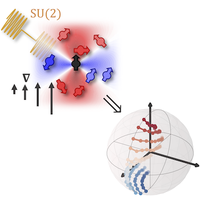
Phys. Rev. X 16, 041043 (2026)
arXiv
Random matrix discrepancy – CLuP algorithm and parametric RDT approach
New Submission | Disordered Systems and Neural Networks (cond-mat.dis-nn) | 2026-11-17 20:00 EST
We study information-theoretic and algorithmic aspects of random matrix discrepancy in proportional regime. The problem amounts to finding $ \kappa=\min_{\x\in\mB^n}|\sum_{i=1}^{n}\bar{A}_i\x_i|_2$ , where $ \bar{A}i\in\mR^{d\times d}$ is a collection of $ n$ iid GOE matrices, $ \mB^n$ are vertices of the unit cube in $ \mR^n$ , and $ \alpha=\lim{n\rightarrow \infty}\frac{n}{d^2}$ is a proportionality constant.
Strong progress is made in several directions: (i) We develop a Random duality theory (RDT) framework and utilize its a lifted variant to establish lower bounds on $ \kappa$ , which precisely match the bounds obtained via the first moment in [81]. (ii) To address analytical challenges, we propose a negative Hopfield model as a proxy for implementation of a fully lifted RDT. On the 2nd lifting level, this model fits remarkably well between the information-theoretic lower bounds from [81] and the algorithmic upper bounds from [38]. (iii) On the 3rd and 4th lifting levels, parametric RDT concepts predict a sizeable computational gap for lower $ \kappa$ values in the proxy model. Extending proxy information-theoretic fitting to algorithmic suggests a similar computational gap for matrix discrepancy in low $ \kappa$ regime, aligning with [73]. (iv) We design a Controlled Loosening Up (CLuP) algorithm for matrix discrepancy. Its performance strongly matches our analytical results – closely approaching information-theoretic predictions in lower $ \alpha$ ranges (indicating a small or nonexistent computational gap) and following the proxy model’s algorithmic predictions in higher $ \alpha$ ranges (indicating a sizeable computational gap).
Both the information-theoretic and algorithmic predictions match the corresponding phenomenologies of the symmetric binary perceptron (SBP) vector analogue in the entire $ \alpha\in(0,\infty)$ range [1,2,14,31,51,92,111].
Disordered Systems and Neural Networks (cond-mat.dis-nn), Information Theory (cs.IT), Machine Learning (cs.LG), Probability (math.PR)
MagBerry: A Julia package for modeling magnon and phonon topology and transport
New Submission | Other Condensed Matter (cond-mat.other) | 2026-11-17 20:00 EST
We present MagBerry, a Julia package for studying the topology and transport of magnons, phonons, and their hybrid excitations. It combines magnetic models and linear spin-wave Hamiltonians from this http URL with native modules for harmonic phonons and magnon–phonon coupling. These excitations are treated within a common bosonic Bogoliubov–de Gennes formulation. The package calculates bulk and boundary spectra, Berry curvature, and Chern numbers, and resolves the spin and phonon angular momentum carried by each mode. Transport calculations include thermal Hall, spin and orbital Nernst, and phonon angular momentum Hall responses. The package also evaluates the extended Berry curvature dipole contribution to nonlinear magnon thermal Hall transport. Relaxation-time Boltzmann theory gives heat and angular momentum currents. Examples based on published models reproduce topological magnon boundary spectra and illustrate phonon geometry and nonlinear transport. For an altermagnetic hybrid model, we extend a published study of the d-wave phonon angular momentum texture by calculating its Boltzmann transport coefficients. The resulting tensor describes how the longitudinal and transverse angular momentum currents vary with temperature and the direction of the temperature gradient.
Other Condensed Matter (cond-mat.other), Materials Science (cond-mat.mtrl-sci)
Liquid-liquid criticality in a fluid whose two structures favor mixing
New Submission | Soft Condensed Matter (cond-mat.soft) | 2026-11-17 20:00 EST
The generic two-state description of liquid polyamorphism requires a non-ideality opposing mixing for liquid-liquid separation. This condition assumes that the free energy of the underlying fluid is independent of the structural order, an assumption that fails when the local structures differ in size or attraction. We derive a closed-form stability condition after density relaxation for a van der Waals closure based on the second virial coefficient of a pair potential whose internal state determines both the contact distance and the well depth. The condition recovers the familiar result for structures identical in size and attraction but can change sign within the liquid when they differ. In ten of the thirty-four parameter sets examined, a critical state preferred by the liquid requires a non-ideality favoring mixing. For one such fluid, we construct the coexistence curve, which terminates at the predicted critical point at positive pressure. Attraction and excluded volume provide distinct contributions to the density-order coupling; only the former survives on a fixed lattice with single occupancy. Removing the excluded-volume contribution restores the familiar condition in 58 of the 82 such critical states found. Thus, within this closure, liquid-liquid separation can occur with a non-ideality favoring mixing.
Soft Condensed Matter (cond-mat.soft), Statistical Mechanics (cond-mat.stat-mech), Chemical Physics (physics.chem-ph)
27 pages, 3 figures, plus 3 pages of Supplemental Material. Replication package: this https URL
Magnon binding in a quantum Hall ferromagnet with a periodic electric field
New Submission | Mesoscale and Nanoscale Physics (cond-mat.mes-hall) | 2026-11-17 20:00 EST
A spin wave in a filling-one quantum Hall ferromagnet is neutral but carries an electric dipole perpendicular to its momentum. A spatially periodic electrostatic potential therefore creates parallel channels for spin waves. We use this established mechanism to calculate how confinement changes the exchange binding of magnons travelling in the same direction. Narrower channels increase the overlap of their transverse wavefunctions and strengthen the effective attraction. In an isolated harmonic channel, the energy required to remove one magnon from a cluster of $ N$ is $ \pi(k_\ast\ell)^4N(N-1)/4$ times the transverse level spacing to leading order, where $ k_\ast$ is the mean wave number along the channel and $ \ell$ is the magnetic length. We predict the frequency and momentum dependence of the spectral line for adding a second magnon to one already present, both in an isolated channel and in a coupled array. Tunnelling in a wide array can make the binding energy exponentially small, while a strip narrower than the transverse pair size recovers one-dimensional binding at sufficiently weak attraction. We also find that a moving potential can carry a single wave packet with less spreading than free propagation when its initial group velocity matches the potential’s speed.
Mesoscale and Nanoscale Physics (cond-mat.mes-hall), Quantum Gases (cond-mat.quant-gas)
7+7 pages, 3 figures
Lower Bound of Thermal Conductivity in Graphene
New Submission | Materials Science (cond-mat.mtrl-sci) | 2026-11-17 20:00 EST
Yan Gao, Yafei Ding, Hongbin Xu, Zhaoxuan Tang, Fuqing Duan, Wenmei Luo, Zhensheng Zhang, Xiaohang Zhang, Guimei Zhu, Yahui Xue, Baowen Li
The intrinsic thermal conductivity ($ \kappa$ ) of graphene remains highly controversial because of physical and metrological complexities. Although the thermal bridge method enables reliable measurements, sample fabrication remains challenging. Here, we develop a highly efficient patterning and transfer technique to systematically fabricate and characterize suspended bilayer graphene (BLG) thermal bridges with lengths of 1-30 $ \mu$ m. Suspended BLG with unavoidable polymer residues exhibits length-independent thermal conductivity of approximately 570 W/(m K) at room temperature, remaining nearly constant from 250 to 350 K and robust to rigorous surface cleaning and amorphous silicon nitride substrates. Homogeneous non-equilibrium molecular dynamics (HNEMD) simulations show that amorphous carbon coverage of only approximately 0.01 monolayer is sufficient to suppress out-of-plane flexural acoustic (ZA) phonons. These findings challenge the prevailing view that rigid substrates suppress ZA phonons more strongly than surface contamination and identify a robust lower bound of $ \kappa$ governed by amorphous surface scattering. This lower bound reflects heat conduction in graphene under realistic device conditions and provides a reference for fundamental phonon transport studies and the integration of graphene into thermal management applications in electronic devices and chips.
Materials Science (cond-mat.mtrl-sci)
4 figures in the main text; Supporting Information included in the PDF
A Practitioner’s Guide to Materials Theory and Computation in the Age of Big Data and Artificial Intelligence
New Submission | Materials Science (cond-mat.mtrl-sci) | 2026-11-17 20:00 EST
Computational modelling has become a cornerstone of materials science, with advances in atomistic simulations, high-throughput computation, and artificial intelligence transforming how materials are understood, discovered, and designed. These developments build upon generations of theoretical innovations that have translated complex mathematical and physical principles into practical predictive tools. However, the growing diversity of computational methods presents challenges for practitioners seeking a coherent understanding of their theoretical foundations. Drawing upon the author’s research experience, this monograph provides a practitioner-oriented, pedagogical overview of computational materials science, unified through the concepts of potential-energy landscapes and statistical sampling. It explores how these concepts underpin structural stability, phase behaviour, and electronic and magnetic properties, through a systematic treatment of empirical force fields, density-functional theory, many-body electronic-structure methods, statistical sampling, and property prediction. It further examines high-throughput workflows, materials databases, and the probabilistic foundations of artificial intelligence. Particular emphasis is placed on atomistic representations, graph neural networks, and generative models, highlighting the roles of symmetry, group theory, differential geometry, and stochastic processes in modern materials modelling. By connecting established physical theories with emerging data-driven approaches, this monograph offers a unified perspective on computational materials science and identifies opportunities and challenges toward physics-informed, efficient, and reliable materials discovery.
Materials Science (cond-mat.mtrl-sci)
196 pages; 60 Figures
Interaction between fluids and Helfrich membranes
New Submission | Soft Condensed Matter (cond-mat.soft) | 2026-11-17 20:00 EST
Dennis Wörthmüller, Pierre Sens, Michele Castellana
We propose a finite-element method to determine the dynamics of a fluid interacting with a membrane—a fluid layer equipped with a Helfrich elastic free energy [W. Helfrich, Z. Naturforschung C, 28, 693, (1973)]. Our analysis is based on a partitioned approach, where the state of the fluid, of the membrane, and of the mesh, are solved for at staggered steps. We show the predicting capabilities of the method by considering a macroscopic example of an elastomer membrane, which bulges as it interacts with air injected through a channel. We demonstrate that our method allows for describing large membrane deformations which are not accessible by perturbative methods. We discuss the limitations of our method, by characterizing its added-mass instability. Finally, we show how our analysis allows for understanding the physical mechanism of bulge formation, which is due to a combination of elastic stresses and membrane boundary conditions.
Soft Condensed Matter (cond-mat.soft), Biological Physics (physics.bio-ph), Fluid Dynamics (physics.flu-dyn)
Quantum Cooling by Classical Shadows
New Submission | Strongly Correlated Electrons (cond-mat.str-el) | 2026-11-17 20:00 EST
Xuepeng Wang, Debanjan Chowdhury
Cooling to ground states of many-body Hamiltonians by imaginary-time evolution is central to quantum simulation, but its non-unitary aspect prevents direct implementation on a quantum computer. Existing routes restore it by importing structure from outside the intrinsic quantum dynamics, e.g. by parameter estimation on many copies or recursive compilation. Here, we show that a single randomized snapshot of the quantum many-body system is sufficient to steer the state along the cooling direction on average. Our algorithm, shadow chain, uses randomized measurements to collapse the state to its classical record, which fixes the next unitary update. Snapshots across steps form a trajectory that is a quantum-executable sample of an auxiliary-field path integral; fluctuations among trajectories are exponentially suppressed in system size. With the randomness supplied intrinsically by the Born measurement rule, the trajectories sample themselves rather than going through external accept-reject steps. The resulting algorithm is ansatz-free and exact upon extrapolation to the continuous limit, with the exponential cost confined only to system size rather than temperature.
Strongly Correlated Electrons (cond-mat.str-el), Statistical Mechanics (cond-mat.stat-mech), Quantum Physics (quant-ph)
26 pages, 9 figures
Gapless Nature of Spin Liquid in the $S=1/2$ Kagome Heisenberg Antiferromagnet with Neural-Network Quantum States
New Submission | Strongly Correlated Electrons (cond-mat.str-el) | 2026-11-17 20:00 EST
Andreas Raikos, Alessandro Sinibaldi, Riccardo Rende, Giuseppe Carleo, Federico Becca, Luciano Loris Viteritti
Whether the spin-$ 1/2$ kagome Heisenberg antiferromagnet hosts a gapped $ \mathbb{Z}_2$ or a gapless $ U(1)$ Dirac spin liquid remains a central open question in frustrated magnetism. Here, we address this question by directly computing the triplet gap with a neural-network quantum state that does not presuppose any specific spin-liquid structure. Applying a time-reversal symmetric transformer-based ansatz to clusters of up to $ 768$ sites, we obtain state-of-the-art variational energies on two-dimensional lattices with periodic boundary conditions and estimate an energy per site of $ -0.43873(12)$ in the thermodynamic limit. Finite-size scaling of the magnetic order parameter and triplet excitation gap shows that both extrapolate to zero in the thermodynamic limit. Together, these results provide independent and direct evidence of a gapless spin-liquid ground state, consistent with the $ U(1)$ Dirac spin liquid. More broadly, they demonstrate that neural-network quantum states can resolve ground-state properties of frustrated quantum magnets that remain challenging for conventional numerical methods.
Strongly Correlated Electrons (cond-mat.str-el), Disordered Systems and Neural Networks (cond-mat.dis-nn), Quantum Physics (quant-ph)
10 pages, 8 figures, 2 tables
Flexible ground-state search algorithm on hybrid Clifford-tensor network manifolds
New Submission | Statistical Mechanics (cond-mat.stat-mech) | 2026-11-17 20:00 EST
Hari Timsina, Antonio Francesco Mello, Meghadeepa Adhikary, Marcello Dalmonte, Mario Collura
Tensor network algorithms face challenges in highly entangled regimes, such as systems with periodic boundary conditions (PBC), long-range interactions, or higher dimensions, where the required bond dimension quickly renders computations infeasible. To overcome this limitation, we introduce a novel approach that integrates the stabilizer formalism directly into the traditional density-matrix renormalization group (DMRG) algorithm. While previous methods have used Clifford unitaries to minimize ground-state entanglement, fundamentally limited to distilling that away utilizing local two-qubit operations, our framework optimizes Clifford transformations to minimize the state’s energy. We benchmark our method against standard DMRG at fixed bond dimensions for the Ising model on a ring (including long-range interactions) and on a torus. We observe systematic gains in models with local interactions - as drastic as a factor of 40 decrease in bond dimension in two dimensions. Our algorithm is readily implementable in standard DMRG codes and provides a practical way to substantially reduce algorithm costs, paving the way for large-scale simulation at volumes beyond what is presently achievable.
Statistical Mechanics (cond-mat.stat-mech), Strongly Correlated Electrons (cond-mat.str-el), Quantum Physics (quant-ph)
9 pages, 4 figures. Comments are welcome
Coupling-Response Thermodynamic Density of States for Bosonic Working Media
New Submission | Statistical Mechanics (cond-mat.stat-mech) | 2026-11-17 20:00 EST
Francisco J. Peña, Bastian Castorene, Nicolas Vidal-Silva
We introduce an operational thermodynamic density of states (TDOS), $ \mathcal{G}\lambda=(\partial S/\partial\lambda){T,\mu}$ , to characterize bosonic working media under microscopic spectral control. At fixed chemical potential, the response is strictly driven by the structural density of states, yielding the exact scaling law $ \mathcal{G}\lambda=-(d/\alpha)S/\lambda$ for homogeneous spectra $ \epsilon(k)=\Delta+\lambda k^\alpha$ , while coupling-dependent gaps generate edge terms only for finite boundary weight. Under a fixed-particle constraint, a secondary chemical-potential redistribution channel emerges. Exact solutions for quadratic bands and harmonic traps demonstrate that spatial dimensionality dictates whether this constrained TDOS exhibits a jump discontinuity or remains continuous across the Bose–Einstein condensation threshold. For pure scale control, the response maps exactly to the heat capacity, $ \lambda \mathcal{G}\lambda^{(N)}=-C_N$ . This framework is applied to evaluate reversible work in Stirling cycles and to identify observables in magnonic platforms, contrasting global spectral edges with topological Dirac gaps in honeycomb ferromagnets.
Statistical Mechanics (cond-mat.stat-mech), Quantum Gases (cond-mat.quant-gas)
Predictive sufficiency as an information microscope for time-resolved coherent scattering
New Submission | Materials Science (cond-mat.mtrl-sci) | 2026-11-17 20:00 EST
Christian Gutt, Amir Tosson, Nimmi Das Anthuparambil, Jovita Lukasik, Michael Möller
X-ray photon correlation spectroscopy (XPCS) measures dynamics through the evolution of coherent speckle patterns, most commonly summarized by intensity correlation functions. These averages describe relaxation but can conceal how speckle fluctuations evolve in time and across reciprocal space. Here we introduce an information microscope that tests whether a chosen set of XPCS observables retains the information needed to describe subsequent measured scattering dynamics. A learned representation of the present speckle sequence indicates when information remains outside the chosen description; an XPCS Alphabet then searches for experimentally accessible observables that recover it. In simulated Bragg scattering, speckle activity and anisotropy reveal signatures of correlated deformation and intermittent slip. In a controlled SAXS model, fluctuations of speckle activity provide sensitivity to the spatial extent of cooperative particle motion. In a two-dimensional glass former, retaining time-resolved speckle correlations and radial intensity recovers information lost in the average relaxation function. The fluctuations of these correlations become stronger during caging, without selecting a single dominant correlated mode. This approach uses learning to guide the physical analysis of coherent scattering, while keeping the resulting XPCS observables measurable and interpretable.
Materials Science (cond-mat.mtrl-sci)
5 figures
Measurement of Magnonic Quantum Geometry
New Submission | Strongly Correlated Electrons (cond-mat.str-el) | 2026-11-17 20:00 EST
S. Kim, M. Stone, S. E. Nagler, A. D. Christianson, Jiabin Yu, S. Okamoto, H. Miao
Quantum geometry plays a fundamental role in macroscopic quantum phenomena, including quantum Hall effects and flat-band superconductivity. However, since quantum geometry is encoded in wavefunctions rather than energy spectra, direct experimental characterization remains a formidable challenge. This challenge is particularly acute for quasiparticles in quantum materials, whose wavefunctions are generally inferred from effective low-energy models rather than measured directly. Here, we establish an experimental framework for characterizing the quantum geometry of magnons, a ubiquitous Bosonic quasiparticle of magnetically ordered states. We show that the inelastic neutron scattering (INS) cross-section measures geometric parameters of the spinor wavefunctions of ferromagnets. By tracking the energy- and momentum-dependent INS intensity, we extract the quantum geometric tensor without requiring detailed knowledge of microscopic spin-spin interactions. Our results establish magnons as an ideal arena for experimentally probing quantum geometry and open new avenues for exploring geometry-driven magnon transport and quantum Fisher information in magnetic materials.
Strongly Correlated Electrons (cond-mat.str-el), Materials Science (cond-mat.mtrl-sci)
On-demand valley control in a WSe2/CrPS4 heterostructure via optically programmed magnetic order
New Submission | Materials Science (cond-mat.mtrl-sci) | 2026-11-17 20:00 EST
Muhammad Hassan Shaikh, Daria Blach, Harishankar Jayakumar, Brayan Eraso Solarte, Kenji Watanabe, Takashi Taniguchi, Yafei Ren, Archana Raja, Chitraleema Chakraborty
The ability to optically control the valley degree of freedom in two-dimensional semiconductors is critical for scalable valleytronics. While magnetic proximity effects can lift valley degeneracy, static interfaces lack the dynamic control needed for devices. Here, we demonstrate on-demand optical switching of valley symmetry breaking in a WSe2/CrPS4 heterostructure by exploiting light-tunable magnetic order. Using polarization- and time-resolved photoluminescence, we show that excitation below the ligand-to-metal charge transfer (LMCT) gap preserves an out-of-plane Néel vector in CrPS4, generating a net out-of-plane spin at the interface and enabling spin-polarized charge transfer. This yields a robust polarization gap in the WSe2 A-exciton decay dynamics without an external magnetic field. Excitation above the LMCT gap extinguishes the polarization gap, indicating a rotation of the Néel vector to in-plane. This reversible switching provides direct evidence of spin-polarized charge transfer. Furthermore, the same optical excitation enables optical control of the decay dynamics of the low-energy excitons (XLE) by ~42%, which is potentially attributed to the modification of interfacial couplings. Our work establishes a first unique multifunctional platform where magnetic symmetry, valley polarization, and exciton relaxation are integrated and dynamically controlled by light.
Materials Science (cond-mat.mtrl-sci), Optics (physics.optics)
From RuP$3$SiO${11}$ to Ideal Geometry: Parallel-Face Octahedra for Kitaev-Dominated Interactions
New Submission | Strongly Correlated Electrons (cond-mat.str-el) | 2026-11-17 20:00 EST
Do Hoon Kiem, Satoshi Okamoto, Tom Berlijn
RuP$ _3$ SiO$ _{11}$ has recently been identified as a Kitaev spin liquid candidate via neutron scattering. To assess its proximity to the Kitaev limit, we perform \textit{ab initio} calculations of magnetic interactions, finding good agreement for the Kitaev and off-diagonal exchanges, while the Heisenberg exchange is ferromagnetic rather than the experimentally fitted antiferromagnetic one. We also identify a sizable antiferromagnetic out-of-plane exchange not captured in previous analyses. Extending the study to eight substitutional analogs in the $ MT_3Q$ O$ _{11}$ family ($ M$ = Ru, Os; $ T$ = P, As; $ Q$ = Si, Ge), we observe strong variations in magnetic interactions, highlighting the tunability of this materials class. Finally, inspired by RuP$ _3$ SiO$ _{11}$ , which exhibits a near parallel-face octahedral arrangement, we compare idealized geometries and show that the parallel-face configuration yields a Kitaev-dominated regime, suggesting a new structural route to the Kitaev limit.
Strongly Correlated Electrons (cond-mat.str-el), Materials Science (cond-mat.mtrl-sci)
4 figures
Nonlinear spin generation and spin photocurrent as a symmetry and magnetic domain probe in unconventional magnets
New Submission | Mesoscale and Nanoscale Physics (cond-mat.mes-hall) | 2026-11-17 20:00 EST
Ying Xiong, Er-Ping Li, L. K. Ang
Unconventional magnets host momentum-dependent spin splitting without spin-orbit coupling. We demonstrate that the combination of nonlinear spin polarisation and spin photocurrent is a powerful diagnostic tool for probing the spin space group symmetry, magnetic domain, and quantum geometry in unconventional magnets, providing information beyond their equilibrium spin texture. We develop a mechanism-resolved joint symmetry analysis of second-order spin photoresponse tensors and analyse their frequency dependence, magnetic parity and relaxation scaling. We show that unconventional magnets are natural platforms to achieve large magnetic-even spin photocurrent induced by unpolarised light, making them promising candidates for polariser-free spin sources. We present numerical illustrations for prototypical hybrid parity and odd parity magnet models. Our work provides optical fingerprints connecting spin-space symmetry to distinct microscopic pathways of spin accumulation and transport.
Mesoscale and Nanoscale Physics (cond-mat.mes-hall)
Beyond global density in a stochastic sandpile: the role of spatial signatures in the predictability of extremes
New Submission | Statistical Mechanics (cond-mat.stat-mech) | 2026-11-17 20:00 EST
Kamil P. Orzechowski, Julian Sienkiewicz, Piotr Fronczak
In self-organized critical systems the global load is a strong precursor of extreme events. In the two-dimensional Manna sandpile, grain density alone predicts extreme avalanches with an AUC of about 0.96. We ask whether density fully determines the system’s readiness for an extreme event, that is, whether microstates with the same number of grains are equivalent. Because density is such a strong predictor, a method that sees the full microstate can score well just by counting grains. We therefore compare only states with an identical number of grains. Even then, both a parameter-free statistic and a convolutional network distinguish states that precede an extreme avalanche from typical ones, while shuffled controls do not. The signal is a load contrast between the center and the dissipative boundaries, carried by the two lowest symmetric cosine modes. Their normalized energy is a single variable that needs no training. Together with density it recovers most of the gain that a network trained on the full microstate achieves over density alone. Readiness for an extreme avalanche therefore depends both on the total load and on how that load is distributed relative to the boundaries.
Statistical Mechanics (cond-mat.stat-mech), Computational Physics (physics.comp-ph)
Finite-time quenches across first-, second-, and infinite-order transitions in XXZ spin chains
New Submission | Strongly Correlated Electrons (cond-mat.str-el) | 2026-11-17 20:00 EST
Luiz Felipe Santos Dittberner, Luigi Berber, Maria C. O. Aguiar, Krissia Zawadzki, Helena Bragança
We investigate how equilibrium quantum phase transitions manifest themselves in small systems driven out of equilibrium by quantum quenches. We consider linear ramps of the anisotropy in spin-1/2 and spin-1 XXZ chains, which host transitions of first, second, and infinite (Berezinskii-Kosterlitz-Thouless, BKT) order. We consider system sizes available in current quantum simulators and investigate how the order of the transition, the symmetries, and the ramp duration affect the decomposition of the time-evolved state into the instantaneous eigenbasis. The order of the transition determines the dynamics: across the BKT transition, moderately slow ramps already keep the system close to its ground state, corresponding to an adiabatic evolution, whereas for the second-order Haldane-Néel transition a ramp roughly three times slower is required to reach the same regime. Across the first-order transition, since the dynamics conserves the magnetization of the initial state, we observe the formation of ferromagnetic domains, separated by a single domain wall for slow ramps and by multiple walls for faster ones. Interestingly, shortly after the transition, the state evolves as a coherent beating between domain-wall states, a behavior captured by the recently proposed quantum-state texture.
Strongly Correlated Electrons (cond-mat.str-el), Quantum Physics (quant-ph)
Adaptive nonorthogonal atomic orbitals refine charge transfer and bonding descriptors
New Submission | Materials Science (cond-mat.mtrl-sci) | 2026-11-17 20:00 EST
Emily Oliphant, Emmanouil Kioupakis, Wenhao Sun
First-principles calculations implicitly encode bonding and charge transfer, but converting periodic electronic structure into interpretable and transferable descriptors remains challenging. Recently, we introduced Crystal Orbital Guided Iteration To atomic-Orbitals (COGITO), a tool for mapping plane-wave DFT back to an interpretable, minimal basis of adaptive atomic orbitals. Here, we show how the high-dimensional bonding information from COGITO can be reduced into chemically useful descriptors of covalent bonding, charge transfer, and crystal-dependent atomic chemistry without collapsing the real-space origin of the interactions. Compared to methods that use static or orthogonal orbital bases, COGITO descriptors of short- and long-range bonding show more stability and a better ability to distinguish between ionic, covalent, and metallic bonding regimes. Lastly, COGITO reliably decomposes band dispersion into range-resolved contributions, allowing us to verify and add to the orbital origins of silicon’s low-symmetry conduction band minimum. Overall, the adaptive COGITO-based descriptors encode electronic structure, offering a well-structured route to expose the orbital interactions and charge transfer responsible for electronic properties.
Materials Science (cond-mat.mtrl-sci)
Flat-band driven bipolar anomalous Nernst effect towards volt-scale transverse thermoelectric conversion
New Submission | Materials Science (cond-mat.mtrl-sci) | 2026-11-17 20:00 EST
Haofu Wen, Xiaodong Guo, Xiaokang Xu, Peng Di, Xuebiao Ji, Ruoqi Wang, Shijun Yuan, Kunquan Hong, Qionghua Zhou, Qian Chen, Taishi Chen, Jinlan Wang
Unipolar anomalous Nernst thermopiles are critically plagued by metallic interconnects, which induce heavy Joule dissipation and compromise the module’s packing density, ultimately capping voltage generation. Here, we circumvent these limitations by establishing an intrinsic bipolar anomalous Nernst effect (BANE) paradigm, enabling seamless series integration analogous to Seebeck n-p pairs without passive metallic bridges. Focusing on flat-band topological systems, through machine learning assisted screening across multiple target properties, we identified 249 BANE materials, exhibiting near-room-temperature polarity switching. Guided by this predictive framework, we experimentally realized this phenomenon in single crystals of the Weyl ferromagnet, Co$ 2$ TiGe. Strikingly, while its intrinsic anomalous Hall conductivity (AHC) remains rigorously temperature-invariant up to the Curie temperature, the anomalous Nernst signal undergoes a sharp polarity inversion across $ T \approx 225$ K. First-principles calculations attribute this behavior to the interplay between flat bands and Weyl nodes, where thermal depopulation shifts the chemical potential across the band edge, inverting the sign of $ \partial \sigma{xy} / \partial \epsilon$ via the Mott relation. This work opens an avenue toward compact, monolithic transverse thermopiles capable of volt-scale generation free from interfacial parasitic dissipation.
Materials Science (cond-mat.mtrl-sci), Applied Physics (physics.app-ph)
41 pages, 4 figures, including Supplementary Information
Emergence of Anisotropic Defect Networks in Shocked Diamond
New Submission | Materials Science (cond-mat.mtrl-sci) | 2026-11-17 20:00 EST
Zipeng Xu, Kento Katagiri, Tatiana Pikuz, Wanghui Li, Anirudh Hari, Dorian P. Luccioni, Sophie E. Parsons, Yuichi Inubushi, Kohei Miyanishi, Hirotaka Nakamura, Tadashi Togashi, Makina Yabashi, Toshinori Yabuuchi, Norimasa Ozaki, Leora E. Dresselhaus-Marais
Predicting failure after shock loading requires understanding how the structures created during compression evolve as the material unloads. In diamond, both crystal plasticity and localized amorphization have been reported to accommodate shock-induced shear. However, it remains unresolved how the resulting defect structures organize in three dimensions during compression and how this organization influences where tensile damage localizes during release. Here we couple phase-contrast-enhanced radiography at an X-ray free-electron laser with simulations to address this question in single-crystal diamond. By combining radiographs at multiple pump-probe delays with hydrodynamic calculations, we show that linear features first become visible behind the plastic wavefront while material near the front remains highly compressed. By rotating the viewing direction about the shock axis, we find that the projected feature angles favor finite $ {111}$ sheets elongated along in-plane directions close to $ \langle112\rangle$ . Molecular dynamics simulations show that an interconnected network of amorphous bands and stacking faults forms during compression, preferentially on $ {111}$ variants with larger in-plane shear traction. Projections of this network qualitatively reproduce the observed loss of feature visibility with rotation. During simulated release, tension opens local cracks within these pre-existing amorphous bands. These results support a pathway in which the crystallographically organized defect network formed during compression provides preferred sites for tensile damage during release. This pathway may also operate in other strongly covalent solids.
Materials Science (cond-mat.mtrl-sci)
32 pages and 9 figures in main text; Supplemental Material: 15 pages, 5 figures, 1 table
SPARC: Evidence-guided adaptive model composition for materials discovery
New Submission | Materials Science (cond-mat.mtrl-sci) | 2026-11-17 20:00 EST
Sissi Feng, Yuchen Han, Runze Zhang, Jiaru Bai, Brandon Sutherland, Ali Shayesteh Zeraati, Jason Hattrick-Simpers, Varinia Bernales, Alán Aspuru-Guzik, Yang Bai
Closed-loop experimentation requires more than selecting the next experiment. It must also determine which existing measurements and model-derived relationships are sufficiently supported to influence that decision. Here we introduce SPARC (Sparse Predictive Aggregation of Regression Components), a framework that continually revises this support as experimental evidence accumulates. Competing model families are evaluated through out-of-fold predictions, so that each model is tested on observations not used in its corresponding fit. Sparse posterior composition assigns model influence according to predictive contributions supported by the out-of-fold evidence, retaining complementary contributions from several model families. Candidate-dependent predictive dispersion and residual variability define trust, which modulates exploration alongside the predicted response. Independent diagnostics also prioritize existing measurements for prospective verification, with model-derived trust reported alongside them. Across eight published materials datasets, SPARC achieved higher $ R^2$ than the corresponding literature-reported values in six, with relative gains of up to 77% without the density-functional-theory- or experiment-derived descriptors used by several published pipelines. In an automated alkaline oxygen-evolution-reaction campaign, 8 of 11 SPARC-selected experiments reached overpotentials below 300 mV, with a best value of 242 mV, compared with 18 of 125 initial experiments. Measurements prioritized for verification before repetition subsequently deviated by 76 mV on average, compared with 27 mV for matched controls. SPARC therefore turns experimental evidence into a basis for revising model influence, directing exploration and identifying measurements that warrant verification.
Materials Science (cond-mat.mtrl-sci), Artificial Intelligence (cs.AI), Machine Learning (cs.LG)
52 pages, 5 figures; main text with Supplementary Information
Quasi-particle sector hybridization and the onset of chaos in spin ladders
New Submission | Strongly Correlated Electrons (cond-mat.str-el) | 2026-11-17 20:00 EST
Arnav Pushkar, Abhik Kumar Saha
How quasiparticle numbers influence the emergence of quantum chaos is a fundamental question in interacting many-body systems. We investigate this interplay in a spin-$ 1/2$ XXZ ladder, where the strong-rung regime supports an approximate organization of many-body eigenstates into quasi-particle(triplon) number sectors. Using spectral statistics, triplon-based observables, and von Neumann entanglement entropy, we characterize the microscopic hybridization of triplon-number sectors as the leg coupling increases. We find that the crossover toward Gaussian orthogonal ensemble statistics shifts to weaker couplings with increasing system size, whereas the characteristic crossover scale associated with triplon-sector hybridization exhibits a much weaker size dependence. Furthermore, eigenstate-to-eigenstate fluctuations exhibit scaling consistent with the eigenstate thermalization hypothesis even while remnants of the strong-rung structure persist, suggesting that spectral chaos does not necessarily require complete sector hybridization.
Strongly Correlated Electrons (cond-mat.str-el), Statistical Mechanics (cond-mat.stat-mech), Quantum Physics (quant-ph)
7+5 pages, 4+4 figures
Interplay of interfacial energetics and selective Ni segregation in the morphology of co-precipitates in low-alloy steels
New Submission | Materials Science (cond-mat.mtrl-sci) | 2026-11-17 20:00 EST
Jia-Hong Ke, Anshul Kamboj, Mukesh Bachhav
Coupled precipitation and interfacial segregation in low-alloy steels change precipitate stability and morphology, which influence strengthening and embrittlement. Cu-rich precipitates (CRPs) and Mn-Ni-Si-rich precipitates (MNSPs) frequently form core-shell or appendage morphologies, but the interfacial energetics controlling this change are not well quantified. We combine a density-functional-theory-trained cluster expansion with lattice Monte Carlo simulations to evaluate the Fe/CRP, Fe/MNSP and Cu/MNSP interfaces within one Hamiltonian. The three coefficients based on excess internal energy follow gamma_Cu/MNSP < gamma_Fe/CRP <~ gamma_Fe/MNSP and give a positive work of adhesion and a negative spreading parameter, consistent with favorable Mn-Ni-Si attachment to a CRP and partial coverage. Only Ni segregates to the Fe/CRP boundary. Mn and Si segregate weakly on their own but become more enriched when Ni is present and co-segregate with Ni at the boundary. Ni forms an interfacial layer about one monolayer thick with an excess of 7.4-9.6 atoms/nm^2, develops B2-like local order and shows an energy reduction that increases with Ni coverage. At 1 at.% matrix Ni, a Gibbs adsorption analysis gives a Fe/CRP free-energy reduction of about 0.15 J/m^2. These interface coefficients and segregation trends connect segregation, interface energy and co-precipitation and support compositional optimization in low-alloy steels.
Materials Science (cond-mat.mtrl-sci)
43 pages, 13 figures, 1 table (main text); supplementary information included at the end (8 figures, 4 tables)
Spontaneous Chiral Superradiance of a Spin-1 Condensate in a Ring Cavity
New Submission | Quantum Gases (cond-mat.quant-gas) | 2026-11-17 20:00 EST
Jingjun You, Haoran Jia, Xinyu Feng, Zhenhua Yu, Su Yi, Yuangang Deng
We investigate superradiant phase transitions in a spin-$ 1$ Bose-Einstein condensate coupled to a ring cavity, where two symmetry-related Raman processes couple the atomic spin states to counterpropagating cavity modes. Above the superradiant threshold, we find that the symmetry between the two Raman channels is spontaneously broken, giving rise to a chiral superradiant (CSR) phase. Despite the exchange symmetry of the Hamiltonian, the CSR state spontaneously selects one of the two propagation directions, with one cavity mode becoming macroscopically occupied while its counterpropagating partner remains dark. Spin-dependent collisions further reshape the superradiant phase diagram by selectively shifting the boundaries between the chiral and symmetric superradiant phases, a feature intrinsic to the multicomponent spin-$ 1$ manifold. For sufficiently negative spin-dependent interactions, the interaction-induced modification of the atomic level structure gives rise to a reversed plane-wave phase characterized by an inverted internal-state occupation. These results identify spontaneous selection between symmetry-related superradiant channels as a mechanism for generating chirality in many-body cavity QED and demonstrate how spin-dependent collisions control the resulting superradiant phase structure.
Quantum Gases (cond-mat.quant-gas)
13 pages, 6 figures
Exact mobility edges in high-dimensional quasiperiodic networks
New Submission | Disordered Systems and Neural Networks (cond-mat.dis-nn) | 2026-11-17 20:00 EST
Jia-Hui Zhang, Shan-Zhong Li, Zhi Li
Inspired by the one-dimensional hidden self-duality [Phys. Rev. Lett. 134, 246301 (2025)], we establish a generalized theoretical framework for a specific class of high-dimensional quasiperiodic network models. Specifically, as long as the periodic network acts as bond-decorating links and the quasiperiodic potentials are spatially separable, the system can be mapped onto an effective high-dimensional generalized Aubry-André equation by integrating out the periodic sites. This mapping restores the hidden self-duality symmetry in these complex models, thereby yielding exact mobility edges. Taking two-dimensional and three-dimensional models as examples, we demonstrate the consistency between the theoretical prediction and the numerical results. This paper establishes a clear paradigm for mapping high-dimensional quasiperiodic networks to high-dimensional Aubry-André models, providing a systematic pathway for the construction and exploration of the exact mobility edge in high-dimensional systems.
Disordered Systems and Neural Networks (cond-mat.dis-nn)
10 pages, 4 figures, conference or other essential info
A mesoscale damage model for void nucleation and growth in shock loaded microstructure informed by computer vision
New Submission | Materials Science (cond-mat.mtrl-sci) | 2026-11-17 20:00 EST
Abhijith Thoopul Anantharanga, Brandon Runnels
Spallation in ductile materials under high strain rates occurs through the process of void nucleation, growth, and coalescence. Void nucleation is known to depend on factors ranging from microstructural to stress state. The criteria for void nucleation in damage models are stochastic, and microstructural awareness is often neglected. Recently, it was shown that nucleation propensity can be estimated using computer vision. In the present work, this is integrated with a continuum damage model framework for comprehensive simulation of spallation in tantalum under plate impact. Void nucleation probability is governed by a susceptibility field, predicted from grain orientations and grain boundary (GB) energy, with a mechanical barrier set by the local maximum principal stress. This is coupled to a crystal plasticity model within a Lagrangian shock simulation, with microstructure selectively resolved to reduce computational cost. The model is calibrated at a flyer velocity of 196 m/s, where the simulated free surface velocity (FSV) matches experimental measurements of shock arrival, peak state, release and the pullback signal measured in flyer impact experiments, with some deviations confined to the late time ringing. With no further parameter changes, the model transfers to a 214 m/s case and accurately reproduces the FSV. To demonstrate the microstructure-awareness of the nucleation model, a selection of synthetic microstructures is presented for comparison. In the resolved microstructure, voids nucleate predominantly (though not exclusively) at GBs and triple junctions. It is shown that the FSV differs significantly based on the incorporated microstructure, yielding the correct FSV prediction only in the case of representative microstructures.
Materials Science (cond-mat.mtrl-sci)
Higher-order statistical structure in perfume item combinations beyond a pairwise maximum-entropy model
New Submission | Statistical Mechanics (cond-mat.stat-mech) | 2026-11-17 20:00 EST
We find that deviations from a pairwise maximum-entropy model in perfume item combinations are organized around particular shared item pairs. We analyze 1,979 perfumes using 50 binary variables representing the most frequently listed items. Although the pairwise model approximately reproduces the distribution of the number of listed items per perfume, the observed three-item marginal distributions exhibit deviations exceeding those obtained from synthetic datasets subjected to the same model-refitting procedure. Strongly deviating triplets are concentrated around shared item pairs, and this concentration cannot be explained by the participation frequencies of individual items alone. We then introduce three-body couplings for 50 selected triplets and reoptimize all model parameters. The sum of squared standardized residuals over the remaining 19,550 triplets decreases by 5.44%, with substantially larger reductions for triplets sharing an item pair with selected triplets. Furthermore, a static linear-response calculation accounting for the readjustment of lower-order parameters approximately reproduces the resulting changes in predicted co-occurrence frequencies, with a Pearson correlation coefficient of 0.850. These results reveal the organization of higher-order statistical dependencies and characterize how selected three-body couplings affect predictions throughout the system.
Statistical Mechanics (cond-mat.stat-mech)
Chiral-phonon-mediated spin current injection into an Ising superconductor
New Submission | Mesoscale and Nanoscale Physics (cond-mat.mes-hall) | 2026-11-17 20:00 EST
Jiayan Zhang, Gaoyang Li, Yanxia Xing
We theoretically propose chiral-phonon-mediated spin current injection into an Ising superconductor in a chiral-insulator/Ising-superconductor heterostructure, where nonequilibrium phonons driven by a temperature gradient transfer their angular momentum to electron spins via interfacial phonon-spin conversion. Using the nonequilibrium Green’s function formalism, we derive an expression for the injected spin current and show that it depends on the difference between the contributions from the two phonon branches with opposite circular polarizations. We further investigate the temperature dependence of the injected spin current density at different in-plane magnetic field strengths. In the superconducting state, the spin current density increases with temperature or in-plane magnetic field strength. In addition to the kink at the superconducting transition, a second kink appears below the transition temperature. The position of this kink is consistent with the onset of phonon-induced two-quasiparticle excitations as the superconducting gap decreases with increasing temperature. We further investigate the magnetic-field dependence of the kink temperature in a temperature–magnetic-field phase diagram.
Mesoscale and Nanoscale Physics (cond-mat.mes-hall)
Optical response of quantum metals
New Submission | Strongly Correlated Electrons (cond-mat.str-el) | 2026-11-17 20:00 EST
Erik van Heumen, Martin Dressel, Simone Fratini
Strongly interacting quantum systems display puzzling electrical transport properties whose interpretation remains controversial. Many theoretical and phenomenological analyses assume that the complex behaviour observed in such quantum materials' originates either from quasi-particles dressed with an anomalous electron self-energy or from collective excitations associated with hydrodynamic flow. Despite their distinctly different starting points, the underlying assumption is that dissipation of electrical current arises from the relaxation of the total momentum of charge carriers. This classical description breaks down in the absence of long-lived charge carriers. In such strange metals dissipation seems to be governed by the rate at which equilibrium is thermally restored, and it has been suggested that this constitutes an upper bound, known as the Planckian limit’. Here we show that in this quantum regime a description of the conductivity in terms of relaxation rates no longer suffices: strange metal transport is carried instead by fast-decaying current fluctuations, which together with quantum detailed balance give rise to the widely observed Planckian dissipation. The distinction between classical and quantum metals becomes transparent when experimental data is analysed in terms of the current-current correlation function instead of the optical conductivity. When applied to the cuprate superconductors, such analysis uncovers that the strange metal response is present at all doping levels, and that a second, classical component develops above optimal doping. This simple, but powerful, approach further highlights essential features associated with superconductivity, (pseudo-)gaps, provides fresh insight in the properties of metals, and identifies key areas where progress in our theoretical understanding is needed.
Strongly Correlated Electrons (cond-mat.str-el), Superconductivity (cond-mat.supr-con)
11 pages, 3 figures+2 extended figures
Fragmentation in Non-Hermitian Many-Body Systems
New Submission | Strongly Correlated Electrons (cond-mat.str-el) | 2026-11-17 20:00 EST
In non-Hermitian (NH) fermionic chains with spatially random imaginary gauge fields, single-particle eigenstates exhibit erratic NH skin localization with strongly fluctuating, subexponential decay, distinct from both conventional skin accumulation and Anderson localization. At finite filling, Pauli exclusion suppresses macroscopic accumulation and instead leads to fragmentation of the particle density, in sharp contrast to Hermitian disordered systems. Using exact free-fermion methods, we show that the density organizes into disconnected regions of high and low occupancy, forming spatially separated Fermi domains whose number $ N_{\mathrm{FS}}$ scales subextensively with system size $ L$ . Remarkably, fragmentation is not only an equilibrium property but also emerges dynamically in the NH evolution, unlike in Hermitian systems where such structures are not dynamically selected. This behavior admits a Coulomb-gas description in a stochastic potential, establishing a direct link between erratic NH skin localization and real-space fragmentation of many-body states.
Strongly Correlated Electrons (cond-mat.str-el), Quantum Physics (quant-ph)
11 pages, 5 figures, accepted for publication in Phys. Rev.B, Supplemental document not included
Thermal-energy relaxation in chiral quantum Hall edge mode
New Submission | Mesoscale and Nanoscale Physics (cond-mat.mes-hall) | 2026-11-17 20:00 EST
We study the nonequilibrium state generated by a real Ohmic contact (ROC) in the charge-fractionalization regime. We then investigate its thermal-energy relaxation along a quantum Hall edge mediated by a fictitious Ohmic contact (FOC) with large capacitance and perfect coupling to the edge. For cold Ohmic contacts, the electron distribution function and current noise are fully described by their equilibrium forms and the corresponding Fermi-Dirac distribution. In contrast, in the case of hot Ohmic contacts, strong thermalization effects do not drive the outgoing state into complete equilibrium. Both the distribution function and the noise retain signatures of the initial nonequilibrium state and therefore cannot be characterized solely by the effective contact temperature, contrary to common assumptions.
Mesoscale and Nanoscale Physics (cond-mat.mes-hall)
Inelastic confinement-induced resonances in multiwell potentials
New Submission | Quantum Gases (cond-mat.quant-gas) | 2026-11-17 20:00 EST
Fabio Revuelta, Alejandro Saenz
Recently, resonance features associated with multiwell effects have been reported in a fascinating experiment conducted with an ultracold-atom quantum simulator [Y. K. Lee, H. Lin, and W. Ketterle, Phys. Rev. Lett. 131, 213001 (2023)]. The results were explained as a consequence of superexchange, which determines the spin dynamics in a singly-occupied Mott insulator, by allowing for the virtual population of two particles on the same site. In this work, a complementary interpretation of the resonance features is provided based on inelastic confinement-induced resonances, manifested as avoided crossings in the two-particle spectrum, showing excellent agreement with the experimental results. The comparison of the results of the single- and double-well descriptions of the optical trapping potential confirms the multiwell origin of the experimental features. However, the double-well model is already shown to be sufficient for providing an explanation of the apparent symmetry violation that occurs within single-well models. Furthermore, certain limitations of the harmonic approximation are discussed.
Quantum Gases (cond-mat.quant-gas)
30 pages, 9 figures
Knitting the Ising Transition: Statistical Physics as a Tool for Stochastic Knit Design
New Submission | Soft Condensed Matter (cond-mat.soft) | 2026-11-17 20:00 EST
Gabrielle Chang, Kafumi Akaho, Tomohiko G. Sano, Samuel Poincloux
Textile designs are typically based on biperiodic, deterministic patterns. However, hand and machine manufacturing are not restricted to periodic patterns. Instead, the entanglement topology can be chosen for each base unit cell of the textile. Non-deterministic processes, such as stochastic realisations of physical systems, can then serve as design tools for creating original patterns. In this Proceedings, we present a proof of concept for stochastic design by generating knitted fabrics from Ising model spin patterns. We leverage the binary analogy between knit/purl stitches and up/down spins to produce fabrics that directly represent spin realisations at different temperatures. Ising patterns then play the role of topological instructions to arrange the entanglements in the fabric. This proof of concept paves the way for novel stochastic designs of fabrics whose properties are directly controlled by the statistical characteristics of an underlying physical process.
Soft Condensed Matter (cond-mat.soft), Disordered Systems and Neural Networks (cond-mat.dis-nn)
16 pages, 5 figures
When the Boundary Changes the Bulk: Topological Edge Modes in Dynamical Quantum Phase Transitions
New Submission | Statistical Mechanics (cond-mat.stat-mech) | 2026-11-17 20:00 EST
For dynamical quantum phase transitions (DQPTs) in open chains it has been noted that the boundary can change the bulk: in time windows bounded by DQPTs, exponentially localized edge modes of the Loschmidt matrix produce a finite change in the intensive return rate. These modes have been attributed to topological properties of the initial and final Hamiltonians. Here we show that it is not the topology of the Hamiltonians but rather that of the non-Hermitian Loschmidt matrix which protects these edge modes. In particular, we show that topological edge modes can exist in class A, where both Hamiltonians are topologically trivial. For classes A, BDI, and AIII we show that these modes are protected by $ \mathbb{Z}$ indices of a Toeplitz operator and that K-splitting theorems provide a precise bulk-boundary correspondence. In class D, they are protected instead by a $ \mathbb{Z}_2$ index that records whether the quench has flipped the fermion parity at the edge. The bulk invariant for class D can be formulated either as a ratio of the Loschmidt amplitudes for periodic and anti-periodic boundary conditions or as a winding number that counts phase vortices in momentum and time. We discuss examples and provide numerical data for all four topological classes.
Statistical Mechanics (cond-mat.stat-mech), Strongly Correlated Electrons (cond-mat.str-el), Quantum Physics (quant-ph)
Tunable topological droplets on supercoiled DNA under tension
New Submission | Soft Condensed Matter (cond-mat.soft) | 2026-11-17 20:00 EST
Enrico Skoruppa, Prithwidip Saha, Jan Brugués, Jan Lipfert, Davide Marenduzzo, Helmut Schiessel
DNA–protein co-condensation is an important regulatory mechanism for gene expression and repair. For straight DNA under constant stretching forces, co-condensation is ``all-or-nothing’’: above a critical force, condensates are prevented from nucleating, while below it the entire molecule collapses into a droplet. Here we show by coarse-grained simulations and analytic theory that DNA supercoiling mechanically differentiates the condensation substrate: DNA plectonemes constitute force-insulated pockets on which condensates can nucleate even above the critical force. The size of the resulting droplets is tunable through the applied force and linking number. Surface tension drives the coarsening of multiple plectoneme-associated condensates into a single topological droplet. Magnetic tweezers experiments with spermine reproduce both the force-dependent collapse and the supercoiling-dependent condensation.
Soft Condensed Matter (cond-mat.soft), Biological Physics (physics.bio-ph)
22 pages, 9 pages
Exploring Energy Landscapes for Functional Materials: Ga vacancies in $β$-Ga${2}$O${3}$
New Submission | Materials Science (cond-mat.mtrl-sci) | 2026-11-17 20:00 EST
Soon Woo Park, Philipp Pracht, Seán R. Kavanagh, David J. Wales
Energy landscape exploration requires extensive energy and force evaluations, making efficient access to interatomic potentials an important practical challenge. We present a persistent socket interface that connects the landscape exploration tools in the GMIN, OPTIM, and PATHSAMPLE programs to potentials available through the Atomic Simulation Environment (ASE). The persistent design keeps both the calculator and socket connection active throughout the search, avoiding repeated initialisation. We apply this framework to understand and predict the properties of Ga vacancies in $ \beta$ -Ga$ _2$ O$ _3$ using two NequIP-based potentials, and construct kinetic transition networks describing complex vacancy configurations and migration pathways. Temperature-dependent analysis of the dominant paths reveals how the most probable migration sequence can change, with the mechanism governed by global properties of the network, rather than simply the highest energy barrier. Visualisation, mean first-passage times, and heat capacities enable us to connect the organisation of the landscape to relaxation time scales and thermodynamic observables. The interface extends energy landscape methods to ASE-compatible atomistic models, providing a general framework for combining global optimisation, transition state searches, kinetic network analysis, and thermodynamic characterisation with recent developments in machine-learned interatomic potentials.
Materials Science (cond-mat.mtrl-sci), Chemical Physics (physics.chem-ph)
Porosification of the dielectric layer in alternating-current electroluminescence devices enables high-resolution tactile imaging
New Submission | Materials Science (cond-mat.mtrl-sci) | 2026-11-17 20:00 EST
Mingwei Gu, Licheng Li, Zeyuan Zhou, Ying Yang, Zixiang Nie, Xingyu Ma, Junshuai Chen, Lin Zheng, Jinhui Gu, Jia-Sen Xie, Ziling Wei, Mengxing Huang, Jin Ge
Vision-based tactile sensing enables high-resolution contact perception, yet bulky optical architectures consume valuable space and constrain the functional design of dexterous robotic hands. Here we introduce a self-emissive tactile imaging strategy based on alternating-current electroluminescence (ACEL) devices, in which a compressible porous dielectric encodes contact pressure into spatial emission patterns without external illumination or discrete sensing pixels. We identify a nonlinear capacitance-dependent emission window that provides a basis for tunable pressure-to-light conversion. Pore-size engineering further suppresses local emission deficiencies, reducing spatial intensity variation by nearly ninefold and enabling faithful imaging of contact features down to 100 {\mu}m. The continuous electroluminescent interface also reproduces complex contact patterns without computational reconstruction of electrical fields. Direct lamination of the ACEL device onto a complementary metal-oxide-semiconductor (CMOS) image sensor is expected to enable compact contact imaging in an assembly less than 5 mm thick, substantially thinner than conventional vision-based tactile sensors. This approach could reduce the space required for high-resolution tactile imaging, offering greater design freedom for dexterous robotic hands.
Materials Science (cond-mat.mtrl-sci), Optics (physics.optics)
Finite-size scaling of $\mathcal{PT}$-symmetry breaking decoupled from thermodynamic criticality in a complex-conjugate Ising model
New Submission | Statistical Mechanics (cond-mat.stat-mech) | 2026-11-17 20:00 EST
Yihan Wang, Yuting Wang, Lihui Sun, Qionglin Dai, Haihong Li, Lufeng Zhang, Yuhai Liu
We study a two-dimensional anisotropic Ising model with complex-conjugate couplings. Analytic continuation of the exact anisotropic Ising critical condition yields a candidate thermodynamic critical line, which is independently supported by finite-size scaling confirming the two-dimensional Ising universality class. Exact diagonalization of the transfer matrix and finite-size extrapolation reveal that the spectrum becomes complex, defining a separate $ \mathcal{PT}$ -symmetry-breaking boundary in the thermodynamic limit. We find $ K_{\rm PT}<K_c$ throughout the parameter range studied, leaving an intermediate regime with a complex spectrum while the system remains thermodynamically disordered. The spatial correlations remain short-ranged at $ K_{\rm PT}$ , in contrast to the critical correlations at $ K_c$ , directly distinguishing the spectral transition from thermodynamic criticality. The complex-conjugate anisotropy modifies the finite-size free-energy amplitude, and accounting for the corresponding anisotropy factor recovers the Ising central charge $ c=1/2$ . These results demonstrate that spectral $ \mathcal{PT}$ -symmetry breaking can occur without thermodynamic criticality, establishing a decoupling between spectral and thermodynamic transitions in a two-dimensional non-Hermitian statistical system.
Statistical Mechanics (cond-mat.stat-mech)
15 pages,9figures
Universal Analytical Description of Magnetoexcitons in Two-Dimensional Semiconducting Materials
New Submission | Mesoscale and Nanoscale Physics (cond-mat.mes-hall) | 2026-11-17 20:00 EST
Dang-Khoa D. Le, Dai-Nam Le, Ngoc-Loan Phan, Van-Hoang Le
Matching the Coulomb and logarithmic limits of the Rytova–Keldysh model gives a universal zero-field spectrum for monolayer exciton $ s$ states, $ E_n\simeq-\mathrm{Ry}^\ast/[n-1/2+f_n(\xi)]^2$ , where $ \xi$ is the screening parameter. Analytical radii determine diamagnetic coefficients and the magnetic crossover scale. Zero-field deviations peak near $ 1%$ across the full screening range $ 0\leq\xi\leq100$ . For the sampled hBN-encapsulated monolayers, magnetoexciton energies agree with numerical spectra to sub-meV rms up to $ 100\T$ and capture the measured orbital shifts. Shared parameters link optical and magneto-optical spectra.
Mesoscale and Nanoscale Physics (cond-mat.mes-hall), Materials Science (cond-mat.mtrl-sci), Strongly Correlated Electrons (cond-mat.str-el)
5 pages, 3 figures, 2 tables
Ultrastrong coupling between magnetoplasmons and higher cyclotron-resonance harmonics induced by spatially inhomogeneous electromagnetic fields in two-dimensional electron systems
New Submission | Mesoscale and Nanoscale Physics (cond-mat.mes-hall) | 2026-11-17 20:00 EST
Kazuyuki Kuroyama, Shimpei Nakamura, Motoaki Bamba
Finite-wave-vector electromagnetic fields provide a route to accessing nonlocal collective dynamics in two-dimensional electron systems. Here, we theoretically investigate the magnetoplasmon response of a two-dimensional electron system subjected to a spatially nonuniform electromagnetic field in a perpendicular magnetic field. By combining Maxwell’s equations with the Kubo formula, we derive the nonlocal magnetoconductivity tensor and obtain the self-consistent dispersion relation for collective modes. We show that a finite in-plane wave vector enables higher-order cyclotron transitions, allowing higher harmonics of the cyclotron resonance to contribute to the nonlocal conductivity. These harmonics hybridize with the magnetoplasmon mode, producing avoided crossings in the collective-mode spectrum characteristic of Bernstein modes. To quantify this hybridization, we establish a correspondence between the Maxwell-Kubo dispersion relation and a Hopfield-type Hamiltonian and derive an analytical expression for the effective coupling strength between the magnetoplasmon and the n-th cyclotron-resonance harmonic. Our analysis reveals that the normalized coupling strength exhibits a nonmonotonic dependence on the in-plane wavelength, reaching a maximum that becomes nearly independent of electron density in the high-density regime. These results establish a quantitative connection between nonlocal magnetoconductivity, Bernstein-mode physics, and effective collective-mode coupling, providing design guidelines for realizing ultrastrong coupling in terahertz magnetoplasmonic systems.
Mesoscale and Nanoscale Physics (cond-mat.mes-hall)
Critical corner angles and defect exchange in confined nematics with splay-bend anisotropy
New Submission | Soft Condensed Matter (cond-mat.soft) | 2026-11-17 20:00 EST
In confined nematics, the director turning imposed by the walls is absorbed by defects, and we show that the corners exchange these defects with the liquid. A tangentially anchored corner of opening angle $ \omega$ takes one of several types, labelled by the number $ m$ of half-turns of the director relative to the radius; neighbouring types differ by a bound defect of index $ \pm\frac12$ , and logarithmic energies decide when the corner sheds or absorbs it. For equal elastic constants the critical angles are $ 72^\circ$ , $ 120^\circ$ , $ 216^\circ$ and $ 360^\circ$ , with windows of bistability between them, explaining the hidden defect near $ 72^\circ$ vertices and selecting the equilibria of polygons and discs. We introduce unequal splay and bend constants through the cubic invariant $ Q_{lk},\partial_lQ_{ij},\partial_kQ_{ij}$ in reduced Landau–de Gennes theory; bounding the order by its bulk value makes the problem well posed, without further elastic terms, whenever both Frank constants are positive. At first order only the splay corner feels the anisotropy; other corner and defect energies are even in it and follow exactly by quadrature. The anisotropy moves the angle above which a splay corner sheds a $ +\frac12$ defect from $ 104^\circ$ to $ 136^\circ$ as $ K_3/K_1$ rises from $ 0.54$ to $ 1.86$ , and so predicts which polygons prefer splay corners and which interior defects. Finite-element computations for polygons of three to eight sides and the disc confirm this: the exchange occurs within the predicted range by migration of $ +\frac12$ defects into the corners, near which states with zero, one and two splay corners are nearly degenerate.
Soft Condensed Matter (cond-mat.soft)
A Universal Algebraic Construction of Hilbert-Space Fragmentation
New Submission | Statistical Mechanics (cond-mat.stat-mech) | 2026-11-17 20:00 EST
Pramod Padmanabhan, Vladimir Korepin
We present a mechanism for obtaining Hilbert-space fragmentation from arbitrary quantum lattice Hamiltonians acting on finite-dimensional local spaces. We first express the Hamiltonian in an algebraic form using supersymmetry (SUSY) and parasupersymmetry (paraSUSY) generators. Enlarging their representations defines a lifting procedure, which we study in two forms, site-wise and bond-wise lifting. Site-wise lifting introduces immobile zero modes that generate exponentially many invariant sectors while retaining the original dynamics in the fully active sector. We determine the sector structure and establish strong fragmentation for uniform lifts at fixed intermediate zero-mode density. For nearest-neighbor chains, correlation functions reveal restricted propagation and, in the mixed-field example, persistent local memory. Bond-wise lifting produces mobile conserved strings, pair-flip dynamics and fluctuating dimers, and extends to fragmented unitary circuits. Different representations and embeddings realize different fragmentation mechanisms. Some of the fragmented models obtained by this method include lifted permutation and Ising spin chains, a lifted toric code, the (XXC) families of spin chains, and fragmented extensions derived from the integrable (H_{1,11}) and (H_{1,3}) seed densities. The last two models are derived from Hietarinta’s classification of constant $ 4\times 4$ Yang-Baxter solutions.
Statistical Mechanics (cond-mat.stat-mech), Strongly Correlated Electrons (cond-mat.str-el), Mathematical Physics (math-ph), Quantum Physics (quant-ph)
35 pages + Appendices, 9 figures
Bright-Dark State Interplay Governs Vibronic Decoherence in Molecular Aggregates
New Submission | Statistical Mechanics (cond-mat.stat-mech) | 2026-11-17 20:00 EST
Sreeja Loho Choudhury, Abhradeep Sarkar, Raja Ghosh
In this study, we establish a spectroscopy-driven framework that connects optically bright vibronic eigenstates to their subsequent decoherence dynamics in excitonic molecular aggregates. Combining the Multiparticle Holstein Formalism with explicit system–bath interactions, we demonstrate that relaxation-induced purity loss is governed by three interconnected factors: (i) the bath spectral window, which determines the accessibility of intra- and interband relaxation pathways; (ii) the local network of dark vibronic states surrounding the optically prepared bright state; and (iii) the energetic placement of the bright state, which controls downhill relaxation. Remarkably, states with different excitation energies exhibit nearly identical purity dynamics when their local relaxation networks are similar. The resulting H–J asymmetry further reveals the importance of energetic directionality. These findings establish a reliable connection between optical spectroscopy, vibronic band structure, and state-selective loss in purity.
Statistical Mechanics (cond-mat.stat-mech), Materials Science (cond-mat.mtrl-sci), Quantum Physics (quant-ph)
Geodesics and a Hubble Relation in Nonstationary Thermodynamic Geometry
New Submission | Statistical Mechanics (cond-mat.stat-mech) | 2026-11-17 20:00 EST
Thermodynamic geometry offers a versatile lens from equilibrium to nonequilibrium, yet typically assumes a stationary metric. Here we study nonstationary thermodynamic geometry, where the metric evolves even at fixed control parameters. The resulting temporal connection generalizes the geodesic equation and redistributes dissipation along optimal control paths. We further establish a thermodynamic Hubble relation that distinguishes relaxation toward equilibrium from geometric expansion or contraction. Brownian examples demonstrate that externally modulated friction can reduce minimum dissipation, while heat exchange with a finite reservoir can induce geometric contraction and Mpemba-type relaxation. Our framework lays a geometric foundation for understanding complex evolving nonequilibrium systems.
Statistical Mechanics (cond-mat.stat-mech), General Relativity and Quantum Cosmology (gr-qc), Classical Physics (physics.class-ph)
5+2 pages, 3 figures, comments are welcome!
A Neural Density Functional for Spatial Structure and Orientational Ordering in Two-Dimensional Lattice Hard Rods
New Submission | Statistical Mechanics (cond-mat.stat-mech) | 2026-11-17 20:00 EST
Paul Bitzer, Jens Weimar, Martin Oettel
We study spatial structure and orientational ordering of horizontal and vertical hard rods on a two-dimensional square lattice using neural classical density functional theory. We construct two convolutional architectures that exploit the symmetry relating the rod orientations: a direct-$ c^{(1)}$ network (learning the map between the first functional derivative of the excess free energy and the inhomogeneous density, $ c^{(1)} \leftrightarrow \rho$ ) and a $ \Phi$ -network (learning directly the map between free energy and density, $ F_\text{ex} \leftrightarrow \rho$ ). Both networks use exactly the same inhomogeneous grand-canonical Monte Carlo density profiles and one-body direct correlation targets. Both neural representations substantially improve the predicted density profiles relative to the Lafuente–Cuesta lattice functional. The resulting free energy landscapes, however, differ between the two representations. Furthermore for the direct-$ c^{(1)}$ network the integration along different density paths produces different free energies. As a result, the transition to nematic ordering for rods with aspect ratio 8 is strongly first order for the direct-$ c^{(1)}$ network while only weakly discontinuous for the $ \Phi$ -network. The latter is a reasonable approximation to the continuous transition found in simulations, demonstrating that subtle entropic free energy differences are accessible in neural cDFT.
Statistical Mechanics (cond-mat.stat-mech), Soft Condensed Matter (cond-mat.soft)
Tracking gas-solid hydration kinetics by non-contact in situ transflection micro-FTIR spectroscopy
New Submission | Materials Science (cond-mat.mtrl-sci) | 2026-11-17 20:00 EST
Kunihiko Shizume, Hidetoshi Miyazaki, Yasushi Hamanaka
Gas–solid reaction kinetics is important in applications such as thermochemical heat storage (TCHS), but experimental evaluation remains a bottleneck in materials development. This study evaluates non-contact \textit{in situ} transflection micro-Fourier transform infrared (FTIR) spectroscopy for tracking hydration reactions between water vapor and inorganic solids. Powder layers of La$ _2$ (SO$ _4$ )$ _3$ , CaSO$ _4$ , and CaO, exhibiting different hydration mechanisms and kinetics, were deposited on an Au-coated glass substrate and exposed to humidified N$ _2$ . Evolution of water- and hydroxyl-related IR absorption band areas was compared with thermogravimetry (TG)-derived hydration numbers. The FTIR band-area profiles were broadly consistent with the TG-derived hydration trends, showing close agreement for La$ _2$ (SO$ _4$ )$ _3$ and CaSO$ _4$ . For CaO, some differences were observed between the FTIR and TG results, possibly because CaO is sensitive to differences in gas-phase conditions, particularly the initial increase in humidity, between the two measurements. The spectra distinguished molecular-water uptake in La$ _2$ (SO$ _4$ )$ _3$ and CaSO$ _4$ from hydroxide formation in CaO. They also detected carbonate formation during CaO hydration. Thus, \textit{in situ} time-resolved FTIR separately monitored individual chemical reactions, whereas TG recorded only their combined effect on the sample mass. These results demonstrate the potential of transflection micro-FTIR for chemically selective monitoring of gas–solid reactions in small localized samples.
Materials Science (cond-mat.mtrl-sci)
Main manuscript: 18 pages, 5 figures. Supporting Information: 8 pages, 7 figures
Current-driven chiral RKKY interaction in altermagnets
New Submission | Mesoscale and Nanoscale Physics (cond-mat.mes-hall) | 2026-11-17 20:00 EST
The Dzyaloshinskii–Moriya (DM) interaction between magnetic moments usually requires spin–orbit coupling and broken inversion symmetry. We show that in a spin-split metal without spin–orbit coupling a charge current generates a DM interaction between localized spins. Using Keldysh Green’s functions (GFs) with a drifting Fermi sea, we compute the Ruderman–Kittel–Kasuya–Yosida (RKKY) interaction between two magnetic impurities in a two-dimensional $ d$ -wave altermagnet with an additional exchange splitting. To linear order in the current, the correction is a Fermi-surface term, and all its components are obtained in closed form in terms of Bessel functions, valid for arbitrary values of the two independent spin splittings, $ \beta$ and $ J_\perp$ . The induced DM vector points along the spin-quantization axis, which in the present model is the out-of-plane direction $ \hat{\mathbf{z}}$ . At long distance it decays as $ 1/R$ , one power more slowly than the equilibrium coupling. In the altermagnet it vanishes for bonds along the nodal directions, where the two spin bands are degenerate, and, for a diagonal current, has opposite signs on bonds along the two crystal axes. This $ d$ -wave signature reverses with the Néel vector and with the current, and distinguishes the altermagnet from a ferromagnet. The current also generates symmetric couplings that are odd in the impurity separation. In low-density two-dimensional conductors, the DM coupling can reach a few percent of the equilibrium exchange.
Mesoscale and Nanoscale Physics (cond-mat.mes-hall), Other Condensed Matter (cond-mat.other)
13 pages
Field-Effect Magnon Transistor
New Submission | Mesoscale and Nanoscale Physics (cond-mat.mes-hall) | 2026-11-17 20:00 EST
Qian Song, Sergei Prokhorenko, Thomas Cleveland, Ashish Omar, Zhi Yao, Sajid Husain, Peter Meisenheimer, Bowen Hao, Ziye Zhu, Pushpendra Gupta, Shashank Ojha, Nicholas Reiterer, Maya Ramesh, Sergio Puebla, Darrell Schlom, Tong Zhou, Laurent Bellaiche, Lane W. Martin, Ramamoorthy Ramesh
Antiferromagnetic magnons offer a promising platform for highspeed, energy-efficient information processing. Intrinsic odd-parity spin splitting in a cycloidal magnetic order offers a route to nonvanishing magnon transport in compensated magnets. Here, we propose a magnonic field-effect device (akin to a transistor) based on a ferroelectric antiferromagnet BiFeO3 in which a gate electric field reconfigures domain boundaries to amplify/modulate magnon transport. These boundaries switch the nonlocal inverse-spin-Hall response between low- and high-signal states, with a pronounced dependence on the direction of magnon propagation. Source-drain reversal, magnetic-field measurements, symmetry analysis, and first-principles calculations reveal nonreciprocal magnon transport associated with the reversal of spin angular momentum across the domain boundaries. Our results establish an electrically programmable, non-volatile magnon transistor.
Mesoscale and Nanoscale Physics (cond-mat.mes-hall), Materials Science (cond-mat.mtrl-sci)
Chiral Majorana Charge Kondo Criticality
New Submission | Strongly Correlated Electrons (cond-mat.str-el) | 2026-11-17 20:00 EST
Unambiguous identification of chiral Majorana edge modes remains challenging because the transport signatures proposed for them can also arise from conventional mechanisms. Here we identify the chiral Majorana charge Kondo (CMCK) critical point as a more discriminating many-body route to detect chiral Majorana edge modes. This criticality arises in a charged island hosting a single chiral Majorana edge mode, where Majorana self-conjugacy locks normal and anomalous tunneling amplitudes, so that each physical lead provides two Kondo screening channels without fine tuning. Ordinary subgap states generically break this locking and drive the system toward conventional charge Kondo (CK) behavior. In the simplest two-terminal geometry, CMCK and conventional CK share the critical conductance $ G^\ast=e^2/2h$ , but their leading conductance corrections scale as $ T^{1/3}$ and $ T$ , respectively. Their residual entropies also differ, as do the crossover exponents under gate detuning and contact asymmetry. For $ N$ leads, CMCK conductance corrections scale as $ T^{1/(N+1)}$ , and for $ N\geq3$ even the critical conductance differs from that of conventional CK with the same number of leads. These universal signatures are testable using established charge-Kondo measurement techniques.
Strongly Correlated Electrons (cond-mat.str-el), Mesoscale and Nanoscale Physics (cond-mat.mes-hall), Quantum Physics (quant-ph)
4.8 pages, 2 figures
Scaling laws in machine learning on non-ideal experimental data enable inverse design of radiative-cooling coatings
New Submission | Materials Science (cond-mat.mtrl-sci) | 2026-11-17 20:00 EST
Kunihiko Shizume, Jiawen Li, Yaerim Lee, Yuki Asano, Tuwei Liao, Koji Tsuda, Junichiro Shiomi
Materials informatics increasingly targets multicomponent materials, yet experimental datasets inevitably contain non-ideal variations arising from imperfect uniformity and reproducibility in composition, coating formation, and measurement. Whether machine-learning prediction accuracy scales with amount of data under these conditions remains unclear. Here, we develop an automated platform that produced and optically characterized 11,520 radiative-cooling coatings spanning nine material and processing parameters. Forward and inverse neural networks, and a spectrum-conditioned diffusion model were trained on subsets of 10 to 10,000 samples. All models exhibited power-law scaling, with prediction errors decreasing with dataset size. Experimental inverse-design validation showed that larger datasets produced spectra closer to a broadband-emitter target. The diffusion model generated multiple candidate parameter sets, allowing selection among alternative solutions based on ease of fabrication, cost, and scalability. These results demonstrate predictable learning-curve scaling in non-ideal experimental data and provide a quantitative basis for estimating the benefit of additional experimental data, and thus the cost-effectiveness of materials-informatics.
Materials Science (cond-mat.mtrl-sci)
25 pages, 6 figures
State-space symmetry in Boolean network ensembles
New Submission | Statistical Mechanics (cond-mat.stat-mech) | 2026-11-17 20:00 EST
Studies of evolving Boolean network systems have found that Boolean functions cluster into equivalence classes with a characteristic frequency distribution - a pattern governed by the Zyklenzeiger symmetry group - but the dynamical origin of this symmetry has remained unexplained. Here we show that it is a consequence of a fundamental symmetry of Boolean network dynamics itself. A Boolean network consists of nodes that update according to Boolean functions of their regulatory inputs; its global dynamics is encoded in a state-space network. We identify the dynamical symmetry group of ensembles of Boolean networks that average over random interaction topologies: for networks with $ N$ nodes, it is the $ N$ -dimensional hyperoctahedral group, generated by node-flips and node-label permutations. These transformations are admissible for every Boolean network regardless of topology; for random-topology ensembles, including all ensembles of fixed in-degree $ K<N$ , they constitute the complete symmetry group. We also show that input-label permutations constitute a hidden gauge freedom of the dynamics. The Zyklenzeiger symmetry of Boolean functions follows directly from the node-flips of the hyperoctahedral group together with this gauge freedom. Boolean networks related by the hyperoctahedral group have isomorphic state-space networks and form its orbits, and Burnside’s lemma gives the number of these orbits for any fixed network topology. It provides a symmetry reduction of the analysis of Boolean network dynamics and explains why the Boolean functions of evolved networks fall into Zyklenzeiger classes, and why these classes split in finite networks.
Statistical Mechanics (cond-mat.stat-mech), Disordered Systems and Neural Networks (cond-mat.dis-nn), Dynamical Systems (math.DS), Adaptation and Self-Organizing Systems (nlin.AO), Molecular Networks (q-bio.MN)
17 pages, 7 figures
Quadrupole Origin of the Orbital Hall Effect in an $sp^3$ Centrosymmetric Lattice: Robustness and Tunability under Disorder
New Submission | Mesoscale and Nanoscale Physics (cond-mat.mes-hall) | 2026-11-17 20:00 EST
Kevin J. U. Vidarte, Henrique P. Veiga, Aurélien Manchon, Tatiana G. Rappoport
We investigate how disorder affects orbital Hall transport in the centrosymmetric spinless $ sp^3$ tight-binding model on a square lattice, widely used as a minimal model for the orbital Hall effect [1]. In the pristine system, the intrinsic orbital Hall response is related to the quadrupolar orbital texture generated by $ s$ -$ p$ hybridization. Using the Kubo-Bastin formalism expanded in Chebyshev polynomials, we analyze the effect of vacancies, orbital-dependent Anderson on-site disorder, and selective $ V_{sp\sigma}$ -bond disorder on the orbital transport. For Anderson disorder and vacancies, the longitudinal charge conductivity decreases faster than the orbital Hall conductivity over the range studied, leading to an increase of the orbital Hall angle and, in the Anderson case, saturation at stronger disorder. Selective $ V_{sp\sigma}$ -bond disorder behaves differently: by modifying only the $ s$ -$ p$ hybridization channel while leaving the remaining hopping network intact, it can produce a non-monotonic orbital Hall response and enhance the orbital Hall conductivity at intermediate dilution. Overall, our results show that the orbital Hall response remains sizable under vacancy and on-site disorder, while selective modification of the $ s$ -$ p$ hybridization provides an additional route to tune the orbital Hall conductivity.
Mesoscale and Nanoscale Physics (cond-mat.mes-hall)
16 pages, 12 figures
Energetics of Coherent Heterophase Interfaces: Separating Chemical and Strain Contributions
New Submission | Materials Science (cond-mat.mtrl-sci) | 2026-11-17 20:00 EST
Adolfo Salgado-Casanova, Jacob Pietryga, Yi Xia, Chris Wolverton
Coherent interfacial energies govern the formation and evolution of multiphase microstructures, but their calculation is complicated by the elastic energy required to accommodate lattice mismatch. Here, we construct a high-throughput DFT database of 365 coherent FCC/FCC, BCC/BCC, and HCP/HCP interfaces involving 41 metallic elements and lattice mismatches of up to 25%. We use the supercell approach, consisting of constructing superlattices of different thicknesses to separate the coherency strain energy from the chemical contribution to the interfacial energy. We classify the results according to the long-range ordering tendency of each binary system and the sign of the calculated interfacial energy. Most phase-separating systems exhibit positive interfacial energies, whereas most compound-ordering systems exhibit negative values, reflecting favorable unlike-atom bonding. Exceptions show that the chemical preference at a particular interface need not coincide with bulk phase behavior: coherency strain can oppose ordering, and stable compounds can adopt structures distinct from the calculated superlattices. No clear correlation of interfacial energy with lattice mismatch is observed, whereas coherency strain energy increases with mismatch. For phase-separating systems, the lowest interfacial energies generally occur along the closest-packed orientations, while this trend is absent for ordering systems. Comparisons with reported interfacial energies and binary phase diagrams show qualitative consistency, although quantitative agreement varies with reference states, structural constraints, and temperature. The database provides a systematic reference for metallic coherent heterophase interfaces and demonstrates the importance of separating strain and chemical energy contributions when interpreting alloy behavior.
Materials Science (cond-mat.mtrl-sci)
Main manuscript: 32 pages, 8 figures, 1 table. Supporting Information: 31 pages, 22 figures, 4 tables
Ferroelectric control of the $K$–$Γ$ valley landscape in R-stacked bilayer WSe$_2$
New Submission | Mesoscale and Nanoscale Physics (cond-mat.mes-hall) | 2026-11-17 20:00 EST
Katsunori Wakabayashi, Souren Adhikary, Tomoaki Kameda, Kazuhito Tsukagoshi
In bilayer WSe2 the valence-band maxima at K and {\Gamma} lie within a few thermal energies of one another, and gating redistributes holes between a light and a heavy valley of different mobilities on a landscape that stays fixed. We show that rhombohedral (R) stacking moves the landscape itself. The three-fold symmetry of R stacking forbids interlayer tunneling at K but not at {\Gamma}. The K coupling is therefore exactly zero, not merely small. A fit that leaves the coupling free returns an upper bound of 0.017 meV, three orders of magnitude under k_BT at room temperature, while the {\Gamma} coupling is 361.8 meV. The polarization creates a potential step between the layers and splits the K doublet. Each K state stays on a single layer, so the K edge shifts by half of that splitting, 41.7 meV, which any tunneling would reduce. {\Gamma} barely responds. Two consequences follow from symmetry alone, whatever the size of that shift. The two registries, carrying opposite out-of-plane ferroelectric polarizations, are exact mirror images along the displacement-field axis, and reversing the polarization reverses the displacement of the landscape. Their differential-mode transconductances are equal and opposite at zero field, where the response vanishes for an ideal nonpolar reference. The stored polarization is read out as a reversal of sign and not as a difference of current. Sweeping the field is a second route to the same parity. In the ideal symmetric limit the transconductance passes through zero at the field that cancels the polarization, 1.07 V/nm, at a single temperature. Both routes are limited by the symmetry of the device more than by the band structure. Stacking also renormalizes the landscape, so the polar one is not a translated copy of the nonpolar reference. Absolute offsets follow the exchange-correlation functional. The symmetry relations do not.
Mesoscale and Nanoscale Physics (cond-mat.mes-hall), Materials Science (cond-mat.mtrl-sci)
31 pages, 12 figures
High Characteristic Voltage YBCO Josephson Junctions Written With a Focused Helium Ion Beam
New Submission | Superconductivity (cond-mat.supr-con) | 2026-11-17 20:00 EST
Rochelle Y. Qu, Aravind R. Sreeja, Adhilsha Parachikunnumal, Alexander Brooks, Nicole Y. Chin, Jay C. LeFebvre, Roger K. Lake, Shane A. Cybart
We report in-plane Josephson junctions written directly into YBa$ 2$ Cu$ 3$ O$ {7-\delta}$ (YBCO) thin films with a focused helium ion beam (He FIB). The characteristic voltage $ I{\mathrm{C}}R$ of these junctions, where $ I{\mathrm{C}}$ is the Josephson critical current and $ R$ is the junction resistance, sets the operating frequency and the sensitivity of the circuits built from them. A single line irradiation with a dose of \SI{500}{ions/nm} across a \SI{4}{\micro\metre} wide electrode produced a junction with $ I{\mathrm{C}}R$ of 929 \si{\micro\volt} at \SI{1.6}{K}, which is `higher than the 200 to 400 \si{\micro\volt} typical of junctions fabricated previously in our laboratory. Temperature dependent resistance, current-voltage characteristics, magnetic field modulation of the critical current, and Shapiro steps under 20.5~GHz microwave irradiation show Josephson behavior with an excess current below 5 percent of the critical current. The critical current falls steeply with temperature near the junction transition and saturates at low temperature. We attribute this behavior to a barrier at the metal insulator transition, where hopping conduction through localized states is active at finite temperature and freezes out on cooling. We describe the changes in surface preparation, sample selection, beam focusing, and sample storage that accompanied the improvement, although the present data do not separate their individual contributions. Larger characteristic voltages at these dimensions are an encouraging result for rapid single flux quantum and adiabatic quantum flux parametron logic and for superconducting quantum interference devices operating at elevated temperature.
Superconductivity (cond-mat.supr-con)
6 pages, 6 figures
State Diagram of Dual-Free-Layer Perpendicular Magnetic Tunnel Junctions for Artificial Spiking Neurons
New Submission | Mesoscale and Nanoscale Physics (cond-mat.mes-hall) | 2026-11-17 20:00 EST
Arthur Courberand, Ajay Jha, Ricardo C. Sousa, Stephane Auffret, Joo-Von Kim, Ursula Ebels, Liliana D. Buda-Prejbeanu
The performance of perpendicular magnetic tunnel junctions (MTJs) depends critically on interfacial properties and layer thicknesses, small variations of which can substantially modify their magnetic and transport characteristics. This work investigates, experimentally and numerically, a perpendicular MTJ with two free layers, a configuration that preserves the precessional dynamics of the device while simplifying its fabrication. Quasi-static state diagrams measured under magnetic fields and DC or pulsed bias reveal static parallel, antiparallel, and bistable regimes, as well as a dynamical windmill regime in which the reversal of one layer triggers that of the other, giving rise to spiking neuron-like signals. Macrospin simulations reproduce these diagrams, and a stability analysis of the Landau-Lifchitz-Gilbert (LLG) equation yields an analytical description of the critical lines, including the windmill threshold voltage. The comparison also reveals a quadratic term in the voltage dependence of the spin-transfer torque that Joule heating cannot explain. The analytical model shows that the threshold voltage can be lowered either by approaching the spin-reorientation transition, at the cost of thermal stability, or by enhancing the quadratic contribution to the spin-transfer torque. These results establish guidelines for optimizing multilayer MTJ stacks for artificial spiking neurons and a broader range of neuromorphic and spintronic applications.
Mesoscale and Nanoscale Physics (cond-mat.mes-hall)
18 pages, 9 figures
Hidden Heat-Current Transport Channels Behind Observable Temperature Dynamics
New Submission | Materials Science (cond-mat.mtrl-sci) | 2026-11-17 20:00 EST
Diffusive decay and wave-like oscillations in temperature dynamics are commonly used to characterize heat conduction, yet these signatures do not uniquely identify the underlying heat-current transport mechanisms. Here we reveal a spectrum of constitutive heat-current channels whose microscopic organization can change without a corresponding qualitative change in observable temperature dynamics. We develop a two-level spectral theory that first resolves the finite-wave-vector constitutive response into relaxational and streaming channels characterized by their poles and heat-current residues, and then connects their combined response to equilibrium temperature fluctuations through energy conservation. First-principles calculations for NaF at 17~K reveal that the same streaming-induced mode coupling responsible for the perturbative nonlocal correction in the Guyer–Krumhansl (G–K) reduction drives a nonperturbative transformation of the isolated momentum-organized relaxational channel into a dominant complex-conjugate streaming pair. This transformation breaks down the single-relaxational-channel constitutive structure of G–K, while oscillatory temperature dynamics persist below the short-period boundary of its predicted oscillatory window. At shorter periods, heat-current weight redistributes among multiple collision-coupled streaming channels before approaching independently damped phonon streaming. Increasing temperature provides a distinct route beyond hydrodynamics by eliminating the isolated momentum-organized sector, even as oscillatory temperature dynamics persist. Thus, the breakdown of a hydrodynamic constitutive description can reflect a reorganization of heat-current transport rather than the disappearance of oscillatory temperature dynamics, and agreement with temperature measurements alone does not validate the constitutive structure of a reduced theory.
Materials Science (cond-mat.mtrl-sci)
24 Pages, 5 Figures
Charge-Transfer Energy Governed by $f$-$d$ Coulomb Interaction in Rare-Earth Systems
New Submission | Strongly Correlated Electrons (cond-mat.str-el) | 2026-11-17 20:00 EST
Norimasa Sasabe, Shinji Watanabe, Akira Yasui, Naomi Kawamura, Kojiro Mimura, Takayuki Uozumi, Masaichiro Mizumaki, Hitoshi Sato
The $ f$ -$ d$ Coulomb interaction ($ U_{\rm fd}$ ) plays a central role in low-energy theories describing valence fluctuations and quantum valence criticality in rare-earth systems. In contrast, core-level spectroscopies have conventionally been analyzed using the phenomenological charge-transfer energy ($ \Delta$ ), and the relationship between these two descriptions has remained unclear. Here, we develop a spectroscopic framework demonstrating that the charge-transfer energy contains an $ f$ -$ d$ Coulomb contribution $ U_{\rm fd}n_d$ arising from the $ d$ -electron occupation ($ n_d$ ), leading to the charge-transfer energy $ \Delta’$ . We apply this framework to the prototypical valence-transition compound YbInCu$ _4$ and demonstrate, from combined analyses of core-level photoemission and $ L$ -edge x-ray absorption spectroscopy, that the observed spectroscopic evolution across the first-order valence transition is consistently interpreted in terms of the variation of $ \Delta’$ .
Strongly Correlated Electrons (cond-mat.str-el)
Compact Projected Pfaffian States for Rydberg-Blockaded Quantum Spin Systems
New Submission | Strongly Correlated Electrons (cond-mat.str-el) | 2026-11-17 20:00 EST
We numerically demonstrate that a compact projected Pfaffian ansatz effectively describes the ground state of the nonintegrable PXP model. The variational wave function is obtained by applying separate Gutzwiller and Rydberg-blockade projectors to a general fermionic paired state, and each blockade-allowed configuration has an amplitude given by the Pfaffian of a configuration-selected pairing matrix. The exact blockade-projected product state of a known frustration-free deformation of the PXP model lies within the variational manifold and provides a physically motivated initial state for the variational Monte Carlo optimization toward the ground state of the pure PXP model. For a one-dimensional system of $ N$ sites, optimizing all symmetry-allowed pairings in an $ O(N)$ -parameter wave function yields a near-exact ground state with a normalized energy variance (V-score) of order $ 10^{-9}$ despite the exponentially large blockade-constrained Hilbert space. On the square lattice, an $ O(N)$ -parameter wave function with the same amplitude structure yields relative energy errors below $ 0.2%$ for clusters accessible to exact diagonalization and produces magnetizations consistent with available benchmarks. These results show that the same projected Pfaffian construction can be applied to blockade-constrained systems in both one and two dimensions.
Strongly Correlated Electrons (cond-mat.str-el), Quantum Gases (cond-mat.quant-gas), Quantum Physics (quant-ph)
10 pages, 5 figures. All codes and data used in this manuscript are available at this https URL
IANN: A Unified Framework for Equivariant InterAtomic Neural Networks with User-Friendly Implementation
New Submission | Materials Science (cond-mat.mtrl-sci) | 2026-11-17 20:00 EST
Changzhi Ai, Xueping Qin, Dimosthenis Sokaras, Frank Abild-Pedersen, Johannes Voss
Machine-learning interatomic potentials (MLIPs) now approach density functional theory (DFT) accuracy at a fraction of its cost, but the practical benefit is limited by software fragmentation: each state-of-the-art architecture is released as a separate codebase, with its own data format, configuration system, training loop and molecular-dynamics interface. Comparing two architectures on the same dataset, or moving a trained model into a production simulation, therefore requires substantial re-engineering. We introduce IANN (InterAtomic Neural Network), an open-source PyTorch framework that reimplements equivariant graph neural networks - PaiNN, NequIP, MACE, Allegro, EquiformerV2, EquiformerV3 and UMA - behind a unified data object, a unified trainer and a single deployment route, so that the architecture is a one-word change in a configuration dictionary. Forces, stresses and virials are obtained for every architecture from one analytic differentiation of the energy with respect to the edge vectors of the atomic graph, exact under periodic boundary conditions. Distributed training is configured automatically from the SLURM, PBS or MPI environment, so the same script runs unchanged from a workstation to a multi-node GPU allocation. Self-describing checkpoints serve directly as ASE calculators, as ensembles reporting uncertainties, or as TorchScript models run inside LAMMPS through bundled C++ pair styles with single- and multi-GPU inference. Trained on a common dataset of millions of structures, the architectures can be compared under identical conditions. We further release PaiNN foundation models trained on 41.9 million curated DFT structures from MPtrj, Alexandria, OMat24, MatPES, OC20, OC22, OC25, MPr2SCAN and MatPESr2SCAN, spanning the PBE, RPBE and r2SCAN functionals. Additionally, IANN provides an agent interface to facilitate integration with autonomous agents.
Materials Science (cond-mat.mtrl-sci), Machine Learning (cs.LG), Computational Physics (physics.comp-ph)
31 pages, 7 figures, 4 tables; Supplementary Information included (49 figures, 11 tables). IANN is MIT-licensed. Code: this https URL - Documentation: this https URL - Curated DFT databases: this https URL - Foundation models: this https URL
Mixed-Sign Kitaev Exchange in Jahn-Teller-Distorted CrI$_2$
New Submission | Materials Science (cond-mat.mtrl-sci) | 2026-11-17 20:00 EST
Shiyan Gao, Zekuo Yang, Chuanhang Chen, Zefeng Chen, Lianchuang Li, Hongjun Xiang, Changsong Xu
Kitaev couplings with ferromagnetic (FM) or antiferromagnetic (AFM) character shape magnetic frustration and phases differently in real materials, yet their coexistence within a single material remains unexplored. Here, we propose Jahn-Teller distortion as a route to realizing such coexistence on inequivalent bonds. First-principles calculations identify monolayer CrI$ 2$ as such a system, with AFM and FM Kitaev couplings on the short and long bonds, respectively. These opposite signs are robust against variations in Hubbard $ U$ , functionals, and strain. A minimal tight-binding model links this sign contrast to Jahn-Teller-split $ t{2g}$ orbitals and their hopping to $ e_g$ orbitals. We further adopt the cluster expansion method and develop a realistic machine-learned spin Hamiltonian, which reproduces the experimentally observed proper-screw geometry and propagation direction and reveals highly nonuniform spin rotation, with turning angles ranging from $ 48.0^\circ$ to $ 93.9^\circ$ . Both proper-screw anisotropy and strong anharmonic spin rotation arise from the mixed-sign Kitaev interaction. These findings not only establish Jahn-Teller distortion as a microscopic route to mixed-sign Kitaev exchange, but also open a new avenue for exploring novel magnetic phases.
Materials Science (cond-mat.mtrl-sci)
7 pages, 4 figures
Exact environment checkpointing for memory-limited DMRG and TDVP
New Submission | Strongly Correlated Electrons (cond-mat.str-el) | 2026-11-17 20:00 EST
Nihal Krishna Shrivastava, Rudranil Basu
Finite matrix-product-state sweep algorithms, such as the density-matrix renormalization group (DMRG) and the time-dependent variational principle (TDVP), store one environment tensor per site. At the bond dimensions needed for frustrated and two-dimensional systems this stack, rather than the state itself, exhausts the memory of the device. We adapt checkpointing to these sweeps: every $ k$ -th environment is kept, with $ k\approx\sqrt{N}$ for $ N$ sites, and the blocks in between are rebuilt when the sweep returns to them. The rebuild repeats the original contractions, so energies and states are reproduced bit for bit when the contractions are deterministic. Environment memory falls by 4.6-10x on cylinders of 96-384 sites. Bond-dimension searches with an implementation that rebuilds checkpoints at each half-sweep give gains of 1.77 for one level and 2.07 for two levels with eight contraction chunks on a single 141 GB GPU, using a 144-site triangular $ J_1$ -$ J_2$ cylinder and stored baselines with matching chunking. Separate timings with checkpoints retained across half-sweeps give a one-level overhead of 6-15%, depending on the local eigensolver. At $ D=1536$ the two-level schedule with eight chunks takes 1.42 times the sweep time of the equally chunked stored baseline, or 1.79 times that of the unchunked stored baseline. Simple models of the memory and the run time reproduce the measurements to within a few per cent. Unlike offloading, the method needs no host memory or disk, and the two can be combined. Implementations are provided for this http URL, TeNPy, this http URL and quimb.
Strongly Correlated Electrons (cond-mat.str-el), Computational Physics (physics.comp-ph), Quantum Physics (quant-ph)
13 pages, 6 figures. Code and data: this https URL (doi:https://doi.org/10.5281/zenodo.24193745)
Spectroscopic evidence for unconventional surface magnetism in the Kondo insulator FeSb$_2$
New Submission | Strongly Correlated Electrons (cond-mat.str-el) | 2026-11-17 20:00 EST
Ke-Jun Xu, Erin E. Fleck Jonathan A. Sobota, Nhat Huy M. Tran, Shuyi Li, Youzhe Chen, Soonsang Huh, Takeshi Kondo, Makoto Hashimoto, Dong-Hui Lu, Zhi-Xun Shen, Dung-Hai Lee, Chunjing Jia, Robert J. Birgeneau
Kondo insulators have a non-magnetic bulk due to many-body screening of local moment by conduction electrons. However, the surface of these systems has reduced density of itinerant electrons and may experience a Kondo breakdown, leading to recovery of non-zero local moments and possible magnetic order. Here we use angle-resolved photoemission spectroscopy to investigate the (010) surface of a $ d$ -$ p$ electron Kondo insulator FeSb$ _2$ , which is predicted to host a bulk $ d$ -wave altermagnetic state in the absence of Kondo screening. We find anisotropic splitting on the surface states with a maximum in the $ k_z$ direction and a minimum in the $ k_x$ direction. The splitting is apparently suppressed with increasing temperature or with Te doping, suggesting that the splitting arises from a magnetic order rather than Rashba effects. Considering the proximity of the bulk to a $ d$ -wave altermagnetic state and considering the symmetry of the crystal on the surface, we postulate that our observations may be consistent with an emergent surface altermagnetic order. Such an unconventional 2-dimensional magnetic order naturally hosted on an insulating, non-magnet bulk substrate may offer a promising platform for versatile applications.
Strongly Correlated Electrons (cond-mat.str-el), Materials Science (cond-mat.mtrl-sci)
Field-Driven Active Matter Physics and Material Applications
New Submission | Soft Condensed Matter (cond-mat.soft) | 2026-11-17 20:00 EST
Jing Wang, Shengkai Li, Trung V. Phan, Gao Wang, Huaicheng Chen, Xiaorui Chen, Robert H. Austin, Liyu Liu
Active matter consists of energy-consuming units that generate motion, making it a powerful platform for exploring nonequilibrium physics and engineering adaptive materials. Robotic active matter brings this physics into programmable, macroscopic agents with controllable actuation, sensing, and response, but its scalability is limited by onboard power, communication, and control complexity. Field-driven active matter addresses these limitations by shifting part of the control burden from individual agents to external or environmental fields, such as magnetic, electric, acoustic, optical, and fluidic fields, which can power, guide, and couple many agents simultaneously. Beyond applications in targeted navigation, adaptive collaboration, and flexible transport, field-driven robotic active matter offers a controllable testbed for nonequilibrium phenomena that are difficult to isolate in molecular or colloidal active matter, including tunable interactions, programmable phase transitions, solid-fluid switching, hyperuniform order, and reconfigurable collective motion. Here, we present field-driven active matter as a bridge between active matter physics and functional material engineering, organized through a unified field-to-information-to-physics-to-function framework that links field-mediated interactions, information processing, and memory to collective transport, reconfiguration, and mechanical performance. By distributing control between agents and fields, field-driven active matter offers a pathway toward intelligent materials capable of sensing, adaptation, computation, reconfiguration, and performing complex tasks, while expanding both the scientific scope of nonequilibrium physics and the practical capabilities of engineered matter.
Soft Condensed Matter (cond-mat.soft), Classical Physics (physics.class-ph)
Electrical transport of surface-bound electrons on annealed solid neon
New Submission | Mesoscale and Nanoscale Physics (cond-mat.mes-hall) | 2026-11-17 20:00 EST
Ka Wing Yip, Tomoyuki Tani, Jui-Yin Lin, Mikhail Belianchikov, Denis Konstantinov
We study the dc transport of electrons bound to the surface of solid neon using the conventional Sommer-Tanner method. First, we find that the capacitive cross-talk for the thickness of solid samples on the order of a millimeter varies substantially with the temperature and is strongly affected by the sample annealing. Second, we find that, even for the annealed samples, the observed response of electrons differs significantly from that of the surface-bound electrons on liquid helium and cannot be satisfactorily described by conventional models. Despite this, we managed to extract the resistance of the electron system from its in-phase response and investigate the temperature dependence in a wide range between 1.4 and 20 K. In a high-temperature range between 16 and 20 K, the resistance behavior is found to agree very well with the vapor-atom scattering mechanism, while at lower temperatures it is consistent with temperature-dependent scattering by surface roughness. Our analysis indicates a high electron mobility of electrons on solid neon but two orders of magnitude lower density than expected. These results suggest surface electrons as a suitable probe for studying the morphology of the neon surface but call for a better understanding of the experimental method applicable to such systems.
Mesoscale and Nanoscale Physics (cond-mat.mes-hall)
9 pages, 5 figures
Velocity weakening and stick-slip in mean-field depinning with stress overshoots
New Submission | Disordered Systems and Neural Networks (cond-mat.dis-nn) | 2026-11-17 20:00 EST
We study a fully connected depinning model with transient stress overshoots of strength $ M$ , driven through a spring of stiffness $ k_0$ . Combining exact stationary relations, linear stability analysis, direct simulations, and population dynamics, we connect the force–velocity characteristic to stick-slip motion and quasistatic avalanche statistics. For $ M>1$ , two distinct stiffness scales organize the response. At $ k_0=k_{\rm w}\equiv M-1$ , the stationary characteristic first develops a velocity-weakening branch, whereas $ k_0=k_{\rm q}\equiv(M-1)^2/(4M)$ marks the onset of finite-amplitude stick-slip in the quasistatic limit. Their separation produces an intermediate regime in which the quasistatic force converges to a stationary value, whereas finite-velocity driving produces stick-slip below a critical velocity. Quasistatic avalanches in this regime undergo transient amplification and display an excess of large, asymmetric events—“ghost kings”—that remain finite. By contrast, at and below $ k_{\rm q}$ the same amplification produces system-spanning “genuine kings” and a finite quasistatic force cycle. These results show how elastic loading dynamically selects among the branches of a reentrant force–velocity relation and clarify the connection between velocity weakening, stick-slip, and runaway avalanches.
Disordered Systems and Neural Networks (cond-mat.dis-nn)
Theory of anisotropic magnetotransport beyond the constant relaxation-time approximation in multi-Weyl semimetals
New Submission | Mesoscale and Nanoscale Physics (cond-mat.mes-hall) | 2026-11-17 20:00 EST
Azaz Ahmad, Shantanu Mukherjee, Mohd Hashim Raza, Gautham Varma K., Takami Tohyama
Multi-Weyl semimetals, characterized by Weyl nodes carrying higher monopole charges, provide a platform for exploring topological magnetotransport beyond the conventional Weyl paradigm. Here, we develop a generalized semiclassical Boltzmann framework for multi-Weyl semimetals with arbitrary monopole charge $ N$ , incorporating the orbital magnetic moment (OMM) into the quasiparticle dispersion and Berry-curvature-modified dynamics, together with a momentum-dependent collision integral accounting for intra- and intervalley scattering. We investigate the longitudinal magnetoconductivity (LMC) and planar Hall conductivity (PHC) for $ N=1$ , $ 2$ , and $ 3$ , considering both nonmagnetic and magnetic impurity scattering. In the absence of OMM, the LMC remains positive and quadratic in the magnetic field throughout the investigated scattering regime, consistent with conventional chiral-anomaly-assisted transport. Including OMM, however, leads to a sign reversal of the LMC under sufficiently strong intervalley scattering for the $ \sigma_0$ and $ \sigma_z$ impurity channels. Remarkably, the critical intervalley scattering strength decreases systematically with increasing monopole charge, indicating an enhanced tendency toward negative LMC in higher-charge Weyl systems. Furthermore, we find that the PHC also undergoes a sign reversal for $ N=2$ and $ N=3$ in the same impurity channels, while remaining positive for $ N=1$ within the investigated parameter range. The angular dependences retain their characteristic $ \sin^2\gamma$ -like and $ \sin2\gamma$ profiles for LMC and PHC, respectively, even across the sign reversal. Our results demonstrate that the interplay of Berry curvature, OMM, monopole charge, and impurity scattering can produce qualitatively distinct weak-field magnetotransport responses beyond the conventional chiral-anomaly picture.
Mesoscale and Nanoscale Physics (cond-mat.mes-hall)
Comments are welcome
Free energy profile computations for force-induced melting of a short B-DNA using Jarzynski equality
New Submission | Soft Condensed Matter (cond-mat.soft) | 2026-11-17 20:00 EST
S. Siva Nasarayya Chari, Prabal K. Maiti
We initially equilibrate a system of solvated 12-base pair canonical B-DNA of a specified sequence in a state of no external force acting on it (state $ A: f=0$ ). A switching experiment is then performed by pulling one end of the DNA while restraining its other end. The pulling force is taken up to a maximum of 400 pN (state $ B$ ), at a specified constant rate. The non-equilibrium work done W associated with this finite-time process is determined by integrating the extension of the DNA molecule with respect to the applied force. The distribution of the work values $ P(W)$ is obtained by repeating the pulling process several times, wherein each time, the process is started with macroscopic state $ A$ . The free energy profile $ \Phi(f)$ is obtained by a suitably devised method from the Jarzynski equality. The conformational space of the DNA is also sampled in an equilibrium method of umbrella sampling by considering the end-to-end length $ \xi$ as the reaction coordinate. The associated potential of mean force (PMF) $ \Phi(\xi)$ is then computed by invoking the weighted histogram analysis method (WHAM). From the results, we observe that the equilibrium free energy difference between two states, $ A$ and $ B$ , $ \Delta F_{AB} ~(=F_B -F_A)$ obtained through both methods, is in close agreement with each other, despite the differences along the profiles $ \Phi(f)$ and $ \Phi(\xi)$ , attributed to their distinct pathways of unzipping.
Soft Condensed Matter (cond-mat.soft)
Exciton-polarons in monolayer semiconductors with drifting electrons
New Submission | Mesoscale and Nanoscale Physics (cond-mat.mes-hall) | 2026-11-17 20:00 EST
Shadman Iqbal, Jesper Levinsen, Meera M. Parish, Dmitry K. Efimkin
Recent work has demonstrated that the optical absorption of moderately doped two-dimensional semiconductors can be described in terms of exciton-polarons. In this picture, interactions between a photoexcited exciton and a Fermi sea of excess charge carriers split the exciton spectrum into a lower-energy attractive polaron branch and a higher-energy repulsive polaron branch. Due to the negligible in-plane momentum of photons, however, optical measurements probe only exciton-polarons near zero momentum, leaving their finite-momentum physics largely unexplored. Here we propose accessing this regime by measuring the absorption in the presence of an electric bias current. In effect, this displaces the electronic Fermi sea in momentum space, such that an optically active exciton-polaron at rest acquires finite momentum relative to the charge carriers. Using a diagrammatic formulation of the exciton-polaron problem, we derive exact relations between the spectral and quasiparticle properties of current-biased exciton-polarons and their finite-momentum counterparts in an equilibrium Fermi sea. These relations show that absorption measurements with drifting electrons can reconstruct the momentum dependence of the quasiparticle properties for both branches. We estimate that experimentally accessible currents can probe a broad momentum range while remaining within the linear-response regime.
Mesoscale and Nanoscale Physics (cond-mat.mes-hall)
8 pages and 5 figures
Growing length scales while approaching the glass transition
New Submission | Soft Condensed Matter (cond-mat.soft) | 2026-11-17 20:00 EST
Alois Loidl, Peter Lunkenheimer, Konrad Samwer
Even after decades of research, the nature of the glass transition is controversially debated: Kinetic freezing phenomena, purely local strain-mediated effects, or collective phenomena including a hidden phase transition are usually discussed. In this work, we check reports on clusters of correlated particles in supercooled liquids which grow upon approaching the glass-transition. We specifically focus on dielectric studies providing approximate access to the four-point correlation function, which allows insight into the evolution of so-called amorphous order. Existing temperature-dependent data derived from the three-point correlation function or higher-order dielectric susceptibilities are modeled using the random first-order transition theory combined with the Vogel-Fulcher-Tammann law. This ansatz enables detailed predictions concerning normalized correlation lengths or the number of correlated particles as function of temperature and fragility. It provides a good fit to the experimental data for all materials investigated, including network and molecular glass formers and polymers. We conclude that length scales and corresponding particle numbers determined by the different methods used are at least similar and closely related to those considered by the theory. Moreover, the model predictions on the fragility dependence of the number of correlated molecules are at least approximately fulfilled. Existing criticism concerning an apparent lack of criticality in the temperature dependence of experimental correlation lengths is discussed in terms of this fragility dependence: All available data are well consistent with a hidden phase transition which is best revealed for the most fragile liquids.
Soft Condensed Matter (cond-mat.soft)
12 pages, 2 figures
Metallic or insulating magnetic phases of transition-metal oxides in light of the Slater vs Mott controversy
New Submission | Materials Science (cond-mat.mtrl-sci) | 2026-11-17 20:00 EST
Xiuwen Zhang, Jia-Xin Xiong, Alex Zunger
Magnetic d-electron oxides usually have a long-range-ordered ground state and an above-ground-state disordered para phase. The historical Slater-Mott controversy still reverberating to date pertains to understanding the origin of the insulating vs metallic nature of these two phases. Slater suggested that the insulating character evolved from the long-range order (LRO) antiferromagnetic (AFM) cell-doubling, leading to energy band repulsion and thus to forming a band gap. The reliance on LRO to explain gapping suggests that the absence of LRO in the spin-disordered para-phase would deprive the system from band repulsion, thus predicting a metallic paramagnetic (PM) phase. This, however, conflicts with numerous current observations. The alternative Mott-Peierls-Hubbard view abandons the mean-field-like band structure view emphasizing instead the local interelectronic repulsion U as a strong correlation signature of gapping both at the presence or absence of LRO. However, U is not an easily measured or calculated quantity in periodic systems, a situation often leading in practice to treating U as an adjustable parameter. The current work uses a parameter-free mean-field-like approach (Density Functional Theory, DFT), allowing energy-lowering symmetry breaking. This is done by considering local magnetic motifs as building blocks of the macroscopic AFM or PM phases. It is found that even when such motifs are isolated electronically from each other (i.e. vanishing LRO) by embedding them in quantum barriers (such as magnetic NiO6 octahedra surrounded locally by wide-gap MgO) they exhibit an intrinsic band gap. Thus, the origin of the band gaps in AFM or PM phases need not be LRO or strong correlation and can be understood within the mean-field-like band structure approach with symmetry breaking.
Materials Science (cond-mat.mtrl-sci), Computational Physics (physics.comp-ph), Quantum Physics (quant-ph)
12 pages, 5 figures
Chirality-polarized superradiance induced by quantized orbital-angular-momentum transfer in a ring cavity
New Submission | Quantum Gases (cond-mat.quant-gas) | 2026-11-17 20:00 EST
Yingqi Liu, Jingjun You, Jing Tang, Yuangang Deng
We investigate a spin-$ 1/2$ Bose-Einstein condensate coupled to two counterpropagating modes of an optical ring cavity and driven by Laguerre-Gaussian Raman beams carrying quantized orbital angular momentum (OAM). We demonstrate that competition between OAM-selective Raman scattering channels controls collective superradiance through self-consistent atom–cavity feedback, linking atomic orbital motion to cavity-chirality selection. For unequal OAM transfer, one cavity mode dominates the superradiant response, with its chirality switchable by the Raman pump strengths. In contrast, equal OAM transfer allows both counterpropagating modes to coexist. The resulting chirality-polarized phases support distinct vortex and vortex–antivortex configurations with reconstructed synthetic gauge-field textures. Remarkably, contact interactions can reshape the vortex topology without changing the dominant cavity chirality, revealing distinct responses of atomic and photonic degrees of freedom. The predicted mode switching and vortex ordering can be probed through cavity output and spin-resolved imaging in a proposed $ ^{87}$ Rb implementation. Our results establish quantized OAM transfer as a mechanism for controlling collective cavity emission beyond conventional atomic SOAMC.
Quantum Gases (cond-mat.quant-gas)
12 pages, 5 figures
Basic introduction to Freidlin-Wentzell theory
New Submission | Statistical Mechanics (cond-mat.stat-mech) | 2026-11-17 20:00 EST
Freidlin-Wentzell theory provides the quantitative foundation for rare, noise-induced transitions in stochastic dynamical systems, predicting optimal transition pathways, the exponential scaling of mean escape times, and the long-term occupancy of competing attractors in metastable systems. Here we present a pedagogical, physics-oriented review built around a unified Hamiltonian framework: starting from the infinitesimal generator of a continuous-time Markov process, we derive the local Hamiltonian, obtain the Lagrangian and action functional via Legendre-Fenchel duality, and construct the quasi-potential landscape. We apply this streamlined formalism across weak-noise diffusions, Markov jump processes, weakly interacting particle ensembles, and nonequilibrium stochastic fields, alongside exact conditions for macroscopic coarse-graining. Along the way, we highlight how broken detailed balance drives forward and reverse transition paths apart, explain where local linear stability and Gaussian approximations break down, and assemble multi-attractor landscapes using combinatorial $ W$ -graphs. Finally, we bridge the analytical theory to modern numerical solvers, including ordered upwind methods, geometric minimum action algorithms, and neural-network parameterizations, and provide an accompanying GPU-accelerated Python package.
Statistical Mechanics (cond-mat.stat-mech)
Spectral Moments of the Projected Hubbard Configuration Graph: Connectivity, Exchange, and Virtual Doublons
New Submission | Strongly Correlated Electrons (cond-mat.str-el) | 2026-11-17 20:00 EST
At strong on-site repulsion, the lowest band of $ n$ lattice fermions is the spectrum of the hopping projected onto configurations without double occupancy, $ H_\infty=P_0H_tP_0$ . We study its moments, for few fermions in the square-lattice Hubbard model and, where the arguments allow, on any finite graph. (1) For spin-independent Hermitian hopping (no on-site terms) on any $ N\geq2$ -site graph, $ \mu_2=\frac{n(N-n)}{N(N-1)}\sum_{i\neq j}|t_{ij}|^2$ , for any spin composition. (2) On any finite graph, $ \mu_4$ is exactly linear in the same-spin pair count, as four hops permute particles by at most a transposition or 3-cycle; for uniform hopping on a simple graph with $ N\geq4$ the slope is $ \alpha(N,n)=-8C_4(N-n)(8N-11n-2)/[N(N-1)(N-2)(N-3)]$ , fixed by the number $ C_4$ of 4-cycles. (3) At large finite $ U$ , the second-order Schrieffer-Wolff correction is Hilbert-Schmidt orthogonal to $ H_\infty$ on every triangle-free graph, so the band variance has no $ 1/U$ term; its $ U^{-2}$ coefficient, an exact trace checked by exact diagonalization, is negative at the low fillings computed. (4) Under a Peierls flux, the exchange slope $ \alpha(N,2,\Phi)=-\frac{64}{N-1}\cos\Phi_\square$ ($ L\times L$ tori, $ L=3$ or $ L\geq5$ ) carries the ordinary charge-$ e$ harmonic, while the doublon (bound-pair) hopping acquires a doubled phase, $ t_de^{2iA_{ij}}$ : the second-order single-doublon Hamiltonian is exactly $ \pi$ -periodic ($ h/2e$ ) under a boundary twist, and the exact two-electron U-band follows numerically, up to $ O((2\lambda)^L/U^{L-1})$ . Result (1), the permutation bound, the orthogonality in (3) and the doubled phase are machine-checked in Lean 4. Repulsive binding and the pair charge $ 2e$ are known; new are the exact moment structure and the derivation of the doubled phase. We make no claim about many-pair phase stiffness, off-diagonal long-range order or superconductivity.
Strongly Correlated Electrons (cond-mat.str-el), Quantum Gases (cond-mat.quant-gas), Mathematical Physics (math-ph)
42 pages, 11 figures, 7 tables; Supplemental Material (notes S1-S12, 142 pages) as ancillary file. Code, Lean 4 formalization and run records: this https URL, doi:https://doi.org/10.5281/zenodo.24244237
On the richness of metamaterials generated by recursive cell division
New Submission | Soft Condensed Matter (cond-mat.soft) | 2026-11-17 20:00 EST
Scale-rich metamaterials are one member of a family of recursive cell divisions, which differ in which cell is cut, where the cut passes and at what angle. We characterise six members of this family through three network mappings, the cell tree, the dual graph of ligaments and junctions, and the frame graph of spans, and through their elastic-wave properties: the effective refractive index n, its isotropy and the band over which it holds. The dual-graph degree law, the mean degree and the age law of the ligaments hit by new ones are the same for every rule, so they cannot distinguish the materials. The cell tree and the cell shapes do differ, and one consequence of them explains the physics: the tail of long spans in the frame graph. With the longest spans as the length scale, the bending part of the inverse squared index follows a single power law across rules, densities and numbers of ligaments, and the same spans set the lowest local resonance and the band edge. The stretching part, which caps the index, is carried by the straight frame lines of the tiling rather than by the division. Random cut angles produce elongated cells and long spans, hence high index and a narrow band; cuts perpendicular to the long axis of the cell keep the cells compact, giving low index and a wide band. Cutting through the centroid instead of a random point bounds the split fraction between 4/9 and 5/9, which removes the area hierarchy without changing the index. The cut angle interpolates continuously between these limits, and the isotropy peaks where the ligament orientations become isotropic while the cells are still compact. In three dimensions the plate and strut divisions are stretching dominated and the index stays low for every rule.
Soft Condensed Matter (cond-mat.soft), Disordered Systems and Neural Networks (cond-mat.dis-nn)
10 pages, 5 figures, 2 tables
Giant Raman Optical Activity in Chiral and Polar Ni$_3$TeO$_6$
New Submission | Materials Science (cond-mat.mtrl-sci) | 2026-11-17 20:00 EST
Philipp Stein, Ravi Kaushik, Evgenia V. Komleva, Thomas C. Koethe, Vladimir Tsurkan, István Kézsmárki, Markus Grüninger, Sergey V. Streltsov, Sergey Artyukhin, Paul H. M. van Loosdrecht
Raman optical activity (ROA) measures the difference in Raman scattering intensity for right- and left-circularly polarized light and reflects the chirality of excitations. In solids, ROA is commonly very weak. For the phonons of chiral and polar Ni$ _3$ TeO$ _6$ , we find a giant ROA with magnitude 100 times higher than commonly reported for molecules. The systematic analysis based on phonon selection rules allows the chiral and achiral scattering channels to be separated. First-principles calculations of the Raman tensor at finite phonon momentum relate the effect to the phonon modulation of the band-geometric and band-dispersion contributions to optical gyrotropy. This establishes Raman optical activity as a probe of electron–phonon modulation of the band geometry in an insulator.
Materials Science (cond-mat.mtrl-sci), Strongly Correlated Electrons (cond-mat.str-el)
9 pages, 4 figures, supplementary information
Angular dependence of the low-temperature skyrmion state in Cu$_2$OSeO$_3$
New Submission | Strongly Correlated Electrons (cond-mat.str-el) | 2026-11-17 20:00 EST
Christian Oberleitner, Andreas Bauer, Lukas Heindl, Lin Chen, Aisha Aqeel, Christian H. Back, Hans Huebl, Christian Pfleiderer
In the cubic chiral magnet Cu$ _2$ OSeO$ _3$ , a low-temperature skyrmion state (LTS) and a metastable tilted conical state emerge for magnetic field along $ \langle 100\rangle$ , both stabilized by magnetocrystalline anisotropies. We report how these states evolve when the magnetic field is rotated from $ \langle 100\rangle$ via $ \langle 111\rangle$ to $ \langle 110\rangle$ . Measurements of the magnetization and the AC susceptibility are combined with broadband microwave spectroscopy on the same cuboid sample at 5,K. In the microwave spectra, the characteristic gigahertz excitations, notably the counterclockwise gyration mode of the skyrmions, provide a direct indicator of the character of the magnetic states and a qualitative measure of their volume fractions. Both techniques consistently show that signatures of the LTS decrease in strength under rotation and are observed only for field directions within $ {\sim}20^{\circ}$ of $ \langle 100\rangle$ . In this range, the field values at which the skyrmions unwind remain essentially unchanged. In contrast, signatures of the tilted conical state persist up to $ {\sim}40^{\circ}$ , beyond which the conventional sequence of helical, conical, and field-polarized states is recovered. Thus, the tilted conical state, while being a prerequisite for the nucleation of the LTS under field sweeps, is not sufficient for its formation.
Strongly Correlated Electrons (cond-mat.str-el), Mesoscale and Nanoscale Physics (cond-mat.mes-hall)
10 pages, 5 figures
Self-assembly of dipolar nanoclusters on an attractive substrate: A coarse-grained simulation approach
New Submission | Soft Condensed Matter (cond-mat.soft) | 2026-11-17 20:00 EST
Denis Gessert, Harshita Chauhan, Thi Ngoc Ha Nguyen, Christoph Tegenkamp, Michael Mehring, Varsha Banerjee, Martin Weigel
Recently, Thomas et al. [Nanoscale 17, 18291 (2025)] showed that bismuth oxido nanoclusters (BiO-NCs) of the type [Bi$ _{38}$ O$ _{45}$ (Boc-L-Phe-O)$ _{24}$ ] form chains when deposited onto gold or pyrolitic graphite substrates. This chain formation is significantly enhanced when the bismuth in the BiO-NCs is partially replaced by cerium through doping. In this work, we study a simplified, coarse-grained model of this process, namely (magnetic) Stockmayer particles in the presence of an attractive substrate. The model is investigated by means of molecular dynamics simulations. The deposition experiment is mimicked by a rapid quench from high temperature to a low temperature below the bulk coexistence curve. The results are found to be qualitatively similar to the experimental observations reported earlier. In our simulations, we find significant chain formation in the bulk even at rather low concentrations, which is in contrast to the BiO-NCs in ethanol for which dynamic light scattering reveals negligible aggregation in the absence of the substrate. This lends support to a scenario, conjectured in the work of Thomas at al., where the dipole moments are induced by the particle-substrate interaction and hence there is little dipole moment in the bulk. In a second part, we study the system in equilibrium. We consider the scaling of chains, the number of layers populated as a function of two-dimensional density, and we draw analogies to polymers on interfaces, which have been extensively studied over the past decades. Most notably, it is found that the chains behave as self-avoiding walks at low densities, which gives way to rod-like scaling at higher densities.
Soft Condensed Matter (cond-mat.soft), Materials Science (cond-mat.mtrl-sci), Statistical Mechanics (cond-mat.stat-mech), Chemical Physics (physics.chem-ph), Computational Physics (physics.comp-ph)
16 pages, 12 figures, AIP style
The microscopic origin of the hysteretic hydrogen adsorption in Double Wall Carbon Nanotubes bundles
New Submission | Materials Science (cond-mat.mtrl-sci) | 2026-11-17 20:00 EST
Carlos Cabrillo, Ricardo Fernández-Perea, Felix Fernández-Alonso
In a recent study we reported large hysteretic hydrogen adsorption in samples made out of Double Wall Carbon Nanotubes (DWCNT) at supercritical temperatures (50 K, 77 K and 150 K), a physical behavior of practical interest. Here, we center our efforts in elucidate its physical origin by means of neutron diffraction (ND) and computer simulations. After a detailed theoretical modeling of the ND signal we were able to quantitatively study how the nanostructure of the material reacts to the hydrogen loads. An expansion of the bundle structure with increasing hydrogen load was found. Taking advantage of the translational symmetry of a DWCNT bundle along the nanotube axis, a two dimensional numerical analogue of the system helped us to clarify the microscopic origin of the hysteresis. Two microscopic mechanisms are identified as responsible for the metastable hydrogen adsorption, one structurally static in character, namely, H$ _{2}$ -load dependent effective energy barriers between interstitials, the other related to the structural deformation, namely, the opening/closing of the channels between interstitials with increasing/decreasing H$ _{2}$ loads owing to the concomitant bundle expansion/contraction.
Materials Science (cond-mat.mtrl-sci), Mesoscale and Nanoscale Physics (cond-mat.mes-hall)
Two channels of magnetic renormalization in the terahertz lattice response of FePS$_{3}$
New Submission | Strongly Correlated Electrons (cond-mat.str-el) | 2026-11-17 20:00 EST
Eduardo D. Stefanato, Nicolas M. Kawahala, Ana Carolina F. de Brito, Jan Plutnar, Zdenek Sofer, Bernardo R. A. Neves, Ingrid D. Barcelos, Felix G. G. Hernandez
Interlayer vibrations probe how magnetic van der Waals layers are stacked and coupled. In the zigzag antiferromagnet FePS$ _3$ , ultrafast experiments show that the interlayer shear couples strongly to the magnetic order, but not how magnetism renormalizes the shear stiffness and damping. Here, using terahertz time-domain spectroscopy, we measure the anisotropic conductivity of FePS$ _3$ from 1.6 to 300 K and in fields up to 7 T normal to the layers. We observe absorption bands at 0.6-0.8 and 1.3-2.4 THz that persist into the paramagnetic phase. The lower one is consistent with an interlayer shear resonance; the magnetic order stiffens one of its in-plane components and softens the other, reversing their splitting at the Néel temperature. We identify two channels of magnetic renormalization: frequency shifts are confined to the ordered phase, whereas the linewidths of this resonance and most oscillator strengths follow short-range spin correlations persisting well above the transition. The field acts mainly on the higher resonance in one orientation: near 3.2 T, its softening accelerates and its linewidth has a cusp-like minimum, consistent with critical slowing down of a field-induced order parameter. These results give an equilibrium view of spin-shear coupling, which is anisotropic and persists above the Néel temperature through short-range correlations.
Strongly Correlated Electrons (cond-mat.str-el), Mesoscale and Nanoscale Physics (cond-mat.mes-hall), Materials Science (cond-mat.mtrl-sci)
Multi-symmetry projected coupled cluster theory with triples corrections
New Submission | Strongly Correlated Electrons (cond-mat.str-el) | 2026-11-17 20:00 EST
Ruiheng Song, Thomas M. Henderson, Gustavo E. Scuseria
Symmetry projection and coupled cluster theory provide complementary descriptions of static and dynamic correlation. We introduce two approximate perturbative triples corrections to spin- and point-group-projected coupled cluster with single and double excitations (PCCSD). The coherent $ (T)$ correction combines triples intermediates over the projection grid, whereas $ +(T)$ evaluates the conventional triples expression using PCCSD amplitudes. Both recover conventional $ (T)$ in the absence of projection. We assess these corrections for N$ _2$ and C$ _2$ dissociation, $ 3d$ transition-metal monoxides, and Cr$ _2$ . Projection improves the singles-and-doubles description and distinguishes selected low-lying symmetry sectors. For the six-monoxide benchmark subset, coherent $ (T)$ reduces the PCCSD mean absolute error from $ 13.4$ to $ 3.0~\mEh$ , achieving accuracy comparable to conventional CCSD(T). Both triples corrections restore the short-bond minimum missing from the PCCSD curves of Cr$ _2$ , with coherent $ (T)$ giving a well depth closer to extrapolated DMRG. In contrast, $ +(T)$ provides more balanced N$ _2$ and C$ _2$ dissociation curves. These results demonstrate the benefits of perturbative triples in PCC, while their system-dependent performance highlights the need for a more systematic treatment.
Strongly Correlated Electrons (cond-mat.str-el)
Surface-bulk magnetic dichotomy in intercalated transition metal dichalcogenides
New Submission | Materials Science (cond-mat.mtrl-sci) | 2026-11-17 20:00 EST
Ke Liao, Wenxin Li, Kelly Dai, Ariel Mazor, Shan Wu, Yu He, Tianyu Zhu
Magnetically intercalated transition metal dichalcogenides are layered materials with highly tunable magnetic orders and unconventional transport properties. Here we report a surface-bulk magnetic dichotomy in $ \mathrm{M}{1/3}\mathrm{T}\mathrm{X}{2}$ , in which the surface and bulk favor distinct magnetic orders. In $ \mathrm{Fe}{1/3}\mathrm{Nb}\mathrm{S}{2}$ , angle-resolved photoemission spectroscopy (ARPES) results are reproduced by an A-type antiferromagnetic electronic structure, while neutron scattering and bulk DFT+$ U$ calculations identify stripe order as the bulk ground state. DFT+$ U$ slab calculations resolve this contradiction by showing that relaxation of an Fe-terminated surface reverses the magnetic preference from stripe to A-type order. The same dichotomy recovers the $ K$ -centered Fermi-surface pockets that are observed in $ \mathrm{Co}{1/3}\mathrm{Nb}\mathrm{S}{2}$ and $ \mathrm{Co}{1/3}\mathrm{Ta}\mathrm{S}{2}$ but absent from previous bulk calculations. Notably, the surface-stabilized magnetic phase of $ \mathrm{Fe}{1/3}\mathrm{Nb}\mathrm{S}{2}$ carries nonrelativistic spin splitting and can exhibit altermagnetic character. These results caution against the general association of ARPES signals with bulk magnetic states in these systems, and suggest surface-bulk magnetic dichotomy as a promising route to realize magnetic phases, including altermagnetism, that are not energetically favored in the bulk.
Materials Science (cond-mat.mtrl-sci), Strongly Correlated Electrons (cond-mat.str-el)
Robust Antiferromagnetic Ordering above 500 K in a Family of Bilayer van der Waals Materials
New Submission | Materials Science (cond-mat.mtrl-sci) | 2026-11-17 20:00 EST
Tengda Rong, Linxin Wu, Xingke Fu, Anqi Huang, Feiran Shen, Zixian Dong, Jianwei Huang, Hao Li, Benyuan Cheng, Lunhua He, Long Jiang, Kun Cao, Zhen Chen, Meng Wang, Xiang Chen
Stabilizing magnetic order above room temperature in layered materials is highly desirable for low-dimensional spintronics applications. However, realizing room-temperature antiferromagnetism in layered magnets remains challenging. Here, we present a layered semiconducting oxyhalide material family, Sr$ _3$ Fe$ _2$ O$ _5$ X$ _2$ ($ X$ = F, Cl, Br), which exhibits robust high-temperature antiferromagnetic ordering. The two-dimensional nature and scalability of this system are demonstrated by atomically resolving the van der Waals gap of Sr$ _3$ Fe$ _2$ O$ _5$ Br$ _2$ and synthesizing centimeter-scale single crystals of Sr$ _3$ Fe$ _2$ O$ _5$ Cl$ _2$ . Temperature-dependent neutron scattering and magnetization measurements determine their G-type magnetic structure and transition temperature. Remarkably, the Néel temperature of Sr$ _3$ Fe$ _2$ O$ _5$ F$ _2$ ($ \sim$ 580 K) is the highest among all reported layered antiferromagnets. Density functional theory calculations demonstrate that strong nearest-neighbor superexchange interactions along both out-of-plane and in-plane directions, particularly the magnetic couplings along lattice $ c$ direction within the bilayer motif, are primarily responsible for the high Néel temperatures in Sr$ _3$ Fe$ _2$ O$ _5$ X$ _2$ . In contrast, inter-bilayer spin couplings are negligibly weak, without much influence on the stabilization of the antiferromagnetic order. Therefore, theoretical calculations predict that this robust antiferromagnetic order could persist or even strengthens at room-temperature even at the monolayer limit. Our results highlight iron-based layered oxyhalides as a promising platform for exploring beyond-room-temperature antiferromagnetism in the two-dimensional limit, holding immense potential in areas like information storage and spin-based devices.
Materials Science (cond-mat.mtrl-sci), Strongly Correlated Electrons (cond-mat.str-el)
Accepted for publication at SCIENCE CHINA Physics, Mechanics & Astronomy
Stabilization of LaH${10}$ with Thorium: Superconductivity in (La,Th)H${10}$ up to 232 K near 1 Mbar
New Submission | Superconductivity (cond-mat.supr-con) | 2026-11-17 20:00 EST
Dmitrii V. Semenok, Mikhail A. Volkov, Andrey V. Sadakov, Alexander T. Daniyarkhodzhaev, Alexey S. Usoltsev, Vladimir M. Pudalov, Mikhail I. Volgin, Iurii M. Nevolin, Toni Helm, Di Zhou, Viktor V. Struzhkin, Ivan A. Troyan
Ternary lanthanum-based hydrides are among the best high-temperature superconductors. Here we show that substituting La with thorium stabilizes La(Th)H$ _{10}$ clathrate structure at $ \sim$ 1 Mbar while only minimally suppressing superconductivity. The resulting cubic (La,Th)H$ _{10}$ phase, synthesized from relatively air-stable La$ _2$ Th, La$ _3$ Th and La$ _5$ Th alloys, reaches an onset $ \textit{T$ _c$ }$ = 232 K at 134 GPa, as confirmed by contact resistance measurements. Superconductivity was verified by two independent methods: electrical resistance and contactless radio-frequency measurements under applied magnetic fields at various pressures. Using a record-high pulsed current of 380 mA, we investigated critical phenomena in P6$ _3$ /mmc-(La,Th)H$ _9$ at 173 GPa, which allowed for the experimental determination of a single superconducting gap within the s-wave model: $ \Delta(0) = 37 \pm 4.5$ meV and $ 2\Delta(0)/kT_c = 4.9 \pm 0.6$ . The La-Th-H system is chemically rich: in addition to the decahydride and nonahydride mentioned above, we also identified nanocrystalline I4/mmm-(La,Th)H$ _4$ (5-6 nm grain size), (La,Th)H$ _6$ , as well as $ hP13$ , $ cF80$ and $ A15$ phases with compositions of (La,Th)H$ _{5.75-6.25}$ and $ \textit{T$ _c$ }$ $ \approx$ 83 K at 70-80 GPa, and a possible (La,Th)H$ _{16}$ polyhydride.
Superconductivity (cond-mat.supr-con), Materials Science (cond-mat.mtrl-sci)
Calculating correlation functions in integrable spin chains from local conserved charges and currents
New Submission | Statistical Mechanics (cond-mat.stat-mech) | 2026-11-17 20:00 EST
We develop a simple algebraic method for calculating correlation functions in integrable spin chains. We introduce current minors, antisymmetrized products of local conserved charge densities and their currents, and prove that their expectation values are determinants of density and current mean values. Decomposing local operators into current minors, we derive factorized formulas for correlation functions in terms of current mean values, valid in any nondegenerate eigenstate. Applying the method to the spin-$ 1/2$ XXZ chain and, more generally, to every representation of the Temperley–Lieb algebra, we prove previously conjectured factorized formulas for short-distance correlation functions.
Statistical Mechanics (cond-mat.stat-mech), Mathematical Physics (math-ph), Exactly Solvable and Integrable Systems (nlin.SI)
5 pages + 3 pages of Supplemental Material
Interface-Selective Extreme Ultraviolet Second Harmonic Generation Away from Linear Absorption Edges
New Submission | Materials Science (cond-mat.mtrl-sci) | 2026-11-17 20:00 EST
Bailey R. Nebgen, Shane W. Devlin, Franky Bernal, Aga Ridhova, James Bullock, Daniel R. Schacher, Jake D. Koralek, Yuya Kubota, Shigeki Owada, Toshihide Sumi, XingYu Su, Iwao Matsuda, Keith V. Lawler, Walter S. Drisdell, Michael W. Zuerch, Craig P. Schwartz
Extreme ultraviolet (XUV) second harmonic generation (SHG) combines interface selectivity with core-level element specificity but has so far been limited to linear absorption edges. Here, we measure XUVSHG from an indium tin oxide capped MoO$ _3$ /SiO$ _2$ /Si photovoltaic heterojunction for fundamental energies of 60–76,eV, below the Si L$ _{2,3}$ -edge. Where linear absorption is a featureless valence background, we observe a strong, structured XUVSHG response with maxima near 70 and 76,eV. Layer-resolved first-principles calculations reproduce both maxima and assign them to the Si/SiO$ _2$ interface, the 76,eV peak to the bridging Si monolayer and the 70,eV peak to the near-interface substrate. Bethe–Salpeter calculations for bulk Si connect the signal to Si 2$ p$ excitons at 140–160,eV. At the Si L$ _{2,3}$ -edge, the calculated response is instead governed by MoO$ _3$ -induced asymmetry at the oxide interface. These findings establish off-edge XUV SHG as a powerful approach for selectively probing distinct buried interfaces within complex material heterostructures.
Materials Science (cond-mat.mtrl-sci)
A feedback-driven central limit theorem with $q$-Gaussian limits
New Submission | Statistical Mechanics (cond-mat.stat-mech) | 2026-11-17 20:00 EST
G. Baris Bagci, Thomas Oikonomou
We establish a central limit theorem, the feedback-driven central limit theorem, for sums whose summands are independent noise variables multiplied by an amplitude that depends on the preceding normalized sum $ y$ . The summands are martingale differences whose conditional variance, $ c+b,y^{2}$ , depends quadratically on $ y$ , with feedback strength $ b$ ; unlike in the martingale central limit theorem, this conditional variance does not settle to a constant. The noise has finite variance; for positive feedback we assume, as in Lyapunov’s theorem, a finite third moment, and for negative feedback bounded noise, so that the conditional variance stays nonnegative. For positive feedback, the normalized sum converges to a Student law, equivalently a $ q$ -Gaussian with $ 1<q<2$ , independently of the noise distribution. For negative feedback, it converges to a compactly supported density, which is a $ q$ -Gaussian with $ q<1$ when $ -\tfrac12<b<0$ . The Gaussian law, $ q=1$ , is recovered at zero feedback, while the Cauchy law, $ q=2$ , is obtained only as a limiting case, in a triangular array in which the feedback grows slowly with the number of terms. Thus every $ q<2$ is obtained for a fixed feedback strength, and $ q=2$ as a limit. We further show that the balance identity behind the theorem singles out quadratic feedback: a $ q$ -Gaussian with $ q<2$ satisfies it only for a quadratic conditional variance, and no $ q$ -Gaussian with $ 2\le q<3$ satisfies it for any conditional variance. The proofs use the method of moments for negative feedback and a Wasserstein coupling argument for positive feedback, including cases in which the limiting variance is infinite.
Statistical Mechanics (cond-mat.stat-mech), Probability (math.PR)
35 pages, 3 figures
Optical spin Edelstein response of d-wave altermagnets
New Submission | Mesoscale and Nanoscale Physics (cond-mat.mes-hall) | 2026-11-17 20:00 EST
M. A. Mojarro, R. Carrillo-Bastos, Jesús A. Maytorena
The momentum-dependent spin splitting and compensated magnetic order in altermagnets offer opportunities for electrical control of spin polarization. We explore the spin Edelstein effect in the frequency domain of a two-dimensional d-wave altermagnet with Rashba spin-orbit coupling. We calculate the spin-velocity susceptibility response function beyond the intraband response regime and find that the interband longitudinal and transverse Edelstein responses are governed by the Zeeman quantum metric and Zeeman Berry curvature, respectively. The density of states presents a logarithmic van Hove singularity at exactly the negative value of the energy below which four disconnected Fermi contours emerge. This defines three distinctive regions for the position of the Fermi level, through which the Edelstein susceptibility tensor displays characteristic spectral features, reflecting the topological change of the Fermi surface. The resulting spin magnetization shows a strong dependence on the driving frequency and on the orientation of the in-plane external electric field. Our results highlight new possibilities for electrical and optical control of the spin Edelstein effect in altermagnets that could find spintronic applications.
Mesoscale and Nanoscale Physics (cond-mat.mes-hall)
16 pages, 11 figures
Machine Learning the $GW$ Self-Energy Operator for Real Materials
New Submission | Materials Science (cond-mat.mtrl-sci) | 2026-11-17 20:00 EST
Xian Xu, Bowen Hou, Chengyan Zhang, Diana Y. Qiu
Machine learning of $ GW$ in solids has largely focused on prediction of scalar quasiparticle energy corrections. Here, we introduce a phase-aware many-body transformer that predicts the full $ \mathbf{k}$ -resolved complex self-energy matrix. As a proof of principle, we apply the model to predict quasiparticle energies before and after diagonalization of the quasiparticle Hamiltonian, obtaining a test set mean absolute error (MAE) of 29 meV for a dataset of 1745 2D materials in the static COHSEX approximation and 60 meV for a more limited dataset of 433 materials calculated within a plasmon-pole model. COHSEX pretraining followed by finetuning reduces this MAE to 42 meV. The predicted matrices also accurately reproduce QP wavefunctions.
Materials Science (cond-mat.mtrl-sci), Computational Physics (physics.comp-ph)
Logarithmic thermodynamic cost of prediction from rare observations
New Submission | Statistical Mechanics (cond-mat.stat-mech) | 2026-11-17 20:00 EST
Andrey V. Dobrynin, Anastasia Stroujkova
A memory predicting changes in its environment from rare observations must spend energy on sampling and recording. We consider autonomous chemical memories driven by a sample-and-hold sensor observing an environment that switches at rate gamma, with sampling frequency f<<gamma. An ideal observer with access to the full observation history can retain predictive information proportional to f. However, retaining a finite fraction of this information in an autonomous physical memory requires work of order kBT ln(gamma/f) per sensor change. This additional thermodynamic cost arises from the competing requirements of suppressing false records during long intervals between observations and responding rapidly to new observations. We establish a universal low-power bound on predictive information, which grows at most as P/ln(P_ref/P) with power budget P, uniformly over any finite number of memory states and independently of network topology and memory relaxation times. We further demonstrate that memory architecture determines the attainable scaling. With bounded transition rates and readout from the memory alone, two-state memories are limited to P^2 scaling, whereas a three-state memory is sufficient to attain the optimal logarithmic scaling. Our results establish a fundamental thermodynamic distinction between acquiring information and maintaining a useful record of a changing environment.
Statistical Mechanics (cond-mat.stat-mech)
24 pages, 3 figures
Oxygens breathe, electrons jump
New Submission | Materials Science (cond-mat.mtrl-sci) | 2026-11-17 20:00 EST
Cristiano Malica, Nicola Marzari
Electronic transport in polyanionic battery cathodes proceeds through small-polaron hopping between transition-metal sites and is commonly assumed to be tightly coupled to the motion of charge-compensating mobile ions. Using olivine Li$ _x$ MnPO$ _4$ as a prototypical platform, we use first-principles molecular dynamics with extended Hubbard functionals to follow, in real time and at finite temperature, the adiabatic evolution of Mn oxidation states and atomic sublattices. We find that polaron hopping and cation migration are dynamically decoupled: Mn$ ^{2+}$ /Mn$ ^{3+}$ valence exchanges occur frequently while the intercalated ions remain confined to their sites, and hopping is gated by the local oxygen framework. Freezing the six oxygen atoms of an individual MnO$ _6$ octahedron excludes that site from the hopping network, while increasing the fictitious oxygen mass slows down electronic transport. Each valence exchange coincides with a concerted breathing of the donor and acceptor octahedra ($ \Delta V \simeq 2$ $ Å^3$ ), with their volume asymmetry crossing zero at the transition, consistent with the Holstein-Marcus coincidence condition. The hopping rate yields an activation energy of $ E_a = 0.20 \pm 0.03$ eV, closely matching the elastic energy scale of the two coordination cages ($ \lambda_V/4 \approx 0.20$ eV). These results identify the oxygen coordination cage, not the mobile cation sublattice, as the dynamical gate for small-polaron transport: a site can accept the electron only if its cage can breathe, and the barrier is governed by cage elasticity. Selective constraints and mass scaling applied to first-principles dynamics provide a general route to link electronic and lattice degrees of freedom in redox-active materials, opening the door to framework engineering in intercalation and mixed ionic-electronic conductors.
Materials Science (cond-mat.mtrl-sci)
Self-doped correlated adatom lattices on cubic boron nitride
New Submission | Strongly Correlated Electrons (cond-mat.str-el) | 2026-11-17 20:00 EST
Niklas Enderlein, Tim Kullick, Henri Menke, Roland Gillen, Janina Maultzsch, Philipp Hansmann
We survey triangular adatom lattices on the (111) surfaces of cubic boron nitride (cBN) for strongly correlated two-dimensional electron systems. Using density functional theory combined with the constrained random phase approximation and charge self-consistent dynamical mean-field theory, we identify twelve promising candidates. Group-III (group-V) adatoms on the N- (B-)termination realize clean one-band Hubbard systems, while group-III and transition-metal (V, Cr, Mn) adatoms on the B-termination realize two-band Hubbard systems. Importantly, the polar III-V character of cBN induces self-doping by $ \pm 1/4$ electron away from integer filling. With strong Hubbard (and Hund’s) interactions and small hoppings, most systems are doped Mott insulators. Heavy quasielectrons with mass renormalizations up to 4 and strong local moments up to 2.5 $ \mu_B$ put our systems into a regime where unconventional superconductivity on the triangular lattice has been predicted.
Strongly Correlated Electrons (cond-mat.str-el)
20 pages, 9 figures; Supplemental Material included as appendices; submitted to Phys. Rev. B
Strain-Engineering Giant Pseudo-Electric Fields in Multilayer Graphene
New Submission | Mesoscale and Nanoscale Physics (cond-mat.mes-hall) | 2026-11-17 20:00 EST
Yiwen Liu, Ambikesh Gupta, Adrián Ceferino, Youngjoon Choi, Pierre A. Pantaleón, Zhen Zhan, Suman Sanki, Hari Stoyanov, Takashi Taniguchi, Kenji Watanabe, Francisco Guinea, Andrea Young, Haim Beidenkopf, Nurit Avraham
Electromagnetic scalar and vector potentials can be engineered in solids through lattice distortions, providing a versatile means of tuning electronic band structures. The pseudovector component, which generates pseudo-magnetic fields, has received much attention for its ability to realize a zero-field quantum Hall effect. However, the pseudoscalar component, giving rise to pseudo-electric fields to which many electronic systems are intrinsically susceptible, has not yet been experimentally explored. Here, we demonstrate the emergence and profound consequences of the pseudoscalar potential in a multilayer graphene system. Atomic relaxation reconstructs the system into large Bernalstacked domains separated by one-dimensional rhombohedral channels. Within this inter-dimensional system, we achieve the first direct atomic-scale imaging of distinct lattice deformations in graphene under strain. In rhombohedral channels, we observe that the tensile lattice deformation induces giant pseudo-electric fields, producing ultra-flat dispersion with divergent density of states and a large energy gap. This results in enhanced electronic correlations, leading to flat-band instabilities and striped modulation in the density of states that would otherwise require strong external displacement fields. Moreover, the gap opened by the pseudoscalar potential protects topological boundary states that persist in the absence of applied fields. Our results provide a comprehensive atomic-scale characterization of graphene elasticity and direct spectroscopic evidence for the nontrivial pseudo-electric field arising from lattice distortion. More broadly, it provides an intrinsic and tunable pathway to new quantum states
Mesoscale and Nanoscale Physics (cond-mat.mes-hall)
12 pages, 4 figures
Phase diagram and lattice structure of interlayer vortices in multilayer Ising superconductors in parallel magnetic fields
New Submission | Superconductivity (cond-mat.supr-con) | 2026-11-17 20:00 EST
Subhradeep Mahata, Uddalok Nag, J. K. Jain
In this work, we investigate layered $ s$ -wave Ising superconductors under an in-plane magnetic field using self-consistent solutions of the microscopic Bogoliubov-de Gennes equations. Comparing bilayer, four-layer, and infinite-layer systems, we determine how the phase diagram and vortex structure evolve with layer number. Compared to standard Ginzburg-Landau treatments, our approach applies over a broader parameter regime and self-consistently resolves the spatial and layer dependence of the gap amplitude without prescribing its form. We find that the field range supporting the conventional Bardeen-Cooper-Schrieffer (BCS) phase (defined as having no interlayer vortices) is reduced with increasing layer number and is essentially absent at nonzero magnetic flux in the infinite-layer system, consistent with recent thickness-dependent experiments on multilayer 2H-NbSe$ _2$ . In the infinite-layer limit, the Fulde-Ferrell-Larkin-Ovchinnikov (FFLO) phase containing interlayer vortices persists to progressively larger in-plane fields as temperature is lowered below the zero-field critical temperature, consistent with the experimentally observed low-temperature enhancement of the upper critical field. The vortex structure also evolves with interlayer hopping: in four-layer systems, for the fluxes and system sizes considered, increasing hopping reorganizes vortices from outer to inner interlayer junctions. At larger hopping, the gap distortion associated with an interior vortex extends to the surface layers, producing gap suppression comparable to that in the interior layers. Representative six-layer calculations show that interior vortices likewise produce a finite, although weaker, modulation of the surface-layer gap. These results highlight layer number and interlayer tunneling as key parameters governing the phase diagram and vortex arrangement in multilayer Ising superconductors.
Superconductivity (cond-mat.supr-con)
17 pages, 10 figures
Rashba Effect and Type-III Broken-Gap Band Alignment in MoTe$_2$/HfS$_2$ van der Waals Heterostructures for Tunnel Field-Effect Transistors
New Submission | Materials Science (cond-mat.mtrl-sci) | 2026-11-17 20:00 EST
Daniel S. Lopes, Bruno P. e Silva, Diego R. da Costa, Alexandre C. Dias, Rodrigo G. Amorim, Teldo A. S. Pereira, Jeanlex S. de Sousa
Two-dimensional van der Waals heterostructures (vdWHs) based on transition metal dichalcogenides (TMDs) have emerged as promising platforms for next-generation low-power electronics and spintronics. Here, we investigate the structural, electronic, and spin properties of MoTe$ _2$ /HfS$ _2$ vdWHs using first-principles density functional theory calculations. Our results reveal an intrinsic type-III (broken-gap) band alignment, making this heterostructure highly attractive for tunnel field-effect transistor (TFET) applications. In addition, inversion-symmetry breaking at the interface, combined with strong spin-orbit coupling, induces a pronounced Rashba spin splitting around the $ \Gamma$ point, accompanied by characteristic helical spin textures. We further show that external vertical electric fields, twist engineering, and both out-of-plane and in-plane strain provide efficient means to tune the band alignment, charge transfer, and Rashba parameters. In particular, electric fields and mechanical strain can drive reversible transitions between type-II and type-III band alignments while simultaneously modifying the Rashba spin texture and the band-to-band tunneling (BTBT) window. The twisted heterostructure with $ \theta = 21.79^\circ$ exhibits similar tunability, including strain-induced transitions between distinct band-alignment regimes. These findings establish MoTe$ _2$ /HfS$ _2$ vdWHs as versatile multifunctional platforms combining electrically tunable Rashba spin splitting with controllable type-II/type-III band alignment, offering promising opportunities for next-generation TFETs and spintronic devices.
Materials Science (cond-mat.mtrl-sci)
Sharp bounds on the Eliashberg critical temperature: a comparison principle, convexity in the spectrum, and the Kiessling-Altshuler-Yuzbashyan conjectures
New Submission | Superconductivity (cond-mat.supr-con) | 2026-11-17 20:00 EST
In Eliashberg theory of phonon-mediated superconductivity with vanishing Coulomb pseudopotential, the critical temperature $ T_c$ marks the linear instability of the normal state. Kiessling, Altshuler and Yuzbashyan (KAY) characterized it through the top eigenvalue of a compact operator on Matsubara-frequency sequences. They proved that $ T_c$ is unique at strong coupling and conjectured $ T_c<C(\lambda\langle\omega^2\rangle)^{1/2}$ for every coupling $ \lambda$ , with $ \langle\omega^2\rangle$ the second moment of the normalized phonon spectrum and $ C\approx0.1827$ sharp, a bound Leavens stated in 1977 on partly numerical grounds. A preprint by Kondratev, not yet peer reviewed, gives a proof of this bound and of all-coupling uniqueness. We give an independent proof, for every spectrum with finite second moment, based on a comparison principle that is also Kondratev’s central step and was proved to first order by Bergmann and Rainer: strengthening the pairing interaction at every Matsubara transfer, strictly at the smallest one, strictly raises the top eigenvalue. At fixed $ \lambda$ and $ \langle\omega^2\rangle$ a single Einstein mode maximizes $ T_c$ . Convexity of the top eigenvalue in the spectrum gives sharp bounds on $ T_c$ by the moments $ \int\omega^n\alpha^2F d\omega$ , $ 0\le n\le1$ , including Leavens’s zeroth-moment bound $ T_c\le c_0\int\alpha^2F d\omega$ , $ c_0\approx0.231$ numerically, optimal at moderate coupling. All bounds persist under a Coulomb pseudopotential with symmetric cutoff. A prefix decomposition of non-increasing vectors proves a third KAY conjecture, not treated in the preprint. The finite-dimensional core, including that conjecture, is formalized in Lean 4, and two computer-assisted proofs independent of the comparison principle confirm the Einstein bound.
Superconductivity (cond-mat.supr-con), Mathematical Physics (math-ph)
23 pages, 2 figures. Lean 4 formalization of the finite-dimensional core, two computer-assisted certificates and all scripts are in the ancillary files
Anomalous temperature dependence of the band gap in TiNCl
New Submission | Materials Science (cond-mat.mtrl-sci) | 2026-11-17 20:00 EST
Masaru Oda, Taisei Ukon, Yuma Mori, Kazuma Nakamura, Masashi Tanaka, Hisao Kondo, Aishi Yamamoto
We report an unusual nonmonotonic temperature dependence of the optical band gap in the layered nitride halide TiNCl, revealed by temperature-dependent photoluminescence (PL) and diffuse reflectance spectroscopy. The band gap, determined from the PL spectra, decreases with increasing temperature at low temperatures, reaches a minimum near 50 K, and then increases at higher temperatures. This behavior contrasts with the monotonic decrease typically observed in conventional semiconductors. The observed temperature dependence is well reproduced by a Bose-Einstein oscillator model with two characteristic phonon energies of approximately 8.9 meV and 1.2 meV. Based on temperature-dependent X-ray diffraction measurements and first-principles calculations using the experimental lattice parameters, we found that the contribution of thermal expansion is negligibly small compared with the observed band-gap variation. Furthermore, first-principles phonon calculations for the optimized crystal structure revealed peaks in the phonon density of states near these two characteristic energies. These results suggest that electron-phonon interactions play an important role in the anomalous temperature dependence of the optical band gap in TiNCl, with low- and higher-energy phonons contributing to the low-temperature decrease and the higher-temperature increase, respectively.
Materials Science (cond-mat.mtrl-sci)
9 pages, 7 figures. Supplemental Material is available as an ancillary file
Efficient Finite-Temperature Krylov Methods Based on Imaginary-Time Evolution
New Submission | Statistical Mechanics (cond-mat.stat-mech) | 2026-11-17 20:00 EST
Hiroto Yamamoto, Katsuhiro Morita
We develop two finite-temperature Krylov methods that construct Krylov subspaces using imaginary-time evolution rather than direct applications of the Hamiltonian. The finite-temperature imaginary-time Lanczos method (FTiTL) applies the Lanczos method to the imaginary-time evolution operator, whereas the finite-temperature imaginary-time Krylov method (FTiTK) constructs a generalized eigenvalue problem using a nonorthogonal Krylov basis. We evaluate the accuracy and computational efficiency of these methods for the square-lattice transverse-field Ising model, using exact diagonalization for $ N=16$ and quantum Monte Carlo results for $ N=32$ as references. With appropriately chosen imaginary-time steps, both methods achieve higher accuracy than the conventional finite-temperature Lanczos method (FTLM) with fewer local operator applications in the ferromagnetic regime and near the quantum critical point. For $ N=32$ , FTiTL requires approximately half as many local operator applications as FTLM to achieve a root-mean-square error of $ 10^{-2}$ or less in the specific heat $ C/N$ . Furthermore, FTiTK can be implemented using only one state vector of full Hilbert-space dimension, halving the memory required for storing state vectors relative to FTLM.
Statistical Mechanics (cond-mat.stat-mech)
19 pages, 4 figures
Bending Rigidity of Smectic Filaments
New Submission | Soft Condensed Matter (cond-mat.soft) | 2026-11-17 20:00 EST
Haotian Long, Shamiah A. Williams, Chinedum O. Osuji, Christopher A. Browne
Many biological and engineered filaments exhibit internal structure or fluidity that alters their elastic behavior. We study the elasticity of microscale filamentous smectic condensates, grown during liquid-liquid crystal phase separation. We use a Fourier analysis of their thermal bend fluctuations to measure their persistence length, which follows a non-classic linear scaling with their cross-sectional area, in contrast to the classic quadratic scaling for elastic filaments. We rationalize this scaling using the Helfrich energy to compute the free energy of bending a filament with internal smectic fluid ordering. Our analysis then provides a direct method to measure the bend modulus K, which quantifies the rigidity of smectic layers; providing the first method to directly measure K for dispersed smectic phases. We quantify the softening of filaments in the presence of shorter alkyl-tail mesogen dopants, decreasing K by up to ~35%. Out results suggest how nanoscale smectic organization and molecular composition determine filament-scale elasticity, informing the control of filament mechanics and self-assembly in biomimetic and engineered materials.
Soft Condensed Matter (cond-mat.soft)
Inversion of magnetization anisotropy in low magnetic fields for textured Bi2223 superconductor due to magnetic responses from superconducting crystallites and intercrystalline boundaries
New Submission | Superconductivity (cond-mat.supr-con) | 2026-11-17 20:00 EST
D.A. Balaev, S.V. Semenov, D.M. Gokhfeld, M.I. Petrov
A detailed study of the magnetic anisotropy of a bulk textured high-temperature superconductor Bi2223 has been carried out. In the range of moderate and high fields (up to 1 kOe), the difference {\Delta}M between the upper and lower branches of the magnetization hysteresis loop is larger when the external magnetic field H is parallel to the normal of the texturing plane (H||NTP) than when H is parallel to the texturing plane (H {\perp} NTP). This magnetic anisotropy is typical for such textured superconductors. However, at small values of the maximum applied field Hmax (up to 15 Oe at a temperature T = 78 K), an anomalous inversion of anisotropy has been found: {\Delta}M(H||NTP) < {\Delta}M(H {\perp} NTP). It has been established that in the field range up to ~30 Oe (the first penetration field into Bi2223 crystallites is about 30 Oe at T = 78 K), the magnetic hysteresis is determined only by the magnetic flux trapped in the intercrystallite boundary subsystem. The pronounced platelet shape of the Bi2223 crystallites leads to partial screening of the external field inside the sample when the field is oriented parallel to the crystallite c-axis. The observed inverse anisotropy {\Delta}M(H||NTP) < {\Delta}M(H {\perp} NTP) has been explained by the fact that the effective magnetic field into the intercrystallite boundaries is smaller for the H||NTP orientation than for H {\perp} NTP. Therefore, when the field is oriented H||NTP, a larger external field is required for magnetic flux to penetrate into the sample inner than for the H {\perp} NTP orientation.
Superconductivity (cond-mat.supr-con)
19 pages, 6 figures
J. Supercond Nov Magn. 39, 162 (2026)
Scaling a Universal Graph Neural Network Force Field to Billions of Atoms on Desk-Side GPUs
New Submission | Materials Science (cond-mat.mtrl-sci) | 2026-11-17 20:00 EST
Machine-learning force fields are capable of simulating billions of atoms, but usually require high-performance supercomputing clusters. We show that a universal graph neural network force field, ALIGNN-FF, evaluates energies and forces of more than one billion atoms on desk-side computers such as the NVIDIA GB10, which has 128 GB of unified memory, by using a cube-and-halo decomposition. The halo contains every atom within the model’s 20 Å receptive field, which makes the result exact. One GB10 holds 216,000 atoms with forces as a single graph. The cube-and-halo decomposition removes this limit, enabling an evaluation of 2 billion atoms on nine GB10s. We also demonstrate three case studies: a billion-atom polycrystal, a 102-million-atom microelectronic gate stack and a 1.07-million-atom satellite tobacco mosaic virus in water. This brings single-point evaluations at experimentally relevant sizes within reach of one research group. The code is available at: this https URL.
Materials Science (cond-mat.mtrl-sci)
20 pages, 4 figures, 1 table
Nitrogen Defect Coupling in Epitaxial LaFeO3 From Structural Reconstruction to Water Oxidation
New Submission | Materials Science (cond-mat.mtrl-sci) | 2026-11-17 20:00 EST
Le Wang, Shan Lin, Min-Ju Choi, Krishna P. Koirala, Mark E. Bowden, Jeffrey A. Dhas, Zihua Zhu, George E. Sterbinsky, Tiffany C. Kaspar, Chongmin Wang, Scott A. Chambers, Ho Nyung Lee, Peter V. Sushko, Yingge Du
Earth-abundant ABO3-type perovskite oxides provide a versatile platform for understanding how anion chemistry and defects govern electrocatalytic behavior. Here, we use epitaxial LaFeO3-xNy thin films to reveal how dilute N incorporation (<0.8% N/O) couples to defect formation, structural reconstruction, and water oxidation. Nitrogen-plasma-assisted pulsed laser deposition introduces N and is accompanied by reduced oxygen content, localized Fe-metal exsolution, and pronounced lattice expansion, while preserving predominantly Fe3+ in the bulk of the film. Ab initio calculations identify a plausible charge-balanced extended defect configuration involving coupled oxygen and Fe vacancies with substitutional N incorporation, reproducing the experimentally observed lattice expansion while preserving the bulk-average Fe oxidation state. The resulting electronic-state redistribution is accompanied by substantially modified electrical transport and nearly two orders of magnitude higher initial oxygen evolution reaction (OER) activity than undoped LaFeO3. Under OER conditions, however, the highly active as-grown state is metastable: near-surface N depletion and Fe0 oxidation/removal accompany rapid initial activity decay toward a quasi-steady state. pH-dependent kinetics and post-OER anion redistribution are consistent with possible lattice-oxygen participation. These results establish relationships among dilute anion incorporation, coupled defect reconstruction, electronic properties, and electrochemical behavior in perovskite oxides.
Materials Science (cond-mat.mtrl-sci)
Molecular-orbital origin of weak orbital ferromagnetism and anomalous Hall effect in a trimerized kagome antiferromagnet
New Submission | Materials Science (cond-mat.mtrl-sci) | 2026-11-17 20:00 EST
We reveal the molecular-orbital origin of weak orbital ferromagnetism and the anomalous Hall effect (AHE) induced by noncollinear spin order in a trimerized kagome lattice. By transforming to the molecular-orbital basis of an isolated trimer in the double-exchange regime, we derive an effective low-energy model for the states with opposite orbital angular momenta $ m= \pm 1$ subject to an effective Zeeman field arising from spin chirality and spin-orbit (SO) coupling. In this representation, the kagome-lattice problem maps onto a triangular lattice of trimers, while the nearest- and next-nearest-neighbor hoppings of the original lattice generate complex hopping amplitudes between neighboring trimers. This formulation provides a transparent picture of how spin chirality and SO coupling can be recast as an effective Zeeman field that lifts the degeneracy of the $ m= \pm 1$ states, breaks time-reversal symmetry, and thereby gives rise to weak orbital ferromagnetism and the AHE. The resulting phase diagram includes metallic phases, topologically trivial insulating phases, as well as several topological phases characterized by nonzero Chern numbers and the quantum anomalous Hall effect. We further identify an alternative route to time-reversal-symmetry breaking and orbital magnetization, driven by an emergent gauge field arising solely from complex inter-trimer hoppings and requiring no effective Zeeman field.
Materials Science (cond-mat.mtrl-sci), Strongly Correlated Electrons (cond-mat.str-el)
12 pages, 9 figures
Role of crystal-field degrees of freedom in square and rectangular skyrmion lattices in noncentrosymmetric tetragonal magnets
New Submission | Strongly Correlated Electrons (cond-mat.str-el) | 2026-11-17 20:00 EST
Cong Guan, Yan S. Zha, Satoru Hayami
We investigate the role of crystal-field degrees of freedom in stabilizing square and rectangular skyrmion lattices in a noncentrosymmetric localized-moment model on a square lattice. The magnetic phases are determined using self-consistent mean-field calculations. We first consider a single crystal-field doublet with exchange and polar-type Dzyaloshinskii–Moriya interactions. We find square skyrmion lattices with distinct magnetic periods, as well as a rectangular skyrmion lattice that spontaneously breaks the in-plane fourfold rotational symmetry. Their stability and field-induced phase sequences are strongly controlled by the crystal-field wave function, including reentrant behavior of the rectangular phase. Second-neighbor exchange further modifies the competition among these states. When a second crystal-field doublet is retained, additional rectangular skyrmion lattices with distinct modulation patterns emerge, together with axial single-$ Q$ states and various double-$ Q$ states. These results demonstrate that crystal-field degrees of freedom provide a microscopic mechanism for tuning the stability, spatial symmetry, and topology of multiple-$ Q$ magnetic states.
Strongly Correlated Electrons (cond-mat.str-el)
Intertwined Spin Chirality and Weyl Topology Driven Giant Hall Responses in Nd$_{4}$Sb$_3$
New Submission | Materials Science (cond-mat.mtrl-sci) | 2026-11-17 20:00 EST
Anu, Subhasmita Kar, Bhagyashree Pol, Debarghya Dutta, Aftab Alam, P D Babu
Magnetic Weyl materials offer a unique platform for coupling magnetic order with real- and momentum-space topology, yet their simultaneous manifestation in a single material remains uncommon. Here, Nd$ _4$ Sb$ _3$ is established as a highly spin-polarized magnetic Weyl semimetal exhibiting intertwined anomalous and topological Hall responses. Nd$ 4$ Sb$ 3$ orders ferromagnetically below $ T{\mathrm{C}}\sim72$ K and undergoes spin reorientation near 42 K into a non-coplanar magnetic state. A large topological Hall resistivity of $ \sim3.9 \mu\Omega$ cm and anomalous Hall conductivity reaching $ \sim1170$ S cm$ ^{-1}$ are observed. First-principles calculations identify an energetically preferred non-coplanar state with finite local scalar spin chirality, providing a microscopic route to the real-space Berry phase underlying the topological Hall effect. Calculated exchange interactions reveal dominant ferromagnetic exchange together with anisotropic exchange and finite Dzyaloshinskii–Moriya interactions, while Monte Carlo simulations yield a magnetic transition near 78 K, close to the experimental $ T{\mathrm{C}}$ . Concurrently, magnetic reconstruction profoundly reshapes the reciprocal-space topology, increasing the number of Weyl-point pairs from 42 in the collinear ferromagnetic state to 115 in the non-coplanar state. Berry-curvature calculations yield an intrinsic anomalous Hall conductivity of $ \sim983$ S cm$ ^{-1}$ at the experimentally determined carrier concentration, closely reproducing the experimental intrinsic contribution of $ \sim990$ S cm$ ^{-1}$ . These results establish Nd$ _4$ Sb$ _3$ as a compelling platform where magnetic reconstruction intertwines real-space spin chirality with momentum-space Weyl topology.
Materials Science (cond-mat.mtrl-sci)
Excitonic magnetism and competing valence bond solid instabilities in $d^4$ ruthenium compounds
New Submission | Strongly Correlated Electrons (cond-mat.str-el) | 2026-11-17 20:00 EST
Aleksandra Krajewska, Tomohiro Takayama, Hidenori Takagi
Spin-orbit entangled $ d^4$ Mott insulators serve as a rich playground for unconventional magnetism and competing quantum electronic ground states. Intra-ionic spin-orbit coupling $ \lambda_{\rm{SOC}}$ generates a non-magnetic $ J_{\rm{eff}} = 0$ singlet ground state separated from an excited $ J_{\rm{eff}} = 1$ triplet. The effective intra-atomic gap $ {\Delta}{\rm{eff}}$ between the ground state and lowest excited state is determined by $ \lambda{\rm{SOC}}$ and non-cubic crystal field $ {\Delta}{\rm{cf}}$ . The intersite magnetic exchange $ J{\rm{ex}}$ induces dispersion of the excited $ J_{\rm{eff}} = 1$ triplet. When the triplet bandwidth $ W_{\rm{t}}$ overcomes $ {\Delta}{\rm{eff}}$ , the system undergoes long-range magnetic ordering which is viewed as a condensation of spin-orbit excitons and called excitonic magnetism. In this review, we systematically survey representative $ d^4$ ruthenium compounds across four distinct structural connectivities of Ru-ligand octahedra, from K$ 2$ RuCl$ 6$ with isolated octahedra, corner-sharing perovskite Ca$ 2$ RuO$ 4$ , edge-sharing honeycombs, to corner-sharing pyrochlores, and map them onto a conceptual parameter axis of $ W{\rm{t}} / {\Delta}{\rm{eff}}$ . We demonstrate that $ d^4$ ruthenium compounds not only represent evolution from a $ J{\rm{eff}} = 0$ Mott state to excitonic magnetism but encompass a broader competition of diverse electronic phases arising from spin-orbit coupling, exchange interactions, electron hopping, crystal field and bond covalency inhabiting similar energy scales. Near excitonic quantum critical point, where $ W{\rm{t}} \sim {\Delta}{\rm{eff}}$ , lattice geometry and chemical bonds of constituent atoms play a decisive role in selecting the electronic ground state, frequently driving valence bond solid formation that pre-empts excitonic quantum criticality.
Strongly Correlated Electrons (cond-mat.str-el)
Unconventional Magneto-Optical Kerr Effect beyond Magnetization Scaling Driven by Pulse-Field-Induced Metamagnetism in Fe$_2$Mo$_3$O$_8$
New Submission | Strongly Correlated Electrons (cond-mat.str-el) | 2026-11-17 20:00 EST
Soichiro Yamane, Sota Nakamura, Shuya Suzuki, Atsutoshi Ikeda, Masaki Kondo, Takashi Kurumaji, Kentaro Ino, Keisuke Matsuura, Fumitaka Kagawa, Yoshinori Tokura, Masashi Tokunaga, Shingo Yonezawa
First-order phase transitions often proceed through metastable states and complicated phase coexistence, yet such nonequilibrium processes are obscured in bulk measurements. The magneto-optical Kerr effect (MOKE) probes the local off-diagonal optical response, offering access to local magnetic dynamics beyond bulk measurements. Here, we investigate the magnetic-field-induced antiferromagnetic (AFM)-ferrimagnetic (FRM) transition in the polar insulator Fe$ _2$ Mo$ _3$ O$ _8$ using pulsed-field MOKE measurements extended for the first time up to 60 T and down to 1.4 K. The MOKE response exhibits unexpected and huge nonmonotonic transient behavior across the metamagnetic phase transition. The MOKE behavior does not show any scaling with the bulk magnetization, pointing to an MOKE analogue of the unconventional anomalous Hall effect. This is a new class of off-diagonal response emerging exclusively at the boundary between competing magnetic orders. At low temperatures, MOKE profiles are highly reproducible in detail, whereas at elevated temperatures they depend strongly on magnetic-field history and pulse protocol, suggesting changes in the driving mechanism of the phase transition. We infer that the excess MOKE anomaly originates from AFM-FRM phase interfaces in real space. Our results, extending MOKE into the 60 T regime, establish pulsed-field magneto-optics as a novel probe capable of uncovering transient and hidden field-induced phenomena through unconventional off-diagonal optical responses.
Strongly Correlated Electrons (cond-mat.str-el), Materials Science (cond-mat.mtrl-sci), Optics (physics.optics)
11 pages, 12 figures
Adsorbate-Free Screening of Dissociative Water Adsorption on Nickel Nanoparticles via Graph Neural Networks
New Submission | Materials Science (cond-mat.mtrl-sci) | 2026-11-17 20:00 EST
Marta Monti, Alec Noppe, Olivier Lugier, Maria B. Brands, Bernd Ensing
Dissociative water adsorption is a key step in heterogeneous and electrochemical catalysis, but on finite Ni nanosystems the OH$ ^\ast$ and H$ ^\ast$ fragments can occupy many combinations of surface sites, making exhaustive density functional theory (DFT) screening impractical. We introduce a graph neural network (GNN) framework with an adsorbate-free representation: candidate O- and H-binding sites are defined by sets of Ni atoms (\textit{anchors}), and each site pair is encoded as a graph constructed solely from these anchors and their local Ni environment. Using only MACE-relaxed bare Ni geometries as input, separate GNNs predict the DFT-reference adsorption energies of OH$ ^\ast$ +H$ ^\ast$ configurations and whether the proposed binding sites would be retained upon DFT relaxation, eliminating the need to construct or relax adsorbates during screening. Trained across Ni nanoclusters and Ni(111)/Ni(100) surfaces, the energy model achieves a mean absolute error of 0.031 eV on the internal validation set and demonstrates transferability to unseen Ni$ _{55}$ , Ni$ _{91}$ , and Ni$ _{130}$ clusters and larger surface cells, particularly for relative-energy ranking, although quantitative accuracy varies across systems. These independent tests also support the retention classifier’s use as a conservative filter for selecting configurations likely to preserve their proposed binding sites. Application to Ni nanoparticles containing up to $ \sim$ 3000 atoms identifies favorable co-adsorption motifs and shows that lower O-site coordination generally stabilizes the dissociated state, whereas H-site coordination has a weaker influence. The framework thus offers an efficient route to screening adsorption energetics, with potential extensions to other metals and adsorbate combinations.
Materials Science (cond-mat.mtrl-sci), Chemical Physics (physics.chem-ph)
Kinetic and Thermodynamic Limits of Sodium Pore Filling in Hard Carbon
New Submission | Materials Science (cond-mat.mtrl-sci) | 2026-11-17 20:00 EST
Ihor Radchenko (2), Andrés Felipe Usuga (2), Yuxin Tang (3), Oleksandr I. Malyi (1) ((1) Qingyuan Innovation Laboratory, (2) Centre of Excellence ENSEMBLE3 Sp. z o. o., (3) Fuzhou University)
The low-voltage plateau-like capacity of hard carbon anodes is widely regarded as a key signature of sodium storage in closed pores, often defining the performance of Na-ion batteries. Here, we combine first-principles calculations with a grand canonical Monte Carlo pore-filling model to show that Na storage in closed pores is not governed by a single equilibrium-plateau mechanism but by a distribution of pore-specific thermodynamic and kinetic activation processes. Thermodynamically, the voltage at which Na pore filling becomes favorable decreases with increasing pore size. Kinetically, pore filling involves Na nucleation, coalescence, growth, and bulk diffusion. While small pores fill rapidly, large pores exhibit both a smaller thermodynamic stimulus and significant kinetic limitations. Nucleation can be accelerated by introducing defects at the pore walls, although an excessively high defect concentration slows bulk diffusion. This work shows that not all closed pores contribute equally to Na storage: some may be thermodynamically favorable but kinetically inactive under realistic charge/discharge rates. Because of this, the inverse design of hard carbon electrodes should target a kinetically accessible pore-size and defect-density window that balances high plateau-like capacity with fast-charging performance.
Materials Science (cond-mat.mtrl-sci)
19 pages, 5 figures
Detecting False Self-Consistency in Density-Functional Calculations
New Submission | Materials Science (cond-mat.mtrl-sci) | 2026-11-17 20:00 EST
Density-functional calculations feed materials databases and machine-learning models, and are declared converged when energy changes and residuals fall below thresholds. We show that these criteria, and even the agreement of independent optimizers, can accept a state from which the energy still descends or whose Hamiltonian is inconsistent with the energy. A variational formulation of self-consistency in the space of Kohn-Sham Hamiltonians yields a descent probe that exposes lower states accessible from a returned solution, and a frozen-orbital Janak test detects such an inconsistency. Both apply to any code without modification. In VASP, a UO$ _2$ PBE+$ U$ calculation converges 1.46 eV above a lower state, and CoO and FeO converge as metals 0.8-0.9 eV above insulating states. In a census of 339 converged calculations on tungsten-free Materials Project structures, recomputed with a modified static protocol, 57 (16.8%) show energy decreases above the threshold, 49 without an initial energy rise exceeding the tolerance.
Materials Science (cond-mat.mtrl-sci), Computational Physics (physics.comp-ph)
31 pages main text + 65 pages Supplementary Information, 3 figures
Multiple moiré polarization textures in twisted trilayers
New Submission | Materials Science (cond-mat.mtrl-sci) | 2026-11-17 20:00 EST
Haoshen Ye, Ying Zhou, Shuai Dong
Twisted van der Waals layers exhibit nontrivial polarization textures from moiré-modulated stacking and the inherited sliding ferroelectricity. However, in any twisted bilayer, the topology of polarization texture is essentially fixed due to the inherent twist-stacking landscape for a given material. Here, this constraint is overcome in some twisted trilayers, where the relative moiré phase emerges as an additional structural degree of freedom. Using CrI$ _3$ and BN as representative sliding ferroelectrics with distinct symmetries, it is clarified how the relative moiré phases reshape the trilayer stacking landscapes and tune the net polarization texture by layer sliding. The multiple moiré polarization textures can be attributed to the interference of original moiré patterns of the two bilayer subsystems.
Materials Science (cond-mat.mtrl-sci), Mesoscale and Nanoscale Physics (cond-mat.mes-hall)
7 pages, 4 figures
Chinese Physics Letters 43, 120708 (2026)
Vortex solitons in spin-orbit-coupled atomic-molecular condensates
New Submission | Quantum Gases (cond-mat.quant-gas) | 2026-11-17 20:00 EST
Chao Kong, Jinqing Li, Chunfeng Huang, Yijia Zhu, Zhonghua Li, Jingwen Li, Huiwen Xiang, Yuzhen Tang, Zhenwang Li, Yue Liang, Haiming Deng, Gui-hua Chen, Zhiwei Fan
In our previous study of a three-dimensional (3D) atomic-molecular Bose-Einstein condensate (BEC) with quadratic nonlinearity and spin-orbit coupling (SOC), stable solitons are realized as semi-vortex (SV) or mixed-mode (MM) states, with SOC applied solely to the atomic component. In the SV state, the molecular part forms a pure vortex, while the atomic part remains a hybrid of fundamental and vortex modes. This prevents the overall self-bound state from achieving a fully pure vortex configuration, with the total vortex component always less than $ 100%$ . Here, we extend the study to two dimensions (2D) and uncover a qualitatively different behavior: purely quadratic 2D systems support not only ground-state (GS) SV solitons, but also higher-order excited-state (ES) solitons that are genuine full vortices (a feature absent in the 3D counterpart). For both GS and ES solitons, stable vortex states exist only when the SOC strength $ \lambda$ exceeds a minimum threshold $ \lambda_{\min}$ , which increases monotonically with $ S_1$ . Conversely, the critical detuning $ \alpha_c$ decreases monotonically with $ S_1$ , indicating that higher-order vortices are more susceptible to destabilization. For $ \lambda < \lambda_{\min}$ , the system forms MM states instead of vortex solitons. Our results demonstrate that dimensional reduction to 2D enables the emergence of pure-vortex excited states, establishing a new pathway for stabilizing high-charge topological excitations in ultracold molecular gases.
Quantum Gases (cond-mat.quant-gas)
Optical writing of Dzyaloshinskii Néel-type skyrmions
New Submission | Mesoscale and Nanoscale Physics (cond-mat.mes-hall) | 2026-11-17 20:00 EST
Dinar Khusyainov, Lukas Körber, Sheng Li, Rein Liefferink, Thibaud Denneulin, András Kovács, Fabian Kammerbauer, Robert Frömter, Mathias Kläui, Dmytro Afanasiev, Alexey Kimel, Johan H. Mentink, Rafal E. Dunin-Borkowski, Theo Rasing
Ultrashort laser pulses offer a route to write nanoscale topological magnetic textures for information processing. Magnetic skyrmions are prototypical examples, yet optically generating them with controlled position, type, and, in particular, chirality remains challenging. This challenge arises because magnetic dipolar interactions, which often drive skyrmion formation, preserve the degeneracy between opposite chiralities, leaving no uniquely selected spin configuration. Here, we show that in an ultrathin Co/Pt film, sequences of picosecond circularly polarized laser pulses can write Néel-type, fixed-chirality skyrmions stabilized solely by the Dzyaloshinskii-Moriya interaction. Combining Lorentz transmission electron microscopy and magneto-optical microscopy, we comprehensively reconstruct their internal spin structure across multiple length scales, ranging from nanometres to micrometers. Using asymmetric skyrmion-expansion measurements, we determined the sign and magnitude of the Dzyaloshinskii-Moriya interaction and identified the written chirality. Our findings connect deterministic optical writing with the controlled spin structure of skyrmions, advancing optical control of topological textures for opto-spintronic applications.
Mesoscale and Nanoscale Physics (cond-mat.mes-hall)
Noise-induced manifolds: reduction of slow–fast SDEs to switching processes
New Submission | Statistical Mechanics (cond-mat.stat-mech) | 2026-11-17 20:00 EST
Jeremy R. Worsfold, Patrick Ryan, Richard G. Morris
When constituents copy one another, as in reaction networks, collective behaviour and opinion dynamics, the noise of copying vanishes at consensus and can make a system bistable. More generally this noise vanishes on whole manifolds, along which slower variables keep moving and set the switching rates, yet no general method derives these switching dynamics. Here we reduce slow–fast stochastic differential equations whose fast noise acts in a single direction to a switching diffusion or piecewise-deterministic Markov process (PDMP), using the absorption probabilities of the fast noise in place of an invariant measure, and derive a first-order correction for the finite duration of switches. For the two-species Togashi–Kaneko model the reduction recovers our earlier PDMP, and the correction captures how the stationary composition depends on the timescale separation. In a model of foraging ants with a depleting food source, the hazard of leaving a source rises through every stay, which makes the colony unlikely to leave a source soon after arriving there.
Statistical Mechanics (cond-mat.stat-mech), Mathematical Physics (math-ph)
30 pages, 7 figures
How Elasticity and Chiral Damping Shape Domain-Wall Creep
New Submission | Materials Science (cond-mat.mtrl-sci) | 2026-11-17 20:00 EST
Adriano Di Pietro, Alessandro Magni, Stefania Pizzini, Giovanni Gandini, Frowin Dörr, Yasser Shokr, Mustafa Erkovan, Gianfranco Durin, Silvia Tacchi, Marco Madami, Giovanni Carlotti, Emily Darwin, Alexandra J. Huxtable, Christopher H. Marrows, Brian J. Hickey, Vito Puliafito, Michaela Küpferling
Asymmetric domain-wall expansion in the creep regime provides an experimentally accessible probe of the interfacial Dzyaloshinskii-Moriya interaction (iDMI) and, in principle, chiral damping. However, severe discrepancies with complementary measurement techniques and the lack of a model describing the full experimental phenomenology of the creep of chiral domain walls, limits the application of these measurements. Here, using a symmetry decomposition of the velocity curve, we derive an analytical model describing the coupled influence of domain-wall stiffness and chiral damping in the creep regime. Their interplay generates the antisymmetric distortion that shifts the velocity minimum away from the DMI field. Applied to Co-based magnetic multilayers, the model yields iDMI values consistent with BLS and flow-regime benchmarks and identifies the reasons for the longstanding discrepancy. The model provides insights for possible strategies to measure chiral damping via creep dynamics of domain walls.
Materials Science (cond-mat.mtrl-sci), Applied Physics (physics.app-ph)
Main: 8 pages, 4 figures . Supplementary: 27 pages , 8 figures
Model-free stiffness measurement of microscale soft contacts by far-field traction force microscopy
New Submission | Soft Condensed Matter (cond-mat.soft) | 2026-11-17 20:00 EST
Keumkyung Kuk, Shivaprakash N. Ramakrishna, Nancy A. Burnham, Robert W. Style, Lucio Isa
The microscale stiffness of soft materials governs their contact mechanics, adhesion and friction, yet it is surprisingly difficult to measure. Micro or nanoindentation is typically used, but extracting stiffness from these measurements requires using contact mechanics models (e.g. JKR), whose assumptions often break down for soft adhesive contacts. Here, we introduce far-field traction force microscopy (FF-TFM) to extract stiffness without using any contact model. We drag a colloidal probe mounted on an atomic-force microscope across a soft surface, measuring the friction force while imaging the displacements of fluorescent tracers on the substrate. Far from the contact, in the elastic limit, these lateral displacements depend solely on the friction force and the substrate stiffness, and fitting them with the point-force solution thus gives the substrate’s Young’s modulus directly. We successfully match bulk rheology moduli with FF-TFM for six different silicone elastomers, where JKR fits to indentation data underestimate moduli by as much as 40% of their bulk values. Our approach also enables tracking how the probe slips across the surface. We find that soft contacts can “pre-slip” with no detectable signature in the force signal, unlike stiffer contacts. FF-TFM thus offers a contact-model-free route to measuring microscale stiffness and slip behavior in soft materials.
Soft Condensed Matter (cond-mat.soft), Materials Science (cond-mat.mtrl-sci)
Delay-induced anomalous density-polarization relation in chiral active matter
New Submission | Soft Condensed Matter (cond-mat.soft) | 2026-11-17 20:00 EST
Dongrun Jian, Jie Su, Jun Wang, Jin Wang
Aligning active matter can spontaneously exhibit diverse forms of ordered collective motion, and higher local density is generally expected to enhance local polarization. Meanwhile, delays in agents’ responses are widespread in real active systems, raising the question of how delayed alignment affects collective motion and, in particular, whether higher local density still strengthens polar order. Here, using a chiral active particle (CAP) model with delayed alignment, we uncover a counterintuitive anomalous density-polarization relation (DPR) within droplets: the local polarization first increases and then decreases with increasing local density. Analysis of the deviation-angle dynamics reveals a delay-induced supercritical discrete Hopf bifurcation. Noise-sustained oscillations before the bifurcation and self-sustained oscillations afterward broaden the deviation-angle distribution and reduce polarization. Increasing the delay shifts the bifurcation to lower densities, enhancing the anomalous DPR in agreement with simulations. Using the nonequilibrium landscape-flux theory, we further identify the nonequilibrium flux as the dynamical origin of the anomalous DPR. Our findings not only establish time delay as a control knob for collective behavior in chiral active matter, but also offer a useful analytical perspective on anomalous density-order relations in other nonequilibrium systems exhibiting collective order.
Soft Condensed Matter (cond-mat.soft)
20 pages, 13 figures, including Supplemental Material
Polymorphism and crystal suppression in symmetric mixtures with entropic interactions
New Submission | Soft Condensed Matter (cond-mat.soft) | 2026-11-17 20:00 EST
Santi Prestipino, Giuseppe Pellicane, Enrique Lomba, Franz Saija
We investigate the phases of a binary mixture of hard spheres with equal diameter and negative non-additivity, favoring hetero-coordination in dense samples. By performing extensive swap Monte Carlo simulations, we show that in an interval of small non-additivities, close to the eutectic point, the mixture fails to crystallize and the compressed fluid gets stuck in an amorphous state. The onset of glass at intermediate compositions is associated with the competition between FCC and B2 (CsCl-type) crystal structures. As the propensity of particles to hetero-coordinate grows further, however, the B2 crystal gives way to a B1 (NaCl-type) crystal at equimolarity, and again the mixture orders for all compositions. We argue that this happens because of the underlying FCC symmetry of the B1 crystal. These results, pertaining to a model with excluded-volume interactions only, point to the key role of entropy in generating amorphous structures in multi-component metallic, inorganic, and soft-matter glass formers.
Soft Condensed Matter (cond-mat.soft)
10 pages, 9 figures, submitted on Physical Review E
Dynamical theory of the East model. I. A review on the Zwanzig-Mori projection-operator formalism
New Submission | Statistical Mechanics (cond-mat.stat-mech) | 2026-11-17 20:00 EST
The East model is a paradigmatic kinetically constrained spin model in one dimension that exhibits glassy dynamics. This review surveys the progress on the theoretical description of the dynamics of the East model, focusing on the spin time correlation function and the relaxation time. We summarize rigorous results on the super-Arrhenius scaling of the relaxation time in the low-temperature limit. We then present a unified derivation of the Zwanzig-Mori projection-operator formalism for both the fluctuation and domain bases. Within this formalism, an infinite hierarchy of coupled equations for the time correlation function and memory kernels emerges—a structure reminiscent of generalized mode-coupling theory developed for supercooled liquids. We review the analytical approximations obtained by truncating or closing the hierarchy at first or second orders and compare them against Monte Carlo simulations. Although these approaches perform reasonably at moderate temperatures, they universally fail in the low-temperature regime: mode-coupling closure schemes in the fluctuation basis introduce spurious ergodicity-breaking transitions, while truncations in the domain basis discard slower modes and fail to capture the asymptotic divergence of the relaxation time. The loss of analytical tractability beyond second order remains the central obstacle, underscoring the fundamental difficulty of describing hierarchical relaxation even in this ``simplest’’ model of glassy dynamics.
Statistical Mechanics (cond-mat.stat-mech), Mathematical Physics (math-ph)
13 pages, 4 figures
Altermagnetism in moiré quasicrystals
New Submission | Mesoscale and Nanoscale Physics (cond-mat.mes-hall) | 2026-11-17 20:00 EST
Zi-Ming Wang, Rui Chen, Dong-Hui Xu
Altermagnetism is a collinear compensated magnetic phase with zero net magnetization and momentum-dependent spin polarization. Quasicrystalline altermagnetism extends altermagnetism beyond periodic crystals, with noncrystallographic symmetries allowing high-order spin polarization patterns. Here, we propose a symmetry-based approach to realizing quasicrystalline altermagnetism by twisting collinear magnetic layers. Specifically, we demonstrate that the $ 30^{\circ}$ -twisted honeycomb lattice bilayers form the dodecagonal quasicrystals supporting an $ i$ -wave altermagnetic phase. We further find that $ 45^{\circ}$ -twisted bilayers preserving fourfold rotational symmetry support a mirror-driven $ l$ -wave phase with eight nodal lines. We characterize these altermagnetic patterns through plane-wave-projected spin-resolved spectral functions and spin-resolved conductances. Our work provides a systematic route to high-angular-order quasicrystalline altermagnetism through twist engineering.
Mesoscale and Nanoscale Physics (cond-mat.mes-hall)
7 pages, 2 figures
Global bound-state spectrum and spin- and angular-momentum-dependent confinement in an inverse-$3/2$ magnetic quantum dot
New Submission | Mesoscale and Nanoscale Physics (cond-mat.mes-hall) | 2026-11-17 20:00 EST
We investigate the bound-state spectrum and confinement thresholds of a two-dimensional electron governed by the Schrödinger–Pauli equation in an inverse-$ 3/2$ radial magnetic-field profile. The radial problem reduces to the biconfluent Heun equation, but instead of restricting the solution to the quasi-exact polynomial sector, we impose the bound-state condition globally through a spectral Wronskian between the endpoint-selected Frobenius solution and the subdominant asymptotic solution. The resulting spectrum contains continuous nonpolynomial bound-state branches on which the known quasi-exact solutions appear as isolated exact points. In this global description, the polynomial index $ N$ remains a termination index within the quasi-exact sector but does not uniquely label the spectral branches. An independent exact analysis of the continuum edge yields spin- and angular-momentum-dependent critical couplings that can lie below the quasi-exact restriction $ U_0a>4$ , where $ U_0$ is the Coulomb-strength parameter and $ a$ is the magnetic-profile length scale. These results establish quasi-exact solvability as a set of special analytic points embedded in a broader biconfluent-Heun spectrum with spin- and angular-momentum-dependent confinement thresholds.
Mesoscale and Nanoscale Physics (cond-mat.mes-hall), High Energy Physics - Theory (hep-th), Mathematical Physics (math-ph), Quantum Physics (quant-ph)
10 pages, 4 figures
A tunable multi-gated platform for superlattice engineering in bilayer graphene
New Submission | Mesoscale and Nanoscale Physics (cond-mat.mes-hall) | 2026-11-17 20:00 EST
Saisab Bhowmik, Satyarth Srivastav, Aditya Mehta, Robin Bajaj, Suvronil Datta, Rohit S Bhandari, Nikhlesh S. Mehta, Kenji Watanabe, Takashi Taniguchi, Manish Jain, Hridis K. Pal, U. Chandni
Periodic potentials with length scales much larger than crystal lattice constants can generate low-energy electronic minibands. While small-angle twisted van der Waals heterostructures have been widely used to realize such physics, correlated phases are often limited by twist-angle inhomogeneity, strain, and disorder. Here, we investigate high-quality Bernal bilayer graphene placed on a patterned graphite gate, featuring a triangular array of holes, forming a new class of “gate-engineered” superlattices tunable through three independent electrostatic gates. Near the charge neutrality point, we observe insulating states characteristic of miniband formation. Temperature-dependent transport reveals activated gaps consistent with theory, and Hall measurements indicate charge-carrier inversion. Notably, the superlattice can be reconfigured electrostatically using various gate combinations, enabling flexible band-structure design without mechanical twisting. The results highlight a new route to band engineering, potentially extendable to complex periodic structures that are untenable in natural materials.
Mesoscale and Nanoscale Physics (cond-mat.mes-hall), Materials Science (cond-mat.mtrl-sci)
Hund physics in the quarter-filled two-band Hubbard-Kanamori model: Crystal-field splitting and non-local Correlations
New Submission | Strongly Correlated Electrons (cond-mat.str-el) | 2026-11-17 20:00 EST
Diego Florez-Ablan, Carlos Mejuto-Zaera, Massimo Capone
We address the effect of crystal-field splitting and non-local correlations in the quarter-filled two-orbital
Hubbard-Kanamori model. The role of the Hund’s coupling in this configuration is not obvious since the atomic ground state
has only one electron per site. Yet, previous works identified fingerprints of the Hund’s coupling defining a weak Hund’s
metal at least at finite temperature.
Using single-site dynamical mean-field theory (DMFT) and two-site cellular DMFT based on a selected
configuration-interaction solver we investigate the zero-temperature properties of the weak Hund’s metal. Within DMFT we draw
the boundary for the weak Hund’s metal, which is consistent with previous finite-temperature results.
Interestingly, we find that the fingerprints of the Hund’s coupling are quite robust to the lifting of the orbital
degeneracy and they survive up to splittings of a quarter of the bandwidth, well beyond those at which a two-stage Kondo
screening disappears.
Including non-local correlations in cluster DMFT demonstrates the robustness of the single-site DMFT picture, even if Mott
localization occurs at smaller interactions. In the metal the intersite correlations are weak and insensitive to $ J$ , while
in the localized state we find nearest-neighbor ferromagnetic, antiferro-orbital correlations that are manifest also in the
mutual information between sites.
Strongly Correlated Electrons (cond-mat.str-el)
12 pages, 7 figures, 1 table
Bias Conditioning and Long-Range Electrostatics for Consistent Machine-Learning Potentials of Electrified Interfaces
New Submission | Materials Science (cond-mat.mtrl-sci) | 2026-11-17 20:00 EST
Lucas B. T. de Kam, Patrick Rinke, Christopher J. Stein, Philip Loche
Machine-learning interatomic potentials (MLIPs) of electrified interfaces need the bias as input, but it is unclear whether a scalar electrode charge suffices and whether short-range models capture the non-local response. We add charge and field conditioning to short- and long-range MLIPs. State-of-the-art field-conditioned short-range models overpolarize thick water films nearly twofold and miss work-function shifts at stepped Pt. Our long-range model captures both, needs only the electrode charge at metals as input, and reproduces ab initio simulations of the Pt(111)–water interface.
Materials Science (cond-mat.mtrl-sci), Chemical Physics (physics.chem-ph)
Large pseudo-orbital magnetic moment of magnons in CrI$_3$ nanotubes
New Submission | Mesoscale and Nanoscale Physics (cond-mat.mes-hall) | 2026-11-17 20:00 EST
David Sanz (1), J. Fernández-Rossier (1 and 2) ((1) Universidad de Alicante, San Vicente del Raspeig, Spain, (2) International Iberian Nanotechnology Laboratory, Braga, Portugal)
Recently discovered CrI$ _3$ nanotubes are expected to host unusual radial magnetic order states, on account of the strong out-of-plane magnetic anisotropy of the two-dimensional parent material. The detection of these peculiar magnetic states is challenging, and motivates the quest for unique features that can be probed experimentally. Using linear spin-wave theory, we show that an axial magnetic field tilts the radial phase into a conical one that threads the tube with an Aharonov-Bohm flux for magnons. This flux endows magnons with a pseudo-orbital magnetic moment, reaching approximately six Bohr magnetons, three times conventional magnon spin moment, and therefore detectable through magnon spectroscopy, providing a smoking gun for the radial and conical magnetic order in CrI$ _3$ nanotubes.
Mesoscale and Nanoscale Physics (cond-mat.mes-hall), Strongly Correlated Electrons (cond-mat.str-el)
10 pages, 3 figures, including End Matter
Orbital-dependent electronic correlations and single-band character in layered palladates
New Submission | Strongly Correlated Electrons (cond-mat.str-el) | 2026-11-17 20:00 EST
Jing-Xuan Wang, Jia-Ming Wang, Rong-Qiang He, Zhong-Yi Lu
Layered palladates provide a $ 4d$ platform for examining electronic correlations in materials with cuprate-like structural and orbital characteristics. Using fully charge-self-consistent density functional theory plus dynamical mean-field theory, we investigate the orbital- and layer-resolved electronic structures of LaPdO$ _2$ , RbSr$ _2$ PdO$ _3$ , BaLaPdO$ _2$ Cl$ _2$ , La$ _4$ Pd$ _3$ O$ _8$ , and La$ _5$ Pd$ 4$ O$ {10}$ . Under the conditions studied, all compounds remain metallic, with low-energy states dominated by the Pd-$ d{x^2-y^2}$ orbital. This orbital exhibits stronger mass renormalization than the Pd-$ d{z^2}$ orbital. LaPdO$ _2$ and BaLaPdO$ _2$ Cl$ _2$ show moderate correlations, whereas RbSr$ _2$ PdO$ _3$ is more weakly correlated. Both the trilayer La$ _4$ Pd$ _3$ O$ _8$ and quadlayer La$ _5$ Pd$ _4$ O$ {10}$ remain weakly correlated, with similar Pd-$ d{x^2-y^2}$ mass enhancements and little difference between inner- and outer-layer Pd sites. Among the structures studied, BaLaPdO$ _2$ Cl$ _2$ is closest to a cuprate-like single-band description, whereas RbSr$ _2$ PdO$ 3$ retains an additional electron pocket with Pd-$ d{z^2}$ character. These results establish a comparative picture of weak to moderate, orbital-dependent electronic correlations in layered palladates.
Strongly Correlated Electrons (cond-mat.str-el), Superconductivity (cond-mat.supr-con)
10 pages, 7 figures, 3 tables
Large-scale Monte Carlo/Molecular Dynamics simulations with Atomic Cluster Expansion potentials in LAMMPS
New Submission | Materials Science (cond-mat.mtrl-sci) | 2026-11-17 20:00 EST
Lorenzo Piersante, Anirudh Raju Natarajan
Monte Carlo/molecular dynamics (MCMD) simulations are widely used to study the properties of materials at the mesoscale. Simulations with hundreds of thousands of atoms usually rely on empirical potentials because MCMD with machine-learning interatomic potentials is impractical at this scale in existing implementations. Here, we introduce a hybrid MPI/OpenMP scheme for MCMD with Atomic Cluster Expansion (ACE) potentials in LAMMPS. Monte Carlo moves are evaluated from local energy changes and carried out in parallel over MPI ranks, while molecular dynamics is parallelized over OpenMP threads. At a fixed number of CPUs, the wall time of the Monte Carlo moves decreases by a factor equal to the number of MPI ranks. Larger simulation cells also reduce the statistical errors of free energy calculations because thermal fluctuations decrease with system size. We demonstrate the scheme by calculating free energies of the HCP and BCC phases in the strongly anharmonic Hf–Ti system and by simulating zirconium segregation in a nanocrystalline copper sample of 670,000 atoms. For Cu–Zr, an ACE potential and an empirical potential predict similar grain boundary compositions but different amounts of zirconium dissolved in the grains. The scheme makes MCMD simulations with machine-learning interatomic potentials practical at the length scales of microstructure.
Materials Science (cond-mat.mtrl-sci), Mesoscale and Nanoscale Physics (cond-mat.mes-hall), Computational Physics (physics.comp-ph)
Interaction Landscapes of Structurally Distorted Toroidal Classical Spin Textures
New Submission | Mesoscale and Nanoscale Physics (cond-mat.mes-hall) | 2026-11-17 20:00 EST
Henry Pommer, Arkamita Bandyopadhyay, Jamal Berakdar
We develop a classical discrete magnetostatic model of localized magnetic moments arranged in a toroidal texture, where the moments are represented by static current loops and study the behavior of the magnetic dipole-dipole interaction under several types of structural deformations. The purpose is to disentangle effects due to geometric and magnetic deformations, including elliptical, lopsided, alternating, and tilted configurations. In particular, we investigate how distortions modify the toroidal moment and the interaction energy between pairs of toroidal structures. The resulting interaction landscapes exhibit characteristic symmetry patterns and anisotropies that are highly sensitive to the underlying deformation. As a separate proof-of-concept comparison, first-principles calculations on a molecular spin-toroidal system reveal qualitatively similar orientation-dependent behavior. The calculated interaction is microscopically the conventional pairwise magnetic dipole-dipole interaction between localized moments arranged in a spin-toroidal texture; the toroidal moment characterizes the collective texture and should not be interpreted as introducing an additional elementary interaction term. Our results provide a platform for exploring orientation-dependent interactions of spin-toroidal textures in molecular magnets and related nanoscale magnetic systems that are essential to understand the role of toroidal order.
Mesoscale and Nanoscale Physics (cond-mat.mes-hall), Materials Science (cond-mat.mtrl-sci), Other Condensed Matter (cond-mat.other), Computational Physics (physics.comp-ph), Quantum Physics (quant-ph)
to appear in Adv. Theory Simul
Torsional Hall Viscosity of Massive Chern Insulators: Finite Temperature and Chemical Potential
New Submission | Mesoscale and Nanoscale Physics (cond-mat.mes-hall) | 2026-11-17 20:00 EST
Weizhen Jia, Ioannis Matthaiakakis, David Rodríguez Fernández, Zhuo-Yu Xian, Johanna Erdmenger, Ewelina M. Hankiewicz, René Meyer
We study the torsional Hall viscosity $ \zeta_{\rm H}$ of Chern insulators at finite temperature and chemical potential. Our analysis considers the massive Dirac fermion and two deformations: a constant out-of-plane magnetic field and a momentum-dependent mass described by the single-block Bernevig-Hughes-Zhang (BHZ) Hamiltonian. For the massive Dirac theory, we show that temperature and chemical potential lead to UV-finite corrections and that a chemical potential outside the bulk gap modifies $ \zeta_{\rm H}$ even at zero temperature. In a constant magnetic field, the response of massive Dirac fermions is dictated by the relativistic Landau-level spectrum, leading to a plateau structure at zero temperature that is smoothed at finite temperature. The jumps are proportional to the Dirac mass and inversely proportional to the squared magnetic length and the newly occupied Landau-level energy. Finally, we present a detailed study of the correction to $ \zeta_{\rm H}$ in the single-block BHZ continuum model due to temperature and chemical potential. For parameters relevant to (Hg,Mn)Te quantum wells, the magnitude of the jump across a mass domain wall retains its vacuum enhancement due to the BHZ deformation as long as the chemical potential lies sufficiently deep inside the gap compared with the thermal energy. Our results extend the theory of torsional Hall viscosity to experimentally relevant conditions and may facilitate its future detection.
Mesoscale and Nanoscale Physics (cond-mat.mes-hall), High Energy Physics - Theory (hep-th)
23 pages, 9 figures, LaTeX
Moiré Excitons in a Chern Ferromagnet
New Submission | Materials Science (cond-mat.mtrl-sci) | 2026-11-17 20:00 EST
Shiyu Peng, Yifan Wang, Peiyao Qin, Yixuan Liu, Xi Dai, Chen Hu
Recent experiments have established excitonic optical resonances as powerful probes and control knobs of moiré Chern ferromagnets. However, the microscopic nature of excitons formed on such interaction-driven, time-reversal-symmetry-broken ground states remains largely unexplored. In this paper, using a Gutzwiller plus Bethe-Salpeter equation framework, we investigate twisted bilayer MoTe2 at hole filling {\nu}_h=1 and identify two near-infrared Chern-ferromagnet excitons (CFEs) selectively coupled to opposite circular polarizations. Strong electron-hole interactions markedly enhance their energy separation and drive a pronounced momentum-space reconstruction of the emergent X- state, beyond the quasiparticle-transition picture. We further find that this reconstruction enhances the interlayer electron-hole character of X-, giving rise to a giant quadratic Stark response. These findings reveal the nontrivial interplay between electron-electron correlations and electron-hole interactions underlying CFE formation, providing optical fingerprints of moiré Chern-ferromagnetic order and a microscopic basis for its optical control.
Materials Science (cond-mat.mtrl-sci)
Low-energy states of a Su-Schrieffer-Heeger chain connected perpendicularly to a metallic lead
New Submission | Mesoscale and Nanoscale Physics (cond-mat.mes-hall) | 2026-11-17 20:00 EST
Recently, Su-Schrieffer-Heeger chains (SSHCs) coupled to metallic leads have attracted attention. In particular Mart'ınez {\it et al.} [Phys. Rev. Res. {\bf 8}, 043118 (2026)] studied a topological SSHC connected at one of its ends perpendicularly to a metallic lead modeled by a tight-binding chain. Here, we extend their results by incorporating the finite-size splitting of the end modes of the isolated SSHC, which are determined analytically with high accuracy. We also derive simple analytical expressions, valid in the low-energy regime, for the zero-temperature conductance through the lead and the relevant spectral densities. We find that, when the chemical potential coincides with that of the half-filled SSHC, the conductance reaches its maximum value, equal to that of the lead in the absence of the SSHC. By contrast, the conductance vanishes when the chemical potential is shifted by an amount equal to half the end-mode splitting.
Mesoscale and Nanoscale Physics (cond-mat.mes-hall)
4 pages, 2 figures
A boson representation of the electronic structure calculation based on the quantum Krylov subspace algorithm
New Submission | Materials Science (cond-mat.mtrl-sci) | 2026-11-17 20:00 EST
Quantum calculations are expected to broaden the range of strongly correlated phenomena in solids accessible to first-principles calculations. The quantum Krylov diagonalization method, or in a broader sense, the quantum subspace expansion method (QSE) offers an advantage over other variational methods in terms of numerical stability. In this work, we propose a boson representation of electronic systems with the aim of reducing QSE quantum circuit depth, where electron-hole pair bosons serve as the fundamental degrees of freedom. We benchmark the boson representation in comparison with a corresponding fermionic QSE and CCSD for an equidistant and a dimerized configuration of a periodic hydrogen chain \ce{(H2)_n}. Despite the drastic approximation we reveal the boson QSE scheme provides practically useful accuracy in the ground state energy. Our results support its applicability to realistic quasi-two- and three-dimensional electronic systems.
Materials Science (cond-mat.mtrl-sci), Quantum Physics (quant-ph)
A Density Functional Tight Binding Model for Rapid Screening of Spin-Orbit-Coupling-Driven Topological Properties in Bismuth
New Submission | Materials Science (cond-mat.mtrl-sci) | 2026-11-17 20:00 EST
We present a transferable Density Functional Tight Binding (DFTB) model for bismuth with explicit spin-orbit coupling that enables exploration of the structural degrees of freedom governing topological properties with minimal computational resources. We have used our DFTB model to run high-throughput calculations at a scale that would be significantly more expensive with standard Kohn-Sham Density Functional Theory (DFT) to determine a strain-buckling map of electronic and topological properties for bismuthene, where we identify regions of band gap closure and band inversion as a function of structural parameters. We show that our approach yields an accurate band structure for the rhombohedral phase, where small band gaps exist at or near time-reversal-invariant momentum (TRIM) points. We then demonstrate the transferability of our model to bismuth properties not included in our training data through determination of the rhombohedral phase phonon density of states and energetic ordering of additional bismuth solid phases. Finally, we have validated our topological predictions through comparison to DFT results for the optimized bilayer geometries, a band inversion order parameter, and the $ \mathbb{Z}_2$ invariant as a function of monolayer unit cell length. Our efforts establish DFTB as a rigorous approach for topological characterization while yielding approximately three orders of magnitude increase in computational efficiency relative to DFT. Our model can thus serve as a computational tool for topological materials discovery by enabling large-scale computational screening to address the potentially complex relationship between physical-chemical properties and the resulting topological classification.
Materials Science (cond-mat.mtrl-sci)
A database of optical and thermal-radiative behaviour of materials under solar radiation
New Submission | Materials Science (cond-mat.mtrl-sci) | 2026-11-17 20:00 EST
Vasiliki E. Alexopoulou, Nikolaos Karalis, Konstantinos Asimakopoulos, Andrei Totu, Constantin Sandu, Paul-Peter Sotiriadis
Solar-matter interactions are important in many scientific and engineering applications. Modeling them needs consistent optical and thermal-radiative properties over the full solar spectrum. Here we present SpaderOptics, a database for 21 materials: metals, oxides, semiconductors, polymers, ceramics, and carbon. It compiles wavelength-dependent refractive indices and extinction coefficients from the literature. Each literature source is kept separate, together with its original conditions. One physics-based calculation chain turns these data into reflectivity, transmissivity, absorptivity, and emissivity for different incidence angles, slab thicknesses, and temperatures. Combined with the Air Mass Zero (AM0) solar spectrum, the properties give absorbed, reflected, and transmitted solar flux for concentrated sunlight. Equilibrium temperatures are given for both a theoretical lumped body and for a slab body, in which thermal conduction is considered. All data are limited to the solid state, up to a material-specific upper temperature limit. Currently, the database applies to extraterrestrial (AM0) sunlight only. A graphical App is also provided for exploring and visualizing the database.
Materials Science (cond-mat.mtrl-sci), Optics (physics.optics)
A Free Energy Approach to Modelling Disordered Hyperuniform Patterns
New Submission | Statistical Mechanics (cond-mat.stat-mech) | 2026-11-17 20:00 EST
Alex Mamaev, Enno Igel, Axel Voigt, Marco Salvalaglio
We present a free-energy-based approach for modelling disordered hyperuniform patterns. Specifically, we devise a phase-field crystal model with a correlation kernel that simultaneously selects for a continuous range of degenerate wave modes. At small wave vectors, we construct the correlation function by inverting the Ornstein-Zernike relation to approximate the structure factor of a hyperuniform pattern. Our model demonstrates a crossover between liquid, crystalline, quasicrystalline, and long-lived disordered states depending on the specified free energy parameter and driving force. We show that, for a fixed driving force, the specific structures and wave vectors selected by the density field can be controlled by modulating the width of the correlation kernel. Furthermore, we show that the scaling of the low-wave-vector region of the correlation function can accurately reproduce a specified hyperuniform exponent, independently of the structural properties at larger wave numbers. Our results establish a free-energy-based framework for describing disordered hyperuniform states, demonstrating and enabling independent control over structural selection and long-wavelength density correlations.
Statistical Mechanics (cond-mat.stat-mech), Materials Science (cond-mat.mtrl-sci), Soft Condensed Matter (cond-mat.soft), Pattern Formation and Solitons (nlin.PS)
12 pages, 6 figures
Vortex states in submicron titanomagnetite particles
New Submission | Mesoscale and Nanoscale Physics (cond-mat.mes-hall) | 2026-11-17 20:00 EST
Olga N. Serebryakova, Nikolai A. Usov
Numerical simulation is used to study the magnetic properties of spheroidal titanomagnetite particles Fe(3-x)TixO4 (0.4 < x < 0.6) with semi-axes ratio ranging from 0.5 to 1.5 and transverse diameters D = 100 - 480 nm. It is shown that various vortex micromagnetic states can emerge in the titanomagnetite particles depending on the titanium concentration, aspect ratio and particle diameter. The single-domain particle diameters are determined using the energy diagrams for stationary uniform and vortex states. The remanent magnetization of dilute assemblies of titanomagnetite particles with varying titanium content are calculated as a function of the transverse particle diameter D. It is demonstrated that for submicron-sized titanomagnetite particles, D ~ 500 nm, the normalized remanent magnetization of the assembly reaches very low values, M/Ms < 0.01, where Ms is the saturation magnetization of the particles.
Mesoscale and Nanoscale Physics (cond-mat.mes-hall)
12 pages, 4 figures
Accessing Electrode Edges: Upright Mounting for Site-Specific Cryogenic Atom Probe Tomography of Lithium-Ion Batteries
New Submission | Materials Science (cond-mat.mtrl-sci) | 2026-11-17 20:00 EST
Syeda Ramin Jannat, James O. Douglas, Neil Mulcahy, Lukas Worch, Aigerim Omirkhan, Zhenyu Guo, Yuanzhu Zhao, Maria-Magdalena Titirici, Ifan E. L. Stephens, Mary P. Ryan, Baptiste Gault, Michele Shelly Conroy
Cryogenic atom probe tomography (cryo-APT) is increasingly being used to map the three-dimensional distribution of highly reactive species in heterogeneous materials, including those found in battery systems. However, site-specific preparation of localised features and liquid-solid interfaces remains challenging, particularly when regions of interest (ROIs) are concentrated along electrode edges that are difficult to access using conventional mounting geometries. Here, we present a cryo-APT workflow incorporating an upright-mounting procedure that enables targeted specimen preparation of localised regions using plasma focused ion beam (PFIB) microscopy and milling under cryogenic conditions. We first demonstrate the approach using an electrolyte-wetted graphite electrode, successfully preparing and analysing a specimen containing both an edge-localised electrolyte deposit and the underlying graphite and Cu current collector. We then apply the workflow to a cycled graphite electrode, targeting Li dendrites concentrated around the electrode perimeter and successfully preparing and analysing the targeted Li-rich region. Beyond battery systems, this approach offers potential for site-specific cryo-APT of edge-localised features across a broader range of material systems, where conventional specimen preparation geometries may limit access to ROIs.
Materials Science (cond-mat.mtrl-sci)
Self-attention is a Dyson equation for many-body machine learning
New Submission | Strongly Correlated Electrons (cond-mat.str-el) | 2026-11-17 20:00 EST
Why does symmetric sum-pooling (DeepSets) predict ground-state potentials to sub-meV accuracy, yet fail for correlated wavefunctions and excited states? Sum-pooling is a mean-field (Hartree) model: its $ O(1/N)$ off-diagonal Jacobian suffices for nearsighted ground-state energies, but erases nonlocal two-body correlations. We show that self-attention is a real-space Dyson iteration whose Boltzmann (softmax) kernel acts as a two-body self-energy. Because physical Hamiltonians act pairwise, Löwdin’s 2-RDM theorem and the Galitskii–Migdal relation guarantee that iterating a two-body propagator captures the full energetics of correlated matter. When fitting a fractal backflow determinant, DeepSets blurs the nodal surface onto a mean-field envelope, whereas self-attention recovers the fractal attractor. Seen through this lens, the unreasonable effectiveness of attention is not an accident; in a universe built from pairwise interactions, two-body attention is all you need.
Strongly Correlated Electrons (cond-mat.str-el), Materials Science (cond-mat.mtrl-sci), Machine Learning (cs.LG), Chemical Physics (physics.chem-ph)
7 pages, 3 figures. Julia code available as part of this http URL
Atomistic Insights into the All-Optical Switching of GdCo Alloys with Minimal Gd Concentration
New Submission | Materials Science (cond-mat.mtrl-sci) | 2026-11-17 20:00 EST
Paul-Iulian Gavriloaea, Jackson L. Ross, Richard F. L. Evans, Roy Chantrell, Stéphane Mangin, Oksana Chubykalo-Fesenko
Single-pulse all-optical helicity-independent switching (AO-HIS) is most commonly observed in Gd-based ferrimagnets near magnetization compensation. Recent experiments, however, demonstrated switching in Pt/Co/Pt-based heterostructures containing only a small amount of Gd at a Co/Pt interface. Here, we use atomistic spin-dynamics simulations to test an effective interfacial GdCo-alloy picture and to determine how species-dependent spin-bath coupling controls the minimum Gd concentration required for reversal. We compare a three-monolayer Co film with Gd confined to the surface layer and a three-dimensional uniformly alloyed GdCo model. Within the present uniform-heating model, robust transient toggle-like reversal is obtained far from compensation when the Gd coupling to the thermal bath is substantially weaker than that of Co; for {\lambda}Co = 0.02 and {\lambda}Co = 0.001, reversal occurs down to 1.5 at. % total Gd for selected pulse parameters. Increasing the Gd content accelerates reversal, consistent with the interpretation of Gd as an angular-momentum reservoir, whereas dilute interfacial Gd produces slower and more stochastic dynamics. These results show that compensation is not a fundamental requirement for ultrafast AO-HIS and identify the effective Gd spin-bath coupling as a key control parameter. Quantitative comparison with experiment will require explicit optical absorption, stack-dependent heat flow, dipolar fields, and a stable-final-state switching criterion.
Materials Science (cond-mat.mtrl-sci), Mesoscale and Nanoscale Physics (cond-mat.mes-hall)
9 pages main article, 5 pages supplemental, 6 figures main article, 4 figures supplemental
Localization transition in a spin chain with an exact Fock-space tree
New Submission | Disordered Systems and Neural Networks (cond-mat.dis-nn) | 2026-11-17 20:00 EST
Bernhard Jobst, Simone Warzel, Alexander Altland, Frank Pollmann
Many-body localization is often pictured as Anderson localization on the graph of many-body configurations. Strongly correlated disorder and a dense net of loops, however, make this graph hard to analyze. We introduce a local disordered spin-1 chain in which a single domain wall explores an exact binary tree of configurations. Random fields create strongly correlated disorder on this tree, as in generic interacting systems, while the absence of loops keeps the problem tractable. We rigorously bound the spreading of the domain wall at strong disorder, and efficient numerics on exponentially large trees indicate a localization transition at finite disorder strength.
Disordered Systems and Neural Networks (cond-mat.dis-nn), Quantum Gases (cond-mat.quant-gas), Statistical Mechanics (cond-mat.stat-mech), Strongly Correlated Electrons (cond-mat.str-el), Quantum Physics (quant-ph)
5 pages, 1 figure (+ 4 pages, 1 figure)
Energy spectrum of trions in semiconductors
New Submission | Mesoscale and Nanoscale Physics (cond-mat.mes-hall) | 2026-11-17 20:00 EST
Pavel A. Belov, Lucas Happ, Stefan Scheel, Evgeny A. Yarevsky
Energy levels of trions in a bulk semiconductor crystal are calculated by two different numerical methods. On the one hand, we construct the finite-element solution of the Schrödinger equation in the total angular momentum representation. On the other hand, we use the Gaussian expansion method (GEM), applied to each of the three Faddeev components of the wave function. The results for the total angular momenta $ J=0$ and $ J=1$ of the trion were obtained for a wide range of the hole-to-electron mass ratios covering most existing semiconductor compounds. The dependencies of the energies on the mass ratio for trions in a bulk crystal qualitatively agree with the results for a simplified model of a trion in a 1D quantum wire, for which the three-body energies can be calculated with arbitrary precision as well as easily approximated using Born-Oppenheimer potential-energy curves. A comparison of our results with data from other publicly available three-body codes as well as with the energies of well-known atomic counterparts, in particular, with vibrational energy levels of the molecular hydrogen ion, shows a good agreement and confirms the accuracy of the numerical data. We found that GEM significantly improves the precision of the obtained trion energies compared to previous calculations. Our calculations demonstrate that, for most semiconductor compounds, only one trion state with zero total angular momentum exists.
Mesoscale and Nanoscale Physics (cond-mat.mes-hall)
preprint: 20 pages, 5 figures
Renormalization group study of critical behavior of $O(m)$ model with cubic anisotropy and extended defects: two-loop approximation
New Submission | Statistical Mechanics (cond-mat.stat-mech) | 2026-11-17 20:00 EST
We study the impact of quenched extended defects correlated in $ \epsilon_d$ dimensions and randomly distributed in the remaining $ d - \epsilon_d$ dimensions on the critical properties of a $ d$ -dimensional $ O(m)$ -symmetric system with cubic anisotropy. Exploiting the field-theoretic renormalization-group approach within the minimal subtraction scheme, we compute the two-loop renormalization-group functions. Applying resummation techniques to analyze the asymptotic series, we estimate the marginal values of $ \epsilon_d$ above which disorder becomes relevant for the physically important cases $ m = 2$ and $ m = 3$ in $ d = 3$ . We report numerical values of the critical exponents for the disorder-induced universality classes.
Statistical Mechanics (cond-mat.stat-mech)
14 pages, 4 figures
Failure of Mean-Field Critical Scaling and Two Distinct Dissipation Regimes in La$_2$SmNi$2$O${7-δ}$
New Submission | Superconductivity (cond-mat.supr-con) | 2026-11-17 20:00 EST
Yongze Ye, Feiyu Li, Di Peng, Junjie Zhang, Hai-Hu Wen
Recently, superconductivity with an onset transition temperature ($ T_{\mathrm{c}}^{\mathrm{onset}}$ ) up to 96 K has been observed in the $ \mathrm{La}{2-x}\mathrm{Sm}{1+x}\mathrm{Ni}2\mathrm{O}{7-\delta}$ system under pressure, providing an attractive platform for investigating superconducting mechanisms in nickelates. Here, we systematically analyzed the critical scaling and vortex dynamics for the $ \mathrm{La}2\mathrm{Sm}\mathrm{Ni}2\mathrm{O}{7-\delta}$ single crystal with $ T{\mathrm{c}}^{\mathrm{onset}}=92.5$ K under pressure. Within the Ullah–Dorsey framework, neither the two-dimensional nor three-dimensional scaling provides a good collapse near $ T_{\mathrm{c}}^{\mathrm{MF}}$ . This failure may be associated with the multiband composite order parameter of bilayer nickelates, in which pairing is mainly driven by antiferromagnetic exchange in the $ d_{z^2}$ orbital, whereas the superfluid stiffness is mainly governed by the $ d_{x^2-y^2}$ orbital. The two-step decrease in the logarithmic resistivity reveals two distinct dissipative regimes. The low-temperature regime is well described by the thermally assisted flux flow (TAFF) model, whereas the high-temperature regime cannot be explained by the vortex dynamics involved with the superconducting fluctuation. The crossover between the two regimes may be associated with the orbital-dependent evolution of vortex cores. These results suggest the significant role of the composite order parameter in critical fluctuations and vortex-motion dissipation in nickelates.
Superconductivity (cond-mat.supr-con)
9 pages, 6 figures
Emptiness formation in quantum fluids: a hydrodynamic solution
New Submission | Quantum Gases (cond-mat.quant-gas) | 2026-11-17 20:00 EST
Alexander G. Abanov, Boris A. Khanikati
We develop an auxiliary-kernel method for constructing the hydrodynamic instantons that govern macroscopic emptiness formation in one-dimensional Galilean quantum fluids. The key step is to represent the equation of state by an auxiliary integral kernel inspired by the Bethe ansatz. For equations of state admitting such a representation, we reduce the imaginary-time hydrodynamic problem to a single integral equation. Its solution determines the full density and current profiles, the vacuum boundary, and the leading emptiness rate. Notably, the construction does not require microscopic integrability. For the Lieb–Liniger gas, we derive the previously conjectured integral equation for the leading rate and use a known elliptic solution to obtain explicit expressions for the rate and vacuum boundary. Direct hydrodynamic numerics support the predicted boundary. We also recover known instanton solutions for a family of polytropic fluids.
Quantum Gases (cond-mat.quant-gas), Statistical Mechanics (cond-mat.stat-mech), Mathematical Physics (math-ph)
53 pages, 8 figures
Connectivity from activity in spiking neural networks
New Submission | Disordered Systems and Neural Networks (cond-mat.dis-nn) | 2026-11-17 20:00 EST
Albert J. Wakhloo, Sebastian Mizera
We show that a wide range of recurrent neural network models obey a simple set of equations tying synaptic connectivity and single-cell response properties to neural correlations. Our modeling framework considers networks in a stationary, asynchronous state and contains a broad class of synaptic filters, spiking nonlinearities, and random-plus-structured connectivity. The resulting equations naturally decompose into contributions from monosynaptic, disynaptic, and higher order paths through the network. We leverage this decomposition to express the effective monosynaptic connection between two neurons in terms of experimentally measurable statistics of the activity, and in particular, their high-frequency correlations. In this way, we show that it is possible to recover network connectivity from neural activity.
Disordered Systems and Neural Networks (cond-mat.dis-nn), Neurons and Cognition (q-bio.NC)
29 pages, 13 figures
Electrostatic and magnetic control of the anomalous Josephson phase in ferromagnetic hybrid junctions
New Submission | Mesoscale and Nanoscale Physics (cond-mat.mes-hall) | 2026-11-17 20:00 EST
D. Rana, O. S. Kurapati, N. Vanjarapu, J. Zhao, J. B. F. Wolters, Y. Liu, P. Krogstrup, A. L. R. Manesco, S. D. Escribano, E. Prada, S. Vaitiekėnas
We report phase-sensitive measurements of Josephson junctions formed in InAs nanowires with epitaxial ferromagnetic EuS and superconducting Al shells. Using a superconducting interferometer, we observe a continuous, hysteretic anomalous phase shift under axial magnetic-field sweeps. A remanent phase bias persists at zero applied field and depends on magnetic history. Electrostatic gating strongly modifies the magnitude of the phase response, revealing its sensitivity to the transverse electronic structure of the nanowire. Self-consistent electrostatic simulations show that the effective Rashba spin-orbit coupling follows the measured gate-dependent phase response, suggesting its central role in the electrostatic control of the anomalous Josephson phase.
Mesoscale and Nanoscale Physics (cond-mat.mes-hall), Superconductivity (cond-mat.supr-con)
14 pages 7+5 figures
Double quantum dots as dynamical impurities in one-dimensional transport
New Submission | Mesoscale and Nanoscale Physics (cond-mat.mes-hall) | 2026-11-17 20:00 EST
We study single-electron scattering in a tight-binding chain capacitively coupled to double quantum dots, which act as dynamical two-level-system impurities with electrically tunable level splittings. For a single impurity, we solve the scattering problem exactly and show Feshbach-like perfect elastic reflection, whose resonant condition distinguishes the initial two-level state. For several impurities in a strongly reflecting chain, transmission peaks at an intermediate mean level splitting. At small splittings, energy exchange with the impurities can weaken constructive interference between backscattered paths, consistent with the initial rise in transmission. As excitation channels close, virtual transitions can enhance reflection and drive transmission below its purely elastic value $ T_0$ . At larger splittings, these virtual processes weaken and transmission approaches $ T_0$ . We discuss how gate-controlled transmission measurements in quantum-dot arrays could test these predictions.
Mesoscale and Nanoscale Physics (cond-mat.mes-hall), Disordered Systems and Neural Networks (cond-mat.dis-nn), Quantum Physics (quant-ph)
8 pages, 3 figures
Hyperkagome antiferromagnetism in the iron garnet Almandine Fe$_3$Al$_2$Si$3$O${12}$
New Submission | Strongly Correlated Electrons (cond-mat.str-el) | 2026-11-17 20:00 EST
Minnong Zhang, Harald O. Jeschke, Daniel Guterding
Antiferromagnets on the hyperkagome lattice provide a three-dimensional route to strong magnetic frustration, but experimentally accessible realizations with well-established microscopic Hamiltonians remain scarce. Garnets are a broad family of materials in which magnetic ions can form two interpenetrating hyperkagome lattices, giving rise to spin glass, spin-liquid and hidden-order physics. Here we identify the iron aluminosilicate garnet almandine, Fe$ _3$ Al$ _2$ Si$ _3$ O$ {12}$ , as a spin-$ 2$ hyperkagome antiferromagnet. Using density functional theory energy mapping, we determine a Heisenberg Hamiltonian for the high-spin Fe$ ^{2+}$ moments and find dominant nearest-neighbor antiferromagnetic exchange, as well as significant longer-range interactions. Classical Monte Carlo simulations of this Hamiltonian, combined with quantum-to-classical rescaling of the spin length, show a transition to antiferromagnetic order at $ T{\rm N}\approx9.8$ K, in excellent agreement with specific heat experiments. The resulting non-collinear magnetic state is naturally described by magnetic toroidal octupolar order, which we connect to known results for the highly frustrated hyperkagome antiferromagnet gadolinium gallium garnet, Gd$ _3$ Ga$ _5$ O$ _{12}$ . We also calculate magnetic neutron diffraction amplitudes as well as static and dynamic structure factors using semiclassical dynamics, providing quantitative predictions for future neutron scattering experiments. Our results establish almandine as a chemically accessible realization of frustrated hyperkagome magnetism in the garnet family.
Strongly Correlated Electrons (cond-mat.str-el), Materials Science (cond-mat.mtrl-sci)
14+12 pages, 5+12 figures
Research Square
Molecular-scale tough adhesives based on the Lake-Thomas model
Article | Polymers | 2026-11-16 19:00 EST
Jeong-Yun Sun, Yuseon Heo, Hakjun Lee, Chang Seo Park, Jinwoo Park, Seunghyun Sun, Sunbo Kang, Gimin Sung, Yun Hyeok Lee, Byoung Soo Kim, Jihye Shim, Junhyeong Park
High interfacial fracture resistance commonly relies on finite-thickness adhesive layers that dissipate energy through deformation, whereas molecularly thin interfaces provide little volume for such toughening. Here, we report a molecular-scale bonding strategy connecting opposing surfaces through covalently interlinked molecular bridges whose load-bearing backbone length is systematically controlled. Guided by the Lake-Thomas framework, we show that bridge backbone length controls interfacial fracture resistance through the fracture work of individual load-bearing connections. The optimized system reaches an interfacial fracture energy of approximately 500 J m⁻² with a sub-5-nm interphase for polyimide-polyimide bonding. Surface analysis and molecular-dynamics simulations support the primary role of backbone length while suggesting that surface-tethered chain organization modulates length-dependent toughening through bridge density. The strategy strengthens dissimilar interfaces and maintains interfacial reliability under environmental exposure. These results establish backbone length as a design parameter for tough molecularly thin interfaces, providing a route to mechanically robust heterogeneous integration.
Research Square:rs-11438059 (2026)
Posted on Research Square and Under Review at Nature Portfolio
Physical sciences/Materials science/Soft materials/Polymers, Physical sciences/Materials science/Nanoscale materials/Molecular self-assembly, Physical sciences/Materials science/Nanoscale materials/Structural properties
Symmetry-resolved superconducting diode response
Article | Superconducting properties and materials | 2026-11-16 19:00 EST
Congjun Wu, Qiong Qin, Jie Wu
The superconducting diode effect manifests as nonreciprocal properties of critical currents, yet a systematic tensorial framework for its symmetry-governed responses remains lacking. We develop such a framework by relating the angular harmonics of critical currents to the magnetic field. Crystalline symmetries constrain the dipolar response to be purely antisymmetric (Hall-like) in Rashba superconductors with $C_{3v}$, $C_{4v}$, or $C_{6v}$ symmetry, whereas they require a diagonal, traceless tensor in Dresselhaus superconductors with $D_{2d}$ symmetry. For systems with fourfold symmetry, the octupole response appears at linear order, whose response tensors take symmetric off-diagonal and identity forms for $C_{4v}$ and $D_{2d}$ symmetries, respectively. Furthermore, nematicity activates otherwise forbidden tensor components, providing a sensitive probe of rotational symmetry breaking in superconductors. At cubic order in the magnetic field, the nonlinear response tensors likewise exhibit distinct symmetry-dependent patterns. Our framework establishes a symmetry-resolved characterization of the superconducting diode effect and provides a route to probing the underlying electronic structure and symmetry-breaking orders.
Research Square:rs-11689542 (2026)
Posted on Research Square and Under Review at Nature Portfolio
Physical sciences/Physics/Condensed-matter physics/Superconducting properties and materials, Physical sciences/Materials science/Materials for devices/Electronic devices