CMP Journal 2026-11-13
Statistics
Physical Review Letters: 17
Physical Review X: 1
arXiv: 169
Research Square: 2
Physical Review Letters
Hilbert Space Fragmentation from Generalized Symmetries
Article | Quantum Information, Science, and Technology | 2026-11-12 05:00 EST
Thea Budde, Marina Kristć Marinković, and Joao C. Pinto Barros
Hilbert space fragmentation refers to exponential growth in the number of dynamically disconnected Krylov sectors with system size. It is taken as evidence of ergodicity breaking, since conventional symmetries generate at most a polynomial number of sectors. However, we demonstrate that generalized…
Phys. Rev. Lett. 137, 200402 (2026)
Quantum Information, Science, and Technology
Interpreting Liouvillian Eigenmodes: Quantized Orbits in Dissipative Systems
Article | Quantum Information, Science, and Technology | 2026-11-12 05:00 EST
Ashlin V. Thomas, Felix Fritzsch, Masudul Haque, and Shovan Dutta
In closed quantum dynamics, energy eigenstates represent physical excitations which, for systems with a classical limit, localize on quantized orbits in phase space. Such a picture is lacking in open systems: Liouvillians have distinct right and left eigenstates that decay with time and are difficul…
Phys. Rev. Lett. 137, 200404 (2026)
Quantum Information, Science, and Technology
All-Order Structure of Static Gravitational Interactions and the Seventh Post-Newtonian Potential
Article | Cosmology, Astrophysics, and Gravitation | 2026-11-12 05:00 EST
Giacomo Brunello, Manoj K. Mandal, Pierpaolo Mastrolia, Raj Patil, Matteo Pegorin, Sid Smith, and Jan Steinhoff
The symmetry of the post-Newtonian static sector enables the construction of the post-Newtonian two-body potential at any odd order, and the construction of the static contribution at the seventh post-Newtonian order for the first time.
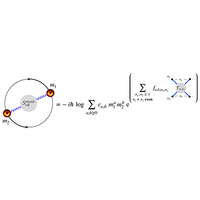
Phys. Rev. Lett. 137, 201401 (2026)
Cosmology, Astrophysics, and Gravitation
Is the Large Uncertainty of ${δ}_{CP}$ Fundamentally Encoded in the Neutrino Quantum State?
Article | Particles and Fields | 2026-11-12 05:00 EST
Michela Ignoti, Claudia Frugiuele, Matteo G. A. Paris, and Marco G. Genoni
The precise measurement of the leptonic CP-violating phase remains one of the major open challenges in neutrino physics, as current experiments achieve only very limited accuracy. We address this issue through the lens of quantum estimation theory. A distinctive feature of neutrino oscillation e…
Phys. Rev. Lett. 137, 201802 (2026)
Particles and Fields
Long-Range and Short-Range Longitudinal Flow Decorrelations in the Quark-Gluon Plasma
Article | Nuclear Physics | 2026-11-12 05:00 EST
Jiangyong Jia (贾江涌), Shengli Huang (黄胜利), Chunjian Zhang (张春健), and Somadutta Bhatta
The longitudinal structure of the quark-gluon plasma (QGP) remains poorly constrained. Using a transport-model calculation of two-particle elliptic-flow correlations in relative pseudorapidity , we find two distinct initial-state components of flow decorrelation: a long-range component dri…
Phys. Rev. Lett. 137, 202301 (2026)
Nuclear Physics
Lower Limit on the Double-Alpha Decay of $^{224}\mathrm{Ra}$
Article | Nuclear Physics | 2026-11-12 05:00 EST
P. Belli, R. Bernabei, F. Cappella, V. Caracciolo, R. Cerulli, F. A. Danevich, V. Yu. Denisov, A. Incicchitti, D. V. Kasperovych, V. R. Klavdiienko, A. Leoncini, and V. I. Tretyak
A GAGG:Ce crystal scintillator contaminated by thorium was used to search for double- decay of . Considering that the daughter nucleus is with the half-life of 0.144 s, the time-amplitude method was utilized to search for events, which allows for a significant background reducti…
Phys. Rev. Lett. 137, 202501 (2026)
Nuclear Physics
Landscape of Scattering Universality with General Dispersion Relations
Article | Atomic, Molecular, and Optical Physics | 2026-11-12 05:00 EST
Yidan Wang (王艺丹), Xuesen Na, Michael J. Gullans, Susanne F. Yelin, and Alexey V. Gorshkov
Universality in physics describes how disparate systems can exhibit identical low-energy behavior. Here, we reveal a rich landscape of new universal scattering phenomena governed by the interplay between an interaction and a system's density of states. We investigate one-dimensional scattering with …
Phys. Rev. Lett. 137, 203602 (2026)
Atomic, Molecular, and Optical Physics
Optomechanical Limit on Intracavity Intensities from Bulk Mirror Vibrations
Article | Atomic, Molecular, and Optical Physics | 2026-11-12 05:00 EST
L. Maisenbacher, A. Singh, I. M. Pope, and H. Müller
Ultrahigh continuous-wave intensities in high-numerical-aperture optical cavities enable applications from phase-contrast electron microscopy to ultradeep dipole traps for molecules. However, the intensity can be limited by the optomechanical parametric instability (PI), where mirr…
Phys. Rev. Lett. 137, 203603 (2026)
Atomic, Molecular, and Optical Physics
Nonthermal Particle Acceleration by Magnetic Pumping in Pulsating Plasmas
Article | Plasma and Solar Physics, Accelerators and Beams | 2026-11-12 05:00 EST
Giuseppe Arrò, Vladimir Zhdankin, and Fabio Bacchini
We present a new "pulsating box" setup to investigate particle acceleration in high- plasmas undergoing compression-expansion cycles. Our fully kinetic simulations show that particles are efficiently accelerated by magnetic pumping, producing nonthermal energy distributions with power-law tails. Nu…
Phys. Rev. Lett. 137, 205201 (2026)
Plasma and Solar Physics, Accelerators and Beams
Excitonic-Superconducting Coexistence and Emergent Nematic Superconductivity Driven by Spontaneous Symmetry Breaking
Article | Condensed Matter and Materials | 2026-11-12 05:00 EST
Fei Yang, Ruigang Li, Junwei Liu, and Binghai Yan
Excitonic insulating (EI) and superconducting (SC) orders are generally regarded as mutually exclusive electronic instabilities. Within a self-consistent microscopic theory, we study electronic systems hosting an EI phase in the presence of SC pairing and show that an intrinsic mismatch between elec…
Phys. Rev. Lett. 137, 206001 (2026)
Condensed Matter and Materials
Interferometric Readout of Momentum-Space Topology in a Programmable Dissipative Photonic Circuit
Article | Condensed Matter and Materials | 2026-11-12 05:00 EST
Andrea Cataldo, Emil J. Bergholtz, Daniel Leykam, Jun Gao, and Ali W. Elshaari
A programmable photonic circuit uses unitary dilation and interferometry to directly measure momentum-space topological invariants in strongly dissipative non-Hermitian systems.
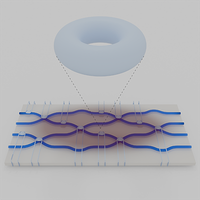
Phys. Rev. Lett. 137, 206601 (2026)
Condensed Matter and Materials
Phonon-Bottlenecked Spin Relaxation of ${\mathrm{Er}}^{3+}:{\mathrm{CaWO}}_{4}$ at MilliKelvin Temperatures
Article | Condensed Matter and Materials | 2026-11-12 05:00 EST
S. Rajendran, B. Mistri, P. K. Sharma, S. E. Kubatkin, A. V. Danilov, S. Dhomkar, S. E. de Graaf, and V. Ranjan
We study spin-lattice relaxation times of electron spins in coupled to a low mode-volume superconducting resonator at millikelvin temperatures in a regime where resonant phonons are cooled to near their quantum ground state. At large magnetic field supporting strong phonon-emission rates,…
Phys. Rev. Lett. 137, 206704 (2026)
Condensed Matter and Materials
Unveiling High-Energy Ultrafast Responses Driven by Fermi-Level Gap Opening in Charge-Density Waves
Article | Condensed Matter and Materials | 2026-11-12 05:00 EST
Qiong Wu, Tianchen Hu, Junhan Huang, Yongjie Liu, Fei Sun, Shuxiang Xu, Li Yue, Zijian Lin, Xinyu Zhou, Tao Dong, and Nan-Lin Wang
Ultrafast pump-probe spectroscopy is indispensable for investigating interactions, collective excitations, and nonequilibrium dynamics in superconductors and correlated electron systems. However, how a small gap opening near the Fermi surface affects the spectral changes in the high-energy interband…
Phys. Rev. Lett. 137, 206902 (2026)
Condensed Matter and Materials
Quantum Theory of Exciton Magnetic Moment: Interaction and Quantum Geometric Effects
Article | Condensed Matter and Materials | 2026-11-12 05:00 EST
Gurjyot Sethi, Jiawei Ruan, Fang Zhang, Weichen Tang, Chen Hu, Mit Naik, and Steven G. Louie
Combining magnetometry with optical spectroscopy has uncovered novel quantum phenomena and is emerging as a powerful probe of quantum materials. However, the theory of the magnetic response of excitons, correlated electron-hole pairs in insulators, remains incomplete due to insufficient treatment of…
Phys. Rev. Lett. 137, 206903 (2026)
Condensed Matter and Materials
Walk-on-Spheres Solution to Heterogeneous Transport Phenomena
Article | Statistical Physics; Classical, Nonlinear, and Complex Systems | 2026-11-12 05:00 EST
Henrique B. N. Monteiro and Daniel M. Tartakovsky
Walk-on-Spheres (WoS) is a particle-based technique used to describe physical phenomena as diverse as electrostatics, heat conduction, rendering, ion transport, and chemical reactions. It is fast, scalable, meshless, and applicable to geometrically complex domains, as long as the governing equations…
Phys. Rev. Lett. 137, 207102 (2026)
Statistical Physics; Classical, Nonlinear, and Complex Systems
Grain-Scale Origin of Stick-Slip Waves in Silo Discharge: Influence of Cohesion
Article | Polymers, Chemical Physics, Soft Matter, and Biological Physics | 2026-11-12 05:00 EST
David Luce, Adrien Gans, Nicolas Vandewalle, and Sébastien Kiesgen de Richter
We track individual grains during the discharge of a quasi-2D silo and measure their instantaneous acceleration. This reveals collective deceleration waves which propagate upward through the packing, even though the outlet flow rate remains steady and follows the Beverloo law. Their characteristic f…
Phys. Rev. Lett. 137, 208202 (2026)
Polymers, Chemical Physics, Soft Matter, and Biological Physics
Spontaneous Oscillations and Geometric Cutoff in Confined Bacterial Swarms
Article | Polymers, Chemical Physics, Soft Matter, and Biological Physics | 2026-11-12 05:00 EST
Bing Miao and Lei-Han Tang
Self-organized dynamic patterns in dense active matter are striking manifestations of nonequilibrium physics. A prominent example is the macroscopic elliptical motion observed in quasi-two-dimensional bacterial suspensions, whose physical origin has remained unresolved. Here, we examine a minimal li…
Phys. Rev. Lett. 137, 208301 (2026)
Polymers, Chemical Physics, Soft Matter, and Biological Physics
Physical Review X
Realization of a Cavity-Coupled Rydberg Array
Article | | 2026-11-12 05:00 EST
Jacopo De Santis, Balázs Dura-Kovács, Mehmet Öncü, Adrien Bouscal, Dimitrios Vasileiadis, and Johannes Zeiher
Individual atoms trapped in a tweezer array are coupled to a high-cooperativity cavity and coherently excited to Rydberg states, uniting efficient light-matter interfacing with quantum logic operations on a single platform.
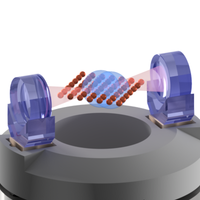
Phys. Rev. X 16, 041039 (2026)
arXiv
Quantitative Gaussian limits of periodic O(N) models at and below the critical temperature
New Submission | Statistical Mechanics (cond-mat.stat-mech) | 2026-11-13 20:00 EST
Weiqi Jiang, Pengcheng Hou, Zhiyi Li
We prove a volume-uniform Gaussian approximation for local spin coordinates in the zero-field nearest-neighbour $ O(N)$ model on periodic boxes of side $ M$ in $ d\ge3$ , at and below the critical temperature of the limiting spherical model. On a fixed spatial window, for sufficiently large $ M,N$ , the unnormalized $ 1$ -Wasserstein error for the first $ p\le N$ coordinates is at most $ C\sqrt p (N^{-1/2}+s_M)$ , where $ s_M\to0$ is the spectral shift of the finite-volume mean spherical model. The estimate is uniform on compact ranges of positive directional couplings and inverse temperatures. The target has independent coordinate fields, each a scaled anisotropic Gaussian free field with an independent spatially constant Gaussian term below criticality.
On a window containing a nearest-neighbour star (a site and its $ d$ positive-direction neighbours), the error tends to zero as $ M,N\to\infty$ exactly when $ p=o(N)$ and $ \sqrt p s_M\to0$ . For any choice of periodic infinite-volume accumulation states, the error on any nonempty fixed window tends to zero as $ N\to\infty$ exactly when $ p=o(N)$ . In $ d\ge5$ , when the inverse temperature exceeds its critical value by at least a fixed positive amount, the bound improves to $ C(p/N+\sqrt p M^{-d})$ . For fixed $ p$ , the sharp order is $ N^{-1}+M^{-d}$ on star-containing windows and $ N^{-1}$ on every nonempty fixed window in periodic accumulation states.
Statistical Mechanics (cond-mat.stat-mech), Probability (math.PR)
37 pages, no figures
Rational layers in the low temperature expansion of the three-dimensional Ising model
New Submission | Statistical Mechanics (cond-mat.stat-mech) | 2026-11-13 20:00 EST
A low-temperature expansion orders Ising droplets by wall area, but droplets with different transverse spans can occur at the same order. We instead organize the zero-field simple-cubic model by the excess above the minimum wall area compatible with two prescribed spans. We prove that every fixed excess layer, including all logarithmic cover corrections and Euler inversion, has a rational bivariate generating function with denominator factors restricted to 1 - x, 1 - y and 1 - x - y. The proof compresses repeated coordinate cuts into bounded decorations and assigns each unbounded interval to one monotone chain. A finite controller then enforces induced contacts and arbitrary cover-color reuse. We explicitly assemble the complete layers of excess zero through three over all widths, attributing their known geometric constituents to earlier polyomino enumeration. Exact lattice checks corroborate the formulas. A certified low-temperature comparison shows a modest hybrid accuracy gain at one sampling point and higher evaluation cost. The result establishes an exact layer structure; summation over unbounded excess remains a separate problem.
Statistical Mechanics (cond-mat.stat-mech), Classical Physics (physics.class-ph)
Little-Parks Oscillations and Parity Effects in Mesoscopic Superconducting Rings
New Submission | Superconductivity (cond-mat.supr-con) | 2026-11-13 20:00 EST
Iogann Tolbatov, Luca Salasnich
We analytically investigate the Little-Parks (LP) effect, the periodic oscillation of the superconducting transition temperature $ T_c$ driven by an applied magnetic flux $ \Phi$ , from the weak-coupling Bardeen-Cooper-Schrieffer (BCS) limit to the intermediate-coupling regime in a mesoscopic, quasi-one-dimensional ring. Utilizing a Ginzburg-Landau (GL) expansion with twisted boundary conditions, we correctly incorporate both the discrete finite-size topological parity interference and the continuous center-of-mass (CM) kinetic energy shift induced by the supercurrent. We derive a closed-form expression for $ T_c(\Phi)$ valid within the GL framework across variable interaction strengths. We demonstrate that the LP response comprises two distinct physical contributions: a discrete topological parity effect governed by the correlation length ratio $ \xi/R$ , and a continuous kinetic energy term scaling as $ 1/R^2$ . As the coupling increases and the spatial correlation length of the pairs contracts ($ \xi \ll R$ ), the constituent pairs become geometrically blind to the global boundary constraint, leading to an exponential suppression of the discrete parity modulation. However, the requirement that the condensate acquires a flux-dependent macroscopic CM momentum persists. This ensures that the critical temperature $ T_c$ maintains an algebraic LP modulation driven predominantly by the macroscopic kinetic energy of the supercurrent. We bound our theoretical approach by discussing the breakdown of mean-field GL validity before phase fluctuations dominate near the strong-coupling limit.
Superconductivity (cond-mat.supr-con), Mesoscale and Nanoscale Physics (cond-mat.mes-hall), Quantum Gases (cond-mat.quant-gas)
7 pages, 1 figure
Carbon-made Lobachevsky surfaces
New Submission | Other Condensed Matter (cond-mat.other) | 2026-11-13 20:00 EST
R. Gabbrielli, P. Pais, P. Castorina, T. P. C. Klaver, D. Legut, O. De Luca, R. G. Agostino, A. Iorio
Carbon-made surfaces of constant negative Gaussian curvature realize portions of the Lobachevsky plane in the laboratory, with motivations ranging from analogue gravity, where the elliptic, Beltrami and hyperbolic pseudospheres correspond to the three static phases of the Bañados–Teitelboim–Zanelli black hole, to water desalination. We review and extend their construction around a single principle, the balanced Gauss–Bonnet theorem: the curvature fixed by the topology is shared among disclination defects, elastically deformed hexagons and boundaries. Curvature without defects cannot change the topology: a sphere made of hexagons only is a punctured sphere, as an explicit polyhedral construction shows. The arrangements of the defects on the three pseudospheres stem from the elliptic, parabolic and hyperbolic one-parameter subgroups of $ SL(2,\mathbb{R})$ : we construct them for the elliptic family, recover the known one of the Beltrami pseudosphere, and propose one for the hyperbolic pseudosphere. We compare these ideal arrangements with carbon structures obtained by design and by simulated nano-extrusion, and suggest that the infinitely many Fuchsian groups may correspond to the infinitely many Lobachevsky surfaces.
Other Condensed Matter (cond-mat.other)
54 pages, multiple figures. Solicited contribution to the 40th year issue of IJMPB
Singlet-triplet superconductivity from repulsive interactions in a $p$-wave magnet
New Submission | Strongly Correlated Electrons (cond-mat.str-el) | 2026-11-13 20:00 EST
Hanbit Oh, Laura Classen, Daniel F. Agterberg
Motivated by recent proposals of $ p$ -wave magnets, which host odd-parity spin splitting, we study electrons near Van Hove singularities with local repulsive interactions. We demonstrate how the symmetry of the $ p$ -wave spin splitting governs the competition among instabilities. Using a parquet renormalization group (pRG) analysis of a simple one-sublattice model of a $ p$ -wave magnet, we find that superconductivity is the leading instability over the entire phase diagram for purely repulsive interactions. The resulting superconducting state is generically a mixture of spin-singlet and spin-triplet pairing and approaches an equal-weight mixture when $ T_c$ is small compared with the energy offset between each Van Hove electron and its inversion partner. Extending the pRG analysis to a more realistic two-sublattice model, we find that superconductivity remains the leading instability, while the sublattice degree of freedom leads to a competition among various singlet-triplet pairing channels and even a finite-momentum equal-spin pair-density wave. Our mechanism applies broadly to odd-parity magnets and opens a natural route to nodal topological superconductivity.
Strongly Correlated Electrons (cond-mat.str-el), Mesoscale and Nanoscale Physics (cond-mat.mes-hall), Superconductivity (cond-mat.supr-con)
9+14 pages, 4+8 figures, 0+2 tables
Symmetry-Enabled Rolling of Composite Bosons: A Route to Superconductivity from Strong Repulsion with $T_c$ Proportional to the Electron Bandwidth
New Submission | Superconductivity (cond-mat.supr-con) | 2026-11-13 20:00 EST
Motivated by superconductors discovered in systems with a strong Coulomb repulsion, we ask whether such a repulsion can give rise to superconductivity with a transition temperature $ T_c$ bounded only by the electron bandwidth. Coulomb repulsion can produce pairing as it binds electrons to holes. If each hole binds three electrons into a three-electron-one-hole (3e1h) composite, the condensation of these bosonic composites can give rise to superconductivity. However, the resulting $ T_c$ falls far below the electron bandwidth in the controlled regime where the binding is much stronger than the carriers’ kinetic energy. This is because, on a lattice, a tightly bound composite usually has to move through a higher-order process where the intermediate state costs an energy of order the binding energy, so that the strong binding makes the composite heavy, limiting the superfluid stiffness and hence $ T_c$ . Here, we show that symmetry offers a way around this tradeoff. In lattices satisfying certain symmetry requirements, a composite can move by single-particle hops without any costly intermediate state, a motion we call rolling. Such rolling keeps the mass of the composite finite even for an infinitely strong binding, so that a $ T_c$ proportional to the electron bandwidth can be achieved in the controlled regime. We derive a criterion for rolling and apply it to construct all fourteen minimal lattice models that support such rolling. We show that rollable 3e1h composites can indeed be stabilized in the ground state. We then propose to realize such superconductivity in a dual-gate bilayer, and use exact numerics to show that $ T_c$ can reach a few percent of the electron hopping. These results establish rollability as a guiding principle in the search for and design of superconductors in strongly repelling electron systems, with the minimal models constructed here as prototypes.
Superconductivity (cond-mat.supr-con)
24 pages, 22 figures
Hidden universality of rare fluctuations and a central-limit structure at criticality
New Submission | Statistical Mechanics (cond-mat.stat-mech) | 2026-11-13 20:00 EST
Nikolaos G. Fytas, Víctor Martín-Mayor, Attilio L. Stella, Gianluca Teza, Alexandros Vasilopoulos, David Yllanes
The central limit theorem is among the most fundamental principles in the natural sciences, governing the fluctuations of sums of weakly correlated random variables through Gaussian statistics. At critical points, however, long-range correlations invalidate this paradigm, raising a fundamental question: does any general limit theorem survive at criticality? Although scale invariance has long been recognised as the defining feature of typical critical fluctuations, the behaviour of rare fluctuations has remained largely unexplored, as their extraordinarily small probabilities place them beyond the reach of conventional numerical methods. Recent theoretical advances suggest that universal asymptotic laws {may govern large deviations in systems at criticality}, yet direct numerical evidence has been lacking. Here we provide the first such evidence in the two-dimensional Ising universality class. Using large-scale Tethered Monte Carlo simulations, we probe order-parameter fluctuations with probabilities as small as $ 10^{-200}$ and show that, once normalised by their characteristic width, the far tails collapse onto a single asymptotic law shared by distinct microscopic models in the same universality class. This collapse is governed by a universal amplitude, whose numerical extraction is compatible with the conjectured exact result we derive from conformal field theory, and points towards a generalised central limit theorem for critical fluctuations.
Statistical Mechanics (cond-mat.stat-mech)
Quantum Hall Fabry-Pérot Interferometry in Monolayer WSe$_2$
New Submission | Mesoscale and Nanoscale Physics (cond-mat.mes-hall) | 2026-11-13 20:00 EST
Himadri Chakraborti, Charles L. Tschirhart, James Fang, Saisab Bhowmik, Chengrui Yu, Shujian Cao, William Caro, Kenji Watanabe, Takashi Taniguchi, Jie Shan, Kin Fai Mak
Electronic Fabry-Pérot interferometers provide a powerful probe of coherent quantum Hall edge transport, yet the presence of multiple spin and valley degrees of freedom in existing van der Waals material platforms can complicate their interpretation. Monolayer WSe$ _2$ offers a distinct opportunity because strong spin-orbit coupling and spin-valley locking lift these degeneracies, producing intrinsically single-component Landau levels. Here we realize the first gate-defined quantum Hall Fabry-Pérot interferometer in monolayer WSe$ _2$ . By continuously tuning the cavity size in a single device, we observe robust Aharonov-Bohm (AB) interference of quantum Hall edge channels across the interferometer; the observed predominance in the AB regime is consistent with a weak bulk-edge coupling ($ \Delta \approx 0.034$ ) estimated by electrostatics. Moreover, temperature and bias dependence measurements consistently yield an edge velocity $ v \approx (4.9 \pm 0.2) \times 10^4,\mathrm{m,s^{-1}}$ . Our results establish monolayer WSe$ _2$ as a clean, flavor-resolved platform for quantum Hall interferometry and provide a foundation for future studies of single-component fractional quantum Hall states and interferometric probes of anyonic statistics in transition-metal dichalcogenides.
Mesoscale and Nanoscale Physics (cond-mat.mes-hall), Strongly Correlated Electrons (cond-mat.str-el)
A discrete realization of the boundary sine-Gordon model and the Schmid transition
New Submission | Mesoscale and Nanoscale Physics (cond-mat.mes-hall) | 2026-11-13 20:00 EST
Nicolas Paris, Oscar Bouverot-Dupuis, Christophe Mora
The phase diagram of the boundary sine-Gordon model (bsG), or equivalently of the resistively shunted Josephson junction, has been the subject of recent debate. We introduce a discrete model that reproduces exactly the properties of the bsG model and can be simulated extremely efficiently using cluster Monte Carlo algorithms. This enables us to explore a broad range of parameters and compute the complete universal crossover between the weak- and strong-tunneling regimes. We establish the self-duality of the model and unambiguously identify the vertical line of critical fixed points characteristic of the Schmid transition, recovering the conformal field theory predictions along this line with high accuracy. We further clarify the essential distinctions between the Schmid and Berezinskii-Kosterlitz-Thouless transitions. Our results definitively establish the existence and nature of the Schmid transition and demonstrate the validity of the Schmid-Bulgadaev scenario.
Mesoscale and Nanoscale Physics (cond-mat.mes-hall), Strongly Correlated Electrons (cond-mat.str-el)
6+5 pages, 4+1 figures
Superlattice Stabilization of the Topological Quantum Hall Ferromagnet in Graphene
New Submission | Strongly Correlated Electrons (cond-mat.str-el) | 2026-11-13 20:00 EST
Tiago Cecchi, Ahmed Khalifa, Shubhayu Chatterjee
Competition between spin and valley orders makes graphene a versatile platform for engineering correlated topological phases in the quantum Hall regime. We show that a tunable superlattice potential reorganizes this competition, and stabilizes the ferromagnetic quantum Hall topological insulator at charge neutrality without requiring a large in-plane magnetic field or strong dielectric suppression of Coulomb interactions. The interaction anisotropies responsible for choosing between different competing states are first computed by a generalized renormalization group procedure that accounts for the superlattice potential. We find that the potential suppresses anisotropies that compete with spin-polarization. At the same time, the potential introduces dispersion which prefers a partly spin-polarized compensated semi-metal. Therefore, we carry out a self-consistent momentum-space Hartree-Fock computation with renormalized aniostropies to establish the regime of stability of the insulating spin-polarized ferromagnet. Finally, we verify that this ferromagnet is adiabatically connected to the quantum Hall ferromagnet, thereby confirming its topological character. Our results establish superlattice potentials as a means of controlling the phase diagram of interacting graphene and accessing its helical quantum Hall regime.
Strongly Correlated Electrons (cond-mat.str-el)
Main text is 13 pages, supplemental text is 20 pages, 10 figures
High-Fidelity In Silico Dataset of Ordered Binary and Ternary MXenes with Predictive Synthesis Guidance
New Submission | Materials Science (cond-mat.mtrl-sci) | 2026-11-13 20:00 EST
Ahmed H. Biby, Charles B. Musgrave
Despite their promise, the targeted synthesis of novel MXenes remains challenging due to their vast structural and compositional space and the lack of reliable stability descriptors that account for synthesis conditions. To address this gap, we utilized density functional theory (DFT) with the r$ ^2$ SCAN functional to develop a high-fidelity dataset of 1,040 ordered binary and ternary bare delaminated MXenes, including mono-transition metal MXenes, in-plane ordered double-transition metal MXenes, in-plane ordered metal-divacancy MXenes, and out-of-plane ordered double-transition-metal MXenes. For each structure, we calculated formation and decomposition Gibbs energies, decomposition products, layer symmetry groups, and energies above the hull. We find that all MXenes are thermodynamically inaccessible under equilibrium conditions. However, 115 predominantly carbide MXenes become thermodynamically stabilized at elevated temperatures (500–2000 K), and 23 are stabilized under high pressure (10 GPa). Additionally, three MXenes in the Mn–Fe–C chemical space are stabilized within an experimentally feasible range of carbon chemical potentials. These findings reveal stability trends across the MXene space and identify synthesis strategies that can guide experimental efforts. Our dataset provides a robust foundation for developing machine-learned stability descriptors and for guiding experimental efforts toward novel MXene discovery. By identifying synthesizable candidates along with their synthesis conditions, this work bridges a critical gap in data-driven approaches to MXene discovery and lays the foundation for future autonomous experimental workflows.
Materials Science (cond-mat.mtrl-sci)
Force-Dependent Change of Structural Behavior Upon Pulling a Grafted Flexible Polymer
New Submission | Statistical Mechanics (cond-mat.stat-mech) | 2026-11-13 20:00 EST
J. Matthew Smith, Michael Bachmann
Manipulating polymer chains by means of experimental instruments such as optical tweezers has helped understand better the effects of molecular forces in macromolecular structures. In this study, we simulate the influence of a pulling force on structural phases of a coarse-grained model for flexible polymers using generalized-ensemble Monte Carlo methodologies. The recently introduced microcanonical inflection-point analysis method is employed to identify and classify structural phases of the system. Specific order parameters help characterize the transition behavior in response to the present pulling force. We show that, upon increasing the pulling strength, the coil-globule transition turns from second to first order, then merges with the liquid-solid transition. An intermediate phase, separating the coil and globule phases, is identified for certain force strengths. Clear evidence of the Gough-Joule effect is found as well. Transitions do not occur at all if the pulling force exceeds a certain threshold value.
Statistical Mechanics (cond-mat.stat-mech)
11 pages, 7 figures
J. Chem. Phys. 165, 164906 (2026)
Fatigue crack growth without plasticity under cyclically reversed shear
New Submission | Soft Condensed Matter (cond-mat.soft) | 2026-11-13 20:00 EST
We show that cyclic fatigue can occur in a system whose elements behave elastically up to an irreversible failure threshold, without plasticity, friction, or any time-dependent process. The model represents a weak interface between two elastic bodies loaded in shear. Under sufficiently large cyclic loading below the static failure threshold, a pre-existing flaw advances progressively, by a few lattice spacings per cycle. Two conditions are needed for this behavior: each bond fails more easily under one sense of the shear than the opposite, and the shear must be reversed during the cycle by an amount large enough to break bonds that have not yet failed. The model thus identifies the minimal conditions for an intrinsic, plasticity-free fatigue mechanism. Such conditions may be met at interfaces and weak planes subjected to strongly reversed shear, as in fretting, rolling contact, and reversed torsion, or in cyclic shear of cemented granular materials.
Soft Condensed Matter (cond-mat.soft), Materials Science (cond-mat.mtrl-sci)
10 pages, 10 figures
Susceptibility Bottlenecks in Equilibrium Propagation Using Oscillator Ising Machines
New Submission | Disordered Systems and Neural Networks (cond-mat.dis-nn) | 2026-11-13 20:00 EST
Malihe Farasat, Oshada Rathnayake, Nikhil Shukla
Equilibrium propagation (EP) enables learning in physical systems by exploiting the displacement between free and weakly perturbed equilibrium states. Here, we investigate how the underlying oscillator dynamics govern the transmission of learning signals in oscillator Ising machines (OIMs). We show that the hidden-layer response can be decomposed into two distinct factors: the nudging force applied at the output and the susceptibility governing its transmission to the hidden layer. Using a bipartite OIM with interactions interpolating between phase-difference and phase-sum coupling, we investigate these factors while ensuring that all coupling forms realize the same Ising Hamiltonian at binary phase-locked states. We demonstrate that second-harmonic injection primarily influences the nudging force through phase binarization, whereas the coupling form controls the cross-layer susceptibility through the mixed curvature of the energy landscape. At equal mixing, the mixed curvature vanishes on the binary manifold, strongly suppressing hidden-layer learning signals. Numerical simulations validate these mechanisms and reveal their consequences for classification performance. Our findings establish that realizing a desired energy landscape alone is insufficient to ensure effective physical learning; the system must also support the transmission of perturbations required for learning.
Disordered Systems and Neural Networks (cond-mat.dis-nn)
Beyond Ground States: Learning Many-Body Hamiltonians for p-Bit Invertible Arithmetic
New Submission | Disordered Systems and Neural Networks (cond-mat.dis-nn) | 2026-11-13 20:00 EST
Tian Feng, Xutang Fan, Yiyun Chen
Probabilistic-bit (p-bit) invertible logic encodes a Boolean relation as an energy whose ground states are its legal assignments, computing in any direction by sampling. Traditional constructions target ground-state membership and a wide minimum energy gap, yet finite-time samplers traverse excited states. We cast Hamiltonian design as inverse statistical mechanics: fit an energy with interactions up to order four whose Gibbs law approaches uniformity on each clamp case’s legal states, under a gap floor keeping every legal state below every illegal one. Constrained maximum likelihood with pruning and refitting fits terms from a fixed pool, and every delivered energy is audited exactly on all cases. Each energy is scored by time to a verified solution under restarts with its best of nine tuned samplers. In underdetermined modes, learned multipliers factor in 0.55, 0.44, 0.52 and 0.46 [0.38, 0.56] of the hand-written encodings’ updates from 4x4 to 7x7, faster within every family below 7x7 at no resolved work penalty; learned adders solve the reverse mode in 0.71 of the updates at 8 bits and about a quarter at 24 and 32 bits, at 0.55 of the work at 32 bits. At 5x5 under equal pool, budget and floor, a gap-maximizing fit reaches 0.79 [0.73, 0.88] in updates and 1.26 in work against the hand-written encoding, while likelihood fitting takes 0.55 [0.46, 0.58] and 0.58 [0.48, 0.61] of the gap fit’s updates and work. Rounding coefficients to the narrowest exact integer words tested, we run both energies at each pair’s common word on one FPGA color-sweep SSA core, bit-exact with software: learned multipliers take 0.41 of the hand-written encoding’s cycles at 4x4 and 0.057 [0.045, 0.068] at 7x7, at up to 2.4 times its lookup tables. The method requires only a circuit’s legal assignments; in determined modes, hand-written encodings take less work, and from 12 bits on the adder fewer updates.
Disordered Systems and Neural Networks (cond-mat.dis-nn), Emerging Technologies (cs.ET), Applied Physics (physics.app-ph)
arXiv v1
Zeroth persistent homology of ground-state correlations at clean and disordered quantum transitions
New Submission | Disordered Systems and Neural Networks (cond-mat.dis-nn) | 2026-11-13 20:00 EST
Francisco Belchí, Nahuel Statuto
The antiferromagnetic Ising chain in transverse and longitudinal fields exhibits a continuous critical point, a mixed-order transition line and, with quenched disorder, an infinite-disorder fixed point and reentrant order. Using exact free-fermion solutions and the density-matrix renormalization group, we examine what the zeroth persistent homology of staggered ground-state correlations adds to conventional responses. Its barcode records the merge scales of the single-linkage hierarchy, and the maximum of its persistence-landscape velocity defines a threshold-free pseudocritical point. This point locates the clean critical point and the mixed-order line with an accuracy comparable to conventional responses. In the reentrant regime, the global velocity misplaces the entry, which is recovered only by restricting the filtration to the ordering scale, and none of the tested estimators locates the exit. A domain wall forced by the boundary conditions suppresses the disorder-averaged reentrant lobe. For individual disordered realizations, the labelled merge tree recovers most strong-disorder renormalization-group clusters, including noncontiguous ones missed by lattice-restricted hierarchies, with increasing agreement at stronger disorder. This information resides in the full correlation matrix, while zeroth homology provides a stable, threshold-free hierarchy.
Disordered Systems and Neural Networks (cond-mat.dis-nn), Statistical Mechanics (cond-mat.stat-mech), Strongly Correlated Electrons (cond-mat.str-el), Quantum Physics (quant-ph)
16 pages, 7 figures, 2 tables, plus 7 pages of Supplemental Material (4 figures, 3 tables). Companion paper: arXiv:2611.11358. Code and data: this https URL
Controlling the Vacuum: Tunable Magnonic Casimir Effect in Magnetic Moiré Systems
New Submission | Mesoscale and Nanoscale Physics (cond-mat.mes-hall) | 2026-11-13 20:00 EST
Alejandro Roldan, Dante Navarrete, Mario A. Castro, Sebastián Allende, Roberto E. Troncoso, Alvaro S. Nunez
We prove that the quantum fluctuations of the magnetic degrees of freedom of moiré structures can be tuned by adjusting the moiré lattice. Using the Bistritzer-MacDonald approach, we explore the consequences of this fact for the magnonic vacuum energy and the magnonic Casimir force, which become functions of the moiré pattern parameters. This allows a prototypical engine to be run with the vacuum fluctuations as a working agent and, in that way, to furnish a novel type of magneto-mechanical effect. Our calculations focus on the moiré Ladder as an example but can be generalized to any moiré structure in a straightforward fashion. We anticipate that our results belong to a generic property of moiré structures, regardless of the physical nature of the excitations at hand.
Mesoscale and Nanoscale Physics (cond-mat.mes-hall), Materials Science (cond-mat.mtrl-sci), Other Condensed Matter (cond-mat.other), Quantum Physics (quant-ph)
7 pages, 4 figures
Direct imaging of Su-Schrieffer-Heeger edge modes in a disordered suspended mechanical oscillator chain
New Submission | Disordered Systems and Neural Networks (cond-mat.dis-nn) | 2026-11-13 20:00 EST
Defeng Lu, Rohan Modi, Nicolas Delnour, Michael Hilke
We report a reconfigurable macroscopic mechanical realization of the Su-Schrieffer-Heeger (SSH) model: a suspended chain of alternating masses coupled by identical compression springs. The relevant SSH degree of freedom is the relative longitudinal displacement between neighboring masses. In this bond-coordinate basis, applying a constant shift and rescaling of the mechanical dynamical matrix maps a chain of $ N$ blocks onto an (N-1)-site SSH chain. Using video tracking, we reconstruct bond-resolved spectra and mode profiles and compare them with predictions for an ideal finite SSH chain. The topological termination supports mid-gap modes localized near the boundaries, with the alternating-sublattice structure expected for an effective even-length SSH chain. Mass variations split the edge-mode frequencies and produce asymmetric mode profiles relative to the non-disordered predictions. This directly imageable platform enables studies of topological normal modes and disorder effects in a classical mechanical system.
Disordered Systems and Neural Networks (cond-mat.dis-nn)
Soft material mechanical property degradation at high strain rates
New Submission | Soft Condensed Matter (cond-mat.soft) | 2026-11-13 20:00 EST
Victor Sanchez, Joseph Beckett, Aryan Shah, Sicong Wang, Jin Yang, Jonathan B. Estrada, Mauro Rodriguez Jr
The rheometry of soft, tissue-like materials at ultra-high strain rates is critical to biomechanics, materials science, and medical engineering. One approach for characterizing high-rate material response is Inertial Microcavitation Rheometry (IMR), which infers viscoelastic constitutive behavior from the measured radius-time history of a laser-induced cavitation bubble. At these rates, materials may exhibit history-dependent behavior, including damage, fracture, and plasticity. However, conventional IMR analyses typically assume constant material properties throughout the cavitation event, limiting their ability to capture such changes. We present an IMR framework for identifying effective time varying material properties from measured cavitation radius histories. The framework allows the shear modulus, viscosity, or both to evolve during the event using normalized sigmoid histories. Synthetic tests recover prescribed constant and time varying material histories. Application to polyacrylamide and gelatin datasets yields effective material-property histories across formulations and experimental conditions. Viscosity decreased across the datasets, while the extent of shear modulus reduction varied with material and formulation. When both properties decreased, their reductions could occur at different stages of cavitation. This distinction in mechanical property degradation depends on both the property and its evolution during high-strain events.
Soft Condensed Matter (cond-mat.soft), Fluid Dynamics (physics.flu-dyn)
Optimal Driving between Nonequilibrium Steady States under a Dissipation Budget
New Submission | Statistical Mechanics (cond-mat.stat-mech) | 2026-11-13 20:00 EST
Keisuke Sugie, Dimitri Loutchko, Tetsuya J. Kobayashi
Driving between nonequilibrium steady states incurs two thermodynamic costs: excess entropy production (EP) resulting from changing control parameters, and housekeeping EP required to sustain steady currents. Conventional fixed-duration optimization minimizes the former while neglecting the latter. Here, we instead optimize excess EP over both the protocol and its duration subject to a fixed leading order of housekeeping-EP budget, thereby minimizing total EP for that budget constraint. In the slow-driving regime, accumulated housekeeping EP acts as an entropic time, mapping the problem to a geodesic optimization under a friction metric weighted by the steady-state EP rate. This resource-based geometry determines optimal paths and schedules for systems that continue to dissipate even in steady states, establishing an intrinsic trade-off between housekeeping and excess EPs. Near equilibrium, this framework further yields geometric lower bounds on total EP, attained with equipartition at the optimal budget given by a modified thermodynamic length. Numerical simulations of a three-state model for an ATP-driven calcium pump reveal distinct optimal protocols compared to fixed-duration driving, confirming the total-EP bounds.
Statistical Mechanics (cond-mat.stat-mech), Mathematical Physics (math-ph), Biological Physics (physics.bio-ph)
6 pages, 2 figures
Higher-Order Exceptional Point Sensing with Rydberg Micro-Ensemble Arrays
New Submission | Quantum Gases (cond-mat.quant-gas) | 2026-11-13 20:00 EST
Jun Zhang, Ya-Jun Wang, Zi-Han Li, Jin-Hang Fang, Luan-Yi Wei, Qing Li, Guang-Can Guo, Bang Liu, Li-Hua Zhang, Dong-Sheng Ding, Bao-Sen Shi
Higher-order exceptional points arise from the coalescence of multiple eigenvalues and eigenstates, leading to enhanced spectral responses to weak perturbations. However, realizing and controlling such higher-order degeneracies in interacting many-body systems remains challenging due to the complex coupling among multiple interacting eigenstates. Here, we construct spatially structured microensemble arrays in cold Rydberg gas, where long-range interaction and spatial connectivity enlarge the effective non-Hermitian dimensionality, enabling higher-order exceptional points. By varying the spatial arrangement of these sites, we realize different orders of non-Hermitian exceptional points. We further show that interactions between Rydberg excitation sites can enhance the quantum Fisher information, thereby improving sensing sensitivity. The resulting higher-order exceptional points exhibit increasingly nonlinear phase-boundary responses, which can be further tuned by varying the measurement time and atom number. By tracking shifts of these phase boundaries, we achieve a sensitivity of 0.47(10) nV cm-1 Hz-1/2, surpassing the standard quantum limit. Our results establish Rydberg microensemble arrays as a platform connecting higher-order non-Hermitian criticality, many-body dynamics, and microwave sensing.
Quantum Gases (cond-mat.quant-gas), Quantum Physics (quant-ph)
Structural Relaxation in Supercooled Water: Hydrogen-Bond Exchange, Defect Propagation, and Power-Law Scaling
New Submission | Soft Condensed Matter (cond-mat.soft) | 2026-11-13 20:00 EST
Molecular simulations of deeply supercooled water reveal an intriguing power-law relationship between structural relaxation time and the concentration of a specific three-coordinated hydrogen-bond defect, $ 3’=H^1O^2$ . We develop a reaction–transport theory in which active $ 3’$ defects propagate through concerted hydrogen-bond rearrangements. An unsatisfied donor hydrogen forms a new bond, creating a transient five-coordinated intermediate; subsequent breaking of another bond transfers the defect to a neighboring molecule. The dynamics includes propagation, self-decay, and encounter-induced annihilation with five-coordinated defects. Independently acting defects yield the mean-field result $ \tau_\alpha\propto c_{3’}^{-1}$ . By contrast, concentration-dependent propagation, defect interactions, and correlations between successive network rearrangements can generate a larger, noninteger effective exponent $ \alpha_D$ . Analytical results and illustrative calculations on a four-connected network show how elementary exchange kinetics, finite defect lifetimes, and repeated exploration of local environments modify the relaxation efficiency and hence the observed power law.
Soft Condensed Matter (cond-mat.soft), Other Condensed Matter (cond-mat.other)
53 pages, one table
The metastability of icosahedral quasicrystals assembled from one-component systems with isotropic interactions
New Submission | Soft Condensed Matter (cond-mat.soft) | 2026-11-13 20:00 EST
Cosmin A. Dicu-Gohoreanu, Jonathan P. K. Doye, Eva G. Noya
Icosahedral quasicrystals (IQCs) are long-range ordered materials that lack translational periodicity. While they have only been observed in multi-component metallic systems, simulations have shown that one-component IQCs can robustly self-assemble using oscillatory potentials. However, their thermodynamic stability remains an open question. Here, we employ direct coexistence simulations to estimate the melting line of the competing solids for one such family of potentials. We find that the IQCs are never thermodynamically stable within the explored parameter space, being consistently outcompeted by periodic crystalline phases. This metastability is primarily driven by the higher internal energy of the IQC relative to the competing solids. Our findings suggest that the observed formation of these single-component IQCs in simulations is likely a kinetic phenomenon rather than a thermodynamic one.
Soft Condensed Matter (cond-mat.soft)
Main: 18 pages and 11 figures; Supplementary: 7 pages and 6 figures
Improving Nonequilibrium Thermal Conduction in CaF2 by Breaking the Phonon Bottleneck Effect
New Submission | Materials Science (cond-mat.mtrl-sci) | 2026-11-13 20:00 EST
Mingde Qu, Minghuan Song, Yuxing Wang, Wudi Wang, Chenbo Zhang, Jiamin Quan, Jun Xu, Zhongwei Zhang, Jie Chen
Heat dissipation in laser optical materials depends not only on their thermal conductivity but also on how absorbed energy is redistributed among various phonon modes. In calcium fluoride (CaF2), rapid energy transfer from hot electrons to weakly propagating longitudinal optical (LO) phonons can create a nonequilibrium phonon bottleneck effect that limits efficient heat removal. Here, we propose selective phonon excitation as an effective strategy to break this bottleneck. Combining electron-phonon scattering calculations, phonon Boltzmann transport analysis, and nonequilibrium molecular dynamics simulations, we identify LO phonons as the primary modes that preferentially receive energy from hot carriers, leading to energy accumulation due to their inefficient transport and relaxation. Guided by three-phonon scattering phase-space analysis, selective excitation of transverse acoustic (TA) modes can accelerate LO relaxation and promote energy transfer toward heat-carrying acoustic modes. While sustained LO-phonon excitation reduces the thermal conductivity by approximately 12%, additional TA-mode excitation improves heat conduction by approximately 21% compared to the state limited by the LO-phonon bottleneck, surpassing the unexcited value. These findings demonstrate that controlling interbranch energy redistribution can counteract phonon-bottleneck-induced heat accumulation and reveal a working route for active thermal management in laser optical materials through selective control of phonon populations.
Materials Science (cond-mat.mtrl-sci), Computational Physics (physics.comp-ph)
Nitride crystalline barrier epitaxial SIS Josephson junctions by MBE
New Submission | Superconductivity (cond-mat.supr-con) | 2026-11-13 20:00 EST
Manas Verma, Anand Ithepalli, Amit Rohan Rajapurohita, Eegene Clara Chung, David A. Garcia-Wetten, Naomi Pieczulewski, Danqing Wang, John G. Wright, Archit Shah, Jimy Encomendero, Rishabh Singh, Chandrashekar Savant, Hangwang Yang, Anthony Hyatt, Jaehong Choi, Thomas Varghese, Kushagra Aggarwal, Paul B. Welander, Apurva Mehta, David Schuster, Valla Fatemi, Gregory D. Fuchs, Michael C. Hamilton, Hong X. Tang, David A. Muller, Huili Grace Xing, Debdeep Jena
Superconductor-insulator-superconductor Josephson junctions with crystalline tunnel barriers have remained elusive by epitaxial techniques such as MOCVD or MBE that produce the junction materials and devices powering today’s electronic and photonic systems like transistors and lasers. Here, we overcome the key materials hurdle to realize the first functional nitride crystalline barrier Josephson junctions by MBE. Despite an AlN barrier thickness of approximately 4.5 nm, the NbN/AlN/NbN trilayers exhibit coherent Josephson tunneling with critical current densities of approximately 17 A/cm2, an IcRn product of approximately 2.5 mV, and a superconducting gap voltage of approximately 3.7 mV with a BCS-like gap evolution with temperature. Hysteretic current-voltage characteristics and Fraunhofer current modulation with magnetic field establish underdamped SIS Josephson behavior. The realization of crystalline barrier Josephson junctions by MBE opens the doors to a richer materials palette with alloys and superlattice electrodes and tunnel barriers, as well as potential monolithic integration of superconducting quantum circuits with active electronic and photonic devices such as HEMTs and lasers.
Superconductivity (cond-mat.supr-con), Materials Science (cond-mat.mtrl-sci), Quantum Physics (quant-ph)
Reversal of the Anomalous Hall Effect by Directional In-Plane Electric Field in Strained Bilayer MoO
New Submission | Materials Science (cond-mat.mtrl-sci) | 2026-11-13 20:00 EST
Wenpeng Wang, hang Shi, Xiangru Kong
Layered magnetic materials with tunable valley and spin degrees of freedom hold promise for multifunctional spintronic devices. Here, we demonstrate that the orientation of an in-plane electric field enables selective switching of single-valley spin splitting and reversal of the anomalous Hall conductivity in strained bilayer MoO. In particular, electric fields along the a and b directions selectively lift the spin degeneracy at the X and Y valleys, respectively, while preserving it at the other valley. This valley-selective switching is accompanied by a redistribution of Berry curvature with opposite signs, giving rise to a reversible anomalous Hall response. These effects are realized in the energetically and dynamically stable AC2 stacking configuration, where biaxial strain induces Dirac-like band crossings that enable subsequent electric-field control. Meanwhile, the AC1 stacking configuration, which is also energetically and dynamically stable, exhibits rich strain-driven phenomena, including a transition from metal to topological insulator with quantized spin Hall conductivity, as well as valley polarization and piezomagnetism. Our findings reveal a combined effect of strain and electric fields for controlling valley-selective spin splitting and anomalous Hall responses, highlighting bilayer MoO as a promising platform for multifunctional spintronic and valleytronic devices.
Materials Science (cond-mat.mtrl-sci)
6 pages, 5 figures
Interplay of the Fano-Andreev Effect and Nonlinear Screening in Electric and Thermoelectric Transport through a T-Shaped Double Quantum Dot
New Submission | Mesoscale and Nanoscale Physics (cond-mat.mes-hall) | 2026-11-13 20:00 EST
We present a theoretical study of weakly nonlinear electric and thermoelectric transport through a T-shaped double quantum dot coupled to normal and superconducting leads. Nonlinear screening is treated within the characteristic-potential formalism, in which an internal electrostatic potential accounts for nonequilibrium charge redistribution on the lead-coupled central dot. The side-coupled dot induces the Fano-Andreev effect, which, together with nonlinear screening, significantly modifies the transport properties. Under voltage bias, the screening-induced level renormalization produces a pronounced bias asymmetry in the Andreev differential conductance. In response to a pure thermal bias, increasing the interdot coupling weakens the level renormalization and suppresses the quasiparticle thermoelectric response, leading to reduced thermovoltage and nonlinear Seebeck coefficient. When voltage and thermal biases are applied simultaneously, a finite subgap cross thermoelectric response emerges beyond the linear regime. The sign of this response is governed by the competition between the energy-dependent transport contribution, modified by the Fano-Andreev effect, and the nonlinear screening contribution, thereby determining whether a thermal bias enhances or suppresses the low-bias Andreev current.
Mesoscale and Nanoscale Physics (cond-mat.mes-hall), Superconductivity (cond-mat.supr-con)
18 pages and 8 figures
Observing Autler–Townes splitting of an rf-dressed Feshbach resonance
New Submission | Quantum Gases (cond-mat.quant-gas) | 2026-11-13 20:00 EST
Samyajit Gayen, Matthew Chilcott, Chongwu Xie, Niels Kjærgaard
We experimentally implement the scheme introduced by Ding, D’Incao, and Greene [Phys. Rev. A {\bf 95}, 022709 (2017)] for controlling the scattering length near a magnetic Feshbach resonance using an rf dressing field. Specifically, we observe Autler–Townes splitting of the 1007 G Feshbach resonance in dipole-trapped $ ^{87}\mathrm{Rb}$ by coupling the associated quasibound molecular state to a deeper-lying bound state with a different spin projection. At a fixed magnetic field away from the bare resonance, we further demonstrate rf switching of the collisional response. Our experimental observable is atom loss, which is consistent with enhanced three-body recombination arising from an increase in the magnitude of the real part of the scattering length. Our observation of Autler–Townes splitting establishes the feasibility of generating the strong rf magnetic fields required for sufficient molecular dressing and provides an important basis for further experimental tests of the predicted elastic nature of the rf-controlled interactions.
Quantum Gases (cond-mat.quant-gas)
Termination-selective Kondo hybridization of topological surface states in CeCuAs$_2$
New Submission | Strongly Correlated Electrons (cond-mat.str-el) | 2026-11-13 20:00 EST
Bo Chen, Chen Zhang, Hao Liu, Qi-Yi Wu, Zhong-Tuo Fu, Ying Zhou, Chun-Hui Lyu, Yang Luo, Zi-Jie Xu, Hai-Long Deng, Zheng-Tai Liu, Mao Ye, Zhen-Hua Chen, Yao-Bo Huang, Sheng-Tao Cui, Zhe Sun, Da-Wei Shen, Jun He, Yu-Xia Duan, Jian-Qiao Meng
Strongly correlated topological states in Kondo lattices represent a frontier in condensed matter physics, where the coupling between boundary electrons and localized f states can reshape the low-energy electronic structure. Here, we combine termination-resolved angle-resolved photoemission spectroscopy (ARPES), Ce 4$ d \rightarrow 4f$ resonant photoemission, and surface electronic structure calculations to investigate the Kondo lattice compound CeCuAs$ _2$ . Two distinct surface electronic structures are assigned to the As1 and CeAs2 terminations through their characteristic Fermi-surface geometries and termination-specific calculations. On CeAs2, a Dirac surface state associated with the calculated nontrivial bulk topology coexists with a weakly dispersive Ce 4$ f$ band near $ E_F$ . Resonant photoemission identifies the low-energy 4$ f$ character and reveals crystal-field-related fine structure in the energy range traversed by the Dirac branch. On cooling, the 4$ f$ and Dirac regions both gain spectral weight, whereas a reference conduction-band region changes much less. Together, these observations provide spectroscopic evidence for termination-selective $ f$ -Dirac hybridization and the development of 4$ f$ character in a topological surface state. Our results identify surface termination as a microscopic means of controlling the interplay between Kondo correlations and topological boundary electrons.
Strongly Correlated Electrons (cond-mat.str-el)
7 pages, 4 figures
Momentum-Space Mismatch Enables Non-Hermitian Valley Filtering
New Submission | Mesoscale and Nanoscale Physics (cond-mat.mes-hall) | 2026-11-13 20:00 EST
Valley-selective transport is central to valleytronics, but existing valley filters are largely tailored to specific materials or lattice geometries, motivating the search for a common microscopic ingredient. Here we identify the momentum-space mismatch between the band-touching nodes of a system and its dissipative reservoir as a route to node-selective non-Hermitian skin effects (NHSE). When the two are coupled, the mismatch is encoded in the retarded self-energy, producing node-dependent dissipation and contrasting quasiparticle lifetimes. The resulting effective non-Hermitian Hamiltonian exhibits opposite point-gap spectral winding at the two nodes, giving rise to a node-resolved NHSE with strongly asymmetric dissipation rates: one node decays rapidly into the reservoir while the other survives over the device, yielding a nearly valley-polarized outgoing current. We demonstrate this mechanism in a minimal one-dimensional dimer chain and in two-dimensional systems hosting genuine Dirac valleys, including $ \pi$ -flux rectangular and honeycomb lattices. In all cases, transport calculations yield nearly 100% valley polarization, while remaining gate-tunable and robust against disorder and edge imperfections. Our results show that momentum-space mismatch provides a route to non-Hermitian valley filtering.
Mesoscale and Nanoscale Physics (cond-mat.mes-hall), Other Condensed Matter (cond-mat.other)
7 pages, 4 figures
Depth determination from core-loss 4D-STEM
New Submission | Materials Science (cond-mat.mtrl-sci) | 2026-11-13 20:00 EST
Moving beyond specimen-projected micrographs in scanning transmission electron microscopy to determine the three-dimensional distribution of dopants is of vital importance for materials characterization and development. We present an approach for dopant depth determination using momentum-resolved core-loss four-dimensional scanning transmission electron microscopy data. Within the Born approximation, Fourier transformation over probe position reveals fringes whose frequency encodes the dopant’s distance from the focal plane. Two principal challenges arise in extending this approach to realistic experimental conditions. First, dynamical scattering degrades fringe contrast which can be partially mitigated by acquiring off major zone axes. Second, because core-loss doses are punishing, we use a Bayesian framework which, in simulation, achieves nanometre to sub-nanometre depth precision from only 100 to 1000 core-loss counts, depending on the signal-to-background.
Materials Science (cond-mat.mtrl-sci), Other Condensed Matter (cond-mat.other)
Defective $α$-In$_2$Se$_3$ from first principles
New Submission | Materials Science (cond-mat.mtrl-sci) | 2026-11-13 20:00 EST
Jorge Vega Bazantes, Timo Lebeda, Zhiqiang Mao, Jianwei Sun
$ \alpha$ -In$ _2$ Se$ _3$ is a two-dimensional van der Waals material with promising applications involving ferroelectricity. However, the presence of native defects can significantly influence its structural and electronic properties. In this work, we employ density functional theory with a state-of-the-art meta-generalized gradient approximation (meta-GGA) exchange-correlation functional to investigate the electronic structure of bulk $ \alpha$ -In$ _2$ Se$ 3$ and the formation of neutral point defects, including vacancies and antisites, under Se-rich and In-rich growth conditions. Our calculations reproduce the experimental structural parameters of the pristine material and reveal that the Se vacancy in the middle layer exhibits an unexpectedly low formation energy under both chemical environments. Structural analysis shows that the neighboring tetrahedrally coordinated In atom undergoes a substantial local relaxation along the three-fold axis, which preserves its $ C{3v}$ site symmetry even as its coordination is reduced from four to three, providing a microscopic explanation for the remarkable stability of this defect.
Materials Science (cond-mat.mtrl-sci)
Maximally Chiral Eigenstate from Inverse Thermodynamic Bethe Ansatz
New Submission | Strongly Correlated Electrons (cond-mat.str-el) | 2026-11-13 20:00 EST
We show that an ordered quantum state can support waves with a finite speed in one direction and exponentially small energies in the other. We prescribe this spectrum for a spin-$ 1/2$ Heisenberg eigenstate and reconstruct a nonlocal Hamiltonian. The thermodynamic construction selects the ordered, current-carrying state as a ground state. Its magnetic moment remains finite while its response to a weak field has a divergent slope. The entropy per spin vanishes only inversely with a logarithm of temperature, with an exact coefficient containing the golden ratio. Our spin-response calculations reveal a bound pair whose energy can be tuned without changing its intensity. Added exchange and smoother mode selection restore quadratic excitations at the lowest energies. These results connect the design of interactions to directional dynamics and unusual thermodynamics. We propose momentum-resolved spin spectroscopy, weak-field magnetometry, and low-temperature entropy measurements to probe these counterintuitive signatures.
Strongly Correlated Electrons (cond-mat.str-el), Statistical Mechanics (cond-mat.stat-mech), High Energy Physics - Theory (hep-th)
18 pages, 6 figures, Revtex
Magnon Chirality Selection at Equal Linewidths in Open Collinear Magnets
New Submission | Mesoscale and Nanoscale Physics (cond-mat.mes-hall) | 2026-11-13 20:00 EST
Loss can select one magnon chirality even when all resonances have the same linewidth. We construct a passive collinear mode network in which spatially correlated loss and coherent exchange give opposite angular momenta different survival probabilities. An initially unpolarized mixture reaches 26.9% polarization with 29.9% of the population remaining; an isospectral normal control gives none. A combined spin and crystal rotation reverses the signal and exchanges the exceptional contours reached at stronger loss. We organize the allowed pole pairings by the action of a non-Hermitian collinear spin-space little group on chirality and complex frequency. A second realization separates conjugate chirality sectors at opposite diagonal edges despite zero total winding. The two readouts distinguish constraints on poles from constraints on preparations, eigenvectors, and physical reservoirs.
Mesoscale and Nanoscale Physics (cond-mat.mes-hall)
8 pages, 3 figures
Magnetically Compensated Spin-Polarized Edge States in Coplanar Magnets
New Submission | Mesoscale and Nanoscale Physics (cond-mat.mes-hall) | 2026-11-13 20:00 EST
A boundary can release spin-polarized electronic states from a magnetically compensated, spin-degenerate layer. We establish the symmetry criterion governing this release in coplanar exchange magnets: the allowed even-parity edge-spin space equals the allowed uniform-magnetization space. Symmetry-protected compensation therefore selects an odd spin texture perpendicular to the moment plane. Six maximal sectors organize the possible edge textures. Orthogonal cuts of one exchange model realize odd and even sectors, while FeSe spin-vortex and NiI$ _2$ period-four spiral Wannier models provide material realizations. Their semi-infinite boundaries exhibit complementary electrical responses: perpendicular spin accumulation at the odd edge and in-plane spin-current response at the even edge. Boundary symmetry thus connects magnetic compensation to equilibrium spin textures and electrical spin readout.
Mesoscale and Nanoscale Physics (cond-mat.mes-hall), Materials Science (cond-mat.mtrl-sci)
7 pages, 5 figures
High-Throughput Surface Screening Reveals Energetically Competitive Low-Symmetry Facets in Wurtzite Semiconductors
New Submission | Materials Science (cond-mat.mtrl-sci) | 2026-11-13 20:00 EST
Gustavo Madrigal, Cibrán López, Jordi Llorca, Claudio Cazorla
Surfaces and interfaces govern the performance of wurtzite semiconductors in electronics, sensing, and solar-fuel conversion. To date, first-principles studies have focused mostly on high-symmetry low-index facets, owing to the computational cost and complexity of modelling low-symmetry high-index surfaces. In practice, however, surface formation energy is determined by the planar atomic density and the strength of the bonds severed upon cleavage, neither of which inherently excludes high-Miller-index surfaces from being energetically competitive. Here, we combine automated surface generation, machine-learning interatomic potential screening, and density functional theory to explore 226 clean, stoichiometric surface models of wurtzite GaN, LaN, and ZnO, spanning all Miller orientations with $ |h|,|k|,|l| \le 3$ and their inequivalent terminations. We find that low-symmetry high-index prismatic facets are energetically competitive with respect to the conventional $ m$ - and $ a$ -planes: nine of the fifteen lowest-energy nonpolar surfaces are high-index, and the five best candidates of each compound lie within only 2.5-5.3% of the minimum surface energy. Hybrid-functional calculations reveal, however, that this energetic proximity does not translate into similar electronic alignment. In GaN, the two most stable surfaces differ by just 0.08 J m$ ^{-2}$ in formation energy but by almost 0.8 eV in vacuum-referenced band-edge positions, whereas in LaN the nearly degenerate $ m$ - and $ a$ -planes are separated by 0.16 eV. Wurtzite facets with similar formation energies may therefore exhibit very different ionization potentials and electron affinities. Our results enable the joint, systematic assessment of stability and band alignment across the facets that can actually occur in wurtzites, and provide a map of candidate surfaces for the rational design of related nanostructure and heterointerfaces.
Materials Science (cond-mat.mtrl-sci)
10 pages, 5 figures
Higher-order topology induced by altermagnetism in quasicrystals
New Submission | Strongly Correlated Electrons (cond-mat.str-el) | 2026-11-13 20:00 EST
Xingmin Huo, Xingchuan Zhu, Xingyu Ma, Shiping Feng, Huaiming Guo
Altermagnetism (AM), a novel magnetic phase featuring zero net magnetization and momentum-dependent spin splitting, provides a compelling platform for exploring exotic quantum phenomena. While recent studies have extended the concept of AM to quasicrystals, the momentum-dependent spin splitting in the absence of translational symmetry remains inadequately understood. Here, we investigate the emergence of higher-order topological phases (HOTPs) in Thue-Morse and Ammann-Beenker quasicrystals, driven by the coupling between $ d$ -wave quasicrystal AM orders and a two-dimensional topological insulator. We reveal that the $ d_{x^2-y^2}$ -wave AM exhibits a ferromagnetism-like aspect in opening edge gaps and inducing zero-energy higher-order topological corner states. In contrast, conventional antiferromagnetic and $ d_{xy}$ -wave AM configurations are unable to induce the higher-order topological gaps. These findings highlight the pivotal role of altermagnetic symmetry and its alignment with lattice corners in the realization of HOTPs and establish that the emergence of HOTPs can serve as a signature for identifying altermagnetic orders in aperiodic systems.
Strongly Correlated Electrons (cond-mat.str-el)
11 pages, 7 figures; accepted in Phys. Rev. B
Magnetism on emergent molecular-orbital lattices
New Submission | Strongly Correlated Electrons (cond-mat.str-el) | 2026-11-13 20:00 EST
Zhan Liu, Chenrui Wang, Chen Fang
In solids, strong hybridization between nearby atomic orbitals forms molecular orbitals (MOs), the range of which covers a cluster of atoms. The centers of molecular orbitals form an emergent lattice generally different from the atomic lattice. For partially filled MOs, electron interaction may induce a new type of magnetism on this emergent lattice where the local moments come from the molecular orbitals instead of single atoms. In this work, we show in a ruby-lattice tight-binding Hubbard model that frustrated and unfrustrated antiferromagnetism may appear on the same atomic lattice and at the same filling, as the emergent molecular-orbital lattice changes from triangular to honeycomb upon changing the hopping parameters. Moreover, we show that general molecular orbital magnetism may be experimentally verified in the low-energy dynamic structure factor: the molecular form factors, as the Fourier transforms of the molecular spin-density, modulate the low-energy dynamic structure factor across different Brillouin zones. Zeros of these form factors suppress low energy spectral weight irrespective of the magnetic order formed by the molecular moments. This is exemplified by random phase approximation calculations for the ruby-lattice model: the structure factor integrated over low energies exhibits minima around molecular form-factor zeros, while its ratios between selected equivalent momenta in different Brillouin zones agree with ratios of squared form factors.
Strongly Correlated Electrons (cond-mat.str-el)
11 pages, 5 figures
Quantum-Metric-Induced Distinct Optoelectronic Responses in Triple $M$ Valleys
New Submission | Mesoscale and Nanoscale Physics (cond-mat.mes-hall) | 2026-11-13 20:00 EST
Yongliang Song, Shuxian Sun, Zhichao Zhou, Xiao Li
While $ K_{\pm}$ valleys with contrasting optoelectronic properties have been the main focus of valleytronics, the lack of reliable manipulation methods for $ M$ valleys leaves numerous $ M$ -valley materials untapped. Here, we discover that three flavors of $ M$ valleys become distinguishable via quantum-metric-induced optoelectronic responses. The tight-binding calculations demonstrate that by tuning the electric-field orientation, opposite nonlinear Hall currents from any pair of $ M$ valleys can be chosen to realize the nonlinear valley Hall effect. Moreover, linearly polarized light allows for preferential excitation of individual $ M$ valleys, driving photoexcited valley-polarized Hall transport. Using first-principles calculations, we further validate the quantum-metric-induced optoelectronic responses in antiferromagnetic $ \mathrm{MoI}3$ bilayers, which exhibit a significant nonlinear valley Hall conductivity amenable to transport measurements. Our findings extend the scope of valleytronics from conventional binary $ K{\pm}$ valleys to triple $ M$ valleys and pave the way for designing advanced optoelectronic devices with multiple quantum states of high tunability.
Mesoscale and Nanoscale Physics (cond-mat.mes-hall), Materials Science (cond-mat.mtrl-sci)
6 pages, 4 figures
Kitaev Exchange and Altermagnetism in the Double Perovskite Sr$_2$CoTeO$_6$: An Ab Initio Study
New Submission | Strongly Correlated Electrons (cond-mat.str-el) | 2026-11-13 20:00 EST
Alexey V. Ushakov, Sergey V. Strelsov
The Co$ ^{2+}$ -based double perovskite Sr$ _2$ CoTeO$ _6$ attracts attention due to its nontrivial magnetic properties. \textit{Ab initio} density functional theory calculations reveal a substantial ferromagnetic Kitaev exchange $ |K|\sim J/3$ between nearest neighbors that, combined with the face-centered cubic lattice, leads to pronounced exchange frustration and places Sr$ _2$ CoTeO$ _6$ among Kitaev materials with moderate Kitaev interaction strength. In addition, Sr$ _2$ CoTeO$ _6$ is found to be altermagnetic with a sizable non-relativistic spin splitting, which can give rise to a transverse piezomagnetic effect and a nontrivial magneto-optical response.
Strongly Correlated Electrons (cond-mat.str-el)
7 pages, 4 figures
Polymer rigidity controls conformational response to deformation-dependent nonreciprocal interactions
New Submission | Soft Condensed Matter (cond-mat.soft) | 2026-11-13 20:00 EST
Nonreciprocal interactions, which violate action-reaction symmetry, constitute a broadly applicable mechanism for generating nonequilibrium forces in active and driven systems. Here, we explore how such interactions remodel polymer conformations using a minimal model in which local strain along the backbone gives rise to nonreciprocal forces. We find that bending rigidity is the decisive control parameter: flexible polymers contract under activity, whereas semiflexible polymers display a non-monotonic response that ultimately yields extension. These large-scale conformational changes arise despite only weak shifts in local structural statistics. Instead, activity reassigns bond-orientational correlations along the contour, damping orientational memory in flexible chains while amplifying it in semiflexible ones. Collectively, our results show that bending rigidity governs how deformation-dependent nonreciprocal activity transmits across length scales, offering a mechanism to regulate the structure and mechanics of active filamentous matter.
Soft Condensed Matter (cond-mat.soft)
Probing Unknown Luttinger-Like Parameters and Band Structure in BAs: A 24-Band k.p and DFT Approach
New Submission | Materials Science (cond-mat.mtrl-sci) | 2026-11-13 20:00 EST
Mohsen Jemai, Nouha Mastour, Omar Zitouni, Tarek Barhoumi, Said Ridene
In this work, the electronic band structure and the unknown Luttinger-like parameters associated with the p-type conduction bands (CBs) of boron arsenide (BAs) are calculated and analyzed using both 24-band $ k.p$ and density functional (DFT) theories. For the DFT study, Gaussian and plane-wave basis sets implemented in the CP2K code were used. Comparison with DFT and available experimental results shows that the 24-band k.p model accurately reproduces the known electronic properties of BAs. These results demonstrate that the 24-band k.p model accurately reproduces the electronic band structure and key band parameters over the investigated energy range. In addition, the 24-band $ k.p$ Hamiltonian parameters are adjusted and we show that the effective masses and the band parameters are validated against previously published theoretical studies. These findings suggest that the $ k.p$ method is computationally more efficient than DFT, making it suitable for modeling complex nanostructures and quantum wells based on BAs semiconductor.
Materials Science (cond-mat.mtrl-sci)
18 pages, 6 figures
Interface-Driven Remote-Surface States in Rhombohedral Graphene
New Submission | Mesoscale and Nanoscale Physics (cond-mat.mes-hall) | 2026-11-13 20:00 EST
Pierre A. Pantaleon, Alejandro Jimeno-Pozo, Francisco Guinea
Rhombohedral multilayer graphene hosts low-energy states on its two outer surfaces. We identify a layer-by-layer mechanism through which a low-energy state generated at one surface acquires weight on successive layers up to the opposite surface. For an outer-layer vacancy, the wavefunction spreads over a larger area on successive layers, shifting normalized weight toward the remote surface as the system size increases. The same relation governs the extension of sublattice-polarized zero modes bound to circular voids and straight zigzag terminations. At periodic moire interfaces, it acts separately on each momentum harmonic, making the layer polarization of the low-energy bands depend on Bloch momentum and modulation period. This provides an intrinsic single-particle explanation for the remote-surface modulations observed in recent multilayer graphene experiments.
Mesoscale and Nanoscale Physics (cond-mat.mes-hall)
6 pages,3 figures and supplementary information. Comments are very welcome
Competing Octahedral Tilting and $B$-Site Off-Centering Govern the Phase Diagram of CsGe$_{1-x}$Sn$_x$Br$_3$ Perovskite Alloys
New Submission | Materials Science (cond-mat.mtrl-sci) | 2026-11-13 20:00 EST
Apinya Ngoipala, Erik Fransson, Paul Erhart, Julia Wiktor
Lead-free halide perovskites based on Ge and Sn avoid the toxicity of Pb, but the two cations favor different structural distortions. The stereochemically active Ge $ 4s^2$ lone pair drives polar $ B$ -site off-centering, whereas the larger Sn$ ^{2+}$ cation favors octahedral tilting. Here, we map how these two instabilities compete across the full composition range of CsGe$ _{1-x}$ Sn$ _x$ Br$ _3$ using large-scale molecular dynamics simulations with a charge-aware machine-learned interatomic potential trained on hybrid-functional data. At low temperature the alloy exhibits a morphotropic phase boundary between $ x=0.60$ and $ 0.65$ that separates a ferroelectric monoclinic $ Cc$ phase from a monoclinic $ P2_1$ phase with mixed antipolar and polar off-centering, with both the tilt pattern and the off-centering order changing discontinuously. The composition-temperature phase diagram reproduces the known transition sequences and temperatures of both end members and reveals an intermediate tetragonal $ I4/mcm$ phase near the boundary that has no counterpart in either parent compound. Above the transition temperatures the $ B$ cations remain locally off-centered but orientationally disordered. The structural transition at the boundary causes a jump in the band gap at low temperature, whereas at $ 350$ K the gap decreases smoothly with Sn content. These results establish $ B$ -site mixing as a means to tune polar and rotational order in lead-free halide perovskites.
Materials Science (cond-mat.mtrl-sci)
Chirality-Odd Readout of Coherence-Mediated Magnon Spin Transport
New Submission | Mesoscale and Nanoscale Physics (cond-mat.mes-hall) | 2026-11-13 20:00 EST
Yanmeng Lei, Ji Zou, Sanchar Sharma, Tao Yu
Structural chirality is ubiquitous in magnets, yet its impact on spin transport in insulators remains largely unexplored, with only a few recent experiments offering the first glimpses. Here we predict the chiral response in the electric spin injection-detection configuration in both ferromagnetic and antiferromagnetic spirals. The screw symmetry of the spiral forbids any nonzero diagonal element of the magnon spin matrix: every eigenmode is linearly polarized and carries no spin, so spin transport is mediated entirely by superposition between distinct modes. Reversing chirality flips the magnon spin along the spiral axis and the injected quantum coherence in lockstep, leaving the associated injected spin current invariant. Spiral chirality acts instead at the detection interface, where electron–magnon scattering amplitude is reversed and causes the magnon accumulation to be read out as a voltage of opposite sign. This interfacial readout is consistent with reversed first-harmonic voltage under electric-field switching in multiferroic BiFeO$ _3$ , establishing structural chirality as an intrinsic control parameter for magnon coherence and its electrical readout.
Mesoscale and Nanoscale Physics (cond-mat.mes-hall)
9 pages, 4 figures
Steering Skyrmion Diffusion with Chiral Molecules
New Submission | Mesoscale and Nanoscale Physics (cond-mat.mes-hall) | 2026-11-13 20:00 EST
Palina Shaban, Ulrich Pototschnig, Gulnaz Rakhmanova, Mikhail Lemeshko, Ragheed Alhyder
Chiral molecules adsorbed on a magnetic film interact with its magnetization and can thereby alter the thermal motion of magnetic skyrmions. Here we develop a theoretical model in which an aligned layer of tilted molecules modifies the interfacial magnetic interactions according to its handedness. Within this model a skyrmion responds only to spatial variations of the coupling, so a uniform layer leaves its position unaffected, whereas boundaries and coverage gradients exert forces on it. Near a chiral region, these forces deflect the skyrmion transversely in a direction that reverses between enantiomers, which provides a direct signature of the chiral interaction. In extended periodic patterns, the same forces reshape the long-time diffusion, suppressing it in the direction in which the potential varies and enhancing it in the perpendicular direction. The net effect on the mean diffusion is set by the balance between the gyrotropic and dissipative responses of the skyrmion, as we show exactly for one-dimensional landscapes. Stochastic micromagnetic simulations and collective-coordinate calculations confirm these predictions and show how molecular orientation, spatial patterning, and skyrmion properties together determine the motion.
Mesoscale and Nanoscale Physics (cond-mat.mes-hall)
5 figures
Periodic Trends in Oxygen Vacancy Formation Energies Across Binary Main-Group Metal Oxides
New Submission | Materials Science (cond-mat.mtrl-sci) | 2026-11-13 20:00 EST
Manish Kumar, Bridget S. Ferris, Avital Isakov, Robert B. Wexler
The function of oxide materials, from solid-oxide fuel cells to solar thermochemical fuel production, depends on their oxygen vacancies. Their formation energetics have been mapped systematically for ternary perovskites, but reported values for the binary oxides, their conceptual and thermochemical building blocks, remain scattered across studies with differing computational methods. Here we report a systematic r$ ^2$ SCAN density functional theory survey of neutral oxygen vacancy formation energies across 39 binary main-group metal oxide polymorphs spanning groups 1, 2, 13, 14, and 15, using the ShakeNBreak method to locate reconstructed defect ground states. The formation energies span 8 eV and decrease down each group and, for most multivalent cations, with increasing oxidation state. Both trends follow the reducibility of the cation. An interpretable crystal feature model is fit to these energies; its inputs are properties of the pristine bulk, with the reduction potential alternatively taken from tabulated thermochemistry. Retaining only its two dominant descriptors, the crystal reduction potential and the band gap, the model reproduces the formation energies with a held-out mean absolute error of 0.31 eV, lower than that of its four-descriptor parent model for transition-metal perovskites. The bond-breaking and stability terms of the full Born-Haber fit prove statistically null for the binary oxides, and the largest residuals identify the hosts where electron accommodation departs from the cation-reduction picture that the descriptors encode. The dataset provides a benchmark for machine-learning interatomic potentials, and the model estimates vacancy formation energies of main-group oxides from bulk properties alone.
Materials Science (cond-mat.mtrl-sci)
Main text: 17 pages, 3 figures. Supporting Information (appended): 45 pages, 13 figures, 9 tables. Submitted to the Journal of the American Chemical Society
Directed Domain Wall Motion by Radio-Frequency Currents
New Submission | Mesoscale and Nanoscale Physics (cond-mat.mes-hall) | 2026-11-13 20:00 EST
Lukas Fischer, Rouven Dreyer, Simon Arnold, Jae-Chun Jeon, Georg Woltersdorf, Stuart S. P. Parkin
Magnetic domain walls (DWs) are central to emerging spintronic technologies for memory, logic and neuromorphic computing, where their controlled displacement is a key functionality. While current-induced DW motion driven by spin-orbit torques is well established under direct currents, it remains unclear how radio-frequency (RF) currents couple to DWs and whether they can generate directed motion under a symmetric periodic drive. Here we show that RF currents drive DW oscillations, which can be rectified into directed motion through symmetry breaking. Using time-resolved and static magneto-optical Kerr microscopy, we demonstrate that RF spin-orbit torques efficiently excite low-frequency DW oscillations well below the ferromagnetic resonance frequency. Whereas these oscillations remain symmetric in the absence of perturbations, symmetry breaking by a transverse magnetic field produces self-propulsion, while symmetry breaking by an initial current pulse gives rise to sustained DW motion. We further show that in initially uniform magnetic states, RF-driven expansion of a pulse-generated edge domain ultimately results in efficient RF-assisted magnetic switching. Together, these results establish a general framework for understanding how RF-driven DW oscillations are rectified into directed motion, providing new opportunities for their high-frequency control.
Mesoscale and Nanoscale Physics (cond-mat.mes-hall), Materials Science (cond-mat.mtrl-sci), Applied Physics (physics.app-ph)
Main text (15 pages, 5 figures). Supplementary information (11 pages, 15 figures)
Matrix-aware 2D field-effect biosensing of cardiac troponin I using complementary ion-sensitive transduction
New Submission | Mesoscale and Nanoscale Physics (cond-mat.mes-hall) | 2026-11-13 20:00 EST
Subhabrata Das, Bharti, Babulu Pradhan, Abhishek R Nath, Kashish Sapra, Jaydeep sharma, Vijayender Bhalla, Satyaprakash Sahoo, Manish Mathew, Md. Ehesan Ali, Kaushik Ghosh
Cardiovascular diseases remain a leading cause of mortality worldwide, highlighting the need for rapid, sensitive and reliable detection of cardiac injury at the point of care. Here, we develop a dual-sensor platform that combines an aptamer-functionalized molybdenum disulfide (MoS2) field-effect transistor (2D-FET) with a graphene-based ion-sensitive field-effect transistor (ISFET) for the detection of cardiac troponin I (Trop-I) in complex biological matrices. The atomically thin MoS2 channel enables highly sensitive detection of Trop-I, achieving a limit of detection of 0.001 ng mL-1. However, the high ionic strength of serum substantially attenuates the field-effect response, resulting in approximately 80% degradation of the sensor response. To address this matrix effect, the ISFET is employed as a secondary sensor to characterize the ionic environment of the sample. Machine-learning-assisted integration of the 2D-FET and ISFET responses is investigated as a strategy for compensating serum-induced signal distortion and recovering key electrical figures of merit extracted from the 2D-FET transfer characteristics, including maximum on-state current (Ids_max), subthreshold slope (SS) and transconductance (gm). This dual-sensor architecture combines molecular recognition, high analytical sensitivity and matrix-aware electrical signal correction, providing a potential pathway towards more reliable FET-based biomarker detection in complex biological fluids. The approach may further enable multiplexed detection of cardiac biomarkers through incorporation of target-specific aptamers, offering potential for broader assessment of cardiac stress and myocardial injury risk.
Mesoscale and Nanoscale Physics (cond-mat.mes-hall)
Interplay of Pair Density Wave and Uniform Superconductivity on the Kagome Lattice
New Submission | Superconductivity (cond-mat.supr-con) | 2026-11-13 20:00 EST
Ruiqing Fu, Xianxin Wu, Ziqiang Wang, Sen Zhou
We study the interplay between pair density wave (PDW) and uniform superconductivity on the kagome lattice within a single-orbital $ t$ -$ W$ -$ J$ model near the $ p$ -type van Hove filling, where $ W$ and $ J$ denote effective pairing attractions on lattice sites and nearest-neighbor bonds, respectively. While onsite attraction favors zero-momentum pairing through the conventional BCS instability, nearest-neighbor attraction naturally promotes finite-momentum pairing due to the kagome geometry and sublattice interference. The model therefore provides a framework for exploring the competition and coexistence between uniform superconductivity and PDW order. Self-consistent mean-field calculations in a $ 2\times2$ supercell reveal that the uniform component reorganizes both the amplitudes and phase structure of the three $ F_1$ PDW components, giving rise to superconducting states absent in the pure bond-pairing limit. A Ginzburg–Landau analysis identifies symmetry-allowed couplings that can favor this reorganization. The resulting states exhibit distinct charge modulations and quasiparticle spectra, while the chiral PDW undergoes topological transitions as the onsite attraction increases. Our results demonstrate how uniform superconductivity reshapes the order-parameter landscape and quasiparticle topology of a PDW state.
Superconductivity (cond-mat.supr-con)
12 pages, 5 figures
Anisotropy driven critical phenomena in a van der Waals ferromagnet
New Submission | Materials Science (cond-mat.mtrl-sci) | 2026-11-13 20:00 EST
Neesha Yadav, Harish Chandr Chauhan, Pintu Das
We report a detailed investigation into the field-dependent critical behavior of the van der Waals ferromagnet $ \mathrm{Fe_3GeTe_2}$ to elucidate how applied magnetic fields ($ B$ ), strong magnetocrystalline anisotropy, and emerging other energy scales modulate its critical behavior. Utilizing the recently developed method, viz., the average of normalized slope (ANS), for analysis of critical behavior, we evaluate the critical exponents ($ \beta$ , $ \gamma$ , and $ \delta$ ) across distinct field windows up to $ \rm{7,T}$ . For $ B$ applied along the crystal’s easy axis ($ B\parallel c$ ), the system exhibits long-range interactions dominated by competing double-exchange and itinerant Ruderman-Kittel-Kasuya-Yosida (RKKY) mechanisms, which is systematically suppressed with increasing $ B$ to converge toward the long-range 3D Ising universality class ($ \beta\sim0.330$ , $ \gamma\sim1.00$ ). Conversely, under an in-plane hard-axis configuration ($ B\perp c$ ), the critical behavior study exhibits a sub-unity regime ($ \gamma<1$ ) across the measured range of $ B$ . This behavior is attributed to the intense competitive interplay between the external Zeeman energy and strong out-of-plane magnetocrystalline anisotropy. Our findings demonstrate that critical behavior in nontrivial van der Waals magnets is fundamentally modulated by the orientation of $ B$ and the strength of magnetocrystalline anisotropy, demonstrating the necessity of $ B$ -dependent critical behavior investigation over conventional frameworks.
Materials Science (cond-mat.mtrl-sci)
10 pages, 6 figures
Going beyond the standard quasiparticle picture: Entanglement spreading after quenching from highly entangled states
New Submission | Statistical Mechanics (cond-mat.stat-mech) | 2026-11-13 20:00 EST
The quasiparticle picture provides a quantitative description of entanglement spreading after quantum quenches in integrable systems. In interacting models, however, it relies on the assumption that the quench creates entangled pairs of quasiparticles, which is justified only for the so-called integrable initial states. Here we go beyond this setting by studying quenches in the XXZ spin chain from the $ n$ -rainbow states, a family of macroscopically homogeneous states formed by increasingly long-range Bell pairs, which are not integrable for $ n>1$ . The local stationary state after the quench approaches the infinite-temperature state as $ n\to\infty$ , with corrections of order $ 1/n$ , as we show analytically. Nevertheless, in the noninteracting XX chain the quench produces entangled multiplets of $ 2n$ species of quasiparticles. Although interspecies correlations vanish as $ 1/n$ , they strongly suppress the growth of the entanglement entropy, whose rate vanishes as $ n\to\infty$ . We capture this behaviour within a generalized quasiparticle picture. In the interacting XXZ chain, instead, time-dependent density matrix renormalization group (tDMRG) simulations show that the entanglement entropy grows at the rate at which thermodynamic entropy is exchanged across the cut. Within the time scales accessible to tDMRG, the data show no trace of the multiplet suppression. This holds both after homogeneous quenches and after joining the $ n$ -rainbow state with an infinite-temperature state, for which we conjecture a formula for the von Neumann entropy.
Statistical Mechanics (cond-mat.stat-mech), Quantum Gases (cond-mat.quant-gas), Strongly Correlated Electrons (cond-mat.str-el), High Energy Physics - Theory (hep-th), Quantum Physics (quant-ph)
22+8 pages. 13 figures, 6 appendices
Nonlocal multipolar spin accumulation in altermagnets beyond d-wave
New Submission | Mesoscale and Nanoscale Physics (cond-mat.mes-hall) | 2026-11-13 20:00 EST
In spin-conserving models of $ g$ - and $ i$ -wave altermagnets, the uniform longitudinal conductivity has no spin-odd component. A point injector reveals higher moments of the Fermi velocity through the nonlocal spin accumulation. Boltzmann theory predicts that the rank $ m=2,4,6$ of the first nonzero spin-odd velocity moment sets the leading angular harmonic, its asymptotic radial dependence $ r^{2-m}$ , and its amplitude scaling $ \tau^{m-3}$ at fixed distance and injected current. For $ g$ -wave order, the fourth moment produces a fourth angular harmonic with an asymptotic $ r^{-2}$ tail. Quantum transport simulations support the radial profiles predicted by finite-geometry Boltzmann theory without an amplitude fit. Across the three symmetries, the quantum amplitudes exceed the Boltzmann predictions based on the Born scattering time by $ 15-65$ % in the windows analyzed. In a two-contact ribbon, we detect the $ g$ -wave fourth harmonic at $ 6.8,\sigma$ in an independent set of 1800 disorder realizations using a preselected radial window. Its amplitude decreases when the altermagnetic splitting is reduced.
Mesoscale and Nanoscale Physics (cond-mat.mes-hall)
4 pages, 3 figures
Multifractal collective order : Application to multifractal superconductivity in dodecagonal quasicrystals
New Submission | Strongly Correlated Electrons (cond-mat.str-el) | 2026-11-13 20:00 EST
SeHyun Park, Junmo Jeon, SungBin Lee
Conventional descriptions of collective ordering often assume spatially uniform order parameters, although the underlying electronic states can exhibit strong spatial inhomogeneity or multifractality. Here, we demonstrate that deterministic aperiodic geometry can instead stabilize multifractal collective order. We formulate a general diagnostic applicable to superconducting, magnetic, and charge channels, combining direct scaling analysis of the order parameter with three criteria: its spatial hierarchy must be dictated by the underlying geometry, emerge in the leading ordering instability, and persist in the self-consistent ordered state below a single mean-field ordering onset. We demonstrate that superconductivity on the experimentally resolved Ti network of a dodecagonal oxide quasicrystal satisfies all three criteria. The resulting condensate exhibits multifractal scaling over the resolved range of spatial scales, retaining its hierarchical structure throughout the ordered phase and channeling flux-induced equilibrium currents along geometry-locked rings.
Strongly Correlated Electrons (cond-mat.str-el), Superconductivity (cond-mat.supr-con)
16 pages, 10 figure
Materials research with a general-purpose agent
New Submission | Materials Science (cond-mat.mtrl-sci) | 2026-11-13 20:00 EST
Paulo R. Pires, Théo Cavignac, Tiago F. T. Cerqueira, Hai-Chen Wang, Silvana Botti, Miguel A. L. Marques
Over the last decade we have built Alexandria, an open database of about 15 million density-functional calculations of crystals. It includes PBE, PBEsol, SCAN and TB-mBJ results, structures relaxed at pressures up to 150 GPa, dielectric tensors and about 145,000 electron-phonon calculations, together with more than 400 million structures relaxed with machine-learned potentials. On these data we trained a generative model for crystal structures, a universal interatomic potential and graph neural networks for more than ten properties, from band gaps to superconducting critical temperatures. From the convex hull we computed a reaction graph of the 17.4 billion reactions between its 193,416 stable compounds. Here we give all of this to a general-purpose language-model agent. Working unattended, the agent screens the database for a solar absorber, drops a candidate whose synthesis releases too little energy, and writes a synthesis plan with precursors, crucible and atmosphere. Asked about the well-studied Ba-Zr-S system, it finds an unreported sulfide and designs the experiment that would confirm or rule it out. Asked for an air-stable alternative, it designs one and tests it against new structures from the generative model. With web search alone, the same agent proposes what the literature already discusses. Put together, the data, the models and the reaction graph let a general agent do what none of them does alone: go from a question in plain words to an experiment that a laboratory can run and test.
Materials Science (cond-mat.mtrl-sci)
Defect Topology Governs the Optical Response of Doped Amorphous Silicon
New Submission | Materials Science (cond-mat.mtrl-sci) | 2026-11-13 20:00 EST
Ridwan Hussein, Chinonso Ugwumadu, Louise A. M. Rosset, Roxanne M. Tutchton
The influence of defect topology and chemical doping on the optical response of amorphous silicon (a-Si) remains unresolved. In this study, hybrid-functional density functional theory and linear-response calculations are employed to examine four structurally distinct continuous random networks with substitutional boron and phosphorus doping. The calculated optical properties reproduce key experimental trends and demonstrate that dopant sensitivity is determined not only by defect concentration, but also by the character and spatial organization of defects. A configuration with fully extended 4-fold coordination shows the strongest dielectric perturbation to doping, while dopant effects in networks with pre-existing defect states are more varied. For most networks, the dielectric response is more strongly perturbed by boron than phosphorus. Notably, a network having both 3- and 5-fold defects with a total defect fraction of 7.4% reverses the typical boron-dominant response of other cases, becoming more sensitive to phosphorus. Tauc and optical sum-rule analyses further indicate that network topology defines the broader optical landscape, whereas doping primarily affects states near the gap and redistributes spectral weight. These findings establish defect topology as a microscopic control parameter that links amorphous structure, dopant activity, and optical response in amorphous silicon.
Materials Science (cond-mat.mtrl-sci)
Cumulant dynamics of the ferromagnetic dipolar XY model
New Submission | Statistical Mechanics (cond-mat.stat-mech) | 2026-11-13 20:00 EST
Jinxin Yang, Alberto R. Cavallar, Lode Pollet
We study the second-order truncated cumulant dynamics for the preparation of dynamical states in the dipolar ferromagnetic XY model on the square lattice for system sizes up to linear size L = 60. The observations lead to a transparent picture in which a coherent region of finite extent and finite magnetization forms, which is possible even for diabatic but sufficiently slow ramps. These two scales are functions of the ramp constant, the initial entropy of the system, and time. Our findings put strong requirements on future experiments addressing dipolar XY equilibrium physics in bigger system sizes.
Statistical Mechanics (cond-mat.stat-mech), Quantum Gases (cond-mat.quant-gas), Quantum Physics (quant-ph)
9 pages, 7 figures
Symmetry-Enabled Ferroelectric Valley Transduction in Rhombohedral Bilayer WSe$_2$
New Submission | Mesoscale and Nanoscale Physics (cond-mat.mes-hall) | 2026-11-13 20:00 EST
Katsunori Wakabayashi, Souren Adhikary, Tomoaki Kameda, Kazuhito Tsukagoshi
Ferroelectric polarization couples to the layer degree of freedom in a bilayer, but a valley-selective energy response requires the valleys to carry different interlayer character. Rhombohedral bilayer WSe$ _2$ meets that condition by symmetry: three-fold rotation forbids interlayer tunneling at the $ K$ valley, while strong hybridization remains at $ \Gamma$ . The resulting contrast converts the band-effective ferroelectric layer asymmetry into a shift of the $ K$ edge, and so displaces the $ K$ –$ \Gamma$ landscape: a finite-field fit that does not impose the rule leaves the $ K$ coupling consistent with zero, and the shift reaches \polshiftdft~meV, the most that asymmetry can give a single valley. Reversing the polarization mirrors the valley landscape in displacement field, so the two registries have equal and opposite differential transconductance $ g_d$ at zero field. In the ideal symmetric limit a second parity holds about each registry’s own compensation field and places a zero of $ g_d$ there. The valley-dependent screening calculated here displaces that zero by only \gdnulllow% at the read point, so device asymmetry limits the accuracy. The result links a known stacking selection rule to ferroelectric valley transduction, with a quantitative valley shift and a directly testable transport signature.
Mesoscale and Nanoscale Physics (cond-mat.mes-hall), Materials Science (cond-mat.mtrl-sci)
5 pages, 3 figures
Engineering many-body tunneling dynamics of one-dimensional bosons with finite-core power-law interactions
New Submission | Quantum Gases (cond-mat.quant-gas) | 2026-11-13 20:00 EST
Abhik Kumar Saha, Cesare Vianello, Andrea Trombettoni, Barnali Chakrabarti
We investigate the many-body dynamics of a one-dimensional Bose-Josephson junction of ultracold bosons in a box-like potential with a central barrier, interacting via finite-core power-law interactions $ V_\alpha(r)=g/(r^\alpha+d^\alpha)$ , where $ d$ sets the short-distance scale and $ \alpha$ controls the spatial dependence. Using the multiconfigurational time-dependent Hartree method for bosons (MCTDHB), we explore how the interaction profile and strength, barrier, and initial population imbalance shape tunneling dynamics. At weak interaction, increasing $ \alpha$ drives a crossover from Josephson oscillations to dephasing and recurrent rephasing, demonstrating the importance of the interaction kernel’s spatial structure. A higher barrier suppresses recurrences, whereas a larger initial imbalance promotes relaxation toward nearly vanishing population imbalance. Increasing interaction strength progressively suppresses population-transfer fluctuations, particularly at larger $ \alpha$ . The two-mode extended Bose-Hubbard model captures the dynamics when the lowest orbital in each well dominates, but loses accuracy as additional orbitals become populated. In the strongly interacting regime, many-body spatial structures develop and several natural orbitals are needed for converged dynamics, placing the system beyond a two-mode description. Our results establish the interaction profile and strength, barrier, and initial state as distinct control parameters for coherent, dephasing, recurrent, and suppressed many-body tunneling of one-dimensional bosons. The ability to tailor soft-core interactions via Rydberg dressing offers a promising route to exploring interaction-engineered tunneling in ultracold atoms.
Quantum Gases (cond-mat.quant-gas)
23 pages, 20 figures
Probe Dynamics in Active Baths via Trajectory-Response Relations
New Submission | Statistical Mechanics (cond-mat.stat-mech) | 2026-11-13 20:00 EST
Chul-Ung Woo, Jiwon Choi, Heiko Rieger
Passive probes in active baths can undergo spontaneous motion driven by nonequilibrium forces that depend on probe velocity and interaction geometry. Using trajectory-response relations that express the bath response to a probe in terms of free-particle displacement statistics, we investigate the dynamics of freely moving probes weakly coupled to ideal active baths. The mean force exerted by the bath defines a velocity-space potential whose minima describe the stable states. By analyzing how the mean force depends on the probe velocity, we identify stable resting and moving states and determine the parameter regime in which they coexist. For elliptical interactions, the resting state becomes unstable first along the narrow axis, resulting in direction selection already at the linear-response level. For fourfold interactions, linear friction remains isotropic, while the nonlinear dependence of the mean force on probe velocity selects axial or diagonal motion and produces directional multistability. We further show that the trajectory-response relations extend to higher orders in the probe strength, where multi-interval free-particle trajectory statistics become relevant. For a Gaussian probe, these higher-order terms shift the speed of the stable moving state.
Statistical Mechanics (cond-mat.stat-mech), Soft Condensed Matter (cond-mat.soft)
14 pages, 6 figures
Competing lattice instabilities in epitaxially strained BaSnO3
New Submission | Materials Science (cond-mat.mtrl-sci) | 2026-11-13 20:00 EST
We use density functional theory to map the lattice-dynamical landscape of BaSnO3 under biaxial compressive strain and uncover the hierarchy of structural instabilities. Our results demonstrate that the phase stability of strained BaSnO3 cannot be inferred from the softening of the polar mode alone. Instead it is governed by the competition among lattice instabilities and their anharmonic coupling to structural relaxation. Two-mode energy-surface analyses show that the polar and rotational order parameters interact predominantly competitively. While A- and M-point octahedral rotations become unstable before the zone-center polar mode and dominate the harmonic response for moderate values of strain, they are related to a continuous transition without anharmonic lattice coupling and a moderate gain of energy with strain. Large strain may induce a first order transition to a supertetragonal polar state. Once this state is stabilized, the magnitude of polarization and ferroelectric energy well depth are comparable to BaTiO3 under compressive strain. Furthermore, we discuss how an electric field or electron doping may tip the balance between the different modes and favor of the supertetragonal structure over antipolar and rotational alternatives at a reduced critical strain.
Materials Science (cond-mat.mtrl-sci)
Filling and Sealing Carbon Nanotubes by Local Anodic Oxidation
New Submission | Mesoscale and Nanoscale Physics (cond-mat.mes-hall) | 2026-11-13 20:00 EST
Ruiqing Zang, Jianan Xiao, Jacob Bair, Ian Wang, Chuyue Peng, Matthias Kuehne
Carbon nanotubes (CNTs) are prime nanofluidic conduits and nanopores for studying matter under extreme confinement. Since most synthesis routes yield CNTs with closed ends, opening and filling strategies are required to access their interior for fluid and ion transport, whereas studies of the encapsulated species themselves may additionally require sealing to prevent their escape in dry or vacuum environments. Capacitively coupled local anodic oxidation (LAO) in an atomic force microscope (AFM) has been shown to cut individual CNTs at predefined positions, but whether cutting induces opening, filling, or sealing has remained unclear. Using spatially resolved micro-Raman spectroscopy, we find that LAO cutting surprisingly produces filled CNT segments that remain sealed under dry Ar atmosphere for weeks. The magnitudes of the blueshift and broadening of the innermost-wall radial breathing-like mode are consistent with water filling, pointing to the water meniscus condensed between the AFM tip and the substrate as the source of CNT filling during cutting. High-vacuum annealing at 140 °C releases the encapsulated species from some, but not all, segments, indicating a thermally surmountable barrier rather than re-formed end caps. This one-step cut-fill-seal capability offers a route to diameter-resolved studies of nanoconfined water and aqueous solutions, and to zeptoliter-scale sample delivery for vacuum-based analytical techniques.
Mesoscale and Nanoscale Physics (cond-mat.mes-hall), Materials Science (cond-mat.mtrl-sci), Soft Condensed Matter (cond-mat.soft)
Single Spin Hall Conversion in the Hall Response of Magnetic-Insulator/Heavy-Metal Bilayers Identified by Odd Spin-Hall-Angle Dependence
New Submission | Mesoscale and Nanoscale Physics (cond-mat.mes-hall) | 2026-11-13 20:00 EST
Akashdeep Akashdeep, Ewiese Mohammad Ababneh, Botros Gerges Mikhail Fenhas, Duc Minh Tran, Mathias Kläui, Steven S.-L. Zhang, Vivek Amin, Gerhard Jakob, Timo Kuschel
The Hall response of magnetic-insulator/heavy-metal bilayers is usually ascribed to two successive spin Hall conversions and is therefore expected to be even in the spin Hall angle. Using distinct magnetic-field windows, we separate the Hall voltage of yttrium iron garnet bilayers with Ta and Pt of opposite spin Hall angle into contributions from magnetization- and magnetic-field-driven precession as well as from ordinary Hall effect. The field-driven component reverses sign between Ta and Pt, revealing a Hall response odd-in-spin-Hall-angle. The magnetization-driven component also has opposite signs for Ta and Pt, except for the thinnest heavy-metal layers. A drift-diffusion model with interface-generated spin currents describes this behavior: the field-driven component is predominantly carried by a single spin Hall conversion, and the magnetization-driven component is consistent with one as well. Other potential explanations, based on a description with a finite imaginary spin-mixing conductance rather than interface-generated spin currents, require unusually large values of this conductance, making this mechanism unlikely. Our findings advance the understanding of Hall responses in magnetic-insulator/heavy-metal bilayers toward a more general description.
Mesoscale and Nanoscale Physics (cond-mat.mes-hall)
5 pages, 3 figures, 1 table. Supplemental Material included as ancillary file
States, localization, and oxidation dynamics in gene segments with CAG repeats
New Submission | Soft Condensed Matter (cond-mat.soft) | 2026-11-13 20:00 EST
Gerasimos Papadopoulos, Constantinos Simserides
We study coherent quantum-mechanical properties of gene segments with CAG repeats: eigenstates including density of states, mean over time probabilities of finding the hole at each site after initial oxidation at a particular site, mean transfer rates between sites, participation ratios, and inverse participation ratios. The genes are analyzed at the base-pair level within the framework of the Tight-Binding Wire Model. All selected genes share a common feature: a region consisting of multiple repeats of the CAG triplet (referring to a strand in the 5’-3’ direction). For each gene, there exists a range of CAG repeat numbers for which the gene remains functional, while values outside this range are associated with pathogenicity. We examine the genes associated with (a) Huntington’s disease, (b) Kennedy’s disease, (c) Spinocerebellar Ataxia 6, and (d) Spinocerebellar Ataxia 7. These genes differ in the sequences flanking the CAG repeats, as well as in the thresholds separating non-pathogenic and pathogenic repeat lengths. In the literature, the underlying cause of these disorders is attributed to errors in DNA replication, repair and transcription leading to expansion of the triplet repeats. We model both pathogenic and non-pathogenic sequences. We find that periodic CAG regions promote hole delocalization, while primers break periodicity, enhancing localization. This is of purely coherent quantum-mechanical origin, arising from the periodic structure of the CAG repeats and the disruption of periodicity at the primers, and cannot be explained by thermally activated hopping. Finally, transfer depends on oxidation site, e.g., a hole generated at a C-G or G-C site is mainly transferred through other C-G and G-C base pairs, while transfer through A-T sites is much less probable.
Soft Condensed Matter (cond-mat.soft)
18 pages, 10 + 4 + 12 figures
Physical Review E (2026)
Machine-accelerated extraction of experimental superconducting parameters for physical insight and prediction across thousands of materials
New Submission | Superconductivity (cond-mat.supr-con) | 2026-11-13 20:00 EST
Mihir Manium, Benjamin Geisler, Peter J. Hirschfeld, Amalia I. Coldea
New superconductors could unlock next-generation technologies from nuclear fusion to lossless electronics. Machine learning can predict candidate superconductors but lacks validated experimental training data beyond the critical temperature. Here we present AutoSuperCon, a database of eight superconducting parameters, containing 20354 entries for 6793 superconductors. The data were extracted from over 47000 arXiv preprints using a large language model and validated against reference datasets ($ R^2 = 0.96$ with NIMS SuperCon). Using AutoSuperCon, we show that median gap ratios rise from 3.6 in conventional superconductors to 6.4 in cuprates, 28% of upper critical fields exceed the Pauli limit, and critical temperatures lie below a ceiling proportional to the superfluid density. Further, we train composition-based predictors for the critical temperature ($ R^2_{\log}=0.83$ ) and the upper critical field ($ R^2_{\log}=0.69$ ), boosted by transfer learning. Within known superconducting families, composition alone is sufficient to screen candidates for both parameters. AutoSuperCon thus enables physical insight and data-driven discovery across thousands of superconductors.
Superconductivity (cond-mat.supr-con), Materials Science (cond-mat.mtrl-sci), Strongly Correlated Electrons (cond-mat.str-el)
9 pages, 5 figures
Cation-intermixing driven evolution from a narrow avoided crossing to an enlarged inverted gap in Ge$_2$Bi$_2$Te$_5$
New Submission | Materials Science (cond-mat.mtrl-sci) | 2026-11-13 20:00 EST
Alexander S. Frolov, Alexander V. Fedorov, Nadezhda V. Vladimirova, Sergey M. Aksenov, Mark A. Naumov, Savely V. Domenko, Artem A. Minaev, Vasily S. Stolyarov, Denis V. Vyalikh, Lada V. Yashina
Combining the building blocks and structural motifs of the topological insulator Bi$ _2$ Te$ _3$ and the ferroelectric Rashba semiconductor GeTe, we synthesized and comprehensively characterized the resulting Ge$ _2$ Bi$ _2$ Te$ _5$ compound, which exhibits pronounced cation intermixing. Using momentum-resolved photoemission spectroscopy and ab initio calculations, we demonstrate how cation intermixing drives the evolution of its electronic structure from a narrow avoided crossing to a substantially enlarged inverted band gap. We establish the microscopic origin of this behavior in the redistribution of Ge and Bi atoms within the cation sublattice, which increases the contribution of Bi-derived states near the valence-band maximum and enhances the effective contribution of spin-orbit coupling, thereby stabilizing the topological electronic structure. Our findings demonstrate that cation disorder, which can be controlled during crystal growth, provides an additional degree of freedom for engineering topological electronic structures, opening new opportunities for the development of functional quantum materials.
Materials Science (cond-mat.mtrl-sci)
Brute-force molecular dynamics simulation of aging in amorphous Ge$_2$Sb$_2$Te$_5$
New Submission | Materials Science (cond-mat.mtrl-sci) | 2026-11-13 20:00 EST
Elisa Petroni, Dario Baratella, Omar Abou El Kheir, Andrea Redaelli, Marco Bernasconi
Chalcogenide alloys such as the prototypical Ge$ _2$ Sb$ _2$ Te$ _5$ compound are used in phase change electronic memories due to their ability to undergo a fast and reversible transition between the amorphous and crystalline phases upon heating. The amorphous phase is subject to aging that leads to an increase in the electrical resistance, which is detrimental to the operation of the devices. Using a machine learning interatomic potential, we have investigated the structural relaxations responsible for aging in amorphous Ge$ _2$ Sb$ _2$ Te$ _5$ in molecular dynamics simulations at temperatures slightly below the glass transition. The aging simulation, lasting about 100 ns, follows an equilibration of 24 ns at 400 K. During aging we observed an enhancement of the Peierls distortion in axial bonds which is a typical feature of these alloys that we relate to the widening of the electronic band gap computed within Density Functional Theory in smaller aged amorphous models. We also observed a marked reduction of the atomic mobility with an increase of the bond lifetimes during aging. However, we do not see a reduction in homopolar bonds, which are expected to be absent in the ideal aged glass and which should be removed on a much longer time scale.
Materials Science (cond-mat.mtrl-sci), Disordered Systems and Neural Networks (cond-mat.dis-nn)
Spin Structure Factor of the classical Ising Model on the Centered Pyrochlore Lattice
New Submission | Statistical Mechanics (cond-mat.stat-mech) | 2026-11-13 20:00 EST
L. Xu, T. Kreißel, N. Davier, L. D. C. Jaubert, L. Pollet
We present the spin structure factor of the Ising model on the centered pyrochlore lattice. Generalizing Henley’s method [Phys. Rev. B 71, 014424] to the case of inequivalent center and vertex spins, we obtain spin correlation functions that are in excellent agreement with Monte Carlo results and can capture sharp and broadened pinch points, also at finite temperature. Our approach can be extended to other centered lattice structures in classical frustrated magnetism.
Statistical Mechanics (cond-mat.stat-mech), Strongly Correlated Electrons (cond-mat.str-el)
13 pages, 9 figures
Toward Self-Driving Multi-reference Calculations: Belief-Aware Orbital Selection
New Submission | Strongly Correlated Electrons (cond-mat.str-el) | 2026-11-13 20:00 EST
Chen Li, Kaifan Pan, Xinyu Sun, Yinxuan Song, Lianhua He, Teng Lu, Haibo Ma, Zhenggang Lan, Yingjin Ma
We reformulate active-orbital selection as a partially observable Markov decision process (POMDP), analogous to decision-making in autonomous driving and robot control, and couple it with quadratic unconstrained binary optimization (QUBO) to emulate expert-like selection of active orbitals. The three popular types of orbital information, i.e. occupation numbers, orbital composition, and orbital entanglements, can be used separately or jointly. QUBO constructs complete candidate spaces under fixed electron and orbital counts, while the POMDP selects successive calculations, updates its belief from each completed result, and thereby corrects and refines the active orbitals. This belief-aware sequential procedure enables continuous active-space selection rather than one-shot threshold-based filtering, so the space can adapt as the calculation proceeds. We demonstrate the approach for valence-space construction in small molecules, spectral calculation of metal compound TiF$ _3$ , and active-space refinement of 1,2-dioxetanone around conical intersections. Because selection learns from calculations on the molecule of interest without requiring a pre-existing training set, it is suited to following the entire course of complex chemical reactions.
Strongly Correlated Electrons (cond-mat.str-el)
$^{55}$Mn-NMR/NQR study on the kagome metal Sc$_3$Mn$_3$Al$_7$Si$_5$: Re-examining the possibility of spin-singlet paired state
New Submission | Strongly Correlated Electrons (cond-mat.str-el) | 2026-11-13 20:00 EST
Qing-Ping Ding, Yongbin Lee, Charuni Dissanayake, Yasuyuki Nakajima, Yuji Furukawa
Sc$ _3$ Mn$ _3$ Al$ _7$ Si$ _5$ is a Mn-based kagome metal that has been proposed to be close to a ferromagnetic instability. Recent $ ^{55}$ Mn nuclear magnetic resonance (NMR) study suggested the emergence of a spin-singlet paired state below $ \sim$ 10 K. To clarify its low-energy magnetic and electronic properties, we performed $ ^{55}$ Mn NMR and nuclear quadrupole resonance (NQR) measurements on single-crystalline Sc$ _3$ Mn$ _3$ Al$ _7$ Si$ 5$ . From the detailed NMR/NQR spectrum measurements and the DFT calculations, a quadrupolar frequency of $ \nu{\rm Q}$ = 4.6$ \sim$ 4.8 MHz and an asymmetry parameter of $ \eta$ = 0.45$ \sim$ 0.48 as well as the principal axes of electric field gradient EFG for the Mn site were determined. The temperature dependence of Knight shift ($ K$ ) shows a similar temperature dependence of the DC magnetic susceptibility $ \chi$ except for the low-temperature region below $ \sim$ 50 K where $ K$ is almost constant while $ \chi$ keeps increasing, which suggests that the increase in $ \chi$ at low temperatures is not intrinsic. $ ^{55}$ Mn spin-lattice relaxation rate divided by temperature ($ 1/T_1T$ ) is found to be nearly constant, confirming the metallic state of Sc$ _3$ Mn$ _3$ Al$ _7$ Si$ _5$ from a microscopic point of view. Furthermore, no peak in $ 1/T_1T$ is observed near 10 K, and neither the Knight shift nor the linewidth shows any reductions at low temperatures. These results suggest no clear signature for the spin-singlet pairing around 10 K in Sc$ _3$ Mn$ _3$ Al$ _7$ Si$ _5$ .
Strongly Correlated Electrons (cond-mat.str-el)
8 pages, 7 figures, accepted for publication in Phys. Rev. B
Zero-Field Optical Readout of Quintet States in Through-Space Coupled Tetracene Oligomers at Room Temperature
New Submission | Materials Science (cond-mat.mtrl-sci) | 2026-11-13 20:00 EST
Jeannine Grüne, Maciej Majdecki, William K. Myers, Przemysław Gaweł, Hannah L. Stern
Optically addressable electron spins are promising platforms for quantum technologies, with molecular systems offering chemical control over their spin and optical properties. Achieving optical readout of molecular spin states at room temperature and without an applied magnetic field is an important step towards their practical implementation. Quintet states generated via singlet fission are promising optically addressable multilevel qudits, but their intrinsic spin transitions at zero and weak magnetic fields remain largely unexplored, while substantial room-temperature quintet coherence has predominantly been demonstrated in structurally constrained molecular architectures. Here, we combine zero-field optically detected magnetic resonance (zero-field ODMR) with transient and pulsed electron paramagnetic resonance (EPR) to investigate the magnetic-field dependence and coherent spin properties of quintet states in conformationally flexible, through-space coupled tetracene oligomers. We demonstrate zero-field optical readout of quintet states at room temperature in both tetracene dimers and hexamers, and map the response of optically detected transitions to weak applied magnetic fields. Complementary EPR measurements support quintet formation through stochastic exchange fluctuations and demonstrate a room-temperature phase-memory time of 446 ns, showing that the conformational dynamics enabling high-spin formation remain compatible with substantial spin coherence. Together, these results integrate field-free optical readout, weak-field response and room-temperature spin coherence within a chemically modular, through-space coupled molecular architecture, expanding the design space for optically addressable molecular qudits and quantum sensors.
Materials Science (cond-mat.mtrl-sci), Chemical Physics (physics.chem-ph)
Large deviations of spatial moments of the Kipnis-Marchioro-Presutti lattice gas following a localized energy release
New Submission | Statistical Mechanics (cond-mat.stat-mech) | 2026-11-13 20:00 EST
Timo Schorlepp, Baruch Meerson, Pavel Sasorov
We study the long-time statistics of spatial moments of the time-dependent energy distribution in a one-dimensional Kipnis-Marchioro-Presutti model following an instantaneous release of energy on a single lattice site. The moments are $ M_n(T)=\sum_i x_i^n u_i(T)$ , where $ u_i(T)$ is the energy at site $ i$ at the observation time $ T$ . Employing macroscopic fluctuation theory (MFT), we calculate the variance of $ M_n$ for every positive integer $ n$ and determine the non-Gaussian distribution tails for the representative cases $ n=1$ and $ 2$ . For the first moment, we establish an exact duality, within MFT, to integrated-current statistics for a deterministic flat initial density. For both $ n=1$ and $ n=2$ , the large-moment tails are dominated by a single adiabatically evolving doublon: a rapidly propagating pair of narrow solitary pulses of the energy density and of the gradient of the conjugate field. The small-second-moment tail is associated with concentration of the energy near the origin at time $ T$ . Comparing single- and two-doublon histories, we predict a dynamical phase transition at a critical value of $ M_2$ at which the optimal path breaks reflection symmetry $ x\to -x$ . Numerical solutions obtained by direct minimization of the MFT action establish the second-order character of this transition and support our analytical predictions. Finally, we extend calculations of the large- and small-moment tails to arbitrary $ n$ and numerically find a transition of the same type for $ n=4$ .
Statistical Mechanics (cond-mat.stat-mech)
26 pages, 8 figures
Chiral-phonon-induced anomalous Hall effect in bilayer MoSe$_2$
New Submission | Materials Science (cond-mat.mtrl-sci) | 2026-11-13 20:00 EST
Omer Yaniv, Swati Chaudhary, Carolina Paiva, Dominik M. Juraschek
We demonstrate that optically driven chiral phonons induce an anomalous Hall response in a nonmagnetic, centrosymmetric material. Using first-principles calculations to parameterize an effective $ \mathbf{k}\cdot\mathbf{p}$ Hamiltonian for bilayer MoSe$ 2$ , we show that circular excitation of an $ E_u$ phonon generates a circular dynamical Rashba spin-orbit coupling. The resulting Floquet bands carry same-sign Berry curvature at the two valleys, producing a Hall response whose sign follows the phonon handedness. We obtain a range of $ \sigma{xy}\sim10^{-2}-0.21$ $ \frac{e^2}{2\pi\hbar}$ for experimentally accessible light pulses. Our results show that chiral phonons provide a route to controlling electronic Berry curvature and transport on ultrafast time scales.
Materials Science (cond-mat.mtrl-sci)
A Hierarchical Harmonic-to-Anharmonic Framework for ab initio Screening and Mechanistic Analysis of Negative Thermal Expansion in ZrV2O7
New Submission | Materials Science (cond-mat.mtrl-sci) | 2026-11-13 20:00 EST
J. Bustamante, A. Miliute, N. Jaykhedkar, A. A. Naik, J. Grandel, F. Emmerling, T. M. Stawski, J. George
Negative thermal expansion (NTE) in framework materials arises from complex lattice dynamics that are challenging to capture using conventional theoretical approaches. Here, we establish a hierarchical computational strategy for investigating NTE in ZrV2O7, integrating the quasiharmonic approximation (QHA), temperature-dependent effective potentials (TDEP), and machine-learning-accelerated ab initio molecular dynamics (ML-MD). Quasi-harmonic lattice-dynamical calculations identify low-frequency phonon modes with negative Grüneisen parameters as inexpensive screening descriptors, while TDEP incorporates finite-temperature anharmonicity and ML-MD further reveals temperature-dependent structural distortions that drive the lattice contraction. The observations are further corroborated with X-ray diffraction (XRD) measurements. The concurrent increase in transverse displacement (uT) provides microscopic evidence for a quasi-rigid-unit-mode (QRUM) mechanism underlying the NTE behaviour at elevated temperatures. This is consistent with previous reports on other framework materials, including ZrW2O7, where collective polyhedral rotations and transverse atomic motions have been linked to NTE. Overall, our results demonstrate how relatively inexpensive lattice-dynamical descriptors can identify potential NTE materials, while higher-level anharmonic simulations can then resolve the underlying structural mechanisms at the atomic scale.
Materials Science (cond-mat.mtrl-sci)
Evidential Deep Regression for Universal Density Functional Theory Hamiltonian Models
New Submission | Materials Science (cond-mat.mtrl-sci) | 2026-11-13 20:00 EST
Jiaxuan Liu, Yan Zhang, Caiyuan Ye, Tiannian Zhu, Zhong Fang, Hongming Weng, Quansheng Wu
Universal density functional theory (DFT) Hamiltonian models trained across broad chemical and structural spaces offer an efficient route from atomic structure to electronic properties. However, estimating prediction uncertainty alongside fast Hamiltonian predictions remains a challenge. In this work, we present EviDTB, an evidential deep regression approach for tight-binding DFT Hamiltonians that effectively estimates prediction uncertainty in a single forward pass. Compared with deep ensembles, Monte Carlo dropout, and mean-variance estimation (MVE), EviDTB achieves a better balance between computational cost and uncertainty-quantification performance. On 5,478 held-out test structures, EviDTB achieves a full spin–orbit-coupled (SOC) Hamiltonian matrix-element mean absolute error of 0.622meV. Its mean uncertainty per atom correlates with the mean local squared prediction error (Spearman $ \rho=0.812$ ); removing the 15% most uncertain structures reduces the 99th percentile of this error by 78%, from 16.63 to 3.72eV$ ^2$ . This score offers a practical way to prioritize candidates for first-principles verification. We hope that combining fast Hamiltonian prediction with uncertainty-guided screening will accelerate the search for materials with desirable electronic properties.
Materials Science (cond-mat.mtrl-sci)
Heterogeneous ice nucleation with TIP4P/Ice: the role of lattice mismatch
New Submission | Statistical Mechanics (cond-mat.stat-mech) | 2026-11-13 20:00 EST
M. Camarillo, J. Oller-Iscar, M.M. Conde, J. Ramírez, S. Blazquez, E. Sanz
Ice formation, a crucial phase transition for life on Earth, mainly occurs through heterogeneous nucleation on a solid substrate. Despite the importance of this phenomenon, the correlation between the structure of the substrate and its ability to induce ice nucleation remains poorly understood. In this work, we use molecular dynamics simulations with an atomistic model of water to investigate how the lattice mismatch affects the ability of the substrate to nucleate ice. To unambiguously quantify the mismatch, we use substrates with a stretched ice structure. We put the substrate in contact with supercooled water and determine the temperature at which ice spontaneously nucleates during the course of the simulations. We find that the nucleation temperature decreases by $ \sim$ 5-6 K for each percent by which the substrate lattice is stretched relative to that of ice. This trend is similar to that previously obtained with a coarse-grained water model [Camarillo et al., J. Chem. Phys. 160, 134505 (2024)]. \textcolor{black}{The substrate induces a fluctuating network of subcritical ice-like clusters, from which a spherical-cap-shaped supercritical nucleus eventually emerges stochastically.} Using Classical Nucleation Theory, combine previously reported homogeneous nucleation rates with heterogeneous nucleation rates computed in this work to estimate key heterogeneous nucleation parameters, including the nucleation barrier, the kinetic pre-factor, and the contact angle. The latter is consistent with a microscopic visualization of nucleation trajectories, supporting the applicability of Classical Nucleation Theory to describe a microscopic phenomenon such as heterogeneous ice nucleation.
Statistical Mechanics (cond-mat.stat-mech)
7 figures, 47 references
Physical Review E, 114, 045418 (2026)
Lithium redistribution and electrode degradation in commercial NMC/Graphite and LCO/Graphite cells under high-rate cycling conditions
New Submission | Materials Science (cond-mat.mtrl-sci) | 2026-11-13 20:00 EST
Naisargi Kanabar, Nicholas Fusco, Seiichiro Higashiya, Devendra Sadana, Stephen Bedell, Haralabos Efstathiadis
Fast charging accelerates degradation in lithium-ion batteries, but the effects of cathode chemistry and charging protocol remain difficult to separate. Here, commercial NMC811/graphite (200 mAh) and LCO/graphite (45 mAh) coin cells were cycled for 100 cycles at 0.3C, 1C, 2C, and 3C, followed by scanning electron microscopy (SEM), X-ray diffraction (XRD), and nuclear reaction analysis (NRA). Both cell types exhibited a transition in cycling stability between 1C and 2C. NMC811/graphite retained approximately 99.7% of its initial discharge capacity at 0.3C and 1C, decreasing to 72.3% at 2C and 63.5% at 3C, while LCO/graphite retained only 11.1% at 2C. NRA revealed maximum lithium accumulation in graphite anodes at 2C for both chemistries, supported by SEM observations of granular surface deposits. XRD showed rate-dependent shifts in cathode (003) and graphite (002) reflections, indicating structural changes during cycling. The lower lithium accumulation at 3C was associated with reduced charge throughput, while the LCO/graphite 3C condition was limited by its charging protocol. These findings highlight the importance of anode-side degradation and charging protocols in interpreting high-rate cycling performance of commercial lithium-ion batteries.
Materials Science (cond-mat.mtrl-sci)
Potts Order Preempts Emergence of 2-Form U(1) Spin Liquidity in Three-Dimensional Spin Vorticity Models
New Submission | Strongly Correlated Electrons (cond-mat.str-el) | 2026-11-13 20:00 EST
Michael D. Burke, Mohid U. Farooqi, Kristian Tyn Kai Chung, Michel J. P. Gingras
Three-dimensional (3D) spin vorticity models (SVMs) have been proposed to realize an exotic 2-form U(1) classical spin liquid (CSL), characterized by a zero-curl constraint, string excitations, and deconfined fluctuating membranes. A previous numerical study [PRB 111, 064417 (2025)] uncovered a puzzle in the pyrochlore lattice SVM: despite exhibiting pinch points characteristic of a U(1) spin liquid, it also develops weak all-in–all-out (AIAO) order. Here, we show that the emergence of the 2-form CSL in 3D SVMs is preempted by an intrinsic instability towards entropy-driven height locking. We establish this by resolving the ground state constraints using a height mapping, which we further relate to a 3-state Potts antiferromagnet. This identifies the pyrochlore’s weak AIAO order as permutationally symmetric sublattice (PSS) order, albeit with an exceptionally weak locking strength. We extend the SVM to lattices of corner-sharing octahedra and cubes, where we identify the alternative broken-sublattice-symmetry (BSS) order, a hidden order without magnetic Bragg peaks coexisting with collective paramagnetism. All three models undergo a 3D Ising transition consistent with a symmetry-allowed locking potential in the coarse-grained height theory. The spin liquid persists over intermediate length and temperature scales, but a critical Coulomb ground state ensemble fails to materialize, its correlations cut off by the finite locking length. These findings illustrate how microscopic constraints can determine the ultimate stability of emergent gauge theories in frustrated spin systems.
Strongly Correlated Electrons (cond-mat.str-el), Statistical Mechanics (cond-mat.stat-mech)
15 pages, 9 figures, 6 tables
Universal Theory of Strange and Bad Metals from Spatially Random Interactions with Underdamped Quantum-Critical Bosons
New Submission | Strongly Correlated Electrons (cond-mat.str-el) | 2026-11-13 20:00 EST
One of the most important challenges in condensed matter physics is understanding the macroscopic properties of strange metals, particularly why their resistivity remains linear in temperature over several decades. We propose that a (2+1)d theory of fermions coupled to underdamped quantum-critical bosons through a spatially disordered interaction provides this long-sought-after theoretical explanation. The key novelty of our work is to establish the appropriate separation of scales so that the bosons are underdamped. Using this framework, we obtain two distinct forms for the fermionic self-energy: a conformal-limit solution, $ \Sigma\sim\sqrt{\omega}$ , and a marginal Fermi-liquid solution, $ \Sigma\sim\omega\log(1/\omega)$ , corresponding to regimes above and below the Mott-Ioffe-Regel limit, respectively. These solutions produce Planckian scattering, exhibit exact $ T$ -linear resistivity, $ \omega/T$ scaling in the optical conductivity, as well as $ \sim T\log(1/T)$ heat capacity at low temperatures. Moreover, our theory naturally unifies strange- and bad-metal phenomena within a single framework, suggesting that we are now approaching a new epoch in understanding the physics of strongly correlated matter.
Strongly Correlated Electrons (cond-mat.str-el), High Energy Physics - Theory (hep-th)
Main text: 12 pages, 4 figures. Supplementary Materials: 30 pages, 6 figures
Crystalline Equivalence Principle for Anomalies
New Submission | Strongly Correlated Electrons (cond-mat.str-el) | 2026-11-13 20:00 EST
Ching-Yu Yao, Ryohei Kobayashi
We develop a microscopic characterization of crystalline symmetry anomalies in bosonic lattice systems in (1+1) and (2+1) dimensions with a combination of crystalline and finite unitary internal symmetry. We construct anomaly indices of symmetry operators and derive their cocycle conditions and coboundary ambiguities. For generalized crystalline symmetries combining permutations of onsite Hilbert spaces with quantum cellular automata, anomaly indices take values in $ H^3(B\widetilde \Gamma,U(1)_r)$ and $ H^4(B\widetilde \Gamma,U(1)_r)$ respectively, where $ \widetilde \Gamma$ is the total group of crystalline and internal symmetries, and the coefficient twist $ r$ accounts for spatial orientation reversal. When crystalline symmetries act solely by permuting onsite Hilbert spaces, the anomaly classes restrict trivially to the spatial subgroup. These results establish a crystalline equivalence principle for bosonic anomalies at the microscopic level, without assuming a continuum description or emergent Lorentz invariance. We prove that a nontrivial total anomaly index obstructs any symmetric invertible phase. The framework incorporates modulated symmetries where spatial symmetries permute internal symmetries. Our results reproduce LSM and SPT–LSM constraints, with the latter illustrating how spectral-sequence differentials can trivialize candidate LSM anomaly indices.
Strongly Correlated Electrons (cond-mat.str-el), High Energy Physics - Theory (hep-th), Quantum Physics (quant-ph)
32 pages
Learning Quantum Hamiltonians from the Dynamical Structure Factor
New Submission | Strongly Correlated Electrons (cond-mat.str-el) | 2026-11-13 20:00 EST
Nisarga Paul, Thomas Schuster, Jason Alicea
Identifying the microscopic interactions governing a quantum system is essential for developing predictive theories of materials and validating quantum technologies. Despite considerable progress, learning Hamiltonians from realistic experimental data remains a challenge. Motivated by neutron scattering and quantum simulations, we study the problem of learning a quantum Hamiltonian from the dynamical structure factor (DSF), which captures two-point correlation data in quantum magnets. We show that the DSF encodes sufficient information to efficiently reconstruct broad classes of quantum Hamiltonians. Our approach exploits simple relations between low-order spectral moments of the DSF and microscopic couplings, giving rise to three complementary Hamiltonian tomography protocols based on the high-temperature expansion, strong-field polarization, and the fluctuation-dissipation theorem, respectively. The framework we introduce establishes practical and robust Hamiltonian learning from common experimental data, with potentially immediate application to neutron scattering experiments.
Strongly Correlated Electrons (cond-mat.str-el), Quantum Physics (quant-ph)
12+53 pages, 17 figures
Non-Bloch Topology of Frustrated Non-Hermitian Flat Bands
New Submission | Mesoscale and Nanoscale Physics (cond-mat.mes-hall) | 2026-11-13 20:00 EST
Fan Yang, Jiong-Hao Wang, Hui Liu, Emil J. Bergholtz
Frustrated lattices with exactly flat bands and compact localized states provide an ideal setting to uncover the topology of flat bands, leading to intriguing physics in two dimensions. Extending from Hermitian to non-Hermitian systems, however, band structures are drastically changed by the non-Hermitian skin effect, which is less well understood beyond one dimension. Here, we construct a broad class of two-dimensional frustrated non-Hermitian lattice models with exactly flat bands which can be naturally described in a non-Bloch band theory. Using non-Hermitian breathing Kagome and checkerboard models as illustrations, we reveal how flat bands acquire a basis-independent skin effect induced by the other bands; in the breathing Kagome model it appears exactly when the flat band enters the area spanned by the periodic-boundary spectra of the dispersive bands. A flat band becomes singular when its eigenvectors hold immovable discontinuities at band crossings. Such singularity in non-Hermitian systems is sensitive to boundary conditions and unprotected by band flatness. Non-Bloch topology underlying is uncovered in a bulk-boundary correspondence with the formation of a singular band touching in the bulk and a robust flat band skin mode on the boundary. We present a geometric approach to construct this boundary skin mode from a macroscopic sum of compact localized skin modes and trace its topological origin to two linearly independent noncontractible loop states on a non-Bloch torus. To characterize the correspondence, an invariant is proposed based on biorthogonal polarization of the zero-energy corner mode. Breaking exact flatness, we further realize nearly flat non-Bloch Chern bands.
Mesoscale and Nanoscale Physics (cond-mat.mes-hall), Quantum Gases (cond-mat.quant-gas), Strongly Correlated Electrons (cond-mat.str-el), Optics (physics.optics)
12 pages, 5 figures
Band geometry, Anderson’s theorem, and vortex nucleation in unconventional 2D superconductors
New Submission | Superconductivity (cond-mat.supr-con) | 2026-11-13 20:00 EST
Vladislav Poliakov, Inti Sodemann Villadiego, T. Senthil
Motivated by the recent discovery of chiral superconductors in 2d materials, we study the effects of disorder on superconductivity in materials with non-trivial band geometry. First, we show how Anderson’s theorem and the conventional Abrikosov-Gorkov description of disorder-induced pair breaking are modified by the structure of the normal-state Bloch functions. We apply these results to twisted MoTe2 and show that a BCS pairing mechanism for the observed superconductor is in tension with the measured normal state residual resistivity. Second, we study whether random potential disorder can nucleate superconducting vortices in a chiral time- reversal-breaking superconductor. We show that, for a superconductor stabilized by the usual BCS mechanism, weak disorder does not induce a vortex glass phase, in contrast to superconductivity formed from an anyon fluid.
Superconductivity (cond-mat.supr-con), Disordered Systems and Neural Networks (cond-mat.dis-nn), Strongly Correlated Electrons (cond-mat.str-el)
U(1)-Symmetric Spin SYK Models: Ordering, Chaos, and Transport
New Submission | Statistical Mechanics (cond-mat.stat-mech) | 2026-11-13 20:00 EST
Shiyong Guo, Enrico Rinaldi, Jad C. Halimeh, Brian Swingle
The Sachdev–Ye–Kitaev (SYK) model provides an analytically controlled setting for strongly interacting quantum dynamics and holography, but its fermionic formulation leads to nonlocal encoding overheads on qubit-based quantum processors. We study a U(1)-symmetric spin analogue of the complex SYK model, constructed from random charge-conserving $ q$ -spin interactions that are native to a qubit Hilbert space. In the large-$ N$ , large-$ q$ limit, the model reproduces the leading saddle-point structure of complex fermionic SYK under the identification of chemical potential with magnetic field and charge density with magnetization. We investigate the finite-$ N$ , finite-$ q$ regime using exact diagonalization. A U(1)-invariant ordering susceptibility increases with system size for $ q = 2, 4$ but decreases for $ q = 6$ , while bulk-spectrum level statistics are consistent with the Gaussian orthogonal ensemble at half filling and the Gaussian unitary ensemble in the adjacent magnetization sector. We further construct coupled-cluster chains and obtain domain-wall dynamics consistent with diffusive magnetization transport in a small-cluster regime accessible to matrix-product-state simulations. These results establish analytical benchmarks and finite-size signatures of ordering, quantum chaos, and magnetization transport in U(1)-symmetric spin-SYK models, and they motivate quantum simulation of the low-temperature, large-system regime, which remains difficult for classical methods.
Statistical Mechanics (cond-mat.stat-mech), High Energy Physics - Theory (hep-th), Quantum Physics (quant-ph)
17 pages, 3 figures, 2 tables
Eigenvalue Crossings and Discontinuous BBP Transitions in Spiked Euclidean Random Matrices
New Submission | Statistical Mechanics (cond-mat.stat-mech) | 2026-11-13 20:00 EST
Pasquale Casaburi, Pierpaolo Vivo
We study the recovery of a rank-one signal embedded in a symmetric Euclidean random matrix, whose dense and geometrically correlated entries generally lack rotational invariance. We show that signal recovery through the leading eigenvector is governed by a competition between the principal directions of the noise and the signal. In particular, the signal may already be encoded in a subleading eigendirection, while remaining undetected by the leading principal component. As the signal strength increases, a crossing between competing eigenvalues can change their ordering, causing the leading eigenvector to switch abruptly from a noise-dominated to a signal-bearing direction. This mechanism gives rise to a discontinuous BBP-type transition, in which the overlap with the signal jumps from zero to a finite value. Using the replica method, we reduce the problem to a Fredholm eigenvalue equation and derive general criteria for the existence of a positive recovery threshold, expressed in terms of the unperturbed spectral edge, the spike mean and the spatial averages of the principal eigenfunctions. We obtain analytically the limiting largest eigenvalue, eigenvector-component distribution and signal overlap, and illustrate the results with explicit solutions for quadratic distance and rank-two kernels, finding excellent agreement with numerical diagonalisation.
Statistical Mechanics (cond-mat.stat-mech), Mathematical Physics (math-ph)
What Hall Measures in Strongly Correlated Metals
New Submission | Strongly Correlated Electrons (cond-mat.str-el) | 2026-11-13 20:00 EST
Emily Z. Zhang, Thomas P. Devereaux
The Hall effect provides a sensitive probe of electronic correlations in strongly interacting metals, yet its microscopic interpretation beyond quasiparticle transport remains poorly understood. Here, we develop a Liouvillian formulation of the Hall conductivity that organizes the response into different classes of flux-sensitive many-body interference operators. Using a Schrieffer-Wolff transformation of the Hubbard model, we identify how projected charge motion and virtual hopping processes contribute to oriented trajectories enclosing magnetic flux. A high-temperature expansion reveals a hierarchy of inverse-temperature contributions associated with these interference processes. This framework provides a possible microscopic interpretation of the integer power laws previously observed in determinant quantum Monte Carlo calculations, which emerge at temperatures below the regime where the expansion is formally controlled. Our results highlight the sensitivity of Hall transport to coherent many-body dynamics and establish a connection between lattice geometry, electronic correlations, and transverse charge response.
Strongly Correlated Electrons (cond-mat.str-el)
6+5 pages, 2+3 figures
A New High $γ$-$γ’$ Fraction Polycrystalline Co/Ni Superalloy
New Submission | Materials Science (cond-mat.mtrl-sci) | 2026-11-13 20:00 EST
Cameron Crabb, Mark C. Hardy, Michelle S. Conroy, David Dye
An ingot-processable Co/Ni-based $ \gamma/\gamma’$ superalloy has been developed for wrought parts in aircraft engines. An 8.5 kg VIM ingot was homogenised and hot rolled to a true strain of 1. A heat treatment was then developed to produce 50% $ \gamma’$ and a grain size of 142 $ \mu$ m. High-temperature tensile testing showed yield strengths of 820 MPa at 700 $ ^\circ$ C, 785 MPa at 800 $ ^\circ$ C and 783 MPa at 850 $ ^\circ$ C. Creep tests at 750 $ ^\circ$ C/600 MPa and 800 $ ^\circ$ C/300 MPa demonstrated reduced minimum creep rates and extended rupture lives relative to current wrought Ni-base alloys. Oxidation at 800 $ ^\circ$ C for 100 h formed a 1 $ \mu$ m dual chromia/alumina scale with minimal subsurface degradation. Long-term exposure at 800 $ ^\circ$ C for 8000 h showed limited $ \gamma’$ coarsening and no deleterious intermetallic or grain boundary phases. The alloy therefore offers a promising balance of processability, strength and oxidation resistance for high-temperature static and rotating this http URL grain boundary phases. The alloy therefore offers a promising balance of processability, strength and oxidation resistance for high-temperature static and rotating components.
Materials Science (cond-mat.mtrl-sci)
Elastic tricriticality at the collapse of magnetic order in a valence fluctuating Eu-based compound
New Submission | Strongly Correlated Electrons (cond-mat.str-el) | 2026-11-13 20:00 EST
Yassine Agarmani, Arif Ata, Lars Franke, Jan Zimmermann, Ulrich Tutsch, Marius Peters, Michelle Ocker, Kristin Kliemt, Cornelius Krellner, Bernd Wolf, Markus Garst, Michael Lang
Spin and charge fluctuations are key for understanding the properties of materials with strongly correlated electrons, but their coupling to the atomic crystal lattice is often assumed to be weak and perturbative. In this work, we demonstrate that at tricritical points (TCPs), that are associated with electronic correlations, a coupling to crystal elasticity is generically non-perturbative. It will modify the tricritical universality class leading to elastic tricriticality, characterized by a compressibility that diverges in a universal manner with the correlation length. To test this scenario experimentally, we use single crystals of EuPd$ _2$ (Si$ _{1-x}$ Ge$ _x$ )$ _2$ , where, depending on $ x$ and pressure, magnetic order collapses due to strong valence fluctuations. First, we confirm the presence of a TCP for $ x \approx 0.1$ by using complementary probes, in particular, measurements of relative length changes under control of temperature and He-gas pressure. Second, by studying the elastic response, we uncover clear signatures of elastic tricriticality, notably a drastically enhanced compressibility.
Strongly Correlated Electrons (cond-mat.str-el)
58 pages, 20 figures, 2 tables
Proc. Natl. Acad. Sci. U.S.A. 123 (46) e2614506123 (2026)
Mott transitions in Dirac nodal-line semimetals
New Submission | Strongly Correlated Electrons (cond-mat.str-el) | 2026-11-13 20:00 EST
Andressa R. Medeiros-Silva, Lucas O. Lima, Marcello B. da Silva Neto, Fakher F. Assaad, Natanael C. Costa
Nodal-line semimetals provide a natural setting to investigate how the geometry of a nodal manifold affects interaction-driven quantum phase transitions. Here, we study the Hubbard model on a cubic lattice supporting either nodal-point (cubic $ \pi$ -flux model) or nodal-line semimetallic states using mean-field theory, determinant quantum Monte Carlo simulations, and a weak-coupling renormalization-group (RG) analysis. In both cases, antiferromagnetic order develops only above a finite interaction strength, with the nodal-line system exhibiting a smaller critical coupling due to its enhanced low-energy density of states and markedly stronger finite-size effects. For the nodal-point model, the quantum critical behavior is compatible with $ (3+1)$ -dimensional Gross–Neveu mean-field scaling. In contrast, the weak-coupling RG reveals that the nodal line itself is unstable against interactions: although the Hubbard interaction is perturbatively irrelevant, its second-order self-energy generates a symmetry-allowed relevant term proportional to $ U^2\cos k_z$ , reconstructing the nodal line into isolated, strongly anisotropic nodal points. This weak-coupling reconstruction is distinct from the strong-coupling antiferromagnetic transition and highlights the role of nodal-manifold geometry in interacting semimetals.
Strongly Correlated Electrons (cond-mat.str-el)
17 pages, 15 figures
Phase Transitions of Polar Nematic Liquid Crystals Driven by Electrostatics and Flexoelectricity
New Submission | Soft Condensed Matter (cond-mat.soft) | 2026-11-13 20:00 EST
Lincoln Paik, Jonathan V. Selinger
Polar liquid crystals can exhibit a series of phases and phase transitions, from the conventional nematic phase at high temperature to a modulated nematic (antiferroelectric) phase at intermediate temperature, and then to a uniform polar (ferroelectric) phase at lower temperature. Here, we develop a theory for this phase behavior. The theory is based on a competition between flexoelectricity (which favors splay in the modulated phase) and electrostatics (which provides an energy penalty for splay). Minimizing the free energy leads to differential equations that describe the spatial variation of the director, the polar order, and the electric potential. By solving the differential equations numerically, we determine the structure of the antiferroelectric phase. At high temperature, the modulated structure is sinusoidal. At lower temperature, it crosses over to a structure of wide domains separated by narrow domain walls. These numerical solutions can be compared with simplified models that apply near the phase transitions.
Soft Condensed Matter (cond-mat.soft)
Folding of multishape metamaterials guided by plasticity
New Submission | Soft Condensed Matter (cond-mat.soft) | 2026-11-13 20:00 EST
Wenfeng Liu, Jean-Baptiste Chombart, Bernard Ennis, Corentin Coulais
Multishape metamaterials can morph into several different shapes and offer exciting prospects in areas as diverse as tunable optics, wearable electronics, soft robotics, and aerospace. Yet, multishape metamaterials are typically actuated with complex multiaxial or multiphysics loading. Here, we introduce a uniaxial folding strategy that turns kirigami, 2D sheets patterned with cuts, into multishape metamaterials with tunable rigidity. Our folding approach leverages plasticity and loading history to guide multiple and tunable distinct shape changes upon cycles of stretching and compression. The deployed shapes exhibit a wide range of mechanical properties spanning three orders of magnitude. Self-guided plastic folding provides a uniquely scalable route to deploy load-bearing metamaterials from the micrometer up to the industrial scale.
Soft Condensed Matter (cond-mat.soft)
Quantifying sample heating by ablation-plasma x-rays in laser-driven shock experiments
New Submission | Materials Science (cond-mat.mtrl-sci) | 2026-11-13 20:00 EST
R.F. Smith, I.K. OCampo, S. Singh, T.M. Hutchinson, T.E. Lockard, J.H. Eggert, C.P. McGuire, A.L. Coleman, J.M. McNaney, S. Pandolfi, B. Nagler, D. McGonegle, H.J. Lee, D. Khaghani, N. Czapla, A. Krygier
Sample preheat due to absorption of x-rays emitted by an ablation plasma has long been a source of uncertainty in laser-driven dynamic compression experiments. This unknown heating complicates interpretation of experiments designed to reach well-defined thermodynamic states, such as the principal Hugoniot, particularly because the pressure drive and sample heating occur simultaneously and are difficult to disentangle. Here, we quantify sample heating from x-rays using a unique experimental design in which the sample is heated prior to the arrival of the pressure wave. Using in situ x-ray diffraction, we relate lattice expansion to temperature within a 1-um-thick Au sample for commonly used 25-um and 75-um-thick Kapton-B (polyimide) ablators over a range of laser irradiances. Heating, sufficient to melt Au (Delta T ~ 1050 K), is observed for 25-um-thick polyimide ablators, which is significantly enhanced by the addition of a 0.2-um Al flash coating. In contrast, heating is strongly suppressed for 75-um-thick, non-Al-coated Kapton-B, with no measurable heating observed in 2.5-um-thick Ti or 1-um-thick Fe samples at laser irradiances up to 1.2 x 10^13 W/cm^2. .
Materials Science (cond-mat.mtrl-sci)
14 pages, 7 figures
Entropy production decomposition and fluctuation theorems under continuous feedback: From prescribed to stochastic protocols
New Submission | Statistical Mechanics (cond-mat.stat-mech) | 2026-11-13 20:00 EST
When a system is driven by a prescribed protocol, the entropy production can be decomposed into the housekeeping and non-autonomous contributions, each satisfying a fluctuation theorem. Under feedback control, however, the feedback parameter depends on measurement outcomes rather than following a prescribed protocol. To study how the decomposition changes, we consider an overdamped Brownian particle at position $ x$ with a low-pass-filtered measurement signal $ D$ as the feedback parameter. Regarding each realization of $ D$ as a stochastic protocol, we derive fluctuation theorems for the entropy production associated with the dynamics of $ x$ and of $ D$ , and interpret them in terms of the information flow. For a solvable harmonic model, we map the dynamics onto an autonomous system in which the measurement and filtering process acts as an effective thermal bath. Feedback cooling thus corresponds to heat conduction from the physical bath through the particle to this colder bath, and the information flow can be interpreted as the entropy associated with the heat conduction between $ x$ and $ D$ . We verify these results by numerical simulations.
Statistical Mechanics (cond-mat.stat-mech)
23 pages, 4 figures, 1 table
Tunable Long-Range Magnetic Exchange in Adatom-Decorated Transition Metal Dichalcogenide Monolayers: An ab initio Embedding Model Study
New Submission | Materials Science (cond-mat.mtrl-sci) | 2026-11-13 20:00 EST
Xiaohang Jia, Ryan Weiss, Yusong Bai, Brenda Rubenstein
Engineering magnetic interactions in two-dimensional materials offers a promising route toward programmable magnetic phases and reconfigurable spintronic functionalities. Here, we investigate magnetic adatoms on metallic monolayer transition-metal dichalcogenides (TMDs) as a platform for tunable indirect exchange, focusing on Fe adatoms on monolayer TaS$ _2$ . In the intermediate-distance regime, DFT+U calculations reveal atomic-scale oscillations in the exchange coupling between two Fe adatoms and show that biaxial strain tunes the coupling. We develop a first-principles embedding model that reproduces the DFT-calculated pair exchange and establishes a substantial RKKY contribution to the exchange; controlled comparisons further identify RKKY-mediated coupling as the primary origin of the exchange’s strain tunability. These results point to combining adatom arrangement with strain as a means of engineering reconfigurable magnetic interactions in metallic monolayer TMDs.
Materials Science (cond-mat.mtrl-sci)
10 pages, 7 figures, plus 7 pages of Supplemental Material
Uncertainty Aware AFM-IR Hyperspectral Cube Reconstruction via Convolutional-Attentive Conditional Neural Processes
New Submission | Materials Science (cond-mat.mtrl-sci) | 2026-11-13 20:00 EST
William F. Kent, Roberto does Reis, Gajendra Shekhawat, Emma Alexander, Vinayak P. Dravid
Atomic force microscopy-infrared spectroscopy (AFM-IR) maps chemical composition at nanoscale spatial resolution, but the time required to acquire individual spectra limits hyperspectral imaging. Here, we introduce a convolutional-attentive conditional neural process (CACNP), a neural process architecture for reconstructing AFM-IR hyperspectral cubes from sparsely sampled spectra and a small set of structure images, each acquired at a selected wavenumber. The model is trained entirely on synthetic cubes generated from experimental infrared spectra and predicts both spectral intensities and their associated uncertainty. Validation on experimental datasets of poly(methyl methacrylate) and polystyrene particles embedded in epoxy demonstrates accurate reconstruction using only 5% of the available spectra, with competitive performance when compared to other methods. Inference takes less than 0.1 s on 128 X 128 hyperspectral cubes, supporting rapid reconstruction updates, while predictive uncertainty provides a basis for adaptive sampling of localized chemical features. This approach advances autonomous, high-throughput AFM-IR workflows and offers an architecture for accelerating other hyperspectral imaging methods.
Materials Science (cond-mat.mtrl-sci)
21 pages, 9 figures, and Supplementary Information. Data and codes for this work are available at this https URL
Direct imaging of plasmonic coupling between gold nanoparticles and one-dimensional van der Waals materials
New Submission | Materials Science (cond-mat.mtrl-sci) | 2026-11-13 20:00 EST
Ibrahim Tanriover, Arindom Nag, Jong-Ho Lee, Huy Hoang, Haihua Liu, Thang Pham
Hybrids of plasmonic metals and van der Waals (vdW) materials combine electromagnetic field enhancement with the electronic properties of the vdW component, but the studies reported so far concern two-dimensional layers, and the near field at the metal/vdW interface is generally inferred from far-field measurements. Here we report the plasmonic coupling between Au nanoparticles and a one-dimensional (1D) vdW material, NbS3, and measure the near field at the Au-NbS3 contact directly. NbS3 nanowires and nanoribbons were grown by salt-assisted vapor-liquid-solid growth on graphene-covered TEM grids, and atomic-resolution electron microscopy shows atomically sharp Au/NbS3 interfaces. Photon-induced near-field electron microscopy at 1030 nm shows that an Au particle in contact with NbS3 produces a near field of higher intensity and larger extent than an isolated particle of similar size, and that the hot spot at a contact is excited only when the incident polarization is parallel to the particle-NbS3 axis. Finite-difference time-domain simulations reproduce these observations and quantify the dependence of the coupling on the particle-NbS3 gap, the NbS3 thickness, and the dimension ratio of the NbS3 structure. Size-specific Au nanoparticles on NbS3 nanowires enhance the Raman scattering of rhodamine 6G by a factor of 1.8-4.2 relative to Au nanoparticles alone, with a detection limit of 10^-7 M. These results extend plasmonic metal/vdW hybrids to 1D vdW crystals and establish a multimodal approach that correlates the atomic structure of a metal/vdW interface with its nanoscale plasmonic response.
Materials Science (cond-mat.mtrl-sci)
17 pages, 5 figures
Humidity-modulated Ostwald Step Rule in $\rm FAPbI_3$ Martensitic Transitions
New Submission | Materials Science (cond-mat.mtrl-sci) | 2026-11-13 20:00 EST
Experimental observations reveal a dual role of moisture in $ \rm FAPbI_3$ phase transitions. During fabrication at high temperatures, humidity improves the quality of the perovskite ($ \alpha$ phase) films, whereas at low service temperatures, humidity accelerates degradation of the photoactive $ \alpha$ phase into the photo-inactive hexagonal $ \delta$ phase. Despite extensive experimental evidence, the microscopic mechanisms by which moisture modulates phase stability and transition pathways remain unknown. Here, using large-scale atomistic simulations powered by an ab initio machine-learned potential, we reproduce the experimentally observed increase in the $ \delta$ -to-$ \alpha$ transition temperature under increased humidity. Our simulations reveal a layered metastable intermediate along the Burgers transition pathway that exhibits a strong affinity for water. The competing water uptake of this intermediate and the $ \delta$ phase governs the humidity dependence of transition kinetics. These findings elucidate the dual role of moisture in perovskite phase transitions and demonstrate how environmental species can stabilize metastable intermediates and reshape transition pathways, providing an environment-dependent perspective on Ostwald’s step rule.
Materials Science (cond-mat.mtrl-sci), Chemical Physics (physics.chem-ph)
Emergence of Phonon Hydrodynamics as a Non-Hermitian Symmetry-Breaking Phase Transition
New Submission | Mesoscale and Nanoscale Physics (cond-mat.mes-hall) | 2026-11-13 20:00 EST
Xin Qian, Guanda Quan, Ning Wang, Yaoming Chu, Run Hu, Te-Huan Liu, Xiangfan Xu, Jianming Cai, Ronggui Yang
Phonon hydrodynamics enables collective heat flow beyond the classical diffusive limit and offers a promising route to controlling thermal transport in low-dimensional materials and nanoscale devices. However, quantitative criteria for determining when this hydrodynamic state emerges and where its boundaries lie remain a longstanding challenge in condensed matter physics. Here, we show that the onset of phonon hydrodynamics can be formulated as a non-Hermitian dynamical transition that converts microscopic phonon scattering properties into predictive boundaries for wavelike heat transport. Starting from the Peierls-Boltzmann transport equation, we derive an effective Schrodinger equation for the coupled dynamics of temperature and phonon drift fields, allowing the hydrodynamic regime to be identified directly from material transport properties. Within this framework, a pair of exceptional points quantitatively define the lower and upper boundaries of the hydrodynamic window, providing a critical design criterion beyond the qualitative scattering-rate inequalities proposed by Guyer and Krumhansl six decades ago. Furthermore, we derive an analytical criterion for the existence of hydrodynamic transport, showing that a finite hydrodynamic window can be supported only when the effective thermal diffusivity exceeds the phononic momentum diffusivity. Using ab initio phonon properties as inputs, our theory accurately captures the experimentally observed temperature- and length-dependent ultrafast second-sound dynamics. These results establish a symmetry-based framework for understanding collective energy transport and provide quantitative design principles for identifying the materials, temperatures, and characteristic length scales that support wavelike heat transport in low-dimensional materials and functional devices.
Mesoscale and Nanoscale Physics (cond-mat.mes-hall)
Evidence of anisotropic surface state residual loss in UTe$_2$ amid isotropic low-energy excitations
New Submission | Superconductivity (cond-mat.supr-con) | 2026-11-13 20:00 EST
Arthur Carlton-Jones, Jared Z. Dans, Gicela Saucedo Salas, Shanta R. Saha, Johnpierre Paglione, Nicholas P. Butch, Steven M. Anlage
We explore the pairing mechanism and possible topological properties of the unconventional superconductor UTe$ _2$ through their influence on both the inductive and resistive channels using resonant cavity perturbation techniques. We measure a composite surface impedance for a variety of UTe$ _2$ single crystals at microwave frequencies, where the inductive and resistive channels are comparable and can be treated on equal footing. By studying the composite electrodynamics for a large number of resonant modes, we are able to provide a comprehensive picture of the directional dependence of the excitations out of the ground state. We find similar power-law temperature dependencies at low-temperature for both the penetration depth and surface resistance, which in aggregate across modes, are quadratic and isotropic. On the other hand, we find a distinct and systematic anisotropy of the residual loss. The power-law results are inconsistent with a single pair of point nodes on the Fermi surface under weak scattering. We discuss the possibility of topological superconductivity as an interpretation of these isotropic power-laws in conjunction with the anisotropic residual loss.
Superconductivity (cond-mat.supr-con)
14 pages, 7 figures, 2 tables
Controlled Growth and Disorder Mitigation of GaAs1-xSbx/InAs Core-Shell Quantum Wires
New Submission | Mesoscale and Nanoscale Physics (cond-mat.mes-hall) | 2026-11-13 20:00 EST
Ran Zhuo, Huading Song, Yanlin Wu, Wenlong Yang, Haiyan Shi, Xiyu Hou, Sijun Chen, Zhichuan Wang, Donghai Li, Jinjin Bai, Runan Shang, Hao Zhang, Dong Pan
We report the growth and transport properties of GaAs1-xSbx/InAs core-shell nanowires. Compared with the well-studied GaAs-InAs system, incorporating Sb substantially reduces the lattice mismatch between the core and shell. Accordingly, both the nanowire crystal quality and device performance improved significantly. Increasing x from 0.15 to 0.35, the density of crystalline defects, such as stacking faults in the InAs shell, decreases by half. Moreover, the field-effect mobility increases from 3850 cm2/Vs to 4800 cm2/Vs, consistent with the reduction of the lattice mismatch. The incorporation of Sb makes the nanowire easier to pinch off via the gate voltage, enhancing the electric field tunability over the nanowire. Magneto-conductance measurements reveal Aharonov-Bohm-like oscillations, suggesting a phase-coherent tubular InAs shell. Our results identify lattice mismatch as a critical disorder source in core-shell nanowires and provide a practical route toward low-disorder core-shell quantum devices.
Mesoscale and Nanoscale Physics (cond-mat.mes-hall), Materials Science (cond-mat.mtrl-sci)
44 pages,16 figures
J. Phys. Chem. Lett. 2026
High-Quality InSb Nanowires Grown by Molecular-Beam Epitaxy via Precise Catalyst Modulation
New Submission | Mesoscale and Nanoscale Physics (cond-mat.mes-hall) | 2026-11-13 20:00 EST
Wenlong Yang, Jiaye Xu, Shuai Yang, Wenyu Song, Haiyan Shi, Donghai Li, Xiyu Hou, Sijun Chen, Ke He, Hao Zhang, Dong Pan
Semiconductor InSb nanowires are a major material candidate for topological quantum computation. The nanowires in current devices were mostly grown using metal organic chemical vapor deposition, incompatible with in situ growth of superconductor, a crucial requirement for low-disorder devices. Growth of InSb nanowires using molecular-beam epitaxy (MBE) can address this issue. So far, studies on MBE-grown InSb remain limited due to an extremely narrow parameter window for the growth and reproducibility. Moreover, the use of foreign catalysts can introduce deep-level impurities. Here, we report a self-catalyzed MBE growth of InSb nanowires without those foreign catalysts. We first grow GaAs nanowire stems, and then convert Ga catalyst droplets into In droplets in situ. Axial heteroepitaxial growth of InSb can be realized through the In droplets on top of GaAs stems. We further find that a low flux suppresses radial growth, enabling linear length tuning from 0.8 to 2.6 micrometer with growth time, while diameter stays nearly constant. These InSb nanowires have a pure zinc-blende structure free of twins, stacking faults. Transport measurement reveals an electron mobility near 19000 cm2 V-1s-1. Moreover, the observation of quasi-ballistic transport, quantum dots, and Kondo correlations demonstrates the coherent quantum transport capability of the MBE-grown InSb nanowires. Our work provides a substrate-independent, self-catalyzed route for the controllable synthesis of high-quality InSb nanowires, establishing a robust material platform for high-performance InSb-based electronic and quantum devices.
Mesoscale and Nanoscale Physics (cond-mat.mes-hall), Materials Science (cond-mat.mtrl-sci)
30 pages, 5 figures,
J. Phys. Chem. Lett. 2026, 17, 11079-11086
Anti-Kibble-Zurek behavior driven by dichotomous Markov noise in a quantum Ising chain: Generalized stochastic resonance in the defect density
New Submission | Statistical Mechanics (cond-mat.stat-mech) | 2026-11-13 20:00 EST
The anti-Kibble-Zurek behavior may arise under noise, adding a noise-induced contribution to the defect density beyond the conventional Kibble-Zurek term. Most investigations of such behavior have so far been restricted to Gaussian noise. For Gaussian colored noise (GCN), the power spectrum dictates a monotonic variation of this term with the correlation time. Here, we focus on dichotomous Markov noise (DMN), a prototypical non-Gaussian colored noise, in the quantum Ising chain. We show that the noise-induced defect density, taken as the response function, exhibits generalized stochastic resonance: it is nonmonotonic in the correlation time, growing in the fast-noise regime and decreasing in the slow-noise regime. This resonance stems from the anomalous AKZ behavior in the slow-noise regime, where the DMN-induced trend is nonmonotonic, in contrast to the monotonic GCN case. The underlying mechanism lies in the sparse realizations of DMN in the slow-noise regime, a feature not captured by the power spectrum. Our work thereby reveals a fundamental distinction between Gaussian and non-Gaussian noises in the nonequilibrium critical quench dynamics of the quantum Ising chain.
Statistical Mechanics (cond-mat.stat-mech), Quantum Physics (quant-ph)
10pages,6figures
Quantum Cost of Emptiness in a One-Dimensional Bose Gas
New Submission | Quantum Gases (cond-mat.quant-gas) | 2026-11-13 20:00 EST
The probability $ P_0(R)$ of an empty interval of radius $ R$ probes the far tail of density fluctuations in the thermodynamic ground state of the repulsive Lieb–Liniger gas. Here $ \rho$ is the bulk density and $ c$ the repulsion. As $ \ell = \rho R \to \infty$ at fixed $ \gamma = c/\rho > 0$ , we find $ -\log P_0 = f(\gamma)\ell^2 + B(\gamma)\sqrt{\ell} - \frac{1}{4}\log\ell + O_\gamma(1)$ , with no linear term and $ B = 2\zeta(3/2)\sqrt{f/(\pi\gamma)}$ . Exact Gaussian completion of the auxiliary-field determinant reduces the leading collective response to an electrostatic slit problem, yielding $ f(\gamma)$ in elliptic integrals. Its dipole polarization tail drives auxiliary scattering returns whose local density saturates while the active rapidity range expands as $ \sqrt{R}$ , producing the square-root boundary cost. The full return spectrum and the occupied-rapidity endpoints together fix the $ -1/4$ logarithmic coefficient. Through the contact identity, widening the void probes a dense healing scale at the boundary whose growing characteristic occupation supports an emergent classical-field description even in a strongly interacting bulk.
Quantum Gases (cond-mat.quant-gas), Statistical Mechanics (cond-mat.stat-mech)
8 pages main text plus 33 pages Supplemental Material; 2 main-text figures and 1 supplemental figure. Data and analysis scripts included as ancillary files
Noninvertible Lieb-Schultz-Mattis Constraints and Deconfined Criticality
New Submission | Strongly Correlated Electrons (cond-mat.str-el) | 2026-11-13 20:00 EST
We derive Lieb-Schultz-Mattis theorems for one-dimensional qudit systems with a class of internal noninvertible symmetries implemented by bilinear phase map operators. We show that any Hamiltonian preserving these symmetries together with translation or inversion symmetry must either be gapless or have degenerate ground states. Unlike conventional LSM constraints based on projective representations, these new constraints arise from nontrivial algebraic relations between the internal and crystalline symmetries. We illustrate this mechanism in a $ \mathbb{Z}_4$ qudit model hosting two competing phases that spontaneously break the internal noninvertible symmetry and inversion symmetry, respectively. Numerical simulations reveal a direct continuous transition between these phases, realizing a stable deconfined quantum critical point involving an internal noninvertible symmetry.
Strongly Correlated Electrons (cond-mat.str-el)
Studying temperature-induced decrease of spontaneous polarization in PbTiO$_3$ from vibrational amplitude
New Submission | Materials Science (cond-mat.mtrl-sci) | 2026-11-13 20:00 EST
Zhikai Gao, Yuanji Xu, Fuyang Tian
PbTiO$ _3$ is a typical ferroelectric polarization induced negative thermal expansion (NTE) material at a wide range of temperature. The elegant TiO$ _6$ octahedron is used to study the polarization and NTE, whereas lacking its quantitative characterization. In this work, we propose a concise projection of vibrational amplitude to describe anisotropic distortion of atoms with temperature based on $ ab$ $ initio$ molecular dynamics simulations. We find that the huge negative mode Grüneisen coefficient is mainly from the different vibrational modes of the TiO$ _6$ octahedral rotation at two boundary symmetry points in tetragonal phase along $ c$ direction. The potential energy surface as a function of amplitude suggests the $ c$ -axis compression facilitates the TiO$ _6$ octahedral rotation. We show that the vibrational mode of TiO$ _6$ octahedral rotation around negative-expansion axis can promote spontaneous polarization reduction with increasing temperature, making transformation of PbTiO$ _3$ from tetragonal to cubic phase occur, via the projected amplitude, potential energy surface, and forces of individual atoms.
Materials Science (cond-mat.mtrl-sci)
Optically-detected room-temperature spin-coherence from the GaV$^-$ in diamond
New Submission | Materials Science (cond-mat.mtrl-sci) | 2026-11-13 20:00 EST
Adam D. Dodson, Tiamike Dudley, Luca Basso, Leopold Diaz, Jesse J. Lutz, Raj Patel, Matthew Markham, Jacob Henshaw, Andrew M. Mounce
Solid-state quantum defects (point crystal imperfections with optically addressable spins) are among the most promising platforms for quantum information science due to their long-lived electron and nuclear spin lifetimes. The negatively-charged nitrogen-vacancy (NV$ ^-$ ) and negatively-charged group IV vacancies (G4V’s) in diamond are some the most promising quantum defects but, the NV$ ^-$ is highly susceptible to charge noise and has low emission from its zero-phonon line while the G4V’s require low operating temperatures. Here we report the physical properties of the newly discovered negatively-charged gallium-vacancy in diamond, GaV$ ^-$ . We find that the GaV$ ^-$ , created through FIB implantation and high-pressure high-temperature annealing, exhibits a combination of the best properties of both the NV$ ^-$ and G4V’s: optically-detectable spin coherence at room temperature ($ T_2(293K) = 1.06 \mu$ s), a large Debye-Waller factor $ \sim$ 0.4, a short radiative lifetime ($ \sim$ 3.83 ns), strong temperature dependence of the zero-field splitting (16x that of the NV$ ^-$ ), and charge-noise-protected D$ _{3d}$ symmetry. These features (along with improved performance at low temperature) position the newly discovered GaV$ ^-$ as a key resource for quantum sensing, networking, and computation.
Materials Science (cond-mat.mtrl-sci), Quantum Physics (quant-ph)
ORCHID-SAGE: Fully Reproducible CALPHAD Assessment from Evidence to Phase Diagram
New Submission | Materials Science (cond-mat.mtrl-sci) | 2026-11-13 20:00 EST
Knowledge of phase stability is the first requirement for materials design, and predicting the conditions under which new materials can be synthesized has become a key capability of self-driving laboratories (SDLs). For inorganic materials, notably alloys, these predictions come from thermodynamic databases built with the CALPHAD method. Building a database, however, requires expert judgment at many steps, and because these decisions are rarely recorded, others can use a database but cannot regenerate or update it. Machines can already collect the data, build a first model with machine-learned interatomic potentials and refine it against experiments. The assessment itself, the sequence of judgments that turns these parts into a reliable database, is still carried out by human experts. We argue that it can be automated reproducibly only if the expert knowledge behind an assessment is encoded in formal protocols, so that an assessment delivers a record of its construction and not only its parameters. We introduce ORCHID-SAGE, a standard that organizes this record into reproducible and automatable protocols. In this first attempt, applied to Cr-Ni, the database was regenerated from its record by a script on a second machine, by an AI agent working only through the Model Context Protocol (MCP) and by a refit from public sources only, with the same predictions. Recorded in this way, a database need no longer be fixed at publication but can be updated by AI agents as SDLs and other sources provide new evidence, while the judgment remains with people and on the record.
Materials Science (cond-mat.mtrl-sci), Artificial Intelligence (cs.AI)
24 pages, 19 figures. Code and data: this https URL (doi:https://doi.org/10.5281/zenodo.24045967%29%3B assessment record doi:https://doi.org/10.5281/zenodo.24045965
Optimal staircase structure for bacterial adaptation in antibiotic landscapes
New Submission | Statistical Mechanics (cond-mat.stat-mech) | 2026-11-13 20:00 EST
Kento Matsukawa, Shin-ichi Sasa, Namiko Mitarai
Spatial heterogeneity in antibiotic environments drives the evolution of bacterial resistance. However, how the discrete structure of these environments controls the time required for adaptation of bacteria remains unclear. We study this question using a stochastic model on a two-dimensional lattice whose axes represent physical space and phenotype space, comparing different numbers of steps while holding the overall spatial and concentration ranges fixed and scaling the migration and mutation rates by their end-to-end first-passage times. We find that increasing the number of steps accelerates the search for the next adapted state but increases the cumulative cost of repeated population saturation; this competition can produce an optimum at an intermediate number of steps. Direct Gillespie simulations reproduce the predicted dependence of the adaptation time on the number of steps, providing testable predictions for how discrete environmental structure shapes the timescale of evolutionary adaptation.
Statistical Mechanics (cond-mat.stat-mech)
13 pages, 5 figures
Information Thermodynamics in Closed Quantum Many-Body Dynamics
New Submission | Statistical Mechanics (cond-mat.stat-mech) | 2026-11-13 20:00 EST
Yusuke O. Nakai, Shoki Sugimoto, Ryusuke Hamazaki
Although information thermodynamics explains how the second law is modified due to the information acquired by Maxwell’s demon, its formulation in many-body systems remains largely open. Here, we develop an information-thermodynamic framework for closed quantum many-body systems initially in microscopic thermal equilibrium (MITE), under physically motivated restrictions: local quantum measurements and finite-time controls generated by local Hamiltonians. By additionally assuming that each local feedback term depends only on nearby measurement outcomes, we rigorously prove that the extractable work coincides in the thermodynamic limit with that extractable from the corresponding canonical ensemble. We further express this extractable work in terms of quantum-information quantities, including the quantum-classical mutual information and the Holevo information for the corresponding canonical ensemble. We also show that feedback based on distant measurement outcomes can exploit long-range correlations hidden in MITE, yielding an extensive increase in extracted work relative to the canonical ensemble.
Statistical Mechanics (cond-mat.stat-mech), Quantum Physics (quant-ph)
7+2+18 pages, 0+0+2 figures, 0+1+0 tables
Dynamic Tunneling a Prior Phenomenon to Intermediate Resistive States in Defect Engineered Mn-SrTiO3 RRAM Devices
New Submission | Materials Science (cond-mat.mtrl-sci) | 2026-11-13 20:00 EST
Gowtham Velpandi, Ishaan Tushir, Durairaj Murugan, Thanumalayaperumal Thirunavukarasu, Ranjith Ramadurai
Resistive random-access memory devices work under the principle of resistive switching from high resistive state to low resistive state under applied electric field. In this work, 2%Mn doped SrTiO3, devices were fabricated using PLD in which, the defects are engineered such that the conducting filament formation is expected to have two oppositely charged defects: a) presence of Mn3+ dopants, giving rise to a negatively charged Mn and Ti and b) single and double positive oxygen vacancies. This process of two filaments emanating from both the electrodes has shown enhancement in the resistive switching characteristics aiding in forming-free switching that exhibits over 102 as ON/OFF ratio with a memory retention beyond 103 seconds at a low read voltage of 0.1V. All devices demonstrated a stable bipolar resistive switching dominated by conduction filament formation resulting from a synergic effect of oxygen vacancies and the varying oxidation states of Mn based negative defects that propagates toward each other under bias. The formation of defect-based filaments around the bias electrode was evidently observed using XPS of the devices before and after switching. A dynamic tunnelling process is observed as an intermediate process before the conduction filament forms in the SET region and following the snapping in the RESET region. Conduction filaments being heavily doped localizes conduction pathways with a small finite tunnelling barrier gap that are instantaneously formed and ruptures during switching cycles. The dynamic tunnelling behavior gives rise to a tiny spike in current and is observed at the intermediate resistive states which are potential for multi-state usage of these devices. Overall, Mn-STO devices of varying thicknesses show promising retention features and defect engineering offers control over single and/or multi-states memory.
Materials Science (cond-mat.mtrl-sci)
8 figures, 36 pages including supporting information
Continuous-Time Random Walks with Internal Stochastic Renewal Process
New Submission | Statistical Mechanics (cond-mat.stat-mech) | 2026-11-13 20:00 EST
We introduce a continuous-time random walk process via a structured density by tracking the state of the particle as the system evolves. Whenever the particle makes a jump, its internal state either increases by one or resets to zero, so that the internal state evolves according to a renewal process. A wide range of governing integro-differential equations may be obtained from this formulation, some of which exhibit various types of anomalous behaviour. For certain choices of reset probabilities, waiting times and jump distributions, we explicitly derive the mode-dependent memory kernels and investigate their continuum limits. The framework can recover the time-and-space-fractional Fokker-Planck equation, which traditionally models the interplay between long wait times and large jumps and exhibits anomalous diffusion. Furthermore, we obtain a process which converges toward the equilibrium distribution as time approaches some finite value through a sequence of waiting times which decrease geometrically. Finally, we investigate a process that incorporates self-excitation and self-inhibition into the waiting times for each state to produce a mean square displacement proportional to $ t^\nu$ for any $ \nu > 0$ . Through these examples, we illustrate the link between the microscopic mechanisms in these processes and their non-local macroscopic governing equations.
Statistical Mechanics (cond-mat.stat-mech)
26 pages, 5 figures, 1 table
Quantum geometry drives orbital paramagnetism in superconducting fluctuations
New Submission | Superconductivity (cond-mat.supr-con) | 2026-11-13 20:00 EST
Zi-Ting Sun, Ying-Ming Xie, Chunli Huang, Naoto Nagaosa
Superconductors expel magnetic fields through the Meissner effect. Even slightly above the superconducting transition temperature, electrons can briefly form Cooper pairs, leading to an orbital diamagnetic susceptibility that diverges as the transition is approached. In this work, we use Gaussian fluctuation theory to study a generic multicomponent superconductor above its transition temperature and show that fluctuations can instead produce a paramagnetic response. We identify two competing contributions: the usual diamagnetic contribution from the center-of-mass motion of Cooper pairs and a paramagnetic contribution from interference between different components of the superconducting order parameter. The latter is related to pair quantum geometry, which describes how the internal components of the Cooper pair change with momentum. We then apply our theory to a model of a kagome superconductor with two chiral pairing modes. When the parent state preserves time-reversal symmetry, the paramagnetic contribution can outweigh the conventional diamagnetic contribution, producing net fluctuation paramagnetism. However, when the orbital time-reversal symmetry is broken, e.g., by forming a weak loop-current order, the degeneracy between the two chiral modes is then lifted. Upon cooling toward the superconducting transition, the lower-energy mode dominates the fluctuations, and diamagnetism wins as single-component physics takes over. Our results provide a mechanism for fluctuation paramagnetism in superconductors and show that the orbital magnetic response can probe the quantum geometry of Cooper pairs.
Superconductivity (cond-mat.supr-con), Mesoscale and Nanoscale Physics (cond-mat.mes-hall)
9 pages, 3 figures, plus Supplemental Material
Why “quantum spin liquids’’ are quantum singlet liquids
New Submission | Strongly Correlated Electrons (cond-mat.str-el) | 2026-11-13 20:00 EST
Sergey Syzranov, Arthur P. Ramirez
The last couple of decades have seen enormous theoretical and experimental research efforts aimed at finding quantum spin liquids (QSLs) in geometrically frustrated (GF) magnetic materials. Experimental demonstrations of QSLs are challenging due to the indirect character of possible QSL signatures and the presence of impurities in materials, which may destroy or obscure a QSL. At the same time, theoretical literature often lacks consensus about the ground states of quantum spins on even the simplest GF magnetic lattices. We summarize experimental evidence that in the impurity-free limit, available GF magnetic materials that do not develop magnetic order at low temperatures would form {\it a quantum singlet liquid}, i.e. a disordered state of non-magnetic excitations. We further confirm the existence of such a singlet liquid and its gapless character with theoretical arguments. Such a liquid manifests itself in the thermodynamics of GF magnets while having no magnetic features at low temperatures.
Strongly Correlated Electrons (cond-mat.str-el), Mesoscale and Nanoscale Physics (cond-mat.mes-hall), Materials Science (cond-mat.mtrl-sci), Statistical Mechanics (cond-mat.stat-mech), Superconductivity (cond-mat.supr-con)
5 pages, 1 table
Multi-reference variational states resolve stripe selection and local $d$-wave pairing in the Hubbard model
New Submission | Materials Science (cond-mat.mtrl-sci) | 2026-11-13 20:00 EST
Whether stripes compete with $ d$ -wave superconductivity or promote pairing through fluctuations remains unsettled in the two-dimensional Hubbard model. Using multi-reference neural variational auxiliary-field quantum Monte Carlo (MR-nVAFQMC) at $ U/t=8$ , we superpose unpaired Slater determinants across stripe periods and domain-wall positions, reaching variational energies competitive with leading benchmarks on periodic lattices up to $ 32\times32$ sites. For cuprate next-nearest-neighbor hopping ($ t’/t=-0.2$ ), diagonal hopping preserves electron-doped antiferromagnetism while kinetically frustrating hole motion into Yamada stripes with a dome of short-range connected $ d$ -wave pairing. At $ 1/8$ hole doping, hole delocalization across antiphase spin boundaries outweighs on-site repulsion, splitting the filled stripes of the pure model into half-filled walls with strong local pairing. Coherently delocalizing shifted walls strongly suppresses static charge modulation yet leaves short-range pairing unchanged, showing that local pairing is intrinsic to half-filled walls rather than driven by stripe fluctuations. Across intervening antiferromagnetic domains, however, pairing correlations become unresolved at one stripe period and beyond. Both parameter transfer to larger lattices without reoptimization and deep benchmark checkpoints retain stripe spin order without resolving long-range pairing, within uncertainties allowing weak superconductivity. Half-filled antiphase walls thus generate local $ d$ -wave pairs, whereas suppressing static stripe order alone yields no resolved coherence across stripes in the states studied.
Materials Science (cond-mat.mtrl-sci)
Thermal Hall sign reversal from competing magnons and magnon pairs in pyrochlore spin-nematic magnets
New Submission | Strongly Correlated Electrons (cond-mat.str-el) | 2026-11-13 20:00 EST
Tetsuya Sato, Emika Takata, Masahiro Sato
Bound magnon pairs are central to spin-nematic order, yet experimentally distinguishing them from single magnons remains challenging. We show that their Berry-curvature-driven heat transport provides a characteristic signature in the thermal Hall response. For a spin-$ 3/2$ pyrochlore antiferromagnet with ferromagnetic biquadratic exchange in the magnetic-field-induced fully polarized phase, we construct single-magnon bands together with magnon-pair bands, include the Dzyaloshinskii–Moriya (DM) interaction, and evaluate their intrinsic thermal Hall conductivities. The lowest magnon and magnon-pair bands carry Berry curvatures of opposite sign. Because the gaps of the two quasiparticles respond differently to magnetic field, their competing contributions can drive both magnetic-field- and temperature-induced sign reversals of the thermal Hall conductivity. Estimates for chromium spinel oxides indicate that the effect can approach experimentally accessible magnitudes. We also find that the hybridization between the one- and two-magnon sectors induced by the DM interaction preserves this qualitative signature. These results suggest that a broad class of frustrated magnets with both magnons and magnon pairs provides a possible route to tuning the sign of the thermal Hall conductivity and probing bound magnon pairs through thermal transport experiments.
Strongly Correlated Electrons (cond-mat.str-el), Mesoscale and Nanoscale Physics (cond-mat.mes-hall), Statistical Mechanics (cond-mat.stat-mech)
20 pages, 10 figures
Ferroelectric control of exciton photoluminescence in rhombohedrally stacked bilayer WSe$_2$
New Submission | Mesoscale and Nanoscale Physics (cond-mat.mes-hall) | 2026-11-13 20:00 EST
Wenlong Zhong, Kenji Watanabe, Takashi Taniguchi, Xiaoxiang Xi
Sliding ferroelectricity offers a non-volatile route to electrically programmable electronic and optical functionality, but deterministic control of excitonic photoluminescence is often obscured by moiré reconstruction and domain averaging. Here we study an artificially assembled WSe$ _2$ bilayer with near-zero twist in rhombohedral stacking and observe reversible, hysteretic electrical switching through excitonic photoluminescence. Under an out-of-plane electric field, momentum-indirect QK exciton emission exhibits Stark-slope reversals and abrupt energy jumps, resolving a four-stage sequence separated by two band realignments and one ferroelectric switching event. Polarization reversal also selects the momentum-direct KK interlayer-exciton branch that hybridizes with an intralayer exciton, producing history-dependent photoluminescence. Ferroelectric modulation of resonant Raman scattering provides a complementary readout, with hysteretic intensities correlated with the polarization-dependent interlayer field. These results establish an exciton-based quantification of the electronic structure in ferroelectric WSe$ _2$ and open a route to electrically programmable optoelectronic functionality.
Mesoscale and Nanoscale Physics (cond-mat.mes-hall)
Probing the Dirac Quantum Geometry in Quantum Magnets from Polarized Raman Spectroscopy
New Submission | Strongly Correlated Electrons (cond-mat.str-el) | 2026-11-13 20:00 EST
Yuki Yamazaki, Doh Young Kim, Takahiro Morimoto, Bohm-Jung Yang
Magnetic Raman spectroscopy is sensitive to quasiparticle quantum geometry, yet microscopic Raman vertices generally prevent a direct geometric interpretation. Here we establish a symmetry-based extraction principle for two-dimensional quantum magnets with two-band quasiparticle excitations. Opposite circular-polarization spectra separate vertex-weighted quantum-metric and Berry-curvature contractions. Near a $ C_3$ -symmetric massive Dirac valley, symmetry fixes the leading Raman and velocity doublets up to a common scale, allowing the unknown Raman strength and intensity normalization to cancel from their spectral ratio. For an inversion-related pair of massive Dirac cones, the normalized counter-circular Raman asymmetry at frequency threshold $ \Omega_{\rm th}$ is fixed by the Chern number and follows a universal near-threshold frequency scaling. This yields a local spectroscopic readout without absolute-intensity calibration or frequency integration. We demonstrate the principle for Majorana fermions in the field-induced honeycomb Kitaev spin liquid and for topological magnons in a honeycomb ferromagnet, and identify the conditions for resolving it experimentally.
Strongly Correlated Electrons (cond-mat.str-el)
22 pages, 6 figures
Edge-scaling softening of a universal machine-learned potential: point-defect formation energies in a coronene graphene quantum dot
New Submission | Materials Science (cond-mat.mtrl-sci) | 2026-11-13 20:00 EST
Andrii Tuzhykov, Vladimir Soloviev, Arnold Kiv, Andrii Bielinskyi
Universal machine-learning interatomic potentials (MLIPs) are increasingly used as computationally efficient surrogates for density functional theory (DFT) in high-throughput nanomaterials screening. Systematic softening has been reported for several universal MLIPs when high-energy and far-from-equilibrium configurations are underrepresented in training data. We examine how this behavior appears at under-coordinated edge sites in graphene quantum dots (GQDs), where a vacancy can have pronounced molecular-radical character. Using coronene (C$ {24}$ H$ {12}$ ), a hexagonal GQD with $ D{6h}$ symmetry and three carbon classes, we benchmark SevenNet (7net-omni-i12) against spin-polarized PBE DFT (GPAW) for monovacancy, divacancy, and Stone-Wales defects. Beyond the full site- and bond-resolved landscapes, we perform a controlled matched-reconstruction comparison in which 28 vacancy and divacancy configurations are scored by both engines using self-consistent chemical-potential reservoirs. In this dataset, SevenNet underestimates all 28 vacancy and divacancy formation energies, and the mean deficit increases with under-coordination within each defect family: 0.30-0.74 eV for monovacancies and 0.65-1.11 eV for divacancies as the number of broken edge C-H bonds increases. By contrast, the mean Stone-Wales energies differ by only 0.013 eV. SevenNet also preserves the ordering of three hydrogen-dependent reconstruction basins and reproduces $ D{6h}$ -equivalent sites to within a few meV. The within-class symmetry spread therefore provides a practical diagnostic of basin-sensitive relaxations. Within the present coronene benchmark, these results support MLIP-based structure screening and preliminary ranking, while absolute vacancy energies and multi-basin edge configurations still require DFT validation.
Materials Science (cond-mat.mtrl-sci), Chemical Physics (physics.chem-ph), Computational Physics (physics.comp-ph)
14 pages, 4 figures, 1 table. Presented at ADT-ISMDDC-2026 (ICST-ODESA-2026), Odesa, Ukraine, September 22-24, 2026. To appear in CEUR Workshop Proceedings
Thermal and dynamical behaviors of the spin-nematic phases in a spin-1 triangular lattice
New Submission | Strongly Correlated Electrons (cond-mat.str-el) | 2026-11-13 20:00 EST
The triangular lattice compound Na$ _2$ BaNi(PO$ _4$ )$ _2$ has been recently established as a strong candidate for realizing the spin-nematic physics. In this theoretical work, we study the finite-temperature properties and the dynamics of a spin-1 triangular lattice model, which reproduces the spin-nematic physics and provides insights relevant to the compound. We show that a small biquadratic interaction can be used for stabilizing the SN phases in the semiclassical approach with SU(3) coherent states, which allows for a mathematical parameterization of the spin-nematic wave functions. With a semiclassical Monte Carlo calculation, the finite temperature transitions into the spin-nematic phases are shown to be related to BKT transitions associated with the proliferation of half vortices in the original spin-1 model. Using quantum Monte Carlo calculations with a low-energy effective model, the phase boundaries are determined and found to agree qualitatively with the semiclassical analysis. Within the spin wave approach, the low-energy spin dynamics can be captured equally well by either the spin-1 model with a small biquadratic term, or the effective spin-$ 1/2$ model. The accidental degeneracy of the semiclassical approach at zero field is revealed by explicit analytical parameterization, and is shown to be associated with the pseudo-Goldstone mode observed in the spin dynamics.
Strongly Correlated Electrons (cond-mat.str-el)
17 pages, 7 figures
Bulk CMSX-4 Single-Crystal Builds via Laser-Directed Energy Deposition: Epitaxial Stability and Microstructure Evolution
New Submission | Materials Science (cond-mat.mtrl-sci) | 2026-11-13 20:00 EST
Divya Nalajala, Swapnil Bhure, R. Ajithkannan, Shubhang Galagali, Abhik Choudhury
Single-crystal processing of Ni-based superalloys using laser-directed energy deposition (L-DED) is extremely challenging, given the interplay of a number of processing parameters. In this work, we develop strategies to maintain single-crystal growth in long cylindrical rod geometries by combining dynamic adjustment of laser power, informed by in-situ infrared thermal feedback, with a simulation-guided external cooling system. This combined approach ensures optimal heat extraction during additive manufacturing, maintaining near-steady-state conditions at the solidification interface and extending continuous epitaxial growth to nearly twice the build height achievable through process control alone. The developed strategy results in continuous single-crystal growth, as validated by electron backscatter diffraction (EBSD). The steady-state nature of solidification is revealed through the near-constant primary dendritic arm spacing. Further, the heat-treatment is optimized by reducing the solutionizing time (by 47%), resulting in faster eutectic dissolution. Comparison of the aged microstructures reveals a similar distribution of precipitates between the classical Bridgman- and L-DED-processed samples.
Materials Science (cond-mat.mtrl-sci)
Noise-Protected Superconducting Qudits from Higher-Harmonic Josephson Junctions
New Submission | Superconductivity (cond-mat.supr-con) | 2026-11-13 20:00 EST
Qudits, which generalize qubits to $ d$ levels, store more information per circuit element than qubits. As with qubits, however, their sensitivity to noise must be overcome before they can be used for fault-tolerant quantum computing. Here we show that, by exploiting the second harmonic of the current–phase relation, a superconducting loop of three Josephson junctions can host qutrits strongly protected against relaxation, while dephasing limits their coherence. When the second harmonic is positive, a simple loop with a small asymmetry between the junctions provides a tunable, symmetry-protected qutrit. When it is negative, a protected qutrit can be realized by adding a small symmetry-breaking term, such as a weak Josephson diode effect. The two designs involve different trade-offs: the first has an exact charge selection rule, whereas the second is nearly insensitive to charge noise and its quasiparticle errors can be corrected. The preferable choice therefore depends on the materials used. Both require a sizable second harmonic to begin with, and we identify altermagnetic Josephson junctions as a candidate platform. Finally, microscopic calculations show that a gate voltage selects the sign of the second harmonic in these junctions, although gate-voltage noise then becomes the leading source of dephasing. These findings establish the sign of the second harmonic as a design principle for protected superconducting qudits.
Superconductivity (cond-mat.supr-con), Mesoscale and Nanoscale Physics (cond-mat.mes-hall), Quantum Physics (quant-ph)
5 pages, 4 figures
Micromagnetic modelling and simulation of inertial magnetization dynamics in ferromagnets
New Submission | Mesoscale and Nanoscale Physics (cond-mat.mes-hall) | 2026-11-13 20:00 EST
Magnetization dynamics at sub-picosecond time scales can exhibit inertial effects beyond the conventional Landau-Lifshitz-Gilbert description, giving rise to nutational motion at terahertz frequencies. Following its theoretical prediction and experimental observation in ferromagnets, magnetic inertia has attracted increasing interest for understanding and controlling ultrafast spin dynamics. In this topical review, we discuss the theoretical modelling and micromagnetic simulation of inertial magnetization dynamics in ferromagnetic nanostructures. Starting from the mechanical analogy underlying the inertial Landau-Lifshitz-Gilbert equation, we introduce its spatially inhomogeneous micromagnetic formulation and discuss its main properties, including magnetization-length conservation, angular-momentum relaxation, and the generalized free-energy balance. We then review the linear dynamics of inertial spin waves, highlighting the coexistence of GHz precessional and THz nutational branches, the inertial redshift of precessional modes, spectral linewidths, and the effects of exchange, magnetostatic interactions, confinement, curvature and torsion. Particular attention is devoted to the large-wavenumber regime, where magnetic inertia leads to a finite limiting spin-wave propagation velocity. Finally, we address frequency- and time-domain micromagnetic simulation techniques for spatially nonuniform inertial dynamics, including geometric midpoint integrators preserving the fundamental constraints and energy properties of the continuous dynamics. Applications to the excitation and propagation of ultrashort nutational spin waves and ultrafast inertial magnetization switching illustrate the role of micromagnetic modelling in connecting inertial Landau-Lifshitz-Gilbert theory with experimentally accessible nanoscale magnetization dynamics.
Mesoscale and Nanoscale Physics (cond-mat.mes-hall)
27 pages, 11 figures
Elasto-inertial force exerted on a sphere oscillating in a fluid near a soft interface
New Submission | Soft Condensed Matter (cond-mat.soft) | 2026-11-13 20:00 EST
Axel Batalha (LOMA, L2C), Harshit Joshi (LOMA), Yacine Amarouchene (LOMA), Thomas Salez (LOMA, X-DEP-MECA)
Fluid inertia can remain important in confined flows, even at low Reynolds number when convective inertia is negligible; yet its coupling with interface deformability is an open problem. Here, we theoretically investigate the high-frequency oscillations of an immersed sphere near an elastic wall in the lubrication regime. We first reconcile previous predictions for the added mass near a rigid wall by consistently matching the inner lubrication flow with the outer flow. Using this rigid-wall problem as a reference, we then develop a perturbative analysis of wall deformation and derive the leading elasto-inertial correction to the hydrodynamic force. Our results reveal that the coupling between interface softness and fluid inertia produces a dominant non-dissipative force contribution scaling as the power four of the frequency in the high-frequency limit, thus corresponding to the fourth time derivative of the sphere’s position. This finding may have implications regarding the short-time dynamics of colloidal particles near deformable interfaces in biological and soft-matter settings.
Soft Condensed Matter (cond-mat.soft), Statistical Mechanics (cond-mat.stat-mech), Classical Physics (physics.class-ph), Fluid Dynamics (physics.flu-dyn)
Small-angle scattering reveals heterogeneous nanoparticle size distributions through Bayesian inference
New Submission | Soft Condensed Matter (cond-mat.soft) | 2026-11-13 20:00 EST
Songhao Yin, Yushiro Mori, Yui Hayashi, Zuolin Meng, Lester Canque Geonzon, Hiroyoshi Nakano, Hiroshi Noguchi, Masato Okada, Koichi Mayumi, Kumiko Hayashi
Nanoparticles have attracted considerable attention owing to their broad range of applications. Surface functionalization further expands their functionality, making them useful in fields such as biomedicine, catalysis, sensing, and environmental remediation. In such applications, nanoparticles may form clusters through aggregation under high ionic-strength conditions, while biologically derived nanoparticles can be intrinsically heterogeneous in size. In this study, we apply small-angle neutron scattering (SANS) and small-angle X-ray scattering (SAXS) to nanoparticles and use Bayesian inference to analyze their heterogeneous particle-size distributions. Because SAXS and SANS probe the wavevector dependence of the static scattering intensity, they can sensitively resolve two distinct particle sizes even when a small fraction (< 10%) of larger particles is mixed with smaller particles. We construct multimodal particle-size distribution models within a Bayesian framework and demonstrate the importance of model selection for accurately estimating heterogeneous particle-size distributions. This approach should be broadly applicable to nanoparticle characterization across a wide range of applications.
Soft Condensed Matter (cond-mat.soft)
20 pages, 4 figures
Sign changing pairing in single layer FeSe/SrTiO3 revealed by nonmagnetic impurity bound states
New Submission | Superconductivity (cond-mat.supr-con) | 2026-11-13 20:00 EST
Huimin Zhang, Zhuozhi Ge, Michael Weinert, Lian Li
The discovery of high-temperature superconductivity in single layer FeSe epitaxially grown on SrTiO3(001) substrates has instigated extensive debate over whether its pairing symmetry is conventional sign-preserving s-wave or unconventional sign-changing. Here we probe the pairing state for single layer FeSe/SrTiO3 grown by molecular beam epitaxy using scanning tunneling microscopy/spectroscopy. We observe robust in-gap bound states induced by non-magnetic Fe-vacancy defects within the Fe-plane, which exhibit strong spatial electron-hole asymmetry with two-fold symmetry in hole states and four-fold in electron states. The bound states exhibit no energy shift or splitting under an applied magnetic field, consistent with a sign-changing order parameter.
Superconductivity (cond-mat.supr-con), Materials Science (cond-mat.mtrl-sci)
Dislocation Arrays Hosting Topological Bound States in Epitaxial Tetragonal FeSe Films
New Submission | Materials Science (cond-mat.mtrl-sci) | 2026-11-13 20:00 EST
Huimin Zhang, Basu Oli, Zhengfei Wang, Michael Weinert, Lian Li
Topological defects in real space can host robust, localized quantum states for quantum information processing and sensing, yet deterministic control over their formation in crystalline materials remain challenging.
Materials Science (cond-mat.mtrl-sci), Superconductivity (cond-mat.supr-con)
A superconducting quantum point contact in Ge
New Submission | Mesoscale and Nanoscale Physics (cond-mat.mes-hall) | 2026-11-13 20:00 EST
Anna Tacchini, Inga Seidler, Isabell Grandt-Ionita, Thibault Thuegaz, Stephen W. Bedell, Fabrizio Nichele
Hybrid superconducting-semiconducting circuits provide a versatile platform for investigating coherent transport in mesoscopic weak links. Superconducting quantum point contacts (SQPCs) are particularly interesting in this context, as their supercurrent is carried by a discrete number of ballistic transport modes. Here, we investigate a gate-tunable superconducting quantum point contact realized in Ge/SiGe. By incorporating the QPC into a highly asymmetric superconducting quantum interference device (SQUID), we gain access to its current-phase relation (CPR) and switching current, enabling phase-sensitive studies of few-mode superconducting transport. We observe a direct correspondence between conductance quantization and switching-current quantization, linking the normal-state transport modes to the superconducting response. In addition, we demonstrate strong gate tunability of the effective transmission near the onset of the first conductance plateau. Under microwave irradiation, the QPC exhibits photon-assisted multiple Andreev reflections at lower transparencies and Shapiro replicas in the high-transparency, few-mode regime.
Mesoscale and Nanoscale Physics (cond-mat.mes-hall), Superconductivity (cond-mat.supr-con)
Metric random tilings: exact entropy and the diffraction of counted disorder
New Submission | Materials Science (cond-mat.mtrl-sci) | 2026-11-13 20:00 EST
Tiling mathematics has twice become the language of a state of matter: crystals, then quasicrystals, whose thermodynamics are described by the random tiling of fixed shapes. There the counted variable is the arrangement rather than the geometry, although the metric is what chemical design sets and diffraction measures. Here we introduce metric random tilings, periodic networks of locked topology whose edge lengths fluctuate under exact face closure, so that the geometry itself is countable. Purpose-built counting engines enumerate Kepler’s eleven uniform networks and divide them into seven zero-entropy ones and four carriers with positive metric entropy, each certified by an explicit construction. On the honeycomb, the densest carrier, all edge-length value domains considered carry extensive entropy, with the arithmetic class reaching $ s = 0.544,k_B$ per tile (fit band 0.53–0.58), the other two $ \approx 0.2$ . In diffraction, translational increase of the value domain leaves the entropy exactly invariant while the coherent fraction of the Bragg intensity at fixed patch size varies from $ 9\times10^{-4}$ to 0.58, following the Debye–Waller law of the amplitude flow. Metric disorder thus enters the exact-counting paradigm, and is identifiable in real materials by Bragg spots wrapped in metric halos.
Materials Science (cond-mat.mtrl-sci), Disordered Systems and Neural Networks (cond-mat.dis-nn)
Freezing transition and shock-like transients in ballistic random walks under threshold resetting
New Submission | Statistical Mechanics (cond-mat.stat-mech) | 2026-11-13 20:00 EST
Rahul Das, Satya N Majumdar, Arnab Pal
We investigate the transient dynamics of a one-dimensional ballistic random walker under threshold resetting (TR). The walker starts at $ x_0>0$ , moves towards a threshold at the origin with a velocity drawn from a distribution $ \phi(v)$ , and on reaching the threshold is reset to $ x_0$ with a new sampled velocity. Whenever the mean first-passage time to the threshold is finite, the walker reaches a steady state that is uniform on $ [0,x_0]$ and independent of $ \phi(v)$ . The relaxation towards it, in contrast, is highly sensitive to the behavior of $ \phi(v)$ . For a large class of $ \phi(v)$ -s, we find, rather remarkably, that the relaxation rate depends explicitly on the spatial coordinate, in contrast to conventional relaxation phenomena, where the rate is typically position-independent. Furthermore, this space-dependent relaxation rate eventually freezes to a constant, position-independent value beyond a critical position, a phenomenon we identify as \textit{freezing transition}. Additionally, for a power-law velocity distribution, the system exhibits an anomalously slow, algebraic relaxation towards the steady state. We also showed that a sharp cutoff in $ \phi(v)$ generates a shock-like discontinuity in the particle propagator that travels towards the threshold, with a jump height that decays with time. These results demonstrate how velocity fluctuations, despite leaving the steady state unchanged, can profoundly influence the transient spatial structures and showcase rich non-equilibrium behavior. Our analytical results are corroborated by Monte Carlo simulations, showing an excellent agreement.
Statistical Mechanics (cond-mat.stat-mech)
Tailored magnetic domain-wall ratchet effects through density gradients in triangular-hole arrays
New Submission | Materials Science (cond-mat.mtrl-sci) | 2026-11-13 20:00 EST
Julia Herrero-Albillos, María Ángeles Laguna-Marco, María Vélez, Xabier Zubizarreta-Iriarte, Daniel Arechavaleta, Aurelio Hierro-Rodriguez, Carlos Quirós, Michael Foerster, Cristina Bran, Arantxa Fraile-Rodriguez, José Ignacio Martín
We investigate domain wall (DW) dynamics and morphology in amorphous Co$ _{0.86}$ Zr$ _{0.14}$ thin films patterned with engineered, density-graded triangular-hole arrays. Using Kerr microscopy and high-resolution XMCD-PEEM imaging, we demonstrate that DW propagation is governed by the interplay between hole orientation, density gradients, and local magnetostatic interactions. In cooperative configurations, the density gradient reinforces the geometric ratchet effect, whereas in competing configurations, the two mechanisms oppose each other, leading to an inverse ratchet and enabling experimental access to backward DW propagation. Remarkably, density-graded arrays substantially reduce the stochastic variability of depinning fields observed in periodic arrays, resulting in highly reproducible DW motion. The depinning fields are described by a rigid DW model and an empirical scaling law incorporating both inter-hole spacing and array periodicity. These results demonstrate that engineered density gradients provide an effective route to deterministic control of DW propagation, with potential applications in spintronic and neuromorphic devices.
Materials Science (cond-mat.mtrl-sci)
The following article has been submitted to APL Electronic Devices. After it is published, it will be found at this https URL
Work extraction from a single negative-temperature bath: a temperature gradient-driven heat flow
New Submission | Statistical Mechanics (cond-mat.stat-mech) | 2026-11-13 20:00 EST
Work dissipation into a thermal bath is standard, whereas the reverse process – sole work extraction from a thermal bath without a net state change – contradicts the Kelvin-Planck formulation of the second law of thermodynamics. However, this prohibition is bypassed for baths at negative absolute temperature, sparking ongoing debate regarding their thermodynamic stability. Here, we reconcile the second law with sole work extraction from a negative-temperature bath by considering a large virtual assembly of weakly coupled working systems rather than an isolated machine. By assigning this assembly a canonical temperature derived from its Shannon/information entropy, the framework naturally extends to molecular-scale machines. We demonstrate paradigmatic examples where the assembly’s canonical temperature is cooler than the negative-temperature bath. Consequently, sole work extraction represents standard heat flow from a hot system (the negative-temperature bath) to a cooler system (the working assembly), rendering the process fully consistent with the second law. This informational and statistical-mechanical framework also naturally explains the counter-intuitive phenomenon of “donkey behavior”, where increasing the workload in a negative-temperature bath leads to enhanced work extraction.
Statistical Mechanics (cond-mat.stat-mech)
Detecting non-Hermitian topology from long-time dynamics
New Submission | Statistical Mechanics (cond-mat.stat-mech) | 2026-11-13 20:00 EST
Antonio D’Abbruzzo, Rosario Fazio
We propose a protocol to measure the non-Hermitian topological invariant associated with the Lindbladian spectrum of chiral-symmetric open Gaussian systems from the relaxation of the covariance matrix. Importantly, the method works in the long-time regime and does not rely on isolating edge modes, so it remains applicable even when the Liouvillian skin effect may obscure them. We illustrate the technique on a Kitaev chain with reservoir-induced nonreciprocity, for which we first obtain a fully analytical and previously unknown description of its topological phase diagram. We then show that our protocol reliably distinguishes all the different phases.
Statistical Mechanics (cond-mat.stat-mech), Mesoscale and Nanoscale Physics (cond-mat.mes-hall), Quantum Physics (quant-ph)
Main text: 6 pages, 1 figure; Supplemental Material: 8 pages
Physical interpretation of spin-glass models with correlated disorder
New Submission | Disordered Systems and Neural Networks (cond-mat.dis-nn) | 2026-11-13 20:00 EST
Ising spin-glass models with a specific type of correlated bond disorder have recently been used to relate properties of spin-glass phases, such as temperature chaos and magnetic-field chaos, to ferromagnetic order. This correlated disorder has a simple physical interpretation, which underlies the sampling procedure introduced by Oshima, Arai, and Hukushima for numerical simulations: the bond configuration is obtained from the Edwards-Anderson model with the symmetric $ \pm J$ distribution by drawing one of its equilibrium spin configurations and writing the model in the gauge in which this reference configuration becomes the all-up state. The construction is analogous to the Mattis model, with the roles of the ferromagnet and the spin glass reversed: whereas the Mattis model is a ferromagnet in disguise, the ferromagnetic phase of the correlated model is essentially a spin-glass phase in disguise. The frustration statistics of the correlated-disorder model are exactly those of the symmetric $ \pm J$ model, and, in a generalization with an additional parameter $ \gamma$ , the probabilities of the gauge equivalence classes are determined by $ \gamma$ alone, whereas the inverse temperature at which the reference configuration is drawn determines only the distribution within each class. The magnetization of this model is the overlap with the reference configuration. Through this correspondence, studies of its ferromagnetic phase have led to unexpected results on temperature chaos and magnetic-field chaos in the spin-glass phase of the Edwards-Anderson model. Models with correlated disorder have thus provided a new perspective on spin glasses and have proved fertile ground for highly nontrivial results on the spin-glass problem.
Disordered Systems and Neural Networks (cond-mat.dis-nn)
12 pages
Large Pockels Effect in Multiaxial Ferroelectrics Induced by Polarization Reorientation
New Submission | Materials Science (cond-mat.mtrl-sci) | 2026-11-13 20:00 EST
Zhijun Jiang, Jinyang Ni, Hong Jian Zhao
Materials with large linear electro-optic (Pockels) effect have significant potential for fabricating energy-efficient photonic devices. Previous strategies have mostly relied on structural softness—associated with phase boundary, domain wall, or strain induced phase transition—to create large Pockels effect in ferroelectrics. In this Letter, we show that polarization reorientation in multiaxial ferroelectrics may create structural softness and thus induce large Pockels effect. By developing a phenomenological theory, we find that multiaxial ferroelectrics exhibit a hysteretic relationship between the azimuth angles of the polarization and the electric field, and a possible divergence of the linear electro-optic coefficient may occur at an appropriate polarization azimuth angle. This suggests a brand-new strategy for engineering large Pockels effect in multiaxial ferroelectrics. We perform first-principles simulations on several multiaxial ferroelectrics and predict that polarization reorientation can significantly enhance the electro-optic coefficients in monolayer SnSe and bulk KNbO$ _3$ . This validates the soundness of our strategy and emphasizes multiaxial ferroelectrics as promising platforms toward large Pockels effect.
Materials Science (cond-mat.mtrl-sci)
6 pages, 4 figures
Learning to control and predict light-driven electron-phonon dynamics
New Submission | Strongly Correlated Electrons (cond-mat.str-el) | 2026-11-13 20:00 EST
Driving lattice vibrations provides a direct route to manipulating electronic correlations through nonlinear electron-phonon coupling. Finding suitable driving fields, however, requires control over the coupled dynamics beyond a simple choice of pulse amplitude and frequency. Here we develop a differentiable framework that combines field optimization with neural-network prediction in a two-site electron-phonon model. We compare piecewise-constant, B-spline, feed-forward, and recurrent control parameterizations, optimized to increase the accumulated electronic double occupation. For the dissipation-free model at zero Hubbard interaction, all the methods increase double occupation, with the B-spline raising the mean total double occupation of approximately 30%. Alongside control optimization, a separate recurrent network learns to predict the next-step double occupation and phonon observables from their preceding values and the applied field. These results establish a computational proof of concept for shaping local electronic correlations through a phonon drive and identify a promising route toward learned models for nonequilibrium materials control.
Strongly Correlated Electrons (cond-mat.str-el), Computational Physics (physics.comp-ph), Quantum Physics (quant-ph)
7 pages, 5 figures
Systematic Evaluation of Training Data Generation Strategies for Machine Learning-Based Molecular and Materials Property Prediction
New Submission | Materials Science (cond-mat.mtrl-sci) | 2026-11-13 20:00 EST
Minh Nghia Nguyen, Beate Paulus, Akhil S. Nair
Machine-learning (ML) models for molecular and materials property prediction are often trained on large datasets curated through arbitrary or generic sampling strategies. Such approaches can lead to the over- or under-representation of regions of chemical and materials space that are most relevant to the prediction task. An important challenge is therefore how to efficiently curate training data to maximize predictive performance while minimising the number of labelled examples required. Here, we systematically compare training data acquisition strategies for molecular and materials property prediction, ranging from random sampling to various active learning approaches. We evaluate their performance across different model classes, representations, datasets, and target properties. Our results show that the effectiveness of data acquisition strategies depend strongly on the interplay between the model, dataset, and prediction task, although uncertainty-based sampling generally outperforms alternative strategies. Based on these findings, we derive guidelines for selecting data acquisition strategies under a given labelling budget.
Materials Science (cond-mat.mtrl-sci), Machine Learning (cs.LG)
Certifying Majorana persistence through Hamiltonian learning from boundary measurements
New Submission | Other Condensed Matter (cond-mat.other) | 2026-11-13 20:00 EST
Tohid Farajollahpour, Alireza Qaiumzadeh
Finite measurements at a chain end can certify local quantum dynamics without determining bulk topology. We combine Hamiltonian learning with commutator bounds to certify the persistence of localized Majorana operators in Kitaev chains. Time-resolved single-shot boundary measurements and local bond calibrations define joint confidence sets for local Hamiltonian coefficients. Under explicit device assumptions, these sets yield state-independent lower bounds on symmetrized autocorrelations with a prescribed failure probability, valid for all compatible continuations. With equal hopping and pairing on the first bond and no additional boundary terms, an exact identity enables inference from the end qubit alone, even with arbitrary time-independent interactions elsewhere. Synthetic benchmarks near a boundary sweet spot certify persistence for up to about 60 times the measurement window. Three- and six-qubit IBM records strengthen conditional guarantees for the programmed coherent Hamiltonian. Applications to quantum-dot models relate tuning precision to persistence times and detuning-induced splitting.
Other Condensed Matter (cond-mat.other)
37 pages, including 17 pages of main text and 20 pages of supplemental material; 10 figures
Two Unconventional Hall Effects in the Kagome Magnet TmMn4Cr$_2$Sn$_6$
New Submission | Strongly Correlated Electrons (cond-mat.str-el) | 2026-11-13 20:00 EST
Mohamed El Gazzah, Fehmi Sami Yasin, Bishal Thapa, Sk Jamaluddin, Abhijeet Nayak, Resham Babu Regmi, Mary Kate Carroll, Igor I. Mazin, Nirmal J. Ghimire
We identify two Hall anomalies in the kagome magnet TmMn$ _4$ Cr$ _2$ Sn$ _6$ . We propose that the high-field anomaly reflects a discontinuous spin reorientation and differing sublattice contributions to Hall transport and magnetization. At low fields, Hall hysteresis persists despite negligible magnetic hysteresis, suggesting a chirality-related contribution, although its microscopic origin remains unresolved. These contrasting regimes show how magnetic transitions can mimic unconventional Hall signals and highlight the limits of magnetization-based Hall decomposition.
Strongly Correlated Electrons (cond-mat.str-el), Materials Science (cond-mat.mtrl-sci)
Low-temperature vibrational anomalies and thermal transport in polycyclic aromatic hydrocarbon crystals
New Submission | Disordered Systems and Neural Networks (cond-mat.dis-nn) | 2026-11-13 20:00 EST
V. Sokolenko, A. I. Krivchikov, A. Jeżowski, V. Boiko, O. A. Korolyuk, D. Szewczyk
The boson peak is an excess of low-frequency vibrational states over the Debye prediction and is commonly associated with structural disorder. Similar heat-capacity anomalies also occur in ordered molecular crystals, but their dependence on molecular structure and their relation to heat transport remain incompletely understood. Here we compare six polycyclic aromatic hydrocarbon (PAH) crystals – pyrene, tetracene, perylene, pentacene, coronene and corannulene – using low-temperature heat capacity, low-frequency Raman spectroscopy and thermal conductivity measurements. For compounds with well-resolved maxima, the rising side of the heat-capacity excess is consistent with a raised-cosine scaling function with no adjustable shape parameter, whereas the decay is compound-dependent. The number and widths of resolved lattice-mode Raman bands vary across the series, although their assignment is constrained by spectral background and resolution. Thermal conductivity ranges from crystal-like to glass-like behaviour. An activated contribution is resolved in the five planar compounds but is not required to describe the corannulene data within the sensitivity of the present measurements. These results show that glass-like thermal and vibrational signatures are not unique to amorphous materials and are associated with differences in molecular structure and crystal packing; they do not, by themselves, isolate packing as the sole causal variable.
Disordered Systems and Neural Networks (cond-mat.dis-nn)
15 page, 7 figures, Supplementary Information: 20 pages, 12 figures
Interfacial Effects of Thermal Reorganization on Charge and Spin Transport in Organic Spin Valves
New Submission | Mesoscale and Nanoscale Physics (cond-mat.mes-hall) | 2026-11-13 20:00 EST
Zihao Liu, Yunzhe Ke, Hajar Komekoz, Shuai Gu, Rico Ehrler, Chen Wang, Olav Hellwig, Frank Ortmann, Dietrich R. T. Zahn, Carsten Deibel, Michael Sommer, Shuaishuai Ding, Georgeta Salvan
Organic semiconductors are attractive for spintronic applications owing to their weak spin-orbit coupling, small hyperfine interactions, mechanical flexibility, and tunable electronic properties. Organic spin valves (OSVs) provide a representative platform for investigating spin-dependent transport. However, the magnetoresistance (MR) response is highly sensitive to the ferromagnetic electrode/organic semiconductor interface (spinterface). Variations in interfacial morphology, chemical interaction, energy-level alignment, and spin polarization can strongly affect spin injection, transport, and detection, making reproducible OSV performance difficult to achieve. Here, we investigate how in situ thermal annealing affects the electrical and magnetotransport properties of complete NDI-based OSVs. Two top-electrode configurations are compared: directly evaporated Co/Au and transferred Gr (graphene)/Co/Au. Both as-cast devices exhibit clear MR responses, with a stronger absolute response observed for the transferred-electrode device. After in situ annealing, the resistance of both device types increases substantially, and no reproducible MR response is resolved, despite the enhanced structural order observed in companion films and an approximately 36-fold increase in the effective vertical conductivity extracted from electron-only devices. This contrasting behavior indicates that improved bulk order alone is insufficient to ensure enhanced spin-valve performance. Instead, annealing-induced changes in interfacial contact, contact homogeneity, and local current distribution can become dominant in determining the complete-device response. These results emphasize the critical role of spinterface stability and interface engineering in achieving reliable and thermally robust OSV operation.
Mesoscale and Nanoscale Physics (cond-mat.mes-hall)
12 pages, 4 figures, 1 table. Supporting Information available as an ancillary PDF
Complex nematic dynamics driven by steady Kolmogorov flows
New Submission | Soft Condensed Matter (cond-mat.soft) | 2026-11-13 20:00 EST
Rahil N Valani, Sumesh P Thampi, Julia M Yeomans
Complex nematohydrodynamics, including irregular defect dynamics, is commonly associated with time-dependent flows, most notably in active turbulence. Here we consider a simple model of a planar nematic subjected to a temporally steady but spatially varying flow and investigate the onset of time-dependent dynamics. Subjecting a passive nematic to steady Kolmogorov flow, while eliminating velocity fluctuations and hydrodynamic feedback, we find that increasing the flow strength drives a transition from stationary to periodic and, at stronger forcing, irregular spatiotemporal dynamics. The time-dependent states involve repeated local suppression of nematic order and director reorganisation, arising from the competition between spatially varying shear and nematic relaxation. Bifurcation and phase-space analyses characterise this progression, while reduced-order models identify the dynamical origins. A two-mode model captures the onset of periodic motion through a saddle-node infinite-period bifurcation. A five-mode Galerkin truncation further recovers the progression from stationary to periodic and irregular dynamics. These results allow us to explain how a fixed, spatially heterogeneous velocity field can generate temporal complexity through the nonlinear dynamics of nematic order alone.
Soft Condensed Matter (cond-mat.soft), Pattern Formation and Solitons (nlin.PS), Fluid Dynamics (physics.flu-dyn)
A deterministic theory of kinetic fluctuations in long-range interacting homogeneous systems without collective effects
New Submission | Statistical Mechanics (cond-mat.stat-mech) | 2026-11-13 20:00 EST
Anwar El Rhirhayi, Jean-Baptiste Fouvry, Julien Barré
Finite-$ N$ fluctuations govern the slow relaxation of long-range interacting systems, yet accessing their full statistics demands huge ensembles of costly simulations. We show that, in homogeneous systems without collective effects, this statistical problem collapses onto just three deterministic kinetic equations. Starting from the Landau-Dean-Kawasaki equation, i.e. the stochastic counterpart of the large deviation principle for the Landau equation, we derive the infinite hierarchy of $ n$ -point moments of the empirical distribution function at leading order in $ 1/N$ . We prove that it is solved exactly by a quasi-Gaussian closure. The resulting minimal Landau fluctuation hierarchy is formed by the Landau equation, a Lyapunov equation for the two-point moment, and a kinetic equation for the three-point moment. From these three equations, all higher-order moments follow algebraically. The hierarchy exactly preserves the collisional invariants and their fluctuations, and predicts the full probability distribution of observables in the central fluctuation regime. Benchmarked against $ N$ -body realizations, it reproduces the mean, variance and higher-order moments with an accuracy that improves systematically with $ N$ . A single deterministic time-integration of three coupled partial differential equations thus replaces large ensembles of simulations, for any large $ N$ .
Statistical Mechanics (cond-mat.stat-mech), Astrophysics of Galaxies (astro-ph.GA), Plasma Physics (physics.plasm-ph)
27 pages, 6 figures, submitted to APS
Squeezed terahertz light from nonlinear diamagnetism in ultrastrongly coupled two-dimensional electrons
New Submission | Mesoscale and Nanoscale Physics (cond-mat.mes-hall) | 2026-11-13 20:00 EST
Dasom Kim, Junichiro Kono, Stephen Hughes
Two-dimensional electron gases in terahertz cavities are among the most mature platforms for ultrastrong light–matter coupling, yet their collective response is captured by the linear Hopfield model, which has an exact classical correspondence. We show that the intrinsic band nonparabolicity of the electrons, recently revealed through nonlinear diamagnetism, turns this system into a quantum Kerr oscillator that squeezes terahertz light. Using a non-rotating-wave theory with ultrastrong-coupling-consistent input–output, an ab initio cavity bath, and a self-consistent model of electron heating, we predict output squeezing of 1.8–2.4,dB with present GaAs samples in weakly confined cavities with quality factors of order $ 10^2$ , and up to $ \approx9$ ,dB with modest improvements in mobility or cavity frequency. Carrier heating sets limits through a material figure of merit, which yields a simple design rule that the optimal cavity quality factor scales inversely with the ultrastrong-coupling strength.
Mesoscale and Nanoscale Physics (cond-mat.mes-hall), Quantum Physics (quant-ph)
Symmetry-preserving gapped Dirac state revealed by site-selective $^{13}$C NMR in $α$-(BETS)$_2$I$_3$
New Submission | Strongly Correlated Electrons (cond-mat.str-el) | 2026-11-13 20:00 EST
Takahiko Sekine, Kazuya Miyagawa, Koichi Hiraki, Reizo Kato, Kazushi Kanoda
We report evidence that the low-temperature insulating phase of $ \alpha$ -(BETS)$ _2$ I$ 3$ preserves both inversion and time-reversal symmetries using site-selective $ ^{13}$ C nuclear magnetic resonance. $ \alpha$ -(BETS)$ 2$ I$ 3$ undergoes a metal-insulator transition or sharp crossover at approximately 50 K and has been proposed as a candidate spin-orbit-coupling-induced Dirac insulator, yet the nature of its insulating ground state remains unresolved. The NMR spectra exhibit no additional splitting down to 2 K and remain fully described by one quartet and two doublets associated with the three types of molecular sites, A (=A$ ^{\prime}$ ), B and C sites, demonstrating the preservation of inversion symmetry. Furthermore, no anomalous line broadening or critical enhancement of the nuclear spin-lattice relaxation rate is observed, indicating the absence of magnetic ordering and time-reversal-symmetry breaking. Analysis of the Knight shifts yields site-specific spin susceptibilities satisfying $ \chi{\mathrm{C}} > \chi{\mathrm{A}} > \chi{\mathrm{B}}$ , a characteristic feature of tilted Dirac-cone electronic states as observed in $ \alpha$ -(BEDT-TTF)$ _2$ I$ _3$ under pressure. However, the faint field-induced ferrimagnetic-like spin excitations observed in $ \alpha$ -(BEDT-TTF)$ _2$ I$ _3$ , which are ascribed to the gapless tilted Dirac cones, are absent in $ \alpha$ -(BETS)$ _2$ I$ _3$ . These results demonstrate that the insulating ground state of $ \alpha$ -(BETS)$ _2$ I$ _3$ is a symmetry-preserving gapped Dirac state and provide microscopic constraints on proposed correlated topological phases in this molecular Dirac system.
Strongly Correlated Electrons (cond-mat.str-el)
10 pages. 9 figures
Interfacial Structure and Dynamics of Active-Passive Fluid Mixtures
New Submission | Soft Condensed Matter (cond-mat.soft) | 2026-11-13 20:00 EST
We investigate the interface between an active and a passive fluid using molecular dynamics simulations of active Brownian particles in contact with a passive Lennard-Jones fluid. We compute the surface tension via two independent routes, pressure anisotropy and capillary-wave analysis, and find that they disagree systematically once activity is switched on. Static density and orientation profiles reveal three distinct activity regimes, with particles preferentially oriented toward the interface. Going beyond these static properties, we characterize the interface dynamics: a threshold activity above which mixing becomes irreversible, coinciding with the onset of the mixing regime, and a transient overshoot in interfacial width before relaxation to steady state.
Soft Condensed Matter (cond-mat.soft)
Cup and cap synchronization: higher-order node dynamics from topology
New Submission | Disordered Systems and Neural Networks (cond-mat.dis-nn) | 2026-11-13 20:00 EST
Runyue Wang, Yuanzhao Zhang, Ginestra Bianconi
Higher-order node-based synchronization provides distinct mechanisms for discontinuous synchronization transitions. However, a comprehensive theoretical framework capable of encompassing existing models and revealing the role of higher-order interactions beyond triangles is still missing. Here, combining algebraic topology and nonlinear dynamics, we introduce Cup and Cap Synchronization, a unifying theoretical framework for higher-order node-based dynamics that naturally incorporates the topological organization of the underlying higher-order network. We show that Cup and Cap Synchronization can display critical behavior belonging to the universality classes of two existing higher-order Kuramoto-like models, whose distinct critical behaviors were thought to originate from different mechanisms. Remarkably, we demonstrate that Cup and Cap Synchronization displays additional phenomenology not captured by the previously proposed models of higher-order node-based synchronization. Most relevantly, the inclusion of four-body interactions can fundamentally alter the critical properties of the synchronization transition, giving rise to collective phenomena that cannot be observed in models including only interactions mediated by edges and triangles. These findings reveal the importance of going beyond the commonly studied three-body terms and establish Cup and Cap Synchronization as a unifying theoretical framework for understanding collective dynamics in higher-order networks.
Disordered Systems and Neural Networks (cond-mat.dis-nn), Statistical Mechanics (cond-mat.stat-mech), Adaptation and Self-Organizing Systems (nlin.AO)
10 pages, 7 figures + SI
Unconstrained $\mathbb{Z}_2$ gauge theory on a triangular lattice: deconfined fermions in a vison crystal and superfluidity
New Submission | Strongly Correlated Electrons (cond-mat.str-el) | 2026-11-13 20:00 EST
Welberth Kennedy, João C. Inácio, Fakher F. Assaad
We investigate an unconstrained $ \mathbb{Z}_2$ gauge theory coupled to fermions on the triangular lattice at half filling, using auxiliary field quantum Monte Carlo simulations. The triangular geometry gives rise to a global $ \mathbb{Z}_2$ symmetry that acts as an Ising symmetry on the plaquette fluxes. At weak transverse field $ h$ , this symmetry is spontaneously broken, stabilizing a vison crystal. We argue that this phase is deconfined: fermions, charged under an emergent $ \mathbb{Z}_2$ gauge field, propagate in an ordered $ \pi$ -flux background and form a Dirac semimetal. Increasing the transverse field triggers a first-order quantum phase transition to a confined $ s$ -wave superfluid, at which confinement and global symmetry breaking occur simultaneously. This contrasts with the square lattice, where the corresponding transition is continuous. We extend our analysis to finite temperature and determine the thermal phase boundaries of both ordered phases. The superfluid melts through a Kosterlitz–Thouless transition, whereas the vison crystal undergoes a thermal Ising transition. Together, our results establish the $ T \times h$ phase diagram and demonstrate how the triangular geometry leads to qualitative changes in both the phases and the criticality of the model.
Strongly Correlated Electrons (cond-mat.str-el), High Energy Physics - Lattice (hep-lat)
Achiral-Chiral Dissociation and Structural Zero of the Current in the Spinterface Model of CISS
New Submission | Mesoscale and Nanoscale Physics (cond-mat.mes-hall) | 2026-11-13 20:00 EST
We study the transport sector of the spinterface model of chirality-induced spin selectivity (CISS) under spin-resolved dissipation, extending the quantum non-equilibrium Green’s function formulation of Ref.~\cite{Alwan2026QSpinterface} to spin-resolved lead broadenings. The spin current decomposes into an achiral part, driven by the interfacial moment, and a chiral part, driven by the Rashba spin flip. Under increasing lead spin asymmetry, the achiral part grows linearly while the chiral part follows the geometric-mean suppression, so the two sectors dissociate; they also peak at different coupling scales along the lead broadening. The coupling and bias optima are operating points of the reference configuration, not universal scaling laws. A structural zero appears at $ \lambda_R\sin(\phi/2)=t_{\mathrm{mol}}$ in the collinear-lead configuration, where the chiral signal collapses to machine precision universally across chain lengths, frequency resolutions, and twist angles; the zero originates from the rank-one singular bond matrix, whose null eigenvector traps an electron in a spin-superposition dark state that does not hop. With non-collinear ferromagnetic leads, the zero is broken in a controlled way: the residual is generically linear in the transverse polarization, arising from a single coherent spin flip at a boundary, and becomes quadratic at a tuned cancellation angle where two boundary contributions interfere destructively, with the scaling exponent jumping sharply from one to two. These results establish the spinterface model as a transport platform with a two-axis dissociation structure, non-scaling operating optima, and an exact structural zero whose non-collinear deformation is a clean linear-plus-quadratic hierarchy.
Mesoscale and Nanoscale Physics (cond-mat.mes-hall)
Reflection Zeros Set the Scattering Invariant of Finite Majorana Wires
New Submission | Mesoscale and Nanoscale Physics (cond-mat.mes-hall) | 2026-11-13 20:00 EST
Majorana modes, zero-energy excitations of superconducting wires that are their own antiparticles, could store quantum information protected from local noise. In transport experiments, however, ordinary bound states mimic their signature, a conductance peak at zero voltage, and whether Majorana modes have been observed remains debated. A sign, $ Q$ , of the electron reflection at zero energy marks the topological phase of a long wire, but what $ Q$ certifies in a finite device has been unclear. Here we show for the first time that $ Q$ counts reflectionless states, waves that enter through one contact and leave entirely through the other: $ Q=-1$ when an odd number of them lie in the lower half of the complex energy plane. In a finite wire this means that the two Majorana modes are split by less than their coupling to the contacts. With equal contacts, every sign change of $ Q$ , including the bulk topological transition, is an exceptional point at which two such states merge and transmission is maximally flat. At zero temperature, $ Q=-1$ exactly when the zero-bias conductance measured at a contact exceeds $ e^2/h$ . These results show what transport can certify about a Majorana device and how to read the invariant from conductance.
Mesoscale and Nanoscale Physics (cond-mat.mes-hall), Superconductivity (cond-mat.supr-con), Optics (physics.optics)
7 pages, 3 figures
Sedimentation of flexible fibers through an ordered array of pillars
New Submission | Soft Condensed Matter (cond-mat.soft) | 2026-11-13 20:00 EST
Ursy Makanga, Camille Duprat, Blaise Delmotte
In this study, we extend our previous work [Makanga \textit{et al.}, Physical Review Fluids 8, 044303 (2023)] to investigate the effects of a periodic array of pillars on the settling dynamics of a flexible fiber in a viscous fluid. By means of numerical simulations, we show that the fiber trajectory falls at long times into one of two migration modes, zigzag" and displacement”, which are determined by the short-time scattering dynamics induced by fiber-pillar interactions. In the zigzag mode, there is no average displacement relative to the direction of gravity; the center of mass of the fiber follows a quasi-straight line. Conversely, in the displacement mode, there is a net displacement relative to the direction of gravity; the fiber center of mass follows a cyclical skew-bumping path. We show how this long-time behavior can be predicted using a theoretical model with minimal ingredients. These findings, together with the long-time transport properties of the fiber, provide insights into future experiments, as well as the design of gravity-based deterministic lateral displacement (DLD) devices to sort elongated particles based on their geometric and/or mechanical properties.
Soft Condensed Matter (cond-mat.soft), Fluid Dynamics (physics.flu-dyn)
19 pages, 11 figures
Theory of critical behavior at non-polar structural phase transitions from functional renormalization
New Submission | Strongly Correlated Electrons (cond-mat.str-el) | 2026-11-13 20:00 EST
Max Fornoville, Kilian Fraboulet, Michael M. Scherer, Laura Classen
$ O(N)$ models provide a versatile framework for describing continuous phase transitions in a wide variety of physical systems. We investigate an extension of these models arising from order parameters that transform under interlocked internal and spatial symmetries which describe transitions towards non-polar structural order. Such order occurs, for instance, in dipolar antiferromagnets, spin-orbit-coupled magnets, non-polar ferroics, and certain nematic systems. The resulting effective theory is an $ O(d)$ model with an additional symmetry-allowed kinetic term $ h(\partial_i\phi_i)^2$ , which modifies the relative stiffness of longitudinal and transverse fluctuations. We study both thermal and quantum phase transitions within this $ O(d)$ model using the functional renormalization group (FRG). In contrast to conventional $ O(N)$ models, the interlocking of internal and spatial symmetries distinguishes spatial and imaginary-time derivatives, such that the quantum model is not simply obtained from the thermal one by a dimensional extension $ d\rightarrow d+1$ . We derive and analyze the corresponding FRG flow equations, paying particular attention to the tensor structure of the two-point function, which is essential for consistently extracting the flow of the kinetic terms. Our analysis shows that the additional kinetic coupling is irrelevant at the $ O(d)$ Wilson-Fisher fixed point in both thermal and quantum cases, where quantum-to-classical correspondence thus re-emerges. However, its small but sizable correction-to-scaling exponent gives rise to substantial corrections to scaling in the vicinity of the critical point.
Strongly Correlated Electrons (cond-mat.str-el), Statistical Mechanics (cond-mat.stat-mech)
Time reparametrization across kinetic rules in a glass-forming liquid
New Submission | Soft Condensed Matter (cond-mat.soft) | 2026-11-13 20:00 EST
Monte Carlo algorithms combining swap moves with kinetic constraints allow the relaxation pathways of a liquid to be modified without changing its equilibrium measure. Recent work suggests that much of this change can be absorbed into a time reparametrization, yielding a near-collapse of parametric relations between overlaps measured at different spatial scales. We examine this correspondence in a three-dimensional polydisperse hard-sphere liquid by comparing a planar $ f_P$ rule that confines the translation of a fraction of particles to randomly oriented planes with a pure-$ f_R$ rule that restricts swap participation. At each packing fraction, the two rules are tuned to comparable structural relaxation times, and time is eliminated explicitly. For $ 0.58 \leq \phi \leq 0.62$ , we find a near-collapse accompanied by a small but resolved residual that persists when directly confined particles are excluded from the observable. A self–distinct decomposition shows that the statistics of individual displacements reproduce most of the scale of this residual. Among translationally free particles, the probability of large displacements decreases as the relative directions to constrained neighbors become more aligned with their forbidden normals, even when the number of constrained neighbors is held fixed. This association is consistent with zero in a ghost control, where the same normals impose no translational restriction. Our findings complement the time-reparametrization picture by showing that a near-collapse of collective parametric relations can coexist with rule-dependent displacement statistics and an orientational signature in the mobility of particles that are not directly constrained.
Soft Condensed Matter (cond-mat.soft)
11 pages, 4 figures
High-pressure behavior of the low-frequency mode of water
New Submission | Other Condensed Matter (cond-mat.other) | 2026-11-13 20:00 EST
Maria Rescigno, Guillaume Radtke, Umbertoluca Ranieri, Richard Gaal, Luigi Paolasini, Andrea Piovano, Ferdinando Formisano, Paola Giura, Livia Eleonora Bove
The low-frequency (LF) mode observed in the THz spectrum of liquid water near 10 meV has been known for decades, yet its microscopic origin remains debated. Leading interpretations assign it to a transverse acoustic-like excitation, a transverse optic-like mode, or a mode-mode coupling mechanism. We address this question by probing the collective dynamics of H$ _2$ O and D$ _2$ O at room temperature and pressures from 0.1 to 1 GPa using high-resolution (1.6 meV) inelastic X-ray scattering (IXS). The LF mode remains heavily damped, close to critical damping, throughout the explored range, while its frequency hardens markedly with pressure, much more than expected for a transverse acoustic mode. Comparison with IXS measurements and \textit{ab initio} simulations of crystalline Ice VI reveals a cluster of weakly dispersive modes in the same energy range, suggesting that the low-frequency mode in liquid water reflects a mixed character arising from the superposition of several branches rather than a single well-defined excitation, providing a coherent microscopic picture of water’s anomalous THz dynamics under compression.
Other Condensed Matter (cond-mat.other), Materials Science (cond-mat.mtrl-sci)
Acoustically driven motion of single molecules at hBN surfaces
New Submission | Mesoscale and Nanoscale Physics (cond-mat.mes-hall) | 2026-11-13 20:00 EST
Hande N. Açıkgöz, Kenji Watanabe, Takashi Taniguchi, Peter G. Steeneken, Sabina Caneva
Developments in single-molecule imaging and sensing techniques have enabled direct observation of biomolecular dynamics at interfaces, which has important implications for the fields of membrane biophysics, nanofluidic sensing and transport. However, integrating active surface transport, localization and control over molecule motion remains challenging, limiting further progress in the realization of single-molecule devices. Here, we introduce an integrated surface acoustic wave (SAW)-hexagonal boron nitride (hBN) platform as a contactless actuation platform for directional transport of biomolecules over hBN surfaces. hBN provides an atomically flat surface on which DNA can be confined and still retain in-plane mobility, whereas SAW actuation enables active and guided transport without requiring specific electrical, dielectric or magnetic properties of the biomolecules. Trajectory- and jump-based analyses show that increasing the SAW power leads to higher displacement bias in the streaming direction, resulting in transport velocities along increasingly more linearized trajectories. We thus demonstrate that SAWs can induce tunable directional transport of DNA molecules confined on hBN surfaces, providing a new approach for the on-chip manipulation of biomolecules in nanofluidic systems. Our findings have important implications for the development of advanced single-molecule sequencing platforms and other technologies for biomolecular manipulation and analysis.
Mesoscale and Nanoscale Physics (cond-mat.mes-hall)
Exact characterization of three-terminal fermion counting under one-body scattering
New Submission | Mesoscale and Nanoscale Physics (cond-mat.mes-hall) | 2026-11-13 20:00 EST
Zhanning Wang, Yongtao Li, Rubén Seoane Souto, José C. Abadillo-Uriel
Quantum scattering is a fundamental probe of the scattering region and the quantum dynamics of outgoing particles. In two terminals, the statistics of non-interacting fermions is described by a generalized binomial distribution, that arises from the Pauli exclusion principle, while deviations are a signature of interactions. In this work, we extend this result to a scattering region coupled to three outgoing terminals (or channels), obtaining exact bounds for the statistics of the outgoing fermions. In particular, for two fermions and three terminals, four inequalities involving six measured probabilities determine whether a non-interacting scatterer can explain the observed statistics. Applying these inequalities to recent scattering experiments in cold atoms, we are able to identify a regime where interactions have a significant contribution on the outgoing particles. Therefore, our work opens up the possibility of identifying fermion interactions at the nanoscale in systems that range from mesoscopic conductors to optical traps in cold atoms.
Mesoscale and Nanoscale Physics (cond-mat.mes-hall), Mathematical Physics (math-ph)
5 pages of main text, 2 figures. Supplementary information and code are available in the GitHub repository cited as Ref. [84] in the manuscript
A neural quantum state variational Monte Carlo study of Aharonov-Casher bands
New Submission | Strongly Correlated Electrons (cond-mat.str-el) | 2026-11-13 20:00 EST
Conor Smith, Nicolás Morales-Durán, Jingtian Shi, Andrew J. Millis, Miguel A. Morales, Shiwei Zhang
We use neural-network-based variational Monte Carlo to investigate the competition between fractional Chern insulators and generalized Wigner crystals in the Aharonov-Casher Hamiltonian, a continuum model for moiré materials. We introduce a variational wave function inspired by flux attachment that captures fractionalized phases and, by comparing its energy with that of a Slater–Jastrow ansatz that captures crystalline phases, we determine the phase diagram at fractional fillings in regimes of strong band mixing and for system sizes beyond the reach of other methods. We find that discrete translation symmetry, encoded in a nonuniform quantum geometry, affects fractionalized states at filling fractions $ \nu=1/3$ and $ \nu=2/3$ differently, and that band mixing can stabilize incommensurate crystalline ground states. Our results further reveal the delicate competition between topological and non-topological crystalline phases.
Strongly Correlated Electrons (cond-mat.str-el)
14 pages, 9 figures
Reentrant Nematicity from Landau Quantization near a Pomeranchuk Instability
New Submission | Strongly Correlated Electrons (cond-mat.str-el) | 2026-11-13 20:00 EST
Luís E. Leite Macêdo, Daniel G. Barci
Landau quantization can induce nematic order in a two-dimensional Fermi liquid that is isotropic at zero magnetic field. Using a mean-field theory near a quadrupolar Pomeranchuk instability, we show that varying the magnetic field produces alternating nematic and isotropic regions, with transitions that can be either continuous or first order. The resulting nematic state also leaves distinctive signatures in the de Haas–van Alphen oscillations. At fixed chemical potential, the field-dependent deformation of the Fermi surface can produce substantial changes in the oscillation frequency, even when the cyclotron mass varies only modestly. At fixed particle density, conservation of the Fermi-surface area preserves the leading oscillation frequency, while the cyclotron mass and harmonic amplitudes remain sensitive to nematic order. These contrasting behaviors provide experimentally relevant signatures of field-induced nematicity and reveal the importance of thermodynamic constraints in quantum-oscillation measurements.
Strongly Correlated Electrons (cond-mat.str-el)
Letter with 5 pages, 2 figures + Supplemental Material with 4 pages, 1 figure
The de Haas–van Alphen effect in a two-dimensional nematic Fermi fluid
New Submission | Strongly Correlated Electrons (cond-mat.str-el) | 2026-11-13 20:00 EST
Luís E. Leite Macêdo, Daniel G. Barci
Quantum oscillations are widely used to probe the Fermi surface of metals, but their behavior becomes more complex when electronic interactions can spontaneously deform that surface. We investigate this interplay in a two-dimensional model of interacting electrons capable of developing nematic order, using a uniform mean-field approximation in a perpendicular magnetic field. We show that Landau quantization can favor or suppress nematic order as the field varies, producing alternating isotropic and nematic regions near a Pomeranchuk instability, with both continuous and first-order transitions. Conversely, the evolving nematic order modifies the de Haas–van Alphen oscillations in ways that depend on the thermodynamic conditions. At fixed chemical potential, the oscillation frequency can change significantly even when the cyclotron mass varies only modestly. At fixed particle density, conservation of the Fermi-surface area preserves the leading Onsager frequency, while the cyclotron mass and harmonic amplitudes remain sensitive to nematic order. The magnetization and magnetic susceptibility provide additional signatures of the nematic transitions. These results show how quantum oscillations can both reveal and influence electronic order, offering a framework for interpreting experiments in strongly correlated metals.
Strongly Correlated Electrons (cond-mat.str-el)
41 pages, 7 figures
Lattice response theory for subsystem symmetry-protected topological phases
New Submission | Strongly Correlated Electrons (cond-mat.str-el) | 2026-11-13 20:00 EST
We develop a framework to study subsystem symmetry-protected topological (SSPT) phases using lattice response theory. We begin with a systematic construction of spacetime lattice gauge fields from general microscopic $ X$ -type symmetry actions on qudit systems, including global symmetries, subsystem symmetries, and more general modulated symmetries. Given a gauge-invariant response action, we then construct a corresponding entangler and explicitly show that it implements stacking with the SSPT phase described by the response action. We show that a broad class of SSPT phases can be described by intersection pairings and realized by cluster entanglers. We also study SSPT phases beyond intersection pairings, including those described by subsystem analogues of type-II group cocycles involving the Bockstein homomorphism. We construct a new 3+1d SSPT phase protected by two 2-foliated planar subsystem symmetries and a global 0-form symmetry, whose response action is a subsystem analogue of a type-III cocycle. On its boundary, the 0-form symmetry acts by stacking with a 2+1d linear SSPT phase, signaling a mixed ‘t Hooft anomaly.
Strongly Correlated Electrons (cond-mat.str-el), High Energy Physics - Theory (hep-th), Quantum Physics (quant-ph)
41 pages
Optimizing Chern Bands for Moore-Read States: A Parent Hamiltonian Approach
New Submission | Strongly Correlated Electrons (cond-mat.str-el) | 2026-11-13 20:00 EST
Bishoy M. Kousa, Yung-Chun Chao, Jung-Jung Su, Allan H. MacDonald
The recent realization of fractional quantum anomalous Hall states in moiré materials motivates efforts to stabilize non-Abelian topological order in the absence of a magnetic field. Here, we propose a framework for optimizing interactions to favor the non-Abelian Moore-Read state. Our approach compares band-projected three-particle spectra to that of the Moore-Read parent Hamiltonian, which is defined by a three-body interaction, and quantifies the comparison by defining a cost function that estimates proximity to the ideal Moore-Read limit. We apply our approach to Landau levels and to the Chern bands of twisted MoTe$ _2$ .
Strongly Correlated Electrons (cond-mat.str-el)
Cubic, Non-Fermi Liquid Exchange Couplings for Doublet Impurities
New Submission | Strongly Correlated Electrons (cond-mat.str-el) | 2026-11-13 20:00 EST
Anna I. Tóth, Davide Marenduzzo, Andrew D. Huxley
We construct non-Fermi liquid (NFL) quantum impurity models for doublet impurities in a cubic metal, involving conduction electrons with half-integer total angular momentum, $ J$ . We highlight the only two crystal-symmetry-protected NFL quantum impurity models: the spin-half impurity, $ J=3/2$ conduction electron Kondo model, and the two-channel Kondo model originally derived in the context of the quadrupolar Kondo model. We show explicitly that the quadrupolar Kondo model preserves time-reversal symmetry. We also construct two cubic quantum impurity models in which NFL behavior is not symmetry-protected. Each has $ \Gamma_8$ and either $ \Gamma_{6}$ or $ \Gamma_{7}$ conduction electrons screening the impurity simultaneously, one model for a non-Kramers doublet and the other for a Kramers doublet impurity ground state. To our knowledge, the latter model has not been considered before; we expect it to realize a new NFL fixed point, but its solution is left for future work. Finally, we derive the relevant cubic perturbation that drives the non-symmetry-protected systems away from their NFL scaling regimes.
Strongly Correlated Electrons (cond-mat.str-el)
6 pages, submitted to JPS Conference Proceedings, Proceedings of the International Conference on Strongly Correlated Electron Systems (SCES2026)
Integer and Fractional Chern Plateaus Shaped by Layer-Dependent Disorder
New Submission | Strongly Correlated Electrons (cond-mat.str-el) | 2026-11-13 20:00 EST
Ziyue Qi, Zhan Wang, Hongming Weng, Kun Jiang
The realization of integer and fractional Chern insulators in moiré systems provides a lattice setting for exploring how the structure of Bloch wave functions influences the interplay between topology and disorder. Here we investigate how layer-dependent disorder shapes Hall plateau widths and transitions. Using a realistic three-orbital model of twisted bilayer MoTe$ _2$ , we compare Hall and bulk transport under onsite-potential, displacement-field, and twist-angle disorder. At equal bare disorder strength, onsite-potential disorder produces broad integer plateaus with nearly direct transitions, whereas displacement-field disorder yields narrow plateaus separated by conducting regions with pronounced Hall-resistance dips. These contrasting behaviors arise from the layer composition of the Bloch states: contributions from different layer under displacement-field disorder partially cancel, weakening the bulk localization. Composite-fermion mean-field theory further yields fractional plateaus at $ \nu_h=2/3$ and $ 3/5$ with the same disorder dependence of plateau widths. These findings identify layer-dependent disorder as an important mechanism shaping Chern plateau stability in moiré systems beyond bare disorder strength alone.
Strongly Correlated Electrons (cond-mat.str-el), Disordered Systems and Neural Networks (cond-mat.dis-nn), Mesoscale and Nanoscale Physics (cond-mat.mes-hall)
5 pages, 4 figures in the main text and supplemental material
Circular phonons generate negligible magnetization in insulators
New Submission | Materials Science (cond-mat.mtrl-sci) | 2026-11-13 20:00 EST
C-C. Wu, M. Buzzi, A. Iudica, R. Romero III, G. De Vecchi, R. Merlin, A. Cavalleri
The optical excitation of circular phonons has opened up non-equilibrium phenomena with no equilibrium counterparts, ranging from the generation of synthetic magnetic fields to the control of topological order or the manipulation of ferroaxial states. In this area, significant controversy has arisen on whether sizeable “true” magnetizations accompany circular phonons. Several confounding factors cloud the interpretation of the experiments, which are based on probing polarization rotation in the driven material. These range from the interpretation of the Faraday effect in non-equilibrium conditions to spurious nonlinear optical contributions in pump probe experiments. Here we resolve these ambiguities by measuring both polarization rotation inside the driven material and the stray magnetic field generated outside it with a proximate Faraday detector. For a 5 MV/cm mid-infrared drive, we observe a colossal polarization rotation inside a driven SiC crystal, similar to what was reported in previous work. Depending on the assumptions made, this could correspond to magnetizations as high as $ \mu_0 M = 0.3 T$ or as low as 4 $ \mu T$ . However, when measuring the magnetic stray field outside the driven sample we unambiguously determine that the magnetization in SiC is negligibly small ($ \mu_0 M \lt 0.001 T$ ).
Materials Science (cond-mat.mtrl-sci)
13 pages, 5 figures, with supplementary material
Inter-Nanoparticle Repulsion Effect on Self-Organization in Polymer Nanocomposites: A Langevin Dynamics Simulation Study
New Submission | Soft Condensed Matter (cond-mat.soft) | 2026-11-13 20:00 EST
Paawan Chandrakanth, Nikos Ch. Karayiannis, Subhalaxmi Das, Supriya Roy
Demixing through liquid-liquid phase separation is relevant to nanoparticle (NP) aggregation in polymer nanocomposites (PNCs), biomolecular compartmentalization, and liquids embedded in elastic networks. Mixing-demixing phase behavior depends on factors, such as particle size distribution, system dimen-sionality, intermolecular interactions, and relative concentrations. Here, using Langevin Dynamics simu-lations, we systematically investigate the effect of inter-nanoparticle repulsion on the self-assembly of PNCs under extreme confinement. A nanoparticle assembly, in the form of a compact droplet, is immersed in a polymer matrix of semiflexible, rod-like chains. By varying the nanoparticle-nanoparticle repulsion strength, while fixing all other interactions, we identify four distinct regimes with respect to the self-assembled NP morphologies: droplet, slab, crystalline droplet, and dispersed. Cluster-based analysis reveals a progressive loss of nanoparticle droplet integrity, leading to fragmentation within the dispersed regime. Local order of the nanoparticle assembly and global order of polymer chains are gauged through refined descriptors, quantifying the degrees of crystallinity and of nematic order, respectively. Interest-ingly, the slab regime exhibits negligible nanoparticle crystallization yet demonstrates the strongest polymer nematic ordering. In contrast, the crystalline droplet displays extensive triangular close-packed crystallites accompanied by a significant reduction in polymer nematic order, owing to its rhomboid shape. In the dispersed regime, nanoparticle fragmentation facilitates efficient mixing and local smectic-like ordering of the polymer chains. These findings demonstrate that fine-tuning inter-NP repulsions can control self-organization and the resulting morphologies, providing insights into PNCs with tailored functionality.
Soft Condensed Matter (cond-mat.soft), Chemical Physics (physics.chem-ph), Computational Physics (physics.comp-ph)
Interactions from memory footprints: Cage-hopping, mnemotaxis & nonreciprocity
New Submission | Soft Condensed Matter (cond-mat.soft) | 2026-11-13 20:00 EST
Jyoti Prasad Banerjee, Sambodh Sinha, Shashi Thutupalli, Rituparno Mandal, Deb Sankar Banerjee
Cellular motility is integral to biological processes ranging from foraging to immune responses and cancer metastasis. While cells often navigate by sensing pre-existing environmental cues, many actively steer their future trajectories by remodeling their surroundings via shared, long-lived physicochemical trails called memory footprints. These stigmergic responses to shared footprints also influence large-scale self-organization, such as the early stages of microcolony formation. Despite recent progress, a unified framework connecting single-cell dynamics and collective organization through effective pairwise interactions remains elusive. To bridge this gap, we perform extensive agent-based simulations of an interacting random walk model that explicitly accounts for footprint deposition and decay. Our approach reveals distinct cage-hopping dynamics in solitary cells, as well as complex mnemotactic responses to externally imposed memory gradients. Furthermore, we demonstrate that shared spatial memory fields generate nontrivial effective pairwise interactions, both reciprocal and nonreciprocal, that shape the collective organization of cell populations. Beyond multiscale cellular dynamics, our findings have broader implications for the collective behavior of synthetic active matter, such as swarm robots.
Soft Condensed Matter (cond-mat.soft), Statistical Mechanics (cond-mat.stat-mech), Biological Physics (physics.bio-ph)
12 pages, 6 figures
SiC-BN composites with extreme thermal and environmental stability
New Submission | Materials Science (cond-mat.mtrl-sci) | 2026-11-13 20:00 EST
Abhijit Biswas, Eugenio Garcia-Granados, Saman Zare, Mozhdeh Mirakhory, JungHun Park, Shuvodeep De, Jessica Reyes, Hunter B. Schonfeld, Noah A. Burke, William Riffe, Michael S. Lafferty, Sudaice Kazibwe, Maryam Amiri, Shreyasi Chattopadhyay, Mingrui Xu, Gelu Costin, Tanguy Terlier, Jianhua Li, Ching-Wu Chu, Liangzi Deng, Bharat K. Jasthi, Manoj Tripathi, Venkataramana Gadhamshetty, Gi-Dong Sim, Kathy Lu, Adri C. T. van Duin, Patrick E. Hopkins, Sanjay Sampath, Pulickel M. Ajayan
Ceramic materials that maintain structural integrity and resist thermal-shock under extreme conditions are critical for many applications. Here we show that spark plasma sintered composites containing equal weight fractions of hexagonal silicon carbide (6H-SiC) and boron nitride (h-BN) exhibit exceptional stability under extreme high-temperature oxidizing conditions and unusually stable temperature-independent thermal conductivity across a broad temperature range. Under high-velocity oxygen-fuel torch exposure in air, it withstands prolonged heating and thermal-cycling at surface temperatures reaching >1500 °C, whereas pure 6H-SiC and h-BN rapidly fractures or erodes. Microstructural evaluation shows the formation of a multi-phase surface silica layer that further protects the material from oxidation. Finite-element analysis heat-flux map shows that intrinsic porosity mitigates thermal stress, while ReaxFF molecular dynamics simulations reveal thermally driven interfacial reconstruction and the formation of a Si-N/C-B-rich bonding network, enhancing the interfacial cohesion at elevated temperatures. This lightweight, easily machinable ceramic composite will be a promising structural material in extreme environment applications.
Materials Science (cond-mat.mtrl-sci)
76 Pages, 4 Main Figures, 30 SI Figures, 8 Tables, Authors version, Comments are welcome
Statistics of Fock-space correlation lengths in the many-body localised phase
New Submission | Disordered Systems and Neural Networks (cond-mat.dis-nn) | 2026-11-13 20:00 EST
Bibek Saha, David E. Logan, Sthitadhi Roy
The presence of long-ranged, many-body resonances in the many-body localised phase of disordered quantum systems is manifest in strong inhomogeneities of eigenstate amplitudes on the Fock space. We develop a quantitative, microscopic theory for this, centred on two-point Fock-space correlation functions. Exact diagonalisation of the disordered tilted-field Ising chain uncovers a stark contrast: typical correlations decay perfectly exponentially, whereas average correlations exhibit subexponential decay with systematic system-size dependence driven by rare resonant nodes. We show that this behaviour stems from an underlying distribution of Fock-space correlation lengths with a variance that scales inversely with system size. Crucially, the interplay of this distribution with the high-dimensional geometry of the hypercubic Fock-space graph, leads to the qualitative difference between the typical and average behaviours. The theory also allows us to derive the singularity spectrum of the many-body localised eigenstates, and to establish theoretically the anomalous symmetry violation of quantum multifractality as an inherent consequence of the Fock-space geometry.
Disordered Systems and Neural Networks (cond-mat.dis-nn), Statistical Mechanics (cond-mat.stat-mech), Quantum Physics (quant-ph)
7 pages, 5 figures, and supplementary material
Discrete Time Crystals from Anti-Unitary Floquet Driving and Dynamical Freezing
New Submission | Statistical Mechanics (cond-mat.stat-mech) | 2026-11-13 20:00 EST
Anirban Das, Asmi Haldar, Arnab Das
We show anti-unitary periodic drive paves a direct path for stabilizing a Discrete Time-Crystal by Dynamical Freezing (DF). The magnetization appears as an emergent conserved operator, and an exact pairing of two-cycle quasi-energies pins the subharmonic response. DF keeps the effective Hamiltonian $ \textit{quasi-local}$ ; infinite-chain simulations show no detectable decay for a generic state with any finite magnetization. We outline an experimental realization of the anti-unitary drive.
Statistical Mechanics (cond-mat.stat-mech), Quantum Physics (quant-ph)
Long-lived light-driven bimagnons at finite momentum in NiO
New Submission | Strongly Correlated Electrons (cond-mat.str-el) | 2026-11-13 20:00 EST
Xian P. Yang, Christopher T. Parzyck, Martin Cross, Ella Blake, Octave Duros, Yinchuan Lv, Hari Paudyal, Che-Min Lin, Sharon S. Philip, Lingjia Shen, Daniel Jost, Giacomo Coslovich, Joshua J. Turner, Choongwon Seo, Elyse Schriber, Michael E. Flatté, Xiaoqin Li, Yuri Suzuki, Durga Paudyal, Harold Y. Hwang, Georgi L. Dakovski, Matthias C. Hoffmann, Wei-Sheng Lee, Alexander H. Reid
Light can manipulate magnetic order and its excitations on ultrafast timescales, including through resonantly driven phonons. In antiferromagnets, light can also create correlated magnon pairs, or bimagnons. Unlike single magnons, whose damping has been measured and modeled in detail, little is known about the lifetime, interactions and decay of such correlated pairs: prior two-magnon measurements show broad linewidths or coherences that dephase within 200 fs. Here we pump the phonon-assisted two-magnon absorption of NiO with mid-infrared pulses, far below its bandgap, and probe the resulting magnetic dynamics at finite momentum with time-resolved resonant inelastic X-ray scattering (RIXS). Upon photoexcitation, the one-magnon linewidth and energy are essentially unchanged, indicating that the long-range magnetic order is preserved without the photocarrier-induced demagnetization characteristic of above-bandgap excitation. A pump-induced two-magnon signal appears on the energy-gain (anti-Stokes) side of the spectrum. Its spectral weight peaks 4 ps after the pump, well beyond our 0.5 ps time resolution, indicative of a delayed growth likely due to momentum redistribution of the light-induced magnon pairs across the Brillouin zone. This two-magnon signal decays with a time constant of $ 28\pm11$ ps, exceeding the previously reported two-magnon dephasing time by more than two orders of magnitude. These results establish long-lived light-driven bimagnon correlations beyond the one-magnon state, akin to the higher-order correlations measured in ultracold gases.
Strongly Correlated Electrons (cond-mat.str-el), Materials Science (cond-mat.mtrl-sci), Optics (physics.optics), Quantum Physics (quant-ph)
Research Square
A Flexible Nanoporous Iridium Oxide Epidural Interface for Repeated Cervical Neuromodulation after Ischemic Stroke
Article | Electronic properties and materials | 2026-11-12 19:00 EST
Xu Guozheng, Zhao Pengcheng, Dongxu Ma, Li Keyuan, Li Huanhuan, Zhou Henan, Zhang Yongning, Liu Zhezhi, Zhihong Li, Song Jian
Flexible cervical epidural interfaces must accommodate spinal motion while maintaining efficient charge transfer and reliable performance during repeated stimulation. We developed a four-contact polyimide epidural interface incorporating nanoporous sputtered iridium oxide (IrOx) for repeated cervical spinal cord stimulation (SCS) after experimental ischemic stroke. Compared with gold, the IrOx surface exhibited approximately sevenfold greater nanoscale roughness, reduced the impedance at 1 kHz from approximately 8.2 to 0.7 kΩ, and increased cathodic charge-storage and charge-injection capacities from 0.061 to 3.6 mC cm⁻² and from 0.041 to 1.11 mC cm⁻², respectively. The interface maintained electrical continuity during 10,000 bending cycles and retained measurable electrochemical function after four weeks of implantation, without a statistically detectable increase in local cervical Iba1 or GFAP signals relative to non-implanted MCAO controls. In rats subjected to middle cerebral artery occlusion/reperfusion, 14 daily SCS sessions initiated on post-stroke day 4 improved neurological function, forelimb strength, and gait coordination. Several functional differences remained detectable on day 32, 14 days after stimulation cessation. T2-defined lesion volume was lower on day 18 but not day 32, indicating that later functional differences were not explained solely by lesion modification. Cortical transcriptomic, histological, structural, and electrophysiological analyses associated SCS with reduced inflammatory responses and partial recovery of neuronal and synaptic measures. This flexible nanoporous IrOx interface therefore integrates micro/nanoscale electrode engineering with medium-term in vivo reliability and enables longitudinal investigation of cervical neuromodulation after stroke.
Research Square:rs-11470052 (2026)
Posted on Research Square and Under Review at Microsystems & Nanoengineering
Physical sciences/Materials science/Nanoscale materials/Electronic properties and materials, Physical sciences/Materials science/Nanoscale materials/Structural properties
Polarization-encoded multifocal stitching imaging based on all-dielectric metasurface engineering
Article | Metamaterials | 2026-11-12 19:00 EST
Jiajing He, Xiaojie Sun, xuan yang, Haiyang Song, Haixu Tao, Jingpei Cai, Jiaxuan Zou, Long Zhang, Jun Wang
The development of integrated microscopic imaging requires optical systems to simultaneously possess miniaturization, multi-channel control, and high-quality imaging capabilities, while traditional lens systems still have limitations in terms of structural compactness and functional reuse. This paper presents a polarization-coded multifocal stitching imaging system based on an all-dielectric metalens. By using polarization multiplexing and phase modulation, the designed metalens can achieve selective multifocal modulation of the incident polarization state: it generates 8 focal spots under left-handed circularly polarized light, 4 focal spots under right-handed circularly polarized light, and can simultaneously excite all 12 focal spots under linearly polarized light. The metalens was further used to perform multifocal imaging and stitching reconstruction on a resolution plate, verifying its multi-channel imaging capability. As a proof of principle, based on the experimentally measured multifocal PSF, convolutional coding, demixing, and stitching reconstruction methods were used to perform computational imaging processing on onion epidermal cell images, achieving effective reconstruction of complex biological sample images. This work demonstrates the application potential of polarization-multiplexed metasurfaces in integrated multifocal imaging and computational reconstruction.
Research Square:rs-11430571 (2026)
Posted on Research Square and Under Review at Light: Science & Applications
Physical sciences/Optics and photonics/Optical materials and structures/Metamaterials, Physical sciences/Optics and photonics/Optical materials and structures