CMP Journal 2026-11-07
Statistics
Physical Review Letters: 8
Physical Review X: 1
arXiv: 82
Physical Review Letters
On-Demand Millisecond Storage of Spectrotemporal Modes at Telecom Wavelength
Article | Quantum Information, Science, and Technology | 2026-11-06 05:00 EST
Anuj Sethia, Nasser Gohari Kamel, and Daniel Oblak
The realization of scalable quantum networks for distribution of entanglement over long distances hinges on quantum repeaters. To outperform the exponential transmission loss in optical fibers, quantum repeaters must employ multiplexing schemes in the temporal, spectral, or spatial domain. The perfo…
Phys. Rev. Lett. 137, 190801 (2026)
Quantum Information, Science, and Technology
Symbolic Quantum-Trajectory Method for Multichannel Dicke Superradiance
Article | Atomic, Molecular, and Optical Physics | 2026-11-06 05:00 EST
Raphael Holzinger, Nico S. Bassler, Julian Lyne, Susanne F. Yelin, and Claudiu Genes
We solve Dicke superradiance with two or more competing collective decay channels of tunable rates using a symbolic quantum-trajectory construction. The method yields closed time-domain populations and observables as finite combinations of exponential terms for arbitrary numbers of emitters and arbi…
Phys. Rev. Lett. 137, 193602 (2026)
Atomic, Molecular, and Optical Physics
Evolution of the Superfluid Density in Infinite-Layer Nickelates
Article | Condensed Matter and Materials | 2026-11-06 05:00 EST
Bai Yang Wang, Shannon P. Harvey, Kyuho Lee, Yijun Yu, Yonghun Lee, Motoki Osada, Chaitanya Murthy, Srinivas Raghu, and Harold Y. Hwang
An experiment enables the first systematic, absolute superfluid-density measurement across the full superconducting dome of an infinite-layer nickelate.
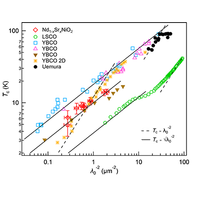
Phys. Rev. Lett. 137, 196003 (2026)
Condensed Matter and Materials
Compressive Splitting in Brittle Solids: The Inverse of Wrinkling in Sheets
Article | Condensed Matter and Materials | 2026-11-06 05:00 EST
Maryam Khodadad, Francois Barthelat, John D. Clayton, George Gazonas, and Kaushik Dayal
Theory and experiments suggest that the mysterious fractures that appear when a brittle material is compressed result from a hidden buildup of internal tension.
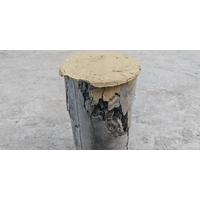
Phys. Rev. Lett. 137, 196101 (2026)
Condensed Matter and Materials
Anomalous Diffusion and Singular Transport from Hydrodynamic Recoupling
Article | Condensed Matter and Materials | 2026-11-06 05:00 EST
Ewan McCulloch, Romain Vasseur, and Sarang Gopalakrishnan
In charge neutral fluids, such as the Dirac fluid in graphene at the Dirac point, charge transport remains diffusive despite the presence of ballistically propagating sound waves: sound waves "hydrodynamically decouple" from the slower charge fluctuations. For quasi-one-dimensional charge neutral fl…
Phys. Rev. Lett. 137, 196304 (2026)
Condensed Matter and Materials
Similarity of Fractional Chern Insulators to Fractional Quantum Hall States: Moiré-Enhanced Gaps and Excitation-Spectrum Correspondence
Article | Condensed Matter and Materials | 2026-11-06 05:00 EST
Siddhartha Sarkar, Yitong Zhang, and Kai Sun
The excitation spectrum of fractional Chern insulators is identical to their fractional quantum Hall counterparts except for an enhancement factor, making it possible to predict their excitation spectrum from the Landau-level problem.
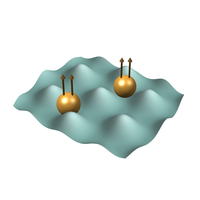
Phys. Rev. Lett. 137, 196505 (2026)
Condensed Matter and Materials
Ultrastrong-Coupling Signatures in Photon Statistics from Terahertz Higgs Polaritons
Article | Condensed Matter and Materials | 2026-11-06 05:00 EST
Spenser Talkington, Benjamin Kass, and Martin Claassen
The ultrastrong coupling regime of cavity photons and quantum materials has emerged as a pathway to modify materials properties. However, definitive signatures of ultrastrong coupling remain elusive. Focusing on the quantum photon statistics of light transmitted through a cavity-embedded superconduc…
Phys. Rev. Lett. 137, 196902 (2026)
Condensed Matter and Materials
Level 2.5 Large Deviations and Uncertainty Relations for Non-Markov Self-Interacting Dynamics
Article | Statistical Physics; Classical, Nonlinear, and Complex Systems | 2026-11-06 05:00 EST
Francesco Coghi, Amarjit Budhiraja, and Juan P. Garrahan
We address the general problem of formulating the dynamical large deviations of non-Markovian systems in a closed form. Specifically, we consider a broad class of "self-interacting" jump processes whose dynamics depends on the past through a functional of a state-dependent empirical observable. Expl…
Phys. Rev. Lett. 137, 197101 (2026)
Statistical Physics; Classical, Nonlinear, and Complex Systems
Physical Review X
Order by Inertia in Spinning Active Matter: Holey Fluids and Spin-Textured Crystals
Article | | 2026-11-06 05:00 EST
Camille Jorge and Denis Bartolo
Experiments with macroscopic spinning particles that stir the surrounding fluid at high Reynolds numbers reveal that inertia plays an organizing role in active systems, promoting the emergence of collective structured phases.
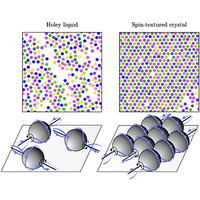
Phys. Rev. X 16, 041034 (2026)
arXiv
Where heat flows and where to change it: gauge-free sensitivity maps of thermal conductivity in disordered solids
New Submission | Materials Science (cond-mat.mtrl-sci) | 2026-11-06 20:00 EST
Designing materials for thermal management requires knowing where heat flows, not only how much. Within harmonic (Allen$ –$ Feldman) theory we develop two local descriptions and test them on amorphous silicon. The first, a projection of the conductivity $ \kappa$ onto atoms, depends on how the potential energy is divided among atoms (a “gauge”); we find the dependence moderate, 23% of the map’s spatial standard deviation at single sites and 9.5% over regions of radius 0.4 nm, apart from a uniform offset of 0.8% of $ \kappa$ . The second avoids the division altogether. It is the exact response of $ \kappa$ to the mass of each atom and the stiffness of each bond, it obeys an Euler sum rule, and it contains the heat-flow map as one of three exact terms. In amorphous and paracrystalline silicon, with ACE, GAP-18 and Keating force constants, the two maps are anti-correlated: where little heat flows a heavier atom lowers $ \kappa$ , and where much heat flows it tends to raise it. The explanation is local softness. The harmonic vibrational amplitude of each atom predicts both maps, and at room temperature the anti-correlation largely disappears at fixed amplitude, in a 32,768-atom replica as well; below about 100 K a component remains that softness does not capture. Thus soft regions, which carry little heat, act through the mixing of vibrational modes about 1$ –$ 2 meV apart. In paracrystalline silicon the grains conduct more heat per atom, while the disordered matrix controls the response. Exact recalculations show that the response map guides the placement of dispersed substituents and locates the region that limits transport across an amorphous/crystalline interface.
Materials Science (cond-mat.mtrl-sci)
16 pages, 9 figures, 3 tables
Energy-Based Anisotropic Hysteresis Modeling for Permanent Magnets
New Submission | Materials Science (cond-mat.mtrl-sci) | 2026-11-06 20:00 EST
Walter Friza, Manfred Kaltenbacher
Modeling the anisotropic hysteresis behaviour of permanent magnets requires vector hysteresis models capable of representing preferred (easy) magnetization directions. This work extends the energy-based vector play model to anisotropic materials by replacing the spherical pinning region of each particle with an ellipsoid, whose semi-axes represent direction-dependent pinning forces. Special attention is paid to the geometrically consistent adaptation of the update formula for the vector play model. The anhysteretic part of the model is also given an angular dependency. The model is compared to measurements taken from a NdFeB magnet and reproduces the measured loops for field inclinations of up to 30° from the easy axis.
Materials Science (cond-mat.mtrl-sci)
6 pages, 9 figures, 2 tables, submitted to the 22nd International IGTE Symposium 2026
Stability and Relaxation of Electron-Phonon Systems at Strong Coupling
New Submission | Strongly Correlated Electrons (cond-mat.str-el) | 2026-11-06 20:00 EST
We study the kinetic properties of Migdal-Eliashberg theory (MET) for electron-phonon interactions at strong coupling. Previously, the system was found to be dynamically unstable at large couplings within a Markovian quantum Boltzmann approximation. Using the quasiclassical Kadanoff-Baym equation, we show that this instability is absent when non-Markovian effects are taken into account. We also analyze the long-time relaxation dynamics at strong-couplin, and find a clear imprint of the non-Markovian nature of the dynamics: in an intermediate temperature range between the Debye frequency and the coupling strength, the relaxation rate becomes linear in temperature with Planckian slope, while the leading relaxation mode acquires a large imaginary component, producing strongly oscillatory decay. Our results imply that any instability which preempts superconductivity must arise from effects beyond MET, such as phonon softening or polaronic effects at finite electronic bandwidth. This shows that the characteristic phonon frequency is not a fundamental bound on $ T_c$ , and leaves open a route to higher $ T_c$ in multi-orbital electron-phonon systems.
Strongly Correlated Electrons (cond-mat.str-el), Materials Science (cond-mat.mtrl-sci), Superconductivity (cond-mat.supr-con)
Agnostic and efficient detection of $\mathbb{Z}_2$ symmetry-protected topological phases in projected entangled-pair states
New Submission | Strongly Correlated Electrons (cond-mat.str-el) | 2026-11-06 20:00 EST
Alexandre Chaduteau, Hao Chen, Juraj Hasik, Titus Neupert
Symmetry-protected topological (SPT) phases are the simplest example of quantum phases that cannot be detected by local order parameters. Their classification is by now well-established from multiple perspectives, a prominent one being via tensor network states. The practical question, however, is not mere classification, but detection: given the ground state of an interacting Hamiltonian and a symmetry group $ G$ along with its representation, is there an efficient way to tell if the state is in a SPT phase with respect to $ G$ ? While there exist such practical tests in one spatial dimension (1D), methods in 2D have so far been restricted to finite-size systems or require an explicit form of virtual symmetries of the tensor networks representing the ground state. Here, we develop an agnostic and efficient method to detect interacting $ \mathbb{Z}_2$ 2D SPT phases, using an infinite projected entangled-pair (PEPS) representation of the ground state. The method is agnostic to the symmetry representation in the virtual space of the PEPS tensor and applicable independent of the bond dimension of the tensors. Moreover, it is efficient as it does not require finite-size scalings: it works directly in the thermodynamic limit. We numerically demonstrate the procedure by mapping out phase boundaries away from fixed-point wavefunctions. We extract the SPT label cocycle data explicitly from the PEPS tensor.
Strongly Correlated Electrons (cond-mat.str-el), Quantum Physics (quant-ph)
19 pages, 13 figures
Topological Transitions of Evanescent Waves
New Submission | Mesoscale and Nanoscale Physics (cond-mat.mes-hall) | 2026-11-06 20:00 EST
Ignacio Pavez, Tom Sheppard, Yoonseok Hwang, Hannah M. Price, Frank Schindler
We study the band structure of evanescent waves, that is, the decaying or growing solutions that live within the gaps of tight-binding Hamiltonians. Although the underlying Hamiltonian is Hermitian, these modes carry complex wavevectors and therefore exhibit a non-Hermitian dispersion. Using the transfer matrix formalism in one dimension, we show that, in addition to the standard exceptional points that appear at the band edges, a different type of exceptional point can arise inside the gap, protected by spinless time-reversal symmetry. Tuning model parameters drives a topological transition where such in-gap exceptional points are nucleated in pairs, mediated by a crossing between purely imaginary momentum branches. We show that this spectral structure is diagnosed by a $ \mathbb{Z}_2$ index assigned to every energy inside the gap, with the in-gap exceptional points arising as its domain walls. A generic bound state in the system has a tail that is purely exponential when its energy lies between a band edge and the nearest exceptional point, but becomes oscillatory - with a wavevector differing from the band-edge momentum - when its energy lies between the pair of in-gap exceptional points. We illustrate these results using continuum and tight-binding models, as well as an anisotropic photonic crystal.
Mesoscale and Nanoscale Physics (cond-mat.mes-hall), Optics (physics.optics)
11 pages in main text, 26 pages in total, 6 Figures in main text, 7 Figures in total
Langmuir kinetics and totally asymmetric volume exclusion in linear chains via Fock space formalism
New Submission | Statistical Mechanics (cond-mat.stat-mech) | 2026-11-06 20:00 EST
Luis D. S. Silva, Arthur M. S. Carvalho, Francisco A. G. Almeida, Gerson C. Duarte-Filho
Driven-diffusive systems combining spatial exclusion and bulk exchange, such as the totally asymmetric simple exclusion process coupled with Langmuir kinetics (TASEP-LK), serve as foundational models for particle transport in vehicular traffic, conveyor networks, and mesoscopic flow channels. In this work, we employ an exact Doi-Peliti field-theoretic operator formulation in Fock space to evaluate steady-state observables, continuous phase landscapes, and spatial correlations in finite linear chains up to $ k = 16$ . By introducing a decomposition in terms of biorthonormal eigenvectors for asymmetric non-Hermitian matrices, the stationary state is calculated directly from the kernel of the quasi-Hamiltonian, completely bypassing the computationally prohibitive complexity of full matrix diagonalization and time-dependent matrix exponentiation. Across distinct rate regimes and global parametric scans, our exact discrete calculations demonstrate that finite-size stochastic fluctuations naturally smear out singular domain walls, producing smooth density profiles and continuous phase crossovers. Finite-size scaling illustrates how local profiles systematically steepen toward the sharp domain wall predicted by continuum field theory as $ k \to \infty$ . Furthermore, two-point correlation analysis reveals that in slow-kinetics regimes, spatial fluctuations generate strong inter-site cumulants, causing standard mean-field approximations to systematically underestimate joint occupancy probabilities by 50%. These findings emphasize the necessity of analytical methods for modeling mesoscopic transport systems and short traffic corridors where local stochastic fluctuations and spatial correlations dominate the stationary dynamics.
Statistical Mechanics (cond-mat.stat-mech), Biological Physics (physics.bio-ph)
11 pages, 8 figures, 1 table
PFAS-induced modulation of vesicle diffusiophoresis
New Submission | Soft Condensed Matter (cond-mat.soft) | 2026-11-06 20:00 EST
Seungsu Han, Gbassey S. A. Oteme, Prathima Nalam, Sangwoo Shin
Understanding how per- and polyfluoroalkyl substances (PFAS) partition into biological membranes and alter their properties is central for elucidating PFAS toxicity. Here, we experimentally investigate how the partitioning of anionic PFAS affects the surface charge of phospholipid vesicles and consequently, their electrokinetically driven vesicle motion, in particular diffusiophoresis. We find that PFAS partitioning enhances vesicle diffusiophoresis, consistent with a model combining the Nernst-Planck and Langmuir adsorption equations. Desorption experiments, together with quartz crystal microbalance with dissipation monitoring (QCM-D), further reveal that substantial lipid loss occurs during PFAS partitioning. We attribute this loss to lipophobic interactions between the fluorocarbon chains of PFAS and the alkyl chains of lipids. Our findings provide new mechanistic insights into how PFAS may disrupt biological systems.
Soft Condensed Matter (cond-mat.soft)
Sudden disappearance of a bright exciton in solid helium
New Submission | Materials Science (cond-mat.mtrl-sci) | 2026-11-06 20:00 EST
Fatema Mohamed, Lucia Reining, Matteo Gatti
Excitons, bound electron-hole pairs, are investigated extensively in optical spectra, where their wave vector is considered to be vanishing. Excitonic spectra as a function of wave vector are much less explored, both theoretically and with measurements of the loss function. Here, we uncover a striking angular dependence of excitonic spectra for the prototypical case of solid helium, where a prominent excitonic peak is completely suppressed for a momentum transfer in certain directions. The effect is entirely due to the electron-hole exchange interaction. This phenomenon leads to a counter-intuitive effect close to Bragg points, where an infinitesimal change of direction of wave vector is sufficient to change the spectrum dramatically. We explain in which way the nature of excitons makes such a scenario possible. We discuss the pressure dependence, point to experimental evidence for our findings, and predict under which circumstances dramatic angular dependencies may also be found in other materials.
Materials Science (cond-mat.mtrl-sci)
Nonequilibrium Spin-Glass Order in a Long-Range Quantum Ising Glass and Its Sensitivity to Noise
New Submission | Disordered Systems and Neural Networks (cond-mat.dis-nn) | 2026-11-06 20:00 EST
Giuseppe D’Auria, Alessandro Silva
We study spin-glass order after a transverse-field quench in a long-range quantum Ising glass. The diagonal-ensemble Edwards-Anderson order coincides at the no-quench and zero-field endpoints, yet in between cold shells overshoot it and hot shells undershoot it. This stems from a competition in correlation space between the rigidity of populated eigenstates and the spread of their pair patterns. Under weak longitudinal dephasing the zero-field endpoint is exactly pinned while the characteristic finite-quench response fades, giving a self-referenced noise probe for quantum spin simulators.
Disordered Systems and Neural Networks (cond-mat.dis-nn), Statistical Mechanics (cond-mat.stat-mech), Quantum Physics (quant-ph)
27 pages, 23 figures: Letter (4 pages + End Matter, 3 figures) and Supplemental Material (20 figures)
Universal Negative Correlation between Nonreciprocity and Superconducting Transition Width in FeTe-Based Heterostructures
New Submission | Superconductivity (cond-mat.supr-con) | 2026-11-06 20:00 EST
Annie G. Wang, Saswata Mandal, Zi-Jie Yan, Bomin Zhang, Xiaoda Liu, Hongtao Rong, Deyi Zhuo, Pu Xiao, Lok-Kan Lai, Zhiyuan Xi, Ke Wang, Chao-Xing Liu, Cui-Zu Chang
Nonreciprocal charge transport in noncentrosymmetric superconductors probes broken symmetries and superconducting fluctuations and underpins the superconducting diode effect. Despite extensive studies, the factors governing its magnitude remain unclear. In this work, we use molecular beam epitaxy (MBE) to synthesize a broad family of FeTe-based superconducting heterostructures with top layers spanning topologically trivial versus nontrivial, layered versus nonlayered, and magnetic versus nonmagnetic materials. Through systematic first- and second-harmonic transport measurements, we find that the magnetochiral anisotropy coefficient $ \gamma$ is insensitive to the top-layer crystal structure, lattice constant, thickness, topology, and magnetism, but exhibits a negative correlation with the superconducting transition width $ \Delta T$ . Control measurements on superconducting stoichiometric FeTe films reveal much weaker nonreciprocity, confirming the essential role of interfacial inversion-symmetry breaking. Combined with a disorder-based theoretical model, our results establish a universal relationship: for comparable inversion-symmetry breaking, reduced interfacial disorder sharpens the superconducting transition and strongly enhances nonreciprocal transport in the Berezinskii-Kosterlitz-Thouless (BKT) transition regime. These findings identify $ \Delta T$ as a unifying parameter governing nonreciprocity across FeTe-based heterostructures, reconcile previously disparate observations, and establish a general framework for engineering enhanced nonreciprocal superconducting responses and exploring superconducting diode effects in nonlinear quantum devices.
Superconductivity (cond-mat.supr-con), Mesoscale and Nanoscale Physics (cond-mat.mes-hall)
21 pages, 4 figures, comments are very much welcome
Flexoelectric Switching of Lock-and-Key Topological Bits
New Submission | Soft Condensed Matter (cond-mat.soft) | 2026-11-06 20:00 EST
Zhijian Zhou, Claire Doré, Yusheng Cai, Jed-Joan S. Edziah, Brian Edwards, Nader Engheta, Amish J. Patel, Kathleen J. Stebe
Topological defects in nematic liquid crystals are high-energy sites of reduced order. We show that a point defect can be stabilized in pillbox-shaped pores. The pore shape promotes lock-and-key docking similar to that observed for colloidal particles. The defect docks in one lobe or the other, displaying bistability. Furthermore, the defect moves like a charged object in an external electric field. An in-plane field drives the defect from one lobe to the opposite lobe, where it remains once the field is removed. The velocity is linear in field strength and reverses with polarity, consistent with flexoelectric coupling. Within the pore, the nematic around the defect carries a positive bulk bound charge density, compensated by negative space charge in the rest of the fluid and on the bounding surfaces. The external field breaks the mirror symmetry of the pore and drives the defect motion. Defect displacement increases the component of the net dipole in the domain along the field. Antagonistic curvature in peanut-shaped pores repels the defect, allowing pore geometry to set distinct switching thresholds. The defects, while not topologically required, are long lived, so information can be stored in their position, allowing them to serve as topological bits. Arrays of topological bits store and rewrite binary information in defect positions, offering a route to reconfigurable, field-addressable soft materials.
Soft Condensed Matter (cond-mat.soft)
Exact magnetic ground states and competing interlayer exchanges in layered kagome magnets
New Submission | Strongly Correlated Electrons (cond-mat.str-el) | 2026-11-06 20:00 EST
Magnetic ground states in layered kagome magnets are investigated using a Heisenberg model with six interlayer exchange interactions. For isotropic two-sublattice models with identical diagonal Fourier exchange functions, a coplanar single-wave-vector ground state is shown to exist for arbitrary exchange ranges. Extending the three-exchange model of Rosenfeld and Mushnikov reveals that longer-range interactions can change the preferred magnetic order from spiral to ferromagnetic and back to spiral, rather than merely modifying the spiral period. The analysis includes ground-state phase diagrams, harmonic stability, magnetic-field response, and sensitivity to individual exchange interactions. The propagation vector, internal layer angle, saturation field, and planar susceptibility are also found to be insufficient to determine all six exchange constants uniquely. These results provide a basis for predicting noncollinear magnetic order from first-principles exchange interactions.
Strongly Correlated Electrons (cond-mat.str-el), Other Condensed Matter (cond-mat.other)
On the critical value of void percolation in high dimensions
New Submission | Disordered Systems and Neural Networks (cond-mat.dis-nn) | 2026-11-06 20:00 EST
Patrick Charbonneau, Marcus Michelen
In the random Lorentz gas, a point tracer moves through spherical obstacles of (reduced) density $ \Phi$ centered on a Poisson point process in $ d$ -dimensional space, $ \mathbb{R}^d$ , and becomes localized once the vacant space stops percolating, at $ \Phi_{\rm p}(d)$ . The dimensional scaling of this void percolation threshold has remained elusive. Prior bounds, conjectural ones included, ranged from $ \Omega(1)$ to $ O(d\ln d)$ , leaving even the scaling undetermined. We here prove that $ \Phi_{\rm p}(d)=\Theta(d)$ , and in particular that $ \tfrac12,d \le \Phi_{\rm p}(d) \le 5,d$ for all sufficiently large $ d$ . The upper bound counts hierarchical families of escape waypoints called tree embeddings; the lower bound is via a weighted second-moment estimate on an explicit ensemble of ballistic escape routes. A linear scaling of $ \Phi_{\rm p}(d)$ excludes the $ d\ln d$ growth suggested by analogy with other systems in the random first-order transition universality class and is consistent with the numerical estimate $ \Phi_{\rm p}/d \to 3.40(5)$ . Because the mean-field dynamical transition is likewise linear, $ \Phi_{\rm d}\simeq 2.40,d$ , our result fixes the activated window $ [\Phi_{\rm d},\Phi_{\rm p}]$ as a bounded—rather than diverging—correction to mean-field dynamical arrest in sufficiently high $ d$ .
Disordered Systems and Neural Networks (cond-mat.dis-nn), Statistical Mechanics (cond-mat.stat-mech), Probability (math.PR)
20 pages, 4 figures
Barlow Packings All Have Maximum Packing Fraction: Why it is so Hard to Find Barlow Structures Other than fcc or hcp?
New Submission | Materials Science (cond-mat.mtrl-sci) | 2026-11-06 20:00 EST
Andres Robles-Navarro, Shaun Cooper, Alex Travesset, Peter Schwerdtfeger
We apply lattice theory to periodic Barlow packings $ (X_{1}X_{2}\dots X_{N}){\infty}$ where $ X{i}\in{A,B,C}$ and $ X_{i}\neq X_{i+1}$ , formed by stacking two-dimensional hexagonal close-packed layers, interacting via generalized $ (n,m)$ -Lennard-Jones potentials. The cohesive energies of all packings lie between those of hexagonal close-packed (hcp, $ (AB)$ ) and face-centered cubic (fcc, $ (ABC)$ ) structure and vary almost linearly with the fcc stacking fraction. The equilibrium lattice constant, bulk modulus, Einstein frequency, and vibrational entropy show similarly near-linear trends. For the standard $ (12,6)$ potential, fcc has the highest vibrational entropy and hcp the lowest, with other Barlow packings falling between them, consistent with previous sticky-hard-sphere Monte Carlo simulations and supported by phonon dispersion calculations. These trends imply an approximately linear dependence of free energy on fcc stacking fraction, with hcp and fcc as endpoints. This provides a simple thermodynamic explanation for why intermediate Barlow stackings are rare in nature: near-linearity offers little driving force to favor them. Exceptions may arise when hcp and fcc are nearly degenerate in energy or when many-body interactions, absent from the present model, favor another stacking. Density-functional calculations including dispersion forces for argon Barlow packings with periods $ N=2,3,4$ , and $ 12$ corroborate the predicted near-linear cohesive energy dependence.
Materials Science (cond-mat.mtrl-sci)
A High-Dimensional Lab-Frame Model of Markovian Dynamics in Alanine Dipeptide
New Submission | Soft Condensed Matter (cond-mat.soft) | 2026-11-06 20:00 EST
Jesse M. Hall, Marina G. Guenza
We present a high-dimensional coarse-grained model of alanine dipeptide that explicitly incorporates global translation and rotation alongside internal conformational dynamics. Using atomistic molecular dynamics trajectories, we construct a 10-bead Markovian Langevin model with a 24-dimensional internal potential of mean force and a full matrix of site-specific friction coefficients. The equilibrium landscape is represented by a Gaussian mixture model, while a rotational-entropy correction accounts for the coupling between internal conformation and global molecular motion. Friction coefficients are obtained using a generalized Einstein relation based on time-correlation functions. We show that the rotational-entropy correction is essential for obtaining a physically admissible friction matrix and significantly affects the inferred dynamics. Without fitting to coarse-grained dynamical observables, the resulting model reproduces a broad range of atomistic auto- and cross-correlation functions. The result is a compact and interpretable dynamical representation of the entire peptide at the chosen CG resolution, which explicitly preserves distinctions between energetic and dissipative coupling over a wide range of motions, including those between conformational fluctuations and global translational and rotational diffusion.
Soft Condensed Matter (cond-mat.soft)
Main body 7 pages, Supplemental Information 26 pages
Confinement-induced bound state and effective potential for microwave-shielded ultracold molecules
New Submission | Quantum Gases (cond-mat.quant-gas) | 2026-11-06 20:00 EST
We investigate the bound state and effective potential of microwave-shielded ultracold molecules under longitudinal confinement, which effectively creates a quasi-two-dimensional (q2D) geometry. We find that the longitudinal confinement facilitates bound-state formation in both bosonic and fermionic molecules, leading to confinement-induced bound states that are absent in free space. To describe these bound states, we establish an effective 2D potential by incorporating the full interaction effect along the longitudinal direction. Compared with other simplified 2D potentials, the effective potential accurately predicts the binding energies of ultracold molecules over a much broader parameter regime of microwave coupling and confinement strength. Remarkably, it can even predict deep bound states with binding energies well exceeding the confinement frequency. By establishing this effective potential, our work paves the way for efficiently exploring the rich low-dimensional physics of microwave-shielded ultracold molecules.
Quantum Gases (cond-mat.quant-gas)
9 pages, 6 figures
Nanoscale Inclined Four-electrode Ion Traps: Finite-Element Modelling, Floquet Stability, and Surface-Potential Response
New Submission | Other Condensed Matter (cond-mat.other) | 2026-11-06 20:00 EST
Nahiyan Archa, Abhinand P., Ahammed Shabeeb, Nikhil Kumar
Developing miniaturised trapped-ion systems requires electrode architectures that provide controlled radio-frequency (RF) confinement while accounting for nanoscale features and surface-induced perturbations. Here, we present a finite-element investigation of an inclined four-blade RF ion-trap architecture for 171Yb+, combining pseudopotential characterisation, matrix Mathieu analysis, Floquet stability assessment, and localised surface-potential modelling. The architecture incorporates exposed electrode-face features of approximately 99-150 nm within an opposing-electrode separation of 20 um. At an electrode inclination of 6 degrees, an RF amplitude of 150 V, and a drive frequency of 15 MHz, the calculated pseudopotential exhibits directional in-plane barriers of 3.430 and 3.389 meV along the principal diagonal paths. The full RF-potential Hessian, including off-diagonal coupling terms, is used to construct the matrix Mathieu equation. Numerical propagation over one RF period identifies two dominant motional branches with secular-frequency estimates of 1.8137 and 1.8181 MHz. A third, predominantly axial branch exhibits a nominal frequency near 7.90 kHz, although its quantitative resolution is limited by the residual Hessian trace and phase-return drift. Additionally, a four-source electrostatic model is developed to investigate the effects of localised surface potentials on modal electric-field responses. Parametric analysis reveals correlation-dependent suppression and enhancement of normalised response coefficients, with multipliers ranging from approximately 0.5 to 1.5. This study establishes a computational framework for investigating nanoscale inclined blade-electrode architectures, their motional characteristics, and surface-potential responses, while highlighting numerical convergence requirements for reliable three-dimensional trap characterisation.
Other Condensed Matter (cond-mat.other)
Electrically tunable superconducting dimensionality in stripe-ordered monolayer MoTe$_2$
New Submission | Superconductivity (cond-mat.supr-con) | 2026-11-06 20:00 EST
Tianyu Qiu, Ziyi Han, Fei Yang, Keyu Wei, Liguo Dou, Yong Zhang, Dekun Yang, Kenji Watanabe, Takashi Taniguchi, Xuefeng Wang, Fucong Fei, Fengqi Song, Yanyan Shangguan, Shaochun Li, Jinsheng Wen, Hong Yao, Chaoxing Liu, Binghai Yan, Lin He, Xiaoxiang Xi
Dimensionality governs the stability of collective quantum states, including whether Cooper pairs can establish the phase coherence required for superconductivity. In solids, however, electronic dimensionality is usually encoded in the crystal structure and is difficult to control reversibly. Here we show evidence that monolayer 1$ T^{\prime}$ -MoTe$ _2$ develops a stripe charge-density wave that reorganizes its low-energy electronic states into quasi-one-dimensional channels. Raman spectroscopy and scanning tunneling microscopy identify the stripe order, whereas directional transport and tunneling spectroscopy reveal superconducting correlations confined to the stripe direction and insulating behavior perpendicular to it. Electrostatic doping weakens the transverse insulating response and drives the system into phase-coherent two-dimensional superconductivity. These results show that stripe charge order can reconfigure superconducting dimensionality and make it electrically tunable within a single crystalline layer.
Superconductivity (cond-mat.supr-con), Mesoscale and Nanoscale Physics (cond-mat.mes-hall), Materials Science (cond-mat.mtrl-sci), Strongly Correlated Electrons (cond-mat.str-el)
Dark-State Coherent Control of Excitons in TMD Monolayers: A Reduced Intravalley Lindblad Framework for WSe$_2$
New Submission | Materials Science (cond-mat.mtrl-sci) | 2026-11-06 20:00 EST
Mauricio Martinez, Martin A. Mosquera
Dark-state coherence in driven three-level systems underlies electromagnetically induced transparency (EIT) and stimulated Raman adiabatic passage (STIRAP). Their performance depends on the coupling topology: in a ladder ($ \Xi$ ) scheme the coherence can bypass a lossy intermediate state, whereas in a $ V$ scheme it is carried by two excited states that both decay. We develop a topology-resolved Lindblad framework for driven three-level excitonic manifolds at fixed center-of-mass momentum, in which a single exciton couples to phonons, the radiation field and a dilute exciton gas. The $ \Xi$ and $ V$ manifolds are selected from the exciton spectrum by systematically screening optical brightness, intra-excitonic dipole strength and state compactness, making the selection reproducible and transferable to other materials. Within this framework, in the $ \Xi$ manifold of hBN-encapsulated WSe$ _2$ , a weak optical pulse, preceded by a terahertz pulse in the counterintuitive STIRAP order, converts the excitation it creates into an optically dark exciton by dark-state following, while the lossy bright intermediate exciton stays nearly empty. The conversion is limited by emission from that intermediate state rather than by non-adiabatic coupling, and is controlled by a single adiabaticity parameter of the terahertz leg. The exchange mean field of the exciton gas shifts the two-photon resonance by more than the conversion tolerates at moderate densities; the center of the cascade transparency window provides an in situ calibration, and we identify the control strengths at which it is true EIT rather than Autler–Townes splitting. The $ V$ manifold loses its coherence on the radiative timescale and serves as the unprotected reference. These results provide a minimal, material-specific baseline for dark-state coherent control of excitons in two-dimensional semiconductors in the radiative limit.
Materials Science (cond-mat.mtrl-sci), Mesoscale and Nanoscale Physics (cond-mat.mes-hall), Optics (physics.optics)
36 pages + appendices, 8 figures. Comments are welcome
Parity-Selective Quantum Interference in Unconventional Magnets
New Submission | Mesoscale and Nanoscale Physics (cond-mat.mes-hall) | 2026-11-06 20:00 EST
Yiyuan Chen, Xiao-Bin Qiang, Hai-Zhou Lu, Congjun Wu, X. C. Xie
Nonrelativistic spin splitting has emerged as a defining feature of unconventional magnetic states. Here we show that quantum interference offers a symmetry-resolved probe for the parity of such spin splitting, as even- and odd-parity magnets exhibit qualitatively different weak (anti-)localization behaviors. Even-parity magnets can host time-reversal symmetric scattering loops depicted by the spin group, giving rise to a weak localization that can be suppressed by spin-orbit coupling. In contrast, odd-parity magnets have a hidden weak antilocalization that can be released by spinorbit coupling. We further derive the corresponding magnetoconductivity formulas to facilitate experimental explorations. Our results not only advance the weak (anti-)localization theory to unconventional magnets but also suggest a practical diagnostic of unconventional spin-split magnetic states.
Mesoscale and Nanoscale Physics (cond-mat.mes-hall)
7 pages, 3 figures
Observable-Based Learning of Effective Entanglement Hamiltonians
New Submission | Strongly Correlated Electrons (cond-mat.str-el) | 2026-11-06 20:00 EST
Siyi Yang, Yuzhi Liu, Yi-Ming Ding, Zheng Yan
Determining the entanglement Hamiltonian (EH) of an interacting quantum many-body system remains a fundamental challenge beyond special analytically tractable cases. Here we develop an observable-matching framework for learning effective EHs, which we demonstrate using response estimates from quantum Monte Carlo. As applications of this framework, we first calibrate the overall prefactor of the lattice Bisognano–Wichmann (LBW) construction using equal-time correlations and then learn spatially resolved couplings beyond its prescribed profile, without assuming a specific functional form for their spatial dependence. Trained solely on local correlations, the learned EHs reproduce benchmarked von Neumann and second Rényi entropies in $ 1$ D and second Rényi entropies in $ 2$ D. For a strong-bond cut associated with special surface criticality at the $ (2+1)$ D $ O(3)$ Wilson–Fisher critical point, free-form learning outperforms the calibrated LBW ansatz in predicting the second Rényi entropy and reveals spatially nonuniform coupling renormalizations. Importantly, the learned EH also provides access to the von Neumann entropy in this setting, revealing a negative subleading correction and extending previous Rényi entropy findings to the von Neumann case. Directly evaluating the von Neumann entropy in such $ (2+1)$ D interacting quantum many-body systems remains challenging for conventional numerical methods. These results establish observable-based learning as a route to constructing effective entanglement Hamiltonians beyond prescribed spatial profiles in higher-dimensional interacting systems.
Strongly Correlated Electrons (cond-mat.str-el), Statistical Mechanics (cond-mat.stat-mech), Quantum Physics (quant-ph)
Extensions of the Haldane gap proof: higher dimensions, near degeneracy, fermions and tensor-network states
New Submission | Strongly Correlated Electrons (cond-mat.str-el) | 2026-11-06 20:00 EST
A recent remarkable paper by OpenAI showed that the spin-one Heisenberg chain with periodic boundary conditions has a spectral gap in the thermodynamic limit. The proof elegantly deduces this gap from the Hamiltonian’s spectrum on a finite system. This basic idea is an inequality involving the purity of the original Gibbs state and a dual Gibbs state that is defined via space-time rotation. Here we consider a few generalizations of this purity bootstrap argument. We first extend it to arbitrary spatial dimensions. Our main result uses the space-time duality between symmetry generators and symmetry twists to obtain upper bounds on the splitting of nearly degenerate low-energy states, together with a nonzero gap above them, from finite-system information. As applications, we show that finite-system calculations for the 2+1-D toric code in a field and the 2+1-D transverse-field Ising model establish parameter regimes with four and two low-lying states whose splittings are bounded from above by $ e^{-cL}$ and $ e^{-cL^2}$ respectively for arbitrarily large system size $ L$ , while the gap above these states remains nonzero in the thermodynamic limit. Next, we extend it to fermionic systems and use a finite calculation to establish a symmetric mass generation phase in a $ 2+1$ -D fermionic model. Finally, we apply the bootstrap to tensor-network states and establish exponential decay of connected correlations of all local operators in the symmetric square-lattice spin-one state introduced by Jian and Zaletel.
Strongly Correlated Electrons (cond-mat.str-el), Statistical Mechanics (cond-mat.stat-mech), High Energy Physics - Theory (hep-th), Mathematical Physics (math-ph), Quantum Physics (quant-ph)
15 pages main text + Appendices
Cross-Family Mode Coupling and Localization Reversal in Phononic Crystal Defect Dimers
New Submission | Materials Science (cond-mat.mtrl-sci) | 2026-11-06 20:00 EST
Defects in phononic crystals confine elastic vibrations within bandgaps, enabling waveguiding, sensing, and energy harvesting. Coupling defects offers control over the spatial distribution of vibration, but how interactions between nearby modal families determine defect preference remains unclear. We examine localization reversal in dimers whose single defect supports a nearby $ B_1$ singlet and $ E$ doublet: softening one defect shifts a continued modal branch toward its unchanged partner. In off-axis and diagonal layouts, this reversal accompanies family exchange, with opposing $ B_1$ and $ E$ contributions to the defect-mass difference nearly cancelling at the threshold. Deleting cross-family stiffness and mass blocks removes reversal, while omitting cross-family observable terms at fixed states preserves it, identifying modal redistribution as the dominant mechanism. At the off-axis softening endpoint, independent channels predict the opposite preferred defect despite a $ 0.16%$ frequency difference from the full-order solution. Nominal operators retaining the complete singlet-doublet space predict selected softening-branch thresholds with errors below $ 1.1%$ against independent full-order sign brackets, without fitting detuned trajectories. These results link localization reversal to modal-family exchange and physical defect-mass balance, and show that frequency agreement alone does not guarantee localization accuracy.
Materials Science (cond-mat.mtrl-sci)
29 pages. This preprint presents the primary singlet-doublet system. The journal manuscript additionally includes a contrasting material system
Prediction of antimagnon-polarons with intrinsic momentum-space level attraction
New Submission | Mesoscale and Nanoscale Physics (cond-mat.mes-hall) | 2026-11-06 20:00 EST
Chongzhou Wang, Zhengda Jing, Weichao Yu
Propagating hybrid quasiparticles formed by magnons and phonons (magnon-polarons) or photons (magnon-polaritons) typically exhibit level repulsion in momentum space. Level attraction, by contrast, requires an anti-phase channel and has so far been restricted to zero-dimensional systems mediated by dissipative baths. Here we predict the antimagnon-polaron in a continuous magnetoelastic medium, which inherently exhibits momentum-space level attraction. The spin-orbit-torque (SOT)-stabilized antimagnon precesses with opposite handedness, directly reversing the magnetoelastic coupling without requiring an external environment. This intrinsic attraction yields a distinctive 0/{\pi} phase-locked simultaneous growth. Micromagnetic simulations confirm this picture, revealing that the SOT-controlled balance between gain and damping drives a collective instability. This ultimately enables a continuously tunable, dc-pumped, single-frequency phonon laser, establishing a novel route for coherent acoustic emission.
Mesoscale and Nanoscale Physics (cond-mat.mes-hall)
12 pages, 3 figures, includes Supplemental Material
Supermoiré Formation and Robust Topological Edge State in Helical Trilayer Graphene
New Submission | Mesoscale and Nanoscale Physics (cond-mat.mes-hall) | 2026-11-06 20:00 EST
Hong Li, Huandong Chen, Seongyeon Youn, Kenji Watanabe, Takashi Taniguchi, Trithep Devakul, Kazuhiro Fujita, Abhay Narayan Pasupathy
When two materials with nearly matched lattice constants meet, they form commensurate domains separated by incommensurate domain walls that absorb the mismatch. Recently, this picture has been extended to moiré lattices: when two moiré superlattices have nearly equal periodicities, they can form a “supermoiré” consisting of commensurate moiré domains separated by domain walls. Helical trilayer graphene (HTG) is a particularly interesting example: theory predicts that its commensurate domains are distinct topological insulators, separated by a network of conducting domain walls. Here, we use scanning tunneling microscopy and spectroscopy to visualize supermoiré domains and their electronic properties in HTG at a twist angle of $ \sim1.7^\circ$ . We find atomic-scale evidence of relaxation into supermoiré domains, each hosting flat bands separated from remote bands by large gaps of $ \sim40$ meV. Domain walls exhibit spectrally uniform edge states along their length, in excellent agreement with calculations for valley-protected topological edge modes. The topological character of the flat bands is intimately tied to wavefunction localization on a graphene sublattice, and we reveal the topological change across a domain boundary by imaging the reversal of sublattice polarization.
Mesoscale and Nanoscale Physics (cond-mat.mes-hall), Strongly Correlated Electrons (cond-mat.str-el)
PolyGPT: A Decoder-Only Transformer for Polymer Electrolyte Design
New Submission | Materials Science (cond-mat.mtrl-sci) | 2026-11-06 20:00 EST
Tanmay Sarkar Akash, Siddhartha Das
Designing polymer electrolytes requires control over both material properties and chemical structure. Here, we present PolyGPT, a Transformer with 38.3 million parameters that generates polymer repeat units from optional property targets, requests to include or exclude a specified chemical feature, and an electrolyte-domain condition. Using the model selected by validation loss, we compared unconditional generation with requests for electrolyte-associated structures, a low glass-transition temperature (Tg), or both. Unconditional and electrolyte-only generation achieved structural validity of 99.46% and 99.59%, respectively. However, electrolyte conditioning increased repetition: uniqueness among valid outputs fell from 99.99% to 51.74%. At a Tg target of 246.11 K, we compared generation with and without electrolyte conditioning, and adding the electrolyte condition slightly reduced the predictor-estimated mean absolute error from 26.97 to 26.07 K, but the fraction of all attempts yielding distinct valid polymers within 50 K of the target fell from 82.35% to 32.31%. When we also required absence from the training catalog, these yields were 59.90% and 19.71%, respectively. The lower yield persisted with a tighter 25 K tolerance. Domain conditioning also weakened control of inclusion requests: the mean fraction of attempts producing valid polymers containing the requested chemical feature fell from 94.27% to 31.27%. Across nine checkpoints, earlier models sometimes produced more distinct, catalog-unseen polymers meeting the Tg target: 10,000 checkpoint model with electrolyte conditioning and 30,000 checkpoint model without it. Together, these results show why property error alone is insufficient for evaluating conditional polymer generation. It must be considered alongside repetition, training-catalog novelty, and whether combined design requests are satisfied.
Materials Science (cond-mat.mtrl-sci), Chemical Physics (physics.chem-ph)
Probing Non-Abelian Topology through Quench Dynamics
New Submission | Mesoscale and Nanoscale Physics (cond-mat.mes-hall) | 2026-11-06 20:00 EST
Zhenming Zhang, Tianyu Li, Wei Yi
Quench dynamics offer valuable insights to topological matter, wherein the emergent topological phenomena serve as a dynamic probe to the topology of static Hamiltonians. While such a practice has been widely applied to detect the Abelian band topology or the Euler-class topology of band nodes, little is known regarding the quench dynamics of non-Abelian topological insulators in multiband systems, where the intertwining geometry of all eigenstates necessitates the description of noncommutative topological charges. Here we propose a quench protocol for non-Abelian topological insulators, so that the underlying topology can be systematically probed using dynamic signatures. Specifically, we develop a band-projection scheme to extract the gap-resolved topology from dynamic skyrmions in the emergent quasimomentum–time manifolds of the quench processes. These skyrmions are characterized by a series of gap-resolved dynamic Chern numbers, which enable us to reconstruct the full non-Abelian topology of the post-quench Hamiltonian, including the global non-Abelian topological charge and edge-state patterns under the open-boundary condition. Our proposal offers dynamical access to non-Abelian topology in multiband systems, and can be readily implemented using photons or cold atoms.
Mesoscale and Nanoscale Physics (cond-mat.mes-hall), Quantum Gases (cond-mat.quant-gas), Quantum Physics (quant-ph)
15 pages, 8 figures
Percolation of discorectangles oriented predominantly along two mutually perpendicular directions
New Submission | Statistical Mechanics (cond-mat.stat-mech) | 2026-11-06 20:00 EST
The percolation of finite-thickness elongated objects—discorectangles (stadiums)—oriented predominantly along two mutually perpendicular directions is studied, extending recent results for zero-thickness sticks. The angular distribution is the ``Maltese cross’’ parametrized by $ \alpha$ . Based on the known analytic expression for the excluded area of a discorectangle pair, the percolation threshold is estimated by the eigenvalue method. The discorectangle connectivity matrix is represented as the stick matrix plus a rank-1 term determined by the constant part of the excluded area, $ C=4lw+\pi w^{2}$ , which gives the approximate relations $ \lambda_{\max}^{\mathrm{DR}}\approx\lambda_{\max}^{\mathrm{stick}}+C$ and $ n_c^{\mathrm{DR}}\approx n_c^{\mathrm{stick}}/(1+C n_c^{\mathrm{stick}})$ . Finite thickness shifts the absolute thresholds and affects the first normalization, whereas the second normalization, written through maximum eigenvalues, cancels the additive geometric contribution and preserves only the orientational dependence, explaining the universality of the normalized curves. Monte Carlo simulations of unit-length discorectangles with aspect ratios 8, 16, and 32, various domain sizes, periodic boundary conditions, and union–find scaling analysis confirm the theoretical predictions.
Statistical Mechanics (cond-mat.stat-mech), Disordered Systems and Neural Networks (cond-mat.dis-nn)
To be presented at The 10th International Scientific Conference The Modeling of Nonlinear Processes and Systems (MNPS-2026)
Electrical conductivity of a two-dimensional two-component medium: discretization and effective medium approximation
New Submission | Statistical Mechanics (cond-mat.stat-mech) | 2026-11-06 20:00 EST
The effective conductivity of a two-dimensional two-component medium is studied within a discretization scheme and the effective-medium approximation (EMA). A square lattice is superimposed on a random isotropic medium; each cell is assigned the conductivity of its majority component, and the cell is replaced by a star of four resistors. Neighboring cells are connected by an equivalent resistor whose conductivity is $ \sigma_1$ , $ \sigma_2$ , or the harmonic mean $ \sigma_{12}=2\sigma_1\sigma_2/(\sigma_1+\sigma_2)$ , with probabilities $ (1-p)^2$ , $ p^2$ , and $ 2p(1-p)$ , respectively. Applying Foster’s theorem and the EMA yields a closed equation for the dimensionless effective conductivity $ x$ and, after transformation, a cubic equation whose coefficients depend on $ p$ and the conductivity ratio $ r$ . The EMA predictions are compared with direct calculations on a $ 200\times200$ resistor network with periodic lateral boundary conditions and Dirichlet conditions on the top and bottom. For uncorrelated disorder, good agreement is found. For correlated disorder, when resistor conductivities are assigned according to the discretization rule from the colors of adjacent nodes, significant deviations appear and the percolation-like inflection point shifts to the right of $ 1/2$ . The results question the validity of the correlated-disorder EMA approach and help explain discrepancies previously reported for random nanowire networks.
Statistical Mechanics (cond-mat.stat-mech), Disordered Systems and Neural Networks (cond-mat.dis-nn)
To be presented at The 10th International Scientific Conference The Modeling of Nonlinear Processes and Systems (MNPS-2026)
Interfacial polarity control of anomalous Hall effect in LaCoO3-SrIrO3 heterostructures
New Submission | Strongly Correlated Electrons (cond-mat.str-el) | 2026-11-06 20:00 EST
Yeonjae Lee, Chanyoung Shin, Youngdo Kim, Jinyoung Kim, Jaeung Lee, Miyoung Kim, Sangjae Lee, Changyoung Kim
Interfacial polarity in oxide heterostructures can drive robust charge redistribution across the interface, yet its role in tailoring topological transport phenomena like the anomalous Hall effect (AHE) remains largely unexplored. Here, we control the sign of polarity-induced charge in SrIrO3-LaCoO3 interfaces by independently engineering the layer stacking sequence and the atomic termination. In-situ angle-resolved photoemission spectroscopy directly confirms the sign reversal of the induced charge in SrIrO3 through the contrasting electronic band shifts between different interfacial configurations. Magneto-transport measurements across a systematic matrix of four distinct heterostructures reveal that the AHE can be cleanly toggled on and off: it emerges exclusively under electron-doped conditions, while remaining suppressed for hole-doped SrIrO3. Our results establish that this response originates from an intrinsic, Berry-curvature-driven mechanism governed by polarity-controlled band filling of SrIrO3. These findings shift interfacial polarity from a passive structural consequence to an active design variable for engineering topological quantum states in oxide heterostructures.
Strongly Correlated Electrons (cond-mat.str-el)
Chiral-vibration-induced magnetism and circular dichroism in organic molecules
New Submission | Other Condensed Matter (cond-mat.other) | 2026-11-06 20:00 EST
Hao-Wen Xu, Cheng Xu, Zi-Yang Xu, Xiao-Long Yang, Hang Xie
We investigate the vibrational inverse Faraday effect and transient vibrational circular dichroism in benzene, coronene, and methane at the single-molecule level. We combine density-functional tight-binding calculations with damped normal-mode dynamics. Circularly polarized light excites suitable degenerate infrared-active modes, driving chiral nuclear motion that produces effective magnetic moments. Reversing the pump helicity reverses the vibrational chirality and the sign of the transient dichroic response. These results support a writing-readout scheme in which circularly polarized pumping prepares a chiral vibrational state and transient vibrational circular dichroism probes its handedness. We further examine how molecular symmetry shapes the light-induced chiral response across the three molecular systems. This work provides a valuable platform for exploring all-optical control of magnetism and chiroptical probing at the molecular scale.
Other Condensed Matter (cond-mat.other)
Nonequilibrium orientational bistability of a magnetically-driven slender particle
New Submission | Soft Condensed Matter (cond-mat.soft) | 2026-11-06 20:00 EST
Zhiyuan Zhao, Longfei Li, Tingting Sun, Mingcheng Yang, Masao Doi
Externally driven systems are non-equilibrium but accessible to stationary states. By combining theoretical calculations and particle-based simulations, we investigate the orientational configuration of a transversely-magnetized slender particle in a rotating magnetic field. Our results reveal nonequilibrium orientational bistability in both regimes that the particle rotates synchronously and asynchronously with the field. The relative populations of standing and lying orientations depend strongly on the driving frequency in the synchronous regime, whereas they are primarily controlled by the magnetic field strength in the asynchronous regime. Effective free-energy approximations further capture the principal features of the steady-state orientational distributions in both regimes. Our work aims to give a statistical-thermodynamic description of orientational bistability in magnetically-driven slender particles, paving the way for relevant experimental designs and advanced applications.
Soft Condensed Matter (cond-mat.soft), Statistical Mechanics (cond-mat.stat-mech)
10 pages, 5 figures
Ultrafast Moiré Exciton Dynamics Revealed by Two-Dimensional Coherent Spectroscopy
New Submission | Mesoscale and Nanoscale Physics (cond-mat.mes-hall) | 2026-11-06 20:00 EST
Deran Zhang, Zhexue Chen, Dongxue Chen, Tengfei Yan, Jianhua Jiang, Hui Dong
Moiré superlattices of van der Waals heterostructures confine excitons into discrete energy levels in finite-sized samples, yet their internal relaxation pathways remain obscured by inhomogeneous broadening. Here, using two-dimensional coherent spectroscopy (2DCS), we directly resolve seven discrete energy levels of the moiré-confined intralayer $ \mathrm{WS}{2}$ A exciton in an hBN-encapsulated $ \mathrm{WS}{2}/\mathrm{WSe}_{2}$ heterostructure, corresponding to a confinement depth of 57.02 meV. By tracking the population of these levels over picosecond delays, we uncover a two-stage thermalization process: an effective exciton temperature drops from 171.8 to 99.3 K within 1.2 ps through rapid intra-manifold population redistribution, followed by a slower recovery toward quasi-equilibrium mediated by exciton–environment interactions. Kullback–Leibler divergence analysis confirms the progressive transition from a non-equilibrium to a Boltzmann-distributed population. Our results establish state-resolved access to moiré exciton dynamics and provide a foundation for exploring nonequilibrium many-body phenomena in moiré quantum materials.
Mesoscale and Nanoscale Physics (cond-mat.mes-hall), Optics (physics.optics)
8 pages, 5 figures
Multi-Channel Non-Abelian Edge Pumping via Multi-Degeneracy Encircling
New Submission | Mesoscale and Nanoscale Physics (cond-mat.mes-hall) | 2026-11-06 20:00 EST
Qingyang Mo, Jiacheng Sun, Zhongfu Li, Jiajun Li, Wange Song, Tao Li, Shuang Zhang
Non-Abelian operations enable sequence-dependent control of light, yet experimental realizations in wave systems have remained confined to local bulk or same-boundary modes and have often required fragile gap-closing degeneracies. Conventional Thouless pumps, meanwhile, support only two-channel edge transfer across a single gap. Here we demonstrate multi-channel non-Abelian edge pumping on a silicon photonic chip by adiabatically encircling multiple band degeneracies in a multi-gap lattice. In a minimal three-band band-triangle, two opposite-charge Weyl points and one zero-charge degeneracy are linked by global band connectivity, yielding both opposite-boundary and same-boundary edge channels. Sequencing these channels produces non-Abelian braiding of three topologically protected edge modes that reside on distinct physical boundaries. The process remains fully gapped and is protected by topological winding rather than by maintained spectral degeneracies. The same band-triangle principle extends systematically to an arbitrary number of channels, establishing a scalable route to collective, sequence-controlled routing of topological states in integrated photonic circuits.
Mesoscale and Nanoscale Physics (cond-mat.mes-hall), Optics (physics.optics)
Negligible Kitaev interaction in the van der Waals antiferromagnet NiBr$_2$ revealed by neutron spectroscopy
New Submission | Strongly Correlated Electrons (cond-mat.str-el) | 2026-11-06 20:00 EST
Hao Xu, Shufan Cheng, Yanyan Shangguan, Song Bao, Junbo Liao, Bo Zhang, Zihang Song, Shuai Dong, Maofeng Wu, Shinichi Itoh, Daichi Ueta, Jinsheng Wen
Using time-of-flight neutron spectroscopy, we have mapped out the magnetic excitations in the van der Waals antiferromagnet NiBr$ _2$ over a broad range of energies and momenta. The observed well-defined magnon dispersions are quantitatively reproduced by linear spin-wave theory based on a minimal bilinear Hamiltonian that includes Heisenberg exchange interactions up to third-nearest neighbors, interlayer couplings, and a single-ion anisotropy term, with no need to invoke a Kitaev interaction. This finding is consistent with the fact that bromine is lighter than iodine, leading to weaker ligand-mediated spin-orbit coupling in NiBr2 than in NiI2, and consequently a reduced Kitaev interaction. Our results establish NiBr$ _2$ as a Heisenberg-dominated van der Waals antiferromagnet and support the view that the ligand spin-orbit coupling governs the strength of the bond-dependent interactions within the NiX$ _2$ (X = halogen) family.
Strongly Correlated Electrons (cond-mat.str-el), Materials Science (cond-mat.mtrl-sci)
9 pages, 4 figures
Phys. Rev. B 114, 264402 (2026)
Fermi-volume anomaly in quartet condensates
New Submission | Superconductivity (cond-mat.supr-con) | 2026-11-06 20:00 EST
We investigate the relation between density and Fermi volume in a four-component Fermi system with quartet order. For a regular zero-temperature branch without pair order, we express the correction to the Fermi-volume count in terms of the response of the Luttinger-Ward functional to a phase winding of the quartet source. Its leading term is a weighted difference between four-particle and four-hole states. For a Gaussian vertex and parabolic dispersion, we find that the correction expands the Fermi volume in one dimension and contracts it in three dimensions in the parameter range studied. The sign in two dimensions depends on the momentum cutoff. We solve the one-dimensional Dyson equation at fixed density and compare the counting correction obtained from the Fermi points with that evaluated from the dressed spectra at low temperature. At fixed quartet amplitude and peak normalization of the vertex, the correction depends strongly on the vertex width, whereas the fermionic entropy changes little. We also examine the linear pairing response, which can limit the continuation of the unpaired branch to zero temperature.
Superconductivity (cond-mat.supr-con), Quantum Gases (cond-mat.quant-gas), Strongly Correlated Electrons (cond-mat.str-el), Nuclear Theory (nucl-th)
15 pages, 5 figures, and 12 tables
Initial heat-current decay versus thermal transport at a three-body resonance in a one-dimensional Fermi gas
New Submission | Quantum Gases (cond-mat.quant-gas) | 2026-11-06 20:00 EST
We theoretically study kinetic relaxation and heat transport in a dilute one-dimensional spinless Fermi gas near a three-body resonance. The full vacuum amplitude of a finite-range interaction enters the linearized Boltzmann collision operator. The resonance position that maximizes the initial heat-current decay rate lies above the one that minimizes the integrated relaxation time. At higher resonance energies, coupling among momentum moments transfers heat-current weight to a slow mode. A faster initial decay can therefore coexist with slower subsequent relaxation and a larger low-frequency heat response. The dissipative responses at two resonance positions reverse their ordering at least twice as frequency increases. Bounds on the full collision operator confirm both reversals. A fourth-moment distortion exhibits the same separation of relaxation scales and provides a probe through the momentum distribution.
Quantum Gases (cond-mat.quant-gas), Statistical Mechanics (cond-mat.stat-mech)
15 pages, 4 figures, and 2 tables
Reduced Glass Transition Temperature with Preserved Super-Arrhenius Dynamics in Nanoconfined Glass-Forming Nematic
New Submission | Soft Condensed Matter (cond-mat.soft) | 2026-11-06 20:00 EST
Aleksandra Deptuch, Eugeniusz Rajewski, Ewa Juszyńska-Gałązka
The molecular dynamics and glass-forming behavior of 4-cyano-3-fluorophenyl 4-butylbenzoate (4CFPB) liquid crystal was investigated by broadband dielectric spectroscopy in anodic aluminum oxide cylindrical nanopores of 35 and 73 nm diameter. The primary $ \alpha$ -relaxation was analyzed using the Vogel-Fulcher-Tammann (VFT) and Mauro-Yue-Ellison-Gupta-Allan (MYEGA) models. Confinement reduces the glass transition temperature from 217 K in bulk to 208-210 K, while preserving the super-Arrhenius character of the $ \alpha$ -relaxation and a fragility index of approximately 60. Unlike in previously studied 6 and 8 nm pores, the secondary $ \beta$ -relaxation remains detectable, with possible intramolecular contributions examined by density functional theory calculations. Next to the pore-size-dependent changes in molecular dynamics and glass transition temperature, cold crystallization is not observed. These findings highlight the distinct effects of geometrical confinement on molecular relaxation, glass formation, and crystallization kinetics.
Soft Condensed Matter (cond-mat.soft)
Majorana corner modes and tunable braiding in an altermagnet-superconductor heterostructure
New Submission | Superconductivity (cond-mat.supr-con) | 2026-11-06 20:00 EST
Yingli Gao, Kai Zhang, Ling-Zheng Meng, Junpeng Hou, Ning Li, Ya-Jie Wu
Zeeman fields are usually required for realizing and manipulating Majorana corner modes at the cost of suppressed superconducting pairing. Altermagnetism offers a new route toward realizing Majorana corner modes under zero net external magnetic fields. Here we propose a theoretical scheme to host Majorana corner modes in a honeycomb-lattice altermagnet-superconductor heterostructure. In contrast to previous studies on square lattices, altermagnetism yields distinct effective low-energy edge masses on various inequivalent edges of the honeycomb lattice. Within a low-energy edge-theory framework, we establish the conditions under which Majorana corner modes emerge for both bearded and zigzag edge terminations. We further explicitly construct a complete set of Clifford gates by tuning the altermagnetic anisotropy and chemical potential of the heterostructure. Our results provide a promising platform for the realization and manipulation of Majorana corner modes.
Superconductivity (cond-mat.supr-con), Quantum Physics (quant-ph)
14 pages, 9 figures
Universal Phase Locking from Slowly Varying Inhomogeneity in Tunnel-Coupled One-Dimensional Condensates
New Submission | Quantum Gases (cond-mat.quant-gas) | 2026-11-06 20:00 EST
The sine-Gordon model can be experimentally realised by tunnel-coupled one-dimensional Bose condensates. However, the experiments show relaxation to a phase-locked state, which conflicts with the predictions of the homogeneous integrable theory. Here we combine the truncated Wigner approximation with an asymptotic analysis, and show that this locking is produced by a slowly varying density profile through a universal mechanism, whereby the relative phase near the density maximum drifts towards zero. We show that this drift is already present in the linearised theory and its timescale is determined by the density curvature alone, while it is independent of the tunnel coupling. Rescaling time by the relaxation time scale collapses the dynamics for different system sizes and density profiles, while non-linearity suppresses the excitation returning from the edges.
Quantum Gases (cond-mat.quant-gas), Quantum Physics (quant-ph)
Ground-state properties of uniaxial magnetic model for antiferromagnetic 1/1 periodic approximants to icosahedral quasicrystals
New Submission | Strongly Correlated Electrons (cond-mat.str-el) | 2026-11-06 20:00 EST
The ground-state properties of the uniaxial magnetic model in the 1/1 periodic approximant to the icosahedral quasicrystal with antiferromagnetic interactions for the nearest-neighbor bond $ J_1$ and the next-nearest-neighbor bond $ J_2$ are analyzed theoretically. By performing numerically-exact calculation, we have determined the ground-state phase diagram for the interaction strength $ J_2/J_1$ and the magnetic anisotropy defined within the mirror plane reflecting the effect of the crystalline electric field. We have discovered non-collinear magnetic structures, whose magnetic space groups are identified as the antiferromagnetic orders $ I_{\rm P}m’\bar{3}’$ and $ R_{\rm R}\bar{3}$ with the magnetic propagation vector $ (111)$ as well as the antiferromagnetic orders $ Im’m’m’$ and $ R\bar{3}’$ with the magnetic propagation vector $ (000)$ and the ferrimagnetic orders $ Im’m’2$ , $ I2’2’2$ , $ P2’/m’$ , and $ P\bar{1}$ . By analyzing each ground state with degeneracy, we have revealed the magnetic as well as topological properties, which are useful to analyze experimental observations of rare-earth-based 1/1 approximants considering the effect of magnetic domains.
Strongly Correlated Electrons (cond-mat.str-el)
17 pages, 11 figures
J. Phys.: Condens. Matter 38 (2026) 375601
Photoinduced switching of orbital-selective Mott states
New Submission | Strongly Correlated Electrons (cond-mat.str-el) | 2026-11-06 20:00 EST
M. Lisiecki, P. Werner, J. Herbrych
We investigate light-driven inversion of orbital selectivity in a two-orbital Hubbard-Kanamori model initially in an orbital-selective Mott phase. Using the matrix-product-state we show that tailored pulse excitations drive interorbital charge transfer that nearly reverses the orbital occupations. Single-particle spectral snapshots exhibit changes consistent with an interchange of the localized and itinerant characters of the orbitals. We analyze the relevant one- and two-photon excitation channels and show that chirping around the lower-frequency resonance enhances the transfer. These results establish a microscopic route to reversing orbital selectivity and accessing long-lived nonequilibrium states in multiorbital systems.
Strongly Correlated Electrons (cond-mat.str-el)
Signature of charge-3e tunneling in twisted cuprate Josephson junctions
New Submission | Superconductivity (cond-mat.supr-con) | 2026-11-06 20:00 EST
Yuying Zhu, Heng Wang, Zechao Wang, Zhiyuan Sun, Qi-Kun Xue, Ding Zhang
Cooper pairing is a fundamental aspect of superconductivity and results in charge transport with a basic unit of 2e (e is the electron charge). This basic unit can manifest itself as the denominator in the formula for Shapiro steps of ac Josephson effect-nhf/(2e), where h is the Planck constant, f is the ac frequency and n is an integer. Violation of this standard formula may suggest unconventional physics, such as nhf/4e for charge-4e superconductivity. Here, we report discovery of a new sequence of nhf/3e in twisted cuprate Josephson junctions. The microwave frequency/power, temperature, and current annealing dependences of this exotic sequence consistently point to hf/3e as the unit for Shapiro steps, indicating a Josephson tunneling process involving a trio of electrons (3e). This bunching of an odd number of charges distinguishes itself from well-established superconducting processes, which are carried by composite bosons made of an even number of charges. The unusual observations highlight the important interplay between competing charge orders in twisted bilayer systems.
Superconductivity (cond-mat.supr-con)
Solvable macroscopic models for populations of type I excitability neurons with Gaussian noise
New Submission | Statistical Mechanics (cond-mat.stat-mech) | 2026-11-06 20:00 EST
Maria V. Ageeva, Denis S. Goldobin
The dynamics of type I excitability neurons near the bifurcation point are governed by the model of quadratic integrate-and-fire neuron (QIF). The model of QIF subject to white Gaussian noise is abundant in statistical physics, since it not only reasonably reproduces the dynamics of some biological systems but also emerges in the problems of stochastic stability and in quantum mechanics of one-dimensional systems with quenched disorder. We derive the solution for the mean interspike interval of a QIF subject to additive Gaussian noise in terms of analytic functions, from the first passage time problem. On the basis of this solution, we construct analytical expressions for the firing rate and population-mean membrane potential in terms of the real and imaginary parts of a certain universal analytic function. With this function, we generalize theoretical results to heterogeneous populations with Lorentzian-distributed parameters. Implementation of theoretical results is demonstrated and examined for two problems: the interplay between chemical and electrical synapses, and the emergence of effective endogenous noise in sparse inhibitory networks. For the latter case, it is possible to cover the scenarios where the effective noise intensity depends on Lorentzian-distributed parameters, which is not feasible directly with the diffusion approximation.
Statistical Mechanics (cond-mat.stat-mech), Disordered Systems and Neural Networks (cond-mat.dis-nn), Adaptation and Self-Organizing Systems (nlin.AO)
14 pages, 6 figures
Emergent Symmetry in Constant-Density Flocks
New Submission | Statistical Mechanics (cond-mat.stat-mech) | 2026-11-06 20:00 EST
In two dimensions, the ordered phase of constant-density flocks is described by a single angle field, which makes them arguably the simplest systems with a scale-free ordered phase of collective motion. We show that the equation governing the corresponding Nambu-Goldstone mode, completed with terms previously discarded, possesses on large scales an invariance combining a shear and a Galilean boost. Broken at the bare level, this symmetry is restored at the unique attractive fixed point, and the associated Ward identities fix the scaling exponents exactly, as confirmed numerically.
Statistical Mechanics (cond-mat.stat-mech), Soft Condensed Matter (cond-mat.soft)
6 pages, 3 figures
Nonlinear Interaction and Topological Selection Rules in two Skyrmion Merging: Emergence of Skyrmionium Textures
New Submission | Mesoscale and Nanoscale Physics (cond-mat.mes-hall) | 2026-11-06 20:00 EST
M. Al Busaidi, T. Hakioglu, R. Sbiaa
The nonlinear interaction of closely spaced magnetic skyrmions remains poorly understood, particularly the conditions governing their merger into a single skyrmion or a stable skyrmionium. Here, we investigate the merging dynamics of two Néel skyrmions using analytical modelling and micromagnetic simulations based on Landau-Lifshitz-Gilbert dynamics. We examine the effects of exchange, Dzyaloshinskii-Moriya interaction, anisotropy, and magnetostatic energies by varying the initial separation, polarity, winding number, and skyrmion size. Our results reveal a topological selection rule: skyrmions with identical polarity and opposite winding numbers form a stable skyrmionium at intermediate overlap, while all other configurations relax into a single skyrmion. We also identify a critical radius below which the skyrmionium collapses, showing that its formation requires both the appropriate topology and a minimum size. Energy analysis reveals that the transition involves cooperative relaxation of exchange frustration and redistribution of Dzyaloshinskii-Moriya and magnetostatic energies, leading to a double-domain-wall structure. The resulting skyrmionium exhibits persistent breathing oscillations around an equilibrium radius, confirming its dynamical stability as a metastable state. These findings establish a predictive framework for controlling skyrmion merging and provide design guidelines for engineering skyrmionium textures in chiral magnetic nanostructures.
Mesoscale and Nanoscale Physics (cond-mat.mes-hall), Materials Science (cond-mat.mtrl-sci)
10 page, 8 figures
Signature of chiral anomaly in a graphene-based heterostructure
New Submission | Mesoscale and Nanoscale Physics (cond-mat.mes-hall) | 2026-11-06 20:00 EST
Ivan S. Sokolov, Dmitry V. Averyanov, Oleg E. Parfenov, Sergey P. Lebedev, Alexander A. Lebedev, Olesya O. Kapitanova, Alexey N. Mihalyuk, Oleg A. Kondratev, Andrey M. Tokmachev, Vyacheslav G. Storchak
Chiral anomaly is a fundamental manifestation of topological matter caused by chirality imbalance. It can be of great practical value by providing a mechanism for dissipationless transport. The phenomenon is highly sensitive to the system dimensionality, disappearing in the 2D limit. Different schemes have been proposed to observe the chiral anomaly in graphene-based systems but experimental evidence has been lacking. Here, we synthesized two types of the Gr/Sr/SiC nanostructure - with 2D and 3D, bulk-like, layers of Sr - the difference being the amount of Sr intercalated under graphene. In contrast to the 2D material, 3D Gr/Sr/SiC exhibits a signature of the chiral anomaly - quadratic negative magnetoresistance in parallel magnetic and electric fields. Also, the functional form of the temperature dependence of the magnetoresistance agrees with the chiral anomaly. In addition, the 3D heterostructure exhibits suppressed conductivity and quantum oscillations in graphene. These effects may be associated with the graphene layer incorporated into a complex 3D heterostructure. Hopefully, the discovered signature of chiral anomaly in the built-in graphene would spur research on the phenomenon in topological nanomaterials.
Mesoscale and Nanoscale Physics (cond-mat.mes-hall)
Half-integer quantum anomalous Hall effect in MnBi$_2$Te$_4$ via non-magnetic extension
New Submission | Materials Science (cond-mat.mtrl-sci) | 2026-11-06 20:00 EST
Igor P. Rusinov, Tatiana V. Menshchikova, Evgueni V. Chulkov
Within an ab-initio approach, we study the electronic structure and Hall response of the antiferromagnetic topological insulator film of MnBi$ _2$ Te$ _4$ in contact with non-magnetic GeBi$ _2$ Te$ _4$ (Bi$ _2$ Te$ _3$ ) overlayer. The proposed junction design eliminates the exchange splitting one of the Dirac cones of the MnBi$ _2$ Te$ _4$ (0001) thus manifesting a half-integer quantum anomalous Hall phase. The described recipe allows to enlarge temperature of the effect observation, enriches the diversity of topological properties of the MnBi$ _2$ Te$ _4$ compound and is appropriate for other layered antiferromagnetic topological insulators. Applying the proposed heterostructure design, the half-quantized Hall phase can be established with employing other overlayer and magnetic topological insulator films.
Materials Science (cond-mat.mtrl-sci), Mesoscale and Nanoscale Physics (cond-mat.mes-hall)
Masked diffusion as random sequential adsorption: an exactly solvable model for parallel decoding
New Submission | Statistical Mechanics (cond-mat.stat-mech) | 2026-11-06 20:00 EST
Masked diffusion models generate text by reversing a stochastic masking process. Unlike autoregressive LLMs, which generate text one token at a time, they can reveal many tokens in parallel, at the price of an error, since tokens revealed together are drawn independently. We show that this trade-off maps onto the statistical physics of driven many-particle systems. (i) For any data, the error of parallel generation is the entropy production of the generation process relative to the reversed masking process. (ii) For Markov data, generation is a random sequential adsorption process with labelled gaps, which we solve exactly for any number of steps. (iii) For many steps, the error becomes the dissipation of a slowly driven system: the unmasking schedule plays the role of the driving protocol, the number of steps that of its duration, and the error is set by a thermodynamic metric that we obtain in closed form from the mutual information between tokens. Optimal schedules are geodesics of this metric. The exact solution shows how correlations in the text shape both the error and the quality of the output. The longer the correlations, the more the error concentrates at the start of generation. Schedules that start with small steps then gain more, both in path error and in perplexity, and need fewer steps to reach their asymptotic behaviour.
Statistical Mechanics (cond-mat.stat-mech), Artificial Intelligence (cs.AI), Computation and Language (cs.CL), Machine Learning (cs.LG)
14 pages (incl. appendices), 3 figures
Anisotropic g-tensor and strong spin-orbit interaction of holes in hexagonal germanium nanowires
New Submission | Mesoscale and Nanoscale Physics (cond-mat.mes-hall) | 2026-11-06 20:00 EST
Anirban Das, Baksa Kolok, Dániel Varjas, András Pályi
Hexagonal germanium combines direct-gap optical activity with the low-nuclear-spin environment of a group-IV material, making it a candidate platform for spin qubits and spin-photon interfaces. Using a ten-band $ \mathbf{k}\cdot\mathbf{p}$ model, we study the response of confined hole states in hexagonal germanium nanowires to magnetic and electric fields. We show that, by symmetry, the top valence band of the bulk crystal has a vanishing $ g$ factor in the plane perpendicular to the $ c$ axis, in analogy with the in-plane $ g$ factor of heavy holes in two-dimensional hole gases. In nanowires, confinement induces only small transverse $ g$ -tensor components, so the $ g$ tensor remains strongly anisotropic. A transverse electric field strongly reduces the nanowire band gap, providing a gate-tunable optical signature and limiting the usable field range. The same field induces a Rashba spin-orbit interaction that is markedly stronger for fields perpendicular to the $ c$ axis and depends nonlinearly on the field strength. In narrow wires at strong fields, the spin-orbit length reaches a few tens of nanometers, comparable to hole devices in cubic silicon. We identify the microscopic origin of the Rashba coupling as a second-order process mediated by a few intermediate subbands with distinct symmetry selection rules. Our results provide guidance for the design of electrically controlled hole-spin qubits in hexagonal germanium nanowires.
Mesoscale and Nanoscale Physics (cond-mat.mes-hall)
Contrasting fate of holes introduced by Fe or In in kagome metal CoSn
New Submission | Strongly Correlated Electrons (cond-mat.str-el) | 2026-11-06 20:00 EST
Véronique Brouet, Laure Thomarat, Patrick Le Fèvre, Ethan Saiman, Jean-Pascal Rueff, Oleg Rubel, Victor Balédent, François Bertran
CoSn is a kagome metal with well-defined flat bands 0.2 eV below the Fermi level EF. Moving them across EF would offer a rare opportunity to investigate their impact on electronic properties. Using angle-resolved photoemission spectroscopy (ARPES) and X-ray absorption at the Co K-edge, we examine two routes to introduce holes in this compound, through Co/Fe or Sn/In substitutions. Substituting In for Sn produces an almost rigid upward shift of the bands toward EF, as expected for hole doping, whereas substituting Fe for Co leads to an unexpected downward shift. Density functional theory calculations reproduce these opposite trends and trace the unusual behavior of Fe to its local magnetic moment. The moment keeps the hole on the Fe impurity and imposes an attractive electrostatic potential on neighboring Co atoms. Overall, both substitutions bring weakly dispersing states close to EF, the flat bands of the Co kagome lattice upon In substitution and partly localized states around magnetic Fe impurities upon Fe substitution.
Strongly Correlated Electrons (cond-mat.str-el)
5 pages manuscript + 17 pages SI
Non-Perturbative Resolution of Luttinger’s Theorem Violations in Strongly Correlated Systems
New Submission | Strongly Correlated Electrons (cond-mat.str-el) | 2026-11-06 20:00 EST
Nazzareno Africani, Herbert Eßl, Alessandro Toschi, Michele Fabrizio
Many-body physics faces an apparent paradox concerning violations of Luttinger’s theorem in strongly correlated systems. The theorem relates the electron number to the Luttinger count – the monodromy of the logarithm of the imaginary-frequency Green’s function $ G(i\epsilon)$ – and, at finite magnetic field, connects the Hall conductivity to the magnetic-field derivative of the Luttinger count via the Streda formula. Here, we provide a non-perturbative solution to this paradox. We demonstrate that the reported violations of Luttinger’s theorem do not require a breakdown of the skeleton diagram representation of physical quantities, thereby resolving a long-standing point of contention in many-body theory. Furthermore, we show that the Luttinger integral, which accounts for the mismatch between the particle number and the Luttinger count, is itself a genuine topological invariant directly tied to the Luttinger-Ward functional $ \Phi[G]$ rather than to the Green’s function alone. We demonstrate that this invariant, like the monodromy of $ \ln G(i\epsilon)$ itself, stems exclusively from the zero-frequency discontinuity of the Matsubara trajectory.
Strongly Correlated Electrons (cond-mat.str-el)
37 pages, 7 figures
Pressure-Induced Phase Transition and Superconducting Properties of LiPdH$_2$: A First-Principles Study
New Submission | Superconductivity (cond-mat.supr-con) | 2026-11-06 20:00 EST
Zahra Alizadeh, Yue-Wen Fang, M.R. Mohammadizadeh
We present a detailed first-principles investigation of the superconducting hydride LiPdH$ 2$ , focusing on the competition between its tetragonal $ P4/mmm$ and rhombohedral $ R\bar{3}m$ phases. Our results reveal a pressure-induced phase transition near 220 GPa, where $ R\bar{3}m$ overtakes $ P4/mmm$ in thermodynamic stability. The $ R\bar{3}m$ phase is predicted to be superconducting, with $ T{\rm c}$ values of up to 46 K in the harmonic approximation and 28 K at the anharmonic level. In contrast, although the $ P4/mmm$ phase is stable up to 200 GPa, it maintains a more rigid electronic character with weaker hydrogen involvement, resulting in lower superconducting performance. Ionic quantum and anharmonic effects play a decisive role in stabilizing $ P4/mmm$ and shaping its superconducting properties, whereas these effects diminish rapidly with pressure. These findings highlight the interplay between structural stability, hydrogen orbital activity, and quantum effect in optimizing the superconductivity of hydrogen-based superconductors.
Superconductivity (cond-mat.supr-con), Materials Science (cond-mat.mtrl-sci)
12 pages, 7 figures
Zero-Point Renormalization Reshapes the Shift Current: The Role of Electron-Phonon Coupling
New Submission | Materials Science (cond-mat.mtrl-sci) | 2026-11-06 20:00 EST
Yang Li, Zuzhang Lin, Zhikuan Wang, Chengzhi Wu, Zeyu Jiang, Bing Huang
Shift current (SC) drives the bulk photovoltaic effect, holding promise for near-instantaneous, low-dissipation photodetection and energy conversion. The current understanding of SC relies primarily on a single-particle picture, in which the SC is determined purely by band dispersion. While many-body effects from directly excited quasiparticles, such as excitons, magnons and phonons, have been explored, the renormalization of electronic states by quantum virtual-phonon coupling — inherent in essentially all solids and particularly decisive for transport — remains unaddressed. Here, using first-principles calculations, we identify this missing channel — band-renormalized shift current (BRSC) — in monolayer MoS2. We find that the zero-point renormalization alone, without any polarization-carrying photoexcited phonons and with barely any alteration of the band dispersion, dramatically reshapes the SC spectrum: emergent low-energy peaks arise from phonon-assisted optical transitions between momentum-distinct states, with a pronounced redshift of higher-energy features. A mere 1.0% strain sharply tunes the BRSC, whereas raising the temperature enhances it. Our findings overturn the band-structure-only paradigm, establishing electron-phonon coupling as an indispensable ingredient for nonlinear photocurrent and opening a strain-thermal route for engineering next-generation optoelectronic responses.
Materials Science (cond-mat.mtrl-sci), Mesoscale and Nanoscale Physics (cond-mat.mes-hall), Applied Physics (physics.app-ph)
16 pages, 4 figures
Heat Transport Mechanisms in MOF-5
New Submission | Materials Science (cond-mat.mtrl-sci) | 2026-11-06 20:00 EST
Zezhu Zeng, Xia Liang, Hengtai Zheng, Aron Walsh, David E. Manolopoulos
We find that MOF-5 supports both long-lived phonons and linker vibrations whose split spectra signal a breakdown of the phonon quasiparticle approximation. Combining mode-projected molecular dynamics spectra with spectral Wigner heat transport, we resolve two contrasting transport channels: low-frequency particle-like phonon propagation decreases strongly from 200 to 500 K, whereas wave-like phonon coherence remains nearly constant and supplies about half the intrinsic conductivity at 500 K. A phenomenological extrinsic scattering model provides a plausible explanation for the discrepancy between calculated and measured conductivities in terms of both its magnitude and temperature dependence. We also identify signatures of phonon quasiparticle breakdown in the linker vibrations of ZIF-8 and HKUST-1, indicating that this feature extends to other metal-organic frameworks.
Materials Science (cond-mat.mtrl-sci)
7 pages, 3 figures
Splay ostracism on ferroelectric nematic shells
New Submission | Soft Condensed Matter (cond-mat.soft) | 2026-11-06 20:00 EST
Ostracism was the practice in use in Athens and other ancient Greek cities to send into exile citizens whose influence was deemed to be dangerous. Quite similarly, splay ostracism is here the approximation that bans splay distortion from thin films of ferroelectric nematic liquid crystals on a curved shell in space. This reduces to a mere geometric problem the quest for equilibria of director vortexes and the walls isolating them, as splay ostracism requires the director field lines to be everywhere orthogonal to systems of geodesics on the shell. Consequences of this theorem are explored for shells with Gaussian curvature of either sign. The resulting quasi static dynamics reveals both cases where walls escape from the shell and cases where they are trapped on it, with possibly different reflections on the vortex dynamics.
Soft Condensed Matter (cond-mat.soft), Mathematical Physics (math-ph), Differential Geometry (math.DG)
Galois conjugation, droplet growth, and the differential transcendence of the Ising model in nonzero field
New Submission | Statistical Mechanics (cond-mat.stat-mech) | 2026-11-06 20:00 EST
The square-lattice Ising model is exactly solvable in zero magnetic field, but the scope of exact solutions at nonzero field remains unresolved. We show that, at every fixed dimensionless field $ H=h/(k_BT)\ne 0$ , its free energy and magnetization obey no algebraic differential equation in the coupling $ K=J/(k_BT)$ . This excludes Onsager-type formulas and broad classes of special-function expressions. Previous work left open a countable set of fields with algebraic-integer fugacities. We eliminate these exceptions using Galois conjugation and the large-order growth of droplets of reversed spins. At conjugate fugacities outside the unit circle, nearly square droplets produce coefficient growth incompatible with an algebraic differential equation. We prove that cancellations cannot remove this growth in the full pressure series. The free-energy result also holds for the Lieb lattice and square lattices with equal-length chain decorations and uniform coupling and field. In every dimension $ d\ge2$ , we additionally resolve fields for which $ e^{-2|H|}$ has a real algebraic conjugate greater than one.
Statistical Mechanics (cond-mat.stat-mech), Strongly Correlated Electrons (cond-mat.str-el), High Energy Physics - Theory (hep-th), Mathematical Physics (math-ph), Exactly Solvable and Integrable Systems (nlin.SI)
17 pages, 2 figures
Microscopic Origin and Josephson Signatures of $d$-Wave Superconductivity in Monolayer FeSe
New Submission | Superconductivity (cond-mat.supr-con) | 2026-11-06 20:00 EST
Jiong Mei, Lili Wang, Yu-Jie Sun, Kun Jiang
Monolayer FeSe on SrTiO$ 3$ exhibits high-temperature superconductivity with an electron-only Fermi surface, raising fundamental questions about its unconventional pairing mechanism. Motivated by recent Josephson scanning tunneling microscopy evidence for nodeless $ d$ -wave superconductivity, we investigate the microscopic role of the Fe $ d{xy}$ orbital using an experimentally constrained multiorbital theory. A tight-binding model fitted to quasiparticle interference and angle-resolved photoemission spectroscopy reveals substantial $ d_{xy}$ character near the Fermi level and dominant nearest-neighbor hopping, in contrast to the conventional kinetic-frustration picture of iron-based superconductors. Both itinerant spin-fluctuation calculations and strong-coupling exchange approaches favor a robust $ d$ -wave pairing state, whose interband pairing components allow a fully gapped quasiparticle spectrum. We further establish a symmetry-based selection rule for spatial Josephson tunneling, revealing characteristic bond-centered maxima and mirror-enforced interference zeros that distinguish $ d$ -wave pairing from competing $ s$ -wave states. These symmetry-enforced nodal lines survive near Fe-site impurities, while a pronounced contrast between the $ d$ - and $ s$ -wave Josephson patterns persists around vortices despite the loss of mirror protection. Our results connect the unconventional $ d_{xy}$ electronic structure to nodeless $ d$ -wave superconductivity and demonstrate the power of spatial Josephson interference for resolving pairing symmetry in multiorbital superconductors.
Superconductivity (cond-mat.supr-con), Materials Science (cond-mat.mtrl-sci), Strongly Correlated Electrons (cond-mat.str-el)
7 pages, 4 figures
When Molecular Dimerization Induces Magnetic Bi-Stability at the Metal-Organic Interface
New Submission | Mesoscale and Nanoscale Physics (cond-mat.mes-hall) | 2026-11-06 20:00 EST
Rouzhaji Tuerhong, Franck Ngassam, Mebarek Alouani, Jean-Pierre Bucher
We present a method to create metal-organic dimer complexes by on-surface assembly on a metal substrate using low-temperature scanning tunneling microscopy (STM) and spectroscopy (STS). We demonstrate that a dimer of Mn-Phthalocyanine (MnPc)2 on a Ag(111) surface can be switched between two stable configurations upon a small conformational change controlled by STM manipulation. By means of density-functional theory calculations, it is found that the two conformations correspond to an antiferromagnetic (AFM) and a ferromagnetic (FM) state respectively. Directly coordinated Mn atoms of the dimer lead to an AFM-coupling whereas indirectly coordinated (shifted) Mn atoms lead to a FM-coupling. Rarely seen in a molecular- dimers with transition-metal atoms, the FM-AFM-FM transition is thus readily on-surface accessible. Furthermore, the two configurations of the switch are easily identified by their Kondo states, opening interesting routes in terms of both, writing (FM versus AFM states) and reading. These results pave the experimental route toward dimer-based materials with complex magnetic structures of potential interest for application in spintronics, logics and computing.
Mesoscale and Nanoscale Physics (cond-mat.mes-hall)
41 pages (including SI)
Adv. Phys. Res 2, 2200005 (2023)
Closed-form solution for semi-symmetric folding of waterbomb tessellations
New Submission | Soft Condensed Matter (cond-mat.soft) | 2026-11-06 20:00 EST
Sascha Stüttgen, Homam Spartali, Alice C. Niemeyer, Rostislav Chudoba, Daniel Robertz
Rigid-origami folding has versatile applications in the fields of architecture, engineering, medicine and aerospace. Given the design parameters of a single waterbomb cell, the global geometry of the origami tessellated shell at an intermediate state of folding is directly determined. Even though existing numerical methods of rigid-origami can be used to describe geometric forms, algebraic solutions of the waterbomb folding kinematics and tessellations reduce the algorithmic complexity and determine the range of admissible configurations exactly. The existing analytical solution for a symmetrically folded waterbomb cell and tessellation is extended to the case of a cell folded semi-symmetrically, i.e. a cell with a 180° rotation symmetry. The algebraic derivation provides the solution for the entire folding process. The resulting functional relationship between the design parameters and the 3D cell geometry of the folded waterbomb cell enables efficient studies of achievable shell geometries. This development facilitates a deeper understanding of the correspondence between the geometric parameters of a single waterbomb cell and the statically relevant geometric properties, i.e. the shell curvature and the effective cross-sectional height. The systematic description of this correspondence provides the basis for innovative design concepts using modern cementitious composites, e.g. textile-reinforced concrete, to produce thin-walled, high-performance, lightweight shells.
Soft Condensed Matter (cond-mat.soft), Metric Geometry (math.MG)
Accepted for publication in Proceedings of the Royal Society A. 24 pages. Author accepted manuscript
First-order condensation and meniscus pinning in finite open wedges
New Submission | Soft Condensed Matter (cond-mat.soft) | 2026-11-06 20:00 EST
Jiří Janek, Miriam Magočiová, Alexandr Malijevský
We study first-order condensation in finite open wedges using classical density functional theory (DFT) and compare the resulting microscopic phase behaviour with recent macroscopic predictions. Two geometries are considered: a symmetric wedge formed by two identical inclined walls and an asymmetric wedge formed by a vertical and an inclined wall. The DFT calculations confirm the two condensed morphologies predicted for the symmetric wedge and the three morphologies predicted for the asymmetric wedge and their emergence depending on the wedge size, opening angle, and wall contact angle. Under partial-wetting conditions, the microscopic phase boundaries are in nearly perfect quantitative agreement with the macroscopic predictions, including reentrant changes between pinned and depinned meniscus configurations and the appearance of the semi-double-pinned state in the asymmetric wedge. Under complete-wetting conditions, the DFT phase diagrams retain the topology predicted by the macroscopic theory, but the single-pinned region is systematically enlarged. This shift is attributed to adsorbed liquid films, which reduce the effective width available to the gas and thereby increase the effective aspect ratio of the confinement.
Soft Condensed Matter (cond-mat.soft), Mesoscale and Nanoscale Physics (cond-mat.mes-hall), Other Condensed Matter (cond-mat.other), Statistical Mechanics (cond-mat.stat-mech)
Phys. Rev. E 114, 055502 (2026)
Ferroelectric control of magnetic coupling in a Cr dimer adsorbed on $α$-In$_2$Se$_3$
New Submission | Materials Science (cond-mat.mtrl-sci) | 2026-11-06 20:00 EST
J.F. Ospina, S. Di Napoli, M.A. Barral
Ferroelectric substrates offer a route to controlling magnetic interactions in low-dimensional systems through polarization-dependent changes in local bonding and electronic structure. Here, using first-principles calculations, we investigate the adsorption of 3$ d$ transition-metal atoms and dimers on monolayer $ \alpha$ -In$ _2$ Se$ _3$ and identify Cr as a stable dimer configuration on both polar surfaces. Reversing the ferroelectric polarization drives a pronounced change in its magnetic coupling: the AFM state is favored for one polarization, whereas the FM and AFM configurations become nearly degenerate for the opposite one. Analysis of the spin density, projected electronic states, and Wannier Hamiltonians reveals concomitant changes in the direct Cr-Cr hopping and in the interaction with the bridging Se atom. In particular, enhanced Cr-Se hybridization and Se spin polarization, together with a strong reduction of the direct two-center Cr-Cr hopping, point to a polarization-dependent balance between direct and substrate-mediated exchange contributions. These results show how ferroelectric polarization can tune magnetic interactions in an atomically defined 2D hybrid system.
Materials Science (cond-mat.mtrl-sci)
15 pages, 6 figures plus S.I. included
Key role of orbital exchange in CoO magnetism
New Submission | Strongly Correlated Electrons (cond-mat.str-el) | 2026-11-06 20:00 EST
Leonid V. Pourovskii, Yuriy Mokrousov
Co ions in the antiferromagnetic phase of CoO are known to possess a substantial orbital moment, making this material promising for orbitronic applications. However, intersite exchange interactions involving these orbital degrees of freedom remain poorly quantified, and their role in CoO magnetism is unclear. Here, we derive a full low-energy effective Hamiltonian for CoO, including orbital exchange terms, using an ab initio force-theorem approach based on DFT+dynamical mean-field theory. We find sizable orbital interactions, with quadrupolar orbital exchange emerging as the dominant nearest-neighbor term. The collinear antiferromagnetic order obtained from the effective Hamiltonian features magnetic moments tilted away from the pseudocubic <001> direction and an orbital contribution amounting to about one-third of the total moment, in agreement with experimental estimates. We show that the moment tilting originates from the combined effect of orbital and spin-orbital exchange interactions. The same interactions also produce a prominent splitting of the lowest excitation band. By directly modeling the inelastic neutron scattering (INS) intensity, we further show that the characteristic column-like structures previously observed in CoO INS provide a clear fingerprint of orbital exchange. We also discuss possible impact of our findings for further advances in the field of complex collective excitations, their transport properties and applications in the realm of orbitronics.
Strongly Correlated Electrons (cond-mat.str-el), Materials Science (cond-mat.mtrl-sci)
12 pages + 6 pages of Supplementary
The polar discontinuity picture in nickelate superlattices: comparison of the insulating and metallic phases
New Submission | Materials Science (cond-mat.mtrl-sci) | 2026-11-06 20:00 EST
Edith Simmen, Jonathan Amara, Philippe Ghosez, Nicola A. Spaldin
We present a first-principles study of the formal-charge polar discontinuity in superlattices of BaTiO$ _3$ interfaced with SmNiO$ _3$ or BiNiO$ _3$ , comparing the results for the insulating and metallic nickelate phases. Polar discontinuities arising from differently charged layers in perovskites are well-studied in heterostructures such as LaAlO$ _3$ /SrTiO$ _3$ , and recently, signatures consistent with such a polar discontinuity have been observed in systems where the formally charged layers would reside in a metal. We first identify signatures of the polar discontinuity in the structure and the density of states of superlattices with BaTiO$ _3$ and insulating BiNiO$ _3$ , and find partial screening by modification of the BiNiO$ _3$ charge disproportionation pattern analogous to our previous study on BaTiO$ _3$ /SmNiO$ _3$ . We then examine superlattices constructed from the corresponding metallic nickelate phases and find that, despite the presence of screening charges, the qualitative interfacial response is remarkably similar to that of the insulating counterparts. We show that the metallic screening charges have little influence on the apparent formal-charge polar discontinuity and discuss practical limitations of the polar-discontinuity picture when interpreting and quantifying screening at metallic nickelate/ferroelectric interfaces.
Materials Science (cond-mat.mtrl-sci)
Thermodynamic geometry of three coupled Ising spins: exact curvature, frustration and bond anisotropy
New Submission | Statistical Mechanics (cond-mat.stat-mech) | 2026-11-06 20:00 EST
Zahra Ebadi, Nayyere Einali Saghavaz, Omid Yahyayi Monem, Hosein Mohammadzadeh
Thermodynamic curvature is widely used as a diagnostic of interactions and phase transitions, yet its interpretation is usually tested only in the thermodynamic limit. Small spin clusters are physically relevant in their own right, since a macroscopic sample of independent molecular trimers or a few-qubit quantum simulator is governed exactly by the few-spin partition function. They also provide the only setting in which the geometry can be obtained in closed form together with its full dependence on the interaction topology. We study the Fisher-Rao (Ruppeiner) geometry of three Ising spins with arbitrary pairwise couplings in a longitudinal field. This cluster interpolates continuously between an open chain and a geometrically frustrated triangle. For the symmetric triangle we obtain the scalar curvature in closed form. It vanishes on the noninteracting line and on a line of fixed field-to-temperature ratio that does not depend on the coupling, which coincides with the inflection point of the single-spin susceptibility. The near-zero behaviour is therefore exactly linear and reflects analyticity rather than critical scaling. In the frustrated antiferromagnetic regime the curvature remains finite and negative down to zero temperature. A general low-temperature formula relates this plateau to the change in magnetization content between the degenerate ground manifold and its first excitation. Any bond anisotropy destroys the plateau below a crossover temperature that depends only logarithmically on the anisotropy, so the curvature is an extremely sensitive detector of exact ground-state degeneracy. On the ferromagnetic side the zero-temperature curvature is universal for all couplings, whereas additional zero lines in anisotropic clusters track field-induced crossings of excited levels.
Statistical Mechanics (cond-mat.stat-mech), Mathematical Physics (math-ph)
17 pages, 5 figures
Coherent phase slips in coupled rings: from weak to strong interactions
New Submission | Quantum Gases (cond-mat.quant-gas) | 2026-11-06 20:00 EST
Axel Perez-Obiol, Malcolm G. Boshier, Luigi Amico, Juan Polo
We study the coherent transfer of circulation between two weakly coupled lattice rings of ultracold bosons, in which a persistent current initially prepared in one ring oscillates back and forth between the rings without net transfer of particles. Combining Bose–Hubbard simulations with their Gross–Pitaevskii and quantum phase model limits, we show that similar current oscillations arise from two distinct microscopic mechanisms. At weak interactions, particles in each occupied momentum mode tunnel independently between the rings, leading to a transfer time inversely proportional to the inter-ring tunnelling, extensive particle-number fluctuations and entanglement distributed over many Schmidt components; this mode-exchange dynamics is suppressed by self-trapping as the interactions increase. At stronger interactions and large filling, in the phase-dominated regime, circulation is instead transferred through a second-order collective process between many-body persistent-current states, with a transfer time scaling as the inverse square of the inter-ring tunnelling in the weak-link limit. Number fluctuations then remain of order one instead of growing with the particle number, and within each number sector the system evolves into coherent superpositions of two many-body configurations, distinguished by which ring carries the circulation. The entanglement accessible under number-conserving operations therefore reaches up to approximately one bit. We propose a quench protocol to prepare the initial state and estimate transfer times within reach of current ring-lattice experiments, identifying coupled rings as a platform to study coherent quantum phase slips and to manipulate persistent-current states.
Quantum Gases (cond-mat.quant-gas), Quantum Physics (quant-ph)
Hydrodynamic interaction in Lattice Fokker Planck for dilute polymer dynamics
New Submission | Soft Condensed Matter (cond-mat.soft) | 2026-11-06 20:00 EST
Shiwani Singh, Santosh Ansumali
We extend the BGK-type kinetic model for polymer dumbbells and its lattice Boltzmann implementation by incorporating hydrodynamic interaction (HI) effects to accurately recover the slow-variable dynamics governed by the Smoluchowski equation. Unlike Brownian dynamics approaches, which demand the computationally expensive evaluation of the square root of the configuration-dependent diffusion tensor at every time step, this kinetic method is straightforward to implement and avoids such overhead entirely. Consequently, it achieves a significant reduction in computational cost. We validate the model in steady and transient shear flows, demonstrating its ability to capture the distinct signatures of hydrodynamic interactions on bulk rheological properties.
Soft Condensed Matter (cond-mat.soft), Computational Physics (physics.comp-ph), Fluid Dynamics (physics.flu-dyn)
Experimental Evidence for Type-I Superconductivity in $\mathrm{OsB_2}$
New Submission | Superconductivity (cond-mat.supr-con) | 2026-11-06 20:00 EST
Since the discovery of superconductivity in $ \mathrm{MgB_2}$ , metal diborides have attracted significant attention. Among these, osmium diboride ($ \mathrm{OsB_2}$ ), crystallizing in an orthorhombic structure (space group $ Pmmn$ ) with puckered boron layers, has been classified as a low-$ \kappa$ Type-II superconductor ($ T_c \approx 2.1~\mathrm{K}$ ). Here, we report experimental evidence establishing that $ \mathrm{OsB_2}$ is in fact a rare nonelemental Type-I superconductor. Our identification is supported by three primary experimental hallmarks: (i) a pronounced Differential Paramagnetic Effect (DPE) peak in AC susceptibility ($ \chi_{ac}$ ) measurements under static DC magnetic fields, signaling the intermediate state; (ii) a field-induced crossover to a divergent first-order phase transition in specific heat ($ C/T$ ); and (iii) pronounced magnetic hysteresis in field-ramped transitions indicative of supercooling.
Superconductivity (cond-mat.supr-con), Materials Science (cond-mat.mtrl-sci)
4 pages, 3 figures
Finite-element reconstruction of molten-zone dynamics and chemical segregation in optical floating-zone grown Ni–Mn–Ga
New Submission | Materials Science (cond-mat.mtrl-sci) | 2026-11-06 20:00 EST
Denys Musiienko, Taras Kovaliuk, Petr Harcuba, Oleg Heczko, Ross H. Colman
Homogeneous single-crystal growth of Ni–Mn–Ga magnetic shape-memory alloys is limited by incongruent melting, Mn reactivity, and longitudinal composition segregation. We report a modified optical floating-zone method in which growth is performed inside a transparent sapphire crucible, stabilising the molten zone while preserving optical heating and visual monitoring. The resulting crystals show improved growth reproducibility and controlled macroscopic geometry. To interpret the measured segregation profiles, a transient finite-element heat-transfer model in COMSOL Multiphysics was coupled to an effective molten-zone mass-balance calculation. The model reveals that the local solidification velocity is not fixed by the imposed translation speed but varies strongly as the molten-zone geometry evolves. The calculated solidification-front geometry is independently supported by EBSD analysis of a quenched growth interface, while the coupled mass-balance calculation reproduces the dominant features of the measured composition profiles. These results show that deviations from ideal Scheil–Pfann behaviour arise from the evolving molten-zone geometry and solidification conditions. The experimentally constrained model therefore provides a practical means of reconstructing otherwise inaccessible growth conditions and a basis for optimisation of sapphire-confined floating-zone growth of incongruently melting alloys.
Materials Science (cond-mat.mtrl-sci)
Thermodynamics of Forgetting in a Bounded Hopfield Network
New Submission | Disordered Systems and Neural Networks (cond-mat.dis-nn) | 2026-11-06 20:00 EST
A memory that keeps learning must also forget. The Hopfield network does not: beyond a critical number of stored patterns it falls into a state of total confusion and retrieves none of them. Parisi showed in 1986 that bounding the synaptic strength cures this pathology, since the clipping of the couplings gradually erases the oldest memories and leaves room for the new ones. In this paper we provide a thermodynamic description of the resulting network, known as the Hopfield-Parisi model. Starting from the learning rule, we show that the network is equivalent to a Hopfield model whose patterns are weighted according to their age, superimposed on a Sherrington-Kirkpatrick spin glass, both governed by the synaptic bound: a larger bound makes the memory longer, but also noisier. The theory of nonlinear networks developed in the eighties already provides, through the heuristic replica method, the equations that govern this model at any temperature, but to the best of our knowledge they have been solved only at zero temperature. We rederive them at the replica symmetric level through Guerra’s interpolation and solve them at finite temperature, obtaining the phase diagram of the model together with its memory horizon, namely the largest age at which a pattern can still be retrieved. The solution shows that forgetting acts on the signal alone, the noise being the same for patterns of every age, and that the horizon is maximal at an intermediate bound which is essentially insensitive to temperature. Monte Carlo simulations of networks trained with the original learning rule support these predictions.
Disordered Systems and Neural Networks (cond-mat.dis-nn)
Spin supersolid in triangular lattice easy-axis spin-1/2 antiferromagnet: a fermionic parton perspective
New Submission | Strongly Correlated Electrons (cond-mat.str-el) | 2026-11-06 20:00 EST
Meng Zeng, Roderich Moessner, Shu Zhang
We study the supersolid order of the spin-1/2 easy-axis XXZ antiferromagnet on the triangular lattice using a fermionic parton mean-field theory built on the $ \pi$ -flux Dirac spin liquid, with the mean-field order generated by an on-site spinon interaction term and nearest-neighbor (anisotropic) spin couplings. The collective modes are obtained using the random-phase approximation (RPA). In a finite parameter region, we find the Y state as a self-consistent solution, together with the competing Y’ state, which is a $ 90^\circ$ -rotated Y state inside the order plane. The mean-field energy favors Y’, even though the two states are exactly degenerate in the classical limit. However, the Y state can become lower in energy when higher-order corrections due to the fluctuations of the collective modes are considered. The Y state can also be stabilized on the mean-field level by applying small external fields, which we do in two different ways: moment-aligned local field and uniform field along the easy axis. In both cases, the RPA calculation for the stabilized Y state gives a roton minimum at the $ M$ point in the excitation spectrum. A gapped pseudo-Goldstone mode above the gapless Goldstone mode is obtained as well, which has also been observed experimentally. Furthermore, we investigate the effects of tuning the spinon interaction strength and the anisotropy in spin couplings in our phenomenological model. Comparison with the recent numerical and experimental results is also discussed.
Strongly Correlated Electrons (cond-mat.str-el), Materials Science (cond-mat.mtrl-sci)
8 pages + appendix, 14 figures
Dynamical Keldysh model for colored noise and finite relaxation rate
New Submission | Mesoscale and Nanoscale Physics (cond-mat.mes-hall) | 2026-11-06 20:00 EST
F. Z. Bendjeddou, D. V. Efremov, M. N. Kiselev
The Keldysh model describes quantum dots subjected to Gaussian noise with infinite correlation time. For multi-component noise coupled through non-commuting matrices, the spectrum exhibits a pseudogap. We solve the model for coloured noise with any correlation time, $ 1/ \gamma$ . Finite memory leads to the pseudogap being filled, its peaks merging and the line narrowing.
Mesoscale and Nanoscale Physics (cond-mat.mes-hall), Disordered Systems and Neural Networks (cond-mat.dis-nn)
Active model B+ from run-and-tumble particles on a triangular lattice
New Submission | Soft Condensed Matter (cond-mat.soft) | 2026-11-06 20:00 EST
Active model B+ (AMB+) explains how motility-induced phase separation can be arrested by reverse Ostwald ripening, but its coefficients have not been derived from a microscopic lattice model that shows it. We provide an exact hydrodynamic description of a six-polarity lattice gas on a hexagonal geometry and employ a full gradient expansion with angular-harmonic elimination to rigorously derive AMB+ with every coefficient fixed by the Péclet number Pe. Near the critical point (3/4, 4), coarsening is ordinary; further away, field theory predicts reverse Ostwald ripening of vapor bubbles above Pe $ > 4 \sqrt{3}$ , and simulations show long-lived bubbly states.
Soft Condensed Matter (cond-mat.soft), Statistical Mechanics (cond-mat.stat-mech)
4 pages, 4 figs, supplemental material (pdf, 5 pages)
Typical number and stability of equilibria in large non-reciprocal complex systems
New Submission | Statistical Mechanics (cond-mat.stat-mech) | 2026-11-06 20:00 EST
Bertrand Lacroix-A-Chez-Toine, Pierre Le Doussal, Valentina Ros
We consider a prototypical class of dynamics of $ N\gg 1$ degrees of freedom subject to two competing terms, one favoring relaxation to a trivial equilibrium and one taking the form of a Gaussian force field promoting the emergence of many local equilibria. The latter is a non-gradient field, i.e. it includes a non-reciprocal component with a tunable strength. For this model, we compute the quenched complexity, i.e. the exponential growth rate of the typical number of equilibria, resolved by stability index. We compare it with the annealed complexity, i.e. the exponential growth rate of the average number of equilibria. We show that the two coincide only in the fully non-reciprocal limit: for any finite degree of reciprocity, typical realizations contain exponentially fewer equilibria than predicted by the average count. Increasing reciprocity enhances the discrepancy between the two. The quenched complexity depends explicitly on the covariance of the random force field and on the degree of non-reciprocity: the universality observed at the annealed level breaks down. The average counting of equilibria correctly identifies the location of the topology trivialization transition, but it does not capture the typical organization of equilibria near this transition, nor the stability index of the dominant equilibria.
Statistical Mechanics (cond-mat.stat-mech), Disordered Systems and Neural Networks (cond-mat.dis-nn), Mathematical Physics (math-ph)
25 pages (6 main + 19 SI), 5 figures (3+2)
Multimagnon bound states in the polarized phase of anisotropic antiferromagnets
New Submission | Strongly Correlated Electrons (cond-mat.str-el) | 2026-11-06 20:00 EST
A. El Mendili, M. E. Zhitomirsky
We investigate single-ion bound magnon states in the high-field polarized phase of uniaxial antiferromagnets. By solving the two-particle problem exactly, we determine the dispersion of bound magnon pairs both below and above the continuum. We also obtain rigorous bounds on their binding energies by using the Gershgorin circle theorem. For spin-1 easy-axis systems, two-magnon bound states with zero total momentum emerge as low-energy excitations once the ratio of single-ion anisotropy to exchange exceeds a threshold value. As the field decreases, magnon pairs condense, driving a transition into a spin-nematic phase. Beyond the two-magnon problem, we develop a general strong-coupling approach that describes $ n$ -magnon single-ion bound states ($ n\leq 2S$ ) in large-$ S$ easy-axis antiferromagnets. The Bose-Einstein condensation of these multi-magnon excitations yields a rich hierarchy of field-induced multipolar phases stabilized by single-ion anisotropy. Comparisons with recent experiments on Na$ _2$ BaNi(PO$ _4$ )$ _2$ and Sr$ _2$ CoGe$ _2$ O$ _7$ illustrate the quantitative power of our theory.
Strongly Correlated Electrons (cond-mat.str-el)
15 pages, 6 figures
Asymptotic analysis of the dynamical field-field correlation function of the impenetrable Bose gas
New Submission | Statistical Mechanics (cond-mat.stat-mech) | 2026-11-06 20:00 EST
Frank Göhmann, Karol K. Kozlowski, Mikhail D. Minin, Alexander Weiße
We study the long-time, large-distance asymptotic behaviour of the two-point correlation function of fields of the impenetrable Bose gas in equilibrium states characterized by a quasi-momentum distribution (or filling fraction). This includes, in particular, the cases of Gibbs and generalized Gibbs ensembles. The overall structure of the asymptotic expansion depends on the number of Fermi points, those points for which the quasi-momentum distribution takes the value $ 1/2$ . The leading asymptotic behaviour is determined by a relaxation rate, a logarithmic correction term and an amplitude for which we provide simple and explicit expressions. In the case of two Fermi points the first sub-leading correction is calculated as well.
Statistical Mechanics (cond-mat.stat-mech), Quantum Gases (cond-mat.quant-gas), Mathematical Physics (math-ph), Quantum Physics (quant-ph)
43 pages, 16 figures. Submission to SciPost Physics
Anisotropy lifts topological protection of transport in pumped spin chains
New Submission | Mesoscale and Nanoscale Physics (cond-mat.mes-hall) | 2026-11-06 20:00 EST
We investigate the prospect of topological spin pumping and transport in a dimerized spin-$ \frac{1}{2}$ anisotropic XY chain with tunable in-plane anisotropy. Through a Jordan-Wigner transformation, the system maps onto an extended Rice-Mele-type fermionic model whose momentum-space band structure exhibits gapped regions characterized by nonzero Chern numbers ($ \pm 1$ ) as well as trivial and gapless regimes. Conventional momentum-space analysis therefore predicts quantized Thouless-type spin pumping in parts of the Chern number diagram. However, real-space time evolution under open boundary conditions reveals that the spin transport is generally not quantized away from the isotropic limit. In the anisotropic regime, eigen-energy states within the transporting subspace hybridize during the driving cycle, leading to a transport that depends on details of the driving protocol. Quantized pumping and transport survive only in the isotropic limit, where the Hamiltonian reduces to decoupled Rice-Mele sectors and the transported spin component is conserved. Our results demonstrate that momentum-space topological invariants alone do not guarantee quantized spin transport in anisotropic spin chains. More broadly, they show that the conventional Thouless-pumping framework does not straightforwardly extend to situations where the transported quantity is not conserved, highlighting the importance of real-space diagnostics in topological transport phenomena.
Mesoscale and Nanoscale Physics (cond-mat.mes-hall), Strongly Correlated Electrons (cond-mat.str-el)
Synaptic Multi-Weight Wafer-Scale Domain Wall Magnetic Tunnel Junctions Driven by Spin Orbit Torque
New Submission | Mesoscale and Nanoscale Physics (cond-mat.mes-hall) | 2026-11-06 20:00 EST
Nicholas Zogbi, Domenico Giuliano, Vaishnavi Kateel, Van Dai Nguyen, Jyotirmoy Chatterjee, Alvaro Palomino, Robert Carpenter, Siddharth Rao, Jean Anne C. Incorvia
Spintronic synaptic devices based on magnetic random access memory (MRAM) are a rapidly evolving class within the analog neuromorphic architecture. However, obtaining the multi-weight or analog behavior desired for improved neural network inference accuracy in scaled MRAM remains a challenge. In this study, we demonstrate and tune up to eight distinct resistance levels in 300 mm wafer-scale magnetic tunnel junction artificial synapses driven by spin orbit torque. By varying the applied in-plane field, multi-weight resistance states emerge through domain wall nucleation and pinning. These multi-weight states appear stochastically and can be addressed with an iterative programming algorithm to program a specific resistance. Electromagnetic simulations indicate the multiple states are due to domain wall nucleation mediated by in-plane field and applied voltage. Implementation of the measured multi-weight devices in a neural network yields a 96.1% inference accuracy using the MNIST dataset if all devices provide the same number of multi-weight states. When experimental device-to-device variation is included, the accuracy is 48.6%. Overall, this work demonstrates a route towards multi-weight artificial synapse MRAM, establishing a path towards scalable neuromorphic systems based on spintronics.
Mesoscale and Nanoscale Physics (cond-mat.mes-hall)
Trapping and Fracture of Particles in Three-Sphere Ball-Milling Collisions
New Submission | Soft Condensed Matter (cond-mat.soft) | 2026-11-06 20:00 EST
Ziyi Cui, Qiong Zhang, Suwei Liu, Richard M. Lueptow
We numerically investigate the collision and fracture processes of ball milling based on a minimal model of a three-sphere geometry using discrete element method (DEM) simulations combined with Christensen-type and Weibull-type normalized fracture criteria. The outcome of the brittle target particle (ejected versus trapped, fractured versus intact) depends on the impact geometry and velocity. We develop a reduced three-sphere collision description in which trapping is governed by impact geometry and friction, while fracture inside the trapping regime is evaluated from DEM output using stress-based and contact-force-based normalized criteria. The trapping regime follows a closed-form geometric condition, while the critical conditions for fracture vary with impact angle, obliquity angle, impact velocity, and particle size ratio. Head-on collisions with larger size ratios require lower critical impact velocities for fracture.
Soft Condensed Matter (cond-mat.soft), Applied Physics (physics.app-ph)
16 pages, including Supplementary Information; 7 main-text figures and 1 supplementary figure
Dynamical effects induced by synthetic SU(1,1) gauge fields
New Submission | Quantum Gases (cond-mat.quant-gas) | 2026-11-06 20:00 EST
Compact gauge fields are powerful tools for controlling quantum dynamics and topological phases of matter. Non-compact gauge fields are particularly relevant for open systems, where particles or energy are exchanged with the environment. Here, we investigate the wavepacket and entanglement dynamics induced by an $ \mathrm{SU}(1,1)$ gauge field. The wavepacket undergoes non-Abelian non-compact Bloch oscillations, in which the spectrum of an auxiliary one-dimensional quantum problem determines the transition between stable oscillations and unstable amplification. In the unstable adiabatic regime, the wavepacket probes an $ \mathrm{SU}(1,1)$ topological defect, and its amplification is determined solely by a hyperbolic solid angle in Minkowski space. Threading an $ \mathrm{SU}(1,1)$ gauge field through a bosonic tight-binding model yields the bosonic Kitaev model, whose volume or super-volume entanglement scaling is governed by the stability of the gauge field. We further propose an experimental realization of an $ \mathrm{SU}(1,1)$ gauge field in a spinor condensate. Our results can be generalized to other non-compact groups and higher dimensions, providing a geometric framework for entanglement control, selective amplification, and engineering energy transfer.
Quantum Gases (cond-mat.quant-gas), Strongly Correlated Electrons (cond-mat.str-el), Optics (physics.optics), Quantum Physics (quant-ph)
13 pages, 5 figures
Direct transition from a fractional Chern insulator to a topological superconductor
New Submission | Strongly Correlated Electrons (cond-mat.str-el) | 2026-11-06 20:00 EST
We find numerical evidence for a direct continuous transition from a Laughlin fractional Chern insulator (FCI) to a $ c_-=3/2$ topological superconductor (TSC), driven by increasing bandwidth at filling $ \nu=1/3$ in a repulsively interacting Chern band. At the critical point, the electron correlation length diverges at momentum away from the reference Fermi surface. We develop a generalized theory of superconducting-vortex proliferation for this transition. Magnetic translation organizes the vortices into six valleys, so translation-preserving proliferation requires additional gauge fields. The resulting theory reproduces the momentum structure of the critical spectrum and captures the divergent electron correlation. Upon doping away from commensurate filling, the theory gives rise to a superconducting dome. These results are consistent with an anyonic origin of the topological superconductivity in the absence of a weak-coupling Fermi-surface instability.
Strongly Correlated Electrons (cond-mat.str-el), Superconductivity (cond-mat.supr-con)
5 pages, 4 figures
Flat-band systems: A platform to realize the moments of Quantum Metric
New Submission | Quantum Gases (cond-mat.quant-gas) | 2026-11-06 20:00 EST
Rishi Gangadhar, Binayyak Roy, Vito Scarola, Sumanta Tewari
The quantum metric is a fundamental geometric property of Bloch bands that governs a wide range of physical phenomena, yet experimentally accessing it remains challenging. We show that the momentum-space variation of the quantum metric can be probed through the real-space dynamics of a Gaussian wave packet prepared in an isolated flat band. Following the application of a weak constant force, we demonstrate analytically that the leading order change in the wave-packet variance is linear in time and contains a contribution proportional to the wave-packet averaged gradient of the quantum-metric trace. This geometric contribution remains finite despite the absence of band dispersion. We illustrate the effect using a gapped Lieb lattice with an exactly flat middle band and vanishing Berry curvature, allowing the quantum-metric contribution to the spreading to be isolated. The numerical results agree with the analytical prediction and confirm the quantum-metric contribution to the wave-packet spreading. The required lattice preparation, tunable hopping amplitudes, applied force, and density measurements are compatible with established ultracold-atom techniques, providing a possible platform for observing the predicted response. Our results establish wave-packet spreading as a dynamical probe of quantum geometry in flat-band systems.
Quantum Gases (cond-mat.quant-gas)
17 pages, 7 figures