CMP Journal 2026-11-03
Statistics
Nature Nanotechnology: 2
Physical Review Letters: 7
Physical Review X: 1
arXiv: 174
Research Square: 4
Nature Nanotechnology
Three-dimensional imaging of individual carbon atoms
Original Paper | Two-dimensional materials | 2026-11-02 19:00 EST
Na Yeon Kim, Hanfeng Zhong, Jianhua Zhang, Colum M. O’Leary, Yuxuan Liao, Ji Zou, Haozhi Sha, Minh Pham, Weiyi Li, Yakun Yuan, Ji-Hoon Park, Dennis S. Kim, Huaidong Jiang, Jing Kong, Miaofang Chi, Jianwei Miao
Ptychography is a computational microscopy method that unifies crystallography and microscopy by combining coherent diffraction with iterative phase retrieval. Although multislice electron ptychography achieves deep-sub-ångström lateral resolution, its depth resolution is typically at the nanometre scale. Ptychographic atomic electron tomography (pAET) has enabled three-dimensional (3D) atomic structure determination in nanomaterials, yet reliably resolving individual light atoms remains challenging. Here, using twisted bilayer graphene as a model moiré system, we demonstrate pAET for 3D localization of 6,648 carbon atoms with a precision of 0.12 Å. The resulting 3D atomic structure reveals stacking-dependent interlayer spacing and corrugation across the moiré supercell, as well as chiral lattice distortions with meron-like, anti-meron-like and anti-skyrmion-like textures. Density functional theory calculations based on the experimentally derived structure predict electronic band narrowing and a gap at the K point relative to a relaxed model. Multislice pAET simulations further support extending the method to diamond containing a nitrogen-vacancy centre and to amorphous carbon. These results establish pAET for 3D imaging of individual carbon atoms and open a route to linking 3D atomic structure with the properties of light-element materials.
Two-dimensional materials, Imaging techniques
Rational design of lipid nanoparticles for brain delivery of RNA therapeutics
Original Paper | Nanoparticles | 2026-11-02 19:00 EST
Meng Tian, Leiming Wang, Zhengwei Liu, Dinglingge Cao, Changyue Yu, Jeffrey L. Bennett, Eliza Bliss-Moreau, Chang Wang, Diana D. Kang, Yonger Xue, Yichen Zhong, Siyu Wang, Haoyuan Li, Xucheng Hou, Binbin Deng, Yizhou Dong
Effective delivery of RNA therapeutics to the brain remains challenging due to the multiple barriers of the central nervous system (CNS). To probe molecular scaffolds that could help overcome these barriers, we analysed the pharmaceutical profiles of over 100 CNS-active drugs and identified hydroxyzine (HX) as a promising scaffold for designing ionizable lipids with improved brain-targeting properties. Specifically, HX1 liquid nanoparticles (LNPs) achieved robust mRNA delivery to the brain through multiple trafficking pathways across CNS barriers. HX1 LNPs also enabled efficient gene editing in mouse brains via co-delivery of CRISPR mRNA and guide RNA and effectively delivered luciferase mRNA to the brain of a non-human primate. Moreover, HX1 LNPs carrying Il10 mRNA mitigated radiation-induced brain injury in mice, highlighting their potential for preventive treatment in the presence of intact CNS barriers. These findings establish HX1 LNPs as a promising translational platform for delivering therapeutic mRNAs and genome-editing components to the brain.
Nanoparticles, Drug delivery, Biomedical engineering
Physical Review Letters
Exploring Noisy Quantum Thermodynamical Processes via the Depolarizing-Channel Approximation
Article | Quantum Information, Science, and Technology | 2026-11-02 05:00 EST
Jian Li, Xiaoyang Wang, Marcus Huber, Nicolai Friis, and Pharnam Bakhshinezhad
Noise and errors are unavoidable in any realistic quantum process, including processes designed to reduce noise and errors in the first place. In particular, quantum thermodynamical protocols for cooling can be significantly affected, potentially altering both their performance and efficiency. Analy…
Phys. Rev. Lett. 137, 190401 (2026)
Quantum Information, Science, and Technology
Nanohertz Gravitational-Wave Constraints on Supermassive Binary Black Holes at Cosmic Dawn
Article | Cosmology, Astrophysics, and Gravitation | 2026-11-02 05:00 EST
Yiqin Chen, Shi-Yi Zhao, Xingjiang Zhu, N. D. Ramesh Bhat, Jacob Cardinal Tremblay, Małgorzata Curyło, Valentina Di Marco, George Hobbs, Wenhua Ling, Rami F. Mandow, Richard N. Manchester, Saurav Mishra, Daniel J. Reardon, Sparrow Roch, Christopher J. Russell, Ryan M. Shannon, Jingbo Wang, Shuangqiang Wang, and Andrew Zic (PPTA Collaboration)
Researchers have used radio observations of rapidly spinning neutron stars to search for signals from supermassive black hole pairs at the dawn of galaxy formation.

Phys. Rev. Lett. 137, 191401 (2026)
Cosmology, Astrophysics, and Gravitation
Detecting Tidal Resonances in Binary Neutron Stars
Article | Cosmology, Astrophysics, and Gravitation | 2026-11-02 05:00 EST
Fabian Gittins, Harsh Narola, Thibeau Wouters, Peter T. H. Pang, Tanja Hinderer, and Chris Van Den Broeck
As a binary neutron star inspirals due to the emission of gravitational waves, the rising tidal frequency resonantly excites vibrational modes. These oscillations are seismological probes of the rich stellar interior, yet it remains to be established whether gravitational-wave interferometers can me…
Phys. Rev. Lett. 137, 191402 (2026)
Cosmology, Astrophysics, and Gravitation
Breakdown of Fluctuational Electrodynamics in the Extreme Near Field
Article | Condensed Matter and Materials | 2026-11-02 05:00 EST
Philippe Ben-Abdallah
Fluctuational electrodynamics relies on the assumption that thermal fluctuations in distinct bodies are statistically independent. It is shown that this approximation ceases to be valid in the extreme near-field regime, where hybridization of surface phonon polaritons across nanometric vacuum gaps g…
Phys. Rev. Lett. 137, 196301 (2026)
Condensed Matter and Materials
Spinless Charged Excitation at the Interface between a Conventional Topological Insulator and a Topological Mott Insulator
Article | Condensed Matter and Materials | 2026-11-02 05:00 EST
Cesar A. Gallegos, Andrew J. Millis, and Steven R. White
We investigate the interface separating two topologically distinct insulating phases of matter using extensive density-matrix renormalization group calculations to study the triangular-lattice Hofstadter-Hubbard model with a spatially varying interaction strength, chosen to realize both integer quan…
Phys. Rev. Lett. 137, 196501 (2026)
Condensed Matter and Materials
Nonlinear Phononic Slidetronics
Article | Condensed Matter and Materials | 2026-11-02 05:00 EST
Pooja Rani and Dominik M. Juraschek
Layered van der Waals ferroelectrics are conventionally switched by sliding the different layers between stacking orders with opposing electric polarizations. Ultrashort laser pulses have been proposed to launch shear modes and induce switching, with often unfeasible large pulse energies, however. H…
Phys. Rev. Lett. 137, 196901 (2026)
Condensed Matter and Materials
When Liquids Form Membranes: Entropy-Dominated Bending Dynamics in Coacervate Vesicles
Article | Polymers, Chemical Physics, Soft Matter, and Biological Physics | 2026-11-02 05:00 EST
Rintaro Takahashi, Tatsuro Oda, Koichi Mayumi, Shin-ichi Yusa, and Ken Terao
Liquid interfaces and membranes represent two physically opposite regimes of interfacial dynamics: the former are governed by interfacial tension, while the latter are governed by bending elasticity. What happens when these two extremes are combined by confining a coacervate liquid within a membrane…
Phys. Rev. Lett. 137, 198201 (2026)
Polymers, Chemical Physics, Soft Matter, and Biological Physics
Physical Review X
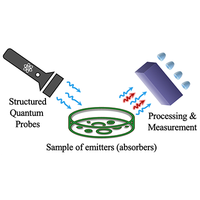
Incoherent Imaging with Spatially Structured Quantum Probes
Article | | 2026-11-02 05:00 EST
Anthony J. Brady, Zihao Gong, Alexey V. Gorshkov, and Saikat Guha
Researchers introduce spatially structured quantum-optical imaging techniques to overcome resolution limits and achieve quantum-enhanced absorption and fluorescence imaging.
Phys. Rev. X 16, 041030 (2026)
arXiv
Optical Signature of Bias-Induced Carrier Injection in a WSe2/MoS2 Heterostructure Diode
New Submission | Materials Science (cond-mat.mtrl-sci) | 2026-11-03 20:00 EST
Yasuyuki Hirata, Hibiki Kinpara, Shinya Ohno, Yoshihiro Miyauchi
We investigate the bias-dependent photoluminescence (PL) response of a WSe$ _2$ /MoS$ _2$ heterostructure diode. Under forward bias, trion-related emission in WSe$ _2$ is markedly enhanced, whereas reverse bias produces minimal spectral changes. This asymmetric response cannot be explained by electric-field effects alone and instead reflects carrier injection at the functional interface. These results demonstrate that PL provides a direct optical probe of carrier injection in an operating van der Waals heterostructure. More broadly, this approach establishes spatially resolved PL spectroscopy as a versatile tool for pinpointing the interfaces governing device operation in van der Waals heterostructures.
Materials Science (cond-mat.mtrl-sci)
Appl. Phys. Lett. 129, 163504 (2026)
Weak-coupling selection and finite-torus entropy in the triangular Ising antiferromagnet
New Submission | Statistical Mechanics (cond-mat.stat-mech) | 2026-11-03 20:00 EST
An antiferromagnetic second-neighbor interaction favors stripe order in the triangular-lattice Ising antiferromagnet, but uniform stripes cannot satisfy odd periodic boundaries. At each fixed odd size $ L\geq5$ , we minimize this interaction over the ground states of the zero-field nearest-neighbor model on an $ L\times L$ torus. We prove a minimum total interface length of $ 4L$ and classify all $ L^2(L^2-1)/2$ selected states. Under the uniform measure on these states, the area fractions of the three stripe orientations approach a uniform distribution over all nonnegative triples summing to one. Thus selection reduces an exponential degeneracy to polynomial growth, while the whole-sample orientation fractions remain broadly distributed. We also derive explicit two-sided entropy-density bounds for periodic spin ground states and honeycomb dimer coverings on $ M\times N$ tori, where $ M,N$ are the periods along the two primitive lattice directions. For all $ M,N\geq3$ , the errors relative to the bulk residual entropy are bounded by explicit constants times $ \min(M,N)^{-2}$ , without an aspect-ratio restriction. These bounds give finite-size accuracy guarantees and control the exponentially small fraction of unperturbed ground states that survive the selection.
Statistical Mechanics (cond-mat.stat-mech)
22 pages, 4 figures, 4 tables. Data and code: this https URL
Y2CdX4 (X = S, Se, Te) Semiconductors: A First-Principles Study of Structural, Electronic, Optical, and Energy-Related Properties
New Submission | Materials Science (cond-mat.mtrl-sci) | 2026-11-03 20:00 EST
We present a comprehensive density functional theory (DFT) investigation of the structural, mechanical, electronic, optical, thermoelectric, and bonding properties of Y2CdX4 (X = S, Se, Te) compounds for potential optoelectronic and energy-conversion applications. Structural optimization reveals a systematic expansion of the equilibrium lattice parameters from S to Te. The calculated bulk moduli decrease from 83 GPa for Y2CdS4 to 68 GPa for Y2CdSe4 and 54 GPa for Y2CdTe4, indicating progressive lattice softening. Electronic band-structure calculations predict indirect band gaps of 2.42, 2.08, and 1.71 eV for Y2CdS4, Y2CdSe4, and Y2CdTe4, respectively, with further narrowing upon inclusion of spin-orbit coupling. The calculated dielectric functions, refractive indices, absorption coefficients, reflectivity, optical conductivities, and electron energy-loss spectra reveal systematic changes in optical response across the chalcogen series. The absorption onset shifts toward lower photon energies, from approximately 2.4 eV in Y2CdS4 to 1.7 eV in Y2CdTe4. Thermoelectric calculations indicate promising Seebeck coefficients and power factors, with Y2CdSe4 exhibiting a favorable balance of transport properties. Charge-density distributions, electron localization functions, and Bader charge analyses suggest increasing covalent bonding contributions from sulfide to telluride. These findings highlight the potential of Y2CdX4 compounds for tunable optoelectronic and energy-conversion applications.
Materials Science (cond-mat.mtrl-sci)
On-the-fly $Δ$-machine learned force fields for warm dense matter using a Yukawa reference model: Application to magnesium
New Submission | Materials Science (cond-mat.mtrl-sci) | 2026-11-03 20:00 EST
Sayan Bhowmik, John E. Pask, Phanish Suryanarayana
We develop a framework for on-the-fly $ \Delta$ -machine learned force field ($ \Delta$ -MLFF) molecular dynamics (MD) simulations of warm dense matter (WDM). In particular, we employ a Yukawa reference model that captures the dominant screened-Coulomb interactions between the ions, with its parameters fit on the fly to Kohn–Sham density functional theory (DFT) data, and an MLFF scheme based on the kernel method and Bayesian linear regression that learns the differences in the energies, atomic forces, and stresses between the Yukawa model and Kohn–Sham DFT. We verify the accuracy and performance of the formalism by comparing the predicted properties of warm dense carbon with Kohn–Sham DFT results in the literature. In so doing, we demonstrate that $ \Delta$ -MLFF has significantly lower errors in the energies, atomic forces, and stresses than the standard MLFF scheme at a comparable cost, while accelerating ab initio MD simulations by up to three orders of magnitude. We apply this framework to calculate the equation of state, structure, and transport properties of magnesium at densities of 5.22 to 10.44 g/cm$ ^3$ and temperatures of 600 kK to 1.5 MK. We find that the pressure, self-diffusion coefficient, and shear viscosity obey power laws in temperature and density, that the dynamic structure factor exhibits a well-defined ion-acoustic mode whose negative dispersion is characteristic of strongly coupled liquids, and that the Stokes–Einstein relation holds to within 10% over the conditions considered.
Materials Science (cond-mat.mtrl-sci)
16 pages, 11 figures, 1 table
Fabry-Pérot Cavity formed by Magnonic waveguide using holes and notches
New Submission | Other Condensed Matter (cond-mat.other) | 2026-11-03 20:00 EST
Rajesh Kumar, Yat-Yin Au, Snorri Ingvarsson
In this paper, we have investigated a spin-wave-based Fabry-Pérot (FP) cavity using two air holes and notches embedded in a magnonic waveguide. Through micromagnetic simulations, we have demonstrated the spin-wave profile, as well as the transmission and reflection spectra of the FP type magnonic waveguide, by varying the distance between the center of holes and notches. We have introduced an analysis of the reflection spectra in an FP type magnonic waveguide, which is essential and considerable for the performance of magnonic integrated circuits. We have also presented a theoretical model to describe the transmission and reflection characteristics of the FP-type magnonic waveguide. Furthermore, active tuning of the resonance peak of the FP type magnonic wavguide by varying the external magnetic field has been demonstrated. Our proposed structure and its study may contribute to the development of magnonic integrated circuits for low-power computing and data processing in next-generation spintronic technologies.
Other Condensed Matter (cond-mat.other), Materials Science (cond-mat.mtrl-sci)
5 pages
IEEE Transactions on Magnetics, 62, 7100105, (2026)
The Halperin (111) state as a paired composite-fermion wave function: Two exact finite-size identities on the sphere
New Submission | Strongly Correlated Electrons (cond-mat.str-el) | 2026-11-03 20:00 EST
Two wavefunctions have previously been proposed to describe the $ \nu=1/2+1/2$ quantum Hall bilayer: $ p$ -wave pairing of composite fermions and $ s$ -wave pairing of composite fermions with anti-composite fermions. We show analytically in the spherical geometry and within the Jain-Kamilla lowest Landau level projection scheme that both of these paired composite fermion wavefunctions exactly reproduce the Halperin (111) state for a specific form of the pairing that we derive. We also find a second wavefunction that is common between both classes of wavefunctions. However, we provide evidence the two variational families generate overlapping but not identical sets of electronic states, ruling out a universal reparametrization that identifies their wavefunctions.
Strongly Correlated Electrons (cond-mat.str-el), Mesoscale and Nanoscale Physics (cond-mat.mes-hall)
7 + 19 pages, 0 + 5 figures
Intermolecular and Interfacial Origins of Layering in a Near-Isotropic Organic Glass Former
New Submission | Soft Condensed Matter (cond-mat.soft) | 2026-11-03 20:00 EST
Charles H. Carroll, Juliana I. Bonilla-Lugo, Arthur Y. Lin, Richard Stephens, Peng Luo, Sarah E. Wolf, Cindy Yueli Chen, Dong Hyup Kim, Yu Wu, Patrick J. Walsh, Patryk Wąsik, Whitney S. Loo, Zahra Fahkraai, Rose K. Cersonsky
Physical vapor deposition can produce organic glasses with enhanced stability and pronounced structural anisotropy (layering) even when the constituent molecules are nearly spherical. However, the microscopic origin of the layering in spherical molecular glass formers remains unclear. We investigated vapor-deposited films of 9-(3,5-di(naphthalen-1-yl)phenyl)anthracene ({\alpha},{\alpha}-A) by grazing-incidence wide-angle X-ray scattering, atomistic molecular dynamics, and coarse-grained simulations. Experimentally, the layering signal varies nonmonotonically with deposition temperature and is strongest near 0.8T_g. Simulated scattering calculations reproduce the principal experimental features and show that the layering peak does not originate from shifts in single molecule degrees of freedom. In fact, the simulated deposited and bulk glasses show largely the same single-molecule conformations. Interestingly, a one-site coarse-grained liquid with isotropic interactions develops a comparable interfacial layering signature. These results indicate that layering in {\alpha},{\alpha}-A arises primarily from collective density correlations generated at the free surface during deposition rather than from conformational bias or orientational ordering. The findings connect structural anisotropy in vapor-deposited molecular glasses to the generic interfacial organization of simple liquids.
Soft Condensed Matter (cond-mat.soft), Chemical Physics (physics.chem-ph)
In the age of big data and AI: do we still need chemical bonds?
New Submission | Materials Science (cond-mat.mtrl-sci) | 2026-11-03 20:00 EST
Mohammed Al-Fahdi, Aakash Naik, Katharina Ueltzen, Luc Walterbos, Tom Demeyere, Philipp Benner, Janine George
Chemical bonding is the language through which chemistry rationalizes materials structure, stability, properties, and reactivity. Meanwhile, modern deep-learning models achieve remarkable predictive performance using representations based largely on compositional and structural information, raising the question of whether explicit bonding concepts remain necessary. In this work, we argue that artificial intelligence does not render chemical bonding obsolete but provides a new framework for evaluating and refining bonding concepts. We show that, through linear probing, Allegro and MACE embeddings recover bonding descriptors with (R^2 > 0.95), indicating that bonding emerges naturally from Allegro’s and MACE’s latent spaces. We also show that bonding descriptors provide information beyond bond distance in our electronic-structure-featurized MEGNet (ESF-MEGNet) model, reducing prediction error for properties including bulk and shear moduli by 15%. We discuss implications for interpretable machine learning, synthesizability prediction, and generative materials design, and suggest joint-embedding approaches for learning more general bonding representations. More broadly, we propose that chemical bonding can be understood as a learnable representation of electronic structure. From this perspective, different bonding models represent alternative compressions of the underlying electronic information and can be evaluated through their predictive power, dimensionality, and complexity. The age of machine learning shifts the focus from whether a bonding model is physically motivated to whether it captures the information required to explain and predict materials behavior. If a materials genome exists, it should be encodable through a representation of chemical bonding. If no bonding representation can capture this information, our understanding of the chemical bond may require revision.
Materials Science (cond-mat.mtrl-sci)
Ab initio exploration of hydrogen-intercalated transition metal dichalcogenides: From identifying stable structures to emergent superconductivity
New Submission | Superconductivity (cond-mat.supr-con) | 2026-11-03 20:00 EST
William Wenborn, Jonas Bekaert
We present a first-principles study of hydrogen-intercalated transition metal dichalcogenides (TMDs), examining the structural, thermodynamic, electronic and superconducting properties of distinct intercalation configurations. In most configurations, the two intercalated hydrogen atoms contribute two electrons per unit cell, creating a band gap and thus rendering the system semiconducting. Among the dynamically stable configurations there is one exception to this rule, with inherently metallic behavior. The pristine phases of these materials are known to exhibit a charge density wave instability, which is fully suppressed by specific hydrogen configurations. Moreover, the semiconducting structures can be metallized by hole doping, albeit that the superconducting critical temperatures ($ T_c$ ) are vanishingly low. On the other hand, electron doping drives the $ T_c$ up to 25 K, by populating dense states above the gap. This finding can motivate further experimental exploration of superconductivity in hydrogen-intercalated TMDs through ionic-liquid gating or alkali co-intercalation.
Superconductivity (cond-mat.supr-con)
32 pages (11 pages main text with 6 figures and 2 tables, plus 21 pages of supplemental material). Submitted to Physical Review Materials
Impact of Surface Preparation on the Propulsion of Catalytic Janus Colloids and Implications for Reproducibility
New Submission | Soft Condensed Matter (cond-mat.soft) | 2026-11-03 20:00 EST
Muhammad Haroon, Mitchell Lau, Christopher L. Wirth (Case Western Reserve University)
Platinum-coated polystyrene (PS) Janus particles (JPs) propelled by the catalytic decomposition of hydrogen peroxide (H2O2) are a widely used model system for active matter, yet reported speeds for similar particles and fuel concentrations differ by more than an order of magnitude. Broad adoption of these materials requires increasing consistency in the preparation and achieving improved repeatability in their behavior. Herein, we focused on two routine, but rarely reported, preparation steps that we found to alter the particle speed. First, we found that pre-exposing the platinum cap to H2O2 before cell assembly increased the mean speed by a factor of 2.4. The size of this effect depended on batch history, where an aged batch responded strongly, while a freshly prepared batch sped up by only 16%. Second, we found that plasma cleaning of the glass substrate decreased the speed 2.7 times. In a 120 $ \mu$ m cell the suppression was the same at both walls even when only one wall was treated. The suppression grew with the treated glass area per unit fluid volume, which pointed to species released into the bulk solution rather than to a change at the wall. Plasma-cleaned glass released more ions into water than untreated glass, and XPS detected an ionic metal fluoride on the plasma-cleaned surface. A model in which the released ions lower the speed through the solution conductivity reproduced the measured speeds in all four cell geometries. Of the 17 published studies compared here, pre-activation is reported in only four studies and substrate cleaning in only six studies. We propose a minimum reporting standard for the preparation and associated speed measurements of catalytic Janus particles.
Soft Condensed Matter (cond-mat.soft), Mesoscale and Nanoscale Physics (cond-mat.mes-hall), Chemical Physics (physics.chem-ph), Fluid Dynamics (physics.flu-dyn)
31 pages: main text (19 pages, 6 figures, 2 tables) and Supporting Information (12 pages, 7 figures, 3 tables)
The Agentic AI Kerr Lab: LLM Agents for Kerr Microscopy Experiments with Magnetic Skyrmions
New Submission | Mesoscale and Nanoscale Physics (cond-mat.mes-hall) | 2026-11-03 20:00 EST
Kilian Leutner, Yuean Zhou, Aditya Kumar, Thomas B. Winkler, Robert Frömter, Hans Fangohr, Mathias Kläui
Magnetic skyrmions are topological spin textures that can be observed directly by magnetic microscopy and driven by fields and currents, which makes them a model system for fundamental physics and candidates for spintronic devices. Magneto-optical Kerr microscopy is a method to image them in real time; however, most experiments use an inefficient cycle of consecutive imaging, analysis and excitation in which every step requires the judgement of the experimentalist operating the setup. Here we present the Agentic AI Kerr Lab (AgentKerr), in which an agent based on a large language model operates this cycle automatically and efficiently on a Kerr microscope. Rather than relying on pattern detection by a language model, a convolutional neural network trained on Kerr images turns live images into skyrmion observables such as position, size and shape, on which the agent bases its decisions. The architecture lets agents operate the instruments safely, as every hardware action is checked deterministically against an action policy, independently of the agent that issues it. With no procedure given, the agent determines by itself how to create, tune and move skyrmions, and writes its own analyses. The approach can be transferred to other spin textures and points towards magnetic imaging experiments in which the researcher poses the question and the agent finds the way to realize the experiments that yield the answer.
Mesoscale and Nanoscale Physics (cond-mat.mes-hall), Applied Physics (physics.app-ph)
4 pages, 2 figures. Contribution to the proceedings of the 2nd International Conference on AI for Science (AI4Sci 2026), Mainz, Germany, 5-9 October 2026. Supplementary video: this https URL
Quantum dynamics of ultrasmall magnetic skyrmions in atomic-defect landscapes
New Submission | Materials Science (cond-mat.mtrl-sci) | 2026-11-03 20:00 EST
Magnetic skyrmions are prime candidates for future information technology, and their fate in devices is settled by the defects they encounter. In ultrathin films, skyrmions can be as small as a couple of nanometers, carrying only a few tens of magnetic moments, while atomic defects reshape their energy landscape on the atomic scale. Here, we demonstrate that such ultrasmall skyrmions can behave quantum mechanically and that their quantum dynamics is unusual. Since the gyrotropic force dominates, the two coordinates of a ferromagnetic skyrmion are canonically conjugate and the skyrmion behaves as a particle in the lowest Landau level of an effective magnetic field, with a magnetic length of 0.6Å. Utilizing skyrmion-defect interaction profiles of Cr and Fe adatoms and dimers in PdFe/Ir(111), obtained from atomistic spin simulations parametrized from first principles, we unveil quantized gyrotropic orbits with level spacings of 20–85$ \mu$ eV, bound not only by pinning defects but also, counter-intuitively, by repulsive ones. Saddle points of the energy landscape act as quantum beam splitters for skyrmions, and quantum depinning reaches rates of 1–100Hz below the critical current. Embedded impurities, in contrast, bind the skyrmion so strongly that it ceases to behave as a rigid particle, defining a strong-coupling regime. For the Gilbert damping typical of ultrathin films, the quantized levels remain well resolved. The thermal-to-quantum crossover lies between 40 and 160mK, which is within reach of millikelvin scanning tunneling microscopy, where tip-induced escape statistics and electron spin resonance STM can reveal the quantized gyrotropic motion of skyrmions pinned at defects crafted atom by atom.
Materials Science (cond-mat.mtrl-sci)
Evidence for topological flat band magnetism in Co$_3$Sn$_2$S$_2$
New Submission | Materials Science (cond-mat.mtrl-sci) | 2026-11-03 20:00 EST
Ola Kenji Forslund, Andrzej Ptok, Chun Lin, Aksel Kobialka, Wan Yu Chen, Ugne Miniotaite, Martin Månsson, Yasmine Sassa, Timur Kim, Cephise Cacho, Jian Rui Soh, Chin Shen Ong, Vladislav Borisov, Olle Eriksson, Johan Chang
Correlations and topology are central pillars in the study of emergent electronic phases. Topological flat bands near the Fermi level unite these concepts, providing a route towards correlated topological phenomena and unconventional magnetism. Despite theoretical predictions, momentum-resolved observation of a topological flat band at the Fermi level has remained elusive. Using angle resolved photoemission spectroscopy, we observe a flat band at the Fermi level within the topologically non-trivial electronic structure of the magnetic kagome Weyl semimetal Co$ _3$ Sn$ _2$ S$ _2$ . We further uncover a strong temperature dependence in which the flat band shifts across the Fermi level, accompanied by a reconstruction of the Fermi surface. Strikingly, this evolution occurs on the same temperature scale as previously reported anomalies in the magnetic response. Together, these results provide evidence for topological flat band magnetism in Co$ _3$ Sn$ _2$ S$ _2$ , establishing a microscopic setting in which topology, electronic correlations, and magnetism become intertwined.
Materials Science (cond-mat.mtrl-sci)
Multistable elastic pixels: nematic elasticity for non-volatile positioning of colloidal optical scatterers
New Submission | Soft Condensed Matter (cond-mat.soft) | 2026-11-03 20:00 EST
Jed-Joan S. Edziah, Brian Edwards, Nader Engheta, Kathleen J. Stebe
Non-volatile reconfiguration of optical devices, in which a configuration persists without continuous energy input, remains a challenge. We introduce multistable elastic pixels (MEPs), lithographically defined pores filled with a nematic liquid crystal, whose curved ends capture a scattering inclusion in one of two mechanically stable sites. Simulations and experiments show that pore geometry and homeotropic surface anchoring define the energy minima and the height of the barrier between them. This barrier far exceeds thermal energies, stabilizing a scatterer location absent an external field. Colloidal inclusions switch reversibly between sites under transient electric fields. Using arrays of static scatterers, we show that the two positional states produce distinct responses at visible wavelengths, demonstrating the potential of MEPs for reconfigurable devices and metasurfaces. Unlike phase-change and liquid-crystal-tuned approaches, which switch a material surrounding fixed scatterers, MEPs use the nematoelastic energy landscape to move the optical element itself.
Soft Condensed Matter (cond-mat.soft)
26 pages, 4 figures, Supplementary Information with 6 figures
Quantum Dipolar Magnon Drag in Conducting Magnetic Bilayers
New Submission | Mesoscale and Nanoscale Physics (cond-mat.mes-hall) | 2026-11-03 20:00 EST
We predict electrical drag between two electrically isolated metallic ferromagnets mediated by quantum dipolar magnon coupling. A charge current in one layer generates a nonequilibrium magnon current whose momentum is transferred across an insulating spacer through interlayer dipolar interactions. The resulting magnon current in the passive layer produces a measurable voltage through electron-magnon scattering. We show the combination of resonant quantum momentum transfer and magnetic tunability through the control of magnetization configurations distinguish quantum dipolar drag from conventional drag mechanism.
Mesoscale and Nanoscale Physics (cond-mat.mes-hall), Other Condensed Matter (cond-mat.other)
A Julia implementation of Floquet-Bloch theory for high-harmonic generation in periodic systems
New Submission | Other Condensed Matter (cond-mat.other) | 2026-11-03 20:00 EST
Ashwin Pillai, Aurelien Manchon, Claudio Attaccalite
We present a flexible Julia codebase implementing Floquet-Bloch theory for high-harmonic generation (HHG) in periodic tight-binding systems. Using the frequency-domain Fourier-Sambe formalism, the package maps the time-dependent Schroedinger equation onto a static eigenvalue problem. This allows direct computation of Floquet states, quasienergy bands, and harmonic currents for 1D, 2D, or 3D lattices under arbitrary light polarizations. The implementation supports both analytical Fourier-Bessel expansions (via Peierls substitution) and numerical Fast Fourier Transforms (FFT). We validate the code against a canonical 1D two-band model and showcase its capabilities on 2D honeycomb systems: gapped graphene mapping HHG cutoff scaling with hopping parameters and the Kane-Mele model, exploring field-induced quasienergy gaps and topological transitions under linear and circular driving fields. In addition to the theoretical presentation, we provide a flexible and efficient open-source Julia implementation of the Floquet formalism: this https URL.
Other Condensed Matter (cond-mat.other)
Kinetics of pollutant adsorption onto polymers: the Langevin dynamics study
New Submission | Soft Condensed Matter (cond-mat.soft) | 2026-11-03 20:00 EST
K. Haydukivska, V. Blavatska, Ja. Ilnytskyi
We study adsorption kinetics of low-molecular-weight adsorbate particles on a polymer via the Langevin dynamics. The impact of the polymer molecular weight and of the strength of the polymer-particle attraction are examined. We consider mixtures of $ n_p$ chains of the length $ N$ with adsorbate, where $ n_pN=600$ holds. Analysis includes examination of visualizations and evaluation of adsorption capacity, binding energy, average gyration radius, and asphericity of the polymer-adsorbate complexes. Both adsorption capacity and total binding energy show monotonic, logistic-like behavior; the former reaches a plateau sooner than the latter does, indicating further optimization of the maximum-capacity complex. Binding energy per particle and asphericity of complexes both demonstrate non-trivial behaviors, with distinct extrema at the intermediate stages of adsorption. The analysis reveals three stages of adsorption: (i) formation of small polymer-particle complexes, (ii) gradual merge of these into a single complex, (iii) stationary state. The stage (i) completes faster for short chains, as in this case fewer conformational rearrangements are required. The stage (ii) completes faster for long chains because of the necklace-like arrangement of small complexes along a long chain, which promotes their merge vs. diffusion-driven merge of the complexes of short chains. Our results indicate that for the rapid removal of pollutants in the high interaction regime, it is more effective to use the set of short polymer chains. On the other hand, long linear chains are optimal for adsorbing pollutants in a weak interaction regime.
Soft Condensed Matter (cond-mat.soft)
Non-Equilibrium Statistical Mechanics of Glass-Forming Liquids under Continuous Cooling: Microscopic Inner Clocks, Fictive Temperatures, and Kauzmann Diagrams
New Submission | Soft Condensed Matter (cond-mat.soft) | 2026-11-03 20:00 EST
R. Peredo-Ortiz, M. Medina-Noyola, L.F. Elizondo-Aguilera
The description of macroscopic properties in out-of-equilibrium amorphous solids such as gels and glasses, typically processed under finite cooling rates, remains a fundamental challenge for modern statistical physics. In this work, we employ the Non-Equilibrium Self-Consistent Generalized Langevin Equation (NESCGLE) theory to construct a microscopic description of the structural and calorimetric glass transition under continuous cooling. Building upon the microscopic Onsager-Machlup interpretation of Narayanaswamy’s material time (the inner clock $ u(t)$ ) [this http URL. 156, 244506 (2022)], we recover Tool’s fictive temperature $ T_f$ directly from the evolving spatial pair correlations and show that wavenumber dispersion naturally generalizes the classical scalar $ T_f$ into a continuous mode spectrum governed by de Gennes narrowing at the primary cage peak. Across wide variations in cooling rate down to the quasi-static limit, the theory yields first-principles non-equilibrium Kauzmann diagrams for the two-body excess entropy that dynamically avert the Kauzmann crisis above the ideal dynamic arrest temperature $ T_c$ , while predicting sigmoidal relaxational heat-capacity steps consistent with computer simulations and calorimetry. Finally, we extract the cooling-rate-dependent glass transition temperature $ T_g(q)$ from both equal-area integrals and differential heat-capacity landmarks, demonstrating that its asymptotic approach toward $ T_c$ obeys a critical power-law scaling governed directly by the equilibrium dynamic arrest exponent.
Soft Condensed Matter (cond-mat.soft), Statistical Mechanics (cond-mat.stat-mech)
33 pages, 6 figures
Helical Magnetic Nature of $β$-Mn Structured CoZn Thin-Films Determined by a Bayesian Approach to Modeling Polarized Neutron Reflectivity Data
New Submission | Mesoscale and Nanoscale Physics (cond-mat.mes-hall) | 2026-11-03 20:00 EST
M. Dearg, A. J. Caruana, C. J. Kinane, N. Satchell, G. Burnell, S. Langridge, C. H. Marrows
Chiral magnetic materials can host skyrmions and hence are of interest for numerous spintronic applications including low-power storage. To reach this goal, room temperature operation and a thin film form are needed. We have studied the chiral magnetism in a $ \beta$ -Mn structured CoZn sputtered film, with a Curie temperature of $ \approx 130$ °C, by means of polarized neutron reflectometry (PNR) in order to reveal its magnetic field-temperature phase diagram. In bulk this material has a helimagnetic ground state. Here we use PNR data to show that the helimagnetism survives in a CoZn film only 100 nm thick, roughly half a helical period. Given the subtlety of differentiating the helical state from a uniform state with reduced interfacial magnetism, we have developed and employed a Bayesian approach that uses model selection to analyze our PNR data and to map out the field-temperature phase diagram of our thin film.
Mesoscale and Nanoscale Physics (cond-mat.mes-hall), Materials Science (cond-mat.mtrl-sci)
13 Pages, 10 Figures
Colloidal gel morphology and phase behavior differs based on the electrostatic interaction model in concentrated electrolytes
New Submission | Soft Condensed Matter (cond-mat.soft) | 2026-11-03 20:00 EST
Hwigwang Lim, Caleb Youngwerth, Lisa Je, Matthew Gebbie, Rose K. Cersonsky
Predicting how nanoparticles interact in concentrated electrolytes remains a central challenge in nanoscience, with implications spanning energy storage, catalysis, and soft materials design. While Derjaguin-Landau-Verwey-Overbeek (DLVO) theory provides a widely used framework for modeling colloidal interactions, its electrostatic component relies on electric double-layer (EDL) theories whose validity in ionic liquids and concentrated electrolytes is consistently debated. Experiments have revealed significant deviations from classical screening behavior, including underscreening and oscillatory charge ordering, yet the consequences of these nonclassical effects for collective nanoparticle behavior remain unresolved.
Here, we demonstrate that the extended range and oscillatory nature of electrostatic screening in concentrated electrolytes predicts different phase behavior and morphology of colloidal ionogels, yielding distinct thermodynamic signatures, percolation thresholds, and amorphous network structures. Using molecular dynamics simulations with DLVO-type pair interactions parameterized by competing EDL models, we systematically compare the consequences of different screening theories on gel formation and configurations.
Soft Condensed Matter (cond-mat.soft)
Effect of Rapid Thermal Annealing on the Superconductivity of ALD-Grown TiN thin films
New Submission | Superconductivity (cond-mat.supr-con) | 2026-11-03 20:00 EST
Z. Sadirkhanov, A. Tuigynbek, M. Surendran, A. Jakyp, L. Akisheva, A. T. Hammack, A. B. Tikhonov, A. Kemelbay
Titanium nitride (TiN) is a promising superconducting material for scalable quantum technologies owing to its tunable kinetic inductance and compatibility with CMOS thin-film processing. However, the superconducting performance of atomic-layer-deposited TiN can be degraded by oxygen incorporation, off-stoichiometry, and crystallographic disorder. In this work, we investigate rapid thermal annealing (RTA) in high-purity nitrogen as a post-deposition strategy to improve polycrystalline TiN films grown by RF-biased plasma-enhanced atomic layer deposition. Grazing-incidence X-ray diffraction reveals reduced peak broadening, a smaller lattice parameter, and a stronger (111) preferred orientation with increasing annealing temperature. X-ray photoelectron spectroscopy depth profiling shows reduced oxygen-related bonding and a shift toward a Ti–N-dominated chemical environment after annealing. These structural and chemical changes result in a 25% increase in the superconducting transition temperature and a significant narrowing of the transition width. Annealing also reduced the sheet resistance and the estimated sheet kinetic inductance, increased the residual resistance ratio, and improved the magnetic-field tolerance. Together, the structural, chemical, and transport results are consistent with reduced material disorder and improved superconducting uniformity. Because RTA is a relatively low thermal budget and is a semiconductor fabrication compatible process, it offers a practical route to improve the quality of ALD-grown TiN for superconducting applications.
Superconductivity (cond-mat.supr-con)
13 pages, 3 figures
Validation of the five-electron pO qubit in Si using full configuration interaction
New Submission | Mesoscale and Nanoscale Physics (cond-mat.mes-hall) | 2026-11-03 20:00 EST
David W. Kanaar, John H. Caporaletti, J. P. Kestner, Christopher R. Anderson, Mark F. Gyure
The $ pO$ qubit is a recently proposed charge qubit consisting of five electrons confined in a gate-defined Si quantum dot. Because its two qubit states have no dipole moment, it couples to electric fields only through the quadrupole moment, suppressing the dominant decoherence channel of conventional charge qubits while retaining all-electrical control. The original proposal was formulated in a shell-filling picture without Coulomb interactions. In this work we perform full configuration interaction (FCI) calculations to assess the impact of the Coulomb interaction on the viability of the $ pO$ qubit. We find that the interacting eigenstates occupy orbital shells beyond the shell-filling picture, with the degree of excitation governed by the competition between valley splitting, orbital energy, and Coulomb energy scales. Additionally, we find that the ground states form degenerate doublets, but of two distinct kinds. Above a crossover near a valley splitting of $ E_{\rm{VS}}\approx50\mu$ eV the doublet is a pair of orbital angular momentum excitations with $ |\langle L_z\rangle|=1$ in the lower valley, while below the crossover the doublet is a pair of single valley excitations with $ \langle L_z\rangle=0$ . Despite this substantial departure from the shell-filling picture, for $ E_{\rm{VS}} > 50\mu$ eV the essential features, vanishing dipole moments and nonzero quadrupole tensor between qubit states are preserved. We show that the vanishing dipole is in fact guaranteed by the symmetry properties of the five-electron Hamiltonian. The same energy scales that govern the orbital occupation also set the quadrupole tensor elements and the first excited state energy gap, both of which are in principle tunable through device engineering.
Mesoscale and Nanoscale Physics (cond-mat.mes-hall), Quantum Physics (quant-ph)
15 pages, 13 figures
Fast Neural Noise Stabilizes Associative Memory against Slow Synaptic Noise
New Submission | Disordered Systems and Neural Networks (cond-mat.dis-nn) | 2026-11-03 20:00 EST
Tomoki Kurikawa, Kunihiko Kaneko
Neural systems operate under multi-timescale stochastic dynamics, yet reliably maintain stable functions. We investigate how fast neural fluctuations and slow synaptic variability asymmetrically influence the structural robustness of associative memories. While synaptic noise degrades memory formation, neural noise stabilizes the network against structural perturbations. For sequential learning of multiple memories, the average recall performance is maximized at an intermediate neural-noise amplitude, whereas increasing synaptic noise rapidly degrades memory performance. Using an adiabatic mean-field framework, we derive an analytical stationary distribution of stability factors. Our theory reveals that fast neural fluctuations push the system away from marginal stability, serving as an indispensable prerequisite for systemic stability.
Disordered Systems and Neural Networks (cond-mat.dis-nn), Biological Physics (physics.bio-ph)
Physics-informed X-ray tomography of magnetization and material parameters
New Submission | Mesoscale and Nanoscale Physics (cond-mat.mes-hall) | 2026-11-03 20:00 EST
Alexander Setescak, Polly Mitchell, Luke J. R. Higgins, Burkhard Kaulich, Luke Turnbull, Rikako Yamamoto, Marina Raboni Ferreira, Daniel A. Mayoh, Geetha Balakrishnan, Anuj Chavan, Dieter Suess, Amalio Fernández-Pacheco, Manuel Guizar-Sicairos, Claire Donnelly, Claas Abert
Three-dimensional spin textures are stabilized by microscopic interactions within their host materials. X-ray vector tomography can image these nanoscale structures, but weak magnetic contrast and a limited range of viewing angles often leave parts of the magnetization poorly determined. Here we show that a reconstruction constrained by the micromagnetic energy recovers the three-dimensional magnetization from such data and gains sensitivity to the underlying material interactions. Applied to the chiral magnet Co$ _8$ Zn$ _9$ Mn$ _3$ , the method resolves the three-dimensional helical texture even from a small fraction of the dual-axis projections typically required for a successful tomographic reconstruction, or from a single tilt axis alone. By testing which ratio of exchange to Dzyaloshinskii-Moriya interaction in the reconstruction best reproduces the measured projections, we obtain a value for the sample that differs by about 10 % from the literature value derived from the helical winding period. Taken together, our findings suggest a way to reduce the time needed for vector tomography and to extend it to determining fundamental magnetic interactions in a material.
Mesoscale and Nanoscale Physics (cond-mat.mes-hall)
18 pages, 4 figures, 5 Extended Data figures, 1 Extended Data table
Machine Learning Aided Computational Discovery of Boride Substrates for Borophene Synthesis
New Submission | Materials Science (cond-mat.mtrl-sci) | 2026-11-03 20:00 EST
Luqing Wang, Qunfei Zhou, Qiucheng Li, Venkata Surya Chaitanya Kolluru, Hui Li, Albert Tsui, Joshua Paul, Pierre Darancet, Mark C. Hersam, Maria K. Y. Chan
Borophene, a monolayer of boron, is distinctive among two-dimensional materials owing to its unique properties, including polymorphism and potential applications in quantum technologies and energy conversion and storage. Nevertheless, its applications are hindered by the strong binding of borophene to metal substrates, which impedes the realization of freestanding borophene. Alternative substrates with tunable binding to borophene are therefore highly desirable. Since boride layers arise during borophene synthesis on metals, borides provide potential alternative substrates for borophene synthesis. In this work, we investigate the binding energies and interactions between borophene and 1356 boride surfaces for two borophene phases (v1/6 and v1/9), using density functional theory (DFT) calculations and machine learning (ML). Importantly, incorporating ML-predicted charge transfer as an input feature to a subsequent ML model enables physics-informed predictions of binding energies. Additional DFT calculations on four representative cases were performed to validate the ML predictions. SHAP analysis reveals that the majority of key descriptors are associated with delocalized electrons, highlighting the role of electronic properties in governing binding strength. Combined DFT and ML screening identifies 65 and 73 promising boride surfaces for the v1/6 and v1/9 phases, respectively. Al- and Ag-based borides, including AlB2 and AgB2, emerge as predominant candidates for both phases. The computationally predicted candidate substrates and the deduced design guidelines provide a charge-transfer-informed ML strategy for substrate selection and represent promising steps toward the experimental realization of freestanding borophene.
Materials Science (cond-mat.mtrl-sci)
Manuscript: 24 pages including references, 6 figures. Supporting Information: 16 pages
Nodeless $d$-wave superconductivity driven by charge fluctuations in monolayer FeSe on SrTiO$_3$
New Submission | Superconductivity (cond-mat.supr-con) | 2026-11-03 20:00 EST
Jin-Wei Dong, Sen Zhou, Jian Wang, Gang Su, Ziqiang Wang
Monolayer FeSe and Fe(Te,Se) grown on SrTiO$ 3$ exhibit some of the highest superconducting transition temperatures among iron-based superconductors, yet their pairing mechanism and symmetry remain elusive. Motivated by the recent surprising discovery of nodeless $ d$ -wave superconductivity using scanning Josephson tunneling microscopy (SJTM) [T. Wei et al., arXiv:2610.38421 (2026)], we investigate superconductivity in monolayer FeSe/SrTiO$ 3$ (1L-FeSe/STO) within an extended Hubbard model incorporating both onsite and intersite Coulomb interactions among Fe $ 3d$ and Se $ 4p$ orbitals. We show that Fe-Se intersite Coulomb repulsion strongly enhances small-momentum $ p$ -$ d$ charge-transfer fluctuations, which mediate attractive intraorbital spin-singlet pairing interactions. These electronic fluctuations may be further enhanced by forward-scattering optical phonons of the SrTiO$ 3$ substrate. The resulting intrapocket attraction, together with residual repulsive interpocket interactions, stabilizes a mirror-odd, nodeless $ B{1g}$ ($ d$ -wave) superconducting state with opposite gap signs on the two electron pockets. Both Fe $ t_{2g}$ and Se $ 4p$ orbitals contribute substantially to this multiorbital superconductivity. The calculated superconducting gap and density of states exhibit a two-peak structure, while the Josephson tunneling conductance displays a half-lattice-period modulation, in excellent agreement with experimental observations. Our results establish electronic charge-transfer fluctuations as a viable pairing mechanism for unconventional nodeless $ d$ -wave superconductivity in monolayer FeSe/STO.
Superconductivity (cond-mat.supr-con)
8 pages, 4 figures
RIXS study of strain-tuned coupled valence and spin-state transition in epitaxial $(\mathrm{Pr}{0.85}\mathrm{Y}{0.15}){0.7}\mathrm{Ca}{0.3}\mathrm{CoO}_{3}$ films
New Submission | Strongly Correlated Electrons (cond-mat.str-el) | 2026-11-03 20:00 EST
Yiu-Fung Chiu, Jaewon Choi, Nileena Nandakumaran, Mirian Garcia-Fernandez, Jonathan Pelliciari, Shiyu Fan, Valentina Bisogni, Chris Leighton, Ke-Jin Zhou, Stefano Agrestini
Strain-tuned $ (\mathrm{Pr}{0.85}\mathrm{Y}{0.15}){0.7}\mathrm{Ca}{0.3}\mathrm{CoO}{3}$ thin films provide a model system for controlling coupled valence, spin-state, structural and metal-insulator transitions (VSSTs) in perovskite cobaltite materials. Here, we use Co $ L{2,3}$ and Pr $ M_{4,5}$ X-ray Absorption Spectroscopy (XAS), along with Co $ L_{3}$ edge Resonant Inelastic X-ray Scattering (RIXS), to probe the local electronic structure across the strain-controlled VSST in epitaxial (Pr,Y,Ca)CoO$ _{3}$ thin films. In compressively strained films on YAlO$ _{3}$ (YAO) substrates, cooling through the transition produces Pr$ ^{4+}$ -like spectral weight, suppresses Co$ ^{4+}$ -like character, and favors predominantly low-spin Co$ ^{3+}$ . The changes at the Pr and Co edges are quantitatively consistent with a reduction of approximately 0.15 holes per Co in the Co–O network. By contrast, tensile-strained thin films on La$ _{0.18}$ Sr$ _{0.82}$ Al$ _{0.59}$ Ta$ _{0.41}$ O$ _{3}$ (LSAT) substrates have nearly temperature-independent spectra. Multiplet calculations reproduce the principal XAS lineshapes and local $ dd$ excitations at high energy loss. Additionally, low-energy RIXS intensity recovered above the transition is consistent with a combination of Co$ ^{4+}$ -like local excitations and a broader particle–hole continuum associated with the metallic phase. These results provide element-resolved evidence for charge compensation between the Pr and Co–O sublattices and support cooperative coupling among charge-transfer, spin-state, and lattice structure at the strain-controlled VSST.
Strongly Correlated Electrons (cond-mat.str-el), Materials Science (cond-mat.mtrl-sci)
Elucidating the topological nature of molecular beam epitaxy grown high Curie temperature (Mn1+ySb2-yTe4)x(Sb2-yMnyTe3)1-x using angle resolved photoelectron spectroscopy
New Submission | Materials Science (cond-mat.mtrl-sci) | 2026-11-03 20:00 EST
Candice R. Forrester, Jisoo Moon, Sina Mohammadi, Asish Kundu, Amy Lopez Navarro, Kaushini Wickramasinghe, Abhay Pasupathy, Anil K. Rajapitamahuni, Maya N. Nair, Elio Vescovo, Lia Krusin-Elbaum, Maria C. Tamargo
Angle-resolved photoemission spectroscopy (ARPES) is used to elucidate the band structure of (Mn1+ySb2-yTe4)x(Sb2-yMnyTe3)1-x, a new magnetic quantum material grown using molecular beam epitaxy that has a Curie temperature (TC) above 100K, much higher than those reported for other materials of the MnxSb2-xTe4 class. Conflicting and sparse theory and experiments, as well as the complex disordered structure of the materials make it difficult to establish their topological nature. Here we explore this question by performing ARPES studies for two samples with x=0.65 and x=0.92, respectively. Images of the band structures of these two samples were acquired using photon energy dependent studies. The bulk and surface states of this complex material system, and the effects of composition on the band structure were investigated. Evidence of surface state features as well as bulk related ones were obtained, supporting their non-trivial nature. No signature of Fermi-arcs consistent with Weyl semimetals were seen. A shift in the Fermi level of the two samples due to different carrier densities allowed observation of the onset of a Dirac point in the surface states. Temperature dependent ARPES suggests possible band splitting as the materials undergo magnetic transitions, helping to understand the magnetic interactions. Our results point to their likely magnetic topological insulating nature.
Materials Science (cond-mat.mtrl-sci)
23 pages, 11 figures
Reversibility of Nonequilibrium Dynamics in a Unitary Fermi Gas
New Submission | Quantum Gases (cond-mat.quant-gas) | 2026-11-03 20:00 EST
Xi-Zhi Wu, Xiangchuan Yan, Xin Xie, Dali Sun, Seong-Ho Shinn, Adolfo del Campo, Kaijun Jiang
We theoretically describe and experimentally observe the reversibility of a nonequilibrium state in a unitary Fermi gas confined in a time-dependent trap. Unlike the equilibrium case, reversibility out of equilibrium imposes a stringent condition: the accumulated dynamical phase must be an integer multiple of $ 2\pi$ , i.e., $ \Delta\phi = 2\omega_{0} s(T) = 2n\pi$ , where $ \omega_{0}$ is the initial trapping frequency and $ s(T)$ is the rescaled time after a total evolution time $ T$ . We demonstrate the reversibility of an initial nonequilibrium state in an isotropic unitary Fermi gas by driving the optical trap through a round trip. We find two types of reversible pathways, the space-time scaling-invariant and polynomial shortcut-to-adiabaticity (STA) protocols. The phase condition restricts the round-trip time $ T$ to discrete values, a distinguishing feature of nonequilibrium dynamics. Our work establishes a clear criterion for the quantum control of nonequilibrium many-body systems beyond linear response and provides practical pathways to reversibility.
Quantum Gases (cond-mat.quant-gas), Atomic Physics (physics.atom-ph)
10 pages, 6 figures
Heterostructure morphology stability maps in multiphase nanoparticles
New Submission | Materials Science (cond-mat.mtrl-sci) | 2026-11-03 20:00 EST
Elodie Sandraz, Chris Wolverton
In the rapidly growing field of nanocombinatorics, the advent of megalibraries of multiphase nanoparticles (NPs) has created a need for predictive computational approaches. A notable characteristic of multiphase NPs is the internal interface architecture that arises from the joining of constituent phases at boundaries. We propose a strategy to predict the ground-state interface architecture from the DFT-calculated surface and interfacial energies of all constituent phases as input and use this strategy to create stability maps to predict multiphase NP morphologies. A Potts model, a $ q$ -state generalization of the Ising model, in which $ q-1$ spins represent discretized regions of a constituent phase, provides a flexible, discretized representation of a $ (q-1)$ -phase nanoparticle with arbitrary interfacial join morphology. Interactions between spins represent interactions between phases, or interfacial energies. To model the surface of a nanoparticle, an additional spin represents the surrounding environment and interaction energies with this spin are surface energies. We apply a Monte Carlo algorithm to search for the lowest-energy spin configuration. The trade-off between surface and interfacial energy minimization drives the formation of an interface morphology. We calculate a biphase nanoparticle interface morphology stability map to study the relation between the three biphase morphologies we found. Next, we use the stability map to predict NP morphologies of sample biphase systems and compare these to experimentally available data. We repeat the grid search approach for triphase nanoparticle interface morphologies and discover 11 triphase morphologies, nine more than previously enumerated. We then predict sample triphase systems and finally revisit experimentally reported triphase morphologies.
Materials Science (cond-mat.mtrl-sci), Mesoscale and Nanoscale Physics (cond-mat.mes-hall)
126 pages, 12 figures
Measuring structural restraint in an amorphous material using the variance of speckle intensity
New Submission | Soft Condensed Matter (cond-mat.soft) | 2026-11-03 20:00 EST
Charlotte F. Petersen, Peter Harrowell
An experimentally accessible measure of structural restraint in supercooled liquids is defined based on the variance of the intensity of speckle pattern arising from elastic scattering of coherent radiation. Using simulation data, the resulting measure of structural restraint is shown to correlate with the temperature dependence of the shear modulus and the Debye-Waller factor. The paper includes consideration of the influence of the choice of the scattering wavevector and the degree of coarse graining used in intensity measurements on the measured restraint.
Soft Condensed Matter (cond-mat.soft), Disordered Systems and Neural Networks (cond-mat.dis-nn), Materials Science (cond-mat.mtrl-sci)
SeriesXRD: automated reflection tracking and phase identification in high-pressure X-ray diffraction series
New Submission | Materials Science (cond-mat.mtrl-sci) | 2026-11-03 20:00 EST
Rush Maples, Zackary Rehfuss, Hongyi Liu, Sheng Ran
High-pressure synchrotron X-ray diffraction increasingly produces hundreds to thousands of detector frames in a single experiment, while separating, assigning, and tracking weak reflections across an entire series often remain manual. This bottleneck is particularly severe for micron- and nanoscale samples in diamond-anvil cells, where scattering from the anvils, gasket, pressure medium, and pressure markers can dominate the sample signal. We present SeriesXRD, an open-source workflow that analyzes diffraction as a series rather than as independent patterns. The program suppresses azimuthally localized diamond scattering, subtracts background, fits and tracks reflections between frames, matches known phases using pressure-dependent lattice parameters, subtracts confidently assigned contributions, and groups persistent unexplained reflections for follow-up as candidate sample-associated or unknown-phase features. We demonstrate the method on 1288 frames collected from an approximately 30-nm-thick layered UOTe flake in a diamond-anvil cell over 3.5-50.7 GPa. The dataset is strongly background dominated, with detectable UOTe diffraction in only approximately 4% of the frames. SeriesXRD recovered the sample-associated reflections identified in the original manual analysis while reducing the corresponding phase-assignment and residual-analysis workflow from more than two months of researcher time to an overnight automated run. Across the full series, 17,143 peaks were fitted, 14,395 passed quality criteria, and 90% of accepted peaks were assigned to known background or reference phases. SeriesXRD therefore converts large, background-dominated diffraction series into a tractable set of phase assignments and coherent unexplained reflections while retaining a traceable record of each decision.
Materials Science (cond-mat.mtrl-sci)
Kinetics of Self-Organization in One Component Active Matter Systems
New Submission | Soft Condensed Matter (cond-mat.soft) | 2026-11-03 20:00 EST
Avinash Chauhan, Prasenjit Das
We study an inherently nonequilibrium system consisting of self-propelled particles using molecular dynamics simulation in $ d=2$ . The system self-organizes through quorum-sensing interactions characterized by an interaction range $ \lambda$ and a parameter $ c_{\mathrm{th}}$ . When the local concentration sensed by a particle, represented by an auxiliary variable $ c_i(t)$ exceeds $ c_{\mathrm{th}}$ , its self-propulsion velocity abruptly drops to zero, leading to the emergence of particle rich domains. For small $ \lambda$ , we observe a droplet-like morphology of clusters, which crosses over to a bicontinuous structure as $ \lambda$ increases. We confirm this transition by computing the eccentricity of the domains. Next, we characterize the evolving domain morphologies using equal-time correlation function $ C(r,t)$ and structure factor $ S(k,t)$ of the density field. For a fixed $ \lambda$ , the scaled $ C(r,t)$ ‘s at different times are indistinguishable from each other, indicating dynamical scaling. However, at a fixed time $ t$ , the scaling functions differ for different values of $ \lambda$ , confirming a $ \lambda$ -dependent morphological transition. In the large-wavevector limit ($ k\rightarrow\infty$ ), the tail of $ S(k,t)$ consistently follows the Porod’s law: $ S(k,t)\sim k^{-3}$ . Furthermore, the average domain size $ L(t)$ exhibits a power-law growth, $ L(t)\sim t^{1/3}$ , independent of $ \lambda$ .
Soft Condensed Matter (cond-mat.soft)
15 Pages, 7 Figures, Accepted in Langmuir
X-ray magnetic circular dichroism in altermagnets: insights from symmetry
New Submission | Strongly Correlated Electrons (cond-mat.str-el) | 2026-11-03 20:00 EST
Hana Schiff, Ishmam Nihal, John Vinson, Robin Msiska, Judit Romhányi, David Lederman, Christoph Klewe, Sujoy Roy, Eric E. Fullerton
Altermagnets are a unique subset of antiferromagnets possessing ferromagnet-like responses that are odd in the Néel vector, making X-ray magnetic circular dichroism (XMCD) a natural probe of ground state altermagnetic order. Because the relativistic ingredient of XMCD at the $ L$ -edge is supplied predominantly by core-level spin–orbit coupling (SOC), the dichroic signal can reflect the non-relativistic order of the valence electrons. Here we develop a complete symmetry framework for XMCD in altermagnets (AMs) preserving the crystalline unit cell. We tabulate the symmetry-allowed optical Hall vector, anisotropic magnetic dipole (AMD), and underlying octupolar components for all magnetic point groups, thereby identifying the experimental geometries that maximize the XMCD signal. We show that only twelve magnetic point groups, none with a rotation axis of order three or higher, are compatible with both altermagnetism and finite XMCD. By extending the Landau theory of collinear AMs, we connect these relativistic constraints to the spin–orbit-free order. We show that the AMD is forced to vanish at zero valence SOC in conventional antiferromagnets, and that every AM sublattice structure allows the Hall vector and AMD at linear or cubic order in the Néel vector; whether the resulting XMCD is nonzero depends on the Néel vector orientation at finite SOC. The Landau theory thus fixes the Néel-vector dependence of the XMCD for all AM candidates, and separates $ d$ -wave AMs, whose signal is inherited from a non-relativistic AMD, from $ g$ - and $ i$ -wave AMs, whose signal requires valence SOC or core–valence multiplet effects. We illustrate these predictions with first-principles Bethe–Salpeter calculations of $ L$ -edge XMCD for five representative altermagnetic materials and one conventional antiferromagnet.
Strongly Correlated Electrons (cond-mat.str-el)
30 pages, 7 figures, 7 tables
Zeeman Spin Photocurrents without Spin Textures
New Submission | Other Condensed Matter (cond-mat.other) | 2026-11-03 20:00 EST
Xihua Xiao, Ruizhi Dong, Ruixiang Fei
Inversion symmetry forbids bulk second-order spin photocurrents driven solely by electric-dipole coupling. We show that interference between the electric-dipole and spin Zeeman couplings of light enables Zeeman spin-shift and spin-injection currents in centrosymmetric magnets. Our microscopic theory and systematic symmetry analysis establish the allowed responses and polarization selection rules for both spin-degenerate and spin-split antiferromagnets, with and without spin–orbit coupling (SOC). In collinear magnets without SOC, spin injection vanishes, whereas a pure spin-shift current survives independently of the carrier scattering time. This response arises from transverse electronic spin coherences generated by the optical magnetic field, while the ordered moments remain collinear and fixed. Model analyses validate the mechanism, and first-principles calculations for $ \mathrm{MnF_2}$ predict experimentally accessible spin photocurrents. These findings establish a general framework for optical spin-current generation in centrosymmetric magnets, including a SOC-free pure-spin mechanism particularly relevant to altermagnets.
Other Condensed Matter (cond-mat.other), Materials Science (cond-mat.mtrl-sci)
Confinement Geometry Regulates Fluctuations, Densities, and Collective Escape in Interacting Active Matter
New Submission | Statistical Mechanics (cond-mat.stat-mech) | 2026-11-03 20:00 EST
Active matter exhibits non-equilibrium signatures such as the violation of the fluctuation-dissipation theorem, giant number fluctuations, and non-Gaussian velocity distributions. We investigate how confinement geometry and particle number influence the steady-state behavior of sterically interacting Active Ornstein-Uhlenbeck Particles (AOUPs) in a double-well potential. Unlike bulk active systems, increasing particle number suppresses non-equilibrium fluctuations through crowding, making the steady-state density profiles increasingly resemble those of passive systems. Nevertheless, instantaneous active density profiles exhibit both unimodal and bimodal distributions, even at large particle numbers, whereas passive profiles remain bimodal. The local velocity and position distributions are unimodal in the concave regions of the potential but become bimodal in non-concave regions. Confinement suppresses long-range correlations while producing spatially localized fluctuations governed by potential geometry. Velocity fluctuations are suppressed in the densely populated wells but enhanced near the barrier, where non-equilibrium effects are strongest. At large persistence times, correlated barrier crossings and strong velocity-alignment correlations emerge, which are absent in passive systems. These results demonstrate how confinement geometry, crowding, and persistence jointly control density fluctuations, velocity correlations, and collective escape in interacting active matter.
Statistical Mechanics (cond-mat.stat-mech)
13 pages, 5 figures
Phys. Scr. 101, 415001 (2026), link: https://iopscience.iop.org/article/10.1088/1402-4896/aeade0/meta
Curvature-Driven Density and Fluctuations in Interacting AOUPs under Confinement
New Submission | Statistical Mechanics (cond-mat.stat-mech) | 2026-11-03 20:00 EST
We investigate interacting active Ornstein-Uhlenbeck particles (AOUPs) confined in harmonic and double-well potentials, combining mean-field theory, analytical approximations, and numerical simulations. We derive the stationary density, position and velocity correlations, correlation length, dynamical structure factor, and leading-order entropy production. Unlike established harmonic normal-mode descriptions, our framework incorporates steric interactions, persistent forcing, and spatially varying confinement curvature through the eigenvalues and eigenvectors of the many-body Hessian. Within a locally homogeneous approximation, the correlation length is controlled by persistence and local curvature, increasing as the effective restoring stiffness decreases and formally diverging at the instability of the linearized description. Entropy production, at leading nontrivial order in persistence, is governed by gradients of the effective curvature. Harmonic confinement provides a constant-curvature reference, whereas double-well confinement creates equilibrium-like regions near the minima and strongly nonequilibrium regions near the barrier. The barrier exhibits enhanced velocity and density fluctuations, soft collective modes, long-lived correlations, and increased entropy production. Persistence amplifies these effects, while steric crowding suppresses collective fluctuations. The dynamical structure factor reveals enhanced low-frequency contributions from soft modes. Our results establish how confinement geometry, active persistence, and interactions jointly regulate collective fluctuations and irreversibility in active matter.
Statistical Mechanics (cond-mat.stat-mech)
23 Pages, 4 Figures
Physica A: Statistical Mechanics and its Applications 703 (2026) 132185, link: https://www.sciencedirect.com/science/article/pii/S0378437126009313
Quantized valley source in bilayer graphene via adiabatic quantum pumping
New Submission | Mesoscale and Nanoscale Physics (cond-mat.mes-hall) | 2026-11-03 20:00 EST
Kai-Tong Wang, Lei Zhang, Bin Wang, Yunjin Yu, Fuming Xu
We propose a quantized valley source based on adiabatic quantum pumping in bilayer graphene in the presence of both quantum spin Hall and quantum valley Hall effects. By periodically modulating the gate voltages of two quantum dots coupled to a bilayer graphene nanoribbon, the helical edge states enable the generation of a pure valley current. Depending on the geometry of quantum dots, the number of emitted valley pairs either forms quantized plateaus or varies continuously with the pumping amplitude. The quantized plateau structure can be tuned by the static gate voltage and by the coupling between the quantum dots and the ribbon. Quantized valley pairs are robust against Anderson disorder applied in the quantum dots and persist for both zigzag and armchair quantum-dot boundaries. These results demonstrate that adiabatic quantum pumping provides a route toward electrically controllable quantized valley sources.
Mesoscale and Nanoscale Physics (cond-mat.mes-hall)
Beyond Synthesis Conditions: Linking In-situ Growth Dynamics to Carbon Nanotube Forest Properties through Multimodal Machine Learning
New Submission | Materials Science (cond-mat.mtrl-sci) | 2026-11-03 20:00 EST
Shun Muroga, Takashi Tsuji, Shunsuke Sakurai, Don N Futaba
Machine learning for chemical vapor deposition (CVD) of carbon nanotubes (CNTs) has largely mapped static synthesis conditions to final properties, implicitly treating these conditions as a complete description of growth. Here, we test this assumption by integrating gas-flow conditions with in-situ time-resolve growth profiles (growth curves) of vertically aligned CNT forests. We introduce an observation-window analysis, in which prediction is evaluated as a function of observation time by providing models with the growth curve only up to progressively later times, to determine not only whether a property can be predicted, but when the necessary information becomes available during synthesis. Clustering of normalized growth curves revealed distinct growth patterns independent of final forest height. The gas conditions alone could predict the initial growth rate but not the growth lifetime and failed to capture the variation in yield (R^2<0). Adding the growth curve improved yield prediction (R^2~0.4-0.5), with the relevant information emerging during the intermediate and later stages of growth rather than at its onset. In contrast, density and G/D ratio, which forest height does not record, showed no consistent improvement. The maximum height and lifetime could be estimated with moderate accuracy midway through the 10-min growth. Permutation feature importance identified water vapor and H_2, both linked to catalyst activity, as the most informative gas variables. These results indicate that variation unexplained by synthesis conditions is not merely noise but reflects an evolving catalyst state, and they establish mid-growth decision points for autonomous synthesis, enabling early termination of unpromising batches and, ultimately, in-batch adjustment of growth conditions.
Materials Science (cond-mat.mtrl-sci), Soft Condensed Matter (cond-mat.soft), Artificial Intelligence (cs.AI), Machine Learning (cs.LG), Data Analysis, Statistics and Probability (physics.data-an)
21 pages, 6 figures, 1 table
Informative Fisher Modes in Neural Networks as a Result of Explicit Symmetry Breaking
New Submission | Disordered Systems and Neural Networks (cond-mat.dis-nn) | 2026-11-03 20:00 EST
Ibrahim Talha Ersoy, Björn Ladewig, Karoline Wiesner
Learning in a neural network takes place on a high dimensional, non-convex loss landscape, the Hessian curvature of which dictates the learning dynamics. Despite its high dimensionality, the large number of architectural symmetries explains some of the geometric of this landscape, in particular flat directions, i.e. near-zero modes of the Hessian. These architectural symmetries have therefore been suggested as an organizing principle of deep learning. It remains an open question, though, wether there are additional organizing principles in the remaining degrees of freedom in the learning dynamic. Here we identify task-dependent contingent symmetries as such an additional organizing principle. We show that non-flat learning directions emerge due to explicit breaking of these contingent symmetries. We isolate this symmetry in an analytically solvable minimal model. Furthermore, we show that, by tuning an L2 penalty, signatures of the symmetry breaking become measurable. As a consequence of the same mechanism, adding noise to the data drives the model through a sequence of broken symmetry recoveries in the form of Baik-Ben-Arous-Péché (BBP) transitions. We demonstrate analytically for linear and numerically for deep linear networks that the contingent symmetry group remains explicit, and that the symmetry-breaking mechanism identifies which Hessian modes carry task-specific information. These signatures are measurable without a symmetry-group description and, hence, offer a route to study symmetry breaking as a more general principle in nonlinear networks and other learning systems.
Disordered Systems and Neural Networks (cond-mat.dis-nn), Statistical Mechanics (cond-mat.stat-mech), Mathematical Physics (math-ph)
31 pages, 7 figures;
IRIS: an agentic eye on symmetry-derived paths and energy landscapes of structural phase transitions
New Submission | Materials Science (cond-mat.mtrl-sci) | 2026-11-03 20:00 EST
Sukriti Manna, Sraddha Agrawal, Ramamoorthy Ramesh, Panchapakesan Ganesh, Pierre Darancet, Subramanian K. R. S. Sankaranarayanan
Structural phase transitions underpin ferroelectric and multiferroic functionality, but constructing interpretable energy landscapes remains dependent on specialist expertise. Predicting this behaviour rests on Landau free energies expanded in symmetry-adapted order parameters: their coefficients classify a transition, expose the couplings between distortions, set switching paths and barriers, and parametrize phase-field and effective-Hamiltonian models at larger scales. Obtaining these coefficients from first principles means sampling the Born–Oppenheimer energy surface along symmetry-derived structural paths, which requires crystallographic analysis, reliable structure generation and extensive computation, especially for coupled multidimensional order parameters. Here we introduce IRIS, an agentic workflow that converts plain-language requests and crystal structures into symmetry-adapted energy landscapes and fitted Landau energy models. Deterministic gates govern acceptance of structures, calculations and fits, while language models interpret requests and select constrained recovery actions. Applications across six compounds include a six-dimensional BiFeO$ _3$ landscape that separates competition between polar and tilt amplitudes from directional locking and ranks homogeneous switching pathways. Controlled replays detected all 53 injected faults; disabling gates allowed 14 silent errors. Four prospective BaTiO$ _3$ runs produced fitted landscapes from 96 density-functional calculations in 34 minutes total without intervening human decisions. IRIS makes physical model construction a reusable computational capability and provides a framework for scientific automation grounded in explicit verification.
Materials Science (cond-mat.mtrl-sci)
Diffusion-Based Generative Screening of ABX$_3$ Perovskite Compositions for Bandgap-Targeted Materials Discovery
New Submission | Materials Science (cond-mat.mtrl-sci) | 2026-11-03 20:00 EST
Crystal-generation models can explore compositions and atomic arrangements beyond a fixed set of crystal prototypes, but their usefulness for a specific materials family depends on whether the generated structures retain the defining topology and whether their predicted properties remain reliable across the sampled chemistry. Here, a pretrained diffusion model is used to generate candidate ABX$ _3$ perovskites and to examine their structural, chemical and electronic-property distributions. A connectivity-based filter distinguishes three-dimensional corner-sharing perovskites from structures that share the same nominal ABX$ _3$ stoichiometry. The accepted set contains substantial B-site multiplicity, including ordered double-perovskite configurations that are inaccessible to the two-prototype substitution reference used here. The generated set is enriched in chloride-, bromide- and iodide-containing compositions relative to the Materials Project, while all generated B-site elements are already represented in that database. On the downstream MP-trained ALIGNN scale, the predicted bandgap distribution is shifted towards 1.4 eV, but the target-window fraction (8.2%) is close to the MP reference fraction (7.3%); the separate MatterGen and ALIGNN label sources prevent this comparison from establishing target-condition enrichment. An ALIGNN model performs well on a formula-grouped random test split but does not outperform a constant baseline on a deliberately severe B-site-disjoint test. First-principles calculations on six generated structures show that relaxation can alter structural classification and that predicted and calculated gaps can differ appreciably. These results identify both the chemical-space coverage offered by crystal diffusion and the structural and predictive checks needed before its outputs can be treated as materials candidates.
Materials Science (cond-mat.mtrl-sci)
17 pages, 5 figures, 6 tables
Charge-Order pattern in $κ$-BEDT-TTF salts: A model independent, selection rule approach
New Submission | Strongly Correlated Electrons (cond-mat.str-el) | 2026-11-03 20:00 EST
A well known vibrational selection rule is invoked to determine the charge order (CO) pattern displayed by the most interesting members of the widely studied class of $ \kappa$ -BEDT-TTF salts and their molecular analogues. The selection rule indicates that an easily identifiable Raman band should be present if intra-dimer charge disproportionation occurs, constituting a sort of model independent ``litmus test’’. The absence of such a band in the available Raman spectra of $ \kappa$ -BEDT-TTF salts exhibiting static of fluctuating CO, strongly suggests that the CO pattern involves inter-dimer CO, in contrast with the universally accepted intra-dimer disprortionation. This paper therefore poses a challenge for the theoretical modeling of the concerned salts: either the lack of the Raman band sensitive to intra-dimer CO pattern is explained, or the modeling of the multivariate, unique physical properties of these $ \kappa$ -phase salts (spin frustration, electronic ferroelectricity etc.) has to start from the perspective of a different ground state.
Strongly Correlated Electrons (cond-mat.str-el)
7 pages, 7 figures
Three-Dimensional FDTD Simulation of Superconducting Terahertz Emitters Using an Effective Medium Approximation
New Submission | Superconductivity (cond-mat.supr-con) | 2026-11-03 20:00 EST
Ryota Kobayashi, Itsuhiro Kakeya
Compact and tunable terahertz (THz) sources with controllable polarization are sought for high-speed links, spectroscopy, and imaging. In superconducting THz emitters based on a cuprate Bi$ _2$ Sr$ _2$ CaCu$ _2$ O$ _{8+\delta}$ , which have the potential to satisfy such properties, modeling often relies on heavy nonlinear solvers or empirical isotropic dielectrics, obscuring anisotropy, plasma response, and bias dependence. We derive an anisotropic, dispersive effective permittivity from the Lawrence-Doniach model for a layered superconductor and implement it as a user-defined material in a commercial Finite-difference Time-domain (FDTD) solver. Simulations of two device geometries reproduce linearly polarized emission from a rectangular mesa and low-axial-ratio (near-circular) emission from a truncated square mesa. This CAD-ready workflow links superconducting theory to device design, enabling rapid searches and parameter optimization for next-generation THz sources.
Superconductivity (cond-mat.supr-con)
6 pages, 6 figures
High-order concentric hopfions in a helimagnet
New Submission | Mesoscale and Nanoscale Physics (cond-mat.mes-hall) | 2026-11-03 20:00 EST
Konstantin L. Metlov, Maksim M. Gordei
Magnetic hopfions are three-dimensional topological solitons: knots'' in the vector field of magnetization of magnetically ordered materials, which are a key element of the three-dimensional spintronics emerging today. In this work, a simple analytical model for a new type of magnetic hopfions --- concentric’’ ones — is constructed and solved. Their size and equilibrium energy are estimated, their stability region on the magnetic phase diagram of a helimagnet is mapped out, and the requirements for materials admitting equilibrium concentric hopfions with high Hopf index on a uniformly magnetized background are determined.
Mesoscale and Nanoscale Physics (cond-mat.mes-hall), Pattern Formation and Solitons (nlin.PS)
5 pages, 3 figures, 1 table, bilingual: English (edited machine translation), Russian (primary)
Radiofrequency plasma spheroidization of lightweight complex concentrated superalloy Al10Nb20Ta15Ti30V5Zr20
New Submission | Materials Science (cond-mat.mtrl-sci) | 2026-11-03 20:00 EST
František Lukáč, Jakub Klečka, Jiří Kozlík, Kristína Bartha, Jozef Veselý, Kateřina Ficková, Jakub Minařík, Jan Čížek, Josef Stráský
Recent advances in additive manufacturing (AM) have significantly increased the demand for high-quality metal powders with tailored composition. For refractory complex concentrated alloys (RCCA) preparing such powders by conventional metallurgical method remains challenging due to their high melting point and chemical reactivity. In this paper, we present a method to produce spherical RCCA powders (here Al10Nb20Ta15Ti30V5Zr20) via mechanical alloying followed by radio-frequency inductively coupled plasma spheroidization. The resulting powder is suitable for AM processes because of its spherical morphology and a microstructure consisting of major BCC phases with local B2 phase. Complex carbide formation was studied by 3D atom probe tomography.
Materials Science (cond-mat.mtrl-sci), Plasma Physics (physics.plasm-ph)
19 pages, 6 figures, 5 tables
Efficient Interpolation of the Bethe-Salpeter Hamiltonian at Arbitrary Momenta
New Submission | Materials Science (cond-mat.mtrl-sci) | 2026-11-03 20:00 EST
Stefano Mocatti, Xiangzhou Zhu, Giulio Volpato, Pierluigi Cudazzo, Matteo Calandra, Giovanni Marini
We develop an efficient reciprocal-space method to reconstruct the static Bethe-Salpeter (BSE) Hamiltonian at arbitrary crystal momenta from coarse first-principles grids. Bloch states are interpolated within an optimally smooth Wannier subspace, while the screened Coulomb interaction is reconstructed from the dielectric response. This decouples the electron-hole transition momenta and transferred momentum from the underlying ab initio sampling. We benchmark the method on monolayer hBN, monolayer MoS$ _2$ , and bulk GaAs against explicit ab initio calculations, finding excellent agreement for dense-grid Bloch states, dielectric screening, and BSE optical spectra. Furthermore, our cost analysis estimates speedups of up to $ 22\times$ on the grids considered here. Arbitrary transferred-momentum sampling gives direct access to the long-wavelength exciton dispersion: in hBN and MoS$ _2$ , we resolve the nonanalytic behaviour induced by long-range electron-hole exchange at momenta well below the spacing of practical uniform grids. For bulk GaAs, locally refined transition-momentum sampling yields a converged binding energy for the threefold-degenerate lowest exciton, in close agreement with experiment and reference calculations, using far fewer BSE points than conventional uniform meshes. As the present framework provides exciton energies and amplitudes at arbitrary crystal momenta, it opens the way to incorporating ab initio excitonic effects into nonlocal electron-phonon vertices and to extensions towards exciton-phonon interactions and nonequilibrium exciton dynamics.
Materials Science (cond-mat.mtrl-sci), Computational Physics (physics.comp-ph)
18 pages, 8 figures
Spontaneous Chirality and Collective Chern Bands in a Dipole-Conserving Bose System
New Submission | Quantum Gases (cond-mat.quant-gas) | 2026-11-03 20:00 EST
Yan-Guang Yue, Jie Lou, Yan Chen
We demonstrate spontaneous chiral dipole order and an isolated collective Chern band in a time-reversal-symmetric microscopic bosonic lattice model with exact dipole-moment conservation. In a controlled large-occupation limit at zero temperature, frustrated dipole exchange and three-particle conversion stabilize two time-reversed chiral condensates. The two dipole Goldstone modes remain gapless, while a separate finite-frequency band carries Chern numbers $ -1$ and $ +1$ in the opposite domains. We trace this topology to complex mode couplings in the chiral background that gap finite-frequency Dirac crossings. Site-resolved density drives preserve dipole-moment conservation and reconstruct the band Chern number from band-resolved absorption spectra in the quadratic theory.
Quantum Gases (cond-mat.quant-gas), Strongly Correlated Electrons (cond-mat.str-el)
Melting noncoplanar order on the square-kagome lattice: Chiral, flat-band, and staggered spin liquids from projective symmetry
New Submission | Strongly Correlated Electrons (cond-mat.str-el) | 2026-11-03 20:00 EST
Harsh Raj, Atanu Maity, Yasir Iqbal
Noncoplanar magnetic orders carry a scalar spin chirality, and their melting by quantum fluctuations has been proposed as a route to chiral spin liquids. We ask what this route can produce on the square-kagome lattice, where couplings across the octagons stabilize noncoplanar cuboc and conical orders. We classify the fermionic spin liquids of this lattice by their projective symmetry groups, identify the symmetry class into which each noncoplanar order would melt, and compare candidate states with Gutzwiller-projected wave functions. A magnetic selection rule constrains the route: the chirality of every cuboc and conical order alternates in space, so a liquid that keeps the symmetry of its parent order has zero Chern number and no spontaneous thermal Hall response. A Chern state can descend only from uniformly chiral orders, and the regular ones we find need ferromagnetic bow-tie couplings. The energetics do not favor a chiral liquid either: among the projected wave functions we compare, a cuboc1-ordered state is lowest for strong cross-octagon couplings, and nonchiral states, a valence-bond crystal or a time-reversal-symmetric liquid, for weaker ones. The two inequivalent site orbits shape the spinons: a relative time-reversal sign between them pins flat bands to the Fermi level, and because the translations of $ p4mm$ are not commutators, staggered chiral liquids exist, which are absent on sixfold-symmetric lattices.
Strongly Correlated Electrons (cond-mat.str-el)
29 pages, 9 figures, 10 tables, and Supplemental Material
Excited-state-induced nonlinearity and polarity reversals in the thermocurrent through a quantum dot
New Submission | Mesoscale and Nanoscale Physics (cond-mat.mes-hall) | 2026-11-03 20:00 EST
Parvathy Gireesan, Giorgio Biasiol, Madhu Thalakulam
Quantum dots are electrically tuneable thermal machines capable of both energy harvesting and cooling at the nanoscale in the cryogenic regime. At large thermal biases, their thermoelectric transport shows a complex behaviour, including additional extrema and polarity reversals in the thermocurrent. Though these asymmetries and nonlinearities directly affect rectification and power conversion, their origin has not been studied systematically. We address this through measurements and modelling of a single GaAs/AlGaAs quantum dot whose source is heated by white-noise excitation. Using Pauli master equation for sequential tunnelling through a two-level dot, retaining the full Fermi distributions of both leads, distinct tunnel rates for the two levels, and relaxation between them, we show that the excited state acts as a second transport channel which competes with the ground-state contribution. Strong excited-state coupling combined with slow relaxation produces polarity reversals in the thermocurrent; without both, the excited state yields only additional extrema and an amplitude asymmetry across the charge degeneracy point. Experimentally, as the source temperature increases, an additional extremum emerges in the thermocurrent which develops into a polarity reversal. Using the excited-state level spacing and ground-state tunnel rate obtained independently from pulsed-gate and bias spectroscopies, the model reproduces the positions of the observed extrema and their amplitudes to within a factor of about three, placing the device in the regime of slow relaxation and strong excited-state coupling. Our results establish thermocurrent line-shape as a probe of excited-state tunnelling and relaxation in quantum dots. Excited states, often treated as a minor correction, can dominate quantum-dot thermoelectric transport far from equilibrium.
Mesoscale and Nanoscale Physics (cond-mat.mes-hall)
24 pages including supporting Information
Active Jarzynski and Crooks Relations for Driven Jump-Diffusions
New Submission | Statistical Mechanics (cond-mat.stat-mech) | 2026-11-03 20:00 EST
Shuyuan Fan, Bing Miao, Jinqiao Duan, Qi Zhang
Non-conservative active driving breaks detailed balance in non-Gaussian jump-diffusions, obscuring the connection between external protocol work, housekeeping dissipation, and free-energy differences. Here, we establish exact finite-time fluctuation relations for driven Markov jump-diffusions—encompassing infinite-activity Lévy processes—by comparing path probabilities under the forward and current-reversed dual dynamics relative to the instantaneous steady state (ISS). We derive a trajectory-level decomposition of total entropy production that cleanly separates transient state relaxation, housekeeping heat, and external protocol driving. When the ISS takes a Gibbsian form, gauge-tilting the dual path measure yields an Active Jarzynski equality, $ \langle\exp[-(W+\Delta s_{\mathrm{act}})]\rangle_{\pi_0}=e^{-\Delta F}$ , which incorporates active housekeeping entropy $ \Delta s_{\mathrm{act}}$ alongside mechanical work $ W$ and coexists with the conventional Jarzynski equality. Under protocol reversal, this dual framework further reveals an Active Crooks relation, where the asymmetry between forward and reverse work distributions is governed by the conditional exponential average of active dissipation. Our results provide a framework for recovering free-energy differences in driven jump-diffusions with Gibbsian instantaneous steady states and for characterizing active irreversibility through trajectory statistics.
Statistical Mechanics (cond-mat.stat-mech), Mathematical Physics (math-ph)
8 pages, 2 figures
Anomalous response, re-emerging localization-transition and robust corner sates in self-similar peano fractal
New Submission | Other Condensed Matter (cond-mat.other) | 2026-11-03 20:00 EST
Rhiddha Acharjee (1), Sayan Bhattacharya (2), Atanu Nandy (2), Debnarayan Jana (1) ((1) Department of Physics, University of Calcutta, 92, Acharya Prafulla Chandra Road, Kolkata, West Bengal-700009, India, (2) Department of Physics, Acharya Prafulla Chandra College, New Barrackpore, Kolkata, West Bengal-700131, India)
Anomalous spectral response from the non-interacting electrons on a peano fractal is recorded within tight-binding framework. It is observed that a minimal off-diagonal anisotropy can modulate the transport characteristics of the lattice. Drastic modification in the nature of the eigenstates has been validated through the workout of level spacing statistics. Further, a two-dimensional quasiperiodic Aubry-André and Harper variation in the overlap integral can invite re-entrant localization-delocalization transition for the self-similar model. This is associated with the possible existence of single-particle mobility edge in the energy landscape. Our results are corroborated by the evaluation of inverse participation ratio, fractal dimension and quantum dynamical response. The spectrum is shown to formulate a quantum butterfly pattern with the frequency of the modulation. Chiral symmetry protected edge states are found to be insensitive with respect to moderate diagonal disorder.
Other Condensed Matter (cond-mat.other)
Comment on “Zero temperature, degenerate fermion stars” [S. Boatto, M.B. Paranjape, V. Pessanha, C.A.D. Zarro. ArXiv: 2609.20950]
New Submission | Statistical Mechanics (cond-mat.stat-mech) | 2026-11-03 20:00 EST
In contrast to S. Boatto et al. \cite{Boat}, the degree of compactification or compactness is clarified for the self-gravitating spheric star of fermionic matter.
Statistical Mechanics (cond-mat.stat-mech)
1 page, no figures
Phase-Tunable Liouvillian Topology: Dual Winding Structures and Skin Effects
New Submission | Mesoscale and Nanoscale Physics (cond-mat.mes-hall) | 2026-11-03 20:00 EST
Daksh K. Sambhare, Koustav Roy, Saurabh Basu
Liouvillian skin effects are usually associated with dissipation whose rates favor unidirectional flow. In this work, we show that directional edge localization can emerge even when population exchange between sites is exactly balanced, with a single tunable phase parameter $ \alpha$ deciding their direction and a dual winding structure deciding their nature. Although this number-conserving bath is known for eigenstate selection, we demonstrate here that its phase controls a steady current, which Hamiltonian hopping converts to directional edge localization. Further, we study the spectral winding structure by independently twisting the left (ket) and right (bra) vector indices of the density matrix, revealing two distinct windings whose relationship is dictated by an antiunitary mirror symmetry. Nearest-neighbor jump operators break this symmetry: both windings coincide, giving rise to a common spectral winding $ W_0(\alpha)=\pm1$ , producing a unipolar skin effect in which the density accumulates at a specific edge. However, next nearest neighbor jump preserve it. The two windings are forced to be opposite, and the ket and bra are pushed to opposite edges, giving a bipolar skin effect of coherences present in eigenmodes, without edge localization of the density in the steady state. Remarkably, in a dimerized chain the phase-controlled density skin effect gives the steady-state zero modes a size-independent weight at the skin edge, accompanied by a kink at the topological transition. In addition, the relaxation time grows linearly with the system size, however at specific phases $ \alpha$ where the jump operators are rendered Hermitian, edge-localized eigenmodes with skin character coexist with diffusive relaxation.
Mesoscale and Nanoscale Physics (cond-mat.mes-hall), Other Condensed Matter (cond-mat.other), Quantum Physics (quant-ph)
Comments are welcome
Direct imaging of the Ni $e_g$ hole orbitals in the bilayer nickelate La$_2$SmNi$_2$O$_7$
New Submission | Superconductivity (cond-mat.supr-con) | 2026-11-03 20:00 EST
Ethan Saïman, Feiyu Li, Junjie Zhang, Jean-Pascal Rueff, Victor Balédent
Models of unconventional superconductivity in cuprates and nickelates depend sensitively on the distribution of valence electrons among the $ d$ orbitals. But accurately determining the orbital electron or hole occupations in these systems remains a difficult and unresolved task. Here, using $ s$ -core-level non-resonant inelastic x-ray scattering at the Ni $ M_1$ edge, we determine the angular distribution of the Ni $ 3d$ holes in a single crystal of La$ _2$ SmNi$ _2$ O$ 7$ . Our results demonstrate that the hole occupation ratio $ \hz/\hx = 0.94\pm0.06$ , thus significantly above the expected value of $ 2/3$ for a filled $ d{z^2}$ orbitals models and close to value expected in a Hund’s-coupling picture. Our results support superconductivity scenarios in which both $ e_g$ orbitals contribute to the electron-pairing mechanism in La$ _2$ SmNi$ _2$ O$ _7$ .
Superconductivity (cond-mat.supr-con), Strongly Correlated Electrons (cond-mat.str-el)
Nonlinear Physics and Self-Organized Criticality in Astrophysics
New Submission | Statistical Mechanics (cond-mat.stat-mech) | 2026-11-03 20:00 EST
The definition of self-organized criticality (SOC) is ambiguous and controversial. Here we discuss the nonlinear physics of six basic SOC definitions, such as: phase transitions, fractal structures, power laws, SOC contingency, exponential growth, and diffusive decay. Statistics of SOC events or avalanche processes can be inferred from their size distributions, or from their spatio-temporal evolution.
Statistical Mechanics (cond-mat.stat-mech), Instrumentation and Methods for Astrophysics (astro-ph.IM), Solar and Stellar Astrophysics (astro-ph.SR), Chaotic Dynamics (nlin.CD)
7 pages, 2 figures
Ab Initio strain-dependent vibrational analysis of different silicene structures for 2D devices
New Submission | Materials Science (cond-mat.mtrl-sci) | 2026-11-03 20:00 EST
We report first-principles phonon dynamics studies in isotropically strained mono-layer silicene films of various topologies by density functional theory and density functional perturbation theory methods. The strain introduced in the sheets are of both tensile and compressive nature and its effect on the thermal transport properties are analysed using the Boltzmann Transport Equation (BTE) reported. We performed electronic and vibrational analysis of each silicene topology and concluded that hhk-silicene is a potential candidate for next generation electro-thermal devices due its molecular stability, bulk-Si like bandgap and tolerable thermal performance that can be engineered by strain. The novel hhk-silicene topology offers excellent thermal and electronic capabilities that are sensitive to strain along with the band gap following a near-linear monotonically decreasing trend making it suitable for strain-tronics applications.
Materials Science (cond-mat.mtrl-sci)
Rapid microscopic decorrelation precedes sustained collective ordering in quenched two-dimensional colloids
New Submission | Soft Condensed Matter (cond-mat.soft) | 2026-11-03 20:00 EST
Independent Brownian noise can rapidly separate trajectories launched from the same microscopic configuration, but configuration-space distance need not reveal their later assembly outcomes. We studied this distinction in 480 two-dimensional Brownian-dynamics trajectories generated as three independent-noise replicas of 40 parent configurations under four finite-duration quenches. Ninety-two of 160 replica sets sharing one parent and one protocol reached both ordered and non-ordered terminal outcomes. A relative-diffusion calculation relates the free-particle mean-squared replica separation to the time-integrated diffusivity. The measured mean-squared separation remained about one-sixth of the free-particle reference, while its scaling was indistinguishable for replica pairs with the same and different outcomes. In contrast, outcome-resolved global sixfold order, ordered-particle population and coherence, and reciprocal-space translational order separated progressively after quench completion. With quench durations weighted equally, global order, the state score combining global and population order, coherence, and translational order remained informative 0.50 reduced time units before terminal assessment. This result persisted after either changing the terminal window or reducing the integration timestep. Transient threshold crossings were common, and 94.5% of non-ordered crossings subsequently lost the required ordered-particle population. An independent $ N=128$ ensemble showed state-score discrimination at temperatures for which both terminal classes occurred. The assembly dynamics therefore separate generic microscopic decorrelation from the later emergence and finite-window persistence of collective order associated with terminal structure.
Soft Condensed Matter (cond-mat.soft)
Visualizing Anisotropic Charge Transport in CrSBr using Bias-Dependent Kelvin Probe Force Microscopy
New Submission | Mesoscale and Nanoscale Physics (cond-mat.mes-hall) | 2026-11-03 20:00 EST
Satyam Sahu, Arijit Kayal, Bing Wu, Aljoscha Söll, Zdeněk Sofer, Matěj Velický, Otakar Frank
Anisotropic semiconductors offer unique opportunities for next-generation electronics due to their direction-dependent transport. However, conventional electrical measurements provide only spatially averaged characteristics. Here, we employ bias-dependent Kelvin probe force microscopy (KPFM) to directly visualize the response of CrSBr under different electrical bias configurations. Spatially resolved KPFM maps reveal highly distinct, crystallographic-direction-dependent potential profiles. To elucidate this behavior, we employ anisotropic transport simulations that capture the charge transport and electric-field distributions in CrSBr. The close agreement between experiment and simulation provides a unified picture of anisotropic charge transport and bias-induced potential redistribution. Our experiments further reveal a boundary-associated redistribution of the transport field when bias is applied along the $ a$ -axis, suggesting a possible role of crystal boundaries in charge transport along the low-conductivity direction. This work establishes bias-dependent KPFM as a powerful platform for uncovering localized transport phenomena in low-symmetry quantum materials.
Mesoscale and Nanoscale Physics (cond-mat.mes-hall)
18 pages, 5 main figures, 11 supplementary figures, 1 toc figure
Adiabatic pulsed-field dynamics of a frustrated spin-lattice system
New Submission | Statistical Mechanics (cond-mat.stat-mech) | 2026-11-03 20:00 EST
Magnetocaloric measurements in pulsed magnetic fields probe competing phases through the coupled evolution of magnetization and temperature. We formulate an adiabatic classical spin-lattice simulation that treats bond and site optical coordinates explicitly while representing the remaining thermal degrees of freedom by a finite internal reservoir. Magnetic work and energy exchange determine its temperature along each trajectory, providing feedback to the Langevin dynamics without external heat flow. Applied to a pyrochlore exchange-striction model motivated by CdCr$ _2$ O$ _4$ , the method produces a half-magnetization plateau, cooling near its onset, a temperature dome, and a change in cooling slope near plateau exit. Their joint emergence without an imposed temperature profile captures the experimental sequence of magnetic and thermal features. An approximate magnetization crossing near the temperature maximum is consistent with the reversible thermodynamic interpretation of the dome. The phenomenological reservoir enables this qualitative comparison within a simple model.
Statistical Mechanics (cond-mat.stat-mech)
14 pages, 4 figures
Compliance-Shifting Elastogranular Shells
New Submission | Soft Condensed Matter (cond-mat.soft) | 2026-11-03 20:00 EST
Jairaj Narendran, Paolo Limcaoco, Shashank S. Basty, Douglas P. Holmes
Shells and grains separately exhibit complex nonlinear behavior when confined - shells buckle and snap, while grains transition from fluid-like to solid-like. When coupled, elastogranular structures have the ability to display a remarkable variety of mechanical behaviors. Gere we created an elastogranular shell where spherical grains are sandwiched between two thin, elastic shells. By evacuating the air enclosed by the two layers, we can tune the stiffness of the elastogranular shell and alter its critical buckling load. Introducing controlled vacancy defects in the arrangement of the grains allows us to more finely tune critical buckling parameters, as the shell must balance the combined effects of defect size and resultant granular packing density. Defects in the jammed granular layer have a counterintuitive effect on the shell’s buckling load, as they can stiffen the shell away from the defect. With an empirically determined scaling model, we established how the shell and grains distribute load and create a compliance-shifting structure with a tunable buckling load.
Soft Condensed Matter (cond-mat.soft)
15 pages, 14 figures
From First Bond to Stable Adhesion: Multivalent Bond Stabilization in Receptor-Mediated Endocytosis
New Submission | Statistical Mechanics (cond-mat.stat-mech) | 2026-11-03 20:00 EST
After a particle forms its first receptor–ligand bond near a cell membrane, stable attachment often requires a threshold number of additional bonds. This paper develops a biophysical kinetic theory of this post-capture stage. The bond-number dynamics are modeled as a finite birth–death chain on $ n=0,1,\dots,m$ , where $ 0$ is loss of the initial bond and $ m$ is the stabilization threshold. The mesoscopic rates $ \lambda_n$ and $ \mu_n$ encode the local energy landscape, accessible receptor–ligand pairs, steric and orientational constraints, and cooperative interactions within the growing cluster. The probability of reaching the threshold before losing the first bond is derived in closed form for general rates and, in the constant-ratio case, reduces to a geometric series controlled by the free-energy bias $ \rho_n=\mu_n/\lambda_n$ . The mean time to failure or stabilization follows from a tridiagonal backward equation. Conditioning on successful attachment is treated as a trajectory-selection effect: the conditioned chain is a Doob $ h$ -transform whose dissociation rate at $ n=1$ vanishes, because successful trajectories cannot lose the first bond early. A minimal interface between the spatial first-capture probability and the bond-number chain is formulated, together with the conditions under which the stable capture probability factorizes into their product. The analysis shows that hitting probabilities constrain only the rate ratios, whereas the absolute rate scale requires time-resolved or dwell-time data. The threshold $ m$ is a model-defined stabilization criterion, not a directly measured ligand count. The rates and threshold are effective parameters specified independently or inferred from kinetic data. The theory provides a quantitative framework for interpreting attachment probabilities, lifetimes, and the transition from first bond formation to stable multivalent adhesion.
Statistical Mechanics (cond-mat.stat-mech), Soft Condensed Matter (cond-mat.soft), Biological Physics (physics.bio-ph), Chemical Physics (physics.chem-ph), Subcellular Processes (q-bio.SC)
12 pages, 4 figures, 2 tables
Before the First Bond: Depletion-Assisted Stochastic Capture at the Onset of Endocytosis
New Submission | Statistical Mechanics (cond-mat.stat-mech) | 2026-11-03 20:00 EST
In a crowded extracellular environment, viruses and nanoparticles must reach the cell membrane within a few nanometers before the first ligand-receptor bond can form. Crowders generate an entropic depletion attraction, yet continuum models usually assume contact is already established or treat the approach deterministically. We formulate a thermodynamically consistent stochastic theory for this pre-contact stage. The sphere-plane depletion geometry uses the exact Asakur-Oosawa spherical-cap overlap, rather than a fitted cap, with either ideal van ‘t Hoff or pressure-only Carnahan-Starling osmotic pressure. A spatially varying near-wall mobility introduces a noise-induced drift that is essential for thermodynamic consistency and is often omitted. The first specific reaction is modeled by a Robin radiation boundary; the outer boundary is reflecting or absorbing. Three first-passage problems are solved analytically by quadrature: the mean reaction time, the reaction-before-escape probability, and the conditional success time, the last encoded by a Doob transform that exposes the selection bias of conditioning on capture. The theory separates thermodynamic inputs from conditional parameters and reveals a reaction-limited to diffusion-limited crossover controlled by the local Damköhler number. For typical virus and nanoparticle parameters, the depletion well reaches $ 2$ -$ 6,k_{\rm B}T$ , capture times are $ 0.1$ -$ 1,{\rm ms}$ , and the conditional success time is measurably shorter than the unconditional mean. Finite-volume and Chebyshev schemes reproduce the analytic results within their discretization errors and satisfy the radiation-boundary mass balance. This provides a quantitative theoretical framework for crowding-assisted capture prior to membrane wrapping and a reference for comparing crowding, near-wall mobility, and surface reactivity in endocytosis.
Statistical Mechanics (cond-mat.stat-mech), Soft Condensed Matter (cond-mat.soft), Biological Physics (physics.bio-ph), Chemical Physics (physics.chem-ph), Subcellular Processes (q-bio.SC)
18 pages, 6 figures, 2 tables
Artificial spin ice on the CaVO lattice: a tricritical bridge from square to kagome
New Submission | Mesoscale and Nanoscale Physics (cond-mat.mes-hall) | 2026-11-03 20:00 EST
F. Museur, G. M. Macauley, S. Nilsson, V. Scagnoli, P. M. Derlet, L. J. Heyderman
Artificial spin ices (ASIs) are arrays of interacting nanomagnets in which phase transitions can be imaged and controlled. Studies of the thermodynamic have focused mainly on the square and kagome lattices, and on their variants. Here we study artificial spin ice on the CaVO lattice, formed of squares and octagons. At fixed lattice constant, the ratio $ r$ of the square and octagon link lengths tunes the interactions strongly while changing the geometry only slightly. Magnetic force microscopy and Monte Carlo simulations show a continuous bridge from square-ice-like to kagome-like behavior. At small $ r$ the system has a single ordering transition, whereas at large $ r$ it passes from a correlated paramagnet to charge order and then long-range order. The two regimes meet in a multicritical region, accurately modeled by a Blume-Capel model of the octagon toroidal moments. From this picture, we design a comparative magnetometry protocol that unambiguously separates interaction effects from single-nanomagnet effects in thermally active samples. Finally, the charge-ordered region maps onto a tunable dimer model, with a Coulomb phase and pinch points along the line between two ordered dimer phases. The CaVO ASI thus provides access to a rich phase diagram only through geometric tuning, without requiring extreme experimental conditions.
Mesoscale and Nanoscale Physics (cond-mat.mes-hall)
Beyond-RTA magnetoconductivity of multifold semimetals under generic orientations of electromagnetic fields
New Submission | Mesoscale and Nanoscale Physics (cond-mat.mes-hall) | 2026-11-03 20:00 EST
We present an exact solution of the linearised semiclassical Boltzmann equation (SBE) beyond the relaxation-time approximation for multifold semimetals under arbitrarily oriented electric and magnetic fields. The framework treats the Berry curvature, orbital magnetic moment, Lorentz-force operator, and scattering terms on equal footing. Momentum-independent scattering-amplitudes couple the Fermi-surface sheets through intranode, interband, and internode processes. The scattering kernel has a finite rank and the SBE reduces to a linear system for a few moments, which is closed by the electron-number constraint. We apply this approach to four systems involving quadratic-corrected triple-point, Weyl, and Rarita-Schwinger-Weyl nodes, including tilted triple-point nodes. We obtain analytical results at zero field and to leading orders in the magnetic field, alongside numerical solutions for the full field dependence. Our results elucidate the roles of the topological properties, Lorentz-force operator, tilt, and intra- and internode scatterings in shaping the magnetoelectric conductivity. It cures severe shortcomings of previous treatments like incomplete ansätze and incomplete treatment of the Lorentz-force operator.
Mesoscale and Nanoscale Physics (cond-mat.mes-hall), High Energy Physics - Theory (hep-th)
67 pages in main text
Plasmon modes in three-dimensional multifold semimetals. II. Rarita-Schwinger-Weyl and Kramers-Weyl nodes
New Submission | Mesoscale and Nanoscale Physics (cond-mat.mes-hall) | 2026-11-03 20:00 EST
We investigate collective charge excitations in three-dimensional multifold semimetals in which multiple bands cross the Fermi level at a positive chemical potential, focusing on pseudospin-3/2 Rarita-Schwinger-Weyl semimetals and on Kramers-Weyl semimetals. Both systems host multiple concentric Fermi surfaces at positive chemical potential. Within the random-phase approximation, we analyse the density response, Drude weights, dielectric function, plasmon modes and their Landau damping, and Friedel oscillations, considering both small and arbitrary momentum transfers. In our companion work, arXiv:2610.18629, we investigated pseudospin-1 triple-point semimetals, with and without a quadratic correction to their dispersion, as well as Hopf and Weyl semimetals. Comparing these systems allows us to elucidate the distinct roles of band dispersions and eigenstates in shaping collective charge dynamics. Our results demonstrate that collective charge excitations can distinguish multifold nodes with multiple Fermi surfaces and reveal information encoded in their eigenstates beyond that contained in the single-particle dispersion.
Mesoscale and Nanoscale Physics (cond-mat.mes-hall), High Energy Physics - Theory (hep-th)
43 pages; follow-up paper of arXiv:2610.18629
Learning materials spectra across modalities and scales with structure-conditioned neural fields
New Submission | Materials Science (cond-mat.mtrl-sci) | 2026-11-03 20:00 EST
Tianyu Zhang, Yuan Ni, Roy Liu, Garrett Granroth, Daniel M. Pajerowski, Joshua J. Turner, Yongqiang Cheng, Zhantao Chen
Spectroscopic observables encode rich information about material behavior across diverse, often high-dimensional domains of energy, momentum, and other experimental coordinates, providing critical insights into the physical properties underlying material functionalities and applications. However, learning these responses directly from atomic structures remains challenging due to the complexity of both structural configurations and spectroscopic observation spaces. Here, we develop a structure-conditioned neural-field framework that learns continuous spectroscopic response functions by coupling an equivariant structural encoder with a coordinate-conditioned network. The framework accurately predicts spectroscopic observables across diverse observation domains, ranging from one-dimensional densities of states to multidimensional scattering functions. We show that fine-tuning with limited spectral supervision captures strain- and composition-dependent spectral changes, with validated transfer to alloy configurations containing hundreds of atoms and computational scalability demonstrated for configurations exceeding $ 10^4$ atoms. Our work establishes a versatile and computationally scalable approach to learning structure-spectroscopy relationships, providing a foundation for spectroscopic analysis and future materials characterization, inverse problems, and experimental design.
Materials Science (cond-mat.mtrl-sci), Strongly Correlated Electrons (cond-mat.str-el)
Polarization instability of unpolarized excited states in trapped two-component Bose–Einstein condensates
New Submission | Quantum Gases (cond-mat.quant-gas) | 2026-11-03 20:00 EST
Zihao Liu, Sulun Du, Mingshu Zhao
A binary Bose–Einstein condensate in an elongated trap supports unpolarized excited states, in which both components share the same spatial profile. Within mean-field theory we show that the interspecies repulsion at which these states demix rises with the excitation level. Since each component keeps its atom number, the components separate by moving in opposite directions in the trap, and demixing sets in when the interaction energy released by the separation balances its cost in kinetic and trap energy. We show that the threshold also marks the onset of an exponential, non-oscillating growth of the separation, which divides the cloud into domains of opposite polarization, with walls at the density nodes and further walls interlaced with them. In the Thomas–Fermi regime of a quasi-one-dimensional condensate the rise of the threshold follows power laws in the ratio of the trap oscillator energy to the chemical potential. The trap raises the ground-state threshold, in units of the intraspecies repulsion, by 1.82 times the square of this ratio. Each density node of an excited state near the trap center raises the threshold further by 1.24 times the cube of this ratio. Because the steps between successive levels scale as the cube of this ratio, they fall as the inverse square of the atom number, and the dependence on the excitation level is a mesoscopic effect, appreciable only when the chemical potential is no more than a few times the oscillator energy. In a hyperfine mixture of $ ^{87}$ Rb a Feshbach resonance tunes the interspecies repulsion across the thresholds of the lowest states.
Quantum Gases (cond-mat.quant-gas), Pattern Formation and Solitons (nlin.PS)
Theoretical Prediction of Superconducting 2D Hydrogenated Janus V2CSH and Nb2CSH MXenes
New Submission | Superconductivity (cond-mat.supr-con) | 2026-11-03 20:00 EST
Jubair Hossan Abir, M.R.U.S. Shapon, Md. Sharear Aman, Md. Kamrul Hassan, A.K.M. Azharul Islam, Saleh Hasan Naqib
Two dimensional hydrogenated Janus MXenes represent a new frontier in superconducting materials, where asymmetric surface terminations enable tunable electronic and vibrational properties. In this work, we present the first comparative study of hydrogen or sulfur terminated V2CSH and Nb2CSH monolayers using density functional theory and density functional perturbation theory. Both compounds are structurally and thermally stable, exhibiting isotropic in plane elasticity and nonmagnetic multiband metallic states dominated by transition metal d orbitals. The asymmetric S or H terminations generate nonequivalent surface potentials and intrinsic out of plane dipoles. Electron phonon coupling constants of 0.39 (V2CSH) and 0.53 (Nb2CSH) yield superconducting transition temperatures of 2.36 K and 5.27 K, respectively, within the Allen Dynes framework. Low energy lattice vibrations, primarily involving metal and sulfur atoms, account for 77% of the coupling in both MXenes. These findings establish metal substitution as a design principle for tuning superconductivity in Janus MXenes and highlight Nb2CSH as a promising candidate for low temperature superconducting applications.
Superconductivity (cond-mat.supr-con), Materials Science (cond-mat.mtrl-sci)
Covariance-dependent participation scaling of Comtet disorder on open hyperbolic lattices
New Submission | Disordered Systems and Neural Networks (cond-mat.dis-nn) | 2026-11-03 20:00 EST
Negative curvature makes the electrostatic Green function decay exponentially, producing a finite disorder-variance budget even as radial volume grows exponentially. We investigate whether this near-field concentration also determines wave-function participation on open hyperbolic lattices. A Gaussian control preserves the full one-site distribution of Comtet disorder at every vertex while removing its off-diagonal covariance. Complete-window participation ratios on $ {7,3}$ graphs with $ N=847,2240,5887$ yield an effective-exponent difference of $ -0.028$ at $ W/t=0.5$ and $ +0.116$ at $ W/t=3$ ; both signs persist upon extending to $ N=15435$ . Size-resolved squared-kernel radii lie near $ 2.45\ell$ on the larger graphs of this sequence, below the cutoff-matched continuum value $ 3.12\ell$ . Distance-shell weights resolve the finite discrete measure associated with this shift, while higher participation moments and spacing ratios characterize the accompanying wave-function and spectral structure. A marginal-matched exponential-kernel family gives positive exponent contrasts at all five sampled kernel lengths at $ W/t=0.5,3$ , separating the Comtet response from a description based on the decay length alone. These results distinguish a concentrated variance budget from the covariance-dependent participation response of finite open hyperbolic systems.
Disordered Systems and Neural Networks (cond-mat.dis-nn), Mesoscale and Nanoscale Physics (cond-mat.mes-hall)
13 pages, 3 figures
Superradiance fingerprints of moiré exciton-biexciton condensates: path-entangled biphoton vs. supercurrent-enabled one-photon channel
New Submission | Mesoscale and Nanoscale Physics (cond-mat.mes-hall) | 2026-11-03 20:00 EST
Haochen Wang, Shengxian Li, Hongyu Lu, Mingxing Chen, Wang Yao
Hybrid moiré excitons form a dense array of electrically tunable single-photon emitters, entailing cooperative optical responses with intriguing consequences. With the strong dipole-dipole interaction, they also realize Bose-Hubbard quantum simulators of emergent correlated matter such as Bose-Einstein condensates (BEC). Here we reveal the characteristic cooperative radiation from condensates of hybrid moiré excitons in twisted MoTe$ _2$ bilayers. In each individual moiré trap, the layer hybridization selection rule dictates that the ground-state exciton is a quantum emitter of orbital-angular-momentum photons, with an exceptionally long radiative lifetime. Ground-state emission becomes pronounced only upon forming condensates, where inter-sublattice dipole attraction and intra-sublattice repulsion together lead to the coexistence of exciton and biexciton BEC with comparable weights. The biexciton (molecular-type) BEC decays through superradiance of path-entangled biphotons, whereas the exciton (atomic-type) BEC is dark at rest and becomes superradiant when it carries a supercurrent. Our findings not only uncover a novel source of entangled light but also establish unique fingerprints for exploring the cold chemistry of atomic-molecular condensates with moiré excitons.
Mesoscale and Nanoscale Physics (cond-mat.mes-hall), Quantum Gases (cond-mat.quant-gas), Quantum Physics (quant-ph)
4 pages, 4 figures
Fredholm approximations to the Bethe-Salpeter equation with spherical-Bessel kernels for Wannier-Mott excitons
New Submission | Materials Science (cond-mat.mtrl-sci) | 2026-11-03 20:00 EST
Christian Tantardini, Benedikt Maurer, Claudia Draxl
We develop a deterministic radial approximation to the static Bethe-Salpeter equation (BSE), designed for rapid preliminary screening of Wannier-Mott exciton binding across direct-gap bulk materials. The approximation replaces the electron-hole transition problem by small radial eigenvalue problems that require no stochastic sampling. Starting from the four-point BSE and its matrix representation in a Bloch electron-hole basis, we retain one valence and one conduction band in the effective-mass limit within the Tamm-Dancoff approximation. We introduce a central projection of the screened direct interaction and omit bare electron-hole exchange. The resulting model applies to spatially extended excitons whose envelopes vary slowly on the scale of the unit cell, provided that the effective-mass description and central screened interaction adequately represent the exciton of interest. A partial-wave decomposition separates the angular-momentum channels and expresses their interaction kernels as spherical-Bessel transforms of the real-space screened Coulomb interaction. Nyström discretization produces real symmetric radial matrices suitable for standard eigensolvers. Their dimension is set by the radial grid independently of the Brillouin-zone sampling used to calculate screening. We implement the formulation in the all-electron, full-potential code $ \texttt{exciting}$ . For bulk GaAs, the compact radial problem reproduces the corresponding conventional matrix-BSE binding energy within $ (1~\mathrm{meV})$ at matched sampling. Further refinement achieves finite-mesh stability within the same tolerance on denser screening meshes without increasing the radial matrix size.
Materials Science (cond-mat.mtrl-sci)
Exact solution of the dynamic pseudogap model: Fock-space formalism for Gaussian fluctuations
New Submission | Disordered Systems and Neural Networks (cond-mat.dis-nn) | 2026-11-03 20:00 EST
We present an exact solution of the dynamic finite-$ Q$ pseudogap model, in which electrons scatter between two nested Fermi-surface patches off a classical Gaussian order-parameter field with characteristic frequency $ \omega_0$ and damping $ \gamma$ . The disorder-averaged Green’s function is shown to be a single matrix element of the resolvent of a sparse non-Hermitian matrix acting on a Fock space of two (commensurate fluctuations) or four (incommensurate fluctuations) bosonic modes with complex energies. The non-commutativity of the pseudospin vertices at different times, which prevented an exact treatment so far, is retained in full. We derive the representation, its symmetries, and the exact limits it contains: the static continued fractions, the closed-form commensurate solution at the Fermi surface, and the second-order self-energy. A numerically exact implementation gives spectral functions and densities of states for all values of the fluctuation frequency, damping and electron energy. We find that the sideband comb of the spectral function stays close to multiples of $ \omega_0$ and that quasiparticle damping is governed by an energy-dependent decoherence rate. At resonance of a quasiparticle energy with $ \omega_0/2$ , we obtain the static fuctuating-gap in a rotating frame, which leads to resonant splitting of the quasiparticle peak.
Disordered Systems and Neural Networks (cond-mat.dis-nn)
14 pages, 9 figures
A Clifford-index approach connecting boundary Dirac fermions to sigma-model topological terms in the periodic table of topological insulators and superconductors
New Submission | Disordered Systems and Neural Networks (cond-mat.dis-nn) | 2026-11-03 20:00 EST
The periodic table of topological insulators and superconductors emerges from two distinct approaches: boundary Anderson localization and momentum-space K-theory. Connecting these approaches physically requires deriving the boundary sigma-model topological terms from the underlying fermion theories. We develop an index-theoretic framework for minimal massless boundary Dirac models in the eight real Altland–Zirnbauer classes. Its central ingredients are an elliptic cylinder operator interpolating between two sigma-field textures, a quotient index defined by the cylinder’s graded Clifford symmetry algebra, and an index theorem identifying its protected zero-mode index with the relative homotopy class of the endpoint textures. To establish this correspondence, we deform the cylinder texture while preserving the kernel’s index class and localize the obstruction to a Clifford defect. An exact oscillator-kernel calculation fixes the generator normalization. A field-independent congruence and a common regularization provide a real antisymmetric Pfaffian representative whose sign transport is related to the cylinder mod-two index by Witten’s spectral-flow argument. This yields the nontrivial $ \mathbb{Z}_2$ theta weight for one minimal physical module. Combining complex-parent anomalies with physical Clifford multiplicities and real-target periods also gives the real-class Wess–Zumino terms with unit spherical level. The framework thus provides an operator-level connection between boundary Dirac theories and the sigma-model topological terms associated with the periodic table.
Disordered Systems and Neural Networks (cond-mat.dis-nn), Strongly Correlated Electrons (cond-mat.str-el), High Energy Physics - Theory (hep-th), Mathematical Physics (math-ph)
28 pages, 1 figure
Atomistic Insights into MOCVD Growth of GaAs using a Closed Loop Autonomous System Combining Directed Reinforcement Learning and Kinetic Monte Carlo Simulations
New Submission | Materials Science (cond-mat.mtrl-sci) | 2026-11-03 20:00 EST
Hrishi V. Harsora, Ashutosh Krishna Amaram, Raghavan Ranganathan, Tarun K. Agarwal
Conventional process optimization of the Metal-Organic Chemical Vapor Deposition (MOCVD) growth parameters to achieve high-quality thin films relies on iterative, resource-intensive experimental runs. While predictive modeling can circumvent this cost and effort, simulating thin-film growth is constrained by the vastly different length and time scales of the deposition process. While continuum (e.g., Computational Fluid Dynamics (CFD)) and first-principles methods (e.g., Molecular Dynamics (MD)) struggle to balance experimental length/time scales and atomistic accuracy, Kinetic Monte Carlo (KMC) bridges this divide by resolving atomistic events whilst remaining tractable at experimental length and time scales. However, the accuracy of KMC relies on kinetic rate parameters that require costly density functional theory (DFT) calculations. In order to circumvent this, we present a framework that calibrates the rate parameters directly against experimental growth data. A forward KMC growth model is coupled in a closed loop with a Monte Carlo Tree Search (MCTS) optimizer that navigates the high-dimensional parameter space, with the search steered by the degree of rate control of each reaction rate parameter. The approach invokes no material-specific assumptions and hence, any deposition process whose forward kinetics can be reduced to a set of rate-controlled events is amenable to the same treatment. We demonstrate it for the MOCVD of GaAs, where the calibrated model captures the characteristic temperature dependence of the measured growth rate. The framework is also able to recover the three well known kinetic regimes characterized by change in the rate determining step from precursor chemisorption to desorption. As a result, the framework converts routinely measured growth data into a mechanistically interpretable model of the deposition process.
Materials Science (cond-mat.mtrl-sci), Computational Physics (physics.comp-ph)
25 pages, 7 figures; Supplementary Information (18 pages) appended
Structural and Optical Properties of PVP-Modified ZnS Nanoparticles for Photocatalytic Dye Degradation
New Submission | Materials Science (cond-mat.mtrl-sci) | 2026-11-03 20:00 EST
Vigneshwari S R, Dushyant Singh, Subha Maity, Tharundev V V, Mukesh K. Kumawat, Mukesh Dhanka, Krista R. Khiangte
Pristine and PVP-modified ZnS nanoparticles were investigated to examine how PVP addition affects structural, surface, optical, and methylene blue (MB) decolorization properties. X-ray diffraction confirmed cubic zinc-blende ZnS in all samples, with apparent Scherrer coherent-domain sizes of 3.10-3.31 nm. Electron microscopy revealed agglomeration, while HRTEM and electron diffraction confirmed locally crystalline regions in S1 and S4. The estimated direct Tauc gap decreased from 3.69 eV for S1 to 3.58 eV for S4. Between 100 and 300 K, the principal TO-like Raman band softened on heating, while visible photoluminescence changed predominantly within the overlapping green-yellow region. After 210 min under 254 nm irradiation, MB-band losses near 664 nm reached 19.33%, 58.18%, 70.00%, and 94.42% for S1-S4, compared with 6.58% for the catalyst-free control. PVP modification therefore alters optical and dye-decolorization responses while preserving the principal ZnS phase; however, dye-band attenuation alone does not establish complete mineralization.
Materials Science (cond-mat.mtrl-sci), Mesoscale and Nanoscale Physics (cond-mat.mes-hall)
Origin of bias-voltage-dependent transient negative capacitance in PZT ferroelectric capacitor with labyrinthine-like domains
New Submission | Materials Science (cond-mat.mtrl-sci) | 2026-11-03 20:00 EST
Ganga S. Kumar, Kusumpal Yadav, Miral Verma, Parushottam Majhi, Pragati Sharma, Kaustuv Chatterjee, Sandip Bysakh, Sudipta Goswami, Prabir Pal, Chandan K. Ghosh, S. B. Roy, Vasant Sathe, Devajyoti Mukherjee, Dipten Bhattacharya
We investigated how the bias-voltage-dependent variation in the ferroelectric domain switching pathways affects the transient negative capacitance in multidomain PZT ferroelectric capacitor with labyrinthine-like domains having, primarily, 90$ ^\circ$ walls. Using the vector piezoresponse force microscopy, x-ray photoelectron spectroscopy, and energy dispersive x-ray spectroscopy, we show that, together with strain, local variation in composition results in the formation of labyrinthine domains in epitaxial films of thickness $ \sim$ 1 $ \mu$ m. Clear signature of emergence of bias-voltage-dependent pathways could be observed in the Raman modes exhibiting splitting due to an intermediate state - different from the initial and final states - at the intermediate state of switching". The polarization relaxation patterns also show different states emerging depending on the bias voltage characteristics. The phase-field simulation of relaxation of intermediate state of switching” corroborates the experimental results and also exhibits dependence of the domain-wall area on the bias voltage and damping parameter. Combining the results of experiments and theoretical calculation, we show, therefore, that the variation of bias voltage leads to a change in the domain switching pathways and each pathway is associated with specific domain-wall area at the intermediate state of switching". Since, the net domain-wall area at the intermediate state of switching” governs the magnitude of transient negative capacitance, this work thus traces the origin of tunability of transient negative capacitance in PZT ferroelectric capacitor.
Materials Science (cond-mat.mtrl-sci), Other Condensed Matter (cond-mat.other), Strongly Correlated Electrons (cond-mat.str-el)
13 pages, 12 figures, supplementary materials document is available from author upon reasonable request
Quantum-enhanced multiphase estimation with spin-1 Bose-Einstein condensates
New Submission | Quantum Gases (cond-mat.quant-gas) | 2026-11-03 20:00 EST
Jiaheng Jin, Xinwei Li, Dong E. Liu, Li You
We investigate quantum-enhanced two-phase estimation in a spin-$ 1$ Bose-Einstein condensate, where spin-exchange collisions generate a spin-nematic squeezed state in the $ m_F=\pm1$ modes. The resulting pair-correlated state has a rank-one quantum Fisher information matrix (QFIM) for the two mode phases relative to the $ m_F=0$ mode and therefore cannot resolve them independently. Nevertheless, we find that a parameter-independent passive three-mode transformation lifts this rank deficiency and enables joint estimation of both phases. In the undepleted-pump regime, we derive expressions for the QFIM, optimize the equal-weight multiparameter quantum Cramér-Rao bound, and obtain a full-rank probe with squeezing-enhanced sensitivity below the matched fixed-total-number standard quantum limit (SQL). These analytical predictions are confirmed by exact-diagonalization calculations. We further construct a parameter-independent readout that maps the phase combinations onto displacement channels accessible through atomic homodyne or parity measurements. Our results provide a route from spin-mixing-generated quantum correlations to two-phase estimation in spinor condensates.
Quantum Gases (cond-mat.quant-gas), Quantum Physics (quant-ph)
15 pages, 5 figures
Asymmetric Little–Parks Oscillations as a Probe of Coupled Pairing Channels in Surface-Superconducting \texorpdfstring{PtBi$_2$}{PtBi2}
New Submission | Superconductivity (cond-mat.supr-con) | 2026-11-03 20:00 EST
Yuriy Yerin, Stefan-Ludwig Drechsler, Carsten Timm, Jeroen van den Brink
Motivated by the recent discovery of unconventional surface superconductivity in PtBi$ _{2}$ , we theoretically study its signatures in the Little-Parks oscillations of a narrow ring made from the same material. Using a Ginzburg-Landau model with three coupled pairing channels allowed by the trigonal crystal symmetry, we show that a fixed in-plane magnetic field can make the mean-field transition temperature asymmetric under reversal of the normal flux through the ring, while preserving periodicity in the superconducting flux quantum. The leading weak-field contribution to this asymmetry is cubic in the in-plane field strength. The flux-odd component respects the threefold crystal symmetry and changes sign when the in-plane field is rotated by $ \pi/3$ at fixed magnitude. Within the homogeneous ring model, this asymmetry is absent for a single pairing channel and arises from the coupling between the three channels. Our calculations further show that increasing the in-plane magnetic field can enhance the superconducting nucleation temperature through mixing of pairing channels, illustrating magnetic control of multicomponent superconductivity in mesoscopic rings. Little-Parks interferometry with independent control of flux and field direction thus offers a mesoscopic probe of the pairing state, complementary to spectroscopic studies of the gap structure.
Superconductivity (cond-mat.supr-con), Mesoscale and Nanoscale Physics (cond-mat.mes-hall), Materials Science (cond-mat.mtrl-sci)
17 pages, 5 figures. Comments are welcome
Three New Phases in the Two-Dimensional Potts Model at Complex Temperature
New Submission | Statistical Mechanics (cond-mat.stat-mech) | 2026-11-03 20:00 EST
Fang-Cheng Wang, Qi-Jun Ye, Xin-Zheng Li
The complex-temperature phase structure of the two-dimensional Potts model has remained largely unresolved despite decades of study. Here we determine the complex-temperature phase diagram of the 3-state Potts model, and uncover three gapless phases beyond the familiar ferromagnetic and paramagnetic phases. This is done by combining tensor-network free energies with the Poisson equation to compute the Fisher zero density in the thermodynamic limit. The resulting zero distribution unifies and revises long-standing conjectures on the zero loci, and outlines each phase. One is a non-conformal gapless phase, with an exponentially growing number of low-lying transfer-matrix levels distributed across all momentum sectors. The other two are Luttinger-liquid phases with complex-valued Luttinger parameters related by the Kramers-Wannier duality. At the antiferromagnetic critical point, the Luttinger parameter equals 3, while its limit from the adjacent Luttinger-liquid phase is 6. These findings reveal rich phase structures and unconventional critical behavior in a classical textbook model.
Statistical Mechanics (cond-mat.stat-mech)
8 pages, 4 figures
Stable AgBiS2 near-infrared absorbers for thin film tandem photovoltaics
New Submission | Materials Science (cond-mat.mtrl-sci) | 2026-11-03 20:00 EST
Shiling Dong, Yongjie Wang, Hae-Jun Seok, Mengyuan Huang, Edward Newton, Der Ying Chen, Yixin Wang, Xiaoyu Guo, Keisuke Takemoto, Dusan Ivanovic, Avari Roy, Yongge Yang, Grey Christoforo, Rebekah Fraser, Seongrok Seo, John O’Sullivan, Ha Kyung Park, Jack M. Woolley, Ji-Seon Kim, Ruy S. Bonilla, Henry J. Snaith, Qing Shen, Aditya Sadhanala, Lydia H. Wong, Robert L. Z. Hoye
AgBiS2 has rapidly risen in efficiency as single-junction photovoltaics (PVs), but its potential for tandem PVs is unexplored. Herein, we perform optical modeling based on the experimental absorption spectrum of AgBiS2, revealing that, as the NIR sub-cell, efficiencies exceeding 47.9% are achievable in triple-junction tandems, superseding tandems using Pb/Sn perovskite NIR cells (35.9%). However, fulfilling this potential requires overcoming the limited transport properties of AgBiS2 nanocrystal films, which constrains film thicknesses to only 30-50 nm, severely restricting NIR response. A solution-phase ligand exchange process is herein developed, allowing one-step deposition of passivated AgBiS2 nanocrystals that maintain efficient charge-carrier extraction despite an order of magnitude increase in film thickness. These films enable 24.0%-efficient four-terminal tandems with visible-light-absorbing lead-halide perovskite sub-cells, and monolithic tandems successfully demonstrating voltage addition. AgBiS2 PVs have high stability, retaining >90% of the original efficiency after 3 months of storage in dry air without encapsulation. This work establishes the significant potential of AgBiS2 as a stable and scalable NIR absorber for tandem PVs.
Materials Science (cond-mat.mtrl-sci)
31 pages, 4 figures
FLAKE: Friction and Lattice Analysis of Kinetics and Energetics of rigid 2D clusters on crystalline substrates
New Submission | Materials Science (cond-mat.mtrl-sci) | 2026-11-03 20:00 EST
When a small solid island slides across a crystalline surface, the outcome (smooth flow or stick-slip, free rotation or angular locking) is controlled almost entirely by the geometric relationship between the island and the surface: their relative orientation, size and lattice symmetry. These phenomena are central to nanoscale friction, to the interpretation of colloidal monolayer experiments and to structural superlubricity. FLAKE (Friction and Lattice Analysis of Kinetics and Energetics) is a Python package for simulating the statics and Langevin dynamics of a rigid 2D cluster sliding over a periodic or quasiperiodic substrate potential. It enables fast, systematic exploration of how geometry and substrate symmetry control the energy landscape and friction, studies that are prohibitively expensive with fully atomistic simulations. FLAKE has been the primary simulation tool for three published studies on structural superlubricity and colloidal friction.
Materials Science (cond-mat.mtrl-sci), Mesoscale and Nanoscale Physics (cond-mat.mes-hall), Soft Condensed Matter (cond-mat.soft)
Waiting for review in JOSS (this https URL, this https URL)
Temperature-Dependent Raman Signatures of Local Symmetry Breaking in Vacancy Double Perovskite Cs$_2$SnI$_6$
New Submission | Materials Science (cond-mat.mtrl-sci) | 2026-11-03 20:00 EST
Tomke E. Glier, Nicholas J. Weadock, Julian A. Vigil, Cole Shank, Xixi Qin, Gabriel J. Graf, Hemamala I. Karunadasa, Volker Blum, Michael F. Toney, Dmitry Reznik
Understanding and controlling the optical, thermal and mechanical properties of K$ _2$ PtCl$ _6$ -type double perovskites is essential for the design of lead-free, high-performance thermoelectric and optoelectronic materials. In this study, we investigate Cs$ _2$ SnI$ _6$ using temperature-dependent near-resonance Raman scattering, complemented by density functional theory-based phonon calculations. The appearance of Raman-forbidden phonon modes in the Raman response at cryogenic temperatures provides strong evidence for local symmetry breaking that does not develop into a global structural phase transition. Through detailed analysis of phonon intensities, energies, and spectral lineshapes, we characterize the temperature evolution of the symmetry-broken structural response of Cs$ _2$ SnI$ _6$ . Below 200 K, multi-phonon scattering is strongly enhanced, and symmetry-forbidden Raman modes emerge. The temperature dependence of phonon intensities follows a phenomenological Arrhenius behavior, revealing an activation energy of 15-20 meV. These results establish temperature-dependent Raman spectroscopy as a sensitive probe of local structural distortions and anharmonic structural dynamics in Cs$ _2$ SnI$ _6$ , providing a robust experimental basis for discussing the microscopic origins of symmetry breaking and electron-phonon coupling in halide double perovskites.
Materials Science (cond-mat.mtrl-sci)
Multipolar Anisotropy of Magnonic Orbital Pumping in $d$-Wave Altermagnets
New Submission | Mesoscale and Nanoscale Physics (cond-mat.mes-hall) | 2026-11-03 20:00 EST
Myeonil Choi, Guidobeth Sáez, Daegeun Jo, Yuriy Mokrousov, Hyun-Woo Lee, Kyoung-Whan Kim, Dongwook Go
We show that antiferromagnetic magnons in $ d$ -wave altermagnets lead to orbital pumping with distinctive $ d$ -wave angular dependence on the direction of the Néel vector. We find that the anisotropy is generally much larger than that of spin pumping. We elucidate that this difference originates from the direct coupling of the orbital response to the electrical quadrupole moments induced by staggered local crystal field in an altermagnet. By symmetry analysis, we show that the anisotropy does not cancel for the two opposite-handedness antiferromagnetic magnons, suggesting that our prediction can be observed even with thermally excited magnons. We further analyze the handedness dependence for the situation with coherent magnons. These results establish multipolar anisotropy of orbital pumping as a direct dynamical signature of $ d$ -wave altermagnetic order and highlight the potential of altermagnets as a platform for magnon-driven orbitronics as well as for the interplay between magnons and electrical multipoles.
Mesoscale and Nanoscale Physics (cond-mat.mes-hall)
8 pages including End Matter, 5 figures
Interaction-Enabled Bulk-Boundary Correspondence without a Global Band Gap
New Submission | Quantum Gases (cond-mat.quant-gas) | 2026-11-03 20:00 EST
Cong Ding, Xuzhen Cao, Zhifu Shi, Yuqing Li, Ying Hu
A challenge of growing interest is how to make topology observable when conventional gap-based frameworks no longer suffice. In bulk-edge correspondence, this challenge arises when the global band gap closes and localized boundary modes disappear, even though the bulk topology remains intact. Here we show that interactions unlock a novel emergent boundary response from this spectrally hidden topology without reopening the global band gap. These interaction-induced excitations originate from a bulk-band minimum, yet reconstruct the characteristic boundary channels of a gapped topological parent sharing the same Bloch eigenspaces. We establish this interaction-enabled bulk-boundary correspondence for first- and higher-order topology in one- and two-dimensional bosonic lattices, respectively, and identify a general compatibility principle governing its emergence. Our results extend bulk-boundary correspondence beyond its conventional spectral manifestation, with experimental prospects in cold-atom and photonic platforms.
Quantum Gases (cond-mat.quant-gas), Strongly Correlated Electrons (cond-mat.str-el)
Fractional quantum Hall effect at ν=1/2 in wide GaAs quantum wells: Subband structure, exact diagonalization, and the magnitude of the gap
New Submission | Mesoscale and Nanoscale Physics (cond-mat.mes-hall) | 2026-11-03 20:00 EST
Recent experiments on a wide GaAs quantum well report a fractional quantum Hall state at filling factor {\nu}=1/2 with an unusually large activation gap, a sharp maximum of the gap as a function of density, and a possible transition from the non-Abelian Moore-Read Pfaffian to the Abelian Halperin 331 state. We analyze this system theoretically, with self-consistent subband calculations, exact diagonalization, and a reanalysis of the published transport data. We find that the well has two relevant subbands, that with the second subband frozen out the well most likely has no incompressible state at {\nu}=1/2, that a strict bilayer at the maxima of the charge density does not produce 331, and that an active second subband is essential: the ground state is a paired state of electrons in both subbands, on a continuous path between the Pfaffian and 331, with a neutral gap much larger than that of a one-subband Pfaffian. The position of the state on this path is controlled by electrostatic energies that the accessible system sizes contain only in part, and the standard overlaps do not identify the state at these sizes. Our results are more consistent with a Pfaffian-like state than with 331, but they are not definitive. The transport data do not support the reported magnitude of the gap; the gap we extract is smaller and comparable to the calculated two-subband neutral gap. A benchmark calculation for the Laughlin state at {\nu}=1/3 in the same well provides an experimental test of the electrostatic treatment.
Mesoscale and Nanoscale Physics (cond-mat.mes-hall), Strongly Correlated Electrons (cond-mat.str-el)
39 pages, 18 figures, 11 tables
Disorder, Interactions, and the Fate of the Two-Dimensional Electron System: Wigner Crystal, Metal-Insulator Transition, and Amorphous Solid
New Submission | Strongly Correlated Electrons (cond-mat.str-el) | 2026-11-03 20:00 EST
We present a unified theoretical study of the interplay between Coulomb disorder and Coulomb interactions in two-dimensional electron systems, covering the Wigner crystallization transition, the metal-insulator transition, and the crossover from a Wigner crystal to an amorphous localized solid in both zero magnetic field and the lowest Landau level. Using Hartree-Fock theory, variational Monte Carlo, and percolation and strong-localization arguments, we show that quenched charged disorder destroys true long-range Wigner crystalline order in the thermodynamic limit at any nonzero charged-impurity density, within the Imry-Ma-Larkin framework; the finite-system density image is that of an amorphous solid with crystalline coherence over at most a few lattice spacings. For the two-dimensional metal-insulator transition we show, in a controlled nonlinear-Thomas-Fermi model of long-range Coulomb disorder at setback d, that the half-depletion density of the semiclassical landscape and the Ioffe-Regel-Mott density of Born-RPA transport track each other to within a factor of order unity over the physically relevant range of impurity density and setback, with a slow n_i^(-1/10) d^(-1/5) spread; the agreement reflects the common energy scale E_dis ~ E_F at the transition rather than a theorem, and modest independent short-range transport channels can shift the ratio by factors of order two. The article is a theoretical study under well-defined approximations; it takes the recent scanning tunneling microscopy imaging experiments on two-dimensional electron systems and the longstanding disorder-versus-interaction debate on the two-dimensional metal-insulator transition as motivation, and leaves to the reader the comparison between its calculated signatures and the published experimental analyses.
Strongly Correlated Electrons (cond-mat.str-el), Mesoscale and Nanoscale Physics (cond-mat.mes-hall)
88 pages, 36 figures, 5 tables
Symmetry-Based Transport Criterion and Robust Design for RuO$_2$-type Altermagnets
New Submission | Materials Science (cond-mat.mtrl-sci) | 2026-11-03 20:00 EST
Zhaoqing Li, Yi Liu, Yizheng Wu, Zhe Yuan
Altermagnetism combines vanishing net magnetization with momentum-dependent spin splitting, enabling spin-transport functionalities without ferromagnetism. Although rutile RuO$ _2$ has been proposed as a d-wave altermagnet, its magnetic ground state remains highly controversial. Moreover, existing transport verifications suffer from severe ambiguity due to the entanglement of spin-splitting effects and time-reversal-even spin-Hall contributions. Here, we introduce a two-pronged strategy to break the current verification impasse. First, we establish a definitive, symmetry-based transport criterion: by identifying specific crystallographic geometries where the spin-Hall background is strictly forbidden, we provide a zero-background window for unambiguous altermagnetic detection. Concurrently, to bypass the uncertain bulk energetics, we propose the RuO$ _2$ /MnO$ _2$ superlattice as a prototypical platform to robustly enforce the d-wave altermagnetic order via interfacial magnetic proximity. Within this platform, symmetry-resolved spin-transport analysis reveals unconventional responses, including collinear spin currents enabling field-free magnetization switching and sizable spin-polarized charge currents. By combining a universal transport criterion with a robustly engineered material platform, our work transcends the debates over bulk properties, providing an actionable, definitive experimental roadmap for verifying d-wave altermagnetism.
Materials Science (cond-mat.mtrl-sci)
Weak-Signal Amplification through Stochastic Resetting
New Submission | Statistical Mechanics (cond-mat.stat-mech) | 2026-11-03 20:00 EST
Wei Wang, Kaixuan Li, Jinjie Zhu, Andrey G. Cherstvy, Ralf Metzler, Yong Xu
Stochastic resetting (SR) offers a distinct route to amplifying weak periodic signals in nonlinear systems. Here, we demonstrate SR-induced resonance (SRIR) in a system with double-well potential driven by a weak periodic force, where the amplitude of the mean periodic response exhibits a pronounced maximum at an optimal SR rate. The underlying mechanism exploits dynamical instability: SR repeatedly brings the system close to an unstable state, where the phase of the periodic force at each reset biases the subsequent motion toward one of the stable states. The local instability then amplifies this weak bias into a large-scale response. The SRIR arises from a competition between rare resets that limit phase-dependent state selection and frequent resets that prevent the system from fully relaxing to the selected state. We develop a general renewal formulation for the periodic response and a coarse-grained approximation that predicts the optimal resetting rate, revealing the low-frequency scaling $ r_{\rm opt}(\omega)\propto\omega^{2/3}$ , in agreement with numerical simulations. SRIR is fundamentally distinct from conventional noise-induced resonance (NIR), which relies on noise-activated interwell transitions whose rates are periodically modulated by the external driving force. In the weak-forcing and slow-driving regime, SRIR can achieve much stronger signal amplification than NIR. SRIR persists for a finite spread of resetting positions, and our framework extends beyond bistability. We further discuss how SRIR and NIR can be selectively controlled. Our work proposes a novel approach to the classical paradigm of stochastic resonance.
Statistical Mechanics (cond-mat.stat-mech)
9 pages, 6 figures
Topological Defect Statistics in a Weakly First-Order Phase Transition
New Submission | Statistical Mechanics (cond-mat.stat-mech) | 2026-11-03 20:00 EST
Antonin Rottman, Leonard Logarić, Fumika Suzuki, Adolfo del Campo
The celebrated Kibble-Zurek mechanism (KZM) characterizes the nonequilibrium dynamics of second-order phase transitions and predicts universal scaling of the average number of defects with the quench time. However, the KZM is not directly applicable to first-order phase transitions, where defect formation is instead governed by nucleation processes. Here, using a Ginzburg-Landau model, we investigate the defect-number statistics in a weakly first-order phase transition. We show that the resulting statistics contain signatures of both Kibble-Zurek dynamics and nucleation, revealing the interplay between these two defect-formation mechanisms. In particular, we find that the defect-number distribution evolves from approximately Gaussian to nearly Poissonian across the crossover from the KZM regime to nucleation-dominated defect formation. While the first two cumulants are well described by a simple additive estimate of the KZM and nucleation contributions, the third cumulant exhibits a plateau and an enhancement beyond this estimate, providing a sensitive probe of the interplay between the two defect-formation mechanisms.
Statistical Mechanics (cond-mat.stat-mech), High Energy Physics - Phenomenology (hep-ph)
8 pages, 4 figures
Trapping photo-carriers in undoped gate-defined quantum dots using an on-chip microwave resonator for charge readout
New Submission | Mesoscale and Nanoscale Physics (cond-mat.mes-hall) | 2026-11-03 20:00 EST
Pierre Lefloïc, Zhiren Wang, Yasmine Faraj, Harshana Runjeet, Michel Pioro-Ladrière, Alicia Kam, Louis Gaudreau, Mathieu Juan
Scaling up gate-defined quantum dot systems is hindered by the rapid growth in the number of control gates. To tackle this challenge, we propose a different approach where the quantum dots are created from optically generated charges trapped beneath accumulation gates. By shining an above-the-gap laser light onto an undoped GaAs substrate, we demonstrate that it is possible to create and separate electron-hole pairs to form quantum dots. For the charge readout, we use a superconducting coplanar waveguide resonator capacitively coupled to the quantum dots. With these elements, we demonstrate a working many-charge double quantum dot device comprised of only two plunger gates, one tunnel coupling gate and one sensing gate. With our approach, we show that populating quantum dots does not require engineered reservoirs, source/drain bias, ohmic contacts, or in-situ doping. As a result, the number of gates can be kept minimal and the fabrication process can be simplified. Moreover, this approach can be applied to a wide range of direct-bandgap semiconductor quantum dot systems. This hybrid device demonstration is a first step towards a different scalability approach for quantum dot arrays.
Mesoscale and Nanoscale Physics (cond-mat.mes-hall)
8 pages, 4 figures
Valence-Selective Electrophoretic Transport in Neutral Carbon Nanotubes
New Submission | Soft Condensed Matter (cond-mat.soft) | 2026-11-03 20:00 EST
Giuseppe Mattia Amato, Felipe Jiménez-Ángeles, Monica Olvera de la Cruz
Understanding how confinement alters the transport of charged molecules is central to the advancement of separation, energy, and sensing technologies. Polyamines are small, linear molecules with ionizable groups, making them an ideal model for investigating charge transport in confinement beyond monatomic ions. Using all-atom molecular dynamics (MD) simulations, we investigate how molecular length, net charge, and charge placement affect the electrophoretic transport of polyamines through single-walled carbon nanotubes (CNTs). We find that nanometer-scale confinement reverses the mobility ordering observed in free solution – in a CNT of radius 0.68 nm, spermine (q = +4) travels more slowly than ethylamine (q = +1), contrasting with the expected scaling of mobility with valence in bulk. Further, we find that mobility decreases faster than the inverse of valence, though molecular size and length vary alongside this trend. Comparisons of doubly protonated spermidine microspecies reveal the additional influence of charge placement at fixed net valence. Upon moving one proton of dicationic spermidine from the central to a terminal nitrogen, the mobility is increased by 42%. We analyze hydration structure and solute-solvent association, identifying local-solvation differences between protonation topologies that accompany these distinct transport responses under confinement. These results suggest that neutral CNTs could support valence-selective nanofluidic transport, with additional sensitivity to molecular structure and protonation topology.
Soft Condensed Matter (cond-mat.soft), Chemical Physics (physics.chem-ph)
30 pages, 6 figures, 1 table; Supporting Information (13 pages, 5 figures, 9 tables) included
Unoccupied spin texture of ordered Bi films on vicinal Ge substrates
New Submission | Materials Science (cond-mat.mtrl-sci) | 2026-11-03 20:00 EST
F. Goto, G. Bussetti, L. Nicolaï, A. Pulkkinen, C. Zucchetti, F. Bottegoni, M. Finazzi, L. Duò, F. Ciccacci, J. Minár, A. Calloni
Vicinal surfaces offer a compelling testing ground in surface science: breaking the high symmetry of a singular surface introduces periodic step arrays that can modify surface states on the terraces and influence epitaxial ordering; the interplay between these effects governs morphology and electronic structure, especially in heavy, spin–orbit-coupled materials. We combine low-energy electron diffraction (LEED) and spin-polarized inverse photoemission (SP-IPES) with ab-initio calculations for the Bi$ (1,1,1)$ reference, for the first time on a true high-index vicinal bismuth surface. On the ordered Bi$ (9,9,11)$ vicinal film selected by Ge$ (2,2,3)$ , the measured unoccupied-state spin-sign sequence matches the calculated initial-state spectral function of Bi$ (1,1,1)$ terraces. Conversely, the pseudo-cubic Bi domains retained on Ge$ (4,4,3)$ and Ge$ (3,3,1)$ exhibit a characteristic spin-polarized surface-state response referenced to the macroscopic vicinal surface. These results show that the substrate cut selects not only the morphology of the Bi film, but also the crystallographic reference frame of its unoccupied spin texture.
Materials Science (cond-mat.mtrl-sci)
When Does Triadic Balance Reduce to Pairwise Order?
New Submission | Statistical Mechanics (cond-mat.stat-mech) | 2026-11-03 20:00 EST
Sepideh Arab Mohammadi, Amir Kargaran, Ali Hosseiny, Reza Jafari, Abbas Ali Saberi
Structural-balance interactions are naturally defined on triads, but when pair affinities are themselves generated by continuous node attributes, it is not clear whether the resulting interaction remains genuinely higher order. Here we address this question for agents represented by unit vectors in an attribute space, with pair affinity given by their scalar product and a Heider product assigned to each triangle. For planar attributes, we show that the triadic interaction reduces exactly, at finite system size, to a pairwise Curie–Weiss XY model of the doubled angles. The ordered phase is therefore nematic and undergoes a continuous mean-field $ O(2)$ transition at $ k_{\mathrm B}T_c=J/8$ . The same reduction reveals a local $ \mathbb Z_2$ degeneracy: each nematically ordered state corresponds to $ 2^N$ polar assignments, whose binomial multiplicities make two nearly equal opposite groups typical at low temperature. Monte Carlo simulations support the exact critical temperature, the mean-field Binder-cumulant value, and the predicted complete-graph finite-size scaling. Finally, a tensor representation of the interaction shows that the planar reduction is dimension specific: in two dimensions the cubic invariant is constrained by lower-order invariants, whereas for $ d\geq3$ it is generically independent. These results identify when attribute-induced triadic balance is effectively pairwise and when genuinely higher-order structure can remain.
Statistical Mechanics (cond-mat.stat-mech), Disordered Systems and Neural Networks (cond-mat.dis-nn), Other Condensed Matter (cond-mat.other), Physics and Society (physics.soc-ph)
9 pages, 6 figures
Accelerating phase-field simulations of grain growth via tensor decomposition
New Submission | Materials Science (cond-mat.mtrl-sci) | 2026-11-03 20:00 EST
Chaoqian Yuan, Dingxiang Zhu, Ye Lu
Phase-field models provide a powerful framework for simulating grain growth phenomena in polycrystalline materials, but their application to large-scale systems is limited by the high computational and memory costs associated with resolving multiple phase variables over fine spatial and temporal scales. This paper presents a tensor decomposition based model reduction framework for accelerating phase-field simulations of grain growth. The proposed method exploits the underlying low-rank structure of the evolving phase-field variables and represents the high-dimensional solution in a spatially decomposed tensor format. By performing the numerical computations directly within this reduced representation, the framework decreases storage requirements and reduces the cost of repeatedly solving the phase-field equations. The number of modes for the decomposed approximation is controlled during the online computation with a subspace mode-updating algorithm, to balance computational efficiency and approximation accuracy. The method is assessed using representative grain growth problems, and its predictions are compared with those obtained from conventional full-order finite element simulations. The results demonstrate that the formulation can accurately reproduce the evolution of grain morphology and the principal characteristics of grain growth kinetics while substantially improving computational efficiency. The proposed framework therefore provides a promising approach for extending phase-field simulations to larger spatial domains, finer discretizations, and systems containing a large number of phase variables.
Materials Science (cond-mat.mtrl-sci), Numerical Analysis (math.NA)
Theory of the charge response of the boron-vacancy spin in monolayer hexagonal boron nitride
New Submission | Materials Science (cond-mat.mtrl-sci) | 2026-11-03 20:00 EST
Dongyeon (Tyler)Kim, Theodore Scharlotta, Daniel Hashemi
The boron vacancy $ V_{\mathrm{B}}^{-}$ in hexagonal boron nitride is a leading two-dimensional spin sensor, but the microscopic connection between nearby charge positions and its spin Hamiltonian remains poorly understood. Calculations for carbon and oxygen donors 3.85–8.08 $ \mathring{\mathrm{A}}$ away show that direction matters, not only distance. In the frozen lattice, reversing a carbon donor’s azimuth at 4.35 $ \mathring{\mathrm{A}}$ (C1 to C1m) more than halves $ |E|$ and turns its axis across the mirror line. The ratio is 0.467 with the Perdew–Burke–Ernzerhof (PBE) functional, against 1 for distance alone. A field-plus-gradient model fitted to six donor configurations, including C1 but excluding C1m, predicted a ratio of 0.443 before C1m was calculated. Heyd–Scuseria–Ernzerhof hybrid statics give 0.432 and PBE relaxation 0.600. Exploratory analysis suggests why direction matters: a charge’s potential differs at the three vacancy nitrogens and moves the spin of the two $ e’$ holes among them, more when the charge faces one nitrogen than the gap between two. $ E$ follows this spin imbalance through one constant, $ c\approx8$ GHz per $ \mu_{\mathrm{B}}$ , across donors and applied fields, whereas in PBE $ D$ is nearly insensitive to it. A three-site model with one fitted screening constant reproduces the frozen-lattice $ E$ to 83 MHz rms. Results are for one charge state in a free-standing monolayer; absolute $ |E|$ varies by tens of percent across approximations.
Materials Science (cond-mat.mtrl-sci)
33 pages, including 18 pages of Supplemental Material. Data: this https URL
Stability, Collective Modes, and Quasiparticle-Phonon Coupling of Metallic Wigner Crystals in Rhombohedral Graphene
New Submission | Strongly Correlated Electrons (cond-mat.str-el) | 2026-11-03 20:00 EST
Sunghoon Kim, Yang-Zhi Chou, Jay D. Sau, Sankar Das Sarma
Recent transport experiments in rhombohedral multilayer graphene have reported evidence for metallic Wigner crystals (mWCs), characterized by the coexistence of crystalline order and a small density of hole-like carriers. This coexistence raises fundamental questions about the stability of mWCs and the fate of their collective excitations in the presence of gapless fermions. Using self-consistent Hartree-Fock and time-dependent Hartree-Fock calculations, we demonstrate that itinerant carriers profoundly influence both. We find that mWCs with electron pockets are generally unstable to particle-hole fluctuations, while hole-doped mWCs at lower densities remain locally stable. In the stable hole-doped mWC, the longitudinal phonon strongly hybridizes with particle-hole excitations, while the transverse phonon remains relatively well defined. Quasiparticle coupling is strongly mode-dependent and is typically stronger for longitudinal-like excitations than for transverse modes. Our results demonstrate that self-doped carriers not only enable metallicity but also fundamentally reshape the stability, collective dynamics, and quasiparticle interactions of electronic crystals.
Strongly Correlated Electrons (cond-mat.str-el)
5 pages, 4 figures. Supplementary material: 4 pages, 2 figures
Phase behavior of a two-dimensional suspension of active pentagons
New Submission | Soft Condensed Matter (cond-mat.soft) | 2026-11-03 20:00 EST
R. Fernández-Quevedo García, B. Wu-Zhang, C. M. Barriuso G., W. Lin, M. Ruiz-García, H. Xiao, C. Valeriani
Applying insights acquired when studying idealized particle systems to real-world amorphous materials remains a significant challenge, primarily due to the complex interplay between particles’ shape and interaction mechanisms. It is known that regular pentagons do not tessellate the two dimensional plane, making them the simplest regular polygons unable to form periodic tiling. This geometric constraint, combined with the complexity of interactions among non-spherical particles, may give rise to rich emergent behaviors, especially when dealing with self-propelled pentagons. Thus, geometry, interactions, and self-propulsion collectively lead to novel dynamical emerging phases. In this context, we investigate how activity and excluded-volume interactions affect the collective behavior of a two-dimensional suspension of active pentagon-shaped particles. Our results reveal that active pentagons not only undergo an arrested motility-induced phase separation (MIPS) but, under given conditions, they form traveling/rotating clusters exhibiting translational/chiral motion. Interestingly, both phases present an enhanced stability due to particles’ activity, shape and excluded-volume interactions, forming an ice-ray lattice whose internal structure represents the densest packing fraction a two-dimensional pentagon suspension may achieve.
Soft Condensed Matter (cond-mat.soft)
Modeling Crystallization in Concentrated Suspensions of Compressible Microgels
New Submission | Soft Condensed Matter (cond-mat.soft) | 2026-11-03 20:00 EST
Oreoluwa E. Alade, Alan R. Denton
Soft colloidal particles, such as microgels, made of cross-linked polymer gels that can swell by absorbing a good solvent, have internal degrees of freedom that allow them to respond to external stimuli by changing size. Sensitive responses to variations in temperature and concentration have inspired many practical applications, e.g., to drug delivery, biosensing, filtration, and photonic crystals. At sufficiently high concentrations, mutual crowding can drive microgels to interpenetrate or deform by faceting. To explore the influence of particle softness and compressibility on thermodynamic phase stability, we develop a coarse-grained model in which spherical microgels interact via the Hertz elastic pair potential and can respond to crowding by deswelling and faceting or interpenetrating, as governed by the Flory-Rehner theory of polymer networks. In our model, faceting reduces the volume available for swelling, while interpenetration affects polymer solvent mixing entropy. By performing Monte Carlo simulations that incorporate novel trial changes in particle size and shape, we compute equilibrium swelling ratios and Lindemann ratios to determine the fluid-solid phase stability boundary over a range of particle softness, tuned by varying cross-link fraction. Predictions from our facet model are in qualitative agreement with experiments and molecular-scale simulations. In contrast to the phase behavior of incompressible Hertzian spheres, we find that suspensions of compressible microgels crystallize at significantly lower volume fractions when accounting for the free energy costs of faceting and interpenetration. Our results extend previous studies of microgel phase behavior and can help to interpret experiments.
Soft Condensed Matter (cond-mat.soft), Statistical Mechanics (cond-mat.stat-mech)
17 pages, 16 figures, inside front cover artwork
O. E. Alade and A. R. Denton, Soft Matter 22, 5463 (2026)
Thermodynamic Underpinnings Affecting Compressive and Tensile Plasticity in Refractory Compositionally Complex Alloys
New Submission | Materials Science (cond-mat.mtrl-sci) | 2026-11-03 20:00 EST
Eric A. Lass, Carla Joyce C. Nocheseda, Christopher Tandoc, Yong-Jie Hu, Peter K. Liaw
Refractory compositionally complex alloys (R-CCAs) show great promise as next generation structural materials for extreme conditions, but alloys with excellent high temperature mechanical properties most often exhibit virtually zero room temperature tensile ductility, hindering potential commercial application. Several semi-empirical metrics have been employed for predicting plasticity in R-CCAs, including valence electron concentration, Pugh ratio, Rice criteria, and the D-parameter. While many currently available ductility metrics correlate very well when compressive plasticity is considered, only the density functional theory (DFT) based D-parameter shows a strong correlation in tension. A new ductility metric is developed using CALculation of PHAse Diagrams (CALPHAD) thermodynamics, Gamma, with includes the free energy difference between the body-centered cubic (BCC) and hexagonal close-packed (HCP) phases, the interfacial free energy of a (110) BCC surface, and an electronegativity-corrected lattice distortion. The Gamma parameter exhibits better correlation with tensile ductility than D-parameter and performs equally well in compression. While this improvement is modest, a thermodynamically grounded ductility metric is clearly required to capture intrinsic ductility behavior. Extrinsic contributions to brittle behavior in R-CCAs, namely interstitial oxygen content, are also briefly discussed. Combining the Gamma ductility parameter with CALPHAD-calculated oxygen solubility is proposed as a first order attempt to capture both intrinsic and extrinsic contributions to ductile behavior in R-CCAs.
Materials Science (cond-mat.mtrl-sci)
Statistical mechanics of spontaneous behavior
New Submission | Statistical Mechanics (cond-mat.stat-mech) | 2026-11-03 20:00 EST
Daniel Y. Takahashi, Ahmed El Hady
Why do a few behaviors fill most of an animal’s time? The usual answer is that these behaviors are started more often, because learning and reinforcement favor them. Here we show that how long a behavior lasts can, by itself, explain much of what is observed. We consider a system that runs until it meets a constraint, such as a wall, and then resets. The fraction of time it spends in each behavior then follows the Boltzmann law, and the partition function is the mean time between resets. The four laws of thermodynamics follow as theorems from four postulates, and critical points that act as bottlenecks become the most occupied states. In 47 multi-day recordings of fruit flies, the dominant behavior accounts for only $ 13%$ of bout starts yet fills $ 49%$ of the time, and its typical duration identifies the individual fly. These results lay the groundwork for a statistical mechanics of behavior.
Statistical Mechanics (cond-mat.stat-mech), Biological Physics (physics.bio-ph), Neurons and Cognition (q-bio.NC)
Ferroelectric Switching in x-cut MgO-doped Thin-Film Lithium Niobate: Implications for Periodic Poling and Domain-Wall Electronics
New Submission | Materials Science (cond-mat.mtrl-sci) | 2026-11-03 20:00 EST
Niels Staal, Michael Rüsing, Tobias Babai-Hemati, Boris Koppitz, Nivedita Vishnukumar, Laura Bollmers, Noah Spiegelberg, Philipp Mues, Sebastian Lengeling, Tobias Schwabe, J. Christoph Scheytt, Christof Eigner, Lukas M. Eng, Laura Padberg, Christine Silberhorn
Thin-film lithium niobate (TFLN) revives a mature ferroelectric as a wafer-scale platform for integrated photonics and, increasingly, for domain-wall electronics such as nonvolatile memories and memristors. Both applications rely on controlled ferroelectric switching, which is poorly understood in TFLN: periodic poling consistently requires electric fields above 30kV/mm, far above the coercive fields of about 21kV/mm and 4.5kV/mm of bulk congruent and 5mol% MgO-doped lithium niobate, respectively. Here, we present systematic ferroelectric hysteresis measurements on x-cut, 5mol% MgO-doped TFLN with coplanar electrodes as used for periodic poling, combining the positive-up-negative-down (PUND) method with second-harmonic microscopy (SHM). We obtain a spontaneous polarization of $ (0.72\pm0.02)$ ~C/m$ ^2$ , consistent with bulk values, while the coercive field varies between 24 and 40kV/mm with the voltage ramp rate and depends on the electrode geometry. We identify three contributions to the high coercive fields: (i) fast voltage ramps, (ii) finger electrodes, and (iii) the coplanar surface-electrode geometry. Together with bulk data, the coercive field follows a single power law of the ramp rate over five orders of magnitude, showing that the high fields are dominated by switching dynamics rather than by intrinsic thin-film properties. Moreover, the apparent internal field depends on the electrode geometry, and reverse switching leaves buried, electrically isolated domains. These results provide guidelines for scalable, fab-compatible periodic poling—one of the principal bottlenecks of TFLN device integration—and for the write and erase operation of TFLN domain-wall devices.
Materials Science (cond-mat.mtrl-sci)
Band Alignment of Grafted versus Directly Bonded Si/Ge Heterostructures
New Submission | Materials Science (cond-mat.mtrl-sci) | 2026-11-03 20:00 EST
Pargam Vashishtha, Yang Liu, Tsung-Han Tsai, Yi Lu, Samuel A. Haessly, Chenyu Wang, Nanditha M. Dissanayake, Edward, K. Huang, Zhenqiang Ma
The electronic properties of semiconductor heterostructures are influenced by the local bonding and electrostatic environment at the heterointerface. Here, we investigate how the interface-formation mechanism modifies the band alignment of Si/Ge heterostructures by directly comparing Al2O3-mediated semiconductor grafting with direct bonding. Interface-sensitive X-ray photoelectron spectroscopy combined with Kraut analysis reveals type-I band alignment for both structures, but with different band offsets: the valence-band offset increases from ~0.08 eV for directly bonded Si/Ge to ~0.21 eV for grafted Si/Al2O3/Ge, accompanied by a corresponding reduction in the conduction-band offset. Raman spectroscopy further distinguishes the two interfacial configurations. The different core-level shifts and band offsets indicate that the electronic structure is sensitive to the interfacial bonding and electrostatic environment introduced by the two integration schemes. These results demonstrate that, even for an identical Si/Ge material pair, the interface-formation pathway provides an additional degree of freedom for controlling heterojunction band alignment, offering a route toward interface-engineered electronic and optoelectronic devices.
Materials Science (cond-mat.mtrl-sci)
15 pages, 4 figures
Topological Acoustic Metamaterials with Synthetic Magnetism: Observation of Hofstadter Spectrum and Topological Edge States
New Submission | Mesoscale and Nanoscale Physics (cond-mat.mes-hall) | 2026-11-03 20:00 EST
Elena Rybalova, Jackson Saunders, Curtis Rasmussen, Nicholas H. Patino, Emil Prodan, Massimo Ruzzene, Camelia Prodan
Architected materials are increasingly used to implement topological dynamics, yet realizing the gauge fields and symmetries that protect the topology with purely passive elements remains the central practical challenge. Here we turn a previously proposed theoretical strategy into an integrated platform that accepts a theoretical model as input and returns a passive acoustic metamaterial with identical dynamics. We demonstrate it experimentally on the Hofstadter model at $ \theta = 2\pi/3$ , fabricating a spin-Chern insulator whose two sectors carry Chern numbers $ C_s = \pm 1$ , and observe the predicted helical edge states.
Mesoscale and Nanoscale Physics (cond-mat.mes-hall), Applied Physics (physics.app-ph)
22 pages, 8 figures
Lattice-Induced Splitting, Connectivity, and Topology of Anyon Bands
New Submission | Strongly Correlated Electrons (cond-mat.str-el) | 2026-11-03 20:00 EST
Siddhartha Sarkar, Xiaohan Wan
Fractional Chern insulators realize fractional quantum Hall states without external magnetic fields, while their underlying lattice periodicity allows otherwise dispersionless anyons to acquire finite bandwidth. Here we show that flux–lattice commensurability can also give rise to multiple anyon bands with nontrivial topology and symmetry-protected connectivity. In multiband vortexable systems, commensurability between the lattice periodicity and the effective magnetic unit cell of fractionally charged quasiholes leads to the folding of a quasihole Landau level into multiple bands. Interactions lift their degeneracy, producing dispersive bands with Chern numbers distinct from that of the parent quasihole Landau level. We further demonstrate that these Chern numbers can be redistributed through Dirac crossings under continuous deformations that preserve exact electronic flatness, while crystalline symmetries can enforce protected band touchings. Our results establish that fractionalized excitations can exhibit the rich band topology familiar from electronic Bloch bands, opening possibilities for nontrivial anyon dynamics beyond conventional Landau-level physics.
Strongly Correlated Electrons (cond-mat.str-el), Mesoscale and Nanoscale Physics (cond-mat.mes-hall)
Chirality-Induced Angular-Momentum Pumping by Moving Charges
New Submission | Materials Science (cond-mat.mtrl-sci) | 2026-11-03 20:00 EST
Jun-ichiro Kishine, Ron Naaman
Chirality-induced spin selectivity is established even in light elements at room temperature; dissipation and electron correlations are implicated, here combined in one mechanism. Injected electron wave packets coherently radiate chiral phonons; electronic absorption competing with phonon decay sets the fraction electrons receive and its temperature dependence. Spin-orbit coupling itself is not renormalized; it becomes effectively large because both the orbital and spin moments it couples are enhanced by Coulomb correlations.
Materials Science (cond-mat.mtrl-sci), Mesoscale and Nanoscale Physics (cond-mat.mes-hall), Strongly Correlated Electrons (cond-mat.str-el), Quantum Physics (quant-ph)
7 pages, 2 figures (main text with End Matter) + Supplemental Material (14 pages, 5 figures, 2 tables), all in one file
Defect Chemistry of Hafnia-Based Ferroelectrics under Oxide-Electrode Constraints
New Submission | Materials Science (cond-mat.mtrl-sci) | 2026-11-03 20:00 EST
Sehyeok Jeon, Aloysius Soon, Yongjin Shin
HfO$ _2$ heterostructures with La$ _{0.67}$ Sr$ _{0.33}$ MnO$ _3$ (LSMO) epitaxial electrodes have attracted interest as ferroelectric systems with electrode-dependent defect chemistry. However, the formation and stability of defects under LSMO-constrained chemical conditions remain poorly understood. In this work, we use density functional theory calculations to systematically investigate oxygen vacancies and La-, Sr-, and Mn-related interstitial and substitutional defects in HfO$ _2$ under chemical environments constrained by the LSMO electrode. We find that LSMO stability substantially narrows the accessible O chemical potential range relative to bulk HfO$ _2$ , altering the predicted defect formation energies. While La and Sr substitutional defects are governed primarily by preferred ionic valence states, oxygen vacancies and Mn substitutional defects exhibit charge states sensitive to the local atomic environment. In addition, defect-complex calculations in orthorhombic HfO$ _2$ reveal negative binding energies, indicating favorable defect association. The La- and Mn-related defect complexes exhibit thermodynamic competition, with their relative stability depending on the Fermi level and oxygen chemical potential. Lastly, extending the analysis to Hf$ _{0.5}$ Zr$ _{0.5}$ O$ _2$ and ZrO$ _2$ reveals common oxygen-vacancy trends, while the stability of LSMO-derived defects depends more strongly on the host material and crystal phase. These results provide a thermodynamic basis for understanding how electrode-constrained chemical environments and host structures influence defect formation, charge compensation, and defect-complex stability in HfO$ _2$ -based materials.
Materials Science (cond-mat.mtrl-sci)
Amplification of valley polarization in an hBN-separated MoSe2-WSe2 heterostructure
New Submission | Mesoscale and Nanoscale Physics (cond-mat.mes-hall) | 2026-11-03 20:00 EST
Fateme Mahdikhany, Jacob Cutshall, Daniel Shanks, Garett Reichenbach, Davoud Adinehloo, Michael R. Koehler, David G. Mandrus, Takashi Taniguchi, Kenji Watanabe, Vasili Perebeinos, Brian J. LeRoy, John R. Schaibley
Transition metal dichalcogenide heterostructures host long-lived interlayer excitons in the +K and -K valleys that can encode long-lived valley polarization. We investigated the low-temperature valley polarization dynamics in an MoSe2-bilayer hBN-WSe2 heterostructure. The bilayer hBN spacer results in an interlayer exciton lifetime exceeding 2 {\mu}s and an anomalous valley polarization amplification effect. Our theoretical model shows that this amplification results from the long exciton lifetime and exciton-exciton interactions. This work sets the stage for long-lived interlayer excitons to be used in nonlinear valleytronic transistors and amplifiers.
Mesoscale and Nanoscale Physics (cond-mat.mes-hall), Other Condensed Matter (cond-mat.other)
F. Mahdikhany, J. Cutshall, et al., Amplification of valley polarization in an hBN-separated MoSe2-WSe2 heterostructure, Physical Review B 114, 105307 (2026)
Imaging the Current Distribution in Superconducting Transition-Edge Sensors with Scanning SQUID Microscopy
New Submission | Superconductivity (cond-mat.supr-con) | 2026-11-03 20:00 EST
Samantha Walker, Austin Kaczmarek, Douglas A. Bennett, Jason E. Austermann, W. Bertrand Doriese, Shannon M. Duff, Johannes Hubmayr, Kelsey M. Morgan, Daniel R. Schmidt, Daniel S. Swetz, Joel N. Ullom, Joel Weber, Michael D. Niemack, Katja C. Nowack
Transition-edge sensors (TESs) exploit the resistive transition of a superconductor to detect minute changes in temperature. While significant progress has been made in understanding the temperature- and current-dependent resistive transition in these devices, important aspects of TES behavior under bias remain unresolved. In particular, existing TES models largely neglect spatial variations in the superconducting state and current distribution arising from device geometry and proximity effects associated with the superconducting leads and normal metal features. Using scanning superconducting quantum interference device (SQUID) microscopy (SSM), we directly image local superconducting properties and transport current in two molybdenum-gold (MoAu) X-ray TES designs. We measure the local diamagnetic response to identify superconducting regions in devices voltage-biased within the transition and the Oersted field generated by the transport current to reconstruct the corresponding current distribution. We observe bias-dependent reconfigurations of the current distribution that track current-induced changes in superconducting regions, highlighting the importance of mesoscale spatial variations for TES device physics, operation, and design.
Superconductivity (cond-mat.supr-con), Instrumentation and Methods for Astrophysics (astro-ph.IM), Instrumentation and Detectors (physics.ins-det)
6 pages, 5 figures. Submitted to APL. Supplement included at end of paper
Fermi surface and field-induced Lifshitz transition in the antiferromagnet NbMnP exhibiting an anomalous Hall effect
New Submission | Materials Science (cond-mat.mtrl-sci) | 2026-11-03 20:00 EST
Taichi Terashima, Yuya Hattori, David Graf, Yuki Arai, Hitoshi Sugawara, Hisashi Kotegawa, Ibuki Terada, Michi-To Suzuki
We performed Shubnikov–de Haas (SdH) oscillation measurements on the $ \mathbf{Q}=0$ antiferromagnet NbMnP, which exhibits a large anomalous Hall effect. The SdH frequencies observed in the low-field region up to 17.5T are well described by first-principles band-structure calculations based on the $ B_{3g}+B_{2u}$ noncollinear magnetic structure determined by neutron diffraction. The effective masses are enhanced by approximately a factor of two relative to the calculated band masses. High-field measurements up to 41.5T reveal a Lifshitz transition accompanied by a pronounced evolution of the SdH frequency spectrum. These results confirm that first-principles calculations provide a reliable tool for the development of functional antiferromagnetic materials, while also demonstrating that field-induced changes in the Fermi surface itself need to be taken into account in understanding their high-field magnetotransport properties.
Materials Science (cond-mat.mtrl-sci), Strongly Correlated Electrons (cond-mat.str-el)
6 pages, 4 figures + SM (7 pages, 4 figures)
Full edge control of bulk energy gap in armchair graphene nanoribbons
New Submission | Mesoscale and Nanoscale Physics (cond-mat.mes-hall) | 2026-11-03 20:00 EST
Lin Wang, Thomas Luu, Ulf-G. Meißner
In solid-state physics, the ability to open and tune an electronic energy gap provides a direct route to controlling charge transport and accessing distinct electronic phases. In solids with physical boundaries, a bulk energy gap formed exclusively by extended bulk states is conventionally expected to be governed primarily by the interior bulk region, with only a minor contribution from the boundaries. Here we show that, in stark contrast to this conventional expectation, the bulk gap of armchair graphene nanoribbons in the $ N_w=3p+2$ family with $ p\in\mathbb{Z}\ge 0$ can be fully controlled through the hoppings solely at the boundaries. This full boundary control originates from an exact cancellation between the gap contributions of long-range hoppings along and across the ribbon in the bulk region. It persists in the presence of Hubbard interactions and holds irrespective of ribbon width in this family. Our findings establish boundary dynamics as an unexpectedly powerful means of manipulating bulk electronic properties, enabling width-preserving engineering of one-dimensional (1D) band structures and topological phases, with potential applications in qubits, artificial quantum spin chains, topological quantum dots and other quantum devices.
Mesoscale and Nanoscale Physics (cond-mat.mes-hall), Strongly Correlated Electrons (cond-mat.str-el), High Energy Physics - Lattice (hep-lat)
32 pages, 9 figures
The effect of local stacking fault fluctuations on dislocation glide and the interplay with solid solution strengthening in Al-Mg alloys
New Submission | Materials Science (cond-mat.mtrl-sci) | 2026-11-03 20:00 EST
Hyunsoo Lee, Xin Liu, Liam Myhill, Yang Li, David Rodney, Pierre-Antoine Geslin, Nikhil Chandra Admal, Yinan Cui, Giacomo Po, Enrique Martinez
Concentrated alloys are characterized by a random arrangement of solute atoms of different sizes, which generates spatially fluctuating displacement and stress fields with non-trivial correlations. This chemical disorder also induces local fluctuations in stacking-fault (SF) energies, giving rise to fluctuating SF forces acting on the partial dislocations bounding the SF. In this work, we investigate the characteristics of the SF noise, including spatial correlations and the impact of such SF energy fluctuations on dislocation glide. Specifically, the gliding behavior of screw, edge, and mixed dislocations in a model concentrated Al-Mg random alloy with varying Mg content is analyzed. The interplay between SF energy fluctuations and solid-solution noise is also discussed. We show that SF forces are spatially correlated, in close analogy with long-range elastic stresses, and exhibit a robust negative correlation along the slip direction. We identify the physical origin of these correlations and demonstrate that they significantly contribute to the critical resolved shear stress for dislocations to glide. In contrast, correlations in other directions are weaker but can still be non-negligible, depending on the underlying interatomic interactions.
Materials Science (cond-mat.mtrl-sci)
Machine-Learned Interatomic Potential for the Mo-S-Al-O System
New Submission | Materials Science (cond-mat.mtrl-sci) | 2026-11-03 20:00 EST
Emir Bilgili, Nicholas Taormina, Simon R. Phillpot, Youping Chen
We develop a machine-learned neuroevolution potential (NEP) for the Mo-S-Al-O system, targeting MoS$ _2$ heteroepitaxy on c-plane sapphire, $ \alpha$ -Al$ _2$ O$ _3$ (0001). The potential is trained on 63,611 PBE+D3 structures distilled from about 1.1 million curated density-functional-theory (DFT) configurations, using an energy-difference loss function that directly targets interfacial and orientation-dependent energies. On held-out data, the energy and force errors are 29 meV/atom and 0.23 eV/$ \mathring{A}$ . Validated against DFT on a suite of physical properties, the NEP reproduces the lattice constants within 0.3 %, the elastic constants within 17 %, the phonon dispersions with mean deviations below 2.5%, and the surface energies within 1.3 %. At the MoS$ _2$ /sapphire interface, it reproduces the adhesion energy minimum within 0.8 %, the interfacial energy within 2.2 % and the most stable orientation of the monolayer. It preserves the DFT-predicted energetic ordering of edges, point defects (Spearman $ \rho$ = 0.995) and mirror-twin boundaries ($ \rho$ = 1.0), and reproduces tilt grain-boundary energies within 8 % ($ \rho$ = 0.98) and stacking-fault energy barriers within 14 %. The resulting potential enables future studies of the atomic-scale mechanisms of defect formation in two-dimensional heteroepitaxy.
Materials Science (cond-mat.mtrl-sci), Computational Physics (physics.comp-ph)
29 pages, 9 figures, 4 tables; supplementary material (starts on pg. 30): 38 pages, 23 figures, 11 tables
Gate-tunable superconductor-semiconductor coupling and its impact on zero-energy modes in PbTe-Pb nanowires
New Submission | Mesoscale and Nanoscale Physics (cond-mat.mes-hall) | 2026-11-03 20:00 EST
Ruidong Li, Shuai Yang, Wenyu Song, Zeyu Yan, Yuhao Wang, Zehao Yu, Li Chen, Zixun Xia, Zonglin Li, Shan Zhang, Jiaye Xu, Lining Yang, Weizhao Wang, Xiao Feng, Tiantian Wang, Yunyi Zang, Lin Li, Runan Shang, Dong E. Liu, Qi-Kun Xue, Ke He, Hao Zhang
Superconductor-semiconductor coupling in hybrid nanowires plays a pivotal role in Majorana devices. Here, we demonstrate this tunable coupling in PbTe-Pb nanowires and its impact on the induced gap and zero-bias peaks (ZBPs). In the strong coupling regime, the device reveals a clean superconducting gap, where robust and non-robust ZBPs are observed in distinct magnetic field ranges. Conversely, increasing the gate voltage drives the system toward the weak coupling regime, where the gap becomes narrow and soft. Consequently, robust ZBPs disappear while non-robust ones persist. Our results establish a direct link between tunable coupling and robust ZBPs, providing guidelines on engineering Majorana zero modes and topological qubits.
Mesoscale and Nanoscale Physics (cond-mat.mes-hall)
Phys. Rev. B 114, L231407 (2026)
Experimental realization of loss-induced quadrupole topology from a gapped trivial insulator in RLC circuits
New Submission | Mesoscale and Nanoscale Physics (cond-mat.mes-hall) | 2026-11-03 20:00 EST
Wenxue He, Chen Wang, Fan Yang, Hechen Ren
Non-Hermitian topological transitions offer a route to controlling topology through dissipation, but their experimental signatures depend on how loss modifies the system’s response. Here, we experimentally realize loss-induced quadrupole topology in a square-octagon RLC circuit whose ideal Hermitian limit is a gapped trivial insulator. Patterned grounding resistors introduce on-site loss while the conservative couplings remain fixed. Band spectra and biorthogonal nested Wilson loops identify a loss-driven topological transition accompanied by closure and reopening of the real line gap. Impedance spectroscopy and spatial maps reveal corner-localized responses consistent with the predicted quadrupole phase. Comparing two finite-loss configurations, we observe enhanced corner contrast at stronger patterned loss within the same predicted phase. These results connect dissipation-driven topology to observable boundary responses in RLC circuits.
Mesoscale and Nanoscale Physics (cond-mat.mes-hall)
Moiré reconstruction at a twisted SrTiO3 interface
New Submission | Materials Science (cond-mat.mtrl-sci) | 2026-11-03 20:00 EST
Pengcheng Fei, Meiyu Wang, Suzhen Liu, Zhongwei Zhang, Yang Wu, Bo Hao, Hanhao Zhang, Dingcheng Ma, Shijie Yang, Weiye Nie, Jiacheng Wang, Jibo Xu, Geliang Shen, Junjie Wang, Chi Ding, Huifeng Chen, Sheng Xu, Xinrui Yang, Lu Han, Haocheng Quan, Ling-Ling Ma, Zaiyao Fei, Liqi Zhou, Songhua Cai, Zhengbin Gu, Yu Deng, Jian Sun, Di Wu, Yuefeng Nie
Twisted oxide double layers have emerged as a promising platform for exploring moiré physics, including polar topologies and emergent electronic phases. However, the intrinsic complexity of oxide surfaces, such as contamination, roughness, and the presence of two distinct terminations (AO and BO2), can complicate the identification of buried interfacial structures. Here, using atomically flat SrTiO3 membranes with a predominantly SrO-TiO2 interfacial configuration, we directly visualize a moiré-periodic structural reconstruction at the buried interface that is distinct from the geometric moiré of rigid stacking. The reconstructed interface hosts head-to-head-like polar distortions, moiré-modulated Ti electronic structure, and enhanced microwave admittance in otherwise paraelectric and insulating SrTiO3. Our work demonstrates that, with a well-defined termination, moiré reconstruction could serve as a route to emergent electrical behavior in twisted perovskite oxides.
Materials Science (cond-mat.mtrl-sci)
27 pages, 4 figures in the main text
Observation of Superconductivity in a Cu-Rich High-Entropy Alloy
New Submission | Superconductivity (cond-mat.supr-con) | 2026-11-03 20:00 EST
A Cu-rich multielement alloy containing Zn, Sn, Ag, and Au was synthesized and studied to explore its structural and physical properties. The alloy was prepared by vacuum-sealed melting of high-purity elements followed by rapid quenching in cold water. Powder X-ray diffraction confirms that the alloy crystallizes in a face-centered cubic (fcc) Cu-type structure. Field-emission scanning electron microscopy and energy-dispersive X-ray spectroscopy (EDS) mapping show uniform distribution of all constituent elements. Magnetic measurements indicate the appearance of a superconducting transition at low temperature, while electrical resistivity remains metallic without reaching zero resistance. This difference between magnetic and transport behaviour suggests that the superconducting state may be limited to local or partial regions within the sample. These findings indicate that the Cu-rich multielement alloy exhibits unusual low-temperature properties and may represent a new class of compositionally complex Cu-based materials with superconducting characteristics.
Superconductivity (cond-mat.supr-con)
15 pages, 6 figures
Electrically tunable moiré hybridization in scalable twist-with-a-spacer structures
New Submission | Mesoscale and Nanoscale Physics (cond-mat.mes-hall) | 2026-11-03 20:00 EST
Ian Babich, Daria Belotcerkovtceva, Benjamin Fuller, Ilya Begichev, Nansi Zhou, Alex Boschi, Vaidotas Miseikis, Gianluigi Baiardi, Andrei Kudriashov, Konstantin S. Novoselov, Stiven Forti, Antonio Rossi, Fabio Beltram, Kenji Watanabe, Takashi Taniguchi, Sergio Pezzini, Camilla Coletti, Vladimir Falko, Alexey I. Berdyugin
Moiré superlattices emerge from the interplay between interlayer hybridization and long-wavelength periodicity, both set by the twist angle between layers in direct contact. Here we show that moiré minibands and pronounced Brown-Zak oscillations persist even when twisted graphene layers are separated by an atomically thin spacer, such as a misaligned graphene monolayer. This twist-with-a-spacer architecture reduces interlayer coupling, such that moiré hybridization can be tuned with a modest displacement field without changing moiré periodicity, allowing us to disentangle the roles of those parameters in miniband formation. Importantly, the spacer suppresses atomic relaxation, enabling highly uniform, rigid superlattices at twist angles down to ~0.1 degree. This robustness allows twist-with-a-spacer structures to be grown directly by scalable chemical vapour deposition (CVD): devices fabricated from CVD-grown structures exhibit the same moiré physics phenomena as those assembled manually. Our work provides insights into the physics of moiré bandstructure formation and opens a route towards scalable moiré systems.
Mesoscale and Nanoscale Physics (cond-mat.mes-hall), Strongly Correlated Electrons (cond-mat.str-el)
Galilean electrodynamics fluctuation in a superfluid: from general coordinate invariance to Tkachenko mode
New Submission | Other Condensed Matter (cond-mat.other) | 2026-11-03 20:00 EST
Neng-Chun Chiu, Tzu-Ken Shen, Siau Ihan
We explore coupling the Galilean electrodynamics (GED) to an s-wave superfluid. Governed by the general coordinate invariance, the proposed effective Lagrangian hosts an unconventional superfluid whose mass is shifted by the GED gauge multiplet. We compute its electromagnetic and gravitational responses in the linear regime. In the long-wavelength limit, we discover a vanishing pressure response, and remarkably the collective mode assumes a quadratic dispersion relation reminiscent of the Tkachenko mode in an oscillating vortex lattice in (2+1) dimensions. We further demonstrate that the soft sector of the vortex lattice model is a GED in disguise, and illustrate the relation between the gauge multiplet and the Lifshitz scalar in the lowest-Landau-level regime of the vortex lattice.
Other Condensed Matter (cond-mat.other)
9 pages
For any static interaction the self-energy and vertex corrections to the electron-gas polarizability combine exactly into one integrand free of the Coulomb singularity
New Submission | Strongly Correlated Electrons (cond-mat.str-el) | 2026-11-03 20:00 EST
The first-order corrections to the polarizability of the uniform electron gas are a self-energy insertion and a vertex correction. For the Coulomb interaction the coefficient of q^2 in each diverges logarithmically at small wave vector, and the two divergences have opposite signs and cancel in their sum. This Note shows that for any interaction that depends only on the momentum it transfers, the two integrands combine exactly into one before any integration is done. At zero temperature the combined integrand has no Coulomb singularity and no chemical-potential counterterm. For screened interactions, which must be integrated numerically, it should be computed in place of the two diagrams. The Note gives the derivation and its physical reason, the one term added at finite temperature, and checks for bare, Yukawa and screened interactions. With a frequency-dependent interaction the combination is no longer exact.
Strongly Correlated Electrons (cond-mat.str-el)
2 pages, 1 figure, plus 1 page of supplementary material
Topological origin of the Gutenberg-Richter law: Dynamic decoupling of fault cascades and energy dissipation
New Submission | Statistical Mechanics (cond-mat.stat-mech) | 2026-11-03 20:00 EST
Bin Chen, Mingze Zhao, Puyu Cao
The Gutenberg-Richter (G-R) law is seismology’s most robust empirical regularity, yet a first-principles derivation of its slope-the b-value-has remained elusive. Here, we present an analytical theory based on a finite hierarchical fault network composed of velocity-weakening asperities separated by velocity-strengthening creeping zones. By coupling network topology with fracture mechanics, we derive a generalized closed-form expression of b-value,$ (b=\frac{3}{3+2\gamma}\frac{\log_{10}k}{\log_{10}q})$ , where k is the threshold branching ratio and q is the area amplification factor. Crucially, we reveal a dynamic decoupling between k and q governed by energy dissipation. The empirical universality of b=1 naturally emerges as the fault network self-organizes into a critical attractor (k=q) that maximizes two-dimensional spatial filling. Furthermore, grounded in Rate-and-State Friction rheology, we demonstrate that foreshock acceleration (inverse-Omori) and aftershock decay (Omori-Utsu) are dual manifestations of the similar hierarchical cascade. In the mean-field limit, these temporal exponents are decoupled from static fracture energy, revealing a profound orthogonality between time-dependent friction and static energy release. By unifying the G-R law, Bath’s law, and the foreshock-aftershock asymmetry, this framework might provide a physics-based pathway for operational earthquake forecasting.
Statistical Mechanics (cond-mat.stat-mech)
Magnetically and electrically tunable nonlinear Hall effect in Tt-symmetric antiferromagnets
New Submission | Mesoscale and Nanoscale Physics (cond-mat.mes-hall) | 2026-11-03 20:00 EST
Yueyue Ning, Yongliang Song, Yanrui Ding, Zhichao Zhou, Xiao Li
Tt-symmetric antiferromagnets can exhibit multiferroicity with coexisting ferroelectricity and magnetic order, and thus host multiple order-parameter configurations. However, how to electrically read out these configurations is an issue meriting further investigation. Here, by combining tight-binding and first-principles calculations, we propose electrically and magnetically tunable nonlinear Hall transport in ferroelectric Tt-symmetric antiferromagnets. Model calculations show that ferroelectric switching can reverse the sign of the Berry curvature dipole (BCD), whereas the Neel vector rotation modulates its magnitude, allowing both ferroelectric and magnetic order to be reflected in the nonlinear Hall signal. First-principles calculations of the VOCl2 monolayer confirm these behaviors and predict a sizable BCD that gives rise to a potentially detectable Hall voltage. Our findings open up opportunities to integrate electrical and magnetic modulations of the nonlinear Hall effect within a single material, with potential applications in multi-state information encoding and readout in antiferromagnetic spintronics.
Mesoscale and Nanoscale Physics (cond-mat.mes-hall), Materials Science (cond-mat.mtrl-sci)
6 pages, 4 figures
Data-driven candidate structure ensemble generation beyond the convex hull with crystALL approach
New Submission | Materials Science (cond-mat.mtrl-sci) | 2026-11-03 20:00 EST
Adam M. Krajewski, Ricardo Amaral, Jonathan W. Siegel, Luke A. Myers, Rushi Gong, Shun-Li Shang, Zi-Kui Liu
Real materials consist of multiple stable or metastable states under real-world conditions, existing as statistical ergodic ensembles of configurations rather than ideal crystals. Yet, data-driven computational materials discovery increasingly biases itself toward finding “new stable structures” from ground-state DFT calculations alone. This limits our long-term ability to discover materials whose properties emerge from metastable phases, to explain experimental observations, or to model thermodynamic behavior comprehensively. Predicting ergodic sets of atomic configurations of known and hypothetical solids is a fundamental challenge in theoretical crystallography, approached via many complementary methods. We discuss this conceptually and introduce crystALL, a pragmatic and powerful data-driven approach to discovering ensembles beyond the convex hull, embracing structural diversity over stability alone, enabling robust experiment matching in cases evading traditional methods. crystALL leverages 5 million relaxed structures from OPTIMADE and MPDD to rapidly generate a comprehensive candidate set by: (1) species substitutions; (2) ML feature-space analysis with pySIPFENN; (3) representative structure selection via clustering and energy-minimization or property matching; and (4) construction of the final candidate ensemble for experimental or ab initio validation. We also uniquely address the common challenge of experimental composition uncertainties spanning many integer stoichiometries by new efficient searches across anonymized compositional ranges rather than fixed formulas. Overall, crystALL’s ensemble-focused philosophy provides critical advantages over the prevailing convex-hull-searching paradigm, which often fails to account for key experimental observations and increases AI/ML discovery bias over time - akin to model collapse in LLMs retrained on iteratively generated content.
Materials Science (cond-mat.mtrl-sci), Computational Engineering, Finance, and Science (cs.CE)
19 pages, 7 figures, software repository this https URL
Nonadiabatic molecular dynamics simulation with external field
New Submission | Materials Science (cond-mat.mtrl-sci) | 2026-11-03 20:00 EST
Nonadiabatic molecular dynamics simulations with classical path approximation (CPA-NAMD) cannot simulate the carrier dynamics under an external field. We develop CPA-NAMD-extF, a first-principles density-matrix framework for calculating field-driven electronic responses along precomputed finite-temperature ionic trajectories. The method combines explicit external-field coupling with self-consistent updates of electronic density while retaining the computational efficiency of the classical-path approximation. Benchmarks against regular TDDFT methods show close agreement for time-dependent dipoles, finite-field currents, and linear optical responses. Applications to the linear absorption spectrum of crystalline and amorphous SiO$ _2$ demonstrate its capability to large and structurally complex systems. This method is also applied to the 2D hybrid perovskite $ (\mathrm{BA})_2\mathrm{CsPb}_2\mathrm{Br}_7$ . Finite-temperature calculations show that the second-order opto-current response is strongly affected by structural fluctuations. Real-space DC current density further reveals pronounced Br-centered vortex currents, and its microscopic origin is investigated.
Materials Science (cond-mat.mtrl-sci)
Collective dipole effects amplify field-driven ion transport in amorphous Li$_3$PO$_4$
New Submission | Materials Science (cond-mat.mtrl-sci) | 2026-11-03 20:00 EST
Haruka Doyu, Anh Khoa Augustin Lu, Satoshi Watanabe
Amorphous solid electrolytes often outperform their crystalline counterparts, but how disorder shapes ionic transport under strong electric fields is poorly understood. We use molecular dynamics with a machine-learned interatomic potential and a machine-learned Born-effective-charge model to measure Li mobility in amorphous Li$ _3$ PO$ _4$ and in a crystal with Li vacancies, from the linear to the strongly nonlinear regime. The amorphous phase shows a much stronger field enhancement, and we trace this to a collective dipole effect. The migrating ion carries the same charge in both phases. Alone it would not make the amorphous phase respond more strongly. What makes the difference is the environment. In the amorphous network the surrounding atoms move with the hop. Their motion makes the work the field performs vary widely between hops. Since hopping rates grow exponentially with the work, the most strongly assisted hops can dominate the drift. Disorder thus enhances field-driven transport through the environment rather than the carrier itself, a mechanism that may operate in disordered ion conductors in general.
Materials Science (cond-mat.mtrl-sci)
7 pages, 4 figures, and 13 pages of Supplemental Material
Phonon Angular Momentum Multipoles and Nonlinear Thermal Responses
New Submission | Mesoscale and Nanoscale Physics (cond-mat.mes-hall) | 2026-11-03 20:00 EST
Chiral phonons carry angular momentum and couple lattice dynamics to magnetic and transport phenomena. In magnets, however, a systematic classification of momentum-space phonon angular momentum (PAM) textures and experimental signatures of the resulting thermal responses remain elusive. Here we classify the PAM textures for all 122 magnetic point groups (MPGs) using two equivalent approaches: directly solving the linear symmetry constraints on the multipole expansion coefficients and constructing the allowed textures from group-representation basis functions. Both methods yield the same fivefold classification according to the leading nonzero order: $ s$ -wave (monopole), $ p$ -wave (dipole), $ d$ -wave (quadrupole), $ f$ -wave (octupole), and $ g$ -wave (hexadecapole). We further show that a temperature gradient generates a nonequilibrium PAM density whose $ n$ th-order term in $ \nabla T$ contains an energy-weighted PAM $ 2^n$ -pole tensor and a kinematic remainder, thereby linking the response order and partial-wave channel through exact selection rules. Because the Berry curvature obeys the same symmetry constraints, this taxonomy is in one-to-one correspondence with Berry-curvature multipoles and their nonlinear Hall responses. We propose a cantilever torque measurement whose allowed angular harmonics are fixed by the MPG, with period $ 2\pi/n$ for a pure $ n$ th harmonic, providing a direct probe of the partial-wave content of PAM in both nonmagnetic and magnetic materials.
Mesoscale and Nanoscale Physics (cond-mat.mes-hall)
7 pages, 1 figure
Strain-tunable electronic transport in disordered borophene nanoribbons with line defects
New Submission | Mesoscale and Nanoscale Physics (cond-mat.mes-hall) | 2026-11-03 20:00 EST
Pei-Jia Hu, Jia-Le Yu, Tie-Feng Fang, Ai-Min Guo, Qing-Feng Sun
Resonant tunneling intrinsically exists in disordered borophene nanoribbons (BNRs) with randomly distributed line defects (LDs), providing a versatile platform for transport modulation. Here, we theoretically investigate the effects of in-plane mechanical strain on the electronic transport properties of disordered BNRs coupled to metallic electrodes. Our results demonstrate that the resonant peaks in disordered BNRs of different widths remain robust against variations in electrode parameters and can be efficiently modulated via mechanical strain. Specifically, uniaxial strain significantly modulates the energies, widths, and amplitudes of these resonant peaks, and can even suppress the peaks selectively and induce new ones. In particular, the response of the resonant energies to the applied strain exhibits remarkable anisotropy, where strains along the longitudinal and transverse directions induce opposite energy shifts. Moreover, identical resonant peaks recurring in different nanoribbon widths respond uniformly to applied strain. Biaxial strain enables highly efficient conductance switching across multiple distinct levels, with the modulation frequency increasing for wider nanoribbons. Our findings establish a promising defect-strain-engineering strategy for manipulating electronic transport in borophene and other gapless materials.
Mesoscale and Nanoscale Physics (cond-mat.mes-hall), Disordered Systems and Neural Networks (cond-mat.dis-nn)
8 pages, 5 figures
Competing interaction driven broad magnetic entropy distribution in triangular net compounds \text{Ba$_3$RE(BO$_3$)$_3$}, RE= Dy and Ho
New Submission | Strongly Correlated Electrons (cond-mat.str-el) | 2026-11-03 20:00 EST
Krishna Nand Prajapati, Prabuddha Kant Mishra, Shashi B Singh
Triangular magnetic lattices have attracted significant attention as a model platform for exploring frustrated magnetism and quantum spin liquids, particularly in rare-earth-based systems. These materials also hold considerable promise for cryogenic magnetic refrigeration. In this work, we investigate the magnetic and magnetocaloric properties of the rare-earth (RE) based compounds $ \text{Ba}_3\text{RE}(\text{BO}3)3$ ($ \text{RE} = \text{Dy}$ and $ \text{Ho}$ ). Polycrystalline samples synthesized via a solid-state reaction method crystallize in a hexagonal structure with the space group $ P6_3mc$ , featuring triangular nets separated by approximately $ 8.8~\textÅ$ along the $ c$ -axis. Detailed magnetic investigation reveals a deviation from pure paramagnetic behavior at low temperatures ($ T < 20\text{ K}$ ). This is further corroborated by isothermal magnetization measurements, which exhibit non-overlapping $ M$ vs. $ H/T$ plots and reduced magnetization moments, suggesting significant crystal electric field (CEF) splitting of localized $ f$ -states. For an applied magnetic field change of $ 70\text{ kOe}$ , the maximum entropy change (Relative Cooling Power) reaches $ 4.2\text{ J kg}^{-1}\text{ K}^{-1}$ ($ 204\text{ J kg}^{-1}$ ) and $ 7.3\text{ J kg}^{-1}\text{ K}^{-1}$ ($ 230\text{ J kg}^{-1}$ ) for the Dy- and Ho-based compounds, respectively. Overall, the positive slopes of Arrott plots, the universal scaling behaviour of $ \Delta S{\text{m}}/\Delta S{\text{m}}^{\text{max}}$ versus reduced temperature ($ t$ ), and the field exponent $ c$ of the RCP versus $ H$ curves indicate a second-order nature of entropy distribution, making them promising candidates for magnetocalorics in the millikelvin range.
Strongly Correlated Electrons (cond-mat.str-el)
10 pages, 6 figures
Universal model of the growth of III-V tetrahedral semiconductors on polar surfaces: pyramids and glue atoms. VI. Surface diffusion on a nonmetal-terminated surface
New Submission | Materials Science (cond-mat.mtrl-sci) | 2026-11-03 20:00 EST
Pawel Strak, Stanisław Krukowski
Ab initio calculations were used to simulate surface diffusion of adsorbates on the nonmetal-terminated surface of tetrahedral semiconductors: GaN, GaP, GaAs and GaSb. These surfaces are wurtzite gallium nitride, i.e. GaN(000-1) surface, zinc blende gallium phosphide, i.e. GaP(-1-1-1) gallium arsenide, GaAs (-1-1-1) and gallium antimonide GaSb (-1-1-1) surfaces. The mixed coverage consists of Ga adatoms in the first layer with a nonmetal atom attached above them forming a triangular-based pyramid. The pyramidal structures are stable during surface jumps involving rotations around one of the basal Ga adatoms. Thus, the diffusion proceeds via rotation (pivot) of the pair of the other basal Ga adatoms around an immobile Ga adatom moving them into new, originally empty sites. Using an energy-path determination procedure, the diffusion barriers were obtained as the difference between the initial site energy and the activated complex state energy. The detachment energy of the NM adatom was obtained assuming a final state in atomic and molecular form. The energy barrier for detachment to the atomic state is high for all atoms, on the order of 5 eV. For the molecular state these barriers are different: smaller for nitrogen, on the order of 1 eV, which is related to the high dissociation energy of the N2 molecule. For P and As the barrier is above 2 eV. For Sb it was not determined. Accordingly, the surface diffusion length is macroscopically large, indicating that all NM adatoms arrive at the steps.
Materials Science (cond-mat.mtrl-sci)
25 pages, 12 figures, 1 table
Universal model of the growth of III-V tetrahedral semiconductors on polar surfaces: pyramids and glue atoms. VII. Step kinetics
New Submission | Materials Science (cond-mat.mtrl-sci) | 2026-11-03 20:00 EST
Pawel Strak, Stanisław Krukowski
Ab initio calculations were used to simulate the kinetics of attachment of new segments of the crystalline lattice (pyramids) at steps on the nonmetal-terminated surface of tetrahedral semiconductors: GaN, GaP, GaAs and GaSb. These surfaces are wurtzite gallium nitride, i.e. GaN(000-1) surface, zinc blende gallium phosphide, i.e. GaP(-1-1-1) gallium arsenide, GaAs(-1-1-1) and gallium antimonide GaSb(-1-1-1) surfaces. Diffusion species are gallium adatoms at high coverage or gallium adatoms connected with nonmetal atom creating stable pyramids. These pyramids arrive at the steps, and cannot be attached be directly because the Ga adatom at the pyramid base cannot be attached directly. Therefore they are incorporated into the step by additional nonmetal atoms glue atoms arriving from the vapor or detached from other segments of the surface terraces.
Materials Science (cond-mat.mtrl-sci)
45 pages, 22 figures
Quantized pumping of boundary Hilbert space in chiral Floquet phases
New Submission | Strongly Correlated Electrons (cond-mat.str-el) | 2026-11-03 20:00 EST
Ryota Nakai, Taozhi Guo, Shinsei Ryu
Chiral Floquet phases support quantized chiral flow along their boundaries even when the bulk is fully localized. In this Letter, we establish a complementary phenomenon, which we call Hilbert-space pumping: under a boundary condition twisted by time translation, a part of the boundary Hilbert space, of quantized dimension, is transferred between the opposite boundaries. The twist is the temporal analogue of Laughlin’s flux insertion in the quantum Hall effect. For noninteracting fermions, the number of transferred boundary modes is determined by the winding number, as we show analytically for the boundary dynamics and numerically for the anomalous Floquet Anderson insulator. For interacting systems whose boundary dynamics is a quantum cellular automaton, the transferred dimension is set by the Gross-Nesme-Vogts-Werner (GNVW) index: the twisted boundary Floquet operator is the Floquet operator on a tilted time slice, whose Hilbert-space dimension is multiplied by the index for each period of twist. We derive this relation for matrix product unitaries and test it numerically in random unitary circuits. Applied to the matrix product operators of non-invertible symmetries, the same twisted rank returns the quantum dimension of the symmetry operator in addition to its flow index.
Strongly Correlated Electrons (cond-mat.str-el), Mesoscale and Nanoscale Physics (cond-mat.mes-hall), Quantum Physics (quant-ph)
8+22 pages, 4+8 figures
High-Entropy A-Site Disorder Enhances Oxygen Evolution Reaction Activity and Stability in Nickelate Thin Films
New Submission | Materials Science (cond-mat.mtrl-sci) | 2026-11-03 20:00 EST
Min-Ju Choi, Le Wang, Krishna Prasad Koirala, Hyoju Park, Mark E. Bowden, Elizabeth Helen Krenkel, Aiping Chen, Jueli Shi, Conan Weiland, Iradwikanari Waluyo, Adrian Hunt, Peter V. Sushko, Yingge Du
Rare-earth nickelates are among the most active oxide electrocatalysts for the oxygen evolution reaction (OER), owing to their tunable Ni-O covalency, near-unity eg occupancy, and sensitivity to A-site chemistry, oxygen stoichiometry, and epitaxial strain. Here, we use epitaxial A-site high-entropy (La0.2Pr0.2Nd0.2Sm0.2Eu0.2)NiO3 thin films to reveal how epitaxial strain influences defect formation, Ni valence, electronic structure, and OER activity in a chemically disordered rare-earth (RE) sublattice. Tensile strain promotes Ruddlesden-Popper fault formation, interrupts the corner-sharing NiO6 network, and lowers the average Ni oxidation state. Although the occupied density of states near the Fermi level remains largely unchanged, O K-edge X-ray absorption spectroscopy reveals increased low-energy unoccupied states under tensile strain. First-principles calculations suggest that tensile strain shifts RE 4f-derived states toward the Fermi level, enhancing RE 4f-O 2p-Ni 3d hybridization. These coupled structural and electronic changes lead to earlier OER onset, stronger pre-catalytic Ni redox features, and higher activity than compressively strained films and representative single-A-site nickelates. The high-entropy nickelate also shows enhanced resistance to OER-induced structural degradation compared with LaNiO3. These results suggest that A-site configurational disorder and epitaxial strain can jointly tune defect formation and rare-earth-derived electronic states, providing a route for improving perovskite oxide electrocatalysts.
Materials Science (cond-mat.mtrl-sci)
Coulomb Blockade in a One-Dimensional Array of Strong Josephson Junctions
New Submission | Mesoscale and Nanoscale Physics (cond-mat.mes-hall) | 2026-11-03 20:00 EST
Bayan Karimi, Ze-Yan Chen, Jukka P. Pekola, T. Yamamoto, M. Houzet, L. I. Glazman
We measure current across a voltage-biased, long array of Josephson junctions. Current-voltage characteristics do not reveal any critical current and instead display the presence of threshold voltage and finite activation energy, consistent with the Coulomb blockade. However, the respective energy scale is well below the value prescribed by a single-island geometric capacitances. We explain it by strong quantum fluctuations of charge associated with a large value of Josephson energy, $ E_J\gg E_C$ , where $ E_C$ is the charging energy associated with the inter-island capacitance. Comparison between the data and theory points to an exponential (in parameter $ E_J/E_C$ ) suppression of the threshold. We achieve a quantitative agreement with theory by accounting for charge-$ e$ solitons associated with the quasiparticles entering the array from its leads. This scenario however underestimates the current below threshold in comparison with the experiment.
Mesoscale and Nanoscale Physics (cond-mat.mes-hall), Quantum Physics (quant-ph)
Cluster Condensation and Symmetry-Protected Thermal Rigidity of Bose gases on the Haldane Sphere
New Submission | Quantum Gases (cond-mat.quant-gas) | 2026-11-03 20:00 EST
We show that a spinless Bose gas on a Haldane sphere with a small monopole charge (q) realizes, in the lowest Landau level (LLL), an exactly solvable SU(2)-protected cluster condensate: a Hafnian condensate of two-boson singlets for (q=1), analogous to resonating-valence-bond singlet coverings, and a four-boson singlet condensate for (q=3/2). Unlike topologically protected quantum Hall states, the exactness of these states relies only on SU(2) symmetry and repulsiveness, with no pseudopotential fine-tuning. Their SU(2)-protected degeneracy renders the single-particle correlations exactly temperature-independent even as the clusters dissociate, a thermal rigidity absent in conventional Bose–Einstein condensates (BECs). Increasing the interaction drives a transition to a vortex BEC with spontaneously broken rotational symmetry.
Quantum Gases (cond-mat.quant-gas), Strongly Correlated Electrons (cond-mat.str-el)
17pages + 3 figures
Observing oscillations using the non-magnetic and magnetic spin Hall effect in a non-collinear antiferromagnet
New Submission | Mesoscale and Nanoscale Physics (cond-mat.mes-hall) | 2026-11-03 20:00 EST
Monalisa Cavalcante, José Laurentino, Carlos Eduardo, Kevin Mesel, José Holanda
In this study, it was observed that, in non-collinear IrMn3, both the non-magnetic spin Hall effect (NMSHE) and the magnetic spin Hall effect (MSHE) exhibit oscillations as the triangularly ordered magnetic moments of IrMn3 evolve with temperature. These oscillations are strongly influenced by the magnetic properties at the interface between IrMn3 and the adjacent material. Permalloy (Py), a ferromagnet, and platinum (Pt), a paramagnet, were employed as adjacent layers. Such experimental analyses demonstrate the pioneering nature of this phenomenon, which is validated through magnetoresistance measurements performed under different experimental conditions.
Mesoscale and Nanoscale Physics (cond-mat.mes-hall), Materials Science (cond-mat.mtrl-sci), Applied Physics (physics.app-ph)
The maximum packing fraction of disordered bidisperse discs: theory and predictions
New Submission | Soft Condensed Matter (cond-mat.soft) | 2026-11-03 20:00 EST
Predicting the highest packing fraction that disordered packing of bidisperse discs can achieve, $ \phi_{max}$ , is an important unresolved problem. Such a predictive theory is hindered by the density dependence on the packing protocol and by ensuring disorder. In bidisperse packings, this is more complicated because $ \phi_{max}$ is not a number but a function of the disc species size ratio, $ D$ , and one of the disc species concentration, $ p$ . These difficulties have been overcome in monodisperse disc packings by using the cell order distribution (COD)~\cite{Bl21}. Focusing on size ratios that prohibit rattlers, a COD-based theory is constructed here. It introduces bidisperse statistical closure equations, which combine an explicit disorder criterion with consistent cell and edge statistics, and yields $ \phi_{max}(p,D)$ and structural predictions. The a-priori disorder-guaranteeing criterion proposed here ensures fast exponential a decay of the occurrence probability of ordered clusters with size. Using a constrained maximum-entropy analysis to ensure maximum disorder, the occurrence probabilities of all the possible cell and edge configurations are derived in terms of $ p$ and $ D$ and they are found to be binomial. All the results are assembled to yield an exact prediction of $ \phi_{max}(p,D)$ .
Soft Condensed Matter (cond-mat.soft), Disordered Systems and Neural Networks (cond-mat.dis-nn), Mathematical Physics (math-ph)
10 pages main text, containing 6 figures, plus 7 pages supplemental material
Magnetic order in Co[Cr(CN)$6$]${2/3}\cdot z$H$_2$O and its interplay with correlated vacancy order
New Submission | Materials Science (cond-mat.mtrl-sci) | 2026-11-03 20:00 EST
Rebecca E. Witte, Elodie A. Harbourne, John Cattermull, Tristan N. Dolling, Simon J. Cassidy, Fabio Orlandi, Pascal Manuel, Andrew L. Goodwin
Prussian blue analogues (PBAs) are versatile hybrid framework materials that often exhibit local and long-range departures from their cubic parent structure, influencing their functionality. Long-range magnetic order is common in PBAs, owing to magnetic interactions between transition metal ions via bridging cyanide ligands in the structure. Here we report the magnetic structure of cobalt (II) hexacyanochromate, Co[Cr(CN)$ _6$ ]$ _{2/3}\cdot z$ H$ _2$ O, determined using neutron powder diffraction. No evidence for magnetostriction at the magnetic ordering temperature is observed in contrast to the reported behaviour of a related PBA. Following experimental characterisation of the magnetic order of this PBA, we employ a simple Monte Carlo model to gain a better understanding of the relationship between hexacyanometallate vacancy distributions and magnetic ordering behaviour in these materials. This model shows that magnetic ordering is robust to the extent and nature of vacancy correlations, with only minor effects noticeable in the critical region, suggesting that PBAs with the same composition but different vacancy correlations might be expected to show similar magnetic behaviour.
Materials Science (cond-mat.mtrl-sci)
Superinsulation, electric confinement in condensed matter
New Submission | Superconductivity (cond-mat.supr-con) | 2026-11-03 20:00 EST
M. Cristina Diamantini, Carlo A. Trugenberger
Superinsulation is the confining phase of condensed matter systems. It is a genuine quantum state of matter, dual to superconductivity, just as confinement in particle physics is dual to the Higgs phase. In contrast to hadron physics, the gauge field that becomes confining is not colour SU(3) but the conventional U(1) electromagnetic field. Superinsulation arises in superconductors with an emergent granular condensate when core-less XY vortices between condensate grains become tensionless, unobservable Dirac strings and magnetic monopoles are liberated and condense. This magnetic condensate confines electric fields into flux tubes, strings that generate a linear potential between Cooper pairs. These dual Abrikosov flux tubes give rise to infinite electrical resistance, persisting up to a finite deconfinement temperature. We shall review the theoretical framework of superinsulation together with its experimental validation, including the direct observation of the linear confining potential and we shall stress how phase-only approaches and disorder-based ideas for the phases around the superconductor-to-insulator transition are hard to reconcile with recent experimental observations.
Superconductivity (cond-mat.supr-con), Materials Science (cond-mat.mtrl-sci), Strongly Correlated Electrons (cond-mat.str-el), High Energy Physics - Theory (hep-th)
Invited Review
Int. J. Mod. Phys. B, 2630014 (2026)
Zero-field plasmon splitter: Controlled interaction between quantum anomalous Hall edge states
New Submission | Mesoscale and Nanoscale Physics (cond-mat.mes-hall) | 2026-11-03 20:00 EST
Dominik Hoborka, Torsten Röper, Fabian Hassler, Alexey A. Taskin, Yoichi Ando, Erwann Bocquillon
The quantum anomalous Hall (QAH) effect provides chiral edge states without the need for an external magnetic field, but unlike in conventional quantum Hall systems, their trajectories cannot be readily controlled electrostatically. Here, we engineer Coulomb interactions between two spatially separated, counter-propagating QAH edge channels using a floating metallic island. Microwave measurements reveal frequency-dependent redistribution of injected edge plasmons between two output channels, demonstrating interaction-induced hybridization of the collective modes. A long-range interaction model quantitatively reproduces the response and reveals a very low plasmon velocity in the coupling region, strongly reduced by electrostatic screening. Our results establish engineered Coulomb coupling as a route to control collective excitations in QAH edge states and provide a building block for chiral plasmonic circuits and electron quantum optics in magnetic topological insulators.
Mesoscale and Nanoscale Physics (cond-mat.mes-hall)
Intrinsic Zak Phase of Solitons: A Geometric Correspondence with the Center-of-Mass Position
New Submission | Quantum Gases (cond-mat.quant-gas) | 2026-11-03 20:00 EST
Xiao-Xiao Hu, Chen Cheng, Hong-Gang Luo
The center-of-mass position of a nonlinear soliton in a lattice is commonly attributed to the interplay between nonlinearity and lattice confinement. Here, we reveal its geometric origin by establishing an exact relation between the soliton position and an intrinsic Zak phase. Unlike the Zak phase of a linear Bloch band, this intrinsic Zak phase arises from the nonlinear self-consistent band of the lattice reconstructed by the soliton density. We construct a composite periodic function to define this phase and demonstrate that its topological winding during nonlinear Thouless pumping dictates the quantized soliton displacement. Our results establish band geometry as a fundamental descriptor of nonlinear soliton position in a lattice and provide a geometric framework for their topological transport.
Quantum Gases (cond-mat.quant-gas)
Molecular Curvature Enables Tubular π-Stacked Pathways in Three-Dimensional Conductive Metal-Organic Frameworks
New Submission | Materials Science (cond-mat.mtrl-sci) | 2026-11-03 20:00 EST
Weishan Li, Jia-Xiang Zhang, Tongyang Zhao, Hao Chen, Tianyang Chen, Ze-Fan Yao, Jin-Hu Dou
Conductive metal-organic frameworks (MOFs) are commonly constructed from planar aromatic ligands, whose geometries favor conventional {\pi}-stacking arrangements. However, intrinsically twisted ligands offer an alternative geometric approach to directing aromatic packing and constructing unconventional framework architectures. Here, we employ intrinsically twisted, butterfly-shaped dibenzo[g,p]chrysene-2,3,6,7,10,11,14,15-octaol (DBC) ligands to construct a series of lanthanide MOFs. Single-crystal X-ray diffraction reveals an interpenetrated three-dimensional framework in which {\pi}-{\pi} interactions between the aromatic fragments generate axially extended tubular {\pi}-stacked pathways, alongside one-dimensional channels rich in hydrogen-bonding sites. Lanthanide substitution preserves the overall tubular framework topology while modulating aromatic stacking distances and local pore environments. PrDBC single crystals exhibit mixed electron-proton transport, with electron and proton conductivities reaching 1.62 x 10⁻³ and 4.37 x 10⁻⁴ S cm-1, respectively, at 338 K and 30% relative humidity. This work highlights molecular curvature as a structural design strategy for constructing three-dimensional conductive MOFs that integrate tubular aromatic stacks with tunable pore environments for mixed electron-proton transport.
Materials Science (cond-mat.mtrl-sci)
Frequency-domain spin-wave logic gate based on three-magnon confluence
New Submission | Mesoscale and Nanoscale Physics (cond-mat.mes-hall) | 2026-11-03 20:00 EST
Vladimir D. Bessonov, Stephanie R. Lake, Bikash Das Mohapatra, Jannis Bensmann, Georg Schmidt, Rudolf Bratschitsch, Sergej O. Demokritov, Vladislav E. Demidov
Spin-wave-based information processing provides a promising platform for low-power nanoscale computing by exploiting coherent magnon dynamics and intrinsic nonlinear interactions. A key advantage of wave-based processing for efficient miniaturization is the ability to perform operations in the frequency domain without requiring separate propagation paths for the input and output signals. Here, we demonstrate a frequency-domain spin-wave logic gate based on resonant, non-degenerate three-magnon confluence in an yttrium iron garnet nanowaveguide. Under resonant conditions, two input spin waves at different frequencies efficiently generate an output spin wave at the sum frequency, which occurs only when both input signals are present, thereby directly implementing an AND logic operation. We further show that the output intensity scales linearly with each input intensity and is therefore proportional to their product, enabling analog multiplication of two signals. These results demonstrate nonlinear magnon confluence as a versatile mechanism for frequency-domain spin-wave logic and analog signal processing.
Mesoscale and Nanoscale Physics (cond-mat.mes-hall)
Generative diffusion in long-range correlated landscapes: Speciation cascade and the foam structure of the score
New Submission | Disordered Systems and Neural Networks (cond-mat.dis-nn) | 2026-11-03 20:00 EST
Jerome Garnier-Brun, Giulio Biroli, Marc Mézard, Jean-Philippe Bouchaud
While state of the art for image and video generation, the fundamental reasons for the effectiveness of generative diffusion remain unclear. In particular, the observed advantage of following an entire reverse process with respect to single-shot or autoregressive methods, and for what type of data it may hold, is not well understood. In this work, we aim to better understand the role of the reverse process by considering a complex yet analytically tractable data model, the Gibbs measure of a high-dimensional Gaussian random potential with long-range correlations. Focusing on the exact score, we show that the speciation threshold, in which a trajectory commits to one class of the data, becomes a speciation window, in which the reverse process progressively resolves the Parisi tree of pure states of the full replica-symmetry breaking measure, committing to ever finer branches down to a single pure state. Importantly, these commitments take place at noise levels where the noisy sample distinguishes the pure states only through an energy of order one, beyond the reach of standard replica saddle points. Constructing a Larkin argument suited to such $ O(1)$ energy gaps, we describe the score as a foam, with slab-like cells separated by shock-like boundaries. In the variance-exploding process we consider, this window is followed by a shrinkage of the samples towards the data support, and finally by reconstruction within the selected pure state. The denoising error of the exact score follows these stages, dropping during the speciation window with a profile set by the Parisi function alone, and then within the selected state. We believe that the generative foam we describe, and in particular the boundaries between cells, could play an important role in determining where the errors of trained diffusion models redistribute the mass of the generated samples when the data are long-range correlated.
Disordered Systems and Neural Networks (cond-mat.dis-nn), Statistical Mechanics (cond-mat.stat-mech), Machine Learning (cs.LG)
25 pages, 7 figures
Anion Engineering Enables Concurrent Optimization of Phonon and Carrier Transport in AMg$_2$X$_2$ Zintl Thermoelectrics
New Submission | Materials Science (cond-mat.mtrl-sci) | 2026-11-03 20:00 EST
Ning Wang, Jincheng Yue, Hui Zhang, Xingchen Shen, Wenling Ren, Shuyao Lin, Yanhui Liu, Yue-Wen Fang, Tian Cui
The simultaneous suppression of lattice heat transport and enhancement of carrier transport is central to the development of high-performance thermoelectric materials. Here, we investigate the microscopic mechanisms governing phonon and carrier transport in CaAl$ _2$ Si$ _2$ -type AMg$ _2$ X$ _2$ (A = Ca, Sr, Ba; X = P, As, Sb, Bi) Zintl compounds using first-principles calculations, machine-learning interatomic potentials, and Boltzmann transport theory. As X changes from P to Bi, the widening phonon band gap restricts three-phonon scattering channels and increases the relative importance of four-phonon processes. In CaMg$ _2$ Bi$ _2$ and BaMg$ _2$ Bi$ _2$ , four-phonon scattering dominates the relaxation of low-frequency heat-carrying modes at 900 K. The Bi-based series also exhibits an anomalous increase in lattice thermal conductivity from Ca to Ba despite the increasing cation mass. Mode-resolved analysis links the lower thermal conductivity of CaMg$ _2$ Bi$ _2$ to reduced low-frequency group velocities and stronger anharmonic scattering, with Ca-related mid-frequency vibrations providing additional four-phonon scattering channels. Including both particle-like and coherent contributions, its lattice thermal conductivity reaches 0.23 W$ \cdot$ m$ ^{-1}$ K$ ^{-1}$ at 900 K. Meanwhile, the increasing covalent character of the vertical Mg-X bonds is accompanied by enhanced band-edge dispersion and reduced carrier effective masses. These electronic changes, together with conduction-band convergence, favor n-type transport and yield a predicted peak $ ZT$ of 3.68 at 900 K in CaMg$ _2$ Bi$ _2$ . These results elucidate the interplay of phonon spectral structure and higher-order anharmonicity in thermal transport, alongside the distinct electronic response to anion substitution.
Materials Science (cond-mat.mtrl-sci)
Hidden variable $\mathbb{Z}_2$ topological order in a bilayer kagomé antiferromagnet
New Submission | Strongly Correlated Electrons (cond-mat.str-el) | 2026-11-03 20:00 EST
Hao Tian, Pengwei Zhao, Gang v. Chen
Topological orders in realistic systems are quite rare, raising one fundamental question of whether they might be harbored with hidden degrees of freedom rather than directly exposed in conventional spins or electrons. We here propose a set of hidden variables and their effective interactions in a bilayer kagomé antiferromagnet. By properly organizing four local states of the spin dimer into two pseudospin-$ 1/2$ variables ($ \boldsymbol{\tau}$ and $ \boldsymbol{\mu}$ ), we identify a regime where an effective Balents-Fisher-Girvin model emerges, realizing a $ \mathbb{Z}_2$ topological order in the hidden $ \boldsymbol{\tau}$ sector while the auxiliary $ \boldsymbol{\mu}$ sector remains a trivial paramagnet. This hidden nature drastically alters the experimental manifestations. Physical spins map to composite objects, typically convolving fractionalized anyon continua with non-topological magnon excitations. Nevertheless, specific symmetry-selected channels, such as the longitudinal intralayer response, exclusively reveal the bare two-vison continuum without collective-mode dressing. Our findings demonstrate that the topological order could be buried in certain hidden and emergent degrees of freedom, pointing to a promising pathway for seeking elusive topological states disguised within hidden internal degrees of freedom.
Strongly Correlated Electrons (cond-mat.str-el)
14 pages, 5 figures
The normal approximation to macroscopic dynamical fluctuations
New Submission | Statistical Mechanics (cond-mat.stat-mech) | 2026-11-03 20:00 EST
Christian Maes, Kateřina Mladá, Karel Netočný
Under local detailed balance, the Lagrangian of macroscopic dynamical fluctuations has a canonical structure: its time-antisymmetric part is the entropy flux, and its time-symmetric part is a Legendre pair of kinetic and dissipation functions. We show what survives of that structure for normal (Gaussian) fluctuations around a nonequilibrium steady state. The quadratic Lagrangian keeps the canonical form, with the Hessian of the dissipation function as noise matrix. However, the force on the fluctuations differs from the linearized thermodynamic force by a term proportional to the driving and to the state dependence of the dynamical activity, so that local detailed balance is violated at the Gaussian level. Nevertheless, the Gaussian dynamics is gradient flow for the quadratic part of the nonequilibrium entropy, around an emergent nondissipative current. Finally, we show which parts of the Lagrangian can be reconstructed from measured Gaussian fluctuations.
Statistical Mechanics (cond-mat.stat-mech)
Ultrafast Polar Topology Reversal via THz-Driven Inertial Switching
New Submission | Materials Science (cond-mat.mtrl-sci) | 2026-11-03 20:00 EST
Topological polar structures in ferroelectric heterostructures offer functional states beyond ordinary domains. As polarization reversal underpins ferroelectric devices, switching between degenerate topological variants, which we refer to as topology reversal, would greatly expand the ways to control polar textures. However, polar topology reversal is challenging because it requires coordinated flipping of oppositely oriented local polarizations, a process not naturally driven by a uniform electric field. Using a multiscale modeling approach, we show that polar topology can be stabilized and reversed in a simple Pt/PbTiO$ _3$ /Pt nanocapacitor. Electrode-controlled boundary conditions drive tetragonal PbTiO$ _3$ into competing orthorhombic- and rhombohedral-like polarization states, which form building blocks for diverse topological structures, including vortex arrays, skyrmion lattices, dipole spirals, and dipole waves. We further show that the same out-of-plane THz pulse can reversibly switch a double-$ \mathbf q$ dipole wave between degenerate topological variants within a few picoseconds, while preserving its spatial modulation. This process is enabled by damping-assisted inertial switching, in which the THz pulse injects energy to drive large-angle polarization rotation across shallow barriers, while dissipation removes excess energy and traps the system in the reversed state. These results establish ferroelectric nanocapacitors as a simple platform for programmable polar topology and low-power, THz-speed control through dissipative dynamics.
Materials Science (cond-mat.mtrl-sci)
8 pages, 4 figures
Synchronization and Spatiotemporal Phases in Driven Precessing Domain Walls
New Submission | Other Condensed Matter (cond-mat.other) | 2026-11-03 20:00 EST
Luz Pérez Herrera, Enzo Fabrizio Pusiol, Alejandro B. Kolton
The dynamics of extended magnetic domain walls driven by constant and alternating magnetic fields are studied using a collective coordinate $ u$ -$ \phi$ model. While purely constant-field driven systems exhibit deterministic spatiotemporal chaos and roughening, the alternating component can lock the precessional frequency via Shapiro-like steps. Using linear stability analysis and Floquet theory, the phase boundaries of stable, synchronized flat wall states are mapped. By studying the nonlinear dynamics of the extended system, a rich phase diagram is identified, composed of five dynamical regimes characterized by the combination of domain wall spatial order (flat, rough, or periodic) and domain wall precession temporal order (pinned, synchronized, or unsynchronized). Notably, the macroscopic temporal order of the synchronized phases can lead to a flat domain wall or to a periodic structure dominated by a narrow band of linearly unstable modes, both with coherent precession of the domain wall magnetization, while unsynchronized phases can be flat, with coherent precession, or rough with spatiotemporal chaos and incoherent precession.
Other Condensed Matter (cond-mat.other), Disordered Systems and Neural Networks (cond-mat.dis-nn), Mesoscale and Nanoscale Physics (cond-mat.mes-hall)
12 pages, 9 figures, 1 table
Many-Body Correlations in Phase-Space Microscopes
New Submission | Quantum Gases (cond-mat.quant-gas) | 2026-11-03 20:00 EST
Y. Yang, C. Weitenberg, N. R. Cooper
The recently proposed “phase-space microscope” (PSM) extends quantum gas microscopes by allowing joint, single-shot measurements of position and momentum. We show that the $ n$ -body correlation functions constructed from such phase-space snapshots determine, in principle, all $ n$ -body observables of a many-body quantum state. This establishes phase-space imaging as a complete probe of strongly correlated matter, beyond what snapshots of position and momentum can provide—a limitation that goes back to a famous question posed by Pauli. Even without the full reconstruction of the density matrices, the PSM provides valuable insight into the quantum states. We demonstrate this power through several applications: witnessing entanglement hidden from both position and momentum, including between spatially separated collective degrees of freedom; resolving pairing structure across the BEC-BCS crossover, including the phase of the pair wavefunction and the reconstruction of its two-body Wigner function; probing inhomogeneous systems and preformed pairs without long-range order, relevant to the pseudogap phase; extracting the interaction energy in a magnetic field; and measurements of the local Chern marker. Furthermore, we discuss phase imprinting in the matter-wave Fourier plane as an alternative method for probing time-reversal-symmetry-broken phases such as chiral $ p$ -wave superconductors. Together, these results establish the PSM as a versatile new tool for exploring fundamental features of quantum many-body phases in strongly correlated quantum matter.
Quantum Gases (cond-mat.quant-gas), Quantum Physics (quant-ph)
23 pages, 10 figures
Exact fermionic matrix elements from the Bethe-ansatz solution of the Richardson-Gaudin model
New Submission | Mesoscale and Nanoscale Physics (cond-mat.mes-hall) | 2026-11-03 20:00 EST
Peter D. Johannsen, Valerii K. Kozin, Jelena Klinovaja, Daniel Loss
We introduce an effective Hamiltonian description of mesoscopic superconducting systems based on the Bethe-ansatz solution of the Richardson–Gaudin model. Our central result is a compact determinant formula for the matrix elements of fermionic creation and annihilation operators, expressed entirely in terms of eigenvalue-based variables. This formula allows single-electron tunneling terms to be represented directly in the eigenbasis of the Richardson–Gaudin model, extending the eigenvalue-based framework beyond overlaps and previously known form factors. As a benchmark, we apply the method to a superconducting Anderson impurity model comprising a quantum dot coupled to an ultrasmall superconducting grain. The resulting low-energy description, formulated naturally in the canonical ensemble, captures even-odd effects, subgap excitations, and quantum-dot physics. The same framework gives access to observables not previously computed for such grain-dot systems in the canonical ensemble, such as the fixed-particle-number optical conductivity and flux-tunable spectra.
Mesoscale and Nanoscale Physics (cond-mat.mes-hall)
Characterisation of surface layers formed on plasma-facing components in controlled fusion devices: Role of heavy ion elastic recoil detection
New Submission | Materials Science (cond-mat.mtrl-sci) | 2026-11-03 20:00 EST
Petter Ström, Per Petersson, Marek Rubel, Armin Weckmann, Sebastijan Brezinsek, Arkadi Kreter, Sören Möller, Krzysztof Rozniatowski
Wall components retrieved from the TEXTOR tokamak after tracer experiments with nitrogen-15 and molybdenum hexafluoride (MoF6) injection were studied to determine deposition patterns and, by this, to conclude on material migration. Toroidal limiter tiles made of carbon fibre composites and fine grain graphite were examined using time-of-flight heavy ion elastic recoil detection analysis. Molybdenum deposition patterns indicated migration based on erosion and prompt re-deposition. Nitrogen-15 was trapped together with the deposited molybdenum. Some information on the depth distribution of species in the top 400 nm layer of the limiters was obtained; however surface roughness of the samples strongly limited resolution. In the case of molybdenum, the largest concentration was found in the 100 nm outermost layer, whereas fluorine and nitrogen-15 displayed more irregular profiles. Other species, besides deuterium fuel and carbon-12, were also identified: boron-10 and boron-11 originating from boronisations, carbon-13 from earlier tracer experiments, nitrogen-14 from plasma edge cooling and metals eroded from the Inconel wall.
Materials Science (cond-mat.mtrl-sci)
P. Str"om, P. Petersson, M. Rubel, A. Weckmann, S. Brezinsek, A. Kreter, S. M"oller, K. Rozniatowski, Vacuum 122 (2015) 260-267
Enforced Gaplessness by Combining Non-Anomalous Symmetries
New Submission | Strongly Correlated Electrons (cond-mat.str-el) | 2026-11-03 20:00 EST
Symmetry-enforced gaplessness is a phenomenon in which a quantum system is forced to be gapless due to its global symmetry. Previous works have mainly focused on anomalous symmetries. Another approach, using symmetry spans, which specify two embeddings of a common symmetry into two larger symmetries, was proposed by the authors. In this work, we show that a symmetry span can enforce gaplessness even when both larger symmetries are invertible and non-anomalous: each alone admits a trivially gapped phase, but because the embeddings differ by a twist associated with a symmetry-protected topological phase, the symmetry they generate admits no gapped phase with finitely many ground states. We present such a span of a finite group and $ \mathrm{U}(1)^2$ in 1+1 dimensions, with continuum realizations and a lattice Hamiltonian, with a finite-dimensional local Hilbert space and finitely many parameters, that is gapless in any region of its parameter space. We also discuss a 2+1-dimensional example and spans of only finite symmetries.
Strongly Correlated Electrons (cond-mat.str-el), High Energy Physics - Theory (hep-th), Mathematical Physics (math-ph)
12 pages
A Topology-Based Approach to Representative Volume Element Assessment in Solid Oxide Cell Anodes Using Large Volume Tomography and Persistent Homology
New Submission | Materials Science (cond-mat.mtrl-sci) | 2026-11-03 20:00 EST
Aleksandra Kukiełka, Maksym Szemer, Szymon Buchaniec, Katarzyna Berent, Grzegorz Brus
Determining the representative volume element is essential for establishing statistically meaningful microstructure-property relationships. Conventional approaches rely on the convergence of selected geometric descriptors, which may yield different estimates of the representative volume. Here, we propose a topology-based framework for assessing the representative scale of a nickel-yttria-stabilized zirconia solid oxide cell anode reconstructed using plasma focused ion beam-scanning electron microscopy (121.8 um x 83.97 um x 45.99 um). Persistent homology was used to characterize the pore network, and normalized persistence images of subvolumes were compared with those of the largest available reference volume using the L1 distance. This provides a continuous measure of topological similarity across observation scales, rather than defining representativeness through a single convergence threshold. The topological distance decreases with increasing volume and is described by empirical exponential models over the investigated range (R2 in [0.972, 0.983]). Comparison with porosity and specific surface area highlights differences in the scale-dependent behavior of geometric and topological descriptors. The framework was also tested on three independent synthetic realizations, demonstrating its potential for quantitative assessment of topological similarity in porous microstructures.
Materials Science (cond-mat.mtrl-sci), Algebraic Topology (math.AT)
20 pages, 8 figures
Pressure-correlation phase diagram unraveling quantum phase transitions in altermagnetic $ε$-FeOOH and realization of piezo-anomalous Hall effect
New Submission | Materials Science (cond-mat.mtrl-sci) | 2026-11-03 20:00 EST
Arijit Mandal, Nayana Devaraj, Birabar Ranjit Kumar Nanda
We establish a pressure-correlation phase diagram that yields multiple pressure-tunable quantum phase transitions in iron oxyhydroxide ($ \epsilon$ -FeOOH) across three critical pressures, $ P_{c1}>P_{c2}>P_{c3}$ . The transitions arise from the competition among electron-correlation, crystal-field, and Hund’s coupling. First-principles calculations reveal that the earlier reported high-spin (HS) to low-spin (LS) crossover at correlation-sensitive $ P_{c1}$ is accompanied by a transition from charge-transfer to Mott insulating (CTI-MI) phase, and a change in the spin-quantization axis (SQA) from $ \hat{y}$ to $ \hat{x}$ . The HS-LS crossover and CTI-MI transition is driven by the simultaneous increase in crystal-field splitting and decrease in Hund’s coupling. The critical pressure $ P_{c2}$ governing the structural transition from centrosymmetric $ Pnnm$ phase to noncentrosymmetric $ P2_1nm$ phase is found to be independent of electron-correlation. When correlation is strong, a third critical pressure ($ P_{c3}$ ) emerges in the lower-pressure regime of the phase diagram. Validating the recent experimental observation, $ P_{c3}$ is responsible for changing the SQA from $ \hat{z}$ to $ \hat{y}$ . By exhibiting altermagnetism in both $ P2_1nm$ and $ Pnnm$ phases and possessing finite anomalous Hall conductivity (AHC) only for SQA along $ \hat{x}$ and $ \hat{y}$ , $ \epsilon$ -FeOOH enables a unique piezo-anomalous Hall effect where one can switch on the AHC at a lower pressure and change its direction at a higher pressure.
Materials Science (cond-mat.mtrl-sci)
11 pages, 7 figures, and 3 tables
Density and Current Fluctuations for Run-and-Tumble Particles With and Without Interactions
New Submission | Statistical Mechanics (cond-mat.stat-mech) | 2026-11-03 20:00 EST
Léo Touzo, Gregory Schehr, Pierre Le Doussal
We study density and current fluctuations in a one-dimensional gas of run-and-tumble particles (RTPs), whose intrinsic velocities switch between two opposite values at a constant rate. We consider particles with and without pair interactions, including regularized Riesz gases, and also obtain corresponding results for Brownian particles. By linearizing the Dean-Kawasaki (DK) equations around a homogeneous stationary state, we compute density correlations and the variance of the integrated current through the origin. For repulsive Riesz interactions decaying as $ 1/|x|^s$ with $ s>0$ , this variance grows at long times as $ t^{1/2}$ for $ s>1$ , but as $ t^{s/(1+s)}$ for $ 0<s<1$ . Starting from the same DK description, but retaining the Poisson statistics of direction reversals, we derive a macroscopic fluctuation theory (MFT) for RTPs with smooth pair interaction potential, which allows to compute the large time large deviation of the time integrated current. We show that, in the absence of interactions, the MFT saddle point equations can be solved explicitly using a generalized Cole-Hopf transform. This allows to recover and generalize previous results for the current distribution obtained by microscopic calculations, for RTPs with annealed or quenched step initial conditions. Beyond these distributions, MFT allows to compute the optimal density histories producing a prescribed current through the origin. We find that these density profiles, for both RTPs and Brownian particles, exhibit a nontrivial space-time structure. We also study stationary current fluctuations on an interval connected to reservoirs. Finally, we analyze the MFT equations perturbatively in the interaction. In both the infinite-line and reservoir geometries, we obtain explicit first-order corrections to the current generating functions for short-range interacting RTPs and Brownian particles.
Statistical Mechanics (cond-mat.stat-mech), Soft Condensed Matter (cond-mat.soft), Mathematical Physics (math-ph), Probability (math.PR)
78 pages, 5 figures
Mechano-chemical control of enzymatic activity in crowded environments
New Submission | Statistical Mechanics (cond-mat.stat-mech) | 2026-11-03 20:00 EST
Michalis Chatzittofi, Luca Cocconi, Jakob Metson, Ramin Golestanian
Macromolecular crowding has long been known to alter biochemical equilibria and enzyme kinetics, with reported catalytic activities that may increase, decrease, or vary non-monotonically with crowder concentration. Classical Michaelis–Menten kinetics does not by itself identify which of these responses should occur for a conformationally active enzyme. Here, we develop a minimal non-equilibrium mechano-chemical theory for a fueled enzyme embedded in a bath of passive crowders and uncover a fluctuation-induced effective force dipole acting on the enzyme subunits, akin to a generalized form of dispersion or depletion interaction. Since the preferred conformation of the model enzyme varies through the catalytic cycle, the fluctuation-induced mechanical load affects the relevant kinetic activation barriers and is sufficient to produce both monotonic inhibition and non-monotonic modification of turnover. The framework provides a thermodynamically consistent route for linking crowded environments to catalytic currents, suggesting how mechanical design principles could be leveraged to control enzymatic pathways.
Statistical Mechanics (cond-mat.stat-mech), Soft Condensed Matter (cond-mat.soft)
Establishing Néel order in the square-lattice antiferromagnetic Heisenberg model: a bootstrap proof
New Submission | Statistical Mechanics (cond-mat.stat-mech) | 2026-11-03 20:00 EST
Nisarg Chadha, Taige Wang, Pavel A. Nosov, Michael G. Scheer, Eslam Khalaf
Rigorously establishing spontaneous symmetry breaking (SSB) in the thermodynamic limit is generally challenging. This is exemplified by the two-dimensional (2D) $ S = 1/2$ antiferromagnetic Heisenberg model where the existence of Néel order is not rigorously established despite overwhelming evidence from a variety of methods. We show that a bootstrap approach can be used to rigorously establish SSB and use it to prove the existence of Néel order in the 2D $ S = 1/2$ XXZ model by deriving a strictly positive lower bound on the Néel order parameter for a set of discrete values of the anisotropy parameter $ \Delta$ in the range $ [0,2]$ including the isotropic (Heisenberg) point $ \Delta = 1$ . Our approach employs a generalization of the Kennedy–Lieb–Shastry inequalities, which use an infrared bound to reduce the existence of long-range order to bounds on certain finite-distance correlators. We compute these bounds for all sufficiently large systems with periodic boundary conditions using the bootstrap. An important ingredient in our proof is a novel method for obtaining exactly certified variational upper bounds on the energy density in the thermodynamic limit from matrix product states. Our approach can be readily generalized to other local lattice models for which infrared susceptibility bounds can be obtained.
Statistical Mechanics (cond-mat.stat-mech)
Magnetic field as a tuning knob for edge mode interaction in integer quantum Hall interferometers
New Submission | Mesoscale and Nanoscale Physics (cond-mat.mes-hall) | 2026-11-03 20:00 EST
Ning Ma, Tevž Lotrič, Kenji Watanabe, Takashi Taniguchi, Steven H. Simon, Mitali Banerjee
The quantum Hall interferometer has been shown to be a powerful tool for probing both the nature of the chiral modes present at the edges of these systems and the interactions between them. Strong inter-edge mode interactions can lead the system into a regime where the period of the interferometer signal corresponds to an insertion of a half-quantum flux h/2e, rather than the standard flux quantum h/e. Using a highly tunable bilayer graphene device, we are able to measure the prevalence of both the h/e-period and the doubled-frequency regimes as a function of magnetic field, providing insight into the microscopic nature of the doubling mechanism. Furthermore, we are able to push our device to a regime where double-frequency oscillations coexist with a superimposed period-h/e pattern associated with the inner chiral modes farther from the edge. We argue that this regime has a natural interpretation in a picture of the frequency doubling being caused by strong capacitive couplings between the edge modes.
Mesoscale and Nanoscale Physics (cond-mat.mes-hall)
Membrane particle wrapping across methods and shapes
New Submission | Soft Condensed Matter (cond-mat.soft) | 2026-11-03 20:00 EST
Pietro Sillano, Haochun Sun, B. Yoldaş Cinemre, Timon Idema
Understanding the passive wrapping of adhesive particles by lipid membranes is a crucial step in untangling more complex endocytotic processes. However, despite the variety of computational approaches used to study passive endocytosis, a direct comparison of results across different modeling methods has never been performed. In this work, we present a comparative analysis of three distinct frameworks: numerical solutions of the axisymmetric membrane shape equation, a particle-based molecular dynamics model (MesoMem), and an energy-based triangulated surface model (FreeDTS). First, we validated our numerical solver for spherical particles against established literature and extended the implementation to include closed vesicle membranes and non-spherical particles. Next, we studied the same system with our two simulation methods, and found that the phase plots obtained from our numerical solution agree with those from our simulations. We then extended our study to anisotropic particles. By tracking engulfment pathways in MesoMem and FreeDTS, we observed a dynamic rotational transition where non-spherical particles initially bind in a horizontal (‘submarine’) orientation and subsequently rotate to a vertical (‘rocket’) orientation to complete wrapping - a behavior impossible to capture with standard axisymmetric models. Lastly, we considered the wrapping of soft vesicles with FreeDTS. Our simulations of a deformable, fixed-connectivity particle show that stronger adhesion promotes wrapping, whereas increasing membrane tension suppresses it. Complete engulfment is accompanied by a substantial reduction in particle volume, suggesting that particle compressibility provides an additional pathway for wrapping.
Soft Condensed Matter (cond-mat.soft), Biological Physics (physics.bio-ph)
Electron–phonon cooling noise in monolayer and bilayer graphene
New Submission | Mesoscale and Nanoscale Physics (cond-mat.mes-hall) | 2026-11-03 20:00 EST
Muhammad Waqas Haseeb, Edvin G. Idrisov
We study the electron–phonon heat-current fluctuations in monolayer and Bernal bilayer graphene coupled to longitudinal acoustic phonons. To do this, we construct a symmetric heat-current operator and evaluate the non-equilibrium current–current correlator at finite frequency for unequal electron and phonon temperatures. The heat-current vertices then involve the probe energy combined with twice the phonon energy, and the nonequilibrium spectral density must be calculated directly rather than inferred from a dynamic thermal fluctuation–dissipation relation. Further, we obtain full analytical expressions in the Bloch–Grüneisen (BG) and Equipartition (EP) regimes, derive their low-frequency limits, and compare them with a complete doped-intraband on-shell calculations for monolayer graphene. The numerical results connect the two temperature regimes and show how finite-frequency noise changes out of equilibrium. For representative parameters, the corrections become percent-level in the upper-gigahertz to sub-terahertz range. It is worth mentioning that in equilibrium, the results satisfy the zero-frequency thermal fluctuation–dissipation relation(FDT) and reproduce the well established cooling-power and thermal-conductance laws.
Mesoscale and Nanoscale Physics (cond-mat.mes-hall)
Piezogyration and elastogyration in ternary chalcopyrites from first principles
New Submission | Materials Science (cond-mat.mtrl-sci) | 2026-11-03 20:00 EST
Asier Zabalo, Fernando Gómez-Ortiz, Aldo H. Romero, Eric Bousquet
Natural optical activity arises from the spatial dispersion of the optical response and is described by the rank-two gyration pseudotensor. Its dependence on mechanical stress and strain, quantified by the piezogyration and elastogyration tensors, respectively, has been investigated experimentally for decades. However, a systematic first-principles description of these effects remains largely unexplored. Here we present a first-principles methodology to compute the full piezogyration and elastogyration tensors, and apply it to a set of representative ternary chalcopyrite crystals. The gyration of the unstrained crystal turns out to be a poor predictor of the magnitude of the elastogyration response, which we find to be a property inherited from their parent zinc-blende structures. The elastic compliance tensor further shapes the piezogyration response, with particularly pronounced effects in AgGaS$ _2$ , a well-known achiral yet optically active crystal. Finally, we explore strain-induced chirality through the trace of the gyration tensor, the only pseudoscalar contribution to the natural optical activity that is linear in the tensor components and encodes information about chirality.
Materials Science (cond-mat.mtrl-sci)
Acoustic damping limits superfluid helium as a thermal bath for mechanical resonators
New Submission | Superconductivity (cond-mat.supr-con) | 2026-11-03 20:00 EST
Yunhu Huang, Mehri Ebrahimi, Alireza Rashedi, John P. Davis
Thermalization is a persistent problem for cryogenic mechanical resonators. The weak supports used to obtain high mechanical quality factors are also poor thermal links, while the optical or microwave fields used for readout and control can heat the resonator above the cryostat temperature. Superfluid helium is therefore an appealing exchange medium: it has excellent low-temperature thermal transport and an inviscid superfluid component, suggesting cooling of mechanical devices without the damping associated with an ordinary fluid. Here we test this idea by immersing a \qty{250}{\micro\meter}-diameter yttrium iron garnet sphere in liquid \textsuperscript{4}He and reading out a (\sim\qty{12.47}{\mega\hertz}) mechanical mode using cavity magnomechanics. The mechanical linewidth increases from \qty{6.1}{\hertz} in vacuum to \qty{9.1}{\kilo\hertz} after filling the cavity with liquid helium in the normal state, and reaches \qty{17.5}{\kilo\hertz} deep in the superfluid at \qty{84}{\milli\kelvin}. Thus the mechanical quality factor is reduced by more than three orders of magnitude, and crossing into the superfluid does not recover low dissipation. At the same time, the magnon linewidth remains strongly dependent on microwave power at the lowest temperatures, showing that the sphere is not perfectly anchored to the cryostat despite the large mechanical damping. The result follows from acoustic radiation: the surface motion of the sphere efficiently launches gapless longitudinal sound into the liquid, and a radiation-impedance estimate gives a linewidth of order \qty{25}{\kilo\hertz}. Superfluid helium is therefore not a low-loss thermal bath for mechanical modes that efficiently radiate compression waves. Shear motion, on the other hand, may provide a route around this limitation.
Superconductivity (cond-mat.supr-con)
5 pages including refs, 5 figures
Amplitude-conserving frequency demultiplexer based on a spin wave delay line
New Submission | Materials Science (cond-mat.mtrl-sci) | 2026-11-03 20:00 EST
Gaël Yann Thiancourt, Thibaut Devolder
Propagating spin waves have emerged as promising candidates for signal processing and information transmission. We present a theoretical investigation of the generation, propagation and collection of spin-wave wave packets in micrometer-wide magnetic conduits, highlighting their potential for analogue frequency demultiplexing in space and time. We clarify the roles of the excitation duration and of the spin wave dispersion relation, as well as the influence of the spin-wave linewidth in setting the spatio-temporal evolution of propagating spin-wave wavepackets excited by Gaussian field pulses. We issue rules for the spatio-temporal separation of wavepackets that carry different frequencies. We finally propose an amplitude-conserving frequency demultiplexer based on a spin wave delay line of 60x5 $ \mu$ m$ ^2$ footprint.
Materials Science (cond-mat.mtrl-sci)
Local and itinerant orbital contributions to the gyromagnetic response of paramagnetic metals
New Submission | Materials Science (cond-mat.mtrl-sci) | 2026-11-03 20:00 EST
Garima Ahuja, Mirco Sastges, Dongwook Go, Shobhana Narasimhan, Stefan Blügel, Yuriy Mokrousov
Orbitronics exploits orbital angular momentum to generate and manipulate angular-momentum currents for controlling magnetisation, offering new approaches to magnetic memory and logic. A quantitative description of this process requires establishing how orbital angular momentum contributes to magnetic moments and, consequently, to the gyromagnetic response that governs magnetisation dynamics. Here, we present a first-principles framework for calculating the effective gyromagnetic tensor (g’) of paramagnetic metals, consistently incorporating local and itinerant orbital contributions, spin-orbit coupling, and both state- and occupation-change effects. Applying the framework to V and Pt, we find that orbital paramagnetic responses are comparable to or larger than spin contributions and substantially modify g’ from the free-electron value. The atom-centered approximation can underestimate the orbital response by approximately a factor of two, while neglecting occupation changes produces significant errors in the calculated g’. Our calculated g’ values for V and Pt agree with experiment, while their pronounced dependence on band filling reveals a route to engineering angular-momentum responses through electronic-structure control. The results establish the modern theory of orbital magnetism as an essential ingredient for describing gyromagnetic response and provide a framework for identifying materials with enhanced orbital functionalities.
Materials Science (cond-mat.mtrl-sci)
11 pages. Supplementary Information will be made available upon publication
Polarity-Programmed Topological Gating of Knotting in Spatially Patterned Active Polymers
New Submission | Soft Condensed Matter (cond-mat.soft) | 2026-11-03 20:00 EST
Spatially patterned tangential activity provides a route to program polymer topology through both geometry and propulsion direction. We use Langevin-dynamics simulations of a flexible, self-avoiding linear polymer to determine how active-domain placement and independently assigned propulsion polarities control nonequilibrium knotting. Reversing the polarities of two terminal active blocks switches the steady state from a nearly always-knotted regime to effective knot suppression, changing the knotting probability by more than three orders of magnitude despite identical active-block positions and activity magnitude. Across symmetric terminal two-block architectures, we further identify an approximate zero-one-two free-end-alignment rule: zero, one, and two free-end-aligned active blocks correspond, respectively, to suppressed, intermediate, and high-knotting states. A two-state kinetic decomposition shows that the conditional knot-formation rate changes only by about threefold under polarity reversal, whereas the mean knot lifetime changes by several orders of magnitude, demonstrating that knot survival and passive-region storage dominate the polarity-controlled switch. Block placement provides an additional geometrical gate: moving an active domain from the chain interior to a terminal region strongly enhances both knot formation and survival. Knot-center residence, knotted-arc distributions, and episode-resolved kymographs reveal formation near free-end-aligned active blocks, directed contour migration, tightening, and long-lived retention in passive regions. Together, these results support a source-conveyor-reservoir-sink mechanism in which signed polarity and spatial activity patterning control whether knots are generated, transported, stored, or rapidly lost, providing a route to programmable topological states in nonequilibrium active polymers.
Soft Condensed Matter (cond-mat.soft), Statistical Mechanics (cond-mat.stat-mech)
42 pages, 12 figures, 2 tables
Theory of the Ferroaxial Charge Density Wave in 1T-TiSe$_2$
New Submission | Strongly Correlated Electrons (cond-mat.str-el) | 2026-11-03 20:00 EST
Ilaria Maccari, Rafael M. Fernandes, Fernando de Juan, Maria N. Gastiasoro
Recent experiments using strain to probe the charge-density wave (CDW) of 1T-TiSe$ 2$ have uncovered additional transitions and broken symmetries inside the CDW state. The elastocaloric effect reveals a second transition below $ T\mathrm{CDW}$ , which elastoresistivity shows to be associated with ferroaxial order, breaking all vertical mirror symmetries while preserving inversion. In addition, at even lower temperatures, a diverging nematic susceptibility has been reported through elastoresistivity. In this work, we argue that this rich phenomenology cannot be explained by the standard $ L_1^-$ CDW order parameter, and instead requires the existence of a secondary CDW order parameter. Based on symmetry, microscopic, and diffraction considerations, we propose this subleading CDW to have $ L_2^-$ symmetry. By analyzing the Landau theory of coupled $ L_1^-$ and $ L_2^-$ orders in the presence of strain, we reproduce the phase boundaries observed in the elastocaloric measurements and the emergence of ferroaxial order below the CDW transition. Moreover, the model supports a third threefold-rotational symmetry breaking transition at lower temperatures, consistent with the reported divergence of the nematic susceptibility.
Strongly Correlated Electrons (cond-mat.str-el)
17 pages, 6 figures
Cage-enforced i-wave altermagnetism in boron-carbon clathrates
New Submission | Materials Science (cond-mat.mtrl-sci) | 2026-11-03 20:00 EST
The spin splitting of an altermagnet arises from a rotation that relates its two magnetic sublattices. In known cases it is fixed by the crystal structure. Here we show that guest-host frameworks separate the two roles. In the boron-carbon clathrates $ M$ B$ _3$ C$ _3$ the ordered cage removes the translation between the two guest sites and enforces cubic $ i$ -wave altermagnetism, with six symmetry-enforced nodal planes, for any magnetic guest in the compensated state; strain retunes the class to $ d$ - or $ g$ -wave. We demonstrate the platform with GdB$ _3$ C$ _3$ : its compensated antiferromagnetic ground state is a narrow-gap semiconductor with spin splitting of 0.19 eV at the conduction-band edge, and its weakly pinned Néel vector switches the helicity-resolved optical response on and off according to the magnetic point group. Thermodynamic stability at high pressure and dynamical stability at ambient pressure indicate that it can be made by the route established for this family.
Materials Science (cond-mat.mtrl-sci)
29 pages including Supplementary Information; 5 figures + 1 table main text, 3 supplementary figures + 4 supplementary tables
Polariton tweezers
New Submission | Mesoscale and Nanoscale Physics (cond-mat.mes-hall) | 2026-11-03 20:00 EST
Nika Gribova, Evgeny Sedov, Alexey Kavokin
The non-invasive, deterministic manipulation of charge carriers remains a fundamental challenge in solid-state quantum technologies. Here, we demonstrate the concept of dynamic polariton tweezers capable of trapping and transporting electrons across a two-dimensional electron system via the long-range electrostatic potential of dipolar (d-) exciton-polaritons. By driving a semiconductor microcavity with a specifically engineered, non-collinear three-beam optical pump with TE-polarization, we synthesize a macroscopic polariton lattice with hexagonal symmetry. The spatially periodic field of this d-polariton condensate acts as a reconfigurable trapping landscape for the electrons. We show that introducing targeted frequency detunings between the continuous-wave pumps strictly breaks the spatiotemporal symmetry of the system, converting the stationary macroscopic interference pattern into a dynamically moving conveyor belt. By precisely customizing these frequency detunings, the entire lattice - along with the electrostatically trapped electrons - can be rigidly driven in any arbitrary in-plane direction. This precise phase-matching mechanism bypasses the need for a net kinetic momentum transfer, establishing a robust, optically controlled platform for the long-range routing of charged particles and topological defects in driven-dissipative quantum fluids.
Mesoscale and Nanoscale Physics (cond-mat.mes-hall), Other Condensed Matter (cond-mat.other)
The effects of an alternating bias on a single orbital spin impurity
New Submission | Mesoscale and Nanoscale Physics (cond-mat.mes-hall) | 2026-11-03 20:00 EST
Matyas Nachtigall, Jose Reina-Gálvez, Christoph Wolf, Nicolás Lorente
Electron spin resonance with the scanning tunneling microscope (ESR-STM) enables coherent manipulation and detection of individual atomic spins with atomic-scale spatial resolution, yet the microscopic mechanism by which the radiofrequency (RF) bias drives the spin remains under debate. We study this problem using a Redfield quantum-master-equation framework in which the oscillating bias enters explicitly through the electronic reservoirs rather than through an effective time-dependent tunneling amplitude. In the semiclassical limit, the RF voltage periodically sweeps the system through its static transport landscape, so that the transport regime depends jointly on the DC bias and RF amplitude. When the RF trajectory approaches or crosses a charge transition, the damping-like torque (DLT) associated with spin-polarized charge transfer is strongly enhanced. By contrast, the field-like torque (FLT) induced by the exchange field remains finite deeper in the Coulomb-blockade (CB) regime because it originates from virtual charge fluctuations. The RF trajectory also averages strongly bias-dependent static quantities over a finite voltage range, smoothing features such as the Lamb shift near the charge thresholds. These results establish the RF amplitude as a control parameter not only for the strength of the ESR drive, but also for the transport regime and the ratio between FLT and DLT.
Mesoscale and Nanoscale Physics (cond-mat.mes-hall)
19 pages, 4 figures
An Intrinsically Gapless Topological Phase with Dipole Symmetry
New Submission | Strongly Correlated Electrons (cond-mat.str-el) | 2026-11-03 20:00 EST
Amogh Anakru, Linhao Li, Zhen Bi
We show that the boundary fractionalization familiar from gapped topological insulators can enforce bulk gaplessness in a dipole-conserving system. In a one-dimensional fermion model with charge conservation, dipole conservation, and particle-hole symmetry, we realize an intrinsically gapless symmetry-protected topological (igSPT) phase combining a dipolar Luttinger liquid with half-quantized boundary charges. This boundary structure obstructs a unique gapped bulk preserving these symmetries and lattice translation. Remarkably, the two charge-neutral edge configurations remain exactly degenerate even at finite size due to dipole conservation and particle-hole symmetry. The boundary fractionalization also manifests as shifted conformal towers in the dipole-resolved entanglement spectrum, reflecting distinct conformal boundary conditions of the Luttinger liquid. We support our analysis of the igSPT by studying exactly-solvable limits and performing DMRG computations, establishing its stability for a wide range of tuning parameters.
Strongly Correlated Electrons (cond-mat.str-el), Quantum Gases (cond-mat.quant-gas)
22 pages, 9 figures, including Supplemental Material
Multiple windows of eigenstate-selective delocalization in a non-Hermitian quasiperiodic lattice
New Submission | Mesoscale and Nanoscale Physics (cond-mat.mes-hall) | 2026-11-03 20:00 EST
We investigate localization in a non-Hermitian quasiperiodic lattice with a real quasiperiodic onsite potential of strength $ W$ and a staggered imaginary quasiperiodic modulation of strength $ \lambda$ . Using the inverse participation ratio (IPR), normalized participation ratio (NPR), fractal dimension $ D_2$ , transfer-matrix Lyapunov exponent, and wave-packet dynamics, we find a strongly non-monotonic and state-dependent response. At fixed $ \lambda$ , varying $ W$ yields two distinct delocalization windows, whereas varying $ \lambda$ at fixed $ W$ produces a single re-entrant delocalization window. These regimes arise within selected eigenstate sectors, where localized states coexist with extended or critical states, leading to mobility-edge-like behavior. The corresponding suppression of the Lyapunov exponent and enhancement of the dynamical RMS spreading are consistent with the IPR, NPR, and $ D_2$ results. Finite-size scaling confirms the persistence of the re-entrant features, while the complex-energy spectrum resolves their state-selective structure. The resulting phase boundaries delineate distinct localization regimes in the $ (W,\lambda)$ plane. Our results show that the interplay between quasiperiodicity and a staggered non-Hermitian modulation sharing the same quasiperiodic spatial structure can generate re-entrant, state-dependent localization, with implications for localization and dynamics in non-Hermitian quasiperiodic lattices.
Mesoscale and Nanoscale Physics (cond-mat.mes-hall), Other Condensed Matter (cond-mat.other)
14 pages, 11 figures
Internal friction and frequency-dependent conductivity in the bivariate site energy model for the mixed alkali effect in glasses
New Submission | Materials Science (cond-mat.mtrl-sci) | 2026-11-03 20:00 EST
Justus Leiber, Sven Lohmann, Quinn Emilia Fischer, Philipp Maass
The mixed alkali effect is fundamental to understanding ion transport in glasses. It manifests itself in strong changes of various ionic transport properties when one type of ion is successively replaced by another type. Recently, we have developed a new theory of thermally activated hopping in bivariate random site energy landscapes that takes into account site occupation statistics according to generalized Fermi distributions and mixture kinetics in accordance with linear irreversible thermodynamics. The theory was successfully applied to predict the behavior of partial conductivities and their activation energies at low frequencies corresponding to the dc limit. Here we show that the theory is capable to capture the salient features of the mixed alkali effect observed in ac ion conductivities and in the peculiar behavior of the internal friction.
Materials Science (cond-mat.mtrl-sci), Disordered Systems and Neural Networks (cond-mat.dis-nn), Statistical Mechanics (cond-mat.stat-mech)
11 pages, 8 figures
Inhomogeneous Synthetic Fluxes in Optical Lattices
New Submission | Quantum Gases (cond-mat.quant-gas) | 2026-11-03 20:00 EST
Soujanya Datta, Kush Saha, Krishanu Roychowdhury
Synthetic gauge fields in optical lattices are usually engineered to realize a uniform magnetic flux. Here, we propose a scheme to generate spatially inhomogeneous fluxes and demonstrate how such fluxes reshape the single-particle spectrum. Within Wannier–Stark-assisted tunneling, onsite modulation produces a plaquette flux that depends on the orientation of the static tilt, whereas laser-assisted tunneling (LAT) does not. Using LAT, two coherent Raman processes with different momentum transfers imprint a dimerized Peierls phase that alternates the flux between neighboring plaquettes of a square lattice while keeping the mean flux fixed. A bond-selective Raman phase extends the scheme to the kagome lattice, where a parameter $ \xi$ redistributes the flux between triangles and hexagons at fixed flux per unit cell. The Hofstadter–Rammal spectrum of the bipartite square lattice retains chiral symmetry for all $ \xi$ , whereas the kagome lattice lacks this symmetry, and its flux periodicity and reflection symmetries survive only at special values of $ \xi$ . As $ \xi$ is reduced, the anomalous Landau levels of the kagome singular flat band are compressed toward the flat-band energy and evolve into a degenerate zero-energy manifold at $ \xi=0$ with compactly localized states. The dynamical structure factor, accessible through Bragg scattering, resolves this evolution as a Rydberg-like series of peaks whose spectral span tracks the width of the anomalous-level tower and vanishes as $ \xi\to0$ . We discuss the frequency resolution and temperature required for its observation.
Quantum Gases (cond-mat.quant-gas), Mesoscale and Nanoscale Physics (cond-mat.mes-hall)
12 pages, 5 figures
Ultrafast X-ray-induced dephasing of valence electrons
New Submission | Strongly Correlated Electrons (cond-mat.str-el) | 2026-11-03 20:00 EST
J. Vonka (1), B. Pedrini (1), J. Ravnik (1), A. Steppke (1, 2 and 3), E. Prat (4), S. Reiche (4), D. G. Mazzone (3), P. Anand (1 and 5), S. Allenspach (3), Y. Ekinci (1), U. Staub (1), S.-W. Huang (1), M. Sander (1), R. Mankowsky (1), H. T. Lemke (1), G. Aeppli (1, 5 and 6), S. Gerber (1) ((1) PSI Center for Photon Science, Paul Scherrer Institute, Villigen PSI, Switzerland, (2) Physik-Institut, Universität Zürich, Zürich, Switzerland, (3) PSI Center for Neutron and Muon Sciences, Paul Scherrer Institute, Villigen PSI, Switzerland, (4) PSI Center for Accelerator Science and Engineering, Paul Scherrer Institute, Villigen PSI, Switzerland, (5) Laboratory for Solid State Physics and Quantum Center, ETH Zürich, Zürich, Switzerland, (6) Institut de Physique, EPF Lausanne, Lausanne, Switzerland)
Diffract-before-destroy schemes for atomic-scale electron mapping assume that ultrashort X-ray pulses outrun radiation damage. Although atomic cores move over tens of femtoseconds, outer electrons respond much faster, compromising their locations. We test this limit in elemental silicon using broadband, energy-chirped X-ray pulses to encode time with few-femtosecond resolution. Comparing valence-sensitive structurally forbidden reflections with simultaneously measured core-dominated Bragg peaks reveals valence-bond dephasing on sub-20-fs timescales even at pulse energies where direct ionization effects are negligible. Our findings demonstrate that crystallography where outer electrons contribute substantially to Bragg peaks requires pulses shorter than today’s standard $ \sim50,fs$ standard. They also establish a path to disentangle valence electron and lattice contributions to order and dynamics with hard X-rays, enabling studies across molecular biology, quantum matter and devices.
Strongly Correlated Electrons (cond-mat.str-el)
8 pages, 4 figures
Research Square
Generation of Supertoroidal Pulses with Controlled Topologies
Article | Electronic and spintronic devices | 2026-11-02 19:00 EST
Yijie Shen, Ren Wang, Jinshan Cui, Zeyi Zhang, Yanhe Lyu, Junjie Shao, Moran Zhang, Sheng Liu, Zixi Qiu, Bing-Zhong Wang, Mu-Sheng Liang
Toroidal electromagnetic excitations have been recognized as the third fundamental excitations besides classic electric and magnetic dipoles, offering great promise for next-generation information carriers. However, a big step ahead blocking the practical implementation remains the deterministic generation and control of the full family from toroidal to supertoroidal pulses with tailored topological orders. Here, we experimentally demonstrate supertoroidal pulse generation by both passive and active spatiotemporal metasurfaces. We also observe and manipulate their nontrivial properties–including fractal-like singularities, deep-subwavelength skyrmions, nondiffracting propagation, and space-time superoscillations–which were previously predicted but unrealized. These findings complete a missing chapter of supertoroidal electrodynamics and open immediate horizons for ultra-capacity robust communications and exotic light-matter interactions.
Research Square:rs-10251927 (2026)
Posted on Research Square and Under Review at Light: Science & Applications
Physical sciences/Physics/Electronics, photonics and device physics/Electronic and spintronic devices, Physical sciences/Engineering/Electrical and electronic engineering, Physical sciences/Optics and photonics/Optical materials and structures/Metamaterials
A spin-crossover route to charge ordering in Fe4O5
Article | Electronic properties and materials | 2026-11-02 19:00 EST
Xiang Li, Denis Vasiukov, Maxim Bykov, Susanne Müller, Anthony Lanati, Efim Kolesnikov, Georgios Aprilis, Elena Bykova, Hu Tang, Paul Pangritz, Arno Rohrbach, Sergey Yaroslavtsev, Ekaterina Klyushina, Oskar Stepancic, Aleksandr Chumakov, Davide Comboni, Michael Hanfland, Stephan Klemme, Elizabeth Blackburn, Leonid Dubrovinsky, Carmen Sanchez-Valle, Ilya Kupenko
Charge order reflects a delicate balance between localization and itinerancy, yet the microscopic parameters that control this balance remain poorly understood. Here we identify spin crossover as a route to control charge order in mixed-valence Fe4O5. Using single-crystal X-ray diffraction and synchrotron Mössbauer source spectroscopy to 112 GPa at room temperature, we reveal three previously unreported charge-ordered phases associated with two site-selective spin crossovers. The first two phases are characterized by Fe-Fe dimers, whereas the highest-pressure phase hosts isolated planar bent Fe trimers, a motif not previously reported in iron oxides. All three charge-ordered phases are confined to mixed spin state regimes: charge order emerges as an octahedral Fe site enters spin crossover, persists while high-spin and low-spin states coexist on that site, and vanishes once the crossover is complete. Between the two spin crossovers, a charge-disordered phase in which high-spin and low-spin iron occupy different sites shows that spin-state heterogeneity within a single site is required for ordering. We propose that near spin-state degeneracy, enhanced charge-lattice coupling favours localization and stabilizes charge order. Our results establish spin crossover as an externally tunable route to stabilizing and controlling charge order in mixed-valence materials.
Research Square:rs-11443065 (2026)
Posted on Research Square and Under Review at Nature Portfolio
Physical sciences/Physics/Condensed-matter physics/Electronic properties and materials, Physical sciences/Physics/Condensed-matter physics/Phase transitions and critical phenomena
Out-of-Plane Oscillating Electric Fields Unlock Low-Temperature Nonequilibrium Superionicity in Quasi-Two-Dimensional AgCrSe2
Article | Condensed-matter physics | 2026-11-02 19:00 EST
Jin Zhang, Jia-Wen Li, Kun Yang, Xinghua Shi, Sheng Meng, Weihai Fang
Superionic conductors enable exceptionally fast ion transport and offer broad technological potential, but their highly conductive states are typically accessible only above the mobile-ion sublattice order-disorder transition temperature. Here, electric-field-responsive machine-learning molecular dynamics reveals a nonequilibrium route to superionic transport in quasi-two-dimensional AgCrSe2 under an out-of-plane oscillating electric field. At 300 K, far below the transition temperature near 475 K, the field activates fast in-plane Ag+ transport with an ionic conductivity reaching ∼1.7 S cm-1. This originates from field-driven dynamic disorder of Ag+ across two equivalent sub-lattices. The highly conductive, dynamically disordered state emerges when the driving half-period approaches the characteristic Ag-sublattice switching time, which shortens with increasing temperature and field amplitude. At strong fields, this timescale is consistent with field-assisted thermal activation, while weak-field deviations suggest additional dynamics. These results show timescale-matched periodic driving as a route to low-temperature nonequilibrium superionic transport.
Research Square:rs-11474705 (2026)
Posted on Research Square and Under Review at Nature Portfolio
Physical sciences/Materials science/Condensed-matter physics, Physical sciences/Physics/Condensed-matter physics/Phase transitions and critical phenomena, Physical sciences/Physics/Chemical physics
Planar low-overhead quantum memories with only nearest-neighbour gates
Physical Sciences - Article | Quantum information | 2026-11-02 19:00 EST
Jens Eisert, Boren Gu, Tamas Noszko, Vincent Steffan, Jens Eberhardt, Joschka Roffe, Stergios Koutsioumpas
High-performance quantum low-density parity-check codes promise substantial reductions in the overhead of fault-tolerant quantum computation, but most constructions require long-range connectivity or qubit shuttling, both of which are difficult to realise in superconducting architectures. Here we introduce a family of quantum low-density parity-check codes that, for the first time, combines planar open-boundary layouts, finite-size ad- vantages over surface codes, and syndrome extraction using only nearest-neighbour gates on a planar grid of qubits with either square or hexagonal connectivity. The resulting circuits achieve optimal constant-depth sta- biliser measurement, independent of code size, and naturally enable periodic leakage removal by exchanging the roles of check and data qubits between syndrome-extraction rounds. We find finite-size instances such as a [[323, 14, 15]] code, whose code-efficiency ratio is nearly an order of magnitude larger than that of rotated surface-code patches. At around 40 circuit qubits per logical qubit, the best directional tile-code layouts reduce the per-logical per-round logical error rate by a factor of 100 relative to rotated surface-code memories. These results show that the advantages of quantum low-density parity-check codes can survive compilation into strictly planar nearest-neighbour circuits, bringing low-overhead fault-tolerant memories closer to near-term hardware.
Research Square:rs-11493826 (2026)
Posted on Research Square and Under Review at Nature Portfolio
Physical sciences/Physics/Quantum physics/Quantum information, Physical sciences/Physics/Quantum physics/Qubits, Physical sciences/Physics/Information theory and computation