CMP Journal 2026-10-23
Statistics
Nature Physics: 1
Physical Review Letters: 8
Physical Review X: 2
arXiv: 77
Research Square: 3
Nature Physics
Beating the break-even point with autonomous quantum error correction
Original Paper | Qubits | 2026-10-22 20:00 EDT
Yi Li, Qingyuan Mei, Qing-Xuan Jie, Weizhou Cai, Yue Li, Zhiyuan Liu, Zi-Jie Chen, Zihan Xie, Xu Cheng, Xingyu Zhao, Zhenghao Luo, Mengxiang Zhang, Xu-Bo Zou, Chang-Ling Zou, Yiheng Lin, Jiangfeng Du
Quantum error correction protects fragile quantum information by encoding it in high-dimensional Hilbert spaces. Conventional protocols typically require repeated syndrome measurements, real-time feedback or post-selection, and multiple physical qubits, which add technical complexity. Here we realize autonomous quantum error correction with a logical qubit encoded in multiple internal spin states of a single trapped ion and surpass the break-even point for qubit lifetime. We use engineered spin-motion couplings to transfer error-induced entropy into motional modes, which is then dissipated by sympathetic cooling with an ancilla ion. This eliminates the need for measurement and feedback. By repeatedly applying this protocol, we observe lifetime extension under both ambient laboratory conditions and injected low-frequency magnetic noise. Our results show that the multilevel structure of trapped ions can support hardware-efficient quantum error correction and robust quantum memories with reduced overhead.
Qubits, Quantum information
Physical Review Letters
Genuine Quantum Strong Mpemba Effect by Eliminating Coherence
Article | Quantum Information, Science, and Technology | 2026-10-22 06:00 EDT
Xiang Zhan, Huixia Gao, Lei Xiao, and Peng Xue
Relaxation does not always reward patience: under certain conditions, a system initially farther from equilibrium can relax faster than one initially closer, a counterintuitive phenomenon known as the Mpemba effect. A conceptually transparent mechanism underlying this effect is the strong Mpemba eff…
Phys. Rev. Lett. 137, 170403 (2026)
Quantum Information, Science, and Technology
Twinned Dynamical Decoupling
Article | Quantum Information, Science, and Technology | 2026-10-22 06:00 EDT
Nayden P. Nedev and Nikolay V. Vitanov
Systematic pulse-area errors limit the fidelity of quantum control across many qubit platforms. We introduce twinned dynamical decoupling, an analytic family of sequences in which a pulse sequence is paired with its -phase-shifted twin. This -phase step cancels common-mode systematic pulse-are…
Phys. Rev. Lett. 137, 170803 (2026)
Quantum Information, Science, and Technology
Dark Matter, Baryon Number, and Cosmic-Ray Antinuclei
Article | Particles and Fields | 2026-10-22 06:00 EDT
Caleb Gemmell, Dan Hooper, Seth Koren, and Fabrizio Vassallo
Antideuterons and antihelium nuclei in the cosmic-ray spectrum have long been considered a smoking gun signature of dark matter annihilation, making the tentative observation of several such events by AMS highly intriguing. Conventional dark matter models, however, can produce only up to antide…
Phys. Rev. Lett. 137, 171802 (2026)
Particles and Fields
Dihadron Transverse-Spin Asymmetries in Muon-Deuteron Deep-Inelastic Scattering
Article | Particles and Fields | 2026-10-22 06:00 EDT
G. D. Alexeev et al. (COMPASS Collaboration)
In 2022, the COMPASS collaboration performed semi-inclusive measurements of deep-inelastic muon-scattering on a transversely polarized deuteron () target. From these data, transverse-spin-dependent dihadron asymmetries are extracted using pairs of oppositely charged hadrons. These asymmetries ar…
Phys. Rev. Lett. 137, 171903 (2026)
Particles and Fields
Magnon Chern Insulator in Two-Dimensional Fully Compensated Ferrimagnetic Heterostructures
Article | Condensed Matter and Materials | 2026-10-22 06:00 EDT
Yingxi Bai, Zhiqi Chen, Baibiao Huang, Ying Dai, and Chengwang Niu
Achieving intrinsic Chern insulators (CIs) with zero net magnetization remains a long-standing and formidable challenge. Here, motivated by the unique opportunities that topological magnons offer for low-dissipation transport, we propose a general theoretical framework for realizing magnon CIs in fi…
Phys. Rev. Lett. 137, 176601 (2026)
Condensed Matter and Materials
Altermagnetism in Folded Iron Chain Systems
Article | Condensed Matter and Materials | 2026-10-22 06:00 EDT
Ling-Fang Lin, Yang Zhang, Satoshi Okamoto, Adriana Moreo, Lun-Hui Hu, and Elbio Dagotto
Altermagnetism--moment-compensated magnetism with momentum-dependent spin splitting--has so far been realized primarily in Néel-type antiferromagnets. Here, we demonstrate altermagnetism in folded iron chain systems with block-type magnetic order (e.g.,). In the strictly one-dimensional (1D) case,…
Phys. Rev. Lett. 137, 176702 (2026)
Condensed Matter and Materials
Reflection-Assisted Discrete Achromatic Diffraction
Article | Condensed Matter and Materials | 2026-10-22 06:00 EDT
Seokwoo Kim, Kyungtae Kim, Youngsun Jeon, Heechang Yun, Minseok Choi, Dohyun Kang, Chanbeom Jeon, Yejin Park, Geumseong Lee, and Junsuk Rho
By merging the wavelength-independent geometry of reflection with the momentum control of a periodic lattice, a deep binary grating efficiently routes multiple distinct wavelengths into a single diffraction angle.
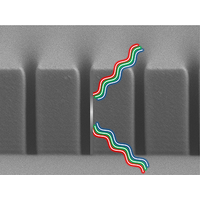
Phys. Rev. Lett. 137, 176903 (2026)
Condensed Matter and Materials
Role of Anisotropic Electronic Friction in Laser-Driven Hydrogen Recombination on Copper
Article | Polymers, Chemical Physics, Soft Matter, and Biological Physics | 2026-10-22 06:00 EDT
Alexander Spears, Wojciech G. Stark, and Reinhard J. Maurer
Ultrafast light-driven chemical dynamics at surfaces are governed by energy transfer from excited electrons to vibrational degrees of freedom. When this nonadiabatic energy transfer is anisotropic, it can lead to dynamical steering effects that affect reaction probabilities or nonthermal final energ…
Phys. Rev. Lett. 137, 178001 (2026)
Polymers, Chemical Physics, Soft Matter, and Biological Physics
Physical Review X
Nontrivial Boundary-Mediated Superconducting Transport in a TRSB Topological Iron-Based Superconductor
Article | | 2026-10-22 06:00 EDT
Wenyao Liu et al.
Edge-mediated nonlocal transport measurements in thin devices reveal a robust conductance plateau governed by spontaneous magnetic ordering.

Phys. Rev. X 16, 041022 (2026)
Cosmological and High-Energy Physics Implications from Gravitational-Wave Background Searches in LIGO-Virgo-KAGRA’s O1-O4a Runs
Article | | 2026-10-22 06:00 EDT
A. G. Abac et al. (LIGO Scientific Collaboration, Virgo Collaboration, and KAGRA Collaboration)
Numerous well-motivated particle-physics-based models are constrained using the most recent LIGO-Virgo gravitational-wave data.

Phys. Rev. X 16, 041023 (2026)
arXiv
Stochastic Diversity Stabilization in Nonlinear Competitive Dynamics: A Statistical Mechanics Approach to Fluctuation Suppression and Finite-Size Scaling
New Submission | Statistical Mechanics (cond-mat.stat-mech) | 2026-10-23 20:00 EDT
Stochastic forcing can prevent diversity collapse in competitive dynamical systems, yet the quantitative conditions and the dynamical mechanism responsible remain poorly characterized. We address both questions in a class of nonlinear stochastic replicator dynamics on the N-dimensional probability simplex, parameterized by a nonlinearity exponent gamma and additive Gaussian noise of intensity sigma. Under the baseline interaction, the minimum noise required to sustain diversity decays as a power law, sigma_c ~ N^(-alpha); replacing the baseline interaction with a superlinear variant shifts alpha from about 1.1 to about 2.0, in agreement with a linear-stability prediction alpha = (gamma+2)/2, identifying alpha as a model-specific quantity rather than a universal index. Scanning the (gamma, sigma) plane reveals a smooth dynamical crossover: the fluctuation susceptibility chi_H = N Var(H) peaks at gamma ~ 0.7 (chi_H ~ 0.6) and is suppressed at high gamma, with no divergence near gamma ~ 1.4; matched finite-size analysis finds no systematic divergence of the peak with N, ruling out a genuine second-order phase transition. The entropy relaxation time tau_relax(gamma) remains approximately constant (about 2.9 time units) across the full range of gamma, even as chi_H decreases sixfold; this decoupling between relaxation timescale and fluctuation amplitude implies that suppression arises from convergence of diverse pathways to similar endpoints rather than from accelerated relaxation along a single channel. These findings identify nonlinear fluctuation suppression via pathway multiplicity – distinct from both noise-induced transitions and equilibrium criticality – as the operative stabilization pattern in this class of nonequilibrium stochastic systems.
Statistical Mechanics (cond-mat.stat-mech), Adaptation and Self-Organizing Systems (nlin.AO)
38 pages, 8 figures (including supplementary material). Accepted manuscript of the article published in Physica A 701 (2026) 132041
Physica A 701 (2026) 132041
Resonant-pair energy return beyond the early Green-Kubo plateau in a quartic chain
New Submission | Statistical Mechanics (cond-mat.stat-mech) | 2026-10-23 20:00 EDT
Julian Olszewski, Zijian Liu, Jie Xu
Distinguishing rapid local energy exchange from sustained transport matters when thermal conductivity is inferred from finite simulations. In a weakly coupled chain of separable quartic oscillators, we identify a quantitative mechanism that changes an early Green–Kubo plateau: resonant neighbors exchange energy and coherently return it. The pair heat-current integral maps to the classical pendulum trapping response. Quartic homogeneity gives an energy-independent reference period $ T_{\rm lib}=7.77\epsilon^{-1/2}$ , where $ \epsilon$ is the coupling. Without fitted parameters, the leading response predicts a negative first minimum at $ 0.952T_{\rm lib}$ with depth $ -0.74$ times the independent-cell exchange coefficient. Isolated-pair simulations test this reference and resolve finite-coupling corrections. The chain reaches its first minimum on the same time scale, with a shallower minimum and a small later residual. Comparisons with chaotic cells and energy-conserving noise show regimes in which coherent return is absent or interrupted over the measured windows. These finite-time results provide a quantitative reference for separating the early exchange plateau from subsequent correlated dynamics.
Statistical Mechanics (cond-mat.stat-mech)
11 pages, 5 figures, 2 tables; includes supplementary material and machine-readable source data
Foresight-dependent entropy production in stochastic two-agent dynamics
New Submission | Statistical Mechanics (cond-mat.stat-mech) | 2026-10-23 20:00 EDT
Nonreciprocal interactions can break detailed balance by sustaining stationary probability currents. Here we ask whether such currents can also emerge when the agents’ immediate coordination preferences are reciprocal, but their state-adjustment rules are determined by forward-looking optimization (foresight). We study a minimal stochastic linear-quadratic game in which two agents control noisy scalar states and minimize individual discounted costs in a full-information feedback Nash equilibrium. The optimized controls yield an Ornstein-Uhlenbeck process whose stationary probability current and entropy-production rate, measuring statistical time-irreversibility, can be calculated exactly. For reciprocal coordination with unequal self-anchoring strengths, the effective drift asymmetry first appears at order $ \tau^5$ , where $ \tau$ is the planning timescale, and the normalized entropy production consequently scales as $ \tau^8$ in the limit $ \tau\to0$ . We derive this cancellation from the coupled Nash Riccati equations. For conformist-contrarian coupling, normalized entropy production approaches a nonzero short-foresight limit and initially decreases from that limit by an amount proportional to $ \tau^2$ . We also determine the long-foresight limit for a conformist-contrarian pair with equal self-anchoring strengths. Numerical solutions of the full Nash equations verify the asymptotic laws and reveal the effect of foresight. Thus, forward-looking optimization can generate or reduce normalized stationary irreversibility, depending on the underlying interaction.
Statistical Mechanics (cond-mat.stat-mech)
16 pages, 5 figures
Einstein’s theory of Brownian motion: The non-Fickian normal diffusion
New Submission | Statistical Mechanics (cond-mat.stat-mech) | 2026-10-23 20:00 EDT
Einstein’s theory of diffusion defines what is considered {\it normal diffusion}. Historically, Einstein considered homogeneous diffusion characterised by a diffusion constant in his original calculations, resulting in what is known as {\it Fickian} diffusion, which thermally relaxes concentration inhomogeneities. However, in the same derivation of Einstein, the seed of generalisation of the theory to {\it non-Fickian} diffusion in the presence of space-dependent diffusivity is hidden. This indicates that non-Fickian diffusion, which can drive concentration inhomogeneities, can also be normal diffusion. The present article discusses the origin of the {\it normal} non-Fickian diffusion in Einstein’s theory of diffusion.
Statistical Mechanics (cond-mat.stat-mech), Mesoscale and Nanoscale Physics (cond-mat.mes-hall), Applied Physics (physics.app-ph), Biological Physics (physics.bio-ph), Chemical Physics (physics.chem-ph)
Five pages, no figures
Electronic Screening as a Design Lever in La-Doped BaTiO$_3$: Coupled Polarization, Dielectric Response, and Optical Anisotropy
New Submission | Materials Science (cond-mat.mtrl-sci) | 2026-10-23 20:00 EDT
Sikandar Azam, Muhammad Fareed, Qaiser Rafiq, Jan Minar, Abed Alataway
Donor substitution can tune the coupled ferroelectric, dielectric, electronic, and optical properties of perovskite oxides by modifying lattice distortions and electronic screening. We investigate these effects in La-doped BaTiO3 using density functional theory, density-functional perturbation theory, and the Berry-phase formalism for polarization. For a model with 12.5% La substitution at the Ba site, La incorporation induces anisotropic lattice contraction, reduces tetragonality and Ti off-centering, and weakens the energetic stabilization of the tetragonal ferroelectric phase. The accompanying reduction in polarization is associated with enhanced electronic screening and reduced anomalous Born effective charges. Phonon calculations indicate that the relaxed doped structure is dynamically stable, while hardening of a low-frequency polar mode is consistent with weakened ferroelectricity. The high-frequency dielectric response increases moderately, whereas the static dielectric response decreases as the lattice contribution is suppressed. Electronic-structure calculations show a Fermi-level shift toward the conduction band without mid-gap defect states. The optical spectra exhibit an absorption-edge shift consistent with a Burstein-Moss-type mechanism, enhanced near-edge transparency, and reduced birefringence. Together, these results suggest a microscopic connection between donor-induced screening, polar-mode hardening, reduced dynamical charges, polarization suppression, and decreased optical anisotropy. The conclusions apply to the investigated 12.5% composition; calculations at additional concentrations are needed to establish quantitative doping trends.
Materials Science (cond-mat.mtrl-sci)
Vacancy-driven topological transition of a Chern insulator
New Submission | Disordered Systems and Neural Networks (cond-mat.dis-nn) | 2026-10-23 20:00 EDT
We develop a microscopic description of the strong-disorder transition in a Chern insulator using the in-gap ring states bound to individual vacancies. Using Green’s function formalism, we construct an energy-dependent Hamiltonian describing their hybridization. In a commensurate periodic vacancy lattice, a Dirac inversion of the zero-energy vacancy kernel accounts for the change in the occupied-state Chern number of the full system. We treat weak positional disorder using the self-consistent Born approximation and numerical disorder averaging, and study independently distributed vacancies using transfer-matrix and multifractal scaling. The local Chern marker and current textures track the transition in real space. Together, these results highlight the role that nonperturbative ring states have as microscopic degrees of freedom through which strong disorder destroys the Chern phase.
Disordered Systems and Neural Networks (cond-mat.dis-nn), Materials Science (cond-mat.mtrl-sci)
Nature of the bosonic edge phase in a double quantum spin Hall insulator
New Submission | Mesoscale and Nanoscale Physics (cond-mat.mes-hall) | 2026-10-23 20:00 EDT
Andreas Feuerpfeil, Ronny Thomale, Trithep Devakul, Nicolas Regnault, Julian May-Mann
Field-theoretic analysis has predicted that the edge of a double quantum spin Hall insulator (DQSHI) can undergo an interaction-driven transition from a phase with fermionic edge modes into one with only bosonic modes. All single-fermion edge excitations are gapped in this bosonic edge phase, but fermion pairs remain gapless, leading to distinct experimental signatures. We numerically simulate the interacting DQSHI edge and verify the existence of the bosonic edge phase. This calculation requires an explicit bulk embedding of the DQSHI edge, due to its mixed anomaly between charge and $ S^z$ conservation. We hence employ segment DMRG on an infinite two-dimensional cylinder, where the DQSHI bulk is modeled in terms of two copies of the spin-up lowest Landau level, combined with their time-reversed counterparts. We find that interactions can open a single-fermion gap at the DQSHI edge while fermion pairs remain gapless, matching the predictions for the bosonic edge phase. We find the scaling of the single-fermion gap with interaction strength to be consistent with field-theoretic calculations, and discuss the relevance of the bosonic edge phase to twisted homobilayers of WSe$ _2$ and MoTe$ _2$ . We elaborate on the methodological extension of the segment geometry used here to other topological phases with edge anomalies.
Mesoscale and Nanoscale Physics (cond-mat.mes-hall), Strongly Correlated Electrons (cond-mat.str-el)
11 pages, 5 figures, 1 table
Discrete time liquids
New Submission | Strongly Correlated Electrons (cond-mat.str-el) | 2026-10-23 20:00 EDT
Zuo Wang, Paul M. Schindler, Marin Bukov, Marios H. Michael
Discrete time crystals exhibit robust subharmonic oscillations, spontaneously breaking the discrete time-translation symmetry of a periodic drive. Since their emergence, the question of whether other types of temporal many-body order can exist has attracted considerable attention. Here we identify discrete time liquids – a new form of spatiotemporal order characterized by short-range temporal coherence as a result of time-solitons. We study a two-dimensional spin system coupled to a finite-temperature cavity, whose fluctuations provide a noisy, approximately periodic drive with only finite temporal coherence. Remarkably, the spins nevertheless form a metastable state with robust period-doubled dynamics over an extended parameter regime. Unlike a time crystal, this state has only finite temporal coherence: individual trajectories stochastically switch between the two symmetry-related temporal configurations of the period-doubled response. We identify these switches as time-solitons: topological defects in temporal order that preserve local period doubling while destroying long-range temporal coherence, thereby producing the time liquid state. We propose a minimal model which reproduces the distribution of temporal correlations of the many-body system, suggesting a general description of the time liquid as a time crystal with a finite density of time-solitons. Because these solitons can occur at arbitrary times, ensemble averaging restores continuous time-translation symmetry, raising the intriguing possibility that discrete time liquids can exist in thermal equilibrium.
Strongly Correlated Electrons (cond-mat.str-el), Quantum Gases (cond-mat.quant-gas), Statistical Mechanics (cond-mat.stat-mech), Quantum Physics (quant-ph)
8 pages main + 9 pages supplement, 4 figures main + 10 figures supplement
Charge-monitored Luttinger liquid
New Submission | Disordered Systems and Neural Networks (cond-mat.dis-nn) | 2026-10-23 20:00 EDT
Victor Gurarie, Leo Radzihovsky
We discuss phases of interacting fermionic Luttinger liquids without particle number conservation, such as those in proximity to a superconductor, subjected to weak continuous measurements of their particle density, in the regime where the bosonization approach is applicable. We show that the phases of these systems are controlled by the competition between measurements, which favor the area-law phase and particle tunneling in and out of the Luttinger liquid, which favors the volume-law phase. The volume-law phase in this system is always charge fuzzy. We show that within this framework, the phase boundary between the two phases is given by a universal dependence of the Luttinger parameter on the measurement rate. This behavior can be contrasted with the non-universal phase boundaries in more generic highly excited one dimensional systems whose behavior is no longer captured by the Luttinger liquid framework.
Disordered Systems and Neural Networks (cond-mat.dis-nn)
4 pages and 4 appendices
Charge Density Waves and In-Gap States in Coupled Chains and Moiré Superlattices
New Submission | Strongly Correlated Electrons (cond-mat.str-el) | 2026-10-23 20:00 EDT
Charge density waves (CDWs) arise from the interplay between electrons and lattice distortions and are a hallmark of low-dimensional systems. Here we study coupled Su-Schrieffer-Heeger chains, both lattice-matched ladders and lattice-mismatched moiré superlattices, and find a rich set of CDW phases together with symmetry-protected bound states. In lattice-matched chains, the competition between electron-phonon coupling and interchain tunneling drives a sequence of CDW phases, including staggered dimers, trimers, and incommensurate states. These phases are generally gapped and host bound states protected by crystalline symmetries rather than chiral symmetry, and are therefore not pinned to zero energy. Lattice mismatch further reconstructs these phases into long-period supermoiré CDWs, with an ordered array of defects, pinned to the moiré length scale, that host localized electronic states. Interchain tunneling and lattice mismatch thus emerge as natural control parameters for CDW order and bound states in one-dimensional chains.
Strongly Correlated Electrons (cond-mat.str-el)
Non-Destructive Detection of Early Drought Stress via Spectral Submanifold Analysis
New Submission | Soft Condensed Matter (cond-mat.soft) | 2026-10-23 20:00 EDT
Sunghwan Jung, Isabella Thiel, Jisoo Yuk, George Haller
Non-destructive early detection of water stress is critical for precision agriculture, yet current detection methods are often labor-intensive or destructive. We propose a rapid, non-invasive method based on Spectral Submanifold (SSM) reduction to analyze the nonlinear vibration dynamics of soybean plants. Unlike traditional linear modal analysis, our data-driven approach reveals a distinct transition in the dominant dynamics of the plant stem as drought progresses. Specifically, we uncover a sign reversal in the nonlinear damping coefficient within SSM-reduced models of full plants. Our finding reveals a fundamental transition in the plant’s dissipative mechanics from a pressurized, fluid-rich vessel exhibiting superlinear (viscoelastic) damping to a dry, cellular solid dominated by sublinear (frictional) damping. This transition is closely correlated with the onset of physiological stress indicated by a significant decrease in the values of mature-leaf soil plant analysis development (SPAD) and colorimetric metrics. In contrast, traditional metrics, such as linear frequency and leaf wilting, do not provide consistent statistical signals of water stress. This study provides the first experimental evidence that SSM-based nonlinear model reduction can detect the changing internal state of a living organism, offering a physics-based metric for high-throughput plant phenotyping.
Soft Condensed Matter (cond-mat.soft), Quantitative Methods (q-bio.QM)
Includes supplementary information and one supplementary video. This manuscript has been submitted
$π$-Flux Tuning of Quantum Paramagnetism in the Triangular-Lattice Hubbard Model
New Submission | Strongly Correlated Electrons (cond-mat.str-el) | 2026-10-23 20:00 EDT
Zhaochen Liu, Andreas Feuerpfeil, Ronny Thomale
We compare two time-reversal-symmetric triangular-lattice Hubbard models at half filling: the zero-flux model and a staggered $ \pi$ -flux model with zero and $ \pi$ flux through oppositely oriented triangles. Although both reduce to the same Heisenberg model at leading order in the strong-coupling limit, their distinct charge fluctuation profiles yield different quantum paramagnetic regimes. Combining a strong-coupling expansion with infinite density matrix renormalization group (iDMRG) calculations, we find that the positive ring-exchange of the zero-flux model promotes spontaneous chirality, consistent with its notion of a chiral spin liquid at intermediate coupling. In the staggered-$ \pi$ -flux model, whose noninteracting limit is a Dirac semimetal, the ring exchange changes sign and disfavors chiral order and we find no resolvable scalar chirality. This renders flux-tuned ring-exchange an efficient discriminator between chiral and non-chiral quantum paramagnets at finite coupling.
Strongly Correlated Electrons (cond-mat.str-el)
5 pages, 5 figures, plus Supplemental Material
Non-adiabatic Optimisation via Localisation-Delocalisation Transitions
New Submission | Disordered Systems and Neural Networks (cond-mat.dis-nn) | 2026-10-23 20:00 EDT
Ryan Smith, Sabrina Yue Wang, Filippo Maria Gambetta, Raul A. Santos
The promise of efficiently solving classical optimisation problems on quantum computers is tantalizing. As many such problems can be mapped to approximating the ground state of spin-glasses, paradigmatic models for studying many-body localisation, it is natural to ask if some of the intuition coming from quantum statistical mechanics can help guide the construction of novel quantum optimisation algorithms. In this work, we discuss how continuous reverse quantum annealing crossing a many-body localisation transition can be accelerated by considering the density of Landau-Zener crossings as the system is quenched. We provide an interpretation of this behaviour in terms of an effective Fokker-Planck equation for the success probability of the algorithm. This interpretation suggests an improvement in the required annealing time as a function of the system size $ N$ , which goes from $ \mathcal{O}({\rm poly}(N))$ to $ \mathcal{O}(1)$ for reference states with non-vanishing energy density. We show that the continuous dynamics can be Trotterised with a number of steps that remains modest as system size increases, making it appealing for near-term devices. For the resulting circuit implementation, we provide a quantitative strategy for determining the parameters of the time-dependent Hamiltonian. We compare the performance of our digitised algorithm, which we call FRIO, against that of the QAOA for finding the ground state of spin-glass problems, in particular the SK model. The numerical results suggest that with suitably selected circuit parameters which can be efficiently found using thermalizing dynamics, FRIO almost always outperforms the conventional QAOA ansatz with pre-optimized angles.
Disordered Systems and Neural Networks (cond-mat.dis-nn), Statistical Mechanics (cond-mat.stat-mech), Quantum Physics (quant-ph)
25 pages, 5 figures + supplementary information
Domain walls in $R3c$-structured NaNbO$_3$
New Submission | Materials Science (cond-mat.mtrl-sci) | 2026-10-23 20:00 EDT
Jack G. Nedell, Craig J. Fennie
In this work, we undertake a systematic first-principles study of structural domain walls in the low-temperature rhombohedral $ R3c$ phase of perovskite oxide NaNbO$ _3$ . Employing a group-theoretic classification, we introduce eight unique classes of domain walls in the $ R3c$ structure, four of which have a domain wall orientation determined uniquely by the conditions of elastic compatibility and charge neutrality, and perform structural relaxations for each representative domain wall class. We find that one class of 109° domain walls has a notably low energy of 9 mJ m$ ^{-2}$ , comparable to the low-energy ferroelectric walls in BaTiO$ _3$ . Finally, we find that this class of 109° walls is compatible with the crystal twinning observed in experiments on the $ R3c$ phase, and propose an atomistic mechanism for the $ R3c \leftrightarrow Pbcm$ phase transition.
Materials Science (cond-mat.mtrl-sci)
Extreme competition between stripes and superconductivity in the hole-doped Hubbard model
New Submission | Strongly Correlated Electrons (cond-mat.str-el) | 2026-10-23 20:00 EDT
Ao Chen, Johnnie Gray, Si-Jing Du, Garnet Kin-Lic Chan
The two-dimensional Hubbard model was originally proposed as the minimal model of uniform $ d$ -wave superconductivity in the cuprate high-temperature superconductors, but recent calculations with relevant parameters in a realistic doping regime have often found other ground states. Further, uncertainty remains over such results due to the intrinsic bias of different computational methods. Here we address this uncertainty through state-of-the-art neural tensor network and neural backflow state simulations, enabled by large-scale GPU computation, that together reach an unprecedented variational accuracy on lattices with up to 1024 sites. At $ 1/8$ doping in the pure Hubbard model, as well as with next-nearest-neighbor hopping relevant to the hole-doped cuprates, we reveal a near degeneracy among a low-energy uniform $ d$ -wave state, superconducting stripes, and non-superconducting stripe states on the milli-$ t$ energy scale. Our work rebalances the narrative that the Hubbard model supports a single dominant order in relevant parameter regimes towards a picture of extreme competition between stripes and superconductivity.
Strongly Correlated Electrons (cond-mat.str-el), Disordered Systems and Neural Networks (cond-mat.dis-nn), Superconductivity (cond-mat.supr-con), Quantum Physics (quant-ph)
33 pages, 25 figures
Kinetic-inductance Parametric Amplification in Superconducting Hybrid Magnonics
New Submission | Mesoscale and Nanoscale Physics (cond-mat.mes-hall) | 2026-10-23 20:00 EDT
Pratap Kumar Pal, Moojune Song, Jinho Lim, Juliang Li, Serhii Kruhlov, Ralu Divan, Ulrich Welp, Clarence Chang, Kab-Jin Kim, Valentine Novosad, Axel Hoffmann, Yi Li
Parametric amplification enables sensitive microwave detection and signal processing by amplifying weak signals with minimal added noise. Here, we demonstrate kinetic inductance mediated parametric amplification in a hybrid magnonic system comprising a nonlinear NbN nanowire resonator strongly coupled to a yttrium iron garnet sphere. The resonator exhibits four wave mixing and nonlinear frequency pulling, enabling parametric amplification both away from and within the magnon-photon strong coupling regime. In the magnon detuned regime, we observe 7 dB gain, while coupling to the YIG magnon shifts the parametric amplification response by ~20 MHz and yields 3.4 dB gain in the hybrid mode. Thus, magnon photon coupling provides a route to magnetically tune the spectral position of kinetic inductance parametric amplification. At higher pump powers, the system transitions to a self oscillatory regime featuring comb-like sidebands and probe activated nonlinear mode mixing. These results establish hybrid magnonics as a platform for tunable nonlinear microwave amplification and dynamics.
Mesoscale and Nanoscale Physics (cond-mat.mes-hall)
Shear-induced mechanical yielding controls cluster morphology and dynamics in aggregating non-Brownian suspensions
New Submission | Soft Condensed Matter (cond-mat.soft) | 2026-10-23 20:00 EDT
Jae Hwan Jeong, Donald L. Koch, Sarah Hormozi
In sheared aggregating suspensions, flow drives both the formation and breakage of particle clusters, whose dynamic evolution influences transport and rheological properties. Understanding these mechanisms remains challenging due to the complex interplay between interparticle forces, hydrodynamic interactions, and shear flow. Using parallelized Accelerated Stokesian Dynamics (PASD) simulations, we investigate cluster microstructure and rotational dynamics, and how their coupling produces suspension stress in sheared, attractive non-Brownian suspensions. When interparticle attraction dominates over separating shear forces, clusters grow until mechanical loading balances maximum interparticle bond strength. We examine how the cluster stresslet depends on cluster size, with both quantities normalized by their mechanical yielding scales. Scaled cluster stresslets collapse onto a master curve exhibiting three distinct regimes: cubic, quadratic, and linear with respect to the scaled radius of gyration $ R_g$ . In the cubic regime, small, compact clusters behave as rigid bodies, whose hydrodynamic stresslet scales with cluster volume $ R_g^3$ . As clusters grow into the quadratic regime, low-aspect-ratio clusters preferentially yield under flow, driving a proportional increase in average aspect ratio with size. High-aspect-ratio clusters follow Jeffery rotational dynamics within the flow-gradient plane, spending longer durations aligned with the flow and thereby reducing their time-averaged hydrodynamic stresslet to scale as $ R_g^2$ . In the linear regime, clusters approach the maximum size sustainable by the interparticle bonds. The internal tension is bounded by the maximum bond strength, limiting the stresslet to an $ R_g$ dependence. These findings establish a mechanistic framework connecting microscale cluster morphology and dynamics to macroscale rheology.
Soft Condensed Matter (cond-mat.soft), Fluid Dynamics (physics.flu-dyn)
A 6-page article
Peridynamic Thermo-Mechanical Modeling of Cracking in Tungsten under Fusion-Relevant Heat Fluxes
New Submission | Materials Science (cond-mat.mtrl-sci) | 2026-10-23 20:00 EDT
Rinkle Juneja, Pablo Seleson, Samuel Temple Reeve, Justin Weinmeister, Gary Staebler
Plasma-facing materials (PFMs) are the primary armor materials in fusion reactors, protecting reactor wall components from extreme heat fluxes, energetic particles, and intense neutron irradiation. These harsh conditions induce thermo-mechanical stresses, irradiation damage, and overall degradation in PFMs. Among these, thermo-mechanical damage induced by extreme heat flux is one of the key factors limiting the lifetime of PFMs. We present a modeling and simulation approach for predicting thermo-mechanical cracking and damage in tungsten, a leading PFM candidate, under fusion-reactor-relevant heat fluxes. Specifically, we study damage induced by cyclic electron beam (e-beam) exposure under different combinations of base temperature and heat flux. We carry out component-scale thermo-mechanical simulations using CabanaPD, a peridynamics fracture mechanics code, informed by experimental data for recrystallized pure tungsten from the JUDITH e-beam facility. The simulations compare well with the experimental classification and enable identification of cracking thresholds across a range of heat fluxes and base temperatures. These predictions can provide detailed insights into the spatial distribution and temporal accumulation of cracks and damage, while offering a pathway for screening candidate PFMs and quantifying their lifespan under fusion-relevant conditions.
Materials Science (cond-mat.mtrl-sci)
Emergent altermagnetism in (LaVO$_3$)$_n$/(LaNiO$_3$)$_m$ superlattices from interfacial charge transfer and octahedral tilts
New Submission | Strongly Correlated Electrons (cond-mat.str-el) | 2026-10-23 20:00 EDT
Gustavo H. Cassemiro, Walber H. Brito
Using first-principles calculations, we show that altermagnetism emerges in (LaVO$ _3$ )$ _n$ /(LaNiO$ _3$ )$ _m$ superlattices, with $ (n,m) = (1,1), (2,2)$ and $ (2,4)$ , from the interplay of interfacial charge transfer and octahedral tilts. Charge transfer drives the system towards the V$ ^{4+}$ and Ni$ ^{2+}$ configuration, turning the otherwise paramagnetic nickelate layers into a magnetically active sublattice. The resulting $ C$ -type antiferromagnetic order, combined with $ a^-b^+c^-$ or $ a^-b^-c^-$ octahedral tilts, links opposite-spin sublattices only through nonsymmorphic operations, yielding a $ d$ -wave spin splitting without spin-orbit coupling. Within DFT+U, the splitting reaches 118 meV in the insulating (LVO)$ _1$ /(LNO)$ _1$ superlattice, about twice that calculated for bulk LaVO$ _3$ , and decreases as the nickelate layers become thicker. Our findings indicate that this splitting is hosted by both the V and Ni sublattices, with nearly half of its weight on oxygen $ 2p$ states through $ p$ -$ d$ covalency. Interfacial charge transfer thus emerges as a \textit{design} principle for engineering altermagnetism in oxide heterostructures.
Strongly Correlated Electrons (cond-mat.str-el), Materials Science (cond-mat.mtrl-sci)
Quantum Phases and Structural Transitions of Bosons in Bubble-Shaped Confinements
New Submission | Quantum Gases (cond-mat.quant-gas) | 2026-10-23 20:00 EDT
Fabio Cinti, Gabriele Costa, Giuseppe Pellicane, Santi Prestipino, Matteo Ciardi
We investigate the structural properties and superfluid behavior of soft-core bosons confined in a spherical bubble trap at large particle numbers ($ N \le 1800$ ). Using Path Integral Monte Carlo simulations with worm algorithm sampling in continuous space, we show that increasing $ N$ drives a sequence of layering transitions: beyond the established bilayer supersolid, a third concentric layer of clusters emerges at $ N \approx 1800$ . By analyzing the distribution of permutation cycles distribution, we demonstrate that a finite superfluid fraction ($ f_s \approx 10%$ ) persists even in this multi-layer regime. These findings clarify the role of particle number in driving layer formation on curved manifolds, offering a concrete guide for future experiments with bubble-trapped bosons.
Quantum Gases (cond-mat.quant-gas)
7 pages, 7 figures
Unrestricted Binary Tree State for the Fermionic Hubbard Model
New Submission | Strongly Correlated Electrons (cond-mat.str-el) | 2026-10-23 20:00 EDT
Mahroo Mirabdolhagh Hazaveh, Armin Khamoshi, Fei Gao, Thomas M. Henderson, Gustavo E. Scuseria
Binary tree states have been introduced as compact correlated pair wave functions that improve upon the antisymmetrized geminal power by adding variational flexibility. Here, we extend the binary tree state to the fermionic half-filled Hubbard model using restricted and unrestricted orbitals. Although the ansatz is seniority zero in its optimized pairing basis, its expansion in the original Hubbard site basis can contain nonzero site- seniority character, while unrestricted orbital optimization provides additional flexibility through independent spin-up and spin-down orbitals. This provides a mechanism for a paired ansatz to describe the singly occupied configurations that dominate the repulsive Hubbard model at large U/t. We find that unrestricted BTS closely approaches optimized DOCI in the repulsive regime, substantially improves upon AGP, and reproduces DOCI density correlations more accurately than pCCD
Strongly Correlated Electrons (cond-mat.str-el)
Submitted to Physical Chemistry Chemical Physics
Nonlinear Canonical Transformations for Studying Spin-1/2 Hamiltonians
New Submission | Strongly Correlated Electrons (cond-mat.str-el) | 2026-10-23 20:00 EDT
Swarnamoy Ghosh, Thomas M. Henderson, Gustavo E. Scuseria
Strongly correlated quantum systems, including frustrated spin lattices, remain challenging for conventional coupled-cluster methods because their ground states often exhibit strong multireference character and symmetry breaking. Although multireference and symmetry-projected coupled-cluster theories are promising, they are not yet black-box methods and require system-specific development. The XXZ and $ J_1$ -$ J_2$ spin models provide demanding benchmarks. Spin-BCS-based coupled-cluster methods may require high excitation ranks to recover the exact ground-state physics in strongly correlated regimes. We introduce a nonlinear spin-fermion-spin (SFS) transformation designed to map a strongly correlated spin Hamiltonian into a new spin Hamiltonian whose ground state is more accurately described at the mean-field level. For a representative SFS transformation, we identify a compact Clifford circuit that maps transformed product states to circuit-dressed, generally entangled states in the original representation. The transformed Hamiltonian can then be treated using broken-symmetry mean-field theory and post-mean-field methods. Benchmarks for the XXZ and $ J_1$ -$ J_2$ Hamiltonians show that spin mean-field theory in the transformed representation reduces the energy error relative to conventional spin-BCS mean field. The spin-BCS-based coupled-cluster calculations for the one-dimensional XXZ model provide substantially improved accuracy relative to the corresponding untransformed methods. In 2D, the accuracy of the transformed mean-field solutions depends on the site ordering and boundary conditions, as nonlocal strings can appear. These results show that exact transformations of operator representations can serve as many-body preconditioners for mean-field and low-rank coupled-cluster approximations to strongly correlated spin systems.
Strongly Correlated Electrons (cond-mat.str-el), Other Condensed Matter (cond-mat.other)
Accepted for publication in The Journal of Chemical Physics
Microstructural Generative Inverse Models for Additive Manufacturing Digital Twins
New Submission | Materials Science (cond-mat.mtrl-sci) | 2026-10-23 20:00 EDT
Pablo Luna Falcon, Jason Mayeur, Amirkoushyar Ziabari, Vincent Paquit, Patxi Fernandez-Zelaia
Metal additive manufacturing (AM) offers substantial advantages to the fabrication of complex structural components, but its widespread adoption is slowed due to complexities in the process-structure-property relations which is the cause for uncertainty and drives risk. Accurately quantifying these complex relations solely via experimental workflows is time consuming and costly. Integrated computational materials and engineering (ICME) frameworks address this challenge by leveraging advanced computational tools, such as crystal plasticity finite element models (CPFEM), to predict critical mechanical properties directly from microstructural data. However, these frameworks require a large datasets that are often difficult to obtain, and their predictive accuracy depends on the availability of realistic AM microstructure representations. Generative deep learning models are a promising approach towards synthesizing AM microstructures which contain complex morphological and crystallographic features. Denoising diffusion probabilistic models (DDPMs), in particular, show a strong potential to capture the inherent complexities of AM structures. In this work, we demonstrate that DDPMs can reliably synthesize digital-twin orientation-imaging micrographs, and we support this claim with quantitative evidence of the fidelity of the generated samples. Additionally, we establish a classifier-free guidance framework for solving complex inverse problems such as property-to-structure and process-to-structure mappings, and we showcase a potential application on a qualification-relevant uncertainty quantification problem. Our work highlights the potential of AI-based generative modeling as a key component of computational frameworks for accelerating AM materials qualification and certification.
Materials Science (cond-mat.mtrl-sci)
Nonlinear and Chaotic Dynamics of Two Dipolar-Coupled Anisotropic Spins under Periodic Excitation
New Submission | Mesoscale and Nanoscale Physics (cond-mat.mes-hall) | 2026-10-23 20:00 EDT
We investigate the non-linear magnetization dynamics of two identical anisotropic macrospins coupled by dipolar interaction and subjected to periodic transverse excitation. The coupled Landau- Lifshitz-Gilbert equations are solved numerically using a fourth-order Runge-Kutta method. By combining bifurcation diagrams, local-maxima analysis, Lyapunov exponents, and two-dimensional stability maps, we characterize how dipolar coupling, transverse driving amplitudes, and uniaxial anisotropy govern the long-time dynamics. The results reveal a non-monotonic reorganization of dynamical regimes, with alternating intervals of enhanced and suppressed instability. Analysis of symmetric and antisymmetric coordinates distinguishes the collective and relative spin responses, while Fourier spectra and three-dimensional trajectories provide complementary frequency-domain and geometrical characterizations. Simultaneous positivity of the two largest Lyapunov exponents identifies parameter regions consistent with hyperchaotic dynamics. Finally, analytical linearization and ferromagnetic-resonance calculations reveal the distinct coupling dependence of the collectivemode frequencies and clarify the limitations of the linearized description beyond the stability thresholds of the collinear reference state. These findings establish a unified framework for understanding the interplay of dipolar coupling, anisotropy, and periodic excitation in the non-linear dynamics of a minimal interacting-spin system.
Mesoscale and Nanoscale Physics (cond-mat.mes-hall), Chaotic Dynamics (nlin.CD)
17 pages, 12 figures
Design of Nuclear and Magnetic Scattering Length Density Profiles
New Submission | Materials Science (cond-mat.mtrl-sci) | 2026-10-23 20:00 EDT
Alexandros Barnasas, Edward J. Stuckey, Alexei A. Vorobiev, Joashaniel F.K. Cooper, Sjoerd Stendahl, Björgvin Hjörvarsson
The scattering length density (SLD) profile of a sample can be deliberately designed to enhance the information of interest obtained from neutron reflectometry. Here, we demonstrate this approach using amorphous $ \mathrm{Fe}{x}\mathrm{Co}{y}\mathrm{Al}{8}\mathrm{Zr}{2}$ thin films. Four samples, each comprising ten repetitions of an AlZr spacer layer and a magnetic layer, were prepared with magnetic-layer compositions of $ \mathrm{Fe}{80}\mathrm{Co}{10}\mathrm{Al}{8}\mathrm{Zr}{2}$ , $ \mathrm{Fe}{70}\mathrm{Co}{20}\mathrm{Al}{8}\mathrm{Zr}{2}$ , $ \mathrm{Fe}{60}\mathrm{Co}{30}\mathrm{Al}{8}\mathrm{Zr}{2}$ , and $ \mathrm{Fe}{45}\mathrm{Co}{45}\mathrm{Al}{8}\mathrm{Zr}{2}$ , and characterised using X-ray and polarised neutron reflectometry. Across the series, the nuclear SLD of the FeCoAlZr alloy decreases approximately linearly from $ 7.14 \times 10^{-6}$ to $ 4.63 \times 10^{-6}$ $ \mathring{\mathrm{A}}^{-2}$ with increasing Co content, while the magnetic SLD is approximately $ 4.3$ -$ 4.5 \times 10^{-6}$ $ \mathring{\mathrm{A}}^{-2}$ . These results demonstrate that the nuclear and magnetic contributions can be controlled largely independently, with composition primarily tuning the nuclear SLD and the applied magnetic field offering, in principle, additional control of the magnetic contribution.
Materials Science (cond-mat.mtrl-sci)
12 pages, 5 Figures
Spin polarization in a chiral ladder: elastic and inelastic environments
New Submission | Mesoscale and Nanoscale Physics (cond-mat.mes-hall) | 2026-10-23 20:00 EDT
D. T. Verrilli H., Jorge Cardenas-Gamboa, Mayra Peralta, Claudia Felser, José H. Garcia, Solmar Varela, Nelson Bolívar
We study how the transport window and environmental reinjection determine the spin polarization transmitted through a minimal two-leg chiral ladder. The model contains time-reversal-invariant helical spin–orbit coupling, spin-independent interchain hopping, and nonmagnetic contacts with two orbital modes per lead. Sublattice symmetry makes the coherent spin-transmission kernel exactly odd in energy. A window centered on the symmetry point therefore gives zero integrated spin current, whereas a displaced window selects an uncanceled spectral interval. The resulting polarization reverses between enantiomers and vanishes in the decoupled-chain, zero-spin–orbit, and equivalent-strand limits of this model. We compare uniform absorption, energy-resolved elastic probes, and thermalized voltage probes at the same finite bias, including reinjection whenever probes are present. Charge conservation alone does not prohibit enhancement of the integrated spin signal: the elastic-probe response can increase at finite bias even where its linear-response counterpart decreases. Thermalized probes can also lift the centered-window zero that elastic probes preserve. Absorption and reinjection also change the transmitted charge, so enhancement of spin current and enhancement of normalized polarization must be distinguished. Static onsite disorder produces sample-dependent fluctuations; its signed ensemble mean is reported with uncertainty and is not forced to vanish in a displaced window. These results identify the energy interval and reservoir prescription that must be controlled when interpreting dephasing trends in minimal models relevant to chirality-induced spin selectivity.
Mesoscale and Nanoscale Physics (cond-mat.mes-hall)
15 pages, including Supplementary Material; 9 figures and 6 tables in total. Data and code in ancillary files
Suppression of Grain Boundary Nitrogen Degradation by Boron in Superalloys
New Submission | Materials Science (cond-mat.mtrl-sci) | 2026-10-23 20:00 EDT
C. Crabb, G. Topore, J. O. Douglas, M. C. Hardy, M. S. Conroy, D. Dye
Superalloys enable the hottest sections of jet engines to operate at high temperatures, but environmentally assisted degradation limits their lifetime. In polycrystalline alloys, nitrogen penetrates beneath the protective surface oxides, to produce embrittling grain boundary nitrides. Boron is added in trace amounts to improve grain boundary strength, yet its role, if any, in oxidation-related degradation remains unclear. Here we show that boron segregates to an internal nitride–matrix interface in a Ni/Co-base $ \gamma$ /$ \gamma^{\prime}$ strengthened superalloy. Both B-free and B-containing alloys develop stratified chromia/alumina scales at 800~$ ^{\circ}$ C in \SI{100}{\hour}, but the B-free variant produces larger, deeper and more elongated Ti/Nb-rich subsurface grain boundary nitrides. Correlative 4D S/TEM and atom probe tomography identify the particle as a chemically complex B1 nitride and reveal interfacial boron segregation. This shows that trace alloying as an alloy strategy can control damaging internal reaction product precipitation and growth by core-shell segregation.
Materials Science (cond-mat.mtrl-sci), Instrumentation and Detectors (physics.ins-det)
6 figures, superalloys, nitrides, oxidation
Orientation-selective microwave heating of laser-graphitized diamond at 2.45 GHz
New Submission | Mesoscale and Nanoscale Physics (cond-mat.mes-hall) | 2026-10-23 20:00 EDT
Massimiliano Zamengo, Meguya Ryu, Haoran Mu, Hsin-Hui Huang, Nguyen Hoai An Le, Tomas Katkus, Darius Gailevičius, Junko Morikawa, Saulius Juodkazis
Pristine diamond couples negligibly to a 2.45 GHz field. We show that femtosecond-laser inscription of a buried graphitic (sp2) architecture makes a 4 x 4 x 2 mm^3 N-doped (100 ppm) high-pressure high- temperature (HPHT) crystal absorb strongly, and that the absorption is switched by the orientation of the inscribed structure relative to the cavity electric field. With the 1.8 mm depth of a concentric grating along E, stepped power gave a smooth staircase to an indicated ~500C at 80 W followed, at 90 W, by an abrupt excursion to an indicated ~900C with surface roughening and terraced oxidation. Rotating the same sample so that the grating diameter lay along E, and an unmodified crystal in either orientation, gave no signal above the ~40C floor. We account for this by the depolarisation factors L of the sub-wavelength tracks, collapsed into one screening parameter S = L{\sigma}/({\omega}{\epsilon}0{\epsilon}h), here, {\sigma} conductivity, {\omega} - cyclic frequency, {\epsilon}h,0 - permittivity of host and vacuum, respectively. The model turns element length, diameter and writing regime into design variables for microwave absorption in a transparent host.
Mesoscale and Nanoscale Physics (cond-mat.mes-hall), Applied Physics (physics.app-ph)
15 pages; 7 figures; 4 figures in supplementary
Chiral Cavity Vacua as Local Generators and Probes of Non-Abelian Kitaev Topology
New Submission | Mesoscale and Nanoscale Physics (cond-mat.mes-hall) | 2026-10-23 20:00 EDT
We show how a gyrotropic cavity vacuum generates, probes, and spatially programs non-Abelian topology in the Kitaev honeycomb model. Gauge-consistent virtual-photon elimination produces a universal helicity-odd interaction $ \mathrm{i}[P_x,P_y]$ alongside same-order even dressing. For the leading bond polarization, this commutator is exactly the Kitaev three-spin mass. Mode normalization imposes a thermodynamic constraint: one extended normalized mode gives a local mass that vanishes with sample area, whereas a localized mode writes a finite topological island and a finite mode density enables a bulk mass. The exact Majorana solution yields helicity-reversed Chern gaps and edge propagation, while integrated circular dichroism exactly measures the mass generator, $ \langle\mathrm{i}[P_x,P_y]\rangle=-\sqrt3p^2\langle O_3\rangle$ . Real-space calculations reveal a non-Abelian island and a helicity wall with two co-propagating Majorana modes. Uniform helicity reversal is a Dirac-mass quench with $ n_{\rm ex}\propto\tau_Q^{-1}$ , whereas moving a wall localizes the gap closing. The equilibrium vacuum kernel contains sum-frequency rather than resonant denominators. These results establish distinct criteria for local and bulk cavity-induced topology.
Mesoscale and Nanoscale Physics (cond-mat.mes-hall), Materials Science (cond-mat.mtrl-sci)
Finite-width altermagnetic quantum rings: angular-channel hybridization and Aharonov–Bohm physics
New Submission | Mesoscale and Nanoscale Physics (cond-mat.mes-hall) | 2026-10-23 20:00 EDT
We study a finite-width two-dimensional quantum ring with a quadratic $ d$ -wave altermagnetic term, Tan–Inkson confinement, a perpendicular magnetic field, and independently tunable Aharonov–Bohm (AB) flux. The altermagnetic interaction mixes $ m$ and $ m\pm2$ angular channels while preserving their parity. Circular symmetry renders the crystal orientation spectrally irrelevant and makes the two spin blocks exactly isospectral. The resulting same-parity anticrossings are resolved at low filling, and multichannel mixing is found near the Fermi level of highly occupied rings. Independent converged calculations for $ N_e=1400$ and $ 1800$ establish the reconstructed Fermi edge and magnetic response in a finite field window and the persistent current over a full AB flux period. The analytic conventional reference separates radial-subband depopulation (dHvA-type cycles) from finer finite-ring shell oscillations; we do not assign a global Fourier spectrum to unverified altermagnetic field scans. The few-electron thermal response is obtained from an exact fixed-particle-number canonical partition function, avoiding finite-system errors of a fixed-mean-number approximation. The circular model supports an equilibrium charge current but no persistent spin current.
Mesoscale and Nanoscale Physics (cond-mat.mes-hall), Quantum Physics (quant-ph)
24 pages, 6 figures, 6 tables
Anisotropic thermoelectric transport in the Sr2RuO4-Ru eutectic system
New Submission | Strongly Correlated Electrons (cond-mat.str-el) | 2026-10-23 20:00 EDT
Takeru Ito, Shogo Yoshida, Hiroshi Yaguchi, Ryuji Okazaki
The Sr2RuO4-Ru eutectic system, in which metallic Ru inclusions are embedded in a Sr2RuO4 matrix, exhibits an enhanced superconducting onset temperature of about 3 K, known as the 3-K phase. Here we investigate the in-plane thermoelectric response of this eutectic system in the normal state and find a pronounced anisotropy in the thermopower for thermal gradients applied parallel and perpendicular to the Ru lamellae. To clarify its origin, we combine thermopower measurements with electronic-structure-based transport calculations and finite-element modeling of the local strain distribution generated by the thermal-expansion mismatch between Sr2RuO4 and Ru. The calculations show that uniaxial compression of Sr2RuO4 produces a sizable thermopower anisotropy through modification of the Fermi surfaces. When an idealized spatially inhomogeneous strain field around the Ru lamellae is included, the observed sign and qualitative magnitude of the anisotropy are reproduced more closely than in a simple unstrained two-component model. These results are consistent with a substantial contribution from strain-induced changes in the Sr2RuO4 electronic structure near the interfaces, although contributions from interfacial phase mixing and three-dimensional transport connectivity cannot be excluded.
Strongly Correlated Electrons (cond-mat.str-el), Superconductivity (cond-mat.supr-con)
Field-free superconducting diode and tunable vortex dynamics in NbN/FePt stripe-domain heterostructures
New Submission | Superconductivity (cond-mat.supr-con) | 2026-10-23 20:00 EDT
Juan C. Zapata, Emilio De Biasi, Martin Sirena, Jeehoon Kim, Nestor Haberkorn
We demonstrate reconfigurable, field-free superconducting diode behavior in NbN/FePt and NbN/AlN/FePt heterostructures with remanent stripe domains in the FePt layer. NbN films 10 nm thick are capped either directly with FePt or through a thin AlN spacer, which reduces electronic proximity effects while preserving magnetic coupling through stray fields. At zero applied magnetic field, the superconducting diode efficiency reaches approximately 50–60% in NbN/FePt when the stripes are perpendicular to the current and is strongly reduced when they are parallel. The diode effect persists in NbN/AlN/FePt with efficiencies reaching approximately 35–40%, supporting a magnetic origin of the nonreciprocity. We interpret the response as asymmetric vortex transport in the remanent magnetic landscape, with preferential edge vorticity and a Lorentz force that favors inward flux injection or outward motion depending on current polarity. Under applied perpendicular magnetic fields, the interplay between the external field and the magnetic stray fields modifies the flux-flow instability and the apparent instability velocity inferred from transport, with values below those reported for bare NbN films. These results show that stripe-domain ferromagnetic overlayers provide a reconfigurable route to control superconducting nonreciprocity and flux-flow stability in NbN-based heterostructures.
Superconductivity (cond-mat.supr-con), Materials Science (cond-mat.mtrl-sci)
16 pages, 9 figures
Cluster property and entanglement in the superconducting state
New Submission | Superconductivity (cond-mat.supr-con) | 2026-10-23 20:00 EDT
Katsuhiko Higuchi, Masahiko Higuchi
We present the conditions for satisfying the cluster property in the superconducting state. Using these conditions, we show that the cluster property employed when deriving the order parameter of the superconducting state (OPSS) holds true, and that the OPSS is given by $ {}_S\langle \Psi | \hat{\psi}(x)\hat{\psi}(x’) | \Psi \rangle_S$ , where $ |\Psi\rangle_S$ is the superconducting state, and where $ \hat{\psi}(x)$ is the field operator of superconducting electrons. This provides a resolution to the long-standing concern raised by Leggett et al.\ regarding particle-number fluctuation in the superconducting state. In addition, by considering the entanglement between two particles composed of the maximum geminal of the BCS ground state [J.\ Phys. Commun. 5, 095003 (2021)], it is confirmed that the larger the deviation from the conditions for satisfying the cluster property becomes, the greater the magnitude of the entanglement becomes. This shows not only the effectiveness of the conditions for satisfying the cluster property but also the justification of the OPSS that has been commonly used.
Superconductivity (cond-mat.supr-con), Quantum Physics (quant-ph)
Decoding Composition-Structure-Performance Relations in Sodium Layered Oxide Positive Electrode Materials
New Submission | Materials Science (cond-mat.mtrl-sci) | 2026-10-23 20:00 EDT
Yunyeong Choi, Hasindhi H. Lokuge, Joshua D. Bocarsly, Pieremanuele Canepa
Layered sodium transition-metal (TM) oxides, Na$ _x$ TMO$ _2$ , are among the most promising sodium-ion positive electrode materials, yet their Na/vacancy orderings, layer stacking sequences, and cooperative Jahn–Teller distortions are known only for a few single-TM compounds. We compile the Na/vacancy orderings reported in earlier studies into a single library of 41 unique orderings and apply this uniformly to five single-TM and all ten Na$ _x$ TM$ {0.5}$ TM$ ‘{0.5}$ O$ _2$ oxides (TM = Ti, Mn, Fe, Co, Ni), screening more than 120,000 structures with machine-learning interatomic potentials prior to 1,025 accurate first-principles calculations. The phase diagrams explain the observed O3/P3/O1 sequences and voltages, and the O3-to-P3 competition hinges on ordering energies of a few meV per atom that scalar descriptors, such as the cationic potential and the interlayer-slab distance, miss. Our extensive analysis reveals that the redox couples form a nearly partner-independent ladder, Ti$ ^{3+/4+}$ $ <$ Mn$ ^{3+/4+}$ $ <$ Co$ ^{3+/4+}$ $ <$ Ni$ ^{2+/3+}$ $ <$ Fe$ ^{3+/4+}$ , explaining pristine charge transfer and the oxidation sequence. Van Vleck analysis of every TMO$ _6$ octahedron reveals that TM mixing suppresses the cooperative Jahn–Teller distortions of Mn$ ^{3+}$ and Ni$ ^{3+}$ through charge transfer to Jahn–Teller-inactive states or dilution of Jahn–Teller-active centers. We formulate an energy-density-versus-strain map that yields a design rule: a high-voltage couple without Jahn–Teller strain, which Mn$ ^{4+}$ /Ni$ ^{2+}$ charge transfer realizes in Na$ _x$ Mn$ _{0.5}$ Ni$ _{0.5}$ O$ _2$ , the most practical composition. We release the ordering-resolved dataset as a training set for subsequent training of accurate machine-learning interatomic potentials.
Materials Science (cond-mat.mtrl-sci)
Hierarchical Reduction of Invariant Subspaces: From Fragmentation to Many-Body Scars
New Submission | Statistical Mechanics (cond-mat.stat-mech) | 2026-10-23 20:00 EDT
We investigate a hierarchy of invariant Hilbert-space structures connecting Hilbert-space fragmentation, partial solvability, and quantum many-body scars. For spin chains with fragmented spin-$ 1/2$ subspaces and their local deformations, we show, using the spin-$ 1$ $ XXC$ chain as a representative example, how successive local deformations reduce extensive irreducible-string fragmentation through an implicitly embedded spin-$ 1/2$ invariant space and ultimately to a single scar tower, connecting the $ XXC$ , perturbed $ XXC$ , and spin-$ 1$ $ XY$ scar models. Through the intermediate embedded space, local dynamics couples states from distinct frozen irreducible-string sectors and selects a new decomposition into representations, from which smaller invariant spaces can be retained. We also establish a rigidity constraint on isolating nonsymmetric towers and a constructive correspondence that transfers a reduction between locally realizable representations of the embedded dynamics. The latter demonstrates that the reduction hierarchy can be transferred through a unitary transformation within the embedded subspace, yielding an exact scar tower built on a Néel reference state without requiring unitary equivalence of the full Hamiltonians.
Statistical Mechanics (cond-mat.stat-mech), Quantum Physics (quant-ph)
15 pages
Strain-induced structural transformations in hexagonal monolayer boron nitride. A density functional study
New Submission | Materials Science (cond-mat.mtrl-sci) | 2026-10-23 20:00 EDT
O. Bystrenko, B. Ilkiv, S. Petrovska, O. Foia, T. Bystrenko, O. Khyzhun
In this work we theoretically study the structural transformations occurring in monolayer hexagonal boron nitride (h-BN) subjected to strong deformations. The first-principle computer simulations are based on the density functional theory employing the pseudopotentials with the exchange-correlation energy given in Perdew-Burke-Ernzerhof form. Depending on the direction and the type of the strain, the simulations reveal different types of structural transformations in two-dimensional (2D) h-BN associated with the elastic failure. It is found that, under certain shear strains, there can form an ordered 2D orthorhombic phase with the 2D layer space symmetry pmmm. Thermal stability of the latter up to ~900 K is demonstrated by first-principle Born-Oppenheimer molecular dynamics. The examination of electronic structure indicates that, in contrast to the conventional h-BN, which is an insulator with the wide band gap, the predicted orthorhombic phase is expected to be a semiconductor with the narrow band gap of ~ 0.65 eV.
Materials Science (cond-mat.mtrl-sci)
10 pages, 10 figures
Emergent Entropic Forces Drive Inverse and Reentrant Phase Transitions in Condensates of Intrinsically Disordered Proteins
New Submission | Soft Condensed Matter (cond-mat.soft) | 2026-10-23 20:00 EDT
David A. Herrera-Martí, Marc Jamin
We present a phenomenological, mean-field model for condensates of intrinsically disordered proteins that describes inverse phase transitions and qualitatively predicts reentrant phase behavior as a function of salt concentration. The model is based on a matrix-based formulation of the Flory-Huggins free energy, in which the enthalpic interaction parameter and the protein valence, defined here as the number of effective “sticky patches”, are treated as free parameters. Its central insight is that integrating out dynamics of fast-moving molecular species generates an effective entropic force that increases the free-energy barrier to mixing, even within a mean-field description. We account for this by linking Gaussian integration of co-solutes to the Schur complement of the matrix-based Flory-Huggins free energy. This provides a general thermodynamic framework illustrating how enthalpic interactions that increase the number of available microstates necessarily induce effective entropic forces. We demonstrate the expressiveness and predictive power of the model by qualitatively reproducing recent experimental observations on the rabies virus phosphoprotein.
Soft Condensed Matter (cond-mat.soft), Biological Physics (physics.bio-ph)
20 pages. 7 Figures. Comments welcome!
How good are universal MLIPs for alloys? A benchmark is only as trustworthy as its controls
New Submission | Materials Science (cond-mat.mtrl-sci) | 2026-10-23 20:00 EDT
Gus L. W. Hart, Jacob N. Pursley
Universal machine-learned interatomic potentials (uMLIPs) are ranked by their formation-energy error against a DFT database, as if that database were ground truth, but independent DFT databases disagree. We benchmark fourteen uMLIPs on 1.45 million ordered intermetallics against AFLOW, which none trained on, and compare every energy and stability error with that disagreement. For half the structures, AFLOW, Alexandria, and OQMD differ by less than 6-8 meV/atom, but a minority differ by far more, raising the average to 16-30. That disagreement sets a floor on any model’s measurable error. Re-referenced, the best uMLIP agrees with AFLOW as closely as Alexandria does, and the next four sit 2-7 meV/atom above the floor. Once broken elemental references are screened, the energy and stability rankings agree almost everywhere. Three apparent model failures shrink or vanish under the right control: poorly correlated shear moduli, thousands of “bad” DFT references, and the leader’s inflated lead.
Materials Science (cond-mat.mtrl-sci)
47 pages (31 main + 16 SI), 12 figures; submitted to npj Computational Materials
String Order in Quench Dynamics as a Probe of Quantum Phase Transitions
New Submission | Strongly Correlated Electrons (cond-mat.str-el) | 2026-10-23 20:00 EDT
We study the anisotropic XY chain in a transverse field by introducing a global string order parameter and examining its equilibrium behavior and its quench dynamics from a fully polarized initial state. The corresponding string operator is defined as the product of local projected spin operators over the entire chain. The nonequilibrium order parameter is the long-time average of the logarithm of the string-operator expectation value per site after the this http URL the ground state, its field derivative is singular on the Ising critical lines; after the quench, the steady-state response also records the field boundaries and the anisotropy transition. We derive analytically the nonanalytic behavior of the order parameter at the quantum critical lines. Our results reveal a hidden nonlocal order underlying this paradigmatic model of conventional quantum phase transitions. They also connect measurable spin populations with equilibrium and dynamical topological structure.
Strongly Correlated Electrons (cond-mat.str-el)
7 pages, 3 figures
From phase analysis to phase tracking: a robust approach to atomic-scale strain mapping
New Submission | Materials Science (cond-mat.mtrl-sci) | 2026-10-23 20:00 EDT
Atomic-scale strain governs the electronic, ferroic and mechanical properties of materials, and atomic-resolution microscopy measures it most directly. Geometric phase analysis (GPA) is the standard tool, but it fails when a Bragg reflection moves outside its fixed Fourier aperture under large strain or rotation, or in misoriented grains. Here we introduce geometric phase tracking analysis (GPTA), whose Fourier aperture tracks the Bragg reflection at each pixel in real space. A narrow aperture can therefore reject noise without losing a displaced reflection. On 13,795 simulated and experimental atomic-resolution images under various imaging conditions, GPTA reduces GPA’s failure rate from 27% to 11.5% with up to 335 times better accuracy. It also gives strain and dislocation maps across grains, resistance to dynamical-scattering extinction, and a confidence map, capabilities that GPA lacks. Tracking the aperture combines reciprocal-space dose efficiency with real-space spatial resolution and extends atomic-scale strain metrology to beam-sensitive materials and challenging imaging conditions.
Materials Science (cond-mat.mtrl-sci)
Impact of localized $4f$ magnetism on Berry curvature and the intrinsic anomalous Hall effect in CeRu$_2$Si$_2$
New Submission | Strongly Correlated Electrons (cond-mat.str-el) | 2026-10-23 20:00 EDT
Takehiro Kobayashi, Shunsuke Hirai, Ibuki Terada, Michi-To Suzuki
The intrinsic anomalous Hall effect (AHE), originating from Berry curvature, has been extensively studied in $ f$ -electron systems, including Ce-based compounds. However, how the magnetism of localized $ f$ electrons affect the intrinsic AHE remains unclear. Here, we investigate this issue in CeRu$ _2$ Si$ _2$ by calculating the intrinsic anomalous Hall conductivity (AHC) for several occupied Ce-$ 4f$ states using first-principles LDA+$ U$ calculations combined with Wannier interpolation method. We find that the intrinsic AHC remains finite even when the Ce-$ 4f$ states are localized and do not contribute directly to the Fermi surface, and that its magnitude depends on which Ce-$ 4f$ state is occupied. We show that localized $ 4f$ -electron magnetism induces exchange splitting in the conduction bands, generating Berry curvature in specific regions near the Fermi surface. This mechanism enables conduction bands that are derived from nonmagnetic orbitals and form the Fermi surface to contribute to the intrinsic AHE, suggesting a route to realizing large intrinsic AHE in $ f$ -electron materials.
Strongly Correlated Electrons (cond-mat.str-el), Materials Science (cond-mat.mtrl-sci)
6 pages, 6 figures
Symmetry-Preserving Local Representation for Short-Range Interaction in Complex Materials
New Submission | Disordered Systems and Neural Networks (cond-mat.dis-nn) | 2026-10-23 20:00 EDT
Hao Cheng, Tong Yang, Hao Wu, Haokai Hong, Zhongrui Wang, Shu Ping Lau, Wanyu Lin, Kay Chen Tan, Ming Yang
Modeling short-range interactions in highly disordered materials remains challenging due to the immense configuration space and the disruption of local symmetry in truncated theoretical models. Here, we propose a symmetry-preserving local representation framework that strictly enforces topological continuity and translational invariance via boundary passivation. Applied to high-entropy alloys, this approach autonomously unravels the nonlinear ligand effects modulating local reactivity and accurately captures coverage-dependent many-body interactions without explicit periodic expansion. By resolving the conflict between localized chemical environments and extended periodic boundaries, this framework not only reduces computational complexity by an order of magnitude but also provides a physically transparent paradigm for deciphering short-range order in complex condensed matter systems.
Disordered Systems and Neural Networks (cond-mat.dis-nn)
4 figures
Ferroelastic Reversal Magnon Thermal Hall Effect in a Fully Compensated Ferrimagnet
New Submission | Mesoscale and Nanoscale Physics (cond-mat.mes-hall) | 2026-10-23 20:00 EDT
Yingxi Bai, Zihan Chen, Chengwang Niu, Ming Yang
Magnons offer a charge-neutral channel for spin and heat transport, yet reversible and nonvolatile control of their thermal Hall response poses a fundamental challenge in systems with zero net magnetization. Here, we establish ferroelastic switching as an effective route to manipulate magnonic transverse responses in fully compensated ferrimagnets. A minimal Heisenberg-Dzyaloshinskii-Moriya model reveals that ferroelastic switching can re-orientate the lattice anisotropy, which reconstructs the chirality-resolved magnon bands and Berry curvature distribution. Consequently, the two orthogonal fully compensated ferrimagnetic variants related by [C2||C4z] exhibit magnon thermal Hall responses with opposite signs, whereas the response vanishes in the intermediate altermagnetic phase. First-principles calculations further identify monolayer V2SSe as a promising material candidate for realizing the proposed ferroelastic control of transverse magnon transport. Remarkably, ferroelastic switching drives a dual magnonic-electronic band reconstruction, enabling nonvolatile reversal of the magnon thermal Hall effect while producing anisotropic orbital Hall responses and distinct magneto-optical spectra as complementary transport and optical fingerprints. Our findings establish ferroelasticity as an effective route to nonvolatile magnon control and multichannel state identification in zero net magnetization systems.
Mesoscale and Nanoscale Physics (cond-mat.mes-hall)
5 figures
Localization Contrast As a Fundamental Limit of Radiative Quantum Efficiency
New Submission | Disordered Systems and Neural Networks (cond-mat.dis-nn) | 2026-10-23 20:00 EDT
Arsineh Apelian, Tanay Tak, Xuance Jiang, Tsung-Yin Tsai, James S. Speck, Vojtech Vlcek
Disorder can localize valence- and conduction-band states to different degrees, yet whether such localization contrast has observable consequences remains poorly understood. Here, we show that localization contrast strongly impacts competing carrier-recombination channels. We illustrate this behavior in random In$ _x$ Ga$ _{1-x}$ N alloys. Increasing the In content from $ x=13.5%$ to $ x=22%$ progressively localizes the valence-band maximum state while leaving the conduction-band minimum state comparatively delocalized. This contrasting localization decreases the interband optical momentum matrix element underlying radiative recombination. For Auger-Meitner recombination, however, localization alone does not determine the coupling; atomic-scale disorder also breaks primitive-cell translational symmetry and modifies the momentum-space and phase structure of the states. This generates additional low-$ Q$ components and enhances the Auger coupling by more than five orders of magnitude relative to pristine GaN. Thus, we provide a microscopic explanation for the competing trends in radiative and Auger recombination. More broadly, our results establish localization contrast as a mechanism through which disorder can control optical and carrier-carrier interactions in semiconductors.
Disordered Systems and Neural Networks (cond-mat.dis-nn), Applied Physics (physics.app-ph)
Anyon Chern bands of opposite sign and reversed drift
New Submission | Mesoscale and Nanoscale Physics (cond-mat.mes-hall) | 2026-10-23 20:00 EDT
Zhenyu Xiao, Minxuan Wang, Shinsei Ryu
The elementary charged excitations of fractional quantum Hall states are anyons. Without continuous translation symmetry, they acquire a dispersion and richer dynamics. We study the Laughlin quasihole at filling $ 1/3$ in a periodically modulated magnetic field, a common model of fractional Chern insulators in two-dimensional materials. From the microscopic wave functions, we derive the commutator of its guiding-center coordinates, set by a many-body Berry curvature that governs its wave packets. A modulation with two flux quanta per unit cell splits the quasihole band into bands with Chern numbers $ 6$ and $ -3$ ; such opposite signs are generic as long as a weak modulation opens a gap between the anyon bands. In the $ C=-3$ band, the quasihole drifts against $ \mathbf{E}\times\mathbf{B}$ , although the magnetic field has the same sign everywhere. Perturbation theory in the modulation explains these results, and large-scale Monte Carlo calculations confirm them. Anyon bands thus acquire their own topology, which controls anyon motion and may shape the phases of itinerant anyons.
Mesoscale and Nanoscale Physics (cond-mat.mes-hall), Strongly Correlated Electrons (cond-mat.str-el)
Strain Waves Generate Compression and Trigger Buckling in Active Polymers
New Submission | Soft Condensed Matter (cond-mat.soft) | 2026-10-23 20:00 EDT
Wen-de Tian, Kang Chen, Tianhui Zhang
Chemical reactions can sustain polymer motion without necessarily generating the compression required for buckling. Theory and simulations show that tension-dependent chemical transitions coupled to bond elasticity generate finite-wavelength traveling strain waves in a semiflexible polymer. In the straight chain at fixed axial span, the waves reduce mean active contraction while leaving mean elastic tension unchanged, generating compression that drives bending above a threshold. Releasing the mean load allows longitudinal waves to persist while transverse perturbations decay.
Soft Condensed Matter (cond-mat.soft), Adaptation and Self-Organizing Systems (nlin.AO), Biological Physics (physics.bio-ph), Chemical Physics (physics.chem-ph)
Universal Synthesis of Large-Area Hybrid Perovskite Monolayers Enabling Lithography-Free, Low-Static-Power Optoelectronics
New Submission | Materials Science (cond-mat.mtrl-sci) | 2026-10-23 20:00 EDT
Shankeerthan Kalyanasundaram, Swarit Dwivedi, Sanje Mahasivam, Christopher R. McNeill, Sudha Mokkapati
Solution-phase synthesis of monolayer hybrid organic-inorganic perovskites is constrained by rapid out-of-plane crystal growth, uncontrolled nucleation, and strong interlayer aggregation, yielding flakes of only a few {\mu}m. We introduce a steric-engineering ternary-solvent growth strategy to synthesize monolayer and few-layer A2MX4 hybrid perovskites with exceptionally large surface areas. By combining alcohol cosolvents with an amine additive, out-of-plane stacking is suppressed. Using (PEA)2CuCl4 as a model system, monolayers with lateral areas exceeding 1000 {\mu}m2 are achieved, representing a massive dimensional increase over conventional methods. Molecular dynamics and quantum-chemical calculations show that longer-chain alcohols reorganize precursor solvation, while solvent volatility prolongs edge-mediated precursor transport during annealing. This strategy demonstrates universal applicability across diverse organic spacer cations (PEA+, F-PEA+, PentA+), metal centers (Cu2+, Mn2+, Pb2+), and halides (Cl-, Br-, I-). The large lateral dimensions enable direct, solvent-free electrical contact fabrication via physical shadow masking, bypassing chemical degradation from solvents used in conventional lithography. Planar devices fabricated from isolated ultrathin (PEA)2PbI4 channels exhibit ultra-low dark currents down to the 10^-15 - 10^-13 A range, enabling femtowatt-to-picowatt static power consumption, ~ 0.2 pW at 5 V, a 250-fold reduction relative to drop-cast films, while maintaining a high light-to-dark current ratio of 4.3 x 10². This work establishes precise steric and solvation control as a paradigm for scalable, compositionally diverse, low-static-power monolayer 2D perovskite optoelectronics.
Materials Science (cond-mat.mtrl-sci)
Coulomb-Driven Electronic Textures in Lightly Hole-Doped Cuprates
New Submission | Superconductivity (cond-mat.supr-con) | 2026-10-23 20:00 EDT
Wei-Wei Yang, Yang Shen, Yuxin Wang, Pengfei Li, Mingpu Qin, Kun Jiang
Motivated by recent experiments on Ca$ _2$ CuO$ _2$ Cl$ _2$ , we present a comprehensive study of the interplay between dopants and localized Zhang-Rice singlets in lightly hole-doped cuprates. Owing to the poorly screened Coulomb potential, the interactions between dopants and localized Zhang-Rice singlets favor asymmetric electronic configurations characterized by effective electric “dipoles”. Using the MPS-based Lanczos method, we show that these localized holes give rise to in-gap bound states within the charge-transfer gap. When tunneling matrix-element effects are included, the bound states exhibit a characteristic $ 4a_0 \times 2a_0$ internal structure, consistent with experimental observations. Our results suggest that Coulomb interactions between dopants and localized Zhang-Rice singlets, together with tunneling matrix-element effects, provide a microscopic mechanism for the observed $ 4a_0$ electronic structures.
Superconductivity (cond-mat.supr-con)
8 pages, 7 figures
Surface morphology and shear effect on lubricated granular system
New Submission | Soft Condensed Matter (cond-mat.soft) | 2026-10-23 20:00 EDT
Ravindra S. Ghodake, Ashish V. Orpe
Improving the particle surface frictional behavior is of considerable importance in several industries so as to manipulate the powder flowability and handling. In this work, we have studied the lubrication phenomena in an assembly of flowing bulk powder particles in presence of a fine powder lubricant. Experiments were conducted in two different shear environments, for two different levels of confinement and using three different bulk powder particles having distinct surface morphology. The added lubricant particles tend to adhere to the surface of bulk particles thereby altering their surface morphology. This results in altered inter-particle friction, which typically reduces for small addition of lubricant, but increases on its excess addition, thereby altering the particle flowability. While this behavior is generally understood through previous studies, the current work explores how the effect of confinement, shear environment and particle surface characteristics combine in a unique manner to provide modified flow behavior for different lubricant concentrations. Extended shear duration seems to extend the range of lubricant concentrations for improved flowability. On the other hand flow confinement seems to limit the extent of lubrication for these range of concentrations. Both these opposing effects also exhibit a unique dependence on the particle surface morphology and its seeming affinity with the lubricant particle. The parameter types and ranges explored comprise most conditions encountered in industrial systems, the outcome thereby providing a basis for designing of applications handling lubricant-particle mixtures.
Soft Condensed Matter (cond-mat.soft)
39 pages, 11 figures
Ind. Eng. Chem. Res., 65, 21859-21871 (2026)
Fit-error corrected auxiliary master equation approach for low-temperature nonequilibrium dynamical mean-field theory
New Submission | Strongly Correlated Electrons (cond-mat.str-el) | 2026-10-23 20:00 EDT
Sebastian Alois Fuchs, Enrico Arrigoni, Tommaso Maria Mazzocchi
The auxiliary master equation approach (AMEA) is a nonperturbative impurity solver for steady-state nonequilibrium dynamical mean-field theory (DMFT). It replaces the physical hybridization function by that of a small auxiliary open quantum system, whose parameters are fitted to reproduce it, and then solves the resulting many-body problem essentially exactly. AMEA’s accuracy is thus limited by the quality of this fit: since the fastest-varying part of the hybridization is set by the distribution function, whose Fermi edges sharpen at low temperature, the fit tends to overestimate the temperature, especially for weak reservoir coupling. For the auxiliary hybridization itself, however, AMEA’s self-energy is essentially exact. We correct for the fit error by estimating, via an approximate solver applicable to arbitrary hybridization functions, the ratio between the self-energies of the physical and auxiliary hybridizations, and using it to extend AMEA’s self-energy from the auxiliary to the physical case. This fit-error correction becomes exact whenever either the fit or the approximate solver is exact. We benchmark the scheme using the nonequilibrium Kajueter-Kotliar iterated perturbation theory (IPT), generalized here to spin-polarized solutions, as the approximate solver; other approximate solvers, such as the noncrossing approximation, can be used as well. Applied to an Anderson impurity model with a spin-polarized bath, and within DMFT to a Hubbard layer weakly coupled to two metallic reservoirs, the correction largely removes the spurious heating from the AMEA fit and from insufficient thermalization by the reservoirs, while preserving the correct description of the Mott insulator, which IPT alone cannot fully recover.
Strongly Correlated Electrons (cond-mat.str-el)
20 pages, 7 figures, comments are welcome
Designing sustainable high-entropy alloys directly from mixed oxides: A thermodynamic perspective
New Submission | Materials Science (cond-mat.mtrl-sci) | 2026-10-23 20:00 EDT
Albert Linda, Shiv Shankar, Dierk Raabe
Hydrogen-based direct reduction (HyDR) of mixed oxide precursors offers an alternative route to produce sustainable alloys, bypassing the sequential extraction, refining, and remelting steps that dominate the carbon footprint of conventional metallurgy and individual metal production. However, the thermodynamic limits and most effective H$ _2$ /H$ _2$ O ratio needed for full metallization of multicomponent oxides are not yet established. This is because the formation of metallic and oxide solid solutions alters the chemical activity of both the reduced metallic phases and the unreduced oxides, coupling their equilibria in ways that cannot be deduced from the stability of the pure individual oxides. Herein, we develop a CALPHAD-based thermodynamic framework to establish the compoistion-temperature-H$ _2$ /H$ _2$ O window for complete metallization of CoCrFeMnNi-based oxide mixtures. Mn and Cr generally increase oxide stability, while Co, Fe, and Ni decrease it, allowing reduction at lower H$ _2$ /H$ _2$ O ratios. The effect of each element is not fixed; it depends on the starting mixed oxide composition and can reverse when the last oxide to reduce changes. Furthermore, we show that the reduction pathway complexity does not correlate with the difficulty of removing the final oxygen: a system with few intermediate transformation steps can still terminate as a highly stable residual oxide, whereas extensive partial reduction may leave the stability of the final residual oxide essentially unchanged. By linking residual-oxide stability to the H$ _2$ /H$ _2$ O ratio, the framework identifies the thermodynamic limits and provides guidelines for designing sustainable multicomponent alloys directly from mixed oxide precursors.
Materials Science (cond-mat.mtrl-sci)
Broadband emitter localization and prefabrication two-photon interference from InAs/InP quantum dots monolithically grown on an InGaAsP/InP distributed Bragg reflector
New Submission | Mesoscale and Nanoscale Physics (cond-mat.mes-hall) | 2026-10-23 20:00 EDT
Paweł Mrowiński, Jan Śmigiel, Mikołaj Badura, Beata Ściana, Wojciech Kijaszek, Emilia Zięba-Ostój, Paweł Holewa, Marcin Syperek
We demonstrate a monolithic telecom C-band single-photon platform based on low-density InAs/InP quantum dots grown on an InGaAsP/InP distributed Bragg reflector, with simulated upward light-extraction efficiency exceeding 10% within the 40 nm spectral band. Enhanced light extraction is crucial for wide-field photoluminescence imaging, enabling approximately 3 nm statistical centroid-localization precision of QD emitters due to improved signal-to-noise ratio. The identified charged exciton emitting at 1549.5 nm exhibits single-photon emission purity up to 94.7%, validated by a raw peak-area integration under pulsed quasi-resonant excitation. Under these conditions, photons emitted sequentially from the unprocessed planar structure reveal a raw two-photon interference visibility of 51% of the photon wave packet within the 2 ns time window and 41% over a 4 ns integration window, all without Purcell enhancement typical for cavity-embedded emitters. Combining broadband extraction, high photon coherence, and emitter preselection on a native III-V wafer, this architecture paves the way for marker-based deterministic fabrication of high-quality monolithic nanophotonic devices.
Mesoscale and Nanoscale Physics (cond-mat.mes-hall)
Thermal expansion mechanisms, heat transport, and band-gap renormalization in strongly anharmonic Rb$_2$SO$_4$, Rb$_2$Ca$_2$(SO$_4$)$_3$, and Ba$_3$Lu(BO$_3$)$_3$ from machine-learned interatomic potentials
New Submission | Materials Science (cond-mat.mtrl-sci) | 2026-10-23 20:00 EDT
Ekaterina Spirande, Rustam Arabov, Sofya Demina, Nikita Rybin, Alexander Shapeev
Rb$ _2$ SO$ _4$ , Rb$ _2$ Ca$ _2$ (SO$ _4$ )$ _3$ , and Ba$ _3$ Lu(BO$ _3$ )$ _3$ are structurally complex materials whose thermal expansion has been interpreted, on the basis of high-temperature x-ray diffraction, in terms of specific polyhedral rearrangements. We study their lattice dynamics and its consequences for thermal and electronic properties using molecular dynamics with actively learned moment tensor potentials trained on density-functional theory data. The anharmonicity measure $ \sigma^A$ (compares the anharmonic contribution to the interatomic forces with the total forces acting on atoms) reaches $ \approx$ 0.3-0.5 for $ \beta$ -Rb$ _2$ SO$ _4$ , Rb$ _2$ Ca$ _2$ (SO$ _4$ )$ _3$ , and Ba$ _3$ Lu(BO$ _3$ )$ _3$ and $ \approx$ 0.75 for orientationally disordered $ \alpha$ -Rb$ _2$ SO$ _4$ , and the imaginary harmonic modes of Rb$ _2$ Ca$ _2$ (SO$ _4$ )$ _3$ and $ \alpha$ -Rb$ _2$ SO$ _4$ are stabilized at finite temperature. The simulations reproduce the measured thermal expansion and support the mechanisms proposed from diffraction: expansion along $ c$ in $ \beta$ -Rb$ _2$ SO$ _4$ arises from both elongation and straightening of corrugated Rb chains, BO$ _3$ reorientation accompanies the anisotropic expansion of Ba$ _3$ Lu(BO$ _3$ )$ _3$ , and bending of polyhedral linkages limits expansion along the weakly expanding directions and in cubic Rb$ _2$ Ca$ _2$ (SO$ _4$ )$ _3$ . Green-Kubo lattice thermal conductivities differ by more than an order of magnitude between compounds with comparable $ \sigma^A$ , showing that the anharmonicity measure alone does not determine heat transport. Phonon-induced band-gap renormalization, including lattice thermal expansion, reaches 2.7 and 1.7 eV at 1250 K in Rb$ _2$ Ca$ _2$ (SO$ _4$ )$ _3$ and Ba$ _3$ Lu(BO$ _3$ )$ _3$ and 1.4 eV at 650 K in $ \beta$ -Rb$ _2$ SO$ _4$ , with zero-point renormalizations of 0.64, 0.70, and 0.31 eV for $ \beta$ -Rb$ _2$ SO$ _4$ , Rb$ _2$ Ca$ _2$ (SO$ _4$ )$ _3$ , and Ba$ _3$ Lu(BO$ _3$ )$ _3$ , respectively.
Materials Science (cond-mat.mtrl-sci)
12 pages, 13 figures; Supplementary Material: 33 pages, 31 figures
Learning Cole-Hopf Coordinates for Stochastic Growth Dynamics: the KPZ class
New Submission | Statistical Mechanics (cond-mat.stat-mech) | 2026-10-23 20:00 EDT
Lorenzo Mensi, Simone Cuonzo, Maria Chiara Angelini, Sergio Chibbaro, Cyril Furtlehner, Alberto Rosso
Inferring effective equations from observations of nonlinear stochastic processes is challenging because individual trajectories are noisy realizations, while the relevant physical information is encoded in ensemble statistics. We introduce a data-driven framework that learns a change of variables in which nonlinear stochastic dynamics become linear. The model combines a neural change of representation with a linear stochastic latent evolution and is trained through a short-time moment-matching objective, thereby avoiding trajectory \rev{simulation} during optimization. This construction yields an interpretable generative model: both the learned transformation and the latent evolution operators can be directly inspected.
We validate the method on the one-dimensional Kardar–Parisi–Zhang (KPZ) equation, a paradigmatic model of stochastic growth for which the Cole–Hopf transformation maps the nonlinear dynamics to the stochastic heat equation. From simulated height trajectories alone, the model recovers the local exponential Cole–Hopf map and the associated linear stochastic operator. Generated trajectories reproduce the main statistical signatures of the KPZ universality class, including the growth law $ \mathrm{Var}(h^{t})\sim t^{2\beta}$ with $ \beta=1/3$ and the GOE Tracy–Widom height distribution for flat initial conditions. These results show that interpretable stochastic equations can be inferred from data by learning representations in which the dynamics closes in a simple form. Furthermore the development of the physical informed learning permits to get insights on the physics of the dynamical process.
Statistical Mechanics (cond-mat.stat-mech), Data Analysis, Statistics and Probability (physics.data-an)
Piezo-Kerr effect in altermagnets and noncollinear antiferromagnets
New Submission | Materials Science (cond-mat.mtrl-sci) | 2026-10-23 20:00 EDT
Yuqi Liu, Qiu-Shi Huang, Xinfeng Chen, Yilin Han, Run-Wu Zhang, Zhi-Ming Yu, Yugui Yao
Symmetry is usually viewed as a constraint on physical responses, but it can also be used to design the fields that control them. Here, we adopt the representation-matching principle used to identify conjugate fields of order parameters and apply it to response tensors. A linear coupling, the key ingredient for sign-switching control, is symmetry-allowed when a component (or a combination of components) of the control field and the selected response component share the same irreducible representation of the magnetic point group (MPG) of the system. Applied to the magneto-optical Kerr effect, this principle yields a piezo-Kerr effect, in which specific strain combinations activate a Kerr response forbidden in the unstrained state. Enumerating all 122 MPGs, we identify 16 groups in which the unstrained Kerr response is forbidden while a linear strain-induced contribution is allowed. These groups are realized by altermagnets and noncollinear antiferromagnets with symmetry-enforced vanishing net magnetization. The active strain channels and the associated first-order sign reversals follow directly from symmetry. First-principles calculations for bulk MnTe$ _{2}$ and CoF$ _{2}$ , and Cr$ _{2}$ Se$ _{2}$ O and Cr$ _{2}$ Te$ _{2}$ O monolayers confirm these predictions. In these materials, the Kerr rotation vanishes without strain, whereas 0.5-3% strain produces rotations ranging from tens to hundreds of millidegrees, and reversing the matched strain channel reverses the Kerr sign. These results establish a general route to large and switchable Kerr responses emerging from symmetry-forbidden states in compensated magnets.
Materials Science (cond-mat.mtrl-sci), Mesoscale and Nanoscale Physics (cond-mat.mes-hall)
14 pages, 9 figures, including Supplemental Material
Chiroptical Valleytronic in SnSe
New Submission | Materials Science (cond-mat.mtrl-sci) | 2026-10-23 20:00 EDT
Yiming Pan, Sotirios Fragkos, Umberto Dellasette, Quentin Courtade, Dominique Descamps, Stéphane Petit, Fabio Caruso, Samuel Beaulieu
Quantum geometric properties of Bloch electrons play a central role in governing light-matter interactions and transport phenomena in solids. Here, we report quantum-geometric chiroptical selection rules that generate a helicity-dependent momentum-space population imbalance in the group-IV monochalcogenide SnSe. By combining time- and angle-resolved extreme-ultraviolet photoemission spectroscopy with ab initio real-time simulations of photoexcited carrier dynamics, we identify valley-selective excitation at opposite crystal momenta arising from the breaking of time-reversal symmetry under circularly polarized illumination. We theoretically demonstrate that the magnitude of valley circular dichroism is strongly constrained by crystal symmetry through its influence on the quantum geometric tensor, the key quantity underlying valley optical selection rules. The resulting chiroptically induced valley polarization decays on sub-picosecond timescales through intervalley scattering mediated by electron-phonon coupling. Furthermore, we show theoretically that the population imbalance between valleys at opposite momenta gives rise to a helicity-reversible transient photocurrent. These findings provide microscopic insight into how quantum geometry governs valley-selective light-matter interactions, valley polarization, and photocurrent generation in van der Waals materials exhibiting hidden and transient symmetry breaking.
Materials Science (cond-mat.mtrl-sci)
Active phase separation from concentration-dependent diffusion in chemical networks
New Submission | Statistical Mechanics (cond-mat.stat-mech) | 2026-10-23 20:00 EDT
Giulia Pisegna, Ramin Golestanian
Active phase separation in living systems is ubiquitous, yet the microscopic origins of the non-equilibrium terms in active field theories remain largely unknown. Here, starting from stochastic mass-conserving reaction-diffusion dynamics of two interacting chemical species, we perform a systematic slow-mode reduction and derive the complete Active Model B+ field theory, with all phenomenological coefficients expressed in terms of microscopic parameters. We identify concentration-dependent diffusivities and asymmetric inter-species chemotactic couplings as the minimal microscopic ingredients generating the genuinely non-equilibrium coefficient responsible for microphase separation, cluster phases, and arrested coarsening. Our framework recovers the equilibrium limit consistently and is validated by stochastic numerical simulations. These results establish a direct, bottom-up link between the architecture of chemical reaction networks and the universality class of their emergent large-scale dynamics.
Statistical Mechanics (cond-mat.stat-mech), Soft Condensed Matter (cond-mat.soft)
6 pages, 2 figures
Intensity-driven Mott-like transition in a 2D Ruddlesden-Popper perovskite
New Submission | Materials Science (cond-mat.mtrl-sci) | 2026-10-23 20:00 EDT
Koushik Mondal, Amit Haldar, Indrajit Mondal, Arpita Dutta, Himanshu Bhatt, Biswajit Mahata, Soumili Banerjee, Hirendra Nath Ghosh, Satyaprasad P Senanayak, Shovon Pal
Two-dimensional Ruddlesden-Popper-type halide perovskites have emerged as promising cutting-edge nonlinear optical materials due to their strong excitonic effects and carrier-density-dependent optical responses. In this work, we investigate the nonlinear optical properties and ultrafast carrier dynamics of (BA)$ _2$ PbI$ _4$ under infrared excitation, resonant with the two-photon energy of its excitonic transition. Using a nonlinear femtosecond Z-scan measurement with a 1030,nm pump pulse, we observe a pronounced intensity-dependent evolution of the nonlinear absorption coefficient and the refractive index. With increasing pump intensity, a switch from saturable absorption to reverse saturable absorption emerges, suggesting an intensity-driven Mott-like transition. To elucidate the underlying carrier dynamics, intensity-dependent transient absorption spectroscopy was performed under the same excitation intensities. This reveals a long-lived charge carrier population above the estimated Mott density, reflecting a clear phase transition from an exciton-dominated regime to a dense electron-hole plasma regime. Moreover, such an intensity-driven, high, and switchable nonlinear optical response, along with a Mott-like transition under infrared pulse excitation, makes the 2D (BA)$ _2$ PbI$ _4$ perovskites suitable for all-optical operation in the infrared regime.
Materials Science (cond-mat.mtrl-sci)
Donor-acceptor recombination in diamond
New Submission | Materials Science (cond-mat.mtrl-sci) | 2026-10-23 20:00 EDT
Konstantin Iakoubovskii, Andrey Katrusha, Weihua Peng, Jianguo Peng
We re-examine several optical systems that have previously been attributed to donor-acceptor (D-A) recombination in diamond, including the broad 2.8 eV and 2.3 eV bands, and the sharp-lined series in the ranges 2.0-2.7 eV and 4.0-5.0 eV. In all cases, internal transitions at one or multiple defect centers provide a more consistent explanation of the experimental observations than the D-A model. The 2.3 eV case is marginal, where the key argument against the D-A recombination is the improbably low probability of tunneling between remote donors and acceptors in diamonds with very low concentrations of impurities (~0.1 ppm). A more realistic model for the 2.3 eV band and the associated phosphorescence and thermoluminescence phenomena is trapping of electrons and holes at nitrogen and boron defects, respectively, followed by recombination at a deep center, which is tentatively assigned to the nearest neighbor B-N pair.
Materials Science (cond-mat.mtrl-sci)
Physica Scripta, 2026
Role of Chalcogen-p States in the Optical Response of Bulk PtSe2 and PtTe2
New Submission | Materials Science (cond-mat.mtrl-sci) | 2026-10-23 20:00 EDT
Ji Eun Lee, R. Mathew Roy, Premakumar Yanda, Chandra Shekhar, Claudia Felser, Martin Dressel
The type-II Dirac semimetals PtSe$ _2$ and PtTe$ _2$ are isostructural and isovalent layered compounds but exhibit distinct electronic properties. We measure the in-plane infrared reflectivity of bulk crystals between 10 and 300 K and compare the interband contribution to the optical conductivity with band-resolved density-functional calculations. At low temperature, the Drude spectral weight of PtTe$ _2$ is an order of magnitude larger than that of PtSe$ _2$ . PtTe$ _2$ also shows a broad mid-infrared absorption continuum, whereas the absorption of PtSe$ _2$ remains weak. The calculations attribute this continuum to transitions from a predominantly chalcogen-$ p$ band into a Pt-$ d$ band. In PtTe$ _2$ , the chalcogen-$ p$ band lies higher in energy, which lowers the onset of these transitions and increases the semimetallic band overlap, in line with the larger Drude spectral weight. The type-II Dirac points lie far below the Fermi level, so that transitions between the bands forming the Dirac cones do not contribute appreciably to the interband conductivity.
Materials Science (cond-mat.mtrl-sci)
Contact Renormalization of One-Mode Electron Correlation: Validation in Four- and Ten-Electron Systems
New Submission | Superconductivity (cond-mat.supr-con) | 2026-10-23 20:00 EDT
A stationary many-electron eigenstate has one dynamical phase although its internal response can be strongly multimode. We ask whether the stationary Hartree–Fock information carrier contains enough information to determine the scalar correlation energy through one effective return. In regularized Hartree–Fock, Gaussian primitive products fix a minimum-information relative-coordinate mode before any one-mode reduction; virial completion defines the correlation source, while exact contact measures the additional return restriction created by neighboring occupied pairs. The Be-like $ 1s^22s^2$ sequence establishes the one-valence-pair boundary: with no neighboring occupied valence pair, the source returns through the universal floor $ D_0=\sqrt{1+\delta^2}$ . Ten-electron molecules and Ne-like ions then test how finite-pair contact dresses that return. The same parameter-free source–return construction reproduces the established molecular and ionic correlation trends with quantitative accuracy. The numerical agreement therefore serves as validation of a physical separation between source strength and return restriction, rather than as the objective by itself.
Superconductivity (cond-mat.supr-con)
4 pages, 2 tables, 2 figures
Nitrogen vacancy cluster-mediated ferroelectric domain growth in wurtzite AlN
New Submission | Materials Science (cond-mat.mtrl-sci) | 2026-10-23 20:00 EDT
Zijian Zhou, Kan-Hao Xue, Ziqi Pang, Heng Yu, Shanzhong Xie, Hang Liu, Haiming Qin, Yi Tong, Bowen Su, Yi Yang, Tian-Ling Ren, Xiangshui Miao
Aluminum nitride-based ferroelectrics combine high remanent polarization, thermal stability, weak size effects, a wide bandgap and back-end process compatibility, making them promising for high density non-volatile memory. However, their high coercive field ($ E_\mathrm{c}$ ) and unclear polarization switching mechanism limit further applications. Theoretical predictions indicate preferential reversed domain growth along the polar axis, whereas experiments show nearly isotropic growth or preferential growth perpendicular to this axis. Here, we combine density functional theory, Deep Potential molecular dynamics and experimental characterization to determine how nitrogen vacancies ($ V_\mathrm{N}$ ) regulate domain growth and $ E_\mathrm{c}$ . In ideal crystal, strong lattice coupling along the polar axis drives preferential domain growth in this direction. $ V_\mathrm{N}$ locally weakens this coupling and promotes polarization nucleation. The spatial distribution of $ V_\mathrm{N}$ and the temporal sequence of vacancy induced switching jointly determine the direction and morphology of reversed domain growth. We further show that scandium doping promotes $ V_\mathrm{N}$ formation, thereby enhancing defect mediated nucleation and reducing $ E_\mathrm{c}$ . These findings establish a multiscale mechanism governing thin-film domain-growth kinetics and macroscopic $ E_\mathrm{c}$ , reconciling experimental observations with ideal crystal simulations and providing defect engineering principles for low-voltage, reliable and scalable ferroelectric devices.
Materials Science (cond-mat.mtrl-sci)
23 pages, 4 figures, with Supplementary Information
Entropy-production cost limits hierarchical decision-making in homing pigeon flocks
New Submission | Soft Condensed Matter (cond-mat.soft) | 2026-10-23 20:00 EDT
Bibaswan Ghosh, Vipul Rai, Harsh Soni, Nitin Kumar
Collective decision-making requires individuals to reconcile diverse, often conflicting opinions to reach a common course of action. However, within a group, they rarely exert equal influence, leading to non-reciprocal communication patterns manifested as leader-follower relationships and social hierarchies. Here, using homing pigeon flocks as a model system, we develop a trajectory-based framework to infer and quantify hierarchy within navigating living collectives. We find that while small flocks exhibit pronounced hierarchy, increasing flock size progressively weakens it, driving the collection toward more egalitarian decision-making. We provide a physical basis of this observation using a thermodynamic framework in which non-reciprocal communication between birds carries an information-entropy cost. Our calculations reveal that hierarchy weakening observed in larger flocks is a direct consequence of maintaining a constant per-individual entropy production rate across flock sizes. Together, these results suggest that constraints on information-processing capacity may play an important role in the collective dynamics of living organisms.
Soft Condensed Matter (cond-mat.soft), Statistical Mechanics (cond-mat.stat-mech), Biological Physics (physics.bio-ph)
The often overlooked role of sound in liquid thermal transport
New Submission | Materials Science (cond-mat.mtrl-sci) | 2026-10-23 20:00 EDT
Formulated a hundred years ago, the Bridgman formula for thermal conductivity of liquids postulates a proportionality between sound velocity and thermal conductivity. This designates phonons as heat carriers in a liquid. Its empirical success has been under-appreciated and its conceptual implications overlooked. It is not mentioned in well-known condensed-matter textbook. Here, we review its origin, its links to hydrodynamic Euler equations and to the fundamental paradox surrounding the parabolic heat equation and its fate across the quantum-classical crossover.
Materials Science (cond-mat.mtrl-sci), Other Condensed Matter (cond-mat.other), Quantum Gases (cond-mat.quant-gas), Quantum Physics (quant-ph)
10 pages, five figures
Interaction-enhanced antiferromagnetic correlations in a Kondo ladder with a gapped band structure
New Submission | Strongly Correlated Electrons (cond-mat.str-el) | 2026-10-23 20:00 EDT
Tatsuya Kaneko, Ritsuki Hirabayashi, Yutaka Akagi
We investigate magnetic correlations in the two-leg Kondo-Hubbard ladder using the density-matrix renormalization group method. We focus on a parameter regime in which the noninteracting electronic system has a narrow indirect band gap. In this regime, there is no Fermi surface, and the conventional Fermi-surface-based Ruderman-Kittel-Kasuya-Yosida picture is not directly applicable; magnetic correlations between localized spins become weaker as the noninteracting band gap increases. We find that a moderate on-site Coulomb interaction enhances the antiferromagnetic correlations between localized spins. This enhancement, which is also seen in the staggered magnetization induced by a pinning field at the edges, occurs for both ferromagnetic and antiferromagnetic Kondo couplings. Our results show that electron-electron interactions can enhance magnetic correlations between localized spins even when the underlying noninteracting electronic structure is gapped, suggesting an interaction-driven route to magnetic instabilities in narrow-gap Kondo-lattice systems.
Strongly Correlated Electrons (cond-mat.str-el)
7 pages, 7 figures
Functional understanding of structural components in polypseudorotaxane gels
New Submission | Soft Condensed Matter (cond-mat.soft) | 2026-10-23 20:00 EDT
Ella Sapsford, Andrea Bonato, Simon Weir, Nawar Zebari, Paul J. Lusby, Chenfeng Ke, Davide Michieletto
Biomedical devices, wearable interfaces, and soft robots require compliant soft materials with reliable mechanical performance, yet the molecular principles needed to design such materials are not always fully understood. Thus, there is an urgent need to understand how to design novel stretchable and soft hydrogels with enhanced toughness, i.e. resistance to breakage. Slide-ring gels (SRGs) are a class of unconventional soft materials formed by polyrotaxanes (PR) building blocks whereby sliding cyclodextrins (CD) replace traditional chemical and physical crosslinks and in turn enhance toughness and stretchability by several orders of magnitude. The rational design of SRGs re- mains challenging due to a lack of a mechanistic understanding of the role played by individual components. In this work, we implement simple synthetic perturbations that individually target polymer-CD and CD-CD interactions in unstoppered pseudopolyrotaxanes (pPR) solutions and measure the consequent changes in viscoelastic properties. Weakening the intermolecular interaction between CDs abolishes crystallisation and significantly weakens the gel. At the same time, thermodynamically favouring threading by using azobenzene-modified PEG chains favours the formation of stable and long-lived networks even at remarkably low CD stoichiometries. We rationalise these observations with coarse-grained Molecular Dynamics simulations which clarify the structure-function relationship of the components forming these materials. Our work contributes to guiding the rational design and development of enhanced SRG hydrogels and elastomers.
Soft Condensed Matter (cond-mat.soft), Materials Science (cond-mat.mtrl-sci)
Tracking the Emergence and Persistence of Abnormal Grain Growth in an Aluminum Alloy using Diffraction-Contrast Tomography
New Submission | Materials Science (cond-mat.mtrl-sci) | 2026-10-23 20:00 EDT
Helmuth-André Schulz-Harder, Karolína Gutbrod, Madlen Atzen, Markus Ziehmer, Thomas Wilhelm, Orkun Furat, Yubin Zhang, Jette Oddershede, Haixing Fang, Pierre-Olivier Autran, Wolfgang Ludwig, Marc Bernacki, Volker Schmidt, Carl E. Krill III, Jules M. Dake
Abnormal grain growth is inherently three-dimensional, making 3D tracking of grain evolution essential for understanding its underlying mechanisms. This study combines synchrotron-based diffraction-contrast tomography and phase-contrast tomography to characterize the three-dimensional grain structure and quantify the size and spatial distribution of second-phase particles in the aluminum alloy AA5252. Using an interrupted annealing protocol, we tracked the persistent growth of abnormal grains and the emergence of abnormal growth in a grain initially belonging to the matrix. Although second-phase particles effectively suppressed grain growth in the matrix, variations in local particle density showed no apparent correlation with either the emergence or subsequent rapid growth of abnormal grains. Instead, crystallographic misorientation and, more notably, neighboring grain size were identified as stronger predictors of abnormal growth rate. Matrix grains were consumed more rapidly when they were relatively small and shared high-angle grain boundaries with the growing abnormal grain. The same trends were observed for the grain that underwent a transition from normal to abnormal growth. Remarkably, even before the onset of abnormal growth, this grain was surrounded by smaller matrix grains with exclusively high-angle grain boundaries, while the local particle density was slightly higher than average. These findings suggest that the same microstructural characteristics facilitate both the emergence and persistence of abnormal grain growth, although the mechanism triggering the transition to rapid growth remains unresolved.
Materials Science (cond-mat.mtrl-sci)
Anomalous polar chains in halide perovskites
New Submission | Materials Science (cond-mat.mtrl-sci) | 2026-10-23 20:00 EDT
Erik Fransson, Apinya Ngoipala, Priyanka Deswal, Ethan Berger, Nicholas C. Bristowe, Paul Erhart, Julia Wiktor
Local polar distortions, their collective ordering, and their field-driven reversal have been studied extensively in ferroelectric perovskites for decades. Here we identify an unusual behavior in the ferroelectric halide perovskite CsGeBr3 using large-scale molecular dynamics with first-principles-trained interatomic potentials. In its nominally cubic phase the Ge off-centering forms one-dimensional polar chains that extend over at least tens of nanometers and relax on nanosecond timescales, four orders of magnitude slower than in BaTiO3 and PbTiO3, with CsSnBr3 in between. The cubic CsGeBr3 phase is a dynamically disordered state in which oppositely polarized chains flip throughout the crystal, and a long-lived one-dimensional local polarization coexists with zero net polarization. A simple three-dimensional perovskite thus hosts long-ranged one-dimensional polar correlations with remarkably slow dynamics. In the ferroelectric phase the same chains set a one-dimensional switching mechanism, in which the polarization reverses chain by chain.
Materials Science (cond-mat.mtrl-sci)
Realization of a Superleak in a Quantum Gas
New Submission | Quantum Gases (cond-mat.quant-gas) | 2026-10-23 20:00 EDT
Wan-Ling Yang, Shao-Bo Liu, Xiang Luo, Chao Yang, Hai-Lin Li, Yu-Zhou Yang, Yong-Kui Wang, Bing Yang
Ultracold quantum gases offer a controllable and microscopically accessible platform for understanding and engineering superfluidity. Yet, realizing a superleak that selectively transports the superfluid while suppressing normal flow has remained elusive. Here, we harness an optical superlattice to realize such a superleak through dynamical selectivity. The superfluid undergoes coherent Josephson transport, whereas the normal component exhibits slow, thermodynamically limited response, resulting in a flow-rate contrast of 500(49). Exploiting this contrast, we demonstrate repeated filtering of the normal component and dynamical purification of the superfluid, while sustaining coherent driven oscillations for up to 100 cycles. Our results establish a controllable atomic superleak and open possibilities for manipulating transport and thermodynamics in quantum fluids.
Quantum Gases (cond-mat.quant-gas), Atomic Physics (physics.atom-ph), Quantum Physics (quant-ph)
14 pages, 4 main figures
Site and bond percolation thresholds of all $k$-uniform tilings with $k\le 10$
New Submission | Statistical Mechanics (cond-mat.stat-mech) | 2026-10-23 20:00 EDT
We determine the site and bond percolation thresholds of all 23,396 $ k$ -uniform tilings of the plane by regular polygons with $ k\le 10$ , the complete set according to the known enumeration. We use Monte Carlo simulation on tori and the condition that no wrapping and a cross-wrapping cluster are equally probable, the Monte Carlo form of the critical-polynomial criterion, which needs no knowledge of the large-scale anisotropy that most of these lattices have. The 486 thresholds with $ k\le4$ have uncertainties of a few units in the sixth decimal and reproduce the 22 Archimedean reference values (rms deviation 0.71 standard errors) and unpublished bond thresholds of the 20 two-uniform lattices ($ \chi^2=19.5$ for 20 values); the others have median statistical uncertainties of $ 2\times10^{-5}$ ($ k\le7$ ) to $ 7\times10^{-5}$ ($ k\ge8$ ) and no detectable finite-size bias. The vertex-type fractions alone fix the thresholds for $ k\ge5$ to about $ 2\times10^{-3}$ (linear rule fitted on $ k\le4$ ), while tilings with equal composition differ by up to $ 6\times10^{-3}$ (site) and $ 2\times10^{-2}$ (bond). In the range of domain sizes covered, descriptors of radius one account for more than half of this difference, and stackings of identical strips have thresholds linear in the fraction of each boundary type. For tilings that differ only by the registry of strips separated by $ h$ rows of squares, the bond threshold difference decreases by a factor of 6-8 per row, comparable to the leading momentum-$ \pi$ eigenvalue of the square-band transfer matrix.
Statistical Mechanics (cond-mat.stat-mech), Disordered Systems and Neural Networks (cond-mat.dis-nn)
19 pages, 5 figures, 9 tables. Code, data and raw histograms: this https URL
Mn-deficient Ni-Mn-Ga alloys: phase transitions, magnetic properties, and disappearance of martensitic transformation
New Submission | Materials Science (cond-mat.mtrl-sci) | 2026-10-23 20:00 EDT
Valentina Moskvina, Jaroslav Čapek, Michal Rameš, Denys Musiienko, Petr Veřtát, Alexej Perevertov, Ladislav Straka, Oleg Heczko
Composition gradients formed during directional solidification are generally considered undesirable in Ni-Mn-Ga magnetic shape-memory alloys. However, these gradients offer a highly effective platform for systematically investigating composition-property relationships under identical growth and heat-treatment conditions. To exploit this approach, one Mn-deficient and two near-stoichiometric Ni-Mn-Ga oligocrystals were grown by optical zone remelting and characterized by X-ray fluorescence mapping, optical microscopy, X-ray diffraction, low-field magnetic measurements, and vibrating-sample magnetometry. The ingots contained elongated grains and axial compositional gradients, primarily associated with the redistribution of Mn and Ga, whereas Ni remained relatively uniformly distributed. The martensitic and premartensitic transformation temperatures generally increased with increasing Mn content. Neither transformation was detected between 10 and 400 K in specimens containing 20.5-22.0 at.% Mn, all of which had $ e/a < 7.40$ . In contrast, both transformations were observed in the investigated specimens containing at least 22.1 at.% ($ e/a \geq 7.46$ ). This abrupt change may indicate a possible electron-concentration threshold for the occurrence of these transformations. Saturation magnetization increased with Mn content up to 25.8 at.%, reaching 96.9 A m$ ^2$ /kg at 10 K and 71.2 A m$ ^2$ /kg at 300 K. Post-growth annealing increased the transition temperatures and changed the low-field magnetic response. The results indicate that composition-gradient oligocrystals serve as an effective platform for investigating the relationships between composition, structure, and magnetic properties in Ni-Mn-Ga alloys with the same processing history.
Materials Science (cond-mat.mtrl-sci)
19 pages, 6 figures
Optimal Search Strategies under Finite Resource Constraints: The Role of Environmental Memory and Directional Information in Informed and Blind Protocols
New Submission | Statistical Mechanics (cond-mat.stat-mech) | 2026-10-23 20:00 EDT
Improving the efficiency of a stochastic search often requires to provide the searching agent with resources that modify its dynamics and help it explore space more quickly. Although such resources are often assumed to be unlimited and treated as a cost to mitigate, many realistic search processes operate under a finite resource budget, e.g. in processes with environmental memory in which the searcher deposits long-lasting cues along its path that it can interact with at later times to guide its further search. Here, we address the question of how to allocate a limited budget to maximize search efficiency by investigating a one-dimensional diffusing agent whose access to resources is constrained. We consider three resource models, namely an external force applied by an external controller to pull the searcher towards the target, directional flags deposited by the searcher along its path that redirect its motion towards the target, and self-generated chemorepulsive cues that act as a force field. For all these models, we find that resource usage should be concentrated in narrow regions of space when information about the searcher’s current and past positions is available. In contrast, in blind strategies where a predefined time protocol is followed, resources should be used at a steady rate to ensure it to be used at most of its capacity by the time it reaches the target. We further show that blind strategies in non-Markovian processes with environmental memory are significantly less efficient due to the inherent fluctuations in the locations of deposited cues.
Statistical Mechanics (cond-mat.stat-mech), Data Analysis, Statistics and Probability (physics.data-an)
Graph-Recurrent Learning of Emergent Collective Dynamics
New Submission | Strongly Correlated Electrons (cond-mat.str-el) | 2026-10-23 20:00 EDT
Ali Rayat, Acacia Lee, Gia-Wei Chern
Collective ordering in correlated electron systems emerges from microscopic dynamics, yet the evolution of observable textures need not admit a closed, memoryless description. We introduce a graph-recurrent neural network (GRNN) framework that learns such emergent dynamics directly from trajectories without specifying microscopic equations of motion. The framework integrates gated recurrent memory with graph message passing: local hidden states encode information beyond the instantaneous observables, while spatial coupling allows this information to propagate between sites. The observable and hidden fields evolve jointly through a shared local rule, providing a scalable representation of dynamics with spatial interactions and temporal memory. We demonstrate this framework on the emergent dynamics of charge-density-wave order in the semiclassical Holstein model, successfully reproducing temporal and spatial correlations and dynamical scaling during domain coarsening. By learning finite-time evolution directly, the GRNN offers a route to efficient, data-driven descriptions of collective dynamics with unresolved microscopic degrees of freedom.
Strongly Correlated Electrons (cond-mat.str-el), Statistical Mechanics (cond-mat.stat-mech), Machine Learning (cs.LG)
13 pages, 8 figures
Spin-Dependent Transport in One-Dimensional Mercury- and Silver-Mediated DNA Nanowires
New Submission | Mesoscale and Nanoscale Physics (cond-mat.mes-hall) | 2026-10-23 20:00 EDT
Arpan De, William Livernois, Simon Vecchioni, Yoel P. Ohayon, M.P. Anantram
Metallo-DNA nanowires serve as a versatile, programmable scaffold for molecular-scale electronics. In this work, we demonstrate that periodic heavy-metal coordination fundamentally reshapes the electronic landscape of DNA, generating dispersive, metal-centered conduction bands rather than isolated localized states. Driven by enhanced inter-layer coupling, where second nearest-neighbor hopping plays a crucial role: the conduction bandwidth can approach 1 eV, more than double that of canonical DNA. These broad bands suggest enhanced robustness of transport against structural fluctuations. As a result of relativistic effects, in these quasi-one-dimensional materials, spin-orbit (SO) coupling enhances band dispersion and governs spin-dependent transport. We predict that although ligand hybridization reduces atomic SO splitting, the effective SO splitting in these nanowires is comparable to the next-nearest-neighbor hopping strength, which results in considerable spin mixing. We find that Hg2+-coordinated nanowire exhibit pronounced spin-flip conductance comparable to spin-conserving conductance across the LUMO manifold. This efficient spin conversion remains robust over extended molecular lengths and is accompanied by a set of highly delocalized unoccupied states with oscillating nodal structures, readily accessible under low-bias transport measurements. In contrast, the Ag+-coordinated nanowires exhibit weak spin-flip scattering that is more than an order of magnitude smaller than spin-preserving transport. This duality establishes the choice of coordination metal as a decisive parameter to govern metal-metal interaction, electron delocalization, and spin-dependent transport. Overall, our findings demonstrate how relativistic effects and quantum confinement intersect in these bio-templated, quasi-one-dimensional molecular conductors.
Mesoscale and Nanoscale Physics (cond-mat.mes-hall), Materials Science (cond-mat.mtrl-sci), Biological Physics (physics.bio-ph)
Sign-problem-free Bosonic Auxiliary Field Quantum Monte Carlo
New Submission | Strongly Correlated Electrons (cond-mat.str-el) | 2026-10-23 20:00 EDT
Yin-Kai Yu, Zhong-Chao Wei, Zi-Xiang Li
The sign problem poses a fundamental barrier to numerically exact quantum Monte Carlo simulations, severely hindering our understanding of quantum many-body physics across disciplines ranging from condensed matter to particle and nuclear physics. Geometrical frustration makes this barrier especially acute for interacting bosons. Here, we develop a bosonic auxiliary-field quantum Monte Carlo (BAFQMC) method and rigorously prove that time-reversal symmetry and reflection positivity each provide a general sufficient condition for sign-problem-free simulations. Crucially, under either criterion, BAFQMC evades the sign problem even on frustrated lattices where conventional world-line and stochastic-series-expansion methods fail. Benchmarking our approach on a two-flavor Bose-Hubbard model on the triangular lattice yields excellent quantitative agreement with finite-temperature exact diagonalization. By establishing unifying principles to solve the sign problem in BAFQMC, our work substantially expands the reach of unbiased, numerically exact simulations for frustrated bosonic matter.
Strongly Correlated Electrons (cond-mat.str-el), Quantum Gases (cond-mat.quant-gas), Statistical Mechanics (cond-mat.stat-mech), Mathematical Physics (math-ph)
9+26 pages, 2+1 figures
Occupancy Driven Phase Transitions in Gapped Systems
New Submission | Other Condensed Matter (cond-mat.other) | 2026-10-23 20:00 EDT
Ian Madden, Alex Kociubinski, Wouter Montfrooij
Systems characterized by an energy gap between the ground state and excited states support a growing number of thermal excitations upon raising the temperature. Provided these excitations interact with each other, their number affects the size of the energy gap akin to a harmonic oscillator where the oscillation frequency is damping dependent. Here we show that once a critical number of excitations is reached, the excitation population becomes thermodynamically unstable and the system transitions between two states. This transition is marked by a divergence in the specific heat, which does not have to be accompanied by an order parameter, nor by the full closure of the gap. We illustrate the thermodynamics using a simple two level system and superfluid $ ^4$ He as examples, and we argue that the hidden order transition in URu$ _2$ Si$ _2$ is an example of such an occupancy driven transition in the absence of an order parameter.
Other Condensed Matter (cond-mat.other), Quantum Gases (cond-mat.quant-gas), Strongly Correlated Electrons (cond-mat.str-el)
5 pages, 3 figures. Submitted to Phys. Rev. Lett
Breathing and quadrupole modes in squeezed Bose-Bose liquid drops
New Submission | Quantum Gases (cond-mat.quant-gas) | 2026-10-23 20:00 EDT
Marko Korda, Leandra Vranješ Markić, Jordi Boronat
We investigate the lowest excitation modes of binary $ ^{39}$ K ultradilute droplets confined harmonically in one direction, which reduces the critical number of particles needed to sustain a self-bound state. Using the density functional built from first-principles quantum Monte Carlo calculations (QMC), which incorporates the effects of finite range interactions, we study the crossover of the oscillation modes from three to two dimensions. For weak squeezing, we observe the coupling between breathing and quadrupole modes, resulting from the breaking of spherical symmetry. Increasing the squeezing, the higher-frequency mode corresponding to three-dimensional breathing mode becomes unstable. For squeezings stronger and comparable to experiments, we analyze the dependence of the excitation modes on the droplet size for several interactions and show the reduction of the number of particles needed to sustain stable oscillations. The differences between the results obtained with the QMC functional and the extended Gross-Pitaevskii theory are increased with respect to the case of previously studied spherical droplets.
Quantum Gases (cond-mat.quant-gas)
10 pages, 8 figures
Research Square
Anomalous Thermal Conductivity Reversal Driven by a Fluctuating Charge Density Wave
Article | Phase transitions and critical phenomena | 2026-10-22 20:00 EDT
Zhiting Tian, Han Huang, Jinghang Dai, Joyce Christiansen-Salameh, Jiyoung Kim, Samuel Kielar, Desheng Ma, Noah Schnitzer, Danrui Ni, Gustavo Alvarez, Chen Li, Carla Slebodnick, Mario Medina, Bilal Azhar, Ahmet Alatas, Robert Cava, David Muller
For more than a century, the lattice thermal conductivity of crystalline solids has been known to decrease with increasing temperature, as the phonons that carry heat scatter more strongly via Umklapp processes. Here we report a pronounced violation of this rule in the layered charge-density-wave (CDW) metal 2H-TaSe₂. Its in-plane thermal conductivity is strongly nonmonotonic: it peaks sharply at the 122 K ordering transition, collapses to a deep minimum near 210 K, and then anomalously reverses, rising with temperature to at least 350 K. Such a high-temperature reversal, in which a crystal conducts heat more efficiently as it is heated, is rare in crystalline solids. Its thermal conductivity minimum lies deep in the disordered phase well above the ordering transition, unlike the weak, transition-centered anomalies of other charge-density-wave systems, pointing to heat conduction governed by fluctuating rather than established order. Combining inelastic X-ray scattering, selected-area electron diffraction, and synchrotron X-ray diffraction, we attribute the reversal to phonons scattering off persistent, fluctuating charge order that survives more than 150 K above the long-range transition, to at least 300 K. A phenomenological phonon-CDW scattering model, tied directly to the measured diffraction linewidth and intensity, quantitatively reproduces the entire nonmonotonic curve. We also reveal that the charge order melts not abruptly but through a fluctuation- and defect-driven, weak first-order process, leaving short-range correlations far above the transition. This work establishes fluctuating charge order as a sensitive control knob for thermal transport in quantum materials and thermal conductivity as a powerful probe of the hidden charge order.
Research Square:rs-11272119 (2026)
Posted on Research Square and Under Review at Nature Portfolio
Physical sciences/Materials science/Condensed-matter physics/Phase transitions and critical phenomena, Physical sciences/Materials science/Materials for devices/Electronic devices
Wafer-scale integration of atomically thin metal oxide in memtransistor arrays for artificial neural networks
Article | Two-dimensional materials | 2026-10-22 20:00 EDT
Du Xiang, Honghong Li, Yukang Chen, Tao Liu, Zhou Xin, Yufeng Ning, Tianqi Zhang, Shengyao Chen, Yujie Zheng, Zhongchang Wang
Liquid metal printed (LMP) two-dimensional (2D) metal oxides offer unprecedented opportunities toward next-generation information storage and neuromorphic computing. However, the scalable manufacturing of LMP metal oxides based integrated electronic circuits for the complex neuromorphic applications remains challenging, due to low device yield and high device-to-device variability. Here we report the 2-inch wafer-scale synthesis of the ultrathin 2D stannous oxide (SnO) film with high crystallinity and uniformity by using the electrostatic-assisted LMP stripping technique at low temperature of 225 ℃. The integrated 32×32 vector-matrix SnO memtransistors in 48 independent blocks are achieved with a high yield of 96.9%. The memtransistor arrays are employed to emulate diverse synaptic plasticity, exhibiting low device-to-device variability (1.66%) and cycle-to-cycle variability (1.59%). By leveraging the synaptic characteristics of the memtransistor arrays in multiply-to-accumulate operation, we construct the convolution neural networks (CNNs) and Hopfield neural networks (HNNs) to implement the image processing and restoration tasks, respectively. The hardware convolution image processing is performed using the programmable kernels, where the extracted features are comparable to those processed by software. Additionally, the HNNs demonstrate robust multi-pattern associative memory capability, in which the structural similarity index (SSIM) approaches 100% and maintains above the 50% threshold in restoring three and four image patterns at various noise amplitudes, respectively. Our findings promise LMP metal oxides as potential building blocks to support scalable and compact neuromorphic system for the application of back-end-of-line compatible artificial intelligent agents.
Research Square:rs-11326561 (2026)
Posted on Research Square and Under Review at Nature Portfolio
Physical sciences/Materials science/Nanoscale materials/Two-dimensional materials, Physical sciences/Nanoscience and technology/Nanoscale devices/Electronic devices
Reconfigurable high-power Kerr optical parametric oscillators with sub-hertz linewidths
Article | Nonlinear optics | 2026-10-22 20:00 EDT
Bin Zhang, Xin Zhao, Di Xia, Linyi Wang, Liyang Luo, Gengze Wang, Guosheng Lin, Ran Huang, Xueyan Zheng, Zhaohui Li, Hui Jing, Dingyuan Tang
Integrated coherent light sources combining broad wavelength tunability, narrow-linewidth, and high output power are essential for precision spectroscopy, coherent communications, and quantum information processing, yet remain challenging to realize simultaneously. Kerr microresonator optical parametric oscillators (OPOs) provide coherent wavelength access beyond conventional gain media, but their oscillating signal-idler pairs are typically fixed by the dispersion and loss of the fabricated resonator, while pump-noise transfer and nonlinear mode competition limit coherence and power scaling. Here, we demonstrate post-fabrication reconfiguration of Kerr OPOs through coherent feedback enabled by mode-selective sideband self-injection locking, without the need for resonator redesign. By tuning the relative effective gain of competing parametric channels, coherent feedback makes a selected signal-idler pair dominant over the free-running state. At a fixed pump wavelength, our method enables stepwise sideband selection across 1.27 THz and continuous tuning over 202.17 GHz, while joint tuning of the pump and feedback-selected sideband extends the accessible span beyond 23 nm. The same feedback reduces the intrinsic linewidth of the selected sideband to sub-hertz, corresponding to a ~ 30,000-fold reduction from the free-running OPO and suppresses cluster-comb formation to deliver more than 42 mW on-chip sideband power. Our work establishes coherent feedback as a new control degree of freedom for reconfiguring nonlinear oscillation states in integrated Kerr photonics.
Research Square:rs-11394897 (2026)
Posted on Research Square and Under Review at Nature Portfolio
Physical sciences/Optics and photonics/Optical physics/Nonlinear optics, Physical sciences/Optics and photonics/Optical materials and structures/Microresonators, Physical sciences/Optics and photonics/Applied optics/Integrated optics