CMP Journal 2026-10-20
Statistics
Nature Nanotechnology: 2
Nature Physics: 2
Physical Review Letters: 6
Physical Review X: 1
arXiv: 146
Research Square: 2
Nature Nanotechnology
Supramolecular chemical ligation of helical polymers
Original Paper | Supramolecular polymers | 2026-10-19 20:00 EDT
Minyi Ma, Zimai Jiang, Na Li, Yifei Xu, Da-Hui Qu, He Tian, Ben L. Feringa, Qi Zhang
Chemical ligation of polymer segments is an essential approach to extend the length of synthetic polymers. Ligating individual polymer chains at the molecular level remains a formidable challenge owing to the entropically disfavoured collision probability between reactive end groups, and the need to overcome the activation barrier. Here we report a pathway to chemical ligation of synthetic polymers via folding-driven supramolecular polymerization followed by dynamic covalent polycondensation. Our strategy, which does not require thermal activation, uses hydrogen bonds that induce conformational folding to rigidify the polymer backbone while providing sticky ends for supramolecular pre-organization. This promotes base-catalysed covalent exchange between terminal groups (in our case, thiolate-disulfide groups). We obtain mechanistic insight in the ligation process by engineering side-chain units that determine conformational foldability and intermolecular H-bonding pre-organization. The resulting extended helical polymers fold into hierarchical globular architectures in solution and exhibit thermo-responsive macromolecular entanglements in bulk films. The combination of noncovalent assembly and dynamic covalent polymerization offers a supramolecular pathway for non-thermal and controllable polycondensation of dynamic polymers with secondary structures.
Supramolecular polymers, Polymer synthesis
Stacking-specific two-dimensional In2Se3 for ferroelectric homojunctions
Original Paper | Two-dimensional materials | 2026-10-19 20:00 EDT
Xiaodong Zheng, Tong Yang, Xiaoyu He, Wen Zhang, Chi Shing Tsang, Yuhuan Li, Lok Wing Wong, Zhangyuan Yan, Jiafeng Zhang, Tianren Chen, Honglin Chen, Runmeng Jia, Chun-Sing Lee, Shu Ping Lau, Shijian Zheng, Jiong Zhao, Ming Yang, Thuc Hue Ly
Two-dimensional (2D) ferroelectric semiconductors offer unique opportunities for ultrathin non-volatile memory and neuromorphic devices, yet the role of stacking order in intrinsic ferroelectric systems remains largely unexplored. Here we report the stacking-controlled growth of large-area 2D β’- and α-In2Se3 with distinct 2H and 3R configurations through chemical vapour deposition by regulating selenium kinetics and strain relaxation. By combining atomic-resolution microscopy, non-linear optical characterization and first-principles calculations, we uncover a strong correlation between stacking order and ferroelectric behaviour: β’-In2Se3 undergoes an antiferroelectric-to-paraelectric transition when switching from 2H to 3R stacking, whereas in α-In2Se3, in-plane ferroelectric polarization vanishes during the 3R-to-2H transition. We further achieve the controlled synthesis of 2H/3R ferroelectric homojunctions and directly visualize polarization-dependent interfacial potential barriers using differential phase-contrast scanning transmission electron microscopy. The engineered homojunctions exhibit switchable band alignment and tunable carrier transport, yielding memristors with significantly reduced switching voltages and an on/off ratio of ∼2.6 × 10⁴, approximately one order of magnitude higher than devices based on single-stacking α-In2Se3. These findings establish stacking order as a powerful structural parameter for tailoring ferroelectricity in 2D materials and introduce stacking-engineered polymorphic heterogeneity as a versatile platform for high-performance ferroelectric electronics and memory technologies.
Two-dimensional materials, Electronic properties and materials
Nature Physics
Fibres and glasses are competing material states in protein condensation
Original Paper | Glasses | 2026-10-19 20:00 EDT
Liru Feng, Ryota Takaki, Iain Muntz, Lionel Ndamba, Martine Ruer-Gruß, Frank Jülicher, Louise Jawerth
Dense, well-ordered material states of proteins form the amyloid fibres that are indicative of neurodegenerative disease in the brain. In addition to forming amyloid fibres, some of these proteins comprise condensates that are initially liquid-like but evolve to a glassy, solid-like phase. Fibre growth requires a large supply of monomers, and so it is often speculated that fibres emerge from within a dense condensate as it ages and its microscopic dynamics slow into a glassy state. Here we show that, in the model system Fused in Sarcoma (FUS), fibres grow overwhelmingly in the dilute phase surrounding the condensates; concurrently, the condensates evolve to a glassy arrested solid. The resulting protein fibres and glassy condensates are both distinct solid-like phases that coexist but do not directly interconvert. These findings suggest that there may be two competitive ageing pathways in FUS condensation that are linked through phase separation kinetics.
Glasses, Intrinsically disordered proteins, Polymers
Light-induced asymmetric pseudogap below the critical temperature in cuprates
Original Paper | Superconducting properties and materials | 2026-10-19 20:00 EDT
D. Armanno, O. Gingras, F. Goto, J.-M. Parent, A. Longa, A. Jabed, B. Frimpong, R. D. Zhong, J. Schneeloch, G. D. Gu, G. Jargot, H. Ibrahim, F. Légaré, B. J. Siwick, N. Gauthier, A. Georges, A. J. Millis, F. Boschini
High-temperature cuprate superconductors remain a key platform for studying the competition and coexistence of emergent quantum phases of matter. These include non-s-wave superconductivity with a high transition temperature, non-Fermi-liquid transport and the pseudogap regime. How superconductivity emerges alongside and competes with the pseudogap remains an open question. Here, by directly accessing the near-antinodal region of optimally doped Bi-based cuprates via time- and angle-resolved photoemission, we report a transient change from a symmetric superconducting-like density of states to an asymmetric pseudogap-like density of states when superconductivity is disrupted by a sufficiently high excitation fluence. We observe this change at electronic temperatures well below the equilibrium superconducting critical temperature. Conversely, when superconductivity is fully restored, the pseudogap is suppressed, as indicated by a particle-hole-symmetric density of states. We also observe the coexistence of pseudogap and superconducting features at intermediate times or intermediate fluence. Our findings challenge the view that superconductivity emerges from phase coherence in the pseudogap. Instead, we show that the two states compete and that the low-temperature ground state of cuprates reflects an interplay between the superconducting and pseudogap states.
Superconducting properties and materials, Electronic properties and materials
Physical Review Letters
Multirobust Control Pulses Designed by Iterative Quantum Kolmogorov-Arnold-Moser Algorithm
Article | Quantum Information, Science, and Technology | 2026-10-19 06:00 EDT
M. Harutyunyan and S. Guérin
We introduce a multirobust quantum control strategy designed to suppress multilevel leakage outside the computational qubit space while simultaneously ensuring robustness against unknown inhomogeneities in control parameters. It is based on a reformulation of the derivative removal by adiabatic gate…
Phys. Rev. Lett. 137, 170801 (2026)
Quantum Information, Science, and Technology
Realization of a Synthetic Hall Torus with a Topological Charge Pump in a Spinor Bose-Einstein Condensate
Article | Atomic, Molecular, and Optical Physics | 2026-10-19 06:00 EDT
T.-H. Chien, S.-C. Wu, Y.-H. Su, L.-R. Liu, N.-C. Chiu, M. Sarkar, Q. Zhou, and Y.-J. Lin
We report the first experimental realization of a synthetic Hall torus using a spinor Bose-Einstein condensate confined in a ring-shaped trap with in situ imaging. By cyclically coupling three hyperfine spin states via Raman and microwave fields, we impose a periodic boundary condition in the synthe…
Phys. Rev. Lett. 137, 173401 (2026)
Atomic, Molecular, and Optical Physics
Optomechanical Detection of Individual Gas Collisions
Article | Atomic, Molecular, and Optical Physics | 2026-10-19 06:00 EDT
Yu-Han Tseng, Clarke A. Hardy, T. W. Penny, Cecily Lowe, Jacqueline Baeza-Rubio, Daniel Carney, and David C. Moore
An experiment resolves the tiny momentum transferred from an individual gas molecule to a levitated nanoparticle.

Phys. Rev. Lett. 137, 173601 (2026)
Atomic, Molecular, and Optical Physics
Observation of Kondo Effect in Rhombohedral Graphene Superlattices
Article | Condensed Matter and Materials | 2026-10-19 06:00 EDT
Xin Liao, Qing Yin, Huiwen Wang, Jing-Wei Dong, Jun-Xi Chen, Si-Li Wu, Cai-Zhen Li, Guowei Lyu, Kenji Watanabe, Takashi Taniguchi, Wei Jiang, Yu-Gui Yao, and Zhi-Min Liao
The Kondo effect in strongly correlated systems arises from the antiferromagnetic coupling between itinerant conduction electrons and localized magnetic moments, giving rise to a variety of exotic quantum phenomena. Two-dimensional moiré superlattice systems provide a highly tunable platform featuri…
Phys. Rev. Lett. 137, 176501 (2026)
Condensed Matter and Materials
Singular Behavior of Observables at Hopf Bifurcations
Article | Statistical Physics; Classical, Nonlinear, and Complex Systems | 2026-10-19 06:00 EDT
Benedikt Remlein and Massimiliano Esposito
Hopf bifurcations are a universal route to self-sustained oscillations in driven systems. Despite the absence of any singular stationary state, we show that time-averaged observables generically exhibit singularities at the onset of oscillations. The origin of this behavior is geometric: phase avera…
Phys. Rev. Lett. 137, 177101 (2026)
Statistical Physics; Classical, Nonlinear, and Complex Systems
Rocking, Rolling, and Jumping: Rigid and Soft Ellipsoids Move in Many Modes
Article | Polymers, Chemical Physics, Soft Matter, and Biological Physics | 2026-10-19 06:00 EDT
Shih-Yuan Chen and Michelle M. Driscoll
Rotating a nonspherical object introduces rich and surprising dynamics to a classical mechanics problem. It has been shown that a rolling ellipse in air can rock, roll, or jump along a flat surface. Even for a rolling sphere, deformability can significantly alter its mobility compared to a rigid cou…
Phys. Rev. Lett. 137, 178201 (2026)
Polymers, Chemical Physics, Soft Matter, and Biological Physics
Physical Review X
Orientation-Dependent Structural Phase Transitions and Melting in Shock-Compressed MgO
Article | | 2026-10-19 06:00 EDT
Raymond F. Smith, Saransh Singh, Zixuan Ye, Marius Millot, Melissa Sims, Anirudh Hari, Jon H. Eggert, Federica Coppari, and June K. Wicks
Shockwave observations resolve the high pressure structural transition and melting temperature of MgO, a critical planetary building block.
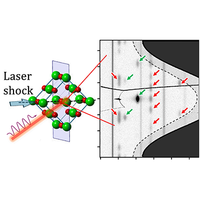
Phys. Rev. X 16, 041019 (2026)
arXiv
Universal electrical resistivity in iron-based high-temperature superconductors
New Submission | Superconductivity (cond-mat.supr-con) | 2026-10-20 20:00 EDT
Temperature-dependent electrical resistivity $ \rho(T)$ in cuprate, iron-based, and nickelate superconductors represents one of unresolved problems in modern solid-state physics, because of the high absolute value of $ \rho(T)$ , which, in many cases, exceeds the Ioffe-Rigel criterion, and a large difference in the $ \rho(T)$ shape for samples with different doping. Here I show that the nearest neighbors parallel resistivity model (arXiv: 2607.23484) can well describe the in-plane resistivity $ \rho_{ab}(T)$ in iron-based superconductors (IBS) of type 11, 111, 122, 1111, 1144 and 42214 in which the spin density wave phase or nematic order is suppressed by doping. The model is based on the postulate that $ \rho_{ab}(T)$ is a sum of two parallel conduction channels, where one channel is described by the Bloch-Grüneisen equation and the other by the Arrhenius hopping equation. Consequently, the variety of $ \rho_{ab}(T)$ in the IBS is explained as a variation of the Debye temperature $ \Theta_D$ and the hopping activation energy $ E_a$ . The derived Debye temperatures were used to estimate the electron-phonon coupling constant $ \lambda_{e-ph}$ in the studied IBS.
Superconductivity (cond-mat.supr-con), Strongly Correlated Electrons (cond-mat.str-el)
42 pages, 8 figures, 1 Table
Resonant suppression of the $π$-type Josephson component in a Kitaev-ladder junction
New Submission | Superconductivity (cond-mat.supr-con) | 2026-10-20 20:00 EDT
Cheng-Rong Xie, Hiroki Tsuchiura, Yukio Tanaka
We investigate Josephson transport through a finite normal segment connecting two Kitaev-ladder superconductors and show that discrete-level detuning controls the sign of the equilibrium Josephson coupling through a branch-selection mechanism. Away from resonance, detuning separates two competing low-energy branches, allowing inter-leg hybridization to clamp the $ 0$ -phase-favoring branch while leaving the $ \pi$ -favoring branch dispersive. The resulting negative first harmonic evolves from a branch-switching response at weak coupling into a smooth $ \pi$ -junction regime. At resonance the two clamping thresholds coincide, so the finite interval in which only one branch remains dispersive disappears. Once the inter-leg coupling exceeds the resonant clamping threshold, both low-energy branches become independent of the Josephson phase. The remaining finite-energy states then generate a $ 0$ -type Josephson coupling. At $ \phi=\pi$ , the helicity decomposition yields an exact clamping identity for arbitrary finite normal-segment length. Within the controlled sweet-point finite-segment theory, serial propagation fixes the off-resonant fourth-order harmonic to be negative, whereas an isolated resonance leaves a positive residual harmonic within the resonant clamping regime. Numerical calculations demonstrate that the resonance-induced suppression persists away from the solvable phase choice. Thus normal-level resonance does not merely enhance Josephson transmission; it changes which low-energy branches contribute to the Josephson coupling.
Superconductivity (cond-mat.supr-con)
17 pages, 8 figures, 1 table
Multiple propagating modes in random polycrystals
New Submission | Materials Science (cond-mat.mtrl-sci) | 2026-10-20 20:00 EDT
Ming Huang, Stanislav I. Rokhlin, Michael J. S. Lowe
Multiple-scattering theory predicts that the coherent elastic wave in a statistically isotropic polycrystal is not a single wave. Its dispersion equation admits multiple roots of a given polarization, but these extra modes have never been observed. Here, using grain-scale finite-element simulations of three-dimensional polycrystals, we resolve the coherent field in the frequency–wavenumber plane and directly observe the predicted multiplicity for both transverse and longitudinal excitations: a single mode at low frequencies gives way to two in the geometric regime as the wavelength approaches the grain correlation length. The measured modes follow the roots of the dispersion equation, which always carries a third root whose attenuation exceeds that of the others. It is this attenuation hierarchy, not the root count, that dictates how many modes propagate and can be observed. Coherent wave propagation in random media is thus inherently multimodal in the geometric regime, which we reach here for the first time in polycrystals.
Materials Science (cond-mat.mtrl-sci), Applied Physics (physics.app-ph)
6 pages, 3 figures
Two quantum spin liquid states coexisting in the kagome antiferromagnet herbertsmithite
New Submission | Strongly Correlated Electrons (cond-mat.str-el) | 2026-10-20 20:00 EDT
Arthur C. Campello, Shengtao Jiang, Wei He, Jiajia Wen, Daniel M. Pajerowski, Steven A. Kivelson, Hong-Chen Jiang, Young S. Lee
Herbertsmithite (ZnCu$ _3$ (OH)$ _6$ Cl$ _2$ ) is one of the most extensively studied quantum spin liquid (QSL) candidates, yet the precise nature of its ground state remains unresolved. Here, we compare the results of high-resolution inelastic neutron scattering on single crystals of herbertsmithite (Zn$ _\mathrm{x}$ Cu$ _\mathrm{4-x}$ (OD)$ _6$ Cl$ _2$ , $ x\simeq 0.85$ ) with large-scale density-matrix renormalization group (DMRG) and dynamical DMRG simulations to benchmark the spin Hamiltonian and uncover fundamental properties of the ground state. The measured spin correlations determine an energy density for the Heisenberg model that closely matches simulations, an essential verification of the Hamiltonian. In parallel, DMRG simulations reveal two nearly degenerate QSL states. Both preserve translational symmetry, but one retains the lattice point-group symmetries whereas the other develops anisotropic spin correlations that break point-group symmetry. These two QSLs have distinct spin structure factors, and, remarkably, close agreement with the neutron spectra is achieved with an admixture of the two states. Our results establish a quantitative correspondence between neutron scattering and simulations, and suggest that herbertsmithite realizes a regime in which two proximate gapped QSL states coexist.
Strongly Correlated Electrons (cond-mat.str-el)
9+16 pages, 5+17 figures
Monolayer van der Waals kagome lattice for high-temperature flat-band physics
New Submission | Strongly Correlated Electrons (cond-mat.str-el) | 2026-10-20 20:00 EDT
Hyungkun Bong, Choongjae Won, Seongyong Lee, Soomin Oh, Phuong X. Nguyen, Raghav Chaturvedi, Sehyun Oh, Jiyong Han, Paul Malinowski, Chad Mowers, Jimin Kim, Sae Hee Ryu, Hyunjong Lee, Jinhyeok Choi, Sangsu Yer, Chris Jozwiak, Aaron Bostwick, Eli Rotenberg, Craig M. Polley, Matthew D. Watson, Timur K. Kim, Heejun Yang, Jieun Lee, Kin Fai Mak, Jie Shan, Jae-Hoon Park, Gil Young Cho, Kyle M. Shen, Mingu Kang
Kagome lattice materials host a remarkably rich landscape of novel quantum phenomena, all arising from the intrinsic interplay of topology, correlation, and frustration. While previous studies have been mostly limited to bulk three-dimensional (3D) kagome crystals, the realization of a true two-dimensional (2D) kagome system has remained a long-standing goal, to unlock fundamentally new physics and engineering pathways inaccessible in 3D systems. In this work, we establish the first ideal 2D monolayer kagome lattices by leveraging a novel and versatile van der Waals (vdW) kagome family, A2T3X4 (A = K, Rb, Cs; T = Ni, Pd, Pt; X = S, Se). Our nano-focused angle-resolved photoemission spectroscopy (nano-ARPES) directly characterizes the electronic structure of A2T3X4 down to the monolayer limit, notably revealing an isolated kagome-derived flat band just below the Fermi level. Via gate-engineering of 2D A2T3X4, the kagome flat band can be further tuned to the Fermi level, allowing direct access to the partially filled flat band physics and establishing a qualitatively new 2D flat band platform. Compared to existing moire-based artificial flat band systems, this vdW kagome-based intrinsic flat band system realizes more than 220 times higher flat band electron density, opening an entirely new density and energy regime for exploring 2D flat band physics. Harnessing this high-electron-density flat band in 2D vdW kagome system provides a clear pathway to scale emergent flat band phenomena - such as fractional quantum anomalous Hall states - to far higher temperatures than currently achievable, as long-envisioned in theory and further supported by our many-body calculations.
Strongly Correlated Electrons (cond-mat.str-el), Materials Science (cond-mat.mtrl-sci)
39 pages, 15 figures
Nat. Phys. (2026)
Quantifying the Kinetic and Thermodynamic Origins of the Glass-Forming Ability in Metals
New Submission | Disordered Systems and Neural Networks (cond-mat.dis-nn) | 2026-10-20 20:00 EDT
Weiwei Jin, Jinpeng Fan, Mark D. Shattuck, Corey S. O’Hern
The glass-forming ability (GFA) of a metallic liquid can be quantified by the critical cooling rate $ R_c$ , below which it crystallizes upon cooling. $ R_c$ is determined by the competition between $ R$ and the crystallization rate $ \mathcal{K}{\rm X}$ . Here, we calculate $ R_c$ and $ \mathcal{K}{\rm X}$ in model pure metals and alloys with BCC/B2 and FCC equilibrium crystal structures. Using classical nucleation theory and independently calculated crystal growth rates, we evaluate $ \mathcal{K}{\rm X}=(IU^3)^{1/4}$ at $ T=0.8T_m$ , where $ I$ and $ U$ are the nucleation and growth rates and $ T_m$ is the melting temperature. We find a strong positive correlation between $ \mathcal{K}{\rm X}$ and $ R_c$ over eleven orders of magnitude. We decompose $ \mathcal{K}{\rm X}$ into a product of a kinetic contribution, involving atomic cluster attachment and diffusion, and a thermodynamic contribution. We show that the thermodynamic contribution to $ \mathcal{K}{\rm X}$ dominates the kinetic contribution over the range of cooling rates that we consider. The nucleation barrier $ \Delta G_c \sim \tilde\gamma^3/\Delta\tilde\mu^2$ , where $ \tilde\gamma$ is the reduced effective liquid–crystal interfacial free energy and $ \Delta\tilde\mu$ is the reduced bulk driving force, determines the magnitude of the thermodynamic contribution. The relative importance of $ \tilde\gamma$ and $ \Delta\tilde\mu$ depends on the material: a large interfacial free energy can suppress nucleation in some systems, whereas a weak bulk driving force can inhibit crystallization in others. Analyses of the structural and chemical order show that better glass formers have enhanced structural frustration, more icosahedral-like and less crystal-like local environments, and a larger chemical-order mismatch between the supercooled liquid and crystal phases.
Disordered Systems and Neural Networks (cond-mat.dis-nn), Soft Condensed Matter (cond-mat.soft)
Gate-defined quantum dot and charge noise analysis in a Forksheet transistor
New Submission | Mesoscale and Nanoscale Physics (cond-mat.mes-hall) | 2026-10-20 20:00 EDT
Dominic Leclerc, Claude Rohrbacher, Alexis Morel, Joffrey Rivard, Romain Ritzenthaler, Christian Lupien, Hans Mertens, Naoto Horiguchi, Eva Dupont-Ferrier
We report the cryogenic characterization of a 14-nm nMOS Forksheet transistor down to 10 mK. We demonstrate that the device retains transistor operation with improved characteristics at cryogenic temperatures, while also forming a gate-defined quantum dot that can be tuned to the single-electron regime. In the quantum-dot regime, we perform low-frequency charge-noise measurements across different charge occupations and observe an average charge-noise amplitude of $ \langle S_0\rangle = 10;\mu\mathrm{eV}/\sqrt{\mathrm{Hz}}$ at 1 Hz, with a minimum measured value of $ 3.3;\mu\mathrm{eV}/\sqrt{\mathrm{Hz}}$ . These results highlight the potential of Forksheet technology for the monolithic cointegration of quantum and classical CMOS functionalities in future quantum processors.
Mesoscale and Nanoscale Physics (cond-mat.mes-hall), Quantum Physics (quant-ph)
4 pages, 5 figures
Boundary Element Modeling for THz-SNOM Near-Field Probes
New Submission | Mesoscale and Nanoscale Physics (cond-mat.mes-hall) | 2026-10-20 20:00 EDT
Noah Reich, Richard Kim, Thomas Koschny, Jigang Wang
Terahertz scanning near-field optical microscopy (THz-SNOM) enables spatially and spectrally resolved investigation of low-energy collective and topological states in quantum materials and nano-structured devices by exploiting the strongly localized near field generated by a polarized atomic force microscopy (AFM) tip. Because the THz near-field response is highly sensitive to tip geometry, understanding how geometric parameters control field confinement and decay is essential for selecting tip designs that provide the spatial resolution required for specific experiments. In this work, we develop a boundary element method (BEM) for modeling the electrostatic near-field of a conducting AFM tip in response to an external background field. The tip is represented by a simplified closed, blunt-cone geometry with its surface discretized into panels using increased mesh density near the apex. A modified Green’s function is used to calculate interactions between surface panels, while an augmented linear system simultaneously enforces the equipotential boundary condition on the conducting surface and overall charge neutrality to determine the induced surface-charge distribution. We validate the BEM by comparing the resulting near-field decay with that obtained from a three-dimensional quasi-static COMSOL Multiphysics simulation. The BEM accurately reproduces the COMSOL field-decay behavior while requiring orders of magnitude fewer mesh elements and substantially reducing computational cost. These results demonstrate that the BEM provides an accurate and computationally efficient framework for systematically investigating the dependence of THz near-field confinement on AFM tip geometry. This framework can be extended to more complex and experimentally realistic tip geometries, providing a route toward rational tip selection and design for application-specific spatial-resolution requirements.
Mesoscale and Nanoscale Physics (cond-mat.mes-hall), Computational Physics (physics.comp-ph)
Kohler’s Rule Holds in the Strange Metallic Hubbard Model
New Submission | Strongly Correlated Electrons (cond-mat.str-el) | 2026-10-20 20:00 EDT
Rebekah M. Jin, Emily Z. Zhang, Jixun K. Ding, Brian Moritz, Thomas P. Devereaux
Unconventional magnetotransport violating Kohler’s rule has been reported in many strongly correlated strange metals, but the exact origin of these violations is yet unknown. To investigate this question, we use determinant quantum Monte Carlo to compute the magnetoresistance of the hole-doped Hubbard-Hofstadter model. Despite $ T$ -linear resistivity exceeding the Mott-Ioffe-Regel limit and the nominal absence of well-defined quasiparticles, we find Kohler’s rule unexpectedly holds across a wide range of on-site interaction strengths and hole dopings. In particular, Kohler emerges below a crossover temperature $ T^\star\approx t$ identified from the double occupancy and specific heat, coinciding with the onset of local singlet correlations between lattice sites. We thus propose that Kohler scaling in this regime reflects a more general form of many-body quantum coherence. Our results show that strong correlations and strange metallicity do not themselves generically produce anomalous magnetoresistance.
Strongly Correlated Electrons (cond-mat.str-el)
Role of chirality in the polarizer-filter dichotomy in nonmagnetic junctions
New Submission | Materials Science (cond-mat.mtrl-sci) | 2026-10-20 20:00 EDT
Chirality-induced spin selectivity can enable spin generation by nonmagnetic junctions, but its symmetry requirements remain debated. We show that the symmetry of the junction constrains its polarizing behavior: a spin polarizer requires a chiral junction, whereas an achiral junction can act as a spin filter. This symmetry involves the junction as a whole, not only the molecule. Achiral molecules can act as polarizers or filters depending on junction geometry, as confirmed with a minimal tight-binding model. Reciprocity forbids polarization detection by linear two-terminal magnetoresistance; we propose a nonlocal measurement that distinguishes polarizers from filters and establishes whether the junction breaks time-reversal symmetry.
Materials Science (cond-mat.mtrl-sci), Mesoscale and Nanoscale Physics (cond-mat.mes-hall)
5 pages, 3 figures
A Chiral Superlattice Route to Spin-Split Topological Antiferromagnetism
New Submission | Mesoscale and Nanoscale Physics (cond-mat.mes-hall) | 2026-10-20 20:00 EDT
Thao Dinh, Mengke Liu, Jian-Xiang Qiu, Sougata Mardanya, Suk Hyun Sung, Xuan Hoang Le, Christopher Broyles, Chengfeng Zhu, Qiaozhi Xu, Haotian Chen, Zack Rehfuss, Yu-Fei Liu, Xiaoyu Zeng, Houchen Li, Peng Guo, Jinchen Liu, Tianye Huang, Jingtian Shi, Michael Smith, Joanna M. Blawat, John Singleton, Ross McDonald, Ivan E. Arvizo, Dongtao Cui, Shao-Liang Zheng, Kenji Watanabe, Takashi Taniguchi, Vineet Kumar Sharma, Sudip Ghorai, Barun Ghosh, Hsin Lin, Ting Yong Lim, Tay-Rong Chang, Arun Bansil, Ivar Martin, Ashvin Vishwanath, Weiwei Xie, Claudia Felser, Jairo Sinova, Anyuan Gao, Mikhail D. Lukin, Jennifer E. Hoffman, Sugata Chowdhury, Qiong Ma, Kai Sun, Ismail El Baggari, Sheng Ran, Talieh S. Ghiasi, Hongkun Park, Philip Kim, Su-Yang Xu
The interplay between chirality and magnetism is a profound topic, spanning particle physics, condensed matter, chemistry and origin of life. In this paper, we study this interplay in the new antiferromagnet (AFM) UOTe, and we report a chiral superlattice route to spin-split topological phenomena from collinear antiferromagnetism. Pristine UOTe is a collinear AFM without Berry curvature or spin-split bands. However, we identify the spontaneous formation of a chiral superlattice in UOTe, which can be viewed as frozen chiral phonons at finite wave vector. When electrons move through the chiral superlattice, their orbital Bloch wavefunction and quantum geometry are modulated by the strong chiral superlattice potential, generating large Berry curvature in the chiral superlattice, which we detect by the nonlinear Hall effect. At 150 K, the chiral superlattice induced Berry curvature couples to the collinear AFM order, generating a giant anomalous Hall angle ~0.14 abruptly near $ T_N$ that is among the largest in bulk magnets. Moreover, our spin Hanle precession measurement shows that the chiral superlattice also generates spin-polarized current from the collinear AFM, a long-standing goal in spintronics. We shed light on the supermodulation formation mechanism based on chemical ion size and physical interlayer-intralayer energy competitions, using which we propose a design principle to discover similar bond-mismatch superlattices, providing a chiral superlattice pathway through real space engineering of quantum geometry.
Mesoscale and Nanoscale Physics (cond-mat.mes-hall)
Nature 658, 342-349 (2026)
Charge disproportionation and spin ordering in LiV$_2$O$_5$ and NaV$_2$O$_5$: a distributed moment point of view
New Submission | Materials Science (cond-mat.mtrl-sci) | 2026-10-20 20:00 EDT
Claudio Garcia, Ilteris K. Turan, Jerome Jackson, Swagata Acharya, Mark van Schilfgaarde, Walter R. L. Lambrecht
The effects of charge disproportionation between V$ ^{4+}$ and V$ ^{5+}$ on the exchange interactions and related magnetic, electronic and optical properties are studied in LiV$ _2$ O$ _5$ and NaV$ _2$ O$ _5$ . The magnetic exchange interactions between local moments on atomic sites are calculated using a linear response approach based on the QS$ GW$ band structure. While the induced magnetic moments are small on the vanadyl O$ _v$ and bridge O$ _b$ , their exchange interactions with the V are found to be larger than between V atoms. The Néel temperature $ T_N$ are calculated within the mean-field (MFA) and random phase (RPA) approximations for two different crystal structures with $ P2_1mn$ and $ Pmmn$ spacegroups. The critical temperatures are are corrected by a quantum statistical factor of (S+1)/S to obtain reasonable agreement with experiment.
Band structures, optical dielectric functions calculated using the Bethe Salpeter Equation method and spin waves are also calculated and presented for both crystal structures and both compounds. The spin wave dispersions are calculated from the classical Heisenberg Hamiltonian including magnetic moments on both V and O atoms. Besides the lowest energy weakly interacting spin waves of the two chains of spins in the unit cell, the model predicts additional high energy optical spin waves, which correspond to more complex spin excitations in which the spins on the two V across a bridge, vanadyl O and bridge O precess independently from each other instead of staying locked together according to their collinear alignment in the ground state. These show only weak dispersion and extend up to about 1 eV but we argue that these are an artefact of using the Heisenberg model beyond its validity range and would be suppressed in a more complete theory that allows for coupling of the transverse spin with longitudinal spin and charge excitations.
Materials Science (cond-mat.mtrl-sci)
23 pages, 12 figures
Tunable anisotropy of high-harmonic generation in ferroelectric NbOI2
New Submission | Materials Science (cond-mat.mtrl-sci) | 2026-10-20 20:00 EDT
Inho Lee, Christopher Lane, Daniel A. Rehn, Jian-Xin Zhu
he generation of even-order harmonic spectra from inversion symmetry breaking is well known, however, the tunability of the intensity and angular anisotropy on various harmonics orders remains unclear. Here, we demonstrate the second and fourth-harmonics in the ferroelectric NbOI2 exhibit distinct wavelength-dependence and anisotropies in the near-infrared regime. In particular, as the wavelength of incident light is tuned from 2150 nm to 2450 nm, the second-harmonic remains strongest for excitation along the ferroelectric polar axis, whereas the polarization of the fourth- harmonic changes preferred axis. This effect is found to be driven by the interplay of transition dipole matrix elements and interband excitations between very narrow bands near the Fermi level. We expect the tunable anisotropy of high-harmonics to enable novel optical switching devices.
Materials Science (cond-mat.mtrl-sci)
Encoding Hyperuniformity in Geometric Networks: Structural Signatures and Diffusion Dynamics
New Submission | Statistical Mechanics (cond-mat.stat-mech) | 2026-10-20 20:00 EDT
Yongyi Wang, Eli Newby, Yang Jiao, Salvatore Torquato, Réka Albert
Disordered hyperuniformity is a recently discovered exotic state exhibiting anomalously suppressed density fluctuations at long wavelengths, and its generalization to network systems remains an important open question. Here, we show that, across a wide range of systems, geometric networks retain substantially more long-wavelength density information from the underlying point configurations than Delaunay triangulations. Within geometric networks, hyperuniformity manifests as suppressed vertex-to-vertex fluctuations in a range of network structural observables, including closeness centrality, vertex strength, and eigenvector centrality. These measures not only distinguish hyperuniform networks from non-hyperuniform ones, but also separate near-hyperuniform configurations from hyperuniform systems with strong local disorder, solving a central challenge in network hyperuniformity. We connect these structural signatures to network dynamics by introducing a relaxation-time centrality based on diffusion and demonstrate that hyperuniform geometric networks exhibit more homogeneous relaxation behavior than non-hyperuniform geometric networks. These results reveal how the suppression of large-scale density fluctuations manifests in both network structure and diffusion dynamics.
Statistical Mechanics (cond-mat.stat-mech)
Maximum-Temperature Theorem for a Nanothermometer
New Submission | Statistical Mechanics (cond-mat.stat-mech) | 2026-10-20 20:00 EDT
The steady-state temperature predicted for an ideal point heat source diverges in conventional heat-conduction theory, but no physical thermometer measures a point value. We derive a sharp, shape-independent upper bound on the quasi-steady temperature rise of a sensor with thermometric volume $ V_\mathrm{s}$ , placed anywhere inside a region enclosed by an isothermal reference surface. The bound requires only the total heat power generated in the region $ \dot{Q}$ , a lower bound on its thermal conductivity $ \kappa_\mathrm{m}$ , and the value of $ V_\mathrm{s}$ . It is otherwise independent of the heat-source distribution, domain shape, and source–sensor distance. For $ \dot{Q}=50\mathrm{pW}$ , $ \kappa_\mathrm{m} = 0.1\mathrm{W,m^{-1}K^{-1}}$ , and $ V_\mathrm{s}=10^{-22}\mathrm{,m^3}$ , approximately the volume of a $ 60\mathrm{nm}$ -diameter sphere, the theorem permits a maximum temperature rise of approximately $ 2\mathrm{mK}$ above the reference level. The result applies directly to nanodiamonds, upconversion nanoparticles, fluorescent polymer particles, and core-shell quantum dots. It shows that neither source localization nor uncertain source-sensor separation can account for kelvin-scale readings under steady-state heat conduction.
Statistical Mechanics (cond-mat.stat-mech), Materials Science (cond-mat.mtrl-sci), Classical Physics (physics.class-ph)
8 pages, 2 figures
Microphase Separation and Ionic Aggregation in Oppositely Charged End-Functionalized Polymer Blends
New Submission | Soft Condensed Matter (cond-mat.soft) | 2026-10-20 20:00 EDT
We study the phase behavior of binary blends of polymers with oppositely charged termini using an ion-correlation-augmented self-consistent field theory (IC-SCFT). Under the low dielectric conditions typical for organic polymer melts, strong ion correlations drive association of multiple chain ends, leading to emergent multichain architectures that go beyond a simple ion-paired diblock copolymer picture previously used to interpret recent experiments. At moderate to strong polymer segregation, the resulting phase diagram differs considerably from this effective-diblock prediction: ion clustering broadens the lamellar and cylindrical windows while suppressing the network phases, the reverse of the trend for end-charged diblock copolymers. At weak segregation, the two polymers remain miscible even as ion clustering persists, and decreasing chain length drives the clusters themselves through a sphere-to-cylinder-to-lamella shape transition, connecting continuously to the aggregation behavior of classical terminally charged ionomers in the limit when one of the polymer species shrinks to just the charged end. These results reveal that ion clustering – beyond simple pairwise bonding – shapes the self-assembly of end-charged polymer blends.
Soft Condensed Matter (cond-mat.soft), Statistical Mechanics (cond-mat.stat-mech), Applied Physics (physics.app-ph), Chemical Physics (physics.chem-ph)
Quantum state tomography through multi-frequency Josephson effect
New Submission | Superconductivity (cond-mat.supr-con) | 2026-10-20 20:00 EDT
Xian-Peng Zhang, Ting-Rui Hu, Zhen-Biao Yang, Rubén Seoane Souto, Yugui Yao
Macroscopic quantum effects emerge when the coherent behavior of countless microscopic quantum states manifests collectively at a visible scale, as exemplified by the supercurrent carried by innumerable finite-momentum Cooper pairs. By rigorously analyzing the time evolution of superconducting nanodevices including finite-momentum superconductors and quantum-dot Josephson junctions, we analytically derive the ubiquitous macroscopic supercurrent that originates from quantum interference between distinct many-body eigenstates, which we term as the dynamic interference supercurrent. The dynamic interference supercurrent in a system of two Andreev spin qubits exhibits multi-frequency Josephson effect in the absence of external voltage and is governed by the response of the many-body eigenfunctions ($ \vert r\rangle$ ) to variations in the superconducting phase $ \phi$ , determined by the $ \phi$ -space Berry connection $ C_{rr’}=\langle r|\partial_\phi|r’\rangle$ . The macroscopic dynamic interference supercurrent, an inherent property of the superposition state itself, enables an advanced quantum entanglement measurement of the Andreev spin qubits. These findings open new avenues for investigating superconducting nanodevice properties from a wave-function level, with substantial implications for advancing quantum science and technology in solid-state superconducting devices, such as quantum computer, communication, memory, and sensor.
Superconductivity (cond-mat.supr-con)
21 pages and 2 figures
Second Chern Number Protected Gapless Vortex Modes in Superconducting Weyl Semimetals
New Submission | Superconductivity (cond-mat.supr-con) | 2026-10-20 20:00 EDT
We have studied the vortex bound states of superconducting linear and quadratic Weyl semimetals with time reversal symmetry. For vortex with vorticity $ n$ (vortex line along $ z$ direction) and Weyl semimetals with Weyl point chirality $ \chi$ , there are $ \vert n\chi \vert$ gapless vortex modes around the location of each Weyl point in superconducting Weyl semimetals. We show that the appearance of $ \vert n\chi \vert$ gapless vortex modes originates from the imbalanced pumping of flux bound states between Chern insulators obtained at $ k_{z}$ and $ -k_{z}$ in Weyl semimetals. Such a physical picture is verified by numerical calculations on lattice models. Moreover, the gapless modes around each Weyl point can be characterized by the second Chern number defined in a synthetic four-dimensional space based on the effective BdG Hamiltonian. Finally, these gapless vortex modes are found to be robust against rotational symmetry-breaking terms.
Superconductivity (cond-mat.supr-con), Mesoscale and Nanoscale Physics (cond-mat.mes-hall)
main text: 6 pages, 4 figuers; supplemental materials: 6 pages, 2 figures
Atomistic prediction of magnetic behaviour across chemistry, structure and temperature
New Submission | Materials Science (cond-mat.mtrl-sci) | 2026-10-20 20:00 EDT
Ruosong Shi, Chengbing Chen, Bicheng Liu, Daye Zheng, Duo Zhang, Zhengtao Huang, Teng Yang, Zefeng Cai, Xingliang Peng, Xinzijian Liu, Shenshen Yan, Xueqing Zhao, Jianbo Wang, Bin Liu, Han Wang, Ke Wang, Liuliu Han, Ben Xu
Controlling magnetic phases and properties through composition and external conditions is central to the development of magnetic materials. Atomistic foundation models offer a route to predicting such behaviour across diverse materials, but magnetic materials remain challenging because their atomic structure and local moments are strongly coupled, while temperature and disorder drive magnetic moments into non-collinear states with evolving orientations and magnitudes. Broadly pretrained atomistic models still sample only limited magnetic diversity, while finite-temperature descriptions of coupled lattice and magnetic fluctuations remain largely material-specific. Here we introduce MagPT, pretrained across 48 elements on 912,492 spin-lattice configurations spanning structural, orientational and longitudinal magnetic fluctuations over 0 $ \sim$ 1,000 K and 0 $ \sim$ 10 GPa. By treating species, atomic positions and vector moments together, MagPT distinguishes magnetic states that share the same atomic structure but differ in spin configuration and energy. It captures magnetic behaviour across composition, temperature and length scales, from Slater-Pauling-type composition-magnetism relations in transition-metal alloys and finite-temperature phase evolution in elemental ferromagnets and magnetic shape-memory Heusler alloys, to emergent long-wavelength non-collinear spin textures in chiral magnets and local chemistry-magnetism coupling in high-entropy alloys. MagPT moves atomistic studies of magnetic materials beyond material-specific approaches, establishing a general framework for exploring and designing magnetic matter across diverse chemistries and conditions.
Materials Science (cond-mat.mtrl-sci)
Calibrated shape-only recovery of membrane viscosities
New Submission | Soft Condensed Matter (cond-mat.soft) | 2026-10-20 20:00 EDT
Julian Olszewski, Zijian Liu, Jie Xu
Nearby relaxation rates make two membrane viscosities difficult to distinguish from a shape transient. We show how calibrated preparation removes this loss of local sensitivity in a linear Kelvin-Voigt sphere with finite area elasticity and intrinsic membrane dissipation. Two independent releases, with a known signed amplitude ratio and calibrated relative gain and timing, yield normal-displacement records whose fixed linear combination separates the shear and dilatational rates. Their common amplitude remains unknown. For fixed sampling, positive-definite weights, bounded positive rates and nonzero excitation, the amplitude-projected sensitivity has a positive lower bound even at rate coincidence. Without relative calibration, the paired sensitivity decreases linearly with the rate gap; the single tangential-release record decreases quadratically. The calibrated bound is compatible with fixed finite initial energy. A positive local bound also persists with independent ratio calibration of fixed positive precision under a Gaussian error model. Supplied elastic coefficients convert the recovered rates into the two surface viscosities. An unbounded spherical Stokes extension quantifies how bulk dissipation changes the modal patterns and provides a sufficient full-Jacobian criterion for retaining local material sensitivity.
Soft Condensed Matter (cond-mat.soft), Fluid Dynamics (physics.flu-dyn)
45 pages, including 20 pages of Supplementary Material; 5 figures
Reticulating Local Dynamics in Three-Dimensional Covalent Organic Frameworks
New Submission | Materials Science (cond-mat.mtrl-sci) | 2026-10-20 20:00 EDT
Francesco Tavani, Saber Mirzaei, M. Saeed Mirzaei, Jian Yin, Yen-hsu Lin, Caden Myers, Cheng-Hung Lin, AM Milinda Abeykoon, Simon J. L. Billinge, Omar M. Yaghi
In covalent organic frameworks (COFs), the geometry of the building units predetermines the structure of the framework, yet comparable design principles relating the COF linkers to the local motions that govern guest adsorption and diffusion as well as mechanical response have remained beyond reach. Here, we combine synchrotron X-ray pair distribution function (PDF) analysis with molecular dynamics (MD) simulations accelerated by machine learning interatomic potentials to resolve and compare the local dynamics of two three-dimensional imine-linked COFs, chosen to differ in the geometry and rigidity of one of their two building units. Both are constructed from the same 4-connected square planar linker, $ 4,4’,4’’,4’’’$ -(pyrene-1,3,6,8-tetrayl)tetraaniline (PyTTA), reticulated with the 12-connected nanographene hexakis{[3,5-bis($ p$ -formylphenyl)-4,6-dimethoxyphenyl]}hexabenzocoronene to give COF-412, {[(HBC-LA$ _{12}$ )(PyTTA)$ _3$ ]}$ _{\mathit{imine}}$ , and with the 6-connected triptycene 2,3,6,7,14,15-hexakis(4-formylphenyl)triptycene to give COF-564, {[(Trip-CHO)$ _2$ (PyTTA)$ _3$ ]}$ _{\mathit{imine}}$ . The PDF-MD approach resolves the amplitude, the time scale, and the spatial extent of the motion of all COF linkers, separating the limited libration of the fused aromatic cores from the larger reorientational tilts of the pendant aryl rings they carry and from the translation of whole linkers within the net. The simulations further reveal that exchanging the nanographene- for the triptycene-based linker tunes the equilibrium tilt and the positional probability density of PyTTA, raising the tilt amplitude of its linker partner, and, notably, strengthens the coupling between the translations of neighbouring linkers. This approach provides a blueprint for understanding local dynamical properties in COFs, and shows them to be selectable through the choice of building unit and amenable to design.
Materials Science (cond-mat.mtrl-sci)
This research acknowledges funding from the EU Horizon Europe research and innovation program under the Marie Sklodowska-Curie grant agreement No. 101201413
A GRACE Interatomic Potential for W–Ta Systems: Application to Ta Segregation and Pinning of Shear-Coupled Grain-Boundary Migration
New Submission | Materials Science (cond-mat.mtrl-sci) | 2026-10-20 20:00 EDT
Omar Hussein, Laurent Capolungo, Danny Perez
Tungsten-tantalum alloys are promising plasma-facing materials for fusion reactors, but simulations of their coupled defect, mechanical, and microstructural evolution require an interatomic potential that remains accurate across diverse atomic environments. We develop a transferable W-Ta potential within the GRaph Atomic Cluster Expansion (GRACE) framework. The primary training dataset was generated automatically by maximizing information entropy in an atomically relevant feature space, avoiding manual enumeration of the structures and processes required for specific downstream applications. Extensive validation demonstrates a consistent description of unary and binary phase stability, elasticity, phonons, high-pressure response, surfaces, point defects, dislocation energetics, transformation pathways, alloy thermodynamics, and melting behavior.
As a demonstration, the potential is applied to Ta segregation and shear-coupled migration of a $ \Sigma5(120)$ W GB. Simulations reveal strongly site-selective segregation: Ta preferentially occupies a small subset of crystallographically distinct atomic rows. Under shear, segregated Ta impedes disconnection-mediated grain boundary migration. The de-pinning stress initially increases with Ta concentration but plateaus as the dominant pinning environment becomes saturated, while increasing temperature weakens both segregation and pinning. These results establish a broadly validated W-Ta potential and demonstrate how automated entropy-maximized data generation can produce transferable atomistic models capable of resolving mechanisms not explicitly targeted during training.
Materials Science (cond-mat.mtrl-sci), Disordered Systems and Neural Networks (cond-mat.dis-nn), Atomic and Molecular Clusters (physics.atm-clus), Computational Physics (physics.comp-ph)
Beyond low-dissipation regime: general condition for Curzon-Ahlborn efficiency
New Submission | Statistical Mechanics (cond-mat.stat-mech) | 2026-10-20 20:00 EDT
In recent years, physicists have extensively investigated the universality of Curzon-Ahlborn (CA) efficiency as the efficiency at maximum power of heat engines, which, like Carnot efficiency, is determined only by heat-bath temperatures. While the universality of the CA efficiency to the first order in the temperature difference is established within linear response theory in the inverse operation time, it is generally lost at quadratic order. In the low-dissipation Carnot heat engine model known as the standard framework, the symmetric dissipation condition is necessary. Yet, it is not a necessary condition as the original CA model that adopts endoreversibility does not require such symmetry. In this study, we extend the low-dissipation model to include nonlinear response in the inverse operation time and derive a general condition under which the CA efficiency is recovered in the quadratic order. The generalized symmetric dissipation condition and the CA model with Newton’s law of cooling are shown to be special cases of this condition. By applying the obtained condition, we also clarify the condition under which an endoreversible model with a general heat-transfer law exhibits the CA efficiency.
Statistical Mechanics (cond-mat.stat-mech)
6 pages
Energy-optimal scheduling for clocked reversible computing
New Submission | Statistical Mechanics (cond-mat.stat-mech) | 2026-10-20 20:00 EDT
Michael C. Thumann, David Soloveichik
Computational dissipation may arise from both information erasure and finite-time operation, although both contributions can in principle be avoided in the absence of space and time constraints. Logically reversible computation can replace erasure with ancilla cleanup, and slow adiabatic protocols can eliminate any excess finite-time dissipation. Under limited memory and in finite time, however, choosing reversible cleanup over erasure requires additional dissipative operations, creating a semi-reversible energy–memory–time tradeoff. We formulate this tradeoff at a fixed operating point of an externally clocked thermally coupled computer, where reversible checkpoint moves and local irreversible erasures have specified effective prices $ \epsilon_R$ and $ \epsilon_I$ . Their ratio $ \lambda=\epsilon_I/\epsilon_R$ selects an energy-optimal semi-reversible schedule under a checkpoint-memory bound by trading reversible moves against erasures. For a sequential computation whose dependency graph is a line, we derive an exact separator recurrence and prove that an asymptotically optimal schedule repeats a strictly reversible block followed by one local erasure. Coupling this scheduling theorem to a stochastic-thermodynamic constitutive model shows how temperature, primitive duration, memory, and device-dependent operation costs determine whether the optimal schedule uses reversible cleanup, elective erasures, or erasure at every disposal.
Statistical Mechanics (cond-mat.stat-mech), Computational Complexity (cs.CC), Emerging Technologies (cs.ET)
12 pages, 5 figures
Accurate Atomic Correlation Energies and Virial Trends for Correlation-Consistent Effective Core Potentials III: Quantitative Separation of Fixed-Node Biases and Localization Errors in Cs-Rn
New Submission | Materials Science (cond-mat.mtrl-sci) | 2026-10-20 20:00 EDT
Atomic benchmarks for sixth-period elements (Cs-Rn) are established to sub-millihartree precision under correlation-consistent effective core potentials (ccECPs) using coupled-cluster [up to CCSDT(Q)] and full configuration interaction methods. These references systematically characterize electron correlation, potential-to-kinetic energy partitioning, and combined fixed-node and locality biases ($ \eta$ ) in fixed-node diffusion Monte Carlo (FNDMC). The valence kinetic-to-total energy ratio ($ \xi$ ) departs from the non-relativistic all-electron Coulombic virial limit ($ \xi=100%$ ), remaining confined between 25.8$ %$ and 37.6$ %$ . The Un-pseudizing of semi-core shells decreases $ \xi$ as the attractive potential energy deepens faster than the accompanying kinetic energy escalates. Periodic trends in $ \xi$ reveal a $ 5d$ plateau near 34$ %$ , with a lanthanide-contraction-driven maximum in Hf, followed by a sharp decline across the $ 6p$ block. In FNDMC, $ \eta$ escalates rapidly at the onset of group-1/2 and toward the $ 6p$ closed-shell limit, peaking at 5.42$ %$ in Rn. Although fixed-node errors dominate $ \eta$ in most sixth-period elements, a locality error inversion occurs in Bi, with Pb exhibiting comparable error magnitudes. Furthermore, core-valence partitioning alters trial wavefunction nodal topology: in Tl, three-dimensional nodal cross-sections reveal isolated toroidal domains that confine walkers. This work completes the periodic-table-wide ccECP database from H to Rn, revealing how pseudopotential choices govern energy partitioning, nodal topology, and the balance between fixed-node and localization errors.
Materials Science (cond-mat.mtrl-sci), Strongly Correlated Electrons (cond-mat.str-el), Chemical Physics (physics.chem-ph)
11 pages, 5 figures, 6 tables. To be published in the Journal of Chemical Theory and Computation
Water-Driven Porous Silicon as a Platform for Blue Materials
New Submission | Mesoscale and Nanoscale Physics (cond-mat.mes-hall) | 2026-10-20 20:00 EDT
Marc Thelen, Julia Brandt, Stella Gries, Manuel Brinker, Alexander Petrov, Patrick Huber
Living organisms control water to transport matter, transfer energy and drive chemical reactions. In this perspective, we argue that porous silicon can give engineering materials comparable control over water. Its pore architecture, surface chemistry and semiconducting skeleton can be shaped across length scales with the precision of semiconductor processing and, like the water it can host, it relies on one of the most abundant chemical elements on Earth. Liquids in porous silicon, most often water, can flow as a continuum through pores a few nanometers wide, strain the skeleton through capillary and electrosorption stresses, shift structural color, switch transparency, and modulate or generate electrical signals. We describe three directions to combine and extend these effects and overcome their limitations. Pore hierarchy resolves the classical trade-off between interface area and transport speed by combining large and small pores and thereby allows functions to be scaled from thin planar films to three-dimensional components. Surface modification becomes a design variable that tunes the interaction between water and the pore wall. It can be set locally and, with switchable coatings, on demand. Finally, pores only a few molecules wide alter the properties of water itself. In the absence of a bulk-like volume, water can become dielectrically anisotropic and highly conductive. Altogether, these steps turn porous silicon from a responsive material into an adaptive, water-driven material.
Mesoscale and Nanoscale Physics (cond-mat.mes-hall), Materials Science (cond-mat.mtrl-sci), Chemical Physics (physics.chem-ph), Optics (physics.optics)
9 pages, 1 figure
Understanding compression-extension error asymmetry in universal machine-learning interatomic potentials
New Submission | Materials Science (cond-mat.mtrl-sci) | 2026-10-20 20:00 EDT
Hongwei Du, Dingyang Lv, Boyan Zhang, Yu Ren, Feng Yu, Xin He, Bonan Zhu, Yongda Huang, Jiahui Liu, Yongheng Li, Siqi Shi, Jianjun Liu, Ziheng Lu, Hong Wang
Universal machine-learning interatomic potentials are increasingly used across diverse materials, yet their reliability under directional deformation remains unclear. We compare compression and extension along paired deformation paths from the same parent structures for eleven pretrained potentials. The benchmark comprises 1,963 Materials Project trajectory (MPtrj) parents and 1,286 experimental-source MinX-Eq parents at six strain magnitudes from 1% to 10%. Density-functional theory provides references for isotropic, uniaxial and biaxial loading in MPtrj and isotropic loading in MinX-Eq. At $ \pm 10%$ , every model has a larger median force error under compression, with pooled isotropic compression-to-extension ratios of 2.12 and 3.30 for MPtrj and MinX-Eq. Decomposing error growth into DFT force-scale growth and relative-error evolution shows that relative errors decrease on both branches, faster under compression in MPtrj but slower under compression in MinX-Eq. Force-scale matching moves the error ratios toward unity, although MinX-Eq retains a compression-side excess across models. Radial and SOAP analyses place compressed structures at shorter separations and farther from public reference pools, while readout-associated model features show larger compression-side displacements. These results distinguish stronger physical responses from changes in relative predictive accuracy and provide a basis for assessing universal potentials in deformation simulations.
Materials Science (cond-mat.mtrl-sci)
15 pages, 8 figures
Surface corrections and vortex energetics in the Thomas–Fermi limit of a self-bound unitary Fermi superfluid
New Submission | Quantum Gases (cond-mat.quant-gas) | 2026-10-20 20:00 EDT
We study a spin-balanced unitary Fermi superfluid bound by an attractive $ 1/r$ interaction within an extended Thomas–Fermi density functional. Its large-particle-number limit is the Lane–Emden polytrope of index $ 3/2$ . We prove the leading gradient correction to the ground-state energy and strong convergence of the density amplitude. A rescaled surface problem predicts the next energy correction and the leading integrated density error. Matching a vortex core to the polytropic bulk gives the energetic threshold of a singly quantized central vortex, including the constant beyond the leading logarithm. Linearizing the same surface problem predicts a local energetic threshold for collective surface excitations that, in the natural TF frequency units, decreases more slowly with particle number than the central-vortex threshold. Radial stationary, spherical Bogoliubov–Poisson, and axisymmetric real-time calculations test the predicted energy corrections and vortex matching, and resolve finite-size surface-mode minima whose approach to the continuum surface coefficient is followed to $ N\simeq4\times10^6$ . For the reference gradient coefficient the vortex constant is $ c_1=-0.535$ , and the surface Landau scale is $ 1.417,\omega_K(\hbar_{\rm eff}^2/2R_{\rm TF})^{1/6}\propto N^{-1/9}$ ; sector energies at $ N\simeq4.6\times10^5$ , computed after the fit, agree with the extrapolated vortex threshold to $ 10^{-4}$ . These results distinguish the accuracy of the Thomas–Fermi bulk from the gradient physics that controls the surface and vortex core, and separate vortex energetics from the open problem of nonlinear vortex entry.
Quantum Gases (cond-mat.quant-gas)
15 pages, 6 figures
Structural signatures of a topological transition in a disordered tetrahedral network
New Submission | Materials Science (cond-mat.mtrl-sci) | 2026-10-20 20:00 EDT
Florence Ellary, Thomas C. Nicholas, Dwaipayan Charkabarti, Andrew L. Goodwin
Topological transitions in disordered network materials are often characterised using descriptors of entanglement, such as ring linking and writhe, which can be difficult to access experimentally. Here we investigate whether a topological transition can instead be identified using structural descriptors more readily connected to experiment. We reanalyse configurations of a colloidal tetrahedral network model known to exhibit a pressure-driven transition between unentangled and and entangled states. We show that the cumulative all-rings vertex symbol (CARVS), a descriptor of medium-range network topology based on ring statistics, provides a clear signature of this transition despite containing no explicit information about ring linking. We further show that network entanglement produces characteristic changes in the radial distribution function and structure factor, including the emergence of short-range correlations between nonbonded nodes and the disappearance of a low-angle scattering pre-peak. These results establish experimentally accessible structural signatures of topological transitions in disordered tetrahedral networks. Comparison with canonical continuous random networks further suggests that framework materials with extended linkers may provide promising candidate systems in which to search experimentally for entanglement-driven topological transitions.
Materials Science (cond-mat.mtrl-sci)
Autonomous Thermal Switching Outperforms the Frozen Optimum with Vanishing Correlations
New Submission | Statistical Mechanics (cond-mat.stat-mech) | 2026-10-20 20:00 EDT
Siyi Deng, Longxing Xu, Zhuolin Ye, Xian He, Jianhui Wang
Can autonomous thermal switching outperform the best frozen barrier allocation while keeping system–auxiliary correlations arbitrarily small? We establish this relaxation advantage at fixed lowering budget and visible equilibrium, preserving joint detailed balance. On finite reversible networks, optimal fast switching mixes profiles concentrating the budget on single edges. A three-state model gives a strict gain and its finite-rate threshold. Faster switching preserves the gain while correlations vanish throughout relaxation. Collective and continuous models suggest a colloidal test.
Statistical Mechanics (cond-mat.stat-mech)
Signed FK percolation in Ising spin glasses
New Submission | Disordered Systems and Neural Networks (cond-mat.dis-nn) | 2026-10-20 20:00 EDT
Alberto Gandolfi, Charles Newman, Danile Stein
We introduce signed Fortuin-Kasteleyn (FK) percolation for the +/-J random-interaction Ising model to characterize nonzero uniform magnetization density and two-replica overlap within the class of Gibbs distributions whose infinite-volume Edwards-Sokal (ES)/FK representation has at most one infinite FK cluster almost surely. The construction refines ordinary FK connectivity by retaining the parity of coupling products along open paths. Using the infinite-volume ES representation and its DLR equations, we study pairs of companion objects and the compatible spin assignments on them. In one replica, companions are defined by positive-parity FK connections. For extremal states satisfying the infinite-cluster assumption and almost-sure existence of companion densities along the chosen van Hove sequence, nonzero limiting expected magnetization density is equivalent to density distinguishability of the companions of the infinite FK cluster. For two independent replicas, companions are defined by FK connections coherent in parity. For products of extremal one-replica states satisfying the infinite-cluster assumption and almost-sure existence of the companion densities along the chosen sequence, density distinguishability of the companions is equivalent to nonzero limiting expected mutual overlap. For two independent replicas drawn from the same extremal state, this specializes to the Edwards-Anderson self-overlap.
Disordered Systems and Neural Networks (cond-mat.dis-nn), Mathematical Physics (math-ph), Probability (math.PR)
56 pages
Theory of High-Temperature Fractional Chern Phases in Monolayer van der Waals Kagome Materials A$_2$T$_3$X$_4$
New Submission | Strongly Correlated Electrons (cond-mat.str-el) | 2026-10-20 20:00 EDT
Soomin Oh, Jiyong Han, Jinhyeok Choi, Donghae Seo, Mingu Kang, Gil Young Cho
Fractional Chern insulators bring the fractional quantum Hall effect, with its anyonic excitations, to zero magnetic field. So far they have been realized in moiré materials, where the long superlattice period weakens electronic interactions and confines these phases to cryogenic temperatures. Early proposals instead envisioned topological flat bands on atomic-scale lattices, where fractionalization could persist to far higher temperatures, but a suitable material has been lacking. Here we theoretically identify monolayers of the recently synthesized van der Waals kagome family $ \mathrm{A}_2\mathrm{T}_3\mathrm{X}_4$ as such a platform, combining intrinsic topological flat bands and strong Coulomb interactions with gate-tunable carrier density and layer assembly. Exact diagonalization of models derived from density functional theory reveals ferromagnetism over broad filling ranges, supporting diverse fractional Chern insulators, anomalous composite Fermi liquids, and charge-ordered phases. In particular, in $ \mathrm{Cs}_2\mathrm{Pd}_3\mathrm{S}_4$ , the fractional Chern insulator exhibits a many-body gap of approximately 26 meV in the largest system accessible with band mixing allowing at most one interband electron-hole excitation. Layer assembly further provides a natural route to fractional quantum spin Hall insulators: bilayers with antiparallel magnetizations support this phase at realistic separations. These results identify an experimentally accessible material family in which chemical composition, carrier density, and stacking offer complementary routes to fractionalization at enhanced energy scales and control over topological order.
Strongly Correlated Electrons (cond-mat.str-el), Mesoscale and Nanoscale Physics (cond-mat.mes-hall), Materials Science (cond-mat.mtrl-sci)
Turning Number and the Geometry of Disorder-Induced Topology
New Submission | Mesoscale and Nanoscale Physics (cond-mat.mes-hall) | 2026-10-20 20:00 EDT
Lars Emmrich, Michael Potthoff
The geometry of momentum-space Hamiltonian maps derived from the zero-frequency single-particle Green’s function provides a route to a refined topological characterization of quantum systems beyond the noninteracting clean limit. The central idea is to complement standard topological invariants by invariants that characterize the geometry of the map itself. As a paradigmatic example, we study the one-dimensional chiral Su-Schrieffer-Heeger model with disorder, where the topological Hamiltonian defines a planar Bloch loop. In addition to its conventional winding number, this loop possesses an integer turning number that characterizes the winding of its tangent vector. We identify turning-number transitions that occur while the topological Hamiltonian remains finite and spectrally gapped, driven solely by a vanishing tangent vector of the Bloch loop, and obtain an extended phase diagram with additional topological structure beyond the winding-number classification. Asymptotic analysis predicts the emergence and disorder dependence of the corresponding transition regime, in agreement with the numerical results. Our findings establish the geometry of momentum-space Hamiltonian maps as an additional source of topological structure beyond conventional classifications.
Mesoscale and Nanoscale Physics (cond-mat.mes-hall), Disordered Systems and Neural Networks (cond-mat.dis-nn), Strongly Correlated Electrons (cond-mat.str-el)
6 pages, 4 figures, plus Suppl. Mat. (8 pages, 2 figures)
Shear SAW piezoelectricity of single-crystalline $\mathrm{LiNbO_3}$ films grown on $42^{\circ}$ YX-$\mathrm{LiTaO_3}$ substrates by DLI-CVD
New Submission | Materials Science (cond-mat.mtrl-sci) | 2026-10-20 20:00 EDT
Mikhail Mirushchenko, Roland Salut, Ludovic Gauthier-Manuel, Vincent Astié, Samuel Margueron, Jean-Manuel Decams, Yuancheng Ji, Farshad F. Bolamiri, Ventsislav Yantchev, Ausrine Bartasyte
Direct growth of single-crystalline $ \mathrm{LiNbO_3}$ films with technologically relevant nonpolar orientations and a single ferroelectric domain state remains challenging. Here, we demonstrate the epitaxial growth of a 320-nm-thick, single-domain $ 42°$ YX-oriented $ \mathrm{LiNbO_3}$ film on a congruent $ 42°$ YX-cut $ \mathrm{LiTaO_3}$ substrate by direct liquid injection chemical vapor deposition. The deposition temperature was limited to $ 600°\mathrm{C}$ to preserve the ferroelectric domain state of the $ \mathrm{LiTaO_3}$ substrate. X-ray diffraction confirmed that the $ \mathrm{LiNbO_3}$ film inherited the substrate orientation and domain state and exhibited no detectable secondary phases. The LN rocking-curve full width at half maximum was $ 0.011°$ , approaching the instrumental resolution and demonstrating its high crystalline quality. Single-port leaky surface acoustic wave (LSAW) resonators with a wavelength of $ 4,\mu\mathrm{m}$ were fabricated on the $ \mathrm{LiNbO_3/LiTaO_3}$ heterostructure and on a bare $ \mathrm{LiTaO_3}$ reference substrate. At approximately 1 GHz, the $ \mathrm{LiNbO_3/LiTaO_3}$ -based resonators exhibited an electromechanical coupling coefficient of about 13%, compared to 8.5% for the reference $ \mathrm{LiTaO_3}$ -based resonators. These results demonstrate that direct epitaxial growth can produce high-quality, strongly piezoelectric $ \mathrm{LiNbO_3}$ films and provide a route toward thickness-controlled layered substrates for high-performance acoustic devices.
Materials Science (cond-mat.mtrl-sci)
This manuscript has been submitted to Applied Physics Letters. 8 pages, 2 figures
Spontaneous particle-hole symmetry breaking in a disordered two-site quantum breakdown model
New Submission | Statistical Mechanics (cond-mat.stat-mech) | 2026-10-20 20:00 EDT
We study spontaneous particle-hole symmetry breaking in a disordered two-site quantum breakdown model. The model is solvable in the limit of a large number of fermionic modes on each site. For a small ratio of the numbers of modes on the two sites, we derive the free energy analytically and find a finite-temperature symmetry-breaking transition. This transition changes from continuous to first order as the number of fermions produced in each conversion increases. Numerical results show that both types of transition persist beyond this regime, with an order-parameter exponent close to $ 1/2$ for continuous transitions.
Statistical Mechanics (cond-mat.stat-mech)
17 pages, 11 figures, 3 tables
Microwave probing of magnetic phases in a dipolar-exchange magnet LiGdF$_4$
New Submission | Strongly Correlated Electrons (cond-mat.str-el) | 2026-10-20 20:00 EDT
S. S. Sosin, A. I. Smirnov, T. A. Soldatov, V. S. Edelman, O. A. Morozov, S. L. Korableva, I. V. Romanova
We report the results of low-temperature magnetic resonance measurements performed on a single-crystal sample of a weakly anisotropic dipolar-exchange antiferromagnet LiGdF$ _4$ . The transformation of a resonance spectrum due to the formation of the ordered phase is observed at temperatures below $ T_N=0.19(1)$ K. A sequence of field-induced phase transitions is detected for the external magnetic field applied along the fourfold axis of the crystal. A well-resolved magnetic resonance spectrum is observed in one of the low-field magnetic phases as well as above the saturation field. Competing exchange and dipolar interactions, as a special type of magnetic frustration, are suggested to account for the delayed ordering and complex magnetic phase diagram of the system.
Strongly Correlated Electrons (cond-mat.str-el)
8 pages, 4 figures
Epitaxial Displacement-etched GaAsSb Quantum Dots Emitting at Telecom Wavelengths
New Submission | Materials Science (cond-mat.mtrl-sci) | 2026-10-20 20:00 EDT
Sadhvikas Addamane, Sanghyeok Park, Quinn T. Campbell, Evan M. Anderson, Thomas Rotter, Darryl Shima, Julia Deitz, Paul Kotula, Ganesh Balakrishnan, Oleg Mitrofanov, Igal Brener, Prasad P. Iyer
Semiconductor quantum dots (QDs) are essential components for integrated photonic and quantum information systems, yet current epitaxial growth techniques face significant limitations in complexity of growth, material selection, and density tunability. Here we report a displacement etch technique that enables controlled formation of GaAsSb QDs with emission at telecommunications wavelengths. Our approach uses arsenic molecular flux (As$ _2$ ) to react with antimonide surfaces through thermodynamically favorable displacement reactions, creating three-dimensional quantum confined nanostructures without requiring strain-driven growth or complex droplet-based processes. Density functional theory shows the two competing As-for-Sb exchange pathways to be nearly equivalent in both reaction energy and activation barrier, which places morphological control in the subsequent adatom kinetics rather than in the surface reaction itself. A single process parameter, the As$ _2$ exposure, sets the QD areal density across three orders of magnitude, from 10$ ^2$ to 10$ ^5$ $ \mu m^{-2}$ , covering both isolated emitters and dense gain media. Structural analysis reveals well-defined GaAsSb QDs with a mixed GaAs/GaSb composition and no extended defects. Temperature-dependent photoluminescence measurements confirm emission at 1550 nm (0.8 eV) within the telecommunications C-band, with characteristic QD-like temperature dependence. Because the QDs form on a lattice-matched GaSb surface in a single growth step, the technique offers a practical route to C-band emitters built into the GaSb/AlGaSb device family already used for mid-infrared sources and detectors.
Materials Science (cond-mat.mtrl-sci), Mesoscale and Nanoscale Physics (cond-mat.mes-hall), Chemical Physics (physics.chem-ph)
Manuscript plus supplementary information
Molecular Doping of MoS$_2$ with N-Heterocyclic Carbenes: A Raman Study of Interfacial Charge Transfer
New Submission | Materials Science (cond-mat.mtrl-sci) | 2026-10-20 20:00 EDT
Ana Senkić, Arne Nalop, Xenia Sieverding, Ariane Ufer, Sebastian Roling, Frank Glorius, Ursula Wurstbauer
We demonstrate efficient electron doping of exfoliated MoS$ _2$ through the deposition of N-heterocyclic carbene (NHC) molecules onto its surface. Raman spectroscopy reveals a pronounced softening of the optical A$ _{1g}$ phonon mode after NHC deposition, consistent with electron transfer from the NHC molecules to the MoS$ _2$ layers. The largest phonon-energy shifts are observed in monolayer and bilayer flakes whereas changes in bulk-like MoS$ _2$ are negligible, indicating that the doping efficiency depends on the number of layers. This thickness dependence highlights the dominant role of interfacial charge transfer at the NHC/MoS$ _2$ interface. Quantitative analysis of the Raman modes of as-exfoliated and NHC-covered MoS$ _2$ , together with comparison with literature values, allows us to estimate an increase in the two-dimensional electron density of about two-orders of magnitude in MoS$ _2$ mono- and bilayers. These results demonstrate that NHC-based surface deposition is a promising approach for chemically tuning the carrier density of semiconducting transition-metal dichalcogenides and provide a potential route toward molecularly tunable two-dimensional electronic devices, in which, analogous to modulation doping, the donors reside outside the semiconductor lattice.
Materials Science (cond-mat.mtrl-sci)
Strain-Tunable High-$T_c$ Superconductivity in Layered R3m B$_2$CN
New Submission | Superconductivity (cond-mat.supr-con) | 2026-10-20 20:00 EDT
Durjay Dhali, Arafat Rahman, Tareq Mahmud, Alamgir Kabir
Using DFPT and Wannier-interpolated matrix elements in EPW, we find that isotropic tensile strain of 0–6% narrows the B:2$ p$ /C:2$ p$ bands at the Fermi level while softening the phonon branches most strongly coupled to them, driving the coupling constant $ \lambda$ from 0.967 to 2.620. All four strained configurations remain mechanically and dynamically stable, satisfying the Born–Huang criteria with no imaginary phonon modes at any strain level. The fully anisotropic Migdal–Eliashberg equations give a $ T_c$ that rises monotonically from 53.5K to 84.5K across the strain series, crossing the liquid-nitrogen boiling point at 6% strain. The SISSO-based machine-learning model in EPW agrees with the anisotropic Migdal–Eliashberg $ T_c$ values to within 10~K across the strain series.
Superconductivity (cond-mat.supr-con)
Abaqus implementation of the phase-field approach to fracture
New Submission | Materials Science (cond-mat.mtrl-sci) | 2026-10-20 20:00 EDT
Jiangwei Zhou, Victor Lefevre, Oscar Lopez-Pamies
In this paper, we introduce an Abaqus user-subroutine implementation of the phase-field model of fracture initiated by Kumar, Francfort, and Lopez-Pamies (\emph{J. Mech. Phys. Solids} 112, 523–551, 2018). The implementation is presented for the basic case of isotropic linear elastic brittle materials with a Drucker-Prager strength surface. The material inputs are therefore the Young’s modulus $ E$ , the Poisson’s ratio $ \nu$ , the uniaxial tensile strength $ \sts$ , the uniaxial compressive strength $ \scs$ , and the fracture toughness $ G_c$ . The mathematical correspondence between the heat equation and the evolution equation for the phase field $ v(\bfX,t)$ is exploited through a UMAT subroutine, wherein the driving force $ c_{\texttt{e}}(\bfX,t)$ — accounting for the material strength surface — in the phase-field model plays the role of a heat source. To ensure that the equations for the displacement field $ \bfu(\bfX,t)$ and the phase field $ v(\bfX,t)$ are solved in a staggered manner — a solution strategy that, as opposed to monolithic approaches, reliably yields the correct physical solution — we make use of a combination of UEXTERNALDB, UAMP, MPC, and URDFIL subroutines. Within this approach, the MPC and URDFIL subroutines are additionally utilized to enforce the required bounding and irreversibility inequalities on $ v(\bfX,t)$ via a primal-dual active set approach. The capabilities and robustness of the proposed implementation are demonstrated by simulating the ``Nine Circles of Elastic Brittle Fracture’’ on a silicate glass — a set of tests that span the entire range of well-settled experimental knowledge on fracture nucleation and propagation. These simulations also serve to illustrate the deployment of the code using several native Abaqus finite elements, including the simplicial elements CPS3, CAX3, and C3D4.
Materials Science (cond-mat.mtrl-sci)
Multi-property Feynman-Kac Steering of Crystal Diffusion Models
New Submission | Materials Science (cond-mat.mtrl-sci) | 2026-10-20 20:00 EDT
Oded Mousai, Sapir Esther Yiflach, Barak Itzchak Davidovitch, Yuval Mualem, Sarit Kraus, Hannah-Noa Barad, Karsten Kreis, Gal Chechik
Pretrained diffusion models provide powerful priors for generating new materials, including inorganic crystals, but generating useful materials requires satisfying specific chemical and physical properties, from mechanical stiffness to bandgaps. Existing approaches either retrain models for new target properties or steer only the atom coordinates and lattice during generation, leaving composition unchanged despite its fundamental role in determining physical properties. We present FK-ReMask, an inference-time, gradient-free method that steers both the continuous and discrete channels of a pretrained crystal diffusion model. During generation, FK-ReMask maintains multiple denoising trajectories and replicates promising candidates using Feynman-Kac particle selection. However, selection alone is insufficient: in the atom-type channel, committed elements cannot be revised, so cloning propagates existing compositions and limits the population’s ability to explore new ones. We address this with an atom re-masking mechanism, which reopens committed sites during the generation process and allows alternative compositions to emerge. Across four electronic, photovoltaic, and mechanical objectives, our method improves the yield of SUN (stable, unique, novel) and property-on-target materials. We further demonstrate joint steering of three photovoltaic properties, showing that multiple physical objectives can be specified entirely at inference time without retraining.
Materials Science (cond-mat.mtrl-sci)
Universal scaling and measurability limits of thermal-conductivity measurement by a nanoscale point contact
New Submission | Materials Science (cond-mat.mtrl-sci) | 2026-10-20 20:00 EDT
Thermal conductivity ($ \kappa$ ) measurement of a thin film is critical for developing thermal management materials in heterogeneous systems. A nanoscale point contact method based on scanning thermal microscopy (SThM) offers a unique approach to probe $ \kappa$ with nanoscale spatial resolution in sub-100 nm thick films. Extracting $ \kappa$ of a thin film from this method requires separating film, substrate, and interface contributions that are comparable in magnitude. Multiple unknowns make this extraction a high dimensional problem. In this work, we used dimensional analysis to reduce the number of variables to provide physical insights into the realistic bounds of $ \kappa$ measurement. We show that the total tip-sample thermal resistance $ R_{ss}$ , originally a function of six variables, reduces to four independent dimensionless groups. These groups are used to construct a mathematical relation that captures the dependence of $ R_{ss}$ on the governing parameters. The resulting analysis shows that the point contact tip-film-substrate problem is governed by a single dimensionless invariant, $ \Omega = R_{ss}\kappa_{\mathrm{sub}}t$ , and two control parameters: the confinement ratio $ t/b$ and the thermal contrast $ \kappa_{\mathrm{sub}}/\kappa_{\mathrm{film}}$ . From the invariant, we derive an amplification factor, set only by the contact geometry and the interfaces, that converts the uncertainty of a measurement into an uncertainty in the extracted conductivity. This factor scales with the ratio of the parasitic interface resistance to the film’s sheet thermal resistance and bounds the film conductivity that a given contact can resolve. We apply the framework to a 14$ \pm$ 1 nm Al film grown on SiO$ _2$ to locate the measurement within the established bound. The framework then lets us map its thermal resistance with sub-100 nm spatial resolution and recover the local thermal conductivity.
Materials Science (cond-mat.mtrl-sci)
16 pages, 3 figures, including Supplementary Information. Ancillary files: Lean 4 formalization, raw SThM data, and analysis notebooks. Submitted to Physical Review Applied
Vortexable Chern Bands Sit Exactly on the Topological Floor of Flat-Band Superfluid Stiffness
New Submission | Superconductivity (cond-mat.supr-con) | 2026-10-20 20:00 EDT
Zhi-Wei Wang, Samuel L. Braunstein
Vortexable Chern bands host ideal fractional Chern insulators. Paired with time-reversed partners by orbital-diagonal on-site attraction, they are the least stiff flat-band superconductors at fixed Chern number $ C$ , filling, and pairing amplitude. For uniform pairing and a nondegenerate paired state, the exact $ T=0$ stiffness determinant is the topological floor times $ 1+(\Torb/2\pi|C|)^2\le1+(\TLVP/2\pi|C|)^2$ , where $ \Torb$ and $ \TLVP$ measure departures from vortexability. Enhancement costs vortexability, and the inequality is strict only if internal components share a site, as in heterostrained bilayers.
Superconductivity (cond-mat.supr-con), Mesoscale and Nanoscale Physics (cond-mat.mes-hall), Quantum Gases (cond-mat.quant-gas), Strongly Correlated Electrons (cond-mat.str-el)
32 pages, 5 figures
Frustration and topology in the phase behavior of solute-frustrated $q$-clock models
New Submission | Statistical Mechanics (cond-mat.stat-mech) | 2026-10-20 20:00 EDT
Hari Rajesh, Richard C. Remsing
Frustration can enhance fluctuations and create new and interesting phase behavior. When combined with the ability to host topological defects, frustration can increase the complexity of a system’s phase diagram through topological and frustrated topological transitions. To understand the interplay of frustration and topology on phase behavior, we introduce and study solute-frustrated $ q$ -clock (SF$ q$ C) models, in which solute sites are added to the $ q$ -clock model, a lattice model where each spin can take one of $ q$ orientations. The $ q$ -clock model can exhibit spontaneous symmetry breaking and topological transitions, and the interaction between the spins and a solute frustrates the system, in essence by creating a fixed lower bound on the concentration of positive topological defects or vortices. We perform Monte Carlo simulations and develop theoretical descriptions of SF$ q$ C models with $ q=4$ and $ q=6$ to understand their phase behavior. We find that these systems exhibit rich phase diagrams that depend on the choice of parameters. In particular, SF$ q$ C models have a wide range of interesting low-temperature phases, including the presence of strongly frustrated domains and the absence of long-range order. We also find topological effects even at low temperatures; for instance, we find that topological defects can drive crystallization. We anticipate these results to guide the development of materials that take advantage of frustration and topology to tune phase behavior and fluctuations.
Statistical Mechanics (cond-mat.stat-mech), Disordered Systems and Neural Networks (cond-mat.dis-nn), Chemical Physics (physics.chem-ph)
24 pages, 22 figures
Synchronous and asynchronous Monte Carlo dynamics of mean-field spin glasses with rotationally invariant couplings: what they share and where they differ
New Submission | Disordered Systems and Neural Networks (cond-mat.dis-nn) | 2026-10-20 20:00 EDT
We compare two Markov chain Monte Carlo dynamics for Ising spin glasses with rotationally invariant couplings: the synchronous Monte Carlo method (SyncMC), which updates all spins in parallel with the help of Gaussian auxiliary fields, and asynchronous Metropolis-Hastings dynamics, which updates one spin at a time. Using the Guionnet-Maïda formula, we derive the dynamical mean-field theory of both dynamics in terms of the R-transform of the coupling spectrum. The two effective single-spin processes share a retarded self-interaction and a Gaussian noise; SyncMC has, in addition, an instantaneous self-coupling and a noise that depends only on the response function. These additional terms act only on the fastest time scale, so that the equations for slow time scales, including the fluctuation-dissipation ratio and, for the Sherrington-Kirkpatrick model, the Parisi equation, are the same for the two dynamics. Simulations of the random orthogonal and Sherrington-Kirkpatrick models confirm that both dynamics approach the same fluctuation-dissipation relations, differing only in how many updates they need to do so.
Disordered Systems and Neural Networks (cond-mat.dis-nn)
44 pages, 5 figures
Scaling Dimensions and Two-Point Amplitudes from Operator Covariance Matrices
New Submission | Statistical Mechanics (cond-mat.stat-mech) | 2026-10-20 20:00 EDT
You-Chiuan Chen, Ribhu K. Kaul
The long distance behavior of two-point functions of critical lattice statistical mechanics models depend on detailed information of the underlying quantum field theory. Yet these universal properties can be difficult to extract because generic lattice operators couple to the infinite hierarchy of continuum scaling operators with unknown coefficients. Recently in Physical Review E 114, 024146 (2026), one approach to disentangle some of this information was proposed using the eigen-decomposition of the operator covariance matrix constructed from cross correlations of a finite set of $ N_\ell$ lattice operators. In this work we analyze this method in detail. We provide an explicit proof that under the assumption of scale invariance the leading decay of the eigenvalues are controlled by the smallest $ N_\ell$ scaling dimensions, even after taking irrelevant perturbations into account. Based on this understanding, we propose a new method by which the eigenvectors of the covariance matrix can be used to construct the amplitudes of the continuum two-point correlation functions. This allows for a complete determination of the structure of the continuum two-point functions from the lattice covariance matrix. We demonstrate our ideas both on synthetic data sets (drawn from the scaling hypothesis) and numerically exact data for the two dimensional Ising model.
Statistical Mechanics (cond-mat.stat-mech)
Three-body corrections to Brownian hard-sphere viscosity
New Submission | Soft Condensed Matter (cond-mat.soft) | 2026-10-20 20:00 EDT
Julian Olszewski, Zijian Liu, Jie Xu
For Brownian hard spheres without hydrodynamic interactions, we obtain a conditional enclosure between 1.8266948 and 1.8267157 for the third-order zero-shear Brownian viscosity coefficient. It applies when the physical three-body correction coincides with the finite-energy weak solution and the remote remainder in the pair adjoint identity vanishes. Kirkwood superposition gives zero because three nonzero pair contributions cancel exactly. An elementary radial identity exposes this cancellation, and a common contact-stress convention allows direct comparison of closure predictions. Although superposition solves the bulk equation, it leaves a shared-contact flux error. Correcting this error defines a unique weak response with positive Dirichlet energy. Explicit symmetric trials yield a variational lower bound and a residual upper bound using the rotational structure of shear and three-sphere geometry. Exact integration and outward interval evaluation enclose the fixed-trial functionals. Under the stated physical conditions, the resulting interval excludes all closure coefficients compared here and supplies a quantitative benchmark for dilute three-body Brownian stress.
Soft Condensed Matter (cond-mat.soft), Statistical Mechanics (cond-mat.stat-mech)
29 pages including the complete Supplementary Material
Active rheology shapes collective flows in uniaxially compressed 3D spheroids
New Submission | Soft Condensed Matter (cond-mat.soft) | 2026-10-20 20:00 EDT
Liyang Wang, Shabeeb Ameen, J. M. Schwarz, Tao Zhang
How compression changes both the magnitude and organization of cell motion remains unclear. Using a three-dimensional active vertex model, we examine how tissue state and active dynamics shape the response of confined spheroids to uniaxial compression. With polarity alignment switched off, compression enhances transverse motion in solid-like spheroids throughout the tested activity range, whereas the fluid-like response reverses from acceleration at low activity to slowing at high activity. Changes in contact persistence organize these responses along a common empirical trend. Passive five-cell calculations reveal how compression reshapes local rearrangement barriers: the response depends on geometry and loading direction, and a high-strain increase in the fluid-like mean coexists with many low-barrier paths. In a separate high-alignment regime, strong compression induces coherent rotation in solid-like spheroids, while fluid-like spheroids show no comparable collective rotation. The rotating solids have a higher contact-persistence index than the fluids and exhibit tangential peripheral cell organization. Controlled perturbations reveal compression-induced softening of a differential-twist mode and slower relaxation with activity. Together, these results identify an activity-dependent reversal of the motility response and compression-induced coherent rotation as two distinct outcomes of loading, linking them to contact persistence, local rearrangement costs, and active coordination.
Soft Condensed Matter (cond-mat.soft), Biological Physics (physics.bio-ph)
Includes Supplementary Information
Run-and-tumble particles in a harmonic external field: constructing the solution of the Fokker-Planck equation from the equations of motion
New Submission | Statistical Mechanics (cond-mat.stat-mech) | 2026-10-20 20:00 EDT
Aoran Sun, Fangfu Ye, Jeff Z. Y. Chen
A method for integrating the Langevin equations of motion for run-and-tumble particles is introduced to compute the joint distribution of their position and active velocity, with and without a harmonic external force field. The key step is the construction of the moments of the distribution and the correlation functions, conditional on the particles being in a specific state at the final time. For one-dimensional run-and-tumble particles in a harmonic external potential, the exact steady-state distributions for the tumble state, as well as for the run state conditional on a specified velocity direction, are obtained. This enables us to demonstrate their equivalence to the exact solutions of the corresponding Fokker-Planck equations.
Statistical Mechanics (cond-mat.stat-mech), Soft Condensed Matter (cond-mat.soft)
13 pages, 2 figures. The following article has been accepted by The Journal of Chemical Physics
Topological Splitting of Sondheimer Oscillations in Thin-Film Weyl Semimetals
New Submission | Mesoscale and Nanoscale Physics (cond-mat.mes-hall) | 2026-10-20 20:00 EDT
We discuss topological effects on Sondheimer oscillations in the magnetoresistance of thin-film Weyl semimetals. The Sondheimer oscillations are periodic in magnetic field and originate from the commensurability between the film thickness and the cyclotron-orbit pitch. Using Boltzmann transport theory, we investigate the effects of Berry curvature and orbital magnetic moment on the oscillations. We find that the Sondheimer oscillations split into two branches with different frequencies and that each branch becomes chirped because its frequency depends on magnetic field. These features originate from the orbital-Zeeman-induced deformation of the Fermi surface. The same mechanism also applies to Dirac semimetals.
Mesoscale and Nanoscale Physics (cond-mat.mes-hall)
14 pages, 3 figures
Strong Thermal Conductivity Suppression in Isotope Purified Single Crystal Diamond with Phonon Scatterings of Color Centers
New Submission | Materials Science (cond-mat.mtrl-sci) | 2026-10-20 20:00 EDT
Jinwen Liu, Junliang Fan, Zimu Jiang, Zifeng Huang, Zhe Cheng
The thermal conductivity of natural diamond can be further improved by 50% by eliminating isotope impurity to obtain pure 12C diamond. However, unlike isolated point defects, how color centers scatter phonons and correspondingly limit the thermal conductivity remain poorly understood. Here, we report the thermal conductivities of two isotope-purified diamond with different Nitrogen-vacancy (NV) color center concentrations, confirmed by photoluminescence (PL) and secondary-ion mass spectrometry (SIMS). Results show ~ 3200 W m-1 K-1 and ~ 2100 W m-1 K-1 for two samples of low and high NV concentrations, respectively. Modified Callaway model analyses show that first-principles-derived scattering parameters can reproduce room-temperature thermal conductivity of the high NV concentration sample under a vacancy concentration assumption (30% of the total Nitrogen concentration), but fail to reproduce its temperature dependence. Compared to PL and SIMS results, which show ~7.1-fold NV concentration and ~92-fold difference in total Nitrogen concentration between two samples, suggesting the assumed 30% vacancy fraction may be greatly overestimated. Taken together, these results suggest that NV-color-center defects may scatter phonons more strongly than models treating Nitrogen and vacancy as independent point defects, providing new insights into color-center-induced phonon-scattering mechanisms.
Materials Science (cond-mat.mtrl-sci), Applied Physics (physics.app-ph)
HEXRD and HEXRDGUI: a flexible toolkit for X-ray diffraction analysis in dynamic compression experiments
New Submission | Materials Science (cond-mat.mtrl-sci) | 2026-10-20 20:00 EDT
Patrick Avery, Joel V. Bernier, Brianna Major, Saransh Singh
This article describes the application of HEXRD, an open-source Python library for X-ray diffraction analysis, and HEXRDGUI, its companion graphical application, to dynamic compression experiments. Built on a generic multi-detector geometric model, the toolkit supports arbitrary instrument configurations with independently positioned planar or cylindrical detector panels, arbitrary beam directions, and multiple X-ray sources. It calibrates instruments from powder rings, Laue spots or the rings of an unknown phase, fits whole patterns by Le Bail or Rietveld refinement, and imports data from the TARDIS, FIDDLE and PXRDIP platforms at the National Ignition Facility (NIF) and OMEGA EP. Although originally developed for high-energy diffraction microscopy at synchrotron sources, HEXRD has been adopted as an analysis tool for dynamic compression X-ray diffraction experiments at facilities including the NIF, the Matter in Extreme Conditions end-station at the Linac Coherent Light Source, the Dynamic Compression Sector (DCS) at the Advanced Photon Source, OMEGA EP at the Laboratory for Laser Energetics, and the High Energy Density (HED) instrument at the European XFEL. Calibrated from the same ring positions on a single planar detector, HEXRD and the independent code pyFAI predict the same scattering angle 2$ \theta$ to numerical precision. On a dual-source dataset from the NIF, calibrating the detectors against both X-ray sources at once fits the rings of both to an RMS of 0.18° in 2$ \theta$ , about one image-plate pixel, whereas a fit to either source alone, with the plate tilts held at their nominal values, fits its own rings nearly as well but mispredicts the other’s by about 0.6°. The software is freely available under a BSD license.
Materials Science (cond-mat.mtrl-sci), Data Analysis, Statistics and Probability (physics.data-an)
Random spin-3/2 antiferromagnetic Heisenberg chains revisited
New Submission | Disordered Systems and Neural Networks (cond-mat.dis-nn) | 2026-10-20 20:00 EDT
Yen-Tung Lin, Pochung Chen, Yu-Cheng Lin
We revisit the spin-reduction transition in the random spin-$ 3/2$ antiferromagnetic Heisenberg chain using the tensor-network strong-disorder renormalization group (tSDRG). The predicted transition separates two random-singlet (RS) phases: one formed by effective spin-$ 1/2$ moments at weaker disorder and the other by full spin-$ 3/2$ moments at stronger disorder. Within the Damle–Huse classification, this transition corresponds to an emergent permutation-symmetric $ \mathcal{P}_4$ multicritical point on a $ \mathcal{P}_2$ critical line associated with the RS phases. We first derive the critical exponents governing the disorder-averaged bulk and end-to-end correlation functions in the $ \mathcal{P}_n$ universality classes within the Damle–Huse framework. Using these theoretical predictions, together with a diagnostic constructed from the mean and variance of the energy-gap distribution, we identify the $ \mathcal{P}_4$ transition point and the reentrant behavior of the RS phase.
Disordered Systems and Neural Networks (cond-mat.dis-nn), Strongly Correlated Electrons (cond-mat.str-el)
12 pages, 9 figures
Extrinsic Bulk Photovoltaic Effect from Asymmetric Defect Scattering
New Submission | Materials Science (cond-mat.mtrl-sci) | 2026-10-20 20:00 EDT
The extrinsic bulk photovoltaic effect from asymmetric electron-defect scattering can make an important contribution to the total photocurrent and is highly diagnostic of defect type. We present an ab initio Boltzmann framework combining optical excitation with electron-phonon and symmetric and skew electron-defect scattering, and we apply it to monolayer GeS. Because the defects that generate the current also relax the anisotropy that sustains it, the response peaks at a finite defect fraction. Within the scattering-limited model, cooling to $ 0$ ~K shifts the peak position toward lower defect fractions and yields a maximum enhancement of more than six orders of magnitude at fixed defect fraction. At selected low-temperature defect fractions, the total extrinsic current can exceed the intrinsic shift current by more than an order of magnitude, so that the defect fraction itself becomes a tunable parameter.
Materials Science (cond-mat.mtrl-sci)
Interaction-driven competing instabilities in two-dimensional checkerboard quadratic band crossing semimetals
New Submission | Strongly Correlated Electrons (cond-mat.str-el) | 2026-10-20 20:00 EDT
Jia-Hao Wen, Wen-Hao Bian, Jing Wang
Two-dimensional quadratic band crossing point (QBCP) semimetals serve as a fertile platform for interaction-driven quantum criticality, nevertheless, the role of the complete fermion-fermion interactions remains largely unexplored. To address this, we systematically investigate the low-energy physics of a spin-1/2 checkerboard-lattice QBCP semimetal by considering all 16 marginally short-range fermion-fermion interactions. Using the momentum-shell renormalization group, we derive the coupled flow equations, which reveal that the low-energy physics is governed by a series of fixed points. Depending on the initial conditions, the system may exhibit a single stable fixed point, several discrete fixed points, or three continuous groups of fixed points parameterized by a few variables. By introducing source terms and evaluating susceptibilities, we identify the dominant and subdominant instabilities. The leading phases include nematic spin-nematic (NSN), quantum anomalous Hall (QAH), chiral superconducting ($ \mathrm{SC}_1$ ), and quantum spin Hall (QSH) orders. Moreover, several features distinguish our findings from previous simplified models. Off-diagonal interactions generate terms that promote orders absent in such models, the continuous groups allow systematic tuning of the leading instability, and trajectory-dependent instabilities emerge where the full RG flow, rather than the fixed point alone, determines the dominant state. These results offer a comprehensive theoretical understanding of low-energy quantum critical behaviors and phase instabilities in two-dimensional QBCP semimetals and related electron systems.
Strongly Correlated Electrons (cond-mat.str-el), Mesoscale and Nanoscale Physics (cond-mat.mes-hall)
21 pages, 10 figures
Large Deviations in Switching Diffusion: Dynamical Condensation and Diffusivity BBP Transition
New Submission | Statistical Mechanics (cond-mat.stat-mech) | 2026-10-20 20:00 EDT
Mathis Guéneau, Timo Schorlepp, Satya N. Majumdar, Gregory Schehr
We consider a Brownian particle with position $ x(t)$ whose diffusivity changes at Poissonian switching times, with each new value drawn independently from a bounded distribution $ W(D)$ . Assuming $ W(D)\sim C(D_{\max}-D)^\nu$ near its upper edge, we study the large-deviation regime $ x(t)\simeq yt$ with $ y = O(1)$ at large times, far beyond the typical diffusive scale. In a recent work Guéneau et al., Phys. Rev. Lett. 135, 067102 (2025), the rate function of the displacement was obtained through a renewal approach and it was shown to display several singularities. In this paper, we carry out a detailed study of the corresponding dynamical phase transitions and trajectory condensation. For moderate $ y$ , the imposed displacement is shared among $ O(t)$ displacement increments accumulated during successive intervals between switches. Beyond a first threshold $ y_-$ , one interval produces an increment of order $ t$ carrying a finite fraction of the total displacement, signaling dynamical condensation. For $ \nu>1$ , a second threshold $ y_+>y_-$ is reached when this macroscopic increment carries asymptotically the entire imposed displacement, whereas for $ 0<\nu\leq1$ the two thresholds merge, $ y_-=y_+$ . In turn, the moment-generating function of $ x(t)$ displays a complementary transition from collective contributions of many diffusivities to selection of states near $ D_{\max}$ . We show that this transition is governed by the same edge mechanism as the Baik-Ben Arous-Péché (BBP) transition, indicating that diffusivity selection and trajectory condensation are two manifestations of the same phenomenon. We validate our predictions for the dynamical condensation against numerical results from rare event sampling.
Statistical Mechanics (cond-mat.stat-mech), Disordered Systems and Neural Networks (cond-mat.dis-nn), Mathematical Physics (math-ph), Probability (math.PR)
61 pages, 11 figures
Dzyaloshinskii-Moriya interactions and deconfined criticality in SrCu$_2$(BO$_3$)$_2$
New Submission | Strongly Correlated Electrons (cond-mat.str-el) | 2026-10-20 20:00 EDT
SrCu$ _2$ (BO$ _3$ )$ _2$ is the leading candidate for deconfined criticality, yet theories of its critical regime omit the Dzyaloshinskii-Moriya (DM) interactions, which gap the kagome Dirac spin liquid. Adding them to the SU(2) gauge theory, we show that time reversal and a spin-orbit-locked glide forbid any gauge-singlet spinon mass to all orders. In-plane DM only twists the spinons, reconstructing the nodes below $ 0.03$ -$ 0.17$ K, while out-of-plane DM is irrelevant and SO(5) anisotropy arises only at second order. The material thus remains a platform for deconfined criticality, which NMR can test, since a $ [100]$ field induces a Néel moment and a $ [001]$ field does not.
Strongly Correlated Electrons (cond-mat.str-el), Materials Science (cond-mat.mtrl-sci)
9 pages, 2 figures, 2 tables, and Supplemental Material
Dzyaloshinskii-Moriya interactions in the SU(2) gauge theory of the Shastry-Sutherland Dirac spin liquids
New Submission | Strongly Correlated Electrons (cond-mat.str-el) | 2026-10-20 20:00 EDT
We classify the fermion bilinears of the SU(2) gauge theory of the Shastry-Sutherland Dirac spin liquids under the spin-orbit-locked space group and treat the Dzyaloshinskii-Moriya (DM) interactions of SrCu$ _2$ (BO$ _3$ )$ _2$ at leading order in $ 1/N$ and at one loop. At linear order DM can neither gap the spinons nor destabilize the SO(5) point above a scale $ T^\ast$ . Symmetry forbids every local gauge-singlet fermion mass at any order. Among the singlet bilinears, the in-plane couplings induce only a conserved spin current of dimension exactly 2, which sets $ T^\ast=4\lambda\simeq0.03$ -$ 0.17$ K, and the out-of-plane coupling only a flavored spin-2 current, irrelevant at a unitary critical point. DM-induced Yukawa couplings start below $ 2%$ of the one that bounds the pseudocritical window. In zero field, measured samples order above $ 1$ K, at or above $ T^\ast$ . Below $ T^\ast$ , in a two-dimensional sample at the critical pressure, the Dirac cones reconstruct into a chirally protected $ d$ -wave quadratic band touching whose only gauge-singlet gap channels are the two valence-bond components and the scalar chirality. A one-loop flow, with the gauge field screened by the band touching, ends at $ T^{\ast\ast}\sim(0.03$ -$ 0.1)\lambda$ on a ray containing valence-bond order for the material’s exchange and for most random couplings, and otherwise on a gapped chiral $ \mathbb{Z}_2$ spin liquid. The DM bias between the two plaquette patterns is at most of order $ 10^{-4}$ , with a direction not fixed at $ O(1/N)$ , whereas non-magnetic quenched disorder couples a relevant random field to the plaquette doublet and none to the chirality. A field along $ [100]$ induces a $ (\pi,\pi)$ Néel moment linear in the field; a field along $ [001]$ does not. This selection rule also holds in the dimer phase and is testable by $ ^{11}$ B NMR under pressure.
Strongly Correlated Electrons (cond-mat.str-el), Materials Science (cond-mat.mtrl-sci)
60 pages, 8 figures, 11 tables
Large exchange bias from coupled antiferromagnetic order and glassy magnetic freezing in $Co_{0.36}NbS_{2}$
New Submission | Strongly Correlated Electrons (cond-mat.str-el) | 2026-10-20 20:00 EDT
Suman Mondal (1), Himadri Roy Dakua (1), Raz Luger (1), Muntaser Naamneh (1), Eran Maniv (1) ((1) Department of Physics, Ben-Gurion University of the Negev, Beer-Sheva 84105, Israel)
Magnetization measurements on single-crystalline $ Co_{0.36}NbS_{2}$ reveal antiferromagnetic order near $ T_{N} \simeq 26 K$ and a lower-temperature history-dependent magnetic response consistent with glassy freezing of a subset of magnetic moments. After field cooling, $ M(H)$ loops exhibit a sizable exchange-bias shift, reaching $ |H_{EB}| \simeq 4.4 kOe$ at $ 1.8 K$ for a $ 70 kOe$ field-cooling sweep protocol. The training effect, field-sweep and cooling-field protocol dependence, and disappearance of the bias near a blocking temperature $ T_{B} \simeq 12 K$ , well below $ T_{N}$ , support an interpretation in which frozen uncompensated moments are exchange-coupled to an antiferromagnetic matrix. These results suggest that antiferromagnetic-glassy-moment coupling may provide a broader route to exchange bias in off-stoichiometric magnetic $ NbS_{2}$ intercalates.
Strongly Correlated Electrons (cond-mat.str-el)
The Ericson Transition in Time-Reversal Invariant Systems: Orthogonally Invariant Hamiltonians
New Submission | Statistical Mechanics (cond-mat.stat-mech) | 2026-10-20 20:00 EDT
We investigate the distributions of off-diagonal scattering matrix elements and cross-sections in the Ericson regime for systems that are time-reversal and rotationally invariant. In previous works, we developed techniques to analyze the Ericson transition by means of asymptotic expansions in the cases of unitarily and symplectically invariant Hamiltonians. Here, we prove that Gaussian and exponential behavior is found as the leading-order term of an asymptotic expansion of those distributions also in the orthogonal case, which is often the relevant one for analyzing experiments. Moreover, we derive the subleading-order term and compare with numerical simulations. Finally, we discuss similarities and differences of the Ericson transition for all three Wigner-Dyson classes.
Statistical Mechanics (cond-mat.stat-mech)
24 pages, 2 figures
Annealing Dynamics of the Two-Dimensional Fully Frustrated Ising Model
New Submission | Statistical Mechanics (cond-mat.stat-mech) | 2026-10-20 20:00 EDT
Kai-Hsin Wu, Anders W. Sandvik, Ying-Jer Kao
We study the dynamical scaling properties of the two-dimensional fully frustrated Ising model by simulated annealing. The model has a highly degenerate, critical ground state with well known equilibrium properties. To study its out-of-equilibrium behavior, we develop an annealing protocol that is convenient for extending the Kibble-Zurek mechanism to the case of an exponentially divergent correlation length in the limit of the temperature $ T \to T_c = 0$ . We find excellent agreement with the scaling forms derived, including a dependence on the initial temperature that is not present in the conventional Kibble-Zurek mechanism. The dynamic exponent $ z$ is consistent among all quantities studied; fits of its dependence on the initial temperature give $ z = 1.99(2)$ (susceptibility), $ z = 2.072(8)$ (excess energy), and $ z = 2.09(3)$ (Edwards-Anderson order parameter). These values are close to $ z=2$ , which is consistent with previous studies of relaxation after instantaneous quenches and of time dependent correlations in equilibrium, including the estimate $ z = 2.004(9)$ from equilibrium autocorrelation functions.
Statistical Mechanics (cond-mat.stat-mech)
17 pages, 16 figures
Frustration-Assisted Electrical Switching in $Co_xTaS_2$
New Submission | Strongly Correlated Electrons (cond-mat.str-el) | 2026-10-20 20:00 EDT
Matan Sterenberg (1), Bar Segura (1), Muntaser Naamneh (1), Eran Maniv (1) ((1) Department of Physics, Ben-Gurion University of the Negev, Beer-Sheva 84105, Israel)
Electrical switching in antiferromagnets is commonly described as the action of current-induced torques on a rigid order parameter. In frustrated magnets, however, competing states can create a history-dependent energy landscape in which slow collective dynamics actively participate in electrical reconfiguration. Here, we demonstrate frustration-assisted switching in near-stoichiometric $ Co_xTaS_2$ , a van der Waals antiferromagnet located at the composition-sensitive boundary between Hall-active and Hall-inactive multi-Q-related magnetic regimes. Although the crystals exhibit no resolved spontaneous Hall response, they retain van Hove singularities near the Fermi level and order antiferromagnetically below $ T_N \simeq 31.5 K$ . Current pulses write nonvolatile anisotropic resistance states in microstructured devices, with an activation current density nearly an order of magnitude below that reported for the Hall-active lower-intercalation phase. The switching response separates into two temperature-dependent dynamical regimes rather than following a single current threshold. Independent magnetization-aging and post-field-relaxation measurements reveal slow, history-dependent magnetic dynamics, and the relaxation strength closely follows the inverse switching amplitude. These results identify magnetic frustration and glassy dynamics as central ingredients in the electrical reconfiguration of $ Co_xTaS_2$ , establishing a route to functional switching through a dynamically soft antiferromagnetic landscape.
Strongly Correlated Electrons (cond-mat.str-el)
Higher-order disorder correlations control reflected phonon counting statistics
New Submission | Disordered Systems and Neural Networks (cond-mat.dis-nn) | 2026-10-20 20:00 EDT
We investigate how structural correlations beyond the power spectrum affect phonon counting in a one-dimensional acoustic stack. An integer-thickness construction cancels the extensive leading backscattering term and leaves a finite-chain reflection amplitude determined by endpoint innovations. For symmetric independent innovations with unit variance and fourth moment $ \mu_4$ , the normalized reflected-power second moment tends to $ (\mu_4+5)/4$ . With vacuum environmental inputs, a two-phonon Fock input therefore gives an ensemble-averaged reflected factorial correlation $ g^{(2)}=(\mu_4+5)/8$ . Two explicitly constructed ensembles with identical mean and complete two-point correlation function yield $ g^{(2)}=3/4$ and $ 9/8$ , placing their counting variances on opposite sides of the Poisson value. Conditional tensor averaging also gives a general fourth-order resistance-growth coefficient for arbitrary impedance contrast, including a positive higher-scattering contribution not recovered by shifting the lowest-order spectrum. Exact enumeration confirms the fixed-$ N$ , small-detuning limit and shows that increasing $ N$ at fixed detuning produces a crossover governed by accumulated higher-order bulk scattering rather than convergence to the endpoint formula. Further calculations test bandwidth, thickness error, propagation loss and thermal background. The result concerns disorder-averaged pulse statistics; it neither creates nonclassicality from coherent input nor changes the conditional factorial correlation of an individually resolved passive sample.
Disordered Systems and Neural Networks (cond-mat.dis-nn), Quantum Physics (quant-ph)
12 pages, 3 figures
Electric Hidden Unconventional Collinear Magnetism in 2D (\mathcal{PT})-Symmetric Antiferromagnets
New Submission | Materials Science (cond-mat.mtrl-sci) | 2026-10-20 20:00 EDT
Mu Tian, Fanxian Pei, Zhi-Ming Yu, Yugui Yao, Run-Wu Zhang
Electric hidden unconventional collinear magnetism, in which a perpendicular electric field ((\mathcal{E}_z)) lifts the (\mathcal{PT})-enforced degeneracy and selectively releases the hidden crystallographic constraints in conventional 2D antiferromagnets to drive emergent magnetic phases, has remained largely unexplored. Here we establish a complete symmetry classification of all 88 collinear spin layer groups (cSLGs) compatible with conventional (\mathcal{PT})-symmetric antiferromagnets, and show that the (\mathcal{E}_z) drives the system into three distinct classes of unconventional collinear magnetism: type-IV magnetism (Class-I, 23 cSLGs), altermagnetism (Class-II, 34 cSLGs), and fully compensated ferrimagnetism (Class-III, 31 cSLGs). We illustrate these categories using the most common and feasibly exfoliable 2D candidate materials. These include Sr$ _2$ CaCr$ _2$ P$ _2$ O$ _9$ and Sr$ _2$ CaCr$ _2$ As$ _2$ O$ _9$ (Class-I), BaMnGe and MnPS$ _3$ (Class-II), and Sr$ _3$ Fe$ _2$ O$ _5$ Cl$ _2$ and bilayer MnBi$ _2$ Te$ _4$ (Class-III). We further demonstrate that the (\mathcal{E}_z) generates distinctly different spin-splitting fingerprints across the three classes, yielding distinct spin-dependent responses: the electric Hall effect in Class-I, spin-polarized transport in Class-II, and the electric reversible magneto-optical Kerr effect in Class-III. Our work not only closes a complete internal cycle from conventional to unconventional collinear magnetism in 2D antiferromagnets, but also establishes a viable all-electrical compensated magnetism platform and control scheme for future spintronic applications.
Materials Science (cond-mat.mtrl-sci)
7 pages, 4 figures
Unconventional spin momentum locking and topological domains in twisted slabs of topological insulator Bi$_2$Te$_3$
New Submission | Mesoscale and Nanoscale Physics (cond-mat.mes-hall) | 2026-10-20 20:00 EDT
Thomas Naimer, Jaroslav Fabian
The three-dimensional topological insulator Bi$ _2$ Te$ _3$ hosts topological Dirac states on its two-dimensional surfaces. These Dirac states show spin-momentum locking, which usually implies a tangential Rashba-like spin texture. One can alter the properties of the Dirac states by dividing a slab of such a material into two thinner halves, modifying the interface by twisting, shifting, and changing the interlayer distance. Using first-principles calculations, we investigate such modified slabs of Bi$ _2$ Te$ _3$ . The twisting degree of freedom deserves special attention. To this end, we follow two approaches. On the one hand, we probe different stacking configurations in order to extract parameters relevant for small twist angle Moiré structures. We find non-trivial topology only for some stackings, leading to topological domains on the Moiré scale. On the other hand, we calculate the properties of commensurate twisted supercells. The latter reveals not only flat bands, which are tunable by external pressure, but also radial spin textures with unconventional spin-momentum locking.
Mesoscale and Nanoscale Physics (cond-mat.mes-hall)
Electronic structure, magnetic order and anisotropic magnetoresistance in $\mathbf{Eu_{1-x}Gd_xCd_2P_2}$ (0 $\le$ x $\le$1)
New Submission | Materials Science (cond-mat.mtrl-sci) | 2026-10-20 20:00 EDT
Yogendra Singh Negi, Tulika Maitra
Recently, $ \text{EuCd}_2\text{P}_2$ has attracted increased attention for its colossal magnetoresistive (CMR) property, the mechanism of which seems to deviate from that of known canonical CMR compounds such as manganites. Many studies underscore the role of low density of hole carriers caused by Eu vacancies, particularly in stabilizing ferromagnetic (FM) order and modifying electrical transport and magnetoresistive responses in this compound. A magnetic polaron based mechanism rather than double exchange based mechanism is being proposed to explain the CMR effect for this compound. In this work, we explore the effect of elctron doping on the magnetic transition and CMR behaviour via Gd substitution at Eu sites with varying concentration (x) in Eu$ _{1-x}$ Gd$ _{x}$ Cd$ _2$ P$ _2$ . Our Density Functional Theory (DFT) and Monte Carlo-based calculations reveal an oscillating ground state magnetic order as a function of electron carrier density. The ground state is found to be A-AFM metal for x=0.056, 0.125 and 0.5 while it becomes ferromagnetic metal at x= 0.33, 0.67 and 1. Most importantly, we predict colossal anisotropic magnetoresistance in this compound for x=0.125 and 0.5. The underlying mechanism of anisotropic CMR in this compound looks similar to double exchange like due to the presence of a strong intra-site 4\textit{f}-5\textit{d} ferromagnetic exchange interaction and an itinerant electron in the hybridized conduction states. The oscillating ground state magnetic order and the enhancement of transition temperature (as high as 150K for x=0.67) as a function of electron carrier density offers a new avenue to tune the magnetotransport property in this compound and offers an excellent platform for designing future spintronics devices.
Materials Science (cond-mat.mtrl-sci), Strongly Correlated Electrons (cond-mat.str-el)
12 pages, 10 figures
Self-Trapping and Liouvillian Spectral Transitions in a Dissipative Bose-Hubbard Dimer
New Submission | Quantum Gases (cond-mat.quant-gas) | 2026-10-20 20:00 EDT
We study the self-trapping transition in dissipative double wells using mean-field theory and exact diagonalization. We find that, similar to the conventional interaction-driven transition from oscillatory dynamics to self-trapping, dissipation alone can also induce self-trapping-like localization in one well. The resulting state, although transient and decaying, persists for a substantial time. At the mean-field level, the interaction- and dissipation-driven transitions are discontinuous and continuous, respectively. When interaction and dissipation both are present, their interplay produces three dynamical regimes: (i) at weak interaction, increasing dissipation drives a transition from oscillations to self-trapping; (ii) at moderate interaction, self-trapping at weak dissipation, oscillatory dynamics at intermediate dissipation, and re-entrant self-trapping at strong dissipation; and (iii) at strong interaction, self-trapping persists but is weakened by dissipation. We connect the transition with the Liouvillian spectrum. It is observed that purely dissipation-driven transition coincides with an exceptional point in the spectra, and a peak in the Liouvillian gap, marking the onset of the quantum-Zeno regime. In the presence of interactions, however, the onset of the Zeno regime is shifted to dissipation strengths larger than that required for the self-trapping transition.
Quantum Gases (cond-mat.quant-gas)
10 pages, 8 figures
Long-lived nonequilibrium spin configuration induced by dual optical excitation
New Submission | Materials Science (cond-mat.mtrl-sci) | 2026-10-20 20:00 EDT
Sergii Parchenko, Arata Tsukamoto, Andreas Scherz
The ability to create and control nonequilibrium spin states is central to understanding ultrafast magnetism and to developing optical routes for manipulating magnetic materials beyond conventional thermal this http URL metallic systems, photoexcited electronic distributions rapidly evolve toward quasi-thermal states through efficient electron-electron and electron-phonon scattering, making long-lived modification of spin-dependent interactions difficult to achieve. Here, we investigate coherent magnetization precession in an amorphous GdFeCo thin film driven by simultaneous excitation with two femtosecond laser this http URL a symmetric dual-pump geometry that continuously evolves from single-pulse to spatially periodic excitation, we separate effects associated with the excitation pattern from those arising from simultaneous dual-pump excitation. We identify a narrow excitation window in which the lifetime of the ferromagnetic-resonance-like mode increases strongly while its frequency exhibits a small but reproducible this http URL-window analysis shows that the enhanced lifetime persists for several hundred picoseconds, substantially longer than transient magnetostatic effects associated with the periodic excitation this http URL combined frequency and decay time changes cannot be explained by spatially structured heating alone and instead point to a long-lived nonequilibrium spin-dependent electronic configuration. Within a phenomenological Elliott-Yafet framework, the simultaneous increase in FMR decay time and frequency is consistent with a transient reduction of the effective spin-mixing parameter governing spin-flip scattering. Our results demonstrate that the excitation pathway, rather than excitation energy alone, can serve as a control parameter for spin relaxation and provide access to nonequilibrium spin states that are not readily reached by conventional single-pulse excitation.
Materials Science (cond-mat.mtrl-sci)
Enhancement of liquid-liquid phase transition under shear flow
New Submission | Soft Condensed Matter (cond-mat.soft) | 2026-10-20 20:00 EDT
In a liquid–liquid transition (LLT), a single-component liquid transforms into another liquid with different density and viscosity. Flow therefore couples to the transition, but the effect of shear flow is not understood. Here we investigate the LLT under shear with a two-order-parameter hydrodynamic model in which the viscosity depends on the non-conserved structural order parameter. Under shear, a fluctuation of the order parameter drives a compressional flow through the viscosity, and the resulting density change enhances the order parameter fluctuation. In a linear analysis, this feedback destabilizes the metastable liquid above a critical shear rate $ \dot{\gamma}{\rm c}$ for wavevectors in particular directions. Because the flow rotates the wavevector, a fluctuation grows only for a finite time duration, and its amplification is determined by the dimensionless shear rate $ \dot{\gamma}/\dot{\gamma}{\rm c}$ and the second dimensionless number $ \Lambda$ , the ratio of the thermodynamic relaxation rate of the order parameter to $ \dot{\gamma}{\rm c}$ . In hydrodynamic simulations, shear above about $ \dot{\gamma}{\rm c}$ induces the transition in the metastable region when $ \Lambda\gtrsim1$ . The transition proceeds by nucleation of domains whose morphology becomes anisotropic. The incubation time decreases and the onset of the viscosity increase is accelerated as $ \dot{\gamma}$ and $ \Lambda$ increase. These results imply that the shear rate is a control variable of LLT in addition to temperature and pressure, selecting whether and how a metastable liquid transforms.
Soft Condensed Matter (cond-mat.soft), Statistical Mechanics (cond-mat.stat-mech)
33 pages, 9 figures
Tensor network Monte Carlo study of the J1-J2 Ising model on the square lattice
New Submission | Statistical Mechanics (cond-mat.stat-mech) | 2026-10-20 20:00 EDT
Wanying Zheng, Tao Chen, Youjin Deng, Wanzhou Zhang
The frustrated square-lattice J1-J2 Ising model exhibits rich magnetic phases, yet its phase transitions remain difficult to characterize due to critical slowing down in conventional Monte Carlo and truncation errors inherent to tensor renormalization group this http URL develop a tensor-network Monte Carlo (TNMC) algorithm for this frustrated model, which supports both open and periodic boundary conditions. For periodic lattices, we use a sweeping block-update strategy that updates spin blocks while fixing surrounding this http URL boost efficiency, we couple our sampler with histogram reweighting, and test each technique standalone to validate these independent this http URL perform extensive finite-size scaling analyses at g=0.55 and g=1.0, extracting apparent critical temperatures and effective thermal exponents from Binder-cumulant this http URL method offers an efficient, nearly bias-free path for large-scale simulations of J1-J2-type frustrated magnets under periodic boundaries and generalizes readily to other frustrated spin lattices.
Statistical Mechanics (cond-mat.stat-mech), Strongly Correlated Electrons (cond-mat.str-el)
17 pages, 16 figures
Instability-driven segregation of V group transition metals on HEB$_2$ grain boundaries influencing enhanced mechanical properties
New Submission | Materials Science (cond-mat.mtrl-sci) | 2026-10-20 20:00 EDT
Daniil Alekseev, Viktor S. Baidyshev, Alexander G. Kvashnin
Five metals share a common sublattice in the (Hf,Ta,Ti,Nb,Zr)B$ _2$ (HEB$ 2$ ). Most high-entropy materials are produced as polycrystalline materials in the form of sintered ceramics. The question of which metal species are located at grain boundaries is still unknown. Here, we calculated the grain-boundary energy $ \gamma{GB}$ of four types of boundaries in five binary diborides and HEB$ _2$ using density functional theory (DFT). We analyzed the bonding at these boundaries using COHP and sampled cation segregation at six boundaries of HEB$ 2$ , ordered and general, using Monte Carlo / molecular dynamics with a MACE potential that was fine-tuned for this system. According to our results $ \gamma{GB}$ splits by group: the group V diborides NbB$ _2$ and TaB$ _2$ form boundaries with about half the energy of the group IV at three of the four types of GBs, ranging from 0.8 to 2.7 compared to 2.5–4.8J/m$ ^2$ . COHP shows a significant difference at the Fermi level, namely the Me–B bonds of NbB$ _2$ and TaB$ _2$ are antibonding at Fermi energy ($ E_F$ ) in the bulk but bonding at the GB, while their integrated strength hardly changes. In HEB$ _2$ the segregation follows a similar pattern: Nb and Ta are enriched at five of the six grain boundaries, including general boundaries, up to 23–35at.% at 2000K, although the size of the atoms would favor Zr and Hf in the expanded sites. A segregated $ \Sigma 193$ grain boundary can withstand 26 against 20GPa for a random boundary in tension at 300~K. The grain boundaries of HEB$ _2$ are composed of group V metals, as suggested by the boundary energies of binaries compounds and their bonding at the Fermi level. Grain boundaries of the (Hf,Ta,Ti,Nb,Zr)B$ _2$ preferentially include Nb and Ta. This lowers the grain boundary energy and strengthens the boundaries. This consists of the lower boundary energy and changes Fermi level bonding in NbB$ _2$ and TaB$ _2$ .
Materials Science (cond-mat.mtrl-sci)
29 pages 7 figures
Mode coupling theory analysis of water dynamics detected by dielectric spectroscopy
New Submission | Soft Condensed Matter (cond-mat.soft) | 2026-10-20 20:00 EDT
Peter Lunkenheimer, Alois Loidl
Mode-coupling theory (MCT), one of the most prominent models of the glass transition, also makes various specific predictions for the molecular dynamics in the liquid state of matter. They can be best experimentally tested by evaluating susceptibility spectra covering a broad frequency range. In the present work, we clarify whether the most recent broadband dielectric-spectroscopy results on water, whose glass transition is highly disputed, are compatible with MCT. The so-called fast beta process, expected within this theory, should be detectable at low temperatures only, inaccessible in water due to its inevitable crystallization upon cooling. Therefore, we also investigate data on aqueous LiCl solutions, which can be easily supercooled. We find that all the available broadband dielectric data on these solutions and pure water are well consistent with MCT. Notably, this includes the expected interrelation of the critical temperature dependence of the alpha relaxation to its often-neglected non-Debye spectral shape. Moreover, the available data on the fast beta process, detected in a 14.8 mol% LiCl solution, are also well consistent with the theory. We find a smooth development of the derived MCT parameters with salt concentration which supports the validity of the critical temperature Tc = 222 K and system parameter lambda = 0.55 deduced here for pure water. We also compare the current dielectric relaxation-time results to those determined by other experimental methods and address the question whether information on the controversial fragile-to-strong transition of water can be obtained from such data. Finally, we discuss the significance of the dominant dielectric relaxation process of water for the glass transition as described by MCT, especially considering scenarios questioning its association with the alpha relaxation.
Soft Condensed Matter (cond-mat.soft), Disordered Systems and Neural Networks (cond-mat.dis-nn)
15 pages, 7 figures
Dependence of the acoustic propulsion of nano- and microcones on their orientation and aspect ratio
New Submission | Soft Condensed Matter (cond-mat.soft) | 2026-10-20 20:00 EDT
Johannes Voß, Raphael Wittkowski
Recent research revealed the orientation-dependent propulsion of a cone-shaped colloidal particle that is exposed to a planar traveling ultrasound wave. Here, we extend the previous research by considering nano- and microcones with different aspect ratios and studying how the propulsion of a particle depends on its orientation and aspect ratio. We also study how the orientation-averaged propulsion of a cone-shaped particle, which corresponds to an isotropic ultrasound field, depends on its aspect ratio and identify an aspect ratio of 1/2 where the orientation-averaged propulsion is particularly strong. To make our simulation results easier reusable for follow-up research, we provide a corresponding simple analytic representation.
Soft Condensed Matter (cond-mat.soft), Mesoscale and Nanoscale Physics (cond-mat.mes-hall), Classical Physics (physics.class-ph), Fluid Dynamics (physics.flu-dyn)
13 pages, 4 figures, 3 tables
Scientific Reports 13, 12858 (2023)
Near self-duality and spatial reorganization of anyon vortex lattices
New Submission | Quantum Gases (cond-mat.quant-gas) | 2026-10-20 20:00 EDT
Contact attraction drives the self-generated vortex lattice of a trapped anyon gas towards self-duality, but integrated energies do not reveal where the remaining departure from it is located. We address this question in the almost-bosonic Chern–Simons–Schrödinger average-field model using a positive, gauge-invariant local defect that measures the covariant kinetic energy in excess of the magnetic bound. Numerically computed low-energy states at three statistical fluxes show that, as the stability line is approached, the integrated defect falls by about two orders of magnitude while the density modulation grows, so that magnetic saturation and density uniformity separate. The residual defect concentrates in a vortex-free outer shell that carries unscreened statistical flux. There it reduces to a smooth radial mismatch between the statistical flow and the density decay, which the interior lattice cannot cancel, whereas the covariant kinetic and amplitude-gradient energies show no comparable enrichment. The effect is robust to grid and box refinement, while its magnitude depends on flux and on the low-energy branch. Exact dilation and contact-response identities relate the squared energy to the density shape and provide consistency checks. Repulsion produces the opposite trend: a smoother density with a larger defect.
Quantum Gases (cond-mat.quant-gas)
Activating Nonstandard Axion Electrodynamics in Topological Insulator Materials
New Submission | Mesoscale and Nanoscale Physics (cond-mat.mes-hall) | 2026-10-20 20:00 EDT
Miklós Horváth, Long Liang, Panagiotis Kotetes
The conventional axion response of topological insulators (TIs) is characterized by an isotropic pseudoscalar magnetoelectric (ME) coupling rooted in band topology: the condensed matter analog of the axion field. However, as we reveal here, this and other more general ME responses can arise in existing TI materials from symmetry breaking without requiring nontrivial topology. Indeed, we show that breaking parity and time-reversal symmetries using combined electric and magnetic fields unlocks nonstandard axion electrodynamics via the controllable activation of various tensorial ME couplings, thus, going beyond the standard axion picture. Using a well-established first-principles-informed effective model for Bi-and Sb-based TI materials, we estimate the resulting ME coefficients and make concrete predictions for experiments. In particular, we identify nonreciprocal directional dichroism as a distinctive magneto-optical signature of these ME effects, therefore opening a route to engineer and probe symmetry-induced ME phenomena beyond the conventional topological response.
Mesoscale and Nanoscale Physics (cond-mat.mes-hall)
8 pages, 1 figure
NEP-kappa 2.0: A unified framework for phonon transport and nonequilibrium thermalization with machine-learning interatomic potentials
New Submission | Materials Science (cond-mat.mtrl-sci) | 2026-10-20 20:00 EDT
Shixian Liu, Bin Liu, Fei Yin, Gang Wang, Yiming Dong, Yangjun Qin, Alexandra V. Kosyakova, Qiang Xian, Alexander A. Barinov, Ke Xu, Gang Zhang
We present NEP-kappa 2.0, a unified framework that integrates density-functional theory, material-specific machine-learning interatomic potentials, and pretrained force models for advanced phonon calculations. A common workflow enables harmonic lattice dynamics, quasi-harmonic and stochastic self-consistent phonon treatments, three- and four-phonon transport, Wigner population–coherence transport, and time-dependent phonon dynamics. Applications to 3C-SiC, BAs, and Cs$ _2$ AgInCl$ _6$ demonstrate consistent force-model comparisons, finite-temperature renormalization, higher-order scattering, and intermode coherence. Beyond steady-state transport, mode-resolved simulations of selectively excited 3C-SiC reveal that half of the injected optical-phonon energy reaches acoustic modes within approximately 3.75 ps, primarily through one-optical–two-acoustic scattering. Acoustic branches exhibit response times differing by a factor of five, with competing scattering channels producing a transient energy overshoot. Channel-resolved entropy production and persistent nonthermal occupations distinguish interbranch energy redistribution from intrabranch thermalization. The framework connects equilibrium phonon transport with microscopic nonequilibrium energy dynamics.
Materials Science (cond-mat.mtrl-sci), Computational Physics (physics.comp-ph)
23 pages, 6 figures
Thermal Responses of Spin Density and Spin Current Induced by Bogoliubov Fermi Surfaces in Proximity Superconductors
New Submission | Superconductivity (cond-mat.supr-con) | 2026-10-20 20:00 EDT
Yingwen Zhang, Cong Xiao, Xiao Li
The emergence of Bogoliubov Fermi surfaces in s-wave proximity superconducting systems provides a unique platform for generating nontrivial spin responses in the presence of spin-orbit coupling. In this work, we investigate temperature-gradient driven responses of spin polarization and spin current in such a proximity system related to Fe(Te,Se). The interplay of in-plane magnetization, superconductivity, and nematicity gives rise to nontrivial Berry curvature and spin-related hybrid Berry curvature on the Bogoliubov Fermi surfaces, which are shown to lead to finite thermally driven nonequilibrium spin polarization and spin Nernst effect. We find that the responses are strongly enhanced by the emergence of Bogoliubov Fermi surfaces, and are linear in temperature at low temperatures, rendering a unique spintronic character of Bogoliubov Fermi surfaces.
Superconductivity (cond-mat.supr-con), Mesoscale and Nanoscale Physics (cond-mat.mes-hall)
6 pages, 3 figures, 1 table. Published in Chinese Physics Letters
Chin. Phys. Lett. 43(6), 060710 (2026)
Generation of $N$-particle kappa-distributed velocities via superstatistical Gibbs sampling
New Submission | Statistical Mechanics (cond-mat.stat-mech) | 2026-10-20 20:00 EDT
Leonardo Herrera_Fuenzalida, Sergio Davis
The \emph{kappa} distribution is widely used to model heavy-tailed, non-equilibrium velocity distributions in space and laboratory plasmas. Its correct use in particle-in-cell (PIC) simulations requires more than sampling the single-particle marginal: the $ N$ -particle \emph{kappa} distribution predicts non-trivial correlations between the kinetic energies of particles. Building on the superstatistical structure, we implement a Gibbs sampler whose stationary distribution is the joint distribution of the velocities and $ \beta$ , so that the sampled velocities follow the $ N$ -particle \emph{kappa} distribution and reproduce these correlations by construction.
Statistical Mechanics (cond-mat.stat-mech)
Microscopic Compensation of Circular Optical Response in Altermagnets
New Submission | Materials Science (cond-mat.mtrl-sci) | 2026-10-20 20:00 EDT
Meysam Bagheri Tagani, Carmine Autieri, Sahar Izadi Vishkayi
A weak or vanishing circular optical signal need not imply weak helicity-sensitive transitions: it can be the residual of much larger opposing microscopic contributions. We resolve the finite-frequency interband Kubo response before summing over transitions and momentum, separating cancellation among transitions at fixed momentum from cancellation across the Brillouin zone. An exactly compensated $ d$ -wave model establishes the symmetry benchmark. In MnTe, first-principles Wannier calculations reveal a symmetry-dark Néel orientation with an extended sign-changing circular kernel whose bulk integral vanishes. Reorienting the Néel vector removes this extinction, yet the allowed response remains a small imbalance between large positive- and negative-momentum sectors; the imbalance reverses with photon energy and flips the macroscopic sign. Thus magnetic symmetry decides whether circular response is allowed, whereas microscopic compensation determines how much survives and with what sign. This distinction provides a general framework for interpreting weak, vanishing, and sign-changing magneto-optical signals in compensated magnets.
Materials Science (cond-mat.mtrl-sci)
7 pages, 3 figures
Emergent Chirality Reversal in Magnetically Driven Rotor Clusters
New Submission | Soft Condensed Matter (cond-mat.soft) | 2026-10-20 20:00 EDT
Xinzhi Li, Ke Zhong, Mohammad F. Islam, Shiladitya Banerjee
Does a collection of magnetically driven rotors necessarily rotate in the same direction as its individual members? We show that rotors driven by a rotating magnetic field self-assemble into clusters whose collective rotation can oppose the self-rotation of every rotor within them. The reversal arises from competition between rotation-translation coupling and dipolar interactions, which favor opposite directions of collective rotation. Their balance varies with system size and driving frequency, producing a transition between the two handed states, while hydrodynamic interactions shift the transition boundary. Collective handedness can thus emerge opposite to the field-imposed single-rotor rotation without reversing the external field, and can be tuned through system size and driving frequency.
Soft Condensed Matter (cond-mat.soft)
Chiral symmetry and the orbital susceptibility of disordered honeycomb flakes
New Submission | Mesoscale and Nanoscale Physics (cond-mat.mes-hall) | 2026-10-20 20:00 EDT
The orbital susceptibility of a small disordered grain is dominated by rare samples in which an occupied and an empty level nearly touch. In a chaotic grain such near-degeneracies are suppressed by level repulsion and must also coincide with the chemical potential, so the mean susceptibility stays finite. In a neutral honeycomb flake, chiral (sublattice) symmetry removes the second condition: It places the chemical potential in the middle of the smallest gap, in every disorder realization. Here we show that the mean orbital susceptibility then grows as $ \ln(1/T)$ at low temperature $ T$ if disorder can close this gap while a magnetic field still mixes the two levels, and that the hopping geometry decides whether it can: Positive nearest-neighbor hopping on a compact hexagonal flake keeps the gap open, third-neighbor hopping allows it to close. In a chiral random-matrix model with $ n$ level pairs the coefficient of the logarithm is $ C_n=\sqrt{2/n},\Gamma[(n+1)/2]/\Gamma(n/2)$ , close to unity, and a detuned chemical potential cuts the logarithm off.
Mesoscale and Nanoscale Physics (cond-mat.mes-hall)
4 pages, 4 figures; Supplemental Material: 10 pages, 6 figures
Signatures of slow particle transport in the interacting Aubry-André chain
New Submission | Disordered Systems and Neural Networks (cond-mat.dis-nn) | 2026-10-20 20:00 EDT
S. Sharifan, M. Kiefer-Emmanouilidis, J. Sirker
Slow delocalization in strongly disordered many-body quantum chains can originate from two distinct mechanisms: rare resonances and avalanches, rooted in the energy statistics, or an energy-independent combinatorial path-entropy obstruction in operator space. Quasiperiodic potentials eliminate rare regions with similar potentials that are thought to be responsible for avalanche instabilities and modify the statistics of resonances, thus allowing us to delineate the two mechanisms. To do so, we numerically study the entanglement entropy $ S(t)$ , number entropy $ S_N(t)$ , and Hartley number entropy $ S_H(t)$ following a quantum quench in the interacting Aubry-André chain with disorder strength $ D$ . We find $ S(t)\sim\mu\ln t$ , $ S_N(t)\sim\nu\ln\ln t$ with growth rates $ \mu\sim\nu\sim D^{-\gamma}$ and $ \gamma\approx 3$ , the same behavior that was previously found in the case of quenched disorder. Furthermore, the saturation values $ S_H(t\to\infty)$ continue to grow with system size $ L$ as $ \ln L$ , a growth that persists for $ D\gtrsim 8$ where MBL was argued to be stable. The similarity of the quasi-periodic and quenched disorder cases points to a common origin of the slow particle transport that does not rely on rare-region avalanches and persists despite strongly modified resonance statistics.
Disordered Systems and Neural Networks (cond-mat.dis-nn), Statistical Mechanics (cond-mat.stat-mech), Strongly Correlated Electrons (cond-mat.str-el)
Flaw-tolerant recycling of waste tires into high-performance rubber
New Submission | Soft Condensed Matter (cond-mat.soft) | 2026-10-20 20:00 EDT
Chenghai Li, Yu Zhou, Zheqi Chen, Jun Ho Min, Matthew Wei Ming Tan, Masako Yoshihara Yang, Yakov Kutsovsky, Zhigang Suo
Annually about one billion tires reach the end of life. Rubber from waste tires can be ground into particles and incorporated into a matrix. In practice, the resulting composites are commonly not recycled into new tires, but downcycled into low-value products such as sport surfaces, indoor flooring, and rubberized asphalt. Recycling waste tires into new tires remains a challenge. In particular, such composites typically have low strength, especially when the particle content is high or the particles are large. A single waste tire particle may act as a flaw to initiate macroscopic fracture and knock down the strength of the entire composite. Here we propose the principle of flaw-tolerant recycling. Rather than requiring every particle to be reliable and small, the matrix is designed so that flaw-like particles do not initiate macroscopic fracture. We demonstrate a flaw-tolerant matrix consisting of two intertwined networks: a network of densely entangled and sparsely crosslinked long natural rubber chains, and a percolated network of carbon aggregates. When the flaw-tolerant matrix is incorporated with up to 80 wt% of commercially available waste particles, the resulting composites still maintain strength. The principle of flaw-tolerant recycling may aid the development of recycling waste tires into new tires.
Soft Condensed Matter (cond-mat.soft)
Engineering topological phenomena via field-driven Weyl motion
New Submission | Mesoscale and Nanoscale Physics (cond-mat.mes-hall) | 2026-10-20 20:00 EDT
We illustrate the field-driven anomalous Hall engineering via the momentum-space motion of Weyl nodes using pyrochlore iridates under a [111] magnetic field as an example. We model the system with a well-established microscopic Hamiltonian and the field effect with the spin rotation from the all-in-all-out to the ferromagnetic state. Tracking the position of Weyl nodes during the spin rotation, we demonstrate macroscopic anomalous Hall conductivity variations are fundamentally driven by Weyl node motions by comparing the full multi-band Kubo formula with the geometric Weyl node separation. The discrepancy occurs only near a critical spin rotation angle, where several Weyl nodes come into close proximity. We reveal that the evolution of anomalous Hall conductivity under the magnetic field agrees with reported experiments in an order-of-magnitude and non-monotonicity. These results elucidate the field-driven dynamics of momentum-space monopoles and provide a framework for understanding transport in strongly correlated topological materials.
Mesoscale and Nanoscale Physics (cond-mat.mes-hall), Strongly Correlated Electrons (cond-mat.str-el)
11 pages, 6 figures
Autonomous adaptive spectral analysis with an LLM agent for self-driving laboratories
New Submission | Materials Science (cond-mat.mtrl-sci) | 2026-10-20 20:00 EDT
Yuki K. Wakabayashi, Yui Ogawa
Self-driving laboratories accelerate materials exploration through autonomous closed-loop integration of synthesis, characterization, and next-experiment selection. However, characterization does not always directly provide the target property; measured spectra or images often require automated analysis to extract quantitative descriptors based on physically motivated assumptions and predefined criteria. Such procedures can fail for measurements outside these criteria, requiring a decision on whether a reliable value can be recovered or no numerical value should be reported. Here, we implemented an autonomous adaptive spectral-analysis agent using a large language model (LLM) to supervise a deterministic numerical-analysis routine. For each spectrum, the agent executes the predefined analysis script and assesses the result using the measured spectrum and fitting diagnostics. Valid results are accepted unchanged, recoverable failures are reanalyzed through bounded adjustments of predefined fitting parameters, and NaN (not a number) is returned when no scientifically defensible value can be obtained. We evaluated the workflow on optical transmittance spectra from 203 epitaxial beta-Ga2O3 films grown during a previously reported self-driving thin-film growth campaign. The predefined optical analysis script returned Urbach energy, an optical-quality metric, for 183 spectra and failed for 20. The agent retained those 183 values and evaluated 20 exception cases, recovering 16 through bounded parameter adjustments and returning NaN for 4 when the spectral evidence did not support a reliable Urbach tail. The audit records captured spectral features, parameter changes, and rationale for each decision. These results demonstrate autonomous scientific exception handling by an LLM agent while leaving quantitative property extraction to deterministic numerical analysis.
Materials Science (cond-mat.mtrl-sci)
Categorical classification of non-Fermi liquids in 2+1 dimensions
New Submission | Strongly Correlated Electrons (cond-mat.str-el) | 2026-10-20 20:00 EDT
Shubham Kukreja, Dawson M. Willerton, Sung-Sik Lee
A defining feature of non-Fermi liquids is a lack of the quasiparticle peak on the Fermi surface in the spectral function, which is usually realized by coupling a finite density of fermions with critical collective fluctuations. However, these features of the two- and three-point vertex functions are qualitatively the same across many non-Fermi liquids, which has made it difficult to classify them beyond the definition by negation. We point out that the four-point function in the pairing channel contains rich information that positively differentiates distinct types of non-Fermi liquids. Using the generalized notion of fixed points that captures scale-dependent universal pairing interaction, we provide a non-perturbative classification of 2+1-dimensional non-Fermi liquids. In the large Fermi momentum limit with fixed dimensionless couplings, metals coupled with long-wavelength critical fluctuations are classified into seven superuniversality classes. Each of them exhibits a unique phase diagram in the space of temperature and bare four-fermion coupling. The present work generalizes the earlier perturbative classification to strongly interacting non-Fermi liquids by leveraging kinematic constraints.
Strongly Correlated Electrons (cond-mat.str-el), Superconductivity (cond-mat.supr-con)
32 pages, 19 figures
Crystal Structure Based Graph Neural Network And LLM Multi-Modal Approach for Material Magnetic Ordering Prediction
New Submission | Materials Science (cond-mat.mtrl-sci) | 2026-10-20 20:00 EDT
Adam Zheng, April Zheng, Sheng Ran
AI/ML models are useful for the prediction of materials’ properties. Recently, there has been great progress in developing Neural Network models to predict the properties of solids, molecules, and crystals, avoiding expensive and time-consuming laboratory testing. This study presents a novel AI/ML-based multi-modal approach to predict material magnetic ordering using material crystal structure information as input to a Graph Neural Network model (GNN) and semantic text descriptions of the material’s properties and structure as input to a Large Language Model (LLM), before performing information fusion of the GNN and LLM outputs to predict material magnetic ordering in four classes (Non-magnetic, Ferromagnetic, Antiferromagnetic, Ferrimagnetic). The model is trained, validated, and tested on a dataset which is a combination of Materials Project dataset, Magndata dataset, and a set of uranium compounds with magnetic ordering determined in laboratory testing, with an 80/10/10 (training/validation/testing) data split. The proposed GNN and LLM multi-modal approach achieves better overall accuracy than both the standalone GNN and LLM approaches with three fusion strategies.
Materials Science (cond-mat.mtrl-sci)
15 pages, 7 figures
Effects of Nonmagnetic Impurities on Nonequilibrium Phase Transitions in Microwave-Driven Superconductors
New Submission | Superconductivity (cond-mat.supr-con) | 2026-10-20 20:00 EDT
We investigate the nonequilibrium steady states of a microwave-driven BCS superconductor in the presence of nonmagnetic impurity scattering and energy relaxation. Using the Floquet-Nambu-Keldysh Green’s function method together with the self-consistent Born approximation, we self-consistently determine the superconducting order parameter in the microwave-driven steady state. We find that the nonequilibrium phase diagram depends strongly on the impurity-scattering strength. When impurity scattering is absent or weak, the steady-state order parameter is single-valued at each temperature and drive frequency. At intermediate scattering strengths, we find bistability between microwave-enhanced and microwave-suppressed superconducting states. As the impurity-scattering strength increases further, we instead find bistability between the superconducting and normal states. This evolution reflects competition between two effects of microwave driving: Eliashberg-type enhancement through the redistribution of thermally excited quasiparticles and suppression through pair-breaking-induced quasiparticle generation. In contrast to the robustness of equilibrium $ s$ -wave superconductivity against nonmagnetic impurity scattering, our results demonstrate that nonmagnetic impurity scattering plays a central role in determining the character of nonequilibrium superconducting phase transitions under microwave driving.
Superconductivity (cond-mat.supr-con)
15 pages, 6 figures
Phase transitions of the antiferromagnetic $J_1$-$J_2$-$J_3$ Ising model on the cubic lattice
New Submission | Statistical Mechanics (cond-mat.stat-mech) | 2026-10-20 20:00 EDT
Kai-Wei Huang, Chien-Ting Chen, Shang-Wei Li, Fu-Jiun Jiang
Motivated by the conflicting findings in prior studies regarding the nature of the phase transition for the three-dimensional antiferromagnetic $ J_1$ -$ J_2$ -$ J_3$ Ising model on the cubic lattice with $ J_1 = J_2 = J_3 = 1.0$ , in this study we conduct a detailed investigation of this model using both Monte Carlo simulations and neural networks (NN). Here $ J_1$ and $ J_2$ are the intralayer nearest-neighbor and next-nearest-neighbor couplings, respectively, and $ J_3$ is the nearest-neighbor interlayer interaction. By investigating the data obtained from much larger lattices than those used in previous studies, we find that the phase transition for $ J_1 = J_2 = J_3 = 1.0$ is second order without any ambiguity. Hence we bring a resolution to this debate. Apart from $ J_1 = J_2 = J_3 = 1.0$ , we study the critical phenomenon associated with $ J_2/J_1 = 4/7$ and $ J_3 = J_1 = 1.0$ as well. In addition, by employing a dedicated training and testing strategy, our NN computation not only is much more efficient than those utilizing the standard procedures commonly used in the literature, but also requires only a per-mille fraction of the storage capacity needed by a conventional NN calculation when a large linear system size $ L$ is considered. The method employed here provides an extremely resource-efficient route for applying NN techniques to study the critical behaviors of higher-dimensional systems.
Statistical Mechanics (cond-mat.stat-mech)
15 pages, 21 figures
A Stress-Induced Tetragonal Distortion in K2OsCl6 under Pressure
New Submission | Materials Science (cond-mat.mtrl-sci) | 2026-10-20 20:00 EDT
Neha Bura, Peije Zhang, Ganesh Bera, Catalin Popescu, Caleb J. Bennett, Brendan J. Kennedy, Daniel Errandonea
The structural behaviour of cubic (Fm-3m) K2OsCl6 under compression was investigated to 35.4 GPa using angle-dispersive synchrotron powder X-ray diffraction. Upon increasing pressure, K2OsCl6 undergoes a sequence of structural transformations from the ambient-pressure cubic phase to a tetragonal (P4/mnc) phase above 9.5(3) GPa, followed by a transition to a monoclinic (P21/n) phase beginning at approximately 14.2 GPa. The tetragonal and monoclinic phases coexist over the pressure range 14.2-17.2 GPa, while the monoclinic phase is observed as the sole phase at 17.9 GPa and remains stable up to the maximum pressure investigated. Analysis of the diffraction profiles and unit-cell parameters indicates that the intermediate tetragonal structure is likely associated with stress-induced symmetry lowering rather than a distinct thermodynamic phase. This distortion, which is adequately described by the tetragonal P4/mnc space group, is attributed to non-hydrostatic deviatoric stresses arising from the pressure-transmitting medium. Equation-of-state analysis reveals a pronounced reduction in compressibility across the structural transitions, with the bulk modulus increasing from 26(2) GPa for the cubic phase to 71(3) GPa for the monoclinic phase. The pressure-induced structural sequence is analogous to that reported for related compounds such as K2IrCl6, although the transitions in K2OsCl6 occur at lower pressures. All structural transformations are reversible upon decompression.
Materials Science (cond-mat.mtrl-sci), Chemical Physics (physics.chem-ph)
20 pages, 6 figure, 44 references
Ferroelastic domain wall driven glassy dynamics and photoresponse in a SrTiO$_3$ (111) two-dimensional electron gas
New Submission | Strongly Correlated Electrons (cond-mat.str-el) | 2026-10-20 20:00 EDT
Jyotirmay Maity, Manav Beniwal, Pranab Hazra, Sumit Tomar, Srimanta Middey
The (111) orientation of SrTiO$ _3$ (STO)-based heterostructures has emerged as a versatile platform for two-dimensional electron gases (2DEGs), yet the influence of STO’s polar ferroelastic domain-wall (DW) network on charge transport remains largely unexplored. Here we study AlO$ _x$ /STO (111) interfaces hosting 2DEGs of different carrier densities. In the lower-density 2DEG, low-temperature transport exhibits thermal hysteresis, slow resistance relaxation, cooling-rate dependence, and memory effects, signaling glasslike electron dynamics. The relaxation is strongly non-monotonic in temperature, increasing below $ \sim$ 80 K, peaking near 25 K, and vanishing below $ \sim$ 12 K, tracking the established evolution of the ferroelastic DW state of bulk STO rather than any electronic energy scale, which identifies the DW network as its origin. These signatures are absent in a second, more metallic interface with much higher carrier density, demonstrating that the electron-DW coupling can be tuned. We further show that polar DWs govern the photoresponse: the persistent photoconductivity rises sharply below $ \sim$ 80 K, coinciding with the onset of DW polarity. Together, these results establish polar ferroelastic DWs as a carrier-density-tunable electronic degree of freedom in STO (111)-based 2DEGs, opening routes to manipulate 2DEG properties through topological defects.
Strongly Correlated Electrons (cond-mat.str-el), Materials Science (cond-mat.mtrl-sci)
21 pages, 5 figures
Effect of chirality on active elastomers and solids in three dimensions
New Submission | Soft Condensed Matter (cond-mat.soft) | 2026-10-20 20:00 EDT
S. J. Kole, Gareth P. Alexander, Ananyo Maitra, Sriram Ramaswamy
We examine the effect of chiral activity on nematic and polar uniaxial elastomers and solids by constructing the general hydrodynamic equations for these phases. We start with the elastomer, which is not only invariant under rigid rotations but also under an independent rotation of the uniaxial direction, and show that this higher symmetry strongly constrains the effects of chiral activity. We then break the elastomeric symmetry by adding a symmetry-breaking term to the free energy but still retain invariance under rigid rotations. The resulting state has the symmetry of a uniaxial solid, and we show that in a fixed background medium chiral activity generically destabilises it. The force density responsible for this {instability} vanishes as the field that breaks the elastomeric symmetry goes to zero. Further, the presence of the symmetry-breaking field also allows for an additional odd elastic force density that generically destabilises momentum-conserved chiral and uniaxial solids in the inertial regime.
Soft Condensed Matter (cond-mat.soft), Statistical Mechanics (cond-mat.stat-mech), Biological Physics (physics.bio-ph)
Chirality destroys oriented active solids
New Submission | Soft Condensed Matter (cond-mat.soft) | 2026-10-20 20:00 EDT
S. J. Kole, Gareth P. Alexander, Ananyo Maitra, Sriram Ramaswamy
We construct a hydrodynamic theory of the effect of chiral and active force densities on three-dimensional uniaxial solids. We show that in a fixed background medium active chiral force densities—that arise at lower order in gradients than odd elasticity—generically destabilise the solid state. We further show this active instability also affects isotropic chiral solids in an anisotropic medium, a situation that is relevant for cell clusters moving through the extracellular matrix. Interestingly, the instability is eliminated in a higher-symmetry solid, known as the polar elastomer; indeed, we show that chirality does not affect the leading-order mechanics of such materials. We further demonstrate that momentum-conserving polar active solids have two chiral odd elasticities in contrast to the one discussed for two-dimensional solids. However, we again find that the higher symmetry of polar elastomers eliminates one of these with the remaining one being equivalent to the two-dimensional odd elastic force density. Our results should apply to numerous biological and condensed matter systems.
Soft Condensed Matter (cond-mat.soft), Statistical Mechanics (cond-mat.stat-mech), Biological Physics (physics.bio-ph)
Interfacial origin of magnetic compensation and topological-like Hall effect in crystalline lutetium iron garnet thin films.
New Submission | Materials Science (cond-mat.mtrl-sci) | 2026-10-20 20:00 EDT
Satakshi Pandey (CEA), Anne Forget (CEA), Sarah Clement (CEMES), Christophe Gatel (CEMES), B{é}n{é}dicte Warot- Fonrose (CEMES), Gr{é}goire de Loubens (CEA), Jean-Baptiste Moussy (CEA)
Ferrimagnetic oxides such as rare-earth iron garnets (REIG) have emerged as essential components of spin-based devices owing to their high Curie temperatures, low Gilbert damping, and excellent insulating properties. Recently, REIGs have attracted immense interest for hosting robust chiral spin textures that can be potential information carriers in next-generation spintronic devices. Here we investigate the structural, chemical, and magnetic behaviour of single-crystal Lu3Fe5O12 (LuIG) thin films for different film thicknesses on a Gd3(Mg,Zr)Ga5O12(111) or SGGG(111) substrate. Our results demonstrate the presence of a 3 nm-thick Gd-rich LuIG layer at the LuIG/SGGG interface, which gives rise to a magnetic compensation temperature around 50 K. We further probe the anomalous Hall effect (AHE) in LuIG layers with an adjacent platinum ultrathin film. In addition to the magnetic compensation point, the AHE loops show pronounced nonmonotonic features, often attributed to the spin Hall topological-like Hall effect (SH-THE) and non-collinear spin textures arising from the Dzyaloshinskii-Moriya interaction (DMI). LuIG thickness-dependent AHE measurements reveal that the composition variation due to Gd diffusion breaks the inversion symmetry and could contribute to DMI. These findings shed light on fundamental understanding and engineering of the different interfaces of magnetic garnets for advanced spintronic device applications.
Materials Science (cond-mat.mtrl-sci)
Methods of density functional theory in one dimension
New Submission | Strongly Correlated Electrons (cond-mat.str-el) | 2026-10-20 20:00 EDT
Density functional theory is formally justified by an existence proof. As such, the need for computational methods to study the theory is a useful route to understanding the full theory. In this paper, we discuss the numerical strategies to efficiently evaluate computations for Kohn-Sham systems in one dimension and also methods for determining exact properties, including time-dependence. An accompanying library is also available for computing one-dimensional density functional theory and publicly available. The expressions used to implement the density functional in one-dimension are surveyed. An alternative justification for a gradient-based technique is also shown that can be applied to time-dependent evolution of the exact Kohn-Sham potential.
Strongly Correlated Electrons (cond-mat.str-el)
16 pages, three figures
Phase engineering of odd parity state in a quantum dot Josephson junction
New Submission | Mesoscale and Nanoscale Physics (cond-mat.mes-hall) | 2026-10-20 20:00 EDT
Shohei Kobayashi, Tyler Lindemann, Sergei Gronin, Geoffrey Gardner, Peter Stano, Daniel Loss, Michael Manfra, Seigo Tarucha, Sadashige Matsuo
Controlling fermion parity in quantum-dot Josephson junctions (QDJJs) enables access to novel superconducting physics. While parity transitions are usually tuned electrically, we study phase-induced transitions in a strongly coupled QDJJ using the superconducting phase difference across the dot terminals, denoted by $ \phi$ . We find that this phase allows control over the ground state parity, with parity transitions observed as the Andreev bound states (ABSs) energies crossing zero. These crossings occur near $ \phi = \pi$ , and their behavior is in good correspondence to a simple model considering a single-level quantum dot proximitized by a superconductor. These results place phase-controlled QDJJ arrays as a promising platform for exploring exotic phenomena such as Majorana zero modes.
Mesoscale and Nanoscale Physics (cond-mat.mes-hall)
18 pages, 8 figures
Gini coefficient of scientists and universities
New Submission | Statistical Mechanics (cond-mat.stat-mech) | 2026-10-20 20:00 EDT
Klaus M. Frahm, Dima L. Shepelyansky
Using the public database of Google Scholar article citations of scientists and universities we apply the algorithm for constructing Lorenz curves to the resulting citation distributions. Using Lorenz and Pareto curves, broadly used for economic analyses of wealth inequality across countries, we show that this approach gives a useful insight of citation distributions of world-leading scientists characterized by the Gini coefficient $ G$ obtained from the Lorenz curves. For articles of 15 Nobel laureates (including A. Einstein and R. Feynman) we find the average $ G=0.81$ with 50% of articles capturing only 2.7% of all citations and the top 10% (1%) of articles capturing 71% (30%) of all citations. Furthmore, we determine for world-leading universities the Gini coefficient via the citations of affiliated scientists. We show that about 65 percent of all citations belonging to a university (e.g. Princeton, Cambridge) are generated only by 10 percent of their university scientists while 50% of scientists produce only 3% of all university citations. The citation distributions are well described by the concept of Rayleigh-Jeans thermalization and condensation with similarities traced to the world wealth inequality.
Statistical Mechanics (cond-mat.stat-mech), Physics and Society (physics.soc-ph)
23 pages + 8 SuppMat pages, 11 main figures, 7 Appendix figures and 23 SuppMat figures
Magnetoelectric Bulk Photovoltaic Effect in Centrosymmetric Solids
New Submission | Materials Science (cond-mat.mtrl-sci) | 2026-10-20 20:00 EDT
Longjun Xiang, Fuming Xu, Lei Zhang, Jian Wang,
It is commonly believed that a bulk photovoltaic current requires broken spatial inversion symmetry. However, in this work, we demonstrate that dc photocurrents can arise in centrosymmetric solids from the bilinear coupling between the electric and magnetic components of light. This magnetoelectric bulk photovoltaic effect (MBPE) has a quantum-geometric origin in the dipole moments of the Zeeman quantum metric and Zeeman Berry curvature. We identify four distinct MBPE mechanisms, including time-reversal-even and time-reversal-odd injection-like and shift-like photocurrents driven by linearly or circularly polarized light. Our symmetry analysis shows that the MBPE is allowed in broad classes of two-dimensional centrosymmetric nonmagnetic and magnetic materials under normally incident light. As representative examples, we predict sizable MBPEs in centrosymmetric monolayer Pt$ _2$ HgSe$ _3$ and altermagnetic RuF$ _4$ , with current densities on the order of $ 1~\mathrm{mA/m}$ . Notably, the injection-like photocurrent in RuF$ _4$ reverses sign upon switching either the light helicity or the Néel vector. Our results extend the bulk photovoltaic effect to centrosymmetric solids and open new opportunities for electrical readout of altermagnetic order.
Materials Science (cond-mat.mtrl-sci)
evaluating local viscoelastic properties of artery-mimicking phantoms using high-resolution flexural wavenumber analysis
New Submission | Soft Condensed Matter (cond-mat.soft) | 2026-10-20 20:00 EDT
The measurement of guided wave propagation is an effective approach for evaluating arterial wall stiffness. A more comprehensive characterization of viscoelastic material properties could yield more informative biomarkers; however, this additionally requires estimation of wave attenuation. Furthermore, spatially local estimation is necessary for localized pathologies, such as atherosclerotic plaques. To this end, we propose an original two-stage high-resolution method to recover local viscoelastic properties from guided waves in artery-like soft tubes. First, the local frequency-wavenumber dispersion relation including losses is estimated using a high-resolution complex wavenumber identification method. Second, assuming a fractional Kelvin-Voigt rheological model for the tube wall, we estimate the viscoelastic material parameters by fitting the dispersion relation computed with a spectral element method to this estimate. We experimentally validate the proposed approach on flexural wave propagation along water-filled soft tubes, measured with a high-speed camera coupled with digital image correlation. Owing to the high resolution of the method, the axial modulus variation of a graded phantom is recovered. Finally, a Cramér-Rao analysis indicates that the complex wavenumber estimator operates near its theoretical limit, and reveals why local attenuation is intrinsically difficult to recover.
Soft Condensed Matter (cond-mat.soft), Classical Physics (physics.class-ph), Medical Physics (physics.med-ph)
24 pages, 12 figures. The following article has been submitted to the Journal of the Acoustical Society of America. After it is published, it will be found at this https URL
A project of the thermal triple axis spectrometer at the PIK reactor
New Submission | Other Condensed Matter (cond-mat.other) | 2026-10-20 20:00 EDT
Maria Iuzviuk, Nikita Kovalenko, Vladislav Tolichev, Aleksandr Ovsianikov, Oleg Usmanov, Anna Matveeva, Igor Zobkalo, Vladislav Tarnavich
A project of the novel thermal triple axis spectrometer IN1 at the PIK reactor is presented. Monte Carlo simulations were used for optimization its main parameters. The optimization of the instrument gives an estimated neutron flux as high as 109 n/cm2/s at the sample position at neutron energy about 36 meV at the designed 100 MW power. The modelling of neutron stages like monochromators, analyzers, virtual source, as well as instrument shielding was fulfilled to obtain the best performance of the spectrometer.
Other Condensed Matter (cond-mat.other)
16 pages, 17 figures
Twitching fiberboids in the collective : A table-top, one-dimensional, active particle gas
New Submission | Soft Condensed Matter (cond-mat.soft) | 2026-10-20 20:00 EDT
Alex Arnhold, Falko Ziebert, Igor M. Kulić
Fiberboids are filaments that self-propel by rolling along a surface due to a flux normal to that surface. In the last few years, fibers using several materials and driving mechanisms have been developed that are able to roll persistently. Here we show using thermally driven nylon fibers on a slightly curved glass surface, that fiberboids also come in another state, that we call ``twitching’’: the fiber rolls for a short time and then switches direction, implementing on large scales a diffusion-like motion. We rationalize the occurrence of this effect and experimentally quantify this new dynamic state. We then analyze ensembles of twitching fiberboids and by confining the fibers inside a circular arena to allow them to roll on a single axis only, we implement a simple, table-top realization of a one-dimensional non-equilibrium active gas. We study experimentally active cluster formation, their non-equilibrium dynamics and we rationalize the observations by a simple lattice model. This model takes into account a Viscek-like alignment of the velocity directions of the individual particles within clusters to yield good qualitative agreement with the experiments. Overall our work opens the path to study collectives of self-rolling fibers as an interesting new class of active matter.
Soft Condensed Matter (cond-mat.soft), Adaptation and Self-Organizing Systems (nlin.AO)
Generalised Fluctuating Dynamic Density-Functional Theory: Derivation and Applications
New Submission | Statistical Mechanics (cond-mat.stat-mech) | 2026-10-20 20:00 EDT
Classical density-functional theory is a powerful theoretical framework for studying the equilibrium density distribution of complex many-body systems. The core of the framework is to bridge microscopic and macroscopic descriptions of fluids through a variational principle that minimises the system’s free energy. For dynamical settings, dynamic DFT (DDFT) extends the equilibrium framework to capture the time evolution of an order parameter, typically density. However, DDFT is often insufficient for mesoscopic systems far from equilibrium where fluctuations become significant, necessitating a stochastic extension: fluctuating DDFT. Here we derive a generalised FDDFT from first principles starting from the microscopic Hamiltonian dynamics using coarse-graining techniques, including Zwanzig’s projection operator method. The resulting FDDFT applies to arbitrary observable fields, where the dynamics are driven by a thermodynamic force expressed in terms of an entropy functional. The dynamics consist of reversible, dissipative, and stochastic contributions, each directly linked to the underlying microscopic dynamics via the Liouville operator, Green-Kubo relations, and the fluctuation-dissipation theorem. To highlight the difference in the level of description between DDFT and FDDFT, we demonstrate how further coarse-graining via averaging leads to a generalised DDFT, valid at the macroscale. To showcase the effectiveness and utility of the generalised FDDFT, we apply it to two prototypical fluid systems: colloidal and simple viscous fluids. In the former case, we utilise the new formalism to re-derive the recently found colloidal FDDFT. In the latter case, we rigorously recover the non-isothermal extension of the Landau-Lifshitz fluctuating Navier-Stokes equations, providing fundamental derivation of this well-known phenomenological model, enabling to clarify its underlying principles.
Statistical Mechanics (cond-mat.stat-mech)
Evidence of valence bond solid and quantum paramagnetism in the $J_1$–$J_2$–$J_3$ Heisenberg model from pseudofermion functional renormalization group
New Submission | Strongly Correlated Electrons (cond-mat.str-el) | 2026-10-20 20:00 EDT
Gün Günal, Erhai Zhao, Ahmet Keleş
Motivated by recent tensor network studies reporting a quantum spin liquid (QSL) within the quantum paramagnetic (QP) regime, we investigate numerically the zero-temperature phase diagram of the $ J_1$ –$ J_2$ –$ J_3$ Heisenberg model on the square lattice using the pseudofermion functional renormalization group (pf-fRG). Thanks to improved frequency resolution and larger lattice truncations, we are able to explore a significantly larger parameter space than previous pf-fRG work to map out the phase boundary of an extended QP region. We further resolve possible bond order within the QP regime by measuring the dimer response to small deformations in $ J_1$ , i.e. bond anisotropy that breaks the point-group symmetry of the Hamiltonian. The functional renormalization group flow of the dimer susceptibility suggests that the QP window splits into two: a region where it grows continuously down to the lowest energy scale to signal valence bond solid (VBS) order, and another region where it reaches a peak at a finite scale and is subsequently suppressed to indicate a QSL.
Strongly Correlated Electrons (cond-mat.str-el)
10 pages, 8 figures
Motility-Induced Phase Separation of Run-and-Tumble Particles under Local Stochastic Resetting
New Submission | Statistical Mechanics (cond-mat.stat-mech) | 2026-10-20 20:00 EDT
We investigate the non-equilibrium stationary states of a one-dimensional active gas composed of run-and-tumble particles (RTPs) undergoing motility-induced phase separation (MIPS) and subjected to local stochastic resetting at the origin. Unlike global resetting, local resetting maintains a mass-injection flux at the origin while preserving large-scale spatial self-organization. We demonstrate that above a critical resetting rate $ r_c$ , the active system undergoes a transition toward a stationary two-phase state featuring a dense liquid droplet centered at the origin coexisting with a surrounding gas phase. Using kinetic evolution equations, we derive the exact steady-state density profile expressed in terms of the Lambert function. The size of the droplet has a non-monotonic dependence on the resetting rate $ r$ , and attains its maximum. Furthermore, we analyze the dynamical stability of the supersaturated gas phase and show that a nucleated droplet relaxes exponentially toward its steady-state size with a relaxation timescale of $ 1/r$ . We extend our framework to model a finite resetting velocity, proving that the stationary droplet size is invariant with respect to the resetting velocity.
Statistical Mechanics (cond-mat.stat-mech)
25 pages, 5 figures, 1 table
Superstability of micrometer viscous jets surrounded by weakly-elastic viscous shells
New Submission | Soft Condensed Matter (cond-mat.soft) | 2026-10-20 20:00 EDT
A. Rubio-González, D. Fernández-Martínez, M. Vakili, J.M. Montanero
Our experiments demonstrate the strong stabilizing effect of a viscoelastic shell on flow-focused viscous jets. The results suggest that stabilization occurs when the polymer viscosity, $ \eta_p$ , exceeds a critical threshold, provided the extensional relaxation time, $ \lambda$ , is large enough to allow the polymer molecules to undergo the coil-stretch transition. Under these conditions, substantial extensional viscoelastic stresses develop as the liquid accelerates. Since both $ \eta_p$ and $ \lambda$ increase with shell viscosity, the polymer concentration required to stabilize the viscous jet decreases accordingly. Remarkably, moderately to highly viscous jets can be stabilized with very small polymer concentrations, for which no beads-on-a-string (BOAS) instability is observed.
Soft Condensed Matter (cond-mat.soft), Fluid Dynamics (physics.flu-dyn)
Nanowire-Assisted Epitaxial Lateral Overgrowth of Planar GaN(0001) on Diamond(100)
New Submission | Materials Science (cond-mat.mtrl-sci) | 2026-10-20 20:00 EDT
Brijmohan Paramanik, Mayur Shinde, Subhranshu Sekhar Sahu, Soumyadip Chatterjee, Prajwal Pandey, Anshul Jain, Himanjal Bhattacharyya, Alpesh Donga, Apurba Laha
GaN-on-diamond heterostructures are promising for high-power and high-frequency electronics, however, direct epi- taxial growth on diamond (100) remains challenging due to severe lattice and thermal mismatches, which induce high threading dislocation densities. To overcome this challenge, we have used Plasma Assisted Molecular Beam Epitaxy (PAMBE) to grow wurtzite GaN layers on diamond(100) substrates using nanowire-assisted epitaxial lateral overgrowth (ELOG). Two nanowire templates (NW100, NW600) were benchmarked against a nanowire-free reference (NW000). High-resolution XRD, {\phi} -scans, (0002) pole figures, and reciprocal space mapping show that NW100 attains the lowest dislocation density (5.51 x 10⁻⁴ nm-2) and microstrain (2.736 x 10⁻³), the narrowest (0002) reflection, and a c-axis lattice parameter (5.1821 Å) within 0.06% of the bulk value; NW000, in contrast, exhibits a contracted c-axis (5.1633 Å) and elevated dislocation density (6.26 x 10⁻⁴ nm-2), consistent with residual tensile stress. Cross-sectional TEM con- firms the intended diamond/AlN/nanowire/ELOG/planar-GaN layer sequence and shows threading dislocations bending into near-lateral trajectories, directly evidencing defect filtering by the nanowire template. Together, these results estab- lish nanowire-assisted ELOG as an effective strategy to suppress dislocation propagation and recover near-bulk lattice parameters in GaN-on-diamond heteroepitaxy, providing a structurally well-defined platform for device integration.
Materials Science (cond-mat.mtrl-sci)
Bicircular light tunable topological phases and nonlinear Hall responses in odd-parity magnets
New Submission | Mesoscale and Nanoscale Physics (cond-mat.mes-hall) | 2026-10-20 20:00 EDT
Md Afsar Reja, Awadhesh Narayan
Altermagnets are an emerging class of magnetic materials that exhibit characteristic features of both ferromagnets and antiferromagnets. Odd-wave magnets, where the momentum-dependent spin splitting follows an odd-parity form factor, provide a distinct platform for exploring unconventional magnetic and topological phenomena. In this work, we demonstrate light-induced topological phase transitions in odd-parity magnets driven by bicircular light. We show that a cascade of topological phase transitions occur as the relative amplitude ratio of the two beams is varied. These are accompanied by sharp changes of the quantum metric. We demonstrate that bicircular light unlocks nonlinear Hall responses arising from Berry curvature and quantum metric in irradiated odd-wave magnets, and formulate the underlying selection rules. Our results show that both the topology and the nonlinear responses in odd-parity magnets can be directly controlled by a bicircular drive.
Mesoscale and Nanoscale Physics (cond-mat.mes-hall)
All comments are welcome!
Time-Reversal Symmetry Breaking in the Centrosymmetric Nonsymmorphic Superconductor RuB2
New Submission | Superconductivity (cond-mat.supr-con) | 2026-10-20 20:00 EDT
Ritu Gupta, Reena, Dibyendu Samanta, Jaskaran Singh, Thomas J. Hicken, Hubertus Luetkens, Jonas Krieger, Sudeep Kumar Ghosh, Yogesh Singh
Centrosymmetric nonsymmorphic AB2 (A = Ru, Os) borides exhibit anomalous superconducting properties, but the microscopic nature of their superconducting ground state remains unresolved. Here, we investigate RuB2 using zero- and transverse-field muon spin relaxation (muSR), first-principles electronic-structure calculations, and Ginzburg-Landau symmetry analysis. Zero-field muSR reveals spontaneous internal magnetic fields below Tc = 1.6 K, providing direct evidence for time-reversal symmetry breaking (TRSB). Transverse-field measurements establish a fully gapped superconducting state, with a gap magnitude close to the BCS weak-coupling limit. Density-functional calculations show that RuB2 is a multiband Z2 topological metal with appreciable spin-orbit coupling. Guided by the experimental observations and the symmetry of the orthorhombic crystal structure, our Ginzburg-Landau analysis suggests that an internally antisymmetric, nonunitary spin-triplet state is a promising candidate for the superconducting order parameter. This candidate is consistent with both the observed TRSB and the fully gapped superconducting state. These results establish RuB2 as a promising platform for investigating unconventional superconductivity arising from the interplay of crystal symmetry, multiband electronic structure, and spin-orbit coupling, and motivate further studies of related nonsymmorphic borides. The two muSR measurements provide complementary constraints: zero-field data probe spontaneous magnetism associated with TRSB, while transverse-field data characterize superconducting field distribution and support a full gap. The topological electronic structure and spin-orbit coupling provide context for unconventional pairing. Although these results do not uniquely determine the order parameter, they narrow candidates and highlight that nonsymmorphic symmetry may shape superconductivity in RuB2.
Superconductivity (cond-mat.supr-con)
9 pages, 3 figures
Finite-size scaling of spin-wave scattering and enhancement in magnonic Fabry-Pérot nanoresonators
New Submission | Other Condensed Matter (cond-mat.other) | 2026-10-20 20:00 EDT
Anton Lutsenko, Sebastiaan van Dijken
Magnonic neural networks require compact resonant nodes that scatter spin waves efficiently, concentrate spin-wave energy and can be reconfigured. Hybrid magnonic Fabry-Pérot resonators, formed by a ferromagnetic-metal stripe dipolar-coupled to a yttrium iron garnet (YIG) film, provide low-loss and programmable control of spin-wave transmission, but have so far been studied only for stripes that are long compared with the spin-wave wavelength. Here we use micromagnetic simulations to determine how the response of a 200-nm-wide CoFeB stripe on a 55-nm-thick YIG film evolves as the stripe length is reduced from infinity to 640 nm. An infinitely long stripe acts as a one-dimensional cavity that opens a transmission gap at the first-order resonance (1.70 GHz and 1.47 GHz for the parallel and antiparallel magnetic configuration) and enhances the out-of-plane precession amplitude in the YIG film by factors of about 5 and 12, without distorting the transmitted wavefront. For lengths of a few micrometers, backward-volume spin waves emitted from the stripe ends modulate the precession along the stripe and fragment the reflected and transmitted wavefronts. Below about 1.2 micrometer, the resonator scatters incident spin waves over the entire isofrequency contour of the film, with caustic beams that are most pronounced in the antiparallel configuration. In this regime the parallel configuration supports weakly enhanced quantized modes, whereas the antiparallel configuration supports a single mode with an out-of-plane enhancement of about 15. The width, thickness and shape of the stripe tune this mode by 50-100 MHz, and its strong enhancement lowers the onset of nonlinear frequency shift and fold-over to incident amplitudes of a few percent of the saturation magnetization. Sub-micrometer magnonic resonators are therefore promising reconfigurable nonlinear nodes for magnonic networks.
Other Condensed Matter (cond-mat.other), Applied Physics (physics.app-ph)
22 pages, 11 figures
Hidden piezo-Hall effect
New Submission | Materials Science (cond-mat.mtrl-sci) | 2026-10-20 20:00 EDT
San-Dong Guo, Shi-Hao Zhang, Bingwen Zhang
Extensive studies of hidden spin polarization have established a broad class of hidden phenomena in quantum materials. Here, we introduce the hidden piezo-Hall effect, in which strain induces finite anomalous Hall conductivities (AHCs) in individual sectors while the global AHC remains zero. At zero strain, neither the full system nor its sectors exhibit an anomalous Hall effect (AHE). Under uniaxial strain, however, opposite sector AHCs emerge while their sum remains canceled. We establish this effect for a $ d$ -wave hidden altermagnet using a tight-binding model and first-principles calculations for the experimentally synthesized material $ \mathrm{RbV_2Te_2O}$ . Rotating the strain direction from the $ x$ to the $ y$ axis reverses the signs of the sector AHCs without generating a net Hall response. The same symmetry mechanism may also give rise to hidden piezomagneto-optical, piezo-thermal Hall, piezo-Nernst, and piezo-Ettingshausen effects. Our work extends hidden physics to strain-controlled transport and identifies $ \mathrm{RbV_2Te_2O}$ as a promising candidate for experimental verification.
Materials Science (cond-mat.mtrl-sci)
6 pages, 4 figures
Machine Learning-Assisted Discovery of Carbon-Related Defect Formation Mechanisms in Diamond
New Submission | Materials Science (cond-mat.mtrl-sci) | 2026-10-20 20:00 EDT
Grace Huang, Christopher Fivecoat, Xun Xu, Mengen Wang
Diamond is an important host material for functional defects such as solid-state spin qubits. During the defect creation by irradiation and subsequent thermal annealing, carbon-related defects, including vacancies and interstitials, are generated and can migrate to form new defect complexes. To investigate this kinetically driven process and reveal the formation mechanisms of the di-interstitials and di-vacancies in the neutral charge state, we fine-tuned a universal machine learning interatomic potential using a small dataset generated from density functional theory calculations. We obtained a barrier of 1.84 eV for mono-interstitial migration and found that two initially separated mono-interstitials only need to overcome a lower barrier to form di-interstitial configurations. Beyond the training data, the MLIP also identified the formation pathway for an additional di-interstitial configuration and a stepwise divacancy dissociation mechanism. These results reveal migration-assisted defect complex formation mechanisms and demonstrate how targeted MLIP training can identify reaction pathways.
Materials Science (cond-mat.mtrl-sci)
La14.33(CN3)8N, a Nitridocarbonate based on the (CN3)5- Ion
New Submission | Materials Science (cond-mat.mtrl-sci) | 2026-10-20 20:00 EDT
Markus Ströbele, Mykhailo Brytskyi, Carl P. Romao, Scott Kroeker, Hans-Jürgen Meyer
Metal nitridocarbonates containing the (NCN)2- ion are established for a multitude of metal atoms throughout the periodic table. The preparation of nitridocarbonate compounds containing a (CN3)5-, (C2N4)6-, or (C3N6)6- ion remains challenging, although corresponding species have been established. The new compound La14.33(CN3)8N was synthesized in a conventional solid-state metathesis reaction from a mixture of LaF3, Na2(CN2) and Li3N in an open system at 550 °C. The reaction conditions, including the formation and de-composition of La14.33(CN3)8N are analyzed on basis of thermoanalytic studies. The crystal structure of La14.33(CN3)8N was refined by single-crystal X-ray diffraction, and the mid-IR frequencies resulting from two crystallographically distinct (CN3)5- ions in the structure are reported. 23Na, 7Li and 13C NMR studies provide additional support for the identity of the compound. The crystal structure of La14.33(CN3)8N is isotypic to that of Ce15(BN3)8N.
Materials Science (cond-mat.mtrl-sci)
10 pages, 11 figures, with supplement
Poisson-shot-noise induced escape dynamics of a passive particle and a dimer
New Submission | Statistical Mechanics (cond-mat.stat-mech) | 2026-10-20 20:00 EDT
Mean First Passage Time (MFPT) is a crucial quantity that characterizes stochastic processes in various stochastic dynamical systems across different disciplines. The inverse of the MFPT, known as the escape rate, is helpful in the context of Brownian motion and chemical processes. The MFPT dynamics of a passive particle in the presence of active noises presents a fascinating avenue. In this work, we study the dynamics of two different systems: first, a single Brownian particle and second, a dimer (two Brownian particles connected by a spring). In both cases, the systems are kept in contact with a thermal bath and an active bath, and are trapped in a bistable potential. The active bath produces kicks that follow the Poisson distribution. The MFPT of the particle and the dimer is investigated in various scenarios. Analytical results are presented for the small kick variance approximation only. In this approximation, we formulate the MFPT in two scaling regimes: a weak-noise regime characterized by classical Arrhenius scaling for escape rate and a strong-noise regime in which the MFPT scales as a power law in the effective noise strength. For the general case, the problem is solved numerically. Next, under the same approximation, the MFPT of a dimer in the small-bond-strength regime is studied using a sequential-hopping mechanism, and in the large-bond-strength regime, the MFPT is formulated using the adiabatic elimination approach. Motivated by recent studies on speeding up the escape mechanism, the MFPT of the particle and the dimer in the presence of an intermediate barrier is also examined. We deduced from the numerical results that the MFPT can be enhanced and further optimized by selecting a suitable intermediate potential profile.
Statistical Mechanics (cond-mat.stat-mech)
38 pages, 13 figures, Accepted in Physica A (2026)
High-order resonances and emergent coherent dynamics in interacting Stark chains
New Submission | Strongly Correlated Electrons (cond-mat.str-el) | 2026-10-20 20:00 EDT
A linear potential gradient can strongly suppress quantum dynamics, while interactions can activate resonant many-body processes whose higher-order structure remains largely unexplored. Here we uncover a systematic hierarchy of high-order interaction–tilt resonances in an interacting Stark chain, where the resonance order counts the minimal number of elementary exchange steps involved. These resonances manifest as long-lived coherent oscillations with order-dependent timescales. By isolating individual resonant channels and developing a microscopic effective description, we connect these dynamical timescales to the underlying many-body exchange processes and reveal a pronounced dependence on the initial-state structure. Our results provide crucial insights into high-order many-body resonances and show how commensurate interaction-to-tilt ratios generate a hierarchy of parametrically slow coherent many-body dynamics.
Strongly Correlated Electrons (cond-mat.str-el), Quantum Gases (cond-mat.quant-gas), Statistical Mechanics (cond-mat.stat-mech), Quantum Physics (quant-ph)
12 pages, 7 figures
Investigating relative population partitioning in the presence of B$^-_\text{C}$ defects in diamond
New Submission | Materials Science (cond-mat.mtrl-sci) | 2026-10-20 20:00 EDT
Rodrick Kuate Defo, Steven L. Richardson
Leveraging our earlier formalism for charge-state decay [see R. Kuate Defo et al., 108 235208 (2023)], we investigate relative population partitioning in the presence of singly negatively charged substitutional boron impurities (B$ ^-_{\rm C}$ ) in diamond samples, where these diamond samples also contain substitutional nitrogen (N$ _{\rm C }$ ) impurities and have ether-terminated surfaces. Effectively, given any two defects, one donor and one acceptor, such that their charge-transition levels, their relative populations, and the temperature are known, the timescale for charge transfer between the two defects is completely determined. We use this insight and experimental measurements for the timescale for charge transfer between NV$ ^-$ centers and N$ _{\rm C}$ hybridized with the ether-terminated surface of diamond, as well as the temperature and the relative populations for the NV$ ^-$ centers, [see Z. Yuan et al., Phys. Rev. Res. 2, 033263 (2020)] to argue that an additional defect must be modulating the relative populations of N$ _{\rm C}$ hybridized with the ether-terminated surface of diamond. The shifts in the local Fermi level for N$ _{\rm C}$ hybridized with the ether-terminated surface of diamond are consistent with the additional defect being a substitutional boron impurity (B$ _{\rm C}$ ). Ultimately, our results allow for the determination of local relative concentrations of ionized defects.
Materials Science (cond-mat.mtrl-sci)
Origins of Faceted Anomalous Scaling
New Submission | Statistical Mechanics (cond-mat.stat-mech) | 2026-10-20 20:00 EDT
Maximilien Bernard, José Luis Iguain, Alejandro Kolton, Alberto Rosso
Fluctuating interfaces are typically characterized by their global, spectral, and local roughness exponents. Faceted anomalous scaling, characterized by $ \alpha_s>1$ , $ \alpha_s\neq\alpha$ , and $ \alpha_{\mathrm{loc}}=1$ , owes its name to the tendency of such interfaces to develop long, nearly linear segments called facets. Its statistical origin, and whether facets are required, have remained unclear. We show that this exponent structure is determined by the spatial statistics of the slope field. Slope increments split into typical fluctuations and rare, larger jumps. This anomalous scaling arises either when the typical slope increment displays genuine system-size-dependent anomalous scaling or when the rare jumps dominate the second moment. The two contributions can coexist, and their competition leads to bifractal scaling of the slopes. We establish this framework analytically in the generalized anharmonic Larkin model and the columnar Kardar–Parisi–Zhang equation, and we derive exactly the global, spectral, and local roughness exponents in both cases. The Larkin model realizes both mechanisms and produces anomalous interfaces with or without facets, whereas columnar KPZ belongs to the jump-dominated case and yields $ \alpha_s=3/2$ .
Statistical Mechanics (cond-mat.stat-mech), Disordered Systems and Neural Networks (cond-mat.dis-nn)
Spatiotemporal Imaging of Thermally Driven Metal-Insulator Phase Domain Propagation in VO2
New Submission | Mesoscale and Nanoscale Physics (cond-mat.mes-hall) | 2026-10-20 20:00 EDT
Ilaria Delbono, Raouf Amara, Matias Feldman, Hankun Yang, Cédric Leau, Carlo Scian, Erwan Dandeu, Sébastien Royer, Debora Pierucci, Emmanuel Lhuillier, Franck Vidal, Tiziana Cesca, Hilton B. de Aguiar, Jose Ordonez-Miranda, Danièle Fournier, Raj Pandya, Boris Kalinic, Giovanni Mattei, James K. Utterback
Achieving a detailed picture of the nature and dynamics of phase boundaries remains a major challenge, particularly solid-solid transitions central to phase-change materials. Here, we use stroboscopic optical scattering microscopy and finite-element simulations to study the nonlinear thermally driven motion of the mesoscale insulator-metal phase boundary in VO2 thin films. We visualize the lateral spatiotemporal evolution of a diffraction-limited photoinduced metallic phase domain, resolving its outward propagation, contraction, and ultimate disappearance. The phase boundary dynamics are governed by heat flow, which can be controlled by excitation fluence, film thickness, and substrate thermal conductivity. Parameter-free agreement between the data and nonlinear thermal transport simulations identify the phase boundary transport as locally diffusive under this regime. We quantify how the latent heat acts as a thermal inertia, suppressing transport and prolonging the phase coexistence. Paradoxically, despite being driven by the underlying thermal gradient locally described by Fourier’s law, the mesoscale phase front propagates faster than expected from thermal diffusion. This phenomenon arises from the distinction between temperature-field evolution and phase-boundary isotherm motion. These results establish a link between heat dissipation and mesoscale phase-front motion, providing a framework for controlling phase-transition kinetics relevant to photonics applications of VO2. We anticipate that this approach generalizes to a broad class of first- and second-order transitions.
Mesoscale and Nanoscale Physics (cond-mat.mes-hall), Materials Science (cond-mat.mtrl-sci), Strongly Correlated Electrons (cond-mat.str-el)
An infinite sequence of higher order Ehrenfest transitions in a one-dimensional crystal
New Submission | Statistical Mechanics (cond-mat.stat-mech) | 2026-10-20 20:00 EDT
Sakineh Mizani, Szabolcs Varga, Martin Oettel, Péter Gurin
Higher-order Ehrenfest phase transitions are exceptionally rare and poorly understood. We present an exactly solvable one-dimensional model exhibiting a sequence of Ehrenfest transitions of arbitrary $ n\geq2$ order. These transitions occur without symmetry breaking and even the second-order transition lacks conventional critical behavior, although the density derivative of the correlation length diverges. Our results reveal a distinct class of noncritical phase transitions and help clarify the scope of the Ehrenfest classification.
Statistical Mechanics (cond-mat.stat-mech)
Two-Dimensional Quantum Droplets in a Mixture of Bose-Einstein Condensates
New Submission | Quantum Gases (cond-mat.quant-gas) | 2026-10-20 20:00 EDT
Yue Zhang, Liangchao Chen, Wei Han, Linshan Gong, Yazhou Wang, Zekui Wang, Xinhao Liang, Wenjie Sui, Pengjun Wang, Lianghui Huang, Zengming Meng, Zhuxiong Ye, Jing Zhang
Quantum droplets represent a striking manifestation of beyond-mean-field physics, with properties that depend sensitively on dimensionality. Although quantum droplets have been experimentally realized in one and three dimensions, their realization in two dimensions has remained elusive. Here, we observe the formation of a two-dimensional (2D) quantum droplet in a quasi-2D geometry by transferring the single-component Bose-Einstein condensates (BECs) into a spin mixture in the Lee-Huang-Yang (LHY) regime, where the LHY effect evidently deviates from its three-dimensional form. We find that, in our scheme, 2D quantum droplets are more stable and exhibit longer lifetimes than previously reported quantum droplets. By instead transferring the initial BECs into another single-spin state with a negative scattering length, we generate 2D Townes solitons. A comparison between the two types of self-bound states shows that, whereas 2D Townes solitons are stable only near a critical atom number determined by the scattering length, 2D quantum droplets remain well-defined and self-bound over a much broader parameter range. These realizations of quantum droplets and Townes solitons in two dimensions provide new insights into self-bound states and open new avenues for exploring nonlinear dynamics in quantum liquids.
Quantum Gases (cond-mat.quant-gas), Atomic Physics (physics.atom-ph)
Tunable annealing of defects in self-aligning active crystals
New Submission | Soft Condensed Matter (cond-mat.soft) | 2026-10-20 20:00 EDT
Kanka Ghosh, Andreas M. Menzel
Obtaining defect-free single-crystals is of crucial importance in soft matter and materials science, spanning both fundamental interests and practical applications. Active crystals, encompassing diverse dense systems from living organisms to artificial metamaterials, can offer a promising platform for autonomous structural reorganization. We demonstrate that increasing spatiotemporal orientational fluctuations around the mean polarized state can enhance crystallographic order in active crystals. Poly-to-single-crystal transformations in defect-rich, self-aligned active Brownian crystals with coupled translational-rotational dynamics are investigated. We show that long-lived persistence with slow alignment controls the defect-annealing capability. By disentangling activity magnitude from associated timescales, we reveal activity-assisted annealing. Tuning the persistence length enables overcoming thermal energy barriers. Simultaneously adjusting persistence and alignment timescales can tune relaxation from fast' to slow’, yielding defect-rich and defect-free crystals, respectively. Furthermore, active crystals of point particles are found to exhibit similar defect annealing when flocking is delayed by tuning the timescale of the velocity relaxation towards the polarized state. These findings suggest that the mechanism may extend to a broader class of active crystals. Our results intersect statistical physics of living soft matter with the mechanics of defects and microstructures, proposing a nonequilibrium route towards reconfigurable materials.
Soft Condensed Matter (cond-mat.soft), Statistical Mechanics (cond-mat.stat-mech)
Non-local Stabilization and Synchronization of Larmor Precession in Trapped Polariton Condensate Dimer
New Submission | Quantum Gases (cond-mat.quant-gas) | 2026-10-20 20:00 EDT
Stepan Baryshev, Alexey Yulin, Ivan Gnusov, Sergey Alyatkin, Pavlos G. Lagoudakis
We demonstrate mutual synchronization of Larmor precessions between spatially separated, optically trapped polariton condensates. We identify the cross-condensate correlation g(2)1,2({\tau}) as a sensitive metric for condensate coupling. Synchronization of precessions in a condensate dimer is mediated by polariton outflow and resonantly depends on spectral overlap and precession winding. All-optical stirring of one site non-locally increases the pseudo-spin dephasing time of its static neighbor, prolonging phase-locking in a dimer by an order of magnitude. Our work establishes a scalable platform for studying non-equilibrium time-periodically driven systems and for high-speed spinoptronic networks.
Quantum Gases (cond-mat.quant-gas), Optics (physics.optics)
Atomic-level study of dose-dependent lattice thermal conductivity degradation in irradiated tungsten
New Submission | Materials Science (cond-mat.mtrl-sci) | 2026-10-20 20:00 EDT
Mary K Chessey, José Julio Gutiérrez Moreno, Sajjan Singh Mehta, Paolo Settembri, Arda Erbasan, Dominik Freinberger, Marina García Romero, Mervi J Mantsinen
Plasma-facing components (PFCs) in future fusion reactors must withstand extreme environments, making tungsten (W) a prime candidate material due to its high thermal conductivity, high melting temperature, low sputtering yield, low tritium absorption. However, neutron irradiation introduces complex nanostructural defects that severely degrade these critical properties. In this work, we use Non-Equilibrium Molecular Dynamics (NEMD) simulations coupled with the Creation Relaxation Algorithm (CRA) to investigate the lattice thermal conductivity (kappa) of W across a wide range of irradiation doses. Systems treated with different doses up to 1.8 canonical displacements per atom (cdpa) were simulated to generate and study diverse defect structures, including vacancies and self-interstitial atom (SIA) clusters. By correlating spatially-resolved temperature gradients with local defect concentrations, we show that even small changes in defect type and distribution significantly affect thermal transport. We employ Machine Learning (ML) models to develop a quantitative relationship between the defect features and the resulting thermal conductivity degradation. The ML analysis identifies vacancy density as the dominant structural factor controlling thermal transport. We found a significant, nonlinear suppression of kappa with increasing defect density. Predictive multi-defect mapping built upon our ML model resolved a step-like degradation transition at a critical vacancy threshold of 0.05 at.%, beyond which phonon scattering completely saturated and capped the maximum relative lattice thermal conductivity degradation at approximately 30 at.%. This integrated simulation and ML approach provides a powerful, predictive framework for quantifying the complex relationship between structure and thermal conductivity in irradiated fusion materials.
Materials Science (cond-mat.mtrl-sci)
Journal of Nuclear Materials, 156988, 633, 2026
Modular Landau Analysis of Coupled Phase Transitions: Application to Ferroelectric Liquid Crystals
New Submission | Soft Condensed Matter (cond-mat.soft) | 2026-10-20 20:00 EDT
Sisi Guan, Yucen Han, Lei Zhang
In systems with coupled order parameters, the relaxation of existing order can modify subsequent transitions, while cooperation and competition between emerging modes can produce complex phase sequences. We develop a modular Landau analysis that locally relaxes noncritical parent-phase variables to obtain effective one- and two-mode free energies. The resulting coefficients quantify relaxation-induced changes in transition characteristics and mode coupling, including changes in transition order for even-symmetry modes. The resulting modules are assembled successively along parent branches, and the equilibrium phase sequence is selected by comparing the fully relaxed free energies of the admissible branches. We apply the framework to ferroelectric liquid crystals, where orientational, polar, smectic, and tilt orders interact and give rise to multiple competing pathways, using a uniaxial model with longitudinal polarization. We fit the model to the measurements reported by Strachan et al. [Adv. Sci. 12(3), 2409754 (2025)]. A single thermodynamic parameter set reproduces the observed transition temperatures, transition types, and phase sequence, while capturing the main birefringence trend. Smectic layer spacing is reconstructed separately through a fitted observation map based on the calculated equilibrium tilt.
Soft Condensed Matter (cond-mat.soft)
Exploring ground state phase diagrams of Rydberg atom arrays with finite projected entangled-pair states
New Submission | Quantum Gases (cond-mat.quant-gas) | 2026-10-20 20:00 EDT
Konrad Schröder, Erik Lennart Weerda, Matteo Rizzi
Rydberg atom arrays (RAA) have been advocated as a promising avenue for the quantum simulation of different exotic quantum states. Numerical predictions for the ground state properties of this experimental platform can, however, be challenging in two-dimensional setups. In particular, faithfully treating long-range interactions is often crucial for distinguishing the fate of competing phases, but it usually comes at considerable cost. Projected entangled-pair states (PEPS), optimized via a sampling-based approach, have been shown to deal with such terms on the same ground as shorter-range ones. In this work, we employ these tools to investigate debated physical questions in different frustrated geometries of RAA, from the emergence of spin-glass physics on the Kagomé lattice to topological order beyond the PXP model on the Ruby lattice. By that, we contribute to establishing PEPS as well-suited tools for creating digital twins of RAA experiments.
Quantum Gases (cond-mat.quant-gas), Strongly Correlated Electrons (cond-mat.str-el), Quantum Physics (quant-ph)
Exact cost of the Euclidean Maximum Traveling Salesman Problem in one dimension
New Submission | Disordered Systems and Neural Networks (cond-mat.dis-nn) | 2026-10-20 20:00 EDT
Sergio Caracciolo, Carlo Vanoni
We study the random Euclidean Maximum Traveling Salesman Problem: finding a Hamiltonian cycle of maximal total cost through any set of $ N$ cities on a line, where each edge cost is a function of its Euclidean length. We characterize the maximizing cycles for convex increasing, concave increasing, and convex decreasing cost functions. For points sampled independently and uniformly from the unit interval, we derive explicit expressions for the average maximal cost for arbitrary $ N$ and asymptotic expansions with power-law edge costs.
Disordered Systems and Neural Networks (cond-mat.dis-nn), Statistical Mechanics (cond-mat.stat-mech), Mathematical Physics (math-ph), Combinatorics (math.CO)
Coexistence phase of the two-dimensional Vicsek model
New Submission | Statistical Mechanics (cond-mat.stat-mech) | 2026-10-20 20:00 EDT
Yu Duan, Hugues Chaté, Benoît Mahault, Xia-qing Shi
The Vicsek model continues to be central in statistical physics studies of active matter, with major recent surprises such as the partial metastability of the famous Toner-Tu flocking phase. Here we report on the diversity of band patterns observed in its coexistence phase –some of them never observed before–, but we also argue that most disappear in the infinite-size limit, leaving nevertheless a different picture than anticipated previously. We finally show that these rather regular, globally ordered band configurations can be destroyed by a localized perturbation: the coexistence phase is also at least partially metastable, and thus must be, asymptotically, a disordered phase made of a variety of chaotically interacting traveling bands.
Statistical Mechanics (cond-mat.stat-mech), Soft Condensed Matter (cond-mat.soft)
15 pages, 11 figures. Companion paper to “Phase Diagram of the Two-Dimensional Vicsek Model”
Phase Diagram of the Two-Dimensional Vicsek Model
New Submission | Statistical Mechanics (cond-mat.stat-mech) | 2026-10-20 20:00 EDT
Yu Duan, Hugues Chaté, Benoît Mahault, Xia-qing Shi
Motivated by gaps in our current knowledge of the Vicsek model, we present a major update of its phase diagram in two space dimensions, summarizing comprehensive numerical simulations at length- and timescales never explored before. Our main conclusions are that multiple phase separation scenarios are at play, not just the simple microphase separation put forward in [Phys. Rev. Lett. 114, 068101 (2015)], and that the coexistence phase is subdivided in two. We also map out the region of metastability of the homogeneous Toner-Tu liquid phase.
Statistical Mechanics (cond-mat.stat-mech), Soft Condensed Matter (cond-mat.soft)
8 pages, 6 figures. Companion paper to “Coexistence phase of the two-dimensional Vicsek model”
Avalanches and Aging Driven by Parametric Amplification in Kerr Oscillator Networks
New Submission | Statistical Mechanics (cond-mat.stat-mech) | 2026-10-20 20:00 EDT
Alejandro S. Gómez, Javier del Pino
Gain, loss, and nonlinearity shape the phase-space landscape of driven-dissipative systems, such as Kerr parametric oscillator (KPO) networks realized in superconducting, nanomechanical, and photonic arrays. Networks of KPOs exploit the stationary states of this landscape for Ising machines, bosonic error-correcting codes, and sensing. Yet how transients reach these states from a given initial condition remains largely unexplored. Here we show that KPO networks with nonlinear couplings can develop avalanches in their transient dynamics: rapid cascades of amplification between modes reminiscent of the relaxation avalanches of glassy systems. The mechanism is that parametric gain first activates the modes whose detuning it can overcome, and their nonlinear frequency shifts then pull dormant modes into the gain window one at a time. Dormant modes keep decaying while they wait for their turn, so every activation starts from a smaller seed and the intervals between activations grow geometrically. The network thus ages: the longer it has evolved, the slower it changes, and activations accumulate only logarithmically in time. In a 20-mode network, each dwell lasts about twice as long as the previous one. While aging delays the approach to the stationary state, additive noise sets a floor on the seeds and unsticks the network, shortening the longest dwells first while the activation sequence survives to noise several orders of magnitude stronger.
Statistical Mechanics (cond-mat.stat-mech)
30 pages, 11 figures
Probing the physical origins of 1/f noise by nonlinear transport
New Submission | Mesoscale and Nanoscale Physics (cond-mat.mes-hall) | 2026-10-20 20:00 EDT
Nicolas Fontaine, Bertrand Reulet
We report measurements of low frequency noise in the nonlinear electron transport of tunnel junctions that are dc or ac biased. We show that not only the resistance but also the nonlinear coefficients exhibit $ 1/f$ -like noise, and that correlations among them exist. Using the common theoretical model for electron transport in tunnel junctions, we relate our measurements to fluctuations of barrier heights. We show in particular that the barrier heights on either side of the junction have strong fluctuations that are almost perfectly anti-correlated.
Mesoscale and Nanoscale Physics (cond-mat.mes-hall)
From particles to continuum theories in effective models of self-propelled rods
New Submission | Statistical Mechanics (cond-mat.stat-mech) | 2026-10-20 20:00 EDT
Elia Bronzo, Hugues Chaté, Benoît Mahault, Alexandre Solon
Models of colliding self-propelled rods are abstractions of many real systems such as gliding bacteria and biofilaments displaced by molecular motors. They have been studied mostly in two space dimensions and shown to display a wealth of different collective regimes with many parameters involved in the ensuing phase diagrams. Continuum-level theories faithful to this phenomenology are largely lacking since coarse-graining models of explicit rods is notoriously difficult. Here we study collections of particles in which the rods geometry is taken into account effectively, by implementing the nematic alignment of their velocities and two types of repulsion. These Vicsek-style models are simple enough to be starting points for systematic coarse-graining. We thus derive hydrodynamic equations that we show to have solutions qualitatively faithful to their particle-level origin.
Statistical Mechanics (cond-mat.stat-mech), Soft Condensed Matter (cond-mat.soft)
17 pages, 12 figures, 4 supplementary movies
Strain-induced disorder from Schottky gates on high mobility 2DEGs
New Submission | Mesoscale and Nanoscale Physics (cond-mat.mes-hall) | 2026-10-20 20:00 EDT
Sambit Mohapatra, Lukas Berg, Jean-Baptiste Cuvellier, Yan Sun, Abdelhanin Aassime, Alan Durnez, Antonella Cavanna, Dominique Mailly, Ulf Gennser
Electrostatic gates on two-dimensional electron gases (2DEGs) in GaAs/AlGaAs heterostructures are essential for numerous studies of correlation driven phenomena, many performed within the fractional quantum Hall effect. However, the most commonly used type of gates, the metallic Schottky gate, has the propensity to adversely impact the electron mobility and suppress the fractional quantum Hall states. Here we demonstrate through commensurability oscillations under specially designed nanostructured superlattice gates, that strain effects are responsible for the mobility reduction. The experimental results agree well with COMSOL Multiphysics simulations. In a regular, unpatterned gate the disordered, granular nature of the metal film fills the same role as the superlattice in creating a strain field penetrating down to the 2DEG, as we show with a simplified model. These results will help in understanding, improving and finding novel methods to reduce strain-induced disorder in gated high-mobility 2DEGs.
Mesoscale and Nanoscale Physics (cond-mat.mes-hall), Materials Science (cond-mat.mtrl-sci)
Article and Supplementary
Stabilization of Ferroelectric Domains via Interfacial Strain in HoFeO3- BaTiO3 Nanofiber Heterostructures for Enhanced Hybrid Energy Harvesting
New Submission | Materials Science (cond-mat.mtrl-sci) | 2026-10-20 20:00 EDT
Smita Chaturvedi, Swathi Krishna, Shivshankar Jokare, Supriya Sahoo, Vikash Kushwaha, Priyank Shyam, Mandar Shirolkar, R. Boomishankar
Piezoelectric nanogenerators (PENGs) are an attractive platform for self-powered mechanical-energy harvesting, but their output is often limited by depolarization fields, charge leakage, and inefficient stress transfer to the active dipoles, particularly in polymer-dominated composites. Here we report HoFeO3-BaTiO3 (HFO-BTO) nanofiber heterostructures prepared by alternating sol-gel electrospinning, in which orthorhombic HoFeO3 (Pbnm) and tetragonal BaTiO3 (P4mm) coexist in intimate contact. Rietveld-refined X-ray diffraction, high-resolution transmission electron microscopy, and Raman spectroscopy indicate interfacial lattice distortion. Polarization-electric field loops show that the heterostructure retains a polarization comparable to that of BaTiO3 (16.39 vs 15.80 microcoulombs per square centimeter at zero field) while its switching-current maximum moves to a higher field (about 7 vs about 3.5 kilovolts per centimeter), consistent with strain-stabilized ferroelectric domains. When the nanofibers are encapsulated in polydimethylsiloxane (PDMS) and excited under cyclic impact, the device produces a hybrid output: the piezoelectric response of the strained BaTiO3 is supplemented by a triboelectric contribution from contact electrification. The HFO-BTO device delivers open-circuit voltage peaks of about +6 volts and -8 volts and a power density of 24.31 microwatts per cubic centimeter at a 4.7 megaohm load. This is 2.4 times the value for an identically fabricated BaTiO3 device (10.00 microwatts per cubic centimeter) and 8.7 times that of the HoFeO3 device (2.78 microwatts per cubic centimeter). These results link interface-driven lattice distortion to improved electromechanical output and identify all-oxide nanofiber heterostructures as a promising route to lead-free energy harvesting.
Materials Science (cond-mat.mtrl-sci), Mesoscale and Nanoscale Physics (cond-mat.mes-hall)
20 pages, 7 figures
Statistical decision theory in thermodynamics
New Submission | Statistical Mechanics (cond-mat.stat-mech) | 2026-10-20 20:00 EDT
We introduce statistical decision theory in stochastic thermodynamic systems. Statistical decision theory integrates several statistical tasks, such as estimation, hypothesis testing, and classification. In this study, we consider statistical decision theory in stochastic thermodynamics, which unifies sensing, classification, and uncertainty relations. In particular, we focus on the minimax risk, the smallest achievable expected loss under the worst-case parameter choice, even with an optimal estimator. We derive lower bounds on the minimax risk using Le Cam’s two-point method. The derived relationships can be used across a broader range of thermodynamic scenarios. To illustrate these relations, we study classification and distribution estimation problems in a Markov process. We demonstrate that the minimax risk provides lower bounds given by the dynamical activity in these problems. Furthermore, by examining particular dynamics, we establish that the resulting bounds simplify to uncertainty relations involving dynamical activity or entropy production.
Statistical Mechanics (cond-mat.stat-mech), Statistics Theory (math.ST)
10 pages, 1 figure
Nucleation-type criticality with infinite number of free-energy minima beyond mean-field theory
New Submission | Statistical Mechanics (cond-mat.stat-mech) | 2026-10-20 20:00 EDT
Jun Takahashi, Yoshihiko Nishikawa
We study the phase diagram of a three-dimensional Heisenberg model with Dzyaloshinski–Moriya interaction under the presence of Potts-like anisotropy. The phase transition between the winding phase and the ferromagnetically ordered phase exhibits a critical phase transition with anomalous features such as critical exponents consistent with that of a first-order transition while maintaining continuity of physical quantities. Furthermore, at the critical point, we see a growing number of free energy local minima, supporting the picture of infinitely many discontinuous transitions forming criticality. Our numerical result unify de Gennes’ theory of nucleation-type transitions and Dzyaloshinskii’s calculation of chiral magnets by demonstrating that such anomalous criticality can be realized in microscopic models beyond mean-field.
Statistical Mechanics (cond-mat.stat-mech), Strongly Correlated Electrons (cond-mat.str-el)
9 pages, 6 figures
Variational Block Correlated Coupled Cluster Monte Carlo
New Submission | Strongly Correlated Electrons (cond-mat.str-el) | 2026-10-20 20:00 EDT
Hunter Brodie, Alexander Shilcusky, Adrian E. Feiguin
Motivated by the recent success of quantum neural states, we present a variational implementation of the coupled cluster method suitable for quantum Monte Carlo simulations. We introduce a Young tableaux representation of the wave-function coefficients and their derivatives that substantially reduces the computational complexity of the variational optimization. While the algorithm is generic, we illustrate its implementation with an application to the Heisenberg model in one and two dimensions, using the block correlated coupled cluster ansatz (BCCC) with doubles and triples. Convergence is greatly improved by means of importance sampling based on a fictitious temperature. The resulting approach achieves competitive accuracy while providing a scalable framework for variational coupled-cluster calculations.
Strongly Correlated Electrons (cond-mat.str-el)
J. Chem. Phys. 165, 154106 (2026)
Dynamic clustering of active chemotactic Janus particles
New Submission | Soft Condensed Matter (cond-mat.soft) | 2026-10-20 20:00 EDT
Joël Mabillard, Frédéric van Wijland, Jean-Baptiste Fournier
Modeling self-propulsion as an emergent diffusiophoretic effect, we come back to the dynamic clustering experiment of active Janus colloids. Working in the original three-dimensional geometry, and using the chemical solute concentration as a control parameter, we find that the dynamic clustering region occupies a robust fraction of the phase diagram. This behavior is rationalized using a linear stability analysis that efficiently captures the instability of the gas phase to dynamic clusters. We also find that dynamic clustering results from the combined effects of a Keller-Segel collapse and of a motility-induced phase separation, either being arrested by the orientational coupling to the chemical field in agreement with previous work.
Soft Condensed Matter (cond-mat.soft), Statistical Mechanics (cond-mat.stat-mech)
12 pages, 11 figures
Vacancy and Helium-Cluster Thermomigration in Tungsten
New Submission | Materials Science (cond-mat.mtrl-sci) | 2026-10-20 20:00 EDT
Sanad Alturk, Enrique Martinez
Strong thermal gradients in tungsten plasma-facing components can bias the migration of irradiation-induced defects and thereby alter their redistribution, interaction, and retention. Here, we extend an atomistic jump-statistics framework previously developed for hydrogen to quantify the thermomigration of a single vacancy and interstitial He$ _1$ –He$ _4$ clusters in body-centered-cubic tungsten. Non-equilibrium molecular-dynamics simulations performed over several thermal gradients are used to determine the directional jump ratio, while geometrically derived projected jump lengths convert the fitted directional-bias coefficient into the heat-of-transport coefficient $ Q^\ast=\alpha kT^2$ , where $ k$ is the Boltzmann constant, $ T$ the temperature, and $ \alpha$ a constant. All investigated defects exhibit negative values of $ \alpha$ , corresponding to net migration toward the hot region. He$ _4$ has the largest response, $ \alpha=-2.2457\times10^{-2}$ K$ ^{-1}$ , followed closely by the vacancy, whereas He$ _3$ exhibits the weakest response despite its intermediate cluster size. Independent constant-temperature simulations over 1000–1600 K show that He$ _3$ is also the least mobile cluster and has the largest effective migration energy, $ E_m^{\mathrm{eff}}=0.271$ eV. In contrast, He$ _4$ is more mobile than He$ _3$ and has the smallest effective migration energy, 0.087 eV. Agreement between the He$ _3$ concentration profile predicted from the jump statistics and that obtained from a long molecular-dynamics trajectory provides an independent validation of the method. These results show that thermomigration cannot be inferred from cluster size, diffusivity, or migration energy alone and provide defect-specific heat-of-transport parameters for higher-length-scale models of tungsten under fusion-relevant thermal gradients.
Materials Science (cond-mat.mtrl-sci), Plasma Physics (physics.plasm-ph)
11 pages, 4 figures, 2 tables. Submitted to Nuclear Fusion
Elastic theory of ideal liquid crystal elastomers
New Submission | Soft Condensed Matter (cond-mat.soft) | 2026-10-20 20:00 EDT
A liquid crystal elastomer (LCE) exhibits a two-way coupling between its mesogen order and network elasticity: the mesogen order sets the undeformed network conformation, and the network deformation reorients the mesogens. This coupling gives rise to large, reversible stimuli-responsive actuation, as well as to soft elasticity, a finite deformation at nearly zero stress. This article reviews the elastic theory of ideal LCEs, bridging single-chain statistics and continuum constitutive models. The “ideal” elastic behavior rests on the assumption of anisotropic Gaussian chains that retain no memory of the crosslinking state, such that rotating the director costs no free energy. The corresponding neo-classical free energy of a monodomain LCE is non-quasi-convex, with a continuous family of stress-free ground states, leading to thermally induced spontaneous deformation and soft elasticity accommodated by coexisting stripe domains. The quasi-convex relaxation of the free energy classifies the behavior of polydomain LCEs into three phases, each with a distinct macroscopic mechanical response depending on the stretch state. The ideal elastic theory can be further extended to incorporate additional behaviors and physical processes, including thermo- and photomechanical coupling, Frank elasticity from director distortion, semi-soft or non-soft behavior arising from network nonideality, and temperature- and rate-dependent viscoelasticity.
Soft Condensed Matter (cond-mat.soft)
submitted manuscript
Proximity Transient Absorption in van der Waals Heterostructures
New Submission | Mesoscale and Nanoscale Physics (cond-mat.mes-hall) | 2026-10-20 20:00 EDT
Neema Rafizadeh, Ting Zheng, Hui Zhao
Transient absorption spectroscopy is a widely used technique for investigating ultrafast electronic dynamics, where transient optical signals are generally interpreted as arising from excitations within the material hosting the probed optical transition. A distinct form of transient absorption spectroscopy, termed proximity transient absorption (PTA), is demonstrated, in which the probed optical transition and the monitored photoexcited carriers reside in different materials. Using graphene/hBN/WS$ _2$ heterostructures, photoexcited carriers in graphene induce a strong transient optical response at the excitonic resonance of a WS$ _2$ monolayer through Coulomb screening, even when the two layers remain electronically isolated by an atomically thin hBN spacer. The resulting signal follows the carrier dynamics of graphene rather than those of WS$ _2$ , demonstrating that the WS$ _2$ exciton acts as an optical transducer of electronic processes in a neighboring material. The signal decreases systematically with increasing hBN thickness, confirming its proximity origin while remaining substantial for separations approaching 2 nm. PTA provides a noncontact approach for optically modulating one material using photoexcited carriers in another and enables probing of carrier dynamics in materials that are otherwise difficult to investigate directly. More broadly, PTA establishes a new modality of ultrafast spectroscopy and reveals that transient optical signals in van der Waals heterostructures can originate from excitations residing in spatially separated layers.
Mesoscale and Nanoscale Physics (cond-mat.mes-hall), Optics (physics.optics)
14 pages, 11 figures
Collective diffusion of anisotropic hard-particle mixtures
New Submission | Soft Condensed Matter (cond-mat.soft) | 2026-10-20 20:00 EDT
Anouar El Moumane, G. H. Philipp Nguyen, Klaus Mecke, Hartmut Löwen, René Wittmann
Predicting the dynamics of anisotropic mixtures of different species is a challenging theoretical task. We show that Dynamical Density Functional Theory (DDFT), a theory predicting time evolution of the one-particle-density through a free energy functional, can be simplified to a diffusion equation. To quantify the dynamical relaxation behavior, we deduce corrections to the regular long-time collective diffusion coefficients from the direct correlations between the interacting particles and determine these effective diffusion coefficients analytically for a number of hard-particle systems, including mixtures of hard spheres, as well as isotropic and nematic phases of uniaxial spherocylinders and biaxial spherotriangles. Finally, we discuss how to generalize our approach to systems with positional order and suggest a possible application to predicting relaxation times of orientational order parameters.
Soft Condensed Matter (cond-mat.soft)
20 pages, 4 figures
Phase-sensitive quantum-state texture during thermalization of a Dzyaloshinskii-Moriya Heisenberg dimer
New Submission | Statistical Mechanics (cond-mat.stat-mech) | 2026-10-20 20:00 EDT
Onofre Rojas, Zhirayr Adamyan, Fadwa Benabdallah, Vadim Ohanyan
We investigate quantum-state texture during the thermal relaxation of an anisotropic spin-$ 1/2$ Heisenberg dimer subject to a longitudinal magnetic field and a Dzyaloshinskii-Moriya (DM) interaction. Starting from local transverse and longitudinal couplings to a bosonic bath, we construct a global weak-coupling Lindblad equation, identify its transition channels, and discuss the applicability and limitations of the secular approximation. The Gibbs state is obtained explicitly in the local spin basis, revealing that the DM coupling controls both the modulus and phase of the single-excitation coherence by modifying the energy splitting and rotating the chiral phase. For heating and cooling protocols, we compare rugosity, fidelity-based texture, and trace-distance texture with coherence, vector spin chirality, and purity. The relaxation dynamics separates population thermalization from the decay and precession of deliberately prepared energy-basis coherence. Their combined contribution to local coherence produces DM-dependent texture overshoots and, during cooling, damped oscillations and sign changes of the coherence quadratures. These transients differ from the evolution of coherence magnitude and purity, while trace-distance texture weights them differently from the overlap-based quantifiers. Calculations at reduced dissipation preserve the texture maxima within the secular model. The results identify a phase-sensitive diagnostic of relaxation.
Statistical Mechanics (cond-mat.stat-mech), Quantum Physics (quant-ph)
14 pages, 7 figures
A McLennan formula for equiaccessible steady states
New Submission | Statistical Mechanics (cond-mat.stat-mech) | 2026-10-20 20:00 EDT
Near equilibrium, the Boltzmann distribution is corrected by the transient irreversible entropy flux, a result known as the McLennan formula. By expanding around equiaccessible steady states instead, we derive an analogue that can hold arbitrarily far from equilibrium. At zeroth order, steady-state occupation is determined solely by local escape rates, yielding a strong form of the active-matter principle of “low rattling.” The first-order correction measures the impact of traffic imbalances on the accessibility of each state, marking the onset of nonlocal determinants of relative occupation.
Statistical Mechanics (cond-mat.stat-mech), Probability (math.PR)
6 pages, 2 figures, 1 table
Capillary forces between two identical spherical particles
New Submission | Soft Condensed Matter (cond-mat.soft) | 2026-10-20 20:00 EDT
Stefano Onofri, Thejas Hulikal Chakrapani, Stefan Luding, Elke Scholten, Ahmed Jarray, Wouter K. den Otter
The properties of colloidal suspensions and granular matter change drastically upon adding a small amount of liquid capable of forming capillary bridges between the solid particles. The attractive forces exerted by these liquid bridges induce the formation of particle aggregates and networks, which radically changes the macroscopic mechanical and rheological behaviour. Predicting these forces across bridge sizes, particle separations and wettability is therefore central to particle-scale modelling of capillary suspensions and wet granular matter. While the Young-Laplace equation governing the properties of the liquid bridges is well known, it lacks a convenient analytical solution. Current simulations therefore employ approximate analytic expressions, typically developed for contact angles below ~40° and bridge volumes below ~2.5% of the solid particle’s volume. We compare several frequently used expressions from the literature with numerical solutions of the theoretical capillary forces. An overall good agreement is observed in the aforementioned parameter ranges, while the approximate expressions start to deviate outside their intended domains. We propose accurate and computationally efficient expressions for the capillary force that model this behaviour, for contact angles from 5° to 80° and bridge volumes from $ 10^{-6}$ to 0.15. We also explore mesoscopic ‘fluid-scale’ simulations of bridges by Multi-body Dissipative Particle Dynamics (MDPD), to ascertain whether this coarse-grained fluid model faithfully captures the continuum capillary forces. Remarkably, a good agreement is observed even for liquid bridges described by a mere few dozen fluid particles. Together, these results offer two approaches, at different resolution scales, for simulating bridges over a wide range of bridge volumes and contact angles.
Soft Condensed Matter (cond-mat.soft)
33 pages, 7 figures
Kondo Lattice model for field induced triplet pairing in CeRh$_2$As$_2$
New Submission | Strongly Correlated Electrons (cond-mat.str-el) | 2026-10-20 20:00 EDT
Indra Gankhuyag, Piers Coleman
Spin triplet superconductors are of interest because of their topological properties, and their robustness to high magnetic fields. CeRh$ _2$ As$ _2$ is a unique heavy fermion superconductor with both even-parity and candidate odd-parity superconducting phases with a special feature enabling a field induced phase transition between the two. The field induced transition which switches the parity of the Cooper pairs is enabled by a staggered antisymmetric spin orbit coupling (ASOC) interaction. However, the heavy fermion origins of the superconductivity in CeRh$ _2$ As$ _2$ and the origin of the antisymmetric spin-orbit coupling are currently unexplored. Here, we develop a Kondo lattice model for CeRh$ _2$ As$ _2$ and demonstrate how local hybridization between Cerium $ d$ - and $ f$ -orbitals, driven by the locally broken inversion symmetry, at the Cerium sites generates the ASOC. The resulting Kondo lattice model leads to nearly degenerate even and odd parity superconducting states that display a field induced parity transition between an even-parity state and an odd-parity pseudospin triplet state. We discuss the wider implications of our results extended to other heavy fermion systems like CeSiI.
Strongly Correlated Electrons (cond-mat.str-el)
Boundary-Sensitive Quantum Order on Non-Amenable Lattices
New Submission | Statistical Mechanics (cond-mat.stat-mech) | 2026-10-20 20:00 EDT
Xingzhi Wang, Zohar Nussinov, Gerardo Ortiz
We show that quantum systems on non-amenable lattices, whose boundaries constitute an extensive fraction of the system, host novel forms of bulk ordering with no Euclidean counterpart. Combining boundary-retaining iDMRG with an exact symmetry-fixing duality, we investigate $ p<5$ state clock models on the coordination-3 infinite Cayley tree. We find that between the ordered and disordered phases lies an emergent intermediate phase with bulk order induced by an arbitrarily weak boundary field rather than by conventional spontaneous symmetry-breaking. This establishes boundary-sensitive order as a distinct quantum ordering mechanism defying Landau’s spontaneous symmetry-breaking paradigm. The intermediate phase realizes a bulk-boundary correspondence in which the unpolarized boundary selects a specific ordered bulk state.
Statistical Mechanics (cond-mat.stat-mech), Mesoscale and Nanoscale Physics (cond-mat.mes-hall), Other Condensed Matter (cond-mat.other), High Energy Physics - Theory (hep-th), Quantum Physics (quant-ph)
10 pages
On Higher-Form Fracton Hydrodynamics with Momentum Conservation
New Submission | Strongly Correlated Electrons (cond-mat.str-el) | 2026-10-20 20:00 EDT
Ben Bobell, Rahul Nandkishore, Andrew Lucas
Momentum conservation is common in fluids, yet it may be incompatible with the hydrodynamics of theories with exotic conservation laws (such as fracton hydrodynamics) unless symmetries are spontaneously broken. Using the Martin-Siggia-Rose (MSR) effective field theory formalism, we develop a representation-theoretic framework for the hydrodynamics of translationally invariant systems with exotic conservation laws without spontaneous symmetry breaking. Under mild assumptions on the form of hydrodynamics, we show that such theories must satisfy two representation theoretic consistency conditions and a generalized Gauss’s law constraint. Higher-form symmetries satisfy these conditions and we derive their ideal hydrodynamics; in three dimensions, the one-form case produces ideal non-relativistic magnetohydrodynamics. Finally, we prove that no other theories are compatible with momentum conservation in SO(3) nor SO($ d$ ), for sufficiently large odd $ d$ .
Strongly Correlated Electrons (cond-mat.str-el), Statistical Mechanics (cond-mat.stat-mech)
46 Pages, 1 Figure, 1 Table
Research Square
Topological-Insulator Heterophase Gate Stacks for Transistor Electrostatics
Physical Sciences - Article | Electronic devices | 2026-10-19 20:00 EDT
Hoon Hahn Yoon, Minuk Song, Jiwan Kim, MD Gius Uddin, Wonseok Kim, Jihun Park, Han Uk Lee, Dong Won Jeon, Dohyung Lee, Lide Yao, Jouko Lahtinen, Gyunghyun Jang, Soohyun Min, Yonas Tsegaye Megra, Xiaoqi Cui, Seungwoo Choi, Yunyun Dai, Sang Hoon Chae, Keun Su Kim, Dong-Ho Kang, Hyeon-Jin Shin, Wooseok Song, Seth Ariel Tongay, Chul-Ho Lee, Manish Chhowalla, Sung Beom Cho, Zhipei Sun, Kibog Park
Conventional gate-stack scaling reduces dielectric thickness and increases permittivity while largely treating the position and electronic character of the gate-side screening boundary as fixed. Here we show that this boundary can be engineered by converting the surface of the topological insulator Bi2Se3 into insulating high-κ BiF3. Position-resolved calculations reveal a gap-opened immediate amorphous-BiF3/crystalline-Bi2Se3 interface and a reconstructed gap-closed Bi2Se3-derived state in the adjacent subinterface layer, accompanied by a localized interfacial dipole. Capacitor measurements independently resolve a finite series response consistent with electronic compressibility at this boundary; this response lowers the nominal stack capacitance. Despite this capacitance penalty, MoS2 transistors with closely matched BiF3 thicknesses and a common BiF3/MoS2 channel-side material interface exhibit near-thermionic-limit switching, negligible hysteresis and substantially weaker subthreshold drain-bias dependence than BiF3-only controls. These results identify the position and electronic character of the gate-side screening boundary as additional design variables for transistor electrostatics beyond nominal dielectric capacitance.
Research Square:rs-11089004 (2026)
Posted on Research Square
Physical sciences/Nanoscience and technology/Nanoscale devices/Electronic devices, Physical sciences/Nanoscience and technology/Nanoscale materials/Electronic properties and materials, Physical sciences/Nanoscience and technology/Nanoscale materials/Two-dimensional materials, Physical sciences/Materials science/Condensed-matter physics/Electronic properties and materials, Physical sciences/Materials science/Condensed-matter physics/Surfaces, interfaces and thin films
Quantum oblique eigenprojection
Article | Computer science | 2026-10-19 20:00 EDT
Yuan Su, Alexander Dalzell
Every square matrix decomposes its underlying Hilbert space into generalized, nonorthogonal eigensubspaces. We show that a quantum computer can perform such an oblique eigenprojection Π given block encoding access to the input matrix. Our approach has a query complexity nearly linear in the inverse gap and a normalization factor close to ||Π|| under a spectral-set condition on the input. This covers common assumptions on the numerical range or diagonalizability and matches known results for orthogonal eigenprojections. We achieve this with a two-sided block preconditioning that uses a discrete Fourier transform of the matrix resolvent. As the oblique eigenprojection serves as a fundamental primitive in the design of quantum algorithms, our result can be used to extend and improve a variety of prior results. Specifically, we describe applications to: (i) preparing eigenstates of matrices with complex eigenvalues, extending the quantum eigenvalue transformation algorithm of Low and Su beyond real spectra; (ii) solving continuous-time algebraic Riccati equations, cubically speeding up a prior solver of Rodenas-Ruiz, Zhao, and Lee; and (iii) solving ordinary Sylvester equations, quadratically improving a direct augmented method of Wang and Liu. Our result suggests a promising route to applying nonanalytic matrix functions on quantum computers.
Research Square:rs-11354688 (2026)
Posted on Research Square and Under Review at Nature Portfolio
Physical sciences/Mathematics and computing/Computer science, Physical sciences/Physics/Quantum physics/Quantum information