CMP Journal 2026-10-15
Statistics
Nature: 1
Nature Physics: 3
Science: 16
Physical Review Letters: 31
Physical Review X: 2
arXiv: 84
Research Square: 3
Nature
Nearly half of reef-building corals face elevated relative risk of extinction
Original Paper | Conservation biology | 2026-10-14 20:00 EDT
David O. Obura, Beth Polidoro, Francoise Cabada-Blanco, Christi Linardich, Nick Carpenter, Luis Gutierrez, Krista Kemppinen, Emma Pettersson, Kyle Strongin, Greta Aeby, Khatija Alliji, Juan Jose Alvarado, Lorenzo Alvarez-Filip, Pilar Casado de Amezua, Anastazia Banaszak, Daniel T. I. Bayley, Joanna K. Bluemel, Jorge Cortés, Elena Couce, Benjamin Cowburn, M. James C. Crabbe, Aldo Croquer, Walter Dellisanti, Lyndon DeVantier, Alasdair Edwards, Joshua Feingold, Hagen M. Gegner, Elizabeth Goergen, Stefano Goffredo, Bert W. Hoeksema, Danwei Huang, Jack Johnson, Emma Kennedy, Diego K. Kersting, Sun W. Kim, Marcelo Visentini Kitahara, Petar Kružić, Claire J. Lewis, Wilfredo Y. Licuanan, Katrina S. Luzon, Margaret W. Miller, Anthony D. Montgomery, Joanna Murray, Chin Soon Lionel Ng, Flavia Nunes, C. Isabel Nuñez-Lendo, Paul Pearce-Kelly, Sean N. Porter, Juan Pablo Quimbayo, Pedro Range, Zoe Richards, Andrea Rivera-Sosa, Ronan Roche, Rosa E. Rodríguez-Martínez, Gregorio de la Rosa, Kathryn Rosell, Kaveh Samimi-Namin, Nadia Santodomingo, Tom Shlesinger, Michael Sweet, Emre Turak, Ruben van Hooidonk, Mark Vermeij, Estrella Villamizar, Zarinah Waheed, Bryan Wilson
Coral reefs are diverse marine ecosystems that provide ecological functions and economic and social benefits across over 100 tropical countries. Warming driven by climate change is a primary threat to coral reefs and is increasing the frequency of global coral bleaching events. Here we reassessed the IUCN Red List status of 892 reef-building coral species, first assessed in 2008 1. Because species-level population trends are unavailable for most reef-building corals, population reductions were inferred using proxies based on global coral cover trends and projected annual severe bleaching under SSP2-4.5, both over three decades, adjusted using trait-based estimates of species vulnerability. Of the 774 species with sufficient data to be assessed, 340 (44%) were classified as threatened under IUCN Red List criteria. Thirty-three species were assessed as Critically Endangered, 251 as Endangered, and 56 as Vulnerable, most due to risk of population reduction associated with projected thermal stress. These findings predate the three hottest years on record and the fourth global coral bleaching event (2023-2025), and the first exceedance for an annual mean of the 1.5oC global warming threshold. The findings reinforce the importance of limiting further warming to maintain coral biodiversity and reef ecosystem function. The Red List assesses the relative extinction risk of species, whereby species are placed in categories of increasing risk by comparing their population size, decline and geographic range against standardised thresholds. The Red List does not predict whether or when a species may go extinct. As the ranges of coral species remain under-surveyed, future assessments would be strengthened by species-level population data and thermal-stress and recovery metrics that better capture range-representative dynamics.
Conservation biology, Biogeography, Policy
Nature Physics
Reaction-diffusion competition drives anomalous relaxation of vitrimers
Original Paper | Polymers | 2026-10-14 20:00 EDT
Makayla R. Branham-Ferrari, Shinian Cheng, Alexei P. Sokolov, David S. Simmons
Since their discovery in 2011, vitrimers–covalent associative network polymers–have challenged the traditional understanding of soft matter relaxation dynamics. Unlike typical glass-forming liquids, the viscous relaxation of vitrimers can be entirely decoupled from their underlying structural dynamics. In addition, the origin of the Arrhenius viscosity in vitrimers in the presence of super-Arrhenius structural relaxation behaviour has been of high interest due to its potential to provide readily reprocessable high-performance plastics. Here we identify two types of transient networks in the relaxation dynamics of vitrimers based on the ratio of atomic displacement scales required for bond exchange to those required to relax a segment. In systems where bond exchange requires only subsegmental motion, our results indicate that network relaxation is governed by a competition between chemical exchange reactions and segmental diffusion. This competition produces the signature network-segment decoupling of the vitrimers and also drives a commonly observed crossover between Arrhenius and super-Arrhenius behaviour. This suggests an explanation for long-standing puzzling features of vitrimer dynamics and establishes a foundation for rational vitrimer design.
Polymers, Glasses
Simultaneous high-fidelity single-qubit gates in a spin qubit array
Original Paper | Qubits | 2026-10-14 20:00 EDT
Yi-Hsien Wu, Leon C. Camenzind, Patrick Bütler, Ik Kyeong Jin, Akito Noiri, Kenta Takeda, Takashi Nakajima, Takashi Kobayashi, Giordano Scappucci, Hsi-Sheng Goan, Seigo Tarucha
Silicon spin qubits offer a promising path to scalable quantum computing due to their compatibility with industrial semiconductor manufacturing. A key requirement for scaling quantum processors is the ability to perform high-fidelity operations in parallel across many qubits. However, simultaneous control remains a major challenge in silicon devices, as fidelities typically degrade under parallel operation. Here we identify microwave-drive-induced a.c.-Stark shifts as the dominant source of this degradation in a five-qubit silicon spin array. We address this by introducing a scalable mitigation protocol based solely on pairwise phase calibrations. Using tailored control pulses on a shared control line, we achieve primitive X and Y gate fidelities well above 99.99% for each qubit individually, with some approaching 99.999%. Furthermore, these fidelities are preserved above 99.99% during simultaneous operation of up to three qubits. During parallel five-qubit operation, fidelities remain above the widely targeted fault-tolerant threshold of 99.9%. By maintaining high-fidelity control during simultaneous operation, shared qubit-control lines can support the development of large-scale semiconductor quantum processors.
Qubits, Quantum information, Quantum dots
Monolayer van der Waals kagome lattice for high-temperature flat-band physics
Original Paper | Electronic properties and materials | 2026-10-14 20:00 EDT
Hyungkun Bong, Choongjae Won, Seongyong Lee, Soomin Oh, Phuong X. Nguyen, Raghav Chaturvedi, Sehyun Oh, Jiyong Han, Paul Malinowski, Chad Mowers, Jimin Kim, Sae Hee Ryu, Hyunjong Lee, Jinhyeok Choi, Sangsu Yer, Chris Jozwiak, Aaron Bostwick, Eli Rotenberg, Craig M. Polley, Matthew D. Watson, Timur K. Kim, Heejun Yang, Jieun Lee, Kin Fai Mak, Jie Shan, Jae-Hoon Park, Gil Young Cho, Kyle M. Shen, Mingu Kang
Kagome lattice materials host a variety of intriguing quantum phenomena arising from the intrinsic interplay of topology, electron correlations and geometric frustration. Even though previous studies have primarily focused on bulk three-dimensional kagome materials, the realization of an ideal two-dimensional kagome system has remained a long-standing goal. Here we demonstrate ideal two-dimensional monolayer kagome lattices in the van der Waals material family A2T3X4, where A is an alkali metal, T is a transition metal and X is a chalcogen. Our nanofocused angle-resolved photoemission spectroscopy directly characterizes the electronic structure of A2T3X4 down to the monolayer limit, revealing an isolated kagome-derived flat band just below the Fermi level. Through electrostatic gating, the kagome flat band can be further tuned to the Fermi level, enabling direct access to partially filled flat-band physics. Compared with existing moiré-based artificial flat-band systems, this monolayer kagome platform realizes more than 220-fold higher flat-band electron density, offering opportunities to explore emergent flat-band phenomena at temperatures higher than those currently achievable.
Electronic properties and materials, Topological matter, Two-dimensional materials
Science
Gate-tunable chiral spin mode in WSe2/WS2 moiré superlattices
Research Article | 2d materials | 2026-10-15 03:00 EDT
Zhexu Shan, Wenjian Su, Kenji Watanabe, Takashi Taniguchi, Shiyao Zhu, Yuanfeng Xu, Yanhao Tang
The interplay between many-body and spin-orbit coupling (SOC) effects can lead to previously unobserved phenomena in solids. Chiral spin modes (CSMs) are collective spin excitations that arise from such interplay and connect states with opposite chirality. Here, we report a gate-tunable CSM that occurs between conduction SOC-split minibands in near-0°-twisted WSe2/WS2 bilayers. This mode manifests as a sharp resonance with giant Raman efficiency in the pseudovector-symmetry channel of the Raman spectra. By varying the filling, the CSM transitions from a chiral spin exciton to an excitonic polaron. The spin-flip nature is directly confirmed by the Zeeman effect, and the filling dependence indicates a charge-transfer insulator at unity filling. Our results demonstrate that transition metal-dichalcogenide moiré superlattices are a fertile platform for exploring exotic low-lying collective excitations.
Frequency encoding regulates cell type composition in the small intestine
Research Article | Signal transduction | 2026-10-15 03:00 EDT
Sonja D. C. Weterings, Hiromune Eto, Jan-Daniël de Leede-Scheven, Amir Giladi, Jooske L. Monster, Mirjam E. Hoekstra, Wouter F. Beijk, Esther J. M. Liefting, Karen B. van den Anker, Jacco van Rheenen, Alexander van Oudenaarden, Katharina F. Sonnen
Intestinal homeostasis requires tight regulation of stem cell maintenance and differentiation to absorptive and secretory cell types, two major intestinal lineages. Key signaling pathways have been identified, but how they balance cell type composition remains unclear. We uncovered oscillatory expression of the Notch-target protein Hes1 (hairy and enhancer of split 1) that controls cell fate specification in a frequency-dependent manner. An endogenous fluorescent Hes1 reporter revealed distinct, cell type-specific oscillation frequencies forming a gradient along the crypt-villus axis, which was modulated by cell cycle phase as well as Wnt (wingless-related integration site)-signaling and Notch-signaling activity. We developed a microfluidic system to modulate Notch-signaling oscillations in organoids and found the oscillation frequency to regulate the balance of cell type composition. This study provides evidence that information for cell fate specification is encoded in the frequency of an oscillatory signal.
A pair of chitosan receptors confer broad-spectrum fungal resistance
Research Article | Plant immunity | 2026-10-15 03:00 EDT
Keyi Huang, Jingni Wu, Yu Cao, Yingying Cao, Zhongji Pu, Aoshen Xu, Wenzhao Wang, Xue Zhou, Ming Li, Min Zhang, Yuhua Wang, Jinbiao Ma, Yulin Du, Qin Wang, Yingqiao Wan, Shangyu Gao, Dacheng Wang, Guangzheng Sun, Qin Gu, Huan Chen, Guosheng Xiong, Heng Yin, Yiwen Deng, Wensheng Zhao, Zhengguang Zhang, Shengben Li, Xiquan Gao, Sun Tae Kim, Gang Li, Baolei Jia, Jijie Chai, Kenichi Tsuda, Zheng Qing Fu, Yiming Wang
Chitosan, a major fungal cell wall component, activates plant immunity, yet the underlying perception mechanism remains unknown. In this study, we identified OsFID1, an apoplast-localized DUF26 domain protein, as a chitosan-binding receptor essential for chitosan-triggered immunity. OsFID1 forms a receptor complex with OsFID2, a plasma membrane-localized DUF26 receptor-like kinase, to mediate chitosan sensing and immune activation, requiring OsFID2 phosphorylation for function. The OsFID1-OsFID2 complex confers broad-spectrum resistance to fungal pathogens. OsFID1 homologs are conserved in land plants, which show chitosan-binding activity in both monocots and dicots. Ectopic expression of OsFID1 in wheat and maize enhanced fungal resistance without growth penalty. These findings uncover a conserved receptor complex for direct chitosan sensing, advancing our understanding of plant-fungus interactions and providing a potential strategy for engineering durable fungal resistance crops.
Structural basis for size-selective perception of chitin in plants
Research Article | Plant immunity | 2026-10-15 03:00 EDT
Kira Gysel, Simon Boje Hansen, Henriette Rübsam, Husam M. A. B. Alsarraf, Eva Madland, Caroline Baadegaard, Ebbe Engholm, Jeryl Xin Jie Cheng, Emil Christian Poulsen, Maria Vinther, Knud Jørgen Jensen, Mikkel Boas Thygesen, Sebastien Fort, Jens Stougaard, Kasper Røjkjær Andersen
Plants detect microbes through pattern recognition receptors that perceive conserved microbial surface motifs known as microbe-associated molecular patterns (MAMPs). Lysin motif (LysM) receptors recognize and mediate downstream responses to chitinous MAMPs. In this study, we elucidated the mechanism for the specific recognition of long-chain chitin oligomers and identified a hallmark bridge domain characteristic of the CHITIN PERCEPTION (CHIP) receptor class. Structural analysis of receptor-ligand complexes, biochemistry, and in planta functional studies of inhibitory nanobodies revealed the mechanism of size-selective, high-affinity chitin perception in Lotus japonicus and Medicago truncatula. Additionally, we identified the CHITIN ELICITOR RECEPTOR KINASE (CERK) class as low-affinity, yet essential, co-receptors and propose a mechanistic model for a ligand-induced core signaling heterocomplex. Our findings establish the structural and mechanistic basis of differential chitin perception and receptor complex assembly in chitin-elicited plant immune signaling.
Regulation of target gene expression by chromatin-associated protein-coding transcripts in plants
Research Article | Plant biology | 2026-10-15 03:00 EDT
Lu Han, Yuxiang Yuan, Yujie Liu, Yan Li, Yijun Qi
Protein-coding transcripts are regarded as intermediates that mediate DNA-to-protein information flow, leaving their noncoding regulatory potential largely underappreciated. Genome-wide profiling of RNA-chromatin interactions in Arabidopsis has uncovered widespread associations between protein-coding transcripts and distinct genomic loci, implying that they possess regulatory functions. Here, we found that BT2 and GSL8 transcripts modulate target gene transcription independently of their protein products through distinct mechanisms. The BT2 transcript represses transcription of its targets CEP2 and MRF4 by forming RNA-DNA triplexes, thereby restricting root growth and promoting flowering, whereas GSL8 acts through a triplex-independent pathway. Our findings unveil intrinsic regulatory activities of protein-coding transcripts, challenging the canonical definition of mRNA function and blurring the functional distinction between coding and noncoding RNAs in the context of genome evolution.
Dendritic computation for abstract rule-based flexible decision-making
Research Article | Neuroscience | 2026-10-15 03:00 EDT
Yuan Zhang, Yanhe Liu, Yachuang Hu, Zhenkun Zhang, Jie Du, Lele Cui, Qi Liu, Lin Zhong, Yu Xin, Ruiming Chai, Li Deng, Jingwei Pan, Jackie Schiller, Ning-long Xu
Intelligent behavior involves flexible integration of sensory input and abstract rule knowledge. Dendritic computation has been shown to contribute to top-down modulation of sensory processing; however, whether and how it is involved in flexible cognitive processing remains to be elucidated. Combining a rule-based flexible decision-making task with in vivo two-photon imaging and optogenetics in mice, we found that within single layer 5 extratelencephalic neurons in the auditory cortex, apical dendrites preferentially encoded the inferred abstract rule and somata preferentially represented sensory stimuli, whereas choice signals were present in both compartments. Optogenetic dendritic inhibition impaired rule-dependent somatic choice coding, supporting a task-relevant integration across the dendritic and somatic compartments. These results indicate that dendritic computation in cortical neurons mediates flexible behavior.
Glycan recognition by a plant damage-sensing immune receptor
Research Article | Plant immunity | 2026-10-15 03:00 EDT
Pedro Jiménez-Sandoval, Owen Kentish, Caroline Broyart, Hyun Kyung Lee, Klara Culjak, Uwe Osswald, Meriem Aitouguinane, Emanuele Tettamanti, Manon Schmidli, Lu Zhang, Louis-Philippe Maier, Charles Roussin-Léveillée, Diego José Berlanga, Marina Martin-Dacal, Miguel Angel Torres, Varun Kumar, Patricia Fernández-Calvo, José M. Jimenez-Gomez, Philippe Reymond, Alberto P. Macho, Fabian Pfrengle, Lucía Jordá, Antonio Molina, Julia Santiago
Pathogens target and degrade the extracellular matrix surrounding plant cells. A central question is how cell wall-derived damage-associated molecular patterns (DAMPs) are recognized and integrated to trigger immune responses. We address this question by determining the structure of the extracellular multidomain of the impaired in glycan perception 1 (IGP1) receptor in both apo form and bound to the cellulose-derived DAMP cellotriose. Structural analyses reveal that constitutive interactions of leucine-rich repeat (LRR)-malectin domains preconfigure IGP1 for ligand recognition and that the receptor features a highly specific sugar-binding pocket in the LRR domain capable of distinguishing fine variations in glycan structures. By directly sensing cello-oligomers, IGP1 operates as a cell wall surveillance receptor that links pathogen-induced wall degradation to immune alerting, equipping plants to mount rapid and robust defense responses.
Empirical constraints on ice cliff calving
Research Article | Ice sheets | 2026-10-15 03:00 EDT
Caroline Needell, Catherine C. Walker, Jeremy N. Bassis
When calving cliffs at the margins of Earth’s ice sheets exceed a critical height, runaway retreat may be initiated in a process called the marine ice cliff instability. However, sufficiently tall ice cliffs have rarely been observed. To address this gap, we measured the characteristics of 15,330 ice cliffs across Earth’s ice sheet margins using laser altimetry. We show that cliff height is highly correlated with mélange thickness, water depth, and crevassing. We found that tall cliffs calve more rapidly than parameterizations assume, but dynamic thinning and retreat into regions with low ice thickness gradients prevent runaway retreat. These observations suggest that model projections may underestimate subannual rates of cliff calving, but that the potential for instability will depend sensitively on additional quantities, not cliff height alone.
Airflows redefine the cost of aerial transport in the wild
Research Article | Comparative physiology | 2026-10-15 03:00 EDT
Martina Scacco, Jeroen B. Smaers, Yuval Werber, Karen Aghababyan, Eneko Arrondo, Ortwin Aschenborn, Nyambayar Batbayar, Hans-Günther Bauer, Paolo Becciu, Dmitrijs Boiko, Andre J. Botha, Julio Blas, Nik C. Cole, Ainara Cortés-Avizanda, Sebastian M. Cruz, Teja Curk, John Davies, Dina K. N. Dechmann, Ben J. Dilley, José Donazar, Olivier Duriez, Ron Efrat, Kyle H. Elliott, Jakob Fahr, Wolfgang Fiedler, John Fieberg, Andrea Flack, Anna Gagliardo, Peter Glazov, Martin U. Grüebler, Ohad Hatzofe, Urs G. Kormann, Andrea Kölzsch, Helmut Kruckenberg, Sergio A. Lambertucci, Monique MacKenzie, Qenan Maxhuni, Tomaž Mihelič, Flavio Monti, Inge Müller, Lourdes Mugica Valdes, Ran Nathan, Elham Nourani, Allison Patterson, Ivan Pokrovsky, Peter G. Ryan, Patrick Scherler, Daniel Schmidt-Rothmund, Sara H. Schweitzer, José A. Sanchez-Zapata, Nir Sapir, Stefan Schoombie, Andrea Sforzi, Sherub Sherub, Māris Strazds, Gareth Tate, Lindy J. Thompson, Francis Van Oordt, Mariëlle van Toor, Jonas Waldenström, Natalie Weber, Shannon Whelan, Hannah Williams, Martin Wikelski, David Wolfson, Kerri Wolter, Kamran Safi, Emily L. C. Shepard
Fuel economy matters to both animals and machines, as the cost of transport can determine where, when, and how far locomotion is possible. However, established estimates of these values for animal flight come from laboratories and treat the atmosphere as constant, even though free-flying animals routinely extract energy from atmospheric flows. Using high-resolution movement data, we estimate the cost of transport for 50 bird and bat species flying in the wild. Our results revise the classic ranking of locomotion costs, suggesting that flying can be cheaper than swimming though almost as costly as running, depending on interactions between physical environment, morphology, and behavior. Linking transport costs to atmospheric conditions provides a mechanistic basis for predicting how changing windscapes will reshape the energetics, movements, and distributions of flying animals.
Magic state cultivation on a superconducting quantum processor
Research Article | 2026-10-15 03:00 EDT
E. Rosenfeld, C. Gidney, G. Roberts, A. Morvan, N. Lacroix, D. Kafri, J. Marshall, M. Li, V. Sivak, D. Abanin, A. Abbas, R. Acharya, L. Aghababaie Beni, G. Aigeldinger, R. Alcaraz, S. Alcaraz, T. I. Andersen, M. Ansmann, F. Arute, K. Arya, W. Askew, N. Astrakhantsev, J. Atalaya, R. Babbush, B. Ballard, J. C. Bardin, H. Bates, A. Bengtsson, M. Bigdeli Karimi, A. Bilmes, S. Bilodeau, F. Borjans, J. Bovaird, D. Bowers, L. Brill, P. Brooks, M. Broughton, D. A. Browne, B. Buchea, B. B. Buckley, T. Burger, B. Burkett, N. Bushnell, J. Busnaina, A. Cabrera, J. Campero, H.-S. Chang, S. Chen, Z. Chen, B. Chiaro, L.-Y. Chih, A. Y. Cleland, B. Cochrane, M. Cockrell, J. Cogan, P. Conner, H. Cook, R. G. Cortiñas, W. Courtney, A. L. Crook, B. Curtin, M. Damyanov, S. Das, D. M. Debroy, S. Demura, P. Donohoe, I. Drozdov, A. Dunsworth, V. Ehimhen, A. Eickbusch, A. Moshe Elbag, L. Ella, M. Elzouka, D. Enriquez, C. Erickson, L. Faoro, V. S. Ferreira, M. Flores, L. Flores Burgos, S. Fontes, E. Forati, J. Ford, B. Foxen, M. Fukami, A. Wing Lun Fung, L. Fuste, S. Ganjam, G. Garcia, C. Garrick, R. Gasca, H. Gehring, R. Geiger, É. Genois, W. Giang, D. Gilboa, J. E. Goeders, E. C. Gonzales, R. Gosula, S. J. de Graaf, A. Grajales Dau, D. Graumann, J. Grebel, A. Greene, J. A. Gross, J. Guerrero, L. Le Guevel, T. Ha, S. Habegger, T. Hadick, A. Hadjikhani, M. C. Hamilton, M. Hansen, M. P. Harrigan, S. D. Harrington, J. Hartshorn, S. Heslin, P. Heu, O. Higgott, R. Hiltermann, J. Hilton, H.-Y. Huang, M. Hucka, C. Hudspeth, A. Huff, W. J. Huggins, L. B. Ioffe, E. Jeffrey, S. Jevons, Z. Jiang, X. Jin, C. Joshi, P. Juhas, A. Kabel, H. Kang, K. Kang, A. H. Karamlou, R. Kaufman, K. Kechedzhi, T. Khattar, M. Khezri, S. Kim, P. V. Klimov, C. M. Knaut, B. Kobrin, A. N. Korotkov, F. Kostritsa, J. M. Kreikebaum, R. Kudo, B. Kueffler, A. Kumar, V. D. Kurilovich, V. Kutsko, T. Lange-Dei, B. W. Langley, P. Laptev, K.-M. Lau, E. Leavell, J. Ledford, J. Lee, K. Lee, B. J. Lester, W. Leung, L. Li, W. Yan Li, A. T. Lill, W. P. Livingston, M. T. Lloyd, A. Locharla, L. De Lorenzo, E. Lucero, D. Lundahl, A. Lunt, S. Madhuk, A. Maiti, A. Maloney, S. Mandrà, L. S. Martin, O. Martin, E. Mascot, P. Masih Das, D. Maslov, M. Mathews, C. Maxfield, J. R. McClean, M. McEwen, S. Meeks, A. Megrant, K. C. Miao, Z. K. Minev, R. Molavi, S. Molina, S. Montazeri, C. Neill, M. Newman, A. Nguyen, M. Nguyen, C.-H. Ni, M. Yuezhen Niu, N. Noll, L. Oas, W. D. Oliver, R. Orosco, K. Ottosson, A. Pagano, A. Di Paolo, S. Peek, D. Peterson, A. Pizzuto, E. Portoles, R. Potter, O. Pritchard, L. Pryadko, M. Qian, C. Quintana, G. Ramachandran, A. Ranadive, M. J. Reagor, R. Resnick, D. M. Rhodes, D. Riley, R. Rodriguez, E. Ropes, L. B. De Rose, E. Rosenberg, D. Rosenstock, E. Rossi, P. Roushan, D. A. Rower, R. Salazar, K. Sankaragomathi, M. Can Sarihan, M. Schaefer, S. Schroeder, H. F. Schurkus, A. Shahingohar, M. J. Shearn, A. Shorter, N. Shutty, V. Shvarts, S. Small, W. C. Smith, D. A. Sobel, B. Spells, S. Springer, G. Sterling, J. Suchard, A. Szasz, A. Sztein, M. Taylor, J. Priyanka Thiruraman, D. Thor, D. Timucin, E. Tomita, A. Torres, M. M. Torunbalci, H. Tran, A. Vaishnav, J. Vargas, S. Vdovichev, G. Vidal, B. Villalonga, C. Vollgraff Heidweiller, M. Voorhees, S. Waltman, J. Waltz, S. X. Wang, D. Wang, B. Ware, J. D. Watson, Y. Wei, T. Weidel, T. White, K. Wong, B. W. K. Woo, C. J. Wood, M. Woodson, C. Xing, Z. J. Yao, P. Yeh, B. Ying, J. Yoo, N. Yosri, E. Young, G. Young, A. Zalcman, R. Zhang, Y. Zhang, N. Zhu, N. Zobrist, Z. Zou, H. Neven, S. Boixo, C. Jones, J. Kelly, A. Bourassa, K. J. Satzinger
Fault-tolerant quantum computing requires a universal gate set, but the necessary non-Clifford gates represent a significant resource cost for most quantum error correction architectures. Magic state cultivation offers an efficient alternative to resource-intensive distillation protocols; however, testing the proposal’s assumptions represents a challenging departure from quantum memory experiments. We present an experimental study of magic state cultivation on a superconducting quantum processor. We implement cultivation, including code-switching into a surface code, and develop a fault-tolerant measurement protocol to bound the magic state fidelity. Cultivation reduces the error by a factor of 40, with a state fidelity of at least 0.9999(1) (retaining 8% of attempts). Our results experimentally establish magic state cultivation as a viable solution to one of quantum computing’s most important challenges.
Engineering ordered two-dimensional defect phases to strengthen structural alloys
Research Article | Metallurgy | 2026-10-15 03:00 EDT
Andreas Bezold, Manuel Köbrich, Jan Vollhüter, Longsheng Feng, Lukas Amon, Nicolas Karpstein, Yunzhi Wang, Erdmann Spiecker, Mathias Göken, Michael J. Mills, Steffen Neumeier
Defects in crystals are usually considered to be consequences of deformation, but they can also be engineered as strengthening features. Planar defects can strengthen structural alloys but usually form only during deformation or service, limiting control over their density, stability, and chemistry. We show that predeformation followed by aging can convert such defects into a designed architecture of ordered defect phases. In a single-crystal cobalt-nickel-based superalloy and a polycrystalline cobalt-chromium-tungsten alloy, this treatment creates dense networks of coherent, atomically thin, ordered defect-confined phases. These increase room-temperature strength by more than 200 megapascals and reduce the superalloy’s minimum creep rate by more than threefold. Electron microscopy and simulations show that local chemical ordering amplifies strengthening and that the ordered defect phases remain shearable while impeding slip transmission.
Atomic functional site scaffolding in biopolymers with RFdiffusion3
Research Article | 2026-10-15 03:00 EDT
Jasper Butcher, Rohith Krishna, Raktim Mitra, Seth M. Woodbury, Donghyo Kim, Rafael I. Brent, Yanjing Li, Nathaniel Corley, Andrew Favor, Anqi Chen, Paul T. Kim, Jonathan Funk, Gabriela Bastidas Reinoso, Kejia Wu, Aiko Muraishi, Helen E. Eisenach, Saman Salike, Simon Mathis, Tuscan Rock Thompson, Antonia Ruder, Enisha Sehgal, Andrew Kubaney, Jie Chen, Yuliya Politanska, Brian Coventry, Odin Zhang, Florence J. Hardy, Bo Qiang, Kieran Didi, Maxwell Kazman, Lars L. Schaaf, Frank DiMaio, David Baker
The catalytic and other sophisticated functions of biomolecules arise from the placement of many atoms in three-dimensional space. Here, we describe a generative artificial intelligence method for biopolymers, RFdiffusion3 (RFD3), which employs free atom diffusion to satisfy complex sets of atomic constraints more rapidly and accurately than previous methods across several challenges from enzyme design to RNA structure design. We demonstrate experimentally the power of the RFD3 pipeline for enzyme design by designing de novo phosphotriesterases with a complex active site architecture incorporating a carbamylated lysine coordinating two metal ions and zinc proteases specific for the transthyretin protein involved in amyloid diseases; in both cases we obtain active catalysts in zero shot 96 construct design campaigns.
Electrically driven chiral emission from plasmonic tunnel junctions
Research Article | Plasmonics | 2026-10-15 03:00 EDT
Yuanyang Xie, Alexey V. Krasavin, Anatoly V. Zayats
Chirality plays a crucial role in a broad range of processes, including light-matter interactions in physics, chemistry, and biology, while quantum tunneling provides a promising mechanism for light generation at the nanoscale. By integrating tunnel junctions with chiral plasmonic nanohelicoids, we achieved electrically induced nanoscale generation of chiral light at the single-particle level. The tunneling-driven resonant excitation of chiral dipolar modes of the nanohelicoids results in emission of a vortex light beam possessing both spin angular momentum with handedness selectivity of more than 0.8 and orbital angular momentum equal in magnitude and opposite in sign. Our electrically driven approach offers a means for engineering photon spin generation at the nanoscale, highlighting its potential for next-generation optical components in display applications, as well as quantum information processing and photochemistry.
Deterministic generation and distribution of genuine multipartite entanglement in macroscopic acoustic resonators
Research Article | Quantum systems | 2026-10-15 03:00 EDT
Dian Tan, Guixu Xie, Libo Zhang, Yang Xu, Chilong Liu, Haolan Yuan, Zhihua Chen, Chang-Kang Hu, J. Q. You, Song Liu, Eric Lutz, Tobias J. Kippenberg, Dapeng Yu
Generating complex multimode entanglement is a central goal of quantum information science. However, scalable creation of genuine multipartite entanglement is challenging as it requires excellent control and efficient state verification. We report the generation and transfer of genuine multimode entanglement across two multimode acoustic resonators. We prepare genuine multipartite entangled states involving two, four, and six modes across the resonators with respective fidelities of 0.912 ± 0.003, 0.790 ± 0.003, and 0.570 ± 0.001. We further demonstrate the transfer of two- and four-mode genuine entangled states between the resonators with fidelities of 0.785 ± 0.006 and 0.601 ± 0.006. This hardware-efficient and scalable architecture enables deterministic control and generation of complex multimode mechanical states. Our results push the boundary of quantum control in macroscopic mechanical systems, establishing a pathway toward large-scale mechanical quantum networks.
Modular van der Waals MOSFETs through layer-by-layer chalcogen substitutions
Research Article | Semiconductors | 2026-10-15 03:00 EDT
Seok Young Min, Hyunje Cho, Suk-Ho Lee, Jaeho Choi, Taeho Kim, Jong Yun Choi, Heewon Park, Junsoo Yoon, TaeJoon Mo, Chumki Nayak, Gi-Yeop Kim, Sung-Hyuk Her, Chul-Ho Lee, Yong-Sung Kim, Si-Young Choi, Cheol-Joo Kim, Moon-Ho Jo
In two-dimensional transition-metal dichalcogenides (TMDCs), the local electrostatic field of the chalcogen p-orbitals dictates the crystal field splitting of the transition metal d-orbitals, stabilizing diverse electronic states from semiconducting and semimetallic to exotic topological phases. On-demand substitution of the lattice chalcogens is therefore an efficient route to tuning TMDC electronic phases. Here, we custom-molded van der Waals (vdW) heterostructures by layer-by-layer vapor-phase chalcogen substitution starting from p-type WSe2 multilayers into which we locally inscribed insulating WOx, n-type WS2, and semimetallic WTe2. This spatially precise conversion seamlessly integrated distinct electronic phases, both vertically and laterally, into modular vdW semiconductor heterostructures that are otherwise inaccessible. As a demonstration, we integrated WOx/WSe2 local gate stacks to build ultrascaled metal oxide-semiconductor field effect transistors (MOSFETs), achieving an unprecedented subthreshold swing at subnanometer equivalent oxide thickness.
In situ structure of the human ciliary transition zone links linker defects to primary ciliary dyskinesia
Research Article | Cell biology | 2026-10-15 03:00 EDT
Haixia Zhou, Lea Terbeck, Andrew Berical, Marine Brunet, Sven M. Lange, Jacob R. Anderson, Heike Olbrich, Diana Carolin Bracht, Kai Wohlgemuth, Cynthia Rieck, Johanna Raidt, Jürgen Klingauf, Sivagurunathan Sutharsan, Huda Mussaffi, Dario Prais, Victoria Dunphy, Sachiko T. Homma, Paul Guichard, Virginie Hamel, Finn J. Hawkins, Heymut Omran, Alan Brown
The ciliary transition zone (TZ) regulates ciliary proteome composition, yet its molecular architecture, protein content, and contribution to motile ciliopathies remain poorly defined. We applied in situ cryo-electron tomography and subtomogram averaging to human multiciliated epithelial cells. This approach resolved TZ-specific doublet microtubules at subnanometer resolution and identified nine constituent proteins. We found that epithelial cell transforming 2 like (ECT2L) and double zinc ribbon and ankyrin repeat-containing protein 1 (DZANK1) form the major linker complexes between adjacent TZ doublet microtubules. Biallelic loss-of-function variants in either gene cause primary ciliary dyskinesia. ECT2L and DZANK1 deficiency disrupted TZ architecture, caused microtubular abnormalities and abnormal bulbous ciliary tips, and impaired mucociliary clearance. These findings establish a direct genetic link between TZ defects and human motile ciliopathy and illustrate how in situ structural biology can uncover mechanisms of human disease.
Physical Review Letters
Geometric Optimization over Quantum State Spaces: Tight Uncertainty Relations and Resource Certification
Article | Quantum Information, Science, and Technology | 2026-10-14 06:00 EDT
Ma-Cheng Yang and Cong-Feng Qiao
Determining the fundamental limits of nonlinear functionals of quantum measurement statistics is a crucial yet generally intractable nonconvex optimization problem. We introduce a generic support-function-based outer-approximation framework for solving concave-minimization (or convex-maximization) p…
Phys. Rev. Lett. 137, 160201 (2026)
Quantum Information, Science, and Technology
Magnetic Domains Stabilized by Symmetry-Protected Zero Modes
Article | Quantum Information, Science, and Technology | 2026-10-14 06:00 EDT
Pavel Kos, Dominik S. Wild, and Kristian Knakkergaard Nielsen
Understanding mechanisms for the breakdown of thermalization in closed quantum systems is a central problem in quantum many-body physics. We demonstrate strong nonergodic behavior in the XX model on coupled chains, where domain-wall initial states retain an inhomogeneous magnetization profile for ar…
Phys. Rev. Lett. 137, 160402 (2026)
Quantum Information, Science, and Technology
Superextensive Charging Power in the Absence of Global Operations
Article | Quantum Information, Science, and Technology | 2026-10-14 06:00 EDT
Anupam Sarkar, Sheryl Mathew, and Sibasish Ghosh
Quantum batteries provide a setting to investigate whether quantum effects can enhance the rate of energy storage beyond classical limits. While superextensive charging power has been reported in a few models, the fundamental physical requirements for achieving such scaling remain unclear. Here we i…
Phys. Rev. Lett. 137, 160403 (2026)
Quantum Information, Science, and Technology
Distributed Quantum Simulation
Article | Quantum Information, Science, and Technology | 2026-10-14 06:00 EDT
Tianfeng Feng, Jue Xu, Wenjun Yu, Zekun Ye, Penghui Yao, and Qi Zhao
Quantum simulation is a promising pathway toward practical quantum advantage by simulating large-scale quantum systems. In this Letter, we propose communication-efficient distributed quantum simulation protocols by exploring three quantum simulation algorithms, including the product formula, the tru…
Phys. Rev. Lett. 137, 160601 (2026)
Quantum Information, Science, and Technology
Bayesian Phase Stabilization at the Shot-Noise Limit for Scalable Quantum Networks
Article | Quantum Information, Science, and Technology | 2026-10-14 06:00 EDT
Guang-Cheng Liu, Chao-Hui Xue, Fa-Xi Chen, Ming-Yang Zheng, Yi Yang, Li-Bo Li, Bin Wang, Bo-Wen Yang, Hai-Feng Jiang, Yong Wan, Ye Wang, Jiu-Peng Chen, Qiang Zhang, and Jian-Wei Pan
High-precision optical phase stabilization in quantum networks is fundamentally constrained by the strict photon-flux and duty-cycle limits required to avoid disturbing fragile quantum states. This challenge becomes especially critical when coordinating multiple independent light sources for multist…
Phys. Rev. Lett. 137, 160802 (2026)
Quantum Information, Science, and Technology
Universal Closed Form for Dynamical Love Numbers of Black Holes
Article | Cosmology, Astrophysics, and Gravitation | 2026-10-14 06:00 EDT
Mikhail P. Solon
Black hole static Love numbers vanish, but their dynamical counterparts do not. We present the entire scheme-independent dynamical response of a Schwarzschild black hole in closed form, to all orders in , and for every spin and multipole . The result is …
Phys. Rev. Lett. 137, 161401 (2026)
Cosmology, Astrophysics, and Gravitation
Neutrino Emissivity in $\mathrm{Δ}$-Direct-Urca Processes Inside Neutron Stars
Article | Cosmology, Astrophysics, and Gravitation | 2026-10-14 06:00 EDT
Yogeesh N, Monika Sinha, and Vishal Parmar
Observed massive neutron stars may contain heavier baryons such as isobars and hyperons in their interiors. In the presence of isobars, the neutrino emitting nucleonic Urca processes can be accompanied by -direct-Urca processes involving nucleons and hyperons. Over the past three decades, signi…
Phys. Rev. Lett. 137, 161402 (2026)
Cosmology, Astrophysics, and Gravitation
Hidden Simplicity in AdS Spinning Mellin Amplitudes via Scaffolding
Article | Particles and Fields | 2026-10-14 06:00 EDT
Song He (何颂), Xiang Li (李想), Yuyu Mo (莫裕宇), and Dongyu Yang (杨东昱)
We uncover surprising hidden simplicity in Mellin amplitudes for tree-level anti-de Sitter (AdS) holographic correlators for AdS "gluon" (spin-1) operators. We define Mellin amplitudes with spinning operators via the so-called scaffolding of -scalar ones with specific projection operators for ea…
Phys. Rev. Lett. 137, 161602 (2026)
Particles and Fields
Geometry of In-In Correlators
Article | Particles and Fields | 2026-10-14 06:00 EDT
Ross Glew
We introduce a family of polytopes--in-in zonotopes--whose boundary structure organizes the contributions to scalar equal-time correlators in flat space computed via the in-in formalism. We provide explicit Minkowski sum and facet descriptions of these polytopes, and show that their boundaries factori…
Phys. Rev. Lett. 137, 161603 (2026)
Particles and Fields
Proton’s Isovector Parton Distribution Function with Updated Analysis of Large-Momentum Lattice Data
Article | Particles and Fields | 2026-10-14 06:00 EDT
Xiangdong Ji and Yushan Su
The proton's unpolarized parton distribution function (PDF) has been studied by a number of lattice QCD groups through large momentum expansion. However, due to lattice artifacts (excited state contaminations, unphysical pion masses, and discretization effects) and less-advanced theoretica…
Phys. Rev. Lett. 137, 161901 (2026)
Particles and Fields
Particle Correlations in Jets
Article | Nuclear Physics | 2026-10-14 06:00 EDT
Wenbin Zhao, Volker Koch, and Feng Yuan
We study particle correlations in high energy jets by comparing the measured energy-energy correlator with that constructed from two individual energy flows with respect to the jet axis. This comparison demonstrates that the genuine correlations are stronger at moderate or large angles across all je…
Phys. Rev. Lett. 137, 162301 (2026)
Nuclear Physics
Time-Dependent Wave-Packet Approach to Reactions for Quantum Computation
Article | Nuclear Physics | 2026-10-14 06:00 EDT
Evan Rule and Ionel Stetcu
We describe a method for obtaining the scattering matrix for nuclear or chemical reactions on a finite lattice. Aside from the preparation of the initial and final states as wave packets, the only other operation required is unitary time evolution, making this approach ideal for simulations on quant…
Phys. Rev. Lett. 137, 162501 (2026)
Nuclear Physics
$^{16}\mathrm{O}(\mathrm{p},γ)^{17}\mathrm{F}$ Reaction and the C and O Isotopic Ratios in Red Giant Branch Stars
Article | Nuclear Physics | 2026-10-14 06:00 EDT
D. Robb et al. (LUNA Collaboration)
The isotopic ratio is a widely used tracer of nucleosynthesis and mixing processes in red giant stars. Its value depends on the rates of the proton-capture reactions responsible for the production and destruction of and among which the reaction plays a central role, as it…
Phys. Rev. Lett. 137, 162701 (2026)
Nuclear Physics
First-Principles Calculations of Internal Conversion Processes in Spin Defects
Article | Atomic, Molecular, and Optical Physics | 2026-10-14 06:00 EDT
Stefano Paolo Villani, Yu Jin, and Giulia Galli
Optically active spin defects are foundational for quantum technologies, yet common approximations underestimate their internal conversion (IC) rates by orders of magnitude. We propose a broad, predictive framework to compute IC rates that incorporates multiconfigurational effects via many-body wave…
Phys. Rev. Lett. 137, 163603 (2026)
Atomic, Molecular, and Optical Physics
Minimum Energy and Photon Content in PT Symmetric Metamaterials
Article | Atomic, Molecular, and Optical Physics | 2026-10-14 06:00 EDT
J. B. Pendry and S. A. R. Horsley
In the context of waves in space-time modulated materials, we ask two questions: (1) how much energy does it cost to break time reversal symmetry (-symmetry) and transition to a -symmetric state? and (2) can a -symmetric system have a "ground state" in the sense that no photons are present? Our…
Phys. Rev. Lett. 137, 163604 (2026)
Atomic, Molecular, and Optical Physics
Exact Coherent Structures as Building Blocks of Turbulence on Spatially Extended Domains
Article | Physics of Fluids, Earth & Planetary Science, and Climate | 2026-10-14 06:00 EDT
Dmitriy Zhigunov and Jacob Page
Exact unstable solutions of the Navier-Stokes equations are thought to underpin the dynamics of turbulence but are usually computed in minimal computational domains. Here, we extend this dynamical systems approach to spatially extended turbulent flows featuring multiple interacting "substructures" a…
Phys. Rev. Lett. 137, 164001 (2026)
Physics of Fluids, Earth & Planetary Science, and Climate
Multiterminal Quasiballistic Josephson Effect in Monocrystalline Gold
Article | Condensed Matter and Materials | 2026-10-14 06:00 EDT
K. B. Polevoy, G. A. Bobkov, D. S. Kalashnikov, A. G. Shishkin, I. V. Trofimov, A. M. Bobkov, E. A. Sedov, E. A. Krivko, M. A. Tarkhov, I. V. Bobkova, and V. S. Stolyarov
We report on the realization of a planar, quasiballistic Josephson junction array using a Au micron-sized single crystal. The system exhibits a nonlocal, multiterminal Josephson effect, where the supercurrent between any two superconducting leads is governed by the phase coherence across the entire …
Phys. Rev. Lett. 137, 166001 (2026)
Condensed Matter and Materials
Topological Defects Control Dynamic Crossover in Glass-Forming Liquids
Article | Condensed Matter and Materials | 2026-10-14 06:00 EDT
Y. J. Lü, C. C. Jin, Y. J. Hou, K. Yang, H. R. Qin, Z. W. Wu, and W. H. Wang
Understanding the dramatic slowdown of dynamics in glass-forming liquids remains one of the central challenges in glass physics. Using extensive molecular dynamics simulations, we uncover a topological origin of this phenomenon. Vortices in the hopping displacement vector fields are identified as th…
Phys. Rev. Lett. 137, 166101 (2026)
Condensed Matter and Materials
Hybrid Ab Initio and Empirical Machine Learning Models for the Potential Energy Surface
Article | Condensed Matter and Materials | 2026-10-14 06:00 EDT
Pablo Peña-Cano and Pablo M. Piaggi
We propose a methodology to generate hybrid machine learning models for the potential energy surface trained simultaneously on data from ab initio electronic structure calculations and on thermodynamic and/or structural observables from experiment. The approach is based on the use of a loss function…
Phys. Rev. Lett. 137, 166102 (2026)
Condensed Matter and Materials
Observation of Superlubricity at Commensurate Moiré Graphite Interfaces
Article | Condensed Matter and Materials | 2026-10-14 06:00 EDT
Weipeng Chen, Jin Wang, Quanshui Zheng, and Zhanghui Wu
Robust superlubricity in commensurate moirapos{e} patterns is experimentally demonstrated for the first time.

Phys. Rev. Lett. 137, 166201 (2026)
Condensed Matter and Materials
Insulating Out-of-Plane Transport in Anisotropic Metals: The Case of ${\mathrm{Sr}}{2}{\mathrm{RuO}}{4}$ and Related Layered Oxides
Article | Condensed Matter and Materials | 2026-10-14 06:00 EDT
Sophie Beck, Matthew Shammami, Lorenzo Van Muñoz, Jason Kaye, Antoine Georges, and Jernej Mravlje
We reveal a mechanism that may explain the nonmetallic out-of-plane resistivity in layered metals. By carefully examining how the Drude-Boltzmann expression for the -axis conductivity emerges out of the Kubo formula, we find, besides the standard metallic term proportional to the carrier lifetime …
Phys. Rev. Lett. 137, 166301 (2026)
Condensed Matter and Materials
Restoring the Surface Magnetic Gap in ${\mathrm{MnBi}}{2}{\mathrm{Te}}{4}$
Article | Condensed Matter and Materials | 2026-10-14 06:00 EDT
Ce Bian, Hengxin Tan, and Wenhui Duan
A widespread experimental realization of quantized anomalous transport in the intrinsic magnetic topological insulator is hindered by its elusive surface magnetic gap. Uncovering the origin of the gapless states is thus essential for accessing its topological properties. Here, we show that …
Phys. Rev. Lett. 137, 166401 (2026)
Condensed Matter and Materials
Transport and Temperature: Exact Spectrum and Drude Weight for the One-Dimensional Infinite-$U$ Hubbard Model
Article | Condensed Matter and Materials | 2026-10-14 06:00 EDT
Shuo Liu, Yuhao Ma, Hitesh J. Changlani, Philip W. Phillips, and B. Andrei Bernevig
Understanding charge transport in strongly correlated systems remains a central challenge in condensed matter physics, while exact analytical results for finite-temperature transport remain rare. Here, we investigate charge transport in the one-dimensional Hubbard model in the infinite-interaction l…
Phys. Rev. Lett. 137, 166501 (2026)
Condensed Matter and Materials
Revealing the Nature of the Charge Density Wave Order of ${\mathrm{ErTe}}_{3}$ via Raman Scattering under Anisotropic Strain
Article | Condensed Matter and Materials | 2026-10-14 06:00 EDT
Théotime Freitas, Mattia Udina, Alexandr Alekhin, Niloufar Nilforoushan, Sarah Houver, Alain Sacuto, Benito A. Gonzalez, Ian R. Fisher, Indranil Paul, and Yann Gallais
The nature of the charge density wave (CDW) order of the rare-earth tritelluride is investigated by Raman scattering under anisotropic strain. The CDW state of is unconventional since it is accompanied by an unusual mirror symmetry breaking, whose origin remains to be understood. Studyin…
Phys. Rev. Lett. 137, 166502 (2026)
Condensed Matter and Materials
Wilson-Loop-Ideal Bands and General Idealization
Article | Condensed Matter and Materials | 2026-10-14 06:00 EDT
Awwab A. Azam, Biao Lian, Shinsei Ryu, and Jiabin Yu
Quantum geometry is universally bounded from below by Wilson-loop windings. In this Letter, we define an isolated set of bands to be Wilson-loop ideal, if their quantum metric saturates the Wilson-loop lower bound. The definition naturally incorporates the known Chern-ideal and Euler-ideal bands, an…
Phys. Rev. Lett. 137, 166601 (2026)
Condensed Matter and Materials
Orbitronics: Orbit-Spin Interconversions for Long-Range Orbital Propagation Enabled by Spin Current
Article | Condensed Matter and Materials | 2026-10-14 06:00 EDT
Melissa Yactayo, A. Pezo, J. L. Ampuero, M. Tian, L. Badie, J. Quispe-Marcatoma, C. V. Landauro, Y. Xu, Sébastien Petit-Watelot, Michel Hehn, A. Fert, and J.-C. Rojas-Sánchez
Long distance orbital effects in light elements like titanium are not due to long orbital diffusion lengths, but rather by a multistep mechanism in which orbital accumulation is locally converted into spin current that mediates long-range transport and is reconverted at a distant interface.

Phys. Rev. Lett. 137, 166701 (2026)
Condensed Matter and Materials
Fourier-Space Approach to Physics-Informed Magnetization Reconstruction from Nitrogen-Vacancy Measurements
Article | Condensed Matter and Materials | 2026-10-14 06:00 EDT
Alexander Setescak, Florian Bruckner, Dieter Suess, Young-Gwan Choi, Hayden Binger, Lotte Boer, Chenhui Zhang, Hyunsoo Yang, Claire Donnelly, Uri Vool, and Claas Abert
Reconstructing magnetization textures from nitrogen-vacancy (NV) magnetometry stray-field measurements is a challenging, fundamentally ill-posed inverse problem, further complicated by the unknown effective distance between sensor and magnetic material. Here we show that incorporating a micromagneti…
Phys. Rev. Lett. 137, 166702 (2026)
Condensed Matter and Materials
Optical Poling of a Quantum Ferroelectric Metal across the Order-Disorder Phase Transition
Article | Condensed Matter and Materials | 2026-10-14 06:00 EDT
Mohamed Kandil, Yasuhide Tomioka, Yafei Ren, Ryan Comes, Isao H. Inoue, and Wencan Jin
An ultrafast optical technique uncovers new clues to the origin of bulk polarization in quantum ferroelectric materials.

Phys. Rev. Lett. 137, 166801 (2026)
Condensed Matter and Materials
Physics of Local Optimization in Complex Disordered Systems
Article | Statistical Physics; Classical, Nonlinear, and Complex Systems | 2026-10-14 06:00 EDT
Mutian Shen, Gerardo Ortiz, Zhiqiao Dong, Martin Weigel, and Zohar Nussinov
Limited resources motivate decomposing large-scale problems into smaller, "local" subsystems and stitching together the so-found solutions. We explore the physics underlying this approach and discuss the concept of "local hardness," i.e., the complexity of predicting local properties of the solution…
Phys. Rev. Lett. 137, 167401 (2026)
Statistical Physics; Classical, Nonlinear, and Complex Systems
Nested Hyperedges Promote the Onset of Collective Transitions but Suppress Explosive Behavior
Article | Statistical Physics; Classical, Nonlinear, and Complex Systems | 2026-10-14 06:00 EDT
Federico Malizia, Andrés Guzmán, Federico Battiston, and István Z. Kiss
Higher-order interactions can induce abrupt collective transitions, yet the microscopic mechanisms controlling macroscopic critical behavior remain unclear. Here we show that nested hyperedges generate a dual effect on dynamical processes: they promote the onset of collective behavior while suppress…
Phys. Rev. Lett. 137, 167402 (2026)
Statistical Physics; Classical, Nonlinear, and Complex Systems
Erratum: Dynamical Orbital Angular Momentum Induced by Circularly Polarized Phonons [Phys. Rev. Lett. 137, 066301 (2026)]
Article | | 2026-10-14 06:00 EDT
Dapeng Yao, Dongwook Go, Yuriy Mokrousov, and Shuichi Murakami
Phys. Rev. Lett. 137, 169901 (2026)
Physical Review X
Electric-Field-Induced X-Ray Nonreciprocal Dichroism in Hematite
Article | | 2026-10-14 06:00 EDT
Takeshi Hayashida, Koei Matsumoto, Keito Arakawa, Yves Joly, Sergio Di Matteo, Kenji Tamasaku, Yoshikazu Tanaka, and Tsuyoshi Kimura
X-ray absorption spectroscopy under an applied electric field uncovers signatures of hidden higher-order magnetic multipoles in hematite (), supported by theoretical calculations.
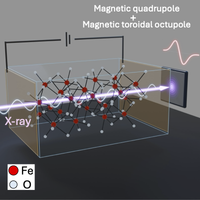
Phys. Rev. X 16, 041015 (2026)
Topological Phase Transitions and Their Thermodynamic Fate in Arbitrary-$S$ Classical Pyrochlore Spin Ice
Article | | 2026-10-14 06:00 EDT
Sena Watanabe, Yukitoshi Motome, and Haruki Watanabe
A theoretical framework for arbitrary-spin pyrochlore spin ice reveals that = 3/2 magnets alone switch abruptly between two distinct spin-liquid states, a transition that survives the thermal fluctuations that wash all the other transitions into crossovers.

Phys. Rev. X 16, 041016 (2026)
arXiv
Phase separating microdomains in highly coarse-grained lipids
New Submission | Soft Condensed Matter (cond-mat.soft) | 2026-10-15 20:00 EDT
A highly coarse-grained model for the lipid monolayer is formulated by considering a two-dimensional system of spherical particles with distinct types of S, U, and C, corresponding to the saturated, unsaturated, and cholesterol molecules. Their interactions are defined as modified Lennard-Jones type with distinct interaction strengths. The phase behavior of the system is studied for various cholesterol compositions, $ x$ ranging from 0.1 to 0.6. From the simulation results, we observe that the S- and C-type particles segregate together to form ordered microdomains, with U-type particles at their outer leaflet; consistent with observations in literature. An order parameter $ \Phi$ is defined to quantify the extent of phase separation among the constituents. The time averaged value of $ \Phi$ is found increasing with the $ x$ value. Radial distribution function calculations indicate the structural ordering within the phase separated domains.
Soft Condensed Matter (cond-mat.soft)
Mechanisms leading to axial segregation of bidisperse particles in rotating tumblers
New Submission | Soft Condensed Matter (cond-mat.soft) | 2026-10-15 20:00 EDT
Umberto d’Ortona (M2P2), Richard Lueptow, Nathalie Thomas (IUSTI)
The origin of segregated axial bands for size-bidisperse particles in long rotating tumblers is a long-standing question in granular flows and a problem of both fundamental and practical interest. Using DEM simulations, we consider the streamwise and time-dependent development of the underlying instability as well as performing a broad parametric study over a wide range of particle size ratios, tumbler lengths and diameters, species fractions, and fill levels to determine the conditions under which axially segregated bands appear. We show that initial radial segregation of the small and large particles in the surface flowing layer results in a layer of mixed particles with a higher bulk density due to more efficient packing over a layer of nearly monodisperse small particles with a lower bulk density. This leads to a granular Rayleigh-Taylor-like instability that produces recirculation cells driving axial band formation. The appearance of a layer of high-density mixed particles over a layer of lower-density monodisperse particles can be directly connected to the operating conditions, explaining why axially segregated bands appear only under certain conditions. Typically, increasing the particle size ratio improves packing and increases the density of the mixed layer, enhancing the Rayleigh-Taylor instability and accelerating axial segregation.
Soft Condensed Matter (cond-mat.soft)
Physical Review E 2026, 114 (3), pp.035402
Virtual-Alloy Physics-Aware Semantic System for extrapolative prediction of perovskite solar cells
New Submission | Materials Science (cond-mat.mtrl-sci) | 2026-10-15 20:00 EDT
Existing machine-learning models for perovskite solar cells struggle to predict devices made from new materials. Most treat device layers as arbitrary categorical labels and represent perovskite absorbers either through featureless composition vectors or through rigid crystal graphs that require a pre-solved unit cell. As a result, they cannot generalize to unrecorded alloys or unfamiliar cell architectures. We present the Virtual-Alloy Physics-Aware Semantic System (V-PaSS), an architecture built around the physical continuity of perovskite solid solutions. V-PaSS represents arbitrary mixed-cation, mixed-halide absorbers by interpolating relaxed crystal graphs of 23 pure $ ABX_3$ endpoint compounds via Vegard’s law with learned bandgap bowing. For the device stack, it couples layer sequence and cell polarity (n-i-p or p-i-n) with interfacial band offsets and encodes chemical descriptions with a scientific language model. Evaluated under an institution-grouped protocol where test devices come exclusively from unseen laboratories, an untuned default configuration of V-PaSS achieves the lowest error among fourteen tested models (2.861% MAE, a 5.2% relative reduction over a gradient-boosted baseline at 3.017%, and outperforming the best tuned benchmark at 2.912%). V-PaSS pulls furthest ahead where test devices differ most from training: reducing error by 15.7-19.0% on unseen absorber alloys, by 16.1% on mixed absorbers from new laboratories, and widening its lead over the baseline by 3.6$ \times$ on devices with unobserved transport layers. Combined with tree ensembles, V-PaSS sets a new state of the art across all five benchmark splits.
Materials Science (cond-mat.mtrl-sci), Machine Learning (cs.LG)
22 pages, 4 figures, 16 tables; Supporting Information included
Measurement-induced criticality for non-Abelian anyons: The monitored golden chain
New Submission | Strongly Correlated Electrons (cond-mat.str-el) | 2026-10-15 20:00 EDT
Zhaohui Zhi, Bo Han, Romain Vasseur, Andreas W. W. Ludwig, Simon Trebst, Guo-Yi Zhu
Non-Abelian anyon chains whose interactions favor a single fusion channel host quantum critical ground states described by minimal-model conformal field theories (CFTs) protected by a topological symmetry. We show that their measurement-only counterpart, where non-commuting fusion charge measurements act locally on the anyons of a chain of $ L$ sites, provides a fundamental example of a non-unitary CFT controlling a non-Abelian learning problem. Mapping the monitored dynamics to a random tensor network, we numerically find $ 1/L$ scaling Lyapunov gaps, logarithmic entanglement scaling with the chord length, and an effective central charge in the Shannon entropy of the measurement record. The conserved topological charge sharpens with dynamical exponent $ z= 1$ and is learnable by a decoder on an $ O(L)$ time scale. As the topological symmetry is a non-invertible symmetry of the $ SU(2)_k$ anyon theories, we establish the monitored golden chain $ (k=3)$ as a non-Abelian generalization of the weakly (Kramers-Wannier) self-dual quantum critical point of the toric code $ (k=2)$ , and the first of a family for $ k\geq 3$ .
Strongly Correlated Electrons (cond-mat.str-el), Disordered Systems and Neural Networks (cond-mat.dis-nn), Statistical Mechanics (cond-mat.stat-mech), Quantum Physics (quant-ph)
10 + 10 pages
Non-Abelian quantum Hall states at strong Landau level mixing: finding anyons with first-principles AI
New Submission | Mesoscale and Nanoscale Physics (cond-mat.mes-hall) | 2026-10-15 20:00 EDT
Pierre-Antoine Graham, Ahmed Abouelkomsan, Liang Fu
Non-Abelian anyons, strange particles forming the basis of fault-tolerant topological quantum computing, are predicted to emerge in fractional quantum Hall states at even-denominator filling factors. Identifying which topological order is realized has proven to be a challenging problem that requires an accurate, non-perturbative treatment of realistic Landau level mixing, which has so far been missing from theoretical studies. Here we present the first complete solution of non-Abelian quantum Hall problem that includes all electrons and all Landau levels, for spin-polarized electrons at filling factor $ \nu = 3/2$ . We develop a momentum-resolved neural-network variational wave function, optimized solely on the microscopic Hamiltonian, which gives direct access to the topologically degenerate ground states. Without any physics input about the expected outcome, it discovers a degenerate ground-state manifold whose entanglement reveals anyons with quantum dimension $ \sqrt{2}$ , the hallmark of Ising-type non-Abelian order. By directly computing the overlap with trial wave functions, we further show that Landau level mixing favors the anti-Pfaffian over other candidate states. Our results demonstrate the power of neural-network wave functions in finding and characterizing non-Abelian anyons from first principles, in regimes of strong Landau level mixing, relevant to many recent experiments.
Mesoscale and Nanoscale Physics (cond-mat.mes-hall), Strongly Correlated Electrons (cond-mat.str-el), Artificial Intelligence (cs.AI)
6 pages, 5 Figures
Transmission representation of the Josephson free energy beyond the short-junction limit
New Submission | Mesoscale and Nanoscale Physics (cond-mat.mes-hall) | 2026-10-15 20:00 EDT
Beenakker’s formula, $ U(\varphi)-U(0)=\Delta\sum_n\bigl(1-\sqrt{1-\tau_n\sin^2(\varphi/2)}\bigr)$ , expresses the zero-temperature energy-phase relation of a short Josephson junction through its normal-state transmission eigenvalues. We generalize this transmission representation beyond the short-junction limit and express the phase-dependent free energy of a time-reversal-symmetric $ s$ -wave junction as a Matsubara sum over channels with frequency-dependent transmissions. The representation constrains the small-phase expansion of the free energy. In particular, we prove that the normalized ratio of its quartic and quadratic coefficients satisfies $ -1\le\alpha_r\le7/80$ at finite temperature. We also construct a four-site junction with $ \alpha_r>0$ , which disproves the conjectured upper bound $ \alpha_r\le0$ . So that these results can be trusted without repeating the derivations, every numbered equation is formally verified in the Lean proof assistant.
Mesoscale and Nanoscale Physics (cond-mat.mes-hall), Superconductivity (cond-mat.supr-con)
31 pages, 4 figures. Source code, Lean formalization and agent logs: this https URL
Full-Continuum Ultrafast Quantum Gas Microscopy
New Submission | Quantum Gases (cond-mat.quant-gas) | 2026-10-15 20:00 EDT
Andrea Litvinov, Clemens Ulm, Eva Casotti, Gerard Solà Berga, Manfred J. Mark, Francesca Ferlaino
Quantum gas microscopy provides single-shot access to many-body configurations, but their microscopic reconstruction has so far largely relied on a predefined discrete spatial basis during fluorescence readout. Here we realize ultrafast atom-resolved fluorescence microscopy of an ultracold $ ^{162}$ Dy gas directly in continuous space, with all external confinement removed during imaging. Exploiting the large mass and broad optical transition of dysprosium together with a high numerical aperture in-vacuum objective, we detect single atoms within $ 4,\mu\mathrm{s}$ while maintaining an effective point-spread function with a full width at half maximum of $ 254.8(3),\mathrm{nm}$ , and an isolated single-atom classification fidelity of $ 99.72(3)%$ . We use the measured single-atom response to construct a statistical configuration-inference model that recovers atomic positions and multiplicities, coming from overlapping atoms, directly from single fluorescence snapshots. Benchmarking our model on Monte-Carlo generated images shows a total reconstruction fidelity of $ 98.7%$ . Our approach extends quantum gas microscopy beyond predefined detection lattices, enabling atom-resolved measurements of counting statistics and higher-order spatial correlations directly on the intrinsic length scales of continuum many-body systems.
Quantum Gases (cond-mat.quant-gas)
Electron-Mediated Phonon Polaritons in Quantum Cavities
New Submission | Materials Science (cond-mat.mtrl-sci) | 2026-10-15 20:00 EDT
Mattia Udina, David Hagenmüller, Indranil Paul
Phonon-photon coupling in quantum materials is commonly treated as an effective direct interaction, neglecting the crucial role played by electrons. Here we develop a gauge-invariant theory of cavity phonon polaritons that captures electronic screening, dissipation, and hybridization. We show that screening can suppress polariton formation in metals, severely constraining cavity control of phonon-mediated superconductivity. By contrast, interband electronic resonances in time-reversal-symmetric gapped systems can strongly enhance phonon-photon coupling, enabling robust polariton formation down to the monolayer limit despite electronic absorption. We illustrate these effects in NbSe2, hBN, and gapped graphene. Finally, we show that gauge invariance enforces photon decoupling from a critical soft phonon, establishing a general no-go mechanism for photon condensation.
Materials Science (cond-mat.mtrl-sci)
Nanoscale Mapping of Strain-engineered Excitons in Monolayer WSe$_2$
New Submission | Mesoscale and Nanoscale Physics (cond-mat.mes-hall) | 2026-10-15 20:00 EDT
Anna S. Roche, Nicholas V. Proscia, Paul D. Cunningham, Kathleen M. McCreary, Dante J. O’Hara, Hsun Jen Chuang, Cory Cress, Collin Sanborn, Samuel W. LaGasse, Jose J. Fonseca, Jeremy T. Robinson, Takashi Taniguchi, Kenji Watanabe, John R. Schaibley, Brian J. LeRoy
Excitons in monolayer transition metal dichalcogenides (TMDs) are highly sensitive to external stimuli, allowing control of resonance energies and lifetimes through electric and magnetic fields, heterostructures, moire potentials and mechanical strain. Observations of single-photon emission (SPE) near sample edges, wrinkles, and strained nanobubbles have motivated strain-engineering aimed at realizing localized emitters in 2D materials. The origin of these emitters remains unclear and prior studies have relied on far-field spectroscopy with strain profiles inferred separately through topography, limiting direct correlation between local strain and excitonic response. We directly probe strain-modified excitonic spectra in monolayer WSe$ _2$ using cryogenic scattering-type scanning near-field optical microscopy (s-SNOM). We compare two strain-engineering techniques, nano-indentation and patterned substrates, used to produce SPEs. At 9 K, we spatially resolve exciton resonance shifts with sub-diffraction limit resolution, simultaneously measuring near-field optical response and topography. We observe that strain transferred from nano-indentation into a deformable polymer substrate differs from that produced by draping TMDs over patterned dielectric pillars. Adhesion and tearing during plastic deformation drive a compressive exciton blueshift, while draping produces dominant tensile strain. Comparing the strain model results to the experimentally observed energy shifts shows that the nano-indentation strain is over an order of magnitude smaller than previously inferred, due to puncturing of the fragile monolayer, whereas pillar-strained devices remain intact under more modest strain. These differences suggest SPE arises from complex, strain-mediated interactions rather than simple confinement potentials, establishing s-SNOM as a powerful probe of quantum emission in strained 2D materials.
Mesoscale and Nanoscale Physics (cond-mat.mes-hall)
Topological superconductivity in layered d-wave altermagnetic metals
New Submission | Mesoscale and Nanoscale Physics (cond-mat.mes-hall) | 2026-10-15 20:00 EDT
We investigate multilayer d-wave altermagnetic metals with odd-parity helical p-wave pairing. In the minimal bilayer system, interlayer tunneling reconstructs the spin-split Fermi surfaces and generates two layer-hybridized sectors with distinct effective chemical potentials. Without Rashba spin-orbit coupling (RSOC), the emergent mirror symmetry and subsystem chiral symmetry stabilize phases with different numbers of helical Majorana edge-mode pairs and additional counterpropagating pairs, jointly characterized by the mirror Chern number and the winding numbers defined along high-symmetry lines. The combination of RSOC and the altermagnetic exchange field gaps out the helical Majorana pairs while, in a certain parameter regime, leaving another pair of counterpropagating Majorana edge modes gapless, giving rise to second-order topological phases with isolated or twofold Majorana corner modes, as well as a hybrid-order phase in which gapless Majorana edge modes coexist with Majorana corner modes. We identify a layer symmetry that elucidates the physical origin of these phases. For an arbitrary N-layer system, such a symmetry naturally arises from the interlayer-coupling matrix, allowing N-fold Majorana corner modes to emerge when all layer-hybridized sectors enter the nontrivial second-order regime. Our results establish the interplay among the layer degree of freedom, odd-parity pairing, and Fermi-surface configurations as a controllable route to engineering topological superconductivity in layered altermagnetic systems.
Mesoscale and Nanoscale Physics (cond-mat.mes-hall), Materials Science (cond-mat.mtrl-sci), Superconductivity (cond-mat.supr-con)
12 pages,6 figures
A Conservative Darcy-Brinkman-Stokes Formulation for PHREEQC-Coupled Reactive Transport with Cell-Based Surface Complexation
New Submission | Other Condensed Matter (cond-mat.other) | 2026-10-15 20:00 EDT
Hannah P. Menke, Florian Doster, Julien Maes
We present a mass-conservative Darcy-Brinkman-Stokes (DBS) formulation for reactive transport with cell-based surface complexation in image-based porous media, coupled to PHREEQC and implemented in GeoChemFoam, an OpenFOAM-based toolbox. Dissolved species are transported in the physical mobile-water fraction, adsorbed species are stored as conservative cell-scale surface inventories, and each reactive cell is coupled to PHREEQC. Reactive surface area is prescribed independently as a cell field, so that internal area left unresolved by segmentation of microporous phases can be represented while DBS flow and transport are retained in the resolved pore space. The implementation is verified with a test suite that isolates the coupling of transport and chemistry from the construction of reactive surface area. Aqueous and adsorbed mass balance is evaluated against a one-dimensional analytical retardation benchmark and closed-system batch calculations. The smooth-interface surface-area algorithms are tested on idealised two- and three-dimensional geometries. In a two-scale lithium micromodel, DBS reproduces fully resolved aqueous and sorbed inventories within 0.6% across Pe=0.1-10. The applications comprise Pb2+ retardation by hydrous ferric oxide coatings in a two-dimensional fracture network, competitive Mn2+/Mg2+ exchange in a three-dimensional Kelvin-cell sorbent, and Sr2+/Ca2+ exchange in Estaillades limestone. In the fracture-network and limestone cases, the formulation yields spatially resolved aqueous and adsorbed inventories even where reactive surface area is only partly resolved at the image scale. The framework therefore supports conservative surface-complexation modelling in both resolved and unresolved pore structures, with relevance to contaminant retention, selective ion capture, and radionuclide transport.
Other Condensed Matter (cond-mat.other), Materials Science (cond-mat.mtrl-sci)
Cooperative Boundary Switching of Mesoscopic Real Spectra in a Non-Hermitian Chain Family
New Submission | Mesoscale and Nanoscale Physics (cond-mat.mes-hall) | 2026-10-15 20:00 EDT
Chengxi Li, Hao Zhu, Tie-Fu Zhang, Wanzi Sun, Wuming Li
At fixed bulk criticality, every fixed nonsingular real single-end potential preserves a growing local population of real eigenvalues in an open analytic family of non-Hermitian chains. An open region of two-end real potentials removes this population. A boundary-amplitude criterion fixes the minimum number of controlled ends. The population grows as $ \sqrt N$ , where $ N$ is chain length, although its normalized spectral weight vanishes and the local limiting bands remain unchanged. For a representative chain’s four zero-detuning settings, an independent passive Hermitian double chain converts this distinction into separated resonances at one fixed local port under a common coupling scan at fixed probe carrier. Its absolute reflection contrast and stability margin both scale as $ N^{-1}$ , with explicit sufficient resource budgets. Boundary amplitudes thus fix a minimum control requirement that limiting bands and thermodynamic spectral density do not specify.
Mesoscale and Nanoscale Physics (cond-mat.mes-hall)
Viscous hydrodynamics from correlated losses
New Submission | Quantum Gases (cond-mat.quant-gas) | 2026-10-15 20:00 EDT
Aleksandr N. Mikheev, Orjan Ameye, Oded Zilberberg, Jeff Maki
Interactions turn a gas into a fluid. We show that two-body loss can take their place. Correlated loss induces elastic scattering, as required by the optical theorem, which dominates at strong loss via the quantum Zeno effect. A nondegenerate gas with only two-body loss thus flows hydrodynamically, with viscosity and thermal conductivity close to those of the unitary Fermi gas. As loss heats the gas, both grow in time with a universal exponent 3/8. Unlike single-particle loss, two-body loss can engineer collisions, and hence transport, in quantum matter.
Quantum Gases (cond-mat.quant-gas), Statistical Mechanics (cond-mat.stat-mech), Quantum Physics (quant-ph)
4 pages, 3 figures; Supplementary Material: 19 pages, 2 figures
Geometry-Encoded Hidden Orientational Memory
New Submission | Soft Condensed Matter (cond-mat.soft) | 2026-10-15 20:00 EDT
Materials usually remember their past through dissipative changes of structure or through a net order. Simulations of caged colloidal ellipsoids at a fluid interface reveal a purely orientational memory. The particles stay in place, the layer has no net alignment, and a pattern written by a field is retained by capillary interactions between neighbors. It lasts hundreds of times longer than a particle takes to reorient, while every particle keeps rotating. The layer also remembers sequence: when two strong fields act one after the other on the same particles, it records which came last.
Soft Condensed Matter (cond-mat.soft)
Engineering Correlated Transparent Conductors via Metal-Insulator Transition Proximity
New Submission | Materials Science (cond-mat.mtrl-sci) | 2026-10-15 20:00 EDT
Amit Cohen, Nofar Tuval, Maria Baskin, Tien-Lin Lee, Tom Tiwald, Scott A. Chambers, Sophie D. Beck, Lior Kornblum
Transparent conductors are key functional materials in modern optoelectronic devices. Their performance is governed by an inherent trade-off between optical transparency and electrical conductivity. Correlated metallic oxides offer an attractive workaround to this compromise, where narrow partially-filled bands provide high conductivity, while the absence of visible-range transitions enables optical transparency. Despite this promise, transparency and conductivity remain coupled through carrier density and electronic coherence. Here, we use proximity to a metal-insulator transition (MIT) as a design principle for engineering this balance in correlated-oxide transparent conductors. Epitaxial Ti-substituted $ SrVO_3$ films serve as a model platform where the optical window and metallicity are tuned simultaneously. We demonstrate and explain a systematic broadening of the optical window to regimes relevant for silicon photovoltaics. This gain is counterbalanced by carrier depletion and disorder, which drive the loss of coherent transport near the composition-driven MIT. A Haacke figure-of-merit analysis identifies the optimal composition range near the MIT, where the loss of metallic transport is accompanied by persistent near-Fermi-level spectral weight, indicating disorder-assisted localization together with correlation-driven spectral-weight redistribution. These findings establish proximity to an MIT as a general materials-design strategy, using electronic filling as a tuning knob for the transparency-conductivity balance in correlated-oxide transparent conductors.
Materials Science (cond-mat.mtrl-sci), Strongly Correlated Electrons (cond-mat.str-el)
Pseudo-relativistic fermions and topological states in zinc-blende semiconductors and their heterostructures (Habilitation thesis)
New Submission | Mesoscale and Nanoscale Physics (cond-mat.mes-hall) | 2026-10-15 20:00 EDT
Tracing my scientific path from many-body physics in semiconductor nanostructures to topological quantum matter, this Habilitation à diriger des recherches (HDR) memoir presents only part of my research since defending two PhD theses in Toulouse and Nizhny Novgorod in 2011. Focusing on pseudo-relativistic fermions and topological states in zinc-blende semiconductors and their heterostructures, it highlights my independent research program: identifying physical problems, developing predictive theories, and initiating new directions with experimentalists.
The first part addresses Kane fermions in bulk HgCdTe: temperature-driven band inversion, domain-wall states, the collapse of Landau levels in crossed electric and magnetic fields, and disorder-induced topological transitions. The second examines pressure-, temperature-, and disorder-driven phase transitions in single and double HgTe quantum wells (QWs), including bilayer-graphene-like semimetals and a two-dimensional higher-order topological insulator (2D HOTI) phase beyond the minimal BHZ model. The third develops three-layer InAs/Ga(In)Sb QWs as a III-V platform for massless Dirac fermions, large-gap quantum spin Hall insulators, 2D HOTI phases, and semimetals with quadratic band touching, and discusses InAs$ _{x}$ Sb$ _{1-x}$ /InAs$ _{y}$ Sb$ _{1-y}$ heterostructures as a promising alternative. Several of these predictions are supported by experimental observations, including quantized helical edge transport up to 60 K and the unconventional quantum Hall effect.
Defended on March 25, 2026, at the University of Montpellier. Jury: Michel GOIRAN (chair and rapporteur, LNCMI-CNRS, Toulouse); Alexey KAVOKIN (rapporteur, Westlake University, Hangzhou); Robson FERREIRA (rapporteur, LPENS-CNRS, Paris); Alexei BARANOV (member, IES-CNRS, Montpellier); Benoit JOUAULT and Frédéric TEPPE (members, L2C-CNRS, Montpellier).
Mesoscale and Nanoscale Physics (cond-mat.mes-hall)
179 pages, 51 figures. Habilitation à diriger des recherches (HDR) thesis, University of Montpellier, defended March 25, 2026
Symmetry-selected extreme shear compliance in a stable carbon monolayer
New Submission | Materials Science (cond-mat.mtrl-sci) | 2026-10-15 20:00 EDT
J. W. González, M. Pachecho, J. D. Correa
Solids that are stiff to most loads and extremely compliant to one are normally built, not found. That internal atomic relaxation lowers elastic constants is textbook; what has remained untested is whether it can be driven far enough to separate the elastic scales of a crystal by an order of magnitude while leaving it mechanically stable. Density functional theory calculations of the complete in-plane elastic tensor of four non-hexagonal carbon monolayers sharing a square lattice metric show that it can: their longitudinal stiffnesses agree to within a factor of two while their shear constants span more than a factor of fifty. Twin T-graphene, previously reported as elastically isotropic from normal strains alone, is the extreme case, with $ C_{66}=3.03$ ~N,m$ ^{-1}$ , nearly fifty times below graphene, at an axial stiffness typical of semiconducting monolayers, and a soft Kelvin eigenvalue a factor of $ 29$ below the others while the Born criteria hold. Symmetry confines the strain-induced relaxation to the $ B_{2g}$ sector, a counter-torsion of the carbon sublayers about the short mid-plane bonds that removes $ 96%$ of the clamped-ion shear stiffness with almost no bond stretching and leaves the semiconducting gap intact. Transverse acoustic phonons, finite-temperature dynamics, and large-deformation simulations show that the channel survives beyond the harmonic, zero-temperature limit. Because the selection rule is a point-group statement rather than a chemical one, it yields a screening criterion for other crystals and other strain components.
Materials Science (cond-mat.mtrl-sci)
11 pages, 5 Figures
Beyond the lemon: Spectra of random Lindblad operators with a Hamiltonian component
New Submission | Statistical Mechanics (cond-mat.stat-mech) | 2026-10-15 20:00 EDT
Mykhailo Hontarenko, Wojciech Tarnowski, Sergey Denisov, Karol Życzkowski
Generators of continuous-time quantum Markovian evolution, known as Lindblad operators, play a key role in the theory of open quantum systems. The question of how to define and characterize random Lindblad operators has attracted considerable attention in recent years. Purely dissipative random Lindbladians have been extensively studied using toolboxes of free probability and non-Hermitian random matrix theories, which helped, among other results, to uncover a characteristic lemon-like spectral support. In this work, we focus on random Lindbladians with a Hamiltonian component. We analyze three ensembles of increasing complexity, designed to illustrate the joint effects of dissipative and Hamiltonian dynamics. While the first two ensembles allow for an exact analytic treatment with standard probabilistic and free-probability methods, the generic case of independently random Hamiltonian and dissipative components requires a novel framework that combines operator-valued free probability with sequential noise averaging. For this ensemble, our approach preserves the underlying tensor-product structure of the Lindblad operator and derives a general equation for the spectral boundary. We characterize the effect of Hamiltonian-induced spectral squeezing and explain how the spectral support changes with the relative Hamiltonian strength and the rank of the dissipative component.
Statistical Mechanics (cond-mat.stat-mech), Mathematical Physics (math-ph), Quantum Physics (quant-ph)
21 pages, 7 figures
Spectral signatures of spin textures and the emergence of a pseudogap
New Submission | Strongly Correlated Electrons (cond-mat.str-el) | 2026-10-15 20:00 EDT
Matteo Quinzi, Andrea Pintus, Tommaso Chiarotti, Massimo Capone, Nicola Marzari
Periodic solids with strongly interacting electrons display phenomena – from Mott localization to high-temperature superconductivity – that escape conventional band theory. Efforts to address this unconventional physics have been typically cast in the language of Green’s function theories and the associated frequency- and momentum-dependent self-energies capturing strong correlations beyond the reach of mean-field theories. Here, we underscore that frequency- and momentum-dependent self-energies emerge also from mean-field solutions that break translational symmetry, and that these self-energies can display the characteristic fingerprints of strong correlations for certain, physically meaningful, spatial patterns. We showcase this perspective by studying the paradigmatic case of the 2D Hubbard model. We find that already at the mean-field level the doped antiferromagnet displays, in addition to stripes, many quasi-degenerate self-consistent solutions with antiferromagnetic textures organized into antiphase domains separated by hole-rich interfaces, reminiscent of the phase-separation scenario. Remarkably, these solutions map into spectral functions that display very distinctively the phenomenology of the pseudogap, including the nodal-antinodal dichotomy of the self-energy, Fermi arcs, and a complementary Luttinger surface. The result is a conceptually simple description of such an intricate many-body state: the pseudogap emerges as the momentum-space spectral portrait of the real-space interplay between antiferromagnetic domains and the metallic interfaces, which echoes the role of spin-fluctuations identified by nonperturbative methods.
Strongly Correlated Electrons (cond-mat.str-el), Materials Science (cond-mat.mtrl-sci), Superconductivity (cond-mat.supr-con)
20 pages, 5 figures; plus Supplementary Information (36 pages, 24 figures, 3 tables)
Atomic ironing for conformal interfaces in freestanding oxide nanomembranes
New Submission | Materials Science (cond-mat.mtrl-sci) | 2026-10-15 20:00 EDT
Jeongkeun Song, Keaghan Knight, Keun-Yeol Park, Young-Hoon Kim, Tyler J. Sachs, Hu Miao, Jiaqiang Yan, Celesta S. Chang, Ambrose Seo, Ho Nyung Lee
Atomically well-defined interfaces are essential for realizing functional interlayer coupling in stacked and twisted oxide heterostructures, yet transferred freestanding oxides can develop structural inhomogeneities, including local curvatures, interfacial voids, and incomplete contacts with substrates. Here, we demonstrate that these transfer-induced structural disorders and imperfections evolve substantially and can be suppressed by post-transfer thermal treatments, yielding bulk-like crystalline freestanding oxide nanomembranes. Using freestanding SrTiO3 membranes as a model system, we report a systematic understanding of the role of “atomic ironing” and the associated evolution of lattice mosaicity, interfacial roughness, and optical bandgap. We further demonstrate atomically bonded conformal interfaces in twisted SrTiO3 heterostructures, highlighting the importance of post-transfer thermal processes. These results establish a synthetic strategy to restore the structural integrity and intrinsic bulk-like functionality of freestanding oxide nanomembranes, enabling stacked, twisted, and heterogeneously integrated oxide architectures with atomically well-defined interfaces for emerging quantum functionalities.
Materials Science (cond-mat.mtrl-sci), Strongly Correlated Electrons (cond-mat.str-el)
21 pages, 4 figures
Signatures of symmetry-stabilized Dirac fermions in correlated oxide CaNbO3 thin films
New Submission | Strongly Correlated Electrons (cond-mat.str-el) | 2026-10-15 20:00 EDT
Yunkyu Park, Seoung-Hun Kang, Jeongkeun Song, Minsik Kong, Seohee Kim, Shan Lin, Eun Sang Choi, Km Rubi, Hua Zhou, Sangmoon Yoon, Hu Miao, Satoshi Okamoto, Jong Mok Ok, Ho Nyung Lee
Symmetry-protected electronic states in correlated oxides offer a route to combining topology, lattice tunability, and many-body interactions, but creating such topological electronic states in complex oxides remains challenging. Here, we show that oxygen octahedral rotations provide a symmetry-control parameter for stabilizing Dirac-related electronic states in epitaxial CaNbO3 films. By comparing compressively strained tetragonal films and relaxed orthorhombic films, we demonstrate that distinct octahedral rotation patterns preserve nonsymmorphic symmetry and lead to distinct transport signatures consistent with Dirac-like electronic states. The films exhibit metallic transport with high mobility of 138,000 cm2 V-1 s-1, multichannel conduction, and Shubnikov-de Haas oscillations from small high-mobility Fermi pockets. Landau-fan diagram analysis indicates finite Berry-phase contributions, while first-principles calculations reveal a strain-driven evolution from nodal-line band crossings in the orthorhombic phase to Dirac-electron band features in the tetragonal phase. These results establish oxygen octahedral symmetry as a design knob for engineering topological electronic states in correlated perovskite oxides.
Strongly Correlated Electrons (cond-mat.str-el), Materials Science (cond-mat.mtrl-sci)
4 figures
Chern insulator optics
New Submission | Mesoscale and Nanoscale Physics (cond-mat.mes-hall) | 2026-10-15 20:00 EDT
Chern insulators have optical properties that are strikingly different than ordinary chiral media. Unlike the natural optical activity of the latter, which is a finite-wavelength effect arising from spatial dispersion, the optical activity of a Chern insulator is already present in the long-wavelength limit, and exhibits a striking directional asymmetry in the propagation of circularly polarized light. We study this unnatural optical activity using a recently developed field theory for Chern insulators. For bulk Chern insulators, we derive the normal-incidence transmission and reflection coefficients of multilayer structures, identify the associated Faraday and Kerr angles, and show that these optical rotations provide a direct optical signature of topology at low frequencies. We also show that an interface between bulk Chern insulators can act as a kind of mirror, completely reflecting light at normal incidence when the Chern invariants have opposite signs. Moving to a more realistic model of a two-dimensional current sheet, we study the Faraday and Kerr effects in a thin film of $ \mathrm{Mn}\mathrm{Bi}_2\mathrm{Te}_4$ in its Chern insulator phase. The predicted rotations are many orders of magnitude larger than those of optically active media of comparable thickness that are topologically trivial.
Mesoscale and Nanoscale Physics (cond-mat.mes-hall), Optics (physics.optics)
Evidence for hidden order and its potential correlation with electron-hole asymmetry in iridate superlattices
New Submission | Strongly Correlated Electrons (cond-mat.str-el) | 2026-10-15 20:00 EDT
Zhihan Qiao, Han Zhang, Hangtian Wang, Deyang Li, Haiyang Zhang, Enyang Men, Junlei Jiang, Jingxin Chen, Yizhou Liu, Sang-Youn Park, Xiangnan Xie, MingLiang Tian, Haifeng Du, Ning Hao, Lin Hao
Hidden order refers to an order that shapes the properties of quantum materials yet remains difficult to identify. Here we report signatures of a hidden order in doped iridate superlattices through an unexpected electron-hole asymmetry in the coupling between the insulating state and the antiferromagnetic (AFM) state. While carrier doping suppresses both states, they remain coupled in the electron-doped regime but decouple in the hole-doped regime. Structural analysis rules out octahedral rotation and tilting as the dominant origin of this asymmetry. Instead, magnetic characterization reveals evidences of a hidden order that only appears in the hole-doped regime. This hidden order emerges above TN and is closely associated with the AFM state, coinciding with an exceptionally strong magnetic scattering intensity and an anomalously robust magnetic coherence. Our results highlight that hole-doped iridates can be a promising platform for exploring hidden and unconventional ordering phenomena in spin-orbit-entangled quantum materials.
Strongly Correlated Electrons (cond-mat.str-el), Materials Science (cond-mat.mtrl-sci)
Odd-to-Even-Layer Switch of Spontaneous Excitonic State in $\rm{TiSe_{2}}$ Thin Films
New Submission | Strongly Correlated Electrons (cond-mat.str-el) | 2026-10-15 20:00 EDT
Kaili Wang, Zhuowei Liu, Yuyang Mu, Zhujuan Li, Zhenjie Fan, Yu Gui, Xiaodong Qiu, Baigeng Wang, Rui Wang, Yi Zhang, Qi-Kun Xue
$ \rm{TiSe_{2}}$ is a candidate of high temperature excitonic condensates with spontaneous exciton formation in addition to its charge density wave (CDW). However, direct observation and manipulation of this electron-hole paring state formation is still lacking. Here, using varying-temperature angle-resolved photoemission spectroscopy (VT-ARPES), we observe a distinct odd-to-even-layer switch of spontaneous exciton state formation with the evident correlated band structure in $ \rm{TiSe_{2}}$ thin films. While the odd-layer $ \rm{TiSe_{2}}$ films show a sharp band structure in single-particle picture superimposed by CDW renormalization, in the even-layer $ \rm{TiSe_{2}}$ films, the full-filling valence band (VB) opens a distinct notch at the top, and the conductive band (CB) shows a significant extra signal extending above Fermi level with spectra broadening. These features indicate that the extra holes (notched VB) and electrons (broadening CB above Fermi level) form spontaneous excitons in even-layer $ \rm{TiSe_{2}}$ . Based on a correlated electron-hole model extracted from the tight-binding description, we reproduce the characterized band structures with spontaneous exciton formation, where the interlayer inter-band coupling in $ \rm{TiSe_{2}}$ plays a key role, which leads to an odd-to-even-layer switch of the excitonic state formation. Our results provide direct evidences of the spontaneous exciton formation, promising an excitonic condensate as versatile platform for realizing Bose-Einstein condensate (BEC) and investigating novel correlated phenomena.
Strongly Correlated Electrons (cond-mat.str-el), Mesoscale and Nanoscale Physics (cond-mat.mes-hall)
Phase Stability and Anisotropic Superconductivity in Ternary M2B4C2 (M=Ca, Mg) Monolayer
New Submission | Superconductivity (cond-mat.supr-con) | 2026-10-15 20:00 EDT
Jakkapat Seeyangnok, Udomsilp Pinsook, Graeme J Ackland
In this work, we investigate the phase stability, electronic structure, and superconducting properties of the two-dimensional ternary borocarbides MB$ _4$ C$ _2$ (M = Ca, Mg) using first-principles calculations and fully anisotropic Migdal-Eliashberg theory. Ab initio molecular dynamics, phonon dispersion, and elastic constant calculations confirm that both monolayers are dynamically, thermally, and mechanically stable. Electronic structure analysis reveals an intrinsic metallic nature with a multiband Fermi surface, where states near the $ \Gamma$ point are dominated by in-plane B-$ p_x$ , $ p_y$ orbitals, while zone-boundary states are primarily derived from out-of-plane B-$ p_z$ orbitals. The electron-phonon coupling is determined to be $ \lambda = 0.64$ for both materials, driven by the rigid covalent B-B and B-C honeycomb networks. By solving the anisotropic Eliashberg equations, we predict that CaB$ _4$ C$ _2$ and MgB$ _4$ C$ _2$ are nodeless two-gap superconductors with critical temperatures ($ T_c$ ) of 33.4 K and 33.8 K, respectively, at a Coulomb pseudopotential of $ \mu = 0.10$ . Furthermore, the superconducting state remains robust under increased Coulomb repulsion ($ \mu = 0.13$ ), retaining elevated $ T_c$ values of 31.2 K and 30.9 K, respectively. These findings establish MB$ _4$ C$ _2$ monolayers as promising candidates for nanoscale superconducting applications and enrich the family of two-dimensional multigap superconductors.
Superconductivity (cond-mat.supr-con)
9 pages, 8 figures
ActMOF: Mapping Reticular Synthesis through Active Learning
New Submission | Materials Science (cond-mat.mtrl-sci) | 2026-10-15 20:00 EDT
Hongrui Sheng, Shutian Liang, Reid A. Coyle, Shyam Chand Pal, Peter Walther, Bin Feng, Xinyu Ding, Zhiling Zheng
Reticular chemistry allows metal-organic frameworks (MOFs) to be designed from their building units, yet their synthesis remains constrained by sparse experimental data, noisy crystallization outcomes, and the absence of benchmarks for comparing active-learning strategies. While data-driven approaches such as Bayesian optimization (BO) can improve synthesis success rates, selecting appropriate optimizers beforehand for mapping MOF crystallization landscapes remains largely empirical. Here we present ActMOF, an experiment-grounded benchmark for comparing search strategies in aluminum-carboxylate MOF synthesis. ActMOF is emulated from experimentally measured microwave syntheses with each encoded condition assigned a crystallinity index calculated based on diffraction peak intensity and full width at half-maximum. By benchmarking policies guided by Gaussian processes (GP), tree ensembles and large language models (LLM), ActMOF placed the GP family among the leading policies for active learning in sparse synthesis landscapes. It then demonstrated transferability by guiding the microwave synthesis of six reticularly related aluminum MOFs. All six campaigns gave crystalline products within a fixed budget of 12 experiments each, and established a reusable testbed for AI-driven MOF synthesis.
Materials Science (cond-mat.mtrl-sci), Machine Learning (cs.LG), Chemical Physics (physics.chem-ph)
Main text and Supporting Information in one file. Data and code: this https URL
Multiple Superconducting Phases under Pressure for Different Field Directions in UTe2
New Submission | Strongly Correlated Electrons (cond-mat.str-el) | 2026-10-15 20:00 EDT
Dai Aoki, Atsushi Miyake, Ai Nakamura, Yoshiya Homma, Dexin Li, Shota Mizuno, Georg Knebel, Daniel Braithwaite, Jean-Pascal Brison, Jacques Flouquet
The existence of multiple superconducting phases is a striking feature of UTe2, arising from the spin and orbital degrees of freedom and supporting a spin-triplet superconducting state. We present field-temperature phase diagrams under pressure for fields applied along the three principal crystallographic axes, as determined by AC calorimetry measurements. The pressure evolution of the multiple superconducting phases is highly anisotropic with respect to magnetic field direction, revealing rich superconducting phenomena arising from complex fluctuations.
Strongly Correlated Electrons (cond-mat.str-el), Superconductivity (cond-mat.supr-con)
6 pages, 5 figures, submitted to JPS Conf. Proc
Why shaking faster does not untangle: frequency-selective extraction of filaments from tangled matter
New Submission | Soft Condensed Matter (cond-mat.soft) | 2026-10-15 20:00 EDT
Ishant Tiwari, Sutikshan Bansal, Rosalind Huang, Chenyi Fei, Jörn Dunkel, Vishal Patil, Saad Bhamla
Tangles of soft filaments are ubiquitous, from living worm blobs to the cables in a desk drawer. How do such tangles, held together by friction and entanglement, respond when one embedded filament is shaken? We suspend disordered tangles of tunable cohesion and ordered stitched meshes from a single thread (the tether) and oscillate it vertically at fixed amplitude. Extraction peaks at an intermediate drive frequency ($ \sim 15$ Hz) and declines at higher frequencies, although the peak drive acceleration grows quadratically. Here we combine experiments, high-speed imaging, and a tension-only spring-mass model to show that this non-monotonic response is set by timing rather than resonance. The extraction window is bounded below by a slackening threshold, where the peak drive acceleration exceeds gravity and the tether, slack for part of each cycle, creates a tensile impulse each time it snaps taut. The window is bounded above by a transmission crossover, where the transmission time across the tangle exceeds a quarter of the drive cycle, so that the tangle no longer responds as a whole and the drive’s work dissipates internally. The slackening threshold depends only on the drive and gravity, while the transmission crossover is set only by the tangle’s size and transmission speed. By tracing extraction to the overlap of impulse creation and impulse transmission, we identify a generic principle of driven filamentous matter and suggest frequency-selective routes to its disassembly.
Soft Condensed Matter (cond-mat.soft)
4 figures in main, 12 figures in SI
Pressure engineering of the excitonic moiré-potential landscape and exciton-charge interplay in semiconductor moiré superlattices
New Submission | Materials Science (cond-mat.mtrl-sci) | 2026-10-15 20:00 EDT
Wenbing Li, Tianhao Yue, Wenjian Su, Zhexu Shan, Chen Xu, Jichen Zhou, Kenji Watanabe, Takashi Taniguchi, Liguo Ma, Yuanfeng Xu, Shiyao Zhu, Yang Gao, Yanhao Tang
Semiconductor moiré superlattices, owing to strongly bound excitons and pronounced electronic correlation, have emerged as an intriguing solid platform for exploring correlated bosonic phenomena, where the moiré potential landscape plays a central role. Hydrostatic pressure allows continuous, in-situ tuning of this landscape, but remains underexplored because of experimental challenges. Here we integrate a diamond anvil pressure cell with high quality dual gated WSe2/WS2 twisted bilayers and perform cryogenic optical spectroscopy. We observe distinct pressure evolutions of moiré intralayer excitons, which reveal drastic modulation of the excitonic moiré-potential landscape captured by a continuum model and suggest the capability of engineering the exciton-band topology. Moreover, we demonstrate efficient pressure control over the interplay between charges and both intralayer and interlayer excitons: the intralayer charge-transfer exciton becomes less sensitive to doping, likely due to reduced charge-transfer character; in contrast, the interlayer exciton exhibits enhanced exciton-charge repulsion. Our results establish hydrostatic pressure as a powerful tuning knob for engineering bosonic quasiparticles and Bose-Fermi interactions in moiré materials.
Materials Science (cond-mat.mtrl-sci), Mesoscale and Nanoscale Physics (cond-mat.mes-hall)
Magnetic proximity beyond the interface: Layer-sequence-dependent exchange in WSe$_2$/CrI$_3$ heterostructures
New Submission | Materials Science (cond-mat.mtrl-sci) | 2026-10-15 20:00 EDT
Natalie Kuhn, Marc Schütte, Joachim Emming, Felix Hellenkamp, Leo Dreyer, Frank Volmer, Kenji Watanabe, Takashi Taniguchi, Lutz Waldecker, Christoph Stampfer, Bernd Beschoten
Magnetic proximity effects in transition metal dichalcogenide (TMD)/2D-magnet heterostructures are often described in terms of the magnetization of the interfacial magnetic layer. Here, we show that this picture is sufficient to describe the neutral-exciton valley splitting of the TMD, but incomplete for its hole-doped electronic structure. We study a gate-tunable van der Waals heterostructure composed of monolayer WSe$ _2$ in direct contact with trilayer CrI$ _3$ . By combining spatially and helicity-resolved reflection-contrast spectroscopy with magnetic circular dichroism, we identify two distinct magnetic domains in the trilayer CrI$ _3$ : one with purely antiferromagnetic interlayer coupling and one with a mixed antiferromagnetic (AFM)/ferromagnetic~(FM) coupling. In both domains, the sign of the neutral-exciton valley splitting of WSe$ _2$ switches with the magnetization reversal of the adjacent CrI$ _3$ layer. In contrast, helicity-resolved positive-trion spectroscopy of WSe$ _2$ reveals a qualitatively different response. While the AFM domain shows a strongly helicity-selective trion resonance, the mixed AFM/FM domain exhibits trion resonances in both helicities. This behavior disappears when all CrI$ _3$ layers are aligned in a parallel magnetization direction. Our results demonstrate that charged excitons are sensitive to the full layer-resolved magnetic sequence of the adjacent 2D-magnet, revealing magnetic proximity beyond the interface.
Materials Science (cond-mat.mtrl-sci), Mesoscale and Nanoscale Physics (cond-mat.mes-hall)
9 pages, 3 figures
Complex pattern in periodically driven binary Quincke colloids
New Submission | Soft Condensed Matter (cond-mat.soft) | 2026-10-15 20:00 EDT
Chuan Yu Zhang, Mu Yue Zhao, Xiao Yi Zhou, Wen-De Tian, Kang Chen, Tian Hui Zhang
Binary active systems offer a minimal platform for understanding how component heterogeneity organizes non-equilibrium structures. Here we show that in a binary Quincke system driven by a periodic square-wave electric field, a dynamic square lattice in which small particles occupy the lattice-cell centers which are surrounded by large particles emerges spontaneously. Particle-resolved trajectories reveal that the size separation arises from the mobility difference of large particles and small particles. Increasing the driving frequency reduces the single-cycle path lengths of both species and simultaneously decreases the lattice constant. These results show how size-dependent activity,density redistribution, and periodic forcing cooperate to generate tunable complex active patterns.
Soft Condensed Matter (cond-mat.soft)
11 pages, 9 figures
Seismology of Glasses
New Submission | Disordered Systems and Neural Networks (cond-mat.dis-nn) | 2026-10-15 20:00 EDT
Aging and relaxation of glasses proceed through localized rearrangements that also generate long-ranged mechanical responses in their surroundings. We develop a theory that treats these rearrangements as internal microseismic sources, and thereby separates the direct effects emerging from an event from the effects from the far-field displacements it generates. These far-field disturbances propagate and relax through the viscoelastic medium through which they move, producing a stochastic background of weak but numerous perturbations at any given location. Combining the description of local events from the Random First Order Transition theory with this propagating background, we derive a unified equation for the dynamical structure factor of a relaxing glass. The theory identifies a finite wave-vector and time window in which the growing viscoelastic far-field disturbances can produce compressed exponential relaxation, which has been observed using X-ray photon correlation spectroscopy. At higher wave vectors that resolve local jumps, heterogeneity of the local event dynamics instead produces stretched exponential relaxation. The crossover between these behaviors depends on the event statistics and the scattering phase accumulated across the region reached through viscoelastic propagation from the numerous distant sources.
Disordered Systems and Neural Networks (cond-mat.dis-nn), Materials Science (cond-mat.mtrl-sci), Statistical Mechanics (cond-mat.stat-mech)
7 pages, 2 figures. Any comments or suggestions are welcome!
Emergent medium-range order in amorphous silicon
New Submission | Soft Condensed Matter (cond-mat.soft) | 2026-10-15 20:00 EDT
Zhen Zhang, Stephen R. Elliott, Yujie Wang, Walter Kob
Medium-range order (MRO) is an important feature of amorphous materials, but its nature in terms of atomic arrangement has remained elusive. Here, using large-scale machine-learning-driven atomistic simulations of amorphous silicon, we probe the MRO of this archetypal network glass. By characterizing the structure in three dimensions, we reveal that the symmetry of the atomic arrangement around a central atom shows a crossover as a function of distance. At short distances, the structure is determined by local bonding constraints, which evolve from predominantly tetrahedral environments in low-density amorphous silicon to highly coordinated and strongly disordered local environments in very-high-density amorphous silicon. At larger distances, however, distinct cubic- and octahedral-symmetry patterns emerge in the three-dimensional atomic-density distribution, despite the absence of these symmetries at shorter length scales. We find that this crossover is accompanied by a quasi-periodic spatial organization of the topological rings in the structure. The characteristic spacing between ring centers matches the length scale of the first sharp diffraction peak (FSDP) in the structure factor, establishing a direct connection between this reciprocal-space signature of MRO and its real-space organization. These results demonstrate that the FSDP, the spatial correlation of the rings, and emergent orientational symmetries are not independent manifestations of MRO, but reflect different aspects of a common structural organization. Our findings provide a unified real-space picture of MRO in amorphous silicon and suggest that intermediate-range structural order in network glasses emerges from the interplay between local bonding constraints and extended atomic arrangements driven by efficient packing.
Soft Condensed Matter (cond-mat.soft), Disordered Systems and Neural Networks (cond-mat.dis-nn), Materials Science (cond-mat.mtrl-sci)
Active Sculpting: morphodynamics of internally stirred active vesicles
New Submission | Soft Condensed Matter (cond-mat.soft) | 2026-10-15 20:00 EDT
Devadevan M M, Brato Chakrabarti
Active flows are often confined by soft, deformable boundaries that they can push against, reshape, and in turn get reorganized by. Motivated by this interplay, we combine theory and numerical simulations to analyze the morphodynamics of an elastic vesicle enclosing a dilute suspension of extensile active particles. We model the two-dimensional vesicle as a weakly extensible elastic ring with bending rigidity, immersed in a Stokesian fluid, and describe the confined active suspension using a kinetic theory. The vesicle and the suspension are coupled hydrodynamically, through the kinematic and dynamic boundary conditions at the interface, and energetically, through a single alignment interaction that simultaneously aligns active particles with the membrane and the membrane with the particles. We show that this interaction reduces to a weak-anchoring boundary condition familiar from passive liquid crystals and derive a closed-form quiescent equilibrium state in which the nematic order in the suspension organizes into a vortex with a +1 defect core. A stability analysis of this state predicts an ordered hierarchy of activity thresholds at which successive shape modes of the vesicle are destabilized, as well as a purely passive, anchoring-driven instability of floppy vesicles. Nonlinear simulations, performed with a volume-conserving immersed boundary method, reveal that each threshold crossing gives rise to a distinct emergent state: a static spindle with boundary-pinned defects, a rotor that tank treads against its own rotation, a fluctuating spinner, and a turbulent state in which the vesicle acts as a self-stirring compartment. Beyond demonstrating how boundary deformability sculpts, and is sculpted by, confined active matter, our results open the door to study hydrodynamic interactions between such active vesicles and to use membrane fluctuations as a probe of activity of suspensions.
Soft Condensed Matter (cond-mat.soft), Fluid Dynamics (physics.flu-dyn)
22 pages, 8 figures
Room-Temperature Metallic 2D Ferromagnetism Stabilized by Quantum Metric
New Submission | Strongly Correlated Electrons (cond-mat.str-el) | 2026-10-15 20:00 EDT
Teng-Fei Ying, Jianqi Zhong, Songyuan Geng, Fangjie Chen, Haoxiang Li, Benjamin T. Zhou
The recent discovery of long-sought dice-lattice bands in layered electride YCl opens up unprecedented opportunities for studying correlated electrons in real dice lattice systems. While the weakly dispersive band at the Fermi level is partially filled and density-wave states are expected due to Fermi surface nesting based on conventional theories, the ARPES measurement nevertheless revealed a uniform flat band splitting of 0.5 eV, suggesting unusual ferromagnetism (FM) borne out of the metallic 2D dice lattice. In this Letter, we propose that the uniform metallic FM order is stabilized by the prominent quantum metric near topological band crossing points at K and K’, which reconstructs the magnetic instability in the dice metal and tips the density-wave instability toward a uniform FM order. Importantly, our analysis based on random phase approximation (RPA) and Hartree-Fock theory predicts a remarkably high Curie temperature above room temperature for the 2D FM order. These findings establish the first example of a room-temperature 2D metallic magnet stabilized by quantum metric, which not only exemplifies the fundamental significance of quantum geometry in solids but also bears far-reaching applications in energy-efficient high-density magnetic memories.
Strongly Correlated Electrons (cond-mat.str-el), Materials Science (cond-mat.mtrl-sci)
Role of Gd 5d-Au 5d hybridization for the magnetic properties of Au-Al-Gd quasicrystal approximants
New Submission | Strongly Correlated Electrons (cond-mat.str-el) | 2026-10-15 20:00 EDT
Goro Nozue, Hidenori Fujiwara, Satoru Hamamoto, Yuto Torii, Mai Sakaguchi, Sho Nakajima, Takuya D. Nakamura, Nonoka U. Sakamoto, Takayuki Kiss, Masaki Oura, Akira Yasui, Kotaro Higashi, Naomi Kawamura, Kojiro Mimura, Arata Tanaka, Asuka Ishikawa, Farid Labib, Shintaro Suzuki, Takafumi D. Yamamoto, Ryuji Tamura, Akira Sekiyama
We have studied the electronic states of magnetic Au-Al-Gd quasicrystal approximants, which exhibit different magnetic ground states at low temperatures, by orbital-selective soft and hard x-ray electron spectroscopies in the paramagnetic phase. Our results reveal that the valence electronic states vary among the Au-Al-Gd approximants with different magnetic ground states, whereas the Gd 4f electrons are localized in all of them. In particular, we find that the Gd 5d states are hybridized with the Au 5d states around the Fermi level, providing information about a local pathway for the intersite exchange interaction between the localized Gd 4f electrons. This hybridization strength varies among these samples. Our findings bring an orbital-resolved microscopic picture to the magnetism of rare-earth-based quasicrystals and approximants.
Strongly Correlated Electrons (cond-mat.str-el)
Resolving Structural Uncertainty in Stochastic Dynamical Systems via Ensemble-Based Bayesian Inference
New Submission | Disordered Systems and Neural Networks (cond-mat.dis-nn) | 2026-10-15 20:00 EDT
Francesco Zambelli, Valeria D’Andrea, Manlio De Domenico
Recovering the interaction structure of complex stochastic dynamical systems from sparse time-series observations is an inherently ill-posed inverse problem. The posterior over network configurations is high-dimensional, highly degenerate, and shaped by the non-equilibrium nature of the available data. To address this, we propose a fully Bayesian, ensemble-based inference framework. Our approach grounds a continuous-time Stochastic Differential Equation (SDE) likelihood formulation—acting mathematically as an Onsager-Machlup quasi-potential for non-equilibrium paths—within a non-parametric Minimum Description Length (MDL) structural prior. This framework rigorously penalizes model complexity and avoids kinetic overfitting by forcing continuous parameters into a finite vocabulary of discrete categories. The joint posterior is optimized using a block-coordinate scheme combining sub-quadratic Markov Chain Monte Carlo (MCMC) topological sampling with deterministic Nelder-Mead parameter optimization. Using highly non-linear macroscopic population dynamics as a benchmark, we demonstrate that inference requires non-stationary transient data to resolve causal information. Furthermore, we prove that propagating structural uncertainty via ensemble-based posterior analysis produces significantly more robust and reliable predictions for downstream perturbation outcomes than traditional single-point (MAP) estimates. The framework is highly generalizable, capturing fundamental topological constraints even under severe generative model mismatches, offering a robust tool for uncertainty-aware inference in complex stochastic systems.
Disordered Systems and Neural Networks (cond-mat.dis-nn)
14 pages article, 4 figures article, 5 pages SM, 1 figure SM
Beyond Kitaev exchange: $Γ’$-driven magnetism in Ag$_3$LiRh$_2$O$_6$
New Submission | Strongly Correlated Electrons (cond-mat.str-el) | 2026-10-15 20:00 EDT
Efrain Insuasti Pazmino, Shi Feng, Ramesh Dhakal, Ioannis Rousochatzakis, Stephen M. Winter, Johannes Knolle, Alexander A. Tsirlin
In Kitaev magnets, frustration arises from bond-dependent spin anisotropic interactions, which can potentially realize sought-after quantum spin liquid phases. However, material realizations with dominating Kitaev exchange are scarce and the broad parameter space of extended Kitaev models remains largely unexplored experimentally. Here, we use density-functional theory, cluster many-body, spin-wave, and density-matrix renormalization calculations to show that the recently discovered honeycomb rhodate Ag$ _3$ LiRh$ _2$ O$ _6$ hosts an off-diagonal exchange $ \Gamma_1’$ that is second in magnitude only to the ferromagnetic Kitaev exchange $ K_1$ . This combination of $ K_1$ and $ \Gamma_1’$ explains key experimental observations, an unusually high magnetic ordering temperature of 94 K at ambient pressure and its rapid decrease under hydrostatic pressure as Ag$ _3$ LiRh$ _2$ O$ 6$ evolves from ferromagnetic toward zigzag order within the honeycomb planes. Our spin-wave calculations further predict an unusual topology of the magnon bands arising from the $ \Gamma_1’$ term in the spin Hamiltonian of the honeycomb layer. We show that the large trigonal splitting of $ t{2g}$ states enhances $ \Gamma_1’$ , the hitherto underappreciated term in Kitaev magnets, and opens the way to new interesting regimes of the extended Kitaev model.
Strongly Correlated Electrons (cond-mat.str-el), Materials Science (cond-mat.mtrl-sci)
5 pages + Supplemental Material
Orientation-Dependent Universality of Spin-Transport Fluctuations in Two-Dimensional Altermagnets
New Submission | Mesoscale and Nanoscale Physics (cond-mat.mes-hall) | 2026-10-15 20:00 EDT
Yihan Zhang, Zheng Qin, Donghui Xu, Junjie Zeng, Zhen Ning, Rui Wang
Universal conductance fluctuations are conventionally organized by symmetry class, but crystalline anisotropy introduces additional structure in spin transport. Here we demonstrate orientation-dependent universal spin-transport fluctuations in disordered two-dimensional $ d$ -wave altermagnets without spin-orbit coupling. Rotating the altermagnetic orientation changes both longitudinal spin-conductance and transverse spin-Hall conductance fluctuations, while each conserved-spin sector remains in class AI. Altermagnetic orientation controls both the fluctuation amplitudes and the development of disorder-insensitive plateaus. These plateaus become flatter and less sensitive to the altermagnetic strength over the studied parameter ranges as the orientation approaches $ 45^\circ$ , with representative fluctuation amplitudes of approximately $ 0.60e/(4\pi)$ for the longitudinal spin conductance and $ 0.40,e/(4\pi)$ for the spin-Hall conductance. The longitudinal fluctuation amplitude correlates strongly with anisotropy of the clean-band Fermi-velocity tensor. Spin-sector covariances explain how the conserved channels combine into total fluctuations. Our results extend anisotropy-sensitive universal-fluctuation physics to conserved-spin altermagnetic transport and establish crystalline orientation as a control parameter within a fixed symmetry class.
Mesoscale and Nanoscale Physics (cond-mat.mes-hall)
12 pages, 8 figures
Interplay of electric field and electronic correlations in pairing competition in bilayer nickelates
New Submission | Strongly Correlated Electrons (cond-mat.str-el) | 2026-10-15 20:00 EDT
Yanmei Cai, Yicheng Xiong, Ying Liang, Tianxing Ma
Layer polarization provides a means of tuning the competition between interlayer and intralayer pairing in bilayer nickelates. Using ground-state constrained-path quantum Monte Carlo, we study interlayer $ s^{\pm}$ and intralayer $ d$ pairing in a bilayer two-orbital Hubbard model with a layer potential-energy difference $ \varepsilon$ representing an effective perpendicular electric field. Within the parameter range studied, increasing $ \varepsilon$ generally enhances the finite-size pairing vertex contribution $ V_d$ and reduces $ V_{s^{\pm}}$ , shifting the relative pairing preference toward the $ d$ -wave channel. Increasing the onsite repulsion enhances both vertex contributions, more strongly in the $ d$ -wave channel, whereas increasing the crystal-field splitting reduces both and makes $ s^{\pm}$ pairing relatively more competitive. Hund’s coupling increases the relative competitiveness of $ s^{\pm}$ pairing at weak bias, while enhancing the relative strength of $ d$ -wave pairing at large bias. The bias primarily redistributes charge between layers within each orbital sector, accompanied by an increase in the antiferromagnetic spin structure factor. Hund’s coupling also enhances local interorbital parallel-spin correlations. These observations suggest possible connections between charge redistribution, magnetic correlations, and pairing competition, offering insight into how layer polarization and multiorbital interactions influence the relative pairing tendencies in the bilayer nickelate model.
Strongly Correlated Electrons (cond-mat.str-el)
8 pages with 7 figures
Nonadiabatic dynamics under slow parametric modulation in nonlinear graphene resonators
New Submission | Mesoscale and Nanoscale Physics (cond-mat.mes-hall) | 2026-10-15 20:00 EDT
Chris F. D. Wattjes, Haemin Lim, Pierpaolo Belardinelli, John E. Sader, Peter G. Steeneken, Farbod Alijani
Resonantly driven nonlinear systems, from superconducting circuits to nanomechanical resonators, are often described in a rotating frame, where amplitude and phase evolve slowly within a fixed landscape of stable and unstable states. How such systems behave when this landscape moves on their intrinsic timescale remains to be understood. Here, we exploit the strong tension sensitivity of a graphene drum’s resonance frequency to reshape the rotating-frame phase space of a bistable mechanical mode in real time, combining an MHz-frequency resonant drive with kHz-frequency tension modulation. When the modulation rate becomes comparable to the mechanical relaxation rate, adiabatic tracking of the fixed points breaks down. Instead, parametric instabilities emerge in the slow dynamics at frequencies set by libration around these points rather than by the mechanical resonance; stronger modulation drives period doubling and chaos. A slow-variable theory predicts where the instabilities occur, and Melnikov analysis captures the onset of chaos. These results show that the rotating frame itself can be parametrically driven, offering a general route to controlling nonadiabatic dynamics in systems ranging from Josephson bifurcation amplifiers to cold atoms.
Mesoscale and Nanoscale Physics (cond-mat.mes-hall), Chaotic Dynamics (nlin.CD)
Magnetic field induced modulation of heat transport in CrPS$_4$ probed by TaIrTe$_4$ transverse Seebeck thermometry
New Submission | Mesoscale and Nanoscale Physics (cond-mat.mes-hall) | 2026-10-15 20:00 EDT
Krishnaraajan Sundararajan, Sergio Alvarruiz, Cédric A. Cordero-Silis, Majid Ahmadi, Marcos H.D. Guimarães, Jagoda S\lawińska, Joseph Barker, Bart J. van Wees
Understanding and controlling heat flow in low-dimensional magnetic materials is central to thermoelectrics and spin caloritronics. One of the challenges is the absence of sensitive probes of small, field-dependent modulations in thermal transport. Here we demonstrate transverse Seebeck thermometry using exfoliated TaIrTe$ _4$ as a probe of thermal conductivity modulated by an external magnetic field on a van der Waals magnet, CrPS$ _4$ . With a temperature gradient oriented at $ 45^\circ$ to its principal crystallographic axes, TaIrTe$ _4$ exhibits a transverse thermopower exceeding $ 200~\mathrm{\mu V,K^{-1}}$ for 900 nm wide and 30 $ \mu$ m long electrodes, enabling precise detection of variations in the local temperature gradients. Exploiting this with CrPS$ _4$ in a nonlocal geometry, we resolve distinct field dependent thermal conductivity changes associated with both the spin-flip and spin-flop magnetic transitions which we attribute to variations in the magnon$ -$ phonon coupling in CrPS$ _4$ . At 5 K, the transverse Seebeck response is modulated by more than 8$ %$ by an external magnetic field, demonstrating strong magnetic control of heat transport in CrPS$ _4$ . This all van der Waals platform offers high sensitivity to modulations of thermal conductivity and a broad adaptability to a wide range of exfoliated magnetic systems.
Mesoscale and Nanoscale Physics (cond-mat.mes-hall), Materials Science (cond-mat.mtrl-sci), Applied Physics (physics.app-ph)
Error-controlled switching between discrete and continuum dislocations in a unified defect framework
New Submission | Materials Science (cond-mat.mtrl-sci) | 2026-10-15 20:00 EDT
Simulating defects of every dimension together is expensive, and the savings of adaptive methods are rarely tested at equal accuracy. We present a variational framework in which fields, dislocation lines and defect densities share one free energy, one dissipation law and exact ledgers of mass and Burgers vector, so that a region can change its representation without gaining or losing defects. On this basis, an allocator switches the dislocations themselves between discrete particles, where they are sparse, and a continuous density, where they are dense. The switch is made block by block from local counts, conserves the Burgers vector exactly and is controlled by a single threshold. For $ 5\times10^5$ dislocations, the allocator reproduces the discrete model to within 1% in the sparse region at 14-37 times lower cost, depending on the machine; the advantage grows to 81 times at $ 10^6$ dislocations, and a threshold calibrated on one ensemble meets its error target on an independent one. For an idealized array of dislocation walls in copper, the allocator is 37.5 times cheaper than particle dislocation dynamics and, at almost the same cost, six times more accurate than continuum dislocation dynamics between the walls. In a three-dimensional copper model coupling grain-boundary cavitation with damage, ligaments left at nominal coalescence delay creep rupture by 25-48% (post hoc sweep). By contrast, grids refined at interfaces gain less than twofold once the active region exceeds about 30% of the domain, so representation switching, rather than grid refinement, is the effective form of adaptivity for defect-rich microstructures.
Materials Science (cond-mat.mtrl-sci)
Nonadiabatic polaron dynamics from machine-learned hopping trajectories
New Submission | Materials Science (cond-mat.mtrl-sci) | 2026-10-15 20:00 EDT
Daniela Mangano (1 and 2), Luca Leoni (2), Zhongfei Xu (3), Li-Min Liu (4), Cesare Franchini (1 and 2) ((1) University of Vienna, Faculty of Physics and Center for Computational Materials Science, Vienna, Austria, (2) Department of Physics and Astronomy Augusto Righi, Alma Mater Studiorum - Università di Bologna, Bologna, Italy, (3) College of Environmental Science and Engineering, North China Electric Power University, Beijing, China, (4) School of Physics, Beihang University, Beijing, China)
The formation and motion of small polarons are ubiquitous in energy materials and influence photoinduced processes. Polaron transport is governed by thermally activated lattice dynamics and rare hopping events, requiring spatial and temporal scales only attainable with machine-learning molecular dynamics, which enables extensive sampling of atomic trajectories and polaron configurations over nanoseconds. Moreover, the Born-Oppenheimer approximation underlying standard ab initio molecular dynamics cannot describe the nonadiabatic coupling between electronic states mediated by nuclear motion, which controls energy exchange and excited-state relaxation. Here, we develop a simulation framework that combines machine-learning-assisted polaron dynamics with nonadiabatic molecular dynamics to bridge these complementary aspects of polaron physics, and determine how different polaron-hopping mechanisms affect excited-state dynamics. The enlarged trajectory space allows us to provide the first direct dynamical confirmation of the adiabatic or nonadiabatic classification of polaron hopping regimes originally proposed on the basis of static Marcus-theory arguments, and to connect individual hopping events directly to nonadiabatic electronic transitions. In bulk TiO$ _2$ , nonadiabatic hoppings occur preferentially when the energy of the polaron-induced gap state approaches the conduction-band manifold, promoting both electronic de-excitation and, via a Landau-Zener mechanism, excitation from the ground state. In MgO, the predominantly adiabatic character of hole-polaron hopping suppresses these effects, leading to longer charge-carrier lifetimes and an absence of thermally activated excitations. At the rutile TiO$ _2$ (110) surface, hopping events are rarer than in bulk because the excess electron is strongly stabilized in the subsurface region, leading to correspondingly longer de-excitation times.
Materials Science (cond-mat.mtrl-sci)
main text: 22 pages, 13 figures; supplement: 7 pages, 7 figures
A practical route to amorphous solid-state electrolyte structures by hybrid reverse Monte Carlo with foundation potentials
New Submission | Materials Science (cond-mat.mtrl-sci) | 2026-10-15 20:00 EDT
Xintian Wang, Xinyu Zhang, Denys Butenko, Bolong Hong, Jinlong Zhu, Peichen Zhong
Amorphous alkali oxychlorides are fast ion conductors, but their atomic structure remains unresolved. Total scattering sums all partial pair correlations into one curve that has no unique inversion, so the structure must be modeled. Melt-quench molecular dynamics builds a model from the interatomic potential alone, and reverse Monte Carlo (RMC) builds one from the measurement alone. The two have rarely been compared with all else held fixed. We benchmark both routes and two hybrid schemes on amorphous \ce{Li_{0.9}NbO_{0.9}Cl_{4.1}} against one neutron pair distribution function with one foundation potential. The hybrid schemes put the energy either in the acceptance rule (inline) or in short relaxations between blocks of refinement (alternating). Each refinement starts from a melt-quench glass or from a random packing of isolated units. The glass has the lowest energy and places the first-shell peaks correctly, but carries almost none of the oscillation beyond 6~Å (goodness of fit $ R^{2} = 0.29$ ). Pure RMC fits the measurement to within its counting noise ($ R^{2} = 0.99$ ), but at more than $ 1.3$ ~eV/atom above the glass, and niobium loses about half of its first-shell chlorine. Started from the glass, both hybrid schemes reach $ R^{2} = 0.92$ within $ 0.1$ ~eV/atom of its energy and keep its coordination chemistry. Structures from the two inputs fit almost equally well and differ in energy by a tenth of the RMC penalty, yet they differ in whether their polyhedra are connected. The input is therefore part of the method. We recommend quenching a glass with a foundation potential and refining it against the measurement with a hybrid scheme. The resulting structure carries both the local chemistry and the medium-range order, and it is the starting point for modeling ion transport in these conductors.
Materials Science (cond-mat.mtrl-sci)
Andreev-reflection spectroscopy of SrPt3P single crystals
New Submission | Superconductivity (cond-mat.supr-con) | 2026-10-15 20:00 EDT
Valeriy A. Stepanov, Nikolai D. Zhigadlo, Erik Piatti, Dario Daghero
The interplay between inversion symmetry breaking and superconducting pairing mechanisms is a long-standing puzzle of solid-state physics. Ternary platinum phosphide SrPt$ _3$ P is an excellent case study in this regard, since it shares the distorted anti-perovskite crystal structure of non-centrosymmetric superconductor CePt$ _3$ Si but preserves the inversion symmetry center, enabling a direct comparison between the two compounds. Despite intense scrutiny, the superconducting pairing strength, gap symmetry, and magnitude of SrPt$ 3$ P remain an open question. Here, we study the gap structure of high-quality SrPt$ 3$ P single crystals with $ T_c = 8.6$ K by using point-contact Andreev-reflection spectroscopy. The spectra systematically showed symmetric conductance maxima and a zero-bias minimum, as is typical of fully gapped superconductors, and dips at finite voltage $ V\mathrm{dip}$ due to the local transition of the contact region to the resistive state. In contacts with high resistance, where the dips fall sufficiently far from the gap features, the conductance curves can be well fitted with a single isotropic $ s$ -wave gap. The temperature dependence $ \Delta(T)$ of the gap amplitude extracted from the fit is in good agreement with the one predicted by the BCS theory, with a zero-temperature mean value $ \Delta(0)=1.88\pm0.08$ meV, and a mean gap ratio $ 2\Delta/k\mathrm{B}T_c = 5.2\pm0.2$ .
Superconductivity (cond-mat.supr-con), Mesoscale and Nanoscale Physics (cond-mat.mes-hall), Materials Science (cond-mat.mtrl-sci)
11 pages, 8 figures
APL Materials 14, 101103 (2026)
Understanding the Mpemba Effect through a Rule of Thumb
New Submission | Statistical Mechanics (cond-mat.stat-mech) | 2026-10-15 20:00 EDT
In the Mpemba effect, a system prepared farther from equilibrium relaxes faster than one prepared closer to it. Its persistence across diverse systems, and under different dynamics of the same system, suggests that it is largely rooted in equilibrium properties, with the dynamics deciding only which mode relaxes slowest. Here we propose a simple rule of thumb for anticipating the Mpemba effect: the effect is expected when a single low-order equilibrium moment is nonmonotonic in temperature. The bath singles out this moment as the slowest to relax, so that its displacement from its bath value sets the amplitude of the slowest relaxation mode. We establish this relation exactly for low-dimensional Ornstein–Uhlenbeck processes. We then extend the rule to mean-field models by approximating their relaxation near the final equilibrium state by an Ornstein–Uhlenbeck process. For the mean-field Ising antiferromagnet, which we solve exactly in the thermodynamic limit, this approximation reproduces the main structure of the Mpemba phase diagram, including strong effects far from any phase transition. Finally, we give a general prescription for mean-field systems: identify the slowest symmetry-allowed moment of the normal coordinates at the bath, and follow its equilibrium value as a function of preparation temperature. This offers a practical route from equilibrium observables to anomalous relaxation without diagonalizing the dynamics.
Statistical Mechanics (cond-mat.stat-mech)
24 pages, 7 figures
Observation of correlations beyond the single-particle picture in fermionic counting statistics
New Submission | Mesoscale and Nanoscale Physics (cond-mat.mes-hall) | 2026-10-15 20:00 EDT
Johann Zöllner, Hendrik Mannel, Daniel Oppers, Martin Geller, Axel Lorke, Jürgen König
The analysis of charge fluctuations in a mesoscopic device can shed light on the fundamental question of whether or not a single-particle picture of electron transport is appropriate, even in the presence of Coulomb interaction. It has been shown on general grounds that mapping the interacting system onto a fermionic single-particle description is subject to strict constraints on the charge-transfer statistics. These constraints can be formulated in terms of a sign rule for the factorial cumulants of the full counting statistics. We report here on the experimental observation of a sign-rule violation in a most elementary model system, i.e. a single-level quantum dot, and provide theoretical modeling that can quantitatively reproduce the experimental data. This reveals the presence of correlations introduced by electron-electron interaction.
Mesoscale and Nanoscale Physics (cond-mat.mes-hall), Quantum Physics (quant-ph)
11 pages, 5 figures
Absolute area under a scaled Brownian motion with resetting
New Submission | Statistical Mechanics (cond-mat.stat-mech) | 2026-10-15 20:00 EDT
We investigate the statistical properties and ergodic behavior of the absolute area below the trajectory of a particle subject to stochastic resetting and moving according to a scaled Brownian motion with exponent $ \beta$ . We compare the contributions to the absolute area from the waiting times between resets and the backward recurrence time. Using the renewal formalism we derive the lower-order moments of the absolute area under both Poissonian and heavy-tailed power-law resetting waiting time distributions with exponent $ \alpha$ . For Poissonian resetting, stochastic interruption suppresses fluctuations, driving the area to be ergodic, regardless of the value of $ \beta$ . In contrast, power-law resetting yields a rich spectrum of ergodic regimes. For $ 0 < \alpha < 1$ , the system displays weak ergodicity breaking and the maximum contribution dominates the area accumulated during the waiting times. For $ 1+\beta < \alpha < 2$ , we unveil an ergodic transition exclusive to the subdiffusive regime at $ \alpha=1+\beta$ , where ergodicity is restored. These results clarify the subtle interplay between anomalous diffusion and power-law waiting times between resettings. Our results are tested by numerical simulations exhibiting an excellent agreement.
Statistical Mechanics (cond-mat.stat-mech)
Deep Learning of Phase Transitions for Bilinear-Biquadratic Spin-1 Chains from Correlation Aspects
New Submission | Disordered Systems and Neural Networks (cond-mat.dis-nn) | 2026-10-15 20:00 EDT
Ming-Chiang Chung, Yu-Ting Kuo, Ian McCulloch, Yuan-Hong Tsai
We investigate the role of different correlation functions in reconstructing the phase diagram of the spin-1 bilinear-biquadratic chain, parametrized by the angle $ \theta$ between the bilinear and biquadratic couplings, using our previously developed label-free machine-learning pipeline \cite{Ming21, Ming23}, in which an autoencoder compresses iDMRG correlation matrices into latent features and K-means clustering with silhouette analysis groups them into phases. Without any prior labels, the scheme reveals four natural phases, the Haldane, dimerized, critical trimerized, and ferromagnetic phases, and accurately locates the Takhtajan-Babujian ($ \theta=-\pi/4$ ), $ SU(3)$ -symmetric Uimin-Lai-Sutherland ($ \theta=\pi/4$ ), and Ferro-Dimer ($ \theta=5\pi/4$ ) transition points; a shallow supervised refinement further sharpens the phase boundaries. We find that different correlation functions play fundamentally different roles in phase identification. The $ SU(3)$ -symmetric correlation alone selects a four-cluster partition that can be associated with the four phases, whereas the spin-spin and dimer-dimer correlations must be combined to recover the complete phase diagram. In contrast, the trimer-trimer correlation behaves as a marginal correlation: it is insufficient for phase identification by itself but improves the precision of the predicted phase boundaries when combined with the other correlations. Furthermore, the latent representations and silhouette values reveal signatures that we relate to the $ \theta$ dependence of the correlations within each phase and, tentatively, to the underlying renormalization-group structure. These results demonstrate that machine learning can not only identify quantum phases but also uncover the physical information encoded in different correlation functions.
Disordered Systems and Neural Networks (cond-mat.dis-nn), Other Condensed Matter (cond-mat.other), Strongly Correlated Electrons (cond-mat.str-el)
20 pages, 24 figures
Dicke model of open-shell atoms with tensor polarizability
New Submission | Quantum Gases (cond-mat.quant-gas) | 2026-10-15 20:00 EDT
We study the extended Dicke model obtained from the scalar–vector–tensor polarizability of open-shell atoms coupled to a shared cavity mode. For a single electric-dipole channel, rotational symmetry fixes the tensor to vector ratio; we use $ ^{168}\mathrm{Er}$ with $ J=6$ as a product-state example. A circular pump produces a chiral Raman vertex whose tensor-dependent matrix elements select the occupied Zeeman sector. The resulting first-order transition occurs before the empty-cavity branch loses local stability, and the ordered state is read out through $ \langle\hat J_z\rangle$ . A linear pump instead produces an empty-cavity $ \pm x$ cat and a continuous transition into an even-$ m$ cat-like state with order parameter $ \langle\hat J_z^2\rangle$ . With cavity loss alone, the circular trajectory emits a photon burst and approaches a Raman-dark Zeeman pole rather than a finite-field condensate. In the linear geometry, cavity-bright modes are damped toward the cat-like branch while a dark spin mode remains undamped. These are phenomena of that model; the vector-only controls show that they depend on the channel-fixed tensor coupling.
Quantum Gases (cond-mat.quant-gas), Quantum Physics (quant-ph)
Transverse magneto-gyrotropy driven by spin-induced ferroaxiality
New Submission | Materials Science (cond-mat.mtrl-sci) | 2026-10-15 20:00 EDT
Yoshihiro Okamura, Takumi Kagawa, Ayano Nakamura, Shinichi Nishihaya, Masaki Uchida, Susumu Minami, Ryotaro Arita, Youtarou Takahashi
Photon chirality is inherently sensitive to structural handedness and magnetism, which break spatial inversion and time-reversal symmetries, respectively. Ferroaxial order, by contrast, hosts two-dimensional chirality while preserving both symmetries, thereby precluding its direct coupling to photon chirality. Intertwining ferroaxiality with magnetic order, however, may lift such constraints and enable unconventional coupling to photon chirality. Nevertheless, the optical response arising from such intertwined order has yet to be demonstrated experimentally. Here, we demonstrate transverse magneto-gyrotropy arising from spin-driven ferroaxiality in the Weyl magnet EuCd2Sb2. Whereas the conventional polar magneto-optical Kerr effect is governed by magnetization parallel to the light-propagation direction, we observe a gyrotropic response associated with magnetization transverse to the light-propagation direction. The optical rotation exhibits a characteristic 120-degree periodicity upon rotation of the in-plane magnetic field, reflecting the threefold symmetry of the emergent ferroaxial state and revealing the ferroaxial origin of the transverse gyrotropic response. This coupling to photon chirality enables vectorial control of the gyrotropic response through the magnetic field direction. Our findings establish an interaction between photon chirality and transverse magnetization enabled by intertwined ferroaxial and magnetic orders, demonstrating a novel form of multiferroicity with functional light-matter interaction.
Materials Science (cond-mat.mtrl-sci)
Sorption Molecular Dynamics of Point Defects in 2D Materials with a Machine Learning Potential
New Submission | Materials Science (cond-mat.mtrl-sci) | 2026-10-15 20:00 EDT
Nils-Ruben Skogemyr, Albin Sjöstedt, Isak Wernroth, Isak Häggqvist, Isac Ljungwald, Hans-Ove Åkesson, Henricus R.A. ten Eikelder, Rickard Armiento, Joel Davidsson
Defect engineering is a crucial tool for tuning and tailoring the properties of two-dimensional (2D) materials. A key challenge is identifying which defects are kinetically stable at room temperature and sufficiently promising to warrant further investigation. However, identifying stable defects with suitable properties using first-principles calculations, such as density functional theory (DFT) is computationally demanding, effectively limiting the scope of high-throughput studies. In this work, we investigate whether the machine learning interatomic potential MACE can reproduce sorption trends (adsorption vs. absorption) previously obtained from high-throughput DFT calculations and extend the analysis to elevated temperatures. A total of 17,624 defect structures from the ADAQ database are simulated using MACE-accelerated molecular dynamics (MD) at both 0 K and 300 K. The results show that MACE successfully reproduces the overall sorption trends observed in DFT calculations at 0 K at a fraction of the computational cost. Simulations performed at 300 K further indicate that the qualitative sorption trends remain largely the same when including finite-temperature effects. These findings demonstrate that MACE-driven MD can be used as an effective high-throughput prescreening tool for defect-related studies in 2D materials, specially related to sorption. While conventional first-principles methods, such as DFT, remain necessary for accurate and quantitative validation, the use of MLIPs enables MD simulations of finite-temperature defect behavior at a fraction of the computational cost of DFT-based MD.
Materials Science (cond-mat.mtrl-sci)
Unconventional quantum spin mixing of two spin-1 atoms beyond the single-mode approximation
New Submission | Quantum Gases (cond-mat.quant-gas) | 2026-10-15 20:00 EDT
Yanhong Liu, Fulin Deng, Haoxue Qiao, Wenxian Zhang
The single-mode approximation (SMA) has been widely employed in ultracold spinor gases, where all spin components share the same spatial mode. By adopting generalized Van Vleck (GVV) perturbation theory, we achieve a relative error of $ 10^{-6}$ in the ground-state energy with a reduced effective Hilbert space dimension of $ \sim 10^3$ for two spin-1 bosons confined in a one-dimensional hard-wall trap. With the accurate GVV method, we explore the validity of the SMA across ground-state properties and quench spin dynamics for two $ ^{7}\text{Li}$ , $ ^{87}\text{Rb}$ , or $ ^{23}\text{Na}$ atoms. Numerical results show that the quadratic Zeeman energy $ q$ provides a powerful control knob: by increasing $ |q|$ , the fidelity between the spin components in the ground state gradually decreases, leading eventually to the breakdown of the SMA (due to the competition between the kinetic energy and the quadratic Zeeman energy). Quench spin dynamics with abruptly increased $ q$ further reveals multiple resonances, where the SMA-predicted micromotion and beyond-SMA macromotion appear simultaneously. These results point to a direction to investigate the quantum spin-mixing dynamics beyond the SMA, particularly in recent experiments of strongly interacting spin-1 atomic gases.
Quantum Gases (cond-mat.quant-gas)
11 pages,5 figures
Identification of carbon-related color centers in hBN by high-resolution ab initio photoluminescence modeling
New Submission | Materials Science (cond-mat.mtrl-sci) | 2026-10-15 20:00 EDT
Vytautas Žalandauskas, Marek Maciaszek, Marianne Etzelmüller Bathen, Julius Janušonis, Tadas Paulauskas, Lukas Razinkovas
Identification of optically active defects in hexagonal boron nitride (hBN) remains challenging because different defect candidates can produce similar calculated photoluminescence (PL) lineshapes. Here, we demonstrate that force-constant embedding methodology can be extended to calculate high-resolution, vibrationally resolved PL lineshapes in the polar layered material hBN. Benchmarking against the carbon dimer defect, responsible for the 4.1 eV emission, we show that the methodology accurately reproduces the low-energy acoustic phonons and fine spectral features that are inaccessible when using direct supercell calculations. Applying the methodology to neutral carbon trimers ($ \mathrm{C_2 C_B}$ and $ \mathrm{C_2 C_N}$ ), we find that the calculated PL lineshape and excitation energy of $ \mathrm{C_2 C_N}$ closely match the low-temperature spectrum of the emitter with a zero-phonon line at 1.54 eV. These results establish high-resolution phonon-sideband modeling as a powerful tool for discriminating among candidate defects in polar materials.
Materials Science (cond-mat.mtrl-sci)
Main text: 13 pages, 4 figures. Supplementary Information: 5 pages, 3 figures
Disorder-Induced Griffiths like Phase and Charge Localization in Sr2FeRuO6
New Submission | Strongly Correlated Electrons (cond-mat.str-el) | 2026-10-15 20:00 EDT
Koustav Pal, Shuvendu Ghosh, I. Das
A comprehensive understanding of complex transition-metal oxides is key to designing next-generation spintronic materials with tailored magnetic and transport functionalities. We investigate the interplay among structural disorder, frustrated magnetism, and localized charge transport in the 3d-4d hybrid double perovskite Sr2FeRuO6. The compound adopts a monoclinic structure with significant B-site antisite disorder that drives its unconventional behavior. Magnetic measurements uncover a robust Griffiths phase extending well above the ordering temperature, evidencing stable short-range ferromagnetic clusters within a disordered matrix. Electrical transport remains strongly localized, transitioning from small-polaron hopping at high temperatures to variable-range hopping at intermediate temperatures. These results position Sr2FeRuO6 as a representative 3d-4d hybrid system in which quenched disorder stabilizes spin inhomogeneity, while polaronic and hopping transport are also observed.
Strongly Correlated Electrons (cond-mat.str-el)
8 pages, 4 figures
J. Phys. Chem. C 130, 6416-6423 (2026)
Access Rate-Dependent Endurance Behavior of Ferroelectric Hafnium Zirconium Oxide Capacitors
New Submission | Materials Science (cond-mat.mtrl-sci) | 2026-10-15 20:00 EDT
Roberto Guido, Julie Laguerre, Pramoda Vishnumurthy, Florian Wunderwald, Kristina Holsgrove, Thomas Mikolajick, Sou-Chi Chang, Alfred Kersch, Uwe Schroeder
Fluorite-structured ferroelectrics, such as hafnium zirconium oxide ($ Hf_{1-x}Zr_{x}O_{2}$ ), are among the most promising materials for developing the next generation of low-power nonvolatile memories. Emulating realistic operating scenarios for ferroelectric memories requires performing access rate-dependent endurance tests. The access rate-dependent reduction of the switched polarization cannot be described as a mere superposition of fatigue and imprint effects, which are observed in conventional endurance and retention tests, respectively. The interplay between these degradation mechanisms and its correlation with the delay time in between the programming pulses remains unclear. Combining electrical testing through voltage pulses with ab initio and drift-diffusion simulations provides a comprehensive perspective on the microscopic origin of the access rate-dependent reduction of the switched polarization of ferroelectric capacitors based on product-relevant 5 nm thick $ Hf_{0.5}Zr_{0.5}O_{2}$ films. The role of oxygen vacancy defects accumulating at the electrode-ferroelectric interface with delay time in reducing the fraction of switchable domains is elucidated considering electron transfer processes which change the defect charge state. Building upon this theoretical understanding, a physics-based model to extrapolate the long-term access rate-dependent endurance performance is developed and experimentally verified for temperatures up to 135°C and delay times up to 2 ms.
Materials Science (cond-mat.mtrl-sci)
High-Frequency Mass Transfer Enabling Over-Limiting Currents in Porous Electrodes
New Submission | Materials Science (cond-mat.mtrl-sci) | 2026-10-15 20:00 EDT
Classical film theory predicts a finite diffusion-limited current at porous electrodes. However, over-limiting currents (OLCs), which exceed this limit, are often observed and have been attributed to surface charge, confinement, or electrokinetic effects. Here, we use a frequency-domain framework to identify a different mechanism governed by the time scale of concentration variation. For perfectly reactive interfaces, the spectral Sherwood number, a frequency-dependent dimensionless measure of interfacial mass transfer relative to molecular diffusion, grows as $ \Shnd\sim\omega^{1/2}$ at high frequency, while its phase approaches $ \pi/4$ . This response corresponds to the semi-infinite Warburg limit of the electrochemical impedance. A scaling analysis shows that the exponent and prefactor are determined by diffusion within a thin layer adjacent to the interface and are therefore independent of the global pore geometry. Numerical results for parallel plates, circular tubes, and twelve porous microstructures confirm this scaling. Geometry, flow strength, and flow direction affect the low-frequency response and crossover frequency, but not the asymptotic scaling in the high-frequency limit. This temporal route to OLCs requires neither surface charge nor confinement and could inform the design of systems for pulsed electrodeposition, mineral recovery and renewable-energy storage.
Materials Science (cond-mat.mtrl-sci), Fluid Dynamics (physics.flu-dyn)
A Topological-Geometrical Descriptor (TGD) for Scalable and Interpretable Modeling of Two-Dimensional Carbon Networks
New Submission | Materials Science (cond-mat.mtrl-sci) | 2026-10-15 20:00 EDT
Rômulo Uriel Liberal de Oliveira, Raphael Matozo Tromer
We introduce a compact Topological-Geometrical Descriptor (TGD) for planar two-dimensional carbon networks. Atomic coordinates are mapped to a periodic planar graph and represented through ring populations, topological-charge statistics, projected ring geometry, and dual-graph defect adjacency. The resulting modeling vector contains 19 physically interpretable features. We evaluate TGD on 120 published planar carbon allotropes using the DFT relative energy per atom with respect to graphene as the target. Repeated five-fold cross-validation with gradient boosting yields a mean absolute error (MAE) of 0.0826 +/- 0.0138 eV/atom and R2 = 0.803 +/- 0.074. Under the same validation protocol, TGD gives a mean MAE of 0.0828 eV/atom, compared with 0.0929 eV/atom for a 203-feature Matminer representation. We further analyze 360 vacancy-defected graphene configurations spanning 12 vacancy concentrations from 2 to 24 percent. When entire vacancy concentrations are held out, TGD gives a pooled MAE of 0.269 eV/vacancy and R2 = 0.861, outperforming simple baselines based on vacancy concentration alone or non-hexagonal-ring fraction alone. Sensitivity tests show that the inferred edge sets are stable to moderate changes in the adaptive bond factor. Finally, the mean absolute topological charge is examined as a one-variable empirical surrogate for the allotrope dataset and is treated explicitly as dataset-specific rather than universal. These results show that TGD combines compact prediction with direct structural interpretation while making clear the present restriction to single-layer planar carbon networks.
Materials Science (cond-mat.mtrl-sci)
Bulk superconductivity in quintuple-layer square-planar nickelate La6Ni5O12
New Submission | Superconductivity (cond-mat.supr-con) | 2026-10-15 20:00 EDT
Mengzhu Shi, Mei Du, Hongyu Li, Zhiwei Wang, Zhengjie Wang, Ziji Xiang, Tao Wu, Xianhui Chen
Nickelate superconductors, sharing a similar electronic environment with cuprate superconductors, offer a promising platform for unraveling the mechanism of high-temperature superconductivity. However, the realization of superconductivity in these systems has so far been restricted to thin films or bulk samples under high-pressure. This limits the applicability of various experimental probes to study the mechanism of superconductivity, and hinders the potential application of the nickelate superconductors. Exploring bulk superconductivity at ambient pressure is therefore essential to understand its origin and enable broader experimental research. Here, we report the realization of bulk superconductivity at ambient-pressure in quintuple-layer square-planar (SP) nickelate La6Ni5O12. The SP phase is obtained by performing topotactic reaction on the quintuple-layer Ruddlesden-Popper (RP) compound La6Ni5O16. Optimized reduction condition endows La6Ni5O12 with a superconducting state that exhibits onset transition temperature of ~ 18 K, as verified by both zero resistance and diamagnetic shielding effect. Pronounced hysteresis loops revealed by magnetization and torque magnetometry demonstrate the occurrence of vortex pinning. Specific heat measurements on a polycrystalline pellet of La6Ni5O12 reveal a clear superconducting transition at ~18 K and a superconducting volume fraction of ~ 25%, which strongly supports the presence of bulk superconductivity. Our results establish an unprecedented bulk sample platform for investigating superconductivity in nickelates at ambient pressure, which paves the way for further experimental studies into the superconducting mechanism.
Superconductivity (cond-mat.supr-con), Materials Science (cond-mat.mtrl-sci), Strongly Correlated Electrons (cond-mat.str-el)
22 pages, 4 figures
Transport regimes in tunnel ferromagnetic Josephson junctions
New Submission | Superconductivity (cond-mat.supr-con) | 2026-10-15 20:00 EDT
R. Satariano, A. A. Golubov, E. Raja, R. Ferraiuolo, F. Calloni, H. G. Ahmad, A. Vettoliere, N. Poccia, L. Parlato, G. Ausanio, C. Granata, G. P. Pepe, M. Yu. Kupriyanov, F. Tafuri, D. Montemurro, D. Massarotti
We present a systematic study of the temperature-dependent transport properties of Nb- and Al-based superconductor–insulator–thin superconductor–ferromagnet–superconductor (SIsFS) Josephson junctions. By varying the superconducting material and the thickness of the intermediate superconducting layer, we identify three distinct transport regimes: a tunnel-dominated SIS-like regime, a temperature-driven crossover, and a complex weak-link regime. A unified Usadel-based description connects these regimes through the self-consistent pair potential of the intermediate s-layer. While for Al-based devices an SIS-like transport regime is observed, a self-consistent calculation of the s/F/S proximity electrode, combined with perturbative tunnel coupling to the outer electrode, accounts for Nb devices with different thickness of the superconducting interlayer. The calculation places the 10-nm-interlayer sample in a proximity-supported, strongly suppressed s state, close to the SInFS limit in which the interlayer is effectively driven normal (\textit{n}). A reduced nonlinear long-junction description captures the same limiting physics. The evolution of I_cR_N(T) thereby provides a direct experimental signature of the three transport regimes. Beyond the fundamental interest, the results establish practical design guidelines: Nb junctions with sufficiently thick s interlayers are well suited for high-speed cryogenic memory elements and tunable superconducting parametric amplifiers, while Al junctions are natural candidates for coherent superconducting quantum circuits
Superconductivity (cond-mat.supr-con)
18 pages, 11 figures
A Sideways Crack-Path Instability Amplified by Slow Loading
New Submission | Soft Condensed Matter (cond-mat.soft) | 2026-10-15 20:00 EDT
G. Pallares, O. Ramos, L. Vanel
Crack-path instabilities in solids are typically associated with high propagation velocities. In contrast, we show that nanoparticle-filled elastomers exhibit a sideways crack-path instability that is amplified as the pulling velocity decreases and nearly vanishes at high pulling velocities. The sideways deviation amplitude decreases logarithmically with increasing pulling velocity and scales as the square root of the filler fraction. Large deviations develop at low mean crack velocities and are associated with effective fracture energies up to two orders of magnitude lower. These findings are consistent with subcritical rupture kinetics and suggest that the deviation amplitude is limited by the elasto-adhesive length.
Soft Condensed Matter (cond-mat.soft)
main: 4 pages, 6 figures, sup mat: 2 pages, 3 figures
Making Weak Interlayer Excitons Absorb: Manipulating the Effective Oscillator Strength via Purcell Engineering of Critical Coupling
New Submission | Mesoscale and Nanoscale Physics (cond-mat.mes-hall) | 2026-10-15 20:00 EDT
Saroj Poudyal, Anabel Atash Kahlon, Michael Klein, Matan Meshulam, Yonatan Gershuni, Thomas Poirier, James H. Edgar, Mukesh Kumar, Seth Ariel Tongay, Itai Epstein
Interlayer excitons (IXs) in transition metal dichalcogenide bilayers possess unique dipolar properties, providing a path for exploring correlated many-body phases, electrically tunable dipole-dipole interactions, and long-range exciton transport. However, the large electron-hole separation underlying their dipolar character also results in a significantly reduced oscillator strength, limiting their direct optical interaction with light, and thus the direct probing of their dynamics and many-body interactions. Here, we show that by using Purcell engineering of critical coupling, a weak interlayer transition can absorb as strongly as the dominant intralayer transition, despite its much smaller intrinsic oscillator strength. Using this approach, in an open cavity architecture we demonstrate an order of magnitude IX absorption modulation in bilayer and trilayer MoS2, with doubling of the IX to A-exciton interaction strength weight from ~23% to ~53%. Furthermore, we demonstrate that in a tailored closed cavity architecture, the IX enhancement can reach beyond an order of magnitude, from ~5% to ~83% excitonic absorption, enabling IX absorption similar to intralayer excitons. An analytical description of the interaction is obtained via a closed-form transmission-line model which separates the excitonic and photonic contributions to the optical response, revealing how cavity architecture can be designed towards critical coupling. Our findings establish Purcell engineering of critical coupling as a general route to controlling and enhancing weak excitonic transitions.
Mesoscale and Nanoscale Physics (cond-mat.mes-hall), Other Condensed Matter (cond-mat.other), Optics (physics.optics)
Coherent and dissipative coupling of multiple photon-magnon hybrids in a chiral microwave resonator
New Submission | Mesoscale and Nanoscale Physics (cond-mat.mes-hall) | 2026-10-15 20:00 EDT
Supanat Chantarattana, Charlie W. F. Freeman, Daniel Prestwood, Nimisha Arora, Vincent Castel, Hidekazu Kurebayashi
We demonstrate control between level repulsion and level attraction of photon-magnon coupling spectra in a chiral microwave-photon resonator loaded with a 2 mm YIG sphere. By systematically varying the coupling mode volume via the YIG position and the dc-field orientation, we tune the ratio between coherent and dissipative coupling strengths, $ J/\Gamma$ , and thereby switch between level repulsion and level attraction in the hybrid spectra. Full-wave electromagnetic and magnetization-dynamics simulations reveal multiple photon-magnon hybrid modes with distinct spatial overlap factors, which quantitatively account for gap sizes and their angular dependence. Strong nonreciprocity appears near $ J/\Gamma \approx 1$ , yielding 28.6 dB isolation ratio in agreement with a unified single-bath input-output model and full-wave simulations. Angular dependence of spectral characterization confirms a picture of the chirality-selection rule and our method of geometric tuning might be useful for considering reconfigurable on-chip isolators.
Mesoscale and Nanoscale Physics (cond-mat.mes-hall)
4 figures and Supplementary Material
Dynamic morphing of non-Euclidean active shells enabled by flutter under a steady stimulus
New Submission | Soft Condensed Matter (cond-mat.soft) | 2026-10-15 20:00 EDT
Roberto Marchello, Pietro Maria Santucci, Giovanni Noselli
Synthetic active surfaces are usually designed to attain a prescribed static configuration, with dynamic shape changes typically requiring modulation of the actuation. We show that thin active shells can instead sustain dynamic morphing under a steady stimulus by harnessing flutter instability. We focus on polyelectrolyte hydrogel shells immersed in a viscous fluid and subjected to a constant and uniform electric field, and specialize the non-Euclidean framework for thin structures to account for field-induced activity through a spontaneous curvature evolving in time with the system configuration. Examining elliptic plates and cylindrical shells as test cases, we integrate linear stability analyses with nonlinear simulations to first locate the onset of flutter and then unveil the resulting dynamics, characterized by thrust-generating shape changes. In all cases, the emergent behavior stems from the interplay between active reconfiguration and elasticity in the fluid environment. For plates, the problem is purely flexural in the linear regime, while the competition between bending and stretching becomes crucial in selecting the ensuing shapes and swimming trajectories at large deformations. Conversely, for cylindrical shells bending and stretching are coupled at all levels, with the latter becoming essential to sustain flutter. Experiments on millimeter-sized hydrogel plates provide tangible support for our theoretical findings through shape reconstructions performed by combining digital image correlation with optical stereo microscopy. Flutter thus offers a route to untethered soft robotic and microfluidic devices based on active shells and operating under a stimulus carrying neither an intrinsic frequency nor a characteristic length scale.
Soft Condensed Matter (cond-mat.soft)
40 pages, 9 figures, 6 supplementary videos
Modeling electrodeposition of thin films with compact, dendritic, and random morphologies
New Submission | Materials Science (cond-mat.mtrl-sci) | 2026-10-15 20:00 EDT
Fábio D. A. Aarão Reis, Dung di Caprio, Sidiney G. Alves, Ismael S. S. Carrasco
We summarize previously published computer simulation studies of a metal electrodeposition model that considers diffusive cation flux, a fast reaction in contact with the electrode or with the growing deposit, and adsorbed atom diffusion in finite time windows. Simulations with various parameters show compact, fractal, dendritic deposits, and dynamic transitions between different morphologies during the growth of individual samples. The dendritic shapes are characterized by hierarchical organizations in which branches of a given order reproduce the shape and crystalline orientation of the branches of the previous order, in contrast to the random branching of the fractal deposits formed by DLA and related models. The simulations show dendrites with maple leaf shape in SC lattices, pine tree shape in FCC lattices, and flower-like shape in HCP lattices, with surfaces predominantly oriented in the lowest-energy configurations of each lattice. Simulations with nucleation restricted to a nanoscale seed show the initial formation of faceted particles followed by dendrite formation, in agreement with silver electrodeposition on substrates patterned with gold nanoparticles. A quantitative application to faceted and dendritic silver obtained in the same experiment provides values of the model parameters which are consistent with the characteristic widths of these structures being of the same order of magnitude of the diffusion lengths of atoms on (111) and (001) surfaces. Using an extended model for iron electrodeposition on Si(100), the simulations qualitatively reproduce the initial formation of multilayer islands, small oscillations of the roughness of a polycrystalline compact film after island coalescence, and instability development. Possible directions for applying this modeling to the electrodeposition of other materials are suggested.
Materials Science (cond-mat.mtrl-sci), Statistical Mechanics (cond-mat.stat-mech)
12 pages, 8 figures, accepted
CrystEngComm, 2026
Effective Graph Neural Representation of Chain Architectures of Block Copolymers Tested by Predicting RPA Instability Limits
New Submission | Soft Condensed Matter (cond-mat.soft) | 2026-10-15 20:00 EDT
Xiyue Zhang, Yutong Wu, Yi-Xin Liu
Advances in polymer synthesis and computational modeling are expanding the block-copolymer architecture space accessible for phase-behavior design. Machine learning can accelerate this exploration, yet a common representation capable of learning across diverse chain topologies remains lacking. Here, we present a graph neural network (GNN) representation of acyclic AB multiblock architectures, tested by random-phase approximation (RPA) instability prediction. Each chain is represented as a graph, enabling a common model to learn across diverse topologies. This representation, which organizes RPA-related information, retains predictive capability when extrapolated to architectures with more blocks and demonstrates its potential for reuse across tasks through transfer to instability-wavenumber prediction. By effectively linking block-copolymer chain architecture to field-theoretic response, this graph representation not only reconstructs stability-limit curves but also provides a practical route for future self-consistent field theory exploration of ordered phase space across complex topologies.
Soft Condensed Matter (cond-mat.soft), Computational Physics (physics.comp-ph)
Designing Hamiltonians with Exactly Flat Higher-Vortexable Bands
New Submission | Mesoscale and Nanoscale Physics (cond-mat.mes-hall) | 2026-10-15 20:00 EDT
Daniel Spasic-Mlacak, Nigel R. Cooper
The zero modes of the Aharonov-Casher Hamiltonian form an exactly flat, vortexable Chern band in any nonuniform magnetic field, analogous to the lowest Landau level. We ask which local Hamiltonians host exactly flat higher-vortexable bands. For a scalar Hamiltonian, an exactly flat first-vortexable band requires a mass proportional to the local field; the Dirac analogue has the same structure. For periodic Bernal bilayer graphene with nonzero mean flux, the exact zero-mode pair is genuinely first-vortexable if and only if the interlayer hopping has nonzero mean; zero-mean hopping instead gives a decomposable pair. Multiorbital models yield exact higher-vortexable chains to arbitrary order, while remaining first order in momentum.
Mesoscale and Nanoscale Physics (cond-mat.mes-hall)
13 pages, 2 figures
Analog Cosmology in a Quenched Bose-Einstein Condensate Bubble
New Submission | Quantum Gases (cond-mat.quant-gas) | 2026-10-15 20:00 EDT
Ruotong Zhai, Brendan Rhyno, Zain Mehdi, Naceur Gaaloul, Smitha Vishveshwara, Daniel E. Sheehy
Recent interest and realization of ultracold bosons confined in shell-shaped, or bubble, traps have opened up several directions in the study of Bose-Einstein condensates (BECs) in intrinsically curved geometries. Here, we explore the prospect of using thin spherical shell-shaped BECs as analog gravity simulators of an expanding or contracting curved universe. We study an interacting BEC bubble subject to a temporal quench of the interaction strength. Our theoretical approach, which uses a Bogoliubov treatment following a dimensional reduction of a spherical BEC to the low-energy excitations of a shell-shaped structure, demonstrates how this system serves as a laboratory analog for a positively curved universe having a time-varying scale factor. We investigate spontaneous pair production triggered by quenches associated with exponentially decaying or growing interaction strengths, focusing on the emergence of oscillations in the structure factor—analogous to Sakharov oscillations in the Cosmic Microwave Background angular power spectrum. We quantify the entanglement of the produced pairs via logarithmic negativity, and show how this measure may be extracted from the power spectrum. These findings establish a bridge between quantum information science and early-universe cosmology in a laboratory setting.
Quantum Gases (cond-mat.quant-gas), General Relativity and Quantum Cosmology (gr-qc)
19 Pages, 8 Figures
Influence of the Néel vector on the bulk electronic structure of MnTe measured from the $(1 \bar1 00)$ surface
New Submission | Strongly Correlated Electrons (cond-mat.str-el) | 2026-10-15 20:00 EDT
D.A. Usanov, A.B. Hellenes, S. Hahn, M. Leandersson, J. Osiecki, K. Uhlířová, D. Evtushinsky, L. Šmejkal, T. Jungwirth, J.H. Dil
Altermagnetism gives rise to momentum-dependent spin splitting without net magnetization. Here, we use angle-resolved photoemission spectroscopy (ARPES) to investigate bulk $ \alpha$ -MnTe single crystals cleaved along the $ (1\bar{1}00)$ plane - an orientation that preserves the compensated magnetic symmetry at the surface and substantially reduces surface effects and $ k_z$ broadening. We resolve the three-dimensional bulk band structure with markedly enhanced spectral clarity. The $ d$ -wave band splitting, driven by the altermagnetic order and spin-orbit coupling in the $ \mathbf{\Gamma}-\mathbf{K}-\mathbf{M}$ nodal plane, shows a perfect match to theoretical predictions. We further establish that the valence-band maximum occurs near the $ \mathbf{A}$ point, identifying the corresponding hole pockets as the states governing the transport properties. Spatially resolved measurements reveal systematic variations of the band dispersion along $ \mathbf{\Gamma}-\mathbf{K}$ and $ \mathbf{A}-\mathbf{L}$ , associated with different pinning of the Néel vector at the surface. Our results establish a surface-sensitive route to resolving the bulk altermagnetic electronic structure of MnTe and provide direct spectroscopic evidence for Néel-vector-dependent band splitting.
Strongly Correlated Electrons (cond-mat.str-el)
Universal enhancement of the pairing gap in a dilute Fermi superfluid
New Submission | Quantum Gases (cond-mat.quant-gas) | 2026-10-15 20:00 EDT
Silas R. Beane, Roland C. Farrell, Cameron P. Shotwell
At zero temperature, a dilute Fermi gas with an attractive contact interaction forms a superfluid with gapped fermionic excitations. We show that the gap at weak coupling can be organized as a trans-series expansion in the interaction strength and the asymptotic Gor’kov-Melik-Barkhudarov gap. Low-energy virtual quasiparticles generate corrections that are linear in the gap with a leading coefficient nearly 25$ \times$ larger than the other known coefficients. This substantially increases the gap at intermediate densities, highlighting that systematic corrections are crucial for quantitative predictions.
Quantum Gases (cond-mat.quant-gas), Superconductivity (cond-mat.supr-con), Nuclear Theory (nucl-th), Quantum Physics (quant-ph)
47 pages, 6 figures
Large-Tiny Spin-Stripe SDW Order in La$_3$Ni$_2$O$_7$ via $^{139}$La-NQR Spectroscopy: Reconsideration Based on the $Am2m$ Structure
New Submission | Strongly Correlated Electrons (cond-mat.str-el) | 2026-10-15 20:00 EDT
Mitsuharu Yashima, Hongnam Lee, Takumi Ino, Nina Seto, Masataka Kakoi, Hiroya Sakurai, Yoshihiko Takano, Hidekazu Mukuda
The lower-symmetry $ Am2m$ structure was recently proposed as the intrinsic ambient-pressure phase of La$ _3$ Ni$ _2$ O$ _7$ based on synchrotron x-ray diffraction, whereas earlier studies investigated its properties assuming the commonly accepted $ Amam$ structure. Here, we reexamine the crystal structure in La$ _3$ Ni$ _2$ O$ _7$ and the spin configuration of spin-density-wave (SDW) state via $ ^{139}$ La nuclear quadrupole resonance (NQR). The observation of two distinct La(2) sites in the NQR spectra is naturally accounted for by the $ Am2m$ structure without any special assumptions, whereas it cannot be reconciled within the $ Amam$ framework. Within the $ Am2m$ framework, we reanalyze the spin configuration of the SDW phase and identify it as a large-tiny spin-stripe structure, arising naturally from two inequivalent Ni sites with large and tiny magnetic moments. These results establish the itinerant nature of the SDW order at ambient pressure in La$ _3$ Ni$ _2$ O$ _7$ , providing a basis for understanding its relationship to the emergence of high-$ T_c$ superconductivity under high pressure.
Strongly Correlated Electrons (cond-mat.str-el)
4 pages, 3 figures, 1 table
Orbitronics in Zero-dimensional Graphene Nanoflakes via Electrode Coupling
New Submission | Mesoscale and Nanoscale Physics (cond-mat.mes-hall) | 2026-10-15 20:00 EDT
Washington F. dos Santos, Eudes Gomes da Silva, Denis R. Candido, Alexandre Reily Rocha
We show that graphene nanoflakes realize a previously unexplored form of orbitronics in which orbital currents emerge in the absence of intrinsic angular momentum of the constituent atoms. Starting with a hexagonal graphene nanoflake, we demonstrate the presence of energy-degenerate eigenstates with opposite non-zero expectation values of the angular momentum. Placing electrodes in an appropriate configuration on the flake couples the reservoirs more strongly to one of the two opposite-angular-momentum states, yielding a chiral current that carries a net orbital angular momentum. The resulting circulating orbital currents generate magnetic fringe fields that are experimentally accessible with spin centers or superconducting quantum interference magnetometers, providing avenues for their experimental realization. Finally, our work establishes a new platform for exploring and studying orbitronics in zero-dimensional systems.
Mesoscale and Nanoscale Physics (cond-mat.mes-hall)
9 pages, 4 figures; Supplementary Information available as an ancillary file
Magnetic Susceptibility of Superconducting Films in the Meissner-London Regime
New Submission | Superconductivity (cond-mat.supr-con) | 2026-10-15 20:00 EDT
Extracting the London penetration depth, $ \lambda(T)$ , from the measured magnetic susceptibility, $ \chi(T)$ , of a superconducting platelet in a perpendicular magnetic field requires knowing the function $ \chi(\lambda)$ computed for the actual sample geometry. Thin films are increasingly important in quantum computing and superconducting electronics, most of which operate at ultra-low excitation fields in the vortex-free regime. Understanding their electromagnetic response in the Meissner–London (finite-$ \lambda$ , no vortices) state is therefore essential for extracting intrinsic properties such as the London penetration depth and superfluid phase stiffness. While numerous prior works have addressed different aspects of this problem, here we focus on providing an analytical semi-empirical representation of $ \chi(\lambda)$ based on the 2D sheet-current model and establishing the limits of its applicability using two independent full 3D numerical solutions: finite-element modeling and a volume-current integral equation. As a result, we provide $ \chi(\lambda)$ for a disc of radius $ a$ and thickness $ d$ in closed form, valid for all $ \lambda$ and for aspect ratios $ \delta\equiv d/(2a)\le0.05$ , and accurate to $ 0.1%$ . The two-dimensional sheet description with Pearl length $ \Lambda=2\lambda^2/d$ is adequate for $ \delta \lesssim10^{-4}$ and $ \lambda \gtrsim 4d$ . Thicker films require the full closed form, which includes the three-dimensional corrections. Using the same numerical analysis, we provide an empirical formula that maps rectangular samples—the geometry most commonly used in experiments—onto a disc with an ``effective radius’’ for subsequent calculation of $ \chi(\lambda)$ , and formulate a complete calibration protocol for whole-sample susceptibility measurements.
Superconductivity (cond-mat.supr-con)
Physical limits to stochastic classifiers
New Submission | Statistical Mechanics (cond-mat.stat-mech) | 2026-10-15 20:00 EDT
Timur Aslyamov, Massimiliano Esposito
Stochastic physical computers use random transitions between states to process inputs. We quantify their ability to solve distinct tasks as the control parameters of a device vary. For Markov jump devices, we bound the number of classification tasks attainable at a prescribed output margin, with each task defined as a binary labeling of fixed inputs. Combining geometric packing with fluctuation-response inequalities, we bound this number in terms of the control range and dimension, rate sensitivities, output fluctuations, and entropy production. For state and net-current observables, when controls change kinetics without changing thermodynamic forces and energies, the number of tasks is shaped by entropy production and output fluctuations. If the product of their maximum values over the allowed control settings and inputs is too small, the device can perform at most one task. An exactly solvable two-state switch illustrates how sufficient driving and observation time enable barrier tuning to select copying or inversion.
Statistical Mechanics (cond-mat.stat-mech)
Testing Replica Symmetry Breaking in the three-dimensional Edwards-Anderson model by using vanishing fields
New Submission | Disordered Systems and Neural Networks (cond-mat.dis-nn) | 2026-10-15 20:00 EDT
Miguel Aguilar-Janita, Silvio Franz, Victor Martin-Mayor, Javier Moreno-Gordo, Giorgio Parisi, Federico Ricci-Tersenghi, Juan J. Ruiz-Lorenzo
Replica Symmetry Breaking (RSB) theory for spin glasses, which is exact in infinite dimensions, provides detailed predictions for the behavior of these systems. One of these predictions is that vanishing magnetic fields induce chaotic behavior. Here, vanishing has a precise meaning: we refer to an externally applied magnetic field with intensity scaling as $ 1/\sqrt{N}$ , where $ N$ is the number of spins in the system. RSB predicts that this chaotic behavior depends only on the probability density function of the overlap, $ P(q)$ , as computed at zero field.
We proceed to test the RSB prediction in the 3D Edwards-Anderson model, by first computing the $ P(q)$ numerically in the absence of a magnetic field. We then use this function as input to analytically compute the statistics of the states in the regime of a vanishing magnetic field, using a representation based on the Bolthausen-Sznitman coalescent process (which is exact for the mean-field Sherrington-Kirkpatrick model). This mixed numerical-analytical approach allows us to determine the prediction of RSB for the overlap distribution function measured in the presence of a small vanishing field, as well as the increase in chaoticity as the field strength grows.
The above RSB predictions are quantitatively compared with the outcome of numerical simulations of the three-dimensional Edwards-Anderson in the presence of a small vanishing field, finding very good agreement. This agreement provides strong support for the idea that three-dimensional spin glass at zero magnetic field and low temperature is well described by RSB theory.
Disordered Systems and Neural Networks (cond-mat.dis-nn)
13 pages, 12 figures
Structural identification in general crystalline systems via Voronoi cell topology
New Submission | Materials Science (cond-mat.mtrl-sci) | 2026-10-15 20:00 EDT
Emanuel A. Lazar, Chris H. Rycroft
Widely used methods for identifying crystal structure in atomistic simulations are limited in practice to a handful of simple structures, leaving many important crystalline systems without automated classification techniques. Voronoi topology analysis offers a route to classifying arbitrary crystalline and defect environments, but realizing this potential first requires enumerating the Voronoi cell topologies that can arise under thermal perturbation of a structure of interest. We present an algorithm that deterministically enumerates all Voronoi cell topologies arising from generic infinitesimal perturbations of an arbitrary crystal structure, producing structural classifiers that extend automated identification to general crystalline systems. We demonstrate the approach on several structures of general interest.
Materials Science (cond-mat.mtrl-sci), Computational Geometry (cs.CG), Computational Physics (physics.comp-ph)
34 pages, 8 figures, 11-page appendix, 18 pages of supplementary material
Anyons at impurities: Fractional charge measurement and “wrong sign” binding
New Submission | Strongly Correlated Electrons (cond-mat.str-el) | 2026-10-15 20:00 EDT
Haydn S. Adlong, Arthur Christianen, Atac Imamoglu, Glenn Wagner
Recent photoluminescence experiments in twisted MoTe$ _2$ have reported signatures of anyons binding to trapped trions. The measured binding energies near the fractional Chern insulators at fillings of $ \nu=-2/3$ and $ -3/5$ have a ratio close to the fractional-charge ratio $ 5/3$ , even though such scaling is not generally guaranteed for the expected short-range trion-anyon interaction. We model the trapped trion as a fixed impurity, and investigate anyon-impurity binding using a lowest-Landau-level model with exact diagonalization and Jain wavefunctions. Surprisingly, we find that the anyon-impurity binding energy ratio between $ \nu=-2/3$ and $ -3/5$ is close to $ 5/3$ for either short- or long-ranged impurity-electron interactions. However, the ratio departs strongly from the charge ratio at intermediate ranges or different Jain states. Remarkably, we also uncover “wrong-sign” binding, whereby both quasiholes and quasiparticles can bind to either sign of a short-range impurity potential by selecting orbital channels with favorable local density oscillations. Our findings show that localized excitons or trions can be used to probe the internal density profile of anyons.
Strongly Correlated Electrons (cond-mat.str-el), Mesoscale and Nanoscale Physics (cond-mat.mes-hall)
15 pages, 7 figures
Growth-induced trade-off between polarity, electrical isolation, and structural quality in AlN grown on Si(111) by plasma-assisted molecular beam epitaxy
New Submission | Materials Science (cond-mat.mtrl-sci) | 2026-10-15 20:00 EDT
Hossein Yazdani, Nhu Tran, Xin Du, Vit Hornik, Roman Gröger, YongJin Cho
We investigate the effects of substrate temperature and Al flux, at a fixed N flux, on the polarity, electrical properties, and structural quality of AlN films grown on high-resistivity Si(111) by plasma-assisted molecular beam epitaxy. N-rich conditions result in relatively highly resistive Al-polar AlN/Si, whereas Al-rich conditions promote N-polarity and improved structural quality but simultaneously lead to increased p-type conductivity of AlN/Si stacks, consistent with unintentional Al doping of the Si substrate during AlN growth. Increasing the substrate temperature further improves the structural quality while enhancing the unwanted conductivity, revealing a growth-induced trade-off among polarity, electrical isolation, and structural quality. By reducing the substrate temperature to 575°C while maintaining slightly Al-rich conditions, an N-polar AlN/Si stack with a sheet resistance of 276 k{\Omega}/sq is achieved. These results provide guidelines for optimizing AlN/Si templates for various nitride device heterostructures.
Materials Science (cond-mat.mtrl-sci)
5 pages, 4 figures
Metallic electron crystals in rhombohedral graphene as a bridge to twisted WSe$_2$
New Submission | Strongly Correlated Electrons (cond-mat.str-el) | 2026-10-15 20:00 EDT
Wentai Deng, Chenyuan Li, Naoto Nakatsuji, Fang Xie, Lei Chen, Qimiao Si, Jennifer Cano
Superconducting phases have recently been discovered both in twisted bilayers of transition metal dichalcogenide WSe$ _2$ (tWSe$ _2$ ) and in rhombohedral multilayer graphene (RMG). While both have generated extensive interest, they appear to be driven by qualitatively different physics. Here, we propose a unified picture in which the superconductivity in RMG arises from a strongly correlated metallic state with a spatial length scale that is compatible with the moiré length scale of tWSe$ _2$ . Central to this mechanism is a Wigner crystal phase in RMG that is metallic, driven by a “W”-shaped dispersion in the flat part of the underlying graphene band structure. We demonstrate this effect through calculations of Wigner crystal states in pentalayer RMG, focusing on dilute electrons in the quarter-metal regime relevant to experiment. In a region of the phase diagram we find the Wigner crystal breaks three-fold rotation symmetry, which guides our construction of a $ t$ -$ V$ model on a triangular lattice as an effective description of the low-energy electronic physics. This construction suggests a surprisingly similar low-energy description of RMG and tWSe$ _2$ . Broader implications for superconductivity in dilute carrier systems are also discussed.
Strongly Correlated Electrons (cond-mat.str-el)
8 + 7 pages, 5 + 7 figures
Exchange Interactions and Magnon Spectra in bcc Fe(001) Thin Films: A Computational Study
New Submission | Materials Science (cond-mat.mtrl-sci) | 2026-10-15 20:00 EDT
Joanna Marciniak, Wojciech Marciniak, Jorge Luis Briseño-Gómez, Jan Rusz
We combined density functional theory with atomistic spin dynamics to understand how surfaces influence magnon dispersion. For this purpose, we investigate thin layers of body-centered cubic iron and compare them with the bulk material. We present how the broken symmetry affects exchange interactions and magnon behavior.
Our results reveal enhanced magnetic moments and exchange interactions for surface atoms compared to bulk Fe. The increase in exchange interaction integrals is mostly visible for first- and second-nearest neighbors. We also find a significant spread in exchange values within each coordination shell. Magnon dispersion analysis shows, for the layered system, pronounced band blurring, a significant reduction of maximum frequencies relative to the previously reported bulk values, and the emergence of a low-frequency band outside the \g{}-point. Our study shows that relying on bulk exchange parameters introduces errors in the magnon spectra of ultrathin systems, underscoring the need for a detailed, system-specific approach.
Materials Science (cond-mat.mtrl-sci)
Droplets obstruct Onsager-type solutions of the Ising model in a magnetic field
New Submission | Statistical Mechanics (cond-mat.stat-mech) | 2026-10-15 20:00 EDT
Onsager solved the two-dimensional Ising model in zero field, but no solution is known in a magnetic field. We prove that in any dimension $ d\ge2$ , at every fixed dimensionless field outside a countable set, the free energy obeys no algebraic differential equation in the coupling, even locally. The obstruction arises from droplet geometry: the maximal droplet volume grows as the $ d/(d-1)$ power of its boundary size, while an integer band in the pressure coefficients protects the extremal contributions against cancellation. Our result excludes Onsager-type solutions and closed forms in elliptic, hypergeometric, or Painlevé functions of the coupling at these fields.
Statistical Mechanics (cond-mat.stat-mech), Mathematical Physics (math-ph), Exactly Solvable and Integrable Systems (nlin.SI)
13 pages, 3 figures
Landau quantization of $C_3$ high-fold fermions in honeycomb lattices
New Submission | Mesoscale and Nanoscale Physics (cond-mat.mes-hall) | 2026-10-15 20:00 EDT
Luisa Madail, Joaquín Fernández-Rossier
We present the theory of the Landau levels of $ C_3$ high-fold fermions in honeycomb lattices. These fermions arise as a generalization of the tight-binding model in a honeycomb lattice with one orbital per site, known to describe graphene, to a family of models with several orbitals per site transforming according to representations of $ C_3$ , relevant for triangulene two-dimensional crystals. The models are defined by the number of orbitals $ n_a$ and $ n_b$ at the $ a$ and $ b$ sites of the unit cell. They feature energy bands that combine flat bands and Dirac cones, that are isomorphic to those of graphene, the Lieb, $ p_{xy}$ honeycomb, and the Kagome tight-binding models. Combining tight-binding and $ k\cdot p$ methods, here we compute the Landau levels of the $ (1,1)$ , $ (1,2)$ , $ (2,2)$ and $ (3,3)$ models, we compare them to those of the reference models, and we explore the similarities and differences with the Landau levels in graphene. Our findings reveal that the nature of $ C_3$ high-fold fermions combine Dirac-type Landau quantization, originating from the linear crossings and associated relativistic band dispersion, with anomalous Landau quantization rooted in the quantum geometry of the singular flat bands.
Mesoscale and Nanoscale Physics (cond-mat.mes-hall), Materials Science (cond-mat.mtrl-sci)
Nodal nematic superconductivity in moiré graphene
New Submission | Superconductivity (cond-mat.supr-con) | 2026-10-15 20:00 EDT
Shuwen Sun, Grgur Palle, Kenji Watanabe, Takashi Taniguchi, Rafael M. Fernandes, Pablo Jarillo-Herrero, Jeong Min Park
Unconventional superconductivity can emerge in various forms in strongly correlated systems. Historically, the most extensively studied examples include nodal and triplet pairing, which were experimentally detected in cuprates and superfluid helium-3, respectively. Beyond these canonical cases, there are also nematic superconductors, in which the rotational symmetry of the lattice is broken in the superconducting state. While there are several examples of nematic superconductors whose pairing emerges inside a preexisting nematic normal state, experimental evidence for superconducting states that intrinsically break rotational symmetry on their own has been exceedingly scarce. Here, we report the experimental realization and identification of an intrinsic multi-component nodal nematic superconducting state in magic-angle twisted trilayer graphene (MATTG). By integrating tunneling spectroscopy with quantum transport measurements, we directly probe the symmetry of low-energy superconducting quasiparticles. Deep inside the superconducting state, we observe a pronounced two-fold anisotropy in the zero-bias tunneling conductance under an in-plane magnetic field, which is strongly suppressed together with superconductivity as the temperature or perpendicular magnetic field is increased. Remarkably, the major axis of anisotropy rotates by up to $ 90^{\circ}$ across the superconducting dome, indicating an intrinsic, field- and density-tunable symmetry of the low-energy excitations. These behaviors imply a nodal superconducting state in MATTG that spontaneously breaks the six-fold rotational symmetry of the moiré superlattice. Our results establish moiré graphene as a versatile platform for realizing and interrogating nodal nematic superconductivity, opening a new avenue for exploring unconventional symmetry-breaking superconducting states in two-dimensional materials.
Superconductivity (cond-mat.supr-con), Mesoscale and Nanoscale Physics (cond-mat.mes-hall)
18 pages, 5 figures
Research Square
A Hybrid High-Spin Molecular Magnet for an Integrated Sensing-Storage Quantum Register
Article | Magnetic materials | 2026-10-14 20:00 EDT
Shang-Da Jiang, Jia-Yue Yuan, Peng-Xiang Fu, Yao-Sheng Zhang, Ye-Xin Wang, Si-Yuan Wang, Bing-Cai Chen, Jian-Yu Liu, Song Gao, Tian Jiang, Shen Zhou
Hybrid quantum molecular systems combining high-spin electrons and nuclear spins possess enlarged Hilbert spaces that can encode multiple qubits within a single molecule and therefore hold great promise for constructing quantum registers. However, the full potential of their multilevel spin manifolds remains underexplored. Herein, we synthesize P@C60 (electron spin S = 3/2, nuclear spin I = 1/2), a representative hybrid high-spin molecular magnet, via an improved, hazard-free synthetic route and systematically investigate its full electron-nuclear spin manifold. All ten spin transitions within an eight-dimensional Hilbert space, separated by hyperfine coupling and zero-field splitting, are individually addressed using pulsed electron paramagnetic resonance (EPR). We demonstrate coherent control across multiple electron-spin levels, quantitatively characterize the multi-quantum coherence times of the high-spin electron system, and reveal that such coherence enhances sensing of the surrounding magnetic environment, increasing the signal-to-noise ratio by a factor of 2.4. We further demonstrate integrated quantum sensing and storage by transferring electron-spin sensing information to the 31P nuclear spin, where it is preserved beyond the electron-spin coherence time. Finally, we quantify nuclear-spin storage by transferring coherence from the electron spin to the 31P nuclear spin, obtaining a phase-memory time of 20.8 ms, approximately 1,300 times that of the electron spin. These results establish an electron-nuclear molecular spin register in which quantum sensing and storage are integrated within a single molecule.
Research Square:rs-9880324 (2026)
Posted on Research Square
Physical sciences/Chemistry/Materials chemistry/Magnetic materials, Physical sciences/Physics/Quantum physics
Metastable nanoparticle cores amplify single-ion quantum level crossings
Physical Sciences - Article | Magnetic properties and materials | 2026-10-14 20:00 EDT
Xiang Zhao, Shuangchi Liu, Tongwei Zhang
Classical size dispersion and experimental artefacts have long obscured the discrete quantum energy levels of individual magnetic sites in disordered nanoparticle ensembles. We report a field-periodic, phase-coherent switching resonance–robust under instrumental and processing controls–in the first-order reversal curve (FORC) response of biogenic magnetoferritin at 2 and 5 K. The period, μ₀ΔH = 11.9 ± 1.6 mT, is invariant and phase-coherent (p ≈ 10⁻³), and the resonance disappears above the blocking temperature. Cross-correlation shows the ridges tilt in proportion to the core remanence slope (ρ ≈ 0.78): the structure tracks the internal hysteretic state of the core, not the applied field, excluding instrumental and processing origins. The spacing gives an axial zero-field splitting D = 0.016 ± 0.002 K, identifying the active unit as an individual surface Fe³⁺ ion (S = 5/2), whose relaxation is exponentially amplified by cores thermally poised at their switching threshold (Γt ≈ 1). The resulting size-temperature window (TB/9.0 ≤ T ≤ TB) accounts for the thirty-year absence of resolved resonances in conventional magnetometry and predicts the geometric signature recovered in independent data at 6.9σ. This establishes a paradigm where macroscopic metastability serves as a quantum amplifier, enabling benchtop spectroscopy of single-ion quantum states in inherently disordered nanomaterials.
Research Square:rs-10767658 (2026)
Posted on Research Square
Physical sciences/Physics/Condensed-matter physics/Magnetic properties and materials, Physical sciences/Physics/Quantum physics/Quantum mechanics, Physical sciences/Materials science/Nanoscale materials/Nanoparticles
Termination controlled Phase-Pure Ti3C2Tx MXenes Towards Efficient Electrocatalysis
Article | Electrocatalysis | 2026-10-14 20:00 EDT
Simantini Nayak, Gyanprakash Mishra, Saswati Mishra, Brijesh Patel, Satyabrata Sahoo, Ashutosh Rath
MXenes are promising electrocatalysts for sustainable hydrogen generation, but establishing reliable structure-activity relationships to achieve phase purity and control surface terminations remains challenging. Here, we report phase-pure Ti3C2-F and Ti3C2-O MXenes synthesised via a molten-salt process, achieving purities >99.6%. Ti₃C₂-F exhibits excellent performance in the hydrogen evolution reaction (HER) in acidic solutions, with a very low overpotential of 86 mV at 10 mA cm-2 and a Tafel slope of 55 mV dec-1. Ti₃C₂-O shows bifunctional catalytic activity in alkaline conditions, with HER and oxygen evolution reaction (OER) overpotentials of 76 and 134 mV at 10 mA cm⁻², and Tafel slopes of 86 and 102 mV dec⁻¹, respectively. Their outstanding activities and stabilities are attributed to phase-purity and tunable surface terminations, enabling different pathways for hydrogen and hydroxide activation. These findings not only elucidate the underlying reaction mechanisms but also demonstrate the potential of termination-controlled MXenes for efficient energy conversion.
Research Square:rs-11201671 (2026)
Posted on Research Square
Physical sciences/Materials science/Materials for energy and catalysis/Electrocatalysis, Physical sciences/Materials science/Nanoscale materials/Two-dimensional materials, Physical sciences/Materials science/Materials for energy and catalysis/Electrochemistry/Electrocatalysis