CMP Journal 2026-10-06
Statistics
Nature Physics: 1
Physical Review Letters: 13
Physical Review X: 2
arXiv: 120
Nature Physics
Topological transitions in orbital-symmetry-controlled chemical reactions
Original Paper | Topological insulators | 2026-10-05 20:00 EDT
Ziren Xie, Amir Mirzanejad, Lukas Muechler
Tools that classify energy-level connectivity through topological invariants have become a standard in condensed-matter physics. More recently, the extension of these concepts to molecular systems has attracted substantial interest. Reactions governed by orbital symmetry conservation are ideal model systems to develop this extension, as they classify reaction pathways as symmetry allowed or symmetry forbidden depending on whether molecular-orbital energies cross along the reaction coordinate. However, the presence of strong electronic correlations in these reactions invalidates the framework underlying topological band theory, preventing a straight generalization. Here we introduce a formalism in terms of Green’s functions to classify reactions controlled by orbital symmetry even in the presence of strong electronic correlations. We show that symmetry-forbidden pathways are characterized by crossings of zeros in Green’s function, in contrast to the crossing of poles as predicted by molecular-orbital theory. We introduce symmetry-resolved invariants that provide end-point diagnostics for symmetry-preserving paths and discuss the direct tracking of zeros when the symmetry is weakly broken. The result is a many-body generalization of orbital-crossing selection rules and a bridge to established concepts from topological and strong interaction physics in a molecular setting.
Topological insulators, Chemical physics
Physical Review Letters
Observation of the Transition from Reversible to Irreversible Decoherence of Mesoscopic Quantum Superpositions
Article | Quantum Information, Science, and Technology | 2026-10-05 06:00 EDT
Ri-Hua Zheng, Jia-Hao Lü, Fan Wu, Yan Xia, Li-Hua Lin, Zhen-Biao Yang, and Shi-Biao Zheng
The decoherence of superpositions of classically distinguishable states (cat states) is crucial for understanding quantum-to-classical transitions and quantum measurements. So far, irreversible decoherence processes of mesoscopic cat states have been demonstrated in several experiments. We here repo…
Phys. Rev. Lett. 137, 150201 (2026)
Quantum Information, Science, and Technology
Signatures from Pion Condensation and Lepton Flavor Asymmetries in the Cosmological Gravitational Wave Background
Article | Cosmology, Astrophysics, and Gravitation | 2026-10-05 06:00 EDT
Osvaldo Ferreira, Eduardo S. Fraga, and Jürgen Schaffner-Bielich
Large lepton flavor asymmetries at the QCD epoch could generate a pion condensation phase in the early Universe. For large enough tau lepton flavor asymmetries, the speed of sound can exceed the conformal value, leaving a distinctive imprint on the low-frequency gravitational wave (GW) spectrum from…
Phys. Rev. Lett. 137, 151001 (2026)
Cosmology, Astrophysics, and Gravitation
Nuclear Polarization by Intense Laser Pulses
Article | Nuclear Physics | 2026-10-05 06:00 EDT
Hanxu Zhang, Tao Li, and Xu Wang
Nuclear polarization plays an essential role in precision measurements, symmetry tests, and emerging quantum technologies, yet efficient polarization of heavy nuclei remains a major challenge. We propose an efficient, intense-laser-based approach that achieves high-efficiency polarization of heavy n…
Phys. Rev. Lett. 137, 152501 (2026)
Nuclear Physics
Micromotion Area as Proxy for Anomalous Floquet Topological Systems
Article | Atomic, Molecular, and Optical Physics | 2026-10-05 06:00 EDT
Luca Asteria, Klaus Sengstock, André Eckardt, and Christof Weitenberg
Driven Floquet systems can realize topological phases with no static counterparts. This so-called anomalous Floquet topology breaks the bulk-boundary correspondence based on the Chern number. The number of edge modes in each band gap is instead determined by another integer index, a winding number, …
Phys. Rev. Lett. 137, 153401 (2026)
Atomic, Molecular, and Optical Physics
Collisionless Accretion of Finite-Angular-Momentum Plasma onto a Spinning Black Hole
Article | Plasma and Solar Physics, Accelerators and Beams | 2026-10-05 06:00 EDT
John M. Mehlhaff, Alexander Y. Chen, Martin Luepker, and Yajie Yuan
The first fully kinetic collisionless model of a rotating plasma accreting into a black hole reveals the role of pair creation and the plasma loading of the jet funnel.

Phys. Rev. Lett. 137, 155201 (2026)
Plasma and Solar Physics, Accelerators and Beams
Eight-Unit-Cell Electronic Modulations in Cuprates Originating from Local Molecular Orbitals
Article | Condensed Matter and Materials | 2026-10-05 06:00 EDT
Zhiheng Yao, Sixuan Chen, Jianfa Zhao, Shusen Ye, Weixiang Qu, Ning Xia, Yuling Dai, Luchuan Shi, Hongrui Zhang, Zhenqi Hao, Changqing Jin, Shuo Yang, and Yayu Wang
The pair density wave state with eight-unit-cell () periodicity has been widely regarded as the primary order in cuprates, yet its existence and origin remain subjects of intense debate. Using spectroscopic imaging scanning tunneling microscopy, we observe spatial modulations of the electronic st…
Phys. Rev. Lett. 137, 156001 (2026)
Condensed Matter and Materials
Néel-Antiferromagnet-Proximitized Superconductivity in the ${\mathrm{NbSe}}{2}/{\text{MnPS}}{3}$ Heterostructures
Article | Condensed Matter and Materials | 2026-10-05 06:00 EDT
Xinyi Zheng, Ruihuan Duan, Xilin Feng, Desheng Wu, Xue Yang, Lihong Hu, Lei Xu, Sicheng Zhou, Siyuan Zhou, Ximing Zhang, Zishuo Peng, Bingbing Tong, Peiling Li, Junya Feng, Zhaozheng Lyu, Hua Ke, Jie Shen, Jianlin Luo, Fanming Qu, Zheng Liu, Kam Tuen Law, Guangtong Liu, and Li Lu
Antiferromagnet-superconductor (AFM-SC) hybrids offer a rich but largely unexplored platform for realizing spin-triplet Cooper pairing and chiral topological superconductivity, yet experimental demonstrations remain scarce. Here, we report the modification of superconductivity in heteros…
Phys. Rev. Lett. 137, 156301 (2026)
Condensed Matter and Materials
Criticality on Rényi Defects at $(2+1)\mathrm{D}$ O(3) Quantum Critical Points
Article | Condensed Matter and Materials | 2026-10-05 06:00 EDT
Yanzhang Zhu, Zhe Wang, Meng Cheng, and Zheng Yan
At a quantum critical point, the universal scaling behavior of Rényi entanglement entropy is controlled by the universality class of the codimension-two Rényi (or conical) defects in the infrared theory. In this Letter we perform a systematic study of critical correlations along Rényi defect lines i…
Phys. Rev. Lett. 137, 156501 (2026)
Condensed Matter and Materials
Demonstration of Robust Chiral Edge Transport in Field-Induced Chern Insulator ${\mathrm{MnBi}}{2}{\mathrm{Te}}{4}$ Devices with Engineered Geometric Defects
Article | Condensed Matter and Materials | 2026-10-05 06:00 EDT
Pinyuan Wang, Jun Ge, Jiawei Luo, Xiaoqi Liu, Jiayi Yang, Fucong Fei, Fengqi Song, and Jian Wang
Chiral edge states in Chern insulators are theoretically predicted to propagate unidirectionally along the sample boundary with inherent robustness against local perturbations, which manifests as the immunity to impurity-induced backscattering, a key factor for the development of robust, high-perfor…
Phys. Rev. Lett. 137, 156601 (2026)
Condensed Matter and Materials
Magnetic Exchange-Coupled Superconducting Devices with Broken Symmetry for Cryogenic Memory
Article | Condensed Matter and Materials | 2026-10-05 06:00 EDT
Josep Ingla-Aynés, Lina Johnsen Kamra, Franklin Dai, Yasen Hou, Shouzhuo Yang, Peng Chen, Oleg A. Mukhanov, and Jagadeesh S. Moodera
Ultrathin superconducting (SC) films embedded between two ferromagnetic insulators (FI) experience magnetic-exchange coupling, enabling the switching of the superconducting state by controlling the relative FI magnetization alignment. We investigate micrometer-scale devices patterned from such thin-…
Phys. Rev. Lett. 137, 157001 (2026)
Condensed Matter and Materials
Machine Learning Topological Defect Formation: When Are the Defects Made?
Article | Statistical Physics; Classical, Nonlinear, and Complex Systems | 2026-10-05 06:00 EDT
Fumika Suzuki, Ying Wai Li, and Wojciech H. Zurek
Topological defects that form in a nonequilibrium second-order phase transition are presumably seeded by fluctuations of the order parameter in the vicinity of the critical point. Motivated by this conjecture that underlies the Kibble-Zurek mechanism (KZM), we investigate whether machine learning ca…
Phys. Rev. Lett. 137, 157301 (2026)
Statistical Physics; Classical, Nonlinear, and Complex Systems
Quantitative and Bond-Traceable Resonant X-Ray Optical Tensors of Organic Molecules
Article | Polymers, Chemical Physics, Soft Matter, and Biological Physics | 2026-10-05 06:00 EDT
Victor Murcia, Obaid Alqahtani, Harlan Heilman, and Brian A. Collins
Local molecular orientation and conformation within nanostructures is central to their behavior in devices, emergent quantum states, and biological processes. X-ray microscopy and scattering at the carbon absorption edge is uniquely sensitive to these phenomena, through transition dipole moments enc…
Phys. Rev. Lett. 137, 158001 (2026)
Polymers, Chemical Physics, Soft Matter, and Biological Physics
Stochastic Elastohydrodynamics of Soft Valves
Article | Polymers, Chemical Physics, Soft Matter, and Biological Physics | 2026-10-05 06:00 EDT
Mengfei He, Sungkyu Cho, Gianna Dafflisio, Sitaram Emani, and L. Mahadevan
A simplified model of the heart's mitral valve shows that flow fluctuations can cause a soft valve to close at about one-tenth the pressure required under steady flow.

Phys. Rev. Lett. 137, 158401 (2026)
Polymers, Chemical Physics, Soft Matter, and Biological Physics
Physical Review X
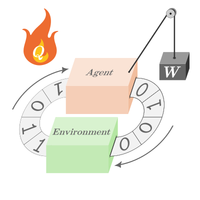
Information Thermodynamics of Agents: The Work Capacity of Channels with Memory
Article | | 2026-10-05 06:00 EDT
Lukas J. Fiderer, Paul C. Barth, Isaac D. Smith, and Hans J. Briegel
An information-theoretic model of agents, i.e., complex self-organizing systems, shows that agents must forget parts of their past actions in order to operate at thermodynamic efficiency.
Phys. Rev. X 16, 041004 (2026)
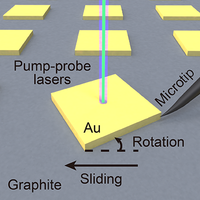
Moving Heterointerface with Robustly High Thermal Conductance
Article | | 2026-10-05 06:00 EDT
Fuwei Yang, Wenjiang Zhou, Yelingyi Wang, Yuxi Wang, Deli Peng, Quanshui Zheng, and Bai Song
Structural superlubricity between gold micromesas and graphite enables high, wear-free interfacial thermal conductance that remains insensitive to sliding and rotation.
Phys. Rev. X 16, 041005 (2026)
arXiv
Uniform meandric systems as percolation on planar maps: conjectures and a numerical study
New Submission | Statistical Mechanics (cond-mat.stat-mech) | 2026-10-06 20:00 EDT
We perform a numerical study of uniform meandric systems via their encoding by pairs of simple random walks and their interpretation as a model of critical percolation on random planar maps. We investigate certain natural box-crossing events and provide numerical evidence for a strong negative association between opposite open crossings and formulate conjectures on their asymptotic behavior. Our second contribution is a simple law-preserving dynamics on meandric systems, by local peak/valley flips in the walk encoding. Our simulations suggest that the percolation structure decorrelates much faster than the underlying random planar map.
Statistical Mechanics (cond-mat.stat-mech), Mathematical Physics (math-ph), Combinatorics (math.CO), Probability (math.PR)
Comments are welcome
Magnon chiral damping beyond the Dzyaloshinskii-Moriya interaction
New Submission | Mesoscale and Nanoscale Physics (cond-mat.mes-hall) | 2026-10-06 20:00 EDT
Darpa Narayan Basu, Subhadip Ghosh, Peter M. Oppeneer, Alexander Mook, Ritwik Mondal
Magnon chiral damping denotes damping that is asymmetric with respect to the magnon wave vector. Such nonreciprocity has been attributed to antisymmetric Dzyaloshinskii-Moriya spin interactions. Here, we provide an alternative theoretical explanation of magnon chiral damping using linear spin-wave theory and antisymmetric Gilbert damping introduced within the Landau-Lifshitz-Gilbert equation of motion. First, employing a minimal model of a single sublattice ferromagnet on a rectangular lattice, we show that the effective magnon damping is independent of the system’s energy, including contributions from Dzyaloshinskii-Moriya interactions. Considering scalar nonlocal Gilbert damping, the effective damping parameter $ \alpha_{\rm eff}$ becomes wave-vector dependent. In the long-wavelength limit, $ \alpha_{\rm eff}$ acquires a quadratic dependence on $ \bf{k}$ . Furthermore, the antisymmetric component of the Gilbert damping tensor gives rise to asymmetric (nonreciprocal) magnon damping. We find the asymmetry to be linear in $ \bf{k}$ in the long-wavelength limit, consistent with recent experiments. Extending the analysis to a two-sublattice system, we consider cross-sublattice Gilbert damping. In the presence of only scalar Gilbert damping, broken reciprocity in magnon relaxation arises from Dzyaloshinskii-Moriya interactions. In contrast, the cross-sublattice antisymmetric component of the Gilbert damping tensor can generate nonreciprocal magnon damping even if the Dzyaloshinskii-Moriya interaction is parametrically set to zero, providing an alternative mechanism for asymmetric spin-wave relaxation. Notably, the nonreciprocity induced by antisymmetric Gilbert damping is roughly an order of magnitude larger than that arising from Dzyaloshinskii-Moriya interactions.
Mesoscale and Nanoscale Physics (cond-mat.mes-hall), Materials Science (cond-mat.mtrl-sci), Other Condensed Matter (cond-mat.other)
14 pages, 6 figures
Efficient, Geometry-only Prediction of Advection-dominated Particle Transport through Saturated Soils
New Submission | Soft Condensed Matter (cond-mat.soft) | 2026-10-06 20:00 EDT
Hao Liu, Rizwan Khaleel, Markus Rolf, Martin G.J. Löder, Christina Bogner, Stephan Gekle
The environmental transport of microplastic particles has raised concerns because of their potential ecological and human-health impacts. A particular challenge for experiments on microplastic transport in soils is the fact that soil is a highly complex and non-transparent porous medium. Thus, our knowledge of transport mechanisms of microplastics in soils and related ecological implications is still limited and computational simulations offer an additional possibility to obtain important insights into the physical transport behaviour of microplastics. Yet, direct particle-resolved simulations in realistic soil structures for macroscopic sample sizes remain a computational challenge. We introduce an efficient pore-network model, minD-PNM, that predicts particle breakthrough curves in water-saturated soils using experimental X-ray micro-computed tomography ($ \mu$ CT) pore geometries as the only input. The model combines an approximately $ t^{-3}$ pore-scale transit time distribution with a minimum-dissipation partition of multi-inlet-multi-outlet pores, and propagates these distributions through the pore network to predict breakthrough curves. We benchmark minD-PNM against lattice Boltzmann and immersed boundary simulations for small systems, and against microplastic column experiments in quartz sediments for macroscopic sample sizes. In both cases, the predicted breakthrough curves agree well with the corresponding reference data. Because it requires only geometric information, minD-PNM scales to macroscopic sample volumes offering a practical tool for contaminant-hydrology studies of particulate pollutants.
Soft Condensed Matter (cond-mat.soft), Computational Physics (physics.comp-ph), Fluid Dynamics (physics.flu-dyn), Geophysics (physics.geo-ph)
From Dirac surface response to Casimir forces in Bumblebee-CFJ electrodynamics
New Submission | Mesoscale and Nanoscale Physics (cond-mat.mes-hall) | 2026-10-06 20:00 EDT
We examine the Casimir interaction between planar massive Dirac materials coupled to a Lorentz-violating Bumblebee-CFJ vector sector. The standard renormalized one-loop polarization tensor of the Dirac quasiparticles is used as the nonlocal surface response in the Lifshitz scattering formalism. For the normally oriented Lorentz-violating background, the surface response remains parity-even. Hence, the repulsive regimes do not originate from a Hall-like conductivity. Instead, they arise from the CFJ-induced mixing of TE and TM bulk modes, combined with the spatially dispersive response of the Dirac sheets. Furthermore, we show that the Dirac mass suppresses the interaction and changes its large-distance scaling, whereas the CFJ parameter drives transitions between attractive and repulsive regimes.
Mesoscale and Nanoscale Physics (cond-mat.mes-hall), High Energy Physics - Theory (hep-th)
26 pages and 2 captioned figures
Tactile Perception through Fluid-Solid Interaction
New Submission | Soft Condensed Matter (cond-mat.soft) | 2026-10-06 20:00 EDT
Arman Goshtasbi, Minke Berghuis, Aida Parvaresh, Saravana Prashanth Murali Babu, Robert W. Style, Ahmad Rafsanjani
Soft tactile sensors elevate robotic touch through enhanced flexibility and adaptability, yet most existing designs depend on embedded electronics that are susceptible to interference and environmental limitations. In this work, we leverage fluid-solid interactions to develop a class of soft tactile sensors that operate entirely without electronics at the sensing site. The sensor comprises a fluid-filled elastomeric channel connected to only two external pressure sensors. Touching different regions of the elastomeric surface displaces the viscous fluid, producing distinct pressure patterns that encode both touch position and force. These signals are decoded through a machine learning framework that integrates feature extraction, soft clustering, and adaptive neuro-fuzzy inference to achieve accurate localization and force estimation. We validate this concept through single-point touch localization and force estimation in a linear (1D) sensor and extend the same sensing principle to 2D tactile mapping by routing the channel across the surface using space-filling curves, while maintaining the same minimal hardware setup. This simple approach remains effective in environments where conventional electronic sensors often fail, such as underwater or in the presence of magnetic interference.
Soft Condensed Matter (cond-mat.soft), Robotics (cs.RO)
Goshtasbi A., Berghuis M., Parvaresh A., Murali Babu S.P., Style R.W. & Rafsanjani A. (2026) Tactile perception through fluid-solid interaction. Nature Communications 17, 5874
Soap Films Amplify the Air-Water Interface but Neither Produce Detectable H2O2 Nor Enhance Reduction of Gold Ions
New Submission | Soft Condensed Matter (cond-mat.soft) | 2026-10-06 20:00 EDT
Muzzamil Ahmad Eatoo, Yash K. Mohature, Francisco P. Tome, Lisa Oki Exposito, Sirisha Kamireddy, Najeh Kharbatia, Himanshu Mishra
Soap films afford gentle production of air-water interfaces and underlie numerous practical applications. Recently these interfaces have been shown to exhibit unexpected redox capability, wherein Triton X soap films formed with water or HAuCl4 solutions (i) oxidize water up to 1.67 mM H2O2 and (ii) reduce aqueous Au3+ ions into gold nanoparticles, without external energy or catalyst. These reports tend to align with the broader claims of the redox nature of the air-water interface, which has been intensely debated. Here, we re-examine these claims via complementary application of a broad range of techniques, including NMR spectroscopy, fluorescence, colorimetric, TEM, DLS, ICP-OES. Experimental results reveal no evidence for H2O2 formation despite repeated formation of over 300 cycles of soap films, were probed via NMR spectroscopy and other analytical methods. Next, we interrogated soap films for their ability to spontaneously reduce Au3+ ions. TEM and time-resolved DLS revealed that the formation of Au nanoparticles was already formed spontaneous in bulk solutions, and casting soap films (300 cycles) had no measurable effect on particle size or density. This observation was confirmed via complementary quantitative ICP-OES. Our investigations showed that Au nanoparticles formation in bulk HAuCl4 solution without or with triton soap was accompanied by H2O2 generation, and we provide mechanistic insights into these processes. Collectively, these results demonstrate that amplification of the air-water interfacial area through soap-film formation is insufficient, by itself, to induce detectable H2O2 generation or enhance Au-ion reduction. More broadly, our findings highlight the need to distinguish reactions that are driven by purely air-water interfacial effects from those that originate from bulk-solution chemistry and at the solid-water interface
Soft Condensed Matter (cond-mat.soft), Materials Science (cond-mat.mtrl-sci)
Harnessing Measurement Error as a Thermodynamic Resource in Two-Reservoir Information Engines
New Submission | Statistical Mechanics (cond-mat.stat-mech) | 2026-10-06 20:00 EDT
Yang Xiao, Qian Zeng, Jin Wang
In general, measurement error constrains the performance of information engines. However, this may not hold universally. In this work, we propose a class of two-reservoirs information engines (TRIEs) with a two-level system and demonstrate that the monotonic relationships between the work output, the efficiency, as well as the work fluctuations of the TRIEs and measurement error are determined by the demon’s control parameters. Utilizing this, we establish the conditions that allow the TRIEs to generate useful work under any level of measurement error, and identify the regimes in which these performance parameters can be optimized simultaneously by the measurement error. Furthermore, we demonstrate that when the demon’s energy cost is supplied solely by the cold reservoir, the efficiency that accounts for this cost can surpass the standard Carnot bound without violating the second law. Finally, we design a dual Otto cycles TRIE and provide an experimental scheme for its implementation based on a trapped $ ^{40}\mathrm{Ca}^+$ ion. Significantly, our results can be applied to the multi-level system information engines.
Statistical Mechanics (cond-mat.stat-mech), Data Analysis, Statistics and Probability (physics.data-an)
Predicting and extending the bubble-free operating limit of capillary-fed water electrolysis
New Submission | Soft Condensed Matter (cond-mat.soft) | 2026-10-06 20:00 EDT
Farkhondeh Khodabandeh, Zhengmao Lu
Gas bubbles impose large penalties in water electrolysis at industrially relevant rates. Capillary-fed electrolyzers greatly mitigate them by wicking electrolyte to electrodes and venting gas from the backside, but only below a threshold current density. We show that the separator pore size sets this threshold through two opposing effects: smaller pores raise the supersaturation required for nucleation but reduce the permeability for electrolyte replenishment. A coupled electrochemical-transport model, anchored to a single measured onset, quantifies both mechanisms across 0.1-8 $ \mu$ m pores. Experimentally, reducing pore size from 8 to 1.2 $ {\mu}$ m raises the bubble onset limit from 0.18 to 1.73 A cm$ ^{-2}$ and lowers cell voltage by 0.11 V at 1 A cm$ ^{-2}$ , primarily by suppressing bubble-induced overpotential. At 0.45 $ {\mu}$ m and below, the replenishment limit takes over and the cells dry out before bubbles form. Our findings establish the bubble-free operation limit as designable rather than purely empirical.
Soft Condensed Matter (cond-mat.soft), Fluid Dynamics (physics.flu-dyn)
Information Entropy and Dissipation Potential in Stochastic Nambu Nonequilibrium Thermodynamics
New Submission | Statistical Mechanics (cond-mat.stat-mech) | 2026-10-06 20:00 EDT
We investigate the relationship between the dissipation potential $ S_{\mathrm{NB}}$ and information entropy in stochastic Nambu nonequilibrium thermodynamics (NNET). Starting from pure diffusion, gradient-flow systems, and systems with Hamiltonian rotational currents, we derive the stationary distribution of the Fokker–Planck equation including a Nambu flow. We show that, when the Nambu flow preserves the dissipation potential and an Einstein-type relation holds between the diffusion matrix and the transport tensor, the stationary distribution is governed by an exponential weight determined by $ S_{\mathrm{NB}}$ . Consequently, the local self-information is directly related to the dissipation potential, demonstrating that $ S_{\mathrm{NB}}$ should not be identified with the Shannon entropy itself but instead serves as the stationary quasipotential governing the nonequilibrium steady-state distribution. Using the distinction between the thermodynamic entropy and the dissipation potential established for an open gas–piston system coupled to a thermal bath and an external-pressure reservoir, we further clarify the Massieu interpretation of $ S_{\mathrm{NB}}$ , introduce a Nambu canonical distribution, and derive the covariance of fluctuations within the saddle-point approximation. These results provide a statistical interpretation of the NNET dissipation potential by identifying it as the stationary quasipotential underlying nonequilibrium steady states.
Statistical Mechanics (cond-mat.stat-mech)
23 pages
Surface scalar plasmons on curved interfaces: a venue for analogue gravity
New Submission | Mesoscale and Nanoscale Physics (cond-mat.mes-hall) | 2026-10-06 20:00 EDT
We investigate whether the geometry of a curved conductor–dielectric interface can modify the effective mass and propagation of scalar surface plasmons (SSPs). In the hydrodynamic limit, we describe SSPs as density perturbations in a semiclassical jellium electron gas. Using a thin–layer dimensional reduction procedure, we derive a massive Klein–Gordon equation for SSPs on the curved interface with a geometric potential. We find that under specific conditions, the geometric potential allows SSP propagation with a vanishing effective mass. We then apply the formalism to a well known analogue black hole configuration, determining the corresponding quasinormal mode frequencies. Our results show that interface curvature provides a geometric handle on plasmon propagation and localization, suggesting new possibilities for plasmon transport and analogue gravity experiments with surface plasmons.
Mesoscale and Nanoscale Physics (cond-mat.mes-hall), Quantum Gases (cond-mat.quant-gas), General Relativity and Quantum Cosmology (gr-qc), Mathematical Physics (math-ph)
Space Charge Layer and Facile Halide Rearrangement Enable Fast Lithium-Ion Transport at Halide Solid Electrolyte Interfaces
New Submission | Materials Science (cond-mat.mtrl-sci) | 2026-10-06 20:00 EDT
Md Salman Rabbi Limon, Matthew Beltran, Boyu Wang, Laisuo Su, Zeeshan Ahmad
Halide solid electrolytes are promising candidates for energy-dense all-solid-state batteries because they combine high-voltage stability, facile processing, and fast Li-ion conduction. A recent study showed that physically mixing two halide solid electrolytes, Li$ _2$ ZrCl$ _6$ (LZC) and Li$ _3$ YCl$ _6$ (LYC), raises the Li-ion conductivity by 46% and 58% relative to LZC and LYC, respectively, suggesting that halide heterointerfaces offer a new route to faster ion transport; however, the origin of this enhancement remains unknown. Here, we combine density functional theory calculations, defect thermodynamics, machine-learning-driven molecular dynamics, and vibrational and Raman spectroscopy to elucidate Li-ion transport in LZC, LYC, and their heterointerface. Using low-energy ordered supercells that represent the configurational disorder of these halides, we find that Li and Cl interstitials are the dominant charged defects in both materials. Forming an LZC|LYC interface favors the generation of interfacial Li Frenkel pairs, producing Li interstitials in LZC and Li vacancies in LYC, thereby increasing the charge-carrier concentration near the interface. By analyzing the angular orientations of Cl around the metal cations in molecular dynamics trajectories of a coherent interface, we show that the interface creates new stable Cl configurations that accommodate the framework rearrangement accompanying Li hops. Simulated vibrational power spectra and measured Raman spectra indicate lattice softening and octahedral distortion at the interface, consistent with the formation of these Cl configurations. These results support a cooperative mechanism in which space charge layer formation and a dynamically flexible interfacial halide framework enhance Li-ion conduction, providing atomistic design principles for superionic halide heterostructures and multicomponent solid electrolytes.
Materials Science (cond-mat.mtrl-sci), Chemical Physics (physics.chem-ph)
46 pages, 9 Figures + 11 pages of Supporting Information
The ALPS project release 3.0: open source software for strongly correlated systems
New Submission | Strongly Correlated Electrons (cond-mat.str-el) | 2026-10-06 20:00 EDT
F. Alet, T. Chen, A. Feiguin, E. Gull, S. Iskakov, J. P. F. LeBlanc, F. Lin, A. Mirmira, G. Möller, L. Pollet, M. Rosales, V. W. Scarola, H. Shinaoka, H. Terletska, S. Todo, M. Troyer, M. Wallerberger, P. Werner, T. M. R. Wolf
We present release 3.0 of the ALPS (Algorithms and Libraries for Physics Simulations) project, an open-source software project to develop libraries and application programs for the simulation of strongly correlated quantum lattice models such as quantum magnets, lattice bosons, and strongly correlated fermion systems. As in previous releases, development is centered on common data formats, on libraries to simplify and speed up code development, and on full-featured simulation programs that let non-experts carry out serial or parallel numerical simulations using the important algorithms for quantum lattice models: classical and quantum Monte Carlo (QMC) using non-local updates, extended-ensemble simulations, exact and full diagonalization (ED), the density matrix renormalization group (DMRG), and continuous-time QMC solvers for dynamical mean-field theory (DMFT). Major changes in release 3.0 include distribution of the pyalps binary through the Python Package Index (pip install pyalps) and through Spack for HPC systems; migration of development to GitHub with continuous integration and automated testing; relicensing of the package under the permissive MIT license; a rebuilt documentation and tutorial website, including a set of Jupyter-notebook tutorials and localized content; a broad modernization of the C++ codebase (C++17 compliance, Boost and NumPy 2.0 compatibility, and warning and dead-code cleanup) together with a major DMRG update and associated reliability and build-compatibility fixes; the removal of legacy components (the VisTrails provenance integration and the TEBD, MPS, and directed-worm-algorithm application codes); archival of release 3.0.0 with a Zenodo DOI (https://doi.org/10.5281/zenodo.22775899%29%3B and a formal governance and sustainability model developed under the US National Science Foundation (NSF) POSE program. The software is available at this https URL.
Strongly Correlated Electrons (cond-mat.str-el), Quantum Gases (cond-mat.quant-gas), Computational Physics (physics.comp-ph), Quantum Physics (quant-ph)
Integrating spin glass dynamics into nanomechanical resonators
New Submission | Mesoscale and Nanoscale Physics (cond-mat.mes-hall) | 2026-10-06 20:00 EDT
S.Y. Grebenchuk, T.M. Savilov, Y.W. Ho, A.K. Grebenko, M. Kravtsov, J.M. Wolf, D.A. Litvinov, Z. Yang, P. Cai, S. Ramachandran, R. Duan, L. Zheng, B. Özyilmaz, G. Eda, E.J.G. Santos, M. Koperski, K.S. Novoselov, M. Šiškins
Spin glasses are non-equilibrium magnetic systems with pronounced slow relaxation, ageing, and chaotic, synaptic-like properties, whose unique history-dependent dynamics have remained difficult to harness in functional devices. Two-dimensional van der Waals spin-glass magnets offer a route to overcome this limitation by allowing controlled coupling between magnetic and mechanical degrees of freedom. Here, we demonstrate the integration of a spin-glass functionality in nanoelectromechanical systems (NEMS) using thin exfoliated NbFeTe$ _2$ films, which establishes a robust spin-glass state down to a few tens of nanometer-thick layers. Using cryogenic magnetic force microscopy, we reveal characteristic slow, hour-scale macroscopic magnetic relaxation, associated with glassy reorganisation of its magnetic domain clusters. Incorporation of thin NbFeTe$ _2$ into membrane resonators allows the transduction of this glassy magnetic domain relaxation into strain, shifting their mechanical resonance frequency. This provides a functional nanomechanical readout of spin-glass dynamics and establishes a versatile platform for integrating frustrated magnetism into NEMS.
Mesoscale and Nanoscale Physics (cond-mat.mes-hall), Materials Science (cond-mat.mtrl-sci)
Escaping the Composite Fermi Sea: An Incompressible State at Half Filling in Graphene’s Lowest Landau Level
New Submission | Mesoscale and Nanoscale Physics (cond-mat.mes-hall) | 2026-10-06 20:00 EDT
Domagoj Perkovic, Ziwei Wang, Steven Herbert Simon
Recent experiments in monolayer and trilayer graphene have observed incompressible even-denominator fractional quantum Hall states within narrow regions of parameter space associated with crossings of zeroth Landau levels. This is surprising because at half filling the Coulomb interaction in the zeroth Landau level is expected to favour a compressible composite Fermi liquid. Here we provide the first quantitative energetic study of the candidate incompressible phases and of the microscopic mechanisms that can stabilise them near such Landau-level crossings. Using exact diagonalization and infinite density-matrix renormalisation group, we first study ultra-short-range corrections to the Coulomb interaction arising from finite layer separation, lattice-scale effects, and electron-phonon coupling. We find that a sufficiently strong attractive short-range interaction drives the composite Fermi liquid first into a weakly paired (d)-wave pseudospin-singlet state and subsequently into a strongly paired state. However, microscopic estimates of these short-range corrections are far too small to stabilise either incompressible phase. We then incorporate Landau-level mixing through screening within the random-phase approximation. Screening substantially reshapes the effective interaction, suppresses the weak-pairing regime, and strongly enhances the tendency toward strong pairing. For a realistic range of microscopic parameters, the strongly paired phase is stabilised over a substantial fraction of that range. Our results identify the interplay of Landau-level mixing and ultra-short-range interactions as a plausible microscopic mechanism for the experimentally observed incompressible states in monolayer and trilayer graphene and point toward a strongly paired composite-fermion phase as their candidate ground state.
Mesoscale and Nanoscale Physics (cond-mat.mes-hall), Strongly Correlated Electrons (cond-mat.str-el)
An Absorbing State Model with an Emergent Ising Transition
New Submission | Statistical Mechanics (cond-mat.stat-mech) | 2026-10-06 20:00 EDT
Shen Ai, Dov Levine, Paul Chaikin
We study a dynamical model of repulsive needles with centers fixed on a square lattice. Needles that overlap are active and receive a repulsive rotation $ \theta \in [0,\epsilon)$ ; needles with no overlap do not move. This model exhibits an absorbing state transition. Nematic order was observed for long needles. For a range of needle lengths and $ \epsilon$ , the system self-organizes into a state with checkerboard symmetry. As $ \epsilon$ is increased, this phase melts and becomes disordered. Remarkably, we find that this phase boundary exhibits critical exponents identical to those of the equilibrium 2D Ising model.
Statistical Mechanics (cond-mat.stat-mech)
Equivariant generative diffusion learns and generalizes the structural ensemble of amorphous oxides
New Submission | Materials Science (cond-mat.mtrl-sci) | 2026-10-06 20:00 EDT
Jun Jiang, Ian Berry, James N. Fry, Hai-Ping Cheng
Amorphous materials are statistical ensembles rather than definitive structures, and conventional density-functional (DFT) and machine-learned-potential simulations sample only a small part of that ensemble. We present an $ SE(3)$ -equivariant denoising-diffusion model that learns the configurational distribution of amorphous oxides, so the model itself is the structure database. The learning is data efficient. A model trained on $ 1{,}781$ DFT configurations suffices to reproduce partial radial distribution functions, coordination statistics and bond-angle distributions, and to generate models of over $ 3\times10^{5}$ atoms at a cost comparable to that of the cheapest classical pair potentials. The trained model can propose amorphous atomic structures for first-principles relaxation to explore the configuration space. For example, it locates an amorphous Zr-Ta-O structure $ 36$ meV/atom below the previously known minimum. Generation can also extend beyond trained conditions to non-stoichiometric compositions, other mass densities, interfaces, and doping. First-principles verification confirms that generation can be steered to a requested energy, and shows that the denoising training loss does not rank generative quality, because the two measure different things.
Materials Science (cond-mat.mtrl-sci), Computational Physics (physics.comp-ph)
40 pages, 5 figures
Transport, Hall Effect, and Collective Dynamics of Driven Particles in Active Chiral Media
New Submission | Statistical Mechanics (cond-mat.stat-mech) | 2026-10-06 20:00 EDT
C. Reichhardt, C.J.O. Reichhardt
We examine the dc driven transport of particles with Yukawa interactions through an assembly of chiral active particles undergoing circular motion. The driven particles exhibit a jammed phase, a nonlinear disordered or plastic regime where there is a finite Hall effect produced by interactions with the active chiral particles, and a high drive linear regime where the driven and nondriven particles phase separate and the Hall effect nearly disappears. The chiral particles experience strong drag and Hall effects from the driven particles, and these effects vary monotonically with changing thermal fluctuations or chiral motion parameters. The different dynamical phases are correlated with features in the longitudinal and transverse transport curves, and we map out the phases as a function of active orbit size, thermal fluctuations, and particle density.
Statistical Mechanics (cond-mat.stat-mech), Soft Condensed Matter (cond-mat.soft)
20 pages, 19 postscript figures
ToF-PAX-RIXS: A Time-of-Flight Spectrometer for combined ARPES and RIXS
New Submission | Strongly Correlated Electrons (cond-mat.str-el) | 2026-10-06 20:00 EDT
Chafic Fawaz, Tom Lacmannn, Yaryna Lytvynenko, Sergii Chernov, Olena Tkach, Siegmar Roth, Jan O. Schunck, Amon Lanz, Jakob Dilling, Lukas Bruckmeier, Markus Scholz, Frank Scholz, Arne Meyer, Dirk Fuchs, Lara Schmieder, Yiran Liu, Matteo Minola, Bernhard Keimer, Dmytro Kutnyakhov, Kai Rossnagel, Olena Fedchenko, Angela Wittmann, Moritz Hoesch, Gerd Schönhense, Matthieu Le Tacon, Hans-Joachim Elmers, Martin Beye
We present ToF-PAX-RIXS, a compact instrument that combines time-of-flight momentum-microscopy angle-resolved photoemission spectroscopy (ARPES) with resonant inelastic X-ray scattering (RIXS). The latter is based on photoelectron spectrometry for analysis of X-rays (PAX). The two techniques are implemented with a single multimode electron-optical column, allowing measurements to be performed sequentially on the same sample under identical experimental conditions. In ARPES mode, the instrument records the photoemission intensity as a function of kinetic energy and two in-plane momentum components. In PAX-RIXS mode, scattered soft X-ray photons are absorbed in a thin metallic converter, and the generated photoelectrons are analyzed in energy and position of emission on the converter. The electron kinetic energy retains the spectral information of the scattered photons, while the position is related to the scattering angle and therefore to the momentum transfer, enabling simultaneous access to a finite momentum-transfer interval. We describe the mechanical design, converter assembly, scattering geometry, and multimode electron optics of the instrument. Its PAX-RIXS performance is benchmarked at the Cu $ L_3$ edge using CaCuO$ _2$ , with Au, Ag, and Pt converters. The measured spectra reproduce the principal features obtained with a conventional grating RIXS spectrometer, and deconvolution yields an effective reconstructed energy resolution better than $ 120$ ~meV under the present conditions. Finally, combined ARPES and PAX-RIXS measurements on the same Ca-doped YBa$ _2$ Cu$ _3$ O$ _{6.45}$ sample demonstrate the capability of the instrument to correlate electronic structure and collective excitations within a common compact platform.
Strongly Correlated Electrons (cond-mat.str-el), Superconductivity (cond-mat.supr-con), Instrumentation and Detectors (physics.ins-det)
Casimir Force, Magnetization, and Susceptibility for \ Ising Chain with an Impurity Atom in the Presence of an External Field
New Submission | Statistical Mechanics (cond-mat.stat-mech) | 2026-10-06 20:00 EDT
The article contains exact results for the behavior of the Casimir force of Ising chain of $ N$ atoms containing an impurity atom. The force is considered as a function of $ N$ and on both the temperature $ T$ and the external magnetic field $ h$ . The interactions between nearest neighbors within the chain are supposed to be of a ferromagnetic short-ranged type $ J>0$ . The impurity atom interacts with constants $ J_{ia}$ with its nearest neighbors, where $ J_{ia}$ can be both of ferromagnetic type, i.e., $ J_{ia}>0$ , as well as of antiferromagnetic type, i.e., $ J_{ia}<0$ . It turns out that the Casimir force can be both attractive or repulsive, depending on the sign and the magnitude of the ratio $ J_{ia}/J$ .
Statistical Mechanics (cond-mat.stat-mech)
8 pages; 6 figures
Studying the evolution of exchange and dipolar interactions and spin correlation in vdW magnet CrCl3 across magnetic phases
New Submission | Materials Science (cond-mat.mtrl-sci) | 2026-10-06 20:00 EDT
Prem B. Karki, Ayodimeji E. Aregbesola, Karishma Prasad, Jonathan Skeels, Avani Inamdar, Pooja Kalal, Jian Wang, Kapildeb Ambal*
Understanding quantum interactions in van der Waals magnets are critical to realizing their potential for next-generation magnetic, electronic, and spintronic applications. In this study, we investigated the evolution of exchange and dipole-dipole interactions in van der Waals magnet CrCl3 using multifrequency broadband (1-16 GHz) magnetic resonance on a bulk single-crystal CrCl3 sample. We found that the dipolar-broadened low-field resonance linewidth narrows due to exchange narrowing at higher resonance fields. Our findings show that the exchange interaction evolves exponentially as we lower the sample temperature from room temperature to 50 K. However, we found that the dipole-dipole interaction remains constant in the same temperature range. We have also detected the half-field magnetic resonance transition at room temperature, indicating a robust dipole-dipole interaction among spins. The measured inter-spin distance is 2.4(3) A at room temperature. The evolution of dipole interactions, the observation of half-field magnetic resonance, and the strong exchange interaction indicate short-range ordering/correlation in CrCl3 at temperatures far above the magnetic global ordering temperature. This study also demonstrates the significance and sensitivity of the multifrequency electron spin resonance technique for understanding quantum interactions and magnetic correlations in van der Waals magnetic materials.
Materials Science (cond-mat.mtrl-sci), Mesoscale and Nanoscale Physics (cond-mat.mes-hall)
Exchange-controlled quantum beats and entanglement in an exciton–bimodal-cavity system
New Submission | Mesoscale and Nanoscale Physics (cond-mat.mes-hall) | 2026-10-06 20:00 EDT
Cesar E. P. Villegas, Victor P. Brasil, Pedro A. S. Contri, Kevin Lizárraga, Jonas Maziero
We theoretically demonstrate tunable population transfer and entanglement generation in a two-exciton system coupled to a bimodal optical cavity, including an exciton-exciton exchange interaction. By using dressed-state transformations and Löwdin partitioning, we derive effective Hamiltonians that identify three dynamical time scales: local polaritonic oscillations, long-period dressed-state beats, and direct excitonic exchange. We apply the framework to graphene nanoribbon excitons, using excitonic energies, transition dipoles, and lifetimes obtained from first-principles calculations to parameterize the model. In the small- and moderate-exchange regimes, the dynamics become multiscale, and the beat channel sustains sizable quantum entanglement over long dissipative time windows. In the large-exchange regime, the excitonic Hamiltonian dominates and drives nearly complete population transfer between excitonic states over many coherent cycles. The resulting analytical expressions provide direct design rules connecting the beat period, transfer amplitude, and coherent-cycle number to the exchange interaction, cavity detuning, and light–matter coupling. Our results establish a controllable route for engineering long-lived entanglement and coherent excitonic operations in exciton–bimodal-cavity systems.
Mesoscale and Nanoscale Physics (cond-mat.mes-hall)
Distilling universal machine-learning potentials for moiré lattices across one million atoms
New Submission | Materials Science (cond-mat.mtrl-sci) | 2026-10-06 20:00 EDT
Thomas Huang, Yueyao Fan, Kaichen Xie, Bolun Li, Kaijie Yang, Jenna A. Bilbrey, Eric Bylaska, Peter V. Sushko, Di Xiao, Ting Cao
Atomic reconstruction reshapes moiré materials across multiple scales, from local structure and polarization textures to global electronic topology, yet direct \textit{ab initio} modeling becomes prohibitive for large superstructures such as marginal-twist-angle moirés and moiré-of-moirés. We develop MoiréMLIP by fine-tuning a universal atomistic model on the density functional theory labeled Moiré Kaleidoscope dataset, which spans transition metal dichalcogenide compositions, symmetries, stackings, and twist angles. MoiréMLIP reproduces \textit{ab initio} reconstruction with force errors of 6–8,meV/Å and transfers to smaller twist angles and unseen structures. Knowledge distillation yields MoiréMLIP-mini, which retains this accuracy while extending single-GPU inference to one million atoms. Applied to an alternate-twist MoTe$ _2$ trilayer, it reveals a hierarchical polarization network spanning tens of nanometers arising from large moiré-cell distortions sharply localized along the moiré-of-moiré domain walls. These results overcome key accuracy, transferability, and scaling bottlenecks of existing atomistic models and enable predictive simulations across emergent moiré length scales.
Materials Science (cond-mat.mtrl-sci), Mesoscale and Nanoscale Physics (cond-mat.mes-hall)
14 pages, 6 figures, 5 tables
Agentic Resource Allocation for Batch Multi-Objective Bayesian Optimization in Autonomous Materials Discovery
New Submission | Materials Science (cond-mat.mtrl-sci) | 2026-10-06 20:00 EDT
Robert Robinson, Shakti Prasad Padhy, Sushant Sinha, Sk Md Ahnaf Akif Alvi, Juan Florez Coronel, Brent Vela, Trevor Hastings, Douglas Allaire, Raymundo Arróyave
The discovery and development of advanced materials is a challenging process constrained by the high time and monetary costs of synthesis, processing, and characterization. The underlying design spaces can be enormous, often with multiple competing objectives. Bayesian optimization (BO) provides a principled approach for efficiently navigating such spaces, but most workflows rely on fixed exploration-exploitation policies that lack the capacity to adapt to shifting constraints in dynamic campaigns typical of self-driving laboratories. In this work, we develop a multi-objective BO framework for alloy design under resource constraints, benchmarking strategies for adaptive policy tuning at each iteration. Our evaluation covers a septenary refractory high-entropy alloy (RHEA) system focused on maximizing melting temperature and minimizing density, and an Fe-Co-Ni-based soft magnetic alloy system targeting saturation magnetization, coercivity, and hardness. We compare an exploitation-focused strategy, a fixed mixed exploratory/exploitative policy, and two distinct LLM-based adaptive strategies with different approaches to batch allocation and campaign signal interpretation, evaluated across baseline and mid-campaign resource event conditions including budget reductions, timeline cuts, and combined disruptions. Our results show that mixed allocation strategies accumulate substantially more mutual information than the exploitation-focused baseline at a proportionally smaller cost to hypervolume and optimization speed, with adaptive strategies outperforming a fixed-mixed allocation policy by adjusting their allocation in response to both evolving campaign statistics and resource constraints. These findings suggest that adaptive resource allocation offers a favorable tradeoff for materials discovery campaigns in reducing predictive uncertainty on Pareto-optimal compositions.
Materials Science (cond-mat.mtrl-sci), Artificial Intelligence (cs.AI), Machine Learning (cs.LG)
36 pages, 8 Main Text Figures, 2 Main Text Tables, 3 Appendix Sections
MOSAIC: Addressing Space for Local, Steerable, and Scalable Atomistic Generation
New Submission | Materials Science (cond-mat.mtrl-sci) | 2026-10-06 20:00 EDT
Ishan Nadkarni, Sebastien Hamel, Flynn Walsh, Fei Zhou
Generative models are opening new possibilities in molecular discovery and materials science. Realizing this potential, however, requires both local control over atomic placement and the ability to assemble large, heterogeneous structures. We introduce Mosaic, a hybrid mesh-particle representation that partitions space into anchored regions containing atom slots. Each slot encodes occupancy, atomic species, and a continuous displacement from its anchor, providing persistent spatial addresses for local conditioning, hierarchical generation, and scalable assembly. Because Mosaic defines a representation rather than a model, it can be paired with different generative backbones. With the molecular backbone held fixed, its local support and coordinate prior improve molecular connectivity and validity, the resulting model samples efficiently across molecular sizes and enables fine-grained spatial control. At larger material scales, the same representation enables generation of atomistic polycrystals conditioned on coarse spatial layouts. Most notably, locality turns large-scale generation into a bounded assembly problem, enabling structure generation with more than one million atoms. Together, this establishes local spatial addressing as a practical foundation for steerable generation of matter across scales, from individual molecules to large-scale structures of broader engineering significance.
Materials Science (cond-mat.mtrl-sci)
Molecular Crystal Structure Prediction from Conditional Flow on the Unit Cells
New Submission | Materials Science (cond-mat.mtrl-sci) | 2026-10-06 20:00 EDT
A molecular crystal structure is jointly described by its space group symmetry, unit cell, and the molecular alignment within the asymmetric unit. Concurrently predicting all three variables is a daunting task, as it mixes discrete symmetry choices with a high-dimensional search in the continuous space. To address this challenge, we decouple these variables using a three-step generation process. Specifically, we train a flow model to learn the conditional distribution of invariant lattice descriptors (e.g. direct- and reciprocal-lattice successive minima and Selling scalars) from a molecular graph, a Hall setting, and the number of molecules in the asymmetric unit ($ Z’$ ). Using a two sequential quasi-random sampling processes, we first reconstruct the cell parameters that match the predicted lattice invariants and density requirements, and then conduct a molecular packing search within the give symmetry and unit cell constraint. On 84 single-component systems with $ Z’ \le 1$ , our approach reproduces experimental matches for 83 systems; the remaining failure stems from force-field limitations in preserving the experimental structure. These results demonstrate that learned cell proposals can effectively support crystal structure prediction (CSP) for a given Hall setting and $ Z’$ , which may be extended to fully blind prediction with variable symmetry and $ Z’$ settings in the future.
Materials Science (cond-mat.mtrl-sci)
9 pages, 5 figures
Materials and Metrology for Out-of-Plane Damping-Like Spin-Orbit Torque
New Submission | Materials Science (cond-mat.mtrl-sci) | 2026-10-06 20:00 EDT
Xiaoxi Huang, Yuhan Liang, Orion Smedley, Daniel C. Ralph
A new generation of energy-efficient, high-density, and non-volatile memory devices could be enabled if a more efficient mechanism is developed for switching the magnetization orientation of nanoscale magnetic devices possessing perpendicular magnetic anisotropy. A promising strategy under widespread investigation is current-induced damping-like spin-orbit torque with a strong unconventional out-of-plane component, rather than only the conventional in-plane component. In recent years, such torques have been reported in a broad range of materials platforms, arising primarily from three classes of symmetry breaking within the material generating the torque: low crystal symmetry in single-crystalline materials, antiferromagnetic order, and ferromagnetic order. Despite this progress, the field remains fragmented. Measurements using different methods often disagree, artifacts have been misinterpreted, and qualitative observations are sometimes overinterpreted as evidence of technological promise. This Perspective will provide a critical overview of out-of-plane damping-like spin-orbit torques, analyzing the classes of materials which can generate such torques, the experimental methods by which the torques can be quantified, and the progress toward achieving torque efficiencies sufficient for scalable magnetic technologies.
Materials Science (cond-mat.mtrl-sci)
Magneto-transport and electronic structure studies of ternary antimonides, La$T$Sb$_2$ ($T$ = Cu, Ag)
New Submission | Strongly Correlated Electrons (cond-mat.str-el) | 2026-10-06 20:00 EDT
Himanshu Pant, Neeraj Bhatt, Deepali Sharma, Asif Ali, A. Thamizhavel, Saurabh Singh, Kentaro Kuga, Tsunehiro Takeuchi, Ravi Shankar Singh, R. Bindu
We investigate Sb square net-based Dirac semimetallic ternary antimonides La$ T$ Sb$ _2$ ($ T$ = Cu, Ag) using magnetotransport and photoelectron spectroscopic studies, complemented by density functional theory (DFT) based ab initio calculations. Our results show that both compounds exhibit a positive temperature coefficient of resistivity, linear magnetoresistance (MR), and a deviation from Fermi liquid behaviour at low temperatures (2-30 K). But only $ T$ = Ag compound exhibit signature of charge density wave (CDW) phenomena and the results of its temperature dependent MR data suggest that single-band semiclassical transport is not sufficient to understand the transport behaviour. $ \text{DFT}+U$ studies show that in both samples, an on-site Coulomb interaction ($ U$ ) for Cu 3$ d$ and Ag 4$ d$ electrons, in the presence of spin-orbit coupling (SOC) is required to reproduce experimental valence band spectra. Sb 3$ d$ , 4$ d$ core-level spectra combined with $ \text{DFT}+U$ calculations and La 3$ d$ spectra confirm the presence and effects of inequivalent Sb sites for both the samples. In contrast to the $ T$ = Cu compound, which follows expected temperature-dependent core-level sharpening, the $ T$ = Ag compound exhibits an anomalous low-temperature broadening in the CDW phase. The analysis of Sb 3$ d$ spectra suggests Sb square nets are linked to CDW phenomena in the $ T$ = Ag compound. Temperature-dependent ultraviolet photoemission spectroscopic studies on $ T$ = Ag show a small decrement in spectral DOS at the $ \epsilon_F$ for the temperature below the CDW transition temperature. These core-level studies provide a valuable spectroscopic benchmark for comparing CDW and non-CDW systems and clarifying the role of local electronic environments in CDW formation.
Strongly Correlated Electrons (cond-mat.str-el), Materials Science (cond-mat.mtrl-sci)
16 pages, 12 figures
Band Structure Modulation in Ternary-Based InAs/ AlAs1-xSbx /InAs1-xSbx Superlattices
New Submission | Materials Science (cond-mat.mtrl-sci) | 2026-10-06 20:00 EDT
This study demonstrates an overall view of recent quantum mechanical based modeling effort using empirical tight-binding method to expand the ability of calculation of electronic band structure for strained-layer superlattices composed of ternary InAs/InAs1-xSbx and InAs/InAs1-xSbx/AlAs1-xSbx materials. Using a modified sp3s\ast empirical tight-binding method and building the superlattice Hamiltonian, we demonstrate that combining the virtual crystal approximation with a bowing parameter for the s-on-site energy accurately predicts ternary superlattice behavior. We provide a comprehensive overview of our numerical simulations, which model diverse superlattice configurations ranging from long wavelength infrared range to wide-bandgap barrier architectures. Notably, the simulated energy levels strongly agree with experimental bandgap measurements of the ternary superlattices and their structural variants.
Materials Science (cond-mat.mtrl-sci)
State-selective entanglement and point-gap topology in the unidirectional Bose-Hubbard chain
New Submission | Strongly Correlated Electrons (cond-mat.str-el) | 2026-10-06 20:00 EDT
Chuan-Fu Lin, Yu-Chin Tzeng, Po-Yao Chang
We study the effect of repulsive interactions on skin modes and entanglement in the unidirectional Bose–Hubbard model. Although the ground state of this integrable model undergoes a superfluid–Mott transition with suppressed skin accumulation, the corresponding change in entanglement depends on the selected many-body state. We compare the ground state with the steady state, defined as the largest-imaginary-energy eigenstate in the zero-momentum sector. For sixteen sites at unit filling, we find that the ground-state density approaches uniform filling and its entanglement decreases toward the Mott limit, whereas the steady states exhibit a nonmonotonic entanglement crossover. At intermediate interaction ($ U/t=10$ ), the second Rényi entropy of the steady state develops four spatial maxima. We show that these maxima are accounted for by competing subsystem-number sectors within a dominant configuration manifold of four doublons and four holons, but not by the subsystem particle-number variance alone. The dominant global onsite-pair manifold retains the same entropy peak structure. At strong interaction, projection onto the one-doublon–one-holon manifold closely reproduces the full entropy profile and its two edge peaks. Furthermore, we demonstrate that the many-body winding about the origin remains nonzero at strong interaction; an exact two-site example shows how it becomes ill-defined in the singular projected $ U/t\to\infty$ limit. Our results distinguish ground-state skin suppression from state-selective entanglement and point-gap topology.
Strongly Correlated Electrons (cond-mat.str-el), Quantum Gases (cond-mat.quant-gas), Quantum Physics (quant-ph)
12 pages, 6 figures, comments are welcome
Activated coarsening of motility-induced phase separation in random environments
New Submission | Soft Condensed Matter (cond-mat.soft) | 2026-10-06 20:00 EDT
Parameshwaran A, Bhaskar Sen Gupta
Self-propelled particles that only repel one another can still separate into a dense and a dilute phase, a process known as motility-induced phase separation (MIPS). In a clean system the domains coarsen like any conserved mixture: domains grow as $ \ell(t)\sim t^{1/3}$ . Living and synthetic swimmers, however, move through rough, porous, or patterned surroundings. Using large-scale simulations of active Brownian particles, we ask how frozen heterogeneity changes MIPS coarsening. We introduce disorder in two ways, as a quenched random force field acting on particle positions and as a quenched random torque field acting on their orientations. Both destroy Lifshitz-Slyozov growth. A transient power law with a disorder-dependent exponent gives way to activated dynamics in which the effective dynamic exponent grows without bound and domains grow at most logarithmically. The crossover obeys the scaling form known from the random-field Ising model, and the domain morphology depends on disorder strength, so superuniversality fails. The two kinds of disorder act through different mechanisms. Random forces trap particles in the sinks of a random drift field once the drift beats self-propulsion. Random torques act as a sign-random, quenched chirality that erodes persistence and lowers the local Péclet number toward its critical value. Our results show that quenched disorder is a relevant perturbation for the kinetics of active phase separation and connect MIPS coarsening to the physics of pinned interfaces in disordered magnets.
Soft Condensed Matter (cond-mat.soft), Other Condensed Matter (cond-mat.other), Statistical Mechanics (cond-mat.stat-mech)
Kilovolt-class Vertical (011) \b{eta}-Ga2O3 Schottky Diodes for High Voltage and High Temperature Applications
New Submission | Materials Science (cond-mat.mtrl-sci) | 2026-10-06 20:00 EDT
Emerson J. Hollar, Aaron M. Adams, Nolan S. Hendricks, Andrew J. Green, Esmat Farzana
We report kilovolt-class vertical (011) \b{eta}-Ga2O3 Schottky diodes utilizing high-permittivity dielectric TiO2/Al2O3 field-plate for high voltage and high temperature applications. A systematic study was performed with Pt/(011) \b{eta}-Ga2O3 Schottky barrier diodes (SBDs) with varied diameters from 100 {\mu}m to 300 {\mu}m, for both with and without field-plate, that revealed excellent consistency of reverse blocking performance regardless of diode area. The field-plate SBDs achieved superior breakdown voltages (3.90 - 4.16 kV) compared to the diodes without field-plate (3.06 - 3.16 kV) owing to effective edge termination. Furthermore, we explored high-temperature performance of the field-plate (011) \b{eta}-Ga2O3 diodes that revealed excellent forward conduction properties and high rectification ratio (~10^9) throughout the temperature range (25 - 150 C). At reverse bias, the field-plate diodes also exhibited kV-range breakdown voltage with no evident increase in leakage current up to the explored elevated temperature of 150 C. The low area-dependence of breakdown voltage, excellent forward transport properties, and minimal reverse leakage at both high-voltage and elevated temperature demonstrate the exciting potential of (011) \b{eta}-Ga2O3 SBDs in high-temperature power switches. Thus, our work demonstrates the strategy of advancing the performance of vertical \b{eta}-Ga2O3 SBDs by utilizing the advantageous (011) \b{eta}-Ga2O3 epilayers with low background doping, reduced killer dislocation effects, and effective field management for high-voltage and high-temperature applications.
Materials Science (cond-mat.mtrl-sci), Systems and Control (eess.SY)
Compression-controlled dynamic buckling in thin soft sheets
New Submission | Soft Condensed Matter (cond-mat.soft) | 2026-10-06 20:00 EDT
Harsh Jain, Shankar Ghosh, Kirti Chandra Sahu
We investigate experimentally the dynamic phase transition from compressed to buckled phases for thin sheets of rubber. We find that the rubber strips enter a highly compressed, metastable state when compression speed is high. During the compressed phase, higher modes grow, followed by mode coarsening. Mode growth is accompanied by an expansion of length while the system is still being compressed. We measure the forces and length of the sheet to confirm this, and we develop a mechanism for how modes grow and coarsen during dynamical buckling. The influence of crucial control parameters in the experiments, such as the material cross section and compression speed, on the buckling dynamics, are explained theoretically.
Soft Condensed Matter (cond-mat.soft)
8 pages, 6 figures. Published in Physical Review E on 13 September, 2021
Phys. Rev. E 104, L033001 (2021)
Trapping magnetic flux quanta in superconducting 3D caps
New Submission | Superconductivity (cond-mat.supr-con) | 2026-10-06 20:00 EDT
Igor Bogush, Vladimir M. Fomin, Oleksandr Dobrovolskiy
Magnetic flux quanta in type-II superconductors are topological excitations of the order parameter whose sensitivity to the local environment makes them probes of current density, magnetic fields, and pinning landscapes. Yet, in planar thin films, individual vortices are difficult to manipulate, often requiring intricate nanopatterning or demanding scanning-probe instrumentation. Here, we show that shaping a superconducting thin film into a three-dimensional curved geometry enables controllable vortex trapping under a spatially uniform applied magnetic field. Employing a conformal formulation of the time-dependent Ginzburg-Landau equation, we simulate vortex dynamics in a cap-shaped superconducting membrane and compare it with a planar reference. Curvature converts the uniform applied magnetic field into a nonuniform local normal component, creating a reconfigurable asymmetric rim-pinning potential tunable by magnetic-field orientation. Rotating the magnetic field therefore controls the number and positions of vortices trapped along the rim. Moreover, the asymmetric pinning produces a superconducting diode effect through current-direction-dependent vortex capture. Three-dimensional curvature thus provides a route to engineer local vortex pinning and realize fluxonic devices with magnetic-field-programmable vortex trapping and transport.
Superconductivity (cond-mat.supr-con)
9 pages, 5 figures
From Equilibrium Criticality to Universal Collective Phases through Nonreciprocal Coupling of Ordered Systems
New Submission | Statistical Mechanics (cond-mat.stat-mech) | 2026-10-06 20:00 EDT
Fabrizio Rippa, Jacopo A. Garofalo, Eugenio Lippiello
Nonreciprocal interactions have emerged as a fundamental driver of collective behavior far from equilibrium. Here, we show that nonreciprocal couplings between spin systems whose isolated dynamics favors ordered states, beyond the previously identified oscillatory (swap) phase, give rise to a richer nonequilibrium phenomenology, including a multistable regime where ordered and disordered states coexist, a scenario strictly forbidden in equilibrium. Crucially, we show that this nonequilibrium phenomenology is inherited directly from the critical properties of the underlying isolated model. In particular, tricriticality in the isolated system gives rise to multistability, hysteresis, and hard excitations in the oscillatory dynamics, while non-normal interactions further enrich the phase diagram by generating multistability. Moving beyond mean-field theory, we derive a universal field equation governing the onset of these nonreciprocal oscillations in finite dimensions. Our results establish a unified theoretical framework connecting critical phenomena, dynamical systems, and non-reciprocal collective dynamics, with applications ranging from opinion dynamics to active matter
Statistical Mechanics (cond-mat.stat-mech)
Quasi-solitons of the 1D Bose gas at arbitrary-strength contact repulsion
New Submission | Quantum Gases (cond-mat.quant-gas) | 2026-10-06 20:00 EDT
Anahita Sarvi, Cesare Vianello, Jean-Sébastien Caux
Harnessing integrability at arbitrary interaction strength, we build long-lived and spatially localized soliton-like excitations in the 1D Bose gas with contact repulsion (Lieb-Liniger model). We show how these density profiles, built from selective superpositions of multi-hole eigenstates, display long lifetimes tunable through parameters like dispersion width and number of holes. We further illustrate a scaling protocol that in principle enables unbounded increase in lifetimes in the thermodynamic limit. Our results showcase classical-like excitations originating from unitary quantum dynamics, away from the semi-classical regime, and in regions where interactions cannot be treated perturbatively.
Quantum Gases (cond-mat.quant-gas), Pattern Formation and Solitons (nlin.PS), Exactly Solvable and Integrable Systems (nlin.SI)
62 pages, 40 figures
Emergent magnetic nonanalyticity in Dirac altermagnets
New Submission | Materials Science (cond-mat.mtrl-sci) | 2026-10-06 20:00 EDT
Xizhi Fu, Zhenqiao Huang, Fei Yang, Mengli Hu, Xingkai Cheng, Junwei Liu
Symmetry has long provided the organizing principle for understanding how materials respond to external perturbations. Here we show that what is permitted by symmetry need not be what actually emerges from the underlying system, and this distinction becomes particularly consequential for symmetry-related gapless Dirac fermions such as in altermagnets. A perturbation that shifts the Dirac points drives a Lifshitz reconstruction and generates an intrinsically nonanalytic effective potential, giving rise to undiscovered singular responses. In Dirac altermagnets, this nonanalyticity acquires a magnetic manifestation through $ C$ -paired spin-polarized Dirac cones: breaking the pairing symmetry $ C$ lifts their degeneracy and converts the associated Lifshitz reconstruction into an itinerant magnetization. As a consequence, piezomagnetism, the induction of a net magnetization by a mechanical strain, becomes nonlinear and nonanalytic, with $ M\propto\mathrm{sgn}(\varepsilon)\varepsilon^2$ , whereas the linear response is absent despite being allowed by symmetry. Accordingly, the leading response cannot be inferred from the conventional symmetry-based paradigm of material response built upon the cornerstones of Neumann’s principle and analytic Landau expansion. First-principles calculations identify the monolayer Fe$ _2$ S as a candidate material realization for such singular magnetic responses. These results suggest quantum singularities as a new degree of freedom for engineering material responses.
Materials Science (cond-mat.mtrl-sci)
21 pages, 4 figures
Micromagnet engineering for enhanced addressability of donor-cluster arrays in silicon
New Submission | Mesoscale and Nanoscale Physics (cond-mat.mes-hall) | 2026-10-06 20:00 EDT
Hao Wang, Baolong Zhao, Shihang Zhang, Ziliang Jin, Huan Shu, Peihao Huang, Guanyong Wang, Mingchao Duan, Tianluo Pan, Tao Xin, Guangchong Hu, Zhen Tian, Dapeng Yu, Yu He
Phosphorus donors in silicon are one of the promising platforms for fault-tolerant quantum computing, owing to their long coherence times and compatibility with complementary metal-oxide-semiconductor (CMOS) technology. However, a key bottleneck for scaling this platform lies in the independent addressability of individual spin qubits. Here, we present a scalable quantum processor architecture that integrates scanning tunneling microscope (STM)-defined phosphorus donor-cluster arrays with on-chip micromagnets. By generating magnetic field gradients, the micromagnets enable a broader addressable frequency range compared to the addressing scheme based solely on variations in hyperfine (HF) interactions, which arise from the randomness of intra-cluster configurations. Through micromagnetic simulations to optimize micromagnet geometry, we demonstrate that these structures are compatible with customized array designs, facilitating the integration of over 120 atomic spin qubits and enabling frequency multiplexing with a single microwave antenna, which greatly reduces the overhead of fan-out addressing lines. This design is further validated via magnetic measurements, which generally align with our micromagnetic simulations. These results establish a critical foundation for the development of scalable silicon quantum computing with atomic qubits.
Mesoscale and Nanoscale Physics (cond-mat.mes-hall)
12 pages, 4 figures
Chinese Physics B ae4b29(2026)
Development and Application of a Magnetoelectric Coupling Measurement System for Strain-Mediated Effects
New Submission | Materials Science (cond-mat.mtrl-sci) | 2026-10-06 20:00 EDT
Samanway Mohanta, Poonacha C.T, Hemant Singh, Gunjan Verma, A. Ahlawat, S.C. Das, G. Sinha, V. G. Sathe, D. K. Shukla
This paper reports about development of a dynamic lock-in based magnetoelectric (ME) coupling measurement system and its application to investigate strain-mediated coupling in 0.65Pb(Mg$ _{1/3}$ Nb$ _{2/3}$ )O$ _3$ -0.35PbTiO$ _3$ /NiFe$ _2$ O$ _4$ (PMN-PT/NFO) and CoFe$ _2$ O$ _4$ /BaTiO$ 3$ (CFO/BTO) composites. The PMN-PT/NFO composite exhibits a significantly enhanced ME coefficient ($ \alpha{\mathrm{ME}} \approx 1.85$ ~mV,mm$ ^{-1}$ ,Oe$ ^{-1}$ ) compared to CFO/BTO ($ \approx 0.147$ ~mV,mm$ ^{-1}$ ,Oe$ ^{-1}$ ). The antisymmetric field dependence and $ 180^\circ$ phase reversal confirm the strain-driven origin of coupling in both the samples. The superior response of PMN-PT/NFO arises from the combined effect of high piezoelectric strength in PMN-PT and low magnetic anisotropy of NFO, whereas the high magnetic anisotropy of CFO and weaker piezoelectricity of BTO limit the ME output. These results highlight the decisive role of magnetic softness and piezoelectric strength in optimizing strain-mediated ME coupling.
Materials Science (cond-mat.mtrl-sci)
Spatiotemporal imaging of microwave magnetic fields via magnonic coherent splitting
New Submission | Mesoscale and Nanoscale Physics (cond-mat.mes-hall) | 2026-10-06 20:00 EDT
C. K. Wei, Z. J. Chen, J. T. Song, S. H. Ma, W. H. Liu, J. H. Wu, Z. W. Huang, Jinwei Rao, Wei Lu, Bimu Yao
Spatiotemporal microwave magnetic-field imaging reveals current flow in high-frequency circuits and nonequilibrium spin dynamics, yet probes rarely combine calibrated spectral readout, optics-free operation and transient mapping at room temperature. Here ferrimagnetic order in yttrium iron garnet supports coherent coupling from a pump-induced magnon mode, converting target-field amplitude into a spectral splitting with all-microwave readout. Sampling the calibrated splitting over position and delay reconstructs spatiotemporal imaging of magnetic fields. Continuous-wave measurement reaches a sensitivity of 58 pT/$ \sqrt{\mathrm{Hz}}$ and recovers phases across various powers. Combined with time-resolved frequency-comb spectroscopy, the method reconstructs transient fields with a 130-ns response time. Coplanar-waveguide imaging validates the magnetic selectivity of the mode-splitting readout, where measured maps agree with simulated magnetic-field distribution. In a microwave amplifier, our reconstruction resolves nonuniform switching dynamics and detects downstream field suppression from an open-contact fault. Magnonic coherent splitting provides a scalable route for optics-free imaging of spatiotemporal field evolution in functional devices.
Mesoscale and Nanoscale Physics (cond-mat.mes-hall)
8 pages, 4 figures
MUTACO: Simulator-Efficient Response Matching in Stochastic Nonlinear Systems via Compatibility-Aware Sequential Design
New Submission | Statistical Mechanics (cond-mat.stat-mech) | 2026-10-06 20:00 EDT
Ege Karadeniz, İlter Onat Korkmaz, Umut Can Turhan, Cem Tekin, Aydın Cem Keser
Many physical inverse problems are mediated by expensive stochastic simulators for which response gradients, adjoint sensitivities, or a differentiable simulator interface are unavailable. We introduce Multiple Target-based Confident Acquisition (MUTACO), an uncertainty-aware sequential-design method for response matching that requires only noisy forward evaluations and learns the multicomponent response together with its predictive uncertainty. We develop and evaluate MUTACO for a disordered network of stochastic phase oscillators. The inverse task is to infer statistical properties of the local potential and interactions from macroscopic rotation and synchronization curves under multiple driving conditions. Rather than requiring unique recovery of these statistical properties, MUTACO searches for parameter configurations whose predicted rotation and synchronization responses are compatible with the target response while accounting for predictive uncertainty. This response-centered formulation is appropriate when experimentally accessible observables characterize ensemble statistics rather than a particular microscopic realization. Under strictly limited simulation budgets, MUTACO achieves the lowest held-out response error among the tested adaptive-search, space-filling, and simulation-based inference methods, while also yielding lower parameter-recovery error than the compared methods. These results demonstrate that response-targeted sequential design is a simulator-efficient approach to inverse modeling from finite noisy forward evaluations and suggest broader applicability to stochastic physical systems with correlated multicomponent responses and weakly constrained parameter directions.
Statistical Mechanics (cond-mat.stat-mech), Computational Physics (physics.comp-ph), Data Analysis, Statistics and Probability (physics.data-an)
28 pages, 12 figures, 5 tables
Determining the j-Specific Unoccupied 5f Electronic Structure in Actinides
New Submission | Strongly Correlated Electrons (cond-mat.str-el) | 2026-10-06 20:00 EDT
An empirical comparison of high resolution M4,5 X-ray Absorption Spectroscopy (XAS), based upon High Energy Resolution Fluorescence Detection (HERFD), with Bremsstrahlung Isochromat Spectroscopy (BIS), the high energy variant of Inverse Photoelectron Spectroscopy (IPES), of various actinide materials is presented here. It will be shown that XAS-HERFD is essentially the j-specific version of BIS, providing a direct measure of the separate 5f5/2 and 5f7/2 Unoccupied Density of States (UDOS).
Strongly Correlated Electrons (cond-mat.str-el)
27 Pages, 8 Figures
Does a pole in the self-energy imply a violation of the Luttinger theorem?
New Submission | Strongly Correlated Electrons (cond-mat.str-el) | 2026-10-06 20:00 EDT
Luttinger theorem relates Fermi surface volume to electron density per spin $ n$ . It holds in an arbitrary Fermi liquid but is widely believed to break when a fermionic self-energy has a pole.
We show that this is not necessarily the case.
As an example, we consider a fermionic system consisting of two gapped bands, originating from a self-energy $ \Sigma (\omega, \mathbf{k})$ with a pole,
and a narrow residual quasiparticle band crossing $ \omega =0$ , with a small residue $ Z \ll 1$
(a residual Fermi liquid). We consider Model I, in which $ Z$ also renormalizes quasiparticle bandwidth $ W$ to $ ZW$ and Model II, in which $ W$ remains unrenormalized.
The Green’s function for such a system $ G(\omega, \mathbf{k})$ contains two zeros and three poles — one from the quasiparticle band and two from the gapped bands.
Yet, we show that in Model I, the Luttinger-Ward analysis is fully applicable
for any $ Z >0$ ,
and the results are exactly the same as if the gapped bands did not exist. For Model II, the Luttinger-Ward analysis recovers once $ Z$ exceeds some critical value, which depends on fermionic density.
Strongly Correlated Electrons (cond-mat.str-el)
9 pages, 7 figures
Electron-phonon control of obstructed and quantum spin Hall topology in an altermagnet
New Submission | Mesoscale and Nanoscale Physics (cond-mat.mes-hall) | 2026-10-06 20:00 EDT
Kuntal Bhattacharyya, Bilal Tanatar, Saurabh Basu
We theoretically demonstrate control over the interplay between obstructed atomic insulating and first-order topological phases via electron-phonon coupling (EPC) in a $ d$ -wave altermagnet (AM) that hosts nonrelativistic spin-split bands with zero net magnetization. By embedding a $ d_{x^{2}-y^{2}}$ -wave AM in a quantum spin Hall (QSH) insulator, we show that an altermagnetic order beyond a critical strength reconstructs the parent QSH state of a Bernevig-Hughes-Zhang (BHZ)-type topological insulator (TI) into an obstructed atomic insulator (OAI), characterized by nontrivial bulk polarization with quantized fractional corner charges, accompanied by characteristic in-gap boundary states, while the spin Chern number vanishes. Upon incorporating sufficiently strong EPC, the polaronic dressing reorganizes the Wannier centers and the associated effective edge topology, thereby weakening the altermagnetism-induced OAI phase and restoring the helical QSH edge modes. Further, EPC eventually drives the system into a trivial insulator. By uncovering a controllable switching mechanism between topologically distinct insulating phases in AMs, our study establishes a direct route toward phonon-tuned spintronic functionalities in unconventional magnetic platforms.
Mesoscale and Nanoscale Physics (cond-mat.mes-hall)
Main text: 5 pages with 5 PDF figures, and Supplemental Material: 8 pages with 2 PDF figures; Comments are welcome
Peeling off Abelian Anyons and Proliferation Transitions
New Submission | Strongly Correlated Electrons (cond-mat.str-el) | 2026-10-06 20:00 EDT
We study the invertible one-form global symmetry of a (2+1)-dimensional topological quantum field theory (TQFT). A universal description of this symmetry ``peels off’’ all the Abelian anyons from the rest of the TQFT. This allows us to study this symmetry and some of its consequences, independently of the details of the rest of the system. We then describe these Abelian anyons using $ \mathrm{U}(1)$ gauge fields with Chern-Simons terms and couple them to a scalar field, thus constructing a particular non-topological theory. This new theory, our transition field theory, exhibits a phase transition from the original TQFT to another phase. The latter is either gapless or another TQFT. This discussion generalizes and extends our earlier work (arXiv:2603.00245). In particular, we give a more detailed description of the global symmetries and their fates in the various phases.
Strongly Correlated Electrons (cond-mat.str-el), High Energy Physics - Theory (hep-th)
43 pages
The Hidden Cost of Two-Dimensional TEM Reconstruction of Magnetic Nanoparticle Morphology
New Submission | Materials Science (cond-mat.mtrl-sci) | 2026-10-06 20:00 EDT
Iago López-Vázquez, Amira Páez, Yilian Fernández-Afonso, Roy W. Chantrell, Thomas S. van Zanten, Sergiu Ruta, Lucía Gutiérrez, Òscar Iglesias, David Serantes
Conventional transmission electron microscopy (TEM) records two-dimensional (2D) projections of three-dimensional (3D) objects, complicating the inference of nanoparticle morphology. This limitation is investigated for quasi-spherical iron oxide nanoparticles (IONPs) imaged after deposition on a TEM grid and after cellular internalization and immobilization in resin. A statistical inverse-reconstruction method is developed in which synthetic 3D particle populations are randomly oriented, projected onto a TEM-like plane, and compared with the experimental equivalent-diameter and axial-ratio distributions. Models of increasing geometrical complexity are considered, from monodisperse prolate spheroids to size- and shape-polydisperse prolate populations and triaxial ellipsoids. Size polydispersity is required to reproduce the projected equivalent-diameter distribution, whereas relaxing axial symmetry through a triaxial description enables simultaneous reproduction of the size and axial-ratio distributions. The inferred population represents a statistically compatible 3D morphology rather than a unique particle-by-particle reconstruction. Its physical relevance is assessed through a macrospin model incorporating the corresponding shape-anisotropy contributions. Application to magnetic fluid hyperthermia reveals a pronounced sensitivity of the predicted heating response to particle geometry and polydispersity. The approach provides a general framework for connecting conventional TEM measurements with morphology-dependent properties of nanoparticle ensembles.
Materials Science (cond-mat.mtrl-sci)
16 pages, 7 figures+ supporting information
Wavelength-Dependent Photoluminescence Mapping of Depth-Dependent Degradation Under Thermal Stress in Phenethylammonium Tetrafluoroborate Treated Perovskite Solar Cells
New Submission | Materials Science (cond-mat.mtrl-sci) | 2026-10-06 20:00 EDT
Julisa Juarez, Akash Dasgupta, Alan Zhan, Lamtiur P. Samosir, David S. Ginger*
Studying real-time degradation in perovskite semiconductors remains an important challenge. Conventional methods often cannot separate interfacial and bulk processes or rely on destructive analysis. Here, we demonstrate multiwavelength excitation photoluminescence (PL) as a nondestructive approach to distinguish interface- and bulk-dominated recombination losses. Using phenethylammonium tetrafluoroborate (PEABF4) treatment as a model, we use PL to show that PEABF4 passivates the electron transport layer (ETL)/perovskite interface, reducing interfacial recombination losses from fullerene deposition. However, upon thermal aging, PEABF4-treated stacks degrade more rapidly, with recombination losses broadening from the ETL/perovskite interface into the absorber. Diffusion-recombination simulations support interpreting excitation-wavelength-dependent PL decay signatures consistent with changes in surface recombination velocity and bulk lifetime, providing a framework for depth-sensitive comparisons during aging. Collectively, these results further establish multiwavelength excitation PL as a platform for studying recombination losses during aging of perovskite films.
Materials Science (cond-mat.mtrl-sci)
Anisotropic Friedel oscillations and isoperimetric transport in two-dimensional free lattice Fermi seas
New Submission | Mesoscale and Nanoscale Physics (cond-mat.mes-hall) | 2026-10-06 20:00 EDT
Two physical consequences of the recent topological classification of 2d Fermi seas for free particles based on flat orbifolds $ \mathbb{R}^2/\Gamma$ of discrete symmetry $ \Gamma$ , are explored. The first is an study of the spatial density behavior inside the mesoscopic window enclosed by the Fermi and (infinite) thermal lengths. It is shown that the single-particle density matrix exhibits a sharp directional anisotropy, encoding a real space diffraction pattern, {\it i.e.}, a Fraunhofer-like diagram of the Fermi sea, that reveals the point-group symmetries of the background lattice $ \Gamma$ in the form of anisotropic Friedel oscillations. As examples, the special cases of the $ p4m$ and $ p6m$ crystallographic flat orbifolds are treated in some detail. The second physical consequence is the establishment of an explicit geometric correspondence between momentum-space packing and electrical transport. A mean-field expression for the longitudinal electrical conductivity $ \sigma_{xx}$ as a function of the {\it isoperimetric parameter} $ \cal{I}$ of the occupied orbifold domain by utilizing geometric measure theory is presented, satisfiying the scaling law $ \sigma_{xx} \propto 1/\sqrt{\cal{I}}$ . The topological transport formula naturally incorporates the vanishing conductivity ($ \sigma_{xx} \to 0$ ) of the previously described ``geometric insulators,’’ promoting the isoperimetric parameter as an efficient descriptor for topological and geometric phases in conductors.
Mesoscale and Nanoscale Physics (cond-mat.mes-hall), High Energy Physics - Theory (hep-th), Mathematical Physics (math-ph)
22 pages, 2 figures
Site-Specific Orbital Symmetry Breaking in Epitaxial Graphene on Silicon Carbide
New Submission | Materials Science (cond-mat.mtrl-sci) | 2026-10-06 20:00 EDT
Vinod K. Paidi, Yves Joly, Alex Taekyung Lee, Guillaume Radtke, Vlado K. Lazarov, Demie Kepaptsoglou, Quentin M. Ramasse, Matthieu Bugnet
The epitaxial graphene grown on SiC interface has been the subject of tremendous research efforts to control its electronic transport properties in the quest for graphene electronic applications. The electronic structure of the epitaxial graphene buffer layer on SiC(0001) is investigated at the atomic scale using monochromated electron energy loss spectroscopy (EELS) in an aberration-corrected scanning transmission electron microscope (STEM). The C $ K$ -edge reveals spectral fine structures distinctly different from free-standing graphene layer, providing direct experimental evidence of a modified bonding environment. Ab initio calculations providing a site-resolved probe of orbital character to elucidate the origin of these spectral features: covalent bonding between one-quarter of the buffer-layer carbon atoms and the substrate silicon atoms induces partial $ \mathrm{sp}^3$ hybridization, quenching the out-of-plane $ \pi$ states and disrupting $ \pi$ -conjugation across the interfacial layer. Substrate-imposed symmetry breaking further lifts the in-plane orbital degeneracy. This orbital-engineering framework, rooted in $ \pi$ -state quenching and site-specific symmetry breaking, establishes a quantitative basis for tailoring graphene-substrate interfaces toward next-generation low-energy transistor applications.
Materials Science (cond-mat.mtrl-sci), Mesoscale and Nanoscale Physics (cond-mat.mes-hall)
23 pages (main text), 3 main figures; includes Supporting Information
Quantitative near-atomic-resolution oxidation-state mapping in complex oxide heterostructures by electron energy-loss spectroscopy
New Submission | Materials Science (cond-mat.mtrl-sci) | 2026-10-06 20:00 EDT
Ioannis Iatrakis, Zitao Zhang, Ricardo Egoavil, Emma van der Minne, Christoph Baeumer, Frank de Groot
We present a theoretical framework for quantitative oxidation state mapping of transition-metal and rare-earth elements from near-atomic-resolution electron energy-loss spectroscopy (EELS) in complex oxide heterostructures. The total inelastic differential cross section of transition-metal L$ _{2,3}$ and rare-earth M$ _{4,5}$ edges is calculated by combining the relaxed Dirac-Hartree-Fock ionization cross section with ligand-field multiplet theory for the discrete transitions. We apply the approach to two correlated-oxide heterostructures, La$ _{0.67}$ Sr$ _{0.33}$ MnO$ _3$ /LaCr$ _{0.2}$ Mn$ _{0.2}$ Fe$ _{0.2}$ Co$ _{0.2}$ Ni$ _{0.2}$ O$ _3$ /SrTiO$ _3$ and NdNiO$ _3$ /La$ _{0.67}$ Sr$ _{0.33}$ MnO$ _3$ /NdGaO$ _3$ , which include a wide range of transition-metal and rare-earth elements with overlapping features. The method resolves the oxidation states of Cr, Mn, Fe and Co and identifies the Ni contribution within the LaCr$ _{0.2}$ Mn$ _{0.2}$ Fe$ _{0.2}$ Co$ _{0.2}$ Ni$ _{0.2}$ O$ _3$ layer at near-atomic resolution. We find predominantly Co$ ^{2+}$ together with mixed Mn$ ^{2+}$ /Mn$ ^{3+}$ /Mn$ ^{4+}$ character, indicating site-specific valence redistribution within the layer. We also separate overlapping spectral features, such as La-M$ _{4,5}$ and Ni-L$ _{2,3}$ edges in the NdNiO$ _3$ /La$ _{0.67}$ Sr$ _{0.33}$ MnO$ _3$ /NdGaO$ _3$ heterostructure, thereby recovering the intrinsic Ni-L$ _{2,3}$ excitation spectrum. We find that the effective Ni valence in NdNiO$ _3$ deviates from the simple ionic picture. More broadly, this work establishes a generic method for quantitative valence mapping from near-atomic-resolution EELS, applicable to a wide range of experimental conditions for the study of local electronic structure of complex oxides.
Materials Science (cond-mat.mtrl-sci), Atomic Physics (physics.atom-ph)
14 pages, 15 figures
Active lattice percolation: an apparently new universality class of percolation transitions
New Submission | Statistical Mechanics (cond-mat.stat-mech) | 2026-10-06 20:00 EDT
Vernon M. Hughes, David A. Huse
We investigate a class of dynamic percolation models on a lattice, in which connections are added and removed by a set of local stochastic rules. In particular, the removal of any connection that can result in one connected cluster becoming two (or more) separate clusters is strictly forbidden. These models include and are inspired by a model for local quantum error correction for a toric code studied by Chirame, et al., PRX Quantum 6, 030363 (2025), who identified a phase transition with first-order characteristics, such as bistability and a discontinuous order parameter. We show numerically that this transition is a hybrid percolation transition (HPT), having characteristics of a continuous percolation transition such as diverging critical clusters while at the same transition having discontinuities like a first-order transition. We then modify this model to be fully isotropic, showing that the HPT remains. In both of these models, the steady state on one side of the HPT is an absorbing state; by turning on additional isotropic local stochastic moves, we remove the absorbing state and strongly suppress or remove the first-order transition, leaving an apparently continuous percolation transition. Curiously, the numerically-observed percolation critical exponents do not change significantly between the models with hybrid transitions and the model with an apparently continuous transition. These exponents are significantly different from known percolation transitions, indicating that this may be a new universality class.
Statistical Mechanics (cond-mat.stat-mech), Quantum Physics (quant-ph)
15 pages, 15 figures
Multicatalyst reactions induce abrupt transition in a dense catalytic reaction network model
New Submission | Statistical Mechanics (cond-mat.stat-mech) | 2026-10-06 20:00 EDT
Kota Mitsumoto, Shuji Ishihara
We generalize the Furusawa–Kaneko model, a simple model of intracellular catalytic reaction networks, to multicatalyst reactions and analyze the generalized model using dynamical mean-field theory. In the thermodynamic and dense-network limit, we derive exact effective equations and analyze their fixed points for arbitrary degree distributions. Under nutrient-poor conditions, network heterogeneity suppresses the metabolic–starvation transition irrespective of the number of catalysts per reaction. In contrast, under nutrient-rich conditions, the bifurcation structure changes with the number of catalysts. With one catalyst per reaction, only continuous transitions occur, whereas two or more catalysts give rise to bistable phases and discontinuous transitions. The bifurcation structure also differs between two and three catalysts per reaction, with three catalysts allowing bistability between metabolic states with different cell growth rates. Our results provide a possible mechanism for bistability and abrupt switching in metabolic dynamics.
Statistical Mechanics (cond-mat.stat-mech), Disordered Systems and Neural Networks (cond-mat.dis-nn), Biological Physics (physics.bio-ph)
19 pages, 6 figures
Superconducting landscape of the strongly correlated bilayer Hubbard model
New Submission | Superconductivity (cond-mat.supr-con) | 2026-10-06 20:00 EDT
Motoharu Kitatani, Yusuke Nomura, Shiro Sakai, Ryotaro Arita
Coupling two strongly correlated layers opens a distinct route to repulsion-driven superconductivity. Yet the same interlayer coupling makes the optimization of superconductivity highly nontrivial. Using the dynamical vertex approximation, we determine the superconducting landscape in the enlarged parameter space spanned by filling and interlayer hopping. We identify an optimal regime at intermediate interlayer hopping and moderate doping away from half filling, where the system exhibits high superconducting transition temperatures ($ T_{\rm c}$ ) with an interband $ s_{\pm}$ -wave gap structure. Toward half filling, however, strong self-energy effects can suppress the superconducting tendency by reducing the low-energy spectral weight. We further show that a Fermi-surface distortion induced by longer-range hoppings can weaken this suppression and enhance $ T_{\rm c}$ . Our results establish how filling, interlayer hopping, and Fermi-surface geometry jointly optimize the superconducting regime in the strongly correlated bilayer Hubbard model.
Superconductivity (cond-mat.supr-con), Strongly Correlated Electrons (cond-mat.str-el)
6+4 pages, 5+5 figures
Phenomenon-first problem formulation with language models in metal-organic frameworks
New Submission | Materials Science (cond-mat.mtrl-sci) | 2026-10-06 20:00 EDT
Here we introduce a phenomenon-first framework for materials discovery in which an LLM receives separate descriptions of guest physics, host capabilities and operating context and proposes an unusual qualitative behavior with its mechanism, distinguishing signature and falsifier. Across 80 guest-host combinations in metal-organic frameworks, the model generated 57 proposals that were frozen before evaluation or materials selection; assessment identified nine computationally tractable candidates. In a repeat and guest-only baseline, structured formulation reproducibly broadened mechanistic exploration: the original and repeat runs each covered 21 broad mechanism families versus eight for guest-only formulation despite fewer proposals. From the original run, MC-010 yielded reproducible hydration-driven reorientation of retained ethanol in experimentally reported MOFs, while MC-015 yielded a quantum-corrected reversal of H$ _2$ adsorption-region preference relative to the matched classical description. These results show how structured LLM reasoning can move upstream from executing supplied objectives toward prospectively formulating qualitative materials phenomena.
Materials Science (cond-mat.mtrl-sci)
Identification and Structural Decomposition of Hidden Defect Configurations: A Case Study of Charged Oxygen Divacancies in HfO$_2$
New Submission | Materials Science (cond-mat.mtrl-sci) | 2026-10-06 20:00 EDT
Hyunjin Lee, Yoon Kyeung Lee, Keun Heo, Shi Liu, Taehun Lee
Extensive configurational searches have revealed hidden defect structures in crystalline compounds, yet how their local bonding arrangements modify the surrounding atomic environment remains less well understood. We examine this question in hafnium oxide (HfO$ 2$ ), which hosts energetically competing monoclinic (M), tetragonal (T), and polar orthorhombic (PO) polymorphs. For the $ c$ -axis oxygen-divacancy complex ($ T_c$ ), a local-distortion search with density-functional theory (DFT) relaxation under tetragonal-lattice confinement identifies a hidden family of low-energy configurations ($ T_c^{\ast}$ ). For the fully charged complex ($ 2\mathrm{V}{\mathrm{O}}^{2+}$ ), structural decomposition using Smooth Overlap of Atomic Positions (SOAP) descriptors reveals mixed M-, T-, and PO-like character, supported by independent analyses of Hf coordination and bond geometry. The idealized $ T_c$ reference connects barrierlessly to the lowest-energy mixed-motif $ T_c^{\ast}$ configuration, lowering the energy by $ 18.4$ meV/f.u. within the confined landscape. After releasing the lattice constraint, we compare transformation pathways to M and PO using solid-state nudged elastic band calculations with cell-relaxed endpoints. The respective barriers increase from $ 6.9$ and $ 10.1$ meV/f.u. for the idealized reference to $ 26.9$ and $ 15.3$ meV/f.u. for the $ T_c^{\ast}$ -derived structure. The larger increase for M makes PO, rather than M, the lower-barrier branch. This case study shows how structural decomposition connects hidden defect configurations with changes in the surrounding atomic environment and kinetic branching between competing polymorphs.
Materials Science (cond-mat.mtrl-sci)
Anisotropic mesoscale magnetic scattering across the spin-reorientation transition in TbMn6Sn6
New Submission | Materials Science (cond-mat.mtrl-sci) | 2026-10-06 20:00 EDT
Zhuang Xu, Fan Chen, Hui Cheng, Xinmin Wang, Taisen Zuo, He Cheng, Haitao Hu, Cuiping Zhang, Qian Zhao, Michel Kenzelmann, Jonathan S. White, Junying Shen, Xin Tong
TbMn6Sn6 is a centrosymmetric ferrimagnetic kagome metal that combines topological electronic states with strong magnetic anisotropy and a near-room-temperature spin-reorientation transition (SRT). Real-space imaging studies of thin specimens have revealed helical stripes, biskyrmion-like textures, and skyrmion-bubble-like structures in the spin-reorientation regime. Whether such local textures develop into a bulk long-range-ordered skyrmion lattice remains unresolved. Here we present small-angle neutron scattering (SANS) results probing the mesoscale magnetism of a bulk TbMn6Sn6 single crystal. We observe no sixfold SANS Bragg pattern indicative of a long-range-ordered skyrmion lattice under the explored conditions. Instead, the dominant magnetic response is an anisotropic twofold low-Q scattering component whose intensity distribution and field dependence evolve markedly across the spin-reorientation regime. In zero field, a broad and horizontally elongated low-Q signal develops above TSR and weakens as the system approaches the paramagnetic state. At 345 K with H || b, the signal is diffuse and is suppressed rapidly below about 700 Oe. By contrast, at 310 K with H || c, close to TSR, the response is more concentrated and line-shaped and persists to higher fields. The contrasts between these scans likely reflect the combined effects of rapidly evolving magnetic anisotropy near TSR and the field geometry. Our results therefore establish a bulk anisotropic mesoscale magnetic response across the spin-reorientation regime, consistent with stripe- or domain-related textures reported by real-space imaging, while not uniquely identifying their real-space morphology.
Materials Science (cond-mat.mtrl-sci), Strongly Correlated Electrons (cond-mat.str-el)
Effect of Temperature and Added Salt on a Model Polyzwitterion Polymer in Dilute Solution
New Submission | Soft Condensed Matter (cond-mat.soft) | 2026-10-06 20:00 EDT
Soumik Ghosh, Vivek M. Prabhu, Jack F. Douglas
The competitive interactions arising from the proximity of positive and negatively charged groups in the monomers in polyzwitterions (PZ) makes these polymers have properties similar in some ways to intrinsically disordered proteins. To gain qualitative insights into this important class of water-soluble polymers, we performed molecular dynamics (MD) simulations of a model PZ chain with an explicit solvent to understand the conformational state in the absence and presence of added salt. We find that isolated PZ chains under salt-free conditions adopt a self-associated state having a weak dependence on temperature. The addition of an appreciable amount of NaCl leads to a weakening of the intrachain associations, resulting in chain expansion, a transition reminiscent of the denaturation of globular proteins. In particular, the hydrodynamic penetration function, the ratio of hydrodynamic radius to the radius of gyration, of the PZ chains under salt free conditions, is found to be more consistent with a randomly branched polymer or single chain nanoparticle than a random coil polymer where the physical cross-links within the chain arise from the dipoles within the chain. The chain conformation not only tends to become larger with the addition of salt but also acquires a more appreciable temperature dependence of its average size with temperature. This swelling trend of PZ molecules with added salt, sometimes referred to as the anti-polyelectrolyte effect, is distinct from the normal trend polyelectrolytes, which typically become more contracted with the addition of salt. We also examined the spatial extent of the dynamic hydration layer the PZ chain, both with and without added salt, and the effect of temperature and salt concentration on the water mobility within this layer, and PZ side-chain mobility, whose dynamics is apparently strongly coupled to the surrounding water molecules.
Soft Condensed Matter (cond-mat.soft)
29 pages, 9 figures
Effect of Added Salts on the Interfacial Dynamics of Monovalent Metal Ions and Model Water-Soluble Polymers
New Submission | Soft Condensed Matter (cond-mat.soft) | 2026-10-06 20:00 EDT
Soumik Ghosh, Jack F. Douglas, Francis W. Starr
Traditional theories of electrolyte and polyelectrolyte solutions overlook ion and polymer hydration, yielding an overly idealized perspective of the thermodynamic and dynamic properties of these solutions. In particular, the propensity of certain ions to increase or decrease the water diffusion coefficient at low solution concentrations, is poorly understood, a phenomenon that correlates strongly with the Hofmeister series describing the influence of salts on the solubility and self-assembly of synthetic and biomacromolecules as well as colloidal particles. These ion-specific effects have profound ramifications in diverse biological, medical science and technological applications. We address the general problem of understanding ion and uncharged water-soluble polymer hydration through molecular dynamics (MD) simulations of representative water-soluble polymers, polyacrylamide (PAM) and polyethylene oxide (PEO), in aqueous salt solutions. Careful attention is given to the capacity of our model to reproduce observed trends of added monovalent salts on the diffusion coefficient of water. Reproducing these ion-specific trends in the mobility of water has been a recurrent challenge in prior MD simulations of aqueous solutions based on a physically realistic model of water. Our work on salt solutions represents an important advance on which we build our modeling of aqueous polymer solutions with added salts. Simulations of our model polymers reveal an extended nanoscale dynamic hydration layer having a scale on the order of one nanometer (nm) in which the mobility is perturbed from its bulk value, and the mobility gradient in this layer appears to obey a near universal functional form.
Soft Condensed Matter (cond-mat.soft)
25 pages, 10 figures
Floquet dressing of bulk metallic bands in 2H-NbSe2
New Submission | Strongly Correlated Electrons (cond-mat.str-el) | 2026-10-06 20:00 EDT
Cong Li, Qirui Cui, Maciej Dendzik, Magnus H. Berntsen, Wanyu Chen, Zhilin Li, Anna Delin, Wentao Zhang, Oscar Tjernberg
Floquet dressing offers a route to controlling electronic states through periodic optical driving. Its realization in solids has centred primarily on topological-insulator surface states, semiconductors and two-dimensional Dirac semimetals. Extending this control to bulk metals would enable manipulation of the itinerant states underlying metallic transport and collective order. Yet strong screening and rapid scattering have long cast doubt on its feasibility in bulk metals, while photoelectron dressing complicates its identification. Here we identify Floquet dressing of the overlapping, bulk-derived metallic bands of 2H-NbSe2 using time- and angle-resolved photoemission spectroscopy. Photon-shifted replicas in a sparse unoccupied-state window retain the parent-band dispersions and appear only during pump–probe overlap. Rotating the pump’s linear polarization at fixed probe polarization redistributes replica weight between momentum-space branches. With a common parameter set, a model accounting for the optical fields inside and outside the solid captures this redistribution through coherent Floquet–Volkov interference more closely than either pathway alone or their incoherent intensity sum. These findings extend Floquet dressing to the itinerant bulk bands of a multiband metal without relying on the observation of energy gaps opened by hybridization between parent bands and their photon-dressed replicas, providing a basis for exploring how coherent optical dressing couples to metallic transport and collective electronic phases.
Strongly Correlated Electrons (cond-mat.str-el), Materials Science (cond-mat.mtrl-sci), Other Condensed Matter (cond-mat.other), Superconductivity (cond-mat.supr-con)
Main text:20 pages, 4 figures; SI: 20 pages, 9 figures. Comments are welcome
Nonlinearity-induced Topological Phase Transitions in One-dimensional Systems with Chiral Symmetry: A Real-Space Treatment
New Submission | Mesoscale and Nanoscale Physics (cond-mat.mes-hall) | 2026-10-06 20:00 EDT
Liu Bi Tao, Shilpi Roy, Jiangbin Gong
Nonlinearity can induce topological phase transitions in periodic systems. It is hence of considerable interest to examine if such transitions persist in the absence of translational symmetry. We address this question directly in real space, using the periodic Su-Schrieffer-Heeger (SSH) chain as a reference for understanding the effect of quasiperiodicity. How nonlinearity drives a chain towards a topological phase transition is found to depend strongly on the strength of the quasiperiodic potential. As the nonlinearity strength increases, we find that weak quasiperiodicity supports a transition from a trivial to a topological phase, whereas the intermediate regime does not have a topological phase transition. Under strong quasiperiodicity, pronounced boundary localization can develop well before a nonlinearity-induced topological transition. Our results show how nonlinearity may interplay with a quasiperiodic potential in inducing topological phase transitions and that boundary localization of nonlinear eigenstates alone may not be taken as a clear signature of topological edge states.
Mesoscale and Nanoscale Physics (cond-mat.mes-hall), Disordered Systems and Neural Networks (cond-mat.dis-nn), Pattern Formation and Solitons (nlin.PS)
11+5 pages, 10+7 figures
Multi-bit Ferroelectric-NAND for High-throughput Massive Database Search
New Submission | Mesoscale and Nanoscale Physics (cond-mat.mes-hall) | 2026-10-06 20:00 EDT
Prasanna Venkatesan, Tanvir H. Pantha, Po-Kai Hsu, Sumukh Pinge, Zheyu Li, Chinsung Park, Priyankka Ravikumar, Hari Jayasankar, Lance Fernandes, Weihong Xu, Zihan Xia, Flavio Ponzina, Keming Fan, Amrit Garlapati, Huy Tran, Taeyoung Song, Mengkun Tian, Hang Chen, Winston Chern, Kijoon Kim, Kwangyou Seo, Suhwan Lim, Kwangsoo Kim, Wanki Kim, Daewon Ha, Duygu Kuzum, Shimeng Yu, Mingu Kang, Tajana Rosing, Sourav Dutta, Asif Khan
The growing demand for large-scale database search in data-intensive applications, ranging from proteomics to autonomous systems, has exposed fundamental limitations in von Neumann architectures due to memory bandwidth and energy constraints. Hyperdimensional (HD) computing offers a robust and parallelizable framework for such tasks, but its practical implementation remains challenged by high memory demands. Ultra-high-density, energy-efficient ferroelectric NAND (FE-NAND) memory provides a potential solution by enabling in-situ computation. We fabricate quad-level FE-NAND strings with wide memory windows, disturb resilience, and robust retention. Using these planar FE-NAND strings as building blocks, we experimentally demonstrate in-situ multi-level cell (MLC) dot product operations at the single-cell level and, using experimentally calibrated physics-based simulations, demonstrate Hamming similarity calculations between reference and query hypervectors (HV). This platform leverages the inherent error tolerance of HD computing to achieve >90% search accuracy even at high logic levels (TLC, QLC). When benchmarked on Open Modification Search (OMS) tasks in proteomics with TB-scale datasets, our system shows nearly 1,000x speedup and over 10,000x energy efficiency improvement compared to incumbent solutions. These results establish FE-NAND as a viable in-storage compute architecture for large-scale, high-dimensional data processing.
Mesoscale and Nanoscale Physics (cond-mat.mes-hall), Materials Science (cond-mat.mtrl-sci)
Ground-state properties of the two-dimensional SWAP spin-glass ensemble
New Submission | Disordered Systems and Neural Networks (cond-mat.dis-nn) | 2026-10-06 20:00 EDT
Alexander K. Hartmann, Leticia F. Cugliandolo, Marco Tarzia
We study the recently introduced SWAP ensemble for Ising spin-glasses, where the spins obtain varying lengths, with length scale $ \Delta \in [0, 2]$ . The lengths can be exchanged in the spirit of the SWAP algorithm for glassy poly-disperse hard-sphere systems. Using an annealing schedule, if the annealing is slow enough, ground states of the corresponding Ising Hamiltonian, where the spin lengths are incorporated into the bonds, can be obtained with high probability. We prove this statement for two-dimensional systems with sizes of up to $ L^2=1024^2$ spins by comparison with exact ground states obtained by using graph matching algorithms. In particular, we analyze the nature of the obtained realizations of the disorder by calculating exact zero-temperature domain-wall energies, from exact ground state calculations using periodic and anti-periodic boundary conditions. For medium or large values of $ \Delta$ , e.g. $ \Delta=1$ , the realizations turn ferromagnetic if the annealing is slow enough, i.e., they lose their zero-temperature spin-glass property. If $ \Delta$ is small, the realizations remain glassy, but the SWAP annealing does not easily find a true ground state.
Disordered Systems and Neural Networks (cond-mat.dis-nn), Computational Physics (physics.comp-ph)
19 pages, 19 figures
From Nested Soliton Crystals to Skyrmion Crystals in Chiral Magnets
New Submission | Mesoscale and Nanoscale Physics (cond-mat.mes-hall) | 2026-10-06 20:00 EDT
Sven Bjarke Gudnason, Muneto Nitta
We perform an exhaustive study of the parameter space of the chiral magnetic model with a Dzyaloshinskii-Moriya interaction, an in-plane anisotropy term and an out-of-plane Zeeman magnetic field. We map out the phase diagram for the model and find a chiral soliton lattice hosted on a chiral soliton lattice as the ground state in a particular corner of the phase diagram. There is a smooth crossover, as opposed to a phase transition, to the skyrmion crystal lattice phase. Finally, we also discover excited composite soliton states such as an anti-skyrmion coexisting with a bimeron or an anti-bimeron.
Mesoscale and Nanoscale Physics (cond-mat.mes-hall), High Energy Physics - Theory (hep-th)
RevTeX: 16 pages, 14 figures, 2 tables
Computing at the Edge Enabled by Indoor Photovoltaics and Ferroelectrics
New Submission | Materials Science (cond-mat.mtrl-sci) | 2026-10-06 20:00 EDT
Robert L. Z. Hoye, Markus Hellenbrand, Nuno Estrócio, Austin M. Kay, Alice Scardina, Alessandro Mezzetti, Ignasi Fina, Jorge Íñiguez-González, Luís S. Marques, Francesco Matteucci, Quanxi Jia, Judith L. MacManus-Driscoll, Bert Offrein, Florencio Sánchez, Beatriz Noheda, George Koutsourakis, Marina Freitag, Gregory Burwell, Giulia Grancini, Jose P. B. Silva
The exponential, pervasive rise of artificial intelligence (AI), hosted in large data centres, will test the limits of the underpinning infrastructure, including electricity and water supplies, which are becoming increasingly precious resources. Rather than performing all AI computations in centralized servers, for many functionalities, these can be performed locally across a network of billions of small, autonomous nodes, saving substantial energy costs associated with communication. This alternative paradigm is known as edge computing, or distributed intelligence (DI), but has been held back by the lack of availability of reliable local energy supplies matching the energy requirements of the computational infrastructure. Opportunities to address this challenge are emerging with rapid advances in high-performance indoor photovoltaics (IPVs) for local energy harvesting, as well as reductions in computational cost through neuromorphic or in-memory computing devices. In this perspective, we discuss the requirements of IPVs for DI, the extent to which emerging materials fulfil these requirements, and how current gaps could be addressed. We make the case that (anti)ferroelectric materials can surpass bottlenecks for both electrostatic energy storage and low-power in-memory neuromorphic computing. The core theme of this perspective is that co-creation between energy harvesting, storage and computing is essential for making DI a reliable and more sustainable alternative to centralized AI.
Materials Science (cond-mat.mtrl-sci)
66 pages main text, 50 pages SI. 3 figures, 3 boxes in the main text
Metastability and nucleation of bubbles in active chiral systems
New Submission | Soft Condensed Matter (cond-mat.soft) | 2026-10-06 20:00 EDT
Raphael Maire, Alessandro Petrini, Umberto Marini Bettolo Marconi, Lorenzo Caprini
Bubbles frequently emerge in dense chiral active fluids, yet it remains unclear whether they result from an instability of the homogeneous state or from rare nucleation events within a metastable phase. Here we develop a nucleation theory for chiral bubble formation by reducing the hydrodynamic equations to a single collective coordinate, the bubble radius. This reduction yields an effective nonlinear potential that captures the radial dynamics and predicts distinct stable, metastable, and unstable regimes of the homogeneous state. In the metastable regime, the theory identifies a critical bubble radius and an associated effective mechanical-work barrier, while its large-radius behavior determines whether bubble growth saturates at a finite size or becomes unbounded. We further analyze the stability of circular bubbles against noncircular perturbations, finding growing modes that can lead to elongation and breakup. The theoretical predictions are tested against event-driven molecular-dynamics simulations of chiral hard disks, which reproduce the predicted trends in the critical radius, nucleation barrier, and selected bubble size. Our results establish a unified framework for stability and nucleation in chiral active fluids and suggest routes to control bubble formation in experiments with spinning colloids and chiral spinners.
Soft Condensed Matter (cond-mat.soft)
Paramagnon softening upon doping in oxychloride cuprate superconductors
New Submission | Superconductivity (cond-mat.supr-con) | 2026-10-06 20:00 EDT
Chafic Fawaz, Léo Gaspard, Laura Chaix, Luca Laveder, Benjamin Bacq-Labreuil, Victor Porée, Flora Yakhou-Harris, Kurt Kummer, Nicholas B. Brookes, Alessandro Nicolaou, Hajime Yamamoto, Yuichi Okazaki, Ikuya Yamada, Masaki Azuma, David Santos-Cottin, Marie-Aude Méasson, Benjamin Lenz, Matteo d’Astuto
Understanding how magnetic excitations and exchange interactions evolve with doping is crucial for deciphering the physics that shapes the phase diagram of high-temperature cuprate superconductors. Here, we clearly determine the behavior of the paramagnon dispersion in the oxychloride cuprate Na$ _{x}$ Ca$ _{2-x}$ CuO$ _2$ Cl$ _2$ up to the highest doping level. We find that the paramagnon bandwidth, defined by the energy at the $ X$ zone boundary $ (0.5,0,0)$ , remains unchanged within experimental uncertainty, even though it exhibits significant broadening. In contrast, along the nodal direction $ \Gamma-M$ (\textit{i.e.}, from $ (0,0,0)$ to $ (0.5,0.5,0)$ ), the paramagnon energy shows a marked softening with doping, with a shift of up to $ \Delta E\sim150$ meV at the midpoint of the zone for the highest doping, which is about half of its initial value in the antiferromagnetic phase. Calculations of the dynamical spin structure factor for a one-band Hubbard model, including hopping terms up to the third-nearest neighbor ($ t^{\prime\prime}$ ), explain this behavior and accurately reproduce the observed wave vector dependence and directional variation in the Brillouin zone.
Superconductivity (cond-mat.supr-con), Strongly Correlated Electrons (cond-mat.str-el)
Unveiling High-Energy Ultrafast Responses Driven by Fermi-Level Gap Opening in Charge-Density Waves
New Submission | Strongly Correlated Electrons (cond-mat.str-el) | 2026-10-06 20:00 EDT
Qiong Wu, Tianchen Hu, Junhan Huang, Yongjie Liu, Fei Sun, Shuxiang Xu, Li Yue, Zijian Lin, Xinyu Zhou, Tao Dong, Nan-Lin Wang
Ultrafast pump-probe spectroscopy is indispensable for investigating interactions, collective excitations, and nonequilibrium dynamics in superconductors and correlated electron systems. However, how a small gap opening near Fermi surface affects the spectral changes in the high-energy interband transition region remains elusive. To address this issue, we perform systematic studies of carrier relaxation dynamics in the prototype charge-density-wave (CDW) material EuAl4. We find that the CDW gap shrinks substantially under optical pumping. This band renormalization strongly modulates interband transitions associated with the gap edge, inducing a pronounced transient reflectivity change at the corresponding probe energies. These results establish a direct link between low-energy order-parameter dynamics and high-energy spectral responses, providing a general framework for interpreting transient signals in gapped quantum materials.
Strongly Correlated Electrons (cond-mat.str-el)
to appear in PRL
Radio-frequency electron cascade in semiconductor quantum dots
New Submission | Mesoscale and Nanoscale Physics (cond-mat.mes-hall) | 2026-10-06 20:00 EDT
Tara Murphy, Lorenzo Peri, Giovanni A. Oakes, Jacob F. Chittock-Wood, Ross C. C. Leon, Fabrizio Berritta, Amber Heskes, David Wise, Anasua Chatterjee, Ferdinand Kuemmeth, M. Fernando Gonzalez-Zalba
Electron cotunneling in semiconductor quantum dots is a higher-order tunneling mechanism that connects initial and final charge states through energetically inaccessible virtual intermediate configurations. In quantum-dot arrays, such processes can produce simultaneous charge motion across multiple tunnel junctions and enable transitions that would otherwise be suppressed by Coulomb blockade. Here, building on an earlier proof-of-principle demonstration, we investigate radio-frequency (rf)-driven correlated cotunneling and its application to dispersive quantum-dot readout. Using both theoretical modeling and experimental measurements in two different foundry-fabricated silicon devices, we show that an external rf drive can induce correlated cyclic single-electron transitions, resulting in enhanced charge-polarization of the system. We develop a general theoretical framework for rf electron-cascade readout, which exploits cotunneling events in quantum-dot systems with three or more dots to produce a relative signal enhancement, and extend its experimental demonstration to a gate-sensed device architecture. Our results establish the operating principles of rf electron-cascade readout and provide a route to increased dispersive readout fidelity in semiconductor quantum computing architectures.
Mesoscale and Nanoscale Physics (cond-mat.mes-hall), Quantum Physics (quant-ph)
Solid-state reaction synthesis of superconducting refractory-metal germanides for Ge/SiGe quantum devices
New Submission | Superconductivity (cond-mat.supr-con) | 2026-10-06 20:00 EDT
Sebastiaan R. Roelofs, Jan Cornelis Wolff, Nick van Loo, Karina L. Hudson, Giordano Scappucci, Greg P. Mazur
Solid-phase reactions offer a route to integrate superconductors into Ge/SiGe heterostructures, but forming high-quality superconducting layers near the buried Ge quantum well remains challenging. We investigate reactions of V, Ta, and Nb with elemental Ge and with the Si$ _{0.2}$ Ge$ _{0.8}$ barrier of Ge/SiGe heterostructures at processing temperatures of 365-390 $ ^\circ$ C. Cross-sectional electron microscopy and low-temperature electrical transport show that deposition on Ge at 390 $ ^\circ$ C, in which approximately 2 nm metal increments are separated by growth stops for in-situ annealing, produces reactions throughout the deposited films and superconducting transitions at approximately 0.14 K for V-Ge, 2.1 K for Ta-Ge, and 2.8 K for Nb-Ge. The Nb-Ge layer has an out-of-plane critical field of approximately 0.8 T at 2.1 K. In the heterostructure samples, intermixing is confined to regions approximately 5-12 nm thick near the metal-SiGe interface, leaving a substantial residual metal layer. Microscopy and transport together suggest that this residual film dominates the measured superconducting response. These results establish low-temperature formation of superconducting refractory-metal-Ge layers while identifying the limited interfacial reaction as the principal obstacle to extending this approach toward the buried quantum well.
Superconductivity (cond-mat.supr-con), Materials Science (cond-mat.mtrl-sci)
Competing charge density-wave and superconducting states in a quasi-one dimensional two-band electron-phonon model
New Submission | Superconductivity (cond-mat.supr-con) | 2026-10-06 20:00 EDT
C. Bourbonnais, A. Ghosh, M. Haguier
We apply the renormalization group method to examine the interplay between the charge density-wave and superconductivity phases in two quasi-one-dimensional tight-binding electronic bands coupled by the electron-phonon interaction. The electronic and phonon energy scales are embedded in a two-cutoff scaling scheme at finite temperature for the renormalization group flow equations of intra- and inter-band phonon-mediated interactions between electrons. At the one-loop level different regimes of renormalization are derived covering both the adiabatic and antiadiabatic domains for small and large phonon frequencies. Finite temperature phase diagrams as a function of nesting frustration of the electron spectrum are thus obtained. The possibilities for superimposed charge density-wave and superconducting ordered states are given. The emergence of domes of superconductivity resulting from quantum critical reinforcement of Cooper pairing by charge density-wave order fluctuations is found. The impact of the multiband character of the electronic structure on the ordering temperature of superconductivity, quantum criticality, and isotope effect is discussed.
Superconductivity (cond-mat.supr-con), Strongly Correlated Electrons (cond-mat.str-el)
17 pages, 11 figures
Sliding and stacking thin homo-monolayers from energy landscapes and combinatorics
New Submission | Materials Science (cond-mat.mtrl-sci) | 2026-10-06 20:00 EDT
Jose D. Mella, Jose Luis Cabellos, Bernardo S. Mendoza, Salvador Barraza-Lopez
Structure leads to function: Knowing all possible ways to stack and slide identical monolayers enables the design of functionalities such as nonlinear optical responses and ferroelectricity in layered materials. Besides, mounting experimental evidence points to differing stacking configurations in few-monolayer and bulk samples. To exemplify the core concepts for stacking arbitrary monolayers, ground-state and metastable non-moiré SnSe stacks were first identified using density functional theory and employed to validate a ``divide and conquer’’ combinatoral approach for determining the most probable stacking configurations in materials with an arbitrary number of identical monolayers. A small number of point groups accounts for all possible stacks, which explains experimental second-harmonic optical responses. Finite-temperature effects are also studied despite the granularity of available data. This comprehensive framework readily generalizes to provide a predictive description of arbitrary metastable few-homomonolayer stacks.
Materials Science (cond-mat.mtrl-sci), Mesoscale and Nanoscale Physics (cond-mat.mes-hall)
Accepted by npg Quantum Materials on 10/3/2026
Complete Entanglement Structure of the Kitaev Honeycomb Spin Liquid from Exact Tensor Networks
New Submission | Strongly Correlated Electrons (cond-mat.str-el) | 2026-10-06 20:00 EDT
While most of the features of the Kitaev honeycomb model are already clarified from the combined $ {\mathbb Z}_2$ plaquette and Majorana fermion picture, we show that retrieving the exact quantum many-body form gives a clue to fix the remaining issues on its spin liquid property. We provide an exact two-dimensional tensor network description of a full set of solutions from a random product state, by sequential quantum-number projection and Gutzwiller projection, both expressed as local matrix-product operators of dimension $ D=2$ . The ground and excited states share the same bond dimension yet exhibit distinct Schmidt spectra, distinguishing their area-law and volume-law entanglement. We demonstrate that the topological entanglement entropy emerges {\it for all eigenstates only after} the Gutzwiller projection onto the physical spin Hilbert space, where the gauge constraint removes exactly half of the Schmidt states. This establishes that excited states are likewise topologically ordered. We further show that there exists a projection-induced collapse of the wave function into a single gauge sector in the Parton mean-field states that is known to give a good description of the spin liquids. The demonstrations on the $ S=1/2$ kagome and triangular Heisenberg models suggest that the present perspective is applied to a wider class of models hosting $ {\mathbb Z}_2$ spin liquids. Our finding visualizes a bulk-boundary correspondence with the Wilson-loop characterization of topological order.
Strongly Correlated Electrons (cond-mat.str-el)
A Scale-Separated Full-Field Monopole Method for Precipitation Modelling
New Submission | Materials Science (cond-mat.mtrl-sci) | 2026-10-06 20:00 EDT
A scale-separated monopole method is developed for full-field prediction of precipitation under conditions where particle-scale diffusion fields coexist with solute variations over much larger distances. Precipitates are represented by monopole Green’s-function solutions, providing a particle-based description of interacting particle growth and dissolution. The direct quasistatic formulation is validated against transient finite-difference calculations and a conventional Kampmann–Wagner numerical model, but becomes inappropriate when spatially heterogeneous particle populations generate slowly relaxing long-wavelength concentration fields. An Ewald decomposition is therefore used to separate the diffusion field by spatial scale. Screened particle-scale fields are treated quasistatically, while the complementary long-range field evolves by transient diffusion. The resulting hybrid formulation retains explicit particle-level precipitation kinetics while allowing mesoscale solute redistribution to evolve on its physical timescale. Application to Al–Sc demonstrates that a transient depletion field generated by localized precipitation can suppress subsequent nucleation and produce persistent spatial variations in precipitate number density and volume fraction.
Materials Science (cond-mat.mtrl-sci)
34 pages, 10 figures plus supplimental materials
New dimensions in magnetism and superconductivity via 3D nanoprinting with focused electron and ion beams
New Submission | Mesoscale and Nanoscale Physics (cond-mat.mes-hall) | 2026-10-06 20:00 EDT
Claire Donnelly, Rosa Córdoba, Amalio Fernández-Pacheco
The extension of nanoscale quantum materials to the third dimension brings new possibilities to geometrically tune emergent properties, emulating or indeed going beyond the physics of bulk materials, with exciting implications for high-density technological integration. Realising such three-dimensional architectures requires nanofabrication techniques that not only enable complex 3D geometries, but also deliver functional quantum materials with emergent phenomena. Recent advances in focused electron- and ion-beam induced deposition (FEBID and FIBID) have made 3D nanopatterning of functional materials in complex geometries increasingly feasible, paving the way for the experimental realisation of new phenomena and device prototyping. In this review, we discuss the use of FEBID and FIBID 3D nanopatterning of superconducting and magnetic materials. We address the underlying mechanisms, and capabilities of these techniques, focusing on the physical phenomena that become accessible. Considering the resolution of the techniques in the context of the fundamental lengthscales of the materials, we discuss the emergent effects that arise due to three dimensional geometries in magnetic and superconducting nanostructures, and highlight perspectives for future developments of the techniques.
Mesoscale and Nanoscale Physics (cond-mat.mes-hall), Materials Science (cond-mat.mtrl-sci), Superconductivity (cond-mat.supr-con)
Fragmented and symmetry-restored condensates in a three-site Bose ring: exchange versus umklapp
New Submission | Mesoscale and Nanoscale Physics (cond-mat.mes-hall) | 2026-10-06 20:00 EDT
We study $ N$ bosons on a three-site ring with nearest-neighbour hopping, density-assisted hopping of the opposite sign, and an on-site interaction, written equivalently as three momentum modes $ q=0,\pm1$ with a channel-dependent quartic vertex. As the density-assisted term grows it inverts the band, and exact diagonalisation up to $ N=400$ shows a first-order ground-state transition from the $ q=0$ condensate to a state with $ \avg{n_{+1}}=\avg{n_{-1}}\simeq N/2$ ; the avoided-crossing gap closes faster than exponentially with $ N$ . In its symmetric eigenstates this state is fragmented in the Penrose-Onsager sense, and at leading order in $ N$ it has the energy of a Gross-Pitaevskii (GP) standing wave, as expected for a few-mode mean-field system. We distinguish two cases by switching off umklapp scattering, which is available because $ 2\cdot(+1)\equiv-1$ on three sites, and by varying the on-site interaction. Without umklapp, $ n_{+1}-n_{-1}$ is conserved, the eigenstates form a rotor tower whose lowest member is a fragmented Fock state, and the transition leads to fragmentation exactly when the $ \pm1$ interaction is attractive, as predicted by Nozières’ exchange argument with the sign of the interaction reversed; otherwise the system forms a single current-carrying condensate. With umklapp, the standing wave is pinned to three positions, the three momentum sectors become degenerate exponentially in $ N$ , and coherent admixture of the $ q=0$ mode stabilises the standing wave over a wider range; the exact ground state is then a number-squeezed, momentum-projected standing-wave condensate rather than a robustly fragmented state.
Mesoscale and Nanoscale Physics (cond-mat.mes-hall), Quantum Gases (cond-mat.quant-gas)
Density Functional Theory for 2D Transition-Metal Dichalcogenides with Extended Hubbard Parameters
New Submission | Mesoscale and Nanoscale Physics (cond-mat.mes-hall) | 2026-10-06 20:00 EDT
Xue Li, Suad Alshammari, Igor Rozhansky, James G. McHugh, Vladimir Falko
Accurate modelling of the band-edge electronic structure of transition metal dichalcogenides (TMDs), such as MoS$ _2$ , is essential for understanding their optical, electronic and spintronic properties and enabling future applications. Here, we supplement the standard PBE exchange-correlation functional with on-metal ($ U$ ) and metal–chalcogen ($ V$ ) Hubbard corrections, which can control the orbital composition of band-edge states and consequently improve the quantitative accuracy of various properties. For MoS$ _2$ , MoSe$ _2$ , WS$ _2$ , and WSe$ _2$ , we optimise the $ U$ and $ V$ parameters by comparison with experimentally measured spin–orbit splittings at the conduction and valence band edges, and show that these optimal choices also improve agreement of the computed band gap, and ferroelectric potential drop in rhombohedral bilayers, with experimentally measured values. This provides a highly efficient, scalable framework for quantitatively accurate, high-throughput calculations of monolayer and multilayer TMDs, suitable for implementation in 2D-materials databases, as well as large-scale electronic and spintronic device modelling.
Mesoscale and Nanoscale Physics (cond-mat.mes-hall), Materials Science (cond-mat.mtrl-sci)
11 pages, 6 figures
Field-free dual superconducting diode via photon-assisted interference
New Submission | Superconductivity (cond-mat.supr-con) | 2026-10-06 20:00 EDT
Laura Borgongino, Rubén Seoane Souto, José Luis del Olmo, Ramón Aguado, Alessandro Crippa, Francesco Giazotto, Elia Strambini
Non-reciprocal transport underpins key functionalities in signal processing and logic; however, conventional semiconductor diodes exhibit reduced performance at sub-Kelvin temperatures. As cryogenic electronics continue to scale, there is increasing demand for diode operation compatible with low-temperature and low-dissipation conditions. This need has driven the development of alternatives to p-n junctions that rely on non-reciprocal electron transport mechanisms efficient in the deep-cryogenic regime. Superconducting devices constitute a natural low-loss platform, yet most existing superconducting diodes are restricted to either Cooper-pair or quasiparticle transport, often requiring complex material stacks, asymmetric geometries, or external magnetic fields. No single, geometrically symmetric junction has yet integrated rectification across both transport channels to achieve vanishing resistance under forward bias and strongly suppressed conduction under reverse bias. Here, we demonstrate a dynamically reconfigurable dual-function superconducting diode based on a conventional Al/AlOx/Al tunnel junction. Via microwave biharmonic driving, we exploit multi-tone photon-assisted tunneling to independently control dissipationless and dissipative transport channels within the same device. Varying the microwave drive amplitude induces a transition from a supercurrent diode to an ideal quasiparticle diode, achieving rectification efficiencies exceeding those of conventional Schottky diodes and contemporary superconducting diodes. We further demonstrate AC signal rectification under both current-bias and voltage-bias configurations. Finally, we implement a proof-of-concept “absolute diode” that combines zero forward resistance with strongly suppressed reverse conduction. This tunable approach provides a versatile building block for low-power cryogenic electronic architectures.
Superconductivity (cond-mat.supr-con), Mesoscale and Nanoscale Physics (cond-mat.mes-hall)
Parisi’s solution of the Sherrington–Kirkpatrick model from synchronous Monte Carlo dynamics
New Submission | Statistical Mechanics (cond-mat.stat-mech) | 2026-10-06 20:00 EDT
Sompolinsky and Zippelius obtained Parisi’s solution of the Sherrington-Kirkpatrick (SK) model from the relaxational dynamics of soft spins in continuous time, by assuming a hierarchy of widely separated time scales. Here we carry out the same programme for a discrete-time dynamics in which all Ising spins are updated at once. This dynamics, synchronous Monte Carlo (SyncMC), introduces Gaussian auxiliary fields so that the spins become conditionally independent, and it samples the Boltzmann distribution exactly for any system with symmetric pairwise couplings. We show that, for any such system, the correlation and response functions of SyncMC obey an exact fluctuation-dissipation relation in discrete time in equilibrium. The dynamical mean-field equations of SyncMC for the SK model contain two terms absent in continuous-time dynamics, a self-coupling of each spin and a noise correlated through the couplings; both affect only the fast relaxation. As a result, under the same assumptions as in the Sompolinsky-Zippelius construction (widely separated time scales, and on each slow scale the same relation with a reduced ratio x, as expected in relaxation from random initial conditions), the long-time structure of SyncMC reproduces the Parisi equations, including the Parisi partial differential equation and the equation for the distribution of local fields. Equilibrium simulations with replica exchange for up to N=2048 spins exclude the replica-symmetric distribution of the actual local fields and are consistent with the Parisi solution. The function x(q) estimated from the overlap distribution, and from the response in relaxation from random configurations for up to N=4096 spins, is also consistent with Parisi’s.
Statistical Mechanics (cond-mat.stat-mech), Disordered Systems and Neural Networks (cond-mat.dis-nn)
26 pages, 6 figures
Terahertz nanoscopy of quantum-geometric photovoltaics in bilayer graphene
New Submission | Mesoscale and Nanoscale Physics (cond-mat.mes-hall) | 2026-10-06 20:00 EDT
Bogdan Borodin, Jiangxu Li, Xuanpu Zhang, Aleksei Karaborchev, Som Subhra Guria, Kenji Watanabe, Takashi Taniguchi, Roshan Krishna Kumar, Fan Zhang, Petr Stepanov
The bulk photovoltaic effect (BPVE) provides a direct link between quantum geometry and nonlinear light-matter interactions, yet conventional far-field measurements cannot disentangle BPVE from contact- and interface-induced photothermoelectric signals. Here we develop cryogenic, polarization-sensitive terahertz microscopy with deep-subwavelength resolution and apply it to dual-gated AB bilayer graphene. Near resonance between the band gap and terahertz photon energy, we observe enhanced optical conductivity and spatially resolved BPVE. Polarization-dependent measurements reveal a characteristic twofold angular symmetry and a distinct shift-vector direction, both governed by crystalline symmetries and quantum geometry. The evolution of BPVE with carrier density and temperature provides a sensitive probe of the fine electronic structure of bilayer graphene, revealing signatures of trigonal warping and electron-hole asymmetry. Agreement with theory demonstrates that the terahertz nanoscopy of BPVE established here offers an optical lens into the interplay between band and quantum geometry in quantum materials.
Mesoscale and Nanoscale Physics (cond-mat.mes-hall)
Chirality-induced spin selectivity as a nonequilibrium effect: a unified test of competing mechanisms
New Submission | Mesoscale and Nanoscale Physics (cond-mat.mes-hall) | 2026-10-06 20:00 EDT
Swagata Acharya, Mark van Schilfgaarde
For two decades, the origin of Chirality-Induced Spin Selectivity (CISS), the spin polarization of electrons by nonmagnetic chiral systems without magnetic fields, has remained unsettled. Here, we establish a single exact rule defining the fundamental conditions for the effect: in nonmagnetic, time-reversal-invariant conductors, all measurable CISS signals are time-reversal odd and vanish near equilibrium, proving that structural chirality alone is insufficient. By evaluating leading theoretical mechanisms across four levels of nonequilibrium transport, from coherent classical driving to fully non-Markovian quantum baths, we verify this selection rule to machine precision. We show that coherent chiral vibrations generate substantial collinear polarization (up to 10 percent across 0.5-6 THz) that reverses with handedness, whereas incoherent vibrations yield under 1 percent, and non-Markovian bath memory further suppresses the signal. The chiral geometry first makes the electronic motion chiral by accumulating orbital angular momentum; spin-orbit coupling (SOC) then converts that into spin. CISS therefore acts as both a spin polarizer and a spin filter, the latter an order of magnitude weaker. The polarization grows with molecular length and then saturates, matching trends reported for DNA and peptides. Reversing the drive converts decaying spin into a handedness-locked charge-current pulse (inverse-CISS). We find that once the system is driven, the polarization magnitude scales with an effective spin-orbit coupling: making heavy atoms and curved light-atom backbones indistinguishable at equivalent effective SOC. This enables us to chart how geometry, driving field, and length separate those routes.
Mesoscale and Nanoscale Physics (cond-mat.mes-hall), Materials Science (cond-mat.mtrl-sci)
Gate-tunable large second-order and third-order nonlinear Hall effect in topological insulator BiSbTeSe2
New Submission | Mesoscale and Nanoscale Physics (cond-mat.mes-hall) | 2026-10-06 20:00 EDT
Fengyi Guo, Shuai Zhang, Xiubing Li, Zheng Dai, Congcong Li, Yufan Ju, Ziqi Wang, Cheng Bin, Zhe Ying, Fengqi Song
The nonlinear Hall effect (NLHE) holds significant promise for next-generation electronic device applications, and it is essential to explore and engineer a strong and highly tunable NLHE. In this work, we report large second-order and third-order NLHEs in dual-gated BiSbTeSe2 devices. Both the second-order and third-order NLHE are highly gate-tunable. The second-order NLHE exhibits a higher generation efficiency than those reported in previous topological insulator systems, and it can be stably observed up to room temperature. Meanwhile, the generation efficiency of the third-order NLHE is comparable to previously reported values. The scaling analysis indicates that the second-order NLHE is consistent with contributions from skew scattering and a term compatible with either the Berry curvature dipole or side jump, whereas the third-order NLHE is consistent with contributions from the Berry connection polarizability tensor and higher-order skew scattering. Our work establishes a promising experimental platform for the development of NLHE-based devices.
Mesoscale and Nanoscale Physics (cond-mat.mes-hall)
Phys. Rev. Materials (2026)
Current selects the helicity of a chiral phonon
New Submission | Mesoscale and Nanoscale Physics (cond-mat.mes-hall) | 2026-10-06 20:00 EDT
Swagata Acharya, Jerome Jackson, Mark van Schilfgaarde
The emergence of spin-polarized electrons from nonmagnetic chiral molecules and crystals is called Chirality-induced spin selectivity (CISS). A chiral phonon of definite wavevector $ q$ can strongly enhance it, but near equilibrium the two helicities $ +q$ and $ -q$ are equally populated: they are time-reversal partners and their contributions cancel. We show that in a biased chiral conductor the current causes the phonon of one helicity to damp less than the other. The damping asymmetry is odd in the current, odd under $ q\rightarrow-q$ , invariant under a mirror that reverses the structural handedness, and equal, mode for mode, to the current-induced nonconservative Berry force on the phonon coordinate. Closing the phonon kinetics with a rate equation turns the asymmetry into a net lattice helicity: at any finite bias one helicity is preferentially populated, with no threshold, growing linearly with the current as $ V\rightarrow0$ ; above a threshold that helicity becomes a self-sustained coherent travelling wave. We demonstrate this effect in elemental tellurium, treated as an open quantum system (electronic Hamiltonian, phonon bath, and electron-phonon coupling) within a quasi-ab initio framework. The electronic Hamiltonian is supplied by a vertex-corrected quasiparticle self-consistent $ GW$ (QSGW) potential with spin-orbit coupling; nuclear displacements are modeled with a machine-learned interatomic potential, which yields chiral phonon modes at finite $ \pm q_z$ on the $ \Gamma$ -A line. The perturbation to the electronic Hamiltonian from a nuclear displacement is approximated by a frozen-phonon deformation potential. No optical pump is needed: a bias alone drives the current and selects the phonon helicity; reversing the current reverses the selection.
Mesoscale and Nanoscale Physics (cond-mat.mes-hall), Materials Science (cond-mat.mtrl-sci)
Mirror-Constrained Optical Hall Rectification in Asymmetric Gold Gratings:\ Edelstein Conversion and a Phase-Seeded Kerr Four-Wave Mixing Instability
New Submission | Mesoscale and Nanoscale Physics (cond-mat.mes-hall) | 2026-10-06 20:00 EDT
Michael N. Leuenberger, Richard M. Osgood III
Transverse optical rectification has been reported in a one-dimensional asymmetric Au grating even though an ideal profile $ h(x)$ retains the $ xz$ mirror $ \Me:y\to-y$ . Because $ J_y$ is odd under $ \Me$ , whereas the $ p$ -polarized bilinears $ |E_x|^2$ , $ |E_z|^2$ , and $ \mathrm{Re}(E_xE_z^\ast)$ are even, the transverse dc current requires a distinct mirror-odd factor $ \Lamy$ . We formulate a symmetry-complete effective model combining the origin-independent cell invariant $ \Astr=\mathrm{Im}(h_1^2h_2^\ast)$ , Drude–Edelstein spin polarization, and spin–orbit conversion. We then propose a dynamical realization of $ \Lamy$ for a finite-width device. A driven pump-like plasmonic mode at $ k_y\simeq0$ generates a mirror pair of transverse surface-plasmon-polariton quasinormal modes $ (K_x,\pm q_y)$ through the same third-order susceptibility that produces self- and cross-Kerr shifts. Four-wave mixing creates the pair and locks its phase sum but, by itself, cannot change the pair-population difference. Weak coherent backscattering makes the relative drive phase observable; a small phase difference from incident $ k_y$ , spot displacement, edges, or disorder then unfolds a Kerr directional instability and deterministically selects its sign. The resulting population imbalance supplies the dynamical mirror-odd factor $ \Ldyn=\lambda_\eta\eta$ in the structure-dependent $ \Astr\Lamy\langle j_xs_y\rangle_t$ side-jump-like channel, which vanishes for the centered symmetric grating because $ \Astr=0$ . We give the complete three-mode equations, the pump-only and saturated-state Bogoliubov problems, the imperfect-pitchfork reduction, and a validated normalized numerical realization. The normalized equations exhibit a robust supercritical pitchfork with an approximately one-half critical exponent and phase-reversed branch selection.
Mesoscale and Nanoscale Physics (cond-mat.mes-hall)
41 pages, 5 figures
Shape Transformations and Rupture of a Vesicle Driven by an Encapsulated Active Particle
New Submission | Soft Condensed Matter (cond-mat.soft) | 2026-10-06 20:00 EDT
Gaurav Kumar, Abhishek Chaudhuri, Rajeev Kapri, Anil Kumar Dasanna
Biological membranes are highly deformable structures that undergo shape transformations during numerous cellular processes. These transformations are often driven by active agents, including molecular motors, cytoskeletal machinery, and motile microorganisms, which consume energy and maintain biological systems far from equilibrium. Here, we investigate how a single active particle confined within a lipid vesicle drives membrane deformation. Using a lipid-resolved coarse-grained model, we examine how the activity and shape of an encapsulated self-propelled particle influence vesicle dynamics and morphology. Active particles generate persistent propulsion that exerts mechanical stresses on the enclosing membrane, thereby driving its deformation. Using particles of different shapes but identical surface area, we systematically investigate membrane morphologies as functions of activity and bending rigidity. We quantify membrane deformation through asphericity and excess bending energy relative to the equilibrium spherical state. Both measures exhibit a non-monotonic dependence on activity, peaking at intermediate activity. At sufficiently high activity, membrane rupture occurs before significant large-scale deformation can develop, limiting further remodeling. We further demonstrate that membrane surface tension plays a significant role in regulating activity-induced deformation dynamics.
Soft Condensed Matter (cond-mat.soft)
15 pages, 7 figures
Deconvoluting Mechanisms of Radiation-Induced Grain Boundary Segregation in Dilute Ni-X (X = Fe, Cr, Mn) Alloys via Ion Irradiation and Phase-field Modeling
New Submission | Materials Science (cond-mat.mtrl-sci) | 2026-10-06 20:00 EDT
Sohail Shah, Sourabh Bhagwan Kadambi, Anshul Kamboj, Benjamin Diaz, Xinchang Zhang, Jana Howard, Michael Moorehead, Boopathy Kombaiah, Lin Shao, Mukesh Bachhav
Radiation-induced composition redistribution at grain boundaries (GBs) in Ni-based structural alloys poses a critical challenge for the long-term deployment of advanced nuclear reactors. The mechanisms governing solute-specific segregation remain poorly understood because defect-mediated transport, thermodynamic driving forces, and competing microstructural sinks can all contribute under irradiation. We perform systematic Ni2+ ion irradiations on dilute Ni-Fe, Ni-Cr, and Ni-Mn binary alloys at 500, 800, and 1000 K to 2 dpa and characterize GB chemistry using STEM-EDS. The segregation behavior is interpreted using rate-theory phase-field modeling informed by atomistic transport data. We find that Fe depletes at GBs across all temperatures via preferential vacancy-solute exchange (inverse Kirkendall effect). Cr segregation reflects a temperature-dependent competition between self-interstitial atom (SIA)-mediated transport toward GBs and vacancy-mediated transport away from GBs, yielding near-zero net segregation at 500 K and depletion at higher temperatures. In contrast, Mn exhibits distinct behavior dominated by thermodynamic segregation that drives local enrichment at the GB. We leverage depth-dependent characterization along the same GB, spanning irradiated and unirradiated regions, to separate radiation-induced and thermodynamic contributions and validate the unirradiated region as an internal thermodynamic reference. Void formation at 800 K and irradiation-induced GB migration at 800 and 1000 K further add mechanistic complexity by suppressing and redistributing the solute. Our combined experimental and computational assessments show that interpreting GB chemistry evolution under irradiation requires concurrent treatment of non-equilibrium kinetic transport, thermodynamic driving forces, bulk sink effects, and GB migration.
Materials Science (cond-mat.mtrl-sci)
Ferromagnetic Bloch Line as a Bead on a String
New Submission | Mesoscale and Nanoscale Physics (cond-mat.mes-hall) | 2026-10-06 20:00 EDT
Jake Hoffmann, Oleg Tchernyshyov
We present a simple model of a Bloch line in a thin-film ferromagnet with strong easy-axis and intermediate in-plane anisotropies. The meron is represented as a charged, massless particle that slides along the linear domain wall in a background magnetic field- a gyroscopic bead on a string. Its gyroscopic behavior dynamically isolates the wall segments on either side of the meron, motivating the model for a Bloch line as two strings joined at a moving boundary. The meron clamps the wall at this junction, completely reflecting low-amplitude spin waves that propagate along it. Out-of-plane and in-plane magnetic fields and spin-transfer torques then act in two ways: by exerting a force on the Bloch line itself, or by driving the wall as a whole. Predictions of this model are in agreement with numerical simulations.
Mesoscale and Nanoscale Physics (cond-mat.mes-hall)
Giant Conductance Enhancement in Graphene Nanoscrolls via Interlayer-Coupled States
New Submission | Mesoscale and Nanoscale Physics (cond-mat.mes-hall) | 2026-10-06 20:00 EDT
Jia-Cheng Li, Ying-Je Lee, Yu An Cheng, Yu-Hsiang Fu, Xuan-Fu Huang, Yu-Jie Zhong, Ion Cosma Fulga, Carmine Ortix, Ching-Hao Chang
Graphene nanoscrolls form a unique radial superlattice whose geometry enables transport behaviors distinct from their flat counterparts. We theoretically demonstrate that rolling a graphene nanoribbon into a few-turn nanoscroll (1.0-1.2 turns) triggers a giant enhancement in longitudinal conductance by an order of magnitude (nearly twentyfold). We show that this effect stems from interlayer hopping between open boundaries, which not only transforms localized edge states into one-dimensional-like conducting channels and also induces a significant Fermi energy shift. Our results reveal an inverse scaling of conductance with turn number, establishing GNSs as a platform for geometry-driven quantum transport and offering a tunable approach to engineering nanoarchitectural electronic states.
Mesoscale and Nanoscale Physics (cond-mat.mes-hall), Materials Science (cond-mat.mtrl-sci), Applied Physics (physics.app-ph), Quantum Physics (quant-ph)
11 pages, 4 figures
Giant nonlinearity of kinetic inductance in superconducting hybrid strip
New Submission | Superconductivity (cond-mat.supr-con) | 2026-10-06 20:00 EDT
D. Yu. Vodolazov, Yu. P. Korneeva, M. A. Dryazgov, S. S. Ustavschikov, N. V. Porokhov, N. N. Osipov, I. Yu. Pashenkin, A.A. Korneev, M. A. Tarkhov
We demonstrate giant nonlinearity of the kinetic inductance $ L_k$ in a superconducting NbN/Al hybrid strip. In contrast to ordinary superconductors, where the maximum observed current-induced variation of $ L_k$ does not exceed tens of percent, we observe a 50-fold change in $ L_k$ . Physically, this effect is connected with the proximity-induced superconductivity in the Al layer and the specific choice of parameters for which the dependence of the superconducting current $ I$ on the Cooper pair momentum $ \hbar q$ exhibits a plateau at a current $ I^\ast$ {\it well below} the depairing current. Formally, this leads to $ L_k \sim dq/dI \to \infty$ as $ I \to I^\ast$ . We believe that our results open a new route for creating the next generation of highly sensitive detectors of electromagnetic radiation, calorimeters, parametric amplifiers, and magnetometers.
Superconductivity (cond-mat.supr-con)
8 pages, 6 figures
Intrinsic spin-orbit coupling in graphene stacks
New Submission | Mesoscale and Nanoscale Physics (cond-mat.mes-hall) | 2026-10-06 20:00 EDT
Guillermo Parra-Martinez, Alejandro Jimeno-Pozo, Ady Stern, Jose Angel Silva-Guillén, Francisco Guinea
The effect of spin-orbit coupling (SOC) in monolayer graphene has been thoroughly studied in the past. Its impact is commonly disregarded since the electronic structure of graphene is almost unaffected. Consequently, SOC has also been ignored in other graphitic systems. In this work, we calculate the intrinsic SOC in stacks of graphene layers from a model that includes all the valence orbitals of carbon as well as the intra-atomic this http URL leading spin-orbit term in a graphene multilayer combines a Rashba-like spin-flip process with interlayer hopping. We find that this intrinsic term modifies the phase diagram and Fermi surfaces of finite rhombohedral stacks, and it leads to a distinct density-dependence of the magnetization in weak magnetic fields. This Letter shows that, unlike in the single-layer case, SOC has important consequences in multilayer graphitic systems and it should not be neglected when studying their physical properties.
Mesoscale and Nanoscale Physics (cond-mat.mes-hall), Materials Science (cond-mat.mtrl-sci)
Stability and current-driven dynamics of mixed-topology bimeron clusters
New Submission | Mesoscale and Nanoscale Physics (cond-mat.mes-hall) | 2026-10-06 20:00 EDT
Philippe Heymes, Thomas L. Schmidt, Vladyslav M. Kuchkin
In this work, we study bimerons (in-plane skyrmions) and their clusters composed of states with mixed topological indices. These clusters provide flexibility in controlling the skyrmion Hall angle, which depends on the cluster’s total topological charge. First, using the simplest such cluster, a bimeron-antibimeron pair, we examine its stability with the geodesic nudged elastic band method and identify three mechanisms – bimeron separation, interchange, and annihilation – with comparable energy barriers that determine the pair’s overall stability. This provides an upper bound for the stability of more sophisticated clusters of bimerons and antibimerons. Then, we numerically study the clusters’ dynamics for currents applied in-plane and perpendicular to the plane, corresponding to the Zhang-Li and Slonczewski mechanisms. Finally, we analyze the dynamics of a wide variety of bimeron clusters within the Thiele approach and show that their velocities always lie on a specific ellipse whose parameters are fully governed by the model Hamiltonian.
Mesoscale and Nanoscale Physics (cond-mat.mes-hall), Strongly Correlated Electrons (cond-mat.str-el)
7 pages, 3 figures
Rotation Breaks Kibble-Zurek Universality
New Submission | Quantum Gases (cond-mat.quant-gas) | 2026-10-06 20:00 EDT
Shiva Dwivedi, Kenichi Kasamatsu, Adolfo Del Campo, Mithun Thudiyangal
We show that trap rotation overrides Kibble-Zurek (KZ) universality when a 2D Bose-Einstein condensate forms via a finite-time quench. In stochastic Gross-Pitaevskii simulations, the rotation-induced chiral bias drives the vortex number close to the Feynman-Onsager (FO) value, independent of the quench time. Ramping up rotation with the quench restores the KZ scaling at low frequencies, with vortex numbers below the FO value. The vortices form a disordered lattice that a pinning potential can order into an Abrikosov lattice, even at low rotation. Trap rotation thus offers a control knob for critical dynamics.
Quantum Gases (cond-mat.quant-gas), Statistical Mechanics (cond-mat.stat-mech), Quantum Physics (quant-ph)
5 + 11 pages, 6 + 6 figures
Out-of-Plane Oscillating Electric Fields Unlock Low-Temperature Nonequilibrium Superionicity in Quasi-Two-Dimensional AgCrSe2
New Submission | Materials Science (cond-mat.mtrl-sci) | 2026-10-06 20:00 EDT
Jia-Wen Li, Kun Yang, Sheng Meng, Xinghua Shi, Wei-Hai Fang, Jin Zhang
Superionic conductors enable exceptionally fast ion transport in solids and offer broad technological potential. However, their highly conductive states are typically accessed only above the order-disorder transition of the mobile-ion sublattice, which limits low-temperature operation. Here, electric-field-responsive machine-learning molecular dynamics reveals a nonequilibrium route to superionic transport in quasi-two-dimensional AgCrSe2 driven by an out-of-plane oscillating electric field. At 300 K, far below the transition temperature near 475 K, the field activates fast in-plane Ag+ transport with an ionic conductivity reaching ~1.7 S/cm. This originates from field-driven dynamic disorder of Ag+ across two equivalent sublattices rather than thermally induced disordering. With increasing frequency, the Ag occupation evolves from complete switching to a highly conductive dynamically disordered state and finally to an ordered state with weak field response. These regimes shift to higher frequencies with increasing temperature or field amplitude, consistent with competition between the driving period and Ag-sublattice response time. At strong fields, this timescale is consistent with field-assisted thermal activation, while weak-field deviations suggest additional dynamics beyond single-ion activation. These results suggest timescale-matched periodic driving as a route to transport-active ionic disorder far below an equilibrium superionic transition.
Materials Science (cond-mat.mtrl-sci), Computational Physics (physics.comp-ph)
Geometrical Confinement of Magnetic Domains and Domain Walls on Two-Dimensional Cylindrical-Shaped Ferromagnetic Surfaces
New Submission | Materials Science (cond-mat.mtrl-sci) | 2026-10-06 20:00 EDT
Gabriel Martínez-Carracedo, Aurelio Hierro-Rodríguez, Amador García-Fuente, Jaime Ferrer
The rolling of two-dimensional (2D) van der Waals (vdW) magnetic monolayers into cylindrical architectures provides an ideal platform for confining magnetic domain walls (DWs) without edge-pinning effects. Here, we present a combined analytical and numerical investigation of DW confinement and interaction in ferromagnetic (FM) nanotubes. Using an analytical Heisenberg model on a 2D rectangular lattice, we show that transversal curvature introduces an azimuthal exchange energy penalty that intrinsically compresses the DW width. This model demonstrates excellent quantitative agreement with atomistic Landau-Lifshitz-Gilbert (LLG) spin dynamics simulations. By extending our study to realistic CrSBr (CSB) nanotubes, we model a bound state of two interacting DWs arising from a balance between long-range dipolar attraction and short-range exchange repulsion. Micromagnetic simulations reveal a non-monotonic evolution of the inter-wall distance with the tube perimeter. These findings highlight vdW magnetic nanotubes as robust platforms for stable domain confinement in quasi-one-dimensional spintronic architectures.
Materials Science (cond-mat.mtrl-sci)
Nonthermal nonlinear many-body excitonic dynamics in high-purity silicon
New Submission | Strongly Correlated Electrons (cond-mat.str-el) | 2026-10-06 20:00 EDT
Patrick Pilch, Siyu Duan, Yang Liu, Manfred Bayer, Marc Assmann, Zhe Wang
We report time-resolved optical pump-terahertz third-harmonic generation spectroscopy of picosecond nonthermal many-body charge dynamics in high-purity silicon at room temperature. Although in thermal equilibrium excitons in silicon are unstable due to a lower binding energy than the thermal energy at room temperature, following pulsed non-resonant optical pumping we can identify the formation of transient excitonic states on the picosecond time scale in our high-resolution nonlinear spectroscopic measurements. In contrast to unbound electron-hole pairs, the nonthermal many-body excitonic dynamics feature a characteristic time-dependent evolution, a distinct dependence on charge density, and a nonperturbative nonlinear terahertz response.
Strongly Correlated Electrons (cond-mat.str-el)
Beyond the Flat-Band Paradigm: Open Orbits as a Route to Correlated States in Dispersive Moiré Minibands
New Submission | Mesoscale and Nanoscale Physics (cond-mat.mes-hall) | 2026-10-06 20:00 EDT
Zihao Wang, Pablo M. Perez-Piskunow, Calvin Pei Yu Wong, Matthew Holwill, Hao Sun, Wei Fu, Junxiong Hu, Zheng Yuntian, Zhang Xuanrui, T. Taniguchi, K. Watanabe, A. Ariando, Geliang Yu, Li Lin, Kuan Eng Johnson Goh, Stephan Roche, Jeil Jung, Kostya S. Novoselov, Nicolas Leconte
The realization of fractional Chern insulators has largely relied on isolated flat bands in complex bilayer or multilayer moiré systems with ideal quantum geometry. Whether such phases can emerge in genuinely dispersive bands, and by what mechanism, remains an open question. Here, we propose a mechanism for magnetic-field-induced strong correlations in the highly dispersive bands of monolayer graphene on hexagonal boron nitride. In the low-field classical-to-quantum crossover regime of the second moiré miniband, we show that the interplay of the moiré potential and weak magnetic fields (B < 1.5 T) profoundly alters electron dynamics. Saddle-point van Hove singularities produce extended open orbits that strongly suppress carrier propagation, potentially favoring a regime in which Coulomb interactions become comparatively more important, while weak magnetic fields lift valley degeneracy and trigonal warping redistributes Berry curvature. High-resolution magnetotransport and temperature-dependent measurements reveal fractional-slope transport features and signatures of interaction-driven incompressibility. Because the Hall conductivity is not fully quantized and the longitudinal resistance remains finite, we describe these observations as incipient FCI behavior: transport signatures consistent with a developing fractional Chern insulating state, without claiming a fully developed FCI phase established by complete Hall quantization and vanishing longitudinal resistance. Our results suggest a possible fermiology-driven route toward correlated topological states in dispersive bands in the classical-to-quantum crossover, distinct from the conventional flat-band scenario.
Mesoscale and Nanoscale Physics (cond-mat.mes-hall), Strongly Correlated Electrons (cond-mat.str-el)
23 pages, 4 figures
An \textit{ab initio} based compact analytical formula for inelastic x-ray scattering from spatially localized excitons
New Submission | Mesoscale and Nanoscale Physics (cond-mat.mes-hall) | 2026-10-06 20:00 EDT
Joris Sturm, Duc Anh Truong, Andrei Benediktovitch, Nina Rohringer, Andreas Knorr$^{1}$
In this contribution we provide a compact model for the description of inelastic x-ray scattering of spatially localized excitons. We combine our analytical theory with first principles calculations and apply it to the material lithium fluoride (LiF). A comparison of two different approaches for the underlying single-particle wave functions to calculate the spectrum yield a qualitatively good agreement with experimental data but also shows that a detailed description of the wave functions is essential to obtain qualitative results.
Mesoscale and Nanoscale Physics (cond-mat.mes-hall), Quantum Physics (quant-ph)
Lifshitz transition and magnetic superconductivity in flat band systems
New Submission | Strongly Correlated Electrons (cond-mat.str-el) | 2026-10-06 20:00 EDT
Sudeshna Pal, K.B. Yogendra, Madhuparna Karmakar, Rajesh Narayanan
A Lifshitz transition is a class of non-symmetry-breaking transitions typically associated with metallic systems wherein the Fermi surface changes its connectivity as the chemical potential sweeps through a band extremum or a saddle point. The phenomenology naturally adapts itself to the superconducting state, where the object that reconstructs is the manifold of minimum quasiparticle energy rather than the Fermi surface. This paper concerns Lifshitz-type transitions in multi-band superconductors. Thus, we focus on the attractive Hubbard–Kondo model on the two-dimensional Lieb lattice, with classical core spins coupled to the itinerant electrons, by laying recourse to a real-space Bogoliubov–de Gennes mean-field theory and an analytic Green’s function calculation. The competition between the Kondo and pairing channels yields a magnetic superconductor throughout, with $ (\pi,\pi)$ order near half filling giving way to $ (0,\pi)$ and then, at stronger Kondo coupling, to an incommensurate spiral $ (0,q)$ . In such a multiband superconductor hosting a flat band, we identify two inequivalent Lifshitz-type transitions. With the core spins decoupled (the Kondo coupling set to zero), the minimum energy contour deforms with chemical potential, a hole pocket about $ M$ opening into a perfectly nested square at $ \mu=-2t$ and reconnecting into pockets about $ \Gamma$ ; this nesting fixes where $ (\pi,\pi)$ order sets in. At finite Kondo coupling, for certain chemical potential, the dimension of the manifold itself drops. We obtain it analytically for each magnetic order and show that only the spiral carries the minimum energy through zero, nucleating nodes and leaving a gapless magnetic superconductor, with clear signatures in the density of states and the spectral function.
Strongly Correlated Electrons (cond-mat.str-el), Superconductivity (cond-mat.supr-con)
21 pages including references and appendix
Phenomenology of reactive and dissipative nutation in antiferromagnets
New Submission | Mesoscale and Nanoscale Physics (cond-mat.mes-hall) | 2026-10-06 20:00 EDT
Erlend Syljuåsen, Hans Gløckner Giil, Arne Brataas
We formulate equations of motion for uniform magnetization dynamics in multisublattice magnets, with emphasis on a recently proposed inertial damping torque. We include intra- and intersublattice contributions to Gilbert damping, reactive inertia, and inertial damping. For a two-sublattice uniaxial antiferromagnet in an easy-axis static magnetic field, we derive the dynamical magnetic susceptibilities and approximate eigenfrequencies across all field-dependent equilibrium phases. In particular, we show how inertial damping affects the relaxation of the nutational modes and propose an experimental protocol to determine the dynamical coefficients.
Mesoscale and Nanoscale Physics (cond-mat.mes-hall)
11 pages, 1 figure
Two superconducting pairing models with a Kitaev spin-liquid glue: microscopic kernel and parity alternation on odd-fold bond stars
New Submission | Superconductivity (cond-mat.supr-con) | 2026-10-06 20:00 EDT
We construct two superconducting pairing models on doped Kitaev honeycomb, whose microscopic kernels are derived rather than assumed. Both are driven by a bond-local glue neutral between the even- and odd-parity pairing channels; the chirality–parity linkage is set by bond-star geometry, not by the microscopic glue. (i) Model1(odd-parity sector): the kernel follows from the flux-sector selection rule of the pure model, fixing its component-diagonal, nearest-neighbor separable, rank-one-per-bond form, with $ w_\alpha=J_K^2\chi_\alpha\propto r_\alpha m_\alpha$ , where $ m_\alpha$ follows from the Hellmann–Feynman theorem and $ r_\alpha\simeq0.24$ is computed numerically. The spin-vertex state is a unitary triplet with a bond-locked anisotropic $ \mathbf d$ vector; its gap is a Gram sum of bond sines, so nodal directions are fixed by geometry. (ii) Model2(even): the kernel is fixed by the $ C_3$ little-group selection rule of a zone-corner chiral phonon, up to a Cooper-channel extension whose momentum constraint we state explicitly. The charge-vertex pairing is a $ d+id$ singlet: the parity decomposition $ f_\pm=g_\pm+p_\pm$ projects onto $ g_\pm$ , so chirality is slaved to the phonon polarization, with $ C=\pm4$ and $ \kappa_{xy}/T=2\kappa_0$ . Reversing the pump helicity reverses the Chern number, Kerr rotation, and thermal Hall sign. (iii) General theorem: on odd-fold bond stars, the angular-momentum ladder of a single-star chiral form factor alternates in parity. Every chiral state selected by such a bond-local form factor is a geometrically enforced singlet–triplet composite with universal amplitude ratios ($ n=3$ : $ d\oplus p$ ; $ n=5$ : $ g\oplus p$ or $ d\oplus f$ ); coherent doubled-star combinations can restore parity purity. The Chern number of the mixed state follows the dominant on-shell component across a topological boundary. The spin glue drives $ C=\pm2$ ; the charge kernel $ C=\pm4$ .
Superconductivity (cond-mat.supr-con), Mesoscale and Nanoscale Physics (cond-mat.mes-hall), Materials Science (cond-mat.mtrl-sci), Strongly Correlated Electrons (cond-mat.str-el), Quantum Physics (quant-ph)
36 pages, 11 tables, no figures
Compressed magnetic Moment Tensor Potentials via low-rank matrix and tensor factorizations
New Submission | Materials Science (cond-mat.mtrl-sci) | 2026-10-06 20:00 EDT
Alexey S. Kotykhov, Alexander V. Shapeev, Maxim Rakhuba, Ivan S. Novikov
We propose a parameter-reduced version of magnetic Moment Tensor Potential (mMTP) based on various matrix and tensor decompositions. The resulting compressed magnetic machine-learning potential reduces the number of parameters by a factor of approximately 1.5-3 without compromising predictive performance on the validation set. We evaluate the performance of the compressed potentials for magnetic, structural, and vibrational properties, as well as in molecular dynamics simulations of Fe-Al and CrN systems. We demonstrate that the simulation results obtained with the compressed mMTP are numerically consistent with those of the original uncompressed model and are in agreement with density functional theory calculations and experimental data.
Materials Science (cond-mat.mtrl-sci)
11 pages, 11 figures
Translational and rotational irreversibility in cyclically sheared colloidal suspensions
New Submission | Soft Condensed Matter (cond-mat.soft) | 2026-10-06 20:00 EDT
Austin H. Walker, Jeffrey S. Urbach, Daniel L. Blair
We investigate the translational and rotational dynamics of cyclically sheared suspensions over a broad range of particle concentrations. The transition to an irreversible state is studied using a custom confocal-rheometer and colloidal particles synthesized with chemically identical smooth and lobed surfaces. The particle trajectories and rotations are tracked in three dimensions to reveal enhanced effective diffusivities that exhibit flow induced anisotropy that depends on particle concentration and particle morphology. We show that within the irreversible state, the shear induced anisotropy is determined by interparticle friction and interlocking mechanisms that promote mixing and enforce rotational isotropy.
Soft Condensed Matter (cond-mat.soft)
5 pages, 4 figures
State aligned graph wavelet fingerprints of electron trapping in amorphous Si$_3$N$_4$
New Submission | Materials Science (cond-mat.mtrl-sci) | 2026-10-06 20:00 EDT
Jonathon Cottom, Emilia Olsson
Classifying charge traps in amorphous materials requires the electronic state and the network response to be resolved together. We develop state-aligned graph-wavelet fingerprints and apply them to electron trapping in a-Si$ _3$ N$ _4$ , where intrinsic-polaronic trapping, coordination-driven trapping, and charge-driven conversion coexist within one ensemble. Across 415 pairs of relaxed neutral and negatively charged cells, alignment of the trap state before and after localisation connects electronic identity to multiscale structural fingerprints. Charge-driven conversion produces substantial reorganisation across graph scales and increases the fingerprint amplitude. The fingerprint change identifies the transformation each site undergoes, while the occupation-induced level shift tracks localisation gain and graph deformation tracks stabilisation. Charge-induced defect formation dominates the deepest spectral-trap decile: 69% form at sites whose Si–N bond breaks on capture, although this route accounts for 44.2% of the classified traps. The fingerprints unify electronic identity, multiscale network reorganisation and energetic stabilisation in a quantitative framework for resolving charge trapping in amorphous materials.
Materials Science (cond-mat.mtrl-sci)
Hydrodynamics of perceptual matter: from neural representations to collective motion
New Submission | Soft Condensed Matter (cond-mat.soft) | 2026-10-06 20:00 EDT
How do neural representations of neighbors become collective material behavior? Harmonic Theory (HT) reduces bearing representations to signed perceptual channels traceable to sensory acuity, decision dynamics, and interaction distance. Here we derive a nonlocal kinetic and hydrodynamic theory from the HT particle law without introducing heading alignment. The resulting fields retain HT’s order-resolved perceptual spectrum and keep the neural and sensory origin of each coefficient visible. The theory predicts a torque-driven density instability: HT’s direct-approach channel turns agents toward density excesses, while self-propulsion carries them inward. For isotropic spatial interactions and positive rotational diffusion, perceptual channel $ n$ generically first affects conserved density at spatial order $ k^{2n}$ , and the full radial transforms select finite pattern wavelengths. Two populations can share the same long-wave instability threshold yet select different initial pattern spacings because their higher perceptual channels differ. Beyond onset, the one-particle continuum sustains a bidirectional nematic column; a prescribed, symmetry-allowed two-stream response amplifies a directional imbalance into sustained polar flow. In a distinct pure-repulsion regime, one-particle calculations show polar transport and translating transverse bands, with late pattern selection sensitive to numerical transport. The framework connects neural and sensory mechanisms to continuum coefficients, instabilities, and alignment-free collective motion.
Soft Condensed Matter (cond-mat.soft), Statistical Mechanics (cond-mat.stat-mech), Biological Physics (physics.bio-ph)
19 pages, 6 figures
Influence of Electrode Thickness and Electrolyte Composition on SEI Formation and Cycle Stability in Binder-Free Hard Carbon Anodes for Na-Ion Batteries
New Submission | Materials Science (cond-mat.mtrl-sci) | 2026-10-06 20:00 EDT
Tien-Nguyen-Khoi Trinh (IS2M), Adrian Beda (IS2M), Samar Hajjar-Garreau (IS2M), Cyril Vaulot (IS2M), Cam{é}lia Matei Ghimbeu (IS2M)
Hard carbon self-supported electrodes (HC SSEs) have gained significant interest as an alternative to classical binder-based anode materials for sodium-ion batteries (SIBs), eliminating the need for binders, solvents, conductive carbon, and current collectors. In this work, we investigate the impact of HC thickness and macroporosity, as well as the presence/absence of an electrolyte additive, on the formation of the solid electrolyte interphase (SEI) and electrochemical performance. Three cellulose-based filter paper (FP) precursors with different thicknesses were used to prepare HC SSEs through a pyrolysis process at 1500 {\textdegree}C, and then these were compared with an HC SSE obtained from commercial carbon fabric. The results highlight the importance of appropriate structural, morphological, porosity, and surface chemical properties of the materials to achieve high initial Coulombic efficiency (up to 93%) and high reversible capacity (up to 328 mAh g -1 at 37.2 mA g -1 ). However, the cycle stability was greatly impacted by the electrode thickness/macroporosity and the electrolyte additive. In NaPF6 without fluoroethylene carbonate (FEC) additive, the maximum number of cycles (50) was obtained for the thinnest electrode (79 $ \mu$ m), while rapid fading (after $ \approx$ 1-5 cycles) was observed for electrode thicknesses >185 $ \mu$ m. By using the FEC additive, the fading is mitigated and cycling stability (100 cycles) is reached for all the electrodes, except the commercial one (5 cycles), due to its highest thickness (1042 $ \mu$ m). The improvement in stability could be explained by the buildup of a thin homogeneous inorganic-rich SEI containing more NaF in the presence of FEC, which is more stable, protective, and electronically conductive.
Materials Science (cond-mat.mtrl-sci)
ACS Applied Materials & Interfaces, 2026, 18 (22), pp.31101-31118
First-Principles Investigation of Multimodal Toxic Gas Sensing in Carbon-Tuned hBN-Graphene Alloys: Chemiresistive, Work-Function, and Optical Responses
New Submission | Materials Science (cond-mat.mtrl-sci) | 2026-10-06 20:00 EDT
Tanjuma Shikder Jhumu, Ahmed Zubair
Compact, reliable, and cost-effective gas sensors have become a highly demanding subject for safety management in the medical sector, chemical manufacturing, food quality monitoring, agriculture, and industrial safety. Hazardous gas emissions need to be controlled and monitored with fast-responsive and highly sensitive sensing devices. A first-principles study employing density functional theory (DFT) was used to investigate the adsorption behavior of Cl2, CO, CO2, NO, NO2, and HCN gas molecules with our proposed alloys, which consisted of hexagonal boron nitride (hBN) and graphene (Gr). The alloy consisting of 22% carbon (BNGr-2) was found to be most competent for sensing Cl2, CO, CO2, and HCN with sufficient adsorption energy, charge transfer, and bandgap alteration. However, NO and NO2 gas molecules showed more engagement with 33% carbon-proportioned alloy (BNGr-3) in terms of adequate gas sensing properties. NOx gases exhibited the most chemiresistive sensitivity towards the adsorbents. Other gases also showed significant chemiresistive sensitivity and distinct selectivity ratios, which would facilitate these alloys as chemiresistive sensors. Besides, noticeable work function variation (~20%) of these systems manifested potential as work function based sensors. Cl2 and NO2 showed strong physical adsorption, while the rest of the gases were weakly to moderately physisorbed, resulting in very short recovery times (10-1 ~ 10-6 seconds). Additionally, the distinctive absorption spectra observed for the gas analyte systems highlighted the potential of the proposed alloys as optical gas sensors. Temperature variation revealed that all gas molecules can be freed from the adsorbent BNGr-2 at 425 K. These findings imply hBN-Gr alloys as promising gas sensors for pollution auditing.
Materials Science (cond-mat.mtrl-sci), Mesoscale and Nanoscale Physics (cond-mat.mes-hall), Chemical Physics (physics.chem-ph), Computational Physics (physics.comp-ph)
Pairing order and condensate fraction across the BCS-BEC crossover in the two-dimensional attractive Hubbard model
New Submission | Strongly Correlated Electrons (cond-mat.str-el) | 2026-10-06 20:00 EDT
Hao Du, Qian Sun, Zhuotao Xie, Yuan-Yao He
We report a systematic study of the superconducting ground state in the two-dimensional attractive Hubbard model, employing the {\it numerically exact} auxiliary-field quantum Monte Carlo method. We focus primarily on the pairing order and condensate fraction across the BCS-BEC crossover. Our numerical calculations cover a broad and physically relevant parameter regime, with the interaction strength $ U/t=2\sim 12$ (where $ t$ is the nearest-neighbor hopping amplitude) and fermion density $ n=0.25\sim 1.0$ . We systematically characterize the dependence of the pairing order and condensate fraction on both the interaction strength and fermion density, and perform finite-size extrapolations to obtain their thermodynamic-limit values. As complementary quantities, we also provide high-precision numerical results for the double occupancy and total energy. Furthermore, we investigate the effects of next-nearest-neighbor hopping on the superconducting properties of the model. Our results offer a comprehensive set of unbiased numerical data for the attractive Hubbard model, establishing quantitative benchmarks for understanding superconductivity across the BCS-BEC crossover and for validating future theoretical and numerical approaches.
Strongly Correlated Electrons (cond-mat.str-el)
13 pages, 13 figures (with Appendixes)
The future of 3D NAND flash technology
New Submission | Mesoscale and Nanoscale Physics (cond-mat.mes-hall) | 2026-10-06 20:00 EDT
Prasanna Venkatesan, Taeyoung Song, Gaurav Thareja, Luca Larcher, Andrea Padovani, Cristian Zambelli, Shimeng Yu, Suman Datta, Tajana Rosing, Priyankka Ravikumar, Biswajit Ray, Raisul Islam, Wanki Kim, Daewon Ha, Asif Khan
3D NAND flash has become the foundational non-volatile storage platform of the AI era, underpinning workloads from model training to large-scale inference and cold data archival. With roadmaps now targeting kilolayer stacks and tens of trillions of devices per die, scaling is no longer governed primarily by process integration or lithography. Instead, it is increasingly constrained by the physics of charge storage itself: lateral charge migration, electrostatic coupling, read disturb, and transport limitations are entering a margin-limited regime. In this regime, their collective interaction, not any single mechanism, compresses operating margins with each generation. In this Perspective, we examine these converging bottlenecks and argue that sustaining NAND scaling will require application-specific co-optimization rather than a monolithic device roadmap. In this framework, conventional charge-trap flash, ferroelectric storage, alternative channel materials, and system-level integration are best viewed as complementary solutions targeted to distinct tiers of data-centric computing.
Mesoscale and Nanoscale Physics (cond-mat.mes-hall), Materials Science (cond-mat.mtrl-sci)
Disorder-driven loss of crystalline coherence in two-dimensional electron solids: Quantum Hartree-Fock and classical molecular dynamics
New Submission | Disordered Systems and Neural Networks (cond-mat.dis-nn) | 2026-10-06 20:00 EDT
We investigate the effects of quenched disorder on two-dimensional electron solids using Hartree-Fock theory and classical molecular dynamics. Increasing disorder weakens crystalline correlations, broadens the structure factor, and reduces the measured coherence length toward the pristine lattice spacing. This evolution is consistent with the Imry-Ma and Larkin picture: random pinning disrupts translational order on sufficiently long scales, and stronger disorder reduces the distance over which crystalline organization survives. Classical simulations further show that stronger pinning raises the temperature for particle rearrangement even after crystalline order has disappeared. Disorder thus suppresses structural coherence while stabilizing an amorphous solid against thermal rearrangement.
Disordered Systems and Neural Networks (cond-mat.dis-nn), Mesoscale and Nanoscale Physics (cond-mat.mes-hall), Strongly Correlated Electrons (cond-mat.str-el)
20 pages, 15 figures
The phonomagnet: Spontaneous order of phonon angular momentum
New Submission | Materials Science (cond-mat.mtrl-sci) | 2026-10-06 20:00 EDT
Maike Fahrensohn, R. Matthias Geilhufe
Magnetism is a fundamental property of matter, typically arising from collective ordering of electronic spin and orbital angular momentum. Other quasiparticles interact with magnetism. However, they have not been considered its primary source. Here we show that phonons can generate a distinct form of magnetism through spontaneous ordering of their angular momentum. This phonomagnetism emerges from spin-phonon angular-momentum coupling, producing an effective exchange interaction between local ionic angular momenta. We show that the interaction strength depends on spin susceptibility, with a phonomagnetic phase predicted near a ferromagnetic critical point. Our theory also reveals phononic analogues of established spin models, including phonon Heisenberg, phonon $ \Gamma$ -model, and phonon Dzyaloshinskii-Moriya interactions. Combining first-principles phonon calculations with recent data from Raman spectroscopy, we identify VI$ _3$ as a candidate phonomagnet, providing a microscopic framework for interpreting the weak magnetic anomaly reported above its bulk ferromagnetic transition. These findings open avenues for new platforms for information storage and manipulation on picosecond timescales.
Materials Science (cond-mat.mtrl-sci)
13 pages, 2 figures
Exact vortex decomposition of the shift current
New Submission | Mesoscale and Nanoscale Physics (cond-mat.mes-hall) | 2026-10-06 20:00 EDT
Matias Castro Schnaidt, Felipe Perez Riffo, Juan M. Florez, Eric Suarez Morell
Does any integer survive in the shift current, and does the Chern number control its sign? We show that the shift vector is a singular field on the Brillouin torus. Its curl has two sources: the interband Berry curvature and quantised point charges at the zeros of the transition dipole. Inverting this relation gives an exact decomposition of the shift conductivity, valid at every frequency, into one sector linear in the integer charges and three continuous sectors. As a testing ground, we take a graphene-Haldane bilayer: a model that lets us sweep the interband Chern number through five values at fixed gap to isolate its role. We also test the formalism against the time-reversal-symmetric biased AB bilayer. Whenever a charge sits at the band edge, and trigonal warping is present, the integer sector alone accounts for the band-edge peak. The relevant integer is not the Chern number but the winding of that single charge. Its sign, combined with a valley-dependent profile, sets the sign of the photocurrent. In these bilayers, sign reversals across topological transitions follow this winding; the invariant changes with it only when the same gap closing does both. A band-edge charge needs no invariant. It only requires that the two band-edge sublattices not be connected by the nearest-neighbour hopping, and trigonal warping makes it visible.
Mesoscale and Nanoscale Physics (cond-mat.mes-hall), Materials Science (cond-mat.mtrl-sci)
3 pages, 6 figures, 2 appendices
Quantum spectral thermodynamics and active learning enable million-scale exploration of high-entropy ceramics
New Submission | Materials Science (cond-mat.mtrl-sci) | 2026-10-06 20:00 EDT
Understanding phase stability and navigating vast compositional spaces in multicomponent solids remain central challenges in solid-state chemistry. Here, we develop a quantum spectral thermodynamic framework connecting interaction-induced phonon spectral broadening to free energy, alongside an uncertainty-guided active-learning workflow that explores 7.7 million high-entropy ceramic configurations at density-functional-theory fidelity, achieving a $ 10^5$ -fold acceleration. We show that phonon self-energy effects arising from chemical disorder provide an intrinsic vibrational contribution to thermodynamic stabilization beyond ideal configurational entropy, compensating unfavorable mixing enthalpies and suppressing phase separation. Across the chemical space, we uncover a robust ~12 at.% solute threshold separating strengthening and softening regimes, associated with the filling of metal-carbon antibonding states. Chemical disorder further enables an unusual combination of high-temperature mechanical stiffness and low thermal conductivity, together with anomalous temperature-dependent lattice heat transport. This work establishes a quantum spectral foundation for connecting many-body interactions to thermodynamics and phase stability, while providing a scalable framework for exploring previously inaccessible multicomponent chemical spaces.
Materials Science (cond-mat.mtrl-sci)
General boundary conditions for the quasiclassical kinetic equations in the presence of magnetism and unconventional superconductivity
New Submission | Superconductivity (cond-mat.supr-con) | 2026-10-06 20:00 EDT
Tim Kokkeler, Yukio Tanaka, F. Sebastian Bergeret
We present boundary conditions for the quasiclassical Green’s functions describing spin active interfaces between two materials, at least one of which is in the diffusive regime. These boundary conditions are developed with the help of the action formalism, and provide clean and easily tractable expressions. We connect our expressions to previous literature in limiting cases and describe normal transport, magneto-resistance transport and spin-precession through the bound ary. By using the Keldysh-Nambu-spin formalism, our equations are valid both in the normal and superconducting state. The construction through the action formalism also allows us to derive the corresponding full counting statistics for charge currents, thermal currents and spin currents. We use this boundary condition to consider the anomalous proximity effect, and to study the Josephson coupling between triplet and spin-split superconductors through a magnetic interface. We find an analytic expression for the zero bias conductance in junctions with a p-wave superconductor and a spin-filter, and show how it depends on the relative orientation of the exchange field and d-vector. For Josephson junctions, we show that, in agreement with time-reversal symmetry, the conditions on the relative orientations of the spins in the materials for the appearance of anomalous Josephson currents, are distinctly different for two spin-split superconductors and a spin-split superconductor with a triplet superconductor. Moreover, we show that the anomalous Josephson currents are only accompanied by a diode effect if both transparencies for spin up and down are nonzero and distinct.
Superconductivity (cond-mat.supr-con)
13 pages, 7 figures
Self-assembly Monte Carlo reveals localized entanglement in giant polymer melts
New Submission | Soft Condensed Matter (cond-mat.soft) | 2026-10-06 20:00 EDT
Enrico Fornasa, Francesco Slongo, Cristian Micheletti
Topological entanglements are central to understanding and predicting the properties of polymer melts. Yet, they make equilibrium sampling computationally challenging, as decorrelation times grow rapidly with chain length. Here, we introduce a Monte Carlo scheme that bypasses typical computational bottlenecks by working in a self-assembly ensemble rather than at fixed composition. Strictly local moves efficiently propagate backbone reconnections across scales while conserving the number of linear chains, achieving near-linear scaling of decorrelation time with system size, $ \tau_{\rm eq}\sim V^{1.0}$ . With this method, formulated for a fully-packed lattice, we equilibrate periodic systems totalling up to $ \simeq 1.1\times 10^9$ monomers, accessing a universal melt regime insensitive to lattice details. We analyze intra- and inter-chain entanglements for chains of up to $ N\simeq 5 \times 10^5$ monomers, revealing that they manifest as localized knots and links rather than as global tangles. Finally, we show that the magnitude of the Gauss linking integral between neighbouring chains grows only as $ N^{1/4}$ .
Soft Condensed Matter (cond-mat.soft), Statistical Mechanics (cond-mat.stat-mech), Biological Physics (physics.bio-ph), Biomolecules (q-bio.BM)
Main text: 12 pages and 6 figures. Supplementary material: 11 pages and 12 figures
Nature Communications volume 17, Article number: 7918 (2026)
Dynamical Valence Fluctuations and Magnetic Anisotropy in Sm(Co,Cu)$_5$
New Submission | Strongly Correlated Electrons (cond-mat.str-el) | 2026-10-06 20:00 EDT
Alexander B. Shick (1), Alexander V. Andreev (1), Evgenia A. Tereshina-Chitrova (1) (1)Institute of Physics, the Czech Academy of Sciences, Na Slovance 2, CZ-18221 Prague, Czech Republic
The magnetic properties of Sm-based intermetallics are governed by a delicate interplay between localized $ 4f$ states, exchange interactions, and valence fluctuations, yet the role of dynamical $ 4f$ correlations remains poorly understood. Here we investigate the electronic structure and magnetic anisotropy of SmCo$ _5$ and SmCu$ _5$ using self-consistent DFT+$ U$ (ED), which explicitly treats dynamical fluctuations of the Sm $ 4f$ shell. We find that SmCo$ _5$ exhibits pronounced Sm$ ^{2+}$ –Sm$ ^{3+}$ valence fluctuations, with the $ 4f$ ground state dominated by $ f^5$ and $ f^6$ configurations. The resulting dynamical $ 4f$ correlations yield near compensation of the Sm spin and orbital moments and provide a quantitative description of the electronic structure, magnetic moments, and large uniaxial magnetic anisotropy of SmCo$ _5$ . Upon replacing Co with Cu, the balance shifts toward the $ f^6$ configuration, with substantial changes in the Sm spin and orbital moments. In SmCu$ _5$ , this evolution of the $ 4f$ configuration is accompanied by a pronounced reduction of both the total magnetic moment and magnetic anisotropy. These results demonstrate that dynamical $ 4f$ valence fluctuations are essential for understanding the contrasting magnetic properties of SmCo$ _5$ and SmCu$ _5$ and provide a microscopic framework for describing magnetic anisotropy upon Co to Cu substitution in Sm(Co,Cu)$ _5$ .
Strongly Correlated Electrons (cond-mat.str-el), Materials Science (cond-mat.mtrl-sci)
2 figures
Confined Riesz gas: From Newtonian Dynamics to Emergent Hydrodynamics
New Submission | Statistical Mechanics (cond-mat.stat-mech) | 2026-10-06 20:00 EDT
Indranil Mukherjee, Abhishek Dhar, Manas Kulkarni
We investigate the real-time dynamics of the Riesz gas (RG), a paradigmatic system of particles with power-law interactions that encapsulates several many-body interacting classical systems. While the equilibrium properties of the system have been extensively studied the connection between microscopic dynamics, macroscopic evolution and thermalization has remained largely unexplored. Combining extensive large-scale Newtonian simulations with a hydrodynamic framework formulated in terms of three coarse grained fields – density, velocity, and temperature – we establish a direct and quantitative correspondence between the two descriptions. The hydrodynamic theory incorporates two phenomenological transport coefficients, the bulk viscosity $ \xi$ and thermal conductivity $ \kappa$ , which encode dissipative effects at a macroscopic level. By analyzing representative classes of initial conditions, such as dome-like and Newton-cradle-type profiles, we find excellent agreement between microscopic and hydrodynamic evolution over a broad range of timescales, starting from relatively early all the way up to times at which steady state is attained. Notably, this agreement persists across a substantial window of $ \xi$ and $ \kappa$ , demonstrating the robustness of the emergent hydrodynamic description. Our results provide a systematic validation of hydrodynamics in the RG and establish a concrete bridge between Newtonian dynamics and continuum theories in systems with power-law interactions, starting from first principles.
Statistical Mechanics (cond-mat.stat-mech)
7 pages, 3 figures
Structural, electronic, and magnetic properties of HoCo$_2$ thin films grown by pulsed laser deposition
New Submission | Materials Science (cond-mat.mtrl-sci) | 2026-10-06 20:00 EDT
Ajay Kumar, Christopher Burgio, Anis Biswas, Yaroslav Mudryk
We report the growth and physical properties of HoCo$ 2$ thin films on Si substrate by pulsed laser deposition. Well-defined Kiessig fringes in the x-ray reflectivity data yield a film thickness of $ 35 \pm 1$ nm and demonstrate smooth film surface and interface profiles. Atomic force microscopy confirms the high morphological quality of the films, revealing subnanometer surface roughness of $ \sim$ 170pm. Two independently prepared films exhibit a reproducible ferrimagnetic transition at $ T{\mathrm{C}}=77\pm3$ K, demonstrating retention of the characteristic magnetic ordering of bulk HoCo$ _2$ . However, the absence of resolvable thermal hysteresis indicates a predominantly continuous, second-order like transition in the films, in contrast to the first-order transition of bulk HoCo$ _2$ . At 5K, the films exhibit clear magnetic hysteresis with a coercive field of $ \sim$ 600~Oe, substantially larger than the negligible coercivity of bulk HoCo$ _2$ . X-ray photoelectron spectroscopy reveals comparable Ho $ 4d$ and Co $ 2p$ core-level line shapes and broadly similar valence-band spectra for the bulk and film, indicating preservation of the essential local electronic environment and occupied electronic structure.
Materials Science (cond-mat.mtrl-sci), Applied Physics (physics.app-ph)
Interacting quantum criticality with U(1) symmetry breaking in 1+1 dimensions
New Submission | Strongly Correlated Electrons (cond-mat.str-el) | 2026-10-06 20:00 EDT
Mutsumi Shimomura, Kohei Kawabata
The Hohenberg-Mermin-Wagner theorem motivates the expectation that continuous symmetries remain unbroken in one-dimensional quantum ground states. Here, contrary to this expectation, we demonstrate the spontaneous breaking of U(1) spin-rotation symmetry and the emergence of an interacting quantum critical point in lattice spin-$ 1/2$ and spin-$ 1$ chains. Using subsystem Binder scaling, we locate the critical point and determine the correlation-length critical exponent as $ \nu = 0.60 \pm 0.02$ , distinct from the Gaussian value $ 0.5$ but consistent with the perturbative renormalization-group prediction. We further analyze the finite-size scaling of the lowest neutral excitation gap and obtain the dynamical critical exponent $ z=1.986 \pm 0.005$ . The result $ z < 2$ is incompatible with microscopic realizations of this critical theory by frustration-free models, implying a mechanism for continuous symmetry breaking in one-dimensional quantum ground states distinct from frustration freeness.
Strongly Correlated Electrons (cond-mat.str-el), Statistical Mechanics (cond-mat.stat-mech), Quantum Physics (quant-ph)
15 pages, 6 figures, 3 tables
Strain tunability of electron and hole g-factors in CsPb$X_3$: bulk and nanocrystals
New Submission | Materials Science (cond-mat.mtrl-sci) | 2026-10-06 20:00 EDT
Aleksander Cząstkiewicz, Paweł Scharoch, Krzysztof Gawarecki
In this paper, we theoretically study the electron and hole $ g$ -factors in inorganic lead-halide perovskites for the reference cubic phase. We employ an 18-band $ k \cdot p$ model and determine its parameters using target band structures obtained from DFT calculations. We use the linear response theory to calculate the $ g$ -factors and investigate their dependence on external strain. We then perform real-space calculations of the electron and hole $ g$ -factors in perovskite nanocrystals. We show that the bulk $ g$ -factors can be tuned over a wide range by external strain. In some cases, strain can be used to tune the $ g$ -factor through zero. By contrast, the carrier $ g$ -factors in CsPb$ X_3$ nanocrystals are considerably less sensitive to strain due to quantum confinement.
Materials Science (cond-mat.mtrl-sci), Mesoscale and Nanoscale Physics (cond-mat.mes-hall)
Strong metamagnetic switching and anisotropic magnetotransport in the distorted kagome magnet Tb6Ti4Al43
New Submission | Strongly Correlated Electrons (cond-mat.str-el) | 2026-10-06 20:00 EDT
Lipika, Sneh, Shobha Singh, Ralf Koban, Walter Schnelle, Rie Umetsu, Kaustuv Manna
We report a comprehensive investigation of the magnetic, electrical, and thermodynamic properties of single crystalline Tb6Ti4Al43, in which Tb atoms form a distorted kagome lattice embedded within a complex Ti-Al framework. Tb6Ti4Al43 exhibits pronounced magnetic anisotropy and antiferromagnetic ordering at approximately 19 K. For magnetic field applied along the c-axis, a strong metamagnetic switching is observed, accompanied by a clear asymmetric hysteresis at low temperatures, while for field applied along the ab plane, a spin-flop transition is observed. The effect of field induced magnetic states is strongly reflected in magnetotransport measurements, giving rise to pronounced anomalies in magnetoresistance and an anomalous Hall contribution. A significant intrinsic contribution to the anomalous Hall conductivity is observed, highlighting the Berry curvature effects arising from the system’s momentum-space topology. Our results highlight the interplay of spin, charge, and lattice degrees of freedom in Tb6Ti4Al43 and establish this distorted kagome antiferromagnet as a promising platform for field-tunable multifunctional behaviour, including electrically readable magnetic switching, spin manipulation, and magneto-mechanical functionalities.
Strongly Correlated Electrons (cond-mat.str-el)
Unraveling Fermi liquid charge and heat transport in RuO$_{2}$
New Submission | Strongly Correlated Electrons (cond-mat.str-el) | 2026-10-06 20:00 EDT
Harrison LaBollita, Fabian B. Kugler, Antoine Georges, Cyrus E. Dreyer
RuO$ _2$ is a multi-orbital Fermi liquid for which an array of complementary experimental measurements has recently become available, making it a stringent testbed for quantitative many-body electronic structure theory. Using realistic dynamical mean-field calculations, we compute the spectroscopic and transport properties of RuO$ _2$ in the paramagnetic state. We identify RuO$ _2$ as a moderately correlated Fermi liquid and obtain (semi-)quantitative agreement with experiment for its optical conductivity, electrical resistivity, and thermopower. This broad agreement across complementary observables establishes a ``precision’’ many-body description of RuO$ _2$ and allows remaining discrepancies to be identified as meaningful tests of the theory. In particular, the calculated electronic thermal resistivity significantly undershoots the experimentally inferred low-temperature thermal resistivity, raising an important puzzle concerning the relative relaxation of charge and heat currents in the Fermi liquid regime. We explore low-temperature electron-phonon scattering as a possible mechanism for resolving this discrepancy, while a fully quantitative description remains an open problem. More broadly, our results demonstrate the power of combining precision DFT+DMFT calculations with complementary experimental probes to build and critically test quantitative descriptions of correlated quantum materials.
Strongly Correlated Electrons (cond-mat.str-el), Materials Science (cond-mat.mtrl-sci)
main: 12 pages, 5 figures; supplement: 6 pages, 6 figures
Imaginary magnetic fields for ultracold atoms
New Submission | Quantum Gases (cond-mat.quant-gas) | 2026-10-06 20:00 EDT
Saulius Alminas, Domantas Burba, Gediminas Juzeliūnas
We propose a four-level scheme for generating a uniform imaginary magnetic field for ultracold atoms using Raman coupling and state-dependent particle losses. Eliminating two lossy auxiliary states and subsequently projecting onto one of the two remaining Raman dressed atomic states, the atomic motion is affected by an imaginary vector potential with a constant curl corresponding to a spatially uniform imaginary synthetic magnetic field. We analytically derive the Gaussian wavepacket dynamics for atoms in such a synthetic magnetic field and study the width-dependent transport, which is unique to non-Hermitian systems. We find numerical agreement between the two-level non-Hermitian Hamiltonian and the adiabatic projection description, confirming the applicability of the latter adiabatic approach.
Quantum Gases (cond-mat.quant-gas), Other Condensed Matter (cond-mat.other), Quantum Physics (quant-ph)
14 pages, 5 figures