CMP Journal 2026-09-26
Statistics
Physical Review Letters: 12
arXiv: 93
Research Square: 1
Physical Review Letters
Postselected Criticality in Measurement-Induced Phase Transitions
Article | Quantum Information, Science, and Technology | 2026-09-25 06:00 EDT
Dolly Nambi, Kabir Khanna, Andrew Allocca, Thomas Iadecola, Ciarán Hickey, Romain Vasseur, and Justin H. Wilson
Information-theoretic phase transitions, such as the measurement-induced phase transition (MIPT), characterize the robustness of quantum dynamics to local monitoring and are naturally formulated in terms of trajectories conditioned on typical measurement outcomes, which are naively accessible only t…
Phys. Rev. Lett. 137, 130403 (2026)
Quantum Information, Science, and Technology
Proposal to Construct the Dark-Matter-Only Counterpart of the Observed Universe Combining Weak Lensing and Baryon Censuses
Article | Cosmology, Astrophysics, and Gravitation | 2026-09-25 06:00 EDT
Shuren Zhou and Pengjie Zhang
Baryonic effects such as AGN feedback can significantly impact the matter clustering, are harder to model from first principles, and emerge as a severe limiting factor in weak lensing cosmology. To tackle this issue, we propose a generic relation of mapping the observed matter clustering to its coun…
Phys. Rev. Lett. 137, 131002 (2026)
Cosmology, Astrophysics, and Gravitation
Nulling Baryonic Feedback in Weak Lensing Surveys Using Cross-Correlations with Fast Radio Bursts
Article | Cosmology, Astrophysics, and Gravitation | 2026-09-25 06:00 EDT
Calvin Leung, Josh Borrow, Kiyoshi W. Masui, Shion Andrew, Kai-Feng Chen, Joop Schaye, and Matthieu Schaller
Baryonic feedback is a leading contaminant in studying dark matter using cosmic shear. This has meant omitting much of the data during cosmological inference, or forward modeling the spatial distribution of gas around dark matter halos using models for baryonic feedback, which introduces nuisance pa…
Phys. Rev. Lett. 137, 131003 (2026)
Cosmology, Astrophysics, and Gravitation
From the Gravitational Compton Amplitude to Black Hole Perturbation Theory
Article | Particles and Fields | 2026-09-25 06:00 EDT
N. Emil J. Bjerrum-Bohr, Gang Chen, Carl Jordan Eriksen, and Nabha Shah
We employ a single worldline effective field theory in a Schwarzschild-Tangherlini background to compute the gravitational Compton amplitude up to third post-Minkowskian order. After excising the infrared divergences associated with the Weinberg phase, we establish a direct and exact map to results …
Phys. Rev. Lett. 137, 131601 (2026)
Particles and Fields
Combination of ATLAS and CMS Searches for Higgs Boson Pair Production at $\sqrt{s}=13\text{ }\text{ }\mathrm{TeV}$
Article | Particles and Fields | 2026-09-25 06:00 EDT
G. Aad et al. (ATLAS Collaboration†[“id”, “col1”], CMS Collaboration)
First combination of searches for Higgs boson pair production from two CERN collaborations on this important standard model process provides information about the crucial Higgs self coupling.

Phys. Rev. Lett. 137, 131803 (2026)
Particles and Fields
Radiative Corrections to Inverse Beta Decay: Precision Analysis for Reactor Neutrinos
Article | Particles and Fields | 2026-09-25 06:00 EDT
Oleksandr Tomalak
We present a complete calculation of radiative corrections to the inverse beta decay reaction, , at reactor antineutrino energies using heavy-baryon chiral perturbation theory. Our analysis consistently incorporates quantum electrodynamics, chromodynamics, and electroweak contributions for…
Phys. Rev. Lett. 137, 131806 (2026)
Particles and Fields
Probing the Color-Octet Mechanism via Dihadron Fragmentation in ${χ}_{b}$ Decays
Article | Particles and Fields | 2026-09-25 06:00 EDT
Zhi-Guo He, Guanghui Li, Yu-Jie Tian, Xin-Kai Wen, and Bin Yan
The color-octet (CO) mechanism is a cornerstone of nonrelativistic QCD, yet knowledge of its long-distance matrix elements remains limited, preventing stringent tests of the theory. We demonstrate that the Artru-Collins asymmetry in hadronic decays of the -wave bottomonium state provides a dire…
Phys. Rev. Lett. 137, 131903 (2026)
Particles and Fields
Magnetic-Field-Calibration-Free Determination of the Hyperfine Constant $A$ in Ultracold Fermi Gases of $^{40}\mathrm{K}$
Article | Atomic, Molecular, and Optical Physics | 2026-09-25 06:00 EDT
Yajing Yang, Biao Shan, Yuhang Zhao, Jiahui Shen, Zhuxiong Ye, Liangchao Chen, Zengming Meng, Pengjun Wang, Wei Han, Jing Zhang, and Lianghui Huang
Hyperfine constant is a key parameter of the hyperfine structure and underpins precision spectroscopy and metrology. In this Letter, we develop a magnetic-field-calibration-free method for determining the ground-state hyperfine constant in an ultracold Fermi gas by utilizing a pair of magnet…
Phys. Rev. Lett. 137, 133401 (2026)
Atomic, Molecular, and Optical Physics
Bound States in the Continuum for High-$Q$ Light Emission in Photonic-Phononic Nonlocal Metasurfaces
Article | Atomic, Molecular, and Optical Physics | 2026-09-25 06:00 EDT
Soheil Farazi and Srinivas Tadigadapa
Thermal radiation is inherently broadband and incoherent, limiting its utility in applications requiring spectral selectivity such as molecular spectroscopy and free-space optical communications. Bound states in the continuum (BICs) provide a powerful route to confine light in open photonic systems …
Phys. Rev. Lett. 137, 133802 (2026)
Atomic, Molecular, and Optical Physics
Protection of Unconventional Superconductivity from Disorder
Article | Condensed Matter and Materials | 2026-09-25 06:00 EDT
Sofie Castro Holbæk, Morten H. Christensen, Andreas Kreisel, and Brian M. Andersen
Several realizations of -wave superconductivity on the Lieb and kagome lattices exhibit remarkably weak T-suppression, resembling the behavior of conventional s-wave superconductors.
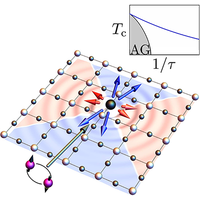
Phys. Rev. Lett. 137, 136004 (2026)
Condensed Matter and Materials
Evolution of Electron Spin Resonance through a Metallic Quantum Critical Phase Diagram
Article | Condensed Matter and Materials | 2026-09-25 06:00 EDT
Marc Scheffler, Jörg Sichelschmidt, Conrad Clauss, Mojtaba Javaheri Rahim, Boris I. Kochelaev, Cornelius Krellner, Christoph Geibel, Frank Steglich, and Martin Dressel
Using multiple antennae and their resonance harmonics, the changes in the electron spin resonance signal across the quantum critical point provide a measurement of the g-factor of the electrons.
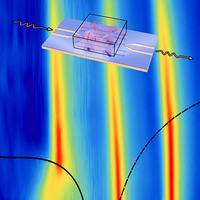
Phys. Rev. Lett. 137, 136506 (2026)
Condensed Matter and Materials
Observation of Ring States in a Delicate Topological Insulator
Article | Condensed Matter and Materials | 2026-09-25 06:00 EDT
C. Tornow, J. Rupprecht, P. Engeler, U. Drechsler, K.-E. Huhtinen, C. Devescovi, and S. D. Huber
A delicate topological insulator realized in a silicon phononic metamaterial shows ring states induced by strong local impurities which are a signature of its underlying topology.

Phys. Rev. Lett. 137, 136603 (2026)
Condensed Matter and Materials
arXiv
Boundary and bulk perturbations in vectorial active matter
New Submission | Soft Condensed Matter (cond-mat.soft) | 2026-09-25 20:00 EDT
Active matter, i.e., nonequilibrium systems that transform non-thermal energy from the environment into self-propulsion or other functional mechanisms, has attracted the attention of the statistical physics community in recent decades. Flocking, as shown by the aerial displays of starling flocks, is perhaps one of the most intriguing collective behaviors exhibited by active matter. While the bulk behavior of free collective motion is now fairly well understood, at least when the surrounding fluid can be neglected (the so-called dry approximation), much less is known when collective motion explicitly breaks a continuous rotational symmetry, either globally or locally. This thesis explores the effects of such explicit symmetry breaking on the dynamics of collective motion. Global symmetry breaking may arise from an anisotropic environment, where a favored direction sets the mean flocking direction. A key question addressed here is how to detect small anisotropies without prior knowledge of the underlying environmental asymmetry. The thesis then examines boundary-induced symmetry breaking. In confined flocking systems, local anisotropies arise at the boundaries and significantly affect both bulk and boundary behavior, especially in finite-sized setups. We focus in particular on a polar active fluid confined between two parallel repelling walls, showing that the influence of the boundaries extends far into the bulk. Finally, we consider a more subtle confinement inspired by the phototactic behavior of certain cyanobacteria, showing that key features of active matter, such as accumulation at boundaries, can arise even without mechanical confinement. The results shed light on how symmetry-breaking perturbations, whether imposed globally or locally, alter the dynamics of active matter systems and offer new insights into the control of collective motion.
Soft Condensed Matter (cond-mat.soft), Statistical Mechanics (cond-mat.stat-mech)
Competing magnetic and spin vestigial orders from continuum field theory
New Submission | Strongly Correlated Electrons (cond-mat.str-el) | 2026-09-25 20:00 EDT
Niccolò Francini, Lukas Janssen
We study magnetic systems featuring competing antiferromagnetic and spin-nematic phases, described by dipolar primary and quadrupolar secondary order parameters. While the antiferromagnetic phase breaks time-reversal and spin-rotational symmetries, only spin-rotational symmetry is broken in the nematic phase, which can be understood as a spin-vestigial phase. We develop a classical continuum field theory with independent vector and tensor fields and use mean-field and renormalization group methods to analyze its phases and finite-temperature transitions. We determine the fixed-point structure using an $ \epsilon$ expansion about the upper critical dimension of six and track the resulting fixed points to lower dimensions using a perturbative fixed-dimension renormalization group approach. The multicritical fixed point governing the meeting of the antiferromagnetic, nematic, and paramagnetic phases occurs at imaginary coupling throughout the dimensions accessible to our analysis, indicating a first-order transition through the triple point. Away from the triple point, a direct paramagnetic-to-antiferromagnetic transition can be continuous when the tensor mass is sufficiently large, without an intervening vestigial phase. We argue that it is governed by the cubic universality class in $ d=3$ and the Ising universality class in $ d=2$ for three-component order parameters. The theory also supports a two-step transition with an intermediate spin-nematic phase. The paramagnetic-to-nematic transition is governed by the four-state Potts universality class in $ d=2$ and is first order in $ d=3$ , while the nematic-to-antiferromagnetic transition is generically expected to be continuous and of Ising type in both dimensions. Our results provide a field-theoretical framework for understanding the finite-temperature transitions observed in the candidate Kitaev material Na$ _2$ Co$ _2$ TeO$ _6$ .
Strongly Correlated Electrons (cond-mat.str-el)
19 pages, 9 figures, 3 tables
Stimulation of superconductivity in $d$-wave superconductors
New Submission | Superconductivity (cond-mat.supr-con) | 2026-09-25 20:00 EDT
We study the stimulation of superconductivity by an external electromagnetic radiation — the Eliashberg effect — in a disordered $ d$ -wave superconductor. We use the self-consistent Keldysh–Nambu quasiclassical formalism augmented by an inelastic relaxation term to compute the static correction to the pairing amplitude by treating elastic scattering within the Born approximation with the full second-order impurity vertex retained. We find that the clean $ d$ -wave superconductor shows no enhancement at any frequency: without a momentum relaxation channel a spatially uniform drive produces no absorption, only pair breaking. Elastic impurity scattering restores absorption and with it activates response in the Eliashberg channel. We find enhancement of the pairing amplitude which is confined to a bounded window in frequency, disorder strength, inelastic scattering rate and gap magnitude. Both edges of the window scale with the gap but are set by the competition between quasiparticle redistribution, heating and pair breaking rather than by a feature of the spectrum. Furthermore, in contrast to the $ s$ -wave when the threshold is pinned at $ 2\Delta$ , the upper edge is not pinned to the maximum gap and crosses it as the system approaches the critical temperature.
Superconductivity (cond-mat.supr-con), Strongly Correlated Electrons (cond-mat.str-el)
16 pages, 6 figures
Theory of extrinsic contributions to the full orbital current
New Submission | Mesoscale and Nanoscale Physics (cond-mat.mes-hall) | 2026-09-25 20:00 EDT
James H Cullen, Dimitrie Culcer
The orbital Hall effect (OHE) underpins the emerging field of orbitronics. A complete quantum-mechanical evaluation of the usual orbital-current operator must retain all matrix elements of the position operator, including its band-diagonal differential part; intrinsic calculations based on this full evaluation can differ by orders of magnitude from the conventional truncation. A relaxation-time estimate of disorder effects on the full current has been reported, but a microscopic treatment of extrinsic scattering has remained unavailable because the position operator requires wavevector-off-diagonal density-matrix elements. Here we develop such a theory by solving the quantum kinetic equation for the wavevector-off-diagonal density matrix, including band-structure, field-corrected side-jump, and skew-scattering terms within the non-crossing approximation. We apply the theory to a massive Dirac cone and to the same model with a particle-hole-symmetry-breaking quadratic term. Disorder-generated contributions of order $ \tau^0$ are generically comparable to the intrinsic current in the metallic regime and cannot be separated from it by simple disorder-strength scaling. For the bare massive Dirac cone the surviving non-crossing extrinsic correction cancels the conventional intrinsic value and leaves a total current exactly twice the quantum correction, whereas particle-hole asymmetry activates conventional skew scattering for disorder with a non-zero third moment, which dominates in sufficiently clean samples. The wavevector-off-diagonal construction is independent of the two-band model and provides a general route to disorder corrections for position-dependent observables in multiband solids.
Mesoscale and Nanoscale Physics (cond-mat.mes-hall)
Weak-Coupling Pair-Density-Wave from Momentum-Space Nonsymmorphic Symmetry
New Submission | Superconductivity (cond-mat.supr-con) | 2026-09-25 20:00 EDT
Ming-Rui Li, Zhengzhi Wu, Hong Yao
Pair-density-wave (PDW) order is a superconducting state with a spatially modulated order parameter and is generally subleading to uniform superconductivity within the conventional weak-coupling BCS paradigm. Here, using a twisted bilayer checkerboard-lattice model, we show that momentum-space nonsymmorphic symmetry provides a generic mechanism that can instead promote PDW order to a leading weak-coupling instability. Combining a controlled Wilsonian renormalization-group analysis at charge neutrality with a finite-doping Bethe–Salpeter analysis, we determine the leading ordering tendencies among various competing instabilities. At charge neutrality, two symmetry-related quadratic band touchings support spin-singlet and spin-triplet PDW instabilities for different attractive interactions, whereas repulsive interactions favor quantum Hall insulators and finite-$ \mathbf Q$ density-wave orders. Upon doping, the nonsymmorphic symmetry, together with time reversal, protects the Cooper logarithm in the finite-momentum $ \mathbf Q$ pairing channel at generic fillings, allowing PDW order to remain a leading instability over the broad doping range studied. This mechanism extends naturally to moiré Chern bands: by breaking time-reversal symmetry while preserving the nonsymmorphic symmetry and inversion, we obtain a fully gapped topological spin-triplet PDW state with BdG Chern number $ C_{\text{BdG}}=8$ . Our results establish momentum-space nonsymmorphic symmetry as a general weak-coupling route to PDW superconductivity, including topological PDW states.
Superconductivity (cond-mat.supr-con), Strongly Correlated Electrons (cond-mat.str-el)
30 pages, 7 figures; Supplemental Material included
Majorana zero modes in half-quantum vortices of pair density wave superconductors
New Submission | Superconductivity (cond-mat.supr-con) | 2026-09-25 20:00 EDT
Pair-density-wave (PDW) superconductors admit half-quantum vortices that can bind Majorana zero modes, but whether such defects are energetically stabilized in microscopic models remains unclear. We address this question in a spinless honeycomb-lattice model with a PDW phase. Microscopic Hartree-Fock calculations determine the superfluid stiffness $ \rho$ and PDW relative-phase stiffness $ \kappa$ , and show that $ \kappa/\rho$ approaches unity near the continuous PDW–Dirac-semimetal transition, strongly reducing the long-wavelength cost of vortex fractionalization. Combining this with microscopically extracted Ginzburg–Landau couplings, we show that vortex-core energetics favor fractionalization, producing a strongly enhanced splitting scale and a field-driven full-vortex–to–half-vortex lattice transition. We determine the resulting two-flavor half-vortex lattice structure and construct the associated Majorana lattice. Majorana hybridization produces geometry- and flux-dependent bands with Dirac nodes and zero-energy Fermi lines. Together, these results establish a microscopic route from PDW superconductivity to field-induced half-vortex and Majorana lattices.
Superconductivity (cond-mat.supr-con), Strongly Correlated Electrons (cond-mat.str-el)
5 pages, 4 figures
Interaction induced flattening of optical transition quantum geometry
New Submission | Mesoscale and Nanoscale Physics (cond-mat.mes-hall) | 2026-09-25 20:00 EDT
The Riemannian geometry of optical transition dipoles has become a useful picture for understanding linear and nonlinear optical response. Here we argue that the interacting quantum geometry of optical transitions possesses a rich structure and can be naturally delineated into two types: localized and delocalized particle-hole excitations. The former possess uniform quantum geometry with flat (vanishing) Hermitian curvature; the latter possess non-uniform quantum geometry with non-vanishing Hermitian curvature. As a striking example, we find that uniform quantum geometry can be produced by electron-hole interactions: even when composed from extended Bloch states in the particle and hole bands, we find excitons have uniform and flat quantum geometry. By developing a many-body length gauge formulation of nonlinear response, we find this uniform and flat excitonic quantum geometry zeros its third-order circular photoconductivity in non-magnetic materials in stark contrast to its non-interacting counterparts. Similarly, the zero Hermitian curvature of localized optical transitions locks their Hall response to that of the ground state. This demonstrates the rich landscape of many-body optical response controlled by an interacting quantum geometry.
Mesoscale and Nanoscale Physics (cond-mat.mes-hall)
19 pages, 2 figures
Defect Poisoning of Quantum Spin Ice
New Submission | Strongly Correlated Electrons (cond-mat.str-el) | 2026-09-25 20:00 EDT
Alaric L. Sanders, Gautam K. Naik, Jonathan N. Hallén, Robin Schäfer
The hunt for a material realization of quantum spin ice has motivated more than two decades of experimental effort. The candidate materials inevitably contain crystal imperfections, such as magnetic vacancies, whose effects are often disregarded. Here, we show that experimentally relevant levels of dilution can qualitatively reshape the low-energy behavior, as nearby vacancies generate quantum fluctuations that are absent in the clean system. Already at dilution levels as low as two percent, well below those reported in cerium-based pyrochlores, these vacancy-induced processes connect percolating clusters of spins and dominate over the conventional quantum-spin-ice dynamics. We therefore argue that magnetic vacancies in current experiments can strongly contaminate, and potentially completely obscure, the sought-after signatures of quantum spin ice. We support these conclusions using large-scale, unbiased quantum Monte Carlo simulations and exact diagonalization.
Strongly Correlated Electrons (cond-mat.str-el)
11 pages, 10 figures (3 main + 7 supplemental)
Compact representation of strongly correlated Green’s functions: the MOR+EC way to explore phase space
New Submission | Strongly Correlated Electrons (cond-mat.str-el) | 2026-09-25 20:00 EDT
Norman Hogan, A. F. Kemper, Carlos Mejuto-Zaera
Repeated evaluation of the single-particle Green’s function (GF) across parameter space is a recurring bottleneck in many-body methods, limiting the resolution at which phase boundaries may be probed and the frequency resolution of computed spectra. We introduce MOR+EC, a framework that constructs reusable reduced-order models for computing single-particle Green’s functions by combining eigenvector continuation (EC) for parameter space exploration and model order reduction (MOR) for extrapolation in frequency space. Contrary to conventional parameterized MOR, we construct these reduced-order models with a parameter-independent resolvent, further reducing the number of required full-space evaluations. Benchmarking against exact diagonalization as the impurity solver for our example case of DMFT calculations for single- and two-band models, MOR+EC reproduces the DMFT-converged impurity GF to an average relative error of $ \sim10^{-4}$ , with a median wall-time speedup of $ 16-91\times$ . This accuracy and efficiency together resolve a fine-grained scan of the impurity occupation as doping is tuned and produce a high-resolution phase diagram of an orbital-selective Mott transition. The reduced-order model also reproduces real- and imaginary-frequency spectra at no additional cost in full-space evaluations. This framework applies broadly to GF-based methods requiring repeated parametric evaluation and high resolution of the frequency axis.
Strongly Correlated Electrons (cond-mat.str-el), Materials Science (cond-mat.mtrl-sci)
12 + 5 pages, 12 figures
Bayesian Monitoring of a Diffusive Particle in One Dimension
New Submission | Statistical Mechanics (cond-mat.stat-mech) | 2026-09-25 20:00 EDT
Federico Gerbino, Guido Giachetti, Pierre Le Doussal, Andrea De Luca
We study the Bayesian monitoring of a single particle diffusing along a line, while an observer tracks it continuously using noisy measurements at each spatial point. The average Shannon entropy $ \overline{S(t)}$ associated with the posterior distribution of the particle’s position quantifies the uncertainty that remains after conditioning on the sequence of measurements. We map the problem to the calculation of the moments of the partition functions of directed polymers in $ 1 + 1$ dimensions. For a constant monitoring rate, the entropy remains bounded for any finite measurement intensity and can be quantified using exact results from the Kardar-Parisi-Zhang equation, providing both the saturation value and the asymptotic behavior for long times. For a monitoring intensity that decreases according to a power law $ \sim t^{-\alpha}$ , two distinct asymptotic regimes emerge: $ \overline{S(t)} \simeq \tfrac12 \ln t$ for $ \alpha > 1/2$ and $ \overline{S(t)} \simeq \alpha \ln t$ for $ 0 < \alpha < 1/2$ . Both results are obtained using the replica method, which maps the problem onto an attractive Lieb-Liniger Hamiltonian with a time-dependent coupling: the two regimes can be understood from a perturbative expansion around free diffusion and around the attractive Lieb-Liniger ground state, respectively. We discuss the limiting case $ \alpha = 1/2$ and compare the predictions with simulations of discrete Gaussian and log-gamma polymer models.
Statistical Mechanics (cond-mat.stat-mech)
6 pages (main text) + 2 pages (End Matter) + 15 pages (Supplemental Material)
Large-Area SnS Crystals by Controlled Sn-S Chemical Vapor Deposition: Growth Optimization, Morphology, and Raman Characterization
New Submission | Materials Science (cond-mat.mtrl-sci) | 2026-09-25 20:00 EDT
Tin monosulfide (SnS) is a layered IV-VI semiconductor with strong in-plane anisotropy and promising properties for optoelectronic and ferroic applications. However, obtaining large, continuous, and morphologically well-defined SnS crystals remains challenging. Here, we report the growth of large-area SnS crystals using chemical vapor deposition with separate elemental Sn and S precursors. By controlling the precursor temperatures, source positions, substrate temperature, carrier-gas flow, and hydrogen flow, we obtain SnS crystals with lateral dimensions approaching 350 micrometers. The optimized growth occurs with the Sn source at approximately 750 degrees C, the S source at approximately 230 degrees C, and the substrate maintained near 650-680 degrees C, using Ar/H2 flow rates of 120/10 sccm. X-ray diffraction shows a dominant SnS (111) reflection with no detectable secondary crystalline tin-sulfide phase within the measurement sensitivity. Raman spectroscopy reveals six characteristic SnS phonon modes at approximately 39.3, 48.8, 95.2, 165.0, 193.1, and 219.1 cm^-1. In particular, the low-frequency modes near 39 and 49 cm^-1 are clearly resolved with FWHM values of approximately 2.52 and 2.37 cm^-1, respectively. SEM and AFM measurements further show large continuous crystals and a relatively smooth nanoscale surface. Growth on mica produces more regular square and rectangular flakes, with lateral dimensions approaching 300 x 300 micrometers, while crystals grown on SiO2/Si are more frequently fractured or irregular at their edges. These results demonstrate a practical growth window for obtaining large-area SnS crystals suitable for further optical, electrical, and device studies.
Materials Science (cond-mat.mtrl-sci), Quantum Physics (quant-ph)
Altermagnetic Kondo Logic via Floquet Symmetry Conversion
New Submission | Strongly Correlated Electrons (cond-mat.str-el) | 2026-09-25 20:00 EDT
Haojie Shen, Xinchen Zhou, Baigeng Wang, Rui Wang
A common belief in Kondo physics is that a magnetic impurity can act as an efficient probe of key properties of its host bath. In altermagnets, however, this intuition fails in a symmetry-enforced way: the momentum-dependent spin splitting cancels in the local impurity spectrum, making a conventional single-impurity Kondo resonance essentially blind to the altermagnetic form factor. Here, we overcome this constraint by introducing Floquet symmetry conversion. We show that an in-plane AC field converts the hidden altermagnetic spin splitting into a locally detectable spin-dependent hybridization channel, which is further amplified by Kondo correlations into a novel altermagnetic Kondo effect. Remarkably, the Kondo splitting exhibits a nontrivial dependence on the field orientation and inherits the same crystalline form factor as the altermagnetic host, thereby serving as Kondo tomography of altermagnetic spin splitting. This field-controlled response further provides a natural route to symmetry-controlled Kondo logic gates. Our results establish a field-controllable altermagnetic Kondo effect, linking symmetry-resolved impurity spectroscopy to Kondo logic functionality.
Strongly Correlated Electrons (cond-mat.str-el)
Power-law growth of shift current with superlattice period in flat Chern bands
New Submission | Mesoscale and Nanoscale Physics (cond-mat.mes-hall) | 2026-09-25 20:00 EDT
Nianlong Zou, Cheng Xu, Ning Mao, Yang Zhang
Quantum geometry governs a wide array of physical observables in topological quantum materials. In its ideal limit, quantum geometry yields exact bounds and analytical results for a growing class of observables. However, a comparable framework for the shift current remains elusive because it depends on geometric relations between multiple bands. In this work, we show that the shift current is proportional to the cyclotron shift, the displacement of the cyclotron center induced by Landau-level mixing. This mechanism yields a universal scaling law: the integrated weight and the peak magnitude scale as $ l^{i+1-n}$ and $ l^{2i+1-n}$ in the magnetic length or moiré period $ l$ , where $ n$ is the momentum order of the symmetry-breaking perturbation and $ \Delta E \propto l^{-i}$ is the level spacing. We verify the scaling law in exactly solvable chiral-$ N$ Landau levels under a uniform magnetic field and in Schrödinger and Dirac moiré skyrmion crystals, which capture the flat Chern bands of twisted MoTe$ _2$ and twisted bilayer graphene. For a Schrödinger flat band with a distorted skyrmion texture, the integrated weight grows linearly with the moiré period and the resonant peak grows cubically.
Mesoscale and Nanoscale Physics (cond-mat.mes-hall), Materials Science (cond-mat.mtrl-sci), Optics (physics.optics)
6 pages, 4 figures
A Renormalized Ginzburg-Landau Framework for Dimensional Crossover and Fluctuation Specific Heat in High-$T_c$ Superconductors in a Magnetic Field
New Submission | Superconductivity (cond-mat.supr-con) | 2026-09-25 20:00 EDT
Roger Magloire Keumo Tsiaze, Jeremeie Edmond Danga, Cornelius Fai Lukong
This paper presents a theoretical analysis of phase transitions and critical phenomena in high-temperature superconductors using a renormalized Ginzburg-Landau framework. Rather than assuming a conventional linear temperature dependence, we treat the quadratic coefficient as a self-consistent, Hartree-renormalized quantity determined by fluctuation-loop corrections. This renormalization regularizes mean-field divergences and yields a finite, dimensionality-dependent specific-heat anomaly near the transition. When an external magnetic field is applied, minimal coupling quantizes order-parameter fluctuations into discrete Landau levels, reducing the effective dimensionality via an effective spectral dimension. In this framework, the intrinsic fluctuation-coupling strength self-consistently determines the temperature width of the critical Ginzburg region, while the cyclotron energy of the quantized fluctuations uniquely establishes both the specific-heat peak position and the upper-critical-field crossover boundary. Comparison with $ \text{YBa}_2\text{Cu}3\text{O}{7-\delta}$ experimental data demonstrates that this approach captures the suppression of the sharp mean-field discontinuity and accurately reproduces the vortex-lattice topological structure under finite magnetic fields.
Superconductivity (cond-mat.supr-con)
18 pages, 11 figures
Intriguing topological superconductor phases in long-range extended Kitaev models: an interplay between sub-lattices and power-law interaction
New Submission | Mesoscale and Nanoscale Physics (cond-mat.mes-hall) | 2026-09-25 20:00 EDT
Dharana Joshi, Amaan Khan, Tanay Nag
The power-law profile of hopping and superconductivity introduces rich critical phenomena that are not possible to explore in the nearest-neighbor models. Having this in mind, we construct the Su-Schrieffer-Heeger (SSH)-Kitaev model with mono-, bi-, and tri-partite sub-lattices where superconductivity [hopping] is of power-law Kitaev [SSH] type. The long-range (LR) superconductivity can alone gap out the zero-momentum critical line while LR hopping alters the finite-momentum critical line. There exists open-ended critical line at vanishing superconducting gap on the phase diagram for all versions of the SSH-Kitaev model. Interestingly, LR superconductivity (hopping) promotes massive Dirac (Majorana zero) modes, while in a finite-size system, their emergence in open boundary conditions is caused by the bulk gap of the anti-periodic Hamiltonian in momentum space. This indicates an unconventional bulk-boundary correspondence for power-law models as compared to what is seen in the short-range models. Importantly, the thermodynamic phase boundaries are correctly reproduced by the above unconventional correspondence. Intriguingly, an even (odd) number of sub-lattices yields an integer (half-integer) winding number while the massive Dirac modes continue to survive irrespective of the sub-lattice profile as long as there exists LR pairing only.
Mesoscale and Nanoscale Physics (cond-mat.mes-hall), Superconductivity (cond-mat.supr-con)
7 pages and 4 fugures
Imaging an obstructed Wannier orbital
New Submission | Strongly Correlated Electrons (cond-mat.str-el) | 2026-09-25 20:00 EDT
Yiting Huang, Benjamin H. November, Jonah Herzog-Arbeitman, Jiatong Yang, Jennifer E. Hoffman, Harris Pirie
In conventional insulators, electronic charge is localized in Wannier orbitals centered on the atoms. In an obstructed atomic insulator (OAI), the Wannier orbitals sit instead in the empty voids between atoms. These displaced orbitals give rise to an analog of the topological bulk-boundary correspondence, in which a boundary mode occurs only where the lattice termination severs an orbital. However, experimentally identifying OAIs has remained challenging, because the Wannier orbital of a dispersive electronic band is not an energy eigenstate and cannot be measured directly. Here we engineer an acoustic metamaterial hosting an isolated flat band, in which the Wannier orbitals become energy eigenstates. By measuring the amplitude and phase of the acoustic pressure field, we map the orbital’s $ f$ -like structure and locate its Wannier center in a void between lattice sites—providing the first phase-resolved image of an obstructed Wannier orbital. By altering the lattice termination, we observe the predicted boundary states. Such acoustic flat-band metamaterials offer a direct probe of single-particle ingredients such as quantum geometry, which govern correlated phenomena in electronic flat bands, including proposed routes to unconventional superconductivity.
Strongly Correlated Electrons (cond-mat.str-el)
Plane-Wave Photon-Fock Cavity QED-DFT: Chiral-Cavity-Induced Topology in Graphene
New Submission | Strongly Correlated Electrons (cond-mat.str-el) | 2026-09-25 20:00 EDT
We develop an explicit plane-wave (PW) $ \times$ photon-Fock approach to the quantized, velocity-gauge Pauli–Fierz Hamiltonian for periodic, first-principles calculations: because the quantized vector potential is spatially uniform, the light–matter coupling reduces to an operator-valued shift of the crystal momentum, $ K\to K+\hat{\mathbf A}/c$ , and the existing plane-wave machinery of ordinary solid-state DFT is reused essentially unchanged. This PW$ \times$ Fock construction puts first-principles cavity QED of periodic solids on the same footing as the Fock-space coupled-cluster and configuration-interaction methods already developed for molecules, opening hitherto inaccessible systems—materials in a linear or chiral cavity, in particular—to first-principles plane-wave calculations. We illustrate the method with monolayer graphene in linear and chiral cavities, obtaining a polarization-selective Haldane gap together with the corresponding density-of-states, real-space, and circular-dichroism optical signatures. A full Brillouin-zone Berry-curvature calculation confirms the topological character of the chiral-cavity gap directly: the occupied manifold carries a quantized Chern number that steps through a non-monotonic sequence, $ C=1\to3\to{-1}\to1\to2\to{-1}\to1$ , with two narrow, sign-reversed windows—a property of extended, vacuum-dressed matter with no counterpart in a finite molecular system.
Strongly Correlated Electrons (cond-mat.str-el), Materials Science (cond-mat.mtrl-sci)
Reprogrammable origami through bistable buckled hinges
New Submission | Soft Condensed Matter (cond-mat.soft) | 2026-09-25 20:00 EDT
Leon M. Kamp, Lucy Liu, Ella McRitchie, Damien Rouchouse, Orel Mazor, Davood Farhadi, L. Mahadevan, Katia Bertoldi
Origami structures typically have a multiplicity of folded states that are connected to a flat sheet, making the folding protocol for specific end shapes challenging to design and deploy. Here, we introduce reprogrammable origami hinges that use bistable buckled shims to reversibly control their preferred folding direction. A shim embedded across a hinge produces an asymmetric torque-angle response that favors either mountain or valley folding. Switching the shim between its two stable states reverses this response, allowing the folding direction of each hinge to be reprogrammed after fabrication. By independently controlling the states and geometries of the shims, we enable a single origami sheet to access multiple folding branches and transform into prescribed three-dimensional shapes. We further introduce self-switching hinges in which folding causes the shims to snap between their stable states. These elements allow the sheet to reprogram its folding pathway under global mechanical inputs applied to the boundaries. Our approach embeds both shape selection and transition rules directly within the mechanics of the hinges, providing a versatile framework for creating multifunctional, deployable, and reconfigurable structures.
Soft Condensed Matter (cond-mat.soft)
Realization of Very High Mobility InAs Quantum Wells on InP Substrates Through Convex InAlAs Graded Buffer Optimization
New Submission | Mesoscale and Nanoscale Physics (cond-mat.mes-hall) | 2026-09-25 20:00 EDT
Tyler Lindemann, Rojila Ghimire, Alejandro Alcaraz Ramirez, Ahmad Azizimanesh, Sergei Gronin, Ray Kallaher, Michael J. Manfra
Due to strong spin-orbit coupling, large Landé $ g$ -factor, and a highly transparent interface, the two-dimensional electron gas (2DEG) in InAs quantum wells provides an ideal platform for the exploration of topological superconductivity in hybrid semiconductor-superconductor heterostructures. Reduction of disorder in the semiconductor remains a primary challenge to the disambiguation of subtle interaction effects. Here we demonstrate very high mobility InAs 2DEGs grown on insulating InP substrates. Utilizing a convex compositional grading profile in an InAlAs metamorphic buffer we demonstrate InAs quantum wells with thickness greater than 10 nm without need of Ga-containing cladding layers. We examine structural and electrical transport properties of these heterostructures. Advances in the design of the metamorphic InAlAs buffer result in low-temperature electron mobility exceeding $ 1.7\times10^6$ cm$ ^2$ V$ ^{-1}$ s$ ^{-1}$ at 2DEG density $ \leq3.2\times10^{11}$ cm$ ^{-2}$ , the highest value yet reported for this material system.
Mesoscale and Nanoscale Physics (cond-mat.mes-hall), Materials Science (cond-mat.mtrl-sci)
Fluctuation–Response Relation in Finite-Size Noisy Coupled Phase Oscillators
New Submission | Statistical Mechanics (cond-mat.stat-mech) | 2026-09-25 20:00 EDT
Mrinal Sarkar, Yoshiyuki Y. Yamaguchi
Fluctuation–response relations (FRRs) provide a fundamental relation between spontaneous fluctuations and the linear response to external perturbations, yet their validity in non-equilibrium systems remains an open problem. In a general class of noisy, finite-size, mean-field models of coupled phase oscillators, we reveal two types of FRRs in the incoherent phase below the synchronization transition. The first, corresponding to the infinite-size limit (I-FRR), involves the convolution between the external force and the correlation function in the time domain. The second, the finite-size counterpart (F-FRR), is governed by finite-size fluctuations and carries a correction factor: a spectrum function whose roots correspond to eigenvalues, or Landau poles, of the linear operator. The finite-size fluctuations are suppressed in the weak-coupling or strong-noise limits, and F-FRR reduces to I-FRR. Our analytical findings are verified by extensive numerical simulations.
Statistical Mechanics (cond-mat.stat-mech), Adaptation and Self-Organizing Systems (nlin.AO)
13 (9+4) pages, 10 (7+3) figures. Comments are welcome
Imaging how fluctuations destroy superconductivity in two dimensions
New Submission | Superconductivity (cond-mat.supr-con) | 2026-09-25 20:00 EDT
Logan Bishop-Van Horn, Teng Zhang, Sara Metti, Tyler Lindemann, Michael J. Manfra, Kathryn A. Moler
Two-dimensional superconductors are model systems for thermal and quantum fluctuations. Key questions persist: whether existing models quantitatively describe the destruction of superconductivity, and whether an intermediate “anomalous metal state” represents a new phase of matter. We use scanning magnetic susceptibility to directly image the local phase stiffness, a thermodynamic measure of superconducting order, in gate-tunable Josephson junction arrays, a model two-dimensional superconductor. Across a broad range of carrier densities, we find that the superconducting critical temperature and phase stiffness are suppressed more strongly than expected from thermal fluctuations alone. At low carrier densities, we find that anomalous metal transport and large-scale spatial inhomogeneity emerge together. These results indicate that quantum fluctuations suppress superconductivity and that anomalous metal behavior emerges from phase slips in spatially disordered regions.
Superconductivity (cond-mat.supr-con), Mesoscale and Nanoscale Physics (cond-mat.mes-hall)
Multiple self-similar crossovers in a hydrodynamic interface
New Submission | Soft Condensed Matter (cond-mat.soft) | 2026-09-25 20:00 EDT
Self-similar dynamics are often described in terms of a single asymptotic scaling regime. Here we experimentally investigate the post-breakup recovery of a hydrodynamic interface over substantially wider temporal and spatial ranges than previously accessible. Beyond the previously identified scaling behavior, we find four successive self-similar regimes characterized by the $ R_{\beta}$ -scaling with $ \beta=1/6$ , 1/2, 1, and 2, connected by three distinct crossovers. All four regimes exhibit robust collapse near the interface tip, while geometrical dependence becomes detectable farther from the singular region. This systematic variation across space and scaling regimes is consistent with scale separation and enhanced universality closer to the breakup singularity. The characteristic scales associated with the different $ R_{\beta}$ -scalings become comparable at the common geometric scale $ z_m \simeq R$ . These findings demonstrate that self-similar dynamics can undergo multiple successive crossovers among distinct scaling regimes rather than directly approaching a single asymptotic self-similar state.
Soft Condensed Matter (cond-mat.soft), Statistical Mechanics (cond-mat.stat-mech), Fluid Dynamics (physics.flu-dyn)
12 pages, 7 figures
Magnetostrictive properties in Fe${4-x}$Co${x}$N films: Insight from experiments and first-principles calculations
New Submission | Materials Science (cond-mat.mtrl-sci) | 2026-09-25 20:00 EDT
Huameng Yu, Keita Ito, Shoya Sakamoto, Ivan Kurniawan, Yoshio Miura, Yasushi Endo, Takeshi Seki
The ferromagnetic nitride Fe$ _{4}$ N has attracted attention for application in spintronic devices due to its high spin polarization and large magnetostriction. We present a combined experimental and theoretical study on the magnetostriction of Fe$ _{4-x}$ Co$ _{x}$ N films across a wide composition range. The Fe$ _{4-x}$ Co$ _{x}$ N films were grown on SrTiO$ _{3}$ (001) substrates using molecular beam epitaxy, and the magnetostriction constants along the [100] direction ($ {\lambda}$ _{100}$ ) and [111] direction ($ {\lambda}$ _{111}$ ) were precisely evaluated using an optical cantilever method. The experimental results reveal that $ {\lambda}$ _{111}$ remains positive in the whole composition range and shows a maximum value of +82 ppm around x = 0.9. The variation in $ {\lambda}$ _{111}$ with x is much smaller than that in $ {\lambda}$ _{100}$ , for which giant tunability and sign reversal are observed. First-principles calculations show reasonable agreement with the experimental $ {\lambda}$ _{111}$ for x $ {\ge}$ 1.6, but give negative values at lower x, and an exceptionally large negative $ {\lambda}$ _{111}$ is obtained at x = 0.8, where the Fermi level coincides with a pronounced minority-spin peak in the density of states. The calculated $ {\lambda}$ _{111}$ depends strongly on the smearing parameter, indicating that the rhombohedral magnetostriction is highly sensitive to the treatment of atomic disorder. The saturation magnetostriction constant ($ {\lambda}$ _{s}$ ) derived from $ {\lambda}$ _{100}$ and $ {\lambda}$ _{111}$ is also compared with the $ {\lambda}$ _{s}$ measured for the (001)-oriented polycrystalline Fe$ _{4-x}$ Co$ _{x}$ N films, and a possible scenario for deviation between them is discussed. Our findings clarify the basic features of magnetostriction in the Fe$ _{4-x}$ Co$ _{x}$ N system, providing essential magnetoelastic parameters for designing nitride-based spintronic devices.
Materials Science (cond-mat.mtrl-sci)
34 pages, 5 figures
Influence of chemical vapor deposition conditions on N incorporation ratio on vicinal 4H-SiC(000-1) surface: Ab Initio-based approach
New Submission | Materials Science (cond-mat.mtrl-sci) | 2026-09-25 20:00 EDT
Wataru Ota, Akira Kusaba, Yoshihiro Kangawa, Keisuke Kurashima, Ichiro Mizushima, Kenji Shiraishi
In experimental studies, increasing the ratio of source gases (C3H8/SiH4; C/Si ratio) for chemical vapor deposition (CVD) causes the growth rate to increase monotonically, and nitrogen incorporation tends to decrease accordingly; however, a unique phenomenon has been observed in which nitrogen incorporation increases discontinuously in the range of C/Si ratio between 1.0 and 1.5. This phenomenon is specific to the vicinal 4H-SiC(000-1) C-face and is not observed on the vicinal 4H-SiC(0001) Si-face. In this study, N incorporation behavior on a vicinal C-face during CVD is investigated using an ab initio-based approach. The calculation results suggest that when C/Si ratio is less than 1.0, the Si-terminated step edge is stable, whereas when C/Si ratio exceeds 1.0, the existence probability of the C-H-terminated step edge, where the N substitution energy is lower than in the former case, increases sharply. This change in the step-edge state across C/Si = 1.0 is thought to be the cause of the discontinuous increase in N incorporation.
Materials Science (cond-mat.mtrl-sci)
10 pages, 9 figures, 1 table
Conductance of silicon nanotube junctions in high magnetic fields
New Submission | Mesoscale and Nanoscale Physics (cond-mat.mes-hall) | 2026-09-25 20:00 EDT
Teresa Kulka, Juan Alberto Canché-Martín, Irina V. Lebedeva, Jacek A. Majewski, Karolina Z. Milowska
We investigate coherent quantum transport through silicon nanotube (SiNT) junctions in high magnetic fields up to 60 T using a tight-binding model combined with the non-equilibrium Green’s function formalism, and magnetic field included via Peierls substitution. We consider junctions of metallic nanotubes (6,0)+(6,0) and semiconducting ones (9,9)+(9,9), and examine the effects of the overlap length, inter-tube distance, magnetic-field direction, and field strength on the electronic transmission. In contrast to carbon nanotube junctions, the SiNT systems exhibit irregular transmission oscillations and do not show the emergence of highly conductive gateway states. The transmission is substantially more sensitive to a magnetic field perpendicular to the nanotube axis than to a parallel field, while increasing the field strength progressively modifies the transmission spectrum. Increasing the overlap length results in more frequent transmission oscillations, whereas increasing the inter-tube distance modifies their positions and amplitudes without changing their overall character. Generally, similar trends are observed for both types of junctions, involving metallic and semiconducting nanotubes. However, in the junction of semiconducting nanotubes, one observes peculiar additional field-dependent in-gap transmission features. These results demonstrate that the magnetic-field response of SiNT junctions is strongly governed by their geometry and differs qualitatively from that of pristine carbon nanotube junctions.
Mesoscale and Nanoscale Physics (cond-mat.mes-hall)
Moiré droplet of ultracold Bose gases in a twisted-bilayer optical lattice
New Submission | Quantum Gases (cond-mat.quant-gas) | 2026-09-25 20:00 EDT
Tianqi Luo, Jing Zhang, Xiaoling Cui
We report the emergence of Moiré droplet in two-dimensional ultracold bosons subjected to a spin-dependent optical lattice, effctively realizing a twisted-bilayer configuration. We show that the droplet formation dramatically enhances the visibility of Moiré pattern in the density profile, even for exceptionally weak lattice potentials. The Moiré pattern can be enhanced similarly by increasing the lattice depth, which, however, also induces droplet diffusion characterized by a spreading density profile. Furthermore, we demonstrate a dynamical generation of Moiré pattern by dragging a small droplet through a moving lattice. At appropriate velocities, the droplet undergoes bifurcation and exhibits pronounced Moiré pattern within periodic time intervals. Our results establish the ultracold droplet as a compelling platform for simulating interacting Moiré physics, particularly the interplay between Moiré lattice and bound-state formation.
Quantum Gases (cond-mat.quant-gas), Mesoscale and Nanoscale Physics (cond-mat.mes-hall)
6+2 pages, 4 figures
Quantum Gates Built on a Spin Qubit and a Kitaev Parity Qubit
New Submission | Mesoscale and Nanoscale Physics (cond-mat.mes-hall) | 2026-09-25 20:00 EDT
Zhi-Hai Liu, Jiang Zhang, Guilu Long, H. Q. Xu
Spin is typically traced out in the description of quantum-dot-based Kitaev chains to simplify the construction of Majorana fermions. Yet the intrinsic spin structure of poor-man’s Majorana modes in minimal Kitaev chains under finite Zeeman fields offers a natural interface for the Kitaev parity qubit to interact with other spinful systems. Here, we establish such a platform to bridge the parity qubit and a quantum-dot spin qubit, with the effective coupling governed by the spin-dependent delocalization of the Majorana modes. Depending on whether the spin qubit is coupled to one or two chains constituting the parity qubit, the parity-spin coupling exhibits distinct forms: an anisotropic parity-conserving exchange interaction or a nontrivial exchange tensor tunable via the interchain superconducting-phase bias. Leveraging fast spin-qubit manipulation, we further demonstrate universal parity-qubit control, high-fidelity qubit-state readout, and entangling operations between the parity and spin qubits. These results turn the spinful structure of poor-man’s Majoranas from a finite-field imperfection into a resource for hybrid quantum control.
Mesoscale and Nanoscale Physics (cond-mat.mes-hall)
Beyond the Kagome Layer: Interlayer Origin of the Flat Band in FeSn
New Submission | Materials Science (cond-mat.mtrl-sci) | 2026-09-25 20:00 EDT
Shimin Zhang, Bipasa Samanta, Ho Viet Thang, Alexandru B. Georgescu
Kagome FeSn exhibits an occupied flat band at its terminated surface, whereas bulk FeSn adopts A-type antiferromagnetic order and does not display the same feature. Here, we combine density functional theory with primitive- and doubled-cell analysis and a double-layer tight-binding model to determine how interlayer electronic coupling and magnetic stacking control flat-band formation in FeSn. We identify an occupied Fe-$ d_{z^2}$ -derived flat-band manifold in the ferromagnetic state that is consistent with the experimentally observed surface feature. Brillouin-zone folding reveals that its flat branch originates from the $ k_z=\frac{\pi}{c}$ sector of the primitive cell, demonstrating that it cannot be understood as an isolated kagome-layer state. Instead, the state depends on coupling between neighboring kagome layers and can be seen as a result of antibonding coupling between nearest neighbor kagome layers. A double-layer tight-binding analysis identifies interlayer Fe-Fe hopping as the dominant microscopic coupling responsible for this behavior, while a contrasting unoccupied flat-band-related manifold is governed primarily by intralayer Fe-Sn hybridization. These results establish interlayer coupling and magnetic stacking as key control parameters for kagome flat bands and highlight how coupling between layers can generate and tune extended correlated-electron states in quantum materials.
Materials Science (cond-mat.mtrl-sci), Strongly Correlated Electrons (cond-mat.str-el)
Generative crystallographic phasing through invariant relationships
New Submission | Materials Science (cond-mat.mtrl-sci) | 2026-09-25 20:00 EDT
Qi Li, Rui Jiao, Liming Wu, Chang Chen, Tiannian Zhu, Bintang Wang, Qiuliang Liu, Zhonglong Peng, Munan Hao, YingPeng Yu, Lin Yao, Wei Ding, Mao Su, Lei Bai, Yang Liu, Hongming Weng, Wenbing Huang, Shifeng Jin, Xiaolong Chen
Crystal structure determination requires the phases of scattered waves – yet diffraction measures only their intensities. Direct methods exploit phase invariants but become less reliable as diffraction information diminishes. Learned phase prediction has lowered the resolution barrier, yet remains primarily confined to centrosymmetric crystals with binary phases. We introduce PhiGen, a generative reformulation of traditional direct methods that learns origin-independent phase relationships for binary and continuous phasing. Across 210 space groups, including groups absent from training, it recovered high-quality maps for 99.0% of centrosymmetric structures and invariant-consistent phases for 92.8% of non-centrosymmetric structures. From simulated 3 Å zeolite powder data, the network recovered framework maps for 84.2% of held-out structures, versus 1.0% for Superflip. For experimental ZSM-25 and TNU-9, generated phases seeded high-resolution phase extension. These results suggest a route to structure determination from low-resolution, incomplete, and overlapped diffraction data.
Materials Science (cond-mat.mtrl-sci)
Exact selection of a toric-code vison crystal in a flux-conditioned Kitaev model
New Submission | Strongly Correlated Electrons (cond-mat.str-el) | 2026-09-25 20:00 EDT
We construct an exactly solvable extension of the spin-$ 1/2$ Kitaev honeycomb model in which conserved $ \mathbb{Z}_2$ fluxes determine not only the signs but also the connectivity of nearest-neighbor Majorana hopping. At a tuned loop point, hopping survives only across opposite-flux plaquettes, so every vertex has active degree zero or two and the matter Hamiltonian fragments in each flux sector into independent Majorana rings and isolated zero modes. Exact ring spectra and bond counting then bound the matter energy over all local flux configurations and all four Wilson-loop sectors, and split it exactly into a frustrated triangular-lattice Ising term, whose extensively degenerate ground states are the fully packed loop coverings, and a non-negative Majorana residual. On admissible commensurate tori, the residual selects precisely the three translation-related $ 2/3$ -vison crystals, which saturate the bound, and an exact fermion-parity identity shows that for antiferromagnetic coupling their vacua also survive projection, making them rigorous ground states of the spin model. Within a single crystal, a depth-one local unitary then maps the ground space onto that of a sheared square-lattice toric code, giving fourfold topological degeneracy. The model thus realizes exact nonperturbative gauge-matter feedback: the flux fixes where the Majorana fermions may move, and their zero-point energy selects in return a topologically ordered vison crystal with spontaneously broken translation symmetry.
Strongly Correlated Electrons (cond-mat.str-el)
22 pages, 6 figures, 4 tables. Comments are welcome!
Geometry-Induced Effective Tight-Binding Hamiltonians for Phononic Systems: Mode Conversion and SSH-Like Physics
New Submission | Other Condensed Matter (cond-mat.other) | 2026-09-25 20:00 EDT
José E. González, Carlos Ramírez
We present a framework that maps harmonic vibrational systems onto effective multi-orbital tight-binding Hamiltonians, establishing a direct correspondence between phononic degrees of freedom and graph-based lattice models. Within this mapping, the Cartesian displacement components of each mass become internal orbitals, while elastic interactions generate effective onsite energies and hopping amplitudes determined by the geometry of the system. This representation enables the application of numerical and conceptual tools originally developed for electronic transport to the study of phononic systems. The method is first applied to a monoatomic chain containing an angular bend. For this benchmark system, analytical expressions for the polarization-resolved transmission and reflection probabilities are derived and compared against calculations performed using a recursive scattering-matrix method within the mapped tight-binding representation. Excellent agreement is obtained, validating the mapping and demonstrating its ability to describe geometry-induced mode conversion and the influence of evanescent states. We then investigate zigzag chains, where alternating bond orientations generate effective dimerized Hamiltonians reminiscent of the Su–Schrieffer–Heeger (SSH) model. Although the uniform zigzag chain develops a spectral gap, no localized edge states are observed. We show that modified boundary parameters generated by the phononic mapping suppress the edge-state formation expected from the ideal SSH picture. Introducing a geometric domain wall restores localized domain-wall states inside the gap, which give rise to resonant transmission channels across an otherwise insulating frequency window. The resonance energies remain robust against system-size variations and the corresponding transmission approaches unity.
Other Condensed Matter (cond-mat.other)
23 pages, 8 figures
Frustrated junctions in interfacial networks
New Submission | Materials Science (cond-mat.mtrl-sci) | 2026-09-25 20:00 EDT
Håkan Hallberg, Vasily V. Bulatov, Bryan W. Reed, Mukul Kumar
Networks of interfaces in materials and living systems evolve through motion and rearrangement of interfaces and junctions. Local equilibrium at a junction requires interfacial force balance. We show that in three dimensions the classical Herring condition for triple lines is necessary but insufficient: four triple lines meeting at a quadruple node may each satisfy Herring equilibrium, while the four conditions remain mutually incompatible. Such a frustrated node has no admissible local equilibrium geometry. In the semi-isotropic limit, the six interfacial energies must form the edge lengths of a non-degenerate tetrahedron, with constructibility determined by the Cayley-Menger determinant. This hidden compatibility constraint arises from three-dimensional geometry and applies broadly to foams, polycrystals, tissues and other interfacial networks.
Materials Science (cond-mat.mtrl-sci)
Perfect resonance and fragile localization suppression in correlated disordered chains
New Submission | Disordered Systems and Neural Networks (cond-mat.dis-nn) | 2026-09-25 20:00 EDT
Spatial correlations can suppress scattering in disordered chains and produce perfectly transmitting resonances. The practical value of this protection, however, depends not on the resonance peak itself but on the width of the surrounding transmission window and its sensitivity to local ordering errors. We show that a resonance can remain exactly transparent at its center while arbitrarily rare adjacent-swap errors restore an inverse localization length proportional to the square of the energy detuning. For lossless single-channel chains assembled from independent blocks of fixed length and composition, this positive quadratic term is guaranteed by a local scattering invariant and holds for every arrangement and every fixed swap probability between zero and one. With exact tuning and matched contacts, the central transmission remains unity. A microscopic quantum chain exhibits both higher-order suppression of scattering in the ideal recursive arrangement and the predicted response to local exchanges. These results reveal a limitation of spatial ordering that is invisible to a measurement at the resonance alone: spatial ordering protects the resonance peak, not the transport around it. The effect can therefore be tested experimentally by measuring transmission spectra before and after exchanges, without identifying microscopic defects.
Disordered Systems and Neural Networks (cond-mat.dis-nn), Mesoscale and Nanoscale Physics (cond-mat.mes-hall), Mathematical Physics (math-ph)
Electric Current-Driven Microstructural Evolution in SrTiO3
New Submission | Materials Science (cond-mat.mtrl-sci) | 2026-09-25 20:00 EDT
Polycrystalline SrTiO3 is employed as a model system to investigate microstructural evolution under applied electric currents. Under a substantial current density, well-aligned, elongated abnormal grains develop near the anode following a flash event, in contrast to previously reported cathode-side enhanced grain growth under negligible currents. The equivalent diameter of the abnormal grains increases linearly with time, deviating from classical parabolic grain growth kinetics. The applied current drives elemental redistribution near the anode, producing a Ti-rich region adjacent to a Sr-rich belt that migrates toward the cathode, from which the abnormal grains nucleate. Aberration-corrected scanning transmission electron microscopy and electron energy-loss spectroscopy reveal that the fast-moving grain boundaries (GBs) within the Ti-rich bulk region are Sr-enriched, O-depleted, and Ti-reduced. An analysis based on the Brouwer diagram suggests the formation of p-i-n regions under the applied electric field. Conversion between electronic and ionic currents at the p-i and i-n junctions, field-driven precipitation and dissolution of the Sr-rich Ruddlesden-Popper phase, and field-driven migration of Sr and O vacancies collectively explain the elemental redistribution and redox-modulated migration of the Sr-rich belt. Incomplete redox reactions at the moving junctions create the moving Sr-rich belt and generate a locally reducing environment, consequently producing fast-moving, Sr-rich, reduced GBs. These findings reveal new mechanisms of electric current-driven defect-mediated microstructural evolution.
Materials Science (cond-mat.mtrl-sci)
Nonequilibrium Dirac condensate in bosonic Kitaev chain
New Submission | Mesoscale and Nanoscale Physics (cond-mat.mes-hall) | 2026-09-25 20:00 EDT
Kazuki Yamamoto, Youichi Yanase
We explore a nonequilibrium Bose-Einstein condensate (BEC) in a bosonic Kitaev chain. Within a mean-field framework, we show that bosonic superfluid order develops once the pairing strength exceeds a critical threshold. The condensate order parameter adopts an alternating phase between even and odd sites, giving rise to a spontaneous sublattice ordering. By mapping the emergent sublattice degrees of freedom onto a pseudospin, the elementary Bogoliubov excitation is described by a non-Hermitian Dirac Hamiltonian, displaying two prominent features: a re-entrant bosonic Andreev bound state localized around boundaries, and a macroscopic degeneracy of exceptional Majorana bosons at the critical point.
Mesoscale and Nanoscale Physics (cond-mat.mes-hall), Quantum Gases (cond-mat.quant-gas)
7 pages, 4 figures
Light-induced rectified orbital magnetization in electron-hole bilayers
New Submission | Mesoscale and Nanoscale Physics (cond-mat.mes-hall) | 2026-09-25 20:00 EDT
Erlend Syljuåsen, Gabriel Cardoso, Esra Ilke Albar, Patrick J. Wong, Angel Rubio, Alexander V. Balatsky
Circularly polarized light can rectify orbital motion into a static magnetization through the inverse Faraday effect (IFE), but in electron-hole bilayers the electron and hole contributions cancel exactly when their properties are equivalent. We show that electron-hole bilayers in transition-metal dichalcogenide platforms avoid this cancellation through effective-mass asymmetry alone, and that the surviving orbital IFE is sensitive to interlayer coupling. In the weak-coupling regime, a two-component Drude description yields an induced magnetization of order one Bohr magneton per carrier for representative terahertz driving. In the strong-coupling regime, where the carriers bind into interlayer excitons, we treat the relative motion using a hydrogenic model with a Rytova-Keldysh interaction and obtain a reduced but finite response. We give closed-form expressions that allow estimates across a broad parameter range and identify where the response is largest.
Mesoscale and Nanoscale Physics (cond-mat.mes-hall), Other Condensed Matter (cond-mat.other)
12 pages, 5 figures
Superconductivity and Band Topology in Functionalized 2D Hexagonal MBenes
New Submission | Materials Science (cond-mat.mtrl-sci) | 2026-09-25 20:00 EDT
Mohammad Keivanloo, Shashi B. Mishra, Amirreza Shariatmanesh, Mohammad Sandoghchi, Kenta Hongo, Ryo Maezono, Elena R. Margine, Mohammad Khazaei
Recently, two-dimensional transition-metal borides (MBenes) have attracted substantial interest due to their promising properties for electrocatalytic applications. Here, we explore their potential as novel two-dimensional superconductors and topological materials through first-principles calculations on both pristine and surface-functionalized hexagonal MBenes. We conduct a thorough examination of the structural, electronic, phononic, superconducting, and topological properties of 36 compounds with formulas M$ _{2}$ B$ _{2}$ and M$ _{2}$ B$ _{2}$ T$ _{2}$ (M = Sc, Ti, V, Zr, Nb, Hf, Ta, Mo, W; T = F, O, OH). Our analysis identifies 21 superconducting MBenes, including four with critical temperatures (T$ _{c}$ ) exceeding 10 K, with Ti$ _{2}$ B$ _{2}$ O$ _{2}$ exhibiting the highest predicted T$ _{c}$ of 24 K based on the McMillan formalism. For the two most promising compounds, Ti$ _{2}$ B$ _{2}$ O$ _{2}$ and V$ _{2}$ B$ _{2}$ (OH)$ _{2}$ , we further solve the anisotropic Migdal-Eliashberg equations, obtaining zero-temperature superconducting gaps of 6.1 and 3.6 meV and anisotropic T$ _{c}$ values of approximately 32 and 25 K, respectively. Symmetry-indicator-based analysis further reveals nontrivial normal-state band topology in several superconducting MBenes. These results indicate the coexistence of phonon-mediated superconductivity and nontrivial normal-state band topology within this material family, making MBenes promising platforms for future investigations of the possible emergence of topological superconductivity.
Materials Science (cond-mat.mtrl-sci)
Amplified Memory and Finite-Time Regularity in Driven Non-Hermitian Systems
New Submission | Statistical Mechanics (cond-mat.stat-mech) | 2026-09-25 20:00 EDT
H. Yavartanoo, R. Jafari, Alireza Akbari
We study the roles of broken spectra and exceptional points in finite-time driven non-Hermitian fermionic dynamics. We compute the Nambu biorthogonal correlation matrix for this purpose. The imbalanced-pairing Kitaev chain serves as our concrete realization. Transient passage through a broken-spectrum region amplifies preparation memory. The effect survives when the final Hamiltonian returns to a real-spectrum regime. Negative imbalance forces spectral nonpositivity in the static endpoint state. We isolate the genuine drive history by subtracting out this baseline, leaving an excess that is strictly controlled by the accumulated imaginary-energy action and persists over the entire post-ramp time window. A connected longitudinal correlation mirrors this physics. Its slow-ramp growth tracks the corresponding doubled action. Unstable sectors instead continue amplifying post-ramp if the drive halts inside the broken-spectrum region. Exceptional points yield distinct physics. The finite-time propagator and subsystem correlation matrix remain entirely regular near an exceptional endpoint, even as the quasiparticle gap exhibits its characteristic square-root closing. This finite-time regularity reflects the analyticity of the matrix evolution in the endpoint parameter; a diagonalizable endpoint is strictly not required. A diverging long-time crossover eventually reveals the exceptional scale. We halt the drive exactly at the exceptional point to find that the correlation projector and the connected longitudinal correlation share an identical ballisti front. The subsystem saturation length establishes a distinct but comparable spatial scale. Memory and exceptional-endpoint scalings show no divergence across the tested negative-imbalance range. Memory scaling is fixed by the drive and remains insensitive to the specific choice of real-spectrum final endpoint.
Statistical Mechanics (cond-mat.stat-mech), High Energy Physics - Theory (hep-th), Quantum Physics (quant-ph)
Hidden magnetic order within the pressure induced superconducting dome of UTe2
New Submission | Superconductivity (cond-mat.supr-con) | 2026-09-25 20:00 EDT
Kaixin Ye, Lubin Wang, Dengpeng Yuan, Binbin Zhang, Yanan Zhang, Ye Chen, Yu Liu, Xin Lu, Chaofan Zhang, Qiuyun Chen, Shiyong Tan, Frank Steglich, Lin Jiao, Michael Smidman, Huiqiu Yuan
Unconventional superconductivity typically occurs near magnetic instabilities, and the corresponding spin fluctuations are widely believed to play a crucial role in mediating electron pairing. UTe$ _2$ is a promising candidate for exhibiting multiple spin-triplet superconducting phases when tuning with applied pressure and magnetic fields, but the nature of the magnetism driving these unconventional pairing states is undetermined. Our measurements of UTe$ _2$ under applied pressures and magnetic fields reveal the presence of a magnetic order hidden within the pressure-induced superconducting dome, which vanishes together with the superconductivity once there is sufficiently high pressure to induce the three-dimensional antiferromagnetic phase. Extrapolation of the phase boundary of the hidden magnetic order, which is most likely antiferromagnetic in nature, points to a zero-temperature quantum critical point that coincides with the maximum transition temperature of the pressure-induced superconducting dome, suggesting that it could corresponds to the parent magnetic phase of the critical antiferromagnetic spin fluctuations driving the triplet superconductivity. These findings advance the understanding of the interplay of magnetism and superconductivity in an exemplar candidate triplet superconductor, which is necessary for revealing the microscopic origin of the different unconventional superconducting phases.
Superconductivity (cond-mat.supr-con), Strongly Correlated Electrons (cond-mat.str-el)
7 pages, 4 figures
Antisymmetric breathing in altermagnetic skyrmions
New Submission | Mesoscale and Nanoscale Physics (cond-mat.mes-hall) | 2026-09-25 20:00 EDT
Yunxi Jiang, Chen Xuan, Xi Chen, Zhikai Wang, Qinfeng Zhu, Hao Yu
A skyrmion in an altermagnet with (d) wave symmetry consists of two elliptical sublattice textures with perpendicular long axes. For each sublattice component $ \eta=A,B$ , we define an effective skyrmion radius $ R_\eta=\sqrt{a_\eta b_\eta}$ , where $ a_\eta$ and $ b_\eta$ are the distances from the skyrmion center to its boundary along $ y$ and $ x$ , respectively. For the anisotropic exchange parameters studied, the equilibrium radius at zero field is smaller than in a reference with parallel sublattice textures and otherwise identical parameters. A magnetic field perpendicular to the film expands one sublattice skyrmion and contracts the other, generating a radius difference $ \dR=R_A-R_B$ and a net magnetic moment. The exchange modulation used to represent uniaxial strain also produces a nonzero radius difference at zero field. Because the strong and weak exchange directions are interchanged between the two sublattices, a common directional change of the exchange couplings increases one radius and decreases the other. Unlike the magnetic coupling, this mechanism vanishes when the two sublattice exchange tensors become identical. The radius difference also supports an antisymmetric breathing mode. After a short field pulse, it oscillates in quadrature with the uniform helicity, the common rotation of the wall magnetization within the film plane, at (49.5,\mathrm{GHz}) for the reference parameters.
Mesoscale and Nanoscale Physics (cond-mat.mes-hall)
Multidimensional dynamical centrality from Green functions in complex networks
New Submission | Statistical Mechanics (cond-mat.stat-mech) | 2026-09-25 20:00 EDT
Conventional centrality measures provide compact descriptions of node importance, but they emphasize specific structural relations and do not directly resolve the temporal and spectral organization of dynamical perturbation responses. Building on the Green function of a linearized networked system, we develop a multidimensional framework for dynamical node characterization. From the same response function, we extract three complementary indicators—Influence, Efficiency, and Distortion—that quantify cumulative response strength, temporal rate of response, and spectral concentration, respectively, together with a contribution matrix that resolves these quantities into source–target pathways. As a numerical demonstration, we apply the framework to weighted Kuramoto–Sakaguchi dynamics on heterogeneous Barabási–Albert networks. The three indicators distinguish implanted dynamical node classes through complementary dimensions of the perturbation response, while remaining strongly coupled to conventional topological centralities. These results demonstrate how a common dynamical response can be decomposed into distinct, physically interpretable characteristics rather than represented by a single aggregate descriptor. We finally discuss the scope and limitations of the linear-response assumption and extensions to time-dependent and nonlinear regimes.
Statistical Mechanics (cond-mat.stat-mech)
Eigenoperator Entanglement Statistics in Local Lindbladians
New Submission | Statistical Mechanics (cond-mat.stat-mech) | 2026-09-25 20:00 EDT
Ze-Kai Hong, Xu Feng, Zhi-Cheng Yang
Random matrix spectral statistics are widely used to diagnose quantum chaos in open systems, but whether chaotic eigenvalue correlations are accompanied by Haar-typical eigenoperators remains unclear. We study the operator-entanglement statistics of Liouvillian eigenoperators with near-maximal entanglement, analogous to states near the middle of the spectrum in Hamiltonian systems. Using the Kullback-Leibler divergence, we show that Haar-random statistics accurately describe both the Ginibre and class-AI$ ^\dagger$ Gaussian ensembles. For purely dissipative random Lindbladians, we find that locality of the jump operators drastically alters the eigenoperator-entanglement statistics. Nonlocal Lindbladians remain relatively close to Haar-random behavior, whereas local Lindbladians deviate increasingly from random-matrix statistics with system size. Moreover, unlike in Hamiltonian systems, the most highly entangled eigenoperators of local Lindbladians do not generally lie in the region of largest density of states, owing to the clustered structure of the complex eigenspectrum. We introduce an iterative $ \sigma$ -clipping scheme to extract the high-entanglement distribution without preselecting a spectral window, and find that it is Gaussian for nonlocal Lindbladians but log-normal for local ones. Remarkably, the same log-normal distribution, with no additional fitting, also describes dissipative mixed-field Ising chains belonging to distinct non-Hermitian symmetry classes. Our results therefore point to a universal eigenoperator-entanglement distribution for local Lindbladians that is not captured by generic non-Hermitian random-matrix ensembles.
Statistical Mechanics (cond-mat.stat-mech), Quantum Physics (quant-ph)
13 pages, 16 figures
Valley Berry curvature dipole induced nonlinear valley Hall effect
New Submission | Mesoscale and Nanoscale Physics (cond-mat.mes-hall) | 2026-09-25 20:00 EDT
Lulu Xiong, Xue-Jin Zhang, Zeying Zhang, Yinning Zhou, Jin Cao, Cong Xiao, Shengyuan A. Yang
Valley Hall effect is a signature effect in the field of valleytronics, and recent studies have pushed this effect into the nonlinear regime. Here, we reveal a previously unexplored type of nonlinear valley Hall effect which arises from a valley Berry curvature dipole (vBCD) mechanism. We show this nonlinear valley Hall effect is forbidden for conventional time-reversal-connected valleys, but is supported in the class of valleytronic systems featuring time-reversal-invariant valleys. The candidate layer groups and detailed symmetry constraints on vBCD are obtained. It shows the nonlinear valley Hall response, as well as the nonlinear charge Hall response, can be well controlled by tuning the driving field direction. We demonstrate our proposal in an effective model study and in a concrete material example, strained Nb$ _{3}$ SBr$ _{7}$ , by first-principles calculations. The nonlocal transport signature of this vBCD induced nonlinear valley Hall effect is also discussed.
Mesoscale and Nanoscale Physics (cond-mat.mes-hall), Materials Science (cond-mat.mtrl-sci)
Mixed-Valent Magnetism in CeFe$_2$ from Multi-Impurity DFT+DMFT
New Submission | Strongly Correlated Electrons (cond-mat.str-el) | 2026-09-25 20:00 EDT
Basile Herzog, Vladislav Borisov, Olle Eriksson
The microscopic origin of magnetism in CeFe$ _2$ has remained unresolved for almost forty years, where polarized-neutron diffraction and x-ray magnetic circular dichroism infer markedly different Ce $ 4f$ spin and orbital moments, that also are in disagreement with theory. We show here that within a relativistic multi-impurity DFT+DMFT framework, where the Fe $ 3d$ states are treated by spin-polarized T-matrix fluctuation exchange and Ce $ 4f$ orbitals by a bath-coupled configuration-interaction solver, this long standing problem is resolved. This level of theory is exclusive in reproducing magnetic moments (spin and orbital) for both the Ce and Fe atoms, yielding a total moment in agreement with the measured saturation moment. The theory put forth here is much closer to the atom specific moments reported from XMCD, compared to values from polarized-neutron diffraction. The occupation $ \langle n_f\rangle=0.85$ and charge variance $ \delta n_f^2=0.27$ establish substantial valence fluctuations, while the spectral function simultaneously recovers significant weight at the Fermi level together with separate incoherent structures. These results identify bath-mediated polarization and configuration mixing as the essential ingredients governing the electronic structure and magnetism of CeFe$ _2$ .
Strongly Correlated Electrons (cond-mat.str-el)
Superconducting spin valve as a sensitive probe of spin-orbit coupling anisotropy
New Submission | Superconductivity (cond-mat.supr-con) | 2026-09-25 20:00 EDT
Pablo Tuero, Andreas Costa, Maria Varela, Yuan Lu, Jaroslav Fabian, Farkhad G. Aliev
Spin-orbit coupling (SOC) plays a central role in modern condensed matter physics and is crucial for the development of spin-based devices and quantum technologies. In particular, the interplay between Rashba SOC (R-SOC), arising from structural inversion asymmetry, and Dresselhaus SOC (D-SOC), due to bulk inversion asymmetry, significantly influences spin coherence and manipulation in two-dimensional and topological systems. Disentangling these SOC components is essential for spintronics, superconducting spintronics, or topological superconductivity. In this study, we experimentally investigate in-plane low-bias conductance anisotropy in epitaxial Fe/MgO/V/MgO/Fe/Co junctions under varying temperature and magnetic field conditions. By applying a theoretical model that accounts for distinct R-SOC and D-SOC contributions, we interpret the observed anisotropy as a reliable method to disentangle these effects. Comparison between experiment and theory reveals a 5 % contribution of D-SOC to total SOC, attributed to periodic interfacial lattice mismatch defects confirmed by high-resolution scanning transmission electron microscopy (STEM). Our findings offer a practical approach to isolate interfacial SOC components in superconducting spintronic systems with implications for engineering in spintronic and quantum devices, and provide further evidence of superconducting spin-triplet pairing in Fe/MgO/V-based superconductor/ferromagnet heterostructures.
Superconductivity (cond-mat.supr-con)
Supplemental Material included
Rational Design of Low-Dimensional Hybrid Organic/Inorganic Interfaces for Enhanced Second-Harmonic Generation
New Submission | Materials Science (cond-mat.mtrl-sci) | 2026-09-25 20:00 EDT
Michele Guerrini, Muhammad Sufyan Ramzan, Caterina Cocchi
Hybrid interfaces formed by push-pull organic molecules physisorbed on two-dimensional (2D) semiconductors provide a structurally tunable platform for engineering second-harmonic generation (SHG). However, predicting and optimizing their macroscopic response remains a formidable challenge due to the phase-sensitive interference between the nonlinear responses of the adlayer and substrate. Here, we develop a physics-informed computational screening framework that decomposes the effective second-order susceptibility into its constituent substrate, molecular, and electric-field-induced SHG channels. Validated by fully atomistic first-principles calculations across representative interface structures, this model maps the complete orientation-resolved tensor landscape of chemically modulated carbon-conjugated polar molecules on 2D substrates with distinct symmetry. Crucially, our findings dismantle the conventional reliance on static polar descriptors, demonstrating that the ground-state permanent dipole magnitude is a fundamentally unreliable proxy for macroscopic nonlinear response. Instead, we show that the ultimate criterion for SHG maximization is encoded in the phase-resolved projection of the full anisotropic molecular hyperpolarizability tensor. On non-centrosymmetric substrates, the coherent interference between the physisorbed adlayer and the underlying 2D matrix induces a characteristic Fano-like asymmetry and ranking reversals that are entirely absent on centrosymmetric platforms. By establishing that functionalization topology, dynamic spatial orientation, and substrate point-group symmetry constitute a single, non-separable parameter space, this work provides a systematic blueprint for the rational assembly, predictive discovery, and non-invasive characterization of next-generation low-dimensional hybrid materials for nonlinear optoelectronics.
Materials Science (cond-mat.mtrl-sci)
Nodal Orbital-Anti-Phase Superconducting State in Bilayer Nickelates
New Submission | Superconductivity (cond-mat.supr-con) | 2026-09-25 20:00 EDT
Marius Scholten, Steffen Bötzel, Frank Lechermann, Rafael M. Fernandes, Ilya M. Eremin
The recent discovery of high-$ T_c$ superconductivity in the bilayer nickelate La$ _3$ Ni$ _2$ O$ 7$ (La-327) under applied pressure and compressive strain opened a new avenue to elucidate the interplay between multiorbital intralayer and interlayer electronically driven Cooper-pairing in bilayer systems. Depending on the details of the electronic structure in the normal state, the superconducting gap in bilayer nickelates is predicted to have either bonding-antibonding $ s{\pm}$ -wave symmetry, driven by dominant interlayer Cooper-pairing, or $ d$ -wave symmetry with substantial intralayer Cooper-pairing. Despite this general picture, the orbital structure of the superconducting gap in these multiorbital systems has been less explored. Here, we analyze the consequences of an orbital-anti-phase structure of the superconducting gap and discuss its possible experimental signatures. We demonstrate that additional pairs of nodes may appear on the $ \alpha$ and/or $ \beta$ Fermi surface sheets due to the sign change of the superconducting gap between the involved orbitals. Apart from this additional nodal structure, which is not enforced by the symmetries of the gap function and can be probed in ARPES experiments, the orbital-anti-phase gap modifies the temperature dependence of the superfluid stiffness at low temperatures, providing a concrete experimental prediction to test its realization in bilayer nickelates and related multiorbital systems.
Superconductivity (cond-mat.supr-con)
Two temperature scales in the Ising model on the ${5,4}$ hyperbolic lattice with free boundaries: susceptibility peak and boundary-induced order
New Submission | Statistical Mechanics (cond-mat.stat-mech) | 2026-09-25 20:00 EDT
Sebastian Jaroszewicz, Nahuel Mendez, Maria P. Beccar-Varela, Maria C. Mariani
On the $ {5,4}$ hyperbolic lattice, the outermost generation holds 73% of the sites at all system sizes, making macroscopic averages strictly boundary-dependent. We study the ferromagnetic Ising model on this geometry with free boundaries by Monte Carlo simulation, demonstrating that conventional observables cease to identify a single critical scale. Instead, the finite lattices are organized by two distinct temperature scales. The susceptibility maximum identifies the lower transition scale at $ T_{c2}=1.4782(15)J/k_{B}$ without extrapolation. However, the order-parameter distribution lacks a conventional fixed point at this scale. A distinct pseudocritical scale emerges instead at $ T^{\ast}\simeq1.67(3)$ inside the boundary-sensitive intermediate phase, where Binder cumulant curves cross and effective exponents are compatible with mean-field criticality. Between $ T_{c2}$ and $ T^{\ast}$ , the interior amplifies boundary fluctuations into induced order. Furthermore, because the volume grows exponentially with depth, finite-size scaling must be formulated in the generation index rather than the total number of sites. The lack of asymptotic power-law convergence in the scaling stretch confirms through an independent observable that $ T^{\ast}$ is a finite-size crossover rather than a thermodynamic fixed point. Finally, by applying a coherent field to the outermost generation alone, we recover the upper thermodynamic transition at $ T_{pt}=2.81(1)J/k_{B}$ , demonstrating that it remains accessible under an appropriate boundary perturbation.
Statistical Mechanics (cond-mat.stat-mech)
17 pages, 7 figures
Combining physical models with dynamically acquired experimental information for the optimization of multicomponent NASICON fast ionic conductors in a self-driving laboratory
New Submission | Materials Science (cond-mat.mtrl-sci) | 2026-09-25 20:00 EDT
Bernardus Rendy, Yuxing Fei, Tanjin He, Xiaochen Yang, Andrea Giunto, Lauren N. Walters, David Milsted, Hao Qiu, Matthew J. McDermott, Bin Ouyang, Yan Zeng, Gerbrand Ceder
Elemental substitution within existing structural frameworks is a widely applied strategy for developing advanced materials. Yet, optimizing target properties while maintaining phase purity usually demands extensive trial-and-error, which becomes substantially inefficient when navigating a complex design space. Here, we introduce a strategy that simultaneously and dynamically assesses composition-dependent synthetic accessibility and target properties via aggregated cost functions that guide autonomous experimentation in a truly self-driving and self-learning mode. Specifically, we developed a cost-guided autonomous solid-state synthesis (CASS) framework and demonstrate its application in the discovery of Na superionic conductor (NASICON) solid electrolytes. CASS successfully optimizes ionic conductivity and phase purity, leading to the identification of 18 promising compositions in 78 trials conducted in an autonomous laboratory, the A-Lab. Among these, we identified two fast-conducting NASICONs yielding total (bulk) ionic conductivity of 0.7 (3.96) and 0.3 (3.17) mS/cm. The successful deployment of CASS reinforces the potential of coupling self-driving autonomous laboratories with physics-informed generative models to accelerate materials discovery. Moreover, the interpretability of the design factors, informed by outcomes from both successful and failed syntheses, enables model refinement and generation of new chemical insights.
Materials Science (cond-mat.mtrl-sci), Chemical Physics (physics.chem-ph)
80 pages (45 pages main manuscript, 35 pages supplementary information), 7 main figures, and 19 supplementary figures
Superconductivity in structurally complex $σ$-Phase Re-X (X = V, Nb, Ta) and a derived medium-entropy alloys
New Submission | Superconductivity (cond-mat.supr-con) | 2026-09-25 20:00 EDT
Pavan Kumar Meena, Tomasz Klimczuk
The structurally complex tetragonal sigma ($ \sigma$ )-phase provides a unique platform for investigating the interplay between chemical disorder, electronic structure, and superconductivity, particularly in Re-based alloys where unconventional superconductivity has been widely discussed. Here, we synthesize and investigate the superconducting properties of $ \sigma$ -phase Re-X (X = V, Nb, and Ta) alloys with compositions Re$ _{0.76}$ V$ _{0.24}$ , Re$ _{0.56}$ Nb$ _{0.44}$ , and Re$ _{0.60}$ Ta$ _{0.40}$ . These compositions lie within the narrow stability range of the $ \sigma$ phase, underscoring the critical role of valence electron concentration in phase formation. To examine the influence of enhanced chemical disorder, we further synthesize the structurally complex medium-entropy alloy Re$ _{0.56}$ Nb$ _{0.19}$ Ta$ _{0.19}$ V$ _{0.06}$ , derived from these binary systems. Magnetization, electrical resistivity, and specific-heat measurements establish bulk type-II superconductivity in all compounds. Analysis of the electronic heat capacity is consistent with a fully gapped, weak-coupling BCS superconducting state. In contrast, the normal-state resistivity exhibits an unconventional negative temperature coefficient, and the superconducting transition temperature values obtained from resistivity measurements are higher than those determined from other measurements. Our results demonstrate that both the $ \sigma$ -phase Re-X alloys, spanning 3d, 4d, and 5d transition-metal substitutions, and their medium-entropy counterpart constitute an attractive family of model systems for investigating the effects of structural complexity, chemical disorder, and spin-orbit coupling on superconductivity in Re-based materials.
Superconductivity (cond-mat.supr-con)
11 pages, 6 figures
Hamiltonian learning reveals optoelectronic mechanisms across thermodynamic state space in soft semiconductors
New Submission | Materials Science (cond-mat.mtrl-sci) | 2026-09-25 20:00 EDT
Frederik Vonhoff, Jesper R. Pedersen, Frederico P. Delgado, Martin Schwade, Peter Beck, Jonas A. Oldenstaedt, Ivano E. Castelli, David A. Egger
Predicting optoelectronic response across thermodynamic state space requires coupling finite-temperature nuclear dynamics to electronic structure at scales where direct first-principles calculations are impractical. Machine-learning force fields and Hamiltonian-learning models provide scalable predictions, but integrating them into reliable and interpretable workflows remains challenging. Here, we introduce FLOW-OTTER, a modular, model-agnostic framework that automates molecular dynamics, Hamiltonian prediction, observable extraction, reliability assessment, and Hamiltonian-level interpretation. We demonstrate FLOW-OTTER in halide perovskites, soft semiconductors whose anharmonic fluctuations strongly modulate electronic response. Using FLOW-OTTER, we show that independently learned nuclear and electronic models remain predictive when composed end-to-end, reproducing experimental temperature- and pressure-dependent band-gap trends using models trained only on first-principles targets at zero pressure. By resolving the nonlinear evolution of Pb-$ s$ /Br-$ p$ antibonding at the valence-band maximum, it identifies the microscopic origin of the asymmetric pressure response. FLOW-OTTER thus establishes Hamiltonian learning as a general route from thermodynamic trajectories to experimentally grounded optoelectronic mechanisms.
Materials Science (cond-mat.mtrl-sci)
Thermal quasi-Devil’s staircase in an anisotropic triangular-lattice Rydberg array
New Submission | Strongly Correlated Electrons (cond-mat.str-el) | 2026-09-25 20:00 EDT
Jinghao Cao, Siyi Yang, Jingya Wang, Dong-Xu Liu, Zheng Yan
A Devil’s staircase is a sequence of transitions between topological sectors as a control parameter is varied. Such staircases are predicted in frustrated magnets and lattice gauge theories, but observing them is hard: the winding number that labels each sector is topologically protected, so local quantum dynamics alone cannot move the system from one step to the next. Here we propose and analyze an experimentally feasible way to realize a thermal quasi-Devil’s staircase in a finite Rydberg-atom array. We study the anisotropic triangular-lattice Ising antiferromagnet using a dimer mapping, a directed-string description, exact thermodynamics, and Monte Carlo simulations. In the defect-free string manifold, the commensurate–incommensurate onset follows from a simple energy–entropy balance, and the exact Ising critical relation reduces to the same condition when triangle-rule defects are rare. On a finite lattice, this onset appears as a quasi-Devil’s staircase of winding-sector crossovers, which we resolve through winding distributions, structure factors, and directional correlations. The key point is that thermal fluctuations overcome the topological barriers that block sector changes under purely quantum dynamics, and the staircase exists precisely at the finite sizes and tunable effective temperatures of current Rydberg platforms. This makes the effect directly observable in existing experiments. Our comparison also shows that the finite-size steps are not phase transitions: in the thermodynamic limit only a single phase transition survives, and the system crosses over to a defect-dominated paramagnet.
Strongly Correlated Electrons (cond-mat.str-el)
11 pages, 7 figures
Speed up of passive tracers in mixtures with active chemical reactions
New Submission | Soft Condensed Matter (cond-mat.soft) | 2026-09-25 20:00 EDT
Filipe C. Thewes, Chengjie Luo, David Zwicker
Diffusivity of passive tracers in complex mixtures is widely relevant for industrial applications and for probing biological systems. Interactions with the surrounding medium typically generate a drag force that suppresses tracer diffusion, although self-propulsion can accelerate tracers via active fluctuations. Similar effects are not understood in mixtures with particle conversion and exchange, although these are particularly relevant in biological contexts, where actively driven reactions prevail. By studying a thermodynamically consistent model of chemical reactions in mixtures, we show that reactions provide an additional relaxation pathway that suppresses interaction-induced memory, reducing the drag on tracers and restoring their diffusivity toward the value expected in the absence of solutes. Moreover, active reactions generate nonequilibrium fluctuations that can push tracer diffusivity beyond this limit, an effect we confirm with particle-based simulations. Our results identify chemical activity as a distinct route to controlling mass transport and offer a framework for interpreting microrheology experiments in chemically active mixtures.
Soft Condensed Matter (cond-mat.soft), Statistical Mechanics (cond-mat.stat-mech)
Diffusion of charged rods across 3D varying section channels
New Submission | Soft Condensed Matter (cond-mat.soft) | 2026-09-25 20:00 EDT
N. Ray, A. Semkiv, J. Harting, P. Malgaretti
We analyze the transport of rod-like particles by diffusion and drift in a three-dimensional channel with varying circular or elliptic cross section. Applying the Fick-Jacobs approximation to the transport equation of the particles’ probability distribution, we derive an effective one-dimensional substitute model and the associated free energy profile. Our results show that the data for the mean first passage time of rods, once expressed as a function of the effective free energy barrier, collapse onto the same master curve as obtained for point or spherical particles. The observed universality provides a simple framework for predicting transport times of anisotropic particles in confined geometries without resolving the full multidimensional dynamics.
Soft Condensed Matter (cond-mat.soft)
Quantum heat transport and effects of quantum thermal devices in noncommuting coupled spins
New Submission | Mesoscale and Nanoscale Physics (cond-mat.mes-hall) | 2026-09-25 20:00 EDT
Yitian Chen, Junran Kong, Huan Liu, Chen Wang
Quantum heat transport governs energy exchange processes and statistical laws in non-equilibrium quantum systems, and plays a pivotal role in quantum thermodynamics. We investigate the steady-state thermal transport of a noncommuting coupled spin system. We employ the quantum dressed master equation approach within the framework of open quantum system theory to accurately analyze the non-equilibrium dynamics, ensuring the validity of transport results in the strong coupling regime. Our results demonstrate that noncommuting spin coupling serves as a significant resource for modulating the nonlinearity of the heat current. Specifically, in the weak spin-coupling regime, the system exhibits robust negative differential thermal conductance (NDTC) across various spin numbers. By deriving analytical expressions for the heat current in both the single-spin and large-spin limits, we reveal that this NDTC behavior is governed by microscopic cycle fluxes. Physically, this arises because spin excitation channels induced by the cold reservoir are suppressed under a large temperature bias, thereby blocking energy exchange cycles. Conversely, in the strong spin-coupling and large temperature bias regime, the quantum system demonstrates pronounced thermal rectification. This high rectification efficiency originates from the unidirectional saturation of the heat current, rendering the system a promising candidate for high-performance thermal diodes. Furthermore, we extend the model to a three-terminal configuration to construct a quantum thermal transistor. By manipulating the temperature of the gate reservoir, we achieve efficient modulation and amplification of heat flow between the source and drain. The heat amplification factor is shown to far exceed unity in specific operating regions, confirming significant thermal amplification.
Mesoscale and Nanoscale Physics (cond-mat.mes-hall), Quantum Physics (quant-ph)
6figs, 21pages
Acta Phys. Sin., 2026, 75(9):090601
Library of carbon nanotube junctions: data-driven insights into structure-magnetotransport relationships
New Submission | Mesoscale and Nanoscale Physics (cond-mat.mes-hall) | 2026-09-25 20:00 EDT
Juan Alberto Canché-Martín, Teresa Kulka, Jacek A. Majewski, Irina V. Lebedeva, Maciej Marchwiany, Karolina Z. Milowska
Electronic transport in carbon nanotube (CNT) assemblies is controlled by a heterogeneous population of CNT–CNT junctions, yet most microscopic studies consider only a few representative systems. Here, we construct a library of 146 single-walled carbon nanotube (SWCNT)–SWCNT junctions spanning broad structural and electronic diversity and analyse their magnetotransport using an automated workflow combining molecular dynamics, tight-binding theory, Peierls magnetic coupling, and non-equilibrium Green’s this http URL resulting transport data are subsequently analysed using machine-learning methods. Two complementary transport descriptors reveal distinct structure–transport hierarchies. The averaged first transmission-step value is governed primarily by the mean chiral angle of the two nanotubes forming a junction, whereas the energy gap of the junction depends predominantly on the metallic or semiconducting character of the constituent CNTs. Temperature generally suppresses the averaged transmission while reducing the extracted gap, whereas a perpendicular magnetic field affects transmission much more strongly than the gap. Signatures of interference-driven transport remain visible even at $ 300~\mathrm{K}$ . Notably, semiconducting–semiconducting junctions retain the largest gaps but, once shifted into their conducting regime, can exhibit transmission comparable to or exceeding that of metallic junctions. These results establish statistically robust junction-level trends that can inform future network-scale models of CNT assemblies.
Mesoscale and Nanoscale Physics (cond-mat.mes-hall)
Selective strain tuning of nonequilibrium multiferroic dynamics in BiFeO$_\text3$
New Submission | Materials Science (cond-mat.mtrl-sci) | 2026-09-25 20:00 EDT
Chenhang Xu, Patrick Liu, Bo Zhang, Minyong Han, Henry G. Bell, Cameron J. R. Duncan, Yusong Liu, Patrick L. Kramer, Randy Lemons, Jake D. Koralek, Alexander H. Reid, Dong Qian, Harold Y. Hwang, Alfred Zong
Quantum materials are characterized by intertwined orders, and a fundamental goal in condensed matter physics is to achieve their selective control in such a way that one order parameter can be tuned while leaving others largely unaffected. Although significant progress has been made in thermal equilibrium, realizing such control out of equilibrium remains highly challenging. Here we employed \textit{in situ} tensile strain to selectively manipulate the photoinduced lattice dynamics associated with ferroelectric and magnetic orders in multiferroic BiFeO$ _3$ . By applying MeV ultrafast electron diffraction to freestanding BiFeO$ _3$ membranes under tunable strain, we showed that tensile strain markedly suppresses the ultrafast photoinduced reduction of the ferroelectric displacement. By contrast, the photoinduced dynamics of the antiferrodistortive rotation of the oxygen octahedra, which modulates the magnetic order, remains insensitive to strain. Not only do these findings reveal distinct microscopic pathways underlying nonequilibrium multiferroic dynamics, they also establish tunable strain as an effective route for engineering ultrafast phase control in correlated materials.
Materials Science (cond-mat.mtrl-sci), Mesoscale and Nanoscale Physics (cond-mat.mes-hall), Strongly Correlated Electrons (cond-mat.str-el)
15 pages, 4 main figures and 8 Supplemental Material figures
The giant component of complex hypergraphs: automated generating function calculations
New Submission | Statistical Mechanics (cond-mat.stat-mech) | 2026-09-25 20:00 EDT
Complex hypergraphs (chygraphs) contain graphs, hypergraphs, multiplex and interacting networks as special cases, and the percolation threshold of all of them follows from one symbolic calculation: the spectrum of a tensor $ A$ built from four matrices of first moments. That calculation stops at the threshold. Here I show that $ A$ is the Jacobian, at its trivial fixed point, of a non-linear self-consistency map whose non-trivial fixed point is the giant component fraction, so threshold and order parameter are two orders of one object on one index set. Carrying the expansion one order further gives the critical amplitude $ B$ in $ S=B\Lambda+O(\Lambda^2)$ in closed form, and exposes a hierarchy: first moments fix the threshold, second moments the amplitude, and only the generating functions themselves the order parameter away from it. Dropping the assumption that a complex’s participation in different layers is independent generalises the tensor again, replacing unconditional first moments by inclusion-biased second moments: distributions with identical marginals have different thresholds and different order parameters. Six constructions from the literature are then solved by substitution, among them AND- against OR-logic hypergraph percolation, which share a chygraph and differ in one generating function, and SIR epidemics with two levels of mixing, whose household reproduction number falls out of the tensor. A reported failure of mean-field theory on strongly clustered graphs is shown to be a failure of applying it to the wrong object: mapped onto the treelike backbone rather than the clustered graph, the same calculation reproduces the exact threshold, order parameter and critical exponents. Everything is implemented in one class, in which a chygraph is specified once by its generating functions and then returns all three, and validated against Monte Carlo simulation.
Statistical Mechanics (cond-mat.stat-mech), Combinatorics (math.CO), Physics and Society (physics.soc-ph)
13 pages, 6 figures
ATLAS: Atomic Translation & Language for Automated Structures
New Submission | Materials Science (cond-mat.mtrl-sci) | 2026-09-25 20:00 EDT
The automated generation of three-dimensional atomic structures from natural-language descriptions remains a persistent challenge, as large language models lack intrinsic geometric reasoning. We introduce ATLAS, a holistic framework that integrates seven modular components-ranging from a density-based structure analyzer and a JSON-based semantic bridge to a deterministic build engine, physical validator, and intent-aware scorer-to translate user prompts into physically valid coordinates. The build engine executes a component algebra that encompasses named structures, unary and binary operations (supercell, resizing, rotation, translation, union, subtraction, intersection), and geometric variables, while the validator enforces periodic-boundary conditions and system-specific checks on bonding, coordination, vacuum, and composition. ATLAS supports nine major build categories, including heterojunctions, surfaces, nanoparticles, and defects, and is equipped with a score-driven automatic refinement loop that leverages a curated test suite for systematic component-level improvement.
Materials Science (cond-mat.mtrl-sci), Programming Languages (cs.PL)
23 pages
A summation rule for the four-coupling beta function of four-dimensional nonplanar Euclidean scalar $φ^{4}$ theory under factorial coefficient bounds, and a domain on which the summed beta function is well defined
New Submission | Statistical Mechanics (cond-mat.stat-mech) | 2026-09-25 20:00 EDT
Let $ \mathbf{c}=(\lambda,\alpha,\mu,\nu)\in\mathbb{R}^{4}$ denote the four running couplings of four-dimensional nonplanar Euclidean scalar $ \varphi^{4}$ theory, and let $ B(\mathbf{c})=\sum_{p\ge2}\sum_{|\mathbf{m}|=p}\beta(\mathbf{m})\mathbf{c}^{\mathbf{m}}$ be its formal beta-function series. Assuming the factorial coefficient bounds $ |\beta(\mathbf{m})|\le (p-1)!C^{p-1}$ for $ |\mathbf{m}|=p$ , we construct an explicit summation rule $ \mathcal{S}$ , given by a cut Borel–Laplace transform whose cut is placed by a scale-covariant real-analytic gauge. We prove that it assigns a well-defined real value to $ B$ on an explicit nonempty open domain, in fact on all of $ \mathbb{R}^{4}$ . The summed function $ \mathcal{S}B$ is linear and real, real-analytic on $ \mathbb{R}^{4}\setminus{0}$ , $ C^\infty$ on $ \mathbb{R}^{4}$ with Taylor series $ B$ at the origin, and Gevrey-$ 1$ asymptotic to $ B$ to all orders with an explicit remainder bound. At optimal truncation the remainder is $ O(e^{-\eta/(C|\mathbf{c}|\infty)})$ for any $ \eta<1$ . We show that $ \mathcal{S}B$ reproduces the classical Borel sum and the ordinary sum of a convergent series up to errors of the same exponentially small order. Exact reproduction is impossible for any linear rule defined on the whole admissible class: regularity forces all weights to equal $ 1$ , leading to divergence. Finally, we prove optimality under the stated hypothesis. Admissible series may diverge at every $ \mathbf{c}\ne0$ , and their Borel transforms may have the circle $ |\tau|=1/(C|\mathbf{c}|\infty)$ as a natural boundary, so classical Borel-type summation need not be available on the class. Moreover, there exist two functions indistinguishable at the level of the coefficient bounds yet differing by exactly $ (2\pi/C)e^{-1/(C|\mathbf{c}|_\infty)}$ . All constants are explicit and all arguments are self-contained.
Statistical Mechanics (cond-mat.stat-mech), Mathematical Physics (math-ph)
26 pages
Symmetry-protected intraband exciton-phonon scattering and its breakdown by mass asymmetry
New Submission | Materials Science (cond-mat.mtrl-sci) | 2026-09-25 20:00 EDT
The coupling of excitons to lattice vibrations is typically treated via phenomenological models that artificially separate long-range Fröhlich and short-range Holstein interactions. Recent analytical work has established that, in the delocalized limit, Fröhlich scattering is suppressed by electron–hole interference. Here we present a model-space Bethe–Salpeter framework to evaluate exciton–phonon coupling across the extended-to-localized crossover. We establish a fundamental distinction between the \emph{inclusive} exciton–phonon coupling weight, obtainable via an exact completeness sum rule without summation over excited states, and the \emph{exclusive} intraband (internal-state-preserving) scattering amplitude that governs low-energy decoherence. We prove an exact symmetry theorem: for an inversion-symmetric relative-coordinate Hamiltonian with equal electron and hole masses, the intraband Fröhlich vertex vanishes identically, protecting the exciton from low-energy polar phonon scattering. When mass asymmetry is introduced, the finite-momentum relative wavefunction acquires a complex phase twist that breaks this protection. By analyzing the long-wavelength limit, we derive a controlled small-$ q$ activation law showing that the intraband vertex scales as $ F_{00}(q) \propto \Delta q^2 \langle r^2 \rangle$ , where $ \Delta$ parameterizes the mass asymmetry. Finally, we compute the second-order polaron self-energy shift and demonstrate that mass asymmetry dramatically enhances phonon dressing, confirming that the symmetry theorem directly governs the many-body energy renormalization of the exciton. These results provide a rigorous conceptual framework for understanding the competition between long-range and local exciton–phonon coupling in polar semiconductors.
Materials Science (cond-mat.mtrl-sci)
Exact benchmarks for the plasmon-pole approximation: Multi-scale screening and the breakdown of the quasiparticle picture
New Submission | Materials Science (cond-mat.mtrl-sci) | 2026-09-25 20:00 EDT
The $ GW$ approximation is the gold standard for calculating quasiparticle band structures, yet its computational cost frequently necessitates the use of the plasmon-pole approximation (PPA). While PPA is known to be highly accurate for simple metals and weakly correlated semiconductors, its regime of validity in materials with competing energy scales remains poorly quantified. Here, we construct an exact, numerical benchmark of the PPA using the Lehmann representation of the density response on finite one-dimensional Hubbard clusters. By analytically convolving the exact non-interacting Green’s function $ G_0$ with the exact pole representation of the screened interaction $ W$ , we compute the $ GW$ self-energy without numerical frequency integration. We demonstrate that in single-scale Mott insulators, the moment-conserving PPA is essentially exact. However, in multi-band semiconductors where interband transitions introduce a low-energy screening channel that competes with high-energy Mott fluctuations, the PPA systematically misjudges the quasiparticle gap by several electron-volts. Furthermore, we show that strong multi-pole screening can drive the exact quasiparticle weight $ Z \to 0$ , destroying the quasiparticle picture-an effect entirely missed by the PPA, which artificially stabilizes sharp quasiparticles. Finally, we propose a computationally inexpensive diagnostic based on the polydispersity of the loss function’s spectral weight, which accurately predicts PPA failure \textit{ab initio}. Our results provide a rigorous framework for assessing the validity of dynamical screening approximations in strongly correlated materials.
Materials Science (cond-mat.mtrl-sci)
Nodal-Line Semimetals with Non-Quantized Berry Phase
New Submission | Mesoscale and Nanoscale Physics (cond-mat.mes-hall) | 2026-09-25 20:00 EDT
Zhi-Xia Li, Liangliang Huang, Min-Xue Yang, Feng Tang, D. Y. Xing, Wei Chen
Nodal-line semimetals (NLSMs) are topological materials characterized by one-dimensional band crossings in momentum space, which typically carry a Berry phase quantized to integer multiples of $ \pi$ . Here, we extend the conventional paradigm to a class of NLSMs in which the Berry phase can take arbitrary fractional or even irrational multiples of $ \pi$ . This non-quantized Berry phase leads to a splitting of Landau levels when a magnetic field is applied parallel to the nodal ring, an effect that can be detected via Shubnikov-de Haas oscillations in the magnetoconductivity. Despite the absence of a quantized topological invariant, drumhead-like surface states with weak dispersion persist at open boundaries. Notably, two identical surface states localize on the same boundary, in contrast to conventional NLSMs, where they reside on opposite boundaries. A systematic symmetry analysis shows that such NLSMs can be realized in a broad range of magnetic space groups. Our work opens a new avenue for exploring NLSMs beyond the conventional framework of a quantized Berry phase.
Mesoscale and Nanoscale Physics (cond-mat.mes-hall), Materials Science (cond-mat.mtrl-sci)
Microscopic origin of the Baumgärtel-Schausberger-Winter Relaxation Spectrum in Polymer Melts and Particle Rafts
New Submission | Soft Condensed Matter (cond-mat.soft) | 2026-09-25 20:00 EDT
Dario Nichetti, H. Henning Winter, Alessio Zaccone
Entangled polymer melts exhibit the robust two-branch Baumgärtel-Schausberger-Winter (BSW) relaxation spectrum, while related spectra occur in nonpolymeric monodisperse disordered systems. In spite of the successful application of BSW to many different materials, a molecular derivation of these spectra is lacking. We construct a molecular theory in which a chain segment moves relative to a screened, dynamically responding multichain environment. Gaussian-chain preaveraging gives $ M_{\rm seg}(\Delta m)\sim(\Delta m)^{-1/2}$ , hence $ \lambda_p\sim p^{3/2}$ and, after stress projection, $ H(\tau)\sim\tau^{-2/3}$ . Independently, longitudinal primitive-path diffusion gives contour-length fluctuations with $ H(\tau)\sim\tau^{1/4}$ . A molecular-weight-constrained implementation is tested simultaneously against experimental $ G’(\omega)$ and $ G’’(\omega)$ data for four monodisperse polybutadiene (PBD) melts, without fitting spectral exponents or individual modal weights. The resulting BSW spectrum exhibits a continuous transfer from the fast cooperative to the slow constraint-renewal cascade before a finite-chain terminal edge. A common two-sector caged dynamics then connects polymers to particle rafts without assuming identical microscopic mechanisms.
Soft Condensed Matter (cond-mat.soft), Disordered Systems and Neural Networks (cond-mat.dis-nn), Materials Science (cond-mat.mtrl-sci), Statistical Mechanics (cond-mat.stat-mech), Applied Physics (physics.app-ph)
Cavity-waveguide coupling in phononic crystals
New Submission | Mesoscale and Nanoscale Physics (cond-mat.mes-hall) | 2026-09-25 20:00 EDT
Jakub Rosińński, Benjamin Mayer, Hubert J. Krenner, Paweł Machnikowski
Phononic crystal platforms provide a promising route toward scalable on-chip quantum networks, where mechanical excitations mediate interactions between solid-state qubits. A key building block of such architectures is the cavity-waveguide system, in which localized mechanical modes couple to propagating phononic modes. However, a quantitative understanding of the mechanisms governing this coupling remains incomplete. In this work, we investigate the interaction between localized modes of snowflake-type phononic crystal cavities and a phononic crystal waveguide using finite-element simulations and experimental measurements. We show that the coupling strength is primarily governed by the spatial overlap between the displacement fields of the corresponding isolated cavity and waveguide modes. After accounting for the effective-mass dependence of the normalized cavity displacement amplitude, we establish a strong correlation between the spatial overlap and the interaction strength across a wide range of mode combinations. Deviations from this leading-order behavior are associated with Bloch-phase effects, variations in waveguide group velocity, and intrinsic hybridization of waveguide modes. Furthermore, we provide experimental evidence for cavity-waveguide coupling in a GaAs phononic crystal membrane by observing a clear resonance in the spectral broadening of the photoluminescence emission from an embedded quantum dot, which serves as a local probe of the mechanical field. The observed resonance at approximately 398 MHz is in good agreement with the corresponding cavity resonance near 395 MHz predicted by finite-element simulations. Our results identify spatial mode overlap as a leading-order design parameter for cavity-waveguide coupling and provide practical guidelines for controlling interactions between localized and propagating modes in phononic crystal structures.
Mesoscale and Nanoscale Physics (cond-mat.mes-hall), Applied Physics (physics.app-ph)
16 pages, 12 figures
Exact phase diagram of the XXZ Heisenberg chain in a staggered magnetic field
New Submission | Strongly Correlated Electrons (cond-mat.str-el) | 2026-09-25 20:00 EDT
We study the phase diagram of the spin-1/2 XXZ Heisenberg chain in a staggered magnetic field. An exact solution is obtained along the phase boundary, where the exchange anisotropy and the staggered-field strength satisfy an exact analytical relation, yielding a highly degenerate manifold of ground states with off-diagonal long-range order. We demonstrate that these exact ground states lie on the boundary between the ferromagnetic phase and a gapless Luttinger liquid phase. Upon further decreasing the anisotropy, the gapless phase eventually gives way to a gapped quantum-disordered phase. Large-scale density-matrix renormalization group calculations confirm this phase structure and indicate that the transition across the exact boundary is of first order. Our results provide an exact benchmark for understanding quantum phase transitions driven by staggered magnetic fields in one-dimensional quantum spin systems.
Strongly Correlated Electrons (cond-mat.str-el)
8 pages, 4 figures
X2SBench: an open benchmark for evaluating crystal structure determination from powder diffraction
New Submission | Materials Science (cond-mat.mtrl-sci) | 2026-09-25 20:00 EDT
Zhiyuan Gao, Juncheng Xiao, Shuchen Pu, Qi Li, Weida Wang, Shufei Zhang, Yong Yang, Shifeng Jin, Yunqi Cai, Hongming Weng
Progress towards practical powder X-ray diffraction (PXRD) structure determination requires evaluation beyond small crystals and idealized patterns. X2SBench combines 152,587 simulated structure-pattern pairs with 591 curated measurements, extending evaluation to larger cells, lower-symmetry structures and diverse compositions. Fixed splits, defined inputs and common structural metrics support comparisons by crystal system, atom count and element count. Joint stratification locates weaknesses within these groups. On 558 paired targets, an X2SBench-fine-tuned model improves recovery from simulated patterns but loses accuracy on measured inputs, revealing a gap in experimental transfer. Background subtraction and smoothing improve recovery for one tested checkpoint, while augmentation and reference-lattice comparisons identify further opportunities for measurement adaptation and reliable cell estimation. An open platform provides data access and standardized result submission, establishing a shared basis for community evaluation and progress towards practical PXRD analysis.
Materials Science (cond-mat.mtrl-sci)
36 pages including 11 pages of supplementary information
Microscopic theory of the collective optical response of dilute atomic clouds at finite temperature
New Submission | Quantum Gases (cond-mat.quant-gas) | 2026-09-25 20:00 EDT
Tanja Schoger, Romain Pierrat, Nicolas Cherroret
At low temperature, collective light-induced dipole-dipole interactions are known to strongly reshape the optical response of atomic clouds, revealing the breakdown of the independent-scattering picture as the density increases. While thermal motion is generally believed to progressively suppress these interactions, the microscopic mechanisms behind this suppression remain largely unexplored. Here, we develop a microscopic theory of the optical response of a dilute atomic gas at finite temperature, explicitly accounting for atomic ballistic motion during the recurrent-scattering events associated with the collective corrections. Using a diagrammatic approach for scalar light, we derive the collective contribution to the optical permittivity and characterize its behavior across the full temperature range. We find that thermal corrections scale as $ \sim T$ at low temperature, while recurrent-scattering contributions are suppressed as $ \sim T^{-3/2}$ at high temperature. Our predictions are confirmed by extensive coupled-dipole simulations that explicitly account for atomic motion. These simulations also reveal the inaccuracy of the modified frozen-dipole approximation commonly used to treat thermal effects. Finally, extending our theory to vector light, we provide a complete picture of how the resonance shift continuously evolves from the collective Lamb shift at low temperatures to the classical Lorentz-Lorenz shift at high temperatures.
Quantum Gases (cond-mat.quant-gas), Disordered Systems and Neural Networks (cond-mat.dis-nn), Atomic Physics (physics.atom-ph)
Unified description of exciton, phonon and plasmon dispersions in 2D materials from an optical conductivity approximation
New Submission | Materials Science (cond-mat.mtrl-sci) | 2026-09-25 20:00 EDT
Alberto Guandalini, Andrea Ferretti, Daniele Varsano, Paolo Barone, Francesco Mauri
The modified Coulomb interaction in two-dimensional (2D) materials gives rise to unique, non-analytic low-momentum dispersions of excitons, phonons, and plasmons. Here, we describe the 2D dispersion of longitudinal excitations by introducing the optical conductivity approximation (OCA), a unified framework that evaluates the finite-q longitudinal response probed by electron energy-loss spectroscopy (q-EELS) by only using the q = 0 optical conductivity. By doing so, the approach demonstrates that the linear dispersion of all the above mentioned excitations is mainly due to the form of the 2D macroscopic Coulomb interaction rather than to the dispersion of the underlying band structure. Applying this approach to hexagonal boron nitride and graphene we accurately reproduce the energy and intensity dispersions of the hBN longitudinal-optical phonon and low-energy bright excitons, along with the graphene pi-plasmon. Our work also provides an efficient computational scheme to describe low momentum EELS data without the need to calculate the response functions at dense moment
Materials Science (cond-mat.mtrl-sci)
Anisotropic Magnetic and Transport Properties of RAlGe (R = Y, Gd-Tm, Lu)
New Submission | Materials Science (cond-mat.mtrl-sci) | 2026-09-25 20:00 EDT
Tyler J. Slade, Lin-Lin Wang, Sergey L. Bud’ko, Paul C. Canfield
We grew single crystals of the RAlGe family for R = Y, Gd-Tm, Lu and characterized them with powder X-ray diffraction, temperature dependent specific heat measurements as well as temperature and field dependent resistance and magnetization measurements. These RAlGe materials crystallize in an orthorhombic Cmcm crystal structure in which the R atoms occupy a position with $ m$ 2$ m$ point symmetry. We find that when R is a moment bearing rare earth atom, the RAlGe materials order antifferomagnetically at $ T_{\text{N}}$ ranging from 5 K (TmAlGe) to 39 K (TbAlGe). A second, lower temperature antiferromagnetic transition is also detected in the range 6-8 K for R = Tb-Ho, but no lower transition is observed (for T above 1.8 K) for R = Er, Tm. The R = Tb-Tm members show evidence for strong crystal field effects influencing the physical properties, where the crystal field favors an easy $ a$ -axis for R = Tb-Ho and an easy $ b$ -axis for R = Er, Tm. Of these compounds, strongly uniaxial behavior is observed for DyAlGe and TmAlGe. At T = 2 K, rich metamagnetism is observed when the external field is applied along the $ a$ -axis for R = Tb–Ho, whereas a single metamagnetic transition is observed (up to 70 kOe) with the field along the $ b$ -axis when R = Er and Tm. All RAlGe materials show metallic transport behavior and have moderate positive magnetoresistance up to 60-150 % at 2 K superimposed on top of metamagnetic features. The field dependent magnetization measurements on non-moment bearing YAlGe show clear de Haas-van Alphen oscillations, indicating the Fermi surface includes small, high mobility pockets.
Materials Science (cond-mat.mtrl-sci)
Radiation-technological processes under intense irradiation of a complex fractal medium
New Submission | Materials Science (cond-mat.mtrl-sci) | 2026-09-25 20:00 EDT
Zatsepin Anatoly Fedorovich, Oksengendler Boris Leonidovich, Suleymanov Sultan Khamidovich, Ibrokhimov Rakhmatullo, Nigora Turaeva
A fracton model of a complex medium has been constructed to study physicochemical processes for radiation-technological purposes that occur under intense irradiation. The possibility of shock-wave generation, as well as of percolation phenomena involving fractal aggregates, has been studied in the search for an ideal thermal insulator.
Materials Science (cond-mat.mtrl-sci)
Observation of universal hierarchical relaxation in a quantum simulator
New Submission | Statistical Mechanics (cond-mat.stat-mech) | 2026-09-25 20:00 EDT
Jiaozi Wang, Manoj K. Joshi, Luca Capizzi, Rainer Blatt, Christian F. Roos, Leonardo Mazza, Dario Poletti
Autocorrelation functions play a key role in the theoretical characterization of the dynamical properties of interacting many-body quantum systems. Recently, bringing together the eigenstate thermalization hypothesis and hydrodynamics, it was theoretically predicted that the relaxation of autocorrelators can be described by the \textit{relaxation-overlap inequality}, which, when saturated, predicts a hierarchy of relaxation exponents for a set of operators that are easily identified and constructed. Here, we employ a trapped-ion quantum simulator to experimentally demonstrate it in the diffusive regime; to do so, we have extended the theory of the overlap-relaxation inequality to systems with multiple conservation laws. Our study thus opens the path to a thorough characterization of the relaxation to equilibrium and appearance of hydrodynamic behavior in quantum matter.
Statistical Mechanics (cond-mat.stat-mech), Quantum Physics (quant-ph)
10 pages, 4 figures
Superadiabatic Dynamical Density Functional Theory for One-Dimensional Brownian Hard-Rod Fluids
New Submission | Soft Condensed Matter (cond-mat.soft) | 2026-09-25 20:00 EDT
Jens Weimar, Daniel de las Heras, Martin Oettel
We study the relaxation dynamics of a one-dimensional system of hard rods at the level of one-body fields using superadiabatic dynamical density functional theory, and compare the results with Brownian dynamics simulations. The theory uses the exact equilibrium excess free energy functional and incorporates superadiabatic effects from first principles via an adiabatic closure relation at the three-particle level. The predicted superadiabatic response shows very good agreement with simulation data, provided that initial-state ensemble differences between theory and simulations remain small. Furthermore, we evaluate an approximate power functional theory based on a velocity-gradient expansion, which also yields an accurate superadiabatic response, although requiring a memory kernel extracted from simulation data.
Soft Condensed Matter (cond-mat.soft), Statistical Mechanics (cond-mat.stat-mech)
Spin-Polarized Magnetic Metal Electrodes for Magnetic Tunnel Junctions
New Submission | Mesoscale and Nanoscale Physics (cond-mat.mes-hall) | 2026-09-25 20:00 EDT
Zhiyuan Duan, Peixin Qin, Li Liu, Guojian Zhao, Sixu Jiang, Xiaoyang Tan, Jingyu Li, Xiaoning Wang, Ziang Meng, Zhiqi Liu
Magnetic tunnel junctions are foundational components of spintronic memory, sensing, and computing, and their performance depends critically on the magnetic metallic electrodes. This Perspective examines electrode materials through the lens of magnetic order and the distinct microscopic mechanisms that generate spin-selective tunneling. Conventional ferromagnets, including CoFeB and half-metallic Heusler alloys, support exchange-split electronic states and symmetry-filtered tunneling, whereas compensated collinear and noncollinear antiferromagnets exploit sublattice selectivity, spin-orbit anisotropy, vector spin textures, and magnetic multipoles. Altermagnets provide a collinear, zero-net-moment route based on symmetry-allowed momentum-dependent spin splitting. Across these material classes, we compare the origins of tunneling polarization, the roles of barrier evanescent states and interface termination, and strategies for electrically writing and reading the relevant magnetic order. This comparison reveals a broader design principle: effective electrode polarization is not a scalar bulk quantity, but a momentum-, orbital-, symmetry-, and interface-resolved transport property. Beyond the pursuit of ever larger tunneling magnetoresistance, future progress will depend on converting the unconventional spin polarization of emerging magnetic metals into electrically addressable, thermally robust, and reproducible tunneling functionality at realistic interfaces.
Mesoscale and Nanoscale Physics (cond-mat.mes-hall), Materials Science (cond-mat.mtrl-sci), Applied Physics (physics.app-ph)
40 pages, 7 figures, Invited perspective published online at MetalMat
Bounds on Bose-Einstein Condensation of Higgs modes in a Superconductor
New Submission | Superconductivity (cond-mat.supr-con) | 2026-09-25 20:00 EDT
Collective modes in a superconductor correspond to fluctuations in the amplitude (Higgs mode) or the phase (Goldstone mode) of the order parameter. Starting from the BCS Hamiltonian, we derive a microscopic Hamiltonian for the coupled Higgs-Goldstone-electron system that contains all interactions among these degrees of freedom. The Higgs subsystem is a weakly interacting Bose gas: Higgs modes experience a mutual attraction mediated by the virtual exchange of Bogoliubov quasi-particle pairs. They also interact with external electromagnetic-fields with a coupling constant that we derive explicitly. We use this theory to examine whether an optically pumped gas of Higgs modes can undergo Bose-Einstein condensation. We identify a density window, bounded below by the equilibrium condensation criterion and above by collapse due to the attractive interaction, in which condensation can occur and we derive the expected density of Higgs-modes due to external pumping. This pumping depends crucially on non-parabolic corrections to the electron dispersion around the Fermi-energy. We show that the pumped mode density is compatible with condensation for realistic material parameters. We suggest possible experimental signatures of this non-equilibrium condensate.
Superconductivity (cond-mat.supr-con)
18 pages, 1 figure
Local order in natural sanidine disentangled via single crystal diffuse scattering
New Submission | Materials Science (cond-mat.mtrl-sci) | 2026-09-25 20:00 EDT
Christin Wiggers, Daniel A. Chaney, Ella M. Schmidt
Natural sanidine commonly preserves metastable chemical disorder at ambient conditions, but the local structural correlations associated with this disorder remain poorly understood due to a reliance on average-structure analysis alone. Here, we investigate single-crystal diffuse scattering in a natural sanidine from Drachenfels, Germany, with consistent observations across additional samples from Laacher See, Germany, and Vesuvio, Italy. The diffraction data reveal pronounced anisotropic diffuse features, including characteristic bowtie-like intensity distributions in reciprocal space. To resolve the origin of these features, we combine three-dimensional difference pair distribution function (3D-$ \Delta$ PDF) analysis with force-field calculations and Monte Carlo modelling. The 3D-$ \Delta$ PDF shows correlated deviations from the average structure and indicates a strong coupling between occupational and displacive disorder. Force-field calculations demonstrate that the aluminosilicate framework responds strongly to the local alkali occupancy, with the largest structural variation occurring along the $ a$ direction. Guided by these observations, we construct a disorder model in which K/Na occupational short-range order is combined with chemically constrained Al/Si distributions and local framework relaxations. The model reproduces the main experimental diffuse-scattering features and shows that the bowtie-like diffuse scattering arises from correlated framework distortions driven primarily by local K/Na order.
Materials Science (cond-mat.mtrl-sci), Other Condensed Matter (cond-mat.other)
Extracting hydrogel properties by watching hydrogel particles moving through solid ice
New Submission | Soft Condensed Matter (cond-mat.soft) | 2026-09-25 20:00 EDT
Yanxia Feng, Se-Hyeong Jung, Camillo Sirvinski, Dan Balkanyi, Federico Paratore, Lucio Isa, Robert W. Style
Strikingly, when hydrogel particles are embedded in ice in a temperature gradient, they move through the solid ice towards warmer temperatures, while swelling as they warm up. This motion comes from a flow of unfrozen water through the hydrogel mesh, driven by a process known as `cryosuction’. Here, we show how one can use this behavior to measure – with extremely high resolution – a range of different hydrogel transport properties, and how these change as a hydrogel deswells. These properties include permeability, compressibility, and poroelastic diffusivity: all of which are challenging to measure, but widely important for phenomena involving swelling, dehydration, transpiration and filtration. We demonstrate the measurement technique using poly(ethylene glycol) diacrylate (PEGDA) hydrogels. The technique uses picoliter-scale hydrogel volumes, and yields measurements of hydrogel properties that are consistent with existing literature data. The high resolution of our measurements also allows us to test commonly-used, classical predictions for hydrogel properties (derived assuming an idealized, homogeneous polymer network in the hydrogel). We show that these classical predictions do not work well, highlighting the need for new models that can accurately describe real hydrogels.
Soft Condensed Matter (cond-mat.soft), Materials Science (cond-mat.mtrl-sci), Fluid Dynamics (physics.flu-dyn)
Subnanometer thermodynamic overlayers on bimetallic nanoparticles
New Submission | Materials Science (cond-mat.mtrl-sci) | 2026-09-25 20:00 EDT
Caitlin A. McCandler, Xianzhuo Lao, Jie Liu, Huipu Liu, Kristin A. Persson, Peng-Cheng Chen
Nanoparticle properties are governed by their surfaces, yet their atomic-scale surface structures remain challenging to predict. Here, we report that bimetallic nanoparticles can form a thermodynamically controlled “shell-dimer” architecture in which one metal forms an overlayer only a few atomic layers thick on another. Using Au-Rh as a model system, atomic-resolution imaging and molecular dynamics show that an ultrathin Au overlayer forms on Rh, stabilized by competition among surface, interfacial, and strain energies. Anisotropic strain limits its growth to the subnanometer scale, and changes in surface chemistry can destabilize the overlayer altogether. Across a range of bimetallic nanoparticles, we found that overlayer formation is associated with elemental immiscibility and lattice mismatch. These findings provide a basis for understanding and controlling surface structures in multimetallic nanoparticles.
Materials Science (cond-mat.mtrl-sci), Mesoscale and Nanoscale Physics (cond-mat.mes-hall)
main text: 18 pages, 5 figures; SI: 62 pages, 53 figures
Atom-Resolved Machine Learning of Dielectric and Piezoelectric Response
New Submission | Materials Science (cond-mat.mtrl-sci) | 2026-09-25 20:00 EDT
Jinyu Liu, Yingwei Chen, Liyang Ma, Hongyu Yu, Hongjun Xiang
Predicting dielectric and piezoelectric responses in structurally complex materials requires large simulation cells, for which density-functional perturbation theory (DFPT) calculations scale as $ \mathcal{O}(N^4)$ and become computationally prohibitive. However, machine-learning approaches have remained challenging, limited either by the large amounts of expensive DFPT data required for direct regression or by the cubic cost of reconstruction. We here propose a machine-learning framework that learns the ionic response as an atom-indexed field: DART (Direct Atom-Resolved response-Tensor learning) learns these fields directly and achieves high accuracy from small training sets, whereas LARS (Linear-scaling Atom-Resolved Response Solver) reconstructs them from learned microscopic ingredients through sparse linear solves and requires no DFPT labels for the ionic dielectric or piezoelectric tensors. Using DART, we extrapolate to 314 stackings of AlN/ScN superlattices absent from training and identify a high-response polar candidate, for which DFPT gives a laterally clamped piezoelectric strain coefficient $ d_{33,f}=14.511$ pC/N and $ k_t^2=20.46%$ , exceeding the ordered 1AlN/1ScN reference by 63% and 66%.
Materials Science (cond-mat.mtrl-sci)
6 pages, 3 figures
Crystal symmetry predicts unconventional magnetism
New Submission | Materials Science (cond-mat.mtrl-sci) | 2026-09-25 20:00 EDT
Ziyin Song, Zhong Fang, Chen Fang, Hongming Weng
Unconventional compensated magnets combine zero net magnetization with momentum-dependent spin polarization, but identifying them usually requires knowledge of their magnetic order. Here we show that crystal symmetry can constrain unconventional magnetic character before the magnetic ground state is known. Starting from a non-magnetic crystal structure and a specified magnetic sublattice, we generate symmetry-compatible compensated orders and classify their spin textures using spin-space-group symmetry. We identify materials whose generated candidates are all unconventional, either across a defined search space or after restricting the magnetic-cell size. Within the experimental benchmark, 68% of the prioritized materials are unconventional, compared with 9% of the remaining materials. Screening the Materials Project yields thousands of promising candidates for unconventional compensated magnetism. First-principles calculations for $ \mathrm{VGe_3}$ and tetragonal $ \mathrm{Fe_2SiO_4}$ connect these symmetry predictions to the energetics and spin textures of competing magnetic orders. In $ \mathrm{VGe_3}$ , a noncoplanar candidate permits mixed-wave spin polarization along a fixed axis without spin-orbit coupling, combining components that are odd and even under momentum reversal. This framework enables crystallography-guided searches for unconventional compensated magnets without first determining their magnetic ground states.
Materials Science (cond-mat.mtrl-sci)
68 pages, 2 figures, including Supplementary Information
Real-axis least-squares bath discretization for real-time transport in quantum-dot Josephson junctions
New Submission | Mesoscale and Nanoscale Physics (cond-mat.mes-hall) | 2026-09-25 20:00 EDT
Ruixin Zhou, Bing Dong, Yiyan Wang
Efficient real-time methods are essential for resolving transient coherence and nonlinear transport in driven superconducting nanostructures. Such simulations remain challenging because finite representations of the BCS continuum generate recurrences, while the damping used to suppress them smears gap-edge structure and artificially shortens coherent lifetimes; finite-broadening regularization of the gap-edge singularity likewise imposes a lifetime-resolution floor. Here we extend the driven Liouville–von Neumann approach to superconducting reservoirs—a noninteracting quantum dot with Bogoliubov–de Gennes leads—building an explicit-Hamiltonian framework that hosts a family of bath discretizations (uniform and Gaussian baselines and a new real-axis least-squares recipe, with mode energies, spectral weights, and mode-resolved dampings optimized jointly under gap-aware constraints)—making the broadening an independently calibrated numerical parameter whose leading long-time effect extrapolates controllably along the joint ($ \gamma\to0$ , $ N_b\to\infty$ ) refinement path while cutting computational cost by over an order of magnitude versus the high-resolution DLvN reference. The compressed baths recover established current-phase relations, multiple-Andreev-reflection structure, quasiparticle-trapping oscillations, and integer and fractional Shapiro locking; the lifetime analysis yields the parameter-free leading-order relation $ \kappa\simeq w_{\mathrm{bath}}\gamma_{\mathrm{eff}}$ and resolves damping-induced decay rates below the resolution scale of a previous finite-broadening calculation. As an explicit Hamiltonian reservoir representation, the framework generalizes naturally to multiterminal normal–superconducting geometries and offers a route toward interacting impurity solvers, while finite-gap strong-drive locking amplitudes mark its present quantitative boundary.
Mesoscale and Nanoscale Physics (cond-mat.mes-hall)
21 pages, 10 figures
Orientational Ordering of Janus Particle Arrays as Classical Compass Spin Systems
New Submission | Soft Condensed Matter (cond-mat.soft) | 2026-09-25 20:00 EDT
Zhijie Fan, Myeonggon Park, Marija Vucelja, Gia-Wei Chern
Janus-particle arrays provide a soft-matter platform in which particle orientations act as classical spins with anisotropic, bond-dependent interactions. Motivated by recent experiments on triangular arrays of metallodielectric Janus particles exhibiting sixfold orientational order and directly observable vortices and antivortices, we study effective models beyond the isotropic XY description. A classical $ 120^\circ$ compass model captures the minimal bond-directional interaction, while an effective Kern–Frenkel model incorporates the geometry of the Janus surface interaction more directly. Monte Carlo simulations show that both models exhibit a low-temperature sixfold ordered phase, a high-temperature disordered phase, and an intermediate quasi-long-range-ordered regime consistent with two Berezinskii–Kosterlitz–Thouless transitions. In both cases, the sixfold order arises through thermal order-by-disorder from a continuously degenerate ferromagnetic manifold. We further show that higher-order extensions of the $ 120^\circ$ interaction can alter the orientational selection: a quadratic term reverses the fluctuation-induced sixfold anisotropy, while a cubic term lifts the degeneracy energetically and selects the lattice-aligned directions that coincide with those observed experimentally. These results connect the microscopic anisotropy of Janus-particle interactions to emergent XY-like vortex physics and illustrate how distinct microscopic mechanisms can produce similar sixfold orientational order.
Soft Condensed Matter (cond-mat.soft), Statistical Mechanics (cond-mat.stat-mech), Strongly Correlated Electrons (cond-mat.str-el)
14 pages, 7 figures
From Processing to Functionality: Engineering Accessible Material States in Cu-Embedded SiO$_x$ Memristive Devices
New Submission | Materials Science (cond-mat.mtrl-sci) | 2026-09-25 20:00 EDT
Tobias Gergs, Rouven Lamprecht, Sahitya Yarragolla, Ole Gronenberg, Luca Vialetto, Hermann Kohlstedt, Thomas Mussenbrock, Jan Trieschmann
Resistive switching in oxide-based devices is widely governed by stochastic defect processes, yet a predictive link between fabrication conditions and functional behavior remains elusive. Here, we establish a multiscale framework connecting plasma-defined deposition conditions to macroscopic device functionality in sputtered SiO$ _x$ /Cu/SiO$ _x$ -based systems. By combining large-scale statistical analysis of more than 50,000 experimentally characterized devices with physics-based plasma and atomistic simulations, we show that device behavior does not emerge from deterministic process-to-performance mappings, but from a probabilistic cascade spanning defect formation, defect-state evolution, and functional-regime emergence. Data-driven clustering reveals a continuous functional state space composed of operational switching types, while inverse modeling identifies the reconstructed oxygen-vacancy density as an effective latent descriptor capturing the combined influence of structural disorder and defect topology. This latent descriptor is strongly coupled to both Cu redistribution and electrical response, linking otherwise hidden material properties to observable device characteristics. Furthermore, macroscopic switching behavior is argued to arise from ensemble integration across spatially heterogeneous subdomains, providing a physical explanation for the pronounced variability of large-area devices. These findings shift the perspective from deterministic defect engineering toward probabilistic defect-state design and establish a physically grounded framework for understanding and controlling functional variability in such oxide-based systems, such as memristive or resistive-switching devices.
Materials Science (cond-mat.mtrl-sci), Machine Learning (cs.LG), Plasma Physics (physics.plasm-ph)
Ultrafast Electron Microscopy: A Quantitative Platform for Nonequilibrium Materials Research
New Submission | Materials Science (cond-mat.mtrl-sci) | 2026-09-25 20:00 EDT
David J. Flannigan, Swarit Ahmed Shadman
Macroscopic materials function is determined not merely by equilibrium structure, but by how carriers, phonons, fields, defects, interfaces, and collective order dynamically evolve after perturbation. Ultrafast electron microscopy (UEM) uniquely bridges this gap, coupling femtosecond-to-nanosecond timing with real-space, reciprocal-space, and energy-resolved contrast. Here, we review how these integrated capabilities now quantitatively map energy flow and conversion in electronic materials, decode electronic-structural coupling in quantum and correlated systems, and isolate the localized propagation of carriers, polaritons, strain, and phonons across optoelectronic and nanomechanical architectures. We emphasize the predictive design rules now emerging from direct metrology of carrier-lattice coupling, momentum-resolved phonon thermalization, defect-controlled phase transformations, and authentic operando switching. We critically assess UEM’s ongoing maturation from a qualitative, proof-of-concept experiment into a rigorous, quantitative materials platform. This paradigm shift is actively driven by integrated multimodal detection, advanced energy-resolved spectroscopy, high-repetition-rate sources, multidimensional (4D and 5D) acquisition, and physically constrained forward modeling. Ultimately, the central opportunity lies in establishing a complete, causal link from initial excitation to localized energy flow, transient structure, and macroscopic device function. By prioritizing quantitative reproducibility and robust mechanistic interpretation, UEM is positioned to engineer materials in functional states that equilibrium thermodynamics simply cannot describe.
Materials Science (cond-mat.mtrl-sci), Chemical Physics (physics.chem-ph), Instrumentation and Detectors (physics.ins-det)
Large integration time-step in molecular dynamics simulation artificially enhances the strength of hydrophobic interaction
New Submission | Soft Condensed Matter (cond-mat.soft) | 2026-09-25 20:00 EDT
Molecular dynamics simulations are used to compute the potential of mean force (PMF) between two united-atom methane molecules at several temperatures and integration time-steps. At a fixed time-step, the contact minimum of the PMF deepens with increasing temperature, as expected for hydrophobicity driven association. Compared with a time-step of 0.5 fs, one that preserves equipartition, larger time-steps alter the PMF and make the contact minimum more favorable. Thus even relative free energy values are sensitive to time-steps that break equipartition. Using quasichemical theory, we partition the free energy of association into hydrophobic and hydrophilic contributions. The hydrophilic contribution opposes association and is insensitive to the time-step. Thus the artificial enhancement of association at larger time-steps comes entirely from the hydrophobic contribution. We explain this behavior through the temperature dependence of the internal pressure of the liquid. The same analysis also accounts for earlier observations of the liquid’s p-V behavior under conditions that break equipartition.
Soft Condensed Matter (cond-mat.soft), Chemical Physics (physics.chem-ph)
Characterizing quasiparticles in strongly correlated systems using nonlinear spectroscopy in quantum simulators
New Submission | Quantum Gases (cond-mat.quant-gas) | 2026-09-25 20:00 EDT
Luka Skolc (1), Utso Bhattacharya (1 and 2), Jonathan B. Curtis (1), Immanuel Bloch (3, 4 and 5), Eugene Demler (1) ((1) Institute for Theoretical Physics, ETH Zürich, CH-8093 Zürich, Switzerland, (2) IBM Quantum, IBM Research - Zurich, 8803 Rüschlikon, Switzerland, (3) Max-Planck-Institut für Quantenoptik, 85748 Garching, Germany, (4) Munich Center for Quantum Science and Technology (MCQST), 80799 Munich, Germany, (5) Fakultät für Physik, Ludwig-Maximilians-Universität, 80799 Munich, Germany)
Characterizing carrier type in strongly correlated quantum systems conventionally relies on the Hall effect. In cold-atom quantum simulators, implementing Hall transport measurements typically requires synthetic gauge fields, which introduces significant heating. Here, we present nonlinear spectroscopic and fluctuation-based protocols that establish an alternative route to identifying the sign of quasiparticle charge. We demonstrate that second-order density and current responses to finite-momentum quenches and drives-as well as equilibrium third-order density cumulants-distinguish electron- from hole-like quasiparticles. For a Fermi-Hubbard multi-leg ladder on a square lattice, numerical simulations reveal a crossover from hole- to electron-like carriers upon hole-doping away from half-filling, matching the sign change in the Hall coefficient. To demonstrate the applicability of our protocols beyond fermionic systems, we show that the nonlinear density response to a finite-momentum, finite-frequency drive reveals the sign of charge carriers in a hard-core boson ladder, and that the nonlinear signal can be significantly enhanced when driving near resonance with a nonlinear collective mode. Our results establish nonlinear density and current response and equilibrium non-Gaussian fluctuations as complementary probes, offering quantum simulators a direct route to characterize the carrier sign, without the experimental hurdles of conventional transport setups.
Quantum Gases (cond-mat.quant-gas), Strongly Correlated Electrons (cond-mat.str-el)
30 pages, 16 figures
Pomeranchuk-like electronic localization above 100 K in twisted MoS$_{2}$
New Submission | Mesoscale and Nanoscale Physics (cond-mat.mes-hall) | 2026-09-25 20:00 EDT
Zhiren Xiong, Jianqi Huang, Ruyue Han, Hanwen Wang, Hui Ding, Kenji Watannabe, Takashi Taniguchi, Jianming Lu, Jianpeng Liu, Zheng Vitto Han, Xingdan Sun, Siwen Zhao, Baojuan Dong
Twisted transition-metal dichalcogenides (TMDs) have manifested a rich variety of emerging physical phenomena, yet experimental studies have so far been largely limited in their valence bands (p-doped). Here, we show correlated electronic states in the conduction bands (n-doped) of near-AA-twisted bilayer MoS$ _2$ with twist angles ranging from $ \sim2.3^\circ$ to $ \sim3.5^\circ$ , down to the mK temperature regime. A strongly reconstructed correlated phase diagram as a function of twist-angle has been observed - correlated gaps persist to temperatures approaching $ 160$ K at small twist angles, but collapse to only $ \sim20$ K at intermediate angles, where a richer landscape of interaction-driven states emerges. At the largest twist-angle $ \sim 3.5,^{\circ}$ , correlated resistance at 1 electron per moiré unit cell is enhanced upon heating, consistent with thermally assisted localization, or, a Pomeranchuk-like behaviour. Its magnetic-field response, however, is highly anisotropic, which differs markedly from that of canonical isospin moiré Pomeranchuk effect in graphene systems. Strikingly, such signature can persist even above 100 K around a filling of 2 electrons per moiré, despite of its weak resistive nature. Our results establish the twisted MoS$ _2$ as a platform for studying the complexity of charge localization, internal flavour degrees of freedom, and band topology in conduction bands of semiconducting moiré systems.
Mesoscale and Nanoscale Physics (cond-mat.mes-hall), Materials Science (cond-mat.mtrl-sci)
14 pages, 8 figures
AI-guided high-throughput discovery of iridium- and ruthenium-free palladium-oxide catalysts for durable acidic oxygen evolution
New Submission | Materials Science (cond-mat.mtrl-sci) | 2026-09-25 20:00 EDT
Ken J. Jenewein, Faezeh Habib Zadeh, Xiaoxiao Wang, Gustavo Malkomes, Huafan Zhang, Natalie Page, Jae Jin Bang, Peter J. Santiago, Karla V. Contreras, Katherine K. Li, Allison Perna, Lorena M. Britton, Fahrettin Kilic, Kevin J. Cruse, Armin Taheri, Krishnanand Mallayya, Harley Quinn, Rebecca A. Durr, Peter A. Beaucage, John M. Gregoire, Rafael Gómez-Bombarelli
Catalyzing acidic oxygen evolution at the proton-exchange-membrane water electrolysis (PEMWE) anode relies almost entirely on iridium or ruthenium, drawn from concentrated supply chains that constrain gigawatt-scale deployment. We report an artificial intelligence (AI)-guided, human-supervised closed-loop platform (>90% automation) integrating combinatorial sputter synthesis, high-throughput screening, machine-learning composition-property models, adaptive multi-objective optimization, and context-aware large-language-model reasoning, where lead catalysts advanced to long-term validation in 1 M H2SO4 at 10 mA cm-2. Navigating a combinatorial metal oxide space, the platform iteratively evaluated the activity-stability trade-off of 2,942 catalysts across 53 material systems and 26 elements, surfacing Ir- and Ru-free complex oxides such as InMnPdOx and NiTaPdOx that conventional design logic, and off-the-shelf language models, would not predict. In retrospective benchmarking, our sequential learning agent advanced the activity-stability frontier faster than fixed-policy Bayesian optimization or in-context language-model selection. During long-term testing, NiTaPdOx operated at lower overpotential than PdOx, but both eventually exceeded 0.5 V: PdOx at ~200 h and NiTaPdOx at ~470 h. InMnPdOx showed a similar overpotential improvement in addition to a dramatic increase in operational stability, retaining overpotential below 0.5 V over 1,000 h of operation. The additive elements promote the formation of a nanostructure that is associated with catalytic activity while stabilizing Pd against corrosion. The results highlight the power of AI-driven science in addressing long-standing challenges in materials chemistry, and the greater availability of Pd relative to incumbent Ir and Ru offers a near-term option to ease supply constraints on scaled electrochemical H2 generation.
Materials Science (cond-mat.mtrl-sci)
From dimensional reduction to tetramerization in mixed ferro-antiferro breathing pyrochlores
New Submission | Strongly Correlated Electrons (cond-mat.str-el) | 2026-09-25 20:00 EDT
Sourin Chatterjee, Kelvin Salou-Smith, Benedikt Schneider, Imre Hagymási, Arnaud Ralko, Johannes Reuther, Jeffrey G. Rau, Karlo Penc, Harald O. Jeschke, Ludovic D. C. Jaubert, Yasir Iqbal
We study the spin-1/2 nearest-neighbor Heisenberg model on the breathing pyrochlore lattice in the mixed ferro-antiferromagnetic regime, where one tetrahedral sublattice is antiferromagnetic and the other ferromagnetic. The classical ground-state manifold is then that of the nearest-neighbor face-centered-cubic (fcc) antiferromagnet built from composite tetrahedral moments. Classical Monte Carlo simulations and the self-consistent Gaussian approximation show that thermal order-by-disorder lifts its subextensive degeneracy and selects the collinear Type-I state with wave vector $ X=(1,0,0)$ through a strongly first-order transition. Pseudofermion functional renormalization group calculations for $ S=1/2$ and $ S=1$ reveal a nonmagnetic window adjacent to the decoupled antiferromagnetic-tetrahedron limit, beyond which $ X$ order reappears. Density matrix renormalization group calculations show that this window is not featureless: the antiferromagnetic tetrahedra develop nearly ideal tetramer correlations, with four bonds carrying $ \langle\mathbf{S}_i\cdot\mathbf{S}_j\rangle\simeq-1/2$ and the two opposite bonds $ \simeq+1/4$ , while the structure factor retains broad maxima at $ X$ . A third-order effective Hamiltonian in the tetrahedral-singlet manifold explains this: reversing the sign of the inter-tetrahedron coupling converts Tsunetsugu’s dimer selection into a uniform tetramer selection, as confirmed by exact diagonalization. A dynamic high-temperature expansion traces how local tetrahedral excitations give way to low-energy $ X$ -centered spectral weight. Finally, we place density-functional parameters for eight structures of spin-3/2 breathing chromium thiospinels in the classical phase diagram. The mapping reproduces the $ \mathbf{k}=(1,0,0)$ order of CuInCr$ _4$ S$ _8$ , accounts for the absence of order in LiGaCr$ _4$ S$ _8$ , and predicts Type-I order for LiInCr$ _4$ S$ _8$ .
Strongly Correlated Electrons (cond-mat.str-el), Materials Science (cond-mat.mtrl-sci)
38 pages, 23 figures, 6 tables
Incipient superconductivity and tunable Chern insulators in twisted Bernal bilayer-trilayer graphene
New Submission | Mesoscale and Nanoscale Physics (cond-mat.mes-hall) | 2026-09-25 20:00 EDT
Derek Waleffe, Aryana Bhattacharyya, Manish Kumar, Eric Maginnis, Anna Okounkova, Tobias Faehndrich, Kenji Watanabe, Takashi Taniguchi, Joshua Folk, Matthew Yankowitz
Moiré superlattices assembled by twisting Bernal and rhombohedral multilayer graphene host a rich set of interaction-driven magnetic and topological states, yet superconductivity has not been observed in these systems except in proximity to a transition-metal dichalcogenide. Here we report incipient superconductivity and tunable Chern insulators in twisted Bernal bilayer-trilayer graphene encapsulated by hexagonal boron nitride. Across twist angles from $ \theta = 1.05^\circ$ to $ 1.50^\circ$ , Chern insulators form at integer and fractional moiré fillings for electron doping, with Chern numbers up to |C| = 3 set by twist angle and tuned by doping. At $ \theta = 1.18^\circ$ , a symmetry-broken metallic region forms for hole doping and hosts a trivial insulator at band filling $ \nu = -2$ . Displacement field alone drives this insulator into a pocket of incipient superconductivity with a sharp transition, a well-defined critical current, and a critical temperature that peaks near the insulating boundary, although the resistance does not fall to zero. In-plane magnetic field expands the pocket, which persists to more than four times the weak-coupling Pauli limit, and stabilizes a second pocket in which Fraunhofer-like modulation of the critical current signals phase-coherent pairing. Twisted Bernal bilayer-trilayer graphene thus offers a single gate-tunable system in which pairing can be interfaced with Chern insulators whose topology is itself an adjustable parameter.
Mesoscale and Nanoscale Physics (cond-mat.mes-hall), Strongly Correlated Electrons (cond-mat.str-el), Superconductivity (cond-mat.supr-con)
23 pages, 23 figures, 1 table
Molecular Beam Epitaxy of AgTaO3
New Submission | Materials Science (cond-mat.mtrl-sci) | 2026-09-25 20:00 EDT
Tobias Schwaigert, Joshua Maile, Olivia Peek, Eric Biedke, Paul T. Malinowski, Kyle M. Shen, Salva Salmani-Rezaie, Darrell G. Schlom, Kaveh Ahadi
We report the first synthesis of single-crystal AgTaO3 thin films using molecular-beam epitaxy (MBE). High-quality epitaxial AgTaO3 films were grown on both (001)- and (111)-oriented SrTiO3 substrates using sequential deposition of atomic silver and TaO2 layers under an ozone/oxygen atmosphere (80 % O3 + 20 % O2). X-ray diffrac- tion and reciprocal space mapping demonstrate that the films are coherently strained to the SrTiO3 substrates with sharp rocking curves comparable to the substrates, indicating high structural perfection. High-angle annular dark-field scanning trans- mission electron microscopy (HAADF-STEM) confirms coherent, low defect growth for (001)pc-oriented films. For (111)pc-oriented films, initial coherent growth proceeds up to 10 nm before transitioning into a Ta-rich surface region. Energy-dispersive X-ray spectroscopy (EDX) reveals a narrow cation intermixing region at the sub- strate interface for both orientations. This work demonstrates an effective synthesis route for single-crystal AgTaO3 thin films, providing a platform to investigate strain engineering and emergent interfacial properties in silver-based tantalates.
Materials Science (cond-mat.mtrl-sci)
Projected amorphous topological insulators
New Submission | Mesoscale and Nanoscale Physics (cond-mat.mes-hall) | 2026-09-25 20:00 EDT
Archisman Panigrahi, Bitan Roy
We introduce projected amorphous topological insulators (PATIs) that despite containing only a fraction ($ x$ ) of otherwise randomly selected {\it disconnected} sites of a parent crystal, feature a quantized global topological invariant ({\it strong} PATIs) when its effective Hamiltonian is constructed by integrating out the residual sites of the original lattice. Within the topological regime of the parent model, additionally, there exists a critical $ x$ below which such systems foster a {\it fragile} PATI that only supports quantized local topological marker on a small fraction of sites therein. Both strong and fragile PATIs accommodate in-gap modes near the boundary. The system also hosts a normal insulator in the entire trivial parameter regime of the lattice-based model for any $ x$ , devoid of gapless boundary modes, for which both global topological invariant and local topological marker vanish. We demonstrate these {\it possibly} generic outcomes by starting with a parent square lattice-based model for time-reversal symmetry breaking insulators. Then the strong-to-fragile PATI quantum phase transition, tunable via $ x$ , is characterized by the {\it mean} correlation length exponent $ \nu \in (1.00,1.46)$ .
Mesoscale and Nanoscale Physics (cond-mat.mes-hall), Disordered Systems and Neural Networks (cond-mat.dis-nn), Materials Science (cond-mat.mtrl-sci), Statistical Mechanics (cond-mat.stat-mech)
7 Pages, 4 Figures, and 1 Table (Supplemental Material as Ancillary file)
Upper critical dimension for dirty Weyl semimetal-to-metal quantum phase transitions
New Submission | Disordered Systems and Neural Networks (cond-mat.dis-nn) | 2026-09-25 20:00 EDT
Weyl or Dirac fermions with the iconic linear energy-momentum relation and average density of states (ADOS) $ \rho(E) \sim |E|^{d-1}$ at energy $ E$ in $ d$ spatial dimensions, constitute a unique setup to study the disorder-driven semimetal-to-metal quantum phase transition (QPT) between ballistic (realized for weak disorder) and diffusive (stabilized at stronger disorder) quasiparticles. Such a QPT takes place only for $ d>2$ and falls beyond the realm of the Anderson metal-to-insulator transition. From numerically computed ADOS (using the kernel polynomial method) in dirty Weyl systems in $ d=2$ to $ 6$ , here we show that $ d=2$ and $ d=4$ are the lower ($ d_\ell$ ) and upper ($ d_u$ ) critical dimensions for such an unconventional QPT, respectively, as suggested from the solution of quasiparticle lifetime within the self-consistent Born approximation. Consequently, for $ d \geq 4$ the associated correlation length exponent is found to be $ \nu \approx 0.5$ (within numerical accuracy). However, the dynamic scaling exponent at the quantum critical point is pinned close to $ z \approx d/2$ (numerically) for any $ d \geq 3$ , which is shown to be an exact result from a field-theoretic renormalization group calculation. Therefore, Weyl semimetal-to-metal QPTs can be studied field theoretically around both $ d_\ell$ and $ d_u$ .
Disordered Systems and Neural Networks (cond-mat.dis-nn), Mesoscale and Nanoscale Physics (cond-mat.mes-hall), Statistical Mechanics (cond-mat.stat-mech), Strongly Correlated Electrons (cond-mat.str-el)
8 Pages and 3 Figures (Supplemental Material as Ancillary file)
Research Square
Achieving Heisenberg limit under noisy conditions with quantum Zeno dynamics and dynamical decoupling
Article | Quantum metrology | 2026-09-25 20:00 EDT
Kok Chuan Tan, Ke Zeng, Bakmou Lahcen, Jiang Yu
Quantum Zeno dynamics (QZD) and dynamical decoupling (DD) are useful tools that enable the effective suppression of noise in quantum systems. We consider the problem of when (i) noise can be suppressed and (ii) Heisenberg limit (HL) can be achieved in quantum metrology, and prove necessary and sufficient conditions for when QZD and DD are useful for achieving these two goals. We further show this condition can hold even when the Hamiltonian-not-in-Lindblad-span (HNLS) condition fails, allowing QZD/DD to recover Heisenberg scaling beyond what is certified by the usual HNLS-based quantum error correction (QEC) criterion. Finally, we demonstrate that the combination of both techniques can allow individually imperfect QZD and DD strategies to saturate HL.
Research Square:rs-10878992 (2026)
Posted on Research Square and Under Review at Nature Portfolio
Physical sciences/Physics/Quantum physics/Quantum metrology, Physical sciences/Physics/Quantum physics/Quantum information