CMP Journal 2026-09-15
Statistics
Nature: 1
Nature Nanotechnology: 1
Nature Physics: 1
Physical Review Letters: 18
Physical Review X: 2
arXiv: 166
Research Square: 5
Nature
Quality control of glycogen through direct ubiquitylation by RNF213
Original Paper | Glycobiology | 2026-09-14 20:00 EDT
Matthew C. J. Yip, Katerina Naydenova, Elsje G. Otten, Alexander Heatley, Agnes Moe, Leonie Anton, Lucía de los Reyes-Ramírez, Helen E. Jolin, Frederic Langevin, Michal Wiacek, Catarina Franco, Anne Bertolotti, Wanda Kukulski, Andrew N. J. McKenzie, Felix Randow
Quality control of biomolecules is vital for organismal health. While DNA repair and protein quality control are well understood, how cells monitor other important biomolecules such as glycogen remains ill-defined. The accumulation of aberrant, poorly branched glycogen into insoluble polyglucosan bodies causes severe disease1,2. Here, we discover autophagy of ubiquitylated aberrant glycogen as a previously unrecognized quality control mechanism safeguarding the brain from polyglucosan buildup. This mechanism depends on the E3 ubiquitin ligase RNF213. Mice lacking ligase activity in RNF213 accumulate polyglucosan in cerebellum, pons, and hippocampus. Using cells engineered to produce polyglucosan, we show that RNF213 selectively ubiquitylates abnormal glycogen. Cryo-EM analysis of RNF213 bound to glycogen-derived maltoheptaose revealed its CBM20 domain binds linear oligosaccharides. Disrupting carbohydrate binding results in gain of E3 ligase activity towards physiological glycogen, indicating the CBM20 domain limits RNF213 activity towards physiological glycogen. Epistasis analysis places RNF213 upstream of LUBAC, suggesting a hierarchical network of multiple E3 ligases surveying glycogen quality. Ubiquitylated polyglucosan recruits the autophagy receptors SQSTM1, TAX1BP1, and optineurin, thereby triggering uptake into autophagosomes. These findings identify RNF213 as a quality control factor preventing polyglucosan accumulation in astrocytes through direct ubiquitylation of polyglucosan, revealing an essential role for non-protein ubiquitylation in glycogen quality control.
Glycobiology, Ubiquitylation
Nature Nanotechnology
Monolithic 3D integration of atomic-layer-deposited oxide semiconductors on 200-mm silicon wafers
Original Paper | Electrical and electronic engineering | 2026-09-14 20:00 EDT
Chang Niu, Linjia Long, Luqi Zheng, Shuting Du, Jian-Yu Lin, Kisoo Nam, Zehao Lin, Chang Liu, Juanjuan Lu, Haiyan Wang, Haitong Li, Peide D. Ye
Monolithic 3D (M3D) integration offers a pathway to overcome the scaling limits of conventional silicon complementary metal-oxide-semiconductor technology by extending dense vertical stacking of multifunctional logic and memory devices. Here we demonstrate wafer-scale M3D integration of three tiers of atomic-layer-deposited indium oxide (InOx)-based devices (>100,000 fabricated), including ferroelectric, enhancement-mode and depletion-mode field-effect transistors, on 200-mm silicon wafers. We achieve threshold voltage standard deviations as low as 0.04 V, average electron mobilities of up to 91.6 cm2 V-1 s-1 and fully functional cross-tier circuits. A four-tier 3D computing-in-memory accelerator targeting large-language-model workloads is developed using a custom InOx process design kit, delivering 1.4× to 2.9× speed-up and comparable energy-delay product improvements over 2D baselines. These results establish atomic-layer-deposited InOx M3D integration as a scalable and complementary metal-oxide-semiconductor-compatible platform for next-generation artificial intelligence hardware and advanced electronics.
Electrical and electronic engineering, Electronic devices
Nature Physics
Mechanisms of spatial pattern transition in motile bacterial collectives
Original Paper | Applied mathematics | 2026-09-14 20:00 EDT
Jean-Baptiste Saulnier, Michèle Romanos, Jonathan Schrohe, Clémence Cuzin, Vincent Calvez, Tâm Mignot
Molecular and cell-cell interactions can shape collective behaviour across scales, from microbial communities to animal populations, but the fundamental rules that govern these transitions remain poorly understood. Myxococcus xanthus, a bacterial predator, can produce very large multicellular patterns, transitioning from swarming to rippling because of changes in the local environment within and around prey colonies. Here we show that this transition can be explained by two simple properties–local cellular alignment induced by an extracellular matrix and the ability of cells to resolve congestion by reversing. Our high-resolution microscopy and theoretical analysis demonstrate that a tunable refractory period in the reversal control system enables a wide range of collective adaptations, allowing cells to synchronize during rippling and relieve congestion during swarming. Our models suggest that these transitions can occur without genetic regulation changes and result in stable spatial domains that facilitate local differentiation.
Applied mathematics, Microbiology
Physical Review Letters
Essay: Semiconductor Sources of Large-Scale Photonic Entanglement for Science and Technology
Article | Editorials, Essays, and Announcements | 2026-09-14 06:00 EDT
Pascale Senellart
In this new PRL foward-looking Essay, Pascale Senellart presents her vision of a new generation of devices that combine the precision of atomic physics with the scalability of semiconductor technology, with transformative potential for quantum technologies, quantum sensing, and the exploration of fundamental quantum phenomena.

Phys. Rev. Lett. 137, 120001 (2026)
Editorials, Essays, and Announcements
High-Order Dynamical Decoupling in the Weak-Coupling Regime
Article | Quantum Information, Science, and Technology | 2026-09-14 06:00 EDT
Leeseok Kim and Milad Marvian
We introduce a high-order dynamical decoupling (DD) scheme for arbitrary bounded system-bath interactions in the weak-coupling regime. Given any decoupling group that averages the interaction to zero, our construction guarantees the existence of pulse sequences with at most pulses, while …
Phys. Rev. Lett. 137, 120801 (2026)
Quantum Information, Science, and Technology
Experimental Asynchronous Measurement-Device-Independent Quantum Cryptographic Conferencing
Article | Quantum Information, Science, and Technology | 2026-09-14 06:00 EDT
Yifeng Du, Yang Hu, Yufeng Liu, Wenhan Yan, Jinghao Zhang, Shining Zhu, and Xiao-Song Ma
The quantum cryptographic conferencing (QCC) protocol, which distributes identical secure keys to user groups, is a crucial component of the quantum network. Previous experimental works have implemented the measurement-device-independent (MDI) QCC, of which the key rate in an -user network scales a…
Phys. Rev. Lett. 137, 120802 (2026)
Quantum Information, Science, and Technology
Constraints on Solar Reflected Dark Matter from XENON1T and XENONnT Data
Article | Cosmology, Astrophysics, and Gravitation | 2026-09-14 06:00 EDT
E. Aprile et al. (XENON Collaboration)
We report on a search for sub-GeV dark matter upscattered via the solar reflection mechanism in the heavy mediator scenario. Under the standard halo model, keV-MeV dark matter produces nuclear recoils with energies below the detection threshold of liquid xenon time projection chambers. We enhance se…
Phys. Rev. Lett. 137, 121001 (2026)
Cosmology, Astrophysics, and Gravitation
Measurement of Charged-Particle Production in $\sqrt{s_{\mathrm{NN}}}=9.62\text{ }\text{ }\mathrm{TeV}$ Proton-Oxygen Collisions as a Probe of Cosmic-Ray Air Showers with the ATLAS Detector
Article | Particles and Fields | 2026-09-14 06:00 EDT
G. Aad et al. (ATLAS Collaboration)
This Letter presents a measurement of prompt charged-particle production in proton-oxygen interactions at center-of-mass energy with the ATLAS detector, corresponding to of integrated luminosity. A total of selected events have at least one track with transverse momen…
Phys. Rev. Lett. 137, 121901 (2026)
Particles and Fields
Probing Magnetic Hysteresis at Amorphous Glass Interfaces via Quadrupolar-Enhanced $^{21}\mathrm{Ne}$ Spin Relaxation
Article | Atomic, Molecular, and Optical Physics | 2026-09-14 06:00 EDT
Xiaoping Li, Wenfeng Fan, Hang Gao, Shimiao Fan, Qi Yuan, Zhihong Wu, and Wei Quan
The magnetic dynamics at the nanoscale interface of amorphous insulators sit at the intersection of advancing ultrasensitive quantum sensing and understanding condensed matter physics. While noble-gas spin relaxation offers a powerful approach to probe these interfaces, it has long been restricted t…
Phys. Rev. Lett. 137, 123201 (2026)
Atomic, Molecular, and Optical Physics
Motion-Induced Directionality of Collective Emission in a Nonchiral Waveguide
Article | Atomic, Molecular, and Optical Physics | 2026-09-14 06:00 EDT
Yoan Spahn, Jens Hartmann, Benedikt Saalfrank, Michael Fleischhauer, Thomas Halfmann, and Thorsten Peters
We report the experimental observation of motion-induced directionality in collective atomic emission within a hollow-core waveguide, establishing a general principle: directional interactions can emerge from collective phase engineering alone. Remarkably, neither single-emitter asymmetry nor any as…
Phys. Rev. Lett. 137, 123601 (2026)
Atomic, Molecular, and Optical Physics
Orbit-Resolved Imaging of Paired Resonances in a Wave-Chaotic Microcavity
Article | Atomic, Molecular, and Optical Physics | 2026-09-14 06:00 EDT
Ruo-Kai Zheng, Qi-Tao Cao, Qihuang Gong, and Yun-Feng Xiao
Orbit-resolved paired resonances, sharing the same orbital period but arising from distinct phase-space structures, provide a direct probe of wave localization in chaotic microcavities. Here, we report the orbit-resolved visualization of paired resonances in a chaotic optical microcavity using a mul…
Phys. Rev. Lett. 137, 123801 (2026)
Atomic, Molecular, and Optical Physics
Aerosol Generation by the Splashing of Low Viscosity Drops Impacting Liquid Layers
Article | Physics of Fluids, Earth & Planetary Science, and Climate | 2026-09-14 06:00 EDT
Guillaume Riboux and José M. Gordillo
Using theory and numerical simulations, here we describe the early stages of the impact with a velocity of a drop of radius of a low viscosity liquid such as water against a layer of generic thickness of the same liquid. Our predictions for the initial velocity and the diameter of …
Phys. Rev. Lett. 137, 124001 (2026)
Physics of Fluids, Earth & Planetary Science, and Climate
Disorder-Driven Enhancement of Coulomb Repulsion Governs the Superconducting Dome in Ionic-Liquid-Gated Quasi-2D Materials
Article | Condensed Matter and Materials | 2026-09-14 06:00 EDT
Giovanni Marini, Pierluigi Cudazzo, and Matteo Calandra
Disorder-driven fluctuations enhance repulsive Coulomb interaction and form a superconducting dome in ionic-liquid-gated few-layer transition metal dichalcogenides.
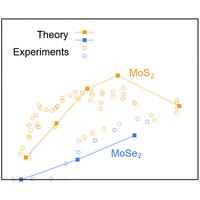
Phys. Rev. Lett. 137, 126001 (2026)
Condensed Matter and Materials
Unconventional Anisotropic Charge Dynamics in Bulk $1T\text{-}{\mathrm{TaS}}_{2}$ Induced by Interlayer Dimerization
Article | Condensed Matter and Materials | 2026-09-14 06:00 EDT
Achyut Tiwari, Maxim Wenzel, R. Mathew Roy, Christian Prange, Bruno Gompf, and Martin Dressel
A Peierls-like interlayer instability establishes stacking as a tuning parameter for hidden, metastable phases in van der Waals quantum materials.

Phys. Rev. Lett. 137, 126501 (2026)
Condensed Matter and Materials
Extending Topological Bound on Quantum Weight beyond Symmetry-Protected Topological Phases
Article | Condensed Matter and Materials | 2026-09-14 06:00 EDT
Yi-Chun Hung, Yugo Onishi, Hsin Lin, Liang Fu, and Arun Bansil
The quantum metric encodes the geometric structure of Bloch wave functions and governs a wide range of physical responses. Its Brillouin-zone integral, the quantum weight, appears in the structure factor and provides lower bounds on observables such as the optical gap and dielectric constant. In sym…
Phys. Rev. Lett. 137, 126601 (2026)
Condensed Matter and Materials
Magnetic Skyrmion Interacting with Optical Skyrmion
Article | Condensed Matter and Materials | 2026-09-14 06:00 EDT
Lan Bo, Jian Chen, Xichao Zhang, Yan Zhou, Chengwei Qiu, and Masahito Mochizuki
Magnetic skyrmions (MSks) and optical skyrmions (OSks) embody topology in matter and in light, respectively. Here we investigate the interaction between a single MSk and an OSk beam. Three distinct nonlinear dynamical modes are identified: rotation, skipping, and trochoidal motion. By decomposing th…
Phys. Rev. Lett. 137, 126701 (2026)
Condensed Matter and Materials
Nanoscale Mapping of Magnetic Orientations with Complex X-Ray Magnetic Linear Dichroism
Article | Condensed Matter and Materials | 2026-09-14 06:00 EDT
Marina Raboni-Ferreira, Benedikt J. Daurer, Jeffrey Neethirajan, Andreas Apseros, Sandra Ruiz-Gómez, Burkhard Kaulich, Majid Kazemian, and Claire Donnelly
Compensated magnets are of increasing interest for both fundamental research and applications, with their net-zero magnetization leading to ultrafast dynamics and robust order. To understand and control this order, nanoscale mapping of local domain structures is necessary. One of the main routes to …
Phys. Rev. Lett. 137, 126702 (2026)
Condensed Matter and Materials
Effective Residual Interaction Kernel Approach for Optical Spectra
Article | Condensed Matter and Materials | 2026-09-14 06:00 EDT
Marc Aichner, Matteo Gatti, and Lucia Reining
Excitonic effects dominate absorption and loss spectra in many materials. However, they are hard to access computationally, because of the cost of first-principles calculations and because of the scarce reliability of simple approximations. We overcome both limitations by combining a part of the ele…
Phys. Rev. Lett. 137, 126901 (2026)
Condensed Matter and Materials
Nonlinear Optical Probing of Ferroic Octupolar Order Parameter in Collinear Altermagnet
Article | Condensed Matter and Materials | 2026-09-14 06:00 EDT
P. A. Usachev, R. V. Pisarev, and V. V. Pavlov
Optical second harmonic generation detects ferroic octupolar order in altermagnetic CoF, establishing nonlinear interactions as signatures of altermagnetism in experiments.
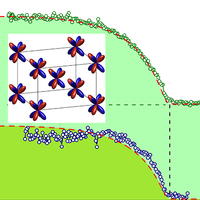
Phys. Rev. Lett. 137, 126902 (2026)
Condensed Matter and Materials
Balancing Information and Dissipation with Partially Observed Fluctuating Signals
Article | Statistical Physics; Classical, Nonlinear, and Complex Systems | 2026-09-14 06:00 EDT
Giorgio Nicoletti, Ivan Di Terlizzi, and Daniel Maria Busiello
A new model shows how cells could optimize biochemical sensing by balancing information gained against energy spent.

Phys. Rev. Lett. 137, 127101 (2026)
Statistical Physics; Classical, Nonlinear, and Complex Systems
Orientation Reconstruction of Proteins using Coulomb Explosions
Article | Polymers, Chemical Physics, Soft Matter, and Biological Physics | 2026-09-14 06:00 EDT
Tomas André, Alfredo Bellisario, Wilma Kraft, Nicuşor Tîmneanu, and Carl Caleman
We solve the orientation recovery of a tumbling protein in the gas phase from single-event measurements of the spatial positions of its ions after an x-ray laser-induced explosion. We simulate diffracted x-ray signal and ion dynamics under experimental conditions and compare our method to convention…
Phys. Rev. Lett. 137, 128401 (2026)
Polymers, Chemical Physics, Soft Matter, and Biological Physics
Physical Review X
Reversibility, Chaos, and Attractors in Periodically Sheared Elastic Filaments
Article | 2026-09-14 06:00 EDT
Francesco Bonacci, Brato Chakrabarti, Olivia du Roure, Anke Lindner, and David Saintillan
Combining experiments on actin filaments with numerical simulations, a previously unknown transition from reversible motion to intermittent, noise-driven chaos in single semiflexible filaments under periodic shear is unveiled.
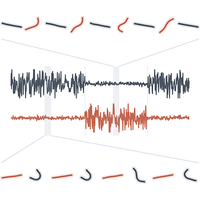
Phys. Rev. X 16, 031067 (2026)
Overcoming Intrinsic Material Limitations through Cavity Feedback
Article | 2026-09-14 06:00 EDT
M. Ebrahimi, Y. Huang, V. A. S. V. Bittencourt, A. Rashedi, A. Metelmann, and J. P. Davis
Active dissipation control via a feedback loop overcomes intrinsic magnetic losses, achieving strong coupling among photons, magnons, and phonons in cavity magnomechanics.
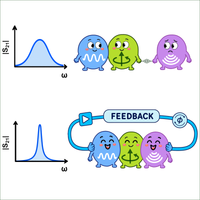
Phys. Rev. X 16, 031068 (2026)
arXiv
Localization Landscapes as Operator-Induced Geometry for Heterogeneous Systems
New Submission | Disordered Systems and Neural Networks (cond-mat.dis-nn) | 2026-09-15 20:00 EDT
Josué García-Ávila (Department of Mechanical Engineering, Columbia University)
Heterogeneous operators often organize response through hidden barriers, wells, and weakly communicating compartments that are not faithfully described by Euclidean distance or raw graph connectivity alone. We study this structure through the localization landscape, obtained from a single source solve, and the associated effective potential $ W_{\mathrm{eff}} = 1/u$ . Starting from both discrete Schrödinger-type operators and heterogeneous reaction-diffusion operators, we show how $ W_{\mathrm{eff}}$ induces effective wells, basin partitions, and Agmon-type neighborhoods that serve as an operator-aware geometry for localization and transport. This geometry explains the spatial support of low-energy eigenmodes, produces adaptive receptive fields on a fixed graph, sharpens locality in attention-like interactions, and yields bottleneck-sensitive modulation of diffusion. We also include a finite-element reaction-diffusion example with strongly compartmentalized coefficients, demonstrating that the same framework extends beyond simple grid operators to heterogeneous continuum systems. The results support a precise conclusion: localization-landscape geometry is a strong inductive bias when relevance is controlled by confinement, barriers, and low-energy accessibility, but its benefits are task-dependent rather than universal.
Disordered Systems and Neural Networks (cond-mat.dis-nn), Mathematical Physics (math-ph)
14 pages, 8 numbered figures
A thermomechanical framework for strongly nonlocal continua
New Submission | Soft Condensed Matter (cond-mat.soft) | 2026-09-15 20:00 EDT
The paper presents a consistent thermomechanical framework for strongly nonlocal continua, a type of generalized media in which a material’s response at a point depends on deformation and temperature gradients within its neighborhood. Such dependence is responsible for localization phenomena having an intrinsic size, and nonlocal modeling also serves as a practical regularization tool to prevent mesh dependence. Nonlocality is of the integral type, using a kernel function that gives the relative influence of neighboring points on a central point. The paper develops three sources of nonlocality: (1) nonlocal momentum balance equations; (2) nonlocal conservation laws (including the first and second laws of thermodynamics); and (3) a material’s nonlocal constitutive structure. Balance equations are derived using the principle of virtual power, permitting non-smooth force and displacement fields and non-smooth boundary surfaces with indistinct normal directions. The balance equations differ from those of classical local continua. Conservation laws also differ from those of local continua, with the mechanical power and heating at a point being averaged over its neighborhood. These laws are developed for processes that are sufficiently slow to minimize additional meso-scale kinetic energy due to internal turbulence. Stress, entropy, and dissipative forces are obtained as averaged derivatives of the free energy function with respect to strain, temperature, and internal variables. An example is presented of a stretched elastoplastic bar with a small defect, and nonlocality is shown to impart a characteristic size to the deformation pattern.
Soft Condensed Matter (cond-mat.soft), Other Condensed Matter (cond-mat.other), Classical Physics (physics.class-ph)
International Journal of Engineering Science, Vol. 229 (2026), 104651
Interparticle radiation forces beyond spherical particles in a bulk acoustofluidic device
New Submission | Soft Condensed Matter (cond-mat.soft) | 2026-09-15 20:00 EDT
Understanding interparticle radiation forces between spherical and nonspherical particles is crucial for the trapping of micro- and nano-objects in acoustophoresis. Most theoretical and numerical models treat spherical particles as identical to estimate interparticle forces, owing to their symmetry. Here, we elucidated interparticle radiation forces between three particles with different shapes and material contrast using experimentally validated numerical models. We performed a frequency sweep of the full acoustic device, accounting for viscous effects in a two-dimensional model, to predict the system’s resonance. The pressure field obtained at the resonant frequency was then fitted to a 1D sinusoidal wave and used in a three-dimensional model based on the perturbation technique and tensor integral method to calculate the interparticle forces on the particles due to scattering and re-scattering of the acoustic field. Our results revealed a shape-dependent reversal of interparticle forces, even for positive-contrast materials. We found that for spherical particles, the interparticle forces are independent of material properties when the particles are positioned on the nodal plane. However, material contrast and particle asymmetry significantly affect interparticle forces when particles are placed outside the nodal plane. Finally, we studied the effects of the orientation of the asymmetric particle placed outside the nodal plane on the interparticle radiation forces. Interestingly, for the orientation angle of 0 degrees, the interparticle force is maximum for the asymmetrical particle and then gradually decreases to zero as we increase the orientation angle to 90 degrees. The detailed analysis presented in the paper will facilitate a better understanding of shape-based acoustic manipulation of microparticles.
Soft Condensed Matter (cond-mat.soft), Fluid Dynamics (physics.flu-dyn)
The price of locality: Maxwell-Cattaneo charge transport in Schwinger-Keldysh effective field theory
New Submission | Statistical Mechanics (cond-mat.stat-mech) | 2026-09-15 20:00 EDT
Andrea Amoretti, Matteo Anselmi, Daniel K. Brattan
We determine the conditions under which the nonlinear Maxwell-Cattaneo theory of charge transport admits a local Gaussian Schwinger-Keldysh embedding with a particular modified dynamical KMS symmetry. We show that treating the additional vector as intrinsically dissipative fundamentally modifies the entropy-current analysis: the hydrostatic generating functional no longer fixes all entropy-current improvements, which must instead be supplied independently. Subsequently we discuss the additional constraints not contained in the hydrodynamic analysis that are imposed by the modified KMS transformation becoming a symmetry of the action. We both interpret and supply the corresponding stochastic quasi-hydrodynamics.
Statistical Mechanics (cond-mat.stat-mech), High Energy Physics - Theory (hep-th)
39 pages, 0 figures
Strain-Induced Helical Superconductivity and the Zero-Field Diode Effect
New Submission | Superconductivity (cond-mat.supr-con) | 2026-09-15 20:00 EDT
Raigo Nagashima, Jörg Schmalian
Motivated by the strain-induced zero-field superconducting diode effect observed in PbTaSe$ _2$ , we identify a mechanism by which strain generates nonreciprocal superconducting transport without magnetism or an external magnetic field. Uniaxial strain mixes a dominant $ s$ -wave order parameter with a subdominant two-component pairing channel and enhances their symmetry-allowed Lifshitz coupling. Beyond a critical strain, this coupling drives a transition into a helical state with spontaneously selected finite Cooper-pair momentum and broken time-reversal symmetry. The resulting diode effect is generically non-monotonic in strain and exhibits distinct responses for currents parallel and perpendicular to the residual mirror plane, consistent with experiment. Our theory predicts that reversing the principal strain switches the diode direction by $ 90^\circ$ , while shear strain rotates it continuously. These results establish strain as a symmetry-selective means of creating, controlling, and diagnosing spontaneous helical superconductivity.
Superconductivity (cond-mat.supr-con)
5 pages, 3 figures
Quantum Stochastic Walks on the Permutation Group
New Submission | Statistical Mechanics (cond-mat.stat-mech) | 2026-09-15 20:00 EDT
Feng He, Arthur Hutsalyuk, Giuseppe Mussardo, Andrea Stampiggi
How rapidly does order give way to randomness, and can quantum coherence accelerate this process? We address these questions through the paradigmatic problem of card shuffling, formulated as a random walk on the symmetric group $ S_n$ . We first recast the random-transposition walk studied by Diaconis and Shahshahani, as well as more general walks generated by conjugacy classes of $ S_n$ , in continuous time. We then identify the transition matrix of each classical walk with a permutation Hamiltonian generating a corresponding unitary quantum walk. Purely unitary evolution, however, does not generically converge to the uniform distribution in the classical sense of mixing: coherence preserves information rather than erasing it. We therefore embed the problem into a quantum stochastic walk, where coherent dynamics competes with the dissipative process responsible for classical mixing. In this setting, quantum coherence assists randomization. We prove that it can only decrease the distance from the uniform distribution in the computational basis and can therefore accelerate mixing. An analysis of the slowest mode yields a criterion for the coupling strength required to produce an appreciable speedup. Finally, numerical results reveal a scaling collapse of the ratio between quantum and classical mixing times onto a simple one-parameter form. Our results illustrate how coherence and dissipation can cooperate in the emergence of randomness in walks on permutation groups.
Statistical Mechanics (cond-mat.stat-mech), Quantum Physics (quant-ph)
26+7 pages; 9+1 figures
Topological classification through knotted graphs: Fermi surface dispersions and Lifshitz transitions
New Submission | Mesoscale and Nanoscale Physics (cond-mat.mes-hall) | 2026-09-15 20:00 EDT
Hakan Akgün, Xianquan Yan, Ching Hua Lee
Knot theory has provided a rich topological taxonomy for band structures, but its reach is fundamentally limited: knot invariants classify only 1D nodal lines at gap closure, and cannot encode the full dispersion or rich Fermi surface structure of realistic materials. Here we show that knotted graphs (knots that admit graph-like intersections in 3D space) - which have so far been elusive in condensed matter literature - provide a unified topological language for classifying the entire band dispersion, and even the eigenstate topology in some contexts. We propose a new framework beyond the existing Yamada polynomials that can topologically characterize the intricacies of realistic Fermi surfaces completely, crucially including how their multiple disconnected pieces are nested. This yields the Yamada set, a boundary-resolved extension which organizes the full topological evolution across energy into a Yamada sequence: a compact dispersion-level fingerprint directly tied to experimental signatures of Lifshitz transitions. Our framework is demonstrated with DFT-based band structures of real materials. Beyond dispersion-level classifications, this framework can be extended to non-Hermitian exceptional surfaces, where Berry-curvature flux further equips the knotted-graph skeleton with a directed Abelian edge flow that also captures the eigenstate topology.
Mesoscale and Nanoscale Physics (cond-mat.mes-hall), Materials Science (cond-mat.mtrl-sci), Mathematical Physics (math-ph), Geometric Topology (math.GT), Computational Physics (physics.comp-ph)
50 pages total: 12-page main article (including references) and 38-page Supplemental Material; 6 main-text figures and 20 supplemental figures
Effective theory of the hidden-order pseudogap phase in a doped antiferromagnet
New Submission | Strongly Correlated Electrons (cond-mat.str-el) | 2026-09-15 20:00 EDT
Gaia De Paciani, Gesa Dünnweber, Johannes Poersch, Simon M. Linsel, Henning Schlömer, Fabian Grusdt
The microscopic origin of the pseudogap phase constitutes a longstanding puzzle related to the emergence of high-temperature superconductivity in cuprate materials. In this work, we develop an effective model for doped antiferromagnets in terms of fluctuating stripes, or string-like domain walls, which obscure the antiferromagnetic order of the spin background. The open ends of such domain walls of the N’eel order are treated as vortices in the resulting lattice gauge theory. We numerically evaluate the phase diagram by classical Monte Carlo simulations, using percolation-based geometric order parameters to diagnose hidden N’eel order. At high temperatures, we identify a BKT-type crossover in which the domain wall ends become deconfined. We interpret this as the $ T^\ast$ crossover from the hidden order regime to the paramagnetic metal above. At low temperatures, we identify stripe instabilities. Predictions of our effective model can be tested in ultracold fermion quantum simulators.
Strongly Correlated Electrons (cond-mat.str-el), Quantum Gases (cond-mat.quant-gas)
19 pages, 10 figures
Visualizing impurity-driven scattering phase textures in EuCd2As2
New Submission | Materials Science (cond-mat.mtrl-sci) | 2026-09-15 20:00 EDT
Raquel Sánchez-Barquilla, Rafael Pineda Medina, Pablo García Talavera, Adrian Valadkhani, Edwin Herrera, Brinda Kuthanazhi, Lin-Lin Wang, Sergey L. Bud’ko, Paul C. Canfield, Roser Valentí, Isabel Guillamón, William J. Herrera, Alfredo Levy Yeyati, Hermann Suderow
Understanding how disorder modifies electronic states in magnetic semiconductors is important for controlling spin-dependent transport and topological responses. Here we use scanning tunneling microscopy to visualize scattering phase textures in EuCd2As2. By isolating a single surface wavevector we reconstruct spatial phase maps of the local density of states and identify phase dislocations characterized by 2pi winding around impurity sites. These phase singularities emerge systematically within charge puddles generated by Eu interstitials and their positions evolve with bias voltage. We show that their spatial structure is consistent with interference between multiple scattering channels, including contributions from spin-orbit coupling. We provide a model which reproduces phase dislocations and relates the decay of the phase gradient to the relative strength of spin-orbit and scalar scattering. Our results establish a route to access the phase of electronic scattering in real space and study the role of local disorder and spin-orbit interactions in shaping electronic states in quantum materials.
Materials Science (cond-mat.mtrl-sci), Mesoscale and Nanoscale Physics (cond-mat.mes-hall), Strongly Correlated Electrons (cond-mat.str-el)
Superconducting Diode Effect in Josephson $φ_0$ Junction
New Submission | Superconductivity (cond-mat.supr-con) | 2026-09-15 20:00 EDT
A. Janalizadeh, Y. M. Shukrinov, M. R. Kolahchi
We investigate the superconducting diode effect in a Josephson junction with a ferromagnetic weak link in the presence of Rashba spin-orbit coupling. While the standard $ \varphi_0$ junction model is valid only for weak exchange fields $ h \lesssim T_c$ , realistic ferromagnetic barriers typically operate in the regime $ h \gg T_c$ , where the conventional Ginzburg-Landau gradient expansion becomes insufficient and requires the inclusion of higher order gradient terms to ensure stability of the free energy. By extending the free energy with such higher order term, we demonstrate that the linear gradient coupling alone leads to finite momentum Cooper pairing while leaving the critical current symmetry unchanged. The interplay between this linear term and the higher order gradient one leads to the Josephson diode effect.
Superconductivity (cond-mat.supr-con)
Topological superconductivity in an altermagnet-superconductor heterostructure
New Submission | Superconductivity (cond-mat.supr-con) | 2026-09-15 20:00 EDT
Michael Liudeng, Hrishikesh Patel, Marcel Franz, Niclas Heinsdorf
Fully gapped spin-triplet superconductors offer a natural setting for topological edge transport and Majorana excitations. Here we propose a heterostructure that interfaces altermagnetic monolayer V$ _2$ Se$ _2$ O with a conventional $ s$ -wave superconductor. Starting from an ab-initio description of V$ _2$ Se$ _2$ O, we construct a low-energy model of its spin-split Fermi surface and study the superconducting instability of the coupled stack. We find that the momentum-dependent exchange splitting of the altermagnet strongly favors equal-spin pairing and converts the proximity-induced order into a fully gapped $ p$ -wave state. Over a broad range of interface parameters, the resulting Bogoliubov-de Gennes bands carry a nonzero Chern number, and slab spectra exhibit chiral Majorana edge modes traversing the bulk gap. We further quantify the inverse proximity effect and show how the induced gap evolves across a finite multilayer stack. These results establish a route to topological triplet superconductivity by interfacing a conventional superconductor with an experimentally available altermagnetic semiconductor, and provide practical guidance for interface fabrication and experimental detection.
Superconductivity (cond-mat.supr-con), Materials Science (cond-mat.mtrl-sci), Strongly Correlated Electrons (cond-mat.str-el)
Biaxial nematics and nematic-nematic demixing in polydisperse mixtures of hard board-like particle fluids
New Submission | Soft Condensed Matter (cond-mat.soft) | 2026-09-15 20:00 EDT
Yuri Martinez-Raton, Daniel de las Heras, Enrique Velasco
We study the bulk phase behavior of a polydisperse liquid crystal fluid made of biaxial boards with restricted orientations using both fundamental measure theory and Monte Carlo computer simulations. The continuous polydispersity is included in the intermediate particle length of the boards via a truncated Schulz distribution. By calculating several phase diagrams across a range of polydispersity coefficients, we find that polydispersity (i) enhances demixing between two uniaxial nematic phases and (ii) expands the stability region of the biaxial phase. Although metastable with respect to non-uniform phases, we identify certain mixtures exhibiting two-phase coexistence paths involving uniaxial-uniaxial and uniaxial-biaxial phase separations. Whether these paths can be completed depends on the precise shape of the parent distribution function. Monte Carlo simulations performed for a representative case exhibit the same phase diagram topology predicted by theory, thereby validating the theoretical approach. The main difference between both approaches lies in quantitative agreement, with simulated phase transitions systematically occurring at higher packing fractions than those predicted theoretically. Our combined theoretical and simulation results may prove relevant to the design and interpretation of sedimentation experiments on colloidal suspensions of polydisperse anisotropic particles.
Soft Condensed Matter (cond-mat.soft), Statistical Mechanics (cond-mat.stat-mech)
18 pages, 10 figures
Tripartite entanglement in chaotic eigenstates
New Submission | Strongly Correlated Electrons (cond-mat.str-el) | 2026-09-15 20:00 EDT
Junjia Zhang, Ramanjit Sohal, Shinsei Ryu
It is now well-established that classical statistical mechanics emerges from the entanglement structure of quantum chaotic systems, as quantified by the (subsystem) eigenstate thermalization hypothesis (ETH). While this statement rests on the well-studied bipartite entanglement of the eigenstates of such systems, recent years have shown that many-body states are often characterized by multipartite entanglement, raising the question: what are the universal multipartite entanglement features of chaotic eigenstates? We answer this question in part by studying a tripartite generalization of the ergodic bipartition ansatz through the lens of two tripartite entanglement probes, the Rényi tripartite multi-entropy and the Rényi reflected entropy. We derive leading-order analytical expressions for the ensemble averages of both quantities using a saddle-point analysis. Beyond these measures, we obtain the average of the Rényi-2 reflected density matrix, $ \rho_{AA^\ast}^{(2)}$ ,which controls the Rényi-2 reflected entropy. We show that $ \rho_{AA^\ast}^{(2)}$ in a chaotic eigenstate is well-described by this ensemble average which, unlike an ordinary reduced density matrix, takes three qualitatively distinct forms across subsystem-size regimes, which may be viewed as a tripartite generalization of subsystem ETH. We benchmark our analytical predictions against exact diagonalization of the mixed-field Ising model.
Strongly Correlated Electrons (cond-mat.str-el), Statistical Mechanics (cond-mat.stat-mech), High Energy Physics - Theory (hep-th), Quantum Physics (quant-ph)
Spatial instability of a homogeneous superconductor after an interaction quench
New Submission | Superconductivity (cond-mat.supr-con) | 2026-09-15 20:00 EDT
Medha Roy Choudhury, Sankha Subhra Bakshi, Pinaki Majumdar, Amit Ghosal
We investigate the quantum dynamics of a conventional superconductor, described by the attrac- tive Hubbard model, driven far from equilibrium by quenching the Hubbard attraction. We evolve the full density matrix of the system in time using the Heisenberg equation of motion, tracking the spatiotemporal dynamics of the pairing and density fields. We use very weakly inhomogeneous initial conditions to probe the stability of the homogeneous dynamics to spatial perturbations. At initial times after the quench the pairing and density fields remain homogeneous in space while fluctuating in time. However, depending on the quench strength the spatially uniform dynamics can become unstable beyond a threshold time, with emergence of spatial textures. The onset time for the instability depends on the strength of the quench and the initial inhomogeneity. At long times the system evolves towards a state with significantly reduced spatial heterogeneity. The time dependence of the global superconducting order parameter suggests two broad categories of re- sponse to a quench. One of these involves strongly inhomogeneous pairing and bond currents in the nonequilibrium superconductor.
Superconductivity (cond-mat.supr-con), Strongly Correlated Electrons (cond-mat.str-el)
Precessional modes of phonon angular momentum
New Submission | Materials Science (cond-mat.mtrl-sci) | 2026-09-15 20:00 EDT
Daniel A. Bustamante Lopez, Dominik M. Juraschek
Magnons are collective precessional excitations of electron spins and are ubiquitous in emerging information technologies. Here, we show that the crystal lattice can support an analogous precessional mode of phonon angular momentum. Superposition of a circularly polarized phonon and a linearly polarized phonon normal to the circular-motion plane generates a transverse angular-momentum component that rotates at their difference frequency and decays on a timescale set by the participating phonon linewidths, defining a mode with its own resonance and lifetime. Coupling between spin and phonon angular momentum hybridizes this precessional mode with a magnon near resonance. Our results establish phonon angular momentum precessional modes as lattice analogues of magnons and identify their spectroscopic and time-domain signatures.
Materials Science (cond-mat.mtrl-sci)
Fuzzy Erdos-Renyi random graphs: Spectral statistics
New Submission | Disordered Systems and Neural Networks (cond-mat.dis-nn) | 2026-09-15 20:00 EDT
Within a random-matrix-theory (RMT) approach, we perform a detailed numerical study of the spectral statistics of fuzzy Erdos-Renyi (ER) random graphs. Specifically, we consider the membership values of the vertices and edges of a fuzzy ER graph model as random variables. In this way, the corresponding adjacency matrices become sparse matrices with random entries. Then, we apply standard RMT measures to characterize the eigenvalues and eigenvectors of ensembles of Hermitian and non-Hermitian adjacency matrices of both undirected and directed fuzzy graphs. We demonstrate that the average degree of the ER model serves as the scaling parameter of the spectral properties of the corresponding fuzzy setups.
Disordered Systems and Neural Networks (cond-mat.dis-nn)
7 pages, 6 figures
Cracking the case: fluctuations enhance ductility in refractory alloys
New Submission | Materials Science (cond-mat.mtrl-sci) | 2026-09-15 20:00 EDT
Manura Liyanage, Julia Chmielewska, Tijmen Vermeij, Johann Michler, Christian Leinenbach, W. A. Curtin, Anirudh Raju Natarajan
Refractory body-centered cubic (BCC) alloys are attractive candidates for structural applications at extreme temperatures, yet combining room-temperature ductility with high-temperature strength remains the unsolved challenge. Ductility in crystals requires that dislocations emit from a sharp crack tip before brittle cleavage, but continuum theories that treat disordered alloys as chemically homogeneous incorrectly predict brittleness for many experimentally ductile alloys. Here we show that atomic-scale stress fluctuations in disordered alloys create an additional local stress intensity at the crack tip, enabling dislocation loop nucleation below the cleavage threshold. Accounting for these fluctuations yields a local ductility criterion where alloys deemed brittle by conventional fracture mechanics can be intrinsically ductile. Atomistic simulations with machine-learned interatomic potentials and an analytic fracture mechanics model correctly predict composition-driven brittle-to-ductile transitions in binary and ternary Mo-Nb-Ti alloys, in Nb-Ti alloys at 4 K, and in several commercial BCC alloys at room temperature. Guided by this criterion, we predict, fabricate, and test the Hf$ _{15}$ Mo$ _{15}$ Nb$ _{32}$ Ti$ _{38}$ alloy, confirming its room-temperature ductility. This fluctuation-driven mechanism provides a quantitative basis for designing ductile multicomponent BCC alloys.
Materials Science (cond-mat.mtrl-sci)
Particle Inertia-Driven Pore Formation over Material Property Effects in Laser Powder-blown Directed Energy Deposition
New Submission | Materials Science (cond-mat.mtrl-sci) | 2026-09-15 20:00 EDT
Dong Hee Kang, Samantha Webster, Sampson Canacoo, Samuel J. Clark, Kamel Fezzaa, Jihoon Jeong
Laser Powder-blown Directed Energy Deposition (LP-DED) offers flexibility for process and materials and high productivity (~5 kg/h), but process-induced pores often compromise mechanical properties. This study utilizes in-situ X-ray synchrotron imaging to compare pore formation mechanisms in Ti-6Al-4V (Ti64) and stainless steel 316L (SS316L), focusing on the interplay between particle dynamics and thermophysical properties. Four distinct pore formation mechanisms were identified, with most large pores originating from the closure of cavities formed behind incident particles impinging on the melt pool. High Weber number (We >> 1) governs this behavior, indicating that particle inertia, rather than thermophysical property differences, is the primary driver of large pore formation. The study demonstrates that increased energy density leads to larger melt pool volumes, facilitating deeper particle penetration. This greater penetration depth directly correlates with increased pore diameters. While thermophysical properties secondarily influence pore-formation frequency and cavity symmetry, particle inertia remains the dominant factor. These findings provide a physically grounded basis for understanding and controlling porosity in powder-blown DED processes.
Materials Science (cond-mat.mtrl-sci), Applied Physics (physics.app-ph), Fluid Dynamics (physics.flu-dyn)
Symmetry- and Property-Aware Crystal Generation with Reinforcement Learning for Inverse Materials Design
New Submission | Materials Science (cond-mat.mtrl-sci) | 2026-09-15 20:00 EDT
Ting-Wei Hsu, Arun Bansil, Qimin Yan
The inverse design of crystalline materials ultimately seeks structures with desired physical properties. However, for many functional responses, a favorable numerical value is meaningful only when supported by the symmetry of the underlying crystal. Without the appropriate crystallographic constraints, an apparent response may be ill defined, accidental, or not symmetry protected. Here we introduce SPARC, a symmetry- and property-aware reinforcement learning framework that optimizes physical objectives while preserving the structural conditions required for their realization. We demonstrate SPARC on two complementary tasks. The first targets strong uniaxial dielectric anisotropy, a tensorial response that is well defined only within appropriate crystal classes. The second maximizes the spectroscopic limited maximum efficiency, a scalar device-level objective without a prescribed symmetry class, allowing the framework to identify favorable crystallographic motifs. These results show that symmetry is not merely an additional design constraint, but a physical foundation for generating candidates with meaningful, robust, and realizable functional properties.
Materials Science (cond-mat.mtrl-sci), Artificial Intelligence (cs.AI), Computational Physics (physics.comp-ph), Optics (physics.optics)
18 pages, 5 figures
Local Strain-Dependent Anisotropy in Fibrous Networks
New Submission | Soft Condensed Matter (cond-mat.soft) | 2026-09-15 20:00 EDT
Yoni Koren, Shahar Goren, Oren Tchaicheeyan, Ayelet Lesman
Cells in connective tissues reside within the extracellular matrix (ECM), which consists of a fibrous mesh that exhibits non-linear strain-stiffening behavior, driven by a transition from bending-to-stretching-dominated deformation. While bulk rheology captures macroscopic mechanical properties, cells actively sense and respond to local microscale heterogeneities and stiffness anisotropy in their environment. Characterizing ECM micromechanics is therefore essential for understanding the mechanical cues experienced by cells. This study quantifies local stiffness anisotropy in stretched fibrous gels by combining experimental and numerical approaches. Experimentally, we utilized optical tweezers microrheology to measure local stiffness in fibrin gels subjected to uniaxial stretch. The gels demonstrated gradual local stiffening along both the tensile and perpendicular axes, with a more profound increase along the tensile axis, resulting in local anisotropy. To investigate the physical parameters driving this phenomenon, we developed a 3D finite element model of a discrete random fiber network, successfully replicating the experimental local stiffening and anisotropy. Numerical analysis further revealed that within the sub-isostatic region, both fiber thickness and network connectivity strongly influence local anisotropy: slender fibers and higher connectivity amplify the anisotropy by up to an order of magnitude. This contributes to the formation of a highly anisotropic local environment, thereby playing a significant role in directing mechanically driven biological processes, such as cell migration and durotaxis. Our simulations also indicate that local micromechanical responses may differ from the material’s global stiffening behaviors, highlighting the need for characterization at the microscopic scale.
Soft Condensed Matter (cond-mat.soft), Biological Physics (physics.bio-ph)
Magnon Theory of Domain Wall Wavefronts and the Ballistic Diffusive Crossover in the Classical Anisotropic Landau Lifshitz Spin Chain
New Submission | Other Condensed Matter (cond-mat.other) | 2026-09-15 20:00 EDT
We study the far-from-equilibrium dynamics of domain-wall initial states in the integrable lattice Landau–Lifshitz spin chain. Building on the linear spin-wave description of domain-wall spreading, we derive the long-wavelength magnon dispersion directly from the microscopic integrable Hamiltonian and use it to characterize the propagation and broadening of the resulting wavefronts. The dispersion interpolates between a quadratic form at the isotropic point and a linear form in the easy-plane regime. In the isotropic limit, the quadratic dispersion leads to diffusive broadening, whereas in the easy-plane regime the domain-wall front propagates ballistically. Keeping the leading nonlinear correction to the linear dispersion gives a cubic dispersive term, which produces a characteristic $ t^{1/3}$ broadening of the ballistic front. We further show that the sign of this cubic correction changes at a critical anisotropy, leading to a reversal of the dispersive wake from trailing to advancing. The resulting critical point occurs at $ \Delta_c=1/7$ , corresponding to $ \gamma_c\simeq 1.047$ . Numerical simulations of the full nonlinear spin dynamics confirm the analytical scaling and demonstrate the coexistence of the amplitude-independent spin-wave front with amplitude-dependent nonlinear soliton propagation.
Other Condensed Matter (cond-mat.other), Statistical Mechanics (cond-mat.stat-mech)
Liquid-Phase Near-Field Infrared Nanoscopy of Ion-Exchange Reactions
New Submission | Soft Condensed Matter (cond-mat.soft) | 2026-09-15 20:00 EDT
Wassie M. Takele, Teferi Sitotaw Yallew, Mason Caron, Yohannes Abate
In situ monitoring of reactions with chemical specificity and nanometer-scale spatial resolution under aqueous conditions remains a long-standing experimental challenge. Here, we use thin SiC membrane-enabled liquid-phase infrared nanoimaging and nanospectroscopy to monitor Ca$ ^{2+}$ /Na$ ^{+}$ ion exchange in a mixture of disodium terephthalate and CaCl$ _2$ solution. Beneath the membrane, we follow the formation of calcium terephthalate (CaTP), a metal-organic framework (MOF)-type coordination phase in which terephthalate ligands link Ca$ ^{2+}$ centers. The symmetric and asymmetric carboxylate stretching modes serve as chemically specific near-field reporters of Ca$ ^{2+}$ coordination to the terephthalate linkers. Nano-FTIR spectra reveal pronounced peak shifts and linewidth changes in these vibrational modes, indicating modification of the carboxylate coordination environment during CaTP formation. Complementary near-field nanoimaging resolves the emergence of nanoscale precipitates beneath the SiC membrane following CaCl$ _2$ injection, providing spatially resolved evidence of the formation of the CaTP coordination framework. Solid-phase nanoimaging and nanospectroscopy identify well-defined CaTP particles, providing further evidence for crystalline CaTP formation. We demonstrate that the chemistry of metal-ligand interactions can be monitored in situ via liquid-phase near-field nanoscopy. This capability could enable the study of catalytic, electrochemical, and biological processes under native aqueous conditions.
Soft Condensed Matter (cond-mat.soft), Mesoscale and Nanoscale Physics (cond-mat.mes-hall)
13 pages, 4 figures
Scaling equations for Bose-Einstein condensate dynamics across all interaction regimes
New Submission | Quantum Gases (cond-mat.quant-gas) | 2026-09-15 20:00 EDT
D. C. Marinica, C. Puertas González, T. Estrampes, N. Gaaloul, E. Charron
We derive a unified set of scaling equations for Bose-Einstein condensates in time-dependent harmonic traps, connecting the weakly interacting Gaussian regime to the strongly interacting Thomas-Fermi regime. The exact Gross-Pitaevskii ground-state density is taken as a fixed profile in rescaled coordinates, with its dynamics described by three scaling factors corresponding to compression or expansion along the three spatial directions. The resulting equations contain no adjustable parameter, since their coefficients are determined once from the initial state. They recover analytically the Gaussian variational and Thomas-Fermi scaling equations in their respective limits and satisfy an axis-resolved virial theorem. The approach also yields the global phase and the low-lying collective-mode frequencies of the condensate. We benchmark the model against three-dimensional Gross-Pitaevskii simulations and against measured expansion energies. The model remains accurate across all interaction regimes, in strongly anisotropic traps, and along time-dependent sequences including a relatively fast quench, up to the point where the underlying frozen-profile hypothesis, shared by all three scaling approaches, breaks down.
Quantum Gases (cond-mat.quant-gas), Atomic Physics (physics.atom-ph), Quantum Physics (quant-ph)
Non-reactive sintering enhances density and ionic conductivity of NASICON solid electrolytes
New Submission | Materials Science (cond-mat.mtrl-sci) | 2026-09-15 20:00 EDT
Andrea Cornelio, Björn Mieller, Johannes Baller, Andrea Fantin, Janina Roik, Jessica Kindt, Jonas Krug von Nidda, Tim-Patrick Fellinger, Gustav Graeber
NASICON materials are promising solid electrolytes for room-temperature sodium solid-state batteries and are typically synthesized via solid-state reaction. While sintering has been extensively studied, the effect of calcination on electrolyte properties remains poorly understood. In this work, the temperatures at which the NASICON phase forms in Na3Zr2Si2PO12 and Na3.4Zr2Si2.4P0.6O12 are identified. Calcination temperature is then varied between 900 °C and 1200 °C to obtain powders with different degrees of reaction prior to sintering. Under identical sintering conditions, higher NASICON phase content in the calcined powder is shown to yield denser electrolytes. Non-reactive sintering also improves grain boundary conductivity, increasing it by 130% for Na3.4Zr2Si2.4P0.6O12 and raising total conductivity from 1.60 to 2.95 mS/cm for powders calcined at 900 °C and 1200 °C, respectively. Finally, it is shown that phosphorus loss during processing compromises cycling stability against Na metal electrodes, and that adding off-stoichiometric phosphorus resolves this issue, while reaching a critical current density of 5.0 mA/cm^2 and a room-temperature conductivity of 3.82 mS/cm with over 400 hours of stable cycling. Overall, these findings directly relate synthesis and processing conditions to the final material properties and electrochemical performance of NASICON solid electrolytes.
Materials Science (cond-mat.mtrl-sci)
Slow Thermalization and Long-Lived Coherence across Acoustic Phonon Branches in BAs
New Submission | Materials Science (cond-mat.mtrl-sci) | 2026-09-15 20:00 EDT
Zeyu Xiang, Ying Peng, Ange Benise Niyikiza, Fanghao Zhang, Haoyuan Li, Takahiro Sato, Thomas Linker, Yanwen Sun, Meredith Henstridge, Vincent Esposito, James F. Cotter, Diling Zhu, Zhifeng Ren, Bolin Liao
The exceptionally high thermal conductivity of cubic boron arsenide (BAs) arises from suppressed three-phonon scattering associated with its large acoustic–optical gap. In this regime, four-phonon processes become non-negligible, creating an unusual scattering hierarchy with unexplored consequences for nonequilibrium phonon dynamics. Here, time-resolved x-ray diffuse scattering reveals exceptionally slow, branch-dependent acoustic phonon thermalization and long-lived coherence. Exploiting branch sensitivity in one-phonon diffuse scattering, we resolve transverse acoustic (TA) and longitudinal acoustic (LA) thermalization times of 29.2 and 13.9ps, respectively; even the LA timescale is at least three times that in common semiconductors. Phonon dispersion calculations assign coherent oscillations at 0.19 and 0.27THz to the TA and LA modes, respectively; both persist with little decay over 50~ps, with comparable coherence found only in diamond. These findings provide a direct dynamical manifestation of the weak phonon scattering underlying the exceptional thermal transport of BAs.
Materials Science (cond-mat.mtrl-sci)
Local Response Theory of Electrified Interfaces from Screened Effective Charges
New Submission | Materials Science (cond-mat.mtrl-sci) | 2026-09-15 20:00 EDT
Nicolas G. Hörmann, Nicolas Bergmann, Karsten Reuter
First-principles, electronic-structure simulations provide direct access to ground-state, global system properties. In the context of computational electrochemistry these are, e.g., bias-dependent energies, free energies, work functions, and capacitances. However, a comparably systematic local description of how these quantities respond to biasing via interfacial charging is still missing. Here, we introduce the screened electrochemical Born effective charge (SEBEC), a mixed total-energy derivative that measures the force response of an atomic degree of freedom to interfacial charging under electrochemical boundary conditions. SEBECs play the role for electrochemistry that Born effective charges play in the modern theory of polarization: they provide an unambiguous decomposition of global response and generate the same formal structures for structural relaxation, capacitance, and electrochemical Stark tuning that are familiar from solid-state response theory. The broader implication is a local response framework that brings electrochemical interfaces closer to the conceptual rigor long established for insulating solids.
Materials Science (cond-mat.mtrl-sci), Chemical Physics (physics.chem-ph), Computational Physics (physics.comp-ph)
Disorder-driven transport in ZrN thin films grown by ion-beam-assisted sputtering
New Submission | Superconductivity (cond-mat.supr-con) | 2026-09-15 20:00 EDT
Maximo DiPreta, Samuel Jiang, Serhii Kruhlov, Yi Li, Valentine Novosad, Tomas Polakovic
We investigate the structural and electronic transport properties of zirconium nitride (ZrN) thin films grown by dc ion-beam assisted sputtering (IBAS) as a function of nitrogen partial pressure, sputtering power and deposition temperature. Variation of growth conditions enables controlled tuning from disordered metallic and superconducting behavior to insulating transport. Increasing nitrogen flow drives an increase in sheet resistance, suppression of superconducting transition temperature, and non-metallic conduction. XRD shows no measurable change in long range crystallinity or order. In the insulating regime, low-temperature transport is well described by 3D Mott variable-range hopping (VRH), with the characteristic temperature $ T_0$ increasing monotonically with sheet resistance over four orders of magnitude. Despite this strong correlation between $ T_0$ and disorder, $ T_c$ exhibits no systematic dependence on $ T_0$ , indicating a decoupling between localization physics and the superconducting energy scale. Magnetotransport measurements are not well described by the standard BCS model nor the dirty type-II Werthamer-Helfand-Hohenberg model. The phase boundary is instead captured by a free-exponent power law, $ \mu_0 H_{c2}(T) = \mu_0 H_{c2}(0)[1 - (T/T_c)^{n}]$ with $ n \approx 3.47$ , and extrapolates to $ \mu_0 H_{c2}(0) \approx 6.4$ T. The films have an extracted coherence length of 7 nm. These results establish IBAS-grown ZrN as a broadly tunable platform for investigating disorder-driven transport and the crossover between metallic conduction, electronic localization, and superconductivity.
Superconductivity (cond-mat.supr-con), Materials Science (cond-mat.mtrl-sci)
8 pages, 8 figures, 1 table
Reducing the Gate-Induced Drain-Leakage Current of Carbon-Nanotube Transistors by Subliming Dispersants with Back-End-of-Line Compatible Temperature
New Submission | Materials Science (cond-mat.mtrl-sci) | 2026-09-15 20:00 EDT
Takumi Inaba, Yuichi Kato, Yoko Iizumi, Yasuhiko Fujita, Kazufumi Kobashi, Takahiro Morimoto, Toshiya Okazaki
Carbon nanotube field-effect transistors (CNTFETs) are promising for monolithic 3D integration with silicon CMOS circuits in back-end-of-line (BEOL) processes. Further reduction in off-state leakage is essential for practical applications. In this study, we develop a low-temperature cleaning process for CNT-deposited wafers using a sublimable CNT dispersant. The process is carried out below 250 °C, making it BEOL-compatible, and does not deteriorate CNT morphology or lattice structure, as confirmed by atomic force microscopy and Raman spectroscopy. As a result, gate-induced drain leakage current originating from residual dispersants is reduced by approximately one order of magnitude. In addition, improvements in on-current, subthreshold slope, and threshold voltage variability are observed after the cleaning process. This study demonstrates a material-enabled approach to improve the transfer characteristics of CNTFETs and provides a practical route toward low-power CNT electronics.
Materials Science (cond-mat.mtrl-sci), Mesoscale and Nanoscale Physics (cond-mat.mes-hall)
22 pages, 6 images in the main text, 12 pages, 10 figures in the Supplymentary Material
Physics-aware global Rietveld refinement for high-energy X-ray diffraction microscopy with application to reconstructing intragranular orientation and strain fields
New Submission | Materials Science (cond-mat.mtrl-sci) | 2026-09-15 20:00 EDT
Carter K. Cocke, Eitan Camacho, Sara F. Gorske, Katherine T. Faber, Kaushik Bhattacharya
High-energy X-ray diffraction microscopy (HEDM) has emerged as a critical technique for studying the microstructure and, increasingly, strain fields in solids. However, current algorithmic or experimental methods to obtain intragranular fields are time-intensive, provide limited spatial resolution, or yield stress and strain fields that do not satisfy the universal laws of deformation (compatibility and equilibrium). In the context of standard HEDM, a novel physics-aware approach is presented in which the physics of deformation is included in the forward diffraction simulation to ensure that the reconstructed fields are physically meaningful. The entire simulated and experimental diffractograms are compared with a differentiable optimal transport–type objective, and a Rietveld refinement is carried out globally on the internal fields and grain topology using gradient-based optimization. The method is developed, verified with synthetic data, and demonstrated experimentally using near-field HEDM data from aluminum oxynitride (a brittle ceramic), with a reference implementation released as PARA-X. The reconstructions show remarkable improvement over existing methods (improved completeness and loss), and the high-fidelity, high-resolution recovery paves the way for using HEDM to study fine-scale deformation mechanics over large polycrystalline volumes.
Materials Science (cond-mat.mtrl-sci)
Probing (sub)nanoscale ferrons in an electron microscope
New Submission | Materials Science (cond-mat.mtrl-sci) | 2026-09-15 20:00 EDT
Mahir Manna, Fei Yang, Shayantan Chaudhuri, Sourav Shenoy, Guo-Dong Zhao, Mohit Tanwani, Surya Prakash Reddy, Patrick J. Hays, Sriram Sankar, Cauê de Souza Coutinho Nogueira, Srilekshmi Muraleedharan, Xin Xu, Sujit Das, Katherine Inzani, Long-Qing Chen, Sandhya Susarla
Ferrons are collective excitations of polarization fluctuations that can enable terahertz communications and quantum transduction due to long propagation lengths. Although ferrons have been experimentally demonstrated in van der Waals ferroelectrics and relaxor ferroelectrics, there is no direct (sub)nanoscale experimental evidence of ferrons in three-dimensional ferroelectrics. Here, we detect two types of ferrons, Higgs and pseudo-Goldstone, at the (sub)nanoscale in lead titanate by measuring vibrational signals due to polarization fluctuations. By harnessing momentum transfer in electron energy loss spectroscopy (EELS), we directly distinguish between soft-phonons and ferrons. We observe that the Higgs mode originates from the soft optical phonon parallel to the polar axis, whereas the pseudo-Goldstone mode originates from the soft optical phonon perpendicular to the polarization axis. Together with Landau theory, Raman spectroscopy measurements, and EELS, we observe that Higgs group velocities, in the bulk limit, are eight times greater than those of out-of-plane soft phonons and the pseudo-Goldstone ferrons have group velocities six times greater than in-plane soft phonons due to long-range dipole interactions. We further show that the domain size confinement effects lead to doubling of the respective bulk ferron group velocities, reaching up to approximately 15 km per second (almost 15 times higher than the out-of-plane soft phonon modes). Overall, this study opens a pathway to the detection of ferrons in three-dimensional ferroelectrics with domain engineering as a promising avenue for terahertz communication and transduction.
Materials Science (cond-mat.mtrl-sci)
Probing the anomalous symmetry-breaking in kagome material CsV3Sb5 via third-order nonlinearity
New Submission | Strongly Correlated Electrons (cond-mat.str-el) | 2026-09-15 20:00 EDT
Zheng Dai, Fengyi Guo, Shuai Zhang, Xiubing Li, Congcong Li, Yufan Ju, Ziqi Wang, Bin Cheng, Zhe Ying, Fengqi Song
The kagome material has rapidly established itself as a research frontier in condensed matter physics, owing to its distinctive geometric structure and the rich array of unconventional physical phenomena. In the kagome AV3Sb5 (A = K, Rb, Cs) family, the charge-ordered state exhibits a remarkable characteristic, i.e., anomalous symmetry-breaking, which is tied to the topological nature of the electronic band structure. Here, we report the third-order nonlinear longitudinal and Hall responses that persist stably up to room temperature in the kagome material CsV3Sb5. Notably, the nonlinear responses demonstrate significant enhancement below the charge density wave (~ 77 K) order and anomalous symmetry-breaking (~ 39 K) state. The scaling analysis indicates that the third-order nonlinear transport is governed jointly by quantum geometric contribution and extrinsic scattering. This study realizes a giant third-order nonlinear response and provides a distinct method to detect anomalous symmetry-breaking in CsV3Sb5.
Strongly Correlated Electrons (cond-mat.str-el), Mesoscale and Nanoscale Physics (cond-mat.mes-hall)
Thixotropy versus viscoelasticity: a matter of time
New Submission | Soft Condensed Matter (cond-mat.soft) | 2026-09-15 20:00 EDT
Thixotropic and viscoelastic materials both retain their deformation history and are difficult to distinguish. However, a stationary linear response obeys the Kramers-Kronig relations. A structure that evolves during a sweep renders the spectrum inconsistent with them, so the residual from one chirp and no model measures nonstationarity. It survives the small-amplitude limit, returns to its baseline at any stationary state, and, for bounded restructuring, peaks near the structural time. We verify this on eight models and demonstrate it on published spectra of a thixotropic silica suspension.
Soft Condensed Matter (cond-mat.soft), Fluid Dynamics (physics.flu-dyn)
Effect of Buried-Interface Preparation for Nb Superconducting Resonators on InP
New Submission | Mesoscale and Nanoscale Physics (cond-mat.mes-hall) | 2026-09-15 20:00 EDT
Logan S. Kusher, Ding Peng, Zihua Zhu, Arunav Bordoloi, Axel Leblanc, Lukas J. Baker, Nichae Adnan, Jacob Issokson, Alvin Wang, Frederik Knudsen, Krishna Dindial, Melissa Mikalsen, Taha Kaleem, Andrei Vrajitoarea, Yingge Du, Patrick J. Strohbeen, Javad Shabani
Substrate surface preparation is a key step in the fabrication of electronic devices. In III–V semiconductor platforms, e.g. used in HEMTs and lasers, removal of the native substrate oxide is extremely important, where improper removal will negatively affect end-of-line device performance. However, the impact of substrate preparation in hybrid superconductor–semiconductor (S–Sm) systems relevant to quantum information applications remains poorly understood. This study compares three surface preparations for the deposition of sputtered Nb films on InP: (i) no intentional oxide removal (control), (ii) \textit{in-situ} $ \mathrm{Ar}^{+}$ milling, and (iii) S-passivation. \textit{In-situ} $ \mathrm{Ar}^{+}$ milling reduces the O concentration at the metal–substrate (MS) interface, but also roughens the InP surface, increasing the effective thickness of the Nb–InP interface and promoting O incorporation through extended defects in the Nb film. S-passivation suppresses interfacial O more effectively while preserving a sharper and smoother buried interface. It also yields Nb films with higher superconducting transition temperatures and less structural damage than the $ \mathrm{Ar}^{+}$ -milled samples. Despite these materials improvements, the microwave response is comparable across the three preparations. At single photon powers, the highest internal quality factors, $ Q_i$ , are approximately $ 1.30\times10^{5}$ ($ 130\mathrm{k}$ ) for the control resonators, $ 9.7\times10^{4}$ ($ 97\mathrm{k}$ ) for the S-passivated resonators, and $ 8.4\times10^{4}$ ($ 84\mathrm{k}$ ) for the $ \mathrm{Ar}^{+}$ -milled resonators. These results suggest that the present devices are not primarily limited by dielectric loss at the buried Nb–InP interface.
Mesoscale and Nanoscale Physics (cond-mat.mes-hall)
Heating of black-Si by microwaves at 2.45 GHz: effect of nano-needle orientation
New Submission | Mesoscale and Nanoscale Physics (cond-mat.mes-hall) | 2026-09-15 20:00 EDT
Massimiliano Zamengo, Haoran Mu, Hsin-Hui Huang, Tomas Katkus, Darius Gailevičius, Saulius Juodkazis, Junko Morikawa
Silicon, which is highly reflective and has negligible absorption at the microwave 2.45 GHz range, can be heated when it is turned into black-Si with a surface texture of nano-needles made by SF6/O2 plasma etching. Microwave heating of flat Si and of black-Si with vertical and with tilted (oriented) nano-needles was compared under identical conditions in a cylindrical TM010 resonator. Samples were placed horizontally on a 150-micrometer-thick cover glass, which standardized their height and position inside the cavity and allowed a common calibration of the radiation thermometer against a K-type thermocouple. Under a stepwise protocol of only 2-3-4 W of microwave power (60 s per step), black-Si with vertical needles reached ~ 260 C, systematically exceeding flat Si (~ 190 C), while black-Si with oriented needles showed a delayed but abrupt onset of heating at 3 W. In situ monitoring of the cavity resonance revealed a 2-3 MHz downshift of the resonance frequency f for all samples, with the drift consistently appearing once the sample temperature exceeded ~ 120 - 150 C, consistent with thermally activated carrier generation in Si. At a given temperature, each sample loads the cavity at a different f and quality factor Q, indicating an orientation-dependent effective permittivity of the nano-needle array, in line with the strong form birefringence of tilted black-Si. Application potential and challenges in the quantitative temperature and permittivity determination are discussed.
Mesoscale and Nanoscale Physics (cond-mat.mes-hall), Materials Science (cond-mat.mtrl-sci)
14 pages, 6(main) and 3(supplement) figures
Layer- and Orbital-Selective Mott Physics Driving Dimensional Crossover in Nickelate Superlattices
New Submission | Strongly Correlated Electrons (cond-mat.str-el) | 2026-09-15 20:00 EDT
Minjae Kim, Byungmin Sohn, Sangjae Lee
The design of quantum materials to manipulate dimensionality and electronic correlations is a central focus in the exploration of emergent phenomena. We propose a new correlated quantum material platform for realizing a layer- and orbital-selective Mott transition (LOSMT) in a nickelate heterostructure by combining bilayer and monolayer LaNiO$ _3$ separated by a monolayer LaAlO$ _3$ spacer under compressive strain from the LaAlO$ _3$ substrate. The LOSMT emerges from the layer-dependent dimensional confinement of the apical Ni($ d$ )-$ z^2$ orbital and strain-induced lifting of the orbital degeneracy. The monolayer LaNiO$ _3$ exhibits an orbital-selective Mott insulating phase with a Mott gap in the Ni($ d$ )-$ z^2$ orbital, whereas the bilayer LaNiO$ _3$ exhibits a multi-orbital metallic phase, triggering the orbital-selective Mott transition upon cooling $ via$ inter-layer hybridization of the Ni($ d$ )-$ z^2$ orbitals. Calculations within the density functional theory plus dynamical mean-field theory (DFT+DMFT) framework reveal that the LOSMT drives a dimensional crossover by enabling out-of-plane electronic transport through the metallization of the localized apical Ni($ d$ )-$ z^2$ orbital, while the planar Ni($ d$ )-$ x^2-y^2$ orbital remains itinerant across the transition. The emergence of the LOSMT provides a new pathway for engineering correlated quantum materials toward unconventional superconductivity and Mott-transistor functionalities.
Strongly Correlated Electrons (cond-mat.str-el)
11 pages, 9 figures
Lagrangian approach to origami vertex analysis: Multistability
New Submission | Soft Condensed Matter (cond-mat.soft) | 2026-09-15 20:00 EDT
Matthew Grasinger, Andrew Gillman, Philip Buskohl
Studying the multistability of origami structures presents challenges due to the nonlinearity of their kinematics and the high-dimensional configuration spaces that are difficult to visualize and explore exhaustively. To address this, we utilize the Lagrangian framework for origami to exploit symmetries and obtain reduced-dimensional slices of the configuration space. Our analysis of degree-6 vertices with reflection symmetry reveals topological transitions in their kinematic space as sector angles are varied, with implications for the number of symmetry-constrained minima and the emergence of metastable regions. These lower-dimensional slices are amenable to exhaustive search and visualization. A subsequent full-space stability analysis shows that 18 of 41 degree-6 and 14 of 45 degree-8 symmetry-constrained minima remain minima when all locally compatible perturbations, including those that break symmetry, are admitted. The metastable regions, which would likely be overlooked by numerical optimization alone, are influenced by the interplay between the boundaries of admissible kinematic space and crease mechanical properties. We extend our analysis to cone-like vertices with higher symmetry and one-degree-of-freedom kinematics, exploring symmetry-breaking phenomena, combinatorial structure, and their consequences for branchwise stability. The stability landscapes uncovered have potential applications in mechanical metamaterials, mechanical computing, origami-based robotics, and structures designed to self-deploy and retain their shape.
Soft Condensed Matter (cond-mat.soft), Other Condensed Matter (cond-mat.other)
29 pages, 12 figures
Bilinear magnon–exciton coupling in biased ferromagnetic electron–hole bilayers
New Submission | Strongly Correlated Electrons (cond-mat.str-el) | 2026-09-15 20:00 EDT
Two-dimensional magnetic semiconductors provide a unique platform where strong magnon–exciton interactions can be realized. Owing to the intrinsic energy mismatch between excitons and magnons, however, these interactions are typically between the exciton density and magnons. We propose biased ferromagnetic electron–hole bilayers, where the exciton energy gap can be lowered with the voltage bias, as a platform in which excitons and magnons can instead couple resonantly. Starting from the microscopic exchange interactions between electrons and localized magnetic moments, we demonstrate the linear hybridization of magnons and spin-flip excitons in this regime. As the exciton energy is lowered further, a magnon–exciton Bose–Einstein condensate is formed. We show that this condensate is further modified by an attractive magnon–exciton density–density interaction, which we derive microscopically. We study the condensate’s collective modes and demonstrate their hybridization with the magnons, providing an alternative detection mechanism for the formation of exciton condensates.
Strongly Correlated Electrons (cond-mat.str-el), Mesoscale and Nanoscale Physics (cond-mat.mes-hall)
Surrogate-assisted three-dimensional Gross–Pitaevskii characterization of Bose–Einstein condensate transport on an atom chip
New Submission | Quantum Gases (cond-mat.quant-gas) | 2026-09-15 20:00 EDT
We develop a surrogate-assisted workflow for millimeter-scale transport of a $ ^{87}$ Rb Bose–Einstein condensate (BEC) on a multi-wire atom chip. Gradient-based inverse optimization generates 42 current schedules spanning seven regularization strengths and six transport durations. A low-cost Gaussian phase-space model ranks these schedules by endpoint overlap at three atom numbers. A Thomas–Fermi scaling (Ermakov) model estimates cloud dimensions for case-specific moving-grid construction. We then evaluate selected schedules in detail with the three-dimensional Gross–Pitaevskii equation (GPE). At $ N=10^3$ and $ T=0.5$ s, the surrogate predicts a larger axial center-of-mass (COM) excursion than at longer durations. The GPE confirms this prediction and reveals sloshing that persists through delivery, with an endpoint fidelity $ F_{3D}=0.9244$ . For all five longer transports, the surrogate predicts near-unit endpoint overlap for the top-ranked schedules, and GPE propagation using these schedules gives $ F_{3D}>0.9997$ . At $ N=10^4$ and $ T=2.0$ s, the surrogate-selected schedule similarly gives $ F_{3D}=0.999932$ . These results demonstrate that the surrogate estimates provide a useful low-cost basis for candidate screening, while GPE propagation resolves the transport dynamics and the delivered condensate state.
Quantum Gases (cond-mat.quant-gas), Quantum Physics (quant-ph)
41 pages, 16 figures, 10 tables
Thermodynamic geometry of inclusion statistics
New Submission | Statistical Mechanics (cond-mat.stat-mech) | 2026-09-15 20:00 EDT
M. H. Naghizadeh Ardabili, Omid Yahyayi Monem, Habib Esmaili, Zahra Ebadi, Hosein Mohammadzadeh
We investigate the thermodynamic geometry of an ideal quantum gas obeying inclusion statistics, characterized by a negative statistical parameter $ g < 0$ . In this framework the grand-canonical partition function admits a finite maximum fugacity, and the thermodynamic scalar curvature $ R$ is strictly positive for all $ g < 0$ , reflecting effective attractive statistical interactions analogous to those of a bosonic system. As the fugacity approaches its maximum value, $ R$ diverges, signaling a phase transition of the Bose-Einstein condensation type. A key distinction from the ordinary ideal Bose gas is that the condensation temperature is elevated relative to the bosonic case, and finite-temperature condensation occurs even in the dimensional regime $ 1/2 < D/\sigma \leq 1$ where standard bosons do not condense, while for $ D/\sigma \leq 1/2$ the transition temperature vanishes. Three independent criteria; divergence of $ R$ , the maximum fugacity singularity, and the non-analytic cusp in the specific heat, coincide at the same condensation point, confirming the thermodynamic consistency of the transition.
Statistical Mechanics (cond-mat.stat-mech)
B-type Quadratic Planar Hall Effect as a Probe of Altermagnetic Order
New Submission | Materials Science (cond-mat.mtrl-sci) | 2026-09-15 20:00 EDT
Yiwei Zhao, Junwei Liu, Jian Zhou, Haowei Xu
Conventional transport and optical responses, such as the Hall effect, can only distinguish material phases with substantially different symmetries. However, many quantum materials, such as candidate altermagnetic materials, host competing phases with similar structures, making it difficult to differentiate them using conventional transport or optical measurements. Here, guided by symmetry principles, we introduce a B-type quadratic planar Hall effect (B2-PHE) as a sensitive probe of magnetic structures. B2-PHE features a planar Hall current that scales quadratically with the applied magnetic field. This response originates from the interplay among external magnetic fields, intrinsic magnetic order, and quantum geometric properties of the electronic bands. We investigate B2-PHE in two altermagnetic candidates, KV2Se2O and RuO2, whose ground-state magnetic orders are under intense debate. Remarkably, B2-PHE emerges in their altermagnetic phases but is symmetry-forbidden in their antiferromagnetic (nonmagnetic) phases. We also show that B2-PHE should be detectable under a moderate magnetic field on the order of 1 Tesla. These findings establish B2-PHE as an experimentally convenient and potentially unambiguous probe of altermagnetic order, which is otherwise difficult to realize.
Materials Science (cond-mat.mtrl-sci)
13 pages, 3 figures
On Rare Nonresonant Regions and Subdiffusive Transport in an Interacting Disordered Quantum Chain
New Submission | Disordered Systems and Neural Networks (cond-mat.dis-nn) | 2026-09-15 20:00 EDT
We study rare nonresonant regions in a canonical one-dimensional disordered quantum spin chain by directly implementing the iterated Schrieffer-Wolff construction underlying the recent work of De Roeck, Giacomin, Huveneers and Prosniak on subdiffusive transport. For finite systems, we compute the probability that a disorder realization remains nonresonant through successive scales of the flow, while separately monitoring operator proliferation and the spatial localization of dressed local observables. The survival probability decays at most exponentially with system size over the numerically accessible regime. Resolving this decay scale by scale yields failure rates associated with successive Schrieffer-Wolff steps. The first rate is obtained analytically in excellent agreement with numerics, while higher-scale rates decrease rapidly throughout the regime studied. These results support the summability mechanism required for exponentially rare but parametrically long nonresonant regions, which provide the insulating bottlenecks responsible for subdiffusive transport. At the smallest couplings studied, the survival probability under our conditions exceeds the rigorous lower bound by six to seven orders of magnitude, demonstrating how conservative the constants required by the proof are while confirming that its underlying physical mechanism is quantitatively visible at accessible scales. More broadly, our results show how direct numerical implementations can provide an independent and physically transparent test of technically demanding constructive proofs, a methodology that may become increasingly useful as machine-assisted proofs become more common.
Disordered Systems and Neural Networks (cond-mat.dis-nn), Mathematical Physics (math-ph)
30 pages, 5 figures
Vortex rivers and multiple voltage transitions in superconducting MgB$_2$ thin films
New Submission | Superconductivity (cond-mat.supr-con) | 2026-09-15 20:00 EDT
Anton Pokusinskyi, Clemens Schmid, Thomas Hauet, Oleksandr Dobrovolskiy
Vortex dynamics govern the dissipation and magneto-resistive properties of type-II superconductors. At large transport currents, the current-voltage ($ I$ -$ V$ ) characteristics of a superconductor in the mixed state usually exhibit a nonlinear upturn followed by an abrupt jump occurring due to a flux-flow instability. However, other transition behaviors are also possible, including the formation of phase-slip lines and normal domains. Which mechanism dominates depends on the sample uniformity, its dimensions relative to the coherence length and penetration depth, and the rates of electron energy relaxation and heat removal. Here, based on the time-dependent Ginzburg-Landau equation, we present the results of numerical modeling of the $ I$ -$ V$ curves of superconducting films with various types of disorder. For a grain-boundary defect mesh, we find multiple voltage transitions overlaid with a nonlinear upturn of the $ I$ -$ V$ curves. For randomly arranged elongated defects, the $ I$ -$ V$ curves exhibit voltage steps, whereas for L-shaped defects oriented perpendicular to the transport current, the $ I$ -$ V$ curves show extended linear regimes separated by voltage transitions. We analyze the evolution of the order parameter along the $ I$ -$ V$ curves and discuss the experimental accessibility of the revealed dynamics regimes.
Superconductivity (cond-mat.supr-con)
7 pages, 2 figures
Low Temp. Phys. 52 (2026) 1074
A Direct Algebraic Approach to Normal Ordering of Exponential Bosonic Operators with Applications to Two-Dimensional Excitonic Form Factors
New Submission | Materials Science (cond-mat.mtrl-sci) | 2026-09-15 20:00 EDT
Duy-Anh P. Nguyen, Ngoc-Tram D. Hoang, Dang-Khoa D. Le, Van-Hoang Le
We develop a systematic algebraic approach, based on the Wei–Norman factorization method, to the normal ordering of exponential bosonic operators and apply it to derive analytical excitonic form factors in two-dimensional semiconducting materials. By introducing an auxiliary parameter, the normal-ordering problem is reduced to a system of ordinary differential equations determined by the commutation relations of the underlying closed Lie algebra. The approach is first illustrated for exponential operators associated with the Heisenberg–Weyl and $ su(1,1)$ algebras, and is then extended to two-mode bosonic operators involving $ su(2)$ and a six-generator closed algebra that contains two coupled $ su(1,1)$ subalgebras. For the excitonic application, the Levi–Civita transformation maps the two-dimensional exciton problem onto an oscillator representation, providing a natural formulation in terms of bosonic creation and annihilation operators. Combined with the Laplace and Fourier representations of the Rytova–Keldysh potential, this formulation reduces the interaction matrix elements to the evaluation of exponential bosonic form factors. The isotropic problem is governed by a three-generator $ su(1,1)$ algebra, whereas the anisotropic case requires the full six-generator algebra together with an additional $ su(2)$ factorization. Explicit analytical expressions for both form factors, $ \langle e^{-rt}\rangle$ and $ \langle e^{i\mathbf q\cdot\mathbf r}\rangle$ , are obtained, providing useful building blocks for matrix-element calculations in two-dimensional excitonic systems and potentially in other quantum problems involving exponential bosonic operators.
Materials Science (cond-mat.mtrl-sci)
20 pages, 1 figure
Quantum interpretation of classical LiF simulations
New Submission | Materials Science (cond-mat.mtrl-sci) | 2026-09-15 20:00 EDT
Federico Brivio, Luca Salasnich
Recent studies have shown that classical LiF simulations can reproduce low-temperature experimental spectra when performed at a simulation temperature $ T^\ast$ higher than the physical temperature $ T$ . We show that the characteristic scale of this rescaling follows naturally from quantum vibrational statistics. An effective temperature $ T_{\rm eff}(T)$ is obtained by matching classical and quantum harmonic energies and is evaluated using an analytic acoustic-optical model and a first-principles LiF vibrational density of states $ D(\varepsilon)$ . The resulting temperature reproduces the low-temperature scale of the reported spectral temperature and approaches the physical temperature in the classical regime. Our results identify zero-point motion and Planck-Bose-Einstein statistics as the origin of the reported temperature scale.
Materials Science (cond-mat.mtrl-sci), Statistical Mechanics (cond-mat.stat-mech)
6 pages, 3 figures, submitted for publication
Unbiased first-principles construction of complete tensorial spin Hamiltonians
New Submission | Materials Science (cond-mat.mtrl-sci) | 2026-09-15 20:00 EDT
Haichang Lu, Boyang Deng, Hiroshi Katsumoto, John Robertson, Weisheng Zhao, Stefan Blügel
Magnetic ground states are commonly predicted using spin Hamiltonians whose interaction terms are selected a priori, potentially overlooking the microscopic interactions that govern complex magnetic order. Here, we introduce a general framework for the unbiased first-principles construction of symmetry-complete tensorial spin Hamiltonians and its automated implementation in AMATIS. The framework constructs the Hamiltonian directly from density-functional theory while rigorously enforcing quantum spin algebra and crystallographic symmetry. Applied to representative two-dimensional van der Waals magnets, the framework reproduces established magnetic interactions and uncovers hidden physics beyond conventional spin models, including chiral interactions that stabilize metastable skyrmions, higher-rank tensorial interactions that reconstruct the magnetic phase diagram and establish stabilizing competing multi-Q phases, and an emergent p-wave altermagnetic electronic structure. Our results demonstrate that unbiased tensorial Hamiltonian construction provides a predictive alternative to the conventional practice of manually selecting spin-model interactions, enabling first-principles discovery of unconventional magnetic phases.
Materials Science (cond-mat.mtrl-sci), Computational Physics (physics.comp-ph)
16 pages, 4 figures, supplementary information will be released in publication
Towards a Metal-Organic Framework with Pore-Confined Electrons
New Submission | Materials Science (cond-mat.mtrl-sci) | 2026-09-15 20:00 EDT
Julia H. Baratta, Andrew S. Rosen
Electrides are an unconventional class of materials in which electrons are localized in crystallographic void spaces rather than solely around atomic nuclei, giving rise to appealing properties such as low work functions, strong electron-donating character, and even superconductivity. Here, we use ab initio methods to investigate metal-organic framework (MOF) electrides, a new class of materials that combines the interstitial electrons of electrides with the permanent porosity and chemical tunability of MOFs. These materials host pore-confined electrons: occupied electronic states localized in the pore space and with bands slightly below or crossing through the Fermi level. Using density functional theory calculations, we establish several design rules for stabilizing pore-confined electrons in MOFs via an anion-electron exchange process and identify candidate MOF electrides. As a proof-of-concept, we also demonstrate that the pore-confined electrons can directly facilitate chemical reactions, substantially lowering the activation barrier for H2 dissociation without requiring adsorption at a surface site. We envision that pore-confined electrons in nanoporous materials may enable a fundamentally new type of catalysis in which chemical reactions take place in the pore space, driven by electron-centered active sites.
Materials Science (cond-mat.mtrl-sci)
Sodium Incorporation in CsPbBr$_{3-x}$I$_x$ Nanocrystal Electrodes: Lattice Contraction and the Suppression of Field-Driven Iodine Expulsion
New Submission | Materials Science (cond-mat.mtrl-sci) | 2026-09-15 20:00 EDT
Mixed-halide perovskite nanocrystal electrodes fail in supercapacitors through field-driven halide segregation. In undoped $ \mathrm{CsPbBr_2I}$ , this appears as a capacitance that climbs to 218% of its first-cycle value by cycle 1378 and then collapses to 39% by cycle 2500, with complete loss of the iodine signal from the cycled electrode. This work tests whether sodium incorporation suppresses that failure mode. Na-doped $ \mathrm{CsPbBr_{3-x}I_x}$ ($ x = 0, 1, 2$ ) nanocrystals were prepared by ligand-assisted reprecipitation at a Na/Pb precursor ratio of 1.25:1.00 and compared with undoped analogues in 0.1 M tetrabutylammonium tetrafluoroborate in anhydrous dichloromethane. Sodium contracts the pseudocubic lattice parameter of $ \mathrm{CsPbBr_3}$ from $ 5.908 \pm 0.029$ to $ 5.851 \pm 0.019$ $ \mathring{\mathrm{A}}$ after correction for specimen displacement. Specific capacitance at 0.3 A g$ ^{-1}$ rises for every composition, from 42 to 75, from 63 to 96, and from 56 to 84.5 F g$ ^{-1}$ . Na-$ \mathrm{CsPbBr_2I}$ gives the lowest charge-transfer resistance at 175 $ \Omega$ and the highest ion diffusion coefficient at $ 1.6 \times 10^{-16}$ m$ ^2$ s$ ^{-1}$ , and power-law exponents between 0.33 and 0.45 at all potentials examined show that charge storage is limited by ion transport through the pore network rather than by the interfacial process. In the sodium-containing (Na-$ \mathrm{CsPbBr_2I}$ ) electrode, the capacitance rise reaches only 115% at cycle 600, no collapse follows, and 97% is retained at 2500 cycles, the excess above the first-cycle value being reduced by a factor of 7.9. Iodine is retained at unchanged binding energy, and the Br:I ratio measured by elemental mapping is 2.30 after cycling against 2.25 before.
Materials Science (cond-mat.mtrl-sci)
43 pages, 6 figures
Sequential Retrieval in Dense Associative Memory: Asymptotic Dynamics and Storage Capacity
New Submission | Disordered Systems and Neural Networks (cond-mat.dis-nn) | 2026-09-15 20:00 EDT
Mao Mishima, Ayaka Sakata, Kazushi Mimura
We study the retrieval dynamics of an $ n$ -body asymmetric dense associative memory model, in which sequential retrieval is implemented by shifting one pattern index in the higher-order Hebbian interaction. The model exhibits sequential retrieval of the stored patterns, and the retrieval state corresponds to a stable limit-cycle attractor. The storage capacity is defined as the maximum loading rate for which this limit cycle remains stable. Using generating functional analysis, we derive the dynamical equations describing the sequential retrieval state. The generating functional analysis reveals that the retarded self-interaction term vanishes in the asymmetric model, and the resulting overlap dynamics is reproduced by an Amari-Maginu-type signal-to-noise analysis. Also, we find that for the interaction order $ n\ge 3$ , the normalized storage capacity decreases monotonically with increasing interaction order, in contrast to symmetric Modern Hopfield models.
Disordered Systems and Neural Networks (cond-mat.dis-nn)
15 pages, 6 figures
Local pair correlations and network geometry govern collective oscillations in nonreciprocal Ising networks
New Submission | Statistical Mechanics (cond-mat.stat-mech) | 2026-09-15 20:00 EDT
Zihua Liu, Xudong Wu, Liantuan Xiao
Nonreciprocal many-body dynamics can develop a swap phase characterized by spontaneous global oscillations far from equilibrium. To determine how local nonreciprocal interactions predict global oscillations and how broadly this prediction applies, we compare mean-field theory, independent-node theory, and nearest-neighbor spin-coupling theory for a two-spin nonreciprocal Ising model on networks of fixed coordination number ((z=4)). Nearest-neighbor spin-coupling theory retains nine independent joint edge probabilities. Monte Carlo benchmarks show that it predicts the oscillation amplitude, angular momentum, and period on edge-swapped networks with a 2.1% aggregate mean absolute relative error. We then extend the square lattice to degree-preserving edge-swapped networks and find sharply different behavior. With increasing system size, the oscillation amplitude and angular momentum decay strongly on the periodic square lattice but remain nearly size independent on edge-swapped networks. These results show that identical local parameters do not determine the macroscopic phase. The contrasting finite-size trends identify network geometry as a key determinant of collective oscillations at fixed local interaction parameters.
Statistical Mechanics (cond-mat.stat-mech), Soft Condensed Matter (cond-mat.soft)
Large spin splitting metallic altermagnets from machine-learned design rules
New Submission | Materials Science (cond-mat.mtrl-sci) | 2026-09-15 20:00 EDT
Ali Sufyan, Brahim Marfoua, J. Andreas Larsson, Rickard Armiento, Erik van Loon
Altermagnets combine compensated magnetic order with momentum-dependent spin splitting, providing spin-polarized electronic states without a net magnetization. Metallic $ d$ -wave altermagnets are particularly promising because they can support time-reversal-odd spin currents in linear response, yet experimentally validated bulk realizations remain scarce. Here, we use high-throughput density-functional-theory data to relate the magnitude of altermagnetic band splitting to compositional, structural, and DFT-derived magnetic descriptors. An interpretable gradient-boosted model identifies two candidate-prioritization criteria: compact unit cells and magnetic sublattices that sustain sizable local moments. Guided by these trends, we screen tetragonal $ A_2XY$ Heusler compounds in space group $ P4/mmm$ . Among 307 structures, symmetry identifies 169 altermagnetic arrangements, of which 157 remain metallic altermagnets in DFT. Sixteen realize an altermagnetic collinear ground state, of which 15 are dynamically and mechanically stable and 10 also lie on or below the calculated thermodynamic hull. Six candidates exceed the CrSb splitting obtained under the same computational protocol, led by Co$ 2$ AlSc ($ \Delta\mathrm{max}=2.24$ ~eV) and Fe$ _2$ AlGe ($ 2.07$ ~eV). A Julliere-model estimate gives a tunneling magnetoresistance of up to $ 203%$ at the Fermi level for Co$ _2$ AlSc. These results identify a chemically tunable family of metallic $ d$ -wave altermagnets and demonstrate how interpretable machine learning can guide targeted first-principles searches.
Materials Science (cond-mat.mtrl-sci)
Spatially Resolved Reconstruction of Ising Couplings in Tunable Colloidal Artificial Spin Lattices
New Submission | Soft Condensed Matter (cond-mat.soft) | 2026-09-15 20:00 EDT
Qingyu Qu, Yongming Zhang, Xiaoguang Ma
Buckled colloidal monolayers constitute a versatile soft-matter platform for engineering artificial spin lattices, with each particle serving as a single Ising spin. While the average Ising coupling energy has been approximately derived for perfect particle lattices, extracting the complete set of coupling parameters from real samples remains inaccessible. Here, we apply an inverse method to reconstruct all nearest-neighbor effective Ising coupling energies from measured colloidal spin configurations. We design multiple experimental protocols to control the thermodynamic state of the colloidal system, from isotropic compression and shear deformation to modulation of interparticle attraction, each giving rise to distinct spin configurations. Using spin configuration data, we reconstruct all nearest-neighbor effective Ising coupling energies using maximum likelihood estimation. To assess inference reliability without ground-truth model parameters, we propose to use the convergence of the standard deviation of the estimated couplings as a practical, ground-truth-free criterion, and validate its reliability using simulation data with known parameters. The extracted spatially resolved couplings reveal how each control protocol influences the sign, magnitude, statistical distribution, and spatial arrangement of the microscopic coupling parameters: isotropic compression strengthens antiferromagnetic couplings and enhances quenched disorder; shear deformation generates direction-dependent anisotropic couplings; and increased interparticle attraction drives a crossover from antiferromagnetic to paramagnetic and then to ferromagnetic couplings. This work establishes a practical inference framework for estimating effective model parameters of colloidal artificial spin lattices.
Soft Condensed Matter (cond-mat.soft), Statistical Mechanics (cond-mat.stat-mech)
Exchange-Driven Chiral Magnons and Weyl States in Room-Temperature Metallic XCoB$_2$ (X= Ta, Zr and Hf) Altermagnets
New Submission | Materials Science (cond-mat.mtrl-sci) | 2026-09-15 20:00 EDT
Arafat Rahman, Tareq Mahmud, Alamgir Kabir
Metallic altermagnets remain rare, particularly in low-symmetry three-dimensional crystals where spin-split electronic bands and chiral magnon excitations can coexist. We report a family of metallic $ d_{yz}$ -wave altermagnets in the orthorhombic ternary borides XCoB$ _2$ (X = Ta, Zr, Hf), which crystallize in the centrosymmetric $ Pnma$ structure with G-type collinear magnetic order. Symmetry analysis within the magnetic space group $ Pnm’a’$ (BNS No.62.447) predicts a nonrelativistic spin splitting proportional to $ k_yk_z$ , with symmetry-enforced degeneracy on the $ k_y$ and $ k_z$ nodal planes, consistent with first-principles calculations. On the $ k_x=0$ plane, the momentum-averaged spin splitting reaches 88.4, 52.3, and 70.6meV at the Fermi level in TaCoB$ _2$ , ZrCoB$ _2$ , and HfCoB$ _2$ , respectively, with maxima exceeding 200~meV in all three compounds. Exchange analysis shows that the altermagnetic magnon splitting originates from symmetry-inequivalent sixth-neighbour inter-sublattice interactions. The chirality splitting reaches 1.51, 2.03, and 3.10 meV below 50 meV in TaCoB$ _2$ , ZrCoB$ _2$ , and HfCoB$ _2$ , respectively, making it accessible to inelastic neutron scattering. Monte Carlo simulations yield N’eel temperatures of $ 67\pm1.1$ , $ 330\pm5.7$ , and $ 307\pm5.0$ ~K, placing ZrCoB$ _2$ and HfCoB$ \ast2$ above room temperature. With spin-orbit coupling included, all three compounds host symmetry-protected Weyl points near the Fermi level, Fermi-arc surface states and sizable intrinsic anomalous Hall conductivities $ \sigma\ast{zx}$ of $ +342$ , $ -392$ , and $ -221$ ~S/cm at the Fermi level, reaching maximum magnitudes of $ 763$ , $ 942$ , and $ 924$ ~S/cm for TaCoB$ _2$ , ZrCoB$ _2$ , and HfCoB$ _2$ , respectively. $ X$ CoB$ _2$ therefore provides a single compensated platform carrying both magnonic and electronic chirality, one in the spin waves and the other in the Berry curvature, without any stray field.
Materials Science (cond-mat.mtrl-sci)
Spinodals and Domain Instabilities in Ionically-compensated Ferroelectric Films
New Submission | Materials Science (cond-mat.mtrl-sci) | 2026-09-15 20:00 EDT
A ferroelectric surface in contact with an ionic or molecular reservoir is intrinsically a ferroionic state in which polarization and compensating surface charge are thermodynamically coupled. Surface chemical compensation is known to control the magnitude and sign of ferroelectric polarization, yet the competing instability toward domain formation has usually been treated separately. Here we develop a static theory in which polarization, electrochemical surface charge, and finite-wave-vector domain formation are analyzed within a single thermodynamic framework for uniaxial polarization orientation. The central quantity is the differential chemical capacitance, which determines how strongly the surface charge can respond to a spatial modulation of polarization and therefore differs fundamentally from the equilibrium screening charge. We derive the homogeneous equation of state, the finite-wave-vector stability kernel, analytical domain-onset wavelengths and thickness scalings, and weakly nonlinear stripe and checkerboard solutions for both second- and first-order ferroelectrics. For a first-order transition, a finite-amplitude stripe state can become thermodynamically favorable before the homogeneous linear spinodal when the effective quartic coefficient is negative; this pre-spinodal window closes as the biased background polarization increases. Dense numerical phase maps confirm the analytical structure and show how chemical potential and film thickness reorganize weakly polar, monodomain, and polydomain states. Numerical analysis for BaTiO3 realization illustrates the corresponding temperature, oxygen-pressure, and thickness scales and identifies experimentally testable regimes in which chemical screening stabilizes the homogeneous state against the columnar 180° instability considered here or domain formation becomes the preferred route for depolarization-energy reduction.
Materials Science (cond-mat.mtrl-sci)
Exact solutions of hidden free fermion models
New Submission | Strongly Correlated Electrons (cond-mat.str-el) | 2026-09-15 20:00 EDT
Mingchen Zheng, Balázs Pozsgay, Shu Chen
Hidden-free-fermion (HFF) Hamiltonians exhibit free-fermion spectra despite lacking an explicit quadratic representation, yet their algebraic provenance and periodic-boundary behavior remain open questions. Here we establish that a broad class of HFF models arises from distinct Lax operator realizations of a twisted multistate Perk–Schultz (R) matrix. Its reflected degeneration generates a closed finite hierarchy of mutually commuting transfer matrices, whose functional relations determine the complete many-body spectrum. As a decisive example, we solve the inhomogeneous free-fermions-in-disguise (FFD) chain, which exhibits HFF, nested HFF, or interacting spectra, depending on its coupling. The homogeneous FFD chain with both one-wrap and periodic boundary conditions exhibits an emergent cubic finite-size gap while retaining the exact (z=3/2) bulk behavior. The construction extends to higher-state and face-type realizations, providing a common algebraic framework for coupling-dependent spectral organization and multiscale behavior in interacting quantum systems.
Strongly Correlated Electrons (cond-mat.str-el), Mathematical Physics (math-ph)
Phonon Scharnhorst effect: Acoustic analogue of the vacuum-fluctuation-boosted speed of light
New Submission | Quantum Gases (cond-mat.quant-gas) | 2026-09-15 20:00 EDT
The Scharnhorst effect in quantum electrodynamics predicts a superluminal velocity shift $ \delta c>0$ at low photon frequencies due to vacuum fluctuations between two mirrors. Although theoretically robust (no causality violation), the effect is extraordinarily small ($ \delta c/c\approx 10^{-32}$ for mirrors $ 1,\mu{\rm m}$ apart) and outside current experimental reach. Here we propose a condensed matter analogue, replacing the photons in the electromagnetic vacuum by phonon excitations of a Bose-Einstein condensate. In an idealized geometry, the two-dimensional surface of a cylinder (circumference $ L$ ) at zero temperature, the axial speed of sound is increased due to zero-point fluctuations of the condensate by $ \delta c/c\simeq 5\times 10^{-3},\tilde{g}$ at $ L\simeq 2,\xi$ , to first order in the dimensionless interaction constant $ \tilde{g}\simeq 10^{-1}$ of the Bose gas of healing length $ \xi\simeq 1,\mu{\rm m}$ . This is 28 orders of magnitude larger than the photonic effect, basically because phonons have a self-interaction while photons only interact via massive electrons. We discuss the prospects for observation of the acoustic Scharnhorst effect, the main restriction being the low-temperature requirement.
Quantum Gases (cond-mat.quant-gas), Quantum Physics (quant-ph)
7 pages, 2 figures
OFC-like Behavior in Experimental Granular Piles
New Submission | Disordered Systems and Neural Networks (cond-mat.dis-nn) | 2026-09-15 20:00 EDT
K. Duplat, A. Douin, E. Saurety, G. Simon, E. Altshuler K. J. Måløy, O. Cochet-Escartin, O. Ramos
Scale-invariant avalanche dynamics are commonly associated with criticality and robust, universal size exponents. Dissipation is generally expected to drive the system away from the critical point, progressively suppressing large events. The Olami–Feder–Christensen (OFC) model challenges this picture: in its non-conservative regime, the avalanche-size exponent is non-universal and can exceed the mean-field value $ \tau=3/2$ , while system-spanning events persist even at large dissipation. Here, we show that these apparently anomalous features are also observed experimentally in a two-dimensional granular system displaying scale-invariant avalanche dynamics. By increasing interparticle friction, and therefore dissipation, the avalanche-size exponent increases from $ \tau=1.58$ to $ \tau=1.83$ , while the upper cutoff remains proportional to the system size. We further identify similarities between experiment and the OFC model in their memory effects, local dynamics, and the emergence of better-than-random predictability of large events. The latter indicates that the system does not remain permanently critical, but instead evolves through configurations with different propensities to generate extreme events. Our results suggest that OFC-like dynamics are not merely an anomalous feature of a particular model, but may provide a relevant framework for understanding scale-invariant dynamics with $ \tau>3/2$ in real dissipative systems.
Disordered Systems and Neural Networks (cond-mat.dis-nn), Statistical Mechanics (cond-mat.stat-mech)
7 pages, 6 figures
Ultrafast Magnetization Induced from Raman-Active Axial Chiral Phonons
New Submission | Materials Science (cond-mat.mtrl-sci) | 2026-09-15 20:00 EDT
Chuankun Huang, Alexander Milner, Jiaming Luo, Jianbo Ye, Gaihua Ye, Junjie Zhang, Cynthia Nnokwe, Boris I. Yakobson, Rui He, Valery Milner, Hanyu Zhu
Axial chiral phonons, which carry angular momentum and exhibit unusually large magnetic moments, provide a new degree of freedom for controlling the time-reversal symmetry and magnetic properties of quantum materials. While infrared-active axial phonons are efficiently excited to large amplitudes by circularly polarized terahertz pulses, their application may be constrained by short lifetimes, small penetration depths, low spatial resolution, and limited availability of optical sources. Here, we report that an axial Raman-active phonon mode in CeF3 exhibits a significant magnetic moment and an exceedingly long lifetime that more closely matches the paramagnetic spin dynamics. The axial phonon population is resonantly driven by a near-infrared laser pulse with rotating linear polarization, known as an optical centrifuge, a coherent control scheme never applied to solids before. The phonon-driven magnetization observed by time-resolved Faraday rotation scales quadratically with incident power and rapidly decreases at high temperatures, consistent with phonon inverse Faraday effect from many-body spin-phonon coupling. Our findings open a new avenue for using shaped laser pulses from widely accessible light sources to manipulate coherent axial chiral phonons and ultrafast spintronics.
Materials Science (cond-mat.mtrl-sci), Optics (physics.optics)
Haldane-Holstein model at fractional filling: Route to bosonic fractional Chern insulator and quantum anomalous Hall crystal
New Submission | Strongly Correlated Electrons (cond-mat.str-el) | 2026-09-15 20:00 EDT
Zezhu Wei, Ang-Kun Wu, Di Xiao, Shi-Zeng Lin
Electron-phonon coupling is generally expected to suppress band topology, driving a topological band insulator into a trivial phase. Here we show that, using the prototypical Haldane-Holstein model at partial filling of a topological band, strong electron-phonon coupling can instead stabilize topological phases of matter. The electron-phonon coupling plays a double role: it generates the longer-range interactions that correlate the carriers and, in the attractive channel, also binds them into bosonic pairs. For spinful electrons, it pairs opposite spins into charge-$ 2e$ bipolarons that form a bosonic fractional Chern insulator (FCI) at filling $ \nu=1/2$ with charge-$ e$ semionic excitations. Tuning the band topology and the coupling strength maps out a rich phase diagram containing this bosonic FCI, superconductors condensed at the $ M$ and $ K$ points, and several charge-ordered solids. For spin-polarized electrons, strong coupling instead stabilizes a $ C=2$ quantum anomalous Hall crystal (QAHC) at $ \nu=1/3$ . Electron-phonon coupling thus emerges as a route to, rather than an obstruction against, topology in partially filled Chern bands.
Strongly Correlated Electrons (cond-mat.str-el), Mesoscale and Nanoscale Physics (cond-mat.mes-hall), Superconductivity (cond-mat.supr-con)
9+5 pages, 6+4 figures
Emergence of Subdominant Quadrupolar Order in the 5$d^2$ Multipolar Mott Insulator Ba$_2$CaOsO$_6$
New Submission | Strongly Correlated Electrons (cond-mat.str-el) | 2026-09-15 20:00 EDT
Ilija K. Nikolov, Giuseppe Allodi, Ginevra Corsale, Anshu Kataria, Cierra Foster, Patrick Woodward, Samuele Sanna, Vesna F. Mitrović
Relativistic $ 5d$ Mott insulators host a rich variety of exotic hidden multipolar order, whose microscopic nature remains heavily debated. A broken local point-symmetry (BLPS) phase followed by antiferromagnetism was previously observed in the doped compound Ba$ _2$ Na$ _{0.1}$ Ca$ _{0.9}$ OsO$ _6$ , where mixed Os valence places the system toward the $ 5d^2$ end of the $ 5d^1$ -$ 5d^2$ regime. In contrast, pristine $ 5d^2$ Ba$ _2$ CaOsO$ _6$ has shown a single octupolar transition with average cubic symmetry, raising the question of whether BLPS arises from chemical disorder in the doped systems. Here, we discover the BLPS phase in pristine Ba$ _2$ CaOsO$ _6$ emerging at $ T^\ast \approx 50$ K, precisely coincident with the octupolar transition. Beyond standard $ {}^{43}$ Ca nuclear magnetic resonance (NMR) spectral analysis, our spin-echo nutation measurements detect a finite electric field gradient, demonstrating spontaneous symmetry breaking despite the cubic average structure. While our NMR data support the previously identified octupolar order, the BLPS phase reveals a subdominant quadrupolar contribution, establishing that the hidden order in Ba$ _2$ CaOsO$ _6$ is intrinsically multicomponent. Such mixed multipolar states lie beyond conventional theoretical descriptions of the $ 5d^2$ ground state. Our results establish local symmetry breaking as an intrinsic property of the clean $ 5d^2$ limit and provide a new constraint on microscopic theories of strongly spin-orbit-coupled Mott insulators.
Strongly Correlated Electrons (cond-mat.str-el)
Vestigial altermagnetism
New Submission | Strongly Correlated Electrons (cond-mat.str-el) | 2026-09-15 20:00 EDT
Interaction effects and fluctuations govern the phase diagram of systems with multiple competing phases. In particular, as individual phases are destroyed by increasing temperature, fluctuations can still produce a composite vestigial' order given by a product of individual order parameters. Here, we describe vestigial Altermagnetism (AM) from the thermal melting of antiferromagnetic (AFM) and orbital orders (OO) on the square lattice. The coexistence of AFM and OO can give rise to conventional AM with ordering wave vector $ \mathbf{Q}=(\pi,\pi)$ . We show that a distinct vestigial AM’ phase with $ \mathbf{Q}=0$ can arise from thermal melting of AFM and OO, and investigate its generic phase diagram. We find that the transition from the high-temperature disordered phase into the vestigial AM phase can be either first or second order, depending on the AFM and OO bare susceptibilities and their interactions. We then investigate the unique experimental signatures by calculating the electron spectral function for a minimal two-orbital model. Despite the fact that the vestigial AM order parameter does not couple to electrons directly, fluctuations dominate the self-energy corrections giving rise to a spin- and orbital-dependent quasi-particle lifetime with the AM symmetry.
Strongly Correlated Electrons (cond-mat.str-el)
Main text: 5 pages, 3 figures. Supplemental Materials, 11 pages, 3 figures
The effect of light scattering in cavity electrodynamics: Fresnel equations with decoherence
New Submission | Mesoscale and Nanoscale Physics (cond-mat.mes-hall) | 2026-09-15 20:00 EDT
Natalya A. Zimbovskaya, Abraham Nitzan
We consider the effect of light decoherence in a Fabri-Perot (FP) microcavity. We show that, when present, it may significantly change its linear response to the incident this http URL optical properties of the bounding mirrors are described using the classical electrodynamics, and the light scattering causing the phase breaking is treated as a multichannel scattering problem employing a model introduced by Büttiker to describe dephasing in electron transport. We show that the dephasing causes a gradual erosion of the cavity photon mode and thus impedes the formation of molecular polaritons.
Consequently, the polaritons signatures in the transmission and absorption optical spectra of the microcavity are fading away as the scattering intensifies.
Mesoscale and Nanoscale Physics (cond-mat.mes-hall)
10 pages, 5 figures,
J. Chem. Phys. 164, 034106 (2026)
Cryothermal Measurements of Variable-Emittance Coatings with Lower Phase Transition Temperatures for Space Thermal Control
New Submission | Materials Science (cond-mat.mtrl-sci) | 2026-09-15 20:00 EDT
Chloe Stoops, Vishwa Krishna Rajan, Liping Wang
Space thermal control is critically important to ensure proper operation of on-board equipment in a regulated temperature range. Passive thermal control with variable-emittance coatings (VECs) could help save power consumption in a dynamically changing space thermal environment. Vanadium dioxide (VO2) based VECs have been studied for space thermal control but its intrinsic phase transition around 68°C limits its wider space applications where lower temperature ranges are expected. In this work, we experimentally demonstrate enhanced radiative heat dissipation in space-like thermal environment via cryothermal measurements with VECs of undoped and tungsten doped VO2. The fabricated undoped VEC exhibits a large emittance change of 0.6 across the phase transition, while the 1 at.% tungsten doped one shows an appreciable emittance variable of 0.4 with phase transition temperature lowered by 25°C. A vacuum cryothermal setup is developed with a liquid nitrogen cooled coldfinger to mimic cold space thermal background and a custom-designed sample mount suspended by nylon wires. After careful calibration and validation, greatly enhanced radiative heat dissipation upon VO2 phase transition up to 3.5 times with transition temperature lowered by 25°C from 1 at.% tungsten doping is clearly observed from the cryothermal tests. In the actual space thermal environment, radiative heat flux could further increase across phase transition from 160 W/m2 to 650 W/m2 with undoped VO2 coating from 55°C to 80°C, and from 175 W/m2 to 493 W/m2 with 1 at.% tungsten doped VEC from 30°C to 55°C.
Materials Science (cond-mat.mtrl-sci)
Time- and Frequency-Resolved Observation of Inverse Orbital Hall Effect in Gallium Nitride via Terahertz Polarimetry
New Submission | Materials Science (cond-mat.mtrl-sci) | 2026-09-15 20:00 EDT
Kota Aikyo, Tomohiro Fujimoto, Ami Mi Shirai, Yuta Murotani, Mitsuru Funato, Shinji Miwa, Jun Yoshinobu, Yoichi Kawakami, Ryusuke Matsunaga
Orbitronics has attracted significant attention as a platform for information storage and processing that exploits the orbital angular momentum (OAM) of electrons without the need for spin-orbit coupling. However, experimental evaluation of OAM-charge interconversion remains a challenge and the results are often controversial due to the coexistence of bulk and interfacial contributions and the complexity in sample structures. Here, using circularly polarized light pulses and terahertz (THz) polarimetry, we developed a non-contact method to observe the inverse orbital Hall effect as a bulk response within a single material without employing heterostructure samples. In a semiconductor GaN, we directly captured the OAM-to-charge current conversion of holes in the THz frequency range. By analyzing the sharp frequency dependence of the Hall conductivity, we disentangled the competing microscopic mechanisms and revealed the dominant role of extrinsic contributions to the orbital Hall effect in the dc limit. By contrast, the Hall conductivity at THz frequencies above the impurity scattering rate is attributed to the intrinsic Berry-curvature mechanism,allowing a quantitative comparison with the microscopic theory. Furthermore, the ultrafast dynamics of the inverse orbital Hall signal directly revealed sub-picosecond OAM relaxation of holes, comparable to that of phonon-mediated thermalization. The quantitative argument based on theoretical calculations suggested the existence of an even faster decay channel due to momentum redistribution by acoustic phonons, suggesting a sub-nanometer-scale OAM relaxation length. Our results provide comprehensive and crucial insights into OAM transport and establish an ultrafast, contact-free approach for investigating OAM-to-charge conversion.
Materials Science (cond-mat.mtrl-sci)
28 pages, 5 figures
Interfacial Engineering Enabled High-Resolution Stretchable Metal-Level Conductive Lines and Transparent Conductor
New Submission | Materials Science (cond-mat.mtrl-sci) | 2026-09-15 20:00 EDT
Ke Chen, Eric Tianjiao Zhao, Weichen Wang, Yepin Zhao, Kostas Parkatzidis, Lukas Michalek, Yuran Shi, Elizabeth Zhang, Tianyang Chen, Ruiheng Wu, Hao Lyu, Yating Yao, Yujia Yuan, Tianhao Chen, Ruby Rong Zhou, Shiyuan Wei, Junyi Zhao, Jeffrey B.-H. Tok, Zhenan Bao
As stretchable electronics advance toward higher integration density and finer feature sizes, stretchable conductors, which serve as the architectural backbone of these electronics, must be scaled down accordingly. However, achieving both high stretchability and high electrical conductivity at high resolution remains a challenge using existing conductive materials. Here, through material design and interfacial engineering, we develop a thiol-functionalized conducting polymer/gold hybrid stack that can be patterned down to 4 micrometer linewidths using standard photolithography, while maintaining high stretchability, metal-like conductivity (>40,000 S/cm), and environmental stability. Leveraging this capability, we demonstrate grid-based stretchable transparent electrodes that surpass the figure-of-merit of indium tin oxide, as well as a 1000-pixel-per-inch image interconnected with stretchable lines. This work helps to broaden the scope of next-generation functional soft electronics, including e-skins and bioelectronics.
Materials Science (cond-mat.mtrl-sci), Soft Condensed Matter (cond-mat.soft)
Spectral density of angular momentum transfer from a swift electron to a large spherical nanoparticle
New Submission | Mesoscale and Nanoscale Physics (cond-mat.mes-hall) | 2026-09-15 20:00 EDT
Jorge Luis Briseño-Gómez, Alejandro Reyes-Coronado
Swift electrons in scanning transmission electron microscopy transfer both linear and angular momentum to nanoparticles, underlying electron-beam-driven nanoscale manipulation (“electron tweezers”). Prior theory relied either on the small-particle (dipolar) approximation, valid only well below experimentally relevant sizes, or on frequency-integrated multipolar calculations that leave the spectral structure of the interaction unresolved. Here we present a fully retarded, causal, multipole-converged electrodynamical methodology for the angular momentum transfer from a swift electron to an isolated spherical nanoparticle, based on a closed-surface Maxwell stress tensor formulation whose angular integrals reduce analytically to a small, material- and trajectory-independent set of irreducible integrals over associated Legendre functions. This lowers the cost of the double multipolar sum from O(l_max^4) to O(l_max^3), enabling convergence up to l_max=51 for nanoparticles as large as a=50 nm, nearly four times the order of the largest previous calculation at this size and previously unreached for an optically complex material, at three to four orders of magnitude lower cost. Applied to aluminum and gold nanoparticles up to a=50 nm, the method resolves the transfer’s spectral density across the full frequency domain, showing it is set by interference between the electron and scattered fields, dominating at essentially every frequency; the electric contribution exceeds the magnetic one by two to three orders of magnitude, though spectral resolution reveals sign changes in the magnetic term hidden in the frequency-integrated transfer. At a=50 nm, gold transfers substantially more angular momentum than aluminum despite its more intricate response, by a factor growing with velocity from about 2x at v=0.5c to more than 6x as v->c (fixed b=51 nm from the nanoparticle center).
Mesoscale and Nanoscale Physics (cond-mat.mes-hall), Materials Science (cond-mat.mtrl-sci), Computational Physics (physics.comp-ph), Optics (physics.optics)
19 pages, 11 figures
Multi4D: an end-to-end neural network for structural determination at complex material interfaces
New Submission | Materials Science (cond-mat.mtrl-sci) | 2026-09-15 20:00 EDT
Haoran Zhang, Zian Mao, Shufen Chu, Xiaoya He, Yuyan Guan, Antong Yang, Mingze Li, Xiaoqin Zeng, Yujun Xie
Heterogeneous interfaces dictate the performance and degradation of functional materials, making it essential to link local structural variations with macroscopic failure mechanisms to guide future materials design. Yet structural heterogeneity, phase overlap, and local disorder produce highly convoluted diffraction signatures, making extended transition regions difficult to interpret at atomic resolution across large fields of view. Here, we introduce Multi4D, a physics-informed neural network framework for automated multi-component crystallographic identification using four-dimensional scanning transmission electron microscopy (4D-STEM). By combining a latent-space Diffusion Transformer for physics-constrained style translation with a rotation-invariant convolutional neural network for orientation-agnostic classification, this approach translates multi-components diffraction datasets into deterministic crystallographic maps with 98.82% accuracy. In addition, we introduce Diffraction-Inferred Structural Complexity as an information-theoretic entropy metric derived from classifier predictive uncertainty that quantifies local structural ambiguity. We apply Multi4D to generate high-fidelity structural maps of complex superconducting heterostructures, corroded alloy surfaces, and degraded solid-state battery interfaces down to single-nanometer spatial resolution. This framework establishes a statistically robust analytical paradigm for automated microscopy, facilitating both industrial quality control and the data-driven discovery of interfacial design principles.
Materials Science (cond-mat.mtrl-sci), Computer Vision and Pattern Recognition (cs.CV)
17 pages, 6 figures
Reservoir-conditioned virtual returns generate random Liouvillian skin localization in a reciprocal Mott insulator
New Submission | Strongly Correlated Electrons (cond-mat.str-el) | 2026-09-15 20:00 EDT
Y. T. Wang, X. Z. Zhang, W. M. Liu
Directional dissipation can concentrate relaxation modes in space, but connecting this accumulation to controlled microscopic processes in correlated matter requires separating virtual charge motion from spin coherence. We study this connection in a half-filled Hubbard chain with reciprocal hopping and number-conserving, direction-selective returns of virtual doublon–hole defects. Eliminating charge defects and then Mott coherences yields asymmetric spin-exchange rates under an explicit separation of timescales, with full short-chain dynamics supporting the reduction on finite exchange times. Balanced random returns concentrate the stationary population and several low-lying right modes at sample-selected positions rather than a predetermined edge, producing random Liouvillian skin localization despite zero end-to-end logarithmic rate bias. The accumulated rate imbalance determines an exact finite-density hard-core stationary state and a one-particle activated relaxation scale governed by random barriers. This connection between locally calibrated return rates, many-body stationary weights and slow relaxation offers a means of controlling transport in constrained open quantum matter without changing the reciprocal Hamiltonian.
Strongly Correlated Electrons (cond-mat.str-el), Quantum Physics (quant-ph)
Avalanches can increase stored energy in a granular fault
New Submission | Soft Condensed Matter (cond-mat.soft) | 2026-09-15 20:00 EDT
A. Douin, E. Saurety, V. Levy dit Vehel, L. Combe, L. Vanel, O. Cochet-Escartin, O. Ramos
Slowly sheared granular materials generally store mechanical energy and dilate between abrupt failures that release energy and compact the material. Here, simultaneous measurements of torque, layer thickness, acoustic emission, and photoelastic force networks reveal all four combinations of energy release or storage with contraction or dilation in a compressed granular fault. Most strikingly, some avalanches both dilate the layer and increase the elastic energy transmitted to the resisting boundary. These events reorganize force chains beyond the shear band and produce a distinct acoustic response. The results show that an avalanche need not relax a driven disordered material; it can instead redistribute stress into a more highly loaded configuration, a mechanism with potential relevance to the physics of both laboratory and natural faults.
Soft Condensed Matter (cond-mat.soft), Disordered Systems and Neural Networks (cond-mat.dis-nn), Geophysics (physics.geo-ph)
29 pages, 7 figures
Anderson localization in periodic elastic systems with random perturbations
New Submission | Disordered Systems and Neural Networks (cond-mat.dis-nn) | 2026-09-15 20:00 EDT
This paper investigates Anderson localization in subwavelength elastic periodic systems with random perturbations. For the unperturbed system, we use layer potential techniques to reformulate the eigenvalue problem as boundary integral equations, derive asymptotic formulas for the subwavelength eigenvalues, and prove the existence of a band gap above the subwavelength band. For perturbed systems, we apply the Floquet transform to obtain a periodic formulation and derive equations determining the resonant frequencies under general perturbations. Numerical experiments for perturbed periodic monomers and dimers agree with the theoretical predictions. We further demonstrate Anderson localization by increasing the strength and number of random perturbations. These results provide a mathematical foundation for understanding subwavelength localization in elastic metamaterials.
Disordered Systems and Neural Networks (cond-mat.dis-nn), Analysis of PDEs (math.AP)
23 pages, 5 figures
Dynamical Anisotropy of a Colloidal Glass Under Pressure
New Submission | Soft Condensed Matter (cond-mat.soft) | 2026-09-15 20:00 EDT
Pressure is a critical thermodynamic parameter that profoundly influences the physical properties of glasses. Pressure-induced densification and structural transformation endow glasses manufactured under such conditions with exceptional mechanical and optical properties. Although pressure-treated glasses have been characterized by ensemble-averaged methods such as X-ray diffraction and Raman spectroscopy, their microscopic dynamics have rarely been addressed, limiting our understanding of the coupling among structure, dynamics, and mechanics. Here, using a binary hard-sphere colloidal glass confined in cylindrical capillary tubes, we impose a constant pressure on the particles through the tangential component of gravity. This approach enables the first investigation of pressure effects on colloidal glasses. We find that the dynamics are substantially frozen, whereas the structural change remains comparatively mild. At low pressure, spatial correlations among structural, dynamical, and local elastic heterogeneities are observed. Remarkably, dynamical anisotropy emerges in response to pressure, characterized by faster motion parallel to the pressure direction than perpendicular to it. This anisotropy is attributed to an instability induced by the strong pressure force. Concurrently, structural and dynamical heterogeneities are strongly suppressed under pressure. Our experiments characterize the microscopic dynamics of colloidal glasses under pressure and offer design principles for the manufacturing protocol of glass materials.
Soft Condensed Matter (cond-mat.soft), Materials Science (cond-mat.mtrl-sci)
18 pages, 4 figures
Kagome lattice candidate URhSn: Measured Bragg diffraction patterns and theory for hexagonal and trigonal Sohncke phases
New Submission | Strongly Correlated Electrons (cond-mat.str-el) | 2026-09-15 20:00 EDT
S. W. Lovesey, D. D. Khalyavin
Ternary intermetallics use a ZrNiAl-type chemical structure known as a kagome system. Complexity observed in the phase diagrams of these compounds is attributed to the geometric frustration. The 5f-electron compound URhSn exhibits two phase transitions at 16 K and 54 K. No super-lattice reflections in neutron powder diffraction patterns are detected in the intermediate range of temperatures (16 K - 54 K). Recent resonant x-ray diffraction patterns for uranium ions in the intermediate phase suggest a chiral structure and a trigonal Sohncke space group. It is firmly established that a simple hexagonal space group describes the parent structure at room temperature. A ferroic order parameter that includes hexadecapoles is shown to characterize the trigonal Sohncke phase. Resonant x-ray diffraction by this phase is fully investigated with our symmetry informed theory. It repairs symmetry in the original data analysis by using a grey group, and it lifts an unjustified spatial condition on uranium positions. The theory uses axial atomic multipoles that satisfy sum-rules established in the first instance for x-ray dichroic signals. A confrontation between observed and calculated diffraction patterns lends support to a trigonal Sohncke phase, and exposes grounds for additional experimental work on an enigmatic compound.
Strongly Correlated Electrons (cond-mat.str-el)
First Demonstration of Flip DRAM from Process, Architecture to System to Push DRAM Scaling beyond 4F2: 2F2 Self-aligned Flip Vertical Channel Transistor (FVCT) DRAM and Flip WL (FWL) 3D-DRAM
New Submission | Mesoscale and Nanoscale Physics (cond-mat.mes-hall) | 2026-09-15 20:00 EDT
Yu Liu, Xinyue He, Yanbang Chu, Siyuan Liu, Jianxiang Jin, Fangcheng Sun, Yuyang Qiao, Xu Tian, Lan Li, Baokang Peng, Lining Zhang, Xing Wu, Pengpeng Ren, Zhigang Ji, Zongwei Wang, Lijie Zhang, Xinwei Wan, Weihai Bu, Ming Li, Runsheng Wang, Heng Wu, Ru Huang
For the first time, we proposed a novel stacking technology for DRAM scaling by flipping and backside processes, making full use of DRAM wafer’s backside and investigating it on both 4F2 and 3D-DRAM. For 4F2 VCT, 2F2 Flip VCT featuring self-aligned back-to-back stacked 1T1C bitcell, with various BL and WL configurations, were studied and key process modules such as self-aligned stacked vertical channel, BL and WL formations, wafer bonding and flipping, substrate thinning and low-R Co storage node (SN) were successfully developed, addressing the potential thermal, misalign and parasitic concerns in the Flip VCT process. A full DRAM DTCO framework was also established from device to mat and chip level. Compared to 4F2 VCT DRAM with the same mat size, 2F2 FVCT delivers 27.5% less parasitics, 11% better sense margin, 16.3% higher charge sharing (CS) speed and 50% less area. For 3D-DRAM, a brand-new flip WL staircase design with peripheral circuit innovations was studied and proved to have 25% density gain, 15.1% faster turn-on speed and 6.8% less CS time, proving further extendibility of flip technology on DRAM.
Mesoscale and Nanoscale Physics (cond-mat.mes-hall)
Giant second-harmonic generation in few-atomic layer metals
New Submission | Mesoscale and Nanoscale Physics (cond-mat.mes-hall) | 2026-09-15 20:00 EDT
Quantum confinement restructures the electronic phase space of ultrathin metals, but the resulting density-of-states (DOS) change is not generically large. We show that, within a three-dimensional confinement theory based on the suppression of long-wavelength electronic states, the Fermi-level DOS enhancement on the weak-confinement branch is bounded by $ (4/3)^{1/3}-1\simeq10.1%$ . Instead, confinement-induced redistribution of electronic phase space can be strongly amplified by resonant denominators in the second-order susceptibility. A minimal double-resonance closure predicts giant amplification when the film thickness approaches $ L_c=(2\pi/n)^{1/3}$ , where $ n$ is the carrier density, and a dominant optical pathway lies within a dephasing linewidth of resonance. Applied to recent Ag(111) measurements, the theory gives an effective phase-space carrier density parameter $ n_{\rm eff}\simeq3.6\times10^{20},\mathrm{cm}^{-3}$ , a tenfold enhancement of $ |\chi^{(2)}|$ , and hence the observed $ \sim100$ -fold increase of thickness-normalized second-harmonic-generation efficiency, together with the observed non-oscillatory thickness dependence.
Mesoscale and Nanoscale Physics (cond-mat.mes-hall), Other Condensed Matter (cond-mat.other), Applied Physics (physics.app-ph), Optics (physics.optics), Quantum Physics (quant-ph)
Contribution of photogenerated charge carriers to photothermal effect in optically opaque semiconductor samples
New Submission | Materials Science (cond-mat.mtrl-sci) | 2026-09-15 20:00 EDT
Milica Dragas, Slobodanka Galovic, Katarina Djordjevic
As a consequence of laser radiation absorption, the photothermal response of semiconductors is governed by both the thermalization of the crystal lattice and the dynamics of photogenerated charge carriers. This carrier-related contribution leaves a characteristic signature in the temperature field through carrier diffusion and recombination, making the photothermal response sensitive to electronic transport and recombination properties. This sensitivity provides the basis for using photothermal methods to characterize the electronic properties of semiconductors. In this paper, we develop a theoretical model of the photothermal response of moderately doped opaque semiconductors under harmonically modulated laser excitation, accounting for the generation, diffusion, and recombination of minority charge carriers. We analyze how carrier lifetime, diffusion length, and surface recombination velocity affect the resulting temperature field and, consequently, the photothermal signal. In particular, we show that the thermal contribution associated with carrier recombination remains nonzero even when the surface recombination rate vanishes and for short carrier lifetimes, demonstrating that the signature of photogenerated carriers may persist under conditions where their contribution might otherwise be expected to become negligible. The results provide guidance for both the design and interpretation of photothermal and photoacoustic experiments, including the choice of modulation frequency and detection geometry, to enhance the sensitivity to carrier-related thermal signatures and improve the determination of electronic properties of semiconductor materials and devices.
Materials Science (cond-mat.mtrl-sci)
20 pages, 6 figures
Anisotropic Nanoparticle Rejamming Triggers Thermodynamic Cavitation in Elastomer Nanocomposites
New Submission | Soft Condensed Matter (cond-mat.soft) | 2026-09-15 20:00 EDT
Harshad Bhapkar, Pierre Kawak, David S. Simmons
Nanoparticles can dramatically reinforce elastomers while paradoxically causing cavitation at lower strains. Despite decades of research, the microscopic origin of this behavior has remained unsettled. Here, molecular dynamics simulations reveal that cavitation and failure arise from the nanoparticulate reinforcement mechanism itself. Initial jamming of the nanoparticulate network leads to a buildup of negative pressure in the elastomer matrix, reinforcing it and simultaneously driving it towards a cavitation limit. This crisis is initially averted by yield of the particle network. However, an anisotropic rejamming event of the nanoparticles ultimately drives a runaway negative pressure buildup that leads to cavitation and failure. These results identify nanoparticle-network-induced thermodynamic cavitation as the origin of void formation in elastomeric nanocomposites, and they establish collective filler dynamics as a potential point of control of ultimate failure.
Soft Condensed Matter (cond-mat.soft), Materials Science (cond-mat.mtrl-sci)
Phase ordering kinetics in Light-Heavy-Vacancy model: unusual coarsening dynamics
New Submission | Statistical Mechanics (cond-mat.stat-mech) | 2026-09-15 20:00 EDT
Chandradip Khamrai, Sakuntala Chatterjee
We study a one dimensional lattice model of coupled driven system where two kinds of hardcore particle species, light' and heavy’, move on a fluctuating landscape. Light particles prefer to move upward along the local height gradient of the landscape, and heavy particles prefer to move downhill. In addition, these particle species also exert bias on the local height profile. The unoccupied or vacant parts of the landscape experience no bias and undergo symmetric height fluctuations. In an earlier work, we had derived a phase diagram of the system consisting of different kinds of ordered and disordered phases. In the ordered phase, one or both particle species phase-separate, while the landscape forms a large hill or deep valley. Here we study coarsening by monitoring the development of long-range order in the particles and landscape from an initially disordered state. Unlike conventional phase-ordering systems, where coarsening proceeds through the formation and merger of ordered domains, here we find that domains formed at early times become unsustainable at later times. Instead of merging together, these early domains disintegrate and new domains emerge which finally give rise to large scale ordered structure in the long time limit, resulting a highly unusual coarsening behavior. For particle coarsening, the characteristic length scale grows with two distinctly different power law exponents at early and late times. The landscape coarsening is even more dramatic where the length scale decreases for brief time-intervals, instead of increasing continuously. The height fluctuations of the landscape shows periodic oscillations with time during the coarsening phase. Using linear hydrodynamics we explain that this is caused by three normal modes which move through the system like travelling waves. We calculate the propagation velocities of these modes within mean field approximation.
Statistical Mechanics (cond-mat.stat-mech)
15 pages, 10 figures
Statistical Landscape Exploration and Weak-Field Defects in Selective Oscillator Ising Machines
New Submission | Disordered Systems and Neural Networks (cond-mat.dis-nn) | 2026-09-15 20:00 EDT
Oscillator Ising machines (OIMs) provide an analog dynamical approach to combinatorial optimization, but comparatively little is known about the statistical structure of the ensembles they generate. Using the Sherrington-Kirkpatrick (SK) spin-glass model, we introduce a selective oscillator scheme, OIM+, in which successive annealing epochs are combined with energy-based elimination and repopulation of replicas. We characterize the resulting states through overlap distributions, Hamming distances, hierarchical clustering, and local-field statistics. OIM+ explores structured low-energy regions while retaining a nontrivial ensemble of configurations despite repeated selection. We identify sparse weak-local-field residual defects as a characteristic limitation of the dynamics. A short Metropolis-Hastings refinement preferentially corrects these defects, indicating that the oscillator dynamics performs the dominant collective exploration while the remaining corrections are predominantly local. The weak fields arise mainly from cancellation among competing interaction terms rather than uniformly weak couplings. The same behavior persists for an antiferromagnetically biased SK ensemble, where the hybrid method reaches a pooled mean energy comparable to a substantially longer pure Metropolis anneal. The complete protocol also achieves competitive performance on standard G-set Max-Cut benchmarks. These results suggest a natural division of labor between collective analog search and targeted local refinement.
Disordered Systems and Neural Networks (cond-mat.dis-nn), Statistical Mechanics (cond-mat.stat-mech)
19 pages, 8 figures, 6 tables. Prepared using REVTeX 4.2
Conserved quantities in a bosonic tight-binding chain with non-Hermitian quartic terms
New Submission | Statistical Mechanics (cond-mat.stat-mech) | 2026-09-15 20:00 EDT
Tetsuya Iwasaki, Hosho Katsura
We investigate local conserved quantities in non-Hermitian bosonic lattice systems whose underlying Yang–Baxter structure remains unclear. Focusing on a one-dimensional bosonic chain with quartic interactions of creation operators, we provide a new representation of the local conserved quantities previously constructed by Sanatani and Shiraishi. Using Fourier transformation and trigonometric identities, we systematically derive these conserved quantities and show directly that they form a mutually commuting family. We further extend the construction to interactions extending beyond a single site, cubic interactions, asymmetric hopping, and an on-site potential. Our results provide a unified framework for constructing and characterizing local conserved quantities in this class of non-Hermitian many-body systems.
Statistical Mechanics (cond-mat.stat-mech), Quantum Gases (cond-mat.quant-gas), Mathematical Physics (math-ph), Exactly Solvable and Integrable Systems (nlin.SI), Quantum Physics (quant-ph)
A New Framework for Interfacial Statistics: Exact n-Point Correlations of Gaussian Level Sets
New Submission | Statistical Mechanics (cond-mat.stat-mech) | 2026-09-15 20:00 EDT
Aleksei M. Cherkasov, Kirill M. Gerke, Aleksey Khlyupin
We derive exact analytical expressions for higher-order correlations of Gaussian level-set interfaces, establishing a direct link between bulk field statistics and interface geometry. This framework enables efficient reconstruction of disordered media, detailed modeling of {Gaussian foams}—structured, double-thresholded interfaces with tunable morphology—and analysis of {memory-enhanced anisotropy} reflecting directional persistence in surface structure. These results open new possibilities for characterizing complex transport, guiding stochastic reconstructions, designing materials with desired properties, quantifying the information content of correlation functions and modelling directional processes on irregular boundaries.
Statistical Mechanics (cond-mat.stat-mech), Materials Science (cond-mat.mtrl-sci), Mathematical Physics (math-ph), Geophysics (physics.geo-ph)
Published in Phys. Rev. Lett. 136, 196101 (2026), 7 pages, 4 figures
Cherkasov, Aleksei M., Kirill M. Gerke, and Aleksey Khlyupin. “New Framework for Interfacial Statistics: Exact n-Point Correlations of Gaussian Level Sets.” Physical Review Letters 136.19 (2026): 196101
Binder chemistry sets the interfacial balance constant in CsPbBr$_3$ nanocrystal supercapacitor electrodes
New Submission | Materials Science (cond-mat.mtrl-sci) | 2026-09-15 20:00 EDT
Previous work on lead-free tin halide perovskites showed that the binder instead sets the electrolyte concentration at which capacitance is maximised, following the relationship $ 100 \times [\mathrm{Li}^+]{\mathrm{opt}} + \mathrm{PVDF}{\mathrm{wt}%} = \xi_{\mathrm{Int}}$ with $ \xi_{\mathrm{Int}} = 25 \pm 2.5$ , established by varying the loading of a single polymer. Whether $ \xi_{\mathrm{Int}}$ is universal or specific to that polymer has not been tested. Here, four binders spanning fluorinated (PVDF), carboxylic (PAA), cellulosic (CMC) and sulfonic (PEDOT:PSS) chemistry are compared on $ \mathrm{CsPbBr_3}$ nanocrystal electrodes at four LiTFSI concentrations in acetonitrile, with binder loading fixed at 15 wt% and all other formulation variables held constant. The relationship applies to $ \mathrm{CsPbBr_3}$ : PVDF at 15 wt% gives an optimum at 0.10–0.15 M and 112 F g$ ^{-1}$ , against 126 F g$ ^{-1}$ reported for $ \mathrm{CsSnCl_3}$ under the same conditions, extending the result to a different B-site cation, halide and crystal system. PVDF and CMC optimise at 0.10 M, giving $ \xi_{\mathrm{Int}} = 25$ , while PAA and PEDOT:PSS optimise at 0.15 M, giving $ \xi_{\mathrm{Int}} = 30$ , with maximum values of 188 F g$ ^{-1}$ for PAA and 146 mF cm$ ^{-2}$ for PEDOT:PSS. The two binders showing the shift carry ionisable acid groups at high density, indicating that $ \xi_{\mathrm{Int}}$ expressed in weight percent requires a binder-specific value. In all four electrodes, $ \mathrm{CsPbBr_3}$ converts to $ \mathrm{PbBr_2}$ and CsBr during electrochemical characterisation, and the surface lead content of the PEDOT:PSS electrode decreases.
Materials Science (cond-mat.mtrl-sci)
Glassiness and dynamic arrest in magnetic and non-magnetic colloids
New Submission | Soft Condensed Matter (cond-mat.soft) | 2026-09-15 20:00 EDT
Anuj Kumar Singh, Lambert Münster, Martin Weigel, Varsha Banerjee
We investigate and compare a range of indicators for glassiness in monodisperse magnetic and non-magnetic soft-sphere fluids at low temperatures with a view to exploring the effect of the magnetic moment. We perform extensive molecular dynamics simulations using the Stockmayer model for magnetic fluids and a pure Lennard-Jones interaction for the non-magnetic case. Our investigations involve quenching experiments, in which both systems are rapidly cooled deep below their freezing temperatures. Although the Lennard-Jones fluid forms compact aggregates, the inclusion of dipolar interactions promotes the development of branched and open morphologies. After characterizing the static properties of the frozen structures, we focus on their dynamics. A key observable is the self-part of the van Hove function, which measures the probability that a particle is displaced by a distance $ \Delta$ over time $ t$ . In both fluids, this function exhibits non-Gaussian behavior — thereby providing a signature of dynamic heterogeneity and glassiness. This behavior stems from a separation of time scales between two distinct processes: mobile particles that escape their environments and immobile particles that vibrate within cages. In particular, we find a heavier tail in the van Hove function for the Stockmayer fluid, which is a consequence of the strongly correlated motion in chain-like structures found there. These findings shed light on core relaxation mechanisms in magnetic fluids, advancing our understanding of magnetically responsive colloidal systems.
Soft Condensed Matter (cond-mat.soft), Disordered Systems and Neural Networks (cond-mat.dis-nn), Statistical Mechanics (cond-mat.stat-mech)
19 pages, 12 figures, 1 table, RevTeX 4.2
Why 2D Models Fail to Capture Flow Properties in 3D Heterogeneous Media: A Connectivity Perspective
New Submission | Disordered Systems and Neural Networks (cond-mat.dis-nn) | 2026-09-15 20:00 EDT
Cristian Picighelli, Ivan Colecchio, Marcelo Piva, Alejandro D. Otero, Alejandro Boschan
We analyze how the equivalent hydraulic conductivity, $ K_{eq}$ , varies with the coarsening scale $ \lambda/I$ in 2D and 3D heterogeneous media. Their local hydraulic conductivity, $ k({\bf r})$ , follows a lognormal distribution in all cases, while spatial connectivity of $ k({\bf r})$ ranges from high (HCS), through intermediate or multi-Gaussian (ICS) and low (LCS), to unstructured (NS). Using a stochastic approach, we characterize the full distribution $ P[\log(K_{eq})]$ , and its moments: mean $ \langle K_{eq}\rangle$ , log-variance $ \sigma_{\log(K_{eq})}^{2}$ , and log-skewness $ \gamma_{\log(K_{eq})}$ , as a function of $ \lambda/I$ . Significant contrasts appear between 2D and 3D, which we interpret in terms of two key factors associated with spatial dimensionality. We observe that, compared with ICS, LCS and HCS exhibit two distinct features: existing analytical expressions for coarse-graining of $ k({\bf r})$ in multi-Gaussian media do not apply, while $ P[\log(K_{eq})]$ deviates from Gaussian at all scales $ \lambda/I$ . Critical path analysis is then used to quantify the connectivity of our samples, and show that $ K_{eq}$ exhibits a power-law dependence on it. Our results reveal that connectivity can lead to substantial differences between 2D and 3D macroscopic flow properties, even for the same geostatistical parameters, highlighting the severe limitations of using 2D models to represent 3D flows.
Disordered Systems and Neural Networks (cond-mat.dis-nn)
25 pages, 10 figures, 1 table. Submitted to Advances in Water Resources
Altermagnetism across the BCS-BEC crossover
New Submission | Superconductivity (cond-mat.supr-con) | 2026-09-15 20:00 EDT
Iogann Tolbatov, Luca Salasnich
We study a two-dimensional paired Fermi system in which altermagnetism produces a spin splitting that depends on momentum. The interaction strength is described through the two-body binding energy, so that the chemical potential and pairing gap evolve self-consistently from the weak-coupling Bardeen-Cooper-Schrieffer (BCS) regime to the strong-coupling Bose-Einstein-condensate (BEC) regime at fixed density. The stability of the uniform paired state is examined by giving the pairs a small center-of-mass momentum and following the resulting change in free energy. We show that at zero temperature, the phase stiffness follows a universal quadratic suppression, $ J/J_0 = 1 - (\alpha/\alpha_0)^2$ , across the entire fully gapped crossover regime. Deviations from this relation emerge only on the BCS side upon the opening of gapless Bogoliubov pockets, which rapidly reduce the stiffness and can trigger an instability toward finite-momentum pairing. In the BEC regime, this universal quadratic correction corresponds to the altered effective mass of the tightly bound composite bosons. The model therefore provides a simple setting in which to compare altermagnetic pair breaking on the BCS and BEC sides of the crossover.
Superconductivity (cond-mat.supr-con), Mesoscale and Nanoscale Physics (cond-mat.mes-hall), Quantum Gases (cond-mat.quant-gas)
8 pages, 3 figures
Thermodynamic Realizability of Hidden Markov Processes: Attainment, Observable Certificates, and the Price of Architecture
New Submission | Statistical Mechanics (cond-mat.stat-mech) | 2026-09-15 20:00 EDT
What is the least dissipative finite Markov machine that can reproduce a given stochastic process exactly? A basic compactness worry is that a minimizing sequence might lower its cost only by sending microscopic rates to infinity, never converging to an actual finite-rate machine. We prove that this escape is impossible at fixed hidden dimension. States of vanishing stationary occupation can be traced out, and infinitely fast conductance classes can be contracted, without increasing entropy production or losing the limiting observed path law. Hence the exact-law cost $ V_n(P)$ is attained and lower semicontinuous at every fixed state count, with no cap on rates or mean activity. Adding a positive price $ \kappa$ per used hidden state yields an attained optimum over all finite dimensions and an exact representation by globally calibrated lower certificates built from finitely many observable path expectations. The lower envelope $ G_\kappa(P)=\min_n[V_n(P)+\kappa n]$ defines an architecture phase diagram whose slope is the selected state count; divergence of that count as $ \kappa\downarrow0$ is equivalent to failure of any finite machine to attain the all-dimension infimum $ V_\infty(P)$ . For the two-block renewal family $ P_q$ , we derive complete finite-dimensional phase-type cancellation equations, give an explicit four-phase counterexample to a tempting restricted parameterization, and prove strictly positive minimal dissipation at every feasible finite dimension for all $ 0<q<1$ . These results reduce the remaining problem to one sharp question: can growing hidden architecture drive the dissipation of $ P_q$ to its all-dimension infimum without any finite optimizer, and in the strongest scenario, to zero?
Statistical Mechanics (cond-mat.stat-mech)
22 pages; ancillary Python verification code and JSON output included
Thermodynamic Geometry of an Ideal Quon Gas
New Submission | Statistical Mechanics (cond-mat.stat-mech) | 2026-09-15 20:00 EDT
Leila Yousefzadeh, Hosein Mohammadzadeh, Habib Esmaili, Zahra Ebadi, Morteza Nattagh Najafi
We investigate the equilibrium thermodynamics and thermodynamic Riemannian geometry of an ideal quon gas within the grand canonical ensemble. By incorporating the algebraic deformation parameter $ q$ , the system generalizes standard bosonic behavior while recovering the conventional ideal Bose gas in the undeformed limit. A rigorous examination of the ground-state occupation reveals two disconnected mathematical domains of the fugacity. By enforcing thermodynamic continuity, single-valuedness, and consistency with the high-temperature classical limit, we exclude the second mathematical branch and establish the lower interval as the unique physically admissible state space. This identifies the deformation parameter as an intrinsic, generalized Bose–Einstein condensation threshold. Employing the Fisher-Rao metric on the equilibrium parameter manifold, we probe the thermodynamic scalar curvature across all temperature regimes. The scalar curvature remains strictly positive throughout the physical domain, confirming that the deformation preserves an effectively attractive statistical interaction without inducing fermionic tendencies. Near the critical condensation threshold, the curvature increases sharply and exhibits a definitive divergence, providing an unambiguous geometric signature of macroscopic coherence and critical fluctuations. Below the transition temperature, the pinning of fugacity eliminates a fluctuating degree of freedom, collapsing the scalar curvature to zero.
Statistical Mechanics (cond-mat.stat-mech)
Finite-temperature quantum Monte Carlo study of Dirac quantum criticality: Algorithmic advances and comprehensive analysis
New Submission | Strongly Correlated Electrons (cond-mat.str-el) | 2026-09-15 20:00 EDT
Hou-Min Du, Qian Sun, Yuan-Yao He
We present a systematic study of the quantum phase transition from a Dirac semimetal to an antiferromagnetic Mott insulator in the honeycomb-lattice Hubbard model, using finite-temperature auxiliary-field quantum Monte Carlo (AFQMC) simulations. Given the dynamical critical exponent $ z=1$ at criticality, we scale the inverse temperature $ \beta$ with the linear system size $ L$ , i.e., $ \beta t=L$ (with $ t$ as the hopping amplitude), to approach the thermodynamic and zero-temperature limits simultaneously. On the algorithmic front, we generalize the fast Fourier transform in path propagation to multi-sublattice systems and employ the delayed update technique in configuration updates to accelerate the AFQMC simulations. These advances enable us to access unprecedented system sizes of up to $ 3528$ sites (with $ L=42$ and $ \beta t = 42$ ). We additionally use twist-averaged boundary conditions to reduce the finite-size effects in computed observables. On the physical side, we determine the Dirac quantum criticality via finite-size scaling analysis of the spin correlations and off-diagonal single-particle Green’s function, and locate the critical point at $ U_c/t=3.731(4)$ with the critical exponents $ \nu=1.097(7)$ , $ \eta_{\phi}=0.72(2)$ and $ \eta_{\psi}=0.155(6)$ . We further corroborate the critical point by examining several relevant quantities, including the quasiparticle weight, Fermi-liquid parameter, charge compressibility, $ U$ -derivative of double occupancy, and fidelity susceptibility. Our work establishes an independent benchmark for the chiral Heisenberg Gross-Neveu-Yukawa criticality in the honeycomb Hubbard model, offering a complementary perspective to previous ground-state simulations.
Strongly Correlated Electrons (cond-mat.str-el)
23 pages, 18 figures
Origins of Pressure-Enhanced Thermal Transport in Organic Semiconductors
New Submission | Materials Science (cond-mat.mtrl-sci) | 2026-09-15 20:00 EDT
Lukas Legenstein, Sandro Wieser, Michele Simoncelli, Egbert Zojer
While pressure is known to dramatically alter the electronic properties of organic semiconductors, its impact on their thermal conductivity remains poorly understood. We combine machine learned potentials with the Wigner transport equation to compute the pressure-dependent thermal conductivity of crystalline naphthalene as a model system. When high-pressure reference data are included in the training, our simulations quantitatively reproduce the experimentally observed dramatic increase in thermal conductivity for compressed naphthalene. Most importantly, our results reveal the microscopic origin of this massive enhancement: pressure stiffens especially the intermolecular bonds, increasing the group velocities of heat-carrying phonons and simultaneously suppressing the scattering that impedes intraband (propagation) thermal transport. In contrast, interband (tunneling) transport is relatively weakened by a reduced spectral overlap between different phonon bands. These findings provide fundamental insights into heat conduction in soft molecular materials and suggest that strengthening intermolecular interactions, here, via applying pressure can be used to tune thermal transport in molecular crystals.
Materials Science (cond-mat.mtrl-sci)
Supporting Information attached below the references
Misfit-dislocation hierarchy governs sliding of asymmetric non-CSL grain boundaries
New Submission | Materials Science (cond-mat.mtrl-sci) | 2026-09-15 20:00 EDT
Kunqing Ding, Yazhuo Liu, Yin Zhang, Lihua Wang, Xiaodong Han, Ting Zhu
Grain boundary (GB) deformation significantly influences the mechanical response of polycrystalline materials, yet most atomistic studies have focused on coincidence site lattice (CSL) boundaries. Motivated by in situ atomic-resolution observations, we investigate step-free sliding along asymmetric non-CSL tilt GBs in face-centered cubic (FCC) metals using atomistic modeling. In these incommensurate GBs, a dense array of primary misfit dislocations accommodates the local interfacial mismatch, whereas a more widely spaced array of secondary GB misfit dislocations accommodates the residual mismatch. Uniform sliding calculations reveal two distinct quantities: the minimum GB structural periodicity {\lambda}, defined by the repeating arrangement of primary GB misfit dislocations, and the slip vector b, determined by the minimum displacement-shift-complete translation that restores an equivalent GB structure. Nonuniform sliding proceeds through the glide of secondary GB misfit dislocations, which carry b and transform successive boundary segments between crystallographically equivalent translation states. These secondary misfit dislocations dissociate into partials, each carrying a partial Burgers vector b_p and connecting intermediate interfacial states. The characteristic spacing between secondary misfit partials defines a longer periodicity {\Lambda}. Below the athermal stress, each partial glides through a two-step thermally activated kink-pair mechanism, advances the partial by one structural period l. These results establish a unified crystallographic and dislocation-based framework for understanding stress-driven sliding in structurally complex asymmetric GBs.
Materials Science (cond-mat.mtrl-sci)
Persistent nonlinear Hall effect driven by parallel field across a topological phase transition and intraband sign-reversing integer quantum Hall effect
New Submission | Mesoscale and Nanoscale Physics (cond-mat.mes-hall) | 2026-09-15 20:00 EDT
Suheel Ahmad Malik, M. A. H. Ahsan, SK Firoz Islam
We investigate the linear and nonlinear Hall effects in a two-dimensional Rashba spin-orbit coupled nodal ring electronic system. We consider both the cases of linear Hall effect, the Berry curvature induced anomalous Hall and the perpendicular magnetic field-induced integer quantum Hall effect. We observe that the system exhibits a topological gap along the boundary of the nodal ring that strongly depends on the radius of the nodal ring and the strength of the Rashba spin-orbit interaction, resulting in the quantum anomalous Hall effect. Subsequently, we include a perpendicular uniform magnetic field and obtain the exact Landau levels that exhibit sign reversal in the slope with magnetic field around the ring boundary. This causes a sign reversal in the quantum Hall conductivity in the same band by tuning the magnetic field. Most importantly, we also show that when the magnetic field is strictly parallel to the system, it can induce an anisotropy to the Berry curvature that leads to the emergence of the nonlinear Hall effect. Additionally, tuning the parallel field can close and reopen the topological gap, resulting in the reverse topological phase transition from the topological Chern insulator to a trivial insulator. The nonlinear Hall effect remains persistent in both phases, but its dependence on the chemical potential exhibits distinct signatures. Noticeably, the nonlinear Hall response exhibits a sign-changing peak structure in Chern insulating phase whereas it displays a single-sign response in trivial insulating phase. These distinct signatures suggest that nonlinear Hall can serve as a probe to study such a topological phase transition.
Mesoscale and Nanoscale Physics (cond-mat.mes-hall)
9,9
Rhombohedral Multilayer Graphene as a $p$-Wave Magnet
New Submission | Strongly Correlated Electrons (cond-mat.str-el) | 2026-09-15 20:00 EDT
We propose rhombohedral multilayer graphene in an applied in-plane magnetic field as a highly tunable platform for nonrelativistic collinear $ p$ -wave magnetism. The orbital coupling to the magnetic field breaks time-reversal symmetry and, together with interaction-driven layer antiferromagnetism, generates an odd-in-momentum spin splitting without relying on spin-orbit coupling. Using a minimal low-energy effective theory, we show that the resulting $ p$ -wave spin splitting is strongly enhanced with increasing layer number. This enhancement originates from the surface-localized nature of the low-energy states and their layer-dependent orbital coupling to the in-plane field. The Zeeman coupling only weakly perturbs this predominantly orbital-field-induced mechanism. We further estimate stability of the $ p$ -wave magnetism under hole-doping and distinct transport signature using a more realistic Hubbard model. Our results establish orbital coupling to an external magnetic field as a controllable route to odd-parity spin splitting in collinear magnets.
Strongly Correlated Electrons (cond-mat.str-el), Mesoscale and Nanoscale Physics (cond-mat.mes-hall), Materials Science (cond-mat.mtrl-sci)
9 pages, 6 figures
Colossal magnetostriction effect in rare-earth orthoferrites
New Submission | Materials Science (cond-mat.mtrl-sci) | 2026-09-15 20:00 EDT
Moumita Das, Arup Ghosh, Moumita Nandi, Arumugam Thamizhavel, Dipten Bhattacharya, Prabhat Mandal
Within the entire gamut of magnetostrictive, piezomagnetic, and ferromagnetic shape memory alloy systems, the striction effect is found to vary from a few tens of parts per million to a few percent. Here, we report the observation of an unprecedentedly large magnetic-field-induced lattice strain along the $ c$ axis (more than 60-100% at 90 kOe field) in single crystals of orthorhombic $ R$ FeO$ 3$ ($ R$ = Dy, Ho) below their spin-reorientation transition temperature $ T{SR}$ . However, the striction effect is two orders of magnitude smaller along the $ a$ and $ b$ axes. Like magnetostriction, the magnetodielectric effect is highly anisotropic and very large along the $ c$ axis. Such gigantic striction and dielectric effects along the $ c$ axis arise as a result of a magnetic-field-induced first-order structural phase transition which possibly stems from large spin-orbit coupling (and, thereby, enormous magnetocrystalline anisotropy). The observed colossal striction in rare-earth orthoferrites could open new opportunities for applications requiring large, reversible magnetic-field-induced strain.
Materials Science (cond-mat.mtrl-sci), Other Condensed Matter (cond-mat.other)
8 pages, 6 figures
Fast dynamical control of quantum droplets via Feshbach resonances
New Submission | Quantum Gases (cond-mat.quant-gas) | 2026-09-15 20:00 EDT
Jing Li, Thomas Fogarty, Thomas Busch, Andreas Ruschhaupt
We propose a variational shortcut-to-adiabaticity scheme for the fast dynamical control of one-dimensional quantum droplets in ultracold Bose-Bose mixtures. The control is implemented through time-dependent mean-field (MF) and beyond-mean-field (BMF) nonlinearities, which can be adjusted by tuning intra- and interspecies scattering lengths near Feshbach resonances. Using a bright-droplet variational ansatz, together with inverse engineering, we derive time-dependent interaction protocols that connect prescribed initial and target self-bound states while suppressing residual excitations. We analyze three representative settings: simultaneous control of the MF and BMF terms, control with fixed BMF nonlinearity and time-dependent MF interaction, and control with fixed MF nonlinearity and time-dependent BMF interaction. For the constrained cases, additional variational degrees of freedom are introduced to optimize the protocols while respecting the imposed restrictions. Direct numerical simulations of the extended Gross-Pitaevskii equation confirm final fidelities exceeding $ 0.99$ on short time scales, and show that the optimised protocols are robust against finite calibration errors of the nonlinear control strength. Our results provide a route toward fast state-to-state manipulation of self-bound quantum fluids and may be useful for controlled matter-wave engineering in ultracold mixtures.
Quantum Gases (cond-mat.quant-gas)
9 pages, 5 figures
The Propagating Nature of Single- and Multimagnons in LaCrO$_3$
New Submission | Strongly Correlated Electrons (cond-mat.str-el) | 2026-09-15 20:00 EDT
Masoud Lazemi, Fabian J. Mohammad, Ellen M. Kiens, Yorick A. Birkhölzer, Paras Mehta, Emma van der Minne, Stefano Agrestini, Frank M.F. de Groot, Hebatalla Elnaggar
The dispersion of an excitation is commonly used to infer its microscopic character: dispersive modes are associated with propagation, whereas nondispersive features are often interpreted as localized. This distinction becomes less straightforward for composite excitations, whose spectral maxima can remain nearly dispersionless even when they are built from propagating quasiparticles. Here we use momentum- and temperature-dependent resonant inelastic X-ray scattering (RIXS) to reveal the origin of multimagnon excitations in antiferromagnetic LaCrO$ _3$ . Whereas the single magnon disperses strongly, the two- and three-magnon features remain nearly flat. On approaching the Neel temperature, thermal population of the magnon band produces an anti-Stokes branch and opens an additional three-magnon channel involving the creation of two magnons and annihilation of one. Its energy and momentum dependence are reproduced by a thermally weighted multimagnon joint density of states calculations. These results establish thermal population as a means of exposing the propagating constituents hidden within nondispersive composite excitations, and position RIXS as a probe of multimagnon dynamics and, ultimately, magnon-magnon interactions.
Strongly Correlated Electrons (cond-mat.str-el), Materials Science (cond-mat.mtrl-sci)
Quantum Hall Ferromagnetism in a Cavity Vacuum
New Submission | Strongly Correlated Electrons (cond-mat.str-el) | 2026-09-15 20:00 EDT
Ceren B. Dag, Luis Brey, Ganpathy Murthy, H.A. Fertig
We uncover a continuous phase transition in a quantum Hall ferromagnet (QHF) at filling factor $ \nu=1$ , driven by vacuum fluctuations of a cavity. Our analysis starts with a Landau level projection in dipole gauge, where we find the states to be well-represented by a tensor product of the electronic and photonic degrees of freedom. Through analytic spin wave calculations, mean-field theory and density matrix renormalization group (DMRG) simulations, we show that for a spatially antisymmetric cavity field, the uniform QHF state is stable only for weak light-matter coupling and gives way to states of inhomogeneous electron density above a critical coupling. These states involve “flanks” of uniform QHF fluids, separated by a “compact core” of doubly occupied orbitals with the core size being the order parameter, which we dub as “compact-core phases”. While the fully spin polarized electronic states are product states, entanglement builds up between the uniform QHF flanks across the compact core in the $ S_z=0$ magnetic sector, motivating an ansatz for the compact-core electronic states. The transition boundary is exactly derived for product electronic states in terms of matter and cavity parameters, and numerically confirmed by DMRG. We also study the thin-cylinder limit near the critical point where quantum fluctuations are enhanced, and the many-body excited states in both phases by focusing on the entanglement spectrum degeneracies. Remarkably, the photon number is found to probe the order parameter of the transition, providing a possible experimental signature of the electronic transition and the compact-core states. Our study offers a rare example of a phase of electrons stabilized solely by coupling to the enhanced vacuum fluctuations of a cavity mode.
Strongly Correlated Electrons (cond-mat.str-el), Mesoscale and Nanoscale Physics (cond-mat.mes-hall), Quantum Physics (quant-ph)
34 pages, 13 figures
Prescreening Point Defects in Semiconductors With Machine Learning
New Submission | Materials Science (cond-mat.mtrl-sci) | 2026-09-15 20:00 EDT
Paul Karlsson, Joel Davidsson, Rickard Armiento
High-throughput calculations using density-functional theory (DFT) are commonly used to explore point defects for applications in power electronics and quantum technologies. There is currently a major shift away from these traditional simulation techniques towards machine learning (ML) methods. We explore a class of physics-guided ML models for predicting defect formation energies and zero-phonon lines (ZPL) to identify point defects for quantum applications. The models are specifically targeted for use in a prescreening step for accelerated high-throughput workflows, and are therefore designed to avoid the costly relaxation step typically present with ML interatomic potentials (MLIPs). We compare performance for single and double point defect systems in 4H-SiC with ridge, kernel ridge, and multilayer perceptron (MLP) models using three different descriptors representing the defect systems. For vacancies and substitutions, the optimized models give mean absolute errors (MAEs) of 0.437 eV for the formation energy and 0.202 eV for ZPLs, which is just above the level at which such predictions can be useful even beyond the targeted prescreening, i.e., in some applications they may completely replace the need for costly DFT calculations. For interstitials the MAEs are larger, 1.101 eV for the formation energy and 0.230 eV for the ZPL, which, while still useful for prescreening, will not generally be useful for more detailed characterization. Hence, while the results may be further improved by model design and optimization, the models presented in this work are already useful for prescreening in high-throughput characterization of point defects.
Materials Science (cond-mat.mtrl-sci), Machine Learning (cs.LG)
14 pages, 4 figures
Neural-Network Solutions to Real-Space Charge Density and Generalization
New Submission | Materials Science (cond-mat.mtrl-sci) | 2026-09-15 20:00 EDT
Yuxuan Zeng, Taoyuze Lv, Zhicheng Zhong
The Hohenberg-Kohn theorem establishes that, in principle, the ground state (GS) charge density contains all GS information of a many-electron system, such that all GS observables can be expressed as functionals of the GS charge density. Conventional Kohn-Sham density functional theory requires iterative solution of the self-consistent-field equations at substantial computational cost, motivating the development of deep learning surrogates for electronic structure calculations and, in turn, accelerating computer-aided materials design. Here, we propose \textbf{AIDEN}, an \underline{A}tomic-\underline{I}nteraction \underline{D}ensity \underline{E}quivariant \underline{N}etwork for solving real-space charge density. AIDEN separates the element-dependent one-center density from environment-induced density redistribution and represents the latter through complementary atom- and edge-centered tensor correlations. A continuous low-rank Gaussian decoder then reconstructs the density at arbitrary spatial coordinates while reusing atomic encodings independently of the evaluation grid. AIDEN achieves state-of-the-art accuracy on periodic crystal benchmarks while remaining competitive for molecular systems, and further demonstrates zero-shot transferability across several structurally distinct out-of-distribution case studies. Furthermore, AIDEN provides substantially faster inference than both baseline models and full SCF calculations, enabling efficient charge density reconstruction for large-scale electronic structure calculations.
Materials Science (cond-mat.mtrl-sci), Artificial Intelligence (cs.AI)
Machine Learning Guided CALPHAD Design of Ru-Stabilized BCC B2 Refractory Alloys
New Submission | Materials Science (cond-mat.mtrl-sci) | 2026-09-15 20:00 EDT
Nathan Peterson, Avik Mahata, Nick Beaver, Mohsen Kivy
Refractory alloys with a ductile body-centered-cubic (BCC) matrix strengthened by ordered B2 precipitates offer a high-temperature analogue to the gamma/gamma-prime architecture of Ni-based superalloys. Ruthenium is particularly attractive as a B2 stabilizer because RuHf, RuZr, and RuTi can retain ordered phases well above 1300 C. In this work, equilibrium CALPHAD calculations were coupled with random-forest-guided active learning to explore a ten-element Nb-based, Ru-bearing composition space containing Nb, Ta, Mo, V, Ru, Ti, Zr, Hf, Al, and Y at 1 at.% resolution. Across 500 CALPHAD-evaluated alloys, the calculations reproduced the principal trends reported for the Ru-B2 design space. RuHf and RuZr remained stable to the solidus, RuTi commonly exhibited a solutionizing window, and Al-containing alloys preferentially formed competing sigma and A15 phases. The upper bound of the BCC+B2 field increased from a median of approximately 1570 C at 5 at.% Ru to approximately 1980 C near 9-10 at.% Ru. Among the group-IV additions, Hf, Zr, and Ti produced progressively lower two-phase stability. Re-screening using physically motivated criteria identified 100 alloys satisfying requirements for high-temperature BCC+B2 stability, absence of liquid, phase purity, and appropriate secondary-phase fraction, including 19 Ru-lean compositions and two independently reported HfRu-B2 alloys. The results establish practical compositional design rules for Ru-stabilized dual-phase refractory alloys and identify phase-specific BCC/B2 lattice misfit as a key target for future design cycles.
Materials Science (cond-mat.mtrl-sci)
Quantitative control and recording of materials-synthesis processes using an automated experimentation platform
New Submission | Materials Science (cond-mat.mtrl-sci) | 2026-09-15 20:00 EDT
Yusuke Hashimoto, Takaya Muramoto, Hikari Terada, Harim Song, Yuan Wang, Takaaki Tomai
Data-driven materials development requires the collection of large amounts of high-quality materials data. Full autonomy of materials experiments is anticipated, but its technical hurdles are high and its adoption remains limited. In this study, we constructed a simple, easy-to-deploy automated experimentation platform that focuses not on full autonomy but on the reliable automation and quantitative recording of experimental processes. Specifically, commercially available instruments such as robot arms, electric pipettes, web cameras, and an electronic balance are combined, components such as fixtures are fabricated with a 3D printer, and the instruments are operated by control code generated by an AI agent based on a large language model. As a demonstration, we applied the platform to a two-solution mixing experimental system and synthesized ZIF-8, a metal-organic framework. A white suspension phase was observed in the product, and X-ray diffraction measurements confirmed that it was ZIF-8. We also found that its particle size distribution depends strongly on the solution dispensing speed of the electric pipette, which is a parameter that is difficult to control or record in manual operation. This dependence was reproduced in repeated runs, confirming the repeatability of the automated synthesis. This result is a good example showing that the control and recording of process parameters that are rarely quantified in manual work can govern the quality of materials data. All control code, CAD models, and documentation are made publicly available to encourage the spread of laboratory-scale automation of experiments.
Materials Science (cond-mat.mtrl-sci), Applied Physics (physics.app-ph), Instrumentation and Detectors (physics.ins-det)
15 pages, 9 figures
1D Interface-Induced Real-Space Berry Curvature Gradient Encoded in SpinValley-Coupled Nonlinear Photocurrent in Lateral Heterostructure
New Submission | Mesoscale and Nanoscale Physics (cond-mat.mes-hall) | 2026-09-15 20:00 EDT
Suman Kumar Chakraborty, Jinu James, Biswajeet Nayak, David Tebbe, Purbasha Ray, Christoph Stampfer, Bernd Beschoten, Lutz Waldecker, Prasana Kumar Sahoo
Symmetry breaking enables helicity-dependent optoelectronic responses in quantum materials. In two-dimensional transition-metal dichalcogenides (TMDs), circular photocurrent (CPC) is typically observed under oblique illumination via the circular photon drag effect, while realization of the intrinsic circular photogalvanic effect (CPGE) under normal incidence remains challenging. Here, we report a clear signature of CPGE in chemical vapor deposition-grown monolayer 2D lateral heterostructure (LHS). By probing the nonlocal photocurrent across the 1D hetero-interface, we observe a helicity-dependent photocurrent consistent with a spin-valley-coupled CPGE-dominated mechanism driven by interface-induced Berry-curvature asymmetry, i.e., Berry curvature dipole. Spatially and spectrally resolved measurements under selective excitation of the MoSe2, WSe2, and the interface regions exhibit distinct magnitudes and polarities of the CPG responses. These contrasting behaviors highlight the opposite spin-valley dichroism for MoSe2 and WSe2, as well as enhanced valley mixing at the 1D interface. Our findings establish LHS as a robust platform for realizing a hetero-interface-induced CPGE-like response and highlight its potential for valleytronics and optospintronics.
Mesoscale and Nanoscale Physics (cond-mat.mes-hall), Materials Science (cond-mat.mtrl-sci)
Heisenberg-like critical behavior in the quasi-two-dimensional metallic ferromagnet LaCrSb3
New Submission | Strongly Correlated Electrons (cond-mat.str-el) | 2026-09-15 20:00 EDT
Qianhui Mao, Haotian Deng, Bin Chen, Jinhu Yang
LaCrSb3 is a material exhibiting both quasi-two-dimensional spin fluctuations and three-dimensional magnetic interaction characteristics. By measuring the isothermal magnetization of single-crystals and conducting a systematic critical behavior analysis, we clarify the critical properties of its ferromagnetic phase transition and the intrinsic magnetic interaction mechanism. Based on high-precision isothermal magnetization data measured in the vicinity of the critical point, the Curie temperature for the ferromagnetic-paramagnetic phase transition is determined to be TC = 126 K, with the critical exponents obtained as $ \beta$ = 0.376, $ \gamma$ = 1.417 and $ \delta$ = 4.76 via the self-consistent iterative method based on the Arrott-Noakes equation. The reliability of these critical exponents is verified by the Widom scaling law, the magnetic state scaling equation and other analyses. A comparison with theoretical models demonstrates that the critical behavior of the magnetic phase transition in this system basically belongs to the universality class of the three-dimensional Heisenberg model. This conclusion is further confirmed by the distance-dependent decay behavior of the exchange interaction J(r), revealing the dominant role of isotropic direct exchange interactions in this system. Finally, drawing on research findings of other quasi-two-dimensional magnetic materials, this work proposes that LaCrSb3 may exhibit finite-temperature magnetic order in the two-dimensional limit, thereby possessing important theoretical research significance and promising practical application prospects.
Strongly Correlated Electrons (cond-mat.str-el)
Acta Phys. Sin., 2026, 75(10): 100706
Thermally stimulated depolarization in hafnium oxide: experiment and numerical simulation
New Submission | Materials Science (cond-mat.mtrl-sci) | 2026-09-15 20:00 EDT
Yu. N. Novikov, D. E. Temnov, E. A. Volgina, M. S. Lebedev, V. A. Gritsenko
This paper presents an experimental and theoretical study of thermally stimulated depolarization (TSD) in hafnium oxide. Three different models for the probability of trap ionization are considered: the Frenkel effect and two variants of the multiphonon trap ionization mechanism, the multiphonon ionization mechanism of isolated traps at low trap concentrations and phonon-assisted tunneling between neighboring traps at high trap concentrations. The best agreement between the TSD experiment and theory is observed for the multiphonon ionization mechanism of isolated traps. Similar thermal energies of electron and hole traps in HfO2 are obtained ~ 1.3 eV.
Materials Science (cond-mat.mtrl-sci)
13 pages, 5 figures
Scalable construction of force-constant basis sets for large-scale anharmonic lattice-dynamical calculations
New Submission | Materials Science (cond-mat.mtrl-sci) | 2026-09-15 20:00 EDT
A projector-based formulation of force constants in crystalline materials provides a systematic framework for constructing force-constant bases and determining force constants from force–displacement datasets while rigorously satisfying crystal symmetry, permutation symmetry, and translational invariance. In this work, we develop an efficient eigenvalue solver for projection matrices and integrate it into the projector-based framework. The proposed method substantially reduces the computational cost and enables practical calculations for large-scale systems, low-symmetry crystals, and higher-order force constants that are difficult to treat using conventional approaches. Applications to self-consistent phonon calculations for assessing the grain-boundary excess free energy, lattice thermal conductivity calculations in complex compounds, and fourth-order force-constant estimations demonstrate the efficiency and robustness of the proposed framework for large and complex materials systems.
Materials Science (cond-mat.mtrl-sci), Computational Physics (physics.comp-ph)
14 pages, 8 figures
Observation of complex orbital order in MnV2O4
New Submission | Strongly Correlated Electrons (cond-mat.str-el) | 2026-09-15 20:00 EDT
Chihaya Koyama, Shunsuke Kitou, Taishun Manjo, Yuiga Nakamura, Takeshi Hara, Naoyuki Katayama, Takuro Katsufuji, Ryotaro Arita, Yusuke Nomura, Hiroshi Sawa, Taka-hisa Arima
Orbital ordering in vanadium spinel oxides with a geometrically frustrated pyrochlore structure has been a subject of controversy, owing to competing theoretical models and the absence of direct experimental evidence. Here we combine high-precision single-crystal synchrotron x-ray diffraction with core differential fourier synthesis to visualize the valence electron density (VED) of the orbital-ordered ground state in real space. By carefully investigating multiple-scattering artifacts, we identify the low-temperature structure as belonging to the I41/amd space group. The reconstructed VED around the V sites reveals an orbital-ordered state distinct from both previously proposed real- and complex-orbital models. Our results resolve the long-standing controversy in MnV2O4 and establish a route to identifying orbital states in frustrated spin-orbital systems.
Strongly Correlated Electrons (cond-mat.str-el)
7 pages, 4 figures, supplementary text with 7 supplementary figures and 7 supplementary tables
Non-Abelian chiral spin liquid in a spin-$1$ antiferromagnet on the square lattice
New Submission | Strongly Correlated Electrons (cond-mat.str-el) | 2026-09-15 20:00 EDT
Xiao-Tian Zhang, Yuan Yang, D. N. Sheng, Shou-Shu Gong
Non-Abelian chiral spin liquids (CSLs) host non-Abelian anyon excitations and are promising platforms for topological quantum computation. However, realizing non-Abelian CSLs in short-range interacting spin systems remains elusive. Here, we study a spin-$ 1$ square-lattice model with the first- and second-neighbor bilinear ($ J_1,J_2$ ) and biquadratic interactions ($ K_1,K_2$ ), as well as the three-spin scalar chiral coupling $ J_{\chi}$ . Inspired by the evidence of the Moore-Read state in exact diagonalization and infinite Projected Entangled Pair States calculations, we fix $ J_1=1.0$ , $ J_2/J_1=0.623$ , $ K_1/J_1=-0.176$ , and obtain a quantum phase diagram for $ 0 \leq K_2/J_1 \leq 0.4$ and $ 0.3 \leq J_{\chi}/J_1 \leq 0.6$ by using the density matrix renormalization group (DMRG) calculations. We identify a stripe antiferromagnetic phase, a Néel antiferromagnetic phase, a magnetically ordered chiral spin state phase, and a non-Abelian CSL phase emerging near the boundaries of the ordered phases. The unbiased DMRG results provide strong evidence for the Moore-Read state, including the three topological sectors, the quantized spin Chern number $ C=1$ , and the level counting of low-lying entanglement spectra which is consistent with the chiral SU(2)$ _2$ conformal field theory. Our results may shed new light on searching for non-Abelian CSLs in other higher-spin ($ S > 1/2$ ) systems with short-range couplings.
Strongly Correlated Electrons (cond-mat.str-el)
11 pages, 9 figures
Bias and Correlations in Quasiperiodicity: Impact on Localization in an Extended Aubry-André Model
New Submission | Disordered Systems and Neural Networks (cond-mat.dis-nn) | 2026-09-15 20:00 EDT
Adithya J D, Ranjan Modak, Shaon Sahoo
Unlike in Anderson localization - where any amount of uncorrelated disorder localizes all eigenstates in one dimension - a one-dimensional system with quasiperiodic potential supports a richer range of localization behavior. This paper investigates the fundamental question of which potential characteristics govern localization properties. We characterize quasiperiodic potentials using two independent parameters, correlation and bias, and demonstrate that bias, in addition to correlation, critically influences localization. Through the study of an extended Aubry-André model, in which a tunable parameter allows systematic control over both the bias and correlation of the potential, we show that bias is key in determining the fraction of delocalized states. An increase in the potential strength generally enhances the tendency toward localization, while simultaneously strengthening the correlations in the quasiperiodic potential. This apparent counterintuitive behavior can be understood in terms of the bias parameter: increasing the potential strength reduces the bias, which in turn favors localization. For the family of Hamiltonians considered, we identify two critical bias thresholds: below the lower threshold, the entire spectrum is localized, whereas below the higher threshold, at most a fraction of the states can be delocalized, precluding delocalization of the entire spectrum. To further test our framework, we examine a quasiperiodic model with zero bias and find that, despite its correlated nature, all states become localized even at very weak potential strengths - recovering the Anderson-like scenario.
Disordered Systems and Neural Networks (cond-mat.dis-nn), Statistical Mechanics (cond-mat.stat-mech)
18 pages, 9 figures
Spontaneous Vortex Instability in Active Nematics
New Submission | Soft Condensed Matter (cond-mat.soft) | 2026-09-15 20:00 EDT
Niels de Graaf Sousa, Kristian Thijssen, Amin Doostmohammadi
One of the defining results in the study of active matter is the spontaneous flow instability, through which a homogeneous, uniformly aligned state breaks translational symmetry along a single direction and develops sustained flow. The vortex state that emerges at higher activity has instead been attributed to nonlinear dynamics. Using a Floquet-type linear stability analysis, we show that no such mechanism is required: the flowing state undergoes a secondary, zigzag instability that breaks the remaining translational symmetry and produces the vortex state. We further identify a regime in which the flowing state ceases to exist and vortices emerge directly from the uniformly aligned state. Under channel confinement, the instability selects a length scale that differs from the establishedactivelengthscale, andsetsthenumberofvorticesthatappear, leadingtoaconfinement- selected pattern reminiscent of a vortex lattice, opening a route toward direct experimental tests of this instability. Full nonlinear simulations reproduce the predicted onset activities and the selected vortex number.
Soft Condensed Matter (cond-mat.soft)
7 pages, 3 figures
Multiple Linear Regression-Enhanced RGB-based Luminescence Thermometry for High-sensitivity Thermal Readout
New Submission | Materials Science (cond-mat.mtrl-sci) | 2026-09-15 20:00 EDT
Y. Abe, M. Szymczak, Miguel A. Hernandez-Rodriguez, M. Runowski, L. Marciniak
The practical implementation of phosphors for luminescence-based thermal sensing and imaging requires simple, user-friendly approaches that enable convenient and sensitive temperature readout. To the best of our knowledge, this is the first demonstration of combining RGB-based thermal imaging using a conventional digital camera with multiple linear regression (MLR) to achieve straightforward and highly sensitive temperature determination and spatially resolved thermal imaging. Importantly, the implementation of the MLR approach enhances the relative sensitivity by more than 3-fold, compared with conventional analysis based solely on the G/R or B/R intensity ratios. The application of Ca3Al2O6:Mn2+-Ce3+ as a luminescent temperature probe, in which the intensity ratio between the Ce3+ and Mn2+ emission bands exhibits a pronounced temperature dependence, enables temperature readout through several complementary approaches. These include conventional luminescence intensity ratio thermometry (SR = 1.46% K-1), analysis of the CIE 1931 chromaticity coordinates (SRx = 0.45% K-1 and SRy = 0.14% K-1), as well as RGB-based thermal sensing and imaging using a digital camera. This multimodal optical response, together with the accessibility of camera-based readout and the substantial sensitivity enhancement enabled by MLR, establishes a practical strategy for spatially resolved luminescence thermometry.
Materials Science (cond-mat.mtrl-sci)
Re4+ Luminescence as a Highly Sensitive Alternative to Ruby for Optical Pressure Sensing
New Submission | Materials Science (cond-mat.mtrl-sci) | 2026-09-15 20:00 EDT
Yeshan Wu, Maja Szymczak, Lukasz Marciniak, Yifei Yu, Shuailing Ma, Tian Cui, Laihui Luo, Peng Du
Luminescence-based remote pressure sensing provides a powerful approach for pressure determination under conditions where conventional contact methods are difficult to implement. Although ruby remains the undisputed gold standard among luminescent pressure indicators, its relatively low pressure sensitivity and susceptibility to temperature variations represent important limitations. Therefore, in this work, Cs2HfCl6:Re4+ is proposed as an alternative luminescent pressure indicator exhibiting a 15-fold higher pressure sensitivity (6.93 nm GPa-1) than ruby while maintaining a comparable thermal sensitivity, making it a particularly attractive material for optical manometry. Furthermore, Cs2HfCl6:Re4+ enables ratiometric pressure readout, providing a high relative pressure sensitivity reaching 175.1% GPa-1. To the best of our knowledge, this work represents the first demonstration of Re4+ luminescence for pressure sensing, introducing a new class of luminescent pressure indicators and opening new opportunities for the development of highly sensitive optical manometers based on Re4+-activated materials.
Materials Science (cond-mat.mtrl-sci)
Ionic-Radius Mismatch as a Structural Lever for Tuning Phase Transitions and Luminescent Thermometry
New Submission | Materials Science (cond-mat.mtrl-sci) | 2026-09-15 20:00 EDT
A. Javaid, M. Szymczak, A. Sieradzki, L. Marciniak
The widespread implementation of luminescence thermometers requires a comprehensive understanding of the structural factors governing their thermometric performance. Establishing such structure-property relationships is essential for the rational design of sensing materials with application-tailored characteristics. This is particularly relevant for phase-transition-based luminescence thermometers, which offer exceptionally high relative sensitivities. The systematic analysis of K3Lu(PO4)2:Eu3+ demonstrates that introducing co-dopant ions with a controlled ionic-radius mismatch provides an effective strategy for tailoring phase-transition characteristics. This approach enables both the phase-transition temperature and thermal operating range to be controlled. Specifically, the transition temperature shifts from 210 K for K3Lu(PO4)2:Eu3+ to 310 K for K3Lu(PO4)2:Eu3+,10%La3+, while the operating range broadens from 30 to 60 K. Importantly, linear correlations between the ionic-radius mismatch parameter, {\Omega}, and the phase-transition temperature, enthalpy, and entropy provide a quantitative framework for controlling the thermodynamics of the transition through compositional engineering. Beyond luminescence thermometry, these relationships establish a general strategy for designing materials exhibiting first-order phase transitions with tailored thermodynamic characteristics, opening opportunities for their optimization across a broad range of functional applications.
Materials Science (cond-mat.mtrl-sci)
Demonstrate of High-Performance Top-Gate ALD Crystalline In2O3 Transistor Enabled by Lattice-Matched HfO2 and In2O3 Heterostructure
New Submission | Materials Science (cond-mat.mtrl-sci) | 2026-09-15 20:00 EDT
Kai Jiang, Chen Wang, Ziheng Wang, Zhiyu Lin, Mengwei Si
In this work, we demonstrate high-mobility top-gate (TG) atomic-layer-deposited (ALD) crystalline In2O3 transistors through simultaneous interface and crystallinity engineering. First, a HfO2/In2O3/HfO2 stack is employed, enabling epitaxial-like crystallization of the ultrathin In2O3 channel, because of the lattice matching between monoclinic phase HfO2 and cubic phase In2O3. Second, an oxygen-rich gate insulator process is applied using high-dose O3 precursor and elevated deposition temperature, effectively suppressing oxygen scavenging during gate dielectric deposition, significantly reducing interfacial defect formation. Third, the homogeneous In-O bonding network in crystalline In2O3 exhibits substantially enhanced resistance to oxygen scavenging by source/drain contacts, which significantly improves the immunity to threshold voltage (VTH) roll-off at short channel length compared to amorphous In2O3. As a result, high-performance TG long-channel In2O3 transistors are achieved with a high mobility of 163 cm2/V s and a steep subthreshold slope of 64 mV/dec. High-performance TG short-channel In2O3 transistors with high ION of 1650 {\mu}A/{\mu}m at VD of 1 V, large on/off ratio over 1010 and VTH of -0.27 V are demonstrated. These results establish lattice-engineered crystalline In2O3 as an effective strategy for high-mobility, aggressively scaled TG oxide transistors suitable for BEOL-compatible applications.
Materials Science (cond-mat.mtrl-sci)
11 pages, 4 figures
Navigating Sparse Singlet Fission Chemical Space: An Intelligent Generative-Predictive Paradigm
New Submission | Materials Science (cond-mat.mtrl-sci) | 2026-09-15 20:00 EDT
Longfei Lv, Li Fu, Si Zhou, Lingzhi Zhao, Jijun Zhao
Singlet fission (SF) offers a promising route to surpass the Shockley-Queisser limit by converting a photoexcited singlet exciton into two triplet excitons, thereby enhancing photovoltaic energy conversion efficiency. However, realizing efficient SF process requires stringent energetic requirements among low-lying excited states that render SF molecules intrinsically rare within the vast chemical space. This extreme sparsity presents a grand challenge for molecular discovery. Due to low hit rates and trial-and-error computational waste on nonviable structures, conventional high-throughput virtual screening faces significant constraints, even when accelerated by machine learning models. Here, we establish a synergistic generative-predictive framework for the targeted inverse design of SF molecules by integrating a structure generator, a properties predictor and a multi-criteria validation workflow. By continuously coupling generative exploration with SF predictive models, the framework progressively enriches SF species and achieves a success rate of approximately 90% in generating molecules that satisfy the target SF energetic criteria. High-throughput evaluation of about 100 million generated structures with time-dependent density functional theory (TDDFT) validation of just a random 1% subset confirmed a 90.8% success rate for SF candidates. All together, we constructed an SF database of 283,559 candidates with favorable energetics of excited states and synthetic accessibility. From it, we identified a key fragment strongly associated with the requirements for SF, namely, CN([O])N(C)[O]. These findings establish an efficient route for overcoming the sparsity difficulty in SF molecular discovery and provide interpretable design principles for the development of novel excited-state functional materials.
Materials Science (cond-mat.mtrl-sci)
Evaluating Predicted Densities, Hamiltonians, and Density Matrices as Periodic SCF Initializers
New Submission | Materials Science (cond-mat.mtrl-sci) | 2026-09-15 20:00 EDT
Learned electronic states are usually evaluated by prediction error, even though their intended use is to accelerate the self-consistent-field (SCF) loop of density functional theory (DFT). We ask whether lower offline error actually yields a better SCF initializer. We construct $ \rho$ HD-43K, a 43,851-crystal DFT corpus with aligned charge-density, Hamiltonian, and density-matrix labels, and extend the solver workflow to inject all three predicted states. The closed-loop benchmark compares direct converged-state prediction against residual prediction from solver-native references on a frozen test set of non-magnetic crystals, using paired convergence, iteration, and SCF-loop timing measurements. Injecting the exact converged density matrix or Hamiltonian as an oracle upper bound cuts the median SCF count from 16 to one, revealing substantial acceleration headroom. Among learned inputs, direct charge-density prediction (Charge3Net-E3) accelerates about 91% of paired crystals, saves a median of three SCF iterations, and yields a $ 1.18\times$ SCF-loop speedup. In contrast, the tested residual-density and matrix initializers do not consistently improve over the standard superposition-of-atomic-densities baseline. These results establish that target-space accuracy alone is insufficient: a learned initializer must also be compatible with the nonlinear solver trajectory, and its utility must be measured in the loop.
Materials Science (cond-mat.mtrl-sci)
12 pages, 4 figures
Band-Saddle-Point Engineering in Mixed $A$-site $A$V$_3$Sb$_5$ Kagome Metals
New Submission | Strongly Correlated Electrons (cond-mat.str-el) | 2026-09-15 20:00 EDT
Maxim Wenzel, Alexander A. Tsirlin, Andrea N. Capa Salinas, Brenden R. Ortiz, Stephen D. Wilson, Ece Uykur, Martin Dressel
$ A$ V$ _3$ Sb$ _5$ compounds ($ A$ = K, Rb, Cs) offer an experimental platform for probing the physics of kagome metals near ideal Van Hove filling. Here, we use optical spectroscopy on $ A$ V$ _3$ Sb$ _5$ with mixed $ A$ -site compositions to reveal the effect of the alkali metal on the low-energy electronic structure. Supported by density-functional-theory calculations, we identify a band-saddle-point inversion as a chemical consequence of Cs substitution, revealing that $ A$ -site composition controls the orbital character of Van Hove singularities, Fermi surface topology, and electron-phonon interactions while leaving the kagome layer intact.
Strongly Correlated Electrons (cond-mat.str-el)
Quasilocal transport in the integer quantised Hall effect: adiabatic separation, local Ohm’s law, and Joule heating of the incompressible strips
New Submission | Mesoscale and Nanoscale Physics (cond-mat.mes-hall) | 2026-09-15 20:00 EDT
We reassess the semiclassical route to integer quantum Hall transport around one idea: the separation of fast, quantised cyclotron motion from a slow, self-consistently screened guiding-centre landscape. Bohr–Sommerfeld quantisation of the canonical action fixes the Landau spectrum; smooth confinement turns it into Born–Oppenheimer surfaces with adiabatic parameter $ \ell|\nabla V|/\hbar\omega_c$ ; screening supplies the self-consistent field. Transport is quasilocal, $ R_H=\int\rho_Hj_y,dx/\int j_y,dx$ with $ j_y\propto1/\rho_l$ , so within the regularised local Ohm model the incompressible strips attract the current by weight and the computed Joule-power profile follows the current profile. In linear response the intrinsic electrostatic AC correction of the frozen-profile model is reactive, $ \mathrm{Im},R_H\propto\omega$ , with $ \mathrm{Re},R_H-R_H^{\rm DC}\propto\omega^{2}$ below $ 10^{-9}$ up to $ 2$ ~MHz. With the current fed back into the electrostatics at $ 1$ –$ 5,\mu$ A, where the Hall drop is one to five cyclotron gaps, the driven boundary condition breaks the reflection symmetry of the bar, the Hall drop concentrates in one strip (interchanged to $ 10^{-9}$ under current reversal), and the plateau narrows from its low-field flank while, for the GaAs parameters studied, its high-field edge stays at $ \nu(0)=2$ . A local transverse thermal closure inspired by Akera, evaluated as a post-process on the frozen profile with two phonon-loss laws, indicates that the narrow current-carrying strips of the low-field flank may heat by of order the lattice temperature; with the activated-heat-capacity closure the cold strip loses its stationary solution at model-dependent currents of $ 0.3$ –$ 2,\mu$ A. The thermal conclusions are bounded by the loss law and by the frozen profile, and are presented as estimates.
Mesoscale and Nanoscale Physics (cond-mat.mes-hall)
25 pages, 15 Figures
A cylindrical sintering method for more realistic grain boundaries in nanocrystalline thin films
New Submission | Materials Science (cond-mat.mtrl-sci) | 2026-09-15 20:00 EDT
Ankit Yadav, Lucia Bajtošová, Miroslav Cieslar, Jan Fikar
Discrepancies between simulated and experimental mechanical properties in molecular dynamics simulations of nanocrystalline metals typically arise from the sample-construction method and the interatomic potential choice. We introduce a cylindrical sintering method to generate nanocrystalline aluminum thin-film samples with wider, more disordered grain boundaries than the usual Voronoi tessellation method, while maintaining deterministic control over grain size, shape, and orientation. Cylindrical sintered samples are benchmarked against hexagonal Voronoi references under identical conditions using both the classical Pascuet15 MEAM and tabGAP machine-learning potentials. Cylindrical sintered samples consistently show lower mechanical properties than hexagonal Voronoi samples due to their wider, more disordered grain boundaries - an effect independent of the choice of potential. Notably, changing the sample geometry and changing the interatomic potential produce comparable, additive, and independent shifts in predicted properties, highlighting that future molecular dynamics studies must hold both variables fixed for meaningful comparisons. Common neighbor and dislocation extraction analyses confirm that deformation is dominated by grain-boundary-mediated plasticity. Uniaxial tensile tests reveal an inverse Hall-Petch relationship for both sample types and both potentials, with mechanical properties decreasing monotonically as grain size reduces from 40.34 to 4.84 nm. The cylindrical sintering method offers a physically realistic, geometrically controlled alternative that bridges idealized Voronoi models and disordered experimental grain-boundary structures.
Materials Science (cond-mat.mtrl-sci)
Zenodo DOI: this https URL
Borromean Criticality in Two Dimensions
New Submission | Quantum Gases (cond-mat.quant-gas) | 2026-09-15 20:00 EDT
Alexandru Golic, Igor Timoshuk, Albert Samoilenka, Egor Babaev, Boris Svistunov
The characteristic feature of counterflow superfluids consisting of $ N\geq 3$ components – the so-called Borromean supercounterfluids (BSCF) – is the presence of $ N$ distinct elementary topological excitations (vortices) despite having only $ N-1$ independent Goldstone modes. We show that this remarkable property clearly manifests itself at the Berezinskii-Kosterlitz-Thouless-type transition from the BSCF to the normal state, under the conditions of slight to moderate deviations from the case of exact intercomponent symmetry. More generally, our analysis also applies to any multicomponent superfluid with intercomponent drag fine-tuned to the value when certain composite vortices compete energetically with elementary ones.
Quantum Gases (cond-mat.quant-gas), Other Condensed Matter (cond-mat.other), Statistical Mechanics (cond-mat.stat-mech)
Disorder-Tailored Delocalization
New Submission | Disordered Systems and Neural Networks (cond-mat.dis-nn) | 2026-09-15 20:00 EDT
Yeongjun Kim, Supriyo Ghosh, Sergej Flach
We derive disorder fields tailored by the details of a choice of a delocalized wave function. We first investigate the unidirectional Hatano-Nelson chain and its localization properties under $ M$ -base diagonal disorder with variable weights. The spectrum forms loops in the complex plane and the loop parameter is a good quantum number similar to a momentum. All eigenstates are subexponentially `localized’, i.e. the logarithm of the absolute value of the wave function performs a random walk in space, and are characterized by a corresponding length scale $ \xi_{sel}$ as shown in 1998 by Silvestrov for the general Hatano-Nelson chain. For $ M=2$ real-valued binary disorder with equal weights the model was solved in Zeitschrift für Naturforschung A 81 421, yielding Cassini oval spectral loops and a diverging subexponential localization length for two eigenstates and for disorder weaker than a critical value set by the hopping strength. When the disorder field for any $ M$ and arbitrary weights is confined to circles in the complex plane with radius equal to the hopping strength, the circle center will belong to the spectrum and to one of the spectral loops, and host a plane-wave-like eigenstate with diverging $ \xi_{sel}$ . We generalize to tailoring on-site disorder for a given eigenstate at a given energy, for any lattice dimension, and any hopping field (both ordered and disordered), for Hermitian and non-Hermitian systems. We exemplify by constructing a one-dimensional chain with Anderson-localized eigenstates hosting a completely delocalized one with random phases. The localization length diverges as $ 1/|E|^{2/3}$ upon approaching the delocalized state. Our method can be used for the systematic construction of disorder fields which host predefined eigenstates with arbitrary properties.
Disordered Systems and Neural Networks (cond-mat.dis-nn)
Growth of superconducting boron doped diamond on 4inch silicon wafers
New Submission | Superconductivity (cond-mat.supr-con) | 2026-09-15 20:00 EDT
Soumen Mandal, Oliver A Williams
Superconducting boron-doped diamond (BDD) films were grown on 4-inch silicon wafers by microwave plasma chemical vapour deposition using gas-phase B/C ratios ranging from 6536 to 36421 ppm. Surface morphology, boron incorporation and superconducting properties were investigated as a function of gas-phase boron concentration. No systematic variation in apparent lateral grain size was observed across the series. Superconductivity was observed in all films except that grown at a B/C ratio of 6536 ppm within the measured temperature range down to 2 K. The superconducting transition temperature initially increased with increasing B/C ratio, reaching a maximum T$ _c$ of 4.03 K at 24691 ppm, before decreasing at higher gas-phase B/C ratios. The corresponding resistive upper critical field at 2 K reached 3.091 T. Raman spectroscopy showed an increase in boron incorporation with increasing gas-phase B/C ratio up to 30303 ppm, followed by a slight decrease at 36421 ppm. Spatial measurements across the film grown at 24691 ppm showed T$ _c$ values of 4.02, 4.19 and 3.33 K at the centre, intermediate and edge positions, respectively, with Raman spectroscopy showing a corresponding spatial variation in boron concentration. Comparison with previous growth on 2-inch wafers showed that substantially higher gas-phase B/C ratios were required to obtain comparable boron concentrations and superconducting properties on 4-inch wafers, indicating reduced boron incorporation efficiency during large-area growth. These results demonstrate the feasibility of producing superconducting BDD over a substantial area of a 4-inch silicon wafer while identifying boron incorporation and radial uniformity as key parameters for further wafer-scale optimisation.
Superconductivity (cond-mat.supr-con), Materials Science (cond-mat.mtrl-sci)
Investigating the Nature of Discontinuous Shear Thickening: Beyond a Mean-Field Description
New Submission | Soft Condensed Matter (cond-mat.soft) | 2026-09-15 20:00 EDT
Jetin E. Thomas, Abhay Goyal, Deshpreet Singh Bedi, Abhinendra Singh, Emanuela Del Gado, Bulbul Chakraborty
Dense suspensions can undergo a dramatic increase in viscosity at a critical value of the shear stress. This phenomenon, termed discontinuous shear thickening (DST), has been attributed to an increase in the fraction of particle interactions becoming frictional with increasing shear stress, and a successful mean-field theory has been developed to explain various accompanying rheological properties. On a microscopic scale, however, conventional structural analysis measures such as the grain-position pair correlation function show no significant changes with the onset of DST, though recent work has shown that similar analysis in the dual space of contact forces does lead to marked changes at this transition. Furthermore, experimental results have suggested the existence of higher-order microscopic correlations and the importance of incorporating fluctuations away from a mean-field description. To this end, we use a higher-order cluster analysis tool to study the force networks obtained from simulations of dense suspensions to construct an effective interaction potential in force space. We show that there are significant changes occurring in this potential as a function of density and stress close to DST. We discuss the implications of these observations on an emergent field theory of the DST transition.
Soft Condensed Matter (cond-mat.soft), Statistical Mechanics (cond-mat.stat-mech), Fluid Dynamics (physics.flu-dyn)
13 pages, 11 figures
J. Rheol. 64, 329-341 (2020)
Twinning of domains and spin anisotropy in K$_5$Fe$_4$Ag$6$Te${10}$
New Submission | Strongly Correlated Electrons (cond-mat.str-el) | 2026-09-15 20:00 EDT
Jiayu Guo, Hengyang Zhong, Dongsheng Yuan, Xuejuan Gui, Youzhe Chen, Nathan Giles-Donovan, Naomi Kawamura, Masaaki Matsuda, Yaohua Liu, Feng Ye, Rongyan Chen, Robert J. Birgeneau, Xingye Lu, Jincheng Wang, Yu Song
The Fe-based superconductors are derived from metallic parent compounds with nematic and stripe magnetic orders, which lead to two types of magnetic domains. Recently it was found that K$ _5$ Fe$ _4$ Ag$ 6$ Te$ {10}$ (KFAT), an Fe-based semiconductor, exhibits similar nematic and stripe magnetic orders, and is thus an analogue to the Fe-based superconductors in the limit of localized electrons. In this work, the superstructure and magnetic domains of KFAT are elucidated by fully mapping the reciprocal space using time-of-flight single crystal neutron diffraction. In KFAT, Fe and Ag atoms order to form a $ \sqrt{5}\times\sqrt{5}$ superstructure containing $ 2\times2$ Fe blocks, which leads to two superstructure domains with identical main Bragg peaks but distinct superstructure peaks. Below $ T{\rm N}\approx35$ ~K, magnetic and nematic orders break in-plane rotational symmetry of the tetragonal $ \sqrt{5}\times\sqrt{5}$ superstructure, and further give rise to two magnetic domains. These four equally populated domains account for the complex scattering pattern observed in our time-of-flight elastic neutron scattering measurements. Using polarized neutron scattering, we demonstrate a prominent spin anisotropy with an easy-plane spanned by the $ c$ -axis and the intra-block antiferromagnetic Fe-Fe bond direction. Such an anisotropy at $ {\bf q}\neq0$ persists well above $ T{\rm N}$ , accounts for the in-plane $ {\bf q}=0$ magnetic anisotropy observed in uniaxial-strained KFAT, and offers an indicator for discovering similar piezomagnetic effects in other materials.
Strongly Correlated Electrons (cond-mat.str-el), Materials Science (cond-mat.mtrl-sci)
Physical Review B 114, 175116 (2026)
Benchmarking Machine-Learning Interatomic Potentials for Dynamical Stability in Inorganic Semiconductor Nanocrystals: A CdSe Case Study
New Submission | Materials Science (cond-mat.mtrl-sci) | 2026-09-15 20:00 EDT
M. Usman, M. Suleymanova, Z. U. Abideen, M. Fernández-Pendás, I. Infante
Machine-learning interatomic potentials (MLIPs) enable nanosecond-scale atomistic simulations of inorganic semiconductor nanocrystals, but low errors on held-out configurations do not necessarily guarantee stable molecular dynamics. We benchmark five graph-neural-network MLIPs, SchNet, PaiNN, NequIP, Allegro and MACE, for dynamical stability in a chloride-passivated cadmium selenide nanocluster containing 149 atoms. The models were trained under harmonized conditions on 1,000 configurations and evaluated against 2,000 held-out configurations generated using density functional theory, considering force accuracy, computational efficiency, uncertainty and structural stability during 1 ns simulations at 300 K. Allegro produced the lowest validation force mean absolute errors, ranging from 12 to 14 meV per angstrom, whereas SchNet produced the largest, ranging from 84 to 110 meV per angstrom. This ranking did not predict dynamical robustness: NequIP remained stable for 1 ns without additional training data, whereas MACE became stable only after an ensemble-based active-learning procedure added 34 uncertainty-selected configurations. PaiNN and Allegro remained unstable after the addition of 100 and 95 configurations, respectively, and SchNet also failed to achieve stable dynamics within the tested augmentation budget. Under the benchmark hardware conditions, the machine-learning potentials required 6-66 ms per molecular-dynamics step, compared with approximately 20 s for density functional theory. These results show that held-out prediction errors alone are insufficient for selecting interatomic potentials for finite, surface-dominated nanostructures. Reliable deployment requires long-timescale dynamical testing combined with uncertainty-guided refinement, while the effectiveness and data efficiency of active learning remain strongly architecture dependent.
Materials Science (cond-mat.mtrl-sci), Chemical Physics (physics.chem-ph)
15 pages, 5 Figures, 2 Tabls
Engineering Competing Fractional Topological States in a BHZ Superlattice
New Submission | Strongly Correlated Electrons (cond-mat.str-el) | 2026-09-15 20:00 EDT
Scalar superlattices offer a route from simple topological bands to fractionalized states, while multicomponent systems raise the additional question of which fractional order is energetically selected. We show that a scalar superlattice applied to the Qi-Wu-Zhang (QWZ) Chern-insulator model produces an isolated C = +1 miniband with strongly improved Berry-curvature and quantum metric uniformity. Exact diagonalization of the projected interaction identifies a 1/3 fractional Chern insulator in this miniband. Restoring the time-reversed partner to form the Bernevig-Hughes-Zhang (BHZ) superlattice yields, at total filling 2/3, a balanced fractional quantum spin Hall (FQSH)-like state and a fully polarized 2/3 fractional Chern insulator. Their competition separates two aspects of fractional-state control: the finite-momentum intercomponent coupling governs the stability of the balanced FQSH-like state, whereas a uniform pseudospin anisotropy shifts the relative energies of conserved sectors and can switch the global ground state between the balanced and polarized states. These results establish a minimal lattice setting that connects topological-miniband reconstruction, fractional-state formation, and fractional-state selection, illustrating how distinct levels of control can be combined to navigate competing fractional topological states.
Strongly Correlated Electrons (cond-mat.str-el)
Statistical levels and spatial modes of Fock-space heterogeneity in many-body localization crossovers
New Submission | Disordered Systems and Neural Networks (cond-mat.dis-nn) | 2026-09-15 20:00 EDT
Near many-body localization crossovers, local memory fluctuates strongly among eigenstates and ensemble realizations, but the observed heterogeneity
combines contributions from different statistical levels. We develop a statistical framework based on configuration-space distance distributions that uses
a variance decomposition to separate fluctuations within eigenstates, between eigenstates of one sample, and between samples. Applying this framework to
random-cosine and quasiperiodic-cosine Ising ensembles with the same one-site field marginal, we find that, at the exact-diagonalization sizes studied,
the clearest difference occurs among disorder realizations or quasiperiodic phase samples, whereas within-eigenstate and within-sample eigenstate-to-
eigenstate contributions remain broadly comparable. Spatial covariances show that random outer fluctuations have a much stronger uniform component,
whereas quasiperiodic phase fluctuations are organized more strongly at finite wave number and partly cancel in the spatial average controlling the
distance center. We find that, near the crossover in the random ensemble, the ensemble-averaged distance center is particularly sensitive to changes in
the nominal field strength. Combined with sample-to-sample differences in the realized field amplitude, this mean response accounts for much of the
sample-to-sample variation in the distance center. Analysis of half-chain entanglement further shows that its sample-to-sample fluctuations likewise
reflect the combined effects of amplitude variations and its own mean response. An application to a fixed-magnetization spin chain demonstrates the
framework in a constrained configuration space. Resolving both statistical level and spatial mode therefore provides a more complete picture of sample-
dependent many-body memory and its configuration-space probability geometry.
Disordered Systems and Neural Networks (cond-mat.dis-nn), Statistical Mechanics (cond-mat.stat-mech)
22 pages, 17 figures
Optical properties of As2Se3 from first principles
New Submission | Materials Science (cond-mat.mtrl-sci) | 2026-09-15 20:00 EDT
Crystalline As2Se3 is a promising layered chalcogenide for mid-infrared photonics and optoelectronic applications, yet its fundamental electronic and optical properties remain debated. This paper combines density functional theory with G0W0 quasiparticle corrections and Bethe-Salpeter equation (BSE) calculations to deliver a robust description of its band structure and optical response. The G0W0 results reveal an indirect band gap of 2.31 eV with nearly degenerate direct transitions at Gamma, while the BSE spectra exhibit strong polarization-dependent anisotropy and pronounced excitonic effects. Several bound excitons are identified near the absorption onset, clarifying the role of electron-hole interactions and resolving previous controversies regarding the nature of the optical gap and the contribution of lone-pair states. This work provides a unified and quantitatively accurate picture of As2Se3, reinforcing its potential for next-generation infrared and anisotropic photonic devices.
Materials Science (cond-mat.mtrl-sci)
Unified contact-free formulation of linear-response transport theory
New Submission | Mesoscale and Nanoscale Physics (cond-mat.mes-hall) | 2026-09-15 20:00 EDT
Thermal Hall transport is conventionally formulated as a current–current Kubo response supplemented by an energy-magnetization correction obtained through an auxiliary pseudogravitational magnetic field. Motivated by this structure, we develop a unified contact-free moment formulation of linear response to scalar sources. For channels whose source contributions vanish in the dc limit, the transport coefficient is the low-frequency residue of a retarded moment–moment correlator, with equal-time endpoint contributions incorporated before the dc limit is taken. The formulation uses only scalar sources, requires no separate magnetization subtraction, is independent of the local-current gauge, and is invariant under admissible redistributions of bond or interaction energy. It organizes particle, grand-energy, and specified spin-density channels within a common source–moment response matrix. Quadratic Landau–Lifshitz spin waves illustrate the method: the secular growth of polarization-moment correlations isolates the finite Hall residue and yields the magnon thermal Hall and spin Nernst coefficients from the same paraunitary band geometry. The formulation provides a unified operator framework that simplifies the organization of particle, thermal, and spin transport and can streamline calculations by eliminating separate contact and magnetization corrections.
Mesoscale and Nanoscale Physics (cond-mat.mes-hall), Computational Physics (physics.comp-ph)
10 pages, no figures
Active pistons extract work by periodic compression alone
New Submission | Soft Condensed Matter (cond-mat.soft) | 2026-09-15 20:00 EDT
Paul Bernard, Euijoon Kwon, Benjamin Buhl, Étienne Fodor, Olivier Dauchot
Active matter is liable to invent protocols that evade the constraints of equilibrium thermodynamics. We put forward active pistons that extract work by periodic compression alone without changing any bulk property of the system. Such pistons necessarily couple the perturbation imposed by an external operator with some degrees of freedom internal to active components. We illustrate this design principle with elastic networks composed of self-aligning motile particles. For slow protocols, self-alignment always overwhelms mechanical friction when the internal activity exceeds a specific threshold controlled by fluctuations. We identify the key response coefficient that helps delineate regimes of work extraction, and reveal that the corresponding phase diagram follows a master curve with re-entrance in terms of noise amplitude. Overall, our active pistons embody a novel design principle with broad implications for building innovative engines far from equilibrium.
Soft Condensed Matter (cond-mat.soft), Statistical Mechanics (cond-mat.stat-mech)
Geometry-induced flocking and topological sound on a defect-free curved surface
New Submission | Soft Condensed Matter (cond-mat.soft) | 2026-09-15 20:00 EDT
Devendra Saini, Atanu Bhatta, Pritha Dolai
We study an ordered polar active flock on a torus and show that topological sound persists on a compact curved surface without topological defects or physical boundaries. Using the covariant Toner Tu theory, we derive an effective nonHermitian Dirac operator whose curvature-induced mass changes sign across the outer and inner equators, producing two Jackiw Rebbi domain walls. These support co-propagating but distinct chiral edge excitations: a density mode localized on the positively curved outer equator and a Goldstone mode localized on the negatively curved inner equator. The bulk bands possess opposite half-integer Chern numbers whose jumps across the domain walls are determined by the sign of the Gaussian curvature. We further show that the localised modes are protected by a one-dimensional Callias index theorem, while the sum of the local indices obeys the Poincare Hopf theorem on the compact surface. Our results establish that curvature alone, independent of defects and boundaries, is sufficient to generate and protect topological sound in active matter, providing a unified connection between non-Hermitian topology, differential geometry, and hydrodynamic theory of collective motion.
Soft Condensed Matter (cond-mat.soft), Statistical Mechanics (cond-mat.stat-mech)
7 pages, 5 figures
From bending to stretching driven peeling of heterogeneous adhesives
New Submission | Materials Science (cond-mat.mtrl-sci) | 2026-09-15 20:00 EDT
Laurent Ponson (DALEMBERT)
We study theoretically the peeling behavior of adhesives. Adopting a fracture mechanics approach, we derive the equation of motion of the adhesion front propagating at the interface between the adhesive and the substrate from which the peel strength is inferred. The originality of our approach lies in the description of the interplay during peeling between the stretching and the bending modes of deformation of the adhesive that is described as a F{'‘o}ppl-Von Karman’s thin film. Considering first a straight adhesion front, we retrieve the most salient feature of homogeneous adhesives, namely a peeling angle dependent peel strength driven by bending at large angles and by stretching at low angles. We also derive the shape of the adhesive that can be described using a single bending length scale derived from our model. We then investigate the impact of adhesion heterogeneities. We evidence that the deformations of the adhesion front are governed by a non-local interface elasticity the strength of which decreases with the peeling angle. This phenomenon reflects the transition between a stretching dominated peeling at low angle to a bending driven peeling at large angles that is captured in our model. This transition impacts the stability of adhesive fronts that relaxe more slowly from perturbations and gives rise to a stronger toughening effect in presence of a disorder distribution of adhesion energy at low peeling angles. Overall, this study sheds light on the central role played the elastic deformations of adhesives on their peeling behavior. The proposed framework unfolds the complex interplay between the deformation of adhesives and the peeling driving force that may be leveraged to engineer heterogeneous adhesives with enhanced properties. It also provides rich insights on the mechanisms underlying the emergence of non-local elasticity in interface problems.
Materials Science (cond-mat.mtrl-sci), Classical Physics (physics.class-ph)
Journal of the Mechanics and Physics of Solids, 2025, 202, pp.106165
Shannon Entropy as an Order Parameter for the Two-Dimensional Confined Coulomb Systems: Exact Balance Law, Topological Charge Sum Rule, and Boundary Saturation
New Submission | Statistical Mechanics (cond-mat.stat-mech) | 2026-09-15 20:00 EDT
Goergiy K. Lavrov, Eduard G. Nikonov
We establish a complete information-theoretic framework for the known minimum-energy configurations of the two-dimensional Thomson problem on a hard-wall disk, based on the Shannon entropy of the Voronoi topological charge distribution. Two exact results are proven and hold for all studied systems of size $ N=12$ –$ 10^5$ . First, an entropy balance law decomposes the total entropy into bulk, boundary, and mixing contributions without approximation. Second, a topological charge sum rule fixes the total charge at twice the number of boundary particles plus six; together with the observed separation of bulk and boundary coordination numbers, it yields exact relations between the populations of three- and four-coordinated boundary particles and the bulk charge. We further prove that the boundary entropy is bounded by the binary maximum and that saturation of this bound is equivalent to the bulk charge per boundary particle approaching minus one half, a regime that the framework itself restricts to boundaries of at least twelve particles. All identities are verified numerically to machine precision, locating bulk nucleation at $ 56$ particles, the maximum of global disorder at $ 146$ , and the onset of boundary saturation beyond about $ 1000$ . The framework carries over to closed spherical geometry, where the total charge is fixed at twelve.
Statistical Mechanics (cond-mat.stat-mech), Computational Physics (physics.comp-ph)
Article: 21 pages, 2 figures; Supplemental material: 12 pages, 1 table
Effect of Near-surface Thermal Spikes on Radiation Hardness of Gallium Oxide
New Submission | Materials Science (cond-mat.mtrl-sci) | 2026-09-15 20:00 EDT
Tomás Fernández Bouvier, Umutcan Bektas, Alexander Azarov, Ru He, Nico Klingner, René Hübner, Paul Chekhonin, Aleksi Leino, Kai Nordlund, Javier García Fernández, Andrej Kuznetsov, Gregor Hlawacek, Flyura Djurabekova
Gallium oxide (Ga$ _{2}$ O$ _{3}$ ) stands out as an extraordinary high radiation-tolerant semiconductor, because its lattice displacements induce polymorph transitions, holding material crystalline instead of leading to amorphization. Meanwhile, under extremely severe irradiation conditions many crystals become amorphous, often starting from surfaces where the translation symmetry breaks. Here, we show that the surface amorphization may prevail over the crystallisation in Ga$ _{2}$ O$ _{3}$ , however only if the mass and energy of irradiated ions produce sufficiently dense heat spikes in the immediate vicinity of the free surface. Applying machine-learned molecular dynamics simulations together with experimental broad-beam and focused ion-beam irradiations, we conclude that the presence of the free surface enables asymmetric displacements of Ga and O atoms, leading to a local non-stoichiometry. Consequently, when the affected cascade volume is sufficiently large, this compositional imbalance suppresses recrystallization and promotes amorphization. As such, our results are ready to use for tailoring irradiation conditions to either prevent or induce surface amorphization, depending on the requirements of the intended applications in Ga$ _{2}$ O$ _{3}$ or other compound semiconductors.
Materials Science (cond-mat.mtrl-sci), Computational Physics (physics.comp-ph)
Analysis of Granular Flow in a Wedge-Shaped Hopper
New Submission | Soft Condensed Matter (cond-mat.soft) | 2026-09-15 20:00 EDT
We study the velocity and stress distribution for a planar granular flow in a wedge-shaped hopper using Discrete Element Method simulations. Periodic boundary conditions are used in the direction normal to the plane of the flow to simulate a layer system. A parametric study is carried out varying system parameters (orifice width, wedge angle, wall friction and hopper height) and particle properties (particle diameter and particle friction). Scaling relations are obtained for the velocity and stress ratios. The data indicate that the stresses are not dependent on the shear rate, as in the Mohr-Coulomb rheology, however, the friction coefficient varies spatially, and the coaxiality condition is violated in some regions of the flow. A theory based on the scaling relations is presented, which gives good predictions for all the cases studied. Based on the theory, an expression for the mass flow rate, incorporating the effect of system parameters and particle properties is derived, which gives a close match with the computed mass flow rates for all the cases.
Soft Condensed Matter (cond-mat.soft)
Sharp Bounds on the Mean Efficiency of a Fluctuating Machine
New Submission | Statistical Mechanics (cond-mat.stat-mech) | 2026-09-15 20:00 EDT
The efficiency of a machine at the scale of thermal fluctuations is a random variable that conventionally has no moments of any order: the input heat in the denominator of $ -W/Q_h$ fluctuates through zero. We work instead with the exergetic ratio $ \eta=W/(W+T_0S)$ , whose denominator vanishes only with its numerator, so that for non-negative dissipation it lies in $ [0,1]$ pointwise and every moment exists, and we ask what the energy budget alone determines about its mean. With $ \alpha=T_0\langle S\rangle/W$ the mean dissipation per unit useful work and $ \sigma^2$ the relative variance of the dissipation, $ 1/(1+\alpha)<\langle\eta\rangle\le\sigma^2/(1+\sigma^2)+1/[(1+\sigma^2)(1+\alpha(1+\sigma^2))]$ , with both ends sharp and no distributional assumption. The lower bound is Jensen’s inequality: fluctuating dissipation always raises the mean efficiency above its deterministic value. The upper bound is attained by an intermittently reversible law, which dissipates nothing at all in a fraction $ \sigma^2/(1+\sigma^2)$ of realisations; it is a moment-problem extremal rather than a realised machine, but a stability result turns it into a prediction: a device measured near the bound must operate intermittently, testable against the trajectory record alone. A third moment closes the bracket entirely. When the delivered work also fluctuates, the bounds hold with the moments taken on the ratio $ T_0S/W$ , and the thermodynamic uncertainty relation then converts the ceiling into a precision-efficiency frontier: a machine with more reproducible output has a strictly lower efficiency ceiling. At zero dissipation variance this reduces to the known bound on a molecular motor’s ratio-of-means efficiency, identifying it as one member of a family and showing it unsafe for the mean of the fluctuating ratio. Inside the interval lies the maximum-entropy benchmark $ \alpha^{-1}e^{1/\alpha}E_1(1/\alpha)$ .
Statistical Mechanics (cond-mat.stat-mech), Data Analysis, Statistics and Probability (physics.data-an)
34 pages, 5 figures. Submitted to Journal of Statistical Physics. Replication code: this https URL
Multigap superconductivity in Ising superconductors: The case of (LaSe)1.14(NbSe2)m misfit layer compounds
New Submission | Superconductivity (cond-mat.supr-con) | 2026-09-15 20:00 EDT
Alexandra Palacio-Morales, Tomas Samuely, Ludovica Zullo, Raphaël T. Leriche, Pavol Szabó, Shunsuke Sasaki, Hugo Le Du, Christophe Brun, François Debontridder, Giovanni Marini, Marek Kuzmiak, Jozef Kačmarčík, Laurent Cario, Matteo Calandra, Tristan Cren, Peter Samuely
Strong spin-orbit coupling and broken inversion symmetry in transition metal dichalcogenides give rise to Ising superconductivity, a spin-protected pairing state first identified in monolayer NbSe$ _2$ through in-plane critical fields far exceeding the Pauli limit. More recently, Ising superconductivity has been proposed as a potential route to unconventional and even topological superconductivity in bulk misfit compounds. Here, we investigate the superconducting order parameter of layered misfit compounds composed of alternating transition metal dichalcogenide and rocksalt layers, which host extremely doped, electronically decoupled NbSe$ _2$ sheets within a three-dimensional crystal. Using directional scanning tunneling spectroscopy on the misfit superconductors (LaSe)$ _{1.14}$ (NbSe$ _2$ ) and (LaSe)$ _{1.14}$ (NbSe$ _2$ )$ _2$ , we uncover a strongly anisotropic multigap superconducting state: a fragile gap on the $ \Gamma$ -centered Fermi-surface pocket coexists with a robust, intrinsic gap on the K and K$ ‘$ pockets. These features are in quantitative agreement with momentum-resolved gaps $ \Delta(\mathbf{k})$ obtained from anisotropic Migdal-Eliashberg calculations. The marked fragility of the $ \Gamma$ -centered gap, combined with the strong sensitivity of the critical temperature to non-magnetic disorder, points to pairing beyond conventional $ s$ -wave symmetry, potentially involving a topological order parameter. These results establish NbSe$ _2$ -based misfit compounds as a tunable bulk platform for multigap, unconventional superconductivity, with Ising protection offering a promising route toward topological pairing.
Superconductivity (cond-mat.supr-con)
8 pages, 5 figures, supplementary information
Optical activation of nonlinear Hall effect in topological insulators with warped Fermi surface
New Submission | Mesoscale and Nanoscale Physics (cond-mat.mes-hall) | 2026-09-15 20:00 EDT
Mohammad Shafiei, Farhad Fazileh, Milorad V. Milošević
Topological insulators (TIs) with hexagonally warped Fermi surface are natural platforms for the nonlinear Hall effect, as warping breaks inversion symmetry while preserving time-reversal symmetry (TRS). Here we show that this inversion breaking alone is insufficient: although warping generates a strongly anisotropic Berry curvature, the preserved threefold rotational symmetry forces the equilibrium Berry curvature dipole (BCD) to vanish identically. We demonstrate that linearly polarized light removes this symmetry obstruction: in the off-resonant Floquet regime, it lowers the rotational symmetry while preserving TRS, thereby generating a finite BCD whose magnitude, orientation, and sign are continuously tunable by the light intensity and polarization. For realistic Bi$ _2$ Te$ _3$ parameters, we show that the induced BCD reaches $ \sim$ 0.03~nm, yielding microampere-scale nonlinear Hall currents under experimentally accessible conditions. Our results therefore establish Floquet symmetry engineering as a route to activating the symmetry-forbidden nonlinear transport on TI surfaces without breaking the TRS.
Mesoscale and Nanoscale Physics (cond-mat.mes-hall)
Reconstruction of the superstatistical temperature distribution from single-particle kinetic energies
New Submission | Statistical Mechanics (cond-mat.stat-mech) | 2026-09-15 20:00 EDT
The framework of superstatistics can be used to describe non-Maxwellian single-particle velocity distributions as mixtures of Maxwellian distributions, where the weight is imposed by a probability density associated to the inverse temperature $ \beta = 1/(k_B T)$ . Among the typical model choices for $ \beta$ are gamma, inverse gamma and lognormal distributions, sometimes called the universality classes of superstatistics. Given a set of observed velocities, however, there is no direct method to determine the underlying temperature distribution, as temperature itself is not a phase-space observable, and numerically inverting the Laplace transform is an unreliable process. In this work, we show that Jaynes’ principle of maximum entropy can be used to successfully reconstruct the inverse temperature distribution from data, by using the logarithmic moments of the kinetic energy as constraints. Although the kinetic energy distributions for the three universality classes are almost indistinguishable at the same mean and variance of $ \beta$ , the method correctly discriminates between them.
Statistical Mechanics (cond-mat.stat-mech)
Two Strategies to Measure Spin-Orbit-Torque Efficiency Acting on the Insulating Magnet Li${0.5}$Al${0.7}$Fe$_{1.8}$O$_4$
New Submission | Mesoscale and Nanoscale Physics (cond-mat.mes-hall) | 2026-09-15 20:00 EDT
Orion Smedley, Thow Min Jerald Cham, Daisy O’Mahoney, Sanyum Channa, Xin Yu Zheng, Anna Janni, Lauren J. Riddiford, Yuhan Liang, Bozo Vareskic, Zbigniew Galazka, Yunqiu Kelly Luo, Yuri Suzuki, Daniel C. Ralph
For insulating magnets, widely-used electrically-based techniques to measure spin-orbit-torque efficiency can suffer from poor signal-to-noise ratios and unwanted artifacts, while optical measurements based on conventional magneto-optical Kerr effect (MOKE) imaging often lack sufficient sensitivity. Here we analyze two strategies for measuring the spin-torque efficiency acting on an insulating magnet, focusing on the torque from Pt acting on thin films of the low-damping magnet lithium aluminum ferrite (LAFO). First, lateral + longitudinal spin-torque ferromagnetic resonance (ST-FMR) allows separation of the spin-torque signal from artifacts due to spin-pumping and resonant heating. With this technique, we measure a spin-torque efficiency $ \xi^\text{ST-FMR}_\text{DL}\sim\ 0.07$ , comparable to but a bit less than for Pt acting on metallic ferromagnets. Second, we attempted optical measurements of spin-orbit-torque-induced magnetic deflection using Sagnac interferometry. We find that Sagnac interferometry provides sufficient sensitivity to measure signals from 14.4 nm LAFO thin films, but the inferred torque efficiency is much weaker than the result from lateral + longitudinal ST-FMR. We speculate that there may be another contribution to the Sagnac signal other than current-induced magnetic deflection, perhaps an out-of-plane component of itinerant electron spins. This becomes relevant for insulating magnets in which the magneto-optic coupling coefficient is very weak.
Mesoscale and Nanoscale Physics (cond-mat.mes-hall)
21 pages, 6 figures
Gate-tunable magnetic damping in van der Waals Heterostructures
New Submission | Materials Science (cond-mat.mtrl-sci) | 2026-09-15 20:00 EDT
Lukas Cvitkovich, Klaus Zollner, Jaroslav Fabian
Active control of magnetic damping is a crucial capability for the development of low-power, tunable spintronic devices. In this work, we demonstrate that the intrinsic magnetic damping of 2D materials is highly sensitive to the position of the Fermi level relative to spin-orbit driven anti-crossings, or ``spin hot spots.’’ Starting from a minimal multi-band model evaluated via Kamberský’s breathing Fermi surface theory, we elucidate the fundamental role that energy gaps and band alignment play in governing magnetic dissipation. We then translate these theoretical insights to van der Waals heterostructures, proposing a concrete mechanism for strongly tunable magnetic damping via electrostatic gating. This concept is validated from first principles via density functional theory calculations on a realistic Fe$ _3$ GeTe$ _2$ /graphene heterostructure. Our calculations reveal that an out-of-plane electric field selectively shifts the relevant energy bands, enabling the modulation of the heterostructure’s magnetic damping over several orders of magnitude. These findings establish a robust theoretical framework and a promising materials platform for electrically tunable magnetization dynamics.
Materials Science (cond-mat.mtrl-sci)
Beyond binary at submicron dimensions: crossed-ellipse MTJ free layers as multi-state cells for spintronic crossbars
New Submission | Materials Science (cond-mat.mtrl-sci) | 2026-09-15 20:00 EDT
Arup Ghosh, Ariel Zaig, Colin Ducarme, Thomas Coppée, Flavio Abreu Araujo, Lior Klein
Spintronic crossbars are promising hardware platforms for energy-efficient neuromorphic computing, but conventional magnetic tunnel junctions (MTJs) are binary, limiting the information density and synaptic precision of each crosspoint. Here, MuMax3 micromagnetic simulations are used to investigate how size and aspect ratio control the switching and remanent-state landscape of crossed-ellipse MTJ free layers, with permalloy as the main model system and CoFeB checks for transferability. At fixed 8:1 aspect ratio, shrinking the device from 16 micron x 2 micron to 80 nm x 10 nm lowers the absolute switching current but raises the switching field from about 11 Oe to about 301 Oe and increases the SOT current density. At fixed major axis 1.6 micron, aspect-ratio tuning produces a low-field four-state regime, while lower aspect ratios stabilize additional remanent states with lower switching fields and current densities. A 1.6 micron x 0.8 micron device exhibits twelve accessible remanent plateaus in its angle-resolved planar Hall response, with the resolved state count depending on both aspect ratio and absolute size. Projected MTJ readout gives multiple electrical levels, while minimum-energy-path calculations show that the twelve configurations are not all thermally independent. Independent MuMax+ calculations reproduce the multistate topology and reveal lower-barrier multistep escape pathways between nominally distant states. These results define a geometry-dependent design window for scalable multistate spintronic crossbar cells.
Materials Science (cond-mat.mtrl-sci), Mesoscale and Nanoscale Physics (cond-mat.mes-hall), Other Condensed Matter (cond-mat.other), Applied Physics (physics.app-ph)
13 pages, 4 figures, SI 21 pages, 19 figures
Percolation threshold in cluster-assembled nanogranular palladium films and related strategies for hydrogen detection
New Submission | Mesoscale and Nanoscale Physics (cond-mat.mes-hall) | 2026-09-15 20:00 EDT
A. Debot, D. Balakrishnan, A.M. Philippe, E. Barborini
Electrical transport in cluster-assembled nanogranular palladium films was investigated in-situ during growth by Supersonic Cluster Beam Deposition. The percolation onset is observed at a thickness of 1.5 nm, while the percolation completion at 2.5 nm. Films at the percolation thickness (2 nm) and beyond the percolation end (5 nm) were subsequently exposed ex-situ to 0.25% hydrogen in air to investigate how hydrogen-induced structural changes in Pd clusters modulate electrical transport and can be exploited as mechanism for selective hydrogen detection. Implantation of palladium clusters in soft polymer styrene-ethylene-butylene-styrene was also explored to promote clusters separation and enhance quantum tunnelling phenomena within electrical transport. The observed electrical transport pattern features stable baselines in air, suggesting material stability, fast response time (T50% < 10 s), and the coexistence of reversible and irreversible components in conduction changes induced by hydrogen exposure. The irreversible component is tentatively attributed to hydrogen-promoted partial coalescence of Pd clusters. The behaviour of the polymer implanted samples suggests an alternative gas detection mechanism where hydrogen-induced polymer swelling dominates over palladium structural modifications. These results disclose novel possible transducing routes for miniaturized hydrogen detection and multimodal sensing.
Mesoscale and Nanoscale Physics (cond-mat.mes-hall)
Liquid water stability as network resilience
New Submission | Soft Condensed Matter (cond-mat.soft) | 2026-09-15 20:00 EDT
Nicolás A. Loubet, Gustavo A. Appignanesi
Liquid water is unusually stable, remaining liquid across a wide range of temperatures and even when confined to spaces only a few molecules wide. Yet it eventually fails in both settings: boiling at the critical temperature or drying in narrow pores, phenomena normally studied separately. Water’s hydrogen-bond network is thought to underlie this stability, but tracking bond survival has not resolved the puzzle. Extending a concept we recently introduced for wetting (J. Am. Chem. Soc. 148, 21572 (2026)), we show that these stability limits can be accurately derived from a previously overlooked network property: resilience, the capacity to locally repair a broken bond. Only interactions too weak to be repaired constitute genuine defects, a far smaller population than conventional definitions suggest. While intact bonds remain abundant up to failure and conventionally broken bonds already percolate well before it, instability coincides with the percolation of these genuine defects. Comparing local interaction energies with a single intrinsic scale (identified a priori) predicts the wetting-hydrophobicity crossover, nanoconfinement cavitation, and bulk criticality. These phenomena are thus unified through a common molecular framework whose energetic scale also matches a long-unexplained spectroscopic feature of water. A single, parameter-free molecular criterion rooted in network resilience suffices.
Soft Condensed Matter (cond-mat.soft)
Thermal Hall effect in elemental niobium, a two-gap superconductor
New Submission | Superconductivity (cond-mat.supr-con) | 2026-09-15 20:00 EDT
Jing Zhang, Xiaokang Li, Kamran Behnia, Zengwei Zhu
Niobium holds a pivotal place in superconductivity history: it is not only the elemental superconductor with the highest critical temperature, but also a long-standing candidate for multiband pairing whose evidence has remained controversial. A two-gap scenario was proposed as early as 1959, yet experimental proof stayed elusive. Here, through thermal Hall effect measurements, we unambiguously demonstrate a crossover in transverse thermal transport below $ T_{\rm c}$ , where the dominant carrier switches from hole-like to electron-like upon cooling. This crossover is a clear hallmark of two distinct superconducting condensates. Fitting our data to a two-gap Bardeen-Rickayzen-Tewordt (BRT) model yields a second energy gap of approximately 0.22 $ k_{\rm B}T_{\rm c}$ , only 11% of the dominant gap. This small gap size accounts for the difficulty in resolving the two-gap structure in earlier experiments. Crucially, the temperature at which the electron-like contribution to longitudinal thermal conductivity begins to dominate coincides with the onset of the sign reversal in the thermal Hall coefficient, confirming consistency between the two methods, and providing crucial information on the assignment of the superconducting gaps to their respective hole- or electron-like Fermi surface sheets. These findings not only resolve a longstanding controversy, but also establish that multigap superconductivity is far more common than previously assumed, and demonstrate the thermal Hall effect as a powerful probe for resolving gap multiplicities in superconductors.
Superconductivity (cond-mat.supr-con)
8 pages, 4 figures, Supplementary Material included
Opto-Electrical Detection of Donor Bound Excitons in Silicon-on-Insulator Substrate
New Submission | Mesoscale and Nanoscale Physics (cond-mat.mes-hall) | 2026-09-15 20:00 EDT
A. Kanniainen, A. S. Kumar, A. Sammak, G. Scappucci, J. T. Muhonen
Spin of a donor bound electron in silicon has been shown to be a very coherent qubit system but lacks a coherent optical interface. There does, however, exist a donor bound exciton transition that can be excited optically but decays dominantly via an Auger recombination producing an electrical signal. This provides an opto-electrical pathway for spin readout. Scaling this readout to single-spin level will require interfacing the spins with silicon photonics for efficient guiding of photons, which in turn will require moving to silicon-on-insulator (SOI) substrates. Here we demonstrate first ensemble opto-electronic measurements of donor bound excitons in SOI material, including isotopically purified 28-Si device layers. The experiments show pronounced shifts in the resonance wavelengths and broadenings of the transition linewidths compared to the bulk experiments.
Mesoscale and Nanoscale Physics (cond-mat.mes-hall), Quantum Physics (quant-ph)
8 pages, 5 figures
Wrinkles and Magnetic Flux Trapping in Graphite Nanoflakes: A Possible Source and Manifestation of Room-Temperature Superconductivity
New Submission | Superconductivity (cond-mat.supr-con) | 2026-09-15 20:00 EDT
Muhammad Saad, Sergey I. Nikitin, Dmitry A. Tayurskii, Roman V. Yusupov
The paper reports on a possible manifestation of local high-temperature superconductivity in graphite nanoflakes obtained from the bulk pyrolytic graphite by an extended grinding and subsequent annealing at 670 K in the air. Analysis of transmission electron microscopy (TEM) images shows that such treatment leads to a formation of high-density wrinkle-type defects at the basal-plane surface. The sample reveals the magnetic flux trapping - one of the key signatures of superconductivity - that persists up to 390 K and above. At the same time, both the as-ground (unannealed) and annealed in the vacuum samples manifest negligible flux trapping, and no wrinkles in their TEM images were found. The direct correlation between the appearance of high-density wrinkle arrays and the detection of the trapped magnetic flux above the room temperature strongly suggests that wrinkled regions serve a source of local high-temperature superconductivity in graphite.
Superconductivity (cond-mat.supr-con), Mesoscale and Nanoscale Physics (cond-mat.mes-hall)
The Case Against Hall-Petch Hardening in High Entropy Carbide Ceramics
New Submission | Materials Science (cond-mat.mtrl-sci) | 2026-09-15 20:00 EDT
Ali Sarikhani, Ana C. Feltrin, Gregory E. Hilmas, David W. Lipke, Douglas E. Wolfe, Stefano Curtarolo, Shen J. Dillon, William G. Fahrenholtz
Grain size is often used with the Hall-Petch relationship to justify differences in hardness in ceramic materials. Herein, hardness does not vary systematically with grain-size for fully dense, single-phase (Cr,Mo,Ta,V,W)C1-{\delta} high entropy carbide ceramics for grain sizes that varied by a factor of three. Fully dense, single-phase ceramics with grain sizes from 9.3+/-0.3 to 28.8+/-0.7 microns exhibited a pronounced indentation size effect, with Vickers hardness decreasing from ~28-30 GPa at 0.49 N to ~20-21 GPa at 9.81 N, and Berkovich nanohardness ranging from 26 to 30 GPa at 10 mN. However, at a given load, hardness remained within a narrow range across the grain-size series, and no consistent Hall-Petch dependence was resolved. The lack of grain-size dependence likely indicates that the deformation volume sampled by the indenter was not controlled by grain-boundary interactions; instead, hardness was governed primarily by indentation load and local response of the rock salt carbide matrix.
Materials Science (cond-mat.mtrl-sci)
A self-compliant selector-free memory with functional bismuth ferrite
New Submission | Mesoscale and Nanoscale Physics (cond-mat.mes-hall) | 2026-09-15 20:00 EDT
Suman Roy, Subhabrata Das, Priyanka Sahu, Majid Ahmadi, Sameer Kumar Mallik, Kaushik Ghosh, Saroj Prasad Dash, Satyaprakash Sahoo
In-memory computing requires selector-free operation, low variability, and stable multilevel switching, all of which remain challenging to achieve in a single system. Here, we demonstrate a robust selector-free memory based on a multiferroic BiFeO3 that combines self-compliance with stable bipolar switching, high yield, long endurance, and extended retention. We observe that BiFeO3 memristive crossbar arrays become self-compliant through a naturally formed TiOx interfacial layer, enabling forming-free bipolar switching without external selector devices, addressing major bottlenecks that have limited the practical deployment of resistive memories. The array delivers stable bipolar switching with a 97% device yield, endurance beyond 105 cycles, and data retention exceeding 105 s with low cycle-to-cycle and device-to-device variability. In addition, the devices exhibit 16 well-separated conductance states, enabling 4-bit multilevel operation via precise pulse-controlled programming for digit visualization in edge applications. Noise measurements reveal predominantly 1/f-type behavior with minimal random telegraph noise, indicating robust conductance stability across the programmable window. These results establish BiFeO3 as a practical materials platform for multibit, selector-free crossbar memories offering high reliability, making it well-suited for scalable computing architectures based on functional materials.
Mesoscale and Nanoscale Physics (cond-mat.mes-hall)
Twin Domains in Van der Waals Quaternary Oxides
New Submission | Materials Science (cond-mat.mtrl-sci) | 2026-09-15 20:00 EDT
Dorothée S. Mader, Niels Brumby, Xiaosheng Yang, Nele Stetzuhn, Eduardo Ortega, Christian Carbogno, Katayoun Gharagozloo-Hubmann, Sebastian F. Maehrlein, Martin Wolf, Kirill Bolotin, Peining Li, Niclas S. Mueller, Alexander Paarmann
Optical anisotropy is the basis for many intriguing phenomena in van der Waals materials, including hyperbolic polaritons and extreme birefringence. Stacking and twisting van der Waals materials along the out-of-plane direction emerged as a powerful route to tailor this anisotropy, but designing lateral interfaces remains a challenge. Here, twin domains are reported in the van der Waals quaternary oxides MgTeMoO$ _6$ , MnTeMoO$ _6$ , ZnTeMoO$ _6$ , and CoTeMoO$ _6$ - materials that possess strong in-plane optical anisotropy and second-order nonlinearity. The domains naturally form in their orthorhombic crystal structure and extend over hundreds of micrometers. It is proposed that this stability is achieved by the domain wall acting as a diagonal mirror plane in the crystal structure, parallel to the (1-10) or (110) crystal planes, resulting in nearly opposite birefringence between domains. This hypothesis is experimentally confirmed by determining the angle between the crystal axes of neighboring domains using polarization-resolved optical microscopy, infrared-visible sum-frequency generation microscopy, and transmission electron microscopy. The latter further allowed an estimate of the domain wall thickness. Overall, the observation of twin domains with orthogonal optical anisotropy opens new routes to use van der Waals quaternary oxides for birefringent waveguiding, polariton steering, and frequency conversion applications.
Materials Science (cond-mat.mtrl-sci), Optics (physics.optics)
Effects of residual exchange coupling on simultaneously driven spin qubits
New Submission | Mesoscale and Nanoscale Physics (cond-mat.mes-hall) | 2026-09-15 20:00 EDT
Heun Mo Yoo, Tanner M. Janda, Victor Yu, Michael J. Gullans, Adam R. Mills, Jason R. Petta
Exchange coupling and microwave drives are widely used control mechanisms for spin qubits. However, the influence of exchange coupling on microwave-driven spin dynamics is not fully understood. We report simultaneous drive measurements of two spin qubits as a function of exchange coupling and drive power. When the Rabi frequency exceeds exchange, we observe a beating pattern in the Rabi oscillations. In the opposite limit, two exchange-split patterns emerge in the Rabi chevrons. We find that these exchange-induced effects are suppressed when the difference in the Rabi frequencies exceeds the exchange coupling. A theoretical model is developed that reproduces the main features in our data.
Mesoscale and Nanoscale Physics (cond-mat.mes-hall), Quantum Physics (quant-ph)
Freestanding Antiferromagnetic Oxide Membranes: Synthesis and Characterization of Cr$_2$O$_3$
New Submission | Materials Science (cond-mat.mtrl-sci) | 2026-09-15 20:00 EDT
Ella Blake, Tiffany C. Wang, Yi Cui, Minyong Han, Yinchuan Lv, Christopher T. Parzyck, Octave Duros, Yan Che, Matthias C. Hoffmann, Wei-Sheng Lee, Yi Cui, Harold Y. Hwang
Antiferromagnetic (AFM) insulators stand out as a promising class of materials for fast switching, energy-efficient magnon-based technology, but our understanding of how to tune these properties with the lattice remains limited. As an AFM insulator with strong magnetoelectric response, Cr$ _2$ O$ _3$ membranes stand out as a promising platform to explore multi-modal tunability via strain. However, fabricating these membranes is challenging due to the scarcity of etchable sacrificial layers with compatible lattice constants and sufficient surface quality. We address this issue by utilizing La$ _{0.7}$ Sr$ _{0.3}$ MnO$ _3$ (LSMO) as a sacrificial layer, enabling successful fabrication of millimeter-scale Cr$ _2$ O$ _3$ membranes. Substrate-free characterization reveals that strain due to the lattice mismatch during growth is released by the formation of small polycrystalline domains, preserving single-crystalline order over ~90% of the membrane area. Bulk-like structural properties are confirmed by transmission electron microscopy, X-ray diffraction, Raman spectroscopy, and second-harmonic generation spectroscopy. Platinum Hall measurements reveal an above-room-temperature N$ é$ el transition. These results establish Cr$ _2$ O$ _3$ membranes as a viable platform for strain-tuning antiferromagnetism and magnetoelectricity.
Materials Science (cond-mat.mtrl-sci)
22 pages, 4 figures, 1 table, 39 references
Spatiotemporal programming via asymmetric dielectric engineering for nonvolatile 2D optoelectronics
New Submission | Mesoscale and Nanoscale Physics (cond-mat.mes-hall) | 2026-09-15 20:00 EDT
Xiaoguang Luo, Xiaolong Zhang, Honglei Chen, Jiaming Wang, Fan Liu, Jiongtao Zhang, Junqiang Zhang, Yihan Yin, Jinpeng Xu, Lei Ying, Renjing Xu, Yingchun Cheng, Xuetao Gan, Wei Huang
Ambipolar two dimensional (2D) semiconductors integrated with floating-gate architectures offer a promising platform for nonvolatile, reconfigurable electronics. However, the switching between p-n and n-p junction polarities has conventionally required complex multi-gate designs, hindering the scalability and integration density. Here, we demonstrate a spatiotemporal programming strategy using a dual-floating-gate architecture with a symmetry broken tunneling dielectric. An asymmetric dielectric stack creates distinct tunneling thresholds for two floating gates, enabling a single input gate to encode spatial doping profiles in the 2D channel via defined voltage pulse sequences. We achieve on demand, nonvolatile, and reversible switching between p-n and n-p configurations with excellent retention and endurance. The reconfigurable homojunction serves as a multifunctional platform for logic encoding, rectification, photodetection, and in sensor computing. This work establishes a design paradigm that replaces spatial input complexity with spatiotemporal programming, paving the way for high-density, multifunctional intelligent hardware.
Mesoscale and Nanoscale Physics (cond-mat.mes-hall), Materials Science (cond-mat.mtrl-sci)
main body: 18 pages, 5 figures
Nano Letters 2026
Proximity-induced charge density waves in a moiré heterobilayer
New Submission | Materials Science (cond-mat.mtrl-sci) | 2026-09-15 20:00 EDT
Christopher T. S. Cheung, Arash A. Mostofi, Johannes Lischner
Twisted heterobilayers of two-dimensional materials have emerged as a platform for studying emergent phases of matter. In this work, we investigate charge density waves (CDW) in a twisted NbSe$ _2$ /MoSe$ _2$ bilayer using first-principles calculations. We observe CDW formation in both layers, even though MoSe$ _2$ does not feature a CDW in its monolayer form. Moreover, we find that the CDW is highly non-uniform with filled-center, hollow-center and hexagonal CDWs coexisting in the moiré unit cells of both layers. We assess different mechanisms of CDW formation in the MoSe$ _2$ layer and conclude that the dominant one is the steric repulsion between Se atoms across the van der Waals gap. The strength of this effect is highly sensitive to the interlayer separation, which explains why the CDW amplitude in the MoSe$ _2$ layer depends strongly on the local stacking arrangement. Our work demonstrates that novel broken-symmetry phases can be induced in twisted heterobilayers through proximity effects.
Materials Science (cond-mat.mtrl-sci), Mesoscale and Nanoscale Physics (cond-mat.mes-hall)
How Accurately Can We Describe Spin Crossover?
New Submission | Materials Science (cond-mat.mtrl-sci) | 2026-09-15 20:00 EDT
Angel Albavera-Mata, Daniel Mej{í}a-Rodr{í}guez, Niranjan Govind, Ajay Panyala, Richard G. Hennig, S.B. Trickey
The complicated physicochemical properties of metal complexes that exhibit thermal spin crossover make it difficult for routine electronic structure calculations to yield an accurate transition temperature prediction, $ T_{1/2}$ . The difficulty lies in the intricate connection between the spin-crossover energy, which is a molecular spectroscopic property, and $ T_{1/2}$ , a condensed phase property. Here we show how to obtain spin-crossover energies systematically by reverse engineering of experimental $ T_{1/2}$ data. The protocol is based upon fitting the range separation parameter, $ \omega$ , in the hybrid LC-$ \omega$ PBE density functional to reproduce the experimental $ T_{1/2}$ values for a series of metal complexes. We provide insights into the sources of variations of at least $ \pm 15$ kJ mol$ ^{-1}$ found from common exchange and correlation functionals by comparing their performance against our reference data. By analysis of the sensitivity of transition temperatures to $ \pm 1$ % shifts in the range separation parameter, we determined a typical uncertainty of $ \pm 50$ K for them, and a $ \pm 2$ kJ mol$ ^{-1}$ uncertainty in the extracted spin-crossover energies due to $ \pm 1$ % variations of $ T_{1/2}$ . Lastly, we present results from the high-level, all-electron coupled cluster method for eight of the smaller molecules in the reference data set, and discuss the influence of the truncation of the excitation series upon the spin state energies.
Materials Science (cond-mat.mtrl-sci), Chemical Physics (physics.chem-ph), Computational Physics (physics.comp-ph)
Induced superconductivity in selective-area grown SnTe devices
New Submission | Mesoscale and Nanoscale Physics (cond-mat.mes-hall) | 2026-09-15 20:00 EDT
Maarten J.G. Kamphuis, Yoran F.S. Starmans, Pim J.H. Lueb, Femke J. Witmans, Marvin M. Jansen-Zilles, Marcel A. Verheijen, Reinoud Lavrijsen, Joost Ridderbos, Fabrizio Nichele, Floris A. Zwanenburg, Erik P.A.M. Bakkers, Alexander Brinkman
Topological superconductors are of high interest for applications in topological quantum computation. The required topologically superconducting state can be engineered by proximityinducing superconductivity in a topological insulator. Here, we explore the induced superconductivity in selective-area grown nanowires of the topological crystalline insulator SnTe on a InP substrate, through TEM/EDX and low-temperature electronic transport studies. The observed superconducting behavior likely originates from indium in the substrate diffusing upwards into the SnTe nanowire, forming a thin layer of InxSn1-xTe at the interface between the nanowire and the substrate. InxSn1-xTe is intrinsically superconducting for indium concentrations above 2%, resulting in superconductivity within the heterostructure. Little-Parks oscillations are observed in loop-shaped nanowire networks in an out-of-plane magnetic field. The half-period shift indicative of a topological superconducting state is absent, which is explained by dominant trivial transport channels obscuring any topological signatures.
Mesoscale and Nanoscale Physics (cond-mat.mes-hall)
13, 13 pages; 5, 12 figures
Microstructure-Resolved Impedance Modeling of Solid-State Batteries
New Submission | Materials Science (cond-mat.mtrl-sci) | 2026-09-15 20:00 EDT
Kaniza Islam, Noriko Katsube, Yanzhou Ji
Solid-state batteries (SSBs) with solid electrolytes (SEs) are attracting substantial investment from the automotive industry to enable fast-charging and safer next-generation electric vehicles. The microstructure of the SE critically affects the battery performance. Electrochemical impedance spectroscopy (EIS) is a powerful, non-destructive probe of charge-transfer and transport processes within SEs and across electrode/SE interfaces but quantitatively connecting measured impedance spectra to the underlying microstructural features remains an open modeling challenge. Here we present a modeling framework that predicts the microstructure-resolved impedance response of a Li/Li6PS5Cl/Li symmetric cell. Taking the Li6PS5Cl SE microstructures from phase-field sintering simulations, we find that increasing porosity shifts the Nyquist semicircle to higher impedance while improved inter-particle contact reduces it, and that impedance decreases monotonically as sintering proceeds. We also isolate the effect of solid electrolyte interphase (SEI) formation: grain boundaries raise impedance only slightly, but SEI volume fraction, and the conductivity of each SEI phase (Li2S, Li3P, LiCl), both strongly affect it. A realistic multi-phase SEI increases interfacial impedance by about two orders of magnitude compared with a grain boundary only network. We further demonstrate that the same pipeline can operate directly on experimental micrographs by extracting pixel-level phase information with AI-assisted image segmentation and using it to predict an impedance spectrum, illustrating a path toward quantitative microstructure-impedance correlations grounded in real, imaged SE microstructures.
Materials Science (cond-mat.mtrl-sci)
Hidden Magnetic Complexity Within a Simple van der Waals Ferromagnet Ce$_2$Te$_5$
New Submission | Strongly Correlated Electrons (cond-mat.str-el) | 2026-09-15 20:00 EDT
Rajesh Tripathi, D. T. Adroja, C. Ritter, Leandro Liborio, Manuel dos Santos Dias, Leon Petit, D. Khalyavin, Yu Liu, T. Shiroka, M. Aouane, S. Langridge, S. Patil, Eric D. Bauer
Ce$ 2$ Te$ 5$ is a layered $ f$ -electron van der Waals magnet in which reduced dimensionality and inequivalent Ce sites give rise to competing magnetic interactions. We investigate its magnetic ground state using muon spin relaxation ($ \mu$ SR), neutron powder diffraction (NPD), and inelastic neutron scattering (INS). Zero-field $ \mu$ SR reveals an onset of static magnetism below $ T{\mathrm{C}} = 5.0(1)$ ~K, followed by an additional anomaly in the internal field at $ T{\mathrm{2}} = 2.3(2)$ K, consistent with features observed in bulk thermodynamic and transport measurements. In contrast, NPD data collected between $ 0.05-8$ ~K reveal a single long-range ordered magnetic phase below $ T_{\mathrm C}$ , with the magnetic Bragg intensities vanishing at $ T_{\mathrm C}$ with no evidence for additional structural or magnetic phase transitions down to base temperature. The ordered state is characterized by a commensurate propagation vector $ \mathbf{k}=(0,0,0)$ and ferromagnetic alignment of Ce moments along the crystallographic $ b$ axis. Remarkably, only one of the two crystallographically distinct Ce sites carries an ordered moment of $ \sim 0.85(3)\mu_{\mathrm B}$ per Ce at 0.05K. INS measurements establish the crystal electric field (CEF) energy scale of Ce$ ^{3+}$ , revealing low-lying excitations at 7.94 and 21.46meV and a Kramers doublet ground state with strong single-ion anisotropy. These results demonstrate that Ce$ _2$ Te$ _5$ undergoes a single symmetry-breaking magnetic transition, while additional low-temperature anomalies reflect subtle modifications of the ordered state driven by competing interactions and CEF effects.
Strongly Correlated Electrons (cond-mat.str-el)
14 pages, 9 figures
Collective adaptation to time-dependent targets for active Brownian particles
New Submission | Soft Condensed Matter (cond-mat.soft) | 2026-09-15 20:00 EDT
We consider a minimal model of active agents which collectively learn to reach a target macroscopic state via a decentralized adaptation process. Agents are modeled as active Brownian particles which randomly reorient to a given direction through tumbling events. An average target state is encoded into a reward function evaluated by each agent. Agents can tune one of the parameters of their microscopic dynamics, called `policy’ (e.g., speed or reorientation direction), to optimize their reward function thanks to information exchange with neighboring agents. We describe the evolution of the policy distribution across the agent population with a kinetic theory, under the assumption that the adaptation process is slow with respect to the physical dynamics. The adaptation process is illustrated on several learning protocols with either fixed or time-dependent target velocities. A characteristic learning time $ \tau$ combining teaching and mutations emerges from the dynamics. For time-oscillating targets at angular frequency $ \omega$ , the collective dynamics oscillates in time, with an oscillation amplitude and phase shift determined by the product $ \omega \tau$ . An unlocking transition to a non-adaptable state is also observed for a rotating target velocity.
Soft Condensed Matter (cond-mat.soft)
Chiral Antiferromagnetism from Momentum-Space Resonance in a 2D Semiconductor
New Submission | Strongly Correlated Electrons (cond-mat.str-el) | 2026-09-15 20:00 EDT
R. Okuma, T. Ikenobe, Y. Fujisawa, K. Yamagami, H. C. H. Wu, T. Nakamura, Y. Ihara, H. Ishikawa, H. Suwa, H. Ishizuka, Y. Akagi, T. Kaneko, C. H. Hsu, Y. Obata, N. Tomoda, M. Dronova, K. Nagasawa, H. Saito, D. Ueta, H. Sagayama, J. Yamaura, M. Arita, K. Yogendra, S. Ideta, K. Kindo, T. Nakajima, S. J. Blundell, T. Kondo, K. Shimada, Y. Okamoto, Y. Okada
Understanding the principles governing the emergence of chiral quantum phases is a fundamental challenge, not only for uncovering new mechanisms of quantum-state formation but also for realizing giant electronic responses and transport phenomena arising from chirality and topology. While Fermi-surface instabilities in metals can stabilize complex ordered states through multiple competing scattering channels, their microscopic origin is often obscured by the complexity of the underlying electronic structure, limiting the development of general microscopic design principles. Here, we introduce a complementary strategy based on the simplicity of semiconductor band extrema. Using the layered van der Waals semiconductor GdGaI, whose low-energy electronic structure consists of simple electron and hole valleys, we discover the spontaneous emergence of an intertwined chiral triple-$ q$ antiferromagnetic state accompanied by a cooperative reconstruction of the electron-hole band edges, beyond the conventional expectation of a single-$ q$ ground state. This collective reconstruction generates substantial momentum-space Berry curvature, giving rise to a pronounced spontaneous anomalous Hall effect despite the semiconducting character and negligible net magnetization. Remarkably, this chiral state is realized within an atomically well-defined ($ \approx2a$ ), topologically nontrivial magnetic texture, showing that such collective quantum states can emerge at an exceptionally small length scale from a simple two-dimensional magnetic semiconductor. More broadly, our results introduce a remarkably simple design concept for chiral quantum matter: using simple semiconductor band extrema as building blocks for resonance-like interplay in momentum space, providing a route to Berry curvature, topological transport, and emergent quantum phases.
Strongly Correlated Electrons (cond-mat.str-el), Materials Science (cond-mat.mtrl-sci)
22 pages, 4 figures
Up/down-conversion of infrared light by few-layer graphene polytypes
New Submission | Mesoscale and Nanoscale Physics (cond-mat.mes-hall) | 2026-09-15 20:00 EDT
Patrick Johansen Sarsfield, Takaaki V. Joya, Takuto Kawakami, Mikito Koshino, Vladimir Falko
Optical nonlinearity of materials with broken inversion symmetry enables two-photon processes where an incoming pair of photons can generate an up-converted photon with the combined frequency, or a high-energy photon can be split into a correlated pair of down-converted photons. Here, we identify few-layer graphene films that offer up/down-conversion capability in the infrared spectral range. For mixed stacking tetralayers (ABCB), which are non-centrosymmetric 2D crystals, we find highly efficient nearly resonant up/down-conversion of [$ \omega_1,\omega_2$ ] photon pairs into/from a photon with $ 0.7$ eV$ <\Omega=\omega_1+\omega_2<1.1$ eV. We also note that a pronounced second-order nonlinearity in the spectral range of $ 0.7$ eV$ <\Omega<0.9$ eV can be promoted in rhombohedral tri- and tetralayers by asymmetrical encapsulation. Potentially, for fibers coated with few-layer graphene, this opens the door for ``in fiber” production of photon pairs with correlated polarizations.
Mesoscale and Nanoscale Physics (cond-mat.mes-hall)
6 pages, 3 figures
High-Temperature Hydrogen Sensors Based on Gallium Oxide Heterojunction Diodes
New Submission | Materials Science (cond-mat.mtrl-sci) | 2026-09-15 20:00 EDT
William A. Callahan, Kingsley Egbo, Anna Sacchi, Michelle Smeaton, Michael Walker, Anna Staerz, Ryan O’Hayre, Andriy Zakutayev
Long-term, high temperature operation of Ga2O3 devices is a crucial hurdle that must be overcome before widespread adoption of the technology can be achieved, but is largely absent from the overall body of work. Demonstrations up to this point show devices are either limited by material or dopant instability that leads to performance degradation with time. Herein, Ga2O3-based hydrogen sensors employing Pt Schottky and Cr2O3/Ga2O3 p-n diodes (Mg- and N-doped) were fabricated and evaluated for long-term stability at 600C for 800-1,800 hours, with cyclic exposure to N2 and low-concentration H2 (500-1,500 ppm). Transient current density (measured at -0.1 V) and periodic J-V characterization were used to track performance. Despite gradual declines in sensor signal and sensitivity, devices distinguished hydrogen concentrations throughout weeks of operation. Degradation was architecture-dependent: Cr2O3:Mg degraded gradually, consistent with known Mg migration; the Pt Schottky diode showed dramatic changes after 1,000 hours; and Cr2O3:N showed the lowest but most stable performance before failing at 800 hours. Thermionic emission and Lambert W-based modeling confirmed hydrogen exposure reduces interfacial barrier height via a proton-induced dipole mechanism common to both diode types. TEM of aged Pt Schottky diodes revealed Pt grain growth and microvoid formation as key degradation mechanisms. TOF-SIMS confirmed nitrogen dopants remain confined to the Cr2O3:N layer, supporting N-doping as a stable, lower-performance alternative to Mg-doping
Materials Science (cond-mat.mtrl-sci)
Modulated structures in discrete approximations to a three-dimensional cholesteric model on a recursive lattice
New Submission | Statistical Mechanics (cond-mat.stat-mech) | 2026-09-15 20:00 EDT
We study finite-state approximations to a chiral nematic lattice model whose local directors are embedded in three-dimensional orientational space. The model analyzed here is formulated in terms of a rotated quadrupolar interaction, which provides a direct angular chirality parameter $ \Delta$ and reduces to the usual planar chiral-nematic form for directors confined to the xy plane. On a rooted Cayley tree, the statistical problem is written as a nonlinear recursion for branch partition functions. In the infinite-coordination limit, with $ rJ_Q$ fixed, the recursion becomes a softmax map for the state probabilities. We analyze Cartesian three-state, planar four-state, and non-planar four-state discretizations. The first supports ordered and period-two attractors, whereas the planar four-state discretization displays a sequence of commensurate and longer-period modulated attractors. Its disordered fixed point loses stability at $ t=9/16$ through a complex-conjugate pair with phase $ q=\pm 2\Delta$ , so a modulated critical mode is selected for every nonzero chirality. The non-planar four-state set is intrinsically anisotropic and, when the stated model is reconstructed directly, supports prominent period-three as well as period-two and higher-period cycles. Because attractor stability does not by itself establish global thermodynamic stability, the diagrams reported here are interpreted as attractor/stability diagrams rather than equilibrium phase diagrams.
Statistical Mechanics (cond-mat.stat-mech)
9 pages, 3 figures
Bridging Control, Inference, Transport, and Thermodynamics: From Theory to Applications in Learning
New Submission | Statistical Mechanics (cond-mat.stat-mech) | 2026-09-15 20:00 EDT
Emmy Blumenthal, Nikolas Claussen, Benjamin Eysenbach, Catherine Ji, Gautam Reddy, Colin Scheibner, Benjamin Sorkin
The last decade has seen the development of powerful methods for learning complex structure from high-dimensional data. These advances have brought to the foreground fundamental connections between subdisciplines of physics, applied mathematics, and machine learning. In this review, we bring together some of these ideas, often expressed in different languages, to highlight a conceptual thread that links five distinct fields: control theory, optimal transport, probabilistic inference, non-equilibrium thermodynamics, and machine learning. A common theme is the optimization of free-energy-like functionals under dynamical or statistical constraints. We offer a guided tour through this thread and present selected applications in reinforcement learning, variational inference, and generative modeling. The review does not assume prior familiarity with these topics, and begins with principles originating from physics.
Statistical Mechanics (cond-mat.stat-mech), Disordered Systems and Neural Networks (cond-mat.dis-nn), Soft Condensed Matter (cond-mat.soft), Machine Learning (cs.LG), Biological Physics (physics.bio-ph)
5 Chapters, 62 pages, 16 figures
Dynamically triggered snap-through
New Submission | Soft Condensed Matter (cond-mat.soft) | 2026-09-15 20:00 EDT
Gregory Kozyreff, Lucie Domino, Basile Radisson, Hadrien Bense
Snap-through is a sudden and large mechanical deformation that is usually triggered by driving a control parameter beyond a bifurcation threshold. Here, we study a buckled strip that undergoes a saddle-node bifurcation as one of its clamps is rotated. We show experimentally, theoretically, and numerically that the effective snapping threshold can be markedly lowered by speeding up the rotation. For actuation times that are short but nevertheless longer than the fundamental flexural period, the strip is observed to remain close to the instantaneous quasi-static equilibrium for most of the loading process. This allows us to derive an energetic criterion that accurately estimates a dynamic instability threshold well below the saddle-node bifurcation point. On the other hand, very near the bifurcation point, the evolution of the quasi-static equilibrium undergoes a geometric boost, which entrains the general motion of the beam. As a result, a slower actuation of the clamp than predicted by the energy argument suffices to produce snap-through. A distinct scaling is derived in that limit, based on the aforementioned boost and critical slowing down of the least stable vibration mode of the beam. More broadly, our results show how finite-rate forcing can trigger snap-through before the quasi-static instability threshold is reached
Soft Condensed Matter (cond-mat.soft)
An Open-Source Hardware and Software Toolkit to Enable Agentic RHEED-Guided Thin-Film Synthesis
New Submission | Materials Science (cond-mat.mtrl-sci) | 2026-09-15 20:00 EDT
Asraful Haque, Christopher M. Rouleau, Rama K. Vasudevan, Sumner B. Harris
Reflection high-energy electron diffraction (RHEED) provides rich information about evolving surfaces during thin-film growth, but non-automated, operator-dependent alignment and fragmented analysis workflows limit its potential in fully autonomous synthesis. Here, we present an open-source hardware and software toolkit that makes RHEED control and quantitative analysis accessible to operators and artificial intelligence (AI) agents. Demonstrated on a pulsed laser deposition system, the toolkit provides programmable electron-optics control, automated beam alignment and rocking-curve acquisition, and a training-free method for crystallographic azimuthal alignment. The auto RHEED application extracts structural and growth-related observables through shared graphical and programmatic interfaces, including a Model Context Protocol (MCP) server. An agent-driven demonstration shows how natural-language requests can guide the selection, configuration, and execution of quantitative analyses. An extensible adapter interface streamlines the incorporation of community-developed methods for AI analysis and RHEED simulation as they emerge, supported by Markdown implementation guides designed for AI coding agents. These capabilities support complementary descriptions of surface evolution through physical measurements and learned image representations while providing a practical route for incorporating new computational methods. Together, these tools reduce barriers to automated and agentic RHEED measurements and establish a foundation for future agentic control of thin-film synthesis guided by the evolving surface.
Materials Science (cond-mat.mtrl-sci)
30 pages, 10 figures
Fractional vortices in a spin-isotropic spiral spin liquid
New Submission | Strongly Correlated Electrons (cond-mat.str-el) | 2026-09-15 20:00 EDT
Cecilie Glittum, Han Yan, Johannes Reuther
Spiral spin liquids are magnetic states whose classical ground-state manifold consists of planar incommensurate spin spirals with wave vectors lying on a continuous ring or surface in reciprocal space. The resulting subextensive degeneracy suppresses magnetic long-range order and gives rise to liquid-like behavior. Despite numerous material realizations and theoretical investigations, the structure of low-temperature spin configurations of spin-isotropic Heisenberg spiral spin liquids has remained poorly understood. Here, we classify and characterize the classical topological defects supported by these systems. We uncover a rich family of vortex types involving concerted windings of spin directions, spiral-plane normals, and wave-vector orientations, yielding a $ \mathbb{Z} \times \mathbb{Z}_2$ classification. Remarkably, the elementary defects are half-vortices carrying fractional $ 2\pi$ windings in both spin and momentum space and obey fusion rules resembling to those of Ising anyons. Large-scale classical simulations of a square-lattice spiral spin liquid reveal that these vortices are dense in the spiral-spin-liquid regime, and bind tightly below an order-by-disorder phase transition, eventually fusing to vacuum.
Strongly Correlated Electrons (cond-mat.str-el), Statistical Mechanics (cond-mat.stat-mech)
Charge order before superconductivity in the doped kagome Dirac spin liquid
New Submission | Strongly Correlated Electrons (cond-mat.str-el) | 2026-09-15 20:00 EDT
Doping a quantum spin liquid is expected to give a superconductor. On kagome it gives charge order first, because of band structure rather than interaction. In the chargon (Higgs) construction of its U(1) Dirac spin liquid the two gauge components, degenerate on square and triangular lattices, are split by a line-graph effect: one disperses, four minima at $ -(1+\sqrt6)t$ ; the other has two exactly flat lowest bands at $ -2t$ . Only the dispersive component condenses, over a bare-mass window of width exactly $ (\sqrt6-1)t$ , in which the doped spin liquid forms charge and loop-current crystals on the $ M$ , $ K$ and $ K/2$ stars, the physical U(1) unbroken: a chargon Higgs phase that does not superconduct. Its pairing channels are those of the $ \mathbb{Z}_2$ descendants, a pair-density wave, uniform $ d+id$ excluded at leading order and at all orders on the $ M$ star. The projective symmetry group reduces the quartic competition to one angle, on which projected on-site repulsion sits exactly at the $ M$ /$ K/2$ boundary, a direction protected to all orders by $ O(4)\times U(1)$ under renormalization, though lattice matching gives the physical coupling off-ray components. The competing $ M$ -star crystals are degenerate through sextic order, split only at eighth. The charge sector carries its own classification, the charged counterpart of the undoped bilinear-and-monopole catalog, which holds no charge-carrying operator; it puts the doped Mott insulator and kagome metals on one $ F$ -irrep grid, separated by the charge-order irrep ($ F_1$ there, $ F_3$ here) and the Landau cubic. Predicted: $ C_2$ -odd ($ F_3$ ) charge order, no cubic invariant; vestigial pair phases of period $ h/4e$ or $ h/6e$ ; loop-current fields of order ten gauss at herbertsmithite’s $ ^{17}$ O and $ ^{35}$ Cl; and, if the $ \Gamma$ flux orders with the condensate, charge and current order setting in together below the condensation scale.
Strongly Correlated Electrons (cond-mat.str-el), Materials Science (cond-mat.mtrl-sci), Superconductivity (cond-mat.supr-con)
55 pages, 5 figures, 6 tables
Stripe-Like Superconducting Enhancement and Coexisting Magnetic Texture in an Infinite Layer Nickelate
New Submission | Superconductivity (cond-mat.supr-con) | 2026-09-15 20:00 EDT
Ryan Laing, Dung Vu, Jacob Pfund, Wenzheng Wei, Frederick J. Walker, Haiyan Tan, Pavel Volkov, Menka Jain, Charles Ahn, Ilya Sochnikov
Despite their promise as structural and electronic analogs to cuprates, nickelate thin films consistently exhibit broadened superconducting transitions in many experiments that remain poorly understood. Local measurements are ideal for revealing the presence of defects or competing phases, which may cause this transition broadening through a phase-separation. Here, we use scanning SQUID microscopy to investigate local superfluid density and magnetic texture of optimally doped $ \mathrm{Nd}{1-x}\mathrm{Eu}{x}\mathrm{NiO}_{2}$ (NENO) (x=0.25) grown via molecular beam epitaxy. We observed a weakly-magnetic texture coexisting with superconductivity. Spatially resolved susceptibility imaging reveals a highly non-uniform superconducting state, characterized by a robust stripe-like enhancement pattern appearing near the phase transition. By resolving the mesoscopic landscape of electronic and magnetic inhomogeneities, these findings suggest that a competing magnetic phase is a primary contributor to the unusually broad superconducting transitions of these optimally doped NENO samples. Understanding the uncovered superconducting enhancement may provide a path to raising superconducting temperatures in these materials.
Superconductivity (cond-mat.supr-con), Strongly Correlated Electrons (cond-mat.str-el)
Shot noise signatures of Majorana-assisted transport in an Aharonov-Bohm interferometer
New Submission | Mesoscale and Nanoscale Physics (cond-mat.mes-hall) | 2026-09-15 20:00 EDT
Ignacio Román-Pérez, Juan Pablo Ramos-Andrade, Pedro Orellana, Luis Rosales
In this work, we investigate the finite-bias charge current, shot noise, and Fano factor in an Aharonov-Bohm interferometer composed of two parallel quantum dots, each side-coupled to a topological superconducting nanowire represented by an effective Kitaev chain hosting Majorana bound states at its ends. The transport properties are calculated using the nonequilibrium Green’s function formalism within the equation-of-motion approach. Our results show that coupling to the Majorana bound states significantly modifies the interference pattern, producing distinctive signatures in the current, shot noise, and Fano factor. These signatures are particularly pronounced at the half-flux condition, where destructive interference suppresses the conventional transport background and enhances the visibility of Majorana-assisted transport. These findings demonstrate that finite-bias shot-noise spectroscopy provides a sensitive indirect probe of Majorana bound states in hybrid superconducting-nanowire interferometers.
Mesoscale and Nanoscale Physics (cond-mat.mes-hall), Other Condensed Matter (cond-mat.other)
11 pages, 10 figures, 1 appendix
Research Square
Cellulose-protein supramolecular entangled networks enable bioplastics with ultrahigh strength and broad-temperature stability
Article | Polymers | 2026-09-14 20:00 EDT
Dawei Zhao, Jiying Chu, Minxin Wang, Changhong Lin, Geyuan Jiang, Suqing Zeng, Guanglei Chen, Haipeng Yu
Developing bioplastics that combine high mechanical robustness, structural stability across a broad temperature range, and non-petrochemical origins remains challenging. Herein, we report an entirely biomass-derived supramolecular bioplastic (BS-bioplastic) fabricated from cellulose and soy protein isolate via network reconstruction. Enabled by dense hydrogen-bonding interactions and an entangled supramolecular architecture, BS-bioplastic exhibits a tensile strength of 125.85 ± 3.16 MPa and a flexural modulus of 8.30 ± 0.22 GPa, while remaining structurally stable from - 196 to 180°C. After exposure to - 196°C for 30 min or 180°C for 2 h, it retains its intact morphology and a tensile strength exceeding 85 MPa–performance that, to the best of our knowledge, has not been achieved by either bio-based or petrochemical plastics. BS-bioplastic further allows ethanol-assisted programmable three-dimensional shaping and undergoes complete biodegradation under natural conditions. Economic analysis suggests its potential for scalable production, recycling, and reuse. This work demonstrates a feasible route to high-performance bioplastics derived entirely from biomass and establishes BS-bioplastic as a sustainable structural material for future applications.
Research Square:rs-10707870 (2026)
Posted on Research Square and Under Review at Nature Portfolio
Physical sciences/Materials science/Soft materials/Polymers, Physical sciences/Materials science/Nanoscale materials/Structural properties
Signatures of quantum chaos in phonon-polariton billiards
Article | Surfaces, interfaces and thin films | 2026-09-14 20:00 EDT
Dmitri Basov, Yinan Dong, Felix Liu, Ekrem Demirboga, Andrey Grankin, Dihao Sun, Yuchen Lin, Lukas Wehmeier, Song Liu, James Edgar, Cory Dean, Michael Fogler, Victor Galitski
We use scanning near-field optical microscopy to study hyperbolic phonon polaritons in hexagonal boron nitride (hBN) cavities with regular and chaotic geometries . In Sinai billiards, we observe quasi-periodic edge modes, quantum scarring, and irregular patterns that evolve as the probe-sample coupling is varied. The random-wave features coexist with non-chaotic one-dimensional boundary modes arising from non-trivial polariton reflection at the billiard edge. In successive iterations of Koch snowflake billiards, we find polaritonic interference patterns of progressively finer structure. The Fourier transforms of polaritonic images reveal densely populated circles in the reciprocal space, in agreement with Berry’s random-wave conjecture. We develop a numerical framework based on the two-dimensional Helmholtz equation with boundary conditions that encode angle-dependent reflection phase shifts. Theoretical analysis of dissipative Green’s function qualitatively reproduces the observations. The calculated level statistics exhibit a crossover from Poisson-like behavior in integrable billiards to Wigner-Dyson-like behavior in chaotic ones. These results establish van der Waals cavities as a rich platform for studying generalized chaotic dynamics of light-matter hybrid polaritons.
Research Square:rs-10721342 (2026)
Posted on Research Square and Under Review at Nature Portfolio
Physical sciences/Physics/Condensed-matter physics/Surfaces, interfaces and thin films, Physical sciences/Optics and photonics/Optical physics/Nanophotonics and plasmonics, Physical sciences/Physics/Optical physics/Polaritons, Physical sciences/Physics/Quantum physics/Matter waves and particle beams
Real-Time Quantum Vacuum Control in a Photonic Integrated Circuit
Article | Single photons and quantum effects | 2026-09-14 20:00 EDT
Ying Wang, Celeste Qvotrup, Marcus Albrechtsen, Rodrigo Thomas, Zhe Liu, Sven Scholz, Arne Ludwig, Leonardo Midolo
Solid-state quantum emitters coupled to optical waveguides provide an efficient and coherent interface for deterministic light-matter interactions, offering a promising route towards large-scale quantum photonic networks. Such networks, however, require active control of the optical phase between emitters, a capability that has remained elusive in integrated photonic circuits. Here we demonstrate a monolithically integrated mirror-phaseshifter-emitter system in a GaAs waveguide. A nano-opto-electro-mechanical slot-waveguide phase shifter is positioned between an InAs quantum dot and its mirror image formed by a photonic-crystal reflector, realizing an effective two-emitter system in which the emitters are exactly on resonance. Tuning the phase between the quantum dot and its mirror image controls the interference between the emitted and reflected fields. This shifts the nodes and antinodes of the resulting standing wave, thereby modifying the local density of optical states experienced by the optical emitter that governs its radiative decay. We observe broadband modulation of quantum dot decay rates, accompanied by a corresponding modulation of the single-photon intensity across the InAs quantum dot emission spectrum. The modulation depth further maps the spatial distribution of the emitters within the waveguide mode, providing a direct probe of emitter-field coupling. Our results establish active phase control in quantum dot waveguide quantum electrodynamics, enabling in situ optimization of emitter-field coupling and opening a path towards programmable interactions between emitters. This functionality provides a scalable foundation for phase-engineered single-photon sources and reconfigurable many-body quantum photonic circuits.
Research Square:rs-10829906 (2026)
Posted on Research Square and Under Review at Light: Science & Applications
Physical sciences/Optics and photonics/Optical physics/Single photons and quantum effects, Physical sciences/Optics and photonics/Applied optics/Integrated optics, Physical sciences/Physics/Electronics, photonics and device physics/Photonic devices
Autonomous circadian oscillators intrinsic to cell membranes
Biological Sciences - Article | Computational models | 2026-09-14 20:00 EDT
Mauro Forlino, Oreste Piro, Monika Stengl, Martin Garcia
Circadian rhythms, originating in endogenous cellular clockworks, are the evolutionary solution that allows organisms to anticipate and synchronize their internal processes with the predictable changes in their environment on a daily basis. Across evolution, circadian oscillators share a conserved design based on delayed negative feedbacks, yet differ in their molecular implementation in prokaryotes and eukaryotes. Although eukaryotic circadian timing is conventionally assumed to originate from nuclear transcription-translation feedback loop (TTFL) clockworks, mounting evidence indicates that daily rhythms can also persist in cells devoid of such nuclear clocks, including the circadian variation of metabolism and redox state in red blood cells. Here, we demonstrate the generation of endogenous circadian oscillations through a membrane-associated post-translational feedback loop (PTFL) mechanism that operates independently of the nuclear TTFL clock and relies on the dynamic regulation of ion channel gating. This mechanism accounts for the circadian oscillations observed in potassium transport, redox state, and metabolism in anucleate red blood cells. The same membrane-associated mechanism may operate in nucleated cells as well. In circadian clock neurons, it could clarify rhythmic changes in ion channel conductances that cannot be attributed to the nuclear TTFL oscillator. Oscillations in ion fluxes directly modulate neuronal excitability, potentially giving rise to spontaneous circadian firing rhythms.
Research Square:rs-8788655 (2026)
Posted on Research Square
Biological sciences/Computational biology and bioinformatics/Computational models, Physical sciences/Physics/Statistical physics, thermodynamics and nonlinear dynamics/Nonlinear phenomena
Endogenous environmental volatility creates multistability and oscillations in evolutionary games
Article | Nonlinear phenomena | 2026-09-14 20:00 EDT
Junjie Fu, Hao Yu
Environmental feedback in evolutionary games is commonly represented by changing resource levels or payoff means. Yet populations can also modify environmental variability, and payoff variance can shape selection even when shocks average to zero. We derive a strategy-volatility game from a finite-population birth-death process in which fast payoff shocks are modulated by a slowly adapting, composition-dependent variance. Weak-selection averaging converts shock variance into a deterministic frequency-dependent drift, while demographic sampling remains a distinct finite-population diffusion. For general, non-proportional payoff sensitivities, the coexistence condition is quartic and admits up to four physical interior equilibria, producing alternative stable cooperation levels and history-dependent basins. Environmental response speed further generates Hopf bifurcations. An exact example has a negative first Lyapunov coefficient and exhibits near-onset amplitude scaling, establishing a supercritical stable cycle; the same mechanism persists when payoff means and shock sensitivities are not proportional. Comparisons with the microscopic process verify the coarse-grained drift, robustness across shock distributions, and the finite-size diffusion correction. In finite populations, deterministic cycles organize long-lived quasi-stationary motion before eventual absorption. Endogenous environmental volatility therefore reorganizes both equilibrium selection and non-equilibrium dynamics.
Research Square:rs-10842196 (2026)
Posted on Research Square and Under Review at Nature Portfolio
Physical sciences/Physics/Statistical physics, thermodynamics and nonlinear dynamics/Nonlinear phenomena, Physical sciences/Physics/Statistical physics, thermodynamics and nonlinear dynamics/Statistical physics