CMP Journal 2026-09-01
Statistics
Nature Materials: 1
Nature Nanotechnology: 2
Nature Reviews Materials: 1
Physical Review Letters: 4
Physical Review X: 2
arXiv: 165
Research Square: 4
Nature Materials
A chlorinated organic cation enables stable 2D/3D tin iodide perovskite photovoltaics
Original Paper | Materials chemistry | 2026-08-31 20:00 EDT
Christopher T. Triggs, Lei Chen, Jiahao Xie, Nicholas J. Weadock, Zihan Zhang, Jiselle Y. Ye, Ross A. Kerner, Margherita Taddei, Fengjiu Yang, Bennett Addison, Xiaoming Wang, Tianran Liu, Steven P. Harvey, Michael F. Toney, Matthew C. Beard, Yanfa Yan, Kai Zhu, Song Jin
Tin halide perovskites (THPs) offer narrower bandgaps and improved environmental safety compared with the widely studied lead-based perovskites, but their air sensitivity has hindered their progress and demands new material design to enable their practical applications. Here we report stable and efficient 2D/3D tin perovskite solar cells enabled by new ultrastable 2D and quasi-2D THPs based on the 4-chloro-phenethylammonium (4ClPEA) cation. The stronger π-stacking interactions and tighter interlayer packing in (4ClPEA)2SnI4 among (4XPEA)2SnI4 structures (X = H, F, Cl, Br) substantially impede oxygen and water diffusion, enabling superior air and moisture stability and bright photoluminescence lasting several months in ambient air. The addition of 4ClPEA markedly improves 2D/3D THP film crystallinity and orientation, leading to 16.2% efficient 2D/3D THP solar cells that show prolonged storage stability and operational stability at 55 °C surpassing 1,000 h. This study establishes a new strategy for designing stable and efficient THPs towards their practical applications.
Materials chemistry, Solar cells
Nature Nanotechnology
Nanopore-enabled time-resolved monitoring of catecholamine-related phenylalanine metabolism
Original Paper | Nanopores | 2026-08-31 20:00 EDT
Mingqian Zhang, Ziyi Li, Wenying Hao, Yakun Yi, Ke Zhou, Lei Liu, Hai-Chen Wu
Catecholamines, including dopamine, noradrenaline (also known as norepinephrine) and adrenaline (also known as epinephrine), are essential regulators of neural and endocrine function. Although they are synthesized through a branched phenylalanine metabolic pathway, direct and dynamic monitoring of the enzymatic processes governing their production has remained challenging. Here we reconstitute the complete catecholamine biosynthetic pathway from phenylalanine to adrenaline in vitro using purified enzymes and cofactors, and couple this system with nanopore-based single-molecule sensing. By integrating two orthogonal molecular recognition modalities within a single nanopore platform, we achieve highly specific detection of all metabolic intermediates and end products throughout the pathway. Real-time monitoring enables direct observation of pathway progression and regulatory perturbations at single-molecule resolution. Using this approach, we show that 6-methylisothiocyanate disrupts catecholamine biosynthesis, providing mechanistic insight into how iodotyrosine dehalogenase 1 (DEHAL1) deficiency may compromise catecholamine production. Together, this integrated enzymology and label-free nanopore sensing platform enables time-resolved dissection of neurotransmitter metabolism and regulation, and offers a general framework for studying complex biochemical pathways with single-molecule resolution.
Nanopores
Edge-sharing RuO2 single layer for stable and low overpotential acidic water electrolysis
Original Paper | Metamaterials | 2026-08-31 20:00 EDT
Wenxiang Zhu, Jing Zhou, Mengjie Ma, Hengjie Liu, Fan Liao, Hui Huang, Chang-Yang Kuo, Yunxiang Lin, Chih-Wen Pao, Yu-Chung Chang, Shu-Chih Haw, Su-Yang Hsu, Jin-Ming Chen, Meng Ni, Yang Liu, Mingwang Shao, Zhiwei Hu, Zhenhui Kang, Xiaoqing Huang, Qi Shao
The acidic oxygen-evolution reaction is intrinsically sluggish and requires large overpotentials, creating a key bottleneck for proton-exchange membrane water electrolysis technology. Here we show an edge-sharing single-layer oxide, 1T-phase ruthenium oxide (1T-RuO2). The edge-sharing configuration enables parallel alignment of ruthenium 4d orbitals across adjacent RuO6 octahedral clusters, facilitating intersite electron transport, in contrast to conventional rutile-type RuO2 with corner-/edge-sharing structures. 1T-RuO2 exhibits high acidic oxygen-evolution reaction activity with a low overpotential of 77 mV at 10 mA cm-2. It also delivers a mass activity of (3,743.43,{\rm{A}},{ {\rm{g}}}_{\text{Ru}}^{-1}) and a turnover frequency of 23.99 s-1 at 1.50 V versus the reversible hydrogen electrode, exceeding those of rutile-RuO2 and showing highly competitive performance under the described experimental framework. In addition, 1T-RuO2 maintains a current density of ∼2.9 A cm-2 at a cell voltage of 1.70 V for over 1,100 h in a proton-exchange membrane water electrolyser.
Metamaterials, Two-dimensional materials
Nature Reviews Materials
Clinical translation of permeation enhancers
Review Paper | Bioinspired materials | 2026-08-31 20:00 EDT
Taskeen Iqbal Janjua, Jeong-Won Choi, Benjamin P. Ross, John P. Gleeson, Samir Mitragotri, Amirali Popat
Biological barriers such as the gastrointestinal tract, skin and blood-brain barrier inhibit the permeation of drugs such as peptides, proteins and nucleic-acid-based therapeutics, resulting in poor bioavailability, side effects and limited clinical efficacy via non-invasive routes. Permeation enhancers are materials or technologies that increase drug flux by modulating the barrier structure, ideally temporarily and reversibly. Although many permeation enhancers have been introduced in the literature, only a few, for example, salcaprozate sodium used in oral semaglutide for managing type 2 diabetes, have reached the market. Permeation enhancers could help to support the continued expansion of the clinical use of biologics and meet the growing demand for patient-centric, non-invasive therapies. This Perspective examines the physiological barriers to drug delivery, the mechanistic strategies underpinning permeation enhancers and the current state of their preclinical and clinical development. We also consider regulatory hurdles and safety concerns associated with the clinical adoption of these materials and technologies and discuss the possibility of developing permeation enhancers that work for multiple biological barriers. This Perspective aims to inform future strategies to bridge the translational divide and advance the clinical deployment of permeation enhancers across diverse therapeutic classes.
Bioinspired materials, Drug delivery
Physical Review Letters
Experimental Multipartite Entanglement Detection with Minimal-Size Correlations
Article | Quantum Information, Science, and Technology | 2026-08-31 06:00 EDT
Dian Wu, Fei Shi, Jia-Cheng Sun, Bo-Wen Wang, Xue-Mei Gu, Giulio Chiribella, Qi Zhao, and Jian Wu
Multipartite entanglement is a key resource for quantum technologies, yet its certification typically relies on correlations from measurements involving all particles, making it increasingly vulnerable to imperfections as the system size grows. Here we report the first experimental demonstration of …
Phys. Rev. Lett. 137, 100201 (2026)
Quantum Information, Science, and Technology
Collinear $p$-Wave Magnetism and Hidden Orbital Ferrimagnetism
Article | Condensed Matter and Materials | 2026-08-31 06:00 EDT
Valentin Leeb and Johannes Knolle
Counter examples to the commonly accepted proof that collinear magnets always have an inversion symmetric band structure along with a symmetry analysis when the proof breaks down challenges the existing classification of collinear magnets.
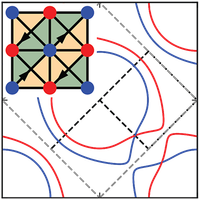
Phys. Rev. Lett. 137, 106701 (2026)
Condensed Matter and Materials
Kinetic Kagome Magnetism: From Self-Trapping RVB Polarons to Semiclassical Correlations
Article | Condensed Matter and Materials | 2026-08-31 06:00 EDT
Yufei Pei, Shuai A. Chen, Claudio Castelnovo, and Roderich Moessner
A study of the counter-Nagaoka problem of a single hole in an infinite- Hubbard model on the kagome lattice reveals a new type of polaron, a resonating-valence-bond polaron that morphs into semiclassical order as polarization is reduced.
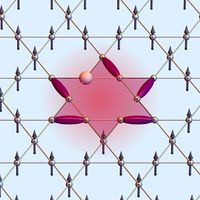
Phys. Rev. Lett. 137, 106702 (2026)
Condensed Matter and Materials
Colloidal Suspensions Can Have Nonzero Angles of Repose below the Minimal Value for Athermal Frictionless Particles
Article | Polymers, Chemical Physics, Soft Matter, and Biological Physics | 2026-08-31 06:00 EDT
Jesús Fernández, Loïc Vanel, and Antoine Bérut
In dense colloidal suspensions composed of particles sensitive to Brownian motion, a gravitational Peclet number governs an intermediate angle of repose where gravity and thermal agitation strike a balance.
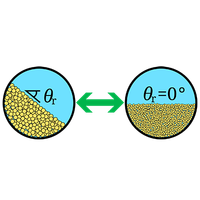
Phys. Rev. Lett. 137, 108201 (2026)
Polymers, Chemical Physics, Soft Matter, and Biological Physics
Physical Review X
Flux-Floquet Instability in Fluctuating Superconductors
Article | 2026-08-31 06:00 EDT
Marios H. Michael, Duilio De Santis, Eugene A. Demler, and Patrick A. Lee
Intense terahertz light triggers a flux-Floquet instability in high-temperature superconductors, generating a giant magnetic response that reveals bound electron pairs survive well above the superconducting transition temperature.
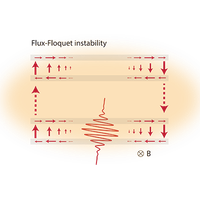
Phys. Rev. X 16, 031055 (2026)
Low-Depth Quantum Symmetrization
Article | 2026-08-31 06:00 EDT
Zhenning Liu, Andrew M. Childs, and Daniel Gottesman
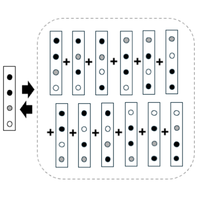
Researchers develop low-depth quantum symmetrization algorithms that enable efficient bosonic simulations, low-depth Dicke state preparation, and multiphoton interferometric imaging.
Phys. Rev. X 16, 031056 (2026)
arXiv
Charge-State Dependence of Electronic Excitations in keV Ions Transmitted Through Solids Probed by Ion-Photon Coincidence Measurements
New Submission | Materials Science (cond-mat.mtrl-sci) | 2026-09-01 20:00 EDT
Kevin Vomschee, Radek Holeňák, Svenja Lohmann, Eleni Ntemou, Daniel Primetzhofer
Investigating the electronic excitations caused by light keV ions in matter contributes to a better understanding of materials modification such as space weathering or plasma-wall interactions in fusion reactors as well as improved materials analysis methods such as low or medium energy ion scattering. This study investigates the dependence of specific excitations in keV He projectiles, the most common projectile employed in these analytical methods, on the kinetic energy of the ion. We report on photon emission at energies >10eV emitted by projectiles excited upon transmission through different sample systems. We separate exit charge states and report on measurements of ion-photon pairs in coincidence, i.e. we can link a photon to the specific ion emitting it. From these measurements we extracted charge state resolved photon yields and obtained a deep insight into the electronic excitation occurring. Our results show that the electronic excitation of the helium projectile is largely material independent and rising strongly with the kinetic energy of the projectile. The photon yields are in good agreement with a common excitation model initially developed for beam foil spectroscopy. We hence extend the validity of this model to higher photon energies and different sample materials. We further provide a detailed analysis of the employed coincidence approach and necessary corrections to the raw data, as the methodology has a broad applicability in fundamental research and materials analysis.
Materials Science (cond-mat.mtrl-sci)
Emergent hydrodynamic response and dynamical backreaction: Magnon bound-state propagation in a Bose-Hubbard fluid
New Submission | Quantum Gases (cond-mat.quant-gas) | 2026-09-01 20:00 EDT
Andrés N. Cáliz, Arnau Riera, Enrique Rico, João Barata, Marcin Płodzień
We study the nonequilibrium response of a one-dimensional Bose-Hubbard medium to a two-magnon bound state propagating along an attractive XXZ chain. A Holstein-type displacement coupling makes the magnon density act both as a local chemical-potential perturbation and as a source of bosons. We derive a long-wavelength hydrodynamic description of the density and phase fluctuations and test it against matrix-product-state simulations of the full coupled dynamics. The theory predicts a comoving near-field deformation together with retarded density waves confined to a sound cone. In the Mott regime, the deformation remains localized around the moving pair. In the compressible regime, two counterpropagating fronts detach and approach the semiclassical sound velocity, recovered from the equilibrium density with no fitted parameters. The coupling also induces a dynamical backreaction that slows the bound state and broadens its magnon-density profile. The comparison delimits where hydrodynamics stays quantitative once the probe reacts back on the medium.
Quantum Gases (cond-mat.quant-gas), High Energy Physics - Phenomenology (hep-ph), Quantum Physics (quant-ph)
21 pages and 10 figures
Statistical Properties of a Fluctuation-Driven Nanomechanical Duffing Resonator
New Submission | Mesoscale and Nanoscale Physics (cond-mat.mes-hall) | 2026-09-01 20:00 EDT
Monan Ma, Nathan Welles, Johnathon Barbish, Ismet I. Kaya, M. Selim Hanay, Oleksiy Svitelskiy, Mark R. Paul, Kamil L. Ekinci
We investigate the fluctuating nonlinear dynamics of multiple modes of a nanomechanical doubly clamped beam resonator. Each mode is driven by Gaussian force noise centered around the resonance; the mode response is monitored while the force magnitude is increased, inducing a transition from harmonic to the nonlinear Duffing regime. To characterize the dynamics, we introduce an effective temperature based on the mode fluctuation amplitude. As the nonlinearity becomes prominent at large amplitudes, we observe a reduction in the effective thermal energy and a crossover in response statistics from Gaussian to platykurtic, consistent with the dynamics expected in a Duffing potential.
Mesoscale and Nanoscale Physics (cond-mat.mes-hall), Statistical Mechanics (cond-mat.stat-mech), Applied Physics (physics.app-ph)
Fractal Confinement and Magnetic Self-sabotage of Current Flow: Electrons Near the Metal-insulator Crossover in a 2D $δ$-layer
New Submission | Disordered Systems and Neural Networks (cond-mat.dis-nn) | 2026-09-01 20:00 EDT
Xinghai Zhang, Matthew S. Foster, Markus Mueller
We study low-$ T$ transport and itinerant magnetism in 2D $ \delta$ -doped semiconductors. Large-scale Hartree-Fock calculations with random hoppings and repulsion $ U_0$ reveal two transport regimes near a critical density. The conductivity $ \sigma(T)$ initially increases as $ T$ drops below $ U_0 / 10$ . However, at $ T \sim U_0/100$ , a tiny density of magnetic moments forms, driving an insulating downturn. Fractal wavefunctions locally amplify magnetic interactions, initially concentrating currents into branched filaments, but ultimately choking them off via dynamic SU(2) symmetry breaking.
Disordered Systems and Neural Networks (cond-mat.dis-nn), Mesoscale and Nanoscale Physics (cond-mat.mes-hall), Strongly Correlated Electrons (cond-mat.str-el)
9+9 pages, 5+4 figures
Determinant Quantum-Quantum Monte Carlo: Coherent Auxiliary-Field Sampling
New Submission | Strongly Correlated Electrons (cond-mat.str-el) | 2026-09-01 20:00 EDT
Xuepeng Wang, Sagnik Banerjee, Debanjan Chowdhury
We introduce determinant quantum-quantum Monte Carlo (DQ$ ^2$ MC), a quantum algorithm that lifts the auxiliary-field sampling and averaging at the operational core of determinant quantum Monte Carlo onto a quantum computer. A determinant oracle synthesizes the DQMC amplitudes directly from a block encoding of the single-particle action matrix via quantum singular value transformations, so that the exponentially many Hubbard-Stratonovich weights are never enumerated, precomputed, or stored. Since the fermions are free for fixed auxiliary fields, the construction operates entirely at the single-particle level, requiring $ O(\log N_{\mathrm{st}})$ system qubits and no Jordan-Wigner or Bravyi-Kitaev encoding, where $ N_{\mathrm{st}}$ is the space-time volume. A full-quantum protocol makes observables interference amplitudes, eliminating the Markov chain and its autocorrelation time altogether; a hybrid quantum-classical protocol retains a constant-size active block of qubits and replaces the Metropolis-Hastings acceptance step with an exact heat-bath draw, so that cluster updates of any size are rejection-free, and passes only classical information between updates, admitting parallel tempering and distributed execution across quantum processors. The circuit-depth scales more favorably with spatial volume than classical DQMC, at the price of a post-selection overhead determined exactly by the largest target probability — polynomial for smooth distributions, exponential for sharply peaked ones. Finally, the reweighting estimator underlying the fermion sign problem maps exactly onto a quantum weak value, placing the exponential cost of sign-problematic DQMC in precise correspondence with the post-selection overhead of weak-value extraction.
Strongly Correlated Electrons (cond-mat.str-el), Statistical Mechanics (cond-mat.stat-mech), High Energy Physics - Lattice (hep-lat), Quantum Physics (quant-ph)
27 pages, 8 figures
Floquet engineering of competing antiferromagnetism and $d$-wave superconductivity on the square lattice
New Submission | Strongly Correlated Electrons (cond-mat.str-el) | 2026-09-01 20:00 EDT
We propose a driven Lieb–Hubbard quantum simulator whose prethermal dynamics realize a square-lattice spin-1/2 fermion model with independently tunable repulsive on-site and attractive bond interactions. Periodically modulating the charge-transfer offset between the site ($ d$ ) and bond ($ p$ ) orbitals of the Lieb lattice brings a $ p$ -orbital doublon energetically close to a pair in the $ d$ manifold while keeping all $ p$ -orbital singlons off resonance, thereby creating a synthetic ``negative-$ U$ ‘’ center on a Lieb-lattice bond site. Two controlled eliminations then generate a compact bond attraction in the reduced $ d$ -only model on the square lattice, despite the microscopic repulsion in the $ p$ orbital. The resulting interaction $ J$ is tunable independently of the Hubbard repulsion $ U_d$ on the $ d$ orbitals, while interference between photon-assisted paths provides access to an intermediate-coupling regime in which $ J$ and $ U_d$ are both comparable to the effective hopping. At half filling, a mean-field calculation in this regime finds adjacent antiferromagnetic and $ d$ -wave superconducting phases, as well as narrow coexistence regions, suggesting close competition between these orders. We discuss the branch-preparation, prethermal, and higher-band conditions required to translate the formal construction into an optical-lattice protocol. More broadly, our work identifies a structural similarity between Floquet systems and electron-phonon problems that may guide the design of novel quantum-simulation protocols.
Strongly Correlated Electrons (cond-mat.str-el)
Benchtop Momentum-Resolved Phonon Spectroscopy: Unlocking Lattice Dynamics via X-ray Diffuse Scattering
New Submission | Materials Science (cond-mat.mtrl-sci) | 2026-09-01 20:00 EDT
Paulo H. V. da Silva, Tarsis M. Germano, Rafaela F. S. Penacchio, Sergio L. Morelhao
Momentum-resolved phonon spectroscopy is essential for understanding the thermal, electronic, and structural properties of materials, yet it traditionally necessitates access to large-scale synchrotron or neutron facilities. We report a paradigm shift by demonstrating the accurate measurement and quantitative analysis of Thermal Diffuse Scattering (TDS) patterns using a commercially available benchtop Small/Wide-Angle X-ray Scattering (SAXS/WAXS) instrument. By utilizing a low-energy (8 keV) X-ray source and a custom-integrated vacuum geometry, we acquired characteristic TDS patterns in silicon (111) and (100) slabs. We demonstrate that these benchtop images contain sufficient information to extract interatomic force constants (IFCs) through global optimization algorithms, achieving a fitting accuracy comparable to those obtained from simulated data with statistical noise. Crucially, this capability provides access to phonon information across the entire Brillouin Zone, a critical component of lattice dynamics unavailable via standard laboratory techniques like first-order Raman spectroscopy. This low-barrier approach makes synchrotron-level lattice dynamics characterization accessible to virtually any research laboratory, enabling new avenues for the study of intrinsic strain and anisotropic lattice dynamics in emerging material systems.
Materials Science (cond-mat.mtrl-sci)
Domain walls with alternating magnetic order in a model with dipolar coupling
New Submission | Mesoscale and Nanoscale Physics (cond-mat.mes-hall) | 2026-09-01 20:00 EDT
A model for a one-dimensional chain of elongated nano-scale magnetic islands with dipole interactions is analyzed here for the properties of its static domain walls with site-by-site alternating order. The anisotropic magnetic islands on a nonmagnetic substrate have their longer axes oriented transverse ($ y$ -direction) to the chain direction ($ x$ -direction), in a transverse applied magnetic field. The islands’ magnetic dipoles $ \vec{\mu}_n$ are represented as macrospins of fixed length $ \mu$ . The nearest-neighbor (NN) dipole interactions drive transverse alternating order, allowing for doubly-degenerate, uniform, static, $ y$ -alternating states, where the dipoles alternately point transverse to the chain direction, as in $ \vec{\mu}_n = \pm(-1)^n \mu \hat{y}$ . Assuming only NN interactions, the domain walls connecting these two alternating states are found with numerical relaxation simulations and analyzed in a two-sublattice continuum theory. As the uniaxial anisotropy constant $ K_1$ descends from larger values until it closely approaches the NN dipolar coupling constant $ D$ , the domain wall width grows indefinitely, and the large-$ x$ continuum solutions closely approach the lattice numerical solutions. The applied field produces a very slight canting of the dipoles towards the field, maximum in the center of the domain wall. The dipoles on the two sublattices are found to rotate in {\em opposite senses} as one scans along the lattice, resulting in a large longitudinal magnetic moment of the domain wall. A much smaller transverse magnetic moment has a topological contribution that depends on whether the chain length is odd or even.
Mesoscale and Nanoscale Physics (cond-mat.mes-hall)
26 pages, 13 figures
Electrochemical impedance spectroscopy of graphene nanogaps
New Submission | Mesoscale and Nanoscale Physics (cond-mat.mes-hall) | 2026-09-01 20:00 EDT
Patrick A. McKee, Chris S. DeMellier, Robin N. Schipper, Henk W.Ch. Postma
Graphene nanogaps represent an emerging platform for nanoscale electrochemical and sensing devices, with potential applications in next-generation biomolecular sequencing. However, their interfacial behavior in aqueous environments remains poorly characterized, particularly with respect to frequency-dependent impedance and charge transport mechanisms at the graphene edge. We fabricate graphene nanogaps by controlled electrical breakdown in an inert atmosphere and study their electrochemical response. Upon exposure to ambient conditions, a surface contamination layer supports electrochemical activity within an adsorbed ultrathin conductive film between the graphene edges. Electrochemical impedance spectroscopy reveals distinct frequency-dependent responses consistent with a Warburg element associated with diffusion in this confined interfacial film. The impedance evolves systematically with liquid $ \mathrm{p}H$ , reflecting changes in electrochemical reaction-diffusion processes at the graphene edges. A quantitative equivalent-circuit model captures these effects and enables extraction of an effective nanogap length scale from impedance spectra, providing information complementary to that obtained from tunneling measurements.
Mesoscale and Nanoscale Physics (cond-mat.mes-hall), Applied Physics (physics.app-ph)
6 pages, 3 figures
Direct Evidence of Unconventional Superconductivity in Doped Kagome system RV$_3$Sb$_5$
New Submission | Superconductivity (cond-mat.supr-con) | 2026-09-01 20:00 EDT
Avior Almoalem, Yuqing Xing, Iksu Jang, Daniel J. Schultz, Grgur Palle, Andrea N. Capa Salinas, Stephen D. Wilson, Rafael M. Fernandes, Jörg Schmalian, Vidya Madhavan
The superconducting pairing symmetry of kagome metals remains a central unresolved question largely because phase-sensitive experiments capable of distinguishing between different possible order parameters have been difficult to implement. The spatial and energetic characteristics of impurity bound states measured by spectroscopic-imaging scanning tunneling microscopy encode information on the superconducting order parameter. Here, we use impurity-bound state spectroscopy to investigate optimally doped RbV$ _3$ Sb$ _{5}$ where the charge-density wave instability is fully suppressed. We find that the superconducting state is fully gapped and exhibits two distinct energy scales, consistent with a multiband order parameter. Atomic-scale spectroscopy around nonmagnetic defects reveals pronounced particle-hole asymmetric bound states. Comparison with theoretical calculations demonstrates that these bound states are incompatible with conventional $ s$ -wave and sign-changing $ s^{\pm}$ pairing. Our calculations also show that the data are fully consistent with a chiral order parameter. Our results establish impurity-bound-state spectroscopy as a powerful phase-sensitive probe of superconductivity in kagome materials and provide strong evidence that optimally doped RbV$ _3$ Sb$ _{5}$ realizes a fully gapped chiral superconducting state.
Superconductivity (cond-mat.supr-con), Strongly Correlated Electrons (cond-mat.str-el)
Superconductivity and Magnetism in Bi-Ni System: From Bulk to Heterostructures
New Submission | Superconductivity (cond-mat.supr-con) | 2026-09-01 20:00 EDT
Gabriel Sant’Ana, Yutao Xing, Milton A. Tumelero
Unconventional superconductivity with ingredients of magnetism such as time reversal breaking, triplet pairing and proximity effects has been a long time pursued topic in physics and material science as a new source of innovative phenomena and effects to drive further scientific advances and technologies. The Bi-Ni system has emerged as a convenient candidate for the investigation of such phenomenology. Strictly speaking, the term Bi-Ni system refers to two different schemes, first to the NiBi$ _{3}$ intermetallic compound, a 4 K superconductor in which a complex magnetism seems to govern electrical properties in the normal phase, but without implication in the superconducting properties. The second Bi-Ni system is not quite a material but a heterostructure formed by a bilayer of Bi and Ni. Here the superconducting phase has to steal the spotlight by showing strong evidence of time-reversal breaking and triplet pairing featuring a complex unconventional state. The ease of preparing the samples, compared to other candidates for such unconventionality, usually Uranium-based compounds, has accelerated the research in this system. Here, we went through a detailed review of the main results about the electronic properties of these two systems as well as a discussion of the main open questions to be solved in order to reach the complete understanding in this topic.
Superconductivity (cond-mat.supr-con)
Engineering Excitons through Polymorphism and Dimensional Confinement in Low-Dimensional Tellurium
New Submission | Materials Science (cond-mat.mtrl-sci) | 2026-09-01 20:00 EDT
Gabriel Elyas Gama Araujo, Alexandre Cavalheiro Dias, Andreia Luisa da Rosa
The interplay between dimensionality, band-edge electronic structure, and electron-hole interactions governs the optical response of low-dimensional tellurium, yet the microscopic origin of its excitonic behavior remains largely unexplored. Here, we investigate the quasiparticle, excitonic, and optical properties of two-dimensional tellurium polymorphs and one-dimensional helical nanowires using many-body GW and the Bethe–Salpeter equation. Our results reveal a strong dependence of the excitonic response on band-edge dispersion, crystal symmetry, and dimensional confinement. $ \alpha$ -tellurene exhibits comparatively weak and spatially extended electron-hole correlations, whereas the SOC-induced quasi-flat band-edge states of $ \beta$ -tellurene give rise to a strongly bound and anisotropic near-infrared exciton. Momentum-resolved BSE eigenvectors and real-space exciton wave functions directly reveal the contrasting localization and anisotropy of these excitonic states. Remarkably, hydrogen-passivated hexagonal tellurene, previously identified as a quantum spin Hall phase with $ Z_2=1$ , supports an even larger direct exciton binding energy of 0.51 eV together with a compact and nearly isotropic in-plane excitonic distribution. This demonstrates that strong electron-hole correlations are fully compatible with nontrivial band topology, while the binding strength and spatial character of the exciton remain strongly dependent on the underlying band-edge electronic structure and crystal symmetry. The one-dimensional helical nanowire represents the strong-confinement limit, exhibiting a direct high exciton binding energy and a pronounced shift of the optical response toward the ultraviolet.
Materials Science (cond-mat.mtrl-sci)
Regularization of Vortex Core Size in Photon BECs due to Harmonic Trap: An Analytical Approach
New Submission | Quantum Gases (cond-mat.quant-gas) | 2026-09-01 20:00 EDT
Joshua Krauß, Tabitha Bates, Francisco Ednilson Alves dos Santos, Axel Pelster
Quantized vortices are a hallmark of superfluidity. However, in a photon Bose–Einstein condensate, the photon-photon interaction is so weak that in a homogeneous system the healing length exceeds the experimentally achievable size of the condensate itself. Here we show that a harmonic confinement regularizes the vortex size to experimentally achievable scales. Moreover, such an external confinement closely resembles the standard experimental setup of a pumped dye-filled microcavity. We model the condensate via a complex Gross–Pitaevskii equation and obtain an approximate dynamical single-vortex solution by applying the recently proposed projection optimization method. The latter generalizes the variational approach of closed systems to open-dissipative systems without assuming a specific form for the condensate phase. The radial photon flow, which is characteristic for driven-dissipative systems, yields a definition of the vortex core size based on the competition of gain and loss. However, this condition reproduces the heuristic closed system definition now based on physical grounds. A subsequent linear stability analysis shows that interaction, as well as pumping and loss can drive the system to an unstable regime. In this way one can fundamentally distinguish between closed and open-dissipative systems.
Quantum Gases (cond-mat.quant-gas)
Phase stability, charge ordering, and charge-liquid formation in the Falicov-Kimball model on triangular and kagome lattices
New Submission | Strongly Correlated Electrons (cond-mat.str-el) | 2026-09-01 20:00 EDT
We present a systematic investigation of the stability of the phase diagram of the spinless Falicov-Kimball model on two-dimensional non-bipartite lattices, the triangular and kagome lattices, using Markov-chain Monte Carlo simulations. Three filling or chemical potential conditions are examined: fixed chemical potentials ($ \mu_f = \mu_c = U/2$ ), “generalized” half-filling ($ \bar{n}_f = 1/3$ , $ \bar{n}_c = 2/3$ ), and conventional half-filling ($ \bar{n}_f = \bar{n}_c = 1/2$ ). For each condition, the effects of a perturbatively small next-nearest-neighbor hopping are studied. On the triangular lattice, Anderson insulator, Mott insulator, and charge-density wave (CDW) phases are found in all cases, with the CDW driven by Coulomb-interaction-mediated nesting. Evidence for a charge-liquid regime is found in the region between the weakly correlated regime and the CDW, characterized by competing charge-ordering wavevectors and the absence of universal scaling behavior, whose extent shrinks progressively from the grand-canonical to the conventional half-filling condition. On the kagome lattice, the CDW phase is completely absent; instead, an insulating ground state, plausibly of the Mott type, is found, with signatures of a possible quantum phase transition at zero temperature. Our results establish the crucial role of lattice geometry and particle-hole symmetry breaking in shaping the phase diagram of correlated electron systems.
Strongly Correlated Electrons (cond-mat.str-el)
27 pages, 8 figures
Revealing low-energy surfaces of multinary compounds by controlling surface coordination environments
New Submission | Materials Science (cond-mat.mtrl-sci) | 2026-09-01 20:00 EDT
Weihang Xie, Harshan Reddy Gopidi, Zhengyu Liu, Romain Claes, Alexander G. Squires, Keith T. Butler, David O. Scanlon, Pieremanuele Canepa
When modeling surfaces of multinary compounds, conventional cleavage planes often cut through strongly bonded polyhedra, resulting in unphysical surface energies. Here, we introduce SALAMI (Symmetric Atomic Layers for Arbitrary Multinary Interfaces), a Python package that generates symmetric, charge-neutral, dipole-free, and low-energy slab models for multinary compounds. SALAMI performs combinatorial searches to selectively remove surface atoms and generate corrugated terminations that preserve optimal coordination environments. We applied this workflow to all symmetrically inequivalent crystallographic orientations with Miller indices up to 2 for two prototypical structures: the solid-state electrolyte Li3PS4 and the transparent conducting oxide ZnSb2O6. Density functional theory calculations reveal that Li3PS4 must preserve all PS4 units to achieve the minimum surface energy. For ZnSb2O6, low-energy surfaces are achieved by partial undercoordination of surface Sb atoms to SbO5 or SbO4 from the bulk SbO6, depending on the surface orientations. Compared to surface models generated with unconstrained coordination, applying constraints to achieve optimal local coordination environments significantly lowers surface energies, shrinking the volume of the predicted Wulff shape by approximately 20%. Our results demonstrate that meticulous control of local coordination environments is necessary for accurately predicting the surface energetics of multinary compounds.
Materials Science (cond-mat.mtrl-sci)
27 pages, 8 figures, 2 tables; Supplementary information included as appendices; Open-source software repository: this https URL
Design and Modeling of the Charge Readout of a SiMOS Quantum Dot with a Single Electron Transistor and CryoCMOS
New Submission | Mesoscale and Nanoscale Physics (cond-mat.mes-hall) | 2026-09-01 20:00 EDT
Adam Quinn, Troy England, Andrew Li, Sharmila Mustari Nandita
Single electron spin qubits trapped in SiMOS quantum dots are a promising technology for scaling to thousand- or million-qubit systems due to their compatibility with mature CMOS manufacturing processes. A readout system that combines a single electron transistor with a custom cryogenic CMOS amplification and digitization chain offers key advantages by avoiding the use of bulky RF components or room-temperature interconnects. We present design techniques and simulation results for an optimized qubit-SET cryoCMOS interface, culminating in the design of the QNDR1 ASIC, the first cryogenic readout ASIC designed under the Quandarum project, which targets the development of a many-channel spin qubit based detector for use in high energy physics.
Mesoscale and Nanoscale Physics (cond-mat.mes-hall), Instrumentation and Detectors (physics.ins-det)
Energy landscape and dissipation of sliding magnetic rotor arrays
New Submission | Materials Science (cond-mat.mtrl-sci) | 2026-09-01 20:00 EDT
Magnetically coupled damped rotational degrees of freedom can give rise to tribological loss when excited by a relative sliding motion, linking friction to the dynamics of magnetic moments. We analytically investigate such magnetic friction by studying a recently introduced simplified model for a rigid magnetic rotor array sliding over a commensurate magnetic substrate. Here, the array rotors can rotate about an axis perpendicular to the sliding direction and are damped by microscopic shaft friction, while the substrate magnets have a fixed in-plane orientation. The simplified model reduces the collective rotor dynamics of this setup to a set of coupled nonlinear differential equations, which can be studied by the corresponding energy landscape in the quasi-static regime. We find that the parameter plane spanned by layer separation and time can be divided into distinct chambers, in which the structure of the energy landscape remains invariant. Using these chambers, we identify the layer separation intervals corresponding to different dynamical states and recover the emergence of a regime where the moment alignment alternates globally while exhibiting peak dissipation. Additionally, we derive the leading nontrivial orders of the collective magnetic friction in the regimes of small and large gaps between the array and the substrate. For the alternating regime, we find that friction can be computed by tracking energy jumps from unstable to stable critical points at the chamber boundaries. These results provide an analytical foundation for the observed dynamics and dissipation in sliding rotor arrays. Because the simplified model is scale-free, our conclusions transfer across a broad range of microscopic and macroscopic length scales.
Materials Science (cond-mat.mtrl-sci), Soft Condensed Matter (cond-mat.soft), Classical Physics (physics.class-ph)
Chiral Tubular Magnonic Crystals with Periodic Dzyaloshinskii–Moriya Interaction
New Submission | Mesoscale and Nanoscale Physics (cond-mat.mes-hall) | 2026-09-01 20:00 EDT
P. Contreras-Gallardo, J. Flores-Farias, B. Mimica-Figari, V. Puliafito, P. Landeros, R. A. Gallardo
We introduce a chiral tubular magnonic crystal formed by a ferromagnetic nanotube with a periodically modulated interfacial Dzyaloshinskii–Moriya interaction (DMI). Using a plane-wave formalism adapted to the cylindrical geometry, we calculate the spin-wave band structure including exchange, nonlocal dipolar coupling, and interfacial DMI. We show that the tubular geometry qualitatively modifies the role of periodic DMI compared with planar chiral magnonic crystals. Besides producing the usual nonreciprocal frequency shift, curvature converts part of the interfacial DMI into an effective anisotropy-like internal field. This creates a sign-dependent frequency landscape along the tube, so that DMI-covered regions can act either as potential wells or barriers for the lowest-frequency modes. As a result, flat and weakly dispersive bands appear in both Damon–Eshbach-like and backward-volume-like configurations, with the latter having no direct counterpart in planar systems. Our results identify periodically engineered DMI in nanotubes as a route for controlling nonreciprocal spin waves, localized modes, and flat magnonic bands in curved architectures.
Mesoscale and Nanoscale Physics (cond-mat.mes-hall), Other Condensed Matter (cond-mat.other)
14 pages, 4 figures
Giant staggered Dzyaloshinskii-Moriya vectors emerged in synthetic antiferromagnets with spatially alternating stress
New Submission | Materials Science (cond-mat.mtrl-sci) | 2026-09-01 20:00 EDT
Yuuga Iwata, Kensuke Hayashi, Reiju Furumaki, Satoshi Iihama, Masahiro Sato, Takahiro Moriyama
Dzyaloshinskii-Moriya (DM) interaction is a source of chiral magnetic physics, and it manifests microstructural symmetry which could link to exotic magnetic and electronic properties such as altermagnetism. For a new paradigm in magnetism and spintronics, it is crucial to have control on the DM interaction as well as ordering of the DM vectors which characterize the DM interaction. Here, we report on a strong interlayer DM interaction emerged in Co/Ru magnetic superlattices whose structural symmetry is unambiguously broken by alternating mechanical strains developed using the peculiar technique of our stress mechanism. Moreover, theoretical analyses reveal that our magnetic superlattices host a staggered order of the DM vectors. Our results indicate that the spatially varying strains with our breakthrough technique are quite effective in breaking the symmetry of the system and prove that it can control the DM interaction strength as well as the DM vector order.
Materials Science (cond-mat.mtrl-sci), Applied Physics (physics.app-ph)
Coherent phononic frequency combs in ferroelectric CMOS oxides
New Submission | Mesoscale and Nanoscale Physics (cond-mat.mes-hall) | 2026-09-01 20:00 EDT
Jinghan Gao, Shruti Mishra, Yilin Kou, S M Enamul Hoque Yousuf, Hanna Cho, Roozbeh Tabrizian
Modern electronic systems require tens of clock and carrier frequencies, each synthesized by a dedicated phase-locked loop from a shared reference, imposing routing, power and synchronization burdens that grow with every domain. Optical frequency combs solved this problem in photonics, whereas electronics has lacked an equivalent source in its native radiofrequency domain. Here we report broadband phononic frequency combs in ferroelectric hafnia-zirconia nanoelectromechanical resonators built from complementary metal-oxide-semiconductor (CMOS) oxides. Lithographically defined detuning of a 2:1 internal resonance selects the generation mechanism: two-tone-seeded wave mixing yields more than 170 lines distributed over two octaves, with mutual coherence verified for representative pump and generated lines, whereas an autonomous Hopf route yields hierarchical combs of more than 200 lines through torus and period-doubling dynamics, in agreement with slow-flow bifurcation theory. Geometric scaling extends comb generation across 0.44 GHz to 2.1 GHz. Heterodyne measurements, analyzed using the modified Allan deviation (MDEV), establish a two-timescale law. The mechanism governs short-term stability: seeded combs inherit the white-phase-noise scaling of their pumps, whereas autonomous combs acquire the phase diffusion of a free-running oscillator, with the one-second MDEV increasing from 1e-11 to 1e-8. The material governs long-term stability: in air and without active thermal control, the temperature-compensated stack suppresses the random-walk drift that dominates uncompensated resonators. These results establish mechanism- and material-level design rules for operating a single resonator as chip-scale frequency infrastructure, from multi-clock generation to radiofrequency parallel processing.
Mesoscale and Nanoscale Physics (cond-mat.mes-hall), Materials Science (cond-mat.mtrl-sci)
Symmetry-Preserving Phase Transitions in $AM_2$Al$_9$ Materials under Pressure
New Submission | Materials Science (cond-mat.mtrl-sci) | 2026-09-01 20:00 EDT
Jian-Feng Zhang, Sheng Xu, Zhong-Yi Lu, Tao Xiang
External parameters such as temperature, pressure, and chemical doping can induce structural phase transitions in materials. Although such transitions usually involve a change in symmetry, an uncommon exception is the isostructural phase transition, which is first order yet preserves the symmetry of the parent structure. Using first-principles calculations, we show that $ AM_2$ Al$ _9$ compounds ($ A$ = Ba, Ca, Sr, or Eu; $ M$ = Fe, Co, or Ni) undergo pressure-induced isostructural phase transitions. At the transition pressure, these systems exhibit a pronounced volume collapse while retaining the same crystal symmetry and space group ($ P6/mmm$ ). Bonding analysis based on the integrated crystal orbital Hamilton population (ICOHP) shows that the transition is driven by a redistribution of bonding character between intralayer and interlayer atomic bonds. Because isostructural transitions are rare in single crystals, $ AM_2$ Al$ _9$ provides a promising platform for investigating critical phenomena under pressure and for deepening our understanding of symmetry-preserving structural transitions.
Materials Science (cond-mat.mtrl-sci)
8 pages, 5 figures
Surface-mediated frequency aging beyond quality-factor saturation in an AlScN-on-silicon resonator
New Submission | Mesoscale and Nanoscale Physics (cond-mat.mes-hall) | 2026-09-01 20:00 EDT
S M Enamul Hoque Yousuf, Mahmudul Hasan, Shruti Mishra, Sourav Mukherjee, Jinghan Gao, Roozbeh Tabrizian
Vacuum package integrity in micro- and nanoelectromechanical resonators is commonly assessed through the quality factor Q, although Q probes residual-gas damping rather than the surface-state evolution that can govern frequency aging. Here, we disentangle the pressure responses of Q and the resonance frequency f0 in a 64.21 MHz Al0.7Sc0.3N-on-silicon cross-sectional Lamé-mode resonator between 0.01 to 760 Torr. Measurements at 25 °C and at the 68.8°C frequency turnover, where first-order thermal sensitivity is suppressed, reveal widely separated equilibration timescales. Following each pressure step, Q reaches a reversible, history-independent steady value on the pressure-control timescale and approaches a fitted pressure-independent ceiling of 8.5e4 below approximately 1 Torr. By contrast, f0 responds measurably down to 1e-5 Torr and remains history-dependent, relaxing for hours at fixed pressure. The transients follow stretched-exponential kinetics, consistent with a broad distribution of surface relaxation rates, and individual pressure steps produce fractional frequency shifts as large as 1.9 ppm. Ten-hour phase-locked measurements show a common short-term time-deviation floor near 1e-10 s from 0.01 to 100 Torr, whereas residual deterministic relaxation dominates at long averaging times; at 760 Torr, gas damping degrades short-term tracking through the reduced Q. These results establish gas-damping equilibrium and frequency equilibrium as distinct states. Quality-factor saturation alone is therefore insufficient to qualify vacuum packaging for precision mechanical frequency references; package specifications must also constrain surface-mediated frequency aging.
Mesoscale and Nanoscale Physics (cond-mat.mes-hall)
Electronic state of vortices at twin boundaries in a nematic superconductor
New Submission | Superconductivity (cond-mat.supr-con) | 2026-09-01 20:00 EDT
Keita Goto, Hiroto Adachi, Masanori Ichioka
Local electronic states of vortices in an s $ \pm$ d wave nematic superconductor are studied both in the absence and presence of twin boundaries. The Bogoliubov-de Gennes theory for a tight-binding model is used with its nematicity represented by the anisotropy in the transfer integrals and attractive interactions between the nearest-neighbor sites. We evaluate s and d wave components of the pair potentials and the local density of states, and analyze the effects of nematicity on the vortex core structures with/without twin boundaries. We find that a single vortex trapped at the twin boundary is composed of a bound pair of fractional vortices accompanied by weakly-induced s $ \pm$ id wave components, despite that such s $ \pm$ id wave components do not appear in a zero magnetic field. The calculated spatial structures of the local electronic states are compared with the vortex image measured by STM experiments in an iron-based superconductor FeSe.
Superconductivity (cond-mat.supr-con)
9 pages, 9 figures,
Orbital occupation selects structural dimensionality in binary transition-metal oxides
New Submission | Materials Science (cond-mat.mtrl-sci) | 2026-09-01 20:00 EDT
Deping Guo, Renhong Wang, Cong Wang, Meng Gao, Wu Zhou, Yanning Zhang, Fei Pang, Zhihai Cheng, Wei Ji
Orbital-lattice coupling in transition-metal oxides is usually discussed within a given bonding framework, where orbital occupation is intertwined with local coordination, strain, or symmetry breaking. Here, we show that orbital occupation can also select the bonding framework itself, thereby determining structural dimensionality. Using first-principles calculations, we identify CrO as a prototype in which the single active $ 3d,e_g$ electron of high-spin Cr$ ^{2+}$ gives rise to two competing orbital-structure states. The $ d_{x^2-y^2}$ occupation favors a three-dimensionally connected covalent phase, whereas the $ d_{z^2}$ occupation stabilizes a weakly coupled layered phase. Constrained-occupation calculations show that increasing the $ d_{z^2}$ filling continuously contracts the in-plane lattice while expanding the structure along the layer normal. The two phases exhibit distinct magnetic ground states and ferroelastic responses. Moreover, the layered phase is robust against exchange-correlation functional and on-site ($ U$ ) variations, remains dynamically stable down to the monolayer limit, and has a low exfoliation energy of 46 meV/Angstrom^2. Extending the analysis across related $ 3d$ binary oxides reveals a filling-dependence relation between accessible orbital filling and the preference for 2D or 3D connected bonding motifs, providing a microscopic basis for exploring low-dimensional oxide materials.
Materials Science (cond-mat.mtrl-sci)
Can a Spin Liquid State Persist as the Ground State in the Presence of Competing Interactions and Disorder?
New Submission | Materials Science (cond-mat.mtrl-sci) | 2026-09-01 20:00 EDT
In this report, we have shown that, in an otherwise geometrically frustrated lattice, the underlying interactions compete to stabilize different magnetic phases. In conjunction with fluctuations, these interactions may lead to the formation of unusual ordered phases, providing a pathway for understanding the fluctuation-driven order-by-disorder phenomenon. This competition is further modified by the presence of inherent structural disorder in a frustrated two-dimensional lattice. Furthermore, due to the local nature of the additional structural disorder, the majority of the samples evolve toward glassy dynamics, which can not only mimic spin-liquid-like behavior but also make it difficult to identify genuine spin-liquid candidates experimentally.
Materials Science (cond-mat.mtrl-sci), Disordered Systems and Neural Networks (cond-mat.dis-nn)
2 Figures
Fractional Impurity Entropy from Potential Scattering in a Free Electron Gas
New Submission | Mesoscale and Nanoscale Physics (cond-mat.mes-hall) | 2026-09-01 20:00 EDT
Syeda Neha Zaidi, Jukka I. Väyrynen
Fractional changes in entropy are often associated with strong electron correlations or non-Abelian anyons in topological systems. We show that neither condition is necessary – a system of free electrons on a ring scattering off a repulsive point-like impurity undergoes a $ k_B\ln\sqrt 2$ entropy change as the impurity strength is increased. This effect arises from a shift of allowed single-particle momenta from integer quantization to half-integer quantization, induced by the impurity. We show that this fractional entropy change is universal across a broad class of single-particle dispersions, demonstrating that such signatures can arise without strong correlations or topological order.
Mesoscale and Nanoscale Physics (cond-mat.mes-hall)
10 pages, 6 figures
Probing spin order via magnon transmission across quantum Hall ferromagnet heterojunctions
New Submission | Mesoscale and Nanoscale Physics (cond-mat.mes-hall) | 2026-09-01 20:00 EDT
Seung Hwan Lee, Shaowen Chen, Andrew T. Pierce, Patrick R. Forrester, Kenji Watanabe, Takashi Taniguchi, Amir Yacoby
Two-dimensional material platforms now host a remarkable array of exotic correlated phases, from unconventional superconductivity to fractional Chern insulators. Probing magnetic order in these systems is essential for understanding their underlying physics, yet dilute spin densities render conventional magnetic probes ineffective. Spin waves, or magnons, in quantum Hall ferromagnets (QHFM) have proven effective for probing the magnetic order in various symmetry-broken quantum Hall (QH) phases in graphene systems, but previous works have been limited to homojunction configurations within a single material. Here, we demonstrate magnon transmission across a monolayer-bilayer graphene quantum Hall ferromagnet heterojunction - the first magnon transmission across quantum Hall ferromagnet heterojunctions, using one material as a magnon source to probe magnetic order in a distinct material. Generating magnons in monolayer graphene (MLG) at $ \nu$ = 1, we detect their transmission through bilayer graphene (BLG) via nonlocal voltage measurements, revealing spin order in BLG symmetry-broken quantum Hall states. The transmission exhibits hallmark magnon signatures: a sharp onset at the Zeeman energy and systematic variation with Landau level filling, including suppression at $ \nu$ = 4 and 8 where spin polarization vanishes. Our findings establish heterojunction magnon transmission as a powerful, modular probe of magnetic order, opening new avenues for investigating exotic quantum states across the rapidly expanding family of two-dimensional materials.
Mesoscale and Nanoscale Physics (cond-mat.mes-hall)
39 pages, 15 figures (4 main, 11 extended data)
Enhanced Diffusion from Twist-Angle Disorder
New Submission | Strongly Correlated Electrons (cond-mat.str-el) | 2026-09-01 20:00 EDT
We consider the effect of twist-angle disorder on the single-particle properties of twisted bilayer systems. These materials are a natural playground for studying how tiny, uncontrolled spatial variations may become unusually consequential; a local change in the twist geometry can give rise to spatially-correlated alterations of the parent Hamiltonian, which in turn affect the coarse-grained properties of the substrate such as transport and ordering tendencies. In analogy to electrodynamics, where the magnetic field is given by the curl of the vector potential, we model the twist angle as the curl of the relative displacement between the two bilayers. We find that geometric scattering constraints imposed here by the twist structure substantially suppress momentum relaxation relative to mean-rate-matched white noise. We quantify these effects and show that the problem can be mapped onto a non-linear sigma model (NLSM).
Strongly Correlated Electrons (cond-mat.str-el), Disordered Systems and Neural Networks (cond-mat.dis-nn)
Comments welcome
Duality Between Twist-Angle Disorder and Non-Hermitian Disorder
New Submission | Strongly Correlated Electrons (cond-mat.str-el) | 2026-09-01 20:00 EDT
We propose and study a model of moire heterobilayer systems where the twist angle remains uniform and well defined only within a finite range, but deforms randomly at larger distances. The local twist angle is then subject to a certain probability distribution that penalizes large fluctuations around its mean value. Within the framework of the replica trick, we show that disorder averaging produces a nontrivial correlation with alternating sign between replicas, maximized only close the boundary of each local domain and along certain directions. We show that for the low-energy moire bands, exactly the same correlation can be generated in a dual model where fermions are coupled to non-Hermitian disorder, which can evade Anderson localization dynamically. This duality provides a new perspective to investigate twist-angle disorder in moire systems, and unveils some of the essential differences between twist-angle disorder and conventional disorder.
Strongly Correlated Electrons (cond-mat.str-el), Disordered Systems and Neural Networks (cond-mat.dis-nn)
Comments welcome
Real-space manifestation of ferroic multipoles in altermagnetic MnF$_2$
New Submission | Strongly Correlated Electrons (cond-mat.str-el) | 2026-09-01 20:00 EDT
Iurii Kibalin, Dalila Bounoua, José A. Rodriguez Velamazán, Oscar Fabelo, Navid Qureshi, Quentin Faure, Philippe Bourges, Victor Balédent, Jian-Rui Soh, Jeffrey Rau, Paul McClarty, Arsen Gukasov
Altermagnets are unconventional spin split magnets arising from the zero spin-orbit coupled limit. They host a magnetic multipolar order parameter yet direct real-space observation of these multipoles has remained elusive. Here we use polarized-neutron diffraction to reconstruct the three-dimensional magnetization density of the prototypical altermagnet MnF$ 2$ . By exploiting symmetry-selective magnetic reflections, we separate the dominant spherical Mn$ ^{2+}$ contribution from the much weaker anisotropic Mn magnetization and the covalent spin polarization of the fluorine ligands. The reconstructed spin density reveals a finite fluorine ion moment together with an anisotropic Mn magnetization consistent with the symmetry-allowed altermagnetic rank-5 magnetic multipole $ O{52}$ (magnetic triacontadipole). These results provide direct real-space evidence of ferroic multipolar order in an altermagnet and establish polarized-neutron diffraction as a powerful probe of hidden magnetic multipoles in quantum materials.
Strongly Correlated Electrons (cond-mat.str-el), Mesoscale and Nanoscale Physics (cond-mat.mes-hall), Materials Science (cond-mat.mtrl-sci)
28 pages, 9 figures
Doping-driven evolution of pairing symmetry in pressurized La$_3$Ni$_2$O$_7$
New Submission | Superconductivity (cond-mat.supr-con) | 2026-09-01 20:00 EDT
Hai-Yang Zhang, Yu-Jie Bai, Fan-Jie Kong
We investigate the superconducting pairing symmetry and its doping evolution in pressurized La$ 3$ Ni$ 2$ O$ 7$ . For the undoped compound, the most favorable pairing state is found to be $ s{\pm}$ -wave, characterized by sign reversal of the gap functions between the Fermi pockets. A detailed analysis of the pairing interactions reveals that this unconventional state originates from repulsive interactions mediated by the magnetic odd modes of the bilayer nickelate. Upon hole doping, the $ \gamma$ Fermi pocket expands, which amplifies the intrapocket repulsions on this pocket. These repulsions, driven by the magnetic even modes, gradually dominates the pairing interactions and ultimately drive a transition in pairing symmetry from $ s{\pm}$ -wave to $ d{xy}$ -wave in the heavily hole-doped regime. In stark contrast, the $ s_{\pm}$ -wave pairing persists under electron doping, even deep into the heavily electron-doped regime where a Lifshitz transition occurs. This finding suggests that the $ \gamma$ Fermi pocket is not essential for the emergence of superconductivity in bilayer nickelates. In fact, the $ s_{\pm}$ -wave pairing becomes more robust in the absence of the $ \gamma$ pocket, as spin fluctuations are strongly enhanced by the favorable nesting between the $ \alpha$ and $ \beta$ pockets — a condition guaranteed by Luttinger’s theorem and the Fermi surface topology. We believe that exploring the doping evolution of superconducting pairing will open a new realm for testing the pairing mechanism in pressurized La$ _3$ Ni$ _2$ O$ _7$ .
Superconductivity (cond-mat.supr-con), Strongly Correlated Electrons (cond-mat.str-el)
8 pages, 5 figures
Electronic phase separation and emergence of a nondimerized insulating phase in VO$2$ $(110){\mathit{R}}$ ultrathin films
New Submission | Strongly Correlated Electrons (cond-mat.str-el) | 2026-09-01 20:00 EDT
S. Inoue (1), D. Shiga (1 and 2), R. Hayasaka (1), K. Ozawa (2), A. F. Santander-Syro (3), H. Kumigashira (1 and 2) ((1) Tohoku University, Sendai, Japan, (2) KEK, Tsukuba, Japan, (3) Université Paris-Saclay, Orsay, France)
Using in situ photoemission spectroscopy and x-ray absorption spectroscopy, we investigated the thickness dependence of the electronic structure and V-V dimerization in VO$ _2$ /TiO$ 2$ (110) ultrathin films, in which the one-dimensional V-V chains along the $ c{\mathit{R}}$ axis lie in the film plane. In VO$ 2$ $ (110){\mathit{R}}$ films, the reduction in dimensionality along the surface-normal direction is not expected to impose a geometric constraint on V-V dimerization, unlike in VO$ 2$ $ (001){\mathit{R}}$ films. Nevertheless, the characteristic spectral changes associated with the temperature-driven metal-insulator transition observed in thick films persist down to 1.5 nm, whereas at 1 nm an insulating electronic phase is observed without V-V dimerization. This behavior is highly similar to that reported for VO$ 2$ $ (001){\mathit{R}}$ , suggesting that the enhancement of Mott instability resulting from reduced dimensionality is a common and essential driving force for the emergence of the nondimerized insulating phase in VO$ _2$ ultrathin films. Meanwhile, unlike in VO$ 2$ $ (001){\mathit{R}}$ , the nondimerized insulating phase in VO$ 2$ $ (110){\mathit{R}}$ coexists with the phase exhibiting the temperature-driven metal-insulator transition. Its fraction increases exponentially with decreasing thickness and becomes dominant at 1 nm. The corresponding effective critical thickness is estimated to be 2.2 nm. These results imply that the geometric orientation of the V-V chains dictates the spatial evolution of electronic phase separation via strain-mediated phase competition.
Strongly Correlated Electrons (cond-mat.str-el), Materials Science (cond-mat.mtrl-sci)
30 pages (incl. 8-page Supplement); 4 figures in the main text and 5 in the Supplement. Contact author: Daisuke Shiga
Light-induced nonconservative static forces in many-body systems
New Submission | Statistical Mechanics (cond-mat.stat-mech) | 2026-09-01 20:00 EDT
Jinze Li, Xuemei Yang, Zhiyuan Sun
In a quantum many-body system, a periodic drive can often generate effective static forces on the slow collective degrees of freedom. We study the static forces generated by light on electronic order parameters in solid-state systems. We show that the forces can have nonconservative components that originate from dissipation, i.e., optical absorption. This effect is demonstrated in two nontrivial examples. In excitonic insulators, via interband excitations, the light field generates a nonconservative force on the phase of the excitonic order parameter. This force leads to an acceleration of the phase, which manifests as a shift of the photon emission peak from an exciton condensate. In materials with an incommensurate charge density wave, a propagating light field generates a nonconservative force on the phase of its order parameter. It drives the charge density wave into sliding motion, leading to a DC electric current via topological Thouless pumping.
Statistical Mechanics (cond-mat.stat-mech), Mesoscale and Nanoscale Physics (cond-mat.mes-hall), Strongly Correlated Electrons (cond-mat.str-el)
9+13 pages, 3+2 figures
A route to the thermodynamics of colloid-polymer mixtures from structural information
New Submission | Soft Condensed Matter (cond-mat.soft) | 2026-09-01 20:00 EDT
Vikki Anand Varma, Andrew J. Archer, Alberto Scacchi
Liquid-state theory provides a fundamental connection between microscopic structure and macroscopic thermodynamic behaviour. Here, we develop a framework for predicting thermodynamics and phase behaviour directly from structural correlations, using either radial distribution functions or static structure factors as input. The approach constructs a free-energy functional from structural information obtained at a single thermodynamic state point, without requiring explicit knowledge of the underlying interaction potentials. This circumvents a central difficulty in modelling complex fluids, for which effective interactions are often unknown or rely on approximations. We demonstrate the framework for a range of model fluids, including colloidal and colloid–polymer systems, with predictions in good agreement with molecular simulation data. The results show that structural information at a single state point can provide sufficient information to predict the broader thermodynamic response of a system. This establishes a route toward inferring phase behaviour directly from experimentally measured structure, even when the microscopic interactions are not known a priori.
Soft Condensed Matter (cond-mat.soft), Statistical Mechanics (cond-mat.stat-mech)
Directional commensurability stabilizes structural superlubricity in patterned mesoscale interfaces
New Submission | Materials Science (cond-mat.mtrl-sci) | 2026-09-01 20:00 EDT
Viet Hung Ho, Ge Li, Melisa M. Gianetti, Bjørn Haugen, Graham L. W. Cross, Astrid S. de Wijn
Structural superlubricity, arising from lattice incommensurability, offers a promising route to eliminate friction and associated energy losses in mechanical systems. In real-world systems, roughness and wear currently pose severe limitations on its robustness and especially the contact size. Here, we consider patterned surfaces as a possible route to overcome some of these limitations. We show that the simplest choice of patterning, contacts made up of two incommensurate triangular-triangular patterns, fails at elevated loads because of the small number of load-bearing contacts, causing the maximum local contact pressure to exceed the strength of the superlubric coating. We introduce a square-triangular patterned interface that increases the number of load-bearing contacts and organizes them into continuous contact lines. When sliding along specific directions relative to these lines, superlubricity is maintained at significantly higher loads by reducing pressure-induced coating failure while also remaining somewhat tolerant to surface imperfections. These findings establish a mechanism for stabilizing structural superlubricity against coating failure and a design principle for engineering low-friction interfaces with enhanced load-bearing capacity and defect tolerance.
Materials Science (cond-mat.mtrl-sci), Mesoscale and Nanoscale Physics (cond-mat.mes-hall), Soft Condensed Matter (cond-mat.soft), Applied Physics (physics.app-ph)
Evolving charge order in the CDW state of AV$_3$Sb$_5$ metals
New Submission | Strongly Correlated Electrons (cond-mat.str-el) | 2026-09-01 20:00 EDT
Anshu Kataria, Francis Pratt, Peter J. Baker, Stephen Cottrell, Miki Bonacci, Andrea Capa Salinas, Stephen D. Wilson, Zurab Guguchia, Samuele Sanna, Pietro Bonfà
AV$ _3$ Sb$ _5$ kagome metals are characterized by intertwined electronic and structural orders, which motivated extensive studies in recent years. Yet the details of the electronic state preceding the superconducting phase remain poorly understood. Here we extend our previous investigation [Phys. Rev. Research 7, L032046 (2025)] of RbV$ 3$ Sb$ 5$ using avoided level crossing (ALC) muon-spin spectroscopy to the $ A$ = Cs and K systems. Consistent with our previous study, we identify a second transition whose origin cannot be attributed solely to an internal magnetic field, indicating the involvement of an additional electronic mechanism that subtly modifies the charge distribution within the V plane. In particular, the ALC results point towards an additional charge modulation taking place within the charge density wave (CDW) phase and occurring at $ T^{\ast}<T{CDW}$ for $ A$ = Cs and Rb, or in the vicinity of $ T{CDW}$ for $ A$ = K.
Strongly Correlated Electrons (cond-mat.str-el)
Topological pair density waves in kagome superconductors
New Submission | Superconductivity (cond-mat.supr-con) | 2026-09-01 20:00 EDT
Jia-Xin Yin, Xianxin Wu, Mark H. Fischer, Xiao-Yu Yan, Yigui Zhong, Kozo Okazaki
The pair density wave (PDW) is an unconventional superconducting state exhibiting periodic pairing modulations due to pairing with finite momentum Q. In two dimensions, multiple Q components of the PDW can have a non-trivial relative phase, breaking time-reversal symmetry and resulting in a topological electronic structure. Here we review progress on exploring such topological PDWs (TPDWs) and discuss their potential realization in kagome superconductors. We first introduce the concept of a TPDW starting from the Fulde-Ferrell-Larkin-Ovchinnikov (FFLO) state and examine the challenges toward its realization. We then discuss the possibility of a TPDW in the kagome lattice, which intertwines with chiral superconductivity and loop currents, thus connecting to models describing the quantum anomalous Hall effect. Furthermore, we review the experimental signatures of a TPDW in AV3Sb5 (A = Cs, Rb, K) superconductors and highlight related quantum effects, including switchable chiral pairing modulations, Bogoliubov Fermi states, the superconducting diode effect, and the anomalous thermal Hall effect. Finally, we project the future research opportunities of this correlated topological quantum phase and discuss its broad implications for finite-momentum pairing, topological matter, and chiral superconductivity.
Superconductivity (cond-mat.supr-con)
Nature Reviews Physics (2026)
Quantitative Disentanglement of Terahertz Spin and Orbital Pumping in 3d Ferromagnetic Heterostructures
New Submission | Mesoscale and Nanoscale Physics (cond-mat.mes-hall) | 2026-09-01 20:00 EDT
Tongyang Guan, Jiahao Liu, Yuxiao Mo, Liangliang Zhu, Yizheng Wu, Zhensheng Tao
Spin and orbital pumping - the injection of spin and orbital angular momentum from a driven ferromagnet into an adjacent nonmagnetic layer - are fundamental processes underlying angular-momentum generation and transport in magnetic heterostructures. Femtosecond optical excitation extends these phenomena into the ultrafast regime, where spintronic terahertz emission spectroscopy (STES) detects picosecond angular-momentum currents in a contact-free manner through spin-to-charge and orbital-to-charge conversion. Microscopic theory predicts that orbital-pumping efficiency increases from Fe to Ni across the 3d series, yet whether these predictions hold under ultrafast excitation remains unclear. A central challenge is that spin and orbital currents are generated simultaneously and contribute additively to the same terahertz emission, preventing their quantitative separation. Here, we overcome this limitation by combining STES with wedge-sample thickness control in heterostructures whose nonmagnetic layers (Ta, W, and Nb) have spin Hall and orbital Hall angles of opposite signs. The two angular-momentum channels therefore exhibit distinct emission polarities and thickness dependences, enabling their quantitative decomposition. Systematic measurements on Fe, Co, and Ni heterostructures reveal that the orbital-pumping contribution increases progressively toward Ni, reaching several tens of percent of the spin-current contribution - far exceeding theoretical predictions. Even Fe generates a non-negligible orbital current that becomes essential in the thin-nonmagnetic-layer regime. The extracted orbital diffusion lengths are consistently shorter than spin diffusion lengths and increase with decreasing spin-orbit coupling strength of the nonmagnetic layer. These results establish a quantitative framework for ultrafast spin and orbital pumping in magnetic heterostructures.
Mesoscale and Nanoscale Physics (cond-mat.mes-hall), Optics (physics.optics)
Ornstein-Uhlenbeck Process Driven by Multiple Dichotomous Noises
New Submission | Statistical Mechanics (cond-mat.stat-mech) | 2026-09-01 20:00 EDT
Silvio Kalaj, Dongho Lee, Enzo Marinari, Jae-Hyung Jeon, Pascal Viot, Gleb Oshanin
We study a generalized Ornstein-Uhlenbeck process driven by a superposition of $ K$ independent dichotomous noises with arbitrary fixed amplitudes and switching rates. Unlike the classical Ornstein-Uhlenbeck process driven by equilibrium Gaussian white noise, the present system is governed by bounded nonequilibrium fluctuations with finite correlation times. We obtain exact expressions for the stationary position distribution and all cumulants, and show that the stationary state possesses an unexpectedly rich structure, including compact support, algebraic branch-point singularities, edge divergences, and multiple extrema. We establish a mapping onto a heterogeneous random-flight process with bounded jumps, yielding a transparent probabilistic interpretation of the stationary measure. We further analyze several limiting regimes, including the crossover to Gaussian statistics for large numbers of noise sources. For ensembles with exponentially-distributed quenched amplitudes, we derive exact disorder-averaged stationary distributions and show that disorder fundamentally alters the stationary state, producing exponential tails decorated by algebraic prefactors with non-trivial exponents.
Statistical Mechanics (cond-mat.stat-mech)
37 pages, 9 figures
Single-pulse strain-induced precessional dynamics of magnetization in Co-doped iron garnet
New Submission | Materials Science (cond-mat.mtrl-sci) | 2026-09-01 20:00 EDT
Héloïse Damas, Carl S. Davies, Tomasz Zalewski, Petr M. Vetoshko, Vladimir I. Belotelov, Andrzej Stupakiewicz, Andrei Kirilyuk
Ultrafast control of magnetization through lattice excitation provides a route to manipulating magnetic order on short timescales, yet the role of transient strain in driving magnetization dynamics remains poorly understood. Here, single-shot pump-probe magneto-optical microscopy is used to resolve the structural and magnetic responses of cobalt-doped yttrium iron garnet to individual 5-ps mid-infrared pulses. The excitation generates a localized strain field together with an outward-propagating elastic wave. Concurrently, the magnetic contrast decreases following excitation and subsequently reverses on a timescale of approximately 1.5-2 ns before recovering to its initial state. The structural and magnetic responses exhibit closely correlated wavelength and pulse-energy dependences, indicating a common excitation pathway. Micromagnetic simulations incorporating transient strain reproduce the precessional reorientation of the magnetization within individual domains while largely preserving the labyrinthine domain morphology. These results identify transient lattice deformation as the link between single-pulse mid-infrared excitation and reversible precessional magnetization dynamics in Co-doped yttrium iron garnet.
Materials Science (cond-mat.mtrl-sci), Mesoscale and Nanoscale Physics (cond-mat.mes-hall)
6 pages, 5 figures
Crystal electric field excitations and an effective-spin-$1/2$ ground doublet in the hyperkagome magnet Yb$_3$Sc$_2$Ga$3$O${12}$
New Submission | Strongly Correlated Electrons (cond-mat.str-el) | 2026-09-01 20:00 EDT
Tingjun Zhang, Zehao Wang, Douglas L. Abernathy, Rong-Zhu Lin, Steven J. Gomez Alvarado, Chien-Lung Huang, Pengcheng Dai
We use inelastic neutron scattering (INS) to determine the crystal electric field (CEF) excitations of Yb$ ^{3+}$ in the rare-earth hyperkagome magnet Yb$ _3$ Sc$ _2$ Ga$ _3$ O$ {12}$ . Three nearly dispersionless magnetic excitations are observed near 58, 68, and 74meV, corresponding to transitions from the ground-state Kramers doublet to the three excited doublets of the $ J=7/2$ multiplet. A Stevens-operator analysis constrained by the local $ 222$ ($ D_2$ ) symmetry reproduces the excitation energies and spectral weights and yields an Ising-type ground-state $ g$ tensor. The first excited doublet lies approximately 58meV above the ground state, establishing a well-isolated effective $ J{\mathrm{eff}}=1/2$ degree of freedom over the low-temperature regime relevant to collective magnetism. Notably, the directly measured CEF spectrum substantially revises the level scheme previously inferred from bulk measurements, while preserving the essential low-energy pseudospin description. Two independent fitting protocols give consistent excitation energies, ground-doublet wave functions, and $ g$ tensors, despite the nonuniqueness of the individual CEF parameters. The resulting single-ion model also reproduces the characteristic susceptibility, magnetization, and field evolution of the Schottky anomaly in specific heat. These results establish the microscopic single-ion basis needed to construct an effective exchange Hamiltonian and to interpret future measurements of low-energy collective excitations in Yb$ _3$ Sc$ _2$ Ga$ _3$ O$ _{12}$ .
Strongly Correlated Electrons (cond-mat.str-el), Materials Science (cond-mat.mtrl-sci)
Evaluating LLM-based AI agents integrated with materials synthesis tools: the case of atomic layer deposition
New Submission | Materials Science (cond-mat.mtrl-sci) | 2026-09-01 20:00 EDT
This work provides an overview of the different strategies that can be used to evaluate the performance of AI models and agents based on large language models (LLMs) for materials synthesis. After providing a brief overview of the key technologies behind the current generation of AI agents based on LLMs, we summarize the different approaches to evaluating these models in the context of materials science and in particular on materials synthesis, with a specific emphasis on scenarios in which the models are directly integrated with experimental tools. We discuss evaluation strategies spanning knowledge and reasoning benchmarks, tool-use benchmarks, and closed loop benchmarks involving the interaction with experimental systems or realistic virtual tools. We use atomic layer deposition (ALD) as a case study, emphasizing how existing approaches in the literature both build from general approaches used beyond materials science and can be generalized to other materials synthesis techniques. Finally, we provide a practical evaluation framework to evaluate LLMs in the context of materials synthesis
Materials Science (cond-mat.mtrl-sci), Artificial Intelligence (cs.AI), Applied Physics (physics.app-ph)
Invited prospective paper submitted to MRS Communications
Experimental observation of decoupled spin subsystems in decorated square kagomé lattice magnets of the nabokoite family
New Submission | Strongly Correlated Electrons (cond-mat.str-el) | 2026-09-01 20:00 EDT
V.N. Glazkov, Ya V. Rebrov, M.A. Dubovitskii, M.M. Markina, A.F. Murtazoev, P.S. Berdonosov, A.N. Vasiliev
The square kagomé lattice (SKL) offers a model platform for investigating geometric frustration in 2D systems. Nabokoite-family compounds \nabok{A}{X} (A=Na, K, Cs, Rb and X=Cl, Br) extend this physics to a 3D network, where 2D SKL layers are decorated by interlayer spins. Using electron paramagnetic resonance (EPR), we demonstrate a dramatic splitting of this complex exchange network into two virtually decoupled spin subsystems: absolute calibration of the electron paramagnetic resonance (EPR) absorption reveals that only a fraction of all copper spins in nabokoites is EPR-active and this fraction of the spins orders at the Néel point. Comparison of the EPR absorption and static susceptibility indicates that contribution of the EPR-silent spin subsystem to total magnetic susceptibility decreases on cooling. This direct observation of coexisting magnetic order and possible spin-liquid dynamics within a single compound challenges conventional models of unified exchange networks in decorated frustrated lattices.
Strongly Correlated Electrons (cond-mat.str-el)
10 pages, 5 figures
Heavy-Hole–Light-Hole Mixing and Spin–Photon Coupling in Germanium Flopping-Mode Qubits
New Submission | Mesoscale and Nanoscale Physics (cond-mat.mes-hall) | 2026-09-01 20:00 EDT
Jose Reina-Gálvez, Guido Burkard
Intrinsic spin–orbit interaction in germanium provides electrically active flopping-mode qubits without requiring magnetic-field gradients to generate spin–charge hybridization. We study double quantum dots (DQDs) with a multiband Luttinger–Kohn framework that retains heavy-hole (HH) and light-hole (LH) states on equal footing. Modeling vertical confinement with a finite confinement potential along the growth direction brings selected subbands into a regime of appreciable HH–LH mixing. This admixture activates electric-dipole spin-coupling through LH–LH and LH–HH transitions, complementing the conventional HH–HH pseudospin-flip resonance. For the parameter sets considered, these additional channels can produce larger spin–photon figures of merit than the HH–HH transition. HH–LH mixing thus supplies a tunable ingredient for qubit–cavity coupling in germanium hole-spin qubits and extends the operating regimes available to circuit-QED architectures.
Mesoscale and Nanoscale Physics (cond-mat.mes-hall), Quantum Physics (quant-ph)
Collinear and noncollinear antiferromagnetic ordering in a highly frustrated decorated square kagomé lattice antiferromagnets of the nabokoite family
New Submission | Strongly Correlated Electrons (cond-mat.str-el) | 2026-09-01 20:00 EDT
V.N. Glazkov, Ya V. Rebrov, M.A. Dubovitskii, M.M. Markina, K.V. Zakharov, A.F. Murtazoev, P.S. Berdonosov, A.N. Vasiliev
Nabokoite family compounds ACu$ _7$ (TeO$ 4$ )(SO4)$ 5$ X (A=Na, K, Rb, Cs; X=Cl, Br) host frustrated 2D square kagom’{e} lattice layers decorated by additional inter-layer magnetic ions. We study magnetic order in nabokoites with multi-frequency electron spin resonance spectroscopy and thermodynamic measurement (specific heat, magnetization and dielectric permittivity). Our study reveals that the choice of the low-temperature ground state is qualitatively different in light-alkali-ion (K, Na) and heavy-alkali-ion (Rb, Cs) compounds. Heavy-alkali-ion nabokoites order in conventional collinear antiferromagnetic pattern with easy-axis anisotropy. The parameters of the ordered antiferromagnetic state are very close for all heavy-alkali-ion subfamily. Light-alkali-ion members of nabokoite family demonstrate much more complicated route to the ordered state: firstly, a ferroelectric transition at 25-90K lifts the frustration and thus pre-cooks the low-temperature ordering; secondly, an unusual noncollinear magnetic order develops via two-step phase transition with first transition temperature $ T{c1}\simeq 5-6$ K and the second transition at $ T{c2}\simeq 3-4$ K. Noncollinear order is evidenced by observation of characteristic non-Larmor antiferromagnetic resonance mode. Spin dynamics of light-alkali-ion nabokoites is characterized by three zero-field magnon gaps and two spin-reorientation fields, the values of magnon gaps and critical fields are quite different for different compounds. The finite-size cluster modeling of pyramidal structural block of nabokoite structure combined suggests that the critical closeness of the nabokoite exchange coupling parameters to the border-line between the different quantum ground state of pyramidal building block of nabokoite structure could be the clue to the choice of qualitatively different ordered state in light- and heavy-alkali-ion nabokoites.
Strongly Correlated Electrons (cond-mat.str-el)
22 pages, 16 figures
Analogue Phase Change Computational Memory with High Precision Reads and Energy Efficient Writes
New Submission | Materials Science (cond-mat.mtrl-sci) | 2026-09-01 20:00 EDT
Ghazi Sarwat Syed, Loris Coccia, Vara Prasad Jonnalagadda, Antonio Massimiliano Mio, Asit Ray, Matthew BrightSky, Abu Sebastian
Resistive memory technologies offer a compelling advantage for in-memory computing. However, realizing a device architecture that simultaneously achieves high computational precision, efficiency, and density has remained elusive due to inherent trade-offs among these performance metrics. Here, we introduce a com- pact phase-change memory device architecture that combines an ultra-confined active switching volume for enhanced electro-thermal efficiency with a non-insulating thin film that suppresses temporal conductance fluctuations. We analytically model and back-end integrate these devices into crossbar arrays. Even with conventional, undoped phase-change materials, the device architecture enables a computational precision approaching 6 bits, low conductance values below 50 {\mu}S with an adequate conductance window, and a viable pathway toward sub-100 {\mu}A programming currents under nominal operating voltages.
Materials Science (cond-mat.mtrl-sci)
Strain-Driven Electronic and Catalytic Modulation of g-C3N4/GeS van der Waals heterostructure for Photocatalytic Water Splitting
New Submission | Materials Science (cond-mat.mtrl-sci) | 2026-09-01 20:00 EDT
Soumendra Kumar Das, Smruti Ranjan Parida, Tapas Kumbhakar, Prasanjit Samal, Sridhar Sahu
Photocatalytic water splitting offers a viable pathway for sustainable hydrogen production. In this study, first-principles density functional theory calculations were performed to explore the strain-dependent photocatalytic behaviour of a two-dimensional g-C3N4/GeS heterostructure. The heterostructure shows type-II band alignment with an indirect band gap of 2.17 eV, smaller than those of the individual g-C3N4 (2.81 eV) and GeS (3.31 eV) monolayers. Biaxial tensile strain up to 3% effectively modulates the band gap and band edge positions, allowing suitable alignment with water redox potentials. The calculated Gibbs free energy for the hydrogen evolution reaction ({\Delta}GHER) is 0.2 eV for the pristine heterostructure and approaches near-thermoneutral values (-/+ 0.1 eV) under +1% and +2% strain. Meanwhile, the OER overpotential decreases from 2.17 V to 0.97 V with increasing strain. AIMD simulations and optical absorption in the visible region confirm the thermodynamic stability and promising photocatalytic potential of the heterostructure for hydrogen generation.
Materials Science (cond-mat.mtrl-sci)
“Ultra-weak” First-Order Phase Transition in Biaxial Liquid Crystals
New Submission | Soft Condensed Matter (cond-mat.soft) | 2026-09-01 20:00 EDT
Soumyajit Pramanick, Mrinal Kanti Debnath, Nababrata Ghoshal, Soumen Kumar Roy, Sudeshna Dasgupta
We report high-resolution Monte Carlo evidence characterizing the hierarchy of transition strengths in biaxial nematogens. By employing multiple histogram reweighting on large lattices, we demonstrate that while the isotropic-to-uniaxial ($ I \to N_U$ ) transition is symmetry-enforced first-order, the uniaxial-to-biaxial ($ N_U \to N_B$ ) transition in the region between the tricritical point and the triple point ($ \lambda = 0.26$ ) is proximity-driven and more than an order of magnitude smaller for large system sizes. Such a class of ultra-weak first-order transitions could be a new pathway for future investigations.
Soft Condensed Matter (cond-mat.soft)
4 pages, 4 figures
Elastic properties of amorphous LiTaCl$_6$ solid-state electrolyte
New Submission | Materials Science (cond-mat.mtrl-sci) | 2026-09-01 20:00 EDT
Amorphous solid-state electrolytes are attractive candidates for safe, high-energy-density all-solid-state batteries, yet their mechanical properties remain poorly understood from a computational perspective. Here, we investigate the elastic behavior of the recently discovered amorphous superionic Li-ion conductor LiTaCl$ _6$ using density-functional-theory (DFT)-based methods, including unrelaxed static, relaxed static, and strain fluctuations from molecular dynamics (MD) simulations in the isobaric–isothermal (NPT) ensemble with DFT-trained machine-learning force fields (MLFFs). While the unrelaxed static method predicts a Young’s modulus an order of magnitude higher than the experiment, the relaxed static method—commonly applied to crystalline electrolytes—still overestimates the modulus by more than 170%. In contrast, the MD approach using MLFFs yields a Young’s modulus of $ 2.84 \pm 0.26$ GPa, which quantitatively agrees with the experimental value of $ 2.91 \pm 0.32$ GPa. Using the MLFF-MD approach, we further predict bulk modulus (4.44 GPa), shear modulus (1.02 GPa), and Poisson’s ratio (0.39) for amorphous LiTaCl$ _6$ and conclude that elastically it behaves like a soft polymer or gel. These results demonstrate that amorphous superionic materials possess some unique elastic properties and that, among the methods examined, only the MLFF-MD approach yields quantitative agreement with experiment, highlighting the necessity of a dynamical treatment to simulate their elastic response, consistent with recent findings for crystalline superionic conductors.
Materials Science (cond-mat.mtrl-sci), Computational Physics (physics.comp-ph)
7 pages, 5 figures, Supplemental Material appended
Phys. Rev. Materials 10, 085402 (2026)
Dynamical backaction in nanoscale superfluid electromechanics
New Submission | Other Condensed Matter (cond-mat.other) | 2026-09-01 20:00 EDT
Marek Talíř, Filip Novotný, Balázs Szalai, Nasiruddin Mondal, Emil Varga
Nanofluidic acoustic resonators employing superfluid $ ^4$ He can be used to study quantized vortices from collective behavior in two-dimensional superfluid turbulence down to few individual vortices created by rotation. In order to improve sensitivity to the level needed for probing individual quantized vortices, readout mechanisms employing optomechanical or optomechanics-inspired approaches seem to be promising in this regard. In this work, we develop an electromechanical system, which couples a 4$ ^\mathrm{th}$ sound acoustic resonance to a superconducting LC tank circuit in a sideband-resolved regime. Using this system, we demonstrate electromechanically induced transparency (EMIT), optical spring effect and optomechanical sideband damping and amplification. Furthermore, by rotating the cryostat, we demonstrate sensitivity to quantized vortices, which can become trapped and released in avalanche-like process inside the nanofluidic volume.
Other Condensed Matter (cond-mat.other), Superconductivity (cond-mat.supr-con)
19 pages, 11 figures
Controlling Intertwined Electronic Orders in FeSe with Exfoliation
New Submission | Superconductivity (cond-mat.supr-con) | 2026-09-01 20:00 EDT
Wenyao Liu, Gabriel Natale, Kyung-Mo Kim, Birender Singh, Piyush Sakrikar, Stephen D. Funni, Leo Kondo, Augustin Davignon, Antoine de Lagrave, Kota Ishihara, Michael Geiwitz, Maia G. Vergniory, Takasada Shibauchi, Jun Sung Kim, Michał Papaj, Judy J. Cha, Kenneth S. Burch†
Controlling intertwined electronic orders in two-dimensional superconductors offers an effective route to answering fundamental questions and engineering new quantum devices. However, tuning the balance between competing orders typically requires complex chemistry, strain, or interface engineering. Here, we show that a pristine alternative is the dimensional reduction of the unconventional superconductor FeSe. Exfoliation suppresses the bulk electronic nematic response and switches the superconducting symmetry from bulk s-wave to d-wave-dominant. Transport, electron microscopy, and Raman spectroscopy establish the substantial weakening of nematic order in thin flakes. To probe superconductivity, we perform angle-dependent Andreev reflection spectroscopy on pristine crystal edges. As the junction’s orientation is rotated, the spectra evolve from zero-energy bound states to coherence peaks. The injection angle, field, and temperature dependence, along with theoretical modeling, confirm that exfoliation switches the superconducting symmetry. Our results suggest a versatile superconducting platform for engineering quantum orders and provide fresh insights into the underlying pairing mechanisms.
Superconductivity (cond-mat.supr-con), Strongly Correlated Electrons (cond-mat.str-el)
PINN-Phase: A physics-informed neural network for curvature-driven multiphase-field evolution
New Submission | Materials Science (cond-mat.mtrl-sci) | 2026-09-01 20:00 EDT
Seifallah Elfetni, Peter H. Seeberger, Theodore Tyrikos-Ergas
Phase-field simulation of polycrystalline microstructures becomes costly when many related cases must be evolved over long times. We introduce PINN-Phase, a physics-informed neural time integrator that advances the full multiphase field from its initial condition and enforces phase bounds and unit sum at every step; on the reported explicit multiphase-field benchmarks, post-initial-condition reference states serve only for evaluation. Without case-specific tuning, a single trained 25-grain model meets all predefined criteria in seven of eight unseen microstructures fixed before evaluation and in both stress cases, with 0.94-3.71% terminal grain-label disagreement across the ten cases. Each 12,000-step rollout takes about 5.2 min on a single GPU and reaches nearly three times the temporal horizon represented during training. A pre-registered 64-grain model reaches 6.09% disagreement, retaining all 21 reference survivors plus one additional grain; a post-evaluation continuation with a doubled training horizon and 25 additional epochs reaches 3.97% and the exact survivor set. In three dimensions, one trained 16-grain 96^3 model recovers the exact terminal active set and all three extinction identities in six of six unseen microstructures, five of which meet the complete predefined qualification. These results demonstrate structurally admissible long-horizon prediction and prospective initial-condition transfer within fixed benchmark families.
Materials Science (cond-mat.mtrl-sci)
45 pages, 15 figures, 3 tables; Supplementary Material available as an ancillary file (35 pages, 9 figures, 13 tables)
Vibrational Origin of the Barocaloric Effect in the Spin-Crossover Complex Fe(pap-5NO2)2: A Combined DFT and Mean-Field Study
New Submission | Materials Science (cond-mat.mtrl-sci) | 2026-09-01 20:00 EDT
Alan de Souza, Antonio M. dos Santos, Yongqiang Cheng, Vinícius S. R. de Sousa, Mario Reis
Despite the barocaloric performance recently reported for the spin-crossover complex Fe(pap-5NO2)2, the microscopic origin of its pressure-induced entropy change remains poorly understood. In particular, the relative contributions of vibrational, configurational, and spin degrees of freedom to the barocaloric response have not yet been quantitatively established. Here, we develop a theoretical framework that combines density functional theory (DFT) calculations with an effective mean field Hamiltonian to investigate the barocaloric effect in this spin-crossover complex. Vibrational frequencies of the low-spin (S = 0) and high-spin (S = 2) states obtained from first-principles calculations are incorporated into a thermodynamic model that explicitly accounts for configurational, spin, and lattice entropy contributions. By establishing a correspondence between the vibrational spectra of both spin states through displacement-vector overlap analysis, we identify low and mid frequency metal-ligand vibrations as the primary microscopic origin of the vibrational entropy change. The proposed model quantitatively reproduces the experimentally reported barocaloric entropy change for a pressure variation of 2 kbar, corresponding to a maximum reversible entropy change of approximately 70 J kg-1 K-1, and predicts a spin-crossover temperature of T_1/2 = 313 K under ambient pressure, in excellent agreement with the experimental value of 308 K. Analysis of the entropy components reveals that lattice entropy associated with molecular vibrations accounts for approximately 84% of the total barocaloric response, whereas configurational and spin contributions are comparatively small.
Materials Science (cond-mat.mtrl-sci)
8 pages, 4 figures,2 tables
Extreme Polarization of the Optical Gap and High-Energy Exciton Landscape in CrSBr
New Submission | Mesoscale and Nanoscale Physics (cond-mat.mes-hall) | 2026-09-01 20:00 EDT
Sayantan Patra, Sourabh Jain, Bhumika Chauhan, Marie-Christin Heißenbüttel, Abhisek Saidarsan, Ranjuna M. K., Kseniia Mosina, Zdeněk Sofer, Michael Rohlfing, Thorsten Deilmann, Ashish Arora
We reveal a strongly anisotropic excitonic landscape in monolayer and bulk-like CrSBr using optical absorption spectroscopy and $ GW$ -Bethe-Salpeter equation $ \textit{ab initio}$ calculations. The direct absorptive determination of the lowest bright optical onsets i.e. $ X_0^a$ and $ X_0^b$ excitons for the two in-plane polarization eigenaxes yield an in-plane optical gap anisotropy of $ 470 \pm 15$ meV. This is the highest observed value for any material in the near-infrared-to-visible spectral region to the best of our knowledge. Energetically above, we identify multiple strongly polarized excitons spanning $ 1.25$ eV to $ 3.1$ eV selectively aligned along the two orthogonal axes. A resonance $ X^-$ , located $ 24$ meV below the $ X_0^b$ progressively transfers oscillator strength to $ X_b^0$ , a behavior consistent with a coupled trion (Fermi-polarion)/exciton pair. Our experiments also provide polarization-resolved broadband dielectric functions of CrSBr. These results establish CrSBr as a strongly polarization-selective excitonic system and highlight its potential for polarization-selective optoelectronics enabled with its large optical-gap anisotropy.
Mesoscale and Nanoscale Physics (cond-mat.mes-hall)
15 pages, 4 figures in main text
Solid and Quasi-Solid Electrolytes for Zinc Batteries: Balancing Water Activity, Ion Transport, and Interfaces
New Submission | Materials Science (cond-mat.mtrl-sci) | 2026-09-01 20:00 EDT
Souvik Naskar, Jiaqian Qin, Eric Jianfeng Cheng
Zinc batteries offer a compelling route to safe and low-cost energy storage, yet their reliance on aqueous electrolytes promotes hydrogen evolution, corrosion, cathode dissolution, and non-uniform zinc deposition. Replacing the liquid with a solid or quasi-solid electrolyte can suppress these processes, but it also removes the medium that enables rapid Zn2+ transport and conformal electrode contact. This tension, the price of removing water, has been obscured by inconsistent use of the term solid state and by comparisons based largely on bulk ionic conductivity. Here we critically examine zinc electrolytes across a continuum from water-rich hydrogels to dry polymers, solvated crystals, and inorganic conductors. We distinguish water content from thermodynamic water activity and classify these materials according to phase state, mobile-solvent fraction, and dominant transport mechanism. We show that neither high conductivity nor nominally water-free composition reliably predicts cell performance: electrolyte thickness, Zn2+ transference, interfacial resistance, and evolving contact often determine the practical outcome. Controlled-solvation and hybrid electrolytes therefore provide the most credible near-term path, whereas genuinely solvent-free Zn2+ conductors remain a longer-term scientific target. Progress will require transparent reporting of solvent state and validation using thin electrolytes, realistic electrode loadings, limited zinc excess, and calendar-life testing.
Materials Science (cond-mat.mtrl-sci)
48 pages, 6 figures, and 3 tables; the invited review article submitted to Advanced Energy and Sustainability Research
Evaluating a 4B open-weights local LLM for agentic DFT workflows: a literature reproducibility audit
New Submission | Materials Science (cond-mat.mtrl-sci) | 2026-09-01 20:00 EDT
Agentic workflows in materials science relying on hosted commercial models face severe reproducibility, economic, and data-privacy constraints. To explore fully local agentic science, this work evaluates an open-weights Qwen3:4B model executing an autonomous scientific pipeline across varying hardware constraints. Applied to pentagonal two-dimensional materials, the system extracts parameters from unstructured text, translates them into density functional theory (DFT) inputs, and drives simulations to convergence under a strict neurosymbolic architecture where agents propose and deterministic code disposes. The workflow is guarded by verbatim text grounding and multi-pass inference unions to counteract hardware-induced structural collapse. Evaluated against 201 expert judgements, the extractor achieves 95.7% precision (95% CI 90.3-98.1%) and 67.3% recall (59.8-74.0%), ensuring extracted parameters are strictly factual. However, precision identifying absent parameters does not exceed 47.0%, establishing that the measured omission rate constitutes a loose upper bound on true literature incompleteness. Across three hardware configurations, complete GPU residency governs extraction quality more fundamentally than weight or cache precision, raising Matthews correlation from 0.414 to 0.530 at fixed quantisation and to 0.560 with an unquantised cache. A corpus-scale audit indicates only 19 (33.3%) of the 57 studies are reproducible in principle, reporting every method parameter needed to re-initialise the calculation. Driven to convergence, the workflow reproduces published lattice constants with a mean absolute relative error of 2.3% where the relaxed structure retains its prototype, establishing that lightweight open-weights models can reliably drive autonomous agentic workflows when bounded by deterministic code gates.
Materials Science (cond-mat.mtrl-sci), Software Engineering (cs.SE)
14 pages, 6 figures
From Freezing to Terminal Packing: A Puzzle and a Paradox
New Submission | Soft Condensed Matter (cond-mat.soft) | 2026-09-01 20:00 EDT
A density-functional theory developed for equilibrium freezing also produces a high-density endpoint close to terminal packing. We revisit the nonlinear Ramakrishnan–Yussouff bifurcation framework and distinguish the first crystalline fold, thermodynamic coexistence, and terminal marginality. At the terminal point, the grand-potential curvature vanishes along the principal finite-wavevector density mode, exactly when the nonlinear self-consistency equation loses stiffness. The construction gives exact close packing for one-dimensional hard rods, a terminal hard-disk packing fraction near 0.8407, and a hard-sphere value near 0.629, close to random close packing. These results identify a finite-wavevector thermodynamic marginality of a metastable liquid continuation, rather than equilibrium freezing or mechanical jamming, and expose a persistent puzzle: why should liquid-state correlations encode the approach to terminal disordered packing across different physical dimensions and systems?
Soft Condensed Matter (cond-mat.soft), Statistical Mechanics (cond-mat.stat-mech)
Competition between on-site and off-site pairing phases and surface spectra in superconducting wallpaper fermion systems
New Submission | Superconductivity (cond-mat.supr-con) | 2026-09-01 20:00 EDT
We theoretically investigate the competition between on-site and off-site pairings in superconducting topological crystalline insulators hosting wallpaper fermions, a class of surface states protected by nonsymmorphic symmetries. In-plane nearest-neighbor pair hopping stabilizes the $ \mathrm{A_{1u}}$ phase, while off-site pairing channels yield additional dominant phases with $ \mathrm{B_{2u}}$ and $ \mathrm{E_u}$ representations. We further show that the $ \mathrm{B_{2u}}$ pairing state supports the hybridization between wallpaper-fermion spectra themselves, whereas a representative time-reversal-invariant nematic $ \mathrm{E_u}$ state exhibits spectral hybridization between wallpaper fermion and double Majorana Kramers pairs, yielding twisted surface energy spectra. These results demonstrate that the twisted dispersions arising from hybridization phenomena persist in the presence of off-site pairing interactions.
Superconductivity (cond-mat.supr-con)
15 pages, 5 figures
Magnetic Field-Tunable Repulsive Exciton-Exciton Interaction in the van der Waals Antiferromagnet NiPS$_3$
New Submission | Strongly Correlated Electrons (cond-mat.str-el) | 2026-09-01 20:00 EDT
Kaiyang Huang, Jaena Park, Zhuo Yang, Je-Geun Park, Atsuhiko Miyata, Yoshimitsu Kohama, Yasuhiro H. Matsuda
Two ultra-narrow absorption peaks around 1.5 eV, which are widely believed to originate from a transition from a spin-orbital entangled triplet to a singlet state, in the two-dimensional van der Waals crystal NiPS$ _3$ , have attracted considerable attention because of their pronounced spin-dependent character. An interesting question is whether ultrahigh magnetic fields modify an interaction-driven hybridization between those two peaks. In this work we perform systematic magneto-optical measurements of NiPS$ _3$ in pulsed magnetic fields of up to 178 T and observe a pronounced mutual repulsion between the two sharp exciton peaks accompanied by a redistribution of oscillator strength, while the band edge shows no detectable field-induced shift within our experimental resolution. We construct a minimal two-level interaction model and compare it semi-quantitatively with the experimental data. Our results reveal a magnetic-field-tunable exciton-exciton coupling as the dominant high-field response of NiPS$ _3$ , and clarify this material as a new experimental platform for exploring strongly correlated exciton physics in magnetic van der Waals insulators.
Strongly Correlated Electrons (cond-mat.str-el)
8 pages, 7 figures
Phys. Rev. Lett. 137, 076903, 2026
Phase Diagram and Critical Behaviour of the Two-Dimensional Potts Model with Long-Range Quenched Disorder
New Submission | Statistical Mechanics (cond-mat.stat-mech) | 2026-09-01 20:00 EDT
Rodolfo Rocha, Leticia F. Cugliandolo, Marco Picco
We study the phase diagram and critical properties of the $ q = 3$ and $ q = 8$ Potts models with spatially correlated disorder governed by a power-law decay with exponent $ a$ . Building on the phase diagram proposed by Chippari et al. [3], where a transition from finite-disorder to infinite-disorder fixed points was identified as a function of a, we refine this picture by using wrapping probabilities of Fortuin-Kasteleyn clusters. Furthermore, using magnetic observables, we clarify the physical origin of the double-peak structure in the magnetic susceptibility and establish the validity of the hyper-scaling relation across all investigated regimes.
Statistical Mechanics (cond-mat.stat-mech)
20 pages, 12 figures
High-Field Terahertz Spin Resonance in Cr$_2$O$_3$ above the Spin-Flop Transition
New Submission | Materials Science (cond-mat.mtrl-sci) | 2026-09-01 20:00 EDT
Kaiyang Huang, Yuto Kinoshita, Natsuki Kanda, Takuya Matsuda, Masashi Tokunaga, Ryusuke Matsunaga, Yasuhiro H. Matsuda
We report single-shot terahertz time-domain spectroscopy of Cr$ _2$ O$ _3$ in pulsed magnetic fields up to 30 T. Well above the spin-flop field, in the 20-30 T range, the resonance frequency exhibits a nearly linear field dependence with a slope of ~22 GHz/T, smaller than the 28 GHz/T reported from low-field measurements. This reduction is insensitive to temperature and to a 15° field tilt, suggesting an intrinsic high-field property.
Materials Science (cond-mat.mtrl-sci), Strongly Correlated Electrons (cond-mat.str-el)
8 pages, one figure
J. Phys. Soc. Jpn. 95, 075001 (2026)
Harnessing the skyrmion Hall effect for low-power skyrmion transport in a tubular synthetic antiferromagnet
New Submission | Mesoscale and Nanoscale Physics (cond-mat.mes-hall) | 2026-09-01 20:00 EDT
Ivan P. Miranda, Grzegorz J. Kwiatkowski, Jacob J. Mankenberg, Cecilia M. Holmqvist, Igor S. Lobanov, Valery M. Uzdin, Pavel F. Bessarab
We show that optimal control can turn the skyrmion Hall effect from a source of typically unwanted transverse motion into a mechanism for reducing Ohmic losses in skyrmion transport. We consider a pair of antiferromagnetically coupled skyrmions confined to a tubular geometry, where their relative transverse displacement becomes a periodic internal coordinate. The skyrmion Hall effect drives this coordinate, while finite interlayer coupling makes the resulting relation between applied current and longitudinal velocity nonlinear, allowing different current protocols to produce the same prescribed average velocity. We determine which of these protocols minimizes Joule heating. Depending on the interlayer coupling and spin-transfer-torque parameters, the optimal current is either constant, with the skyrmion pair maintaining a fixed relative position, or time dependent, with the pair undergoing periodic relative motion around the tube. In either case, the additional internal degree of freedom created by the skyrmion Hall effect and interlayer coupling enables skyrmion transport at a lower power than in the uncoupled limit.
Mesoscale and Nanoscale Physics (cond-mat.mes-hall), Applied Physics (physics.app-ph), Computational Physics (physics.comp-ph)
Active embracement enables autonomous tweezing in active star polymers
New Submission | Soft Condensed Matter (cond-mat.soft) | 2026-09-01 20:00 EDT
Marco Musacchio, Davide Breoni, Iman Abdoli, Luca Tubiana, Hartmut Löwen, Lorenzo Caprini
The capacity for autonomous structural reconfiguration is a defining trait of living systems, yet it remains elusive in artificial active matter. Here, we report the discovery of active embracement, a non-equilibrium phenomenon where active star polymers, comprising a central core and self-propelled monomeric arms, transition from open configurations to tightly collapsed, ``hugging’’ states. By combining polymer experiments using connected vibrobots with simulations, we demonstrate that internal self-propulsion fundamentally overrides the steric repulsion that keeps passive polymers dispersed. This active drive enables a suite of behaviors unattainable in equilibrium systems: individual star polymers undergo a globular-like self-collapse, multiple star polymers mutually intertwine and mutually embrace, and can spontaneously embrace and capture surrounding passive particles. Our findings reveal that active embracement is a distinct kinetic phase that allows star polymers to function as autonomous tweezers. By bridging the gap between macroscopic robotic collectives and microscopic polymer physics, this work provides a versatile blueprint for the design of smart materials capable of targeted cargo capture and self-directed assembly in complex environments.
Soft Condensed Matter (cond-mat.soft), Statistical Mechanics (cond-mat.stat-mech)
17 pages, 9 figures
Emergent Pair Density Wave and Incoherent Metallic State in a Strongly Correlated Doped System
New Submission | Strongly Correlated Electrons (cond-mat.str-el) | 2026-09-01 20:00 EDT
Soham Maiti, Nandan Pakhira, A. Taraphder
We investigate the dynamical emergence of a state driven by the interplay between antiferromagnetism (AFM) and singlet $ d$ -wave superconductivity (SC) within a slave-rotor mean-field framework. By decomposing the electron into charge and spin degrees of freedom, the formalism captures strong-correlation effects beyond conventional mean-field approaches. A PDW order is found to emerge dynamically in the coexistence region of AFM and SC. The AFM-SC coexistence region is significantly modified with correlation, leading to a systematic shift of the tetra-critical point. The doping and temperature evolution of the AFM, SC, and PDW order parameters, together with the rotor condensate amplitude $ \phi$ , which characterizes charge coherence, shows a crossover from a coherent to an incoherent metal with the suppression of coherent quasi-particle spectral weight. Moreover, in the AFM + $ (\phi \neq 0)$ region, coherent quasi-particle bands coexist with incoherent Hubbard-like excitations, whereas only incoherent spectral features survive in the AFM + $ (\phi = 0)$ regime. The SC phase exhibits nodal quasi-particles consistent with $ d$ -wave pairing.
Strongly Correlated Electrons (cond-mat.str-el)
15 pages, 12 figures
Localized orbitals and tunnel couplings from general confinement potentials in gate-defined quantum-dot arrays
New Submission | Mesoscale and Nanoscale Physics (cond-mat.mes-hall) | 2026-09-01 20:00 EDT
Bohdan Khromets, William Chow, Jonathan Baugh
Efficient simulation of dense gate-defined multi-quantum-dot arrays requires accurate and scalable modeling methods, compatible with asymmetries and imperfections of realistic voltage-controlled confinement potentials. We present a numerical localization procedure that rotates the eigenbasis of a general one-particle effective orbital Hamiltonian into $ s$ -, $ p$ -, $ d$ -, $ \ldots$ -shells of localized orbital wavefunctions associated with individual quantum dots. The pairwise tunnel couplings between such states are computed directly as matrix elements of the Hamiltonian. We demonstrate this procedure on a 2D triangular Si-MOS triple-quantum-dot array by obtaining the voltage dependencies of the tunnel couplings and their distributions in the presence of disorder. We discuss the implications of this evaluation method on the many-body calculations, and relate it to the experimental tunnel coupling measurements.
Mesoscale and Nanoscale Physics (cond-mat.mes-hall), Quantum Physics (quant-ph)
Magnetic contacts on freestanding superconducting LaAlO$_3$/SrTiO$_3$ micromembranes
New Submission | Superconductivity (cond-mat.supr-con) | 2026-09-01 20:00 EDT
Thies Jansen, Pinelopi Konstantinopoulou, Niklas Martin, Fabio Miletto Granozio, Alessia Sambri, Rasmus Bjørk, Felix Trier, Thomas S. Jespersen
The superconducting two-dimensional electron gas (2DEG) at the LaAlO$ _3$ /SrTiO$ _3$ (LAO-STO) interface is a promising platform for superconducting spintronics, however, integrating ferromagnetic contacts with the superconducting 2DEG remains challenging. Here, we realize superconducting LAO-STO micromembrane devices contacted by ferromagnetic nickel contacts through a side-contact geometry. Low-temperature transport measurements demonstrate that superconductivity is preserved in the presence of the ferromagnetic contacts. We show that the superconducting state is strongly influenced by the magnetic history of the nickel contacts, which generates a tunable effective magnetic field in the 2DEG. Through an effective field model, the magnetization of the contacts can be inferred from the maximum superconducting response. Our results establish ferromagnetically contacted LAO-STO as a platform for future investigations of spin injection into oxide superconductors and provide a route towards superconducting spintronic devices based on complex oxide interfaces.
Superconductivity (cond-mat.supr-con), Mesoscale and Nanoscale Physics (cond-mat.mes-hall), Materials Science (cond-mat.mtrl-sci)
9 pages, 5 figures
Representation Transitions Reveal Predictive Structure in Complex Systems: A Trajectory-Level Reconstruction in a Critical System
New Submission | Statistical Mechanics (cond-mat.stat-mech) | 2026-09-01 20:00 EDT
Trajectories in complex systems often contain structure that is not captured by the population-averaged, scalar statistics traditionally used to describe them. Here we reconstruct, through independent numerical re-simulation rather than literature review, a systematic search across representational forms - from single scalar statistics, through two independent discrete multi-feature classification attempts, to a trajectory-level structural representation and a diagnostic surrogate test, to a continuous low-dimensional compression - applied to the same underlying trajectory ensemble in a critical complex system. Predictive failure is not explained by insufficient correlation: one discrete representation’s own strongest individual feature correlates with the target more strongly ($ r=0.588$ ) than the eventual successful representation’s own headline statistic ($ r=0.540$ ), yet fails to separate the ensemble’s two most consequential cases - while the continuous representation succeeds, robustly, across eight independent scale-removal folds ($ r=0.677$ -$ 0.717$ , all $ p<0.001$ ). The determining factor was not correlation strength but whether the representation preserved the structure relevant to prediction. These results indicate that the choice of representation determines whether predictive structure in complex systems becomes accessible - a scientific variable in its own right, not a downstream analysis choice.
Statistical Mechanics (cond-mat.stat-mech)
8 pages, 5 figures, plus Supplementary Material (7 pages). Submitted to PLOS Complex Systems (Manuscript PCSY-D-26-00116)
Phonon-Localization-Driven Decoupling of Dual-Channel Transport for Record-Low Intrinsic Lattice Thermal Conductivity
New Submission | Materials Science (cond-mat.mtrl-sci) | 2026-09-01 20:00 EDT
Zhunyun Tang, Xiaoxia Wang, Jin Li, Chaoyu He, Chao Tang, Mingxing Chen, Tao Ouyang
A fundamental bottleneck in pushing the intrinsic lattice thermal conductivity of inorganic crystalline solids to its lowest limit arises from the inherent competition between the particle-like propagation ((\kappa_{\mathrm{L}}^{\mathrm{P}})) and wave-like tunneling ((\kappa_{\mathrm{L}}^{\mathrm{C}})) channels. Herein, we demonstrate that phonon localization provides a robust pathway to decouple the dual-channel transport, achieving record-low (\kappa_{\mathrm{L}}) in quasi-1D ternary helical crystals. Despite the structural complexity leading to densely populated phonon branches and thus inducing abundant coherent phonons, the weak interchain interactions and heavy elements compress numerous branches into highly localized, nearly dispersionless flat bands. Such strong localization simultaneously suppresses both the diagonal and off-diagonal components of the group velocity, thereby synergistically suppressing (\kappa_{\mathrm{L}}^{\mathrm{P}}) and (\kappa_{\mathrm{L}}^{\mathrm{C}}). Taking InSeI as an example, the interchain room-temperature (\kappa_{\mathrm{L}}^{\mathrm{P}}) and (\kappa_{\mathrm{L}}^{\mathrm{C}}) are 0.145 and 0.053 W/mK, respectively, yielding an ultralow total (\kappa_{\mathrm{L}}) of 0.198 W/mK. Weaker interchain interactions further drive the room-temperature (\kappa_{\mathrm{L}}) of GaSeI and AlSeI to record lows of 0.086 and 0.089 W/mK, respectively; these values even drop to 0.058 and 0.059 W/mK at 900 K. These findings provide useful insights into exploring the thermal conductivity limit in crystals.
Materials Science (cond-mat.mtrl-sci)
Valley-Enabled Intrinsic Dresselhaus Spin-Orbit Coupling in Silicon
New Submission | Materials Science (cond-mat.mtrl-sci) | 2026-09-01 20:00 EDT
Johannes L. P. Steinschuld, Hendrik J. Bluhm, Lars R. Schreiber, Seyed Akbar Jafari
We develop a symmetry-based theory of spin-orbit-valley coupling in silicon that reveals an intrinsic source of Dresselhaus spin-orbit coupling independent of interfaces or external electric fields. Treating the valley degree of freedom as a symmetry-carrying quantum degree of freedom, we show that the Dresselhaus interaction is necessarily valley off-diagonal and that a bulk contribution proportional to the valley Pauli matrix $ \tau_1$ is symmetry allowed. Tight-binding calculations yield a bulk coupling more than an order of magnitude larger than typical interface-induced spin-orbit coupling; achieving the same energy scale through the interface-induced mechanism would require electric fields roughly 50 times larger than typical fields. We further derive the symmetry-allowed spin-valley couplings generated by magnetic-field gradients and show how they account for the valley-dependent Zeeman splitting observed in micromagnet experiments. A slight tilt of the background magnetic field out of the plane produces an additional isotropic contribution linear in $ B_z$ , providing an experimentally accessible signature of the corresponding coupling constant. Finally, we predict a spin-independent micromagnet-induced valley splitting in the $ \tau_3$ channel, which is distinct from the $ \tau_{1,2}$ channels generated by alloy disorder and therefore remains robust against disorder-induced cancellation. These results establish valley symmetry as a fundamental ingredient in the spin-orbit physics of silicon and provide new mechanisms for controlling and probing spin and valley degrees of freedom in silicon quantum devices.
Materials Science (cond-mat.mtrl-sci), Quantum Physics (quant-ph)
Josephson-Phase Reversal of Non-Bloch Andreev Propagation
New Submission | Mesoscale and Nanoscale Physics (cond-mat.mes-hall) | 2026-09-01 20:00 EDT
Non-Hermitian control is difficult in solid-state systems due to fixed dissipation. Here, we show that in a spin-orbit-coupled planar Josephson junction, changing only the Josephson phase reverses the non-Bloch propagation of a low-energy Andreev band and switches its boundary accumulation between junction edges. The phase reshapes the band’s spin and electron-hole composition, causing a fixed reservoir to unequally attenuate counterpropagating modes. Weak-loss theory links this phase-controlled loss imbalance to boundary-selected complex momenta, offering an in situ route to reconfigurable non-Hermitian transport in superconducting platforms.
Mesoscale and Nanoscale Physics (cond-mat.mes-hall), Superconductivity (cond-mat.supr-con), Quantum Physics (quant-ph)
Thermal Hall Signatures of Distinct Schwinger-Boson Flux Sectors on the Honeycomb Lattice
New Submission | Strongly Correlated Electrons (cond-mat.str-el) | 2026-09-01 20:00 EDT
Thermal transport offers a bulk probe of charge-neutral excitations in frustrated magnets. It remains challenging, however, to determine whether such transport can distinguish different parton mean-field structures of the same spin system. This question is particularly relevant on the honeycomb lattice, where distinct $ 0$ -flux, $ \pi$ -flux, and chiral $ \pi/2$ -flux sectors have been proposed. In this paper, we compare self-consistent saddle-point solutions in these three sectors for a frustrated $ J_1-J_2$ Heisenberg model with a next-nearest-neighbor Dzyaloshinskii-Moriya interaction and a perpendicular magnetic field. Using finite-temperature Schwinger-boson mean-field theory and the Kubo formula for bosonic Bogoliubov-de Gennes systems, we evaluate the intrinsic spinon thermal Hall conductivity. At a common parameter point where all three branches remain gapped, the $ 0$ -flux response is positive and the $ \pi$ -flux response is negative for $ D>0$ and $ h>0$ under the sign conventions used in this paper, whereas the $ \pi/2$ -flux response changes sign with increasing temperature. We further show that a projective symmetry combining a sixfold rotation with time reversal forces the zero-field response of a fixed chiral $ \pi/2$ -flux domain to vanish. Within the mean-field regime examined in this paper, the sign and temperature dependence of $ \kappa_{xy}/T$ therefore provide a flux-sensitive transport signature.
Strongly Correlated Electrons (cond-mat.str-el)
main text: 14 pages, 9 figures; supplemental information: 6 pages, 3 figures
Branching stochastic mechanics. I. Clustering and connected correlations within a branching-process representation of the Schrödinger equation
New Submission | Statistical Mechanics (cond-mat.stat-mech) | 2026-09-01 20:00 EDT
Eric Dumonteil, Benoît Bischoff, Alain Letourneau, Loïc Thulliez, Corentin Doutre
Can finite-range correlations hide in the statistics of an extended quantum state? The Schrödinger-Nagasawa transform represents the wave function by positive forward and backward diffusion fields whose product is the Born density. We promote them to branching superprocesses, (\Phi_F) and (\Phi_B): diffusion samples stochastic paths, whereas Bohm/Fisher-controlled branching generates genealogies of alternative continuations. With rates evaluated on the prescribed Born density, their means reproduce Schrödinger dynamics exactly. The connected sector exhibits supercritical, critical, and subcritical clustering in confinement and has critical dimension (d_c=2) in free space. Stationary eigenmodes remain extended; subcritical clusters acquire the reduced de~Broglie scale. We then let the branching rate respond to the fluctuating product (\Phi_F\Phi_B). In the reciprocal basis, the fields equal a smooth reference (R) plus centered fluctuations (\psi_F,\psi_B), defining the signed kernel (C_{\rm FB}(x,y)=\mathbb E_\omega[\psi_F(x)\psi_B(y)]). On the anticorrelated branch, (\rho_{\rm BSM}(x)=-C_{\rm FB}(x,x)) is the positive paired density. Stationary recovery requires its diagonal to match the Born profile, while off-diagonal decay defines the correlation range. The pair equation splits into collective and relative sectors: spectral cancellation selects the Born collective mode, while suppression of the leading density fluctuation selects the anticorrelated source channel. With relative diffusivity (D_{\rm eff}) and positive relaxation rate (\mu_{\rm FB}), correlations have screening length (\xi_{\rm FB}=\sqrt{D_{\rm eff}/\mu_{\rm FB}}). Thus an extended Born density and a finite correlation range can coexist in one stochastic kernel, suggesting particle-like organization.
Statistical Mechanics (cond-mat.stat-mech), Quantum Physics (quant-ph)
37 pages, 6 figures
Pseudo Entropy in Quantum Spin Chains: from Integrability to Chaos
New Submission | Disordered Systems and Neural Networks (cond-mat.dis-nn) | 2026-09-01 20:00 EDT
Tara Bahadur Rana, Yadav Raj Dahal, Kiran Adhikari
In this work, we study pseudo entropy and spectral dynamics in quantum spin chains (Heisenberg XXZ model and the mixed-field Ising model) to investigate whether they can serve as diagnostics of quantum chaos. First, we derive an exact relation between the real part of the thermal pseudo entropy and the spectral form factor. This provided evidence that pseudo entropy could exhibit the characteristic dip, logarithmic ramp, and plateau, implying the precise manner in which pseudo entropy probes chaos. We found that the imaginary part, while it does not diagnose chaos, can still provide crucial information about Fisher zeros that is not available in the real counterpart. For spatial pseudo entropy in the XXZ chain, we find that the logarithmic critical scaling persists in both integrable and chaotic regimes, and that the non-positivity conjecture holds. Finally, we derive an exact connection between pseudo entropy, relative pseudo entropy, and spectral complexity with a potential connection to holography.
Disordered Systems and Neural Networks (cond-mat.dis-nn)
15 pages, 6 figures
Interplay of Excitonic Charge Density Wave and Superconductivity in Transition Metal Dichalcogenides
New Submission | Superconductivity (cond-mat.supr-con) | 2026-09-01 20:00 EDT
Ayussh Anubhav Patel, Amit Ghosal
Motivated by the unique characteristics of the phase diagram of 1T-TiSe2, we investigated the complex interplay of excitonic charge density wave (CDW) and superconductivity (SC) on a two-dimensional triangular lattice, each site accommodating two orbitals. In response to various tuning parameters, such as intercalation, pressure, substitution, and gating, these materials exhibit a generic and gradual waning of CDW, followed by the emergence of SC. Intriguingly, the nature of CDW changes from commensurate to incommensurate with the appearance of SC. Setting up a minimal model based on observed excitonic CDW and electron and hole pockets in the Fermi surface, and analyzing it within a simple mean-field framework, we can comprehend some salient experimental features. We also found that the qualitative phase diagram remains insensitive to details of the band structure. These results offer crucial insights into the nature of the interplay between CDW and SC in transition-metal dichalcogenides.
Superconductivity (cond-mat.supr-con)
10 pages, 9 figures
Ballistic-to-Localized Dynamics as Signature of Quantum Phase Transition in Josephson Junction
New Submission | Superconductivity (cond-mat.supr-con) | 2026-09-01 20:00 EDT
F. G. Capone, A. de Candia, G. Di Bello, V. Cataudella, R. Fazio, N. Nagaosa, C. A. Perroni, G. De Filippis
Using state-of-the-art numerical techniques, we investigate how quantum phase fluctuations and quasiparticle tunneling shape the behavior of a small-capacitance Josephson junction across Ohmic, sub-Ohmic, and super-Ohmic dissipation regimes. We show that increasing the Ohmic dissipation strength drives a Berezinskii-Kosterlitz-Thouless quantum phase transition at thermodynamic equilibrium. Deviations from Ohmic behavior profoundly alter this scenario: the super-Ohmic regime exhibits no phase transition, whereas the sub-Ohmic regime displays a continuous second-order transition, consistent with the universality classes of the spin-boson model. Within the Ohmic regime, real-frequency linear-response calculations reveal that the phase particle does not undergo the commonly assumed diffusive-to-localized crossover. Instead, finite resistance progressively suppresses the singular zero-frequency response, producing a ballistic-to-localized change in the dynamics. At finite frequencies, coupling to the environment generates a long-lived excitation in the charge response, which evolves into a resonance as the subgap and shunt resistances are reduced.
Superconductivity (cond-mat.supr-con), Mesoscale and Nanoscale Physics (cond-mat.mes-hall), Statistical Mechanics (cond-mat.stat-mech)
7 pages, 5 figures
Floquet Topological Spin-Valley-Layertronics on a Layered Dice Lattice
New Submission | Materials Science (cond-mat.mtrl-sci) | 2026-09-01 20:00 EDT
Jianqi Zhong, Teng-Fei Ying, Jinyu Zou, Benjamin T. Zhou
The recent discovery of long-sought dice flat band in layered YCl electride has opened up rich possibilities of correlation and topological physics in dice lattice systems [Nature Communications 17, 2213 (2026), arXiv:2509.05958]. Here, we reveal a plethora of distinctive correlated topological phases in a generic layered dice lattice system at band filling of $ \nu =4$ under on-site Hubbard interactions: (i) the system is an intrinsic sublattice anti-ferromagnetic (AFM) quantum spin-valley Hall insulator; (ii) a circularly polarized light (CPL) drives the AFM spin-valley insulator into a Floquet odd-parity $ f$ -wave altermagnet(AM) insulator; (iii) a vertical displacement field turns the Floquet $ f$ -wave AM insulator into a spin-valley-layer-polarized Chern insulator, with the sign of spin, valley and Chern number all controlled by the direction of the displacement field. Our results not only establish the layered dice lattice as a versatile platform for electrically switchable magnetic and topological phases, but also provide an all-electrical scheme for integrated spin-valley-layertronics for non-volatile information storage and processing.
Materials Science (cond-mat.mtrl-sci), Strongly Correlated Electrons (cond-mat.str-el)
11 pages, 6 figures. Comments are welcome
Superheating Field of Extreme Type-II Superconductors Calculated from the Eliashberg Theory
New Submission | Superconductivity (cond-mat.supr-con) | 2026-09-01 20:00 EDT
We calculate the superheating field $ H_s$ of a type-II superconductor with a large Ginzburg-Landau parameter from the isotropic Eliashberg theory. It is shown that the temperature dependencies of $ H_s(T)$ can be obtained from a thermodynamic approach for different scattering parameters $ p=\hbar/2\pi\tau_Nk_BT_c$ in a wide range of the nonmagnetic impurity scattering times $ \tau_N$ ranging from the clean $ (p\ll 1)$ to the dirty $ (p\gg 1)$ limits. Specific calculations were done for Nb and Nb$ _3$ Sn using their electron-phonon spectral functions extracted from tunneling measurements. We show that the ratio $ H_s(T,p)/H_c(T)$ calculated from the Eliashberg theory exceeds that of the weak coupling BCS model, where $ H_c$ is the thermodynamic magnetic field. We also show that, even though nonmagnetic impurities are pairbreakers in the current-carrying state, $ H_s(0,p)$ for Nb$ _3$ Sn at $ T=0$ has a maximum at $ p\approx 0.2$ at which the ratio $ H_s/H_c$ is about $ 6%$ higher than that in the BCS clean limit.
Superconductivity (cond-mat.supr-con)
Chiral cellulose fibril organization in a plant cell wall as liquid crystal confined in a cylindrical boundary
New Submission | Soft Condensed Matter (cond-mat.soft) | 2026-09-01 20:00 EDT
Jieh-Wen Tsung, Bo-Hsien Wu, Li-Yan Hung, Yu-Chieh Huang, Yueh-Ching Huang, Shao-Chun Hsieh
The order of cellulose microfibrils in xylem cell walls is identified using polarized optical microscopy. The line, helix, ring, crossed helix, and twisted helix organizations in a cylindrical shell are the equilibrium states of balanced elastic deformation and surface anchoring. A computational model of the five organizations is established to simulate their birefringent-colored profiles. These five textures present unique optical textures, which are clearly recognized in the cross sections of Eucalyptus grandis. The libriform fiber cell for support has a twisted helical cell wall. The vessel cell for high-speed water uptake consists of a helical layer covered by a layer of vortex array. The ray cell for radial transportation is crossed helical. The microfibril angles versus the radius of the cell wall were measured utilizing the distribution of birefringence colors. In fiber cell walls, the MFA is significantly correlated with the curvature, bending, and surface anchoring, respectively. In vessel cell walls, the vortex array includes focal conic domains of chiral order and topological defects of nematic order, suggesting that the phase transition of cellulose fibrils leads to pattern formation. Liquid crystal phases and patterns in the cell walls reveal how the cell wall thickens and how cells differentiate. Out of the frustration of long, stiff, twisting fibrils packed in slender tubes, trees generate the helical channel networks, transforming the brittle lamina into an elastic, tear-resistant, self-healing tissue.
Soft Condensed Matter (cond-mat.soft), Optics (physics.optics)
Spin-textured orbitals in altermagnetic artificial atoms
New Submission | Mesoscale and Nanoscale Physics (cond-mat.mes-hall) | 2026-09-01 20:00 EDT
Yue Mao, Yu-Chen Zhuang, Cheng-Ming Miao, Yu-Fei Sun, Qing-Feng Sun
Artificial atoms provide a versatile platform for engineering atomic-like orbitals, yet spin generally remains a passive degree of freedom in their orbital structure. Here, we introduce the concept of altermagnetic artificial atoms formed by confining electrons with momentum-dependent spin splitting. We show that altermagnetism reconstructs conventional confined orbitals into spin-textured orbitals, with spatially distinct distributions of opposite spin components. The resulting confined spectrum retains a twofold degeneracy protected by the combined $ C_{4z}\mathcal{T}$ symmetry. These spin textures persist in higher-energy states, where additional radial structures combine with the characteristic angular spin pattern. Furthermore, strain resolves the degenerate orbital pairs into spin-polarized states, and continuously tunes their energy splitting. Our results establish altermagnetic artificial atoms as a route to engineering spin-dependent orbital structures in quantum-confined systems.
Mesoscale and Nanoscale Physics (cond-mat.mes-hall), Atomic Physics (physics.atom-ph)
8 pages, 4 figures
Birefringent-colored optical profiling of wood presenting the 3D cellulose microfibril architecture
New Submission | Soft Condensed Matter (cond-mat.soft) | 2026-09-01 20:00 EDT
Wood slices under a polarized optical microscope show a spectrum of interference colors, such as cyan, blue, magenta, yellow, and bluish gray because of the birefringent cellulose in the microfibrils. An optical model is established to simulate the birefringent-colored micrograph of wood. Five typical cell wall architectures, line, helix, ring, crossed helix, and twisted helix, are considered. With a retardation wave plate to distinguish fibrils of different orientations, each structure displays its unique birefringent-colored texture, presenting its underlying 3D structure with the vivid colors. Cross sections of the trunk and twig of Eucalyptus grandis presented birefringent-colored profiles. Three identification methods were compared: visible fibril trends, birefringent-colored optical textures, and the simulated look-up library. The three methods gave consistent results, proving that the birefringent-color tags are efficient and accurate. Electron and atomic force microscopy are unable to resolve cellulose microfibrils embedded in the lignin and hemicellulose matrix. Polarized optical microscopy overcomes this by selectively detecting birefringent cellulose, enabling accurate identification of complex helical structures. This method enables statistical and spatial analysis of complex biomaterial compositions. Capable of profiling dozens of cells simultaneously, this high-throughput optical method provides a potentially fully automated analysis framework for plant science, biomechanics, and bioinspired cellulose materials.
Soft Condensed Matter (cond-mat.soft), Optics (physics.optics)
Chiral superconductors and competing states across a Lifshitz transition in rhombohedral pentalayer graphene
New Submission | Mesoscale and Nanoscale Physics (cond-mat.mes-hall) | 2026-09-01 20:00 EDT
Chuanqi Zheng, Cheng Xu, Chushan Li, Chenyu Zhang, Zijing Zhang, Kenji Watanabe, Takashi Taniguchi, Hao Yang, Dandan Guan, Liang Liu, Shiyong Wang, Yaoyi Li, Hao Zheng, Canhua Liu, Jinfeng Jia, Shengwei Jiang, Zhiwen Shi, Guorui Chen, Fengcheng Wu, Yang Zhang, Tingxin Li, Xiaoxue Liu
Rhombohedral multilayer graphene hosts a distinctive low-energy electronic structure in which strong Coulomb interactions and nontrivial quantum geometry intertwine to generate exotic quantum states. Recent experiments reported signatures of chiral superconductivity in electron-doped rhombohedral multilayer graphene within the spin- and valley-polarized regime. Here we map the normal-state fermiology surrounding chiral superconductivity in rhombohedral pentalayer graphene. Quantum oscillation measurements reveal an electrically controlled Lifshitz transition between a simply-connected circular quarter-metal Fermi surface and an annular quarter-metal Fermi surface. The Lifshitz boundary itself shifts with perpendicular magnetic field, consistent with the strongly momentum-dependent orbital magnetic moment of the low-energy band. Approaching the transition from either side, the electron effective mass becomes strongly enhanced, implying the formation of a nearly dispersionless band bottom and a strongly reduced kinetic-energy scale. This singular electronic structure produces a regime of exceptionally strong instability in which chiral superconductivity competes with Wigner crystalline phases and reentrant quantum Hall states. In particular, two superconducting regions with signatures of orbital time-reversal-symmetry breaking lie on opposite sides of the Lifshitz boundary and have comparable transition temperatures, yet the annular-side state is suppressed by a substantially smaller perpendicular magnetic field. Our calculation finds comparable chiral pairing tendencies on the two parent Fermi surfaces while producing a much lower orbital-Zeeman pair-breaking scale and an additional finite-momentum pairing tendency for the annular state. These results identify Fermi-surface topology as a key control parameter for chiral superconductivity in rhombohedral graphene.
Mesoscale and Nanoscale Physics (cond-mat.mes-hall)
Cesium Clustering and Fluoroberyllate Network Disruption in FLiBe: A Total Scattering and Molecular Dynamics Study
New Submission | Materials Science (cond-mat.mtrl-sci) | 2026-09-01 20:00 EDT
Sean Fayfar, Rajni Chahal, Danny Wang, David J. Sprouster, Shravan Venugopal, Guiqiu Zheng, Dan Olds, Joerg Neuefeind, Stephen Lam, Boris Khaykovich
Several next-generation fission reactor designs employ molten salts such as FLiBe (2LiF-BeF$ _2$ ), with some concepts using fuel dissolved directly in the salt. During operation, fission products such as cesium will accumulate in the salt mixture, potentially leading to an evolution of the thermophysical properties underpinned by the atomic structure. To understand the structural perturbations in FLiBe with 5 mol% CsF, we conducted X-ray and neutron diffraction measurements, refined empirical potential structure refinement (EPSR) models against the experimental data, and compared the resulting structure with neural network molecular dynamics (NNMD) simulations. Comparisons of the EPSR and NNMD structures distinguishes features constrained by the scattering data from those that remain model dependent. The new Cs-bearing correlations account for the changes in the total structure factor and pair-distribution function, while the FLiBe correlations remain minimally altered. We find that Cs slightly disrupts the intermediate-range fluoroberyllate network, increasing the fraction of free fluorine ions, while the local coordination remains largely unchanged. The Cs ions within FLiBe cluster extensively, with BeF$ _4^{2-}$ tetrahedra bridging neighboring cesium environments. In contrast to the minor structural perturbations in the liquid, the addition of 5 mol% CsF suppressed the formation of the crystalline Li2BeF4 phase at room temperature, with the phase appearing only above 180C upon heating. These experimentally constrained structural features provide a benchmark for atomistic models used to predict the behavior and properties of fission-product-containing FLiBe.
Materials Science (cond-mat.mtrl-sci), Chemical Physics (physics.chem-ph)
Symmetry-Enforced Topological Structures in Quantum Phase Diagrams
New Submission | Strongly Correlated Electrons (cond-mat.str-el) | 2026-09-01 20:00 EDT
We study the topological structure of the quantum phase diagram of gapped systems by identifying the noncontractibility of loops, so-called $ S^1$ -families, within the gapped phase diagram in which many-body Hamiltonians can have nontrivial ground-state degeneracy. We manifest the role of symmetries in such $ S^1$ -family classifications by the exotic symmetry interplay: (i) nontrivial mixed anomalies, (ii) semi-direct product relation between the spontaneously broken and the unbroken symmetries, and (iii) symmetry with noninvertible operators. We find that such structures lead to the novel $ S^1$ -family classifications inaccessible by earlier classifications based on ``independent’’ symmetries. Furthermore, we construct lattice realizations of these $ S^1$ -families and explicitly demonstrate their novel algebraic structures.
Strongly Correlated Electrons (cond-mat.str-el), High Energy Physics - Theory (hep-th), Quantum Physics (quant-ph)
Asymmetry-controlled resonant transport in a Brownian flashing ratchet
New Submission | Statistical Mechanics (cond-mat.stat-mech) | 2026-09-01 20:00 EDT
Sudipta Mandal, Dipanjan Chakraborty, Debasish Chaudhuri
We investigate directed transport in a one-dimensional Brownian flashing ratchet with a piecewise-linear asymmetric periodic potential. Numerical solutions of the Fokker–Planck equation and Brownian dynamics simulations reveal a nonmonotonic dependence of the stationary current on the switching frequency, with a resonant maximum whose position depends on the potential asymmetry $ \delta$ and barrier height $ \Delta$ . For moderate asymmetry, $ |\delta|<0.5$ , the current obeys a scaling form that separates the dependence on the potential parameters from a common frequency dependence, resulting in a data collapse upon appropriate scaling of the current and frequency. The current amplitude varies linearly with $ \delta$ , while the resonance frequency follows $ \nu(\delta,\Delta)=\nu_0(\Delta)/ [1-b_0, \delta^2]$ . We interpret the resulting $ (1-\delta^2)^{-1}$ scaling in terms of coupled relaxation along the two branches of the asymmetric potential, which provides a physical basis for the observed dependence of the resonant frequency on the potential asymmetry.
Statistical Mechanics (cond-mat.stat-mech), Soft Condensed Matter (cond-mat.soft)
9 pages, 6 figures
Van Hove singularities at the $L$-face of the lutetium nitride phonon dispersion
New Submission | Materials Science (cond-mat.mtrl-sci) | 2026-09-01 20:00 EDT
M. Markwitz, K. Kneisel, R. G. Buckley, K. C. Rule, M. Chegeni, H. J. Trodahl, W. F. Holmes-Hewett, J. D. Miller, F. Natali, M. Maddah, B. J. Ruck, S. Granville
We report the structural and vibrational properties of the prototypical 4$ f$ -filled nonmagnetic member LuN of the lanthanide nitrides, \textit{Ln}N, with elastic and inelastic neutron scattering data at $ 4$ ~K. We find a peak in the generalized density of states which, through input from a DFT+$ U$ computation, we ascribe to a van Hove singularity on the fourfold-degenerate $ L$ -face of the Brillouin zone. This work advances the understanding of phonon dynamics in \textit{Ln}N beyond the $ \Gamma$ -point.
Materials Science (cond-mat.mtrl-sci)
9 pages, 6 figures
Chemical Perspectives on Cuprate Superconductivity: Hole-Protected Spin Dimers as d Wave Cooper Pairs
New Submission | Superconductivity (cond-mat.supr-con) | 2026-09-01 20:00 EDT
Myung-Hwan Whangbo, Reinhard K. Kremer
The observation that the coherence lengths in cuprate superconductors are extremely small motivated us to search for its real-space structure by examining the consequence of hole-doping in CuO4 units in cuprates. We analyzed aggregates of hole-doped CuO4 units that phase-separate from hole-doped CuO2 layers in terms of their segregation-pressure indices defined in this work. Our search suggests that each d-wave Cooper pair is an antiferromagnetically coupled spin dimer protected in an antiferromagnetic hole dimer (AHD), and that the antiferromagnetic chains of AHDs provide channels through which such spin dimers can move collectively without perturbation. Based on these suggestions and their implications, we examined the causes for several seemingly puzzling observations on cuprate superconductors to find that they are naturally explained by the suggestions.
Superconductivity (cond-mat.supr-con)
52 pages, 17 figures, 1 table
Chiral-symmetry breaking and degeneracy in Koch fractal geometries
New Submission | Other Condensed Matter (cond-mat.other) | 2026-09-01 20:00 EDT
Fractal geometries provide a distinctive platform for controlling quantum interference, topology, and localization. We investigate the Su–Schrieffer–Heeger (SSH) model constructed on the Koch curve, where a triangular geometry enables additional same-sublattice hoppings that break chiral symmetry and modify the conventional topological behavior captured by a real-space local marker. Destructive interference within the triangular units produces a highly degenerate flat level at $ E=-t$ . Although this level originates from the local geometry, its degeneracy and spectral weight are controlled by the self-similar connectivity of the Koch curve. The hierarchy reduces the number of independent flat states and reorganizes the spectrum into an intricate distribution of energy levels. Our results reveal complementary roles for local triangular interference and global fractal connectivity in shaping the electronic properties of geometrically modified SSH chains.
Other Condensed Matter (cond-mat.other)
Twist-Tunable Paramagnetic Superconductivity in $d$-wave Altermagnet/Superconductor Heterostructures
New Submission | Superconductivity (cond-mat.supr-con) | 2026-09-01 20:00 EDT
Narges Kia, Saeed H. Abedinpour, Zahra Faraei
The interplay between twist-angle engineering and unconventional magnetism provides a powerful new route to control quantum phenomena. We theoretically investigate a heterostructure comprising a $ d$ -wave superconductor proximitized by a two-dimensional $ d$ -wave altermagnet. We reveal that the momentum-space mismatch between the superconducting gap nodes and the altermagnetic spin-splitting nodes generates a robust, twist-tunable odd-frequency spin-triplet pairing. Consequently, the macroscopic electromagnetic response of the system can be tuned from a conventional diamagnetic Meissner state to an anomalous paramagnetic Meissner effect driven entirely by the interfacial twist angle. For a $ d_{x^2-y^2}$ altermagnet, the paramagnetic response is maximized at perfect alignment ($ \phi=0$ ) and completely suppressed at a maximal twist of $ \phi=\pi/4$ , while a $ d_{xy}$ altermagnet exhibits the exact complementary behavior. Our results establish twisted altermagnetic heterostructures as a versatile platform for engineering odd-frequency pairing and macroscopic superconducting phases.
Superconductivity (cond-mat.supr-con)
11 pages, 8 figures
A unified geometric design framework for kirigami structures
New Submission | Soft Condensed Matter (cond-mat.soft) | 2026-09-01 20:00 EDT
Qinghai Jiang, Gary P. T. Choi
In recent years, kirigami metamaterials have been widely studied and applied in science and engineering. While various two- and three-dimensional kirigami design methods have been developed, most of them are only applicable to a limited class of kirigami structures. In this work, we develop a unified framework for kirigami design that encompasses a wide range of 2D-to-2D, 2D-to-3D, and 3D-to-3D shape-morphing effects, as well as additional geometric and physical properties such as compact reconfigurability and rigid deployability. In particular, by reformulating the design task as a length-based constrained optimization problem and solving it simultaneously for multiple target states of the kirigami structure, our unified design framework enables greater design flexibility and stronger theoretical support. Experimental results with a wide range of shape-morphing effects are presented to demonstrate the effectiveness of our framework. We further present a rigorous theoretical analysis of several key aspects of kirigami design, covering inertia transposition, aspect-ratio law, and angle defects, thereby elucidating important design rules and limitations. Altogether, our work paves a new way for the design of shape-morphing mechanical metamaterials.
Soft Condensed Matter (cond-mat.soft), Materials Science (cond-mat.mtrl-sci), Computational Geometry (cs.CG), Applied Physics (physics.app-ph)
Chemical potentials from structure factors: II. Charged multi-component mixtures
New Submission | Statistical Mechanics (cond-mat.stat-mech) | 2026-09-01 20:00 EDT
Xiaoyu Wang, Roya Savoj, Musahid Ahmed, Bingqing Cheng
The chemical potentials of charged multi-component mixtures are central to electrolyte thermo- dynamics, but remain difficult to compute from atomistic simulations. The S0 method enables computing chemical potentials of mixtures from equilibrium molecular dynamics simulations. Here we extend the S0 method to charged mixtures by combining the composition-space framework developed in Part I: Neutral Multi-component Mixtures with a Coulombic treatment of the small- wavenumber limits of static structure factors. This approach separates thermodynamically relevant neutral composition fluctuations from forbidden macroscopic charge fluctuations, and further ac- counts for charge-neutrality constraints. We use the method to compute the chemical potentials of multiple-halide aqueous salt solutions, elucidating the ion-specific thermodynamic effects. We also calculate the mixing free energies of molten salt mixtures, demonstrating the importance of correctly describing long-wavelength electrostatic correlations.
Statistical Mechanics (cond-mat.stat-mech), Soft Condensed Matter (cond-mat.soft), Chemical Physics (physics.chem-ph), Computational Physics (physics.comp-ph)
11 pages, 7 figures
Libron-phonon coupling and hydrogen-bond dynamics in the vacancy-ordered perovskite (NH4)2SnCl6: a temperature- and pressure-dependent Raman study
New Submission | Materials Science (cond-mat.mtrl-sci) | 2026-09-01 20:00 EDT
Vasco S. Neto, Mayra A. P. Gómez, Bruno S. Araújo, Alejandro P. Ayala
Vacancy-ordered perovskites R2MX6 combine a rigid inorganic framework with a molecular A-site cation, but how the cation dynamics couples to the lattice phonons under external perturbation remains largely unexplored. The librational motion of NH4+ in (NH4)2SnCl6 is strictly Raman-silent by symmetry, which is why it has been probed almost exclusively by neutron scattering, NMR and NQR. We show that it is nevertheless accessible to Raman spectroscopy, through the renormalization it imposes on the allowed [SnCl6]2- modes. Combining single-crystal X-ray diffraction with Raman scattering between 10 and 300 K and up to 10.1 GPa, we find that the average cubic structure varies smoothly with no anomaly, while below ~100 K the [SnCl6]2- modes acquire a libron-phonon renormalization (E_eff ~ 4.7 meV) and a symmetry-selective line asymmetry, and the N-H stretch passes through a minimum near 120 K (E_eff ~ 9.3 meV); both track the classical-to-quantum crossover of the ammonium rotor. The two effective energies lie below the bare librational transition of 13.4 meV measured by neutrons, as expected for a self-energy scale. The ammonium linewidths, by contrast, are governed by pure dephasing rather than by anharmonic decay and carry no crossover signature. Under pressure the octahedral modes stiffen smoothly, whereas the cavity responds twice: the translational F2g mode of NH4+ gains Raman intensity above 1.3 GPa, and the N-H stretch inverts its pressure slope near 1.7 GPa, with no change of space group and full recovery on decompression. The rigid octahedral framework is thus essentially decoupled from a dynamically active NH4+ subsystem that carries the response to both perturbations, offering a route to tune cation-phonon coupling independently of the octahedral network.
Materials Science (cond-mat.mtrl-sci)
Tunable Pathway Selection in Coupled Multistable Snap-Through Systems
New Submission | Soft Condensed Matter (cond-mat.soft) | 2026-09-01 20:00 EDT
Weicheng Huang, Ke Huang, Jiaying Zhang, Mingchao Liu
Multistable mechanical systems can store and release elastic energy through snap-through instabilities, but controlling transition pathways between stable states remains challenging when multiple routes are accessible. Here, we introduce a two-mass von Mises truss as a general model for studying pathway selection governed by coupled saddle-node bifurcations. The system consists of two coupled snap-through units with geometric imperfections, giving rise to four stable configurations: a fully inverted state, a fully natural state, and two intermediate mixed states. We show that the coupling stiffness reorganizes the quasi-static bifurcation structure and selects among three transition pathways under release: sequential snapping through one mixed state, direct cooperative snapping, or sequential snapping through the other mixed state. Using pseudo-arclength continuation, we track the relevant saddle-node bifurcations and identify the parameter regimes associated with each quasi-static pathway. We then demonstrate that dynamic bifurcation delay provides an additional rate-dependent mechanism for pathway selection. Even when the quasi-static bifurcation structure favours a unique sequential pathway, finite-rate loading delays snap-through beyond the corresponding static saddle-node points and can reorder the snapping sequence of the two units. A local reduction of the coupled dynamics near each saddle-node yields normal forms with coupling-dependent critical points and coefficients. The resulting theory identifies distinct rate-dependent delay laws in the inertia-dominated and overdamped regimes and predicts the critical rate at which the snapping order reverses. These results establish a general mechanics framework for tuning transition pathways in multistable systems through elastic coupling and loading-rate control.
Soft Condensed Matter (cond-mat.soft), Dynamical Systems (math.DS)
22 pages, 8 figures
Experimental Observation of Mesoscopic Dynamic Fluctuations in Water-Alcohol Mixtures
New Submission | Soft Condensed Matter (cond-mat.soft) | 2026-09-01 20:00 EDT
Yukio Kajihara, Nanako Shibata, Masanori Inui1
We applied a dynamic fluctuation measurement method to liquid water-methanol mixtures over a wide range of compositions and temperatures. This method, which we developed in recent years, combines ultrasonic and inelastic X-ray scattering techniques to detect mesoscopic-level fluctuations-that is, the degree of heterogeneity-in liquids using sound waves. The results showed that the strength of dynamic fluctuations increased as the alcohol composition decreased and as the temperature decreased. This trend was also observed in water-ethanol and water-glycerol mixtures. From these results, we concluded that the origin of these fluctuations lies in the low-temperature (supercooled) region of water alone, and that mixing with alcohol eliminates the dynamic fluctuations. This conclusion-that mixing substances reduces fluctuations or heterogeneity-may seem strange at first glance, but it is actually consistent with the framework of the liquid-liquid phase transition hypothesis, which explains the thermodynamic anomalies of water. It also aligns with the results of our recent measurements of the strength of dynamic fluctuations in water across a wide range of temperature and pressure conditions. It has long been known that various thermodynamic anomalies exist in water-alcohol mixtures at low compositions, and while there have been various discussions on this topic in the past, our current findings offer a new perspective on these discussions.
Soft Condensed Matter (cond-mat.soft), Materials Science (cond-mat.mtrl-sci)
31pages, 8figures
Two-step transient liquid phase bonding of NiTi to Ti-6Al-4V through a NbZrW barrier
New Submission | Materials Science (cond-mat.mtrl-sci) | 2026-09-01 20:00 EDT
Zhaoxi Cao, Samuel Price, John P. Reidy, Ian McCue
Dissimilar joining of NiTi to Ti-6Al-4V (Ti-64) is limited by brittle Ti2Ni formation and degradation of NiTi functionality. A two-step transient liquid phase (TLP) route was developed in which a refractory NbZrW diffusion barrier converts the incompatible couple into two independently bondable interfaces. The barrier plays a different role for each alloy: a reactive substrate for NiTi, dissolving to form a Ti-rich Ni-Ti-Nb liquid that infiltrates its own grain boundaries and is terminated by selective Ti absorption into the barrier; and an inert substrate for Ti-64, joined through contact melting of a sacrificial Cu foil. Both interfaces are fully dense and free of continuous intermetallic layers. In tension, joints spanning both interfaces began transforming at 350 MPa, exhibited a stress plateau to 2.5 global strain (consistent with stress-induced transformation of the NiTi half of the gauge) and failed beyond the plateau at 380-410 MPa. Five load-unload cycles to 460 MPa showed stable superelastic loops with minor ratcheting. These results demonstrate that a diffusion barrier enables dissimilar TLP joining of otherwise incompatible alloys.
Materials Science (cond-mat.mtrl-sci)
20 pages, 7 figures, 1 table, 4 supplemental figures
Attosecond Reconstruction of Strain Tensors via Electronic Fingerprints
New Submission | Materials Science (cond-mat.mtrl-sci) | 2026-09-01 20:00 EDT
Jing Li, Jiayu Yan, Guoyong Yuan, Chao Chen, Shang Wang, Fulong Dong
We demonstrate an attosecond transient absorption spectroscopy (ATAS) scheme for reconstructing strain tensors in two-dimensional materials. Using strained graphene as a prototype system, we show that the fishbone structures in ATAS serve as distinctive spectral fingerprints of strain, where strain-induced shifts and splittings of van Hove singularities encode the magnitude and orientation of the strain tensor, respectively. By combining density-matrix simulations with analytical modeling, we establish a direct mapping between transient absorption spectra and strain tensors, enabling accurate retrieval of lattice deformation from ultrafast electronic responses. Our work introduces an attosecond spectroscopic paradigm for ultrafast strain metrology, where electronic fingerprints replace conventional structural probes for sensing lattice deformation in quantum materials.
Materials Science (cond-mat.mtrl-sci), Atomic Physics (physics.atom-ph)
Superconductivity of Tellurium Polyhydride with Tc above 90K
New Submission | Superconductivity (cond-mat.supr-con) | 2026-09-01 20:00 EDT
Jinfu Zhu, Guiqi Liu, Yuanhao Su, Hongyu Liu, Sijia Zhang, Panpan Kong, Qingqing Liu, Jianfa Zhao, Shaomin Feng, Jun Zhang, Haoyu Zheng, Jing Song, Luhong Wang, Fuyang Liu, Haozhe Liu, M. Bykov, Xiancheng Wang, Changqing Jin
We report experimental diacovery of superconductivity (SC) in tellurium (Te) polyhydride. The compound was synthesized at high pressure and high temperature conditions using a diamond anvil cell combined with a laser heating system. Subsequent in situ transport measurements at high pressures, performed as a function of temperature and applied magnetic field, revealed a superconducting transition with a critical temperature Tc about 91 K at 263 GPa. The superconducting phase is assigned to TeH4 with characterized face shared TeH12 cage forming quasi molecular H2 units based on synchrotron x-ray diffraction experiments. Analysis of the SC behavior at magnetic fields yielded a Ginzburg Landau (GL) coherence length of approximately 47 angstroms. Tellurium polyhydride thus becomes another chalcogen polyhydride superconductor in addition to the landmark discovery of the first polyhydride high Tc SC SH3.
Superconductivity (cond-mat.supr-con), Materials Science (cond-mat.mtrl-sci), Strongly Correlated Electrons (cond-mat.str-el)
18 pages, 5 figures
Universal tuning of Förster resonance energy transfer in gate-programmable conductor-dielectric-conductor heterostructures
New Submission | Mesoscale and Nanoscale Physics (cond-mat.mes-hall) | 2026-09-01 20:00 EDT
Alexis J. Agosto, Daniel Gunlycke, Michael N. Leuenberger
We develop a quantum-electrodynamical theory for universal tuning of spontaneous emission and Förster resonance energy transfer (FRET) in a material-agnostic conductor-dielectric-conductor heterostructure. The platform consists of a dielectric spacer of thickness $ W$ bounded by two gate-tunable two-dimensional conductors. The only microscopic input from the surrounding materials is the transverse-magnetic and transverse-electric reflection amplitudes $ r_{\TM/\TE}(q_\rho,\omega)$ of the two sheets. Starting from the QED photon propagator, we derive the retarded Maxwell dyadic, the vacuum/Hadamard field propagator, and the time-ordered Feynman propagator in the same geometry. The spontaneous-emission rate is controlled by the local vacuum spectral density, while FRET is controlled by the nonlocal retarded/advanced product $ \obG_{\text R}(\bx_D,\bx_A;\omega_D)\Im,\balpha_A(\omega_D)\obG_{\text A}(\bx_A,\bx_D;\omega_D)$ . In the transparent limit $ r_{\TM}\to 0$ , the near-field FRET rate recovers the bulk $ x_\rho^{-6}$ law. In the Dirichlet/PEC branch $ r_{\TM}\to -1$ , the gapless transverse mode is removed and the donor-acceptor coupling acquires a Bessel-$ K$ envelope, giving an exponentially screened FRET rate $ \Gamma_{D\to A}\propto\exp(-2\pi x_\rho/W)$ at large lateral separation. In the opposite Neumann/PMC-like branch $ r_{\TM}\to 1^{-}$ , a nearly gapless transverse mode survives and produces a wide quasi-two-dimensional logarithmic propagator, enhancing the nonlocal electromagnetic coupling over a gate-programmable range $ x_{\rho,\ast}\sim W/(1-r_{\TM})$ . For graphene-Er implementations, the same retarded Green tensor also separates dissipative on-shell Er-to-graphene decay, governed by its absorptive part, from dispersive virtual-plasmon-mediated Er-Er coupling, governed by its reactive part; a plasmonic band gap can suppress the former while retaining the latter.
Mesoscale and Nanoscale Physics (cond-mat.mes-hall)
27 pages, 11 figures
Linear stability and viscoelastic response in weakly jammed frictional granular systems
New Submission | Soft Condensed Matter (cond-mat.soft) | 2026-09-01 20:00 EDT
Masanari Shimada, Yusuke Hara, Shihori Koyama, Ryohei Seto, Maria Yokota
Granular particles typically feature contact friction, which gives rise to various nontrivial properties of granular materials. In this work, we investigate the linear stability of static packings composed of frictional spheres, whose interactions are modeled using the discrete element method. We discuss a key difficulty in properly modeling static friction and address the problem of identifying rattlers. We also explore the spectrum of the energy matrix, which governs the linear viscoelastic response of the system. The intermediate- and high-frequency regimes of the spectrum remain qualitatively independent of both the friction coefficient and the packing fraction.
Soft Condensed Matter (cond-mat.soft)
29 pages, 16 figures
Coexisting Large and Small Polarons in Photoexcited CeO$_2$
New Submission | Materials Science (cond-mat.mtrl-sci) | 2026-09-01 20:00 EDT
Valentina Mazzotti, Eleonora Spurio, Nicolas Delnour, Michael Hilke, Kirk H. Bevan, Alexander Shluger, Paola Luches, David G. Cooke
Time-resolved terahertz (THz) spectroscopy is used to probe polaron formation in CeO$ _2$ . The ultrafast THz photoconductivity is dominated by contributions from large hole and small electron polarons. Delocalized large hole polarons are formed on a $ 820 \pm 50$ fs time scale and are of Fröhlich type, with optical conductivity well described by a simple Drude model and a transient hole mobility of $ 100$ cm$ ^2$ /Vs. Small electron polarons form via localized coupling to Ce lattice sites, revealed by reduction in the lattice Born effective charge causing a transient phonon softening. These results establish the dual polaron nature of CeO$ _2$ and provide a basis for understanding charge transfer dynamics in metal oxide photocatalysts.
Materials Science (cond-mat.mtrl-sci)
11 pages, 6 figures (including Supplementary Information)
Switchable Magnetoelectric Transport in Graphene via a Van der Waals Multiferroic
New Submission | Mesoscale and Nanoscale Physics (cond-mat.mes-hall) | 2026-09-01 20:00 EDT
Miuko Tanaka, Shunta Aoki, Ikoi Sato, Hao Ou, Itishree Pradhan, Ngoc Han Tu, Yangsong Chen, Tomohiro Ishii, Kenji Watanabe, Takashi Taniguchi, Michihisa Yamamoto, Masayuki Hashisaka, Jiang Pu, Naoki Ogawa, Toshiya Ideue
Electric and magnetic control of transport properties at atomic interfaces is central to the development of next generation electronics and spintronics. Van der Waals multiferroics materials that simultaneously host dielectric and magnetic orders down to the monolayer limit offer a promising platform for such interfacial control, yet the realization of electronic functionalities that exploit the unique attributes of van der Waals multiferroics has largely remained elusive. Here, we realize a van der Waals heterostructure comprising graphene and the multiferroic CuCrP2S6, enabling gate-switchable magnetoelectric transport in graphene, mediated by the multiferroic layer. The charge-neutrality resistance peak of graphene exhibits pronounced hysteresis arising from polarization flip in the multiferroic state. Application of an in-plane magnetic field shifts this peak in a polarization-dependent manner, revealing magnetic-field-induced polarization modulation a direct signature of the magnetoelectric effect. Furthermore, cooling the device under an applied electric field enables domain control of the multiferroic order, allowing reversible switching of the interfacial magnetoelectric transport. These results provide the first demonstration of interfacial magnetoelectric transport in a vdW heterostructure, and establish a pathway for engineering two-dimensional van der Waals interfaces for functional device applications.
Mesoscale and Nanoscale Physics (cond-mat.mes-hall)
Covariant formula for the driving force for interface migration
New Submission | Materials Science (cond-mat.mtrl-sci) | 2026-09-01 20:00 EDT
Interfaces of crystalline materials are strongly affected by the anisotropy of interface energy. A key quantity in this context is the interface stiffness tensor, which characterizes the response of the interface energy to changes in interface orientation and plays a role in determining the driving force for interface migration. The latter is expressible via contraction of the stiffness tensor and interface curvature tensor. Practical computations involving tensors necessarily rely on their individual components. In this work, an explicit component-wise expression is derived for the contraction of the stiffness and curvature tensors, valid in arbitrary coordinate systems. Within this formulation, to get the driving force, the curvature tensor is contracted with the pullback of a stiffness-related tensor - originally defined in three-dimensional Euclidean space - onto the interface manifold. This covariant treatment establishes a physically consistent foundation for three-dimensional computational models involving interface stiffness.
Materials Science (cond-mat.mtrl-sci)
25 pages, 5 figures, 36 references
Singlet-doublet transitions and Josephson currents in a superconducting ring with a quantum dot
New Submission | Mesoscale and Nanoscale Physics (cond-mat.mes-hall) | 2026-09-01 20:00 EDT
Guo-Hui Ding, Fei Ye, Bing Dong
We investigate the ground state properties of a superconducting ring embedded with a quantum dot (QD) by using a variational wave-function approach. A theoretical formulation for the treatment of the finite-U Anderson impurity coupled with a superconducting ring are presented. We demonstrate singlet-doublet transitions of the ground state for this system with the QD in the mixed valence regime. It is shown that the supercurrent in the superconductor ring shows oscillations with the external enclosed magnetic flux and exhibits abrupt jumps at the singlet-doublet phase transition points.
Mesoscale and Nanoscale Physics (cond-mat.mes-hall)
8 pages, 5 figures
Scalar Spin Chirality from Dissipative Pumping and Lamb Shift Precession
New Submission | Mesoscale and Nanoscale Physics (cond-mat.mes-hall) | 2026-09-01 20:00 EDT
Circulating currents in triangular triple quantum dots reverse repeatedly with bias even at zero magnetic flux and for a real Hamiltonian, a phenomenon whose origin has remained unclear. We show that dissipative tunneling prepares an orbital pseudospin, while virtual charge fluctuations generate a noncollinear Lamb field that rotates it toward the chiral direction. Bias changes their relative orientation and thereby reverses the current. This reservoir-induced orbital Hanle effect converts a nonchiral orbital polarization into scalar spin chirality, which an exact ground-multiplet identity links to the circulating current. Hierarchical-equations-of-motion calculations show that the low-bias reversal survives beyond the second-order weak-coupling description, while the quadratic growth of chirality after a sudden voltage switch identifies precession. More broadly, time-reversal-odd responses can emerge in open quantum systems from the interplay between dissipative state preparation and coherent precession.
Mesoscale and Nanoscale Physics (cond-mat.mes-hall), Quantum Physics (quant-ph)
Holographic Representations of Topological Quantum Criticality: Emergent Symmetry Approach around the Bott Clock
New Submission | Strongly Correlated Electrons (cond-mat.str-el) | 2026-09-01 20:00 EDT
In this article, we apply the idea of emergent symmetries to construct holographic representations of a broad class of topological quantum critical points (tQCPs) that appear in fermionic classes in the Bott clock. We show explicitly that around the Bott clock, an emergent symmetry $ U_{EM}$ exists at a tQCP between different symmetry protected gapped phases with protecting symmetry $ G_p$ in $ d$ spatial dimensions. This emergent symmetry can be used to construct a $ (d+1)$ spatial dimensional lattice model with a properly upgraded symmetry such as $ U_{EM}\times G_p$ or $ U_{EM} \rtimes G_p$ , etc. By doubling the degrees of freedom of the adjacent topological class in $ d$ -dimensions, we successfully show that the $ (d+1)$ -dimensional lattice models constructed in this way have the desired enlarged symmetry groups that precisely belong to the adjacent topological classes, counterclockwise around the Bott clock. Furthermore, $ d$ -dimensional boundaries of these $ (d+1)$ dimensional lattice models of gapped topological classes are shown to exhibit identical infrared dynamics as the corresponding tQCPs in the $ d$ -dimensional adjacent topological phases in the Bott clock, with lower symmetries.
Strongly Correlated Electrons (cond-mat.str-el), Mesoscale and Nanoscale Physics (cond-mat.mes-hall)
13 pages, 3 figs, 1 table
Real-space overlap is not enough: ambiguity in nanobeam iterative ptychography
New Submission | Materials Science (cond-mat.mtrl-sci) | 2026-09-01 20:00 EDT
Stephanie M. Ribet, Mohsen Danaie, Willem P.M. de Kleijne, Arthur R. C. McCray, Frederick Allars, Christopher S. Allen, Colin Ophus, Georgios Varnavides
High-resolution iterative ptychography typically relies on a well-aligned, high-convergence-angle electron probe. Here we explore whether it can instead be performed at small convergence angles, relaxing the need for probe correctors and enabling experiments at low accelerating voltages or with a de-excited objective lens, as in Lorentz mode. Through experiments and simulations, we show that once the convergence angle is small enough that no diffracted disks overlap, the resulting reconstruction is ambiguous, posing a significant challenge for robust interpretation of results. This challenge arises because of the lack of interference between Bragg disks in the recorded diffraction pattern intensity, leading to no phase information for each reflection. Reconstructions with these data lead to degenerate objects in which rigid translations of the lattice and reversals of contrast of the object produce the same error between experimental data and the ptychography forward model. Increasing the real-space overlap between probe positions does not lift this degeneracy. An amorphous substrate can supply the missing phase relationships by giving the Bragg beams support in the gaps between disks. This phasing is fragile, however, and survives only where the forward model matches the experiment. At fixed dose, either constraining the object to be a pure phase object or introducing thermal motion into the forward model is enough on its own to make the solution non-unique, highlighting why our experimental reconstructions below the overlap threshold are ambiguous despite ample dose and real-space redundancy. Most troublingly, the lattice spacing and orientation are always recovered correctly, so a non-unique reconstruction looks convincing and can be diagnosed only by repeating the reconstruction from different starting points.
Materials Science (cond-mat.mtrl-sci)
27 pages, 15 figures
Optimal Transport of an Anisotropic Tracer in Dense Active Suspensions
New Submission | Soft Condensed Matter (cond-mat.soft) | 2026-09-01 20:00 EDT
Chandranshu Tiwari, Sunil P. Singh
The transport of anisotropic tracers in active fluids exhibits rich dynamical behavior arising from the interplay between particle shape, activity, and steric interactions. We employ Brownian dynamics simulations to investigate the motion of an elliptical tracer immersed in a suspension of active dumbbells. We find that both translational and rotational transport, characterized by the mean-square speed and diffusivity, are enhanced by more than an order of magnitude with increasing area fraction, $ \phi$ , of active dumbbells. Notably, tracer motion is enhanced along the major axis relative to the minor axis, with $ \mathrm{v}{\parallel}>\mathrm{v}{\perp}$ and $ D_{\parallel}>D_{\perp}$ . Remarkably, both translational and rotational transport exhibit an optimum at an intermediate packing fraction of active dumbbells, with the corresponding transport coefficients decreasing at higher densities. We show that this non-monotonic transport arises from the anisotropic accumulation and aggregation of active dumbbells around the tracer, which control the non-equilibrium force and torque fluctuations. Thus, establish a direct connection between the collective organization of active dumbbells at the tracer surface and its emergent translational and rotational transport.
Soft Condensed Matter (cond-mat.soft)
13 pages, 24 figures
Pseudospin Dynamics of Charge Order
New Submission | Strongly Correlated Electrons (cond-mat.str-el) | 2026-09-01 20:00 EDT
Charge order is conventionally viewed as a static modulation of the electronic density, despite growing experimental capabilities to probe and manipulate its nonequilibrium evolution. In contrast to spin-ordered systems, a microscopic framework for charge-order dynamics and its control under external driving remains largely underdeveloped. Here, starting from an extended Hubbard model, we derive an effective pseudospin model in which the charge-ordered state maps onto staggered pseudospin order. The resulting charge-order dynamics is governed by Landau–Lifshitz–Gilbert-like equations for the pseudospins, closely analogous to those of a bipartite antiferromagnet. We show that an external electric field directly controls the staggered pseudospin order and, above a threshold field, drives coherent reversal of the charge-order polarity by destabilizing collective pseudospin excitations. Our results establish the charge pseudospin as a microscopic dynamical degree of freedom for coherent switching and control of charge order, providing a charge-sector analogue of the well-established framework for spin-order dynamics in spintronics.
Strongly Correlated Electrons (cond-mat.str-el)
Extending the Pnictide Chemical Space for Photovoltaics
New Submission | Materials Science (cond-mat.mtrl-sci) | 2026-09-01 20:00 EDT
Avaneesh Balasubramanian, Gopalakrishnan Sai Gautam
Developing novel and efficient materials that are beyond silicon for photovoltaic (PV) applications is required to meet the upcoming energy needs of our societies. To identify novel candidate materials that can act as PVs, we use first principles calculations to perform a systematic screening of the pnictide chemical space (i.e., nitrides and phosphides). Specifically, we explore three different ternary and quaternary pnictide classes, namely, ABCX$ _2$ , BB’B”X$ _2$ , and A$ _4$ BX$ _2$ (A = Li, Na, or K; B, B’, B” = Ca, Sr, Mg, or Zn; C = Al, Ga, or In; X = N or P), leading to a set of 104 possible pnictide compositions. Based on our evaluations of ground state structures, 0 K thermodynamic stabilities, electronic structures, carrier effective masses, dynamic stabilities, and intrinsic point defect formation energies, we arrive at three promising candidates, namely, NaCaInN$ _2$ , NaSrInN$ _2$ , and K$ _4$ ZnP$ _2$ . Notably, all the identified candidates are thermodynamically (meta)stable, exhibit direct (or nearest direct) band gaps that are optimal for PV applications, and are resistant to forming several types of point defects. We hope that our first principles driven workflow and the identified candidates will advance the development of novel PV materials and reinvigorate interest in the exploration of pnictides.
Materials Science (cond-mat.mtrl-sci)
d’Q = TdS for Infinitesimal Irreversible Processes: On the Differential Form of the Clausius Inequality
New Submission | Statistical Mechanics (cond-mat.stat-mech) | 2026-09-01 20:00 EDT
Conventionally, the differential form of the Clausius inequality is adopted for infinitesimal irreversible processes. We show that the correct first-order form for infinitesimal quasi-static irreversible processes is the equality d’Q=TdS rather than d’Q < TdS. This provides a purely thermodynamic proof that internal entropy production is second-order or higher and confirms that entropy remains a well-defined state quantity even when quasi-static irreversible processes are included, without resorting to the Boltzmann relation.
Statistical Mechanics (cond-mat.stat-mech)
2 pages, submitted to JPSJ
Evanescent-mode Casimir-Josephson force and gate-controlled resonances in ballistic graphene Josephson junctions
New Submission | Mesoscale and Nanoscale Physics (cond-mat.mes-hall) | 2026-09-01 20:00 EDT
We develop a microscopic scattering theory of the phase-dependent equilibrium mechanical response of a ballistic superconductor-graphene-superconductor Josephson junction. The calculation is based on an energy-dependent Dirac scattering matrix embedded in a normalized Matsubara determinant, so the reported force correction contains the complete Bogoliubov-de Gennes spectrum of the stated ideal model. At charge neutrality the full determinant approaches a closed-form evanescent-mode result proportional to $ \Delta W/L^2$ , reaching $ 2\ln 2,\Delta W/(\pi L^2)$ at phase difference $ \pi$ in the zero-temperature short-junction limit. Gate doping produces propagating channels and Fabry-Pérot structure, causing large oscillations and sign reversals of the phase-dependent force correction $ \delta F=F(\phi)-F(0)$ . We distinguish the interband-to-intraband Andreev crossover, controlled by $ |\mu|/\Delta$ , from the evanescent-to-propagating crossover, controlled by $ |\mu|L/(\hbar v_F)$ . Exact real-energy subgap poles obtained from the same energy-dependent scattering matrix are used to diagnose specular/interband and retro/intraband character; these labels are not treated as separately measurable thermodynamic forces in the mixed regime. We also quantify the difference between the complete determinant result and the frozen-scattering short-junction approximation without identifying that difference with a pure continuum force. The resulting gate- and phase-dependent mechanical signal provides a Dirac-material extension of earlier superconductivity-induced mechanical-force proposals.
Mesoscale and Nanoscale Physics (cond-mat.mes-hall), Other Condensed Matter (cond-mat.other)
11 pages, 9 figures, 1 table
Coupling of two individual magnon resonators via a superconducting microwave resonator operating in the strong coupling regime
New Submission | Materials Science (cond-mat.mtrl-sci) | 2026-09-01 20:00 EDT
Anoop Kamalasanan, Georg Schmidt, Seth W. Kurfman
We demonstrate coherent coupling of ferromagnetic resonance in two individual permalloy stripes via a superconducting coplanar waveguide resonator. The two stripes are placed on top of the resonator with an angle of 50$ ^{\circ}$ between their respective long axes. This alignment enables us to separately tune their ferromagnetic resonance frequency by exploiting their shape anisotropy by simply rotating the external bias magnetic field in the sample plane. Both individual ferromagnets exhibit strong coupling with the microwave resonator. This method avoids the use of local individual bias coils and facilitates the integration of similar experiments into planar device infrastructures.
Materials Science (cond-mat.mtrl-sci)
6 pages, 4 figures
Viscoelastic interfacial structures in undersaturated calcium solutions under nanoconfinement
New Submission | Soft Condensed Matter (cond-mat.soft) | 2026-09-01 20:00 EDT
Shurui Miao, Timothy S. Groves, Kieran J. Agg, Susan Perkin
Calcium mineralisation underpins processes ranging from biomineralisation to scalable carbon storage, yet the earliest stages of nucleation remain unresolved. Here we investigate calcium-containing solutions under nanoscopic confinement while remaining undersaturated with respect to bulk calcium carbonate precipitation. Using sensitive surface force measurements, we identify a long-range non-DLVO repulsive interaction specific to calcium solutions, which we attribute to hydrated ion networks at mineral interfaces. These interfacial networks exhibit viscoelastic behaviour distinct from the bulk solution, persist across a broad pH range, and can be disrupted by competing ions with strong surface affinity. Our findings provide experimental evidence that stable hydrated ion networks can emerge at mineral interfaces under undersaturated conditions, supporting the possibility that interfaces and confinement stabilise intermediate ion assemblies prior to nucleation. These results bridge classical and nonclassical descriptions of mineral nucleation and highlight the central role of interfaces and confinement in directing crystallisation pathways.
Soft Condensed Matter (cond-mat.soft)
A multi-scale study to unravel the dehydration mechanism of hydrated salts
New Submission | Soft Condensed Matter (cond-mat.soft) | 2026-09-01 20:00 EDT
A. C. Claude, H. Derluyn, J. van de Groep, N. Shahidzadeh
Understanding the dehydration mechanism of hydrated salts remains fundamentally important in solid state chemistry, as their behavior affect fields ranging from heat storage to heritage conservation and pharmaceutical crystallization. Combining Raman confocal microscopy, dynamic weight loss measurements, SEM, and micro CT, we show that dehydration kinetics of sodium sulfate decahydrate (mirabilite) unfold through two regimes: an initial nucleation controlled phase, where atomic rearrangement drives two dimensional lateral growth following an exponential law, and a subsequent phase boundary controlled regime, where growth advances into the crystal depth, limited by water vacancy formation at the hydrated dehydrated interface. The resulting thenardite product shows around 35 percent shrinkage and forms a porous, layered dual porosity nanocrystalline structure, with relative humidity directly governing crystal size. Extending this analysis to other sulfate hydrates reveals that crystallographic symmetry changes between hydrate and anhydrous phases dictate surface morphology, linking microstructure to mechanism. This multiscale framework uncovers dynamics hidden from bulk measurements and suggests structural indicators could predict dehydration pathways in other hydrated salt families, and opening route toward designing thermal energy storage materials without exhaustive experimental screening.
Soft Condensed Matter (cond-mat.soft), Materials Science (cond-mat.mtrl-sci)
Polymer Membrane Tensegrity: Inverse Design of Polymer Films Morphing into Freeform 3D Surfaces with Digital Photopatterning Technique
New Submission | Soft Condensed Matter (cond-mat.soft) | 2026-09-01 20:00 EDT
Shuto Ito, Yuta Shimoda, Haruka Fukunishi, Mikihiro Hayashi
In Metamorphosis of Plants (1790), Goethe traced diverse plant organs to transformations of a common leaf-like structure – a principle modern mechanics attributes to two material ingredients: non-uniform in-plane strain from differential growth or shrinkage, and spatially patterned stiffness. Here we translate this principle into a synthetic fabrication framework called Polymer Membrane Tensegrity (PMT). A flat elastomeric film swollen with a second monomer is selectively UV-cured through a liquid-crystal display (LCD) photomask in a single-side digital photopatterning step, producing rigid rods embedded in a soft, shrinkable membrane. After the unreacted monomer is extracted with a solvent and the film is dried, the membrane shrinks far more than the rods, generating a ~50% in-plane strain differential and a ~2,000-fold modulus contrast – conditions under which the contracting membrane is held in tension by mutually unconnected rods, a tensegrity-inspired arrangement within a single film. An origami-based inverse design algorithm computes the rod layout that morphs the film into a prescribed 3D surface. We demonstrate PMT on a dome, a hyperbolic surface, and a gyroid unit cell – positively and negatively curved targets – reproducing all three with mean deviations of 1.0-2.1% of the target size; perimeter curve optimization halves the mean deviation of the gyroid. Because patterning occurs on one side only, PMT eliminates the front-to-back alignment demanded by bilayer methods, offering a scalable route from flat polymer films to freeform 3D surfaces.
Soft Condensed Matter (cond-mat.soft), Applied Physics (physics.app-ph)
10 pages, 4 figures. Supplementary Information included as ancillary file
Dark exciton signatures in the infrared transient absorption of MoS$_2$ monolayer
New Submission | Materials Science (cond-mat.mtrl-sci) | 2026-09-01 20:00 EDT
Tian-Xiang Qian, Marco D’Alessandro, Claudio Attaccalite, Tian-Yi Cai, Sheng Ju, Davide Sangalli
Dark excitons play a central role in the nonequilibrium dynamics of two-dimensional semiconductors, but remain difficult to characterize. In this work we show that transient-absorption experiments, with probe pulses tuned in the exciton-exciton transitions energy range (exc-tr-abs), can be used to detect excitations from any populated dark excitonic state, including symmetry-forbidden, spin-forbidden, and finite momentum ones. We develop a fully ab initio scheme, on top of $ GW$ +BSE, for computing exc-tr-abs spectra from arbitrary populated exciton distributions. The different classes of dark excitons are included on an equal footing, by evaluating exciton-exciton dipole matrix elements in a locally smooth gauge, which accounts for both intra-band and inter-band contributions. As a test case, we consider monolayer MoS$ _2$ , for which experimental data are available. The exc-tr-abs signal emerges from a sum of contributions from four different valleys in the exciton dispersion, namely $ \Gamma$ , $ K$ , $ M$ , and $ Q$ valleys. The interpretation of the final signal is substantially different from the one based on transitions at $ \mathbf{q}=\Gamma$ alone. The exciton-exciton dipoles show similar intensity among these valleys, while their relative weight is mostly dictated by the initial excitonic population. State- and spin-resolved analyses show that the main peaks can be described as $ 1s \rightarrow 2p$ and $ 1s \rightarrow 3p$ transitions from A and B excitons, but with a superposition of transitions from both spin-flip and spin-conserving excitons across the valleys, and with contributions averaged over different momenta within the individual valleys.
Materials Science (cond-mat.mtrl-sci), Computational Physics (physics.comp-ph)
Dynamics of a nanoscale ferromagnetic vortex
New Submission | Mesoscale and Nanoscale Physics (cond-mat.mes-hall) | 2026-09-01 20:00 EDT
We propose a ferromagnetic vortex stabilized by the interfacial Dzyaloshinskii–Moriya interaction (iDMI) and investigate its properties through theoretical analysis and micromagnetic simulations. Our results demonstrate that this vortex can remain stable even in nanoscale ferromagnetic disks with radii below $ 5,\text{nm}$ —far smaller than those of conventional nanodot vortices having about $ 1,\mu\text{m}$ radius. We analytically solve the nonlinear equation of motion describing the anharmonic vortex oscillation, and identify the critical frequency that determines the stability of the driven oscillation of the vortex. This nanoscale vortex exhibits conventional properties of microscale vortices, including gyrotropic oscillation and resonance frequency shift under an out-of-plane magnetic field. It also exhibits unconventional behaviors, such as a strongly anharmonic potential, nonlinear oscillations, and a Duffing-oscillator-like response under the external AC bias.
Mesoscale and Nanoscale Physics (cond-mat.mes-hall)
9 pages, 5 figures
Chemically Resolved Topological Coordinates Link Structural Dynamics and Configurational Thermodynamics
New Submission | Materials Science (cond-mat.mtrl-sci) | 2026-09-01 20:00 EDT
Ayush Kumar Pandey, Abhishek Tewari
Atomic coordinates specify a structure, but they do not reveal how chemical connectivity across several length scales relates to atomic motion and configurational energy ordering. We formulate chemically directed persistent homology at four resolutions—complete networks, individual sites, spatial fields, and substitutional arrangements—while retaining the chemical identity and length scale of each connectivity feature. In \textit{ab initio} molecular dynamics (AIMD) trajectories of $ \delta$ - and $ \gamma$ -CsPbI$ _3$ at five temperatures spanning 500–700 K, the corner-sharing $ \gamma$ network has a lower Pb–I restoring stiffness and permits larger iodide excursions, yet iodide positional correlations decay 2.27 times more slowly and Pb-network topology retains memory 1.63 times longer than in the edge-sharing $ \delta$ phase. Local softness and loss of network memory are therefore distinct. At individual sites, rare $ \gamma$ -phase Pb environments with a $ \delta$ -like Cs-cage connectivity precede 0.17 $ \mathring{\mathrm{A}}$ greater Pb displacement over the subsequent 0.5 ps. The same Pb-network coordinate resolves disruption of corner-sharing connectivity across a 2560-atom $ \delta|\gamma$ boundary. In substituted CsPbI$ _3$ , compact dopant arrangements undergo greater cooperative host relaxation and lie lower in density-functional-theory (DFT) energy than dispersed arrangements of the same composition. SchNet and Allegro model families with comparable energy errors encode opposite ordering along this coordinate, and 61 of 247 supplied models with errors below 1 meV atom$ ^{-1}$ on separate test structures reverse the DFT relation. Because relative configurational energies set Boltzmann populations, chemical network topology links structure to physical response and tests whether learned energy models preserve DFT configurational ordering even when their average errors are small.
Materials Science (cond-mat.mtrl-sci), Chemical Physics (physics.chem-ph)
Corresponding authors: Ayush Kumar Pandey and Abhishek Tewari
Moiré-induced lattice reconstruction at buried atomic interfaces
New Submission | Mesoscale and Nanoscale Physics (cond-mat.mes-hall) | 2026-09-01 20:00 EDT
Nicholas Clark, Frederick Allars, Isaac Soltero, Wendong Wang, David Hopkinson, Hugo de Latour, James G. McHugh, William Talbott, Sam Sullivan-Allsop, Rongsheng Cai, Astrid Weston, Xiao Li, Gareth Tainton, Casey K. Cheung, Francisco Selles, Alex Summerfield, Andrey Kretinin, Christopher S. Allen, Vladimir Falko, Sarah J. Haigh, Roman Gorbachev
Atomic reconstruction at twisted two-dimensional interfaces governs many of their emergent optical, electronic, and mechanical properties, including sliding ferroelectricity. Despite recent progress in understanding lattice reconstruction in suspended twisted bilayers, structural changes at van der Waals heterointerfaces between multilayer crystals remain largely unexplored. Here we use multi-slice electron ptychography to non-invasively recover the three-dimensional atomic structure at marginally twisted rhombohedral interfaces between thick transition-metal dichalcogenide crystals. With a position precision of ~3 pm and a depth resolution ~1 nm, we resolve the twist-induced lattice reconstruction field per layer, and the resulting dislocation network at the buried interface. Despite the bulk nature, we observe markedly strong in-plane interfacial reconstruction due to suppression of the out-of-plane bending by outer layers, exceeding predictions from our three-dimensional modelling. Furthermore, we extract the strain tensor evolution during the decay of the reconstruction into the bulk, providing a structural foundation for understanding multi-layer moiré systems.
Mesoscale and Nanoscale Physics (cond-mat.mes-hall), Materials Science (cond-mat.mtrl-sci)
Exact fluctuation relations in voltage- and temperature-biased Laughlin-edge constrictions
New Submission | Mesoscale and Nanoscale Physics (cond-mat.mes-hall) | 2026-09-01 20:00 EDT
Gu Zhang, Gabriele Campagnano, Domenico Giuliano, Igor Gornyi, In`es Safi
We present a comprehensive analysis of non-equilibrium fluctuation-dissipation relations connect- ing experimentally accessible chiral-current auto- and cross-correlations to the tunneling-current noise and conductance in Laughlin edge states coupled through a quantum point contact (QPC). We examine their validity for two chiral Laughlin edges held at different temperatures and voltages and show that the relations remain exact for arbitrary tunneling strength, voltage bias, and edge- state temperatures. We further generalize them to spatially extended QPCs and to tunneling am- plitudes with an explicit voltage dependence, and discuss the conditions and limitations associated with these generalizations. Our results establish that the local tunneling-current noise generated at the QPC can be reliably reconstructed from experimentally accessible auto- and cross-correlations measured downstream, providing a robust route to characterize non-equilibrium transport in chiral edge states.
Mesoscale and Nanoscale Physics (cond-mat.mes-hall), Strongly Correlated Electrons (cond-mat.str-el)
28 pages. 4 figures
Mass-gap functional determinant approach for mobile Fermi polarons
New Submission | Quantum Gases (cond-mat.quant-gas) | 2026-09-01 20:00 EDT
Emilio Ramos Rodríguez, Eugen Dizer, Xin Chen, Richard Schmidt
We extend the functional determinant approach (FDA), previously restricted to static impurities, to the case of finite-mass impurities by using the mass-gap description of Fermi polarons [Phys. Rev. Lett. 135, 193401 (2025)]. The quadratic structure of the mass-gap model enables the exact evaluation of many-body spectra and Ramsey dynamics for mobile impurities. We show that this mass-gap FDA smoothly interpolates between the Fermi-edge singularity for infinitely heavy impurities and the emergence of quasiparticle weight for finite impurity mass. Our results demonstrate that the mass-gap FDA provides a transparent and computationally efficient framework to describe the quantum dynamics of mobile impurities.
Quantum Gases (cond-mat.quant-gas), Strongly Correlated Electrons (cond-mat.str-el), Mathematical Physics (math-ph), Quantum Physics (quant-ph)
13 pages, 6 figures
Temperature Dependence of the Refractive Index for AlAsGaSb
New Submission | Other Condensed Matter (cond-mat.other) | 2026-09-01 20:00 EDT
Helena Janowska, Wojciech Charaszkiewicz, Maja Wasiluk, Markus Peil, Teemu Taskinen, Joonas Hilska, Abhiroop Chellu, Teemu Hakkarainen, Anna Musiał
Accurate design and optimization of photonic multilayer structures like distributed Bragg reflectors (DBRs) require precise knowledge of material optical constants, particularly the temperature dependence of the refractive index. While these parameters are well established for widely used semiconductors, for emerging materials such as antimonides they are often limited to room-temperature data, especially for new spectral ranges of interest. Antimonide compounds, in particular GaSb-based alloys, are promising for quantum photonics applications. In this work, we investigated DBRs lattice-matched to GaSb and designed for operation in the third telecommunication window. Reflectivity spectra were measured in the temperature range from 11.5 K to 300 K, and then fitted using the transfer matrix method (TMM), combined with a dedicated recursive numerical fitting algorithm. Initial parameters included layer thicknesses determined by scanning electron microscopy (SEM) and literature values of refractive indices at room temperature. This approach enabled extraction of the temperature-dependent refractive indices of two AlGaAsSb alloys suitable for forming DBR mirrors for 1.5 um wavelengths. The obtained results provide essential input for reliable DBR design, ensuring proper stopband positioning and high reflectivity under cryogenic operating conditions required for efficient quantum emitter performance.
Other Condensed Matter (cond-mat.other)
10 pages, 9 figures
Heterogeneous ferroelectricity and conductivity of oxidized BaTiO$_3$ crystals: the role of nanoscale phase segregation in the surface region
New Submission | Materials Science (cond-mat.mtrl-sci) | 2026-09-01 20:00 EDT
Christian Rodenbücher, Gustav Bihlmayer, Susan Trolier-McKinstry, Jacek Szade, Franciszek Krok, Kristof Szot
We investigate the effect of thermal oxidation on BaTiO$ _3$ single crystals. Our results reveal that, even at moderate temperatures of up to 1000 °C, complex segregation mechanisms occur involving the movement of Ba-rich compounds to the upper surface, where they form inhomogeneously distributed BaO nanocrystals. As a result, deeper regions of the surface layer become depleted in Ba and become TiO$ _2$ -rich. A sandwich-like structure evolves in the surface layer, exhibiting a measurable electromotive force and self-polarization. This, in turn, screens the polarization and diminishes the global ferroelectric response. The conductivity is also strongly influenced by the irreversible segregation effects in the surface region. An as-received crystal can be transformed into a metallic state, while oxidation induces semiconducting properties and prevents a return to the metallic state upon subsequent reduction. Nanoscale analysis demonstrates that the conductivity is channeled to filaments forming along dislocations, whose local chemical composition changes upon reduction and oxidation even at moderate temperatures due to preferential Ba and O pipe diffusion thus determining the electric behavior of the whole sample.
Materials Science (cond-mat.mtrl-sci)
A closed-form theory of charge-regulated electrostatic interactions between anisotropically charged spheres
New Submission | Soft Condensed Matter (cond-mat.soft) | 2026-09-01 20:00 EDT
Proteins and many other colloids carry ionizable surface groups that are both spatially inhomogeneous (patchy) and pH-responsive (charge-regulating). In the description of the electrostatic interactions between such particles, these two aspects are often treated separately, especially from a theoretical perspective. We present a unified, closed-form theory that unites charge regulation and patchiness within the linearized Poisson–Boltzmann approximation. For spherical particles with anisotropic distributions of titratable sites, we derive both the leading-order mean-field interaction energy as well as the Kirkwood–Shumaker fluctuation interaction. The theory exposes a qualitatively new effect between two electroneutral anisotropic particles: proximity-induced charge regulation generates a net monopole, and splits orientational branches that are degenerate in any linear fixed-charge model. The accompanying correction to the interaction energy has no fixed sign—it softens like-charge repulsion but can deepen or create attraction away from the isoelectric point. We benchmark three ingredients of the theory against published results; no existing simulation probes their combination, which would capture the central prediction of the theory. Lastly, we apply the theory to two proteins—lysozyme and $ \alpha$ -chymotrypsinogen A—and show that it not only reproduces the measured second virial coefficients reasonably well but also predicts how charge regulation expands the range of pH and screening strength where the protein–protein interaction is attractive.
Soft Condensed Matter (cond-mat.soft)
12 pages, 5 figures
Machine learning reveals common features of unconventional superconductors with high transition temperatures
New Submission | Superconductivity (cond-mat.supr-con) | 2026-09-01 20:00 EDT
Haosheng Xu, Dongheng Qian, Yijun Yu, Jing Wang
Superconductors with high critical temperatures that emerges beyond the phonon-mediated regime are usually considered unconventional in nature, yet unlike conventional superconductors, no broadly applicable predictive theory currently guides their discovery. Here, we use interpretable machine learning to uncover a common materials-space signature of high-$ T_{\mathrm{c}}$ unconventional superconductors and develop a data-driven strategy for materials discovery. We construct a unified feature representation for each material by integrating compositional statistics, structural information, and latent representations from trained property-prediction models, followed by structure-aware filtering of an experimentally established superconducting dataset. Without using transition-temperature information, unsupervised analysis shows that cuprate and iron-based superconductors occupy a common region of materials space, characterized primarily by large electronegativity deviation and intermediate mean valence-electron number. A supervised $ T_{\text{c}}$ model independently identifies the same descriptors as dominant features, providing complementary evidence for their relevance. Using this empirical materials-space prior together with the $ T_{\text{c}}$ model, we prioritize candidate materials, recover recently discovered nickelate superconductors, and identify chemically distinct candidates for future investigation.
Superconductivity (cond-mat.supr-con)
12 pages, 5 figures
Freezing of a deformable water-saturated porous medium. Part I: THM formulation, OpenGeoSys-6 implementation and benchmarking
New Submission | Materials Science (cond-mat.mtrl-sci) | 2026-09-01 20:00 EDT
Tymofiy Gerasimov, Christian B. Silbermann, Dmitri Naumov, Olaf Kolditz, Haibing Shao, Thomas Nagel
In this contribution, Part I, we present a coupled thermo-hydro-mechanical formulation for modeling and analyzing water-to-ice phase change in a deformable fully-saturated porous medium. It is implemented in the multi-physics computational platform OpenGeoSys-6. We compute a series of carefully designed benchmark problems which critically examine the corresponding formulation components and the overall implementation. Several ingredients that have a qualitative and quantitative impact on the numerical results are identified, particularly dissected and commented on. Simulations also account for soil deformation induced by freezing (as a result of 9% volumetric expansion caused by water-to-ice phase transition). The forthcoming Part II will complete the code verification and validation campaign by considering a real full-scale three-dimensional case study of shallow subsurface ice storage. More specifically, we simulate the ice growth process in a fully saturated soil specimen surrounding a group of borehole heat exchangers (BHEs) that contain subzero temperature coolant fluid. A snapshot of the numerical results of this task is already depicted here in Part I as a teaser.
Materials Science (cond-mat.mtrl-sci), Fluid Dynamics (physics.flu-dyn)
39 pages, 24 figures
Quadratic pair-breaking absorption edge from Anderson localization in a superconducting wire
New Submission | Superconductivity (cond-mat.supr-con) | 2026-09-01 20:00 EDT
We show that Anderson localization fundamentally reshapes dissipative superconducting electrodynamics, replacing the linear Mattis–Bardeen pair-breaking onset with a parametrically weaker quadratic Mott edge while leaving the quasiparticle spectrum unchanged. We derive this behavior for a weakly disordered single-channel wire with a spatially uniform $ s$ -wave pair potential using a Nambu-space extension of the Berezinskii diagram technique that resums elastic impurity scattering to all orders. Conservation of the Bogoliubov branch collapses the Nambu diagram hierarchy onto an exactly solvable localization problem. The localization length remains equal to its normal-state value, whereas the localization time diverges at the gap edge. The new absorption edge results from the product of the superconducting pair-creation coherence factor and the Mott-suppressed current matrix elements between localized orbitals, which generates the characteristic double logarithm. Localization also reduces the Hebel–Slichter coherence peak. The resulting theory provides an all-orders benchmark for microwave and spin-relaxation experiments on localized superconducting nanowires.
Superconductivity (cond-mat.supr-con)
Layer Axial Phonons and Dipolar Thermal Response in Centrosymmetric Thin Films
New Submission | Materials Science (cond-mat.mtrl-sci) | 2026-09-01 20:00 EDT
Madhubanti Mukherjee, Kapil Gope, Barun Ghosh
In nonmagnetic centrosymmetric materials, $ \mathcal{PT}$ symmetry enforces vanishing total phonon angular momentum (phonon AM) at every wave vector, making them appear unsuitable as hosts of axial phonons. Here, using first-principles calculations for BaAgAs and representative van der Waal’s layered materials, we show that centrosymmetric slabs can still host large hidden layer-resolved phonon AM with both chiral and cycloidal modes. This hidden phonon AM texture produces layer resolved phonon thermal Edelstein-like responses and a real-space phonon AM dipole response, both tunable by strain. Our results establish centrosymmetric layered materials as an exciting platform for hidden axial phonon and multipolar phonon thermal response.
Materials Science (cond-mat.mtrl-sci), Mesoscale and Nanoscale Physics (cond-mat.mes-hall)
Time-delayed feedback turns Arrhenius escape logarithmic
New Submission | Statistical Mechanics (cond-mat.stat-mech) | 2026-09-01 20:00 EDT
Roy Podgaetsky, Vishwajeet Kumar Arnab Pal, Ohad Shpielberg
Thermal escape is governed by the Arrhenius law, where the mean escape time scales exponentially with the barrier height. We show that the non-Markovianity induced by time-delayed feedback in the confining force removes this exponential scaling. Beyond a threshold set by the curvature of the minimum, the delay destabilizes the well, and the thermal noise seeds an instability that is subsequently amplified deterministically to the boundary leading to \textit{slingshot} escape trajectories. The escape time becomes logarithmic in the barrier, its fluctuations follow a Gumbel law, and an optimal delay enables escape faster than free diffusion. Our results propose time delay as a tunable and experimentally feasible control parameter for accelerating activated processes.
Statistical Mechanics (cond-mat.stat-mech), Soft Condensed Matter (cond-mat.soft), Chemical Physics (physics.chem-ph)
Predictive wavelength tailoring of uniform GaSb-based quantum dots for emission at 1.55 um
New Submission | Mesoscale and Nanoscale Physics (cond-mat.mes-hall) | 2026-09-01 20:00 EDT
Markus Peil, Maja Wasiluk, Ziemowit Olinkiewicz, Tymon Przychodni, Robert Matysiak, Teemu Taskinen, Joona Salonen, Abhiroop Chellu, Metin Patli, Joonas Hilska, Anna Musiał, Michał Gawełczyk, Mircea Guina, Teemu Hakkarainen
A detailed study of emission wavelength tailoring of GaSb-based QDs formed by InGaSb-filling of droplet-etched nanoholes in AlGaSb is presented. The study shows that the emission wavelength can be modified from 1.48 um to the center of the telecom C-band at 1.55 mm by independently varying the QD composition and size. More specifically, the optical transition energy shifts linearly as a function of In-content of the QD material at a rate of -4.4 meV/In-percentage, and with the number of monolayers (ML) of material used for filling the nanoholes, at -2.0 meV/ML. These experimentally observed energy shifts are well predicted by simulations yielding rates of -4.3 meV/In-percentage and -2.1 meV/ML, respectively. For the simulation, a uniform In composition, low intermixing, and microscopically measured QD geometry is considered. Additionally, excellent ensemble QD uniformity, with unprecedented inhomogeneous broadening well-below 7 meV across all samples is demonstrated. Finally, photoluminescence of single-QDs reveals narrow excitonic emission lines of 13.8+/-6.7 ueV and low fine-structure splitting values reaching <10 ueV. These results identify GaSb-based LDE QDs as a tunable telecom platform for scaling quantum-photonic applications over long-haul optical fiber networks.
Mesoscale and Nanoscale Physics (cond-mat.mes-hall)
10 pages, 5 figures, 1 table
Effective Hardcore Exclusion Without Exclusion: Two-Species Pair Annihilation Revisited
New Submission | Statistical Mechanics (cond-mat.stat-mech) | 2026-09-01 20:00 EDT
Reaction-diffusion systems with two species that mutually annihilate through $ A+B\to\emptyset$ reactions display a slow decay of the total density $ \rho$ which follows an anomalous power law in low dimensions. For hardcore particles in one dimension, this decay follows $ \rho \sim t^{-1/4}$ under symmetric diffusion and $ \rho \sim t^{-1/3}$ under asymmetric diffusion without relative bias between the two species. The $ t^{-1/3}$ behavior, in particular, has so far been observed exclusively in systems with hardcore exclusion. Here we construct a model of particles without hardcore exclusion that reproduces this same $ t^{-1/3}$ scaling. In our model, both species undergo asymmetric diffusion with a rate that depends nonlinearly on the local density, a form of transport that, in the absence of the other species, is superdiffusive and falls into the Kardar-Parisi-Zhang universality class. The scaling behavior of $ t^{-1/3}$ occurs when at least one of the two species undergoes asymmetric diffusion induced by microscopic processes involving pairs of particles, while asymmetric processes involving groups of three particles lead to $ t^{-1/4}$ scaling associated with symmetric diffusion. This demonstrates that the pair annihilation density decay exponent is not determined exclusively by the transport properties of the isolated particle species.
Statistical Mechanics (cond-mat.stat-mech)
Topological and spin-orbit effects on orbital moments in ultra-thin magnetic films
New Submission | Materials Science (cond-mat.mtrl-sci) | 2026-09-01 20:00 EDT
Felix Nickel, Soumyajyoti Haldar, Mara Gutzeit, Stefan Heinze
Topological orbital moments (TOMs) are a direct hallmark of a magnetic texture with a non-trivial spin topology. In addition to giving insight into the topology of the magnetic texture, TOMs could also be used to manipulate magnetic structures with a compensated total spin moment. Experimental evidence of TOMs has been provided via transport measurements of the Hall effect in intercalated van-der-Waals materials. However, a direct observation of TOMs is still missing. Another complication arises for the unambiguous proof of the topological origin since orbital moments can also occur due to spin-orbit coupling. Here, we use first-principles electronic structure theory to investigate the origin of orbital moments in different compensated spin structures with a non-trivial topology. We focus on ultrathin magnetic films at surfaces such as Pd/Mn bilayers on Re(0001) which represent ideal model systems for the detection of TOMs since it is possible to apply experimental techniques with local resolution of magnetic properties such as spin-polarized scanning tunneling microscopy.
Due to its trivial topology we use the row-wise antiferromagnetic (RW-AFM) state in a hexagonal monolayer to analyze the spin-orbit induced contributions. The triple-Q (3Q) state is a superposition state of three RW-AFM (1Q) states and thus electronically similar, however, due to its non-trivial spin topology it exhibits TOMs. The comparison between these two spin states allows us to disentangle the topological and spin-orbit contributions to the orbital moments. We find that TOMs have an important contribution in spin-compensated systems, since the spin-orbit coupling induced orbital moments are nearly compensated. First-principles calculations for atomic-scale skyrmion lattices in Fe monolayers on different surfaces exhibit the same general trend found for the 3Q state.
Materials Science (cond-mat.mtrl-sci)
Emergence and suppression of phonon vortices in two-dimensional crystals: Interplay of lattice symmetry, heavy impurities, and shear
New Submission | Materials Science (cond-mat.mtrl-sci) | 2026-09-01 20:00 EDT
Yu-Tian Zhang, Deng Pan, Yuliang Jin
Phonon vortices are vortex-like displacement fields that appear in the vibrational modes of two- dimensional materials. Here, we demonstrate that these vortices arise as symmetry-adapted linear combinations of degenerate planar phonon modes, with the superposition coefficients uniquely de- termined by the lattice point group. This symmetry principle establishes that vortices are intrinsic standing-wave solutions in perfect crystals, requiring neither impurities nor disorder. A heavy mass impurity favors vortex modes over planar modes through stronger resonance-induced frequency soft- ening, whereas shear deformation suppresses vortex modes by breaking rotational symmetry. The competition between these two effects gives rise to a precisely predictable strain threshold. The proposed framework, grounded in symmetry and energy-minimization, provides a useful basis for understanding vibrational topological defects induced by other types of impurities or defects. This study further suggests that defect and shear engineering constitutes an effective tuning strategy for controlling vibrational modes and the associated thermal and mechanical properties of crystals.
Materials Science (cond-mat.mtrl-sci), Disordered Systems and Neural Networks (cond-mat.dis-nn), Mesoscale and Nanoscale Physics (cond-mat.mes-hall)
13 pages
Terahertz Control of Optical Second-Harmonic Generation in Displacive Ferroelectrics: Electronic Bloch-State Reconstruction
New Submission | Materials Science (cond-mat.mtrl-sci) | 2026-09-01 20:00 EDT
Hong-Kui Liu, Zi-Chen Qin, Jun-Song Wu, Yue Yuan
Optical second-harmonic generation (SHG) is a powerful probe of ferroelectric order, yet its microscopic origin and dynamical control are often understood primarily from symmetry considerations rather than from the underlying electronic processes. Here, we develop a microscopic theory of terahertz-controlled optical SHG in displacive ferroelectrics, establishing a direct connection between THz-driven polar lattice distortions and the resulting electronic nonlinear optical response. Starting from a complete Bloch-band representation, we show that an inversion-breaking lattice distortion reconstructs electronic Bloch wave functions, modifies optical dipole matrix elements, and activates nonlinear optical pathways that are forbidden in the centrosymmetric structure. We derive the second-order susceptibility in terms of the distortion-induced reconstruction of electronic states and optical transition matrix elements, and demonstrate that the electronic SHG susceptibility is linear in the polar distortion, $ \chi^{(2)}({\bf Q})\propto{\bf Q}$ , leading to an SHG intensity quadratic in the inversion-breaking order parameter. When the polar mode is coherently driven by a terahertz electric field, the resulting time-dependent lattice distortion dynamically reconstructs the electronic states and thereby modulates the optical SHG response, with $ I_{2\omega}(t)\propto|{\bf Q}(t)|^2$ to leading order. This framework distinguishes the THz-driven lattice dynamics from the electronic interband processes responsible for optical SHG, which is particularly important in insulating ferroelectrics where low-energy carrier dynamics are absent. Our theory thus provides a microscopic bridge between nonequilibrium polar lattice dynamics and ultrafast electronic nonlinear optics.
Materials Science (cond-mat.mtrl-sci)
Active Brownian Dynamics from a Hamiltonian Model: Transitioning from Equilibrium to Activity
New Submission | Soft Condensed Matter (cond-mat.soft) | 2026-09-01 20:00 EDT
Antik Bhattacharya, Smarajit Karmakar, Jürgen Horbach
We introduce a Hamiltonian Active Brownian Particle (HABP) model that connects equilibrium dynamics with the non-equilibrium, two-dimensional overdamped behavior of standard Active Brownian Particles (ABPs). In equilibrium, the system follows overdamped Langevin equations that strictly satisfy the fluctuation-dissipation theorem. Coupling translational and rotational degrees of freedom to separate heat baths ($ T_{\theta} > T_{\textrm{tr}}$ ), drives the system out of equilibrium. In free space, matching the diffusion coefficients yields quantitative agreement with the ABP model in the limit $ T_\theta/T_{\textrm{tr}}\to \infty$ , whereas in a harmonic potential, this matching is recovered even at finite temperature ratios. Entropy production analysis demonstrates that in the ABP limit, all energy injected by the swim force dissipates into the translational bath, leaving the rotational bath as a zero-cost entropy source. These insights provide the first steps toward equilibrium-inspired descriptions of active matter, facilitating the development of new theoretical frameworks to study activity-induced fluctuations, transport, and phase behavior in living and non-living soft matter systems far from equilibrium.
Soft Condensed Matter (cond-mat.soft), Statistical Mechanics (cond-mat.stat-mech)
Halide donors in monoclinic- and corundum-phase Ga$_2$O$_3$ and Al$_2$O$_3$
New Submission | Materials Science (cond-mat.mtrl-sci) | 2026-09-01 20:00 EDT
Sai Mu, Haochen Wang, Yongjoong Shin, Zhi-Hao Wang, Chris G. Van de Walle
We present a systematic first-principles investigation of halide impurities (F and Cl) in Ga$ _2$ O$ _3$ and Al$ _2$ O$ _3$ , considering both monoclinic and corundum phases. Our study of the structural properties, formation energies, and charge-state transition levels establishes the relative stability of different atomic configurations and charge states. We find that F and Cl on oxygen sites act as shallow donors in Ga$ _2$ O$ _3$ in both the monoclinic and corundum phases. However, their behavior differs substantially as the band gap increases with greater Al compositions. Fluorine is prone to $ DX$ -center formation with increased Al composition, leading to self-compensation at 38% Al concentration in monoclinic (Al$ _x$ Ga$ _{1-x}$ )$ _2$ O$ _3$ and 70% Al concentration in corundum (Al$ _x$ Ga$ _{1-x}$ )$ _2$ O$ _3$ . Chlorine is more resistant to $ DX$ -center formation: in monoclinic (Al$ _x$ Ga$ _{1-x}$ )$ _2$ O$ _3$ , Cl$ _\mathrm{O}$ on the lowest-energy oxygen site shows an onset of $ DX$ behavior at 50% alloy composition, while in corundum (Al$ _x$ Ga$ _{1-x}$ )$ _2$ O$ _3$ this onset for Cl$ _\mathrm{O}$ occurs only at Al concentrations as high as 84%. We also study F and Cl interstitials, finding that they act as compensating centers but also exhibit migration barriers that are low enough for them to be removed by post-growth annealing. Surprisingly, in both monoclinic and corundum Al$ _2$ O$ _3$ , Cl$ _\mathrm{O}$ exhibits a relatively shallow transition level located at $ \sim$ 0.48 eV below the conduction-band minimum, much shallower than F$ _\mathrm{O}$ and other donor candidates. These remarkable results identify Cl as an unusually promising donor candidate in (Al$ _x$ Ga$ _{1-x}$ )$ _2$ O$ _3$ alloys and even pure Al$ _2$ O$ _3$ , although high formation energies and compensation will render observation of true $ n$ -type conductivity in Al$ _2$ O$ _3$ difficult.
Materials Science (cond-mat.mtrl-sci)
13 pages, 6 figures
Coexistence of polariton bound states in the continuum and 2D radiative excitons
New Submission | Mesoscale and Nanoscale Physics (cond-mat.mes-hall) | 2026-09-01 20:00 EDT
Simone Zanotti, Marco Liscidini, Dario Gerace, Lucio C. Andreani
Bound states in the continuum (BICs) enable optical modes with ideally infinite radiative lifetimes despite lying within the radiation continuum. Radiation-matter interaction in periodically patterned planar waveguides embedding two-dimensional (2D) optically active excitations can be described quantum mechanically by diagonalizing a non-Hermitian operator, known as the Hopfield matrix, which can be generalized to incorporate independent photonic and excitonic losses into the polaritonic states. However, since 2D excitons undergo intrinsic wavevector-dependent radiative decay within the light cone, whether the Hopfield formalism can consistently account for this process while preserving polariton BICs has remained an open question. Here we show that a non-Hermitian Hopfield formalism incorporating excitonic radiative losses correctly captures the existence of genuine $ k=0$ polariton BICs with diverging radiative lifetimes. The theory provides a unified microscopic framework for radiative excitons and polariton BICs, and an efficient predictive tool for designing photonic-crystal platforms coupled to quantum wells, transition-metal dichalcogenides, and other 2D excitonic materials.
Mesoscale and Nanoscale Physics (cond-mat.mes-hall), Optics (physics.optics)
Universal unconventional responses controlled by ferroaxial order
New Submission | Materials Science (cond-mat.mtrl-sci) | 2026-09-01 20:00 EDT
Zhiren He, Guru Khalsa, Jagoda Slawinska
Ferroaxial materials are an emerging class of ferroic materials that, in contrast to ferromagnets and ferroelectrics, are fully robust against stray fields, making them ideally suited for data storage and other nonvolatile applications. However, detection of the ferroaxial state remains challenging, as ferroaxiality does not manifest directly through a measurable macroscopic electric polarization or magnetization, and probes are mostly limited to optical methods. Here, we theoretically establish that ferroaxial order universally generates unconventional components of responses to external stimuli, such as the spin Hall effect, magneto-Seebeck effect, or Faraday effect, across a broad range of linear and nonlinear transport, optical and equilibrium phenomena. These unconventional responses are always directly coupled to ferroaxial order and can distinguish ferroaxial domains, providing probes of ferroaxial order. This general connection also reveals a largely unexplored class of ferroaxial metals, in which unconventional transport provides a natural probe of ferroaxial order, as demonstrated by our first-principles calculations for representative materials. Our results reveal a fundamentally different way for ferroic order to manifest – ferroaxiality primarily shows unconventional material responses rather than the directly measurable order parameters, broadening the possibilities of nonvolatile ferroic control and flexible device design.
Materials Science (cond-mat.mtrl-sci)
Coarse-grained simulations of dsDNA polycatenanes and network formation in annular nanochannels with topoisomerase II
New Submission | Soft Condensed Matter (cond-mat.soft) | 2026-09-01 20:00 EDT
Carolina Palombo, Davide Breoni, Luca Tubiana
We numerically investigate the behavior of a system of initially unlinked nicked dsDNA rings confined into an annular square nanochannel in the presence of TopoII. Channel confinement can enhance the catenation likelihood by bringing highly bent regions from different rings in close proximity, while at the same time reducing the emergence of knots. The annular channel topology simplifies the characterization of the system by removing periodic boundary conditions and can lead to the formation of circular this http URL characterize the equilibrium and dynamical properties of the steady-state system, including the amount of catenation and the topologies explored by the system, under different parameters of the model and for different levels of confinement. We argue that a similar setup could allow for a direct comparison between experiments and simulations under well characterized and controlled conditions, thus providing a way to select and tune computational models of TopoII, as well as provide a way to obtain dsDNA interlocked materials in a controlled fashion.
Soft Condensed Matter (cond-mat.soft)
18 pages, 22 figures
Hartree Fragmentation and Long-Range Pair Networks in Aperiodic Chains
New Submission | Disordered Systems and Neural Networks (cond-mat.dis-nn) | 2026-09-01 20:00 EDT
For fermions in a slowly varying aperiodic potential with random interactions $ V_{ij}/|i-j|^{\alpha}$ , the potential fixes the resonance supply $ N_0 \propto L^{2-n}/h$ . On crossing $ {\alpha}-2n$ , wherever Hartree fragmentation is operative, the resonant-object ensemble reconstructs: turning-point runs fragment into clusters whose intrinsic matching law resolves no logarithmic singularity, while isolated wing bonds survive at finite density and restore a reduced logarithm. The scaling $ x^{4-2n-{\alpha}}{pair} ln{x{pair}} \propto h^2/(V t0)$ is unchanged. Random coefficient fluctuations sustain the $ R^{-{\alpha}}$ coupling; uniform ones cancel to $ R^{-{\alpha}-2}$ .
Disordered Systems and Neural Networks (cond-mat.dis-nn), Statistical Mechanics (cond-mat.stat-mech), Strongly Correlated Electrons (cond-mat.str-el)
14 pages, 6 Figs
Resonance statistics, Fock-space branching, and long-range pair networks in slowly varying interacting chains
New Submission | Disordered Systems and Neural Networks (cond-mat.dis-nn) | 2026-09-01 20:00 EDT
In a slowly varying aperiodic potential $ h_i=h\cos(2\pi\beta i^n+\phi)$ with random power-law density interactions $ V_{ij}/|i-j|^\alpha$ , the resonant-object ensemble changes across $ \alpha=2n$ , wherever Hartree fragmentation is operative, from isolated two-level bonds to a mixture of fragmented multi-site clusters and isolated wing bonds that survive at finite density, while the pair-resonance scaling $ x_{\rm pair}^{4-2n-\alpha}\ln x_{\rm pair}\propto h^2/(Vt_0)$ is unchanged~\cite{letter}. Here we develop the microscopic resonance theory underlying these results, together with its domain of validity. We derive the exact phase-averaged resonance statistics — the supply $ N_0\propto L^{2-n}/h$ , the correlated common-phase comb, and the closed-form Hartree variance — proving that the interaction leaves the leading supply law unchanged. Exact construction of the resonant Fock-space graph at $ L\le18$ shows that the order-one forward-branching scale $ h_{\rm FB}\propto L^{2-n}$ carries no giant component: one-step branching and connectivity are inequivalent. We separate the fixed-pair matching law from the shell-averaged $ q\ln(1/q)$ law of the bond ensemble and develop the comb into a mesoscopic shell theory; we map the fragmentation domain, with its support threshold $ V_\ast(\alpha)$ and the boundary-healing recursion; and we treat the marginal case $ \alpha=2$ , where shell and matching marginalities compound into a double logarithm. Three long-range thresholds emerge with distinct meanings — $ \alpha=1/2$ (the exact variance threshold of the random Fock-space energy and the square-summability boundary of the leading LIOM-dressing estimate), $ \alpha=2n$ (change of the local resonant objects), and $ \alpha=2$ (marginality of the long-range shell sum) — none of which is, by itself, a localization transition.
Disordered Systems and Neural Networks (cond-mat.dis-nn), Statistical Mechanics (cond-mat.stat-mech), Strongly Correlated Electrons (cond-mat.str-el)
34 Pages, 10 Figs
Fine structure of the M-center in Si
New Submission | Materials Science (cond-mat.mtrl-sci) | 2026-09-01 20:00 EDT
Aurora Teien, David R. Gongora, Arnulf Johannes Snedker-Nielsen, Viktor Bobal, Augustinas Galeckas, Peter Granum, Stefano Paesani, Marianne Etzelmüller Bathen, Lasse Vines
Color centers in silicon offer great possibilities for scalable quantum technologies. The M-center, proposed to originate from a carbon-hydrogen complex, offers telecommunications-band emission and a paramagnetic ground state similar to the T-center. Here, we report on photoluminescence lines in the vicinity of the M-center and investigate their properties, including their dependence on temperature, implantation fluence, implantation isotope, and annealing temperature. Three emission lines are observed that are blue-shifted by 1.1, 2.8 and 3.6 meV relative to the 761 meV zero phonon line of the M center, where the 2.8 meV line exhibits negative thermal quenching and is therefore proposed to originate from a second excited state of the M-center. The remaining blue-shifted emission lines, together with two additional red-shifted (4.7 and 6.4 meV) emission lines display normal thermal quenching, and are unaffected by an isotope shift of the implanted carbon atom ($ ^{12}$ C versus $ ^{13}$ C implantation) and implantation fluence. Thus, they likely arise either from other defects with similar emission energies or from a perturbed configuration of the M-center.
Materials Science (cond-mat.mtrl-sci)
Learning rules for complex-valued patterns in networks of oscillators
New Submission | Disordered Systems and Neural Networks (cond-mat.dis-nn) | 2026-09-01 20:00 EDT
Federico Sbravati, Aida Todri-Sanial
In this article, we extend learning rules from real binary to complex-valued spins. This formulation allows for a robust and natural representation of grayscale patterns, where spins behave as multi-state neurons and can be stored in a complex-valued weight matrix. We describe a rule that performs better than standard methods, such as Hebbian learning, to encode information in a suitable form for pattern retrieval with networks of oscillators. Since in neural networks it is of interest to have local and incremental learning rules, we prove the extension of a result by Diederich and Opper with our complex-valued spin formulation. We then test the behavior of the associative memory for the system of oscillators under different circumstances for both real-valued, as well as complex-valued correlated and random patterns.
Disordered Systems and Neural Networks (cond-mat.dis-nn), Statistical Mechanics (cond-mat.stat-mech)
18 pages, 11 figures
Chiral Color Ice: Exact Local Handedness Constraints and Möbius Zero Modes in Frustrated Magnets
New Submission | Strongly Correlated Electrons (cond-mat.str-el) | 2026-09-01 20:00 EDT
Péter Kránitz, Yasir Iqbal, Karlo Penc
Local constraints govern the low-energy physics of frustrated matter, but familiar ice-type rules constrain flux-like quantities and are insensitive to handedness. Here we show that handedness itself can be imposed as an exact local quantum constraint without selecting an axis in spin space. We construct positive-semidefinite, SU(2)-invariant parent Hamiltonians whose complete zero-energy space on a tetrahedron has a prescribed chirality sign, rather than selecting a particular chiral wave function. For spin-1/2 the local term is a rank-one projector onto a chiral tetrahedral singlet, while for arbitrary spin it factorizes as $ B^\dagger B$ through a singlet-annihilation operator, with a completely characterized kernel given by the span of the globally rotated chiral color-ice states. For coherent states, the same zero-energy condition becomes an $ S$ -independent nonlinear constraint in which three spin directions determine the fourth through a Möbius transformation; compositions of these maps define constraint holonomies on extended lattices. Connecting the same local constraint in different ways produces qualitatively different collective regimes: corner-sharing lattices retain exponentially large quantum ground-state kernels, with rigorous lower bounds exceeding conventional ice benchmarks; edge-sharing lattices support subdimensional plane or line zero modes; while triangular constructions suppress nonuniform coherent deformations and contain the complete Anderson tower of tetrahedral magnetic order at exactly zero energy. Two inequivalent triangular coverings further show that harmonic zero-mode counting does not determine the size of the quantum kernel. These results establish a tractable setting in which local handedness, nonlinear constraint geometry, and quantum degeneracy can be disentangled and related directly to the connectivity of the constraint network.
Strongly Correlated Electrons (cond-mat.str-el), Mathematical Physics (math-ph), Quantum Physics (quant-ph)
50 pages, 13 figures, 10 tables
Kinetic temperatures and inertial effects in a nonequilibrium bead-spring model
New Submission | Statistical Mechanics (cond-mat.stat-mech) | 2026-09-01 20:00 EDT
Jetin E Thomas, Ramandeep S. Johal
We investigate a nonequilibrium steady-state model consisting of two coupled beads with arbitrary masses in contact with two thermal baths at different temperatures. Using a covariance-matrix approach together with numerical simulations of the underdamped Langevin dynamics, we characterize steady-state probability distributions, heat transport, and entropy production. We show that irreversibility measures such as entropy production and heat current are invariant under an exchange of the bead masses, whereas energy-storage observables depend explicitly on the mass arrangement in a symmetrical set up. This reveals a fundamental distinction: energy observables exhibit path dependence in singular mass limits, while transport and irreversibility remain well defined. We show that kinetic temperatures provide the natural variables governing the thermodynamics of the system: their difference controls transport and entropy production, while their sum determines the mean energy via a model specific generalized equipartition relation. In the infinite-mass limit, only constitutive relations expressed in terms of kinetic temperatures remain meaningful. Thus, energy, transport, and irreversibility are unified through kinetic temperatures as the organizing variables. We also derive an effective temperature that defines an equilibrium-like canonical distribution. Finally, we analyze the notion of ergodicity and show that the time-averaged observables converge significantly faster than the ensemble averages.
Statistical Mechanics (cond-mat.stat-mech)
13 pages, 9 figures, 1 table
Supermoiré Reconstruction and Topological Mosaics in Twisted Trilayer WSe$_2$ and MoTe$_2$
New Submission | Mesoscale and Nanoscale Physics (cond-mat.mes-hall) | 2026-09-01 20:00 EDT
Hai Meng, Yang Xu, Fengcheng Wu
We investigate lattice relaxation and band structures of helical and alternating twisted trilayer WSe$ _2$ and MoTe$ 2$ using machine-learning force fields and large-scale ab initio calculations. Interference between the two bilayer moiré lattices generates a supermoiré lattice that, upon relaxation, reconstructs into a few dominant domain types with locally commensurate bilayer moiré lattices. Because the systems lack $ C{2z}$ symmetry, domains otherwise related by this symmetry become energetically and topologically distinct, unlike in twisted trilayer graphene. Band structure calculations show that the topmost valence bands originate from the $ K$ ($ K’$ ) valleys and carry domain-dependent valley Chern numbers. The resulting supermoiré lattice hosts a mosaic of topologically inequivalent domains, offering a platform for exploring correlated and topological physics.
Mesoscale and Nanoscale Physics (cond-mat.mes-hall)
7+7 pages, 4+11 figures
Role of self-coherence in single-electron phase contrast imaging
New Submission | Materials Science (cond-mat.mtrl-sci) | 2026-09-01 20:00 EDT
Christian Kisielowski, Petra Specht, Joerg Jinschek, Stig Helveg
The extension of coherent lattice contrast into the energy loss region in high-resolution transmission electron microscopy (HRTEM) is described by a pulse-like electron-sample interaction in the energy/time uncertainty limit. It generates a wave packet by electron self-interference in any coherent-inelastic scattering event with energy loss. The width of this wave packet is characterized by a self-coherence length ls({\Delta}E) that is predictable because an intrinsic decoherence phase around one radian is set by the expectation value for phase fluctuations. In this case the visibility of interference contrast from a crystalline sample with lattice parameter a is limited by a Rayleigh-like transfer factor P(ls, a) in the self-coherently illuminated sample area. The model is verified by energy-filtered HRTEM images of hexagonal BN and identifies energy-loss-induced phase noise as a single-electron visibility limit distinct from resolution limitations caused by ensemble-coherence or counting-statistical noise.
Materials Science (cond-mat.mtrl-sci)
4 pages, 3 figures
Inertia-Driven Information Flow and Symmetry Breaking in a Nonequilibrium Two-Bead System
New Submission | Statistical Mechanics (cond-mat.stat-mech) | 2026-09-01 20:00 EDT
Jetin E. Thomas, Ramandeep S. Johal
We investigate information-flow generation in a nonequilibrium two-bead system coupled to two heat baths. We show that the system acts as an information-flow generator in both overdamped and underdamped regimes, with the underdamped dynamics revealing a divergence of the scaled information flow along specific paths in the thermal asymmetry–inertia parameter space that is hidden in the overdamped limit. This information generation suggests a possible route toward information engines and demon-like mechanisms in nanomachines. A symmetry-perturbation analysis of the response landscape of information flow reveals a geometric structure reminiscent of a Ginzburg–Landau framework: the symmetric reference state can correspond to a minimum or maximum depending on the perturbation direction, while the flat overdamped landscape develops a finite curvature under inertia. Mass asymmetry shifts the resulting maxima, and Hessian eigenvalue and eigenvector analysis reveals level touching of principal modes and bimodality along a constant-diffusion path. These results establish a minimal framework for understanding how inertia and microscopic heterogeneity shape information landscapes in nonequilibrium systems, with potential extensions to more complex heterogeneous networks.
Statistical Mechanics (cond-mat.stat-mech)
18 pages, 10 figures
Self-Diffusion of Water through Thermally Activated Membranes
New Submission | Soft Condensed Matter (cond-mat.soft) | 2026-09-01 20:00 EDT
Diffusion processes involving membranes are of fundamental importance in both science and technology, since membranes serve as selective interfaces that regulate the transport of mass, charge, and information across multiple length and time scales. In this study, we employ molecular dynamics (MD) simulations to calculate the self-diffusion coefficient, tetrahedral order parameter and hydrogen-bond (HB) lifetime of SPC/E water over a wide high-temperature range in the presence of thermally activated membranes (TAMs). These membranes exhibit thermally controlled stochastic behavior that locally influences particle dynamics by probabilistically inducing elastic scattering events as particles traverse the membrane. The stochastic behavior of the membranes is governed by a sigmoidal profile, which depend on the reduced temperature of the system. The effective activation energy for diffusion is estimated for several membrane configurations. It is found that the diffusion coefficients generally decrease with an increase in the number of membranes and are in reasonable agreement with the Arrhenius approximation at high temperatures. Additionally, both the tetrahedral order parameter and the HB lifetime are only locally sensitive to the action of the membranes.
Soft Condensed Matter (cond-mat.soft), Statistical Mechanics (cond-mat.stat-mech)
11 pages, 7 figures
On the relaxation problem in statistical mechanics
New Submission | Statistical Mechanics (cond-mat.stat-mech) | 2026-09-01 20:00 EDT
Giuseppe Del Vecchio Del Vecchio
We reformulate the relaxation problem in statistical mechanics by making explicit what are the \emph{operational} objects subject to relaxation: the local time statistics of the recorded signal $ Z(t)$ . These local time statistics are simply the estimated histograms of observations $ {Z(t_i)}{i=1}^M$ performed at uniformly random times $ {t_i}{i=1}^M$ by a clockless observer. The subject of prediction is a belief about a future fresh out-of-sample reading of a measurement outcome whose distribution is inferred from the mathematical model believed to be true. For finite bounded systems of $ N\ge 1$ degrees of freedom global irreversible relaxation of predictions can occur but special initial conditions exist. The form of the predictions depends on certain loss functions whose choice is up to the particular observer. Finally, entropy is given a learning interpretation as mutual information between the observer and the unknown past of the system under consideration and, in complete generality, its stationary value depends on the information available.
Statistical Mechanics (cond-mat.stat-mech), Mathematical Physics (math-ph), Chaotic Dynamics (nlin.CD), History and Philosophy of Physics (physics.hist-ph), Quantum Physics (quant-ph)
18 pages, 5 figures
Local phase-space Berry curvature and Hall transport in textured twisted bilayer graphene
New Submission | Mesoscale and Nanoscale Physics (cond-mat.mes-hall) | 2026-09-01 20:00 EDT
Slow twist-angle and heterostrain textures in twisted bilayer graphene provide a natural route to phase-space Berry geometry. We show that a purely geometric tetrad/shift sector does not generate mixed Berry curvature once the spin connection is treated consistently. By contrast, a projected textured mini-Dirac cone in twisted bilayer graphene acquires genuine mixed phase-space curvature. We analyze a controlled local Hall-bar limit with a one-dimensional texture and mirror $ M_x$ . In that limit the pseudogauge gradient renormalizes only the longitudinal conductivity along the textured direction, while a dc nonlinear Hall response appears only when an additional valley-odd tilt generates a Berry-curvature dipole. Both geometric responses peak at the same local filling, $ \mu_{\rm loc}=\sqrt{2},m$ , providing a gate-tunable fingerprint of their common origin. All local-cone parameters and their texture susceptibilities are extracted from a heterostrained Bistritzer-MacDonald model at $ \theta=1.3^\circ$ . The tilt invoked in the transport estimates corresponds to heterostrain of only $ 0.03%-0.2%$ , below values routinely imaged in devices. The resulting theory provides a local analytic framework for textured moiré Dirac materials and cleanly separates geometric, texture-induced, and transport-level ingredients relevant to realistic TBG.
Mesoscale and Nanoscale Physics (cond-mat.mes-hall)
9 pages + Supplementary material
Phys. Rev. B 114, 105148 Published 31 August 2026
Signatures of inter-sideband coherence in the resonance fluorescence spectrum of an acoustically-modulated quantum dot
New Submission | Mesoscale and Nanoscale Physics (cond-mat.mes-hall) | 2026-09-01 20:00 EDT
Rafał A. Bogaczewicz, Hubert J. Krenner, Paweł Machnikowski
We theoretically investigate the inter-sideband phase coherence within the resonance fluorescence spectrum of an acoustically modulated quantum dot using a filtered-field formalism for a Mach-Zehnder configuration. We demonstrate that geometric slant of the interferograms provides an indicator of phase coherence that is resilient to environmental white noise. Specifically, noise-induced spectral diffusion reduces the global fringe intensity, while leaving the characteristic inclination strictly invariant. Our findings establish a framework for verifying single-photon coherence between spectral sidebands, essential for frequency-bin encoding and scalable quantum networking in realistic, noisy solid-state architectures.
Mesoscale and Nanoscale Physics (cond-mat.mes-hall), Quantum Physics (quant-ph)
9 pages (including Supplement)
Anomalous temperature dependence in phase transitions via ballistic coalescence
New Submission | Soft Condensed Matter (cond-mat.soft) | 2026-09-01 20:00 EDT
Nalina Vadakkayil, Sutapa Roy, Jiarul Midya, Subir K. Das
We study kinetics of phase transitions within a single component Lennard-Jones model. For low enough particle densities disconnected clusters form that can move ballistically in an inviscid vapor background. The clusters undergo sticky collisions, thereby forming larger aggregates, which can be of fractal nature at ultra cold temperatures. As the temperature is varied, the exponent of the algebraic growth of average cluster mass changes, exhibiting pronounced nonmonotonic character. We capture this anomalous behavior, in two and three space dimensions, within a ballistic aggregation theory. We show that the scope of the theory is much broader than the typically considered case where cluster motions are uncorrelated. An analysis of the theory shows that ballistic aggregation can even occur exponentially fast. This is in sharp contrast with the conventional algebraic picture, regarding passive matter phase transitions. We discuss scenario where such explosive growth can be realized. In addition, our results are widely relevant in understanding structure and growth in aerosols, cosmic dust and other aggregation processes.
Soft Condensed Matter (cond-mat.soft)
10 Pages, 5 Figures
Breakdown of Charge-Conjugation Symmetry of Disclinations in 2D Crystals
New Submission | Mesoscale and Nanoscale Physics (cond-mat.mes-hall) | 2026-09-01 20:00 EDT
Ruslan Yamaletdinov, Mikhail I. Katsnelson, Oleg V. Yazyev
Disclinations are elementary topological defects in two-dimensional (2D) crystalline membranes, yet their elastic properties remain largely unexplored. Using atomistic simulations, we address the energetics, morphology, and interactions of disclinations in free-standing graphene, a prototypical 2D crystal. We find that while disclinations with positive topological charges follow an expected behavior, negative disclinations exhibit sublinear energy scaling with charge as well as equilibrium shape that deviates sharply from the conventional saddle ansatz. This breakdown of charge-conjugation symmetry leads to qualitatively distinct interactions: positive disclinations repel, whereas negative disclinations display a robust long-range attraction. These trends are shown to be further amplified by self-adhesion in folded membranes. Our results uncover a fundamentally different energetic landscape for negative curvature defects and provide a basis for understanding the stability, self-folding behavior, and defect-driven morphology of graphene and other 2D membranes.
Mesoscale and Nanoscale Physics (cond-mat.mes-hall), Materials Science (cond-mat.mtrl-sci), Soft Condensed Matter (cond-mat.soft)
Stoner contributions to the magnon equation of motion
New Submission | Materials Science (cond-mat.mtrl-sci) | 2026-09-01 20:00 EDT
Thorbjørn Skovhus, Patrik Thunström
From linear response theory, we derive the equation of motion for Landau-damped magnon quasi-particles in absence of spin-orbit coupling. The derivation is based on a minimal set of assumptions, namely that the transverse magnetic susceptibility is diagonalized by one collective eigenmode per magnetic atom in the unit cell, and that the spectrum of each collective eigenmode is dominated by a single magnon resonance. The resulting equation of motion leads to a natural definition of the exchange interaction as the restoring force acting on the collective mode magnetization near equilibrium. In addition to magnetic exchange, the magnon equation of motion also contains a damping term and a dispersive quasi-particle mass, both originating from the electron-magnon coupling. The effect of these terms is illustrated for a prototypical itinerant ferromagnet, where they redshift the magnon dispersion and reduce the magnon lifetime as the magnon enters the Stoner continuum. By further assuming wave vector independence of the collective magnon subspace, the magnon equation of motion becomes atomistic with well defined magnetic sites. For real materials, one can approximate the magnon coupling constants using an arbitrary level of band theory for the dynamic transverse magnetic susceptibility.
Materials Science (cond-mat.mtrl-sci)
8 pages, 4 figures
Compensation in continuous symmetric trilayered planar ferrimagnet
New Submission | Statistical Mechanics (cond-mat.stat-mech) | 2026-09-01 20:00 EDT
Olivia Mallick, Muktish Acharyya
The trilayered (A-B-A type) anisotropic (single site) XY magnetic model is considered with the intra-plane ferromagnetic and
the inter-plane antiferromagnetic interactions. The equilibrium properties of such trilayered anisotropic XY system has been studied by
Monte Carlo simulation with Metropolis single spin (randomly chosen) update algorithm. In a given range of interaction parameters, the system has been found to exhibit the high temperature {\it critical} (vanishing sublattice magnetisations and total magnetisation) and low temperature {\it compensation} (vanishing total magnetisation even for non-vanishing sublattice magnetisations) behaviours. The compensation temperature and the critical temperature both are found to increase with the increase of single site anisotropy. The comprehensive phase diagram is drawn. The finite size study reveals the growth of correlations near the critical temperature.
Statistical Mechanics (cond-mat.stat-mech)
15 Pages Latex and 8 Captioned figures
Interfacial Spin-to-Charge Conversion in Sputtered MoTe2 Heterostructures Probed by Spin Pumping and Spin-Torque Ferromagnetic Resonance
New Submission | Mesoscale and Nanoscale Physics (cond-mat.mes-hall) | 2026-09-01 20:00 EDT
J. L. Costa, E. Santos, E. L. T. França, J. B. S. Mendes, A. Azevedo
Transition metal dichalcogenides (TMDs) and their Weyl semimetal phases, such as MoTe$ _2$ , have attracted significant attention for spin-orbit torque applications due to their efficient charge-to-spin conversion. However, whether this conversion originates predominantly from the bulk or the interface remains unclear. Here, we investigate spin-charge interconversion in MoTe$ _2$ using spin-pumping and spin-torque ferromagnetic resonance (SP-FMR and ST-FMR). Thickness-dependent measurements reveal large spin-to-charge conversion and spin-torque efficiencies that are essentially independent of MoTe$ _2$ thickness, indicating that the conversion is predominantly governed by the Rashba-Edelstein effect at the Py/MoTe$ _2$ interface rather than by bulk spin transport. This behavior contrasts with the characteristic thickness dependence observed in Pt heterostructures and is further supported by bidirectional SP-FMR and interface-separation measurements. Our results highlight the dominant role of the Py/MoTe$ _2$ interface in enabling efficient spin-charge conversion and spin-orbit torques in TMD-based spintronic devices. These findings highlight the potential of sputtered MoTe$ _2$ /Py heterostructures for low-power spintronic applications, including magnetic memory and logic devices.
Mesoscale and Nanoscale Physics (cond-mat.mes-hall), Materials Science (cond-mat.mtrl-sci), Other Condensed Matter (cond-mat.other)
18 pages, 9 figures
Particle-Mediated Tuning of Defect Stability in Lamellar Block Copolymer Systems
New Submission | Soft Condensed Matter (cond-mat.soft) | 2026-09-01 20:00 EDT
Le Qiao, Daniel A. Vega, Friederike Schmid
We study how colloidal inclusions modify the formation energy of dislocation pairs in lamellar block copolymer systems. Using a hybrid particle/Ginzburg–Landau model, we calculate defect formation energies by comparing defect-free and defect-containing states with and without embedded colloids. Finite-size scaling is used to obtain formation energies in the thermodynamic limit. The effect of colloid insertion depends strongly on particle sizes and surface patterning. Homogeneous particles increasingly stabilize dislocation pairs with increasing particle sizes. Particles larger than one lamellar domain preferentially occupy the dislocation cores, where they replace strained polymer rather than deforming defect-free lamellae. The magnitude of this stabilization depends on surface affinity. Balanced Janus particles instead increase the formation energy, because their competing surface preferences cannot be satisfied simultaneously near the curved core. Varying the patch ratio interpolates between these limits. Surface patterning has little effect for particles smaller than one lamellar domain but changes the formation energy by several tens of $ k_BT$ for larger particles. These results provide quantitative guidelines for controlling topological defect stability in lamellar block copolymer systems.
Soft Condensed Matter (cond-mat.soft), Chemical Physics (physics.chem-ph), Computational Physics (physics.comp-ph)
Intercoupling of Segregation and Rheology in Spatially Developing Granular Chute Flows
New Submission | Soft Condensed Matter (cond-mat.soft) | 2026-09-01 20:00 EDT
Soniya Kumawat, Sayeedul Islam Sheikh, Satyabrata Patro, Vishal Singh, Anurag Tripathi
We investigate the flow and segregation of binary granular mixtures with density differences down a long chute using a continuum framework that couples a particle-force-based segregation model with an inertial-number-based local rheology. The steady-state momentum and convection-diffusion-segregation equations are solved simultaneously, explicitly accounting for the two-way coupling between segregation and flow. Predicted concentration and velocity fields at different streamwise locations are validated against representative DEM simulations. The validated model is then used to examine the influence of density ratio, mixture composition, and chute inclination on segregation over a wide range of conditions. The chute length required to achieve fully developed segregation is quantified and compared with the development length for monodisperse granular flow. At low density ratios and/or low inclinations, segregation develops over much longer distances than the velocity field. In contrast, at higher inclinations and larger density contrasts, the two length scales become comparable, demonstrating that neglecting flow development can significantly underestimate segregation evolution.
Soft Condensed Matter (cond-mat.soft)
A MOF-reinforced self-foaming sponge for mechanically robust triboelectric membranes with improved resistance to humidity
New Submission | Materials Science (cond-mat.mtrl-sci) | 2026-09-01 20:00 EDT
Tianhuai Xu, Pavel Kulyabin, Fatih Uzun, Alejandra Sophia Lozano-Pérez, Ketan Pancholi, Amit Kumar, Jin-Chong Tan
Porous triboelectric materials offer significant potential for enhancing the performance of triboelectric nanogenerators, yet their practical application is limited by structural instability and humidity-induced performance degradation. In this work, a bio-derived, sustainable polyamide containing disulfide linkages was developed to enable spontaneous formation of a porous dielectric without external templating. Hydrophilic MOF fillers comprising HKUST-1 crystals are incorporated within the porous matrix to reinforce the membrane structure and regulate moisture effects. Mechanical characterization demonstrates that HKUST-1 suppresses pore collapse and improves structural robustness under repeated deformation, while analysis of stress-strain behaviour reveals the critical role of pore stability in achieving stable triboelectric output. In addition, HKUST-1 mitigates humidity-induced charge dissipation by confining water molecules within its framework, giving enhanced triboelectric output stability and reduced performance degradation under increasing relative humidity compared to the neat porous system. This work demonstrates a strategy that integrates self-foamed porous structures, sustainable polymer design, and functional filler reinforcement to engineer mechanically robust and environmentally stable triboelectric systems.
Materials Science (cond-mat.mtrl-sci), Soft Condensed Matter (cond-mat.soft)
24 pages, 5 figures, Supplementary Information
Orbital and Spin Edelstein Effects in KTaO$_3$(110) Two-Dimensional Electron Gases
New Submission | Materials Science (cond-mat.mtrl-sci) | 2026-09-01 20:00 EDT
Hugo Witt, Aravind Raji, Srijani Mallik, Börge Göbel, Luis M. Vicente-Arche, Sara Varotto, Julien Bréhin, Gerbold Ménard, Raphaël Salazar, Julien Rault, François Bertran, Patrick Le Fèvre, Isabella Boventer, Ingrid Mertig, Agnès Barthélémy, Alexandre Gloter, Annika Johansson, Nicolas Bergeal, Manuel Bibes
The orbital Edelstein effect converts an electric field into a non-equilibrium orbital polarization, opening new opportunities for orbitronics. Although signatures of the orbital Edelstein effect have been reported, its microscopic mechanisms and quantitative validation remain underexplored. Here, by directly linking the atomic structure of KTaO$ _3$ (110) two-dimensional electron gases to both their calculated and measured electronic band dispersions, we predict and provide experimental evidence for an orbital Edelstein effect that largely counterbalances its spin counterpart. Scanning transmission electron microscopy and electron energy-loss spectroscopy resolve the interfacial atomic configuration, which is used as input for density-functional calculations. Angle-resolved photoemission spectroscopy then confirms the resulting band structure, which is fitted by a tight-binding model enabling computation of the spin and orbital Edelstein responses. Harmonic magnetotransport indicates that a $ \sim$ 20 % contribution from the orbital Edelstein response is necessary to describe the magnitude and anisotropy of the effect. Our results establish KTaO$ _3$ (110) as a model platform for orbitronics and demonstrate a pathway to generate and harness orbital polarization in quantum oxide systems while also offering new insights into pairing mechanisms in their superconducting state.
Materials Science (cond-mat.mtrl-sci)
Advanced Materials (2026): e73899
Device characterization of Si$/$SiGe double quantum dots using exchange oscillations in Earth’s magnetic field
New Submission | Mesoscale and Nanoscale Physics (cond-mat.mes-hall) | 2026-09-01 20:00 EDT
Holly G. Stemp, Harry Hanlim Kang, Chih Hwan Yang, Gabriel D. Cutter, Frederike Brockmeyer, Patrick J. Strohbeen, Max Hays, Jeffrey A. Grover, William D. Oliver
Exchange-based semiconductor qubits encompass a broad family of encodings constructed from singlet- and triplet-like spin states, several of which are compatible with operation at zero applied magnetic field. Their reliable operation requires characterization of environmental noise, residual idle interactions, and exchange-dependent decay, but this characterization often relies on multi-axis control calibration or deliberately engineered magnetic-field gradients. A simpler zero-applied-field diagnostic is particularly valuable for hybrid semiconductor-superconductor systems, in which magnetic fields can degrade superconducting components. Here, we use the intrinsic magnetic-field gradient produced by residual nuclear spins in isotopically enriched Si/SiGe to implement exchange oscillations between two quantum dots as a characterization tool without a micromagnet, dynamic nuclear polarization, or prior multi-axis calibration. Using Carr-Purcell-Meiboom-Gill exchange sequences, we extend the singlet coherence from $ T_2^\ast=1.17\pm0.02\mu$ s to $ T_2^{\mathrm{CPMG}}=74.8\pm1.8\mu$ s with $ N=70$ refocusing pulses. The oscillation phase resolves residual exchange in the tens-of-kilohertz regime and enables it to be mapped across the $ (1,1)$ charge cell. These results establish intrinsic-gradient exchange oscillations as a simple, more relevant zero-field diagnostic for exchange-only and related semiconductor qubit encodings that is amenable to rapid, high-throughput device characterization.
Mesoscale and Nanoscale Physics (cond-mat.mes-hall), Quantum Physics (quant-ph)
Overcoming critical slowing down in frustrated spin systems by learned multiscale sampling
New Submission | Statistical Mechanics (cond-mat.stat-mech) | 2026-09-01 20:00 EDT
Gabriele Bandini, Giulio Biroli, Patrick Charbonneau, Andrea Gambassi
Cluster algorithms, such as the Swendsen–Wang and Wolff methods, are among the most successful MCMC methods for mitigating critical slowing down in statistical systems. These constructive cluster algorithms, however, fail in the presence of even extremely weak frustration. Here, we sidestep this fundamental limitation by learning rather than constructing the relevant clusters. Specifically, we use the wavelet conditional renormalization group (WCRG) sampling method to learn the probability distribution of collective fluctuations of a frustrated two-dimensional soft-spin model. Configurations are then generated recursively from coarse to fine scales by sampling conditional wavelet distributions. The WCRG method reproduces the main statistical properties of the system across different phases, including the local-field distribution and the structure factor. At an Ising-like critical point, the conditional dynamics remains decorrelated within $ \mathcal{O}(1)$ sweeps at each scale, yielding an overall sampling complexity of $ \mathcal{O}(\log_2 L)$ , thus making WCRG much more efficient than standard local MCMC methods. These results show that learned multiscale sampling can overcome critical slowing down in frustrated systems for which conventional cluster algorithms fail. By assessing the sampling accuracy of different observables, we also clarify the main tradeoff of the WCRG method: the accuracy of the fast sampling scheme depends on the expressiveness of the energy-based model used to estimate the wavelet conditional distributions.
Statistical Mechanics (cond-mat.stat-mech), Machine Learning (stat.ML)
20 pages, 8 figures
Static-Field Shielding of Bosonic Molecules: Evaporation to Degeneracy and Self-Bound Droplets
New Submission | Quantum Gases (cond-mat.quant-gas) | 2026-09-01 20:00 EDT
Jongheum Jung, Laura Futamura, Matteo Ciardi, Jason Rosenberg, Youssef Aziz Alaoui, Yukai Lu, Thomas Pohl, Waseem S. Bakr
The strong, tunable dipolar interactions of ultracold molecules make them a powerful platform for quantum many-body physics, but reaching degeneracy by evaporative cooling requires suppressing inelastic collisions. Microwave collisional shielding has enabled the preparation of degenerate Fermi gases and Bose-Einstein condensates of polar molecules, whereas static electric field shielding has been limited to fermionic species, which are less prone to inelastic loss. We demonstrate static-field Förster shielding of bosonic $ ^{23}$ Na$ ^{87}$ Rb molecules, suppressing two-body loss by up to four orders of magnitude. Within a bound-state-free electric-field window, three-body loss is also strongly suppressed, enabling efficient evaporation. Evaporating with an efficiency of 2.09(9), we increase the phase-space density of the gas by two orders of magnitude, reaching degeneracy with 7200(1000) molecules. We observe self-bound droplets at the end of evaporation over a wide range of field strengths, emerging from either degenerate or non-degenerate parent gases. We perform Path Integral Monte Carlo simulations, which suggest that the observed droplets are filamentary in nature, and find good agreement with the experimentally observed droplet formation temperatures. Our results establish Förster shielding as a single-field route to prepare degenerate gases and self-bound droplets of bosonic polar molecules.
Quantum Gases (cond-mat.quant-gas), Atomic Physics (physics.atom-ph)
22 pages, 15 figures
Microwave-Induced Optomagnetism in High-Temperature Superconductors
New Submission | Superconductivity (cond-mat.supr-con) | 2026-09-01 20:00 EDT
Anoop Dhillon, Amir Borji, Hamed Majedi
We report the first experimental observation of a steady-state, microwave-driven inverse Faraday effect in a high-temperature superconductor. Circularly polarized microwave radiation generates a helicity-dependent response in an epitaxial $ \mathrm{YBa_2Cu_3O_{7-\delta}}$ film, detected using homodyne Hall transport. The optomagnetic response emerges exclusively below $ T_c$ , vanishes in the normal state, and exhibits no power-dependent counterpart under linearly polarized excitation. The effective optomagnetic conversion reaches $ 1.75,\mathrm{T}/(\mathrm{W,cm^{-2}})$ , surpassing optical benchmarks by several orders of magnitude. At higher microwave powers, the signal collapses when the self-generated field exceeds $ B_{c1}$ , marking the onset of a vortex phase-slip regime, and subsequently re-emerges at mode-locked vortex-washboard harmonics. These results establish steady-state microwave optomagnetism as a route to contactless, non-inductive magnetic control and nonequilibrium vortex spectroscopy in superconducting quantum systems.
Superconductivity (cond-mat.supr-con)
Strain-Tunable Spin Relaxation in Germanium from First Principles
New Submission | Materials Science (cond-mat.mtrl-sci) | 2026-09-01 20:00 EDT
Lauren A. Tan, Shaelyn Iyer, Ivan Maliyov, Jinsoo Park, Marco Bernardi
Germanium is a leading platform for semiconductor spin qubits and spintronics. Yet its electron and hole spin dynamics remain understood primarily through phenomenological models. Here, we predict electronic transport and spin relaxation in bulk Ge entirely from first principles, combining hybrid-functional band structures with fully relativistic electron-phonon ($ e$ -ph) interactions. Without empirical parameters, we predict carrier mobilities, velocity-field curves, and electron and hole spin relaxation times in close agreement with experiments over 100$ -$ 400 K. By resolving spin-flip scattering by valley and phonon mode, we identify the microscopic mechanisms governing spin relaxation and show that spin and momentum relaxation, although both mediated by $ e$ -ph scattering, are controlled by distinct processes. We further show that compressive biaxial strain enhances the hole spin lifetime by up to two orders of magnitude at 5% strain, through strain-induced valence-band splitting and suppressed spin mixing. This mechanism is directly relevant to Ge-on-Si devices, where strain provides a practical route to engineering long-lived hole spins for quantum technologies.
Materials Science (cond-mat.mtrl-sci)
8 pages, 5 figures
Research Square
Chemically and Microstructurally Modulated High-Temperature Release of CsI in Nd-doped UO2 Nanoceramics
Article | Nuclear fuel | 2026-08-31 20:00 EDT
Gabriel Murphy, Daniil Shirokiy, Marco Cologna, Felix Brandt, Jean-Yves Colle, Damien Prieur, Olaf Walter, Walter Bonani, Anna Isabel Martinez Ferri, Ondřej Benes, Martina Klinkenberg, Răzvan Buda, Dirk Bosbach, Karin Popa
The unexpected discharge of instant release fraction elements, such as Cs and I, from irradiated nuclear fuel, is one of the most concerning scenarios that may occur during in-pile irradiation, subsequent storage and final disposal, yet the underlying chemistry behind its release is poorly understood. Herein, we have examined the speciation of CsI within UO2 nanoceramics doped with Nd as a proxy for high burn-up fuel synthesised via spark plasma sintering. We demonstrate via X-ray absorption spectroscopy and electron microscopy that the addition of Nd impacts the chemical speciation and dissociation of CsI in the examined materials. High temperature release studies using Knudsen effusion mass spectrometry reveal varying release patterns corresponding to Nd addition. The results of this investigation indicate that the chemistry of the UO2 high burn-up fuel matrix, its specific microstructure and associated soluble fission products, impact the high temperature release of Cs and I within irradiated fuel.
Research Square:rs-10275945 (2026)
Posted on Research Square and Under Review at Nature Portfolio
Physical sciences/Energy science and technology/Nuclear energy/Nuclear fuel, Physical sciences/Energy science and technology/Nuclear energy/Nuclear waste, Physical sciences/Nanoscience and technology/Nanoscale materials/Nanoparticles
Quantized heat flow in moiré chern bands of bilayer graphene
Article | Topological matter | 2026-08-31 20:00 EDT
Anindya Das, Santanu Samai, Debangan Sarkar, Abhijit Halder, Takashi Taniguchi, Kenji Watanabe, Subroto Mukerjee, Saurabh Srivastav
When electrons are subjected simultaneously to a magnetic field and a periodic potential, they form the fractal Hofstadter spectrum, whose topological gaps host quantum Hall and Chern insulating states with distinct Chern numbers. While electrical transport has established the topology of these states, whether their heat transport is likewise universal has remained unexplored. Here, we measure the thermal conductance of quantum Hall, Chern insulator, and interaction-driven symmetry-broken Chern insulator states in a bilayer graphene-hexagonal boron nitride moiré superlattice with a moiré wavelength of ~14 nm using Johnson-noise thermometry. We find that the thermal conductance (GQ) is quantized in units of the thermal conductance quantum (GQ = tκ0T) and is determined solely by the Chern number (t), independent of the microscopic origin of the topological state. By directly revealing universal topological heat transport in Hofstadter bands, our work establishes thermal conductance as a stringent probe of moiré topological matter and provides a route to investigating more exotic phases, including fractional Chern insulators.
Research Square:rs-10436835 (2026)
Posted on Research Square and Under Review at Nature Portfolio
Physical sciences/Physics/Condensed-matter physics/Topological matter, Physical sciences/Physics/Condensed-matter physics/Quantum Hall
Deterministic Non-local Rematerialization via Topological Resonance: An O(1) Zero-Payload Framework for Petabyte-Scale Communication
Physical Sciences - Article | Quantum information | 2026-08-31 20:00 EDT
Min Ho Jung
Context: Traditional information theory and quantum mechanics are fundamentally constrained by the “No-communication theorem,” which prohibits classical information transfer via stochastic wave-function collapse. The Problem: Exponential global data growth creates an O(N) complexity bottleneck in existing fiber-optic infrastructures, leading to unsustainable energy consumption and physical latency limits in transoceanic backbones. Main Finding: We report a deterministic topological resonance mechanism implemented via a Space-Time Stateless Data Center (QS-AIDC) and an Adaptive Resonance Link (ACRL). By mapping Hilbert state spaces to a pre-shared deterministic topological manifold over Mersenne finite field lattices (F_M127) and non-trivial zeros of the Riemann zeta function, we achieve deterministic local state reconstruction that operates independently of stochastic wave-function collapse. Key Results: The HSKG TRT system demonstrates the bit-perfect local rematerialization of 1 Petabyte (1PB) of pre-structured state space within 0.46ms (460μs) using only a 64-byte spatiotemporal coordinate seed. This “Zero-Payload” architecture maintains O(1) time complexity, reduces operational power by 9.2MW (a 90.8% reduction), and ensures absolute forensic neutrality via -5V polarity inversion within 24ms. Significance: These findings provide a rigorous theoretical and empirical foundation for bypassing physical transport bottlenecks, transitioning the communication paradigm from cable-bound bit transport to localized topological state synthesis.
Research Square:rs-10871941 (2026)
Posted on Research Square
Physical sciences/Physics/Quantum physics/Quantum information, Physical sciences/Mathematics and computing/Information technology
The dynamical advantage of scale-free networks
Article | Complex networks | 2026-08-31 20:00 EDT
Huijun Gao, Yimeng Qi, Songlin Zhuang, Zhihong Zhao, Xiaotian Lin, Xinghu Yu, Weichao Sun, Fangzhou Liu, Charo I. del Genio, Baruch Barzel, Stefano Boccaletti
Degree heterogeneity, a hallmark of complex networks, reflects a universal structural principle observed across diverse natural and technological systems. It is known to confer remarkable structural robustness against node or link removal, but does this pervasive feature also shape a system’s dynamical functionality? To address this question, we use control theory to examine how degree heterogeneity influences a network’s controllability profile. Previous work has shown that heterogeneous networks are generally difficult to control. Here, however, we demonstrate that this conclusion depends critically on the control target. When the objective is to drive the system toward an arbitrary dynamical state, heterogeneity indeed hinders controllability. Yet when the target lies on one of the system’s natural attractors, the picture reverses and degree heterogeneity becomes a facilitator of controllability. We interpret this as evidence that heterogeneity enhances a system’s functional robustness, making the network selective:\ it resists being driven toward arbitrary states, while remaining highly responsive to signals that guide it toward its innate dynamical attractors. Degree heterogeneity therefore emerges not only as a structural hallmark of complex systems, but also as a dynamical design principle that balances stable functionality with external controllability.
Research Square:rs-10546519 (2026)
Posted on Research Square and Under Review at Nature Portfolio
Physical sciences/Physics/Statistical physics, thermodynamics and nonlinear dynamics/Complex networks, Physical sciences/Physics/Statistical physics, thermodynamics and nonlinear dynamics/Statistical physics