CMP Journal 2026-05-05
Statistics
Physical Review Letters: 3
Physical Review X: 1
arXiv: 125
Physical Review Letters
Coherence as a Resource for Phase Estimation
Article | Quantum Information, Science, and Technology | 2026-05-04 06:00 EDT
Felix Ahnefeld, Thomas Theurer, and Martin B. Plenio
Quantum phase estimation is a core task in quantum technologies ranging from metrology to quantum computing, where it appears as a key subroutine in various algorithms. Here, we quantitatively connect the performance of phase estimation protocols with quantum coherence. To achieve this, we construct…
Phys. Rev. Lett. 136, 180201 (2026)
Quantum Information, Science, and Technology
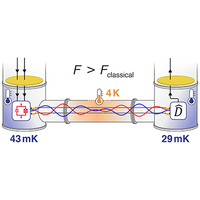
Quantum Teleportation over Thermal Microwave Network
Article | Quantum Information, Science, and Technology | 2026-05-04 06:00 EDT
W. K. Yam, S. Gandorfer, F. Fesquet, M. Handschuh, K. E. Honasoge, A. Marx, R. Gross, and K. G. Fedorov
The deterministic quantum teleportation of microwave coherent states between two spatially-separated dilution refrigerators connected via a superconducting channel operating at temperatures up to 4 Kelvin demonstrates the experimental feasibility of quantum communication over a thermal microwave network.
Phys. Rev. Lett. 136, 180801 (2026)
Quantum Information, Science, and Technology
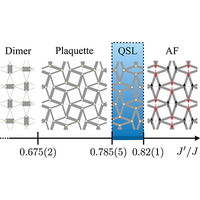
Quantum Spin Liquid Phase in the Shastry-Sutherland Model Revealed by High-Precision Infinite Projected Entangled-Pair States
Article | Condensed Matter and Materials | 2026-05-04 06:00 EDT
Philippe Corboz, Yining Zhang, Boris Ponsioen, and Frédéric Mila
High-precision tensor network calculations in the 2D thermodynamic limit reveal a narrow quantum spin liquid phase, consistent with previous studies, but based on variational states significantly closer to the exact ground state in the thermodynamic limit.
Phys. Rev. Lett. 136, 186701 (2026)
Condensed Matter and Materials
Physical Review X
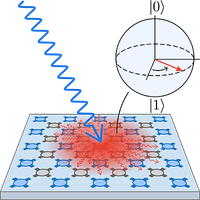
Correlated Phase Error Bursts in a Gap-Engineered Superconducting Qubit Array
Article | 2026-05-04 06:00 EDT
Vladislav D. Kurilovich, Gabrielle Roberts, Leigh S. Martin, Matt McEwen, Alec Eickbusch, Lara Faoro, Lev B. Ioffe, Juan Atalaya, Alexander Bilmes, John Mark Kreikebaum, Andreas Bengtsson, Paul Klimov, Matthew Neeley, Wojciech Mruczkiewicz, Kevin Miao, Igor L. Aleiner, Julian Kelly, Yu Chen, Kevin Satzinger, and Alex Opremcak
Ionizing radiation is shown to induce a new type of correlated error in a superconducting quantum processor--phase error bursts--that undermines quantum error correction even with state-of-the-art radiation protection.
Phys. Rev. X 16, 021025 (2026)
arXiv
Scattering matrix elements and energy spectrum of one-dimensional hybrid PT-symmetric finite systems
New Submission | Mesoscale and Nanoscale Physics (cond-mat.mes-hall) | 2026-05-05 20:00 EDT
Vladimir Gasparian, Esther Jódar, Antonio Pérez-Garrido
In this work, we provide a complete description of the scattering matrix elements and electron energy spectrum in one dimensional PT-symmetric hybrid finite systems, using the characteristic determinant approach. We present an analytical formulation of the problem and obtain a closed-form expression for the energy spectrum of the system, consisting of a region of real potential (passive region) surrounded by regions of gain and loss on the left and right, respectively. It has been shown that under certain conditions and a specific ratio between the real and imaginary parts of the complex potentials, it is possible to find analytical expressions for the spectral singularities at which the scattering matrix elements of the hybrid structure tend to infinity at a specific real energy. Within the framework of the same approach, we present a compact analytical expression for the quantization condition that determines the energy spectrum of a model corresponding to the placement of a rigid lattice within a finite-sized box.
Mesoscale and Nanoscale Physics (cond-mat.mes-hall), Other Condensed Matter (cond-mat.other)
15 pages, 7 figures
The Mesoscopic Partition Function:A Combined Spatial and Phase-Space Cell Structure
New Submission | Statistical Mechanics (cond-mat.stat-mech) | 2026-05-05 20:00 EDT
We introduce a mesoscopic partition function for classical many-body systems based on a combined spatial and phase-space coarse-graining, replacing the canonical phase-space integral with a discrete sum over occupation numbers. The construction recovers the standard canonical partition function in the fine-graining limit. Our main result shows that factorisation of the mesoscopic partition function across spatial cells is equivalent to extensivity of the coarse-grained free energy, with deviations governed by inter-cell correlations quantifiable via mutual information. We derive a generalised Euler relation with a subextensive correction encoding boundary and correlation effects. Together, these results provide a unified framework linking coarse-graining, factorisation, and extensivity in mesoscopic thermodynamics.
Statistical Mechanics (cond-mat.stat-mech), Mathematical Physics (math-ph)
12 pages
Model-agnostic cooling algorithms for strongly interacting fermions
New Submission | Strongly Correlated Electrons (cond-mat.str-el) | 2026-05-05 20:00 EDT
Henning Schlömer, Liyuan Chen, Susanne F. Yelin, Hong-Ye Hu
Strongly interacting fermions underpin some of the most challenging problems in condensed matter physics, such as high-temperature superconductivity. The low-energy states of these systems encode their essential microscopic properties, yet remain largely inaccessible to classical methods. Quantum simulation offers a promising path forward, and among state-preparation strategies, engineered dissipation has emerged as a particularly compelling approach. Existing cooling protocols, however, typically rely on knowledge of the quasiparticle spectrum or mappings to free-fermion limits. In this letter, we introduce a randomized, symmetry-preserving cooling algorithm that requires no spectral information, using only local coupling operators to ancilla degrees of freedom with randomly sampled energy splittings to drive generic fermionic systems toward their low-energy manifold. We benchmark the protocol on canonical correlated fermionic models relevant to high-temperature superconductors, spanning metallic, density-wave, paired, superconducting, and phase-separated phases. Across all models, we observe universal cooling behavior: monotonic energy relaxation, concentration of spectral weight at low energies, and stabilization of correlated ground-state order. Our results establish randomized dissipative cooling as a general strategy for preparing strongly correlated fermionic states on programmable quantum devices.
Strongly Correlated Electrons (cond-mat.str-el), Quantum Physics (quant-ph)
5+2 pages
Influence of Coherent Elastic Strain on Phase Separation in BCC Nb-V Alloys
New Submission | Materials Science (cond-mat.mtrl-sci) | 2026-05-05 20:00 EDT
Coherent elastic strain is an important but often neglected contribution to phase-separation thermodynamics in alloy systems where decomposed phases have appreciable lattice mismatch. We develop a thermodynamic framework that incorporates coherent elastic compatibility directly into phase-diagram calculations alongside conventional CALPHAD chemical free energies. Applied to the BCC Nb-V system, the framework shows that coherent elasticity substantially suppresses phase separation, narrows the miscibility gap, and lowers the critical temperature toward experimentally observed values. Beyond these quantitative effects, the coherent constraint qualitatively alters the interpretation of phase equilibria: the equilibrium decomposition compositions become functions of both temperature and overall alloy composition, so the two-phase boundary no longer represents unique coexistence compositions. These results establish coherent elasticity as a key thermodynamic factor in lattice-mismatched systems and provide a general framework for coherent phase-diagram modeling.
Materials Science (cond-mat.mtrl-sci)
24 pages, 5 figures, Supplementary Information available
Manipulation of electromagnetic wave propagation in quantum-spin-chain medium
New Submission | Strongly Correlated Electrons (cond-mat.str-el) | 2026-05-05 20:00 EDT
Taras Krokhmalskii, Taras Verkholyak, Ostap Baran, Dmytro Yaremchuk, Taras Hutak, Oleg Derzhko
We consider a simple model of one-dimensional magnetic crystal and examine the propagation of an electromagnetic wave through such a medium. Calculating the dispersion relation $ {\bf k}(\omega)$ allows us to illustrate how the spread of the electromagnetic wave can be controlled by an external magnetic field. Our rigorous calculations should be useful for more realistic (and less tractable mathematically) models of magnetic media.
Strongly Correlated Electrons (cond-mat.str-el), Statistical Mechanics (cond-mat.stat-mech)
8 pages, 3 figures
Understanding the lifetime of water with dynamic network analysis: the case of CsOH.H2O
New Submission | Materials Science (cond-mat.mtrl-sci) | 2026-05-05 20:00 EDT
Graeme J. Ackland, Ciprian G. Pruteanu, John S. Loveday, Keishiro Yamashita
We describe the atomic-level motions in caesium hydroxide monohydrate (CsOH$ \cdot$ H$ _2$ O), which is a chemical compound containing layers of water and hydroxide ions. At this composition, each oxygen is involved in three hydrogen bonds which, in the hexagonal structure, form a quasi-2D honeycomb lattice. While oxygen and caesium atoms form a typical crystal lattice, the dynamics of the hydrogen atoms are more complex. Here we show that the covalent and hydrogen bonds are continually interconverting, meaning that the water and hydroxyl are interconverting by proton exchange. The order-disorder transition of the water and hydroxyl proceeds by chemical reaction rather than rotation or diffusion of the molecules. A hydrogen can rotate out of the layer, leaving a vacant site in the 2D layer. Such a hydrogen vacancy can diffuse rapidly by single molecule rotation, leading to fast-ionic conduction. The proton exchange leads to a novel type of Raman activity combining stretch and exchange processes, for which we develop a theoretical model. This would manifest in a broad single peak associated with both H$ _2$ O and OH stretches and a low frequency peak appearing at elevated temperature.
Materials Science (cond-mat.mtrl-sci)
A hidden bulk polymorph governs charge transport dimensionality in an organic semiconductor
New Submission | Materials Science (cond-mat.mtrl-sci) | 2026-05-05 20:00 EDT
Caterina Zuffa, Marco Bardini, Fabian Gasser, Mauricio Sevilla, Robinson Cortes-Huerto, Alessandro Greco, Lorenzo Soprani, Guanzhao Wen, Jaco J. Geuchies, Mischa Bonn, Gabriele D’Avino, Lucia Maini, Hai I. Wang, Lucia Di Virgilio
Organic semiconductors (OSCs) are widely explored for flexible optoelectronic technologies, with performance governed not only by molecular design, but also by solid-state packing, which can give rise to polymorphism. Dinaphthothienothiophene (DNTT) is a benchmark OSC that has long been considered monomorphic. Here, we discover, isolate, and resolve the crystal structure of a previously unrecognised bulk polymorph of DNTT, termed blue DNTT owing to its characteristic blue emission. Coexisting with the well-known (green) DNTT in commercial powders, yet previously overlooked, blue DNTT represents the thermodynamically stable form. By combining X-ray diffraction, Raman, and THz spectroscopy with simulations, we demonstrate that polymorphism in DNTT reshapes the low-frequency phonon landscape and transfer-integral network, impacting charge transport. While green DNTT exhibits two-dimensional charge transport with holes more mobile than electrons, blue DNTT shows charge transport along all crystallographic directions enabled by a distinct herringbone packing. Electron mobility along the crystallographic a and b-axes in blue DNTT exceeds twice the hole mobility in the green phase. To our knowledge, this is the first reported acene-based semiconductor exhibiting three-dimensional charge transport. Polymorphism emerges as a key lever to tune charge transport dimensionality and carrier efficiency in organic semiconductors.
Materials Science (cond-mat.mtrl-sci)
29 pages, 5 figures
Non-Equilibrium Thermodynamic Extremal Principles During Filament Formation in ECM Memristors
New Submission | Mesoscale and Nanoscale Physics (cond-mat.mes-hall) | 2026-05-05 20:00 EDT
Electrochemical metallization (ECM) memristors have potential applications in future neuromorphic computing hardware. The set, reset, and variable-resistance features of these devices originate in the formation and breakup of metal filaments in a solid-state electrolyte. While the performance characteristics of these devices are widely investigated, the driving principles behind the morphology of the filament formation process remain unclear. In this study, we propose an approach motivated by the extremal principles found in non-equilibrium thermodynamics and observe an entropy production and energy dissipation rate minimization during the filament-forming process in kinetic Monte Carlo simulations.
Mesoscale and Nanoscale Physics (cond-mat.mes-hall), Materials Science (cond-mat.mtrl-sci)
Evidence for altermagnetic order in Cr-doped FeSb2
New Submission | Materials Science (cond-mat.mtrl-sci) | 2026-05-05 20:00 EDT
A K M Ashiquzzaman Shawon, Eoghan Downey, Shane Smolenski, Thomas J. Hicken, Amir Henderson, Mingyu Xu, Trisha Musall, Rafael Lopes Sabainsk, Yuan Zhu, Weiwei Xie, Elena Gati, Lu Li, Zurab Guguchia, Na Hyun Jo
Altermagnets are a class of materials with compensated magnetic moments, in which spin sublattices are related by specific symmetries other than inversion or translation. This allows time-reversal symmetry to be broken without a net magnetization. Here, we synthesize single crystals of Fe1-xCrxSb2 and investigate their electrical transport and magnetic properties, with a focus on Fe0.85Cr0.15Sb2. Magnetization measurements suggest spin-compensated ordering below ~ 3.5 K, where magnetic moments align along the crystallographic b-direction. Transport measurements reveal a crossover from large positive to negative magnetoresistance, while an anomalous Hall response emerges below 3.5 K, indicating time-reversal symmetry breaking below TN. Muon spin relaxation measurements demonstrate bulk magnetic order below 3.5 K, confirming that the low temperature ordering is intrinsic rather than due to an impurity phase. These results support a potential altermagnetic ground state in Cr-doped FeSb2 with time-reversal symmetry breaking without net magnetization.
Materials Science (cond-mat.mtrl-sci)
Topological flat bands emerging at the inversion of stacking order in rhombohedral graphite
New Submission | Mesoscale and Nanoscale Physics (cond-mat.mes-hall) | 2026-05-05 20:00 EDT
R. Weht, A. A. Aligia, M. Nunez-Regueiro
Motivated by the indications of high-Tc superconductivity in natural graphite enriched in the rhombohedral phase, we study the band structure of several stacking configurations that combine two of the three graphite structures as well as modifications of the rhombohedral sequence (from ABCABC… to CBACBA…), using first-principles calculations. We focus in particular on the possible emergence of flat bands near the Fermi level. When the two different rhombohedral orderings are combined, flat bands of topological origin emerge at the interface between the two domains, near the K and K’ points of the Brillouin zone. Mapping a simple tight-binding model of a rhombohedral slab along the direction perpendicular to the graphene layers onto a Su-Schrieffer-Heeger chain provides a transparent understanding of the underlying physics.
Mesoscale and Nanoscale Physics (cond-mat.mes-hall)
6 pages, 5 figures, supplemental material available upon request
Berry-phase effect in single molecule magnets: analytical and numerical results
New Submission | Mesoscale and Nanoscale Physics (cond-mat.mes-hall) | 2026-05-05 20:00 EDT
Fco. Javier Anaya Garcia, Daniel Salgado-Blanco, Gabriel Gonzalez
In this paper we theoretically and numerically investigate transport signatures of quantum interference on the current through a single molecule magnet transistor tunnel coupled to oppositely polarized leads in the presence of a local transverse and longitudinal magnetic field. Our calculations are based in a density matrix approach where we treat the ground state energy splitting induced by tunneling of the spin between different paths with the aid of perturbation theory. Using this approach we show that it is possible to use an effective Hamiltonian which describes the Berry phase interference as a function of the transverse magnetic field which completely blocks the current flow when we place the single molecule magnet between oppositely polarized leads. Finally, we use this effective Hamiltonian in an open source Python software (QmeQ) that allows us to calculate the current through the single molecule magnet with oppositely polarized leads tunnel coupled to the single molecule magnet. The analytical results are well reproduced by our numerical simulations.
Mesoscale and Nanoscale Physics (cond-mat.mes-hall)
7 pages
Anaya-Garc'ia, F.J., Salgado-Blanco, D. and Gonz'alez, G. (2023), Berry-Phase Effect in Single-Molecule Magnets: Analytical and Numerical Results. Phys. Status Solidi B, 260: 2200241
Tracking thermal transport in colloidal quantum dot films using in-situ time-resolved X-ray diffraction
New Submission | Mesoscale and Nanoscale Physics (cond-mat.mes-hall) | 2026-05-05 20:00 EDT
Eliza Wieman, Nejc Nagelj, Ethan Curling, Larry Chen, Jin Yu, A. Paul Alivisatos, Aaron Lindenberg, Benjamin T. Diroll, Jacob H. Olshansky, Jihong Ma, Burak Guzelturk, Benjamin L. Cotts
Colloidal quantum dots (QDs) and their thin-films are increasingly used in electronic and photonic devices replacing traditional bulk semiconductors. However, thermal properties of the QDs are comparatively underexplored relative to device development efforts. This study shows the use of time-resolved X-ray diffraction as a contact-free method to probe the thermal response of QDs in device-like environments, providing in-situ insights for future thermal management strategies. Through the extraction of Debye-Waller Factors on a sub-nanosecond timescale, we use time-resolved X-ray diffraction to directly capture the heating and cooling of core/shell CdSe/CdS QDs following pulsed optical excitation. In a QD thin-film that actively provides optical gain, the thermal conductivity is found to be as low as 0.55 $ \mathrm{W,m^{-1},K^{-1}}$ , because of the poor heat flow within close-packed QD solids. For QDs dispersed in liquids, interfacial thermal conductance is found to dominate the thermal relaxation with a conductance on the order of 15 $ \mathrm{MW,m^{-2},K^{-1}}$ .
Mesoscale and Nanoscale Physics (cond-mat.mes-hall), Materials Science (cond-mat.mtrl-sci)
19 pages, 5 figures
Dirac Semimetal Phase in Rhombohedral $β-$Cu$_{2}$Se
New Submission | Materials Science (cond-mat.mtrl-sci) | 2026-05-05 20:00 EDT
Thomas Steele, Becker Sharif, David Lederman, Xiangang Wan, Sergey Y. Savrasov
Having been extensively studied during last decades in the fields of thermoelectics and ionic conductors, the $ \alpha $ phase of Cu$ _{2}$ Se with antfluoride crystal structure has recently emerged as a topological zero-gap semimetal with a quadratic contact point which exists at the Fermi surface of its bulk electronic spectrum. Here we argue based on density functional electronic structure calculation that the $ \beta $ phase of Cu$ _{2}$ Se realized in a recently discovered rhombohedral structure shows a Dirac semimetal behavior of the electrons near the Fermi level. These topological semimetals are currently generating a lot of interest due to unusual transport phenomena, such as strong quantum oscillations, large magnetoresistance effect and ultrahigh carrier mobilities with their Fermi velocities potentially exceeding graphene. We show that there exist Fermi arc states at the surface spectrum of $ \beta -$ Cu$ _{2}$ Se that are topologically protected by the bulk Dirac points. Their shape and spin properties should be resilient to the back- and side scattering effects in the surface transport, suggesting new ways for realizing high-mobility electronic devices.
Materials Science (cond-mat.mtrl-sci)
5 pages, 3 figures 1 table
When Independent Gaussian Models Break Down: Characterizing Regime-Dependent Modeling Failures in $ϕ^4$ Theory
New Submission | Statistical Mechanics (cond-mat.stat-mech) | 2026-05-05 20:00 EDT
Anish Bhat, Ryo Ide, Zihan Zhao
In practical physical systems, modeling assumptions of Gaussianity and basis independence break down due to self-interactions. We study a specific instance of one-dimensional $ \phi^4$ theory on a lattice, analyzing how the interaction strength and system size jointly affect the marginal and joint distributions of frequency-based representation of the field (i.e., Fourier modes). We find that models relying on Gaussian and independent Fourier modes fail primarily from structured dependencies rather than marginal non-Gaussianity, since individual modes become approximately Gaussian despite mode coupling growing with size. Based on this, we identify three distinct regimes that delineate where traditional methods remain effective and where more expressive models are needed. Our results provide a computationally simple diagnostic to establish when Gaussian models are insufficient, and establish a concrete design criterion that future nonlinear models must satisfy.
Statistical Mechanics (cond-mat.stat-mech), High Energy Physics - Lattice (hep-lat)
Threshold-Controlled Geometric Reorganization in 2D Bootstrap Percolation
New Submission | Statistical Mechanics (cond-mat.stat-mech) | 2026-05-05 20:00 EDT
Fangfang Wang, Wei Liu, Kai Qi, Ying Tang, Zengru Di
Two-dimensional bootstrap percolation is usually characterized by bulk observables, but whether increasing the activation threshold qualitatively reorganizes the geometry of the absorbing state has remained unclear. Here we show that the response undergoes a threshold-controlled geometric crossover. At low thresholds, the extrema of bulk and boundary-sensitive observables remain confined to a single collective low-$ p$ window. At high thresholds, they split into distinct branches, revealing multiple geometric response scales. Over the accessible system sizes, the dominant finite-size signatures shift from fluctuations of the final active density to non-singleton boundary observables, while the fluctuation peak itself decreases. Time-resolved mechanism traces show that this crossover is accompanied by a progression from extended collective propagation to frontier exhaustion and, at the highest threshold, to quasi-one-step stabilization. Our results identify boundary organization as the dominant structural signature of high-threshold bootstrap percolation and show that conventional bulk observables alone do not capture the full reorganization of the absorbing state.
Statistical Mechanics (cond-mat.stat-mech)
8 pages, 5 figures
Rational Mechanics of Material Strength in Brittle Solids
New Submission | Materials Science (cond-mat.mtrl-sci) | 2026-05-05 20:00 EDT
Material strength is a classical concept with renewed importance in fracture mechanics, particularly in crack nucleation in brittle solids. We formulate material strength in finite elasticity and examine its geometric, constitutive, and symmetry-theoretic foundations. Spatial covariance requires a strength function to depend on both stress and the corresponding strain measure, so that strength is governed by the pair (stress,strain), not stress alone, and only then can representations based on different stress measures be consistently related, with classical stress-based criteria recovered as a special case. We analyze covariance under spatial diffeomorphisms and relate formulations based on the first Piola–Kirchhoff, second Piola–Kirchhoff, and Cauchy stresses. For stress-based criteria, we define the strength hypersurface as a subset of the constitutively admissible stress manifold and study the associated safe domain. Under standard regularity assumptions and the requirement that sufficiently large stresses are inadmissible, the strength surface is a smooth compact hypersurface of this manifold. For isotropic solids, we show that the safe domain is star-shaped under a proportional-reduction hypothesis. We extend the formulation to anelastic brittle solids, showing that residual stresses and eigenstrains modify the strength surface through the material metric, and discuss anisotropic strength via material symmetry. Finally, in the small-strain limit, the theory reduces to classical stress-based criteria.
Materials Science (cond-mat.mtrl-sci)
Grain boundary segregation of light elements and their effects on cohesion in ferritic steels
New Submission | Materials Science (cond-mat.mtrl-sci) | 2026-05-05 20:00 EDT
Han Lin Mai, Xiang-Yuan Cui, Tilmann Hickel, Simon P. Ringer, Jörg Neugebauer
Light elements play an important role in influencing the macroscale properties of engineering alloys through grain boundary (GB) segregation phenomena. However, the scarcity and scattered nature of ab initio datasets for light elements in steels makes reproduction and extraction of general trends from the literature difficult. Here, we present a comprehensive ab initio evaluation of the segregation energies and cohesive effects for H, He, B, C, N, O, P, S, extensively sampling both substitutional and interstitial sites in six model coincident site lattice (CSL) ferritic iron GBs using density functional theory (DFT). Cohesive effects are evaluated in both a quantum-chemistry bond-order and rigid Rice-Wang interfacial cohesive strength framework. Our calculations indicate that, compared at the same concentration, B and C enhance GB cohesion, N, P, H are mildly detrimental, and He, O, S as powerful decohesive agents/embrittlers. Sampling both interstitial and substitutional starting positions is necessary to accurately capture segregation spectra. Commonly utilised sampling criteria such as site volumes prove insufficient for identifying deepest GB binding sites. Solutes placed in either kind of site can induce large relaxations to the same final configuration, resulting in site classification ambiguity. The nearest neighbour distance of a solute to its neighbours after relaxation is shown to be a controlling factor for the lower threshold of segregation energies at sites. The freely available DFT dataset and analysis repositories are expected to advance understanding of GB segregation behaviours of light elements in steels and serve as a resource for developing machine learning interatomic potentials.
Materials Science (cond-mat.mtrl-sci)
Phase-shift instanton approach to tunneling duality in Read–Rezayi state
New Submission | Mesoscale and Nanoscale Physics (cond-mat.mes-hall) | 2026-05-05 20:00 EDT
Ryoi Ohashi, Hiroki Isobe, Ryota Nakai, Kentaro Nomura
We study the duality between quasi-particle and electron tunneling in point-contact geometries of fractional quantum Hall states. To treat non-Abelian edge operators, we introduce a “phase-shift instanton” that incorporates phase factors from primary fields into the instanton gas framework. Using this method, we reformulate the Moore–Read duality and obtain an explicit dual description for the $ k=3$ Read-Rezayi state. Our results clarify how quasi-particle tunneling produces characteristic phase shifts in instantons and how these shifts map strong quasi-particle tunneling to weak electron tunneling. Based on this dual description, we analytically evaluate the non-linear differential conductance in the strong-coupling regime. We reveal that, due to the physical requirement that the tunneling particle across the vacuum gap must be a true fermion, the transport behavior universally converges to a $ G \propto V^4$ scaling for both the Moore–Read and Read–Rezayi states. This universal transport signature highlights a fundamental topological constraint underlying non-Abelian fractional quantum Hall edges.
Mesoscale and Nanoscale Physics (cond-mat.mes-hall)
Vector Magnonics: Electrical Injection and Control of Spin Flow in Altermagnets
New Submission | Mesoscale and Nanoscale Physics (cond-mat.mes-hall) | 2026-05-05 20:00 EDT
Yanmeng Lei, Rui-Chun Xiao, Weiwei Lin, Tao Yu
Altermagnets host chirally split magnons that promise unique functionalities for information processing. However, their distinctive transport signatures, crucial for experimental identification and manipulation, remain elusive. Here, we predict that a spin accumulation electrically injects a ``vector” or multidirectional magnon spin current into an altermagnet, comprising both longitudinal and sizable transverse components. Notably, this transverse current exhibits a sign reversal away from the source and can be switched on or off by reorienting the Néel vector. While such a transverse current is found to be not forbidden even in conventional antiferromagnets, we demonstrate through quantum-kinetic calculations that in altermagnets, the transverse response is enhanced by two orders of magnitude due to broken parity-time symmetry. This giant enhancement provides a decisive transport fingerprint for detecting magnon spin splitting and Néel-vector orientation, offering a clear criterion to experimentally distinguish altermagnets from conventional antiferromagnets.
Mesoscale and Nanoscale Physics (cond-mat.mes-hall)
7 pages, 4 figures
Loop expansion in polymer field theory: application to phase separation
New Submission | Soft Condensed Matter (cond-mat.soft) | 2026-05-05 20:00 EDT
Kiyoharu Kawana, Kyosuke Adachi
Liquid-liquid phase separation underlies phenomena ranging from protein condensate formation to the phase coexistence of synthetic polymers. Although the random phase approximation (RPA) is widely used to predict such phase behavior, its quantitative accuracy for binodals of polymer solutions, particularly outside the high-density regime, remains incompletely characterized. Here, we develop a field theoretic loop expansion in homopolymer systems by identifying the inverse polymer density $ \rho^{-1}$ as the Planck constant $ \hbar$ in quantum field theory. We calculate the leading-order and next-to-leading-order corrections to the RPA free energy, denoted as RPA+ and RPA++, respectively. Testing the binodal predicted by the RPA+ against molecular dynamics simulations of bead-spring chains with Gaussian pair interactions, we find that the RPA+ qualitatively improves the dilute-phase coexistence density over the RPA, while the critical point error remains comparable to that of the RPA. Our results establish the loop expansion as a systematic route for refining the RPA-based binodal predictions for polymer phase separation.
Soft Condensed Matter (cond-mat.soft), Statistical Mechanics (cond-mat.stat-mech), High Energy Physics - Theory (hep-th)
10 pages, 5 figures
Interplay of Valley, Orbital, Spin, and Layer Degrees of Freedom in Ta$_2$CS$_2$ MXene
New Submission | Strongly Correlated Electrons (cond-mat.str-el) | 2026-05-05 20:00 EDT
Kunal Dutta, Anupam Mondal, Sayantika Bhowal, Subhradip Ghosh, Indra Dasgupta
We show that the MXene Ta$ _2$ CS$ _2$ provides an excellent platform for hosting multiple coupled degrees of freedom, viz., valley, spin, orbital, and layer. The interplay among these degrees of freedom gives rise to a range of intriguing properties in reciprocal space, including valley-orbital and orbital-layer coupling. In the presence of spin-orbit interaction, these couplings lead to valley-dependent and layer-dependent spin splitting of the electronic bands. We further show that the intrinsic electric polarization in Ta$ _2$ CS$ _2$ introduces an additional tuning parameter, enabling control over these coupled degrees of freedom and resulting in switchable valley-dependent orbital moments and Zeeman-like spin splitting. We demonstrate that these nontrivial orbital and spin textures manifest in the orbital and spin Hall effects, respectively. Our results establish noncentrosymmetric MXenes as a promising platform for exploring the interplay among multiple degrees of freedom, their tunability, and the resulting orbital and spin transport phenomena in these two-dimensional materials, thereby paving the way for next-generation spin-orbitronic devices.
Strongly Correlated Electrons (cond-mat.str-el), Materials Science (cond-mat.mtrl-sci)
Composition-Driven Tunable Optical and Electrical Properties in Van der Waals Ferroelectric NbOI2-xClx Alloys
New Submission | Materials Science (cond-mat.mtrl-sci) | 2026-05-05 20:00 EDT
Gaolei Zhao, Juhe Liu, Jinkai Huo, Tian Han, Yunhao Tong, Hu Wang, Konstantin Kozadaev, Andrei Zheltkovich, Changsen Sun, Alexei Tolstik, Andrey Novitsky, Lujun Pan, Dawei Li
Layered niobium oxide dihalides NbOX2 (X = I, Cl), as a new family of Van der Waals (vdW) ferroelectrics, have attracted extensive attention, while achieving non-volatile modulation of their optical and electrical properties remains challenging, thereby limiting their integration into next-generation nanoelectronics and optoelectronics. Here, we report the controlled fabrication of highly crystalline NbOI2-xClx vdW alloys with composition-driven tunable optical and electrical properties via a chemical vapor transport method. Comprehensive experimental characterization combined with first-principles calculation shows that the crystal lattices, phonon modes, and band structures of NbOI2-xClx can be well tailored, which are distributed between NbOI2 and NbOCl2. Both the amplitude and polarization of second harmonic generation optical signal in NbOI2-xClx exhibit pronounced compositional dependence, offering optical evidence for tunable in-plane ferroelectric characteristic. Moreover, field-effect transistors based on NbOI2-xClx display robust n-type semiconducting behavior, with threshold voltage and carrier mobility precisely modulated through adjustment of I/Cl molar ratio. Furthermore, 2D NbOI2-xClx photodetectors across all compositions exhibit exceptional gate-tunable current on/off ratio and strong polarization-sensitive photo-response. This study thus provides a new vdW ferroelectric material platform with tunable optical and electrical properties, paving the path for its implementation in modern nanophotonics and nanoelectronics.
Materials Science (cond-mat.mtrl-sci), Mesoscale and Nanoscale Physics (cond-mat.mes-hall)
18 pages, 5 figures
Inverse Materials Design via Joint Generation of Crystal Structures and Local Electronic Descriptors
New Submission | Materials Science (cond-mat.mtrl-sci) | 2026-05-05 20:00 EDT
Ibuki Okuda, Izumi Takahara, Teruyasu Mizoguchi
Inverse design of inorganic crystals, in which structures are generated to satisfy a target property while preserving diversity and physical plausibility, remains more demanding than ab initio generation, as property conditioning can degrade the structural quality that current generative models otherwise achieve. We propose a diffusion framework that jointly denoises crystal-structure variables and site-resolved local electronic descriptors through a shared score network. As representative descriptors, we adopt Bader charge and atomic density of states (atomic DOS). Under both band-gap and formation energy conditioned generation, the joint models achieved higher success rates than the structure-only baseline in most target conditions, while simultaneously increasing the fraction of generated structures that satisfy uniqueness, novelty, thermodynamic stability, and physical validity (VSUN criteria). A dummy-variable control confirms that these gains originate from the electronic content of the descriptors rather than from auxiliary site-wise variables. The generated Bader charges agree with DFT references with an MAE of 5.5e-2 e on stable structures, and the generated atomic DOS captures the coarse spectral profile of the DFT reference around the modal accuracy range, although finer details and accuracy vary with elemental species. These results establish local electronic descriptors as effective generative variables that serve two complementary roles: broadening the explored materials space through increased structural diversity, and mitigating the trade-off between property targeting and structural quality by guiding the structural trajectory toward electronically plausible configurations during joint denoising.
Materials Science (cond-mat.mtrl-sci)
13 pages, 5 figures, 2 pages SI
SR-CGCNN: Shared Recurrent Convolution in Crystal Graph Neural Networks for Materials Property Prediction
New Submission | Materials Science (cond-mat.mtrl-sci) | 2026-05-05 20:00 EDT
Crystal graph neural networks predict materials properties by propagating information through local atomic environments. In conventional crystal graph convolutional neural networks (CGCNNs), this propagation depth is increased by stacking independently parameterized convolutional layers. This coupling between message-passing depth and parameter count raises a simple question: can repeated application of the same learned local update recover most of the benefit of a deeper CGCNN? We address this question by introducing a shared-recurrent CGCNN (SR-CGCNN), in which the main crystal-graph convolutional weights are tied across recurrent message-passing steps. The graph construction, pooling operation, and prediction head are kept unchanged, allowing a controlled comparison with standard CGCNN baselines. On Materials Project-derived formation-energy and band-gap datasets, a three-step SR-CGCNN approaches the accuracy of a standard three-layer CGCNN while using only $ 34.5%$ of its trainable convolutional parameters. The formation-energy test mean absolute error changes from $ 0.0945$ to $ 0.0986\mathrm{eV,atom^{-1}}$ , while the band-gap error changes from $ 0.4346$ to $ 0.4503\mathrm{eV}$ . These results indicate that repeated shared message passing can provide a parameter-efficient approximation to stacked CGCNN depth, offering a compact recurrent interpretation of crystal graph convolution.
Materials Science (cond-mat.mtrl-sci)
Multi-probe detection of domain nucleation across the metal-insulator transition in VO$_2$
New Submission | Strongly Correlated Electrons (cond-mat.str-el) | 2026-05-05 20:00 EDT
Shubhankar Paul, Giordano Mattoni, Amitava Ghosh, Pooja Kesarwani, Dipak Sahu, Monika Ahlawat, Ashok P, Amit Verma, Vishal Govind Rao, Chanchal Sow
Electronic and structural degrees of freedom are often intimately coupled in strongly correlated systems, which result in intriguing macroscopic and microscopic phenomena. Using the well-studied material VO$ _2$ as a prototype, here we explore the domain distribution across the metal-insulator transition (MIT). We use macroscopic as well as microscopic techniques, such as first-order reversal curve (FORC) and infrared imaging, to probe the domain distributions across the MIT. This study compares MIT in thin films of VO$ _2$ with different grain sizes grown by pulsed laser deposition and dc sputtering. We explore the relation between the nature of the FORC distribution and the corresponding thermal hysteresis due to interactions between the supercooled metallic domains and surrounding insulating matrix. Our multi-probe study with quantitative analysis provides a correlation between the growth, domain interaction, and domain nucleation process in MIT.
Strongly Correlated Electrons (cond-mat.str-el), Materials Science (cond-mat.mtrl-sci)
Appl. Phys. Lett. 128, 052202 (2026)
Impurity-Scattering Assisted Umklapp Scattering as the Origin of Low-Temperature Resistivity in the Normal-State of Cuprate Superconductors
New Submission | Superconductivity (cond-mat.supr-con) | 2026-05-05 20:00 EDT
Xingyu Ma, Minghuan Zeng, Huaiming Guo, Shiping Feng
The transport experiments reveal that the low-temperature resistivity in the normal-state of cuprate superconductors is quadratic in temperature (T-quadratic) in the underdoped pseudogap phase, while it is linear in temperature (T-linear) in the overdoped strange-metal phase, however, the full understanding of these different behaviours is still a challenging issue. Here starting from the microscopic electronic structure of cuprate superconductors, the low-temperature resistivity in the normal-state is investigated from the underdoped pseudogap phase to the overdoped strange-metal phase. It is shown that the mechanism requires both the impurity scattering and the umklapp scattering: the impurity scattering is needed to restrict the modification of the distribution function to at around the antinodal region,while the impurity-scattering assisted umklapp scattering from a spin excitation is at the heart of the behaviour in the low-temperature resistivity, where the doping dependence of the temperature scale exists, and presents a similar behavior of the antinodal spin pseudogap crossover temperature. In the low-temperature region above the temperature scale in the overdoped strange-metal phase, the resistivity is T-linear, however, in the low-temperature region below the temperature scale in the underdoped pseudogap phase, the opening of the spin pseudogap lowers the spin excitation density of states at around the antinodal region, which reduces the strength of the electron umklapp scattering from a spin excitation associated with the antinode, and thus leads to a T-quadratic behaviour of the resistivity.
Superconductivity (cond-mat.supr-con)
15 pages, 5 figures, to be published
Reservoir computing by thin film embedded with magnetic impurities
New Submission | Disordered Systems and Neural Networks (cond-mat.dis-nn) | 2026-05-05 20:00 EDT
Shuto Kamakura, Tomi Ohtsuki, Jun-ichiro Ohe
The reservoir computing based on the thin film embedded with magnetic impurities in the presence of the long-range (the dipole-dipole) interaction is numerically investigated. We simulated the magnetization dynamics by taking into account the dipole-dipole interaction and performed the handwritten-digit recognition task. Although the training data is prepared by taking spatial average in the sample, the high classification accuracy is achieved. Our result demonstrates that the long range interaction effectively encodes the complex spatial input pattern into the time domain, even when only a spatially averaged output is accessible. The proposed system paves the way for easily realizable magnetic reservoir computing.
Disordered Systems and Neural Networks (cond-mat.dis-nn)
Jpn. J. Appl. Phys. 65, 080902 (2026)
Emergent Kinetic Constraints and Subspace Fragmentation in Rydberg Arrays
New Submission | Quantum Gases (cond-mat.quant-gas) | 2026-05-05 20:00 EDT
Wen-Jie Geng, Zhenming Zhang, Wei Yi
In a strongly interacting Rydberg atom array, the dynamics are often constrained to the decoupled Hilbert subspaces, representing an intriguing paradigm for nonergodicity. By considering a variable detuning of the global Rydberg coupling, we show that, not only is the existence of these Hilbert subspaces dependent on the interplay of detuning and interaction, but they are also strongly fragmented, with the fragment dimensions exhibiting various scaling behaviors with increasing system size. The resulting constrained dynamics of the system are thus governed by the dimension and connectivity of these fragments. We then adopt an auxiliary fermion description to reveal the underlying emergent kinetic constraints for the subspace fragmentation and fragment-confined dynamics. Our results provide a systematic understanding of Hilbert-space fragmentation in Rydberg arrays, and shed light on engineering nonergodic many-body dynamics beyond the PXP model.
Quantum Gases (cond-mat.quant-gas), Quantum Physics (quant-ph)
Effective attraction by repulsion
New Submission | Statistical Mechanics (cond-mat.stat-mech) | 2026-05-05 20:00 EDT
Rosalba Garcia-Millan, Luca Cocconi, Ziluo Zhang, Marius Bothe, Letian Chen, Zigan Zhen, Gunnar Pruessner
Repulsive self-propelled particles tend to cluster, leading to Motility-Induced Phase Separation (MIPS). By analogy with equilibrium phase separation, the onset of MIPS has been associated with a transition to effective attraction between particles. Using an exact microscopic theory, we quantify the emergence of effective attraction in a minimal model: two soft run-and-tumble particles in a periodic domain. We show that, as repulsion increases, the leading-order behaviour is that of effective repulsion, while effective attraction emerges as a higher-order contribution to the renormalisation of the pair potential.
Statistical Mechanics (cond-mat.stat-mech), Soft Condensed Matter (cond-mat.soft)
7 pages, 3 figures
Microscopic theory of soft run-and-tumble particles
New Submission | Statistical Mechanics (cond-mat.stat-mech) | 2026-05-05 20:00 EDT
Rosalba Garcia-Millan, Ziluo Zhang, Luca Cocconi, Marius Bothe, Letian Chen, Zigan Zhen, Gunnar Pruessner
Soft, repulsive run-and-tumble particles display emergent effective interactions as they appear to stick to each other in spite of the absence of attractive forces. This effective attraction emerges at strong enough repulsion and large self-propulsion. Complementing a companion paper that characterises effective attraction between two soft run-and-tumble particles [Garcia-Millan et al., Effective attraction by repulsion (2026)], here we provide a thorough derivation of our microscopic theory, which is an exact representation of the particle dynamics. We report the systematic calculation of the effective interaction vertices iteratively, in a perturbation expansion about the interaction couplings, by adding, order by order, loop corrections. We use the effective interaction vertices to calculate the two-point correlation function, fully characterising the stationary state. Other observables, such as the structure factor, overlap probability and entropy production rate are calculated as well.
Statistical Mechanics (cond-mat.stat-mech), Soft Condensed Matter (cond-mat.soft)
25 pages, 7 figures
Collinear ferromagnetism with reduced moment length in kagome magnet Nd3Ru4Al12
New Submission | Strongly Correlated Electrons (cond-mat.str-el) | 2026-05-05 20:00 EDT
Yuki Ishihara, Ryota Nakano, Rinsuke Yamada, Takuya Nomoto, Priya R. Baral, Moritz M. Hirschmann, Kamini Gautam, Kamil K. Kolincio, Akiko Kikkawa, Seno Aji, Hiraku Saitoh, Masaaki Matsuda, Yasujiro Taguchi, Taka-hisa Arima, Yoshinori Tokura, Taro Nakajima, Max Hirschberger
We determine the magnetic ground state of the kagome lattice magnet Nd3Ru4Al12 by single-crystal neutron diffraction, supported by experiments with polarized neutrons. We identify this material as a collinear ferromagnet (“hex-FM”) with uniform moment length mc = 2.1 {\mu}B/Nd and ordering vector Q = 0, in contrast to a previous, seminal report that proposed unequal moment lengths on two Nd sites, here called the “ortho-FM” state. Our analysis of the flipping ratio in polarized neutron scattering is consistent with the hex-FM state. The results provide a microscopic basis for understanding the large fluctuation-induced Hall and Nernst responses near TC = 41 K, as previously reported for Nd3Ru4Al12.
Strongly Correlated Electrons (cond-mat.str-el)
15 pages, 6 figures
Revealing the kinetics of interfacial surfactant phase transitions through multiscale simulations and in-situ plasmonic sensing
New Submission | Materials Science (cond-mat.mtrl-sci) | 2026-05-05 20:00 EDT
Esmée Berger, Narjes Khosravian, Ferry Anggoro Ardy Nugroho, Joakim Löfgren, Christoph Langhammer, Paul Erhart
Surfactant self-assembly at solid-liquid interfaces governs interfacial stability, transport, and reactivity across many technologies, yet resolving interfacial surfactant phases and their transition kinetics in situ remains challenging. Here, we establish an atomistically grounded plasmonic framework that quantitatively maps interfacial surfactant phases and phase transitions onto optical signatures. Distinct morphologies differ in packing and hydration, modifying the effective permittivity within the optical near field and producing surfactant phase-specific plasmonic extinction peak shifts. Using cetyltrimethylammonium bromide on silica as a prototypical surfactant-surface system, we combine atomistic simulations, electronic-structure calculations, and continuum electrodynamics to translate molecular morphologies into predicted spectral shifts for literature-reported surface phases. We experimentally confirm the predicted ordering and magnitude of steady-state peak shifts during stepwise concentration changes, and extract transition kinetics from exponential relaxations of the time-resolved peak shift. A key mechanistic signature is reversal of the spectral shift direction upon transition from an impermeable bilayer to a water-accessible, channel-containing phase, consistent with hydration-driven reduction of the local effective permittivity. Because the approach relies on dielectric contrast in the plasmonic near field and works through a dielectric overlayer, it provides a broadly applicable route for real-time identification of interfacial surfactant phases and their kinetics in aqueous conditions.
Materials Science (cond-mat.mtrl-sci), Mesoscale and Nanoscale Physics (cond-mat.mes-hall), Applied Physics (physics.app-ph)
8 pages, 4 figures
Deterministic Realization of Complex Local Strain Fields and Bandgap Profiles in Two-Dimensional Materials
New Submission | Materials Science (cond-mat.mtrl-sci) | 2026-05-05 20:00 EDT
Lottie L. Murray, Eric Herrmann, Igor Evangelista, Sai Rahul Sitaram, Ke Ma, Anderson Janotti, Xi Wang, Matthew F. Doty
Emerging classical and quantum device concepts demand precise spatial control over the optoelectronic properties of two-dimensional (2D) materials, but deterministic engineering via local multiaxial strain distributions remains challenging. Using Ga$ _2$ Se$ _2$ , we demonstrate a material-agnostic platform in which nanostructure geometry deterministically prescribes in-plane strain profiles in suspended van der Waals membranes. We first use hyperspectral photoluminescence mapping and experimentally-constrained finite element analysis to quantify the experimental biaxial and uniaxial strain gauge factors that relate strain to the change in bandgap. We next show that a two-component analytical model can predict, with less than 12% error, spatially-resolved bandgap shifts arising from multiaxial strain distributions in complex geometries, including the interactions between adjacent nanostructures. Finally, we demonstrate that this approach can be extended to other materials. The results demonstrate that nanostructure design provides a quantitative, deterministic framework for the realization of designed strain and bandgap distributions in 2D materials.
Materials Science (cond-mat.mtrl-sci)
arXiv admin note: substantial text overlap with arXiv:2601.08984
Colloidal layer deposition with a controllable number of layers and compositional order
New Submission | Soft Condensed Matter (cond-mat.soft) | 2026-05-05 20:00 EDT
Akshaya Kumar Jena, Aashima Aashima, Pritam Kumar Jana, Bortolo Matteo Mognetti
We design a system with a binary suspension of colloids and a surface that triggers the self-assembly of crystallites with a finite thickness. The proposed design allows controlling the number of layers forming the aggregate and constrains the two types of particles to lie on different planes. These functionalities are achieved by decorating the colloids and the surface with multiple DNA oligomers featuring specific interactions. The surface triggers a chain of reactions between DNA oligomers, leading to localized self-assembly. Equilibrium principles control the thickness of the aggregates. Instead, compositional order is achieved by engineering the reaction kinetics between DNA oligomers in a way that limits interactions between colloids of the same type. We validate our design using theory and reaction-diffusion simulation algorithms, which capture the multibody nature of the interactions. This work demonstrates how engineering the kinetics provides a new avenue for controlling the morphology of aggregates assembled by DNA.
Soft Condensed Matter (cond-mat.soft), Statistical Mechanics (cond-mat.stat-mech), Computational Physics (physics.comp-ph)
These last two authors contributed equally to this work
Dimple-Encoded Reprogrammable Origami
New Submission | Soft Condensed Matter (cond-mat.soft) | 2026-05-05 20:00 EDT
Qun Zhang, Weicheng Huang, Amir Hajiyavand, Hyunyoung Kim, Claire Dancer, Karl Dearn, Mingchao Liu
Programmable folding of elastic sheets typically relies on predefined flexible creases or active materials-enabled hinges, which lack intrinsic bistability and limit reprogrammability within a single structure. Here, we present a dimple-encoded origami platform that converts bistable dimple snapping into spatially addressable hinges with prescribed folding angles in a continuous sheet. This interaction-enabled mechanism enables the design of distributed hinge networks through the arrangement and selective inversion of dimples. We establish folding-angle design charts that can be directly used to select local dimple arrangements for target fold angle, forming a practical hinge library without altering the underlying unit geometry. Using this approach, a single dimpled sheet can be reprogrammed to realize multiple distinct configurations, such as triangle, square, and pentagon shapes. We further extend the method to flat-to-3D morphing of polyhedral origami and validate the results through experiments and finite element simulations. As demonstrations, we realize self-supporting cubic shells with enhanced impact resistance and partially deployable cube configurations that remain stable upon opening, highlighting their potential for protective enclosures and deployable architectural structures. The proposed strategy provides a fabrication-friendly route to reprogrammable shape-morphing and adaptive mechanical systems.
Soft Condensed Matter (cond-mat.soft), Applied Physics (physics.app-ph)
12 pages, 5 figures
First-principles simulation of shocked H-He mixture along the principal Hugoniot
New Submission | Other Condensed Matter (cond-mat.other) | 2026-05-05 20:00 EDT
Ammar A. Ellaboudy, Valentin V. Karasiev, S. X. Hu
Recent laser-shock experiments on an H–He mixture containing 11~$ %$ helium (atomic fraction) have suggested the presence of an immiscibility region inside Jupiter. Reflectivity measurements were used as the primary diagnostic of H–He demixing, with discontinuities in the optical reflectivity proposed as a signature of phase separation under conditions relevant to Jupiter’s interior. Here, we investigate shock-compressed H–He using \textit{ab initio} molecular dynamics simulations with optical properties evaluated within the Kubo–Greenwood formalism. The equation of state and ionic configurations were obtained using the thermal Tr$ ^2$ SCANL meta-GGA exchange–correlation (XC) functional, while optical properties were computed using the recently developed RS-KDT0 range-separated thermal hybrid XC, which provides state-of-the-art accuracy for band-gap predictions in the warm dense matter regime. The calculated reflectivity shows overall good agreement with experimental measurements; however, no discontinuity is observed at elevated temperatures. Moreover, the reflectivity predictions for the mixed system are consistent with the experimental measurements in the temperature range where the mixture is inferred to be demixed. These results suggest that reflectivity alone may not provide a unique or sensitive diagnostic of H-He demixing at low helium concentrations under these conditions.
Other Condensed Matter (cond-mat.other)
Entanglement dynamics after quenches with inhomogeneous Hamiltonians
New Submission | Statistical Mechanics (cond-mat.stat-mech) | 2026-05-05 20:00 EDT
Andrea Di Pasquale, Federico Rottoli, Vincenzo Alba
We investigate entanglement dynamics in bipartite systems governed by inhomogeneous Hamiltonians of the form $ H = H_L + H_R$ , where $ H_{L/R}$ acts only on the left or right region and is homogeneous within each region. Focusing on the XX chain and the transverse-field Ising chain, we derive analytical formulas for the entanglement entropy between the two regions in the hydrodynamic limit of long times. In this regime, fermions incident on the interface undergo scattering, generating entanglement between reflected and transmitted modes. The resulting quasiparticle picture is controlled by the transmission coefficient, which we obtain analytically by solving the stationary lattice Schrödinger equation. Due to the bounded dispersion, strong inhomogeneity suppresses both transport and entanglement growth. We benchmark our analytical predictions against numerical simulations in paradigmatic setups. Finally, we extend the analysis to the interacting XXZ chain using tDMRG. The numerical data show qualitative agreement with the quadratic case: entanglement growth remains suppressed in the strongly inhomogeneous limit. Notably, however, entanglement continues to increase even when transport is suppressed, at least at intermediate times.
Statistical Mechanics (cond-mat.stat-mech), Quantum Gases (cond-mat.quant-gas), Strongly Correlated Electrons (cond-mat.str-el), High Energy Physics - Theory (hep-th), Quantum Physics (quant-ph)
19 pages, 7 figures
Decoherence due to the sudden coupling of an impurity to a metal
New Submission | Mesoscale and Nanoscale Physics (cond-mat.mes-hall) | 2026-05-05 20:00 EDT
Felipe D. Picoli, Gustavo Diniz, Luiz N. Oliveira
We investigate the nonequilibrium dynamics and loss of coherence in a quantum impurity system using the spinless resonant level model subject to sudden quenches of the hybridization between the impurity and the metal. The survival probability (fidelity) and impurity occupation are analyzed as probes of the dephasing induced by particle-hole excitations. For finite systems, the loss of coherence loss is only apparent, as discrete spectra lead to quasi-periodic dynamics and revivals when phases realign. We show that a mixed linear-logarithmic discretization suppresses these finite-size artifacts by rendering excitation energies incommensurate, thereby reducing revivals. Starting from the exactly solvable two-level limit exhibiting coherent Rabi oscillations, we extend the analysis to large lattices, where damping and relaxation emerge. Combining analytical and numerical results, we provide a unified picture of the crossover from coherent oscillations to effectively irreversible decoherence.
Mesoscale and Nanoscale Physics (cond-mat.mes-hall), Statistical Mechanics (cond-mat.stat-mech), Strongly Correlated Electrons (cond-mat.str-el)
Brain criticality through nonadditive entropic analysis of electroencephalograms
New Submission | Statistical Mechanics (cond-mat.stat-mech) | 2026-05-05 20:00 EDT
Henrique Santos Lima, Constantino Tsallis, Dimitri M. Abramov
On the grounds of nonadditive entropies – appropriate for complex systems – we investigate the electroencephalogram amplitudes of typical and ADHD children. The corresponding probability distributions are $ q$ -Gaussians, i.e., $ \rho(x) \propto e_q^{-\beta x^2} \equiv [1+(q-1) \beta x^2]^{1/(1-q)}$ , where $ (q,\beta)$ are, respectively, the entropic index characterizing complexity and the inverse width. We show that $ q$ tends to monotonically vary with $ \beta$ for both typical and ADHD subjects, thus revealing critical behavior of the brain. Moreover, we verify that ADHD subjects have a higher complexity than the typical ones. Consistently, biomarkers for objective phychyatric diagnosis could emerge along this path. We show that $ q$ tends to monotonically vary with $ \beta$ for both typical and ADHD subjects, thus revealing critical behavior of the brain. Moreover, we verify that ADHD subjects have a higher complexity than the typical ones. Consistently, biomarkers for objective phychyatric diagnosis could emerge along this path.
Statistical Mechanics (cond-mat.stat-mech), Data Analysis, Statistics and Probability (physics.data-an), Medical Physics (physics.med-ph)
7 pages and 6 figures
Long-range correlation and the spin conductivity in the XXZ chain from ballistic macroscopic fluctuation theory
New Submission | Statistical Mechanics (cond-mat.stat-mech) | 2026-05-05 20:00 EDT
Based on the ballistic macroscopic fluctuation theory, the integration of the spin correlation function (spin conductivity) is analyzed for the spin-1/2 XXZ chain in the critical regime. In the time when the magnetization of an infinite spin chain fluctuates from an initial state with a wavelength as long as the infinite length $ N$ , the equal-time two-point spin correlation function is scaled up to $ O(1/N)$ . In the state where the ballistic spin transport decays at high temperature $ T$ , the diffusive transport remains on a large scale. We show that the spin conductivity is proportional to $ 1/T$ in the limit $ T\to\infty$ and its high temperature proportionality constant diverges in the case where one-quasiparticle magnetization is infinitely large. This analysis informs that the superdiffusive spin transport is driven by the $ 1/N$ -scaled long-range spin correlation and sheds a light on the dynamic scaling in spin transport at the isotropic point.
Statistical Mechanics (cond-mat.stat-mech)
29 pages & 1 figure
Metallic crossover through the tilt-free transition in La$_3$Ni$_2$O$_7$ at high pressure and temperature
New Submission | Superconductivity (cond-mat.supr-con) | 2026-05-05 20:00 EDT
Bastien Michon, Yingpeng Yu, Beatrice D’Alò, Elena Stellino, Gergely Németh, Bosen Wang, Jianping Sun, Jinguang Cheng, Paolo Postorino, Ferenc Borondics, Francesco Capitani
La$ _3$ Ni$ _2$ O$ _7$ , a bilayer nickelate with Ruddlesden-Popper structure, undergoes a pressure-induced structural transition from a tilted Amam phase to an untilted Fmmm (or I4/mmm) phase near 10-15 GPa, concomitant with the emergence of high-T$ _c$ superconductivity (T$ _c$ $ \sim$ 80 K). Despite intense interest, the phase boundaries and the impact of structural changes on the electronic properties remain unclear. Here, we combine high-pressure and high-temperature Raman and synchrotron-based infrared spectroscopies to map the structural and electronic evolutions. Raman measurements confirm the pressure-driven structural transition and reveal the emergence of Fano line shapes, indicating enhanced electron-phonon coupling. High-temperature data show analogous spectral signatures above 544 K, suggesting an unreported upper temperature limit of the Amam phase within the T-P phase diagram of this system. Infrared reflectivity measurements evidence a concomitant metallization, with a tremendous two-order-of-magnitude increase in carrier density, marking a crossover from a bad metal to a good metal. These results establish a unified picture of the structural transition and its strong coupling to the electronic properties.
Superconductivity (cond-mat.supr-con)
Generalized continuum theory of phonon angular momentum in crystals
New Submission | Materials Science (cond-mat.mtrl-sci) | 2026-05-05 20:00 EDT
Mamoru Matsuo, Naoki Nishimura, Ai Yamakage, Takeo Kato
We formulate a generalized continuum theory of phonon angular momentum in crystals by introducing a local SO(3) material frame in addition to the macroscopic displacement field. The local frame represents rotational optical degrees of freedom of the unit cell and brings acoustic displacement modes and optical rotational modes into a common long-wavelength continuum description. In the linearized limit, the co-rotated deformation gradient and the rotational gradient associated with the local material frame recover the Eringen microdeformation and wryness tensors; isotropic micropolar elasticity then appears as a special case. Rotational symmetry and Noether’s theorem determine the continuum phonon angular-momentum density, including both the displacement-polarization contribution and the intrinsic microrotation contribution. The theory further identifies the locking limit in which microrotation reduces to lattice vorticity and the improper-symmetry-breaking terms responsible for chiral phonon splitting.
Materials Science (cond-mat.mtrl-sci)
10 pages, 3 figures
Topological Ising superconductivity in two-dimensional p-wave magnet
New Submission | Strongly Correlated Electrons (cond-mat.str-el) | 2026-05-05 20:00 EDT
Kyoung-Min Kim, Gibaik Sim, Moon Jip Park
Fermi-surface spin splitting generated by non-relativistic exchange fields provides a new route to topological superconductivity without relying on strong spin-orbit coupling. Here, we study superconducting instabilities of a square-lattice $ p$ -wave magnet with onsite and nearest-neighbour attractive interactions. The odd-parity exchange field removes inversion symmetry in the spin-split electronic structure, allowing singlet and triplet order parameters to mix within a single $ A_1$ symmetry channel. The leading instability is a coupled $ s+p_x$ Ising state, whose singlet-triplet balance is continuously tunable by the relative strength of the nearest-neighbour attraction. When the triplet gap amplitude exceeds the singlet one, this Ising state undergoes a transition into a nodal topological superconducting phase with Majorana edge modes protected by momentum-resolved winding numbers. These modes extend over finite momentum intervals bounded by the surface projections of bulk point nodes. We further show that a Zeeman field perpendicular to the exchange field can induce a $ Z_2$ topological superconducting phase, even in the regime where a single gap dominates.
Strongly Correlated Electrons (cond-mat.str-el), Mesoscale and Nanoscale Physics (cond-mat.mes-hall), Superconductivity (cond-mat.supr-con)
9+9 pages
Spin caloritronics: History and future prospects of experiments
New Submission | Materials Science (cond-mat.mtrl-sci) | 2026-05-05 20:00 EDT
Ken-ichi Uchida, Takamasa Hirai
Since the beginning of the 21st century, novel energy conversion and control principles utilizing the spin degree of freedom have been discovered in the field of spin caloritronics, which integrates spintronics with thermal transport and thermoelectric properties. In this article, we review the history of development of spin caloritronics and experimental studies on various transport phenomena caused by heat-charge-spin interactions. We then discuss future prospects in spin caloritronics from the viewpoints of measurement techniques, physics, materials science, and engineering applications. Spin caloritronics is now at a turning point, transitioning from fundamental condensed matter physics to materials science, and further development is anticipated in both fundamental and applied research.
Materials Science (cond-mat.mtrl-sci), Mesoscale and Nanoscale Physics (cond-mat.mes-hall)
26 pages, 7 figures
Physics-Constrained Learning of Dose-Dependent Spectral Degradation in Metal–Organic Frameworks from In Situ Low-Loss EELS
New Submission | Materials Science (cond-mat.mtrl-sci) | 2026-05-05 20:00 EDT
Gabriel T. dos Santos, Roberto dos Reis, Vinayak P. Dravid
Electron-beam irradiation limits atomic-resolution characterization of beam-sensitive hybrid materials, yet quantitative models that connect \textit{in situ} spectroscopy to dose-dependent degradation remain scarce. Here we use a physics-informed neural network (PINN) to model beam-induced spectral evolution in MIL-101(Fe) from an in situ low-loss electron energy-loss spectroscopy (EELS) dose series. Each spectrum is reduced to fixed-window low-loss descriptors, $ \tilde n_{\mathrm{eff},j}(\Phi)=\int_{\mathcal{W}j}S(E,\Phi),dE$ , evaluated over nominal $ \pi$ –$ \pi^{\ast}$ , C–C, C–O, and M–O windows. These descriptors are relative window-integrated low-loss spectral areas, not absolute f-sum-rule effective electron numbers. For each spectral channel, a latent integrity variable $ C_i(\Phi)$ obeys the same uncoupled power-law degradation equation in normalized dose space, $ dC_i/d\phi=-k_i C_i^{p_i}$ , regularized by monotonicity, boundedness, and a single hierarchy prior $ k{\mathrm{C\text{-}O}}\geq k_{\mathrm{C\text{-}C}}$ . Applied to nine dose frames spanning 152–1368e$ ^-$ /Å$ ^2$ , the ensemble PINN identifies C–O and C–C as the most strongly dose-sensitive linker-associated channels, with half-integrity thresholds of approximately $ 1.0\times10^3$ ~e$ ^-$ /Å$ ^2$ . The 1–3eV $ \pi$ –$ \pi^{\ast}$ -labelled window increases with dose and is therefore interpreted as a mixed low-energy response, likely involving oscillator-strength redistribution rather than direct monotonic loss of a single bond population. The framework provides a dose-dependent, spectroscopy constrained description of MOF degradation while also defining the limits of what fixed-window low-loss EELS can assign without independent chemical-state validation.
Materials Science (cond-mat.mtrl-sci), Soft Condensed Matter (cond-mat.soft)
Main manuscript and Supplementary Information
Universal Design Principles for High-Quality Persistent Spin Textures
New Submission | Materials Science (cond-mat.mtrl-sci) | 2026-05-05 20:00 EDT
Cheng-Ao Ji, Lingling Tao, James M. Rondinelli, Xue-Zeng Lu
Persistent spin texture (PST) describes a unique spin-momentum locking in momentum space that maintains a uniform spin orientation through portions of the Brillouin zone (BZ), enabling exceptionally long spin lifetimes which are essential for applications in spintronics. However, materials exhibiting large BZ regions of high-quality PST, characterized by minimal spin deviation and long spin lifetimes, remain scarce. Here a universal model is introduced to capture the formation of superior PST regions arising from the interplay of spin-orbit fields at different k points. Within this framework, high-quality PSTs are identified in several systems belonging to various point groups. Notably, the nonpolar-chiral compound Na2Sn2O3 exhibits ~0.02 Å-2 high-quality PST region, which can be reversed by the switching of geometric chirality, while AgClO4 (D2d symmetry) exhibits a 0.016 Å-2 PST region. Significantly, Na2Sn2O3 and AgClO4 host persistent spin helices with spin lifetimes of 0.5-7.4 ns and 0.9-2.5 ns, respectively, among the longest reported for PST materials. In addition, both chemical substitutions and the application of pressure are demonstrated as effective routes for engineering high-quality PST. Our findings not only establish a universal principle for high-quality PST, but also provide promising materials across various point groups for the next-generation spintronic devices.
Materials Science (cond-mat.mtrl-sci)
Geometric Percolation Threshold Defines Half-Metallic Window in Vacancy-Doped Titanium disulfides
New Submission | Materials Science (cond-mat.mtrl-sci) | 2026-05-05 20:00 EDT
Shrestha Dutta, Rudra Banerjee
Defect engineering of two-dimensional materials routinely produces local magnetic moments, yet itinerant half-metallic
ferromagnetism remains elusive – experiments frequently yield paramagnetic insulators. We resolve this paradox for vacancy-doped
monolayer $ 1T$ -\ptisby demonstrating that the insulator-to-half-metal transition is governed by universal geometric percolation\mu_B$ ), but
of the defect network, extending the percolation framework established for three-dimensional diluted magnetic semiconductors into
the 2D vacancy-doped regime. Half-metallicity emerges via a two-step mechanism: crystal-field symmetry breaking
($ O_h \to C_{4v}$ ) selectively stabilizes the Ti $ 3d_{z^2}$ orbital, generating robust local moments ($ 0.94
spin-polarized transport requires these moments to form a spanning cluster. At critical vacancy concentration $ x_c \approx
12.5%$ , a percolation transition drives the majority-spin impurity band from flat, localized levels ($ W < 0.1$ eV) to aeV-wide band with 100% spin polarization and a minority-spin gap of 1.0
dispersive 1.5eV. TheK from the exchange coupling, and identify a geometric jamming
percolation mechanism is independently corroborated by a striking supercell-size effect: at identical concentration, $ 2\times2$
cells yield antiferromagnetic order while $ 4\times4$ cells mandate ferromagnetism, reflecting the presence or absence of a
spanning cluster. We estimate a Curie temperature exceeding 300
instability at $ x > 20%$ that fragments the network. These results define a narrow functional window ($ 11% < x < 15%$ ) for
half-metallic operation and establish geometric connectivity as a quantitative design principle for defect-engineered 2D
spintronics.
Materials Science (cond-mat.mtrl-sci)
Spin-orbit coupling effects in altermagnets: Interplay of weak spin and orbital ferromagnetism with relativistic splitting of electron states
New Submission | Materials Science (cond-mat.mtrl-sci) | 2026-05-05 20:00 EDT
L. M. Sandratskii, K. Carva, V. M. Silkin
The aim of the paper is to contribute to reaching a deeper understanding of the formation of relativistic effects in altermagnets. The focus of the paper is on the phenomena of weak ferromagnetism (WFM) and relativistic DFT calculations combined with the symmetry analysis on the basis of spin space groups. The consideration is performed on two different levels. On the first level, the atomistic magnetic structure of weak ferromagnetic state is calculated. Both spin and orbital atomic moments are taken into account. We study the dependence of the WFM moment on the strength of the SOC and obtain a peculiar nonmonotonous type of dependence. An interesting result is obtained in quasisymmetry (QS) calculation where only the component of the SOC collinear to the Néel vector is taken into account. In QS calculation the spin WFM is absent while the orbital WFM is present. This reveals a principal difference in the formation of the spin and orbital magnetic moments. On the second level, the study is focused on the properties of individual electron states. We introduce the notion of the magnetic structure of the electron state (MSES). It is shown how the collinear spin-MSESs of both metal and ligand atoms and compensated orbital-MSES of the ligand obtained in the nonrelativiatic calculation transform into complex noncollinear 3D MSESs of both spin and orbital nature. An important role in the formation of MSESs is played by the relativistic splitting of the accidental spin degeneracies at general {\bf k} points filling the volume of the Brillouin zone. The formation of the regions of avoided crossings in the relativistic band structure is related to the nonmonotonous behavior of the WFM moment. The importance of the metal-ligand hybridization in the formation of the AM properties is discussed. Most of the calculations are performed for MnTe.
Materials Science (cond-mat.mtrl-sci)
A Fully Ab-Initio Spin-Lattice Dynamics Framework for Magnetic Materials
New Submission | Materials Science (cond-mat.mtrl-sci) | 2026-05-05 20:00 EDT
Xianxi Zhang, Hongyu Yu, Liangliang Hong, Hongjun Xiang
Coupled spin-lattice dynamics (SLD) underlie a wide range of magnetic phenomena, yet a unified first-principles framework that propagates both degrees of freedom without empirical parameterization has remained elusive. We present a fully ab initio SLD approach integrated into VASP, in which interatomic forces and effective magnetic fields are obtained at each time step from self-consistent constrained-moment density-functional calculations. The method is validated on four materials spanning ferromagnetic, non-collinear, and geometrically frustrated orders, recovering the correct magnetic ground state in every case from random initial conditions. SLD trajectories also provide physically correlated training data for magnetic machine-learning potentials, as demonstrated for BiFeO$ _3$ by a reduction of up to approximately one order of magnitude in energy MAE over training on randomized spin configurations. This framework opens a practical first-principles route to finite-temperature spin-lattice coupled phenomena in magnetic materials.
Materials Science (cond-mat.mtrl-sci), Computational Physics (physics.comp-ph)
8 pages, 3 figures
Directed percolation in nuclear safety
New Submission | Statistical Mechanics (cond-mat.stat-mech) | 2026-05-05 20:00 EDT
Neutron behavior in a nuclear reactor is described using a directed percolation model. The preferred direction is created by generations of neutrons oriented in time. Using the example of the time it takes for a dangerous neutron flux or reactor power limit to be reached, it is shown that in certain situations, the proposed approach can identify events hazardous to reactor safety that are undetectable by traditional reactor safety systems.
Statistical Mechanics (cond-mat.stat-mech)
17 pages
Compositionally tuned phase transformations enhance pyroelectric energy harvesting from low-grade heat
New Submission | Materials Science (cond-mat.mtrl-sci) | 2026-05-05 20:00 EDT
Ruiheng Geng, Ka Hung Chan, Xinyue Huang, Nobumichi Tamura, Faqiang Zhang, Wanjia Han, Yang Zhang, Chenbo Zhang, Xian Chen
Phase-transforming pyroelectric materials have emerged as promising candidates for low-grade thermal energy harvesting. However, whether first-order transformations with large pyroelectric coefficient or second-order transformations with better reversibility are preferable remains unclear. Here we report compositionally tunable phase transformations in Ba$ _{1-x}$ Sr$ _x$ TiO$ _3$ ($ x \in [0, 0.3]$ ), revealing evolution from first-order to second-order character. We identify a transitional regime between Sr$ _{0.15}$ and Sr$ _{0.22}$ where transformation mechanism fundamentally changes. Within this regime, Sr$ _{0.19}$ achieves optimal lattice compatibility, exhibiting electrical leakage suppressed by over two orders of magnitude while retaining substantial polarization response. Energy conversion demonstrations show the multilayer Sr$ _{0.19}$ device delivers pyroelectric current of $ \sim$ 1.6 $ \mu$ A at 64$ ~^\circ$ C with an energy density of 1.6 mJ/cm$ ^3$ per cycle and 5.5% conversion efficiency. Remarkably, this composition operates stably over 10,000 full energy conversion cycles without external bias field or recharging, demonstrating that transitional regime compositions provide the optimal balance between energy density and operational durability for practical low-grade heat harvesting.
Materials Science (cond-mat.mtrl-sci), Applied Physics (physics.app-ph)
19 pages, 6 figures
Coherent exciton spin dynamics and three-dimensional quantum state tomography in a single InAlAs quantum dot
New Submission | Mesoscale and Nanoscale Physics (cond-mat.mes-hall) | 2026-05-05 20:00 EDT
J. Njala, Y. Yamamoto, R. Kaji, S. Adachi, H. Sasakura
We investigate the coherent exciton spin dynamics in a single InAlAs/AlGaAs quantum dot using time-resolved quantum state tomography. Under two-LO-phonon quasi-resonant excitation of neutral exciton, we observe pronounced quantum beats in the circular and diagonal polarization components, reflecting the fine-structure splitting ($ \Delta \approx 19.6 \ \mu\text{eV}$ ). By employing a global fitting procedure across three orthogonal polarization bases, we demonstrate that the spin evolution is consistently described by a unified Hamiltonian dominated by the anisotropic exchange interaction. While the initial degree of circular polarization is limited to $ \approx 0.28$ due to fast relaxation processes during carrier cooling, the subsequent dynamics reveal a long-lived spin coherence ($ 1.1 \pm 0.2$ ns) that exceeds the exciton lifetime ($ \sim 767$ ps). Our analysis reveals that the spin-formation time is significantly shorter than the instrument response function, and the absence of a discernible Overhauser shift confirms a negligible influence from the local nuclear environment under the present conditions. These results provide a quantitative benchmark for the three-dimensional reconstruction of spin trajectories using differential polarization signals, demonstrating the feasibility of using quasi-resonant excitation for stable spin initialization in semiconductor nanostructures.
Mesoscale and Nanoscale Physics (cond-mat.mes-hall)
6 pages, 3 figures
Field-induced metal-insulator transition, Chern insulators, and topological semimetals in a clean magnetic semiconductor GdGaI
New Submission | Strongly Correlated Electrons (cond-mat.str-el) | 2026-05-05 20:00 EDT
Kazuki Guzman, Hiroaki Ishizuka
Non-coplanar magnetic order in low-carrier-density semiconductors provides a platform on which spin-charge coupling can reshape the electronic structure and induce nontrivial topological phases. Motivated by the recent discovery of the four-sublattice triple-$ q$ order in the magnetic semiconductor GdGaI, we study an effective theory that couples a Ga $ 4p$ hole pocket at the $ \Gamma$ point to three Gd $ 5d$ electron pockets at the $ M$ points through four exchange channels. For the antiferromagnetic umbrella state with zero net magnetization, the model hosts trivial ($ C = 0$ ) and $ C = \pm 4$ Chern insulator phases separated by metallic regions; by deriving an analytical low-energy theory at the $ \Gamma$ point, we show that the topological phase boundary is described by two degenerate double-Weyl semimetals, naturally explaining the $ \Delta C = 4$ jump in the Chern number. In addition, a nodal-line-like state pinned near the Fermi level emerges in the absence of the $ p$ -$ d$ exchange coupling, which separates the $ C=\pm4$ phases for $ \theta=\arccos(1/3)$ into two. Tuning the canting angle by an external magnetic field drives an insulator-to-metal transition out of the Chern insulator phase while leaving the trivial insulator largely intact, and stabilizes an additional $ C = \pm 2$ Chern insulator phase when the uniform-magnetization exchange couplings become appreciable. These results identify GdGaI and its sister compounds as highly tunable platforms for realizing topological phases and field-induced metal-insulator transitions in clean magnetic semiconductors.
Strongly Correlated Electrons (cond-mat.str-el), Mesoscale and Nanoscale Physics (cond-mat.mes-hall), Materials Science (cond-mat.mtrl-sci)
8 pages, 7 figures, 25 references
Orbital-Splitter Current in Altermagnets
New Submission | Mesoscale and Nanoscale Physics (cond-mat.mes-hall) | 2026-05-05 20:00 EDT
Koushik Ghorai, Sayan Sarkar, Amit Agarwal
In collinear altermagnets, the real-space rotational symmetry of opposite spin sublattices generates a large nonrelativistic spin-splitter current. Orbital transport in this setting has remained largely unexplored. Here, we introduce the orbital-splitter current (OSC), an orbital analogue of the spin-splitter current, and derive its Drude and orbital Berry curvature contributions using a density-matrix framework. We show that the $ d$ -wave altermagnet $ \mathrm{FeSb}_2$ realizes a purely intrinsic OSC because mirror symmetries suppress the Drude channel by forcing the orbital magnetic moment to vanish. The OSC response is strongly anisotropic and, for selected field orientations, exceeds the spin-splitter current by nearly a factor of four. We further show that the OSC generates a damping-like torque in an altermagnet-ferromagnet heterostructure and, when combined with the spin-splitter current, significantly reduces the magnetization switching time.
Mesoscale and Nanoscale Physics (cond-mat.mes-hall)
14 pages, 7 figures. Any comments or suggestions are greatly appreciated
Hindered transport of spherical particles in cylindrical pores: The role of structural heterogeneity in rejection-permeability trade-offs
New Submission | Soft Condensed Matter (cond-mat.soft) | 2026-05-05 20:00 EDT
Debanik Bhattacharjee, Yaniv Edery, Guy Z. Ramon
Membrane separations rely on balancing rejection and permeability. Extensive work has clarified how pore structure and operating conditions control each quantity in idealized or weakly heterogeneous systems. However, it remains unclear how this trade-off emerges in strongly heterogeneous media, where coupled distributions of pore and particle sizes shape the local balance between advection and diffusion and generate substantial variability in performance among distribution realizations. Here we present a steric hindered-transport framework for spherical particles in cylindrical pores that explicitly resolves both single and coupled dual heterogeneity in size distributions. We show that the ensemble-averaged rejection increases with the particle-pore aspect ratio $ \lambda$ and with the Péclet number $ Pe$ , while advection enhances steric exclusion by up to $ \sim$ 20% at intermediate $ \lambda$ . Dual heterogeneity broadens the distribution of effective $ Pe$ , increases the variability and incidence of anomalous rejection trends, while systematically shifting the rejection-permeability trade-off toward higher permeability at fixed rejection. These results suggest that controlled heterogeneity can serve as a design lever to expand the attainable operating space for simultaneous high selectivity and high throughput.
Soft Condensed Matter (cond-mat.soft), Fluid Dynamics (physics.flu-dyn)
Unraveling and controlling the self-assembly pathways of cubic colloids
New Submission | Soft Condensed Matter (cond-mat.soft) | 2026-05-05 20:00 EDT
Dillip Kumar Mohapatra, Teun W.J. Verouden, Janne-Mieke Meijer
The self-assembly of anisotropic building blocks into complex spatial architectures is an important design strategy in material science but the mechanisms by which the anisotropic interactions influence the early-stage growth and formation of disordered (non-)equilibrium structures remain poorly understood. Here, we experimentally demonstrate that tuning the strength of shape-induced directional bonds changes the self-assembly pathways of cubic colloids. By tracking the growth kinetics and internal reorganizations of small clusters at increasing attraction strength, we identify three self-assembly regimes: (i) nucleation and growth regime: slow reorganization-dominated growth of crystalline clusters, (ii) dynamic regime: diffusion-limited growth with dynamic cube reorganizations leading to disordered crystalline clusters and (iii) static regime: diffusion-limited growth of kinetically arrested clusters unable to reorganize due to directional bonding constraints. We further show that transitions between these regimes are reversible and allow pathway engineering to control the structure and disorder. Our results reveal how directional bonding governs pathway selection, providing important insights for the rational design of reconfigurable colloidal, nano-, and biomaterials.
Soft Condensed Matter (cond-mat.soft)
Surface segregation of liquid metal plasma-facing component alloys: A ReaxFF investigation
New Submission | Materials Science (cond-mat.mtrl-sci) | 2026-05-05 20:00 EDT
Md Adnan Mahathir Munshi, Abdul Aziz Shuvo, Mike Kotschenreuther, Adri C.T. van Duin, Bladimir Ramos-Alvarado
Engineering liquid metal alloys offers a transformative pathway for plasma-facing components (PFC) by enabling chemically tailored surfaces that can simultaneously optimize plasma-material interactions, reduce divertor heat flux, and enhance core plasma confinement, thereby advancing the commercial viability of nuclear fusion power plants. This study, employing an atomistic simulation framework, provides direct evidence that incorporating non-metal surface-active agents (such as O and H, or their combination) enables strong surface segregation. This capability makes tin-aluminum (Sn-Al) and tin-lithium (Sn-Li) alloys, with suitable compositions, good candidates for PFC applications. Specifically, the presence of low-Z solutes (Li, Al) leads to preferential surface enrichment, which imparts low-Z sputtering characteristics, while the Sn solvent maintains thermophysical stability. To systematically examine this behavior, we first optimized ReaxFF parameter sets for Sn-Al, Sn-Al-O, Sn-Li, Sn-Li-O, Sn-Li-H, and Sn-Li-O-H systems. We validated them using formation energies and elastic constants. We then employed reactive molecular dynamics simulations to resolve the coupled effects of surface segregation and impurity-driven chemistry at fusion-relevant temperatures. We also introduced an overlap-based segregation index that captures interfacial compositional separation directly from atomistic density distributions. This metric reveals a clear hierarchy of segregation regimes across all systems and presents a unified view of segregation across all observations reported herein. Together, these findings establish a mechanistic link between non-metal chemistry and interfacial structure, providing a predictive framework for designing self-adaptive, low-sputtering liquid metal alloys for fusion applications.
Materials Science (cond-mat.mtrl-sci)
49 pages, 17 figures
Reversible fully spin polarization in strain-engineered two-dimensional fully compensated magnets
New Submission | Materials Science (cond-mat.mtrl-sci) | 2026-05-05 20:00 EDT
Xiuli Zhang, Peng Jiang, Yurui Ma, Xiaodong Zhou, Linlin Liu, Hong-Mei Huang, San-Dong Guo, Tengfei Cao, Yan-Ling Li
Achieving controllable spin polarization and its reversal in symmetry-compensated magnets. Here we demonstrate, using symmetry analysis and a minimal tight-binding model, that uniaxial strain removes these constraints by inducing inequivalence between magnetic sublattices in two-dimensional (2D) system, driving an altermagnetic (AM) state into a fully compensated ferrimagnetic (fFIM) state and enabling fully spin polarization. Furthermore, strain along orthogonal directions gives rise to two energetically degenerate fFIM states with opposite spin polarization, enabling reversible spin switching. More importantly, the two symmetry-related fFIM states can be regarded as distinct ferroelastic variants, suggesting that this model or mechanism can be extended to ferroelastic fFIM systems. The generality of this mechanism is confirmed by combining spin-group analysis, first-principles calculations, and Boltzmann transport theory in representative candidates, including AM Mn$ _2$ SeO and ferroelastic fFIM V$ _2$ SO. Our results reveal a universal symmetry-driven framework for strain-controlled and -reversible fully spin-polarized transport and identify strain-engineered AM and ferroelastic fFIM systems as a promising platform for volatile and nonvolatile spintronic applications.
Materials Science (cond-mat.mtrl-sci), Mesoscale and Nanoscale Physics (cond-mat.mes-hall)
6 pages, 4 figures
Polymorphic crystallites model for monolayer amorphous materials
New Submission | Materials Science (cond-mat.mtrl-sci) | 2026-05-05 20:00 EDT
Le-Ye Zhu, Xi Zhang, Yun-Peng Wang, Jieheng Shi, Junwei Zhang, Shixuan Du, Yu-Yang Zhang
Modeling the atomic structure of amorphous materials has long been a critical challenge in materials science. Recent advances in monolayer amorphous materials enable direct observation of their atomic structures, paving the way for a better understanding of their atomic-scale models. Here, we investigate amorphous multielement monolayers using machine learning potential from first-principles total energies via energy-driven kinetic Monte Carlo based active-learning framework. A polymorphic crystallite model is proposed to describe the atomic configuration of monolayer amorphous boron nitride, as it consists of coexisting crystallite of $ o-B_2N_2$ and $ o-B_4N_4$ structural motifs. Generality of the polymorphic crystallite model is further validated in two other multielement monolayer amorphous systems. Monolayer amorphous LiCl shows coexisting hexagonal and tetragonal crystallites, while monolayer amorphous BCN contains a combination of graphene-like, h-BN-like, and borophene-like crystallites. These findings expand the classical picture of amorphous structure models and offer new insight into the microscopic structure of amorphous materials.
Materials Science (cond-mat.mtrl-sci), Computational Physics (physics.comp-ph)
22 pages, 4 figures and 1 table(main text) + 7 pages Supporting Information
Two distinct superconducting regimes in Ti4Co2O under pressures
New Submission | Superconductivity (cond-mat.supr-con) | 2026-05-05 20:00 EDT
Lifen Shi, Keyuan Ma, Binbin Ruan, Zhen Wang, Pengtao Yang, Zhian Ren, Jianping Sun, Gang Li, Fabian O. von Rohr, Bosen Wang, Jinguang Cheng
We report on the pressure dependence of superconducting transition temperature Tc and upper critical field Bc2(0) through electrical transport of the Ti4Co2O superconductor (eg.,the superconducting transition temperature Tc = 2.5 K and the Bc2(0)=7.2T=2.9Tc). We find that the Tc exhibits non-monotonic pressure dependence:it rises monotonically at first with a pressure coefficient of dTc/dP=0.034 K/GPa, but rapidly decreases around 10-20 GPa, and then increases with the dTc/dP = 0.023 K/GPa, up to= 4.31 K at 69.7 GPa. Concurrently, the Bc2(0)exhibits a dome shaped pressure dependence, with its maximum at 5 GPa of almost twice the value at ambient pressure, exceeding the weak-coupling Pauli paramagnetic limit Bp throughout the whole pressure range. By comparing the normal-state and superconducting properties, we identify two distinct superconducting regimes, with a low-pressure superconducting phase characterized by an enhanced Bc2(0)values and Fermi-liquid normal-state electrical transport (the exponent n = 2), and a high-pressure superconducting phase with a monotonically increased Tc and an enhancement in phonon scatterings (the exponent n = 4). Room-temperature synchrotron X-ray diffraction indicates that there is no structural transition up to 55.8 GPa, which gives a relatively large bulk modulus of 192 GPa in comparison with other alloy superconductors. First-principles calculations suggest that the nonmonotonic Tc maybe closely related to the evolution of the density of states of Ti4Co2O upon compression, which is different from those of isostructural superconductors Ti4Ir2O and Nb4Rh2C. Our results show that even in the Ti4Co2O with weak spin-orbit coupling, superconductivity remains highly sensitive to the external stimuli such as pressure.
Superconductivity (cond-mat.supr-con), Materials Science (cond-mat.mtrl-sci)
18 pages, 6 figures
System driven out-of equilibrium by weak contacts with reservoirs
New Submission | Statistical Mechanics (cond-mat.stat-mech) | 2026-05-05 20:00 EDT
Thierry Bodineau, Bernard Derrida
The non-equilibrium behavior of particle systems driven by reservoirs has been extensively studied in recent years. In one dimension, various regimes have been explored depending on the coupling strength to the reservoirs. In this paper, we investigate the role of the dimension and of the geometry of the contacts with the reservoirs. For the symmetric simple exclusion process with point contact reservoirs, we show that in dimension 2, as in one dimension, three different regimes occur depending on the coupling strength. On the other hand in dimensions 3 and higher, there exists only a weak coupling regime which is very sensitive to the microscopic structure of the contacts. We then argue that for reservoirs with mesoscopic size contacts the macroscopic fluctuation theory remains in force and we propose an extension of the additivity principle for multiple mesoscopic reservoirs.
Statistical Mechanics (cond-mat.stat-mech)
Liquid-phase encapsulation of $π$-conjugated dyes in boron nitride nanotubes: Ensemble and single-nanotube optical characterization
New Submission | Materials Science (cond-mat.mtrl-sci) | 2026-05-05 20:00 EDT
Friedrich Schöppler, Lukas Stumpf, Lucas Fuhl, Elena Behr, Charlotte Allard, Christoph Lambert, Richard Martel, Tobias Hertel
Boron nitride nanotubes (BNNTs) provide wide-bandgap, optically transparent one-dimensional hosts for molecular dyes, limiting direct electronic participation of the host. Whether dye@BNNT systems produce bright, well-defined J- or H-aggregates or instead heterogeneous emissive ensembles whose character depends on chain length and local packing remains only partly resolved. We address this question using ensemble extinction, photoluminescence, quantum-yield measurements, and TCSPC-derived radiative and non-radiative rates, together with polarization-resolved single-nanotube microscopy on encapsulated quaterthiophene, sexithiophene, octithiophene, and Nile Red, selected from a ten-dye screening. In the oligothiophene series, confinement modifies spectra and excited-state dynamics in a length-dependent manner, with all three oligothiophenes forming weakly emissive ensembles with suppressed effective radiative rates and 6T showing the strongest redistribution between effective radiative and non-radiative decay. The absence of radiative-rate enhancement or fluorescence-lifetime shortening across the series disfavors bright J-aggregate assignments. Polarization-resolved single-nanotube microscopy reveals strongly polarized emission, but with tube-to-tube and intratube variations, identifying oligothiophene@BNNTs as ordered yet structurally heterogeneous confined ensembles. Nile Red provides a complementary case in which the dominant response is dielectric tuning of a solvatochromic charge-transfer state rather than oligothiophene-like aggregate formation. These findings establish dye-filled BNNTs as optically quiet nanoconfined systems in which molecular ordering, dielectric confinement, and guest-guest coupling can be distinguished through combined ensemble and single-nanotube spectroscopy.
Materials Science (cond-mat.mtrl-sci), Chemical Physics (physics.chem-ph)
16 pages, 8 figures, 3 tables
Microscale bending plasticity and fracture behavior of amorphous aluminum oxide films
New Submission | Materials Science (cond-mat.mtrl-sci) | 2026-05-05 20:00 EDT
Nidhin George Mathews, Erkka J. Frankberg, Vivek Devulapalli, Chandan Kumar, Barbara Putz, Aloshious Lambai, Sergei Khakalo, Mattia Cabrioli, Bjarke Holl Christensen, Janne-Petteri Niemelä, Arnold Milenko Müller, Fabio Di Fonzo, Ivo Utke, Erkki Levänen, Gaurav Mohanty
Recent work has demonstrated microscale compressive plasticity in pulse laser deposited (PLD) amorphous alumina (a-Al2O3). This work explores microscale bending plasticity and fracture behavior of a-Al2O3 films deposited using three different methods-PLD, atomic layer deposition (ALD) and sputter deposition (SD). The three deposition routes produced amorphous films with similar stoichiometric compositions. We demonstrate, for the first time, bending plasticity in PLD and ALD a-Al2O3 films at microscale using in situ microcantilever bending experiments at room temperature. All tested PLD a-Al2O3 microcantilevers showed substantial ductile behavior in bending by accommodating total strains >10% without fracture. Half of the tested ALD a-Al2O3 cantilevers exhibited elastic brittle fracture while the other half showed bending plasticity, indicating that the observed deformation behavior is strongly influenced by the presence and distribution of defects within the tested volume. All SD a-Al2O3 microcantilevers showed elastic brittle failure attributed to their columnar growth microstructure. The microscale bending response was found to be highly dependent on the film deposition method highlighting the role of defects in suppressing plasticity mechanisms. Notched microcantilever bending tests on all three films showed brittle failure with similar fracture toughness value of 3.1 +/- 0.2 MPa.m0.5, effectively ruling out any localized crack tip plasticity. These findings underscore the importance of minimizing defects during fabrication in order to develop damage tolerant amorphous oxides. Nonetheless, the observation of bending plasticity in both PLD and ALD microcantilevers, which include a tensile stress component as well, suggests that the plastic deformation mechanisms in amorphous alumina are more general and are not exclusively governed by the deposition method.
Materials Science (cond-mat.mtrl-sci)
40 pages
Chirality in BaTiOCu$_4$(PO$_4$)$_4$
New Submission | Materials Science (cond-mat.mtrl-sci) | 2026-05-05 20:00 EDT
Alex Hallett, Nicola A. Spaldin
We present a first principles study of the ferrochiral phase transition in chiral BaTiOCu$ _4$ (PO$ _4$ )$ _4$ , which has been shown using X-ray diffraction to proceed via the antiferroaxial rotation of antipolar structural units. We analyze the atomic-site electric and magnetic multipole moments to identify connections between these multipoles and chirality and corroborate the previous experimental interpretation. We show that antiferroically ordered atomic-site electric toroidal dipole moments act as an order parameter for the antiferroaxial rotations, and that the overall chiral order is parameterized by the composite order of the antipolar electric dipole and electric toroidal dipole moments. Finally, we evaluate the suitability of various proposed order parameters for chirality, show that some can be excluded and suggest the most promising directions for future exploration.
Materials Science (cond-mat.mtrl-sci)
Mid-infrared photo-induced force microscopy (IR-PiFM/PiF-IR) – Answers to some questions
New Submission | Materials Science (cond-mat.mtrl-sci) | 2026-05-05 20:00 EDT
Mid-infrared photo-induced force microscopy (IR-PiFM/PiF-IR) enables high-resolution chemical imaging of surfaces with lateral resolution less than 5 nm. Here are some answers to questions about the physical background, practical handling and potential applications of PiF-IR including its use in the context of studying antimicrobial interaction. Such questions had been addressed to me during the Faraday Discussions on Vibrations at Interfaces which took place in April 2026 in Manchester/UK. The discussion was part of the theme “What is the question, what is the technique?” in the context of which I presented our recent work [James et al., Faraday Discussions, 2026, doi: https://doi.org/10.1039/d6fd00003g]. A modified version of this manuscript will be published in the themed collection “Vibrations at Interfaces” in Faraday Discussions.
Materials Science (cond-mat.mtrl-sci), Soft Condensed Matter (cond-mat.soft)
Ergodic and Discrete Time Crystal Phases in Periodically Kicked Many-Body Quantum Systems: An Analytical Study
New Submission | Statistical Mechanics (cond-mat.stat-mech) | 2026-05-05 20:00 EDT
We analytically study the time evolution of the expectation values of observables in periodically kicked many-body quantum systems. Starting from an initial state, we compute both the transient and the long-time properties of the observables. Our derivation explains the criteria and the mechanism that lead to the infinite-temperature statistical average of observables at long times, irrespective of the initial state. When the criteria are violated, the observables oscillate with time. These oscillations are subharmonic and robust to small perturbations, suggesting the emergence of a discrete time crystal phase. We demonstrate these features explicitly in periodically kicked nonintegrable spin chains. For a spin chain with two kicks per cycle, we show that the kicked chain can exhibit an ergodic or a discrete-time crystal phase for the same kicking strengths, depending on the initial state preparation. We complement our time-evolution study of observables with the spectral form factor of these kicked models.
Statistical Mechanics (cond-mat.stat-mech), Chaotic Dynamics (nlin.CD), Quantum Physics (quant-ph)
Dynamic Mechanical Response of Spinodal Architectures Across Length and Time Scales
New Submission | Materials Science (cond-mat.mtrl-sci) | 2026-05-05 20:00 EDT
Vatsa Gandhi, Rishi Kommalapati, Carlos M. Portela, Vikram Deshpande
High-throughput characterization of architected materials across a wide range of length scales enables rapid screening of topologies for engineering applications. Scaled-down specimens manufactured and evaluated in laboratory environments enable this iteration, but application scenarios may involve differing length scales and loading conditions that complicate direct comparisons. Here, we use a spinodal architected morphology to determine the interplay among the constituent material’s strain-rate sensitivity, the topological length scale, and the imposed deformation rates. We report characterization spanning strain rates from $ 10^{-3}$ s$ ^{-1}$ to $ 10^{4}$ s$ ^{-1}$ on spinodal architected specimens with length scales of 100 $ \mu$ m (microscale) and 30 mm (macroscale). The experiments show that while microscale specimens exhibit moderate increase in strength at high strain rates, macroscale specimens exhibit a nearly tenfold increase in strength at equivalent strain rates. Finite element calculations reveal that this increase is linked to a transition from a response governed by constituent material strain-rate sensitivity to inertia-dominated behavior in macroscale specimens, a transition not observed in microscale specimens at the strain rates investigated here. Using extensive finite element calculations, we develop maps to establish the parameters governing the regimes of behavior, illustrating that the transition from behavior governed by constituent material rate sensitivity to inertia-dominated behavior has analogies to fluids in that it depends on a structural length scale. Our findings provide insights into the physical parameters that govern responses across length and time scales, towards the development and design of new laboratory experiments that extract relevant dynamic properties for structural applications.
Materials Science (cond-mat.mtrl-sci)
23 pages, 8 figures
Lattice Realization of Twist Defects in a $\mathbb{Z}_2\times \mathbb{Z}_2$ Topological Order
New Submission | Strongly Correlated Electrons (cond-mat.str-el) | 2026-05-05 20:00 EDT
In this work, we explore a microscopic realization of three types of anyonic symmetries in a $ \mathbb{Z}_2\times\mathbb{Z}_2$ topological order, corresponding to a double toric code. These symmetries act as nontrivial permutations on the anyon labels of the parent state. We consider a setup consisting of two decoupled Wen plaquette models stacked on top of each other and introduce dislocations that modify the Hamiltonian, giving rise to localized twist defects, eventually inducing interactions between the layers. In this context, branch cuts act as sources of anyon permutations when they cross it. We characterize the defects by calculating their quantum dimensions, and we also consider double loop operators around them that allow us to determine the non-Abelian fusion rules between the defects, including when they carry different anyon permutations.
Strongly Correlated Electrons (cond-mat.str-el)
24 pages, 6 figures
Enhancing supercurrent-based inertial sensing via interactions in atomtronic angular accelerometers
New Submission | Quantum Gases (cond-mat.quant-gas) | 2026-05-05 20:00 EDT
S. Carmona-López, A. Matos-Abiague, F. Isaule, L. Morales-Molina
We theoretically investigate supercurrents of ultracold atoms in angularly ac-shaken ring lattices subjected to external rotation. Our results demonstrate how these supercurrents can be harnessed for the development of high-precision atomtronic angular accelerometers. Using both analytical and numerical approaches within the Bose-Hubbard model framework, we demonstrate that a significant net atomic current arises when the lattice driving frequency is tuned to an integer fraction of the Bloch frequency, while the current averages to nearly zero away from such a resonance. In the single-particle regime, the resonance width scales inversely with the averaging time, thereby setting a fundamental Fourier-limited bound on the measurement’s sensitivity. Strikingly, our numerical simulations demonstrate that this Fourier limit - a fundamental barrier in the non-interacting system - can be surpassed by introducing weak interactions between atoms. In the interacting regime, the sensitivity surpasses the Fourier-limited scaling with the averaging time, achieving an improvement of at least two orders of magnitude over the single-particle scenario, and exceeding the performance of previously proposed ultracold-atom-based angular accelerometers. These findings pave the way for developing new atomic-current-based inertial sensors with interaction-enhanced sensitivity.
Quantum Gases (cond-mat.quant-gas), Quantum Physics (quant-ph)
27 pages, 8 figures
Multiscale computational approaches to magnetic behaviour in Cobalt Ferrite (CoFe$_2$O$_4$) nanostructures
New Submission | Materials Science (cond-mat.mtrl-sci) | 2026-05-05 20:00 EDT
Soham Chandra, Soumyajit Sarkar
Cobalt ferrite (CoFe$ _2$ O$ _4$ ) is a prototypical ferrimagnetic spinel oxide whose exceptional magnetic anisotropy, magnetoelastic coupling, and thermal stability underpin applications in spintronics, magnetic hyperthermia, energy harvesting, and catalysis. This chapter presents a comprehensive computational framework that integrates electronic$ -$ structure calculations with atomistic spin modeling, statistical mechanics, and continuum micromagnetics to predict magnetic functionality across length and time scales. Starting from density functional theory with Hubbard corrections (DFT$ +$ U), we derive exchange constants J$ _{ij}$ , magnetocrystalline anisotropy K$ _1$ , and magnetoelastic coefficients B$ _1$ , accounting for cation inversion, strain, and correlation effects. These parameters feed into generalized Heisenberg Hamiltonians, enabling Monte Carlo and Landau-Lifshitz-Gilbert simulations of finite-size effects, hysteresis, coercivity, and hyperthermia response in nanoparticles and thin films. Coarse-graining strategies bridge to micromagnetic modeling, ensuring consistent parameter flow without empirical fitting. Computational case studies demonstrate size-dependent anisotropy enhancement, surface spin disorder, strain-tunable switching, and doping trends, revealing design principles inaccessible to experiment alone. Validation against benchmarks, e.g. Curie temperature, anisotropy constants, coercivity, magnetostriction, confirms predictive accuracy. Current challenges, e.g., U$ -$ parameter sensitivity, realistic surface chemistry, spin-lattice coupling, and large-scale integration are discussed alongside emerging directions including DFT$ +$ DMFT, coupled dynamics, and machine-learned potentials.
Materials Science (cond-mat.mtrl-sci), Computational Physics (physics.comp-ph)
29 pages, 2 figures, Book Chapter
Ab initio evidence for spin-polarized and soft-mode instabilities in D-type carbon schwarzite C136
New Submission | Materials Science (cond-mat.mtrl-sci) | 2026-05-05 20:00 EDT
Carbon schwarzites are three-dimensional sp2-bonded carbon networks with negative Gaussian curvature. Because negative curvature can reorganize the pi-electron manifold, these materials provide a natural platform for flat-band physics, enhanced density of states, and competing broken-symmetry phases. Here I report first-principles calculations for a 136-atom D-type carbon schwarzite cell using density-functional theory. Non-spin-polarized calculations show a metallic electronic structure with pronounced flat-band features and high density of states near the Fermi level. A spin-polarized calculation converges to a magnetic solution with total magnetization of approximately 11.01 Bohr magnetons per 136-atom cell and absolute magnetization of approximately 12.15 Bohr magnetons per cell. The spin-polarized state is lower in energy than the corresponding non-spin-polarized solution by approximately 0.03687 Ry, or about 0.50 eV per cell. Finite-displacement phonon calculations using Phonopy and Quantum ESPRESSO, with 78 symmetry-reduced displaced configurations, further reveal substantial imaginary-frequency modes in the ideal submitted structure. The softest mode in the calculated band path occurs near q = [0.5, 0.5, 0.5], with frequency approximately -11.90 THz. These results indicate that ideal C136 is not a simple harmonically stable metallic carbon phase. Instead, it appears to be a flat-band carbon network close to spin and lattice broken-symmetry instabilities. Possible interpretations include Stoner-like flat-band magnetism and Peierls- or charge-density-wave-like structural reconstruction. Superconductivity is not claimed here as an established ground state; rather, the results identify C136 and related D-type schwarzites as candidate platforms where magnetism, soft-mode reconstruction, and possible doped or structurally stabilized superconducting phases compete.
Materials Science (cond-mat.mtrl-sci), Superconductivity (cond-mat.supr-con)
First-principles study of spin-polarized and soft-mode instabilities in D-type carbon schwarzite C136. 14 pages, 2 figures
Synthetic Flat Bands, Hierarchical Topology, and Phase-Fluctuation-Insensitive Quantized Transconductance in Josephson Junctions
New Submission | Mesoscale and Nanoscale Physics (cond-mat.mes-hall) | 2026-05-05 20:00 EDT
Subhadeep Chakraborty, Aabir Mukhopadhyay, Udit Khanna, Sourin Das
We uncover hierarchy of topological phases within the synthetic Brillouin zone of a three-terminal Josephson junction’s (3-TJJ’s) Bogoliubov-de Gennes spectrum. We demonstrate that the above-gap continuum realizes a Chern insulator phase with quantized monopole charges (\pm 1), while the subgap Andreev bound states (ABS) are characterized by a quantized dipolar invariant. By breaking time-reversal symmetry at the junction, we induce synthetic flat bands that suppress DC Josephson currents across the entire phase-bias space. Furthermore, under voltage bias, the junction exhibits a robust quantization of the time-averaged transconductance that is reminiscent of a quantized Hall conductance plateau owing to the flat band limit and its dipole phase. As a byproduct, the flat band produces a global “sweet plateau” of phase insensitivity, surpassing localized sweet spots of conventional superconducting qubits and enabling a robust architecture for symmetry-protected Andreev qubits.
Mesoscale and Nanoscale Physics (cond-mat.mes-hall)
9 pages, 9 figures
Metastable MnBi$_2$Te$_4$ enabled by magnetic-field-assisted synthesis
New Submission | Materials Science (cond-mat.mtrl-sci) | 2026-05-05 20:00 EDT
Abhinna Rajbanshi, G. M. Zills, Alexander M. Donald, Daniel Duong, David Graf, James J. Hamlin, Mark W. Meisel, I. Vekhter, Williams A. Shelton, Rongying Jin
Magnetic topological insulators provide a unique platform to explore the interplay between magnetism and topology. MnBi$ _2$ Te$ _4$ , known for its A-type antiferromagnetic (AFM) ground state, undergoes a striking transformation when single crystals are grown in an applied magnetic field. Despite retaining the same crystal structure, field-grown MnBi$ _2$ Te$ _4$ exhibits a ferromagnetic (FM) ground state with a Curie temperature of $ \sim$ 12.5 K, confirmed by magnetization, magnetic torque, electrical resistivity, and specific heat measurements. First-principles calculations support these findings, revealing that magnetic-field-assisted synthesis can effectively reconfigure the ground-state spin order and thereby modify the material’s electronic properties, as reflected in the de Haas-van Alphen oscillation seen in the magnetic torque.
Materials Science (cond-mat.mtrl-sci)
Spin-polarized Josephson current induced by inhomogeneous altermagnetic interlayers
New Submission | Superconductivity (cond-mat.supr-con) | 2026-05-05 20:00 EDT
Wenjun Zhao, Yuri Fukaya, Pablo Burset, Jorge Cayao, Yukio Tanaka, Bo Lu
The pursuit of dissipationless spin supercurrents is a central theme in superconducting spintronics. We propose a field-free Josephson junction using an inhomogeneous altermagnetic interlayer with in-plane Néel vectors. We show that the current-phase relation and critical Josephson current is highly sensitive to the misorientation angle between the altermagnetic layers’ Néel vectors. Specifically, at a $ \pi$ misorientation with equal layer thicknesses the spatial oscillations of the superconducting pair amplitude, governed by the center-of-mass momentum, undergo mutual cancellation. This compensation suppresses individual layer pair-breaking, significantly enhancing the critical current and eliminating $ 0$ -$ \pi$ transitions. Furthermore, the non-collinear alignment of the Néel vectors facilitates the emergence of a net spin-polarized Josephson current. This spin current serves as a distinct signature of spin-triplet pair correlations, generated by the spin-dependent momentum shifts inherent to the altermagnetic exchange field. Our results establish a highly tunable, field-free platform for the realization of dissipationless spintronic devices.
Superconductivity (cond-mat.supr-con), Mesoscale and Nanoscale Physics (cond-mat.mes-hall)
9 pages, 4 figures
Mobility Anisotropy Reshapes Self-Propelled Motion
New Submission | Statistical Mechanics (cond-mat.stat-mech) | 2026-05-05 20:00 EDT
We exactly solve the nonequilibrium dynamics of a harmonically trapped self-propelled particle with anisotropic translational mobility in two dimensions, relevant to rodlike microswimmers and wheeled robots. The mean displacement and MSD reveal a quasi-steady plateau with vanishing fluctuations in the high-persistence regime. An exact calculation of steady-state fourth moment yields a negative excess kurtosis that varies non-monotonically with the ratio of mechanical to rotational relaxation timescales. This gives rise to a strictly sub-Gaussian steady-state position distribution, in which the particle with anisotropic mobility, in high persistence regime, is displaced into the high-potential region lying outside the stationary contour set by the activity and harmonic confinement. This is further corroborated by the relaxation of the MSD from the quasi-steady plateau to the steady-state regime.
Statistical Mechanics (cond-mat.stat-mech), Soft Condensed Matter (cond-mat.soft)
6 pages, 4 figures
Lattice Gauge Theory and Wilson-Loop Confinement: A Statistical-Mechanical Survey
New Submission | Statistical Mechanics (cond-mat.stat-mech) | 2026-05-05 20:00 EDT
Ethan Zhou, Marcus Reed, Caleb Hayes
Wilson loops provide the central gauge-invariant probe of confinement in lattice gauge theory. This survey reviews the statistical-mechanical formulation of lattice gauge ensembles, the strong-coupling and duality mechanisms behind area laws, finite-temperature and continuum scaling diagnostics, and the mathematical status of Wilson-loop confinement.
Statistical Mechanics (cond-mat.stat-mech)
21 pages
3D Quantum Hall Effect with Two Distinct Plateaus
New Submission | Mesoscale and Nanoscale Physics (cond-mat.mes-hall) | 2026-05-05 20:00 EDT
Jun-Hong Li, Yi-Yuan Chen, Peng-Lu Zhao, Hai-Zhou Lu, X. C. Xie
The recent discovery of the 3D quantum Hall effect in $ \mathrm{HfTe_5}$ has also revealed puzzling signatures of possible 3D fractionalization. Beyond the first plateau associated with the lowest Landau band, Hall conductivity exhibits a second plateau with a value of about $ 3/5$ of the first, accompanied by a suppressed longitudinal resistivity. Here, we attribute this second plateau to an insulating ground state arising from spin-density-wave order. We show that a magnetic-field-driven Lifshitz transition causes the spin-down holelike zeroth Landau band to cross the Fermi energy and that the resulting nesting between the lowest spin-up and spin-down Landau bands induces a spin-density wave. We calculate the Hall and longitudinal resistivity and reproduce the experimental behaviors. Our renormalization-group analysis further supports this insulating ground state. Our work reveals that the tunability of Landau bands along the magnetic-field direction endows the 3D quantum Hall effect with a broader phenomenology than its 2D counterpart and merits further exploration.
Mesoscale and Nanoscale Physics (cond-mat.mes-hall), Materials Science (cond-mat.mtrl-sci), Strongly Correlated Electrons (cond-mat.str-el)
7 pages, 4 figures
Validity and Limits of Low Order Hybridization Expansion Approaches for Multi-Orbital Systems
New Submission | Strongly Correlated Electrons (cond-mat.str-el) | 2026-05-05 20:00 EDT
Dolev Goldberger, Ido Zemach, Lei Zhang, Yang Yu, Emanuel Gull, Guy Cohen, André Erpenbeck
Low-order hybridization expansion methods such as the non-crossing approximation (NCA) and the one-crossing approximation (OCA) are widely used impurity solvers in the study of strongly correlated systems, yet their accuracy in genuine multi-orbital settings remains poorly understood. Using the decoupled orbital limit as a controlled reference point, we derive analytic results connecting multi-orbital restricted propagators and Green’s functions to their single-orbital counterparts, identify the diagrammatic mechanisms responsible for the breakdown of low-order methods in multi-orbital settings, and determine their regimes of applicability. Our central finding is that the accuracy of these methods is governed by the least correlated orbital: i.e., the orbital with the most rapidly decaying retarded Green’s function. That orbital’s properties are transferred to all other orbitals through a spurious coupling generated by the truncated expansion, thereby suppressing correlation-induced features such as the Kondo resonance. This occurs even in orbitals that are themselves strongly correlated within single-orbital calculations using the same approximation scheme. We confirm this numerically across representative two-orbital model systems in the steady-state, systematically identifying the parameter regimes in which low-order methods succeed or fail. Our results provide a practical guide for assessing when insights from single-orbital calculations carry over to multi-orbital settings, and serve as a benchmark for the development and validation of higher-order multi-orbital impurity solvers.
Strongly Correlated Electrons (cond-mat.str-el), Mesoscale and Nanoscale Physics (cond-mat.mes-hall), Quantum Physics (quant-ph)
Composition-Weighted Symbolic Regression for General-Purpose Property Prediction
New Submission | Materials Science (cond-mat.mtrl-sci) | 2026-05-05 20:00 EDT
We introduce a composition-weighted symbolic regression framework for interpretable prediction of materials properties directly from chemical composition. The method jointly learns analytical functional forms and task-dependent elemental weightings without predefined descriptors. By incorporating max/min operators, it naturally enforces constraints such as non-negative band gaps and bounded classification probabilities, unifying regression and classification tasks. Efficient search is achieved through a hybrid Monte Carlo tree search–genetic programming algorithm with gradient-based refinement and parallel computation. Benchmarks on MatBench tasks show competitive accuracy relative to state-of-the-art black-box models while yielding explicit analytical expressions. Applied to III–V semiconductor alloys, the model produces smooth composition-dependent trends and learned elemental weights with chemically meaningful periodic behavior. This framework provides a scalable and interpretable route for materials discovery and property screening.
Materials Science (cond-mat.mtrl-sci), Computational Physics (physics.comp-ph)
8 pages, 4 figures and 1 table
First-Principles Effective Mass in the Three-Dimensional Uniform Electron Gas
New Submission | Strongly Correlated Electrons (cond-mat.str-el) | 2026-05-05 20:00 EDT
Pengcheng Hou, Daniel Cerkoney, Zhiyi Li, Tao Wang, Xiansheng Cai, Lei Wang, Gabriel Kotliar, Youjin Deng, Kun Chen
The quasiparticle effective mass $ m^\ast$ of the three-dimensional uniform electron gas (UEG) is a fundamental Fermi-liquid parameter whose value and density dependence have remained controversial for decades. Using renormalized perturbation theory with explicit counterterms, we determine $ m^\ast$ in the metallic regime ($ r_s \le 6$ ) from first principles by two complementary routes – the self-energy and the forward-scattering four-point vertex via the $ p$ -wave spin-symmetric Landau parameter $ F_1^s$ – that agree within uncertainties at each density through sixth renormalized order. The resulting $ m^\ast/m$ remains close to unity throughout the metallic regime, with a shallow non-monotonic density dependence – a minimum near $ r_s\approx 1$ followed by a gentle upturn – reflecting the interplay of exchange and dynamical screening in the self-energy, and disfavoring strong monotonic suppression. This finding supports a physical picture for the metallic UEG in which dominant charge correlations are concentrated in nearly forward scattering and generate only a weak $ F_1^s$ component.
Strongly Correlated Electrons (cond-mat.str-el), Computational Physics (physics.comp-ph)
Quantum Limits of Electronic Transport in Nanostructured Macroscopic Conductors
New Submission | Materials Science (cond-mat.mtrl-sci) | 2026-05-05 20:00 EDT
Agnieszka E. Lekawa-Raus, John S. Bulmer, Teresa Kulka, Magdalena Marganska, Nick Papior, Dwight G. Rickel, Fedor F. Balakirev, Jacek A. Majewski, Krzysztof Koziol, Karolina Z. Milowska
Macroscopic assemblies of one- and two-dimensional materials promise to translate nanoscale electronic properties into device-scale performance, yet the microscopic principles governing charge transport in such networks remain unresolved. In these systems, conductivity is often interpreted using phenomenological models that do not explicitly connect electronic structure to macroscopic magnetotransport. Here we develop a unified atomistic framework that links quantum-coherent transport, thermal disorder and magnetic-field effects, and combine it with ultrahigh-field magnetotransport measurements up to 60 T over a broad temperature range on carbon nanotube fibres. We show that positive magnetoresistance is controlled by junction overlap length, whereas negative magnetoresistance arises predominantly from lattice-mismatched heterojunctions rather than weak localisation alone. Statistical analysis of a large-scale numerical dataset reveals that the experimentally observed positive quadratic magnetoresistance originates from junction transport. These results show that macroscopic transport in disordered low-dimensional networks is governed primarily by junction-level quantum interference rather than solely by defects or doping.
Materials Science (cond-mat.mtrl-sci)
Voltage-Tunable Nonequilibrium Dispersion Interactions
New Submission | Mesoscale and Nanoscale Physics (cond-mat.mes-hall) | 2026-05-05 20:00 EDT
Christine M. E. Little, Daniel S. Kosov
We develop a nonequilibrium Green’s function theory for dispersion interactions between two nanostructures, each an open quantum system driven into a nonequilibrium steady state by an applied bias voltage. Starting from the two-particle nonequilibrium Green’s function, we derive a general expression for the interaction energy in terms of the polarisation propagators of the individual systems. The interaction energy admits a physically transparent decomposition into charge noise and charge dissipation contributions, providing a fluctuation-dissipation interpretation that generalises the equilibrium London picture. Model calculations for coupled molecular junctions demonstrate that the applied voltage can enhance the attractive dispersion interaction by nearly an order of magnitude relative to equilibrium. In thermal equilibrium, the dispersion interaction is universally attractive, irrespective of the specific form of the nanostructure Hamiltonians or their coupling to reservoirs. Out of equilibrium, we introduce a generalised Kubo-Martin-Schwinger ratio that parametrises the departure from detailed balance. We show that, in contrast to equilibrium, nonequilibrium conditions can lead to a repulsive dispersion interaction. Finally, we discuss the conditions under which population inversion in the electronic leads can drive a sign reversal of the dispersion interaction.
Mesoscale and Nanoscale Physics (cond-mat.mes-hall), Chemical Physics (physics.chem-ph)
Generation of heat pulses in mesoscopic conductors using light fields
New Submission | Mesoscale and Nanoscale Physics (cond-mat.mes-hall) | 2026-05-05 20:00 EDT
Pedro Portugal, Riku Tuovinen, Christian Flindt
We propose to generate heat pulses in mesoscopic conductors using light fields. In contrast to single-electron excitations such as levitons, which are created by accurate voltage drives, our approach relies on modulating the temperature of an electronic reservoir. To this end, we show that the interactions with a light field can induce a controllable time-dependent temperature in an electrode. The temperature modulations generate charge-neutral heat pulses that can be emitted into a mesoscopic conductor and detected in the outputs. We illustrate our approach by evaluating the time-dependent currents and their fluctuations using a tight-binding model of two electronic reservoirs connected by a quantum point contact. Our work establishes a route towards on-demand caloritronics, where energy rather than charge carries quantum information, and it paves the way for probing time-resolved heat transport and quantum coherence in thermally driven conductors.
Mesoscale and Nanoscale Physics (cond-mat.mes-hall), Quantum Physics (quant-ph)
10 pages, 6 figures
Exchange-frustrated quadrupoles on the honeycomb lattice: Flavor-wave spectra, classical degeneracies and parton constructions
New Submission | Strongly Correlated Electrons (cond-mat.str-el) | 2026-05-05 20:00 EDT
Partha Sarker, Han Ma, Urban F. P. Seifert
We study the quadrupolar Kitaev model, an $ S=1$ honeycomb-lattice model with frustrated bond-dependent quadrupolar interactions. Using complementary methods and expanding around controlled limits, we uncover several intertwined structures. First, a semiclassical variational analysis based on $ \mathrm{SU}(3)$ flavor theory reveals an extensively degenerate manifold of classical mean-field ground states, suggesting that quantum fluctuations may stabilize a quantum-disordered phase. Second, in the bond-anisotropic limit, perturbation theory is used to derive effective low-energy Hamiltonians, which crucially depend on the presence (or absence) of a residual symmetry $ \mathcal{M}$ of combined lattice reflection and discrete spin rotation. A Majorana parton construction uncovers an exact $ \mathbb Z_2$ gauge structure and motivates possible confined and deconfined phases driven by gauge-charge condensation, consistent with the effective theories obtained in anisotropic limit. Further, within the same parton formalism, different Majorana mean-field ansätze produce both gapless and gapped candidate quantum-disordered states, distinguished by linear versus projective implementations of $ \mathcal M$ . Our results highlight frustrated quadrupolar interactions as a route to quantum-disordered phases, relevant to $ S \geq 1$ Kitaev materials and Rydberg-array quantum simulators.
Strongly Correlated Electrons (cond-mat.str-el)
24 pages, 10 figures
Persistent Spin Texture and Spin-Orbital Hall Responses on the AgI (110) Surface
New Submission | Materials Science (cond-mat.mtrl-sci) | 2026-05-05 20:00 EDT
A systematic investigation of the structural, electronic, and spin-orbital transport properties of the AgI (110) surface is presented using first-principles calculations combined with analytical modelling. The non-centrosymmetric and nonsymmorphic nature of the system gives rise to a robust persistent spin texture (PST), characterized by a unidirectional spin configuration and suppressed spin relaxation, enabling an effectively infinite spin lifetime. Unlike previously reported PST materials, which are predominantly based on chalcogen compounds, this work demonstrates that a halide semiconductor can host PST, thereby significantly expanding the materials platform for spintronic applications. The underlying mechanism is captured using an effective spin-orbit coupled Hamiltonian, which reproduces the anisotropic spin splitting and momentum shift observed in the band structure. This work introduces two new analytical models describing PST and compares them with existing models, offering new perspectives on PST arising from spin-orbit interaction. In addition, the system exhibits sizable intrinsic spin Hall conductivity (SHC) and orbital Hall conductivity (OHC), highlighting its potential for efficient charge-to-spin and charge-to-orbital conversion. The PST is found to be robust against biaxial strain, structural distortion, and multilayer formation, while a vertical electric field breaks the symmetry protection and drives a transition to a Rashba-type spin texture. These findings establish AgI (110) as a promising platform for realizing long-lived spin transport and tunable spin-orbit functionalities in the low-dimensional halide systems.
Materials Science (cond-mat.mtrl-sci), Mesoscale and Nanoscale Physics (cond-mat.mes-hall)
Engineering THz-frequency light generation, detection and manipulation through graphene
New Submission | Mesoscale and Nanoscale Physics (cond-mat.mes-hall) | 2026-05-05 20:00 EDT
Miriam S. Vitiello, Leonardo Viti
Graphene has been one of the most investigated materials in the last decade. Its unique optoelectronic properties have indeed raised it to an ideal and revolutionary candidate for the development of entirely novel technologies across the whole electromagnetic spectrum, from the microwaves to the x-rays, even crossing domain of intense application relevance, as terahertz (THz) frequencies. Owing to its exceptionally high tensile strength, electrical conductivity, transparency, ultra-fast carrier dynamics, non-linear optical response to intense fields, electrical tunability and ease of integration with semiconductor materials, graphene is a key disruptor for the engineering of generation, manipulation, and detection technologies with ad-hoc properties, conceived from scratch. In this review, we elucidate the fundamental properties of graphene, with an emphasis on its transport, electronic, ultrafast and non-linear interactions, and explore its enormous technological potential of integration with a diverse array of material platforms. We start with a concise introduction to graphene physics, followed by the most remarkable technological developments of graphene-based photodetectors, modulators, and sources in the 1-10 THz frequency range. As such, this review aims to serve as a valuable resource for a broad audience, ranging from novices to experts, who are keen to explore graphene physics for conceiving and realizing micro- and nano-scale devices and systems in the far infrared. This would allow addressing the present challenging application needs in quantum science, wireless communications, ultrafast science, plasmonics and nanophotonics.
Mesoscale and Nanoscale Physics (cond-mat.mes-hall)
45 Pages, 11 Figures
Appl. Phys. Rev. 1 March 2025; 12 (1): 011321
Dynamical universality in a driven quantum fluid of light
New Submission | Quantum Gases (cond-mat.quant-gas) | 2026-05-05 20:00 EDT
Ivan Gnusov, Paolo Comaron, Antonio Gianfrate, Dimitrios Trypogeorgos, Marzena Szymanska, Paolo Cazzato, Milena De Giorgi, Daniele Sanvitto, Dario Ballarini
Universal scaling near phase transitions is one of the central ideas of physics, linking the growth of spatial correlations to the slowing down of dynamics. So far, direct experimental access to this critical behavior has remained largely confined to equilibrium many-body systems, and especially to static critical behavior. Here we probe how universality emerges in a driven quantum fluid of light formed by exciton–polaritons in a semiconductor microcavity. By probing the fluctuation-dominated disordered phase below the condensation threshold, we directly measure both the static growth of the correlation length $ \xi$ and the dynamical slowing down of the relaxation time $ \tau$ . We find that these quantities obey the universal relation $ \tau \propto \xi^{z}$ with dynamical exponent $ z \approx 2$ , revealing diffusive dynamics of a non-conserved order parameter. Our results extend the physics of critical dynamics from equilibrium matter to driven optical systems, bridging quantum condensates and lasers.
Quantum Gases (cond-mat.quant-gas), Mesoscale and Nanoscale Physics (cond-mat.mes-hall), Optics (physics.optics)
Photovoltaic creation of charged domain walls in barium titanate
New Submission | Materials Science (cond-mat.mtrl-sci) | 2026-05-05 20:00 EDT
P.S. Bednyakov, P.V. Yudin, A.K. Tagantsev, J. Hlinka
The optical control of domain structures in ferroelectrics is of great interest. In the present work, we demonstrate the reliable creation of charged domain walls - conductive channels in otherwise insulating barium titanate - by a combined effect of light and electric field. We propose a scenario for the documented process, in which the bulk photovoltaic effect plays the key role, providing charge screening at the walls. Our scenario is supported by the results of phase-field simulations. The results are of interest for future reconfigurable electronic and opto-electronic devices.
Materials Science (cond-mat.mtrl-sci)
Diffusio-osmotic transport in nanochannels
New Submission | Soft Condensed Matter (cond-mat.soft) | 2026-05-05 20:00 EDT
In this chapter, I will enter into the roots of entropically-driven transport with a focus on diffusio-osmotic transport in nanochannels. Diffusio-osmosis is a subtle surface transport, originating in entropic driving forces occuring within the diffuse layers at solid boundaries. Specifying diffusio-osmosis to nanochannels may first look like a marginal refinement, yet it reveals that osmotic drivings can arise in channels and membranes without the prerequisite of semi-permeability, so that diffusio-osmosis extends the domain of existence of entropically driven transport. Osmosis and diffusio-osmosis are two faces of the same phenomenon, naturally embedded in an Onsager framework and quantified by local and global force balances. This perspective clarifies why nanochannels are privileged arenas where diffusio-osmosis and its consequence do flourish. Throughout the chapter, I discuss a set of conceptually relevant examples to show how diffusio-osmosis “pops up” in various situations: as enhanced diffusion, mechano-sensitivity, rectified osmotic flows and, ultimately, as a lever for osmotic energy conversion from single nanopores to membrane modules approaching industrial reality.
Soft Condensed Matter (cond-mat.soft), Fluid Dynamics (physics.flu-dyn)
This chapter is part of the book Diffusiophoresis and Diffusioosmosis: Theory, Experiment and Applications, Editors Ankur Gupta, Guido Bolognesi, Soft Matter Series of the Royal Society of Chemistry
Revisiting the surface density of states of midgap Andreev edge states
New Submission | Superconductivity (cond-mat.supr-con) | 2026-05-05 20:00 EDT
Gota Sato, Yasushi Nagato, Seiji Higashitani
We revisit the effect of surface roughness on midgap Andreev edge states (MAES) in p- and d- wave superconductors. For a perfectly specular surface, MAES form a flat band at the Fermi energy, which manifests as a sharp midgap peak in the surface density of states (SDOS). Previous theoretical studies have shown that MAES in p- and d-wave superconductors respond markedly differently to surface roughness. In the d-wave state, diffuse surface scattering significantly broadens the midgap peak in the SDOS, accompanied by the emergence of a V-shaped structure centered at the Fermi energy. In contrast, the midgap peak in the p-wave state remains robust against diffuse scattering. In this work, we clarify the physical origin of this contrasting behavior. A key aspect of our analysis is that the flat band in the d-wave state consists of two distinct types of MAES modes. We show that inter-mode diffuse scattering leads to substantial broadening of the midgap peak and to the formation of the V-shaped structure. By contrast, the robustness of MAES in the p-wave state arises from the presence of a single MAES mode in the flat band. These results provide new insight into the response of MAES to surface roughness.
Superconductivity (cond-mat.supr-con)
9 pages, 7 figures
Investigation of filamentation in a-Si/Ag/Cu memristors with atomic force microscope
New Submission | Materials Science (cond-mat.mtrl-sci) | 2026-05-05 20:00 EDT
Alena Samsonova (1), Viacheslav Dremov (2), Oleg Klimenko (1 and 3), Nikolai Brilliantov (1), Vladimir N. Antonov (1 and 2) ((1) Skolkovo Institute of Science and Technology, (2) Moscow Institute of Physics and Technology, (3) PN Lebedev Physical Institute of RAS)
Cation-based Ag/Cu filaments formed in an insulating $ \alpha$ -Si matrix are widely used as memristors in crossbar arrays for efficient in-memory computing. However, the stochastic nature of filament formation and rupture gives rise to device-to-device and cycle-to-cycle variation. Despite successful implementation of large-scale memristor arrays, systematic studies of filament parameters and their spatial distribution in the memristors are scarce. In this work, we use conductive atomic force microscopy (c-AFM) to probe the spatial distribution of conductive filaments in $ \alpha$ -Si memristors. The charge transport is dominated by a limited number of discrete filaments rather than by uniform conduction across the device area. The systematic analysis of the experiment gives the mean surface density of the conductive filaments $ \sim$ 3200 per $ \mu\text{m}^2$ . Both volatile and non-volatile filaments can be found within one memristor. The experimental data and the nature of volatile and non-volatile filaments may be explained within the model of multiple trap assisted tunnelling. The model yields reasonable estimates for physical properties for both types of filaments.
Materials Science (cond-mat.mtrl-sci), Mesoscale and Nanoscale Physics (cond-mat.mes-hall), Applied Physics (physics.app-ph)
13 pages, 4 figures. Submitted to Applied Physics Letter
Aging Record Statistics in Saturating Self-Interacting Random Walks
New Submission | Statistical Mechanics (cond-mat.stat-mech) | 2026-05-05 20:00 EDT
J. Brémont, R. Voituriez, O. Bénichou
The record age tau_k, defined as the time between the k-th and k+1-st record-breaking events, is a central observable of extreme-value statistics. In Markovian processes, the absence of memory makes tau_k independent of k. How memory breaks this invariance and induces aging, meaning a dependence of tau_k on k, remains a fundamental question, closely connected to widely observed aging phenomena in non-Markovian dynamics. In this Letter, we derive the exact asymptotic distribution of tau_k for saturating self-interacting random walks, a broad class of non-Markovian processes. We uncover two asymptotic regimes, in agreement with recent scaling predictions: at short times (tau much smaller than k squared), record statistics are governed by the geometry of the explored region, while at long times (tau much larger than k squared), memory effects become subdominant and reduce to nontrivial prefactor corrections. Our exact result provides a rare analytic window beyond scaling theory and extends to a framework that fully quantifies aging dynamics in the presence of saturating self-interaction.
Statistical Mechanics (cond-mat.stat-mech)
Nonlinear isotropic odd elasticity
New Submission | Soft Condensed Matter (cond-mat.soft) | 2026-05-05 20:00 EDT
The nonconservative elastic responses of active solids have driven a recent explosion of interest in two-dimensional “odd” elasticity: small, linear deformations of these Cauchy elastic solids enable new behaviour absent from classical, passive elasticity. Here, we establish the description of large, nonlinear deformations of isotropic two-dimensional Cauchy elastic solids. We apply our framework to the Rivlin problem, perhaps the simplest problem of elasticity lacking a linear analogue: a square deforms under dead load tractions. Surprisingly, we find that oddness suppresses the bifurcations of a passive Rivlin square. By contrast, we discover that the bifurcations of a three-dimensional Rivlin cube survive oddness even though there is no isotropic, odd linear elasticity in three dimensions. Our results thus form the basis for describing large deformations of active, biological solids while revealing their unexpected nonlinear behaviour that arises even in minimal problems.
Soft Condensed Matter (cond-mat.soft)
6 pages, 2 figures; SM: 9 pages
Stochastic first-passage modeling of single-event burnout in SiC power MOSFETs
New Submission | Statistical Mechanics (cond-mat.stat-mech) | 2026-05-05 20:00 EDT
Feiyi Liu, Min Guo, Shiyang Chen, Yuhan Jiang, Mingyang Liu, Yang Wang
Single-event burnout (SEB) in silicon carbide (SiC) power MOSFETs is often characterized by deterministic threshold quantities. Near the boundary between recovery and runaway, stochastic variability can make this threshold description probabilistic rather than sharp. This work introduces a first-passage perspective for stochastic threshold broadening in burnout. The process is described by a reduced electrothermal feedback-relaxation model with an absorbing boundary. The model combines carrier multiplication, avalanche feedback, localized heating, carrier loss, and thermal relaxation. Stochastic carrier and thermal terms represent unresolved event-level variability. The main finding is that finite fluctuations broaden the deterministic burnout threshold into a probabilistic transition band. Noise-induced subthreshold runaway also emerges, where nominally recoverable conditions can still fail through rare stochastic excursions. First-passage-time distributions resolve the time scale of burnout and survival probabilities further distinguish rapid feedback-dominated runaway from delayed stochastic failure. A feedback-relaxation phase diagram organizes recoverable, probabilistic, and rapidly unstable regimes. This framework provides a statistical-physics interpretation of threshold dispersion in single-event burnout of SiC power MOSFETs by linking coarse-grained electrothermal dynamics to probabilistic and time-resolved failure observables.
Statistical Mechanics (cond-mat.stat-mech), Applied Physics (physics.app-ph)
Topological defects in out-of-equilibrium systems
New Submission | Statistical Mechanics (cond-mat.stat-mech) | 2026-05-05 20:00 EDT
In this PhD thesis, we study topological defects in two-dimensional non-equilibrium systems, focusing on active extensions of the XY model, including activity, mobility and non-reciprocity. In a noisy Kuramoto lattice with short-range coupling, intrinsic frequency heterogeneity destroys quasi-long-range order and fragments the system into finite domains. Defects unbind at all temperatures and exhibit superdiffusive random walks, advected by evolving domain boundaries. By contrast, when oscillators are allowed to move in space, the system undergoes a Berezinskii-Kosterlitz-Thouless transition and regains quasi-long-range order, revealing the fundamental role of motility in sustaining coherence. We also analyse a non-reciprocal O(2) model with vision-cone couplings and derive a continuum theory that captures the same large-scale physics. Non-reciprocity selects defect shapes, enriches the annihilation process, and reshapes patterns through advection. Together, these results elucidate the fundamental role of activity and non-reciprocity in shaping topological defects and ordering in non-equilibrium systems.
Keywords: Topological defects, XY model, Steep XY model, Kuramoto model, Non-reciprocal interactions, Active matter, Phase transitions, Berezinskii-Kosterlitz-Thouless transition, Non-equilibrium statistical mechanics
Statistical Mechanics (cond-mat.stat-mech)
Chapter 1: Introduction on Statistical Physics. Chapter 2: Review of the XY model. Chapter 3: Methods. Chapter 4: Steep XY model. Chapters 5 and 6: Kuramoto model. Chapter 7: Non-reciprocal XY model
A unified equation for saturation magnetization and spin transport in weakly disordered ferromagnets
New Submission | Materials Science (cond-mat.mtrl-sci) | 2026-05-05 20:00 EDT
In this report, a unified description of the loss of saturation magnetization in the presence of a distribution of finite-size effects is provided for weakly disordered spin-1/2 ferromagnets. This description allows us to derive a unified form of the Bloch equation for these systems. We further extend this approach to obtain a unified expression for spin transport in such systems.
Materials Science (cond-mat.mtrl-sci)
3 Figures
Designing explicit functionals for the charge density in terms of a potential
New Submission | Materials Science (cond-mat.mtrl-sci) | 2026-05-05 20:00 EDT
Muhammed Hüseyin Güneş, Ayoub Aouina, Vitaly Gorelov, Matteo Gatti, Lucia Reining
One of the most powerful strategies to address properties of real many-body systems is to incorporate data obtained for models, for example, to use data of the homogeneous electron gas in order to build the Local Density Approximation for the Kohn-Sham exchange-correlation potential. In the present work, we examine to what extent we can use model data to design functionals directly for observables of materials. In particular, we study different approximations for the charge density of real inhomogeneous materials expressed as a simple, explicit functional of a given Kohn-Sham potential, using as central building block the Lindhard density-density response function of the homogeneous electron gas. Our increasingly realistic set of approximations includes a fully nearsighted expression equivalent to the Thomas-Fermi approximation, functional Taylor expansions, and different approximations to the Connector Theory developed in [Aouina \textit{et al.}, npj Computational Materials {\bf 11}, 242 (2025)]. In all cases, the charge density is obtained without ever solving the Kohn-Sham Schrödinger equation. Results for cubic helium, a prototypical strongly inhomogeneous material, systematically improve with higher levels of approximation, indicating that this is a promising route to obtain expressions that are relatively simple to calculate and to analyze.
Materials Science (cond-mat.mtrl-sci), Other Condensed Matter (cond-mat.other), Computational Physics (physics.comp-ph)
Preliminary Structural Study of Chromium Coatings for Nuclear Applications
New Submission | Materials Science (cond-mat.mtrl-sci) | 2026-05-05 20:00 EDT
Michał A. Stróżyk, Jong-Dae Hong, JaeYong Kim, Iwona Jóźwik, Ryszard Diduszko, Jerzy Zagórski, Witold Chromiński, Kinga Suchorab, Katarzyna Ciporska, Marcin Brykała, Jacek Jagielski
Following the Fukushima Daiichi disaster, an increasing number of studies concentrate on the development of Accident Tolerant Fuel (ATF) cladding materials for nuclear fuel, aiming to prevent the oxidation of zirconium during incidents such as Loss of Coolant Accident (LOCA) and to effectively lower the amount of heat and hydrogen released during emergency core cooling (ECC). Zirconium alloy cladding with a protective chromium (Cr) coating is considered one of the promising candidates, largely due to its relatively short timeline for deployment in nuclear power plants. In this study, Cr-coated and uncoated Zircaloy-4 claddings were evaluated using high temperature X-ray diffraction (HT-XRD) in vacuum over a temperature range from RT to 1100oC. The temperatures corresponding to the formation of oxide phases are >200oC and >600oC for the uncoated and Cr-coated samples, respectively. SEM and TEM characterisation of the sub-surface in Cr-coated specimen after HT-XRD revealed Fe segregation, formation of Zr(Fe,Cr)2 Laves phase and nano-bubbles at the former Cr / Z4 interface.
Materials Science (cond-mat.mtrl-sci)
20 pages, 8 figures
M.A. Str'o.zyk, J. Hong, J. Kim, I. J'o'zwik, R. Diduszko, J. Zag'orski, W. Chromi'nski, K. Suchorab, K. Ciporska, M. Bryka{\l}a, J. Jagielski, Physica Rapid Research Ltrs 20 (2026) e202500479
Injection of orbital angular momentum into transition metals from first-principles
New Submission | Mesoscale and Nanoscale Physics (cond-mat.mes-hall) | 2026-05-05 20:00 EDT
We use quantum mechanical scattering calculations implemented in a basis of tight-binding muffin-tin orbitals to calculate nonequilibrium spin and orbital currents in transition metals with a view to understanding the length scale on which they decay. In the case of spin currents, the relaxation length, called the spin-flip diffusion length, is reasonably well understood. We apply our experience with spin currents to study orbitally-polarized currents and find that they behave qualitatively differently. Upon injection from a lead, orbital currents decay within a few atomic layers contradicting the current interpretation of experimental results which appear to show exponential decay on the length scale of the spin-flip diffusion length and longer. When spin-orbit coupling is included, the injected orbital current is partially converted into a spin current within a few atomic layers. This insight provides a new perspective on the physics of the orbital Hall effect.
Mesoscale and Nanoscale Physics (cond-mat.mes-hall)
13 pages, 11 figures
Analyticity and symmetry of band extrema in gapped solids: when does the effective mass approximation hold?
New Submission | Materials Science (cond-mat.mtrl-sci) | 2026-05-05 20:00 EDT
Jakob Kjærulff Svaneborg, Kristian Sommer Thygesen
The effective mass approximation is widely used across models of carrier transport, optical response, and excitons in semiconductors and insulators, but its validity hinges on the assumption that the band dispersion $ E_n(\mathbf{k})$ at the relevant extremum is analytic. We prove that analyticity holds at any non-degenerate extremum for the standard ab initio Hamiltonians, including density functional theory with local or hybrid exchange-correlation functionals and for band-edge $ G_0W_0$ quasiparticle energies in gapped systems. Band non-analyticity (or warping) in these settings is therefore intrinsically tied to degeneracy. We then use group theory to determine the symmetry-allowed form of the effective mass tensor for each of the 32 crystallographic point groups, providing a stringent consistency check on first-principles calculations. As a representative application, we show that the electron and hole effective masses at the $ K$ point of monolayer MoS$ _2$ must be strictly isotropic at the DFT and $ G_0W_0$ levels.
Materials Science (cond-mat.mtrl-sci), Mathematical Physics (math-ph)
A general thermodynamic approach for diffusion on a lattice
New Submission | Statistical Mechanics (cond-mat.stat-mech) | 2026-05-05 20:00 EDT
Matías A. Di Muro, Miguel Hoyuelos
This work presents a general thermodynamic approach to describe particle diffusion on a lattice, a model used to study transport processes in solids and on surfaces. By treating each lattice site as an open thermodynamic system, the effects of microscopic particle interactions are represented through the chemical potential. A fundamental relationship between the Onsager matrix ($ L$ ) and its ideal-system counterpart ($ L_\text{id}$ , where interactions are neglected) using the determinant of the covariance matrix is demonstrated. This framework allows for the calculation of transport coefficients using the combination of their ideal values and thermodynamic properties. The general result is successfully applied to reproduce the Darken equation for substitutional diffusion in solids and to derive the non-diagonal diffusion matrix of the Zhdanov model for surface diffusion of Langmuir particles. In the last case, analytical predictions are further validated through numerical simulations across various interaction potentials.
Statistical Mechanics (cond-mat.stat-mech)
Entanglement signature of fully and partially dimerized phases in frustrated spin chains
New Submission | Strongly Correlated Electrons (cond-mat.str-el) | 2026-05-05 20:00 EDT
Wuttichai Pankeaw, Teparksorn Pengpan, Pruet Kalasuwan
The von Neumann entanglement entropy of exact valence-bond ground states is studied in two frustrated one-dimensional spin chains: the spin-1/2 Majumdar-Ghosh (MG) model and the spin-3/2 J1-J2-J3 chain in its fully dimerized (FD) and partially dimerized (PD) phases. Using matrix-product-state representations, the entropy is computed as a function of system size for three complementary bipartitions - half-chain, single-site, and pairwise - under both open and periodic boundary conditions. In all cases, the entropy saturates to a finite constant in the thermodynamic limit, confirming area-law behavior. The saturation values, extracted via finite-size scaling, are directly related to the underlying virtual-spin bond structure. The MG model and FD phase exhibit similar entanglement behavior, differing primarily in saturation magnitude determined by spin value and bond multiplicity, and both display even-odd oscillations and exponential convergence with system size. In contrast, the PD phase shows qualitatively distinct signatures, including multiple half-chain saturation values depending on the bond type at the cut, asymmetric edge contributions in the single-site entropy, and a multi-band structure in the pairwise entropy reflecting the coexistence of single- and double-singlet bonds. These results establish entanglement entropy as a robust signature of frustrated bond architecture, enabling clear distinction among dimerized phases with different spin magnitude, bond multiplicity, and dimerization patterns.
Strongly Correlated Electrons (cond-mat.str-el), Quantum Physics (quant-ph)
38 pages, 19 figures, 4 tables
Shape anisotropy governs organization of active rods: Swarming, turbulence, flocking, and jamming
New Submission | Soft Condensed Matter (cond-mat.soft) | 2026-05-05 20:00 EDT
Yogesh Shelke, Anpuj Nair S, Hanumantha Rao Vutukuri
Shape anisotropy of individual building blocks plays a crucial role in creating exotic structures and controlling phase behavior in equilibrium systems. We present a combined experimental and simulation study in which we used light-driven self-propelled rods to investigate when and how shape-induced alignment and steric and hydrodynamic interactions govern self-organization. Varying rod aspect ratio and area fraction causes the system to evolve from active Brownian motion to swarming, active turbulence, flocking, large clusters, and jamming. A state diagram summarizes emergent behaviors, and spatiotemporal analyses reveal distinct giant-number fluctuations across states. This minimal model offers insight into the self-organization of biological rodlike microswimmers, enabling the decoupling of physical from biological mechanisms. Our results provide design rules for programmable synthetic active materials and highlight parallels with bacterial swarms and other biological assemblies.
Soft Condensed Matter (cond-mat.soft), Biological Physics (physics.bio-ph)
51 pages, 28 figures. Published in Science (9th April 2026)
Science 392, 202-206 (2026)
NESSi 2.0: The Non-Equilibrium Systems Simulation package version 2.0
New Submission | Strongly Correlated Electrons (cond-mat.str-el) | 2026-05-05 20:00 EDT
Fabian Künzel, Michael Schüler, Denis Golež, Yuta Murakami, Sujay Ray, Christopher Stahl, Jiajun Li, Hugo U. R. Strand, Philipp Werner, Martin Eckstein
Nonequilibrium Green’s functions provide a powerful framework for studying quantum many-body dynamics including the laser-induced dynamics in solids. The Non-Equilibrium Systems Simulation package (NESSi) offers an efficient platform for such simulations, ranging from perturbative approaches like nonequilibrium $ GW$ to nonequilibrium dynamical mean-field theory. However, simulations based on nonequilibrium Green’s functions become computationally demanding when the dynamics span a large temporal range, such as from sub-femtosecond electron dynamics to the picosecond dynamics of collective modes. Due to the memory integral in the Kadanoff-Baym equations, which serve as equations of motion for nonequilibrium Green’s functions, the computational cost scales as $ \mathcal{O}(N_t^3)$ with the number of timesteps $ N_t$ , and the memory requirement scales as $ \mathcal{O}(N_t^2)$ . In this work, we extend NESSi by incorporating techniques that aim to overcome this bottleneck: (i) By truncating the memory integrals in the KBE to a maximum of $ N_c$ timesteps, the computational complexity is reduced to $ \mathcal{O}(N_tN_c^2)$ , and the memory requirement to $ \mathcal{O}(N_c^2)$ . Provided that the results converge with respect to the cutoff $ N_c$ , memory truncation allows to extend the simulations to significantly longer times. (ii) We introduce functionalities to describe nonequilibrium steady states, i.e. time-translationally invariant nonequilibrium states. Such states are relevant for transport settings, and they provide an approximate description of slowly evolving (prethermal) nonequilibrium states.
Strongly Correlated Electrons (cond-mat.str-el)
45 pages, 11 figures
Interfacial charge-induced adsorption mode for electron pairing in high-temperature superconductors
New Submission | Superconductivity (cond-mat.supr-con) | 2026-05-05 20:00 EDT
Jiu Hui Wu, Hua Tian, Kejiang Zhou
The electron pairing mechanism by the interfacial charge-induced adsorption mode of high-temperature superconductors is revealed. For the YBCO superconductors, the coupling of electrons and valence-flexible state of oxygen ions forms a charge-regulated interfacial layer induced by the adsorption potential, and electrons are paired by sharing the optimized interfacial structure and exchanging the adsorption mode, generating strong attraction to form Cooper pairs. Then the effective interaction potential between electrons is exactly derived in details, as well as the electron-adsorption-mode coupling strength, in which the adsorption coupling constant is up to 43.4. Furthermore, we verify that d-wave come from the anisotropy of interfacial adsorption forces, and explain the pseudo-energy gap behavior. By using the one-dimensional Ginzburg-Landau equation in the absence of a magnetic field, we obtain the coherence length expression, and the coherence length calculated is very close to the literature results. By establishing the energy gap equation, we obtain the superconducting gap , which is very close to the measured result of 17meV by Scanning Tunneling Microscopy/Spectroscopy. These quantitative predictions close to the known results could verify our theoretical framework.
Superconductivity (cond-mat.supr-con)
The flow of local quantum fluids: Conservation laws and vertex corrections from many-body linear-response theory with local self-energy
New Submission | Strongly Correlated Electrons (cond-mat.str-el) | 2026-05-05 20:00 EDT
In non-diffusive conduction regimes of strongly correlated quantum electron systems, electromagnetic perturbations simultaneously probe the electronic dynamics in time and space: the exchanged energy $ \hbar \omega$ excites retarded, i.e., frequency-dependent, many-body interactions, while the probing spatial modulation renders the response spatially nonlocal, i.e., dependent on the external wave vector $ \vec{q}$ . This work determines the exact nonlocal electrodynamic response of such dynamical quantum fluids under the assumptions of local, frequency-dependent interactions and charge/mass conservation. The latter is ensured by Bethe-Salpeter equations for renormalized interaction vertices, entering the Kubo formalism for two-particle correlation functions (e.g., for density, currents, momentum, stress). Within such framework, it is shown that vertex corrections generally vanish at $ q=0$ for single-particle dispersions with inversion symmetry and for bare interaction vertices that are odd with respect to specific point group transformations in momentum space, including inversion for vector vertices, and mirror reflections or two- or higher-fold rotations for tensor vertices. In addition, for quadratic dispersion vertex corrections identically vanish from the current-current correlation function, at any momentum $ \vec{q}$ and frequency $ \omega$ . The robustness of these criteria against further symmetry breaking, multiband effects, and additionally imposing momentum conservation, is discussed, with application to the Hall viscosity of Landau levels. Explicit expressions for generic nonlocal correlation functions are derived for Fermi liquids (with well-defined quasiparticle peaks) and non-Fermi liquids (devoid of quasiparticles), for arbitrary local self-energies.
Strongly Correlated Electrons (cond-mat.str-el)
38 pages, 4 figures
Floquet-Multiple Andreev Reflections
New Submission | Mesoscale and Nanoscale Physics (cond-mat.mes-hall) | 2026-05-05 20:00 EDT
Régis Mélin, Romain Danneau, Morteza Kayyalha
Floquet theory describes quantum systems governed by time-periodic Hamiltonians, much as Bloch theory describes spatially periodic solids. In voltage-biased multiterminal Josephson junctions, the Josephson relation causes superconducting phase differences to evolve periodically in time, thereby providing an intrinsic Floquet drive. In this Letter, we consider three-terminal Josephson junctions formed on a ballistic two-dimensional normal conductor with a continuum of electronic states. We show that the quartet and higher-order multipair processes yield characteristic Floquet-multiple Andreev reflection (Floquet-MAR) finite-bias conductance and noise resonances that are parameterized by the bias voltage and electrochemical potential. This microscopic picture opens a route toward implementing and probing Floquet-MAR physics in ballistic multiterminal Josephson junctions.
Mesoscale and Nanoscale Physics (cond-mat.mes-hall)
6 pages, 4 figures (main) + 15 pages, 3 figures (supplemental)
Polymer Knots in Thin Films: Thickness Dependence, Local Effects, and Stiffness
New Submission | Soft Condensed Matter (cond-mat.soft) | 2026-05-05 20:00 EDT
Maurice P. Schmitt, Hendrik Meyer, Peter Virnau
We study how confinement affects topology and conformations in polymer films of varying thickness $ h$ . The knotting probability exhibits a maximum at intermediate thicknesses near the bulk radius of gyration $ h \approx R_\mathrm{g,bulk}$ , vanishes at small $ h$ and approaches bulk values for large $ h$ . Close to walls, the entanglement length increases monotonically and conformations become flatter. A layer-resolved analysis of structural and topological properties allows us to reconstruct the explicit thickness dependencies by integrating layer-resolved properties of a thick film.
Soft Condensed Matter (cond-mat.soft), Statistical Mechanics (cond-mat.stat-mech), Chemical Physics (physics.chem-ph), Computational Physics (physics.comp-ph), Data Analysis, Statistics and Probability (physics.data-an)
Probing the Valley-Selective Tunneling Density of States in Monolayer MoS2 based Resonant Tunneling Devices
New Submission | Mesoscale and Nanoscale Physics (cond-mat.mes-hall) | 2026-05-05 20:00 EDT
Abir Mukherjee, Kajal Sharma, Ajit K Katiyar, Saranya Das, Samit K Ray, Samaresh Das
The present work experimentally demonstrates the fabrication of CVD grown monolayer MoS2 ultra thin quantum well based double barrier resonant tunneling device (RTD) architecture well compatible with conventional CMOS fabrication technology. The strongly quantized electronic states from multiple valleys in the momentum space in such ultra 2D sheet along the c-axis sandwiched in between Al2O3 tunneling barriers exhibit multiple resonant tunneling peaks thereby enhancing the FWHM of the NDR region as derived from experimental I-V characteristics as well as theoretical joint invision through Density Functional Theory (DFT) and Non-Equilibrium Greens function (NEGF) visualized via Tunneling Density of States (TDOS). Understanding extended to S-vacancies not only change the bandgap, as evaluated through nanoscale Cathodoluminescence (CL) spectroscopy, but also alters the effective mass hence the mobility as investigated here within the high symmetry path in the k-space. Electrical performances of fabricated RTD, starting from cryogenic to room temperatures, show a significant milestone via exhibiting huge PVR values of 178 at 4K and 24 at RT with more possible improvement in the field of room temperature quantum technology. Momentum conserved and non conserved tunneling from highly n-doped Si through multiple valleys of 1L-MoS2 provides a tremendous opportunity in gate-induced manipulation in Spin-Valley Qubit technology operational at deep cryogenic temperatures (mK).
Mesoscale and Nanoscale Physics (cond-mat.mes-hall), Quantum Physics (quant-ph)
Equilibrium Adsorption of Hard Disks on Patterned Adhesive Surfaces: A Monte Carlo Simulation Study
New Submission | Soft Condensed Matter (cond-mat.soft) | 2026-05-05 20:00 EDT
Nazar Kukarkin, Taras Patsahan
Equilibrium adsorption of disk-like particles on patterned adhesive surfaces is studied using Monte Carlo simulations. The surface is represented as a two-dimensional plane with circular adhesive domains arranged either regularly or randomly, while the particles are modelled as hard disks. The interaction energy between a particle and the surface is defined by the contact area between the particle and the adhesive domains. It is shown that the adsorption behaviour is controlled not only by the total area of the adhesive regions, but also by the geometry of the surface pattern. In particular, the domain size is found to have a significant effect on the adsorption efficiency. The most pronounced effect is observed when the particle and domain sizes are equal, which leads to enhanced adsorption at intermediate values of the chemical potential. At high values of the chemical potential, however, when the particle surface coverage increases, steric effects become important, which weakens the influence of the surface pattern geometry. The obtained results demonstrate that the adsorption efficiency and surface organization of particles can be tuned by choosing the size, coverage, and spatial arrangement of adhesive domains. This study may be useful in the design of functional surfaces, selective adsorption platforms, biosensors, and affinity-based cell sorting systems.
Soft Condensed Matter (cond-mat.soft)
Vortex Transport in Ni/Bi Bilayer Superconductor with Strong Spin-Orbit and Exchange Interaction
New Submission | Superconductivity (cond-mat.supr-con) | 2026-05-05 20:00 EDT
Laxmipriya Nanda, Sohini Guin, Yasen Hou, Rajib Sarkar, Naresh Shyaga, Souvik Banerjee, A. Sundaresan, N. S. Vidhyadhiraja, Jagadeesh S. Moodera, Dhavala Suri
Nickel/bismuth (Ni/Bi) bilayers are a promising platform for exploring unconventional superconductivity. Ferromagnetic Ni is coupled to Bi, a strong spin orbit metal that only becomes superconducting below approx 10 mK, forming a bilayer exhibits superconductivity at a much higher temperatures, a Tc of 3 to 4 K. Such a bilayer thus makes an ideal system to probe Cooper pairing in strong spin orbit coupled magnetic environments. Magneto transport studies near Tc reveal the behavior of vortex dynamics and exchange proximity effects. It is seen that isolated vortices of the bilayers respond sensitively to out of plane fields, producing antisymmetric transverse resistance peaks attributable to competing Magnus and viscous forces. Control experiments using a ferromagnetic insulator confirm that superconductivity extends throughout the bilayer, not just confined at the interface. Overall, the results provide a unified picture of transport dominated by vortex dynamics and show that a conventional s wave order parameter accounts for the observations, with any likely unconventional contributions being only subtle.
Superconductivity (cond-mat.supr-con)
Computational Methods towards Ultrastable Glasses
New Submission | Disordered Systems and Neural Networks (cond-mat.dis-nn) | 2026-05-05 20:00 EDT
Fabio Leoni, Misaki Ozawa, John Russo, Taiki Yanagishima, Andrea Ninarello
Ultrastable glasses, amorphous solids with exceptionally low-energy states and enhanced kinetic, thermodynamic and mechanical stability, have long been a subject of intense experimental interest. Over the past decade, their computational realization has emerged as a major goal in condensed matter physics, as numerical methods can exploit unphysical moves to access deeply supercooled and nonequilibrium glassy states far beyond the reach of conventional cooling protocols, thereby providing key insights into the nature of the glass transition and amorphous states and enabling the design of mechanically robust glassy materials. In this review, we outline the key steps underlying the most effective algorithms developed across the field. For each approach, we discuss its efficiency, limitations, and physical interpretation. We finally present a comparative analysis of the stability achieved across these methods, with the aim of equipping both newcomers and experts with an intuitive and comprehensive understanding of the field’s current state and the opportunities it presents.
Disordered Systems and Neural Networks (cond-mat.dis-nn), Soft Condensed Matter (cond-mat.soft), Statistical Mechanics (cond-mat.stat-mech)
Exotic magnetism and persistent short-range spin correlations in a frustrated honeycomb lattice antiferromagnet
New Submission | Strongly Correlated Electrons (cond-mat.str-el) | 2026-05-05 20:00 EDT
M. Barik, Q. Faure, F. Damay, J. P. Embs, S. Petit, P. Khuntia
Two-dimensional high-spin bipartite honeycomb networks, where anisotropy, competing exchange interactions, and spin fluctuations interplay, provide an alternative platform to test theoretical models that distinguish between classical and quantum magnetism in the context of emergent many-body phenomena and exotic excitations. Here, we report the crystal structure, magnetization, specific heat, and inelastic neutron scattering measurements of the $ S = 5/2$ distorted honeycomb magnet $ \mathrm{CaZn_2Fe(PO_4)_3}$ . Magnetization measurements reveal dominant antiferromagnetic interactions between the $ \mathrm{Fe^{3+}}$ ($ S = 5/2$ ) moments. The development and field evolution of a dip in the magnetic susceptibility under an external magnetic field indicate an unconventional field-induced transition, further supported by anomalies observed in magnetization isotherms. Zero-field specific heat measurements show an antiferromagnetic transition at $ T_N \approx 1.67 \mathrm{K}$ , which evolves under applied magnetic field, suggesting stabilization of a field-induced spin-canted state. Thermodynamic measurements reveal short-range spin correlations above the transition temperature. Inelastic neutron scattering results further corroborate antiferromagnetic ordering, consistent with specific heat data. Spin-wave calculations indicate competing exchange interactions that introduce magnetic frustration, along with weak Ising-like anisotropy. The interplay of competing interactions and anisotropy gives rise to exotic field-induced behavior and places the system in close proximity to a mean-field tricritical point in the $ J_2/J_1$ –$ J_3/J_1$ phase diagram, opening a route to unconventional states in high-spin frustrated honeycomb magnets.
Strongly Correlated Electrons (cond-mat.str-el), Materials Science (cond-mat.mtrl-sci)
A Unified microscopic picture of cation and anion migration in MAPbI$_3$
New Submission | Materials Science (cond-mat.mtrl-sci) | 2026-05-05 20:00 EDT
Viren Tyagi, Geert Brocks, Shuxia Tao
Passivating defects and restricting defect mobilities in halide perovskites to increase device lifetimes has become a main field of research. Modeling structure and mobility of point defects is an essential contribution to this endeavor. We employ molecular dynamics, based on neural network potentials trained on density functional theory data, to model ion migration in MAPbI$ _3$ triggered by I and MA vacancies or interstitials. Most of these species diffuse rapidly at room temperature, with migration barriers between 0.15 and 0.20 eV. MA interstitials are highly mobile despite their molecular nature, owing to a concerted migration mechanism involving multiple MA ions. No evidence of MA vacancy migration is obtained. Whereas diffusion of I-related defects appreciably depends on their charge state, diffusion of MA defects does not. These results revise the conventional picture of ion transport in hybrid perovskites and highlight the role of collective molecular motion in enabling fast ionic migration.
Materials Science (cond-mat.mtrl-sci)
11 Pages, 3 Figures
Unified Mapping of Multi-Site Electrocatalytic Activity Using a Single Descriptor
New Submission | Materials Science (cond-mat.mtrl-sci) | 2026-05-05 20:00 EDT
A. Dana, D. Terrones, S. Gelin, I. Dabo
We present a precise and general method to map the activity of electrocatalysts across multiple sites. Starting from a mean-field statistical mechanics model, we introduce an effective adsorption free energy descriptor that explicitly incorporates lateral adsorbate-adsorbate interactions, enabling the construction of coverage-consistent volcano relationships. Extending this approach, we show that adsorption energetics and interaction strength define a two-dimensional activity landscape that gives rise to a “volcano ridge” that captures the coupled influence of binding and interactions on catalytic performance. For multi-site systems, we demonstrate that the inherently nonlinear coupling between distinct adsorption environments leads to multi-peaked activity trends that cannot be represented by conventional single-site descriptors. To address this, we introduce a reduced descriptor mapping that projects the multidimensional activity landscape onto a single effective coordinate while preserving the underlying physics of site heterogeneity and lateral interactions. The resulting framework generalizes Sabatier-type analysis to complex alloy catalysts and provides a physically interpretable route for screening electrocatalytic materials of arbitrary compositional complexity.
Materials Science (cond-mat.mtrl-sci)
Benchmarking the Dual Fermion approach on the Falicov-Kimball model
New Submission | Strongly Correlated Electrons (cond-mat.str-el) | 2026-05-05 20:00 EDT
Akshat Mishra, Hugo U. R. Strand, Erik G. C. P. van Loon
Strong electronic correlations generally require non-perturbative treatment. Local correlations are captured by dynamical mean-field theory while nonlocal correlations can be treated with diagrammatic extensions such as the Dual Fermion approach. Dual Fermion is built on physically motivated, but in principle uncontrolled approximations, so careful benchmarking is needed to understand the strengths and limitations of the method. In this work, we benchmark ladder Dual Fermion and dynamical mean-field theory for the Falicov-Kimball model with the exact classical Monte Carlo solution. We focus on the thermodynamics, electronic structure and susceptibility, especially at the combined frequency and momentum structure, and find that Dual Fermion clearly outperforms dynamical mean-field theory. Somewhat surprisingly, Dual Fermion is not as accurate for the relation between orbital density versus chemical potential in the doped system. These results demonstrate the need for rigorous benchmarking of diagrammatic extensions of dynamical mean-field theory for models with inequivalent orbitals, which is essential for modelling materials.
Strongly Correlated Electrons (cond-mat.str-el)
High-Q cryogenic surface acoustic wave resonators in the GHz range
New Submission | Mesoscale and Nanoscale Physics (cond-mat.mes-hall) | 2026-05-05 20:00 EDT
Aldo Tarascio, Oliver Wicki, Dominik M. Zumbühl
Surface acoustic wave (SAW) resonators provide a compact platform for confining microwave-frequency phonons and are widely used in radio-frequency technologies, but their operation at gigahertz frequencies and cryogenic temperatures remains challenging. In this regime, conventional design rules do not directly apply, and achieving high-quality acoustic confinement requires careful consideration about geometry and loss mechanisms. Here, we present a systematic experimental study of SAW resonators on gallium arsenide, a platform of particular interest for hybrid quantum devices but comparatively unexplored for high-Q SAW cavities. By varying key design parameters such as cavity length, wavelength, and crystal orientation, we study resonator performance and achieve quality factors up to 28000 in the gigahertz range. In addition, we introduce mesa steps within the acoustic cavity, mimicking realistic device architectures and providing insight into scattering processes and additional dissipation channels. Our results establish practical design guidelines for GaAs-based SAW resonators and support their development as a scalable platform for quantum acoustics and phonon-mediated hybrid systems.
Mesoscale and Nanoscale Physics (cond-mat.mes-hall)
Geometric Formulation of Power-Efficiency Bounds in Carnot-like Engines
New Submission | Statistical Mechanics (cond-mat.stat-mech) | 2026-05-05 20:00 EDT
We formulate the power-efficiency constraint of Carnot-like heat engines as a geometric optimization problem in the plane of normalized branch dissipations. Efficiency contours are straight lines in this plane, so maximizing efficiency at fixed power reduces to bounding the slope of an admissible line. We apply this framework to branch-resolved power-law dissipation, where the irreversible loss on each isothermal branch decays with the branch duration with a common exponent rather than following the standard inverse-time law. After optimizing over the dissipation-asymmetry parameter, the fixed-power attainable set becomes a two-dimensional region, and the resulting slope-bound problem reduces to linear programming. The framework yields the exact power-efficiency frontier within this model and gives closed-form constraints for representative dissipation exponents, including the maximum-power limit.
Statistical Mechanics (cond-mat.stat-mech)
5 pages, 1 figure
Exact Microcanonical Formulation and Thermodynamics of Equispaced Finite-Level Systems
New Submission | Statistical Mechanics (cond-mat.stat-mech) | 2026-05-05 20:00 EDT
We present an exact microcanonical formulation, in the thermodynamic limit, for a system of $ N$ noninteracting particles with $ p$ equally spaced energy levels $ {0,\epsilon,2\epsilon,\ldots,(p-1)\epsilon}$ . Writing the microcanonical multiplicity $ \Omega_p(E,N)$ as the coefficient of a generating function and evaluating the resulting representation by saddle-point analysis, we derive analytical expressions for the entropy per particle $ s(u,p)$ and inverse temperature $ \beta(u,p)$ , with $ u=E/(N\epsilon)$ in the interval $ [0,p-1]$ . The formulation applies to arbitrary $ p$ and recovers the known cases $ p=2$ , $ p=3$ , and $ p\to\infty$ . For finite $ p$ , the bounded spectrum implies an entropy maximum at $ u_c=(p-1)/2$ , where $ \beta$ vanishes and changes sign. In the limit $ p\to\infty$ , the upper spectral bound is lost, the finite-energy entropy maximum disappears, and no negative-temperature branch remains. To our knowledge, this is the first general thermodynamic-limit microcanonical solution for arbitrary $ p$ . It therefore provides a unified framework for the thermodynamics of equispaced finite-level systems and their bounded-spectrum crossover with increasing $ p$ .
Statistical Mechanics (cond-mat.stat-mech)
Absence of Quantum-Metric-Induced Intrinsic Longitudinal Response
New Submission | Mesoscale and Nanoscale Physics (cond-mat.mes-hall) | 2026-05-05 20:00 EDT
Nonlinear charge transport in solids has emerged as a powerful probe of the quantum geometric properties of Bloch electrons. While the Berry curvature underlies the intrinsic anomalous Hall effect, recent studies have suggested that the quantum metric may generate both \emph{intrinsic} nonlinear Hall and longitudinal transport. Here, using standard quantum-mechanical perturbation theory, we demonstrate that the quantum-metric-induced intrinsic longitudinal response identically vanishes, even though the corresponding intrinsic Hall response is allowed. This conclusion follows from the dissipationless nature of intrinsic currents and holds independently of band structure details and to all orders in the nonlinear response. Our work resolves existing inconsistencies in the theoretical formulation of quantum-metric-induced nonlinear transport and suggests a reexamination of recently reported intrinsic longitudinal responses attributed to the quantum metric.
Mesoscale and Nanoscale Physics (cond-mat.mes-hall)
The free energy limit of the SYK model at high temperature
New Submission | Disordered Systems and Neural Networks (cond-mat.dis-nn) | 2026-05-05 20:00 EDT
David Gamarnik, Francisco Pernice, Alexander Schmidhuber, Alexander Zlokapa
The Sachdev-Ye-Kitaev (SYK) model is a disordered quantum mean-field model studied in condensed matter physics and the holographic theory of black holes. Its structural properties can be derived heuristically using a combination of the replica method and path integration techniques. Analyzing it mathematically rigorously, however, turned out to be notoriously difficult, even for basic questions such as computing the annealed free energy.
In this paper we rigorously compute the free energy limit (annealed and quenched) for this model at high enough but constant temperature. Our results are in numerical agreement with the results derived by physics methods. Remarkably, though, our method of proof is novel and is different from the physics approach. It is based on (a) the theory of the component structure of sparse random graphs and (b) a variant of the cavity method, used widely in prior rigorous and heuristic treatments of classical spin glasses.
Disordered Systems and Neural Networks (cond-mat.dis-nn), High Energy Physics - Theory (hep-th), Probability (math.PR), Quantum Physics (quant-ph)
31 pages, 3 fitures
Triplet-assisted leakage during singlet-triplet qubit readout with a quantum point contact
New Submission | Mesoscale and Nanoscale Physics (cond-mat.mes-hall) | 2026-05-05 20:00 EDT
Quantum point contact readout theory for singlet-triplet qubits in a lateral double quantum dot is extended by including tunneling of triplet configurations into a higher-energy level of the neighboring dot. This additional channel creates energetically allowed leakage pathways that modify the branch-dependent charge and current-noise signatures, even when the Pauli blockade remains effective within the ground-state manifold. The model contains two single-particle levels in each dot. The resulting singlet and triplet block structure is derived together with a Lindblad master equation. Quantum-jump simulations are then used to resolve the dynamics of individual readout events. A complementary Liouvillian steady-state analysis identifies the regime in which tunneling to the excited level qualitatively changes the readout signatures, with the crossover determined by the level spacing.
Mesoscale and Nanoscale Physics (cond-mat.mes-hall)
Structural evolution of Ti/Cu multilayers as a function of period thickness
New Submission | Materials Science (cond-mat.mtrl-sci) | 2026-05-05 20:00 EDT
Sergei S. Sakhonenkov, Aidar U. Gaisin, Anita O. Petrova, Vasilii A. Matveev, Elena O. Filatova
Ti/Cu multilayers with periods ranging from 4 to 52.5 nm were synthesized by magnetron sputtering to examine how the period thickness affects morphology, crystallization, texture development, and preservation of periodicity. The structural evolution was analyzed using complementary transmission electron microscopy techniques with X-ray diffraction and reflectometry. The results show that the period thickness governs the balance between interfacial transition-region formation, crystallization, and growth-induced morphological instabilities. At the smallest period of 4 nm, the structure has strongly reduced periodic contrast, which may be attributed to extended interfacial regions, partial Cu-Ti intermixing, and suppression of well-defined layer formation. At 10 nm, the multilayer structure is preserved but remains affected by accumulated roughness and layer waviness; local modification of the Cu lattice is suggested to be significant relative to the bilayer period, likely due to mixed Cu-Ti interfacial regions and/or coherent strain. With increasing period, the multilayers become more regular, and the layers show progressive crystallization and texture development during growth. Cu crystallizes predominantly in the fcc structure with a strong Cu(111) contribution, whereas Ti exhibits a more complex structural evolution, from an amorphous or weakly crystallized state near the substrate toward a more ordered and textured state closer to the surface.
Materials Science (cond-mat.mtrl-sci)
22 pages, 9 figures, 4 tables
Emergent flocking dynamics in chemorepulsive active colloids: interplay of disorder and noise
New Submission | Soft Condensed Matter (cond-mat.soft) | 2026-05-05 20:00 EDT
Sagarika Adhikary, Rajesh Singh
Recent studies of active colloidal matter have revealed that a global polar order can arise from chemorepulsive interactions among particles without any explicit alignment interaction between them. In this work, we investigate such chemically interacting active colloids in the presence of quenched disorder, where a fraction of particles are randomly pinned in space. These pinned particles are restricted to rotational motion while remaining chemically coupled to the mobile population. In addition, angular noise is incorporated into the rotational dynamics to capture stochastic effects. To elucidate the interplay of quenched disorder and noise, we construct phase diagrams based on polar order and its fluctuations, and systematically analyze the associated disorder- and noise-driven phase transitions. Surprisingly, we find that the phase transition driven by the noise is significantly dependent on the density of the particles, whereas such a density-dependence is not present when the control parameter is the pinning fraction. The finite-size effects on these transitions are also examined. An effective interaction range, governed by the coefficient related to screening of the chemorepulsive interaction, plays a crucial role in collective behavior. When the effective interaction range is much smaller than the system size, the system exhibits density band formation, a feature absent in the long-range interaction regime. Moreover, near the transition point, the order parameter distribution becomes bimodal for the case of short-range interaction.
Soft Condensed Matter (cond-mat.soft), Statistical Mechanics (cond-mat.stat-mech)
11 Pages, 6 Figures
Interlayer Five-Spin Polaron in Superconducting Bilayer Nickelates
New Submission | Strongly Correlated Electrons (cond-mat.str-el) | 2026-05-05 20:00 EDT
Jiarui Li, Christopher T. Parzyck, Eder G. Lomeli, Yidi Liu, Taehun Kim, Heemin Lee, Zengqing Zhuo, Eun Kyo Ko, Yaoju Tarn, Cheng-Tai Kuo, Ronny Sutarto, Chunjing Jia, Vivek Thampy, Brian Moritz, Yijun Yu, Jun-Sik Lee, Valentina Bisogni, Thomas P. Devereaux, Harold Y. Hwang, Wei-Sheng Lee
The discovery of high-$ T_c$ superconductivity in Ruddlesden-Popper nickelates has sparked substantial effort towards understanding unconventional electronic states beyond a traditional cuprate-like d^9 configurational ground state. An understanding of the interplay between magnetic ground states and multi-orbital physics is key for establishing a microscopic mechanism for superconductivity. In the bilayer nickelates, spin density wave (SDW) order is a prominent feature in the non-superconducting regime. However, its relation to superconducting pairing remains an open question. Here, we use resonant x-ray scattering to examine the existence of SDW order in superconducting bilayer nickelate thin films La$ _2$ PrNi$ _2$ O$ _7$ (LPNO). Comparing superconducting and oxygen-deficient LPNO thin films, we find that superconductivity occurs in SDW-free, oxygen-stoichiometric regions, whereas oxygen-deficiency promotes SDW order, indicating phase segregation of SDW and superconductivity. Furthermore, Ni-$ L_3$ and O-$ K$ edge spectroscopy reveals distinct electronic structures - particularly along the $ c$ -axis - between the two domains. Our results identify oxygen stoichiometry as a key parameter controlling interlayer coupling and thus the electronic structure of bilayer nickelates. In concert with theory, we propose that a ligand hole primarily resides at the inter-bilayer apical oxygen, forming a robust interlayer five-spin polaron state, which serves as the ground state for superconducting bilayer nickelates.
Strongly Correlated Electrons (cond-mat.str-el), Superconductivity (cond-mat.supr-con)