CMP Journal 2026-04-28
Statistics
Nature Materials: 2
Nature Physics: 1
Physical Review Letters: 5
Physical Review X: 1
arXiv: 106
Nature Materials
Narrow-bandgap acceptors with low energetic disorder achieve over 21% efficiency in organic solar cells
Original Paper | Conjugated polymers | 2026-04-27 20:00 EDT
Jing Tao, Chi Zhang, Qiming Zhao, Chenyang Tian, Jin Fang, Ailing Tang, Yao Zhao, Dingding Qiu, Hao Zhang, Huijuan Bi, Wenjun Zou, Kun Lu, Lingyun Zhu, Zhixiang Wei
Narrow-bandgap acceptors are the basis for achieving high short-circuit current density in organic solar cells; however, the lack of effective strategies to reduce energy loss under narrow-bandgap systems makes it challenging to solve the trade-off of open-circuit voltage and short-circuit current density. Here an acceptor Qx-Se-NF, featuring quinoxaline (Qx) central moiety, naphthyl-based terminal group (NF), and selenium (Se)-substituted central core, is synthesized, reaching a narrow bandgap of 1.31 eV. Theoretical calculations show that Qx-Se-NF exhibits low energetic disorder, which is beneficial for reducing energy loss. Furthermore, its strong aggregation properties tend to form a unique vertically segregated alloy structure in ternary systems, which is beneficial for increasing the short-circuit current density without sacrificing the open-circuit voltage. As a result, the ternary system achieved a certified power conversion efficiency of 21.01% with a low energy loss of 0.486 eV, providing a deep insight into the design of narrow-bandgap acceptors and their ternary systems.
Conjugated polymers, Solar cells
Ion correlations explain kinetic selectivity in diffusion-limited solid-state synthesis reactions
Original Paper | Atomistic models | 2026-04-27 20:00 EDT
Vir Karan, Max C. Gallant, Yuxing Fei, Gerbrand Ceder, Kristin A. Persson
Establishing viable solid-state synthesis pathways for novel inorganic materials remains a major challenge in materials science. Previous pathway design methods using pairwise reaction approaches have navigated the thermodynamic landscape with first-principles data but lack kinetic information, limiting their effectiveness. This gap leads to suboptimal precursor selection and predictions, especially for reactions forming competing phases with similar formation energies, where ion diffusion is a critical influence. Here we demonstrate an inorganic synthesis framework by incorporating machine learning-derived transport properties through ‘liquid-like’ product layers into a thermodynamic cellular reaction model. In the Ba-Ti-O system, known for its competitive polymorphism, we obtain accurate predictions of phase formation with varying BaO:TiO2 ratios as a function of time and temperature. We find that diffusion-thermodynamics interplay governs phase compositions, with cross-ion transport coefficients critical for predicting diffusion-limited selectivity. This work bridges length scales and timescales by integrating solid-state reaction kinetics with first-principles thermodynamics and spatial reactivity.
Atomistic models, Computational chemistry, Solid-phase synthesis
Nature Physics
Exceptional deficiency of non-Hermitian systems
Original Paper | Applied physics | 2026-04-27 20:00 EDT
Zhen Li, Rundong Cai, Xulong Wang, Kenji Shimomura, Congwei Lu, Zhesen Yang, Masatoshi Sato, Guancong Ma
Exceptional points are non-Hermitian singularities associated with the coalescence of individual eigenvectors accompanied by the degeneracy of their complex energies. Since their discovery, exceptional points have attracted much interest and enabled numerous advanced applications, including sensing. However, accessing exceptional points generally requires delicate parameter tuning, and any related phenomena are intrinsically restricted to a very narrow bandwidth. Here we report a generalization of the concept of an exceptional point called an exceptional deficiency, which features the complete coalescence of entire eigenspaces with identical but arbitrarily large dimensions and the coincidence of entire spectral continua. We find that an exceptional deficiency can induce the anomalous absence or presence of the non-Hermitian skin effect, which transcends the established topological bulk-edge correspondence, resulting in unexpected synergistic skin-propagative dynamics. These phenomena are experimentally observed using active mechanical lattices. We further explore how exceptional deficiencies offer a route to the reliable and flexible control of localization and propagation and how they enable a high-sensitivity broadband sensor. The experimental demonstration of exceptional deficiency provides a new perspective on non-Hermitian physics and may impact related applications, such as sensing, modal control and lasing.
Applied physics, Condensed-matter physics, Physics
Physical Review Letters
Essay: Topological Phases and Exceptional Points in Non-Hermitian Systems
Article | Editorials, Essays, and Announcements | 2026-04-27 06:00 EDT
Peng Xue
In this forward-looking PRL Essay, Peng Xue examines emerging non-Hermitian phenomena that challenge established paradigms in condensed matter and quantum physics, exploring the interface between non-Hermitian physics and topology with an emphasis on both fundamental physics advances and potential technological applications.

Phys. Rev. Lett. 136, 170001 (2026)
Editorials, Essays, and Announcements
Nonlinear-Enhanced Wideband Sensing via Subharmonic Excitation of a Quantum Harmonic Oscillator
Article | Quantum Information, Science, and Technology | 2026-04-27 06:00 EDT
Hao Wu, Clayton Z. C. Ho, Grant D. Mitts, Joshua A. Rabinowitz, and Eric R. Hudson
A key advantage of quantum metrology is the ability to surpass the standard quantum limit (SQL) for measurement precision through the use of nonclassical states. However, there is typically little to no improvement in precision with the use of nonclassical states for measurements whose duration exce…
Phys. Rev. Lett. 136, 170801 (2026)
Quantum Information, Science, and Technology
Stripped-Envelope Supernovae for QCD Axion Detection
Article | Cosmology, Astrophysics, and Gravitation | 2026-04-27 06:00 EDT
Francisco R. Candón, Damiano F. G. Fiorillo, Ángel Gil Muyor, Hans-Thomas Janka, Georg G. Raffelt, and Edoardo Vitagliano
QCD axions would be copiously produced in the protoneutron star formed in a core-collapse supernova (SN). After escaping, they would convert into gamma rays in the Galactic magnetic field and, as recently shown, in that of the progenitor star itself. Here, we show that Type Ibc SNe--whose progenitors…
Phys. Rev. Lett. 136, 171001 (2026)
Cosmology, Astrophysics, and Gravitation
Ferroelectric Fractals: Switching Mechanism of Wurtzite AlN
Article | Condensed Matter and Materials | 2026-04-27 06:00 EDT
Drew Behrendt, Atanu Samanta, and Andrew M. Rappe
Multiscale modeling shows that ferroelectric switching in wurtzite ferroelectric aluminum nitride proceeds via 1D single columns of atoms propagating from a slow-moving 2D fractal-like domain wall.
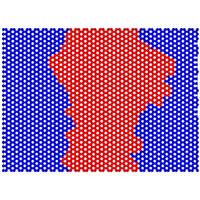
Phys. Rev. Lett. 136, 176101 (2026)
Condensed Matter and Materials
Emergent Topology from Landau Level Mixing in Quantum Hall-Superconductor Nanostructures
Article | Condensed Matter and Materials | 2026-04-27 06:00 EDT
Yuriko Baba, Alfredo Levy Yeyati, and Pablo Burset
We demonstrate the emergence of novel topological phases in quantum Hall-superconductor hybrid structures driven by Landau-level mixing and spin-orbit coupling. For a narrow superconducting stripe atop a two-dimensional electron gas, hybridization of chiral Andreev edge states yields a rich phase di…
Phys. Rev. Lett. 136, 176601 (2026)
Condensed Matter and Materials
Physical Review X
Breakdown of the Thermodynamic Limit in Quantum Spin and Dimer Models
Article | 2026-04-27 06:00 EDT
Jeet Shah, Laura Shou, Jeremy Shuler, and Victor Galitski
Geometry-induced quantum phase separation in quantum dimer models demonstrates that domain shape can fundamentally alter macroscopic ground states, challenging traditional assumptions about the thermodynamic limit.
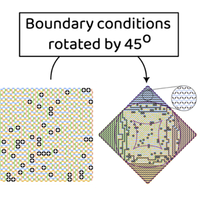
Phys. Rev. X 16, 021020 (2026)
arXiv
Dynamical stability and multifunctional properties of Ni2+/Pr3+ co-doped CsPbCl3 perovskite: insights from first-principles lattice dynamics and carrier transport
New Submission | Materials Science (cond-mat.mtrl-sci) | 2026-04-28 20:00 EDT
Sikander Azam, Asif Zaman, Qaiser Rafiq, Amin Ur Rahman, Saleem Ayaz Khan
All inorganic halide perovskites offer promising optoelectronic properties at low cost, but their structural softness and thermal instability limit applications. Density functional theory using the FP-LAPW method (WIEN2k) was used to study Ni2+/Pr3+ co-doping in CsPbCl3. Results show Ni2+ substitutes for Pb2+ at the B-site and Pr3+ for Cs at the A-site, keeping charge balance. Co-doping stabilizes the lattice, raises formation energies of halogen and metal vacancies, and reduces deep defect levels in the band gap. Phonon dispersion confirms that both pristine and co-doped CsPbCl3 are dynamically stable. Ni2+/Pr3+ co-doping suppresses low-energy vibrations and causes mode splitting in the 3 to 5 THz range, increasing phonon scattering and lowering lattice thermal conductivity. Mechanical analysis reveals higher elastic constants and bulk modulus, while ductility remains unchanged. Electronic structure calculations reveal Ni-3d and Pr-4f states at the band edges, reducing effective carrier mass and passivating vacancy states. Optical absorption is red-shifted, and the high-frequency ({\epsilon} = 2.4) and low-frequency ({\epsilon} = 7.4) dielectric constants are distinct. Transport analysis finds higher carrier mobility due to lighter effective masses. Altogether, Ni2+/Pr3+ co-doping reduces defect concentrations and improves the optoelectronic properties of CsPbCl3.
Materials Science (cond-mat.mtrl-sci)
Thermodynamic Modeling of Pure Elements from 0 K with Uncertainty Quantification using PyCalphad and ESPEI
New Submission | Materials Science (cond-mat.mtrl-sci) | 2026-04-28 20:00 EDT
Alexander Richter, Abdulmonem Obaied, Irina Roslyakova, Boris Wilthan, Allison Beese, Zi-Kui Liu
Thermodynamic modeling of pure elements is the foundation of the CALPHAD modeling of engineering materials. Recently, multiple physics-based models have been proposed to describe Gibbs energy of pure elements down to 0 K, extending from 298.15 K in the current CALPHAD modeling. To enable their systematic and quantitative comparison and adoption, those thermodynamic models of pure elements are implemented into the open-source software packages PyCalphad and ESPEI in the present work for evaluation of model parameters and model fitness. PyCalphad and ESPEI are suitable tools for implementation of these models for high throughput CALPHAD modeling of multicomponent materials. Particularly, Markov Chain Monte Carlo used in ESPEI allows for uncertainty quantification of model parameters and model predictions. Through the remodeling of 41 pure elements, the present work demonstrates the quantitative comparison of modeling of pure elements with different models and enables the efficient development of multicomponent systems with continuously improved CALPHAD description of pure elements.
Materials Science (cond-mat.mtrl-sci)
Delocalization transition for light in two dimensions
New Submission | Disordered Systems and Neural Networks (cond-mat.dis-nn) | 2026-04-28 20:00 EDT
Sébastien Lucas, Christian Miniatura, Sergey E. Skipetrov
Common belief, confirmed by existing experiments, is that arbitrarily weak disorder should lead to spatial localization of eigenmodes of scalar wave equations when wave propagation is two-dimensional (2D). We predict that contrary to this belief, a localization-delocalization transition can take place for light scattered by two-level atoms placed at random positions in the middle plane of a parallel-plate 2D waveguide fed by its fundamental transverse-magnetic (TM) mode (electric field polarized perpendicular to the waveguide and atomic planes). This transition, driven by near-field dipole-dipole interactions between atoms, occurs upon increasing the areal number density of atoms beyond some critical value. A finite-size scaling analysis of the transition yields an estimate of its critical exponent $ {\nu}$ = 1.4 $ \pm$ 0.2.
Disordered Systems and Neural Networks (cond-mat.dis-nn), Optics (physics.optics)
Fraunhofer Patterns in Atomic Josephson Junctions
New Submission | Quantum Gases (cond-mat.quant-gas) | 2026-04-28 20:00 EDT
Kevin T. Geier, Giampiero Marchegiani, Vijay Pal Singh, Juan Polo, Luigi Amico
Driven atomic Josephson junctions allow one to monitor phase-coherent dynamics with unprecedented control and flexibility of the system’s physical conditions. While cold-atom manifestations of the Josephson effect have been extensively studied in a wide variety of settings, atomic Josephson junctions in synthetic electromagnetic fields remain largely unexplored. Here, we show that synthetic magnetic fields can induce Fraunhofer-like modulations of the critical current in atomic Josephson junctions. Although this effect presents analogies to the Fraunhofer patterns found in superconducting devices, distinctive features emerge due to the neutral nature of the superfluid. We investigate the underlying spatial interference mechanisms and elucidate the role of Josephson vortices in the formation of spatially modulated current distributions based on numerical simulations. Our results open up new avenues for matter-wave circuits to deepen our understanding of spatial coherence in Josephson junctions, which are fundamental to the development of novel quantum technologies.
Quantum Gases (cond-mat.quant-gas), Quantum Physics (quant-ph)
7+2+10 pages, 3+2+8 figures
Large language model-enabled automated data extraction for concrete materials informatics
New Submission | Materials Science (cond-mat.mtrl-sci) | 2026-04-28 20:00 EDT
Zhanzhao Li, Kengran Yang, Qiyao He, Kai Gong
The promise of data-driven materials discovery remains constrained by the scarcity of large, high-quality, and accessible experimental datasets. Here, we introduce a generalizable large language model (LLM)-powered pipeline for automated extraction and structuring of materials data from unstructured scientific literature, using concrete materials as a representative and particularly challenging example. The pipeline exhibits robust performance across a broad range of LLMs and achieves an $ F_1$ score of up to 0.97 for diverse composition–process–property attributes. Within one hour, it extracts nearly 9,000 high-quality records with over 100 attributes screened from more than 27,000 publications, enabling the construction of the largest open laboratory database for blended cement concrete. Machine learning analyses underscore the importance of large, diverse, and information-rich datasets for enhancing both in-distribution accuracy and out-of-distribution generalization to unseen materials. The proposed pipeline is readily adaptable to other materials domains and accelerates the development of scalable data infrastructures for materials informatics.
Materials Science (cond-mat.mtrl-sci), Computation and Language (cs.CL), Machine Learning (cs.LG)
20 pages, 5 figures, 1 table
Terahertz magneto-nanoscopy of encapsulated monolayer graphene
New Submission | Mesoscale and Nanoscale Physics (cond-mat.mes-hall) | 2026-04-28 20:00 EDT
Richard H. J. Kim, Sunwoong Yang, Taehoon Kim, Samuel J. Haeuser, Joong-Mok Park, Randall K. Chan, Thomas Koschny, Young-Mi Bahk, Sung Ju Hong, Jigang Wang
This study investigates the nanoscale conductivity of encapsulated monolayer graphene at temperatures down to 5 K and magnetic fields of up to 1 T. We use the scattering-type scanning near-field optical microscopy (s-SNOM) technique to probe magnetic-field-dependent responses from graphene close to charge neutrality in the terahertz spectral region. We observe the near-perfect high-$ q$ reflector behavior of graphene but with subtle changes by the presence of magnetic fields. Measurements align with calculations of the magneto-optical conductivity and the near-field spectroscopic contrast that describes the field-tunable cyclotron resonance of Dirac fermions. Our result provides an initial step toward understanding temperature and magnetic-field effects on nanoscale terahertz transport in two-dimensional quantum materials.
Mesoscale and Nanoscale Physics (cond-mat.mes-hall), Materials Science (cond-mat.mtrl-sci), Strongly Correlated Electrons (cond-mat.str-el)
Journal of Applied Physics, 139, 164303 (2026)
Chirality Transfer to the Centrosymmetric Magnetic Sublattice in the Hybrid Perovskite (R)-/(S)-3-Fluoropyrrolidinium Copper(II) Chloride
New Submission | Materials Science (cond-mat.mtrl-sci) | 2026-04-28 20:00 EDT
Zheng Zhang (1), Mingyu Xu (2), Jose L. Gonzalez Jimenez (2), Stephen Zhang (3), Weiwei Xie (2), Xianghan Xu (4), Daniel B. Straus (1) ((1) Department of Chemistry, Tulane University, New Orleans, LA, USA 70118, (2) Department of Chemistry, Michigan State University, East Lansing, MI, USA 48824, (3) Department of Chemistry, Princeton University, Princeton, NJ, USA 08544, (4) School of Physics and Astronomy, University of Minnesota, Twin Cities, MN, USA 55455)
Incorporating chiral organic cations into organic-inorganic hybrid materials has been shown to enable the inorganic sublattice to display chiroptical properties. We report a new two-dimensional magnetic (S=1/2) chiral metal halide material, (R)- and (S)-$ (C_4H_9FN)_2CuCl_4$ (where $ (C_4H_9FN)^+$ is 3-fluoropyrrolidinium), which consists of Cu-Cl inorganic layers separated by $ (C_4H_9FN)^+$ organic cations. The presence of the chiral $ (C_4H_9FN)^+$ organic cation induces formation of chiral magnetic order, even though the inorganic sublattice itself is structurally centrosymmetric. We also report the racemic variant, containing an equal amount of (R)- and (S)- cations, which shows no evidence of chiral magnetic order. When the magnetic susceptibility is measured perpendicular to inorganic Cu-Cl layer propagation direction, an antiferromagnetic phase transition at Néel temperature $ T_N = 2.23~K$ is observed in both the chiral and racemic materials, and the existence of the magnetic phase transition is supported by specific heat capacity measurements. Field-induced magnetic chirality is observed through the existence of a second-order magnetoelectric effect in the chiral variant, while no magnetoelectric signal is observed for the racemic material, indicating the absence of magnetic chirality. Our findings demonstrate that materials exhibiting chiral magnetic order can be created through the incorporation of a chiral cation into an organic-inorganic hybrid magnetic material, potentially allowing for the design of tailored materials that combine chiral magnetism with other desirable optical and electronic properties that come from structural chirality.
Materials Science (cond-mat.mtrl-sci), Applied Physics (physics.app-ph), Chemical Physics (physics.chem-ph)
24 pages, 7 main figures, 8 supplementary figures. Crystallographic data can be obtained from via the joint Cambridge Crystallographic Data Centre (CCDC) and Fachinformationszentrum Karlsruhe Access Structures service at this https URL under Deposition Numbers 2543946-2543948
Realizing multi-orbital Emery models with ultracold atoms
New Submission | Quantum Gases (cond-mat.quant-gas) | 2026-04-28 20:00 EDT
Conall McCabe, Jamie Boyd, Kaizhao Wang, Martin Lebrat, Cindy Regal, Adam Kaufman, Ana Maria Rey, Lukas Homeier
Strongly-correlated electrons in transition-metal oxides give rise to intriguing emergent phenomena, including high-temperature superconductivity in cuprates. While simplified one-band Hubbard models capture some aspects, explicitly describing the interplay of copper and oxygen orbitals – as in the three-band Emery model – is essential to capture the full phenomenology of cuprates. Quantum simulators based on ultracold atoms offer a promising route to study such systems in a controlled setting, but realizing realistic multi-orbital Hubbard models remains challenging. Here we propose an optical superlattice architecture that implements the three-band Emery model with ultracold fermions. By combining lattice beams with controllable interference, we engineer orbital degrees of freedom that reproduce key features of the cuprate band structure, while enabling independent control of orbital-dependent interactions and charge-transfer energy. We show that single-particle quantum walks can benchmark the resulting tight-binding model. Using determinant quantum Monte Carlo, we further investigate thermodynamic properties in the undoped regime and find a finite-temperature metal-insulator crossover accompanied by the onset of antiferromagnetic correlations accessible in current experiments. Finally, we apply a Hamiltonian learning protocol enabling to infer effective single-band Hubbard models from experimental realizations of Emery models. Our results provide a practical pathway to simulate multi-orbital Hubbard physics with quantum gas microscopes.
Quantum Gases (cond-mat.quant-gas), Strongly Correlated Electrons (cond-mat.str-el), Atomic Physics (physics.atom-ph), Quantum Physics (quant-ph)
8+3 pages, 5+5 figures
Spin-current model of electric polarization with the tensor gyromagnetic ratio
New Submission | Other Condensed Matter (cond-mat.other) | 2026-04-28 20:00 EDT
Mariya Iv. Trukhanova, Pavel A. Andreev
The spin-current model of electric polarization of spin origin is developed for a magnetic structure with anisotropic tensor gyromagnetic ratio (g-factor). Three mechanisms of the magnetoelectric effect are proposed, caused by the symmetric Heisenberg exchange interaction, the Dzyaloshinsky-Moriya interaction, and the spin-spin interaction related to the odd anisotropy of the symmetric exchange interaction of magnetic ions via nonmagnetic ion. The dependence of electric polarization on the spin density and tensor g-factor in the generalized spin-current model is derived. New solutions for macroscopic electric polarization, that arise in the cycloidal and helicoidal spin orders and are caused by the non-diagonal components of the gyromagnetic ratio, are predicted. The extended of the spin-current model to including a tensor g-factor can be important for the magnetic ferroelectrics with heavy ions which take part in the formation of magnetoelectric effect.
Other Condensed Matter (cond-mat.other), Materials Science (cond-mat.mtrl-sci)
Sustainability-informed materials design
New Submission | Materials Science (cond-mat.mtrl-sci) | 2026-04-28 20:00 EDT
Rachel Woods-Robinson, Amalie Trewartha
While material innovation can enable sustainable development, environmental and social impacts of emerging materials are often assessed only after design choices are “locked in.” Here, we argue for a shift in perspective: life cycle thinking should enter at the earliest stages of materials development, where uncertainty is highest but design freedom is greatest. Rather than treating incomplete knowledge as a barrier, we reframe it as an inherent feature that can illuminate trajectories, tradeoffs, and consequences – and enable intervention while change remains possible. Focusing on inorganic solid materials, we identify disconnects between materials science and sustainability analysis, propose an adaptable, decision-oriented framework to embed sustainability into material design across evolving technology stages, and highlight how recent advances such as predictive synthesis can help operationalize this integration. Guided by the framework’s governing principles, we outline a cross-stakeholder agenda to shift from retrospective correction to anticipatory, responsible material design from the outset.
Materials Science (cond-mat.mtrl-sci)
Visons in Kitaev Spin Liquids with Majorana Fermi Surfaces
New Submission | Strongly Correlated Electrons (cond-mat.str-el) | 2026-04-28 20:00 EDT
Caio V. S. Soares, Rodrigo G. Pereira
The excitation spectrum of Kitaev quantum spin liquids consists of itinerant Majorana fermions, which can be gapless or gapped, and vortices of a $ \mathbb{Z}_2$ gauge field, known as visons, which are always gapped. In this work, we investigate visons in Kitaev-type models where the Majorana fermions form a Fermi surface. In this case, the creation of a vison pair is analogous to introducing a local impurity potential in a metal. Since the gapless modes lead to strong finite-size effects, we compare the numerical calculation of the vison gap on finite lattices with the result from an analytical approach based on Green’s function techniques. We find that the vison gap decreases as the size of the Fermi surface increases, signalling an instability of the quantum spin liquid ground state. We also show that larger Fermi surfaces tend to suppress the change in local spin correlations due to the Majorana-vison scattering potential.
Strongly Correlated Electrons (cond-mat.str-el)
10 pages and 9 figures
RKKY interaction in altermagnets with adiabatic electron-phonon coupling
New Submission | Materials Science (cond-mat.mtrl-sci) | 2026-04-28 20:00 EDT
Altermagnets, characterized by time-reversal symmetry breaking without net magnetization and momentum-dependent spin-split bands, offer a promising platform for spintronics due to their anisotropic spin textures and potential for tunable magnetic interactions. Here, we theoretically investigate the slow phonon-renormalized Ruderman-Kittel-Kasuya-Yosida (RKKY) interaction in two-dimensional Rashba $ d$ -wave altermagnets, incorporating arbitrary Rashba spin-orbit coupling (RSOC) strength and spin-dependent static-Holstein electron-phonon coupling (EPC). Using a continuum model Hamiltonian that captures altermagnetic anisotropy, RSOC, and adiabatic lattice distortions, we compute the noncollinear RKKY exchange tensor via second-order perturbation theory and numerical momentum-space integration. Our results reveal that static lattice distortions provide a versatile tuning knob for engineering the magnitude, anisotropy, and chirality of RKKY couplings: moderate EPC suppresses long-range coherence while inducing component-specific phase shifts and sign reversals, particularly in Dzyaloshinskii-Moriya and compass-like terms, enabling control over ferromagnetic/antiferromagnetic alignments and clockwise/counterclockwise chiralities. Systematic parameter scans demonstrate enhanced oscillatory complexity with altermagnetic order, RSOC, and doping. These findings establish slow phonons as a low-energy tuning knob that systematically controls the magnitude, anisotropy, phase, and chirality of noncollinear RKKY couplings - even at arbitrary Rashba strength - thereby providing a practical route to engineer ferromagnetic/antiferromagnetic alignments and clockwise/counterclockwise DM chiralities in altermagnet-based heterostructures.
Materials Science (cond-mat.mtrl-sci)
10 pages, 7 figures
Effective phonon models based on symmetry-adapted multipole basis – Hidden chiral phonon angular momentum splitting in ferroaxial systems
New Submission | Materials Science (cond-mat.mtrl-sci) | 2026-04-28 20:00 EDT
Yu Xie, Rikuto Oiwa, Satoru Hayami
We propose a symmetry-based framework for constructing effective harmonic phonon models using a symmetry-adapted multipole basis. By decomposing the force-constant matrix into bond-centered electric multipoles, we identify the minimal microscopic ingredients responsible for phonon angular-momentum splitting. Applying this framework to a minimal zigzag-chain model, we show that ferroaxial order gives rise to a hidden sublattice-resolved chiral phonons, while an additional polar contribution leads to finite global chirality. Our results provide a unified symmetry-based description of hidden and emergent phonon phenomena and suggest a route to control phonon properties via electronic orderings and external fields.
Materials Science (cond-mat.mtrl-sci)
Spin Seebeck Effect in Normal-Metal–Chiral-Insulator Heterostructure
New Submission | Mesoscale and Nanoscale Physics (cond-mat.mes-hall) | 2026-04-28 20:00 EDT
Jiayan Zhang, Gaoyang Li, Gaomin Tang, Yanxia Xing
Phonons can carry angular momentum and exhibit chirality through the circular polarization of atomic motion. This enables a phonon-mediated spin Seebeck effect (SSE) via the conversion of phonon angular momentum into electron spin angular momentum. In this Letter, we develop a theoretical framework for calculating the spin current in a normal-metal (NM)-chiral-insulator (CI) heterostructure within the nonequilibrium Green’s function formalism. We discuss the influence of (i) the thermal bias across the NM-CI interface, (ii) the chemical potential of the NM, and (iii) the insertion of an additional interfacial layer, on the spin transport properties. We identify two remarkable nonlinear spin transport phenomena: negative differential SSE and spin-current rectification. The negative differential SSE arises from the competition between the thermal bias and the thermally excited electron density. The spin-current rectification suggests the possibility of realizing a thermally controlled spin diode. We also find that the spin transport behavior is closely associated with an effective interfacial spectral density. This work provides a novel route toward thermally controlled spintronic devices using chiral phonons.
Mesoscale and Nanoscale Physics (cond-mat.mes-hall)
Visualizing Vortex Cluster Dynamics in the Weak Type-II Superconductor CaSb$_2$
New Submission | Superconductivity (cond-mat.supr-con) | 2026-04-28 20:00 EDT
Yusuke Iguchi, Nabhanila Nandi, Mohamed Oudah
Scanning SQUID imaging of CaSb$ _2$ reveals dense vortex clusters with enhanced boundary susceptibility and suppressed internal vortex motion, which features inconsistent with both isolated vortex and flux tube behaviors. These measurements provide the first local visualization of magnetic dynamics within vortex clusters in a weakly pinned superconductor, offering a new route to probe non-monotonic vortex-vortex interactions that are typically expected in single-band type-II/1 or multiband type-1.5 superconductors. Although the superfluid density follows a single-gap BCS model and the Ginzburg-Landau parameter of CaSb$ _2$ lies slightly outside the type-II/1 regime, vortex clustering and spatially inhomogeneous dynamics are clearly observed, indicating physics beyond existing microscopic theories for single-band superconductors.
Superconductivity (cond-mat.supr-con)
9 pages, 10 figures
Ultra-High Dynamic Strength of Additively Manufactured GRX-810 Under Coupled Conditions of High Strain Rate and Elevated Temperature
New Submission | Materials Science (cond-mat.mtrl-sci) | 2026-04-28 20:00 EDT
Naveen Dinujaya, Suhas Eswarappa Prameela
Deformation mechanisms in CrCoNi-based oxide-dispersion-strengthened multi-principal element alloys (CrCoNi-based ODS-MPEA) have been extensively studied under quasi-static and low strain rate loading over a wide temperature range, yet their behavior at high strain rates and elevated temperatures remains poorly understood. In this work, we investigate the high strain rate response of the CrCoNi-based ODS-MPEA alloy GRX-810 and its non-ODS variant. The ODS variant contains a high density of hexagonal yttria nanoparticles that serve as the strengthening oxide phase. At high strain rates and ambient temperature, GRX-810 ODS exhibits higher dynamic strength, approximately 2.79 times its quasi-static strength, than both conventional alloys and its non-ODS variant because of the additional athermal strengthening provided by the nanoscale oxide dispersion. At high strain rates and elevated temperatures, however, GRX-810 ODS undergoes thermal softening. This response is consistent with dislocation confinement associated with the small interparticle spacing of the oxide dispersion, which limits the phonon-drag contribution, together with the temperature-dependent reduction of elastic constants that lowers the athermal strengthening terms, including the oxide-related contribution. Additional weakening of the solute-pinning mechanism at elevated temperature further reduces the dynamic yield strength.
Materials Science (cond-mat.mtrl-sci)
Exact momentum-space analysis of small spin-1/2 $J_1$-$J_2$ rings
New Submission | Strongly Correlated Electrons (cond-mat.str-el) | 2026-04-28 20:00 EDT
This paper considers an $ N$ -site spin-1/2 $ J_1$ -$ J_2$ ring with $ N=6$ and $ 8$ . With the help of a set of exact few-magnon Bloch states, we obtain the block-diagonalized Hamiltonian consisting of block matrices of at most four dimensions. Partial of the eigenstates are analytically solved. For the six-site anisotropic ring, we reveal a subset of eigenstates that are simultaneous eigenstates of the Hamiltonian and the total angular momentum operator, even though the latter is not conserved. For both the six- and eight-site isotropic rings, we achieve momentum-space manifestations of several important states, including the famous Majumdar-Ghosh (MG) ground states and the Hamada-Kane-Nakagawa-Natsume (HKNN) ground state. The equivalence of these states with their real-space counterparts is explicitly shown for $ N=6$ . The structure of the HKNN ground state for small rings suggests that for any even number $ N$ this state might behave like a ``bound state” with $ N/2$ successive down spins binding together.
Strongly Correlated Electrons (cond-mat.str-el)
17 pages, 6 figures, to appear in Physics Letters A
Motifs Enrichment as a Driver of an Emergent Preferential Attachment in rewired random regular graphs
New Submission | Disordered Systems and Neural Networks (cond-mat.dis-nn) | 2026-04-28 20:00 EDT
Pawat Akara-pipattana, Sergei Nechaev
We study the statistics of rewired random regular graphs within the canonical ensemble, in which the average number of triangles is controlled by the fugacity $ \lambda$ . Using mean-field arguments, we estimate the location of the transition point $ \lambda^{-}$ . We focus primarily on the triangle-enriched phase above $ \lambda^{-}$ , where the graph becomes a loosely connected web of clusters. This inter-cluster network is scale-free and exhibits a power-law vertex degree distribution $ P(d) \sim d^{-\gamma}$ , with $ \gamma \approx 2$ independent of degree and size of the graph. We attribute this behavior to an “emergent preferential attachment” for triangle motifs, derive the exponent $ \gamma$ with a mean-field approach, and speculate on a possible connection between the typical topology of inter-cluster triangles and Efimov states in a conformally invariant potential.
Disordered Systems and Neural Networks (cond-mat.dis-nn), Statistical Mechanics (cond-mat.stat-mech)
19 pages, 7 figures
Persistent Fermi Pockets and Robust Electron Pairing in Lightly Doped CuO$_2$ Planes of Cuprate Superconductors
New Submission | Superconductivity (cond-mat.supr-con) | 2026-04-28 20:00 EDT
Hao Chen, Jumin Shi, Yinghao Li, Xiangyu Luo, Yiwen Chen, Chaohui Yin, Yingjie Shu, Jiuxiang Zhang, Taimin Miao, Bo Liang, Wenpei Zhu, Neng Cai, Xiaolin Ren, Chengtian Lin, Shenjin Zhang, Zhimin Wang, Fengfeng Zhang, Feng Yang, Qinjun Peng, Zuyan Xu, Guodong Liu, Hanqing Mao, Xintong Li, Tao Xiang, Lin Zhao, X. J. Zhou
High temperature superconductivity in cuprate superconductors is generally considered to be generated from doping the Mott insulators. The fundamental nature of the doped parent compounds as well as the microscopic origin of electron pairing remain critical issues in understanding the emergence of superconductivity. Here, using high-resolution spatially-resolved laser angle-resolved photoemission spectroscopy, we investigate the intrinsic electronic structures of the CuO$ _2$ planes in multilayer cuprates Bi$ _2$ Sr$ _2$ Ca$ _{n-1}$ Cu$ _n$ O$ _{2n+4+\delta}$ (n=5$ \sim$ 8). The inner CuO$ _2$ planes are well shielded from the disorders and provide a rare and ideal platform to probe the intrinsic electronic phase diagram. We observe well-defined Fermi pockets with hole doping levels as low as 0.007, demonstrating an abrupt transition from the parent Mott insulator to a metallic state upon the introduction of an infinitesimal amount of doping. The innermost CuO$ _2$ planes (IP$ _0$ ) display gapless Fermi pockets, while the second innermost planes (IP$ _1$ ) exhibit anisotropic superconducting gaps up to $ \sim$ 33$ ,$ meV, indicative of robust electron pairing coexisting with strong antiferromagnetic order. Our findings provide a revised framework for understanding the doping-driven transitions and pairing mechanisms in cuprate superconductors.
Superconductivity (cond-mat.supr-con), Strongly Correlated Electrons (cond-mat.str-el)
23 pages, 4 figures
Scissors modes in generalized Gross-Pitaevskii equations
New Submission | Quantum Gases (cond-mat.quant-gas) | 2026-04-28 20:00 EDT
Neelam Shukla, Oleksandr V. Marchukov, Bastien Humbert, Jan Arlt, Jeremy Armstrong, Artem G. Volosniev
We investigate scissors modes in nonlinear systems with arbitrary power-law dependence of the nonlinear term. Through analytical derivation, we establish a general expression demonstrating that, in the Thomas-Fermi regime, the frequency of the scissors mode is independent of the specific form of the nonlinearity. We conclude that the scissors mode is a shear mode that does not probe the compressibility of the system, which depends on nonlinearity. To validate our findings, we perform numerical simulations of experimentally relevant Lee-Huang-Yang (LHY) systems. Our results illustrate the transition of the scissors mode frequency from the non-interacting to the strongly interacting (Thomas-Fermi) regime. Finally, we demonstrate that the scissors mode frequency remains clearly identifiable even under strong quenches, which should facilitate the experimental observation of our findings.
Quantum Gases (cond-mat.quant-gas)
Submission to Low Temperature Physics’ Special Issue celebrating the scientific contributions of Kharkiv to Quantum Science
Finite-size effects in amorphous thin Co${70}$Zr${30}$ layers
New Submission | Disordered Systems and Neural Networks (cond-mat.dis-nn) | 2026-04-28 20:00 EDT
Vladislav Kurichenko, Parul Rani, Björgvin Hjörvarsson
Profound finite size effects are observed in both the moment and ordering temperature in thin Co$ _{70}$ Zr$ _{30}$ layers. The results are consistent with the presence of interface regions with reduced magnetic interactions and moment. The extension of this region is determined to be around 1 nm thick at each interface. Above and near the apparent critical temperature, the magnetic properties can be understood in terms of Griffith phases.
Disordered Systems and Neural Networks (cond-mat.dis-nn), Mesoscale and Nanoscale Physics (cond-mat.mes-hall), Materials Science (cond-mat.mtrl-sci)
Comparative analysis of nonlinear elastic moduli of polystyrene, polycarbonate and PMMA
New Submission | Soft Condensed Matter (cond-mat.soft) | 2026-04-28 20:00 EDT
A.V. Belashov, A.A. Zhikhoreva, Y.M. Beltukov, I.V. Semenova
We present the comparative experimental analysis of frequency dependencies of linear (Lamé) and nonlinear (Murnaghan) elastic moduli of polystyrene, PMMA and polycarbonate. The measurement methodology, based on the acousto-elastic effect, provided data on variations of these moduli in block samples of the polymers in the frequency range of 0.45-3 MHz. In all the three polymers the linear Lamé moduli demonstrated moderate rise with frequency, most pronounced rise was observed in modulus $ \lambda$ of PMMA in about 35%. The frequency dependencies of Murnaghan moduli were considerably nonlinear. At higher frequencies above ~1 MHz no significant variations of the Murnaghan moduli occurred, while at lower frequencies the absolute values of the moduli $ l$ and $ m$ demonstrated rapid rise, more pronounced for the modulus $ l$ . At the same time the absolute values of the modulus $ n$ decreased and demonstrated a tendency to become positive at lower frequencies. Both linear and nonlinear moduli of PMMA had higher values than those of PC and PS, with the latter two demonstrating close values of both types of moduli. The potential origins of the differences in nonlinear elastic properties of the three polymers are discussed.
Soft Condensed Matter (cond-mat.soft)
Wafer-scale hybrid molecular beam epitaxy of BaTiO3 and SrTiO3 on silicon
New Submission | Materials Science (cond-mat.mtrl-sci) | 2026-04-28 20:00 EDT
Xiaodong Tian, Yan Lin, Hanbin Gao, Han Yu, Yunpeng Ma, Ruiqi Liang, Changfu Chen, Wei Li, Chenguang Deng, Qiang Zheng, Qian Li
The integration of epitaxial barium titanate (BTO) on silicon represents a highly promising pathway for next-generation, energy-efficient photonic integrated circuits due to BTO’s exceptionally high Pockels coefficients. However, the scalable epitaxy of BTO on Si remains hindered by complex stoichiometric control and slow growth rates. In this work, we demonstrate the continuous, uniform wafer-scale growth of high-quality BTO films on SrTiO3 (STO)-buffered 4-inch Si(001) wafers using a fully hybrid molecular beam epitaxy (hMBE) approach. By utilizing titanium tetraisopropoxide as a titanium precursor, we achieve a self-regulating, adsorption-controlled layer-by-layer growth at rates exceeding 75 nm/h, while maintaining an atomically sharp and structurally coherent BTO/STO interface. We systematically compare the structural, ferroelectric, and electro-optic (EO) properties of fully hMBE-grown BTO with those deposited via pulsed laser deposition (PLD) on identical STO/Si templates. While both techniques yield high-quality c-domain dominated films, the optimized hMBE-grown BTO exhibits superior crystallinity and a larger effective EO coefficient of 248 pm/V, surpassing that of the PLD-grown films (220 pm/V). These results highlight the advantages of the fully hMBE approach as a scalable, deterministic, and high-performance materials platform for wafer-scale integrated ferroelectric photonics.
Materials Science (cond-mat.mtrl-sci)
22 pages, 4 figures
Analytical Treatment of Noise-Suppressed Klein Tunneling in Graphene with Possible Implications for Quantum-Dot Qubits
New Submission | Mesoscale and Nanoscale Physics (cond-mat.mes-hall) | 2026-04-28 20:00 EDT
Kamal Azaidaoui, Ahmed Jellal, Hocine Bahlouli, A. Al Luhaibi, Michael Vogl
We study quantum tunneling through a potential barrier whose height fluctuates in time and is modeled by Gaussian white noise. We map the stochastic dynamics onto an equivalent time-independent Lindblad equation for the density matrix, allowing fully analytical solutions. For Schrödinger particles, noise introduces dissipation that suppresses Fabry-Pérot oscillations and yields an exponentially decaying transmission. Applying the same formalism to graphene, we demonstrate that noise induces a complex longitudinal wavevector within the barrier, leading to a strong suppression of transmission and Klein tunneling, even at normal incidence. Our approach promises improved control over Klein tunneling. These results demonstrate that noisy barriers can act as tunable dissipative elements, offering a pathway to enhanced control of electron transport in graphene-based devices. We also briefly discuss how our results could guide the design of graphene quantum dots for potential use in spin qubit devices.
Mesoscale and Nanoscale Physics (cond-mat.mes-hall)
Noise spectroscopy of insulating and itinerant altermagnets
New Submission | Mesoscale and Nanoscale Physics (cond-mat.mes-hall) | 2026-04-28 20:00 EDT
Lucas V. Pupim, Mathias S. Scheurer
One of the central goals in the emergent field of altermagnetism is the unambiguous experimental identification and characterization of altermagnetic order across a variety of compounds. This motivates exploring tools that can clearly distinguish altermagnets from antiferromagnets, based on symmetry signatures, and offer access to the dominant orbital character (e.g., $ d$ -wave vs. $ g$ -wave) of the magnetic order parameter. In this work, we theoretically explore the potential of noise magnetometry for this task, studying contributions from both magnons and itinerant electrons in different regimes and scenarios. While altermagnetism and antiferromagnetism also lead to different noise spectra for magnons, we find the most striking and symmetry-sensitive signatures in the charge fluctuations of itinerant altermagnets. Both for the homogeneous bulk case and in the presence of strain and/or around domain walls, we identify noise contributions that are only permitted by symmetry in the altermagnet and, thus, provide a unique signature of altermagnetism. Furthermore, the angular dependence of noise around domain walls also offers access to the orbital character of the altermagnet. On a more technical note, we discuss the role and relevance of lattice effects related to the dipole tensor. We hope that our work will help pave the way towards the clear experimental identification of altermagnetism across a wide range of candidate materials.
Mesoscale and Nanoscale Physics (cond-mat.mes-hall), Strongly Correlated Electrons (cond-mat.str-el)
21 pages, 6 figures
Grassmann time-evolving matrix product operators for fermionic impurities coupled to a superconducting bath
New Submission | Strongly Correlated Electrons (cond-mat.str-el) | 2026-04-28 20:00 EDT
Chu Guo, Wei Wu, Xiansong Xu, Ping-Xing Chen, Changming Yue, Tian Jiang, Ruofan Chen
The Grassmann time-evolving matrix product operator (GTEMPO) method, which represents the Feynman-Vernon influence functional as a temporal matrix product state, has been shown to be a flexible and potentially scalable solution for fermionic quantum impurity problems. In this work, we extend GTEMPO to solve fermionic impurity problems in the Nambu formalism, in which the impurity is coupled to a superconducting bath. A key insight is that by employing the Bogoliubov transformation for the superconducting bath, one could obtain the analytic expression of the Feynman-Vernon influence functional in a similar form to the case of a normal bath, after which the core algorithms of GTEMPO can be straightforwardly adapted. We demonstrate the accuracy of our method by benchmarking it against exact diagonalization in several exactly solvable cases, and against the continuous-time quantum Monte Carlo method using converged dynamical mean field theory (DMFT) iterations on the imaginary contour in the non-integrable case. In all cases, we perform both imaginary- and real-time calculations to illustrate the flexibility of our method. These results illustrate that our method could be potentially useful as an impurity solver in DMFT as well as its non-equilibrium extension for fermionic impurity problems in the Nambu formalism.
Strongly Correlated Electrons (cond-mat.str-el), Superconductivity (cond-mat.supr-con)
15 pages, 8 figures
Weak Polar Optical Phonon Scattering Decouples Electron and Phonon Transport in Layered Thermoelectric Materials
New Submission | Materials Science (cond-mat.mtrl-sci) | 2026-04-28 20:00 EDT
Zhonghao Xia, Michele Reticcioli, Yateng Wang, Yali Yang, Alessandro Stroppa, Jiangang He
High-performance thermoelectric (TE) materials are crucial for efficient waste-heat recovery and solid-state cooling technologies. A persistent challenge in TE materials design arises from the strong interdependence among the electrical conductivity ($ \sigma$ ), Seebeck coefficient ($ S$ ), and lattice thermal conductivity ($ \kappa_{\mathrm{L}}$ ). Layered compounds can effectively suppress $ \kappa_{\mathrm{L}}$ along the cross-plane direction owing to weak interlayer interactions; however, they often suffer from low carrier mobility ($ \mu$ ) caused by limited band dispersion and strong polar optical phonon (POP) scattering. Here, we perform high-throughput density functional theory calculations to screen 236 layered semiconductors and identify candidates with low effective mass ($ m^{\ast}$ ) and weak POP scattering. We identify 23 compounds with high cross-plane $ \mu$ , among which 14 exhibit large power factors ($ S^{2}\sigma$ ). Notably, GaGe$ _{2}$ Te stands out with exceptionally high cross-plane $ \sigma$ and power factor, enabled by a favorable combination of small $ m^{\ast}$ and a small ionic dielectric constant. Simultaneously, GaGe$ {2}$ Te exhibits an ultralow cross-plane $ \kappa{\mathrm{L}}$ of 0.57Wm$ ^{-1}$ K$ ^{-1}$ at 300K, originating from weak interlayer bonding and pronounced phonon anharmonicity. These results demonstrate an effective strategy to decouple electron and phonon transport in layered materials by mitigating POP scattering, thereby providing a promising pathway toward high-performance thermoelectric materials.
Materials Science (cond-mat.mtrl-sci)
Bayesian phase transition for the critical Ising model: Enlarged replica symmetry in the epsilon expansion and in 2D
New Submission | Statistical Mechanics (cond-mat.stat-mech) | 2026-04-28 20:00 EDT
Kay Joerg Wiese, Alapan Das, Adam Nahum
A process that images or measures bond energies in the critical Ising model can be in distinct measurement ``phases’’, depending on the precision of measurement. We study the transition into the strong-measurement phase using replica field theory (an epsilon expansion around six dimensions) and numerical simulations in two dimensions. The results reveal multiscaling of correlation functions at the critical point, and a striking enlarged symmetry of the replica description. This is an analog of the Nishimori phenomenon in the Ising spin glass, in a distinct replica limit. The enlarged symmetry is present microscopically for certain measurement protocols, but more generally can emerge in the infrared, and it fixes the exact value of the exponent for the Edwards-Anderson correlator both in 2D and near the upper critical dimension. We also examine the epsilon expansion for models with power-law interactions and/or long-range measurement.
Statistical Mechanics (cond-mat.stat-mech), Disordered Systems and Neural Networks (cond-mat.dis-nn), Strongly Correlated Electrons (cond-mat.str-el), Data Analysis, Statistics and Probability (physics.data-an), Quantum Physics (quant-ph)
30 pages, 12 figures
From Data-Driven Models to Physical Insight: Vibrational Entropy Governed by Atomic Volume
New Submission | Materials Science (cond-mat.mtrl-sci) | 2026-04-28 20:00 EDT
Shivam Tripathi, Jatin Kawatra, Varun Malviya, Krishna Mehta
Vibrational entropy plays a central role in determining phase stability and temperature dependent behavior in materials, yet its calculation from first-principles phonon methods remains computationally demanding. In this work, we combine data-driven modeling with physically motivated analysis to develop an efficient and interpretable framework for predicting vibrational entropy. Using a dataset derived from PhononDB, a feedforward neural network trained on Materials Project and composition based descriptors achieves high predictive accuracy, while SHAP analysis identifies atomic volume as the dominant factor governing vibrational entropy. Guided by this insight, simplified analytical models are constructed, revealing a logarithmic dependence of vibrational entropy on atomic volume consistent with lattice dynamical considerations. A logarithmic linear model is shown to provide an accurate and physically interpretable description across the full range of materials.
To extend the analysis to finite temperatures, a temperature dependent formulation is introduced that incorporates T3 scaling at low temperatures and logarithmic dependence at higher temperatures, consistent with Debye and Einstein type behavior. This unified model captures both structural and thermal contributions to vibrational entropy with good accuracy. Overall, the proposed framework demonstrates that vibrational entropy can be predicted using simple, physically meaningful relationships, offering a computationally efficient alternative to full phonon calculations and enabling entropy informed materials screening.
Materials Science (cond-mat.mtrl-sci)
Record magnetoresistance, enhanced superconductivity, and fermiology in WTe2
New Submission | Superconductivity (cond-mat.supr-con) | 2026-04-28 20:00 EDT
Gianluca Delgado, Elliott Runburg, Chaowei Hu, Yuzhou Zhao, Jonathan M. DeStefano, Keng Tou Chu, Florie Mesple, Ellis Thompson, Kenji Watanabe, Takashi Taniguchi, Jihui Yang, Matthew Yankowitz, Xiaodong Xu, Jiun-Haw Chu, David H. Cobden
The diverse electronic properties of transition metal chalcogenides can be very sensitive to crystal imperfections. A new crystal growth technique, known as horizontal flux transport, offers a route to improved crystal quality. By refining this technique and applying it to the topological semimetal WTe2, we achieved crystals with an order of magnitude less disorder as determined by electrical transport and scanning tunneling microscopy measurements. At low temperatures these crystals exhibit the largest magnetoresistance reported in a metal. Exfoliated monolayers show quantum oscillations for the first time in the electrostatically doped metallic states, enabling determination of band degeneracies and the valley splitting induced by an electric field. Moreover, they exhibit a gated superconducting dome with a greatly enhanced critical temperature approaching 1.8 K. This advance opens up new avenues for employing WTe2 in topological electronics and gated superconducting devices, and promises comparable breakthroughs with other chalcogenides.
Superconductivity (cond-mat.supr-con), Materials Science (cond-mat.mtrl-sci)
12 pages including 3 figures, plus 13 of supplementary information
Electronic Spectroscopy of Atomic Defects in Molybdenum Disulfide under Ambient Conditions
New Submission | Materials Science (cond-mat.mtrl-sci) | 2026-04-28 20:00 EDT
Joshua R. Evans, Diego A. Garibay, Aiden N. Kuhls, Mehmet Z. Baykara
Transition metal dichalcogenides (TMDs) attract significant attention as potential building blocks in next-generation electronic devices. On the other hand, a comprehensive understanding of how various defects affect local electronic properties under realistic operational conditions is yet to be formed. Here, we present results of electronic spectroscopy experiments performed on individual defects in the prototypical TMD molybdenum disulfide (MoS2) under ambient conditions, by way of conductive atomic force microscopy (C-AFM). Data acquired in the form of consecutive, high-resolution current maps at various bias voltages allow the assessment of local conductivity and differential conductance as a function of bias voltage for individual defects, the effects of which range from single atomic sites to several nanometers in lateral size. Characteristic behavior in spectroscopy data allows the categorization of observed defects into distinct groups, and their chemical identification as n-type and p-type transition metal substitutions of molybdenum atoms, as well as oxygen substitutions of sulfur atoms.
Materials Science (cond-mat.mtrl-sci), Mesoscale and Nanoscale Physics (cond-mat.mes-hall)
Unconventional mixed state in the nematic superconductor LiFeAs
New Submission | Superconductivity (cond-mat.supr-con) | 2026-04-28 20:00 EDT
G. Lamura, T. Winyard, P. Gentile, M. Speight, F. Anger, B. Buchner, S. Wurmehl, T. Shiroka
In the mixed state of type-II bulk superconductors, the magnetic field penetrates in the form of vortices enclosing one magnetic flux quantum: this is the conventional Abrikosov vortex lattice. Here, by using transverse muon-spin spectroscopy, we demonstrate the presence of an unconventional vortex lattice in LiFeAs single crystals. We also show evidence that the new mixed phase consists of stripes of “coreless” vortices, which are bound states of two spatially separated half-quantum vortices.
Superconductivity (cond-mat.supr-con)
main and supplementary
A Single Twist-Angle Selection Method for the Electronic Structure of Bilayer Materials
New Submission | Materials Science (cond-mat.mtrl-sci) | 2026-04-28 20:00 EDT
Ryan A. Baker, William Z. Van Benschoten, James J. Shepherd
Structure factor twist averaging (sfTA) is a newer method that has been shown to reproduce twist-averaged (TA) CCSD energies for bulk systems at a low computational cost. In this work, we extend this method for the treatment of low-dimensional materials in the form of two variants: paired sfTA and binding sfTA. These variants affect which twist angles are used in the sfTA protocol, as well as how the special twist angle is selected, namely by using the binding structure factor. These changes are meant to incorporate the binding interaction into the twist-angle selection algorithm within sfTA. Both variants are tested on a variety of bilayer systems, and the resulting binding correlation energies are compared to original sfTA results. We show that the variants are able to produce results approaching TA, with binding sfTA producing the most accurate energies. We also use contour plots of the test systems to show that these improvements are most likely caused by a cancellation of errors.
Materials Science (cond-mat.mtrl-sci), Chemical Physics (physics.chem-ph), Computational Physics (physics.comp-ph)
25 pages, 6 figures
Boundary-Robust Transmission Asymmetry as a Topological Signature in Open Floquet Lattices
New Submission | Mesoscale and Nanoscale Physics (cond-mat.mes-hall) | 2026-04-28 20:00 EDT
Ren Zhang, Xiao-Yu Ouyang, Xu-Dong Dai, Xi Dai
We identify a boundary-robust topological signature of open Floquet lattices: although nonadiabatic boundaries strongly reshape the transmission lineshape, the integrated left–right transmission asymmetry saturates to a plateau set by the bulk Floquet winding number. Its origin is a deep-bulk branch-population principle: in the long-sample limit, each propagating Floquet–Bloch branch is generically populated with unit weight, since true Floquet bound states are nongeneric. The robust observable is therefore the cumulative transmission imbalance rather than the boundary-sensitive transmission profile. We propose direct detection by cold-atom transmission spectroscopy. For electronic transport, the same asymmetry admits contact-model-dependent electrical readouts: a coherent Floquet–Landauer–Büttiker interpretation predicts a near-(2ef) response in weak SAW devices, whereas a blocking-factor post-processing yields a qualitatively different signal.
Mesoscale and Nanoscale Physics (cond-mat.mes-hall), Quantum Physics (quant-ph)
11 pages, 7 figures. Short article focusing on the boundary-robust topological transmission signature in open Floquet lattices and its experimental implications. Companion scattering-state theory paper: arXiv:2601.19991
Multi-photon schemes for mid-infrared detection
New Submission | Materials Science (cond-mat.mtrl-sci) | 2026-04-28 20:00 EDT
We calculate the theoretical non-degenerate two photon absorption and three color injected current response tensors for bulk GaAs and Ge$ _{1-x}$ Sn$ _x$ for a range of alloy compositions. In particular, by including a ‘’pump’’ beam we compare two ‘’schemes’’ that are sensitive to mid-infrared photons. In ‘’scheme I’’ we consider GaAs and a pump photon with energy greater than half the band gap, and in ‘’scheme II’’ we consider Ge$ _{1-x}$ Sn$ _x$ with a pump photon with energy less than half the band gap. We find that for certain pump and alloy concentrations Ge$ _{1-x}$ Sn$ _x$ has a substantially larger nonlinear response and three-color injected current than GaAs in the mid-infrared frequency window where both materials can absorb photons via non-degenerate two-photon absorption.
Materials Science (cond-mat.mtrl-sci)
13 pages, 14 figures
Physics-Informed Deep Image Prior Reconstruction of In-Plane Magnetization from Scanning NV Magnetometry
New Submission | Disordered Systems and Neural Networks (cond-mat.dis-nn) | 2026-04-28 20:00 EDT
Zander Scholl, Justin Woods, Charudatta Phatak, Hanu Arava
Reconstructing magnetization in nanoscale magnetic thin films is essential for developing next-generation memory, sensors, and various spintronic technologies. However, this remains challenging due to the ill-posed nature of the stray field inverse problem, i.e., there are infinitely many magnetization solutions to a given stray field distribution. Here, we demonstrate that a physics-informed deep image prior (DIP) framework, using a simple convolutional autoencoder conditionally achieves a reasonable qualitative and quantitative reconstruction of complex in-plane magnetization patterns from scanning NV magnetometry. We find that the orientation of user-defined masks implemented to restrict the reconstruction solution space dramatically affects convergence. The optimal alignment of the mask improves the reconstruction signal-to-noise ratio by up to $ \SI{3}{\decibel}$ , thereby also serving as a diagnostic tool. The DIP approach requires no pre-trained datasets and is considered computationally less intensive as compared to supervised learning approaches. We analyze both Landau and dipole domain structures in lithographically patterned Permalloy nanostructures by incorporating experimentally-guided spatial constraints. Complementary magnetic force microscopy measurements were carried out to support the Scanning NV measurements.
Disordered Systems and Neural Networks (cond-mat.dis-nn), Mesoscale and Nanoscale Physics (cond-mat.mes-hall)
Mesoscopic Josephson effect in graphene disk at magnetic field
New Submission | Mesoscale and Nanoscale Physics (cond-mat.mes-hall) | 2026-04-28 20:00 EDT
Unlike for tunneling Josephson junctions, for which the current-phase relation is given by the sine function, with the critical current ($ I_c$ ) and normal-state resistance ($ R_N$ ) following the relation $ I_cR_N=(\pi/2),\Delta_0/e$ (where $ \Delta_0$ is the superconducting gap and electron charge is $ -e$ ), mesoscopic Josephson junctions show more complex current-phase relations, with the skewness $ S>0$ , what is related to the presence – in case the leads are in the normal state – of transmission probabilities taking the values comparable to $ 1$ . Here, we show that these features also appear for a superconductor-graphene-superconductor (S-g-S) junction in the disk-shaped (Corbino) geometry, when the magnetic field is adjusted such that $ I_c\rightarrow{}0$ and $ R_N\rightarrow{}\infty$ . In such a case, the product $ I_cR_N\approx{}1.85,\Delta_0/e$ , and the skewness $ S\approx{}0.14$ . The results obtained from quantum-mechanical mode-matching analysis for the Dirac-Bogoliubov-De-Gennes equation are compared with simpler model assuming incoherent scattering between two circular interfaces separating the sample and the leads.
Mesoscale and Nanoscale Physics (cond-mat.mes-hall), Superconductivity (cond-mat.supr-con)
RevTeX, 6 pages, 3 figures. To be presented on “Physics of Magnetism 2026 (PM’26)”, June 22-26, 2026, Poznań, Poland
Linear equivalence of nonlinear recurrent neural networks
New Submission | Disordered Systems and Neural Networks (cond-mat.dis-nn) | 2026-04-28 20:00 EDT
Large nonlinear recurrent neural networks with random couplings generate high-dimensional, potentially chaotic activity whose structure is of interest in neuroscience, machine learning, ecology, and other fields. A fundamental object encoding the collective structure of this activity is the $ N \times N$ covariance matrix. Prior analytical work on the covariance matrix has been limited to low-dimensional summary statistics, not the full high-dimensional object for a specific realization of the couplings. Recent work proposed an ansatz in which, at large $ N$ , the covariance matrix for a typical quenched realization takes the same form as that of a linear network with the same couplings, driven by independent noise, with mean-field order parameters setting the effective transfer function and the noise spectrum. Here, we derive this ansatz using the two-site cavity method, providing two distinct derivations that offer complementary perspectives. The first decomposes each unit’s activity into a linear component and a nonlinear residual, and shows that cross-covariances between residuals at distinct sites are strongly suppressed, so that residuals act as independent noise within a linear network. The second writes a self-consistent matrix equation for the covariance matrix. A naive Gaussian closure for the joint statistics of activity at distinct sites gives the wrong equation; the cavity method separates Gaussian and non-Gaussian contributions, which enter at the same order, and produces the correct one. We verify the predictions numerically across a range of network sizes. These results extend linear equivalence from feedforward high-dimensional nonlinear systems, where the weights being analyzed are independent of their inputs, to recurrent networks, where the activities depend on the same couplings that generate them.
Disordered Systems and Neural Networks (cond-mat.dis-nn), Neurons and Cognition (q-bio.NC)
38 pages, 3 figures
Amorphous High Density Plutonium
New Submission | Materials Science (cond-mat.mtrl-sci) | 2026-04-28 20:00 EDT
J. K. Katz, A. Rollett, R. J. Hemley
Metastable aluminum-alloyed $ \delta$ -plutonium shrinks rapidly and pure $ \alpha$ -plutonium swells rapidly at 4 K. At ambient temperature alloyed $ \delta$ -plutonium swells about $ 10^{-3}$ as fast as it shrinks at 4 K, but its bulk density decreases more slowly than would be inferred from the increase in its lattice parameter determined by X-ray diffraction. These results might be explained as the result of ingrowth of the opposite phases, but they have not been found in X-ray diffraction. The cryogenic results may be explained by ingrowth of an amorphous phase with density intermediate between those of $ \alpha$ and $ \delta$ . This phase, when formed from alloyed $ \delta$ -plutonium, rapidly but not instantaneously anneals to $ \delta$ -plutonium at temperatures $ \gtrapprox 100,$ K; when formed from pure $ \alpha$ -plutonium it anneals to $ \alpha$ at similar temperatures. The room temperature discrepancy between growth of lattice parameter and length of $ \delta$ -plutonium is also explained by ingrowth of a denser amorphous phase that is continuously formed and annealed out.
Materials Science (cond-mat.mtrl-sci)
16 pp., 2 figures
Cosolvency response in polymer brushes
New Submission | Soft Condensed Matter (cond-mat.soft) | 2026-04-28 20:00 EDT
We present the first analytic theory with elegant and closed-form analytical solutions to explore the cosolvency effect in polymer brushes, where polymer chains that are poorly soluble in two pure solvents become fully soluble in certain mixtures thereof. This effect is key to designing stimulus-responsive smart materials but has not previously been addressed by analytic theory for polymer brushes. Our theoretical framework reveals that preferential adsorption of cosolvent induces an effective repulsion between monomers solvated by cosolvent and those solvated by solvent. The equilibrium solvation of polymer chains by cosolvent gives rise to a concentration-dependent $ \chi$ -function, which captures the effective interactions within the brush and reproduces the reentrant behavior characteristic of the cosolvency effect. The model predicts a discontinuous soluble transition followed by a re-collapse transition at higher cosolvent concentrations. Analytical treatment within a minimal free-energy model for the case of two symmetric poor solvents shows that the swelling and re-collapse transitions share the same thermodynamic origin. For low-density brushes, we derive an analytical approximation and delineate the phase diagram of parameter space in which discontinuous transitions occur. For cosolvency to take place, the theory specifies a minimum strength for preferential solvation and the associated repulsive coupling. Furthermore, it demonstrates that, contrary to previous models, repulsive interactions between cosolvent and solvent in the bulk are not required. This work lays the groundwork for the rational design of smart stimulus-responsive materials based on the cosolvency effect in polymer brushes, a capability which was not previously established.
Soft Condensed Matter (cond-mat.soft)
30 pages, 8 figures
A Symmetric Unified Transport and Charge Model for MOSFETs from Diffusive to Ballistic Regimes
New Submission | Mesoscale and Nanoscale Physics (cond-mat.mes-hall) | 2026-04-28 20:00 EDT
This paper presents a symmetric unified transport (UT) compact model for MOSFETs that bridges drift-diffusion (DD) and ballistic transport (BT) regimes. The proposed model self consistently accounts for both current and charge across the DD-BT transition. Quantum capacitance and carrier transport are incorporated into the charge density formulation. Drain side velocity saturation and the source side thermal velocity limit are unified within a single framework using a physically motivated high field scattering length, enabling accurate modeling from DD square law behavior to the ballistic limit. In addition, a physical channel charge and capacitance model is developed to capture capacitance reduction in the quasi ballistic regime, which is not considered in standard compact models. The model is verified using theoretical analysis and experimental data from MOSFETs with multiple channel lengths, achieving accurate fitting using only physical transport parameters. The formulation is continuous and symmetric, and it passes both DC and AC symmetry tests.
Mesoscale and Nanoscale Physics (cond-mat.mes-hall), Applied Physics (physics.app-ph)
Submitted to JAP
Magnetic interactions and spin orders in Cr$_8$ and V$_8$ ring-shaped molecular magnets from non-collinear ab initio calculations
New Submission | Materials Science (cond-mat.mtrl-sci) | 2026-04-28 20:00 EDT
Maria Barbara Maccioni, Elia Stocco, Luca Binci, Andrea Floris, Matteo Cococcioni
We employ density functional theory within a non-collinear framework to investigate the magnetic properties of the octanuclear molecular rings Cr$ _8$ and V$ _8$ . Our aim is to generalize the evaluation of the effective magnetic interactions by explicitly including non-collinear spin configurations, thereby refining our understanding of their dependence upon the underlying electronic structure and molecular geometry. By analyzing the energetics of a variety of magnetic configurations, particularly non-collinear arrangements with neighboring spins oriented along different directions, we move beyond the exchange-only Heisenberg Hamiltonian describing the low-energy sector of the excitation spectrum. This approach enables us to distinguish between in-plane and out-of-plane exchange interactions, and to incorporate biquadratic coupling terms into the effective spin Hamiltonian. We reveal significant antisymmetric exchange interactions of the Dzyaloshinskii-Moriya (DM) type whose dependence on the curvature of the annular structure is clarified by a comparison with the results obtained from linear chains of equal composition. Our work demonstrates that interactions beyond conventional exchange, particularly biquadratic anisotropic terms, in the spin Hamiltonian are essential for accurately capturing the low-energy excitations of these systems. The closest quantitative agreement with experimental results (particularly for the case of Cr$ _8$ ) is achieved when extended Hubbard functionals are used for the evaluation of the effective magnetic couplings.
Materials Science (cond-mat.mtrl-sci), Other Condensed Matter (cond-mat.other)
18 pages, 14 figures
Van Hove Singularity-Driven Topological Magnetism in Twisted MoTe2
New Submission | Mesoscale and Nanoscale Physics (cond-mat.mes-hall) | 2026-04-28 20:00 EDT
Heonjoon Park, Julian Stewart, Xiao-Wei Zhang, Taige Wang, Canxun Zhang, Evgeny Redekop, Jiaqi Cai, Weijie Li, Eric Anderson, Takashi Taniguchi, Kenji Watanabe, Jiun-Haw Chu, David Cobden, Andrea Young, Liang Fu, Ting Cao, Di Xiao, Xiaodong Xu
Van Hove singularities (vHSs) strongly amplify electron interactions and can stabilize correlated phases in topological bands. Here we report signatures of topological magnetism in large-angle twisted bilayer MoTe2 driven by the interplay of vHSs, strong correlations, and valley topology. In a 4.8 degree device, electrostatic tuning to a vHS produces a spontaneous anomalous Hall hot spot near nu = -1. Combined transport and reflective magnetic circular dichroism measurements indicate that this regime is not governed by magnetization alone, but instead emerges from a correlated intervalley-coherent antiferromagnetic state that evolves with doping into a canted phase. With increasing magnetic field, the Hall response develops an additional finite-field component consistent with a topological Hall effect from a noncoplanar spin texture, before transitioning into a C = -1 Chern insulator. Our results establish tunable vHSs in moire topological bands as a route to chiral magnetism and engineering topological phase transitions.
Mesoscale and Nanoscale Physics (cond-mat.mes-hall), Strongly Correlated Electrons (cond-mat.str-el)
37 pages, 4 figures
Coherent spin waves in a maximal entropy phase
New Submission | Strongly Correlated Electrons (cond-mat.str-el) | 2026-04-28 20:00 EDT
Arnau Romaguera, Eugenio Paris, Elizabeth Skoropata, Stefano Agrestini, Mirian Garcia-Fernandez, Marisa Medarde, Noah Schnitzer, Lopa Bhatt, Berit H. Goodge, Yun Yen, Matthias Krack, Michael Schüler, Romain Sibille, Tom Fennell, Daniel G. Mazzone, Jakob Lass, Ellen Fogh, Anirudha Ghosh, Marco Caputo, Carlos William Galdino, Zhijia Zhang, Thorsten Schmitt, Milan Radovic, Luc Patthey, Hiroki Ueda, Monica Ciomaga Hatnean, Elia Razzoli
In solids, disorder is conventionally regarded as detrimental to coherence. It typically localizes and dampens collective excitations, as exemplified by Anderson localization or the broadening of magnetic modes in systems lacking long-range order. While high-entropy materials are specifically designed to harness disorder and stabilize homogeneous mixed-phase structures that can display unique properties, this same disorder is nonetheless expected to preclude the formation of coherent magnetic excitations. To test the limits of this picture, we selected the antiferromagnetic system YBaCuFeO5, as it features two distinct transition metal atoms with significantly different magnetic moments, rendering its spin dynamics exceptionally sensitive to local atomic ordering. Combining resonant inelastic x-ray scattering and linear spin wave theory, we reveal a surprising paradox: YBaCuFeO5 exhibits an unexpected, entropy-driven mixed phase, in which disorder, rather than reducing the lifetime of the collective excitations, favors coherence. In this mixed phase, the spin waves remain dispersive, markedly distinct from those expected for an ordered ground state, and exhibit well-defined acoustic and optical branches separated by a large optical gap. These results demonstrate that in entropy-stabilized magnets, disorder can favor coherent collective modes previously thought to be exclusive to low-entropy systems.
Strongly Correlated Electrons (cond-mat.str-el), Materials Science (cond-mat.mtrl-sci)
Constitutive relations for colloidal gel
New Submission | Soft Condensed Matter (cond-mat.soft) | 2026-04-28 20:00 EDT
Saikat Roy, Yezaz Ahmed Gadi Man
The theoretical treatment of depletion gels with central interactions often involves expanding the free energy around a stress-free reference state to derive a constitutive relation between global stress and strain. The premise upon which the previous continuum theories are based, i.e., the stress-free reference state and the affine deformation, both of which do not hold in the context of amorphous gel materials. Gels never reach a true global minimum in the potential energy landscape and contain local regions of significant compressive and tensile stress, interspersed with zero-stress regions. Hence, expansion of free energy around a stressed reference state will produce scalar terms in harmonic expansion, the effects of which are qualitatively different from the terms appearing in the expansion around an unstressed reference state. In this study, we demonstrate the limitations of traditional continuum theories and propose simple constitutive relations that better capture the mechanical response of gel materials. The robustness of the proposed relations is established through large-scale numerical simulations of depletion and frictional gels across a vast parameter space.
Soft Condensed Matter (cond-mat.soft), Materials Science (cond-mat.mtrl-sci)
10 pages, 11 Figures
Campbell penetration depth in a single crystal of heavy fermion superconductor CeCoIn$_5$
New Submission | Superconductivity (cond-mat.supr-con) | 2026-04-28 20:00 EDT
Hyunsoo Kim, Makariy A. Tanatar, Cedomir Petrovic, Ruslan Prozorov
The temperature and magnetic field dependent magnetic penetration depth, $ \lambda_m(T,H)$ , was measured in a single crystal of a heavy fermion superconductor CeCoIn$ _5$ using a frequency-domain tunnel diode resonator. In addition to the London penetration depth, which yields the superfluid density, measurements in a finite DC magnetic field provide Campbell penetration depth, $ \lambda_C(T,H)$ , which is directly linked to the true (unrelaxed) critical current density, $ J_c$ . The measured $ \lambda_C(H)$ in CeCoIn$ _5$ deviates significantly from the conventional $ \sim \sqrt{H}$ behavior, and its slope changes abruptly at the characteristic magnetic field values. Considering that our sample is in the clean limit, we interpret this deviation as a fingerprint of the vortex lattice symmetry change. The temperature dependence $ J_c(T)$ of CeCoIn$ _5$ calculated from $ \lambda_C(T)$ is nearly $ T$ -linear over the entire temperature range, also in stark contrast to expectations in a conventional type-II superconductor. Our results provide new evidence for unconventional superconductivity in CeCoIn$ _5$ from the never-before-measured Campbell penetration depth.
Superconductivity (cond-mat.supr-con)
Observation of Erratic Non-Hermitian Skin Effect in Phononic Crystals
New Submission | Mesoscale and Nanoscale Physics (cond-mat.mes-hall) | 2026-04-28 20:00 EDT
Yujian Yuan, Jie Liu, He Gao, Jiamin Guo, Zhongming Gu, Jie Zhu
The erratic non-Hermitian skin effect (ENHSE), emerging from the interplay between disorders and locally nonreciprocal yet globally reciprocal couplings, has reshaped the conventional bulk-boundary correspondence through its disorder-dependent localization properties. Here, we experimentally observe the dynamical phenomena of ENHSE in phononic crystals with disordered imaginary gauge fields. The erratic localization occurs in the bulk independent of the excitation position, with the main and satellite peaks precisely located at the local maxima of the cumulative gauge field in accordance with random-walk extreme-value statistics. Remarkably, the selective manipulation of satellite peaks can be realized by tuning the staggered disorder strengths in a dimerized chain. These findings can deepen the understanding of non-Hermitian physics and establish a new route for disorder-engineered non-Hermitian wave control.
Mesoscale and Nanoscale Physics (cond-mat.mes-hall), Quantum Physics (quant-ph)
8 pages, 5 figures
Modeling the Zero-Phonon Line of Strained SnV Centers in Diamond; Including Reflections on Computational Cost and Accuracy
New Submission | Materials Science (cond-mat.mtrl-sci) | 2026-04-28 20:00 EDT
Among the group-IV vacancy color centers in diamond, the SnV holds promise for photonics based quantum applications. In this work, the Tin-Vacancy (SnV) zero-phonon line (ZPL) and its pressure coefficient are calculated using first principles approaches. The predicted absolute ZPL position is shown to be strongly influenced by the method and supercell size used. The results are therefore extrapolated to the dilute limit allowing for direct comparison with experiments. The importance of identifying the color-center related Kohn–Sham states is highlighted, as well as the shifting of these states due to electron excitations as well as supercell size and k-point position. In contrast to the absolute ZPL positions, the relative position of the SnV$ ^0$ ZPL is consistently redshifted about $ 43$ nm compared to the SnV$ ^-$ ZPL. In addition, the pressure coefficient is shown to be very robust over different methods, always resulting in a value of about $ 1.4$ nm/GPa, for both SnV$ ^0$ and SnV$ ^-$ . Finally, the computational accuracy and cost are put into perspective.
Materials Science (cond-mat.mtrl-sci)
Manuscript: 12 pages, 2 figures, 6 tables SI: 8 pages, 11 tables
Symmetry-Guided Design of Quantum Couplers in Dirac materials: AA-Bilayer Graphene Coupler
New Submission | Mesoscale and Nanoscale Physics (cond-mat.mes-hall) | 2026-04-28 20:00 EDT
We develop a theoretical framework for designing quantum couplers based on Dirac materials that can modulate the polarization of transmitted quasiparticles without significantly perturbing their propagation. We analyze in detail the conditions required for perfect transmission (Klein tunneling) together with controlled polarization transformation of the incoming states. We then discuss an explicit model of a quantum coupler composed of AA-stacked bilayer graphene nanoribbons with armchair edges and a localized interlayer interaction. Perfect transmission through the desired polarization channels is examined for both narrow and wide couplers. We show that the transmission of polarized states can be finely tuned by external fields.
Mesoscale and Nanoscale Physics (cond-mat.mes-hall), Quantum Physics (quant-ph)
Core-Hole Excitation Dynamics of One-Dimensional Ultracold Trapped Fermions
New Submission | Quantum Gases (cond-mat.quant-gas) | 2026-04-28 20:00 EDT
André Becker, Georgios M. Koutentakis, Peter Schmelcher
We investigate the nonequilibrium dynamics of core-hole excitations in a one-dimensional fermionic few-body system consisting of a spin-polarized Fermi bath coupled to a single heavy mobile impurity. The bath is initially prepared in a particle-hole configuration by emptying a selected bath single-particle orbital, while the impurity is displaced with respect to the center of the bath confinement potential. The quench dynamics are initialized by suddenly switching on the impurity-bath interaction. To resolve the resulting dynamics, we combine two complementary \textit{ab initio} approaches, namely the Multi-Layer Multi-Configuration Time-Dependent Hartree method for mixtures and a multi-channel Born-Oppenheimer framework. We show that the postquench response is governed by the interaction strength, impurity confinement, mass imbalance, and the location of the initially prepared hole within the Fermi sea. The density evolution and impurity center-of-mass motion reveal a competition between mixing and demixing of impurity and bath, while the von Neumann entropy demonstrates the buildup of pronounced many-body correlations. Most importantly, the occupation dynamics of the initially emptied orbital identifies deep core holes as substantially more robust against refilling than bulk or edge vacancies. Our results establish core-hole excitations as robust dynamical many-body features in trapped ultracold fermions and provide a controlled route towards probing orthogonality response, correlation buildup, and hole refilling in real time.
Quantum Gases (cond-mat.quant-gas), Quantum Physics (quant-ph)
18 pages, 9 figures
Attention Is Not All You Need for Diffraction
New Submission | Materials Science (cond-mat.mtrl-sci) | 2026-04-28 20:00 EDT
Elizabeth J. Baggett, Edward G. Friedman, Abhishek Shetty, Derrick Chan-Sew, Vanellsa Acha, Harshita Dwarcherla, Paul Kienzle, William Ratcliff
Determining crystal symmetry from powder X-ray diffraction is a central problem in materials characterization, yet multiple space groups can produce indistinguishable patterns, making automated classification difficult. We show that attention-based architectures, while superior to convolutional networks for this task, are insufficient on their own: reliable symmetry extraction requires encoding crystallographic knowledge into both the network architecture and the training curriculum. We introduce a physics-informed transformer that classifies powder patterns into 99 extinction groups, the most specific symmetry classification accessible from diffraction data alone, using an explicit sin^2(theta) coordinate channel, physics-aware positional encoding, and a structured multi-task decoder that separates geometric rule learning from holistic pattern recognition. A three-stage curriculum of balanced synthetic pretraining, realistic fine-tuning with explicit preferred-orientation modeling, and Bayesian prior injection proves essential for bridging the synthetic-to-real domain gap, while post-hoc temperature scaling rather than additional training is the key remaining ingredient for robust real-data transfer. By mapping predictions onto the directed acyclic graph of maximal translationengleiche subgroups, we show that the calibrated model’s errors are not random but physically structured: they remain local on the subgroup hierarchy and flow predominantly toward lower-symmetry descendants, consistent with the physical erasure of systematic-absence cues by real-world noise. These results establish that physics-informed target design, curriculum, and calibrated inference matter as much as model capacity for scientific machine learning on diffraction data.
Materials Science (cond-mat.mtrl-sci)
29 pages, 19 figures, 22 tables
Accelerating Quantum Materials Characterization: Hybrid Active Learning for Autonomous Spin Wave Spectroscopy
New Submission | Materials Science (cond-mat.mtrl-sci) | 2026-04-28 20:00 EDT
Autonomous neutron spectroscopy must solve three distinct tasks: detection (where is the signal?), inference (which Hamiltonian governs it?), and refinement (what are the parameters?). No single controller solves all three equally well. We present TAS-AI, a hybrid agnostic-to-physics-informed framework for autonomous triple-axis spin-wave spectroscopy that separates these tasks explicitly. In blind reconstruction benchmarks, model-agnostic methods such as random sampling, coarse grids, and Gaussian-process mappers reach a global error threshold more reliably and with fewer measurements than physics-informed planning, supporting the claim that discovery and inference are distinct tasks requiring distinct controllers. Once signal structure is localized, the physics-informed stage performs in-loop Hamiltonian discrimination and parameter refinement: in a controlled square-lattice test between nearest-neighbor-only and J1-J2 Hamiltonians, TAS-AI reaches a decisive AIC-derived evidence ratio (>100) in fewer than 10 measurements, while motion-aware scheduling cuts wall-clock time by 32% at a fixed measurement budget. We also identify a failure mode of posterior-weighted design, algorithmic myopia, in which the planner over-refines the current leading model while under-sampling low-intensity falsification probes. A constrained falsification channel sharply reduces time spent committed to the wrong model and accelerates correct model selection without modifying the Bayesian inference engine. In controlled two-model ablations, both a deterministic top-two max-disagreement rule and an LLM-based audit committee achieve this gain under identical constraints. We demonstrate the full workflow in silico using a high-fidelity digital twin and provide an open-source Python implementation.
Materials Science (cond-mat.mtrl-sci), Machine Learning (cs.LG)
47 pages, 13 figures, 5 tables
Ostwald ripening controlled by diffusion of a sparingly soluble component
New Submission | Soft Condensed Matter (cond-mat.soft) | 2026-04-28 20:00 EDT
Additives of sparingly soluble components are known to slow down or completely inhibit Ostwald ripening in dispersed systems. In this paper, our earlier model of stabilization against Ostwald ripening is revisited and extended. In a quasi-steady-state mode, the process is shown to be controlled by the diffusion of the less soluble component, and the whole machinery of the classical Lifshits-Slezov-Wagner (LSW) theory can be leveraged almost without any change. The particle size distribution is predicted to follow the same distribution function pattern as in the classic LSW theory. The rate of ripening follows the classic cubic law. To extend our earlier result, an improved extrapolatory equation for the ripening rate is derived, that covers the whole formulation range, accounts for the difference in molar volumes of the components and for the solution non-ideality. The behavior described above is observed over the range of high concentrations of the poorly soluble component, with the cutoff determined by the lock-in number described in the previous paper of this series. When the concentration of the additive is low, the kinetics no longer follows the LSW pattern; instead, the particle size distribution becomes bimodal, with the fraction of ‘fines’ enriched by the poorly soluble component and the fraction of the large particles to ripen as if no additive were present. The lock-in parameter L1 can be used to characterize for the transition from one mode to another. In the end, some practical stabilization approaches for emulsions are discussed.
Soft Condensed Matter (cond-mat.soft)
Quenched Dipole Pairs in Viscous Fluid Membranes across the Saffman Crossover: Integrable Hamiltonian Dynamics
New Submission | Soft Condensed Matter (cond-mat.soft) | 2026-04-28 20:00 EDT
Satyagni Bhattacharya, Debdatta Dey, Samyak Jain, Yassir Khan, Tirthankar Mazumder, Aryaman Mihir Seth, Nikhil Mogalapalli, Divyansh Tiwari, Pravallika Vemparala, Rickmoy Samanta
We investigate an analytic theory of force-dipole hydrodynamics in a viscous membrane coupled to an infinite surrounding fluid, focusing on quenched (orientation-fixed) dipoles. While the single-dipole flow exhibits the known Saffman crossover from a near-field (v\sim r^{-1}) to a screened far-field (v\sim r^{-2}), we show that this crossover induces a qualitatively new reorganization of dipole–dipole interactions. For two identical quenched dipoles, the near-field dynamics is exactly solvable and effectively one-dimensional, with a fixed line of centers and linear evolution of the squared separation. In the far field, the system remains integrable but becomes intrinsically two-dimensional, with coupled radial and angular dynamics and an exact first integral. For pullers, the angular dynamics drives alignment toward an attracting manifold, leading to universal late-time collapse (R\sim (t_c-t)^{1/3}), in contrast to the near-field scaling (R\sim (t_c-t)^{1/2}). The Saffman crossover thus reorganizes the Hamiltonian phase-space structure of dipolar interactions and produces a transition from effectively one-dimensional to fully coupled dynamics, providing a minimal framework for aggregation in viscous fluid membranes.
Soft Condensed Matter (cond-mat.soft), Exactly Solvable and Integrable Systems (nlin.SI), Biological Physics (physics.bio-ph), Fluid Dynamics (physics.flu-dyn)
Optical Properties of Indium-Gallium-Oxide Microcrystalline Alloy Films: From the Visible to the Deep-UV
New Submission | Materials Science (cond-mat.mtrl-sci) | 2026-04-28 20:00 EDT
HM Borhanul Alam, Dipak Oli, You Qiang, Bisheswor Acharya, Jesse Huso, Matthew D. McCluskey, Leah Bergman
The tailored optical properties of $ (In_xGa_{1-x})2O_3$ microcrystalline films were studied as a function of composition x via transmission, Urbach energy analysis, and spatial photoluminescence (PL) mapping of the self-trapped hole (STH) emission, with the objective of addressing material characteristics specific to this alloy system. Up to x = 0.46, the optical gap exhibited a redshift of 1 eV from the deep to the near-UV range, while the STH PL was redshifted by 0.5 eV in the visible range. For higher composition, x = 0.63, the transmission spectra indicated the co-existence of two optical gaps attributed to Ga-rich and to In-rich domains, implying that this sample is phase-separated. However, the saturation behavior of the optical gap and that of the STH PL showed that incipient phase separation occurs at a lower composition: x ~ 0.3. This is consistent with the compositional trend found for Urbach energy, implying that phase segregation in the alloys is a major defect even at its incipient stages. Additionally, Urbach analysis of $ (In_xGa{1-x})2O_3$ was compared to that of $ Mg_xZn{1-x}O$ . Both systems were found to have similar compositional dependence: at lower range, Urbach energies exhibited a negligible increase, while at the higher range a significant dependence on the composition was found. The main difference between the two alloy systems is in their Urbach energy: those for $ (In_xGa_{1-x})2O_3$ were significantly larger than those of $ Mg_xZn{1-x}O$ . This stems from the strong hole coupling to phonons of $ (In_xGa_{1-x})_2O_3$ , which provides a dynamic transition additionally to that of defect-type.
Materials Science (cond-mat.mtrl-sci)
Nearly Isotropic Magnon Transport in Epitaxial Lithium Aluminum Ferrite Thin Films
New Submission | Materials Science (cond-mat.mtrl-sci) | 2026-04-28 20:00 EDT
Yiming Li, Katya Mikhailova, Lerato Takana, Daisy O’Mahoney, Sauviz P. Alaei, Guanxiong Qu, Dominic Petruzzi, Samuel Crossley, Harold Y. Hwang, Ian R. Fisher, Clare C. Yu, Yuri Suzuki
Low-loss magnetic insulating thin films are promising for information transport via magnons, where isotropic in-plane magnon propagation is desirable. We report nonlocal measurements of electrically and thermally generated magnons in epitaxial (001) lithium aluminum ferrite Li$ _{0.5}$ Al$ _{0.7}$ Fe$ _{1.8}$ O$ _4$ thin films with pronounced fourfold in-plane magnetic anisotropy. By measuring the inverse spin Hall signal as a function of the magnon diffusion distance, we deduce magnon diffusion lengths that are nearly identical along the [100] and [110] directions at 250~K. This isotropy is consistent with a nearly isotropic exchange stiffness. These results highlight spinel ferrites as viable platforms for isotropic magnon transport.
Materials Science (cond-mat.mtrl-sci)
Three-dimensional topological ferroelectrics
New Submission | Materials Science (cond-mat.mtrl-sci) | 2026-04-28 20:00 EDT
Haohao Sheng, Sheng Zhang, Zhong Fang, Hongming Weng, Zhijun Wang
Three-dimensional (3D) topological ferroelectric (FE) insulators, in which topological and FE orders naturally coexist, enable field-controlled spintronic devices. In this work, we predict a new structure of bismuth monohalides Bi4Br4 and Bi4I4, denoted $ \gamma$ phase, and demonstrate that it is an ideal 3D topological FE insulator. Systematic first-principles calculations confirm the stability and synthesizability of $ \gamma$ -Bi4X4 (X=Br, I). Although the noncentrosymmetric $ \gamma$ phase crystallizes in the space group $ Cmc2_1$ with no symmetry-based classifications/indicators, the nontrivial topology can be characterized by the spin Chern number (SCN). Spin-resolved Wilson loops show the $ s_z$ SCN $ C_{s_z}=2$ , indicating the spin-resolved topology of a 3D quantum spin Hall insulator state. The $ z$ -direction polarization can be switched by interlayer sliding, requiring only crossing a small energy barrier. Finally, we design an electrically controlled spin-filter device on bilayer films that can generate a switchable spin-polarized current. Combining a single-phase crystal, a sizable band gap, and robust band topology against FE switching, these bismuth monohalides serve as a prototype of intrinsic 3D topological FE insulators, providing an ideal platform for realizing new nonvolatile functionalities in spintronic devices.
Materials Science (cond-mat.mtrl-sci), Mesoscale and Nanoscale Physics (cond-mat.mes-hall)
Room-temperature shape-memory effect in Sr(Ni$_{1-x}$Cu$_x$)$_2$P$_2$
New Submission | Materials Science (cond-mat.mtrl-sci) | 2026-04-28 20:00 EDT
Juan Schmidt, Alexander J. Horvarth, Seok-Woo Lee, Sergey L. Bud’ko, Paul C. Canfield
The compound SrNi$ _2$ P$ _2$ can exhibit multiple crystal structures with no P-P pairs bonded (uncollapsed tetragonal, or ucT, state), with one-third of the P-P pairs bonded (one-third collapsed orthorhombic, or tcO, state), or with all P-P pairs bonded (collapsed tetragonal, or cT, state) across the Sr layers. The system can be tuned into its different states by changing temperature, mechanical stress, or chemical composition. Changes in bonding may manifest in changes of macroscopic properties of the material, such as its shape, electrical conductivity, or magnetism. In this work, we show that SrNi$ _2$ P$ _2$ can be tuned among the three states by changing Cu substitution and temperature. We present temperature-dependent resistance and single-crystal x-ray diffraction results in Sr(Ni$ _{1-x}$ Cu$ _x$ )$ _2$ P$ _2$ single-crystals that show that Cu substitution favors the P-P bonding, stabilizing the cT state at ambient pressure. We construct a $ T-x$ phase diagram that shows how all of these transition temperatures increase with increasing Cu fraction, $ x$ . The transition between the tcO state and the cT state exhibits a very large thermal hysteresis, which can be tuned to temperatures close to room temperature. In particular, the properties of Sr(Ni$ _{0.963}$ Cu$ _{0.037}$ )$ _2$ P$ _2$ may make it suitable for applications as a shape memory material at room temperature.
Materials Science (cond-mat.mtrl-sci)
10 pages, 10 figures
Spin excitation of the Heisenberg antiferromagnet with frustration: from the bounce-lattice antiferromagnet through the maple-leaf-lattice antiferromagnet to the exact-dimer system
New Submission | Materials Science (cond-mat.mtrl-sci) | 2026-04-28 20:00 EDT
The spin-S Heisenberg antiferromagnet on the two-dimensional lattice is investigated for S=1/2 and S=1. We consider interaction at isolated dimers ($ J_{\rm d}$ ) and interaction bonds that form the bounce lattice ($ J_{\rm b}$ ). For $ J_{\rm d}=J_{\rm b}$ , the system is reduced to the maple-leaf-lattice antiferromagnet. We primarily conduct highly parallelized numerical diagonalization to examine the spin excitation gap above the ground state for various $ J_{\rm b}/J_{\rm d}$ cases. For S=1/2, we report calculations for a 42-site cluster that has not been previously treated. The S=1 case is examined for the first time for clusters up to 24 sites. Regardless of whether S=1/2 or 1, we find that the system has a gapped nature for small $ J_{\rm d}/J_{\rm b}$ and becomes gapless at $ J_{\rm d}/J_{\rm b}\sim 1.4$ . For S=1, we also find that another gapped region appears between the gapless case at $ J_{\rm d}/J_{\rm b}\sim 1.4$ and the boundary of the exact-dimer phase.
Materials Science (cond-mat.mtrl-sci), Strongly Correlated Electrons (cond-mat.str-el)
8 pages, 9 figures, to be published in Zeitschrift fur Naturforschung A
Testing the robustness of topological quantities evaluated from the modular Hamiltonian for a given wavefunction
New Submission | Strongly Correlated Electrons (cond-mat.str-el) | 2026-04-28 20:00 EDT
Sandeep Sharma, Ajit C. Balram
Topologically ordered states are characterized by topological quantities like the Hall conductance, topological entanglement entropy, and chiral central charge. Techniques based on the modular Hamiltonian have recently been developed to extract these quantities from a wavefunction. Here, we consider a lattice model of fractional quantum Hall states, a prototypical example of topologically ordered systems, and extract their topological content using the modular Hamiltonian-based methods. We consider the bosonic Laughlin and Moore-Read states and show that the extracted topological quantum numbers converge to their expected results. As expected, the convergence is slower when the correlation length of the state is longer. Generally, our results show that a reliable extraction of topological content through modular methods requires the usage of large systems
Strongly Correlated Electrons (cond-mat.str-el)
9 pages, 15 figures
Ground state of the Hubbard model with spin-dependent linear potential
New Submission | Quantum Gases (cond-mat.quant-gas) | 2026-04-28 20:00 EDT
Jacek Dobrzyniecki, Thomas Busch
We investigate the competition between attractive spin-spin interactions and spin-separating external forces in the ground state of a one-dimensional Fermi-Hubbard model. We consider a lattice with open boundary conditions, subject to a linear external potential whose gradient is opposite for the two spin components, so that each spin species sees a potential minimum at a different end of the lattice. Using density-matrix renormalization group (DMRG) simulations, we map the ground-state density distributions and the number of doubly occupied sites as a function of the potential gradient $ \beta$ and interaction strength. We identify three distinct regimes separated by critical threshold gradients: (i) a small-$ \beta$ regime where fermion pairing remains robust against the external potential; (ii) an intermediate-$ \beta$ phase-separated regime characterized by a staircase-like decrease in the doublon number, corresponding to the successive, one-by-one breaking of bound pairs; and (iii) a large-$ \beta$ regime where the two spin components are completely spatially separated. We complement the numerical results with a phenomenological model and a local-density approximation analysis, from which we derive closed-form analytical estimates for these critical threshold values. We also verify that the staircase structure persists under additional harmonic confinement. Our results are directly testable in cold-atom experiments, and demonstrate that a spin-dependent linear potential enables precise, integer-level control of the number of bound fermion pairs.
Quantum Gases (cond-mat.quant-gas), Strongly Correlated Electrons (cond-mat.str-el)
19 pages, 14 figures
Interfacial breathing as a dynamic failure law in all-solid-state batteries: amplitude, phase lag and dual-timescale memory as design principles
New Submission | Materials Science (cond-mat.mtrl-sci) | 2026-04-28 20:00 EDT
All-solid-state batteries fail not only by bulk transport limits, but by a reactive interface that evolves during cycling. We show that degradation is governed by two coupled processes: interfacial breathing, the cycle-scale oscillation of lithium contact, and reactive memory, the slow accumulation of electrolyte decomposition. Four descriptors capture breathing, together with a memory metric based on decomposed interphase thickness. A reduced electrochemical benchmark shows that ionic conductivity has little effect on mean discharge voltage, whereas cathode electrolyte interphase resistance causes major voltage and energy losses. A phase-field model of a sulfide-based cell shows that higher stack pressure strongly suppresses breathing-related fluctuations, but leaves reactive memory nearly unchanged. Thus, pressure controls breathing, not memory. The resulting regime map identifies void-growth-dominant, healing-dominant, and interphase-memory-dominant regions. The theory also predicts energy-density rank inversion with C rate, where an initially superior architecture loses advantage at higher rate as breathing intensifies and interphase memory locks in. The design target is therefore not merely higher conductivity or lower resistance, but simultaneous suppression of breathing and independent control of reactive memory through interphase chemistry.
Materials Science (cond-mat.mtrl-sci)
Understanding Damping Mechanisms via Spin Diffusion Length in Low-damping Li${0.5}$Al${1.0}$Fe$_{1.5}$O$_4$ Spinel Ferrite Thin Films
New Submission | Materials Science (cond-mat.mtrl-sci) | 2026-04-28 20:00 EDT
Katya Mikhailova, Lerato Takana, Guanxiong Qu, Juan A. Hofer, Hervé M. Carruzzo, Ivan K. Schuller, Clare C. Yu, Yuri Suzuki
The mechanisms underlying magnon damping are of fundamental and technological interest in low-damping materials. We find low-damping ferrimagnetic insulator Li$ _{0.5}$ Al$ _{1.0}$ Fe$ _{1.5}$ O$ _4$ (LAFO) thin films to be a promising model system for probing these mechanisms because of its distinct temperature dependent spin diffusion length (SDL) trends for electrically and thermally generated magnons. With increasing temperature, the electrical SDL shows minimal change, while the thermal SDL decreases. We attribute these trends to distinct magnon populations and scattering mechanisms: thermally generated high $ k$ magnons are limited by magnon-phonon scattering, whereas electrically generated low $ k$ magnons are limited by relaxational scattering from magnetic impurities.
Materials Science (cond-mat.mtrl-sci)
17 pages, 11 figures
Characterizing Fill Factor Limitations in Perovskite-Silicon Tandem Solar Cells
New Submission | Materials Science (cond-mat.mtrl-sci) | 2026-04-28 20:00 EDT
Yueming Wang, Nan Sun, Chris Dreessen, Gaosheng Huang, Alexander Eberst, Kaining Ding, Thomas Kirchartz
Perovskite-silicon tandem technology has exceeded the single junction theoretical efficiency limit. However, there is still distance to the thermodynamic limit mainly caused by the fill factor. This work presents a methodology to illustrate the mechanisms of FF loss in perovskite-Si monolithic tandem solar cells. Apart from the series resistance related loss characterized by electroluminescence, another loss factor is from the photoshunt, a phenomenon in which the parallel resistance apparently reduces under illumination in perovskite solar cells due to the moderate charge transport layer mobility. In addoition, the two-diode property of the Si cell can also influence the FF of tandem devices. The photoshunt can be hidden when the bottom cell is over illuminated, which explains highly efficient tandem solar cells are usually bottom cell limited. This work outlines strategies that overcoming the photoshunt issue can move the perovskite top cell closer to low FF losses in tandem solar cells.
Materials Science (cond-mat.mtrl-sci), Applied Physics (physics.app-ph)
Geometry selective colossal negative dielectric permittivity in CaFe2O4 nanostructures
New Submission | Mesoscale and Nanoscale Physics (cond-mat.mes-hall) | 2026-04-28 20:00 EDT
Negative permittivity metamaterial is a scientifically rich avenue due to its tremendous application in several arena of materials research including novel superlens, band-gap materials, invisibility cloaks, antenna and filter design. Traditionally, epsilon negative (ENG) behaviour is achieved in multi-phase composites with the addition of conducting metal fillers. However, this study reports colossal ENG feature in a single phase Calcium Ferrite for a particular nano hollow spherical (NHS) morphology, without the use of any filler. On the contrary, the same material synthesized in a different morphology, namely, nano solid sphere (NSS) shows conventional dielectric behaviour. Occurrence of ENG is successfully interpreted with the phase inversion of dominant polarization within the hollow cavity of NHS. This report marks a significant step in realizing colossal ENG in a single phase material just by restructuring the nanoscale morphology.
Mesoscale and Nanoscale Physics (cond-mat.mes-hall), Materials Science (cond-mat.mtrl-sci), Other Condensed Matter (cond-mat.other)
5 captioned figures
Electron-phonon coupling across the TMD/hBN van der Waals interface
New Submission | Materials Science (cond-mat.mtrl-sci) | 2026-04-28 20:00 EDT
G. Gatti, C. Berthod, J. Issing, M. Straub, S. Mandloi, Y. Alexanian, J. Avila, P. Dudin, T. K. Kim, M. D. Watson, C. Cacho, K. Watanabe, T. Taniguchi, W. Wang, N. Clark, R. Gorbachev, N. Ubrig, I. Gutierrez-Lezama, A. F. Morpurgo, A. Tamai, F. Baumberger
Many-body interactions can couple electronic states in one layer with collective excitations in the adjacent layer, providing a route to tailor properties of heterostructures. However, detecting and quantifying interlayer many-body interactions proved a major challenge. Here, we demonstrate that quasiparticles in monolayer transition metal dichalcogenides (TMDs) are dressed by a remote cloud of phonons in the adjacent hexagonal boron nitride slab. Using angle resolved photoemission, we identify replica bands in the TMDs which are a clear fingerprint of long-range electron-phonon interaction. We develop a modified Fröhlich model that shows semi-quantitative agreement with the experimental spectral functions. Our analysis shows that remote electron-phonon coupling is a generic property of interfaces with hBN. This has implications for electron mobilities in 2D materials, for superconductivity and possibly for moiré correlated phases.
Materials Science (cond-mat.mtrl-sci), Strongly Correlated Electrons (cond-mat.str-el)
Solution of a large nonlinear recurrent neural network at fixed connectivity
New Submission | Disordered Systems and Neural Networks (cond-mat.dis-nn) | 2026-04-28 20:00 EDT
We calculate the moments and response functions of a nonlinear random recurrent neural network in the large $ N$ limit. Our approach does not require averaging over synaptic weights and gives the first nontrivial term in a $ 1/\sqrt{N}$ expansion of general intensive-order correlation functions, proving a recent conjecture by Shen and Hu as a special case. Our results provide an analytical link between synaptic connectivity, correlations in spontaneous activity, and the response of a network to small perturbations.
Disordered Systems and Neural Networks (cond-mat.dis-nn), Neurons and Cognition (q-bio.NC)
36 pages, 19 figures
Dichroic Raman probes for chiral edge modes
New Submission | Strongly Correlated Electrons (cond-mat.str-el) | 2026-04-28 20:00 EDT
Avedis Neehus, Johannes Knolle
The identification and manipulation of charge-neutral fractionalized quasi-particles, in particular chiral edge modes (CEM), is a long-standing quest in physics. Remarkably, the microscopically mediated interaction between light and charge-neutral excitations in Mott-Hubbard insulators can take an identical form to the Raman coupling between light and particles with electric charge. However, since CEMs are Raman-inactive due to conservation of lattice momentum, Raman probes have been deemed unsuitable for their identification. Here, using the Kitaev quantum spin liquid (KSL) as an illustrative example, we demonstrate that the long-range correlated disorder inherent to a closed edge can lead to a Raman circular dichroism (RCD) signal that avoids suppression by linear and angular momentum selection rules, and exhibits a dependence on experimentally tunable length and energy scales that are characteristic of CEM. Having calculated the low-frequency RCD response of generic KSL, we argue that the interaction of the chiral matter fermion with the $ \Ztwo$ boundary charge leaves a unique fingerprint of the KSL via the anisotropic Zeeman field dependence.
Strongly Correlated Electrons (cond-mat.str-el), Mesoscale and Nanoscale Physics (cond-mat.mes-hall)
8 pages, 7 figures
Phase transformation kinetics in MoS2 governed by S-S repulsive interactions and defect-interface compatibility
New Submission | Materials Science (cond-mat.mtrl-sci) | 2026-04-28 20:00 EDT
Pai Li, Ziao Tian, ZengFeng Di, Feng Ding
The metastable T’ phase in monolayer MoS2 exhibits remarkable persistence despite a strong thermodynamic driving force toward the stable H phase. Using machine learning-accelerated molecular dynamics and first-principles calculations, we reveal that this kinetic arrest originates from repulsive S-S interactions, which impose high energy barriers during both nucleation and grain boundary propagation. While sulfur vacancies can alleviate these barriers in certain interfaces, they fail to accelerate transformation at the most stable interface, ZZ-Mo|-, due to their thermodynamic instability there. Instead, vacancies migrate into the T’ phase, leaving the advancing front defect-free. Direct simulations of nanostructures confirm that H-phase nucleation initiates at corners or edges, and all observed growth fronts adopt the ZZ-Mo|- configuration, consistent with its low interfacial energy but slow kinetics. Our work establishes that phase transformation in 2D materials is governed not by global defect concentration, but by the local compatibility between defects and moving interfaces, offering a new paradigm for controlling structural transitions through interface-specific design.
Materials Science (cond-mat.mtrl-sci)
Electrical conductivity of crack-template-based transparent conducting films: mean-field approximation, effective medium theory, and simulation
New Submission | Disordered Systems and Neural Networks (cond-mat.dis-nn) | 2026-04-28 20:00 EDT
Yuri Yu. Tarasevich, Andrei V. Esrkepov, Irina V. Vodolazskaya
In our work, crack-template-based transparent conducting films were modeled as networks corresponding to the edges of a two-dimensional Poisson–Voronoi diagram. Two types of networks were considered: the original one, in which the conductivity of each edge was inversely proportional to its length, and the effective one, where all edges had the same conductivity obtained from the effective medium theory. The mean field approximation was used for analytical evaluation of the electrical conductivity. Direct numerical calculations for the Poisson–Voronoi diagram showed that the mean field approximation overestimated the conductivity of the original network by approximately 13%, and of the effective network by 79%. In addition, a hexagonal network with an edge conductivity distribution corresponding to the Poisson–Voronoi diagram was studied: for it, the predictions of the effective medium theory turned out to be more accurate than for the Poisson–Voronoi diagram, which was explained by the greater structural homogeneity of the periodic hexagonal lattice. Our results showed that when modeling crack-template-based transparent conducting films, especially in the case of hierarchical cracks with variable width (where the resistance was not simply proportional to the length), the application of the mean field approximation could potentially lead to significant errors.
Disordered Systems and Neural Networks (cond-mat.dis-nn), Materials Science (cond-mat.mtrl-sci), Statistical Mechanics (cond-mat.stat-mech)
8 pages, 3 figures, 1 table, 25 references
Density protected states in active matter under virtual confinement
New Submission | Soft Condensed Matter (cond-mat.soft) | 2026-04-28 20:00 EDT
Giuseppe Fava, Francesco Ginelli, Benoît Mahault
We investigate photo-responsive structure formation in a minimal model of dry active nematics. Combining microscopic simulations with the analysis of the corresponding hydrodynamic theory, we show that the system generically self-assembles into a dense, nematically ordered ring at the boundary of circular illumination patterns. Remarkably, these boundary structures give rise to a protected disordered core whose density is self-selected and independent of the global particle density. Our analysis reveals that these states emerge from a generic interplay between local nematic alignment and curvature-driven active currents. These results identify a robust route to boundary-induced structure formation in active matter and provide experimentally testable predictions.
Soft Condensed Matter (cond-mat.soft)
8 pages, 4 figures
Nitrogen doping induced metal-insulator transition with iso-symmetric character in rutile VO2
New Submission | Materials Science (cond-mat.mtrl-sci) | 2026-04-28 20:00 EDT
Baichen Lin, Shanquan Chen, Yubo Zhang, Yangyang Si, Haoliang Huang, Chuanrui Huo, Frans Munnik, Yongqi Dong, Lu You, Jian Shao, Yu-Chieh Ku, Nguyen Nhat Quyen, Aryan Keshri, Zhenlin Luo, Weiwei Zhao, Chun-Fu Chang, Chih-Wei Luo, Sujit Das, Shiqing Deng, Chang-Yang Kuo, Zuhuang Chen
Metal-insulator transitions (MITs) in correlated oxides offer immense potential for next-generation Mottronic devices. However, their integration into practical applications is often hindered by the coupling of MITs with symmetry-lowering structural phase transitions, which limits switching speed and endurance. In this study, we engineered an iso-symmetric MIT on average in epitaxial rutile VO2 thin films via an in-situ nitrogen doping strategy. Nitrogen incorporation effectively suppresses V-V dimerization, enabling an iso-symmetric MIT, while preserving the original crystal symmetry. Furthermore, in-operando time-resolved optical reflectivity measurements revealed a shortened switching time in nitrogen-doped films, highlighting their enhanced performance. Our findings provide critical insights into the underlying mechanisms of MITs and introduce anion doping as a powerful tool for tailoring phase transitions in strongly correlated electron systems. This approach opens new avenues for the development of high-performance electronic and photonic devices.
Materials Science (cond-mat.mtrl-sci)
17 pages, 4 figures, accpeted by Newton
Umklapp corrections to Landau damping and conditions for non-trivial modifications to quantum critical transport
New Submission | Strongly Correlated Electrons (cond-mat.str-el) | 2026-04-28 20:00 EDT
We compute the particle–hole bubble for an Ising-nematic metal when the critical Fermi surface approaches the Brillouin zone boundary for $ d=2$ dimensions. We find two qualitatively distinct contributions: i)the standard antipodal piece, which gives $ \Pi_{\rm{ATP}}(\mathbf{q}, i\Omega)\propto\Omega/q$ and ii)an additional umklapp piece from electrons near the zone boundary, which gives $ \Pi_{\rm{U}}(\mathbf{q}, i\Omega)\propto \Omega^\alpha$ at the minimum umklapp momentum $ q\approx \Delta_q$ with $ \alpha = 2/3 $ or $ 1/2$ depending on the temperature $ T$ . At high $ T$ when $ \alpha = 1/2$ , the minimum $ T$ for the activation of linear/quasi-linear in $ T$ resistivity, which is expected to be $ T_U \propto \Delta_q^3$ from $ z=3$ criticality, could potentially get reduced to $ T_U \propto \Delta_q^4$ due to the $ \sqrt{\Omega}$ term and discuss why we find only one hyper-specific scenario where this possibility might be realized. For $ d=3$ the umklapp contribution gives $ \Pi_{\rm{U}}\sim \Omega$ irrespective of $ T$ therefore $ T_U$ is not modified in this case.
Strongly Correlated Electrons (cond-mat.str-el)
Non-Bloch band theory of nonlinear eigenvalue problems
New Submission | Mesoscale and Nanoscale Physics (cond-mat.mes-hall) | 2026-04-28 20:00 EDT
Nonlinear eigenvalue problems arise in a wide range of physical systems, in which system parameters depend on the eigenvalue. Such systems have been proposed to exhibit an extreme sensitivity of their spectra to boundary conditions, which leads to the breakdown of conventional topological characterizations. In this work, we establish a non-Bloch framework for calculating continuum bands that reproduce the spectra of the nonlinear system with open boundary conditions. This non-Bloch band theory enables us not only to calculate the eigenvalues but also to reveal phenomena unique to the nonlinear system. We further investigate the topological bulk-boundary correspondence in a nonlinear Chern insulator within an extended version of this framework.
Mesoscale and Nanoscale Physics (cond-mat.mes-hall)
11 pages, 3 figures
Atomistic Mechanisms of Temperature-Dependent Ion Track Formation in Gallium Nitride under Swift Heavy Ion Irradiation
New Submission | Materials Science (cond-mat.mtrl-sci) | 2026-04-28 20:00 EDT
Jiayu Liang, Shaowei He, Wenlong Liao, Tan Shi, Hang Zang, Yonghong Li, Xiaojun Fu, Chuanjian Yao, Chaohui He, Jianan Wei, Huan He
The radiation tolerance of gallium nitride under extreme conditions is critical for its deployment in next-generation electronic and optoelectronic devices, yet the microscopic mechanisms governing swift heavy ion induced damage at elevated temperatures remain poorly understood. Therefore, this study employs a coupled approach including the two-temperature model and molecular dynamics simulations to resolve the entire processes of ion track generation induced by swift heavy ions irradiation across a wide temperature range. A temperature-driven morphological transition of ion tracks, evolving from discontinuous segments to continuous tracks composed of isolated nanobubbles, and ultimately to fully continuous channels is observed. Under lower electronic stopping loss of 430 MeV Kr irradiation, increasing temperature significantly enhances track visibility, enlarges track radii and promotes nanobubble formation. For higher electronic stopping conditions of 1171 MeV Ta irradiation, continuous ion tracks consisting of discontinuous nanobubbles (~1.5 nm radius) emerge already at 300 K, followed by a thermally activated transition into continuous channels with further radial expansion. At the atomic scale, SHI irradiation induces decomposition of wurtzite GaN into Ga clusters and N2 molecules along the ion trajectory, with Ga-rich regions and recrystallized wurtzite phases accumulating near bubble interfaces, while N2 preferentially segregates within bubble cores. Additionally, zincblende nanodomains nucleate around ion tracks and exhibit strong spatial correlation with radiation-induced dislocation networks, particularly screw dislocations, providing potential pathways for leakage current and increased susceptibility to single-event burnout.
Materials Science (cond-mat.mtrl-sci)
Cosine bands, flat bands and superconductivity in orthorhombic iron selenide
New Submission | Superconductivity (cond-mat.supr-con) | 2026-04-28 20:00 EDT
Ian D R Mackinnon, Jose A Alarco
Electronic band structures (EBSs) for orthorhombic beta FeSe1-x at less than 16 K and up to 23 GPa using experimentally determined cell dimensions are evaluated for cosine-shaped bands near, or crossing, EF. Cosine shaped bands are present in reciprocal directions parallel to the c axis at all pressures. Calculations using a P1 cell derived from Cmma symmetry with a 2c superlattice moderates the effect of intersecting bands to 9.0 GPa. This approach enables determination of a superconducting gap consistent with experimentally determined values. Key influences on charge distribution and transfer in the interplanar region of beta FeSe1-x are lone pair electrons which feature as flat bands (FBs) near EF along GZ in an EBS. FBs also influence the topology of Fermi surfaces as pressure increases and in directions parallel to the c\ast direction (i.e. offset along ky) within the Brillouin zone. At the Fermi surface along b\ast, cosine bands split and align favorably for electron-hole pairing with nodal inflection points located at EF. For P greater than 12.0 GPa, FBs interact with folded cosine bands invoking additional band dispersions. These calculations suggest that FBs participate in, and with increased pressure, enhance and sustain the superconducting properties of beta FeSe1-x to 23 GPa.
Superconductivity (cond-mat.supr-con)
31 pages, 1 Table and 8 Figures
Fragmentation Temperature of 1D and 3D Quantum Droplets in a BEC Mixture
New Submission | Quantum Gases (cond-mat.quant-gas) | 2026-04-28 20:00 EDT
Jeroen Van Loock, Denise Ahmed-Braun, Jacques Tempere
In a mixture of two Bose-Einstein condensates, the interactions can be tuned such that self-bound objects called quantum droplets appear. Whereas the ground states of such quantum droplets at finite temperature have been studied for three- and one-dimensional configurations, the possible fragmentation of these droplets has so far not been considered in these studies. In this paper, we show that droplets can lower their free energy by splitting or fragmenting in a combination of multiple smaller droplets and/or a gas. Three-dimensional droplets will split when the interspecies interaction strength is considerably stronger than the intraspecies interaction strength, and the number of atoms is of the same order as the minimum number of atoms necessary to form a droplet. One-dimensional droplets will fragment as long as the intraspecies and interspecies interactions strength do not vary too much in strength and the density is not to big compared with the scattering length. If the temperature rises, 1D droplets will split by expelling atoms, forming a gas of predominantly free atoms and pairs of atoms. These pairs remain present in the system up to considerably high temperatures compared to the transition temperature. Our results provide important insights on the stability of these droplets.
Quantum Gases (cond-mat.quant-gas)
30 pages including 1 appendix, 7 figures
J Low Temp Phys 222, 73 (2026)
Mapping Reversal Pathways and Interaction Fields in Artificial Spin Ice
New Submission | Materials Science (cond-mat.mtrl-sci) | 2026-04-28 20:00 EDT
Brindaban Ojha, Matías P. Grassi, Vassilios Kapaklis
In artificial spin ice (ASI), magnetic interactions between nanomagnets determine both the stable states and the switching pathways under an applied field. Here, first-order reversal curve (FORC) measurements are used to map how these interactions govern magnetization reversal in square arrays as the element shape and spacing are varied. The FORC diagrams show that some geometries reverse more uniformly, whereas others exhibit broader, more asymmetric responses, indicating stronger interaction effects and more complex reversal pathways. Combined FORC analysis and micromagnetic simulations also capture subtle changes in internal magnetization textures during switching, linking local behavior within individual elements to collective behavior across the array. These results establish FORC as a practical tool for mapping and engineering interaction landscapes, with direct relevance to reconfigurable magnetic reservoirs and neuromorphic functionality.
Materials Science (cond-mat.mtrl-sci), Mesoscale and Nanoscale Physics (cond-mat.mes-hall)
A practicable method for the analysis of complex motion of biological and soft matter
New Submission | Soft Condensed Matter (cond-mat.soft) | 2026-04-28 20:00 EDT
Biological function of living matter is fulfilled by complex motions of biological and soft matter. Unlike general motion is deterministic described by Newton’s laws, these motions are mostly random and uncertain for the position in stochastic process, being characterized as irregular trajectories of movement without a defined velocity. Like human fingerprint, the trajectory is the identity of the motion containing fundamental dynamical information. Such irregular trajectories randomly inter-wind and twist to each other to produce a complicated turmoil configuration in which so far the unrealized mechanism of motion is hidden. Nowadays, the analytical method for this fingerprint trajectory is still missed. Here we develop a practicable method to decipher complicated trajectory configuration, which uncovers abundant dynamical information hiding in irregular trajectories, revealing the remarkable evolution of spatial-temporal micro-structure, thus leading to the novel systematic study of the dynamics of biological and soft matter.
Soft Condensed Matter (cond-mat.soft)
6 pages, 3 figures
Beyond average: heterogeneous first-passage dynamics in many-particle systems with resetting
New Submission | Statistical Mechanics (cond-mat.stat-mech) | 2026-04-28 20:00 EDT
Juhee Lee, Seong-Gyu Yang, Ludvig Lizana
We study how stochastic resetting affects first-passage processes in systems of many interacting particles. While resetting is well understood for single-particle dynamics, its consequences for collective behavior remain less clear. We consider a protocol in which all surviving particles are reset to the position of the most extreme one, motivated by problems in artificial selection and avoidance. Using stochastic simulations of particles diffusing in a confining potential with an absorbing boundary, we examine two notions of arrival: when the first particle reaches the boundary and the point at which half of the particles do. We find that resetting produces broad distributions of arrival times with heavy tails and extended plateaus that span several orders of magnitude. As the resetting rate increases, the mean arrival time grows and diverges beyond a threshold. Trajectory-level analysis also reveals strong heterogeneity, with very short and very long absorption times. These results show that collective resetting lacks a single characteristic time scale and that the definition of arrival is crucial for understanding and controlling such systems.
Statistical Mechanics (cond-mat.stat-mech)
8 pages, 4 figures
Structural Colours with Transition Metal Dichalcogenide Nanostructures
New Submission | Mesoscale and Nanoscale Physics (cond-mat.mes-hall) | 2026-04-28 20:00 EDT
Ida Juliane Bundgaard, Catarina G. Ferreira, Yonas Lebsir, Christos Tserkezis
We introduce transition metal-dichalcogenide (TMD) nanostructures as a promising platform for the realisation of structural colours. Processing of semianalytically calculated reflectance spectra of TMD nanosphere arrays shows a wide range of colours, which are obtained simply through tailoring the radius and separation of spheres in the array, with the size-dependent Mie modes of the nanoparticles being the primary contributor to the spectra. Additionally, it is demonstrated that further coverage of the colour space can be obtained by employing different materials or different lattice unit cells. Theoretical examination of the impact of the excitonic attributes of TMDs on the resulting structural colours indicates that self-hybridisation between nanoparticle modes and excitonic transitions may be employed for further tuneability. Moreover, the impact of TMD anisotropy on the structural colours is shown to be negligible for small structures at typical viewing angles, while the viewing angle itself may impact the colour. This work sets out to be a general investigation of TMD nanoarchitectures, with a focus on nanosphere arrays, for structural colours, by examining both inherent material features through the lens of colourimetry, and the ability of such structures to sustain a broad range of hues.
Mesoscale and Nanoscale Physics (cond-mat.mes-hall)
Thermodynamic Parametrisation of the Vertebrate Lifetime Cycle Invariant: Biological Proper Time, Allometric Mass-Cancellation, and Clade-Specific Predictions
New Submission | Statistical Mechanics (cond-mat.stat-mech) | 2026-04-28 20:00 EDT
Warm-blooded vertebrates accumulate approximately $ \Nstar \approx 10^9$ cardiac cycles over a natural lifetime, a striking empirical regularity first quantified by Lindstedt and Calder yet lacking a physical interpretation. We propose that this invariance is consistent with a conserved thermodynamic budget, formulated here as the Principle of Biological Time Equivalence (PBTE). The framework rests on a constitutive closure $ \dot{\Sigma} = \sigma_0 f$ , which links the entropy production rate to the intrinsic physiological frequency; integration over the lifespan yields $ \Sigma_{\mathrm{life}} = \sigma_0 \Nstar$ , so that the observed constancy of $ \Nstar$ corresponds to an approximately constant lifetime entropy budget. Algebraic exponent cancellation under Kleiber and Calder scaling laws, $ \sigstar \propto M^{3/4+1/4-1}=M^0$ , is consistent with mass-independence and reproduces the numerical value $ N_0 \approx 1.52\times10^9$ without free parameters. The framework offers a thermodynamically consistent account of two outstanding problems: the origin of the numerical value of $ \Nstar$ and the systematic deviations observed across clades. A multiplicative correction factor $ \Phi_C$ , constructed from physiological determinants – activity allocation, body temperature, mitochondrial efficiency, and extrinsic hazard – predicts long-lived clades as regimes of reduced effective entropy production per cardiac cycle.
Statistical Mechanics (cond-mat.stat-mech)
50 pages
Deterministic Nucleation and Dynamics of Infilled Multiply-Charged Vortices in an Immiscible $^{87}\mathrm{Rb}$-$^{41}\mathrm{K}$ Mixture
New Submission | Quantum Gases (cond-mat.quant-gas) | 2026-04-28 20:00 EDT
We propose a method for controllably generating multiply-charged vortices in immiscible Bose-Einstein condensates. We achieve this by applying a laser stirring technique to a $ ^{87}\mathrm{Rb}$ -$ ^{41}\mathrm{K}$ mixture, where the vortices generated are infilled by the secondary component. We numerically demonstrate that the charge of the vortex can be tuned reproducibly by varying the stirring parameters, allowing the deterministic generation of stable infilled vortices with high topological charge. We then consider the dynamics of these multiply-charged vortices in a circular trap; in contrast to single-component condensates, we observe long-lived precession of the multiply-charged vortices with a charge dependent frequency and collective breathing modes of the infilling component. For sufficiently large winding numbers, we observe distinct dynamical instabilities leading to vortex dislocation.
Quantum Gases (cond-mat.quant-gas)
12 pages, 6 figures
Energetics of stochastic limit-cycle oscillators: when does coupling reduce dissipation?
New Submission | Statistical Mechanics (cond-mat.stat-mech) | 2026-04-28 20:00 EDT
Anton F. Burnet, Vansh Kharbanda, David Tobias, Benedikt Sabass
Non-linear oscillators serve important functions in many biological systems, including within the inner ear and neuronal networks. The sustainment of oscillations in noisy environments requires continuous energy dissipation, quantified by the steady-state entropy production rate (EPR). We study an idealized, analytically tractable model of a stochastic circular limit cycle and examine how mutual coupling in pairs and populations alters dissipation. For a single oscillator, the EPR depends on three key factors: intrinsic frequency, tangential velocity fluctuations, and mean tangential velocity. The dynamics are characterized by a dimensionless effective temperature given by the ratio of intrinsic relaxation and diffusion timescales. For radial (amplitude), phase (Kuramoto-like), and Cartesian couplings, we derive analytical expressions for the EPR and confirm them numerically. Varying the effective temperature and system size strongly influences how the EPR depends on coupling strength and, in some cases, results in qualitatively distinct behaviors. Moreover, the coupling types affect the tangential velocity distributions differently. Notably, in all cases studied, Cartesian coupling reduces the EPR relative to the uncoupled system, irrespective of effective temperature and system size. The analysis of idealized non-linear oscillators reveals that different classes of coupling interactions and competing timescales present in the oscillators have distinct effects on energy dissipation.
Statistical Mechanics (cond-mat.stat-mech)
29 pages, 11 figures
Entropy Signatures of Collective Modes and Vortex Dynamics in Rotating Two–Dimensional Bose–Einstein Condensates
New Submission | Quantum Gases (cond-mat.quant-gas) | 2026-04-28 20:00 EDT
L. A. Machado, N. D. Chavda, B. Chatterjee, M. A. Caracanhas, B. Chakrabarti, A. Gammal, R. P. Sagar
We investigate the nonequilibrium dynamics of a two-dimensional rotating Bose gas confined in a symmetric anharmonic trap, employing the multiconfigurational time-dependent Hartree method for bosons (MCTDHB). We study states ranging from vortex-free configurations to multicharged (giant) vortices, prepared by tuning the rotation frequency, and analyze their response to sudden interaction and trap quenches. In vortex-free states, interaction quenches induce regular breathing–like dynamics, whereas in the presence of giant vortices they lead to symmetry-breaking surface excitations. In contrast, trap deformations that excite quadrupole-like modes produce stable oscillations in vortex-free condensates but trigger rapid, irregular, and effectively chaotic splitting dynamics in multicharged vortices. To characterize these processes beyond conventional density and phase observables, we employ information-theoretic measures, including marginal and joint entropies, mutual information, and Kullback-Leibler (KL) divergence, supplemented by an angular-resolved KL measure that captures symmetry breaking and azimuthal localization. We find that chaotic splitting is accompanied by a pronounced growth of information-theoretic indicators, signaling the buildup of many-body correlations and increasing complexity in the system dynamics. Our results demonstrate the extreme sensitivity of giant vortices to excitation protocols and establish information-theoretic measures as a powerful framework to quantify correlations and complexity in rotating quantum gases.
Quantum Gases (cond-mat.quant-gas), Quantum Physics (quant-ph)
16 pages
Electronic and optical properties of arsenic monolayers: from planar honeycomb to the puckered phase
New Submission | Materials Science (cond-mat.mtrl-sci) | 2026-04-28 20:00 EDT
Niloufar Dadkhah, Walter R. L. Lambrecht
Group-V monolayer materials exhibit intriguing electronic and optical properties, influenced by their unique crystal symmetries and structural phases. In this work, we study arsenic monolayers, investigating their electronic and optical properties across different phases, including planar, and puckered forms, using density functional theory (DFT) and quasi-particle self-consistent $ GW$ (QS$ GW$ ) methods, with and without vertex contributions (ladder diagrams) and examine the effects of spin-orbit coupling and the orbital composition of the bands. The Bethe-Salpeter equation (BSE) method is used to study the optical response and the band origin of the low lying excitons is determined. The gradual transformation from the puckered $ \alpha$ -phase to the flat honeycomb structure is studied under biaxial strain and the evolution of the band structure and optical response is described in terms of band inversions of bands of different orbital character.
Materials Science (cond-mat.mtrl-sci)
Generalized flux-weighted boundary walls in kinetic models
New Submission | Statistical Mechanics (cond-mat.stat-mech) | 2026-04-28 20:00 EDT
Luca Barbieri, Pierfrancesco Di Cintio
We present a technique to investigate the stationary states of a system of a collisionless system confined by an external potential and coupled to boundary reservoirs through prescribed reinjection rules. We consider a family of boundary conditions parametrized by an integer $ n$ , corresponding to different velocity distributions imposed at the boundaries, generalizing the standard flux-weighted Maxwellian scheme. By combining Liouville’s theorem with the boundary injection rule, we derive an explicit analytical expression for the stationary distribution function. This framework provides a direct link between microscopic boundary dynamics and macroscopic stationary profiles. We show that thermal equilibrium is recovered only for the standard flux-weighted injection method, while for all other cases the system relaxes to manifestly non-thermal stationary states. The resulting density and temperature profiles exhibit non-trivial spatial structures, including non-monotonic behaviour and temperature gradients induced by the boundary conditions alone. Analytical predictions for stationary moments are obtained in closed form for representative cases and are nicely reproduced by particle-based numerical simulations.
Statistical Mechanics (cond-mat.stat-mech), Computational Physics (physics.comp-ph), Plasma Physics (physics.plasm-ph)
24 pages, 3 figures, submitted. Comments welcome
Step- and terrace-resolved crystal truncation rod scattering from vicinal surfaces under coherent heteroepitaxy
New Submission | Materials Science (cond-mat.mtrl-sci) | 2026-04-28 20:00 EDT
Junlin Wu, Erqi Xu, Qihui Lin, Jiaqing Yue, Jiale Wang, Zihao Xu, Guangxu Ju
We develop a general theory of crystal truncation rod (CTR) scattering from vicinal surfaces with a coherently strained heteroepitaxial film. The formalism incorporates film-induced interference fringes, full elastic lattice distortion, terrace ordering, surface reconstruction, and real-time growth evolution within a unified description. Comparison between Nagai model and elasticity-based model shows that the lattice tilt is nearly identical in the two approaches, whereas the elasticitybased model predicts an additional triclinic deformation arising from shear strain. This deformation has little effect on specular CTRs but strongly modifies non-specular rods, making them a sensitive probe of the full elastic state of coherent epitaxial films. We further show that the characteristic sensitivity of vicinal CTRs to terrace ordering, surface reconstruction, and terrace-resolved compositional modification remains robust in the presence of a coherent film. Representative calculations for InGaN/GaN demonstrate that the framework enables quantitative interpretation of both static and real-time CTR measurements and provides access to step- and terrace-resolved structural and kinetic information during heteroepitaxial growth.
Materials Science (cond-mat.mtrl-sci)
23 pages, 16 figrues
Dynamical Fluctuation-Response Relations
New Submission | Statistical Mechanics (cond-mat.stat-mech) | 2026-04-28 20:00 EDT
Timur Aslyamov, Massimiliano Esposito
We derive exact dynamical fluctuation-response relations (FRRs) for time-integrated observables of any nonautonomous Markov jump process. The finite-time covariance splits into an initial variability and an integral of response kernels along the driven dynamics. The identity sharpens the dynamical response thermodynamic and kinetic uncertainty relations and fluctuation-response inequalities (FRIs). It also recovers steady-state FRRs, fluctuation-dissipation theorem and Onsager reciprocity, identifies known autonomous FRIs as the zero-frequency mode.
Statistical Mechanics (cond-mat.stat-mech)
Physical Basis for Band Transport and Dimensionality in Amorphous Oxide Semiconductor Field-Effect Transistors
New Submission | Materials Science (cond-mat.mtrl-sci) | 2026-04-28 20:00 EDT
Ananth Dodabalapur, Chankeun Yoon, Xiao Wang
A consistent and widely accepted physical basis for interpretation of charge transport in amorphous oxide semiconductor (AOS) field-effect transistors (FETs), and more generally device physics, has been hampered by uncertainties in crystalline order, dimensionality, and the effects of a significant density of traps. The overarching theme of this paper is to build and justify a much-needed conceptual framework for describing advanced AOS transistors, particularly those with very small channel lengths. Combining new work and selecting prior research results on charge transport and device physics together with literature reports from various groups on morphology, physical properties, electronic structure and percolation effects, the main evidence that is available in support of a trap-influenced band transport picture in quasi-2-dimensional channels in high mobility AOS FETs is presented.
Materials Science (cond-mat.mtrl-sci)
Electrical tunability of terahertz nonlinearity in graphene
New Submission | Mesoscale and Nanoscale Physics (cond-mat.mes-hall) | 2026-04-28 20:00 EDT
Sergey Kovalev, Hassan A. Hafez, Klaas-Jan Tielrooij, Jan-Christoph Deinert, Igor Ilyakov, Nilesh Awari, David Alcaraz, Karuppasamy Soundarapandian, David Saleta, Semyon Germanskiy, Min Chen, Mohammed Bawatna, Bertram Green, Frank H. L. Koppens, Martin Mittendorff, Mischa Bonn, Michael Gensch, Dmitry Turchinovich
Graphene is conceivably the most nonlinear optoelectronic material. Its nonlinear optical coefficients in the terahertz (THz) frequency range surpass those of other materials by many orders of magnitude. This, in particular, allows one to use graphene for extremely efficient up-conversion of sub-THz electronic input signals into the THz frequency range at room temperature and under ambient conditions, thus paving the way for practical graphene-based ultrahigh-frequency electronic technology. Here, we show that the THz nonlinearity of graphene can be efficiently controlled using electrical gating, with gating voltages as low as a few volts. For example, optimal electrical gating enhances the power conversion efficiency in THz third-harmonic generation in graphene by about two orders of magnitude. This essentially converts graphene from an almost perfectly linear, inert electronic material to a material with the highest possible THz nonlinearity. We demonstrate gating control of THz nonlinearity of graphene for both ultrashort single-cycle and quasi-monochromatic multi-cycle input signals. Our experimental results are in quantitative agreement with a physical model of graphene nonlinearity, describing the time-dependent thermodynamic balance maintained within the electronic population of graphene during interaction with ultrafast electric fields. Our results can serve as a basis for straightforward and accurate design of devices and applications for efficient electronic signal processing in graphene at ultra-high frequencies.
Mesoscale and Nanoscale Physics (cond-mat.mes-hall)
This is the authors’ version of the work. It is posted here by permission of the AAAS for personal use, not for redistribution. The definitive version was published in Science Advances on 7 April 2021; DOI: https://doi.org/10.1126/sciadv.abf9809
Science Advances 7, eabf9809 (2021)
A step-by-step workflow to extract the genuine circular dichroism of thin films
New Submission | Materials Science (cond-mat.mtrl-sci) | 2026-04-28 20:00 EDT
Franziska Schölzel, Arina Narudin, Aleksandra Ciesielska, Alexander Ehm, Dietrich R.T. Zahn, Wouter van Gompel, Simon Kahmann, Georgeta Salvan
Circular Dichroism (CD) spectroscopy has evolved from a purely solution based method towards a powerful tool in the analysis of chiral thin films. Although a straightforward technique, the genuine CD signal is often accompanied by artifacts arising from optical anisotropy and instrumental imperfections. This tutorial presents a two-step workflow that reliably isolates the orientation invariant CD response for anisotropic thin films by combining azimuthal sample rotation with sample flipping. For this purpose, a home-built sample stage was developed, which enables systematic suppression of many anisotropy-induced artifacts in commercial CD spectrophotometers. Both a detailed description of the setup itself as well as the needed python script are provided. The reliability of the workflow is demonstrated on two selected samples from different research fields: chiral molecules attached to metallic surfaces as well as metal halide perovskites incorporating chiral spacer molecules
Materials Science (cond-mat.mtrl-sci)
Bottom-up realization of a type-II organic-TMD heterointerface: Pentacene on monolayer WS2
New Submission | Materials Science (cond-mat.mtrl-sci) | 2026-04-28 20:00 EDT
Michele Capra, Christian S. Kern, Mira S. Arndt, Karl J. Schiller, Max Niederreiter, Francesco Presel, Iolanda Di Bernardo, Marco Gruenewald, Torsten Fritz, Stefan Tappertzhofen, Martin Sterrer, Peter Puschnig, Mirko Cinchetti, Giovanni Zamborlini
Stacked van der Waals heterostructures based on transition metal dichalcogenides (TMDs) exhibit a rich variety of exotic interfacial phenomena. Substituting one component with an organic semiconductor (OSC) enables the design of hybrid heterostructures with tunable functionalities for optoelectronic, photovoltaic, and spintronic applications. In this work, exploiting scanning tunneling spectroscopy (STS), photoemission orbital tomography (POT) and G0W0 electronic structure calculations, we experimentally and theoretically demonstrate the self-assembly of an ordered single layer of pentacene (5A) above monolayer WS2, exhibiting a type-II (staggered) band alignment in the hybrid 5A/WS2 interface. Central to this result is the synthesis of extended, atomically flat WS2 - an essential prerequisite for a highly ordered and electronically homogeneous OSC/TMD interface - which can only be reliably achieved via bottom-up growth, most notably molecular beam epitaxy (MBE). We realize this by leveraging Au(111) as an atomically clean and conductive sample for epitaxial growth - a necessary requirement for reliable and comparable STS/POT characterizations. The high quality of the synthesized heterostructure, together with its type-II band alignment, establishes pentacene/WS2 as a model system for orbital-resolved studies of charge transfer, energy-level renormalization, and non-equilibrium interfacial processes in hybrid organic-inorganic-2D heterostructures.
Materials Science (cond-mat.mtrl-sci)
19 pages, 7 figures
Conformal Invariance of the large-$N$ limit of the $O(N)$ universality class
New Submission | Statistical Mechanics (cond-mat.stat-mech) | 2026-04-28 20:00 EDT
Santiago Cabrera, Gonzalo De Polsi, Adam Rançon, Nicolás Wschebor
Conformal symmetry is expected to be realized in many equilibrium statistical mechanical systems at criticality. Although this is certainly true in two-dimensional systems, the three-dimensional case is subtler, and only a few proofs exist, only so in very specific cases. In this work, we give two proofs for the large $ N$ limit of the $ O(N)$ universality class within the non-perturbative renormalization group framework: one functional, and one vertex-by-vertex in Fourier space. While doing so, we unveil how the theory is structured in order for conformal symmetry to be realized. As a consequence, we shed light on what to expect, on rather general grounds, for a theory to be conformally invariant.
Statistical Mechanics (cond-mat.stat-mech), High Energy Physics - Theory (hep-th)
25 pages, 7 figures
Improved Electrochemical Performance and Diffusion kinetics by Boron-doping in Na${0.66}$Mn${0.8}$Fe${0.2}$O${2}$ Layered Cathodes for Sodium-Ion Batteries
New Submission | Materials Science (cond-mat.mtrl-sci) | 2026-04-28 20:00 EDT
Jayashree Pati, P. Senthilkumar, Deepak Seth, Riya Gulati, Manish Kr. Singh, Madhav Sharma, Anita Dhaka, M. Ali Haider, Rajendra S. Dhaka
We report the electrochemical investigation and study the diffusion kinetics of boron doped Na$ _{0.66}$ Mn$ _{0.8}$ Fe$ _{0.2}$ O$ _{2}$ (B-NMFO) cathode materials for sodium-ion batteries. Notably, the B-NMFO cathode exhibits improved specific capacity of 163 mAh g$ ^{-1}$ as compared to 133 mAhg$ ^{-1}$ at 0.1~C for the NMFO cathode. Further, we observe better capacity retention of 70% for B-NMFO as compared to the NMFO (60%) at 1 C after 200 cycles, indicating high structural stability due to the presence of strong B-O bonds. The diffusion coefficient evaluation through galvanostatic intermittent titration technique and cyclic voltammetry, which is found to be in the range of 10$ ^{-8}$ –10$ ^{-10}$ cm$ ^{2}$ s$ ^{-1}$ . Interestingly, the temperature dependent distribution of relaxation time (DRT) analysis provides a clear understanding about the individual physical processes occurring at different time domains during the electro-chemical testing. Moreover, density functional theory is employed to determine the energetics and the electronic properties of B-NMFO, which suggests that the interstitial tetrahedral sites, especially those next to vacancies, are the dominant incorporation path ways for B in the host structure. Additionally, classical molecular dynamics (MD) simulations are applied to gain insights into the Na-ion transport properties in the bulk structures cathode materials.
Materials Science (cond-mat.mtrl-sci), Chemical Physics (physics.chem-ph)
submitted
Field-induced jammed polyhex spin liquid in the honeycomb Ising antiferromagnet
New Submission | Strongly Correlated Electrons (cond-mat.str-el) | 2026-04-28 20:00 EDT
Nicholas Franklin, Jacob Richards, Harry Lane
We analyze the ground state properties of the honeycomb Ising antiferromagnet in an external magnetic field. We demonstrate the existence of extensive ground state degeneracy at finite field that maps to a polyhex tiling problem. This state is shown to be a jammed spin liquid, with no local zero modes connecting ground states. Through Monte Carlo simulations, we explore the properties of these states and show that the spin diffusion can be controlled by the magnetic field strength. By considering quantum fluctuations, we demonstrate that transverse coupling partially lifts the ground state degeneracy, selecting an extensive subspace of non-periodic tilings of 12-hexes. We suggest that the jammed polyhex spin liquid phase exists in an experimentally realizable region of parameter space and may be present in the FePX$ _3$ compounds.
Strongly Correlated Electrons (cond-mat.str-el)
6 pages, 5 figures
On the geometric algebras of the Ising model
New Submission | Statistical Mechanics (cond-mat.stat-mech) | 2026-04-28 20:00 EDT
N. Johnson, D. Marenduzzo, A. Morozov, E. Orlandini, G. M. Vasil
We revisit the classical transfer matrix solution of the one- and two-dimensional Ising model from the perspective of Clifford and conformal geometric algebras. Building on Kaufman’s spinor formulation, we show that all elements entering the solution, including the transfer matrix, its eigenvectors, and the quasiparticle excitations, admit a natural and unified interpretation as elements of an appropriate conformal Clifford algebra. In particular, the transfer matrix can be viewed as a dilation generated by a conformal bivector, while its eigenvectors correspond to null combinations of Clifford generators, closely paralleling the emergence of Majorana fermionic degrees of freedom. In the two-dimensional case, the standard eigenvalue equation for the row-to-row transfer matrix is reinterpreted as a dispersion relation for quasiparticle excitations, exposing the connection between the Ising model and a theory of free Majorana fermions. While all the explicit exact results recovered are well known, this geometric reformulation provides a unified algebraic framework which is compact and physically interpretable. Specifically, this clarifies the role of scale transformations, fermionic modes, and duality in the Ising model. We believe this approach offers a useful pedagogical complement to more conventional fermionic, Grassmann, or field theoretic treatments.
Statistical Mechanics (cond-mat.stat-mech), Soft Condensed Matter (cond-mat.soft)
8 pages, 2 figures
Singlet-triplet oscillations in multivalley Si double quantum dots
New Submission | Mesoscale and Nanoscale Physics (cond-mat.mes-hall) | 2026-04-28 20:00 EDT
Łukasz Cywiński, Mats Volmer, Tom Struck, Giordano Scappucci, Lars R. Schreiber
Charge separation from the $ (4,0)$ to the $ (3,1)$ state in a Si/SiGe double quantum dot is commonly used for initialization of spin qubits and Pauli-spin-blockade readout. It was used in recent experiments involving creation of the $ (3,1)$ singlet, and subsequent shuttling of one of the electrons. We present a theoretical description of the process of charge separation and singlet-triplet mixing, arriving at expressions for the singlet return probability that take into account experimentally observed finite probabilities of the creation of singlets with various patterns of valley occupations. In our analysis we focus on magnetic fields for which the electron spin Zeeman splitting is close to the valley splitting in one of the dots, when the spin-valley coupling causes a strong renormalization of the frequency of oscillations of singlet return probability. The latter effect has been recently used to perform valley splitting mapping by shuttling of one quantum dot to various locations with respect to the other. We give a detailed description of singlet-triplet dynamics near these spin-valley resonances and compare the results of calculations with measurements on double quantum dots in two distinct Si/SiGe heterostructures. Comparison of theory with experiments in which the presence of a few valley occupation patterns is visible, gives insight into the valley dependence of $ g$ -factors in these structures, providing support for a recently proposed theoretical model of this dependence. We also discuss how dephasing of singlet return probability oscillations near the spin-valley resonances is affected by valley splitting fluctuations caused by electric field noise.
Mesoscale and Nanoscale Physics (cond-mat.mes-hall), Quantum Physics (quant-ph)
21 pages, 10 figures
Control of the Néel vector in the quantum antiferromagnetic honeycomb lattice
New Submission | Strongly Correlated Electrons (cond-mat.str-el) | 2026-04-28 20:00 EDT
Asliddin Khudoyberdiev, Dag-Björn Hering, Vanessa Sulaiman, Götz S. Uhrig
The switching of antiferromagnetic order and its efficient control promise to enable ultrafast manipulation of data and large storage capacity. Recently, the time-dependent Schwinger boson mean-field theory has been successfully developed to study the Néel vector switching in hypercubic antiferromagnetic lattices. In the present article, we aim at demonstrating that the approach is a well-justified framework to capture the essentials of the switching process, even in low-symmetry quantum antiferromagnets. To this end, we show the possibility of the sublattice magnetization reorientation in the quantum antiferromagnetic honeycomb lattice. First, equilibrium properties of the honeycomb lattice are analyzed using the Schwinger boson mean-field theory and compared to the continuous similarity transformation method to justify the applicability of the approach. Then, the Schwinger boson mean-field theory is employed for switching process. We provide a comprehensive answer to the question what the threshold switching fields are when the coordination number of the lattice is varied. Indeed, the results of the study reveal a correspondence between lattice structures and the threshold fields by comparing them for the square and the simple cubic lattices and the honeycomb lattice. The findings of the present article extend the foundation for future theoretical and computational advancements in the field of antiferromagnetic switching. These advancements are of particular relevance for the development of ultrafast spintronic or magnonic devices.
Strongly Correlated Electrons (cond-mat.str-el)
15 pages, 16 figures
Shear-driven mixing of segregated granular materials
New Submission | Soft Condensed Matter (cond-mat.soft) | 2026-04-28 20:00 EDT
As granular materials flow and settle, interactions among particles of different sizes or properties drive mixing and segregation, producing rich dynamics that reshape systems ranging from industrial hoppers to planetary surfaces. A hallmark of such polydisperse flows is shear-driven size segregation, whereby particles rearrange so that larger grains migrate above smaller ones. Despite substantial progress in modelling granular flow and segregation, key questions concerning the underlying mechanisms remain unresolved. In particular, the physics of granular mixing – the natural counterpart of segregation – has received far less attention. Here, we investigate the dynamics of initially segregated granular materials driven out of equilibrium by external shear. We ask: what controls the extent and rate of segregation and mixing in a sheared granular flow? Answering this question is essential for understanding how external forcing disrupts stable and unstable particle configurations and for optimising processes that require controlled mixing. Using theoretical analysis and numerical experiments, we develop and validate a scaling framework that quantifies the mixing dynamics. Our results provide new insight into the physics of granular flows and lay the foundation for improved prediction and design in both natural and industrial settings.
Soft Condensed Matter (cond-mat.soft)
15 pages, 5 figures, Theme Issue RSTA: Sand, silos and asteroids: clustering challenges in granular materials research
Gate-dependent offset charge shifts and anharmonicity in gatemon qubits in the weak tunneling regime
New Submission | Mesoscale and Nanoscale Physics (cond-mat.mes-hall) | 2026-04-28 20:00 EDT
Utkan Güngördü, Rusko Ruskov, Silas Hoffman, Kyle Serniak, Andrew J. Kerman, Charles Tahan
Gatemon qubits are based on a superconductor-quantum dot-superconductor (S-QD-S) junction which enables in situ electrostatic tuning via a gate electrode. For a single-channel QD this structure gives rise to two subgap Andreev bound states (ABSs), and generally leads to a richer quantum phase dynamics as compared to conventional transmons. In a recent work [Phys. Rev. B 111, 214503 (2025)] we derived the quantum phase dynamics from a many-body treatment which leads to an effective gate voltage-dependent Hamiltonian that self-consistently incorporates the phase quantization. It predicts (i) a renormalization of the junction’s effective capacitance and (ii) the presence of gate voltage and occupation-dependent charge offsets in junctions with tunneling asymmetry. Here, we quantify the observable impact of these effects on the qubit’s energy spectrum and anharmonicity, by studying the interplay of the two Andreev branches as a function of dot-gate voltages and junction transparencies. We show the relation of these predictions to simplified gatemon models and propose a protocol to experimentally detect the predicted charge offsets.
Mesoscale and Nanoscale Physics (cond-mat.mes-hall), Quantum Physics (quant-ph)
Floquet engineering of tight-binding Hamiltonians in momentum space lattices
New Submission | Quantum Gases (cond-mat.quant-gas) | 2026-04-28 20:00 EDT
D. Ronco, F. Arrouas, N. Ombredane, E. Flament, Q. Levoy, B. Peaudecerf, D. Guéry-Odelin
Quantum simulation with ultracold atoms provides a versatile platform to emulate condensed-matter models. In particular, momentum-space lattices enable the realization of programmable tight-binding Hamiltonians. Here, we generalize this approach by exploiting quantum resonances of a periodically driven (shaken) rotor within the Floquet framework. Using first-order time-dependent perturbation theory, we derive analytical relations between the lattice modulation and the effective tight-binding parameters, and identify explicit solutions for several resonances. We further apply optimal-control techniques to enhance the multi-period Floquet fidelity and extend the accessible parameter regimes. Experimentally, we implement this scheme with a Bose-Einstein condensate of rubidium-87 atoms in a dynamically modulated optical lattice. We demonstrate the simulation of the Rice-Mele model, including band-structure measurements and topological edge states, as well as momentum Bloch oscillations, and superlattice configurations with controlled periodicity. Our results establish quantum resonances as a powerful resource for Floquet engineering of tight-binding models in momentum space.
Quantum Gases (cond-mat.quant-gas)
21 pages, 10 figures
Nonintegral Flux Trapping in Frustrated Josephson Networks of Triplet Superconductors
New Submission | Superconductivity (cond-mat.supr-con) | 2026-04-28 20:00 EDT
Grayson R. Frazier, Colton Lelievre, Yi Li
In a Josephson junction network, anisotropic coupling between spin triplet pairing correlations can lead to frustrated $ d$ vector textures that support spontaneous Josephson currents and nonintegral flux trapping. Such networks can appear in superconducting polycrystals, as well as single-crystal superconductors. In analogy to classical spin systems, in which the presence of geometric frustration and anisotropic superexchange can lead to nontrivial spin textures, Josephson networks with anisotropic Josephson couplings cannot simultaneously optimize their $ \mathrm{U}(1)$ superconducting phase difference and relative $ d$ vector orientations. The internal pairing structure of Cooper pairs twists as they tunnel across the Josephson junction, and the $ d$ vector texture enters as an emergent geometric phase which can spontaneously trap fractional flux. For unitary triplet pairing order, this mechanism can support $ \pi$ -flux trapping above a critical value of antisymmetric Josephson coupling, and is distinct from usual half-quantum vortices. The results of this work reveal new routes to engineer frustrated Josephson networks from the interplay of magnetic textures and spin triplet superconducting pairing order.
Superconductivity (cond-mat.supr-con)
Universal tracer statistics in single-file transport
New Submission | Statistical Mechanics (cond-mat.stat-mech) | 2026-04-28 20:00 EDT
Soumyabrata Saha, Jitendra Kethepalli, Benjamin Guiselin, Jacopo De Nardis, Tridib Sadhu
We uncover an emergent universality in the large-scale, long-time statistics of a one-dimensional hard-rod gas evolving under two fundamentally different classes of microscopic dynamics: stochastic (diffusive) and unitary (ballistic). Remarkably, despite the difference of the two systems, the one-time joint distribution of the positions of multiple tracers exhibits identical non-Gaussian fluctuations, up to a simple dynamical scaling. This universality holds in both annealed and quenched ensembles, demonstrating a persistent memory of the initial state. Differences between the dynamics manifest at large scales only in multi-time statistics. Our conclusions are based on explicit large-deviation results for the one-time statistics of tracer pairs and the two-time statistics of a single tracer. Similar physics extends to current fluctuations, demonstrated explicitly in the quenched ensemble. We obtain these results from exact microscopic solutions for both dynamics and, independently, from fluctuating hydrodynamics in the ballistic case in the annealed ensemble. Our rare-event simulations further corroborate these findings and provide a novel demonstration of sampling atypical fluctuations in both types of hard-rod gas.
Statistical Mechanics (cond-mat.stat-mech), Soft Condensed Matter (cond-mat.soft), Mathematical Physics (math-ph), Exactly Solvable and Integrable Systems (nlin.SI)
9 pages, 2 figures + 13 pages of supplement
Dynamical preparation of U(1) quantum spin liquids in an analogue quantum simulator
New Submission | Quantum Gases (cond-mat.quant-gas) | 2026-04-28 20:00 EDT
Simon Karch, Melissa Will, Irene Prieto Rodriguez, Nikolas Liebster, SeungJung Huh, Michael Knap, Frank Pollmann, Clemens Kuhlenkamp, Immanuel Bloch, Monika Aidelsburger
Locally constrained gauge theories underpin our understanding of fundamental interactions in particle physics and the emergent behaviour of quantum materials. In strongly correlated systems, they can give rise to quantum spin liquids that lack conventional order and are defined by coherent superpositions of an extensive number of many-body configurations. Realising and probing such exotic states experimentally is an outstanding challenge both in solid-state and synthetic quantum systems, not least due to the difficulty of detecting the fragile coherences between many-body states. Here, we report a large-scale (>3,000 sites) realisation of a two-dimensional U(1) lattice gauge theory with ultracold atoms in a square optical superlattice and demonstrate non-equilibrium preparation of extended regions of U(1) quantum spin liquids. We demonstrate Gauss’s law validity in a quench experiment, enabled by a new microscopy technique for detecting doubly occupied sites. We observe characteristic real-space correlations and momentum-space pinch points, hallmarks of the emergent U(1) gauge structure. Using round-trip interferometric protocols, we directly observe large-scale coherence between many-body configurations, providing strong evidence for quantum spin liquid regions extending over ~100 lattice sites. Our results establish non-equilibrium quantum simulation protocols as a powerful route for accessing and probing exotic, highly-entangled states beyond those hosted by the engineered Hamiltonian in thermal equilibrium.
Quantum Gases (cond-mat.quant-gas), Strongly Correlated Electrons (cond-mat.str-el), High Energy Physics - Lattice (hep-lat), Atomic Physics (physics.atom-ph), Quantum Physics (quant-ph)
Non-Abelian Particle-Loop, Fracton, and Planon Condensation in Cage-Net Models
New Submission | Strongly Correlated Electrons (cond-mat.str-el) | 2026-04-28 20:00 EDT
Yifei Wang, Yu Zhao, Yingcheng Li, Hao Song, Yidun Wan
We present a framework for non-Abelian p-loop, fracton, and planon condensation in 3+1 dimensions by constructing extended cage-net fracton models using decoupled layers of the Hu-Geer-Wu (HGW) string-net model. These cage-net models extend the conventional cage-net models based on the Levin-Wen (LW) string-net model in the sense that they inherit the tail degrees of freedom of the HGW models, which are essential for completely describing the internal spaces of quasiparticles. This approach allows us to explicitly derive the quasiparticle spectra of the cage-net models by projecting those of the parent 2D HGW layers. Utilizing this framework, we can condense the p-loops formed by non-Abelian anyons within a fracton phase. Specifically, we construct the condensation projector for $ (\sigma\bar{\sigma}, 1)$ -loops within the extended Ising Cage-Net (ICN) model. We demonstrate that condensing these non-Abelian loops drives a phase transition that maps the ICN model to the X-cube (XC) model defined on a truncated cubic lattice, a process that explicitly reveals the splitting of non-Abelian planons into distinct sub-dimensional excitations. Furthermore, our framework extends to the condensation of fractons and planons: we demonstrate that in the ICN model fracton condensation drives the decoupling of the 3D fracton order back into isolated 2D topological order layers, while planon condensation collapses the system entirely into a trivial phase. Our results establish a concrete Hamiltonian mechanism for phase transitions between distinct fracton orders and provide a generalizable method for analyzing the evolution of sub-dimensional excitations.
Strongly Correlated Electrons (cond-mat.str-el), Mathematical Physics (math-ph)
33 pages, 6 figures