CMP Journal 2026-01-22
Statistics
Nature Physics: 1
Science: 13
Physical Review Letters: 13
Review of Modern Physics: 1
arXiv: 78
Nature Physics
Demonstration of low-overhead quantum error correction codes
Original Paper | Quantum information | 2026-01-21 19:00 EST
Ke Wang, Zhide Lu, Chuanyu Zhang, Gongyu Liu, Jiachen Chen, Yanzhe Wang, Yaozu Wu, Shibo Xu, Xuhao Zhu, Feitong Jin, Yu Gao, Ziqi Tan, Zhengyi Cui, Ning Wang, Yiren Zou, Aosai Zhang, Tingting Li, Fanhao Shen, Jiarun Zhong, Zehang Bao, Zitian Zhu, Yihang Han, Yiyang He, Jiayuan Shen, Han Wang, Jia-Nan Yang, Zixuan Song, Jinfeng Deng, Hang Dong, Zheng-Zhi Sun, Weikang Li, Qi Ye, Si Jiang, Yixuan Ma, Pei-Xin Shen, Pengfei Zhang, Hekang Li, Qiujiang Guo, Zhen Wang, Chao Song, H. Wang, Dong-Ling Deng
Quantum computers hold the potential to surpass classical computers in solving complex computational problems. The fragility of quantum information and the error-prone nature of quantum operations necessitate the use of quantum error correction codes to achieve fault-tolerant quantum computing. However, most codes that have been demonstrated so far suffer from low encoding efficiency, and their scalability is hindered by prohibitively high resource overheads. Here we use a 32-qubit quantum processor to demonstrate two low-overhead quantum low-density parity-check codes, a distance-4 bivariate bicycle code and a distance-3 punctured bivariate bicycle code. Utilizing a two-dimensional architecture with overlapping long-range couplers connecting the qubits, we demonstrate the simultaneous measurements of all non-local weight-6 stabilizers via the periodic execution of an efficient syndrome extraction circuit. We achieve a logical error rate per logical qubit per cycle of (8.91 ± 0.17)% for the bivariate bicycle code with four logical qubits and (7.77 ± 0.12)% for the punctured bivariate bicycle code with six logical qubits. Our results establish the feasibility of performing quantum error correction with long-range coupled superconducting processors, demonstrating the viability of low-overhead quantum error correction.
Quantum information, Quantum simulation
Science
Multiparameter estimation with an array of entangled atomic sensors
Research Article | Quantum sensing | 2026-01-22 03:00 EST
Yifan Li, Lex Joosten, Youcef Baamara, Paolo Colciaghi, Alice Sinatra, Philipp Treutlein, Tilman Zibold
In quantum metrology, entangled states of many-particle systems are investigated to enhance measurement precision of the most precise clocks and field sensors. Whereas single-parameter quantum metrology is well established, joint multiparameter estimation poses conceptual challenges and has been explored only theoretically. We experimentally demonstrated multiparameter quantum metrology with an array of entangled atomic ensembles. By splitting a spin-squeezed ensemble, we created an atomic sensor array featuring intersensor entanglement that can be flexibly configured to enhance measurement precision of multiple parameters jointly. Using an optimal estimation protocol, we achieved substantial gains over the standard quantum limit in key multiparameter estimation tasks, thus grounding the concept of quantum enhancement of field sensor arrays and imaging devices.
Platelet-derived integrin- and tetraspanin-enriched tethers exacerbate severe inflammation
Research Article | Immunology | 2026-01-22 03:00 EST
Charly Kusch, David Stegner, Lukas J. Weiss, Paquita Nurden, Philipp Burkard, Denise Johnson, Wolfgang Bergmeier, Ceylan Onursal, Stefano Navarro, Christian Hackenbroch, Dennis Pfeiffer, Sabrina Ivana Bonfiglio, Mara Meub, Carina Gross, Joachim Schenk, Valeria Fumagalli, Kristina Mott, Markus Bender, Matteo Iannacone, Oliver Andres, Wolfgang Kastenmüller, Katrin G. Heinze, Markus Sauer, Harald Schulze, Klaus Ley, Alan T. Nurden, Bernhard Nieswandt
Platelet integrin αIIbβ3 is essential for hemostasis, thrombosis, and inflammation. We found that ligation of αIIbβ3 by von Willebrand factor or fibrin under flow triggered its accumulation in plasma membrane extensions or “platelet-derived integrin- and tetraspanin-enriched tethers” (PITTs). PITTs remained anchored to leukocytes or endothelial cells, whereas the partially αIIbβ3-deficient platelet body detached. Although still responsive to stimuli, αIIbβ3-deficient platelets did not support thrombus formation. PITTs promoted leukocyte activation and vascular inflammation in mouse models of infection and endotoxemia, and αIIbβ3 blockade reduced immune-mediated tissue damage. In patients with sepsis, COVID-19, or severe infections, PITT formation and platelet αIIbβ3 loss correlated with disease severity and adverse outcomes. We propose that PITTs are proinflammatory structures that amplify immune responses while contributing to platelet dysfunction in thrombo-inflammatory disease.
Myelin is repaired by constitutive differentiation of oligodendrocyte progenitors
Research Article | Cell biology | 2026-01-22 03:00 EST
Yevgeniya A. Mironova, Brendan Dang, Dongeun Heo, Yu Kang T. Xu, Angela Yu-Huey Hsu, Jaime Eugenin von Bernhardi, Gian Carlo Molina-Castro, Anya A. Kim, Jing-Ping Lin, Daniel S. Reich, Dwight E. Bergles
Oligodendrocytes form myelin sheaths around axons to enable rapid signaling within neural circuits. The generation of new oligodendrocytes through differentiation of oligodendrocyte precursor cells (OPCs) promotes myelin plasticity and repair in the adult brain. Here, we performed genetic interrogation and in vivo analysis of OPCs in the mouse brain to determine their differentiation dynamics. Our results show that OPCs attempt to differentiate throughout the adult central nervous system with spatial and temporal regularity. The differentiation rate was not influenced by myelin demand or oligodendrocyte loss and declined with age and in response to acute inflammation. The results suggest that OPC differentiation is governed primarily by constitutive processes and might be negatively influenced by aging and inflammation.
Endogenous retroviruses synthesize heterologous chimeric RNAs to reinforce human early embryo development
Research Article | Developmental biology | 2026-01-22 03:00 EST
Yangquan Xiang, Yuli Qian, Zhengyi Li, Jiaxu Wang, Ruonan Tian, Weikang Meng, Jiabao Bu, Fei Huang, Zhipeng Ai, Danya Wu, Xijia Chen, You Wu, Li Shen, Yun-Shen Chan, Yawei Gao, Jun Ma, Wanlu Liu, Shaorong Gao, Dan Zhang, Hongqing Liang
Zygotic genome activation (ZGA) failure leads to developmental arrest and poses a clinical challenge to women’s fertility. We observed that human embryos arresting at the eight-cell ZGA stage exhibited specific down-regulation of endogenous retrovirus MLT2A1. Depleting MLT2A1 resulted in a failure in embryo development and a reduction in ZGA gene expression. Mechanistically, MLT2A1s synthesized chimeric transcripts with downstream coding and noncoding sequences, predominantly with heterologous retro-transposable elements. These diverse fusion sequences expanded the genome-targeting spectrum of MLT2A1 RNAs. Nevertheless, the shared MLT2A1 sequences partnered with heterogeneous nuclear ribonucleoprotein U (HNRNPU) to recruit RNA polymerase II, promoting global transcription of ZGA genes and autoamplification of the MLT2A1 subfamily. Thus, MLT2A1 chimeric RNAs formed an interlocking network that acts synergistically to boost human ZGA and early embryogenesis.
A negative feedback loop between TERMINAL FLOWER1 and LEAFY protects inflorescence indeterminacy
Research Article | 2026-01-22 03:00 EST
Tian Huang, Charles Hodgens, Sandhan Prakash, Marco Marconi, Krzysztof Wabnik, Rosangela Sozzani, Doris Wagner
Inflorescences of flowering plants adopt diverse genetically programmed and environmentally tuned architectures. By contrast, continued maintenance of the stem-cell pool within the apical meristem is unresponsive to environmental cues. Through a combination of modeling and experimentation in Arabidopsis, we reveal a negative feedback loop that buffers environmental signals. This loop comprises the determinacy-promoting pioneer transcription factor LEAFY (LFY) and the indeterminacy-promoting transcriptional co-repressor TERMINAL FLOWER1 (TFL1). At the transition to the flower-producing reproductive phase, LFY directly and quantitatively up-regulates expression of TFL1. TFL1 in turn negatively feeds back on LFY to prevent LFY overaccumulation. This blocks inflorescence termination even under strong florally inductive signals. Our work uncovers a mechanism for robust environmental buffering involving differential responses of two cell populations to the same environmental stimulus.
A 5500-year-old Treponema pallidum genome from Sabana de Bogotá, Colombia
Research Article | Ancient dna | 2026-01-22 03:00 EST
Davide Bozzi, Nasreen Z. Broomandkhoshbacht, Miguel Delgado, Jane E. Buikstra, Carlos Eduardo G. Amorim, Kalina Kassadjikova, Melissa Pratt Estrada, Gilbert Greub, Nicolas Rascovan, David Šmajs, Lars Fehren-Schmitz, Anna-Sapfo Malaspinas, Elizabeth A. Nelson
Treponematosis, a bacterial infection caused by Treponema pallidum subspecies and T. carateum (yaws, bejel, syphilis, pinta), has afflicted humans for millennia. Despite paleopathological evidence and emerging genomic data, little is known about the evolutionary history of these pathogens. We report a 5500-year-old Treponema genome (TE1-3) from Middle Holocene hunter-gatherer contexts of the rock shelter Tequendama I in Colombia. Our analyses place TE1-3 as a sister lineage to all known T. pallidum subspecies, positioning this pathogen in the Americas millennia before European contact and before diversification of the subspecies causing syphilis, yaws, and bejel. This discovery broadens the known diversity of T. pallidum while extending the genomic record of treponemal pathogens by millennia, providing molecular support for a deep history of T. pallidum in the Americas.
143-million-year seawater osmium isotopic record: Trends, rhythms, and dynamics of volcanism and tectonics
Research Article | Isotope stratigraphy | 2026-01-22 03:00 EST
Hironao Matsumoto, Yasuto Watanabe, Rodolfo Coccioni, Fabrizio Frontalini, Toshihiro Yoshimura, Junichiro Kuroda, Katsuhiko Suzuki
Tectonic events and volcanic pulses forming large igneous provinces (LIPs) have altered Earth’s paleoclimate. Osmium (Os) and strontium (Sr) isotopic ratios are key tracers of past continental weathering and LIP eruptions. However, limited Cretaceous seawater Os and riverine Os-Sr data have hindered quantitative reconstructions. In this study, we present a long-term Os isotopic record from the Cretaceous to the present, revealing 10- to 20-million-year cycles during the Cretaceous that align with rhythmic LIP eruptions. Seawater Os-Sr isotopic trends indicate transitions in continental weathering patterns during the Late Cretaceous [90 million years ago (Ma)] and Paleogene (~35 Ma) ascribed to intensified weathering of interior Gondwana during the opening of the Atlantic Ocean and the uplift and glaciation of the Himalaya, respectively. Our Os isotopic record highlights its utility in tracing long-term LIP cycles and identifying major paleogeographic turning points.
Observation of the Einstein-de Haas effect in a Bose-Einstein condensate
Research Article | Atomic physics | 2026-01-22 03:00 EST
Hiroki Matsui, Yuki Miyazawa, Ryoto Goto, Chihiro Nakano, Yuki Kawaguchi, Masahito Ueda, Mikio Kozuma
The Einstein-de Haas effect is a phenomenon in which angular momentum is transferred from microscopic spins to mechanical rotation of a macroscopic rigid body. We report an observation of the Einstein-de Haas effect in a spinor-dipolar Bose-Einstein condensate, in which the intrinsic magnetic dipole-dipole interaction mediates coherent transfer of angular momentum from atomic spins to collective circulation of a quantum fluid. The depolarized spinor components displayed ring-shaped density distributions that were confirmed as quantized vortices through matter-wave interferometry, revealing a coherent conversion between spin and orbital angular momentum. This observation opens a pathway to exploring ground-state phases with broken chiral symmetry, spin textures, and mass circulation, as well as the Barnett effect in dipolar quantum gases.
Pan-family pollen signals control an interspecific stigma barrier across Brassicaceae species
Research Article | Plant reproduction | 2026-01-22 03:00 EST
Yunyun Cao, Xiaoshuang Cui, Yinqing Yang, Lianhui Pan, Fei Yang, Shuyan Li, Dandan Wu, Yuelan Ding, Rui Chen, Nan Wang, Shangjia Liu, Zhaojing Ji, Yuxuan Zhao, Yue Chen, Rui Sun, Shiyu Xian, Lin Yang, Jiyun Hui, Ru Li, Tong Zhang, Shengwei Dou, Gengxing Song, Xiaochun Wei, Yuxiang Yuan, XiaoWei Zhang, Mingming Chen, Xihai Sun, Hen-Ming Wu, Alice Y. Cheung, Qiaohong Duan
Prezygotic interspecific incompatibility prevents hybridization between species, which limits interbreeding strategies for crop improvement using wild relatives. The Brassica rapa female self-incompatibility determinant, S-locus receptor kinase (SRK), recognizes interspecific pollen. Here, we report the discovery of a pan-Brassicaceae SRK-interacting interspecific pollen signal (SIPS). On B. rapa stigmas, SIPSs from Arabidopsis and other Brassicaceae species target BrSRK and recruit the female fertility regulator FERONIA receptor kinase to increase stigmatic reactive oxygen species and reduce interspecific pollen viability. Arabidopsis thaliana sips mutant pollen failed to trigger interspecific incompatibility responses. Unlike self-incompatibility, which is controlled by the polymorphic S locus, different genetic variants of SRK interacted comparably with SIPS. This study establishes SIPS-SRK as a Brassicaceae-specific ligand-receptor pair that broadly maintains the stigmatic interspecific barrier in self-incompatible species.
Reentry and disintegration dynamics of space debris tracked using seismic data
Research Article | Space debris | 2026-01-22 03:00 EST
Benjamin Fernando, Constantinos Charalambous
The risks posed by reentering space debris continue to grow as Earth’s orbit becomes more crowded. Currently, responses to uncontrolled reentries are hampered by an inability to reliably track spacecraft once they are burning up within the atmosphere, meaning that debris fallout locations are poorly predicted. We have demonstrated a minimum-gradient fit seismic inversion methodology that allows in-atmosphere debris trajectory, speed, altitude, descent angle, size, and fragmentation pattern to be discerned relatively quickly. We tested this methodology on open-source data from the 2024 reentry of Shenzhou-15, deriving a location significantly south of the predicted track. Observations of cascading, multiplicative fragmentation offer insight into debris disintegration dynamics, with clear implications for space situational awareness and debris hazard mitigation.
Who is using AI to code? Global diffusion and impact of generative AI
Research Article | 2026-01-22 03:00 EST
Simone Daniotti, Johannes Wachs, Xiangnan Feng, Frank Neffke
Generative coding tools promise big productivity gains, but uneven uptake could widen skill and income gaps. We train a neural classifier to spot AI-generated Python functions in over 30 million GitHub commits by 160,097 software developers, tracking how fast, and where, these tools take hold. Currently AI writes an estimated 29% of Python functions in the US, a shrinking lead over other countries. We estimate quarterly output, measured in online code contributions, consequently increased by 3.6%. AI seems to benefit experienced, senior-level developers: they increased productivity and more readily expanded into new domains of software development. In contrast, early-career developers showed no significant benefits from AI adoption. This may widen skill gaps and reshape future career ladders in software development.
Observation of one-dimensional, charged domain walls in ferroelectric ZrO2
Research Article | Ferroelectrics | 2026-01-22 03:00 EST
Hai Zhong, Shiyu Wang, Qinghua Zhang, Zhuohui Liu, Donggang Xie, Jiali Lu, Shifeng Jin, Shufang Zhang, Er-jia Guo, Meng He, Can Wang, Lin Gu, Guozhen Yang, Kui-juan Jin, Chen Ge
Ferroelectric charged domain walls (CDWs) with nanoscale thickness and bound charges are typically viewed as ultrathin, reconfigurable, and highly conductive two-dimensional components for domain wall nanoelectronics. Dimensional confinement of such polar topological structures has the potential to increase device density and unlock novel functionalities. We report 180° head-to-head and tail-to-tail CDWs exhibiting one-dimensional (1D) characteristics. These 1D CDWs are confined within the polar layers of ferroelectric ZrO2 and have atomic-scale dimensions in both width and thickness. Quantitative analysis unveils a distinct screening mechanism of these walls whereby bound polarization charges are compensated by self-balancing oxygen occupancy. We demonstrate electric field-driven manipulation of these 1D CDWs, revealing the microscopic coupling between polarization switching and oxygen-ion transport.
Couple-close: Unified approach to semisaturated cyclic scaffolds
Research Article | Organic chemistry | 2026-01-22 03:00 EST
Jiaxin Xie, William Y. Zhao, Johnny Z. Wang, William L. Lyon, Noriyuki Takanashi, Alice Long, Taylor M. Sodano, Christopher B. Kelly, Marian C. Bryan, David W. C. MacMillan
Couple-close as a synthetic paradigm has the potential to change the way that synthetic organic chemists approach cyclic scaffold construction. One class of cyclic molecules that has been increasingly sought after is semisaturated cyclic scaffolds, whose specific blend of Csp2- and Csp3-hybridized components confers distinct properties to these species. However, existing methods to construct these scaffolds are limited, often relying on arene saturation or annulations that require lengthy de novo syntheses. Herein, we describe a unified and highly modular couple-close strategy for the synthesis of semisaturated scaffolds. This approach installs bifunctional linkers onto aromatic rings through a range of bond-forming reactions, and subsequent cyclization furnishes semisaturated bicyclic adducts. Key to this approach is a mechanistically distinct cobalt-catalyzed dehydrogenative radical cyclization that proceeds efficiently even on electronically unbiased arenes, enabling a broad substrate scope under mild reaction conditions.
Physical Review Letters
Cosmological Magnetic Fields from Ultralight Dark Matter
Article | Cosmology, Astrophysics, and Gravitation | 2026-01-21 05:00 EST
Robert Brandenberger, Jürg Fröhlich, and Hao Jiao
We propose a mechanism for the generation of magnetic fields on cosmological scales that is operative after recombination. An essential ingredient is an instability (of parametric resonance type) of the electromagnetic field driven by an oscillating pseudoscalar dark-matter field, , that is coupled…
Phys. Rev. Lett. 136, 031001 (2026)
Cosmology, Astrophysics, and Gravitation
Probabilistic Construction of Noncompactified Imaginary Liouville Field Theory
Article | Particles and Fields | 2026-01-21 05:00 EST
Romain Usciati, Colin Guillarmou, Remi Rhodes, and Raoul Santachiara
We propose a probabilistic construction of imaginary Liouville field theory based on a real (noncompactified) Gaussian free field. We argue that our theory represents the first explicit Lagrangian field theory that generates the imaginary Dorn, Otto, Zamolodchikov, and Zamolodchikov (DOZZ) constants…
Phys. Rev. Lett. 136, 031601 (2026)
Particles and Fields
Machine-Learned Renormalization-Group-Improved Gauge Actions and Classically Perfect Gradient Flows
Article | Particles and Fields | 2026-01-21 05:00 EST
Kieran Holland, Andreas Ipp, David I. Müller, and Urs Wenger
Extracting continuum properties of quantum field theories from discretized spacetime is challenging due to lattice artifacts. Renormalization-group (RG)-improved lattice actions can preserve continuum properties, but are in general difficult to parameterize. Machine learning (ML) with gauge-equivari…
Phys. Rev. Lett. 136, 031901 (2026)
Particles and Fields
Two-Polariton Blockade via Ultrastrong Light-Matter Coupling
Article | Atomic, Molecular, and Optical Physics | 2026-01-21 05:00 EST
Ting-Ting Ma, Jian Tang, Yun-Lan Zuo, Ran Huang, Adam Miranowicz, Franco Nori, and Hui Jing
We demonstrate that a two-polariton blockade (2PB) can occur under resonant single-polariton driving in an atom-cavity system operating in the ultrastrong coupling (USC) regime--a phenomenon qualitatively distinct from, and unattainable in, both the strong and weak coupling regimes. In the USC regime…
Phys. Rev. Lett. 136, 033601 (2026)
Atomic, Molecular, and Optical Physics
Single-Fluid Model for Rotating Annular Supersolids and Its Experimental Implications
Article | Condensed Matter and Materials | 2026-01-21 05:00 EST
N. Preti, N. Antolini, C. Drevon, P. Lombardi, A. Fioretti, C. Gabbanini, G. Ferioli, G. Modugno, and G. Biagioni
The famous two-fluid model of finite-temperature superfluids has been recently extended to describe the mixed classical-superfluid dynamics of the newly discovered supersolid phase of matter. We show that for rigidly rotating supersolids one can derive a more appropriate single-fluid model, in which…
Phys. Rev. Lett. 136, 036001 (2026)
Condensed Matter and Materials
Acoustoelectric Probing of Fractal Energy Spectra in Graphene/hBN Moiré Superlattices
Article | Condensed Matter and Materials | 2026-01-21 05:00 EST
Wenqing Song, Yicheng Mou, Qing Lan, Guorui Zhao, Zejing Guo, Jiaqi Liu, Tuoyu Zhao, Cheng Zhang, and Wu Shi
Moiré superlattices with long-range periodicity exhibit Hofstadter energy spectra under accessible magnetic fields, enabling the exploration of emergent quantum phenomena through a hierarchy of fractal states. However, higher-order features, located at elevated energies with narrow bandwidths, typic…
Phys. Rev. Lett. 136, 036301 (2026)
Condensed Matter and Materials
Impurity Screening by Defects in $(1+1)d$ Quantum Critical Systems
Article | Condensed Matter and Materials | 2026-01-21 05:00 EST
Ying-Hai Wu, Yueshui Zhang, Hong-Hao Tu, and Meng Cheng
We propose a novel mechanism of impurity screening in quantum critical states described by conformal field theories (CFTs). An impurity can be screened if it has the same quantum numbers as some gapless degrees of freedom of the CFT. The common source of these degrees of freedom is the chiral…
Phys. Rev. Lett. 136, 036502 (2026)
Condensed Matter and Materials
${\mathrm{FeTa}X}_{2}$: A Ferrimagnetic Quantum Anomalous Hall Insulator
Article | Condensed Matter and Materials | 2026-01-21 05:00 EST
Yadong Jiang, Huan Wang, and Jing Wang (王靖)
We propose the van der Waals layered ternary transition metal chalcogenides (, Se, Te) as a new family of ferrimagnetic quantum anomalous Hall insulators with a sizable bulk gap and high Chern number . The magnetic order arises primarily from Fe atoms, whose strong ferromagnetic exchan…
Phys. Rev. Lett. 136, 036601 (2026)
Condensed Matter and Materials
Exploring the Landscape of Nonequilibrium Memories with Neural Cellular Automata
Article | Statistical Physics; Classical, Nonlinear, and Complex Systems | 2026-01-21 05:00 EST
Ehsan Pajouheshgar, Aditya Bhardwaj, Nathaniel Selub, and Ethan Lake
We investigate the landscape of many-body memories: families of local nonequilibrium dynamics that retain information about their initial conditions for thermodynamically long timescales, even in the presence of arbitrary perturbations. In two dimensions, the only well-studied memory is Toom's rule.…
Phys. Rev. Lett. 136, 037102 (2026)
Statistical Physics; Classical, Nonlinear, and Complex Systems
Mesoscopic Rough Electrical Double Layers
Article | Polymers, Chemical Physics, Soft Matter, and Biological Physics | 2026-01-21 05:00 EST
Weiqiang Tang, Jinwen Liu, Katharina Doblhoff-Dier, and Jun Huang
Fundamental understanding of electrical double layers (EDL) has been gleaned mostly on ideally planar electrodes, while realistic electrodes usually exhibit surface roughness on multiple scales. The influence of mesoscopic roughness (1-10 nm) is elusive, representing a cutting-edge challenge to theo…
Phys. Rev. Lett. 136, 038001 (2026)
Polymers, Chemical Physics, Soft Matter, and Biological Physics
Decoupling Structure and Elasticity in Colloidal Gels Under Isotropic Compression
Article | Polymers, Chemical Physics, Soft Matter, and Biological Physics | 2026-01-21 05:00 EST
M. Milani, E. Cavalletti, V. Ruzzi, A. Martinelli, P. Dieudonné-George, C. Ligoure, T. Phou, L. Cipelletti, and L. Ramos
We exploit the controlled drying of millimeter-sized gel beads to investigate the isotropic compression of colloidal fractal gels. Using a custom dynamic light scattering setup, we demonstrate that stresses imposed by drying on the bead surface propagate homogeneously throughout the gel volume, indu…
Phys. Rev. Lett. 136, 038201 (2026)
Polymers, Chemical Physics, Soft Matter, and Biological Physics
Transfer of Active Motion from Medium to Probe via the Induced Friction and Noise
Article | Polymers, Chemical Physics, Soft Matter, and Biological Physics | 2026-01-21 05:00 EST
Ji-Hui Pei (裴继辉) and Christian Maes
Can activity be transmitted from smaller to larger scales? We report on such a transfer from a homogeneous active medium to a Newtonian spherical probe. The active medium consists of faster and dilute self-propelled particles, modeled as run-and-tumble particles in 1D or as active Brownian particles…
Phys. Rev. Lett. 136, 038301 (2026)
Polymers, Chemical Physics, Soft Matter, and Biological Physics
Enzyme as Maxwell’s Demon: Steady-State Deviation from Chemical Equilibrium by Enhanced Enzyme Diffusion
Article | Polymers, Chemical Physics, Soft Matter, and Biological Physics | 2026-01-21 05:00 EST
Shunsuke Ichii, Tetsuhiro S. Hatakeyama, and Kunihiko Kaneko
Enhanced enzyme diffusion (EED), in which the diffusion coefficient of an enzyme transiently increases during catalysis, has been extensively reported experimentally, although its existence remains under debate. In this Letter, we investigate what macroscopic consequences would arise if EED exists. …
Phys. Rev. Lett. 136, 038401 (2026)
Polymers, Chemical Physics, Soft Matter, and Biological Physics
Review of Modern Physics
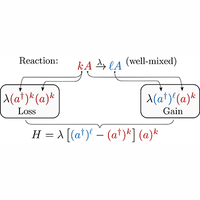
Field theories and quantum methods for stochastic reaction-diffusion systems
Article | Soft matter | 2026-01-22 05:00 EST
Mauricio J. del Razo, Tommaso Lamma, and Wout Merbis
The exchange of energy and molecules in a living cell, the spread of opinions through a society, and the flow of traffic in a crowded city are very different phenomena, yet they are all examples of complex systems composed of many agents that interact with each other and exchange energy or particles with the environment. These systems can be modeled as stochastic reaction-diffusion systems. In this pedagogical review, the authors apply powerful field-theoretic methods to these systems, unifying diverse approaches under a single framework. The methods are useful for handling chemical systems but also have applications in a wide range of areas such as ecology and epidemiology.
Rev. Mod. Phys. 98, 015001 (2026)
Soft matter
arXiv
Photoluminescence Dynamics of CdSe QD/polymer Langmuir-Blodgett Thin Films: Morphology Effects
New Submission | Materials Science (cond-mat.mtrl-sci) | 2026-01-22 20:00 EST
Beatriz Martín-García, Pedro M. R. Paulo, Sílvia M. B. Costa, M. Mercedes Velázquez
Thin films of colloidal semiconductor CdSe quantum-dots (QDs) and a styrene/maleic anhydride copolymer were prepared by the Langmuir-Blodgett technique and their photoluminescence was characterized by confocal fluorescence lifetime microscopy. In the films, the photoluminescence dynamics are strongly affected by excitation energy migration between close-packed quantum-dots and energy trapping by surface-defective QDs or small clusters of aggregated QDs. Polymer/QD films with more aggregated QD regions exhibit lower PL intensities and faster decays, which we attribute primarily to the increased ability of excitations to find trap sites among more close-packed QD regions. This was confirmed by comparing films from bilayer or co-spreading deposition, and varying the QD-to-polymer composition or the surface pressure at deposition. The more regular films, such as those obtained by bilayer deposition at high-pressure, display more surface emission intensity and decays with less accentuated curvature. Decay analysis was performed with a model that accounts for excitation energy migration and trapping in the films. In the framework of the model, the photoluminescence dynamics are related to film morphology through the density of energy traps. A lower amount of QD clustering in the films reflects on a lower density of energy traps and, thus, on more emissive QD films, as inferred here for bilayer films relatively to co-spreading films.
Materials Science (cond-mat.mtrl-sci), Other Condensed Matter (cond-mat.other)
The Journal of Physical Chemistry C, 2013, 117, 28, 14787-14795
Theory of reentrant superconductivity in Corbino Josephson junctions
New Submission | Mesoscale and Nanoscale Physics (cond-mat.mes-hall) | 2026-01-22 20:00 EST
Omri Lesser, Joon Young Park, Yuval Ronen, Thomas Werkmeister, Philip Kim, Yuval Oreg
Josephson junctions made of conventional superconductors display Fraunhofer-like oscillations of the critical current as a function of the threaded magnetic flux. When the superconductors are deposited on the surface of a three-dimensional topological insulator, this pattern is slightly modified due to the presence of chiral Majorana modes. Here we calculate the critical current of a Corbino Josephson junction, where the fluxoid becomes quantized and the superconducting phase has an integer winding. We discover that circular junctions exhibit similar behavior in both topologically trivial and non-trivial scenarios, while non-circular junctions demonstrate a remarkable distinction. Using a simple analytical model, we show that these non-circular junctions exhibit reentrant superconductivity with a period related to their number of corners, and numerically we find that this period is halved in the topological case. The period halving may help establish the existence of topological superconductivity in hybrid topological insulator-superconductor junctions.
Mesoscale and Nanoscale Physics (cond-mat.mes-hall), Superconductivity (cond-mat.supr-con)
5+3 pages, 3+4 figures
Exciton-Anyon Binding in Fractional Chern Insulators: Spectral Fingerprints
New Submission | Strongly Correlated Electrons (cond-mat.str-el) | 2026-01-22 20:00 EST
Transition–metal dichalcogenides (TMDs) uniquely combine topological electronic states realized without external magnetic fields with a strong optical response arising from long–lived excitons. Motivated by this confluence, we investigate an interacting fermion–boson system formed by coupling an exciton to a quasihole of a fractional Chern insulator (FCI) at filling fraction $ 1/3$ . We introduce a kagome–lattice fermion–boson model hosting an electronic FCI and a mobile exciton whose dispersion is tunable from a parabolic band to a flatband. Using exact diagonalization, we demonstrate the emergence of exciton–quasihole bound states controlled by the repulsive electron–exciton interaction $ V_{\mathrm{FB}}$ and the exciton kinetic energy $ t_{\mathrm{B}}$ . These states appear as low–lying levels in the fermion–boson spectrum, well separated from the scattering continuum, and arise despite repulsive interactions due to a residual attraction to the local charge depletion associated with a quasihole. Reducing $ t_{\mathrm{B}}$ enhances this effect by favoring interaction–dominated binding. Our results provide a model description of moiré TMD heterostructures, including fractional Chern insulating twisted bilayer MoTe$ _2$ proximitized by excitonic TMD heterobilayers, where we estimate exciton–quasihole binding energy scales of $ 0.6$ –$ 1.1$ ~meV, placing these effects within reach of photoluminescence spectroscopy.
Strongly Correlated Electrons (cond-mat.str-el)
Main text: 5 pages and 4 figures
A Quantum Many-Body Approach for Orbital Magnetism in Correlated Multiband Electron Systems
New Submission | Strongly Correlated Electrons (cond-mat.str-el) | 2026-01-22 20:00 EST
Orbital magnetism is a purely quantum phenomenon that reflects intrinsic electronic properties of solids, yet its microscopic description in interacting multiband systems remains incomplete. We develop a general quantum many-body framework for orbital magnetic responses based on the Luttinger-Ward functional. Starting from the Dyson equation, we reformulate the thermodynamic potential in a weak magnetic field and construct a controlled expansion in powers of $ B$ applicable to correlated electron systems. A key technical advance is a modified ``Fourier’’ representation using noncommutative coordinates, which allows the thermodynamic potential to be expressed in an effective momentum space where the magnetic field acts perturbatively. This formulation makes analytic progress possible within the Moyal algebra. As an application, we derive the spontaneous orbital magnetization and express it entirely in terms of the zero-field Hamiltonian renormalized by the self-energy. For frequency-dependent but Hermitian self-energies, we generalize the orbital magnetic moment and Berry curvature to momentum-frequency space and identify two gauge-invariant contributions built from these quantities. For frequency-independent self-energies the result reduces to the familiar geometric formula for noninteracting systems. This framework provides a unified foundation for computing orbital magnetic responses in correlated multiband materials.
Strongly Correlated Electrons (cond-mat.str-el), Mesoscale and Nanoscale Physics (cond-mat.mes-hall), High Energy Physics - Theory (hep-th)
11+7 pages. Comments are welcome
Field-induced states and thermodynamics of the frustrated Heisenberg antiferromagnet on a square lattice
New Submission | Strongly Correlated Electrons (cond-mat.str-el) | 2026-01-22 20:00 EST
Andreas Honecker, M. E. Zhitomirsky, Alexander Wietek, Johannes Richter
We investigate the ground-state and finite-temperature properties of the $ J_1$ -$ J_2$ Heisenberg antiferromagnet on the square lattice in the presence of an external magnetic field. We focus on the highly frustrated regime around $ J_2 \approx J_1/2$ . The $ h$ -$ T$ phase diagram is investigated with particular emphasis on the finite-temperature transition into the “up-up-up-down” state that is stabilized by thermal and quantum fluctuations and manifests itself as a plateau at one half of the saturation magnetization in the quantum case. We also discuss the enhanced magnetocaloric effect associated to the ground-state degeneracy that arises at the saturation field for $ J_2=J_1/2$ . For reference, we first study the classical case by classical Monte Carlo simulations. Then we turn to the extreme quantum limit of spin-1/2 where we perform zero- and finite-temperature Lanczos calculations.
Strongly Correlated Electrons (cond-mat.str-el)
15 pages including 12 (multi-panel) figures; legacy paper in honor of Johannes Richter
Approaching Kasteleyn transition in frustrated quantum Heisenberg antiferromagnets
New Submission | Statistical Mechanics (cond-mat.stat-mech) | 2026-01-22 20:00 EST
Katarina Karlova, Afonso Rufino, Taras Verkholyak, Nils Caci, Stefan Wessel, Jozef Strecka, Frederic Mila, Andreas Honecker
We show that the Kasteleyn transition, the abrupt proliferation of infinite strings of defects in classical dimer and related models, can also be relevant for frustrated 2d quantum magnets. This is explicitly demonstrated in a phase of the spin-1/2 Heisenberg diamond-decorated honeycomb lattice where a family of exact eigenstates built as products of dimer and plaquette singlets can be mapped onto the dimer coverings of the honeycomb lattice. The low-temperature properties of this phase are accurately described by an effective dimer model with anisotropic activities and a small, tunable density of monomers, leading to an arbitrarily sharp crossover version of the Kasteleyn transition. The generalization to other geometries and the possibility to realize this model in organo-metallic compounds are briefly discussed.
Statistical Mechanics (cond-mat.stat-mech), Strongly Correlated Electrons (cond-mat.str-el)
9 pages of main text and 6 pages of supplemental material, 9 figures in total
Vortex-parity-controlled diode effect in Corbino topological Josephson junctions
New Submission | Superconductivity (cond-mat.supr-con) | 2026-01-22 20:00 EST
Joon Young Park, Thomas Werkmeister, Jonathan Zauberman, Omri Lesser, Laurel E. Anderson, Yuval Ronen, Cristian J. Medina Cea, Satya K. Kushwaha, Kenji Watanabe, Takashi Taniguchi, Robert J. Cava, Yuval Oreg, Amir Yacoby, Philip Kim
Nonreciprocal supercurrents in Josephson junctions have recently emerged as a sensitive tool for investigating broken symmetries in superconducting quantum materials. Here, we report an even-odd Josephson diode effect (JDE) in Corbino-geometry junctions fabricated on the pristine surface of a bulk-insulating three-dimensional topological insulator (3DTI). We find that the diode polarity, which indicates the preferred direction of supercurrent flow, robustly alternates its sign depending on the parity (even or odd) of the enclosed vortex number. This behavior is absent in two key control devices: a non-topological graphene Corbino Josephson junction and a 3DTI-based linear Josephson junction. These results indicate that the polarity-tunable JDE is intrinsically linked to the unique combination of the proximitized topological superconductivity in the 3DTI surface and the Corbino device’s closed-loop geometry. Our theoretical modeling attributes the observed sign change in diode polarity to the alternating sign of periodic boundary conditions in topological superconductors, supporting the interpretation that the vortex-parity-controlled JDE is a direct manifestation of the underlying Andreev bound state topology associated with the presence of non-Abelian anyons in the vortices.
Superconductivity (cond-mat.supr-con), Mesoscale and Nanoscale Physics (cond-mat.mes-hall), Strongly Correlated Electrons (cond-mat.str-el)
26 pages, 12 figures
Optimal control of bit erasure in stochastic random access memory
New Submission | Statistical Mechanics (cond-mat.stat-mech) | 2026-01-22 20:00 EST
Songela W. Chen, David T. Limmer
Energy costs of information processing are growing exponentially. Bit erasure is a key problem in this energy-information nexus, and a number of seminal relationships have been deduced regarding the relationship between thermodynamic costs and memory storage. To continue making progress in the modern era, however, requires confronting thermodynamic costs in realistic physical systems which operate away from equilibrium. Here, we explore the thermodynamic costs of bit erasure in a complementary metal oxide semiconductor model of two types of random access memory. We find dynamic random access memory dissipates the least amount of energy when operated in the quasistatic limit, where errors are also minimized. By contrast, static random access memory is most efficiently operated in finite time due to the energy required to maintain the state of the bit. We demonstrate a numerically robust optimization scheme using mean field theory and automatic differentiation, finding optimal protocols compatible with electrical engineering insights. These results provide a framework for operating realistic circuits in thermodynamically advantageous ways.
Statistical Mechanics (cond-mat.stat-mech)
12 pages, 9 figures
Deconfined quantum criticality with internal supersymmetry
New Submission | Strongly Correlated Electrons (cond-mat.str-el) | 2026-01-22 20:00 EST
Zhi-Qiang Gao, Hui Yang, Yan-Qi Wang
Deconfined quantum critical point (DQCP) describes direct, non-fine-tuned quantum phase transition between two ordered phases that break distinct and seemingly unrelated symmetries, providing a route to continuous phase transition beyond the conventional Ginzburg–Landau paradigm. In this work we extend the DQCP paradigm to systems with internal supersymmetry (SUSY), where the on-site Hilbert space furnishes a representation of a Lie superalgebra, and the Hamiltonian is invariant under the corresponding Lie supergroup. Focusing on the minimal supersymmetric generalization of spin $ SU(2)$ , namely $ OSp(1|2)$ , we propose a supersymmetric deconfined quantum critical point (sDQCP) between a phase that breaks internal $ OSp(1|2)$ and a phase that instead breaks lattice rotation symmetry. We formulate a non-linear sigma model on the supersphere target space that captures the symmetry intertwinement characteristic of the sDQCP, and we further develop a gauge theory description to address its dynamical properties, including a heuristic argument for 3D XY critical behavior. Finally, we show that explicitly breaking $ OSp(1|2)$ down to $ SU(2)$ continuously connects our sDQCP to the conventional DQCP scenario.
Strongly Correlated Electrons (cond-mat.str-el), Statistical Mechanics (cond-mat.stat-mech), High Energy Physics - Theory (hep-th)
10 pages, 1 figure
Pressure Tuning of Electronic Correlations and Flat Bands in CsCr$_3$Sb$_5$
New Submission | Strongly Correlated Electrons (cond-mat.str-el) | 2026-01-22 20:00 EST
Maria Chatzieleftheriou, Jonas B. Profe, Ying Li, Roser Valentí
CsCr$ _3$ Sb$ 5$ is a newly identified strongly correlated kagome superconductor, characterized by non-Fermi-liquid behavior at elevated temperatures and intertwined charge- and spin-density-wave order below $ T{DW}\approx 54$ K. Under external pressure, this order is suppressed and a superconducting phase emerges. This phase diagram, which closely resembles that of high-$ T_c$ superconductors, together with a kagome flat band near the Fermi level and possible altermagnetic order, has motivated extensive theoretical and experimental investigations. To better understand how pressure influences the ordered states, we present a systematic study of the evolution of the electronic properties under applied pressure. Performing DFT+DMFT (density functional theory combined with dynamical mean field theory) calculations, we uncover a complex interplay between the redistribution of spectral weight in the flat bands and the strength of electronic correlations under pressure. Our results further strengthen the interpretation that pressure effectively weakens electronic correlations through enhanced orbital hybridization. This, in turn, strongly suggests that superconductivity emerges as a direct consequence of the suppression of the system’s ordered phase.
Strongly Correlated Electrons (cond-mat.str-el)
Coupled concentration-charge dynamics in asymmetric 1:1 electrolytes, local transient response and fluctuations
New Submission | Soft Condensed Matter (cond-mat.soft) | 2026-01-22 20:00 EST
Thê Hoang Ngoc Minh, Sleeba Varghese, Benjamin Rotenberg
We investigate the coupled dynamics of concentration and charge in asymmetric 1:1 electrolytes, focusing on the interplay between diffusion asymmetry and external electric fields. Using Brownian dynamics simulations and linearized stochastic density functional theory (SDFT), we analyze the transient response of charge and number currents to inhomogeneous electric fields, as well as the steady-state spatio-temporal fluctuations under uniform fields. Our results reveal that asymmetry in ionic diffusion coefficients introduces a non-trivial coupling between charge and number transport, which modifies the two relaxation modes already present in symmetric electrolytes – a fast one associated with charge relaxation and a slow one linked to ambipolar diffusion. The dynamics are further modulated by the applied field, which enhances diffusion, alters screening lengths, and induces oscillatory behavior in the relaxation modes. The SDFT framework provides closed-form expressions for the intermediate scattering matrix, capturing the dynamics of density fluctuations and cross-correlations between number and charge. These predictions are validated by simulations, demonstrating excellent agreement across a wide range of wave vectors, both at equilibrium and under a finite electric field. Our findings highlight the critical role of diffusion asymmetry and external fields in tuning the transport properties of electrolytes, with implications for nanofluidic devices, energy harvesting, and iontronic circuits. This work bridges theoretical insights with practical applications, offering a robust framework for understanding and controlling electrolyte dynamics in asymmetric systems.
Soft Condensed Matter (cond-mat.soft)
17 pages, 10 figures
A comparative study of perturbative and nonequilibrium Green’s function approaches for Floquet sidebands in periodically driven quantum systems
New Submission | Mesoscale and Nanoscale Physics (cond-mat.mes-hall) | 2026-01-22 20:00 EST
Karun Gadge, Marco Merboldt, Michael Schüler, Jan Philipp Bange, Wiebke Bennecke, Michael A. Sentef, Marcel Reutzel, Stefan Mathias, Salvatore R. Manmana
We compare two complementary theoretical approaches to compute and interpret Floquet sidebands in periodically driven quantum materials: a first-order perturbative approach (first-order perturbative Born approximation, PB1) and time-dependent nonequilibrium Green’s functions (tdNEGF). Using graphene as a model Dirac system, we disentangle in pump-probe setups Floquet-dressed initial states, Volkov-dressed final states (also known as laser-assisted photoelectric effect, LAPE), and their interference. We quantify how photoemission matrix elements, polarization, incidence angle, and near-surface screening shape the momentum-resolved sideband intensity observed in tr-ARPES. PB1 yields an analytical expression for the momentum-dependent sideband intensity, and for graphene it captures the correct symmetry trends, such as the magnitude of the intensities when considering the interference between the Floquet and Volkov states and photoemission matrix elements. tdNEGF reproduces the full energy-momentum-resolved spectra, including hybridization gaps and spectral-weight redistribution. We find qualitative agreement between PB1 and tdNEGF once matrix elements are included; quantitative differences arise near hybridization regions and at specific angles where higher-order processes and self-energies are essential. Thus, for systems with simple band structures and away from these regions, the two approaches can be used in a complementary way.
Mesoscale and Nanoscale Physics (cond-mat.mes-hall)
18 pages, 15 figures
Chirality and quasi-long-range order in finite-flux Gutzwiller states for magnetized frustrated magnets
New Submission | Strongly Correlated Electrons (cond-mat.str-el) | 2026-01-22 20:00 EST
Wen O. Wang, Urban F. P. Seifert, Oleg A. Starykh, Leon Balents
We study Gutzwiller-projected wavefunctions for triangular-lattice U(1) Dirac spin liquids in a Zeeman field, where we allow the U(1) gauge field to develop a gauge flux, resulting in (spin-split) spinon Landau levels. We find that at a given magnetization, the optimal candidate state has a finite flux chosen such that the spinon filling lies in a $ |C|=1$ Landau-level gap: it gives the lowest variational energy and the smallest energy variance within our correlation-matrix reconstruction for local Heisenberg-type models. By symmetry, we argue that the finite gauge flux results in a non-zero (staggered) scalar spin chirality, as also numerically observed, and further find that the $ |C|=1$ state exhibits dominant quasi-long-ranged $ 120^\circ$ magnetic correlations. Studying the next-to-optimal wavefunction with a $ |C|=2$ Landau-level gap, we observe unusual spin-nematic correlations. Our results may provide guidance for analyzing the magnetic-field response of DSL candidate materials and offer numerical diagnostics that can connect to the underlying theory of spinons coupled to an emergent U(1) gauge field.
Strongly Correlated Electrons (cond-mat.str-el)
8 pages, 5 figures; Supplementary Materials: 7 pages
Lumped-Element Model of THz HEB Mixer Based on Sputtered MgB2 Thin Film
New Submission | Superconductivity (cond-mat.supr-con) | 2026-01-22 20:00 EST
Changyun Yoo, Changsub Kim, Daniel P. Cunnane, Boris S. Karasik
We present a comprehensive analysis and experimental study of THz hot-electron bolometer (HEB) mixers made from 40-nm-thick sputtered magnesium diboride (MgB2) thin films on high-resistivity silicon substrates. Using a lumped-element bolometric model, we achieve strong quantitative agreement with measurements of conversion gain, noise temperature, and local-oscillator (LO) coupling to the HEB devices. Our analysis shows that the sensitivity of current HEB devices is primarily limited by on-chip optical losses, with both Johnson and thermal-fluctuation noise contributing significantly to the overall noise temperature. Simulations of an optimized device with near-ideal optical coupling suggest that Johnson noise remains a substantial factor even with improved coupling. Further reduction of the noise temperature may require additional suppression of Johnson noise (via improved intrinsic conversion gain) beyond optimizing optical coupling efficiency. We emphasize the importance of accurate modeling to achieve good numerical agreement with experiments, thereby enabling understanding of the causes of sensitivity loss.
Superconductivity (cond-mat.supr-con), Applied Physics (physics.app-ph), Instrumentation and Detectors (physics.ins-det)
22 pages, 9 figures, 71 references
Coarse-graining active tension nets with discrete conformal geometry
New Submission | Soft Condensed Matter (cond-mat.soft) | 2026-01-22 20:00 EST
Nikolas H. Claussen, Fridtjof Brauns, Boris I. Shraiman
In contrast to inert materials, living cells use molecular motors to generate forces independently of elastic strain. How do local active forces translate into large-scale shape, and what are the mechanical properties of the resulting “living matter”? Here, we address these questions within the active tension network (ATN) model for the mechanics of 2d epithelia. We represent the configuration of active forces geometrically by a tension triangulation dual to the cell tessellation. The Voronoi dual of the tension triangulation is shown to be macroscopically stress-free – the tensions hence define an emergent reference state for the tissue. Two soft modes, curl-free and conformal deformations, map this reference to the internally stressed, but force-balanced, physical configuration of the tissue. Conformal deformations parametrize pressure gradients, leading to a generalization of von Neumann’s law for the pressure in a foam. Via finite-element-like interpolation and a notion of “discrete” conformal maps, we both construct the mechanically balanced cell tessellations exactly on the microscopic level, and pass to the continuum limit. We systematically incorporate cell rearrangement into our theory by representing cell-scale topology in terms of circle packings. The results of this bottom-up coarse-graining study match a top-down continuum analysis presented in a companion paper. Thus, the geometry of force balance bridges between micro- and macro-scales, elucidating how cell-level active forces program shape. The present formalism may be useful in the study of foams, granular matter, and metamaterials, as well as in numerical simulations.
Soft Condensed Matter (cond-mat.soft), Biological Physics (physics.bio-ph)
33 pages, 20 figures
Nanoscopy of Excitons in Atomically Thin In-Plane Heterostructures with Nanointerfaces
New Submission | Materials Science (cond-mat.mtrl-sci) | 2026-01-22 20:00 EST
Mahdi Ghafariasl, Tianyi Zhang, Sampath Gamage, Da Zhou, Muhammad Asjad, Sarabpreet Singh, Antonio Gomez-Rodriguez, Diego M. Solis, Venkataraman Swaminathan, Mauricio Terrones, Yohannes Abate
Atomically sharp 2D in-plane heterostructures with nanoscale interfaces provide a powerful platform for tailoring optical and electrical properties at the nanoscale, enabling novel device engineering and the exploration of new physical phenomena. However, direct experimental correlation between local dielectric response and excitonic properties across such interfaces has remained elusive. Here, we probed the nanoscale complex dielectric function and the corresponding localized photoluminescence (PL) modulations in heterostructure domains of lateral monolayer MoxW1-xS2 - WxMo1-xS2, synthesized using a liquid-phase precursor-assisted approach. Near-field nano imaging across the visible-near-infrared range enables real space mapping of sharp amplitude and phase changes at the heterointerface, resolving the local complex dielectric function with nano-meter scale spatial resolution. Excitation energy-dependent nano spectroscopy reveals a reversal of dielectric contrast between Mo-rich and W-rich domains at their respective excitonic resonances, consistent with Lorentz-oscillator fits. Complementary hyperspectral nano-PL mapping resolves the evolution of excitonic emission across the lateral heterointerface, with neutral-exciton intensities varying continuously from W-rich to Mo-rich regions. Effective-medium theory modeling of the imaginary part of the effective dielectric function of the heterostructure as a function of photon energy and Mo filling fraction reproduces the observed excitonic trends, linking the PL evolution to a composition-dependent dielectric response. Together, these results provide direct nanoscale correlation between dielectric and excitonic boundaries in laterally stitched monolayer heterostructures and establish a multimodal near-field spectroscopy framework for probing excitonic phenomena at the nanoscale.
Materials Science (cond-mat.mtrl-sci), Optics (physics.optics)
24 pages, 7 Figures
Fracture initiation in silicate glasses via a universal shear localization mechanism
New Submission | Soft Condensed Matter (cond-mat.soft) | 2026-01-22 20:00 EST
Matthieu Bourguignon, Gustavo Alberto Rosales-Sosa, Yoshinari Kato, Bruno Bresson, Hikaru Ikeda, Shingo Nakane, Gergely Molnár, Hiroki Yamazaki, Etienne Barthel
Shear bands lie at the root of fracture initiation in bulk metallic glasses and amorphous polymers. For silicate glasses, in contrast, studies have largely emphasized permanent volumetric strain, commonly referred to as densification. Here we systematically investigate indentation-induced fracture in two distinct families of aluminoborosilicate glasses. The results demonstrate that plastic shear flow plays a decisive role in governing fracture initiation. In addition, molecular dynamics simulations reveal a pronounced composition dependence of softening associated with plastic shear flow, closely mirroring the experimentally observed propensity for strain localization. We conclude that silicate glasses conform to a universal pattern of rupture initiation governed by localization of shear-deformation, aligning with a broad range of amorphous materials, including bulk metallic glasses and glassy polymers.
Soft Condensed Matter (cond-mat.soft), Materials Science (cond-mat.mtrl-sci)
Magnetic field induced phenomena in Kitaev spin liquids
New Submission | Strongly Correlated Electrons (cond-mat.str-el) | 2026-01-22 20:00 EST
Quantum spin liquids (QSLs) host a variety of fractionalized particles. In Kitaev’s paradigmatic honeycomb model a spin-$ \tfrac{1}{2}$ fractionalizes into $ Z_2$ flux due to emergent $ Z_2$ gauge field and matter Majorana fermions. Although these excitations have well-defined dynamics in the integrable limit, their direct experimental identification is notoriously challenging: realistic materials inevitably host additional symmetry-allowed interactions that break integrability and hybridize gauge and matter sectors, while magnetic fields, which are often required to suppress competing order and stabilize a putative QSL regime, further entangle the responses of different fractionalized quasiparticles and may even drive the system into field-induced spin-liquid phases that are not adiabatically connected to the integrable limit. A prominent example is the quantum Majorana metal, in which the distinct dynamics of fractionalized Majorana fermions can become directly visible in scattering. This report highlights recent progress on these related questions: in which field-stabilized QSL regimes and nearby emergent phases, and under what conditions, can the response of a specific fractionalized quasiparticle be isolated and positively understood, thereby clarifying the existence and the experimental scope of putative spin liquids? We review the progress on these questions across Abelian, non-Abelian, and an emergent quantum phases under magnetic field that are not perturbatively connected to the integrable limit. We connect these field-induced dynamical phenomena to concrete experimental observables, relevant for neutron scattering, resonant inelastic X-ray scattering, and pump-probe spectroscopy that are capable of resolving specific types of fractionalized particles, including Majoranas and $ Z_2$ fluxes.
Strongly Correlated Electrons (cond-mat.str-el)
51 pages
A Modulated Electron Lattice (MEL) Criterion for Metallic Superconductivity
New Submission | Superconductivity (cond-mat.supr-con) | 2026-01-22 20:00 EST
Jaehwahn Kim, Davis A. Rens, Waqas Khalid, Hyunchul Kim
A central unresolved question in the theory of superconductivity is why only a small subset of metallic elements exhibit a superconducting state, whereas many others remain strictly normal. Neither the conventional Bardeen Cooper Schrieffer (BCS) framework nor its extensions involving charge density wave (CDW) or pair density wave (PDW) order provide a predictive or material-selective criterion capable of distinguishing superconducting metals from non-superconducting ones. In particular, the persistent absence of superconductivity in simple noble metals with well-defined Fermi surfaces poses a challenge for all traditional approaches. Here we address this problem using the Modulated Electron Lattice (MEL) Ginzburg Landau (GL) framework introduced in our previous work. In this formulation, a coarse-grained MEL charge field $ \rho_{\mathrm{MEL}}(\mathbf{r})$ with momentum dependent stiffness $ \alpha(q)$ is coupled to the superconducting (SC) order parameter $ \psi(\mathbf{r})$ . We show that metallic superconductivity emerges only when the system satisfies a specific ``MEL enhancement window,’’ characterized by a negative minimum of $ \alpha(q)$ at either a finite modulation wave vector $ q^{\ast}$ or at $ q=0$ , together with sufficiently strong coupling between $ \rho_{\mathrm{MEL}}$ and $ \psi$ . This unified criterion naturally partitions metallic elements into three universal classes: (i) MEL-enhanced superconductors with a finite-$ q^{\ast}$ charge mode, (ii) conventional BCS superconductors as the homogeneous $ q^{\ast}=0$ limit of the MEL framework, and (iii) metals for which $ \alpha(q)$ remains positive for all $ q$ , suppressing all MEL modes and preventing any superconducting instability. By applying this criterion to simple metallic elements, we identify why some metals develop superconductivity while others do not, possibly resolving a selection problem long open within the BCS paradigm.
Superconductivity (cond-mat.supr-con), Mesoscale and Nanoscale Physics (cond-mat.mes-hall), Materials Science (cond-mat.mtrl-sci), Applied Physics (physics.app-ph), Quantum Physics (quant-ph)
8 pages, 3 figures
Diffusive buckling fronts in lattice-based metamaterials
New Submission | Soft Condensed Matter (cond-mat.soft) | 2026-01-22 20:00 EST
Jochem G. Meijer, Faadil Shaik, Heinrich M. Jaeger
Mechanical metamaterials can be designed to exhibit unique mechanical properties, including tunable auxetic behavior as well as multi-stability, which arise from the geometry and configuration of the constituent building blocks. Lattice-based metamaterials, in particular, provide lightweight platforms where local instabilities can dictate the global response, with applications in energy routing, vibration isolation, and impact mitigation. In underdamped structures, perturbations have been found to propagate as nonlinear waves, e.g., transition waves or solitons. Here we investigate the opposite limit of overdamped, highly dissipative lattice metamaterials. Focusing on three-dimensional structures, we uncover how buckling instabilities, triggered by compression, propagate as fronts that shape the macroscopic behavior. We demonstrate in experiments on 3D-printed simple cubic lattices how global and local buckling modes can be controlled via the lattice geometry. By incorporating viscoelastic dissipation into a 3D-continuum model, we show that strain-driven buckling fronts obey coupled reaction-diffusion equations. The diffusion and reaction coefficients, determined by local geometry, material properties, and strain, select the propagation direction and enable steering of the fronts. This establishes a predictive and experimentally validated framework for the control of cascading mechanical instabilities in lattice-based metamaterials.
Soft Condensed Matter (cond-mat.soft)
19 pages, 8 figures
Strain-tunable magnetic correlations in spin liquid candidate Nb$_3$Cl$_8$
New Submission | Mesoscale and Nanoscale Physics (cond-mat.mes-hall) | 2026-01-22 20:00 EST
Recent research suggests the possibility of the two-dimensional breathing-Kagome magnet Nb$ _3$ Cl$ _8$ hosting a quantum spin liquid state, warranting further study into its magnetic properties. Using ab initio calculations, we show that monolayer Nb$ _3$ Cl$ _8$ has short-range antiferromagnetic correlations among Nb$ _3$ trimers with S = 1/2, and becomes magnetically frustrated due to the underlying effective triangular lattice geometry, and is evidenced by a frustration index of f > 1. The high-temperature susceptibility shows a negative Weiss temperature from Monte Carlo calculations. Considering spin-orbit coupling, we investigate the magnetic anisotropy, including anisotropic exchange, single-ion anisotropy and the Dzyaloshinskii-Moriya interaction using the four-state energy mapping formalism. Although the elements have relatively small atomic numbers, the Dzyaloshinskii-Moriya interaction is comparable in magnitude to the anisotropic exchange. Additionally, we show that biaxial strain tunes the short-range correlations between antiferromagnetic, paramagnetic and ferromagnetic. These findings strengthen our understanding of Nb$ _3$ Cl$ _8$ and advance its applications in current condensed matter physics and materials science research, including nanoscale mechanical and spintronics applications.
Mesoscale and Nanoscale Physics (cond-mat.mes-hall), Materials Science (cond-mat.mtrl-sci)
3D bulk-resolved $g$-wave magnetic order parameter symmetry in the metallic altermagnet CrSb
New Submission | Materials Science (cond-mat.mtrl-sci) | 2026-01-22 20:00 EST
Mengmeng Long, Theodore I. Weinberger, Zheyu Wu, Mads F. Hansen, Ran Tao, Mridul Shrestha, Dave Graf, Yurii Skourski, F. Malte Grosche, Alexander G. Eaton
Electronic phases of matter, such as magnetism and superconductivity, are defined and distinguished by their order parameters that quantify the spontaneous symmetry breaking underlying each phase. The simplest cases are the uniform magnetisation of ferromagnets and isotropic gap function of conventional superconductors. Unconventional superconductors often have a nodal gap function, where the gap changes sign at nodes on the Fermi surface. This concept of unconventional or nodal order parameter symmetry has recently been extended to numerous magnetic systems, including altermagnets, in which up- and down-spin species are non-degenerate around the Fermi surface. Here we demonstrate that magnetic quantum oscillation measurements can provide a direct, bulk-sensitive, 3D mapping of the order parameter in an unconventional magnet. By rotating a magnetic field through high- and low-symmetry directions of the CrSb Brillouin zone, we show that this material’s altermagetic band structure leads to the loss of mirror symmetry for each spin-split Fermi sheet away from highly symmetric nodal orientations. In momentum space, the difference between up and down spins follows the profile of the $ \mathcal{Y}_{4}^{-3}=zy(3x^2-y^2)$ spherical harmonic - analogous to a $ g$ -orbital of the hydrogen atom. While notoriously difficult to resolve in unconventional superconductors, our work demonstrates that the order parameter symmetry of unconventional magnets can be conclusively determined through quantum-oscillatory quasiparticle spectroscopy. Our results empirically establish CrSb as a prototypical $ g$ -wave metallic altermagnet, which in pristine form possesses low residual resistivities down to $ \sim$ 1 $ \mu \Omega$ cm, opening numerous avenues for next-generation spintronic device applications
Materials Science (cond-mat.mtrl-sci), Mesoscale and Nanoscale Physics (cond-mat.mes-hall), Strongly Correlated Electrons (cond-mat.str-el)
Majorana Fermions in spin up and down electronic complexes in spin-orbit coupled array of semiconductor quantum dots in proximity to $s$-type superconductor and in magnetic field
New Submission | Mesoscale and Nanoscale Physics (cond-mat.mes-hall) | 2026-01-22 20:00 EST
Mijanur Islam, Mahan Mohseni, Ibsal Assi, Daniel Miravet, Pawel Hawrylak
Semiconductor-s-type superconductor nanowires host spinful fermions and cannot be reduced to a single spinless Kitaev chain hosting single Majorana zero mode. Instead, such systems can be converted into two coupled p-wave Kitaev-like chains associated with different spin sectors. Using the bond Fermion transformation and exact diagonalization, we analyze parity resolved spectra and local spectral functions, demonstrating that zero-energy modes strongly localized at the system boundaries emerge only in one effective chain. Inter-chain coupling lifts parity degeneracy and redistributes the low-energy spectral weight, providing a controlled framework to assess the stability of Majorana-like modes in the finite spinful nanowires.
Mesoscale and Nanoscale Physics (cond-mat.mes-hall), Materials Science (cond-mat.mtrl-sci)
10 pages, 7 figures, comments are welcome
Theory of Andreev and shot noise spectroscopy for topological superconductors probed by $s$-wave superconducting tips
New Submission | Superconductivity (cond-mat.supr-con) | 2026-01-22 20:00 EST
Jushin Tei, Ryo Hanai, Satoshi Fujimoto, Takeshi Mizushima
Scanning tunneling microscopy (STM) and spectroscopy (STS) with $ s$ -wave superconducting tips has been widely applied to probe exotic superconductors, but its potential for investigating topological superconductors remains unclear. In junctions between an $ s$ -wave superconductor and a topological superconductor, the dominant tunneling process is Andreev reflection, in which Cooper pairs from the $ s$ -wave superconductor tunnel as particle–hole excitations into the surface state of the topological superconductor. In this work, we theoretically investigate the fundamental properties of Andreev and shot noise spectroscopy on topological superconductors, focusing on the $ dI/dV$ characteristics and current noise. We develop a real-time description of an effective tunneling action incorporating Andreev reflection processes in the Keldysh formalism and derive analytical expressions for the Andreev reflection current and the associated current noise. Furthermore, we perform numerical simulations for representative topological superconductors and provide a catalog of $ dI/dV$ spectra and the Fano factor. Our results establish guidelines for probing topological superconductivity using STM with $ s$ -wave superconducting tips, and provide theoretical benchmarks for future STS experiments.
Superconductivity (cond-mat.supr-con)
24 pages, 8 figures
Heterogeneous Transfer of Thin Film BaTiO3 onto Silicon for Device Fabrication
New Submission | Materials Science (cond-mat.mtrl-sci) | 2026-01-22 20:00 EST
Temazulu S. Zulu, Larissa B. Little, Aaron M. Day, Chaoshen Zhang, Keith Powell, Kyeong-Yoon Baek, Benazir Fazlioglu-Yalcin, Neil Sinclair, Charles M. Brooks, David R. Barton, Marko Loncar, Julia A. Mundy
Thin film BaTiO3 has one of the highest known Pockels coefficients (>1200 pm/V), making it an attractive material for use in electro-optic devices. It is advantageous to integrate BaTiO3 on silicon to enable complementary metal-oxide-semiconductor (CMOS) compatible processing. How- ever, synthesis of high-quality BaTiO3 directly on silicon remains a challenge. Here, we synthesize BaTiO3 using hybrid metal-organic molecular beam epitaxy (hMBE) and demonstrate its transfer onto silicon using thermocompression bonding and chemical lift-off. Hybrid metal-organic MBE en- ables self-regulated synthesis of highly stoichiometric thin films at high growth rates (>100nm/hr). Our transfer method results in millimeter-scale areas of atomically flat, crack-free BaTiO3 making it a potentially scalable method. Finally, we demonstrate the applicability of our process to device fabrication through characterization of lithographically-patterned and etch-transferred sub-micron features.
Materials Science (cond-mat.mtrl-sci)
Excitation Energy Transfer in Nanohybrid System of Organic Molecule and Inorganic Transition Metal Dichalcogenides Nanoflake
New Submission | Mesoscale and Nanoscale Physics (cond-mat.mes-hall) | 2026-01-22 20:00 EST
Yan Meng, Kainan Chang, Luxia Wang
Excitation energy transfer (EET) in an organic/inorganic nanohybrid system, composed of a single \textit{para}-sexiphenyl (6P) molecule physisorbed on a finite-sized MoS$ _2$ nanoflake, is investigated theoretically. %
The electronic structure of the MoS$ _2$ nanoflake is described by using an 11-band tight-binding model, in which edge states are passivated with H atoms to restore a well-defined bandgap. %
Within a configuration-interaction scheme, excitonic states are constructed and, for computational efficiency, approximated by uncorrelated electron-hole pairs in the relevant high-energy window. %
The EET rates are evaluated via Fermi’s golden rule, incorporating Coulomb coupling, thermal broadening, and spectral overlap between the molecular excitation and the MoS$ _2$ nanoflake’s electron-hole pairs. %
Our results reveal that energy transfer from the molecule to the nanoflake is the dominant process, and its efficiency depends strongly on the size of the MoS$ _2$ nanoflake, as well as the molecule’s vertical distance and lateral position relative to the nanoflake.
Mesoscale and Nanoscale Physics (cond-mat.mes-hall)
Nanodroplet-Confined Electroplating Enables Submicron Printing of Metals and Oxide Ceramics
New Submission | Materials Science (cond-mat.mtrl-sci) | 2026-01-22 20:00 EST
Mirco Nydegger, Rebecca A. Gallivan, Arthur Barras, Henning Galinski, Ralph Spolenak
The fabrication of functional micro- and nano-electronic devices requires the deposition of high-quality materials of different electronic material classes, such as conductors, semiconductors and insulators. To establish ultra-high-resolution additive manufacturing as a viable addition to existing fabrication methods requires the combinatorial additive deposition of different electronic material classes. However, current techniques do not provide such a capability. Here, we demonstrate that droplet confined electroplating, an ultra-high-resolution AM technique initially developed for metals as electrohydrodynamic redox printing (EHD-RP), allows not only the direct deposition of many metals, but also of metal-oxides. Particularly, we demonstrate that applying fundamental electrochemical principles in combination with on-the-fly switching of the deposited material allows for the direct co-deposition of metals, metal-hydroxides and -oxides. Our results exemplify the feasibility of leveraging simple water-based electrochemical concepts to produce intricate and multi-material structures at the nanoscale.
Materials Science (cond-mat.mtrl-sci)
Above Room Temperature Ferroelectricity in Epitaxially Strained KTaO3
New Submission | Materials Science (cond-mat.mtrl-sci) | 2026-01-22 20:00 EST
Tobias Schwaigert, Salva Salmani-Rezaie, Sankalpa Hazra, Utkarsh Saha, Maya Ramesh, Aiden Ross, Betul Pamuk, Long-Qing Chen, David A. Muller, Darrell G. Schlom, Venkatraman Gopalan, Kaveh Ahadi
Epitaxial strain is a powerful means to engineer emergent phenomena in thin films and heterostructures. Here, we demonstrate that KTaO3, a cubic perovskite in bulk form, can be epitaxially strained into a highly tunable ferroelectric. KTaO3 films grown commensurate to SrTiO3 (001) substrates experience an in-plane strain of -2.1 % that transforms the cubic structure into a tetragonal polar phase with transition temperature of 475 K, consistent with our thermodynamic calculations. We show that the Curie temperature and the spontaneous electric polarization can be system- atically controlled with epitaxial strain. Scanning transmission electron microscopy reveals cooperative polar displacements of the potassium columns with respect to the neighboring tantalum columns at room temperature. Optical second-harmonic generation results are described by a tetragonal polar point group (4mm), indicating the emergence of a global polar ground state. We observe a ferroelectric hysteresis response, using metal-insulator-metal capacitor test structures. The results demon- strate a robust intrinsic ferroelectric state in epitaxially strained KTaO3 thin films.
Materials Science (cond-mat.mtrl-sci)
Quantitative Kelvin Probe Force Microscopy of back-gated 2D semiconductors
New Submission | Mesoscale and Nanoscale Physics (cond-mat.mes-hall) | 2026-01-22 20:00 EST
Zander Scholl, Ezra Frohlich, Natalie Rogers, Paul Nguyen, Baker Hase, Joseph Tatsuro Murphy, Joel Toledo-Urena, David Cobden, Jennifer T. Heath
In 2D field effect transistors the gate electrostatically dopes the 2D semiconductor (2DSC) channel, tuning the Fermi level. In principle, Kelvin probe force microscopy (KPFM) can detect the Fermi level, and its dependence on gate bias as well as position, potentially directly yielding band gaps, contact barriers, spatial nonuniformities, and sub-gap densities of states in such devices. However, KPFM relies on an oscillating probe voltage which itself electrostatically dopes the 2DSC, potentially creating a nonlinear response. Here, we show that when a suitably thin hBN back-gate dielectric is used, the KPFM signal agrees well with expectations, as explained by a quasistatic charge-balance model. Corresponding experimental results show excellent consistency with the literature values of the bandgaps of monolayer and trilayer WSe2. With this approach, the widely available technique of KPFM should find improved utility and new uses in the study of 2D devices.
Mesoscale and Nanoscale Physics (cond-mat.mes-hall), Materials Science (cond-mat.mtrl-sci)
Anomalous Localization and Mobility Edges in Non-Hermitian Quasicrystals with Disordered Imaginary Gauge Fields
New Submission | Disordered Systems and Neural Networks (cond-mat.dis-nn) | 2026-01-22 20:00 EST
Guolin Nan, Zhijian Li, Feng Mei, Zhihao Xu
We study anomalous localization in a one-dimensional non-Hermitian quasicrystal with a spatially disordered imaginary gauge field. The system is a generalized Aubry-André-Harper (AAH) chain with asymmetric nearest- and next-nearest-neighbor hoppings generated by a Bernoulli imaginary gauge field and a quasiperiodic onsite potential. In the standard non-Hermitian AAH limit, the system undergoes a transition from a fully erratic non-Hermitian skin effect (ENHSE) phase to a fully localized phase. We show that the fractal dimension cannot distinguish these phases, whereas the Lyapunov exponent and center-of-mass fluctuations provide sharp diagnostics. This transition is accompanied by a complex-to-real spectral change under periodic boundary conditions and a topological change of the spectral winding number. With next-nearest-neighbor hopping, we uncover an anomalous mobility edge separating Anderson-localized states from ENHSE states, rather than extended states. This mobility edge is captured by an energy-dependent winding number that vanishes in the localized regime. Finally, we propose a dynamical probe based on wave-packet expansion: for typical disorder realizations, the dynamics shows winding-controlled drift and disorder-selected pinning or boundary-wrapping recurrence, while disorder averaging restores Hermitian-like transport. These results offer practical spectral, topological, and dynamical diagnostics of anomalous localization and mobility edges in non-Hermitian quasicrystals.
Disordered Systems and Neural Networks (cond-mat.dis-nn), Quantum Physics (quant-ph)
17 pages, 10 figures
Hydrogen Activation via Dihydride Formation on a Rh1/Fe3O4(001) Single-Atom Catalyst
New Submission | Materials Science (cond-mat.mtrl-sci) | 2026-01-22 20:00 EST
Chunlei Wang, Panukorn Sombut, Lena Puntscher, Nail Barama, Maosheng Hao, Florian Kraushofer, Jiri Pavelec, Matthias Meier, Florian Libisch, Michael Schmid, Ulrike Diebold, Cesare Franchini, Gareth S. Parkinson
Hydrogen activation is a key elementary step in catalytic hydrogenation. In heterogeneous catalysis, it usually proceeds through dissociative adsorption on metal nanoparticles followed by surface diffusion or spillover, whereas homogeneous catalysts activate H2 through dihydride or dihydrogen intermediates at a single metal center. Here, we show that isolated Rh adatoms supported on Fe3O4(001) activate hydrogen through formation of a stable dihydride species without atomic H spillover. Temperature-programmed desorption, X-ray photoelectron spectroscopy, and scanning tunneling microscopy collectively reveal strong (approximately 1 eV) hydrogen adsorption exclusively at isolated Rh1 sites, while isotope-exchange experiments further demonstrate that hydrogen remains localized. Density-functional theory based calculations indicate a barrierless conversion from molecular H2 to the dihydride, and random-phase approximation calculations further confirm the relative stability of the dihydride. Together, these results show that single-atom Rh sites cleave and bind H2 through a dihydride pathway analogous to homogeneous complexes, establishing a mechanistic bridge between homogeneous and heterogeneous catalysis.
Materials Science (cond-mat.mtrl-sci)
Functionalization of reduced graphite oxide sheets with a zwitterionic surfactant
New Submission | Materials Science (cond-mat.mtrl-sci) | 2026-01-22 20:00 EST
Beatriz Martín-García, M. Mercedes Velázquez, Francesco Rossella, Vittorio Bellani, Enrique Diez, Jose Luis García Fierro, Jose Antonio Pérez-Hernández, Juan Hernández-Toro, Sergi Claramunt, Albert Cirera
Films of a few layers in thickness of reduced graphite oxide, RGO, sheets functionalized by the zwitterionic surfactant N-dodecyl-N,N-dimethyl-3-ammonio-1-propanesulfonate, DDPS, are obtained by using the Langmuir-Blodgett method. The quality of the RGO sheets is checked by analyzing the degrees of reduction and defect repair by means of X-ray photoelectron spectroscopy, atomic force microscopy -AFM, field-emission scanning electron microscopy -SEM, micro-Raman spectroscopy, and electrical conductivity measurements. A modified Hummers method is used to obtain highly oxidized graphite oxide, GO, together with a centrifugation-based method to improve the quality of GO. The GO samples are reduced by hydrazine or vitamin C. Functionalization of RGO with the zwitterionic surfactant improves the degrees of reduction and defect repair of the two reducing agents and significantly increases the electrical conductivity of paperlike films compared with those prepared from unfunctionalized RGO.
Materials Science (cond-mat.mtrl-sci), Other Condensed Matter (cond-mat.other)
ChemPhysChem 2012, 13, 16, 3682-3690
Langmuir and Langmuir-Blodgett films of a maleic anhydride derivative: effect of subphase divalent cations
New Submission | Materials Science (cond-mat.mtrl-sci) | 2026-01-22 20:00 EST
Beatriz Martín-García, M. Mercedes Velázquez, Jose Antonio Pérez-Hernández, Juan Hernández-Toro
We report the study of the equilibrium and dynamic properties of Langmuir monolayers of poly (styrene-co-maleic anhydride) partial 2-buthoxy ethyl ester cumene terminated polymer and the effect of the Mg(NO3)2 addition in the water subphase on the film properties. Results show that the polymer monolayer becomes more expanded when the electrolyte concentration in the subphase increases. Dense polymer films aggregate at the interface. The aggregates are transferred onto Silicon wafers using the Langmuir-Blodgett methodology and the morphology is observed by AFM. The structure of aggregates depends on the subphase composition of the Langmuir film transferred onto the silicon wafer.
Materials Science (cond-mat.mtrl-sci), Other Condensed Matter (cond-mat.other)
Langmuir 2010, 26, 18, 14556-14562
Realization of staircase topological Anderson phase transitions
New Submission | Mesoscale and Nanoscale Physics (cond-mat.mes-hall) | 2026-01-22 20:00 EST
Marwa Mannai, Yaoyao Shu, Sonia Haddad, Mina Ren, Hong Chen, Yong Sun, Hisham Sati
One-dimensional topological Anderson insulators provide a paradigm for disorder-induced topological phases in which the underlying system turns from a trivial to a topological phase. It is widely recognized that the latter vanishes at large disorder amplitude. Here, and contrary to the general belief, we provide evidence for a successive disorder-driven topological transitions in a single-wall nanotube, culminating in a topological Anderson phase that remains unexpectedly robust at strong disorder. This phenomenon is confirmed by analysis of the corresponding topological invariant, which increases stepwise as disorder increases, giving evidence for the emergence of edge states. We experimentally implement these topological Anderson staircase phase transitions in a one-dimensional topolectrical circuit, where the persistence of edge states is revealed by node-voltage measurements. The robustness of the edge states is corroborated by numerical calculations of their localization properties. Our work opens the road to topological disordertronics, where topological phases can be tuned by disorder.
Mesoscale and Nanoscale Physics (cond-mat.mes-hall), Disordered Systems and Neural Networks (cond-mat.dis-nn)
10 pages + supplementary material
Influence of Charge Density Waves on the Hall coefficient in NiTi
New Submission | Materials Science (cond-mat.mtrl-sci) | 2026-01-22 20:00 EST
Adrian Braun, Henrik Dick, Timon Sieweke, Alexander Kunzmann, Klara Lünser, Gabi Schierning, Thomas Dahm
We present a mean-field charge density wave theory for NiTi using density functional theory bandstructure as a starting point. We calculate the Hall coefficient as a function of temperature and compare with recent experimental results. We analyze the contributions to the Hall coefficient from different parts of the Fermi surface and find that the Hall coefficient is dominated by certain ``hot spots’’. The analysis shows that these hot spots are mostly dominated by Ni d-orbitals. We demonstrate that the Hall coefficient is not well reproduced by Boltzmann transport theory within the constant relaxation time approximation without charge density waves. We consider both uniaxial and biaxial charge density waves and show that biaxial charge density waves can account well for the Hall coefficient, while uniaxial cannot. We also investigate the temperature dependence of the resistivity and the specific heat.
Materials Science (cond-mat.mtrl-sci)
12 pages, 16 figures, supplementary information
Near-Atomic-Scale Compositional Complexity in a 2D Transition Metal Oxide
New Submission | Materials Science (cond-mat.mtrl-sci) | 2026-01-22 20:00 EST
Mathias Krämer, Bar Favelukis, J. Manoj Prabhakar, Aleksander Albrecht, Brian A. Rosen, Noam Eliaz, Maxim Sokol, Baptiste Gault
2D materials hold transformative promise for next-generation nanoelectronics. However, successfully integrating these materials from laboratory-scale discoveries into real-world devices depends on precisely controlling their properties, which are fundamentally determined by their composition. Detailed characterisation using atom probe tomography of 2D Ti0.87O2, a candidate high-$ \kappa$ dielectric, reveals deviations from its commonly assumed stoichiometry. Compositional analysis and comparison with the bulk K0.8[Ti1.73Li0.27]O4 precursor evidences an oxygen deficit indicative of oxygen vacancy formation in the 2D material, as well as the retention of low concentrations of alkali metals that were presumed to be removed during synthesis. Such deviations from stoichiometry indicate a reconstruction mechanism that mitigates the effect of the characteristic, negatively charged vacancies on the titanium sublattice, thereby influencing the local electronic structure and, consequently, functional properties. These findings underscore the importance of a detailed compositional analysis in both understanding and optimizing the extraordinary functional properties of 2D materials, opening pathways to tailored functionalities in next-generation nanoelectronics.
Materials Science (cond-mat.mtrl-sci)
Emergence of multiple zero modes bound to vortices in extended topological Josephson junctions
New Submission | Mesoscale and Nanoscale Physics (cond-mat.mes-hall) | 2026-01-22 20:00 EST
Adrian Reich, Kiryl Piasotski, Eytan Grosfeld, Alexander Shnirman
We study planar Josephson junctions formed on the surface of a three-dimensional topological insulator (Fu-Kane proposal) and examine the experimentally relevant parameter regimes in which the effective velocity of the emergent one-dimensional Majorana modes approaches zero. We show that the frequently employed Fu-Kane effective theory breaks down in this case. As parameters like the chemical potential or the width of the junction are tuned, instances of vanishing effective velocity mark the emergence of additional ‘Dirac cones’ at zero energy and finite momentum. If the junction is subjected to an external magnetic field, Josephson vortices may then bind a number of zero modes in addition to the topological Majorana mode. The additional zero modes are ‘symmetry-protected’ and can be lifted by a broken mirror symmetry (which is to be expected in realistic scenarios) as well as by an in-plane magnetization (or Zeeman field). We note that the ensuing presence of additional low-energy Andreev states can significantly contribute to measured quantities like the Josephson current or microwave absorption spectra.
Mesoscale and Nanoscale Physics (cond-mat.mes-hall)
13 pages, 8 figures
Learning and extrapolating scale-invariant processes
New Submission | Disordered Systems and Neural Networks (cond-mat.dis-nn) | 2026-01-22 20:00 EST
Anaclara Alvez-Canepa, Cyril Furtlehner, François Landes
Machine Learning (ML) has deeply changed some fields recently, like Language and Vision and we may expect it to be relevant also to the analysis of of complex systems. Here we want to tackle the question of how and to which extent can one regress scale-free processes, i.e. processes displaying power law behavior, like earthquakes or avalanches? We are interested in predicting the large ones, i.e. rare events in the training set which therefore require extrapolation capabilities of the model. For this we consider two paradigmatic problems that are statistically self-similar. The first one is a 2-dimensional fractional Gaussian field obeying linear dynamics, self-similar by construction and amenable to exact analysis. The second one is the Abelian sandpile model, exhibiting self-organized criticality. The emerging paradigm of Geometric Deep Learning shows that including known symmetries into the model’s architecture is key to success. Here one may hope to extrapolate only by leveraging scale invariance. This is however a peculiar symmetry, as it involves possibly non-trivial coarse-graining operations and anomalous scaling. We perform experiments on various existing architectures like U-net, Riesz network (scale invariant by construction), or our own proposals: a wavelet-decomposition based Graph Neural Network (with discrete scale symmetry), a Fourier embedding layer and a Fourier-Mellin Neural Operator. Based on these experiments and a complete characterization of the linear case, we identify the main issues relative to spectral biases and coarse-grained representations, and discuss how to alleviate them with the relevant inductive biases.
Disordered Systems and Neural Networks (cond-mat.dis-nn), Machine Learning (cs.LG)
29p, 22 figures
Ionization energy and electron affinity of fullerene C60 in the Hubbard model in the static fluctuation approximation
New Submission | Strongly Correlated Electrons (cond-mat.str-el) | 2026-01-22 20:00 EST
Within the Hubbard model, the ionization energy and electron affinity of the icosahedral C60 fullerene are calculated in the static fluctuation approximation. A graphical representation of the chemical potential equation is first obtained. The correlation function, which describes the transitions of {\pi}-electrons from one fullerene site to the nearest site, and the thermodynamic average, which characterizes the probability of detecting two {\pi}-electrons with oppositely oriented spin projections on a single fullerene site, are then calculated. The theoretically obtained values for the ionization energy of 7.57 eV and the electron affinity of 2.67 eV coincide with the experimentally observed values and demonstrate that, during photoionization or another process leading to either the acquisition or loss of a {\pi}-electron, the fullerene responds to external perturbations as a single system of strongly correlated {\pi}-electrons.
Strongly Correlated Electrons (cond-mat.str-el)
7
Ionic transport in spontaneously ion-intercalated van der Waals layered structures
New Submission | Materials Science (cond-mat.mtrl-sci) | 2026-01-22 20:00 EST
Ata Utku Özkan, Talip Serkan Kasırga, Aykut Erbaş
Understanding ionic transport under strong confinement is crucial for the design of next-generation energy, catalytic, and information-processing materials; however, repeated field-driven ion motion often degrades conventional solid electrolytes. Van der Waals layered materials offer an alternative by providing structurally resilient ion-transport channels, yet the microscopic origins of their nonequilibrium transport behavior remain poorly understood. Here, we investigate field-driven ionic conduction in sodium-intercalated layered MnO$ _2$ as a model self-intercalated van der Waals solid, using all-atom nonequilibrium molecular dynamics simulations that explicitly capture ion-water correlations and layer morphology. We demonstrate that ionic conductivity depends nonlinearly on the applied electric field, interlayer spacing, water content, and lattice flexibility. The applied electric field induces spatial segregation of water coupled to distortions of the MnO$ _2$ sheets, producing coexisting regions populated by highly hydrated and weakly hydrated ions with suppressed conductivity. Concurrently, ionic transport exhibits a nonmonotonic dependence on the total amount of intercalated water, with boundary domains of weakly hydrated ions displaying relatively higher mobility. In fluctuation-free layers, ion transport transitions from single-particle motion to a collective conduction regime characterized by elongated, same-charge ionic clusters that violate Nernst-Einstein behavior. Together, these findings provide a molecular-level mechanism linking confinement-induced electrostatic correlations and structural response to the emergent nonlinear transport observed experimentally in ion-intercalated MnO$ _2$ , and suggest general design principles for robust, water-assisted ionic conductors.
Materials Science (cond-mat.mtrl-sci), Chemical Physics (physics.chem-ph)
28 pages, 4 figures Supplementary Information 8 pages, 9 figures
Significance of the dispersion force for ferroelectric switching in ZnO and related materials
New Submission | Materials Science (cond-mat.mtrl-sci) | 2026-01-22 20:00 EST
Lingyao Zhang, Musen Li, Nisha Metha, Carla Verdi, Wei Ren, Jeffrey R. Reimers
Wurtzite-ZnO is a wide-bandgap polar material with a ferroelectric-switching barrier that is too high to utilize, but the barrier can be reduced and switching observed in substituted materials such as Zn0.5Mg0.5O. Here, we seek to understand atomic-scale features that control concerted polarization switching in these and related systems, focusing on the planar hexagonal structures h-ZnO and Zn0.5Mg0.5O that may act as metastable intermediate phases along the switching pathway. Consensus is obtained by considering a range of pure and dispersion-corrected density-functional theory (DFT) computational approaches, as well as ab initio Hartree-Fock (HF), Møller-Plesset perturbation-theory (MP2), and random-phase approximation (RPA) calculations. The perceived stability of h-ZnO is found to be strongly influenced by the dispersion correction, with the consensus being that dispersion interactions are insufficient to stabilize h-ZnO as a metastable phase in infinite crystals. In contrast, h-Zn0.5Mg0.5O is consistently predicted to be at least metastable, with some dispersion-corrected DFT approaches predicting it to be more stable than its wurtzite form; all DFT methods overestimate its stability compared to MP2 and RPA. Dispersion forces are found to be most significant for hypothetical planar hexagonal structures constrained to the lattice vectors of the wurtzite phases. In general, our results demonstrate that an accurate treatment of dispersion forces is essential when describing polarization switching and ferroelectric behavior in wurtzite-structured materials.
Materials Science (cond-mat.mtrl-sci)
35 double spaced pages, 2 figures, 4 tables
Altermagnets versus Antiferromagnets
New Submission | Strongly Correlated Electrons (cond-mat.str-el) | 2026-01-22 20:00 EST
Altermagnets are metals with a momentum-dependent spin splitting of electron bands due to a specific crystal structure, which is invariant under time reversal only in combination with rotations and reflections. The developed phenomenological approach makes it possible to obtain a spectrum of electron bands in an altermagnet corresponding to an antiferromagnet with the same symmetry. The anomalous Hall effect is an inherent property of substances whose electron band dispersion is characterized by the Berry curvature. Calculations of the Berry curvature were performed for altermagnet analogs of collinear antiferromagnet, weak ferromagnetic antiferromagnet, and ferrimagnetic structures. It was shown that in the specific cases under consideration, the anomalous Hall effect in the absence of an external magnetic field is possible only in the state of a weak ferromagnet.
Strongly Correlated Electrons (cond-mat.str-el)
4 pages, 3 figures
Role of Defects in the Paramagnetism of Fe-doped Cs_{2}AgBiBr_{6} Double Perovskite
New Submission | Materials Science (cond-mat.mtrl-sci) | 2026-01-22 20:00 EST
Volodymyr Vasylkovskyi, Olga Trukhina, Patrick Dörflinger, Mykola Slipchenko, Wolf Gero Schmidt, Timur Biktagirov, Anastasiia Kultaeva, Yakov Kopelevich, Vladimir Dyakonov
Transition-metal doping enables the introduction of spin functionality into halide double perovskites, while simultaneously modifying optical properties. Here, we combine controlled single- crystal growth, optical characterization, comprehensive electron paramagnetic resonance (EPR) spectroscopy, and first-principles modeling to identify the microscopic nature of Fe-related centers in Fe-doped Cs_{2}AgBiBr_{6}. Single crystals with nominal Fe^{3+} concentrations up to 15% in the precursor stage were grown using a controlled-cooling method, yielding reproducible Fe incorporation up to 0.1% w.r.t. Bi, without secondary phases. Despite this low concentration, Fe doping introduces electronic states that influence optical absorption and photoluminescence. EPR measurements reveal an S = 5/2 Fe^{3+}-related center whose anisotropy follows the cubic-to-tetragonal phase transition below 120 K. Angular- dependent EPR resolves two configurations of this nearly axial spin center, with principal axes rotated by 90° and aligned with the \it{a/b} plane of the tetragonal lattice. Density-functional calculations attribute these centers to impurity-vacancy complexes, most likely Fe\sub{Bi}-V\sub{Br}, that stabilise in a basal configuration of the low-temperature phase. This approach resolves vacancy-coupled defect orientations, narrowing possible models to Fe^{3+}-vacancy complexes and establishing them as stable, orientation-sensitive spin probes of structural symmetry in halide double perovskites, while providing a microscopic basis for tuning their magnetic and optical responses.
Materials Science (cond-mat.mtrl-sci)
18 Pages, 4 figures, 1 table
3D tomographic imaging of skyrmionic cocoons using HERALDO
New Submission | Materials Science (cond-mat.mtrl-sci) | 2026-01-22 20:00 EST
Jhon J. Chiliquinga-Jacome, Matthieu Grelier, Riccardo Battistelli, William Bouckaert, Krishnanjana Puzhekadavil Joy, Sophie Collin, Florian Godel, Marisel Di Pietro Martínez, Claire Donnelly, Felix Büttner, Horia Popescu, Vincent Cros, Nicolas Reyren, Nicolas Jaouen
Uncovering the rich and intricate characteristics of three-dimensional (3D) magnetic textures is essential for functional materials such as magnetic multilayers, where the delicate balance of various magnetic interactions leads to complex 3D spin arrangements. Among these textures, skyrmionic cocoons-tubular 3D magnetic structures characterized by a closed magnetization surface wrapping around a core-have emerged as particularly intriguing. Stabilized by competing magnetic interactions, these textures reside within a fraction of the thickness of the magnetic material and exhibit a typical lateral size of approximately 100 nm. Here, we present a vector tomographic reconstruction of the 3D magnetization in aperiodic Pt/Co/Al chiral multilayers, where skyrmionic cocoons have been recently reported. Using soft X-ray Holography with Extended Reference by Autocorrelation Linear Differential Operator (HERALDO), we acquire tomographic projections of the magnetic configuration and reconstruct the full 3D magnetization vector field with a spatial resolution of approximately 30 nm, as determined by Fourier shell correlation (FSC). This resolution allows us to observe critical features of the cocoons, such as their vertical misalignment and their overall chirality. Our findings demonstrate that HERALDO-based vector tomography is a powerful approach for revealing the internal structure and vertical extent of these nanoscale magnetic textures, offering new experimental insights into their intrinsic behavior.
Materials Science (cond-mat.mtrl-sci), Other Condensed Matter (cond-mat.other)
10 pages, 5 figures
Modeling the Thermal Behavior of Photopolymers for In-Space Fabrication
New Submission | Materials Science (cond-mat.mtrl-sci) | 2026-01-22 20:00 EST
Jonathan Ericson, Daniel Widerker, Eytan Stibbe, Mor Elgarisi, Yotam Katzman, Omer Luria, Khaled Gommed, Alexey Razin, Amos A. Hari, Israel Gabay, Valeri Frumkin, Hanan Abu Hamad, Ester Segal, Yaron Amouyal, Titus Szobody, Rachel Ticknor, Edward Balaban, Moran Bercovici
Future long-duration space missions will require in-situ, on-demand manufacturing of tools and components. Photopolymer-based processes are attractive for this purpose due to their low energy requirements, volume efficiency, and precise control of curing. However, photopolymerization generates significant heat, which is difficult to regulate in microgravity where natural convection is absent, leading to defects such as surface blistering and deformation. In this work, we combine experimental studies and modeling to address these thermal challenges. We report results from International Space Station (ISS) experiments and a dedicated parabolic flight campaign, which confirm that suppressed convective heat transfer in microgravity exacerbates thermal buildup and defect formation. Building on these observations, we present a predictive thermal model that couples heat transfer, light absorption, and evolving material properties to simulate polymerization and temperature evolution under terrestrial and microgravity conditions. Laboratory validation demonstrates strong agreement between model predictions and measured temperature profiles. Applying the model to the ISS experiments, we show that the model accurately reproduces experimentally observed blistering in TJ-3704A, a commercial acrylate-based polymer resin, while also predicting defect-free outcomes for Norland optical adhesives. The model functions as a design tool for defect-free in-space manufacturing, enabling selection of polymer properties, exposure strategies, and environmental conditions that together inhibit excess thermal buildup, paving the way for scalable, reliable in-situ manufacturing during future missions.
Materials Science (cond-mat.mtrl-sci), Applied Physics (physics.app-ph)
Precisely positioned generation of CsPbBr3 nano-light sources in a Cs4PbBr6 film by electron beam irradiation
New Submission | Mesoscale and Nanoscale Physics (cond-mat.mes-hall) | 2026-01-22 20:00 EST
Tomoyasu Fujimaru, Kanta Hirai, Masato Inamata, Hiromu Tanaka, Midori Ikeuchi, Hidehiro Yamashita, Mitsutaka Haruta, Takehiko Tamaoka, Naohiko Kawasaki, Hikaru Saito
Integration of high-quality photon emitters at specific locations within nanophotonic structures or optoelectronic devices is a key to innovating on-chip optical control and quantum technologies. Halide perovskite nanoparticles have great potential as single photon emitters with high quantum efficiency. To achieve their full potential, they must be embedded in a host material that ensures chemical stability and passivates surface defects. A previous experiment on a CsPbBr3-Cs4PbBr6 nanocomposite film suggested possibility that electron beam irradiation can be used to control positions of CsPbBr3 nano-light sources in the Cs4PbBr6 host although the effects of electron beam irradiation are not fully understood. Here, we fabricate a Cs4PbBr6-CsBr film, not containing the CsPbBr3 phase, and provide direct evidence that CsPbBr3 nanoparticles can be locally generated in the Cs4PbBr6 host by irradiation with a focused electron beam. We further demonstrate perovskite nano-light source arrays with submicron spacing using this method.
Mesoscale and Nanoscale Physics (cond-mat.mes-hall)
Enhanced Charge-Density-Wave Order and Suppressed Superconductivity in Intercalated Bulk $\mathrm{Nb}{\mathrm{Se}}_{2}$
New Submission | Superconductivity (cond-mat.supr-con) | 2026-01-22 20:00 EST
Huanhuan Shi, Qili Li, Antoine M. T. Baron, Marie-Aude Méasson, Sangjun Kang, Dirk Fuchs, Fabian Henssler, Alexander Haas, Paolo Battistoni, Nour Maraytta, Michael Merz, Amir-Abbas Haghighirad, Wulf Wulfhekel, Christian Kübel, Matthieu Le Tacon
The electronic ground states of transition-metal dichalcogenides are strongly shaped by reduced dimensionality, yet the properties of atomically thin layers remain difficult to probe due to their small size and environmental sensitivity. Here we demonstrate that controlled electrochemical intercalation of organic cations provides a robust bulk platform for accessing monolayer-like physics in NbSe$ _2$ . Intercalation of tetrapropylammonium and tetrabutylammonium expands the interlayer spacing by nearly a factor of two, electronically decoupling the NbSe$ _2$ layers while simultaneously introducing well-defined charge doping. Using a combination of Raman spectroscopy, scanning tunneling microscopy, X-ray diffraction, and photoemission, we uncover a pronounced enhancement of the charge-density-wave transition temperature to $ \sim 130$ K together with a strong suppression of superconductivity, reproducing the phase diagram observed in exfoliated monolayers. The enhanced charge-density-wave order and reduced $ T_c$ arise from the combined effects of dimensionality reduction and electron injection, and are accompanied by distinct dip-hump anomalies in the tunneling spectra suggestive of collective mode excitations. Our results establish molecular intercalation as a powerful and scalable route for engineering competing orders in layered quantum materials.
Superconductivity (cond-mat.supr-con)
Energy-Selective Complete Spin Polarization in an Extended Su-Schrieffer-Heeger Ferromagnetic Chain
New Submission | Mesoscale and Nanoscale Physics (cond-mat.mes-hall) | 2026-01-22 20:00 EST
Souvik Roy, Ranjini Bhattacharya
We study spin-dependent transport in an extended Su-Schrieffer-Heeger chain with cosine modulated nearest- and next-nearest-neighbor hopping using the nonequilibrium Green’s function formalism. Suitable tuning of the hopping parameters yields a complete separation of spin channels and perfect spin polarization over broad energy windows. The inclusion of next-nearest-neighbor hopping enhances both tunability and robustness, while systematic phase-diagram analyses reveal quantized polarization across extended regions of parameter space rather than at isolated fine-tuned points. These characteristics persist for larger system sizes, establishing the extended SSH model as a versatile platform for controllable spin-polarized transport.
Mesoscale and Nanoscale Physics (cond-mat.mes-hall)
6 Pages, 6 Figures
Spin-orbit-driven quarter semimetals in rhombohedral graphene
New Submission | Mesoscale and Nanoscale Physics (cond-mat.mes-hall) | 2026-01-22 20:00 EST
Jing Ding, Hanxiao Xiang, Naitian Liu, Wenqiang Zhou, Xinjie Fang, Zhangyuan Chen, Le Zhang, Kenji Watanabe, Takashi Taniguchi, Shuigang Xu
Semimetals exhibit intriguing characteristics attributed to the coexistence of both electrons and holes. In rhombohedral multilayer graphene, a strong trigonal warping effect gives rise to a semi-metallic state near the Fermi surface, offering unique opportunities to explore the interplay of semi-metallic properties with strong correlations and topologies. Here, the observation of quarter semimetals in rhombohedral multilayer graphene by introducing spin-orbit coupling (SOC) is reported. The semi-metallic characteristics of rhombohedral graphene manifest as nearly vanished Hall resistance and parabolic longitudinal resistance. The strong correlations arising from the surface flat band lead to spontaneous symmetry breaking. SOC proximitized by WSe2 further lifts the valley degeneracy, resulting in the spontaneous time-reversal symmetry breaking, as evidenced by the hysteretic anomalous Hall effect. The coexistence of fully polarized electrons and holes allows for the observation of a non-monotonic temperature dependence of the anomalous Hall resistance. Furthermore, the application of moderate magnetic fields induces a phase transition from quarter semimetals to Chern insulators. These findings establish rhombohedral multilayer graphene as an ideal platform for studying strong correlations and topologies in semimetals.
Mesoscale and Nanoscale Physics (cond-mat.mes-hall), Materials Science (cond-mat.mtrl-sci), Strongly Correlated Electrons (cond-mat.str-el)
Published in Advanced Materials
Adv. Mater., e12713, (2025)
Designing DNA nanostar hydrogels with programmable degradation and antibody release
New Submission | Soft Condensed Matter (cond-mat.soft) | 2026-01-22 20:00 EST
Giorgia Palombo, Christine A. Merrick, Jennifer Harnett, Susan Rosser, Davide Michieletto, Yair Augusto Gutiérrez Fosado
DNA nanostar (DNAns) hydrogels are promising materials for in vivo applications, including tissue regeneration and drug and antibody delivery. However, a systematic and quantitative understanding of the design principles controlling their degradation is lacking. Here, we investigate hydrogels made of three-armed DNAns with varying flexible joints, arm lengths, and mesh sizes and use restriction enzymes to cut the DNAns structures while monitoring the gel’s degradation. We discover that (i) removing flexible joints, (ii) increasing arm length, or (iii) relocating the RE site along a DNA linker markedly accelerates hydrogel degradation. In contrast, non-specific endonucleases, e.g. DNaseI, quicly degrade DNAns hydrogels regardless of design. Importantly, the release of antibodies from DNAns hydrogels can be modulated by the action of different enzymes, confirming that programmable degradation can be leveraged for responsive drug-delivery systems. These findings provide a better understanding of the design principles for DNAns-based scaffolds with tunable degradation, cargo release, and responsive rheology.
Soft Condensed Matter (cond-mat.soft)
Spin Fluctuations in the Rare-Earth Doped Bilayer Nickelates
New Submission | Superconductivity (cond-mat.supr-con) | 2026-01-22 20:00 EST
Honglin Zhou, Xinman Ye, Gang Wang, Devashibhai Adroja, David Tam, Michael Marek Koza, Zhilun Lu, Jinguang Cheng, Dao-Xin Yao, Huiqian Luo
Spin fluctuations have been generally believed as the pairing glue of high-$ T_c$ superconductivity. Recent inelastic neutron scattering (INS) studies have revealed a weak flat spin-fluctuation signal around 45 meV in the bilayer nickelate La$ _3$ Ni$ 2$ O$ {7-\delta}$ , suggesting strong interlayer and weak intralayer magnetic couplings ($ SJ{\perp}\approx$ 60 meV, $ SJ{\parallel}\leq$ 3.5 meV) in contrast to cuprate and pnictide superconductors. Here, we report further INS studies on the Pr and Nd doped La$ _3$ Ni$ _2$ O$ _{7-\delta}$ powder samples at ambient pressure. Besides the crystalline electric field excitations at low energies, we have found that the 45 meV flat mode splits into two modes in doped compounds, along with another weak mode at about 60 meV, where the spin fluctuations in La$ _2$ NdNi$ _2$ O$ _{7-\delta}$ are stronger than La$ _3$ Ni$ _2$ O$ _{7-\delta}$ and La$ _2$ PrNi$ _2$ O$ {7-\delta}$ . Based on an effective Heisenberg model by only considering the nearest-neighbor exchange couplings on the stripe-type antiferromagnetic orders, we conclude that the interlayer coupling $ SJ{\perp}$ is enhanced to about 69 meV and 73 meV for Pr and Nd doped samples, respectively. Our results highlight the crucial role of interlayer coupling in the rare-earth doped bilayer nickelates, which towards to promote high $ T_c$ via interlayer $ s\pm$ pairing.
Superconductivity (cond-mat.supr-con), Strongly Correlated Electrons (cond-mat.str-el)
11 pages, 9 figures, including supplementary
Bending strain induced thermal conductivity suppression in freestanding BaTiO3 and SrTiO3 membranes
New Submission | Materials Science (cond-mat.mtrl-sci) | 2026-01-22 20:00 EST
Ziyan Qian, Guangwu Zhang, Weikun Zhou, Tsukasa Katayama, Qiye Zheng
Freestanding perovskite oxide membranes provide a novel platform for elastic strain engineering, enabling the manipulation of phonon transport free from substrate clamping. In this work, we investigate the thermal transport properties of strontium titanate (SrTiO3) and barium titanate (BaTiO3) membranes subjected to self-formed crease induced inhomogeneous strain. By integrating spatially resolved Frequency-Domain Thermoreflectance (FDTR) with micro-Raman spectroscopy, we observe a sharp, localized suppression of thermal conductivity (k) in high-curvature regions. Specifically, k is reduced from 4.43 to 3.62 W/(m K) in SrTiO3 and from 2.27 to 1.81 W/(m K) in BaTiO3 at the crease centers, directly correlating with the local strain distribution. First-principles calculations reveal that, unlike uniform strain, the symmetry breaking induced by strain gradients significantly broadens phonon dispersion and enhances scattering rates. These findings not only elucidate the microscopic mechanisms governing phonon-strain coupling but also demonstrate the potential of inhomogeneous strain fields as a potent tool for designing dynamic solid-state thermal switches and active thermal management devices.
Materials Science (cond-mat.mtrl-sci), Atomic Physics (physics.atom-ph)
Pristine and Doped MoS2 Monolayers as Potential HCN Gas Sensors: A DFT Study
New Submission | Materials Science (cond-mat.mtrl-sci) | 2026-01-22 20:00 EST
Neeraj Thakur, Anjna Bhardwaj, Arun Kumar, Amarjeet Singh
Two-dimensional transition metal dichalcogenides (TMDCs) have been extensively investigated due to their tunable properties. In this work, density functional theory (DFT) is employed to investigate the adsorption behavior and sensing characteristics of HCN on pristine and doped MoS2 monolayers (X-MoS2, where X = P, N, Si, Al, B, Cl). The structural, electronic, and optical characteristics of all systems are examined to study the sensing properties of various doped MoS2 monolayers. In particular, the Al-MoS2 system demonstrates the strongest adsorption characterized by chemisorption, while the remaining systems show interactions of physisorption type. Recovery time and changes in electronic and optical properties reveal that Si-MoS2 possesses an ultrafast response of the order of microseconds, while Al-MoS2 exhibits a significantly longer recovery time, making it unsuitable for reusable sensors. P-MoS2, Si-MoS2, and Al-MoS2 monolayers show pronounced changes in their properties after HCN adsorption. To explore tunability in adsorption strength and recovery behavior, systems with two and three dopant atoms are further studied for P, Si, and Al doping. The results indicate that double doping enhances adsorption strength, whereas triple symmetric doping weakens it. Based on adsorption energy, recovery time, and electronic response, 2P-MoS2 and 3Al-MoS2 are identified as promising candidates for electrochemical and chemiresistive sensing of HCN. Additionally, the observed optical response in the ultraviolet region highlights their potential in UV-range optical sensor design.
Materials Science (cond-mat.mtrl-sci)
Comment on “Electrostatics-induced breakdown of the integer quantum Hall effect in cavity QED’’
New Submission | Mesoscale and Nanoscale Physics (cond-mat.mes-hall) | 2026-01-22 20:00 EST
C. Ciuti, G. Scalari, J. Faist
We comment on the preprint arXiv:2511.04744 by Andolina et al.
Mesoscale and Nanoscale Physics (cond-mat.mes-hall), Other Condensed Matter (cond-mat.other), Quantum Physics (quant-ph)
Comment on arXiv:2511.04744
Crystal growth and characterization of a hole-doped iron-based superconductor Ba(Fe${0.875}$Ti${0.125}$)$_2$As$_2$
New Submission | Superconductivity (cond-mat.supr-con) | 2026-01-22 20:00 EST
Yi-Li Sun, Ze-Zhong Li, Yang Li, Hong-Lin Zhou, Amit Pokhriyal, Haranath Ghosh, Shi-Liang Li, Hui-Qian Luo
We report the crystal growth of a new hole-doped iron-based superconductor Ba(Fe$ _{0.875}$ Ti$ _{0.125}$ )$ _2$ As$ _2$ by substituting Ti on the Fe site. The crystals are accidentally obtained in trying to grow Ni doped Ba$ _2$ Ti$ _2$ Fe$ _2$ As$ 4$ O. After annealing at 500 \textcelsius $ $ in vacuum for one week, superconductivity is observed with zero resistance at $ T{c0} \approx 17.5$ K, and about 20% diamagnetic volume down to 2 K. While both the small anisotropy of superconductivity and the temperature dependence of normal state resistivity are akin to the electron doped 122-type compounds, the Hall coefficient is positive and similar to the case in hole-doped Ba$ _{0.9}$ K$ _{0.1}$ Fe$ _2$ As$ _2$ . The density functional theory calculations suggest dominated hole pockets contributed by Fe/Ti 3$ d$ orbitals. Therefore, the Ba(Fe$ _{1-x}$ Ti$ _{x}$ )$ _2$ As$ _2$ system provides a new platform to study the superconductivity with hole doping on the Fe site of iron-based superconductors.
Superconductivity (cond-mat.supr-con), Strongly Correlated Electrons (cond-mat.str-el)
8 pages, 4 figures
Chin. Phys. B 34, 127401 (2025)
Energy-efficient time series processing in real-time with fluidic iontronic memristor circuits
New Submission | Soft Condensed Matter (cond-mat.soft) | 2026-01-22 20:00 EST
T. M. Kamsma, Y. Gu, C. Spitoni, M. Dijkstra, Y. Xie, R. van Roij
Iontronic neuromorphic computing has emerged as a rapidly expanding paradigm. The arrival of angstrom-confined iontronic devices enables ultra-low power consumption with dynamics and memory timescales that intrinsically align well with signals of natural origin, a challenging combination for conventional (solid-state) neuromorphic materials. However, comparisons to earlier conventional substrates and evaluations of concrete application domains remain a challenge for iontronics. Here we propose a pathway toward iontronic circuits that can address established time series benchmark tasks, enabling performance comparisons and highlighting possible application domains for efficient real-time time series processing. We model a Kirchhoff-governed circuit with iontronic memristors as edges, while the dynamic internal voltages serve as output vector for a linear readout function, during which energy consumption is also logged. All these aspects are integrated into the open-source pyontronics package. Without requiring input encoding or virtual timing mechanisms, our simulations demonstrate prediction performance comparable to various earlier solid-state reservoirs, notably with an exceptionally low energy consumption of over 5 orders of magnitude lower. These results suggest a pathway of iontronic technologies for ultra-low-power real-time neuromorphic computation.
Soft Condensed Matter (cond-mat.soft)
Dielectric formalism of the 2D uniform electron gas at finite temperatures
New Submission | Strongly Correlated Electrons (cond-mat.str-el) | 2026-01-22 20:00 EST
Fotios Kalkavouras, Tobias Dornheim, Paul Hamann, Panagiotis Tolias
We present a comprehensive analysis of the two-dimensional uniform electron gas (2D-UEG or more commonly 2DEG) at finite temperature, spanning a broad range of densities / coupling strengths ($ 0.01\le{r}_s\le20$ ) and temperatures / degeneracy parameters ($ 0.01\le\Theta= k_B T/E_F \le 10$ ). Within the self-consistent dielectric formalism, we construct two-dimensional versions of the Singwi-Tosi-Land-Sjölander (STLS) and hypernetted-chain (HNC) approximation based schemes. We benchmark the accuracy of the STLS and the HNC schemes against new state-of-the-art path-integral Monte Carlo data. We also report structural and thermodynamic properties across the full $ (r_s,\Theta)$ phase diagram domain studied, identify regimes in which these schemes remain quantitatively reliable, and provide an accurate parametrization of the exchange–correlation free energy of the finite-temperature 2DEG.
Strongly Correlated Electrons (cond-mat.str-el), Quantum Gases (cond-mat.quant-gas), Plasma Physics (physics.plasm-ph)
18 pages, 9 figures
Ab initio path-integral Monte Carlo results for the one-particle spectral function of the warm dense electron gas
New Submission | Quantum Gases (cond-mat.quant-gas) | 2026-01-22 20:00 EST
Paul Hamann, Michael Bonitz, Jan Vorberger, Tobias Dornheim
We compute quasi-exact \emph{ab initio} path-integral Monte Carlo results for the Matsubara Green’s function of the uniform electron gas (UEG) at finite temperature over a broad range of coupling strengths ($ r_s=1,\dots,10)$ . This allows us to present approximation-free results for the static self-energy $ \Sigma_\infty(p)$ and spectral function $ A(p,\omega)$ , and to benchmark previous approximate results for the UEG. In addition, our work opens up intriguing avenues to study the single-particle spectrum and density of states of real warm dense matter systems based on truly first principles.
Quantum Gases (cond-mat.quant-gas), Chemical Physics (physics.chem-ph), Plasma Physics (physics.plasm-ph)
Self-organized flows break morphological symmetry in active/passive systems
New Submission | Soft Condensed Matter (cond-mat.soft) | 2026-01-22 20:00 EST
We consider a phase-separating mixture of active and passive fluids and explore morphological asymmetries of the emerging dominantly bicontinous dynamic emulsion. Two-dimensional numerical simulations reveal that the geometric and topological asymmetries can solely be explained by self-organized flows in the active region. As in inertial turbulence an inverse energy cascade in the active region leads to the formation of condensates. The size of these mesocales vortices is determined by the locally available space in the emulsion. As these condensates accumulate energy they impact the fluctuation of the surrounding interface and thus form a tight coupling between the flow field and the dynamic morphology. While explored for active/passive systems the symmetry-breaking mechanism can be generalized to heterogeneous active systems and proposes a way to control the morphology of various functional soft materials.
Soft Condensed Matter (cond-mat.soft)
Anomalous Quantum Criticality at a Continuous Metal-Insulator Transition
New Submission | Strongly Correlated Electrons (cond-mat.str-el) | 2026-01-22 20:00 EST
The Falicov-Kimball model (FKM) is long known to be the simplest model of correlated fermions exhibiting a novel Mott-like quantum critical point (QCP) assocaited with a {\it continuous} MIT in dimensions $ D \geq 3$ . It is also known to be isomorphic to an {\it annealed} binary-alloy disorder model. Notwithstanding extensive numerical studies for the FKM, analytic insight into the microscopic processes spawning novel Mott-like quantum criticality is scarce. Here, we develop a fully analytic theory for the Mott-like quantum criticality in the FKM on a hierarchical Cayley tree (Bethe lattice) by utilizing a single input from a 2-site cluster-dynamical mean-field theory (CDMFT). We find that density fluctuation modes acquire anomalous dimensions, originating from infra-red power-law singular cluster self-energies. Interestingly, we uncover, at $ T=0$ , that this {\it sub-diffusive} metal with glassy dynamics separating a weakly ergodic metal from a non-ergodic insulator shrinks to a single point, namely the Mott-like QCP, at least on the Bethe lattice. We detail the consequences of this anomalous quantum criticality for a range of thermal and dynamical responses in a variety of physical systems that can be effectively modelled by the FKM.
Strongly Correlated Electrons (cond-mat.str-el), Disordered Systems and Neural Networks (cond-mat.dis-nn)
17 pages, 3 figures
Quasisymmetry Enriched Gapless Criticality at Chern Insulator Transitions
New Submission | Materials Science (cond-mat.mtrl-sci) | 2026-01-22 20:00 EST
Jiayu Li, Feng-Ren Fan, Wang Yao
In continuous topological phase transitions (CTPTs), the low-energy physics is governed by gap-closing subspaces, where approximate “higher” symmetries, termed quasisymmetries, may emerge. Here, we introduce the notion of quasisymmetry enrichment of these transitions. Focusing on paradigmatic normal-to-Chern insulator transitions, we identify quasisymmetries in the gapless subspaces, which subdivide CTPTs of the same universality class according to quasisymmetry charges. Gapless criticalities with nontrivial charges exhibit regulated phenomena, including intrinsic correlations between charge and pseudospin currents and continuous generalized Hall conductivities governed by the generalized Středa formula, both conventionally exclusive to gapped phases. These features arise as quasisymmetry forbids certain matrix elements, rendering the generalized Berry curvature integrable. By establishing quasisymmetry as a fundamental classifying ingredient, our work adds a new dimension for understanding the rich landscape of quantum phase transitions.
Materials Science (cond-mat.mtrl-sci)
8 pages, 4 figures
A General Theory of Chiral Splitting of Magnons in Two-Dimensional Magnets
New Submission | Materials Science (cond-mat.mtrl-sci) | 2026-01-22 20:00 EST
Yu Xie, Dinghui Wang, Chao Li, Xiaofan Shen, Junting Zhang
Magnons in antiferromagnets exhibit two chiral modes, providing an intrinsic degree of freedom for magnon-based computing architectures and spintronic devices. Electrical control of chiral splitting is crucial for applications, but remains challenging. Here, we propose the concept of extrinsic chiral splitting, involving alternating and ferrimagnet-like types, which can be induced and controlled by an electric field. A symmetry framework based on 464 collinear spin layer groups is established to classify chiral splitting characteristics and electric field responses in two-dimensional magnets. We further elucidate how the spin layer group determines the type of alternating chiral splitting and the dominant lowest-order magnetic exchange interaction. We demonstrate electric-field control over the magnitude and sign of the chiral splitting, enabling control of the spin Seebeck and Nernst effects related to thermal spin transport. This work provides a general theory for electric field manipulation of magnon chirality, paving the way for low-power magnonic logic devices.
Materials Science (cond-mat.mtrl-sci)
7 pages,4 figures
Coupled gas and bubble dynamics at the solidification front
New Submission | Soft Condensed Matter (cond-mat.soft) | 2026-01-22 20:00 EST
Bastien Isabella, Cécile Monteux, Sylvain Deville
The formation and entrapment of gas bubbles during solidification significantly influence the microstructure and mechanical properties of materials, from metallic alloys to ice. While gas segregation at the solidification front is well-documented, the real-time dynamics of bubble nucleation, growth, and engulfment-and their dependence on solidification velocity-remain poorly understood. In this study, we use in situ cryo-confocal fluorescence microscopy to investigate the coupled gas-bubble dynamics at the solidification front of carbonated water, systematically varying the solidification velocity ($ V = 1-20 \mu m/s$ ) while maintaining a constant thermal gradient ($ G = 15 K/mm$ ). Our experiments reveal that bubble nucleation is governed by a characteristic nucleation time, which emerges from the interplay between gas diffusion ahead of the front, nucleation kinetics, and bubble growth, all competing with the advancing solidification front. These results allow us to estimate the critical gas concentration for bubbles nucleation in carbonated water. These results offer a detailed understanding of the mechanisms controlling bubble nucleation and entrapment during solidification at constant thermal gradient. They contribute to the development of strategies to control bubble formation in industrial processes where the presence of bubbles can either be detrimental or intentionally harnessed.
Soft Condensed Matter (cond-mat.soft), Materials Science (cond-mat.mtrl-sci), Fluid Dynamics (physics.flu-dyn)
14 pages, 9 figures
Theoretical relationship between the macro-texture and micro-structure in dairy processing revealed by the multi-scale simulation of coupled map lattice
New Submission | Soft Condensed Matter (cond-mat.soft) | 2026-01-22 20:00 EST
The theoretical relationship between the macroscopic textural quality and microscopic structural quality appearing in the phase inversion processes from fresh cream via whipped cream to butter is revealed by the multi-scale simulation of coupled map lattice (CML) based on the mesoscopic elementary processes of the emulsion interfaces. Using the Young-Laplace equation, we derive the microscopic particle quantities of the size and density of air bubbles and butter grains in an emulsion from the macroscopic rheological quantities of the overrun and viscosity of the emulsion. In doing so, we focus on the size determined by the “tug-of-war” between air bubbles and butter grains via their cohesion pressures, and on the density determined by the “costume change” of the emulsion molecular complexes (clad particles, e.g., butter grain-clad air bubbles) to their suitable size. Using the obtained microscopic particle quantities, we now propose a microscopic state diagram, the size-density plane, in addition to the previously proposed macroscopic state diagram, the viscosity-overrun plane. These state diagrams reveal that while the two well-known different phase inversion processes at high and low whipping temperatures appear as the two parallel processes of viscosity dominance and overrun dominance in the viscosity-overrun plane, they appear as the two orthogonal processes of isodensity/size dominance and isosize/density dominance in the size-density plane. This theoretical simulation result is significant for the quality design of butter because it demonstrates that differences in macroscopic textural quality can be easily controlled by differences in microscopic structural quality.
Soft Condensed Matter (cond-mat.soft), Chaotic Dynamics (nlin.CD), Pattern Formation and Solitons (nlin.PS)
10 pages, 8 figures
Resolving the band alignment of InAs/InAsSb mid-wave-infrared type-II superlattices
New Submission | Materials Science (cond-mat.mtrl-sci) | 2026-01-22 20:00 EST
Michał Rygała, Julian Zanon, Anderas Bader, Tristan Smołka, Fabian Hartmann, Sven Höfling, Michael Flatté, Marcin Motyka
In this work, three InAs/InAs$ _{0.65}$ Sb$ _{0.35}$ superlattices with different periods were investigated using photoluminescence and photoreflectance measurements and their band structure was simulated using a 14 bulk-band kp model. The structures were studied by analyzing the evolution of the spectral features in temperature and excitation power to determine the origin of optical transitions. After identifying which of these are related to the superlattice mini-bands, a rich collection of observed higher-order optical transitions was compared with refractive-index calculations. This procedure was used to adjust the parameters of the theoretical model, namely the bowing parameters of the InAsSb valence band offset and bandgap. It was also shown that the spectroscopy of the higher-order states combined with numerical modeling of the refractive index is a powerful tool for improvement of the material parameters, presenting a new approach to material studies of advanced semiconductor heterostructures.
Materials Science (cond-mat.mtrl-sci), Applied Physics (physics.app-ph)
9 pages, 4 figures
Weak Electron-Phonon Coupling Is Insufficient to Generate Significant CISS in Two-Terminal Transport
New Submission | Mesoscale and Nanoscale Physics (cond-mat.mes-hall) | 2026-01-22 20:00 EST
A central open question in chiral-induced spin selectivity (CISS) is whether weak electron-phonon coupling in a helical molecular junction can generate a sizable spin polarization in two-terminal transport without invoking additional strong symmetry-breaking ingredients. We address this question by implementing a self-consistent nonequilibrium Green’s function (NEGF) calculation for a helical tight-binding model with spin-orbit coupling and electron-phonon interactions. The electron-phonon self-energies are evaluated self-consistently, and the transport signal is extracted using the standard magnetization-reversal protocol with a spin-polarized analyzer lead. We benchmark a fully self-consistent NEGF within the self-consistent Born approximation (SCBA) treatment for both global and local electron-phonon couplings against commonly used approximations, including diagonal self-energy schemes. We quantify how the resulting transport regime and spin polarization depend on phonon frequency, coupling strength, bias, temperature, and system size. In contrast to large polarizations and anomalous size trends reported under approximate treatments, the fully self-consistent calculation yields negligible spin polarization, additionally the electron-phonon coupling mainly renormalizes the spectrum, and transport remains quasi-ballistic across the explored parameter range.
Mesoscale and Nanoscale Physics (cond-mat.mes-hall), Other Condensed Matter (cond-mat.other)
15 pages, 5 figures
Exceptionally High Carrier Mobility in Hexagonal Diamond
New Submission | Materials Science (cond-mat.mtrl-sci) | 2026-01-22 20:00 EST
Zirui He, Shang-Peng Gao, Meng Chen
Hexagonal diamond (h-diamond), or Lonsdaleite, has been reported to be a wide-bandgap semiconductor with high thermal conductivity and hardness. Our $ ab initio$ calculations show that h-diamond has exceptionally high carrier mobility. Along $ xy$ and $ z$ directions, the hole mobilities at 300 K are 5631 and 5552 cm$ ^2$ V$ ^{-1}$ s$ ^{-1}$ , and the room-temperature electron mobilities are 11462 and 28464 cm$ ^2$ V$ ^{-1}$ s$ ^{-1}$ , respectively. These values are superior to the mobility of most known semiconductors including cubic diamond (c-diamond). The small effective masses in h-diamond, comparable to those in c-diamond, cannot explain the mobility difference between the two phases. For holes, scattering induced by transverse acoustic phonons is the predominant mechanism near room temperature in c-diamond, whereas considerably suppressed in d-diamond by selection rules. The high electron mobility in h-diamond can be attributed to the wavefunction at the conduction band minimum, which is extended and distributed primarily in the lattice interstitial, leading to weak coupling with scattering potentials. The temperature dependence of h-diamond is investigated as well, which deviates from the power-law relationship due to the significantly increased occupation of optical modes at elevated temperatures. Consequently, our findings reveal h-diamond as a promising high-mobility semiconductor, and elucidate the microscopic origin in terms of the carrier-phonon scattering mechanisms beyond conventional understandings based on simple parameters such as effective mass.
Materials Science (cond-mat.mtrl-sci)
Stimulated cooling in non-equilibrium Bose-Einstein condensate
New Submission | Quantum Gases (cond-mat.quant-gas) | 2026-01-22 20:00 EST
Ka Kit Kelvin Ho, Vladislav Yu. Shishkov, Mohammad Amini, Leonie Teresa Wrathall, Evgeny Mamonov, Darius Urbonas, Ioannis Georgakilas, Tobias Herkenrath, Michael Forster, Ullrich Scherf, Tapio Niemi, Päivi Törmä, Anton V. Zasedatelev
We report on the experimental observation of stimulated cooling in the non-equilibrium Bose-Einstein condensate (BEC) of weakly interacting exciton-polaritons from approximately room temperature down to 20K. By resolving the condensate in energy-momentum space and performing interferometric measurements, we distinguish the condensate from thermalized particles yet occupying excited states macroscopically. In contrast to the analytical quantum theories of non-equilibrium BEC [Shishkov et al., Phys. Rev. Lett. 128, 065301 (2022)], we observe segmentation of the particle density along the excited states into two fractions both following Bose-Einstein distribution, albeit with different effective temperatures and chemical potentials. Our results indicate that the temperature of the weakly interacting Bose gas is universally set by the density-dependent chemical potential, revealing a defining property of non-equilibrium BECs. Finally, we demonstrate that the stimulated nature of the cooling process directly governs the emergence of quantum coherence of the condensate and shapes the dissipative properties of the excited states.
Quantum Gases (cond-mat.quant-gas), Quantum Physics (quant-ph)
Stiffness induced structures and morphological transitions in semiflexible polymers
New Submission | Statistical Mechanics (cond-mat.stat-mech) | 2026-01-22 20:00 EST
Semiflexible polymers in poor solvents exhibit a rich variety of collapsed morphologies, including globules, toroids, and rodlike bundles, arising from the competition between attractive interactions and chain stiffness. Computer simulations and experiments on stiff and conjugated polymers have revealed complex morphological crossovers, yet a unified theoretical description remains incomplete. Here we develop a coarse-grained, field-theoretic free-energy framework for linear polymers with variable stiffness that captures these morphologies and their transitions within a common description. The theory is built on three key ingredients: a density field describing monomer attraction and excluded-volume effects, a nematic order parameter accounting for orientational ordering in dense regions, and the bending rigidity of a worm-like chain. Using simple variational ansatzes for competing morphologies, we derive analytic expressions for their free energies and identify the boundaries separating coil, globule, toroidal, and rodlike conformational regimes as functions of the reduced attraction strength and the effective persistence length. The resulting phase-diagram topology provides a transparent free-energy-based framework for interpreting morphology diagrams observed in simulations and experiments on semiflexible polymers in poor solvents. We find the possibility of the existence of a triple point involving globules, rods and toroids.
Statistical Mechanics (cond-mat.stat-mech)
The exact dynamical structure factor of one-dimensional hard rods and its universal random matrix behavior
New Submission | Quantum Gases (cond-mat.quant-gas) | 2026-01-22 20:00 EST
Oleksandr Gamayun, Miłosz Panfil
We obtain an exact analytic expression for the dynamical structure factor of one-dimensional quantum gas of hard rods. Our result is valid for arbitrary many-body state of the system, with finite temperature states and the ground state being important special cases that we analyse in detail. We demonstrate that the expression obeys fundamental relations such like the f-sum rule and the detailed balance. We also reveal the hidden fermionic structure behind the correlator. In the static limit we show that it can be written in terms of universal functions which, at zero temperature, coincide with the level spacing distribution function of the Gaussian Unitary Ensemble. Our work provides a full and exact characterisation of a dynamic correlation function in a strongly correlated interacting quantum many-body system.
Quantum Gases (cond-mat.quant-gas), Strongly Correlated Electrons (cond-mat.str-el), Exactly Solvable and Integrable Systems (nlin.SI)
6+2 pages, 4 figures
Cooperative stabilization of persistent currents in superfluid ring networks
New Submission | Quantum Gases (cond-mat.quant-gas) | 2026-01-22 20:00 EST
Marzena Ciszak, Nicola Grani, Diego Hernandez-Rajkov, Giulia Del Pace, Giacomo Roati, Francesco Marino
Cooperative effects in oscillator networks are often associated with enhanced stability of phase-locked solutions, which increases with system size. We show that the stabilization of persistent currents in annular atomic superfluids with periodic barriers is a concrete manifestation of this phenomenon. Under the simplifying assumption of continuity of atomic flow across identical barriers, the system reduces to a ring of locally coupled Kuramoto-like oscillators. We analytically derive the stability diagram of phase-locked configurations and quantify their robustness to noise and small random initial imperfections, finding excellent agreement with experimental observations. These results are inherent to the ring topology and independent of the specific physical platform.
Quantum Gases (cond-mat.quant-gas), Superconductivity (cond-mat.supr-con), Adaptation and Self-Organizing Systems (nlin.AO)
Biphasic Meniscus Coating for Scalable and Material Efficient Quantum Dot Films
New Submission | Materials Science (cond-mat.mtrl-sci) | 2026-01-22 20:00 EST
Shlok Joseph Paul, Letian Li, Zheng Li, Andrew Kim, Mia Klopfestein, Stephanie S. Lee, Ayaskanta Sahu
Colloidal quantum dots (cQDs) have emerged as a cornerstone of next-generation optoelectronics, offering unparalleled spectral tunability and solution-processability. However, the transition from laboratory-scale devices to sustainable industrial manufacturing is fundamentally hindered by spin-coating workflows, which are intrinsically wasteful and restricted to planar geometries. These limitations are particularly acute for high-performance cQDs containing regulated elements such as lead, cadmium, or mercury, where poor material utilization exacerbates both environmental burden and cost. Here we report a biphasic dip-coating strategy that redefines the material efficiency of nanocrystal film fabrication. By utilizing an immiscible underlayer to displace ~88% of the active reservoir volume, we demonstrate a deposition geometry that decouples material consumption from total precursor volume. Infrared PbS photodetectors fabricated via this approach maintain their performance against spin-coated benchmarks while reducing ink consumption by up to 20-fold. Our technoeconomic analysis reveals that this biphasic architecture achieves cost parity at film thicknesses an order of magnitude lower than conventional monophasic dip-coating. Our results establish a low-waste framework for solution-processed materials, providing a viable pathway for the resource-efficient manufacturing of optoelectronic devices.
Materials Science (cond-mat.mtrl-sci), Mesoscale and Nanoscale Physics (cond-mat.mes-hall)
Competition between clustering and dispersion of cobalt atoms on perovskite surfaces: SrTiO3(001) and KTaO3(001)
New Submission | Materials Science (cond-mat.mtrl-sci) | 2026-01-22 20:00 EST
Aji Alexander, Pankaj Kumar Samal, Llorenc Albons, Jesus Redondo, Jan Skvara, Igor Pis, Lukas Fusek, Josef Myslivecek, Viktor Johanek, Dominik Wrana, Martin Setvin
Perovskite oxides are attractive for reactions in photo/electrocatalytic schemes, and extrinsic doping is a common strategy for tuning their properties. It is widely known that extrinsic dopants impact the structure and stability of perovskite surfaces, but an atomic-scale view is missing. Here, noncontact atomic force microscopy (ncAFM) and photoelectron spectroscopy (XPS/PES) are used to combine microscopic and spectroscopic evidence of cobalt adsorption, incorporation, and clustering at surfaces of two prototypical perovskites SrTiO3 and KTaO3. A number of different sub-ML coverages and temperatures of annealing were investigated.
Several common features are observed: cobalt shows a strong preference for ionic nature (+2 and +3 charge states), and remains dispersed as single atoms to a certain extent in both perovskites. Two competing mechanisms are observed upon annealing: coalescence into clusters with a mixed metallic/ionic character, and incorporation into the surface and subsurface regions. The latter is more pronounced in SrTiO3, where a cobalt-stabilized surface reconstruction is identified, whereas for KTaO3 cobalt likely incorporates in the near-surface region.
Materials Science (cond-mat.mtrl-sci), Mesoscale and Nanoscale Physics (cond-mat.mes-hall)
Increasing the stability of a superfluid in a rotating necklace potential
New Submission | Quantum Gases (cond-mat.quant-gas) | 2026-01-22 20:00 EST
Recent experiments have probed the stability of ring superfluids in the presence of Josephson barriers or Gaussian impurities. Here we present a theoretical analysis that extends beyond the regimes explored so far. We study the onset of dynamical instabilities induced by a one-dimensional potential rotating at an effective angular velocity $ \omega$ , addressing both the tunneling and the hydrodynamic regimes. We show that the critical angular velocity $ \omega_c$ increases almost linearly with the number of barriers, with a slope set by their height and width. When the system is quenched into the dynamically unstable regime, it emits multiple solitons, which can switch or even reverse the direction of circulation. The stabilization mechanism is robust against imperfections of the potential and does not require a perfectly periodic array of barriers. In particular, we find that adding a disordered speckle potential to an ordered array of barriers can further increase $ \omega_c$ : disorder can therefore make a ring superfluid more resilient to dynamical instabilities.
Quantum Gases (cond-mat.quant-gas)
12 pages, 8 figures
Trimer Dynamics in Floquet-driven arrays of Rydberg Atoms
New Submission | Quantum Gases (cond-mat.quant-gas) | 2026-01-22 20:00 EST
Edoardo Tiburzi, Lorenzo Maffi, Luca Dell’Anna, Marco Di Liberto
We analyze the WAHUHA Floquet protocol recently applied to arrays of Rydberg atoms and derive beyond-leading-order corrections in the high-frequency expansion of the effective spin theory. We find that an appropriate choice of the pulses times can enforce an approximate symmetry corresponding to the conservation of the total magnetization. The interaction channels emerging from higher-order Floquet terms affect three-body bound states (\emph{trimers}), which gain a significant mobility. We estimate the corresponding enhancement in 1D spin chains and conclude that their dynamics is within experimental reach. Detrimental effects due to the proliferation of particles outside of the trimer magnetization sector are found to occur and spread on time-scales slower than the trimer propagation. Moreover, these can be suppressed in higher dimensional lattices, e.g. in 2D triangular lattices, as the lattice geometry brings these processes off resonance. Our results establish a concrete route to realizing mobile multiparticle bound states in Floquet-engineered Rydberg platforms.
Quantum Gases (cond-mat.quant-gas), Quantum Physics (quant-ph)
13 pages, 7 figures
Assessing Orbital Optimization in Variational and Diffusion Monte Carlo
New Submission | Strongly Correlated Electrons (cond-mat.str-el) | 2026-01-22 20:00 EST
Cody A. Melton, Jaron T. Krogel
In this work, we investigate the fidelity of orbital optimization in variational Monte Carlo to improve diffusion Monte Carlo results on correlated magnetic systems, using CrSBr as a model system. We compare the performance of different optimization methods, showing that stochastic reconfiguration is a robust and reliable optimizer. We show that short range Jastrow factors are important for improving diffusion Monte Carlo, regardless of the quality of orbitals. Large active spaces are required to converge the variational energy, but ulitmately orbital optimization produces worse diffusion Monte Carlo energies when compared to standard orbitals from density functional theory. We show that this increased bias is due to larger locality errors from the use of pseudopotentials, while the fixed-node error is actually improved by using orbital optimization. Additionally, for observables other than energy, orbital optimization produces a systematically smaller mixed-estimator bias. Ultimately, we believe orbital optimization provides a reliable method to improve variational and pure fixed-node energies as well as lower mixed-estimator bias.
Strongly Correlated Electrons (cond-mat.str-el)
12 pages, 10 figures
Ultrafast switching of antiferromagnetic order by field-derivative torque
New Submission | Other Condensed Matter (cond-mat.other) | 2026-01-22 20:00 EST
Pratyay Mukherjee, Ritwik Mondal
Control of magnetic order in antiferromagnets is a central challenge in the development of next-generation spintronic devices. Here, we propose and analyze magnetization switching driven by the field-derivative torque, a torque that originates from the time-derivative of an applied THz pulse acting on the staggered order parameter. Using atomistic spin simulations, we show that the field-derivative torque couples efficiently to the Néel vector, enabling deterministic switching without net spin accumulation. Further, we show that using the circularly polarised THz pulse, the FDT-induced magnetization switching reduces the required THz magnetic field by two-fold. To this end, we compute the switching and non-switching areas as a function of THz pulse width, THz magnetic field, and damping of the antiferromagnetic material. We find that the switching and non-switching areas are completely deterministic in antiferromagnets. Moreover, the switching area increases by about 55% when the FDT is considered.
Other Condensed Matter (cond-mat.other)
8 pages, 5 figures
Direct Observation of Antimagnons with Inverted Dispersion
New Submission | Mesoscale and Nanoscale Physics (cond-mat.mes-hall) | 2026-01-22 20:00 EST
Hanchen Wang, Junfeng Hu, Wenjie Song, Artim L. Bassant, Jinlong Wang, Haishen Peng, Emir Karadža, Paul Noël, William Legrand, Richard Schlitz, Jilei Chen, Song Liu, Dapeng Yu, Jean-Philippe Ansermet, Rembert A. Duine, Pietro Gambardella, Haiming Yu
We report direct spectroscopic evidence of antimagnons, i.e., negative-energy spin waves identified by their signature inverted dispersion with Brillouin light scattering (BLS) spectroscopy. We investigate an ultrathin BiYIG film with a perpendicular magnetized anisotropy that compensates the demagnetizing field. By injecting a spin-orbit torque, the magnetization is driven into auto-oscillation and eventually into a non-equilibrium reversed state above a secondary current threshold ($ \sim$ 1.2$ \times$ 10$ ^7$ ~A/cm$ ^2$ ). The dispersion is measured by wavevector-resolved BLS and exhibits a sharp change from an upward dispersion to a downward one, in agreement with theoretical predictions and micromagnetic simulations. Around the threshold current, we observe the coexistence of conventional magnons and antimagnons. Our work establishes antimagnons with inverted dispersion and is a first step towards exploring novel phenomena and applications due to magnon-antimagnon coupling, such as magnon amplification and magnon-antimagnon entanglement, which are part of the emerging field of antimagnonics.
Mesoscale and Nanoscale Physics (cond-mat.mes-hall)