CMP Journal 2025-12-11
Statistics
Science: 18
Physical Review Letters: 11
Physical Review X: 1
Review of Modern Physics: 1
arXiv: 83
Science
Mechanosensitive genomic enhancers potentiate the cellular response to matrix stiffness
Research Article | Cell biology | 2025-12-11 03:00 EST
Brian D. Cosgrove, Lexi R. Bounds, Carson Key Taylor, Alan L. Su, Anthony J. Rizzo, Alejandro Barrera, Tongyu Sun, Alexias Safi, Lingyun Song, Thomas Whitlow, Aleksandra Tata, Nahid Iglesias, Yarui Diao, Purushothama Rao Tata, Brenton D. Hoffman, Gregory E. Crawford, Charles A. Gersbach
Epigenetic control of gene expression and cellular phenotype is influenced by changes in the local microenvironment, yet how mechanical cues precisely influence epigenetic state to regulate transcription remains largely unmapped. In this study, we combined genome-wide epigenome profiling, epigenome editing, and phenotypic and single-cell RNA sequencing CRISPR screening to identify a class of genomic enhancers that responds to the mechanical microenvironment. These “mechanoenhancers” can be preferentially activated on either soft or stiff extracellular matrix contexts and regulate transcription to influence critical cell functions including apoptosis, adhesion, proliferation, and migration. Epigenetic editing of mechanoenhancers reprograms the cellular response to the mechanical microenvironment and modulates the activation of disease-related genes in lung fibroblasts from healthy and fibrotic donors. Epigenetic editing of mechanoenhancers holds potential for precise targeting of mechanically driven diseases.
Cortical glutamatergic and GABAergic inputs support learning-driven hippocampal stability
Research Article | Neuroscience | 2025-12-11 03:00 EST
Vincent Robert, Keelin O’Neil, Jason J. Moore, Shannon K. Rashid, Cara D. Johnson, Rodrigo G. De La Torre, Boris V. Zemelman, Claudia Clopath, Jayeeta Basu
Flexibility and stability of neuronal ensembles are crucial features of brain function. Little is known about how these properties of local circuits are influenced by long-range inputs. We show, in mice, that lateral entorhinal cortex glutamatergic (LECGLU) and γ-aminobutyric acid (GABA)-ergic (LECGABA) projections to CA3 recruit specific microcircuits that conjunctively provide stability to neuronal ensembles, thereby supporting learning. LECGLU drives excitation in CA3 but also substantial feedforward inhibition that prevents somatic and dendritic spikes. Conversely, LECGABA suppresses this local inhibition to disinhibit CA3 activity with compartment and pathway specificity by selectively boosting somatic output to integrated LECGLU and CA3 recurrent inputs. This synergy allows the stabilization of spatial representations relevant to learning, as both LECGLU and LECGABA control the formation and maintenance of CA3 place cells across contexts and over time.
Chromothripsis and ecDNA initiated by N4BP2 nuclease fragmentation of cytoplasm-exposed chromosomes
Research Article | Molecular biology | 2025-12-11 03:00 EST
Ksenia Krupina, Alexander Goginashvili, Michael W. Baughn, Stephen Moore, Christopher D. Steele, Amy T. Nguyen, Daniel L. Zhang, Jonas Koeppel, Prasad Trivedi, Aarti Malhotra, David Jenkins, Andrew K. Shiau, Yohei Miyake, Tomoyuki Koga, Shunichiro Miki, Frank B. Furnari, Peter J. Campbell, Ludmil B. Alexandrov, Don W. Cleveland
Genome instability, including chromothripsis, is a hallmark of cancer. Cancer cells frequently contain micronuclei–small, nucleus-like structures formed by chromosome missegregation–that are susceptible to rupture, exposing chromatin to cytoplasmic nucleases. Through an unbiased, imaging-based small interfering RNA screen that targeted all 204 known and putative human nucleases, we identified a previously uncharacterized cytoplasmic endonuclease, NEDD4-binding protein 2 (N4BP2), that enters ruptured micronuclei and initiates DNA damage, leading to chromosome fragmentation. N4BP2 promoted genome rearrangements (including chromothripsis), formation of extrachromosomal DNA (ecDNA) in drug-induced gene amplification, tumorigenesis, and tumor cell proliferation in an induced model of human high-grade glioma. Analysis of more than 10,000 human cancer genomes revealed elevated N4BP2 expression to be predictive of chromothripsis and copy number amplifications, including ecDNA.
Locating the missing chlorophylls f in far-red photosystem I
Research Article | Photosynthesis | 2025-12-11 03:00 EST
Giovanni Consoli, Fiazall Tufail, Ho Fong Leong, Stefania Viola, Geoffry A. Davis, Nicholas Rew, Daniel Medranda, Michael Hofer, Paul Simpson, Marco Sandrin, Benoit Chachuat, Jenny Nelson, Thomas Renger, James W. Murray, Andrea Fantuzzi, A. William Rutherford
The discovery of chlorophyll f-containing photosystems, with their long-wavelength photochemistry, represented a distinct, low-energy paradigm for oxygenic photosynthesis. Structural studies on chlorophyll f-containing photosystem I could identify some chlorophyll f sites, but none among the photochemically active pigments, and thus concluded that chlorophyll f plays no photochemical role. Here, we report two cryo-electron microscopy structures of far-red photosystem I from Chroococcidiopsis thermalis PCC 7203, allowing the assignment of eight chlorophyll f molecules, including the redox active A-1B. Simulations of absorption difference spectra induced by charge separation indicated that the experimental spectra can be reproduced only by considering the presence of a chlorophyll f at the A-1B site. The chlorophyll f locations, wavelength assignments, and conserved far-red-specific residues provide functional insights for efficient use of long-wavelength photons.
Hepatic leukemia factor directs tissue residency of proinflammatory memory CD4+ T cells
Research Article | Immunology | 2025-12-11 03:00 EST
Masahiro Kiuchi, Masahiro Nemoto, Hiroyuki Yagyu, Ami Aoki, Chiaki Iwamura, Hikaru Sugimoto, Yuki Masuo, Hajime Morita, Shuhe Ma, Yukiko Okuno, Takahisa Hishiya, Kaori Tsuji, Atsushi Sasaki, Kota Kokubo, Kanae Ohishi, Rie Shinmi, Yuri Sonobe, Tomohisa Iinuma, Syuji Yonekura, Tomomasa Yokomizo, Norio Komatsu, Atsushi Onodera, Shinya Okumura, Takashi Ito, Etsuro Hatano, Tatsuaki Tsuruyama, Yosuke Kurashima, Naoko Mato, Takuji Suzuki, Motoko Yagi Kimura, Shinichiro Motohashi, Eiryo Kawakami, Hideki Ueno, Damon J Tumes, Toyoyuki Hanazawa, Toshinori Nakayama, Kiyoshi Hirahara
CD4+ tissue-resident memory T (TRM) cells contribute to host defense and to the pathogenesis of chronic inflammatory diseases, but the molecules that direct their differentiation are unknown. We found that the transcription factor hepatic leukemia factor (HLF) could direct the tissue residency program and function of CD4+ TRM cells. HLF simultaneously up-regulated tissue retention receptors, down-regulated tissue egress receptors, and promoted proinflammatory CD4+ TRM cells by inducing Bhlhe40, and all of these processes were associated with changes in chromatin accessibility. Genetic deletion of Hlf inhibited CD4+ TRM cell generation and ameliorated airway tissue inflammation in vivo. HLF+ CD4+ TRM cells isolated from inflamed airway tissue in humans had a tissue residency signature and expressed inflammatory cytokines. We conclude that HLF may act as a central regulator of proinflammatory CD4+ TRM cell development and function.
Spatial and morphological organization of mitochondria in neurons across a connectome
Research Article | 2025-12-11 03:00 EST
Garrett Sager, Paul Pfeiffer, Heng Wu, Fabian Pallasdies, Robert Gowers, Snusha Ravikumar, Elizabeth Wu, Daniel Colón-Ramos, Susanne Schreiber, Damon A. Clark
Neuronal function depends on mitochondria, but little is known about their organization across neurons. Using an electron microscopy Drosophila connectome, we uncovered quantitative rules governing the morphology and positioning of hundreds of thousands of mitochondria across thousands of neurons. We discover that mitochondrial morphological features are specific to cell and neurotransmitter type, providing fingerprints to identify neurons. Mitochondria are positioned with 2-3 μm precision relative to synaptic and structural features, with systematic differences across neuron types and compartments. Mitochondrial localization correlates with regional activity and postsynaptic targets. Analysis of a mouse visual cortex connectome confirms cell-type specific morphology and identifies partially divergent positioning rules. These results establish mitochondria as circuit-embedded organelles whose distribution links subcellular architecture to brain connectivity.
Shapiro steps in strongly-interacting Fermi gases
Research Article | Quantum simulation | 2025-12-11 03:00 EST
Giulia Del Pace, Diego Hernández-Rajkov, Vijay Pal Singh, Nicola Grani, Marcia Frómeta Fernández, Giulio Nesti, Jorge Amin Seman, Massimo Inguscio, Luigi Amico, Giacomo Roati
Driven many-body systems exhibit diverse and complex dynamical behaviors. Here, we report the observation of Shapiro steps in periodically driven Josephson junctions between strongly interacting Fermi superfluids of ultracold atoms. The height and the width of the observed quantized plateaus in the current-potential characteristics mirror the external drive frequency and the junction nonlinear response. Direct measurements of the current-phase relationship showcase how Shapiro steps arise from the synchronization between the relative phase of the two reservoirs and the external drive. Such a mechanism is further supported by the detection of periodic phase-slippage processes, in the form of vortex-antivortex pairs. Our results are corroborated by a circuital model and numerical simulations. Our work may open prospects for studying emergent nonequilibrium dynamics in quantum many-body systems under external drives.
Observation of Shapiro steps in an ultracold atomic Josephson junction
Research Article | Quantum simulation | 2025-12-11 03:00 EST
Erik Bernhart, Marvin Röhrle, Vijay Pal Singh, Ludwig Mathey, Luigi Amico, Herwig Ott
The current-voltage characteristic of a driven superconducting Josephson junction displays discrete steps. This phenomenon, called the Shapiro steps, forms today’s voltage standard. In this work, we report the observation of Shapiro steps in a driven Josephson junction in a gas of ultracold atoms. We demonstrate that the steps exhibit universal features and provide insight into the microscopic dissipative dynamics that we directly observe in the experiment. We find that the steps are directly connected to phonon emission and nucleation of solitonic excitations, whose dynamics we follow in space and time. The experimental results are underpinned by extensive numerical simulations based on classical-field dynamics and may enable metrological and fundamental advances.
ARF3-mediated auxin signaling is essential for sex determination in cucumber
Research Article | 2025-12-11 03:00 EST
Lijie Han, Min Li, Chuang Li, Bosi Zhao, Zhongyi Wang, Ye Liu, Zhihan Liu, Yafei Huang, Liu Liu, Haoran Geng, Yuting He, Jingyu Guo, Shaoyun Wang, Liming Wang, Chaoheng Gu, Junjun Shen, Zheng Li, Jianyu Zhao, Zhaoyang Zhou, Xiaolan Zhang
Sex determination underpins genesis of male and female flowers with particularly important implications in plant breeding. Auxin and ethylene regulate femaleness in cucurbits. Here, we identified an auxin response factor 3 (CsARF3) that plays an essential role in carpel development in cucumber. Knockout of CsARF3 resulted in an androecious phenotype with only male flowers, whereas overexpression of CsARF3 led to increased number of female flowers. CsARF3 promotes femaleness by directly stimulating the expression of meristem maintenance gene CsSTM, and repressing the activity of gynoecious gene CsWIP1. Auxin and ethylene exhibit a reciprocal relationship during sex determination, in which ethylene promotes carpel formation through auxin at the early stage of flower development. The auxin signaling in carpels then enhances ethylene biosynthesis to inhibit stamen development.
Global energy sector methane emissions estimated by using facility-level satellite observations
Research Article | Methane emissions | 2025-12-11 03:00 EST
Dylan Jervis, Marianne Girard, Jean-Philippe W. MacLean, David Marshall, Jason McKeever, Mathias Strupler, Antoine Ramier, Ewan Tarrant, David Young, Joannes D. Maasakkers, Ilse Aben, Tia R. Scarpelli
Methane emissions from energy sector facilities (oil, gas, and coal) represent a substantial contribution to greenhouse gas emissions with substantial mitigation potential. We estimated global 2023 methane emissions from energy sector point sources using the high spatial resolution GHGSat satellite constellation. GHGSat detected 8.30
Multispecies pangenomes reveal a pervasive influence of population size on structural variation
Research Article | Genomics | 2025-12-11 03:00 EST
Scott V. Edwards, Bohao Fang, Danielle Khost, George E. Kolyfetis, Rebecca G. Cheek, Devon A. DeRaad, Nancy Chen, John W. Fitzpatrick, John E. McCormack, W. Chris Funk, Cameron K. Ghalambor, Erik Garrison, Andrea Guarracino, Heng Li, Timothy B. Sackton
Structural variants (SVs) are widespread in vertebrate genomes, yet their evolutionary dynamics remain poorly understood. Using 45 long-read de novo genome assemblies and pangenome tools, we analyze SVs among three closely related species of North American jays (Aphelocoma, scrub-jays) displaying a 55-fold range in effective population size. We find rapid evolution of genome architecture, including ~100-megabase decreases in genome size driven by shifts in complex satellite landscapes. SVs exhibit slightly deleterious dynamics modulated by variant length and population size, with consistent evidence of adaptive fixation only in the largest population. Gene copy number variants exhibit an inverse relationship with population size, indicating strongly deleterious dynamics, with consequences for gene expression. Our long-read dataset and pangenome analysis demonstrate how population size shapes genome complexity.
Comparative analysis of human and mouse ovaries across age
Research Article | Reproduction | 2025-12-11 03:00 EST
Eliza A. Gaylord, Mariko H. Foecke, Ryan M. Samuel, Bikem Soygur, Angela M. Detweiler, Tara I. McIntyre, Leah C. Dorman, Michael Borja, Amy E. Laird, Ritwicq Arjyal, Juan Du, James M. Gardner, Norma Neff, Faranak Fattahi, Diana J. Laird
The mouse is a tractable model for human ovarian biology; however, its utility is limited by incomplete understanding of how transcription and signaling differ interspecifically and with age. We compared ovaries between species using three-dimensional imaging, single-cell transcriptomics, and functional studies. In mice, we mapped declining follicle numbers and oocyte competence during aging; in human ovaries, we identified cortical follicle pockets and decreases in density. Oocytes had species-specific gene expression patterns during growth that converged toward maturity. Age-related transcriptional changes were greater in oocytes than in granulosa cells across species, although mature oocytes change more in humans. We identified ovarian sympathetic nerves and glia; axon density increased in aged ovaries and, when ablated in mice, perturbed folliculogenesis. This comparative atlas defines shared and species-specific hallmarks of ovarian biology.
Mesoporous optically clear heat insulators for sustainable building envelopes
Research Article | Thermal management | 2025-12-11 03:00 EST
Amit Bhardwaj, Blaise Fleury, Bohdan Senyuk, Eldho Abraham, Jan Bart ten Hove, Taewoo Lee, Vladyslav Cherpak, Ivan I. Smalyukh
Mesoporous materials exhibit highly controlled nanoscale structures, often templated by liquid crystalline assemblies of surfactants, with emergent and often designable physical properties. However, scaling their fabrication to be suitable for uses such as envelopes of buildings is challenging. In this work, we describe fabrication of flexible square-meter-sized films and multicentimeter-thick slabs made of three-dimensional spatial graphs of mesopore tubes that have all structural features under 50 nanometers. A solution-based kinetic fabrication process templates growing networks of cylindrical surfactant micelles with thin tubes of polysiloxane-forming gel networks and, upon replacing surfactants and solvents with air, yields lightweight materials with greater than 99% visible-range optical transparency and approximately 10 milliwatts per kelvin per meter thermal conductivity. Such predesigned metamaterials enable transparent thermal barriers for wall-grade insulated glass units, square-meter window retrofits, and unconcentrated solar thermal energy harnessing.
Substantial water retained early in Earth’s deep mantle
Research Article | Mineral physics | 2025-12-11 03:00 EST
Wenhua Lu, Ya-Nan Yang, Tao Long, Haiyang Xian, Yuan Li, Zhixue Du
Earth’s water was likely acquired early, when our planet was extensively molten because of large to giant impacts. How such early water was retained and distributed within a crystallizing mantle remains unclear. In this study, we investigated partitioning of water between bridgmanite, the first and primary mantle mineral to crystallize, and coexisting melt through systematic high-pressure experiments. Our results demonstrate that partitioning of water into bridgmanite is strongly enhanced by increasing temperature. Thus, appreciable amounts of water may have been retained in the lower mantle after its crystallization. Circulation of such early stored water in Earth’s interior could have modulated mantle dynamics and influenced the transition of early Earth to a habitable planet.
Progressive eastward rupture of the Main Marmara fault toward Istanbul
Research Article | 2025-12-11 03:00 EST
Patricia Martínez-Garzón, Xiang Chen, Dirk Becker, Sebastián Núñez-Jara, Recai Feyiz Kartal, Elif Türker, Georg Dresen, Yehuda Ben-Zion, Jorge Jara, Fabrice Cotton, Filiz Tuba Kadirioglu, Tuğbay Kiliç, Marco Bohnhoff
The Main Marmara fault (MMF) in northwestern Türkiye poses the highest seismic risk in broader Europe. The 2025 MW 6.2 was the largest earthquake along the MMF in >60 years. We integrated observations from multiple temporal scales including the decade-long evolution of M > 5 earthquakes, their rupture dynamics and aftershock patterns. We show a series of eastward propagating M>5 events and a gradual eastward partial rupture of the MMF over the last 15 years. The seismically active portion of the fault includes creeping and transitional segments with some of the most recent seismicity located near the presumably locked Princes Islands segment south of Istanbul that has the potential to generate a M7 earthquake. Our analysis highlights the necessity of real-time monitoring of this part of the MMF.
Infrared radiation is an ancient pollination signal
Research Article | Evolution | 2025-12-11 03:00 EST
Wendy A. Valencia-Montoya, Marjorie A. Liénard, Neil Rosser, Michael Calonje, Shayla Salzman, Cheng-Chia Tsai, Nanfang Yu, John R. Carlson, Rodrigo Cogni, Naomi E. Pierce, Nicholas W. Bellono
Color and scent are well-known pollinator cues. Some plants also produce heat, but its role remains unclear. Here, we report that plant-generated thermal infrared radiation serves as a pollination signal and describe the underlying mechanisms of heat production and infrared detection. Mitochondrial adaptations heat plant reproductive structures in a circadian pattern, radiating infrared that is sufficient to attract beetle pollinators. Beetle antennae contain infrared-activated neurons with thermosensitive ion channels that are structurally tuned to match host plant thermogenesis. Comparative analyses revealed that infrared is among the earliest pollination signals, and indicate a deep-time transition from infrared-based to color-dominated signaling in flowering plants. Our findings uncover an ancient sensory modality shaping the early evolution of pollination, one of the world’s most vital processes linking plants and animals.
Three-component assembly and structure-function relationships of (-)-gukulenin A
Research Article | Organic chemistry | 2025-12-11 03:00 EST
Vaani Gupta, Zechun Wang, Joshua B. Combs, Timothy Wright, Lei Chen, Boxu Lin, Ryan Holmes, Bo Qin, Joonseok Oh, Jason M. Crawford, Seth B. Herzon
α-Tropolones comprise an unsaturated seven-membered ring bearing a hydroxyl substituent adjacent to a polarized carbon-oxygen π bond. This polarization imparts a permanent molecular dipole and aromatic stabilization to the ring, resulting in distinct physical properties, including affinity for divalent metals and ambiphilic reactivity. Among secondary metabolites that contain α-tropolones, the pseudodimeric isolate (-)-gukulenin A (7) stands out for its complexity and has shown promise in treating mouse models of ovarian cancer. In this study, we describe an enantioselective synthesis of (-)-gukulenin A (7). Key steps include a directed C-H arylation, a tandem Grob fragmentation-alkylation, an innovative synthesis of methyl tropolone ethers, a multicomponent cross-coupling, and a thermal carbonyl-ene reaction. Structure-function studies establish the dimeric tropolone and aldehyde substructures as drivers of cytotoxicity.
Structure and organization of AMPA receptor-TARP complexes in the mammalian cerebellum
Research Article | 2025-12-11 03:00 EST
Alexander M. Scrutton, Nayanika Sengupta, Josip Ivica, Imogen Stockwell, Sew Peak-Chew, Bishal Singh, Kunimichi Suzuki, Veronica T. Chang, Stephen H. McLaughlin, James M. Krieger, A. Radu Aricescu, Ingo H. Greger
AMPA receptors (AMPARs) are multimodal transducers of glutamatergic signals throughout the brain. Their diversity is exemplified in the cerebellum; at afferent synapses, AMPARs mediate high-frequency excitation, whereas in Bergmann glia (BG) they support calcium transients that modulate synaptic transmission. This spectrum arises from different combinations of core subunits (GluA1-4), auxiliary proteins, and post-transcriptional modifications. Here, using mass-spectrometry, cryo-EM, and electrophysiology, we characterize major cerebellar AMPARs in pig: calcium-impermeable GluA2/A4 heteromers with four TARP subunits, mainly neuronal in origin, and BG-specific calcium-permeable GluA1/A4 heteromers containing two Type-2 TARPs. We also showed that GluA4 receptors consistently exhibit compact N-terminal domains that promote their synaptic delivery. Our study defines the organizational principles of mammalian cerebellar AMPAR complexes and reveals how different receptor subtypes support cell-type specific functions.
Physical Review Letters
Ultimate Quantum Precision Limit at Colliders: Conditions and Case Studies
Article | Particles and Fields | 2025-12-11 05:00 EST
Tengyu Ai, Qi Bi, Yuxin He, Jia Liu, and Xiao-Ping Wang
We investigate whether collider experiments can reach the quantum limit of precision, defined by the quantum Fisher information (QFI), using only classical observables such as particle momenta. As a case study, we focus on the system and the decay channel , which offers maximal spin-analyzi…
Phys. Rev. Lett. 135, 241804 (2025)
Particles and Fields
Source of Heralded Atom-Photon Entanglement for Quantum Networking
Article | Quantum Information, Science, and Technology | 2025-12-10 05:00 EST
Gianvito Chiarella, Tobias Frank, Leart Zuka, Pau Farrera, and Gerhard Rempe
A new strategy boosts both the efficiency and reliability of quantum communication networks.
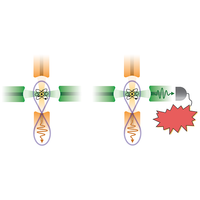
Phys. Rev. Lett. 135, 240802 (2025)
Quantum Information, Science, and Technology
Uniting Quantum Processing Nodes of Cavity-Coupled Ions with Rare-Earth Quantum Repeaters Using Single-Photon Pulse Shaping Based on Atomic Frequency Comb
Article | Quantum Information, Science, and Technology | 2025-12-10 05:00 EST
P. Cussenot, B. Grivet, L. Feldmann, S. Wengerowsky, B. P. Lanyon, T. E. Northup, H. de Riedmatten, A. S. Sørensen, and N. Sangouard
We present an architecture for remotely connecting cavity-coupled trapped ions via a quantum repeater based on rare-earth-doped crystals. The main challenge for its realization lies in interfacing these two physical platforms, which produce photons with a typical temporal mismatch of one or two orde…
Phys. Rev. Lett. 135, 240803 (2025)
Quantum Information, Science, and Technology
First Evidence of Solar Neutrino Interactions on $^{13}\mathrm{C}$
Article | Particles and Fields | 2025-12-10 05:00 EST
M. Abreu et al. ( Collaboration)
The first evidence of solar neutrinos interacting with nuclei provides a test of the solar model as well as constitutes the lowest energy measurements of neutrino interactions on .
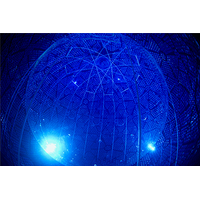
Phys. Rev. Lett. 135, 241803 (2025)
Particles and Fields
Magneto-Optical Trapping of Aluminum Monofluoride
Article | Atomic, Molecular, and Optical Physics | 2025-12-10 05:00 EST
J. E. Padilla-Castillo, J. Cai, P. Agarwal, P. Kukreja, R. Thomas, B. G. Sartakov, S. Truppe, G. Meijer, and S. C. Wright
A class of molecules with two valence electrons has been laser cooled and trapped for the first time.
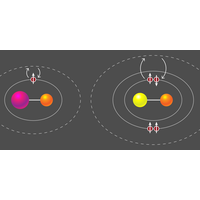
Phys. Rev. Lett. 135, 243401 (2025)
Atomic, Molecular, and Optical Physics
Measuring the Oscillation Frequency beyond the Diffraction Limit
Article | Atomic, Molecular, and Optical Physics | 2025-12-10 05:00 EST
Chao-Ning Hu, Jun Xin, and Xiao-Ming Lu
High-resolution array detectors are widely used in single-particle tracking, but their performance is limited by excess noise from background light and dark current. As pixel resolution increases, the diminished signal per pixel exacerbates susceptibility to noise, degrading tracking accuracy. To ov…
Phys. Rev. Lett. 135, 243802 (2025)
Atomic, Molecular, and Optical Physics
Optical Injection and Detection of Long-Lived Interlayer Excitons in van der Waals Heterostructures
Article | Condensed Matter and Materials | 2025-12-10 05:00 EST
Alperen Tüğen, Anna M. Seiler, Arthur Christianen, Kenji Watanabe, Takashi Taniguchi, Martin Kroner, and Ataç İmamoğlu
Interlayer excitons in semiconducting bilayers separated by insulating hexagonal boron nitride (-BN) layers constitute a promising platform for investigation of strongly correlated bosonic phases. Here, we report an optical method for the generation and characterization of long-lived interlayer exc…
Phys. Rev. Lett. 135, 246502 (2025)
Condensed Matter and Materials
Numerical Renormalization of Glassy Dynamics
Article | Statistical Physics; Classical, Nonlinear, and Complex Systems | 2025-12-10 05:00 EST
Johannes Lang, Subir Sachdev, and Sebastian Diehl
The quench dynamics of glassy systems are challenging. Because of aging, the system never reaches a stationary state but, instead, evolves on emergent scales that grow with its age. This slow evolution complicates field-theoretic descriptions, as the weak long-term memory and the absence of a statio…
Phys. Rev. Lett. 135, 247101 (2025)
Statistical Physics; Classical, Nonlinear, and Complex Systems
Strong Ergodicity Breaking in Dynamical Mean-Field Equations for Mixed $p$-Spin Glasses
Article | Statistical Physics; Classical, Nonlinear, and Complex Systems | 2025-12-10 05:00 EST
Vincenzo Citro and Federico Ricci-Tersenghi
The analytical solution to the out-of-equilibrium dynamics of mean-field spin glasses has profoundly shaped our understanding of glassy dynamics, which take place in many diverse physical systems. In particular, the idea that during the aging dynamics, the evolution becomes slower and slower but kee…
Phys. Rev. Lett. 135, 247102 (2025)
Statistical Physics; Classical, Nonlinear, and Complex Systems
Euler Buckling on Curved Surfaces
Article | Statistical Physics; Classical, Nonlinear, and Complex Systems | 2025-12-10 05:00 EST
Shiheng Zhao (赵世恒) and Pierre A. Haas
Euler buckling epitomizes mechanical instabilities: an inextensible straight elastic line in the plane buckles under compression when the compressive force reaches a critical value . But how does an elastic line buckle within a general curved surface? Here, we reveal that the classical inst…
Phys. Rev. Lett. 135, 247201 (2025)
Statistical Physics; Classical, Nonlinear, and Complex Systems
Active Quantum Flocks
Article | Polymers, Chemical Physics, Soft Matter, and Biological Physics | 2025-12-10 05:00 EST
Reyhaneh Khasseh, Sascha Wald, Roderich Moessner, Christoph A. Weber, and Markus Heyl
Flocks of animals represent a prominent archetype of collective behavior in the macroscopic classical world, where the constituents, such as birds, concertedly perform motions and actions as if being one single entity. Here, we address the so far open question of whether flocks can also form in the …
Phys. Rev. Lett. 135, 248302 (2025)
Polymers, Chemical Physics, Soft Matter, and Biological Physics
Physical Review X
Unveiling the Amorphous Ice Layer during Premelting Using AFM Integrating Machine Learning
Article | 2025-12-11 05:00 EST
Binze Tang, Chon-Hei Lo, Tiancheng Liang, Jiani Hong, Mian Qin, Yizhi Song, Duanyun Cao, Ying Jiang, and Limei Xu
A combination of AI-assisted high-resolution AFM and simulations expose an amorphous ice layer, revealing how ice transforms before melting.

Phys. Rev. X 15, 041048 (2025)
Review of Modern Physics
Colloquium: The cosmic dipole anomaly
Article | 2025-12-11 05:00 EST
Nathan Secrest, Sebastian von Hausegger, Mohamed Rameez, Roya Mohayaee, and Subir Sarkar
The cosmological principle, which states that the Universe must be statistically isotropic and homogeneous on large scales, is a foundational principle of the standard model of cosmology, known as lambda cold dark matter (CDM). The validity of this principle can be tested by assessing the compatibility of a dipole anisotropy in the large-scale distribution of matter with the dipole observed in the cosmic microwave background, interpreted in the CDM model as due to our local peculiar motion. This Colloquium describes the methodology for such a test and presents its outcome based on the analysis of recent large catalogs of radio galaxies and quasars, revealing a significant inconsistency between the two dipoles. The authors review these recent findings, as well as potential biases, systematic issues, and alternate interpretations, and discuss how this anomaly could challenge the standard description of our Universe based on the CDM model.
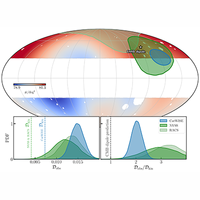
Rev. Mod. Phys. 97, 041001 (2025)
arXiv
Phonon-assisted tunneling in Jahn-Teller E$ \times $e impurity centers in crystals
New Submission | Materials Science (cond-mat.mtrl-sci) | 2025-12-11 20:00 EST
Tunnel transitions between differently distorted states of impurity centers in crystals with the E$ \times $ e Jahn-Teller effect are considered, taking into account the change in phonon dynamics during the transitions. Both linear and quadratic vibronic interactions are taken into account. It was found that the phonon scattering attending tunnelling, leads not only to a broadening of the energy spectrum of the transitions, but also to a deterioration in resonance. This strongly affects the temperature dependence of tunneling. The results obtained are consistent with measurements of ultrasound attenuation of Ni2+ ions in Al2O3 crystal. A notable feature of E$ \times $ e tunneling is the existence of a window of values for quadratic vibronic interaction at which its effect disappears, and tunnlling remains coherent at sufficiently high temperatures.
Materials Science (cond-mat.mtrl-sci)
12 pages, 2 figures
Anisotropic scattering rates in strain-tuned Sr$_2$RuO$_4$
New Submission | Strongly Correlated Electrons (cond-mat.str-el) | 2025-12-11 20:00 EST
Ben Currie, David T. S. Perkins, Evgeny Kozik, Joseph J. Betouras, Jörg Schmalian
Motivated by recent angle-resolved photoemission spectroscopy (ARPES) experiments, we analyze the temperature, frequency, and momentum dependence of the single-particle scattering rate in a model of the $ \gamma$ -band of Sr$ _2$ RuO$ _4$ under strain, with particular emphasis on the behavior near the Lifshitz transition where the Fermi energy crosses a single Van Hove point. While the scattering rate is only moderately anisotropic at zero strain, we find that it becomes strongly anisotropic at the Lifshitz point. At the lowest energies, we recover the expected universal behavior: the scattering rate varies (ignoring logarithmic corrections) as $ \tau^{-1}\sim \omega $ at the Van Hove point and as $ \tau^{-1}\sim \omega^{3/2}$ away from it. At higher energies, however, corrections of order $ \omega^2$ become important in both regimes. We show that the experimentally observed behavior $ \tau^{-1} \sim \omega^{\alpha}$ with $ \alpha \approx 1.4(2)$ at the Van Hove point can be quantitatively explained by a superposition of linear and quadratic contributions to the scattering rate, which are comparable in magnitude at the intermediate energies probed by experiment, rather than in terms of a new universal power law. We further predict a distinctive anisotropy, strain dependence, and a non-monotonic frequency dependence of the scattering rate at a Lifshitz transition, all of which may be directly tested in experiments.
Strongly Correlated Electrons (cond-mat.str-el), Superconductivity (cond-mat.supr-con)
10 pages, 7 figures
How a bilayer Nickelate superconducts: a Quantum Monte Carlo study
New Submission | Strongly Correlated Electrons (cond-mat.str-el) | 2025-12-11 20:00 EST
Using determinant Quantum Monte Carlo, we investigate the interplay between doping, inter-layer tunneling and onsite Hund’s coupling in stabilizing superconductivity (SC) in a two-orbital model for the bilayer Nickelate $ \text{La}_3\text{Ni}_2\text{O}_7$ . With realistic dispersion and for certain values of the interaction parameters, the auxiliary-field-decoupled fermion Hamiltonian has Kramers anti-unitary symmetries which guarantee the absence of a sign problem. The same anti-unitary symmetries can also be used to show there is a second instability towards $ (\pi,\pi)$ exciton condensation in the strong interaction limit. We indicate the possible connection between this exciton order and the enigmatic density wave state observed in experiment, and clarify the decisive role played by the inter-layer tunneling in the competition between SC and exciton condensation. Finally, possible directions on how to enhance the SC transition temperature and stabilize the SC phase are also discussed.
Strongly Correlated Electrons (cond-mat.str-el), Superconductivity (cond-mat.supr-con)
Swimming against a superfluid flow: Self-propulsion via vortex-antivortex shedding in a quantum fluid of light
New Submission | Quantum Gases (cond-mat.quant-gas) | 2025-12-11 20:00 EST
Myrann Baker-Rasooli, Tangui Aladjidi, Tiago D. Ferreira, Alberto Bramati, Mathias Albert, Pierre-Élie Larré, Quentin Glorieux
A superfluid flows without friction below a critical velocity, exhibiting zero drag force on impurities. Above this threshold, superfluidity breaks down, and the internal energy is redistributed into incoherent excitations such as vortices. We demonstrate that a finite-mass, mobile impurity immersed in a flowing two-dimensional paraxial superfluid of light can \textit{swim} against the superfluid current when this critical velocity is exceeded. This self-propulsion is achieved by the periodic emission of quantized vortex-antivortex pairs downstream, which impart an upstream recoil momentum that results in a net propulsive force. Analogous to biological systems that minimize effort by exploiting wake turbulence, the impurity harnesses this vortex backreaction as a passive mechanism of locomotion. Reducing the impurity dynamics to the motion of its center of mass and using a point-vortex model, we quantitatively describe how this mechanism depends on the impurity geometry and the surrounding flow velocity. Our findings establish a fundamental link between internal-energy dissipation in quantum fluids and concepts of self-propulsion in active-matter systems, and opens new possibilities for exploiting vortices for controlled quantum transport at the microscale.
Quantum Gases (cond-mat.quant-gas), Soft Condensed Matter (cond-mat.soft), Quantum Physics (quant-ph)
Main: 7 pages, 3 figures Supp: 6 pages, 6 figures
Extreme statistics as a probe of the superfluid to Bose-glass Berezinskii-Kosterlitz-Thouless transition
New Submission | Disordered Systems and Neural Networks (cond-mat.dis-nn) | 2025-12-11 20:00 EST
Jeanne Colbois, Natalia Chepiga, Shaffique Adam, Gabriel Lemarié, Nicolas Laflorencie
Recent studies of delocalization-localization transitions in disordered quantum chains have highlighted the role of rare, chain-breaking events that favor localization, in particular for high-energy eigenstates related to many-body localization. In this context, we revisit the random-field XXZ spin-1/2 chain at zero temperature with ferromagnetic interactions, equivalent to interacting fermions or hard-core bosons in a random potential with attractive interactions. We argue that localization in this model can be characterized by chain-breaking events, which are probed by the extreme values of simple local observables, such as the on-site density or the local magnetization, that are readily accessible in both experiments and numerical simulations. Adopting a bosonic language, we study the disorder-induced Berezinskii-Kosterlitz-Thouless (BKT) quantum phase transition from superfluid (SF) to Bose glass (BG), and focus on the strong disorder regime where localization is driven by weak links. Based on high-precision density matrix renormalization group simulations, we numerically show that extreme local densities accurately capture the BKT transition, even for relatively short chains ranging from a few dozen to a hundred sites. We also discuss the SF-BG transition in the weak disorder regime, where finite-size effects pose greater challenges. Overall, our work seeks to establish a solid foundation for using extreme statistics of local observables, such as density, to probe delocalization-localization transitions in disordered quantum chains, both in the ground state and at high energy.
Disordered Systems and Neural Networks (cond-mat.dis-nn), Quantum Gases (cond-mat.quant-gas), Strongly Correlated Electrons (cond-mat.str-el), Quantum Physics (quant-ph)
9+6 pages; 8+10 figures
Beyond Ginibre statistics in open Floquet chaotic systems with localized leaks
New Submission | Statistical Mechanics (cond-mat.stat-mech) | 2025-12-11 20:00 EST
Edson M. Signor, Miguel A. Prado Reynoso, Bidhi Vijaywargia, Sandra D. Prado, Lea F. Santos
We show that the spectral properties of driven quantum systems with a classically chaotic counterpart and spatially localized openness, such as optical or microwave billiards with leaks, deviate from predictions of Ginibre ensembles. Our analysis focuses on the leaky quantum standard map (QSM) of the kicked rotor. We compare its complex resonance spectrum with both Ginibre and truncated circular orthogonal ensembles (TCOEs). We find that the long-lived resonances follow TCOE statistics, reproducing the density of states and level spacing correlations, but depart from Ginibre predictions. Short-lived resonances, however, do not show a clear correspondence with either random-matrix ensemble. We also demonstrate that increasing the leak size takes the density of states of the TCOE toward the Ginibre limit, yet their spectral correlations remain distinct.
Statistical Mechanics (cond-mat.stat-mech), Quantum Physics (quant-ph)
12 pages, 7 figures
Microscopic Theory Revealing Dual Field-Induced Transitions in Spin-1/2 Screw-Chain Magnets
New Submission | Strongly Correlated Electrons (cond-mat.str-el) | 2025-12-11 20:00 EST
Mandev Bhullar, Philip Richard, Hae-Young Kee
We develop a microscopic theory for pseudospin-$ \frac{1}{2}$ screw-chain compounds with spin-orbit coupling that goes beyond the phenomenological site-dependent $ g$ -tensor description traditionally used for XXZ-like BaCo$ _2$ V$ _2$ O$ _8$ and related materials. Starting from the symmetry-allowed $ JK\Gamma$ Hamiltonian with Heisenberg $ J$ , Kitaev $ K$ , and off-diagonal $ \Gamma$ interactions, we show that the $ \Gamma$ interaction naturally generates the four-sublattice pattern associated with the crystal’s screw symmetry. Using the density matrix renormalization group, we identify two distinct field-induced transitions. The first is a continuous transition into an intermediate phase, where the symmetry responsible for the two-fold ground-state degeneracy is broken. The second is a first-order transition into the high-field phase, characterized by a discontinuous jump in the spin-spin correlator. Entanglement-entropy scaling confirms that the first transition belongs to the Ising critical point with the central charge $ 1/2$ . These results establish a microscopic framework for pseudospin-$ \frac{1}{2}$ screw-chain systems such as Co$ ^{2+}$ materials, uncover an intermediate phase whose width increases with $ \Gamma$ , and provide guidance for systematic exploration of additional field orientations and structural distortions.
Strongly Correlated Electrons (cond-mat.str-el)
6 pages, 4 figures; 6 additional pages of supplemental information containing 3 figures
On modeling quantum point contacts in quantum Hall systems
New Submission | Mesoscale and Nanoscale Physics (cond-mat.mes-hall) | 2025-12-11 20:00 EST
Quantum point contacts (QPC) are a key instrument in investigating the physics of edge excitations in the quantum Hall effect. However, at not-so-high bias voltage values, the predictions of the conventional point QPC model often deviate from the experimental data both in the integer and (more prominently) in the fractional quantum Hall regime. One of the possible explanations for such behaviors is the dependence of the tunneling between the edges on energy, an effect not present in the conventional model. Here we introduce two models that take QPC spatial extension into account: wide-QPC model that accounts for the distance along which the edges are in contact; long-QPC model accounts for the fact that the tunneling amplitude originates from a finite bulk gap and a finite distance between the two edges. We investigate the predictions of these two models in the integer quantum Hall regime for the energy dependence of the tunneling amplitude. We find that these two models predict opposite dependences: the amplitude decreasing or increasing away from the Fermi level. We thus elucidate the effect of the QPC geometry on the energy dependence of the tunneling amplitude and investigate its implications for transport observables.
Mesoscale and Nanoscale Physics (cond-mat.mes-hall), Strongly Correlated Electrons (cond-mat.str-el), Quantum Physics (quant-ph)
Orbital magnetization from parallel transport of Bloch states
New Submission | Mesoscale and Nanoscale Physics (cond-mat.mes-hall) | 2025-12-11 20:00 EST
Johannes Mitscherling, Jan Priessnitz, Libor Šmejkal
Quantum geometric formulations of linear and nonlinear responses can be constructed from a single building block in the form of a gauge-invariant interband transition operator. Here, we identify a second building block for quantum geometry: a band-resolved adiabatic connection operator that captures the noncommutativity between band projectors and their momentum derivatives. The band-resolved adiabatic connection operator, first introduced in the theory of adiabatic driving, serves as a generalized angular momentum within the state manifold of single bands, and we employ it to reformulate expressions for the band-resolved orbital magnetic moment. This form provides a complementary geometric interpretation alongside the multiband separation between energetic- and quantum-state properties by the two-state Berry curvature. Our formalism allows us to present formulas valid for both nondegenerate and degenerate bands, thereby removing the limitations of the common Bloch-state formula. We illustrate our theory by calculating a large orbital magnetization emerging without spin-orbit coupling in a spin-compensated, noncoplanar anomalous Hall magnet with degenerate bands.
Mesoscale and Nanoscale Physics (cond-mat.mes-hall), Materials Science (cond-mat.mtrl-sci), Strongly Correlated Electrons (cond-mat.str-el)
First-Principles Investigation of Mechanical, Lattice Dynamical, and Thermodynamic Properties of BaTiO3 Polymorphs
New Submission | Materials Science (cond-mat.mtrl-sci) | 2025-12-11 20:00 EST
Arpon Chakraborty, M. N. H. Liton, M. S. I. Sarker, M. M. Rahman, M. K. R. Khan
BaTiO3 (BTO) is one of the most interesting classes of perovskite materials. The present study has been complied to explore some physical properties such as mechanical, vibrational, thermo-physical, and temperature dependent thermodynamic properties of BaTiO3 polymorphs comprehensively using first principles calculations based on density functional theory (DFT). All the polymorphs are found to be mechanically stable. The polymorphs are elastically anisotropic, machinable and have high hardness and toughness. The cubic phase possesses brittle nature while the other phases show ductile character. The high melting point of the polymorphs reveals that they can be used in tough situations. Also, three of the polymorphs can be used as thermal barrier coating. Moreover, we have also calculated the lattice dynamics and found improved results compared to the available results in the literature. In addition, the temperature and pressure dependent thermodynamic parameters of the polymorphs are evaluated and analyzed for the first time using the quasi-harmonic Debye model. The thermodynamic properties suggested that all phases would be good choices for application in the fields of automobiles, cooling systems, thermal electronic devices, thermal exchangers, and space crafts.
Materials Science (cond-mat.mtrl-sci)
Gate-Tunable Superconducting Spin Valve in a van der Waals Ferromagnet/Superconductor/Ferromagnet Trilayer
New Submission | Superconductivity (cond-mat.supr-con) | 2025-12-11 20:00 EST
A. S. Ianovskaia, G. A. Bobkov, A. M. Bobkov, I.V. Bobkova
We theoretically demonstrate a gate-tunable superconducting spin valve effect (SVE) in a van der Waals (vdW) heterostructure composed of a monolayer superconductor (S) sandwiched between two ferromagnetic (F) monolayers (F/S/F). By electrostatically gating the ferromagnetic layers to modulate their chemical potentials, the system can be continuously tuned between the standard, inverse and triplet (non-monotonic) SVE regimes within the same device. This tunability originates from the gate-controlled hybridization between the superconducting and ferromagnetic electronic spectra, which determines the effective exchange field induced in the S-layer. Furthermore, we reveal that gating enables exotic, non-BCS temperature dependencies of the superconducting order parameter, including reentrant superconductivity, bistable states, first-order phase transitions, and the emergence of superconductivity at finite temperatures. Our results establish vdW F/S/F trilayers as a versatile and highly controllable platform for superconducting spintronics, where external gate voltages can selectively activate different spin-valve functionalities and unconventional superconducting states.
Superconductivity (cond-mat.supr-con), Mesoscale and Nanoscale Physics (cond-mat.mes-hall)
Magnetochiral eigenstate of the Heisenberg chain with spontaneous symmetry breaking
New Submission | Strongly Correlated Electrons (cond-mat.str-el) | 2025-12-11 20:00 EST
Tigran A. Sedrakyan, Junjun Pang, Chenan Wei, Baigeng Wang
We propose a protocol to construct atypical high-energy eigenstates in quantum systems by using ground states of Hamiltonians deformed by conserved charges. For the spin-1/2 Heisenberg XXX chain we study a chiral Hamiltonian built from the scalar-chirality charge and total magnetization and solve it exactly by Bethe ansatz. Its ground state is a magnetized, current-carrying XXX eigenstate that breaks SU(2), time-reversal, and parity yet stays critical. This zero-entropy macrostate shows ballistic spin and chirality transport and admits realistic cold-atom and Rydberg platforms.
Strongly Correlated Electrons (cond-mat.str-el), Statistical Mechanics (cond-mat.stat-mech), High Energy Physics - Theory (hep-th)
6 pages, 2 figures
Transport Scaling and Critical Tilt Effects in Disordered 2D Dirac Fermions
New Submission | Disordered Systems and Neural Networks (cond-mat.dis-nn) | 2025-12-11 20:00 EST
Two-dimensional (2D) Dirac fermions occur ubiquitously in condensed matter systems from topological phases to quantum critical points. Since the advent of topological semimetals, where the dispersion is often tilted around the band crossing where the Dirac fermion can appear, tilt has emerged as a key handle that controls physical properties. We study how tilt affects the transport and spectral properties of tilted 2D Dirac fermions under scalar disorder. Although our spectral analyses always show conformity to appropriate Gaussian ensembles, suggestive of delocalization, the conductivity scaling $ g(L)$ shows a surprising richness. For a single Dirac node, relevant for quantum Hall transitions and topological insulator surface states, we find $ g(L)\sim a_1\log(L)$ with a tilt-dependent coefficient $ a_1>0$ . Interestingly, when the tilt and transport directions are aligned, $ a_1$ and hence $ g(L)$ shows a spike at the critical point between the type-I and type-II regimes of the Dirac node. For systems with two Dirac nodes with unbroken time-reversal symmetry, pertinent to quasi-2D Dirac materials, we find $ g(L)\sim L^{a_1}(\log L)^{a_2}$ . However, we find a surprising tension between tilt along and perpendicular to the transport directions. For the former, $ a_1$ changes sign as a function of tilt, hinting at a tilt-driven localization-delocalization transition, while $ a_1<0$ for all tilts in the latter case, implying localization. These localized behaviors also reveal tension with the delocalization seen in spectral properties and suggest differing localization tendencies in real and Hilbert spaces. Overall, our work identifies tilt as an essential control parameter that uncovers rich and unconventional transport physics in 2D Dirac materials.
Disordered Systems and Neural Networks (cond-mat.dis-nn), Mesoscale and Nanoscale Physics (cond-mat.mes-hall), Strongly Correlated Electrons (cond-mat.str-el)
18 pages, 13 figures
Electronic structure of InP/ZnSe quantum dots: effect of tetrahedral shape, valence band coupling and excitonic interactions
New Submission | Mesoscale and Nanoscale Physics (cond-mat.mes-hall) | 2025-12-11 20:00 EST
Josep Planelles, Juan I. Climente
The energy levels and optical transitions of tetrahedral core/shell InP/ZnSe quantum dots (QDs) are investigated by means of multi-band k$ \cdot$ p theory. Despite the $ \overline{T}d$ symmetry relaxing spherical selection rules, the near-band-edge excitonic spectrum is reminiscent of that obtained for spherical nanocrystals. Exceptions appear in large (red-emitting) QDs, where transitions violating the (quasi-)angular momentum selection rule ($ \Delta L=0,\pm 2$ ) are observed, and the ground state does not become dark ($ P{3/2}$ -like). Valence band coupling is important in determining the symmetry, degeneracy and energy of hole states, with split-off holes playing a greater role than in CdSe QDs. The ($ 1S_e$ -like) electron ground state exhibits moderate delocalization into the ZnSe shell. The confinement regime is then strong even for thick shells, which results in Coulomb interactions being mostly perturbative. Electrons remain largely localized in the InP core even in negative trions, despite electron-electron repulsions. At the same time, the asymmetry between Coulomb attractions and repulsions leads to negative (positive) trions being bound (antibound) by tens of meV. The biexciton binding energy switches from positive to negative, depending on the QD size.
Mesoscale and Nanoscale Physics (cond-mat.mes-hall)
6 figures
AI-Driven Expansion and Application of the Alexandria Database
New Submission | Materials Science (cond-mat.mtrl-sci) | 2025-12-11 20:00 EST
Théo Cavignac (1), Jonathan Schmidt (2), Pierre-Paul De Breuck (1), Antoine Loew (1), Tiago F. T. Cerqueira (3), Hai-Chen Wang (1), Anton Bochkarev (4), Yury Lysogorskiy (4), Aldo H. Romero (5), Ralf Drautz (4), Silvana Botti (1), Miguel A. L. Marques (1) ((1) Research Center Future Energy Materials and Systems of the University Alliance Ruhr and ICAMS, Ruhr University Bochum, Bochum, Germany, (2) Department of Materials, ETH Zürich, Zürich, Switzerland, (3) CFisUC, Department of Physics, University of Coimbra, Coimbra, Portugal, (4) ICAMS, Ruhr-Universität Bochum and ACEworks GmbH, Bochum, Germany, (5) Department of Physics, West Virginia University, Morgantown, USA)
We present a novel multi-stage workflow for computational materials discovery that achieves a 99% success rate in identifying compounds within 100 meV/atom of thermodynamic stability, with a threefold improvement over previous approaches. By combining the Matra-Genoa generative model, Orb-v2 universal machine learning interatomic potential, and ALIGNN graph neural network for energy prediction, we generated 119 million candidate structures and added 1.3 million DFT-validated compounds to the ALEXANDRIA database, including 74 thousand new stable materials. The expanded ALEXANDRIA database now contains 5.8 million structures with 175 thousand compounds on the convex hull. Predicted structural disorder rates (37-43%) match experimental databases, unlike other recent AI-generated datasets. Analysis reveals fundamental patterns in space group distributions, coordination environments, and phase stability networks, including sub-linear scaling of convex hull connectivity. We release the complete dataset, including sAlex25 with 14 million out-of-equilibrium structures containing forces and stresses for training universal force fields. We demonstrate that fine-tuning a GRACE model on this data improves benchmark accuracy. All data, models, and workflows are freely available under Creative Commons licenses.
Materials Science (cond-mat.mtrl-sci), Artificial Intelligence (cs.AI)
Symmetry-resolved magnetoelastoresistance in multivalley bismuth
New Submission | Mesoscale and Nanoscale Physics (cond-mat.mes-hall) | 2025-12-11 20:00 EST
Suguru Hosoi, Fumu Tachibana, Mai Sakaguchi, Kentaro Ishida, Masaaki Shimozawa, Koichi Izawa, Yuki Fuseya, Yuto Kinoshita, Masashi Tokunaga
We report a symmetry-resolved study of longitudinal magnetoelastoresistance (MER) in the multivalley material bismuth, with the current, uniaxial stress, and magnetic field all applied along the binary axis. The magnitude of MER exhibits a steep increase at low magnetic fields, reaches a peak, and then gradually decreases at higher fields. By decomposing the strain response into symmetric and antisymmetric symmetry channels, we reveal contrasting magnetic field dependencies. Despite the overall non-monotonic field dependence of the MER, the symmetric component remains nearly constant under magnetic fields, suggesting that the valleys in bismuth preserve a rigid-band nature against strain even in the presence of a magnetic field. In contrast, the antisymmetric component, associated with mobility anisotropy, dominates the MER response in a magnetic field. At low magnetic fields, the applied field effectively modifies the apparent mobility of each valley, leading to an enhancement in the magnitude of the antisymmetric MER. At higher fields, field-induced valley polarization further modifies this mobility anisotropy by altering the contributions from each valley’s mobility, accounting for the moderate suppression of the MER. These findings demonstrate that symmetry-resolved MER serves as a powerful probe of valley-dependent electronic states and provides a fundamental platform for understanding the interplay between magnetic field, strain, and charge transport.
Mesoscale and Nanoscale Physics (cond-mat.mes-hall), Materials Science (cond-mat.mtrl-sci)
8 pages, 5 figures, to be published in Phs. Rev. B
Trion Formation Hampers Single Quantum Dot Performance in Silane-Coated FAPbBr3 Quantum Dots
New Submission | Materials Science (cond-mat.mtrl-sci) | 2025-12-11 20:00 EST
Jessica Kline, Shaoni Kar, Benjamin F. Hammel, Yunping Huang, Zixu Huang, Seth R. Marder, Sadegh Yazdi, Gordana Dukovic, Bernard Wenger, Henry Snaith, David S. Ginger
We explore silane-coated formamidinium lead bromide (FAPbBr3) quantum dots as single photon emitters and compare them to FAPbBr3 quantum dots passivated with a phosphoethylammonium derivative (PEAC8C12), which represents current state-of-the-art in zwitterionic molecular surface ligand passivation. We compare properties including single-photon purity (g2(t)), linewidth, blinking, and photostability. We find that at room temperature, these silane-coated dots perform comparably to the PEAC8C12 passivation in terms of single-photon performance metrics, while exhibiting improvements in photostability. However, we find that at 4K, silane-coated FAPbBr3 quantum dots perform worse than the PEAC8C12-passivated samples, exhibiting faster blue-shifting and photobleaching under illumination. Analysis of fluorescence lifetime intensity distributions from the photon-counting data indicates increased efficiency of fast non-radiative processes in the silane-coated quantum dots at 4K. We propose a trion related degradation pathway at low temperatures that is consistent with the observed kinetics and estimate that at 4K with 6.1 uJ/cm2, 472 nm excitation the silane-coated quantum dots build up double the trion population of their PEAC8C12-passivated counterparts.
Materials Science (cond-mat.mtrl-sci)
Skyrmion Sliding Switch in a 90-nm-Wide Nanostructured Chiral Magnet
New Submission | Mesoscale and Nanoscale Physics (cond-mat.mes-hall) | 2025-12-11 20:00 EST
Yaodong Wu, Jialiang Jiang, Weiwei Wang, Lingyao Kong, Shouguo Wang, Mingliang Tian, Haifeng Du, Jin Tang
Magnetic skyrmions, renowned for their fascinating electromagnetic properties, hold potential for next-generation topological spintronic devices. Recent advancements have unveiled a rich tapestry of 3D topological magnetism. Nevertheless, the practical application of 3D topological magnetism in the development of topological spintronic devices remains a challenge. Here, we showcase the experimental utilization of 3D topological magnetism through the exploitation of skyrmion-edge attractive interactions in 90-nm-wide confined chiral FeGe and CoZnMn magnetic nanostructures. These attractive interactions result in two degenerate equilibrium positions, which can be naturally interpreted as binary bits for a skyrmion sliding switch. Our theory and simulation reveal current-driven spiral motions of skyrmions, governed by the anisotropic gradient of the potential landscape. Our experiments validate the theory that predicts a tunable threshold current density via magnetic field and temperature modulation of the energy barrier. Our results offer an approach for implementing universal on-off switch functions in 3D topological spintronic devices.
Mesoscale and Nanoscale Physics (cond-mat.mes-hall), Materials Science (cond-mat.mtrl-sci), Applied Physics (physics.app-ph)
Published in Nano Letters
Current-controlled creations, deletions, and topological transformations of a single magnetic antiskyrmion in nanostructured cells
New Submission | Mesoscale and Nanoscale Physics (cond-mat.mes-hall) | 2025-12-11 20:00 EST
Yaodong Wu, Jialiang Jiang, Lingyao Kong, Wei Liu, Huanhuan Zhang, Shouguo Wang, Mingliang Tian, Haifeng Du, Jin Tang
Topological magnetic solitons have emerged as promising candidates for information carriers in spintronic devices, thanks to their fascinating electromagnetic properties. For fundamental device applications, the ability to electrically manipulate individual solitons is crucial. However, electrical manipulation of single antiskyrmions has been rarely demonstrated. In this work, we present current-controlled manipulations, encompassing the creation, deletion, and topological transformation of a single antiskyrmion within FeNiPdP nanostructured cells at room temperature. This nanostructure is uniquely designed with dimensions of about 400 nm in width and length, enabling the stabilization of a single antiskyrmion. By simply adjusting the density of nanosecond single-pulsed currents, we achieve the reversible creation and deletion of single antiskyrmions. Moreover, we uncover a rich variety of current-controlled topological transformations among individual antiskyrmions, skyrmions, bubbles, and ferromagnetic states. Our experimental findings are corroborated by micromagnetic simulations, highlighting the pivotal role of current-induced combined effects, such as spin transfer torque and Joule heating. Our results hold potential for advancing antiskyrmion-based device applications.
Mesoscale and Nanoscale Physics (cond-mat.mes-hall), Materials Science (cond-mat.mtrl-sci)
Published in Nature Communications
Creating and Deleting a Single Dipolar Skyrmion by Surface Spin Twists
New Submission | Mesoscale and Nanoscale Physics (cond-mat.mes-hall) | 2025-12-11 20:00 EST
Jin Tang, Jialiang Jiang, Yaodong Wu, Lingyao Kong, Yihao Wang, Junbo Li, Y. Soh, Yimin Xiong, Shouguo Wang, Mingliang Tian, Haifeng Du
We report deterministic operations on single dipolar skyrmions confined in nanostructured cuboids using in-plane currents. We achieve highly reversible writing and deleting of skyrmions in the simple cuboid without any artificial defects or pinning sites. The current-induced creation of skyrmions is well-understood through the spin-transfer torque acting on surface spin twists of the spontaneous 3D ferromagnetic state, caused by the magnetic dipole-dipole interaction of the uniaxial Fe3Sn2 magnet with a low-quality factor. Current-induced deletions of skyrmions result from the combined effects of magnetic hysteresis and Joule thermal heating. Our results are replicated consistently through 3D micromagnetic simulations. Our approach offers a viable method for achieving reliable single-bit operations in skyrmionic devices for applications such as random-access memories.
Mesoscale and Nanoscale Physics (cond-mat.mes-hall), Materials Science (cond-mat.mtrl-sci)
Published in Nano Letters
Predicting tunable nonreciprocal spin wave generation mediated by interfacial Dzyaloshinskii-Moriya interaction in magnonic heterostructures
New Submission | Materials Science (cond-mat.mtrl-sci) | 2025-12-11 20:00 EST
Cameron A McEleney, Karen L Livesey, Robert E Camley, Rair Macêdo
Thin, metallic magnetic films can support nonreciprocal spin waves due to the interfacial Dzyaloshinskii-Moriya interaction (iDMI). However, these films typically have high damping, making spin wave propagation distances short (less than one micrometer). In this work, we theoretically study a thin ferromagnetic strip with iDMI and excite spin waves by driving a central segment of the strip. Spin waves propagate with different amplitudes to the left versus to the right from the driving region (i.e. nonreciprocity occurs) due to the iDMI. Our calculation based on spin-wave-dispersion plus our micromagnetic simulations both show that changing the driving segment width, driving frequency and static applied field strength tunes the nonreciprocity. Our calculation based on spin-wave-dispersion, using a so-called “overlap function” will allow researchers to predict conditions of maximum nonreciprocity, without the need for computational solvers. Moreover, to circumvent the issue of short propagation distances, we propose a geometry where iDMI is only present in the driving region and low-damping materials comprise the remainder of the strip. Our calculations show significant spin wave amplitudes over several microns from the excitation region.
Materials Science (cond-mat.mtrl-sci), Other Condensed Matter (cond-mat.other), Applied Physics (physics.app-ph), Computational Physics (physics.comp-ph)
Auto-3DPFM: Automating Polarization-Vector Mapping at the Nanoscale
New Submission | Materials Science (cond-mat.mtrl-sci) | 2025-12-11 20:00 EST
Ralph Bulanadi, Marti Checa, Michelle Wang, Franck Rothen, John Lasseter, Sumner B. Harris, Daniel Sando, Valanoor Nagarajan, Liam Collins, Stephen Jesse, Rama Vasudevan, Yongtao Liu
The functional properties of ferroelectric materials are strongly influenced by ferroelectric polarization orientation; as such, access to consistent and precise characterization of polarization vectors is of substantial importance to ferroelectrics research. Here, we develop a fully automated three-dimensional piezoresponse force microscopy (Auto-3DPFM) technique automating all essential steps in interferometric PFM for 3D polarization vector characterization, including laser alignment, tip calibration and approach, image acquisition, polarization vector reconstruction, and visualization. The automation reduces the experimental burden of ferroelectric polarization vector characterization, while the back-and-forth calibration ensures consistency and reproducibility of 3D polarization reconstruction. An algorithmic workflow is also developed to identify domain walls and calculate their characteristic angles via a spatial vector-angle-difference method, presenting one unique capability enabled by Auto-3DPFM that is not accessible with traditional PFM techniques. Beyond representing a significant step forward in 3D polarization mapping, Auto-3DPFM promises to accelerate discovery via high-throughput and autonomous characterization in ferroelectric materials research. When integrated with machine learning and adaptive sampling strategies in self-driving labs, Auto-3DPFM will serve as a valuable tool for advancing ferroelectric physics and microelectronics development.
Materials Science (cond-mat.mtrl-sci)
Thermal liquid-gas phase transition in a quasi-one-dimensional dipolar Fermi gas
New Submission | Quantum Gases (cond-mat.quant-gas) | 2025-12-11 20:00 EST
Lanxuan Gao, Koki Takayama, Hiroyuki Tajima, Takahiro M. Doi, Haozhao Liang
We theoretically investigate thermodynamic properties in a quasi-one-dimensional single-component dipolar Fermi gas at finite temperatures. The self-bound fermionic droplet can be achieved by exchange correlations with the long-range dipole-dipole interactions under the quasi-one-dimensional confinement, where the interaction can be tuned by tilting the dipoles along the system coordinate. Using the Hartree-Fock approximation, we show how the liquid-gas phase transition occurs in this system, and elucidate the finite-temperature phase structure consisting of the gas phase, liquid phase, their coexistence, and the spinodal phase. We also discuss its similarity with the liquid-gas phase transition in nuclear matter through the comparison with phenomenological models. Our results would be useful for an interdisciplinary understanding of self-bound fermionic matter as well as an analog quantum simulation of nuclear systems.
Quantum Gases (cond-mat.quant-gas), Nuclear Theory (nucl-th)
10 pages, 7 figures
Observation of ubiquitous charge correlations and hidden quantum critical point in hole-doped kagome superconductors
New Submission | Strongly Correlated Electrons (cond-mat.str-el) | 2025-12-11 20:00 EST
Ilija K. Nikolov, Giuseppe Allodi, Adrien Rosuel, Ginevra Corsale, Anshu Kataria, Pietro Bonfà, Roberto De Renzi, Andrea Capa Salinas, Stephen D. Wilson, Marc-Henri Julien, Samuele Sanna, Vesna F. Mitrović
The interplay between superconductivity and charge-density wave (CDW) order, and its evolution with carrier density, is central to the physics of many quantum materials, notably high-$ T_c$ cuprates and kagome metals. Hole-doped kagome compounds exhibit puzzling double-dome superconductivity and, as chemical substitution inevitably introduces quenched disorder, their properties remain poorly understood. Here, by leveraging the sensitivity of nuclear quadrupole resonance to local and static orderings, we uncover new features, primarily the incipient and fragmented CDW phases, in the charge landscape of CsV$ _3$ Sb$ _{5-x}$ Sn$ _x$ . Static CDW puddles are observed well above the transition temperature, a hallmark of pinning by defects. Their doping and temperature evolution indicate that, in the absence of disorder, the inverse Star-of-David $ \pi$ -shifted (ISD-$ \pi$ ) CDW order would vanish near $ x=0.12$ , between the two superconducting domes. This critical doping represents a hidden quantum critical point. Nevertheless, the ISD-$ \pi$ pattern persists well beyond previous reports, although its volume fraction is progressively reduced up to the critical doping at which it saturates. We establish that carrier doping promotes fragmentation of the ISD-$ \pi$ order, whereas randomness preserves the ISD-$ \pi$ patches.
Strongly Correlated Electrons (cond-mat.str-el)
A physics-augmented neural network framework for modeling and detecting thermo-visco-plastic behavior
New Submission | Materials Science (cond-mat.mtrl-sci) | 2025-12-11 20:00 EST
Reese E. Jones, Asghar Jadoon, D. Thomas Seidl, Jan N. Fuhg
Although considerable attention has been devoted to the development of models for isothermal, rate-independent plasticity, many high-consequence performance assessments involve viscoplastic processes that generate substantial heat. In addition, materials may transit from a nearly isothermal, rate-independent regime to a viscous, temperature-dependent regime during these processes, which makes modeling more challenging. In this work, we develop a physics-augmented neural network (PANN) framework for modeling general temperature-dependent, rate-dependent inelastic processes firmly based on physical principles, including the second law of thermodynamics and coordinate equivariance. These embedded properties are enabled by a number of architectural innovations in the structure and training of an input convex and potential-based neural ordinary differential equation framework. The resulting neural network models are capable of representing a wide spectrum of rate- and temperature-dependence ranging from isothermal, rate-independent elastic-plastic phenomenology to rate-dependent fully viscous inelastic behavior, as we demonstrate. We also show that the framework is capable of modeling complex microstructural inelasticity and predicting the conversion of plastic work to heating when calibrated to stress-temperature observations.
Materials Science (cond-mat.mtrl-sci)
30 pages, 18 figures, 6 tables
Single-crystalline high-quality beta-Ga2O3 pseudo-substrate on sapphire through sputtering for epitaxial deposition
New Submission | Materials Science (cond-mat.mtrl-sci) | 2025-12-11 20:00 EST
Guangying Wang (1), Shuwen Xie (1), William Brand (2), Saleh Ahmed Khan (3), Ahmed Ibreljic (3), Darryl Shima (4), Yueying Ma (1), Brahmani Challa (1), Fikadu Alema (2), Andrei Osinsky (2), Anhar Bhuiyan (3), Ganesh Balakrishnan (4), Shubhra S. Pasayat (1) ((1) Department of Electrical and Computer Engineering, University of Wisconsin, Madison (2) Agnitron Technology Inc.(3) Department of Electrical and Computer Engineering, University of Massachusetts Lowell (4) Center for High Technology Materials, University of New Mexico)
Solid-phase epitaxy (SPE) of beta-Ga2O3 thin films by radio-frequency (RF) sputtering and then crystallized through high-temperature post-deposition annealing is employed on sapphire substrates, yielding a high-quality pseudo-substrate for subsequent buffer growth via MOCVD and LPCVD. Low roughness (<0.5 nm) and sharp single-crystalline diffraction peaks corresponding to the (-201), (-402), and (-603) reflections of beta-Ga2O3 were observed in the SPE beta-Ga2O3 film and the subsequent epitaxial buffer layer. N-doped Ga2O3 film on SPE Ga2O3 film grown by LPCVD showed step-assisted growth mode with reasonable electronic behavior with 45 cm^2/V-s mobility at a bulk carrier concentration of 1.3e17 cm^-3. These results suggest that SPE Ga2O3 is a promising pathway to advance the development of beta-Ga2O3 on foreign substrates.
Materials Science (cond-mat.mtrl-sci), Applied Physics (physics.app-ph)
Modified Kondorsky Domain Reversal in Microstructured Phase-Separated Manganites
New Submission | Strongly Correlated Electrons (cond-mat.str-el) | 2025-12-11 20:00 EST
Monique Kubovsky, Dylan Tagrin, Amlan Biswas
The hole-doped manganite (La$ _{1-y}$ Pr$ _{y}$ )$ _{0.67}$ Ca$ _{0.33}$ MnO$ _3$ (LPCMO) shows electronic phase separation between ferromagnetic metallic (FMM) and anti-ferromagnetic charge-ordered insulating (AFM-COI) regions. In this study, (La$ _{0.5}$ Pr$ _{0.5}$ )$ _{0.67}$ Ca$ _{0.33}$ MnO$ _{3}$ (LP5CMO) microstructures were fabricated using photolithography on thin films grown on (110) NdGaO$ _3$ (NGO) substrates. We investigated the domain reversal mechanism of these microstructures through magnetotransport measurements. Our results demonstrate that, while bulk (unpatterned) films follow the standard Kondorsky model for domain reversal, the microstructures obey a modified Kondorsky model. This difference indicates that local magnetic fields from reversed domains significantly influence the coercive field in confined geometries. Although we did not observe a strong electric field effect, this study establishes that magnetotransport measurements are a feasible method for probing the competition between shape and magnetocrystalline anisotropy in manganite microstructures, which could provide an alternative path for controlling magnetic domains at low current densities.
Strongly Correlated Electrons (cond-mat.str-el)
6 pages, 3 figures
Bulk superconductivity in the kagome metal YRu3B2
New Submission | Superconductivity (cond-mat.supr-con) | 2025-12-11 20:00 EST
Tobi Gaggl, Ryo Misawa, Markus Kriener, Yuki Tanaka, Rinsuke Yamada, Max Hirschberger
Materials with a kagome sublattice have been heavily studied recently for their exotic electronic band structure, structural frustration, high-temperature charge order transitions, and unconventional electron-phonon coupling. In LaRu3Si2, it was proposed that electronic flat bands conspire with the characteristic phonon spectrum of the kagome lattice to drive enhanced superconductivity at Tc = 7 K. Here, we report bulk superconductivity in the structural analogue YRu3B2, which hosts a structurally pristine kagome lattice. We observe a superconducting transition at Tc = 0.7 K through magnetization, resistivity, and heat-capacity measurements in this novel kagome metal.
Superconductivity (cond-mat.supr-con)
Low-dimensionality-induced tunable ferromagnetism in SrRuO$_3$ ultrathin films
New Submission | Strongly Correlated Electrons (cond-mat.str-el) | 2025-12-11 20:00 EST
Jinyoung Kim, Minjae Kim, Donghan Kim, Sungsoo Hahn, Younsik Kim, Minsoo Kim, Byungmin Sohn, Changyoung Kim
Quantum materials near electronic or magnetic phase boundaries exhibit enhanced tunability, as their emergent properties become highly sensitive to external perturbations. Here, we demonstrate precise control of ferromagnetism in a SrRuO$ _3$ ultrathin film, where a high density of states (DOS), arising from low-dimensional quantum states, places the system at the crossover between a non-magnetic and bulk ferromagnetic state. Using spin- and angle-resolved photoemission spectroscopy (SRPES/ARPES), transport measurements, and theoretical calculations, we systematically tune the Fermi level via electron doping across the high-DOS point. We directly visualize the spin-split band structure and reveal its influence on both magnetic and transport properties. Our findings provide compelling evidence that magnetism can be engineered through DOS control at a phase crossover, establishing a pathway for the rational design of tunable quantum materials.
Strongly Correlated Electrons (cond-mat.str-el), Materials Science (cond-mat.mtrl-sci)
Translating Chirality into Multidirectional Motion through Broadband Chiroptical MXenes
New Submission | Materials Science (cond-mat.mtrl-sci) | 2025-12-11 20:00 EST
Wookjin Jung, Dongkyu Lee, Yonghee Lee, Ki Hyun Park, Jihyeon Yeom
The integration of chirality into functional materials enables control of light-matter interactions beyond binary illumination (on/off). Conventional photoactuators rely on binary modulation, limiting them to unidirectional motion. In contrast, we introduce a ternary optical logic paradigm where actuation direction is encoded by the handedness of circularly polarized light (CPL). Here, we establish a chiral Ti$ _{3}$ C$ _{2}$ T$ _{x}$ MXene platform bridging molecular chirality and mechanical actuation. Phenylalanine enantiomers are covalently anchored onto MXene nanoflakes via chiral nanopainting. The 2D confinement forces ligands into vertically aligned supramolecular networks. Interlayer-spacing analysis and simulations corroborate that such supramolecular networks unlock exceptionally broadband circular dichroism from the ultraviolet to the near-infrared. This supramolecular chirality synergizes with MXene’s plasmonic properties to drive handedness-dependent photothermal conversion, with a 30% differential temperature rise between matched and mismatched CPL. Embedding this chiral MXene into thermoresponsive hydrogels realizes, to the best of our knowledge, the first CPL-driven soft actuator that implements LCP/RCP/off as a ternary input to program multidirectional deformation based on a photothermal mechanism. This molecular-to-macroscopic translation demonstrates a new paradigm for chirality-encoded soft robotics and adaptive photonics.
Materials Science (cond-mat.mtrl-sci)
Electrical Characterization of High-k (k>115) Crystalline SrTiO3 (STO) thin film integration with GaN with Nanomembrane Transfer Process
New Submission | Materials Science (cond-mat.mtrl-sci) | 2025-12-11 20:00 EST
Md Tahmidul Alam, Kyoungjun Lee, Guangying Wang, Chang-beom Eom, Chirag Gupta
High-k (115), crystalline SrTiO3 (STO) thin film was transferred on GaN for potential applications in power devices (transistor and diodes) by nanomembrane transfer method and the detailed electrical properties such as leakage current, CV profiles, dielectric constant, frequency dispersion was reported from fabricated MOSCAP structures. The leakage current was negligible (under noise-level of tool) up to 6 V and 11 V for 50 nm and 200 nm STO membrane respectively A high-quality dielectric was indicated by the CV profile, which showed almost negligible frequency dispersion in the frequency range of 10 kHz to 500 kHz. The dielectric constant was 50 to 82 with the 50 nm thick STO membrane and 115 to 186 in the 200 nm thick STO membrane. Thermal annealing of the membrane in ambient conditions at 250 degrees for 2 hours led to a slight improvement in the dielectric constant (8 to 20 percent), albeit at the expense of degraded leakage current performance, as indicated by a reduction of 1 V to 3 V in the “no leakage region” of the IV curves after annealing. The possible physical mechanisms responsible for these changes were also analyzed and discussed.
Materials Science (cond-mat.mtrl-sci), Applied Physics (physics.app-ph)
11 pages, 9 figures
Exact Screening-Ranged Expansions for Many-Body Electrostatics
New Submission | Soft Condensed Matter (cond-mat.soft) | 2025-12-11 20:00 EST
Sergii V. Siryk, Walter Rocchia
We present an exact many-body framework for electrostatic interactions among $ N$ arbitrarily charged spheres in an electrolyte, modeled by the linearized Poisson–Boltzmann equation. Building on a spectral analysis of nonstandard Neumann–Poincaré-type operators introduced in a companion mathematical work~\cite{supplem_pre_math}, we construct convergent screening-ranged series for the potential, interaction energy, and forces, where each term is associated with a well-defined Debye–Hückel screening order and can be obtained evaluating an analytical expression rather than numerically solving an infinitely dimensional linear system. This formulation unifies and extends classical and recent approaches, providing a rigorous basis for electrostatic interactions among heterogeneously charged particles (including Janus colloids) and yielding many-body generalizations of analytical closed-form results previously available only for two-body systems. The framework captures and clarifies complex effects such as asymmetric dielectric screening, opposite-charge repulsion, and like-charge attraction, which remain largely analytically elusive in existing treatments. Beyond its fundamental significance, the method leads to numerically efficient schemes, offering a versatile tool for modeling colloids and soft/biological matter in electrolytic solution.
Soft Condensed Matter (cond-mat.soft), Mathematical Physics (math-ph), Biological Physics (physics.bio-ph), Chemical Physics (physics.chem-ph), Computational Physics (physics.comp-ph)
Symmetry-driven giant magneto-optical Kerr effects in altermagnet hematite
New Submission | Materials Science (cond-mat.mtrl-sci) | 2025-12-11 20:00 EST
Jiaxin Luo, Xiaodong Zhou, Jinxuan Liang, Ledong Wang, Qiuyun Zhou, Yong Jiang, Wenhong Wang, Yugui Yao, Luyi Yang, Wanjun Jiang
Altermagnets have attracted tremendous interest for revealing intriguing physics and promising spintronics applications. In contrast to conventional antiferromagnets, altermagnets break both PT and Tt symmetries, and simultaneously exhibit spin-split band structures with a vanishing net magnetization. To quantify insulating altermagnets without conduction electron, we propose to use magneto-optical Kerr effect (MOKE) to identify the altermagnetic fingerprints. In particular, we demonstrate not only the giant MOKE responses, but also their connection with the orientations of Neel vectors at room temperature in altermagnet hematite alpha-Fe_2O_3. Specifically, under the Neel vector along the [1-100] axis, we find a giant polar Kerr rotation angle 93.4 mdeg in the (11-20) plane, which is allowed by the magnetic space group C2’/c’. Under the Neel vector along the [11-20] axis, we find a longitudinal Kerr angle 9.6 mdeg in the (0001) plane, which is allowed by the magnetic space group C2/c. Further, we show that such pronounced MOKE effects directly enable an optical imaging of altermagnetic domains, together with their reversible domain wall (DW) motion. Our studies not only suggest MOKE can be used to identify altermagnet candidates, but also signify the feasibility of exploring altermagnetic optical and DW spintronics, which could largely expand the current research paradigm of altermagnetism.
Materials Science (cond-mat.mtrl-sci), Mesoscale and Nanoscale Physics (cond-mat.mes-hall)
Twin Domains in 111 oriented {CdO/MgO} superlattices: homoepitaxy versus heteroepitaxy
New Submission | Materials Science (cond-mat.mtrl-sci) | 2025-12-11 20:00 EST
Ewa Przeździecka, Aleksandra Wierzbicka, Abinash Adhikari, Marta A. Chabowska
The structural properties of (111)-oriented {CdO/MgO} superlattice structures grown on c-sapphire and cubic MgO substrates have been studied by high resolution X-ray diffraction. The growth was performed in a plasma-assisted molecular beam epitaxy system. Although both superlattices are (111)-oriented and the {CdO/MgO} structure has 3m symmetry. It was shown that the superlattice on c-sapphire consists of misoriented domains, whereas no such domains were observed on (111) MgO. The twin domains are rotated by 180° with respect to each other and by 30° with respect to the sapphire substrate. We show that the crucial phenomena based on the formation of rotation domains and their number in heteroepitaxy depend fundamentally on the relationship between substrate and epilayer symmetries.
Materials Science (cond-mat.mtrl-sci)
A First Look at Hydrogen Generation in an Ultramafic Rock with Micro-CT and SEM-BEX
New Submission | Other Condensed Matter (cond-mat.other) | 2025-12-11 20:00 EST
Hannah P. Menke, Zaid Z. Jangda, Max Webb, Jim Buckman, Amy Gough
Natural hydrogen generated by water-rock interaction in ultramafic rocks is increasingly recognised as a potentially important primary energy resource, but the pore-scale processes that control the initiation and early transport of a free gas phase remain poorly constrained. Here we present an in situ X-ray micro-tomography experiment in which an ultramafic granular pack of dunnite from West Papua, Indonesia, saturated with KI-doped brine, is heated to 100C with a pore pressure of 4bar under 10bar confining pressure inside a micro-CT scanner. Time-resolved 4D imaging captures the transition from a fully liquid-saturated pore space to the appearance and growth of a distinct gas phase after an 8h induction period. Bubbles first nucleate near the top of the sample before becoming distributed throughout the imaged volume as a connected ganglia. The nucleating gas phase is most plausibly dominated by molecular hydrogen generated by low-temperature fluid-rock reaction, as indicated by independent hydrogen-presence detectors, although we cannot yet fully exclude minor contributions from other gases. SEM-BEX imaging reveals textural alteration and local changes in elemental signals between reacted and unreacted material. Taken together, these observations provide spatially and temporally resolved evidence for gas generation during low-temperature alteration of ultramafic grains and demonstrate that pore-scale imaging can directly link water-rock reaction kinetics, gas generation and multiphase flow behaviour in natural hydrogen systems.
Other Condensed Matter (cond-mat.other)
20 pages, 6 figures, 2 tables
Modeling the dynamics of trapped electrons in quantum dots
New Submission | Mesoscale and Nanoscale Physics (cond-mat.mes-hall) | 2025-12-11 20:00 EST
We analyze the effects of electron-electron and electron-phonon interactions in the dynamics of a system of two or three electrons that can be trapped to a localized state and detrapped to ab extended band states of a quantum dot using a simple model. In spite of its simplicity the time dependent problem has no analytical solution but a numerically exact one can be found at a relatively low computational cost. Within this model, we study the time evolution of the electron occupancies of conduction and valence bands and the trap state, as well as the statistical factors influencing light emission of different energies. In most of the analyzed cases, the system dynamics has a very short transient determined by the hopping parameters, that can be of tens of femptoseconds,followed by a quasi-stationary regime in which the electron occupancies either oscillate periodically around their time-averaged values or remain nearly constant. We find signatures of strong electronic correlations in the electronic motion for negative values of the effective electron-electron Coulomb interaction that are not translated to the statistical factors for light emission. Our calculations show that light emission of different energies is always possible except in the especial cases in which the valence band is initially filled with two electrons. In these cases the valence band can lose and recover electrons periodically but exciton emission is negligible at any time. We use this fact to attempt to give a possible explanation for the increase in the intensity of exciton emission with the concomitant decrease in the intensity of the green emission lines upon continuous illumination with ultraviolet radiation, experimentally observed for ZnO nanoparticles suspended in an alcohol.
Mesoscale and Nanoscale Physics (cond-mat.mes-hall)
38 pages, 15 figures
Modeling Complex Multiphysics Systems with Discrete Element Method Enriched with the Kernel-Independent Fast Multipole Method
New Submission | Soft Condensed Matter (cond-mat.soft) | 2025-12-11 20:00 EST
The paper describes the coupling of the MercuryDPM discrete element method (DEM) code and the implementation of the kernel-independent fast multipole method (KIFMM). The combined simulation framework allows addressing the large class of multiscale problems, including both the mechanical interactions of particulates at the fine scale and the long-range interactions of various natures at the coarse scale. Among these are electrostatic interactions in powders, clays, and particulates, magnetic interactions in ferromagnetic granulates, and gravitational interactions in asteroid clouds. The formalism of rigid clumps is successfully combined with KIFMM, enabling addressing problems involving complex long-large interactions between non-spherical particles with arbitrary charge distributions. The capabilities of our technique are demonstrated in several application examples.
Soft Condensed Matter (cond-mat.soft), Numerical Analysis (math.NA)
Spontaneous symmetry breaking on graphs and lattices
New Submission | Disordered Systems and Neural Networks (cond-mat.dis-nn) | 2025-12-11 20:00 EST
Spontaneous symmetry breaking is a cornerstone modern physics, defining a wealth of phenomena in condensed-matter and high-energy physics, and beyond. It requires an infinite number of degrees of freedom, and even then, for continuous symmetries, it only works if the spatial dimension is not too low, following the classic results of Coleman, Hohenberg, Mermin and Wagner. While usually discussed in the context of quantum and statistical field theories, and in particular, effective field theories, there are advantages in addressing the same kind of phenomena on discrete geometric structures rather than conventional manifolds. When the space is discretized into a lattice, a lucid picture of conventional spontaneous symmetry breaking springs up, with the ultraviolet issues of continuum quantum field theory out-of-sight, and the key effect, which is infrared in nature, revealed through elementary harmonic oscillator networks. From there, it is natural to generalize lattices to other graphs/networks. In this setting, the presence of spontaneous symmetry breaking is controlled by fractional generalizations of resistance distance and the Kirchhoff index, and most broadly by the spectral dimension. Predictably, because of richness of discrete geometric structures in comparison with continuous manifolds, a broader array of geometries emerge where spontaneous breaking of continuous symmetries is blocked by large fluctuations.
Disordered Systems and Neural Networks (cond-mat.dis-nn), High Energy Physics - Theory (hep-th), Mathematical Physics (math-ph)
Transport properties and thermopower of the spinful Sachdev-Ye-Kitaev dot
New Submission | Strongly Correlated Electrons (cond-mat.str-el) | 2025-12-11 20:00 EST
Marco Uguccioni, Daniele Morotti, Luca Dell’Anna
We study the electric and thermoelectric transport through a spinful complex Sachdev-Ye-Kitaev (SYK) quantum dot coupled to metallic leads, forming a N-SYK-N junction, by the Keldysh field theory approach. Unlike traditional equilibrium approaches, our formulation treats the system as an open, interacting quantum conductor under non-equilibrium conditions, without resorting to the replica trick. Starting from the exact Keldysh-Dyson equations, we derive analytical results for the tunneling and zero-temperature limits and perform a numerical analysis in the linear-response regime. We characterize the dependence of conductance, thermoelectric coefficient, and Seebeck effect on the particle-hole asymmetry parameter and coupling strength to the leads. Our results reveal distinctive non-Fermi liquid signatures of the SYK model in transport properties and identify coupling regimes where thermoelectric effects are enhanced, suggesting experimentally accessible fingerprints of SYK physics in mesoscopic systems.
Strongly Correlated Electrons (cond-mat.str-el), Mesoscale and Nanoscale Physics (cond-mat.mes-hall)
14 pages, 7 figures
Breaking the Logarithmic Barrier: Activity-Induced Recovery of Phase Separation Dynamics in Confined Geometry
New Submission | Soft Condensed Matter (cond-mat.soft) | 2025-12-11 20:00 EST
Preethi M, Parameshwaran A, Bhaskar Sen Gupta
Phase separation in confined environments is a fundamental process underlying geological flows, porous filtration, emulsions, and intracellular organization. Yet, how confinement and activity jointly govern coarsening kinetics and interfacial morphology remains poorly understood. Here, we use large-scale molecular dynamics simulations to investigate vapor-liquid phase separation of passive and active fluids embedded in complex porous media. By generating porous host structures via a freeze-quench protocol, we systematically control the average pore size and demonstrate that confinement induces a crossover from the Lifshitz-Slyozov power-law growth to logarithmically slowed coarsening, ultimately arresting domain evolution. Analysis of correlation functions and structure factors reveals that confined passive systems exhibit fractal interfaces, violating Porod’s law and indicating rough morphological arrest. In contrast, introducing self-propulsion dramatically changes the coarsening pathway: activity restores smooth interfaces, breaks the confinement-induced scaling laws, and drives a transition from logarithmic to ballistic domain growth at high activity levels. Our findings reveal an activity-controlled mechanism to overcome geometric restrictions and unlock coarsening in structurally heterogeneous environments. These insights establish a unifying framework for nonequilibrium phase transitions in porous settings, with broad relevance to active colloids, catalytic media, and biologically crowded systems, where living matter routinely reorganizes within geometric constraints to sustain function.
Soft Condensed Matter (cond-mat.soft), Materials Science (cond-mat.mtrl-sci), Statistical Mechanics (cond-mat.stat-mech)
Transport Novelty Distance: A Distributional Metric for Evaluating Material Generative Models
New Submission | Materials Science (cond-mat.mtrl-sci) | 2025-12-11 20:00 EST
Paul Hagemann, Simon Müller, Janine George, Philipp Benner
Recent advances in generative machine learning have opened new possibilities for the discovery and design of novel materials. However, as these models become more sophisticated, the need for rigorous and meaningful evaluation metrics has grown. Existing evaluation approaches often fail to capture both the quality and novelty of generated structures, limiting our ability to assess true generative performance. In this paper, we introduce the Transport Novelty Distance (TNovD) to judge generative models used for materials discovery jointly by the quality and novelty of the generated materials. Based on ideas from Optimal Transport theory, TNovD uses a coupling between the features of the training and generated sets, which is refined into a quality and memorization regime by a threshold. The features are generated from crystal structures using a graph neural network that is trained to distinguish between materials, their augmented counterparts, and differently sized supercells using contrastive learning. We evaluate our proposed metric on typical toy experiments relevant for crystal structure prediction, including memorization, noise injection and lattice deformations. Additionally, we validate the TNovD on the MP20 validation set and the WBM substitution dataset, demonstrating that it is capable of detecting both memorized and low-quality material data. We also benchmark the performance of several popular material generative models. While introduced for materials, our TNovD framework is domain-agnostic and can be adapted for other areas, such as images and molecules.
Materials Science (cond-mat.mtrl-sci), Machine Learning (cs.LG)
Controlling Skyrmion Lattices via Strain: Elongation, Tilting, and Collapse Mechanisms
New Submission | Mesoscale and Nanoscale Physics (cond-mat.mes-hall) | 2025-12-11 20:00 EST
Haijun Zhao, Tae-Hoon Kim, Lin Zhou, Liqin Ke
This study establishes a comprehensive framework for the three-dimensional strain control of magnetic skyrmion strings. We integrate analytical modeling, micromagnetic simulations, and \textit{in situ} Lorentz transmission electron microscopy experiments to demonstrate that externally applied strain is a powerful stimuli for manipulating three-dimensional magnetic skyrmion strings. Analytical models predict that strain induces both elongation and bidirectional tilting of skyrmion strings in bulk systems, a finding corroborated by numerical simulations. These simulations further reveal that strain drives the system from fragmented multi-domain states toward unified single-domain configurations and facilitates skyrmion string rupture via bobber formation at critical strain levels. The collapse of the skyrmion lattice exhibits a temperature-dependent character, shifting from first-order to second-order behavior near the critical temperature $ T_c$ . Reducing sample thickness significantly increases the critical strain required for annihilation due to the suppression of tilting. Experimental validation on a $ \text{Co}8\text{Zn}{8.5}\text{Mn}_{3.5}$ sample confirms strain-induced elongation and subsequent collapse into a conical phase via anti-cluster formation, directly implicating strain-modulated Dzyaloshinskii-Moriya interaction (DMI) as the primary mechanism in this system, over magnetocrystalline anisotropy. These findings provide a mechanistic understanding of strain-mediated control in three-dimensional magnetic systems, demonstrating its feasibility for energy-efficient spintronic applications.
Mesoscale and Nanoscale Physics (cond-mat.mes-hall)
Phys. Rev. B 112, 214417 (2025)
Single particle dynamical signature of topology induced by single mode cavities in Su-Schrieffer-Heeger chain
New Submission | Statistical Mechanics (cond-mat.stat-mech) | 2025-12-11 20:00 EST
Fabrizio Pavan, Grazia Di Bello, Giulio De Filippis, Carmine Antonio Perroni
Witnessing and tracking topological phase transitions induced by interactions with the environment is a crucial challenge. Among the various experimental approaches to detect topological properties, the Mean Chiral Displacement (MCD) has emerged as a powerful bulk probe in one-dimensional chiral systems, allowing the extraction of the topological invariant from single-particle dynamics. Here we study the dynamics of a single particle in a one-dimensional Su-Schrieffer-Heeger chain coupled to multiple cavity modes via inter-cell hopping terms, focusing on the out-of-equilibrium behavior of the MCD. We show that, whenever the frequency is larger than the static hopping amplitudes, the coupling induces a discontinuous jump in the MCD, already at small times, signaling that such a coupling also leaves a signature in the survival edge probability when the dynamics are initialized at one of the two edges. For frequencies comparable to the static hopping amplitudes, topological order competes with dissipative effects, which makes the MCD behave smoothly, retaining information about the driven-dissipative topology.
Statistical Mechanics (cond-mat.stat-mech), Quantum Physics (quant-ph)
11 pages, 14 figures
Influence of strong electron irradiation on fluctuation conductivity and pseudogap in YBa$_2$Cu$_3$O$_7$–$δ$ single crystals
New Submission | Superconductivity (cond-mat.supr-con) | 2025-12-11 20:00 EST
A. L. Solovjov, K. Rogacki, N. V. Shytov, E. V. Petrenko, L. V. Bludova, A. Chroneos, R. V. Vovk
The effect of high-energy electron irradiation on the temperature dependences of the resistivity $ \rho(T)$ , fluctuation conductivity (FLC), and pseudogap (PG) $ \Delta^{\ast}(T)$ of YBa$ _2$ Cu$ _3$ O$ 7$ –$ \delta$ (YBCO) single crystals without twins was studied. Irradiation causes a linear increase in $ \rho(T)$ and a decrease in the superconducting transition temperature $ T_c$ with dose $ \phi$ . For small $ \phi$ , the reduction of $ T_c$ follows the Abrikosov–Gorkov (AG) pair-breaking theory, while for large $ \phi$ it is described by the Emery–Kivelson (EK) model, where quantum phase fluctuations dominate. At $ \phi_3 = 2.5 \times 10^{19}$ e/cm$ ^2$ , which corresponds to the AG–EK crossover, the spacing between CuO$ 2$ planes $ d{01}$ , the coherence length $ \xi_c(0)$ , and the fluctuation region $ T{\mathrm{fl}}$ increase sharply, and the two-dimensional Maki–Thompson (2D–MT) contribution is replaced by the Aslamazov–Larkin (2D–AL) term. Surprisingly, no signatures of the crossover appear in $ \rho(\phi)$ or $ T_c(\phi)$ . At the same $ \phi_3$ , a sharp rise in the pseudogap opening temperature $ T^{\ast}$ and in $ \Delta^{\ast}$ indicates a possible reduction of the density of states. With further increase in $ \phi$ , both PG parameters and their energy scale decrease markedly, and $ \Delta^{\ast}(T)$ acquires an unusual form. However, at $ \phi_5 = 5.6 \times 10^{19}$ e/cm$ ^2$ , the temperature dependences of FLC and PG again show behavior typical of well-structured YBCO, regardless of defect density.
Superconductivity (cond-mat.supr-con)
14 pages, 8 figures
Phys Rev B 111, 174508 (2025)
Effect of cold rolling strain on the microstructural evolution in equimolar MoNbTaTiZr refractory complex concentrated alloy: Comprehensive characterization
New Submission | Materials Science (cond-mat.mtrl-sci) | 2025-12-11 20:00 EST
Andrea Skolakova, Haruka Katayama, Pavel Lejcek, Orsolya Molnarova, Sadahiro Tsurekawa, Petr Vertat, Jan Duchon, Jaroslav Cech, Petr Svora, Ondrej Ekrt, Jan Pinc
This work presents a pilot study on a strained complex concentrated alloy based on refractory elements: MoNbTaTiZr. Initially, the as-cast and homogenization-annealed conditions were characterized. After casting, the alloy consists of two solid solutions with BCC 1 and BCC 2 crystal structures. Homogenization annealing promotes the growth, ordering, and refinement of the BCC 2 phase. TEM and AES analyses indicate possible Zr segregation at grain boundaries in the as-cast state. In contrast, annealing followed by cooling results in the formation of Ti-Zr-based particles without segregation. Subsequently, the annealed alloy was cold-rolled, and its microstructure was investigated. During rolling, grain fragmentation occurs within the structure. In addition to the two BCC solid solutions, a phase with an FCC crystal structure is identified after rolling. Its composition corresponds to the Zr2Ta phase, which is a Laves phase of the A2B type. Rotational relationships, relatively rare in rolled materials with BCC structures, are identified. The texture components found after 10% rolling deformation are related to that present after 20% deformation by a 45 degrees <110> rotation, and this component is related to that appearing after 30% deformation by a 20 degrees <100> rotation. However, no distinct rolling texture or clear texture development was observed, although some mutual relationships among preferred orientations can be identified. Schmid and Taylor factor maps demonstrate that, despite deformation, the alloy remains capable of further strain accumulation and plastic deformation. Twinning is also observed after rolling, which may be beneficial, as deformation twinning contributes to improved ductility in the alloy.
Materials Science (cond-mat.mtrl-sci)
This is a preprint article distributed under the CC-BY license. Manuscript submitted to Materials & Design
Kerr effect induced by exchange interaction of electrons separated by a tunnel barrier in a double quantum well
New Submission | Mesoscale and Nanoscale Physics (cond-mat.mes-hall) | 2025-12-11 20:00 EST
V.K. Kalevich, K.V. Kavokin, M.M. Afanasiev, B.F. Gribakin, M.I. Kuzmenko, G. Karczewski, Yu.G. Kusrayev
In a structure with two tunnel-coupled quantum wells of different widths, the spin dynamics resulting from resonant pulsed optical pumping of the narrow-well exciton includes the wide-well electron magnetization dynamics. Our analysis shows that the effect is driven by electron exchange between narrow-well excitons and spin-polarized electrons in the wide well. A theoretical model of the spin Kerr effect has been developed accounting for the interwell electron spin exchange. In the studied double-well structure with CdTe and Cd$ _{0.98}$ Mn$ {0.02}$ Te quantum wells and a well-separating barrier thickness of 5 monolayers (1.6 nm), the model accurately describes the experimental results and allows us to estimate the interwell electron exchange constant as $ \delta{e} \approx 0.9\times10^{-15}\textrm{eV}\textrm{cm}^{2}$ .
Mesoscale and Nanoscale Physics (cond-mat.mes-hall)
13 pages, 10 figures
High-throughput characterization of snap-through stability boundaries of bistable beams in a programmable rotating platform
New Submission | Soft Condensed Matter (cond-mat.soft) | 2025-12-11 20:00 EST
Eduardo Gutierrez-Prieto, Gilad Yakir, Pedro M. Reis
We introduce a high-throughput platform that enables simultaneous, parallel testing of six bistable beams via programmable motion of a rotating disk. By prescribing harmonic angular dynamics, the platform explores the phase space of angular velocity and acceleration $ (\Omega,,\dot{\Omega})$ , producing continuously varying centrifugal and Euler force fields that act as tunable body forces in our specimens. Image processing extracts beam kinematics with sub-pixel accuracy, enabling precise identification of snap-through events. By testing six beams in parallel, the platform allows systematic variation of beam thickness, pre-compression, tilt angle, and clamp orientations across 65 distinct configurations, generating 23,400 individual experiments. We construct stability boundaries and quantitatively parameterize them as parabolic functions, characterized by a vertical offset and a curvature parameter. Tilt angle provides the most robust mechanism for tuning the curvature parameter, while beam thickness and pre-compression modulate vertical offset. Modal decomposition analysis reveals that antisymmetric clamp configurations can trigger mode switching, in which competing geometric and inertial effects drive transitions through different deformation pathways. Our work establishes a scalable experimental framework for high-throughput characterization of dynamic nonlinear instabilities in mechanics. The complete experimental dataset is made publicly available to support data-driven design and machine learning models for nonlinear mechanics with applications to bistability-based metamaterials, mechanical memory, and electronics-free sensing systems.
Soft Condensed Matter (cond-mat.soft), Classical Physics (physics.class-ph)
Checkerboard-type Zhang-Rice States in Overdoped Cuprate Superconductors
New Submission | Superconductivity (cond-mat.supr-con) | 2025-12-11 20:00 EST
Xiongfang Liu, Kun Han, Yan Peng, Yuanjie Ning, Jing Wu, Zhaoyang Luo, Difan Zhou, Zhigang Zeng, Qian He, Chuanbing Cai, Mark. B. H. Breese, Ariando Ariando, Chi Sin Tang, George A. Sawatzky, Mi Jiang, Xinmao Yin
Cuprate superconductors remain central to condensed matter physics due to their technological relevance and unconventional, incompletely understood electronic behavior. While the canonical phase diagram and low-energy models have been shaped largely by studies of underdoped and moderately doped cuprates, the overdoped regime has received comparatively limited this http URL, we track the evolution of the electronic structure from optimal to heavy overdoping in La2-xSrxCuO4(LSCO) using broadband optical spectroscopy across x=0.15-0.60. The measured spectral changes–including the redistribution of Zhang-Rice-related spectral weigh–are in qualitative agreement with determinant quantum Monte Carlo simulations of the three-orbital Emery model, which together indicate a pronounced reconstruction of the electronic structure beyond hole concentrations x>0.2. Guided by these observations, we propose a spontaneous checkerboard-type Zhang-Rice electronic configuration that captures the coexistence of itinerant and localized carriers characteristic of the heavily overdoped state. Our results refine the doping-dependent Zhang-Rice-based framework for cuprates, illuminate how correlations persist deep into the overdoped regime, and provide new constraints on microscopic mechanisms of high-temperature superconductivity, with broader implications for correlated transition-metal oxides.
Superconductivity (cond-mat.supr-con), Materials Science (cond-mat.mtrl-sci), Applied Physics (physics.app-ph)
Study of fluctuation conductivity in YBa$_2$Cu$_3$O$_7$–$δ$ films in strong magnetic fields
New Submission | Superconductivity (cond-mat.supr-con) | 2025-12-11 20:00 EST
E. V. Petrenko, L. V. Omelchenko, Yu. A. Kolesnichenko, N. V. Shytov, K. Rogacki, D. M. Sergeyev, A. L. Solovjov
We report the effect of the \emph{ab}-plane magnetic field $ B$ up to $ 8,\mathrm{T}$ on the resistivity $ \rho(T)$ and fluctuation conductivity $ \sigma’(T)$ in YBa$ _2$ Cu$ _3$ O$ _{7-\delta}$ thin films. As expected, up to $ \sim 2.5,\mathrm{T}$ the magnetic field monotonously increases $ \rho$ , the width of the resistive transition $ \Delta T_c$ , and the coherence length along the $ c$ axis, $ \xi_c(0)$ , but decreases both $ T_c$ and the range of superconducting (SC) fluctuations $ \Delta {\mathrm{fl}}$ . The fluctuation conductivity exhibits a crossover at characteristic temperature $ T_0$ from the 3D Aslamazov–Larkin (AL) theory near $ T_c$ to the 2D fluctuation theory of Maki–Thompson (MT). However, at $ B = 3,\mathrm{T}$ , the MT term is completely suppressed, and above $ T_0$ $ \sigma’(T)$ is unexpectedly described by the fluctuation contribution of 2D AL, suggesting the formation of a two-dimensional vortex lattice in the film under the action of a magnetic field. At the same time, $ \Delta T{\mathrm{fl}}$ sharply increases by a factor of about 7, and $ \xi_c(0)$ demonstrates a very unusual dependence on $ T_c$ when $ B$ increases above $ 3,\mathrm{T}$ . Our results demonstrate the possibility of the formation of a vortex state in YBCO and its evolution with increasing $ B$ .
Superconductivity (cond-mat.supr-con)
9 pages, 7 figures
Low Temperature Physics 47, 1148-1156 (2021)
Magnetic properties of molecular beam epitaxy-grown ultrathin Cr2Ge2Te6 films down to monolayer limit on Si substrates
New Submission | Materials Science (cond-mat.mtrl-sci) | 2025-12-11 20:00 EST
Pengfei Ji, Ruixuan Liu, Tianchen Zhu, Jinxuan Liang, Yang Chen, Yitian Tong, Yunhe Bai, Zuhan Geng, Fangting Chen, Yunyi Zang, Xiyu Hong, Jiatong Zhang, Luyi Yang, Qi-Kun Xue, Ke He, Xiao Feng
Cr2Ge2Te6, a prototypical van der Waals ferromagnetic semiconductor, have attracted significant interest for its potential applications in high-performance spintronics. However, the magnetic ground state of monolayer Cr2Ge2Te6 remains elusive due to fragile and irregular-shaped thin flake samples with weak magnetic signals. Here, we successfully grow uniform ferromagnetic Cr2Ge2Te6 films down to monolayer by molecular beam epitaxy. By exploiting a self-limiting growth mode, we achieve synthesis of uniform monolayer Cr2Ge2Te6 films across entire millimeter-scale Si substrates. Through a combination of superconducting quantum interference device magnetometry and anomalous Hall effect measurements, we establish that monolayer Cr2Ge2Te6 exhibits intrinsic ferromagnetism with perpendicular magnetic anisotropy below ~10 K, albeit with strong magnetic fluctuations characteristic of its two-dimensional nature. Furthermore, a systematic thickness-dependent study reveals a crossover from this fluctuation-dominated two-dimensional magnetism turns into conventional long-range ferromagnetic order as the film thickness increases. Our work not only definitively establishes the intrinsic ferromagnetic ground state of monolayer Cr2Ge2Te6, but also provides a scalable, silicon-compatible route for preparing the two-dimensional magnet for future spintronic or quantum devices.
Materials Science (cond-mat.mtrl-sci)
Structural Phase Transition and Cooperative Luminescence in K3Yb(PO4)2:Eu3+ for Multimodal Down-shifting and Up-converting Luminescence Thermometry
New Submission | Materials Science (cond-mat.mtrl-sci) | 2025-12-11 20:00 EST
Anam Javaid, Maja Szymczak, Damian Szymanski, Lukasz Marciniak
To develop a more universal luminescent thermometer that provides both high relative sensitivity and the ability to measure temperature across different spectral ranges and excitation wavelengths, the K3Yb(PO4)2:Eu3+ system was proposed in this work. It was demonstrated that this material undergoes a structural phase transition from the monoclinic to the hexagonal phase above 450 K. This transition enabled the construction of a ratiometric, phase-transition-based thermometer utilizing the luminescence intensity ratio of Stark lines of Eu3+ and Yb3+ ions, which exhibit SRmax values of 4.2% K^-1 and 1.15% K^-1, respectively. Moreover, increasing the Eu3+ ion concentration was shown to raise the phase transition temperature, thereby shifting the thermal operating range of both luminescent thermometers. Under 980 nm excitation, K3Yb(PO4)2:Eu3+ exhibits both cooperative luminescence from Yb3+ pairs and up-conversion emission from Eu3+ ions. Increasing the Eu3+ concentration enhances the Eu3+ luminescence intensity relative to the cooperative luminescence of Yb3+ pairs, resulting in a change in the emitted light color. The difference in the thermal quenching behavior of these two signals further enabled the development of a ratiometric thermometer with SRmax = 0.58% K^-1. These findings identify K3Yb(PO4)3:Eu3+ as a promising candidate for multimodal temperature sensing.
Materials Science (cond-mat.mtrl-sci)
Single-crystal growth, structural characterization, and physical properties of a decorated square-kagome antiferromagnet KCu$_7$TeO$_4$(SO$_4$)$_5$Cl
New Submission | Strongly Correlated Electrons (cond-mat.str-el) | 2025-12-11 20:00 EST
Jingjing Jing, Andreas Eich, Yiqiu Liu, Lunhua He, Aifeng Wang, Yisheng Chai, Young Sun, Yi Cui, Weiqiang Yu, Xinrun Mi, Michael Merz, Mingquan He
The square-kagome lattice, composed of two-dimensional corner-sharing triangles, provides a novel platform for studying frustrated magnetism. However, material realizations of the square-kagome lattice remain scarce. Here, we report the single-crystal growth, structural characterization, magnetic and electric properties of KCu$ _7$ TeO$ _4$ (SO$ 4$ )$ 5$ Cl, a nabokoite-type compound featuring a distorted and decorated square-kagome lattice. Weak anomalies near 4 K are observed in both magnetization and specific heat, indicating the onset of a magnetic this http URL formation of a long-range antiferromagnetic state below 4.5 K is further confirmed by $ ^{35}$ Cl nuclear magnetic resonance (NMR) measurements. Magnetic susceptibility data reveal nearly isotropic Curie-Weiss temperatures ($ \sim-145$ K) and $ g$ -factors ($ \sim2.4$ ) for both in-plane and out-of-plane magnetic fields. Moreover, we observe two successive ferroelectric transitions at $ T\mathrm{FE1}\sim30$ K and $ T\mathrm{FE2}\sim27$ K, driven by inversion-symmetry breaking, most likely associated with distortions in the Cu2O$ _4$ Cl$ _1$ pyramids and the adjacent SO$ _4$ tetrahedra. These results suggest that a three-dimensional model incorporating interlayer couplings via decorating sites is essential for capturing the magnetic and electric behaviors in KCu$ _7$ TeO$ _4$ (SO$ _4$ )$ _5$ Cl.
Strongly Correlated Electrons (cond-mat.str-el), Materials Science (cond-mat.mtrl-sci)
11 pages, 5 figures
Unified theory of local integrals of motion
New Submission | Disordered Systems and Neural Networks (cond-mat.dis-nn) | 2025-12-11 20:00 EST
Ben Craps, Oleg Evnin, Dmitry Kovrizhin, Gabriele Pascuzzi
Many-body localization (MBL) is understood theoretically through the existence of an extensive number of local integrals of motion (LIOMs). These conserved quantities are related to the microscopic quantum degrees of freedom that are spatially localized. Here, we present a general framework for constructing exact LIOMs with the desired locality and quantum numbers supplied as input rather than arising as emergent properties. We show that one can express the task of finding LIOMs as an optimization problem. In simple cases, solving this problem amounts to matrix diagonalization, while in more complex settings, it connects to the question of finding classical ground states of spin-glass models. We illustrate our theory using paradigmatic examples of single-particle Anderson localization and MBL in interacting spin chains. These developments unify previous results and reveal intriguing connections among many-body localization, spin-glass physics and constrained optimization problems.
Disordered Systems and Neural Networks (cond-mat.dis-nn), Mathematical Physics (math-ph), Quantum Physics (quant-ph)
Self-Trapping of Microorganisms Steering Toward their Own Trail
New Submission | Soft Condensed Matter (cond-mat.soft) | 2025-12-11 20:00 EST
Aymeric Lutier, Frédéric van Wijland, Jean-Baptiste Fournier
Active matter systems comprise self-propelled particles that move on a substrate while leaving chemical trails that influence other particles through chemotaxis (e.g., slime-depositing bacteria). Orientational chemotaxis manifests as a torque that steers the particle toward the chemical gradient. As each particle is coupled to its own trail, the dynamics exhibits an instability: when the particle gently diffuses, it abruptly transitions to trajectories with a radius of curvature comparable to its own size, becoming apparently trapped. We argue that, contrary to intuition, this trajectory instability occurs for any chemotactic coupling strength. Depending on the coupling regime, this arises either through a potential-barrier first-passage problem or from a rare event analysis.
Soft Condensed Matter (cond-mat.soft)
6 pages, 4 figures
Unconventional bright ground-state excitons in monolayer TiI$_2$ from first-principles calculations
New Submission | Mesoscale and Nanoscale Physics (cond-mat.mes-hall) | 2025-12-11 20:00 EST
Franz Fischer, Carl Emil Mørch Nielsen, Marta Prada, Gabriel Bester
Based on \textit{ab initio} screened configuration interaction calculations we find that TiI$ _2$ has a bright exciton ground state and identify two key mechanisms that lead to this unprecedented feature among transition metal dichalcogenides. First, the spin-orbit induced conduction band splitting results in optically allowed spin-alignment for electrons and holes across a significant portion of the Brillouin zone around the $ \mathbf{K}$ -valley, avoiding band crossings seen in materials like monolayer MoSe$ _2$ . Second, a sufficiently weak exchange interaction ensures that the bright exciton remains energetically below the dark exciton state. We further show that the bright exciton ground state is stable under various mechanical strains and that trion states (charged excitons) inherit this bright ground state. Our findings are expected to spark further investigation into related materials that bring along the two key features mentioned, as bright ground-state excitons are crucial for applications requiring fast radiative recombination.
Mesoscale and Nanoscale Physics (cond-mat.mes-hall), Materials Science (cond-mat.mtrl-sci)
Non-Hermitian trapping of Dirac exciton-polariton condensates in a perovskite metasurface
New Submission | Mesoscale and Nanoscale Physics (cond-mat.mes-hall) | 2025-12-11 20:00 EST
Mikhail Masharin, Igor Chestnov, Andrey Bochin, Pavel Kozhevin, Vanik Shahnazaryan, Alexey Yulin, Ivan Iorsh, Xuekai Ma, Stefan Schumacher, Sergey Makarov, Anton Samusev, Anton Nalitov
Massless Dirac particles avoid trapping due to their exceptional tunneling properties manifested in the so-called Klein paradox. This conclusion stems from the conservative treatment, but so far, it has not been extended to a non-Hermitian framework. Recently, driven-dissipative bosonic condensation of Dirac exciton-polaritons was demonstrated in metasurface waveguides. Here, we report an experimental observation of spatial binding and energy quantization of Dirac exciton-polaritons in a halide perovskite metasurface. A combination of spatially profiled nonresonant optical excitation and exciton-polariton interaction forms an effective non-Hermitian complex potential responsible for the observed effect. In the case of tightly focused pump spots spanning from 9 to 17~$ \mu$ m, several bound states simultaneously achieve macroscopic occupation, constituting a multi-mode bosonic condensation of exciton-polaritons. Our theoretical analysis based on the driven-dissipative extension of the Dirac equation reveals that the non-Hermitian character of the effective trap allows for confinement even in the case of the gapless Dirac-like photonic dispersion, both above and below the energy of the dispersion crossing.
Mesoscale and Nanoscale Physics (cond-mat.mes-hall)
18 pages, 3 figures
Theoretical Characterization of the Magnetic Properties of Vanadium-doped Ti2C MXenes
New Submission | Materials Science (cond-mat.mtrl-sci) | 2025-12-11 20:00 EST
Carlos Patiño, Pablo Díaz, Nicolás Vidal-Silva, Eduardo Cisternas, Eugenio Vogel, Fabian Dietrich
MXenes are two-dimensional materials composed of transition metals and light elements, known for their high conductivity and versatile surface chemistry. The introduction of spin centers via doping can lead to promising materials for spintronics, magnetic sensing, and data storage. We study the effect of V doping in Ti2C using first principle and Monte-Carlo simulations. Our results show that pristine Ti2C exhibits ferromagnetic intralayer and antiferromagnetic interlayer exchange interactions, yielding an antiferromagnetic ground state. Vanadium incorporation alters these couplings, yet all doped configurations - Ti7VC4 and three Ti6V2C4 variants - retain predominantly antiferromagnetic order. Despite the preserved ground state, V doping enhances the magnetic response, most notably in the p-Ti6V2C4 configuration, which displays increased low-field susceptibility and partial spin alignment across layers. As experimentally isolating individual doped phases is unlikely, samples will consist of mixed configurations whose collective behavior nonetheless exhibits clear signatures of V-induced magnetic modification. These results reveal how transition-metal substitution tunes exchange interactions in MXenes and offer guidance for engineering their magnetic functionalities.
Materials Science (cond-mat.mtrl-sci), Mesoscale and Nanoscale Physics (cond-mat.mes-hall)
Topological boundaries in non-Hermitian p-wave Kitaev chains with Rashba spin-orbit coupling
New Submission | Disordered Systems and Neural Networks (cond-mat.dis-nn) | 2025-12-11 20:00 EST
Shahroze Shahab, Aditi Chakrabarty, Sanjoy Datta
In this work, we investigate the combined effects of Rashba spin-orbit coupling (RSOC) and non-Hermiticity on topological phase transitions in spinful p-wave Kitaev chains. While previous studies have separately examined non-Hermitian (NH) extensions of Kitaev chains and the effects of RSOC in Hermitian systems, the interplay between these two mechanisms remains largely unexplored. We analyze this interplay by considering two distinct types of complex on-site potentials: (i) a uniform gain/loss term and (ii) a complex quasiperiodic potential. We demonstrate that the impact of RSOC is highly model-dependent. In particular, RSOC does not affect the topological phase boundary in the Hermitian limit of the uniform gain/loss model (provided the spin-flip hopping is weaker than the pairing strength), but significantly alters the topological landscape in the NH regime. In contrast, for the quasiperiodic model, RSOC modifies the phase boundaries in both the Hermitian and non-Hermitian cases. Notably, we find that the combined interplay of non-Hermiticity and RSOC drives topological transitions at significantly lower potential strengths compared to the Hermitian limit. We derive analytical expressions for the topological phase transitions in both cases and validate our predictions through numerical calculations of energy spectra and real-space winding numbers. This work provides a comprehensive understanding of how non-Hermiticity and RSOC cooperatively reshape topological phase diagrams in one-dimensional superconducting systems.
Disordered Systems and Neural Networks (cond-mat.dis-nn), Superconductivity (cond-mat.supr-con)
12 pages, 9 figures, Comments are welcome
SiNx RRAMs performance with different stoichiometries
New Submission | Materials Science (cond-mat.mtrl-sci) | 2025-12-11 20:00 EST
A.E. Mavropoulis, G. Pissanos, N. Vasileiadis, P. Normand, G.Ch. Sirakoulis, P. Dimitrakis
The microstructure of SiNx is strongly affected by its stoichiometry, x. The stoichiometry of SiNx thin films can be modified by adjusting the gas flow rates during LPCVD deposition. The deficiency or excess of Si atoms enhance the formation of defects such as nitrogen vacancies, silicon dangling bonds etc., and thus can enable performance tuning of the resulting MIS RRAM devices. DC electrical characterization, impedance spectroscopy and constant voltage stress measurements were carried out to investigate the properties of non-stoichiometric silicon nitride films as resistive switching material. The average SET time for each device was measured by applying voltage ramps. Improvement in the SET/RESET voltages and SET time is observed. Finally, the stoichiometric film exhibits the lowest breakdown acceleration factor, while the Si-rich film the highest.
Materials Science (cond-mat.mtrl-sci), Applied Physics (physics.app-ph)
Breakdown characteristics of SiNx with different stoichiometries for resistive memories
New Submission | Materials Science (cond-mat.mtrl-sci) | 2025-12-11 20:00 EST
A.E. Mavropoulis, I. Kanellopoulos, G. Pissanos, G. Samara, N. Vasileiadis, E. Stavroulakis, P. Normand, G. Ch. Sirakoulis, P. Dimitrakis
The breakdown characteristics of SiNx layers with different stoichiometries are explored. The stoichiometry of SiNx is modified by changing the gas flow rates during the LPCVD deposition. These layers are suitable for RRAM cells.
Materials Science (cond-mat.mtrl-sci), Applied Physics (physics.app-ph)
Resistance Switching Properties of Stoichiometric and Nitrogen Implanted Silicon Nitride Nanolayers on N and P-Type Si Substrates
New Submission | Materials Science (cond-mat.mtrl-sci) | 2025-12-11 20:00 EST
A. E. Mavropoulis, P. Karakolis, N. Vasileiadis, L. Sygellou, E. Stavroulakis, V. Ioannou-Sougleridis, P. Normand, G. Ch. Sirakoulis, P. Dimitrakis
This paper examines the resistive switching characteristics of LPCVD SiNx MNOS ReRAM cells on both heavily doped n- and p-type silicon substrates, focusing on the effects of nitrogen doping. Detailed comparisons of electrical properties through nitrogen implantation reveal variations in trap density and SET-RESET voltages between n and p conductivity Si substrates. Impedance spectroscopy further elucidates the conductive path formation and its resistance.
Materials Science (cond-mat.mtrl-sci), Applied Physics (physics.app-ph)
Domain Wall Control of Topological Qubits in the Kitaev SSH Chain
New Submission | Mesoscale and Nanoscale Physics (cond-mat.mes-hall) | 2025-12-11 20:00 EST
Griffith Rufo, Sabrina Rufo, Heron Caldas
Zero energy states in one dimensional SSH Kitaev hybrid systems have emerged as promising candidates for topological qubits. In our work, we show that introducing a domain wall into a chain with anisotropic superconducting correlations provides a powerful way to control both the number and the nature of these boundary modes. The defect acts as a digital knob: its presence or absence flips the parity of zero modes and thus decides whether an isolated Majorana exists at the chain ends. This on/off mechanism is significantly more robust and simpler than fine-tuning global parameters such as chemical potential or hopping amplitudes. Moreover, anisotropy provides an additional lever to calibrate the effect of the defect, opening a pathway to architectures where topological qubits can be locally addressed by domain walls. This proposal reframes defects not as imperfections, but as useful resources for quantum information and computation.
Mesoscale and Nanoscale Physics (cond-mat.mes-hall)
Contrasting magnetic behavior in MnSc_2X_4 (X = S, Se) spinel compounds investigated by magnetoelastic studies
New Submission | Strongly Correlated Electrons (cond-mat.str-el) | 2025-12-11 20:00 EST
J. Grumbach, J. Sourd, M. Deeb, A. Miyata, H. Suwa, T. Gottschall, A. Hauspurg, S. Chattopadhyay, M. Rotter, S. Granovsky, L. Prodan, V. Tsurkan, S. Zherlitsyn, M. Doerr, J. Wosnitza
The spinel compounds MnSc_2X_4 are highly frustrated and candidate materials for vortex-like 3q magnetic states, such as skyrmions, with propagation vectors in the [111] plane. Because of the strong magnetoelastic coupling, we could extract a refined magnetic (H, T) phase diagram for MnSc_2S_4 from ultrasound and dilatometry measurements. We found a variety of magnetic phases, including the skyrmion phase, which is stable down to lowest temperatures. In comparison, we investigated MnSc_2Se_4 , having a larger distance between the magnetic Mn^3+ ions using the same methods. Unlike in MnSc_2S_4 , we found no skyrmion phase and overall a lack of sharp anomalies indicative of phase transitions, neither in dilatometry nor ultrasound nor in specific heat and ac-susceptibility data. Motivated by our findings, we performed model calculations, which reproduced the experimentally observed magnetostriction and specific-heat results reasonably well.
Strongly Correlated Electrons (cond-mat.str-el)
Phys. Rev. B 112, 214415 (2025)
Molecular Dynamics Simulations of $γ$-Belite(010)-Water Interfaces with High-Dimensional Neural Network Potentials
New Submission | Materials Science (cond-mat.mtrl-sci) | 2025-12-11 20:00 EST
Belite – dicalcium silicate Ca$ _2$ SiO$ _4$ – is a main constituent of low-carbon cement. In this work, we study several terminations of the (010) surface of $ \gamma$ -belite, its most stable polymorph, by molecular dynamics simulations. The energies and forces are provided by a high-dimensional neural network potential trained to density functional theory data. Water can interact in molecular form as well as dissociatively with the investigated interfaces, and the degree of dissociation is determined primarily by the protonation of SiO$ _4$ groups accessible at the surface. A major part of the simultaneously formed hydroxide ions is adsorbed at surface calcium atoms, whose octahedral coordination spheres are completed by additional water molecules. The T3 termination, which is most stable in vacuum, shows only little reactivity in water. For the only slightly less stable T2 termination, however, two distinct types of surface defects are observed. The type I defect is even stable in vacuum and leads to a reconstruction of the entire surface, while the type II defect is only found in the presence of water. Overall, our results suggest that a variety of structures may be formed at the Ca$ _2$ SiO$ _4$ (010) surface, which are stabilized in the presence of water.
Materials Science (cond-mat.mtrl-sci), Chemical Physics (physics.chem-ph)
22 pages
Reinterpreting Landauer conductance, solving the quantum measurement problem, grand unification
New Submission | Mesoscale and Nanoscale Physics (cond-mat.mes-hall) | 2025-12-11 20:00 EST
Kanchan Meena, Souvik Ghosh, P. Singha Deo
In a series of recent papers we have proved rigorously that time travel is a reality and very much feasible by using quantum mechanical processes. There are plenty of indirect experimental support untill a direct experiment is conducted. The process crucially depend on the reality of a local time as well as a local partial density of states (LPDOS) that can become negative very easily in the quantum regime of mesoscopic systems. Mesoscopic systems are small enough to allow us to experimentally access the intemediate regime between the classical and quantum worlds. This LPDOS is in every sense a hidden variable in quantum mechanics that does not show up in the axiomatic framework of quantum mechanics. It can be infered through physical clocks obeying quantum dynamics and can be rigorously justified from the properties of the Hilbert space that is uniquely isomorphic to the complex plane. Therefore one can naturally guess that LPDOS will have something important to say about quantum measurement as well as the unification of classical and quantum laws. We therefore undertake the exercise to show that LPDOS can very much allow us to re-interpret the enormously successful phenomenological Landauer-Buttiker formalism for mesoscopic systems and put it on firm theoretical ground as a bridge between classical and quantum mechanics, thereby unifying them. Essentialy the local time calculated quantum mechanically can dialate exactly like the proper time of relativity and be consistent with the coordinate time of relativity. Also the measured conductance of mesoscopic samples is a deterministic quantum measurement outcome from a linear superposition of states, essentially because of LPDOS, which solves the quantum measurement problem. For this we analyze the three probe conductance formula in details and give our arguements for the general case.
Mesoscale and Nanoscale Physics (cond-mat.mes-hall)
Time-dependent condensation of bosonic dysprosium
New Submission | Quantum Gases (cond-mat.quant-gas) | 2025-12-11 20:00 EST
Max Regalado Kloos, Georg Wolschin
We investigate thermalization and time-dependent Bose-Einstein condensate formation in ultracold Dy-164 using a nonlinear boson diffusion equation. As compared to alkali atoms such as K-39 or Rb-87, the strong magnetic dipole interaction modifies the scattering-length dependence of the transport coefficients that govern thermalization and condensate formation. A prediction for the time-dependent condensate fraction in Dy-164 is made.
Quantum Gases (cond-mat.quant-gas), Statistical Mechanics (cond-mat.stat-mech)
6 pages, 4 figures
Synchronization of thermodynamically consistent stochastic phase oscillators
New Submission | Statistical Mechanics (cond-mat.stat-mech) | 2025-12-11 20:00 EST
Maciej Chudak, Massimiliano Esposito, Krzysztof Ptaszynski
We consider a toy model of two kinetically coupled stochastic oscillators whose dynamics is described as a Markov jump process among $ N$ discrete phase states. For large $ N$ , it maps onto the deterministic two-oscillator Kuramoto model of synchronization. Despite its simplicity, we postulate its relevance for understanding more complex and realistic oscillator systems. In the thermodynamic limit, the model exhibits a continuous nonequilibrium phase transition between the unsynchronized and synchronized states. We show that this transition is not governed by any extremum dissipation principle – depending on system parameters, synchronization may either reduce or enhance the dissipation. Close to the phase transition, we observe a divergent behavior of fluctuations and responses with $ N$ and characterize their universal scaling behavior. In particular, the covariances of the oscillator phases and the local entropy productions are shown to diverge towards $ -\infty$ , a phenomenon that has not been reported before. Finally, we study the behavior of information-theoretic quantities, demonstrating that mutual information and information flow between oscillators display different scaling with $ N$ in synchronized and unsynchronized states, and thus can act as order parameters of synchronization.
Statistical Mechanics (cond-mat.stat-mech)
21 pages, 15 figures
Burgers equation from non-thermal stationary states in nearly-integrable gases
New Submission | Statistical Mechanics (cond-mat.stat-mech) | 2025-12-11 20:00 EST
Paweł Lisiak, Maciej Łebek, Miłosz Panfil
When a gas of particles interacts with much a larger reservoir the dynamics of density on large scales is typically governed by diffusion. We study this paradigmatic problem for weakly coupled integrable systems and show that this picture is altered when transport is investigated on top of long-lived non-thermal states. Remarkably, for states non-invariant under parity we find Burgers equation arising in the hydrodynamic limit. We explicitly compute the diffusion constant and nonlinear Euler-scale coupling of the Burgers equation using a variant of the Chapman-Enskog theory. We find excellent agreement between our theory and numerical simulations of a simplified model of stochastic two-body collisions, which we call velocity swap models. Our conclusions are based only on Galilean invariance, existence of a small system-bath coupling parameter and a small momentum exchange between the system and the bath.
Statistical Mechanics (cond-mat.stat-mech)
20 pages, 6 figures
Structural Optimization in Tensor LEED Using a Parameter Tree and $R$-Factor Gradients
New Submission | Materials Science (cond-mat.mtrl-sci) | 2025-12-11 20:00 EST
Alexander M. Imre, Paul Haidegger, Florian Kraushofer, Ralf Wanzenböck, Tobias Hable, Sarah Tobisch, Marie Kienzer, Florian Buchner, Jesús Carrete, Georg K. H. Madsen, Michael Schmid, Ulrike Diebold, Michele Riva
Quantitative low-energy electron diffraction [LEED $ I(V)$ ] is a powerful method for surface-structure determination, based on a direct comparison of experimentally observed $ I(V)$ data with computations for a structure model. As the diffraction intensities $ I$ are highly sensitive to subtle structural changes, local structure optimization is essential for assessing the validity of a structure model and finding the best-fit structure. The calculation of diffraction intensities is well established, but the large number of evaluations required for reliable structural optimization renders it computationally demanding. The computational effort is mitigated by the tensor-LEED approximation, which accelerates optimization by applying a perturbative treatment of small deviations from a reference structure. Nevertheless, optimization of complex structures is a tedious process.
Here, the problem of surface-structure optimization is reformulated using a tree-based data structure, which helps to avoid redundant function evaluations. In the new tensor-LEED implementation presented in this work, intensities are computed on the fly, eliminating limitations of previous algorithms that are limited to precomputed values at a grid of search parameters. It also enables the use of state-of-the-art optimization algorithms. Implemented in \textsc{Python} with the JAX library, the method provides access to gradients of the $ R$ factor and supports execution on graphics processing units (GPUs). Based on these developments, the computing time can be reduced by more than an order of magnitude.
Materials Science (cond-mat.mtrl-sci), Computational Physics (physics.comp-ph), Data Analysis, Statistics and Probability (physics.data-an)
Hitting the blinking target under stochastic resetting
New Submission | Statistical Mechanics (cond-mat.stat-mech) | 2025-12-11 20:00 EST
Bartosz Zbik, Bartłomiej Dybiec, Karol Capała, Zbigniew Palmowski, Igor M. Sokolov
The first hitting times of a stochastic process, i.e., the first time a process reaches a particular level, are of significant interest across various scientific disciplines, including biology, chemistry, and economics. We modify the standard setup by allowing the target to spontaneously switch between two states, either active or inactive, and investigate the distribution of first hitting times accrued while the target is active. For this setup, we provide closed formulas for the distribution of the first hitting time. Additionally, we can introduce stochastic resetting to the underlying process and, utilizing our results, derive the formulas for the first time the active target is hit by the process under stochastic resetting. Interestingly, we show that resetting in this setup still leaves some memory; the system is no longer Markovian, which prevents a straightforward application of standard techniques. The analytical results are accompanied by computer simulations of Langevin dynamics.
Statistical Mechanics (cond-mat.stat-mech)
10 pages, 6 figures
Gate tuning of coupled electronic and structural phase transition in atomically thin Ta$_2$NiSe$_5$
New Submission | Materials Science (cond-mat.mtrl-sci) | 2025-12-11 20:00 EST
Keyu Wei, Yixuan Luo, Kenji Watanabe, Takashi Taniguchi, Yanfeng Guo, Xiaoxiang Xi
Realizing an excitonic insulator phase from narrow-gap semiconductors remains challenging, as unambiguous experimental signatures are difficult to establish. Ta$ _2$ NiSe$ _5$ has been widely regarded as a leading candidate, yet the nature of its phase transition and insulating state remains controversial. Here, we report a systematic Raman spectroscopy study of Ta$ _2$ NiSe$ _5$ as a function of thickness and field-effect doping, complemented by electrical transport measurements. The phase transition persists down to the monolayer limit, with the critical temperature increasing as thickness decreases. In bilayer samples, both electron and hole doping suppress the insulating state, with electron doping lowering and hole doping raising the transition temperature. Importantly, the quasi-elastic scattering, previously attributed to excitonic fluctuations, evolves monotonically across the entire doping range, inconsistent with the expected suppression of excitonic correlations by Coulomb screening. These findings rule out a dominant excitonic mechanism and instead point to a coupled electronic and structural phase transition, whose stability is tunable by carrier doping. Our doping-based approach offers a general strategy for evaluating the role of excitonic effects in candidate excitonic insulators.
Materials Science (cond-mat.mtrl-sci), Mesoscale and Nanoscale Physics (cond-mat.mes-hall), Strongly Correlated Electrons (cond-mat.str-el)
Nature Communications 16, 10999 (2025)
Dimensional crossover and finite-range effects in a quasi-two-dimensional gas of fermionic dimers
New Submission | Quantum Gases (cond-mat.quant-gas) | 2025-12-11 20:00 EST
Giovanni Midei, Jordi Boronat, Grigory E. Astrakharchik
We investigate the ground-state properties of ultracold two-component Fermi gases in the presence of a transverse harmonic potential, focusing on the strongly interacting regime in which pairs of fermions form tightly bound molecules. Using the fixed-node diffusion Monte Carlo method, we calculate the equation of state and density profiles for the full fermionic system, which allows us to address the importance of finite-range corrections arising from the internal fermionic structure of the composite bosons. We interpret the results in terms of a molecular Bose gas in quasi-two-dimensional confinement and compare them with theoretical predictions for a weakly interacting two-dimensional Bose gas, identifying the range of validity of mean-field and beyond-mean-field descriptions. We also develop an analytical theory for the transverse density profile, capturing its broadening with increasing interaction strength. This work provides a benchmark for an effective bosonic description of strongly bound fermionic dimers and offers new insights into the three- to two-dimensional crossover.
Quantum Gases (cond-mat.quant-gas)
6 pages, 4 figures
Biaxial Strain Modulation of Exciton-Phonon Resonance in WS2
New Submission | Materials Science (cond-mat.mtrl-sci) | 2025-12-11 20:00 EST
Álvaro Rodríguez, Carmen Munuera, Andres Castellanos-Gomez
Mechanical strain provides a powerful route to tune light-matter interactions in two-dimensional semiconductors, yet the impact of biaxial strain on resonant Raman scattering remains poorly quantified. Here we use a cruciform bending platform to apply uniform biaxial strain up to 1.3% to trilayer WS2 while simultaneously monitoring excitonic and vibrational responses. Differential reflectance reveals strain-induced red-shifts of the A and B excitons, with the B exciton moving by about 170 meV. Under 532 nm excitation, this shift drives a continuous transition from resonant to non-resonant Raman scattering, leading to a pronounced collapse of the 2LA(M) mode. The 2LA(M) intensity is quantitatively described by a resonance model expressed in terms of the B-exciton energy, which yields an effective exciton-assisted linewidth of about 34 meV and shows that the maximum enhancement occurs when the laser lies roughly 50 meV below the exciton. The first-order phonons remain narrow and reversible over the full strain cycle, confirming elastic deformation and efficient isotropic strain transfer. Our results establish biaxial strain as a practical and reversible route to modulate exciton-phonon coupling and Raman scattering cross-sections, enabling mechanically reconfigurable optical and photonic functionalities in layered semiconductors.
Materials Science (cond-mat.mtrl-sci), Mesoscale and Nanoscale Physics (cond-mat.mes-hall)
23 pages, 5 figures
Evolution of the pseudogap and excess conductivity of YBa$_2$Cu$3$O${7-δ}$ single crystals in the course of long-term aging
New Submission | Superconductivity (cond-mat.supr-con) | 2025-12-11 20:00 EST
A. L. Solovjov, L. V. Bludova, M. V. Shytov, S. N. Kamchatnaya, Z. F. Nazyrov, R. V. Vovk
The temperature dependences of both fluctuation conductivity (FLC) $ \sigma^\prime(T)$ and pseudogap (PG) $ \Delta^\ast(T)$ derived from measurements of resistivity $ \rho(T)$ of an optimally doped YBa$ _2$ Cu$ _3$ O$ _{7-\delta}$ single crystal subjected to long-term storage have been studied. The as-grown sample S1 exhibits characteristics typical of optimally doped YBa$ _2$ Cu$ _3$ O$ _{7-\delta}$ single crystals containing twins and twin boundaries. Analysis of both FLC and PG showed an unexpected improvement in all characteristics of the sample after 6 years of storage (sample S2), indicating that the effect of twin boundaries is somehow limited. After 17 years of storage, all characteristics of the sample changed dramatically, which indicates a strong influence of internal defects formed during the aging process. For the first time, the temperature dependences of both FLC and PG were obtained after 17 years of storage.
Superconductivity (cond-mat.supr-con)
10 pages, 6 figures
Low Temp Phys 49, 477-485 (2023)
A Rapid-prototyping CMOS-RRAM Integration Strategy
New Submission | Materials Science (cond-mat.mtrl-sci) | 2025-12-11 20:00 EST
Andreas Tsiamis, Spyros Stathopoulos, Themis Prodromakis
Moore’s law has long served the semiconductor industry as the driving force for producing ever-advancing electronics technologies. However, given the economic implications and technological challenges associated with the present semiconductor scaling constraints, a shift from a traditional more Moore approach to a beyond Moore paradigm is desirable for sustaining the current pace of innovation beyond the established development route. Resistive random-access memories (RRAM) are one such beyond Moore technology that offers many avenues for innovation, and when integrated with mature complementary metal oxide semiconductors (CMOS), can extend CMOS capabilities in a scalable and power-efficient manner, both in terms of memory and computation. Nevertheless, as emerging and established technologies fuse, existing semiconductor-optimised manufacturing faces significant challenges, while the methodologies and complexities of integration are often not highlighted in depth, or overlooked at the expense of demonstrating the application-specific integrated-technologies. In this article, we focus on the integration, and detail a cost-effective, rapid-prototyping, and technology agnostic CMOS-RRAM integration strategy that employs hybridised wafer-level and multi-reticle processing techniques, supported by a systematic increased complexity approach. Leveraging the fact that CMOS technologies can be readily realised by taking advantage of mature front-end-of-line fabrication processes offered by semiconductor foundries, we establish an in-house RRAM development program that allows to combine fundamental material and device-level knowledge with custom-designed CMOS electronics. This approach utilises fully CMOS-compatible and transferable processes, ultimately enabling a seamless transition from research and development to volume production.
Materials Science (cond-mat.mtrl-sci), Other Condensed Matter (cond-mat.other)
Burgers dynamics for Poisson point process initial conditions of the Weibull class
New Submission | Statistical Mechanics (cond-mat.stat-mech) | 2025-12-11 20:00 EST
We derive the statistical properties of one-dimensional Burgers dynamics with stochastic initial conditions for the velocity potential defined by a Poisson point process whose intensity follows a power law with exponent $ \alpha > -1$ . Working in the inviscid limit and exploiting the geometrical construction of solutions in terms of first-contact parabolas, we derive explicit analytical expressions for a broad set of statistical quantities. These include the one- and two-point probability distributions of the velocity, the multiplicity functions of voids and shocks, and the velocity and density correlation functions together with their associated power spectra. We also show that the full hierarchy of $ n$ -point distributions factorizes into a sequence of two-point conditional probabilities. This class of initial conditions leads to self-similar evolution and produces probability distributions characterized by stretched-exponential tails, with tail exponents spanning the full range from unity to infinity. The associated characteristic length scale grows as a power law of time, with an exponent lying between zero and one half.
Statistical Mechanics (cond-mat.stat-mech), Fluid Dynamics (physics.flu-dyn)
17 pages
Linear and Nonlinear Optical Properties of SiO$_2$/TiO$_2$ Heterostructures Grown by Plasma Enhanced Atomic Layer Deposition
New Submission | Materials Science (cond-mat.mtrl-sci) | 2025-12-11 20:00 EST
Jinsong Liu, Martin Mičulka, Raihan Rafi, Sebastian Beer, Denys Sevriukov, Stefan Nolte, Sven Schröder, Andreas Tünnermann, Isabelle Staude, Adriana Szeghalmi
Second harmonic (SH) radiation can only be generated in non-centrosymmetric bulk crystals under electric dipole approximation. Nonlinear thin films made from bulk crystals are technologically challenging because of complex and high temperature fabrication processes. In this work, heterostructures made of amorphous materials SiO$ _2$ and TiO$ 2$ were prepared by a CMOS-compatible technique named plasma enhanced atomic layer deposition (PEALD) with deposition temperature at 100 °C. By using the uniaxial dispersion model, we characterized the form-birefringence property, which can enable the phase matching condition in waveguides or other nonlinear optical applications. By applying a fringe-based technique, we determined the largest diagonal component of the effective second-order bulk susceptibility $ \chi{zzz}^{(2)}$ = 1.30$ \pm$ 0.13 pm/V at a wavelength of 1032 nm. Noteworthy, we observed strong SHG signals from two-component nanolaminates which are several orders of magnitude larger than from single layers. The SHG signals from our samples only require the broken inversion symmetry at the interface. Here optical properties of nanocomposites can be precisely tuned by the promising PEALD technology.
Materials Science (cond-mat.mtrl-sci), Applied Physics (physics.app-ph)
The Impact of Magnons, Defects, and Rapid Energy Migration on the Optical Properties of the 2D Magnet CrPS4
New Submission | Materials Science (cond-mat.mtrl-sci) | 2025-12-11 20:00 EST
Jacob T. Baillie, Eden Tzanetopoulos, Rachel T. Smith, Remi Beaulac, Daniel R. Gamelin
Strong coupling between optical and magnetic excitations could enable contactless, spatially resolved, or ultrafast interrogation and control of magnetism two-dimensional (2D) materials and devices. The layered 2D A-type antiferromagnet CrPS4 stands out among van der Waals (vdW) magnets for its rich optical fine structure, but its spectroscopy is not yet understood and has so far been interpreted without consideration of magnetic exchange. Here, we show that this fine structure comes primarily from exchange-mediated coupling between on-site optical “spin-flip” transitions of Cr3+ and low-energy spin transitions involving the surrounding lattice. Well-resolved magnon sidebands to optical 4A2 <–> 2E transitions are observed in photoluminescence (PL) and PL excitation spectra, as well as a pronounced PL sideband due to short-range exchange splitting. Energy migration is probed using Yb3+ dopants as traps, revealing sub-picosecond inter-site excitation hopping. Formation of dispersive Frenkel excitons of coupled on-site d-d transitions due to inter-site exchange is discussed. In addition to impacting how optical fine structure is interpreted in this and potentially other vdW magnets, these findings may have ramifications for future applications of layered 2D magnets by revealing new opportunities to drive mode-specific spin-wave excitations using light.
Materials Science (cond-mat.mtrl-sci), Strongly Correlated Electrons (cond-mat.str-el)
6 figures, 1 scheme
Multimodal motion and behavior switching of multistable ciliary walkers
New Submission | Soft Condensed Matter (cond-mat.soft) | 2025-12-11 20:00 EST
Sumit Mohanty, Paul Baconnier, Harmannus A.H. Schomaker, Alberto Comoretto, Martin van Hecke, Johannes T.B. Overvelde
The collective motion of arrays of cilia - tiny, hairlike protrusions - drives the locomotion of numerous microorganisms, enabling multimodal motion and autonomous switching between gaits to navigate complex environments. To endow minimalist centimeter-scale robots with similarly rich dynamics, we introduce millimeter-scale flexible cilia that buckle under the robots weight, coupling multistability and actuation within a single physical mechanism. When placed on a vibrating surface, these ciliary walkers select their propulsion direction through the buckled states of their cilia, allowing multimodal motion and switching between modes in response to perturbations. We first show that bimodal walkers with left-right symmetric cilia can autonomously reverse direction upon encountering obstacles. Next, we demonstrate that walkers with isotropic cilia exhibit both translational and rotational motion and switch between them in response to environmental interactions. At increasing densities, swarms of such walkers collectively transition from predominantly spinning to translational motion. Finally, we show that the shape, placement and number of cilia controls the modes of motion of the walkers. Our results establish a rational, physically grounded strategy for designing minimalist soft robots where complex behaviors emerge from feedback between internal mechanical states and environmental interactions, laying the foundation for autonomous robotic collectives without the need for centralized control.
Soft Condensed Matter (cond-mat.soft)
10 pages, 6 figures, and supporting information
Programmable Assembly of Ground State Fermionic Tweezer Arrays
New Submission | Quantum Gases (cond-mat.quant-gas) | 2025-12-11 20:00 EST
Naman Jain, Jin Zhang, Marcus Culemann, Philipp M. Preiss
We demonstrate deterministic preparation of arbitrary two-component product states of fermionic $ ^6$ Li atoms in an 8$ \times$ 8 optical tweezer array, achieving motional ground-state fidelities above 98.5%. Leveraging the large differential magnetic moments for spin-resolution, with parallelized site- and number-resolved control, our approach addresses key challenges for low-entropy quantum state engineering. Combined with high-fidelity spin-, site-, and density-resolved readout within a single \qty{20}{\us} exposure, and \qty{3}{\s} experimental cycles, these advances establish a fast, scalable, and programmable architecture for fermionic quantum simulation.
Quantum Gases (cond-mat.quant-gas), Atomic Physics (physics.atom-ph), Quantum Physics (quant-ph)
13 pages, 8 figures
Atom and spin resolved imaging in a single shot
New Submission | Quantum Gases (cond-mat.quant-gas) | 2025-12-11 20:00 EST
Tobias Hammel, Maximilian Kaiser, Daniel Dux, Matthias Weidemüller, Selim Jochim
We report on an imaging scheme for quantum gases that enables simultaneous detection of two spin states with single-atom resolution. It utilizes the polarization of the emitted photons during fluorescence by choosing appropriate internal states of lithium-6 atoms in a magnetic field. This scheme can readily be implemented to obtain in-situ spin correlations in a wide variety of experimental settings.
Quantum Gases (cond-mat.quant-gas), Optics (physics.optics)
3 pages, 1 figure
Superconductivity and geometric superfluid weight of a tunable flat band system
New Submission | Superconductivity (cond-mat.supr-con) | 2025-12-11 20:00 EST
M. A. Mojarro, Sergio E. Ulloa
We study superconductivity and superfluid weight of the two-dimensional $ \alpha$ -$ \mathcal{T}_3$ lattice with on-site asymmetries, hosting an isolated quasi-flat band with tunable bandwidth via a parameter $ \alpha$ . Within a mean-field approximation of the attractive Hubbard model, we obtain the superconducting order parameters on the three inequivalent sublattices and show their strong dependence on $ \alpha$ , interaction strength, and electron filling. At quasi-flat band filling, a superconducting gap opens and grows power-law fast with interaction strength, instead of the usual slow exponential growth, due to diverging density of states. We calculate the superfluid weight from linear response theory and study its band dispersion and geometric contributions. While the conventional part proportional to band derivatives is suppressed in the quasi-flat band regime, the contribution dominated by the quantum metric grows linearly for small interaction strength. We further demonstrate how tuning $ \alpha$ enhances the quantum metric and thus the geometric superfluid weight especially near half-filling, while increasing on-site asymmetries increases the conventional contribution by broadening the quasi-flat band. We obtain the Berezinskii-Kosterlitz-Thouless transition temperature and demonstrate its strong dependence and enhancement with the parameter $ \alpha$ . Our results establish a tunable flat band system, the $ \alpha$ -$ \mathcal{T}_3$ lattice model, as a candidate for tunable quantum geometry and superfluid weight and as a prototype of related behavior in tunable quantum materials.
Superconductivity (cond-mat.supr-con), Materials Science (cond-mat.mtrl-sci)
Connecting single-layer $t$-$J$ to Kondo lattice models: Exploration with cold atoms
New Submission | Quantum Gases (cond-mat.quant-gas) | 2025-12-11 20:00 EST
Hannah Lange, Eugene Demler, Jan von Delft, Annabelle Bohrdt, Fabian Grusdt
The Kondo effect, a hallmark of many-body physics, emerges from the antiferromagnetic coupling between localized spins and conduction fermions, leading to a correlated many-body singlet state. Here we propose to use the mixed-dimensional (mixD) bilayer Hubbard geometry as a platform to study Kondo lattice physics with current ultracold atom experiments. At experimentally feasible temperatures, we predict that key features of the Kondo effect can be observed, including formation of the Kondo cloud around a single impurity and the competition of singlet formation with Ruderman-Kittel-Kasuya-Yosida (RKKY) interactions for multiple impurities, summarized in the Doniach phase diagram. Moreover, we show that the mixD platform provides a natural bridge between the Doniach phase diagram of the Kondo lattice model, relevant to heavy-fermion materials, and the phase diagram of cuprate superconductors as described by a single-layer Zhang-Rice type $ t$ -$ J$ model: It is possible to continuously tune between the two regimes by changing the interlayer Kondo coupling. Our findings demonstrate that the direct connection between high-temperature superconductivity and heavy-fermion physics can be experimentally studied using currently available quantum simulation platforms.
Quantum Gases (cond-mat.quant-gas), Strongly Correlated Electrons (cond-mat.str-el), Quantum Physics (quant-ph)