CMP Journal 2025-12-10
Statistics
Nature: 23
Physical Review Letters: 32
Physical Review X: 2
arXiv: 78
Nature
Fasting boosts breast cancer therapy efficacy via glucocorticoid activation
Original Paper | Breast cancer | 2025-12-09 19:00 EST
Nuno Padrão, Tesa M. Severson, Sebastian Gregoricchio, Ana Guijarro, Catrin Lutz, Daniel Taranto, Stefan Hutten, Francesca Ligorio, Angelica Persia, Merel Roest, Joyce Sanders, Ji-Ying Song, Sara Pires-Oliveira, Maria Donaldson Collier, Hugo Horlings, Livia Pisciotta, Filippo de Braud, Claudio Vernieri, Leila Akkari, Jos Jonkers, Alessio Nencioni, Irene Caffa, Wilbert Zwart
The majority of breast cancers are driven by oestrogen receptor-α (ERα) activation, and endocrine therapy represents the mainstay treatment for these patients1. However, resistance is common and tumours often progress after years of endocrine suppression2. Periodic fasting enhances the efficacy of standard endocrine therapy and delays acquired drug resistance, although the underlying mechanisms remain unclear3. Here we show that fasting induces extensive epigenetic reprogramming in ERα-positive breast cancer xenografts when combined with endocrine therapy, with large-scale activation of glucocorticoid receptor (GR) and progesterone receptor signalling and concomitant reduction in the activity of activator protein-1 (AP-1) family members. GR-driven gene programmes are selectively activated in in vivo models of ERα-positive breast cancer during fasting, and GR knockout hinders the anti-tumour effects of fasting combined with tamoxifen. Exogenous administration of GR ligands recapitulates fasting-enhanced anti-oestrogen action, thus promoting tumour regression. Patients undergoing a cyclic fasting-mimicking diet exhibited increased blood progesterone and cortisol concentrations. Additionally, tumours collected after the fasting-mimicking diet showed an inverse correlation of GR activation with proliferation markers, providing clinical confirmation of our observations in animal models. Our results indicate that GR activation has a pivotal role in the ability of fasting to enhance endocrine therapy activity in breast cancer and suggest that corticosteroid administration should be evaluated as an adjuvant to endocrine therapy in this setting.
Breast cancer, Cancer metabolism, Epigenomics, Genetics research, Translational research
The influence of short-lived halogens on atmospheric chemistry and climate
Review Paper | Atmospheric science | 2025-12-09 19:00 EST
Alfonso Saiz-Lopez, Anoop S. Mahajan, Jonathan Abbatt, Nicole Bobrowski, Steven S. Brown, John P. Burrows, Lucy J. Carpenter, Martyn P. Chipperfield, Carlos A. Cuevas, Rafael P. Fernandez, Ryan Hossaini, Douglas E. Kinnison, Jean-Francois Lamarque, Barbara J. Finlayson-Pitts, John M. C. Plane, Ulrich Platt, Kerri A. Pratt, A. R. Ravishankara, Ross J. Salawitch, Eric S. Saltzman, William R. Simpson, Susan Solomon, Joel A. Thornton, Tao Wang
Observations have demonstrated the ubiquity of short-lived halogens (SLHs)–defined as organic and inorganic chlorine, bromine and iodine compounds with an overall atmospheric lifetime of less than 6 months–in the global atmosphere. They are primarily emitted naturally from the ocean, cryosphere, volcanoes, salt lakes and the biosphere. However, unregulated anthropogenic sources are increasingly contributing to their atmospheric loading. Some of their natural emissions have increased over time due to anthropogenic pollution, for example, the increased oceanic emissions of iodine compounds due to the deposition of ozone on the sea surface. SLHs affect chemical processes, such as ozone and methane chemistry, and therefore influence air quality and climate. Nevertheless, some of their sources and chemistry are not included in air-quality and climate models used in international assessment reports. Here we describe in detail the various impacts of SLHs on air quality and climate, and make a case for the inclusion of more comprehensive SLH chemistry in future atmospheric, air-quality and climate assessments. In doing so, we also identify gaps in our knowledge of SLH emissions, chemistry, and environmental and climate impacts.
Atmospheric science, Climate change
Quantifying grain boundary deformation mechanisms in small-grained metals
Original Paper | Structural properties | 2025-12-09 19:00 EST
Romain Gautier, Frédéric Mompiou, Oliver Renk, Christophe Coupeau, Nicolas Combe, Gregory Seine, Marc Legros
Dislocations are the crystalline defects responsible for the mechanical properties of conventional metals and alloys. When they become scarce or constrained, such as in nanocrystals1, grain-boundary-based mechanisms may compensate and lead to permanent deformation2,3. Shear-migration coupling is thought to be the most efficient of these processes4,5, but despite intense research activity, no consensus has emerged to quantify the possible shear produced by a migrating grain boundary6. Here we show experimentally that, in small-grained polycrystals, this shear does not depend on the grain boundary misorientation and that its efficiency remains low. These findings support a new concept of grain boundaries that may not be considered as crystalline defects carrying an intrinsic ‘coupling factor’7 (similarly to the Burgers vector of a dislocation) but rather as specific lattices containing peculiar defects, known as disconnections, that will, in turn, govern the properties, at least mechanical, of grain boundaries. They also confirm that polycrystals can plastically deform without dislocations but less effectively, providing a potential path to explain the poor ductility of nanocrystalline metals at low and room temperature.
Structural properties, Structure of solids and liquids, Surfaces, interfaces and thin films
Gene-drive-capable mosquitoes suppress patient-derived malaria in Tanzania
Original Paper | Genetic engineering | 2025-12-09 19:00 EST
Tibebu Habtewold, Dickson Wilson Lwetoijera, Astrid Hoermann, Rajabu Mashauri, Fatuma Matwewe, Rehema Mwanga, Prisca Kweyamba, Gilbert Maganga, Beatrice Philip Magani, Rachel Mtama, Moze Ally Mahonje, Mgeni Mohamed Tambwe, Felista Tarimo, Pratima R. Chennuri, Julia A. Cai, Giuseppe Del Corsano, Paolo Capriotti, Peter Sasse, Jason Moore, Douglas Hudson, Alphaxard Manjurano, Brian Tarimo, Dina Vlachou, Sarah Moore, Nikolai Windbichler, George K. Christophides
Gene drive technology presents a transformative approach to combatting malaria by introducing genetic modifications into wild mosquito populations to reduce their vectorial capacity. Although effective modifications have been developed, these efforts have been confined to laboratories in the global north. We previously demonstrated that modifying Anopheles gambiae to express two exogenous antimicrobial peptides inhibits the sporogonic development of laboratory-cultured Plasmodium falciparum, with models predicting substantial contributions to malaria elimination in Africa when integrated with gene drive1,2,3. However, the effectiveness of this modification against genetically diverse, naturally circulating parasite isolates remained unknown. To address this critical gap, we adapted our technology for an African context by establishing infrastructural and research capacity in Tanzania, enabling the engineering of local A. gambiae under containment. Here we report the generation of a transgenic strain equipped with non-autonomous gene drive capabilities that robustly inhibits genetically diverse P. falciparum isolates obtained from naturally infected children. These genetic modifications were efficiently inherited by progeny when supplemented with Cas9 endonuclease provided by another locally engineered strain. Our work brings gene drive technology a critical step closer to application, providing a locally tailored and powerful tool for malaria eradication through the targeted dissemination of beneficial genetic traits in wild mosquito populations.
Genetic engineering, Pathogens
Erythropoietin receptor on cDC1s dictates immune tolerance
Original Paper | Immunosurveillance | 2025-12-09 19:00 EST
Xiangyue Zhang, Christopher S. McGinnis, Guotao Yu, Sijie Chen, Pingping Zheng, Christian M. Schürch, Kamir J. Hiam-Galvez, Nathan E. Reticker-Flynn, Wenhui Guo, Winnie Yao, Jingtao Qiu, Alexander Muselman, Ian L. Linde, John W. Hickey, Hao Yan, Victoria M. Tran, Wenli Qiu, Delphine Brichart-Vernos, Toshihito Hirai, Bo Yu, Xiuli An, Yanling Xiao, Helena Paidassi, Tiffany C. Scharschmidt, Michael Angelo, Dean Sheppard, Hongbo Chi, Ansuman T. Satpathy, Sing Sing Way, Bernard Malissen, Samuel Strober, Edgar G. Engleman
Type 1 conventional dendritic cells (cDC1s) are unique in their efferocytosis1 and cross-presenting abilities2, resulting in antigen-specific T cell immunity3 or tolerance4,5,6,7,8. However, the mechanisms that underlie cDC1 tolerogenic function remain largely unknown. Here we show that the erythropoietin receptor (EPOR) acts as a critical switch that determines the tolerogenic function of cDC1s and the threshold of antigen-specific T cell responses. In total lymphoid irradiation-induced allograft tolerance9,10, cDC1s upregulate EPOR expression, and conditional knockout of EPOR in cDC1s diminishes antigen-specific induction and expansion of FOXP3+ regulatory T (Treg) cells, resulting in allograft rejection. Mechanistically, EPOR promotes efferocytosis-induced tolerogenic maturation7,11 of splenic cDC1s towards late-stage CCR7+ cDC1s characterized by increased expression of the integrin β8 gene12 (Itgb8), and conditional knockout of Itgb8 in cDC1s impairs tolerance induced by total lymphoid irradiation plus anti-thymocyte serum. Migratory cDC1s in peripheral lymph nodes preferentially express EPOR, and their FOXP3+ Treg cell-inducing capacity is enhanced by erythropoietin. Reciprocally, loss of EPOR enables immunogenic maturation of peripheral lymph node migratory and splenic CCR7+ cDC1s by upregulating genes involved in MHC class II- and class I-mediated antigen presentation, cross-presentation and costimulation. EPOR deficiency in cDC1s reduces tumour growth by enhancing anti-tumour T cell immunity, particularly increasing the generation of precursor exhausted tumour antigen-specific CD8+ T cells13 in tumour-draining lymph nodes and supporting their maintenance within tumours, while concurrently reducing intratumoural Treg cells. Targeting EPOR on cDC1s to induce or inhibit T cell immune tolerance could have potential for treating a variety of diseases.
Immunosurveillance, Peripheral tolerance
Human gut M cells resemble dendritic cells and present gluten antigen
Original Paper | Antigen processing and presentation | 2025-12-09 19:00 EST
Daisong Wang, Sangho Lim, Willine J. van de Wetering, Carmen Lopez-Iglesias, Yuu Okura, Yuri Teranishi-Ikawa, Akihiko Mizoroki, Willem Kasper Spoelstra, Talya Dayton, Gijs J. F. van Son, Apollo Pronk, Niels Smakman, Gieneke B. C. Gonera-de Jong, Sebo Withoff, Iris H. Jonkers, Jeroen S. van Zon, Sander J. Tans, Peter J. Peters, Johan H. van Es, Hans Clevers
Microfold (M) cells are rare intestinal epithelial cells that reside in the follicle-associated epithelium of Peyer’s patches1. M cells transport luminal antigens to submucosal antigen-presenting cells2,3. These insights primarily derive from transmission electron microscopy and studies using genetically modified mice2,3,4. Here we establish an intestinal organoid model to study human M cells and reconstruct the differentiation trajectory of M cells through transcriptome profiling. The results indicate that as well as facilitating luminal antigen transport, human M cells also directly present antigens via the class II major histocompatibility complex (MHC-II). Notably, the related enterocytes only express MHC-II in chronic inflammatory states and do not express typical dendritic cell markers. Human M cells physiologically express a gene profile that resembles that of dendritic cells. Similar to dendritic cells, M cell development is induced by RANKL and CSF2 and requires the transcription factors SPIB and RUNX2. HLA-DQ2.5 M cells process and present gluten antigen as demonstrated in organoid-T cell co-culture assays. These findings suggest that M cells may have a central role in coeliac disease.
Antigen processing and presentation, Differentiation, Intestinal stem cells
Cross-regulation of [2Fe-2S] cluster synthesis by ferredoxin-2 and frataxin
Original Paper | Enzyme mechanisms | 2025-12-09 19:00 EST
Kristian Want, Hubert Gorny, Ema Turki, Magali Noiray, Beata Monfort, Rémi Mor-Gautier, Thibault Tubiana, Estelle Jullian, Véronique Monnier, Benoit D’Autréaux
Iron-sulfur (Fe-S) clusters are essential metallocofactors that perform a multitude of biological functions1,2,3,4,5,6,7. Their synthesis is tightly regulated and defects in this process lead to severe diseases8,9,10, such as Friedreich’s ataxia, which is caused by defective expression of frataxin (FXN)11. However, the underlying mechanisms that regulate this process remain unclear. Here we show that efficient Fe-S cluster assembly requires a fine-tuned balance in the ratio of FXN and ferredoxin-2 (FDX2). Fe-S clusters are assembled on the scaffold protein ISCU2; sulfur is provided as a persulfide by NFS1, and the persulfide is cleaved into sulfide by FDX2 (refs. 12,13). FXN stimulates the whole process by accelerating the transfer of persulfide to ISCU2 (refs. 12,14,15). Using an in-vitro-reconstituted human system, we show that any deviation from a close-to-equal amount of FXN and FDX2 downregulates Fe-S cluster synthesis. Structure-function investigation reveals that this is due to competition between FXN and FDX2 and their similar affinities for the same binding site on the NFS1-ISCU2 complex, with higher levels of FXN impairing the persulfide reductase activity of FDX2 and higher levels of FDX2 slowing the FXN-accelerated transfer of persulfide to ISCU2. We also find that FDX2 directly hinders persulfide generation and transfer to ISCU2 by interacting with the persulfide-carrying mobile loop of NFS1. We further show that knocking down the expression of FDX2 increases fly lifespan in a Drosophila model of Friedreich’s ataxia. Together, this work highlights a direct regulation of Fe-S cluster biosynthesis through antagonistic binding of FXN and FDX2, and suggests that decreasing FDX2 in the context of FXN deficiency in Friedreich’s ataxia might constitute a novel therapeutic axis.
Enzyme mechanisms, Iron
Sterilization and contraception increase lifespan across vertebrates
Original Paper | Ageing | 2025-12-09 19:00 EST
Michael Garratt, Malgorzata Lagisz, Johanna Staerk, Christine Neyt, Michael B. Stout, José V. V. Isola, Veronica B. Cowl, Nannette Driver-Ruiz, Ashley D. Franklin, Monica M. McDonald, David M. Powell, Susan L. Walker, Jean-Michel Gaillard, Dalia A. Conde, Jean-François Lemaître, Fernando Colchero, Shinichi Nakagawa
Reproduction is hypothesized to constrain lifespan1,2 and contribute to sex differences in ageing3,4,5. Various sterilization and contraception methods inhibit reproduction, but predictions differ for how these influence survival, depending on sex5, how sex hormones are affected4 and species life history6. Here, using data from mammalian species housed in zoos and aquariums worldwide, we show that ongoing hormonal contraception and permanent surgical sterilization are associated with increased life expectancy. These effects occur in both males and females, although the sexes are differently protected from specific causes of death. Evidence of improved survival in males is also restricted to castration, with stronger effects occurring after pre-pubertal surgery. Complementary meta-analyses of published data reveal improved survival with sterilization across vertebrates and increased healthspan in gonadectomized rodents. Improved survival occurs in laboratory and wild environments, and with female sterilization approaches that either remove the ovaries or leave them intact. Reported increases in survival in castrated men7,8,9 resemble the effects in other species, whereas survival of women is slightly decreased after permanent surgical sterilization. Thus the hormonal drive to reproduce constrains adult survival across vertebrates, regardless of the environment in which an animal resides.
Ageing, Evolution
Earliest evidence of making fire
Original Paper | Archaeology | 2025-12-09 19:00 EST
Rob Davis, Marcus Hatch, Sally Hoare, Simon G. Lewis, Claire Lucas, Simon A. Parfitt, Silvia M. Bello, Mark Lewis, Jordan Mansfield, Jens Najorka, Simon O’Connor, Sylvia Peglar, Andrew Sorensen, Chris Stringer, Nick Ashton
Fire-making is a uniquely human innovation that stands apart from other complex behaviours such as tool production, symbolic culture and social communication. Controlled fire use provided adaptive opportunities that had profound effects on human evolution. Benefits included warmth, protection from predators, cooking and creation of illuminated spaces that became focal points for social interaction1,2,3. Fire use developed over a million years, progressing from harvesting natural fire to maintaining and ultimately making fire4. However, determining when and how fire use evolved is challenging because natural and anthropogenic burning are hard to distinguish5,6,7. Although geochemical methods have improved interpretations of heated deposits, unequivocal evidence of deliberate fire-making has remained elusive. Here we present evidence of fire-making on a 400,000-year-old buried landsurface at Barnham (UK), where heated sediments and fire-cracked flint handaxes were found alongside two fragments of iron pyrite–a mineral used in later periods to strike sparks with flint. Geological studies show that pyrite is locally rare, suggesting it was brought deliberately to the site for fire-making. The emergence of this technological capability provided important social and adaptive benefits, including the ability to cook food on demand–particularly meat–thereby enhancing digestibility and energy availability, which may have been crucial for hominin brain evolution3.
Archaeology
Observation of deuteron and antideuteron formation from resonance-decay nucleons
Original Paper | Experimental nuclear physics | 2025-12-09 19:00 EST
S. Acharya, A. Agarwal, G. Aglieri Rinella, L. Aglietta, M. Agnello, N. Agrawal, Z. Ahammed, S. Ahmad, S. U. Ahn, I. Ahuja, A. Akindinov, V. Akishina, M. Al-Turany, D. Aleksandrov, B. Alessandro, H. M. Alfanda, R. Alfaro Molina, B. Ali, A. Alici, N. Alizadehvandchali, A. Alkin, J. Alme, G. Alocco, T. Alt, A. R. Altamura, I. Altsybeev, J. R. Alvarado, M. N. Anaam, C. Andrei, N. Andreou, A. Andronic, E. Andronov, V. Anguelov, F. Antinori, P. Antonioli, N. Apadula, H. Appelshäuser, C. Arata, S. Arcelli, R. Arnaldi, J. G. M. C. A. Arneiro, I. C. Arsene, M. Arslandok, A. Augustinus, R. Averbeck, D. Averyanov, M. D. Azmi, H. Baba, A. Badalà, J. Bae, Y. Bae, Y. W. Baek, X. Bai, R. Bailhache, Y. Bailung, R. Bala, A. Baldisseri, B. Balis, S. Bangalia, Z. Banoo, V. Barbasova, F. Barile, L. Barioglio, M. Barlou, B. Barman, G. G. Barnaföldi, L. S. Barnby, E. Barreau, V. Barret, L. Barreto, K. Barth, E. Bartsch, N. Bastid, S. Basu, G. Batigne, D. Battistini, B. Batyunya, D. Bauri, J. L. Bazo Alba, I. G. Bearden, P. Becht, D. Behera, I. Belikov, A. D. C. Bell Hechavarria, F. Bellini, R. Bellwied, S. Belokurova, L. G. E. Beltran, Y. A. V. Beltran, G. Bencedi, A. Bensaoula, S. Beole, Y. Berdnikov, A. Berdnikova, L. Bergmann, L. Bernardinis, L. Betev, P. P. Bhaduri, T. Bhalla, A. Bhasin, B. Bhattacharjee, S. Bhattarai, L. Bianchi, J. Bielčk, J. Bielčková, A. P. Bigot, A. Bilandzic, A. Binoy, G. Biro, S. Biswas, N. Bize, D. Blau, M. B. Blidaru, N. Bluhme, C. Blume, F. Bock, T. Bodova, J. Bok, L. Boldizsár, M. Bombara, P. M. Bond, G. Bonomi, H. Borel, A. Borissov, A. G. Borquez Carcamo, E. Botta, Y. E. M. Bouziani, D. C. Brandibur, L. Bratrud, P. Braun-Munzinger, M. Bregant, M. Broz, G. E. Bruno, V. D. Buchakchiev, M. D. Buckland, D. Budnikov, H. Buesching, S. Bufalino, P. Buhler, N. Burmasov, Z. Buthelezi, A. Bylinkin, S. A. Bysiak, J. C. Cabanillas Noris, M. F. T. Cabrera, H. Caines, A. Caliva, E. Calvo Villar, J. M. M. Camacho, P. Camerini, M. T. Camerlingo, F. D. M. Canedo, S. Cannito, S. L. Cantway, M. Carabas, F. Carnesecchi, L. A. D. Carvalho, J. Castillo Castellanos, M. Castoldi, F. Catalano, S. Cattaruzzi, R. Cerri, I. Chakaberia, P. Chakraborty, S. Chandra, S. Chapeland, M. Chartier, S. Chattopadhay, M. Chen, T. Cheng, C. Cheshkov, D. Chiappara, V. Chibante Barroso, D. D. Chinellato, F. Chinu, E. S. Chizzali, J. Cho, S. Cho, P. Chochula, Z. A. Chochulska, D. Choudhury, S. Choudhury, P. Christakoglou, C. H. Christensen, P. Christiansen, T. Chujo, M. Ciacco, C. Cicalo, G. Cimador, F. Cindolo, M. R. Ciupek, G. Clai, F. Colamaria, J. S. Colburn, D. Colella, A. Colelli, M. Colocci, M. Concas, G. Conesa Balbastre, Z. Conesa del Valle, G. Contin, J. G. Contreras, M. L. Coquet, P. Cortese, M. R. Cosentino, F. Costa, S. Costanza, P. Crochet, M. M. Czarnynoga, A. Dainese, G. Dange, M. C. Danisch, A. Danu, P. Das, S. Das, A. R. Dash, S. Dash, A. De Caro, G. de Cataldo, J. de Cuveland, A. De Falco, D. De Gruttola, N. DeMarco, C. De Martin, S. DePasquale, R. Deb, R. DelGrande, L. Dello Stritto, G. G. A. de Souza, P. Dhankher, D. DiBari, M. Di Costanzo, A. Di Mauro, B. Di Ruzza, B. Diab, R. A. Diaz, Y. Ding, J. Ditzel, R. Divià, Ø. Djuvsland, U. Dmitrieva, A. Dobrin, B. Dönigus, J. M. Dubinski, A. Dubla, P. Dupieux, N. Dzalaiova, T. M. Eder, R. J. Ehlers, F. Eisenhut, R. Ejima, D. Elia, B. Erazmus, F. Ercolessi, B. Espagnon, G. Eulisse, D. Evans, S. Evdokimov, L. Fabbietti, M. Faggin, J. Faivre, F. Fan, W. Fan, T. Fang, A. Fantoni, M. Fasel, G. Feofilov, A. Fernández Téllez, L. Ferrandi, M. B. Ferrer, A. Ferrero, C. Ferrero, A. Ferretti, V. J. G. Feuillard, V. Filova, D. Finogeev, F. M. Fionda, F. Flor, A. N. Flores, S. Foertsch, I. Fokin, S. Fokin, U. Follo, E. Fragiacomo, E. Frajna, H. Fribert, U. Fuchs, N. Funicello, C. Furget, A. Furs, T. Fusayasu, J. J. Gaardhøje, M. Gagliardi, A. M. Gago, T. Gahlaut, C. D. Galvan, S. Gami, D. R. Gangadharan, P. Ganoti, C. Garabatos, J. M. Garcia, T. García Chávez, E. Garcia-Solis, S. Garetti, C. Gargiulo, P. Gasik, H. M. Gaur, A. Gautam, M. B. Gay Ducati, M. Germain, R. A. Gernhaeuser, C. Ghosh, M. Giacalone, G. Gioachin, S. K. Giri, P. Giubellino, P. Giubilato, A. M. C. Glaenzer, P. Glässel, E. Glimos, V. Gonzalez, P. Gordeev, M. Gorgon, K. Goswami, S. Gotovac, V. Grabski, L. K. Graczykowski, E. Grecka, A. Grelli, C. Grigoras, V. Grigoriev, S. Grigoryan, O. S. Groettvik, F. Grosa, J. F. Grosse-Oetringhaus, R. Grosso, D. Grund, N. A. Grunwald, R. Guernane, M. Guilbaud, K. Gulbrandsen, J. K. Gumprecht, T. Gündem, T. Gunji, J. Guo, W. Guo, A. Gupta, R. Gupta, R. Gupta, K. Gwizdziel, L. Gyulai, C. Hadjidakis, F. U. Haider, S. Haidlova, M. Haldar, H. Hamagaki, Y. Han, B. G. Hanley, R. Hannigan, J. Hansen, J. W. Harris, A. Harton, M. V. Hartung, H. Hassan, D. Hatzifotiadou, P. Hauer, L. B. Havener, E. Hellbär, H. Helstrup, M. Hemmer, T. Herman, S. G. Hernandez, G. Herrera Corral, S. Herrmann, K. F. Hetland, B. Heybeck, H. Hillemanns, B. Hippolyte, I. P. M. Hobus, F. W. Hoffmann, B. Hofman, A. Horzyk, Y. Hou, P. Hristov, P. Huhn, L. M. Huhta, T. J. Humanic, A. Hutson, D. Hutter, M. C. Hwang, R. Ilkaev, M. Inaba, M. Ippolitov, A. Isakov, T. Isidori, M. S. Islam, S. Iurchenko, M. Ivanov, M. Ivanov, V. Ivanov, K. E. Iversen, M. Jablonski, B. Jacak, N. Jacazio, P. M. Jacobs, S. Jadlovska, J. Jadlovsky, S. Jaelani, C. Jahnke, M. J. Jakubowska, M. A. Janik, S. Ji, S. Jia, T. Jiang, A. A. P. Jimenez, S. Jin, F. Jonas, D. M. Jones, J. M. Jowett, J. Jung, M. Jung, A. Junique, A. Jusko, J. Kaewjai, P. Kalinak, A. Kalweit, A. Karasu Uysal, N. Karatzenis, O. Karavichev, T. Karavicheva, E. Karpechev, M. J. Karwowska, U. Kebschull, M. Keil, B. Ketzer, J. Keul, S. S. Khade, A. M. Khan, S. Khan, A. Khanzadeev, Y. Kharlov, A. Khatun, A. Khuntia, Z. Khuranova, B. Kileng, B. Kim, C. Kim, D. J. Kim, D. Kim, E. J. Kim, G. Kim, H. Kim, J. Kim, J. Kim, J. Kim, M. Kim, S. Kim, T. Kim, K. Kimura, S. Kirsch, I. Kisel, S. Kiselev, A. Kisiel, J. L. Klay, J. Klein, S. Klein, C. Klein-Bösing, M. Kleiner, T. Klemenz, A. Kluge, C. Kobdaj, R. Kohara, T. Kollegger, A. Kondratyev, N. Kondratyeva, J. Konig, S. A. Konigstorfer, P. J. Konopka, G. Kornakov, M. Korwieser, S. D. Koryciak, C. Koster, A. Kotliarov, N. Kovacic, V. Kovalenko, M. Kowalski, V. Kozhuharov, G. Kozlov, I. Králik, A. Kravčáková, L. Krcal, M. Krivda, F. Krizek, K. Krizkova Gajdosova, C. Krug, M. Krüger, D. M. Krupova, E. Kryshen, V. Kučera, C. Kuhn, P. G. Kuijer, T. Kumaoka, D. Kumar, L. Kumar, N. Kumar, S. Kumar, S. Kundu, M. Kuo, P. Kurashvili, A. B. Kurepin, A. Kuryakin, S. Kushpil, V. Kuskov, M. Kutyla, A. Kuznetsov, M. J. Kweon, Y. Kwon, S. L. LaPointe, P. LaRocca, A. Lakrathok, M. Lamanna, S. Lambert, A. R. Landou, R. Langoy, P. Larionov, E. Laudi, L. Lautner, R. A. N. Laveaga, R. Lavicka, R. Lea, H. Lee, I. Legrand, G. Legras, A. M. Lejeune, T. M. Lelek, R. C. Lemmon, I. León Monzón, M. M. Lesch, P. Lévai, M. Li, P. Li, X. Li, B. E. Liang-Gilman, J. Lien, R. Lietava, I. Likmeta, B. Lim, H. Lim, S. H. Lim, S. Lin, V. Lindenstruth, C. Lippmann, D. Liskova, D. H. Liu, J. Liu, G. S. S. Liveraro, I. M. Lofnes, C. Loizides, S. Lokos, J. Lömker, X. Lopez, E. López Torres, C. Lotteau, P. Lu, W. Lu, Z. Lu, F. V. Lugo, J. Luo, G. Luparello, M. A. T. Johnson, Y. G. Ma, M. Mager, M. Mahlein, A. Maire, E. M. Majerz, M. V. Makariev, M. Malaev, G. Malfattore, N. M. Malik, N. Malik, S. K. Malik, D. Mallick, N. Mallick, G. Mandaglio, S. K. Mandal, A. Manea, V. Manko, A. K. Manna, F. Manso, G. Mantzaridis, V. Manzari, Y. Mao, R. W. Marcjan, G. V. Margagliotti, A. Margotti, A. Marn, C. Markert, P. Martinengo, M. I. Martínez, G. Martínez García, M. P. P. Martins, S. Masciocchi, M. Masera, A. Masoni, L. Massacrier, O. Massen, A. Mastroserio, L. Mattei, S. Mattiazzo, A. Matyja, F. Mazzaschi, M. Mazzilli, Y. Melikyan, M. Melo, A. Menchaca-Rocha, J. E. M. Mendez, E. Meninno, A. S. Menon, M. W. Menzel, M. Meres, L. Micheletti, D. Mihai, D. L. Mihaylov, A. U. Mikalsen, K. Mikhaylov, N. Minafra, D. Miśkowiec, A. Modak, B. Mohanty, M. Mohisin Khan, M. A. Molander, M. M. Mondal, S. Monira, C. Mordasini, D. A. Moreira DeGodoy, I. Morozov, A. Morsch, T. Mrnjavac, V. Muccifora, S. Muhuri, A. Mulliri, M. G. Munhoz, R. H. Munzer, H. Murakami, L. Musa, J. Musinsky, J. W. Myrcha, N. B. Sundstrom, B. Naik, A. I. Nambrath, B. K. Nandi, R. Nania, E. Nappi, A. F. Nassirpour, V. Nastase, A. Nath, N. F. Nathanson, C. Nattrass, K. Naumov, M. N. Naydenov, A. Neagu, L. Nellen, R. Nepeivoda, S. Nese, N. Nicassio, B. S. Nielsen, E. G. Nielsen, S. Nikolaev, V. Nikulin, F. Noferini, S. Noh, P. Nomokonov, J. Norman, N. Novitzky, J. Nystrand, M. R. Ockleton, M. Ogino, S. Oh, A. Ohlson, V. A. Okorokov, J. Oleniacz, C. Oppedisano, A. Ortiz Velasquez, J. Otwinowski, M. Oya, K. Oyama, S. Padhan, D. Pagano, G. Paić, S. Paisano-Guzmán, A. Palasciano, I. Panasenko, S. Panebianco, P. Panigrahi, C. Pantouvakis, H. Park, J. Park, S. Park, J. E. Parkkila, Y. Patley, R. N. Patra, P. Paudel, B. Paul, H. Pei, T. Peitzmann, X. Peng, M. Pennisi, S. Perciballi, D. Peresunko, G. M. Perez, Y. Pestov, V. Petrov, M. Petrovici, S. Piano, M. Pikna, P. Pillot, O. Pinazza, L. Pinsky, C. Pinto, S. Pisano, M. Płoskoń, M. Planinic, D. K. Plociennik, M. G. Poghosyan, B. Polichtchouk, S. Politano, N. Poljak, A. Pop, S. Porteboeuf-Houssais, I. Y. Pozos, K. K. Pradhan, S. K. Prasad, S. Prasad, R. Preghenella, F. Prino, C. A. Pruneau, I. Pshenichnov, M. Puccio, S. Pucillo, L. Quaglia, A. M. K. Radhakrishnan, S. Ragoni, A. Rai, A. Rakotozafindrabe, N. Ramasubramanian, L. Ramello, C. O. Ramírez-Álvarez, M. Rasa, S. S. Räsänen, R. Rath, M. P. Rauch, I. Ravasenga, K. F. Read, C. Reckziegel, A. R. Redelbach, K. Redlich, C. A. Reetz, H. D. Regules-Medel, A. Rehman, F. Reidt, H. A. Reme-Ness, K. Reygers, A. Riabov, V. Riabov, R. Ricci, M. Richter, A. A. Riedel, W. Riegler, A. G. Riffero, M. Rignanese, C. Ripoli, C. Ristea, M. V. Rodriguez, M. Rodríguez Cahuantzi, K. Røed, R. Rogalev, E. Rogochaya, D. Rohr, D. Röhrich, S. Rojas Torres, P. S. Rokita, G. Romanenko, F. Ronchetti, D. Rosales Herrera, E. D. Rosas, K. Roslon, A. Rossi, A. Roy, S. Roy, N. Rubini, J. A. Rudolph, D. Ruggiano, R. Rui, P. G. Russek, R. Russo, A. Rustamov, E. Ryabinkin, Y. Ryabov, A. Rybicki, L. C. V. Ryder, J. Ryu, W. Rzesa, B. Sabiu, S. Sadhu, S. Sadovsky, J. Saetre, S. Saha, B. Sahoo, R. Sahoo, D. Sahu, P. K. Sahu, J. Saini, K. Sajdakova, S. Sakai, S. Sambyal, D. Samitz, I. Sanna, T. B. Saramela, D. Sarkar, P. Sarma, V. Sarritzu, V. M. Sarti, M. H. P. Sas, S. Sawan, E. Scapparone, J. Schambach, H. S. Scheid, C. Schiaua, R. Schicker, F. Schlepper, A. Schmah, C. Schmidt, M. O. Schmidt, M. Schmidt, N. V. Schmidt, A. R. Schmier, J. Schoengarth, R. Schotter, A. Schröter, J. Schukraft, K. Schweda, G. Scioli, E. Scomparin, J. E. Seger, Y. Sekiguchi, D. Sekihata, M. Selina, I. Selyuzhenkov, S. Senyukov, J. J. Seo, D. Serebryakov, L. Serkin, L. Šerkšnytė, A. Sevcenco, T. J. Shaba, A. Shabetai, R. Shahoyan, A. Shangaraev, B. Sharma, D. Sharma, H. Sharma, M. Sharma, S. Sharma, T. Sharma, U. Sharma, A. Shatat, O. Sheibani, K. Shigaki, M. Shimomura, S. Shirinkin, Q. Shou, Y. Sibiriak, S. Siddhanta, T. Siemiarczuk, T. F. Silva, D. Silvermyr, T. Simantathammakul, R. Simeonov, B. Singh, B. Singh, K. Singh, R. Singh, R. Singh, S. Singh, V. K. Singh, V. Singhal, T. Sinha, B. Sitar, M. Sitta, T. B. Skaali, G. Skorodumovs, N. Smirnov, R. J. M. Snellings, E. H. Solheim, C. Sonnabend, J. M. Sonneveld, F. Soramel, A. B. Soto-Hernandez, R. Spijkers, I. Sputowska, J. Staa, J. Stachel, I. Stan, T. Stellhorn, S. F. Stiefelmaier, D. Stocco, I. Storehaug, N. J. Strangmann, P. Stratmann, S. Strazzi, A. Sturniolo, C. P. Stylianidis, A. A. P. Suaide, C. Suire, A. Suiu, M. Sukhanov, M. Suljic, R. Sultanov, V. Sumberia, S. Sumowidagdo, L. H. Tabares, S. F. Taghavi, J. Takahashi, G. J. Tambave, Z. Tang, J. Tanwar, J. D. Tapia Takaki, N. Tapus, L. A. Tarasovicova, M. G. Tarzila, A. Tauro, A. Tavira García, G. Tejeda Muñoz, L. Terlizzi, C. Terrevoli, D. Thakur, S. Thakur, M. Thogersen, D. Thomas, A. Tikhonov, N. Tiltmann, A. R. Timmins, M. Tkacik, A. Toia, R. Tokumoto, S. Tomassini, K. Tomohiro, N. Topilskaya, M. Toppi, V. V. Torres, A. Trifiró, T. Triloki, A. S. Triolo, S. Tripathy, T. Tripathy, S. Trogolo, V. Trubnikov, W. H. Trzaska, T. P. Trzcinski, C. Tsolanta, R. Tu, A. Tumkin, R. Turrisi, T. S. Tveter, K. Ullaland, B. Ulukutlu, S. Upadhyaya, A. Uras, M. Urioni, G. L. Usai, M. Vaid, M. Vala, N. Valle, L. V. R. van Doremalen, M. van Leeuwen, C. A. vanVeen, R. J. G. van Weelden, D. Varga, Z. Varga, P. Vargas Torres, M. Vasileiou, A. Vasiliev, O. Vázquez Doce, O. Vazquez Rueda, V. Vechernin, P. Veen, E. Vercellin, R. Verma, R. Vértesi, M. Verweij, L. Vickovic, Z. Vilakazi, O. Villalobos Baillie, A. Villani, A. Vinogradov, T. Virgili, M. M. O. Virta, A. Vodopyanov, B. Volkel, M. A. Völkl, S. A. Voloshin, G. Volpe, B. vonHaller, I. Vorobyev, N. Vozniuk, J. Vrláková, J. Wan, C. Wang, D. Wang, Y. Wang, Y. Wang, Z. Wang, A. Wegrzynek, F. Weiglhofer, S. C. Wenzel, J. P. Wessels, P. K. Wiacek, J. Wiechula, J. Wikne, G. Wilk, J. Wilkinson, G. A. Willems, B. Windelband, M. Winn, J. R. Wright, W. Wu, Y. Wu, K. Xiong, Z. Xiong, R. Xu, A. Yadav, A. K. Yadav, Y. Yamaguchi, S. Yang, S. Yang, S. Yano, E. R. Yeats, J. Yi, Z. Yin, I.-K. Yoo, J. H. Yoon, H. Yu, S. Yuan, A. Yuncu, V. Zaccolo, C. Zampolli, F. Zanone, N. Zardoshti, P. Závada, M. Zhalov, B. Zhang, C. Zhang, L. Zhang, M. Zhang, M. Zhang, S. Zhang, X. Zhang, Y. Zhang, Z. Zhang, M. Zhao, V. Zherebchevskii, Y. Zhi, D. Zhou, Y. Zhou, J. Zhu, S. Zhu, Y. Zhu, S. C. Zugravel, N. Zurlo
High-energy hadronic collisions generate environments characterized by temperatures above 100 MeV (refs. 1,2), about 100,000 times hotter than the centre of the Sun. At present, it is therefore unclear how light (anti)nuclei with mass number A of a few units, such as the deuteron, 3He or 4He, each bound by only a few MeV, can emerge from these collisions3,4. Here, the ALICE Collaboration reports that deuteron-pion momentum correlations in proton-proton (pp) collisions provide model-independent evidence that about 90% of the observed (anti)deuterons are produced in nuclear reactions5 following the decay of short-lived resonances, such as the Δ(1232). These findings, obtained by the ALICE Collaboration at the Large Hadron Collider, resolve a gap in our understanding of nucleosynthesis in ultrarelativistic hadronic collisions. Apart from offering insights on how (anti)nuclei are formed in hadronic collisions, the results can be used in the modelling of the production of light and heavy nuclei in cosmic rays6 and dark-matter decays7,8.
Experimental nuclear physics, Experimental particle physics
Hot droughts in the Amazon provide a window to a future hypertropical climate
Original Paper | Climate-change ecology | 2025-12-09 19:00 EST
Jeffrey Q. Chambers, Adriano José Nogueira Lima, Gilberto Pastorello, Bruno Oliva Gimenez, Lin Meng, Lee A. Dyer, Yanlei Feng, Cristina Santos da Silva, Regison Costa de Oliveira, Anna Weber, Charlie Koven, Robinson Negrón-Juárez, Gustavo C. Spanner, Tatiana D. Gaui, Clarissa G. Fontes, Alessandro C. de Araújo, Nate McDowell, Ruby Leung, Daniel Magnabosco Marra, Jeffrey Warren, Daisy Celestina Souza, Cynthia Wright, Kolby Jardine, Marcos Longo, Chonggang Xu, Paul V. A. Fine, Rosie A. Fisher, Javier Tomasella, Joaquim dos Santos, Niro Higuchi
Tropical forests represent the warmest and wettest of Earth’s biomes, but with continued anthropogenic warming, they will be pushed to climate states with no current analogue1,2. Droughts in the tropics are already becoming more intense as they occur at successively higher temperatures3,4,5. Here we synthesize multiple datasets to assess the effects of hot droughts on a central Amazon forest. First, a more than 30-year record of annually resolved forest demographic data from a selective logging experiment showed higher tree mortality during intense droughts, particularly among fast-growing pioneer species with low wood density. Second, analysis of ecophysiological field measurements from the 2015 and 2023 El Niño droughts identified a soil moisture threshold beyond which transpiration rates rapidly declined. As rainless days beyond this threshold continued, drought conditions intensified, increasing the potential for tree mortality from hydraulic failure and carbon starvation. Third, analyses from the Coupled Model Intercomparison Project Phase 6 demonstrated that under high-emission scenarios, a large area of tropical forest will shift to a hotter ‘hypertropical’ climate by 2100. Last, under a hypertropical climate, temperature and moisture conditions during typical dry season months will more frequently exceed identified drought mortality thresholds, elevating the risk of forest dieback. Present-day hot droughts are harbingers of this emerging climate, offering a window for studying tropical forests under expected extreme future conditions6,7,8.
Climate-change ecology
A direct role for a mitochondrial targeting sequence in signalling stress
Original Paper | Mitochondria | 2025-12-09 19:00 EST
Zixuan Yuan, Megan Balzarini, Marina Volpe, Madeleine Goldstein, Tony Shengzhe Peng, Elizabeth Hui, Nancy Neng Fang, Waleed S. Albihlal, Melika Hajimohammadi, Kevin Wei, Calvin K. Yip, Folkert J. van Werven, Thibault Mayor, Hilla Weidberg
Mitochondrial protein import is required for maintaining organellar function1. Perturbations in this process are associated with various physiological and disease conditions2. Several stress responses, including the mitochondrial compromised protein import response (mitoCPR), combat damage caused by mitochondrial protein import defects2. However, how this defect is sensed remains largely unknown. Here we reveal that the conserved mitochondrial Hsp70 co-chaperone, Mge1, acts as a stress messenger in budding yeast. During mitochondrial stress, unimported Mge1 entered the nucleus and triggered the transcription of mitoCPR target genes. This was mediated by the interaction of Mge1 with the transcription factor Pdr3 on DNA regulatory elements. The mitochondrial targeting sequence of Mge1 was both sufficient and essential for mitoCPR induction, demonstrating that in addition to their roles in mitochondrial protein import, targeting sequences can also function as signalling molecules. As protein import defects are a common consequence of various types of mitochondrial damage3,4, these findings suggest a novel function for the targeting sequence of Mge1 as an indicator of mitochondrial health.
Mitochondria, Protein transport
Neutrophils preserve energy storage in sympathetically activated adipocytes
Original Paper | Acute inflammation | 2025-12-09 19:00 EST
Seunghwan Son, Cindy Xu, Haipeng Fu, Churaibhon Wisessaowapak, Joseph M. Valentine, Garam An, Janice Jang, Maddox Dinh, Yang Dai, Weiwei Fan, Ruth T. Yu, Michael Downes, Wei Ying, Yuliya Skorobogatko, Ronald M. Evans, Alan R. Saltiel
Adipose tissue maintains energy homeostasis by storing lipids during nutrient surplus and releasing them through lipolysis in times of energy demand1,2. While lipolysis is essential for short-term metabolic adaptation, prolonged metabolic stress requires adaptive changes that preserve energy reserves2,3. Here we report that β3-adrenergic activation of adipocytes induces a transient and depot-specific infiltration of neutrophils into white adipose tissue (WAT), particularly in lipid-rich visceral WAT. Neutrophil recruitment requires the stimulation of both lipolysis and p38 MAPK in adipocytes, and is mediated by the secretion of leukotriene B4. Recruited neutrophils undergo activation in situ, and locally secrete IL-1β, which suppresses lipolysis and limits excessive energy loss. Neutrophil depletion or blockade of IL-1β production increases lipolysis, leading to reduced WAT mass after repeated β3-adrenergic stimulation. Together, these findings reveal a role of neutrophil-derived IL-1β in preserving lipid stores during metabolic stress, highlighting a physiological function of innate immune cells in limiting lipid loss and maintaining energy homeostasis.
Acute inflammation, Fat metabolism, Homeostasis, Innate immunity
Mapping the genetic landscape across 14 psychiatric disorders
Original Paper | Genomics | 2025-12-09 19:00 EST
Andrew D. Grotzinger, Josefin Werme, Wouter J. Peyrot, Oleksandr Frei, Christiaan de Leeuw, Lucy K. Bicks, Qiuyu Guo, Michael P. Margolis, Brandon J. Coombes, Anthony Batzler, Vanessa Pazdernik, Joanna M. Biernacka, Ole A. Andreassen, Verneri Anttila, Anders D. Børglum, Gerome Breen, Na Cai, Ditte Demontis, Howard J. Edenberg, Stephen V. Faraone, Barbara Franke, Michael J. Gandal, Joel Gelernter, Alexander S. Hatoum, John M. Hettema, Emma C. Johnson, Katherine G. Jonas, James A. Knowles, Karestan C. Koenen, Adam X. Maihofer, Travis T. Mallard, Manuel Mattheisen, Karen S. Mitchell, Benjamin M. Neale, Caroline M. Nievergelt, John I. Nurnberger, Kevin S. O’Connell, Roseann E. Peterson, Elise B. Robinson, Sandra S. Sanchez-Roige, Susan L. Santangelo, Jeremiah M. Scharf, Hreinn Stefansson, Kari Stefansson, Murray B. Stein, Nora I. Strom, Laura M. Thornton, Elliot M. Tucker-Drob, Brad Verhulst, Irwin D. Waldman, G. Bragi Walters, Naomi R. Wray, Dongmei Yu, Daniel E. Adkins, Georg W. Alpers, Helga Ask, Sintia I. Belangero, Ottar Bjerkeset, Sigrid Børte, Sandra A. Brown, Enrique Castelao, Hilary Coon, William E. Copeland, Elizabeth C. Corfield, Darina Czamara, Jürgen Deckert, Anna R. Docherty, Katharina Domschke, Ole Kristian Drange, Thalia C. Eley, Angelika Erhardt-Lehmann, Andreas J. Forstner, Miguel Garcia-Argibay, Scott D. Gordon, Ian B. Hickie, Iiris Hovatta, Matthew H. Iveson, James L. Kennedy, Henrik Larsson, Daniel F. Levey, Christine Lochner, Michelle K. Lupton, Hermine HM Maes, Eduard Maron, Nicholas G. Martin, Sandra M. Meier, Christiane A. Melzig, Brittany L. Mitchell, Teemu Palviainen, Giorgio Pistis, Martin Preisig, Börge Schmidt, Johannes Schumacher, Andrey A. Shabalin, Anne Heidi Skogholt, Dan J. Stein, Eystein Stordal, Andreas Ströhle, Elisa Tasanko, Laurent Thomas, Henning Tiemeier, Heike Weber, Bendik S. Winsvold, Clement C. Zai, Gwyneth Zai, John-Anker Zwart, Silvia Alemany, Claiton HD Bau, Dorret I. Boomsma, Rosa Bosch, Isabell Brikell, Christie L. Burton, Miquel Casas, Bru Cormand, Jennifer Crosbie, Alysa E. Doyle, Josephine Elia, Joseph T. Glessner, Eugenio H. Grevet, Jan Haavik, Alexandra Havdahl, Ziarih Hawi, Anke Hinney, Daniel P. Howrigan, Marieke Klein, Henry R. Kranzler, Jonna Kuntsi, Kate Langley, Klaus-Peter Lesch, Calwing Liao, Sandra K. Loo, James J. McGough, Sarah E. Medland, Nina R. Mota, Michael C. O’Donovan, Danielle Posthuma, Josep Antoni Ramos-Quiroga, Andreas Reif, Marta Ribasés, Diego L. Rovaris, Russell J. Schachar, Stephen W. Scherer, Yingjie Shi, María Soler Artigas, Edmund JS Sonuga-Barke, Hans-Christoph Steinhausen, Ludger Tebartz van Elst, Martin Tesli, Raymond K. Walters, Stephanie H. Witt, Yanli Zhang-James, Edwin H. Cook, Jakob Grove, Susan S. Kuo, Joseph Piven, Stephan J. Sanders, Mohammed Uddin, Jacob AS Vorstman, Varun Warrier, Lauren A. Weiss, Martin Alda, Lars Alfredsson, Till F. M. Andlauer, Nicholas Bass, Anthony J. Batzler, Bernhard T. Baune, Eva C. Beins, Tim B. Bigdeli, Sven Cichon, Jonathan RI Coleman, Alfredo B. Cuellar-Barboza, Udo Dannlowski, Friederike S. David, Josef Frank, Janice M. Fullerton, Fernando S. Goes, Maria Grigoroiu-Serbanescu, Per Hoffmann, Janos L. Kalman, Kristi Krebs, Mikael Landén, Cathryn M. Lewis, Qingqin S. Li, Penelope A. Lind, Jurjen J. Luykx, Mirko Manchia, Morten Mattingsdal, Andrew M. McIntosh, Andrew McQuillin, Anna Meloni, Lili Milani, Philip B. Mitchell, Derek W. Morris, Niamh Mullins, Woojae Myung, John I. Nurnberger Jr, Roel A. Ophoff, Michael J. Owen, George P. Patrinos, Claudia Pisanu, James J. Prisciandaro, Eva Z. Reininghaus, John P. Rice, Marcella Rietschel, Eva C. Schulte, Alessandro Serretti, Lea Sirignano, Alessio Squassina, Fabian Streit, Jana Strohmaier, Tracey van der Veen, Marquis P. Vawter, John B. Vincent, Peter P. Zandi, Lea Zillich, Roger A. Adan, Andreas Birgegård, Cynthia M. Bulik, Christian Dina, Monika Dmitrzak-Weglarz, Elisa Docampo, Karin M. Egberts, Fernando Fernandez-Aranda, Katrin E. Giel, Philip Gorwood, Christopher Hübel, James I. Hudson, Susana Jimenez-Murcia, Jennifer Jordan, Gursharan K. Kalsi, Jaakko Kaprio, Leila Karhunen, Martien J. H. Kas, Martin A. Kennedy, Janne T. Larsen, Lisa R. Lilenfeld, Alessio Maria Monteleone, Melissa A. Munn-Chernoff, Benedetta Nacmias, Liselotte V. Petersen, Dalila Pinto, Anu Raevuori, Nicolas Ramoz, Valdo Ricca, Marion E. Roberts, Filip Rybakowski, Ulrike H. Schmidt, Alexandra Schosser, Sandro Sorbi, Michael A. Strober, Hunna J. Watson, Stephan Zipfel, Mark J. Adams, Michael E. Benros, Rodrigo A. Bressan, Enda M. Byrne, Carolina M. Carvalho, Boris Chaumette, Lucia Colodro-Conde, Eske M. Derks, Erin C. Dunn, Chiara Fabbri, Giuseppe Fanelli, Jerome C. Foo, Ary Gadelha, Zachary F. Gerring, Hans J. Grabe, Andrew C. Heath, Kelli Lehto, Douglas F. Levinson, Glyn Lewis, Vanessa K. Ota, Pedro M. Pan, Peristera Paschou, James B. Potash, Brien P. Riley, Giovanni A. Salum, Marcos L. Santoro, Jackson G. Thorp, Sandra Van der Auwera, Bradley T. Webb, Timothy B. Baker, Danielle M. Dick, Dmitriy Drichel, Lindsay A. Farrer, Nathan C. Gaddis, Dana B. Hancock, John E. Hokanson, Jouke-Jan Hottenga, Eric O. Johnson, Pamela A. Madden, Mary L. Marazita, Jesse A. Marks, Daniel W. McNeil, Michael Nothnagel, Bryan C. Quach, Nancy L. Saccone, Nancy YA Sey, Richard Sherva, Scott Vrieze, Alex Waldrop, Georg Winterer, Kendra Young, Stephanie Zellers, Cathy L. Barr, Csaba Barta, Katharina Bey, Oscar J. Bienvenu, Julia Boberg, Jonas Bybjerg-Grauholm, Adrian Camarena, Beatriz Camarena, Danielle C. Cath, James J. Crowley, Andrea Dietrich, Peter Falkai, Thomas V. Fernandez, Daniel A. Geller, Marco A. Grados, Erica L. Greenberg, Edna Grünblatt, Kristen Hagen, Gregory L. Hanna, Bjarne Hansen, Gary A. Heiman, Pieter J. Hoekstra, David M. Hougaard, Norbert Kathmann, Julia Klawohn, Gerd Kvale, Nuria Lanzagorta, Stephanie Le Hellard, Fabio Macciardi, Brion S. Maher, Irene A. Malaty, David Mataix-Cols, Carol A. Mathews, Nicole CR McLaughlin, Euripedes C. Miguel, Kirsten R. Müller-Vahl, Humberto Nicolini, Erika L. Nurmi, Michael S. Okun, Raquel Rabionet, Alfredo Ramirez, Renata Rizzo, Cristina Rodriguez-Fontenla, Paul Sandor, Elles de Schipper, Harvey S. Singer, Eric A. Storch, Jeremy Veenstra-VanderWeele, Michael Wagner, Christopher P. Walker, Søren B. Andersen, Laura J. Bierut, Chia-Yen Chen, Nikolaos P. Daskalakis, Seth G. Disner, Anna R. Docherty, Norah C. Feeny, Lana R. Grasser, Magali Haas, Kelly M. Harrington, Victor M. Hesselbrock, Mohammed H. Ibrahim, Seyma Katrinli, Nathan A. Kimbrel, Jessica L. Maples-Keller, Jacquelyn L. Meyers, Janitza L. Montalvo-Ortiz, Charles P. Morris, Robert H. Pietrzak, Renato Polimanti, Richard J. Rosenblum, Barbara O. Rothbaum, Bart PF Rutten, Soraya Seedat, Alicia K. Smith, Ralph E. Tarter, Muhammad Ayub, Dominique Campion, David Cohen, Angel Consoli, Marta Di Forti, Johan G. Eriksson, Olga YU Fedorenko, Robert Freedman, Raul R. Gainetdinov, Marianna Giannitelli, Ina Giegling, Stephen J. Glatt, Stephanie Godard, Olivier Guillin, Annette M. Hartmann, Svetlana A. Ivanova, Alexander O. Kibitov, Bettina Konte, Claudine Laurent-Levinson, Anastasia Levchenko, Robin Murray, Merete Nordentoft, Cristiano Noto, Diego Quattrone, Dan Rujescu, Safaa Saker-Delye, SIbylle G. Schwab, Florence Thibaut, James TR Walters, Thomas Werge, Dieter B. Wildenauer, Arpana Agrawal, David AA Baranger, Jason D. Boardman, Joseph M. Boden, Ryan Bogdan, Karhleen K. Bucholz, Doo-Sup Choi, Sarah MC Colbert, Joseph D. Deak, Nancy Diazgranados, Alexis C. Edwards, Alison M. Goate, David Goldman, Laura M. Hack, Kathleen Mullan Harris, Sarah M. Hartz, Caroline Hayward, John K. Hewitt, Christian J. Hopfer, Victor M. Karpyak, Kenneth S. Krauter, Evgeny M. Krupitsky, Samuel Kuperman, Jari Lahti, Marius Lahti-Pulkkinen, Dongbing Lai, Alex P. Miller, Abraham A. Palmer, Rohn H. Palmer, John F. Pearson, Bernice Porjesz, Ulrich W. Preuss, Daniel M. Rosenblum, Norbert Scherbaum, Michael Vanyukov, Tamara L. Wall, Robbee Wedow, Stanley H. Weiss, Leah Wetherill, Norbert Wodarz, Haitao Zhang, Hongyu Zhao, Hang Zhou, Peter Zill, Phil H. Lee, Kenneth S. Kendler, Jordan W. Smoller
Psychiatric disorders display high levels of comorbidity and genetic overlap1,2, challenging current diagnostic boundaries. For disorders for which diagnostic separation has been most debated, such as schizophrenia and bipolar disorder3, genomic methods have revealed that the majority of genetic signal is shared4. While over a hundred pleiotropic loci have been identified by recent cross-disorder analyses5, the full scope of shared and disorder-specific genetic influences remains poorly defined. Here we addressed this gap by triangulating across a suite of cutting-edge statistical and functional genomic analyses applied to 14 childhood- and adult-onset psychiatric disorders (1,056,201 cases). Using genetic association data from common variants, we identified and characterized five underlying genomic factors that explained the majority of the genetic variance of the individual disorders (around 66% on average) and were associated with 238 pleiotropic loci. The two factors defined by (1) Schizophrenia and bipolar disorders (SB factor); and (2) major depression, PTSD and anxiety (Internalizing factor) showed high levels of polygenic overlap6 and local genetic correlation and very few disorder-specific loci. The genetic signal shared across all 14 disorders was enriched for broad biological processes (for example, transcriptional regulation), while more specific pathways were shared at the level of the individual factors. The shared genetic signal across the SB factor was substantially enriched in genes expressed in excitatory neurons, whereas the Internalizing factor was associated with oligodendrocyte biology. These observations may inform a more neurobiologically valid psychiatric nosology and implicate targets for therapeutic development designed to treat commonly occurring comorbid presentations.
Genomics, Psychiatric disorders
An RNA splicing system that excises DNA transposons from animal mRNAs
Original Paper | Evolutionary genetics | 2025-12-09 19:00 EST
Long-Wen Zhao, Christopher Nardone, Cindy Chang, Joao A. Paulo, Stephen J. Elledge, Scott Kennedy
All genomes have mobile genetic segments called transposable elements (TEs)1. Here we describe a system, which we term SOS splicing, that protects Caenorhabditis elegans and human genes against DNA-transposon-mediated disruption by excising these TEs from host mRNAs. SOS splicing, which seems to operate independently of the spliceosome, is a pattern-recognition system triggered by the base-pairing of inverted terminal repeat elements, which are a defining feature of DNA transposons. We identify three factors required for SOS splicing in both C. elegans and human cells: AKAP17A, which binds TE-containing mRNAs; the RNA ligase RTCB; and CAAP1, which bridges RTCB and AKAP17A to allow RTCB to ligate mRNA fragments generated by TE excision. We propose that SOS splicing is a previously undescribed conserved and RNA-structure-directed mode of mRNA splicing, and that an identified function of SOS splicing is to genetically buffer animals from the deleterious effects of DNA-transposon-mediated gene perturbation.
Evolutionary genetics, Gene expression, Gene regulation, Genomic instability, RNA splicing
Uncovering the role of LINE-1 in the evolution of lung adenocarcinoma
Original Paper | Cancer genomics | 2025-12-09 19:00 EST
Tongwu Zhang, Wei Zhao, Christopher Wirth, Marcos Díaz-Gay, Jinhu Yin, Monia Cecati, Francesca Marchegiani, Phuc H. Hoang, Charles Leduc, Marina K. Baine, William D. Travis, Lynette M. Sholl, Philippe Joubert, Jian Sang, John P. McElderry, Michelle Antony, Alyssa Klein, Azhar Khandekar, Caleb Hartman, Jennifer Rosenbaum, Frank J. Colón-Matos, Mona Miraftab, Monjoy Saha, Olivia W. Lee, Kristine M. Jones, Neil E. Caporaso, Maria Pik Wong, Kin Chung Leung, Chao Agnes Hsiung, Chih-Yi Chen, Eric S. Edell, Jacobo Martínez Santamaría, Matthew B. Schabath, Sai S. Yendamuri, Marta Manczuk, Jolanta Lissowska, Beata Świątkowska, Anush Mukeria, Oxana Shangina, David Zaridze, Ivana Holcatova, Dana Mates, Sasa Milosavljevic, Milan Savic, Yohan Bossé, Bonnie E. Gould Rothberg, David C. Christiani, Valerie Gaborieau, Paul Brennan, Geoffrey Liu, Paul Hofman, Robert Homer, Soo-Ryum Yang, Angela C. Pesatori, Dario Consonni, Lixing Yang, Bin Zhu, Jianxin Shi, Kevin Brown, Nathaniel Rothman, Stephen J. Chanock, Ludmil B. Alexandrov, Jiyeon Choi, Maurizio Cardelli, Qing Lan, Martin A. Nowak, David C. Wedge, Maria Teresa Landi
Understanding lung cancer evolution can identify tools for intercepting its growth1,2. Here, in a landscape analysis of 1,024 lung adenocarcinomas (LUADs) with deep whole-genome sequencing integrated with multiomic data, we identified 542 LUADs with a diverse clonal architecture. In this group, we observed divergent evolutionary trajectories based on tobacco smoking exposure, ancestry and sex. LUAD from smokers showed an abundance of tobacco-related C:G>A:T driver mutations3 in KRAS and short subclonal diversification. LUAD in people who have never smoked (hereafter, never-smokers) showed early occurrence of copy-number alterations and EGFR mutations associated with SBS5 and SBS40a mutational signatures. Tumours containing EGFR mutations exhibited long latency, particularly in female individuals of European-ancestry. Tumours from Asian never-smokers showed a short clonal evolution. Importantly, we found that the mutational signature ID24 is a marker of a previously unrecognized mechanism for LUAD evolution. Tumours with ID2 showed short latency and high long interspersed nuclear element-1 (LINE-1, hereafter L1) retrotransposon activity linked to L1 promoter demethylation. These tumours exhibited an aggressive phenotype with genomic instability, elevated hypoxia scores, low neoantigen burden, metastasis propensity and poor overall survival. Reactivated L1-retrotransposition-induced mutagenesis probably contributes to the mutational signature ID2, including through the regulation of the transcriptional factor ZNF695, a member of the KZFP family5. The complex nature of LUAD evolution creates both challenges and opportunities for screening and treatment plans.
Cancer genomics, Lung cancer
Somatic evolution following cancer treatment in normal tissue
Original Paper | Cancer genomics | 2025-12-09 19:00 EST
Oriol Pich, Sophia Ward, Andrew Rowan, Cristina Naceur-Lombardelli, Oliver Shutkever, Carlos Martinez-Ruiz, Siân Harries, Sonya Hessey, Babu Naidu, James D. Brenton, John Le Quesne, Anne Thomas, Cathy Richards, Matthew G. Krebs, Samra Turajlic, Sanjay Jogai, Simone Zaccaria, David Moore, Crispin T. Hiley, John Le Quesne, Kai-Keen Shiu, John Bridgewater, Daniel Hochhauser, Martin Forster, Siow Ming Lee, Tanya Ahmad, Dionysis Papadatos-Pastos, Sam Janes, Peter Van Loo, Katey Enfield, Ariana Huebner, Sergio Quezada, Stephan Beck, Tariq Enver, David R. Pearce, Mary Falzon, Ron Sinclair, Zoe Rhodes, Teresa Marafioti, Miriam Mitchison, Mark Linch, Sebastian Brandner, Selvaraju Veeriah, Heather Shaw, Gerhardt Attard, Faye Gishen, Maise Al-Bakir, Nnenna Kanu, Francisco Gimeno-Valiente, Emilia L. Lim, James Reading, Benny Chain, Adrienne Flanagan, Emma Colliver, Mihaela Angelova, James Black, Olivia Lucas, William Hill, Wing Kin Liu, Alexander Frankell, Roberto Salgado, Kristiana Grigoriadis, Takahiro Karasaki, Abigail Bunkum, Sarah Benafif, Vittorio Barbè, Supreet Kaur Bola, Osvaldas Vainauskas, Anna Wingate, Daniel Wetterskog, A. M. Mahedi Hasan, Stefano Lise, Gianmarco Leone, Anuradha Jayaram, Constantine Alifrangis, Ursula McGovern, Kerstin Thol, Samuel Gamble, Seng Kuong Ung, Piotr Pawlik, Roberto Vendramin, Jayant Rane, Angela Dwornik, Kerry Bowles, Jeanette Kittel, Kerstin Haase, Rija Zaidi, Athanasia Vargiamiou, Lucrezia Patruno, Christopher Aled Chamberlain, Welles Robinson, Iain McNeish, Nataly Ojeda Mosquera, Jiali Liu, Felix O’Farrell, Chenelle Marcel, James Larkin, Lisa Pickering, Andrew Furness, Kate Young, Will Drake, Kim Edmonds, Nikki Hunter, Mary Mangwende, Lauren Grostate, Lavinia Spain, Scott Shepherd, Haixi Yan, Benjamin Shum, Zayd Tippu, Brian Hanley, Charlotte Spencer, Max Emmerich, Camille Gerard, Eleanor Carlyle, Steve Hazell, Hardeep Mudhar, Christina Messiou, Arash Latifoltojar, Annika Fendler, Fiona Byrne, Husayn Pallikonda, Irene Lobon, Alexander Coulton, Anne-Laure Cattin, Daqi Deng, Hugang Feng, Nadia Yousaf, Sanjay Popat, Charlotte Milner-Watts, Emma Nye, Aida Murra, Justine Korteweg, Lauren Terry, Jennifer Biano, Kema Peat, Emma Turay, Peter Hill, Marija Miletic, Anadil Javaid, Jennifer Thomas, Bakir Kudic, Orla McGowan, Dharmista Ramesh, Oznur Saka, Sinem Arslan, Laura Marandino, Reina Ammar, Gurneet Kapur, Dilruba Kabir, David McMahon, Alexius John, Foteini Kalofonou, Debra Josephs, Sheeba Irshad, James Spicer, Anna Green, Ruby Stewart, Natasha Wright, Ruxandra Mitu, Deborah Enting, Sarah Rudman, Sharmistha Ghosh, Eleni Karapanagiotou, Elias Pintus, Andrew Tutt, Nicola Thompson, Rebecca Fitzgerald, Merche Jimenez-Linan, Elena Provenzano, Anna Paterson, Kieren Allinson, Grant D. Stewart, Ultan McDermott, Tim Maughan, Olaf Ansorge, Peter Campbell, Patricia Roxburgh, Sioban Fraser, Kevin Blyth, Fiona Blackhall, Yvonne Summers, Pedro Oliveira, Caroline Dive, Fabio Gomes, Mat Carter, Dean Fennell, Jacqui Shaw, Claire Wilson, Charlotte Poile, Kudazyi H. Kutywayo, Maurice R. Dungey, Jens Claus Hahne, Shobhit Baijal, Gerald Langman, Charlotte Ferris, Hollie Bancroft, Amy Kerr, Gary Middleton, Joanne Webb, Salma Kadiri, Bernard Olisemeke, Rodelaine Wilson, Aya Osman, Ian Tomlinson, Judith Cave, Luke Nolan, Samantha Holden, Tania Fernandes, Dave Chuter, Mairead McKenzie, Allan Hackshaw, Aoife Walker, Hayley Bridger, Rachel Leslie, Shivani Patel, Charles Swanton, Mariam Jamal-Hanjani, Nicholas McGranahan
The extent to which exogenous sources, including cancer treatment, contribute to somatic evolution in normal tissue remains unclear. Here we used high-depth duplex sequencing1 (more than 30,000× coverage) to analyse 168 cancer-free samples representing 16 organs from 22 patients with metastatic cancer enroled in the PEACE research autopsy study. In every sample, we identified somatic mutations (range 305-2,854 mutations) at low variant allele frequencies (median 0.0000323). We extracted 16 distinct single-base substitution mutational signatures, reflecting processes that have moulded the genomes of normal cells. We identified alcohol-induced mutation acquisition in liver, smoking-induced mutagenesis in lung and cardiac tissue, and multiple treatment-induced processes, which correlated with therapy type and duration. Exogenous sources, including treatment, underpinned, on average, more than 40% of mutations in liver but less than 10% of mutations in brain samples. Finally, we observed tissue-specific selection, with positive selection in tissues such as lung (PTEN and PIK3CA), liver (NF2L2) and spleen (BRAF and NOTCH2), and limited selection in others, such as brain and cardiac tissue. More than 25% of driver mutations in normal tissue exposed to systemic anti-cancer therapy, including in TP53, could be attributed to treatment. Immunotherapy, although not associated with increased mutagenesis, was linked to driver mutations in PPM1D and TP53, illustrating how non-mutagenic treatment can sculpt somatic evolution. Our study reveals the rich tapestry of mutational processes and driver mutations in normal tissue, and the profound effect of lifetime exposures, including cancer treatment, on somatic evolution.
Cancer genomics, Cancer therapy
Protected area management has significant spillover effects on vegetation
Original Paper | Conservation biology | 2025-12-09 19:00 EST
Graeme S. Cumming
The Kunming-Montreal Global Biodiversity Framework calls for rapid global expansion of protected areas in response to ongoing biodiversity loss and ecosystem degradation1. One of its strongest selling points is the benefits protected areas provide to adjacent human communities2,3. However, little attention has been paid to how policy and management can support such benefits. Here, to address this gap, I explored influences on the effect sizes of vegetation spillovers from a candidate 12,513 Australian protected areas, defining spillovers as the difference in vegetation outside a protected area that occurs as a consequence of the existence of the protected area4. In 2020, 71% (2,189) out of the 3,063 protected areas for which full analysis was possible had a positive spillover effect of 0.1 or greater on at least 1 of 10 vegetation cover classes. Many protected area types were significant predictors of spillover magnitude. The covariance explained by protected area type with local and contextual variables was 14%, suggesting that internal management moderates adjacent locations. These findings highlight the potential to include spillover effects explicitly in global policy frameworks and suggest a pathway to an empirical basis for monitoring and accounting schemes that support biodiversity conservation and ecosystem service provision adjacent to protected areas.
Conservation biology, Ecosystem services
Laser-based conversion electron Mössbauer spectroscopy of 229ThO2
Original Paper | Atomic and molecular interactions with photons | 2025-12-09 19:00 EST
Ricky Elwell, James E. S. Terhune, Christian Schneider, Harry W. T. Morgan, Hoang Bao Tran Tan, Udeshika C. Perera, Daniel A. Rehn, Marisa C. Alfonso, Lars von der Wense, Benedict Seiferle, Kevin Scharl, Peter G. Thirolf, Andrei Derevianko, Eric R. Hudson
The exceptionally low-energy 229Th nuclear isomeric state is expected to provide several new and powerful applications1,2, including the construction of a robust and portable solid-state nuclear clock3, perhaps contributing to a redefinition of the second4, exploration of nuclear superradiance5,6 and tests of fundamental physics7,8,9,10. Further, analogous to the capabilities of traditional Mössbauer spectroscopy, the sensitivity of the nucleus to its environment can be used to realize laser Mössbauer spectroscopy and, with it, new types of strain and temperature sensors3,11 and a new probe of the solid-state environment12,13, all with excellent sensitivity. However, current models for examining the nuclear transition in a solid require the use of a high-bandgap, vacuum ultraviolet (VUV) transmissive host, severely limiting the applicability of these techniques. Here we report the first, to the authors’ knowledge, demonstration of laser-induced conversion electron Mössbauer spectroscopy (CEMS) of the 229Th isomer in a thin ThO2 sample whose bandgap (approximately 6 eV) is considerably smaller than the nuclear isomeric state energy (8.4 eV). Unlike fluorescence spectroscopy of the 229Th isomeric transition, this technique is compatible with materials whose bandgap is less than the nuclear transition energy, opening a wider class of systems to study and the potential of a conversion-electron-based nuclear clock.
Atomic and molecular interactions with photons, Electronic properties and materials, Experimental nuclear physics
Agonists for cytosolic bacterial receptor ALPK1 induce antitumour immunity
Original Paper | Pattern recognition receptors | 2025-12-09 19:00 EST
Xiaoying Tian, Jiaqi Liu, Yuxi Li, Yupeng Wang, Yuanhanyu Luo, Huabin He, Yang She, Yan Ma, Jingjin Ding, Ping Zhou, Chao Li, Feng Shao
Targeting innate immunity holds promise in cancer immunotherapy, particularly in improving checkpoint inhibitors. However, the use of agonists of the promising innate receptors TLRs and STING1,2,3,4 is facing challenges. Here we examined the antitumour function of the α-kinase 1 (ALPK1) receptor for bacterial ADP-heptose (ADP-Hep)5,6,7. Treatment of mice with ADP-Hep induced multiple proinflammatory factors including CXCL10 and CCL2, and stimulated Alpk1-dependent antitumour immunity. Mice bearing a gain-of-function ALPK1(T237M) disease variant8 also rejected grafted tumours. Using medicinal chemistry, we identified a more potent analogue, UDSP-Hep. In contrast to ADP-Hep, UDSP-Hep distinguished Alpk1 polymorphism, which correlates with mouse susceptibility to bacteria-associated colitis9,10,11,12. UDSP-Hep exhibited a stronger Alpk1-mediated antitumour effect and synergized with checkpoint inhibitors. The effect required CD8+ T cells, dendritic cells (DCs) and macrophages, and was sensitive to antibodies that block CXCL10 or CCL2 function. ALPK1 agonists activated DCs for cross-presentation, promoting tumour-specific T cell expansion in the tumour-draining lymph nodes. ALPK1 has wider expression than STING in non-immune cells with a distinct inflammatory signature. UDSP-Hep is differentiated from STING agonists in stimulating tumour-cell antigen presentation, macrophage-DC cross-priming and protective memory T cell differentiation, and it does not induce T cell apoptosis. Our study elucidates the antitumour effect of ALPK1 agonism and suggests the potential of ALPK1 agonists in cancer immunotherapy.
Pattern recognition receptors, Tumour immunology
Causal modelling of gene effects from regulators to programs to traits
Original Paper | Functional genomics | 2025-12-09 19:00 EST
Mineto Ota, Jeffrey P. Spence, Tony Zeng, Emma Dann, Nikhil Milind, Alexander Marson, Jonathan K. Pritchard
Genetic association studies provide a unique tool for identifying candidate causal links from genes to human traits and diseases. However, it is challenging to determine the biological mechanisms underlying most associations, and we lack genome-scale approaches for inferring causal mechanistic pathways from genes to cellular functions to traits. Here we propose approaches to bridge this gap by combining quantitative estimates of gene-trait relationships from loss-of-function burden tests1 with gene-regulatory connections inferred from Perturb-seq experiments2 in relevant cell types. By combining these two forms of data, we aim to build causal graphs in which the directional associations of genes with a trait can be explained by their regulatory effects on biological programs or direct effects on the trait3. As a proof of concept, we constructed a causal graph of the gene-regulatory hierarchy that jointly controls three partially co-regulated blood traits. We propose that perturbation studies in trait-relevant cell types, coupled with gene-level effect sizes for traits, can bridge the gap between genetic association and biological mechanism.
Functional genomics, Gene regulation, Genome-wide association studies
Mutations in mitochondrial ferredoxin FDX2 suppress frataxin deficiency
Original Paper | Epistasis | 2025-12-09 19:00 EST
Joshua D. Meisel, Pallavi R. Joshi, Amy N. Spelbring, Hong Wang, Sandra M. Wellner, Presli P. Wiesenthal, Maria Miranda, Jason G. McCoy, David P. Barondeau, Gary Ruvkun, Vamsi K. Mootha
Frataxin is a key component of an ancient, mitochondrial iron-sulfur cluster biosynthetic machinery, serving as an allosteric activator of the cysteine desulfurase NFS1 (refs. 1,2,3,4,5). Loss of frataxin levels underlies Friedreich’s ataxia6, the most common inherited ataxia. Yeast, Caenorhabditis elegans and human cells can tolerate loss of frataxin when grown in ‘permissive’ low oxygen tensions7. Here we conducted an unbiased, genome-scale forward genetic screen in C. elegans leveraging permissive and non-permissive oxygen tensions to discover suppressor mutations that bypass the need for frataxin. All mutations act dominantly and are in the ferredoxin FDX2/fdx-2 or in the cysteine desulfurase NFS1/nfs-1 genes, resulting in amino-acid substitutions at the FDX2-NFS1 binding interface. Our genetic and biochemical analyses show that the suppressor mutations boost iron-sulfur cluster levels in the absence of frataxin. We also demonstrate that an excess of FDX2 inhibits frataxin-stimulated NFS1 activity in vitro and blocks the synthesis of iron-sulfur clusters in mammalian cell culture. These findings are consistent with structural and biochemical evidence that frataxin and FDX2 compete for occupancy at the same site on NFS1 (refs. 8,9). We show that lowering levels of wild-type FDX2 through loss of one gene copy can ameliorate the growth of frataxin mutant C. elegans or the ataxia phenotype of a mouse model of Friedreich’s ataxia under normoxic conditions. These genetic and biochemical studies indicate that restoring the stoichiometric balance of frataxin and FDX2 through partial knockdown of FDX2 may be a potential therapy for Friedreich’s ataxia.
Epistasis, Mechanisms of disease, Metals, Mitochondria
Gut micro-organisms associated with health, nutrition and dietary interventions
Original Paper | Data mining | 2025-12-09 19:00 EST
Francesco Asnicar, Paolo Manghi, Gloria Fackelmann, Gabriel Baldanzi, Elco Bakker, Liviana Ricci, Gianmarco Piccinno, Elisa Piperni, Katarina Mladenovic, Federica Amati, Alberto Arrè, Sajaysurya Ganesh, Francesca Giordano, Richard Davies, Jonathan Wolf, Kate M. Bermingham, Sarah E. Berry, Tim D. Spector, Nicola Segata
The incidence of cardiometabolic diseases is increasing globally, and both poor diet and the human gut microbiome have been implicated1. However, the field lacks large-scale, comprehensive studies exploring these links in diverse populations2. Here, in over 34,000 US and UK participants with metagenomic, diet, anthropometric and host health data, we identified known and yet-to-be-cultured gut microbiome species associated significantly with different diets and risk factors. We developed a ranking of species most favourably and unfavourably associated with human health markers, called the ‘ZOE Microbiome Health Ranking 2025’. This system showed strong and reproducible associations between the ranking of microbial species and both body mass index and host disease conditions on more than 7,800 additional public samples. In an additional 746 people from two dietary interventional clinical trials, favourably ranked species increased in abundance and prevalence, and unfavourably ranked species reduced over time. In conclusion, these analyses provide strong support for the association of both diet and microbiome with health markers, and the summary system can be used to inform the basis for future causal and mechanistic studies. It should be emphasized, however, that causal inference is not possible without prospective cohort studies and interventional clinical trials.
Data mining, Genomics, Metagenomics, Microbiome, Nutrition
Physical Review Letters
Source of Heralded Atom-Photon Entanglement for Quantum Networking
Article | Quantum Information, Science, and Technology | 2025-12-10 05:00 EST
Gianvito Chiarella, Tobias Frank, Leart Zuka, Pau Farrera, and Gerhard Rempe
A new strategy boosts both the efficiency and reliability of quantum communication networks.
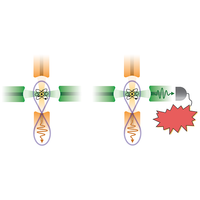
Phys. Rev. Lett. 135, 240802 (2025)
Quantum Information, Science, and Technology
Uniting Quantum Processing Nodes of Cavity-Coupled Ions with Rare-Earth Quantum Repeaters Using Single-Photon Pulse Shaping Based on Atomic Frequency Comb
Article | Quantum Information, Science, and Technology | 2025-12-10 05:00 EST
P. Cussenot, B. Grivet, L. Feldmann, S. Wengerowsky, B. P. Lanyon, T. E. Northup, H. de Riedmatten, A. S. Sørensen, and N. Sangouard
We present an architecture for remotely connecting cavity-coupled trapped ions via a quantum repeater based on rare-earth-doped crystals. The main challenge for its realization lies in interfacing these two physical platforms, which produce photons with a typical temporal mismatch of one or two orde…
Phys. Rev. Lett. 135, 240803 (2025)
Quantum Information, Science, and Technology
First Evidence of Solar Neutrino Interactions on $^{13}\mathrm{C}$
Article | Particles and Fields | 2025-12-10 05:00 EST
M. Abreu et al. ( Collaboration)
The first evidence of solar neutrinos interacting with nuclei provides a test of the solar model as well as constitutes the lowest energy measurements of neutrino interactions on .
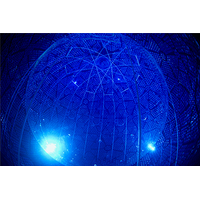
Phys. Rev. Lett. 135, 241803 (2025)
Particles and Fields
Magneto-Optical Trapping of Aluminum Monofluoride
Article | Atomic, Molecular, and Optical Physics | 2025-12-10 05:00 EST
J. E. Padilla-Castillo, J. Cai, P. Agarwal, P. Kukreja, R. Thomas, B. G. Sartakov, S. Truppe, G. Meijer, and S. C. Wright
A class of molecules with two valence electrons has been laser cooled and trapped for the first time.
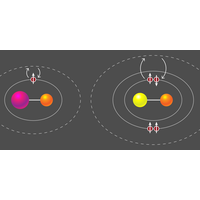
Phys. Rev. Lett. 135, 243401 (2025)
Atomic, Molecular, and Optical Physics
Optical Injection and Detection of Long-Lived Interlayer Excitons in van der Waals Heterostructures
Article | Condensed Matter and Materials | 2025-12-10 05:00 EST
Alperen Tüğen, Anna M. Seiler, Arthur Christianen, Kenji Watanabe, Takashi Taniguchi, Martin Kroner, and Ataç İmamoğlu
Interlayer excitons in semiconducting bilayers separated by insulating hexagonal boron nitride (-BN) layers constitute a promising platform for investigation of strongly correlated bosonic phases. Here, we report an optical method for the generation and characterization of long-lived interlayer exc…
Phys. Rev. Lett. 135, 246502 (2025)
Condensed Matter and Materials
Numerical Renormalization of Glassy Dynamics
Article | Statistical Physics; Classical, Nonlinear, and Complex Systems | 2025-12-10 05:00 EST
Johannes Lang, Subir Sachdev, and Sebastian Diehl
The quench dynamics of glassy systems are challenging. Because of aging, the system never reaches a stationary state but, instead, evolves on emergent scales that grow with its age. This slow evolution complicates field-theoretic descriptions, as the weak long-term memory and the absence of a statio…
Phys. Rev. Lett. 135, 247101 (2025)
Statistical Physics; Classical, Nonlinear, and Complex Systems
Strong Ergodicity Breaking in Dynamical Mean-Field Equations for Mixed $p$-Spin Glasses
Article | Statistical Physics; Classical, Nonlinear, and Complex Systems | 2025-12-10 05:00 EST
Vincenzo Citro and Federico Ricci-Tersenghi
The analytical solution to the out-of-equilibrium dynamics of mean-field spin glasses has profoundly shaped our understanding of glassy dynamics, which take place in many diverse physical systems. In particular, the idea that during the aging dynamics, the evolution becomes slower and slower but kee…
Phys. Rev. Lett. 135, 247102 (2025)
Statistical Physics; Classical, Nonlinear, and Complex Systems
Euler Buckling on Curved Surfaces
Article | Statistical Physics; Classical, Nonlinear, and Complex Systems | 2025-12-10 05:00 EST
Shiheng Zhao (赵世恒) and Pierre A. Haas
Euler buckling epitomizes mechanical instabilities: an inextensible straight elastic line in the plane buckles under compression when the compressive force reaches a critical value . But how does an elastic line buckle within a general curved surface? Here, we reveal that the classical inst…
Phys. Rev. Lett. 135, 247201 (2025)
Statistical Physics; Classical, Nonlinear, and Complex Systems
Active Quantum Flocks
Article | Polymers, Chemical Physics, Soft Matter, and Biological Physics | 2025-12-10 05:00 EST
Reyhaneh Khasseh, Sascha Wald, Roderich Moessner, Christoph A. Weber, and Markus Heyl
Flocks of animals represent a prominent archetype of collective behavior in the macroscopic classical world, where the constituents, such as birds, concertedly perform motions and actions as if being one single entity. Here, we address the so far open question of whether flocks can also form in the …
Phys. Rev. Lett. 135, 248302 (2025)
Polymers, Chemical Physics, Soft Matter, and Biological Physics
Nanoscale Detection of Many-Body Entanglement via Multidimensional Correlation Imprinting
Article | Quantum Information, Science, and Technology | 2025-12-09 05:00 EST
Tao Zhang, Wentao Ji, Yuhang Guo, Mengqi Wang, Bo Chong, Xing Rong, Fazhan Shi, Ping Wang, and Ya Wang
Understanding the nonequilibrium dynamics of isolated quantum many-body systems is a central goal of modern physics. Measuring genuine many-body correlations in quantum systems is central to this aim, while it remains a fundamental challenge for systems lacking individual addressability. We introduc…
Phys. Rev. Lett. 135, 240402 (2025)
Quantum Information, Science, and Technology
Connection between Memory Performance and Optical Absorption in Quantum Reservoir Computing
Article | Quantum Information, Science, and Technology | 2025-12-09 05:00 EST
Niclas Götting, Steffen Wilksen, Alexander Steinhoff, Frederik Lohof, and Christopher Gies
Quantum reservoir computing (QRC) offers a promising paradigm for harnessing quantum systems for machine learning tasks, especially in the era of noisy intermediate-scale quantum devices. While information-theoretical benchmarks like short-term memory capacity (STMC) are widely used to evaluate QRC …
Phys. Rev. Lett. 135, 240403 (2025)
Quantum Information, Science, and Technology
Nonstabilizerness Dynamics in Many-Body Localized Systems
Article | Quantum Information, Science, and Technology | 2025-12-09 05:00 EST
Pedro R. Nicácio Falcão, Piotr Sierant, Jakub Zakrzewski, and Emanuele Tirrito
Nonstabilizerness, also known as "magic," quantifies the deviation of quantum states from stabilizer states, capturing the complexity necessary for quantum computational advantage. In this Letter, we investigate the dynamics of nonstabilizerness in disordered many-body localized (MBL) systems using …
Phys. Rev. Lett. 135, 240404 (2025)
Quantum Information, Science, and Technology
Fault-Tolerant Stabilizer Measurements in Surface Codes with Three-Qubit Gates
Article | Quantum Information, Science, and Technology | 2025-12-09 05:00 EST
Josias Old, Stephan Tasler, Michael J. Hartmann, and Markus Müller
Stabilizer quantum error correction (QEC) codes, in particular topological surface codes, are prime candidates to enable practical quantum computing. While it is widely believed that strictly fault-tolerant protocols can only be implemented using single- and two-qubit gates, several quantum computin…
Phys. Rev. Lett. 135, 240601 (2025)
Quantum Information, Science, and Technology
Low-Depth Quantum Error Correction via Three-Qubit Gates in Rydberg Atom Arrays
Article | Quantum Information, Science, and Technology | 2025-12-09 05:00 EST
Laura Pecorari, Sven Jandura, and Guido Pupillo
Quantum error correction (QEC) requires the execution of deep quantum circuits with large numbers of physical qubits to protect information against errors. Designing protocols that can reduce gate and space-time overheads of QEC is therefore crucial to enable more efficient QEC in near-term experime…
Phys. Rev. Lett. 135, 240602 (2025)
Quantum Information, Science, and Technology
High-Fidelity Quantum State Control of a Polar Molecular Ion in a Cryogenic Environment
Article | Quantum Information, Science, and Technology | 2025-12-09 05:00 EST
Dalton Chaffee, Baruch Margulis, April Sheffield, Julian Schmidt, April Reisenfeld, David R. Leibrandt, Dietrich Leibfried, and Chin-Wen Chou
Molecular quantum state preparation, coherent manipulation, and measurement with high fidelity are demonstrated in a polar molecule for the first time.
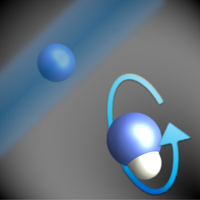
Phys. Rev. Lett. 135, 240801 (2025)
Quantum Information, Science, and Technology
Gravitational Origin of the QCD Axion
Article | Cosmology, Astrophysics, and Gravitation | 2025-12-09 05:00 EST
Georgios K. Karananas, Mikhail Shaposhnikov, and Sebastian Zell
Gravity can give rise to (pseudo)scalar fields--for instance due to torsion. In particular, axions of gravitational origin have been proposed as a minimal and compelling solution to the strong problem. In this Letter, we critically examine the feasibility of this proposal. We demonstrate that mode…
Phys. Rev. Lett. 135, 241001 (2025)
Cosmology, Astrophysics, and Gravitation
Energy Spectrum of Ultrahigh-Energy Cosmic Rays across Declinations $-90°$ to $+44.8°$ as Measured at the Pierre Auger Observatory
Article | Cosmology, Astrophysics, and Gravitation | 2025-12-09 05:00 EST
A. Abdul Halim et al. (Pierre Auger Collaboration)
New measurements from an observatory in Argentina suggest that all the most energetic cosmic rays arise from the same types of extragalactic accelerators.
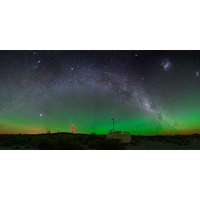
Phys. Rev. Lett. 135, 241002 (2025)
Cosmology, Astrophysics, and Gravitation
New Asymptotically Flat Einstein-Maxwell Instantons
Article | Cosmology, Astrophysics, and Gravitation | 2025-12-09 05:00 EST
Bernardo Araneda and Maciej Dunajski
We disprove the Euclidean Einstein-Maxwell black hole uniqueness conjecture, and thus demonstrate that the semiclassical properties of coupled gravitational and electromagnetic fields are more subtle than expected from Lorentzian general relativity, where the Kerr-Newman family of metrics yields the…
Phys. Rev. Lett. 135, 241501 (2025)
Cosmology, Astrophysics, and Gravitation
Double Spacelike Collinear Limits from Multi-Regge Kinematics
Article | Particles and Fields | 2025-12-09 05:00 EST
Claude Duhr, Aniruddha Venkata, and Chi Zhang (张驰)
We study scattering amplitudes and form factors in planar super Yang-Mills theory in the limit where two pairs of gluons become collinear. We find that, when the virtualities of both collinear pairs are spacelike, the collinear factorization of the amplitude involves a generalized splitting ampl…
Phys. Rev. Lett. 135, 241601 (2025)
Particles and Fields
Data-Driven Discovery Strategy for Standard Model Effective Field Theory Searches
Article | Particles and Fields | 2025-12-09 05:00 EST
Martin Hirsch, Luca Mantani, and Veronica Sanz
We present a novel strategy to uncover indirect signs of new physics in collider data using the standard model effective field theory (SMEFT) framework, offering notably improved sensitivity compared to traditional global analyses. Our approach leverages genetic algorithms to efficiently navigate th…
Phys. Rev. Lett. 135, 241801 (2025)
Particles and Fields
Directional Searching for Light Dark Matter with Quantum Sensors
Article | Particles and Fields | 2025-12-09 05:00 EST
Hajime Fukuda, Yuichiro Matsuzaki, and Thanaporn Sichanugrist
The presence of dark matter (DM) stands as one of the most compelling indications of new physics in particle physics. Typically, the detection of wavelike DM involves quantum sensors, such as qubits or cavities. The phase of the sensors is usually discarded as the value of the phase itself is not ph…
Phys. Rev. Lett. 135, 241802 (2025)
Particles and Fields
Non-Hermitian Quantum Mechanics Approach for Extracting and Emulating Continuum Physics Based on Bound-State-like Calculations
Article | Nuclear Physics | 2025-12-09 05:00 EST
Xilin Zhang
This Letter introduces a unified emulation framework for studying continuum physics in finite quantum systems. Using a reduced basis method, we construct powerful emulators for the inhomogeneous Schrödinger equation that operate in a combined parameter space of complex energy () and other inputs (…
Phys. Rev. Lett. 135, 242501 (2025)
Nuclear Physics
Multiply Quantized Vortex Spectroscopy in a Quantum Fluid of Light
Article | Atomic, Molecular, and Optical Physics | 2025-12-09 05:00 EST
Killian Guerrero, Kévin Falque, Elisabeth Giacobino, Alberto Bramati, and Maxime J. Jacquet
The formation of quantized vortices is a unifying feature of quantum mechanical systems, making it a premier means for fundamental and comparative studies of different quantum fluids. Being excited states of motion, vortices are normally unstable towards relaxation into lower energy states. However,…
Phys. Rev. Lett. 135, 243801 (2025)
Atomic, Molecular, and Optical Physics
Direct Reconstruction of Terahertz-Driven Subcycle Electron Emission Dynamics
Article | Atomic, Molecular, and Optical Physics | 2025-12-09 05:00 EST
Jiakang Mao, Yushan Zeng, Hongyang Li, Liwei Song, Ye Tian, and Ruxin Li
While field-driven electron emission is theoretically understood down to the subcycle regime, its direct experimental temporal characterization using long-wavelength terahertz (THz) fields remains elusive. Here, by driving a graphite tip with phase-stable quasi-single-cycle THz pulses, we reveal dis…
Phys. Rev. Lett. 135, 243803 (2025)
Atomic, Molecular, and Optical Physics
Topological Chiral Superconductivity Mediated by Intervalley Antiferromagnetic Fluctuations in Twisted Bilayer ${\mathrm{WSe}}_{2}$
Article | Condensed Matter and Materials | 2025-12-09 05:00 EST
Wei Qin, Wen-Xuan Qiu, and Fengcheng Wu
Motivated by the recent observations of superconductivity in twisted bilayer (), we theoretically investigate the superconductivity driven by an electronic mechanism. We first demonstrate that the multiband screened Coulomb interaction within the random phase approximation is insufficient …
Phys. Rev. Lett. 135, 246002 (2025)
Condensed Matter and Materials
Two-Dimensional Superconducting Diode Effect in Topological Insulator/Superconductor Heterostructure
Article | Condensed Matter and Materials | 2025-12-09 05:00 EST
Soma Nagahama, Yuki Sato, Minoru Kawamura, Ilya Belopolski, Ryutaro Yoshimi, Atsushi Tsukazaki, Naoya Kanazawa, Kei S. Takahashi, Masashi Kawasaki, and Yoshinori Tokura
The superconducting diode effect (SDE) is characterized by the nonreciprocity of Cooper-pair motion with respect to current direction. In three-dimensional (3D) materials, SDE results in a critical current that varies with direction, making the effect distinctly observable: the material exhibits sup…
Phys. Rev. Lett. 135, 246003 (2025)
Condensed Matter and Materials
Structural Evolution of Rutile ${\mathrm{TiO}}_{2}(110)\text{-}(1×2)$ Reconstruction Driven by Oxygen-Promoted Titanium Migration
Article | Condensed Matter and Materials | 2025-12-09 05:00 EST
Liuxi Chen, Meiliang Ma, Bingwei Chen, Ying Jiang, Wentao Yuan, Zhong-Kang Han, Sergey V. Levchenko, and Yong Wang
Elucidating the kinetics of surface reconstruction is fundamentally important yet inherently challenging due to the complex collective atomic motions occurring across high-dimensional potential-energy landscapes. Here, we combine machine-learning-based molecular dynamics simulations enhanced by well…
Phys. Rev. Lett. 135, 246201 (2025)
Condensed Matter and Materials
Asymmetric Elastic Bound State in the Continuum by an Exceptional Point
Article | Condensed Matter and Materials | 2025-12-09 05:00 EST
Liyun Cao and Badreddine Assouar
In this Letter, we experimentally and theoretically demonstrate an asymmetric elastic bound state in the continuum (BIC) induced by an exceptional point (EP) in an open elastic system. For positive incidence, the characteristic vanishing linewidth of a BIC is observed, whereas it is absent for negat…
Phys. Rev. Lett. 135, 246301 (2025)
Condensed Matter and Materials
Field-Effect-Tunable Even-Odd Transition of Quantum Hall States in a Rashba System
Article | Condensed Matter and Materials | 2025-12-09 05:00 EST
Qijia Xu, Jingyue Wang, Junwei Huang, Yufei Zhao, Weiyu Sun, Xuzhong Cong, Huakun Zuo, Zengwei Zhu, Congwei Tan, Hongtao Liu, Binghai Yan, Hongtao Yuan, and Hailin Peng
The quantum Hall effect is one of the most fundamental quantum phenomena in condensed matter physics, and via tuning the quantum Hall states (QHSs), the evolution of band topologies and electron correlations can be investigated and revealed therein. However, for the vast majority of QHS systems, eve…
Phys. Rev. Lett. 135, 246302 (2025)
Condensed Matter and Materials
Fractional Quantum Hall State at $ν\text{}=\text{}1/2$ with Energy Gap Up to 6 K and Possible Transition from the One- to Two-Component State
Article | Condensed Matter and Materials | 2025-12-09 05:00 EST
Siddharth Kumar Singh, Chengyu Wang, Adbhut Gupta, Kirk W. Baldwin, Loren N. Pfeiffer, and Mansour Shayegan
The fractional quantum Hall state (FQHS) observed in the lowest Landau level at filling factor in wide quantum wells has been enigmatic for decades because the two-dimensional electron system (2DES) has a bilayer charge distribution but with significant interlayer tunneling. Of particular inte…
Phys. Rev. Lett. 135, 246603 (2025)
Condensed Matter and Materials
Twofold-Symmetric Magnetoelasticity Induced by Dominant Vertical Shear Strain
Article | Condensed Matter and Materials | 2025-12-09 05:00 EST
Fa Chen, Liyang Liao, Jiaxin Chen, Qiuyun Fu, Yue Zhang, Wei Luo, and Yoshichika Otani
We report an unconventional twofold-symmetric magnetoelastic coupling in Ni films, mediated by Rayleigh surface acoustic waves (SAWs). This unique magnetoelastic symmetry originates from a dominant vertical shear strain , which becomes prominent due to the low effective elastic modulus of Ni film…
Phys. Rev. Lett. 135, 246702 (2025)
Condensed Matter and Materials
Multicolor Phonon Excitation in Terahertz Cavities
Article | Condensed Matter and Materials | 2025-12-09 05:00 EST
Omer Yaniv and Dominik M. Juraschek
Driving materials using light with more than one frequency component is an emerging technique, enabled by advanced pulse-shaping capabilities in recent years. Here, we translate this technique to lattice vibrations by exciting multicolor phonons using terahertz cavities. In contrast to light, phonon…
Phys. Rev. Lett. 135, 246901 (2025)
Condensed Matter and Materials
Physical Review X
Transformers for Charged Particle Track Reconstruction in High-Energy Physics
Article | 2025-12-09 05:00 EST
Samuel Van Stroud, Philippa Duckett, Max Hart, Nikita Pond, Sébastien Rettie, Gabriel Facini, and Tim Scanlon
A unified transformer-based model accurately and efficiently reconstructs particle tracks in collider experiments, outperforming traditional methods and offering scalable solutions for handling the massive data of next-generation high-energy physics.
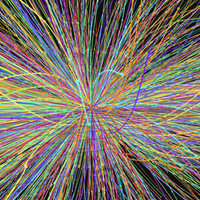
Phys. Rev. X 15, 041046 (2025)
Quantum Transport in Bismuth Two-Dimensional Electron System
Article | 2025-12-09 05:00 EST
Di Yue, Hongya Wang, Guangyi Huang, Yadong Jiang, Zhiwei Huang, Pengyu Zheng, Yichen Song, Shuaifei Guo, Ning Tian, Mingyan Luo, Zhongxun Guo, Hengsheng Luo, Chuanying Xi, Guangli Kuang, Kenji Watanabe, Takashi Taniguchi, Zhimou Chen, Xi Lin, Jing Wang, Changlin Zheng, Xiaofeng Jin, Wei Ruan, and Yuanbo Zhang
Ultrathin bismuth films grown on boron nitride host a high-mobility two-dimensional electron system dominated by spin-split surface states, revealing strong spin-orbit effects that could potentially enable stable, spin-based quantum behaviors at elevated temperatures.
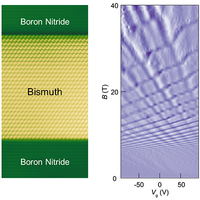
Phys. Rev. X 15, 041047 (2025)
arXiv
Magnetic Phase Control of a Thick SNS Weak Link: Proposed experimental scheme
New Submission | Superconductivity (cond-mat.supr-con) | 2025-12-10 20:00 EST
In contrast to the extensive literature on thin tunnel junctions and traditional SQUID geometries, there is almost no quantitative experimental data on magnetic control of the Josephson phase in thick SNS weak links. The standard view is that in such compact structures without macroscopic loops the local magnetic coupling to the phase is negligibly small, which in practice forces one to use bulky SQUID devices for phase control. We show that this view is overly restrictive. We consider a thick SNS bridge with an on-chip microcoil placed directly above it, which controls the Josephson phase via strong phase-flux coupling enhanced near the Josephson plasma resonance. In the proposed configuration realistic thick SNS weak links, with normal-layer thickness d of order xi, can achieve phase-flux efficiencies of order 30-60 percent of an ideal dc SQUID. Within a standard RSJ/RCSJ model and linear circuit theory we show that this unexpectedly strong coupling arises from the combination of a large kinetic inductance of the thick SNS bridge and resonant amplification of about 15-35 dB, rather than from any exotic microphysics. The proposed experiment, a comparative analysis of Shapiro steps driven by a direct RF signal and by the magnetic field of the same microcoil, provides a direct and quantitative method to measure the phase-flux response of a thick SNS junction. If confirmed experimentally, such structures may become compact phase elements capable of locally controlling the Josephson phase without a macroscopic loop and enabling dense, locally addressable phase control in superconducting quantum circuits.
Superconductivity (cond-mat.supr-con)
15 pages, 6 figures. Submitted to Physica C: Superconductivity and its Applications (2025)
Monte Carlo simulation of spin-reorientation transition in weak ferrimagnets YFeCrO3
New Submission | Strongly Correlated Electrons (cond-mat.str-el) | 2025-12-10 20:00 EST
E.V. Vasinovich, V.A. Ulitko, A.S. Moskvin
This work presents the modeling of the magnetic 3d sublattice in mixed orthoferrites-orthochromites YFe1-xCrxO3 using classical Monte Carlo methods. It is shown that, when taking into account the competition of the Dzyaloshinskii vectors in the mixed compositions, magnetic moment compensations are observed, as well as angular magnetic configurations corresponding to the spin reorientation.
Strongly Correlated Electrons (cond-mat.str-el)
Environment-matrix-product operator for boundary-free large-scale quantum many-body simulations
New Submission | Strongly Correlated Electrons (cond-mat.str-el) | 2025-12-10 20:00 EST
We propose an alternative to the infinite density-matrix renormalization approach for accessing quantum many-body states within a finite-size calculation that faithfully mimics the thermodynamic limit. Our method constructs environment matrix product operators (MPOs) representing the Hamiltonian of semi-infinite regions surrounding the target system. Starting from the finite-size ground-state MPS, we contract its Hamiltonian representation to generate effective environment MPOs, which are then attached to a renewed finite system in a recursive manner. This iterative embedding drives the system toward a bulk-like state with negligible finite-size effects. The scheme requires no assumption of homogeneity and achieves unprecedentedly long real-time dynamics free from boundary reflections.
Strongly Correlated Electrons (cond-mat.str-el)
7pages, 4figures
Is disorder a friend or a foe to melting of Wigner-Mott insulators?
New Submission | Strongly Correlated Electrons (cond-mat.str-el) | 2025-12-10 20:00 EST
Mohammed Hammam, Cyprian Lewandowski, Vladimir Dobrosavljevic, Sandeep Joy
Wigner crystals are extremely fragile, which is shown to result from very strong geometric frustration germane to long-range Coulomb interactions. Physically, this is manifested by a very small characteristic energy scale for shear density fluctuations, which are gapless excitations in a translationally invariant system. The presence of disorder, however, breaks translational invariance, thus suppressing gapless excitations and pushing them to higher density. We illustrate this general principle by explicit microscopic model calculations, showing that this mechanism very effectively stabilizes disordered Wigner lattices to much higher temperatures and densities than in the clean limit. On the other hand, we argue that in two dimensions disorder significantly ``smears” the melting transition, producing spatial coexistence of solid-like and liquid-like regions – just as recently observed in STM experiments. Our results paint a new physical picture for melting of Wigner-Mott solids in two dimensions, corresponding to a Mott-Hubbard model with spatially varying local electronic bandwidth.
Strongly Correlated Electrons (cond-mat.str-el), Disordered Systems and Neural Networks (cond-mat.dis-nn)
5 pages, 3 figures, supplemental material will be uploaded later, comments are welcome!
Vortex leapfrogging and superfluid dissipation mechanisms in a fluid of light
New Submission | Quantum Gases (cond-mat.quant-gas) | 2025-12-10 20:00 EST
Myrann Baker-Rasooli, Nathan du Toit, Nicolas Pavloff, Quentin Glorieux
We report the experimental observation of vortex leapfrogging in a two-dimensional fluid of light. By imprinting two vortex-antivortex pairs and tracking their real-time evolution through phase-resolved imaging, we observe a dynamics that is accurately described by a point-vortex model with an outward background flow. By precisely controlling the initial vortex separation, we identify configurations in which leapfrogging breaks down and determine the corresponding dissipation mechanisms. The first originates from phase-slip events occurring at large injected velocities. The second arises when the injection of multi-charged vortices leads to the formation of a dispersive shock wave which acts as a continuous source of phase slippage. These mechanisms advance our understanding of vortex dynamics and dissipation in superfluids.
Quantum Gases (cond-mat.quant-gas), Fluid Dynamics (physics.flu-dyn), Quantum Physics (quant-ph)
Main: 8 pages, 5 figures. Supp: 5 pages, 7 figures
Quantum Geometry Driven Crystallization: A Neural-Network Variational Monte Carlo Study
New Submission | Strongly Correlated Electrons (cond-mat.str-el) | 2025-12-10 20:00 EST
Agnes Valenti, Yaar Vituri, Yubo Yang, Daniel E. Parker, Tomohiro Soejima, Junkai Dong, Miguel A. Morales, Ashvin Vishwanath, Erez Berg, Shiwei Zhang
Wigner crystals are a paradigmatic form of interaction driven electronic order. A key open question is how Berry curvature and, more generally, quantum geometry reshape crystallization. The discovery of two-dimensional materials with relatively flat bands and pronounced Berry curvature has added fresh urgency to this question. Recent mean-field studies have proposed a topological variant of the Wigner crystal, the anomalous Hall crystal (AHC), with non-zero Chern number. However it remains unclear whether the AHC survives beyond the mean-field approximation. Here, we map out the ground-state phase diagram of the $ \lambda$ -jellium model - a simple model whose interaction strength and Berry curvature are independently tunable - using state-of-the-art neural-network variational Monte Carlo. The AHC is found to remain stable against quantum fluctuations. Surprisingly, quantum geometric effects are found to dramatically enhance crystallization. Both the AHC and the standard Wigner Crystal are stabilized at densities up to an order of magnitude above the critical density in the absence of quantum geometry, yet still significantly below the threshold predicted by mean-field theory. These striking results highlight the rich interplay between quantum fluctuations, quantum geometry, and crystallization, providing concrete guidance for experiments and enabling future explorations of fractionalized crystals and chiral superconductors.
Strongly Correlated Electrons (cond-mat.str-el), Mesoscale and Nanoscale Physics (cond-mat.mes-hall)
16 pages, 13 figures
Minimal Models of Entropic Order
New Submission | Statistical Mechanics (cond-mat.stat-mech) | 2025-12-10 20:00 EST
Xiaoyang Huang, Zohar Komargodski, Andrew Lucas, Fedor K. Popov, Tin Sulejmanpasic
Due to entropic effects, it is possible that generic high-energy states of a quantum or classical system are ordered. This leads to spontaneous symmetry breaking at arbitrarily high temperatures. We present minimal models of entropic order that arise from very simple interactions. Our main examples are the Arithmetic Ising Model (AIM) and its quantum analogue, where usual Ising spins are replaced by non-negative integers. Using a large-flavor expansion together with numerical simulations, we find that the high-temperature phase is ordered in the classical and quantum models. We also introduce classical gas models whose interactions drive the system to a crystal at high temperatures.
Statistical Mechanics (cond-mat.stat-mech), High Energy Physics - Theory (hep-th)
11 pages, 5 figures
Free fermionic and parafermionic multispin quantum chains with non-homogeneous interacting ranges
New Submission | Statistical Mechanics (cond-mat.stat-mech) | 2025-12-10 20:00 EST
A large family of multispin interacting one-dimensional quantum spin models with $ Z(N)$ symmetry and a free-particle eigenspectra are known in the literature. They are free-fermionic ($ N=2$ ) and free-parafermionic ($ N\geq 2$ ) quantum chains. The essential ingredient that implies the free-particle spectra is the fact that these Hamiltonians are expressed in terms of generators of a $ Z(N)$ exchange algebra. In all these known quantum chains the number of spins in all the multispin interactions (range of interactions) is the same and therefore, the models have homogeneous interacting range. In this paper we extend the $ Z(N)$ exchange algebra, by introducing new models with a free-particle spectra, where the interaction ranges of the multispin interactions are not uniform anymore and depends on the lattice sites (non-homogeneous interacting range). We obtain the general conditions that the site-dependent ranges of the multispin interactions have to satisfy to ensure a free-particle spectra. Several simple examples are introduced. We study in detail the critical properties in the case where the range of interactions of the even (odd) sites are constant. The dynamical critical exponent is evaluated in several cases.
Statistical Mechanics (cond-mat.stat-mech)
12 pages, 15 figures
Magnetic properties of the Fe$_5$SiB$_2$-Fe$_5$PB$_2$ system
New Submission | Materials Science (cond-mat.mtrl-sci) | 2025-12-10 20:00 EST
Daniel Hedlund, Johan Cedervall, Alexander Edström, Mirosław Werwinski, Sofia Kontos Olle Eriksson, Ján Rusz, Peter Svedlindh, Martin Sahlberg, Klas Gunnarsson
The magnetic properties of the compound Fe$ 5$ Si$ {1-x}$ P$ {x}$ B$ 2$ have been studied, with a focus on the Curie temperature $ T\textrm{C}$ , saturation magnetization $ M\textrm{S}$ , and magnetocrystalline anisotropy. Field and temperature dependent magnetization measurements were used to determine $ T\textrm{C}\left(x\right)$ and $ M\textrm{S}\left(x\right)$ . The saturation magnetization at 10 K (300 K) is found to monotonically decrease from $ 1.11\mathrm{MA/m}$ ($ 1.03\mathrm{MA/m}$ ) to $ 0.97\mathrm{MA/m}$ ($ 0.87\mathrm{MA/m}$ ), as $ x$ increases from zero to one. The Curie temperature is determined to be 810 K and 615 K in Fe$ _5$ SiB$ _2$ and Fe$ _5$ PB$ 2$ , respectively. The highest $ T\textrm{C}$ is observed for $ x=0.1$ , while it decreases monotonically for larger $ x$ . The Curie temperatures have also been theoretically determined to be 700 K and 660 K for Fe$ _5$ SiB$ _2$ and Fe$ _5$ PB$ _2$ , respectively, using a combination of density functional theory and Monte Carlo simulations. The magnitude of the effective magnetocrystalline anisotropy was extracted using the law of approach to saturation, revealing an increase with increasing phosphorus concentration. Low–field magnetization vs. temperature results for $ x = 0, 0.1, 0.2$ indicate that there is a transition from easy–axis to easy–plane anisotropy with decreasing temperature.
Materials Science (cond-mat.mtrl-sci)
Published in Physical Review B: this http URL
Phys. Rev. B 96, 094433 (2017)
Effect of superconductivity on non-uniform magnetization in dirty SF junctions
New Submission | Disordered Systems and Neural Networks (cond-mat.dis-nn) | 2025-12-10 20:00 EST
We study proximity effect in a tunnel junction between a bulk superconductor and a thin disordered ferromagnetic layer on its surface. Cooper pairs penetrating from the superconductor into the ferromagnet tend to destabilize its uniform magnetic order. The competition of this effect and the intrinsic magnetic stiffness of the ferromagnet leads to a second order phase transition between uniform and non-uniform magnetic states. Using the quasiclassical Usadel equation, we derive the Landau functional for this transition and construct the complete phase diagram of the effect. We identify a special point of “resonance” at which the characteristic energy scale of the proximity effect equals the exchange field of the ferromagnet. At this point, the uniform magnetic state is unstable even in the limit of large stiffness. We further explore the parameter regime far beyond the transition and determine the properties of the resulting strongly non-uniform magnetic state.
Disordered Systems and Neural Networks (cond-mat.dis-nn), Mesoscale and Nanoscale Physics (cond-mat.mes-hall)
12 pages, 6 figures
Chirality-induced magnetoresistance in hybrid organic-inorganic perovskite semiconductors
New Submission | Materials Science (cond-mat.mtrl-sci) | 2025-12-10 20:00 EST
Md Azimul Haque, Pius Markus Theiler, Ian A. Leahy, Steven P. Harvey, Jeiwan Tan, Matthew P Hautzinger, Margherita Taddei, Aeron McConnell, Andrew Greider, Andrew H. Comstock, Yifan Dong, Kirstin Alberi, Yuan Ping, Peter C. Sercel, Joseph M. Luther, Dali Sun, Matthew C. Beard
The combination of semiconducting properties and synthetically tunable chirality in chiral metal halide semiconductors (CMHS) offer a compelling platform for room temperature control over electronic spin properties, leveraging effects such as chirality-induced spin selectivity (CISS) for the development of new opto-spintronic functionalities. We report room-temperature CISS-induced magnetoresistance (CISS-MR) exceeding 100% for spin valves in a configuration consisting of a ferromagnet (FM), tunneling barrier, and CMHS. The high CISS-MR is attributed to interfacial spin-selective tunneling barrier induced by the chirality, which can produce current dissymmetry factors that surpass the limit imposed by the Jullière model governed by the intrinsic spin polarization of the adjacent FM contact. The CISS-MR exhibits a strong dependence on the CMHS composition, revealing a structure-property relationship between CISS and structural chirality. The observed exceptionally large tunneling MR response differentiates from a subtle anisotropic MR arising from the proximity effect at the FM/CMHS interface in the absence of a tunneling barrier. Our study provides insights into charge-to-spin interconversion in chiral semiconductors, offering materials design principles to control and enhance CISS response and utilize it in functional platforms.
Materials Science (cond-mat.mtrl-sci)
Emergent memory in cell-like active systems
New Submission | Statistical Mechanics (cond-mat.stat-mech) | 2025-12-10 20:00 EST
Active systems across scales, ranging from molecular machines to human crowds, are usually modeled as assemblies of self-propelled particles driven by internally generated forces. However, these models often assume memoryless dynamics and no coupling of internal active forces to the environment. Here, guided by the example of living cells, which have recently been shown to display multi-timescale memory effects, we introduce a general theoretical framework that goes beyond this paradigm by incorporating internal state dynamics and environmental sensing into active particle models. We show that when the self-propulsion of an agent depends on internal variables with their own complex dynamics - modulated by local environmental cues - environmental memory spontaneously emerges and gives rise to new classes of behaviours. These include memory-induced responses, adaptable localization in complex landscapes, suppression of motility-induced phase separation, and enhanced jamming transitions. Our results demonstrate how minimal information processing capabilities, intrinsic to non-equilibrium agents with internal states like living cells, can profoundly influence both individual and collective behaviours. This framework bridges cell-scale activity and large-scale intelligent motion in cell assemblies, and opens the way to the quantitative analysis and design of systems ranging from synthetic colloids to biological collectives and robotic swarms.
Statistical Mechanics (cond-mat.stat-mech), Biological Physics (physics.bio-ph)
Main: 23 pages, 5 figures. SM: 39 pages, 4 figures
A unified model for lunderdoped and overdoped cuprate superconductors based on a spinodal transition
New Submission | Superconductivity (cond-mat.supr-con) | 2025-12-10 20:00 EST
Hercules H. Santana, E. V. L. de Mello
Many years of intense research on cuprate superconductors have led to several discoveries, such as the pseudogap and charge density waves (CDW), yet a complete theory is still lacking. By analyzing some experiments and performing calculations, we provide a full interpretation of their properties; from the undoped insulator to the overdoped metallic compounds. The variation of the anomalous Hall coefficient ($ R_{\rm H}(T)$ ) with temperature at half-filling ($ n = 1$ ) and, combinations of undoped ($ p = 0$ ) insulators and metallic films, which, among other things, are indicative of a thermodynamic transition. On the overdoped side, recent experiments near the superconducting-to-metal transition detecting superconducting puddles and a considerable degree of charge disorder, suggest that a similar thermodynamic transition operates at all doping levels. We propose a spinodal or charge-separation transition starting near the pseudogap temperature $ T^\ast(p)$ , which among other things generates the CDW domains with a typical double-well Landau free-energy functional. Thus, from the half-filled to the overdoped region, the free energy forms an array of wells with $ n = 1$ {\it static} holes. With doping, {\it mobile} holes tend to occupy these wells with alternating high and low densities, generating the CDW pattern. The confined holes in small regions develop local superconducting amplitudes, giving rise to a mesoscopic granular superconductor. Similar to the XY model, the grains develop correlation effects mediated by Josephson coupling, which is proportional to the local superfluid density. This approach yields a unified theory of cuprate superconductors.
Superconductivity (cond-mat.supr-con)
6 pages, 4 figures
Control of the effective value of the critical current of the RF SQUID by the high-frequency electromagnetic field
New Submission | Superconductivity (cond-mat.supr-con) | 2025-12-10 20:00 EST
V. I. Shnyrkov, V. Yu. Lyakhno, O. A. Kalenyuk, D. G. Mindich, O. O. Leha, A. P. Shapovalov
An analysis of the influence of the high-frequency electromagnetic field on the amplitude-frequency and signal characteristics of RF SQUID and experimental verification are carried out. At low parameter , the RF SQUID behavior is well described analytically by the theoretical model. In experiment, basic operation scheme is used in which the interferometer is inductively connected to a resonant tank circuit driven by RF current at a frequency close to the resonance frequency of the tank. It is shown that parameter , which distinguishes between hysteretic and non-hysteretic regimes, can be effectively adjusted to a desired value by applying the high-frequency field of a certain amplitude and frequency much higher than tank resonant frequency. A significant increase in the conversion factor and sensitivity of the RF SQUID during this adjustment is discussed.
Superconductivity (cond-mat.supr-con)
8 pages, 4 figures. Published in Fiz. Nizk. Temp. (Low Temp. Phys.) v.50, No.6 (2024)
Low Temp. Phys. 50, 497-501 (2024)
Predicting interstitial elements in Refractory Complex Concentrated Alloys
New Submission | Materials Science (cond-mat.mtrl-sci) | 2025-12-10 20:00 EST
Aomin Huang, Siya Zhu, Calvin Belcher, Ryker Rigsby, Diran Apelian, Raymundo Arróyave, Enrique J. Lavernia
Refractory complex concentrated alloys, composed of multiple principal refractory elements, are promising candidates for high-temperature structural applications due to their exceptional thermal stability and high melting points. However, their mechanical performance is often compromised by interstitial impurities, particularly oxygen, nitrogen, and carbon, which segregate to grain boundaries and promote embrittlement. In this study, we investigate the solubility and thermodynamic behavior of oxygen interstitials in a model NbTiHfTa RCCA system. We synthesized NbTiHfTa alloys with varying oxygen contents via plasma arc melting and characterized their phase evolution and microstructure using XRD, SEM, and TEM. Complementary computational modeling was performed using machine-learning interatomic potentials integrated with Monte Carlo simulations to probe oxygen interactions at the atomic scale. Our results reveal a solubility limit for oxygen between 0.8 and 1.0 atomic percentage, beyond which HfO2 formation is energetically favorable. This combined experimental-computational framework provides a predictive approach for managing interstitial behavior in RCCAs, enabling improved alloy design strategies for enhanced mechanical performance.
Materials Science (cond-mat.mtrl-sci), Atomic Physics (physics.atom-ph)
Bayesian Co-Navigation of a Computational Physical Model and AFM Experiment to Autonomously Survey a Combinatorial Materials Library
New Submission | Materials Science (cond-mat.mtrl-sci) | 2025-12-10 20:00 EST
Boris N. Slautin, Kamyar Barakati, Yu Liu, Reece Emery, Philip Rack, Sergei V. Kalinin
Building autonomous experiment workflows requires transcending beyond the data-driven surrogate models to incorporate and dynamically refine physical theory during exploration. Here we demonstrate the first fully automated experimental realization of Bayesian co-navigation - a framework in which an autonomous agent simultaneously runs a physical experiment and a computationally expensive physical model. Using an automated AFM platform coupled to a kinetic Monte Carlo (kMC) model of thin-film growth, the system infers a set of effective bond energies for the (CrTaWV)x-Mo(1-x) pseudo-binary combinatorial library, progressively adjusting the kMC parameters to decrease the epistemic disparity between simulation and experiment. This real-time theoretical refinement enables the kMC model to capture the behavior of the specific materials system and reveals the mechanistic role of hetero-bonding in governing surface diffusion. Together, these results establish co-navigation as a general strategy for tightly integrating physical models with autonomous experimental platforms to produce interpretable and continually self-correcting theoretical modelling of complex materials systems.
Materials Science (cond-mat.mtrl-sci)
19 pages, 5 figures
Moire-Engineered Ferroelectric Transistors for Nearly Trap-free, Low-Power and Non-Volatile 2D Electronics
New Submission | Materials Science (cond-mat.mtrl-sci) | 2025-12-10 20:00 EST
Arup Singha, Shaili Sett, Kenji Watanabe, Takashi Taniguchi, Arindam Ghosh, Rahul Debnath
Long-range moire patterns in twisted WSe2 enable a built-in, moire-length-scale ferroelectric polarization that can be directly harnessed in electronic devices. Such a built-in ferroic landscape offers a compelling means to enable ultralow-voltage and non-volatile electronic functionality in two-dimensional materials; however, achieving stable polarization control without charge trapping has remained a persistent challenge. Here, we demonstrate a moire-engineered ferroelectric field-effect transistor (FeFET) utilizing twisted WSe2 bilayers that leverages atomically clean van der Waals interfaces to achieve efficient polarization-channel coupling and trap-suppressed, ultralow-voltage operation (subthreshold swing of 64 mV per decade). The device exhibits a stable non-volatile memory window of 0.10 V and high mobility, exceeding the performance of previously reported two-dimensional FeFET and matching that of advanced silicon-based devices. In addition, capacitance-voltage spectroscopy, corroborated by self-consistent Landau-Ginzburg-Devonshire modeling, indicates ultrafast ferroelectric switching (~0.5 microseconds). These results establish moire-engineered ferroelectricity as a practical and scalable route toward ultraclean, low-power, and non-volatile 2D electronics, bridging atomistic lattice engineering with functional device architectures for next-generation memory and logic technologies.
Materials Science (cond-mat.mtrl-sci), Mesoscale and Nanoscale Physics (cond-mat.mes-hall), Strongly Correlated Electrons (cond-mat.str-el), Applied Physics (physics.app-ph), Quantum Physics (quant-ph)
Self-consistent solution of Eliashberg equations for metal hydride superconductors
New Submission | Superconductivity (cond-mat.supr-con) | 2025-12-10 20:00 EST
Tomas J. Escamilla, Chumin Wang
In recent years, the quest for high critical-temperature superconductors has increasingly focused on metal and molecular hydrides, which have demonstrated potential for superconductivity at or near room temperature under extremely high pressures. Such hydrides were first proposed by N. W. Ashcroft in 1968, because hydrogen-rich materials possess elevated vibrational frequencies due to the low atomic mass of hydrogen. This article presents a self-consistent solution to the Eliashberg equations for analysing superconductivity in hydrides, contrasting with the commonly used McMillan-Allen-Dynes parameterized formula. We also analyse effects of the electron-phonon spectral function and the broadening parameters arising from phonon lifetime and sample imperfections on the superconducting critical temperature. Finally, both theoretical approaches are applied to a typical metal hydride superconductor, and the reliability of self-consistent solutions is validated against the experimentally measured critical temperature.
Superconductivity (cond-mat.supr-con)
This work was presented at CEC-ICMC-2025, and the manuscript has been accepted for publication in the IOP Conference Series
Enhancing Hole Mobility in Monolayer $WSe_{2}$ p-FETs via Process-Induced Compression
New Submission | Materials Science (cond-mat.mtrl-sci) | 2025-12-10 20:00 EST
He Lin Zhao, Sheikh Mohd Ta-Seen Afrid, Dongyoung Yoon, Zachary Martin, Zakaria Islam, Sihan Chen, Yue Zhang, Pinshane Y. Huang, Shaloo Rakheja, Arend M. van der Zande
Understanding the interactions between strain, interfacial mechanics, and electrical performance is critical for designing beyond silicon electronics based on hetero-integrated 2D materials. Through combined experiment and simulation, we demonstrated and analyzed the enhancement of hole mobility in p-type monolayer $ WSe_{2}$ field effect transistors (FETs) under biaxial compression. We tracked FET performance versus strain by incrementing compressive strain to $ WSe_{2}$ channels via sequential AlOx deposition and performing intermediate photoluminescence and transport measurements. The hole mobility factor increased at a rate of 340 $ \pm$ 95 %/%$ \epsilon$ , and the on-current factor increased at a rate of 460 $ \pm$ 340 %/%$ \epsilon$ . Simulation revealed that the enhancement under compression arises primarily from a reduction in inter-valley scattering between the $ \Gamma$ –K valence bands, and the rate is robust against variations in carrier density, impurity density, or dielectric environment. These findings show that compressive strain is a powerful technique for enhancing performance in 2D p-FETs and that it is multiplicative with defect and doping engineering.
Materials Science (cond-mat.mtrl-sci), Applied Physics (physics.app-ph)
Main text: 27 pages, including 5 main figures and 7 extended data figures. Supplementary: 11 pages, including 13 tables and 1 figure. Submitted to Nature Electronics 8 Dec. 2025. Author contributions and data availability are contained within the document
Device/circuit simulations of silicon spin qubits based on a gate-all-around transistor
New Submission | Mesoscale and Nanoscale Physics (cond-mat.mes-hall) | 2025-12-10 20:00 EST
We theoretically investigated the readout process of a spin–qubit structure based on a gate-all-around (GAA) transistor. Our study focuses on a logical qubit composed of two physical qubits. Different spin configurations result in different charge distributions, which subsequently influence the electrostatic effects on the GAA transistor. Consequently, the current flowing through the GAA transistor depends on the qubit’s state. We calculated the current-voltage characteristics of the three-dimensional configurations of the qubit and GAA structures, using technology computer-aided design (TCAD) simulations. Moreover, we performed circuit simulations using the Simulation Program with Integrated Circuit Emphasis (SPICE) to investigate whether a readout circuit made from complementary metal–oxide semiconductor (CMOS) transistors can amplify the weak signals generated by the qubits. Our findings indicate that, by dynamically controlling the applied voltage within a properly designed circuit, the readout can be detected effectively based on a conventional sense amplifier.
Mesoscale and Nanoscale Physics (cond-mat.mes-hall), Quantum Physics (quant-ph)
12 pages, 13 figures
Anisotropic nonrelativistic charge-to-spin conversion in altermagnets
New Submission | Other Condensed Matter (cond-mat.other) | 2025-12-10 20:00 EST
Mingbo Dou, Xianjie Wang, L. L. Tao
The charge-to-spin conversion provides an efficient way to manipulate the magnetization by electrical means. In this work, we report on a study on the anisotropic nonrelativistic charge-to-spin conversion response to the current direction in altermagnets. Based on the general group-theoretical analysis, we derive analytical formulas for the anisotropic conversion ratio and identify its maximum value. We then exemplify those phenomena in representative altermagnets based on the density functional theory calculations. The highly anisotropic charge-to-spin conversion efficiency, varying from zero to several tens of percent, was demonstrated. Our work shines more light on the exploration of the nonrelativistic generation of spin currents in altermagnets.
Other Condensed Matter (cond-mat.other)
Submitted on 02Dec2025
Nonreciprocal dynamics with weak noise: aperiodic “Escher cycles” and their quasipotential landscape
New Submission | Statistical Mechanics (cond-mat.stat-mech) | 2025-12-10 20:00 EST
Janik Schüttler, Robert L. Jack, Michael E. Cates
We present an explicit construction of the Freidlin-Wentzell quasipotential of a stochastic system with two degrees of freedom and nonreciprocal interactions. This model undergoes noise-induced transitions between four metastable attractors, forming recurrent but aperiodic ``Escher cycles,’’ similar to the cyclic nucleation dynamics observed in the nonreciprocal Ising model. We calculate the quasipotential analytically to first order in nonreciprocality. We characterise it along a one-dimensional reaction coordinate that connects the attractors, and we also obtain the full two-dimensional landscape, at leading order in perturbation theory. The resulting landscapes feature flat regions and extended plateaus, together with non-differentiable switching lines. These singular structures arise from two geometric mechanisms: the handover of dominance between competing transition paths, and the competition between basins of attraction. The system provides a rare case where the geometry of nonequilibrium rare events can be fully resolved, and a simple analytically tractable example of a quasipotential in more than one coordinate that captures a rich set of nonequilibrium features.
Statistical Mechanics (cond-mat.stat-mech)
25 pages
Dynamics of Quantum Chiral Solitons
New Submission | Strongly Correlated Electrons (cond-mat.str-el) | 2025-12-10 20:00 EST
Leandro M. Chinellato, Oleg A. Starykh, Cristian D. Batista
We introduce a non-perturbative framework for quantizing chiral solitons in interacting quantum spin chains. This approach provides a direct lattice extension of the well-established $ S$ -duality between the sine-Gordon and Thirring models, thereby bridging the gap between continuum dualities and their lattice counterparts. By constructing the quantum chiral-soliton operators explicitly, we show how their unconventional dynamics appear in the excitation spectrum and correlation functions across the full Brillouin zone. A key result is that the dominant soliton tunneling amplitude alternates in sign, $ \operatorname{sgn}(t_{1+}) = (-1)^{2S+1}$ , sharply distinguishing half-odd-integer from integer spin chains. We further identify characteristic signatures of these chiral excitations in the dynamical spin structure factor, demonstrating their visibility in inelastic neutron scattering. Our results open a route to experimentally probing non-perturbative features of dual quantum field theories in condensed-matter settings.
Strongly Correlated Electrons (cond-mat.str-el), Mesoscale and Nanoscale Physics (cond-mat.mes-hall)
18 + 22 pages, 17 + 1 figures
Direct Generation of an Array with 78400 Optical Tweezers Using a Single Metasurface
New Submission | Quantum Gases (cond-mat.quant-gas) | 2025-12-10 20:00 EST
Yuqing Wang, Yuxuan Liao, Tao Zhang, Ye Tian, Yujia Wu, Wenjun Zhang, Wei Zhang, Yidong Huang, Hui Zhai, Wenlan Chen, Xue Feng, Zhongchi Zhang
Scalability remains a major challenge in building practical fault-tolerant quantum computers. Currently, the largest number of qubits achieved across leading quantum platforms ranges from hundreds to thousands. In atom arrays, scalability is primarily constrained by the capacity to generate large numbers of optical tweezers, and conventional techniques using acousto-optic deflectors or spatial light modulators struggle to produce arrays much beyond $ \sim 10,000$ tweezers. Moreover, these methods require additional microscope objectives to focus the light into micrometer-sized spots, which further complicates system integration and scalability. Here, we demonstrate the experimental generation of an optical tweezer array containing $ 280\times 280$ spots using a metasurface, nearly an order of magnitude more than most existing systems. The metasurface leverages a large number of subwavelength phase-control pixels to engineer the wavefront of the incident light, enabling both large-scale tweezer generation and direct focusing into micron-scale spots without the need for a microscope. This result shifts the scalability bottleneck for atom arrays from the tweezer generation hardware to the available laser power. Furthermore, the array shows excellent intensity uniformity exceeding $ 90%$ , making it suitable for homogeneous single-atom loading and paving the way for trapping arrays of more than $ 10,000$ atoms in the near future.
Quantum Gases (cond-mat.quant-gas), Quantum Physics (quant-ph)
5 pages, 4 figures. Chinese Physics Letters, accepted
Field manipulation of Weyl modes in an ideal Dirac semimetal
New Submission | Mesoscale and Nanoscale Physics (cond-mat.mes-hall) | 2025-12-10 20:00 EST
Jingyuan Zhong, Jianfeng Wang, Ming Yang, Jie Liu, Zhizhen Ren, Anping Huang, Zhixiang Shi, Zengwei Zhu, Yan Shi, Weichang Hao, Jincheng Zhuang, Yi Du
The emergent Weyl modes with the broken time-reversal symmetry or inversion symmetry provide large Berry curvature and chirality to carriers, offering the realistic platforms to explore topology of electrons in three-dimensional systems. However, the reversal transition between different types of Weyl modes in a single material, which is of particular interest in the fundamental research in Weyl physics and potential application in spintronics, is scarcely achieved due to restriction of inborn symmetry in crystals. Here, by tuning the direction and strength of magnetic field in an ideal Dirac semimetal, Bi4(Br0.27I0.73)4, we report the realization of multiple Weyl modes, including gapped Weyl mode, Weyl nodal ring, and coupled Weyl mode by the magnetoresistivity measurements and electronic structure calculations. Specifically, under a magnetic field with broken mirror symmetry, anomalous Hall effect with step feature results from the large Berry curvature for the gapped Weyl mode. A prominent negative magnetoresistivity is observed at low magnetic field with preserved mirror symmetry and disappears at high magnetic field, which is correlated to the chiral anomaly and its annihilation of Weyl nodal ring, respectively. Our findings reveal distinct Weyl modes under the intertwined crystal symmetry and time-reversal breaking, laying the foundation of manipulating multiple Weyl modes in chiral spintronic network.
Mesoscale and Nanoscale Physics (cond-mat.mes-hall), Materials Science (cond-mat.mtrl-sci)
Zhong, J., Wang, J., Yang, M. et al. Field manipulation of Weyl modes in an ideal Dirac semimetal. Nat Commun 16, 10785 (2025)
Coalescence of multiple topological orders in quasi-one-dimensional bismuth halide chains
New Submission | Materials Science (cond-mat.mtrl-sci) | 2025-12-10 20:00 EST
Jingyuan Zhong, Ming Yang, Wenxuan Zhao, Kaiyi Zhai, Xuan Zhen, Lifu Zhang, Dan Mu, Yundan Liu, Zhijian Shi, Ningyan Cheng, Wei Zhou, Jianfeng Wang, Weichang Hao, Zhenpeng Hu, Jincheng Zhuang, Jinhu Lü, Yi Du
Topology is being widely adopted to understand and to categorize quantum matter in modern physics. The nexus of topology orders, which engenders distinct quantum phases with benefits to both fundamental research and practical applications for future quantum devices, can be driven by topological phase transition through modulating intrinsic or extrinsic ordering parameters. The conjoined topology, however, is still elusive in experiments due to the lack of suitable material platforms. Here we use scanning tunneling microscopy, angle-resolved photoemission spectroscopy, and theoretical calculations to investigate the doping-driven band structure evolution of a quasi-one-dimensional material system, bismuth halide, which contains rare multiple band inversions in two time-reversal-invariant momenta. According to the unique bulk-boundary correspondence in topological matter, we unveil a composite topological phase, the coexistence of a strong topological phase and a high-order topological phase, evoked by the band inversion associated with topological phase transition in this system. Moreover, we reveal multiple-stage topological phase transitions by varying the halide element ratio: from high-order topology to weak topology, the unusual dual topology, and trivial/weak topology subsequently. Our results not only realize an ideal material platform with composite topology, but also provide an insightful pathway to establish abundant topological phases in the framework of band inversion theory.
Materials Science (cond-mat.mtrl-sci)
Zhong, J., Yang, M., Zhao, W. et al. Coalescence of multiple topological orders in quasi-one-dimensional bismuth halide chains. Nat Commun 16, 1163 (2025)
Finite-Temperature $\textit{ab initio}$ Structural Optimization of the Bilayer Nickelate Superconductor La$_3$Ni$_2$O$_7$
New Submission | Superconductivity (cond-mat.supr-con) | 2025-12-10 20:00 EST
Ryoma Asai, Ryotaro Arita, Takumi Chida, Ryota Masuki, Kazuhiko Kuroki, Terumasa Tadano
We develop a first-principles framework for finite-temperature structural optimization that incorporates vibrational contributions to the free energy through anharmonic phonon theory. We extend and further improve the efficiency of the recent approach, enabling its application to systems in which the size of the primitive cell changes across structural phase transitions. Applying this framework to La$ _3$ Ni$ _2$ O$ _7$ , we establish its pressure-temperature phase diagram and find that the slope of the phase boundary between the high-symmetry and low-symmetry phases is negative, with a magnitude of approximately -60 K / GPa. The present results provide a theoretical foundation for discussing how changes in crystal symmetry influence the emergence of superconductivity.
Superconductivity (cond-mat.supr-con)
7 pages, 5 figures
A Transcorrelated Wave-Function Framework for Solids: An Application to Bulk and Defected Silicon
New Submission | Materials Science (cond-mat.mtrl-sci) | 2025-12-10 20:00 EST
Kristoffer Simula, Johannes Hauskrecht, Evelin Martine Corvid Christlmaier, Pablo Lopez-Rios, Daniel Kats, Denis Usvyat, Ali Alavi
Accurate wave-function descriptions of pristine and defected solids remain challenging due to the simultaneous presence of finite-size, basis-set, and correlation errors. While embedding techniques alleviate finite-size effects and correlated wave-function approaches systematically improve correlation, basis-set incompleteness continues to limit practical accuracy. Here we present a study of transcorrelated (TC) many-body wave-function methods on properties of solid state systems. We augment the existing xTC theory to periodic systems, and establish an unified transcorrelated embedding framework that integrates periodic TC theory with fragment-based correlated solvers. Using silicon as a test case, we validate the method against coupled-cluster, FCIQMC, and diffusion Monte Carlo benchmarks for bulk. Then we apply TC embedding to calculation of formation energies of two silicon self-interstitials. The TC Hamiltonian yields rapid basis convergence and quantitatively reliable defect formation energies at the triple-$ \zeta$ level, substantially reducing the basis-set bottleneck for wave-function treatments of crystalline defects.
Materials Science (cond-mat.mtrl-sci), Computational Physics (physics.comp-ph)
Ultrafast light-induced formation of a metastable hidden state in bismuth vanadate
New Submission | Materials Science (cond-mat.mtrl-sci) | 2025-12-10 20:00 EST
Viktoria F. Kunzelmann, Verena Streibel, Philip Schwinghammer, Philipp Kollenz, Burak Guzelturk, Franziska S. Hegner, Lissa Eyre, Frederico P. Delgado, Tsedenia A. Zewdie, Markus W. Heindl, Danyellen D. Monteiro Galindo, Daniel Sandner, Guanda Zhou, Elise Sirotti, Stanislav Bodnar, Yifeng Jiang, Yohei Uemura, Tobias Eklund, Frederico Lima, Xinchao Huang, Doriana Vinci, Fernando Ardana Lamas, Peter Zalden, Hristo Iglev, David A. Egger, Felix Deschler, Ian D. Sharp
Bismuth vanadate (BiVO$ _4$ ) is a key photocatalyst for solar fuel applications, yet fundamental questions remain regarding the nature of photogenerated polaronic states and the lattice dynamics that govern its light-to-chemical pathways. Here, we use femtosecond optical pump-X-ray probe measurements to track the photoinduced electronic and structural dynamics in BiVO$ _4$ across multiple length and time scales. Transient X-ray absorption spectroscopy captures sub-picosecond electron localization within VO$ _4$ tetrahedra, consistent with small polaron formation, whereas time-resolved X-ray diffraction reveals a slower, multi-picosecond lattice reorganization into a hidden photoexcited state that is structurally distinct from both the monoclinic ground state and the high-temperature tetragonal phase. Supported by density functional theory, we show that hole-lattice interactions dynamically reduce the ground state monoclinic distortion, stabilizing the hidden state. Our results demonstrate that electron- and hole-lattice coupling jointly shape the excited state landscape, with implications for carrier transport, interfacial energetics, and light-to-chemical energy conversion pathways.
Materials Science (cond-mat.mtrl-sci)
Forces at the scale of the cell
New Submission | Soft Condensed Matter (cond-mat.soft) | 2025-12-10 20:00 EST
K. Vijay Kumar, Mandar M. Inamdar, Pramod A. Pullarkat, Gautam I. Menon
The importance of molecular-scale forces in sculpting biological form and function has been acknowledged for more than a century. Accounting for forces in biology is a problem that lies at the intersection of soft condensed matter physics, statistical mechanics, computer simulations and novel experimental methodologies, all adapted to a cellular context. This review surveys how forces arise within the cell. We provide a summary of the relevant background in basic biophysics, of soft-matter systems in and out of thermodynamic equilibrium, and of various force measurement methods in biology. We then show how these ideas can be incorporated into a description of cell-scale processes where forces are involved. Our examples include polymerization forces, motion of molecular motors, the properties of the actomyosin cortex, the mechanics of cell division, and shape changes in tissues. We show how new conceptual frameworks are required for understanding the consequences of cell-scale forces for biological function. We emphasize active matter descriptions, methodological tools that provide ways of incorporating non-equilibrium effects in a systematic manner into conceptual as well as quantitative descriptions. Understanding the functions of cells will necessarily require integrating the role of physical forces with the assimilation and processing of information. This integration is likely to have been a significant driver of evolutionary change.
Soft Condensed Matter (cond-mat.soft), Statistical Mechanics (cond-mat.stat-mech), Biological Physics (physics.bio-ph)
Halogen Chains with One-Dimensional Semi-Metallic Electronic Structure and Peierls Physics in Polymorphs of Na4X5 (X = I, Br, Cl) Compounds
New Submission | Materials Science (cond-mat.mtrl-sci) | 2025-12-10 20:00 EST
Yuqing Yin, Nityasagar Jena, Florian Knoop, Gaston Garbarino, Ferenc Tasnádi, Florian Trybel, Sergei I. Simak, Mikhail I. Katsnelson, Alena Aslandukova, Andrey Aslandukov, Xiang Li, Anaëlle Antunes, Fariia Iasmin Akbar, Konstantin Glazyrin, Haixing Fang, James A. D. Ball, Natalia Dubrovinskaia, Leonid Dubrovinsky, Igor A. Abrikosov
Since the pioneering works of Peierls, one-dimensional materials have attracted great attention. Still, the synthesis of truly monoatomic chains remains elusive. In this study, we explore a novel path of experimental synthesis of monoatomic one-dimensional chains by their chemical stabilization in ionic compounds. We demonstrate that in synthesized at high pressure sodium halides Na4X5 (X = I, Br, Cl) with hP18 Ga4Ti5-type structures, transfer of valence electrons from cations to anions leads to the formation of halogen chains connected with other atoms only by ionic interaction and having one-dimensional electronic structure. The Peierls physics in the systems is confirmed by theoretical calculations, newly synthesized incommensurately modulated i-hP18-Na4X5 (X = I, Br, Cl) compounds, as well as by the discovered hP36 phases of Na4Cl5 and Na4Br5.
Materials Science (cond-mat.mtrl-sci)
Structural and Thermal Stability of B4C/Ru Multilayers with Carbon Barrier Layers
New Submission | Materials Science (cond-mat.mtrl-sci) | 2025-12-10 20:00 EST
A.V. Bugaev, S.S. Sakhonenkov, A.U. Gaisin, R.A. Shaposhnikov, V.N. Polkovnikov, E.O. Filatovaa
The chemical interaction between Mo and Ru layers in multilayer structures depending on the thickness ratio ($ \Gamma$ ) was carried out using X-ray photoelectron spectroscopy (XPS), X-ray diffraction (XRD) and X-ray reflectometry (XRR). The results showed significant interaction of materials inside multilayer structures with the formation of ruthenium borides, with an increase in the B4C layer thickness (a decrease in the $ \Gamma$ parameter) leading to the formation of ruthenium borides of different stoichiometry. The introduction of a carbon barrier layer at the Ru-on-B4C interface resulted in significant suppression of ruthenium boride formation. The thermal stability of the B4C/Ru system was also studied upon annealing at 400$ ^{\circ}$ C for 1 hour before and after the introduction of the carbon barrier layer. It was shown that the introduction of a carbon barrier layer at the Ru-on-B4C interface increases the thermal stability of the system, which makes this system more suitable for use in optical systems exposed to long-term radiation. The obtained results are important for the development of highly efficient multilayer mirrors used in EUV lithography and X-ray optics.
Materials Science (cond-mat.mtrl-sci)
Topological spin-up triplet excitonic condensation in two-dimensional electron-hole systems
New Submission | Strongly Correlated Electrons (cond-mat.str-el) | 2025-12-10 20:00 EST
We investigate topological spin-up triplet excitonic condensation and its competition with other stabilities in a two-dimensional interacting electron-hole system taking into account Rashba spin-orbit coupling and external magnetic fields. Using an unrestricted Hartree-Fock approach, we self-consistently evaluate spin-selective excitonic condensate order parameters and the Chern number. The ground state phase diagram in the dependence on magnetic field and Coulomb interaction shows a spin-up triplet excitonic condensate (EC) with a nonzero Chern number, emerging uniquely away from the topologically trivial singlet and spin-down triplet EC regions. Strong spin-polarized triplet excitonic fluctuations preceding the condensation are further revealed through the signatures of the dynamical excitonic susceptibility spectra. Our results establish a class of topological quantum phases driven by excitonic coherence and suggest a realistic pathway to its realization in a distorted Janus monolayer of transition metal dichalcogenides or some twisted van der Waals heterostructures.
Strongly Correlated Electrons (cond-mat.str-el)
7 pages, 3 figures
Phys. Rev. B 112, L201110 (2025)
Disorder-mediated linear and nonlinear magnetotransport in the charge-density-wave material ${\rm Ta_2NiSe_7 }$
New Submission | Materials Science (cond-mat.mtrl-sci) | 2025-12-10 20:00 EST
Xiaodong Sun, Jiabin Qiao, Yuanzhe Li, Wanli He, Jiali Chen, Jinjin Liu, Yuxiang Chen, Yuchen Ma, Meiling Jin, Jianlin Luo, Jie Chen, Wei Wu, Zhiwei Wang, Wei Jiang, Xiang Li, Yugui Yao
We report disorder-mediated first-order linear and higher-order nonlinear (magneto-)transport of Ta$ 2$ NiSe$ 7$ (TNS) in the charge-density-wave (CDW) regime. CDW transition temperature ($ T{CDW}$ ) and carrier density are proportional and inversely proportional to residual resistance ratio of samples, respectively. Such relation helps to understand the unique CDW order therein. High-$ T{CDW}$ TNS exhibits negative first-harmonic magnetoresistance (MR$ ^{1\omega}$ ) under a magnetic field ($ B$ ) parallel to the direction of alternating current ($ I^{\omega}$ ), which may arise from the anomalous velocity induced by the Berry curvature of three-dimensional topological bands near the Fermi level. As $ T_{CDW}$ drops, a positive-to-negative MR$ ^{1\omega}$ transition is observed with decreasing perpendicular $ B$ , which is likely due to the contribution of Zeeman effect on current pathways in the disordered system. Moreover, interestingly, the second-harmonic nonlinear signals are suppressed, while the third-harmonic signals are significant and sensitive to both $ B$ and $ T_{CDW}$ . Such observations, together with scaling analysis, suggest the quantum geometry quadrupole at play and the modulation of disorder on third-order nonlinearity. Our results pave an avenue for tailoring distinct-order magnetoresistive phases in disordered topological materials.
Materials Science (cond-mat.mtrl-sci), Mesoscale and Nanoscale Physics (cond-mat.mes-hall)
Physical Review Research 7, L042056 (2025)
Chiral-phonon generation of orbital currents in light transition metals
New Submission | Materials Science (cond-mat.mtrl-sci) | 2025-12-10 20:00 EST
Marc Rovirola, Júlia Òdena, Anna Castellví, Quim Badosa, Blai Casals, Adrián Gudín, Haripriya Madathil, Fernando Ajejas, Paolo Perna, Alberto Hernández-Mínguez, Joan Manel Hernández, Saül Vélez, Ferran Macià
Orbital angular momentum offers a new channel for information transport in a vast set of materials. Its coherent generation and detection remain, however, largely unexplored. Here, we demonstrate that chiral surface acoustic waves (SAWs) generate sizable orbital currents in light-metal/ferromagnet bilayers through both the acoustic orbital Hall effect and acoustic orbital pumping. Using symmetry analysis of SAW-driven voltages, we disentangle vorticity-sensitive orbital currents arising from lattice rotation in the non-magnetic layer from angular-momentum pumping from the ferromagnet. Strong signals are observed only in nickel/chromium and nickel/titanium, while nickel/aluminum and all cobalt-based bilayers show negligible responses, revealing the critical roles of orbital Hall conductivity, phonon-orbital coupling, and interfacial orbital transparency. Comparison with spin-torque ferromagnetic resonance and second-harmonic measurements – where electrically driven orbital angular momentum are weaker – demonstrates that phonon excitation generates orbital currents more efficiently. These results establish chiral SAWs as an effective route for orbitronic functionality and open pathways toward phonon-controlled orbital magnetism.
Materials Science (cond-mat.mtrl-sci)
main manuscript (17 pages, 5 figures) plus supplementary material (19 pages, 7 figures)
An extended low-frequency noise compact model for single-layer graphene FETs including correlated mobility fluctuations effect
New Submission | Mesoscale and Nanoscale Physics (cond-mat.mes-hall) | 2025-12-10 20:00 EST
Nikolaos Mavredakis, Anibal Pacheco-Sanchez, David Jimenez
Correlated mobility fluctuations are considered in the physics-based carrier number fluctuation deltaN low-frequency noise (LFN) compact model of single-layer graphene field effect transistors (GFET) in the present study. Trapped charge density and Coulomb scattering coefficient deltaN LFN parameters are obtained after applying a parameter extraction methodology, adapted from conventional silicon technologies, to the linear ambipolar regions of GFETs. Appropriate adjustments are considered in the method according to GFETs physical characteristics. Afterwards, Hooge mobility as well as series resistance fluctuations LFN parameters can be extracted. The updated LFN model is validated with experimental data from various long and short-channel GFETs at an extended range of gate and drain bias conditions.
Mesoscale and Nanoscale Physics (cond-mat.mes-hall), Applied Physics (physics.app-ph)
IEEE Transactions on Electron Devices, Accepted
IEEE Transactions on Electron Devices 2025
Rheological Parameter Identification in Granular Materials Using Physics-Informed Neural Networks
New Submission | Disordered Systems and Neural Networks (cond-mat.dis-nn) | 2025-12-10 20:00 EST
Barbara Baldoni, Mickaël Delcey, Yoann Cheny, Adrien Gans, Mathieu Jenny, Sébastien Kiesgen de Richter
Physics-Informed Neural Networks (PINNs) have recently emerged as a promising tool for fluid dynamics, particularly for flow reconstruction and parameter identification. In the context of granular media, accurately estimating rheological parameters remains a major challenge, as it typically requires complex and costly experimental setups. In this work, we propose a PINN-based approach to identify key rheological parameters of granular materials using a simple experiment: the granular column collapse. A proof of concept is presented using synthetic data, where the PINN is trained to infer the flow fields while simultaneously recovering the rheological parameters. Beyond parameter identification, the method also enables reconstruction of the pressure field, which is difficult to access experimentally. The results highlight the potential of PINNs for data-driven rheometry of granular materials and open perspectives for future applications with real experimental data.
Disordered Systems and Neural Networks (cond-mat.dis-nn)
10 pages, 7 figures
Sub-diffraction-resolved spatial distribution of emitting excitons in STM-induced luminescence of 2D semiconductors via Richardson-Lucy deconvolution
New Submission | Mesoscale and Nanoscale Physics (cond-mat.mes-hall) | 2025-12-10 20:00 EST
Elysé Laurent, Ricardo Javier Peña Román, Sarah Miller, Aditi Raman Moghe, Etienne Lorchat, Séverine Le Moal, Elizabeth Boer-Duchemin, Luiz Fernando Zagonel, Stéphane Berciaud, Eric Le Moal
Using scanning tunneling microscopy-induced luminescence (STML), the optical properties of two-dimensional (2D) semiconductors may be investigated at the nanoscale. This is possible because the tunneling current under the tip is an extremely localized electrical excitation source. However, in most STML applications, the spatial distribution of the emission relative to the excitation point is unresolved. Yet this distribution contains key information about how the interaction of excitons with injected charge carriers affects the luminescence of these materials, and about exciton transport. Resolving this spatial distribution at the nanoscale is relevant both for a fundamental understanding of exciton physics and for device applications; yet it remains a significant challenge. In this work, we resolve the spatial distribution of the emission beyond the diffraction limit of light by deconvolving real-space optical microscopy images of the STML using an iterative algorithm, i.e., Richardson-Lucy (RL) deconvolution. To showcase this technique, we apply it to the STML of monolayer tungsten diselenide ($ \mathrm{WSe_2}$ ) and tungsten disulfide ($ \mathrm{WS_2}$ ). Thus, we highlight hitherto ignored or misunderstood aspects of STML on 2D semiconductors related to exciton and charge carrier transport, namely the dependence of the spatial distribution of emission on the tunnel current setpoint and the origin of the emission from hot spots located micrometers from the excitation source.
Mesoscale and Nanoscale Physics (cond-mat.mes-hall)
16 pages, 6 figures
Many interacting particles in solution. I. Screening-ranged expansions of electrostatic potential and energy
New Submission | Soft Condensed Matter (cond-mat.soft) | 2025-12-10 20:00 EST
Sergii V. Siryk, Walter Rocchia
We present an analytical many-body formalism for systems of spherical particles carrying arbitrary free charge distributions and interacting in a polarizable electrolyte solution, that we model within the linearized Poisson–Boltzmann framework. Building on the detailed spectral analysis of the associated nonstandard Neumann–Poincaré-type operators developed in our companion study~\cite{supplem_pre_math}, we construct exact explicit expansions of the electrostatic potential and energy in ascending orders of Debye screening thereby obtaining systematic “screening-ranged” series for potentials and energies. These screening-ranged expansions provide a unified and tractable description of many-body electrostatics. We demonstrate the versatility of the approach by showing how it generalizes and improves upon both classical and modern methods, enabling rigorous treatment of heterogeneously charged systems (such as Janus particles) and accurate modeling of higher-order phenomena (such as asymmetric dielectric screening, opposite-charge repulsion, like-charge attraction) as well as yielding many-body generalizations to analytical explicit results previously known only in the two-body setting.
Soft Condensed Matter (cond-mat.soft), Mathematical Physics (math-ph), Biological Physics (physics.bio-ph), Chemical Physics (physics.chem-ph), Computational Physics (physics.comp-ph)
Decay of spin helices in XXZ quantum spin chains with single-ion anisotropy
New Submission | Strongly Correlated Electrons (cond-mat.str-el) | 2025-12-10 20:00 EST
Florian Lange, Frank Göhmann, Gerhard Wellein, Holger Fehske
Long-lived spin-helix states facilitate the study of non-equilibrium dynamics in quantum magnets. We consider the decay of transverse spin-helices in antiferromagnetic spin-$ S$ XXZ chains with single-ion anisostropy. The spin-helix decay is observable in the time evolution of the local magnetization that we calculate numerically for the system in the thermodynamic limit using infinite time-evolving block decimation simulations. Although the single-ion anisotropy prevents helix states from being eigenstates of the Hamiltonian, they still can be long-lived for appropriately chosen wave numbers. In case of an easy-axis exchange anisotropy the single-ion anisotropy may even stabilize the helices. Within a spin-wave approximation, we obtain a condition giving an estimate for the most stable wave number $ Q$ that agrees qualitatively with our numerical results.
Strongly Correlated Electrons (cond-mat.str-el), Quantum Physics (quant-ph)
6 pages, 6 figures
The unexpected dewetting during growth of silicene flakes with dendritic pyramids
New Submission | Materials Science (cond-mat.mtrl-sci) | 2025-12-10 20:00 EST
Kejian Wang, Mathieu Abel, Filippo Fabbri, Mathieu Koudia (IM2NP), Adrien Michon, Adam Hassan Denawi, Holger Vach, Isabelle Berbezier, Jean-Noël Aqua (SU, INSP)
Silicene growth on graphene has emerged as a novel method for fabricating silicon-based van der Waals heterostructures. However, the silicene flakes produced in this manner are the result of an exotic growth mode characterized by metastable nanostructures with varying degrees of deviation from equilibrium, with large two-dimensional flakes surrounded by a rim that coexist with small 3D islands, and, at large deposits, thick dendritic pyramids separated by a denuded zone. In order to rationalize and control this growth, a model is derived that revisits the dewetting thermodynamics and considers generally ignored adsorption and step-edge energies. The model is investigated using kinetic Monte-Carlo simulations and mean-field rate equations, and implemented by close inspection of microscopy images. This model perfectly reproduces the experimental outcomes, unveiling an anomalous growth mode, and provides guidelines on experimental conditions for high-quality silicene growth.
Materials Science (cond-mat.mtrl-sci)
Results in Physics, 2026, 80, pp.108540
Modeling the Effects of Slip, Twinning, and Notch on the Deformation of Single-Crystal Austenitic Manganese Steel
New Submission | Materials Science (cond-mat.mtrl-sci) | 2025-12-10 20:00 EST
Saketh Virupakshi, Xinzhu Zheng, Karol Frydrych, Ibrahim Karaman, Ankit Srivastava, Katarzyna Kowalczyk-Gajewska
The objective of this work is to deconvolute the interaction of slip, twinning, and notch on the deformation response of an austenitic manganese (Hadfield) steel using detailed finite element simulations. The simulations employ a rate-dependent crystal plasticity constitutive model that incorporates both slip and twinning deformation mechanisms. The model accounts for the spatially non-uniform appearance of new twin-related orientations, hardening due to slip–twin interactions, and modified properties of the twinned crystal. Limited experiments on single-crystal dog-bone and single-edge notch specimens, with two crystal orientations, are also conducted to aid the simulation. Several features of the experimental observations are accurately captured in the simulations. For example, simulations accurately capture distinct stress–strain responses associated with different crystallographic orientations, including variations in initial hardening behavior followed by either decreasing or increasing hardening depending on the dominant deformation mechanisms. The simulation also captures the observed orientation-dependent asymmetric deformation of the notch in single-edge notch specimens. Additionally, by selectively activating deformation mechanisms, the role of twinning is isolated and its influence on both global and local response is clearly demonstrated. These results provide a mechanistic understanding of how deformation mode interactions and local geometry (i.e., notch) influence the response of these materials.
Materials Science (cond-mat.mtrl-sci)
The article contains 38 pages and 19 figures
International Journal of Plasticity, Volume 193, 2025, 104453
Synthesis, Growth Mechanism, and Photocatalytic Properties of Metallic-Bi/Bi13S18Br2 Nano-Bell Heterostructures
New Submission | Materials Science (cond-mat.mtrl-sci) | 2025-12-10 20:00 EST
Anna Cabona, Stefano Toso, Andrea Griesi, Martina Rizzo, Michele Ferri, Pascal Rusch, Giorgio Divitini, Julia Perez-Prieto, Raquel E. Galian, Ilka Kriegel, Liberato Manna
We report the synthesis of bell-shaped Bi/Bi13S18Br2 metal/semiconductor heterostructures as a photocatalyst based on non-toxic and Earth-abundant elements. Their unique morphology arises from a multi-step growth process, involving 1) the nucleation of Bi13S18Br2 nanorods, 2) the reduction of a metallic-Bi domain on their surface induced by N,N-didodecylmethylamine, and 3) the heterostructure accretion by a localized reaction at the Bi/Bi13S18Br2 interface promoted by Ostwald ripening. These heterostructures display remarkable stability in polar solvents, remaining almost unaffected by prolonged exposure to isopropanol and water, and exhibit high photocatalytic efficiency for the degradation of organic dyes (i.e., Rhodamine-B and Methylene Blue) under visible-light irradiation, with good recyclability. Additionally, preliminary tests demonstrate CO2 reduction capabilities, which make them promising for both the photocatalytic degradation of pollutants and photo-electro CO2 conversion. The straightforward synthesis process and the use of non-toxic and earth-abundant elements offers significant potential for sustainable energy conversion technologies.
Materials Science (cond-mat.mtrl-sci)
41 pages, 32 figures
ACS Materials Letters, 2025, 7, 1707-1716
Benchmarking First-Principles Approaches for Extracting Magnetic Exchange Interactions
New Submission | Materials Science (cond-mat.mtrl-sci) | 2025-12-10 20:00 EST
Nafise Rezaei, Artem R. Oganov, Ali Ghojavand, Milorad V. Milošević, Mojtaba Alaei
Magnetic exchange interactions govern the macroscopic magnetic behavior of solids and underpin both fundamental spin phenomena and emerging technologies. The accurate and efficient determination of these interactions is therefore critical for predictive modeling of magnetic materials. Here we present a systematic first-principles comparison of three widely used approaches-the Least-Squares Total Energy (LSTE), the Four-State Total Energy (FSTE), and the Green’s function-based Liechtenstein \textit{et al.} (LKAG) methods-applied to thirteen antiferromagnetic compounds. We introduce an framework for identifying the minimal supercells required for an accurate exchange parameter extraction in the FSTE method, significantly reducing computational cost while preserving precision. Our results show that LSTE and FSTE yield nearly identical exchange parameters, whereas the LKAG method reproduces the dominant exchange interactions but exhibits quantitative deviations. A detailed analysis of computational efficiency versus accuracy reveals that the LSTE scheme offers the most favorable balance, establishing a general, reproducible, and scalable workflow for Heisenberg mapping, while the FSTE approach remains the most straightforward for extracting specific exchange interactions.
Materials Science (cond-mat.mtrl-sci)
Core@Shell AgBr@CsPbBr3 Nanocrystals as Precursors to Hollow Lead Halide Perovskite Nanocubes
New Submission | Materials Science (cond-mat.mtrl-sci) | 2025-12-10 20:00 EST
Zhanzhao Li, Yurii P. Ivanov, Anna Cabona, Andrea Fratelli, Stefano Toso, Saptarshi Chakraborty, Giorgio Divitini, Ilka Kriegel, Sergio Brovelli, Liberato Manna
We report the synthesis of colloidal core@shell AgBr@CsPbBr3 nanocubes by a one-pot approach, where the nucleation and growth of AgBr nanocrystals occurs rapidly after the injection of chemical precursors. This is immediately followed by the overgrowth of CsPbBr3, delivering AgBr@CsPbBr3 nanocubes of several tens of nanometers in size, with the volume of the AgBr core being only a small fraction of the overall nanocrystal volume. The formation of a core@shell geometry is facilitated by the epitaxial compatibility between AgBr and CsPbBr3 along multiple crystallographic directions. Exchange with Cl- ions leads to Ag@CsPbCl3 nanocubes, whereas exchange with I- ions leads to hollow CsPbI3 nanocubes, due to selective etching of the AgBr (or Ag) core region by the I- ions diffusing in the nanocubes. These hollow CsPbI3 nanocubes can then be converted into hollow CsPbBr3 and CsPbCl3 nanocubes by halide exchange. The optical emission properties of the hollow CsPbX3 (X=Cl, Br, I) nanocubes are in line with those expected from large, non-hollow halide perovskite nanocrystals, indicating that the small hollow region in the cubes has no major influence on their optical properties.
Materials Science (cond-mat.mtrl-sci)
22 pages, 21 figures
Journal of the American Chemical Society 2025, 147, 23192-23201
Exogenous Metal Cations in the Synthesis of CsPbBr3 Nanocrystals and their Interplay with Tertiary Amines
New Submission | Materials Science (cond-mat.mtrl-sci) | 2025-12-10 20:00 EST
Zhanzhao Li, Luca Goldoni, Ye Wu, Muhammad Imran, Yurii P. Ivanov, Giorgio Divitini, Juliette Zito, Iyyappa Rajan Panneerselvam, Dmitry Baranov, Ivan Infante, Luca De Trizio, Liberato Manna
Current syntheses of CsPbBr3 halide perovskite nanocrystals (NCs) rely on over-stoichiometric amounts of Pb2+ precursors, resulting in unreacted lead ions at the end of the process. In our synthesis scheme of CsPbBr3 NCs we replaced excess Pb2+ with different exogenous metal cations (M) and investigated their effect on the synthesis products. These cations can be divided into two groups: group 1 delivers monodisperse CsPbBr3 cubes capped with oleate species (as for the case when Pb2+ is used in excess) and with photoluminescence quantum yield (PLQY) as high as 90% with some cations (for example with M= In3+); group 2 yields irregularly shaped CsPbBr3 NCs with broad size distributions. In both cases, the addition of a tertiary ammonium cation (didodecylmethyl ammonium, DDMA+) during the synthesis, after the nucleation of the NCs, reshapes the NCs to monodisperse truncated cubes. Such NCs feature a mixed oleate/DDMA+ surface termination with PLQY values up to 90%. For group 1 cations, this happens only if the ammonium cation is directly added as a salt (DDMA-Br) while for group 2 cations this happens even if the corresponding tertiary amine (DDMA) is added, instead of DDMA-Br. This is attributed to the fact that only group 2 cations can facilitate the protonation of DDMA by the excess oleic acid present in the reaction environment. In all cases studied, the incorporation of M cations is marginal and the reshaping of the NCs is only transient: if the reactions are run for a long time the truncated cubes evolve to cubes.
Materials Science (cond-mat.mtrl-sci)
39 pages, 43 figures
Journal of the American Chemical Society 2024, 146, 20636-20648
Single-Particle X-ray Scattering Reveals a High Local Supersaturation of Precursors as the Origin of CoO Assembly Formation
New Submission | Mesoscale and Nanoscale Physics (cond-mat.mes-hall) | 2025-12-10 20:00 EST
Sani Y. Harouna-Mayer, Lars Klemeyer, Cecilia A. Zito, Johan Bielecki, Xuemei Cheng, Davide Derelli, Armando D. Estillore, Tjark L.R. Groene, Lukas V. Haas, Romain Letrun, Chan Kim, Jayanath C.P. Koliyadu, Abhishek Mall, Parichita Mazumder, Diogo V.M. Melo, Adam R. Round, Amit K. Samanta, Abhisakh Sarma, Zhou Shen, Xiao Sun, Patrik Vagovic, Tamme Wollweber, Richard Bean, Jochen Küpper, Henry N. Chapman, Dorota Koziej, Kartik Ayyer
Single-particle small-angle X-ray scattering (SP-SAXS) enables quantitative morphological analysis by recording diffraction snapshots from isolated particles using X-ray free-electron laser (XFEL) pulses. Unlike conventional X-ray techniques, which average over the entire illuminated sample volume, SP-SAXS resolves low-contrast, less abundant, or transient species within heterogeneous particle populations that would otherwise remain hidden. Here, we apply SP-SAXS to investigate the solvothermal formation of CoO nanocrystal assemblies from a Co(acac)$ _3$ precursor in benzyl alcohol. The single-particle data reveal amorphous, uniform-density Co(acac)$ _2$ spheres as transient intermediates that directly crystallize into cavernous CoO nanocrystal assemblies, which explains why CoO forms as hierarchical aggregates rather than as isolated nanocrystals. These results demonstrate that SP-SAXS provides a powerful framework for disentangling morphological heterogeneity in nanoparticle formation processes.
Mesoscale and Nanoscale Physics (cond-mat.mes-hall), Materials Science (cond-mat.mtrl-sci), Data Analysis, Statistics and Probability (physics.data-an)
29 pages, 13 figures (11 pages, 4 figures for main text)
YRu$_3$B$_2$ - a kagome lattice superconductor
New Submission | Superconductivity (cond-mat.supr-con) | 2025-12-10 20:00 EST
Michał J. Winiarski, Dominik Walczak, Szymon Królak, Duygu Yazici, Robert J. Cava, Tomasz Klimczuk
We report the synthesis and physical properties of a polycrystalline, hexagonal boride YRu$ _3$ B$ _2$ . Our resistivity and heat capacity measurements indicate that YRu$ _3$ B$ 2$ is a weakly coupled superconductor, with critical temperature $ T_c$ = 0.63 K and upper critical field $ \mu_0 H{c2}$ (0)=0.11 T. Density functional theory calculations, together with chemical-bonding analysis, reveal that the electronic states at and near the Fermi energy level are dominated by the Ru kagome sublattice.
Superconductivity (cond-mat.supr-con), Materials Science (cond-mat.mtrl-sci)
Effect of thermal fluctuations on topological crossover in the chiral d+id superconducting phase
New Submission | Superconductivity (cond-mat.supr-con) | 2025-12-10 20:00 EST
The effect of thermal fluctuations on the temperature dependence of the topological index C1 of the chiral d+id superconducting phase of a two-dimensional single-band model on a triangular lattice is investigated. Thermal fluctuations are taken into account within the framework of the self-consistent functional-integral theory. It is established that when the nodal points are located far inside (outside) the Fermi contour of the normal phase, thermal fluctuations expand the relative temperature ranges in which the values of the topological index are close to integer values C1=4(-2). This expansion depends both on the value of the topological index and on the magnitude of the effective attraction between the electrons. However, as the nodal points approach the Fermi contour, topological crossovers to new C1 values are observed, which can persist over a wide temperature range. The nature and degree of influence of thermal fluctuations on these crossovers are established. It is assumed that the observed effects may also manifest in the edge state behavior of a similar system with open boundaries.
Superconductivity (cond-mat.supr-con)
7 pages,9 figure
Supercritical-subcritical correspondence, asymmetric effects and antisymmetric corrections near a critical point
New Submission | Statistical Mechanics (cond-mat.stat-mech) | 2025-12-10 20:00 EST
The second-order phase transitions in the Ising model and liquid-gas systems share a universality class and critical exponents, despite the absence of $ Z_2$ symmetry in the liquid-gas Hamiltonian. This discrepancy highlights a central puzzle in critical phenomena: what is the influence of asymmetry on scaling laws? For over a century, this question has been explored through examining violations of the empirical ``rectilinear diameter law’’ for the subcritical coexistence curve, where asymmetry could generate singular corrections. Here, we extend this investigation to the supercritical regime. We propose a supercritical-subcritical correspondence, drawing a formal analogy between the subcritical coexistence curve and recently defined supercritical boundary lines ($ L^\pm$ lines). Our theory predicts that the linear mixing of physical fields - a hallmark of asymmetric systems - produces universal scaling corrections, with antisymmetric coefficients, in these supercritical loci. We verify these predictions using liquid-gas data from the NIST database and a model liquid-liquid transition. Furthermore, we demonstrate that the same asymmetric scaling framework governs the behavior of higher-order cumulants in the order parameter distribution.
Statistical Mechanics (cond-mat.stat-mech)
14 pages, 12 figures
Microwave Signature of the Emerging Abrikosov Lattice Above $H_{c2}$
New Submission | Superconductivity (cond-mat.supr-con) | 2025-12-10 20:00 EST
Hang Zhou, Zhanghai Chen, A. A. Varlamov, Andreas Glatz, Yuriy Yerin
The emergence of the Abrikosov lattice in the normal phase of type-II superconducting films when the magnetic field approaches the critical field $ H_{c2}$ from above was predicted in Ref.~\cite{GVV2011}. In the quantum fluctuation regime \cite{GL2001} it is characterized by the formation of relatively large (with sizes of order $ \xi_{\mathrm{QF}} \sim \xi_{\mathrm{BCS}}\sqrt{H_{c2}/(H-H_{c2})}$ ) ``long lived’’ (lifetime of order $ \tau_{\mathrm{QF}} \sim \hbar \Delta^{-1} H_{c2}/(H-H_{c2})$ ) clusters of rotating fluctuation Cooper pairs - signatures of developing Abrikosov vortices. We demonstrate that these fluctuation-induced vortex clusters, previously considered unobservable due to their ultrafast dynamics and weak (only logarithmically singular) contribution to the dc-conductivity, can in fact be detected through their distinct electromagnetic signature. By analyzing the high-frequency electromagnetic response of these rotating fluctuation Cooper pairs above the second critical field in superconducting film, we predict a pronounced and measurable enhancement in the imaginary part of the ac-conductivity arising directly from quantum fluctuations. This enhancement is expected to occur at characteristic frequencies $ \omega_{QF} \sim \hbar^{-1}\Delta(H-H_{c2})/H_{c2}$ , which are well below the superconducting threshold at $ 2\hbar^{-1}\Delta $ , where a similar increase in imaginary conductivity occurs in the superconducting phase. For niobium, a prototypical type II superconductor, $ \omega_{QF}$ lies in the experimentally accessible microwave range, making the effect directly testable with modern microwave spectroscopy.
Superconductivity (cond-mat.supr-con), Mesoscale and Nanoscale Physics (cond-mat.mes-hall), Strongly Correlated Electrons (cond-mat.str-el)
6 pages, 3 figures plus supplemental material. Comments are welcome
MBE obtained n-CdO:Eu p-Si heterojunctions - electron beam induced profiling, electrical and structural properties
New Submission | Materials Science (cond-mat.mtrl-sci) | 2025-12-10 20:00 EST
E Przezdziecka, I Perlikowski, S Chusnutdinow, A Wierzbicka, A Adhikari, M Stachowicz, R Jakiela, E Zielony, P Wojnar, A Kozanecki
The present investigation reports on the fabrication and characterization of heterojunctions based on in situ Eu doped CdO layers, which were deposited on p-type silicon using the plasma assisted molecular beam epitaxy (PA MBE) method. The structural and optical properties of the cadmium oxide (CdO) films were investigated using X ray diffraction and Fourier transform infrared spectroscopy (FTIR). The CdO Eu films are polycrystalline. The electrical properties of the p n heterojunction composed of transparent n CdO Eu and p Si semiconductors were investigated by current voltage and electron beam-induced current (EBIC) measurements. Current voltage measurements demonstrate good junction characteristics with a rectifying ratio of 20 . EBIC measurements allowed us to calculate the diffusion length of minority carriers and the precise location of the depleted area at the CdO and Si interfaces.
Materials Science (cond-mat.mtrl-sci)
Anisotropic transport in ballistic bilayer graphene cavities
New Submission | Mesoscale and Nanoscale Physics (cond-mat.mes-hall) | 2025-12-10 20:00 EST
Florian Schoeppl, Alina Mrenca-Kolasinska, Ming-Hao Liu, Korbinian Schwarzmaier, Klaus Richter, Angelika Knothe
Closing the gap between ray tracing simulations and experimentally observed electron jetting in bilayer graphene (BLG), we study all-electronic, gate-defined BLG cavities using tight-binding simulations and semiclassical equations of motion. Such cavities offer a rich playground to investigate anisotropic electron transport due to the trigonally warped Fermi surfaces. In this work, we achieve two things: First, we verify the existence of triangular modes (as predicted by classical ray tracing calculations) in the quantum solutions of closed circular BLG cavities. Then, we explore signatures of said triangular modes in transport through open BLG cavities connected to leads. We show that the triangular symmetry translates into anisotropic transport and present an optimal setup for experimental detection of the triangular modes as well as for controlled modulation of transport in preferred directions.
Mesoscale and Nanoscale Physics (cond-mat.mes-hall), Quantum Physics (quant-ph)
Nonequilibrium Photocarrier and Phonon Dynamics from First Principles: a Unified Treatment of Carrier-Carrier, Carrier-Phonon, and Phonon-Phonon Scattering
New Submission | Materials Science (cond-mat.mtrl-sci) | 2025-12-10 20:00 EST
Stefano Mocatti, Giovanni Marini, Giulio Volpato, Pierluigi Cudazzo, Matteo Calandra
We develop a first-principles many-body framework to describe the dynamics of photocarriers and phonons in semiconductors following ultrafast excitation. Our approach incorporates explicit ab initio light-matter coupling and first-principles collision integrals for carrier-carrier, carrier-phonon, and phonon-phonon scattering. It also yields time-dependent quasiparticle and phonon frequency renormalizations, along with light-induced coherent atomic motion. The equations of motion are solved in a maximally localized Wannier basis, ensuring gauge-consistent scattering integrals and ultradense momentum sampling, thereby enabling direct comparison with pump-probe experiments. The method can be coupled to constrained density-functional theory to access light-induced structural phase transitions at longer times after the light pulse. We showcase the capabilities and predictive power of this framework on MoS$ _2$ and h-BN monolayers. For MoS$ _2$ , we resolve photoinduced renormalizations of electronic and lattice properties, ultrafast carrier relaxation, hot-phonon dynamics, and displacive coherent atomic motion. Including carrier-carrier scattering is crucial to obtain realistic photocarrier equilibration times, while omitting phonon-phonon scattering leads to incorrect long-time lattice thermalization and a factor of two larger A$ _{1g}$ coherent phonon damping time. For h-BN, we quantify photoinduced changes in the electronic, optical, and lattice responses in quasi-equilibrium, demonstrating a fluence-dependent enhancement of screening and melting of excitonic features.
Materials Science (cond-mat.mtrl-sci), Computational Physics (physics.comp-ph)
44 pages, 12 figures
Operator Lanczos Approach enabling Neural Quantum States as Real-Frequency Impurity Solvers
New Submission | Strongly Correlated Electrons (cond-mat.str-el) | 2025-12-10 20:00 EST
To understand the intricate exchange between electrons of different bands in strongly correlated materials, it is essential to treat multi-orbital models accurately. For this purpose, dynamical mean-field theory (DMFT) provides an established framework, whose scope crucially hinges on the availability of efficient quantum impurity solvers. Here we present a real-frequency impurity solver based on neural quantum states (NQS) combined with an operator-Lanczos construction. NQS are an asymptotically unbiased variational ground-state ansatz that employs neural networks to capture long-range correlations on complicated graph structures. We leverage this ability to solve multi-orbital impurity problems using a systematically improvable Segmented Commutator Operator-Lanczos (SCOL) construction. Our benchmarks on both the single-orbital Anderson model and the multi-orbital Hubbard-Kanamori impurity Hamiltonian reveal excellent ground-state precision and the capacity to accurately resolve zero temperature spectral functions and self-energies. These results open avenues for extending DMFT to more challenging problems.
Strongly Correlated Electrons (cond-mat.str-el), Quantum Physics (quant-ph)
5 pages, 3 figures, appendices
Surface-modes mediated long-range radiative heat transfer through a plasmonic Su-Schrieffer-Heeger chain
New Submission | Mesoscale and Nanoscale Physics (cond-mat.mes-hall) | 2025-12-10 20:00 EST
A. Naeimi, F. Herz, S.-A. Biehs
We study the radiative heat transfer through a Su-Schrieffer-Heeger chain of plasmonic InSb nanoparticles in close vicinity of an InSb substrate. We show how the frequency bands of the in- plane and out-of-plane modes in the chain are deformed by the coupling to the surface waves in the InSb substrate by considering different carrier concentrations. By calculating the Zak phase we show that also in the presence of the substrate there is a topological phase transition and that topologically protected edge modes emerge for finite chains. Finally, we demonstrate the long-range heat transport along the chain due to the coupling to the surface waves of the sample. We find an enhanced heat transfer in the topological non-trivial phase compared to the trivial phase due to the contribution of the edge modes.
Mesoscale and Nanoscale Physics (cond-mat.mes-hall)
Observation of Raman anomaly and characterization of magnetic phases in van der Waals ferromagnet Fe$_5$GeTe$_2$
New Submission | Materials Science (cond-mat.mtrl-sci) | 2025-12-10 20:00 EST
Sreelakshmi M. Nair, Aabhaas Vineet Mallik, R. S. Patel
Two-dimensional (2D) van der Waals (vdW) ferromagnet Fe$ _5$ GeTe$ _2$ has garnered significant interest due to its high Curie temperature (T$ _C$ ), large saturation magnetization, and complex magnetic behavior arising, in part, from multiple inequivalent iron sites and vacancies. While several aspects of its complex magnetic and structural characteristics have been examined through careful experiments and first principles studies, much of it remains debatable. In this study, we present one of the first comprehensive temperature-dependent Raman spectrum for bulk Fe$ _5$ GeTe$ _2$ and in the process reveal an interesting peak shift anomaly at 150 K. We discuss the possible relationship of this Raman anomaly with the anomalous lattice expansion reported earlier for this material at around 110 K. The impact of the anomalous lattice expansion on the magnetic anisotropy in this van der Waals material is also revealed by an isothermal magnetization analysis. These findings will prove crucial for the use of Fe$ _5$ GeTe$ _2$ in high-performance spintronic devices.
Materials Science (cond-mat.mtrl-sci)
Engineering Topological Bands in Strained Covalent Organic Frameworks
New Submission | Materials Science (cond-mat.mtrl-sci) | 2025-12-10 20:00 EST
Rebecca Peake, Zoé Truyens, Jan Mol, Christian B Nielsen, David Beljonne, David Cornil, Owen Benton
The tunability of covalent organic frameworks (COFs) opens opportunities to engineer topological electronic phases, including topological insulators (TIs) and higher-order topological insulators (HOTIs)–materials that host in-gap states localized at their edges, hinges, or corners. Here we explore how chemically feasible perturbations can drive triazine-based COFs (CTFs) into topological regimes. Using a tight-binding model on the Honeycomb lattice inspired by the frontier electronic states of CTFs, we show that introducing an effective uniaxial strain–implemented as a modulation of electron hopping on a subset of bonds–can generate a series of distinct topological band structures. This effect can be realized in practice through chemical substitution of linkers along the strained bonds. First-principles calculations demonstrate that replacing biphenyl with pyrene linkers drives a CTF to the brink of a HOTI phase, suggesting a viable route toward topological band-structure engineering in COFs.
Materials Science (cond-mat.mtrl-sci)
Many interacting particles in solution. II. Screening-ranged expansion of electrostatic forces
New Submission | Soft Condensed Matter (cond-mat.soft) | 2025-12-10 20:00 EST
Sergii V. Siryk, Walter Rocchia
We present a fully analytical integration of the Maxwell stress tensor and derive exact relations for interparticle forces in systems of multiple dielectric spheres immersed in a polarizable ionic solvent, within the framework of the linearized Poisson–Boltzmann theory. Building upon the screening-ranged (in ascending orders of Debye screening) expansions of the potentials developed and rigorously analyzed in the accompanying works \cite{supplem_pre,supplem_pre_math,supplem_prl}, we construct exact screening-ranged many-body expansions for electrostatic forces in explicit analytical form. These results establish a rigorous foundation for evaluating screened electrostatic interactions in complex particle systems and provide direct analytical connections to, and systematic improvements upon, various earlier approximate or limited-case formulations available in the literature, both at zero and finite ionic strength.
Soft Condensed Matter (cond-mat.soft), Mathematical Physics (math-ph), Biological Physics (physics.bio-ph), Chemical Physics (physics.chem-ph), Computational Physics (physics.comp-ph)
Many interacting particles in solution. III. Spectral analysis of the associated Neumann–Poincaré-type operators
New Submission | Soft Condensed Matter (cond-mat.soft) | 2025-12-10 20:00 EST
Sergii V. Siryk, Walter Rocchia
The interaction of particles in an electrolytic medium can be calculated by solving the Poisson equation inside the solutes and the linearized Poisson–Boltzmann equation in the solvent, with suitable boundary conditions at the interfaces. Analytical approaches often expand the potentials in spherical harmonics, relating interior and exterior coefficients and eliminating some coefficients in favor of others, but a rigorous spectral analysis of the corresponding formulations is still lacking. Here, we introduce composite many-body Neumann–Poincaré-type operators and prove that they are compact with spectral radii strictly less than one. These results provide the foundation for systematic screening-ranged expansions, in powers of the Debye screening parameters, of electrostatic potentials, interaction energies, and forces, and establish the analytical framework for the accompanying works~\cite{supplem_prl,supplem_pre,supplem_pre_force}.
Soft Condensed Matter (cond-mat.soft), Mathematical Physics (math-ph), Biological Physics (physics.bio-ph), Chemical Physics (physics.chem-ph), Computational Physics (physics.comp-ph)
Calibration of a DEM contact model for wet industrial granular materials
New Submission | Soft Condensed Matter (cond-mat.soft) | 2025-12-10 20:00 EST
Sahar Pourandi, P. Christian van der Sande, Igor A. Ostanin, Thomas Weinhart
This study presents and calibrates a Discrete Element Method (DEM) contact model for wet granular materials in the pendular regime. The model extends a previously calibrated dry contact formulation by incorporating liquid bridges that generate capillary adhesion between particles, while liquid migration is represented through evolving bridge volumes. Two reactor-grade polypropylene powders with different particle size distributions, bulk densities, and surface morphologies are investigated, resulting in distinct wetting behavior. A schematic framework is introduced to relate increasing liquid content to the transition from dry to wet contacts using two key parameters: the minimum liquid film volume and the maximum liquid bridge volume. These parameters are calibrated using dynamic angle of repose measurements from rotating drum experiments. The calibrated model reproduces the experimental flow behavior of both powders: full agreement is obtained for the coarser, more porous powder across all liquid contents, while for the finer, denser powder, agreement is achieved at low to moderate liquid contents. At higher liquid contents, discrepancies arise due to agglomeration effects amplified by particle scaling. These results demonstrate the effectiveness of the dynamic angle of repose as a calibration target and highlight the limitations of particle scaling for strongly cohesive wet granular systems. The proposed framework provides a practical basis for DEM-based modeling of wet powder flow in industrial processes.
Soft Condensed Matter (cond-mat.soft), Mathematical Physics (math-ph), Numerical Analysis (math.NA)
Order parameter for non-mean-field spin glasses
New Submission | Disordered Systems and Neural Networks (cond-mat.dis-nn) | 2025-12-10 20:00 EST
We propose a novel renormalization group (RG) method for non mean-field models of spin glasses, which leads to the emergence of a novel order parameter. Unlike previous approaches where the RG procedure is based on a priori notions on the system, our analysis follows a minimality principle, where no a priori assumption is made. We apply our approach to a spin-glass model built on a hierarchical lattice. In the RG decimation procedure, a novel order parameter spontaneously emerges from the system symmetries, and self-similarity features of the RG transformation only. This order parameter is the projection of the spin configurations on the ground state of the system. Kadanoff’s majority rule for ferromagnetic systems is replaced by a more complex scheme, which involves such novel order parameter. The ground state thus acts as a pattern which translates spin configurations from one length scale to another. The rescaling RG procedure is based on a minimal, information-theory approach and, combined with the decimation, it yields a complete RG transformation.
Below the upper critical dimension, the predictions for the critical exponent $ \nu$ , which describes the critical divergence of the correlation length, are in excellent agreement with numerical simulations from both this and previous studies. Overall, this study opens new avenues in the understanding of the critical ordering of realistic spin glasses, and it can be applied to spin-glass models on a cubic lattice and nearest-neighbor couplings which directly model spin-glass materials, such as AuFe, CuMn and other magnetic alloys.
Disordered Systems and Neural Networks (cond-mat.dis-nn), Statistical Mechanics (cond-mat.stat-mech)
Physical Review B 112, 224206 (2025)
Diffusion and relaxation of topological excitations in layered spin liquids
New Submission | Strongly Correlated Electrons (cond-mat.str-el) | 2025-12-10 20:00 EST
Aprem P. Joy, Roman Lange, Achim Rosch
Relaxation processes in topological phases such as quantum spin liquids are controlled by the dynamics and interaction of fractionalized excitations. In layered materials hosting two-dimensional topological phases, elementary quasiparticles can diffuse freely within the layer, whereas only pairs (or more) can hop between layers - a fundamental consequence of topological order. Using exact solutions of emergent nonlinear diffusion equations and particle-based stochastic simulations, we explore how pump-probe experiments can provide unique signatures of the presence of $ 2d$ topological excitations in a $ 3d$ material. Here we show that the characteristic time scale of such experiments is inversely proportional to the initial excitation density, set by the pump intensity. A uniform excitation density created on the surface of a sample spreads subdiffusively into the bulk with a mean depth $ \bar z$ scaling as $ \sim t^{1/3}$ when annihilation processes are absent. The propagation becomes logarithmic, $ \bar z \sim \log t$ , when pair-annihilation is allowed. Furthermore, pair-diffusion between layers leads to a new decay law for the total density, $ n(t) \sim (\log^2 t)/t$ - slower than in a purely $ 2d$ system. We discuss possible experimental implications for pump-probe experiments in samples of finite width.
Strongly Correlated Electrons (cond-mat.str-el), Statistical Mechanics (cond-mat.stat-mech)
12 pages, 6 Figures
Computational Screening and Discovery of Silver-Indium Halide Double Salts
New Submission | Materials Science (cond-mat.mtrl-sci) | 2025-12-10 20:00 EST
Christos Tyrpenou, G. Krishnamurthy Grandhi, Paola Vivo, Mikaël Kepenekian, George Volonakis
Perovskite-inspired materials have emerged as promising candidates for both outdoor and indoor photovoltaic applications owing to their favorable optoelectronic properties and reduced toxicity. Here, we employ the experimentally realized AgBiI$ _4$ double salt as a structural prototype and replace Bi$ ^{3+}$ with In$ ^{3+}$ to design a novel lead-free halide compound, AgInI$ _4$ . First-principles calculations predict that AgInI$ _4$ is both chemically and dynamically stable, exhibiting a direct band gap of 1.72 eV, comparable to its bismuth analogue. However, its predicted photovoltaic performance, evaluated using the spectroscopic limited maximum efficiency metric, is lower under both solar and LED illumination. This reduction arises primarily from symmetry-forbidden optical transitions and the absence of Bi-derived 6s$ ^2$ lone-pair states at the valence band maximum. High-throughput screening of the Ag-In-I ternary phase-space reveals several more stable and metastable compounds that fall into two structural families: tetrahedrally and octahedrally coordinated, with characteristic band gaps near 3.0 eV and 2.0 eV, respectively. Despite multiple synthetic attempts, the predicted AgInI$ _4$ phase could not be experimentally realized, underscoring the challenges of stabilizing indium-based halide double salts. While these materials are unlikely to serve as efficient photovoltaic absorbers, their tunable band gaps and stability make them promising candidates for charge transport and other optoelectronic applications.
Materials Science (cond-mat.mtrl-sci)
17 pages, 5 Figures
Disentangling the unusual magnetic anisotropy of the near-room-temperature ferromagnet Fe${4}$GeTe${2}$
New Submission | Strongly Correlated Electrons (cond-mat.str-el) | 2025-12-10 20:00 EST
Riju Pal, Joyal J. Abraham, Alexander Mistonov, Swarnamayee Mishra, Nina Stilkerich, Suchanda Mondal, Prabhat Mandal, Atindra Nath Pal, Jochen Geck, Bernd Büchner, Vladislav Kataev, Alexey Alfonsov
In the quest for two-dimensional conducting materials with high ferromagnetic ordering temperature the new family of the layered Fe$ _{n}$ GeTe$ _{2}$ compounds, especially the near-room-temperature ferromagnet Fe$ _{4}$ GeTe$ _{2}$ , receives a significant attention. Fe$ {4}$ GeTe$ {2}$ features a peculiar spin reorientation transition at $ T\mathrm{SR} \sim 110$ K suggesting a non-trivial temperature evolution of the magnetic anisotropy (MA) - one of the main contributors to the stabilization of the magnetic order in the low-D systems. An electron spin resonance (ESR) spectroscopic study reported here provides quantitative insights into the unusual magnetic anisotropy of Fe$ {4}$ GeTe$ {2}$ . At high temperatures the total MA is mostly given by the demagnetization effect with a small contribution of the counteracting intrinsic magnetic anisotropy of an easy-axis type, whose growth below a characteristic temperature $ T{\rm shape} \sim 150$ K renders the sample seemingly isotropic at $ T\mathrm{SR}$ . Below one further temperature $ T{\rm d} \sim 50$ K the intrinsic MA becomes even more complex. Importantly, all the characteristic temperatures found in the ESR experiment match those observed in transport measurements, suggesting an inherent coupling between magnetic and electronic degrees of freedom in Fe$ _{4}$ GeTe$ _{2}$ . This finding together with the observed signatures of the intrinsic two-dimensionality should facilitate optimization routes for the use of Fe$ _{4}$ GeTe$ _{2}$ in the magneto-electronic devices, potentially even in the monolayer limit.
Strongly Correlated Electrons (cond-mat.str-el)
R. Pal, J. J. Abraham, A. Mistonov, S. Mishra, N. Stilkerich, S. Mondal, P. Mandal, A. N. Pal, J. Geck, B. B"uchner, V. Kataev, A. Alfonsov, Adv. Funct. Mater. 34, 2402551 (2024)
Fluctuation-Induced Supersolidity at the Superfluid-Solid Interface
New Submission | Quantum Gases (cond-mat.quant-gas) | 2025-12-10 20:00 EST
Baptiste Coquinot, Ragheed Alhyder, Alberto Cappellaro, Mikhail Lemeshko
Supersolidity, combining superfluid and crystalline orders, has been realized in dipolar Bose-Einstein condensates by tuning interatomic interactions. Here we show that supersolidity can also emerge from mode coupling at a superfluid-solid interface, without modifying bulk interactions and for a broad class of superfluids. Using an analytical and numerical treatment of the coupled superfluid and phonon fields, we derive the criterion for a density-modulation instability driven by interfacial coupling and dependent on dimensionality. In superfluid helium, the instability first appears at the roton mode, while in a Bose-Einstein condensate with contact interactions it occurs at the lowest accessible wave vector set by the system size. Beyond the threshold, the ground state acquires an interfacial density modulation while the bulk remains superfluid, forming a hybrid superfluid-supersolid phase. Our results identify interfacial mode coupling as a promising route to supersolidity, enabling the simultaneous exploitation of interfacial supersolid and bulk superfluid quantum properties.
Quantum Gases (cond-mat.quant-gas), Mesoscale and Nanoscale Physics (cond-mat.mes-hall), Quantum Physics (quant-ph)
Two-phase hydrodynamic model of active colloid motion
New Submission | Soft Condensed Matter (cond-mat.soft) | 2025-12-10 20:00 EST
A. Kiverin, S. Luguev, I. Yakovenko
The paper presents a two-phase hydrodynamic model for the numerical simulation of collective motion in a thin layer of active colloids containing spherical microswimmers. The model accounts for three fundamental mechanisms governing the dynamics of the active colloid: the random motion of the microswimmers, their mutual collisions, and their interaction with the surrounding fluid phase. The accurate resolution of the characteristic time scales associated with each mechanism is crucial for reproducing the different dynamic modes. The model reproduces two primary modes of motion: Brownian and collective, as well as the transition between them. It is demonstrated that hydrodynamic interactions begin to play a significant role when the microswimmer velocity exceeds a critical threshold. At this point, the kinetic energy transferred to the fluid phase is sufficient to generate a noticeable feedback effect on the swimmers’ motion. Conversely, a further increase in microswimmers’ velocity enhances the role of collisions, causing the system to revert from a collective mode back to a Brownian-like state. A similar transition occurs at higher volume fractions of microswimmers within the colloid.
Soft Condensed Matter (cond-mat.soft), Fluid Dynamics (physics.flu-dyn)
23 pages, 8 figures. Submitted to Computers & Fluids, Nov 13, 2025
Spontaneous Ratchet Currents and Transition Dynamics in Active Wetting
New Submission | Statistical Mechanics (cond-mat.stat-mech) | 2025-12-10 20:00 EST
Noah Grodzinski, Robert L. Jack, Michael E. Cates
Self-propelled particles accumulate on repulsive barriers in so-called active wetting, but the relationship between this process and equilibrium wetting remains unclear. Using an exact (noiseless) hydrodynamic framework for an active lattice gas, we show, using a slit geometry with periodic boundary conditions, that active matter exhibits both fully- and partially-wet states, with a critical wetting transition between them. Furthermore, we demonstrate the existence of a spontaneous-symmetry-breaking ratchet current in the partially wet state, leading to departure of the bulk densities from their binodal values and the emergence of a novel dynamical pathway for the full-to-partial wetting transition. We elucidate this modified dynamical pathway using a minimal model. The results, while establishing a direct connection between active and equilibrium wetting, also identify the nonequilibrium consequences of activity.
Statistical Mechanics (cond-mat.stat-mech), Soft Condensed Matter (cond-mat.soft)
9 pages, 4 figures
Triangular $J_1$-$J_2$ Heisenberg Antiferromagnet in a Magnetic Field
New Submission | Strongly Correlated Electrons (cond-mat.str-el) | 2025-12-10 20:00 EST
Thomas Bader, Shi Feng, Sasank Budaraju, Federico Becca, Johannes Knolle, Frank Pollmann
The behavior of the paradigmatic $ J_1-J_2$ triangular lattice Heisenberg antiferromagnet in a magnetic field remains unsettled despite decades of study. We map out the phase diagram using three complementary approaches, including self-consistent nonlinear spin-wave theory, density-matrix renormalization group, and variational Monte Carlo. This combined analysis resolves the competition among different field-induced magnetic orders and magnetization plateaux across the classically frustrated parameter range. In particular, there is a finite range in the parameter regime around $ J_2/J_1=\frac{1}{8}$ in which i) upon the application of the external field, the gapless quantum spin liquid acquires a finite density of monopoles, and ii) by further increasing the field, two plateaux are clearly obtained at $ m=\frac{1}{3}$ and $ m=\frac{1}{2}$ . We discuss the experimental importance of the consecutive magnetization plateaux transitions as a signature of an underlying quantum spin-liquid phase.
Strongly Correlated Electrons (cond-mat.str-el)
6 + 11 pages, 3 + 2 figures
Molybdenum Disulfide Bilayers Hybridized with Reduced Graphene Oxide Nanosheets for Enhanced Hydrogen Evolution Reaction
New Submission | Materials Science (cond-mat.mtrl-sci) | 2025-12-10 20:00 EST
Bruno Ferreira Brischi, Gabriela Frajtag, João Pedro da Silva Mariano, Laís Fernanda Medeiros Ruela, Gustavo Duarte Verçosa, Camila Desiderio Fernandes, Murilo Santhiago, Letícia Mariê Minatogau Ferro, Leandro Merces
Two-dimensional (2D) molybdenum disulfide (MoS2) nanosheets have attracted attention as a promising and cost-effective alternative catalyst for the hydrogen evolution reaction (HER). However, their aggregation and poor conductivity limit their catalytic activity. Consequently, researchers are exploring ways to improve the conductivity and density of electroactive edges of MoS2 through hybridization with akin advanced 2D materials. Here, reduced graphene oxide (rGO) nanosheets are added to a liquid-phase-exfoliated MoS2 dispersion to create drop-casting hybrid MoS2@rGO electrodes for HER. The findings reveal the formation of 1.1 nm-thick MoS2 bilayers, with the catalytic performance of MoS2@rGO dependent on the degree of graphene oxide reduction. The rGO moderate reduction prevents the MoS2 bilayers from restacking, improves conductivity, retains oxygenated groups that enhance interlayer spacing, and exposes more electroactive edges. When hybridized with rGO crafted at optimal reduction time, the hybrid system eclipses the efficiency of pristine MoS2 bilayers by attaining the lowest overpotential (70 mV) and the lowest Tafel slope (~46 mV dec-1). This shows that MoS2 bilayers hybridized with rGO offer a promising method to outperform the electrocatalytic efficiency of MoS2-based electrodes. These findings expand opportunities for future strain engineering, defect engineering, and high-end twist-angle assemblies for hybrid systems combining MoS2 bilayers and rGO.
Materials Science (cond-mat.mtrl-sci), Mesoscale and Nanoscale Physics (cond-mat.mes-hall)
Bruno Ferreira Brischi, Gabriela Frajtag, João Pedro da Silva Mariano, and Laís Fernanda Medeiros Ruela contributed equally to this work
Dominant Excitonic Superconductivity in a Three-component Hubbard Chain
New Submission | Superconductivity (cond-mat.supr-con) | 2025-12-10 20:00 EST
Sheng Chen, Qiao Yang, Wéi Wú, Fadi Sun
Understanding superconductivity emerging from repulsive fermions remains a major challenge in condensed matter physics. In this paper, we investigate the pairing tendencies in a one-dimensional, three component repulsive Hubbard model, using the density matrix renormalization group method. At half-filling, the system exhibits density wave ground state due to strong Hubbard repulsions. Upon doping, we find that Cooper pairs can emerge, whose fluctuations predominate the long-range physics in the system across a wide parameter range. The effective attractions between Cooper pairs are mediated by the particle-hole fluctuations in the third non-pairing component, resembling an excitonic mechanism of superconductivity. The coexistence of multiple density waves and superconductivity at different fermion fillings is explored. We also present an analytical study of the pairing mechanism in both weak and strong coupling limits. Our results provide a new perspective for understanding and exploring unconventional superconductivities in strongly correlated fermionic systems.
Superconductivity (cond-mat.supr-con), Strongly Correlated Electrons (cond-mat.str-el)
Commissioning of an experiment for thermodynamic and spectroscopic studies of hydrogen isotopologues at cryogenic conditions
New Submission | Statistical Mechanics (cond-mat.stat-mech) | 2025-12-10 20:00 EST
Joshua Kohpeiß (1), Dominic Batzler (1), Beate Bornschein (1), Lutz Bornschein (1), Robin Größle (1), Daniel Kurz (1), Ralph Lietzow (1), Alexander Marsteller (1), Michael Sturm (1), Stefan Welte (1) ((1) Karlsruhe Institute of Technology)
To study thermodynamic properties and dynamic phase space behavior of hydrogen isotopologues (Q$ _2$ ) at cryogenic temperatures and at high density, the Tritium Absorption InfraRed Spectroscopy 2 (T$ _2$ ApIR) experiment has been set up and commissioned at Tritium Laboratory Karlsruhe (TLK). In the frame of the experiment, Q$ _2$ behavior in different phases, ortho/para states, temperatures (10 K - 300 K) and pressures (up to 2.5 bar a) will be investigated with optical methods, infrared and Raman spectroscopy. The facility consists of a fully tritium compatible cryostat, which includes an optical cell, ortho/para converter and windows for optical and spectroscopic studies. The cryostat can be cooled below the H$ _2$ triple point by a two-stage cryocooler and contains openings in the cryogenic shielding for the optical access. The challenge of combining these scientific requirements in a design with high amounts of tritium (14 g), in a limited space, all while maintaining the TLK safety philosophy was solved by the presented design. The experiment is ready to be fully integrated into the TLK closed loop tritium infrastructure. This contribution reports a comprehensive overview of the commissioning phase of the experimental facility and the results of the first commissioning experiments, including cryogenic performance tests, commissioning experiments with non-radioactive gases, and tests of the analytical instruments.
Statistical Mechanics (cond-mat.stat-mech), Atomic and Molecular Clusters (physics.atm-clus), Chemical Physics (physics.chem-ph), Instrumentation and Detectors (physics.ins-det)
21 pages, 9 figures
Langevin equation with potential of mean force: The case of anchored bath
New Submission | Statistical Mechanics (cond-mat.stat-mech) | 2025-12-10 20:00 EST
The potential of mean force (PMF) is an effective average potential acting on an open system, renormalized due to the interaction with the surrounding thermal bath. The PMF is defined for an equilibrium ensemble, and generally it is not clear how to use it when the system is out of equilibrium and described by a (generalized) Langevin equation. We study a model where the system is a single particle (so there are no complications related to internal forces) and a non-trivial PMF is due to the presence of on-site (anchor) potentials applied to the bath particles. We found that the PMF does not merely replace the external potential, but also makes the dissipation kernel and statistical properties of noise dependent on the system’s position. That dependence is determined by the internal bath and system-bath interactions and is a priori unknown. Therefore, in the general case the Langevin equation with the PMF is not closed and thus inoperable. However, for systems with linear forces the aforementioned dependence on the system’s position may be canceled. As an example, we consider a model where the bath is formed by the Klein-Gordon chain, i. e. a harmonic chain with on-site harmonic potentials. In that case, the generalized Langevin equation has the standard form with an external potential replaced by a quadratic PMF.
Statistical Mechanics (cond-mat.stat-mech)
19 pages 3 figures
An accurate alternative to hybrid functionals for germanium: DFT+$α$
New Submission | Materials Science (cond-mat.mtrl-sci) | 2025-12-10 20:00 EST
Abdulgaffar Abdurrazaq, Ruggero Lot, Antoine Jay, Gabriela Herrero-Saboya, Nicolas Richard, Layla Martin-Samos, Anne Hémeryck, Stefano de Gironcoli
The accuracy of bulk property predictions in density functional theory (DFT) calculations depends on the choice of exchange-correlation functional. While the Perdew-Burke-Ernzerhof (PBE) functional systematically overestimates lattice parameters and strongly underestimates electronic band gaps, hybrid functionals such as Heyd-Scuseria-Ernzerhof (HSE) offer better overall agreement across a broad range of materials. Using germanium as a critical test case, we challenge the ability of both functionals to capture semiconductor properties. Although HSE improves PBE’s gap error, it fails to reproduce germanium’s correct $ \Gamma$ -L indirect and $ \Gamma$ -$ \Gamma$ band gaps simultaneously. Noting that the PBE underestimated energy separation between the 4p valence-band maximum and 4s conduction-band minimum causes unphysical $ sp$ mixing, we propose DFT+$ \alpha$ , a semi-empirical correction scheme applied selectively to 4s-like orbitals. For germanium, DFT+$ \alpha$ restores the proper ordering and orbital character of the band edges and yields accurate lattice constant, bulk modulus, elastic constants and phonon frequencies at a fraction of hybrid-functional computational cost.
Materials Science (cond-mat.mtrl-sci)
Low Energy Excitations of a 1D Fermi Gas with Attractive Interactions
New Submission | Quantum Gases (cond-mat.quant-gas) | 2025-12-10 20:00 EST
Aashish Kafle, Ruwan Senaratne, Danyel Cavazos-Cavazos, Hai-Ying Cui, Thierry Giamarchi, Han Pu, Xi-Wen Guan, Randall G. Hulet
The low-energy excitations of a two-component repulsive Fermi gas confined to one dimension are linear dispersing spin- and charge-density waves whose respective propagation velocities depend on the strength and sign of their interaction. Quasi-1D fermions with attractive interaction realize the Luther-Emery liquid, which exhibits a rich array of phenomena, many of which are qualitatively different from those exhibited by their repulsive counterpart. We use a Feshbach resonance to access attractive interactions with $ ^6$ Li atoms. We measured the spin and charge dynamic structure factors using Bragg spectroscopy and find that, contrary to repulsive interactions, the spin wave propagates faster than the charge density wave, thus producing an inversion of the classic spin-charge separation. We also find that a small spin polarization strongly suppresses the spin gap in the measured Bragg spectra. Evidence for pairing are a reduction in spin correlations with increasing attraction and RF spectra consistent with an atom/molecule mixture.
Quantum Gases (cond-mat.quant-gas)
16 pages, 10 figures
Low Resistance Non-Alloyed Ohmic Contacts to High Al Composition n-type AlGaN
New Submission | Materials Science (cond-mat.mtrl-sci) | 2025-12-10 20:00 EST
Joseph E. Dill, Xianzhi Wei, Changkai Yu, Akhansha Arvind, Shivali Agrawal, Debaditya Bhattacharya, Keisuke Shinohara, Debdeep Jena, Huili Grace Xing
Ohmic contacts to high (>70%) Al content n-type Al$ _x$ Ga$ {1-x}$ N ultra-wide bandgap semiconductor layers in nitride electronic and photonic devices are typically fabricated by a lift-off process and high temperature ($ >700^\circ$ C) thermal alloying. These conditions often result in significant structural deformations of the fabricated structures and impose a harsh thermal budget on all other aspects of the device. Here, we report the fabrication of \textit{non-alloyed} \textit{as-deposited} ohmic contacts to 71% n+AlGaN ($ E\text{g}\sim5.4$ ~eV) with a free carrier concentration of roughly $ 7\times 10^{19}$ ~cm$ ^{-3}$ and a resistivity of 4 - 5.5 m$ \Omega$ cm (among the lowest reported for Al$ _{0.71}$ Ga$ {0.29}$ N) with linear $ I-V$ characteristics and a contact resistivity of $ \rho\text{c}=(4.4\pm1.0)\times10^{-4}$ ~$ \Omega$ cm$ ^2$ (measured at zero voltage). Contacts with this quality are formed by two separate fabrication schemes: (i) metal-first patterning, and (ii) lift-off with an oxygen asher descum prior to metal deposition. Given the low threading dislocation density in the single-crystal AlN substrate used for epitaxy, the smooth morphology of the contacted epitaxial surface, and the non-alloyed nature of the contacts, this contact resistivity is attributed purely to thermionic field emission through the metal-semiconductor junction. Contact resistivity extraction at low current injection enables us to model these results using a thermionic field-emission model of contact resistivity, yielding a barrier height for Ti/Al$ _{0.71}$ Ga$ _{0.29}$ N of $ (0.81\pm0.02)$ eV.
Materials Science (cond-mat.mtrl-sci)
10 pages, 5 figures
Non-linear transport in multifold semimetals
New Submission | Mesoscale and Nanoscale Physics (cond-mat.mes-hall) | 2025-12-10 20:00 EST
Andrea Kouta Dagnino, Xiaoxiong Liu, Titus Neupert
Transport measurements are a powerful way to probe the electronic structure of quantum materials, but the information they contain is often convoluted. Yet, in particular for simple low-energy fermiologies, and by combining linear and non-linear responses, definite conclusion can be drawn – such as, for instance, in the case of the circular photogalvanic effect in Weyl semimetals. Here, we derive the complete DC intrinsic transport response functions up to third order in the applied electric field within Boltzmann theory that hold combined information about quantum geometry and band dispersion. We discuss the responses for multifold fermions at high-symmetry momenta in time-reversal symmetric crystals as well as their reduction by symmetry constraints. We exemplify in detail the cases of space group 213 and space group 199, which realize different multifold fermions, and show under which conditions these low-energy excitations can be differentially addressed through their bulk nonlinear responses, enabling nonlinear valley-tronics.
Mesoscale and Nanoscale Physics (cond-mat.mes-hall)
A Unified Symmetry Classification of Magnetic Orders via Spin Space Groups: Prediction of Coplanar Even-Wave Phases
New Submission | Materials Science (cond-mat.mtrl-sci) | 2025-12-10 20:00 EST
Ziyin Song, Ziyue Qi, Chen Fang, Zhong Fang, Hongming Weng
Spin space groups (SSGs) impose fundamentally different constraints on magnetic configurations in real and reciprocal spaces. As a consequence, the correspondence between real-space and momentum-space spin arrangements is far richer than traditionally assumed. Building on the complete enumeration of SSGs, we develop a systematic, symmetry-based framework that classifies all possible spin arrangements allowed by these groups. This unified approach naturally incorporates conventional magnetic orders, altermagnetism, and p-wave magnetism as distinct symmetry classes. Crucially, our classification predicts a variety of novel magnetic phases, highlighted by the discovery of the coplanar even-wave magnet: a state that is non-collinear in real space but hosts a collinear even-wave spin polarization in k-space. Analysis of a minimal model reveals that this phase is characterized by non-quantized spin polarization and exhibits a novel mechanism for symmetry-enforced zero polarization on non-degenerate bands. Extending the framework from bulk crystals to layer SSGs appropriate for two-dimensional systems, we further predict layered counterparts and provide symmetry guidelines for designing bilayer coplanar p-wave and even-wave magnets. We further validate this finding through first-principles calculations and propose CoCrO4 as a promising candidate for its experimental realization, thereby demonstrating the completeness and predictive power of the SSG-based classification of magnetic orders.
Materials Science (cond-mat.mtrl-sci)