CMP Journal 2025-12-01
Statistics
Nature: 3
Nature Reviews Materials: 2
Physical Review Letters: 13
Physical Review X: 1
arXiv: 132
Nature
CD8+ T cell stemness precedes post-intervention control of HIV viremia
Original Paper | Cellular immunity | 2025-11-30 19:00 EST
Zahra Kiani, Jonathan M. Urbach, Hannah Wisner, Mpho J. Olatotse, Daniel Y. Chang, Joshua A. Acklin, Alicja Piechocka-Trocha, Nathalie Bonheur, Ashok Khatri, Mathias Lichterfeld, Jesper D. Gunst, Ole S. Søgaard, Marina Caskey, Michel C. Nussenzweig, Bruce D. Walker, David R. Collins
Interventions to induce lasting HIV remission are needed to obviate the requirement for lifelong antiretroviral therapy (ART). Durable post-intervention control (PIC) of viremia has been achieved in a subset of individuals following broadly neutralizing anti-HIV-1 antibody (bNAb) administration and analytical treatment interruption (ATI)1-4. Prior studies support a role for CD8+ T cells5-9 but the precise features of CD8+ T cells involved in PIC remain unclear. Here we mapped and functionally profiled CD8+ T cell responses to autologous HIV epitopes using longitudinal samples from four ATI trials in bNAb recipients. PIC was associated with superior pre-intervention HIV-specific CD8+ T cell proliferative capacity, stem cell-like memory phenotype, and recall cytotoxicity against autologous HIV peptide-pulsed CD4+ T cells. CD8+ T cell stemness was further increased following bNAb administration without emergence of new clonotypes targeting defined HLA-optimal epitopes. Multimodal single-cell analyses revealed molecular features associated with PIC and HIV-specific CD8+ T cell stemness, including signatures of metabolic fitness and reduced T cell exhaustion. These results identify immune features that precede subsequent PIC to inform the development of combination immunotherapies that will elicit durable HIV remission.
Cellular immunity, HIV infections, Immunotherapy
Sustained HIV-1 remission after heterozygous CCR5Δ32 stem cell transplantation
Original Paper | Stem-cell research | 2025-11-30 19:00 EST
Christian Gaebler, Samad Kor, Kristina Allers, Michela Perotti, David Mwangi, Karolin Meixenberger, Kirsten Hanke, Timo Trenkner, Tom Kraus, Yequin Sha, Carmen Arentowicz, Stanley Odidika, Nikolai Grahn, Rachel Scheck, Naomi Perkins, Marion Pardons, Vanessa Igbokwe, Victor Corman, Thomas Burmeister, Olga Blau, Gülüstan Sürücü, Axel Pruß, Christian G. Schneider, Gerd Klausen, Jürgen Sauter, Florian Klein, Leif E. Sander, Jörg Hofmann, Lam Vuong, Lars Bullinger, Livius Penter, Henning Gruell, Daniel B. Reeves, Philipp Schommers, Angelique Hoelzemer, Martin Obermeier, Igor W. Blau, Thomas Schneider, Olaf Penack
HIV cure is exceptionally rare, documented in only six cases among the estimated 88 million individuals who have acquired HIV since the epidemic’s onset1-6. Successful cures, including the pioneering Berlin patient, are limited to individuals receiving allogeneic stem cell transplants (allo-SCT) for hematological cancers. HIV resistance from stem cell donors with the rare homozygous CCR5 Δ32 mutation was long considered the main mechanism for HIV remission without antiretroviral therapy (ART), but recent reports highlight CCR5-independent mechanisms as important contributors to HIV cure6-8. Here, we provide new evidence for this conceptual shift, reporting exceptionally long, treatment-free HIV remission following allo-SCT with functionally active CCR5. A heterozygous CCR5 wild-type/Δ32 male living with HIV received allo-SCT from an HLA-matched unrelated heterozygous CCR5 wild-type/Δ32 donor as treatment for acute myeloid leukemia. Three years after allo-SCT, the patient discontinued ART. To date, HIV remission has been sustained for over six years with undetectable plasma HIV RNA. Reservoir analysis revealed intact proviral HIV before transplantation, but no replication-competent virus in blood or intestinal tissues after allo-SCT. Declining or absent HIV-specific antibody and T cell responses support the absence of viral activity. High antibody-dependent cellular cytotoxicity (ADCC) activity at the time of transplantation may have contributed to HIV reservoir clearance. These results demonstrate that CCR5Δ32-mediated HIV resistance is not essential for durable remission, underscoring the importance of effective viral reservoir reductions in HIV cure strategies.
Stem-cell research, Viral infection
Correlates of HIV-1 control after combination immunotherapy
Original Paper | DNA vaccines | 2025-11-30 19:00 EST
M. J. Peluso, D. A. Sandel, A. N. Deitchman, S. J. Kim, T. Dalhuisen, H. P. Tummala, R. Tibúrcio, L. Zemelko, G. M. Borgo, S. S. Singh, K. Schwartz, M. Deswal, M. C. Williams, R. Hoh, M. Shimoda, S. Narpala, L. Serebryannyy, M. Khalili, E. Vendrame, D. SenGupta, L. S. Whitmore, J. Tisoncik-Go, M. Gale Jr., R. A. Koup, J. I. Mullins, B. K. Felber, G. N. Pavlakis, J. D. Reeves, C. J. Petropoulos, D. V. Glidden, M. H. Spitzer, L. Gama, M. Caskey, M. C. Nussenzweig, K. W. Chew, T. J. Henrich, S. A. Yukl, L. B. Cohn, S. G. Deeks, R. L. Rutishauser
The identification of therapeutic strategies to induce sustained antiretroviral therapy (ART)-free control of HIV infection is a major priority.1 Combination immunotherapy including HIV vaccination, immune stimulation/latency reversal, and passive transfer of broadly neutralizing antibodies (bNAbs) has shown promise in non-human primate models,2-6 but few studies have translated such approaches into people. We performed a single-arm, proof-of-concept study in ten people with HIV on ART combining the following three approaches: (1) therapeutic vaccination with an HIV/Gag conserved element (CE)-targeted DNA+IL-12 prime/MVA boost regimen followed by (2) administration of two bNAbs (10-1074, VRC07-523LS) and a toll-like receptor 9 agonist (lefitolimod) during ART suppression, followed by (3) repeat bNAb administration at the time of ART interruption (NCT04357821). Seven of the ten participants exhibited post-intervention control after stopping ART, independent of residual bNAb plasma levels. Robust expansion of activated CD8+ T cells early in response to rebounding virus correlated with lower median viral load following peak viremia off ART. These data suggest that combination immunotherapy approaches might prove effective to induce sustained control of HIV by slowing rebound and improving CD8+ T cell responses, and that these approaches should continue to be optimized.
DNA vaccines, HIV infections, Immunological memory, Translational immunology
Nature Reviews Materials
Using chiral-induced spin selectivity as a tool to improve materials and processes for energy science
Review Paper | Batteries | 2025-11-30 19:00 EST
Brian P. Bloom, Magalí Lingenfelder, Ron Naaman, Dali Sun, David H. Waldeck
Research on electrical energy conversion, storage and generation dates back to the nineteenth century, but only in recent years have scientists begun to investigate the impact of electron spin on these processes. The ability to control and manipulate this intrinsically quantum property of matter opens new approaches to addressing energy science challenges. The chiral-induced spin selectivity (CISS) effect is central to this effort, as it enables control over the transport and generation of both pure spin currents and spin-polarized charge currents. In this Review, we first introduce design strategies for implementing CISS in materials and then describe examples of how CISS has been used to improve electrocatalysis and spintronics. We conclude with a forward-looking perspective on the next steps for leveraging CISS in energy science.
Batteries, Electrocatalysis, Fuel cells
Sensing regimes in potentiometric immunoassays
Review Paper | Sensors | 2025-11-30 19:00 EST
Eleonora Macchia, Luisa Torsi
Potentiometric immunoassays, largely based on field-effect-transistor (FET) technologies, have demonstrated exceptional performance, achieving limits of detection (LODs) in the 10-100 zeptomolar range – surpassing established methods such as ELISA-based assays. However, despite more than three decades of research, no immuno-FET technology has yet reached commercial implementation. This Perspective critically examines studies on immuno-FETs across organic, inorganic and 2D-material platforms, focusing on devices with a millimetre-scale detection interface, either metallic (gate electrode) or semiconducting (channel material), biofunctionalized with trillions of capturing antibodies. Two distinct sensing regimes can be identified: a double-layer regime, effective at nanomolar antigen concentrations; and a pH-shift (ΔpH)-enabled regime, which allows detection of a single molecule or a few molecules in a droplet. In both regimes, the threshold voltage shifts proportionally to the logarithm of antigen concentration. However, owing to the non-conducting electronic-ionic interface, the system deviates from Nernstian behaviour, making quantification challenging. The double-layer regime relies on antigen mass stacking on top of the capturing layer, whereas the ΔpH-enabled regime features an amplification within the capturing 2D layer, where pH conditioning enables ultralow LODs. In this regime, immuno-FETs are competitive for qualitative, single-molecule point-of-care diagnostics. Controlling the capturing interface and understanding the biochemical amplification effects underpinning the ΔpH-enabled regime is essential for improving the reliability of FET-based immunoassays.
Sensors, Sensors and biosensors
Physical Review Letters
No Massless Goldstone Bosons in Hamiltonian Time Crystals
Article | Quantum Information, Science, and Technology | 2025-12-01 05:00 EST
Antti J. Niemi
We present a geometric framework for Hamiltonian quantum time crystals, emphasizing the pivotal role of continuous symmetries and their associated conserved charges. In this approach, a time crystal is identified as a minimum-energy ground state that is parallel transported along a family of Fock sp…
Phys. Rev. Lett. 135, 230201 (2025)
Quantum Information, Science, and Technology
Boundary Time Crystals Induced by Local Dissipation and Long-Range Interactions
Article | Quantum Information, Science, and Technology | 2025-12-01 05:00 EST
Zhuqing Wang, Ruochen Gao, Xiaoling Wu, Berislav Buča, Klaus Mølmer, Li You, and Fan Yang
Driven-dissipative many-body systems support nontrivial quantum phases absent in equilibrium. As a prominent example, the interplay between coherent driving and collective dissipation can lead to a dynamical quantum phase that spontaneously breaks time-translation symmetry. This so-called boundary t…
Phys. Rev. Lett. 135, 230401 (2025)
Quantum Information, Science, and Technology
Microwave Circulation in an Extended Josephson Junction Ring
Article | Quantum Information, Science, and Technology | 2025-12-01 05:00 EST
Dat Thanh Le, Arkady Fedorov, and T. M. Stace
Circulators are nonreciprocal devices that enable directional signal routing. Nonreciprocity, which requires time-reversal symmetry breaking, can be produced in waveguides in which the propagation medium moves relative to the waveguide at a moderate fraction of the wave speed. Motivated by this effe…
Phys. Rev. Lett. 135, 230801 (2025)
Quantum Information, Science, and Technology
New Source for QCD Axion Dark Matter Production: Curvature Induced
Article | Cosmology, Astrophysics, and Gravitation | 2025-12-01 05:00 EST
Cem Eröncel, Yann Gouttenoire, Ryosuke Sato, Géraldine Servant, and Peera Simakachorn
We discuss a novel mechanism for generating dark matter from a fast-rolling scalar field, relevant for both inflation and rotating axion models, and apply it specifically to the (QCD) axion. Dark matter comes from scalar field fluctuations generated by the product of the curvature perturbation and t…
Phys. Rev. Lett. 135, 231002 (2025)
Cosmology, Astrophysics, and Gravitation
Breaking Boundaries: Extending the Orbit-Averaged Fokker-Planck Equation Inside the Loss Cone
Article | Cosmology, Astrophysics, and Gravitation | 2025-12-01 05:00 EST
Luca Broggi
In this Letter, we present a new formulation of loss cone theory as a reaction-diffusion system, which accounts for loss cone events through a sink term and can be orbit averaged. It can recover the standard approach based on boundary conditions, and is derived from a simple physical model that over…
Phys. Rev. Lett. 135, 231201 (2025)
Cosmology, Astrophysics, and Gravitation
Quantum Droplets in Curved Space
Article | Particles and Fields | 2025-12-01 05:00 EST
Antonino Flachi and Takahiro Tanaka
This Letter investigates the formation of quantum droplets in curved spacetime, highlighting the significant influence of curvature on the formation and properties of these objects. While our computations encompass various dimensions, we primarily focus on two dimensions. Our findings reveal a novel…
Phys. Rev. Lett. 135, 231601 (2025)
Particles and Fields
Interference between One- and Two-Electron Channels in Resonant Inelastic X-Ray Scattering
Article | Atomic, Molecular, and Optical Physics | 2025-12-01 05:00 EST
Johan Söderström, Marcus Agåker, Ji-Cai Liu, Takashi Tokushima, Anirudha Ghosh, Conny Såthe, Jian Wang, Andreas Pantelis Frey Koudouridis, Moritz Grunwald-Delitz, Thomas M. Baumann, Michael Meyer, Manuel Harder, Zhong Yin, Olle Björneholm, Joseph Nordgren, Stephan Fritzsche, Victor Kimberg, Jan-Erik Rubensson, and Faris Gel’mukhanov
Interference between scattering channels is observed in resonant inelastic x-ray scattering (RIXS) at the Ne threshold. Final states with as the main configuration are populated via resonances, where large-amplitude one-electron () channels interfere with small-amplitude two…
Phys. Rev. Lett. 135, 233001 (2025)
Atomic, Molecular, and Optical Physics
Twin Polaritons: Classical versus Quantum Features in Polaritonic Spectra
Article | Atomic, Molecular, and Optical Physics | 2025-12-01 05:00 EST
Irén Simkó and Norah M. Hoffmann
Understanding whether a polaritonic phenomenon is fundamentally quantum or classical is essential for building accurate theoretical models and guiding experimental design. Here, we address this question in the context of polaritonic spectra and report an intriguing new feature: the twin polariton, a…
Phys. Rev. Lett. 135, 233601 (2025)
Atomic, Molecular, and Optical Physics
Optical Switching of ${χ}^{(2)}$ in Diamond Photonics
Article | Atomic, Molecular, and Optical Physics | 2025-12-01 05:00 EST
Sigurd Flågan, Joe Itoi, Prasoon K. Shandilya, Vinaya K. Kavatamane, Matthew Mitchell, David P. Lake, and Paul E. Barclay
Diamond's unique physical properties make it a versatile material for a wide range of nonlinear and quantum photonic technologies. However, unlocking diamond's full potential as a nonlinear photonic material with nonzero second-order susceptibility, , requires symmetry breaking. In this Letter…
Phys. Rev. Lett. 135, 233801 (2025)
Atomic, Molecular, and Optical Physics
Dynamic Pressure Enhancement upon Disk Impact on a Boiling Liquid
Article | Physics of Fluids, Earth & Planetary Science, and Climate | 2025-12-01 05:00 EST
Yee Li (Ellis) Fan, Bernardo Palacios Muñiz, Nayoung Kim, and Devaraj van der Meer
We experimentally investigate the impact of a flat, horizontal disk onto a boiling liquid, i.e., a liquid in thermal equilibrium with its vapor phase. We observe exceptionally high impact pressures deviating strongly from the inertial scaling found for impact in a noncondensable environment, coincid…
Phys. Rev. Lett. 135, 234001 (2025)
Physics of Fluids, Earth & Planetary Science, and Climate
Nonreciprocal Current-Induced Zero-Resistance State in Valley-Polarized Superconductors
Article | Condensed Matter and Materials | 2025-12-01 05:00 EST
Akito Daido, Youichi Yanase, and K. T. Law
The recently observed nonreciprocal current-induced zero-resistance state (CIZRS) in twisted trilayer heterostructure has posed a significant theoretical challenge. In the experiment, the system shows a zero-resistance state only when a sufficiently large current is applied in a partic…
Phys. Rev. Lett. 135, 236001 (2025)
Condensed Matter and Materials
Direct Observation of the Surface Superconducting Gap in the Topological Superconductor Candidate $β\text{-}{\mathrm{PdBi}}_{2}$
Article | Condensed Matter and Materials | 2025-12-01 05:00 EST
Akifumi Mine, Takeshi Suzuki, Yigui Zhong, Sahand Najafzadeh, Kenjiro Okawa, Masato Sakano, Kyoko Ishizaka, Shik Shin, Takao Sasagawa, and Kozo Okazaki
is one of the candidates for topological superconductors with a superconducting (SC) transition temperature () of 5.3 K, in which parity mixing of a spin singlet and spin triplet has been anticipated, being crucial for the further understanding of the relationship with inversion symmetry a…
Phys. Rev. Lett. 135, 236002 (2025)
Condensed Matter and Materials
Cavity-Vacuum-Induced Chiral Spin Liquids in Kagome Lattices: Tuning and Probing Topological Quantum Phases via Cavity Quantum Electrodynamics
Article | Condensed Matter and Materials | 2025-12-01 05:00 EST
Chenan Wei, Liu Yang, and Qing-Dong Jiang
Topological phases in frustrated quantum magnetic systems have captivated researchers for decades, with the chiral spin liquid (CSL) standing out as one of the most compelling examples. Featuring long-range entanglement, topological order, and exotic fractional excitations, the CSL has inspired exte…
Phys. Rev. Lett. 135, 236901 (2025)
Condensed Matter and Materials
Physical Review X
Electron-Correlation-Assisted Charge Stripe Order in a Kagome Superconductor
Article | 2025-12-01 05:00 EST
Linwei Huai, Zhuying Wang, Huachen Rao, Yulei Han, Bo Liu, Shuikang Yu, Yunmei Zhang, Ruiqing Zang, Runqing Luan, Shuting Peng, Zhenhua Qiao, Zhenyu Wang, Junfeng He, Tao Wu, and Xianhui Chen
Tin doping in the superconductor CsVSb suppresses its usual charge-density-wave pattern, revealing a hidden stripe order that highlights how lattice instabilities and electronic correlations can control competing phases in quantum materials.
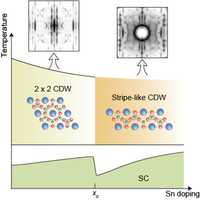
Phys. Rev. X 15, 041039 (2025)
arXiv
Thermodynamics of the Heisenberg antiferromagnet on the maple-leaf lattice
New Submission | Strongly Correlated Electrons (cond-mat.str-el) | 2025-12-01 20:00 EST
Robin Schäfer, Paul L. Ebert, Noah Hassan, Johannes Reuther, David J. Luitz, Alexander Wietek
We study the Heisenberg antiferromagnet on the maple-leaf lattice using several numerical approaches, focusing on the numerical linked-cluster expansion (NLCE), which exhibits an unconventional convergence extending to low and even zero temperatures. We evaluate thermodynamic properties as well as spin-spin correlations through the equal-time structure factor. Within NLCE the specific heat capacity reveals a two-peak structure at $ T_1 \approx 0.479,J$ and $ T_2 \approx 0.131,J$ , reminiscent of the corresponding result for the triangular lattice. At intermediate temperatures, the spin-spin structure factor develops features that reflect the absence of reflection symmetry in the lattice. The zero-temperature convergence of NLCE enables reliable estimates of the ground-state energy and points to a short-range correlated paramagnetic ground state composed of resonating hexagonal motifs. The NLCE results are benchmarked against Pseudo-Majorana Functional Renormalization Group, finite-temperature Lanczos, and classical Monte Carlo simulations.
Strongly Correlated Electrons (cond-mat.str-el)
Obstruction to Ergodicity from Locality and $U(1)$ Higher Symmetries on the Lattice
New Submission | Strongly Correlated Electrons (cond-mat.str-el) | 2025-12-01 20:00 EST
Ramanjit Sohal, Ruben Verresen
We argue that the presence of \emph{any} exact $ U(1)$ higher-form symmetry, under mild assumptions, presents a fundamental obstruction to ergodicity under unitary dynamics in lattice systems with local interactions and finite on-site Hilbert space dimension. Focusing on the two-dimensional case, we show that such systems necessarily exhibit Hilbert space fragmentation and explicitly construct Krylov sectors whose number scales exponentially with system size. While these sectors cannot be distinguished by symmetry quantum numbers, we identify the emergent integrals of motion which characterize them. Our symmetry-based approach is insensitive to details of the Hamiltonian and the lattice, providing a systematic explanation for ergodicity-breaking in a range of systems, including quantum link models.
Strongly Correlated Electrons (cond-mat.str-el), Statistical Mechanics (cond-mat.stat-mech), Quantum Physics (quant-ph)
5+3 pages
IRSSG: An Open-Source Software Package for Spin Space Groups
New Submission | Materials Science (cond-mat.mtrl-sci) | 2025-12-01 20:00 EST
Sheng Zhang, Ziyin Song, Zhong Fang, Hongming Weng, Zhijun Wang
We present an open-source software package IRSSG for investigating magnetic systems with spin space groups (SSGs). The package works within the density functional theory (DFT) framework and requires wavefunctions from DFT codes, such as VASP, Quantum ESPRESSO, as well as any other code that has an interface to Wannier90. We introduce a set of compact SSG international symbols by combining non-crystallographic point groups with the 230 crystallographic space groups. The program first identifies all SSG operations and determines the SSG international symbol for a given magnetic system. It then generates the SSG character tables of little groups at any $ k$ point. Finally, it computes the traces of matrix presentations of SSG operations and assigns irreducible corepresentation labels to magnetic energy bands. The program is not only timely but also essential for advancing research on the study of magnons, altermagnetism, magnetic topology, and novel high-degeneracy excitations in SSG systems.
Materials Science (cond-mat.mtrl-sci)
Exceptional points and spectral cusps from density-wave fluctuation
New Submission | Mesoscale and Nanoscale Physics (cond-mat.mes-hall) | 2025-12-01 20:00 EST
We report two types of singularities that arise from fluctuations during the formation of charge- or spin-density waves. The first is the exceptional point (EP), corresponding to a higher-order pole of the retarded Green’s function. Such EPs lead to algebraic corrections in the decay of quasiparticle occupations and are observable through time-resolved angle-resolved photoemission spectroscopy (Tr-ARPES). The second is a spectral cusp, defined by the coalescence of three extrema in the real-frequency spectral function $ A(\mathbf{k}, \omega)$ . This cusp enforces the formation of Fermi arcs and induces a “threading” structure in the nearby band structure, both of which are directly observable in ARPES.
Mesoscale and Nanoscale Physics (cond-mat.mes-hall), Strongly Correlated Electrons (cond-mat.str-el), Quantum Physics (quant-ph)
11 pages, 6 figures
Effect of Magneto-Mechanical Synergism in the Process-Structure Correlation in Fe-C Alloys: A Phase-Field Modeling Approach
New Submission | Materials Science (cond-mat.mtrl-sci) | 2025-12-01 20:00 EST
Soumya Bandyopadhyay, Sourav Chatterjee, Dallas R. Trinkle, Richard G. Hennig, Victoria Miller, Michael S. Kesler, Michael R. Tonks
Applied magnetic fields can alter phase equilibria and kinetics in steels; however, quantitatively resolving how magnetic, chemical, and elastic driving forces jointly influence the microstructure remains challenging. We develop a quantitative magneto-mechanically coupled phase-field model for the Fe-C system that couples a CALPHAD-based chemical free energy with demagnetization-field magnetostatics and microelasticity. The model reproduces single- and multi-particle evolution during the alpha to gamma inverse transformation at 1023 K under external fields up to 20 T, including ellipsoidal morphologies observed experimentally at 8 T. Chemically driven growth is isotropic; a magnetic interaction introduces an anisotropic driving force that elongates gamma precipitates along the field into ellipsoids, while elastic coherency promotes faceting, yielding elongated cuboidal or ``brick-like” particles under combined magneto-elastic coupling. Growth kinetics increase with C content, and decrease with field strength and misfit strain. Multi-particle simulations reveal dipolar interaction-mediated coalescence for field-parallel neighbors and ripening for field-perpendicular neighbors. Incorporating field-dependent diffusivity from experiment slows kinetics as expected; a first-principles-motivated anisotropic diffusivity correction is estimated to be small (<2%). These results establish a process-structure link for magnetically assisted heat treatments of Fe-C alloys and provide guidance for microstructure control via chemo-magneto-mechanical synergism.
Materials Science (cond-mat.mtrl-sci)
Perspective: Magnon-magnon coupling in hybrid magnonics
New Submission | Materials Science (cond-mat.mtrl-sci) | 2025-12-01 20:00 EST
Wei Zhang, Yuzan Xiong, Jia-Mian Hu, Joseph Sklenar, Mitra Mani Subedi, M.Benjamin Jungfleisch, Vinayak S. Bhat, Yi Li, Luqiao Liu, Qiuyuan Wang, Yunqiu Kelly Luo, Youn Jue Bae, Benedetta Flebus
The internal coupling of magnetic excitations (magnons) with themselves has created a new research sub-field in hybrid magnonics, i.e., magnon-magnon coupling, which focuses on materials discovery and engineering for probing and controlling magnons in a coherent manner. This is enabled by, one, the abundant mechanisms of introducing magnetic interactions, with examples of exchange coupling, dipolar coupling, RKKY coupling, and DMI coupling, and two, the vast knowledge of how to control magnon band structure, including field and wavelength dependences of frequencies, for determining the degeneracy of magnon modes with different symmetries. In particular, we discuss how magnon-magnon coupling is implemented in various materials systems, with examples of magnetic bilayers, synthetic antiferromagnets, nanomagnetic arrays, layered van der Waals magnets, and (DMI SOT materials) in magnetic multilayers. We then introduce new concept of applications for these hybrid magnonic materials systems, with examples of frequency up/down conversion and magnon-exciton coupling, and discuss what properties are desired for achieving those applications.
Materials Science (cond-mat.mtrl-sci)
Comments and suggestions are welcome
EPW-VASP interface for first-principles calculations of electron-phonon interactions
New Submission | Materials Science (cond-mat.mtrl-sci) | 2025-12-01 20:00 EST
Danylo Radevych, Aidan Thorn, Manuel Engel, Aleksey N. Kolmogorov, Sabyasachi Tiwari, Georg Kresse, Feliciano Giustino, Elena R. Margine
We present an interface between the Vienna \textit{Ab initio} Simulation Package (VASP) and the EPW software for calculating materials properties governed by electron-phonon (e-ph) interactions. Computation of the e-ph matrix elements with the finite-difference supercell approach in VASP and their fine-grid interpolation in EPW enable accurate modeling of temperature-dependent materials properties and phonon-assisted quantum processes with VASP’s extensive library of exchange-correlation functionals and pseudopotentials. We demonstrate the functionality of the EPW-VASP interface by examining the superconducting gap and critical temperature in MgB$ _2$ using the anisotropic Migdal-Eliashberg equations, and the carrier mobility in cubic BN using the \textit{ab initio} Boltzmann transport equation.
Materials Science (cond-mat.mtrl-sci)
Quantum Wigner solid in two-dimensional electron systems in semiconductors
New Submission | Mesoscale and Nanoscale Physics (cond-mat.mes-hall) | 2025-12-01 20:00 EST
Alexander A. Shashkin, Sergey V. Kravchenko
We review recent transport experiments that reveal two-threshold voltage-current characteristics, marked by a significant increase in noise between the two threshold voltages, at low electron densities in the insulating regime in two-dimensional (2D) electron systems, specifically in silicon metal-oxide-semiconductor field-effect transistors (MOSFETs) and SiGe/Si/SiGe heterostructures. The double-threshold voltage-current characteristics closely resemble those observed in the collective depinning of the vortex lattice in type-II superconductors. By adapting the model used for vortices to the case of an electron solid, good agreement with the experimental results is achieved, which supports a quantum electron solid forming in the low electron density state. When a perpendicular magnetic field is applied, the double-threshold behavior occurs at voltages an order of magnitude lower and at significantly higher electron densities than the zero-field case. This indicates the stabilization of the quantum electron solid, aligning with theoretical predictions. Interestingly, the double-threshold voltage-current curves, indicative of electron solid formation at low densities, are not observed in the quantum Hall regime. This lack of observation does not confirm the existence of a quasi-particle quantum Hall Wigner solid and indicates that quasi-particles near integer filling do not form an independent subsystem.
Mesoscale and Nanoscale Physics (cond-mat.mes-hall), Strongly Correlated Electrons (cond-mat.str-el)
Advances in Physics: X, in press
Demonstration of the ODMR activity of the telecom range ClV center in SiC: a wavefunction theory analysis
New Submission | Materials Science (cond-mat.mtrl-sci) | 2025-12-01 20:00 EST
Zsolt Benedek, Oscar Bulancea-Lindvall, Joel Davidsson, Viktor Ivády, Igor Abrikosov
Recently, density functional theory-based high-throughput screening of point defects in 4H-SiC revealed the positively charged chlorine-vacancy (ClV) defect to be a promising quantum bit candidate emitting at telecom wavelengths, with an electronic structure analogous to the well-known NV center in diamond. Furthermore, recent infrared photoluminescence (PL) measurements on chlorine-implanted 4H-SiC have revealed new PL lines associated with the ClV defect. While the defect possesses a high-spin ground state, there is a lack of evidence of optically detected magnetic resonance (ODMR), a key ingredient for optical spin initialization and readout. In this Letter, we employ a multireference wavefunction-based quantum chemistry method, specifically, second-order perturbation theory (NEVPT2) on top of a defect-localized many-body wavefunction (CASSCF), to explore the many-body electronic structure of the ClV center. We estimate photoluminescence, internal conversion, and intersystem crossing rates to investigate the possibility of spin polarization and ODMR activity. Our findings establish the ClV center in 4H-SiC as an optically addressable spin qubit with fiber optics compatibility in the technologically mature 4H-SiC host material, enabling the development of large-scale quantum networks.
Materials Science (cond-mat.mtrl-sci)
Main document: 8 pages, 4 figures; Supplementary information: 66 pages, 2 figures
Anomalous spin-lattice coupling in a 2D antiferromagnetic semiconductor revealed by surface acoustic Rayleigh waves
New Submission | Materials Science (cond-mat.mtrl-sci) | 2025-12-01 20:00 EST
Zahra Ebrahim Nataj, Md. Sabbir Hossen Bijoy, Vladislav Korostelev, Dylan Wright, Mohammad Zeinolabedini, Konstantin Klyukin, Fariborz Kargar, Alexander A. Balandin
Magnetic order in van der Waals magnets can strongly influence their lattice dynamics, yet how this interaction manifests across different phonon length scales remains unclear. Optical phonons probe bond-scale exchange modulation and short-range spin correlations, whereas long-wavelength acoustic modes couple to uniform strain fields and are sensitive to the renormalization of the macroscopic elastic tensor associated with long-range magnetic order. Experimentally accessing these low-energy acoustic excitations in low-dimensional crystals is challenging due to their low energies and the small lateral dimensions of exfoliated samples. Here, we employ angle-resolved Brillouin-Mandelstam scattering spectroscopy to investigate the surface acoustic phonon spectrum of exfoliated NiPS3 thin films across their antiferromagnetic transition temperature. Our results show a single Rayleigh surface mode whose phase velocity exhibits a pronounced 5.5% softening upon cooling through the Neel temperature. This anomaly reflects a giant magnetoelastic renormalization of the long-wavelength elastic constants triggered by the onset of zigzag antiferromagnetic order. First-principles calculations of the full elastic tensor, combined with continuum finite-element modelling of the NiPS3/SiO2/Si heterostructure, reproduce both the Rayleigh-wave dispersion and its magnetic-order-induced shift. The obtained results reveal how microscopic exchange interactions shape macroscopic mechanical properties in two-dimensional antiferromagnetic semiconductors, providing a basis for lattice-controlled magnetism and magnetically tunable phononic, magnonic, and strain-mediated spintronic device concepts.
Materials Science (cond-mat.mtrl-sci)
24 pages, 4 figures
Superionicity in Ammonium Polyhydrides at Extreme Pressures
New Submission | Materials Science (cond-mat.mtrl-sci) | 2025-12-01 20:00 EST
Kyla de Villa, Xiaoyu Wang, Eva Zurek, Burkkhard Militzer
Polyhydrides have been shown to form novel structures at high pressure, which may be found in the interiors of giant planets. With density functional molecular dynamics simulations we studied the behavior of ammonium polyhydride compounds with stoichiometries of NH$ _7$ , NH$ _9$ , NH$ _{10}$ , NH$ _{11}$ , NH$ _{14}$ , NH$ _{20}$ , and NH$ _{24}$ which were predicted with crystal structure search methods to be metastable at 100-300~GPa. For every compound, we performed simulations at a range of temperatures (and for several compounds, pressures) covering the solid, superionic and liquid phases. We show that when heated, high pressure ammonium polyhydride compounds exhibit hydrogen superionic diffusion. We demonstrate a number of metrics by which the solid-to-superionic and superionic-to-liquid transitions can be detected from simulation data, including changes in the internal energy and pressure, formation of new chemical species, and atomic diffusion rates. We find that both the solid-to-superionic and the superionic-to-liquid transitions decrease in temperature as proton fraction increases. These trends indicate that above a proton fraction of $ \sim$ 0.97, ammonium hydride structures are likely to directly melt instead of first exhibiting a superionic phase. Our observed melting trend further indicates that at the extreme conditions of ice giant interiors, hydrogen rich ammonium hydrides such as those studied in this work would exist predominantly as liquids rather than exhibiting a superionic phase.
Materials Science (cond-mat.mtrl-sci)
Pervasive electronic nematicity as the parent state of kagome superconductors
New Submission | Strongly Correlated Electrons (cond-mat.str-el) | 2025-12-01 20:00 EST
Muxian Xu, Siyu Cheng, Andrea Capa Salinas, Ganesh Pokharel, Alexander LaFleur, Hong Li, Hengxin Tan, Brenden R. Ortiz, Qinwen Deng, Binghai Yan, Ziqiang Wang, Stephen D. Wilson, Ilija Zeljkovic
Kagome superconductors $ A$ V$ _3$ Sb$ _5$ ($ A$ = Cs, K, Rb) have developed into an exciting playground for realizing and exploring exotic solid state phenomena. Abundant experimental evidence suggests that electronic structure breaks rotational symmetry of the lattice, but whether this may be a simple consequence of the symmetry of the underlying 2 $ \times$ 2 charge density wave phase or an entirely different mechanism remains intensely debated. We use spectroscopic imaging scanning tunneling microscopy to explore the phase diagram of the prototypical kagome superconductor CsV$ _3$ Sb$ _5$ as a function of doping. We intentionally suppress the charge density wave phase with chemical substitutions selectively introduced at two distinct lattice sites, and investigate the resulting system. We discover that rotational symmetry breaking of the electronic structure – now present in short-range nanoscale regions – persists in all samples, in a wide doping range long after all charge density waves have been suppressed. As such, our experiments uncover ubiquitous electronic nematicity across the $ A$ V$ _3$ Sb$ _5$ phase diagram, unrelated to the 2 $ \times$ 2 charge density wave. This further points towards electronic nematicity as the intrinsic nature of the parent state of kagome superconductors, under which other exotic low-temperature phenomena subsequently emerge.
Strongly Correlated Electrons (cond-mat.str-el), Materials Science (cond-mat.mtrl-sci), Superconductivity (cond-mat.supr-con)
Evolving disorder in non-Hermitian lattices
New Submission | Disordered Systems and Neural Networks (cond-mat.dis-nn) | 2025-12-01 20:00 EST
I. Komis, E. T. Kokkinakis, K. G. Makris, E. N. Economou
The impact of disorder on wave transport has been extensively studied in Hermitian systems, where static randomness gives rise to Anderson localization. In non-Hermitian lattices, static disorder can lead to peculiar transport features, including jumpy wave evolution. By contrast, much less is known about how transport is modified when the on-site disorder evolves during propagation. Here we address this problem by investigating two pertinent non-Hermitian lattice models with disorder altered at regular intervals, characterized by a finite disorder period. In lattices with symmetric couplings and complex on-site disorder, short disorder periods suppress localization and give rise to diffusion-like spreading, while longer periods allow the emergence of jumps. In Hatano-Nelson lattices with real on-site disorder, the non-Hermitian skin effect asymptotically dominates regardless of the disorder strength, while the disorder period reshapes the drift velocity and modulates its competition with Anderson localization. These results establish evolving disorder as a novel way of tuning non-Hermitian transport.
Disordered Systems and Neural Networks (cond-mat.dis-nn), Optics (physics.optics)
10 pages, 9 figures
Shaping Causality: Emergence of Nonlocal Light Cones in Long-Range Quantum Systems
New Submission | Statistical Mechanics (cond-mat.stat-mech) | 2025-12-01 20:00 EST
Shreyas Sadugol, Giuseppe Luca Celardo, Fausto Borgonovi, Lev Kaplan
While for non-relativistic short-range interactions, the spread of information is local, remaining confined in an effective light cone, long-range interactions can generate either nonlocal (faster-than-ballistic) or local (ballistic) spread of correlations depending on the initial conditions. This makes long-range interactions a rich platform for controlling the spread of information. Here, we derive an effective Hamiltonian analytically and identify the specific interaction term that drives nonlocality in a wide class of long-range spin chains. This allows us to understand the conditions for the emergence of local behavior in the presence of nonlocal interactions and to identify a regime where the causal space-time landscape can be precisely designed. Indeed, we show that for large long-range interaction strength or large system size, initial conditions can be chosen in a way that allows a local perturbation to generate nonlocal signals at programmable distant positions, which then propagate within effective light cones. The possibility of engineering the emergence of nonlocal Lieb-Robinson-like light cones allows one to shape the causal landscape of long-range interacting systems, with direct applications to quantum information processing devices, quantum memories, error correction, and information transport in programmable quantum simulators.
Statistical Mechanics (cond-mat.stat-mech), Quantum Physics (quant-ph)
Includes Supplementary Material
A chemical avenue to manipulate field-reentrant superconducting rivalries in infinite layer nickelates
New Submission | Superconductivity (cond-mat.supr-con) | 2025-12-01 20:00 EST
Haowen Han, Yusong Zhao, Yi Bian, Wenlong Yang, Shaohua Yang, Binghui Ge, Hongliang Dong, Chuanying Xi, Ze Wang, Nuofu Chen, Jia-Cai Nie, Ho-kwang Mao, Jikun Chen
Recently, a preliminary magnetic field-reentrant superconductivity manifested in high critical-temperature (Tc) Eu-doped infinite-layer (IL) nickelates, beyond analogous discoveries exclusively in low-Tc systems. This arises more intriguing fundamental issues about potential quantum-phase boundary and criticality between unconventional superconductivity and field-reentrant-one, which are inexplicable owing to formidable challenges in growing IL-nickelates towards later-series rare-earths. Herein, we demonstrate the 4f-orbital related quantum rivalries between high-Tc and reentrant superconductivity in (Nd1-yRE’y)1-xEuxNiO2 (RE’: Pr, Nd, Sm, Gd and Dy) system, via opening up the chemical avenue for a quantum leap in their growths. Robust magnetic field-reentrant superconductivity with uniaxial anisotropy is validated to fringe at boundary of the superconducting dome with optimal-Tc near 40 K. Reinforced reentry is realized via introducing Gd3+ with half-filled deeper 4f-orbital energy-states, compared to Eu2+, that strengthens on-site magnetic-moment. Our findings largely enrich the superconducting phase-diagram for nickelates, establishing an ideal platform for studying 4f-related unconventional superconductivity and quantum criticality.
Superconductivity (cond-mat.supr-con), Strongly Correlated Electrons (cond-mat.str-el)
Evidence for Anion-Free-Electron Duality and Enhanced Superconducting Role of Interstitial Anionic Electrons in Electrides
New Submission | Superconductivity (cond-mat.supr-con) | 2025-12-01 20:00 EST
Zhao Liu, Xiang Wang, Yin Yang, Pengcheng Ma, Zhijun Tu, Xinyu Wang, Donghan Jia, Wenju Zhou, Huiyang Gou, Hechang Lei, Qiang Xu, Zhonghao Liu, Tian Cui
The discovery of superconducting electrides, characterized by interstitial anionic electrons (IAEs) residing in lattice cavities, has established a distinctive platform for investigating superconductors. Yet the superconducting origin and the fundamental role of IAEs in Cooper pairing formation remain poorly understood due to the challenges in directly observing IAEs. Here, combining angle-resolved photoemission spectroscopy (ARPES), transport measurements, and first-principles calculations, we certify that the IAEs in electride La3In (Tc = 9.4 K) exhibit a dual nature as both anions and free electrons. With the finite-depth potential well model, we trace that IAEs originate from electronic states near the Fermi level located above potential barriers, forming a Fermi sea susceptible to scattering by La-derived phonons, triggering superconductivity. ARPES combined with high-resolution XRD measurements on oxygen-treated samples directly reveals IAEs’ spatial distribution and energy dispersion from interstitial sites with the consistent energy value predicted by our theory model. The concomitant diminution of free electrons upon oxygen treatment, leading to a marked reduction in superconductivity, further provides compelling experimental evidence that IAEs actively participate in electron-phonon coupling. Our findings resolve the long-standing ambiguity regarding the electronic nature of IAEs, elucidate their enhancing superconductivity in the phonon-mediated mechanism, and provide a foundation for exploring advanced electride-based superconductors.
Superconductivity (cond-mat.supr-con), Materials Science (cond-mat.mtrl-sci)
Electric Current Control of Helimagnetic Chirality from a Multidomain State in the Helimagnet MnAu$_2$
New Submission | Materials Science (cond-mat.mtrl-sci) | 2025-12-01 20:00 EST
Yuta Kimoto, Hidetoshi Masuda, Jun-ichiro Ohe, Shoya Sakamoto, Takeshi Seki, Yoshinori Onose
In this paper, we study the domain wall dynamics under electric current in the helimagnet MnAu$ _2$ . We have found that the threshold electric current of the transition from a multidomain state to a single-chiral domain state in a magnetic field is much lower than that of chirality reversal from a single-chiral domain within certain ranges of temperature and magnetic field. The chirality after the transition depends on whether the magnetic field and electric current were parallel or antiparallel. Numerical calculations based on the Landau-Lifshitz-Gilbert equation reproduced the experimental observations. These results indicate that the domain walls are highly mobile in the helimagnet.
Materials Science (cond-mat.mtrl-sci)
12 pages, 13 figures
Robust Paramagnon and Acoustic Plasmon in a Photo-excited Electron-doped Cuprate Superconductor
New Submission | Materials Science (cond-mat.mtrl-sci) | 2025-12-01 20:00 EST
Daniel Jost, Jiarui Li, Jordyn Hales, Jonathan Sobota, Giacomo Merzoni, Leonardo Martinelli, Shuhan Ding, Kejun Xu, Justine Schlappa, Andreas Scherz, Robert Carley, Benjamin E. Van Kuiken, Teguh C. Asmara, Le Phuong Hoang, Laurent Mercadier, Sergii Parchenko, Martin Teichmann, Patrick S. Kirchmann, Giacomo Ghiringhelli, Brian Moritz, Zhi-Xun Shen, Thomas P. Devereaux, Yao Wang, Wei-Sheng Lee
Characterizing the spin and charge degrees of freedom in high-temperature superconducting cuprates under non-equilibrium conditions provides new insights into their electronic correlations. However, their collective dynamics have been largely unexplored due to experimental challenges. Here, we use time-resolved resonant inelastic X-ray scattering (trRIXS) at the Cu $ L_3$ -edge to simultaneously track the collective spin (paramagnon) and charge (acoustic plasmon) dynamics in an optimally electron-doped cuprate driven out-of-equilibrium by a femtosecond pump laser pulse. Upon pumping, we observed an anti-Stokes signal associated with paramagnon generation, which modifies the paramagnon dispersion near the zone center, though the bandwidth remained unchanged, suggesting no significant alteration to spin exchange interactions. Simultaneously, in the charge sector, the acoustic plasmon’s energy and spectral weight decreased, suggesting a light-induced redistribution of charge carriers. The variations of both the paramagnon and the plasmon were locked in time, demonstrating a robust intertwining between the spin and charge degrees of freedom on a femtosecond timescale, even in this non-equilibrium state.
Materials Science (cond-mat.mtrl-sci), Strongly Correlated Electrons (cond-mat.str-el)
Scalable Synthesis of Large-Area WS2 Thin Films from Tungsten Precursors by Thermal CVD and Their Application in Schottky-Barrier Solar Cells
New Submission | Materials Science (cond-mat.mtrl-sci) | 2025-12-01 20:00 EST
Jisun Kim, Yoosuk Kim, Seung-Ho Park, Yong Hun Ko, Chong-Yun Park
Two-dimensional tungsten disulfide (WS2) is a promising semiconductor for next-generation optoelectronic and photovoltaic devices, but scalable routes to uniform, large-area films remain challenging. In this study, a systematic thermal chemical vapor deposition (T-CVD) strategy is presented to synthesize centimeter-scale WS2 thin films by sulfurizing tungsten (W) precursors in a controlled sulfur vapor environment. High-purity sputtered W thin films on SiO2/Si and W foils were sulfurized at temperatures between 400 and 1000 C, with Raman spectroscopy identifying 800 C as the optimal growth temperature. Under these conditions, the films exhibit the characteristic E12g (349.7 cm-1) and A1g (416.8 cm-1) modes with narrow full-width at half-maximum values, indicative of high crystallinity and controlled thickness. Optical microscopy, scanning electron microscopy, atomic force microscopy, transmission electron microscopy, and X-ray photoelectron spectroscopy collectively validate the creation of stoichiometric, layered WS2 with significantly enhanced uniformity and diminished roughness when utilizing sputtered W thin films in contrast to W foils. Leveraging this optimized process, WS2 films grown on W foils were transferred onto target substrates, including indium tin oxide (ITO)-coated glass, using a PMMA-assisted wet-transfer method that preserves structural integrity over large areas. Schottky-barrier solar cells with an Au/WS2/ITO architecture fabricated from these films deliver a short-circuit current density of 7.91 mA cm-2, an open-circuit voltage of 0.495 V, and a power conversion efficiency of 1.45 percent. These results demonstrate that sulfurization of W thin films and foils via T-CVD provides a scalable, substrate-compatible platform for integrating WS2 into practical optoelectronic and low-cost photovoltaic technologies.
Materials Science (cond-mat.mtrl-sci), Applied Physics (physics.app-ph)
Protected valley splitting against interface disorder toward scalable silicon electron spin qubits
New Submission | Mesoscale and Nanoscale Physics (cond-mat.mes-hall) | 2025-12-01 20:00 EST
Yang Liu, Gang Wang, Shan Guan, Jun-Wei Luo, Shu-Shen Li
Regardless of various material design strategies, experimentally achieving substantial and controllable valley splitting in Si/SiGe quantum wells remains a central challenge for ensuring high gate uniformity. This difficulty arises from unavoidable atomic-scale disorder at the interface, caused by alloy randomness, which suppresses valley splitting and, more critically, induces large variations. Here, we demonstrate that CMOS-compatible uniaxial strain can substantially enhance valley splitting, rendering it immune to interface disorder. Atomistic pseudopotential calculations show that uniaxial strain linearly restores the valley splitting suppressed by interfacial disorder, with a large enhancement rate, while keeping disorder-induced variations within a narrow distribution. We reveal that uniaxial strain introduces a new coupling channel between bulk valleys in adjacent Brillouin zones through a small momentum transfer, which markedly reduces the susceptibility of valley splitting to interfacial disorder. These findings establish a viable route to improve gate uniformity in silicon-based spin qubits, paving the way for scalable quantum processors.
Mesoscale and Nanoscale Physics (cond-mat.mes-hall)
12 pages, 4 figures
Emergent Fermi-liquid-like phase by melting a holon Wigner crystal in a doped Mott insulator on the kagome lattice
New Submission | Strongly Correlated Electrons (cond-mat.str-el) | 2025-12-01 20:00 EST
Xu-Yan Jia (1), Wen Huang (2 and 3), D. N. Sheng (4), Shou-Shu Gong (2 and 3) ((1) School of Physics, Beihang University, (2) School of Physical Sciences, Great Bay University, (3) Great Bay Institute for Advanced Study, (4) Department of Physics and Astronomy, California State University Northridge)
The doped quantum spin liquid on the kagome lattice provides a fascinating platform to explore exotic quantum states, such as the reported holon Wigner crystal at low doping. By extending the doping range to $ \delta = 0.027$ - $ 0.36$ , we study the kagome-lattice $ t$ -$ J$ model using the state-of-the-art density matrix renormalization group calculation. On the $ L_y=3$ cylinder ($ L_y$ is the number of unit cells along the circumference direction), we establish a quantum phase diagram with increasing doping level. In addition to the charge density wave (CDW) states at lower doping, we find an emergent Fermi-liquid-like phase by melting the holon Wigner crystal at $ \delta \approx 0.15$ , which is characterized by suppression of charge density oscillation and power-law decay of various correlation functions. On the wider $ L_y = 4$ cylinder, the bond-dimension extrapolated correlation functions also support such a Fermi-liquid-like state, suggesting its stability with increasing system size. In a narrow doping range near $ \delta = 1/3$ on the $ L_y = 3$ cylinder, we find a state with an exponential decay of single-particle correlation but the other correlation functions preserving the features in the Fermi-liquid-like phase, which may be a precursor of a superconducting state. Nevertheless, this peculiar state near $ \delta = 1/3$ disappears on the $ L_y = 4$ cylinder, implying a possible lattice size dependence. Our results reveal a quantum melting from a holon Wigner crystal to a Fermi-liquid-like state with increasing hole density, and suggest a doping regime to explore superconductivity for future study.
Strongly Correlated Electrons (cond-mat.str-el)
9 pages, 9 figures
Entropy production and non-Gaussianity of fast processes at weak damping
New Submission | Statistical Mechanics (cond-mat.stat-mech) | 2025-12-01 20:00 EST
Mario A. Ciampini, Jakob Rieser, Nikolai Kiesel, Andreas Dechant
We present a method of estimating the rate of entropy production in underdamped dynamics by decomposing it into contributions originating in different non-equilibrium effects. Specifically, a non-zero average velocity, a non-thermal width of the velocity distribution, correlations between position and velocity and non-Gaussian velocity statistics represent different ways in which the system can be out of equilibrium and each give rise to a positive contribution to the overall entropy production rate. We demonstrate that each contribution can be separately estimated from experimental trajectory data of levitated nano-particles subject to non-linear forces. We find that the majority of the entropy production rate can be attributed to the first three contributions which can be estimated from the first and second moments of the position and velocity and therefore result in a useful \enquote{Gaussian} estimate for the entropy production rate.
Statistical Mechanics (cond-mat.stat-mech), Optics (physics.optics)
17 pages, 7 figures
Evidence for electron localisation in a moiré-of-moiré superlattice
New Submission | Mesoscale and Nanoscale Physics (cond-mat.mes-hall) | 2025-12-01 20:00 EST
Hangyeol Park, Junhyeok Oh, Rasoul Ghadimi, Chiranjit Mondal, Yungi Jeong, Won Beom Choi, Kenji Watanabe, Takashi Taniguchi, Bohm-Jung Yang, Joonho Jang
The localisation of electrons in a lattice potential is an quantum-mechanical phenomenon and is often associated with remarkable physical properties of solids involving electron spins, electric polarisations and topological effects. In particular, even a small amount of distortion of the lattice potential can localise otherwise-delocalised quantum states in low-dimensional electron systems, dramatically influencing their thermodynamic properties and charge-transport behaviour. Study of such electron localisation induced by an aperiodic lattice potential remains exceptionally challenging in solid-state systems, since extrinsic disorders can trivially trap electrons in potential minima near disorders, obscuring the underlying quantum-mechanical origin of localisation phenomena. Van der Waals heterostructures can provide an alternative route for explorations of the phenomena via the emergence of superlattice potentials generated by rotating and stacking individual layers. Here, we report strong signatures of electron localisation in helical trilayer graphene, where the interplay of two moiré patterns gives rise to a moiré-of-moiré superlattice with distinct regions of moiré-periodic and moiré-aperiodic potentials. Remarkably, our measurements reveal the presence of double moiré-induced bands and high-order Brown-Zak oscillations, which are direct reflections of the periodic region with two constituent moiré patterns, and a superimposed anomalous hysteretic signal attributable to the aperiodic region. The data strongly suggest that electron wave functions are partially localised driven by the loss of a periodic lattice potential. Our work provides insight into the effects of spatially inhomogeneous lattice potentials on the low-dimensional electronic states and introduces a promising approach to control electron localisation for practical applications in solid-state devices.
Mesoscale and Nanoscale Physics (cond-mat.mes-hall)
Unraveling UV Stability in Metal Halide Perovskites: From Degradation Mechanisms to Molecular Passivation
New Submission | Materials Science (cond-mat.mtrl-sci) | 2025-12-01 20:00 EST
Xin Wen, Zhiyi Yao, Wenzhuo Li, Zhijun Ning, Fan Zheng
Understanding the mechanisms of UV-induced degradation is crucial for enhancing the UV stability of perovskite solar cells. The UV-driven structural dynamics of CH3NH3PbI3 (MAPbI3) are investigated using real-time TDDFT simulations, revealing that under the electron and hole excitation, the distortion of the inorganic framework (PbI) is primarily driven by the electron occupation of Pb-p and I-p antibonding states, whereas in the hole case, it is mainly governed by the direct cooling induced distortion. We also find that UV accelerates the rotation of MA+ molecules. Further, a BDO molecule is introduced as a passivant, which suppresses structural distortions and provides multi-phonon channels to dissipate carrier cooling energy. Experimental results confirm the UV-protective role of BDO, with suppressed PbI2 formation and improved device stability. These results clarify the mechanism of the UV-induced degradation in the MAPbI3 perovskite and further elucidate how passivation molecules enhance UV stability.
Materials Science (cond-mat.mtrl-sci)
Patterning perovskite colour converters for AR/VR microdisplays
New Submission | Materials Science (cond-mat.mtrl-sci) | 2025-12-01 20:00 EST
Ruairi Baker, Maria Pervez, Angus Hawkey, Nobuya Sakai, Valerie Berryman-Bousquet, Bernard Wenger
Colour conversion offers the clearest path to achieve RGB colours in high resolution microdisplays for AR/VR. With resolutions beyond 5000 ppi (i.e. RGB pitch of 5 um), the thickness of the conversion layers is critical for efficiency and manufacturing. Perovskites outperform other conversion materials (quantum dots or phosphors) with their high absorption coefficients for blue light. In this contribution, we show how perovskite materials, engineered for high optical density and colour purity, can be patterned to produce colour converting pixels. We demonstrate patterning using three approaches (lift-off, negative photoresist and dry etch), and discuss their advantages and disadvantages. The results consolidate the choice of perovskites for AR/VR applications by demonstrating their robustness and compatibility with multiple patterning strategies suitable for high resolution microdisplays.
Materials Science (cond-mat.mtrl-sci)
Complex network analysis of pore structures in monodisperse granular materials with varied grain shapes
New Submission | Soft Condensed Matter (cond-mat.soft) | 2025-12-01 20:00 EST
Jie Qi, Wenbin Fei, Guillermo A. Narsilio
Understanding how pore structure influences flow and transport behaviour in granular materials is essential for addressing a wide range of geotechnical, hydraulic, and environmental challenges. These processes are largely shaped by the microscopic arrangement of particles and interconnections between pores within the material. However, detailed insights considering granular assemblies with diversified grain shapes remain scarce. This study introduces a comprehensive framework incorporating Discrete Element Method (DEM) simulations, image processing, pore-network modelling, and complex network theory to investigate the links between particle morphology and their hydraulic behaviours. Mono-disperse assemblies of natural sand particles with varied shapes are constructed in DEM, and pore networks are extracted through image processing and pore-network modelling. Complex network analysis is then applied to calculate structural metrics that reveal intrinsic relationships between pore microstructures and hydraulic properties. Our results demonstrate that particle morphology significantly impacts pore network characteristics, including pore and throat sizes, closeness centrality, pore structure anisotropy, providing valuable insights into how pore structure influence transport properties.
Soft Condensed Matter (cond-mat.soft), Materials Science (cond-mat.mtrl-sci)
29 pages, 14 figures, 3 tables, Under review
Entangled-to-packed crossover in nonlinear extensional rheology of entangled polymers
New Submission | Soft Condensed Matter (cond-mat.soft) | 2025-12-01 20:00 EST
Yin Wang, Lin-Feng Wu, Yi-Bo Shao, Zhe Wang
Significant challenges exist in the nonlinear extensional rheology of entangled polymers. With simulations, we show that the key to understanding this problem is to recognize the existence and importance of a strain-induced crossover from the entangled state to a packed state. This crossover, following the saturation of primitive chain stretch, takes place with massive release of entanglements via convective flow and progressive chain alignment. After the crossover, the disentangled, fully-aligned chain segments pack similarly to the random packing of rods. Meanwhile, the system enters the steady state. In this state, the tube model, built on the concept of entanglement, fails, while the stress can be quantitatively calculated by combining the intra-chain conformational contribution and a frictional contribution from the inter-chain separation along flow.
Soft Condensed Matter (cond-mat.soft)
9 pages, 7 figures
Néel Ordered Magnetic Phases in Bipartite Quasicrystals
New Submission | Strongly Correlated Electrons (cond-mat.str-el) | 2025-12-01 20:00 EST
Jia-Heng Ji, Zhi-Yan Shao, Yu-Bo Liu, Fan Yang
Magnetism is a fundamental research area in which the recently proposed altermagnetism (AM) has become an emergent frontier. Very recently, the quasicrystal (QC) was proposed as a possible platform to realize AM. However, the existence of AM in QCs still lacks vigorous evidence. In this work, we adopt the sign-problem-free projector quantum Monte Carlo (PQMC) algorithm to investigate the magnetic phases in the half-filled Hubbard models in various 2D bipartite QCs, and always obtain Néel ordered states. While the Néel states in bipartite crystals are usually antiferromagnetism (AFM), we find it common that those in bipartite QCs can also be AM or ferromagnetism (FM). Based on symmetry analysis, combined with our comprehensive PQMC results, we propose a general criterion for determining the magnetism classes of the Néel states in a bipartite QC: According to whether the two sublattices are related by the inversion, the other point-group operation, or no operation about the unique symmetry center in the QC, the corresponding Néel state is AFM, AM or FM, respectively. For example, our results yield AM for the two $ D_4$ -symmetric Thue-Morse QCs and FM for the $ D_5$ -symmetric Penrose QC at half-filling. Our results provide a solid foundation for experimental investigations and potential applications of different classes of magnetism in QCs.
Strongly Correlated Electrons (cond-mat.str-el)
4 pages, 4 figures, with supplementary materials
Symmetry-Breaking Phenomena in MnPS3/TMDC Heterostructures: Non-relativistic Spin Splitting, Altermagnetism and Spin-Valley Effects
New Submission | Materials Science (cond-mat.mtrl-sci) | 2025-12-01 20:00 EST
Kamil Wrzos, Magdalena Birowska, Milosz Rybak
We explore symmetry-breaking phenomena in MnPS3/TMDC (MoS2, WS2, MoSe2, WSe2) heterostructures using first-principles calculations, considering two high-symmetry stacking configurations, S1 and S2, which differ not only by their interfacial registry but also by a 30° twist between the layers. Depending on the stacking geometry, the systems exhibit two distinct types of nonrelativistic spin splitting (NRSS): S2 hosts altermagnetic-like band crossings, while S1 shows global spin splitting characteristic of symmetry-breaking NRSS. Magnetic exchange and anisotropy parameters indicate that the intrinsic magnetic properties of MnPS3 are largely preserved upon interfacing. Including spin-orbit coupling, we find tunable conduction-valley splitting controlled by the MnPS3 spin orientation. Our results identify MnPS3 as a symmetry-tunable antiferromagnetic substrate capable of inducing and controlling spin and valley effects in 2D heterostructures without relying on net magnetization or strong SOC, offering a route toward nonvolatile valleytronic functionalities.
Materials Science (cond-mat.mtrl-sci)
Exact solution for one-dimensional spin models with Markov property
New Submission | Statistical Mechanics (cond-mat.stat-mech) | 2025-12-01 20:00 EST
For one-dimensional spin and pseudospin models that allow mapping to a Markov chain, the free energy of the system at a finite temperature can be expressed in terms of bond concentrations. Minimizing the free energy function makes it possible to obtain an exact solution of a statistical model. A dilute Ising chain with interacting impurities is considered as an example.
Statistical Mechanics (cond-mat.stat-mech)
10 pages, 12 references; will be published in Bulletin of the Russian Academy of Sciences: Physics, Volume 89, supplement issue 3, 2025
Quantum phase transitions of the anisotropic Dicke-Ising model in driven Rydberg arrays
New Submission | Quantum Gases (cond-mat.quant-gas) | 2025-12-01 20:00 EST
Bao-Yun Dong, Ying Liang, Stefano Chesi, Xue-Feng Zhang
We study the properties of a generalized Dicke-Ising model realized with an array of Rydberg atoms, driven by microwave electric fields and coupled to an optical cavity. As this platform allows for a precisely tunable anisotropy parameter, the model exhibits a rich landscape of phase transitions and critical phenomena, induced by the interplay of rotating-wave, counter-rotating-wave, and Ising interactions. We develop an improved quantum Monte Carlo algorithm based on the stochastic series expansion that explicitly tracks the Fock state of the quantum cavity. In the superradiant (SR) phase, this allows us to determine, through data collapse, the scaling laws of the photon number. We also demonstrate the vanishing of parity symmetry in finite-size simulations and show that the Rydberg blockade leads to a significant suppression of cavity occupation. Notably, stronger quantum fluctuations induced by the counter-rotating wave terms slightly favor the superradiant solid (SRS) phase over the Solid-1/2 state. Finally, we confirm that the SR phase transition and the transition from the Solid-1/2 to the SRS are second-order. In contrast, the transitions from the Solid-1/2 or SRS to the SR phase are both first-order for any value of the normalized anisotropy parameter.
Quantum Gases (cond-mat.quant-gas), Strongly Correlated Electrons (cond-mat.str-el), Quantum Physics (quant-ph)
10 pages, 8 figures, comments are welcome, and more information at this http URL
Robust quantum-droplet necklace clusters in three dimensions
New Submission | Quantum Gases (cond-mat.quant-gas) | 2025-12-01 20:00 EST
Liangwei Dong, Dongshuai Liu, Boris A. Malomed
We report the existence of quasi-stable ring-shaped (necklace-shaped) clusters built, in the free space, of 3D quantum droplets (QDs) in a binary Bose-Einstein condensate, modeled by the Gross-Pitaevskii equations with the Lee-Huang-Yang corrections. The QD clusters exhibit diverse dynamical behaviors, including contraction, oscillations, and expansion, depending on the cluster’s initial radius. A phase shift between adjacent QDs imparts net angular momentum to the cluster, inducing its permanent rotation. Through the energy-minimization analysis, we predict equilibrium values of the necklace radius that support persistent rotation with negligible radial pulsations. In this regime, the clusters evolve as robust entities, maintaining the azimuthal symmetry in the course of the evolution, even in the presence of considerable perturbations. Necklace “supervortex” clusters, composed of QDs with inner vorticity 1 and global vorticity M, imprinted onto the cluster, may also persist for a long time. The reported findings may facilitate the experimental realization of complex self-sustained quantum states in the 3D free space.
Quantum Gases (cond-mat.quant-gas)
7 pages, 5 figures, to be published in Chaos Solitons & Fractals
Classical density functional treatment of polydisperse polarisable clusters
New Submission | Soft Condensed Matter (cond-mat.soft) | 2025-12-01 20:00 EST
Clifford E. Woodward, David Ribar, Jan Forsman
Ion clustering has been proposed as a mechanism leading to the peculiar ‘anomalous underscreening’ phenomenon seen for electrostatic interactions between charge surfaces immersed in concentrated electrolytes. These interactions have been measured using the Surface Force Apparatus, according to which there are strong repulsive interactions between like-charged surfaces, with a range that increases upon further addition of salt, above some threshold concentration. A common suggestion is that ionic aggregates, if they form in sufficient numbers, will reduce the concentration of free ions and thereby increase the nominal Debye length. In previous work, we investigated a cluster model using classical Density Functional Theory (cDFT) and a polymer-like description of the ion clusters. These clusters were monodisperse and of either a linear or branched architecture, and a fixed charge sequence along the chains. In this work, we generalise the cDFT to treat ‘living polymers’ with variable chain lengths and charge arrangements along the chain. This approach allows clusters to become polarised by the presence of charged surfaces, manifested by like-charged bonding. We find that even with a small degree of like-charged bonding a full equilibrium treatment of our model predicts only weak repulsion between like-charged surfaces. When a global constraint is applied so that the charged surfaces are neutralised only by the dissociated ions, while the clusters contribute overall zero charge, even a very small fraction of clustering ions generate strong and long-ranged forces. Moreover, if the cluster fraction increase substantially upon the addition of further salt, then the strength of the surface forces will also increase, although the range remains roughly constant.
Soft Condensed Matter (cond-mat.soft)
Inferring Tree Structure with Hidden Traps from First Passage Times
New Submission | Statistical Mechanics (cond-mat.stat-mech) | 2025-12-01 20:00 EST
Fabian H. Kreten, Ludger Santen, Reza Shaebani
Tracking the movement of tracer particles has long been a strategy for uncovering complex structures. Here, we study discrete-time random walks on finite Cayley trees to infer key parameters such as tree depth and geometric bias toward the root or leaves. By analyzing first passage properties, we show that the first two first-passage-time factorial moments (FPTFMs) uniquely determine the tree structure. However, if the random walker experiences waiting phases – due to sticky branch walls or presence of traps – this identification becomes nontrivial. We demonstrate that the generating function of the first passage time (FPT) distribution decomposes into contributions from the waiting time distribution and the random walk without waiting, leading to a nonlinear system of equations relating the factorial moments of the waiting time distribution and the FPTFMs of random walks with and without waiting. For geometrically distributed waiting times, additional moment measurements do not suffice, but unique determination of the structure is achieved by varying initial conditions or fitting the Fourier transform of the FPT distribution to measured data. The latter method remains effective also for power-law waiting time distributions, where higher-order FPTFMs are undefined. These results provide a framework for reconstructing tree-like networks from FPT data, with applications in biological transport and spatial networks.
Statistical Mechanics (cond-mat.stat-mech), Soft Condensed Matter (cond-mat.soft)
15 pages, 9 figures
Phys. Rev. E 112, 054306, 2025 (Editors’ suggestion)
Hybrid structure with a ferromagnetic film and an array of magnetic molecules for deep-nanoscale reprogrammable magnonics
New Submission | Mesoscale and Nanoscale Physics (cond-mat.mes-hall) | 2025-12-01 20:00 EST
Oleksandr Pastukh, Piotr Graczyk, Mateusz Zelent, Lukasz Laskowski, Maciej Krawczyk
Miniaturization is an essential element in the development of information processing technologies and is also one of the main determinants of the usability of the tested artificial neural networks. It is also a key element and one of the main challenges in the development of magnonic neuromorphic systems. In this work, we propose a new platform for the development of these new spin-wave-based technologies. Using micromagnetic simulations, we demonstrate that magnetic molecules regularly arranged on the surface of a thin ferromagnetic layer enable resonant coupling of propagating spin waves with the dynamics of the molecules’ magnetic moments, opening a gap in the transmission spectrum up to 150 MHz. The gap, its width, and frequency can be controlled by an external magnetic field or the arrangement of molecules on the ferromagnetic surface. Furthermore, the antiferromagnetic arrangement of the magnetic moments of molecules or clusters of molecules allows for control of the gap’s position and width. Thus, the proposed hybrid structure offers reprogrammability and miniaturization down to the deep nanoscale, operating frequencies in the range of several GHz, key properties for the implementation of artificial neural networks.
Mesoscale and Nanoscale Physics (cond-mat.mes-hall)
Extended Multi-Temperature Model for Electron–Phonon Coupling and Ultrafast Thermal Transport in Graphene
New Submission | Mesoscale and Nanoscale Physics (cond-mat.mes-hall) | 2025-12-01 20:00 EST
Houssem Rezgui, Chuang Zhang, Clivia Sotomayor-Torres
Ultrafast thermal transport in low-dimensional materials challenges traditional diffusive models due to reduced scattering, strong electron-phonon coupling, and pronounced non-equilibrium effects. To address these complexities, we extend the macroscopic multi-temperature model by incorporating non-diffusive and non-local phenomena, treating electrons, optical phonons, and acoustic phonons as coupled but thermally distinct subsystems. We benchmark this enhanced framework against the multi-temperature Boltzmann transport equation, enabling detailed resolution of branch-dependent energy relaxation and identifying bottlenecks in thermalization. This approach provides a more accurate and comprehensive description of heat flow in emerging materials, offering novel insights into phonon dynamics and electron-phonon interactions. These theoretical advances pave the way for the improved design and optimization of next-generation nanoelectronic and photothermal devices.
Mesoscale and Nanoscale Physics (cond-mat.mes-hall)
Deep-Cryogenic Modeling of 22-nm FDSOI MOSFETs based on BSIM-IMG
New Submission | Mesoscale and Nanoscale Physics (cond-mat.mes-hall) | 2025-12-01 20:00 EST
Debargha Dutta, Kerim Ture, Fabio Olivieri, Alberto Gomez-Saiz, Grayson M. Noah
We present a modeling approach based on the BSIM-IMG compact model to capture the deep-cryogenic behavior of MOSFET devices in a 22-nm FDSOI technology. The modeling flow is based on DC measurements to extract static parameters including variability and RF measurements to extract dynamic parameters. Modifications to the mobility equations are introduced to enable the modeling of intersubband scattering effect. The extracted models are used to enable deep-cryogenic simulations of a digital-to-analog converter (DAC), showing close agreement with measurement results.
Mesoscale and Nanoscale Physics (cond-mat.mes-hall)
6 pages, 10 figures
Molecular simulations of phase separation in elastic polymer networks
New Submission | Soft Condensed Matter (cond-mat.soft) | 2025-12-01 20:00 EST
Takahiro Yokoyama, Yicheng Qiang, David Zwicker, Arash Nikoubashman
Phase separation within polymer networks plays a central role in shaping the structure and mechanics of both synthetic materials and living cells, including the formation of biomolecular condensates within cytoskeletal networks. Previous experiments and theoretical studies indicate that network elasticity can regulate demixing and stabilize finite-sized domains, yet the microscopic origin of this size selection remains elusive. Here, we use coarse-grained molecular dynamics simulations with implicit solvent to investigate how network architecture controls phase separation and limits domain growth. By systematically varying chain contour length, chain rigidity, and network topology, we uncover that finite domains emerge when intrinsic chain- or network-level length scales, such as persistence length or entanglement length, impose local constraints on coarsening. Further, the size of these finite domains is highly correlated with these microscopic network properties, but depends surprisingly little on bulk elasticity. Taken together, our findings establish a molecular basis for understanding droplet formation in polymer networks, and provide guiding principles for engineering materials and interpreting condensate behavior in cells.
Soft Condensed Matter (cond-mat.soft)
Twisted (co)homology of non-orientable Weyl semimetals
New Submission | Mesoscale and Nanoscale Physics (cond-mat.mes-hall) | 2025-12-01 20:00 EST
Thijs Douwes, Marcus Stålhammar
The quasi-particle excitations in Weyl semimetals, known as Weyl fermions, are usually forced to emerge in charge-conjugate pairs by the Nielsen–Ninomiya theorem. When the Brillouin zone is non-orientable, this constraint is replaced by a $ \mathbb{Z}_2$ charge cancellation, as a result of the chirality becoming ill-defined on such manifolds; this results in configurations with seemingly non-zero total chirality. Here, we set out to explain this behaviour from a purely topological perspective, and provide a classification of non-orientable Weyl semimetal topology in terms of exact sequences of twisted (co)homology groups. This leads to several discoveries of direct physical importance: in particular, we recover the $ \mathbb{Z}_2$ charge cancellation in a coordinate-independent way, allowing meaningful limits to be set on its physical interpretation. A detailed discussion is provided on a specific Klein bottle-like topology induced by a momentum-space glide symmetry, including a full review of the insulating and semimetallic invariants of the system and a classification of the surface states on the non-orientable boundary. Beyond this, we provide a complete survey of all possible non-orientable Brillouin zones and their associated invariants, and extend our formalism into the realm of non-Hermitian topological physics and inversion-symmetric Weyl semimetals. Our work exemplifies the vast potential of fundamental mathematical descriptions to not only aid the corresponding physical intuition, but also predict novel and hitherto overlooked phenomena of great relevance throughout the physics research forefront.
Mesoscale and Nanoscale Physics (cond-mat.mes-hall), Mathematical Physics (math-ph), Quantum Physics (quant-ph)
30 pages (+6 pages bibliography), 10 figures
Incommensurate-Stabilized Fractional Chern Insulator in Alternating Twisted Trilayer Graphene
New Submission | Mesoscale and Nanoscale Physics (cond-mat.mes-hall) | 2025-12-01 20:00 EST
Fractional Chern insulators (FCIs) typically emerge in topological flat bands and are regarded as lattice analogs of fractional quantum Hall states. Conventionally, the flat-band wavefunctions that support FCIs are expected to mimic the lowest Landau level, a condition that can be quantified by the quantum-geometric indicators. In realistic systems, however, FCIs often compete with lattice symmetry-breaking orders, especially when the hosting flat bands not ideal. In this work, we propose stabilizing FCIs by exploiting the intrinsic incommensurability of alternating twisted trilayer graphene, which naturally suppresses competing charge-density-wave (CDW) phase while FCIs are less effected. Within an adiabatic approximation at the supermoiré scale, the effect of incommensuration on local physics can be quantified as phase shifts of interlayer coupling. Using exact diagonalization, we compute ground states in different local patches and uncover a strikingly counterintuitive result: the FCI gap increases as the quantum-geometric indicators worsen. Within certain parameter ranges, we further identify mixed phases where FCIs coexist with CDWs, but with CDWs confined only to patches of weak incommensurability. Finally, we provide experimental protocols and discuss how incommensuration enrich the system’s topology and quantum geometry. Not only do our results establish incommensuration as a robust stabilizer of FCIs, but also provide a general paradigm for exploring strong-correlation physics in incommensurate systems.
Mesoscale and Nanoscale Physics (cond-mat.mes-hall), Strongly Correlated Electrons (cond-mat.str-el)
8+13 pages, 5+10 figures. Soon published in Physical Reveiw B
Transfer of Energy and Momentum between Magnetoactive Surface Microstructure and a Solid Object
New Submission | Soft Condensed Matter (cond-mat.soft) | 2025-12-01 20:00 EST
Arne Geldof, Jan Kopačin, Izidor Straus, Raphael Kriegl, Gaia Kravanja, Luka Hribar, Matija Jezeršek, Mikhail Shamonin, Gašper Kokot, Irena Drevenšek-Olenik
We investigated the physical mechanisms driving directional transport of solid objects by micro-lamellar structures laser-inscribed on the surface of a magnetoactive elastomer (MAE). When subjected to a rotating magnetic field with magnitude of 175 mT and a time period of 0.4 s, the lamellas reorient within a few milliseconds, reaching angular velocities up to 1100 rad/s. This rapid motion is crucial for efficient momentum and energy transfer to objects in contact with the lamellas. The analysis of collisions of a single lamella with a lead ball with a 2.2 mm diameter shows that the lamella can transfer around 50 nJ of energy, propelling the ball to a speed of around 35 mm/s. We show how this value sets the upper limit for the transport speed of the ball on multi-lamellar MAE arrays. We also explain the background of three distinct transport regimes (kicking, pushing, and bouncing modes) observed on these magnetically driven conveyor belts.
Soft Condensed Matter (cond-mat.soft)
17 pages, 8 figures
Is the atomic quadrupole moment of a carbon atom in graphene zero?: The case for a rational definition of the properties of atoms in a molecule
New Submission | Mesoscale and Nanoscale Physics (cond-mat.mes-hall) | 2025-12-01 20:00 EST
Devin M. Mulvey, Kenneth D. Jordan, Alston J. Misquitta
It is generally assumed that the carbon atoms of graphitic samples and their finite analogs have sizable quadrupole moments, with the out-of-plane component ($ Q^{\rm C}{20}$ in traceless spherical coordinates) being the dominate contribution.
However, there is no consensus on what the quantity is for such carbon-based systems and values reported in the literature range from $ Q^{\rm C}{20} \sim -1.14$ to $ +0.79$ a.u.
In this work we propose a theoretical framework in which well-defined statements can be made about properties of atoms-in-a-molecule (AIMs) even when these properties are not experimentally observable.
Using this framework and the distributed multipole method basis-space iterated Stockholder atoms (BS-ISA), we show that the atomic quadrupole moment of a carbon atom in graphene is essentially zero within the limits of precision of the numerical method used.
We explain how the experimentally measured atomic quadrupole moment of a graphite sample determined by Whitehouse & Buckingham likely originated almost entirely from edge dipoles, and we propose a more realistic electrostatic model for finite graphene nanoflakes.
Mesoscale and Nanoscale Physics (cond-mat.mes-hall), Materials Science (cond-mat.mtrl-sci)
26 pages, 4 figures
Thermally-controlled flux avalanche dynamics in bulk NbTi superconductor
New Submission | Superconductivity (cond-mat.supr-con) | 2025-12-01 20:00 EST
Irina Abaloszewa, Viktor V. Chabanenko, Aleksander Abaloszew
We report the first direct visualization of flux avalanche propagation dynamics in bulk superconducting NbTi, tracking individual events and measuring their velocities using high-speed magneto-optical imaging. Unlike thin films with electromagnetic avalanches at km/s speeds, we observe velocities of 15–25 m/s, which are orders of magnitude slower. Analysis of characteristic timescales reveals that these avalanches are governed by local heating and limited heat dissipation through the adhesive layer, establishing a fundamentally different, thermally limited propagation regime. The threshold field for avalanche nucleation decreases with temperature, contrary to the increasing trend in thin films with efficient cooling - a behavior consistent with slow heat removal and thermal runaway in our system. All observed avalanches exhibit universal normalized velocity-distance scaling despite varying morphologies, confirming the robustness of thermal control. These findings reveal that bulk superconductors with poor thermal coupling operate in a previously uncharacterized avalanche regime, with direct implications for flux stability and quench protection in NbTi-based magnets, as well as a broader understanding of thermomagnetic instabilities in technological superconductors.
Superconductivity (cond-mat.supr-con)
12 pages, 9 figures
Simulations of inertial liquid-lens coalescence with the pseudopotential lattice Boltzmann method
New Submission | Soft Condensed Matter (cond-mat.soft) | 2025-12-01 20:00 EST
The coalescence of liquid lenses is relevant in various applications, including inkjet printing and fog harvesting. However, the dynamics of liquid-lens coalescence have been relatively underexplored, particularly in the case of liquid lenses with larger contact angles. We numerically investigate the coalescence of low-viscosity liquid lenses by means of the pseudopotential multi-component lattice Boltzmann method over a wide range of contact angles. In two-dimensional simulations, our numerical results on the growth of the bridge height are in quantitative agreement with experimental measurements for small contact angles. In addition, by comparing our simulation results with a theoretical approach based on the thin-sheet equations for liquid lenses, we find that the thin-sheet equations accurately capture the bridge-growth dynamics up to contact angles of approximately $ \theta < 40^{\circ}$ . For the three-dimensional case, the growth of the bridge radius is independent of the equilibrium contact angle of the liquid lenses at the initial stage of growth. The dependency between the growth of the bridge height and the bridge radius exhibits a non-linear to linear transition.
Soft Condensed Matter (cond-mat.soft), Fluid Dynamics (physics.flu-dyn)
8 pages, 8 figures
Asymmetric quantum Hall effect and diminished $ν=0$ longitudinal resistance in graphene/InSe heterostructures
New Submission | Mesoscale and Nanoscale Physics (cond-mat.mes-hall) | 2025-12-01 20:00 EST
Wenxue He, Shijin Li, Jinhao Cheng, Yingpeng Zhang, Kaixuan Fan, Jiabo Liu, Shuaishuai Ding, Wenping Hu, Fan Yang, Chen Wang, Qing-Feng Sun, Hechen Ren
We investigate quantum transport in graphene/InSe heterostructures and find major asymmetries in the longitudinal resistance ($ R_{xx}$ ) and vanishing $ R_{xx}$ peaks at high magnetic fields, particularly at the charge-neutrality point. Our Landauer-Buttiker analysis and numerical simulations show that a monotonically varying density gradient combined with a full equilibration mechanism can explain these phenomena. Our results also suggest the presence of trivial long-range chiral edge current and offer a broadly applicable way to engineer transport properties in quantum Hall systems.
Mesoscale and Nanoscale Physics (cond-mat.mes-hall)
Bubble-Driven Flow Transitions in Evaporating Active Droplets on Structured Surfaces
New Submission | Soft Condensed Matter (cond-mat.soft) | 2025-12-01 20:00 EST
Meneka Banik, Ranjini Bandyopadhyay
The evaporation of particle-laden droplets on engineered surfaces underpins a wide range of technologies, from printed electronics to biosensing. While the influence of substrate topography on passive particle deposition is well established, the combined effects of active matter dynamics, catalytic gas generation, and surface structuring remain unexplored. Here, we investigate the drying of aqueous droplets containing Janus particles (polystyrene-platinum, PS-Pt) on topographically patterned substrates in the presence of hydrogen peroxide (H2O2) fuel. The catalytic decomposition of H2O2 produces oxygen bubbles within the droplet, introducing strong, transient hydrodynamic perturbations that compete with evaporation driven capillary flows and contact line interactions. We show that bubble activity alters particle transport, leading to distinct and tunable final morphologies not achievable with passive suspensions. This study demonstrates how bubble-induced flow coupled with substrate topography determines deposition patterns during droplet evaporation. Our findings open a route to harnessing active matter and reaction driven flows for directed particle assembly.
Soft Condensed Matter (cond-mat.soft)
Exact four-vector work distribution and covariant Jarzynski’s equality for a relativistic particle in an expanding piston
New Submission | Statistical Mechanics (cond-mat.stat-mech) | 2025-12-01 20:00 EST
Tingzhang Shi, Chentong Qi, H. T. Quan
We investigate the non-equilibrium four-vector work in an expanding relativistic piston. By deriving the exact work distribution in this pedagogical model, we verify the covariant form of Jarzynski’s equality. We find that the joint distribution of four-vector work $ (W^0, W^1)$ concentrates on the origin and some curves in the $ (W^0, W^1)$ space, rather than being smoothly distributed. In the non-relativistic limit, our model consistently recovers the non-relativistic dynamics. We further demonstrate that the momentum component of four-vector work remains significant in both the Lorentz-relativistic and Galilean-relativistic frameworks. In addition, we introduce a novel geometrical technique for analyzing the dynamics of relativistic collision processes, which can be straightforwardly extended to three-dimensional piston models.
Statistical Mechanics (cond-mat.stat-mech), Classical Physics (physics.class-ph)
16 pages, 11 figures
Photoionization current spectroscopy of individual silicon vacancies in silicon carbide
New Submission | Mesoscale and Nanoscale Physics (cond-mat.mes-hall) | 2025-12-01 20:00 EST
Kazuki Okajima, Tetsuri Nishikawa, Hiroshi Abe, Koichi Murata, Takeshi Ohshima, Hidekazu Tsuchida, Naoya Morioka, Norikazu Mizuochi
Defect charge-state dynamics are central to both spin-photon interfaces and photoelectrical spin readout. Despite the significance of silicon vacancies (V1/V2) in silicon carbide (4H-SiC) for both applications, their ionization behavior has remained unclear because their lack of optical blinking prevents conventional charge-state analysis. Here, we employ photocurrent spectroscopy of individual defects to measure the wavelength dependence of their excitation and ionization cross-sections. We reveal that V1 and V2 exhibit similar ionization cross-sections that increase toward shorter wavelengths, while carbon vacancies dominate the more steeply increasing background photocurrent. These results indicate that V2 and its surrounding environment appear more robust than V1 under resonant excitation. We also identify wavelength regimes that optimize defect-origin photocurrent for photoelectrical spin readout relative to background contributions, which differ between single-defect and ensemble measurements. Our results establish photocurrent spectroscopy as a powerful complement to optical methods, advancing the development of defect-based quantum devices.
Mesoscale and Nanoscale Physics (cond-mat.mes-hall), Applied Physics (physics.app-ph)
14 pages, 4 figures
Impact of a Fano resonance on the measured transition time scale in solid state photoemission
New Submission | Other Condensed Matter (cond-mat.other) | 2025-12-01 20:00 EST
Fei Guo, Dmitry Usanov, Eduardo B. Guedes, Arnaud Magrez, Michele Puppin, J. Hugo Dil
Fundamental quantum transition time scales are accessible through the spin polarization of photoelectrons coming from initially spin-degenerate states for solid-state materials . In this work we investigate the modification of this time scale in the vicinity of a Fano resonance in photoemission from a solid. We employ spin- and angle-resolved photoemission spectroscopy (SARPES) to study the valence band of 1T-TiSe$ _2$ and 1T-TiTe$ _2$ , with an excitation photon energy coinciding with the Ti 3p-3d autoionization state. The energy derivative of the measured spin polarization, which is in the off-resonance case proportional to the transition time, reveals a sign reversal and significant magnitude decrease compared to off-resonance measurements. We show that this effect goes beyond conventional semi-analytical models used to translate spin polarization to the EWS time delay. At the Fano resonance, the underlying interference assumption of the model breaks down, and additional information about resonance strength is needed to extract the transition time delays.
Other Condensed Matter (cond-mat.other)
13 pages, 3 figures
Equivalence of residual entropy of hexagonal and cubic ices from tensor network methods
New Submission | Statistical Mechanics (cond-mat.stat-mech) | 2025-12-01 20:00 EST
Xia-Ze Xu, Tong-Yu Lin, Guang-Ming Zhang
The long-standing question of whether the residual entropy of hexagonal ice ($ S_h$ ) equals that of cubic ice ($ S_c$ ) remains unresolved despite decades of research on ice-type models. While analytical studies have established the inequality $ S_h \geq S_c$ , numerical investigations suggest that the two values are very close. In this work, we revisit this problem using high-precision tensor-network methods. In Monte Carlo approaches the residual entropy cannot be directly obtained by sampling the ground-state degeneracy space, however, the tensor-network framework enables an explicit encoding of the “ice rule’’ into local tensors, and then the residual entropy is transformed into finding the largest eigenvalue of a transfer operator in the form of a projected entangled-pair operator, which allows high-accuracy numerical evaluation. Meanwhile, we propose a new perspective based on analyzing the normality of the transfer operator, and demonstrate that if the operator is normal, the equality $ S_h = S_c$ follows directly. Then the variational tensor network methods are employed to numerically verify this normality. Finally both residual entropies are directly computed by using our recently developed split corner transfer matrix renormalization group algorithm, providing a rigorous evidence supporting the equality between $ S_h$ and $ S_c$ .
Statistical Mechanics (cond-mat.stat-mech)
10 pages, 6 figures, two tables
Reststrahlen band and optical bandgaps in semiconducting CrN films
New Submission | Materials Science (cond-mat.mtrl-sci) | 2025-12-01 20:00 EST
Duc V. Dinh, Xiang Lü, Oliver Brandt, Dilara Sen, Olivia Fairlamb, Frank Peiris, Farihatun Lima, Alexander Bordovalos, Suresh Chaulagain, Ambalanath Shan, Nikolas J. Podraza
We present a comprehensive optical characterization of 200-nm-thick CrN(111) films grown simultaneously on Al$ _2$ O$ _3$ (0001) and AlN/Al$ _2$ O$ _3$ (0001) using plasma-assisted molecular beam epitaxy. Spectroscopic ellipsometry, spanning the far-infrared to ultraviolet range (0.04 - 5.5 eV), is conducted at room temperature to determine the optical constants $ n$ and $ k$ of the films. Spectral fits reveal two interband transitions at approximately 0.35 and 0.60 eV. In the infrared range, the ellipsometry data also reveals a pronounced Reststrahlen band stemming from transversal and longitudinal optical phonons at approximately 403 and 629 cm$ ^{-1}$ , respectively. The relative static and high-frequency permittivities are estimated to be about 39 and 15, respectively. A Born effective charge of approximately 2.7, extracted from the far-infrared region, indicates that CrN is partially ionic.
Materials Science (cond-mat.mtrl-sci)
The Second Gibbs Paradox
New Submission | Soft Condensed Matter (cond-mat.soft) | 2025-12-01 20:00 EST
In his Equilibrium of Heterogeneous Substances Gibbs seems to suggest that the chemical potential of a crystal nucleus need not be equal to that of the coexisting fluid. In the field, Gibbs’s statement has been something of a hot potato. I argue that a consistent treatment of point defects in the critical nucleus is essential for clarifying the meaning of the chemical potential of the nucleus. In the end – as always – Gibbs was right.
Soft Condensed Matter (cond-mat.soft)
11 pages, 1 figure
Screening novel cathode materials from the Energy-GNoME database using MACE machine learning force field and DFT
New Submission | Materials Science (cond-mat.mtrl-sci) | 2025-12-01 20:00 EST
Nada Alghamdi, Paolo de Angelis, Pietro Asinari, Eliodoro Chiavazzo
The development of new battery materials, particularly novel cathode chemistries, is essential for enabling next generation energy storage technologies. In this work, we set up a screening procedure on the Energy-GNoME database for identifying novel cathode candidates. We use MACE foundational models as a first layer of screening, we assess dynamical stability and estimate the average voltage and gravimetric energy density. Following that, we apply physically motivated reasoning to identify the most promising candidates. Furthermore, we refine the average voltage prediction of selected promising candidates using DFT+U and provide the list of selected materials using this protocol. This work delivers two key outcomes: validation of the foundational MACE models high-throughput screening approach and suggestions for cathode candidates for the development of next-generation batteries. Finally, a fair comparison between the MACE predictions and the readily available figures of merit reported in the Energy GNoME database is demonstrated on the examined materials.
Materials Science (cond-mat.mtrl-sci)
21 pages, 8 figures
Large out-of-equilibrium magnetocaloric effect in rare-earth zirconate pyrochlores
New Submission | Strongly Correlated Electrons (cond-mat.str-el) | 2025-12-01 20:00 EST
O. Benton, Y. Skourski, D. Gorbunov, A. Miyata, S. Chattopadhyay, J. Wosnitza, M. Ciomaga Hatnean, G. Balakrishnan, S. Zherlitsyn, O. A. Petrenko
We explore the magnetic properties of Nd$ _2$ Zr$ _2$ O$ _7$ and Pr$ _2$ Zr$ _2$ O$ _7$ single crystals subjected to pulsed magnetic fields up to 60 T using magnetization and magnetocaloric-effect (MCE) measurements, with initial temperatures ranging from 2 to 31K. The MCE data exhibit pronounced and unconventional hysteresis loops, in which the sample temperature increases during both the up-sweep and down-sweep of the field. In Nd$ _2$ Zr$ _2$ O$ _7$ , the MCE further displays a striking plateau as a function of time, followed by a rapid temperature rise that begins at the maximum applied field, across pulses with differing peak-field strengths. Our magnetization measurements reveal an inferred temperature of the magnetic subsystem that differs significantly from the directly measured sample temperature and exhibits opposite hysteresis: the temperature is higher on the up-sweep than the down-sweep, unlike the direct measurements. These observations indicate a breakdown of thermal equilibrium between magnetic and lattice degrees of freedom on the timescale of the pulse ($ \sim 10^{-1}$ s). We interpret the results using a phenomenological model involving two thermally coupled subsystems - the magnetic ions and phonons, and a thermal reservoir, which accounts well for the behavior of Pr$ _2$ Zr$ _2$ O$ _7$ . However, it fails to reproduce the plateau seen in Nd$ _2$ Zr$ _2$ O$ _7$ . Agreement with Nd$ _2$ Zr$ _2$ O$ _7$ data is improved substantially if we allow the thermal coupling between the magnetic and the lattice subsystems to depend on the product $ \frac{HdH}{dt}$ . Our results reveal anomalously slow heat transfer between magnetic and lattice subsystems and point toward a novel mechanism for dynamically controlling the heat flow in Nd$ _2$ Zr$ _2$ O$ _7$ via the rate of magnetic field variation.
Strongly Correlated Electrons (cond-mat.str-el)
14 pages, 18 figures
Nucleation of magnetic skyrmions on curvilinear surfaces using local magnetic fields
New Submission | Mesoscale and Nanoscale Physics (cond-mat.mes-hall) | 2025-12-01 20:00 EST
Sabri Koraltan, Joe Sunny, Emily Darwin, Daniel Rothhardt, Reshma Peremadathil-Pradeep, Michał Krupiński, Takeaki Gokita, Jakub Jurczyk, Amalio Fernández-Pacheco, Markus Weigand, Sebastian Wintz, Dieter Suess, Hans Josef Hug, Manfred Albrecht
Magnetic skyrmions stabilized by interfacial Dzyaloshinskii-Moriya interactions (DMI) are promising candidates for applications in memory, logic, and neuromorphic computing. Beyond planar films, theoretical studies predict that curvature can influence skyrmion stability by introducing effective chiral interactions. Here, we investigate skyrmion formation on self-assembled polystyrene particles coated with Pt/Co/Ta multilayers by magnetron sputtering. Vibrating sample magnetometry reveals clear differences in the magnetic reversal behavior of the curvilinear film compared to that of the planar counterpart. Using non-invasive imaging methods such as scanning transmission X-ray microscopy and high-sensitivity in-vacuum magnetic force microscopy (MFM) with low moment magnetic tipcs, we observe a maze domain pattern for the planar films while the curvilinear film reveals three-dimensional spiraling stripe states. By employing a conventional MFM operating under ambient conditions requiring a tip with a higher magnetic moment, we demonstrate that these stripe states can rupture into metastable skyrmions located at the top of the spherical particles by applying consecutive scans. Our results demonstrate that curvilinear films offer an accessible platform for stabilizing single skyrmions using local magnetic field stimuli, opening pathways to study the interplay between interfacial and curvature-induced DMIs and enabling controlled skyrmion writing on three-dimensional magnetic architectures.
Mesoscale and Nanoscale Physics (cond-mat.mes-hall)
8 pages, 4 figures
Statistical characterization of the spin Hall magnetoresistance in YIG/Pt heterostructures
New Submission | Materials Science (cond-mat.mtrl-sci) | 2025-12-01 20:00 EST
Denise Reustlen, Sebastian Sailler, Davina U. Schmidt, Richard Schlitz, Michaela Lammel, Sebastian T. B. Goennenwein
The spin Hall magnetoresistance (SMR) is widely used to study the interplay between charge and spin currents in bilayers of a magnetic insulator and a normal metal. However, not much is known about the spatial variation of the SMR across the surface of one and the same sample. In this work, we investigate the statistical distribution of the SMR in hundreds of nominally identical Hall bar structures patterned into prototypical yttrium iron garnet (YIG)/Pt heterostructures. We find a Gaussian-distributed SMR with a narrow standard deviation of approximately 10$ ,$ of the mean value in each YIG/Pt bilayer studied. However, the variation of the mean SMR between different YIG/Pt samples can be as large as ~30$ ,$ , despite nominally identical fabrication conditions. This demonstrates that spatial variations of the SMR amplitude must not be neglected, in particular when comparing different heterostructures. On a microscopic level, local variations of the interface quality captured by the spin mixing conductance are the most likely origin for the observed SMR amplitude variations.
Materials Science (cond-mat.mtrl-sci)
6 pages, 4 figures, 1 table
Engineering the localization transition in a Charge-Kondo circuit
New Submission | Mesoscale and Nanoscale Physics (cond-mat.mes-hall) | 2025-12-01 20:00 EST
Zhanyu Ma, Cheolhee Han, F. Pierre, Eran Sela
Charge Kondo circuits consist of metallic islands connected by single-mode quantum point contacts (QPCs). The island’s charging energy makes these circuits tunable quantum simulators of various strongly interacting models. Here we propose a circuit that realizes the Kondo effect with effective Luttinger-liquid interactions, and show that it undergoes a localization transition in which the QPC transmission is fully suppressed below a critical value. Experimental signatures include a diverging charge susceptibility and an entropy step. Our findings open a path toward realizing localization transitions in more exotic settings.
Mesoscale and Nanoscale Physics (cond-mat.mes-hall), Strongly Correlated Electrons (cond-mat.str-el)
5 pages, 5 figures
Deconstructing symmetry breaking dynamics
New Submission | Statistical Mechanics (cond-mat.stat-mech) | 2025-12-01 20:00 EST
Fumika Suzuki, Wojciech H. Zurek
The Kibble-Zurek mechanism (KZM) successfully predicts the density of topological defects deposited by the phase transitions, but it is not clear why. Its key conjecture is that, near the critical point of the second-order phase transition, critical slowing down will result in a period when the system is too sluggish to follow the potential that is changing faster than its reaction time. The correlation length at the freeze-out instant $ \hat t$ when the order parameter catches up with the post-transition broken symmetry configuration is then decisive, determining when the mosaic of broken symmetry domains locks in topological defects. To understand why the KZM works so well we analyze Landau-Ginzburg model and show why temporal evolution of the order parameter plays such a key role. The analytical solutions we obtain suggest novel, hitherto unexplored, experimentally accessible observables that can shed light on symmetry breaking dynamics while testing the conjecture on which the KZM is based.
Statistical Mechanics (cond-mat.stat-mech), General Relativity and Quantum Cosmology (gr-qc), High Energy Physics - Phenomenology (hep-ph), High Energy Physics - Theory (hep-th), Quantum Physics (quant-ph)
13 pages, 8 figures, see arXiv:2412.15568 for the preliminary version
Proc. Natl. Acad. Sci. 122 (48) e2523903122 (2025)
Active flow-driven DNA remodeling generates millimeter-scale mechanical oscillations
New Submission | Soft Condensed Matter (cond-mat.soft) | 2025-12-01 20:00 EST
Maya Levanon, Noa S. Goldberg, Dvir Cohen, Eran Bouchbinder, Ram M. Adar, Alexandra M. Tayar
In living systems, DNA undergoes continuous and rhythmic mechanical remodeling through condensation, looping, and disentangling to regulate gene expression, segregate chromosomes, and guide morphogenesis. Here, we demonstrate a purely mechanical route to rhythmic DNA reorganization in a minimal active composite of microtubules, kinesin motors, and DNA. We embed a DNA polymer in an active turbulent microtubule-kinesin fluid, creating a self-morphing material. The active flows stretch and entangle the DNA, forming a self-organized viscoelastic network that resists active stresses and affects flow over large length scales. This mechanical feedback loop progressively amplifies velocity correlations and drives a nonequilibrium phase transition tuned by DNA contour length: from disordered flow to synchronized, millimeter-scale oscillations with vortices. We rationalize the phase transition with an active-gel model that predicts a growing length scale and an oscillatory instability emerging from the interplay between activity, orientational order, and self-generated viscoelasticity, rather than chemical signaling. The dependence of the oscillation frequency on system size and activity quantitatively agrees with experiment. Thus, flow-driven DNA remodeling provides a minimal physical route to autonomous, system-spanning oscillations in three dimensions and suggests design principles for programmable soft matter that coordinates, actuates, and reshapes itself.
Soft Condensed Matter (cond-mat.soft), Materials Science (cond-mat.mtrl-sci), Biological Physics (physics.bio-ph), Fluid Dynamics (physics.flu-dyn)
Main text 15 pages including 4 figures followed by Supporting Information
Machine-Learned Interatomic Potentials for Structural and Defect Properties of YBa$_2$Cu$3$O${7-δ}$
New Submission | Superconductivity (cond-mat.supr-con) | 2025-12-01 20:00 EST
Niccolò Di Eugenio, Ashley Dickson, Flyura Djurabekova, Francesco Laviano, Federico Ledda, Daniele Torsello, Erik Gallo, Mark R. Gilbert, Duc Nguyen-Manh, Antonio Trotta, Samuel T. Murphy, Davide Gambino
High-Temperature Superconductors (HTS) such as YBa2Cu3O7-delta (YBCO) are essential for next-generation Tokamak fusion reactors, where Rare-Earth Barium Copper Oxides (REBCO) form the functional layers in HTS magnets. Because YBCO’s superconductivity depends strongly on oxygen stoichiometry and defect structure, atomistic simulations can provide crucial insight into radiation-damage mechanisms and pathways to maintain material performance.
In this work, we develop and benchmark four Machine-Learned Interatomic Potentials (MLPs) for YBCO: the Atomic Cluster Expansion (ACE), the Message-Passing Atomic Cluster Expansion (MACE), the Gaussian Approximation Potential (GAP), and the Tabulated Gaussian Approximation Potential (tabGAP), trained on an extensive Density Functional Theory (DFT) database explicitly designed to include irradiation-damaged-like configurations. The resulting models achieve DFT-level accuracy across a wide range of atomic environments, faithfully capturing the interatomic forces relevant to radiation damage processes.
Among the tested models, MACE delivers the highest accuracy, although at greater computational cost, while ACE and tabGAP provide an excellent balance between efficiency and fidelity. These machine-learned potentials establish a robust foundation for large-scale molecular dynamics simulations of radiation-induced defect evolution in complex superconducting materials
Superconductivity (cond-mat.supr-con), Computational Physics (physics.comp-ph)
46 pages, 16 figures
Anomalous scaling and phase transition in large deviations of dynamical observables of stationary Gaussian processes
New Submission | Statistical Mechanics (cond-mat.stat-mech) | 2025-12-01 20:00 EST
Alexander Valov, Baruch Meerson
We study large deviations, over a long time window $ T \to \infty$ , of the dynamical observables $ A_n = \int_{0}^{T} x^n(t) dt$ , $ n=3,4,\dots$ , where $ x(t)$ is a centered stationary Gaussian process in continuous time. We show that, for short-correlated processes the probability density of $ A_n$ exhibits an anomalous scaling $ P(A_n,T) \sim \exp[-T^{\mu} f_n(\Delta A_n T^{-\nu})]$ at $ T\to \infty$ while keeping $ \Delta A_n T^{-\nu}$ constant. Here $ \Delta A_n$ is the deviation of $ A_n$ from its ensemble average. The anomalous exponents $ \mu$ and $ \nu$ depend on $ n$ and are smaller than $ 1$ , whereas the rate function $ f_n(z)$ exhibits a first-order dynamical phase transition (DPT) which resembles condensation transitions observed in many systems. The same type of anomaly and DPT, with the same $ \mu$ and $ \nu$ , was previously uncovered for the Ornstein-Uhlenbeck process - the only stationary Gaussian process which is also Markovian. We also uncover an anomalous behavior and a similar DPT in the long-correlated Gaussian processes. However, the anomalous exponents $ \mu$ and $ \nu$ are determined in this case not only by $ n$ but also by the power-law long-time decay $ \sim |t|^{-\alpha}$ of the covariance. The different anomalous scaling behavior is a consequence of a faster-than-linear scaling with $ T$ of the variance of $ A_n$ . Finally, for sufficiently long-ranged correlations, $ \alpha<2/n$ , the DPT disappears, giving way to a smooth crossover between the regions of typical, Gaussian fluctuations and large deviations. The basic mechanism behind the DPT is the existence of strongly localized optimal paths of the process conditioned on very large $ A_n$ and coexistence between the localized and delocalized paths of the conditioned process. Our theoretical predictions are corroborated by replica-exchange Wang-Landau simulations where we could probe probability densities down to $ 10^{-200}$ .
Statistical Mechanics (cond-mat.stat-mech)
15 pages, 7 figures
Tensor complex renormalization with generalized symmetry and topological bootstrap
New Submission | Strongly Correlated Electrons (cond-mat.str-el) | 2025-12-01 20:00 EST
Dong-Yu Bao, Gong Cheng, Hong-Hao Song, Zheng-Cheng Gu
Recent progress in generalized symmetry and topological holography has shown that, in conformal field theory (CFT), topological data from one dimensional higher can play a key role in determining local dynamics. Based on this insight, a fixed-point (FP) tensor complex (TC) for CFT has recently been constructed. In this work, we develop a TC renormalization (TCR) algorithm adapted to this CFT-based structure, forming a renormalization-group (RG) framework with generalized symmetry. We show that the full FP tensor can emerge from the RG flow starting with only the three-point function of the primary fields. Remarkably, even when starting solely from topological data, the RG process can still reconstruct the full FP tensor–a method we call as topological bootstrap. This approach deepens the connection between the topological and dynamical aspects of CFT and suggests pathways toward a fully algebraic description of gapless quantum states, with potential extensions to higher dimensions.
Strongly Correlated Electrons (cond-mat.str-el), Mathematical Physics (math-ph)
27 pages, 28 figures
Generative models for crystalline materials
New Submission | Materials Science (cond-mat.mtrl-sci) | 2025-12-01 20:00 EST
Houssam Metni, Laura Ruple, Lauren N. Walters, Luca Torresi, Jonas Teufel, Henrik Schopmans, Jona Östreicher, Yumeng Zhang, Marlen Neubert, Yuri Koide, Kevin Steiner, Paul Link, Lukas Bär, Mariana Petrova, Gerbrand Ceder, Pascal Friederich
Understanding structure-property relationships in materials is fundamental in condensed matter physics and materials science. Over the past few years, machine learning (ML) has emerged as a powerful tool for advancing this understanding and accelerating materials discovery. Early ML approaches primarily focused on constructing and screening large material spaces to identify promising candidates for various applications. More recently, research efforts have increasingly shifted toward generating crystal structures using end-to-end generative models. This review analyzes the current state of generative modeling for crystal structure prediction and \textit{de novo} generation. It examines crystal representations, outlines the generative models used to design crystal structures, and evaluates their respective strengths and limitations. Furthermore, the review highlights experimental considerations for evaluating generated structures and provides recommendations for suitable existing software tools. Emerging topics, such as modeling disorder and defects, integration in advanced characterization, and incorporating synthetic feasibility constraints, are explored. Ultimately, this work aims to inform both experimental scientists looking to adapt suitable ML models to their specific circumstances and ML specialists seeking to understand the unique challenges related to inverse materials design and discovery.
Materials Science (cond-mat.mtrl-sci), Machine Learning (cs.LG)
Nonreciprocal Acoustic and Optical Phonon Dispersion Mediated by Berry Curvature in Chiral Weyl Semimetals
New Submission | Mesoscale and Nanoscale Physics (cond-mat.mes-hall) | 2025-12-01 20:00 EST
We investigate the phonon magnetochiral effect (PMCE) in chiral Weyl semimetals by deriving the nonreciprocal dispersion relations of both acoustic and non-polar optical phonons in the presence of a magnetic field. Using a semiclassical Boltzmann kinetic framework that incorporates Berry curvature, orbital magnetic moment, and node-dependent electronic structure, we obtain analytic expressions for the magnetic-field-induced corrections to the phonon dynamical matrix. Inequivalent Weyl nodes with distinct Fermi velocities, Fermi energies, and relaxation times generate a dynamical chiral imbalance that alters the phonon dispersion. For acoustic phonons, the formalism yields the magnetic-field-dependent corrections to the longitudinal mode, while for optical phonons we identify an optical analogue of the PMCE that produces a corresponding shift in the optical branch. Together, these results provide a unified theoretical description of how band-geometric properties of Weyl fermions influence both acoustic and optical phonon dispersions in chiral Weyl semimetals.
Mesoscale and Nanoscale Physics (cond-mat.mes-hall)
16 pages, 3 figures
Accurate computation of the energy variance and $\langle\langle \mathcal{L}^\dagger \mathcal{L} \rangle\rangle$ using iPEPS
New Submission | Strongly Correlated Electrons (cond-mat.str-el) | 2025-12-01 20:00 EST
Emilio Cortés Estay, Naushad A. Kamar, Philippe Corboz
Infinite projected entangled-pair states (iPEPS) provide a powerful tensor network ansatz for two-dimensional quantum many-body systems in the thermodynamic limit. In this paper we introduce an approach to accurately compute the energy variance of an iPEPS, enabling systematic extrapolations of the ground-state energy to the exact zero-variance limit. It is based on the contraction of a large cell of tensors using the corner transfer matrix renormalization group (CTRMG) method, to evaluate the correlator between pairs of local Hamiltonian terms. We show that the accuracy of this approach is substantially higher than that of previous methods, and we demonstrate the usefulness of variance extrapolation for the Heisenberg model, for a free fermionic model, and for the Shastry-Sutherland model. Finally, we apply the approach to compute $ \langle \langle \mathcal{L}^\dagger \mathcal{L} \rangle \rangle$ for an open quantum system described by the Liouvillian $ \mathcal{L}$ , in order to assess the quality of the steady-state solution and to locate first-order phase transitions, using the dissipative quantum Ising model as an example.
Strongly Correlated Electrons (cond-mat.str-el), Quantum Physics (quant-ph)
9 pages, 7 figures
A Finite Element Method for Simulation of Coupled Dynamics of Dislocations and Fracture
New Submission | Materials Science (cond-mat.mtrl-sci) | 2025-12-01 20:00 EST
Boyang Gu, Adrian Diaz, Yang Li, Youping Chen
This work presents a finite element method for simulating dynamic processes that involve the coupled evolution of dislocation motion and crack propagation. The method numerically solves the Concurrent Atomistic-Continuum (CAC) formulation of the conservation of linear momentum. A crystalline material is discretized at the unit-cell level using 6-node prism elements whose geometry allows dislocations and cracks to nucleate and propagate along element facets. Nanoscale simulations of single-crystal Cu, Fe, and Si demonstrate the initiation and propagation of dislocations and cracks, and these results are reproduced by the finite element method in excellent agreement with fully atomistic molecular dynamics simulations. Mesoscale simulations of single-crystal Cu further demonstrate the ability of the method to capture size-dependent brittle and ductile behavior. Under plane-strain conditions the Cu model fractures in a brittle manner, while a fully three-dimensional model exhibits curved and intersecting dislocations that blunt the crack tip and prevent crack propagation, resulting in ductile behavior. The accuracy, efficiency, and applicability of the method are discussed.
Materials Science (cond-mat.mtrl-sci), Computational Physics (physics.comp-ph)
15 pages, 15 figures
Low-Pass Filtering of Active Turbulent Flows to Liquid Substrates
New Submission | Soft Condensed Matter (cond-mat.soft) | 2025-12-01 20:00 EST
Gianmarco Spera, Julia M. Yeomans, Sumesh P. Thampi
To study the impact of active systems on their surroundings, we introduce a model that couples an active nematic fluid to an isotropic substrate fluid via friction. We numerically show that as the active layer develops turbulence, the substrate inherits the chaotic behaviour, exhibiting a novel form of turbulence driven by locally generated stochastic forcing from the active layer. In particular, the short-length-scale flow structures in the active layer are filtered out, so the system behaves as a de facto low-pass filter. We derive analytically the transfer function between the two layers and use it to predict the large-q decay of the substrate energy spectrum, and to investigate how tensorial quantities, such as the strain rate and the active stresses, are transmitted between the active layer and the substrate. Our analysis agrees with recent experiments measuring velocity-velocity correlations in mixtures of active and passive microtubules, and it may have implications for traction force microscopy measurements in cellular layers.
Soft Condensed Matter (cond-mat.soft), Statistical Mechanics (cond-mat.stat-mech)
7 pages, 4 figures, and SM
Nonlinear Odd Viscoelastic Effect
New Submission | Mesoscale and Nanoscale Physics (cond-mat.mes-hall) | 2025-12-01 20:00 EST
Ashwat Jain, Wojciech J. Jankowski, M. Mehraeen, Robert-Jan Slager
We uncover a class of nonlinear odd viscoelastic effects in three spatial dimensions. We show that these dissipationless effects arise upon combining strains in two orthogonal directions, yielding momentum flow in the third direction. We demonstrate that the effect arises from nontrivial geometric tensors in quantum states, and can be scaled up with integer topological invariants. We further demonstrate that the effect fingerprints the multiband Hilbert-space geometry of underlying quantum states, as encoded in three-state geometric tensors. Our findings unravel the role of multistate geometry in viscoelastic phenomena, paving a path for experimental observation of uncharted nonlinear odd viscoelastic responses in quantum systems.
Mesoscale and Nanoscale Physics (cond-mat.mes-hall), Quantum Physics (quant-ph)
7+7 pages, 3 figures
Inclusion Statistics
New Submission | Statistical Mechanics (cond-mat.stat-mech) | 2025-12-01 20:00 EST
Stéphane Ouvry, Alexios P. Polychronakos
We present a historical review of anyon and exclusion statistics, introduced in the 1980s and 1990s respectively, and then turn to developments in the recently introduced inclusion statistics. In contrast to exclusion statistics, where particles tend to be more exclusive than usual fermions, inclusion statistics particles tend to be more gregarious than usual bosons and manifest an enhanced propensity to form condensates. Inclusion and exclusion statistics are related through a duality transformation, generalizing the well-known Bose-Fermi duality. We conclude with a review of the Calogero model realization of exclusion statistics and its extension to inclusion statistics.
Statistical Mechanics (cond-mat.stat-mech)
14 pages, 2 figures
Majorana modes in graphene strips: polarization, wavefunctions, disorder, and Andreev states
New Submission | Mesoscale and Nanoscale Physics (cond-mat.mes-hall) | 2025-12-01 20:00 EST
Shubhanshu Karoliya, Sumanta Tewari, Gargee Sharma
Topologically protected Majorana zero modes (MZMs) have attracted intense interest due to their potential application in fault-tolerant quantum computation (TQC). Graphene nanoribbons, with tunable edge terminations and compatibility with planar device architectures, offer a promising alternative to semiconductor nanowires. Here we present a comprehensive theoretical study of finite graphene strips with armchair, zigzag, and nearly square geometries, proximitized by an s-wave superconductor and subject to Rashba spin-orbit coupling, Zeeman fields, and disorder. Using exact diagonalization of the Bogoliubov-de Gennes tight-binding Hamiltonian, we analyze Majorana polarization, low-energy spectra, and real-space wavefunctions to identify the non-trivial topological phases supporting MZMs and distinguish them from from partially separated Andreev bound states (psABS) or the quasi-Majoranas. We systematically chart the robustness of these modes across geometries and disorder regimes, finding that armchair strips with short zigzag edges provide the most stable platform. Our results unify polarization diagnostics with spatial wavefunction analysis and disorder effects, yielding concrete design guidelines for graphene-based topological superconductors.
Mesoscale and Nanoscale Physics (cond-mat.mes-hall)
15 pages + references, 12 figures
Tetrahedral Core in a Sea of Competing Magnetic Phases in Graphene
New Submission | Strongly Correlated Electrons (cond-mat.str-el) | 2025-12-01 20:00 EST
Maxime Lucas, Arnaud Ralko, Andreas Honecker, Guy Trambly de Laissardière
We reveal the emergence of a robust tetrahedral magnetic ground state in monolayer graphene doped to the van Hove singularity (vHS). This noncoplanar, gapped spin configuration – featuring four orthogonal moments – has been previously identified as a candidate instability. Here, not only do we confirm its stability across all finite interactions using fully self-consistent, real-space-resolved calculations, but we also go beyond earlier work by charting the full surrounding phase diagram. In doing so, we unravel a cascade of symmetry-broken magnetic states – pseudo-tetrahedral, planar, collinear, and modulated textures – which we classify using spin structure factors and vector order parameters. These results stem from unrestricted Hartree-Fock simulations on large supercells with dense k-point sampling, enabling us to resolve interaction-driven magnetic and charge inhomogeneities. Our findings connect directly with recent ARPES and doping experiments near the vHS in graphene, and establish the tetrahedral state as the central correlated instability in this regime, offering predictive insight into emergent magnetism in correlated Dirac materials.
Strongly Correlated Electrons (cond-mat.str-el), Mesoscale and Nanoscale Physics (cond-mat.mes-hall)
The Physics of Soft Adhesion
New Submission | Soft Condensed Matter (cond-mat.soft) | 2025-12-01 20:00 EST
Katharine E. Jensen, Chelsea S. Davis
This review provides an introduction to the essential physics of soft adhesion, including the thermodynamics of adhesion and wetting, the mechanics of contact with deformable materials, and the material properties that most affect interfacial interactions with soft solid gels and elastomers. Throughout, we emphasize both foundational physics and current experimental and theoretical research in these areas. We conclude with a practical overview of standard experimental test methods for characterizing soft adhesion. The physical understanding developed herein provides the basis for understanding the mechanics of contact with soft materials.
Soft Condensed Matter (cond-mat.soft), Materials Science (cond-mat.mtrl-sci)
26 pages, 5 figures
Inferring Surface Slip in Active Colloids from Flow Fields Using Physics-Informed Neural Networks
New Submission | Soft Condensed Matter (cond-mat.soft) | 2025-12-01 20:00 EST
Parvin Bayati, Stewart A. Mallory
The directed motion of active colloids is governed by spatial variations in surface chemistry and interfacial stress, yet these properties remain extremely difficult to measure directly. We introduce a physics-informed neural network framework that infers the slip distribution driving propulsion from partial observations of the surrounding flow. By combining sparse fluid velocity measurements with the Stokes equations and boundary constraints, the method reconstructs both the near-surface slip and the full velocity and pressure fields. Validation against analytical solutions and Boundary Element Method calculations for canonical active colloid models shows quantitative agreement in both unbounded and confined geometries. Crucially, the framework recovers the surface slip even when no flow data are available near the particle, demonstrating that accessible bulk measurements encode the interfacial stresses responsible for active motion. These results establish physics-informed inference as a powerful tool for characterizing and ultimately controlling interfacially driven transport in colloidal active matter.
Soft Condensed Matter (cond-mat.soft), Statistical Mechanics (cond-mat.stat-mech), Fluid Dynamics (physics.flu-dyn)
4 pages, 2 figures. Comments Welcome!
Mechanisms for the Formation of Active Sites in Single-Atom Alloys
New Submission | Materials Science (cond-mat.mtrl-sci) | 2025-12-01 20:00 EST
Ioannis Karageorgiou, Angelos Michaelides, Fabian Berger
Reactive dopant atoms embedded in inert host metal surfaces define the active sites in single-atom alloys (SAAs), yet SAA synthesis remains challenging. To address this, we elucidate how dopant adatoms deposited on Cu and Ag surfaces become incorporated into the metal and identify periodic trends from early to late transition metals (TMs) using density functional theory. Adatoms diffuse nearly freely across terraces, as diffusion barriers are small, whereas direct incorporation into terraces is unfavourable. In line with conventional wisdom, step edges and kink sites strongly facilitate dopant incorporation, confirming their critical role in alloy formation. Attachment of adatoms to steps and kinks from the lower terrace is favoured. Incorporation then proceeds either from this attached state or when adatoms approach a step edge from above, where reactions often proceed without barrier. Incorporation barriers are generally lower for early and central TMs, increase towards late TMs, and are slightly higher on Cu than on Ag surfaces. Repulsive interactions between Pd adatoms and dopants explain the experimental observation that a dopant-rich brim on the upper terrace of Cu surfaces inhibits incorporation from above. In contrast, attractive interactions, as found for Ru, anchor diffusing adatoms (even on terraces) and promote the formation of adatom islands, yet hinder incorporation next to the dopant and may impede the growth of embedded dopant clusters. By rationalising periodic trends and experimental observations, we show how specific surface sites and adatom–dopant interactions shape dopant incorporation, offering guidance on the surface environments most conducive to SAA synthesis for different dopant elements.
Materials Science (cond-mat.mtrl-sci), Chemical Physics (physics.chem-ph)
Discovering topological phases in gray-Tin
New Submission | Strongly Correlated Electrons (cond-mat.str-el) | 2025-12-01 20:00 EST
Gaurav Harsha, Selina Dirnbök, Emanuel Gull, Vojtěch Vlček, Dominika Zgid
Non-trivial topological phases often emerge in narrow-gap semiconductors with a delicate blend of spin-orbit coupling and electron correlation. The diamond-lattice allotrope of Sn ($ \alpha$ -Sn) exemplifies this behavior, hosting multiple topological phases that can be tuned by small distortions in the lattice. Despite rapid experimental progress, theoretical descriptions of $ \alpha$ -Sn lack predictive power and rely mainly on tight-binding models and density functional theory with uncontrolled approximations. We employ first-principles fully self-consistent, relativistic GW (scGW) to overcome these limitations. The scGW recovers the experimentally observed zero-gap semiconductor and the strain-induced topological insulator and Dirac semimetal phases, while also predicting new trivial and topological insulators and a Dirac semimetal phase, further demonstrating the versatility of $ \alpha$ -Sn for band engineering. Additionally, we propose a robust diagnostic of topological behavior based on a combined analysis of band and orbital-occupation dispersions, tailored for correlated methods where standard mean-field-based topological invariants fall short. Our findings pave the way for studying a broad class of topological materials using accurate first-principles methods beyond density functional theory.
Strongly Correlated Electrons (cond-mat.str-el), Materials Science (cond-mat.mtrl-sci)
8 pages, 3 figures; SI has 3 pages, 3 figures
Cosserat micropolar and couple-stress elasticity models of flexomagnetism at finite deformations
New Submission | Materials Science (cond-mat.mtrl-sci) | 2025-12-01 20:00 EST
Adam Sky, David Codony, Stephan Rudykh, Andreas Zilian, Stéphane P. A. Bordas, Patrizio Neff
We propose geometrically nonlinear (finite) continuum models of flexomagnetism based on the Cosserat micropolar and its descendent couple-stress theory. These models introduce the magneto-mechanical interaction by coupling the micro-dislocation tensor of the micropolar model with the magnetisation vector using a Lifshitz invariant. In contrast to conventional formulations that couple strain-gradients to the magnetisation using fourth-order tensors, our approach relies on third-order tensor couplings by virtue of the micro-dislocation being a second-order tensor. Consequently, the models permit centrosymmetric materials with a single new flexomagnetic constant, and more generally allow cubic-symmetric materials with two such constants. We postulate the flexomagnetic action-functionals and derive the corresponding governing equations using both scalar and vectorial magnetic potential formulations, and present numerical results for a nano-beam geometry, confirming the physical plausibility and computational feasibility of the models.
Materials Science (cond-mat.mtrl-sci), Computational Engineering, Finance, and Science (cs.CE), Mathematical Physics (math-ph), Computational Physics (physics.comp-ph)
A Functional Field Theorem: An Explicit Proof of Axioms and Equations for Applying iSAFT in Polymer Field Theory
New Submission | Mesoscale and Nanoscale Physics (cond-mat.mes-hall) | 2025-12-01 20:00 EST
Our work establishes the mathematical equivalence between polymer Self Consistent Field Theory and interfacial SAFT based classical Density Functional Theory by providing an explicit proof that SCFT is the mean field (MF) or saddle point limit of a Legendre dual formulation of iSAFT CDFT. The polymer CDFT ideal chain term is the Legendre conjugate of the single chain generating functional built from standard SCFT propagators, so the Legendre transform converts the iSAFT CDFT Euler Lagrange equations into SCFT fixed point relations. Within this Functional Field Theory, Wertheim TPT1 association free energy can be incorporated into the excess functional, with the mass action variables providing additive SCFT fields yet leaving the propagators unchanged. Linearization about the MF solution produces a reversible mapping for fluctuation corrections, suggesting a universal response that couples the single chain correlation kernel to the iSAFT direct correlation operator, allowing the inclusion of short range structure and association cooperatively beyond mean field. Long range interactions map similarly, showing how functional derivatives can yield SCFT field contributions, while second derivatives yield the long range blocks of the iSAFT correlation operator, providing a unified treatment of polymers. Mathematically, this framework aims to clarify that SCFT and polymer DFT solvers share similar diffusion based propagators, and how iSAFT hard sphere, attraction, and association modules contribute additional field and hessian terms. Specifically, this work provides a Legendre duality proof that places SAFT CDFTs and SCFT on the same MF foundation, and a reversible theoretical framework that transfers iSAFT correlation information into SCFT, enabling modular, quantitative modeling of associating, structured polymer systems.
Mesoscale and Nanoscale Physics (cond-mat.mes-hall), Statistical Mechanics (cond-mat.stat-mech)
Frustration and chirality in three-dimensional trillium lattices: Insights and Perspectives
New Submission | Strongly Correlated Electrons (cond-mat.str-el) | 2025-12-01 20:00 EST
Condensed matter physics continues to seek new frustrated quantum materials that not only deepen our understanding of fundamental physical phenomena but also hold promise for transformative technologies. In this review article, we highlight the unique features of chiral spin topology and review the topological phenomena recently identified in trillium lattice compounds. Based on the unique spin states realized in these systems, we explore the potential for realizing various theoretically proposed chiral quantum phases. We examine representative materials including the magnetic insulating compound K2Ni2(SO4)3 and and the intermetallic EuPtSi discussing both experimental findings and theoretical predictions, while outlining several key questions. Finally, we offer a perspective on promising research directions aimed at uncovering novel emergent behavior in chiral trillium lattice-based materials.
Strongly Correlated Electrons (cond-mat.str-el)
Journal of Physics: Condensed Matter, 37, 483001 (2025)
Correlations between superconducting and resistive anisotropies
New Submission | Superconductivity (cond-mat.supr-con) | 2025-12-01 20:00 EST
Sayan Banerjee, Harley D. Scammell, Mathias S. Scheurer
There are multiple possible origins of transport anisotropies in metals and superconductors. For instance, rotational symmetry can be spontaneously broken in the normal state as a result of electronic nematic order inducing anisotropies in an otherwise $ s$ -wave superconducting phase. Another possibility is that the dominant source of rotational symmetry breaking is the superconductor itself and its vestiges that may survive in the normal state. We here theoretically analyze the correlations of transport anisotropies in the normal and the corresponding superconducting phase for different scenarios of broken symmetry, either coming solely from the normal state, solely from the superconductor and its vestiges in the metallic regimes, or from both simultaneously. We further include both zero-momentum and finite-momentum pairing; we develop a theory of vestigial order for the latter, characterized by broken rotational and translational symmetry. Our findings reveal that the relative transport anisotropies in the normal and superconducting phases sensitively depend on the scenario, including the form of vestigial order and, in some cases, the parity of the superconducting order parameter. As such, measuring the directional dependence of the critical current and resistivity can provide strong constraints on the origin of rotational symmetry breaking. We demonstrate our findings in minimal models relevant to twisted multilayer graphene, rhombohedral graphene, and twisted transition metal dichalcogenides.
Superconductivity (cond-mat.supr-con), Strongly Correlated Electrons (cond-mat.str-el)
Electric-field-induced magnetic toroidal moment and nonlinear magnetoelectric effect in antiferromagnetic olivines
New Submission | Strongly Correlated Electrons (cond-mat.str-el) | 2025-12-01 20:00 EST
Yasuyuki Kato, Takeshi Hayashida, Koei Matsumoto, Tsuyoshi Kimura, Yukitoshi Motome
Beyond conventional electric and magnetic monopoles, electric and magnetic toroidal monopoles, which are rank-0 multipoles distinguished by opposite parities under spatial inversion and time reversal, can exist in nature. The recent observation of electric-field-induced directional dichroism in antiferromagnetic olivine Co$ _2$ SiO$ _4$ has provided the first concrete example of a magnetic toroidal monopole; however, its microscopic origin remains elusive. Here, we propose a minimal spin model that incorporates magnetoelectric coupling via the $ d$ -$ p$ hybridization mechanism and analyze it within the mean-field approximation. The model qualitatively reproduces the experimentally observed temperature dependence of the dielectric constant and its pronounced sensitivity to the direction of the applied electric field. Furthermore, it elucidates the temperature evolution of the magnetic toroidal monopole and the strong electric-field-direction dependence of the magnetic toroidal moment. Our calculations also predict a second-order nonlinear magnetoelectric response, consistent with the symmetry classification of Co$ _2$ SiO$ _4$ as an altermagnet. Additionally, we demonstrate that the same framework is applicable to other antiferromagnetic olivines with analogous magnetic order, indicating the robustness and generality of the toroidal-type magnetoelectric response in this material family.
Strongly Correlated Electrons (cond-mat.str-el)
10 pages, 8 figures
Hybrid Topological Defects in Ferroelectric Nematic Fluids
New Submission | Soft Condensed Matter (cond-mat.soft) | 2025-12-01 20:00 EST
Shengzhu Yi, Chao Zhou, Zening Hong, Zhongjie Ma, Mingjun Huang, Satoshi Aya, Rui Zhang, Qi-Huo Wei
Field theories predict that phase transitions sequentially breaking continuous and discrete symmetries can generate hybrid topological structures in which defects of different dimensionalities merge. We report experimental and numerical studies of hybrid defects in ferroelectric nematic liquid crystals, which undergo a cascaded transition from isotropic liquid to a high-symmetry apolar, and then to a low-symmetry polar nematic phase. By imposing surface anchoring to preset disclination configurations, we directly track the transformation of topological defects across the transition. We show that simple disclinations reproducibly evolve into complex hybrid states, including domain walls terminated by surface disclinations, domain walls decorated with monopoles, and merons-mediated boojums and monopoles. These results provide definitive experimental validation of hybrid defects in a soft matter system and establish ferroelectric nematics as a model platform for exploring and engineering polar defect structures.
Soft Condensed Matter (cond-mat.soft), Materials Science (cond-mat.mtrl-sci)
Characteristic ferroelectric domains and their dynamic behavior in ordered Pb(Sc${1/2}$Nb${1/2}$)O$_{3}$
New Submission | Materials Science (cond-mat.mtrl-sci) | 2025-12-01 20:00 EST
Hiroshi Nakajima, Satoshi Hiroi, Hirofumi Tsukasaki, Yonghong Bing, Stéphane Grenier, Zuo-Guang Ye, Pierre-Eymeric Janolin, Shigeo Mori
Pb-based perovskites with multiple cations are fascinating materials showing various phenomena such as high piezoelectric, electromechanical, and relaxor properties. While chemical disordering accompanied by polar nanoregions and nanosized domains is commonly believed to cause the relaxor nature, little is known about ferroelectric microstructures of chemically ordered Pb-based perovskites. In this study, we discovered intriguing meandering ferroelectric domains in chemically ordered ferroelectric Pb(Sc$ _{1/2}$ Nb$ _{1/2}$ )O$ _{3}$ using in-situ transmission electron microscopy with dark-field imaging. Observation results demonstrate that electric polarization can fluctuate around the [111] direction despite the formation of long-range ordered rhombohedral domains, which results in unique weak relaxor properties. In-situ imaging upon heating successfully reveals the dynamic behavior of domain-wall movements with lattice distortion and paraelectric-ferroelectric phase coexistence in the vicinity of the Curie temperature, indicating a discontinuous phase transition. Our research provides new insights into the effect of chemical ordering on ferroelectric nanodomains.
Materials Science (cond-mat.mtrl-sci)
Journal of Materials Science 60, 9197 (2025)
Confinement-Induced Metastability and Structural Diversity of Hopfions in Chiral Magnetic Films
New Submission | Mesoscale and Nanoscale Physics (cond-mat.mes-hall) | 2025-12-01 20:00 EST
Andrey O. Leonov, Takayuki Shigenaga
Topological particle-like excitations such as skyrmions and hopfions offer rich opportunities for spintronic and photonic applications. While skyrmions have been extensively studied, the stabilization mechanisms and phase behavior of three-dimensional hopfions remain largely unexplored. Here, we investigate the formation, stability, and interactions of hopfions in thin chiral magnetic films with surface anchoring, using three-dimensional micromagnetic simulations within a material-independent framework applicable to both magnetic and liquid crystalline systems. We identify four distinct types of isolated hopfions, generated by rotating bimeron and finger-like solitons around a central axis. The metastability regions of these precursor textures closely follow the boundaries of modulated finger phases, enabling their size to be continuously tuned through anisotropydriven inflation and collapse. Remarkably, we demonstrate that hopfions near their inflation threshold possess energies comparable with the homogeneous state, allowing them to enclose regions of modulated phases or other solitons, forming higher-order, bag-like domains. In contrast, periodic hopfion lattices remain intrinsically unstable under confinement, spontaneously relaxing into finger phases. These findings establish general principles for stabilizing, tuning, and assembling three-dimensional topological solitons in confined chiral systems, suggesting experimentally accessible routes for texture engineering in liquid crystals via electric-field control.
Mesoscale and Nanoscale Physics (cond-mat.mes-hall), Materials Science (cond-mat.mtrl-sci)
13 pages, 12 figures
Ready-to-Use Polymerization Simulations Combining Universal Machine Learning Interatomic Potential with Time-Dependent Bond Boosting for Polymer and Interface Design
New Submission | Materials Science (cond-mat.mtrl-sci) | 2025-12-01 20:00 EST
Hodaka Mori, Shunsuke Tonogai, Yu Miyazaki, Akihide Hayashi, Masayoshi Takayanagi
Although polymerization and curing reactions govern the performance of advanced materials, their simulation remains challenging owing to the need for accurate, transferable potentials and rarity of chemical events. Conventional reactive force fields such as ReaxFF require system-specific parametrization, while universal machine learning interatomic potentials (uMLIPs) exhibit limited sampling efficiency. This paper introduces a novel simulation framework integrating a uMLIP with a time-dependent bond-boost scheme. The bias potential increases monotonically with time, and the use of a unified parameter set across reaction classes enables consistent acceleration without system-specific tuning. For radical polymerization of vinyl monomers, the proposed framework reproduces characteristic trends, such as linear molecular-weight growth with conversion, initiator-concentration scaling, and relative monomer reactivity trends. For step-growth polycondensation of nylon-6,6, it captures the characteristic sharp increase in molecular weight at high conversion rates, consistent with experimental behavior. For epoxy curing at a copper substrate, it reveals interfacial ring-opening and cross-linking events, consistent with spectroscopic evidence of Cu-O-C bond formation. Overall, coupling uMLIPs with time-dependent bond boost enables practical and transferable simulations of polymerization and curing processes. The proposed framework reliably resolves mechanistic pathways and relative reactivity, offering molecular-level insights into polymer growth and interfacial adhesion.
Materials Science (cond-mat.mtrl-sci), Soft Condensed Matter (cond-mat.soft)
18 pages, 5 figures
Evaluating Mechanical Property Prediction across Material Classes using Molecular Dynamics Simulations with Universal Machine-Learned Interatomic Potentials
New Submission | Materials Science (cond-mat.mtrl-sci) | 2025-12-01 20:00 EST
Konstantin Stracke, Connor W. Edwards, Jack D. Evans
We assess the accuracy of six universal machine-learned interatomic potentials (MLIPs) for predicting the temperature and pressure response of materials by molecular dynamics simulations. Accuracy is evaluated across 13 diverse materials (nine metal-organic frameworks and four inorganic compounds), computing bulk modulus, thermal expansion, and thermal decomposition. These MLIPs employ three different architectures (graph neural networks, graph network simulators, and graph transformers) with varying training datasets. We observe qualitative accuracy across these predictions but systematic underestimation of bulk modulus and overestimation of thermal expansion across all models, consistent with potential energy surface softening. From all tested models, three top performers arise; MACE-MP-0a', fairchem_OMAT’, and `Orb-v3’, with average error across metrics and materials of 41%, 44%, and 47%, respectively. Despite strong overall performance, questions arise about the limits of model transferability: dataset homogeneity and structural representation dominate model accuracy. Our results show that certain architectures can compensate for biases, a step closer to truly universal MLIPs.
Materials Science (cond-mat.mtrl-sci)
16 pages, 4 Figures
Order-Disorder in Fe-Si Alloys: Implications for Seismic Anisotropy and Thermal Evolution of Earth’s Inner Core
New Submission | Materials Science (cond-mat.mtrl-sci) | 2025-12-01 20:00 EST
Cong Liu, Xin Deng, R. E. Cohen
Understanding the structure and dynamics of Earth’s inner core is essential for constraining its composition, thermal evolution, and seismic properties. Silicon is a probable major component of Earth’s core. Using first-principles molecular dynamics and thermodynamic modeling, we investigate the structural, elastic, and transport properties of Fe-Si alloys at high pressures and temperatures. By computing the Gibbs free energies of B2, hcp, fcc, and bcc solid solutions, we construct the Fe-Si phase diagram applicable to the Earth’s inner core. Our results reveal a pronounced miscibility gap between hcp and B2 Fe-Si, with the two phases coexisting over the compositional range of 6-11 wt% Si at 6000 K. The B2 Fe-Si alloy exhibits strong single-crystal shear anisotropy (22.9% at 6000 K) compared to the nearly isotropic hcp phase (0.6%), and yields a shear wave velocity (3.73 km/s) and Poisson’s ratio consistent with seismological observations. Moreover, the computed transport properties reveal substantially lower thermal conductivity of B2 Fe-Si relative to pure iron or hcp Fe-Si under inner-core conditions. These results imply that Earth’s inner core likely comprises multiple phases, whose distribution and crystallographic texture critically influence its seismic and thermal properties.
Materials Science (cond-mat.mtrl-sci), Geophysics (physics.geo-ph)
Development of ultra-high efficiency soft X-ray angle-resolved photoemission spectroscopy equipped with deep prior-based denoising method
New Submission | Strongly Correlated Electrons (cond-mat.str-el) | 2025-12-01 20:00 EST
Kohei Yamagami, Yuichi Yokoyama, Yuta Sumiya, Hayaru Shouno, Tetsuro Nakamura, Masaichiro Mizumaki
Soft X-ray angle resolved photoemission spectroscopy (SX-ARPES) is one of the most powerful spectroscopic techniques to visualize the three-dimensional bulk electronic structure in reciprocal lattice space. Compared with ARPES employing low-energy photon sources, the time burden imposed by a lower photoelectron yield, stemming from the photoionization cross-section, has been a persistent technical challenge. To address this challenge, we have developed a noise removal system by using the deep prior-based method and integrated it into the micro focused SX-ARPES ({\mu}SX-ARPES) system at BL25SU in SPring-8. Our implemented system effectively eliminates the grid and spike noise typically present in ARPES data acquired using the voltage Fixed-mode, within about 30 seconds. We demonstrate, through the {\mu}SX-ARPES measurements on a single crystal of CeRu2Si2, that data with sufficient statistical accuracy can be obtained in approximately 40 seconds. In addition, we present the potential of high signal-to-noise ratio ARPES measurement, achieving an energy resolution of 51.6 meV at an excitation energy of 708 eV in {\mu}SX-ARPES measurements on polycrystalline gold. Our developed system successfully reduces the time burden in SX-ARPES and paves the way for advancements in lower photoelectron yield measurements, such as those requiring higher energy resolution and three-dimensional nonequilibrium measurements.
Strongly Correlated Electrons (cond-mat.str-el), Materials Science (cond-mat.mtrl-sci)
8 pages, 5 figures, 1 table
Generation of Ultra-Broadband Frequency Comb in Strongly Bistable Nonlinear Magnonic Resonator
New Submission | Mesoscale and Nanoscale Physics (cond-mat.mes-hall) | 2025-12-01 20:00 EST
Yu Jiang, Vasyl Tyberkevych, Yizhong Huang, Zixin Yan, Amin Pishehvar, Andrei Slavin, Xufeng Zhang
Magnonic frequency combs (MFCs) offer a promising route to compact, energy-efficient platforms for on-chip coherent microwave signal generation and processing. Conventional on-chip comb generation typically relies on nonlinear resonators supporting a series of equidistant, low-loss resonances driven by a strong monochromatic signal, resulting in fixed comb spacing defined by the resonator’s free spectral range (FSR). Here we introduce and experimentally demonstrate a fundamentally different mechanism for ultrabroadband MFC generation using a highly nonlinear miniaturized magnonic resonator. The small resonator volume, combined with a slow-wave transducer, yields high intra-resonator power density, driving the system deep into the bistable regime where parametric excitation of propagating spin waves facilitates comb formation. Our approach yields more than 350 comb lines spanning a 450 MHz bandwidth, with spacing continuously tunable via a two-tone external drive, representing an order-of-magnitude enhancement over prior reports while operating at relatively low power. The platform is ultra-compact (4-6 orders of magnitude smaller in size than conventional YIG sphere resonators), fully scalable, and highly tunable, enabling precise control of comb properties through magnetic bias and pump manipulation. These results establish a new paradigm for frequency comb technology, unlocking transformative opportunities in microwave signal processing, neuromorphic computing, and precision sensing.
Mesoscale and Nanoscale Physics (cond-mat.mes-hall)
9 pages, 4 figures
Two-Electron Correlations in the Metallic Electron Gas
New Submission | Strongly Correlated Electrons (cond-mat.str-el) | 2025-12-01 20:00 EST
Zhiyi Li, Pengcheng Hou, Bao-Zong Wang, Youjin Deng, Kun Chen
We present high-precision ab initio calculations of the four-point vertex function for the three-dimensional uniform electron gas using variational diagrammatic Monte Carlo. From these results, we extract Landau parameters that demonstrate a density-driven crossover from underscreening to overscreening. Guided by our numerical data, we propose a charge-based Kukkonen–Overhauser effective interaction within the local-density approximation, supplemented by a small s-wave correction (sKO$ ^+$ ), which accurately captures the electron–electron scattering amplitude. Using our numerically determined scattering amplitude, together with the sKO$ ^+$ ansatz, we compute the electron-electron contribution to the thermal resistivity, demonstrating excellent agreement with experimental measurements in simple metals.
Strongly Correlated Electrons (cond-mat.str-el), Materials Science (cond-mat.mtrl-sci), Computational Physics (physics.comp-ph)
14 pages, 8 figures
Imaging propagating terahertz collective modes in two-dimensional semiconductor double layers
New Submission | Mesoscale and Nanoscale Physics (cond-mat.mes-hall) | 2025-12-01 20:00 EST
Andrew T. Pierce, Chirag Vaswani, Dimitri Pimenov, Sihong Xu, Kenji Watanabe, Takashi Taniguchi, Erich Mueller, Debanjan Chowdhury, Kin Fai Mak, Jie Shan
Two-dimensional transition metal dichalcogenide (TMD) semiconductors exhibit a wide range of novel phenomena at millielectronvolt (terahertz-frequency) energy scales, including superconducting and correlation-induced insulating gaps that are frequently accompanied by symmetry breaking. However, due to the subwavelength dimensions and the often low conductivities of these systems, their intrinsic THz plasmons and meV-scale excitation gaps are difficult to access experimentally. Here we report an optical readout method that can image propagating THz-frequency collective modes in real time. The method relies on a strong coupling between the optical polarons of monolayer TMD semiconductors and the local THz fields in a waveguide, which enables us to image THz plasmons with micron scale spatial resolution and determine their propagation group velocities. Moreover, at finite magnetic fields, we observe coherent cyclotron oscillations resulting from Landau level repopulation induced by the THz field. Our findings provide a new near-field platform for probing collective excitations in strongly correlated two-dimensional semiconductors and enable “all-photonic” TMD-based architectures for time-domain THz plasmonics and optoelectronics.
Mesoscale and Nanoscale Physics (cond-mat.mes-hall), Materials Science (cond-mat.mtrl-sci)
Generation of concurrence in a generalized central spin model with a three-spin interacting environment
New Submission | Statistical Mechanics (cond-mat.stat-mech) | 2025-12-01 20:00 EST
Adithya A. Vasista, Anushka Agrawal, Tanay Nag
We consider the three-spin Ising model to study the effect of three-spin interacting term on bi-partitie entanglement between adjacent spins. The three-dominated disordered region has tri-partite entanglement causing a vanishingly small concurrence, while it acquires maximum value around the critical points. Considering the above model as an environment, we construct a generalized central spin model where two central spins, initially in an unentangled pure state, are coupled locally to two distinct sites of the environmental spin chain. We study the generation of mixed state entanglement between the central spins when the transverse field of the environment is kept fixed, and suddenly quenched, referring to equilibrium and non-equilibrium dynamics of the central spins, respectively. For the critical environment in the equilibrium, the concurrence shows a dip-revival structure governed by quasi-particle movement. In the non-equilibrium study, we find an initial growth of concurrence followed by a two-stage fall for the inter-phase quench which is governed by dynamic decoherence channels. The central spins are maximally entangled for a quench in the vicinity of a multicritical point, which arises due to three-spin interaction only. The concurrence becomes long-lived for an intra-phase quench, and this sustainability depends on the strength of the three-spin interaction. Therefore, the three-spin interaction indeed helps in generating bi-partite entanglement in the central spins.
Statistical Mechanics (cond-mat.stat-mech), Quantum Physics (quant-ph)
12 pages, 10 figures
Robust Universality of Non-Hermitian Anderson Transitions: From Dyson Singularity to Model-Independent Scaling
New Submission | Statistical Mechanics (cond-mat.stat-mech) | 2025-12-01 20:00 EST
We investigate the universality of Anderson localization transitions in one-dimensional non-Hermitian systems exhibiting the skin effect. By developing a numerically stable Log-Space Non-Hermitian Scaling (LNS) method, we overcome the severe floating-point overflow issues associated with the exponential growth of transmittance (T ~ exp(2 gamma L)), enabling precision finite-size scaling analysis up to system sizes of L = 1200. We probe the critical behavior across three distinct disorder landscapes: uniform diagonal, binary diagonal, and off-diagonal (random hopping) disorder. While the uniform model exhibits a standard mobility edge, the off-diagonal model reveals a Dyson-like singularity at the band center (E = 0), where the system resists localization even at strong disorder due to sublattice symmetry protection. However, upon symmetry breaking (E != 0), we demonstrate that all considered models, regardless of the disorder distribution (continuous vs. discrete) or Hamiltonian structure (site vs. bond randomness), belong to the same robust universality class. The critical exponents are determined as nu = 1.50 +/- 0.00 and beta ~ 0.65 through unambiguous data collapse, establishing a model-independent description of non-Hermitian localization transitions.
Statistical Mechanics (cond-mat.stat-mech), Disordered Systems and Neural Networks (cond-mat.dis-nn)
8pages 7figures
Interaction-Driven Chern Insulator at Zero Electric Field in ABCB-Stacked Tetralayer Graphene
New Submission | Mesoscale and Nanoscale Physics (cond-mat.mes-hall) | 2025-12-01 20:00 EST
Yulu Ren, Yang Shen, Chengyang Xu, Wanfei Shan, Weidong Luo
ABCB-stacked tetralayer graphene, with intrinsic spontaneous polarization, offers a unique platform to explore electron correlation effects, whose interplay with spin-orbit coupling may engender topological phases. Here, employing a $ \mathbf{k}\cdot\mathbf{p}$ model with self-consistent Hartree-Fock calculations, we investigate its electronic ground states. Remarkably, we find that the intrinsic polarization, in conjunction with strong interactions ($ U=8 \text{ eV}$ ) and SOC, is sufficient to drive a $ C=3$ quantum anomalous Hall state, obviating the need for an external electric field typical in ABCA stacks. Conversely, at moderate interactions ($ U=6 \text{ eV}$ ), a minimal electric field is necessary. Furthermore, calculations predict other correlation-driven metallic phases such as quarter- and three-quarter-filled states. These results establish that the synergy of intrinsic polarization, correlations, and SOC governs the rich topological phenomena, suggesting ABCB-stacked graphene as a highly tunable platform for exploring emergent topological phenomena.
Mesoscale and Nanoscale Physics (cond-mat.mes-hall), Computational Physics (physics.comp-ph)
Coexistence of near-EF van Hove singularity and in-gap topological Dirac surface states in superconducting electrides
New Submission | Superconductivity (cond-mat.supr-con) | 2025-12-01 20:00 EST
Yin Yang, Peihan Sun, Ye Shen, Zhijun Tu, Pengcheng Ma, Hongrun Zhen, Tianqi Wang, Longli Tian, Tian Cui, Hechang Lei, Kai Liu, Zhonghao Liu
Superconducting electrides have attracted growing attention for their potential to achieve high superconducting transition temperatures (TC) under pressure. However, many known electrides are chemically reactive and unstable, making high-quality single-crystal growth, characterization, and measurements difficult, and most do not exhibit superconductivity at ambient pressure. In contrast, La3In stands out for its ambient-pressure superconductivity (TC ~ 9.4 K) and the availability of high-quality single crystals. Here, we investigate its low-energy electronic structure using angle-resolved photoemission spectroscopy and first-principles calculations. The bands near the Fermi energy are mainly derived from La 5d and In 5p orbitals. A saddle point is directly observed at the Brillouin zone (BZ) boundary, while a three-dimensional van Hove singularity crosses EF at the BZ corner. First-principles calculations further reveal topological Dirac surface states within the bulk energy gap above EF. The coexistence of a high density of states and in-gap topological surface states near EF suggests that La3In offers a promising platform for tuning superconductivity and exploring possible topological superconducting phases through doping or external pressure.
Superconductivity (cond-mat.supr-con), Materials Science (cond-mat.mtrl-sci), Strongly Correlated Electrons (cond-mat.str-el)
See also our related works on the formation mechanisms of electrides and their connection to SC and unconventional metallic behavior: “Evidence for Anion-Electron Duality and Enhanced Superconducting Role of Interstitial Anionic Electrons in Electrides” and “Interstitial Anionic Electrons-Involved Superconductivity and T-Linear Resistivity Behavior in Electride”
Observing the spatial and temporal evolution of exciton wave functions in organic semiconductors
New Submission | Materials Science (cond-mat.mtrl-sci) | 2025-12-01 20:00 EST
Marcel Theilen, Siegfried Kaidisch, Monja Stettner, Sarah Zajusch, Eric Fackelman, Alexa Adamkiewicz, Robert Wallauer, Andreas Windischbacher, Christian S. Kern, Michael G. Ramsey, François C. Bocquet, Serguei Soubatch, F. Stefan Tautz, Ulrich Höfer, Peter Puschnig
Excitons, the correlated electron-hole pairs governing optical and transport properties in organic semiconductors, have long resisted direct experimental access to their full quantum-mechanical wave functions. Here, we use femtosecond time-resolved photoemission orbital tomography (trPOT), combining high-harmonic probe pulses with time- and momentum-resolved photoelectron spectroscopy, to directly image the momentum-space distribution and ultrafast dynamics of excitons in $ \alpha$ -sexithiophene thin films. We introduce a quantitative model that enables reconstruction of the exciton wave function in real space, including both its spatial extent and its internal phase structure. The reconstructed wave function reveals coherent delocalization across approximately three molecular units and exhibits a characteristic phase modulation, consistent with ab initio calculations within the framework of many-body perturbation theory. Time-resolved measurements further show a $ \sim 20$ % contraction of the exciton radius within 400 fs, providing direct evidence of self-trapping driven by exciton-phonon coupling. These results establish trPOT as a general and experimentally accessible approach for resolving exciton wave functions – with spatial, phase, and temporal sensitivity – in a broad class of molecular and low-dimensional materials.
Materials Science (cond-mat.mtrl-sci)
CsCl seed layer homogenizes co-evaporated perovskite growth for high-efficiency fully textured perovskite-silicon tandem solar cells
New Submission | Materials Science (cond-mat.mtrl-sci) | 2025-12-01 20:00 EST
Viktor Škorjanc, Stefanie Severin, Alexander Veber, Mauricio J. Prieto, Liviu C. Tănase, Aleksandra Miaskiewicz, Sebastian Weitz, Jing-Wen Hsueh, Mohamad-Assaad Mawass, Lucas de Souza Caldas, Suresh Manyarasu, Philippe Holzhey, Erik Wutke, Stepan Demchyshyn, Matthew R. Leyden, Angelika Harter, Roberto Felix Duarte, Jona Kurpiers, Philipp Wagner, Bernd Stannovski, Ljiljana Puskar, Roland Mainz, Daniel Abou-Ras, Thomas Schmidt, Lars Korte, Marcel Roß, Steve Albrecht
Monolithic perovskite-silicon tandem solar cells experienced a significant increase in efficiency, making them viable for industrial applications. Among the various scalable and industry-compatible metal halide perovskite deposition techniques, co-evaporation stands out as particularly well-suited for perovskite-silicon tandem solar cells due to its ability to conformally cover textured silicon bottom cells. Solution-processed [2-(3,6-Dimethoxy-9H-carbazol-9-yl)ethyl]phosphonic acid (MeO-2PACz) is commonly used as a hole-transporting material for co-evaporated metal halide perovskites. However, we show that it covers the textured surface of silicon bottom cells unevenly, impacting the film growth and leading to the formation of residual PbI2 at the buried interface. The present study reveals via X-ray photoemission electron microscopy (XPEEM) and infrared scattering-type scanning near-field optical microscope (IR s-SNOM) that a CsCl seed layer fosters organic precursor incorporation across the MeO-2PACz/perovskite interface, even in the areas with a thin MeO-2PACz layer, thereby preventing the formation of interfacial PbI2 and leading to larger apparent grains. The improvement of the metal halide perovskite film quality on the MeO-2PACz/perovskite interface and the bulk perovskite film led to 30.3% (29.7% certified) efficient perovskite-silicon tandem solar cell. The present work highlights the importance of a seed layer for a robust growth of co-evaporated metal halide perovskite and represents an important milestone for the transfer of perovskite-silicon tandem solar cells from laboratory to industry.
Materials Science (cond-mat.mtrl-sci)
Radial etching of strongly confined crystal-phase defined quantum dots
New Submission | Mesoscale and Nanoscale Physics (cond-mat.mes-hall) | 2025-12-01 20:00 EST
Markus Aspegren, Chris Mkolongo, Sebastian Lehmann, Kimberly Dick, Adam Burke, Claes Thelander
We realize strongly confined quantum dots (QDs) in InAs nanowires (NWs) by combining epitaxial crystal-phase control with chemical wet etching. A strong axial confinement is first introduced by growing closely spaced wurtzite (WZ) tunnel barriers in NWs to enclose a zinc blende (ZB) QD. The NW cross-section is then reduced by isotropic etching to obtain very small QDs, with a maximum observed charging energy > 30 meV. Using low-temperature electrical characterization and finite-element method simulations, we study how charging energies and the onset of electron filling scale with QD diameter. For extremely small diameters, we identify a regime where stray capacitances become non-negligible, limiting further increase in charging energy by diameter reduction alone. This approach to increasing confinement is particularly relevant for understanding the strong spin-orbit interaction observed in crystal-phase QDs, possibly linked to polarization charges at the WZ/ZB interfaces. Small diameter QDs allow considerably weaker interfering electric fields when studied, but the QDs cannot be realized with epitaxial growth alone due to a loss of crystal phase control.
Mesoscale and Nanoscale Physics (cond-mat.mes-hall)
12 pages, 3 figures in main text, 3 supplementary figures
Controlling Knot Topology in Magnetic Hopfions via Spin-orbit Torque
New Submission | Mesoscale and Nanoscale Physics (cond-mat.mes-hall) | 2025-12-01 20:00 EST
Shoya Kasai, Shun Okumura, Yukitoshi Motome
Knots, characterized by topological invariants called the Hopf number $ H$ , arise from the intertwining of strings and exhibit diverse configurations. The knot structures have recently been observed in condensed matters, as examplified by a magnetic hopfion, sparking interest in controlling their topology. Here, we show that spin-orbit torque (SOT) enables dynamic manipulation of the Hopf number of magnetic hopfions. We investigate the SOT-driven evolution of hopfions, revealing the splitting of a high-$ H$ hopfion into multiple lower-$ H$ ones, a process that can be quantified by an effective tension picture. Comparative analysis across different $ H$ uncovers a hierarchy of instabilities that dictates these dynamical topological transitions. These findings establish SOT as a powerful tool for controlling hopfion topology, paving the way for potential applications in topological memory devices.
Mesoscale and Nanoscale Physics (cond-mat.mes-hall), Strongly Correlated Electrons (cond-mat.str-el)
6 pages, 3 figures, We also submit an extended version entitled “Nonequilibrium dynamics of magnetic hopfions driven by spin-orbit torque” to Physical Review B as Joint Submission
Ferroelectric Control of Spin Textures in Layered Hybrid Perovskites
New Submission | Materials Science (cond-mat.mtrl-sci) | 2025-12-01 20:00 EST
Divyanshi Tyagi, Saswata Bhattacharya
Hybrid organic–inorganic perovskites with broken inversion symmetry provide a fertile ground for uncovering coupled spin-orbit and ferroelectric phenomena. Here, we investigate the layered family (PA)$ _2$ CsY$ _2$ X$ _7$ (Y = Pb, Sn; X = I, Br) using density functional theory, Berry-phase polarization analysis, and effective $ \boldsymbol{k \cdot p}$ modeling. Across all four members, we find indirect bandgaps with extrema near $ \Gamma$ , sizable spin splittings at both band edges, and robust in-plane ferroelectric polarization that stabilizes out-of-plane persistent spin textures (PSTs). Crucially, polarization reversal switches the spin orientation, enabling electrical control of PSTs and thereby non-volatile manipulation of spin states. These results establish (PA)$ _2$ CsY$ _2$ X$ _7$ as a versatile materials platform where compositional design and ferroelectric switching jointly enable spintronic functionality.
Materials Science (cond-mat.mtrl-sci)
Nonequilibrium dynamics of magnetic hopfions driven by spin-orbit torque
New Submission | Mesoscale and Nanoscale Physics (cond-mat.mes-hall) | 2025-12-01 20:00 EST
Shoya Kasai, Shun Okumura, Yukitoshi Motome
Hopfions–three-dimensional topological solitons with knotted spin texture–have recently garnered attention in topological magnetism due to their unique topology characterized by the Hopf number $ H$ , a topological invariant derived from knot theory. In contrast to two-dimensional skyrmions, which are typically limited to small topological invariants, i.e., skyrmion numbers, hopfions can, in principle, be stabilized with arbitrary Hopf numbers. However, the nonequilibrium dynamics, especially interconversion between different Hopf numbers, remain poorly understood. Here, we theoretically investigate the nonequilibrium dynamics of hopfions with various Hopf numbers by numerically solving the Landau-Lifshitz-Gilbert equation with spin-orbit torque (SOT). For $ H=1$ , we show that SOT induces both translational and precessional motion, with dynamics sensitive to the initial orientation. For $ H=2$ , we find that intermediate SOT strengths can forcibly split the hopfion into two $ H = 1$ hopfions. This behavior is explained by an effective tension picture, derived from the dynamics observed in the $ H=1$ case. By comparing the splitting dynamics across different $ H$ , we identify a hierarchical structure governing SOT-driven behavior and use it to predict the dynamics of hopfions with general $ H$ . Furthermore, we show that by appropriately scheduling the time dependence of the SOT, it is possible to repeatedly induce both splitting and recombination of hopfions. These results demonstrate the controllability of hopfion topology via SOT and suggest a pathway toward multilevel spintronic devices based on topology switching.
Mesoscale and Nanoscale Physics (cond-mat.mes-hall), Strongly Correlated Electrons (cond-mat.str-el)
17 pages, 12 figures, We also submit a concise version entitled “Controlling Knot Topology in Magnetic Hopfions via Spin-orbit Torque” to Physical Review Letters as Joint Submission
Rapid Determination of Nanodiamond Size Distribution and Impurity Concentration from Raman Spectra Using an Open Machine-Learning Toolbox
New Submission | Mesoscale and Nanoscale Physics (cond-mat.mes-hall) | 2025-12-01 20:00 EST
Sergei V. Koniakhin, Oleg I. Utesov, Vitaly I. Korepanov, Andrey G. Yashenkin
Ready-to-use numerical toolbox for nanodiamond Raman spectra calculation and fit is presented. The developed theoretical approach allows accounting for arbitrary nanoparticle size-distribution and the microscopic line broadening mechanisms for the optical phonons. The two tools for solving the inverse problem of the nanodiamond properties reconstruction using a known Raman spectrum are provided. The first one utilizes a dense neural network trained on a vast array of synthetic Raman spectra. The second approach is based on the stochastic Metropolis algorithm, which updates the ensemble parameters by small quantities, tending to the state with minimal error. Both methods are available thanks to the computationally instant elasticity theory-like model for optical phonon modes in diamond nanocrystals that accurately reproduces the results of the atomistic approaches. Using experimental Raman spectra for nanodiamonds prepared by various techniques, we tested our tools and observed a faithful agreement with the data as well as between the two methods. The open and documented software is accessible online (this http URL) and as a Python module (this http URL).
Mesoscale and Nanoscale Physics (cond-mat.mes-hall)
13 pages, 6 figures. Online version: this https URL
Magnetoelectric topology: the rope weaving in parameter space
New Submission | Materials Science (cond-mat.mtrl-sci) | 2025-12-01 20:00 EST
Ying Zhou, Ziwen Wang, Fan Wang, Haoshen Ye, Shuai Dong
Topology, as a mathematical concept, has been introduced into condensed matter physics since the discovery of quantum Hall effect, which characterizes new physical scenario beyond the Landau theory. The topologically protected physical quantities, such as the dissipationless quantum transport of edge/surface states as well as magnetic/dipole quasi-particles like skyrmions/bimerons, have attracted great research enthusiasms in the past decades. In recent years, another kind of topology in condensed matter was revealed in the magnetoelectric parameter space of multiferroics, which deepens our understanding of magnetoelectric physics. This topical review summarizes recent advances in this area, involving three type-II multiferroics. With magnetism-induced ferroelectricity, topological behaviors can be manifested during the magnetoelectric switching processes driven by magnetic/electric fields, such as Roman-surface/Riemann-surface magnetoelectricity and magnetic crankshaft. These exotic topological magnetoelectric behaviors may be helpful to pursuit energy-efficient and precise-control devices for spintronics and quantum computing.
Materials Science (cond-mat.mtrl-sci), Mesoscale and Nanoscale Physics (cond-mat.mes-hall), Strongly Correlated Electrons (cond-mat.str-el)
16 pages, 11 figures. An invited topical review for Special Issue: Multiferroicity and Multicaloric Effects
Ground state energy fluctuations of pinned elastic manifolds
New Submission | Statistical Mechanics (cond-mat.stat-mech) | 2025-12-01 20:00 EST
Yan V. Fyodorov, Bertrand Lacroix-A-Chez-Toine, Pierre Le Doussal
We describe the atypical fluctuations of the ground state energy of the random elastic manifold, a disordered model defined on a lattice of linear size $ L$ with internal dimension $ 0\leq d<4$ embedded in a medium of dimension $ N\gg 1$ . The ground-state energy results from a competition between confinement, elasticity and disorder. We obtain an exact description of the large deviation rate function with speed $ NL^d$ and its different phases, corresponding to different patterns of replica symmetry breaking (RSB). Our results show that the ground-state energy satisfies a central limit theorem and we obtain an explicit expression for the rescaled variance. In the (massless) limit of zero confinement, this variance vanishes for short-range disorder and the ground-state energy displays super-concentration. From our results on the large deviation function, we characterise explicitly the left tail of the distribution of the typical fluctuations of the ground state energy. It displays an exponential tail for a one step RSB pattern while for a full RSB pattern it decays super-exponentially with a non trivial exponent $ \xi$ that we compute explicitly.
Statistical Mechanics (cond-mat.stat-mech), Disordered Systems and Neural Networks (cond-mat.dis-nn), Mathematical Physics (math-ph)
39 pages, 3 figures
Gate-tunable spin-resolved subbands in multilayer WSe2 probed by quantum point contact spectroscopy
New Submission | Mesoscale and Nanoscale Physics (cond-mat.mes-hall) | 2025-12-01 20:00 EST
Min-Gue Kim, Min-Sik Kim, Kenji Watanabe, Takashi Taniguchi, Ju-Jin Kim, Myung-Ho Bae
Transition metal dichalcogenides provide a platform for exploring spin-valley physics, offering a promising approach to electric-field-driven spin control for low-power spintronic and quantum devices. Here, we demonstrate electric-field-induced spin splitting in the Q and Q’ valleys of multilayer n-type WSe2 using quantum-point-contact spectroscopy. Systematic modulations in four distinct conductance quantization steps, providing direct evidence of spin-valley-layer coupling-driven spin-resolved density of states, were achieved by tuning the out-of-plane gate voltage. Notably, the electric-field-induced spin splitting significantly dominated the magnetic-field-induced Zeeman effect (e.g., ~ 6 meV for a displacement field change of ~ 0.04 V/nm vs. ~ 1 meV for a magnetic field of 9 T), demonstrating a powerful, non-magnetic manipulation of spin states. This ability to manipulate spin states by gate voltage is crucial for advancing next-generation low-power spintronic and quantum information technologies.
Mesoscale and Nanoscale Physics (cond-mat.mes-hall)
27 pages, 11 figures
A cascade model for the defect-driven etching of porous GaN distributed Bragg reflectors
New Submission | Materials Science (cond-mat.mtrl-sci) | 2025-12-01 20:00 EST
Ben Thornley, Maruf Sarkar, Saptarsi Ghosh, Martin Frentrup, Menno J. Kappers, Thom R. Harris-Lee, Rachel A. Oliver
Fabrication of porous GaN distributed Bragg reflectors (DBRs) via the selective electrochemical etching (ECE) of conductive Si-doped layers, separated by non-intentionally doped (NID) layers, provides a straightforward methodology for producing highly reflective DBRs suitable for device overgrowth and integration, which has otherwise proven difficult in the III-nitride epitaxial system via conventional alloying. Such photonic materials can be fabricated by a lithography-free defect-driven etching process, where threading dislocations intrinsic to heteroepitaxy form nanoscale channels that facilitate etchant transport through NID layers. Here, we report the first three-dimensional characterisation of porous GaN-on-Si DBRs fabricated in this methodology with different ECE voltages, using serial-section tomography in a focused ion beam scanning electron microscope (FIB-SEM). These datasets reconstruct the pore morphology as etching proliferates through the alternating Si-doped/NID layer stack. Volumetric reconstruction enabled us to enhance the established kebab' model for defect-driven etching by proposing a cascade’ model where etchant cascades through the material via vertical etching down nanopipes and horizontal etching across pores, forming complex networks directly related to the pathways taken. This accounts for premature nanopipe termination and discontinuities in nanopipe formation, where dislocations are observed to activate and deactivate individually. Statistical analysis of individual etching behaviour, across all dislocations for each tomograph, revealed a greater tendency to form continuous structures that follow conventional kebab behaviour at higher ECE voltages. We propose that higher ECE voltages alter the probability of dislocation etching relative to doped layer etching, thereby empowering morphological optimization through improved mechanistic understanding of ECE.
Materials Science (cond-mat.mtrl-sci)
38 pages, 9 figures
Phonon-induced frequency shift in semiconductor spin qubits
New Submission | Mesoscale and Nanoscale Physics (cond-mat.mes-hall) | 2025-12-01 20:00 EST
Irina Heinz, Jeroen Danon, Guido Burkard
Spin qubits have proven to be a feasible candidate for quantum computation, and some realizations of spin qubits already benefit from advanced device manufacturing in the semiconductor industry. Compared to superconducting platforms, spin qubits can operate at higher temperatures from tens of millikelvin up to a few kelvin. However, recent experiments show a non-trivial and often non-monotonic dependence of the spin qubit frequency on the temperature, featuring a region of decreased sensitivity to temperature fluctuations. In this work, we aim to gain insight into the physics behind such temperature shifts in the low-temperature limit. Investigating the spin qubits’ interaction with phonon modes of the host material, we can explain some of the key features of the observed behavior and estimate the temperature sweet spot for the qubit frequency shift.
Mesoscale and Nanoscale Physics (cond-mat.mes-hall), Quantum Physics (quant-ph)
Trion gas on the surface of a failed excitonic insulator
New Submission | Strongly Correlated Electrons (cond-mat.str-el) | 2025-12-01 20:00 EST
Yuval Nitzav, Abigail Dishi, Himanshu Lohani, Ittai Sidilkover, Noam Ophir, Roni Anna Gofman, Avior Almoalem, Ilay Mangel, Nitzan Ragoler, Francois Bertran, Jaime Sánchez-Barriga, Dmitry Marchenko, Andrei Varykhalov, Nicholas Clark Plumb, Irena Feldman, Hadas Soifer, Anna Keselman, Amit Kanigel
Trions, three-body bound states composed of an exciton and an additional charge, are typically fragile and require external excitation to form. Here, we report the spontaneous emergence of a stable trion gas at the surface of the layered semiconductor Ta2NiS5, revealed through angle-resolved photoemission spectroscopy. We observe a sharp, highly localized in-gap feature that cannot be explained by conventional band-theory. Instead, we argue that it arises from the formation of negative trions, stabilized by surface-induced band bending and the material’s quasi-one-dimensional geometry. Unlike excitons, these trions form without optical pumping and persist at equilibrium, marking a rare example of an interaction-driven surface state in a nominally conventional semiconductor. Our findings establish Ta2NiS5 as a unique platform for exploring many-body physics at surfaces and open new avenues for studying and controlling collective excitations in low-dimensional systems.
Strongly Correlated Electrons (cond-mat.str-el), Materials Science (cond-mat.mtrl-sci)
Nonequilibrium Quasiparticle Dynamics in a MoRe-Based Superconducting Resonator under IR Excitation
New Submission | Superconductivity (cond-mat.supr-con) | 2025-12-01 20:00 EST
O. A. Kalenyuk, S. I. Futimsky, I. A. Martynenko, A. P. Shapovalov, O. O. Boliasova, V. I. Shnyrkov, A. L. Kasatkin, A. A. Kordyuk
The response of a MoRe-based superconducting resonator operating near 5 K to pulsed infrared irradiation is investigated, and the underlying physical mechanisms are analyzed. The device exhibits a pronounced nonlinear response dominated by nonequilibrium quasiparticle dynamics rather than uniform thermal heating. Infrared pulses produce strong distortions of the resonance curve and a transient decrease in the resonance frequency, consistent with increased kinetic inductance caused by quasiparticle generation. The frequency shift scales approximately linearly with absorbed power, whereas the dissipation response saturates at higher powers, indicating the formation of a nonequilibrium steady-state quasiparticle population. These observations demonstrate a transition from a linear pair-breaking regime to a saturated dissipation regime, likely associated with a quasiparticle relaxation bottleneck or partial suppression of the smaller superconducting gap in MoRe. The results highlight the relevance of nonequilibrium processes in MoRe and confirm its potential for microwave kinetic-inductance detector applications.
Superconductivity (cond-mat.supr-con), Materials Science (cond-mat.mtrl-sci), Quantum Physics (quant-ph)
Reservoir neuromorphic computing based on spin-orbit coupling in an organic crystal resonator
New Submission | Mesoscale and Nanoscale Physics (cond-mat.mes-hall) | 2025-12-01 20:00 EST
Teng Long, Yibo Deng, Xuekai Ma, Chunling Gu, Guillaume Malpuech, Qing Liao, Hongbing Fu, Dmitry Solnyshkov
Neuromorphic computing is at the basis of the recent progress in artificial intelligence. But the progress is accompanied with increasing demands in computational resources and power supply. Reservoir neuromorphic computing uses a non-linear physical system to replace a part of a large neural network. The advantages can include reduced power consumption and faster learning. We show that the interference in an organic crystal waveguide resonator leads to efficient separation of optical patterns, allowing a significant reduction of the size of the neural network and an acceleration of the learning process. For more complex symbols, extending the reservoir output dimension thanks to spin-orbit coupling, we achieve a 10-times reduction of the network size and a 3-fold speedup. Our work suggests a general path for the performance improvement of photonic reservoir computing systems.
Mesoscale and Nanoscale Physics (cond-mat.mes-hall), Disordered Systems and Neural Networks (cond-mat.dis-nn)
Surface oxidation of Pt and PtPd alloys during NO conversion investigated by Atom Probe Tomography
New Submission | Materials Science (cond-mat.mtrl-sci) | 2025-12-01 20:00 EST
Yoonhee Lee, Daniel Dobesch, Patrick Stender, Ute Tuttlies, Ulrich Nieken, Guido Schmitz
In this study, the dynamic oxidation state changes of pure Pt and 50at% PtPd alloy catalysts were investigated during a temperature ramp from 80 to 450 C under a reactive gas mixture of 500 ppm NO and 3 % Oxygen in Nitrogen atmosphere. These changes are closely correlated with variations in NO conversion efficiency. Sharp tip specimens were prepared from Pt and PtPd alloy wires by electrochemical polishing and Focused Ion Beam annular milling, with the hemispherical apex serving as a model for nanoscale catalyst surfaces. The samples were exposed to the reactive atmosphere in a dedicated reaction chamber and subsequently analyzed using atom probe tomography. Effective oxide thicknesses and three-dimensional surface morphology were quantitatively evaluated. A pronounced decrease in oxide thickness was observed during the first cooling and second heating cycles, particularly below 200 C, indicating reversible redox behavior on both Pt and PtPd alloy surfaces. This behavior correlates with the inverse hysteresis of NO conversion measured for both systems, suggesting that the redox reversibility is driven primarily by reaction kinetics rather than thermodynamic stability.
Materials Science (cond-mat.mtrl-sci)
44pages, Figure 10, Table 4
Electronic Structure and Dynamical Correlations in Antiferromagnetic BiFeO$_3$
New Submission | Strongly Correlated Electrons (cond-mat.str-el) | 2025-12-01 20:00 EST
Yihan Wu, Mario Caserta, Tommaso Chiarotti, Nicola Marzari
We study the electronic structure and dynamical correlations in antiferromagnetic BiFeO$ _3$ , a prototypical room-temperature multiferroic, using a variety of static and dynamical first-principles methods. Conventional static Hubbard corrections (DFT+$ U$ , DFT+$ U$ +$ V$ ) incorrectly predict a deep-valence Fe $ 3d$ peak (around $ -7,\text{eV}$ ) in antiferromagnetic BiFeO$ _3$ , in contradiction with hard-X-ray photoemission. We resolve this failure by using a recent generalization of DFT+$ U$ to include a frequency-dependent screening – DFT+$ U(\omega)$ – or using a dynamical Hubbard functional (dynH). The screened Coulomb interaction $ U(\omega)$ , computed with spin-polarized RPA and projected onto maximally localized Fe $ 3d$ Wannier orbitals, is expressed as a sum-over-poles, yielding a self-energy that augments the Kohn–Sham Hamiltonian. This DFT+$ U(\omega)$ approach predicts a fundamental band gap of $ 1.53,\text{eV}$ , consistent with experiments, and completely eliminates the unphysical deep-valence peak. The resulting simulated HAXPES spectrum reproduces the experimental lineshape with an accuracy matching or exceeding that of far more demanding DFT+DMFT calculations. Our work demonstrates the critical nature of dynamical screening in complex oxides and establishes DFT+$ U(\omega)$ as a predictive, computationally efficient method for correlated materials.
Strongly Correlated Electrons (cond-mat.str-el)
Diffusion through complex confining environments: fluctuating triply periodic minimal surfaces
New Submission | Soft Condensed Matter (cond-mat.soft) | 2025-12-01 20:00 EST
Jakob Mihatsch, Andreas M. Menzel
The transport of individual entities through interconnected structures is a process of practical relevance both in biology and technology. Examples are given by diffusive dynamics of molecules in porous structures. In soft environments, this transport can be strongly influenced by fluctuations of the porous structure itself. Here, we focus on triply periodic membrane structures found both in cell organelles and in synthetic amphiphilic systems. We theoretically study the effect of a complex three-dimensional fluctuating environment on the diffusive motion of a test object, using a phase field approach. The rigid spherical test object is energetically forced to not penetrate the membrane. Generally, the pores of the membrane structure can be smaller than the diffusing object. Yet, fluctuations of the membrane can intermittently widen its pores, still allowing for the motion of the larger particles through them. Thus, the object stays trapped for a while inside one cavity formed by the membrane, before an appropriate fluctuation event widens a membrane pore in the right moment so that the object can jump into the next cavity. The process is reflected by a pronounced plateau in the time evolution of the mean squared displacement. Moreover, we investigate the impact of the diffusing object on the deformation of the membrane, which leads to an additional increase in the diffusivity. We think that the described scenario should be directly observable, for instance, in protein diffusion through biological environments.
Soft Condensed Matter (cond-mat.soft)
A thermodynamic framework for the thermal conductivity of dense fluids
New Submission | Statistical Mechanics (cond-mat.stat-mech) | 2025-12-01 20:00 EST
A thermodynamic framework that predicts the thermal conductivity $ \lambda$ of simple fluids beyond the dilute-gas limit is introduced. By generalizing the transition-rate approach of particles on a lattice to conserved quantities in continuous space, an expression for the ratio $ \lambda/\lambda_{\rm id}$ , with $ \lambda_{\rm id}$ the dilute-gas-limit value, is derived; it depends solely on equilibrium thermodynamic properties and is therefore directly computable from any equation of state. The resulting formula quantitatively reproduces molecular-dynamics data for hard spheres throughout almost the entire fluid range, and captures the behavior of Lennard-Jones fluids in the supercritical region where thermodynamic fluctuations remain moderate. Comparison with experimental data for argon, reported by other authors, also shows very good agreement. These results provide evidence that transport coefficients of dense fluids can be expressed as their dilute-gas values multiplied by a universal thermodynamic factor.
Statistical Mechanics (cond-mat.stat-mech)
Chiral cavity-induced quantum phase transitions in a quantum ring
New Submission | Mesoscale and Nanoscale Physics (cond-mat.mes-hall) | 2025-12-01 20:00 EST
We consider a quantum ring placed in a gyrotropic cavity characterized by the energy splitting between the left and right circularly polarized modes. We show that despite the absence of constant magnetic field penetrating through the ring, in the regime of the ultrastrong light matter coupling, the total current in the ground state changes discontinuously with the light matter coupling in the direct analogy with the Aharonov-Bohm ring. We consider the driven-dissipative of the system and show that the discontinuous change of the total angular momentum can be directly probed via the spectral and statical properties of the radiation emitted by the system under weak coherent drive.
Mesoscale and Nanoscale Physics (cond-mat.mes-hall), Optics (physics.optics)
Electric-circuit analog of Landau-Zener tunneling using time-varying elements
New Submission | Mesoscale and Nanoscale Physics (cond-mat.mes-hall) | 2025-12-01 20:00 EST
Enhong Cheng, Zheng Lian, Zezhou Chen, Li-Jun Lang
Landau-Zener tunneling (LZT) is a fundamental dynamical phenomenon, ubiquitous in various quantum systems. Here, we propose a time-varying electric circuit to address the question of whether the quantum LZT can occur in classical systems. Although the underlying differential equation of motion is quite different from the Schrödinger equation and the instantaneous frequency spectrum of the proposed circuit is not linear, the probability of the LZT in circuits (circuit LZT for short), based on our new definition for norm-unconserved systems, still follows the laws of the LZT in quantum systems, co-determined by the linear sweeping rate $ \alpha’$ and the frequency gap $ \Delta$ , i.e., approaching the analytical value $ \exp(-\pi\Delta^2/2\alpha’)$ , regardless of whether the coupling is reciprocal or nonreciprocal. The deep relationship between the circuit LZT and its quantum counterpart can be established through a linearization and block-diagonalization process. Our proposal provides a general method for simulating time-dependent quantum models using time-varying electric circuits, which has been lacking in previous studies, and paves the way for studying more complicated LZT and other dynamical phenomena in circuits and other classical systems.
Mesoscale and Nanoscale Physics (cond-mat.mes-hall)
13 pages, 5 figures
Refinements of the Eigenstate Thermalization Hypothesis under Local Rotational Invariance via Free Probability
New Submission | Statistical Mechanics (cond-mat.stat-mech) | 2025-12-01 20:00 EST
Elisa Vallini, Laura Foini, Silvia Pappalardi
The Eigenstate Thermalization Hypothesis (ETH) was developed as a framework for understanding how the principles of statistical mechanics emerge in the long-time limit of isolated quantum many-body systems. Since then, ETH has shifted the attention towards the study of matrix elements of physical observables in the energy eigenbasis. In this work, we revisit recent developments leading to the formulation of full ETH, a generalization of the original ETH ansatz that accounts for multi-point correlation functions. Using tools from free probability, we explore the implications of local rotational invariance, a property that emerges from the statistical invariance of observables under random basis transformations induced by small perturbations of the Hamiltonian. This approach allows us to make quantitative predictions and derive an analytical characterization of subleading corrections to matrix-element correlations, thereby refining the ETH ansatz. Moreover, our analysis links the statistical properties of matrix elements under random basis changes to the empirical averages over energy windows that are usually considered when dealing with a single instance of the ensemble. We validate our analytical predictions through comparison with numerical simulations in non-integrable Floquet systems.
Statistical Mechanics (cond-mat.stat-mech), High Energy Physics - Theory (hep-th), Quantum Physics (quant-ph)
30 pages
Compact localized currents in flat bands with broken time-reversal symmetry
New Submission | Mesoscale and Nanoscale Physics (cond-mat.mes-hall) | 2025-12-01 20:00 EST
Rohit Kishan Ray, Carlo Danieli, Alexei Andreanov, Sergej Flach
We develop a systematic framework for constructing all-bands-flat (ABF) lattice Hamiltonians that explicitly break time-reversal symmetry (TRS). By threading magnetic flux through disconnected polygonal plaquettes and applying local entangling unitary transformations, we map plaquettes onto families of ABF models in one, two, and three dimensions. This procedure preserves the flux configuration while converting semi-detangled geometries into ABF lattices with nontrivial hopping structure. The resulting flat bands admit compact localized states (CLSs) whose support includes both the flux-threaded plaquettes and auxiliary sites introduced by the unitary transformations. In these TRS-broken constructions, the CLSs host localized circulatory currents whose magnitude depends on the applied flux. We further extend the framework to lattices with coexisting flat and dispersive bands, illustrating cases with both orthogonal and non-orthogonal CLSs. Our results provide a controlled route for generating dispersionless lattices supporting flux-induced local currents.
Mesoscale and Nanoscale Physics (cond-mat.mes-hall)
13 pages, 8 figures, comments are welcome
Controlling Dissipative Topology Through Floquet Driving: From Transient Diagnostics to Boundary States Isolation
New Submission | Mesoscale and Nanoscale Physics (cond-mat.mes-hall) | 2025-12-01 20:00 EST
Koustav Roy, Shahroze Shahab, Saurabh Basu
Engineering dissipative dynamics in open quantum systems is under active focus, especially in topological settings where resilient edge modes are expected to exhibit decay rates distinct from the bulk. In this letter, we propose an efficient dynamical scheme to discern such long-lived excitations. Employing a Floquet-Lindblad framework, we explore how periodic driving reshapes the key features of a paradigmatic topological model, namely a Creutz ladder. Our results bear testimony to a drive-induced unipolar-bipolar transition in the Liouvillian skin effect, which gets dynamically manifested as a chiral-helical damping crossover. Such a transition effectively rescales the bulk localization length, giving rise to a polarization drift that we identify as a new invariant for efficient diagnosis of the nontrivial phases. As the transition becomes more gradual via tuning drive-rescaled parameters, we uncover signatures of a scale-free localization where skin and extended modes co-exist with distinct decay rates. The emergent hierarchy of the decay rates yields two disparate timescales: a chiral wavefront that rapidly empties the bulk followed by a long-lived regime dominated by robust edge modes. Overall, our results provide convincing evidence that periodic driving serves as a powerful handle to manipulate dissipative topological phases and dynamically isolate the boundary modes.
Mesoscale and Nanoscale Physics (cond-mat.mes-hall), Other Condensed Matter (cond-mat.other), Quantum Physics (quant-ph)
Quantifying surfactant adsorption at fluid interfaces by combining X-ray reflection and simulation
New Submission | Soft Condensed Matter (cond-mat.soft) | 2025-12-01 20:00 EST
Kay-Robert Dormann, Joshua Reed, Daniel Mitlewski, Matej Kanduč, Benno Liebchen, Emanuel Schneck
Adsorption of surfactants to fluid interfaces occurs in daily-life and technological contexts like dish washing and oil spill remediation. The surfactant surface coverage $ \Gamma$ governs interface characteristics like tension $ \gamma$ , viscoelastic properties, and the stability of thin foam films. Directly measuring $ \Gamma$ as a function of the bulk concentration $ c$ is highly desirable but challenging, particularly for non-ionic surfactants that lack easily detectable labels. Here, we propose a generic approach to deduce the adsorption isotherm $ \Gamma(c)$ : As a first step, we use atomistic molecular dynamics simulations of surfactant-loaded air/water interfaces with known $ \Gamma$ to obtain interfacial electron density profiles. From these profiles, we then compute theoretical X-ray reflectivity curves, which we compare with experimental measurements to find the matching $ c$ . We focus on two non-ionic surfactants (C$ _{12}$ EO$ _6$ } and $ \beta$ -C$ _{12}$ G$ _2$ }) with previously verified force fields to demonstrate how this combined approach of experiments and simulations can determine the adsorption isotherm. By using the equation of state $ \gamma(\Gamma)$ from simulations, our results replicate the measured surface tension isotherms $ \gamma(c)$ .
Soft Condensed Matter (cond-mat.soft), Biological Physics (physics.bio-ph)
From Knots to Crystals: Machine-Learned Potentials for Self-Assembling Topological Solitons in Liquid Crystals
New Submission | Soft Condensed Matter (cond-mat.soft) | 2025-12-01 20:00 EST
Arunkumar Bupathy, Darian Hall, Ivan I. Smalyukh, Gerardo Campos-Villalobos, Rodolfo Subert, Marjolein Dijkstra
Knotted fields in classical and quantum systems were long recognized for their non-trivial topologies and particle-like behavior, but practical applications have been limited by the difficulty of stabilizing them. Recently, stable knotted solitonic textures–heliknotons–have been discovered in chiral liquid crystals, forming adaptive crystal assemblies via elastic distortion-mediated interactions. We use machine learning to develop single-site coarse-grained potentials that accurately capture these chiral anisotropic interactions, enabling large-scale simulations beyond the reach of fine-grained methods. Our machine-learned potentials reproduce the experimentally observed assemblies and provide an efficient framework for modeling a wide range of topological textures.
Soft Condensed Matter (cond-mat.soft)
7 pages, 3 figures
Exchange interaction in gate-defined quantum dots beyond the Hubbard model
New Submission | Mesoscale and Nanoscale Physics (cond-mat.mes-hall) | 2025-12-01 20:00 EST
Alexander Willmes, Patrick Bethke, M. Mohamed El Kordy Shehata, George Simion, M.A. Wolfe, Tim Botzem, Robert P.G. McNeil, Julian Ritzmann, Arne Ludwig, Andreas D. Wieck, Dieter Schuh, Dominique Bougeard, Hendrik Bluhm
A quantitative description of the exchange interaction in quantum dots is relevant for modeling gate operations of spin qubits. By measuring the amplitude and frequency of exchange-driven qubit state oscillations, we measure the detuning dependence of the exchange coupling in a GaAs double quantum dot over three orders of magnitude. Both 1D and 3D full configuration interaction simulations can replicate the observed behavior. Extending a Hubbard model by including excited states increases the range of detuning where it provides a good fit, thus elucidating the underlying physics.
Mesoscale and Nanoscale Physics (cond-mat.mes-hall), Quantum Physics (quant-ph)
11 pages, 8 figures
Dual topology and edge-reconstruction in $α$-Sn
New Submission | Mesoscale and Nanoscale Physics (cond-mat.mes-hall) | 2025-12-01 20:00 EST
Jan Skolimowski, Nguyen Minh Nguyen, Giuseppe Cuono, Carmine Autieri, Wojciech Brzezicki
We formulate the tight-binding model for cubic $ \alpha$ -Sn based on the DFT calculations. In the model, we incorporate a variable bond angle, which allows us to simulate the effect of the in-plane strain. In the bulk, we demonstrate the presence of the $ \mathbb{Z}_2$ topological invariant and a non-zero mirror Chern number, making $ \alpha$ -Sn one of the rare cases where dual topology can be observed. We calculate the topological phase diagram of multi-layer $ \alpha$ -Sn as a function of strain and number of layers. We find that a non-trivial quantum spin Hall state appears only for compressive strain above five layers of thickness. Quite surprisingly, both in the trivial and non-trivial phases, we find a plethora of edge-states with energies inside the bulk gap of the system. Some of these states are localized at the side surfaces of the slab, some of them prefer top/bottom surfaces and some are localized in the hinges. We trace the microscopic origin of these states back to a minimal model that supports chiral symmetry and multiple one-dimensional winding numbers that take different values in different directions in the Brillouin zone.
Mesoscale and Nanoscale Physics (cond-mat.mes-hall), Materials Science (cond-mat.mtrl-sci)
10 pages, 9 figures
Dislocation-induced magnetization reversal in a ferromagnetic film
New Submission | Materials Science (cond-mat.mtrl-sci) | 2025-12-01 20:00 EST
Jorge F. Soriano, Eugene M. Chudnovsky
We demonstrate that moving edge dislocations can induce the reversal of magnetization in a ferromagnetic film due to the Barnett effect. The dynamics of magnetization is studied numerically within a discretized Landau-Lifshitz equation on a hexagonal lattice containing over $ 10^5$ sites. Local coordinate frames coupled to the crystallographic axes for each spin are used together with the laboratory coordinate frame. The parameters of a hexagonal close-packed cobalt lattice have been chosen for illustration. The magnetization reversal from a metastable initial state created by the external magnetic field occurs on a time scale of a few picoseconds. Our results imply that fast local elastic twists generated by moving dislocations serve as an important mechanism of magnetization dynamics in solids subjected to a mechanical stress.
Materials Science (cond-mat.mtrl-sci)
7 pages, 5 figures
Probing the Fermi Sea Topology in a Quantum Gas
New Submission | Quantum Gases (cond-mat.quant-gas) | 2025-12-01 20:00 EST
Cyprien Daix, Pok Man Tam, Maxime Dixmerias, Joris Verstraten, Tim de Jongh, Bruno Peaudecerf, Charles L. Kane, Tarik Yefsah
Pauli’s exclusion principle forces fermions to occupy distinct quantum states, creating a filled region of momentum space at low temperature, the Fermi sea, whose topology governs the system’s response to perturbations and the nature of its correlation functions. Recent theory predicts that for non-interacting fermions, the Euler characteristic of a $ D$ -dimensional Fermi sea – the topological invariant that describes its shape – is encoded in its ($ D$ +1)-point density correlations. Here we experimentally demonstrate this connection in a two-dimensional degenerate gas of neutral $ ^{6}$ Li atoms using single-atom-resolved imaging. By measuring three- and four-point connected density correlations in real space, we directly extract topological invariants of the underlying Fermi sea, including the Euler characteristic. Our results are in remarkable agreement with ideal-gas predictions, despite the presence of sizeable interactions, and establish a new pathway for probing many-body topology through correlation measurements.
Quantum Gases (cond-mat.quant-gas), Mesoscale and Nanoscale Physics (cond-mat.mes-hall), Strongly Correlated Electrons (cond-mat.str-el), Quantum Physics (quant-ph)
16 pages, 11 figures
Coherent subgap transport in spin-split Josephson junctions
New Submission | Superconductivity (cond-mat.supr-con) | 2025-12-01 20:00 EST
David Caldevilla-Asenjo, Gorm Ole Steffensen, Sara Catalano, Alberto Hijano, Maxim Ilyn, Celia Rogero, Ramon Aguado, F. Sebastian Bergeret, Alfredo Levy Yeyati
We report the first experimental observation of subgap transport in ferromagnetic insulator/superconductor/insulator/superconductor junctions realized in EuS/Al/AlOx/Al vertical stacks. Differential conductance measurements reveal multiple Andreev reflection peaks, with odd-order peaks split by the spin-splitting induced in the superconductor adjacent to EuS, while even-order peaks remain unaffected. Combining experiments with quasiclassical transport modeling, we extract the spin-splitting and the distribution of transmission channels, finding that a significant fraction ($ \sim 23%$ ) of highly transparent channels ($ \tau \approx 0.9$ ) dominates transport. The observation of a Josephson current further confirms strong superconducting coupling through these channels. Our results demonstrate that a single spin-split superconductor is sufficient to observe the even-odd MAR effect. Our work establishes EuS/Al junctions as a versatile platform to study subgap transport, Josephson coupling, and spin-polarized superconducting phenomena.
Superconductivity (cond-mat.supr-con)
8 pages, 6 figures
Response regimes in on-chip THz spectroscopy
New Submission | Mesoscale and Nanoscale Physics (cond-mat.mes-hall) | 2025-12-01 20:00 EST
Gunda Kipp, Marios H. Michael, Alexander M. Potts, Dorothee Herrmann, Toru Matsuyama, Guido Meier, Matthew W. Day, Hope M. Bretscher, James W. McIver
On-chip THz spectroscopy enables quantitative measurements of the optical conductivity of sub-wavelength 2D materials by tightly confining THz fields in metallic transmission line structures interfaced to the material. However, because the probed structures are smaller than the THz wavelength, finite-size and environmental effects can strongly influence the measured response. Here, we identify the conditions under which a metallic sample exhibits a genuine Drude response and when finite-size and environmental effects must be considered. We further introduce and characterize an additional regime, the Phantom-Drude response, which mimics Drude behavior but instead originates from the superposition of multiple finite-momentum plasmonic resonances. If unrecognized, this regime can lead to misinterpretation of intrinsic material properties. We systematically show how the Phantom-Drude response can emerge and demonstrate its sensitivity to sample dimensions, transmission line geometry, material shape, and gate properties, providing practical guidelines to avoid this regime in future on-chip THz measurements.
Mesoscale and Nanoscale Physics (cond-mat.mes-hall), Optics (physics.optics)
Surface functionalization modulates collective cell behavior at integer topological defects
New Submission | Soft Condensed Matter (cond-mat.soft) | 2025-12-01 20:00 EST
Prasoon Awasthi, Aniruddh Murali, Ellen Juel Pørtner, Adam Cohen Simonsen, Francesca Serra
Living cells establish long-range orientational order through collective alignment, giving rise to topological defects whose functional relevance is increasingly recognized in tissue organization and morphogenesis. Engineered topographical patterns have been used to induce such defects in cell monolayers, mimicking natural biological phenomena. In this work, we investigate the effect of cell-surface adhesion on collective cell dynamics at a vortex integer topological defect imposed by a topographical ring pattern. Adhesion strength is controlled via surface functionalization with poly-D-lysine, fibronectin, or covalently bonded fibronectin, and quantified using atomic force microscopy. As surface chemistry is modified, cell morphology changes from irregular to spindle-like, and two distinct collective modes emerge: weakly adhered cells exhibit strong inward motion, while strongly attached cells move tangentially to the ring. Spindle-shaped cells exhibit higher nematic order and promote the emergence of two +1/2 topological defects in the monolayer. We further characterize collective cell dynamics by analyzing correlation lengths and demonstrate the scaling of number density fluctuations in cell systems.
Soft Condensed Matter (cond-mat.soft)
10 pages, 4 figures, 8 supplemental pages, 8 supplemental figures, and 3 supplemental videos
Non-local Chemistry Driven by Cation-Anion Size Disparity in Helium Inserted Compounds under High Pressure
New Submission | Materials Science (cond-mat.mtrl-sci) | 2025-12-01 20:00 EST
Zhen Liu, Stefano Raciopp Katerina P. Hilleke, Abhiyan Pandit, Shuran Ma, Andreas Hermann, Dadong Yan, Eva Zurek, Mao-sheng Miao
Opposing the theory that Helium (He) cannot be inserted into AB-type ionic compounds due to the Madelung energy increase, our crystal structure search and first-principles calculations found that He can form stable compounds with sodium halides (NaX, X=Cl, Br, I) under high-pressure. These reactions are driven by the non-local chemistry arising from the cation-anion size disparity, distinctly different from the He insertion reaction with A2B-type compounds. The large size differences between Na+ and X- enable structures that can effectively host He insertions through volume and inter-atomic distance disproportionation. Furthermore, the insertion of He atoms can significantly relieve the elevated Madelung energy that builds up in NaX under high pressure. This energy increase arises from structural transitions driven by cation-anion size disparity, which are necessary for reducing volume under pressure. The insertion of He allows the reduction of the total volume under high pressure without increasing the Madelung energy. Our predicted compounds and stability analysis reveal a new example of He reactivity governed not by local chemical bond formation, but by long-range electrostatic interactions.
Materials Science (cond-mat.mtrl-sci)
Helix alignment, chevrons, and edge dislocations in twist-bend ferroelectric nematics
New Submission | Soft Condensed Matter (cond-mat.soft) | 2025-12-01 20:00 EST
Bijaya Basnet, Priyanka Kumari, Sathyanarayana Paladugu, Damian Pociecha, Jakub Karcz, Przemysław Kula, Nataša Vaupotič, Ewa Górecka, Oleg D. Lavrentovich
We explore surface alignment and edge dislocations in the recently discovered twist-bend ferroelectric nematic, NTBF, in which the vector of spontaneous polarization follows an oblique helicoidal trajectory around a polar twist-bend axis. In a planar cell, the polar axis aligns at some angle to the rubbing direction to mitigate surface electric charge. We demonstrate that the pseudolayers in planar cells form chevron defects, a hallmark defect of one-dimensionally positionally ordered phases, such as smectic A and smectic C. The polar character of the twist-bend axis prevents the cores of NTBF edge dislocations from splitting into semi-integer disclinations, in stark contrast to dislocations in paraelectric and ferroelectric chiral nematics. The tilt of pseudolayers around the defect core allows us to estimate the elastic penetration length as being close to the pitch of NTBF. Compression/dilation stresses around the core modify the heliconical tilt angle of molecules as evidenced by a substantial variation in local birefringence. The climb of dislocations exhibits high mobility, allowing the system to equilibrate the temperature-dependent pitch. The uncovered properties facilitate the development of NTBF materials for electro-optical applications, such as electrically controlled diffraction lattices and structural colors.
Soft Condensed Matter (cond-mat.soft), Materials Science (cond-mat.mtrl-sci)
36 pages, 20 figures
Advanced Science 2025, e15752
Non-reciprocal interactions between condensates in chemically active mixtures
New Submission | Soft Condensed Matter (cond-mat.soft) | 2025-12-01 20:00 EST
Jacopo Romano, Martin Kjøllesdal Johnsrud, Benoît Mahault, Ramin Golestanian
We study the behaviour of catalytically active droplets in multi-component conserved mixtures affected by noise. Working in the thin interface limit, we analytically determine the state diagram of the system, characterized by multiple dynamical regimes, and verify our findings using numerical simulations. In particular, we show the emergence of a non-reciprocal, chemically-mediated interaction between the droplets, which leads to the formation of (meta-)stable clusters of droplets of different species. We find that the clusters can display self-propulsion in a large part of the parameter space, including regions where the non-reciprocal interactions between the droplets are purely attractive. This surprising feature arises from the non-local nature of the chemical interactions, and points to locality violations as a general mechanism for energy dissipation and emergence of out-of-equilibrium steady states in active matter.
Soft Condensed Matter (cond-mat.soft), Statistical Mechanics (cond-mat.stat-mech), Biological Physics (physics.bio-ph), Chemical Physics (physics.chem-ph)
Plasmon excitations and their attenuation in dirty superconductors
New Submission | Superconductivity (cond-mat.supr-con) | 2025-12-01 20:00 EST
Daniil K. Karuzin, Mikhail A. Skvortsov
We develop a theory for the plasmon spectrum in dirty superconductors across the entire temperature range. Starting with the microscopic Keldysh sigma model description, we link the plasmon dispersion $ \omega(q)$ to the optical conductivity $ \sigma(\omega,T)$ of a superconductor, which requires analytical continuation to the lower half-plane of complex frequency. This approach reveals a discontinuity at the superconducting transition: a jump in both the real and imaginary parts of $ \omega(q)$ at $ T_c$ . For any temperature below $ T_c$ , the plasmon dispersion terminates at a critical wave vector $ q_c(T)$ where plasmons remains undamped, with $ \omega[q_c(T)] \approx 2\Delta(0)$ . Plasmons significantly attenuate only within a narrow 5% temperature window near $ T_c$ , with the propagating mode recovering at large $ q$ .
Superconductivity (cond-mat.supr-con)
11 pages, 8 figures
Wilson loops, symmetries, and selective bulk-boundary correspondence in higher-order topological insulators
New Submission | Mesoscale and Nanoscale Physics (cond-mat.mes-hall) | 2025-12-01 20:00 EST
Suman Aich, Babak Seradjeh (IUB)
We investigate the higher-order bulk-boundary correspondence in a family of chiral-symmetric Bloch Hamiltonians. These models generalize the $ \pi$ -flux square lattice, the prototypical topological quadrupole insulator, and include both separable and nonseparable models with extended and diagonal hopping. For separable systems, the product of subsystem chiral winding numbers correctly predicts the number of zero-energy corner states. However, this invariant fails in nonseparable models, motivating the development of new momentum-space diagnostics. We introduce gauge-independent mirror-filtered winding numbers for Wannier Hamiltonians, constructed by projecting mirror eigenstates onto the occupied subspace. Furthermore, by adapting periodicized Wilson lines from chiral Floquet theory to the case with momentum-dependent chiral operator, we define new invariants associated directly with Wannier gaps. These invariants provide a detailed characterization of Wannier band topology. Beyond symmetric models, we show that certain patterns of mirror-symmetry breaking induce selective boundary gap closings confined to a single boundary orientation while the bulk and other boundaries remain gapped. This mechanism extends to three dimensions, yielding hinge- and corner-selective transitions. Our results clarify the interplay between chiral symmetry, mirror symmetry, and Wilson loops in higher-order topological phases and point to open challenges in formulating momentum-space invariants for general nonseparable models.
Mesoscale and Nanoscale Physics (cond-mat.mes-hall)
15 pages, 10 figures