CMP Journal 2025-11-18
Statistics
Nature Materials: 1
Physical Review Letters: 31
arXiv: 101
Nature Materials
Brownian spin-locking effect
Original Paper | Nanoparticles | 2025-11-17 19:00 EST
Xiao Zhang, Peiyang Chen, Mei Li, Yuzhi Shi, Erez Hasman, Bo Wang, Xianfeng Chen
Brownian systems are characterized by spatiotemporal disorder, which arises from the erratic motion of particles driven by thermal fluctuations. When light interacts with such systems, it typically produces unpolarized and uncorrelated fields. Here we report the observation of a large-scale spin-locking effect of light within a Brownian medium. In an observation direction perpendicular to the incident wave’s momentum, scattering naturally divides into two diffusion regions, each associated with an opposite spin from the Brownian nanoparticles. This effect arises from the intrinsic spin-orbit interactions of scattering from individual nanoparticles, which ubiquitously generate radiative spin fields that propagate through the Brownian medium with multiple incoherent scattering. It offers an experimental platform for exploring macroscale spin behaviour of diffused light, with potential applications in precision metrology for measuring various nanoparticle properties. Our findings may inspire the study of analogous phenomena for different waves from unusual spin-orbit interactions in complex disordered systems.
Nanoparticles, Nanophotonics and plasmonics
Physical Review Letters
Search for Light Dark Matter with 259 Days of Data in PandaX-4T
Article | Cosmology, Astrophysics, and Gravitation | 2025-11-18 05:00 EST
Minzhen Zhang et al. (PandaX Collaboration)
World-leading bounds are placed on dark matter in the 2.5 to 5.0 GeV mass range.
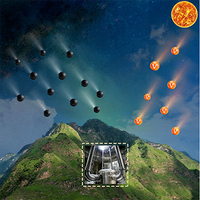
Phys. Rev. Lett. 135, 211001 (2025)
Cosmology, Astrophysics, and Gravitation
Higher-Spin Effects in Black Hole and Neutron Star Binary Dynamics: Worldline Supersymmetry beyond Minimal Coupling
Article | Cosmology, Astrophysics, and Gravitation | 2025-11-18 05:00 EST
Domenico Bonocore, Anna Kulesza, and Johannes Pirsch
The inclusion of spin effects in the binary dynamics for black holes and neutron stars is crucial for the computation of gravitational wave observables. Worldline supersymmetric models have been shown to be particularly efficient at this task up to quadratic order in spin, but progress at higher ord…
Phys. Rev. Lett. 135, 211404 (2025)
Cosmology, Astrophysics, and Gravitation
Localization and Delocalization of a Single Molecule in a Helium Nanodroplet
Article | Atomic, Molecular, and Optical Physics | 2025-11-18 05:00 EST
Zhengjun Ye, Haomai Hou, Linqian Zeng, Lianrong Zhou, Zhejun Jiang, Menghang Shi, Chenxu Lu, Shengzhe Pan, Ruolin Gong, Peifen Lu, Hongcheng Ni, Wenbin Zhang, Feng He, and Jian Wu
An optical technique reveals the spatial extent of a molecule's wave function when the molecule is embedded in a tiny helium droplet.
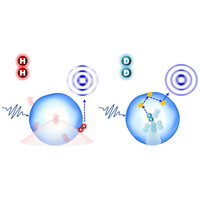
Phys. Rev. Lett. 135, 213202 (2025)
Atomic, Molecular, and Optical Physics
Ising Superconductivity in Bulk Layered Noncentrosymmetric $4H\text{-}{\text{NbSe}}_{2}$
Article | Condensed Matter and Materials | 2025-11-18 05:00 EST
Chandan Patra, Tarushi Agarwal, Rahul Verma, Poulami Manna, Shashank Srivastava, Ravi Shankar Singh, Mathias S. Scheurer, Bahadur Singh, and Ravi Prakash Singh
Transition-metal dichalcogenides exhibit multiple polymorphs that enable the exploration of diverse quantum states, including valley-selective spin polarization, the valley Hall effect, Ising superconductivity, and nontrivial topology. Monolayer is a promising candidate for realizing Ising …
Phys. Rev. Lett. 135, 216002 (2025)
Condensed Matter and Materials
When Does Population Diversity Matter? A Unified Framework for Binary-Choice Dynamics
Article | Statistical Physics; Classical, Nonlinear, and Complex Systems | 2025-11-18 05:00 EST
Arkadiusz Jędrzejewski and José F. F. Mendes
We propose a modeling framework for binary-choice dynamics in which agents update their states using two mechanisms selected based on individual preference drawn from an arbitrary distribution. We compare annealed dynamics, where preferences change over time, and quenched dynamics, where they remain…
Phys. Rev. Lett. 135, 217401 (2025)
Statistical Physics; Classical, Nonlinear, and Complex Systems
Dynamic Avalanches: Rate-Controlled Switching and Race Conditions
Article | Polymers, Chemical Physics, Soft Matter, and Biological Physics | 2025-11-18 05:00 EST
Lishuai Jin and Martin van Hecke
Avalanches are rapid cascades of rearrangements driven by cooperative flipping of hysteretic local elements. Here, we show that flipping dynamics and race conditions--where multiple elements become unstable simultaneously--give rise to dynamic avalanches that cannot be captured by static models of int…
Phys. Rev. Lett. 135, 218201 (2025)
Polymers, Chemical Physics, Soft Matter, and Biological Physics
Fully Relativistic Treatment of Extreme Mass-Ratio Inspirals in Collisionless Environments
Article | Cosmology, Astrophysics, and Gravitation | 2025-11-17 05:00 EST
Rodrigo Vicente, Theophanes K. Karydas, and Gianfranco Bertone
Future mHz gravitational wave interferometers will precisely probe massive black hole environments, such as accretion disks, cold dark matter overdensities, and clouds of ultralight bosons, as long as we can accurately model the dephasing they induce on the waveform of extreme mass-ratio inspirals (…
Phys. Rev. Lett. 135, 211401 (2025)
Cosmology, Astrophysics, and Gravitation
Gravitational Waves from Binary Extreme Mass Ratio Inspirals: Doppler Shift and Beaming, Resonant Excitation, Helicity Oscillations, and Self-Lensing
Article | Cosmology, Astrophysics, and Gravitation | 2025-11-17 05:00 EST
João S. Santos, Vitor Cardoso, José Natário, and Maarten van de Meent
We study gravitational waves from a stellar-mass binary orbiting a spinning supermassive black hole, a system referred to as a binary extreme mass ratio inspiral (b-EMRI). We use Dixon's formalism to describe the stellar-mass binary as a particle with internal structure, and keep terms up to quadrup…
Phys. Rev. Lett. 135, 211402 (2025)
Cosmology, Astrophysics, and Gravitation
Spinning Black Holes in Astrophysical Environments
Article | Cosmology, Astrophysics, and Gravitation | 2025-11-17 05:00 EST
Pedro G. S. Fernandes and Vitor Cardoso
We present stationary and axially symmetric black hole solutions to the Einstein field equations sourced by an anisotropic fluid, describing rotating black holes embedded in astrophysical environments. We compute their physical properties, including quantities associated with the circular geodesics …
Phys. Rev. Lett. 135, 211403 (2025)
Cosmology, Astrophysics, and Gravitation
Hidden Permutation Symmetry of Squared Amplitudes in Aharony-Bergman-Jafferis-Maldacena Theory
Article | Particles and Fields | 2025-11-17 05:00 EST
Song He (何颂), Canxin Shi (施灿欣), Yichao Tang (唐一朝), and Yao-Qi Zhang (张耀奇)
We define the "squared amplitudes" in planar Aharony-Bergman-Jafferis-Maldacena theory, analogous to those in super-Yang-Mills (SYM) theory. Surprisingly, the -point -loop integrands with fixed are unified in a single generating function. Similar to the SYM four-point half-Bogomol'nyi-Pr…
Phys. Rev. Lett. 135, 211601 (2025)
Particles and Fields
Defect Conformal Manifolds from Phantom Noninvertible Symmetries
Article | Particles and Fields | 2025-11-17 05:00 EST
Andrea Antinucci, Christian Copetti, Giovanni Galati, and Giovanni Rizi
We explore a general mechanism that allows CFTs to have interesting interface conformal manifolds even in the absence of any continuous internal symmetry or supersymmetry. This is made possible by the breaking of an enhanced continuous symmetry--which is generically noninvertible--arising in th…
Phys. Rev. Lett. 135, 211602 (2025)
Particles and Fields
Probing Kim-Shifman-Vainshtein-Zakharov Axion Dark Matter near 5.9 GHz Using an 8-Cell Cavity Haloscope
Article | Particles and Fields | 2025-11-17 05:00 EST
Saebyeok Ahn, Çağlar Kutlu, Soohyung Lee, SungWoo Youn, Sergey V. Uchaikin, Sungjae Bae, Junu Jeong, Arjan F. van Loo, Yasunobu Nakamura, Seongjeong Oh, Jihn E. Kim, and Yannis K. Semertzidis
We report on a search for axion dark matter in the frequency range near 5.9 GHz, conducted using the haloscope technique. The experiment employed an 8-cell microwave resonator designed to extend the accessible frequency range by a multifold factor relative to conventional single-cell configurations,…
Phys. Rev. Lett. 135, 211801 (2025)
Particles and Fields
Color Superconductivity under Neutron-Star Conditions at Next-to-Leading Order
Article | Particles and Fields | 2025-11-17 05:00 EST
Andreas Geißel, Tyler Gorda, and Jens Braun
The equation of state of deconfined strongly interacting matter at high densities remains an open question, with effects from quark pairing in the preferred color-flavor-locked (CFL) ground state possibly playing an important role. Recent studies suggest that at least large pairing gaps in the CFL p…
Phys. Rev. Lett. 135, 211901 (2025)
Particles and Fields
Identified Hadron Production in Deeply Inelastic Neutrino-Nucleon Scattering
Article | Particles and Fields | 2025-11-17 05:00 EST
Leonardo Bonino, Thomas Gehrmann, Markus Löchner, Kay Schönwald, and Giovanni Stagnitto
The production of identified hadrons in semi-inclusive deep-inelastic scattering (SIDIS) is sensitive to parton distribution functions and hadron fragmentation functions. Neutrino-induced SIDIS processes probe combinations of these functions differently from their charged-lepton-induced counterparts…
Phys. Rev. Lett. 135, 211902 (2025)
Particles and Fields
Geometric Phase in Anisotropic Kepler Problem: Perspective for Realization in Rydberg Atoms
Article | Atomic, Molecular, and Optical Physics | 2025-11-17 05:00 EST
Nikolai A. Sinitsyn and Fumika Suzuki
We predict a gyroscopic effect that can be demonstrated with Rydberg atoms following the dynamics of a Kepler Hamiltonian with an additional uniaxial anisotropy induced by optical ponderomotive force. This effect is analogous to the rotation of the Foucault pendulum in response to the Earth's rotati…
Phys. Rev. Lett. 135, 213201 (2025)
Atomic, Molecular, and Optical Physics
Observation of Non-Hermitian Bulk-Boundary Correspondence in Nonchiral Nonunitary Quantum Dynamics of Single Photons
Article | Atomic, Molecular, and Optical Physics | 2025-11-17 05:00 EST
Miao Zhang, Yue Zhang, Shuai Li, Yi-an Li, Yuanbang Wei, Rui Tian, Tianhao Wu, Hongyan Shi, Hong Gao, Fuli Li, and Bo Liu
Non-Hermitian bulk-boundary correspondence, a central principle in non-Hermitian topological physics, is deeply rooted in symmetry. In particular, preserved chiral symmetry is one of the key ingredients, which plays a pivotal role in determining non-Hermitian topology. Nevertheless, chiral symmetry …
Phys. Rev. Lett. 135, 213601 (2025)
Atomic, Molecular, and Optical Physics
What Determines the Breakup Length of a Jet?
Article | Physics of Fluids, Earth & Planetary Science, and Climate | 2025-11-17 05:00 EST
Stefan Kooij, Daniel T. A. Jordan, Cees J. M. van Rijn, Neil M. Ribe, and Daniel Bonn
The breakup of a capillary jet into drops is believed to be governed by initial disturbances on the surface of the jet that grow exponentially. The disturbances are often assumed to be due to external sources of noise, to turbulence, or to imperfections of the nozzle. Here we demonstrate that the in…
Phys. Rev. Lett. 135, 214001 (2025)
Physics of Fluids, Earth & Planetary Science, and Climate
Hovering of an Actively Driven Fluid-Lubricated Foil
Article | Physics of Fluids, Earth & Planetary Science, and Climate | 2025-11-17 05:00 EST
Stephane Poulain, Timo Koch, L. Mahadevan, and Andreas Carlson
Inspired by recent experimental observations of a harmonically excited elastic foil hovering near a wall while supporting substantial weight, we develop a theoretical framework that describes the underlying physical effects. Using elastohydrodynamic lubrication theory, we quantify how the dynamic de…
Phys. Rev. Lett. 135, 214002 (2025)
Physics of Fluids, Earth & Planetary Science, and Climate
Pair Dispersion of Bubbles in Isotropic Turbulence
Article | Physics of Fluids, Earth & Planetary Science, and Climate | 2025-11-17 05:00 EST
Shiyong Tan, Shijie Zhong, Xu Xu, Yinghe Qi, and Rui Ni
Turbulence serves as a catalyst for rapid bubble dispersion, increasing the residence time of bubbles in the ocean and shaping the crucial process of mass transfer during air-sea interactions. In this Letter, we experimentally investigate the pair dispersion of bubbles in turbulence. Our findings hi…
Phys. Rev. Lett. 135, 214003 (2025)
Physics of Fluids, Earth & Planetary Science, and Climate
Quasiparticle Interference of Spin-Triplet Superconductors: Application to ${\mathrm{UTe}}_{2}$
Article | Condensed Matter and Materials | 2025-11-17 05:00 EST
Hans Christiansen, Brian M. Andersen, P. J. Hirschfeld, and Andreas Kreisel
Quasiparticle interference (QPI) obtained from scanning tunneling microscopy (STM) is a powerful method to help extract the pairing symmetry of unconventional superconductors. We examine the general properties of QPI on surfaces of spin-triplet superconductors. It is shown how the multicomponent nat…
Phys. Rev. Lett. 135, 216001 (2025)
Condensed Matter and Materials
Role of Stiffness in Friction with Graphite
Article | Condensed Matter and Materials | 2025-11-17 05:00 EST
Yuqing He, Zhaokuan Yu, Jin Wang, Tao Xing, and Ming Ma
When contacting solids slide against each other, friction typically increases as material stiffness decreases due to the resulting increase in real contact area. However, varying trends have been observed, influenced by wear, surface geometry, tribochemistry, and environmental factors. To disentangl…
Phys. Rev. Lett. 135, 216201 (2025)
Condensed Matter and Materials
Zeno Freezing and Anti-Zeno Acceleration of the Dynamic Evolution of Topological Boundary States
Article | Condensed Matter and Materials | 2025-11-17 05:00 EST
Xiao-Meng Zhang, Ze-Guo Chen, Guancong Ma, Ming-Hui Lu, and Yan-Feng Chen
Measurements fundamentally alter the evolution of a quantum system by disturbing its state, which can either freeze its dynamics (quantum Zeno effect, ZE) or accelerate transitions (anti-Zeno effect, AZE). While these effects are well established for ordinary quantum states, their impact on topologi…
Phys. Rev. Lett. 135, 216601 (2025)
Condensed Matter and Materials
Axion Electrodynamics and Giant Magnetic Birefringence in Weyl Excitonic Insulators
Article | Condensed Matter and Materials | 2025-11-17 05:00 EST
A. A. Grigoreva, A. V. Andreev, and L. I. Glazman
We study the electromagnetic (EM) response of the excitonic insulator phase of a time-reversal (TR) invariant Weyl semimetal (WSM). At low temperatures, the system develops two exciton condensates. The condensates are related to each other by TR symmetry and weakly coupled by a Josephson tunneling t…
Phys. Rev. Lett. 135, 216602 (2025)
Condensed Matter and Materials
Chiral Phonons Arising from Chirality-Selective Magnon-Phonon Coupling
Article | Condensed Matter and Materials | 2025-11-17 05:00 EST
Markus Weißenhofer, Philipp Rieger, M. S. Mrudul, Luca Mikadze, Ulrich Nowak, and Peter M. Oppeneer
Chiral phonons are desirable for applications in spintronics but their generation and control remains a challenge. Here we demonstrate the emergence of truly chiral phonons from selective magnon-phonon coupling in inversion-symmetric magnetic systems. Considering bcc Fe as an example, we quantitativ…
Phys. Rev. Lett. 135, 216701 (2025)
Condensed Matter and Materials
Probing Ice-Rule-Breaking Transition in ${\mathrm{Dy}}{2}{\text{Ti}}{2}{\mathrm{O}}_{7}$ Thin Film by Proximitized Transport and Magnetic Torque
Article | Condensed Matter and Materials | 2025-11-17 05:00 EST
Chengkun Xing, Han Zhang, Kyle Noordhoek, Guoxin Zheng, Kuan-Wen Chen, Lukas Horák, Yan Xin, Eun Sang Choi, Lu Li, Haidong Zhou, and Jian Liu
Experimental studies of spin-ice thin films reveal that proximitized transport provides an effective means to investigate frustrated magnetic systems.
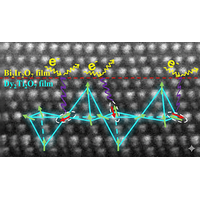
Phys. Rev. Lett. 135, 216702 (2025)
Condensed Matter and Materials
Third-Order Nonlinear Hall Effect in Altermagnet ${\mathrm{RuO}}_{2}$
Article | Condensed Matter and Materials | 2025-11-17 05:00 EST
R. Y. Chu, L. Han, Z. H. Gong, X. Z. Fu, H. Bai, S. X. Liang, C. Chen, S-W. Cheong, Y. Y. Zhang, J. W. Liu, Y. Y. Wang, F. Pan, H. Z. Lu, and C. Song
Experimental demonstration of the third-order nonlinear Hall effect in RuO thin films provides a fingerprint for identifying altermagnets.
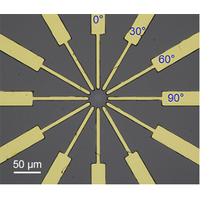
Phys. Rev. Lett. 135, 216703 (2025)
Condensed Matter and Materials
Ferroelectrically Switchable Anomalous Hall Conductivity and Nonlinear Drude Conductivity in Multiferroics
Article | Condensed Matter and Materials | 2025-11-17 05:00 EST
Xinran Liu, Hong Jian Zhao, Laurent Bellaiche, and Yanming Ma
Ferroelectric polarization can be harnessed to record binary data in a nonvolatile manner, where the electric field switching of polarization offers a possibility for an energy-efficient data writing process. The detection of ferroelectric polarization--associated with the data readout process--is ach…
Phys. Rev. Lett. 135, 216801 (2025)
Condensed Matter and Materials
Domain-Pair Intertwined Topological Domain Structures in Elemental Bi Monolayer
Article | Condensed Matter and Materials | 2025-11-17 05:00 EST
Yunfei Hong, Junkai Deng, Yang Yang, Ri He, Zhicheng Zhong, Xiangdong Ding, Jun Sun, and Jefferson Zhe Liu
Ferroelectric domain walls play a fundamental role in the functionality of ferroelectric materials. As ferroelectric domain walls are mostly charge neutral to minimize electrostatic energy, the recently observed intrinsically stable charged 180° domain wall in a Bi monolayer opens uncharted research…
Phys. Rev. Lett. 135, 216802 (2025)
Condensed Matter and Materials
Rescaled Schwarz-Christoffel Transformations for Isotropic, Polygon, and Multiphysics Metamaterials
Article | Condensed Matter and Materials | 2025-11-17 05:00 EST
Pengfei Zhuang, Chengmeng Wang, Fubao Yang, Gaole Dai, Liujun Xu, Peng Tan, Fabio Marchesoni, and Jiping Huang
A rescaled Schwarz-Christoffel transformation provides coordinated control of thermal and electromagnetic fields in isotropic metamaterials.

Phys. Rev. Lett. 135, 216901 (2025)
Condensed Matter and Materials
Reversing the Conductance Evolution of Azobenzene Derivatives in Photoisomerization
Article | Polymers, Chemical Physics, Soft Matter, and Biological Physics | 2025-11-17 05:00 EST
Dalin Zhang, Yan Feng, Xiaona Xu, Keqiang Jia, Ramya Emusani, Zhao-Yang Zhang, Jieyi Zhang, Xin Zuo, Zhibin Zhao, Tao Li, Liang Ma, and Dong Xiang
Photoisomeric azobenzene derivatives with distinguished conductance in trans and cis states have gained extensive attention for their potential application in fabricating light-controlled electronic switches, which, however, faces great challenges due to the quenching effect once they are coupled to…
Phys. Rev. Lett. 135, 218001 (2025)
Polymers, Chemical Physics, Soft Matter, and Biological Physics
Chain-Length-Dependent Correlated Molecular Motion in Polymers
Article | Polymers, Chemical Physics, Soft Matter, and Biological Physics | 2025-11-17 05:00 EST
Matthew Reynolds, Daniel L. Baker, Peter D. Olmsted, and Johan Mattsson
We show how dynamic heterogeneities (DHs), a hallmark of glass-forming materials, depend on chain flexibility and chain length in polymers. For highly flexible polymers, a relatively large number of monomers () undergo correlated motion at the glass transition temperature (), independent of …
Phys. Rev. Lett. 135, 218101 (2025)
Polymers, Chemical Physics, Soft Matter, and Biological Physics
arXiv
Transition from MOS to Ideal Capacitor Behavior Triggered by Tunneling in the Inversion Population Regime
New Submission | Materials Science (cond-mat.mtrl-sci) | 2025-11-18 20:00 EST
An analytical solution to the nonlinear Poisson equation governing the inversion layer in metal-oxide-semiconductor (MOS) structures has recently been obtained, resolving a fundamental challenge in semiconductor theory first identified in 1955. This breakthrough enables the derivation of explicit expressions for relevant physical quantities, such as the inversion-layer width, electric potential, and charge distribution, as functions of gate voltage $ V_G$ , distance from oxide-semiconductor interface and impurity concentration. These quantities exhibit rapid variation during early-stage inversion but saturate once the gate voltage exceeds the threshold voltage by a few tenths of a volt signaling a transition in the MOS response to $ V_G$ . The onset of tunneling through the Esaki barrier leads to increased charge accumulation near the interface, reshaping the charge distribution into a two-dimensional profile and shifting the potential drop from the semiconductor to the oxide layer. This reconfiguration resembles the behavior of an ideal parallel-plate capacitor, with charge confined at the interface and the voltage drop localized across the oxide. We analyze this mechanism in detail and demonstrate, through explicit calculations, that the tunneling current through the Esaki-like barrier formed during inversion becomes dominant, effectively superseding classical inversion behavior. These results offer a new analytical foundation for quantum-aware device modeling and inform the design of next-generation MOSFET and tunneling FET architectures.
Materials Science (cond-mat.mtrl-sci)
6 figures
High-order coupling as a driver for Mott insulating behavior in Holography
New Submission | Strongly Correlated Electrons (cond-mat.str-el) | 2025-11-18 20:00 EST
Lin-Yue Bai, René Meyer, Zhen-Hua Zhou
We construct a simple holographic model incorporating higher-order coupling terms for electron self-interactions. It can exhibit typical behavior of a Mott insulator, including a metal-insulator transition and a decrease in DC conductivity with the increase of charge density. In the analysis of AC conductivity, a soft gap is generally observed. Notably, when the DC conductivity approaches zero, the AC conductivity reveals a multi-peak structure, which can be attributed to the Mott and charge-transfer gaps observed experimentally in transition metals. With the increase of DC conductivity, the multi-peak structure gradually reverts to soft-gap behavior or even metallic conductivity. The numerical reliability is confirmed by the agreement between zero-frequency AC and DC conductivities.
Strongly Correlated Electrons (cond-mat.str-el), High Energy Physics - Theory (hep-th)
11 pages,16 gigures
Edwards Localization
New Submission | Materials Science (cond-mat.mtrl-sci) | 2025-11-18 20:00 EST
We study the localization problem in quantum stochastic mechanics. We start from the Edwards model for a particle in a bath of scattering centers and prove static localization of the ground state wavefunction of the particle in a one dimensional square well coupled to Dirac delta like scattering centers in arbitrary but fixed positions. We see how the localization increases for increasing coupling $ g$ . Then we choose the scattering centers positions as pseudo random numbers with a uniform probability distribution and observe an increase in the localization of the average of the ground state over the many positions realizations. We discuss how this averaging procedure is consistent with a picture of a particle in a Bose-Einstein condensate of of non interacting boson scattering centers interacting with the particle with Dirac delta functions pair potential. We then study the dynamics of the ground state wave function. We conclude with a discussion of the affine quantization version of the Lax model which reduces to a system of contiguous square wells with walls in arbitrary positions independently of the coupling constant $ g$ .
Materials Science (cond-mat.mtrl-sci), Disordered Systems and Neural Networks (cond-mat.dis-nn), Statistical Mechanics (cond-mat.stat-mech), Computational Physics (physics.comp-ph), Quantum Physics (quant-ph)
7 pages, 2 figures
Floquet Engineering Magnetism and Superconductivity in the Square-Lattice Hubbard Model
New Submission | Strongly Correlated Electrons (cond-mat.str-el) | 2025-11-18 20:00 EST
Jan-Niklas Herre, Takuya Okugawa, Ammon Fischer, Christoph Karrasch, Dante M. Kennes
We study the interplay of magnetic order and superconductivity in the square-lattice Hubbard model under periodic driving with circularly polarized light. Formulating diagrammatic techniques based on the random-phase approximation in terms of Floquet Green’s functions, allows us to analyze fluctuation-driven unconventional pairing for weak-to-moderate interactions. The interplay of repulsive interactions and photo-assisted hopping of electrons gives rise to a rich magnetic phase diagram featuring an antiferromagnetic-to-ferromagnetic crossover prior to a Floquet Lifshitz transition. Close to the antiferromagnetic transition, topological $ d+id$ -wave superconductivity prevails in the phase diagram for a wide range of drive parameters. At intermediate-to-high frequency driving near the Floquet Lifshitz transition, superconducting orders are tuned from spin-singlet $ d$ -wave to spin-triplet $ p$ -wave character, providing an effective protocol for Floquet engineering topological superconductivity.
Strongly Correlated Electrons (cond-mat.str-el)
5+12 pages, 2+3 figures
Evidence for atomic-scale vibron-mediated electron bunching
New Submission | Strongly Correlated Electrons (cond-mat.str-el) | 2025-11-18 20:00 EST
A. Maiti, M. Amato, V. S. Stolyarov, H. Aubin, J. Estève, F. Pistolesi, M. Aprili, F. Massee
Due to the Coulomb blockade effect, electrons rarely bunch during transport, a phenomenon observed only in a few specially engineered mesoscopic configurations. In this work, we introduce an atomically resolved shot-noise study to demonstrate the possibility of electron bunching through vibrational coupling which takes place in an atomically sized nano-electro-mechanical system. Using tunnelling spectroscopy, we observe signatures of vibron-assisted tunnelling on an Fe impurity in Bi$ _2$ Se$ _3$ . Notably, simultaneous shot-noise measurements at the centre of the vibrating impurity reveal super-Poissonian noise. In the absence of alternative sources of super-Poissonian noise, this implies vibronic-coupling-induced bunching of electrons during the tunnelling process through the impurity, as theoretically predicted decades ago. As a future outlook, if coherence between electrons can be implemented, vibron-mediated electron bunching at single atomic sites may be exploited as a local injection source of $ N$ -paired electrons.
Strongly Correlated Electrons (cond-mat.str-el), Mesoscale and Nanoscale Physics (cond-mat.mes-hall)
Effective Hamiltonians for Ge/Si core/shell nanowires from higher order perturbation theory
New Submission | Mesoscale and Nanoscale Physics (cond-mat.mes-hall) | 2025-11-18 20:00 EST
Sebastian Miles, A. Mert Bozkurt, Dániel Varjas, Michael Wimmer
We theoretically explore the electronic structure of holes in cylindrical Germanium/Silicon core/shell nanowires using a perturbation theory approach. The approach yields a set of interpretable and transferable effective low-energy models for the lowest few sub-bands up to fifth order for experimentally relevant growth directions. In particular, we are able to resolve higher order cross terms e.g., the dependency of the effective mass on the magnetic field. Our study reveals orbital inversions of the lowest sub-bands for low-symmetry growth directions, leading to significant changes of the lower order effective coefficients. We demonstrate a reduction of the direct Rashba spin-orbit interaction due to competing symmetry effects for low-symmetry growth directions. Finally, we find that the effective mass of the confined holes can diverge yielding quasi flat bands interesting for correlated states. We show how one can tune the effective mass of a single spin band allowing one to tune the effective mass selectively to its divergent points.
Mesoscale and Nanoscale Physics (cond-mat.mes-hall)
Topological flowscape reveals state transitions in nonreciprocal living matter
New Submission | Soft Condensed Matter (cond-mat.soft) | 2025-11-18 20:00 EST
Hyunseok Lee, EliseAnne Koskelo, Shreyas Gokhale, Junang Li, Chenyi Fei, Chih-Wei Joshua Liu, Lisa Lin, Jorn Dunkel, Dominic J. Skinner, Nikta Fakhri
Nonreciprocal interactions– where forces between entities are asymmetric– govern a wide range of nonequilibrium phenomena, yet their role in structural transitions in living and active systems remains elusive. Here, we demonstrate a transition between nonreciprocal states using starfish embryos at different stages of development, where interactions are inherently asymmetric and tunable. Experiments, interaction inference, and topological analysis yield a nonreciprocal state diagram spanning crystalline, flocking, and fragmented states, revealing that weak nonreciprocity promotes structural order while stronger asymmetry disrupts it. To capture these transitions, we introduce topological landscapes, mapping the distribution of structural motifs across state space. We further develop topological flowscapes, a dynamic framework that quantifies transitions between collective states and detects an informational rate shift from the experimental state transition. Together, these results establish a general approach for decoding nonequilibrium transitions and uncover how asymmetric interactions sculpt the dynamical and structural architecture of active and living matter.
Soft Condensed Matter (cond-mat.soft), Statistical Mechanics (cond-mat.stat-mech), Biological Physics (physics.bio-ph)
Layer breathing Raman mode in two-dimensional van der Waals material $\mathrm{Cr_2Ge_2Te_6}$
New Submission | Materials Science (cond-mat.mtrl-sci) | 2025-11-18 20:00 EST
Nilesh Choudhury, Sandeep, Neesha Yadav, Mayank Shukla, Pintu Das
Two-dimensional (2D) van der Waals (vdW) magnetic materials have emerged as key materials for next-generation magneto-electric and spintronic devices, where understanding the relationship between layer number, lattice dynamics, and magnetic interactions is very important. In this work, we report the observation of the layer breathing mode (LBM) in few-layer $ \mathrm{Cr_2Ge_2Te_6}$ , a ferromagnetic semiconductor with thickness dependent electronic, magnetic and optical properties, using Raman spectroscopy, which serves as a direct fingerprint of interlayer coupling and lattice symmetry. Group-theoretical symmetry analysis confirms that the CGT falls under the non-polar category of layered material. The evolution of the LBM-frequency with increasing layer number (N) reveals a distinct softening trend, characteristic of weakening restoring forces in thicker flakes. By fitting the experimental Raman data using the Linear Chain Model (LCM), we quantitatively extract the interlayer force constant ($ \mathrm{K_c}$ ), providing a measure of the vdW coupling strength between layers.
Materials Science (cond-mat.mtrl-sci), Other Condensed Matter (cond-mat.other)
Acoustic Metamaterials with Positive and Negative Couplings: Modular and One Piece Architectures for Topological Models
New Submission | Mesoscale and Nanoscale Physics (cond-mat.mes-hall) | 2025-11-18 20:00 EST
Jackson Saunders, Camelia Prodan
We describe two 3D-printing approaches for realizing tight-binding models in acoustic metamaterials using H-shaped resonators: a modular system with tunable interconnections and an integrated one-piece design for reducing dissipation. The platform supports both positive and negative coupling through geometric control, enabling accurate acoustic analogs of topological models. By tuning the coupling length (CL), we eliminate detuning effects and preserve particle-hole symmetry. We further quantify the influence of the Total Coupling Area (TCA) on band topology and derive conditions for constant-area coupling. The system was tested on SSH and Kitaev chains, revealing midgap edge and interface states, confirming topological behavior in both configurations.
Mesoscale and Nanoscale Physics (cond-mat.mes-hall)
Effects of Yttrium Doping on Oxygen Conductivity in Ba(Fe, Co, Zr, Y)O_{3-δ} Cathode Materials for Proton Ceramic Fuel Cells
New Submission | Materials Science (cond-mat.mtrl-sci) | 2025-11-18 20:00 EST
Chiyoung Kim, Ryan Jacobs, Jack H. Duffy, Kyle S. Brinkman, Harry W. Abernathy, Dane Morgan
Proton ceramic fuel cells (PCFCs) achieve high efficiency at reduced operating temperatures, but their performance is often limited by slow oxygen reduction reaction (ORR) kinetics at the cathode. The BaCoFeZrY (BCFZY) perovskite family is a promising triple-conducting air-electrode material, yet the role of Y dopants in governing oxygen transport remains unclear. In this study, we examine the effect of Y content on oxygen conductivity in three compositions: BCFZ, BCFZY0.1, and BCFY. Oxygen conductivity was evaluated from the product of oxygen tracer diffusivity and oxygen defect concentration. Ab initio molecular dynamics simulations were used to determine tracer diffusivity and migration energies, while defect concentrations were estimated from reference data. Y doping slightly decreases oxygen conductivity from BCFZ to BCFZY0.1, from 337 to 203 mS/cm at 500 C, with activation energies of 0.155 and 0.172 eV. BCFY shows much lower conductivity (99 mS/cm) and a higher activation energy of 0.261 eV. Computed conductivities are higher and more Arrhenius-like than experimental values, suggesting that microstructural features such as grain boundaries strongly limit oxygen transport in real materials. A series-circuit model combining bulk conductivity and fitted grain-boundary parameters provides semi-quantitative agreement with experiment. These results clarify the role of Y doping in oxygen transport and provide insight for optimizing cathode performance in PCFCs.
Materials Science (cond-mat.mtrl-sci)
35 pages, 10 figures, 1 table. Data for “Effects of Yttrium Doping on Oxygen Conductivity in Ba(Fe, Co, Zr, Y)O_{3-δ} Cathode Materials for Proton Ceramic Fuel Cells.” this https URL
Quantum Heisenberg antiferromagnet in a field on the Tasaki square lattice
New Submission | Strongly Correlated Electrons (cond-mat.str-el) | 2025-11-18 20:00 EST
Maksym Parymuda, Taras Krokhmalskii, Oleg Derzhko
We consider the $ S=1/2$ Heisenberg antiferromagnet on the Tasaki square lattice (flat-band spin system) and study its low-temperature thermodynamics around the saturation magnetic field. To this end, we construct a mapping of the ground states in the subspaces with total $ S^z=N/2,\ldots,N/3$ ($ N$ is the number of lattice sites) on the hard squares on an auxiliary square lattice and use classical Monte Carlo simulations to examine the latter classical system. The most prominent feature of the $ S=1/2$ Heisenberg antiferromagnet on the Tasaki square lattice is an order-disorder phase transition which occurs at a low temperature just below the saturation magnetic field and belongs to the 2D Ising universality class.
Strongly Correlated Electrons (cond-mat.str-el)
8 pages, 6 figures
Lellouch-Lüscher relation for ultracold few-atom systems under confinement
New Submission | Quantum Gases (cond-mat.quant-gas) | 2025-11-18 20:00 EST
Jing-Lun Li, Paul S. Julienne, Johannes Hecker Denschlag, José P. D’Incao
We derive an analog of the Lellouch-Lüscher (LL) relation for few-body bosonic systems, linking few-body scattering loss rates to the energies and widths of the corresponding harmonically trapped few-body states. Three-body numerical simulations show that the LL relation applies across a broad range of interaction strengths and energies and allows the determination of scattering rates within a single partial wave. Our work establishes a robust theoretical framework for understanding the role of the finite volume effect in few-body observables in optical lattice and tweezer experiments, enabling precise determination of multi-body scattering rates.
Quantum Gases (cond-mat.quant-gas), Atomic Physics (physics.atom-ph)
Change in the Order of a Phase Transition in the 2D Potts Model with Equivalent Neighbours
New Submission | Statistical Mechanics (cond-mat.stat-mech) | 2025-11-18 20:00 EST
Two dimensional Potts model is a classical example where the symmetry of the order parameter controls the order of a phase transition: on a square lattice with nearest-neighbours interaction, when the number of states $ q$ is less than or equal to 4, the second-order phase transition is observed, while for $ q>4$ the first-order phase transition occurs. Recent research shows that even when the number of states is fixed, increasing the interaction range allows one to reach the point where the order of the phase transition changes. We focus on a $ q=3$ 2D Potts model and, from the analysis of the partition function zeros, locate the number of interacting neighbours that change the order of the phase transition.
Statistical Mechanics (cond-mat.stat-mech)
20 pages, 6 figures
Wrinkling in Sheets with Nonuniform Growth and Bending Rigidity
New Submission | Soft Condensed Matter (cond-mat.soft) | 2025-11-18 20:00 EST
Thin elastic sheets bend easily, leading to mechanical instabilities such as wrinkling. Here, we investigate wrinkles at edges of bi-strips, which consist of two thin sheets, one that swells and one that does not, joined side-by-side. It is well known that when bending rigidity is uniform across an isolated bi-strip, swelling results in axisymmetric shapes like a wine bottle: two cylinders of different radii are joined by a smooth transition zone. However, when the bending rigidity of the swollen sheet differs from that of the non-swollen sheet, purely axisymmetric shapes are no longer energetically favorable, and wrinkles arise. When the bending rigidity of the non-swollen sheet is essentially infinite, the wrinkles coarsen with distance from the transition zone such that dimensionless wavelengths and widths are related by $ \tilde{\lambda} \propto \tilde{w}^{2/3}$ . If the bending rigidity of the non-swollen sheet is non-infinite (but~still significantly larger than that of the swollen sheet), then the non-swollen sheet assumes a non-infinite radius of curvature, $ R_0$ . We find that the wrinkles in this system extend a critical distance, $ w_C$ , beyond the junction of the two strips and that $ w_C \propto R_0$ . Local undulations of wrinkles are favorable in this system because they decrease the overall bending energy by allowing the non-swollen sheet to have a larger radius of curvature than would otherwise be dictated by its reference geometry. Our results are relevant to a wide range of sheets that experience non-uniform growth, whether in natural systems such as plants or in synthetic systems such as designed, responsive materials.
Soft Condensed Matter (cond-mat.soft)
Spin-orbit coupled periodic Anderson model: Kondo-Dirac semimetal and orbital-selective antiferromagnetic semimetal
New Submission | Strongly Correlated Electrons (cond-mat.str-el) | 2025-11-18 20:00 EST
Sebastião dos Anjos Sousa-Júnior, Julián Faúndez, Rubem Mondaini
We investigate the periodic Anderson model composed of an itinerant $ c$ -band and a strongly localized $ f$ -band, featuring on-site electron-electron interactions in the $ f$ -orbitals. The two bands interact via a hybridization term with spin-orbit coupling, which enables spin-flip processes. In the non-interacting limit, these profoundly alter the electronic structure, leading to the emergence of flat bands, van Hove singularities, and, most notably, Dirac cones within a single Kondo-Dirac semimetal order. The strongly interacting regime is explored via the determinant quantum Monte Carlo method, in the absence of the sign problem, where we unveil a complete ground-state phase diagram revealing two distinct phases, the Kondo-Dirac semimetal phase and a novel antiferromagnetic semimetal phase. Their characterization by the spectral functions establishes an orbital-selective Mott transition in the antiferromagnetic semimetal phase, marked by the opening of a gap exclusively in the $ f$ -orbital while Dirac cones persist in the $ c$ -orbital. Conversely, in the Kondo-Dirac semimetal phase, both $ c$ - and $ f$ -orbitals sustain robust Dirac cones. We establish that spin-orbit coupling in the hybridization term gives rise to Dirac cones, which, combined with additional symmetry-breaking conditions, can generate novel topological states.
Strongly Correlated Electrons (cond-mat.str-el)
Ionic Interdiffusion at Cathode-Solid-Electrolyte Interface: A Machine Learning-Assisted Multiscale Investigation and Mitigation Strategies
New Submission | Materials Science (cond-mat.mtrl-sci) | 2025-11-18 20:00 EST
Musawenkosi K. Ncube, Pallab Barai, Selva Chandrasekaran Selvaraj, Larry A. Curtiss, Anh T. Ngo, Venkat Srinivasan
Future lithium-based batteries are expected to use solid electrolytes to achieve higher energy density and fast charge capabilities. The majority of solid electrolytes are thermodynamically unstable against layered oxide cathodes. Here, the stability of LiCoO2 (LCO) cathode with Li10GeP2S12 (LGPS) solid electrolyte is investigated using ab initio molecular dynamics (AIMD) and machine learning molecular dynamics (MLMD). The propensity of ionic interdiffusion, formation of a passivation layer, and corresponding decay in cell performance is addressed using a continuum model. The large-scale MLMD simulations confirm that the LCO|LGPS interface permits interdiffusion of Co and other ionic species, leading to the formation and growth of a resistive interphase and dramatic capacity fade even in the first cycle. We then examine the literature evidence that incorporating a thin layer of LiNb0.5Ta0.5O3 (LNTO) between LCO and LGPS prevents the interdiffusion of ions. Atomistic simulations suggest that the substitution of Li in LNTO with Co is not thermodynamically favorable, which helps to minimize the ionic interdiffusion process. The stable Nb/Ta5+ states form a rigid metal-oxide framework, which consequently also prevents the substitution of Nb/Ta. However, continuum level analysis suggests that due to the higher mechanical stiffness of LNTO, interfacial delamination between the LCO and LNTO is possible, which can minimize the effectiveness of the protective layer. This paper suggests the need for the development of novel interlayers that balance low interdiffusion with low stiffness.
Materials Science (cond-mat.mtrl-sci)
Quantum-Classical Study of Charge Transport in Organic Semiconductors with Multiple Low-Frequency Vibrational Modes
New Submission | Strongly Correlated Electrons (cond-mat.str-el) | 2025-11-18 20:00 EST
Darko Tanasković, Maksim Makrushin, Petar Mitrić
Building on the recent success of a quantum-classical method for computing transport properties in the Holstein model with a single phonon mode [Phys. Rev. B $ {\bf 111}$ , L161105 (2025)], we now assess its reliability in more realistic scenarios involving multiple phonon modes in the Holstein model, as well as single- and multi-mode Peierls models. For parameters relevant to the prototypical organic semiconductor rubrene, we compute the frequency-dependent charge mobility and find excellent agreement with results from the state-of-the-art hierarchical equations of motion method. These results show that the method, previously validated only for the single-mode Holstein model, preserves quantitative accuracy in substantially more complex and material-relevant regimes. Our microscopic approach complements the phenomenological transient-localization theory and is readily applicable to realistic electron-phonon Hamiltonians.
Strongly Correlated Electrons (cond-mat.str-el)
5 pages, 3 figures
Probing Electrocatalytic Gas Evolution Reaction at Pt by Force Noise Measurements. Part 2. Oxygen
New Submission | Mesoscale and Nanoscale Physics (cond-mat.mes-hall) | 2025-11-18 20:00 EST
Nataraju Bodappa, Gregory Jerkiewicz, Peter Grutter
Understanding O2 bubble nucleation and growth during the oxygen evolution reaction (OER) is crucial to comprehend their influences on catalytically active sites in the process. To achieve this goal, mapping the spatial variation of nanoscale dynamic individual steps at the electrocatalytic interfaces is vital, as it further enables a detailed understanding of the mechanism of the process. Here, we combined tapping mode AFM imaging with a Pt ultramicroelectrode to investigate oxygen bubble nucleation, growth, and detachment. Our AFM feedback error signal and topography data reveal that bubbles of O2 gas nucleate at the step edge sites and interact with the catalytically active sites. This interaction between primary catalytic sites and bubble nucleation sites is the primary reason for a decrease in the current density at a given high overpotential of the OER. Our findings advance the understanding of the complexity of phenomena involved in gas evolution on catalytic surfaces.
Mesoscale and Nanoscale Physics (cond-mat.mes-hall)
Search for quantum-tricritical-point in antiferromagnet CeRu$2$(Si${1-x}$Ge$_x$)$_2$
New Submission | Strongly Correlated Electrons (cond-mat.str-el) | 2025-11-18 20:00 EST
H. Shinya, F. Ito, N. Kabeya, Y. Mizukami, N. Kimura
CeRu$ _2$ Si$ _2$ is a well-known heavy fermion paramagnet, and substituting Ge for Si induces antiferromagnetism. This antiferromagnetism is Ising-like and has a tricritical point in the magnetic field ($ H$ ) -temperature ($ T$ ) phase diagram. Since the temperature of the tricritical point is expected to decrease with increasing pressure ($ P$ ), we investigated the pressure dependence of the magnetic phase transitions. We determined the $ H$ -$ P$ phase diagram and revealed that a first-order phase-transition line changes to a quantum critical line, which implies the existence of the quantum tricritical point. A ferromagnetic quantum fluctuation arises in the vicinity of the possible quantum tricritical point.
Strongly Correlated Electrons (cond-mat.str-el)
5 pages, 5 figures, accepted for publication in J. Phys. Soc. Jpn
Inter-flake transport and humidity response of Ti3C2Tx MXene at the nanoscale
New Submission | Mesoscale and Nanoscale Physics (cond-mat.mes-hall) | 2025-11-18 20:00 EST
Oriane de Leuze, Maxime Berthe, Sophie Hermans, Benoît Hackens
Understanding charge transport in networks of two-dimensional crystals is essential for developing reliable applications such as chemiresistors or electromagnetic shields. For this purpose, intra- and inter-flake contributions to the network resistance must be disentangled. MXenes, such as Ti3C2Tx, are prime examples of 2D crystals often employed as thin networks of interconnected flakes deposited on substrates to realize functional devices. While a significant number of studies focused on transport in individual MXene flakes, inter-flake transport remains scarcely explored. Here, we demonstrate that charge transport in multi-flake conductive paths of Ti3C2Tx is dominated by interflake junctions and provide quantitative estimates of junction resistances. Scanning probe measurements reveal that in a MXene multi-flake conductive path, individual flakes behave as isopotential domains, since the voltage drop is localized precisely at the inter-flake junctions. We further investigate the chemiresistive response to humidity at the single flake, multi-flake and flake network scale, evidencing the leading impact of junctions on sensing kinetics. These findings underline the crucial role of junctions in charge transport and sensing capabilities of MXenes.
Mesoscale and Nanoscale Physics (cond-mat.mes-hall)
Acoustically-Coupled MEMS Transducer Pairs with Loss and Gain
New Submission | Mesoscale and Nanoscale Physics (cond-mat.mes-hall) | 2025-11-18 20:00 EST
Samer Houri, Rachid Haouari, Bart P. Weekers, Veronique Rochus
This work treats the dynamics of pairs of microelectromechanical ultrasound transducers (MUTs) that are immersed in water and acoustically coupled through the fluid medium. A series of these transducer pairs with varying diameters (and thus resonance frequency) and pitch separation (and thus coupling strength) are fabricated and measured. The work presented here models and quantifies the open-loop coupling between the MEMS transducer pairs and its dependence on pitch. Furthermore, a gain feedback loop is systematically applied to one of the device pair and the dynamics of the acoustically-coupled gain-loss system is investigated, and the formation of an exceptional-point or of an Hopf bifurcation is equally used to quantify the coupling coefficient. This work provides an experimental study of acoustic coupling in MUT transducers, as well as an exploration of the formation of exceptional points in acoustically-coupled MEMS transducers.
Mesoscale and Nanoscale Physics (cond-mat.mes-hall)
Ba-substitution induced evolution of structural and magnetic properties of La2-xBaxCoIrO6 double perovskites
New Submission | Materials Science (cond-mat.mtrl-sci) | 2025-11-18 20:00 EST
C. A. S. Vieira, B. J. Santos, J. G. Duque, E. M. Bittar, L. Bufaiçal
The Iridium-based oxides are the subject of great recent interest due to the non-conventional physics that may emerge from the strong spin-orbit coupling present in 5d ions. Here, we explore the coupling between Ir and Co in the La2-xBaxCoIrO6 perovskites (x = 0, 0.5, 0.75 and 1.0), where the structural, electronic, and magnetic properties of the series are investigated by means of x-ray powder diffraction and magnetometry. The system’s crystal structure evolves from the monoclinic P2_1/n to the triclinic I-1 space group as the Ba concentration increases. Measurements of magnetization revealed ferrimagnetic behavior in x = 0, 0.5 and 0.75 compounds, possibly resulting from antiferromagnetic coupling between Co2+/3+ and Ir4+. In contrast, for x = 1.0 a clear collinear antiferromagnetic character is observed for the Co2+ ions, resulting from the quenching of the Ir5+ magnetic moment. The evolution of the magnetic properties of the series is discussed in terms of the structural and electronic changes, as well as the spin-orbit coupling in Ir.
Materials Science (cond-mat.mtrl-sci)
Journal of Magnetism and Magnetic Materials 636, 173678 (2025)
PT-Symmetric Magnon Lasing and Anti-Lasing
New Submission | Strongly Correlated Electrons (cond-mat.str-el) | 2025-11-18 20:00 EST
Xi-guang Wang, Tian-xiang Lu, Guang-hua Guo, Jamal Berakdar, Hui Jing
A mechanism for electrically tunable PT-symmetric magnonic lasing and anti-lasing is proposed along with a device consisting of a current-biased region in a magnetically ordered planar waveguide. Within the bias area, several heavy-metal wires carrying dc charge current are periodically attached to the waveguide and exert so spatially periodic spin-orbit torques, producing current-controllable modulated magnon gain and loss. It is demonstrated that this decorated waveguide can emit a strong, single frequency magnon mode at the Bragg point (lasing) and also absorb at the same frequency phase-matched incoming coherent magnons (anti-lasing). The underlying physics is captured by an analytical model and validated with full material and device-specific numerical simulations. The magnonic laser absorber response is tunable via the current density in the wires, the extent of the biased region, and the intrinsic damping, enabling the control of lasing frequency and emission power. The structure is shown to amplify thermal magnons, offering a route to low-noise on-chip microwave sources. The concept is compatible with planar waveguides, ring geometries, and antiferromagnets. The results establish an experimentally realistic platform where a single element functions simultaneously as both magnon laser and absorber, opening opportunities for reconfigurable non-Hermitian magnonics and integrated magnon signal processing.
Strongly Correlated Electrons (cond-mat.str-el)
7 pages, 4 figures
Rapid Machine Learning-Driven Detection of Pesticides and Dyes Using Raman Spectroscopy
New Submission | Materials Science (cond-mat.mtrl-sci) | 2025-11-18 20:00 EST
Quach Thi Thai Binh, Thuan Phuoc, Xuan Hai, Thang Bach Phan, Vu Thi Hanh Thu, Nguyen Tuan Hung
The extensive use of pesticides and synthetic dyes poses critical threats to food safety, human health, and environmental sustainability, necessitating rapid and reliable detection methods. Raman spectroscopy offers molecularly specific fingerprints but suffers from spectral noise, fluorescence background, and band overlap, limiting its real-world applicability. Here, we propose a deep learning framework based on ResNet-18 feature extraction, combined with advanced classifiers, including XGBoost, SVM, and their hybrid integration, to detect pesticides and dyes from Raman spectroscopy, called MLRaman. The MLRaman with the CNN-XGBoost model achieved a predictive accuracy of 97.4% and a perfect AUC of 1.0, while it with the CNN-SVM model provided competitive results with robust class-wise discrimination. Dimensionality reduction analyses (PCA, t-SNE, UMAP) confirmed the separability of Raman embeddings across 10 analytes, including 7 pesticides and 3 dyes. Finally, we developed a user-friendly Streamlit application for real-time prediction, which successfully identified unseen Raman spectra from our independent experiments and also literature sources, underscoring strong generalization capacity. This study establishes a scalable, practical MLRaman model for multi-residue contaminant monitoring, with significant potential for deployment in food safety and environmental surveillance.
Materials Science (cond-mat.mtrl-sci), Machine Learning (cs.LG)
25 pages, 9 figures
Fractional Chern Insulators Transition in Non-ideal Flat Bands of Twisted Mono-bilayer Graphene
New Submission | Mesoscale and Nanoscale Physics (cond-mat.mes-hall) | 2025-11-18 20:00 EST
Fractional Chern insulators (FCIs) in ideal $ |C|>1$ flat bands can be viewed as color-entangled composites of $ C$ lowest Landau levels, but in realistic moiré systems non-ideal quantum geometry complicates this picture, leaving their stabilization mechanism incompletely understood. Using twisted monolayer-bilayer graphene (tMBG) as a platform, we observe two FCIs joined by a continuous transition controlled by continuum model parameter $ \kappa$ , arising from a geometric instability of the Bloch wave functions. For $ \kappa$ below the transition, the target $ C=2$ conduction band is geometrically stable and effectively decomposes into two independent $ C=1$ color sectors. Although the flat band is non-ideal, the resulting fractional phase is naturally accounted for by the non-chiral Halperin-(112) state with counterpropagating edge modes. Above the transition, the system enters a Laughlin-$ 1/3$ phase that persists despite further degradation of quantum-geometry indicators. To account for this robustness, we propose a color-separation mechanism beyond global geometric indicators: when the Bloch wave function is geometrically unstable, interactions dynamically split a non-ideal flat band into an ideal subcomponent that hosts the FCI and non-ideal remnants. We corroborate this picture by applying a weak perpendicular magnetic field that acts as a “color separator,” explicitly visualizing the ideal subcomponent at the single-particle level. Together, these results establish two different routes by which non-ideal flat bands stabilize FCIs, expanding their viable parameter space and clarifying the interplay between geometry and topological order.
Mesoscale and Nanoscale Physics (cond-mat.mes-hall), Strongly Correlated Electrons (cond-mat.str-el)
8 pages, 6figures. For any sentific questions or comments on this work, please contact mrsong@semi.this http URL
Equivariant Atomic and Lattice Modeling Using Geometric Deep Learning for Crystal Structure Optimization
New Submission | Materials Science (cond-mat.mtrl-sci) | 2025-11-18 20:00 EST
Ziduo Yang, Yi-Ming Zhao, Xian Wang, Wei Zhuo, Xiaoqing Liu, Lei Shen
Structure optimization, which yields the relaxed structure (minimum-energy state), is essential for reliable materials property calculations, yet traditional ab initio approaches such as density-functional theory (DFT) are computationally intensive. Machine learning (ML) has emerged to alleviate this bottleneck but suffers from two major limitations: (i) existing models operate mainly on atoms, leaving lattice vectors implicit despite their critical role in structural optimization; and (ii) they often rely on multi-stage, non-end-to-end workflows that are prone to error accumulation. Here, we present E3Relax, an end-to-end equivariant graph neural network that maps an unrelaxed crystal directly to its relaxed structure. E3Relax promotes both atoms and lattice vectors to graph nodes endowed with dual scalar-vector features, enabling unified and symmetry-preserving modeling of atomic displacements and lattice deformations. A layer-wise supervision strategy forces every network depth to make a physically meaningful refinement, mimicking the incremental convergence of DFT while preserving a fully end-to-end pipeline. We evaluate E3Relax on four benchmark datasets and demonstrate that it achieves remarkable accuracy and efficiency. Through DFT validations, we show that the structures predicted by E3Relax are energetically favorable, making them suitable as high-quality initial configurations to accelerate DFT calculations.
Materials Science (cond-mat.mtrl-sci)
The distribution of the moment of inertia for harmonically trapped noninteracting Bosons at finite temperature: large deviations
New Submission | Statistical Mechanics (cond-mat.stat-mech) | 2025-11-18 20:00 EST
Manas Kulkarni, Satya N. Majumdar, Gregory Schehr
We compute the full probability distribution of the moment of inertia $ I \propto \sum_{i=1}^N \vec{r}i^{,2}$ of a gas of $ N$ noninteracting bosons trapped in a harmonic potential $ V(r) = (1/2), m, \omega^2 r^2$ , in all dimensions and at all temperature. The appropriate thermodynamic limit in a trapped Bose gas consists in taking the limit $ N\to \infty$ and $ \omega\to 0$ with their product $ \rho = N \omega^d$ fixed, where $ \rho$ plays the role analogous to the density in a translationally invariant system. In this thermodynamic limit and in dimensions $ d>1$ , the harmonically trapped Bose gas undergoes a Bose-Einstein condensation (BEC) transition as the density $ \rho$ crosses a critical value $ \rho_c(\beta)$ , where $ \beta$ denotes the inverse temperature. We show that the probability distribution $ P\beta(I,N)$ of $ I$ admits a large deviation form $ P_\beta(I,N) \sim e^{-V \Phi(I/V)}$ where $ V = \omega^{-d} \gg 1$ . We compute explicitly the rate function $ \Phi(z)$ and show that it exhibits a singularity at a critical value $ z=z_c$ where its second derivative undergoes a discontinuous jump. We show that the existence of such a singularity in the rate function is directly related to the existence of a BEC transition and it disappears when the system does not have a BEC transition as in $ d \leq 1$ . An interesting consequence of our results is that even if the actual system is in the fluid phase, i.e., when $ \rho < \rho_c(\beta)$ , by measuring the distribution of $ I$ and analysing the singularity in the associated rate function, one can get a signal of the BEC transition in $ d>1$ . This provides a real space diagnostic for the BEC transition in the noninteracting Bose gas.
Statistical Mechanics (cond-mat.stat-mech), Quantum Gases (cond-mat.quant-gas), Mathematical Physics (math-ph)
31 pages, 6 Figures
Reinforcement Learning for Chemical Ordering in Alloy Nanoparticles
New Submission | Materials Science (cond-mat.mtrl-sci) | 2025-11-18 20:00 EST
We approach the search for optimal element ordering in bimetallic alloy nanoparticles (NPs) as a reinforcement learning (RL) problem, and have built an RL agent that learns to perform such global optimisation using the geometric graph representation of the NPs. To demonstrate the effectiveness, we train an RL agent to perform composition-conserving atomic swap actions on the icosahedral nanoparticle structure. Trained once on randomised $ Ag_{X}Au_{309-X}$ compositions and orderings, the agent discovers previously established ground state structure. We show that this optimization is robust to differently ordered initialisations of the same NP compositions. We also demonstrate that a trained policy can extrapolate effectively to NPs of unseen size. However, the efficacy is limited when multiple alloying elements are involved. Our results demonstrate that RL with pre-trained equivariant graph encodings can navigate combinatorial ordering spaces at the nanoparticle scale, and offer a transferable optimisation strategy with the potential to generalise across composition and reduce repeated individual search cost.
Materials Science (cond-mat.mtrl-sci), Machine Learning (cs.LG), Computational Physics (physics.comp-ph)
15 pages, 7 figures, 1 table
Enhanced coherence in the periodically driven two-dimensional XY model
New Submission | Superconductivity (cond-mat.supr-con) | 2025-11-18 20:00 EST
Duilio De Santis, Marios H. Michael, Sambuddha Chattopadhyay, Andrea Cavalleri, Gil Refael, Patrick A. Lee, Eugene A. Demler
Strong optical drives have been shown to induce transient superconducting-like response in materials above their equilibrium $ T_c$ . Many of these materials already exhibit short-range superconducting correlations in equilibrium. This motivates the question: can external driving enhance coherence in systems with superconducting correlations but no long-range order? We explore this scenario in the two-dimensional XY model with a periodically modulated stiffness using overdamped Langevin dynamics. We find that, even though the modulation leaves the average coupling unchanged, the drive can markedly increase long-range, time-averaged correlations in systems well above the equilibrium Berezinskii-Kosterlitz-Thouless temperature. The outcome depends on the ratio of the drive frequency to the intrinsic relaxation rate: faster drives primarily heat the system, suppressing correlations and conductivity. For slower drives, the optical conductivity is modified so that the real part exhibits a prolonged effective Drude scattering time, while the imaginary part has a strengthened low-frequency $ 1/\omega$ behavior. We map out these regimes across temperature, frequency, and amplitude, and rationalize them via simple analytics and vortex-thermalization arguments. Overall, we identify a generic nonequilibrium route to enhance coherence in XY-like systems, with potential relevance to experiments reporting light-induced superconductivity.
Superconductivity (cond-mat.supr-con), Statistical Mechanics (cond-mat.stat-mech), Strongly Correlated Electrons (cond-mat.str-el), Pattern Formation and Solitons (nlin.PS)
Main: 5 pages, 5 figures; Supplement: 5 pages, 6 figures
Direct vs. Indirect Measurement of the Effective Electronic Temperature in Quantum Dot Solids
New Submission | Mesoscale and Nanoscale Physics (cond-mat.mes-hall) | 2025-11-18 20:00 EST
Anton Kompatscher, Morteza Shokrani, Johanna Feurstein, Martijn Kemerink
One of the characteristics of disordered semiconductors is the slow thermalization of charge carriers after excitation due to photoabsorption or high electric fields. An elegant way to capture the effects of the latter on the conductivity is through a field-dependent effective electronic temperature T_eff that can significantly exceed that of the lattice. Despite its elegance, its actual use has been limited, which, at least in part, can be attributed to the concept originating from computer simulations; experimental confirmations have largely been indirect (through scaling of conductivity) and did not establish that T_eff equals the real temperature of the electron distribution. Moreover, it has hardly been tested for important classes of disordered materials, including quantum dot solids. Here, we investigate whether the effective temperature concept is applicable to quantum dot solids, using zinc oxide as relevant model system. To verify that field-driven conductivity increases indeed reflect an actual increase of the electronic temperature, we combine direct and indirect measurements of T_eff: we convert conductivity changes at high fields to an effective temperature that we show to be consistent with a direct measurement of the electronic temperature using the Seebeck effect. These results not only confirm the relevance of the effective temperature concept to quantum dot solids but also confirm its general physical reality and open the way to systematic investigations into charge carrier (de)localization in disordered media.
Mesoscale and Nanoscale Physics (cond-mat.mes-hall), Disordered Systems and Neural Networks (cond-mat.dis-nn)
-
Electric field-dependent conductivity as probe for charge carrier delocalization and morphology in organic semiconductors
New Submission | Disordered Systems and Neural Networks (cond-mat.dis-nn) | 2025-11-18 20:00 EST
Morteza Shokrani, Felix Maximilian Graf, Anton Kompatscher, Dennis Derewjanko, Martijn Kemerink
The charge carrier localization length {\alpha} is a crucial, yet often ignored parameter of conjugated polymers that exponentially influences electronic conductivity. Here, we argue it is a unique proxy of the energy landscape as determined by sample morphology and experienced by mobile charges. To determine {\alpha}, we use that in disordered organic semiconductors, slow thermalization of charge carriers after excitation, e.g. by hopping in a finite electric field, can lead to an effective electronic temperature (T_eff) exceeding the lattice temperature, thereby enhancing conductivity. We experimentally probe this effect by combining temperature- and field-dependent conductivity measurements for a range of representative conjugated polymers, using different dopants, doping protocols and doping concentrations. We find that in the high-field regime (F>1E6V/m), T_eff exhibits distinct trends vs. structural order and doping level, which can be used to extract (effective) localization lengths ranging from ~1nm in fully amorphous systems to over ~10nm in highly ordered polymers. Tight-binding and kinetic Monte Carlo simulations are used to connect measured values to morphological properties and to rule out alternative explanations. Our results demonstrate that finite-field conductivity measurements provide a powerful probe of a characteristic length scale of charge transport that is complementary to conventional structural characterization.
Disordered Systems and Neural Networks (cond-mat.dis-nn)
-
Deterministic Switching of Perpendicular Ferromagnets by Higher-order Spin-orbit Torque in Noncentrosymmetric Weyl Semimetals
New Submission | Mesoscale and Nanoscale Physics (cond-mat.mes-hall) | 2025-11-18 20:00 EST
Field-free deterministic switching of perpendicular ferromagnets is a central challenge for spintronics applications, typically requiring explicit symmetry breaking. Here we show that deterministic switching can instead be achieved through higher-order (in magnetization angles) spin-orbit torques, even in systems that preserve in-plane mirror symmetry. Using a vector spherical harmonics expansion, we demonstrate that higher-order torque terms naturally give rise to additional out-of-equator fixed points, enabling reliable magnetization reversal when their magnitude is comparable to conventional lowest-order torques. We illustrate this mechanism with first-principles calculations on the noncentrosymmetric Weyl ferromagnet PrAlGe, where the combination of Weyl-node band topology and strong spin-orbit coupling produces sizable higher-order torque components. Because the Fermi surface is small, the conventional lowest-order torques are relatively weak, allowing the higher-order harmonics to compete on equal footing and strongly reshape the magnetization dynamics. The resulting spin dynamics confirm deterministic switching without additional symmetry breaking. Our results establish higher-order spin-orbit torque as a key ingredient for understanding and controlling magnetization dynamics in topological and spintronic materials.
Mesoscale and Nanoscale Physics (cond-mat.mes-hall), Materials Science (cond-mat.mtrl-sci)
From Laplacian-to-Adjacency Matrix for Continuous Spins on Graphs
New Submission | Statistical Mechanics (cond-mat.stat-mech) | 2025-11-18 20:00 EST
Nikita Titov, Andrea Trombettoni
The study of spins and particles on graphs has many applications across different fields, from time dynamics on networks to the solution of combinatorial problems. Here, we study the large n limit of the $ O(n)$ model on general graphs, which is considerably more difficult than on regular lattices. Indeed, the loss of translational invariance gives rise to an infinite set of saddle point constraints in the thermodynamic limit. We show that the free energy at low and high temperature $ T$ is determined by the spectrum of two crucial objects from graph theory: the Laplacian matrix at low $ T$ and the Adjacency matrix at high $ T$ . Their interplay is studied in several classes of graphs. For regular lattices the two coincide. We obtain an exact solution on trees, where the Lagrange multipliers interestingly depend solely on the number of nearest neighbors. For decorated lattices, the singular part of the free energy is governed by the Laplacian spectrum, whereas this is true for the full free energy only in the zero temperature limit. Finally, we discuss a bipartite fully connected graph to highlight the importance of a finite coordination number in these results. Results for quantum spin models on a loopless graph are also presented.
Statistical Mechanics (cond-mat.stat-mech), Quantum Physics (quant-ph)
18 pages, 3 figures
Stoichiometry and Phase Control in K$_{1-x}$CrSe$_2$ via Self-Flux Synthesis
New Submission | Materials Science (cond-mat.mtrl-sci) | 2025-11-18 20:00 EST
Felix Eder, Catherine Witteveen, Enrico Giannini, Fabian O. von Rohr
Layered delafossite-type magnetic materials, such as KCrSe$ _2$ , are promising platforms for studying magnetic systems and potential frustration on triangular lattices. Synthesis, structure-type control, and off-stoichiometries remain major challenges in the investigation of these delafossite-type magnets. Starting from the same self-flux composition (K:Cr:Se = 8:1:8), we isolated three distinct K$ _{1-x}$ CrSe$ _2$ phases with $ x$ = 0, 0.13–0.17, and 0.32–0.35, each adopting a different structure type depending on the quenching temperature applied. The phase evolution indicates a sequence of transformations during synthesis between compounds with varying degrees of potassium deficiency. Building on these insights into phase stability and crystal growth, we successfully grew single crystals of full-stoichiometric KCrSe$ _2$ – enabling direction-dependent magnetization measurements. These measurements reveal a pronounced field dependence of the Néel temperature at low external fields, as well as a weak metamagnetic transition. Our findings demonstrate that even a simple parameter – such as quenching temperature – can be used to control stoichiometry, direct phase formation, and ultimately tune the magnetic properties of delafossite-type materials.
Materials Science (cond-mat.mtrl-sci), Strongly Correlated Electrons (cond-mat.str-el)
Chemistry of Materials 2025
Crystal-Field–Driven Magnetoelectric Coupling in the Non-Kramers Hexaaluminate PrMgAl11O19
New Submission | Strongly Correlated Electrons (cond-mat.str-el) | 2025-11-18 20:00 EST
Sonu Kumar, Gael Bastien, Petr Proschek, Maxim Savinov, Malgorzata Sliwinska-Bartkowiak, Stanislav Kamba
We report broadband dielectric spectra of the non-Kramers hexaaluminate PrMgAl(\ast{11})O(\ast{19}), revealing a pronounced interplay between permittivity and magnetization at cryogenic temperatures. The zero-field dielectric response follows a Barrett-type quantum-paraelectric form, while a broad dielectric anomaly near 5 K shifts systematically to higher temperatures under applied magnetic fields, evidencing robust magnetoelectric coupling. The inverse permittivity (\varepsilon’^{-1}(T,H)) scales linearly with (M^{2}), consistent with a biquadratic (P^{2}M^{2}) term in a Landau framework. Fits yield temperature-dependent coupling constants (\lambda(T)) that decrease with heating, reflecting the thermal population of low-lying energy levels of Pr(^{3+}).
These results identify PrMgAl(\ast{11})O(\ast{19}) as a paradigmatic non-Kramers hexaaluminate where quantum paraelectricity and magnetoelectric interactions are intrinsically entangled, establishing hexaaluminates as a tunable platform for magnetoelectric physics in frustrated quantum materials.
Strongly Correlated Electrons (cond-mat.str-el)
Tunable Nanostructures from Inverse Surfactants
New Submission | Soft Condensed Matter (cond-mat.soft) | 2025-11-18 20:00 EST
Nivedina A. Sarma, Alexandra Grigoropoulos, Mustafa Arslan, Erika E. Salzman, Panagiotis Christakopoulos, Honghai Zhang, Kelsey G. DeFrates, Joakim Engström, Peter V. Bonnesen, Sai Venkatesh Pingali, Ting Xu, Phillip B. Messersmith, Ahmad K. Omar
Hierarchical materials in the natural world are often made through the self-assembly of amphiphilic molecules. Achieving similar structural complexity in synthetic materials requires understanding how various molecular parameters affect assembly behavior. In recent years, inverse surfactants – molecules with hydrophobic head groups and hydrophilic macromolecular tails – have been shown to self-assemble into supramolecular assemblies in aqueous solutions that show promise for a number of applications, including drug delivery. Here, we build an understanding of the morphological phase diagram of inverse surfactants using insights from scattering experiments, computer simulations, and statistical mechanics. The scattering and simulation results reveal that changing the head-group size is an important molecular knob in controlling morphological transitions. The molecular size ratio of the hydrophobic group to the hydrophilic emerges as a crucial dimensionless quantity in our theory and plays a determining role in setting the micelle structure and the transition from mesoscale to macroscale aggregates. Our minimal theory is able to qualitatively explain the key features of the morphological phase diagram, including the prevalence of fiber-like structures in comparison to spherical and planar micelles. Together, these findings provide a more complete picture for the molecular dependencies of assemblies of inverse surfactants, which we hope may aid in the de novo design of supramolecular structures.
Soft Condensed Matter (cond-mat.soft)
Chemical-space completeness: a new strategy for crystalline materials exploration
New Submission | Materials Science (cond-mat.mtrl-sci) | 2025-11-18 20:00 EST
Fengyu Xie, Ruoyu Wang, Taoyuze Lv, Yuxiang Gao, Hongyu Wu, Zhicheng Zhong
The emergence of deep learning has brought the long-standing goal of comprehensively understanding and exploring crystalline materials closer to reality. Yet, universal exploration across all elements remains hindered by the combinatorial explosion of possible chemical environments, making it difficult to balance accuracy and efficiency. Crucially, within any finite set of elements, the diversity of short-range bonding types and local geometric motifs is inherently limited. Guided by this chemical intuition, we propose a chemical-system-centric strategy for crystalline materials exploration. In this framework, generative models are coupled with machine-learned force fields as fast energy evaluators, and both are iteratively refined in a closed-loop cycle of generation, evaluation, and fine-tuning. Using the Li-P-S ternary system as a case study, we show that this approach captures the diversity of local environments with minimal additional first-principles data while maintaining structural creativity, achieving closed-loop convergence toward chemical completeness within a bounded chemical space. We further demonstrate downstream applications, including phase-diagram construction, ionic-diffusivity screening, and electronic-structure prediction. Together, this strategy provides a systematic and data-efficient framework for modeling both atomistic and electronic structures within defined chemical spaces, bridging accuracy and efficiency, and paving the way toward scalable, AI-driven discovery of crystalline materials with human-level creativity and first-principles fidelity.
Materials Science (cond-mat.mtrl-sci)
23 pages, 7 figures
Topological Valley Transport in Bilayer Graphene Induced by Interlayer Sliding
New Submission | Mesoscale and Nanoscale Physics (cond-mat.mes-hall) | 2025-11-18 20:00 EST
Jie Pan, Huanhuan Wang, Lin Zou, Xiaoyu Wang, Lihao Zhang, Xueyan Dong, Haibo Xie, Yi Ding, Yuze Zhang, Takashi Taniguchi, Kenji Watanabe, Shuxi Wang, Zhe Wang
Interlayer sliding, together with twist angle, is a crucial parameter that defines the atomic registry and thus determines the properties of two-dimensional (2D) material homobilayers. Here, we theoretically demonstrate that controlled interlayer sliding in bilayer graphene induces Berry curvature reversals, leading to topological states confined within a one-dimensional moiré channel. We experimentally realize interlayer sliding by bending the bilayer graphene geometry across a nanoridge. Systematic electronic transport measurements reveal topological valley transport when the Fermi energy resides within the band gap, consistent with theoretical predictions of eight topological channels. Our findings establish interlayer sliding as a powerful tool for tuning the electronic properties of bilayer graphene and underscore its potential for broad application across 2D material systems.
Mesoscale and Nanoscale Physics (cond-mat.mes-hall)
19 pages
Phys. Rev. Lett. 135, 126603(2025)
An Active Learning Interatomic Potential For Defect-Engineered CoCrFeMnNi High-Entropy Alloy
New Submission | Materials Science (cond-mat.mtrl-sci) | 2025-11-18 20:00 EST
Manish Sahoo, Akash Deshmukh, Yash Kokane, Jayaprakash H M, Raghavan Ranganathan
High-entropy alloys (HEAs) exhibit exceptional properties arising from a combination of thermodynamic, kinetic and structural factors and have found applications in numerous fields such as aerospace, energy, chemical industries, hydrogen storage, and ocean engineering. However, a large compositional space remains to be explored. Unlike conventional approaches, computational methods have shown accelerated discovery of novel alloys in a short time. However, the lack of interatomic potentials have posed a challenge in discovering new alloy compositions and property measurements. In the present work, we have developed a Moment Tensor Potential (MTP) trained by Machine Learning based approach using the BFGS unconstrained optimization algorithm for the CoCrFeMnNi High-entropy alloy. Our training set consists of various defects induced configurations such as vacancies, dislocations and stacking-faults. An active learning scheme to re-train the potential was undertaken to dynamically to add training data upon encountering extrapolative configurations during non-equilibrium simulations. A thorough investigation of the error metrics, equation of state, uniaxial tensile deformation, nano-indentation and solid-liquid interface stability for this alloy was carried out, and it is seen that the MTP potential outperforms the popular Modified Embedded Atom Method (MEAM) potential on physical properties prediction. The accuracy and high computational speed are discussed using scaling performance. The potential is prepared for public use by embedding it into the Large-scale Atomic/Molecular Massively Parallel Simulator (LAMMPS) code.
Materials Science (cond-mat.mtrl-sci)
44 pages, 8 figures
Small clusters of He atoms in finite-cutoff EFT
New Submission | Quantum Gases (cond-mat.quant-gas) | 2025-11-18 20:00 EST
Small clusters of $ ^4$ He atoms provide a paradigmatic setting for exploring universal phenomena in few-body quantum systems with large scattering length. Their weakly bound states serve as ideal test cases for studying Efimov physics and the emergence of universality beyond the three-body sector. In this work, we investigate few-$ ^4$ He systems within a finite-cutoff effective field theory (EFT) framework. The EFT interactions are calibrated to reproduce low-energy observables obtained from the realistic LM2M2 potential, enabling a direct and systematic comparison between the two approaches. We demonstrate that, for suitably chosen finite cutoffs, the empirical effective range is accurately reproduced already at leading order, achieving next-to-leading-order precision without explicit higher-order corrections. Using these interactions, we solve the Schrödinger equation for systems of a few atoms, obtaining binding energies and scattering observables in excellent agreement with results derived from realistic interatomic potentials. In particular, we compute atom–tetramer scattering parameters and binding energies of clusters up to eight atoms, thereby extending the EFT description to larger helium systems. Our findings establish a quantitative bridge between realistic helium potentials and finite-cutoff EFT, showing that the latter provides an efficient and predictive framework for describing few-body universality in weakly bound quantum systems.
Quantum Gases (cond-mat.quant-gas), Atomic Physics (physics.atom-ph), Quantum Physics (quant-ph)
Full counting statistics for boundary driven transport in presence of correlated gain and loss channels
New Submission | Statistical Mechanics (cond-mat.stat-mech) | 2025-11-18 20:00 EST
Katha Ganguly, Bijay Kumar Agarwalla
One of the major advances of quantum technology is the engineering of complex quantum channels in lattice systems that paves the way for a variety of novel non-equilibrium phenomena. For a boundary driven lattice with such engineered quantum channels, the analysis of the full counting statistics of current across boundaries has received limited attention. In this work, we consider a boundary driven free fermionic lattice with carefully engineered correlated gain and loss channels and obtain the cumulant generating function of the steady-state particle current. We also discuss the limit for simplifying the correlated gain-loss channel to a local gain-loss channel and obtain the average current and its fluctuation in such cases. Generally, in the presence of gain-loss, the current statistics are different at the two ends of the lattice. Hence, for both local and correlated gain-loss, we devise the conditions for which the statistics can coincide, giving rise to a $ \mathcal{PT}$ symmetric balanced gain-loss scenario. A striking difference between the correlated gain-loss and their local counterpart is the emergence of nonreciprocity in the system and we observe that it has a dramatic impact in the current as well as fluctuations. Our work therefore provides interesting insights about the importance of engineered dissipators in boundary driven systems.
Statistical Mechanics (cond-mat.stat-mech), Quantum Physics (quant-ph)
20 pages including references, 24 figures
Principal Component Analysis of Competing Correlations in Quarter-Filled Hubbard Models
New Submission | Strongly Correlated Electrons (cond-mat.str-el) | 2025-11-18 20:00 EST
Md Fahad Equbal, S R Hassan, M. A. H. Ahsan
We present a data-driven analysis of correlation hierarchies in the quarter-filled simple and extended Hubbard models by applying principal component analysis (PCA) to exact-diagonalization (ED) data on 3x4 and 4x4 cylindrical clusters. While the non-interacting limit (U=0) provides a finite-size reference, increasing on-site repulsion U induces localization and reorganizes the low-energy spectrum. For the extended model, we examine moderate (U=4) and strong (U=10) coupling regimes, where conventional structure factors reveal familiar crossovers among charge, spin and local-pairing correlations. PCA of the corresponding correlation matrices captures these crossovers directly from the data, without assuming predefined order parameters by identifying charge-dominated, spin-dominated and pairing-dominated regimes through variance condensation into leading components. This establishes PCA as a transparent, model-agnostic framework for uncovering the hierarchy and competition of correlation channels in finite Hubbard lattice clusters, providing a bridge between exact diagonalization and modern machine-learning diagnostics in strongly correlated systems.
Strongly Correlated Electrons (cond-mat.str-el)
14 pages, 20 figures
A Complex Topological Phase in C-Spin Active Matter
New Submission | Soft Condensed Matter (cond-mat.soft) | 2025-11-18 20:00 EST
This work introduces a new theoretical model for active matter (“complementary-spins” or c-spins), exploring the interplay of positional and orientational order in mobile agents with rotational freedom, divided into two populations with contrasting interactions. The system’s behavior depends on its size and a control parameter (circular anisotropy) that splits the agents’ natural rotational frequencies. Key findings include distinct phases based on anisotropy: Small Anisotropy: Stable, regular equilibrium patterns emerge. Moderate Anisotropy: Formation of complex, non-equilibrium topological point defects (vortex states), which are bistable with uniform patterns. These robust, self-repairing defects exhibit counter-rotating c-spin loop trains, spin-momentum locking, and dissipationless flow, classified by a two-valued topological charge. High Anisotropy: Transition to active turbulence and loss of order. Statistical analysis reveals a double phase transition at a critical value: a standard symmetry-breaking transition and a novel topological phase transition activating the vortex complexes. Increasing system size enhances organizational complexity and the development of spin-momentum locked transport networks. This model provides a new framework for understanding robustness and morphogenesis in living systems.
Soft Condensed Matter (cond-mat.soft), Adaptation and Self-Organizing Systems (nlin.AO), Pattern Formation and Solitons (nlin.PS), Biological Physics (physics.bio-ph)
Symmetry-based nonlinear fluctuating hydrodynamics in one dimension
New Submission | Statistical Mechanics (cond-mat.stat-mech) | 2025-11-18 20:00 EST
Yuki Minami, Hiroyoshi Nakano, Keiji Saito
We present a symmetry-based formulation of nonlinear fluctuating hydrodynamics (NFH) for one-dimensional many-particle systems with generic homogeneous nearest-neighbor interactions. We derive the hydrodynamic equations solely from symmetry and conservation principles, ensuring full consistency with thermalization. Using the dynamic renormalization group, we show that both the sound and heat modes share the dynamical exponent $ z=3/2$ . Extensive numerical simulations of the derived NFH equations confirm this exponent and further reveal that both modes are close to the universal KPZ scaling function, namely the Prähofer-Spohn function. These findings establish a unified, symmetry-based framework for understanding universal transport and fluctuation phenomena in one-dimensional nonequilibrium systems, independent of microscopic details.
Statistical Mechanics (cond-mat.stat-mech)
9+23 pages, 5+12 figures
Electron Tunneling Enhances Thermal Conductance through Metal-Insulator-Semiconductor Junctions
New Submission | Mesoscale and Nanoscale Physics (cond-mat.mes-hall) | 2025-11-18 20:00 EST
The presence of interfaces in semiconductor devices substantially hinders thermal transport, contributing disproportionately to the overall thermal resistance. However, approaches to enhance interfacial thermal transport remain scarce without changing the interface structure, as the intrinsic electron and phonon properties of constituent materials set an upper limit. Here, we find a new thermal transport pathway, electronic heat tunneling, to enhance interfacial thermal conductance through metal-insulator-semiconductor junctions. By applying photoexcitation or bias voltage, we observe remarkable thermal conductance increases in operando, opening a new channel for efficient interfacial heat dissipation. The electron quantum tunneling pathway is parallel to conventional phonon-mediated interfacial thermal transport, and violates the Wiedemann-Franz law since this pathway deviates from the paradigm of diffusive transport. Moreover, we develop a tunneling mismatch model to describe the enhanced thermal conductance, originating from tunneling heat flux. Our Letter demonstrates a previously unexplored heat transport mechanism to enhance thermal conductance, bypassing the need for interface engineering. These findings emphasize the essential need to understand semiconductor thermal properties under realistic operating conditions.
Mesoscale and Nanoscale Physics (cond-mat.mes-hall), Applied Physics (physics.app-ph), Quantum Physics (quant-ph)
4 figures
Bacterial turbulence at compressible fluid interfaces
New Submission | Soft Condensed Matter (cond-mat.soft) | 2025-11-18 20:00 EST
Yuanfeng Yin, Bokai Zhang, H. P. Zhang, Shuo Guo
Dense bacterial suspensions at fluid interfaces provide a natural platform to explore active turbulence in a dimensional mismatch: active units are restricted to a two-dimensional surface, while the induced flows extend into the surrounding three-dimensional liquid. Using hydrophobic Serratia marcescens at the air-water interface, we realize interfacial bacterial turbulence as a distinct class of active turbulence. The system exhibits compressible in-plane flows, with vortex size initially increasing with the thickness of the underlying fluid and saturating near 100 $ \mu$ m, independent of bacterial length. This behavior contrasts sharply with bulk active turbulence, where correlation length typically scales with system size. Hydrodynamic theory, together with direct measurements of the three-dimensional flow field, shows that the coupling between interfacial and bulk flows sets the emergent length scale. Our results uncover the fundamental physics of interfacial bacterial turbulence and open new strategies for geometric control of collective active flows.
Soft Condensed Matter (cond-mat.soft)
9 pages, 3 figures
Collective bacterial motion drives interfacial waves and shape dynamics in phase-separated droplets
New Submission | Soft Condensed Matter (cond-mat.soft) | 2025-11-18 20:00 EST
Kan Chang, Yulin Li, Ming Yuan, Masaki Sano, Zhihong You, H.P. Zhang
Liquid–liquid phase separation governs a broad spectrum of phenomena in biology, physics, and materials science. While traditionally explored in equilibrium contexts, growing evidence underscores the transformative role of active components, such as motor proteins, enzymatic catalysts, and synthetic microswimmers, in modulating the dynamics of phase-separated systems. Here, we encapsulate motile bacteria within phase-separated aqueous droplets to examine how internal activity shapes interfacial behavior. By tuning bacterial density, we control the magnitude of active stresses at the droplet interface. At low activity, we observe scale-dependent interfacial fluctuations featuring propagative wave this http URL, despite the low Reynolds number regime, these waves arise from an effective inertial response that emerges when bacterial active stresses balance viscous dissipation. At high activity, droplets exhibit pronounced deformation that exceeds the Rayleigh-Plateau instability threshold, accompanied by enhanced motility that accelerates coarsening. Our findings demonstrate how active stresses can reshape morphology and dynamics in multiphase systems, offering new insights into the physics of internally driven phase-separated fluids.
Soft Condensed Matter (cond-mat.soft)
Inverse determination of light-matter coupling in disordered systems from transmittance spectra
New Submission | Mesoscale and Nanoscale Physics (cond-mat.mes-hall) | 2025-11-18 20:00 EST
Thales F. Macedo, Julián Faúndez, Antônio S. Coelho, Caio Lewenkopf, Mauro S. Ferreira, Felipe A. Pinheiro, Natanael C. Costa
We investigate quantum inverse problems in one-dimensional (1D) electronic disordered systems strongly coupled to optical cavities. More specifically, we consider the Anderson and the Aubry-Andre-Harper models connected to electronic reservoirs and embedded in a single-mode optical cavity. The light-matter interaction enables photon-assisted hopping processes that significantly modify the transmittance spectrum. Within the nonequilibrium Green’s function formalism, we implement an inversion-based approach capable of accurately extracting the electron-photon coupling strength directly from transmittance spectra. While cavity coupling acts as a minor perturbation within the Anderson model, yielding broad yet precise parameter estimates, its influence is markedly different in the Aubry-André-Harper model. The latter exhibits a sharp metal-insulator transition in 1D, thus resulting in more pronounced cavity-induced spectral changes. This renders even more accurate inverse solutions, offering unparalleled precision in the characterization of low-dimensional disordered systems. Altogether, our results demonstrate that the quantum inverse problem provides a robust diagnostic tool for quantum materials, particularly effective for systems exhibiting metal-insulator transitions.
Mesoscale and Nanoscale Physics (cond-mat.mes-hall), Disordered Systems and Neural Networks (cond-mat.dis-nn)
13 pages, 9 figures
Tunable Luttinger liquid and correlated insulating states in one-dimensional moiré superlattices
New Submission | Strongly Correlated Electrons (cond-mat.str-el) | 2025-11-18 20:00 EST
Jiajun Chen, Bosai Lyu, Liguo Wang, Shuo Lou, Xianliang Zhou, Tongyao Wu, Jingxu Xie, Yi Chen, Cheng Hu, Kenji Watanabe, Takashi Taniguchi, Guibai Xie, Mengzhou Liao, Wei Yang, Guangyu Zhang, Binbin Wei, Xiaoqun Wang, Qi Liang, Guohua Wang, Jie Ma, Dong Qian, Guorui Chen, Tingxin Li, Mingpu Qin, Xiao Yan Xu, Zhiwen Shi
Two-dimensional moiré superlattices have been extensively studied, and a variety of correlated phenomena have been observed. However, their lower-dimensional counterpart, one-dimensional (1D) moiré superlattices, remain largely unexplored. Electrons in 1D are generally described by Luttinger liquid theory, with universal scaling relations depending only on the Luttinger parameter g. In particular, at half-filling, Umklapp scattering plays a crucial role, as it can significantly change the conductance-temperature scaling relation and lead to Mott insulators. However, this prediction has never been observed since doping an empty band to half-filling was extremely difficult. Here, we show that the marriage of moiré superlattices and 1D electrons makes it possible to study the Luttinger liquid in an exceptionally wide filling region simply by electrical gating. We perform transport measurements on 1D moiré superlattices of carbon nanotubes on hexagonal boron nitride (hBN) substrates, and observe correlated insulating states at 1/4 and 1/2 fillings of the superlattice mini-band, where Umklapp scattering becomes dominant. We also observe a T-linear conductance at these commensurate fillings over a range of temperatures. Strikingly, the T-linear conductance leads to a strongly suppressed Luttinger parameter, suggesting a state of extreme correlation.
Strongly Correlated Electrons (cond-mat.str-el), Mesoscale and Nanoscale Physics (cond-mat.mes-hall)
Distortion-Driven Carrier Decoupling in Doped LiMgPO4
New Submission | Materials Science (cond-mat.mtrl-sci) | 2025-11-18 20:00 EST
Zhihua Zheng, Xiaolong Yao, Cailian Yu, Menghao Gao, Fangping Ouyang, Shiwu Gao
The interplay between lattice distortions and charge carriers governs the properties of many functional oxides. In alkali-doped LiMgPO4, a significant enhancement in dosimetric response is observed, but its microscopic origin is not understood. Using non-adiabatic molecular dynamics, we reveal a fundamental mechanism of carrier decoupling driven by a hierarchy of lattice distortions. We show that electrons localize into stable small polarons on an ultrafast timescale, trapped by the strong local potential induced by the dopant, while holes form more delocalized polarons that migrate efficiently through a lattice smoothed by global strain. The stark contrast between the dynamics of trapped electrons and mobile holes explains the suppressed recombination and enhanced energy storage. These results present a clear physical picture of how multiscale lattice distortions can independently control electron and hole transport, offering new insights into the physics of polarons in complex materials.
Materials Science (cond-mat.mtrl-sci), Applied Physics (physics.app-ph)
The role of interaction in matter wave optics with motional states
New Submission | Quantum Gases (cond-mat.quant-gas) | 2025-11-18 20:00 EST
RuGway Wu, Maximilian Prüfer, Jörg Schmiedmayer
Matter-wave optics is often viewed as a linear analogue of photonics, where noninteracting particles are coherently split, diffracted, and recombined, and interference arises from single-particle coherence. In ultracold quantum gases, however, interactions are intrinsic and can rival or exceed kinetic and optical energy scales. This drives matter-wave optics into a nonlinear regime: diffraction and momentum distributions become interaction-dependent, interference contrast degrades or collapses, and revival dynamics appear. In the mean time, interactions can generate squeezing and entanglement, enabling sensitivities beyond the standard quantum limit. We showcase representative examples - covering diffraction, splitting, and interferometry - that illustrate how interactions reshape the basic elements of matter-wave optics and open new opportunities for nonlinear quantum technologies.
Quantum Gases (cond-mat.quant-gas), Quantum Physics (quant-ph)
10page, 8 figures
Unraveling the Surface Stability and Chemical Reactivity of Aza-Triphenylene Monolayer under O$_2$ and H$_2$O Exposure
New Submission | Materials Science (cond-mat.mtrl-sci) | 2025-11-18 20:00 EST
Soumendra Kumar Das, Prasanjit Samal, Brahmananda Chakraborty, Sridhar Sahu
Environmental oxidation has a great impact in tuning the physical, chemical and electronic properties of two-dimensional (2D) monolayers which can affect their practical applications in nanoscale engineering devices under ambient conditions. aza-triphenylene is a recently synthesized 2D materials whose practcal applications have not been systematically studied yet. In this study, we report for the first time, the adsorption and dissociation of O$ _2$ and H$ _2$ O molecules on the surface of 2D aza-triphenylene monolayer through first principles calculations in combination with climbing image nudged elastic band (CINEB) method. The results indicates that both the O$ _2$ and H$ _2$ O molecules weakly interact over the monolayer surface with an adsorption energy -0.16 eV and -0.37 eV respectively. In contrast, both the molecules exhibit resistance for dissociation due to the formation of energy barriers. The transition path indicates that molecular oxygen experience two energy barriers (0.16 ev and 1.22 eV) before getting dissociated atomic oxygen. However, the dissociation of H$ _2$ O requires larger energy barrier (2.3 eV and 0.86 eV) due to breaking of covalent bonds and transfer of hydrogen. The strong chemical adsorption of atomic oxygen and H$ ^+$ /OH$ ^-$ ions is due to the significant charge transfer from monolayer to the adsorbate as evidenced from the charge density difference and Bader charge analysis. Moreover, the dissociated configuration exhibit a larger band gap as compared to the pristine aza-triphenylene due to the strong hybridization between the p states of carbon and oxygen. our work predicts the robustness of azatriphylene monolayer against oxygen/water exposer thus ensuring their stability for device applications using these materials.
Materials Science (cond-mat.mtrl-sci)
Dissimilarity measures for generalized Lotka-Volterra systems on networks
New Submission | Statistical Mechanics (cond-mat.stat-mech) | 2025-11-18 20:00 EST
Nicolás A. Márquez, Maryam Chaib De Mares, Alejandro P. Riascos
In this paper, we introduce a general framework to quantify dissimilarities between generalized Lotka-Volterra dynamical processes, ranging from classical predator-prey systems to multispecies communities interacting on networks. The proposed measures capture both transient and stationary dynamics, allowing systematic comparisons across systems with varying interaction parameters, network weights, or topologies. Our analysis shows that even subtle structural changes can lead to markedly distinct outcomes: in two-species systems, interaction strength and initial conditions strongly affect divergence, while in small directed networks, differences that are invisible at the adjacency-matrix level produce divergent dynamics. In modular networks, the fraction and distribution of negative interactions control the transition from stable to unstable dynamics, with localized perturbations within cliques yielding different global outcomes than distributed ones. Beyond structural variations, the framework also applies when modified processes follow distinct nonlinear equations, demonstrating its versatility. Taken together, these results highlight that dynamical dissimilarity measures provide a powerful tool to analyze robustness, detect structural sensitivity, and predict instabilities in nonlinear systems. More broadly, this approach supports the comparative analysis of biological systems, where complex interaction networks and nonlinear dynamics are central to stability and resilience.
Statistical Mechanics (cond-mat.stat-mech), Biological Physics (physics.bio-ph)
15 pages, 7 figures
Bloch diode
New Submission | Mesoscale and Nanoscale Physics (cond-mat.mes-hall) | 2025-11-18 20:00 EST
M. Houzet, T. Vakhtel, J. S. Meyer
In a SQUID tuned away from half-integer flux (in units of the superconducting flux quantum), the concurrence of multiple Josephson harmonics and an asymmetry between the junctions leads to the Josephson diode effect – a nonreciprocal current-voltage characteristic manifested as an asymmetry of critical currents at opposite polarities. We predict a dual version of this effect in a gate-tunable Cooper pair transistor placed in series with a highly resistive environment. When tuned away from half-integer gate charge (in units of the Cooper pair charge) it shows an asymmetry of critical voltages at opposite polarities – a dual diode effect we refer to as the Bloch diode effect. It arises from an asymmetry in the dispersion of the transistor’s Bloch bands. A highly resistive environment can be realized with a Josephson junction array, suggesting that such a diode could be implemented using conventional superconducting quantum circuits.
Mesoscale and Nanoscale Physics (cond-mat.mes-hall), Superconductivity (cond-mat.supr-con)
8 pages, 5 figures
Kagome metals
New Submission | Strongly Correlated Electrons (cond-mat.str-el) | 2025-11-18 20:00 EST
Domenico Di Sante, Titus Neupert, Giorgio Sangiovanni, Ronny Thomale, Riccardo Comin, Ilija Zeljkovic, Joseph G. Checkelsky, Stephen D. Wilson
Three important driving forces for creating qualitatively new phases in quantum materials are the topology of the materials’ electronic band structures, frustration in the electrons’ motion or magnetic interactions, and strong correlations between their charge, spin, and orbital degrees of freedom. In very few material systems do all of these aspects come together to contribute on an equal footing to stabilize new electronic states with unprecedented properties; however the search for such systems can be guided by models of configurational motifs or key sublattices that can host such physics. One of the most fascinating structural motifs for realizing this rich interplay of frustration, electronic topology, and electron correlation effects is the kagome lattice. In this review, we provide an overview of the theoretical underpinnings driving the physics of kagome lattices, and we then discuss experimental progress in realizing novel states enabled by kagome networks in crystalline materials. Different material classes are discussed with an emphasis on the phenomenologies of their electronic states and how they map to interactions arising from their kagome lattices.
Strongly Correlated Electrons (cond-mat.str-el), Materials Science (cond-mat.mtrl-sci), Superconductivity (cond-mat.supr-con)
64 pages, 31 figures
Giant number-parity effect and scalable spin squeezing in Luttinger liquids
New Submission | Strongly Correlated Electrons (cond-mat.str-el) | 2025-11-18 20:00 EST
Filippo Caleca, Saverio Bocini, Fabio Mezzacapo, Tommaso Roscilde
Finite-size quantum spin systems can be magnetized by the application of a symmetry-breaking field, but in general their symmetry is expected to be restored once the field is turned off adiabatically. Recently (F. Caleca et al., arXiv:2412.15493) we have shown that systems of half-integer spins with an odd number of sites and a parity-preserving Hamiltonian can retain a finite magnetization, hence exhibiting spontaneous symmetry breaking (SSB) at finite size. Here we generalize this phenomenon to spin chains whose low-energy physics (in zero field) realizes a Luttinger-liquid phase. We observe that odd-sized chains can exhibit a phenomenon of finite-size quasi-SSB, in which a net sub-extensive magnetization, $ M \sim N^{1-1/(4K)}$ is retained, where $ N$ is the number of sites and $ K$ the Luttinger exponent. Interestingly, the states prepared by turning off the symmetry-breaking field quasi-adiabatically display scalable spin squeezing – namely stronger the bigger the system – regardless of the parity of $ N$ . The scaling of the squeezing parameter is dictated again by the Luttinger exponent, $ \xi_R^2 \sim N^{-1+1/(2K)}$ . This result shows that scalable quantum correlations with metrological significance, associated typically with high-dimensional systems, can be found as well in gapless one-dimensional ones; and they are a direct consequence of the critical nature of Luttinger liquids.
Strongly Correlated Electrons (cond-mat.str-el), Quantum Gases (cond-mat.quant-gas), Quantum Physics (quant-ph)
On the Excitability of Ultra-Low-Power CMOS Analog Spiking Neurons
New Submission | Statistical Mechanics (cond-mat.stat-mech) | 2025-11-18 20:00 EST
Léopold Van Brandt, Grégoire Brandsteert, Denis Flandre
The excitability property of spiking neurons describes their capability to output an action potential as a real-time response to an input synaptic excitation current and is central to the event-based neuromorphic computing paradigm. The spiking mechanism is analysed in a representative ultra-low-power analog neuron from the circuit literature. Relying on conventional SPICE simulations compatible with industrial transistor compact models, we establish a excitation criterion, quantified either in terms of critical supplied charge or membrane potential threshold. Only the latter is found intrinsic to the neuron, i.e. independent of the input stimulus. Rigorous analysis of the nonlinear neuron dynamics provides insight but still needs to be explored further, as well as the effect of the intrinsic noise.
Statistical Mechanics (cond-mat.stat-mech), Hardware Architecture (cs.AR)
5 pages
Lattice Thermal Transport Beyond the Quasiparticle Approximation: Nontrivial Spectral Competition between Three- and Four-Phonon Interactions
New Submission | Materials Science (cond-mat.mtrl-sci) | 2025-11-18 20:00 EST
The breakdown of the quasiparticle approximation (QPA) for phonons in strongly anharmonic materials necessitates advanced first-principles frameworks for accurate lattice dynamics and thermal transport predictions. We develop a comprehensive beyond-quasiparticle approximation (BQPA) approach incorporating both three- (3ph) and four-phonon (4ph) interactions and apply it to investigate lattice thermal conductivity ($ \kappa_{\rm L}$ ) in MgO, PbTe, and AgCl – materials that span a broad spectrum of anharmonicity, from weak to severe anharmonic regimes with overdamped phonons. We reveal that while BQPA consistently increases $ \kappa_{\rm L}$ relative to QPA due to phonon softening when considering only 3ph interactions, the inclusion of additional 4ph interactions hardens the phonon spectrum and suppresses this enhancement, bringing BQPA and QPA predictions into close agreement via subtle spectral competition effects across all three compounds. These findings highlight that accurate modeling of $ \kappa_{\rm L}$ in strongly anharmonic materials requires treating both full phonon spectral function and higher-order anharmonicity on equal footing. Our work establishes a systematic framework for modeling thermal transport in systems with overdamped phonons and provides critical insights for materials design beyond the limits of conventional phonon transport theory.
Materials Science (cond-mat.mtrl-sci), Applied Physics (physics.app-ph)
Thermodynamic integration, fermion sign problem, and real-space renormalization
New Submission | Statistical Mechanics (cond-mat.stat-mech) | 2025-11-18 20:00 EST
We reconsider real-space renormalization for the two-dimensional Ising model, following the path traced out by Wilson in Sect. VI of his 1975 Reviews of Modern Physics. In that reference, Wilson considerably extended the Kadanoff decimation procedure towards a possibly rigorous construction of a real-space scale-invariant hamiltonian. Wilson’s construction has, to the best of our knowledge, never been fully understood and thus neither reproduced nor generalized. In the present work, we use Monte Carlo sampling in combination with thermodynamic integration in order to retrace Wilson’s computation for a real-space renormalization with a number of terms in the hamiltonian. We elaborate on the connection of real-space renormalization with the fermion sign problem and discuss to which extent our Monte Carlo procedure actually implements Wilson’s program from half a century ago.
Statistical Mechanics (cond-mat.stat-mech)
15 pages, 7 figures, Submission to SciPost
Entropic alignment of topologically modified ring polymers in cylindrical confinement
New Submission | Soft Condensed Matter (cond-mat.soft) | 2025-11-18 20:00 EST
Sanjay Bhandarkar, Debarshi Mitra, Jürgen Horbach, Apratim Chatterji
Under high cylindrical confinement, segments of ring polymers can be localized along the long axis of the cylinder by introducing internal loops within the ring polymer. The emergent organization of the polymer segments occurs because of the entropic repulsion between internal loops. These principles were used to identify the underlying mechanism of bacterial chromosome organization. Here, we outline functional principles associated with entropic interactions, leading to specific orientations of the ring polymers relative to their neighbors in the cylindrical confinement. We achieve this by modifying the ring polymer topology by creating internal loops of two different sizes within the polymer, and thus create an asymmetry. This allows us to strategically manipulate polymer topology such that segments of a polymer face certain other segments of a neighboring polymer. The polymers therefore behave as if they are subjected to an `effective’ entropic interaction reminiscent of interactions between Ising spins. But this emergent spatial and orientational organization is not enthalpy-driven. We consider a bead spring model of flexible polymers with only repulsive excluded volume interactions between the monomers. The polymers entropically repel each other and occupy different halves of the cylinder, and moreover, the adjacent polymers preferentially re-orient themselves along the axis of the cylinder. We further substantiate our observations by free energy calculations. To the best of our knowledge, this is the first study of the emergence of effective orientational interactions by harnessing entropic interactions in flexible polymers. The principles elucidated here could be relevant to understand the interactions between different sized loops within a large chromosome.
Soft Condensed Matter (cond-mat.soft)
Quantifying and minimizing dissipation in a non-equilibrium phase transition
New Submission | Statistical Mechanics (cond-mat.stat-mech) | 2025-11-18 20:00 EST
Yuejun Shen, Zhiqiao Jiang, Yunfan Huang, Brittany M. Cleary, Yixing Jiang, Grant M. Rotskoff, Aaron M. Lindenberg
In a finite-time continuous phase transition, topological defects emerge as the system undergoes spontaneous symmetry breaking. The Kibble-Zurek mechanism predicts how the defect density scales with the quench rate. During such processes, dissipation also arises as the system fails to adiabatically follow the control protocol near the critical point. Quantifying and minimizing this dissipation is fundamentally relevant to nonequilibrium thermodynamics and practically important for energy-efficient computing and devices. However, there are no prior experimental measurements of dissipation, or the optimization of control protocols to reduce it in many-body systems. In addition, it is an open question to what extent dissipation is correlated with the formation of defects. Here, we directly measure the dissipation generated during the voltage-driven Freedericksz transition of a liquid crystal with a sensitivity equivalent to a ~10 nanokelvin temperature rise. We observe Kibble-Zurek scaling of dissipation and its breakdown, both in quantitative agreement with existing theoretical works. We further implement a fully automated in-situ optimization approach that discovers more optimal driving protocols, reducing dissipation by a factor of three relative to a simple linear protocol.
Statistical Mechanics (cond-mat.stat-mech)
Nonlinear Mechanics of Arterial Growth
New Submission | Soft Condensed Matter (cond-mat.soft) | 2025-11-18 20:00 EST
In this paper, we formulate a geometric theory of the mechanics of arterial growth. An artery is modeled as a finite-length thick shell that is made of an incompressible nonlinear anisotropic solid. An initial radially-symmetric distribution of finite radial and circumferential eigenstrains is assumed. Bulk growth is assumed to be isotropic. A novel framework is proposed to describe the time evolution of growth, governed by a competition between the elastic energy and a \emph{growth energy}. The governing equations are derived through a two-potential approach and using the Lagrange-d’Alembert principle. An isotropic dissipation potential is considered, which is assumed to be convex in the rate of growth function. Several numerical examples are presented that demonstrate the effectiveness of the proposed model in predicting the evolution of arterial growth and the intricate interplay among eigenstrains, residual stresses, elastic energy, growth energy, and dissipation potential. A distinctive feature of the model is that the growth variable is not constrained by an explicit upper bound; instead, growth naturally approaches a steady-state value as a consequence of the intrinsic energetic competition.
Soft Condensed Matter (cond-mat.soft)
Floquet Superheating
New Submission | Statistical Mechanics (cond-mat.stat-mech) | 2025-11-18 20:00 EST
Yang Hou, Andrea Pizzi, Huike Jin, Johannes Knolle, Roderich Moessner, Hongzheng Zhao
Periodically driven many-body systems generally heat towards a featureless ‘infinite-temperature’ state. As an alternative to uniform heating in a clean system, here we establish a Floquet superheating regime, where fast heating nucleates at ‘’hot spots” generated by rare fluctuations in the local energy with respect to an appropriate effective Hamiltonian. Striking macroscopic consequences include exceptionally long-lived prethermalization and non-ergodic bimodal distributions of macroscopic observables. Superheating is predicated on a heating rate depending strongly on the local fluctuation; in our example, this is supplied by a sharp state-selective spin-echo, where the energy absorption is strongly suppressed for low-energy states, while thermal fluctuations open up excessive heating channels. A simple phenomenological theory is developed to show the existence of a critical droplet size, which incorporates heating by the driving field as well as the heat current out of the droplet. Our results shine light on a new heating mechanism and suggest new routes towards stabilizing non-equilibrium phases of matter in driven systems.
Statistical Mechanics (cond-mat.stat-mech), Quantum Gases (cond-mat.quant-gas), Quantum Physics (quant-ph)
Enhanced Superconductivity at Quantum-Critical KTaO3 Interfaces
New Submission | Superconductivity (cond-mat.supr-con) | 2025-11-18 20:00 EST
Jieun Kim, Muqing Yu, Ahmed Omran, Jiangfeng Yang, Ranjani Ramachandran, William O. Nachlas, Patrick Irvin, Jeremy Levy, Chang-Beom Eom
Superconductivity at oxide interfaces has intrigued researchers for decades, yet the underlying pairing mechanism remains elusive. Here we demonstrate that proximity to a ferroelectric quantum critical point dramatically enhances interfacial superconductivity in KTaO3. By precisely tuning KTaO3 to its quantum critical composition through 0.8% niobium doping, we achieve a near-doubling of the superconducting transition temperature, reaching 2.9 K. Remarkably, a dome-shaped carrier density dependence emerges exclusively at the quantum critical point, contrasting sharply with the linear scaling observed in undoped interfaces. Our findings establish ferroelectric quantum criticality as a powerful mechanism for enhancing superconductivity and provide compelling evidence for soft-phonon-mediated pairing in these systems.
Superconductivity (cond-mat.supr-con), Materials Science (cond-mat.mtrl-sci), Strongly Correlated Electrons (cond-mat.str-el)
16 pages, 7 figures
Tunneling in multi-site mesoscopic quantum Hall circuits
New Submission | Mesoscale and Nanoscale Physics (cond-mat.mes-hall) | 2025-11-18 20:00 EST
Transport properties of the single- and two-site mesoscoipc quantum Hall (QH) circuits at high transparencies can be described in terms of the lowest-order backscattering perturbations, and mapping to the boundary sine-Gordon model can be exploited in full generality. While the higher-order backscattering processes are exactly marginal in the case of corresponding three-site circuits, they become crucial in a device with four or more sites. Here, we explore the transport properties of a multi-site QH circuit with special focus on that with four sites, and report their unique quantum critical behaviors that can be accessed via transport measurements. Tunneling phenomena in multichannel QH circuits based on multi-site geometry are also investigated, and a promising route to realizing different aspects of quantum critical phenomena is offered
Mesoscale and Nanoscale Physics (cond-mat.mes-hall)
An amended Ehrenfest theorem for the Gross-Pitaevskii equation in one- and two-dimensional potential boxes
New Submission | Quantum Gases (cond-mat.quant-gas) | 2025-11-18 20:00 EST
Hidetsugu Sakaguchi, Boris A. Malomed
It is known that the usual form of the Ehrenfest theorem (ET), which couples the motion of the center of mass (COM) of the one-dimensional (1D) wave function to the respective classical equation of motion, is not valid in the case of the potential box, confined by the zero boundary conditions. A modified form of the ET was proposed for this case, which includes an effective force originating from the interaction of the 1D quantum particle with the box edges. In this work, we derive an amended ET for the Gross-Pitaevskii equation (GPE), which includes the cubic nonlinear term, as well as for the 2D square-shaped potential box. In the latter case, we derive an amended COM equation of motion with an effective force exerted by the edges of the rectangular box, while the nonlinear term makes no direct contribution to the 1D and 2D versions of the ET. Nonetheless, the nonlinearity affects the amended ET through the edge-generated force. As a result, the nonlinearity of the underlying GPE can make the COM motion in the potential box irregular. The validity of the amended ET for the 1D and 2D GPEs with the respective potential boxes is confirmed by the comparison of numerical simulations of the underlying GPE and the corresponding amended COM equation of motion. The reported findings are relevant to the ongoing experiments carried out for atomic Bose-Einstein condensates trapped in the box potentials.
Quantum Gases (cond-mat.quant-gas), Pattern Formation and Solitons (nlin.PS)
to be published in Physics Letters A
XPS Analysis of Surface Chemical Transformations in ZBLAN Glass under Thermal and Vibrational Stimuli
New Submission | Materials Science (cond-mat.mtrl-sci) | 2025-11-18 20:00 EST
Ayush Subedi, Anthony Torres, Jeff Ganley
ZBLAN glass is highly sensitive to thermal and mechanical stimuli, yet the associated surface chemical changes remain poorly understood. X-Ray Photoelectron Spectroscopy (XPS) measurements were performed on multiple ZBLAN samples representing distinct structural states: fully amorphous, incipiently crystalline, and highly crystalline, produced through thermal treatments at 250C and 350C and vibration-assisted processing at 400C under low (L2) and high (H5) vibration levels. High-resolution F 1s, Zr 3d, Hf 4f, Ba 3d, La 3d, and Na 1s spectra show progressive peak sharpening and intensity enhancement with increasing temperature and vibration, indicating reduced surface disorder and greater local structural ordering. The most pronounced changes occur under high vibration at 400C. No binding-energy shifts were detected, confirming that all elements retain their expected oxidation states and that the observed evolution reflects structural rather than chemical changes. These results provide direct evidence that thermomechanical input enhances surface ordering in ZBLAN and clarify its role in crystallization behavior relevant to infrared optical applications.
Materials Science (cond-mat.mtrl-sci)
11 Pages 6 Figures
Revealing the dynamic responses of Pb under shock loading based on DFT-accuracy machine learning potential
New Submission | Materials Science (cond-mat.mtrl-sci) | 2025-11-18 20:00 EST
Enze Hou, Xiaoyang Wang, Han Wang
Lead (Pb) is a typical low-melting-point ductile metal and serves as an important model material in the study of dynamic responses. Under shock-wave loading, its dynamic mechanical behavior comprises two key phenomena: plastic deformation and shock induced phase transitions. The underlying mechanisms of these processes are still poorly understood. Revealing these mechanisms remains challenging for experimental approaches. Non-equilibrium molecular dynamics (NEMD) simulations are an alternative theoretical tool for studying dynamic responses, as they capture atomic-scale mechanisms such as defect evolution and deformation pathways. However, due to the limited accuracy of empirical interatomic potentials, the reliability of previous NEMD studies is questioned. Using our newly developed machine learning potential for Pb-Sn alloys, we revisited the microstructure evolution in response to shock loading under various shock orientations. The results reveal that shock loading along the [001] orientation of Pb exhibits a fast, reversible, and massive phase transition and stacking fault evolution. The behavior of Pb differs from previous studies by the absence of twinning during plastic deformation. Loading along the [011] orientation leads to slow, irreversible plastic deformation, and a localized FCC-BCC phase transition in the Pitsch orientation relationship. This study provides crucial theoretical insights into the dynamic mechanical response of Pb, offering a theoretical input for understanding the microstructure-performance relationship under extreme conditions.
Materials Science (cond-mat.mtrl-sci), Machine Learning (cs.LG)
Signatures of magnetism in zigzag graphene nanoribbon embedded in h-BN lattice
New Submission | Mesoscale and Nanoscale Physics (cond-mat.mes-hall) | 2025-11-18 20:00 EST
Chengxin Jiang, Hui Shan Wang, Chen Chen, Lingxiu Chen, Xiujun Wang, Yibo Wang, Ziqiang Kong, Yuhan Feng, Yixin Liu, Yu Feng, Chenxi Liu, Yu Zhang, Zhipeng Wei, Maosen Guo, Aomei Tong, Gang Mu, Yumeng Yang, Kenji Watanabe, Takashi Taniguchi, Wangzhou Shi, Haomin Wang
Zigzag edges of graphene have long been predicted to exhibit magnetic electronic state near the Fermi level, which can cause spin-related phenomena and offer unique potentials for graphene-based spintronics. However, the magnetic conduction channels along these edges have yet been reported experimentally. Here, we report the observation on signatures of magnetism in zigzag graphene nanoribbons (zGNRs) embedded in hexagonal boron nitride (h-BN). The in-plane bonding with BN can stabilize the edges of zGNRs, and thus enable a direct probing of the intrinsic magnetism. Firstly, the presence of magnetism of a zGNR was confirmed by scanning NV center microscopy. And then, zGNR was fabricated into a transistor with a width of ~9 nm wide and a channel length of sub-50 nm. By performing magneto-transport measurements, Fabry-Pérot interference patterns were observed in the transistor at 4 Kelvin, which indicates a coherent transport through the channel. A large magnetoresistance of ~175 {\Omega}, corresponding to a ratio of ~1.3 %, was observed at the same temperature. More importantly, such magneto-transport signal is highly anisotropic on the magnetic field direction, and its appearance extends well above room temperature. All these evidences corroborate the existence of robust magnetic ordering in the edge state of zGNR. The findings on zGNR embedded in h-BN provide an effective platform for the future exploration of graphene-based spintronic devices.
Mesoscale and Nanoscale Physics (cond-mat.mes-hall), Materials Science (cond-mat.mtrl-sci), Applied Physics (physics.app-ph)
30 pages, 17 figures
Nature Materials 24,15921-599(2025)
Topological Phases in Non-Hermitian Nonlinear-Eigenvalue Systems
New Submission | Other Condensed Matter (cond-mat.other) | 2025-11-18 20:00 EST
Yu-Peng Ma, Ming-Jian Gao, Jun-Hong An
The discovery of topological phases has ushered in a new era of condensed matter physics and revealed a variety of natural and artificial materials. They obey the bulk-boundary correspondence (BBC), which guarantees the emergence of boundary states with non-zero topological invariants in the bulk. A wide attention has been paid to extending topological phases to nonlinear and non-Hermitian systems. However, the BBC and topological invariants of non-Hermitian nonlinear systems remain largely unexplored. Here, we establish a complete BBC and topological characterization of the topological phases in a class of non-Hermitian nonlinear-eigenvalue systems by introducing an auxiliary system. We restore the BBC broken by non-Hermiticity via employing the generalized Brillouin zone on the auxiliary system. Remarkably, we discover that the interplay between non-Hermiticity and nonlinearity creates an exotic complex-band topological phase that coexists with the real-band topological phase. Our results enrich the family of nonlinear topological phases and lay a foundation for exploring novel topological physics in metamaterial systems.
Other Condensed Matter (cond-mat.other), Quantum Physics (quant-ph)
Topological phase transitions by time-dependent electromagnetic fields in frustrated magnets: Role of dynamical and static magnetic fields
New Submission | Strongly Correlated Electrons (cond-mat.str-el) | 2025-11-18 20:00 EST
Tatsuya Shirato, Ryota Yambe, Satoru Hayami
We theoretically investigate the effects of time-dependent electromagnetic fields on frustrated magnets with the spatial inversion symmetry. Two types of external-field setups are considered: One is a circularly polarized electromagnetic field and the other is a combination of a circularly polarized electric field and a static magnetic field. The system is modeled by a classical frustrated Heisenberg model on a triangular lattice, whose ground state is a single-$ Q$ spiral spin configuration. The effects of irradiated electric and magnetic fields are taken into account by the inverse Dzyaloshinskii-Moriya (DM) interaction and the Zeeman coupling, respectively, without heating effects. By numerically solving the Landau-Lifshitz-Gilbert equation, we find that the two field configurations lead to distinct skyrmion crystal (SkX) phases and their associated topological phase transitions: in the former setup, SkXs composed of skyrmions with skyrmion numbers of one and two with opposite signs emerge, whereas in the latter setup, SkXs with the same sign appear. The stabilization mechanisms of these SkXs are accounted for by the competition among electromagnetic-field-induced chiral DM interactions, electric-field-induced three-spin interactions, and the Zeeman coupling based on the high-frequency expansion within the Floquet formalism. Furthermore, for the latter setup, we find that the stability region of the SkX phase varies significantly depending on the timing of the application of the circularly polarized electric field and the static magnetic field. Our findings would broaden the possible routes to generate and control SkXs by time-dependent electromagnetic fields, advancing both the theoretical comprehension and experimental control of topological spin crystals.
Strongly Correlated Electrons (cond-mat.str-el)
10 pages, 7 figures
Shape Characterization of Ferrous Burden Material of Blast Furnace Feed using Image Analysis
New Submission | Soft Condensed Matter (cond-mat.soft) | 2025-11-18 20:00 EST
Arijit Chakrabarty, Aman Tripathi, Vimod Kumar, Anurag Tripathi, Arpit Agarwal, Vishwaraj Singh, Saprativ Basu, Samik Nag
In this study, we attempt to characterize the shape of three different types of grains commonly used in the iron and steel-making industry, namely pellet, sinter and iron ore lump. We choose particles over the entire size ranges used in industrial-scale blast furnace and consider two different size ranges of pellet particles and four different size ranges for sinter and iron ore lumps. We perform image analysis to calculate size and shape-related properties of the grains. We select some of the common length scales used to measure the size of the particles and categorize them in different classes. We show that the length scales of a particular category class are well correlated with each other. We identify the independent, uncorrelated length scales for the particles from different categories. Using these uncorrelated length scales, we define different shape descriptors and obtain the distribution of these shape descriptors for each component of the blast furnace feed. Our image analysis results show that the cumulative distribution curves for these shape descriptors turn out to be nearly independent of the size range for a given type of material. Our study identifies the three key shape descriptors that are required to characterize the shape of the blast furnace feed. Two of these shape descriptors, namely the aspect ratio and the circularity, have been considered important by the researchers earlier as well. The third shape descriptor, the average contact eccentricity to the projected particle diameter ratio, usually not considered to be an important shape descriptor in previous studies, is of high relevance for Discrete Element Method simulations of granular materials.
Soft Condensed Matter (cond-mat.soft)
45 Pages, 25 Figures, 7 Tables
Stochasticity-induced non-Hermitian skin criticality
New Submission | Disordered Systems and Neural Networks (cond-mat.dis-nn) | 2025-11-18 20:00 EST
Xiaoyu Cheng, Hui Jiang, Jun Chen, Lei Zhang, Yee Sin Ang, Ching Hua Lee
Typically, scaling up the size of a system does not change the shape of its energy spectrum, other than making it denser. Exceptions, however, occur in the new phenomenon of non-Hermitian skin criticality, where closely competing generalized Brillouin zone (GBZ) solutions for non-Hermitian state accumulation give rise to anomalously scaling complex spectra. In this work, we discover that such non-Hermitian criticality can generically emerge from stochasticity in the lattice bond orientation, a surprising phenomenon only possible in 2D or beyond. Marked by system size-dependent amplification rate, it can be physically traced to the proliferation of feedback loops arising from excess local non-Hermitian skin effect (NHSE) accumulation induced by structural disorder. While weak disorder weakens the amplification as intuitively anticipated, stronger disorder enigmatically strengthens the amplification almost universally, scaling distinctly from conventional critical system. By representing cascades of local excess NHSE as ensembles of effectively coupled chains, we analytically derived a critical GBZ that predicts how state amplification scales with the system size and disorder strength, highly consistent with empirical observations. Our new mechanism for disordered-facilitated amplification applies generically to structurally perturbed non-Hermitian lattices with broken reciprocity, and would likely find applications in non-Hermitian sensing through various experimentally mature meta-material platforms.
Disordered Systems and Neural Networks (cond-mat.dis-nn)
22 pages,18 figures
Numerical investigation of electrostatically confined excitons in monolayer $\text{MoSe}_2$
New Submission | Mesoscale and Nanoscale Physics (cond-mat.mes-hall) | 2025-11-18 20:00 EST
Lefan Dolg, Moritz Scharfstädt, Andrea Bergschneider, Dante M. Kennes, Silvia Viola-Kusminskiy
We investigate exciton confinement to a quantum wire in monolayer $ \text{MoSe}_2$ where the confinement is achieved by a p-i-n junction. We employ an effective-mass exciton model and solve the problem numerically, reflecting device geometries found in experimental state-of-the-art set up. Our method allows us to investigate the entire spectrum of confined states. We show the emergence of quantum confinement and study the dependence of the confined states as a function of electrical gate voltages, which are experimentally tunable parameters. We find that the confined states can be divided into bright and dark states with the dark states having small but finite oscillator strengths. Their oscillator strengths are low enough that they have not yet been detected in experiments, whereas the spectrum of the bright exciton states reproduces recent experimental measurements. Our results provide insight into the theoretical background of confined exciton states beyond the ground state and pave the way for the development of new confinement schemes as well as avenues to access the previously not detected dark states.
Mesoscale and Nanoscale Physics (cond-mat.mes-hall)
11 pages, 9 figures
Accelerated Prediction of Temperature-Dependent Lattice Thermal Conductivity via Ensembled Machine Learning Models
New Submission | Materials Science (cond-mat.mtrl-sci) | 2025-11-18 20:00 EST
Lattice thermal conductivity ($ \kappa_L$ ) is a key physical property governing heat transport in solids, with direct relevance to thermoelectrics, thermal barrier coatings, and heat management applications. However, while experimental determination of $ \kappa_L$ is challenging, its theoretical calculation via ab initio methods particularly using density functional theory (DFT) is computationally intensive, often more demanding than electronic transport calculations by an order of magnitude. In this work, we present a machine learning (ML) approach to predict $ \kappa_L$ with DFT-level accuracy over a wide temperature range (100-1000 K). Among various models trained on DFT-calculated data \textcolor{black}{obtained} from literature, the Extra Trees Regressor (ETR) yielded the best performance on log-scaled $ \kappa_L$ , achieving an average $ R^2$ of 0.9994 and a root mean square error (RMSE) of 0.0466 $ W,m^{-1},K^{-1}$ . The ETR model also generalized well to twelve previously unseen (randomly chosen) low and high $ \kappa_L$ compounds with diverse space group symmetries, reaching an $ R^2$ of 0.961 against DFT benchmarks. Notably, the model excels in predicting $ \kappa_L$ for both low- and high-symmetry compounds, enabling efficient high-throughput screening. We also demonstrate this capability by screening ultralow and ultrahigh $ \kappa_L$ candidates among 960 half-Heusler \textcolor{black}{compounds} and 60,000 ICSD compounds from the AFLOW database. This result shows reliability of model developed for screening of potential thermoelectric materials. At the end, we have tested model’s prediction ability on systems that have experimental $ \kappa_L$ available that shows model’s ability to search material that has desirable experimental $ \kappa_L$ for thermoelectric applications.
Materials Science (cond-mat.mtrl-sci)
Variationally Consistent Framework for Finite-Strain Microelasticity
New Submission | Materials Science (cond-mat.mtrl-sci) | 2025-11-18 20:00 EST
Modeling microstructural evolution at large strains requires mechanical formulations that remain thermodynamically consistent while capturing significant lattice rotations and transformation-induced stresses. However, most existing finite-strain microelasticity and phase-field approaches apply macroscopic boundary conditions heuristically, preventing proper stress relaxation and violating the Hill-Mandel work equivalence required for homogenization. These limitations can misrepresent stress states and transformation pathways under finite strains. Here a variationally consistent finite-strain microelasticity framework is presented that couples microscopic and macroscopic mechanical equilibrium through a single energy functional. The resulting Euler-Lagrange conditions, periodic micro-equilibrium and macroscopic stress balance, are solved using a staggered FFT-Newton algorithm that combines a spectral fixed-point update for local fields with a Newton step for the homogenized deformation gradient. The formulation accommodates general hyperelastic constitutive laws and arbitrary transformation gradients. Benchmarks demonstrate accurate recovery of small-strain Eshelby solutions and systematic nonlinear deviations at large dilatations. Applied to deformation twinning in magnesium, the framework reproduces lenticular morphology, stress redistribution, and faster lateral growth consistent with experiments. This approach establishes a rigorous and scalable foundation for finite-strain phase-field simulations of coherent transformations under general stress or mixed boundary conditions.
Materials Science (cond-mat.mtrl-sci)
Vortex patterns of a 2D rotating Bose-Einstein condensate at the critical rotational speed
New Submission | Quantum Gases (cond-mat.quant-gas) | 2025-11-18 20:00 EST
We introduce a GPU-accelerated variational framework with exact projection onto the Lowest Landau Level to probe vortex patterns in rapidly rotating two-dimensional Bose-Einstein condensates. For repulsive interactions, our approach faithfully reproduces Abrikosov vortex lattices, achieving quantitative alignment with Thomas-Fermi theory and the Abrikosov constant, while underscoring the profound analogy between superfluid vortex ordering and Abrikosov lattices in type-II superconductors. In the attractive regime, we reveal that weak attractions sustain stable vortex arrays, whereas stronger attractions quench vortices, trigger radial contraction, and culminate in collapse at the Gagliardo-Nirenberg threshold. These findings deliver a cohesive numerical benchmark for vortex formation and collapse dynamics, forging a rigorous link between superfluidity and superconductivity in rotating quantum matter.
Quantum Gases (cond-mat.quant-gas), Mathematical Physics (math-ph)
Numerical renormalization group integrated Hamiltonian truncation: Toward generic deformation of integrable lattice models
New Submission | Strongly Correlated Electrons (cond-mat.str-el) | 2025-11-18 20:00 EST
Xiaodong He, Xiao Wang, Jianda Wu
We present a hybrid lattice Hamiltonian truncation method that integrates the numerical renormalization group (NRG) with a truncated lattice integrable spectrum. The technique is tailored for generic deformations of integrable lattice models, where the NRG enables a controlled incorporation of high-energy states. The method extends the basis set more effectively and efficiently than brute-force truncation, meanwhile significantly reducing errors. We show its capability on two paradigmatic models: an Ising chain in a magnetic field and a quantum Ising ladder. The resulting dynamical structure factors accurately capture the essential low-energy physics, including the $ E_8$ and $ \mathcal{D}_8^{(1)}$ excitations of the former and later models, respectively, demonstrating the approach’s computational efficiency and high performance.
Strongly Correlated Electrons (cond-mat.str-el), Statistical Mechanics (cond-mat.stat-mech)
6 pages, 3 figures
Dynamical Networking of Polymer Networks with Dedicated Cross-linker Particles
New Submission | Soft Condensed Matter (cond-mat.soft) | 2025-11-18 20:00 EST
Nadine du Toit (Department of Physics, Stellenbosch University), Kristian K. Muller-Nedebock (Department of Physics, Stellenbosch University, National Institute for Theoretical and Computational Sciences, Stellenbosch), Giuseppe Pellicane (National Institute for Theoretical and Computational Sciences, Stellenbosch, School of Chemistry & Physics, University of KwaZulu-Natal, Pietermaritzburg, Dipartimento di Scienze Biomediche, Odontoiatriche e delle Immagini Morfologiche e Funzionali, Universita degli Studi di Messina, Messina)
This paper extends a field-theoretical dynamical networking formalism for mesoscopic polymer dynamics to explicitly include dedicated cross-linker particles. Cross-linkers are represented within a Martin-Siggia-Rose generating functional and reversibly coupled to polymers through Gaussian networking fields, enabling an approximation scheme that reduces their degrees of freedom while remaining compatible with polymer dynamics. The framework is applied to a two-species polymer system in which intra- and inter-species cross-linking are assigned different statistical advantages. Effective networking potentials are derived and used to calculate correlation functions and dynamic structure factors. To validate these results, molecular dynamics simulations of semi-flexible polymers with reversible intra- and inter-species cross-linking are performed. Simulations show that cross-linking decreases polymer persistence lengths and local alignment, and the resulting trajectories yield dynamic structure factors consistent with theoretical predictions. In both approaches, cross-linking broadens the diffusive peaks and enhances the high-frequency tails of the structure factors. Together, theory and simulation provide complementary insights into the dynamics of cross-linked polymers, establishing a tractable framework that captures essential features observed in experiments and offering a basis for exploring more complex synthetic and biological networks.
Soft Condensed Matter (cond-mat.soft)
21 pages, 12 figures; supplementary information: 8 pages, 7 figures
Modified Monte Carlo method with thermostat algorithm for model orthonickelates
New Submission | Statistical Mechanics (cond-mat.stat-mech) | 2025-11-18 20:00 EST
V. S. Ryumshin, Yu. D. Panov, V. A. Ulitko, A. S. Moskvin
The results of numerical simulation using a modified Monte Carlo method with a thermostat algorithm for a pseudospin model of orthonickelates are presented. Temperature phase diagrams are constructed for various degrees of filling and for various parameters of the model, and the effect of local correlations on the critical temperatures of the model orthonickelate is investigated. The possibility of detecting phase inhomogeneous states is shown. The numerical simulation results show good qualitative agreement with the analytical results in the mean field approximation.
Statistical Mechanics (cond-mat.stat-mech)
A tractable framework for phase transitions in phase-fluctuating disordered 2D superconductors: applications to bilayer MoS$_2$ and disordered InO$_x$ thin films
New Submission | Superconductivity (cond-mat.supr-con) | 2025-11-18 20:00 EST
Starting from the purely microscopic model, we go beyond conventional mean-field theory and develop a self-consistent microscopic thermodynamic framework for disordered 2D superconductors. It incorporates the fermionic Bogoliubov quasiparticles, bosonic Nambu-Goldstone (NG) quantum and thermal phase fluctuations in the presence of long-range Coulomb interactions, and topological Berezinskii-Kosterlitz-Thouless (BKT) vortex-antivortex fluctuations on an equal footing, to self-consistently treat the superconducting gap and superfluid density. This unified phase-fluctuating description naturally recovers the previously known limiting results: the superconducting gap in the 2D limit can remain robust against long-wavelength NG phase fluctuations at $ T=0^+$ due to Coulomb-induced regularization, while the gradual proliferation of BKT fluctuations as the system approaches criticality drives a separation between the global superconducting transition temperature $ T_c$ and the gap-closing temperature $ T^\ast$ . In contrast to mean-field theory, which predicts 2D superconductivity to be independent of carrier density and non-magnetic disorder (Anderson theorem), the incorporation of phase fluctuations generates a density- and disorder-dependent zero-point gap $ \Delta(0)$ and consequently $ T_c$ and $ T^\ast$ . Remarkably, applications to bilayer MoS$ _2$ [Nat. Nanotechnol. 14, 1123 (2019)] and disordered InO$ _x$ thin films [Nat. Phys. 21, 104 (2025)] quantitatively reproduce key experimental observations in excellent agreement. The framework offers a useful theoretical tool for understanding phase-fluctuation-dominated superconductivity.
Superconductivity (cond-mat.supr-con)
Crossover dynamics and non-Gaussian fluctuations in inertial active chains
New Submission | Statistical Mechanics (cond-mat.stat-mech) | 2025-11-18 20:00 EST
Manish Patel, Subhajit Paul, Debasish Chaudhuri
We study the dynamics of inertial active particles in a one-dimensional chain with harmonic nearest-neighbor interactions, highlighting the interplay of persistence, interaction, and inertial timescales. Using a Green’s function approach, we derive the mean-squared displacement (MSD) and mean-squared change in velocity (MSCV), revealing multiple crossovers between ballistic, diffusive, and subdiffusive regimes and providing analytic expressions for scaling coefficients and crossover times. Non-Gaussian deviations in active Brownian particles are captured through excess kurtosis, reflecting heavy-tailed, finite-support, or bimodal distributions that evolve systematically over time. Time-dependent probability distributions exhibit distinct data collapses within different temporal regimes, confirming the robustness of the scaling behavior. Overall, this framework connects multiparticle interactions to microscopic dynamics, revealing experimentally accessible signatures of inertia in active matter.
Statistical Mechanics (cond-mat.stat-mech), Soft Condensed Matter (cond-mat.soft)
18 pages, 10 figures
Spectroscopic signatures of emergent elementary excitations in a kinetically constrained long-range interacting two-dimensional spin system
New Submission | Quantum Gases (cond-mat.quant-gas) | 2025-11-18 20:00 EST
Tobias Kaltenmark, Chris Nill, Christian Groß, Igor Lesanovsky
Lattice spin models featuring kinetic constraints constitute a paradigmatic setting for the investigation of glassiness and localization phenomena. The intricate dynamical behavior of these systems is a result of the dramatically reduced connectivity between many-body configurations. This truncation of transition pathways often leads to a fragmentation of the Hilbert space, yielding highly collective and therefore often slow dynamics. Moreover, this mechanism supports the formation of characteristic elementary excitations, which we investigate here theoretically in a two-dimensional Rydberg lattice gas. We explore their properties as a function of interaction strength and range, and illustrate how they can be experimentally probed via sideband spectroscopy. Here, we show that the transition rate to certain delocalized superposition states of elementary excitations displays collective many-body enhancement.
Quantum Gases (cond-mat.quant-gas), Atomic Physics (physics.atom-ph), Quantum Physics (quant-ph)
Code is publicly available via Zenodo under this https URL
Spin-orbit driven $J_{eff} = 1/2$ magnetism in a d$^7$ triangular-lattice monolayer cobaltate
New Submission | Strongly Correlated Electrons (cond-mat.str-el) | 2025-11-18 20:00 EST
Ritwik Das, Soumen Basak, Mohammad Rezwan Habib, Indra Dasgupta
Recent theoretical and experimental advances have identified cobaltates with a high-spin $ d^7$ electronic configuration as promising hosts for spin-orbit entangled $ J_{eff} = 1/2$ magnetism that can support bond-dependent exchange interactions. In two-dimensional triangular lattices, the coexistence of such exchange frustration along with geometric frustration gives rise to a rich landscape of competing magnetic phases, establishing monolayer triangular $ d^7$ cobaltates as a compelling platform for frustrated magnetism. Here we investigate a representative triangular-lattice monolayer cobaltate CoBr$ 2$ , where first-principles density functional theory (DFT) calculations reveal a dominant nearest-neighbor $ t{2g}$ -$ e_g$ hopping channel that enhances the ferromagnetic Kitaev-type exchange interactions. In contrast, the nearest-neighbor Heisenberg term is highly sensitive to a direct $ t_{2g}$ -$ t_{2g}$ hopping path and electronic correlations. The magnetic exchange parameters are evaluated using the hopping amplitudes obtained from DFT calculations within an exact diagonalization framework. We construct the first and third nearest neighbor Heisenberg exchange dependent $ J_1$ -$ J_3$ magnetic phase diagram in the physically relevant regime and identify multiple competing ground states, including ferromagnetic, stripy, spiral, and $ 120^{\circ}$ antiferromagnetic orders. The Luttinger-Tisza analysis further predicts a Z$ _2$ vortex crystal phase, while exact diagonalization reveals a bond-nematic phase stabilized by the longer-range couplings. Going beyond the conventional bond-independent XXZ picture typically applied to Co$ ^{2+}$ systems, our results on monolayer CoBr$ _2$ establish d$ ^7$ cobalt dihalides as a promising platform to explore the interplay of long-range Heisenberg and bond-dependent exchange interactions that can stabilize diverse magnetic ground states on a triangular lattice.
Strongly Correlated Electrons (cond-mat.str-el)
9 pages, 4 figures
Nontrivial flat bands and quantum Hall crossovers in square-octagon lattice materials
New Submission | Mesoscale and Nanoscale Physics (cond-mat.mes-hall) | 2025-11-18 20:00 EST
Amrita Mukherjee, Rahul Verma, Pritesh Srivastava, Bahadur Singh
Coexistence of nontrivial topology and flat electronic bands in low-energy lattices provides a fertile platform for correlated quantum states. The square-octagon lattice hosts Dirac nodes and flat bands at half-filling, yet the influence of intrinsic spin-orbit coupling (SOC) and staggered magnetic flux on its topological and flat-band properties remains largely unexplored. Here, we examine this lattice using tight-binding models that include SOC and magnetic flux, uncovering a quantum spin Hall phase with spin Chern number $ C_s=1$ , crossovers to quantum anomalous Hall phases with $ C=1$ and $ C=2$ , and higher-order topological insulator phases carrying quantized quadrupolar corner charges. The initially dispersionless flat bands evolve into quasi-flat, topologically nontrivial bands with uniform quantum geometry and large flatness ratios, conducive to fractional Chern insulator states. We further identify realistic material candidates, including octagraphene, transition-metal dichalcogenides, synthetic $ \mathrm{MoSi_2N_4}$ , and magnetic $ \alpha$ -MnO$ _2$ , as potential candidates for realizing tunable topological phases intertwined with flat-band physics, opening new opportunities for correlated topological matter.
Mesoscale and Nanoscale Physics (cond-mat.mes-hall), Materials Science (cond-mat.mtrl-sci)
9 pages, 6 figures
Diffraction induced quantum chaos in a one-dimensional Bose gas
New Submission | Quantum Gases (cond-mat.quant-gas) | 2025-11-18 20:00 EST
M. Olshanii, G. Aupetit-Diallo, S. G. Jackson, P. Vignolo, M. Albert
We investigate the Lieb–Liniger model of interacting one-dimensional bosons coupled to a localized impurity, modeled by a delta barrier. While the Lieb–Liniger gas is integrable, the impurity breaks integrability and induces a transition towards quantum chaos. We show that the low-energy spectrum exhibits random-matrix statistics, in striking contrast to the Bohigas–Giannoni–Schmit conjecture, where chaotic behavior typically emerges at high energy. For two bosons, the odd-parity sector remains integrable, whereas the even-parity sector displays clear signatures of chaos at low energy and a crossover back to quasi-integrable behavior at higher energies. For three bosons, both parity sectors exhibit spectral statistics close to chaos at low energy. We argue that this unconventional form of many-body quantum chaos originates from diffractive processes induced by the impurity.
Quantum Gases (cond-mat.quant-gas), Quantum Physics (quant-ph)
12 pages, 9 figures
Pressure-induced superconductivity in LaP2 with graphenelike phosphorus layer
New Submission | Superconductivity (cond-mat.supr-con) | 2025-11-18 20:00 EST
Mingxin Zhang, Cuiying Pei, Bangshuai Zhu, Qi Wang, Juefei Wu, Yanpeng Qi
Materials with graphene-like layers attract tremendous attention due to their electronic structures and superconducting properties. In this study, we synthesized LaP2 polycrystalline and observed a superconducting transition around 30 GPa. The critical temperature Tc increases monotonically with pressure, which is nearing saturation and reaches 7.8 K at 78 GPa. The synchrotron X-ray diffraction experiments confirm the superconducting transition originates from a structure transition to the P6/mmm phase under high pressure, suggesting the observation of graphene-like phosphorus layers in transition metal phosphides. By first-principles calculations, we provide more evidence for the stability of the graphene-like phosphorus layers in LaP2. Our findings are helpful for the understanding of the LaP2 phase diagram under high pressure, and could shed light on the research of unique structures in transition metal phosphides under high pressure.
Superconductivity (cond-mat.supr-con), Materials Science (cond-mat.mtrl-sci)
13 pages,5 figures
Physical Review B 112, 184108 (2025)
Generalized Aubry-André-Harper model with power-law quasiperiodic potentials
New Submission | Disordered Systems and Neural Networks (cond-mat.dis-nn) | 2025-11-18 20:00 EST
Ya-Nan Wang, Wen-Long You, Zhihao Xu, Gaoyong Sun
We investigate a generalized Aubry-André-Harper (AAH) model with non-reciprocal hopping and power-law quasiperiodic potentials $ V(i) = V\left[ \cos(2\pi \beta i) \right]^p$ . Our study reveals that the interplay between nonreciprocity, quasiperiodicity, and the power-law exponent $ p$ gives rise to a variety of phase transitions and localization phenomena. In the Hermitian case, the system undergoes a direct transition from extended to localized phases for $ p=1, 2$ , while for (p \geq 3), an intermediate mixed phase emerges, characterized by the coexistence of extended and localized states and the presence of mobility edges. Importantly, we find that high inverse participation ratio (IPR) states appear at specific energy levels, whose positions are accurately described by the universal relation (x_n = n\beta - \lfloor n\beta \rfloor), with a mirror-symmetric spatial distribution. In the non-Hermitian regime, the energy spectrum becomes complex and the (\mathcal{PT}) transition coincides with the extended-to-localized phase boundary for (p = 1, 2), whereas for (p \geq 3), (\mathcal{PT})-symmetry breaking occurs at the mixed-to-localized phase transition. This work reveals how power-law quasiperiodic potentials and non-reciprocal hopping govern phase transitions, providing new insight into localization phenomena of quasiperiodic systems.
Disordered Systems and Neural Networks (cond-mat.dis-nn)
11 pages, 7 figures, 2 tables
Spin Accumulation based deep MOKE Microscopy
New Submission | Mesoscale and Nanoscale Physics (cond-mat.mes-hall) | 2025-11-18 20:00 EST
Jean Rodriguez, Holger Grisk, Alberto Anadón, Harjinder Singh, Gregory Malinowski, Michel Hehn, Javier Curiale, Jon Gorchon
Magnetic imaging techniques are widespread critical tools used in fields such as magnetism, spintronics or even superconductivity. Among them, one of the most versatile methods is the magneto-optical Kerr effect. However, as soon as light is blocked from interacting with the magnetic layer, such as in deeply buried layers, optical techniques become ineffective. In this work, we present a spin-accumulation based magneto-optical Kerr effect (SA-MOKE) microscopy technique that enables imaging of a magnetic thin-films covered by thick and opaque metallic layers. The technique is based on the generation and detection of transient spin-accumulations that propagate through the thick metallic layer. These spin-accumulation signals are directly triggered and detected optically on the same side, lifting any substrate transparency requirements. The spin-accumulation signals detected on a Cu layer decay with a characteristic length of 60 nm, much longer than the 12 nm optical penetration depth, allowing for detection of magnetic contrast with Cu capping layers up to hundreds of nm. This method should enable magnetic imaging in a wide-range of experiments where the surface of interest is covered by electrodes.
Mesoscale and Nanoscale Physics (cond-mat.mes-hall)
Spin-Lattice Relaxation in Two-Dimensional Superconducting BKT Transition
New Submission | Superconductivity (cond-mat.supr-con) | 2025-11-18 20:00 EST
Wei-Wei Yang, Shao-Hang Shi, Zongsheng Zhou, Zi-Xiang Li, Kun Jiang, Jiangping Hu
Two-dimensional superconductors undergo a Berezinskii-Kosterlitz-Thouless transition driven by vortex-antivortex unbinding, yet experimental signatures beyond transport remain limited. Here, we show that the spin-lattice relaxation rate provides a direct probe of this transition. In a 2-dimensional $ s$ -wave superconductor, $ 1/T_1T$ develops a Hebel-Slichter-like peak around $ T_{\rm{BKT}}$ , originating from the emergence of coherence peaks in the density of states, while no peak appears at the pair formation scale $ T_{\rm{BCS}}$ . We further extend our analysis to the $ d$ -wave superconductor. Our results highlight spin-lattice relaxation rate as a sensitive tool to detect the superconducting BKT transition and open routes to exploring its manifestation in unconventional pairing states.
Superconductivity (cond-mat.supr-con)
4 pages, 6 figures
Tuning of Weyl point emergence in multi-terminal Josephson junctions using quantum point contacts
New Submission | Mesoscale and Nanoscale Physics (cond-mat.mes-hall) | 2025-11-18 20:00 EST
Kento Takemura, Mikio Eto, Tomohiro Yokoyama
Multi-terminal Josephson junction with three or more superconductors is an attractive quantum system to emerge and tune exotic electronic states. In four terminal Josephson junctions, the Weyl physics, namely topologically protected zero energy state, emerges without assuming any exotic materials. In this study, we consider the four-terminal Josephson junction with the quantum point contact structures between the mesoscopic normal region and four superconducting terminals. The quantum point contacts can tune electrically the number of conduction channels. We theoretically investigate an effect of the increase of channels on the emergence of Weyl points. The increase of channels causes the increase of Andreev bound states in the system, which increase the emergence probability of Weyl points. When all terminals have two channels, the emergence probability is up to 17%, which is about four times larger than that for all single channel junctions. We consider the balance of the number of conduction channels in the four terminals. When the number of channels is unbalanced, the increase of emergence probability is suppressed.
Mesoscale and Nanoscale Physics (cond-mat.mes-hall), Superconductivity (cond-mat.supr-con)
6 pages, 5 figures
Local indirect magnetoelectric coupling at twin walls in CaMnO$_3$
New Submission | Materials Science (cond-mat.mtrl-sci) | 2025-11-18 20:00 EST
Ida C. Skogvoll, Benjamin A. D. Williamson, Sverre M. Selbach
Ferroelastic twin walls in centrosymmetric perovskites can host emergent polar and magnetic properties forbidden in the bulk. We use density functional theory calculations to study the geometry and magnetic properties of ferroelastic domain walls in orthorhombic CaMnO$ _3$ , which belongs to the most common perovskite space group, $ Pnma$ . At the wall, the inherent inversion symmetry-breaking induces local polar distortions dependent on the wall geometry, which couple to the magnetic order through the octahedral distortions. Noncollinear calculations reveal enhanced out-of-plane magnetic moments on the Mn atoms and a local, finite magnetization confined to the wall. Strain fields across twin walls thus give rise to coexistence of polarization and magnetization as well as magnetoelectric response that is absent and symmetry-forbidden in bulk CaMnO$ _3$ . We propose that magnetoelectric coupling and coexisting polarization and magnetization can emerge at twin walls in bulk centrosymmetric antiferromagnets.
Materials Science (cond-mat.mtrl-sci)
Smoothed-Cubic Spin-Glass Model of Random Lasers
New Submission | Disordered Systems and Neural Networks (cond-mat.dis-nn) | 2025-11-18 20:00 EST
Marcello Benedetti, Luca Leuzzi
We study the equilibrium glassy behavior of a multimode random laser model with nonlinear four-body quenched disordered interactions and a global smoothed-cubic constraint on mode intensities. This constraint, which provides a more realistic representation of gain saturation than the commonly used spherical constraint, prevents intensity condensation while preserving the dense, long-range interaction structure characteristic of many multistate random lasers. The model effective Hamiltonian is a function of mode amplitudes with random frequencies and is defined on a complete mode-locked graph. Using large-scale GPU-accelerated Monte Carlo simulations with the Parallel Tempering algorithm, we analyze systems of varying sizes to probe their thermodynamic-limit behavior. Finite-size scaling of the specific heat, of the Parisi overlap distributions, and of the inverse participation ratio’s reveals a spin-glass transition, with critical exponents matching the mean-field Random Energy Model universality class. The smoothed-cubic constraint produces broad, non-condensed intensity distributions, avoiding the pseudo-condensation seen in spherical models on the same interaction graph. Our results show that more realistic gain-saturation constraints preserve spin-glass characteristics while enabling simulations of larger, more dilute systems, providing a robust framework for studying glassy random lasers with self-starting mode-locking.
Disordered Systems and Neural Networks (cond-mat.dis-nn), Statistical Mechanics (cond-mat.stat-mech), Optics (physics.optics)
17 pages, 14 figures
Effects of the Next-Nearest-Neighbor Hopping on the Low-Dimensional Hubbard Model: Ferromagnetism, Antiferromagnetism, and Superconductivity
New Submission | Strongly Correlated Electrons (cond-mat.str-el) | 2025-11-18 20:00 EST
Luhang Yang, Adrian E. Feiguin, Thomas P. Devereaux, Elbio Dagotto
The Hubbard model has attracted considerable interest due to its prototypical role in describing strongly interacting electronic systems, such as high-critical-temperature superconductors as well as many novel quantum materials. By introducing next-nearest-neighbor (NNN) hoppings to the Hubbard model, the phase diagram becomes richer, and fascinating phenomena arise in both, one-dimensional chains and square lattices, such as: antiferromagnetism (AFM), ferromagnetism (FM), superconductivity (SC), as well as charge orders, among others. Moreover, NNN hoppings play a fundamental role in understanding effects of doping on magnetism and pairing orders in strongly interacting regimes. In this article, we review the recent progress in understanding the different competing phases of this model in one and two dimensions from a computational perspective. We comment on the pressing technical challenges, illustrate the controversial results concerning the emergence of the SC phase, and conclude with our perspectives on future explorations.
Strongly Correlated Electrons (cond-mat.str-el)
First Principles study of Photocatalytic Water Splitting in BO Monolayer: Effect of Strain and Surface Functionalization
New Submission | Materials Science (cond-mat.mtrl-sci) | 2025-11-18 20:00 EST
Soumendra Kumar Das, Smruti Ranjan Parida, Prasanjit Samal, Brahmananda Chakraborty, Sridhar Sahu
Light element based two dimensional (2D) materials are promising photocatalysts for hydrogen production via water splitting. Boron oxide (BO) is a recently synthesized 2D monolayer which has yet to be thoroughly explored for its potential applications. In this article, using first principles calculations, we report, for the first time, the visible-light photocatalytic activity of a BO monolayer for water splitting under mechanical strain and surface modification with single- and double-atom decorations (C, N, Si, Ge, P, As). The pristine BO monolayer exhibits an indirect band gap of 3.8 eV with band edges spanning the water redox potentials, but its optical absorption lies in the UV region (~ 4.5 eV). Strain engineering tunes the band gap and band alignment with a minimal shifting in the optical absorption (~0.5 eV). Single atom decoration produces a metallic state for elements like N, P, As, and an insulating state for single C, Si, Ge with a partial shifting in optical absorption. In contrast, double atom decoration produces substantial band gap reduction, improved band alignment, a pronounced red-shift in optical absorption into the visible range (1.6 to 3.2 eV) thus satisfying the criteria for water splitting. The stability of all the adsorbed configurations was confirmed by negative formation energy and ab-initio molecular dynamics simulations. These findings suggest BO monolayer functionalization can improve photocatalytic efficiency, providing hydrogen generation insights.
Materials Science (cond-mat.mtrl-sci)
Exploring the experimental foundation with rupture and delayed rupture
New Submission | Soft Condensed Matter (cond-mat.soft) | 2025-11-18 20:00 EST
Asal Y Siavoshani (1), Cheng Liang (1), Ming-Chi Wang (1), Junpeng Wang (1), Aanchal Jaisingh (2), Chen Wang (2), Shi-Qing Wang (1) ((1) School of Polymer Science and Polymer Engineering University of Akron, Akron, Ohio 44325 (2) Department of Materials Science and Engineering University of Utah, Salt Lake City, UT 84112)
We carry out uniaxial continuous and step stretching of various crosslinked polymer networks to demonstrate how characteristics of rupture (from continuous stretching) and delayed rupture (from step stretching) can be used to probe the structure of the emergent kinetic theory of bond dissociation (KTBD) for elastomeric failure. Based on delayed rupture experiments, we show that the network lifetime tntw, taken as the incubation time for delayed rupture, depends on temperature in an Arrhenius like manner and is exponentially sensitive to the degree of network stretching (depicted by step-stretch ratio ). Rupture during continuous stretching for a wide range of stretch rates takes place on timescales inversely proportional to the stretch rate. The elapsed time at rupture is found to be comparable to at various values of L/L0b = L/L0ss in a wide range of temperature, affording the experimental basis for the premise of the KTBD. Having identified the hidden internal clock , continuous stretching tests at different temperatures are performed to show the existence of a new time temperature equivalence (TTE): fast stretching at higher temperatures is equivalent to slow stretching at lower temperatures: different pairs of rate and temperature can produce the rupture at the same tensile strength and strain.
Soft Condensed Matter (cond-mat.soft)
Density of reflection resonances in one-dimensional disordered Schrödinger operators
New Submission | Disordered Systems and Neural Networks (cond-mat.dis-nn) | 2025-11-18 20:00 EST
We develop an analytic approach to evaluating the density $ \rho ({\cal E},\Gamma)$ of complex resonance poles with real energies $ \mathcal{E}$ and widths $ \Gamma$ in the pure reflection problem from a one-dimensional disordered sample with white-noise random potential. We start with establishing a general link between the density of resonances and the distribution of the reflection coefficient $ r=|R(E,L)|^2$ , where $ R(E,L)$ is the reflection amplitude, at {\it complex} energies $ E = {\cal E} +i\eta$ , identifying the parameter $ \eta>0$ with the uniform rate of absorption within the disordered medium. We show that leveraging this link allows for a detailed analysis of the resonance density in the weak disorder limit. In particular, for a (semi)infinite sample, it yields an explicit formula for $ \rho ({\cal E},\Gamma)$ , describing the crossover from narrow to broad resonances in a unified way. Similarly, our approach yields a limiting formula for $ \rho ({\cal E},\Gamma)$ in the opposite case of a short disordered sample, with size much smaller than the localization length. This regime seems to have not been systematically addressed in the literature before, with the corresponding analysis requiring an accurate and rather non-trivial implementation of WKB-like asymptotics in the scattering problem. Finally, we study the resonance statistics numerically for the one-dimensional Anderson tight-binding model and compare the results with our analytic expressions.
Disordered Systems and Neural Networks (cond-mat.dis-nn), Statistical Mechanics (cond-mat.stat-mech), Quantum Physics (quant-ph)
42 pages, 9 figures
Lieb-Schultz-Mattis-Type and Laughlin-Type Argument for the Quantum Hall Effect in Lattice Fermions with Spiral Boundary Conditions
New Submission | Strongly Correlated Electrons (cond-mat.str-el) | 2025-11-18 20:00 EST
Masaaki Nakamura, Masanori Yamanaka
We derive the condition for the occurrence of the quantum Hall effect in two-dimensional lattice systems, expressed as $ \phi\nu-\rho\in\mathbb{Z}$ , where $ \phi$ , $ \nu$ , and $ \rho$ denote the magnetic flux, the Chern number, and the electron density, respectively. By employing spiral boundary conditions, which treat the system as an extended one-dimensional chain, this condition is obtained directly through a Lieb-Schultz-Mattis-type and Laughlin-type argument. This approach improves upon the preceding work based on conventional periodic boundary conditions, where the condition was derived indirectly containing redundant system-size dependence. The key to this approach is that the spatial directions of the external force and the response can be manipulated by a factor of the system size.
Strongly Correlated Electrons (cond-mat.str-el), Mesoscale and Nanoscale Physics (cond-mat.mes-hall)
4pages, 4 figures
A High-Efficiency Three-Stroke Quantum Isochoric Heat Engine: From Infinite Potential Wells to Magic Angle Twisted Bilayer Graphene
New Submission | Mesoscale and Nanoscale Physics (cond-mat.mes-hall) | 2025-11-18 20:00 EST
Hadi Mohammed Soufy, Colin Benjamin
We introduce a three-stroke quantum isochoric cycle that functions as a heat engine operating between two thermal reservoirs. Implemented for a particle confined in a one-dimensional infinite potential well, the cycle’s performance is benchmarked against the classical three-stroke triangular and isochoric engines. We find that the quantum isochoric cycle achieves a higher efficiency than both classical counterparts and also surpasses the efficiency of the recently proposed three-stroke quantum isoenergetic cycle. Owing to its reduced number of strokes, the design substantially lowers control complexity in nanoscale thermodynamic devices, offering a more feasible route to experimental realization compared to conventional four-stroke architectures. We further evaluate the cycle in graphene-based systems under an external magnetic field, including monolayer graphene (MLG), AB-stacked bilayer graphene (BLG), and twisted bilayer graphene (TBG) at both magic and non-magic twist angles. Among these platforms, magic-angle twisted bilayer graphene (MATBG) attains the highest efficiency at fixed work output, highlighting its promise for quantum thermodynamic applications.
Mesoscale and Nanoscale Physics (cond-mat.mes-hall), Applied Physics (physics.app-ph), Quantum Physics (quant-ph)
15 pages, 12 figures, 3 tables
Quantum complexity across thermal phase transition in the transverse field Ising chain with long-range couplings
New Submission | Strongly Correlated Electrons (cond-mat.str-el) | 2025-11-18 20:00 EST
Meghadeepa Adhikary, Nishan Ranabhat, Mario Collura
We investigate the behavior of the Schmidt gap, the von Neumann entanglement entropy, and the non-stabiliserness in proximity to the classical phase transition of the one-dimensional long-range transverse-field Ising model (LRTFIM). Leveraging the time-dependent variational principle (TDVP) within a tensor-network formulation, we simulate thermal states through their purified tensor-network representations. Our results show that these observables, typically regarded as hallmarks of quantum criticality, exhibit pronounced and coherent signatures even at a classical thermal transition, highlighting the emergence of quantum complexity as the system nears thermal criticality.
Strongly Correlated Electrons (cond-mat.str-el)
22 pages, 5 figures
Damping of phonons in one-dimensional quantum fluids
New Submission | Quantum Gases (cond-mat.quant-gas) | 2025-11-18 20:00 EST
Federica Cataldini, Nataliia Bazhan, João Sabino, Philipp Schüttelkopf, Mohammadamin Tajik, Frederik S. Møller, Si-Cong Ji, Sebastian Erne, Igor Mazets, Jörg Schmiedmayer
Collective excitations in one-dimensional (1D) quantum fluids are expected to propagate almost without dissipation. Here we directly excite phonon modes in a weakly interacting 1D Bose gas and study their time evolution. In the linear response regime, damping is surprisingly fast and quantitatively follows the non-analytic scaling predicted by Andreev’s hydrodynamic description. For stronger excitations, we observe a crossover to a highly nonlinear regime characterized by wave breaking, captured by the finite-temperature nonlinear Schrödinger evolution. Our results resolve a long-standing question on the fate of phonons in 1D Bose gases, and open new pathways to study non-linear relaxation in quantum many-body systems.
Quantum Gases (cond-mat.quant-gas)
11 pages, 9 figures