CMP Journal 2025-10-17
Statistics
Nature Materials: 1
Nature Nanotechnology: 1
Nature Physics: 1
Physical Review Letters: 17
Physical Review X: 1
Review of Modern Physics: 1
arXiv: 66
Nature Materials
Hermetic stretchable seals enabled by a viscoplastic surface effect
Original Paper | Chemical engineering | 2025-10-16 20:00 EDT
Rui Xia, Chun Li, Yan Shao, Dong He, Jianfeng Yan, Mao Yu, Kangjie Chu, Huanhuan Yang, Daohang Cai, Guoli Chen, Yaqi Du, Guangfu Luo, Weishu Liu, Fuzeng Ren, Zhubing He, Yanhao Yu
Elastic seals safeguard stretchable electronics from reactive species in the surrounding environment. However, elastic contact with device modules and the intrinsic small-molecule permeability of elastomers limit the hermeticity of devices. Here we present a viscoplastic surface effect in polymeric elastomers for deriving sealing platforms with high hermeticity and large stretchability, made possible by controlling phase separations of partially miscible polar plastics within the near-surface region of block copolymer elastomers. The resulting viscoplastic surface allows the elastomer to form defect-free interfaces regardless of their size, materials chemistry and geometry. This capability facilitates the airtight integration of device modules to mitigate side leakage and enable the seamless assembly of high-potential gas barriers to prevent bulk penetration. A multilayer seal that incorporates scavenging components demonstrates properties that are as hermetic as aluminium foil while being stretchable like a rubber band. This breakthrough extends the operational lifetime of perovskite optoelectronics, hydrogel thermoelectrics and implantable bioelectronics without sacrificing their stretchability or efficiency.
Chemical engineering, Electrical and electronic engineering, Electronic devices, Mechanical engineering, Polymers
Nature Nanotechnology
Progress in cancer vaccines enabled by nanotechnology
Review Paper | Drug delivery | 2025-10-16 20:00 EDT
B. J. Kim, Nouran S. Abdelfattah, Alexander Hostetler, Darrell J. Irvine
Therapeutic vaccines for cancer have been pursued for decades but historically have a low rate of clinical efficacy. However, recent advances in vaccine technologies alongside new vaccination regimens and clinical trial designs are showing promise in early-stage trials, demonstrating substantial benefits in recurrence-free and overall survival in cancer patients. Nanotechnologies are playing an important role in these advances through the introduction of lipid nanoparticles and lipoplexes that can effectively deliver mRNA vaccines, improved adjuvants, and the development of technologies that efficiently target peptide vaccines to secondary lymphoid tissues. Here we review these advances in the context of parallel progress in cancer antigen discovery, nucleic acid vaccine engineering and clinical trial designs that may enable therapeutic vaccines to effectively enhance patient survival. We also discuss outstanding challenges still to be solved to maximize the efficacy of cancer vaccines.
Drug delivery, Nanoparticles, Nanotechnology in cancer
Nature Physics
Demonstration of dynamic surface codes
Original Paper | Quantum information | 2025-10-16 20:00 EDT
Alec Eickbusch, Matt McEwen, Volodymyr Sivak, Alexandre Bourassa, Juan Atalaya, Jahan Claes, Dvir Kafri, Craig Gidney, Christopher W. Warren, Jonathan Gross, Alex Opremcak, Nicholas Zobrist, Kevin C. Miao, Gabrielle Roberts, Kevin J. Satzinger, Andreas Bengtsson, Matthew Neeley, William P. Livingston, Alex Greene, Rajeev Acharya, Laleh Aghababaie Beni, Georg Aigeldinger, Ross Alcaraz, Trond I. Andersen, Markus Ansmann, Frank Arute, Kunal Arya, Abraham Asfaw, Ryan Babbush, Brian Ballard, Joseph C. Bardin, Alexander Bilmes, Jenna Bovaird, Dylan Bowers, Leon Brill, Michael Broughton, David A. Browne, Brett Buchea, Bob B. Buckley, Tim Burger, Brian Burkett, Nicholas Bushnell, Anthony Cabrera, Juan Campero, Hung-Shen Chang, Ben Chiaro, Liang-Ying Chih, Agnetta Y. Cleland, Josh Cogan, Roberto Collins, Paul Conner, William Courtney, Alexander L. Crook, Ben Curtin, Sayan Das, Alexander Del Toro Barba, Sean Demura, Laura De Lorenzo, Agustin Di Paolo, Paul Donohoe, Ilya K. Drozdov, Andrew Dunsworth, Aviv Moshe Elbag, Mahmoud Elzouka, Catherine Erickson, Vinicius S. Ferreira, Leslie Flores Burgos, Ebrahim Forati, Austin G. Fowler, Brooks Foxen, Suhas Ganjam, Gonzalo Garcia, Robert Gasca, Élie Genois, William Giang, Dar Gilboa, Raja Gosula, Alejandro Grajales Dau, Dietrich Graumann, Tan Ha, Steve Habegger, Michael C. Hamilton, Monica Hansen, Matthew P. Harrigan, Sean D. Harrington, Stephen Heslin, Paula Heu, Oscar Higgott, Reno Hiltermann, Jeremy Hilton, Hsin-Yuan Huang, Ashley Huff, William J. Huggins, Evan Jeffrey, Zhang Jiang, Xiaoxuan Jin, Cody Jones, Chaitali Joshi, Pavol Juhas, Andreas Kabel, Hui Kang, Amir H. Karamlou, Kostyantyn Kechedzhi, Trupti Khaire, Tanuj Khattar, Mostafa Khezri, Seon Kim, Bryce Kobrin, Alexander N. Korotkov, Fedor Kostritsa, John Mark Kreikebaum, Vladislav D. Kurilovich, David Landhuis, Tiano Lange-Dei, Brandon W. Langley, Kim-Ming Lau, Justin Ledford, Kenny Lee, Brian J. Lester, Loïck Le Guevel, Wing Yan Li, Alexander T. Lill, Aditya Locharla, Erik Lucero, Daniel Lundahl, Aaron Lunt, Sid Madhuk, Ashley Maloney, Salvatore Mandrà, Leigh S. Martin, Orion Martin, Cameron Maxfield, Jarrod R. McClean, Seneca Meeks, Anthony Megrant, Reza Molavi, Sebastian Molina, Shirin Montazeri, Ramis Movassagh, Michael Newman, Anthony Nguyen, Murray Nguyen, Chia-Hung Ni, Logan Oas, Raymond Orosco, Kristoffer Ottosson, Alex Pizzuto, Rebecca Potter, Orion Pritchard, Chris Quintana, Ganesh Ramachandran, Matthew J. Reagor, David M. Rhodes, Eliott Rosenberg, Elizabeth Rossi, Kannan Sankaragomathi, Henry F. Schurkus, Michael J. Shearn, Aaron Shorter, Noah Shutty, Vladimir Shvarts, Spencer Small, W. Clarke Smith, Sofia Springer, George Sterling, Jordan Suchard, Aaron Szasz, Alex Sztein, Douglas Thor, Eifu Tomita, Alfredo Torres, M. Mert Torunbalci, Abeer Vaishnav, Justin Vargas, Sergey Vdovichev, Guifre Vidal, Catherine Vollgraff Heidweiller, Steven Waltman, Jonathan Waltz, Shannon X. Wang, Brayden Ware, Travis Weidel, Theodore White, Kristi Wong, Bryan W. K. Woo, Maddy Woodson, Cheng Xing, Z. Jamie Yao, Ping Yeh, Bicheng Ying, Juhwan Yoo, Noureldin Yosri, Grayson Young, Adam Zalcman, Yaxing Zhang, Ningfeng Zhu, Sergio Boixo, Julian Kelly, Vadim Smelyanskiy, Hartmut Neven, Dave Bacon, Zijun Chen, Paul V. Klimov, Pedram Roushan, Charles Neill, Yu Chen, Alexis Morvan
A remarkable characteristic of quantum computing is the potential for reliable computation despite faulty qubits. This can be achieved through quantum error correction, which is typically implemented by repeatedly applying static syndrome checks, permitting correction of logical information. Recently, the development of time-dynamic approaches to error correction has enabled different codes and implementations that do not rely on static syndrome measurements. Here we experimentally demonstrate three time-dynamic implementations of the surface code, each offering a distinct solution to hardware design challenges faced by surface code realizations. First, we embed the surface code on a hexagonal lattice, reducing the necessary couplings per qubit from four to three. Second, we walk a surface code, swapping the role of data and measure qubits each round, achieving error correction with built-in removal of accumulated non-computational errors. Finally, we realize the surface code using iSWAP gates instead of the traditional CNOT, extending the set of viable gates for error correction without additional overhead. We measure the error suppression factor when scaling from distance-3 to distance-5 codes of Λ35,hex = 2.15(2), Λ35,walk = 1.69(6) and Λ35,iSWAP = 1.56(2), achieving state-of-the-art error suppression for each. Our work demonstrates that dynamic circuit approaches meet the demands for fault tolerance and enable alternative strategies for scalable hardware design.
Quantum information, Qubits
Physical Review Letters
Measurement of the $Z$-Boson Mass
Article | Particles and Fields | 2025-10-17 06:00 EDT
R. Aaij et al. (LHCb Collaboration)
The first dedicated measurement of the -boson mass at the LHC agrees with the 2006 LEP value.
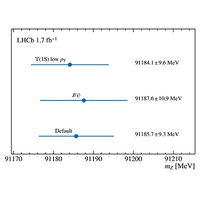
Phys. Rev. Lett. 135, 161802 (2025)
Particles and Fields
Defect-Free Growth of Decagonal Quasicrystals around Obstacles
Article | Condensed Matter and Materials | 2025-10-17 06:00 EDT
Kelly L. Wang, Insung Han, Domagoj Fijan, Sharon C. Glotzer, and Ashwin J. Shahani
Large-scale obstacles to crystal growth can throw the whole lattice off kilter, but quasicrystals can accommodate them without losing their atomic-scale order.
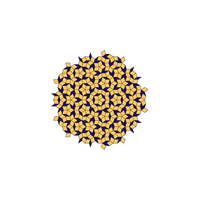
Phys. Rev. Lett. 135, 166203 (2025)
Condensed Matter and Materials
Kinetic Uncertainty Relations for Quantum Transport
Article | Condensed Matter and Materials | 2025-10-17 06:00 EDT
Didrik Palmqvist, Ludovico Tesser, and Janine Splettstoesser
We analyze the precision of generic currents in a multiterminal quantum-transport setting. Employing scattering theory, we show that the precision of such currents is limited by a function of the particle-current noise that can be interpreted as the activity in the classical limit. We thereby establ…
Phys. Rev. Lett. 135, 166302 (2025)
Condensed Matter and Materials
Critical Gate Distance for Wigner Crystallization in the Two-Dimensional Electron Gas
Article | Condensed Matter and Materials | 2025-10-17 06:00 EDT
Agnes Valenti, Vladimir Calvera, Yubo Yang (杨煜波), Miguel A. Morales, Steven A. Kivelson, Ilya Esterlis, and Shiwei Zhang
The Wigner crystal phase in two-dimensional electron gas is unstable at all densities when gate electrodes are sufficiently close.
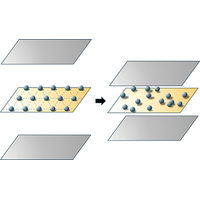
Phys. Rev. Lett. 135, 166501 (2025)
Condensed Matter and Materials
Invariant Measures in Time-Delay Coordinates for Unique Dynamical System Identification
Article | Statistical Physics; Classical, Nonlinear, and Complex Systems | 2025-10-17 06:00 EDT
Jonah Botvinick-Greenhouse, Robert Martin, and Yunan Yang
While invariant measures are widely employed to analyze physical systems when a direct study of pointwise trajectories is intractable, e.g., due to chaos or noise, they cannot uniquely identify the underlying dynamics. Our first result shows that, in contrast to invariant measures in state coordinat…
Phys. Rev. Lett. 135, 167202 (2025)
Statistical Physics; Classical, Nonlinear, and Complex Systems
Invested and Potential Magic Resources in Measurement-Based Quantum Computation
Article | Quantum Information, Science, and Technology | 2025-10-16 06:00 EDT
Gong-Chu Li, Lei Chen, Si-Qi Zhang, Xu-Song Hong, Huaqing Xu, Yuancheng Liu, You Zhou, Geng Chen, Chuan-Feng Li, Guang-Can Guo, and Alioscia Hamma
Magic states and magic gates are crucial for achieving universal quantum computation, but important questions about how magic resources should be implemented to attain maximal quantum advantage have remained unexplored, especially in the context of measurement-based quantum computation (MQC). This L…
Phys. Rev. Lett. 135, 160203 (2025)
Quantum Information, Science, and Technology
Long-Range Nonstabilizerness and Phases of Matter
Article | Quantum Information, Science, and Technology | 2025-10-16 06:00 EDT
David Aram Korbany, Michael J. Gullans, and Lorenzo Piroli
Long-range nonstabilizerness can be defined as the amount of nonstabilizerness that cannot be removed by shallow local quantum circuits. We study long-range nonstabilizerness in the context of many-body quantum physics, a task with possible implications for quantum-state preparation protocols and im…
Phys. Rev. Lett. 135, 160404 (2025)
Quantum Information, Science, and Technology
Macroscopic Suppression of Supersonic Quantum Transport
Article | Quantum Information, Science, and Technology | 2025-10-16 06:00 EDT
Jérémy Faupin, Marius Lemm, Israel Michael Sigal, and Jingxuan Zhang (张景宣)
We consider a broad class of strongly interacting quantum lattice gases, including the Fermi-Hubbard and Bose-Hubbard models. We focus on macroscopic particle clusters of size , with and the total particle number, and we study the quantum probability that such a cluster is transported ac…
Phys. Rev. Lett. 135, 160405 (2025)
Quantum Information, Science, and Technology
Thermodynamics and State Preparation in a Two-State System of Light
Article | Quantum Information, Science, and Technology | 2025-10-16 06:00 EDT
Christian Kurtscheid, Andreas Redmann, Frank Vewinger, Julian Schmitt, and Martin Weitz
The coupling of two-level quantum systems to the thermal environment is a fundamental problem with applications of such usually single-particle or fermionic systems ranging from qubit state preparation to spin models. The present Letter studies the elementary problem of the thermodynamics of an ense…
Phys. Rev. Lett. 135, 160406 (2025)
Quantum Information, Science, and Technology
Roughening Transition in Quantum Circuits
Article | Quantum Information, Science, and Technology | 2025-10-16 06:00 EDT
Hyunsoo Ha, David A. Huse, and Grace M. Sommers
We explore a roughening phase transition that occurs in the entanglement dynamics of certain quantum circuits. Viewing entanglement as the free energy of a membrane in a circuit-defined random environment, there is a competition between membrane smoothing due to lattice pinning and roughening due to…
Phys. Rev. Lett. 135, 160603 (2025)
Quantum Information, Science, and Technology
Fermi-LAT Galactic Center Excess Morphology of Dark Matter in Simulations of the Milky Way Galaxy
Article | Cosmology, Astrophysics, and Gravitation | 2025-10-16 06:00 EDT
Moorits Mihkel Muru, Joseph Silk, Noam I. Libeskind, Stefan Gottlöber, and Yehuda Hoffman
The strongest experimental evidence for dark matter is the Galactic Center gamma-ray excess observed by the Fermi telescope and even predicted prior to discovery as a potential dark matter signature via weakly interacting massive particle dark matter self-annihilations. However, an equally compellin…
Phys. Rev. Lett. 135, 161005 (2025)
Cosmology, Astrophysics, and Gravitation
Hawking Evaporation and the Fate of Black Holes in Loop Quantum Gravity
Article | Cosmology, Astrophysics, and Gravitation | 2025-10-16 06:00 EDT
Idrus Husin Belfaqih, Martin Bojowald, Suddhasattwa Brahma, and Erick I. Duque
A recent covariant formulation, that includes nonperturbative effects from loop quantum gravity (LQG) as self-consistent effective models, has revealed the possibility of nonsingular black hole solutions. The new framework makes it possible to couple scalar matter to such LQG black holes and derive …
Phys. Rev. Lett. 135, 161501 (2025)
Cosmology, Astrophysics, and Gravitation
$η$ and ${η}^{‘}$ Production in $J/ψ$ Radiative Decays from Quantum Chromodynamics
Article | Particles and Fields | 2025-10-16 06:00 EDT
Mischa Batelaan, Jozef J. Dudek, and Robert G. Edwards (for the Hadron Spectrum Collaboration)
We present a first principles calculation within quantum chromodynamics (QCD) of the radiative decays of the into the light pseudoscalar mesons and . Within a lattice computation we obtain the transition form factors as a function of photon virtuality from the timelike region, accessible exp…
Phys. Rev. Lett. 135, 161904 (2025)
Particles and Fields
Photoionization-Induced Floquet Driving of a Discrete Time Crystal in a Thermal Rydberg Ensemble
Article | Atomic, Molecular, and Optical Physics | 2025-10-16 06:00 EDT
Yuechun Jiao, Yu Zhang, Jingxu Bai, Suotang Jia, C. Stuart Adams, Zhengyang Bai, Heng Shen, and Jianming Zhao
Nonequilibrium, strongly interacting systems exhibit rich dynamics even in the presence of strong dissipation. For example, periodic dynamics, such as discrete time crystalline (DTC) phases, can appear. The DTC phase structure can be further enriched using external periodic driving--Floquet driving. …
Phys. Rev. Lett. 135, 163603 (2025)
Atomic, Molecular, and Optical Physics
Odd Dynamics of Passive Objects in a Chiral Active Bath
Article | Statistical Physics; Classical, Nonlinear, and Complex Systems | 2025-10-16 06:00 EDT
Cory Hargus, Federico Ghimenti, Julien Tailleur, and Frédéric van Wijland
When submerged in a chiral active bath, a passive object becomes a spinning ratchet imbued with odd transport properties. We present the most general Langevin dynamics for a rigid body in a chiral active bath, in the adiabatic limit of large object mass. For rotationally symmetric objects, odd diffu…
Phys. Rev. Lett. 135, 167102 (2025)
Statistical Physics; Classical, Nonlinear, and Complex Systems
Anomalous Correlators, Negative Frequencies, and Non-Phase-Invariant Hamiltonians in Random Waves
Article | Statistical Physics; Classical, Nonlinear, and Complex Systems | 2025-10-16 06:00 EDT
A. Villois, G. Dematteis, Y. V. Lvov, M. Onorato, and J. Shatah
We investigate a generic non-phase-invariant Hamiltonian model that governs the dynamics of nonlinear dispersive waves. We give evidence that initial data characterized by random phases naturally evolve into phase correlations between positive and negative wave numbers, leading to the emergence of n…
Phys. Rev. Lett. 135, 167201 (2025)
Statistical Physics; Classical, Nonlinear, and Complex Systems
Tuning Steady Shear Rheology through Active Dopants
Article | Polymers, Chemical Physics, Soft Matter, and Biological Physics | 2025-10-16 06:00 EDT
Amir Shee, Ritwik Bandyopadhyay, and Haicen Yue
We numerically investigate the steady shear rheology of mixtures of active and passive Brownian particles, with varying fractions of active components. We find that even a small fraction of active dopants triggers fluidization with comparable efficiency to fully active systems. A combined parameter,…
Phys. Rev. Lett. 135, 168302 (2025)
Polymers, Chemical Physics, Soft Matter, and Biological Physics
Physical Review X
Clustering of Conditional Mutual Information and Quantum Markov Structure at Arbitrary Temperatures
Article | | 2025-10-16 06:00 EDT
Tomotaka Kuwahara
Quantum systems at equilibrium are more localized than previously thought when looked at through the lens of conditional mutual information, a key way of measuring three-part correlations.

Phys. Rev. X 15, 041010 (2025)
Review of Modern Physics
Prospects for supersymmetry at High-Luminosity LHC
Article | High-energy particles and fields experiment | 2025-10-17 06:00 EDT
Howard Baer, Vernon Barger, Jessica Bolich, Juhi Dutta, Dakotah Martinez, Shadman Salam, Dibyashree Sengupta, and Kairui Zhang
Supersymmetry remains one of the leading candidates for physics beyond the standard model, offering a compelling framework to address the hierarchy of scales. Its theoretical appeal has inspired decades of intensive model building and experimental searches. Recent results have placed stringent bounds on the supersymmetric parameter space, sharpening the focus on the remaining viable models. This review surveys the current status and outlook for supersymmetry in light of experimental constraints and recent theoretical developments, and presents projections for the discovery potential of the High-Luminosity Large Hadron Collider across multiple search channels and a variety of well-motivated scenarios.
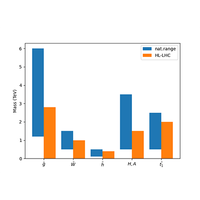
Rev. Mod. Phys. 97, 045001 (2025)
High-energy particles and fields experiment
arXiv
FFT-Accelerated Auxiliary Variable MCMC for Fermionic Lattice Models: A Determinant-Free Approach with $O(N\log N)$ Complexity
New Submission | Strongly Correlated Electrons (cond-mat.str-el) | 2025-10-17 20:00 EDT
Deqian Kong, Shi Feng, Jianwen Xie, Ying Nian Wu
We introduce a Markov Chain Monte Carlo (MCMC) algorithm that dramatically accelerates the simulation of quantum many-body systems, a grand challenge in computational science. State-of-the-art methods for these problems are severely limited by $ O(N^3)$ computational complexity. Our method avoids this bottleneck, achieving near-linear $ O(N \log N)$ scaling per sweep.
Our approach samples a joint probability measure over two coupled variable sets: (1) particle trajectories of the fundamental fermions, and (2) auxiliary variables that decouple fermion interactions. The key innovation is a novel transition kernel for particle trajectories formulated in the Fourier domain, revealing the transition probability as a convolution that enables massive acceleration via the Fast Fourier Transform (FFT). The auxiliary variables admit closed-form, factorized conditional distributions, enabling efficient exact Gibbs sampling update.
We validate our algorithm on benchmark quantum physics problems, accurately reproducing known theoretical results and matching traditional $ O(N^3)$ algorithms on $ 32\times 32$ lattice simulations at a fraction of the wall-clock time, empirically demonstrating $ N \log N$ scaling. By reformulating a long-standing physics simulation problem in machine learning language, our work provides a powerful tool for large-scale probabilistic inference and opens avenues for physics-inspired generative models.
Strongly Correlated Electrons (cond-mat.str-el), Artificial Intelligence (cs.AI), Machine Learning (cs.LG), Machine Learning (stat.ML)
Spontaneous Breaking of the SU(3) Flavor Symmetry in a Quantum Hall Valley Nematic
New Submission | Mesoscale and Nanoscale Physics (cond-mat.mes-hall) | 2025-10-17 20:00 EDT
G. Krizman, A. Kazakov, C.-W. Cho, V. V. Volobuev, A. Majou, E. Ben Achour, T. Wojtowicz, G. Bauer, Y. Guldner, B. A. Piot, Th. Jolicoeur, G. Springholz, L.-A. de Vaulchier
Two-dimensional quantum materials can host original electronic phases that arise from the interplay of electronic correlations, symmetry and topology. In particular, the spontaneous breaking of internal symmetry that acts simultaneously on the pseudospin and the spatial degree of freedom realizes a nematic ordering. We report evidence of a quantum Hall valley nematic phase with an underlying SU(3) order parameter space obtained by a spontaneous polarization between the threefold degenerate valley pseudospins in Pb1-xSnxSe quantum wells. In the presence of a Zeeman field, we demonstrate a further control of the nematic ordering with an explicit symmetry breaking. Evidence of both spontaneous and explicit SU(3) symmetry breaking, reminiscent of the quark flavor paradigm, is of fundamental interest to shape the many body physics in a SU(3) system.
Mesoscale and Nanoscale Physics (cond-mat.mes-hall), Materials Science (cond-mat.mtrl-sci)
10 pages, 3 figure, 1 supplementary materials
Yamaji effect in models of underdoped cuprates
New Submission | Strongly Correlated Electrons (cond-mat.str-el) | 2025-10-17 20:00 EDT
Jing-Yu Zhao, Shubhayu Chatterjee, Subir Sachdev, Ya-Hui Zhang
Recent angle-dependent magnetoresistance measurements in underdoped cuprates have revealed compelling evidence for small hole pockets in the pseudogap regime, including observation of the Yamaji effect in HgBa$ _2$ CuO$ {4+\delta}$ (Chan et al., Nature Physics https://doi.org/10.1038/s41567-025-03032-2 (2025)). A key distinction between theories is their predicted Fermi volumes, measured as fractions of the square lattice Brillouin zone: $ p/4$ per pocket for spin density wave (SDW) versus $ p/8$ for fractionalized Fermi liquid (FL\ast), where $ p$ is the hole doping. We calculate the $ c$ -axis magnetoresistance $ \rho{zz}(\theta, \phi)$ within the semiclassical Boltzmann formalism for both states, and using the ancilla layer model (ALM) for FL\ast in a single-band Hamiltonian. While the SDW Yamaji azimuthal angle $ \theta$ is marginally smaller than the FL\ast Yamaji $ \theta$ , the most significant difference is the presence of a second Yamaji peak in the SDW theory near in-plane angle $ \phi = 45^\circ$ ; there is no such second peak in the observations in HgBa$ _2$ CuO$ _{4+\delta}$ . Furthermore, we examine the role of anisotropic interlayer hopping present in LSCO, and predict the potential emergence of the Yamaji effect in LSCO at higher magnetic fields. Our results support the FL\ast interpretation of Fermi arcs in the pseudogap phase, and establish Yamaji angle measurements as a discriminatory tool between theoretical models.
Strongly Correlated Electrons (cond-mat.str-el)
12 pages, 11 figures
Unconventional criticality in $O(D)$-invariant loop-constrained Landau theory
New Submission | Mesoscale and Nanoscale Physics (cond-mat.mes-hall) | 2025-10-17 20:00 EDT
Svitlana Kondovych, Asle Sudbø, Flavio S. Nogueira
We study the critical behavior of a Landau-type theory for ferroelectrics in which the polarization order parameter $ \vec{P}$ is subject to a divergence-free constraint, such that only loop-like polarization configurations contribute to the partition function. This constraint forces the number of components of the field $ \vec{P}$ to equal the spatial dimensionality $ D$ , allowing a natural extension of the present theory to $ O(N)$ models with $ N=D$ . Renormalization group analysis reveals critical behavior beyond the conventional Landau-Ginzburg-Wilson paradigm. In particular, the order parameter acquires a remarkably large anomalous dimension, with $ \eta\approx 0.239$ in three dimensions – significantly exceeding the value $ \eta\approx 0.034$ typical of the $ O(3)$ universality class. This is due to an emergent gauge symmetry originating with the local constraint.
Mesoscale and Nanoscale Physics (cond-mat.mes-hall), High Energy Physics - Theory (hep-th)
6 pages, 1 diagram
CBVB-nH complexes as prevalent defects in metal-organic vapor-phase epitaxy-grown hexagonal boron nitride
New Submission | Materials Science (cond-mat.mtrl-sci) | 2025-10-17 20:00 EDT
Marek Maciaszek, Bartłomiej Baur
Optically active defects in hexagonal boron nitride (hBN) are promising candidates for active components in emerging quantum technologies, such as single-photon emitters and spin centers. However, further progress in hBN-based quantum technologies requires a deeper understanding of the physics and chemistry of hBN defects. In this work, we employ ab initio calculations to investigate the thermodynamic stability and optical properties of defect complexes involving carbon, boron vacancies, and hydrogen. We demonstrate that the formation of CBVB-nH complexes (n from 0 to 3) is energetically favorable under nitrogen-rich conditions in the presence of carbon and hydrogen. The low formation energies and high binding energies of these complexes arise from the strong electrostatic attraction between the positively charged carbon substitutional defect (CB) and the negatively charged hydrogen-passivated boron vacancies (VB-nH). These complexes are particularly likely to form in metal-organic vapor-phase epitaxy (MOVPE)-grown samples, where growth occurs in the presence of carbon and hydrogen and is accompanied by a high density of boron vacancies. The optical properties of CBVB-nH complexes are analyzed and compared to recent photoluminescence measurements on MOVPE-grown hBN samples. In particular, we investigate the origin of the emission peaks at 1.90 eV and 2.24 eV and demonstrate that both the energies and lineshapes are consistent with hole capture by negatively charged CBVB and CBVB-H complexes.
Materials Science (cond-mat.mtrl-sci)
22 pages, 4 figures
Comparative study of phonon-limited carrier transport in the Weyl semimetal TaAs family
New Submission | Mesoscale and Nanoscale Physics (cond-mat.mes-hall) | 2025-10-17 20:00 EDT
Shashi B. Mishra, Zhe Liu, Sabyasachi Tiwari, Feliciano Giustino, Elena R. Margine
We present a systematic first-principles study of phonon-limited transport in the TaAs family of Weyl semimetals using the ab initio Boltzmann transport equation. The calculated electrical conductivities show excellent agreement with experimental data for high-quality samples, confirming that transport in these systems is predominantly limited by phonon scattering. Among the four compounds, NbP achieves the highest conductivity, governed primarily by its large Fermi velocities that offset its stronger scattering rates. In contrast, TaAs displays the lowest conductivity, linked to reduced carrier pockets and limited carrier velocities. Additionally, NbP conductivity remains largely unaffected by small hole or electron doping, whereas TaAs exhibits pronounced electron-hole asymmetry. NbAs and TaP show intermediate behavior, reflecting their Fermi surface topologies and scattering phase space. These findings provide microscopic insight into the transport mechanisms of the TaAs family and emphasize the critical role of phonons, doping, and carrier dynamics in shaping their electronic response.
Mesoscale and Nanoscale Physics (cond-mat.mes-hall), Materials Science (cond-mat.mtrl-sci)
8 pages, 6 figures
Towards a unified mechanistic understanding of the electrical response of bipolar nanofluidic systems
New Submission | Mesoscale and Nanoscale Physics (cond-mat.mes-hall) | 2025-10-17 20:00 EDT
Ayelet Ben-Kish Sharvit, Yoav Green
Bipolar nanoporous membranes and bipolar nanochannels are used in water desalination and energy-harvesting systems that provide clean water and green energy, respectively. The growing need for both requires continuous improvement of their performance. However, the underlying physics of these complex systems is still not fully understood, making empirical optimization slow and inefficient. In this work, we combine theoretical analysis and numerical simulations to develop a unified framework for improving the design of nanofluidic devices. We show that the system response is governed by the interplay between the applied voltage and a parameter $ \eta$ , which depends on the ratio of geometry and surface charge densities of both charged regions. At low voltages, the response is mostly determined by $ \eta$ , allowing its dependence to be represented by a simplified phase space. At high voltages, this phase space becomes oversimplified. To demonstrate the framework’s robustness, we scan a range of configurations, from unipolar channels (single charged region) to bipolar channels (positive and negative segments). We compare the numerically simulated current-voltage responses with three theoretical models, which are limiting scenarios within the phase space, and explain the observed deviations. These findings can help reduce the time and resources required to optimize nanofluidic devices and improve the interpretation of experiments and simulations.
Mesoscale and Nanoscale Physics (cond-mat.mes-hall)
31 pages, 8 figures
Low-Power Temperature Control by Chiral Ferroelectric Nematic Liquid Crystal Windows
New Submission | Soft Condensed Matter (cond-mat.soft) | 2025-10-17 20:00 EDT
Md Sakhawat Hossain Himel, Rohan Dharmarathna, Netra Prasad Dhakal, Kelum Perera, Samuel Sprunt, James T. Gleeson, Robert J. Twieg, Antal Jákli
Low power consumption is critical for smart windows for temperature control and privacy. The recently discovered ferroelectric nematic liquid crystals exhibit strong coupling of the ferroelectric polarization with electric fields, making them promising candidates for energy-efficient electrochromic devices. Here we investigate the electrochromic properties of a room temperature chiral ferroelectric nematic liquid crystal in films with in-plane electrodes, where the electric field is perpendicular to the helical axis. We demonstrate that smart windows based on this material can regulate interior temperatures within a 10 Celsius range using only 50 milliwatt per square meter specific power, achieving fifty percent larger temperature modulation and 50-100 times lower power consumption than polymer dispersed and polymer stabilized liquid crystal windows. These findings suggest that chiral ferroelectric nematic liquid crystals offer a highly efficient approach for smart window applications, potentially surpassing existing electrochromic technologies in energy efficiency and thermal regulation.
Soft Condensed Matter (cond-mat.soft), Applied Physics (physics.app-ph)
19 pages, 6 figures
Comment on “Dissipation bounds the coherence of stochastic limit cycles”
New Submission | Statistical Mechanics (cond-mat.stat-mech) | 2025-10-17 20:00 EDT
Recent work has identified a fundamental bound on the thermodynamic cost of stochastic oscillators in the weak-noise regime (Santolin and Falasco, 2025; Nagayama and Ito, 2025). In this brief note, we provide an alternative and elementary derivation of this bound, based only on the assumption of Gaussian phase fluctuations and the thermodynamic uncertainty relation. Our approach may be useful for future generalizations of the bound.
Statistical Mechanics (cond-mat.stat-mech), Adaptation and Self-Organizing Systems (nlin.AO)
Comment on arXiv:2501.18469
Turn-on of Current-Induced Spin Torque upon Noncollinear Antiferromagnetic Ordering in Delafossite PdCrO2
New Submission | Materials Science (cond-mat.mtrl-sci) | 2025-10-17 20:00 EDT
Xiaoxi Huang, Qi Song, Gautam Gurung, Daniel A. Pharis, Thow Min Jerald Cham, Yulan Chen, Rakshit Jain, Maciej Olszewski, Yufan Feng, Amal El-Ghazaly, Evgeny Y. Tsymbal, Darrell G. Schlom, Daniel C. Ralph
We report measurements of the current-induced spin torque produced by the delafossite antiferromagnet PdCrO2 and acting on an adjacent ferromagnetic permalloy layer. The spin torque increases strongly as the temperature is reduced through the Neel temperature, when the PdCrO2 transitions from a paramagnetic phase to a noncollinear antiferromagnetic state. This result is qualitatively consistent with density functional theory calculations regarding how spin-current generation changes upon antiferromagnetic ordering in PdCrO2.
Materials Science (cond-mat.mtrl-sci)
DC Current Generation in the Driven Damped Haldane Model
New Submission | Disordered Systems and Neural Networks (cond-mat.dis-nn) | 2025-10-17 20:00 EDT
Konrad Koenigsmann, Peter Schauss, Gia-Wei Chern
The interplay between topological phenomena and nonequilibrium dynamics in open quantum systems represents a rapidly developing frontier in condensed matter physics. In this work, we investigate the nonequilibrium steady states of the Haldane model driven by a continuous-wave laser and coupled to a thermal reservoir. Dissipation is modeled within the Lindblad formalism adapted for quadratic fermionic systems, enabling us to study both the relaxation dynamics and the emergence of quasi-steady states. While conventional topological invariants and the bulk-boundary correspondence do not directly apply to such nonequilibrium settings, we introduce an occupation-weighted Chern number that captures the residual topological character of this quasi-steady state. We additionally examine the charge transport of this system under simultaneous driving and damping, showing that inversion symmetry breaking via a staggered sublattice potential generates a finite DC current. The magnitude and direction of this DC current are sensitive to the driving strength, highlighting the intricate interplay between topology, symmetry, and dissipation in open quantum systems.
Disordered Systems and Neural Networks (cond-mat.dis-nn)
A large spin-splitting altermagnet designed from the hydroxylated MBene monolayer
New Submission | Materials Science (cond-mat.mtrl-sci) | 2025-10-17 20:00 EDT
Xinyu Yang, Shan-Shan Wang, Shuai Dong
The development of altermagnets is fundamentally important for advancing spintronic device technology, but remains unpractical for the weak spin splitting in most cases, especially in two-dimensional materials. Based on spin group symmetry analysis and first-principles calculations, a novel hydroxyl rotation strategy in collinear antiferromagnets has been proposed to design altermagnets. This approach achieves a large chirality-reversible spin splitting exceeding $ 1130$ meV in $ \alpha_{60}$ -Mn$ _2$ B$ _2$ (OH)$ _2$ monolayer. The system also exhibits intrinsic features of a node-line semimetal in the absence of spin-orbit coupling. Besides, the angles of hydroxyl groups serve as the primary order parameter, which can switch on/off the altermagnetism coupled with the ferroelastic mechanism. The corresponding magnetocrystalline anisotropy have also been modulated. Moreover, an interesting spin-related transport property with the spin-polarized conductivity of 10$ ^{19}$ $ \Omega^{-1}m^{-1}s^{-1}$ also emerges. These findings uncover the hydroxyl rotation strategy as a versatile tool for designing altermagnetic node-line semimetals and opening new avenues for achieving exotic chemical and physical characteristics associated with large spin splitting.
Materials Science (cond-mat.mtrl-sci), Mesoscale and Nanoscale Physics (cond-mat.mes-hall)
11 pages, 5 figures
Mapping Temperature Using Transmission Kikuchi Diffraction
New Submission | Mesoscale and Nanoscale Physics (cond-mat.mes-hall) | 2025-10-17 20:00 EDT
Yueyun Chen, Xin Yi Ling, Jared Lodico, Tristan P. O`Neill, B. C. Regan, Matthew Mecklenburg
Electronic devices are engineered at increasingly smaller length scales; new metrologies to understand nanoscale thermodynamics are needed. Temperature and pressure are fundamental thermodynamic quantities whose nanoscale measurement is challenging as physical contact inevitably perturbs the system. Here we demonstrate Kikuchi diffraction thermometry (KDTh), a non-contact scanning electron microscope (SEM) technique capable of mapping nanoscale temperatures and pressures. KDTh detects local volumetric lattice changes in crystalline samples by precisely fitting Kikuchi patterns. Temperature changes are deduced using the coefficient of thermal expansion (CTE). We map lattice parameters and temperatures on Joule-heated graphite by rastering a 5.5-nm electron probe across the sample. Our parameter precision is ~0.01% and our temperature sensitivity is 2.2 K/$ \sqrt{Hz}$ . KDTh offers advanced sensitivity by fitting the entire Kikuchi pattern, even beyond the precision measured in transmission electron microscopy. KDTh can operate in both transmission (transmission Kikuchi diffraction, TKD) and reflection (electron backscatter diffraction, EBSD) modes.
Mesoscale and Nanoscale Physics (cond-mat.mes-hall)
21 pages, 4 figures in the main text
Phenomenological Ehrenfest Dynamics with Topological and Geometric Phase Effects and the curious case of Elliptical intersection
New Submission | Mesoscale and Nanoscale Physics (cond-mat.mes-hall) | 2025-10-17 20:00 EDT
We present a comprehensive computational framework for simulating nonadiabatic molecular dynamics with explicit inclusion of geometric phase (GP) effects. Our approach is based on a generalized two-level Hamiltonian model that can represent various electronic state crossings - conical intersections, avoided crossings, and elliptic intersections - through appropriate parameterization. We introduce a novel prelooping trajectory initialization scheme, allowing us to encode the memory as an initial phase accumulated due to the adiabatic evolution over the potential energy surface. This is a unified framework to handle different types of level crossings by incorporating Berry curvature-based force corrections to Ehrenfest dynamics, ensuring accurate representation of topological effects. For conical intersections, our method incorporates the theoretically expected phase pi, while for elliptic intersections, it yields a parametrically tunable but loop radius (energy) independent phase different from pi. We also include an eccentricity parameter (e) in the diabatic coupling to model more realistic molecular systems. Numerical simulations demonstrate the consistency of our approach with theoretical predictions for mixing of states and inhibition from mixing due to geometric phase effects. This framework provides a valuable tool for studying quantum-classical interactions in molecular systems where geometric phase effects play a significant role. The elliptical intersection and geometric phase effect opens avenue for the design and discovery of degenerate materials. It produces a fresh look to help develop a new kind of spectroscopy and potential qubit applications. This simple Hamiltonian reveals a pathological phase protection effect E = kr, where k is real, that has great utility in a new spectroscopy design.
Mesoscale and Nanoscale Physics (cond-mat.mes-hall), Chemical Physics (physics.chem-ph), Computational Physics (physics.comp-ph), Quantum Physics (quant-ph)
Experimental Demonstration of a Superconductor SFQ-Based ADC for High-Frequency Signal Acquisition
New Submission | Superconductivity (cond-mat.supr-con) | 2025-10-17 20:00 EDT
Beyza Zeynep Ucpinar, Sasan Razmkhah, Mustafa Altay Karamuftuoglu, Ali Bozbey
Superconducting quantum interference devices (SQUIDs) are among the most sensitive sensors, offering high precision through their well-defined flux-voltage characteristics. Building on this sensitivity, we designed, fabricated, and experimentally demonstrated a superconducting single flux quantum (SFQ)-based analog-to-digital converter (ADC) capable of detecting small variations in input current signals at high frequencies and converting them into SFQ pulse trains. To improve robustness and reduce errors, the design incorporates a majority circuit and two types of counters: asynchronous toggle flip-flop-based and synchronous cumulative-based, at the cryogenic stage. The counter collects the SFQ pulse train and converts it into a binary number, simplifying downstream digital readout. The circuits were implemented using the AIST CRAVITY (QuFab) HSTP process and successfully tested in our cryocooler system, validating both the design methodology and operation. This approach helps build a fully integrated system that combines digital SQUID functionality with cryogenic readout circuits on a single chip.
Superconductivity (cond-mat.supr-con)
14 pages, 23 figures
Ferroelasticity tunable altermagnets
New Submission | Materials Science (cond-mat.mtrl-sci) | 2025-10-17 20:00 EDT
Ning Ding, Haoshen Ye, Shan-Shan Wang, Shuai Dong
Altermagnets have garnered great interest due to their non-relativistic spin splitting and novel physical properties. However, the control of altermagnetic states remains underexplored. Here, we propose a new multiferroic state, i.e. ferroelastic altermagnetic state, in which ferroelastic strain couples directly to the spin-splitting. Through symmetry analysis and first-principles calculations, we identify the ferroelastic $ d$ -wave altermagnetism of puckered pentagonal CoSe$ _2$ monolayer. Interestingly, uniaxial stress can induce a ferroelastic phase transition, accompanied by a $ 90^\circ$ rotation of the spin-splitting bands. Cooperative rotation of the lattice and Néel vectors preserves the sign of Kerr angle, whereas noncooperative rotation reverses it. Our work provides a general strategy for manipulating altermagnetism in multiferroic systems and opens new avenues for exploring emergent magnetoelastic phenomena.
Materials Science (cond-mat.mtrl-sci), Mesoscale and Nanoscale Physics (cond-mat.mes-hall), Strongly Correlated Electrons (cond-mat.str-el)
8 pages, 6 figures
Comparison of Electroluminescence and Photoluminescence Imaging of Mixed-Cation Mixed-Halide Perovskite Solar Cells at Low Temperatures
New Submission | Materials Science (cond-mat.mtrl-sci) | 2025-10-17 20:00 EDT
Hurriyet Yuce-Cakir, Haoran Chen, Isaac Ogunniranye, Susanna M. Thon, Yanfa Yan, Zhaoning Song, Behrang H. Hamadani
Halide perovskites have emerged as promising candidates for high-performance solar cells. This study investigates the temperature-dependent optoelectronic properties of mixed-cation mixed-halide perovskite solar cells using electroluminescence (EL) and photoluminescence (PL) hyperspectral imaging, along with current-voltage analysis. Luminescence images, which were converted to EL and PL external radiative efficiency (ERE) maps, revealed significant changes in the optoelectronic behavior of these devices at low temperatures. Specifically, we found that a significant source of heterogeneity in the low-temperature EL ERE maps below 240 K is related to local charge injection and extraction bottlenecks, whereas PL ERE maps show suppressed non-radiative recombination and significant improvements in efficiency throughout the investigated temperature range. The spatial distribution of ERE and its variation with applied current were analyzed, offering insights into charge-carrier dynamics and defect behavior. Our results reveal that while the perovskite layer exhibits enhanced ERE at low temperatures, charge injection barriers at the interfaces of the perovskite solar cells significantly suppress EL and degrade the fill factor below 240 K. These findings reveal that a deeper understanding of the performance of perovskite solar cells under low-temperature conditions is an essential step toward their potential application in space power systems and advanced semiconductor devices.
Materials Science (cond-mat.mtrl-sci), Applied Physics (physics.app-ph), Optics (physics.optics)
Magnetic Flux-induced Higher-order Topological Superconductors
New Submission | Mesoscale and Nanoscale Physics (cond-mat.mes-hall) | 2025-10-17 20:00 EDT
Jinpeng Xiao, Qianglin Hu, Zuodong Yu, Weipeng Chen, Xiaobing Luo
Higher-order topological superconductivity typically depends on spin-orbit interaction, and often necessitates well designed sample structures, nodal superconducting pairings or complex magnetic order. In this work, we propose a model that incorporates a Zeeman field, antiferromagnetic order, and $ s$ -wave superconducting pairing, all without the need for spin-orbit interaction. In a two-dimensional system, we realize a second-order topological superconductor by utilizing a staggered flux, provided that the Zeeman field is oriented perpendicular to the magnetic order moments. In three-dimensional systems, we achieve second- and third-order topological superconductors in theory, through stacking the two-dimensional second-order topological superconductor.
Mesoscale and Nanoscale Physics (cond-mat.mes-hall)
Impurity-induced spin density wave in the thermoelectric layered cobaltite [Ca$_2$CoO$3$]${0.62}$[CoO$_2$]
New Submission | Strongly Correlated Electrons (cond-mat.str-el) | 2025-10-17 20:00 EDT
Motoya Takenaka, Shogo Yoshida, Yoshiki J. Sato, Ryuji Okazaki
We investigate the Sn-substitution effect on the thermoelectric transport properties of the layered cobaltite [Ca$ _2$ CoO$ _3$ ]$ _{0.62}$ [CoO$ _2$ ] single crystals, which exhibit a non-monotonic temperature variation of the electrical resistivity and the Seebeck coefficient owing to the complex electronic and magnetic states. We find that the onset temperature of the short-range spin-density-wave (SDW) formation increases with the substituted Sn content, indicating the impurity-induced stabilization of the SDW order, reminiscent of the disorder/impurity-induced spin order in the cuprate superconductors. The Seebeck coefficient is well related to such impurity effects, as it is slightly enhanced below the onset temperatures, implying a decrease in the carrier concentration due to a pseudo-gap formation associated with the SDW ordering. We discuss the site-dependent substitution effects including earlier studies, and suggest that substitution to the conducting CoO$ _2$ layers is essential to increase the onset temperature, consistent with the impurity-induced SDW picture realized in the conducting layers with the cylindrical Fermi surface.
Strongly Correlated Electrons (cond-mat.str-el), Materials Science (cond-mat.mtrl-sci)
Magnetization, excitations, and microwave power absorption in transition-metal/rare-earth ferrites with disorder
New Submission | Materials Science (cond-mat.mtrl-sci) | 2025-10-17 20:00 EDT
D. A. Garanin, E. M. Chudnovsky
Efficient numerical routines are developed for numerical studies of the dependence of the equilibrium magnetic states, excitations, and microwave power absorption on temperature and composition in transition-metal/rare-earth ferrites, including the reversal of the Néel vector occurring on both temperature and the concentration of the rare-earth atoms. It results in a drastic change in the behavior at the magnetization and angular-momentum compensation points. Dominant uniform oscillation modes are obtained by computing the magnetization correlation function. They are compared with the analytical solution, which is analyzed in detail. The fluctuation-dissipation theorem is used to compute the frequency dependence of the absorbed microwave power. A good agreement with analytical results is demonstrated. Disorder caused by random positions of rare-earth atoms in a diluted RE system leads to multiple localized modes that converge into broad absorption maxima as the size of the system increases. The power absorption integrated over frequency exhibits a minimum at the compensation point.
Materials Science (cond-mat.mtrl-sci)
12 Phys. Rev. pages, 8 figure captions
Superconductivity in UTe$_2$ from local noncentrosymmetricity
New Submission | Superconductivity (cond-mat.supr-con) | 2025-10-17 20:00 EDT
Superconductivity in UTe$ _{2}$ has garnered significant attention, as it is widely recognized as a promising candidate for a spin-triplet superconductor. However, the symmetry of superconductivity and the microscopic origin of spin-triplet pairing remain subjects of debate. Nevertheless, various experiments imply an intimate coupling between magnetism and superconductivity. In this paper, we analyze a multi-sublattice periodic Anderson model that incorporates a spin-orbit coupling allowed in locally noncentrosymmetric crystals to discuss magnetic fluctuations and superconductivity in UTe$ 2$ . Due to the sublattice-dependent spin-orbit coupling, magnetic fluctuations become anisotropic, and the spin degeneracy of superconducting states is lifted. Our calculations reveal anisotropic antiferromagnetic fluctuations along the $ b$ - and $ c$ -axes, anisotropic ferromagnetic fluctuations along the $ a$ -axis, and their coexistence. These can be tuned by the $ f$ -electron’s level. Superconductivity in the $ A_u$ representation is predominant for a wide range of parameters, whereas the $ B{2u}$ representation is almost degenerate and can be stabilized. The direction of the $ d$ -vector changes as we increase the spin-orbit coupling. We discuss the consistency between our results and several experiments.
Superconductivity (cond-mat.supr-con)
10 pages, 7 figures,
Multi-orbital Dirac superconductors and their realization of higher-order topology
New Submission | Superconductivity (cond-mat.supr-con) | 2025-10-17 20:00 EDT
Topological nodal superconductors (SCs) have attracted considerable interest due to their gapless bulk excitations and exotic surface states. In this paper, by establishing a general framework of the effective theory for multi-orbital SCs, we realize a class of three-dimensional (3D) time-reversal (T )-invariant Dirac SCs, with their topologically protected gapless Dirac nodes being located at general positions in the Brillouin zone. By introducing T -breaking pairing perturbations, we demonstrate the existence of Majorana hinge modes in these Dirac SCs as evidence of their realization of higher-order topology. We also propose a new kind of T -breaking Dirac SCs, whose Dirac nodes possess nonzero even chiralities and so are characterized by surface Majorana arcs.
Superconductivity (cond-mat.supr-con)
13 pages, 5 figures
Effect of decorating NiO nanoparticles on superconducting properties of YBCO
New Submission | Superconductivity (cond-mat.supr-con) | 2025-10-17 20:00 EDT
D.M. Gokhfeld, S.V. Semenov, M.I. Petrov, I.V. Nemtsev, M.S. Molokeev, V.L. Kirillov, O.N. Martyanov
The influence of adding 23 nm NiO nanoparticles on the magnetic hysteresis loops and critical current density of the high-temperature superconductor YBa2Cu3O7-d has been investigated. The samples were prepared using a fast annealing method that prevents chemical interaction between the components and does not reduce the critical temperature of the superconductor. Compared to the undoped YBCO sample, the critical current density increases in the samples doped with NiO nanoparticles in magnetic fields greater than 6 kOe. The sample containing 0.5 weight percent of NiO nanoparticles exhibits the greatest enhancement in critical current density at 10 kOe (1.36 times greater than the undoped sample).
Superconductivity (cond-mat.supr-con), Materials Science (cond-mat.mtrl-sci)
10 pages, 5 figures
Vertical pullout of a non-spherical intruder from a granular medium: From system-wide response to avalanching around the intruder
New Submission | Soft Condensed Matter (cond-mat.soft) | 2025-10-17 20:00 EDT
Dominik Krengel, Jian Chen, Shun Nomura, Shunsuke Ota, Hidenori Takahashi
Intruder mechanics in a granular aggregate is a common subject in engineering and geotechnical applications. However, most studies are limited to spherical intruders or small displacement regimes up to the point of failure. In this work we investigate the vertical pullout of a plate-like intruder buried within a granular aggregate well past the point of failure. While we find the maximum resistance force to depend on the material properties, in the post failure regime the resistance force converges onto the same curve for all friction coefficients. Likewise, the effective geometry of the intruder will always develop the same conical shape on top of the plate, independent of the magnitude of friction, that remains unchanged during the pullout process once established. Further, between the intruder and the aggregate a natural hopper flow develops in which material is transported into the void below the intruder by discrete flow events.
Soft Condensed Matter (cond-mat.soft)
18 pages, 18 figures
Frustration-driven unconventional magnetism in the Mn$^{2+}$ ($S=\frac{5}{2}$) based two-dimensional triangular-lattice antiferromagnet Ba${3}$MnTa${2}$O$_{9}$
New Submission | Strongly Correlated Electrons (cond-mat.str-el) | 2025-10-17 20:00 EDT
Romario Mondal, Sk. Soyeb Ali, Saikat Nandi, S. Chattopadhyay, S. Gaß, L. T. Corredor, A. U. B. Wolter, V. Kataev, B. Büchner, A. Alfonsov, S. Wurmehl, A. V. Mahajan, S. K. Panda, T. Dey
A triple perovskite oxide Ba$ _{3}$ MnTa$ _{2}$ O$ _{9}$ has been synthesized and its magnetic properties have been investigated through dc and ac magnetization, specific heat, electron spin resonance (ESR) measurements, and density functional theory (DFT) calculations. Mn$ ^{2+}$ ($ S$ = 5/2) ions are the only magnetic species present in the material. These Mn$ ^{2+}$ ions constitute a quasi-two-dimensional triangular network in the crystallographic $ ab$ -plane. Magnetization and specific heat measurements reveal the absence of any long-range magnetic order down to 0.5,K despite the presence of antiferromagnetic correlations between the magnetic ions, suggesting the presence of geometric frustration in the material. The entropy release is lower than the expected theoretical value of $ Rln(6)$ , further suggesting the presence of frustration. First-principles calculations using density functional theory (DFT) and atomistic spin dynamics (ASD) simulations further support this lack of static magnetic order even at low temperatures and identify the competing magnetic interactions along with the quasi-2D magnetic dimensionality as the underlying origin of such an unconventional magnetic behavior.
Strongly Correlated Electrons (cond-mat.str-el)
Main paper: 12 pages, 7 figures and Supplemental information: 2 pages, 2 figures
Phys. Rev. B (2025)
Laser-Induced Heating in Diamonds: Influence of Substrate Thermal Conductivity and Interfacial Polymer Layers
New Submission | Materials Science (cond-mat.mtrl-sci) | 2025-10-17 20:00 EDT
Md Shakhawath Hossain, Jiatong Xu, Thi Ngoc Anh Mai, Nhat Minh Nguyen, Trung Vuong Doan, Chaohao Chen, Qian Peter Su, Yongliang Chen, Evgeny Ekimov, Toan Dinh, Xiaoxue Xu, Toan Trong Tran
Diamonds hosting color centers possess intrinsically high thermal conductivity; therefore, laser-induced heating has often received little attention. However, when placed on substrates with low thermal conductivity, localized heating of diamonds under laser excitation can become significant, and the presence of an interfacial polymer layer between substrate and diamond further amplifies this effect. Yet, the relationship between substrate thermal conductivity, polymer thickness, and laser heating remains to be established. Here, a systematic investigation is presented on laser-induced heating of silicon-vacancy diamond on substrates with varying thermal conductivity and interfacial polymer thickness. Results reveal that even at a low excitation power of 737$ \mu$ W/$ \mu$ m$ ^2$ , thin amorphous holey carbon – the lowest-conductivity substrate ($ \sim$ 0.2Wm$ ^{-1}$ ~K$ ^{-1}$ ) studied – exhibits substantial heating, while glass ($ \sim$ 1.4Wm$ ^{-1}$ ~K$ ^{-1}$ ) and polydimethylsiloxane (PDMS, $ \sim$ 0.35Wm$ ^{-1}$ ~K$ ^{-1}$ ) show noticeable heating only above 2.95mW/$ \mu$ m$ ^2$ . For polymer interlayers, a thickness of just 2.2$ \mu$ m induces significant heating at 2.95mW/$ \mu$ m$ ^2$ and above, highlighting strong influence of both substrate and polymer thickness on local heating response. Experimental findings are further validated using COMSOL Multiphysics simulations with a steady-state 3D heat transfer model. These results provide practical guidance for substrate selection and sample preparation, enabling optimization of conditions for optical thermometry and quantum sensing applications.
Materials Science (cond-mat.mtrl-sci), Optics (physics.optics)
Multiscale Models For Perovskite Optimisation
New Submission | Materials Science (cond-mat.mtrl-sci) | 2025-10-17 20:00 EDT
Philippe Baranek, James P. Connolly (GeePs), Antoine Gissler, Philip Schulz, Michel Rérat, Roberto Dovesi
This paper presents a multiscale approach to evaluate perovskite solar cell performance which determines material properties at the atomistic scale with first-principles calculations, and applies them in macro-scale device models. This work focuses on the MAPbI3 (MA = CH3NH3) perovskite and how its phase transitions impact on its optical, electronic, and structural properties which are investigated at the first-principles level. The obtained data are coupled to a numerical drift-diffusion device model enabling evaluation of the performance of corresponding single junction devices. The first-principles simulation applies a hybrid exchange-correlation functional adapted to the studied family of compounds. Validation by available experimental data is presented from materials properties to device performance, justifying the use of the approach for predictive evaluation of existing and novel perovskites. The coupling between atomistic and device models is described in terms of a framework for exchange of optical, vibrational, and electronic parameters between the two scales. The result of this theoretical investigation is a methodology for designing and optimising perovskite materials for both cell performance and stability, the key obstacle in the societal implementation of these record-breaking new materials.
Materials Science (cond-mat.mtrl-sci)
EUPVSEC 2025 42nd European Photovoltaic Solar Energy Conference and Exhibition, WIP Renewable Energies, Sep 2025, Bilbao, Spain
Electric field-induced spin-valley locking in twisted bilayer buckled honeycomb materials
New Submission | Mesoscale and Nanoscale Physics (cond-mat.mes-hall) | 2025-10-17 20:00 EDT
Harold J.W. Zandvliet, Pantelis Bampoulis, Cristiane Morais Smith, Lumen Eek
A twisted honeycomb bilayer exhibits a moiré superstructure that is composed of a hexagonal arrangement of AB and BA stacked domains separated by domain boundaries. In the case of twisted bilayer graphene, the application of an electric field normal to the bilayer leads to the opening of inverted band gaps in the AB and BA stacked domains. The inverted band gaps result in the formation of a two-dimensional triangular network of counterpropagating valley protected helical domain boundary states, also referred to as the quantum valley Hall effect. Owing to spin-orbit coupling and buckling, the quantum valley Hall effect in twisted bilayer silicene and germanene is more complex than in twisted bilayer graphene. We found that there is a range of electric fields for which the spin degree of freedom is locked to the valley degree of freedom of the electrons in the quantum valley Hall states, resulting in a stronger topological protection. For electric fields smaller than the aforementioned range the twisted bilayer does not exhibit the quantum valley Hall effect, whereas for larger electric fields the spin-valley locking is lifted and the emergent quantum valley Hall states are only valley-protected.
Mesoscale and Nanoscale Physics (cond-mat.mes-hall)
18 pages, 6 figures
First-Principles Approach to Spin Excitations in Noncollinear Magnetic Systems
New Submission | Materials Science (cond-mat.mtrl-sci) | 2025-10-17 20:00 EDT
Hsiao-Yi Chen, Ryotaro Arita, Yusuke Nomura
We present a first-principles method based on density functional theory and many-body perturbation theory for computing spin excitations in magnetic systems with noncollinear spin textures. Traditionally, the study of magnetic excitations has relied on spin models that assume magnetic moments to be localized. Beyond this restriction, recent $ ab~initio$ methods based on Green’s functions within the local spin-density approximation have emerged as a general framework for calculating magnetic susceptibilities. However, their application has so far been largely limited to collinear ferromagnetic and antiferromagnetic systems. In this work, we extend this framework and enable the treatment of large-scale noncollinear magnetic systems by leveraging a Wannier-basis representation and implementing an ansatz potential method to reduce computational cost. We apply our method to the spin-spiral state of LiCu$ _2$ O$ _2$ , successfully capturing its steady-state spin-rotation pitch in agreement with the experimental measurement and resolving the characteristic magnon dispersion. We further analyze the interplay between the spiral spin structure and the on-site spin-exchange splitting, and elucidate the crucial role of magnetic dipoles on ligand ions in mediating effective ferromagnetic interaction among the primary spins on Cu$ ^{2+}$ ions. Finally, we provide a theoretical prediction of the magnon dispersion on top of the helical spin background in high agreement with the experimental measurement. Overall, this work establishes a general and computationally efficient framework for simulating collective spin dynamics in noncollinear magnetic systems from first principles, exemplified by – but not limited to – spin-spiral states.
Materials Science (cond-mat.mtrl-sci)
16 pages, 11 figures
The Tracy-Widom distribution at large Dyson index
New Submission | Statistical Mechanics (cond-mat.stat-mech) | 2025-10-17 20:00 EDT
Alain Comtet, Pierre Le Doussal, Naftali R. Smith
We study the Tracy-Widom (TW) distribution $ f_\beta(a)$ in the limit of large Dyson index $ \beta \to +\infty$ . This distribution describes the fluctuations of the rescaled largest eigenvalue $ a_1$ of the Gaussian (alias Hermite) ensemble (G$ \beta$ E) of (infinitely) large random matrices. We show that, at large $ \beta$ , its probability density function takes the large deviation form $ f_\beta(a) \sim e^{-\beta \Phi(a)}$ . While the typical deviation of $ a_1$ around its mean is Gaussian of variance $ O(1/\beta)$ , this large deviation form describes the probability of rare events with deviation $ O(1)$ , and governs the behavior of the higher cumulants. We obtain the rate function $ \Phi(a)$ as a solution of a Painlevé II equation. We derive explicit formula for its large argument behavior, and for the lowest cumulants, up to order 4. We compute $ \Phi(a)$ numerically for all $ a$ and compare with exact numerical computations of the TW distribution at finite $ \beta$ . These results are obtained by applying saddle-point approximations to an associated problem of energy levels $ E=-a$ , for a random quantum Hamiltonian defined by the stochastic Airy operator (SAO). We employ two complementary approaches: (i) we use the optimal fluctuation method to find the most likely realization of the noise in the SAO, conditioned on its ground-state energy being $ E$ (ii) we apply the weak-noise theory to the representation of the TW distribution in terms of a Ricatti diffusion process associated to the SAO. We extend our results to the full Airy point process $ a_1>a_2>\dots$ which describes all edge eigenvalues of the G$ \beta$ E, and correspond to (minus) the higher energy levels of the SAO, obtaining large deviation forms for the marginal distribution of $ a_i$ , the joint distributions, and the gap distributions.
Statistical Mechanics (cond-mat.stat-mech), Disordered Systems and Neural Networks (cond-mat.dis-nn), Mathematical Physics (math-ph)
37 pages, 6 figures
Evidence of de Almeida–Thouless line below six dimensions
New Submission | Disordered Systems and Neural Networks (cond-mat.dis-nn) | 2025-10-17 20:00 EDT
M. Aguilar-Janita, V. Martin-Mayor, J. Moreno-Gordo, J.J. Ruiz-Lorenzo
We study the critical behavior of the Ising spin glass in five spatial dimensions through large-scale Monte Carlo simulations and finite-size scaling analysis. Numerical evidence for a phase transition is found both with and without an externally applied magnetic field. The critical exponents are computed in both cases. We compute with a 10% accuracy the lower critical dimension at zero magnetic field, finding a result consistent with estimates obtained with entirely different methods, by combining our estimates of critical exponents in five dimensions with previous results for other spatial dimensions. When the results in a magnetic field are compared with previous results in six spatial dimensions, qualitative differences emerge in the scaling behavior of the correlation functions at zero external momentum. This anomalous scaling does not extend to other wavevectors. We do not find indications of a quasi first-order phase transition in a magnetic field.
Disordered Systems and Neural Networks (cond-mat.dis-nn)
Linearly polarized light enables chiral edge transport in quasi-2D Dirac materials
New Submission | Mesoscale and Nanoscale Physics (cond-mat.mes-hall) | 2025-10-17 20:00 EDT
Mohammad Shafiei, Farhad Fazileh, Milorad V. Milošević
Floquet engineering with high-frequency light offers dynamic control over topological phases in quantum materials. While in 3D Dirac systems circularly polarized light is known to induce topological phase transitions via gap opening, linearly polarized light (LPL) has generally been considered ineffective. Here we show that in quasi-2D Dirac materials the second-order momentum term arising from the intersurface coupling can induce a topological phase transition under LPL, leading to chiral edge channels. Considering an ultrathin Bi$ _2$ Se$ _3$ film as a representative system, we show that this transition occurs at experimentally accessible light intensities. Our results thus promote quasi-2D materials as viable platforms for light-controlled topological phases, expanding the potential of Floquet topological engineering.
Mesoscale and Nanoscale Physics (cond-mat.mes-hall)
Quasiclassical theory of vortex states in locally non-centrosymmetric superconductors: application to CeRh${2}$As${2}$
New Submission | Superconductivity (cond-mat.supr-con) | 2025-10-17 20:00 EDT
Akihiro Minamide, Youichi Yanase
CeRh$ _{2}$ As$ _{2}$ , a heavy fermion superconductor discovered in 2021, exhibits two distinct superconducting phases under a $ c$ -axis magnetic field. This unconventional phase diagram has been attributed to the local inversion symmetry breaking at the Ce sites. At low magnetic fields, a conventional even-parity spin-singlet superconducting state is realized, whereas at higher fields, an odd-parity spin-singlet superconducting state, in which the order parameter alternates sign between neighboring Ce layers, becomes stabilized. In this study, we employ a quasiclassical approach to investigate the vortex states of bilayer superconductors with locally broken inversion symmetry. We calculate the local density of states (LDOS) in the vortex lattice state and find that the pairing symmetry of different superconducting states is clearly manifested in the peak structure of LDOS at the vortex core. Since LDOS is experimentally observable, our work provides a pathway for experimental verification of the superconducting parity transition in CeRh$ _{2}$ As$ _{2}$ .
Superconductivity (cond-mat.supr-con)
17 pages, 6 figures
Cryogenic temperature dependence and hysteresis of surface-trap-induced gate leakage in GaN high-electron-mobility transistors
New Submission | Mesoscale and Nanoscale Physics (cond-mat.mes-hall) | 2025-10-17 20:00 EDT
Ching-Yang Pan, Shi-Kai Lin, Yu-An Chen, Pei-hsun Jiang
This work provides a detailed mapping of various mechanisms of surface-trap-induced gate leakage in GaN HEMTs across a temperature range from room to cryogenic levels. Two-dimensional variable-range hopping is observed at small gate bias. Under higher reverse gate bias, the leakage is dominated by the Poole–Frenkel emission above 220 K, but gradually transitions to the trap-assisted tunneling below 220 K owing to the frozen-trap effect. The trap barrier height extracted from the gate leakage current under the upward gate sweep is 0.65 V, which is 12% higher than that from the downward sweep. The gate leakage current as a function of the gate bias exhibits clockwise hysteresis loops above 220 K but counterclockwise ones below 220 K. This remarkable opposite hysteresis phenomenon is thoroughly explained by the trap mechanisms.
Mesoscale and Nanoscale Physics (cond-mat.mes-hall), Applied Physics (physics.app-ph)
Accepted by Phys. Rev. Applied
Ferroelectric amplitude switching and continuous memory
New Submission | Materials Science (cond-mat.mtrl-sci) | 2025-10-17 20:00 EDT
Gye-Hyeon Kim, Tae Hyun Jung, Seungjoon Sun, Jung Kyu Lee, Jaewoo Han, P. Karuna Kumari, Jin-Hyun Choi, Hansol Lee, Tae Heon Kim, Yoon Seok Oh, Seung Chul Chae, Se Young Park, Sang Mo Yang, Changhee Sohn
Although ferroelectric systems inherently exhibit binary switching behavior, recent advances in analog memory device have spurred growing interest in achieving continuous memory states. In this work, we demonstrate ferroelectric amplitude switching at the mesoscopic scale in compositionally graded Ba1-xSrxTiO3 heterostructures, enabling continuous modulation of polarization magnitude without altering its direction, which we defined as amplitude switching. Using switching current measurement, piezoresponse force microscopy and Landau-Ginzburg-Devonshire simulations, we reveal that compositionally graded ferroelectric heterostructure can possess amplitude switching behavior through a double well potential with flattened minima. This behavior supports stable, continuous polarization states and establishes a new platform for analog memory applications. These findings introduce amplitude switching as a new dynamic of the order parameter, paving the way for energy-efficient and reliable analog memory systems.
Materials Science (cond-mat.mtrl-sci), Strongly Correlated Electrons (cond-mat.str-el)
Emergent Shastry-Sutherland network from square-kagome Heisenberg antiferromagnet with trimerization
New Submission | Strongly Correlated Electrons (cond-mat.str-el) | 2025-10-17 20:00 EDT
We study the $ S=1/2$ square-kagome lattice Heisenberg antiferromagnet with the trimarized modulation. In the trimerized limit, each trimer hosts the four-fold degenearte ground states characterized by the spin and chirality degrees of freedom. We find that, within the first-order perturbation theory with respect to the inter-trimer coupling, the effective Hamiltonian is the Kugel-Khomskii-type model on a Shastry-Sutherland lattice. Based on a mean-field decoupling, we propose a dimer-covering ansatz for the effective Hamiltonian; however, the validity of these states in the low-energy sector remains an open question.
Strongly Correlated Electrons (cond-mat.str-el)
6 pages, 3 figures
Enhanced Secondary Electron Detection of Single Ion Implants in Silicon Through Thin SiO2 Layers
New Submission | Materials Science (cond-mat.mtrl-sci) | 2025-10-17 20:00 EDT
Ella B Schneider, Oscar G Lloyd-Willard, Kristian Stockbridge, Mark Ludlow, Sam Eserin, David C Cox, Roger P Webb, Ben N Murdin, Steve K Clowes
Deterministic placement of single dopants is essential for scalable quantum devices based on group-V donors in silicon. We demonstrate a non-destructive, high-efficiency method for detecting individual ion implantation events using secondary electrons (SEs) in a focused ion beam (FIB) system. Using low-energy Sb ions implanted into undoped silicon, we achieve up to 98% single-ion detection efficiency, verified by calibrated ion-current measurements before and after implantation. The technique attains ~30 nm spatial resolution without requiring electrical contacts or device fabrication, in contrast to ion-beam-induced-current (IBIC) methods. We find that introducing a controlled SiO2 capping layer significantly enhances SE yield, consistent with an increased electron mean free path in the oxide, while maintaining high probability of successful ion deposition in the underlying substrate. The yield appears to scale with ion velocity, so higher projectile mass (e.g. Yb, Bi etc) requires increased energy to maintain detection efficiency. Our approach provides a robust and scalable route to precise donor placement and extends deterministic implantation strategies to a broad range of material systems and quantum device architectures.
Materials Science (cond-mat.mtrl-sci), Quantum Physics (quant-ph)
8 pages, 4 figures
$^{23}$Na-NMR study on the one-dimensional superoxide spin-chain compound NaO$_2$
New Submission | Strongly Correlated Electrons (cond-mat.str-el) | 2025-10-17 20:00 EDT
Takayuki Goto, Mizuki Miyajima, Takashi Kambe
We report $ ^{23}$ Na-NMR study on a candidate one-dimensional quantum spin system NaO$ 2$ . The Knight shift, linewidth, and spin-lattice relaxation rate $ 1/T_1$ were investigated down to 0.3 K under fields up to 16 T. The results reveal the opening of a spin gap of $ \Delta(10.1 {\rm T}) \simeq$ 38 K below $ T{\rm S3} =$ 40 K, consistent with a spin-Peierls-like instability. The hyperfine coupling constant was found to drop sharply across the structural phase transition at $ T_{\rm S2} =$ 215 K, highlighting the pronounced one-dimensional character of the system. These findings establish NaO$ _2$ as a rare example of a $ \pi$ -orbital-based one-dimensional spin chain that exhibits a spin-gapped ground state.
Strongly Correlated Electrons (cond-mat.str-el), Statistical Mechanics (cond-mat.stat-mech)
Uniaxial Magnetic Anisotropy and Type-X/Y Current-Induced Magnetization Switching in Oblique-Angle-Deposited Ta/CoFeB/Pt and W/CoFeB/Pt Heterostructures
New Submission | Materials Science (cond-mat.mtrl-sci) | 2025-10-17 20:00 EDT
Amir Khan, Shalini Sharma, Tiago de Oliveira Schneider, Markus Meinert
Planar current-induced magnetization switching (CIMS) driven by spin-orbit torque (SOT) requires an in-plane uniaxial magnetic anisotropy (UMA), which can be induced by oblique-angle sputter deposition of the heavy-metal underlayer. To enhance the SOT efficiency, we employ trilayer heterostructures of (Ta or W)/CoFeB/Pt, where the bottom layer exhibits a UMA of 50 mT at 2 nm thickness. The magnetization reversal in Hall-bar devices is detected through unidirectional spin Hall magnetoresistance (USMR) for the Type Y geometry (easy axis transverse to current) and planar Hall measurements for the Type X geometry (easy axis parallel to current). Both configurations exhibit CIMS with sub-microsecond current pulses, reaching switching current densities as low as $ 2 \times 10^{11}$ A/m$ ^2$ for a W (4 nm)/CoFeB (1.4 nm)/Pt (2 nm) stack with a UMA of 146 mT. Macrospin simulations reproduce the Type Y switching as coherent magnetization rotation, whereas the Type X devices switch at much lower currents than predicted, indicating that nucleation and domain-wall propagation dominate reversal in this geometry.
Materials Science (cond-mat.mtrl-sci)
9 pages, 8 figures
Contrasting properties of free carriers in $n$- and $p$-type Sb$_2$Se$_3$
New Submission | Materials Science (cond-mat.mtrl-sci) | 2025-10-17 20:00 EDT
F. Herklotz, E. V. Lavrov, T. D. C. Hobson, T. P. Shalvey, J. D. Major, K. Durose
We report persistent photoconductivity in $ p$ -type Sb$ _2$ Se$ _3$ single crystals doped with Cd or Zn, where enhanced conductivity remains for hours after illumination ceases at temperatures below $ \sim$ 25~K. Comparative transport and infrared absorption measurements, including on $ n$ -type Cl-doped counterparts, reveal strong indications that hole transport in Sb$ _2$ Se$ _3$ is more strongly affected by intrinsic carrier scattering than electron transport. These results point to a fundamental asymmetry in charge carrier dynamics and highlight the potential role of polaronic effects in limiting hole mobility in this quasi-one-dimensional semiconductor.
Materials Science (cond-mat.mtrl-sci)
5 pages, 4 figures
Orbital magnetization in Sierpinski fractals
New Submission | Materials Science (cond-mat.mtrl-sci) | 2025-10-17 20:00 EDT
L. L. Lage, T. P. Cysne, A. Latgé
Orbital magnetization (OM) in Sierpinski carpet (SC) and triangle (ST) fractal is theoretically investigated by using Haldane model as a prototypical example. The OM calculation is performed following two distinct approaches; employing the definition and local markers formalism. Both methods coincides for all systems analyzed. For the SC, higher fractal generations create a dense set of edge states, resulting in a staircase profile, leading to oscillations in the magnetization as a function of the chemical potential. In contrast, the ST self-similarity produces distinct fractal-induced spectral gaps, which manifest as constant plateaus in the magnetization. The STs exhibit a pronounced sensitivity to edge terminations. Our results reveal how quantum confinement in fractal structures affects the electronic orbital angular momentum, pointing to possible pathways for exploring novel orbitronics in systems with complex geometries.
Materials Science (cond-mat.mtrl-sci)
The fate of disorder in twisted bilayer graphene near the magic angle
New Submission | Mesoscale and Nanoscale Physics (cond-mat.mes-hall) | 2025-10-17 20:00 EDT
Zhe Hou, Hailong Li, Qing Yan, Yu-Hang Li, Hua Jiang
In disordered lattices, itinerant electrons typically undergo Anderson localization due to random phase interference, which suppresses their motion. By contrast, in flat-band systems where electrons are intrinsically localized owing to their vanishing group velocity, the role of disorder remains elusive. Twisted bilayer graphene (TBG) at the magic angle $ \sim 1.1^\circ$ provides a representative flat-band platform to investigate this problem. Here, we perform an atomistic tight-binding quantum transport calculation on the interplay between disorder and flat-bands in TBG devices. This non-phenomenological approach provides direct evidence that moderate disorder enhances conductance, whereas stronger disorder restores localization, revealing a disorder-driven delocalization-to-localization transport behavior. The underlying physical mechanism is understood by an effective inter-moir{é} tunneling strength via spectral flow analysis of a disordered TBG cylinder. Moreover, by comparing magic-angle and large-angle TBG, we demonstrate qualitatively distinct disorder responses tied to the presence of flat-bands. Our quantitative results highlight the unconventional role of disorder in flat-band moir{é} materials and offer insights into the observation of the fractional quantum anomalous Hall effect in disordered moir{é} systems.
Mesoscale and Nanoscale Physics (cond-mat.mes-hall), Disordered Systems and Neural Networks (cond-mat.dis-nn)
5 pages, 4 figures; Comments are welcome!
Precision of an autonomous demon exploiting nonthermal resources and information
New Submission | Mesoscale and Nanoscale Physics (cond-mat.mes-hall) | 2025-10-17 20:00 EDT
Juliette Monsel, Matteo Acciai, Didrik Palmqvist, Nicolas Chiabrando, Rafael Sánchez, Janine Splettstoesser
Quantum-dot systems serve as nanoscale heat engines exploiting thermal fluctuations to perform a useful task. Here, we investigate a multi-terminal triple-dot system, operating as a refrigerator that extracts heat from a cold electronic contact. In contrast to standard heat engines, this system exploits a nonthermal resource. This has the intriguing consequence that cooling can occur without extracting energy from the resource on average – a seemingly demonic action – while, however, requiring the resource to fluctuate. Using full counting statistics and stochastic trajectories, we analyze the performance of the device in terms of the cooling-power precision, employing performance quantifiers motivated by the thermodynamic and kinetic uncertainty relations. We focus on two regimes with large output power, which are based on two operational principles: exploiting information on one hand and the nonthermal properties of the resource on the other. We show that these regimes significantly differ in precision. In particular, the regime exploiting the nonthermal properties of the resource can have cooling-power fluctuations that are suppressed with respect to the input fluctuations by an order of magnitude. We also substantiate the interpretation of the two different working principles by analyzing cross-correlations between input and output heat currents and information flow.
Mesoscale and Nanoscale Physics (cond-mat.mes-hall)
23 pages, 15 figures (main) + supplemental material
Substitutional sulfur and its vibrational fingerprints in Sb$_2$Se$_3$
New Submission | Materials Science (cond-mat.mtrl-sci) | 2025-10-17 20:00 EDT
F. Herklotz, E. V. Lavrov, A. Herklotz, V.V. Melnikov, T. P. Shalvey, J. D. Major, and K. Durose
The configurational behavior of sulfur in antimony triselenide (Sb$ _2$ Se$ _3$ ) is investigated by combining infrared absorption spectroscopy with density functional theory. Four sulfur-related local vibrational modes are identified at 249, 273, 283, and 312~cm$ ^{-1}$ in melt-grown single crystals prepared from Sb$ _2$ Se$ _3$ granulate. Their assignment to sulfur is confirmed through controlled indiffusion experiments using Sb$ _2$ S$ _3$ and elemental sulfur, as well as isotope-substitution studies with $ ^{34}$ S, which produce the expected frequency shifts. Polarization-resolved measurements, together with theoretical calculations of local vibrational modes, demonstrate that the observed spectral features are fully consistent with substitutional sulfur on the three inequivalent selenium sites of Sb$ _2$ Se$ _3$ .
Materials Science (cond-mat.mtrl-sci)
9 pages, 7 figures
Interplay of ferromagnetism, nematicity and Fermi surface nesting in kagome flat band
New Submission | Strongly Correlated Electrons (cond-mat.str-el) | 2025-10-17 20:00 EDT
Yuman He, Wentao Jiang, Siqi Wu, Xuzhe Ying, Berthold Jack, Xi Dai, Hoi Chun Po
Recent experiment on Fe-doped CoSn has uncovered a series of correlated phases upon hole doping of the kagome flat bands. Among the phases observed, a nematic phase with a six- to two-fold rotation symmetry breaking is found to prevail over a wide doping and temperature range. Motivated by these observations, we investigate the interaction-driven phases realized in a kagome model with partially filled, weakly dispersing flat bands. Density-density interactions up to second-nearest neighbors are considered. We identify a close competition between ferromagnetic and nematic phases in our self-consistent Hartree-Fock calculations: while on-site interaction favors ferromagnetism, the sizable inter-sublattice interactions stabilize nematicity over a wide doping window. Competition from translational-symmetry-breaking phases is also considered. Overall, our results show that nematicity is a generic outcome of partially filled kagome flat bands and establish a minimal framework for understanding correlated flat-band phases.
Strongly Correlated Electrons (cond-mat.str-el), Quantum Physics (quant-ph)
6+3 pages, 5+1 figures
Modeling Diffusion and Permeation Across the Stratum Corneum Lipid Barrier
New Submission | Soft Condensed Matter (cond-mat.soft) | 2025-10-17 20:00 EDT
Rinto Thomas, Praveen Ranganath Prabhakar, Douglas J. Tobias, Michael von Domaros
Human skin oils are a major sink for ozone in densely occupied indoor environments. Understanding how the resulting volatile and semivolatile organic oxidation products influence indoor air chemistry requires accurate representations not only of their emission into indoor air but also of their transport across the outermost skin barrier, the stratum corneum. Using molecular dynamics simulations, we investigate the passive permeation of acetone, 6-methyl-5-hepten-2-one, and water – two representative products of skin-oil oxidation and a reference compound – through a model stratum corneum lipid membrane. We determine position-dependent diffusivities using two complementary analyses based on the same set of simulations and evaluate their accuracy through a propagator analysis. The two approaches provide upper and lower bounds for the true diffusivity, which, when combined with previously reported free-energy profiles, yield permeabilities relevant for modeling macroscopic skin transport. Our results show that permeation is governed primarily by energetic barriers rather than by molecular mobility, and that the predicted transport coefficients vary by about one order of magnitude depending on the chosen diffusivity estimator. These findings provide molecular-level constraints for parameters used in indoor air chemistry models and establish a transferable framework for linking atomistic transport mechanisms to large-scale simulations of human exposure and indoor air quality.
Soft Condensed Matter (cond-mat.soft), Biological Physics (physics.bio-ph), Chemical Physics (physics.chem-ph)
23 pages, 17 figures
Nonlinear Landau levels in the almost-bosonic anyon gas
New Submission | Quantum Gases (cond-mat.quant-gas) | 2025-10-17 20:00 EDT
Alireza Ataei, Ask Ellingsen, Filippa Getzner, Théotime Girardot, Douglas Lundholm, Dinh-Thi Nguyen
We consider the quantitative description of a many-particle gas of interacting abelian anyons in the plane, confined in a trapping potential. If the anyons are modeled as bosons with a magnetic flux attachment, and if the total magnetic flux is small compared to the number of particles, then an average-field description becomes appropriate for the low-energy collective state of the gas. Namely, by means of a Hartree-Jastrow ansatz, we derive a two-parameter Chern-Simons-Schrödinger energy functional which extends the well-known Gross-Pitaevskii / nonlinear Schrödinger density functional theory to the magnetic (anyonic) self-interaction. One parameter determines the total number of self-generated magnetic flux units in the system, and the other the effective strength of spin-orbit self-interaction. This latter interaction can be either attractive/focusing or repulsive/defocusing, and depends both on the intrinsic spin-orbit interaction and the relative length scale of the flux profile of the anyons. Densities and energies of ground and excited states are studied analytically and numerically for a wide range of the parameters and align well with a sequence of exact nonlinear Landau levels describing Jackiw-Pi self-dual solitons. With increasing flux, counter-rotating vortices are formed, enhancing the stability of the gas against collapse. Apart from clarifying the relations between various different anyon models that have appeared in the literature, our analysis sheds considerable new light on the many-anyon spectral problem, and also exemplifies a novel supersymmetry-breaking phenomenon.
Quantum Gases (cond-mat.quant-gas), Mathematical Physics (math-ph), Quantum Physics (quant-ph)
17 pages including references, supplementary material, 4 figures, and 14 tables of numerical data
Bosonic Laughlin and Moore-Read states from non-Chern flat bands
New Submission | Strongly Correlated Electrons (cond-mat.str-el) | 2025-10-17 20:00 EDT
The rapid advances in the study of fractional Chern insulators (FCIs) raise a fundamental question: while initially discovered in flat Chern bands motivated by their topological equivalence to Landau levels, is single- particle band topology actually a prerequisite for these many-body topological orders emergent at fractional fillings? Here, we numerically demonstrate bosonic FCIs in two types of non-Chern flat bands in honeycomb lattices, using exact diagonalization and density matrix renormalization group calculations. In a gapless flat band with a singular band touching, we observe a Laughlin state at half filling, stabilized by onsite interactions from the hard-core limit down to arbitrarily small strength. Furthermore, we report the first example of a non- Abelian FCI in a non-Chern band system: a Moore-Read state at $ \nu$ = 1 filling of the same singular flat band with hard-core bosons. Under lattice parameters that realize a gapped trivial band (C = 0) of exact flatness, we also find the Laughlin FCI of soft-core bosons in the isolated band limit where onsite interaction is much smaller than the band gap. In this case, the FCI forms as interacting bosons spontaneously avoid the peaks in quantum metric and Berry curvature, preferentially occupying Brillouin zone region with relatively uniform quantum geometry. Our work significantly expands the landscape for (non-)Abelian FCIs and broadens the understanding of their formation beyond the Chern band paradigm.
Strongly Correlated Electrons (cond-mat.str-el)
Magnetic D-brane solitons: skyrmion strings ending on a Néel wall in chiral magnets
New Submission | Mesoscale and Nanoscale Physics (cond-mat.mes-hall) | 2025-10-17 20:00 EDT
Sven Bjarke Gudnason, Muneto Nitta
Magnetic skyrmions extended to three dimensions form string-like objects whose fundamental role remains largely unexplored. We show that skyrmion strings can terminate on a Néel-type domain wall (DW), realizing a magnetic analogue of a Dirichlet(D)-brane soliton. While an isolated Néel DW tends to rotate into a Bloch DW, the Néel DW is stabilized when a skyrmion string ends on it. Unlike field-theory D-branes, the Bloch-type DMI produces linear rather than logarithmic DW bending, and the strings retain finite width far from the DW, circumventing singular behavior. Furthermore, the repulsive interaction between strings allows periodic multi-junction solutions, yielding a square lattice of alternating strings and local DW deformations. These results establish magnetic skyrmion strings as fundamental strings that can end on a D-brane.
Mesoscale and Nanoscale Physics (cond-mat.mes-hall), High Energy Physics - Phenomenology (hep-ph), High Energy Physics - Theory (hep-th)
RevTeX: 7 pages, 3 figures
Unique Hierarchical Rotational Dynamics Induces Ultralow Lattice Thermal Conductivity in Cyanide-bridged Framework Materials
New Submission | Materials Science (cond-mat.mtrl-sci) | 2025-10-17 20:00 EDT
Zhunyun Tang, Xiaoxia Wang, Jin Li, Chaoyu He, Mingxing Chen, Chao Tang, Tao Ouyang
The pursuit of materials combining light constituent elements with ultralow lattice thermal conductivity ($ \kappa_{\mathrm{L}}$ ) is crucial to advancing technologies like thermoelectrics and thermal barrier coatings, yet it remains a formidable challenge to date. Herein, we achieve ultralow $ \kappa_{\mathrm{L}}$ in lightweight cyanide-bridged framework materials (CFMs) through the rational integration of properties such as the hierarchical vibrations exhibited in superatomic structures and rotational dynamics exhibited in perovskites. Unique hierarchical rotation behavior leads to multiple negative peaks in Grüneisen parameters across a wide frequency range, thereby inducing pronounced negative thermal expansion and strong cubic anharmonicity in CFMs. Meanwhile, the synergistic effect between large four-phonon scattering phase space (induced by phonon quasi-flat bands and wide bandgaps) and strong quartic anharmonicity (associated with rotation modes) leads to giant quartic anharmonic scattering rates in these materials. Consequently, the $ \kappa_{\mathrm{L}}$ of these CFMs decreases by one to two orders of magnitude compared to the known perovskites or perovskite-like materials with equivalent average atomic masses. For instance, the Cd(CN)$ _{2}$ , NaB(CN)$ _{4}$ , LiIn(CN)$ _{4}$ , and AgX(CN)$ {4}$ (X = B, Al, Ga, In) exhibit ultralow room-temperature $ \kappa{\mathrm{L}}$ values ranging from 0.35 to 0.81 W/mK. This work not only establishes CFMs as a novel and rich platform for studying extreme phonon anharmonicity, but also provides a new paradigm for achieving ultralow thermal conductivity in lightweight materials via the conscious integration of hierarchical and rotational dynamics.
Materials Science (cond-mat.mtrl-sci)
Quantum beats of exciton-polarons in CsPbI3 perovskite nanocrystals
New Submission | Mesoscale and Nanoscale Physics (cond-mat.mes-hall) | 2025-10-17 20:00 EDT
A. V. Trifonov, M. O. Nestoklon, M.-A. Hollberg, S. Grisard, D. Kudlacik, E. V. Kolobkova, M. S. Kuznetsova, S. V. Goupalov, J. M. Kaspari, D. E. Reiter, D. R. Yakovlev, M. Bayer, I. A. Akimov
Exciton-phonon interactions govern the energy level spectrum and thus the optical response in semiconductors. In this respect, lead-halide perovskite nanocrystals represent a unique system, for which the interaction with optical phonons is particularly strong, giving rise to a ladder of multiple exciton states which can be optically excited with femtosecond pulses. We establish a new regime of coherent exciton-polaron dynamics with exceptionally long coherence times (T2 ~300 ps) in an ensemble of CsPbI3 nanocrystals embedded in a glass matrix. Using transient two-pulse photon echo at 2 K temperature, we observe quantum beats between the exciton-polaron states. Within a four-level model, we directly quantify the exciton-phonon coupling strength through the Huang-Rhys factors of 0.05-0.1 and 0.02-0.04 for low-energy optical phonons with energies of 3.2 and 5.1 meV, respectively. The pronounced size dependence of both coupling strengths and phonon lifetimes offers a path to tune the optical transitions between polaron states and to tailor the coherent optical dynamics in perovskite semiconductors for solid-state quantum technologies.
Mesoscale and Nanoscale Physics (cond-mat.mes-hall)
11+7 pages, 4 figures
Identification of formation of amorphous Si phase in SiOxNy films produced by plasma enhanced chemical vapor deposition
New Submission | Materials Science (cond-mat.mtrl-sci) | 2025-10-17 20:00 EDT
M. V. Voitovych, A. Sarikov, V. O. Yukhymchuk, V. V. Voitovych, M. O. Semenenko
Peculiarities of formation of inclusions of amorphous Si (a-Si) phase in Si-rich Si oxynitride films grown by plasma-enhanced chemical vapor deposition (PECVD) are studied by combined Raman scattering and infrared (IR) absorption spectroscopy. The Raman scattering results identify presence of a-Si phase in the studied films at the relative Si content exceeding a threshold value of about 0.4. The a-Si amount correlates with the concentration of hydrogen in the films, the presence of which is detected by characteristic IR absorption bands corresponding to Si-H bending (about 660 cm-1) and stretching (a composite band in the range of about 1900-2400 cm-1) vibrations. The method of deconvolution of IR absorbance spectra in the range of about 600 to 1300 cm-1 developed earlier is used to reliably separate the IR band at about 660 cm-1. This band is identified to origin from the amorphous Si phase within the studied Si oxynitride films. This makes it possible to propose IR spectroscopy with analysis of the low-wavenumber part of the spectra as an efficient method of identifying phase composition of Si-rich Si oxynitride films. The obtained results contribute to understanding of the regularities of formation of phase compositions of PECVD grown Si oxynitride films and are useful for controlling the films properties for practical applications.
Materials Science (cond-mat.mtrl-sci), Mesoscale and Nanoscale Physics (cond-mat.mes-hall)
17 pages, 9 figures, 2 tables, 28 reference items
Fundamental quantum and relativistic formulation of thermal noise and linear conductance in an 1D quasi-particle ensemble under ballistic transport-regime
New Submission | Mesoscale and Nanoscale Physics (cond-mat.mes-hall) | 2025-10-17 20:00 EDT
Lino Reggiani, Federico Intini, Luca Varani
We investigate quantum and quantum-relativistic effects associated with the noise power spectrum and the fluctuation–dissipation relation between current–noise spectra and linear–response conductance at low frequencies of the electromagnetic field. At high frequencies, vacuum catastrophe is shown to be avoided by the presence of Casimir force. At low frequencies, the quantum effect associated with one–dimensional structures under the conditions of ballistic transport typical at the nanometric scale length are briefly reviewed in terms of a universal quasi-particle approach. The case of a photon gas inside an appropriate black-body cavity is found to provide a physical interpretation of the lines spectra of atomic elements within an exact statistical approach based on a physical interpretation of the fine structure constant, $ \alpha =1/137.0560$ .
Mesoscale and Nanoscale Physics (cond-mat.mes-hall)
Crossed surface flat bands in three-dimensional superconducting altermagnets
New Submission | Superconductivity (cond-mat.supr-con) | 2025-10-17 20:00 EDT
Yuri Fukaya, Bo Lu, Keiji Yada, Yukio Tanaka, Jorge Cayao
Superconducting altermagnets have proven to be a promising ground for emergent phenomena but their study has involved two dimensional systems. In this work, we investigate three-dimensional $ d$ - and $ g$ -wave altermagnets with chiral $ d$ -wave superconductivity and show the formation of crossed surface flat bands due to the underlying symmetries. We find that these crossed flat bands appear at zero energy in the surface along $ z$ due to the superconducting nodal lines in the $ xy$ -plane, while the number of corners is determined by the crystal symmetry of altermagnets. We also show that the superconducting nodal lines give rise to Bogoliubov-Fermi surfaces, which then affect the appearance of zero-energy arcs in the surface along $ x$ . Moreover, we demonstrate that the crossed surface flat bands, surface arcs, and Bogoliubov-Fermi surfaces give rise to distinct signals in charge conductance, hence offering a solid way for their detection and paving the way for realizing higher dimensional topological phases using altermagnets.
Superconductivity (cond-mat.supr-con), Mesoscale and Nanoscale Physics (cond-mat.mes-hall)
9 pages, 8 figures for the main text + 15 pages, 9 figures for Supplementary Materials
Non-reciprocal buckling makes active filaments polyfunctional
New Submission | Soft Condensed Matter (cond-mat.soft) | 2025-10-17 20:00 EDT
Sami C. Al-Izzi, Yao Du, Jonas Veenstra, Richard G. Morris, Anton Souslov, Andreas Carlson, Corentin Coulais, Jack Binysh
Active filaments are a workhorse for propulsion and actuation across biology, soft robotics and mechanical metamaterials. However, artificial active rods suffer from limited robustness and adaptivity because they rely on external control, or are tethered to a substrate. Here we bypass these constraints by demonstrating that non-reciprocal interactions lead to large-scale unidirectional dynamics in free-standing slender structures. By coupling the bending modes of a buckled beam anti-symmetrically, we transform the multistable dynamics of elastic snap-through into persistent cycles of shape change. In contrast to the critical point underpinning beam buckling, this transition to self-snapping is mediated by a critical exceptional point, at which bending modes simultaneously become unstable and degenerate. Upon environmental perturbation, our active filaments exploit self-snapping for a range of functionality including crawling, digging and walking. Our work advances critical exceptional physics as a guiding principle for programming instabilities into functional active materials.
Soft Condensed Matter (cond-mat.soft), Statistical Mechanics (cond-mat.stat-mech), Adaptation and Self-Organizing Systems (nlin.AO), Pattern Formation and Solitons (nlin.PS)
Transport with noise in dilute gases: Effect of Langevin thermostat on transport coefficients
New Submission | Statistical Mechanics (cond-mat.stat-mech) | 2025-10-17 20:00 EDT
Alejandro Alés, Juan Ignacio Cerato, Leandro Marchioni, Miguel Hoyuelos
In dilute gases, transport properties such as the thermal conductivity, self-diffusion, and viscosity are significantly affected by interatomic collisions, which are determined by the potential form. This study explores these transport properties in the presence of a Langevin thermostat in systems where particles interact through various potentials, including soft-core and hard-core potentials, both with and without an attractive region. Using molecular dynamics simulations and a theoretical approach based on an analogy with an electric circuit (Ohm’s law), we derived and compared the transport coefficients across these interatomic potentials for different couplings with the thermostat. The transport coefficients were obtained by considering the thermostat as a resistance in a series circuit.
Statistical Mechanics (cond-mat.stat-mech)
10 pages, 7 figures, preprint
Unifying Frictional Transients Reveals the Origin of Static Friction
New Submission | Soft Condensed Matter (cond-mat.soft) | 2025-10-17 20:00 EDT
Frictional motion is harder to initiate than to sustain, as evident when pushing a heavy object. This disparity between static and kinetic friction drives instabilities and stick-slip dynamics in systems ranging from nanodevices and MEMS to squealing brakes, glaciers and tectonic faults, yet its origin and the transition mechanism remain poorly understood. Empirical rate-and-state friction laws predict that during the static-to-kinetic transition, friction increases for nanometer-per-second slip rates, but decreases for micrometers-per-second rates and above. These transients are believed to be associated with contact strengthening (aging) at static interfaces, although their physical basis is unclear and the crossover between regimes has never been observed directly. Here we show, through nanometer-resolution sliding experiments on macroscopic rough surfaces, that these transients are segments of a single, universal non-monotonic response whose peak defines static friction. We show that this behavior arises from mechanical reorganization of interlocking surface asperities under shear, fundamentally distinct from contact aging, which is governed by thermal molecular processes. We derive, from first principles and without invoking any empirical postulates, a differential equation that quantitatively captures the friction peak. These results unify frictional transients across scales and speeds, and establish a physics-based framework for understanding frictional instabilities and failure processes in engineering and geosciences.
Soft Condensed Matter (cond-mat.soft), Materials Science (cond-mat.mtrl-sci), Classical Physics (physics.class-ph), Geophysics (physics.geo-ph)
Quantum oscillations and transport properties of layered single-crystal SrCu$_4$As$_2$
New Submission | Strongly Correlated Electrons (cond-mat.str-el) | 2025-10-17 20:00 EDT
Sudip Malick, Michał J. Winiarski, Joanna Bławat, Hanna Świątek, John Singleton, Tomasz Klimczuk
We report a systematic investigation of the physical properties and Fermi-surface topology of layered single-crystal \ce{SrCu4As2} using electrical transport, magnetotransport, and quantum-oscillation experiments plus band-structure calculations. The temperature-dependent electrical resistivity reveals a hysteretic phase transition at $ T_P$ = 59 K, most likely associated with a structural change. Hall resistivity data suggest a marked change in the average hole density resulting from the latter phase transition near $ T_P$ . A large, linear, and nonsaturating magnetoresistance is observed at low temperatures in \ce{SrCu4As2}, likely attributable to the multipocket Fermi surface. Quantum-oscillation data measured in magnetic fields of up to 60 T show several oscillation frequencies exhibiting low effective masses, indicating the presence of Dirac-like band dispersion in \ce{SrCu4As2}, as suggested by the band structure calculations.
Strongly Correlated Electrons (cond-mat.str-el)
8 Pages, 4 figures
Phys. Rev. B, 112, 15, 155138 (2025)
Topological bands in metals
New Submission | Other Condensed Matter (cond-mat.other) | 2025-10-17 20:00 EDT
In crystalline systems with a superstructure, the electron dispersion can form a nontrivial covering of the Brillouin zone. It is proved that the number of sheets in this covering and its monodromy are topological invariants under ambient isotopy. As a concrete manifestation of this nontrivial topology, we analyze three-sublattice models for 120$ ^\circ$ -ordered helimagnets in one, two, and three dimensions. The two-dimensional system exhibits unconventional $ f$ -wave magnetism and a specific topological metal state characterized by a spin-textured, one-sheeted Fermi surface. The observable transport signatures of the topological metal and its potential experimental realization are briefly discussed.
Other Condensed Matter (cond-mat.other)
5 pages, 5 figures
Grain volume distribution alters the critical phenomena in complex granular systems
New Submission | Soft Condensed Matter (cond-mat.soft) | 2025-10-17 20:00 EDT
Teng Man, Yimin Lu, Zhongrong Wang, Herbert Huppert, Alessio Zaccone, Honglei Sun
The grain size distribution (GSD) plays an important role in the mechanical properties of amorphous disordered systems and complex granular materials. Varying GSD causes segregation issues and alters critical behaviors. This work used the discrete element method (DEM) to investigate the rheological and critical behaviors of sheared granular flows with various GSDs. The results show that, while a unified rheological relation can be obtained, a characteristic length scale, which is associated with the contact probability and can be obtained from any GSD, is embedded within such a polydisperse disordered system. We further acquire a correlation function between critical solid fractions and dimensionless grain volume distributions. This work elucidates the effect of particle volumes on the rheology and micromechanics of dry granular systems and provides further insights in better incorporating the influence of other particle properties into a unified framework, which is helpful and critical for the corresponding engineering and geophysical problems.
Soft Condensed Matter (cond-mat.soft), Computational Physics (physics.comp-ph)
Quantum Fisher Information as a Thermal and Dynamical Probe in Frustrated Magnets: Insights from Quantum Spin Ice
New Submission | Strongly Correlated Electrons (cond-mat.str-el) | 2025-10-17 20:00 EDT
Chengkang Zhou, Zhengbang Zhou, Félix Desrochers, Yong Baek Kim, Zi Yang Meng
Quantum Fisher information (QFI) is a novel measure of multipartite quantum entanglement that can be measured in inelastic neutron scattering experiments on quantum magnets. In this work, we demonstrate that the QFI can be used to understand the thermal and dynamical properties of quantum magnets by focusing on the pyrochlore lattice model of quantum spin ice (QSI), a three-dimensional quantum spin liquid that hosts fractionalized quasiparticles and emergent photons. We use the newly developed multi-directed loop update quantum Monte Carlo (QMC) algorithm and exact diagonalization (ED) to compute the QFI, which is further utilized to calibrate the gauge mean-field theory results. We show that the temperature and momentum dependence of the QFI can reveal characteristic energy scales of distinct phases and phase transitions in the global phase diagram. In particular, the QFI can clearly distinguish the ferromagnetic ordered phase, the thermal critical region above it, as well as two distinct QSI phases, namely zero-flux and $ \pi$ -flux QSI. Moreover, the QFI shows two crossover temperature scales, one from the trivial paramagnet to the classical spin ice regime and a lower temperature crossover to QSI. We discuss our results, especially for the $ \pi$ -flux QSI, in light of the ongoing experimental efforts on Cerium-based pyrochlore systems. Our results demonstrate that the QFI not only detects entanglement properties but can also be viewed as a sensitive thermal and dynamical probe in the investigation of quantum magnets.
Strongly Correlated Electrons (cond-mat.str-el), Quantum Physics (quant-ph)
9+11 pages, 3+8 figures
Disorder-assisted Spin-Filtering at Metal/Ferromagnet Interfaces: An Alternative Route to Anisotropic Magnetoresistance
New Submission | Mesoscale and Nanoscale Physics (cond-mat.mes-hall) | 2025-10-17 20:00 EDT
We introduce a minimal interface-scattering mechanism that produces a sizable anisotropic magnetoresistance (AMR) in metal/ferromagnet bilayers (e.g., Pt/YIG) without invoking bulk spin or orbital Hall currents. In a $ \delta$ -layer model with interfacial exchange and Rashba spin-orbit coupling, charge transfer at a high-quality interface creates a spin-selective phase condition (interfacial spin filtering) that suppresses backscattering for one spin projection while enhancing momentum relaxation for the other. The resulting resistance anisotropy peaks at an optimal metal thickness of a few nanometers, quantitatively reproducing the thickness and angular dependences typically attributed to spin Hall magnetoresistance (SMR), as well as its characteristic magnitude. Remarkably, the maximal AMR scales linearly with the smaller of the two coupling strengths - exchange or spin-orbit, highlighting a mechanism fundamentally distinct from SMR. Our scattering formulation maps onto Boltzmann boundary conditions and predicts other clear discriminants from SMR, including strong sensitivity to interfacial charge transfer and disorder.
Mesoscale and Nanoscale Physics (cond-mat.mes-hall), Disordered Systems and Neural Networks (cond-mat.dis-nn), Materials Science (cond-mat.mtrl-sci)
10 pages, 4 figures
Electron transport in junctions between altermagnets
New Submission | Mesoscale and Nanoscale Physics (cond-mat.mes-hall) | 2025-10-17 20:00 EDT
Shubham Ghadigaonkar, Sachchidanand Das, Abhiram Soori
We theoretically investigate electron transport in junctions between the two AMs in strong and weak altermagnetic phases. The charge and spin conductivities are analyzed as functions of angle between the Néel vectors of the two AMs $ \theta$ . In the strong AM regime, the charge conductivity vanishes as $ \theta \to \pi$ , while in the weak AM phase it remains finite. Introducing a normal metal between two AMs leads to Fabry-Pérot-type oscillations in charge conductivity. In the strong phase, transport is dominated by up-spin electrons, whereas both spin channels contribute in the weak phase. These results highlight the potential of AM-based heterostructures for spintronic applications, such as spin filters, and quantum interference-based spintronic devices, where tunable spin-dependent transport and interference effects can be utilized in electronic devices.
Mesoscale and Nanoscale Physics (cond-mat.mes-hall), Materials Science (cond-mat.mtrl-sci)
9 pages, 4 captioned figures. Comments are welcome
Electric field controlled second-order anomalous Hall effect in altermagnets
New Submission | Mesoscale and Nanoscale Physics (cond-mat.mes-hall) | 2025-10-17 20:00 EDT
Arnob Mukherjee, Biplab Sanyal, Annica M. Black-Schaffer, Ankita Bhattacharya
Altermagnets are a recently discovered class of compensated magnets with momentum-dependent spin splittings and unusual transport properties, even without a net magnetization. In the presence of combined four-fold rotation and time-reversal ($ C_4\mathcal{T}$ ) symmetry, linear and also second-order, driven by a Berry curvature dipole, anomalous Hall responses are forbidden in any pure $ d$ -wave altermagnet. Nevertheless, here we find that the nontrivial quantum metric of the occupied Bloch states allows for an electric field induced Berry curvature dipole, which generates a strong and tunable second-order Hall current, enabling it to be switched on or off by simply adjusting the relative orientation between the symmetry-reducing dc field and the ac probe field. Specifically, we investigate the electric field induced second-order anomalous Hall response in a two-dimensional Rashba-coupled hybrid altermagnet that interpolates between $ d_{x^2-y^2}$ ($ B_{1g}$ ) and $ d_{xy}$ ($ B_{2g}$ ) altermagnet symmetry, motivated by recent proposals for mixed-symmetry states. Crucially, the nonlinear signal is highly sensitive to the underlying symmetry of the altermagnetic order at specific doping levels, offering a purely electrical method to distinguish distinct altermagnetic orders. Our results position hybrid altermagnets as a promising platform for controllable nonlinear transport and spintronic applications.
Mesoscale and Nanoscale Physics (cond-mat.mes-hall)
12 pages, 13 figures
Skyrmion behavior in attractive-repulsive square array of pinning centers
New Submission | Mesoscale and Nanoscale Physics (cond-mat.mes-hall) | 2025-10-17 20:00 EDT
L. Basseto, N. P. Vizarim, J. C. Bellizotti Souza, P. A. Venegas
We investigate the driven dynamics of a single skyrmion in a square lattice of mixed pinning sites, where attractive and repulsive defects coexist using a particle-based model. The mixed landscape yields directional locking at $ \theta_{\rm sk}=-45^\circ$ and flow at locked angles near the intrinsic skyrmion Hall angle. By mapping defect strengths, we show that weaker attraction lowers the depinning threshold, whereas stronger repulsion stabilizes and broadens the $ -45^\circ$ locking plateau. Moreover, combinations of attractive and repulsive defect strengths allows control of directional lockings and their force ranges. Defect size further tunes the response, selecting among $ -45^\circ$ , $ -50^\circ$ , $ -55^\circ$ , and $ \approx-59^\circ$ . These results establish mixed pinning as a practical knob to steer skyrmion trajectories and the effective Hall response, providing design guidelines for skyrmion-based memory and logic devices.
Mesoscale and Nanoscale Physics (cond-mat.mes-hall)
11 pages, 7 figures
A universal description of Mott insulators: Characterizing quantum phases beyond broken symmetries
New Submission | Strongly Correlated Electrons (cond-mat.str-el) | 2025-10-17 20:00 EDT
Matheus de Sousa, Zhiyu Fan, Wei Ku
Using Mott insulators as a prototypical example, we demonstrate a dynamics-based characterization of quantum phases of matter through a general N-body renormalization group framework. The essential “Mott-ness” turns out to be characterized by a change of size-scaling of the effective intra- momentum repulsions between long-lived emergent “eigen-particles” that encodes the dynamics of two-body bound states in the high-energy sector. This directly offers a universal characterization at long space-time scale for the corresponding class of Mott insulators through a uniform single occupation of all momenta, and otherwise Mott metals. This universal description naturally paves the way to topological Mott insulators and is straightforward to extend to bosonic Mott systems. More generally, this demonstration exemplifies a generic paradigm of characterizing quantum phases of matter through their distinct dynamics beyond broken symmetries.
Strongly Correlated Electrons (cond-mat.str-el), Mesoscale and Nanoscale Physics (cond-mat.mes-hall)