CMP Journal 2025-09-12
Statistics
Nature Physics: 1
Nature Reviews Materials: 1
Physical Review Letters: 23
Physical Review X: 2
arXiv: 57
Nature Physics
Parallelized telecom quantum networking with an ytterbium-171 atom array
Original Paper | Atomic and molecular interactions with photons | 2025-09-11 20:00 EDT
Lintao Li, Xiye Hu, Zhubing Jia, William Huie, Won Kyu Calvin Sun, Aakash, Yuhao Dong, Narisak Hiri-O-Tuppa, Jacob P. Covey
The integration of quantum computers and sensors into a quantum network enables new capabilities in quantum information science. Most networks with atom-like qubits operate at visible or near-ultraviolet wavelengths and require conversion to the telecom band for long-distance communication, which reduces efficiency and potentially introduces noise. Here we report high-fidelity entanglement between ytterbium-171 atoms and optical photons generated directly in the telecommunication band, where fibre loss is low. The nuclear spin of the atom is entangled with a single photon in the time-bin basis, yielding a high atom-measurement-corrected atom-photon Bell state fidelity. This can be further improved by addressing photon measurement errors. By imaging the atom array onto an optical fibre array, we also implement a parallelized networking protocol that can increase the remote entanglement rate proportionately with the number of channels. We also preserve coherence on a memory qubit during operations on communication qubits. These results support the integration of atomic systems into scalable quantum networks.
Atomic and molecular interactions with photons, Quantum information
Nature Reviews Materials
The van der Waals MoSi2N4 materials family
Review Paper | Nanoscale materials | 2025-09-11 20:00 EDT
Tianya Zhou, Chuan Xu, Wencai Ren
Two-dimensional materials, such as graphene, hexagonal boron nitride and transition metal dichalcogenides, are normally limited by the known 3D bulk materials. The design and synthesis of entirely new 2D materials, particularly van der Waals (vdW) layered materials, would significantly expand the properties and functionalities of 2D materials. In 2020, a novel vdW layered material, MoSi2N4, was synthesized by passivating the surface of 2D non-layered molybdenum nitride with the addition of elemental silicon, which has since opened up a new vdW materials family with the general formula MA2Z4. To date, over a hundred MA2Z4 materials and their derivatives have been predicted, in addition to the synthesized MSi2N4 (M = Mo, W), encompassing metals, semiconductors, superconductors, topological insulators, ferroelectrics and ferromagnets, owing to the diversity of elements and structures in MA2Z4. Such materials exhibit a variety of exceptional electronic, optical, thermal, mechanical, ferroelectric and magnetic properties, and they are promising for applications in electronic and optoelectronic devices, electrocatalysis, photocatalysis and batteries. Over the past 4 years, the MoSi2N4 materials family has rapidly emerged as a key research frontier in materials science. In this Review, we summarize recent advances in the investigation of materials in the MoSi2N4 family, covering their crystal structure, synthesis methods, fundamental properties and potential applications, and provide an outlook on future research directions.
Nanoscale materials, Two-dimensional materials
Physical Review Letters
Optimal Moment-Based Characterization of a Gaussian State
Research article | Quantum parameter estimation | 2025-09-12 06:00 EDT
Niels Tripier-Mondancin, Ilya Karuseichyk, Mattia Walschaers, Valentina Parigi, and Nicolas Treps
Fast and precise characterization of Gaussian states is crucial for their effective use in quantum technologies. In this work, we apply a multiparameter moment-based estimation method that enables rapid and accurate determination of squeezing, antisqueezing, and the squeezing angle of the squeezed vacuum state. Compared to conventional approaches, our method achieves faster parameter estimation with reduced uncertainty, reaching the Cram'er-Rao bound. We validate its effectiveness using the two most common measurement schemes in continuous-variable quantum optics: homodyne detection and double homodyne detection. This rapid estimation framework is well suited for dynamically characterizing sources with time-dependent parameters, potentially enabling real-time feedback stabilization.
Phys. Rev. Lett. 135, 110805 (2025)
Quantum parameter estimation, Quantum states of light, Quantum tomography, Squeezing of quantum noise, Ultrafast optics, Homodyne & heterodyne detection
Optimal Diffractive Focusing of Matter and Light Waves
Research article | Atom optics | 2025-09-12 06:00 EDT
Maxim A. Efremov, Felix Hufnagel, Hugo Larocque, Wolfgang P. Schleich, and Ebrahim Karimi
Following the familiar analogy between the optical paraxial wave equation and the Schr"odinger equation, we derive the optimal, real-valued wave function for focusing in one- and two-space dimensions without the use of any phase component. We compare and contrast the focusing parameters of the optimal waves with those of other diffractive focusing approaches, such as Fresnel zones. Moreover, we experimentally demonstrate these focusing properties on optical beams using both reflective and transmissive liquid crystal devices. Our results provide an alternative direction for focusing waves where phase elements are challenging to implement, such as for x-rays, THz radiation, and electron beams.
Phys. Rev. Lett. 135, 113604 (2025)
Atom optics, Classical optics, Lenses, Near-field optics, Quantum optics, Quantum state engineering, Schroedinger equation
Picosecond Expansion in ${\mathrm{LaAlO}}_{3}$ Resonantly Driven by Infrared-Active Phonons
Research article | First-principles calculations | 2025-09-12 06:00 EDT
Jakob Gollwitzer, Jeffrey Z. Kaaret, Y. Eren Suyolcu, Guru Khalsa, Rylan C. Fernandes, Oleg Gorobtsov, Sören Buchenau, ChanJu You, Jayanti Higgins, Ryan S. Russell, Ziming Shao, Yorick A. Birkhölzer, Takahiro Sato, Matthieu Chollet, Giacomo Coslovich, Mario Brützam, Christo Guguschev, John W. Harter, Ankit S. Disa, Darrell G. Schlom, Nicole A. Benedek, and Andrej Singer
We investigate the ultrafast structural dynamics of ${\mathrm{LaAlO}}_{3}$ thin films driven by short mid-infrared laser pulses at 20 THz. Time-resolved x-ray diffraction reveals an immediate lattice expansion and an acoustic breathing mode of the film. First-principles theory and a spring-mass model identify the direct coupling between coherently driven infrared-active phonons and strain as the underlying mechanism. Time-resolved optical birefringence measurements confirm that the amplitude of this acoustic mode scales linearly with the pump fluence, in agreement with theory. Furthermore, time-resolved x-ray diffuse scattering indicates that THz excitation enhances crystallinity by inducing a nonthermal increase in structural symmetry originating from preexisting defects. These findings highlight the potential of a multimodal approach—combining time-resolved x-ray and optical measurements and first-principles theory—to elucidate and control structural dynamics in nanoscale materials.
Phys. Rev. Lett. 135, 116906 (2025)
First-principles calculations, Light-matter interaction, Phonons, Solid-solid transformations, X-ray diffraction, X-ray diffuse scattering
Experimental Observation of Genuine Triplewise Monogamy of Contextuality Correlations
Research article | Nonlocality | 2025-09-11 06:00 EDT
Xiang Zhan, Bingzi Huo, Dengke Qu, and Peng Xue
Contextuality is a pivotal nonclassical phenomenon that challenges traditional interpretations of nature based on noncontextual realistic theories and serves as a valuable resource for quantum information. In this Letter, we explore the relationship of jointly tested contextuality correlations within the Cabello-Severini-Winter framework, with a particular emphasis on the concept of genuine triplewise monogamy. We propose and experimentally test a novel scenario involving three jointly tested contextuality correlations constrained by a genuine triplewise monogamy relation. Remarkably, our experimental design reveals the existence of triplewise monogamy without explicitly implementing it. Furthermore, our experimental results demonstrate that any two of the three correlations can exhibit contextuality simultaneously, thereby confirming, for the first time, the genuine feature of the triplewise monogamy. This phenomenon constitutes a nontrivial extension of monogamy relations to multiple correlations. These findings deepen our theoretical understanding and enhance our experimental capabilities in probing the intricate interplay of contextuality correlations, paving the way for future advancements in quantum information science.
Phys. Rev. Lett. 135, 110202 (2025)
Nonlocality, Quantum correlations, foundations & formalism, Graph theory, Optical interferometry, Photon counting, Single-photon detectors
Quantum Information Perspective on Many-Body Dispersive Forces
Research article | Chemical Physics & Physical Chemistry | 2025-09-11 06:00 EDT
Christopher Willby, Martin Kiffner, Joseph Tindall, Jason Crain, and Dieter Jaksch
Despite its ubiquity, the quantum many-body properties of dispersion remain poorly understood. Here, we investigate the entanglement distribution in assemblies of quantum Drude oscillators, minimal models for dispersion-bound systems. We establish an analytic relationship between entanglement and correlation energy and show how entanglement monogamy determines whether many-body corrections to the pair potential are attractive, repulsive, or zero. These findings, demonstrated in trimers and extended lattices, apply in more general chemical environments where dispersion coexists with other cohesive forces.
Phys. Rev. Lett. 135, 110403 (2025)
Chemical Physics & Physical Chemistry, Approximation methods for many-body systems
Quantum Dissipative Continuous Time Crystals
Research article | Open quantum systems | 2025-09-11 06:00 EDT
Felix Russo and Thomas Pohl
Continuous time crystals, i.e., nonequilibrium phases with a spontaneously broken continuous time-translational symmetry, have been studied and recently observed in the long time dynamics of open quantum systems. Here, we investigate a lattice of interacting three-level particles and find two distinct time-crystal phases that cannot be described within mean-field theory. Remarkably, one of them emerges only in the presence of correlations, upon accounting for beyond-mean-field effects. Our findings extend explorations of continuous time-translational symmetry breaking in dissipative systems beyond the classical phenomenology of periodic orbits in a low-dimensional nonlinear system. The proposed model applies directly to the laser-driven dynamics of interacting Rydberg states in neutral-atom arrays and suggests that the predicted time-crystal phases are observable in such experiments.
Phys. Rev. Lett. 135, 110404 (2025)
Open quantum systems, Time crystals, Rydberg atoms & molecules
Entangling Two Rydberg Superatoms via Single-Photon Interference
Research article | Dipolar Rydberg atoms | 2025-09-11 06:00 EDT
Chao-Wei Yang, Jun Li, Peng-Fei Sun, Zi-Ye An, Xiao-Hui Bao, and Jian-Wei Pan
Remote entanglement of matter qubits plays an important role in quantum networks and quantum repeater. Collective excitations generated via Rydberg blockade in an atomic ensemble—known as Rydberg superatoms—are promising candidates due to collectively enhanced atom-photon coupling and Rydberg-enabled nonlinearity. Here, we experimentally realize remote entanglement between two Rydberg superatoms via single-photon interference. The two setups are separated by 3 m and linked with two 20-m fibers, operated with independent control lasers. We verify that the entanglement generated is free from high-order excitation noise that is a key drawback in the traditional Duan-Lukin-Cirac-Zoller scheme. This Letter paves the way for entangling long-distance separated Rydberg superatoms at a high rate, as the success probability of a single-photon-based entangling scheme scales with the square root of the channel transmittance.
Phys. Rev. Lett. 135, 110802 (2025)
Dipolar Rydberg atoms, Quantum engineering, Quantum memories, Quantum networks, Quantum optics, Quantum state transfer, Rydberg gases
Topological Phase Transitions in a Constrained Two-Qubit Quantum Control Landscape
Research article | Coherent control | 2025-09-11 06:00 EDT
Nicolò Beato, Pranay Patil, and Marin Bukov
In optimal quantum control, control landscape phase transitions (CLPTs) indicate sharp changes occurring in the set of optimal protocols, as a physical model parameter is varied. Here, we demonstrate the existence of a new class of CLPTs, associated with changes in the topological properties of the optimal level set in a two-qubit state-preparation problem. In particular, the distance distribution of control protocols sampled through stochastic homotopic dynamics reveals discontinuous changes in the number of connected components in the optimal level set, as a function of the protocol duration. We demonstrate how topological CLPTs can be detected in modern-day experiments.
Phys. Rev. Lett. 135, 110803 (2025)
Coherent control, Nitrogen vacancy centers in diamond, Rydberg atoms & molecules, Trapped atoms, Trapped ions, Bifurcation analysis, Brownian dynamics, Computational complexity, Finite-size scaling, Monte Carlo methods
Approaching the Multiparameter Quantum Cram'er-Rao Bound via Classical Correlation and Entangling Measurements
Research article | Quantum communication, protocols & technology | 2025-09-11 06:00 EDT
Minghao Mi, Ben Wang, and Lijian Zhang
Multiparameter quantum metrology is essential for a wide range of practical applications. However, simultaneously achieving the ultimate precision for all parameters, as prescribed by the quantum Cram'er-Rao bound (QCRB), remains a significant challenge. In this work, we propose a scheme termed local operation with entangling measurements (LOEM) strategy, which leverages classically correlated orthogonal pure states combined with entangling measurements to attain the multiparameter QCRB. We experimentally validate this scheme using a quantum photonic system. Additionally, we employ iterative interactions to demonstrate that the LOEM strategy can achieve the precision of Heisenberg scaling. By theoretically and experimentally demonstrating the saturation of the multiparameter QCRB with the LOEM strategy, our work advances the practical applications of quantum metrology in multiparameter estimation.
Phys. Rev. Lett. 135, 110804 (2025)
Quantum communication, protocols & technology, Quantum metrology, Quantum parameter estimation
Probing the Nature of Dark Matter Using Strongly Lensed Gravitational Waves from Binary Black Holes
Research article | Dark matter | 2025-09-11 06:00 EDT
Souvik Jana, Shasvath J. Kapadia, Tejaswi Venumadhav, Surhud More, and Parameswaran Ajith
Next-generation ground-based gravitational-wave (GW) detectors are expected to detect millions of binary black hole mergers during their operation period. A small fraction ($\sim 0.1–1%$) of them will be strongly lensed by intervening galaxies and clusters, producing multiple copies of the GW signals. The expected number of lensed events and the distribution of the time delay between lensed images will depend on the mass distribution of the lenses at different redshifts. Warm dark matter and fuzzy dark matter models predict lower abundances of low-mass dark matter halos as compared to the standard cold dark matter. This will result in a reduction in the number of strongly lensed GW events, especially with small time delays. Using the number of lensed events and the lensing time delay distribution, we will be able to put a lower bound on the mass of the warm and fuzzy dark matter particles from a catalog of lensed GW events. Our first forecasts suggest that the expected bounds from GW strong lensing from next-generation detectors are better than the current constraints.
Phys. Rev. Lett. 135, 111402 (2025)
Dark matter, Gravitational lenses, Gravitational waves, Particle dark matter
Nucleon Decays into Light New Particles in Neutrino Detectors
Research article | Rare decays | 2025-09-11 06:00 EDT
Julian Heeck and Ian M. Shoemaker
Proton and neutron decays into light new particles $X$ can drastically change the experimental signatures and benefit from the complementarity of large water-Cherenkov neutrino detectors such as Super- and Hyper-Kamiokande and tracking detectors such as JUNO and DUNE. The proton decays $p\rightarrow {\ell }^{+}X$ and $p\rightarrow {\pi }^{+}X$ with ${m}_{X}$ near phase-space closure lead to charged particles below the Cherenkov threshold, rendering them practically invisible in Super- and Hyper-Kamiokande but not in JUNO and DUNE, which are therefore uniquely positioned for these baryon-number-violating signatures despite their smaller size. As an additional signature, such nucleon decays in the Earth can produce a sizable flux of $X$ particles in underground detectors. We present a simple model in which nucleons decay into sub-GeV sterile neutrinos that subsequently decay through active-sterile neutrino mixing, with a promisingly large number of events in Super-Kamiokande even in the seesaw-motivated parameter space.
Phys. Rev. Lett. 135, 111804 (2025)
Rare decays, Signatures with missing energy, Signatures with new bosons, Signatures with new fermions, Protons, Sterile neutrinos, Baryon & lepton number symmetries
Medium-Enhanced Polaron Repulsion in a Dilute Bose Mixture
Research article | Bose-Bose mixtures | 2025-09-11 06:00 EDT
Jesper Levinsen, Olivier Bleu, and Meera M. Parish
We investigate the fundamental problem of a small density of bosonic impurities immersed in a dilute Bose gas at zero temperature. Using a rigorous perturbative expansion, we show that the presence of the surrounding medium enhances the repulsion between dressed bosonic impurities (polarons) in the regime of weak interactions. Crucially, this differs from prevailing theories based on Landau quasiparticles, which neglect the possibility of quantum degenerate impurities and predict an exchange-induced attraction. We furthermore show that the polaron-polaron interactions are strongly modified if the medium chemical potential rather than the density is held fixed, such that the medium-induced attraction between thermal impurities becomes twice the expected Landau effective interaction. Our work provides a possible explanation for the differing signs of the polaron-polaron interactions observed in experiments across cold atomic gases and two-dimensional semiconductors, and it has important implications for theories of quasiparticles and quantum mixtures in general.
Phys. Rev. Lett. 135, 113402 (2025)
Bose-Bose mixtures, Impurities, Polarons, Bose-Einstein condensates, Ultracold gases
Floquet Engineering of Interactions and Entanglement in Periodically Driven Rydberg Chains
Research article | Quantum entanglement | 2025-09-11 06:00 EDT
Nazli Ugur Koyluoglu, Nishad Maskara, Johannes Feldmeier, and Mikhail D. Lukin
Neutral atom arrays driven into Rydberg states constitute a promising approach for realizing programmable quantum systems. Enabled by strong interactions associated with Rydberg blockade, they allow for simulation of complex spin models and quantum dynamics. We introduce a new Floquet engineering technique for systems in the blockade regime that provides control over novel forms of interactions and entanglement dynamics in such systems. Our approach is based on time-dependent control of Rydberg laser detuning and leverages perturbations around periodic many-body trajectories as resources for operator spreading. These time-evolved operators are utilized as a basis for engineering interactions in the effective Hamiltonian describing the stroboscopic evolution. As an example, we show how our method can be used to engineer strong spin exchange, consistent with the blockade, in a one-dimensional chain, enabling the exploration of gapless Luttinger liquid phases. In addition, we demonstrate that combining gapless excitations with Rydberg blockade can lead to dynamic generation of large-scale multipartite entanglement. Experimental feasibility and possible generalizations are discussed.
Phys. Rev. Lett. 135, 113603 (2025)
Quantum entanglement, Quantum quench, Quantum simulation, Floquet systems, Rydberg atoms & molecules, Bethe ansatz, Luttinger liquid model, Quantum spin chains
Theory and Experimental Observation of Scattering by a Space-Time Corner
Research article | Metamaterials | 2025-09-11 06:00 EDT
Luca Stefanini, Emanuele Galiffi, Shixiong Yin, Sahitya Singh, Diego M. Solís, Nader Engheta, Alessandro Toscano, Davide Ramaccia, Filiberto Bilotti, and Andrea Alù
The corner problem is a century-old canonical scattering problem describing wave diffraction at a quarter-plane spatial discontinuity. Here, we study its space-time analog: wave scattering at a corner in space-time, arising at a time-switched spatial interface. We highlight and resolve an inconsistency between spatial and temporal boundary conditions arising in this problem, and analytically demonstrate the emergence of shock waves launched by the scattering process. After numerically verifying our theory, we realize and experimentally probe the scattering at a space-time corner arising at the edge of a time-switched waveguide. Our results unveil and efficiently model the unusual phenomena arising at the spatial interface between time-modulated and static media, of great relevance for the growing field of spatiotemporal metamaterials.
Phys. Rev. Lett. 135, 113802 (2025)
Metamaterials, Time crystals, Wave scattering, Floquet systems
Berezinskii-Kosterlitz-Thouless Renormalization Group Flow at a Quantum Phase Transition
Research article | BKT transition | 2025-09-11 06:00 EDT
Matthias Thamm, Harini Radhakrishnan, Hatem Barghathi, C. M. Herdman, Arpan Biswas, Bernd Rosenow, and Adrian Del Maestro
We present a controlled numerical study of the Berezinskii-Kosterlitz-Thouless (BKT) transition in the one-dimensional Bose-Hubbard model at unit filling, providing evidence of the characteristic logarithmic finite-size scaling of the BKT transition. Employing density matrix renormalization group and quantum Monte Carlo simulations under periodic boundary conditions, together with a systematic finite-size scaling analysis of bipartite particle number fluctuations, we resolve boundary-induced complications that previously obscured critical scaling. We demonstrate that a suitably chosen central region under open boundaries reproduces universal renormalization group signatures, reconciling earlier discrepancies. Finally, leveraging a nonparametric Bayesian analysis, we determine the critical interaction strength with high precision to be ${U}_{c}/J=3.275(2)$, establishing a benchmark for BKT physics in one-dimensional quantum models.
Phys. Rev. Lett. 135, 116002 (2025)
BKT transition, Mott-superfluid transition, Phase transitions, Superfluids, Bose-Hubbard model, Density matrix renormalization group, Quantum Monte Carlo, Renormalization group
Hydrophobic Versus Hydrophilic Nature of the Gold-Water Interface Determined by Fluctuating Local Water Orientation
Research article | Electronic structure of atoms & molecules | 2025-09-11 06:00 EDT
Tadneem Tabassum, Banshi Das, Chanbum Park, Soumya Ghosh, Dennis Naujoks, Stefan M. Piontek, Alfred Ludwig, Dominik Marx, and Poul B. Petersen
The interactions between water molecules and gold surfaces are central to biocompatibility and electrocatalysis, yet their fundamental nature remains highly controversial. Recent findings indicating a molecular-level hydrophobicity have challenged the classical view of gold being hydrophilic. Using surface-specific spectroscopy and ab initio simulations, we demonstrate that gold is neither hydrophobic nor hydrophilic in the classical sense, but exhibits strong electronic interactions with water, resulting in an orientation-dependent electronic heterogeneity. These findings are important for the properties of metal-aqueous interfaces with broad applications.
Phys. Rev. Lett. 135, 116201 (2025)
Electronic structure of atoms & molecules, Nonlinear optics, Vibrational states, Interfaces, Ab initio molecular dynamics, Laser techniques, Optical spectroscopy
Design of Frictionless Interfaces for Moir'e Layers
Research article | Friction | 2025-09-11 06:00 EDT
Zichong Zhang and Shuze Zhu
Ultralow friction offers great potential for energy-efficient applications. However, the superlubric sliding of a flake is often plagued by persistent finite friction arising from incomplete moir'e tiles at flake edges. To tackle this challenge, we develop a theory of structural frictionless interface based on moir'e geometry. Our theory predicts the existence of a directional frictionless interface, which can further evolve to two kinds of all-direction frictionless interfaces, even when the total flake area is not a multiple of the size of a complete moir'e tile. Before reaching the frictionless state, friction scales with flake area via a geometry-dependent proportionality factor that encodes frictionless directions, agreeing with large-scale molecular dynamics simulations for both homogeneous or heterogeneous interfaces. Our theory further paves the way for designing frictionless motions in double-interface nanoconfinement channels. Our work provides insights into the creation of structural frictionless interfaces for future advancements in nanoscale tribology and nanoconfinement transport.
Phys. Rev. Lett. 135, 116202 (2025)
Friction, 2-dimensional systems, Interfaces, Twisted heterostructures
Unveiling Stripe-Shaped Charge Density Modulations in Doped Mott Insulators
Research article | Charge density waves | 2025-09-11 06:00 EDT
Ning Xia, Yuchen Guo, and Shuo Yang
Inspired by recent experimental findings, we investigate various scenarios of the doped Hubbard model with impurity potentials. We calculate the lattice Green’s function in a finite-size cluster and then map it to the continuum real space, which allows for a direct comparison with scanning tunneling microscopy measurements on the local density of states. Our simulations successfully reproduce experimental data, including the characteristic stripe- and ladder-shaped structures observed in cuprate systems. Moreover, our results establish a connection between previous numerical findings on stripe-ordered ground states and experimental observations, thus providing new insights into microscopic mechanisms of the Mott insulator to superconductor transition in cuprates.
Phys. Rev. Lett. 135, 116504 (2025)
Charge density waves, Local density of states, Matrix product states, Stripes, Cuprates, High-temperature superconductors, Mott insulators, Hubbard model
Observation of Hybrid Degenerate Point in Projected Non-Hermitian Metasurfaces
Research article | Acoustic metamaterials | 2025-09-11 06:00 EDT
Jingyi Chen, Zhiling Zhou, Yu Xiao, Nengyin Wang, Xu Wang, and Yong Li
Degeneracy appears ubiquitously in physical systems. Exceptional points, the non-Hermitian degeneracies, have unveiled numerous novel phenomena that have no counterparts in Hermitian degeneracies—diabolic points. Here, we observe a hybrid degenerate point (HP) in a projected non-Hermitian system, namely a subsystem obtained by projecting a metasurface characterized by a Hermitian scattering matrix. In the projected space, the metasurface is found naturally anchored at the merging point of two exceptional curves, each carrying opposite chirality. The HP exhibits a unique topology that encodes features of both Hermitian and non-Hermitian degeneracies, thereby exhibiting linear and square-root sensitivities simultaneously. We conceptually validate and experimentally confirm the projected HP using a passive and lossless acoustic metagrating, uncovering its unique singular behavior: the pronounced anisotropic sensitivity to perturbations. Our findings highlight the potential for exploring degenerate states via the projective Hilbert space and pave the way for extreme wave manipulation in open spaces.
Phys. Rev. Lett. 135, 116601 (2025)
Acoustic metamaterials, Exceptional points, Non-Hermitian systems
Stabilization and Observation of Large-Area Ferromagnetic Bimeron Lattice
Research article | Dzyaloshinskii-Moriya interaction | 2025-09-11 06:00 EDT
Miming Cai, Shangyuan Wang, Yuelin Zhang, Xiaoqing Bao, Dekun Shen, Jinghua Ren, Lei Qiu, Haiming Yu, Zhenlin Luo, Mathias Kläui, Shilei Zhang, Nicolas Jaouen, Gerrit van der Laan, Thorsten Hesjedal, Ka Shen, and Jinxing Zhang
Symmetry engineering is an effective approach for generating emergent phases and quantum phenomena. In magnetic systems, the Dzyaloshinskii-Moriya (DM) interaction is essential for stabilizing chiral spin textures. The symmetry manipulation of DM vectors, described in three dimensions, could provide a strategy toward creating abundant topologically magnetic phases. Here, we have achieved breaking the rotational and mirror symmetries of the three-dimensional DM vectors in a strongly correlated ferromagnet, which were directly measured through the nonreciprocal spin-wave propagations in both in-plane and out-of-plane magnetic field geometries. Combining cryogenic magnetic force microscopy and micromagnetic simulations, we discover a bimeron phase that emerges between the spin spiral and skyrmion phases under an applied magnetic field. Such an artificially manipulated DM interaction is shown to play a critical role in the formation and evolution of the large-area bimeron lattice, a phenomenon that could be realized across a broad range of materials. Our findings demonstrate that symmetry engineering of the DM vectors can be practically achieved through epitaxial strain, paving the way for the creation of diverse spin topologies and the exploration of their emergent functionalities.
Phys. Rev. Lett. 135, 116703 (2025)
Dzyaloshinskii-Moriya interaction, Spin texture, Magnetic thin films, Inversion symmetry, Landau-Lifschitz-Gilbert equation, Magnetic force microscopy, Micromagnetic modeling
Photoinduced Dynamics and Momentum Distribution of Chiral Charge Density Waves in $1T\text{- }{\mathrm{TiSe}}_{2}$
Research article | Charge density waves | 2025-09-11 06:00 EDT
Qingzheng Qiu, Sae Hwan Chun, Jaeku Park, Dogeun Jang, Li Yue, Yeongkwan Kim, Yeojin Ahn, Mingi Jho, Kimoon Han, Xinyi Jiang, Qian Xiao, Tao Dong, Jia-Yi Ji, Nanlin Wang, Jeroen van den Brink, Jasper van Wezel, and Yingying Peng
Exploring the photoinduced dynamics of chiral states offers promising avenues for advanced control of condensed matter systems. Photoinduced or photoenhanced chirality in $1T\text{- }{\mathrm{TiSe}}{2}$ has been suggested as a fascinating platform for optical manipulation of chiral states. However, the mechanisms underlying chirality training and its interplay with the charge density wave (CDW) phase remain elusive. Here, we use time-resolved x-ray diffraction (trXRD) with circularly polarized pump lasers to probe the photoinduced dynamics of chirality in $1T\text{- }{\mathrm{TiSe}}{2}$. We observe a notable ($\sim 20%$) difference in CDW intensity suppression between left and right circularly polarized pumps. Additionally, we reveal momentum-resolved circular dichroism arising from domains of different chirality, providing a direct link between CDW and chirality. An immediate increase in CDW correlation length upon laser pumping is detected, suggesting the photoinduced expansion of chiral domains. These results both advance the potential of light-driven chirality by elucidating the mechanism driving chirality manipulation in ${\mathrm{TiSe}}_{2}$, and they demonstrate that trXRD with circularly polarized pumps is an effective tool for chirality detection in condensed matter systems.
Phys. Rev. Lett. 135, 116904 (2025)
Charge density waves, Charge dynamics, Chirality, Transition metal dichalcogenides, Time-resolved light scattering spectroscopy, X-ray diffraction
Microwave Negative Refractive Index Enabled by Anti-Parity-Time Symmetry in a Coupled Photon-Magnon Hybrid System
Research article | Light-matter interaction | 2025-09-11 06:00 EDT
Junyoung Kim, Bojong Kim, and Sang-Koog Kim
We experimentally demonstrate that anti-parity-time (anti-$\mathcal{P}\mathcal{T}$) symmetry can induce a negative refractive index (NRI) in a coupled photon-magnon hybrid system. Using an analytical circuit model, we show that the non-Hermitian dynamics originating from anti-$\mathcal{P}\mathcal{T}$ symmetry give rise to antiphase propagation, reversing the phase velocity and resulting in an NRI. Furthermore, we identify cooperativity as the critical threshold parameter dictating the presence of an NRI in the anti-$\mathcal{P}\mathcal{T}$-symmetric regime. These findings provide an alternative framework for manipulating wave propagation and refractive properties in non-Hermitian hybrid quantum systems, opening avenues for advanced control of wave phenomena using magnetic materials.
Phys. Rev. Lett. 135, 116905 (2025)
Light-matter interaction, Magnetic coupling, Negative refraction, PT-symmetric quantum mechanics, Spintronics, Non-Hermitian systems, PT-symmetry
Magic Sizes Enable Minimal-Complexity High-Fidelity Assembly of Programmable Shells
Research article | Crystal defects | 2025-09-11 06:00 EDT
Botond Tyukodi, Fernando Caballero, Daichi Hayakawa, Douglas M. Hall, W. Benjamin Rogers, Gregory M. Grason, and Michael F. Hagan
Recent advances in synthetic methods enable designing subunits that self-assemble into structures with precise, finite sizes and well-defined architectures, but yields are frequently suppressed by the formation of off-target metastable structures. Increasing the complexity (the number of distinct subunit types) can inhibit off-target structures, but leads to slower kinetics and higher synthesis costs. Here, we study icosahedral shells formed of programmable triangular subunits as a model system, and identify design principles that produce the highest target yield at the lowest complexity. We use a symmetry-based construction to create a range of design complexities, starting from the maximal symmetry Caspar-Klug assembly up to the fully addressable, zero-symmetry assembly. Kinetic Monte Carlo simulations reveal that the most prominent defects leading to off-target assemblies are disclinations at sites of rotational symmetry. We derive symmetry-based rules for identifying the optimal (lowest complexity, highest symmetry) design that inhibits these disclinations, leading to robust high-fidelity assembly of targets with arbitrarily large, yet precise, finite sizes. The optimal complexity varies nonmonotonically with target size, with ‘’magic’’ sizes appearing for high-symmetry designs in which symmetry axes do not intersect vertices of the triangular net. The optimal designs at magic sizes require 12 times fewer inequivalent interaction types than the (minimal symmetry) fully addressable construction, which greatly reduces the timescale and experimental cost required to achieve high-fidelity assembly of large targets. This symmetry-based principle for pruning off-target assembly generalizes to diverse architectures with different topologies.
Phys. Rev. Lett. 135, 118203 (2025)
Crystal defects, Origami & Kirigami, Self-assembly, Virology & self-assembly
Physical Review X
Optimal Time Estimation and the Clock Uncertainty Relation for Stochastic Processes
Research article | Information thermodynamics | 2025-09-11 06:00 EDT
Kacper Prech, Gabriel T. Landi, Florian Meier, Nuriya Nurgalieva, Patrick P. Potts, Ralph Silva, and Mark T. Mitchison
A sequence of random events can act as a clock, and its accuracy is fundamentally limited by how often those events occur, as shown by a new bound linking timekeeping precision to the statistics of waiting times.

Phys. Rev. X 15, 031068 (2025)
Information thermodynamics, Mathematical physics, Metrology, Stochastic thermodynamics, Full counting statistics, Information theory
Doping a Fractional Quantum Anomalous Hall Insulator
Research article | Anyons | 2025-09-11 06:00 EDT
Zhengyan Darius Shi and T. Senthil
A universal field-theoretic framework to describe the doping of fractional quantum anomalous Hall insulators predicts that a nonzero density of mobile anyons form exotic metals and superconductors.
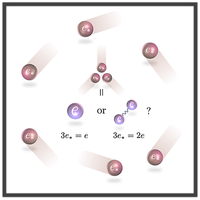
Phys. Rev. X 15, 031069 (2025)
Anyons, Composite fermions, Fractional quantum Hall effect, Topological superconductors, Two-dimensional electron system, Unconventional superconductors
arXiv
Demystifying quantum escapism on the honeycomb lattice
New Submission | Strongly Correlated Electrons (cond-mat.str-el) | 2025-09-12 20:00 EDT
We demonstrate the versatility, simplicity, and power of the minimally-augmented spin-wave theory in studying phase diagrams of the quantum spin models in which unexpected magnetically ordered phases occur or the existing ones expand beyond their classical stability regions. We use this method to obtain approximate phase diagrams of the two paradigmatic spin-$ \frac{1}{2}$ models on the honeycomb lattice: the $ J_1$ -$ J_3$ ferro-antiferromagnetic and $ J_1$ -$ J_2$ antiferromagnetic $ XXZ$ models. For the $ J_1$ -$ J_3$ case, various combinations of the $ XXZ$ anisotropies are analyzed. In a dramatic deviation from their classical phase diagrams, which host significant regions of the noncollinear spiral phases, quantum fluctuations stabilize several unconventional collinear phases and significantly extend conventional ones to completely supersede spiral states. These results are in close agreement with the available density-matrix renormalization group calculations. The applicability of this approach to the other models and its potential extension to different types of orders are discussed.
Strongly Correlated Electrons (cond-mat.str-el)
21 pages, 13 figures. Another persuasive story
Emanant and emergent symmetry-topological-order from low-energy spectrum
New Submission | Strongly Correlated Electrons (cond-mat.str-el) | 2025-09-12 20:00 EDT
Zixin Jessie Chen, Ömer M. Aksoy, Cenke Xu, Xiao-Gang Wen
Low-energy emergent and emanant symmetries can be anomalous, higher-group, or non-invertible. Such symmetries are systematically captured by topological orders in one higher dimension, known as symmetry topological orders (symTOs). Consequently, identifying the emergent or emanant symmetry of a system is not simply a matter of determining its group structure, but rather of computing the corresponding symTO. In this work, we develop a method to compute the symTO of 1+1D systems by analyzing their low-energy spectra under closed boundary conditions with all possible symmetry twists. Applying this approach, we show that the gapless antiferromagnetic (AF) spin-$ \tfrac{1}{2}$ Heisenberg model possesses an exact emanant symTO corresponding to the $ D_8$ quantum double, when restricted to the $ \mathbb{Z}_2^x \times \mathbb{Z}_2^z$ subgroup of the $ SO(3)$ spin-rotation symmetry and lattice translations. Moreover, the AF phase exhibits an emergent $ SO(4)$ symmetry, whose exact components are described jointly by the symTO and the $ SO(3)$ spin-rotations. Using condensable algebras in symTO, we further identify several neighboring phases accessible by modifying interactions among low-energy excitations: (1) a gapped dimer phase, connected to the AF phase via an $ SO(4)$ rotation, (2) a commensurate collinear ferromagnetic phase that breaks translation by one site with a $ \omega \sim k^2$ mode, (3) an incommensurate, translation-symmetric ferromagnetic phase featuring both $ \omega \sim k^2$ and $ \omega \sim k$ modes, connected to the previous phase by an $ SO(4)$ rotation, and (4) an incommensurate ferromagnetic phase that breaks translation by one site with both $ \omega \sim k^2$ and $ \omega \sim k$ modes.
Strongly Correlated Electrons (cond-mat.str-el), High Energy Physics - Theory (hep-th)
27 pages, 12 figures
Anomalously fast transport in non-integrable lattice gauge theories
New Submission | Quantum Gases (cond-mat.quant-gas) | 2025-09-12 20:00 EDT
Devendra Singh Bhakuni, Roberto Verdel, Jean-Yves Desaules, Maksym Serbyn, Marko Ljubotina, Marcello Dalmonte
Kinetic constraints are generally expected to slow down dynamics in many-body systems, obstructing or even completely suppressing transport of conserved charges. Here, we show how gauge theories can defy this wisdom by yielding constrained models with faster-than-diffusive dynamics. We first show how, upon integrating out the gauge fields, one-dimensional U(1) lattice gauge theories are exactly mapped onto XX models with non-local constraints. This new class of kinetically constrained models interpolates between free theories and highly constrained local fermionic models. We find that energy transport is superdiffusive over a broad parameter regime. Even more drastically, spin transport exhibits ballistic behavior, albeit with anomalous finite-volume properties as a consequence of gauge invariance. Our findings are relevant to current efforts in quantum simulations of gauge-theory dynamics and anomalous hydrodynamics in closed quantum many-body systems.
Quantum Gases (cond-mat.quant-gas), Disordered Systems and Neural Networks (cond-mat.dis-nn), Mesoscale and Nanoscale Physics (cond-mat.mes-hall), Statistical Mechanics (cond-mat.stat-mech), Strongly Correlated Electrons (cond-mat.str-el)
4 figures, 10 pages
A Phase-Field Approach to Fracture and Fatigue Analysis: Bridging Theory and Simulation
New Submission | Materials Science (cond-mat.mtrl-sci) | 2025-09-12 20:00 EDT
M. Castillón, I. Romero, J. Segurado
This article presents a novel, robust and efficient framework for fatigue crack-propagation that combines the principles of Linear Elastic Fracture Mechanics (LEFM) with phase-field fracture (PFF). Contrary to cycle-by-cycle PFF approaches, this work relies on a single simulation and uses standard crack propagation models such as Paris’ law for the material response, simplifying its parametrization.
The core of the methodology is the numerical evaluation of the derivative of a specimen’s compliance with respect to the crack area. To retrieve this compliance the framework relies on a PFF-FEM simulation, controlled imposing a monotonic crack growth. This control of the loading process is done by a new crack-control scheme which allows to robustly trace the complete equilibrium path of a crack, capturing complex instabilities. The specimen’s compliance obtained from the PFF simulation enables the integration of Paris’ law to predict fatigue life.
The proposed methodology is first validated through a series of benchmarks with analytical solutions to demonstrate its accuracy. The framework is then applied to more complex geometries where the crack path is unknown, showing a very good agreement with experimental results of both crack paths and fatigue life.
Materials Science (cond-mat.mtrl-sci), Numerical Analysis (math.NA)
Activity-driven clustering of jamming run-and-tumble particles: Exact three-body steady state by dynamical symmetry
New Submission | Statistical Mechanics (cond-mat.stat-mech) | 2025-09-12 20:00 EDT
Leo Hahn, Arnaud Guillin, Manon Michel
We exactly resolve the three-particle steady state of run-and-tumble particles with jamming interactions, providing the first microscopic description beyond two bodies. The invariant measure, derived via a piecewise-deterministic Markov process description and symmetry principles, reveals persistent, separated, and diffusive regimes. A cascade of scales in the activity parameter organizes the structural weights, showing the separated phase dominates at finite activity, while non-uniformity plays only a minor role. This approach lays the groundwork for tackling the $ N$ -body problem.
Statistical Mechanics (cond-mat.stat-mech), Probability (math.PR)
Time-dependent correlations of the Edwards-Anderson order parameter above the spin-glass transition
New Submission | Disordered Systems and Neural Networks (cond-mat.dis-nn) | 2025-09-12 20:00 EDT
Jingjin Song, Sheena K.K. Patel, Rupak Bhattacharya, Yi Yang, Sudip Pandey, Xiao M. Chen, Eric Lee-Wong, Kalyan Sasmal, M. Brian Maple, Eric E. Fullerton, Sujoy Roy, Claudio Mazzoli, Chandra M. Varma, Sunil K. Sinha
In 1975 Edwards and Anderson introduced a new paradigm that interacting quenched systems, such as a spin-glass, have a phase transition in which long time memory of spatial patterns is realized without spatial correlations. We show here that the information about the time-dependent correlations above the spin-glass transition are embedded in the four spin correlations of the intensity of speckle pattern. This encodes the spin-orientation memory and can be measured by the technique of resonant magnetic x-ray photon correlation spectroscopy (RM- XPCS). We have implemented this method to observe and accurately characterize the critical slowing down of the spin orientation fluctuations in the classic metallic spin glass alloy $ Cu_{1-x}{Mn}_x$ over time scales of $ {2}$ sec. to $ 2 \times 10^{\mathbf{4}}$ secs. Remarkably the divergence of the correlation time as a function of temperature is consistent with the Vogel-Vulcher law, universally used to characterize the viscous relaxation time in structural glasses. Our method also opens the way for studying phase transitions in systems such as spin ices, quantum spin liquids, the structural glass transition, as well as possibly provide new perspectives on the multifarious problems in which spin-glass concepts have found applications.
Disordered Systems and Neural Networks (cond-mat.dis-nn)
Paper with supplementary sections
Role of evaporation in stability of foam films and foams
New Submission | Soft Condensed Matter (cond-mat.soft) | 2025-09-12 20:00 EDT
Understanding the stability of foam films and foams remains a challenge, despite the considerable efforts provided by the scientific community to refine their physical descriptions. This persistent difficulty underscores the interplay of various complex factors. Recently, the role of evaporation has attracted attention for its dual impact: it can either enhance stability or accelerate bursting. To depict a comprehensive overview on soapy objects, we propose first a short description on the evaporation of drops to present some key results on the evaporation-induced cooling and the consequences on the internal flows generated by Marangoni effects. Then, we review the literature on foam films and foams, examining three distinct systems: pure liquids, non-volatile, and volatile surface active molecules. We show that evaporation of foam films and foams can lead to significant variations of temperature. In conclusion, we identify a series of open questions and suggest potential research pathways to address these challenges.
Soft Condensed Matter (cond-mat.soft)
LAOStrain response of carbon black-polymer hydrogels: insights from rheo-TRUSAXS and rheo-electric experiment
New Submission | Soft Condensed Matter (cond-mat.soft) | 2025-09-12 20:00 EDT
Gauthier Legrand, Guilhem P. Baeza, William Chèvremont, Sébastien Manneville, Thibaut Divoux
Colloid-polymer hydrogels are encountered in various applications, from flow batteries to drug delivery. Here, we investigate hydrogels composed of hydrophobic colloidal soot particles – carbon black (CB) – and carboxymethylcellulose (CMC), a food-grade polymer functionalized with hydrophobic groups binding physically to CB. As described in [Legrand et al., Macromolecules 56, 2298-2308 (2023)], CB-CMC hydrogels exist in two flavors: either electrically conductive when featuring a percolated network of CB particles decorated by CMC, or insulating where isolated CB particles act as physical cross-linkers within the CMC matrix. We compare these two types of CB-CMC hydrogels under Large Amplitude Oscillatory Shear (LAOS), combining rheometry with Time-Resolved Ultra-Small-Angle X-ray Scattering (TRUSAXS) and electrical conductivity measurements. Both types of hydrogels exhibit a “type III” yielding scenario, characterized by an overshoot in G’’ and a monotonic decrease in G’, although the underlying microscopic mechanisms differ markedly. Conductive CB-CMC hydrogels display a yield strain (6%) concomitant with a drop in DC conductivity, indicative of the macroscopic rupture of the percolated CB network at length scales larger than a few microns, beyond USAXS resolution. At larger strain amplitudes, the conductivity of the fluidized sample increases again, exceeding its initial value, consistent with shear-induced formation of a transient, dynamically percolated network of CB clusters. In contrast, insulating CB-CMC hydrogels exhibit a larger yield strain (60%), beyond which the sample flows and the average distance between CB particles decreases. This reorganization is concomitant with a more than tenfold increase in conductivity, although it remains below that of conductive hydrogels at rest.
Soft Condensed Matter (cond-mat.soft), Materials Science (cond-mat.mtrl-sci), Applied Physics (physics.app-ph)
27 pages, 20 figures
Dichotomy in Low- and High-energy Band Renormalizations in Trilayer Nickelate $La_{4}Ni_{3}O_{10}$: a Comparison with Cuprates
New Submission | Strongly Correlated Electrons (cond-mat.str-el) | 2025-09-12 20:00 EDT
X. Du, Y. L. Wang, Y. D. Li, Y. T. Cao, M. X. Zhang, C. Y. Pei, J. M. Yang, W. X. Zhao, K. Y. Zhai, Z. K. Liu, Z. W. Li, J. K. Zhao, Z. T. Liu, D. W. Shen, Z. Li, Y. He, Y. L. Chen, Y. P. Qi, H. J. Guo, L. X. Yang
Band renormalizations comprise crucial insights for understanding the intricate roles of electron-boson coupling and electron correlation in emergent phenomena such as superconductivity. In this study, by combining high-resolution angle-resolved photoemission spectroscopy and theoretical calculations, we systematically investigate the electronic structure of the trilayer nickelate superconductor $ La_{4}Ni_{3}O_{10}$ at ambient pressure. We reveal a dichotomy in the electronic band renormalizations of $ La_{4}Ni_{3}O_{10}$ in comparison to cuprate superconductors. At a high energy scale of hundreds of meV, its band structure is strongly renormalized by electron correlation effect enhanced by Hund coupling. The resultant waterfall-like dispersions resemble the high-energy kinks in cuprate superconductors. However, at low energy scales of tens of meV, the dispersive bands are nearly featureless and devoid of any resolvable electron-boson interactions, in drastic contrast to the low-energy kinks observed in cuprates and other correlated 3d transition-metal compounds. The dichotomic band renormalizations highlight the disparity between nickelate and cuprate superconductors and emphasize the importance of strong electron-correlation in the superconductivity of Ruddlesden-Popper phase nickelates.
Strongly Correlated Electrons (cond-mat.str-el), Superconductivity (cond-mat.supr-con)
accepted by Physical Review Letters
Non-monotonic band flattening near the magic angle of twisted bilayer MoTe$_2$
New Submission | Mesoscale and Nanoscale Physics (cond-mat.mes-hall) | 2025-09-12 20:00 EDT
Yujun Deng, William Holtzmann, Ziyan Zhu, Timothy Zaklama, Paulina Majchrzak, Takashi Taniguchi, Kenji Watanabe, Makoto Hashimoto, Donghui Lu, Chris Jozwiak, Aaron Bostwick, Eli Rotenberg, Liang Fu, Thomas P. Devereaux, Xiaodong Xu, Zhi-Xun Shen
Twisted bilayer MoTe$ _2$ (tMoTe$ _2$ ) is an emergent platform for exploring exotic quantum phases driven by the interplay between nontrivial band topology and strong electron correlations. Direct experimental access to its momentum-resolved electronic structure is essential for uncovering the microscopic origins of the correlated topological phases therein. Here, we report angle-resolved photoemission spectroscopy (ARPES) measurements of tMoTe$ _2$ , revealing pronounced twist-angle-dependent band reconstruction shaped by orbital character, interlayer coupling, and moiré potential modulation. Density functional theory (DFT) captures the qualitative evolution, yet underestimates key energy scales across twist angles, highlighting the importance of electronic correlations. Notably, the hole effective mass at the K point exhibits a non-monotonic dependence on twist angle, peaking near 2°, consistent with band flattening at the magic angle predicted by continuum models. Via electrostatic gating and surface dosing, we further visualize the evolution of electronic structure versus doping, enabling direct observation of the conduction band minimum and confirm tMoTe$ _2$ as a direct band gap semiconductor. These results establish a spectroscopic foundation for modeling and engineering emergent quantum phases in this moiré platform.
Mesoscale and Nanoscale Physics (cond-mat.mes-hall), Materials Science (cond-mat.mtrl-sci), Strongly Correlated Electrons (cond-mat.str-el)
11 pages, 4 figures
Disentangling the Effects of Simultaneous Environmental Variables on Perovskite Synthesis and Device Performance via Interpretable Machine Learning
New Submission | Materials Science (cond-mat.mtrl-sci) | 2025-09-12 20:00 EDT
Tianran Liu, Nicky Evans, Kangyu Ji, Ronaldo Lee, Aaron Zhu, Vinn Nguyen, James Serdy, Elizabeth Wall, Yongli Lu, Florian A. Formica, Moungi G. Bawendi, Quinn C. Burlingame, Yueh-Lin Loo, Vladimir Bulovic, Tonio Buonassisi
Despite the rapid rise in perovskite solar cell efficiency, poor reproducibility remains a major barrier to commercialization. Film crystallization and device performance are highly sensitive to environmental factors during fabrication, yet their complex interactions are not well understood. In this work, we present a systematic framework to investigate the influence of both individual and coupled environmental variables on device efficiency and crystallization kinetics. We developed an integrated fabrication platform with precise, independent control over ambient solvent partial pressure, absolute humidity, and temperature during spin-coating and thermal-annealing processes, respectively. Using the platform, we implemented a closed-loop Bayesian optimization framework to efficiently explore the multi-dimensional processing space. We mapped the impact of these environmental variables on device performance and identified coupled effects among them. In-situ grazing-incidence wide-angle X-ray scattering measurements further validated these findings by revealing a nonlinear interaction between absolute humidity and solvent partial pressure during spin-coating, which affects crystallization dynamics. To isolate and quantify these interactions, we developed an interpretable machine learning approach that combines knowledge distillation with Shapley interaction analysis. The model revealed the contribution of each interaction varies across different processing conditions. Our study highlights the importance of integrated ambient sensing and control to achieve repeatable perovskite solar cells, and demonstrates the utility of combining active learning with interpretable machine learning to navigate complex, high-dimensional processing landscapes.
Materials Science (cond-mat.mtrl-sci), Applied Physics (physics.app-ph)
A Unified Nonequilibrium Framework: Thermodynamic Distance, Dissipation, and Stationary Laws via Effective State Count, Variational Stationarity, and Thermodynamic Bounds
New Submission | Statistical Mechanics (cond-mat.stat-mech) | 2025-09-12 20:00 EDT
We propose a variational framework for nonequilibrium thermodynamics built around the effective number of accessible state, a multiplicative count that ranges from for a uniform distribution to one under complete localization, and whose logarithm coincides with the Gibbs Shannon entropy. This gives a natural thermodynamic distance to equipartition that bounds statistical distinguishability and grows monotonically under doubly stochastic relaxation. The construction extends to arbitrary nonequilibrium steady states with a chosen reference distribution, where the Kullback Leibler divergence splits into an entropy deficit and a reference weight coupling, acts as a Lyapunov functional when the reference is fixed, and reduces to excess free energy in canonical settings. We connect these static notions to dynamics by decomposing entropy production into adiabatic (housekeeping) and nonadiabatic parts, identify the latter with the rate of decay of the divergence to the reference, and complement this with trajectory and activity-based potentials that yield fluctuation symmetries, thermodynamic uncertainty bounds, and activity-limited speed constraints on steady currents
Statistical Mechanics (cond-mat.stat-mech)
16 pages, 3 figures
Noise-Activated Dopant Dynamics in Two-Dimensional Thermal Landscapes with Localized Cold Spots
New Submission | Statistical Mechanics (cond-mat.stat-mech) | 2025-09-12 20:00 EDT
Mesfin Taye, Yoseph Abebe, Tibebe Birhanu, Lemi Demeyu, Mulugeta Bekele
Controlling dopant transport with high spatial precision is crucial for improving the semiconductor functionality, reliability, and scalability. Although prior models of noise-assisted diffusion have been largely confined to idealized one dimensional settings, we present a physically realistic two-dimensional theoretical framework that integrates anisotropic quartic confinement with localized thermal cold spots to direct impurity dynamics. Using a generalized Fokker Planck formalism, we show that the geometry of the thermal landscape, particularly the width and arrangement of cold spots, governs a noise induced transition between monostable and bistable effective potentials. This enables tunable noise activated hopping and supports conditions favorable for stochastic resonance (SR) if weak periodic driving is applied. Quantitative predictions are made for how impurity localization and effective barrier heights depend on the cold spot width and trap depth , offering experimentally testable signatures. We propose an experimental realization using optothermal techniques, such as dual beam optical tweezers and laser cooling, which can sculpt reconfigurable thermal profiles with sub micron resolution. This model establishes a versatile pathway for programmable impurity manipulation and noise sensitive control in semiconductor structures, bridging theoretical predictions with feasible experimental detection via photoluminescence mapping or lock in signal amplification.
Statistical Mechanics (cond-mat.stat-mech)
8 pages, 5 figures
Realization of a Spin-1/2 Hexagonal-Plaquette Chain with Ising-Like Anisotropy
New Submission | Strongly Correlated Electrons (cond-mat.str-el) | 2025-09-12 20:00 EDT
Hironori Yamaguchi, Shunsuke C. Furuya, Yu Tominaga, Koji Araki, Masayuki Hagiwara
We present the realization of a spin-1/2 hexagonal-plaquette chain with Ising anisotropy, an unexplored quantum spin model that serves as a platform for investigating anisotropic quantum magnetism. Specific heat at zero field reveals a sharp peak at $ T_{\rm{N}}$ = 1.0 K, indicating a phase transition to a N$ \acute{\rm{e}}$ el order stabilized by interchain couplings. A perturbative analysis maps the system onto an effective spin-1/2 Ising-like chain, supporting the presence of an anisotropy-induced excitation gap. Furthermore, the interchain interactions may induce discrete excitations in the spinon continuum, reminiscent of Zeeman ladder physics observed in related 1D Ising-like systems. These results establish a well-defined model system for correlated spin phenomena in anisotropic magnets and highlight a route for engineering Ising-like quantum states in molecular-based frameworks.
Strongly Correlated Electrons (cond-mat.str-el)
8 pages, 3 figures
Phys. Rev. B 112, 014430 (2025)
Sliding-tuned Quantum Geometry in Moiré Systems: Nonlinear Hall Effect and Quantum Metric Control
New Submission | Mesoscale and Nanoscale Physics (cond-mat.mes-hall) | 2025-09-12 20:00 EDT
Shi-Ping Ding, Miao Liang, Tian-Le Wu, Meng-Hao Wu, Jing-Tao Lü, Jin-Hua Gao, X. C. Xie
Sliding is a ubiquitous phenomenon in moiré systems, but its direct influence on moiré bands, especially in multi-twist moiré systems, has been largely overlooked to date. Here, we theoretically show that sliding provides a unique pathway to engineer the quantum geometry (Berry curvature and quantum metric) of moiré bands, exhibiting distinct advantages over conventional strategies. Specifically, we first suggest alternating twisted trilayer $ \mathrm{MoTe_2}$ (AT3L-$ \mathrm{MoTe_2}$ ) and chirally twisted triple bilayer graphene (CT3BLG) as two ideal paradigmatic systems for probing sliding-engineered quantum geometric phenomena. Then, two sliding-induced exotic quantum geometry phenomena are predicted: (1) an intrinsic nonlinear Hall effect via sliding-produced non-zero Berry curvature dipole, with CT3BLG as an ideal platform; (2) significant quantum metric modulation in AT3L-$ \mathrm{MoTe_2}$ , enabling tests of quantum geometric criteria for fractional Chern insulating state (FCIS). Our work establishes sliding as a new degree of freedom for manipulating quantum geometry of moiré bands, which emerges as a signature phenomenon of multi-twist moiré systems.
Mesoscale and Nanoscale Physics (cond-mat.mes-hall)
6 pages, 4 figures
Visualizing Electronic Structure of Twisted Bilayer MoTe2 in Devices
New Submission | Mesoscale and Nanoscale Physics (cond-mat.mes-hall) | 2025-09-12 20:00 EDT
Cheng Chen, William Holtzmann, Xiao-Wei Zhang, Eric Anderson, Shanmei He, Yuzhou Zhao, Chris Jozwiak, Aaron Bostwick, Eli Rotenberg, Kenji Watanabe, Takashi Taniguchi, Ting Cao, Di Xiao, Xiaodong Xu, Yulin Chen
The pursuit of emergent quantum phenomena lies at the forefront of modern condensed matter physics. A recent breakthrough in this arena is the discovery of the fractional quantum anomalous Hall effect (FQAHE) in twisted bilayer MoTe2 (tbMoTe2), marking a paradigm shift and establishing a versatile platform for exploring the intricate interplay among topology, magnetism, and electron correlations. While significant progress has been made through both optical and electrical transport measurements, direct experimental insights into the electronic structure - crucial for understanding and modeling this system - have remained elusive. Here, using spatially and angle-resolved photoemission spectroscopy ({\mu}-ARPES), we directly map the electronic band structure of tbMoTe2. We identify the valence band maximum, whose partial filling underlies the FQAHE, at the K points, situated approximately 150 meV above the {\Gamma} valley. By fine-tuning the doping level via in-situ alkali metal deposition, we also resolve the conduction band minimum at the K point, providing direct evidence that tbMoTe2 exhibits a direct band gap - distinct from all previously known moire bilayer transition metal dichalcogenide systems. These results offer critical insights for theoretical modeling and advance our understanding of fractionalized excitations and correlated topological phases in this emergent quantum material.
Mesoscale and Nanoscale Physics (cond-mat.mes-hall), Strongly Correlated Electrons (cond-mat.str-el)
13 pages, 4 figures
Bosonic realization of SU(3) chiral Haldane phases
New Submission | Quantum Gases (cond-mat.quant-gas) | 2025-09-12 20:00 EDT
We give a bosonic realization of the SU(3) antiferromagnetic Heisenberg (AFH) chain in the alternating conjugate representation, and study its phase diagram as a function of staggered interactions and anisotropy along the $ T^3$ and $ T^8$ directions. Unlike the SU(2) case, we observe a chiral-reversed quantum phase transition, where each competing phase is adiabatically connected to one of the chiral Haldane phases predicted in the SU(3) AFH chain with local adjoint representation. In the vicinity of the Heisenberg point, we identify a symmetry-protected topological state that appears at the first excited energy level. We also study the spontaneous $ \mathbb{Z}_3$ symmetry breaking of the system, and provide a variational wavefunction that captures the transition from the topological phase to the trivial phase. Finally, we propose an experimental realization of our bosonic model by two spin-1/2 bosons in an optical lattice.
Quantum Gases (cond-mat.quant-gas), Strongly Correlated Electrons (cond-mat.str-el)
11 pages, 12 figures
Three-dimensional flat bands and possible interlayer triplet pairing superconductivity in the alternating twisted NbSe$_2$ moiré bulk
New Submission | Superconductivity (cond-mat.supr-con) | 2025-09-12 20:00 EDT
Shuang Liu, Peng Chen, Shihao Zhang
Moiré superlattices hosting flat bands and correlated states have emerged as a focal topic in condensed matter research. Through first-principles calculations, we investigate three-dimensional flat bands in alternating twisted NbSe$ _2$ moiré bulk structures. These structures exhibit enhanced interlayer interactions compared to twisted bilayer configurations. Our results demonstrate that moiré bulks undergo spontaneous large-scale structural relaxation, resulting in the formation of remarkably flat energy bands at twist angles $ \leq$ 7.31°. The $ k_z$ -dependent dispersion of flat bands across different moiré bulks reveals their intrinsic three-dimensional character. The presence of out-of-plane mirror symmetry in these moiré bulk structures suggests possible interlayer triplet superconducting pairing mechanisms that differ from those in twisted bilayer systems. Our work paves the way for exploring potential three-dimensional flat bands in other moiré bulk systems.
Superconductivity (cond-mat.supr-con), Mesoscale and Nanoscale Physics (cond-mat.mes-hall), Materials Science (cond-mat.mtrl-sci)
8 pages, 5 figures
Gain-driven magnon-polariton dynamics in the ultrastrong coupling regime: Effective circuit approach for coherence versus nonlinearity
New Submission | Mesoscale and Nanoscale Physics (cond-mat.mes-hall) | 2025-09-12 20:00 EDT
Ryunosuke Suzuki, Takahiro Chiba, Hiroaki Matsueda
We theoretically study the dynamics of gain-driven magnon-polaritons (MPs), which characterizes auto-oscillation of MPs, across the strong coupling (SC) and ultrastrong coupling (USC) regimes. Taking into account the magnon dynamics via the magnetic flux, we present an effective circuit model of gain-driven MPs, which allows to manipulate the coupling strength of MPs by tuning the size of a ferromagnet and incorporates the self-Kerr nonlinearity of magnons due to the shape magnetic anisotropy. In the SC regime, we find that the self-Kerr nonlinearity generates a frequency shift and reduces the coherent magnon-photon coupling. In contrast, in the USC regime, we find that the coherent magnon-photon coupling not only overcomes the self-Kerr nonlinearity but also effectively couples to gain via the imaginary part of complex eigenfrequencies, resulting in magnon-like auto-oscillations. Subsequently, the USC enables one to widely tune the auto-oscillation frequency by means of an external magnetic field. These findings indicate that there is a trade-off relation between the coupling strength of MPs and the self-Kerr nonlinearity of magnons. This work is attributed to understanding of the interplay between gain-loss and USC in nonlinear polariton dynamics, offering a novel principle for frequency tunable maser-like devices based on gain-driven MPs.
Mesoscale and Nanoscale Physics (cond-mat.mes-hall)
10 pages, 7 figures
Bilateral Hydrogenation Realizes High-Temperature Quantum Anomalous Hall Insulator in 2D Cr${\text{2}}$Ge${\text{2}}$Te$_{\text{6}}$
New Submission | Mesoscale and Nanoscale Physics (cond-mat.mes-hall) | 2025-09-12 20:00 EDT
Xiang Li, Xin-Wei Yi, Jing-Yang You, Jia-Wen Li, Qing-Han Yang, Gang Su, Bo Gu
The pursuit of high-temperature quantum anomalous Hall (QAH) insulators faces fundamental challenges, including narrow topological gaps and low Curie temperatures ($ T_{\text{C}}$ ) in existing materials. Here, we propose a transformative strategy using bilateral hydrogenation to engineer a robust QAH state in the topologically trivial ferromagnetic semiconductor Cr$ _{\text{2}}$ Ge$ _{\text{2}}$ Te$ _{\text{6}}$ . First-principles calculations reveal that hydrogenation induces a topological phase transition in Cr$ _{\text{2}}$ Ge$ {\text{2}}$ Te$ {\text{6}}$ by shifting its Dirac points-originally embedded in the conduction bands-to the vicinity of the Fermi level in Cr$ {\text{2}}$ Ge$ {\text{2}}$ Te$ {\text{6}}$ H$ {\text{6}}$ . This electronic restructuring, coupled with spin-orbit coupling, opens a global topological gap of 118.1 meV, establishing a robust QAH state with Chern number $ C=$ 3. Concurrently, hydrogenation enhances ferromagnetic superexchange via the $ d{z^{2}}$ -$ p{z}$ -$ d{xz}$ channel, significantly strengthening the nearest-neighbor coupling $ J{\text{1}}$ by 3.06 times and switching $ J{\text{2}}$ from antiferromagnetic to ferromagnetic. Monte Carlo simulations predict a high $ T{\text{C}}$ = 198 K, sustained well above liquid nitrogen temperature and far exceeding pristine Cr$ _{\text{2}}$ Ge$ _{\text{2}}$ Te$ _{\text{6}}$ (28 K). This work establishes surface hydrogenation as a powerful route to simultaneously control topology and magnetism in 2D materials, unlocking high-temperature QAH platforms for dissipationless spintronic applications.
Mesoscale and Nanoscale Physics (cond-mat.mes-hall)
Structural Complexity and Correlated Disorder in Materials Chemistry
New Submission | Disordered Systems and Neural Networks (cond-mat.dis-nn) | 2025-09-12 20:00 EDT
Complexity is a measure of information content. Crystalline materials are not complex systems because their structures can be represented tersely using the language of crystallography. Disordered materials are also structurally simple if the disorder present is random: such systems can be described efficiently through statistical mechanics. True complexity emerges when structures are neither perfectly crystalline nor randomly disordered – a middle ground once named organised complexity''. In current parlance, in our field, we use the term correlated disorder’’ for this same regime, emphasising the presence and importance of non-random patterns.
Disordered Systems and Neural Networks (cond-mat.dis-nn)
Surfaces and interfaces of infinite-layer nickelates studied by dynamical mean-field theory
New Submission | Strongly Correlated Electrons (cond-mat.str-el) | 2025-09-12 20:00 EDT
Leonard M. Verhoff, Liang Si, Karsten Held
Infinite-layer nickelate superconductors are typically synthesized as thin films and thus include, besides the more bulk-like inner layers, distinct surface and interface layers in contact with the vacuum and substrate, respectively. Here, we employ density-functional theory and dynamical mean-field theory to investigate how electronic correlations influence these surface and interface regions. Our results show that electronic correlations can significantly modify the electronic structure, even driving surface layers into a Mott-insulating state with a 3$ d^8$ electronic configuration. Moreover, surface termination effects induce a polar field that can shift the $ \Gamma$ and $ A$ pocket above the Fermi level, even for the undoped parent compound NdNiO$ _2$ . Finally, for an $ n$ -type interface, often synthesized experimentally, we find the Ti 3$ d$ orbitals to become electron doped.
Strongly Correlated Electrons (cond-mat.str-el), Superconductivity (cond-mat.supr-con)
Magnetization and magnetostriction measurements of the dipole-octupole quantum spin ice candidate Ce2Hf2O7
New Submission | Strongly Correlated Electrons (cond-mat.str-el) | 2025-09-12 20:00 EDT
Edwin Kermarrec, Guanyue Chen, Hiromu Okamoto, Chun-Jiong Huang, Han Yan, Jian Yan, Hikaru Takeda, Yusei Shimizu, Evan M. Smith, Avner Fitterman, Andrea D. Bianchi, Bruce D. Gaulin, Minoru Yamashita
We investigate the magnetization and the magnetostriction of the dipole-octupole quantum spin ice candidate Ce2Hf2O7 down to 50 mK. We find that the magnetization curves observed with the magnetic field applied along all the principal axes ([100], [110], and [111]) exhibit a magnetic hysteresis below around 300 mK. In addition, a kink-like feature is observed in the magnetization under B || [111], at which the magnetostriction also shows a convex field dependence. Our classical Monte-Carlo and quantum exact diagonalization calculations demonstrate that these features in the magnetization are well reproduced by the spin Hamiltonian with a dominant interaction between the octupole moments and with a QSI ground state, indicating the emergence of a dipole-octupole QSI in this compound.
Strongly Correlated Electrons (cond-mat.str-el)
10 pages, 4 figures, 1 table, and Supplementary Materials
Fragmented Spin Liquid and Shadow Pinch Points in Dipole-Octupole Pyrochlore Spin Systems
New Submission | Strongly Correlated Electrons (cond-mat.str-el) | 2025-09-12 20:00 EDT
We study the classical dipole-octupole pyrochlore spin systems in an external magnetic field along the $ [111]$ direction. We identify an intermediate fragmented spin liquid phase that precedes full spin saturation, characterized by the coexistence of three phenomena: U(1) spin liquid on the Kagome planes, spontaneous $ \mathbb{Z}_2$ symmetry breaking, and partial spin polarization from explicit symmetry breaking. We show that even without dipolar interactions, the dipolar components can form a spin liquid driven by the octupolar spin liquid. The physics manifests itself experimentally as shadow pinch points: low-intensity pinch points underlying the strong Bragg peaks. We discuss how these discoveries are directly relevant to various experiments on dipole-octupole pyrochlore materials, including neutron scattering, magnetization, and magnetostriction.
Strongly Correlated Electrons (cond-mat.str-el)
18 pages, 16 figures including the supplemental materials
Field-induced reversible phase transition and negative differential resistance in In2Se3 ferroelectric semiconducting FETs
New Submission | Materials Science (cond-mat.mtrl-sci) | 2025-09-12 20:00 EDT
Jishnu Ghosh, Shubham Parate, Arup Basak, Binoy Krishna De, Krishnendu Mukhopadhyay, Abhinav Agarwal, Gopesh Kumar Gupta, Digbijoy Nath, Pavan Nukala
Indium selenide (In2Se3), a ferroelectric semiconductor, offers a unique platform for multifunctional nanoelectronics owing to the interplay between polarization dynamics, interlayer sliding, and structural polymorphism. Ferroelectric semiconductor field-effect transistors (FeS-FETs) provide an ideal architecture to harness this coupling. Here, we demonstrate gate-tunable negative differential resistance (NDR) with high peak-to-valley ratios and hysteretic output conductance in In2Se3 FeS-FETs. Combining high-resolution electron microscopy with electrical transport measurements, we attribute the NDR to a field-induced, volatile phase transition from a low-resistance alpha-2H phase to a high-resistance state. Atomic scale ex-situ imaging reveals that in-plane electric fields (Vd) drive interlayer sliding, rotational misalignments that generate Moire patterns, and intralayer shear-together producing stress induced phase transitions. Out-of-plane field however results in robust non-volatile polarization switching. These mechanistic insights highlight both the promise of two dimensional ferroelectric devices for multifunctional nanoelectronics and alternative computing paradigms, and the intrinsic limitations of In2Se3 field-effect transistors for conventional ferroelectric memory applications.
Materials Science (cond-mat.mtrl-sci)
Main article: 21 pages, 4 figures, supplementary information: 12 figures
Matrix product state classification of 1D multipole symmetry protected topological phases
New Submission | Strongly Correlated Electrons (cond-mat.str-el) | 2025-09-12 20:00 EDT
Takuma Saito, Weiguang Cao, Bo Han, Hiromi Ebisu
Spatially modulated symmetries are one of the new types of symmetries whose symmetry actions are position dependent. Yet exotic phases resulting from these spatially modulated symmetries are not fully understood and classified. In this work, we systematically classify one dimensional bosonic symmetry protected topological phases protected respecting multipole symmetries by employing matrix product state formalism. The symmetry action induces projective representations at the ends of an open chain, which we identify via group cohomology. In particular, for $ r$ -pole symmetries, for instance, $ r$ = 0 (global), 1 (dipole), and 2 (quadrupole), the classification is determined by distinct components of second cohomology groups that encode the boundary projective representations.
Strongly Correlated Electrons (cond-mat.str-el), High Energy Physics - Theory (hep-th), Quantum Physics (quant-ph)
21 pages, 1 figure plus appendices
Unusual ferromagnetic band evolution and high Curie temperature in monolayer 1T-CrTe2 on bilayer graphene
New Submission | Materials Science (cond-mat.mtrl-sci) | 2025-09-12 20:00 EDT
Kyoungree Park, Ji-Eun Lee, Dongwook Kim, Yong Zhong, Camron Farhang, Hyobeom Lee, Hayoon Im, Woojin Choi, Seha Lee, Seungrok Mun, Kyoo Kim, Jun Woo Choi, Hyejin Ryu, Jing Xia, Heung-Sik Kim, Choongyu Hwang, Ji Hoon Shim, Zhi-Xun Shen, Sung-Kwan Mo, Jinwoong Hwang
2D van der Waals ferromagnets hold immense promise for spintronic applications due to their controllability and versatility. Despite their significance, the realization and in-depth characterization of ferromagnetic materials in atomically thin single layers, close to the true 2D limit, has been scarce. Here, a successful synthesis of monolayer (ML) 1T-CrTe2 is reported on a bilayer graphene (BLG) substrate via molecular beam epitaxy. Using angle-resolved photoemission spectroscopy and magneto-optical Kerr effect measurements, that the ferromagnetic transition is observed at the Curie temperature (TC) of 150 K in ML 1T-CrTe2 on BLG, accompanied by unconventional temperature-dependent band evolutions. The spectroscopic analysis and first-principle calculations reveal that the ferromagnetism may arise from Goodenough-Kanamori super-exchange and double-exchange interactions, enhanced by the lattice distortion and the electron doping from the BLG substrate. These findings provide pivotal insight into the fundamental understanding of mechanisms governing 2D ferromagnetism and offer a pathway for engineering higher TC in 2D materials for future spintronic devices.
Materials Science (cond-mat.mtrl-sci)
26 pages, 4 figures
Small 2025
Electronic order induced symmetry breaking in lattice dynamics of Co$_3$Sn$_2$S$_2$
New Submission | Materials Science (cond-mat.mtrl-sci) | 2025-09-12 20:00 EDT
Shuai Zhang, Mengqi Wang, Tiantian Zhang
Based on the molecular Berry curvature (MBC) framework, we develop an \textit{ab initio} algorithm to capture the quantitative effects of magnetic order on lattice dynamics. Using the ferromagnetic Weyl semimetal Co$ _3$ Sn$ _2$ S$ _2$ as a prototype, we show that electronic-order-driven phonon symmetry breaking requires spin-orbit coupling (SOC) and leads to an MBC term that breaks both time-reversal ($ \mathcal{T}$ ) and mirror symmetries. We demonstrate that mirror-symmetry breaking is essential to account for the experimentally observed phonon splitting, $ \mathcal{T}$ -breaking alone is insufficient. The MBC is widely distributed across the Brillouin zone, giving rise to significant off-$ \Gamma$ effects. Our results agree well with experiments and establish a framework for predicting large phonon magnetism in magnetic materials with strong spin-orbit coupling and electron-phonon coupling. This work also suggests new avenues for controlling non-reciprocal phonon transport.
Materials Science (cond-mat.mtrl-sci), Computational Physics (physics.comp-ph)
Vortex triplets, symmetry breaking, and emergent nonequilibrium plastic crystals in an active-spinner fluid
New Submission | Soft Condensed Matter (cond-mat.soft) | 2025-09-12 20:00 EDT
Biswajit Maji, Nadia Bihari Padhan, Rahul Pandit
The formation of patterns and exotic nonequilibrium steady states in active-fluid systems continues to pose challenging problems – theoretical, numerical, and experimental – for statistical physicists and fluid dynamicists. We combine theoretical ideas from statistical mechanics and fluid mechanics to uncover a new type of self-assembled crystal of vortex triplets in an active-spinner fluid. We begin with the two-dimensional Cahn-Hilliard-Navier-Stokes (CHNS) model for a binary-fluid system of active rotors that has two important ingredients: a scalar order parameter field phi that distinguishes regions with clockwise (CW) and counter-clockwise (CCW) spinners; and an incompressible velocity field u. In addition to the conventional CHNS coupling between phi and u, this model has a torque-induced activity term, with coefficient tau, whose consequences we explore. We demonstrate that, if we increase the activity tau, it overcomes dissipation and this system displays a hitherto unanticipated emergent triangular crystal, with spinning vortex triplets at its vertices. We show that this is a nonequilibrium counterpart of an equilibrium plastic crystal. We characterise the statistical properties of this novel crystal and suggest possible experimental realisations of this new state of active matter.
Soft Condensed Matter (cond-mat.soft), Statistical Mechanics (cond-mat.stat-mech), Adaptation and Self-Organizing Systems (nlin.AO), Biological Physics (physics.bio-ph)
12 pages, 5 figures
Neural Transformer Backflow for Solving Momentum-Resolved Ground States of Strongly Correlated Materials
New Submission | Strongly Correlated Electrons (cond-mat.str-el) | 2025-09-12 20:00 EDT
Strongly correlated materials, such as twisted transition-metal dichalcogenide homobilayers, host a variety of exotic quantum phases but remain notoriously difficult to solve due to strong interactions. We introduce a powerful neural network ansatz, Neural Transformer Backflow (NTB), formulated within a multi-band projection framework. It naturally enforces momentum conservation and enables efficient calculations of momentum-resolved ground states. NTB attains high accuracy on small systems and scales to higher bands and larger system sizes far beyond the reach of exact diagonalization. By evaluating observables such as the structure factor and momentum distribution, we show that NTB captures diverse correlated states in tMoTe$ _2$ , including charge density waves, fractional Chern insulators, and anomalous Hall Fermi liquids, within a unified framework. Our approach paves the way for understanding and discovering novel phases of matter in strongly correlated materials.
Strongly Correlated Electrons (cond-mat.str-el), Computational Physics (physics.comp-ph)
11 pages, 6 figures
Magnetoelectric Effect Dependent on Electric Field Direction in a Pyroelectric Ferrimagnet CaBaCo$_4$O$_7$
New Submission | Materials Science (cond-mat.mtrl-sci) | 2025-09-12 20:00 EDT
Takumi Shirasaki, Masaaki Noda, Hinata Arai, Mitsuru Akaki, Haruhiko Kuroe, Hideki Kuwahara
This study investigates the dependence of the static magnetoelectric (ME) effect on the external field direction in the pyroelectric-ferrimagnet CaBaCo$ _4$ O$ _7$ , a topic that remains largely unexplored compared to dynamical nonreciprocal ME effects. We measured the magnetization with respect to the inherent polarization and found that an external electric field stabilizes the ferrimagnetic phase when applied parallel to the polarization, and destabilizes it when antiparallel. These results clearly demonstrate the electric-field-direction dependent control of the static ME effect, suggesting a new route to enhancing ME effects in pyroelectric-magnetic materials.
Materials Science (cond-mat.mtrl-sci), Strongly Correlated Electrons (cond-mat.str-el)
5 pages, 6 figures
J. Phys. Soc. Jpn. 94, 103702 (2025)
Superconductivity in hyperbolic spaces: Regular hyperbolic lattices and Ginzburg-Landau theory
New Submission | Superconductivity (cond-mat.supr-con) | 2025-09-12 20:00 EDT
Vladimir Bashmakov, Askar Iliasov, Tomáš Bzdušek, Andrey A. Bagrov
We study $ s$ -wave superconductivity in hyperbolic spaces using the Bogoliubov-de Gennes theory for discrete hyperbolic lattices and the Ginzburg-Landau theory for the continuous hyperbolic plane. Hyperbolic lattices maintain a finite fraction of boundary sites regardless of system size, thus fundamentally altering superconductivity through enhanced boundary effects absent in flat space. Within the BCS framework for hyperbolic lattices, uniform systems reproduce standard bulk behavior, whereas finite systems with open boundaries, studied through exact diagonalization and Cayley-tree approximations, exhibit boundary-enhanced superconductivity and boundary-only superconducting states that persist above the bulk critical temperature. Numerical studies further reveal that boundary termination critically determines superconducting properties; in particular, rough boundaries with dangling bonds generate zero-energy modes that raise critical temperatures by several times relative to smooth boundaries. Turning to the complementary Ginzburg-Landau analysis of the hyperbolic plane, we find that finite geometries permit radial variations of the condensate absent in infinite space. Owing to the interplay between coherence length and curvature radius, the theory exhibits two types of superconductivity even without magnetic fields, with vortices replaced by lines of vanishing order parameter in the nontrivial type. Our findings establish hyperbolic geometry as a platform for engineering boundary-controlled superconductivity, opening new directions for physics in curved spaces in condensed matter and holography.
Superconductivity (cond-mat.supr-con), Strongly Correlated Electrons (cond-mat.str-el), High Energy Physics - Theory (hep-th)
21 pages, 20 figures, 1 appendix
Lifetime of bimerons and antibimerons in two-dimensional magnets
New Submission | Mesoscale and Nanoscale Physics (cond-mat.mes-hall) | 2025-09-12 20:00 EDT
Moritz A. Goerzen, Tim Drevelow, Soumyajyoti Haldar, Hendrik Schrautzer, Stefan Heinze, Dongzhe Li
Soliton-based computing architectures have recently emerged as a promising avenue to overcome fundamental limitations of conventional information technologies, the von Neumann bottleneck. In this context, magnetic skyrmions have been widely considered for in-situ processing devices due to their mobility and enhanced lifetime in materials with broken inversion symmetry. However, modern applications in non-volatile reservoir or neuromorphic computing raise the additional demand for non-linear inter-soliton interactions. Here we report that solitons in easy-plane magnets, such as bimerons and antibimerons, show greater versatility and potential for non-linear interactions than skyrmions and antiskyrmions, making them superior candidates for this class of applications. Using first-principles and transition state theory, we predict the coexistence of degenerate bimerons and antibimerons at zero field in a van der Waals heterostructure Fe$ _3$ GeTe$ _2$ /Cr$ _2$ Ge$ _2$ Te$ _6$ – an experimentally feasible system. We demonstrate that, owing to their distinct structural symmetry, bimerons exhibit fundamentally different behavior from skyrmions and cannot be regarded as their in-plane counterparts, as is often assumed. This distinction leads to unique properties of bimerons and antibimerons, which arise from the unbroken rotational symmetry in easy-plane magnets. These range from anisotropic soliton-soliton interactions to strong entropic effects on their lifetime, driven by the non-local nature of thermal excitations. Our findings reveal a broader richness of solitons in easy-plane magnets and underline their unique potential for spintronic devices.
Mesoscale and Nanoscale Physics (cond-mat.mes-hall)
17 pages, 12 figures
Universality in the velocity jump in the crack propagation observed for food-wrapping films for daily use
New Submission | Soft Condensed Matter (cond-mat.soft) | 2025-09-12 20:00 EDT
The velocity jump found in the crack propagation for rubbers has been a powerful tool for developing tough rubber materials. Although it is suggested by a theory that the jump could be observed widely for viscoelastic materials, the report on a clear jump is very limited and, even in such a case, reproducibility is low, except for elastomers. Here, we use a mundane food-wrapping film as a sample and observe the crack propagation velocity with pulling the sample at a constant speed in the direction perpendicular to the crack. As a result, we find the jump occurs at a critical strain with high reproducibility. Remarkably, the plot of the crack-propagation velocity as a function of strain can be collapsed onto a master curve by an appropriate rescaling, where the master curve is found to be universal for change in the pulling speed and in the sample height. The result reveals a key parameter for the jump is the strain, suggesting the existence of a small length that governs the deformation along the crack. The present study sets limitations on future theories and opens an avenue for the velocity jump to become a tool for developing a wide variety of tough polymer-based materials.
Soft Condensed Matter (cond-mat.soft)
under revision
Scanning photocurrent microscopy and its application to one- and two-dimensional materials
New Submission | Materials Science (cond-mat.mtrl-sci) | 2025-09-12 20:00 EDT
The electrical response of a material when illuminated with light is a key to many optoelectronic device applications. This so-called photoresponse typically has a non-uniform spatial distribution through the active device area, and the ability to spatially resolve the photoresponse enables an in-depth understanding of the underlying physical mechanisms. Scanning photocurrent microscopy (SPCM) is a method that allows the spatial mapping of the photoresponse by raster scanning a focused laser beam over the sample. SPCM is becoming more popular due to its simplicity and power in unraveling fundamental optoelectronic processes. In this review, first, we provide the fundamentals of SPCM to lay the basics for the subsequent discussions. Then, we focus on the literature that employs SPCM to identify the photoresponse of one- and two-dimensional materials. We discuss SPCM measurement results of common materials in detail and introduce a systematic approach to interpreting the SPCM measurements. We have given particular emphasis on the photothermal mechanisms that are excited by the focused laser beam and critically reviewed studies in the literature from the perspective of laser-induced heating of the electronic and the lattice degrees of freedom. Finally, we discuss the shortcomings of SPCM in determining the mechanisms leading to the photoresponse.
Materials Science (cond-mat.mtrl-sci)
Relativistic Mott transition, high-order van Hove singularity, and mean-field phase diagram of twisted double bilayer WSe${}_2$
New Submission | Mesoscale and Nanoscale Physics (cond-mat.mes-hall) | 2025-09-12 20:00 EDT
Bilal Hawashin, Julian Kleeschulte, David Kurz, Michael M. Scherer
Recent experiments on twisted double bilayer tungsten diselenide have demonstrated that moiré semiconductors can be used to realize a relativistic Mott transition, i.e., a quantum phase transition from a Dirac semimetal to a correlated insulating state, by twist-angle tuning. In addition, signatures of van Hove singularities were observed in the material’s moiré valence bands, suggesting further potential for the emergence of strongly-correlated states in this moiré semiconductor. Based on a Bistritzer-MacDonald-type continuum model, we provide a detailed analysis of the twist-angle dependence of the system’s moiré valence band structure, focusing on both, the evolution of the Dirac excitations and the Fermi-surface structure with its Lifshitz transitions across the van Hove fillings. We exhibit that the twist angle can be used to band engineer a high-order van Hove singularity with power-law exponent~$ -1/4$ in the density of states, which can be accessed by gate tuning of the hole filling. We then study the magnetic phase diagram of an effective Hubbard model for twisted double bilayer tungsten diselenide on the effective moiré honeycomb superlattice with tight-binding parameters fitted to the two topmost bands of the continuum model. To that end, we employ a self-consistent Hartree-Fock mean-field approach in real space. Fixing the angle-dependent Hubbard interaction based on the experimental findings, we explore a broad parameter range of twist angle, filling, and temperature. We find a rich variety of magnetic states that we expect to be accessible in future experiments by twist or gate tuning, including, e.g., a non-coplanar spin-density wave with non-zero spin chirality and a half-metallic uniaxial spin-density wave.
Mesoscale and Nanoscale Physics (cond-mat.mes-hall), Strongly Correlated Electrons (cond-mat.str-el)
13 pages, 7 figures
Quenched disorder and the BCS-BEC crossover in the Hubbard model
New Submission | Quantum Gases (cond-mat.quant-gas) | 2025-09-12 20:00 EDT
We study the impact of weak quenched disorder on the BCS-BEC crossover in the Hubbard model within a functional-integral framework. By deriving the thermodynamic potential up to second order in both the disorder potential and pairing fluctuations, we obtain self-consistent expressions for the number equation, condensate fraction, superfluid fraction and sound speed at zero temperature. In the dilute BEC limit, our results analytically reproduce the known continuum limits of weakly interacting bosons, where weak disorder depletes the superfluid more strongly than the condensate due to broken translational symmetry, and enhances the sound speed through the overcompensation of the static compressibility. These findings establish a unified and controlled framework for describing the BCS-BEC crossover in disordered lattice models, and they provide a foundation for future extensions to finite temperatures and multiband Hubbard models.
Quantum Gases (cond-mat.quant-gas), Strongly Correlated Electrons (cond-mat.str-el), Superconductivity (cond-mat.supr-con)
12 pages with 1 figure
Observation of the crossover from quantum fluxoid to half-quantum fluxoid in a chiral superconducting device
New Submission | Superconductivity (cond-mat.supr-con) | 2025-09-12 20:00 EDT
Masashi Tokuda, Fumiya Matsumoto, Noriaki Maeda, Tomo Higashihara, Mai Nakao, Mori Watanabe, Sanghyun Lee, Ryoya Nakamura, Masaki Maeda, Nan Jiang, Di Yue, Hideki Narita, Kazushi Aoyama, Takeshi Mizushima, Jun-ichiro Ohe, Teruo Ono, Xiaofeng Jin, Kensuke Kobayashi, Yasuhiro Niimi
Topological superconductors are one of the intriguing material groups from the viewpoint of not only condensed matter physics but also industrial application such as quantum computers based on Majorana fermion. For the real application, developments of the thin-film topological superconductors are highly desirable. Bi/Ni bilayer is a possible candidate for thin-film chiral superconductors where the time-reversal symmetry is broken. Here we report the phase shift of resistance oscillations by half flux quantum in a ring-shaped device of epitaxial Bi/Ni bilayer induced by a small magnetic field through the ring. The half quantum fluxoid can be a decisive evidence for unconventional superconductors where the superconducting order parameter has an internal degree of freedom. The present result provides a functional operating principle for quantum devices where the phase of the supercurrent can be shifted by \pi with a small magnetic field, based on the internal degree of freedom possessed by topological superconductivity.
Superconductivity (cond-mat.supr-con), Mesoscale and Nanoscale Physics (cond-mat.mes-hall), Materials Science (cond-mat.mtrl-sci)
34 pages, 4 figures
Science Advances 11, eadw6625 (2025)
Comprehensive Mapping of Tracer Diffusivities Across Composition Space in Ternary NiAlTi and Quinary NiCoFeAlTi High-Entropy Alloy Using Diffusion Couple Experiments and Physics Informed Neural Network Inversion
New Submission | Materials Science (cond-mat.mtrl-sci) | 2025-09-12 20:00 EDT
Ismail Kamil Worke, Suman Sadhu, Saswata Bhattacharyya, Aloke Paul
A comprehensive experimental and physics informed neural network numerical inverse diffusion analysis is conducted in technologically important NiAlTi ternary and NiCoFeAlTi quinary solid solutions for estimating and extracting composition dependent diffusion coefficients. A systematic variation of tracer, intrinsic and interdiffusion coefficients with composition could be estimated in the ternary solid solution. Following, the possibility of producing Al Ti constant PB diffusion profiles keeping constant Ni, Co, Fe in the quinary system is demonstrated. The estimation of diffusion coefficients of all the elements at the Kirkendall marker plane of a single diffusion couple profile is elaborated. PINN optimisation parameters are established using self and impurity diffusion coefficients in Ni and tracer diffusion coefficients at the Kirkendall marker plane. The reliability of optimized parameters is validated by comparing with the interdiffusion coefficients estimated from binary NiTi, NiAl and PB diffusion profiles, indicating extendibility to even lower order systems.
Materials Science (cond-mat.mtrl-sci)
Exploring the magnetic landscape of easily-exfoliable two-dimensional materials
New Submission | Materials Science (cond-mat.mtrl-sci) | 2025-09-12 20:00 EDT
Fatemeh Haddadi, Davide Campi, Flaviano dos Santos, Nicolas Mounet, Louis Ponet, Nicola Marzari, Marco Gibertini
Magnetic materials often exhibit complex energy landscapes with multiple local minima, each corresponding to a self-consistent electronic structure solution. Finding the global minimum is challenging, and heuristic methods are not always guaranteed to succeed. Here, we apply a recently developed automated workflow to systematically explore the energy landscape of 194 magnetic monolayers obtained from the Materials Cloud 2D crystals database and determine their ground-state magnetic order. Our approach enables effective control and sampling of orbital occupation matrices, allowing rapid identification of local minima. We find a diverse set of self-consistent collinear metastable states, further enriched by Hubbard-corrected energy functionals, when the $ U$ parameters have been computed from first principles using linear-response theory. We categorise the monolayers by their magnetic ordering and highlight promising candidates. Our results include 109 ferromagnetic, 83 antiferromagnetic, and 2 altermagnetic monolayers, along with 12 novel ferromagnetic half-metals with potential for spintronics technologies.
Materials Science (cond-mat.mtrl-sci), Computational Physics (physics.comp-ph)
29 pages including references, 8 figures
NiSi$_2$ as seed layer for epitaxial growth of NiAl and Cr on Si(001)
New Submission | Materials Science (cond-mat.mtrl-sci) | 2025-09-12 20:00 EDT
Mohamed Ben Chroud, Thu-Huong Thi Tran, Johan Swerts, Kristiaan Temst, Robert Carpenter
In general, metal layers cannot be grown epitaxially on Si due to the tendency of metals to react and form a silicide. Even in case the metal layer has a matching lattice symmetry and atomic distance, the Si/metal interface is disturbed by the silicide thus preventing epitaxial growth. One exception is NiAl which is known to grow epitaxially when deposited on Si(001). During the growth, NiAl reacts with Si to form NiSi$ _2$ . In this work, epitaxial NiAl is grown and significant silicidation is observed in accordance with previous reports. However, the role that this silicide plays as a template for the epitaxial growth of NiAl has not been clear to this date. We hypothesize that NiSi$ _2$ acts as a necessary seed layer between the Si substrate and the NiAl layer. Additionally, NiSi$ _2$ can be used as a seed layer for the epitaxial growth of other metals besides NiAl. This was tested by growing NiSi$ _2$ seperately and replacing the NiAl layer with Cr. Growing Cr directly on Si(001) produced a polycrystalline layer. When NiSi$ _2$ was used as a seed layer, the Cr layer was found to be a single crystal with Si(001)//Cr(001) and Si(100)//Cr(100). NiSi was also tried as seed layer for Cr and was found to produce a polycrystalline Cr layer. Using NiSi$ _2$ as a seed layer could enable the growth of various epitaxial materials for industrial semiconductor applications.
Materials Science (cond-mat.mtrl-sci)
Composition-driven magnetic anisotropy and spin polarization in Mn$2$Ru${1-x}$Ga Heusler alloy
New Submission | Materials Science (cond-mat.mtrl-sci) | 2025-09-12 20:00 EDT
We present a comprehensive investigation of the influence of Ru concentration on the lattice parameters, atomic magnetic moments, electronic structure, and magnetic anisotropy energy of the full Heusler L2$ _1$ -type Mn$ _2$ Ru$ _{1-x_p}$ Ga alloy, where x$ _p$ = 0.0834 p with p=0,…,12. This study combines first-principles calculations with data-driven techniques from artificial intelligence, specifically principal component analysis (PCA), to reveal trends and correlations across multiple structural, magnetic, and electronic descriptors. For each composition, a set of inequivalent atomic configurations was fully optimized. Structurally, the relaxed lattices exhibit anisotropic expansion, with a pronounced elongation of the out-of-plane lattice parameter ($ c$ ) relative to the in-plane lattice vectors, which promotes the development of perpendicular magnetic anisotropy. Our results reveal that an out-of-plane easy axis emerges at intermediate Ru concentrations (25-28%), while low and high Ru levels favor an in-plane orientation or even vanishing anisotropy. The half-metallic character is also modulated by Ru content, appearing selectively at both ends of the composition range. Additionally, the ferrimagnetic coupling between Mn(4a) and Mn(4c) sublattices leads to nearly compensated magnetic moments below 50% Ru content, with a net moment close to zero around 30%. These findings open a pathway toward the design of tunable spintronic materials with co-optimized perpendicular magnetic anisotropy and half-metallicity, making Mn$ _2$ RuGa a promising candidate for magnetic tunnel junctions, magnetoresistive random-access memory (MRAM) devices, and high-density magnetic storage applications.
Materials Science (cond-mat.mtrl-sci)
Flux-driven charge and spin transport in a dimerized Hubbard ring with Fibonacci modulation
New Submission | Other Condensed Matter (cond-mat.other) | 2025-09-12 20:00 EDT
Souvik Roy, Soumya Ranjan Padhi, Tapan Mishra
We study quantum transport in a one-dimensional Hubbard ring with dimerized nearest-neighbor hoppings and a Fibonacci-modulated onsite potential. For non-interacting case our analysis reveals that at half-filling, the charge current along with the Drude weight decreases with increasing onsite potential when inter-cell hopping dominates over the intra-cell hopping, while for dominating intra-cell hopping it shows non-monotonic behavior with sharp peak at certain critical modulation strength, indicating enhanced transport. Moving away from half-filling gives rise to re-entrant features in both quantities at fillings associated with Fibonacci numbers. On the other hand, in spin-imbalanced systems, both spin and charge current shows multiple peaks and re-entrant behavior, tunable via hopping dimerization and filling. Including the on-site Hubbard interaction preserves the re-entrant behavior in current and moreover favors finite transport which is absent in the non-interacting ring. These results reveal rich interplay among Fibonacci modulated potential, electron fillings, hopping dimerization and interaction.
Other Condensed Matter (cond-mat.other), Mesoscale and Nanoscale Physics (cond-mat.mes-hall)
12 pages, 13 figures
Acousto-optical Floquet engineering of a single-photon emitter
New Submission | Mesoscale and Nanoscale Physics (cond-mat.mes-hall) | 2025-09-12 20:00 EDT
Daniel Groll, Daniel Wigger, Matthias Weiß, Mingyun Yuan, Alexander Kuznetsov, Alberto Hernández-Mínguez, Hubert J. Krenner, Tilmann Kuhn, Paweł Machnikowski
The combination of solid state single-photon emitters and mechanical excitations into hybrid infrastructures is a promising approach for new developments in quantum technology. Here we investigate theoretically the resonance fluorescence (RF) spectrum of an acoustically modulated single-photon emitter under arbitrarily strong optical driving. In the spectrum, the combination of Mollow triplet physics and phonon sidebands results in a complex structure of crossings, anti-crossings, and line suppressions. We apply Floquet theory to develop an analytical expression for the RF spectrum. Complemented with perturbative and non-perturbative techniques, this allows us to fully understand the underlying acousto-optical double dressing physics of the hybrid quantum system, explaining the observed spectral features. We use these insights to perform an experimental feasibility study of existing emitter-based acousto-optical platforms and come to the conclusion that bulk acoustic waves interfaced with quantum dots render a promising infrastructure to perform acousto-optical Floquet engineering.
Mesoscale and Nanoscale Physics (cond-mat.mes-hall)
Compensation behaviour in trilayered anisotropic 6-state clock model
New Submission | Statistical Mechanics (cond-mat.stat-mech) | 2025-09-12 20:00 EDT
Olivia Mallick, Muktish Acharyya
The equilibrium behaviours of a trilayered 6-state clock model has been investigated by Monte Carlo simulation. The intralayer interaction is considered ferromagnetic, whereas the interlayer interaction is antiferromagnetic. Open boundary conditions are applied in all directions. The thermodynamic behaviours of sublattice magnetisation, total magnetisation, magnetic susceptibility and the specific heat are studied as functions of the temperature. The interesting compensation phenomenon, i.e., the vanishing of the total magnetisation even with nonvanishing sublattice magnetisation, has been observed. The compensation temperature and the critical temperature are found to depend on the strength of single-site anisotropy. The comprehensive phase diagram is shown in the temperature-anisotropy plane. The finite size analysis has been done through the temperature dependence of fourth order Binder cumulant, and the scaling exponents are estimated.
Statistical Mechanics (cond-mat.stat-mech)
10 pages Latex and 11 captioned pdf figures
On the Electronic, Mechanical and Optical Properties of Superhard Cross-Linked Carbon Nanotubes (Tubulanes)
New Submission | Materials Science (cond-mat.mtrl-sci) | 2025-09-12 20:00 EDT
Raphael M. Tromer, Bruno Ipaves, Marcelo L. Pereira Junior, Cristiano F. Woellner, Kun Cai, Douglas S. Galvao
We have investigated the electronic, optical, and mechanical properties of six structures belonging to the Tubulanes-cross-linked carbon nanotube family. Our results highlight the remarkable anisotropic mechanical behavior of these materials, distinguishing them from isotropic structures, such as diamond. Notably, the 8-tetra-22 structure has a higher Young’s modulus ($ Y_M$ ) along the $ z$ -direction compared to diamond. Unlike diamonds, the mechanical properties of Tubulanes are direction-dependent, with significant variations in Young’s Modulus (2.3 times). Additionally, the Poisson’s ratio is highly anisotropic, with at least one direction exhibiting an approximately zero value. The inherent anisotropy of these materials enables tunable mechanical properties that depend on the direction of applied stress. Regarding their electronic properties, all Tubulane structures studied possess indirect electronic band gaps, dominated by $ 2p$ orbitals. The band dispersion is relatively high, with band gaps ranging from 0.46 eV to 2.74 eV, all of which are smaller than that of diamond. Notably, the 16-tetra-22 structure exhibits the smallest bandgap (0.46 eV), making it particularly interesting for electronic applications. Additionally, these structures exhibit porosity, which provides an advantage over denser materials, such as diamond. Considering the recent advances in the synthesis of 3D carbon-based materials, the synthesis of tubulane-like structures is within our present-day technological capabilities.
Materials Science (cond-mat.mtrl-sci)
28 pages, 15 figures and three tables
Exactly Solvable Model of Random Walks with Stochastic Exchange
New Submission | Statistical Mechanics (cond-mat.stat-mech) | 2025-09-12 20:00 EDT
José Julian Díaz-Pérez, R. Mulet
We solve exactly the non-equilibrium dynamics of two discrete random walkers moving in channels with transition rates $ p \neq q$ that swap positions at a rate $ s$ . We compute exactly the joint probability distribution $ P_{n,m}(t)$ for the walkers, revealing the existence of two dynamical crossovers. The first signals the passage from independent diffusion to a swap-dominated regime where the particles act as identical random walkers swapping positions. The second crossover occurs when both channels become indistinguishable and the walkers move around the same position. Furthermore, we demonstrate the existence of a persistent spatial anisotropy defined by the difference between the second moments of the probability distributions in the two channels. Our results may provide a quantitative framework to understand diverse systems. In biology, it is motivated by motor proteins (kinesin/dynein) exchanging cargo leadership, membrane receptors swapping binding partners, or brain synapses with activity-dependent plasticity. In finance, it models traders with distinct risk profiles swapping positions in limit-order books, or volatility spillover between coupled markets. These diverse systems share a unifying theme: exchange processes mediate macroscopic correlations despite individual heterogeneity.
Statistical Mechanics (cond-mat.stat-mech)
4 pages + SM, 4 figures
Application of perturbation theory to finding vibrational frequencies of a spheroid
New Submission | Materials Science (cond-mat.mtrl-sci) | 2025-09-12 20:00 EDT
M.O. Nestoklon, L. Saviot, S.V. Goupalov
We apply perturbation theory of boundary conditions, originally developed by A.B. Migdal and independently by S.A. Moszkowski for deformed atomic nuclei, to finding eigenfrequencies of Raman-active spheroidal modes of a spheroid from these of a sphere and compare the outcomes with the results of numerical calculations for CdSe and silver nanoparticles. The modes are characterized by the total angular momentum $ j=2$ and are five-fold degenerate for a sphere but split into three distinct modes, characterized by the absolute value of the total angular momentum projection onto the spheroidal axis, in case of a spheroid. The perturbation method works well in case of the rigid boundary conditions, with the displacement field set to zero at the boundary, and accurately predicts the splittings when the spheroidal shape is close to a sphere, but fails in case of the stress-free boundary conditions.
Materials Science (cond-mat.mtrl-sci)
7 pages, 2 figures
Bulk Thermal Conductance of the 5/2 and 7/3 Fractional Quantum Hall States in the Corbino Geometry
New Submission | Mesoscale and Nanoscale Physics (cond-mat.mes-hall) | 2025-09-12 20:00 EDT
F. Boivin, M. Petrescu, Z. Berkson-Korenberg, K. W. West L. N. Pfeiffer, G. Gervais
In this work, making use of time-resolved in situ Joule heating of a two-dimensional electron gas (2DEG) in the Corbino geometry, we report bulk thermal conductance measurements for the {\nu} = 5/2 and {\nu} = 7/3 fractional quantum Hall (FQH) states for electron temperatures ranging from 20 to 150 mK. We compare our findings with a recent study by Melcer et al. [Nature 625, 489 (2024)] that observed a finite bulk thermal conductivity \k{appa}xx in FQH states. In spite of the large size difference and the vastly different experimental schemes used to extract \k{appa}xx, we find in large part that both experiments yield similar results and conclude that the bulk of FQH states thermally conducts and violate the Wiedemann-Franz law by a wide margin. Slight discrepancies between both studies are further discussed in terms of particle-hole symmetry in the vicinity of the 5/2 and 7/3 FQH states.
Mesoscale and Nanoscale Physics (cond-mat.mes-hall), Strongly Correlated Electrons (cond-mat.str-el)
Reconstructing the Hamiltonian from the local density of states using neural networks
New Submission | Disordered Systems and Neural Networks (cond-mat.dis-nn) | 2025-09-12 20:00 EDT
Nisarga Paul, Andrew Ma, Kevin P. Nuckolls
Reconstructing a quantum system’s Hamiltonian from limited yet experimentally observable information is interesting both as a practical task and from a fundamental standpoint. We pose and investigate the inverse problem of reconstructing a Hamiltonian from a spatial map of the local density of states (LDOS) near a fixed energy. We demonstrate high-quality recovery of Hamiltonians from the LDOS using supervised learning. In particular, we generate synthetic data from single-particle Hamiltonians in 1D and 2D, train convolutional neural networks, and obtain models that solve the inverse problem with remarkably high accuracy. Moreover, we are able to generalize beyond the training distribution and develop models with strong robustness to noise. Finally, we comment on possible experimental applications to scanning tunneling microscopy, where we propose that maps of the electronic local density of states might be used to reveal a sample’s unknown underlying energy landscape.
Disordered Systems and Neural Networks (cond-mat.dis-nn), Quantum Physics (quant-ph)
5+5 pages
Strong long-wavelength electron-phonon coupling in Ta$_2$Ni(Se,S)$_5$
New Submission | Strongly Correlated Electrons (cond-mat.str-el) | 2025-09-12 20:00 EDT
Zhibo Kang, Burak Gurlek, Weichen Tang, Xiang Chen, Jacob P.C. Ruff, Ahmet Alatas, Ayman Said, Robert J. Birgeneau, Steven G. Louie, Angel Rubio, Simone Latini, Yu He
The search for intrinsic excitonic insulators (EI) has long been confounded by coexisting electron-phonon coupling in bulk materials. Although the ground state of an EI may be difficult to differentiate from density-wave orders or other structural instabilities, excited states offer distinctive signatures. One way to provide clarity is to directly inspect the phonon spectral function for long wavelength broadening due to phonon interaction with the high velocity EI phason. Here, we report that the quasi-one-dimensional (quasi-1D) EI candidate Ta$ _2$ NiSe$ _5$ shows extremely anisotropic phonon broadening and softening in the semimetallic normal state. In contrast, such a behavior is completely absent in the broken symmetry state of Ta$ _2$ NiSe$ _5$ and in the isostructural Ta$ _2$ NiS$ _5$ , where the latter has a fully gapped normal state. By contrasting the expected phonon lifetimes in the BCS and BEC limits of a putative EI, our results suggest that the phase transition in Ta$ _2$ Ni(Se,S)$ _5$ family is closely related to strong interband electron-phonon coupling. We experimentally determine the dimensionless coupling $ \frac{g}{\omega_0}\sim10$ , showing Ta$ _2$ Ni(Se,S)$ _5$ as a rare “ultra-strong coupling” material.
Strongly Correlated Electrons (cond-mat.str-el), Materials Science (cond-mat.mtrl-sci)
7 pages, 4 figures
Kondo destruction quantum critical point: fixed point annihilation and thermodynamic stability
New Submission | Strongly Correlated Electrons (cond-mat.str-el) | 2025-09-12 20:00 EDT
Yiming Wang, Lei Chen, Haoyu Hu, Ang Cai, Jianhui Dai, C. J. Bolech, Qimiao Si
A wide range of strongly correlated electron systems exhibit strange metallicity, and they are increasingly recognized as in proximity to correlation-driven localization-delocalization transitions. A prototype setting arises in heavy fermion metals, where the proximity to the electron localization is manifested as Kondo destruction. Here we show that the Kondo destruction quantum critical point is linked to the phenomenon of fixed point annihilation. This connection reveals the absence of residual entropy density at the quantum critical point and, thus, its thermodynamic stability. Broader implications of our results are discussed.
Strongly Correlated Electrons (cond-mat.str-el), Statistical Mechanics (cond-mat.stat-mech)
6+4 pages, 4 figures
Exact solution of the two-magnon problem in the $k=-π/2$ sector of a finite-size anisotropic spin-$1/2$ frustrated ferromagnetic chain
New Submission | Strongly Correlated Electrons (cond-mat.str-el) | 2025-09-12 20:00 EDT
The two-magnon problem in the $ k=-\pi/2$ sector of a \emph{finite-size} spin-1/2 chain with ferromagnetic nearest-neighbor (NN) interaction $ (J_1>0)$ and antiferromagnetic next-nearest-neighbor (NNN) interaction $ (J_2<0)$ and anisotropy parameters $ \Delta_1$ and $ \Delta_2$ is solved exactly by combining a set of exact two-magnon Bloch states and a plane-wave ansatz. Two types of two-magnon bound states (BSs), i.e., the NN and NNN exchange BSs, are revealed. We establish a phase diagram in the $ J_1/(|J_2|\Delta_2)$ -$ \Delta_1$ plane where regions supporting different types of BSs are analytically identified. It is found that no BSs exist (the two types of BSs coexist) when both $ \Delta_1$ and $ \Delta_2$ are small (large) enough. Our results for the isotropic case $ \Delta_1=\Delta_2=1$ are consistent with an early work [Ono I, Mikado S and Oguchi T 1971 \emph{J. Phys. Soc. Japan} \textbf{30} 358].
Strongly Correlated Electrons (cond-mat.str-el)
10 pages, 5 figures, to appear in Physica Scripta
Bogoliubov quasi-particles in superconductors are integer-charged particles inapplicable for braiding quantum information
New Submission | Strongly Correlated Electrons (cond-mat.str-el) | 2025-09-12 20:00 EDT
We present a rigorous proof that under a number-conserving Hamiltonian, one-body quasi-particles generally possess quantized charge and inertial mass identical to the bare particles. It follows that, Bogoliubov zero modes in the vortex (or on the edge) of superconductors $ \textit{cannot}$ be their own anti-particles capable of braiding quantum information. As such, the heavily pursued Majorana zero mode-based route for quantum computation requires a serious re-consideration. This study further reveals the conceptual challenge in preparing and manipulating braid-able quantum states via physical thermalization or slow external fields. These profound results should reignite the long-standing quest for a number-conserving theory of superconductivity and superfluidity without fictitiously breaking global U(1) symmetry.
Strongly Correlated Electrons (cond-mat.str-el), Superconductivity (cond-mat.supr-con), Quantum Physics (quant-ph)
10 pages, 2 figures
Prediction of several Co-based La$_3$Ni$_2$O$_7$-like superconducting materials
New Submission | Superconductivity (cond-mat.supr-con) | 2025-09-12 20:00 EDT
Jing-Xuan Wang, Yi-Heng Tian, Jian-Hong She, Rong-Qiang He, Zhong-Yi Lu
High temperature superconductivity has been found in Fe, Ni, and Cu compounds, but not Co, where the Ni compounds include the recently found bilayer nickelate La$ _3$ Ni$ _2$ O$ _7$ under high pressure. Here we theoretically predict several Co-based La$ _3$ Ni$ _2$ O$ _7$ -like high-temperature superconducting materials. With electron doping to high-pressure bilayer cobaltate La$ _3$ Co$ _2$ O$ _7$ , we find that LaTh$ _2$ Co$ _2$ O$ _7$ , La$ _3$ Ni$ _2$ O$ _5$ Cl$ _2$ , and La$ _3$ Ni$ _2$ O$ _5$ Br$ _2$ may show similar crystal structures and strongly correlated electronic structures to bilayer nickelate La$ _3$ Ni$ _2$ O$ _7$ under high pressure. Within the random-phase approximation (RPA), the leading pairing symmetry in these materials is $ s$ -wave.
Superconductivity (cond-mat.supr-con), Strongly Correlated Electrons (cond-mat.str-el)
6 pages, 4 figures, 3 tables
Magnetotransport across Weyl semimetal grain boundaries
New Submission | Mesoscale and Nanoscale Physics (cond-mat.mes-hall) | 2025-09-12 20:00 EDT
Haoyang Tian, Vatsal Dwivedi, Adam Yanis Chaou, Maxim Breitkreiz
A clean interface between two Weyl semimetals features a universal, field-linear tunnel magnetoconductance of $ (e^2/h)N_\mathrm{ho}$ per magnetic flux quantum, where $ N_\mathrm{ho}$ is the number of chirality-preserving topological interface Fermi arcs. In this work we show that the linearity of the magnetoconductance is robust with to interface disorder. The slope of the magnetoconductance changes at a characteristic field strength $ B_\mathrm{arc}$ – the field strength for which the time taken to traverse the Fermi arc due to the Lorentz force is equal to the mean inter-arc scattering time. For fields much larger than $ B_\mathrm{arc}$ , the magnetoconductance is unaffected by disorder. For fields much smaller than $ B_\mathrm{arc}$ , the slope is no longer determined by $ N_\mathrm{ho}$ but by the simple fraction $ N_\mathrm{L} N_\mathrm{R}/(N_\mathrm{L}+N_\mathrm{R})$ , where $ N_\mathrm{L}$ and $ N_\mathrm{R}$ are the numbers of Weyl-node pairs in the left and right Weyl semimetal, respectively. We also consider the effect of spatially correlated disorder potentials, where we find that $ B_\mathrm{arc}$ decreases exponentially with increasing correlation length. Our results provide a possible explanation for the recently observed robustness of the negative linear magnetoresistance in grained Weyl semimetals.
Mesoscale and Nanoscale Physics (cond-mat.mes-hall), Disordered Systems and Neural Networks (cond-mat.dis-nn)
8+3 pages, 6 figures
Strong-to-Weak Symmetry Breaking Phases in Steady States of Quantum Operations
New Submission | Statistical Mechanics (cond-mat.stat-mech) | 2025-09-12 20:00 EDT
Niklas Ziereis, Sanjay Moudgalya, Michael Knap
Mixed states can exhibit two distinct kinds of symmetries, either on the level of the individual states (strong symmetry), or only on the level of the ensemble (weak symmetry). Strong symmetries can be spontaneously broken down to weak ones, a mechanism referred to as Strong-to-Weak Spontaneous Symmetry Breaking (SW-SSB). In this work, we first show that maximally mixed symmetric density matrices, which appear, for example, as steady states of symmetric random quantum circuits have SW-SSB when the symmetry is an on-site representation of a compact Lie or finite group. We then show that this can be regarded as an isolated point within an entire SW-SSB phase that is stable to more general quantum operations such as measurements followed by weak postselection. With sufficiently strong postselection, a second-order transition can be driven to a phase where the steady state is strongly symmetric. We provide analytical and numerical results for such SW-SSB phases and their transitions for both abelian $ \mathbb{Z}_2$ and non-abelian $ S_3$ symmetries in the steady state of Brownian random quantum circuits with measurements. We also show that such continuous SW-SSB transitions are absent in the steady-state of general strongly symmetric, trace-preserving quantum channels (including unital, Brownian, or Lindbladian dynamics) by analyzing the degeneracies of the steady states in the presence of symmetries. Our results demonstrate robust SW-SSB phases and their transitions in the steady states of noisy quantum operations, and provide a framework for realizing various kinds of mixed-state quantum phases based on their symmetries.
Statistical Mechanics (cond-mat.stat-mech), Strongly Correlated Electrons (cond-mat.str-el), High Energy Physics - Theory (hep-th), Mathematical Physics (math-ph), Quantum Physics (quant-ph)
35 pages, 8 figures